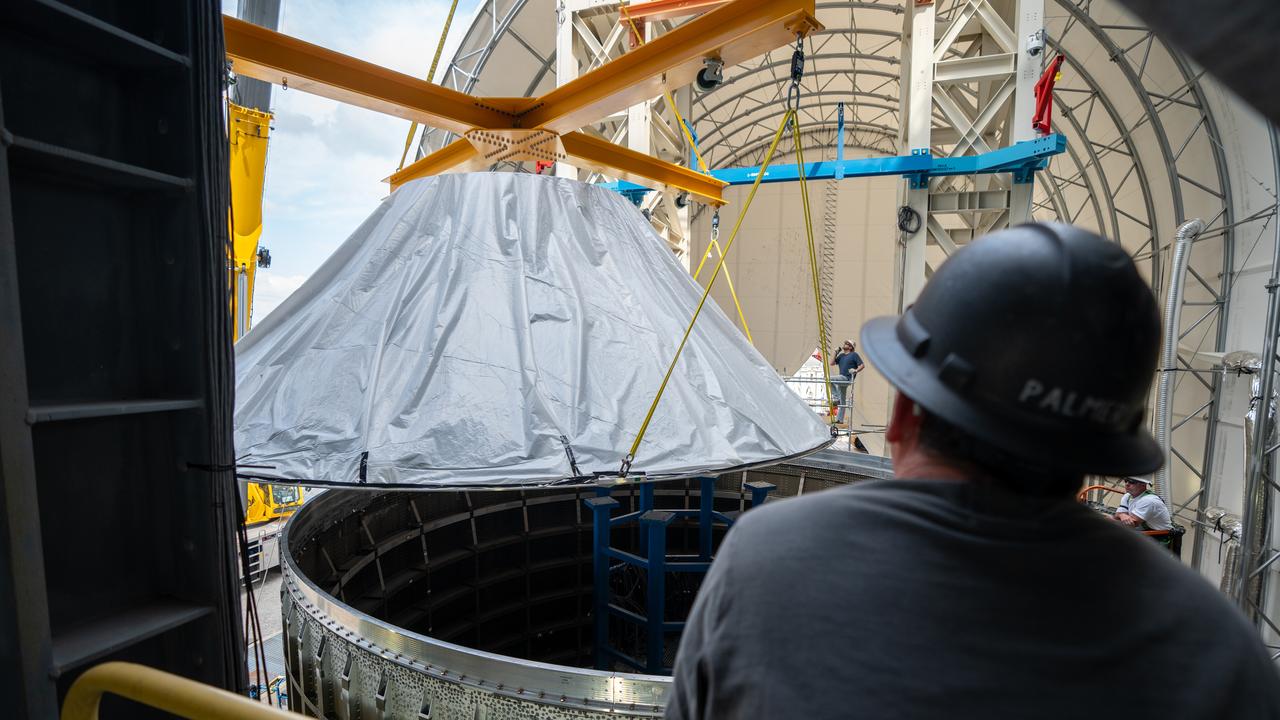
These photos and videos show how crews at NASA’s Marshall Space Flight Center in Huntsville, Alabama, moved and installed the payload adapter that will be used in the Block 1B configuration of the SLS (Space Launch System) rocket from Building 4708, where it was manufactured, into Structural Test Stand 4697 at NASA’s Marshall Space Flight Center on March 13. Teams at Marshall will begin structural testing the engineering development unit of the payload adapter – an exact replica of the flight version of the hardware – this spring. The cone-shaped payload adapter is about 8.5 feet tall and features two metal rings and eight composite panels. The adapter, which will debut on NASA’s Artemis IV mission, is an evolution from the Orion stage adapter used in the Block 1 configuration of the first three Artemis missions. It will be housed inside the universal stage adapter atop the rocket’s more powerful in-space stage, called the exploration upper stage. The payload adapter, like the launch vehicle stage adapter and the Orion stage adapter, is fully manufactured and tested at Marshall, which manages the SLS Program. NASA is working to land the first woman, first person of color, and its first international partner astronaut on the Moon under Artemis. SLS is part of NASA’s backbone for deep space exploration, along with the Orion spacecraft and Gateway in orbit around the Moon and commercial human landing systems, next-generational spacesuits, and rovers on the lunar surface. SLS is the only rocket that can send Orion, astronauts, and supplies to the Moon in a single launch.
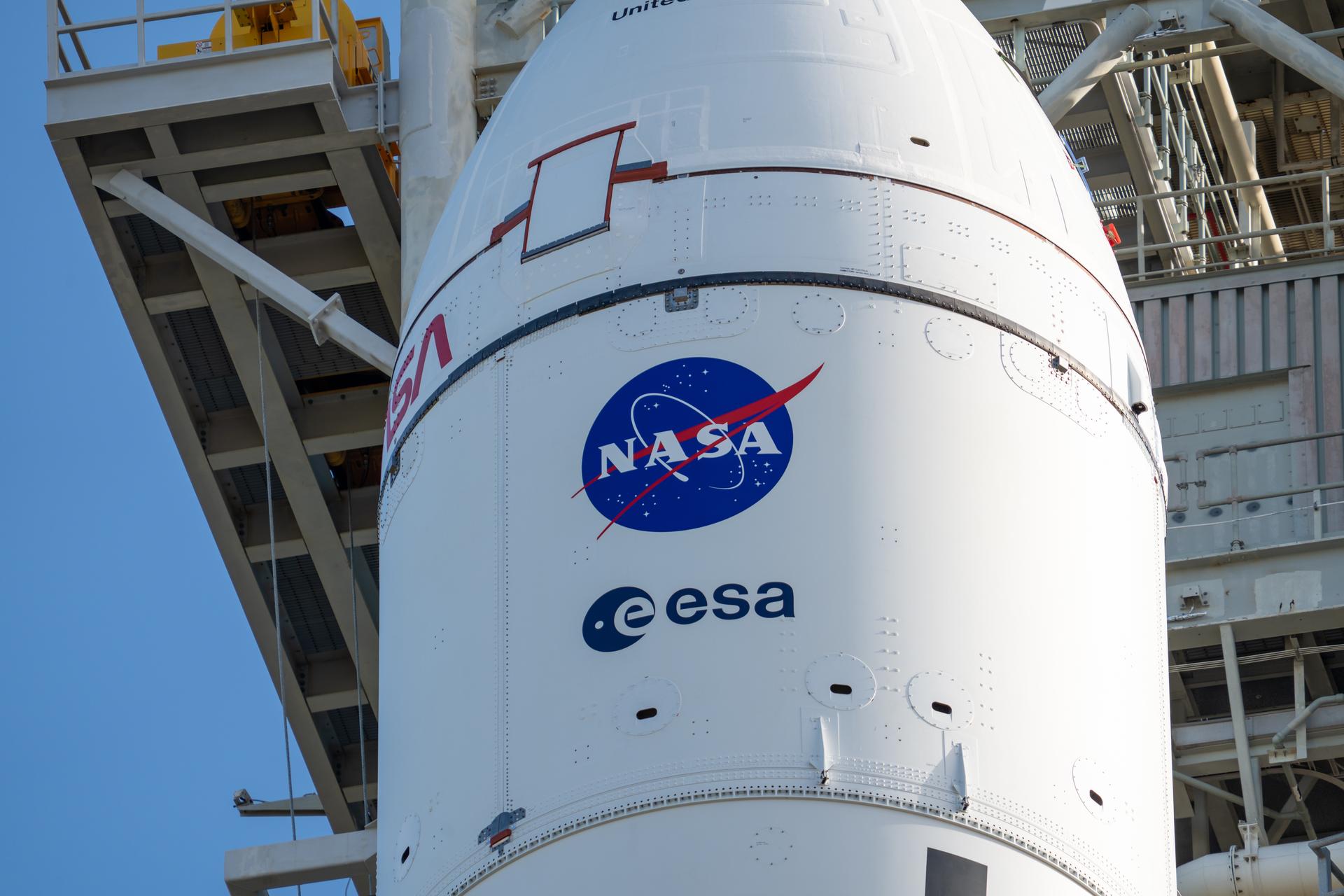
This image shows NASA’s SLS (Space Launch System) and Orion spacecraft rolling out of the Vehicle Assembly Building at NASA’s Kennedy Space Center. NASA's massive Crawler-Transporter, upgraded for the Artemis program, carries the powerful SLS rocket and Orion spacecraft on the Mobile Launcher from the Vehicle Assembly Building to Launch Pad 39B at Kennedy Space Center in preparation for the Artemis II mission.
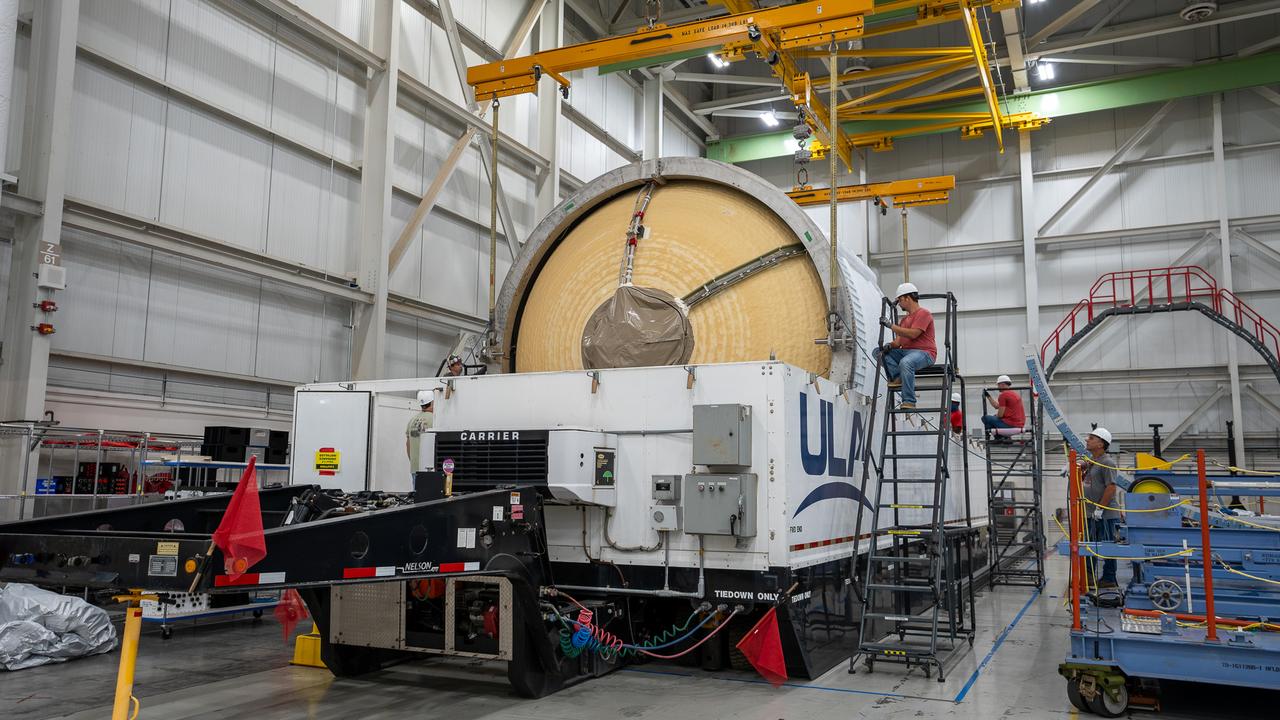
These images and videos show how crews in Alabama prepared the ICPS (interim cryogenic propulsion stage) for NASA’s SLS (Space Launch System) rocket for shipment to Florida between July 29-31. The ICPS in the photos and videos will help power NASA’s Artemis III mission to the Moon. The SLS upper stage is manufactured by United Launch Alliance at its facility in Decatur. Its RL10 engine is produced by Aerojet Rocketdyne, the SLS engines lead contractor, in West Palm Beach, Florida. ULA is working with Boeing, the SLS core stage and exploration upper stage lead contractor, to develop ICPS. ULA’s R/S RocketShip is transporting the flight hardware to its sister facility in Florida near NASA’s Kennedy Space Center for final checkouts. The ICPS for Artemis III is the last of its kind as SLS transitions to its next, more powerful Block 1B configuration with an upgraded upper stage beginning with Artemis IV. NASA is working to land the first woman and first person of color on the Moon under Artemis. SLS is part of NASA’s backbone for deep space exploration, along with Orion and the Gateway in orbit around the Moon. SLS is the only rocket that can send Orion, astronauts, and supplies to the Moon in a single mission.
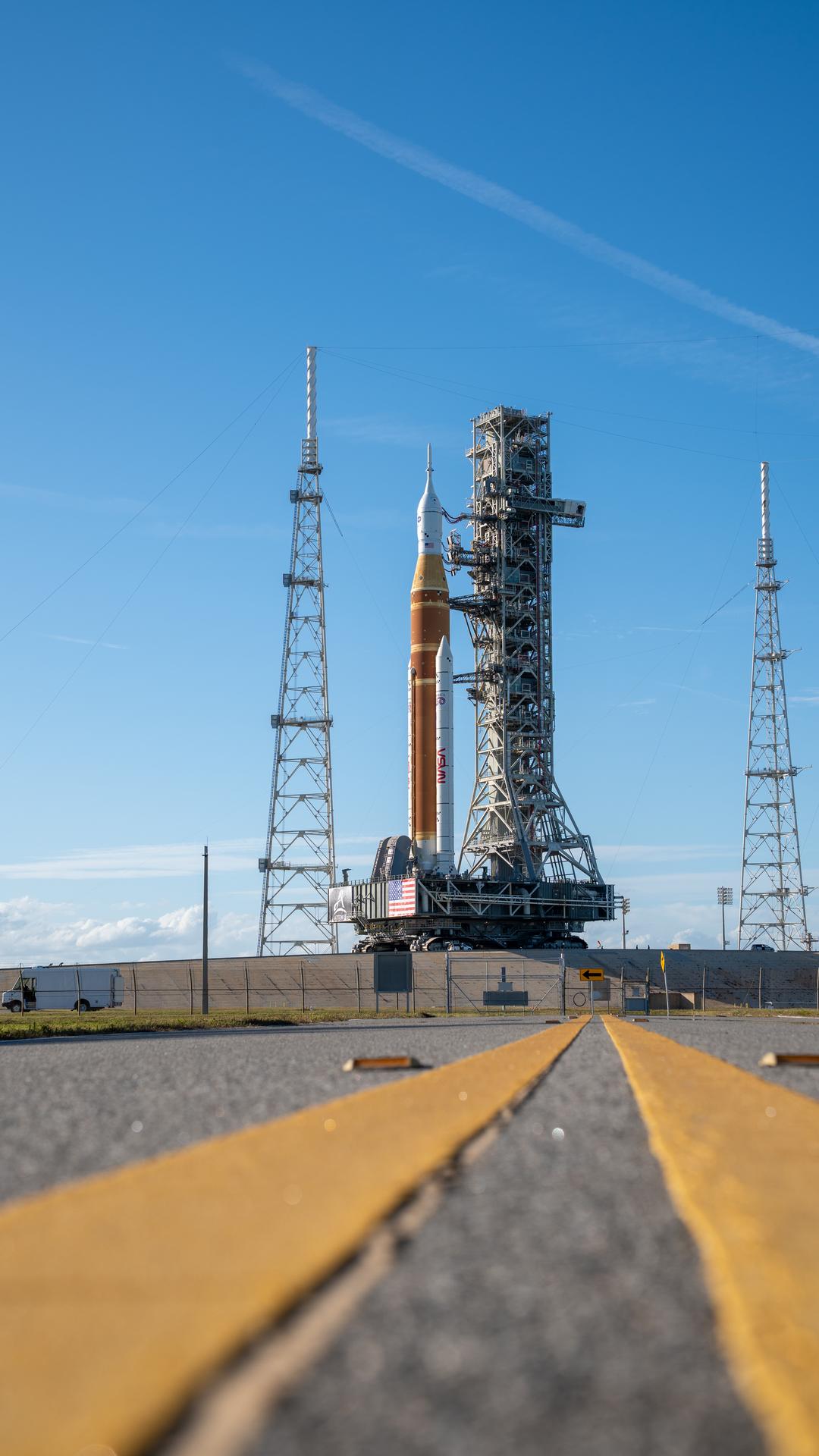
This image shows NASA’s SLS (Space Launch System) and Orion spacecraft rolling out of the Vehicle Assembly Building at NASA’s Kennedy Space Center. NASA's massive Crawler-Transporter, upgraded for the Artemis program, carries the powerful SLS rocket and Orion spacecraft on the Mobile Launcher from the Vehicle Assembly Building to Launch Pad 39B at Kennedy Space Center in preparation for the Artemis II mission.
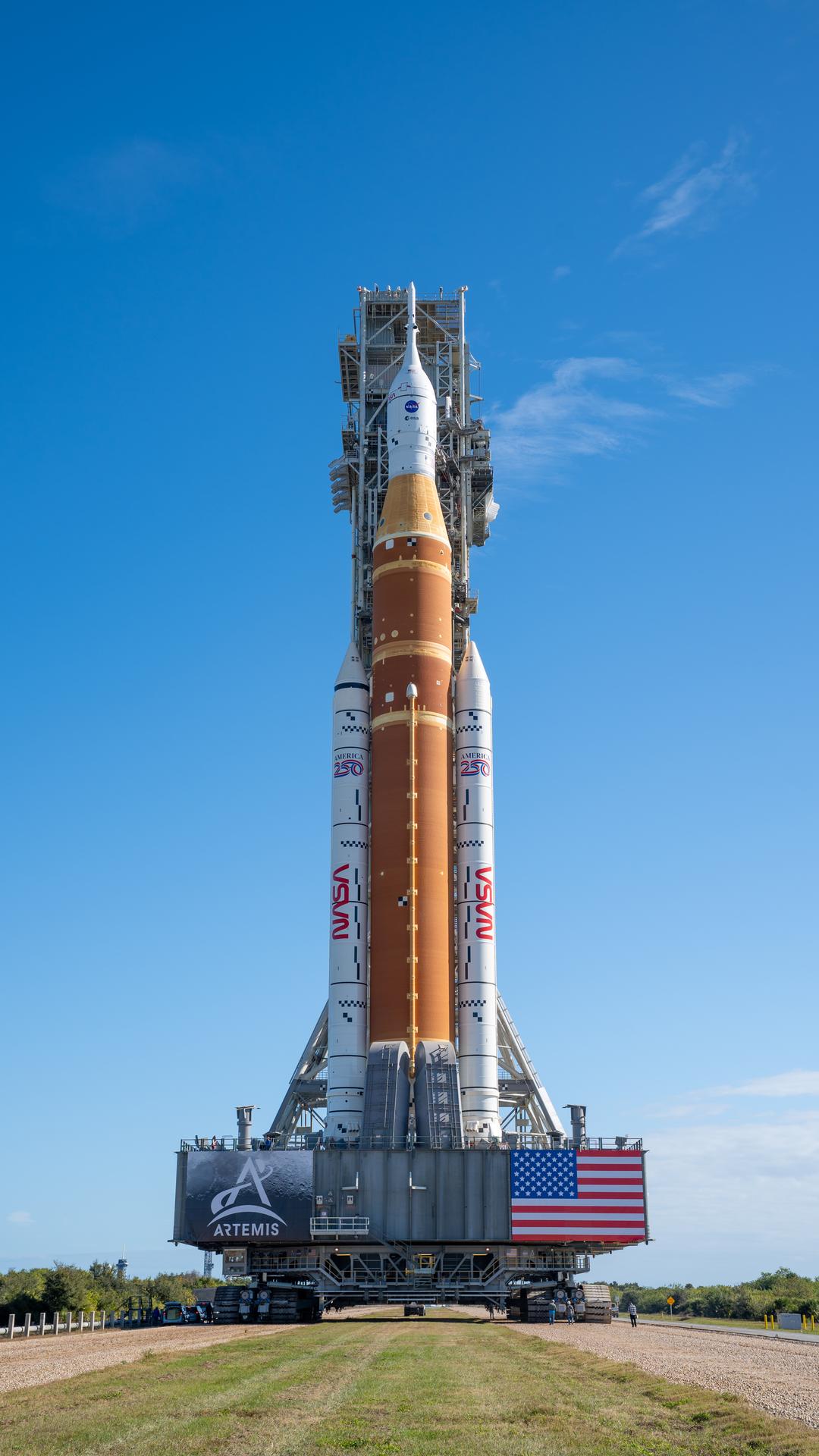
This image shows NASA’s SLS (Space Launch System) and Orion spacecraft rolling out of the Vehicle Assembly Building at NASA’s Kennedy Space Center. NASA's massive Crawler-Transporter, upgraded for the Artemis program, carries the powerful SLS rocket and Orion spacecraft on the Mobile Launcher from the Vehicle Assembly Building to Launch Pad 39B at Kennedy Space Center in preparation for the Artemis II mission.
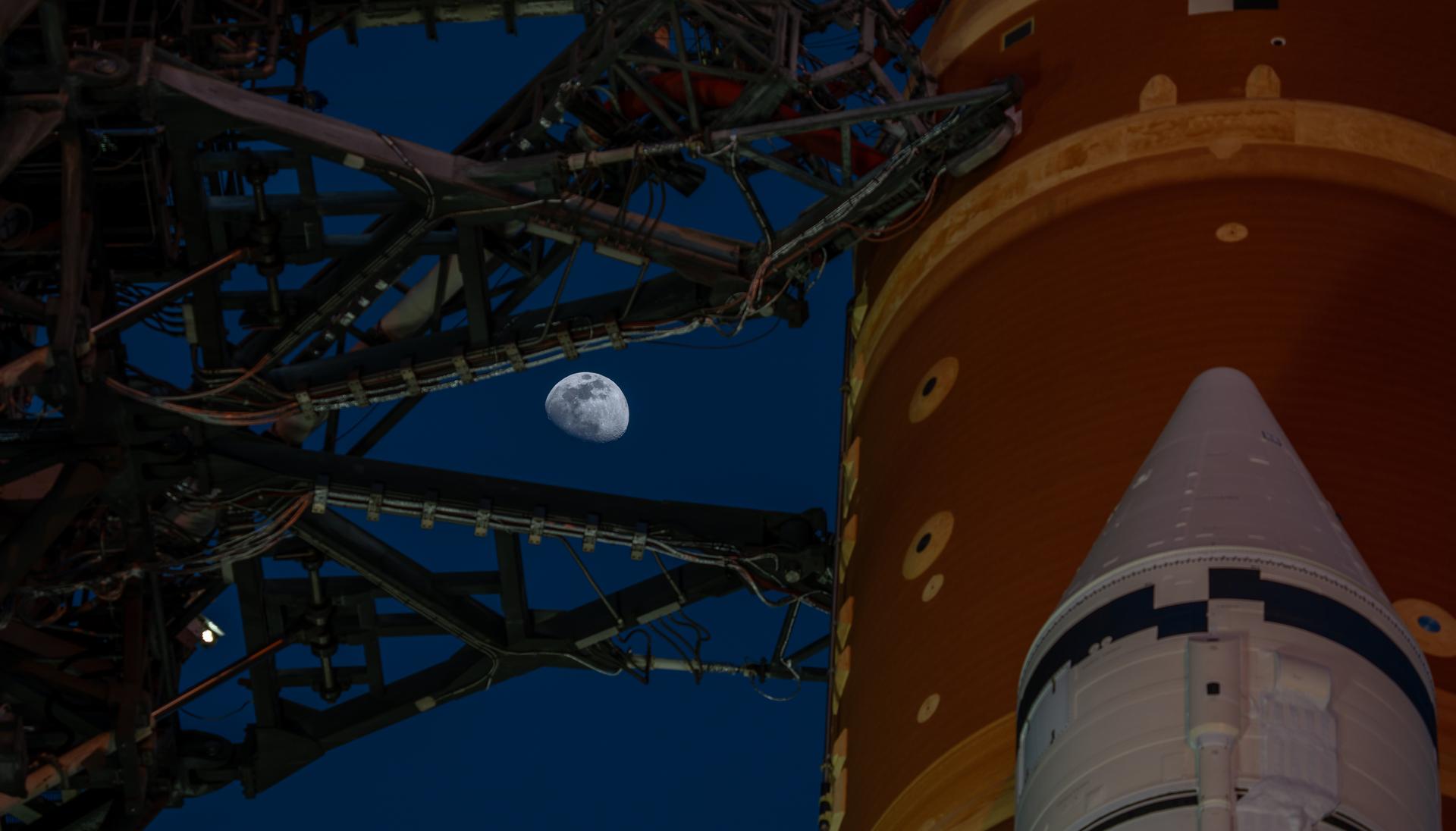
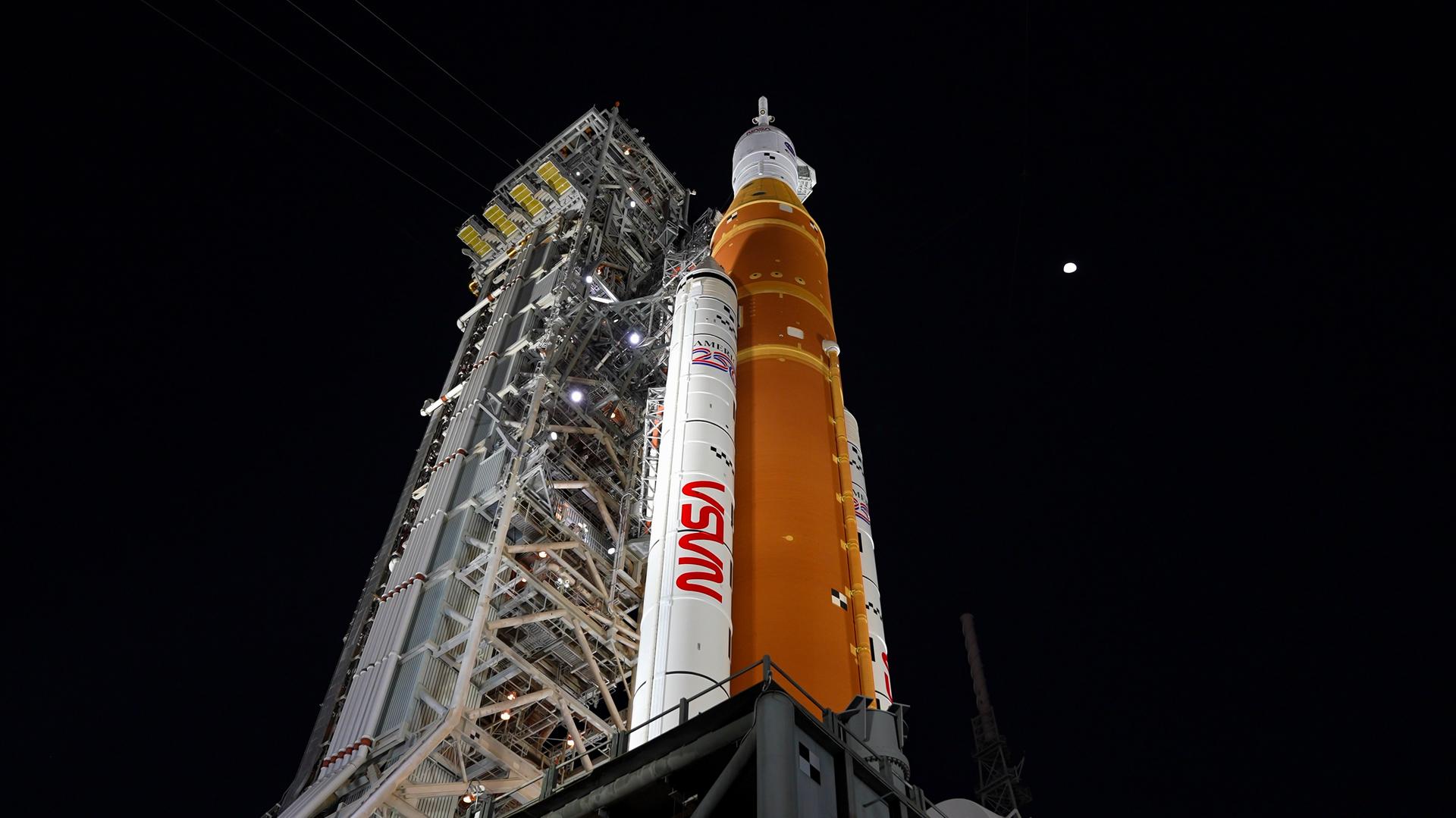
The Moon is seen shining over the SLS (Space Launch System) and Orion spacecraft, atop the mobile launcher on January 28, 2026. The rocket is currently at Launch Pad 39B at NASA’s Kennedy Space Center in Florida, as teams are preparing for a wet dress rehearsal to practice timelines and procedures for the launch of Artemis II.
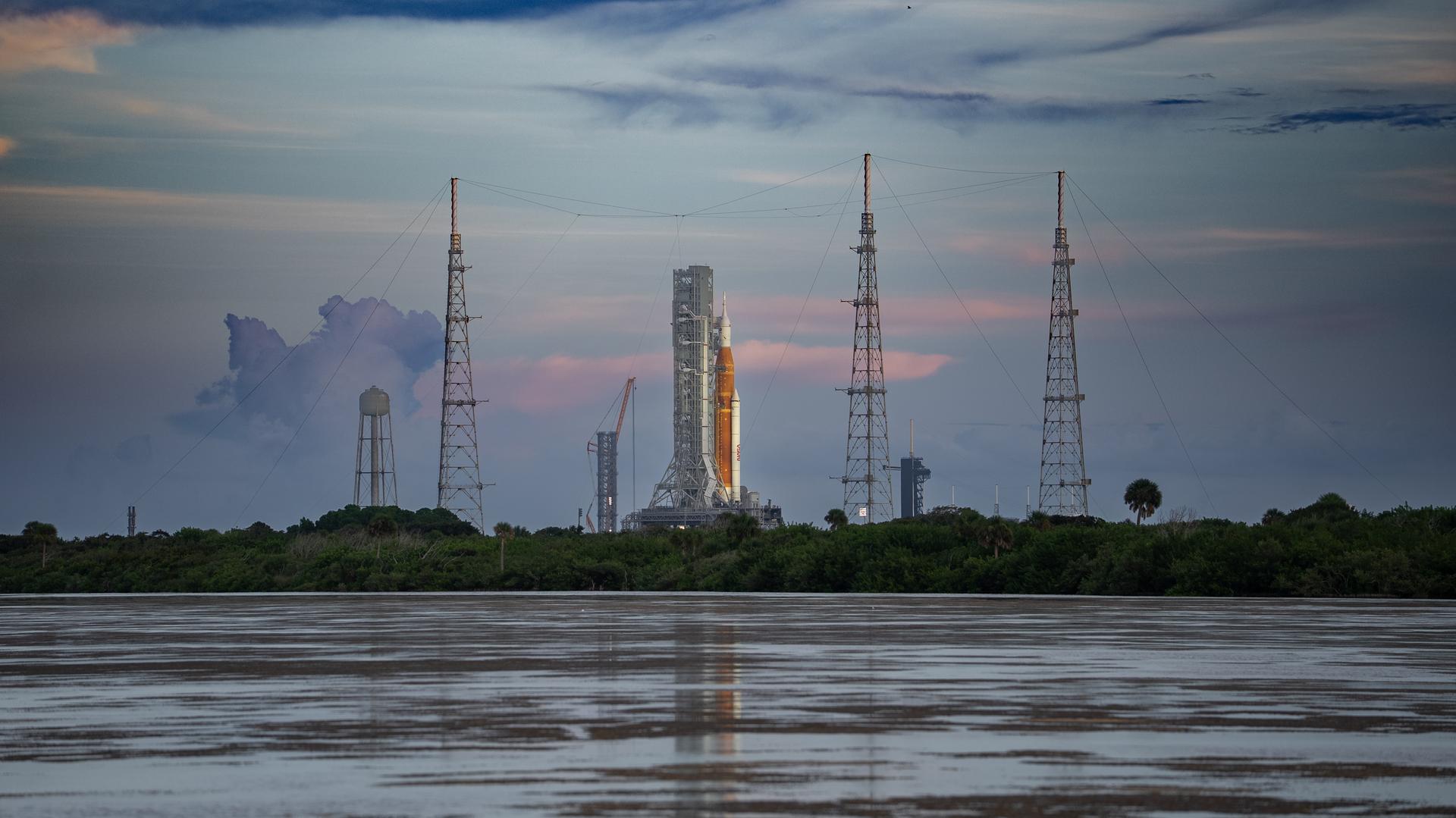
NASA’s Space Launch System (SLS) rocket with the Orion spacecraft aboard is seen atop the mobile launcher at Launch Pad 39B at NASA’s Kennedy Space Center in Florida. Artemis I mission is the first integrated test of the agency’s deep space exploration systems: the Space Launch System rocket, Orion spacecraft, and supporting ground systems. The mission is the first in a series of increasingly complex missions to the Moon. Launch of the uncrewed flight test is targeted for no earlier than Sept. 3 at 2:17 p.m. ET. With Artemis missions, NASA will land the first woman and first person of color on the Moon, using innovative technologies to explore more of the lunar surface than ever before.
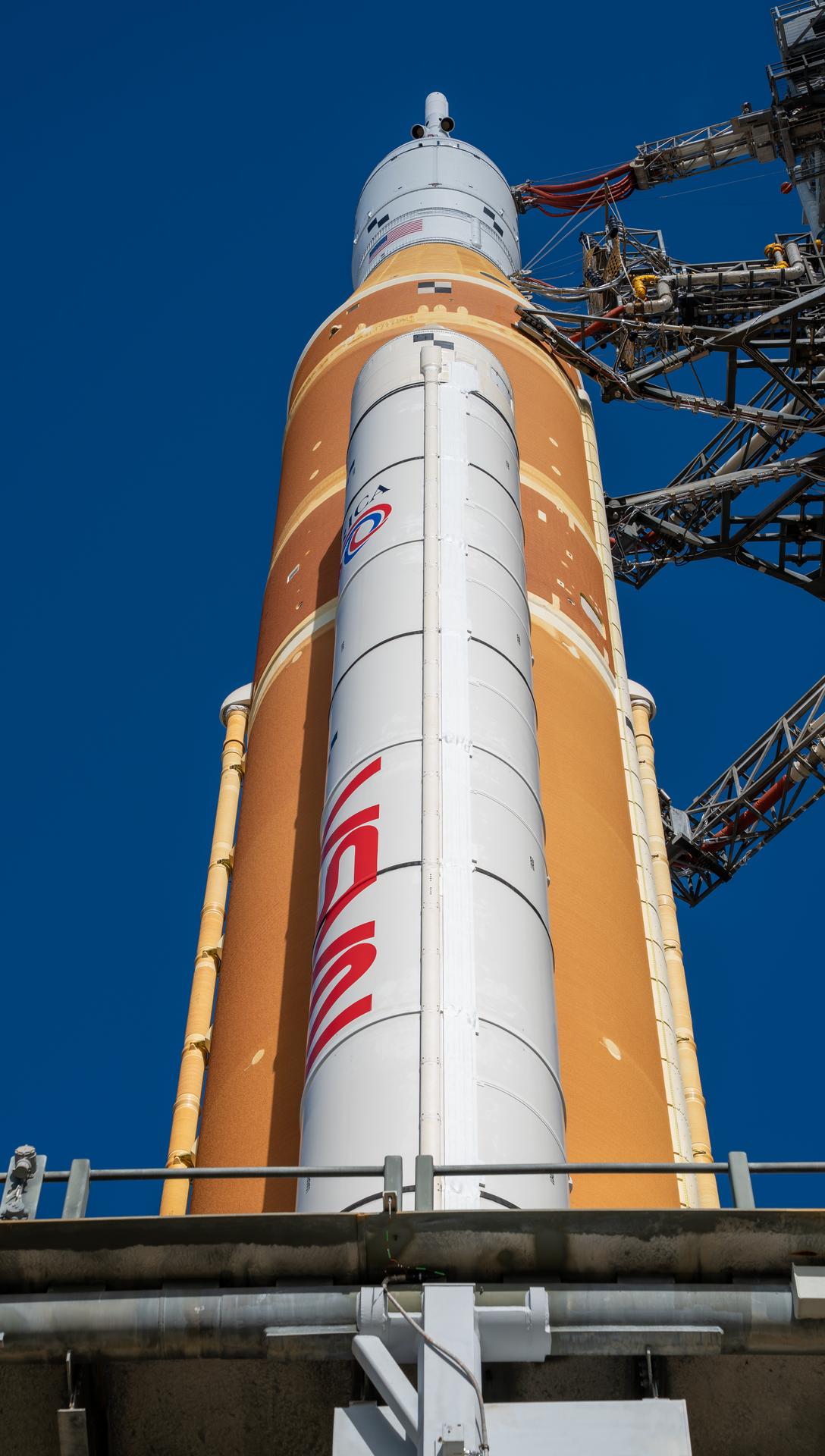
This image shows NASA’s SLS (Space Launch System) and Orion spacecraft rolling out of the Vehicle Assembly Building at NASA’s Kennedy Space Center. NASA's massive Crawler-Transporter, upgraded for the Artemis program, carries the powerful SLS rocket and Orion spacecraft on the Mobile Launcher from the Vehicle Assembly Building to Launch Pad 39B at Kennedy Space Center in preparation for the Artemis II mission.
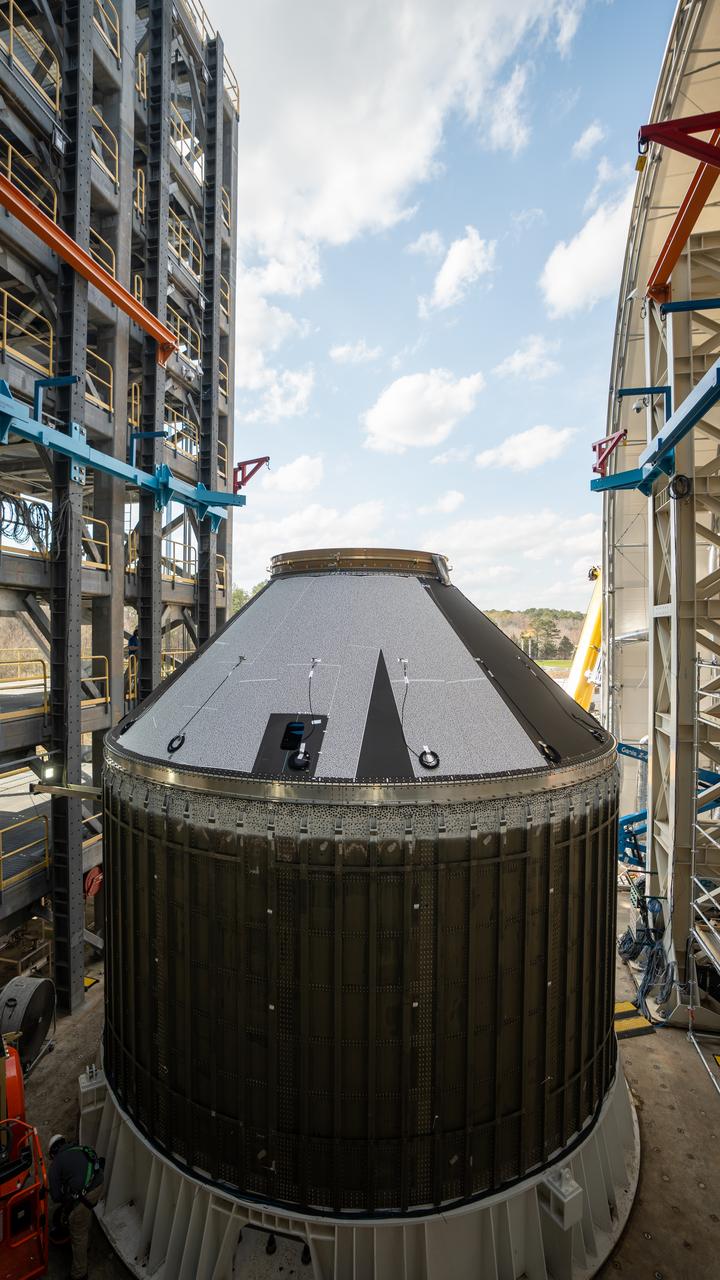
These photos and videos show how crews at NASA’s Marshall Space Flight Center in Huntsville, Alabama, moved and installed the payload adapter that will be used in the Block 1B configuration of the SLS (Space Launch System) rocket from Building 4708, where it was manufactured, into Structural Test Stand 4697 at NASA’s Marshall Space Flight Center on March 13. Teams at Marshall will begin structural testing the engineering development unit of the payload adapter – an exact replica of the flight version of the hardware – this spring. The cone-shaped payload adapter is about 8.5 feet tall and features two metal rings and eight composite panels. The adapter, which will debut on NASA’s Artemis IV mission, is an evolution from the Orion stage adapter used in the Block 1 configuration of the first three Artemis missions. It will be housed inside the universal stage adapter atop the rocket’s more powerful in-space stage, called the exploration upper stage. The payload adapter, like the launch vehicle stage adapter and the Orion stage adapter, is fully manufactured and tested at Marshall, which manages the SLS Program. NASA is working to land the first woman, first person of color, and its first international partner astronaut on the Moon under Artemis. SLS is part of NASA’s backbone for deep space exploration, along with the Orion spacecraft and Gateway in orbit around the Moon and commercial human landing systems, next-generational spacesuits, and rovers on the lunar surface. SLS is the only rocket that can send Orion, astronauts, and supplies to the Moon in a single launch.
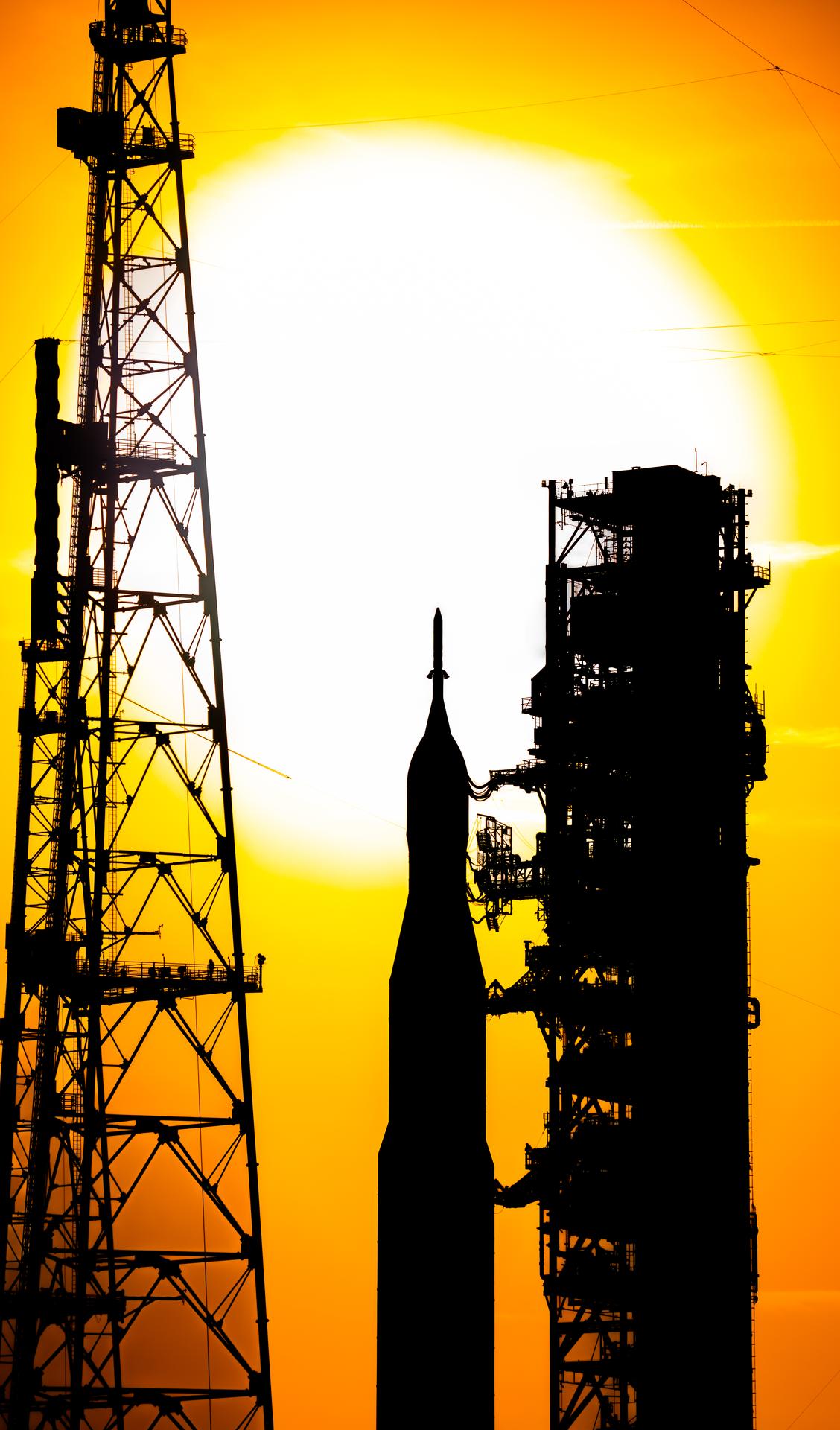
The sun sets as NASA’s crawler-transporter 2 carrying the agency’s Artemis II SLS (Space Launch System) rocket and Orion spacecraft, secured to the mobile launcher, rolls toward Launch Complex 39B at NASA’s Kennedy Space Center in Florida on 01/17/2026. The Artemis II test flight will take Commander Reid Wiseman, Pilot Victor Glover, and Mission Specialist Christina Koch from NASA and Mission Specialist Jeremy Hansen from the CSA (Canadian Space Agency), around the Moon and back to Earth no later than April 2026.
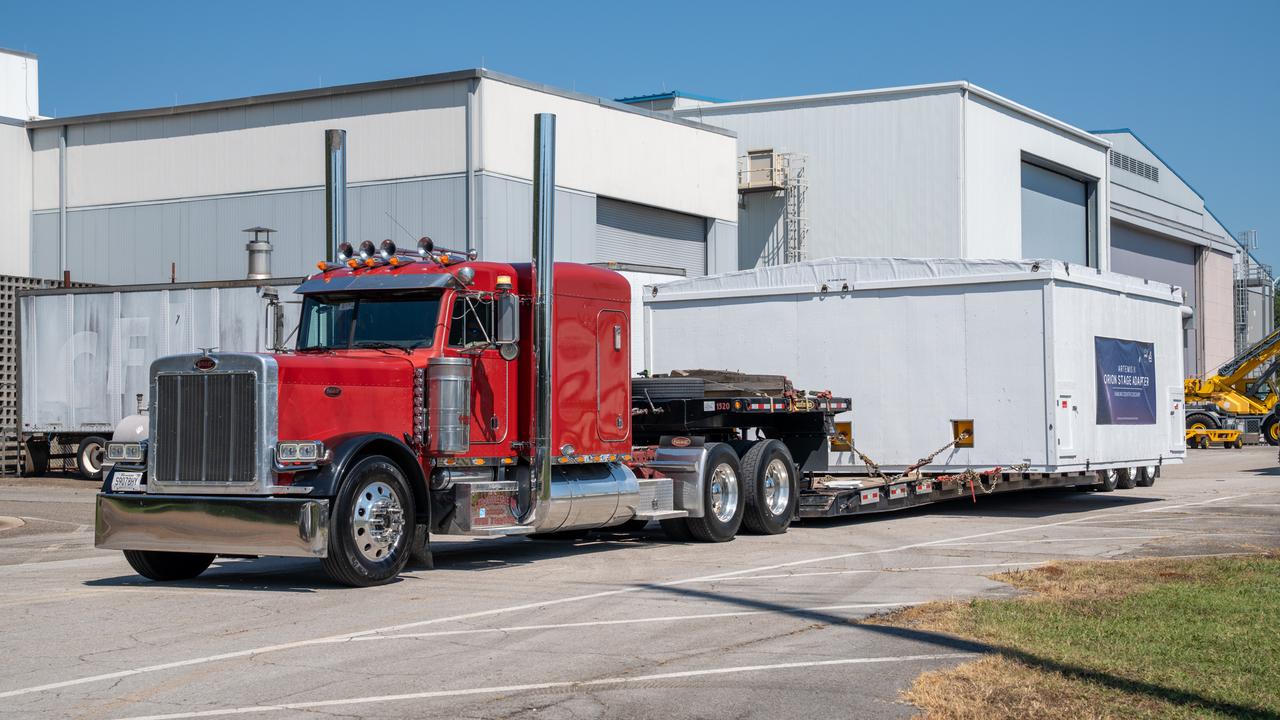
These images show the Orion stage adapter for Artemis II being prepped for shipment and then packaged in a large box, loaded on a semi-truck. It is seen leaving NASA’s Marshall Space Flight Center in Huntsville, Alabama, as it begins its journey to NASA’s Kennedy Space Center in Florida. Manufactured at Marshall, this adapter for the SLS (Space Launch System) connects the rocket’s interim cryogenic propulsion stage to the Orion spacecraft and is the final piece of SLS hardware to be delivered to Kennedy Space Center in preparation for the Artemis II mission.
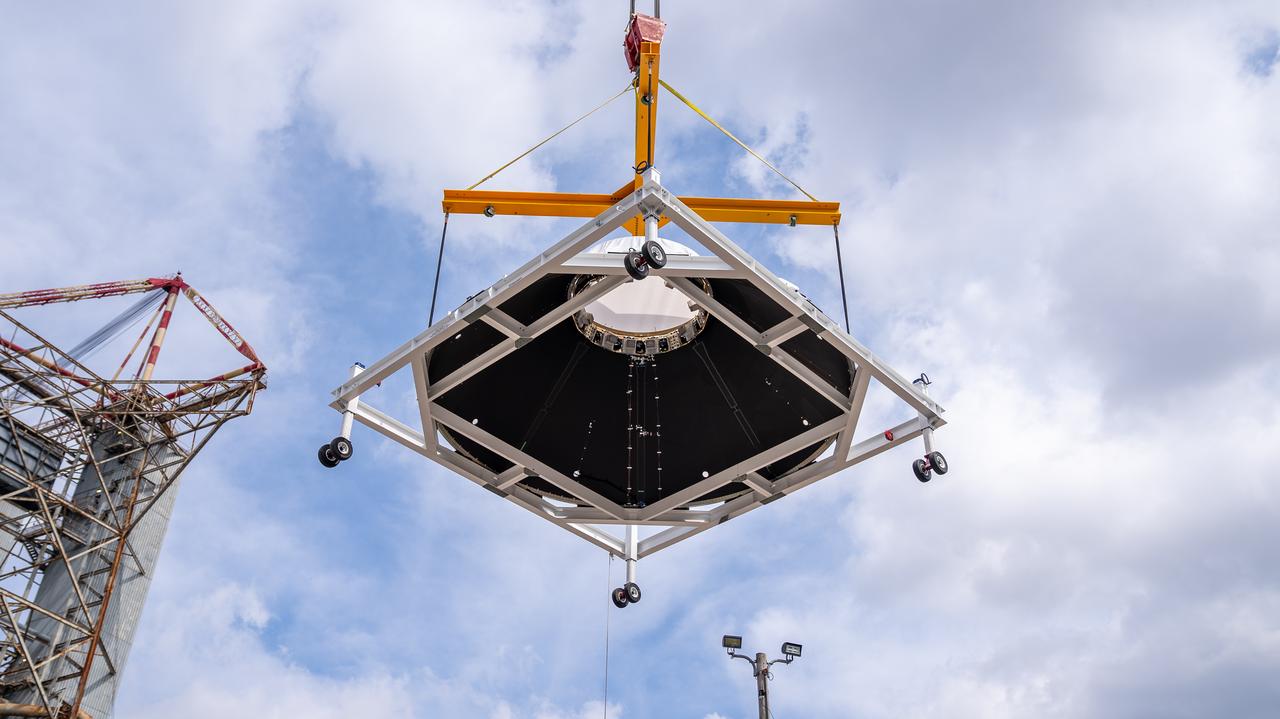
These photos and videos show how crews at NASA’s Marshall Space Flight Center in Huntsville, Alabama, moved and installed the payload adapter that will be used in the Block 1B configuration of the SLS (Space Launch System) rocket from Building 4708, where it was manufactured, into Structural Test Stand 4697 at NASA’s Marshall Space Flight Center on March 13. Teams at Marshall will begin structural testing the engineering development unit of the payload adapter – an exact replica of the flight version of the hardware – this spring. The cone-shaped payload adapter is about 8.5 feet tall and features two metal rings and eight composite panels. The adapter, which will debut on NASA’s Artemis IV mission, is an evolution from the Orion stage adapter used in the Block 1 configuration of the first three Artemis missions. It will be housed inside the universal stage adapter atop the rocket’s more powerful in-space stage, called the exploration upper stage. The payload adapter, like the launch vehicle stage adapter and the Orion stage adapter, is fully manufactured and tested at Marshall, which manages the SLS Program. NASA is working to land the first woman, first person of color, and its first international partner astronaut on the Moon under Artemis. SLS is part of NASA’s backbone for deep space exploration, along with the Orion spacecraft and Gateway in orbit around the Moon and commercial human landing systems, next-generational spacesuits, and rovers on the lunar surface. SLS is the only rocket that can send Orion, astronauts, and supplies to the Moon in a single launch.
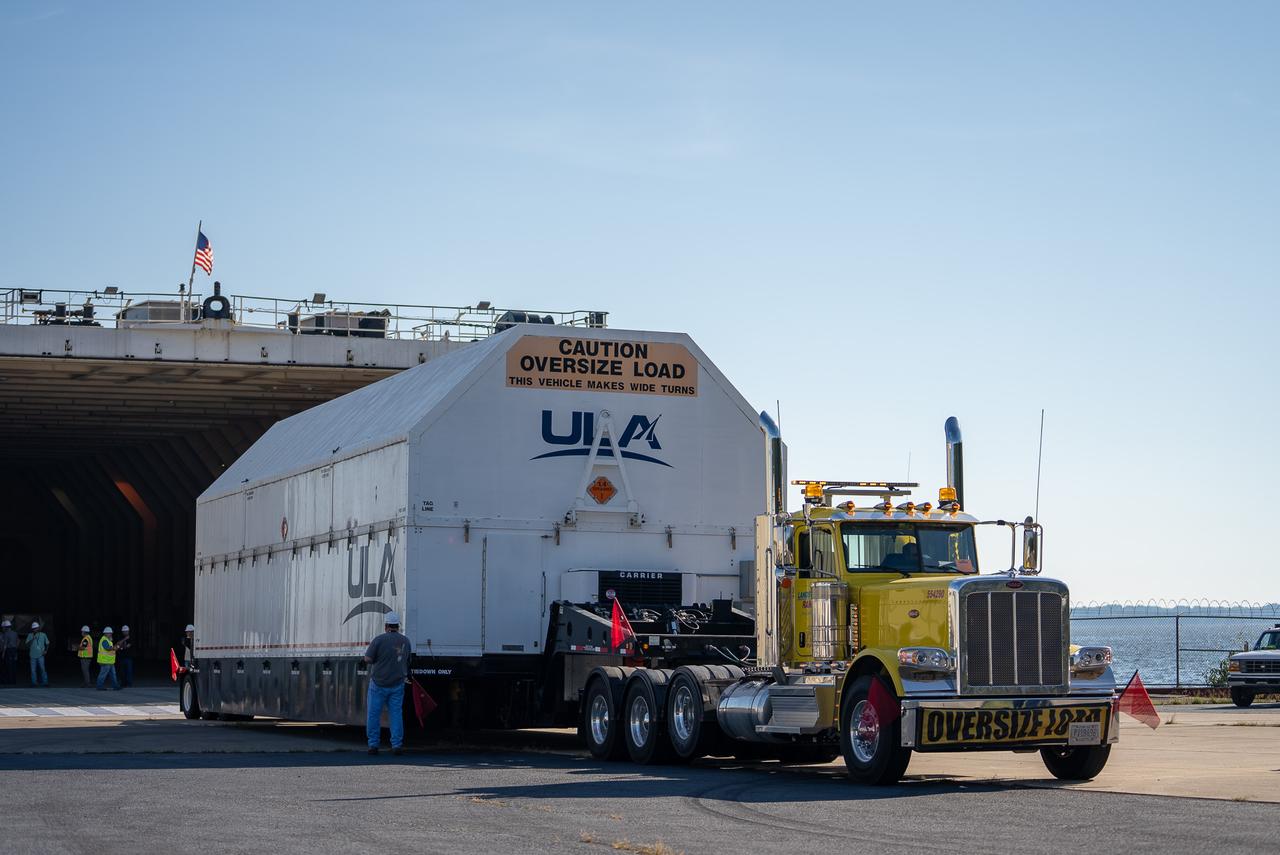
These images and videos show how crews in Alabama prepared the ICPS (interim cryogenic propulsion stage) for NASA’s SLS (Space Launch System) rocket for shipment to Florida between July 29-31. The ICPS in the photos and videos will help power NASA’s Artemis III mission to the Moon. The SLS upper stage is manufactured by United Launch Alliance at its facility in Decatur. Its RL10 engine is produced by Aerojet Rocketdyne, the SLS engines lead contractor, in West Palm Beach, Florida. ULA is working with Boeing, the SLS core stage and exploration upper stage lead contractor, to develop ICPS. ULA’s R/S RocketShip is transporting the flight hardware to its sister facility in Florida near NASA’s Kennedy Space Center for final checkouts. The ICPS for Artemis III is the last of its kind as SLS transitions to its next, more powerful Block 1B configuration with an upgraded upper stage beginning with Artemis IV. NASA is working to land the first woman and first person of color on the Moon under Artemis. SLS is part of NASA’s backbone for deep space exploration, along with Orion and the Gateway in orbit around the Moon. SLS is the only rocket that can send Orion, astronauts, and supplies to the Moon in a single mission.
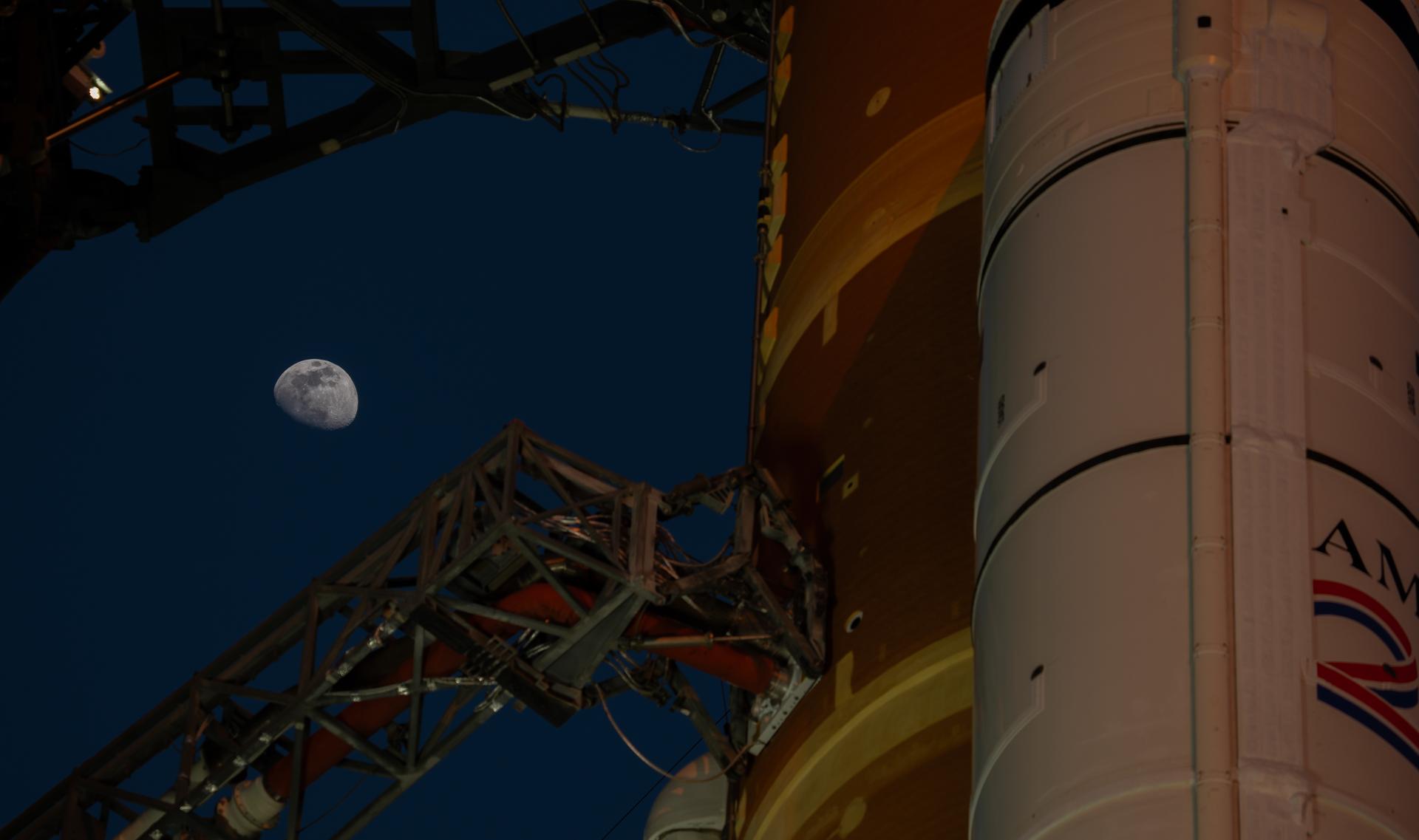
The Moon is seen shining over the SLS (Space Launch System) and Orion spacecraft, atop the mobile launcher on January 28, 2026. The rocket is currently at Launch Pad 39B at NASA’s Kennedy Space Center in Florida, as teams are preparing for a wet dress rehearsal to practice timelines and procedures for the launch of Artemis II.

These images and videos show how crews in Alabama prepared the ICPS (interim cryogenic propulsion stage) for NASA’s SLS (Space Launch System) rocket for shipment to Florida between July 29-31. The ICPS in the photos and videos will help power NASA’s Artemis III mission to the Moon. The SLS upper stage is manufactured by United Launch Alliance at its facility in Decatur. Its RL10 engine is produced by Aerojet Rocketdyne, the SLS engines lead contractor, in West Palm Beach, Florida. ULA is working with Boeing, the SLS core stage and exploration upper stage lead contractor, to develop ICPS. ULA’s R/S RocketShip is transporting the flight hardware to its sister facility in Florida near NASA’s Kennedy Space Center for final checkouts. The ICPS for Artemis III is the last of its kind as SLS transitions to its next, more powerful Block 1B configuration with an upgraded upper stage beginning with Artemis IV. NASA is working to land the first woman and first person of color on the Moon under Artemis. SLS is part of NASA’s backbone for deep space exploration, along with Orion and the Gateway in orbit around the Moon. SLS is the only rocket that can send Orion, astronauts, and supplies to the Moon in a single mission.
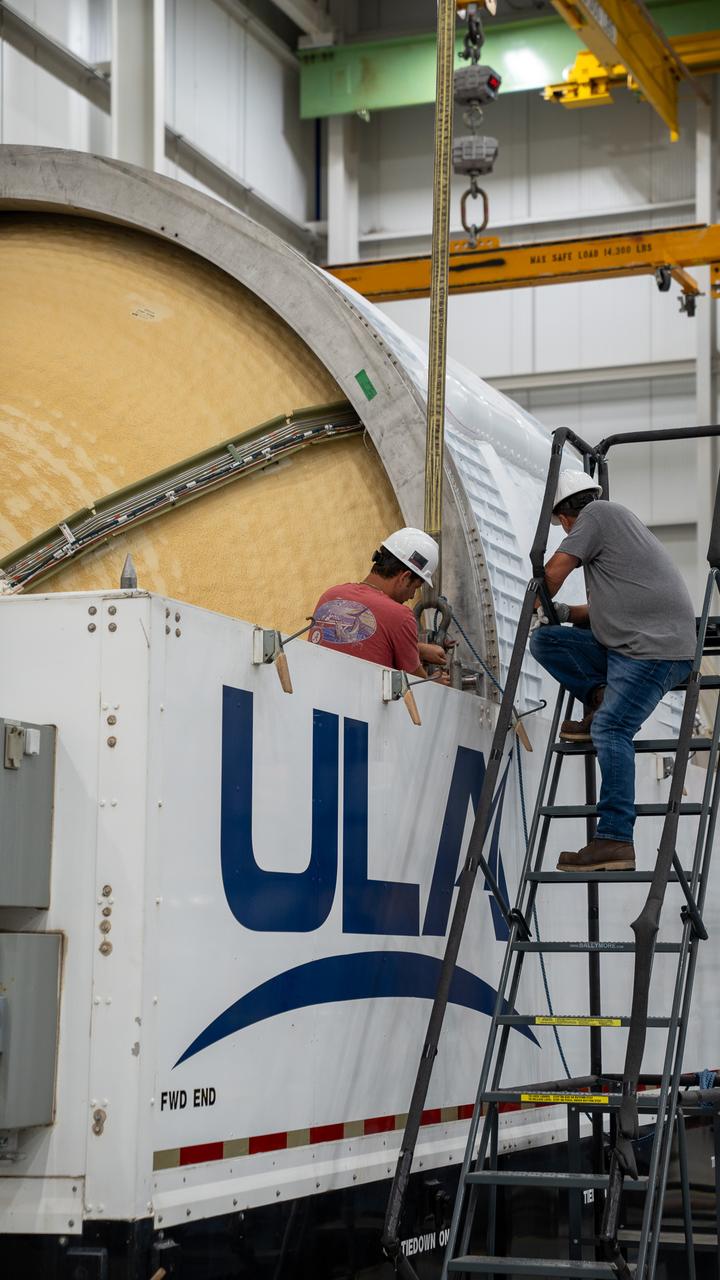
These images and videos show how crews in Alabama prepared the ICPS (interim cryogenic propulsion stage) for NASA’s SLS (Space Launch System) rocket for shipment to Florida between July 29-31. The ICPS in the photos and videos will help power NASA’s Artemis III mission to the Moon. The SLS upper stage is manufactured by United Launch Alliance at its facility in Decatur. Its RL10 engine is produced by Aerojet Rocketdyne, the SLS engines lead contractor, in West Palm Beach, Florida. ULA is working with Boeing, the SLS core stage and exploration upper stage lead contractor, to develop ICPS. ULA’s R/S RocketShip is transporting the flight hardware to its sister facility in Florida near NASA’s Kennedy Space Center for final checkouts. The ICPS for Artemis III is the last of its kind as SLS transitions to its next, more powerful Block 1B configuration with an upgraded upper stage beginning with Artemis IV. NASA is working to land the first woman and first person of color on the Moon under Artemis. SLS is part of NASA’s backbone for deep space exploration, along with Orion and the Gateway in orbit around the Moon. SLS is the only rocket that can send Orion, astronauts, and supplies to the Moon in a single mission.
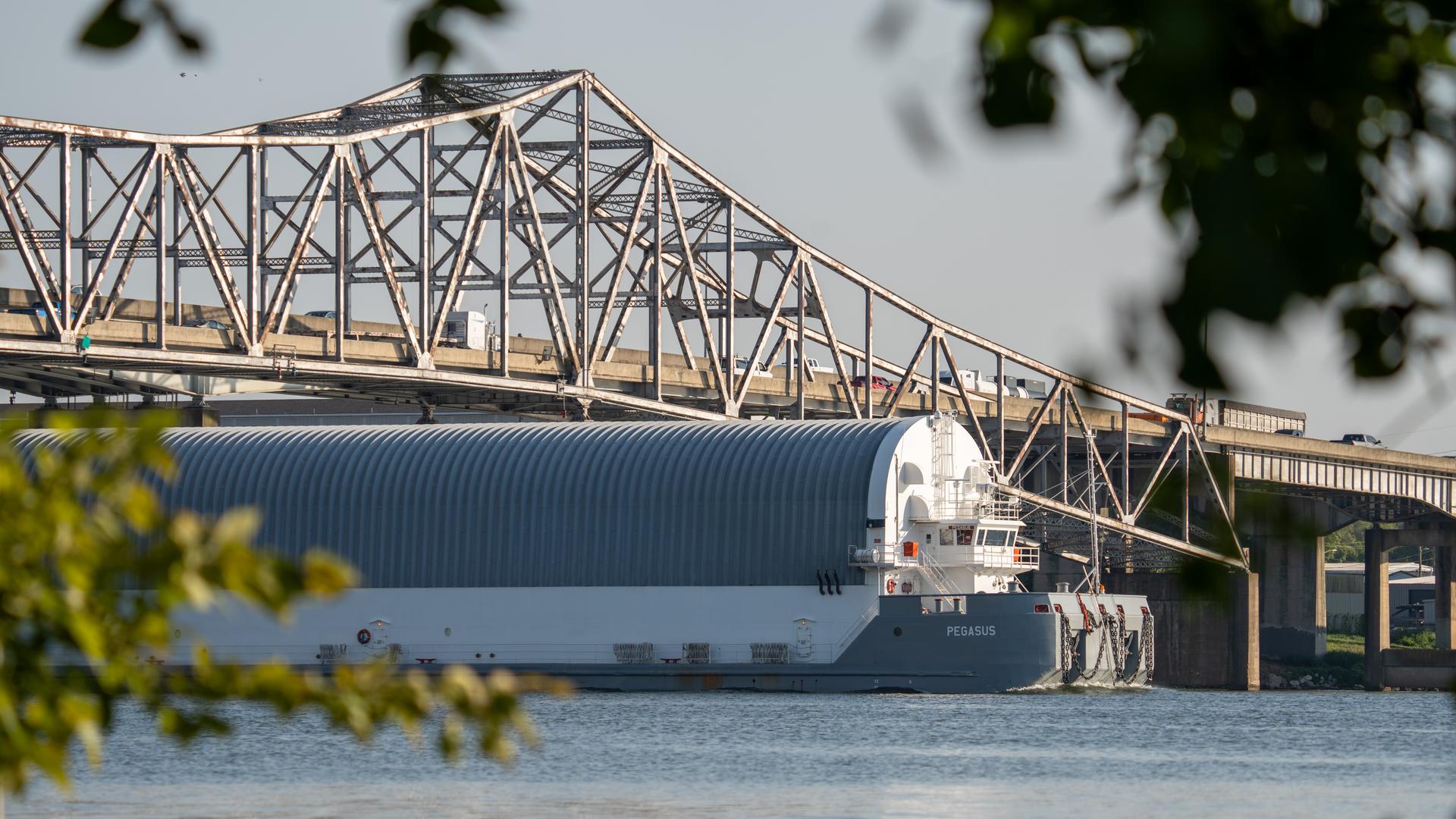
NASA’s Pegasus barge, ferrying the launch vehicle stage adapter for NASA’s SLS (Space Launch System) rocket, departed the agency’s Marshall Space Flight Center in Huntsville, Alabama, Aug. 21, passing through nearby Decatur. The cone-shaped adapter is part of the SLS rocket that will power Artemis II mission, the first crewed flight of the agency’s Artemis campaign. The barge will stop briefly at NASA’s Michoud Assembly Facility in New Orleans to pick up additional hardware elements for Artemis III and Artemis IV before heading to the agency’s Kennedy Space Center in Florida, where the adapter will be readied for stacking and launch preparations.
Lights illuminate NASA’s Artemis II SLS (Space Launch System) rocket and Orion spacecraft at Launch Complex 39B at NASA’s Kennedy Space Center in Florida. In the coming days, engineers will prepare for the wet dress rehearsal, a two-day test that simulates launch day. The Artemis II test flight will take Commander Reid Wiseman, Pilot Victor Glover, and Mission Specialist Christina Koch from NASA, and Mission Specialist Jeremy Hansen from the CSA (Canadian Space Agency), around the Moon and back to Earth no later than April 2026.
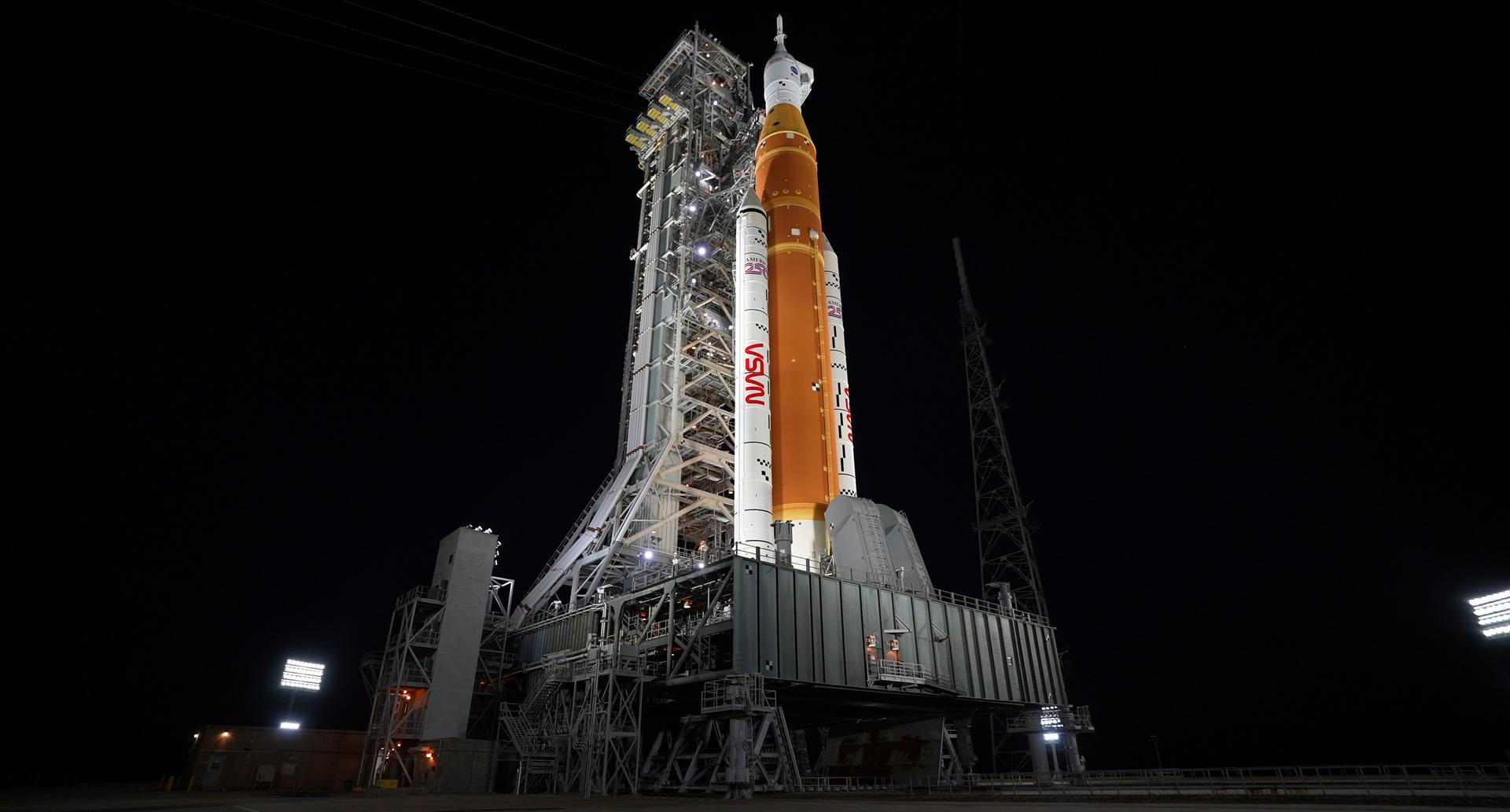
Lights illuminate NASA’s Artemis II SLS (Space Launch System) rocket and Orion spacecraft at Launch Complex 39B at NASA’s Kennedy Space Center in Florida. In the coming days, engineers will prepare for the wet dress rehearsal, a two-day test that simulates launch day. The Artemis II test flight will take Commander Reid Wiseman, Pilot Victor Glover, and Mission Specialist Christina Koch from NASA, and Mission Specialist Jeremy Hansen from the CSA (Canadian Space Agency), around the Moon and back to Earth no later than April 2026.
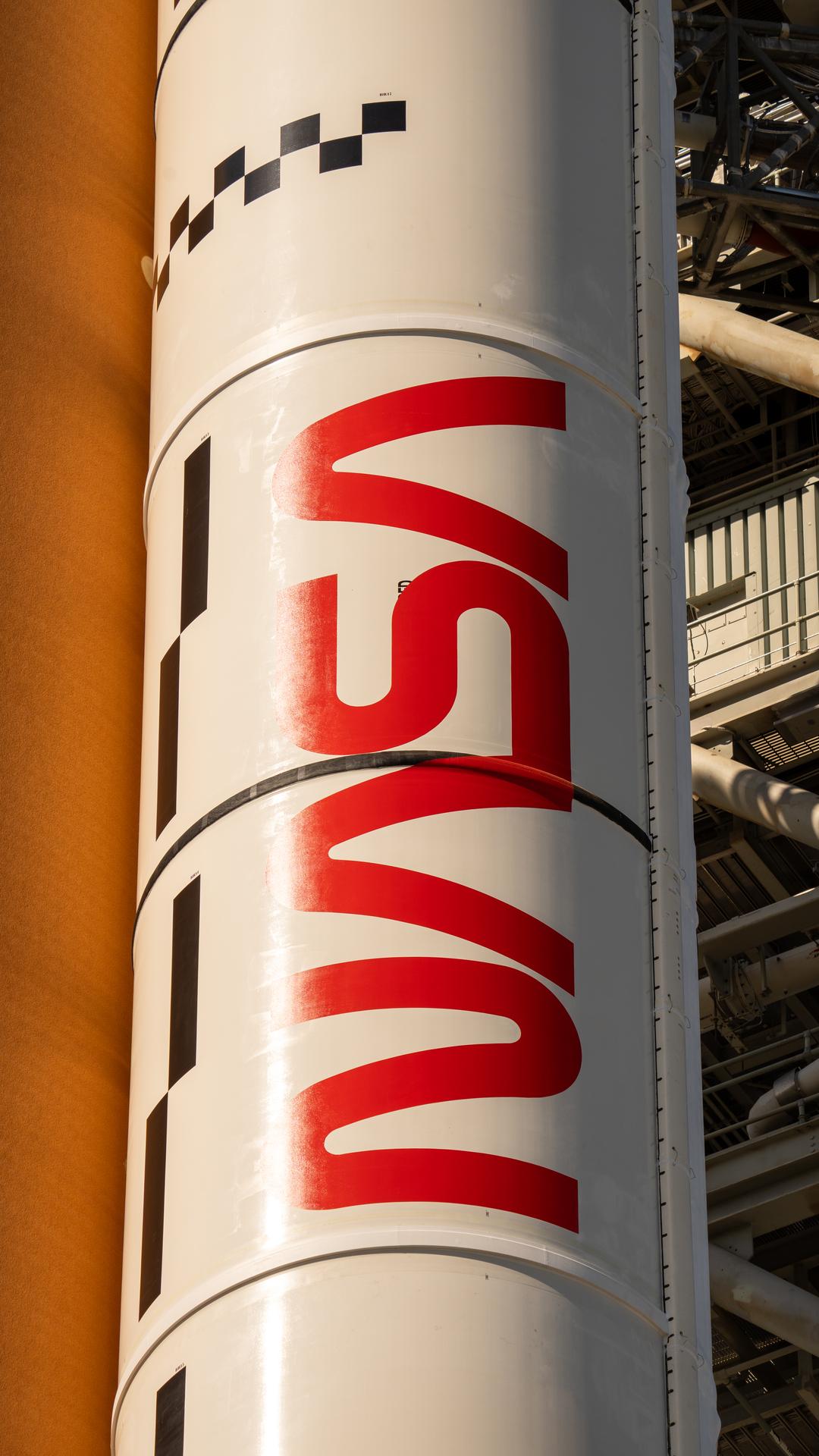
This image shows NASA’s SLS (Space Launch System) and Orion spacecraft rolling out of the Vehicle Assembly Building at NASA’s Kennedy Space Center. NASA's massive Crawler-Transporter, upgraded for the Artemis program, carries the powerful SLS rocket and Orion spacecraft on the Mobile Launcher from the Vehicle Assembly Building to Launch Pad 39B at Kennedy Space Center in preparation for the Artemis II mission.
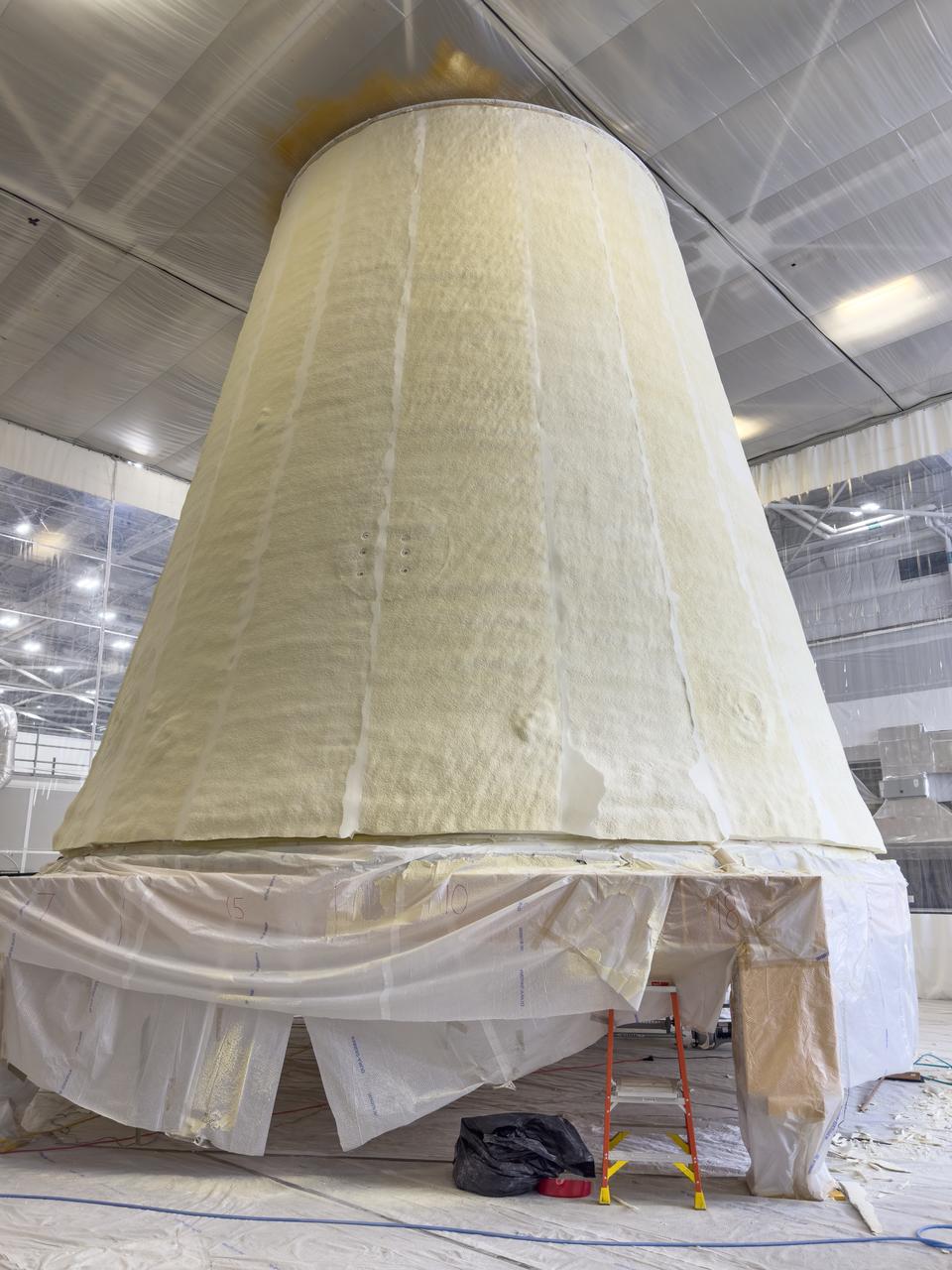
These photos show how technicians at NASA’s Marshall Space Flight Center in Huntsville, Alabama, have applied the thermal protection system material to the launch vehicle stage adapter (LVSA) of NASA’s SLS (Space Launch System) rocket for Artemis III, which will land astronauts on the Moon to advance long-term lunar exploration and scientific discovery and inspire the Artemis Generation. The LVSA is a cone-shaped element that connects the mega rocket’s core stage to its interim cryogenic propulsion stage (ICPS), partially enclosing it and protecting its avionics and electrical systems from the extreme pressures, sounds, and temperatures during launch and flight. Teams at Marshall began applying the thermal protection system material in the spring of 2023. Unlike other parts of the SLS rocket, the thermal protection system material for the LVSA is applied entirely by hand using a spray gun. During application, the technicians use a thin measuring rod to gauge the proper thickness. Once the thermal protection system has cured, certain areas are sanded down to meet parameters. The entire process takes several months. The LVSA is fully manufactured at Marshall by NASA, lead contractor Teledyne Brown Engineering, and the Jacobs Space Group’s ESSCA contract. The LVSA for Artemis III is the last of its kind as future SLS rockets will transition to its next, more powerful Block 1B configuration beginning with Artemis IV. NASA is working to land the first woman and first person of color on the Moon under Artemis. SLS is part of NASA’s backbone for deep space exploration, along with the Orion spacecraft, advanced spacesuits and rovers, the Gateway in orbit around the Moon, and commercial human landing systems. SLS is the only rocket that can send Orion, astronauts, and supplies to the Moon in a single mission.
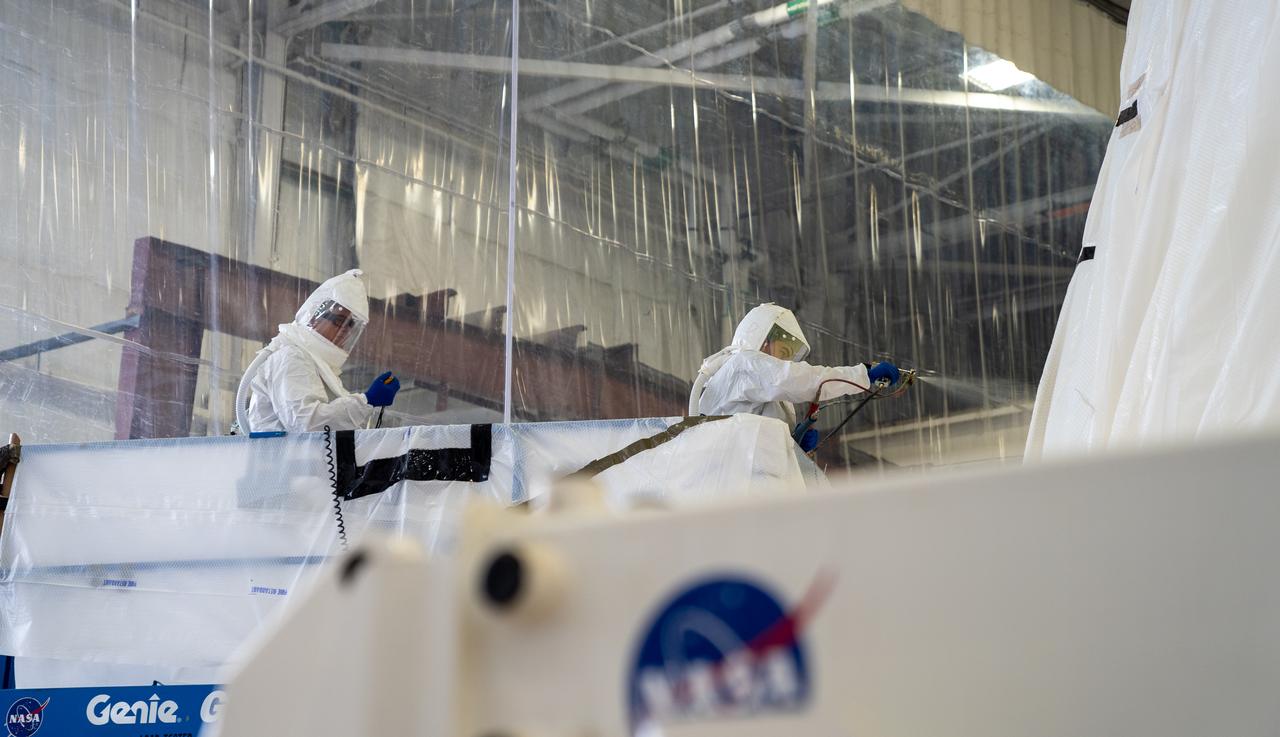
These photos show how technicians at NASA’s Marshall Space Flight Center in Huntsville, Alabama, have applied the thermal protection system material to the launch vehicle stage adapter (LVSA) of NASA’s SLS (Space Launch System) rocket for Artemis III, which will land astronauts on the Moon to advance long-term lunar exploration and scientific discovery and inspire the Artemis Generation. The LVSA is a cone-shaped element that connects the mega rocket’s core stage to its interim cryogenic propulsion stage (ICPS), partially enclosing it and protecting its avionics and electrical systems from the extreme pressures, sounds, and temperatures during launch and flight. Teams at Marshall began applying the thermal protection system material in the spring of 2023. Unlike other parts of the SLS rocket, the thermal protection system material for the LVSA is applied entirely by hand using a spray gun. During application, the technicians use a thin measuring rod to gauge the proper thickness. Once the thermal protection system has cured, certain areas are sanded down to meet parameters. The entire process takes several months. The LVSA is fully manufactured at Marshall by NASA, lead contractor Teledyne Brown Engineering, and the Jacobs Space Group’s ESSCA contract. The LVSA for Artemis III is the last of its kind as future SLS rockets will transition to its next, more powerful Block 1B configuration beginning with Artemis IV. NASA is working to land the first woman and first person of color on the Moon under Artemis. SLS is part of NASA’s backbone for deep space exploration, along with the Orion spacecraft, advanced spacesuits and rovers, the Gateway in orbit around the Moon, and commercial human landing systems. SLS is the only rocket that can send Orion, astronauts, and supplies to the Moon in a single mission.

These photos and videos show how crews guided a test version of the universal stage adapter for NASA’s more powerful version of its SLS (Space Launch System) rocket to Building 4619 at the agency’s Marshall Space Flight Center in Huntsville, Alabama, Feb. 22. Built by Leidos, the lead contractor for the universal stage adapter, crews transported the hardware from a Leidos facility in Decatur, Alabama, the same day. The universal stage adapter will connect the SLS rocket’s upgraded in-space propulsion stage, called the exploration upper stage, to NASA’s Orion spacecraft as part of the evolved Block 1B configuration of the SLS rocket. It will also serve as a compartment capable of accommodating large payloads, such as modules or other exploration spacecraft. In Building 4619’s Load Test Annex High Bay at Marshall, the development test article will first undergo modal testing that will shake the hardware to validate dynamic models. Later, during ultimate load testing, force will be applied vertically and to the sides of the hardware. Unlike the flight hardware, the development test article has flaws intentionally included in its design, which will help engineers verity that the flight adapter can withstand the extreme forces it will face during launch and flight.
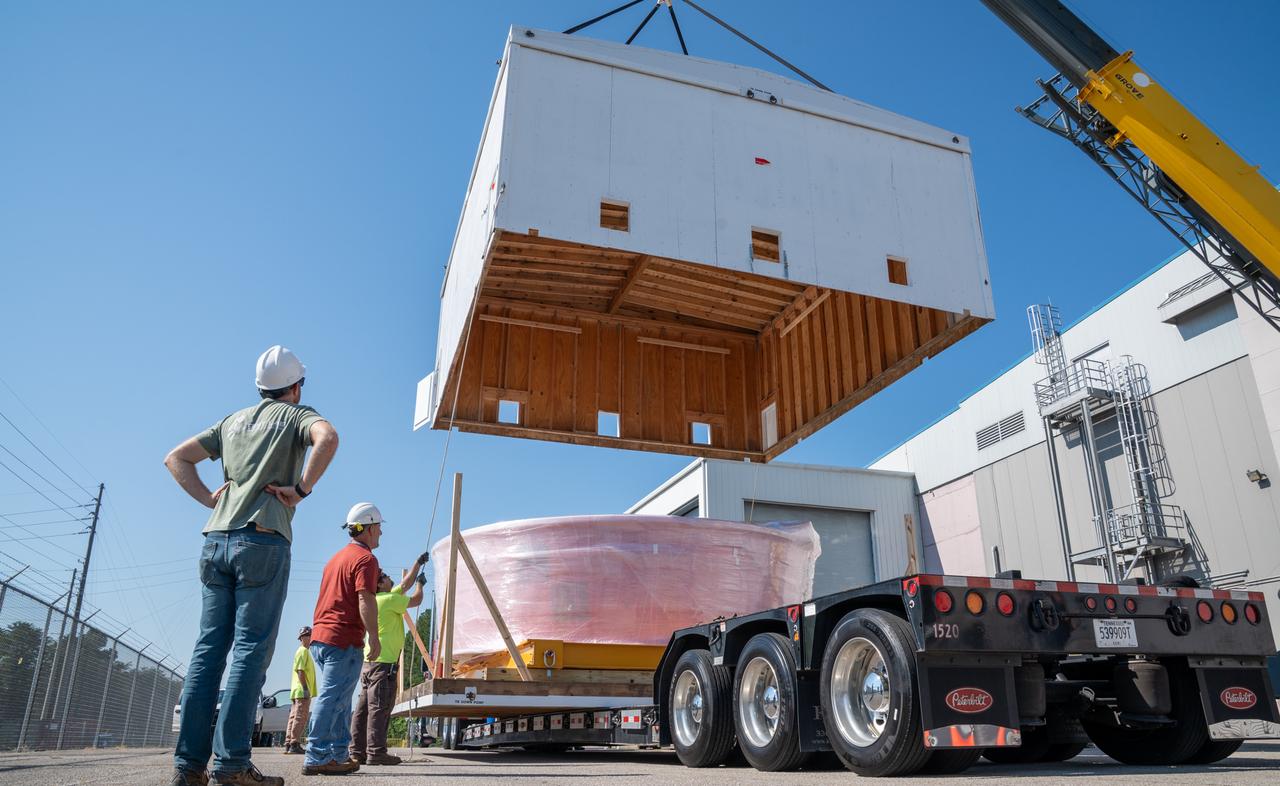
These images show the Orion stage adapter for Artemis II being prepped for shipment and then packaged in a large box, loaded on a semi-truck. It is seen leaving NASA’s Marshall Space Flight Center in Huntsville, Alabama, as it begins its journey to NASA’s Kennedy Space Center in Florida. Manufactured at Marshall, this adapter for the SLS (Space Launch System) connects the rocket’s interim cryogenic propulsion stage to the Orion spacecraft and is the final piece of SLS hardware to be delivered to Kennedy Space Center in preparation for the Artemis II mission.
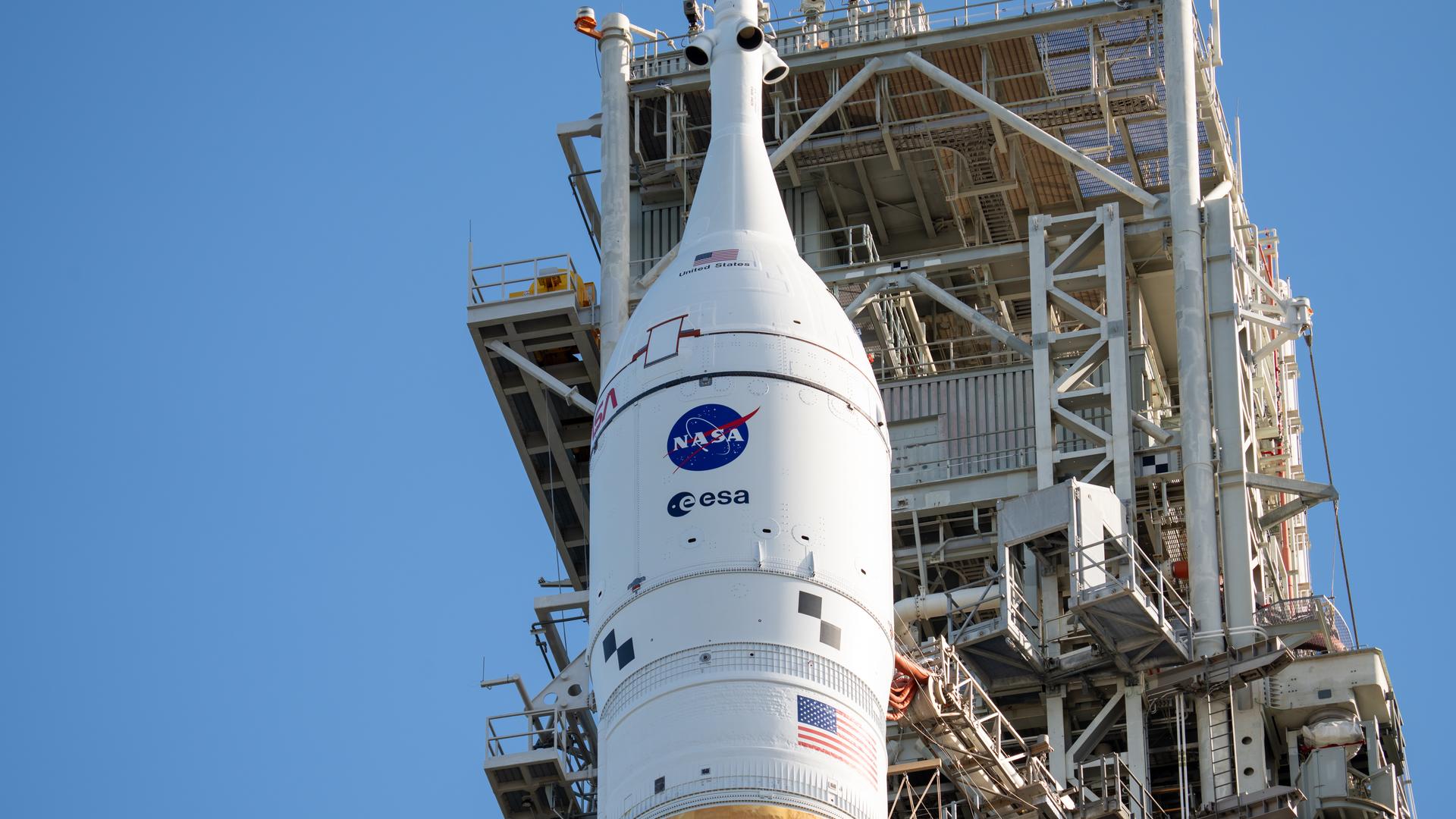
This image shows NASA’s SLS (Space Launch System) and Orion spacecraft rolling out of the Vehicle Assembly Building at NASA’s Kennedy Space Center. NASA's massive Crawler-Transporter, upgraded for the Artemis program, carries the powerful SLS rocket and Orion spacecraft on the Mobile Launcher from the Vehicle Assembly Building to Launch Pad 39B at Kennedy Space Center in preparation for the Artemis II mission.
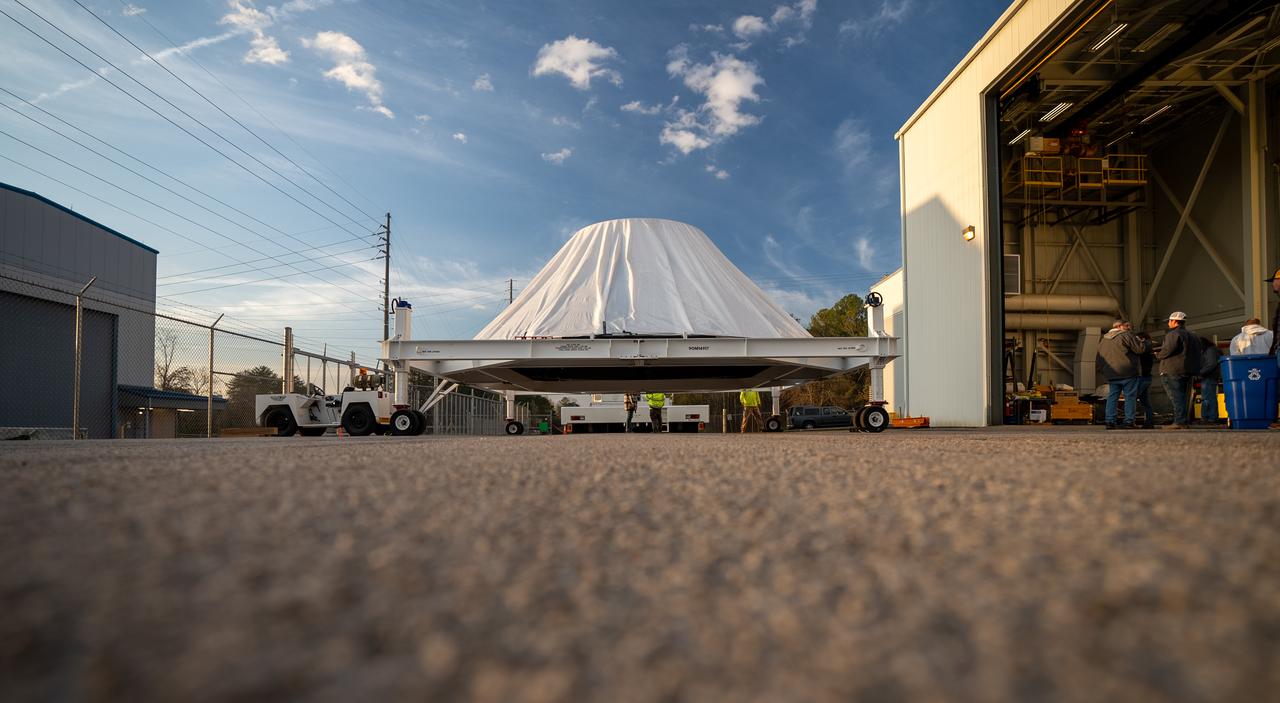
These photos and videos show how crews at NASA’s Marshall Space Flight Center in Huntsville, Alabama, moved and installed the payload adapter that will be used in the Block 1B configuration of the SLS (Space Launch System) rocket from Building 4708, where it was manufactured, into Structural Test Stand 4697 at NASA’s Marshall Space Flight Center on March 13. Teams at Marshall will begin structural testing the engineering development unit of the payload adapter – an exact replica of the flight version of the hardware – this spring. The cone-shaped payload adapter is about 8.5 feet tall and features two metal rings and eight composite panels. The adapter, which will debut on NASA’s Artemis IV mission, is an evolution from the Orion stage adapter used in the Block 1 configuration of the first three Artemis missions. It will be housed inside the universal stage adapter atop the rocket’s more powerful in-space stage, called the exploration upper stage. The payload adapter, like the launch vehicle stage adapter and the Orion stage adapter, is fully manufactured and tested at Marshall, which manages the SLS Program. NASA is working to land the first woman, first person of color, and its first international partner astronaut on the Moon under Artemis. SLS is part of NASA’s backbone for deep space exploration, along with the Orion spacecraft and Gateway in orbit around the Moon and commercial human landing systems, next-generational spacesuits, and rovers on the lunar surface. SLS is the only rocket that can send Orion, astronauts, and supplies to the Moon in a single launch.
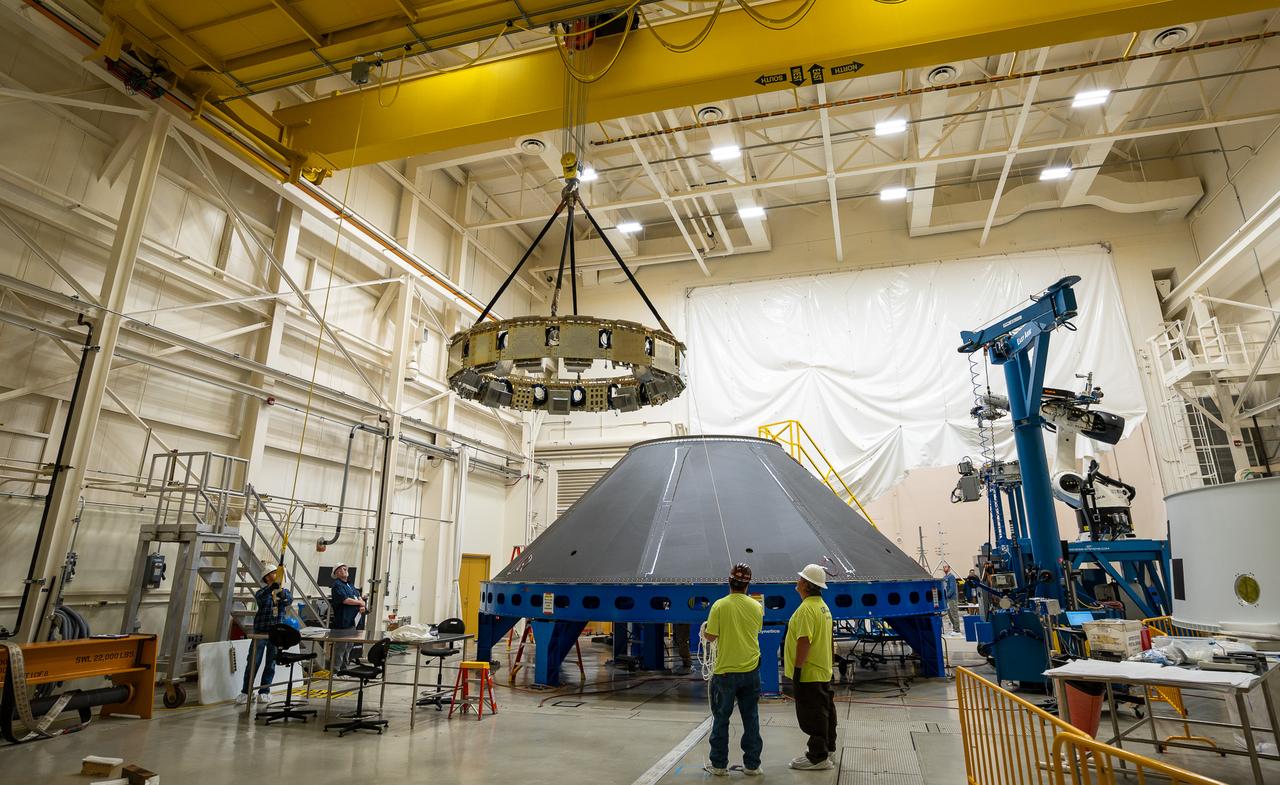
These photos and videos show how NASA manufactured and prepared to transport the payload adapter in February inside Building 4708 at NASA’s Marshall Space Flight Center in Huntsville, Alabama. Prior to moving the hardware for testing, teams installed the New Explorations Secondary Transport component, called the NEST, into the top of the engineering development unit. The NEST component will allow the hardware to hold a series of secondary payloads, or small satellites. The cone-shaped payload adapter is about 8.5 feet tall and features two metal rings and eight composite panels. The adapter, which will debut on NASA’s Artemis IV mission, is an evolution from the Orion stage adapter used in the Block 1 configuration of the rocket for the first three Artemis missions. It will be housed inside the universal stage adapter atop the rocket’s more powerful in-space stage, called the exploration upper stage. The payload adapter, like the launch vehicle stage adapter and the Orion stage adapter, is fully manufactured and tested at Marshall, which manages the SLS Program. NASA is working to land the first woman, first person of color, and its first international partner astronaut on the Moon under Artemis. SLS is part of NASA’s backbone for deep space exploration, along with the Orion spacecraft and Gateway in orbit around the Moon and commercial human landing systems, next-generational spacesuits, and rovers on the lunar surface. SLS is the only rocket that can send Orion, astronauts, and supplies to the Moon in a single launch.
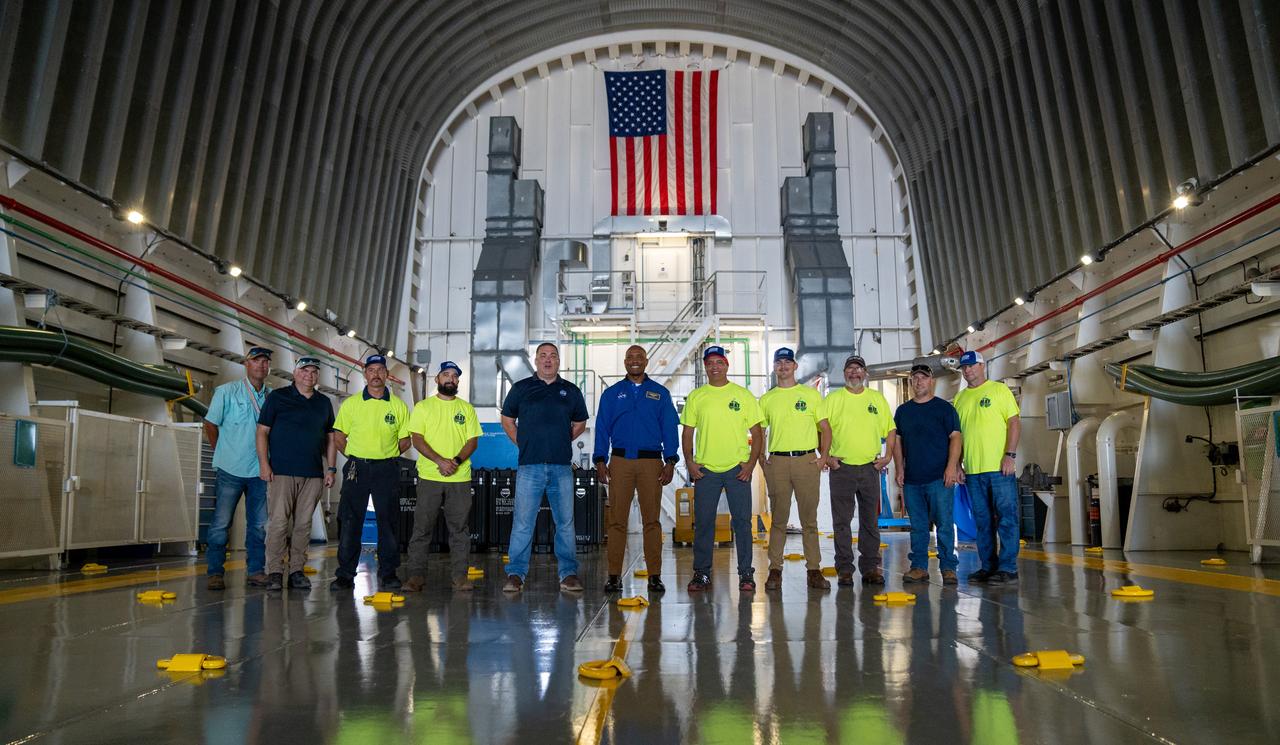
NASA astronaut Victor Glover views the core stage of the SLS (Space Launch System) rocket that will help power Artemis II at NASA’s Michoud Assembly Facility in New Orleans July 15. Glover will pilot Artemis II, the first crewed mission of NASA’s Artemis campaign. Crews moved the 212-foot-tall core stage with its four RS-25 engines to Building 110 at NASA Michoud prior to rolling it out to NASA’s Pegasus barge July 16 for delivery to NASA’s Kennedy Space Center in Florida. The core stage has two giant propellant tanks that collectively hold more than 733,000 gallons of super cold liquid propellant to feed the stage’s four RS-25 engines. Together, the engines produce more than 2 million pounds of thrust to help send astronauts inside NASA’s Orion spacecraft to venture around the Moon for Artemis II. NASA is working to land the first woman, first person of color, and its first international partner astronaut on the Moon under Artemis. SLS is part of NASA’s backbone for deep space exploration, along with the Orion spacecraft, supporting ground systems, advanced spacesuits and rovers, the Gateway in orbit around the Moon, and commercial human landing systems. SLS is the only rocket that can send Orion, astronauts, and supplies to the Moon in a single launch.
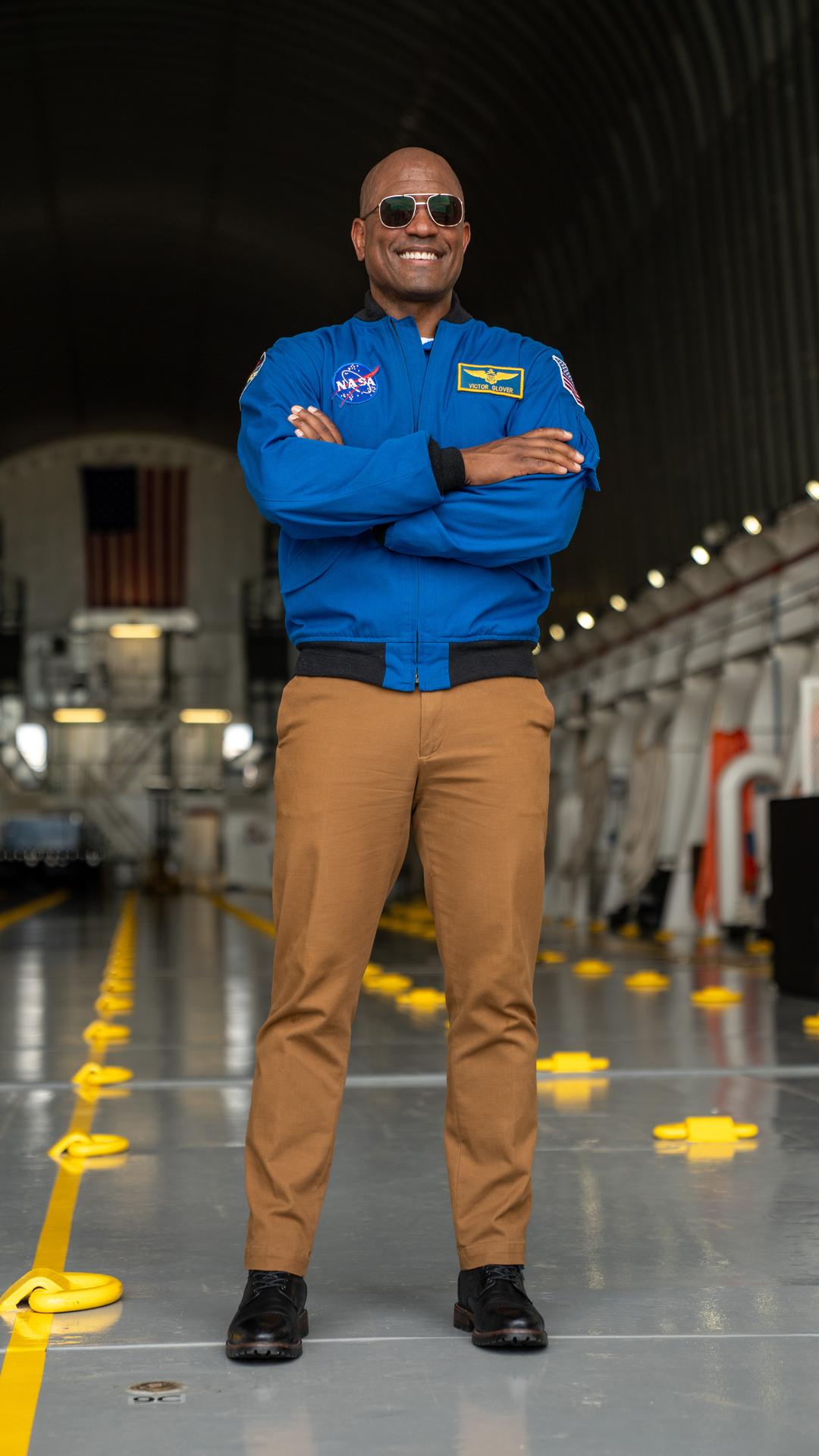
NASA astronaut Victor Glover views the core stage of the SLS (Space Launch System) rocket that will help power Artemis II at NASA’s Michoud Assembly Facility in New Orleans July 15. Glover will pilot Artemis II, the first crewed mission of NASA’s Artemis campaign. Crews moved the 212-foot-tall core stage with its four RS-25 engines to Building 110 at NASA Michoud prior to rolling it out to NASA’s Pegasus barge July 16 for delivery to NASA’s Kennedy Space Center in Florida. The core stage has two giant propellant tanks that collectively hold more than 733,000 gallons of super cold liquid propellant to feed the stage’s four RS-25 engines. Together, the engines produce more than 2 million pounds of thrust to help send astronauts inside NASA’s Orion spacecraft to venture around the Moon for Artemis II. NASA is working to land the first woman, first person of color, and its first international partner astronaut on the Moon under Artemis. SLS is part of NASA’s backbone for deep space exploration, along with the Orion spacecraft, supporting ground systems, advanced spacesuits and rovers, the Gateway in orbit around the Moon, and commercial human landing systems. SLS is the only rocket that can send Orion, astronauts, and supplies to the Moon in a single launch.
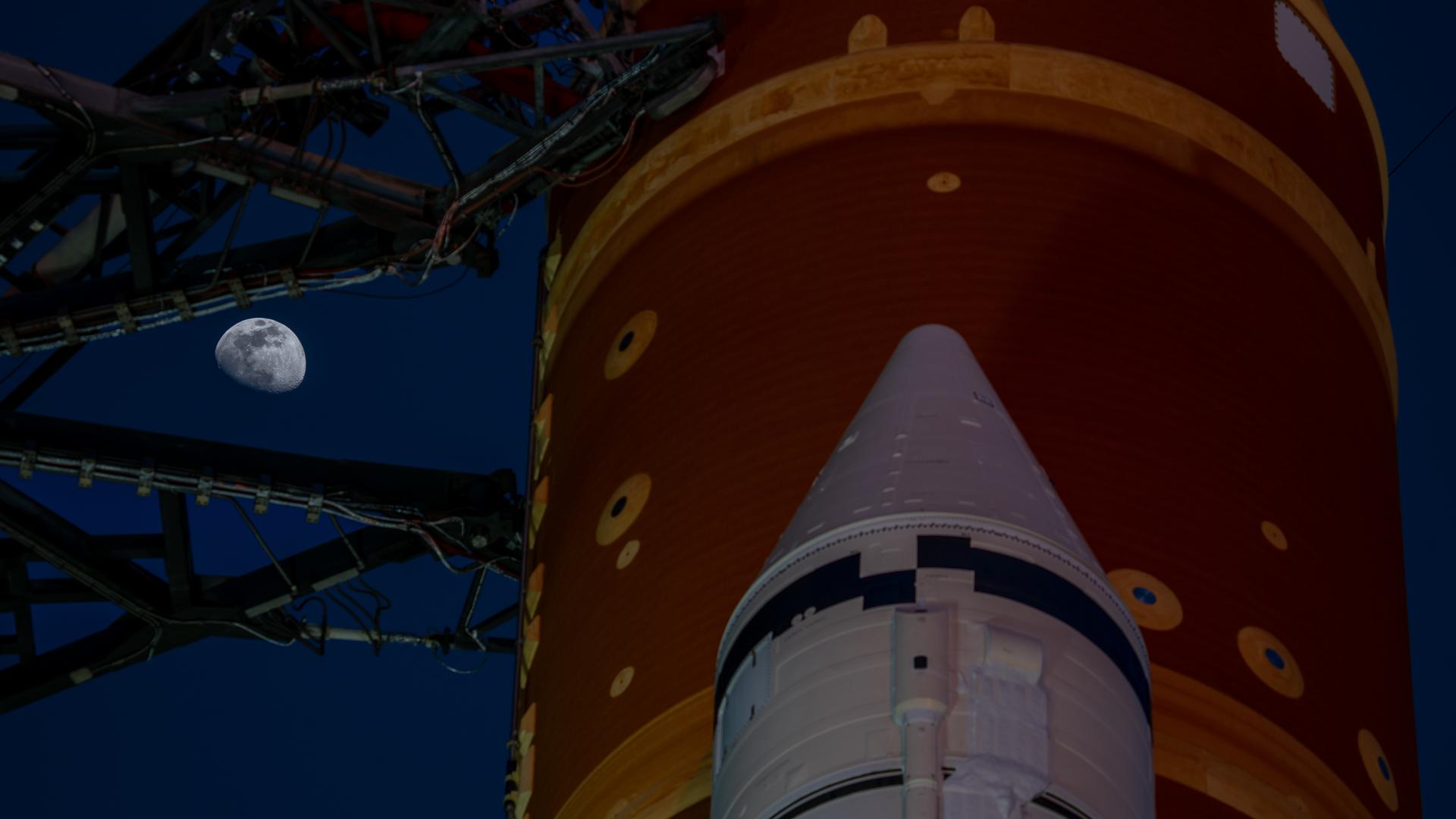
The Moon is seen shining over the SLS (Space Launch System) and Orion spacecraft, atop the mobile launcher on January 28, 2026. The rocket is currently at Launch Pad 39B at NASA’s Kennedy Space Center in Florida, as teams are preparing for a wet dress rehearsal to practice timelines and procedures for the launch of Artemis II.
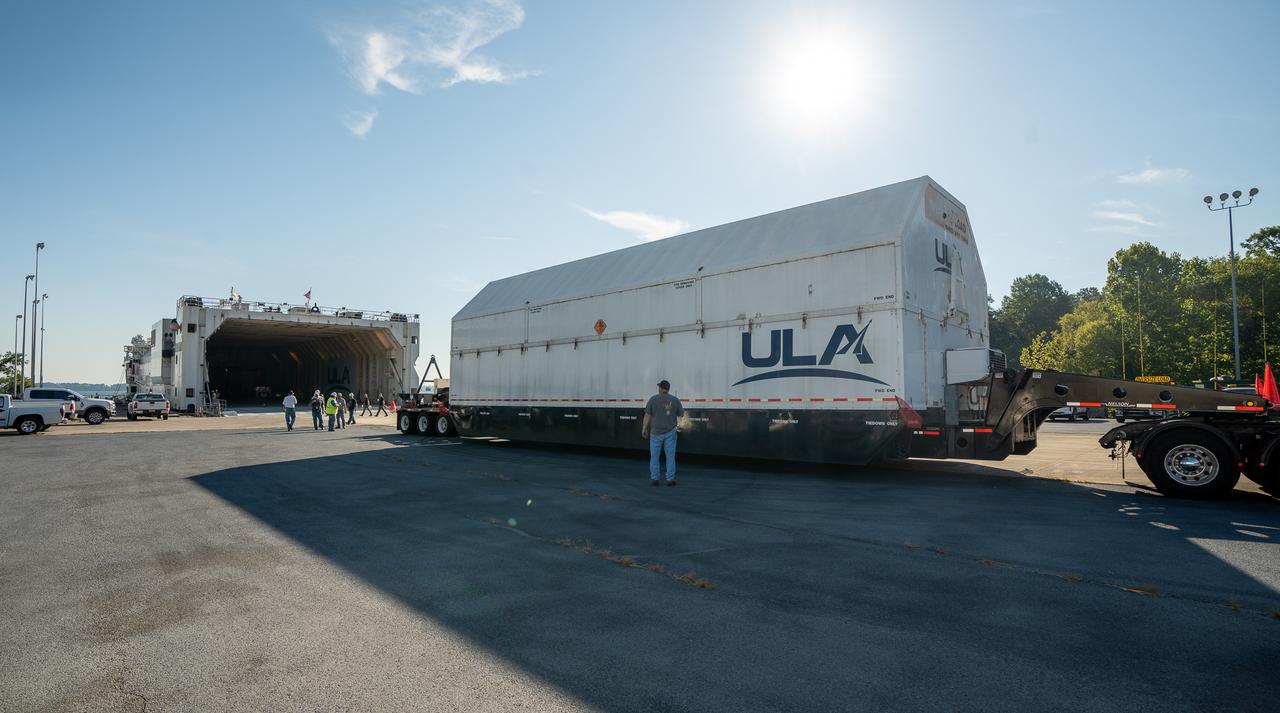
These images and videos show how crews in Alabama prepared the ICPS (interim cryogenic propulsion stage) for NASA’s SLS (Space Launch System) rocket for shipment to Florida between July 29-31. The ICPS in the photos and videos will help power NASA’s Artemis III mission to the Moon. The SLS upper stage is manufactured by United Launch Alliance at its facility in Decatur. Its RL10 engine is produced by Aerojet Rocketdyne, the SLS engines lead contractor, in West Palm Beach, Florida. ULA is working with Boeing, the SLS core stage and exploration upper stage lead contractor, to develop ICPS. ULA’s R/S RocketShip is transporting the flight hardware to its sister facility in Florida near NASA’s Kennedy Space Center for final checkouts. The ICPS for Artemis III is the last of its kind as SLS transitions to its next, more powerful Block 1B configuration with an upgraded upper stage beginning with Artemis IV. NASA is working to land the first woman and first person of color on the Moon under Artemis. SLS is part of NASA’s backbone for deep space exploration, along with Orion and the Gateway in orbit around the Moon. SLS is the only rocket that can send Orion, astronauts, and supplies to the Moon in a single mission.
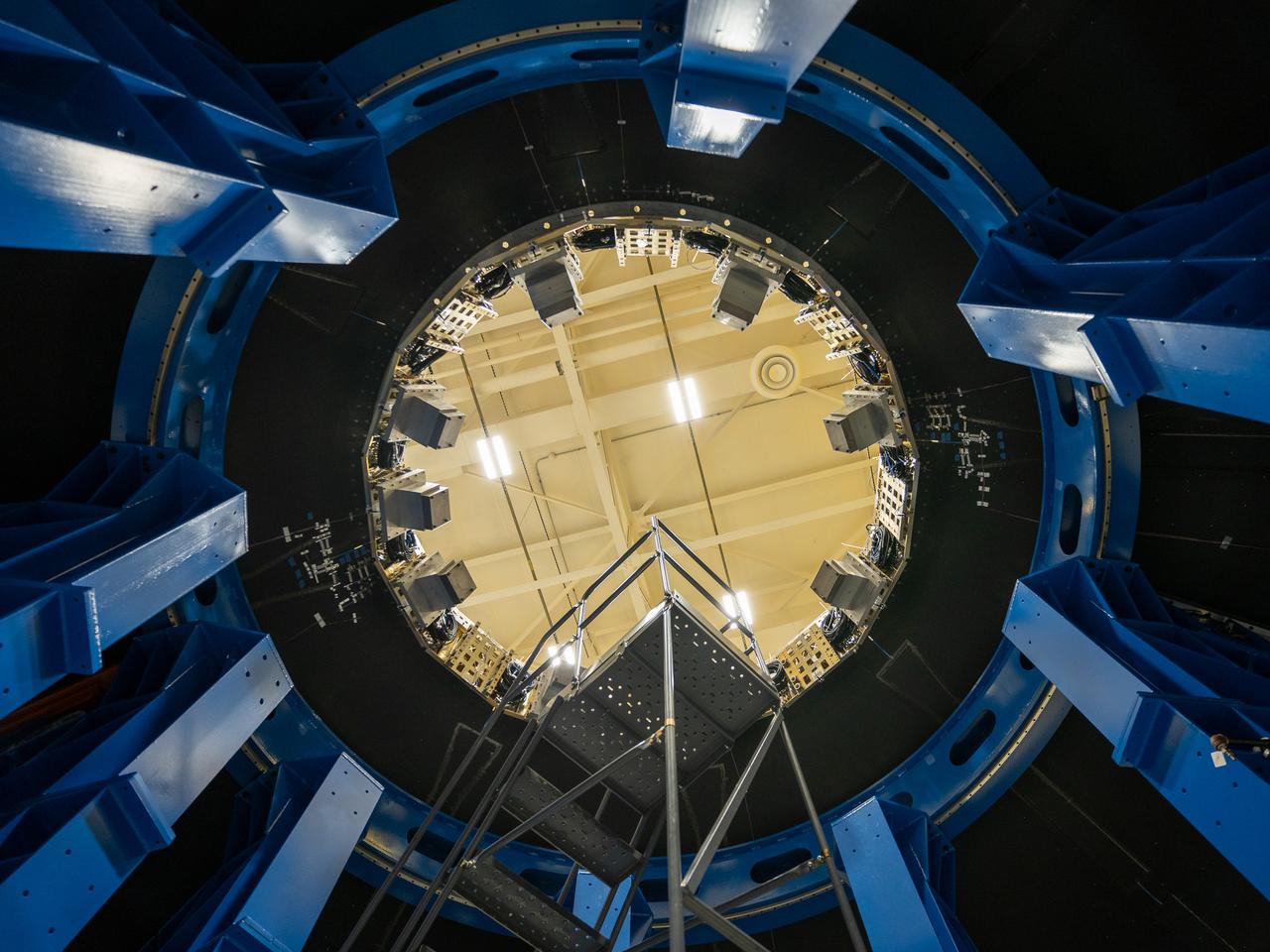
These photos and videos show how NASA manufactured and prepared to transport the payload adapter in February inside Building 4708 at NASA’s Marshall Space Flight Center in Huntsville, Alabama. Prior to moving the hardware for testing, teams installed the New Explorations Secondary Transport component, called the NEST, into the top of the engineering development unit. The NEST component will allow the hardware to hold a series of secondary payloads, or small satellites. The cone-shaped payload adapter is about 8.5 feet tall and features two metal rings and eight composite panels. The adapter, which will debut on NASA’s Artemis IV mission, is an evolution from the Orion stage adapter used in the Block 1 configuration of the rocket for the first three Artemis missions. It will be housed inside the universal stage adapter atop the rocket’s more powerful in-space stage, called the exploration upper stage. The payload adapter, like the launch vehicle stage adapter and the Orion stage adapter, is fully manufactured and tested at Marshall, which manages the SLS Program. NASA is working to land the first woman, first person of color, and its first international partner astronaut on the Moon under Artemis. SLS is part of NASA’s backbone for deep space exploration, along with the Orion spacecraft and Gateway in orbit around the Moon and commercial human landing systems, next-generational spacesuits, and rovers on the lunar surface. SLS is the only rocket that can send Orion, astronauts, and supplies to the Moon in a single launch.
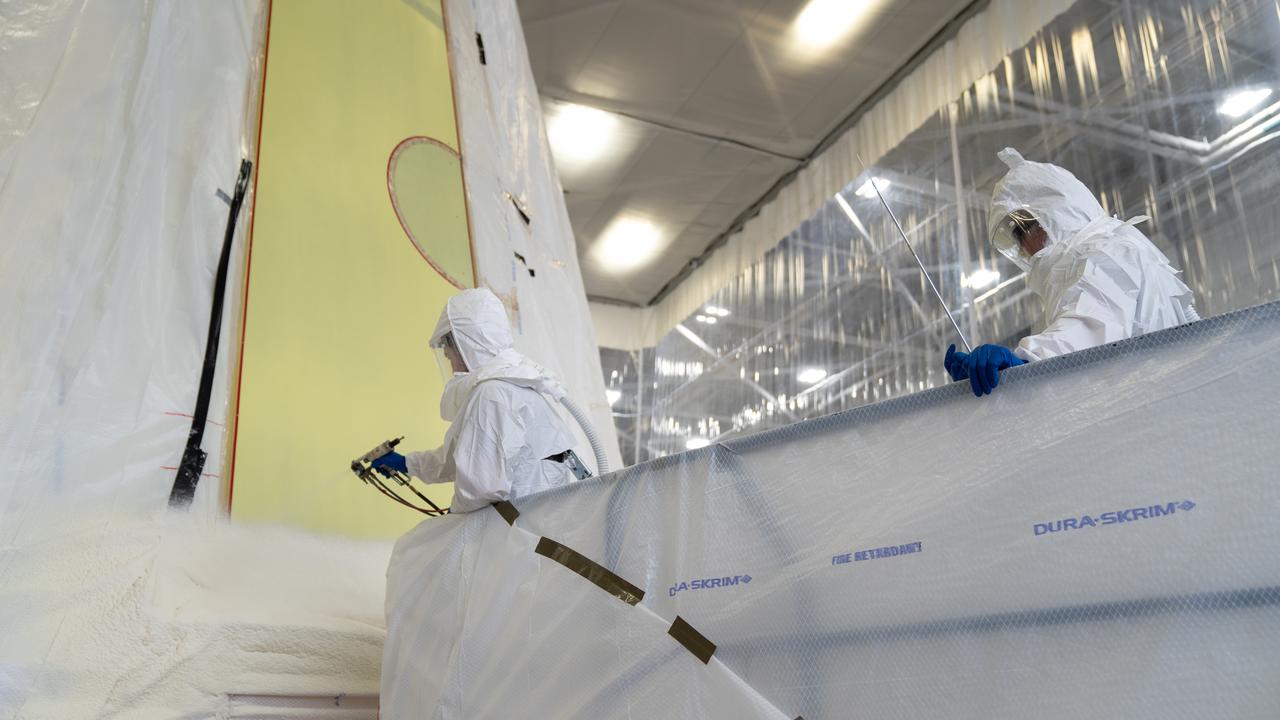
These photos show how technicians at NASA’s Marshall Space Flight Center in Huntsville, Alabama, have applied the thermal protection system material to the launch vehicle stage adapter (LVSA) of NASA’s SLS (Space Launch System) rocket for Artemis III, which will land astronauts on the Moon to advance long-term lunar exploration and scientific discovery and inspire the Artemis Generation. The LVSA is a cone-shaped element that connects the mega rocket’s core stage to its interim cryogenic propulsion stage (ICPS), partially enclosing it and protecting its avionics and electrical systems from the extreme pressures, sounds, and temperatures during launch and flight. Teams at Marshall began applying the thermal protection system material in the spring of 2023. Unlike other parts of the SLS rocket, the thermal protection system material for the LVSA is applied entirely by hand using a spray gun. During application, the technicians use a thin measuring rod to gauge the proper thickness. Once the thermal protection system has cured, certain areas are sanded down to meet parameters. The entire process takes several months. The LVSA is fully manufactured at Marshall by NASA, lead contractor Teledyne Brown Engineering, and the Jacobs Space Group’s ESSCA contract. The LVSA for Artemis III is the last of its kind as future SLS rockets will transition to its next, more powerful Block 1B configuration beginning with Artemis IV. NASA is working to land the first woman and first person of color on the Moon under Artemis. SLS is part of NASA’s backbone for deep space exploration, along with the Orion spacecraft, advanced spacesuits and rovers, the Gateway in orbit around the Moon, and commercial human landing systems. SLS is the only rocket that can send Orion, astronauts, and supplies to the Moon in a single mission.
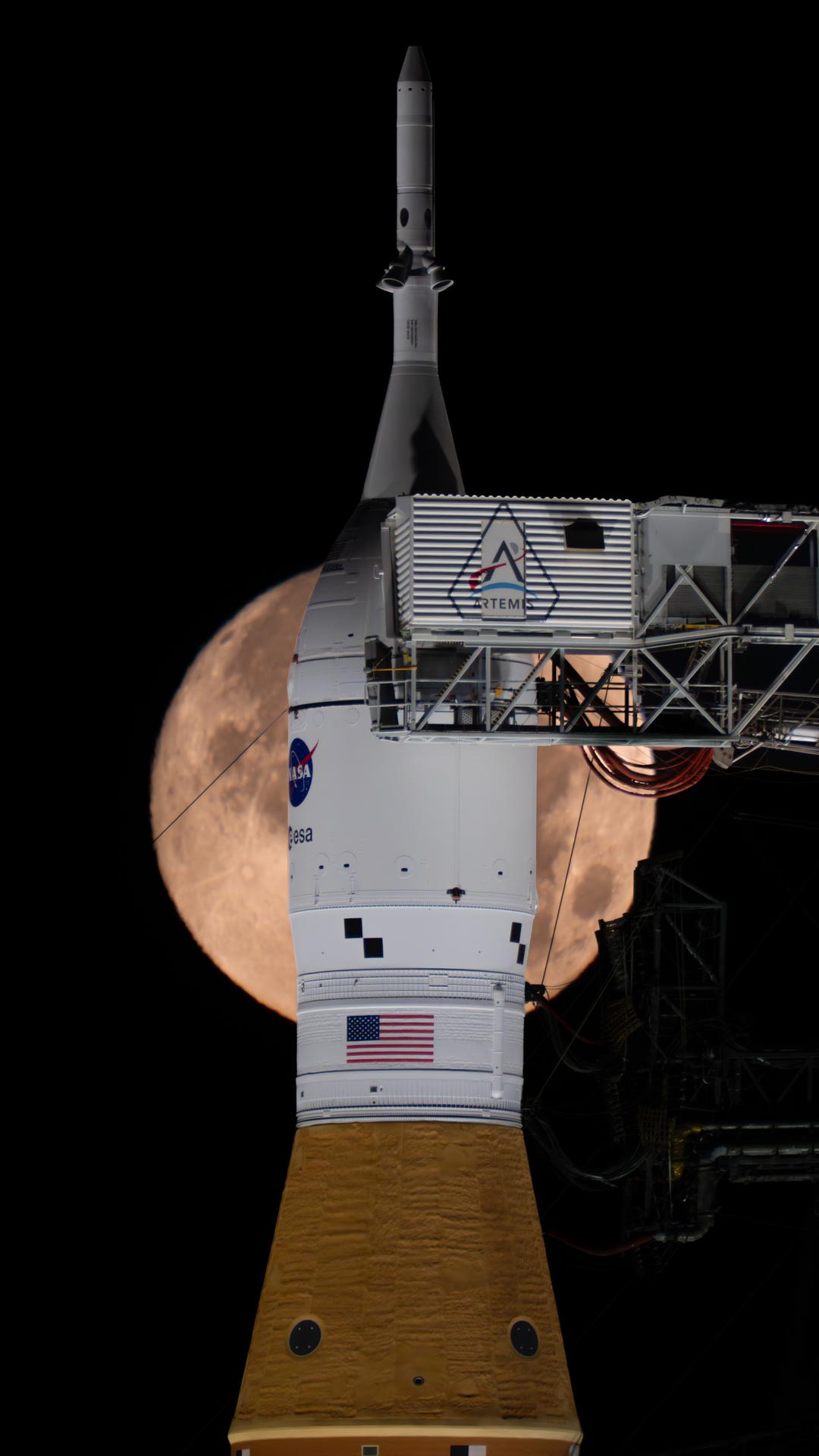
A full Moon is seen setting behind NASA’s SLS (Space Launch System) and Orion spacecraft, atop the mobile launcher in the early hours of February 1, 2026. The rocket is currently at Launch Pad 39B at NASA’s Kennedy Space Center in Florida, as teams are preparing for a wet dress rehearsal to practice timelines and procedures for the launch of Artemis II.
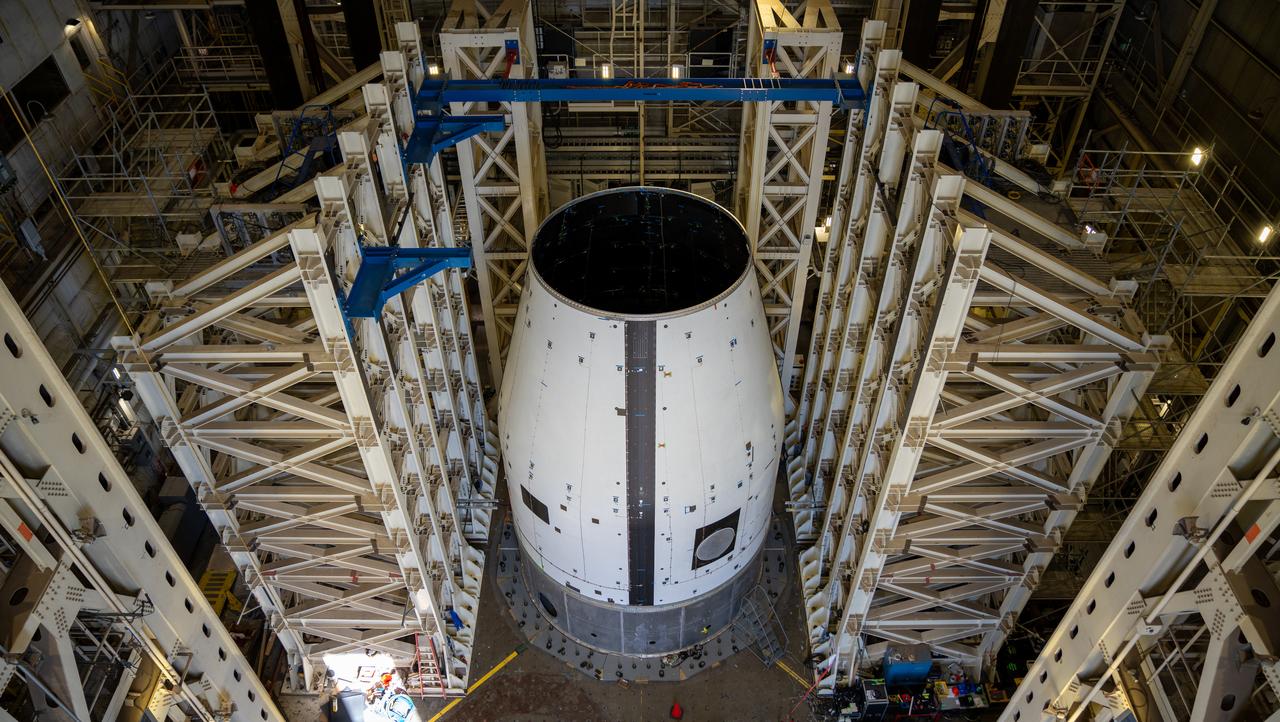
These photos and videos show how crews guided a test version of the universal stage adapter for NASA’s more powerful version of its SLS (Space Launch System) rocket to Building 4619 at the agency’s Marshall Space Flight Center in Huntsville, Alabama, Feb. 22. Built by Leidos, the lead contractor for the universal stage adapter, crews transported the hardware from a Leidos facility in Decatur, Alabama, the same day. The universal stage adapter will connect the SLS rocket’s upgraded in-space propulsion stage, called the exploration upper stage, to NASA’s Orion spacecraft as part of the evolved Block 1B configuration of the SLS rocket. It will also serve as a compartment capable of accommodating large payloads, such as modules or other exploration spacecraft. In Building 4619’s Load Test Annex High Bay at Marshall, the development test article will first undergo modal testing that will shake the hardware to validate dynamic models. Later, during ultimate load testing, force will be applied vertically and to the sides of the hardware. Unlike the flight hardware, the development test article has flaws intentionally included in its design, which will help engineers verity that the flight adapter can withstand the extreme forces it will face during launch and flight.
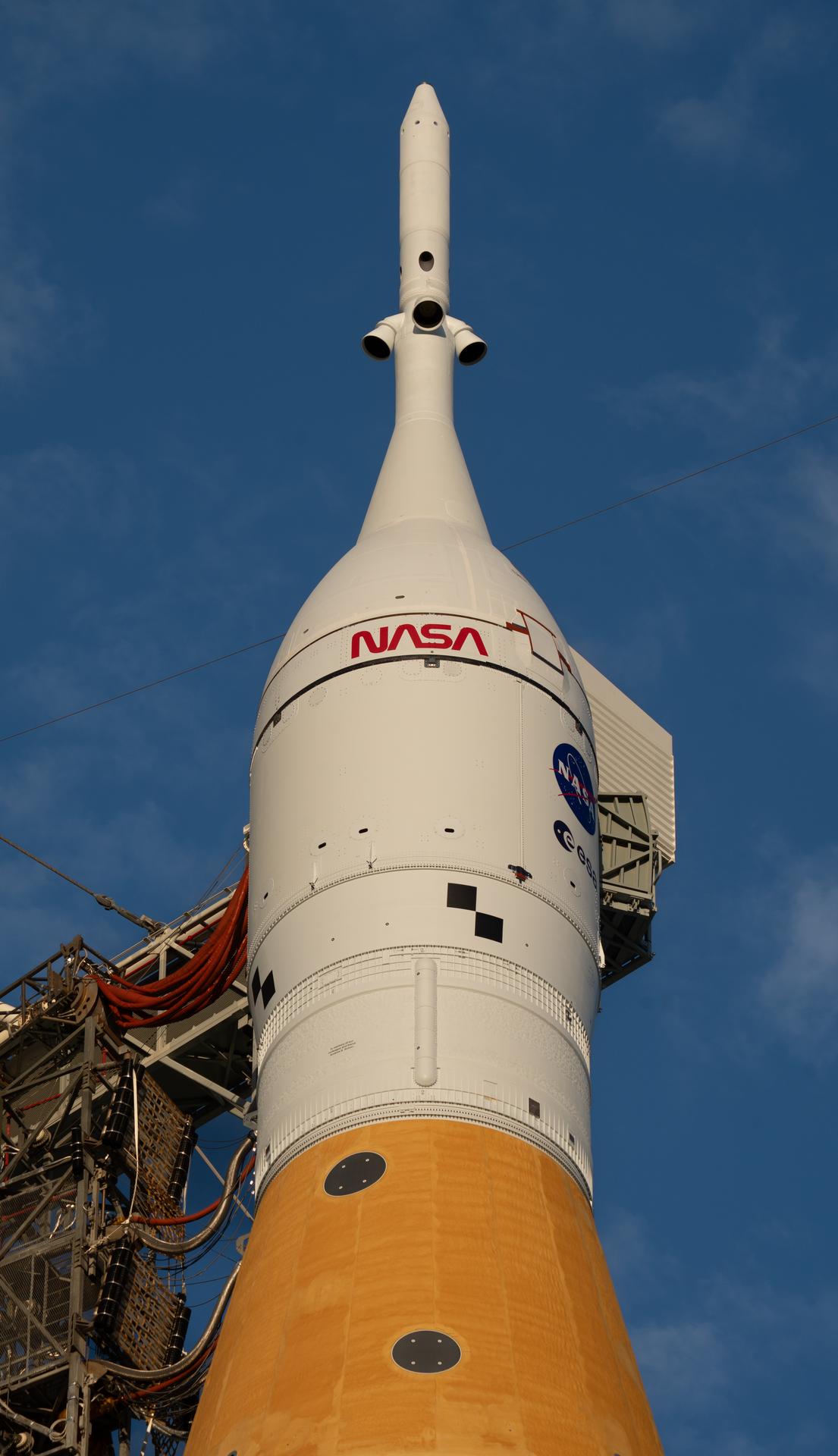
A side view shows the SLS (Space Launch System) Launch Vehicle Stage Adapter, Orion Stage Adapter, Orion spacecraft, and Launch Abort System of NASA’s Artemis II rocket at Launch Complex 39B at NASA’s Kennedy Space Center. The Artemis II test flight will take Commander Reid Wiseman, Pilot Victor Glover, and Mission Specialist Christina Koch from NASA, and Mission Specialist Jeremy Hansen from the CSA (Canadian Space Agency), around the Moon and back to Earth.
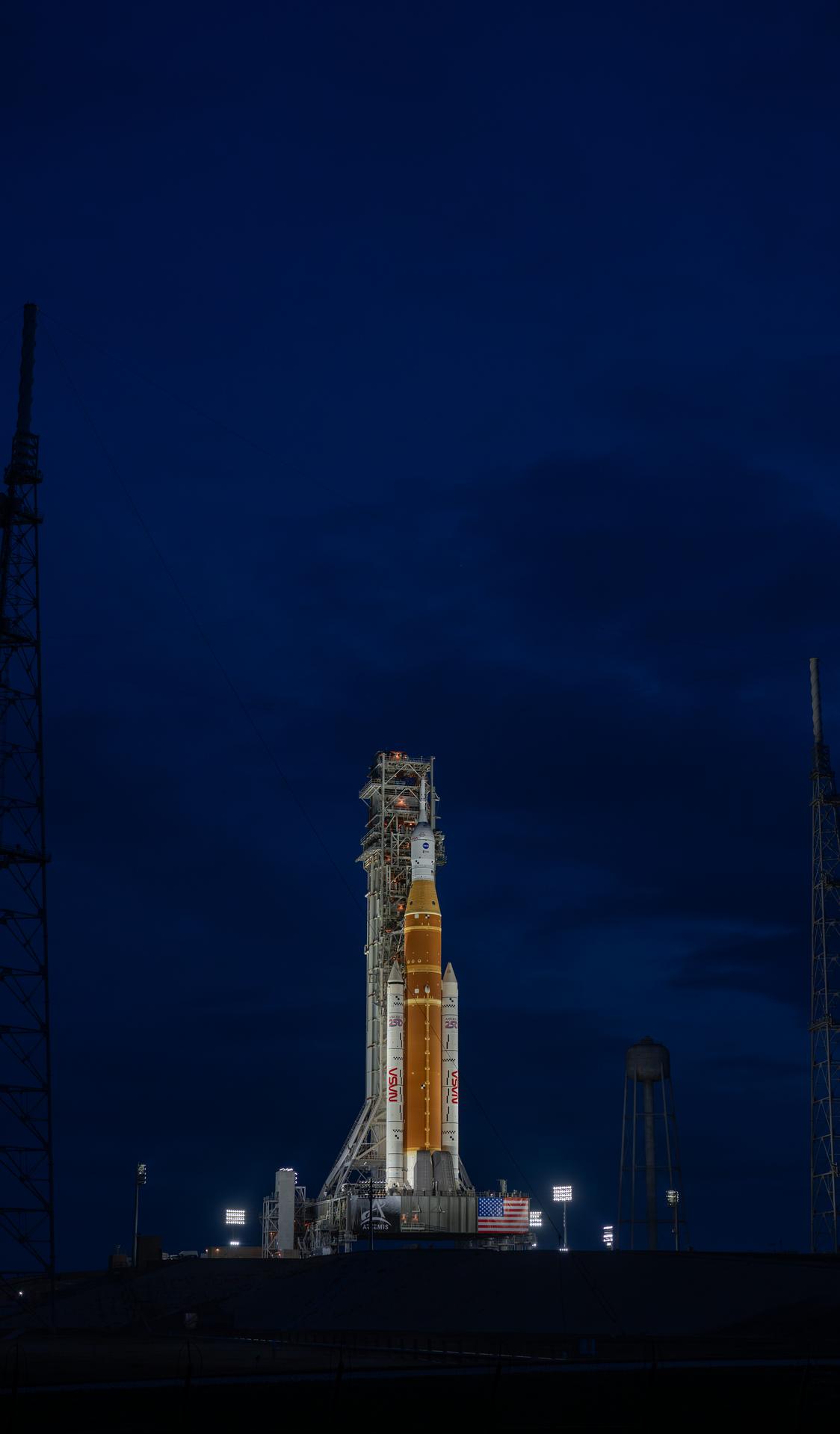
Lights illuminate NASA’s Artemis II SLS (Space Launch System) rocket and Orion spacecraft at Launch Complex 39B at NASA’s Kennedy Space Center in Florida on 01/18/2026. In the coming days, engineers will prepare for the wet dress rehearsal, a two-day test that simulates launch day. The Artemis II test flight will take Commander Reid Wiseman, Pilot Victor Glover, and Mission Specialist Christina Koch from NASA, and Mission Specialist Jeremy Hansen from the CSA (Canadian Space Agency), around the Moon and back to Earth no later than April 2026.
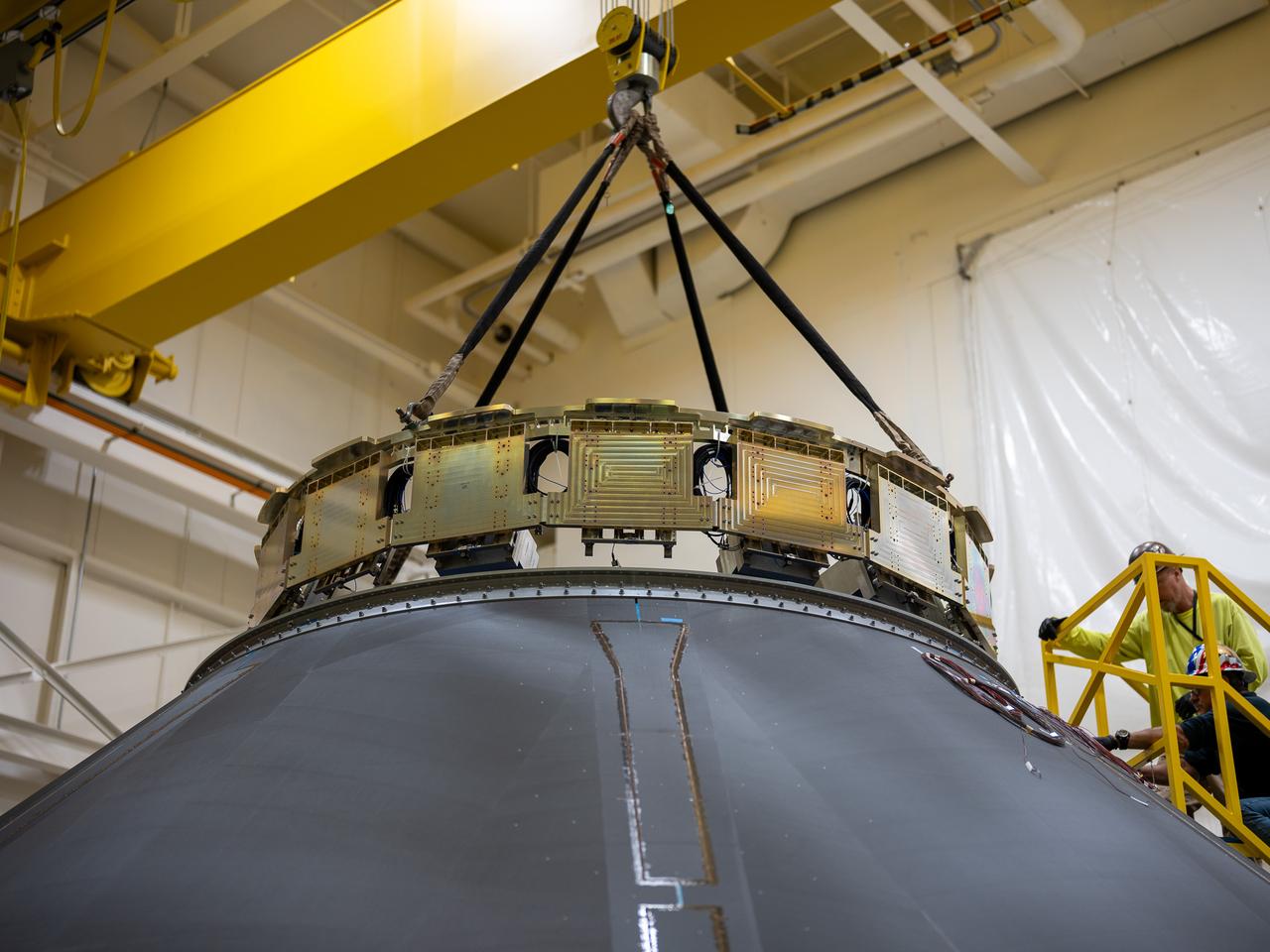
These photos and videos show how NASA manufactured and prepared to transport the payload adapter in February inside Building 4708 at NASA’s Marshall Space Flight Center in Huntsville, Alabama. Prior to moving the hardware for testing, teams installed the New Explorations Secondary Transport component, called the NEST, into the top of the engineering development unit. The NEST component will allow the hardware to hold a series of secondary payloads, or small satellites. The cone-shaped payload adapter is about 8.5 feet tall and features two metal rings and eight composite panels. The adapter, which will debut on NASA’s Artemis IV mission, is an evolution from the Orion stage adapter used in the Block 1 configuration of the rocket for the first three Artemis missions. It will be housed inside the universal stage adapter atop the rocket’s more powerful in-space stage, called the exploration upper stage. The payload adapter, like the launch vehicle stage adapter and the Orion stage adapter, is fully manufactured and tested at Marshall, which manages the SLS Program. NASA is working to land the first woman, first person of color, and its first international partner astronaut on the Moon under Artemis. SLS is part of NASA’s backbone for deep space exploration, along with the Orion spacecraft and Gateway in orbit around the Moon and commercial human landing systems, next-generational spacesuits, and rovers on the lunar surface. SLS is the only rocket that can send Orion, astronauts, and supplies to the Moon in a single launch.
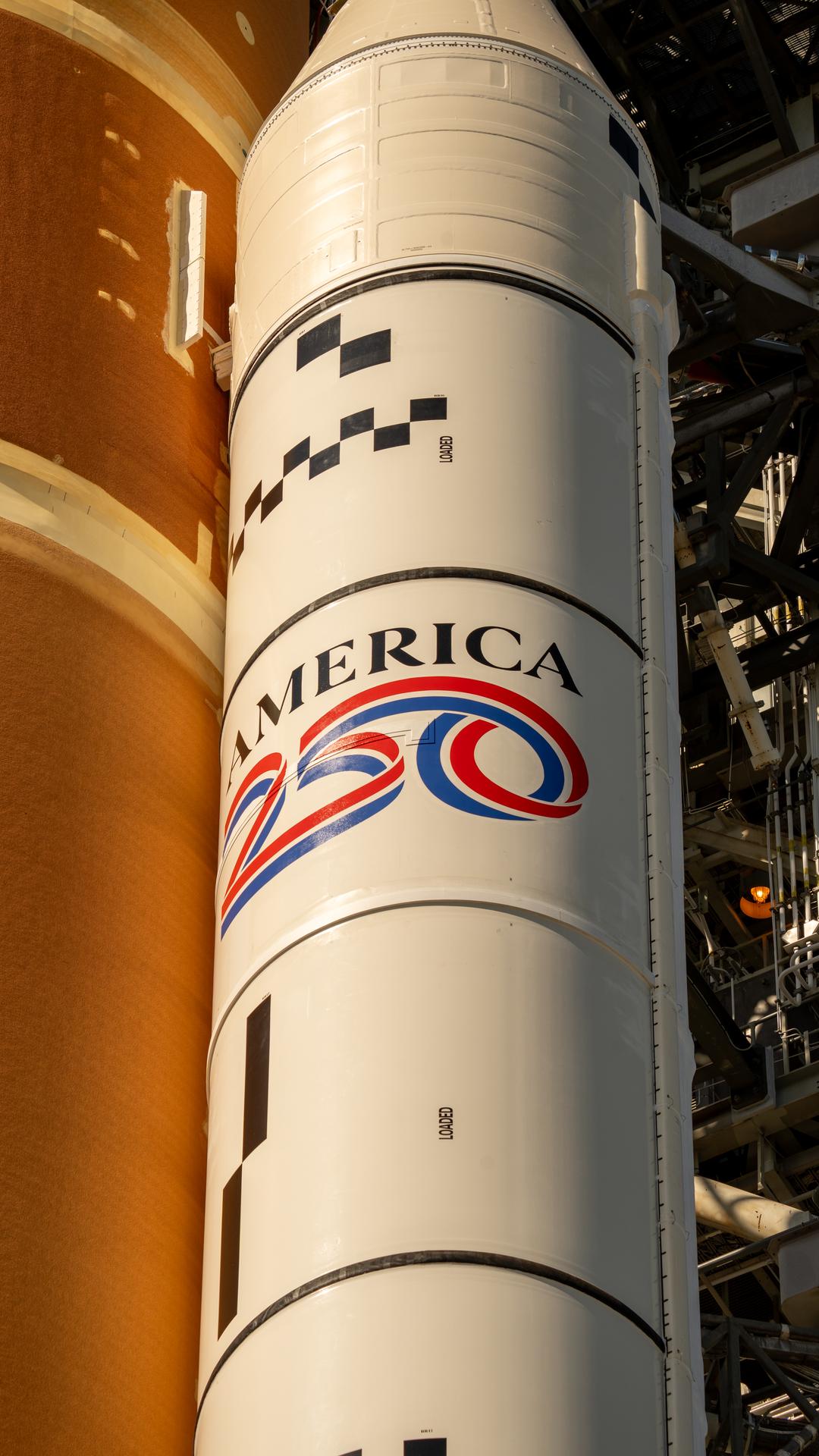
This image shows NASA’s SLS (Space Launch System) and Orion spacecraft rolling out of the Vehicle Assembly Building at NASA’s Kennedy Space Center. NASA's massive Crawler-Transporter, upgraded for the Artemis program, carries the powerful SLS rocket and Orion spacecraft on the Mobile Launcher from the Vehicle Assembly Building to Launch Pad 39B at Kennedy Space Center in preparation for the Artemis II mission.
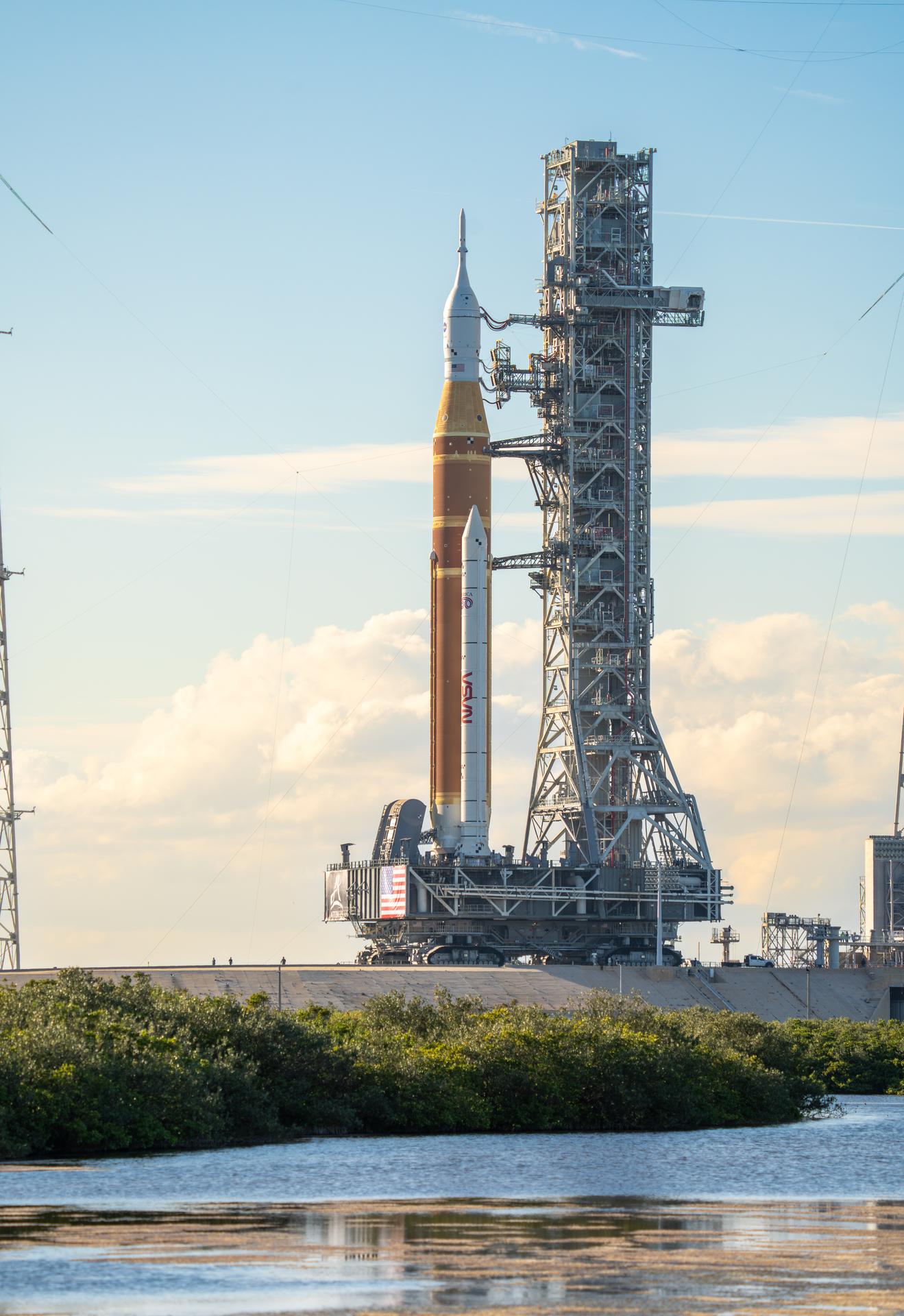
This image shows NASA’s SLS (Space Launch System) and Orion spacecraft rolling out of the Vehicle Assembly Building at NASA’s Kennedy Space Center. NASA's massive Crawler-Transporter, upgraded for the Artemis program, carries the powerful SLS rocket and Orion spacecraft on the Mobile Launcher from the Vehicle Assembly Building to Launch Pad 39B at Kennedy Space Center in preparation for the Artemis II mission.

NASA astronaut Victor Glover views the core stage of the SLS (Space Launch System) rocket that will help power Artemis II at NASA’s Michoud Assembly Facility in New Orleans July 15. Glover will pilot Artemis II, the first crewed mission of NASA’s Artemis campaign. Crews moved the 212-foot-tall core stage with its four RS-25 engines to Building 110 at NASA Michoud prior to rolling it out to NASA’s Pegasus barge July 16 for delivery to NASA’s Kennedy Space Center in Florida. The core stage has two giant propellant tanks that collectively hold more than 733,000 gallons of super cold liquid propellant to feed the stage’s four RS-25 engines. Together, the engines produce more than 2 million pounds of thrust to help send astronauts inside NASA’s Orion spacecraft to venture around the Moon for Artemis II. NASA is working to land the first woman, first person of color, and its first international partner astronaut on the Moon under Artemis. SLS is part of NASA’s backbone for deep space exploration, along with the Orion spacecraft, supporting ground systems, advanced spacesuits and rovers, the Gateway in orbit around the Moon, and commercial human landing systems. SLS is the only rocket that can send Orion, astronauts, and supplies to the Moon in a single launch.
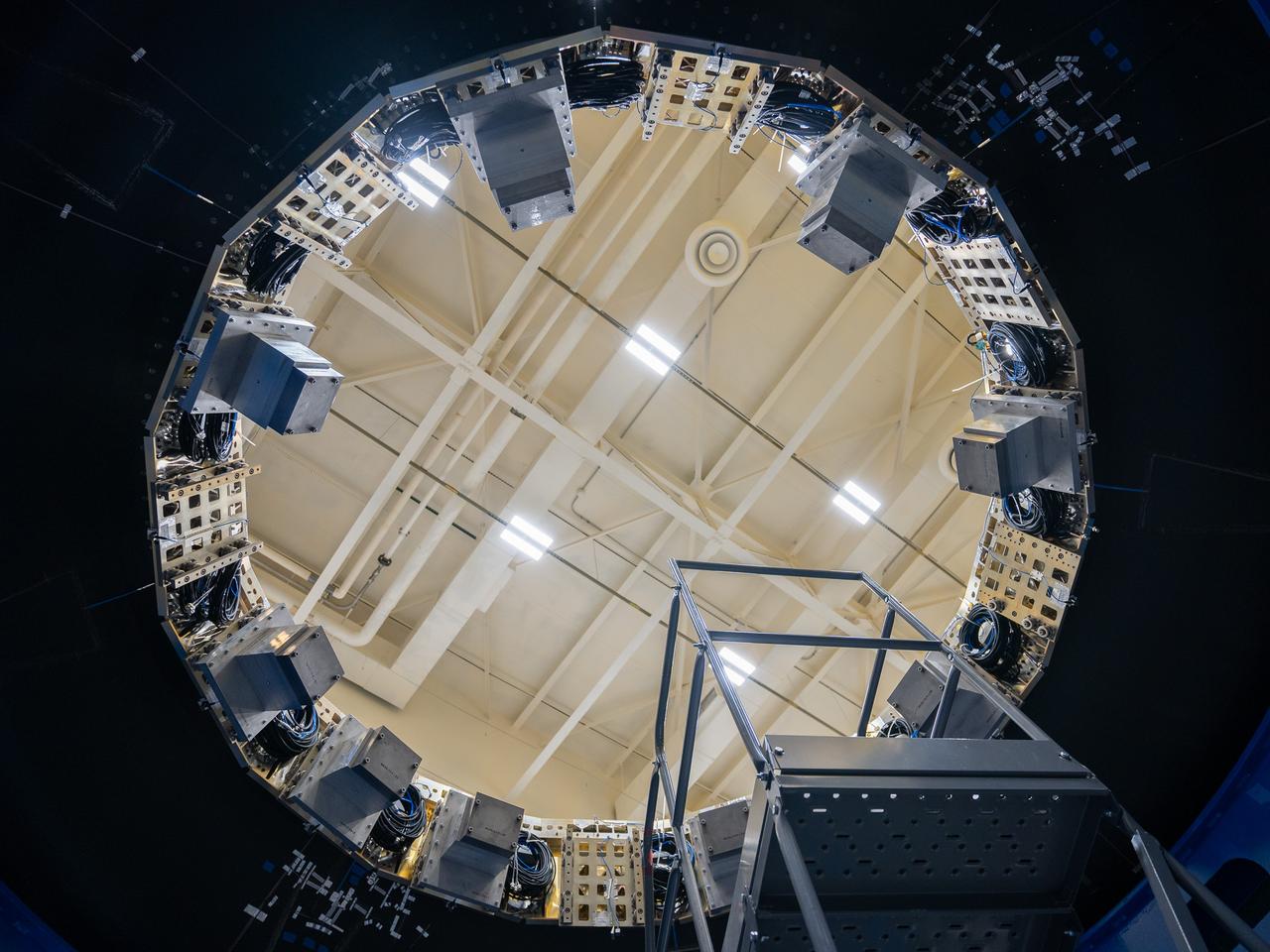
These photos and videos show how NASA manufactured and prepared to transport the payload adapter in February inside Building 4708 at NASA’s Marshall Space Flight Center in Huntsville, Alabama. Prior to moving the hardware for testing, teams installed the New Explorations Secondary Transport component, called the NEST, into the top of the engineering development unit. The NEST component will allow the hardware to hold a series of secondary payloads, or small satellites. The cone-shaped payload adapter is about 8.5 feet tall and features two metal rings and eight composite panels. The adapter, which will debut on NASA’s Artemis IV mission, is an evolution from the Orion stage adapter used in the Block 1 configuration of the rocket for the first three Artemis missions. It will be housed inside the universal stage adapter atop the rocket’s more powerful in-space stage, called the exploration upper stage. The payload adapter, like the launch vehicle stage adapter and the Orion stage adapter, is fully manufactured and tested at Marshall, which manages the SLS Program. NASA is working to land the first woman, first person of color, and its first international partner astronaut on the Moon under Artemis. SLS is part of NASA’s backbone for deep space exploration, along with the Orion spacecraft and Gateway in orbit around the Moon and commercial human landing systems, next-generational spacesuits, and rovers on the lunar surface. SLS is the only rocket that can send Orion, astronauts, and supplies to the Moon in a single launch.
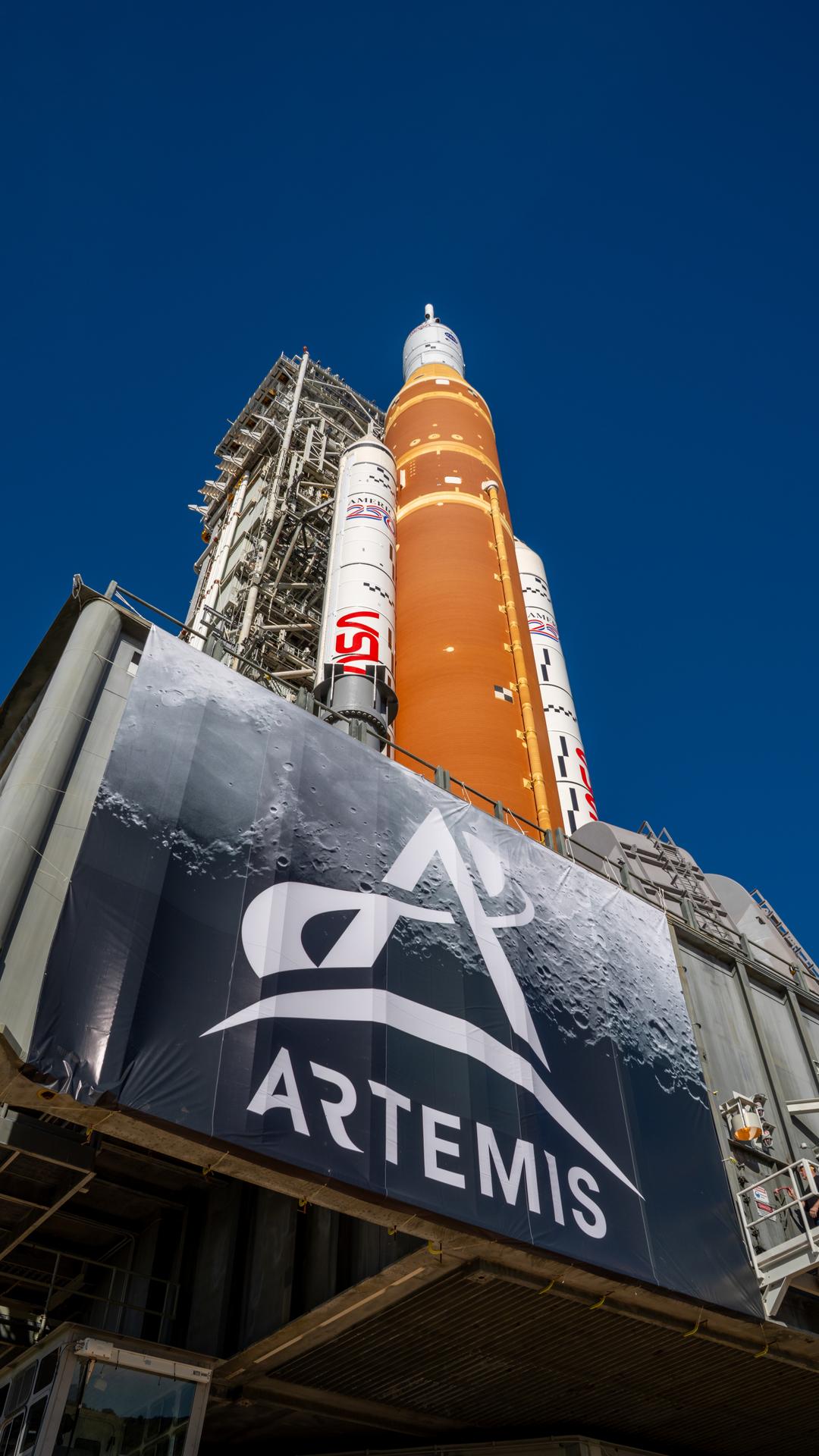
This image shows NASA’s SLS (Space Launch System) and Orion spacecraft rolling out of the Vehicle Assembly Building at NASA’s Kennedy Space Center. NASA's massive Crawler-Transporter, upgraded for the Artemis program, carries the powerful SLS rocket and Orion spacecraft on the Mobile Launcher from the Vehicle Assembly Building to Launch Pad 39B at Kennedy Space Center in preparation for the Artemis II mission.
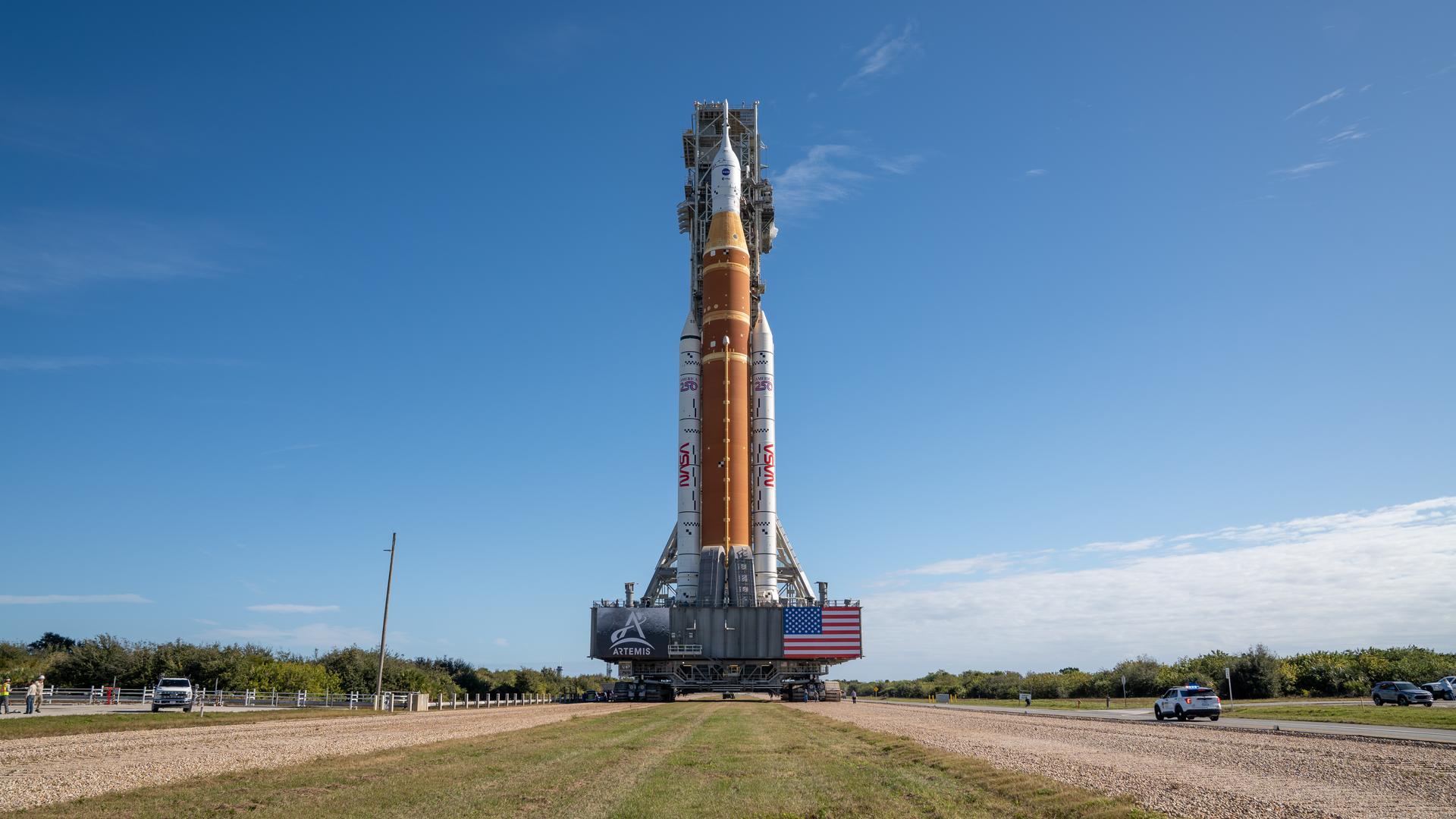
This image shows NASA’s SLS (Space Launch System) and Orion spacecraft rolling out of the Vehicle Assembly Building at NASA’s Kennedy Space Center. NASA's massive Crawler-Transporter, upgraded for the Artemis program, carries the powerful SLS rocket and Orion spacecraft on the Mobile Launcher from the Vehicle Assembly Building to Launch Pad 39B at Kennedy Space Center in preparation for the Artemis II mission.
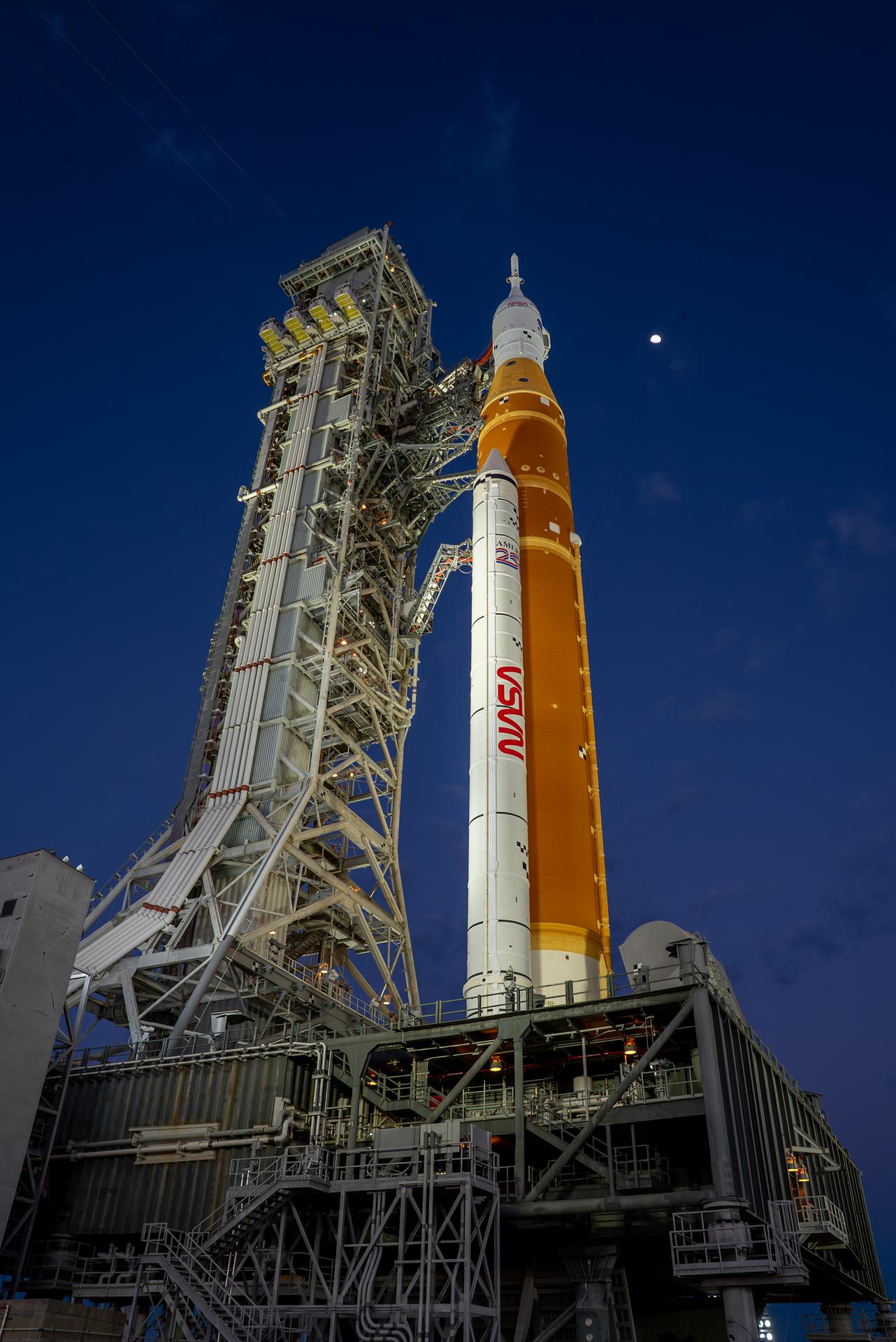
The Moon is seen shining over the SLS (Space Launch System) and Orion spacecraft, atop the mobile launcher on January 28, 2026. The rocket is currently at Launch Pad 39B at NASA’s Kennedy Space Center in Florida, as teams are preparing for a wet dress rehearsal to practice timelines and procedures for the launch of Artemis II.
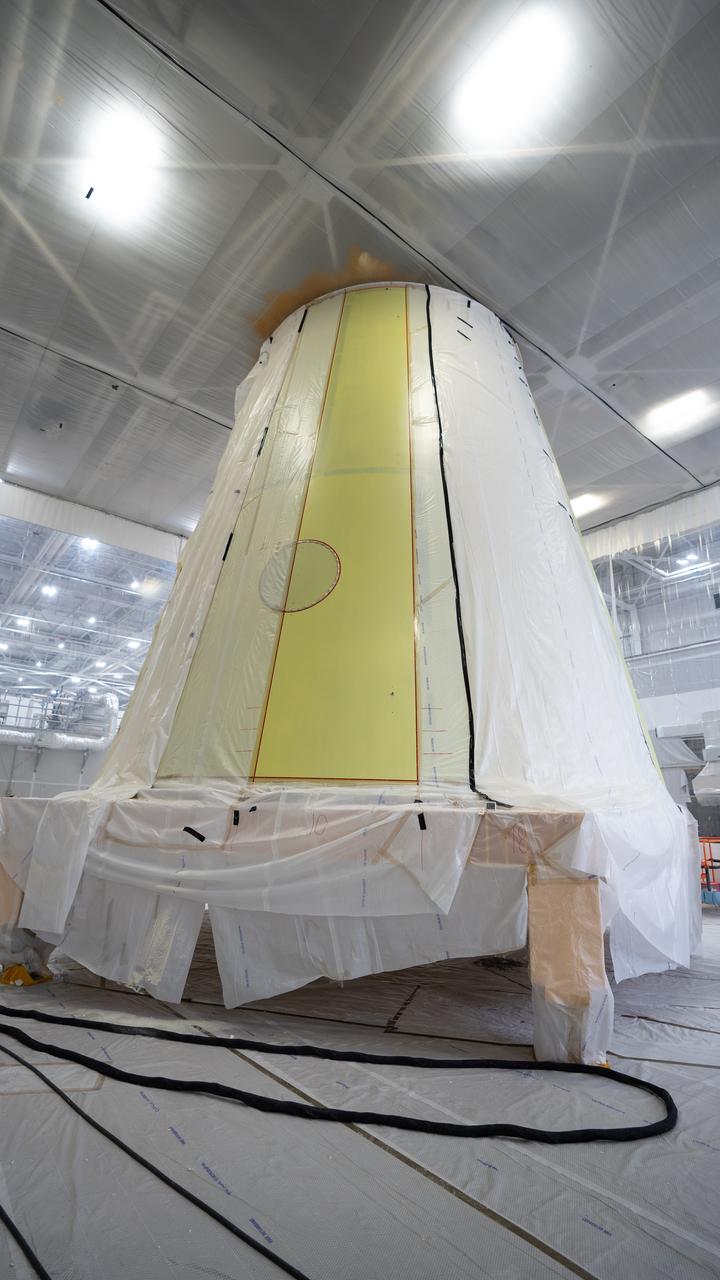
These photos show the launch vehicle stage adapter (LVSA) of NASA’s SLS (Space Launch System) rocket for Artemis III before technicians at NASA’s Marshall Space Flight Center in Huntsville, Alabama, applied the thermal protection system to it. Artemis III will land astronauts on the Moon to advance long-term lunar exploration and scientific discover and inspire the Artemis Generation. Teams at Marshall began applying the thermal protection system material in the spring of 2023. Unlike other parts of the SLS rocket, the thermal protection system material for the LVSA is applied entirely by hand using a spray gun. During application, the technicians use a thin measuring rod to gauge the proper thickness. Once the thermal protection system has cured, certain areas are sanded down to meet parameters. The entire process takes several months. The LVSA is fully manufactured at Marshall by NASA, lead contractor Teledyne Brown Engineering, and the Jacobs Space Group’s ESSCA contract. The LVSA for Artemis III is the last of its kind as future SLS rockets will transition to its next, more powerful Block 1B configuration beginning with Artemis IV. NASA is working to land the first woman and first person of color on the Moon under Artemis. SLS is part of NASA’s backbone for deep space exploration, along with the Orion spacecraft, advanced spacesuits and rovers, the Gateway in orbit around the Moon, and commercial human landing systems. SLS is the only rocket that can send Orion, astronauts, and supplies to the Moon in a single mission.
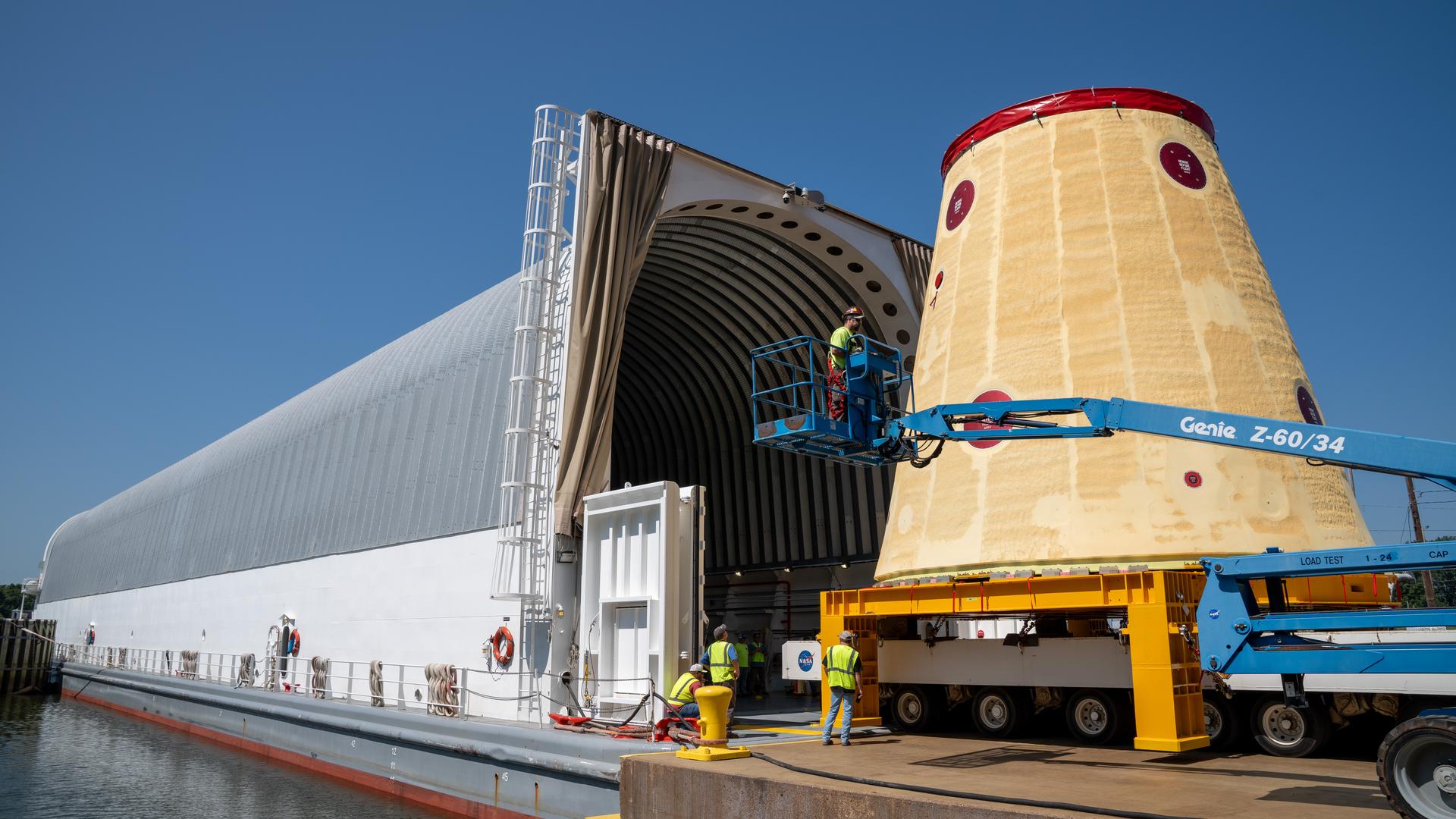
NASA rolled out a key piece of space flight hardware for the SLS (Space Launch System) rocket for the first crewed mission of NASA’s Artemis campaign from Marshall Space Flight Center in Huntsville, Alabama, on Wednesday, Aug. 21 for shipment to the agency’s spaceport in Florida. The cone-shaped launch vehicle stage adapter connects the rocket’s core stage to the upper stage and helps protect the upper stage’s engine that will help propel the Artemis II test flight around the Moon, slated for 2025. Manufactured by prime contractor Teledyne Brown Engineering and the Jacobs Space Exploration Group’s ESSCA (Engineering Services and Science Capability Augmentation) contract using NASA Marshall’s self-reacting friction-stir robotic and vertical weld tools. Crews moved the adapter out of NASA Marshall’s Building 4708 to the agency’s Pegasus barge Aug. 21. The barge will ferry the adapter first to NASA’s Michoud Assembly Facility in New Orleans, where crews will pick up additional SLS hardware for future Artemis missions, before traveling to NASA Kennedy. Once in Florida, the adapter will join the recently delivered core stage. There, teams with NASA’s Exploration Ground Systems will prepare the adapter for stacking and launch.
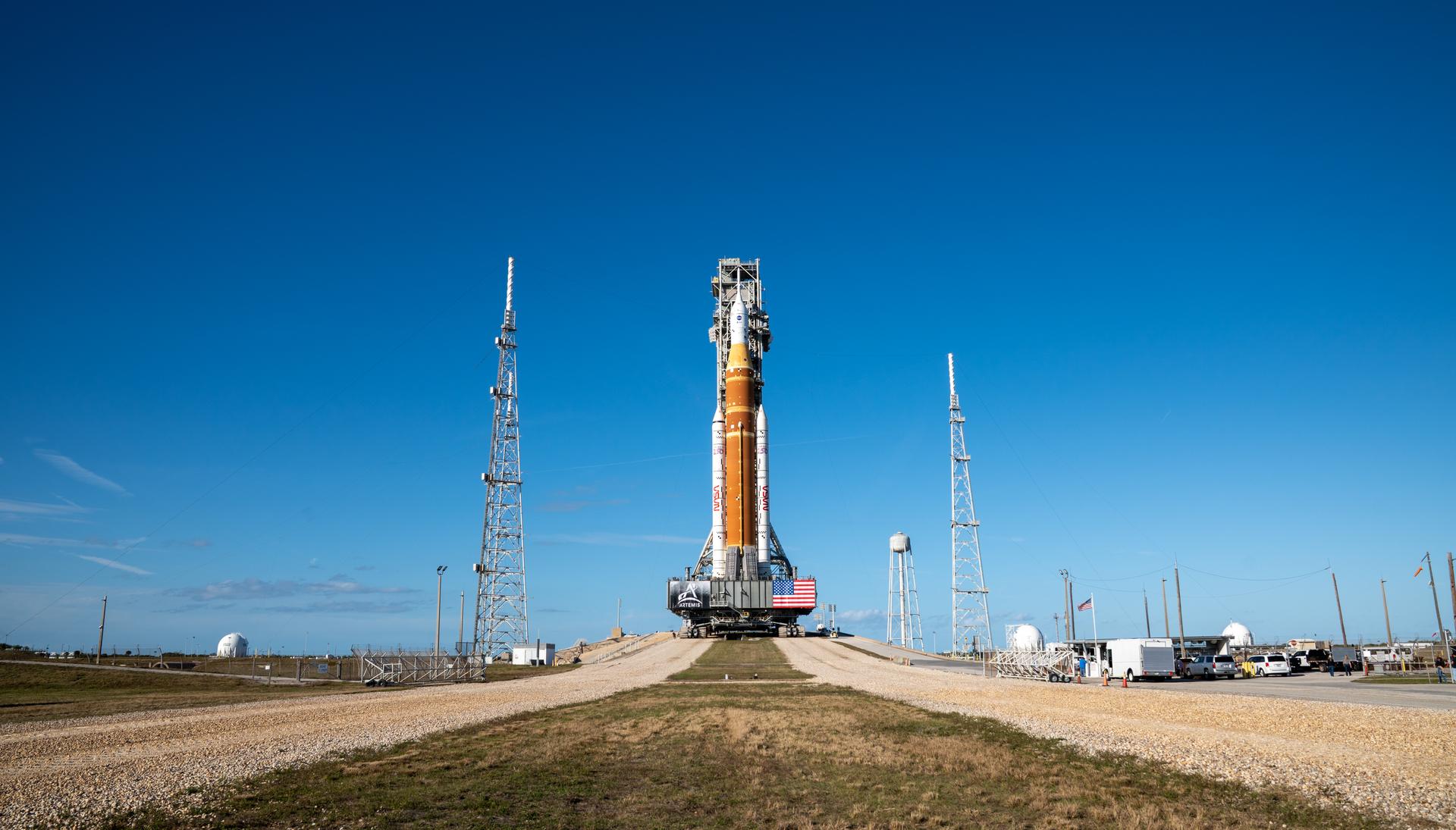
This image shows NASA’s SLS (Space Launch System) and Orion spacecraft rolling out of the Vehicle Assembly Building at NASA’s Kennedy Space Center. NASA's massive Crawler-Transporter, upgraded for the Artemis program, carries the powerful SLS rocket and Orion spacecraft on the Mobile Launcher from the Vehicle Assembly Building to Launch Pad 39B at Kennedy Space Center in preparation for the Artemis II mission.
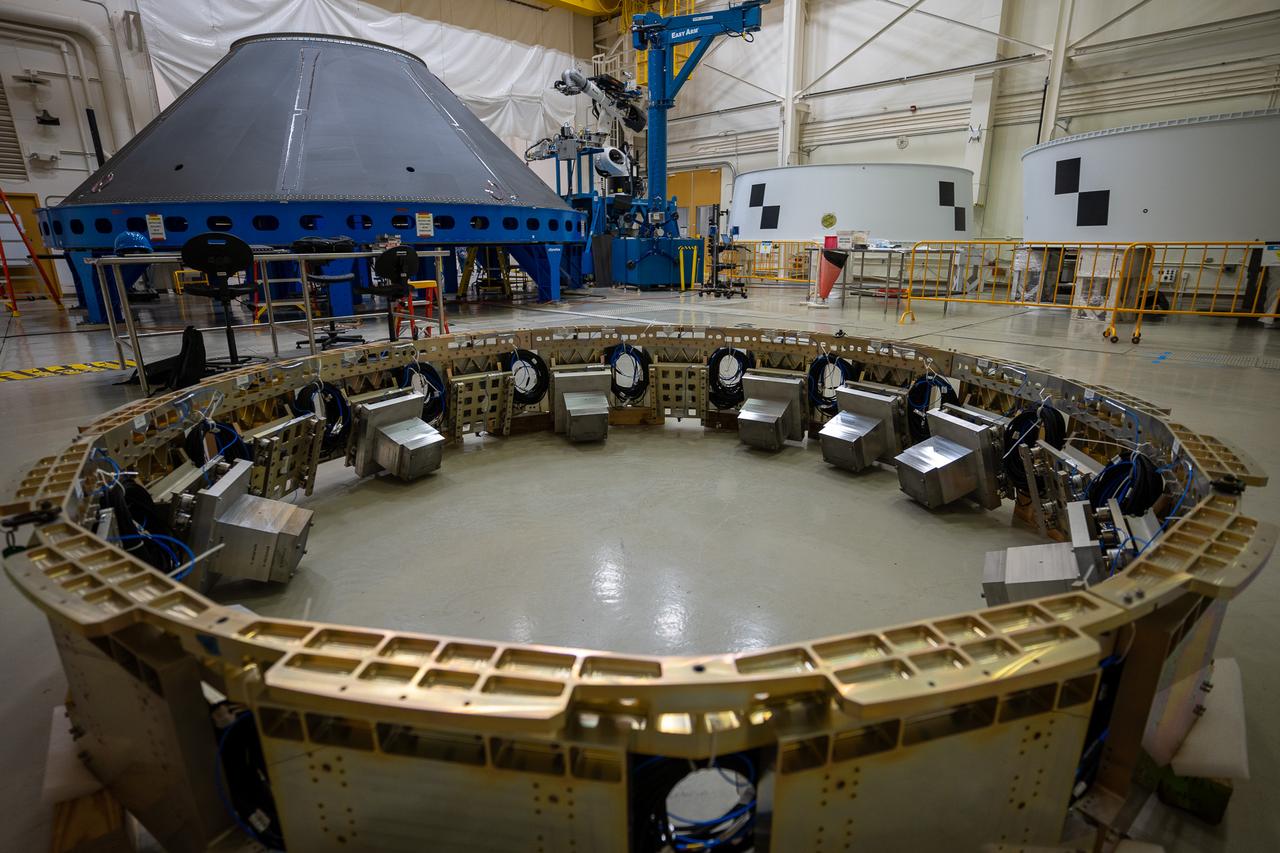
These photos and videos show how NASA manufactured and prepared to transport the payload adapter in February inside Building 4708 at NASA’s Marshall Space Flight Center in Huntsville, Alabama. Prior to moving the hardware for testing, teams installed the New Explorations Secondary Transport component, called the NEST, into the top of the engineering development unit. The NEST component will allow the hardware to hold a series of secondary payloads, or small satellites. The cone-shaped payload adapter is about 8.5 feet tall and features two metal rings and eight composite panels. The adapter, which will debut on NASA’s Artemis IV mission, is an evolution from the Orion stage adapter used in the Block 1 configuration of the rocket for the first three Artemis missions. It will be housed inside the universal stage adapter atop the rocket’s more powerful in-space stage, called the exploration upper stage. The payload adapter, like the launch vehicle stage adapter and the Orion stage adapter, is fully manufactured and tested at Marshall, which manages the SLS Program. NASA is working to land the first woman, first person of color, and its first international partner astronaut on the Moon under Artemis. SLS is part of NASA’s backbone for deep space exploration, along with the Orion spacecraft and Gateway in orbit around the Moon and commercial human landing systems, next-generational spacesuits, and rovers on the lunar surface. SLS is the only rocket that can send Orion, astronauts, and supplies to the Moon in a single launch.
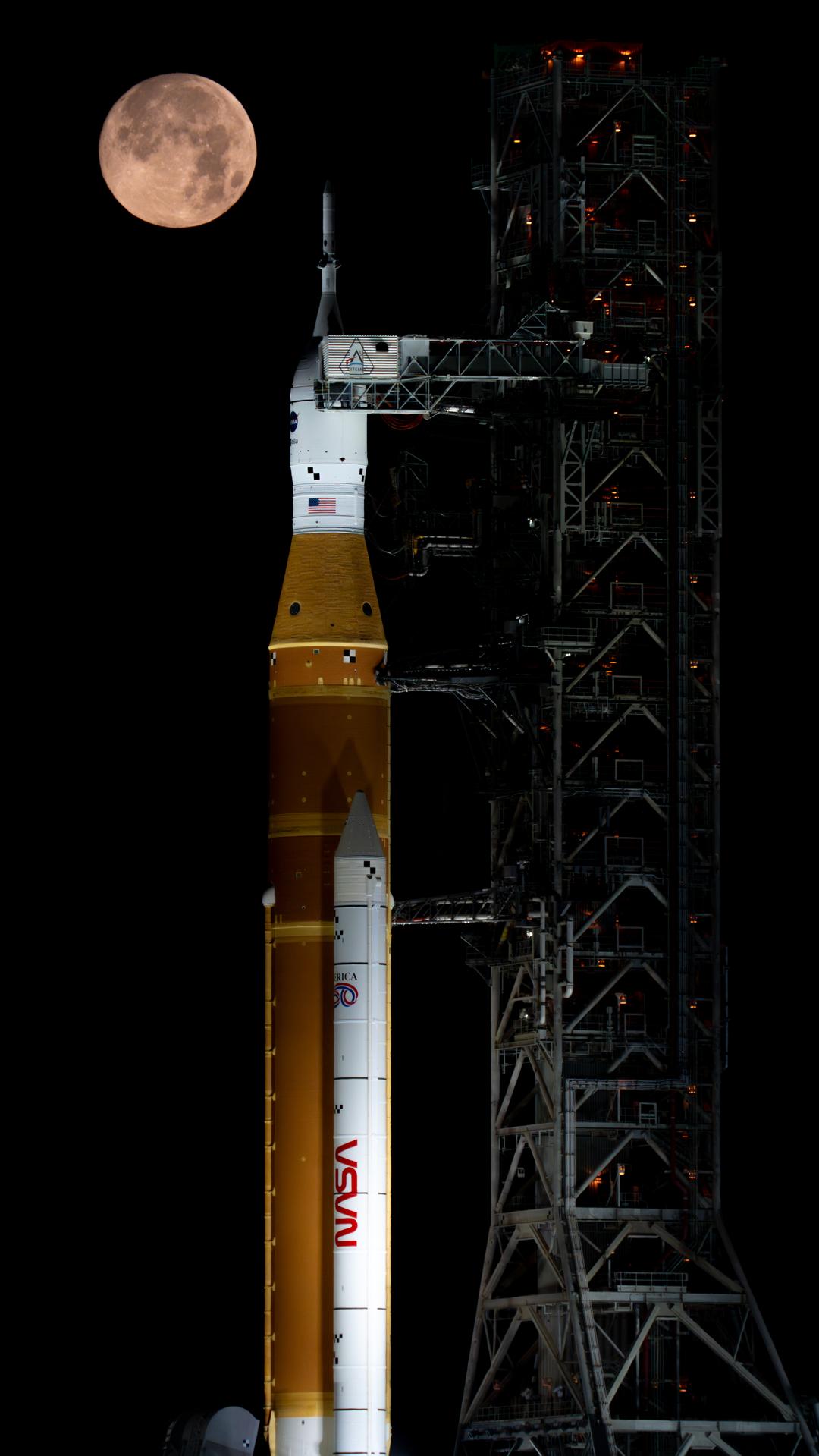
A full Moon is seen setting behind NASA’s SLS (Space Launch System) and Orion spacecraft, atop the mobile launcher in the early hours of February 1, 2026. The rocket is currently at Launch Pad 39B at NASA’s Kennedy Space Center in Florida, as teams are preparing for a wet dress rehearsal to practice timelines and procedures for the launch of Artemis II.
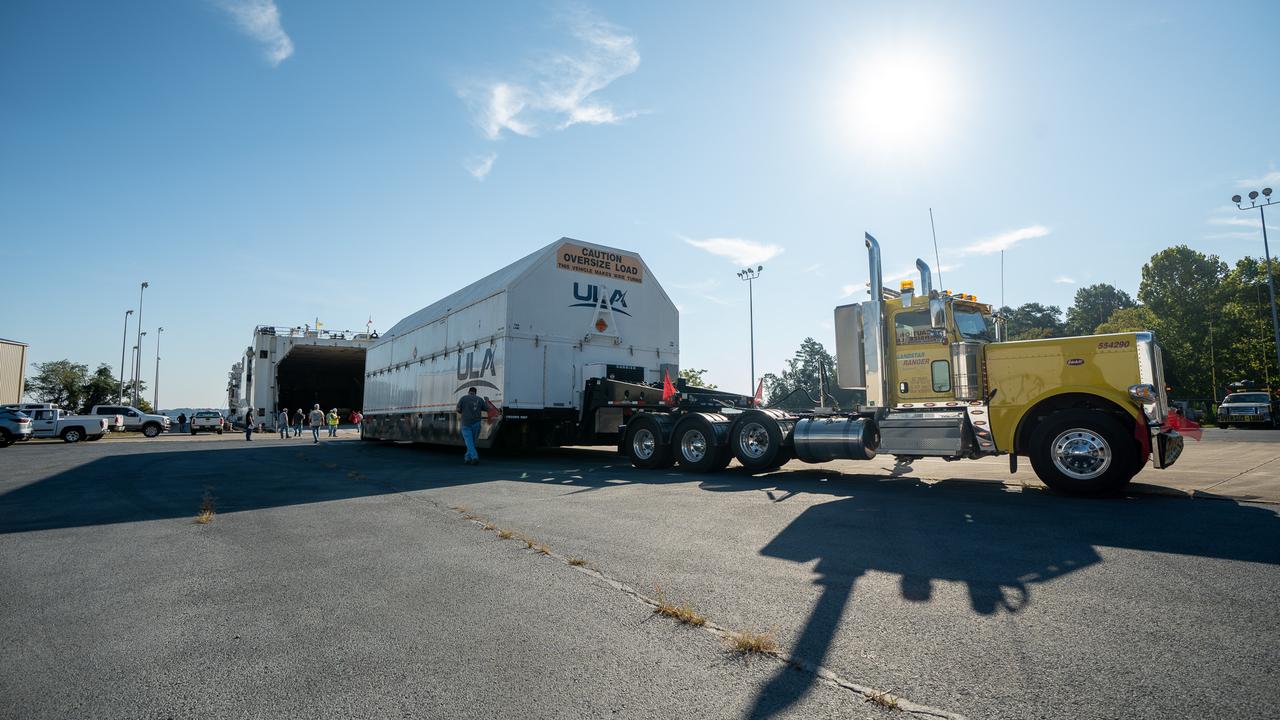
These images and videos show how crews in Alabama prepared the ICPS (interim cryogenic propulsion stage) for NASA’s SLS (Space Launch System) rocket for shipment to Florida between July 29-31. The ICPS in the photos and videos will help power NASA’s Artemis III mission to the Moon. The SLS upper stage is manufactured by United Launch Alliance at its facility in Decatur. Its RL10 engine is produced by Aerojet Rocketdyne, the SLS engines lead contractor, in West Palm Beach, Florida. ULA is working with Boeing, the SLS core stage and exploration upper stage lead contractor, to develop ICPS. ULA’s R/S RocketShip is transporting the flight hardware to its sister facility in Florida near NASA’s Kennedy Space Center for final checkouts. The ICPS for Artemis III is the last of its kind as SLS transitions to its next, more powerful Block 1B configuration with an upgraded upper stage beginning with Artemis IV. NASA is working to land the first woman and first person of color on the Moon under Artemis. SLS is part of NASA’s backbone for deep space exploration, along with Orion and the Gateway in orbit around the Moon. SLS is the only rocket that can send Orion, astronauts, and supplies to the Moon in a single mission.
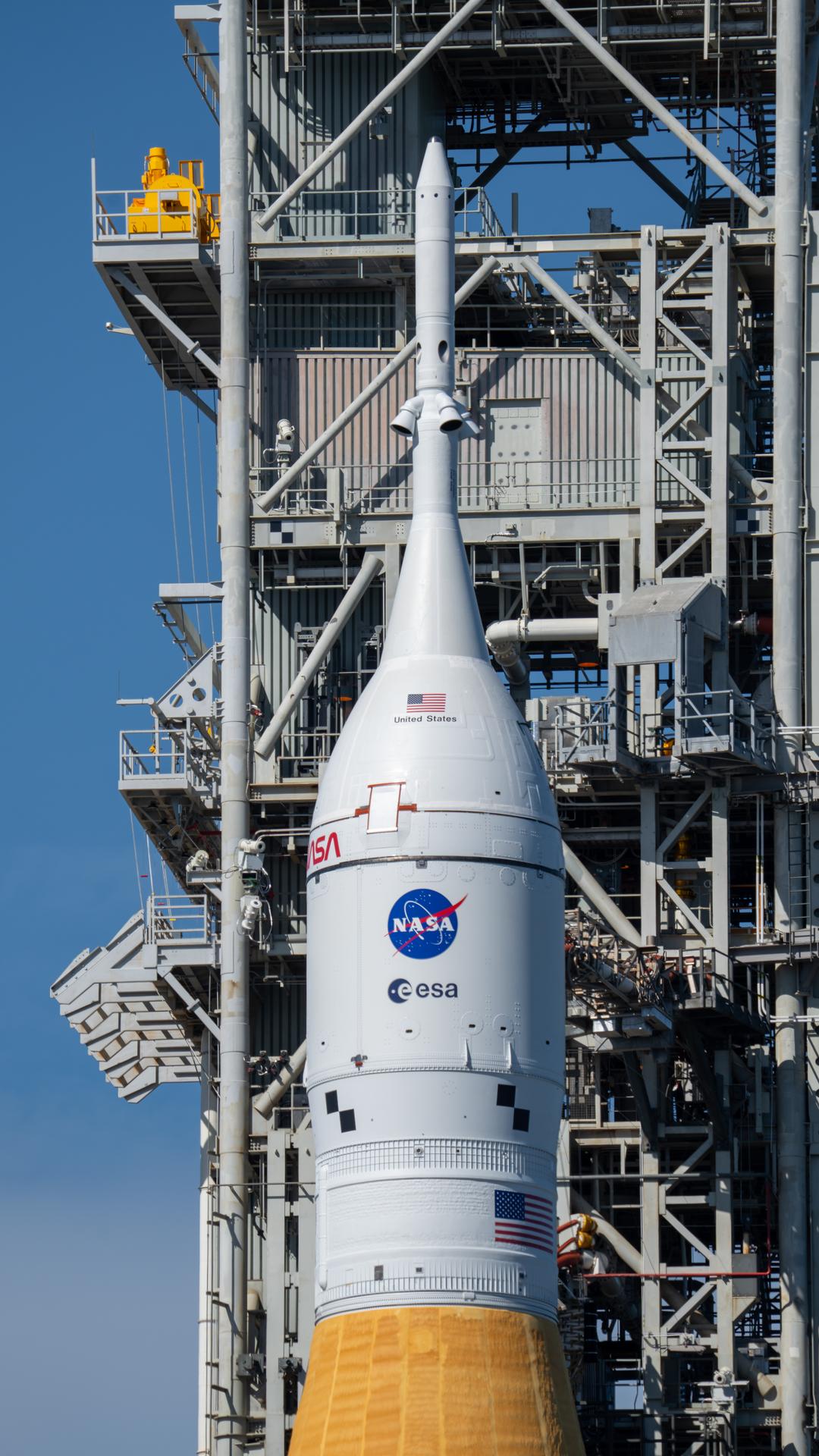
This image shows NASA’s SLS (Space Launch System) and Orion spacecraft rolling out of the Vehicle Assembly Building at NASA’s Kennedy Space Center. NASA's massive Crawler-Transporter, upgraded for the Artemis program, carries the powerful SLS rocket and Orion spacecraft on the Mobile Launcher from the Vehicle Assembly Building to Launch Pad 39B at Kennedy Space Center in preparation for the Artemis II mission.
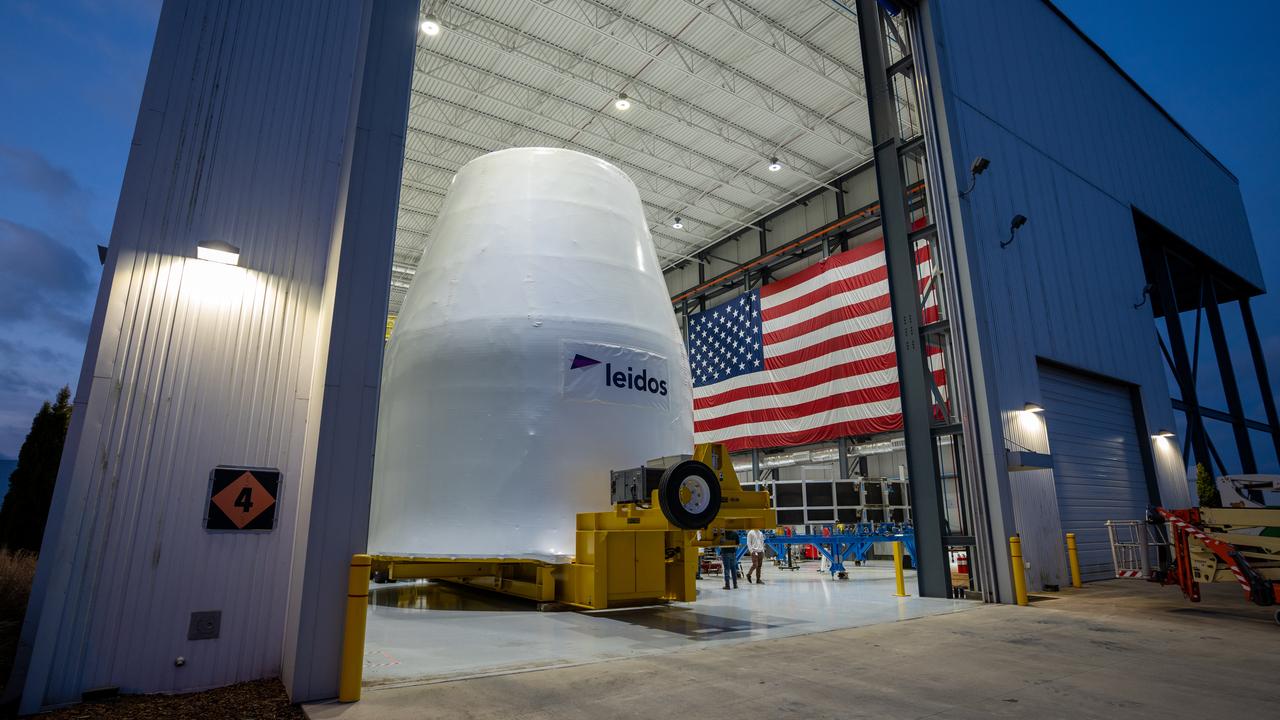
These photos and videos show how crews guided a test version of the universal stage adapter for NASA’s more powerful version of its SLS (Space Launch System) rocket to Building 4619 at the agency’s Marshall Space Flight Center in Huntsville, Alabama, Feb. 22. Built by Leidos, the lead contractor for the universal stage adapter, crews transported the hardware from a Leidos facility in Decatur, Alabama, the same day. The universal stage adapter will connect the SLS rocket’s upgraded in-space propulsion stage, called the exploration upper stage, to NASA’s Orion spacecraft as part of the evolved Block 1B configuration of the SLS rocket. It will also serve as a compartment capable of accommodating large payloads, such as modules or other exploration spacecraft. In Building 4619’s Load Test Annex High Bay at Marshall, the development test article will first undergo modal testing that will shake the hardware to validate dynamic models. Later, during ultimate load testing, force will be applied vertically and to the sides of the hardware. Unlike the flight hardware, the development test article has flaws intentionally included in its design, which will help engineers verity that the flight adapter can withstand the extreme forces it will face during launch and flight.
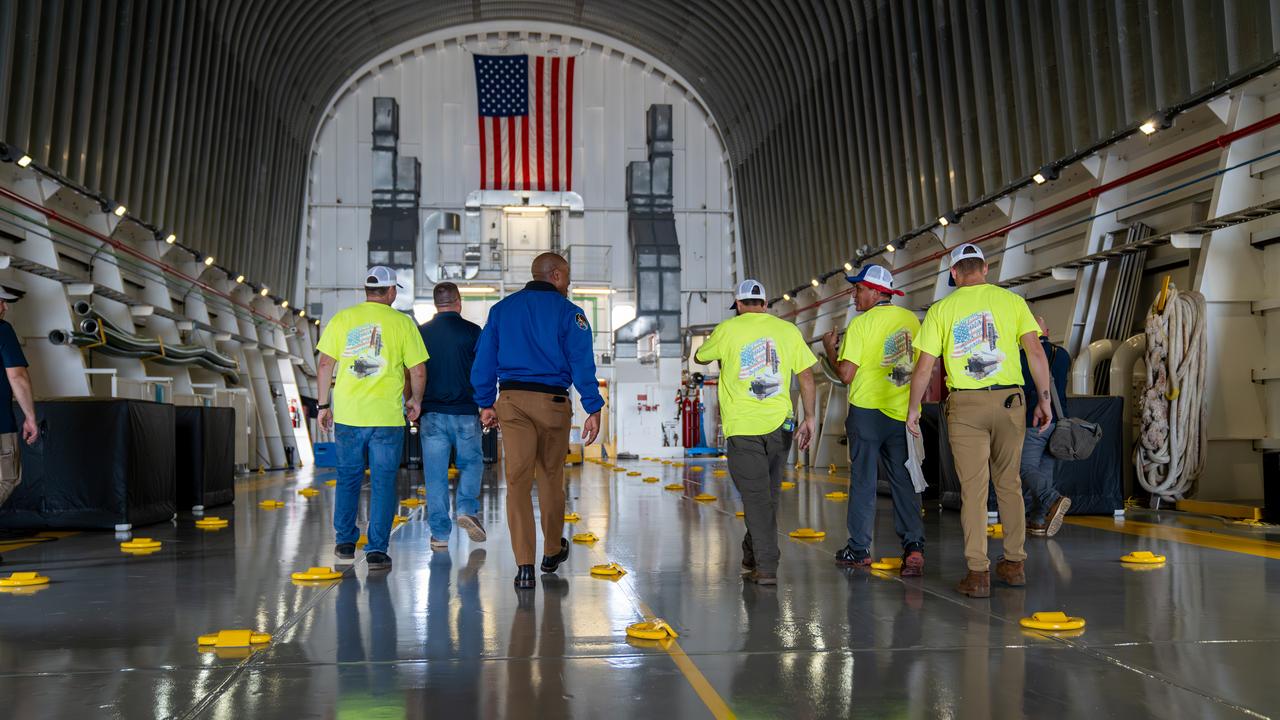
NASA astronaut Victor Glover views the core stage of the SLS (Space Launch System) rocket that will help power Artemis II at NASA’s Michoud Assembly Facility in New Orleans July 15. Glover will pilot Artemis II, the first crewed mission of NASA’s Artemis campaign. Crews moved the 212-foot-tall core stage with its four RS-25 engines to Building 110 at NASA Michoud prior to rolling it out to NASA’s Pegasus barge July 16 for delivery to NASA’s Kennedy Space Center in Florida. The core stage has two giant propellant tanks that collectively hold more than 733,000 gallons of super cold liquid propellant to feed the stage’s four RS-25 engines. Together, the engines produce more than 2 million pounds of thrust to help send astronauts inside NASA’s Orion spacecraft to venture around the Moon for Artemis II. NASA is working to land the first woman, first person of color, and its first international partner astronaut on the Moon under Artemis. SLS is part of NASA’s backbone for deep space exploration, along with the Orion spacecraft, supporting ground systems, advanced spacesuits and rovers, the Gateway in orbit around the Moon, and commercial human landing systems. SLS is the only rocket that can send Orion, astronauts, and supplies to the Moon in a single launch.
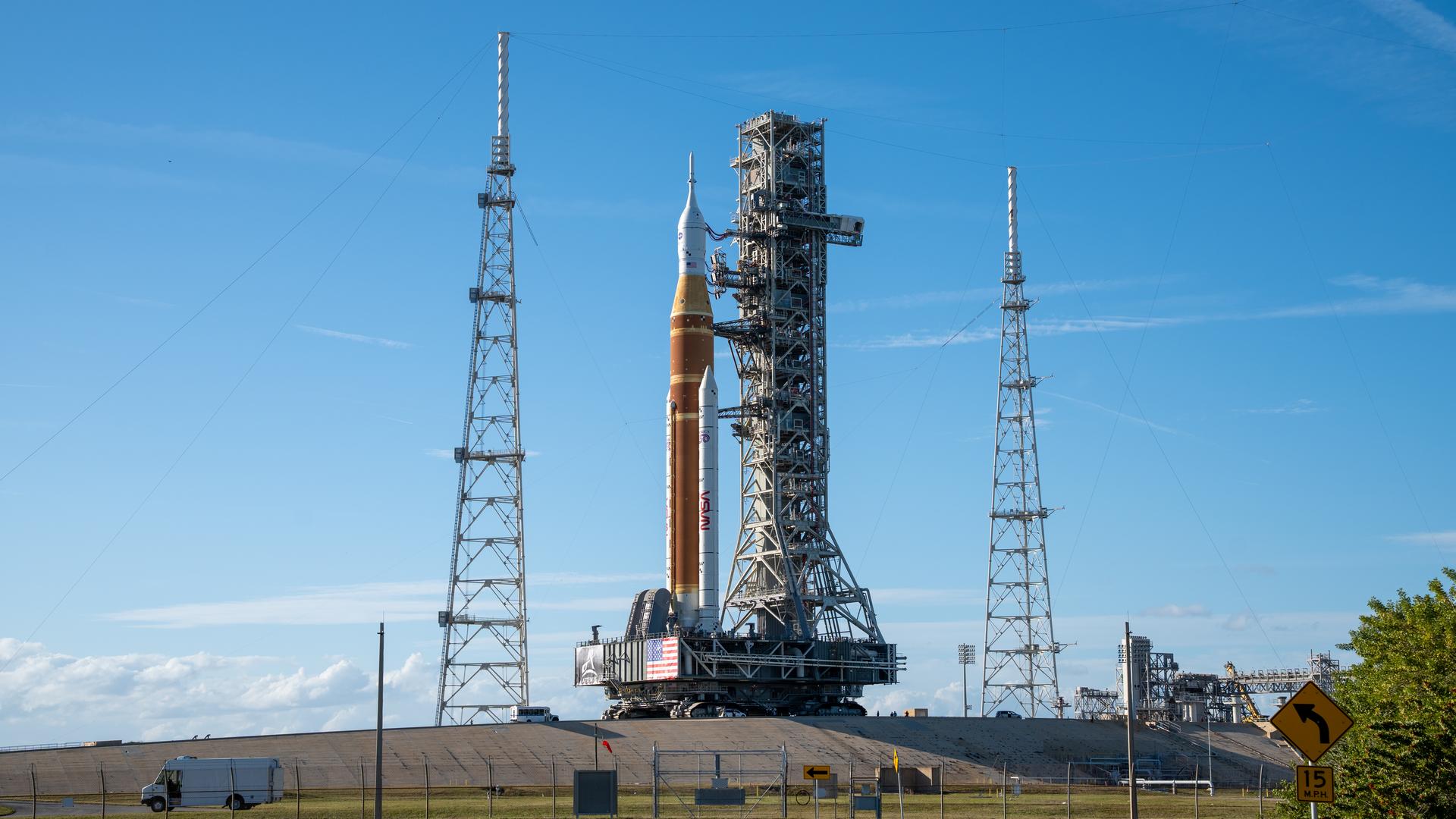
This image shows NASA’s SLS (Space Launch System) and Orion spacecraft rolling out of the Vehicle Assembly Building at NASA’s Kennedy Space Center. NASA's massive Crawler-Transporter, upgraded for the Artemis program, carries the powerful SLS rocket and Orion spacecraft on the Mobile Launcher from the Vehicle Assembly Building to Launch Pad 39B at Kennedy Space Center in preparation for the Artemis II mission.
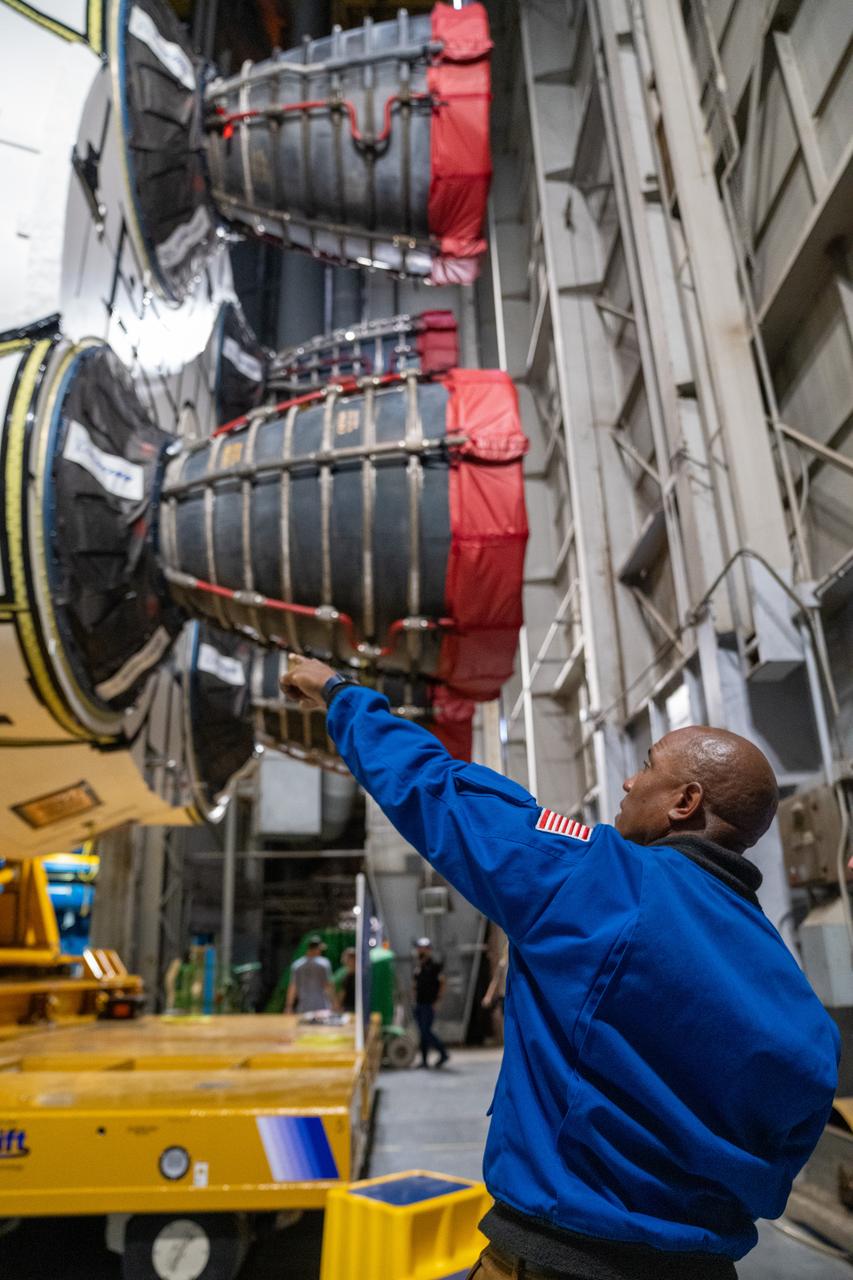
NASA astronaut Victor Glover views the core stage of the SLS (Space Launch System) rocket that will help power Artemis II at NASA’s Michoud Assembly Facility in New Orleans July 15. Glover will pilot Artemis II, the first crewed mission of NASA’s Artemis campaign. Crews moved the 212-foot-tall core stage with its four RS-25 engines to Building 110 at NASA Michoud prior to rolling it out to NASA’s Pegasus barge July 16 for delivery to NASA’s Kennedy Space Center in Florida. The core stage has two giant propellant tanks that collectively hold more than 733,000 gallons of super cold liquid propellant to feed the stage’s four RS-25 engines. Together, the engines produce more than 2 million pounds of thrust to help send astronauts inside NASA’s Orion spacecraft to venture around the Moon for Artemis II. NASA is working to land the first woman, first person of color, and its first international partner astronaut on the Moon under Artemis. SLS is part of NASA’s backbone for deep space exploration, along with the Orion spacecraft, supporting ground systems, advanced spacesuits and rovers, the Gateway in orbit around the Moon, and commercial human landing systems. SLS is the only rocket that can send Orion, astronauts, and supplies to the Moon in a single launch.
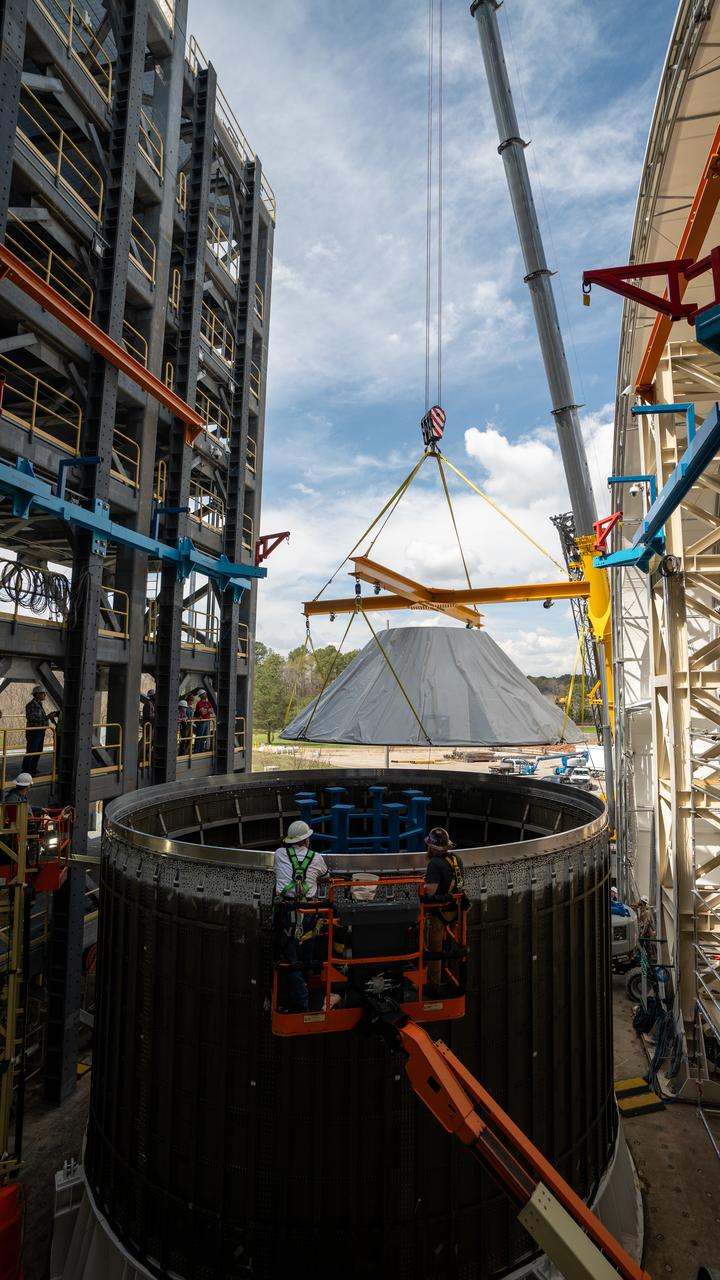
These photos and videos show how crews at NASA’s Marshall Space Flight Center in Huntsville, Alabama, moved and installed the payload adapter that will be used in the Block 1B configuration of the SLS (Space Launch System) rocket from Building 4708, where it was manufactured, into Structural Test Stand 4697 at NASA’s Marshall Space Flight Center on March 13. Teams at Marshall will begin structural testing the engineering development unit of the payload adapter – an exact replica of the flight version of the hardware – this spring. The cone-shaped payload adapter is about 8.5 feet tall and features two metal rings and eight composite panels. The adapter, which will debut on NASA’s Artemis IV mission, is an evolution from the Orion stage adapter used in the Block 1 configuration of the first three Artemis missions. It will be housed inside the universal stage adapter atop the rocket’s more powerful in-space stage, called the exploration upper stage. The payload adapter, like the launch vehicle stage adapter and the Orion stage adapter, is fully manufactured and tested at Marshall, which manages the SLS Program. NASA is working to land the first woman, first person of color, and its first international partner astronaut on the Moon under Artemis. SLS is part of NASA’s backbone for deep space exploration, along with the Orion spacecraft and Gateway in orbit around the Moon and commercial human landing systems, next-generational spacesuits, and rovers on the lunar surface. SLS is the only rocket that can send Orion, astronauts, and supplies to the Moon in a single launch.
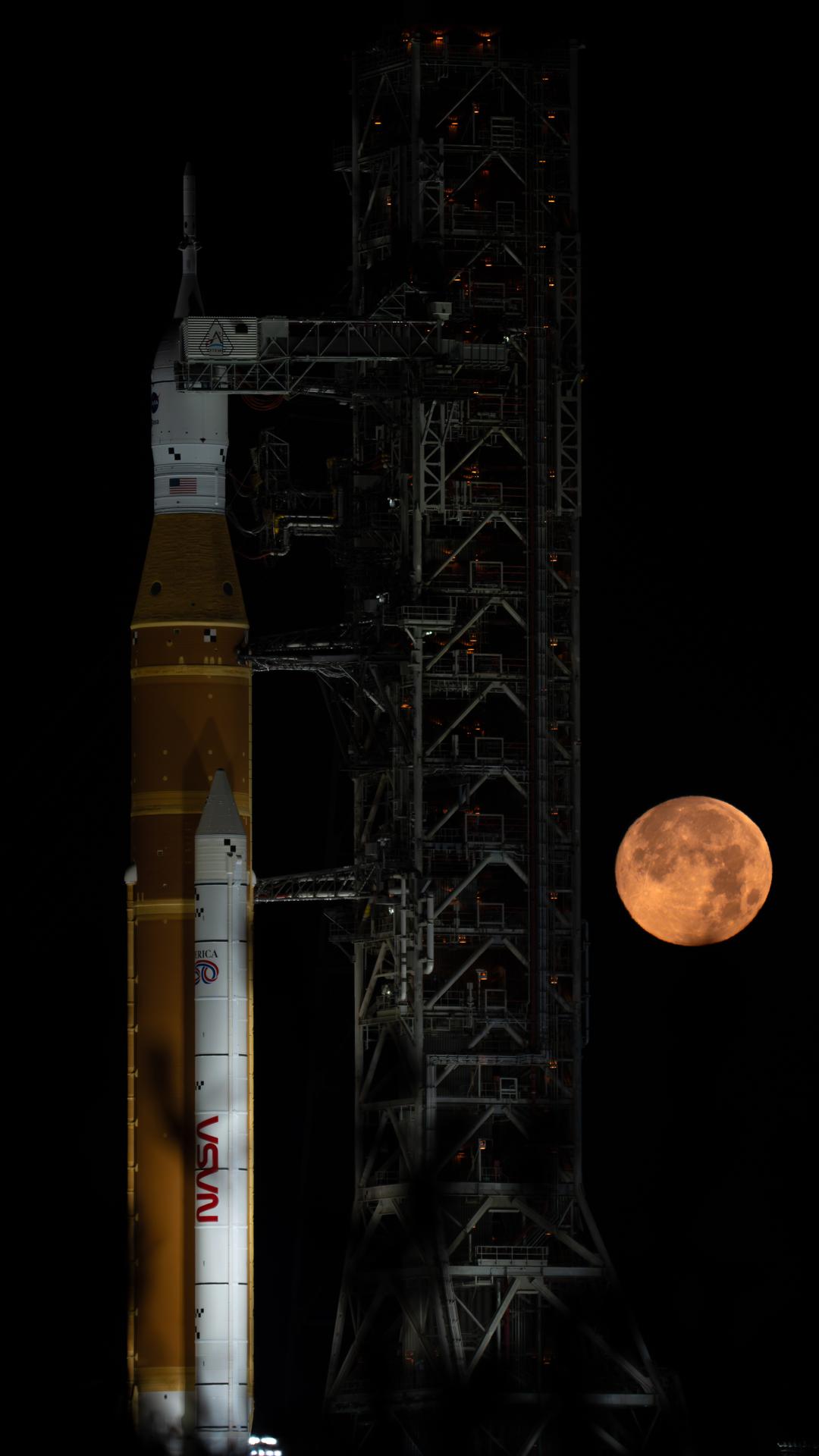
A full Moon is seen shining over NASA’s SLS (Space Launch System) and Orion spacecraft, atop the mobile launcher in the early hours of February 1, 2026. The rocket is currently at Launch Pad 39B at NASA’s Kennedy Space Center in Florida, as teams are preparing for a wet dress rehearsal to practice timelines and procedures for the launch of Artemis II.
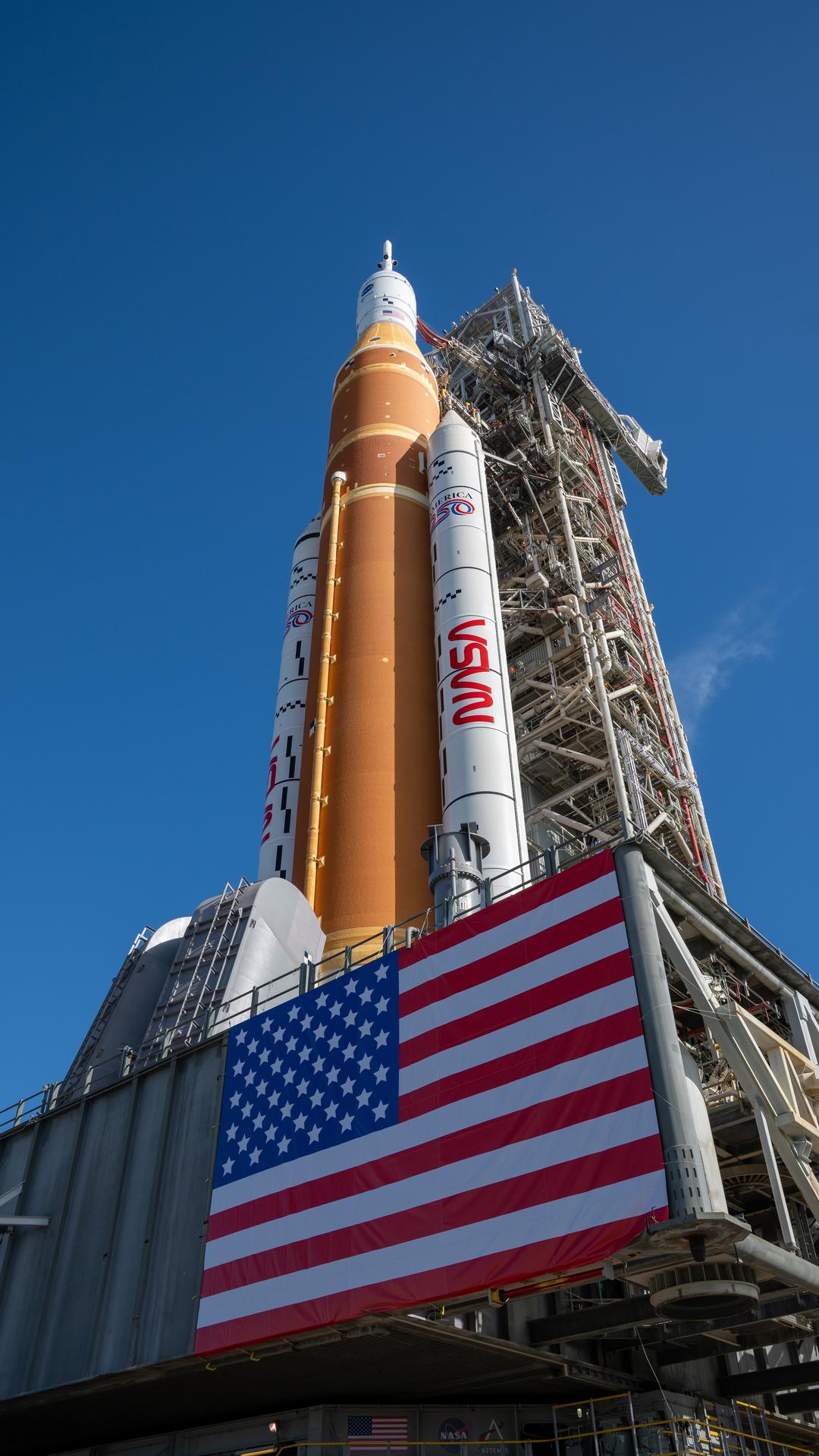
This image shows NASA’s SLS (Space Launch System) and Orion spacecraft rolling out of the Vehicle Assembly Building at NASA’s Kennedy Space Center. NASA's massive Crawler-Transporter, upgraded for the Artemis program, carries the powerful SLS rocket and Orion spacecraft on the Mobile Launcher from the Vehicle Assembly Building to Launch Pad 39B at Kennedy Space Center in preparation for the Artemis II mission.
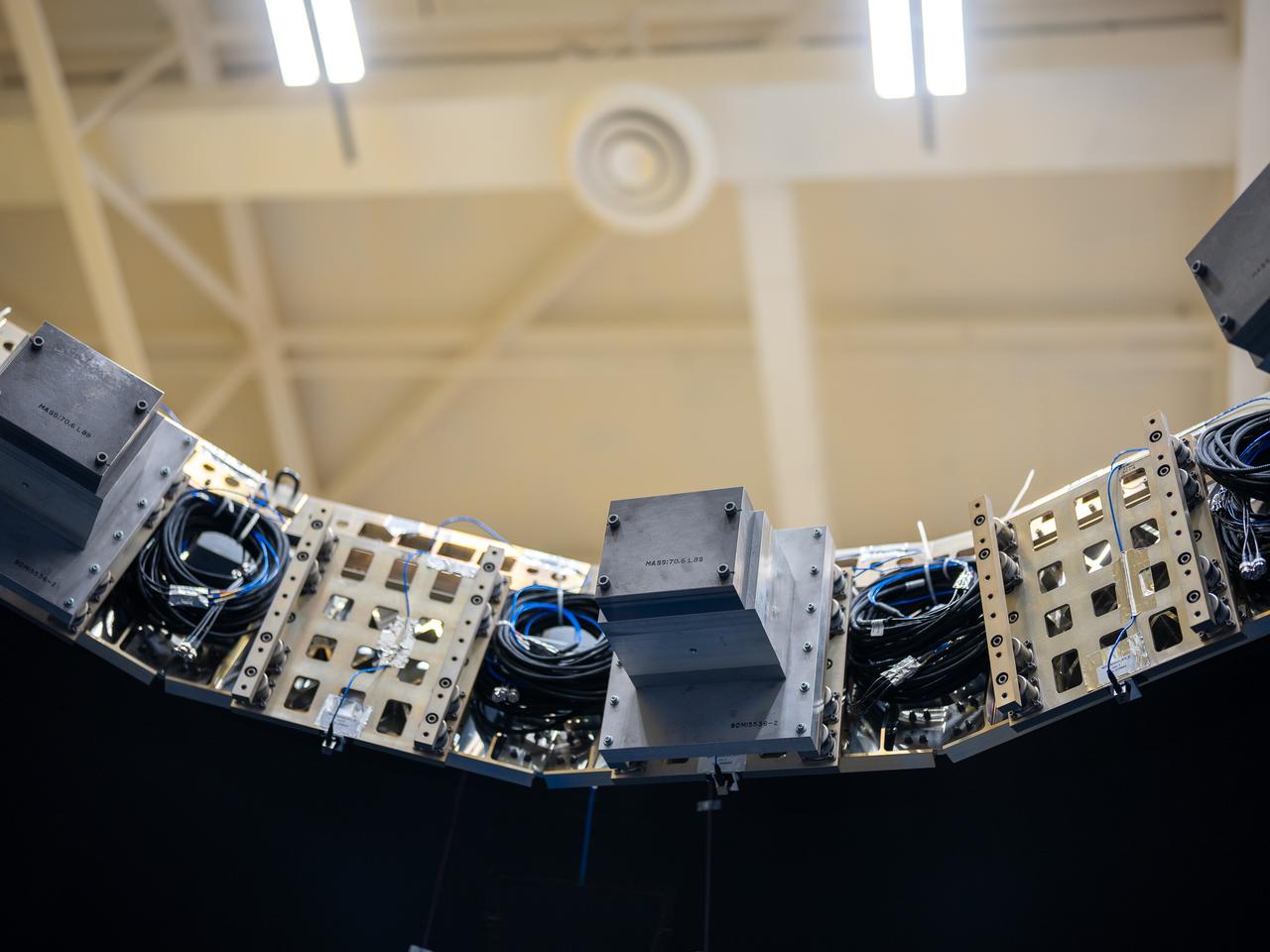
These photos and videos show how NASA manufactured and prepared to transport the payload adapter in February inside Building 4708 at NASA’s Marshall Space Flight Center in Huntsville, Alabama. Prior to moving the hardware for testing, teams installed the New Explorations Secondary Transport component, called the NEST, into the top of the engineering development unit. The NEST component will allow the hardware to hold a series of secondary payloads, or small satellites. The cone-shaped payload adapter is about 8.5 feet tall and features two metal rings and eight composite panels. The adapter, which will debut on NASA’s Artemis IV mission, is an evolution from the Orion stage adapter used in the Block 1 configuration of the rocket for the first three Artemis missions. It will be housed inside the universal stage adapter atop the rocket’s more powerful in-space stage, called the exploration upper stage. The payload adapter, like the launch vehicle stage adapter and the Orion stage adapter, is fully manufactured and tested at Marshall, which manages the SLS Program. NASA is working to land the first woman, first person of color, and its first international partner astronaut on the Moon under Artemis. SLS is part of NASA’s backbone for deep space exploration, along with the Orion spacecraft and Gateway in orbit around the Moon and commercial human landing systems, next-generational spacesuits, and rovers on the lunar surface. SLS is the only rocket that can send Orion, astronauts, and supplies to the Moon in a single launch.
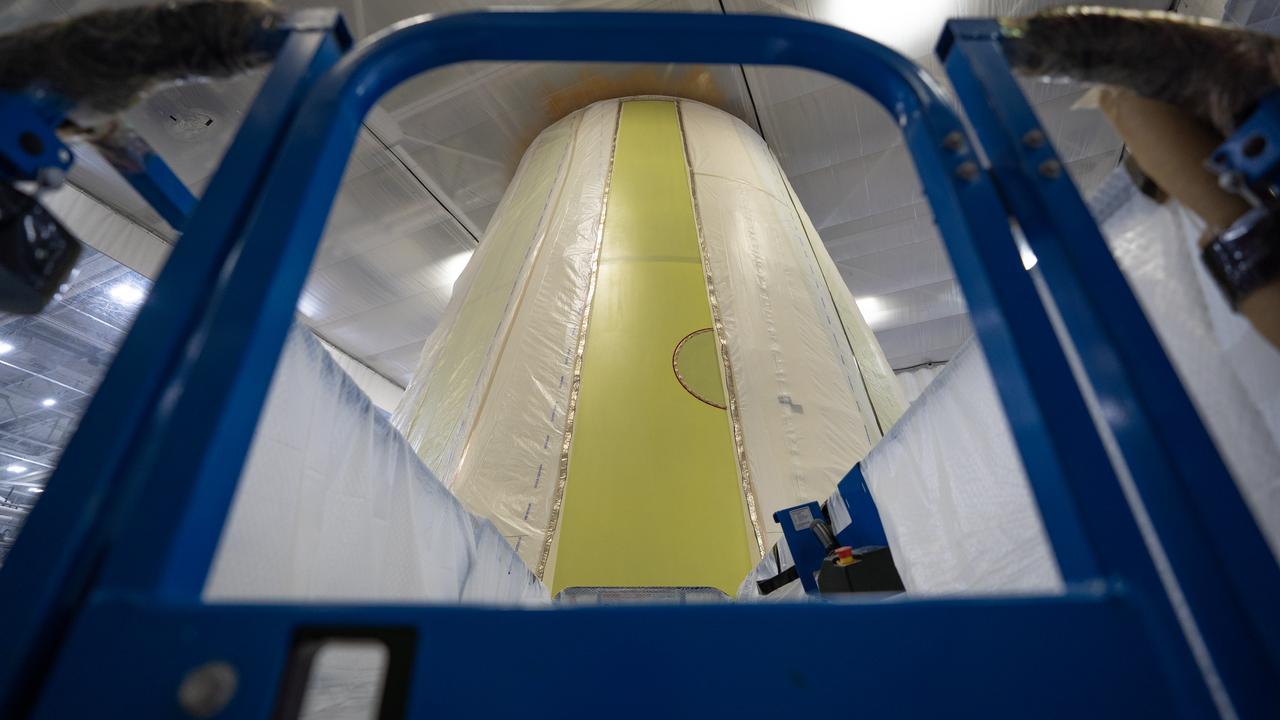
These photos show the launch vehicle stage adapter (LVSA) of NASA’s SLS (Space Launch System) rocket for Artemis III before technicians at NASA’s Marshall Space Flight Center in Huntsville, Alabama, applied the thermal protection system to it. Artemis III will land astronauts on the Moon to advance long-term lunar exploration and scientific discover and inspire the Artemis Generation. Teams at Marshall began applying the thermal protection system material in the spring of 2023. Unlike other parts of the SLS rocket, the thermal protection system material for the LVSA is applied entirely by hand using a spray gun. During application, the technicians use a thin measuring rod to gauge the proper thickness. Once the thermal protection system has cured, certain areas are sanded down to meet parameters. The entire process takes several months. The LVSA is fully manufactured at Marshall by NASA, lead contractor Teledyne Brown Engineering, and the Jacobs Space Group’s ESSCA contract. The LVSA for Artemis III is the last of its kind as future SLS rockets will transition to its next, more powerful Block 1B configuration beginning with Artemis IV. NASA is working to land the first woman and first person of color on the Moon under Artemis. SLS is part of NASA’s backbone for deep space exploration, along with the Orion spacecraft, advanced spacesuits and rovers, the Gateway in orbit around the Moon, and commercial human landing systems. SLS is the only rocket that can send Orion, astronauts, and supplies to the Moon in a single mission.
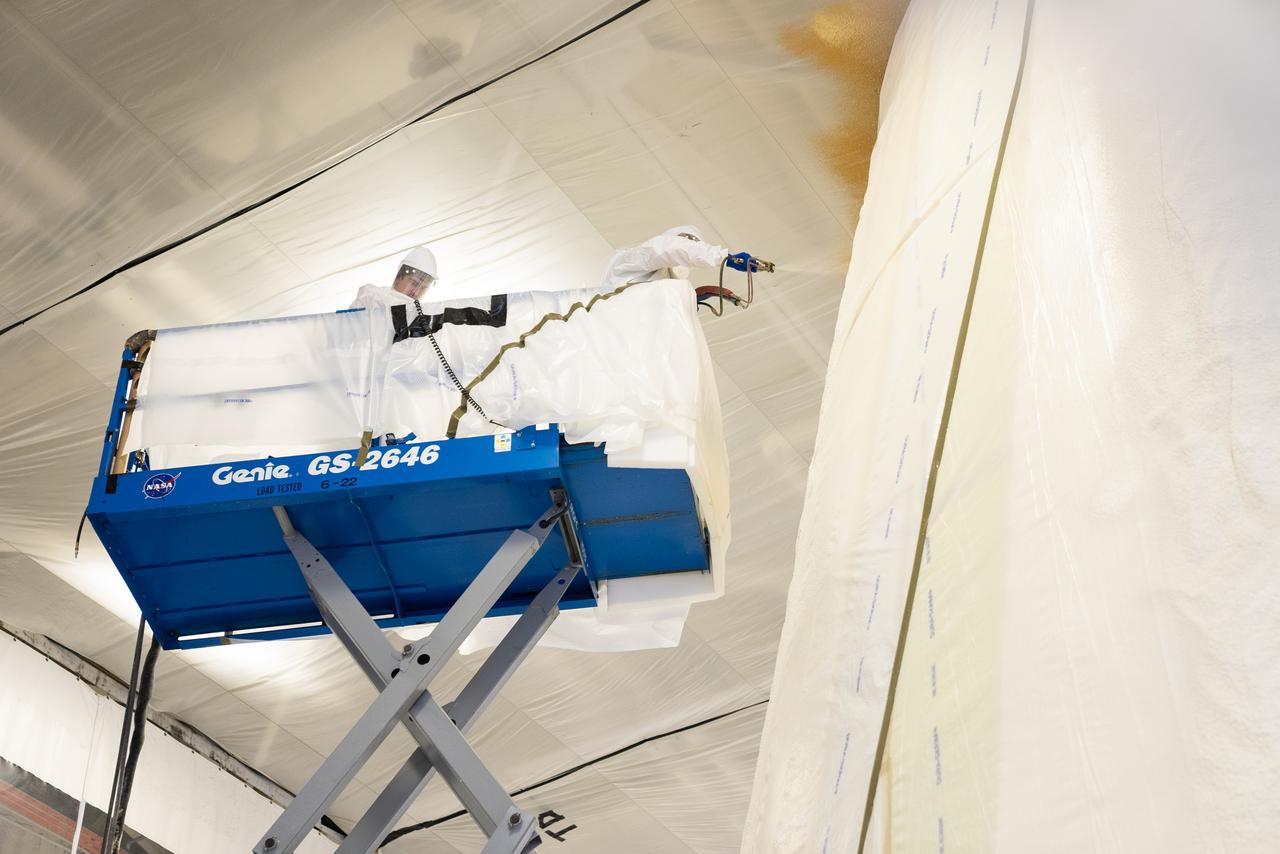
These photos show how technicians at NASA’s Marshall Space Flight Center in Huntsville, Alabama, have applied the thermal protection system material to the launch vehicle stage adapter (LVSA) of NASA’s SLS (Space Launch System) rocket for Artemis III, which will land astronauts on the Moon to advance long-term lunar exploration and scientific discovery and inspire the Artemis Generation. The LVSA is a cone-shaped element that connects the mega rocket’s core stage to its interim cryogenic propulsion stage (ICPS), partially enclosing it and protecting its avionics and electrical systems from the extreme pressures, sounds, and temperatures during launch and flight. Teams at Marshall began applying the thermal protection system material in the spring of 2023. Unlike other parts of the SLS rocket, the thermal protection system material for the LVSA is applied entirely by hand using a spray gun. During application, the technicians use a thin measuring rod to gauge the proper thickness. Once the thermal protection system has cured, certain areas are sanded down to meet parameters. The entire process takes several months. The LVSA is fully manufactured at Marshall by NASA, lead contractor Teledyne Brown Engineering, and the Jacobs Space Group’s ESSCA contract. The LVSA for Artemis III is the last of its kind as future SLS rockets will transition to its next, more powerful Block 1B configuration beginning with Artemis IV. NASA is working to land the first woman and first person of color on the Moon under Artemis. SLS is part of NASA’s backbone for deep space exploration, along with the Orion spacecraft, advanced spacesuits and rovers, the Gateway in orbit around the Moon, and commercial human landing systems. SLS is the only rocket that can send Orion, astronauts, and supplies to the Moon in a single mission.
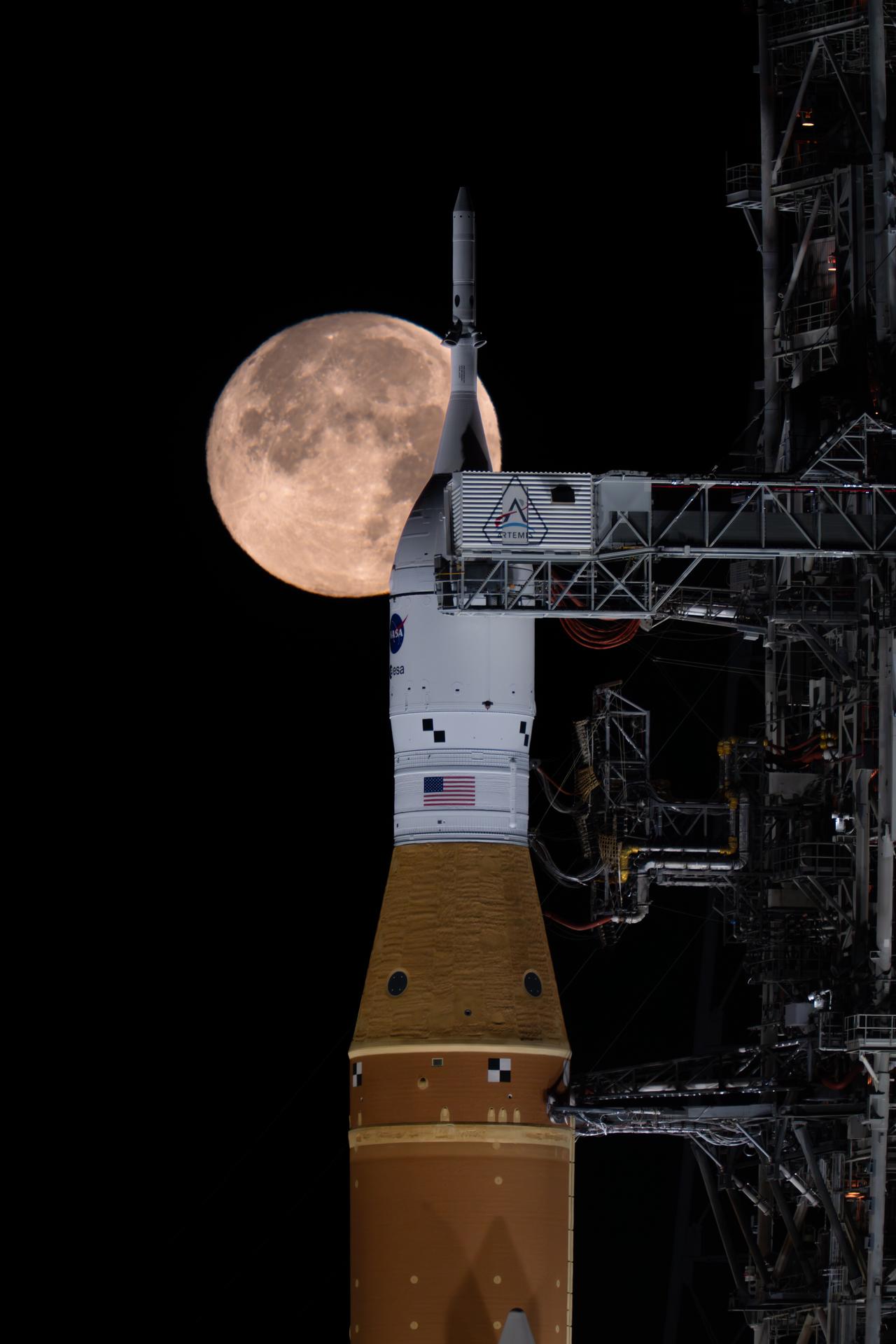
A full Moon is seen setting behind NASA’s SLS (Space Launch System) and Orion spacecraft, atop the mobile launcher in the early hours of February 1, 2026. The rocket is currently at Launch Pad 39B at NASA’s Kennedy Space Center in Florida, as teams are preparing for a wet dress rehearsal to practice timelines and procedures for the launch of Artemis II.
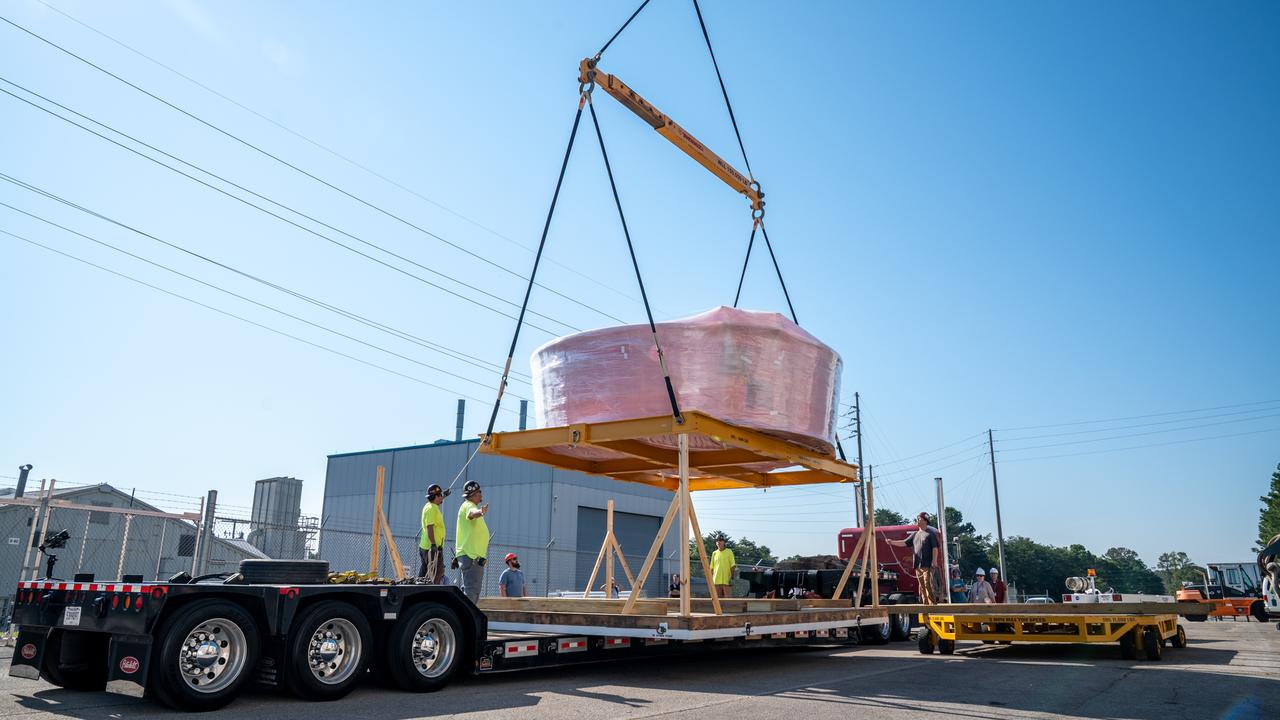
These images show the Orion stage adapter for Artemis II being prepped for shipment and then packaged in a large box, loaded on a semi-truck. It is seen leaving NASA’s Marshall Space Flight Center in Huntsville, Alabama, as it begins its journey to NASA’s Kennedy Space Center in Florida. Manufactured at Marshall, this adapter for the SLS (Space Launch System) connects the rocket’s interim cryogenic propulsion stage to the Orion spacecraft and is the final piece of SLS hardware to be delivered to Kennedy Space Center in preparation for the Artemis II mission.
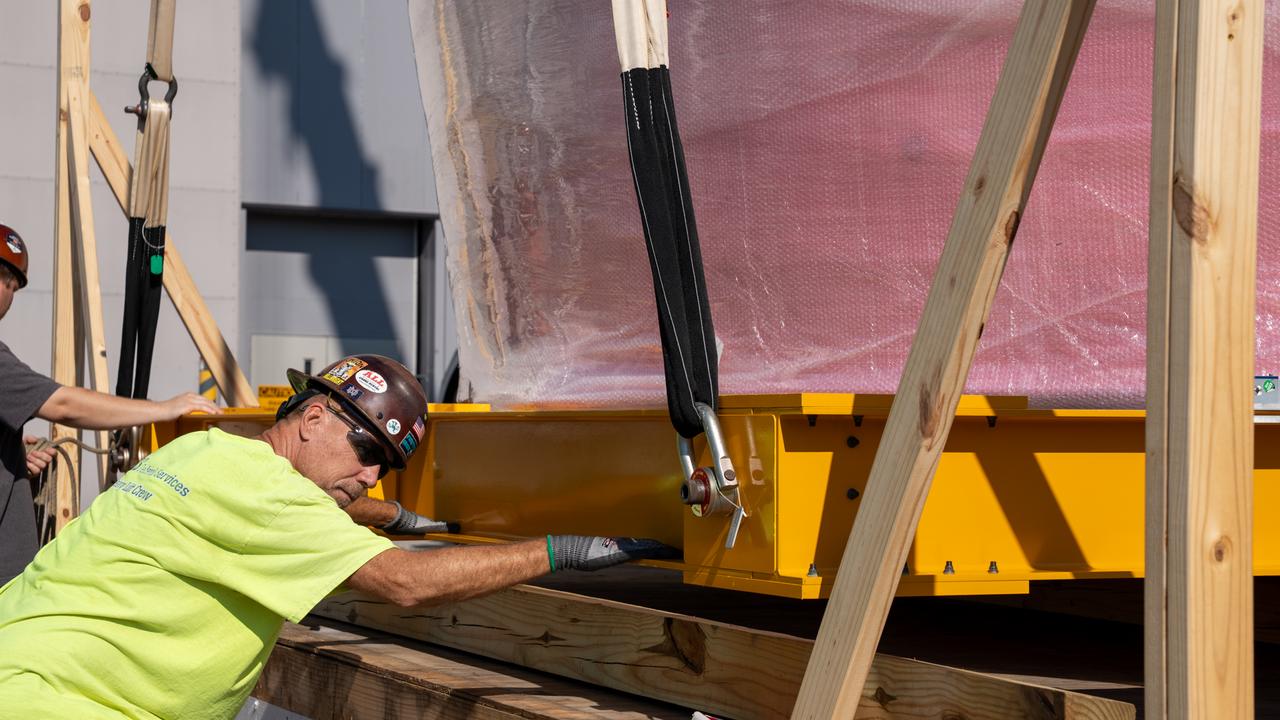
These images show the Orion stage adapter for Artemis II being prepped for shipment and then packaged in a large box, loaded on a semi-truck. It is seen leaving NASA’s Marshall Space Flight Center in Huntsville, Alabama, as it begins its journey to NASA’s Kennedy Space Center in Florida. Manufactured at Marshall, this adapter for the SLS (Space Launch System) connects the rocket’s interim cryogenic propulsion stage to the Orion spacecraft and is the final piece of SLS hardware to be delivered to Kennedy Space Center in preparation for the Artemis II mission.
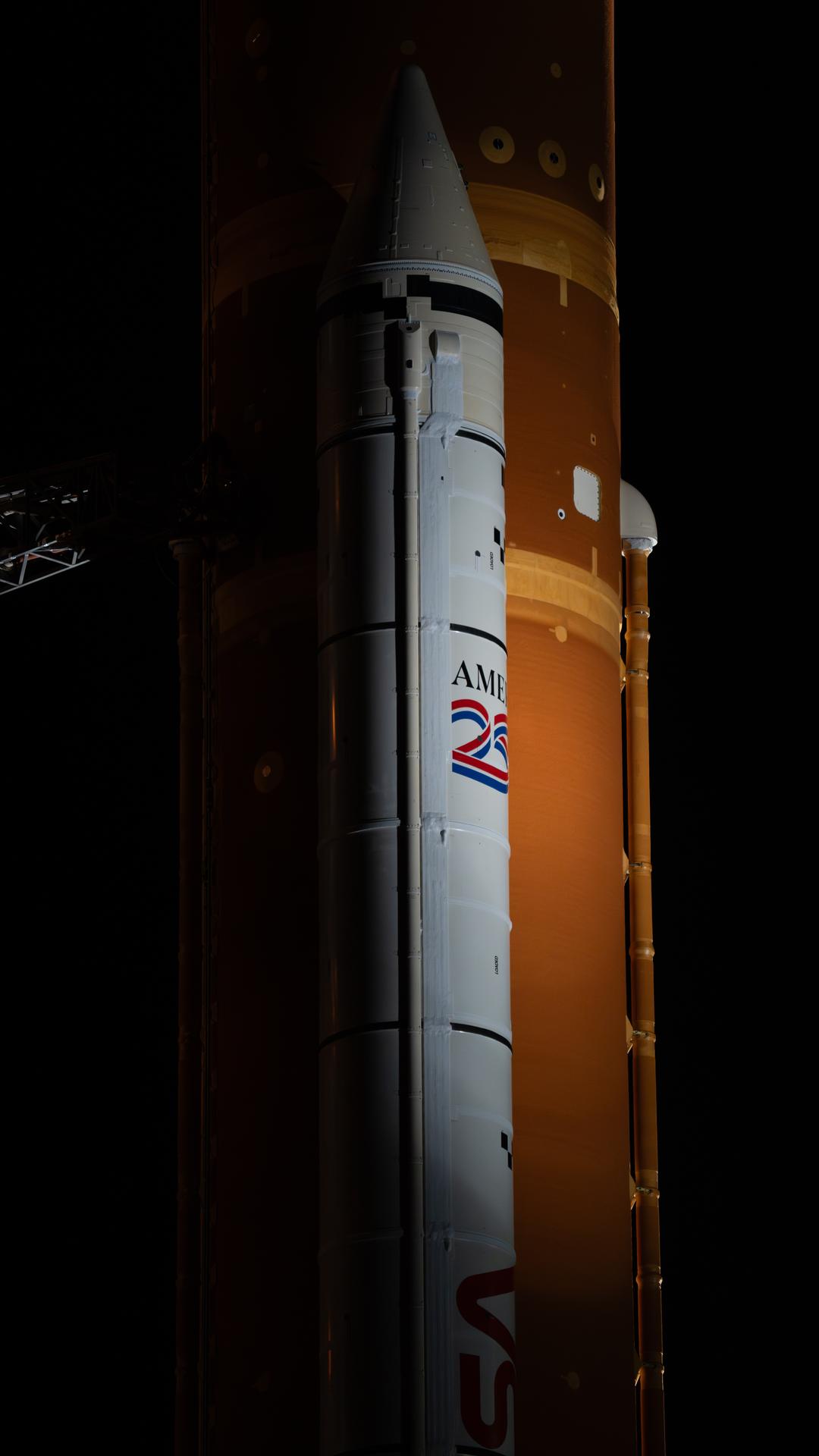
This image shows NASA’s SLS (Space Launch System) and Orion spacecraft rolling out of the Vehicle Assembly Building at NASA’s Kennedy Space Center. NASA's massive Crawler-Transporter, upgraded for the Artemis program, carries the powerful SLS rocket and Orion spacecraft on the Mobile Launcher from the Vehicle Assembly Building to Launch Pad 39B at Kennedy Space Center in preparation for the Artemis II mission.
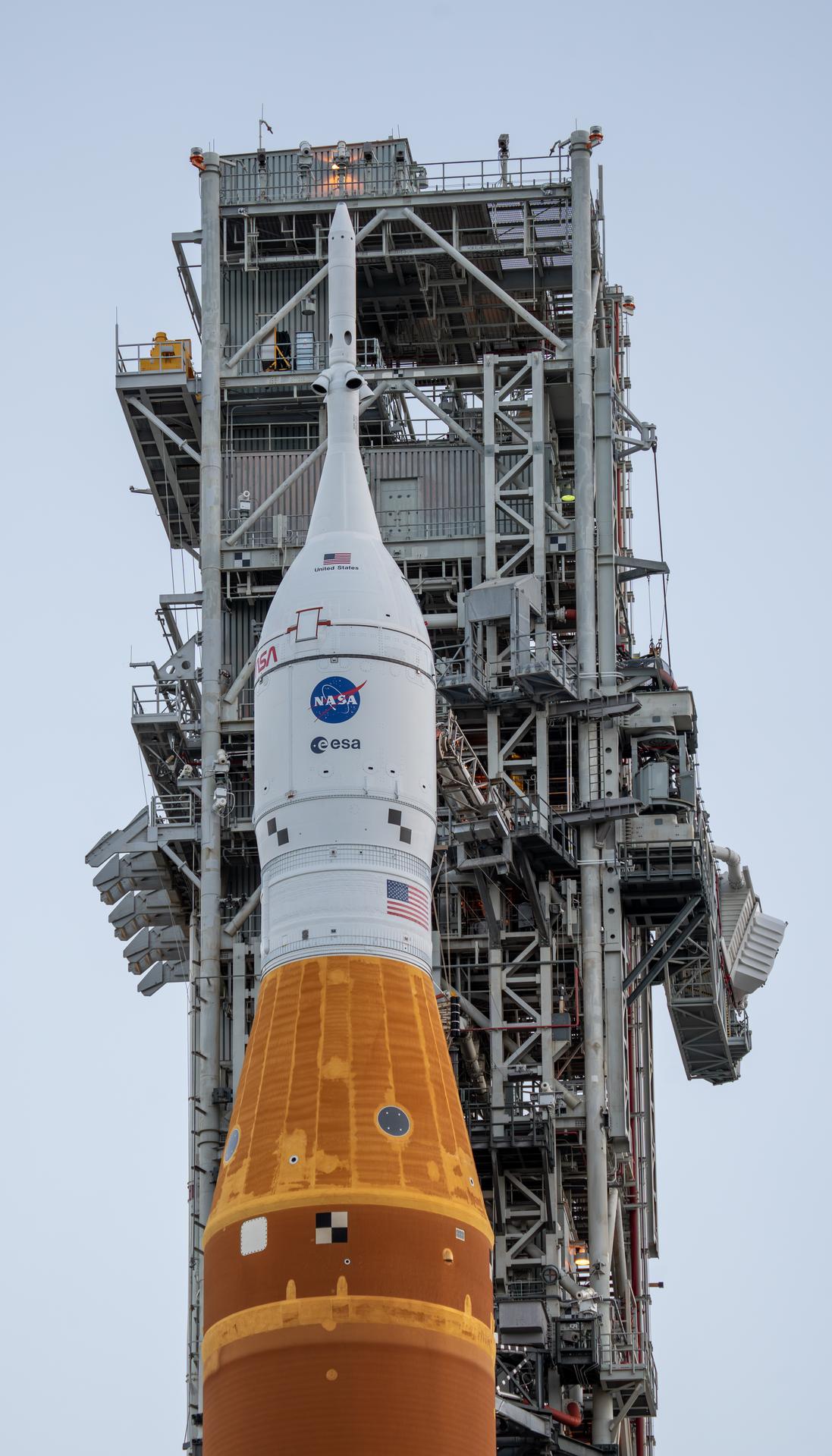
This image shows NASA’s SLS (Space Launch System) and Orion spacecraft rolling out of the Vehicle Assembly Building at NASA’s Kennedy Space Center. NASA's massive Crawler-Transporter, upgraded for the Artemis program, carries the powerful SLS rocket and Orion spacecraft on the Mobile Launcher from the Vehicle Assembly Building to Launch Pad 39B at Kennedy Space Center in preparation for the Artemis II mission.
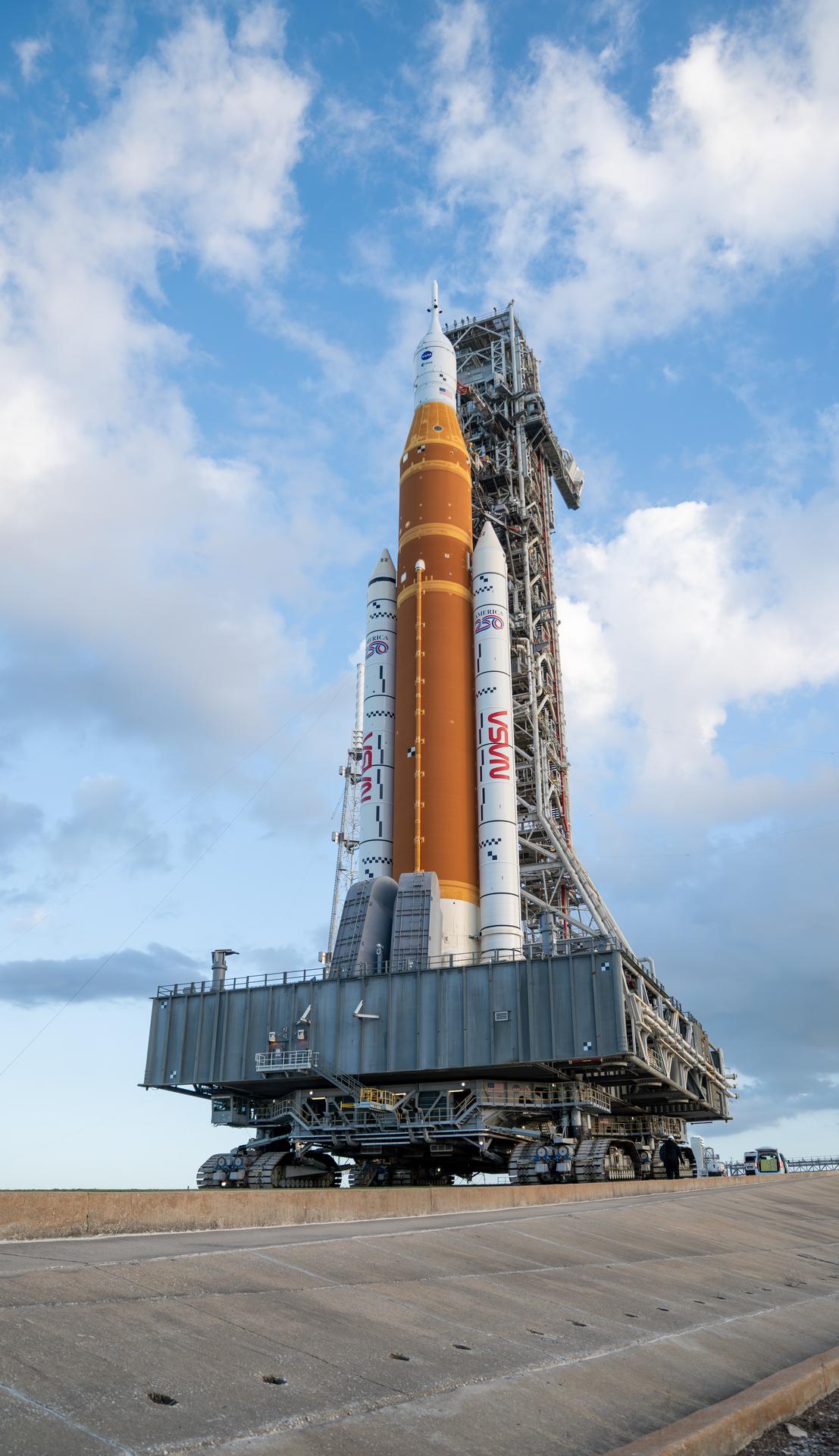
This image shows NASA’s SLS (Space Launch System) and Orion spacecraft rolling out of the Vehicle Assembly Building at NASA’s Kennedy Space Center. NASA's massive Crawler-Transporter, upgraded for the Artemis program, carries the powerful SLS rocket and Orion spacecraft on the Mobile Launcher from the Vehicle Assembly Building to Launch Pad 39B at Kennedy Space Center in preparation for the Artemis II mission.
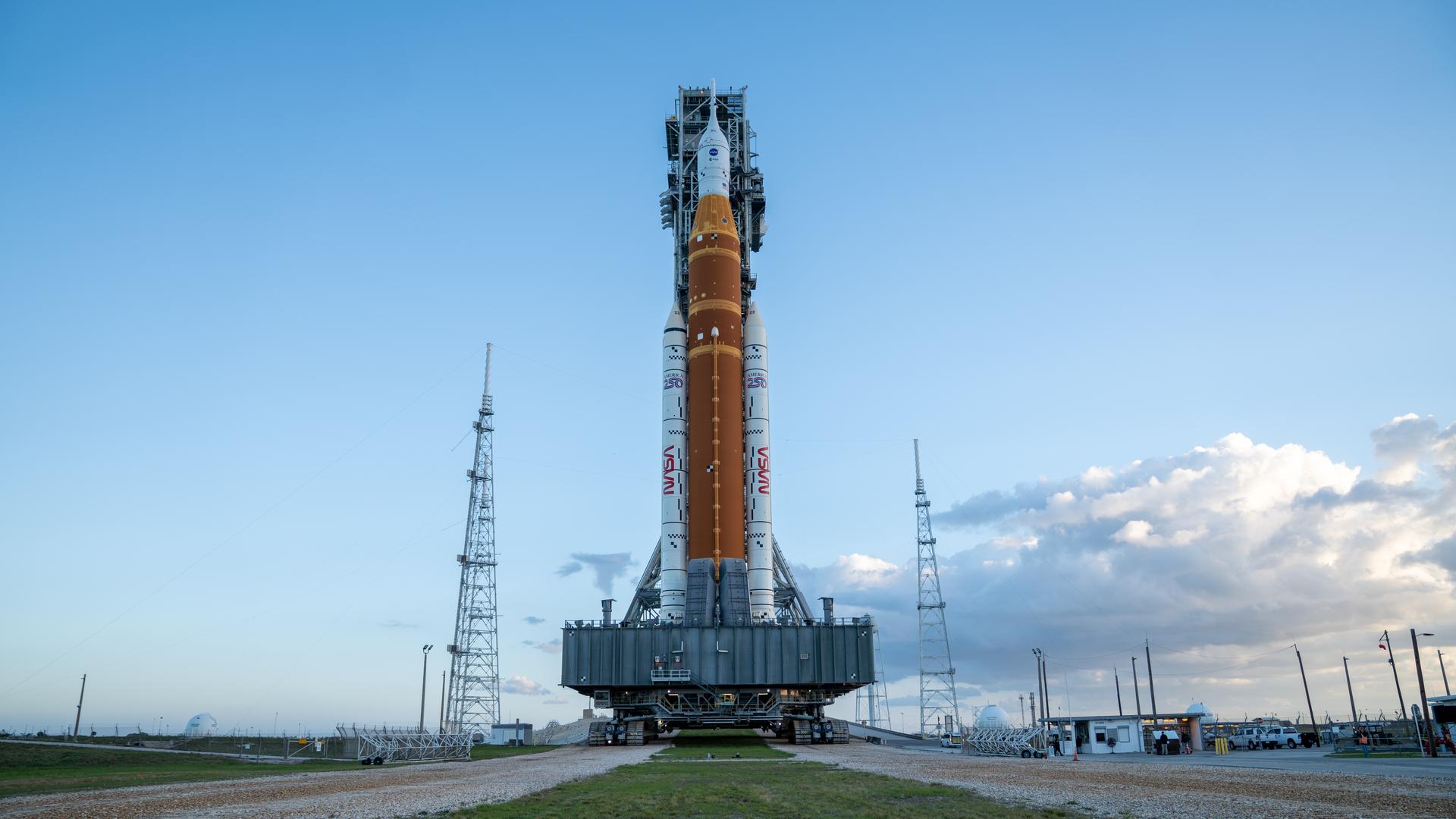
This image shows NASA’s SLS (Space Launch System) and Orion spacecraft rolling out of the Vehicle Assembly Building at NASA’s Kennedy Space Center. NASA's massive Crawler-Transporter, upgraded for the Artemis program, carries the powerful SLS rocket and Orion spacecraft on the Mobile Launcher from the Vehicle Assembly Building to Launch Pad 39B at Kennedy Space Center in preparation for the Artemis II mission.
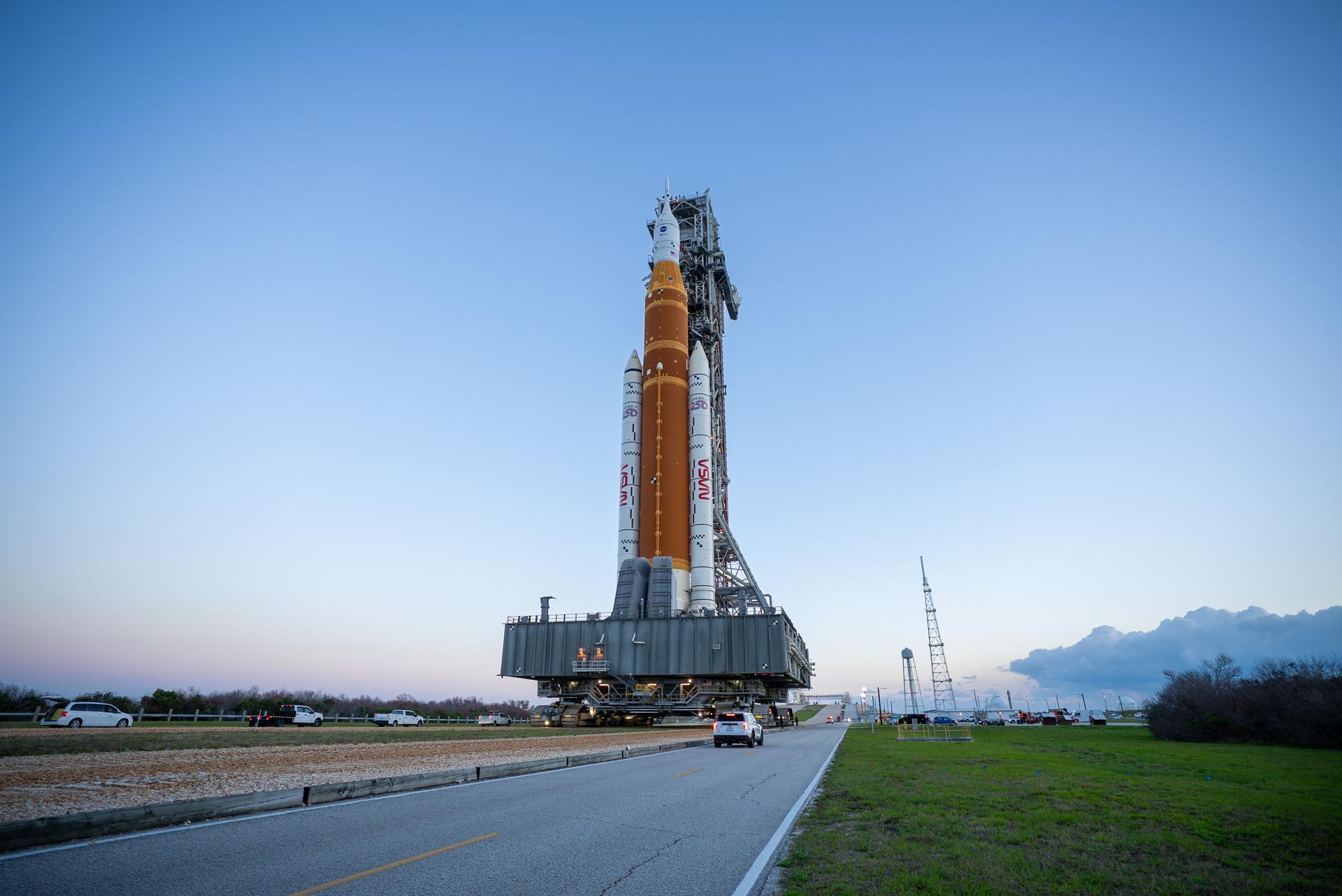
This image shows NASA’s SLS (Space Launch System) and Orion spacecraft rolling out of the Vehicle Assembly Building at NASA’s Kennedy Space Center. NASA's massive Crawler-Transporter, upgraded for the Artemis program, carries the powerful SLS rocket and Orion spacecraft on the Mobile Launcher from the Vehicle Assembly Building to Launch Pad 39B at Kennedy Space Center in preparation for the Artemis II mission.
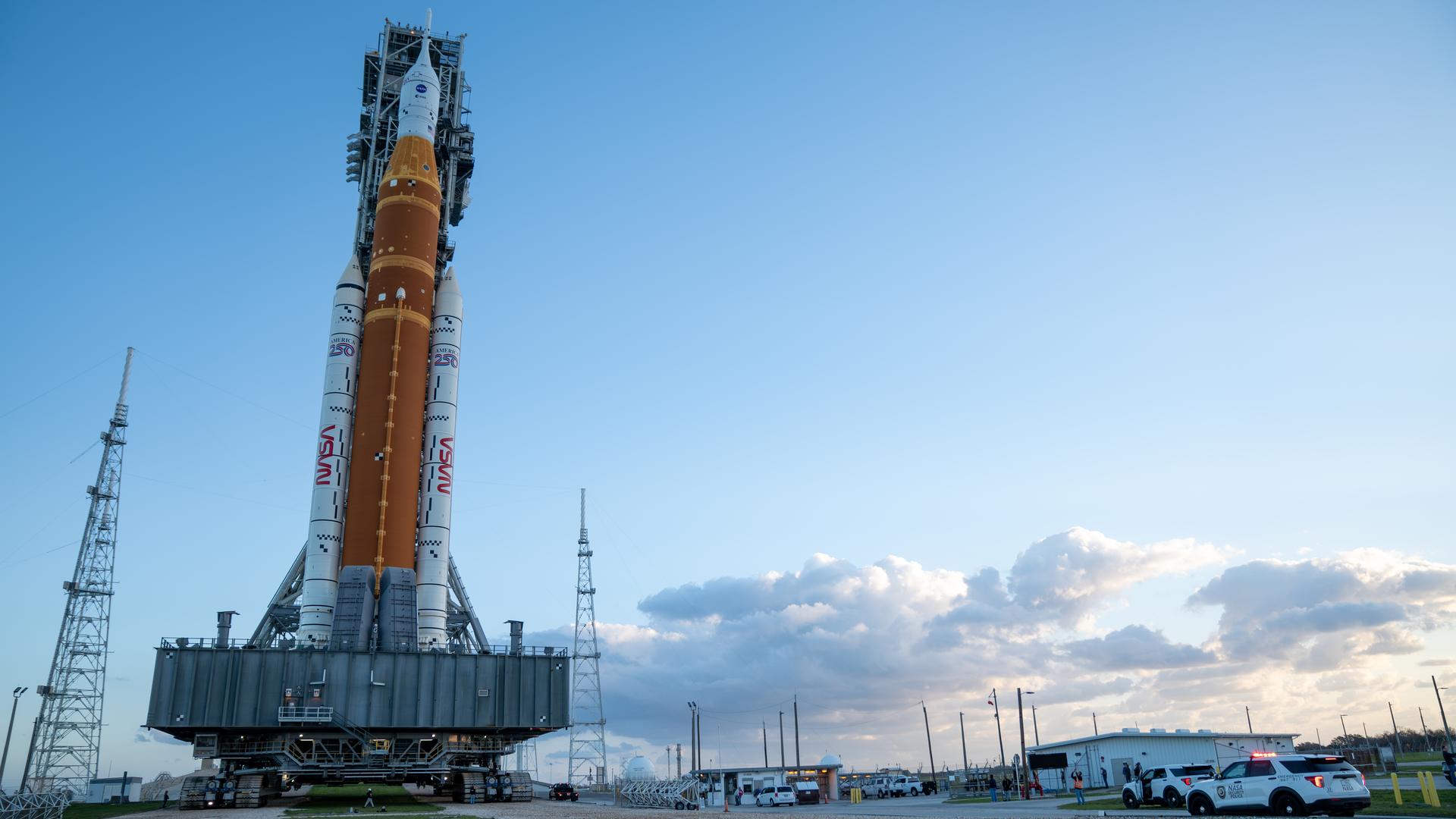
This image shows NASA’s SLS (Space Launch System) and Orion spacecraft rolling out of the Vehicle Assembly Building at NASA’s Kennedy Space Center. NASA's massive Crawler-Transporter, upgraded for the Artemis program, carries the powerful SLS rocket and Orion spacecraft on the Mobile Launcher from the Vehicle Assembly Building to Launch Pad 39B at Kennedy Space Center in preparation for the Artemis II mission.
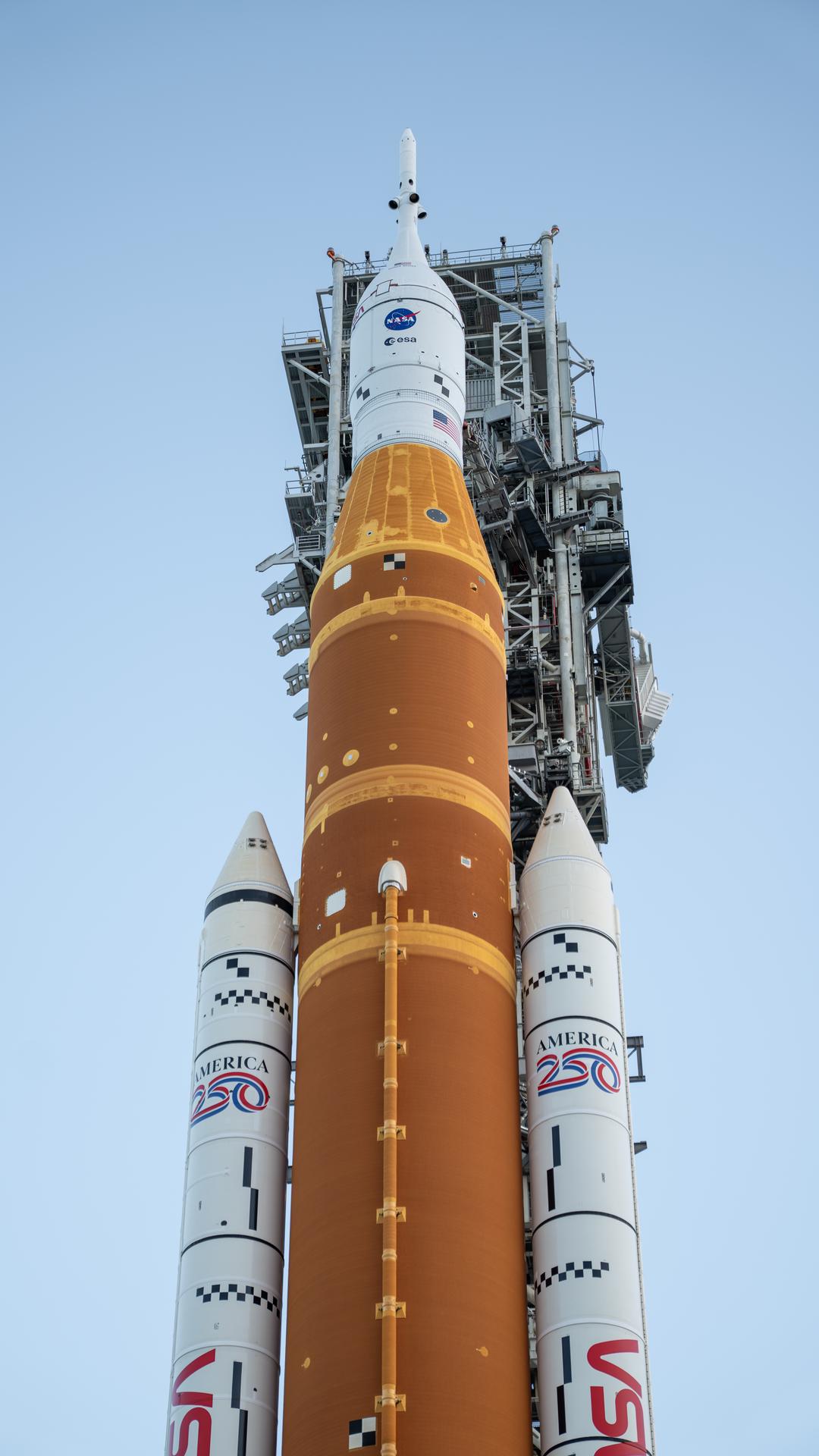
This image shows NASA’s SLS (Space Launch System) and Orion spacecraft rolling out of the Vehicle Assembly Building at NASA’s Kennedy Space Center. NASA's massive Crawler-Transporter, upgraded for the Artemis program, carries the powerful SLS rocket and Orion spacecraft on the Mobile Launcher from the Vehicle Assembly Building to Launch Pad 39B at Kennedy Space Center in preparation for the Artemis II mission.
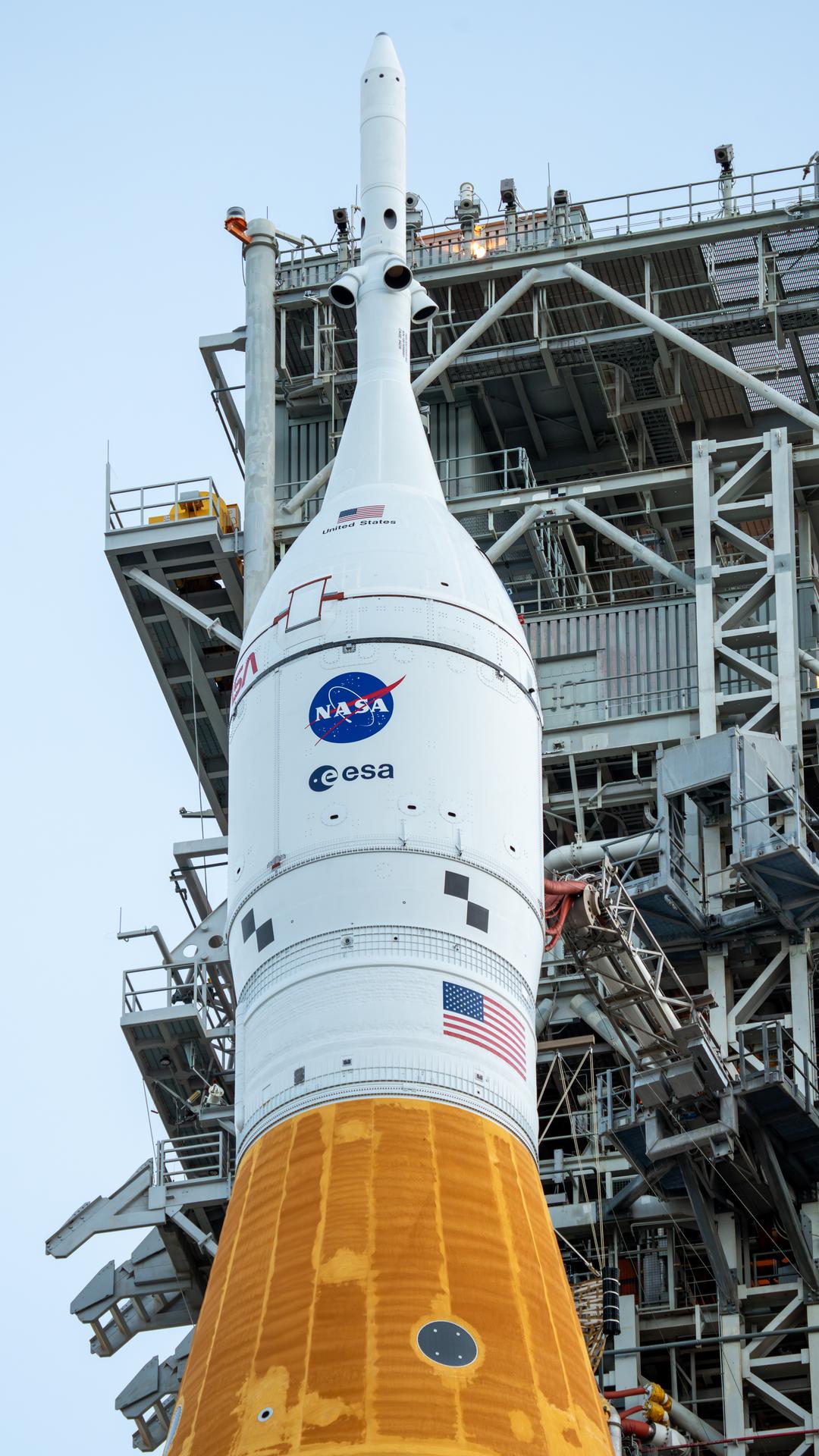
This image shows NASA’s SLS (Space Launch System) and Orion spacecraft rolling out of the Vehicle Assembly Building at NASA’s Kennedy Space Center. NASA's massive Crawler-Transporter, upgraded for the Artemis program, carries the powerful SLS rocket and Orion spacecraft on the Mobile Launcher from the Vehicle Assembly Building to Launch Pad 39B at Kennedy Space Center in preparation for the Artemis II mission.
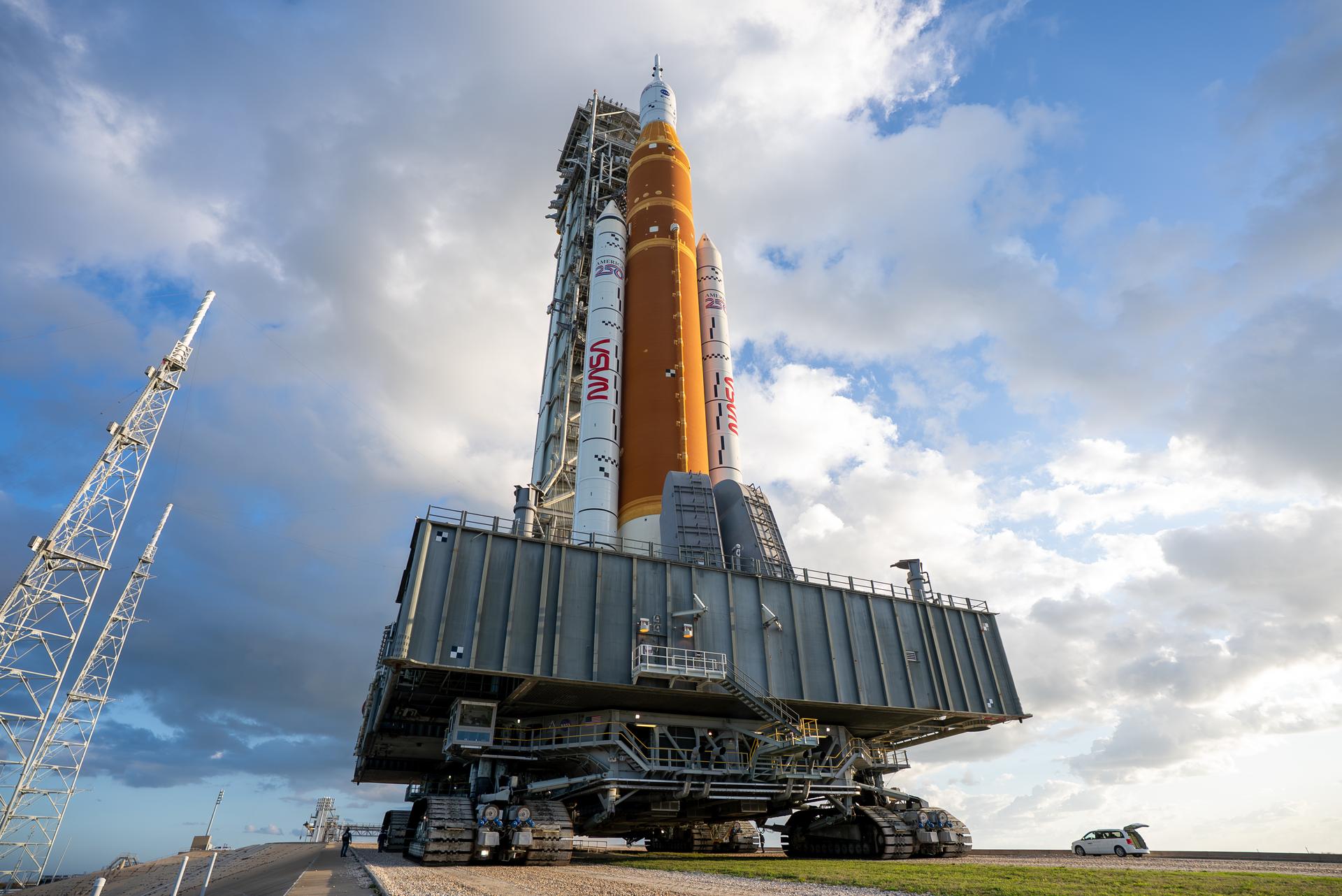
This image shows NASA’s SLS (Space Launch System) and Orion spacecraft rolling out of the Vehicle Assembly Building at NASA’s Kennedy Space Center. NASA's massive Crawler-Transporter, upgraded for the Artemis program, carries the powerful SLS rocket and Orion spacecraft on the Mobile Launcher from the Vehicle Assembly Building to Launch Pad 39B at Kennedy Space Center in preparation for the Artemis II mission.
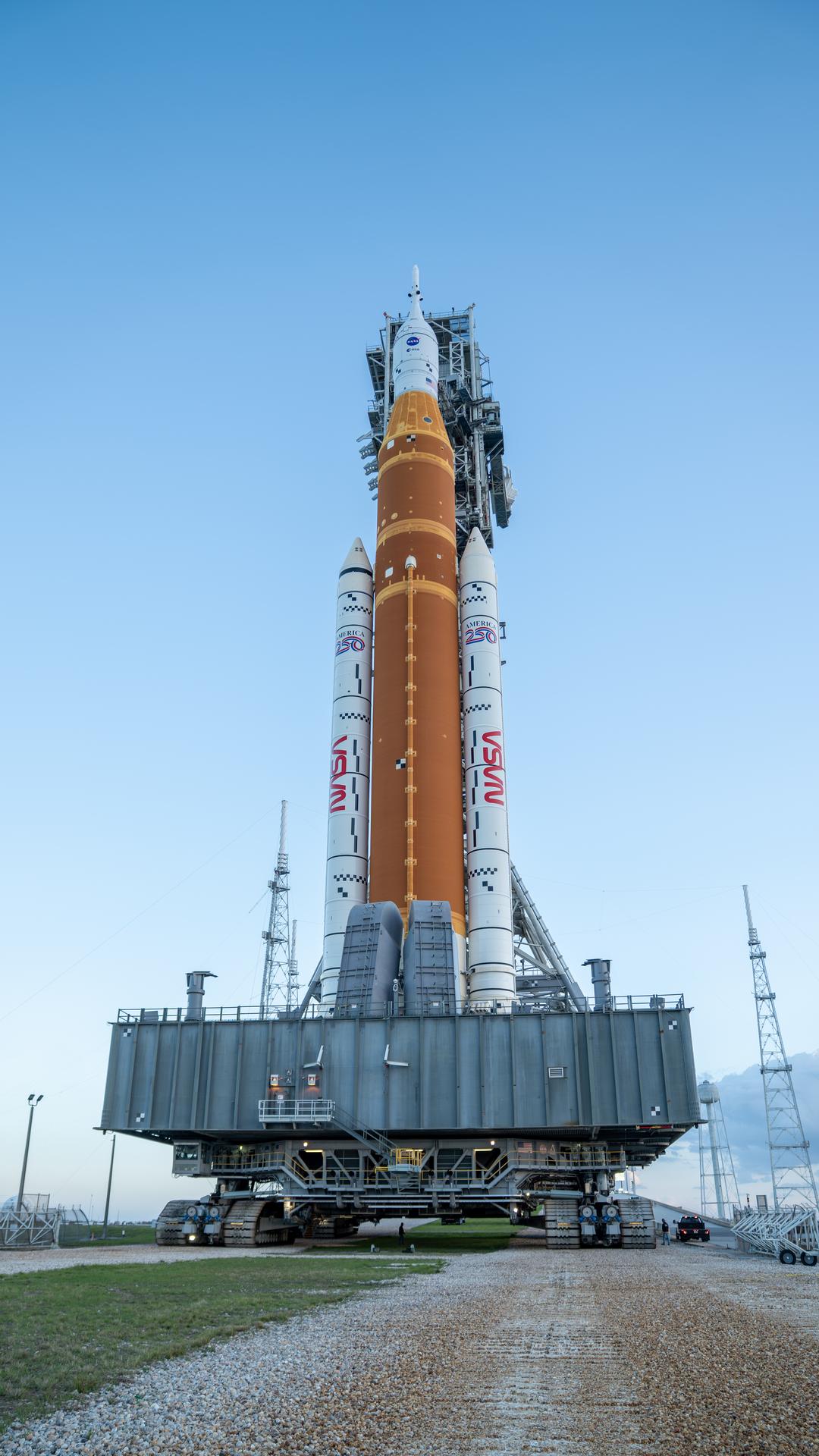
This image shows NASA’s SLS (Space Launch System) and Orion spacecraft rolling out of the Vehicle Assembly Building at NASA’s Kennedy Space Center. NASA's massive Crawler-Transporter, upgraded for the Artemis program, carries the powerful SLS rocket and Orion spacecraft on the Mobile Launcher from the Vehicle Assembly Building to Launch Pad 39B at Kennedy Space Center in preparation for the Artemis II mission.
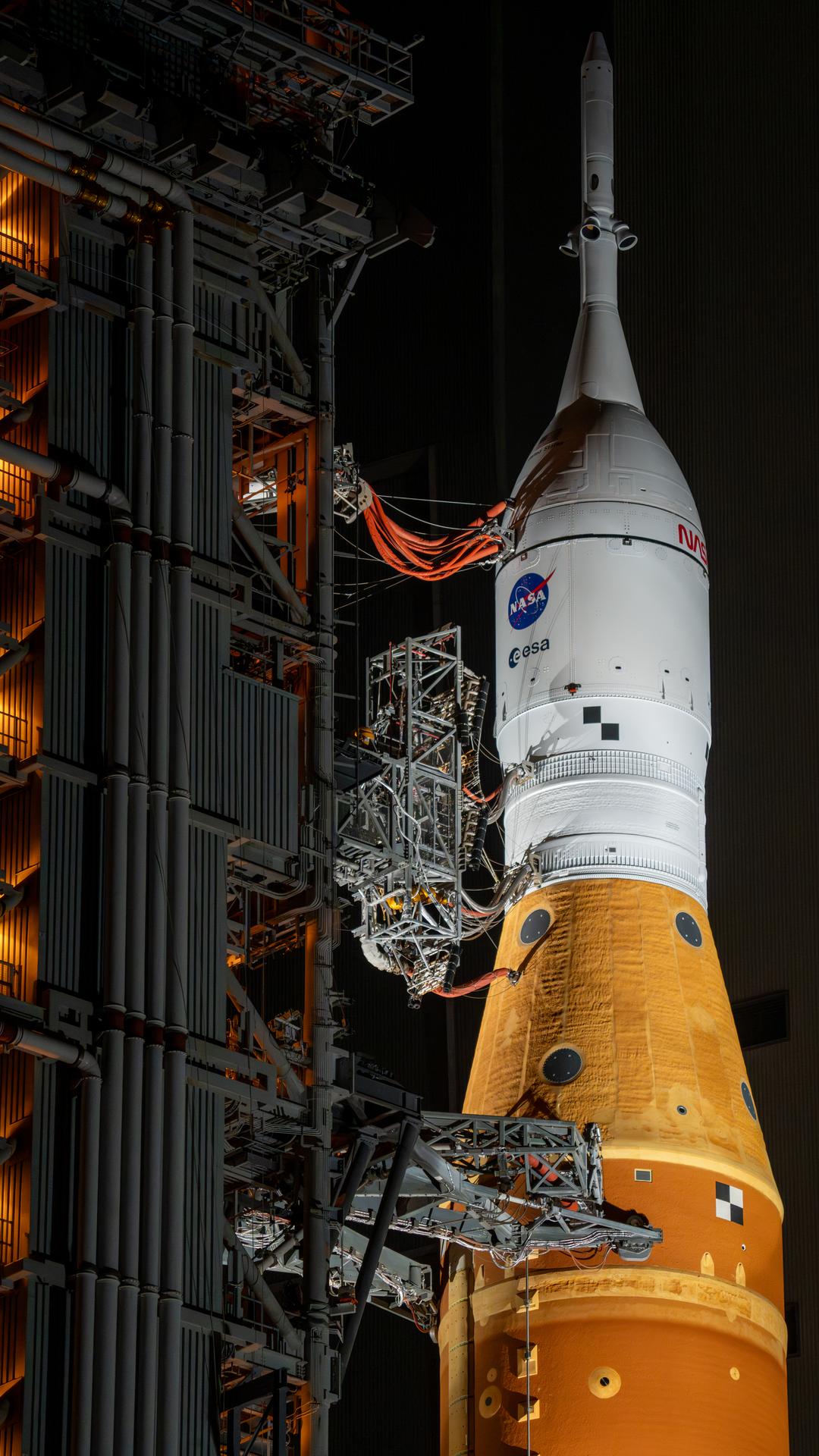
This image shows NASA’s SLS (Space Launch System) and Orion spacecraft rolling out of the Vehicle Assembly Building at NASA’s Kennedy Space Center. NASA's massive Crawler-Transporter, upgraded for the Artemis program, carries the powerful SLS rocket and Orion spacecraft on the Mobile Launcher from the Vehicle Assembly Building to Launch Pad 39B at Kennedy Space Center in preparation for the Artemis II mission.
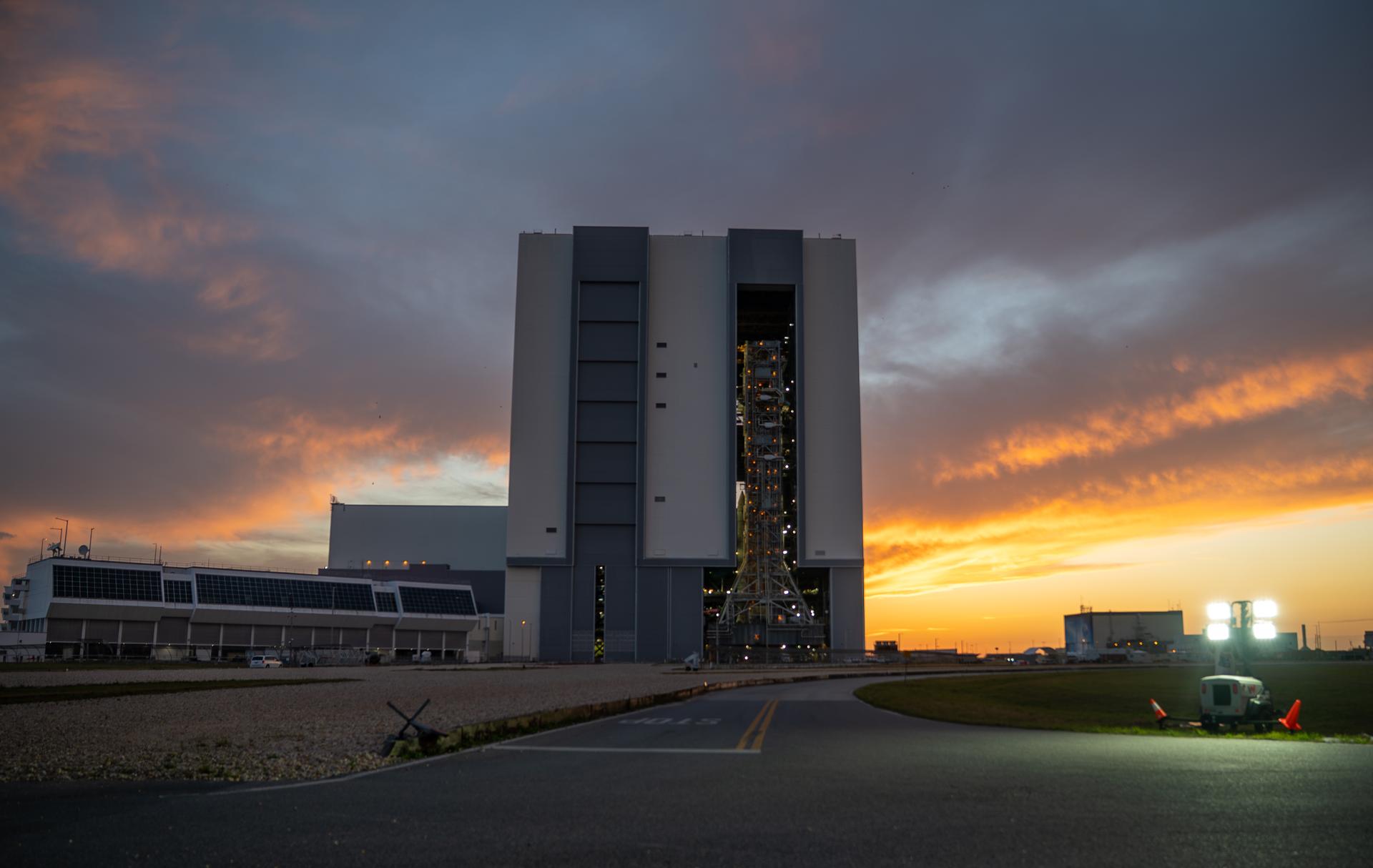
This image shows NASA’s SLS (Space Launch System) and Orion spacecraft rolling out of the Vehicle Assembly Building at NASA’s Kennedy Space Center. NASA's massive Crawler-Transporter, upgraded for the Artemis program, carries the powerful SLS rocket and Orion spacecraft on the Mobile Launcher from the Vehicle Assembly Building to Launch Pad 39B at Kennedy Space Center in preparation for the Artemis II mission.
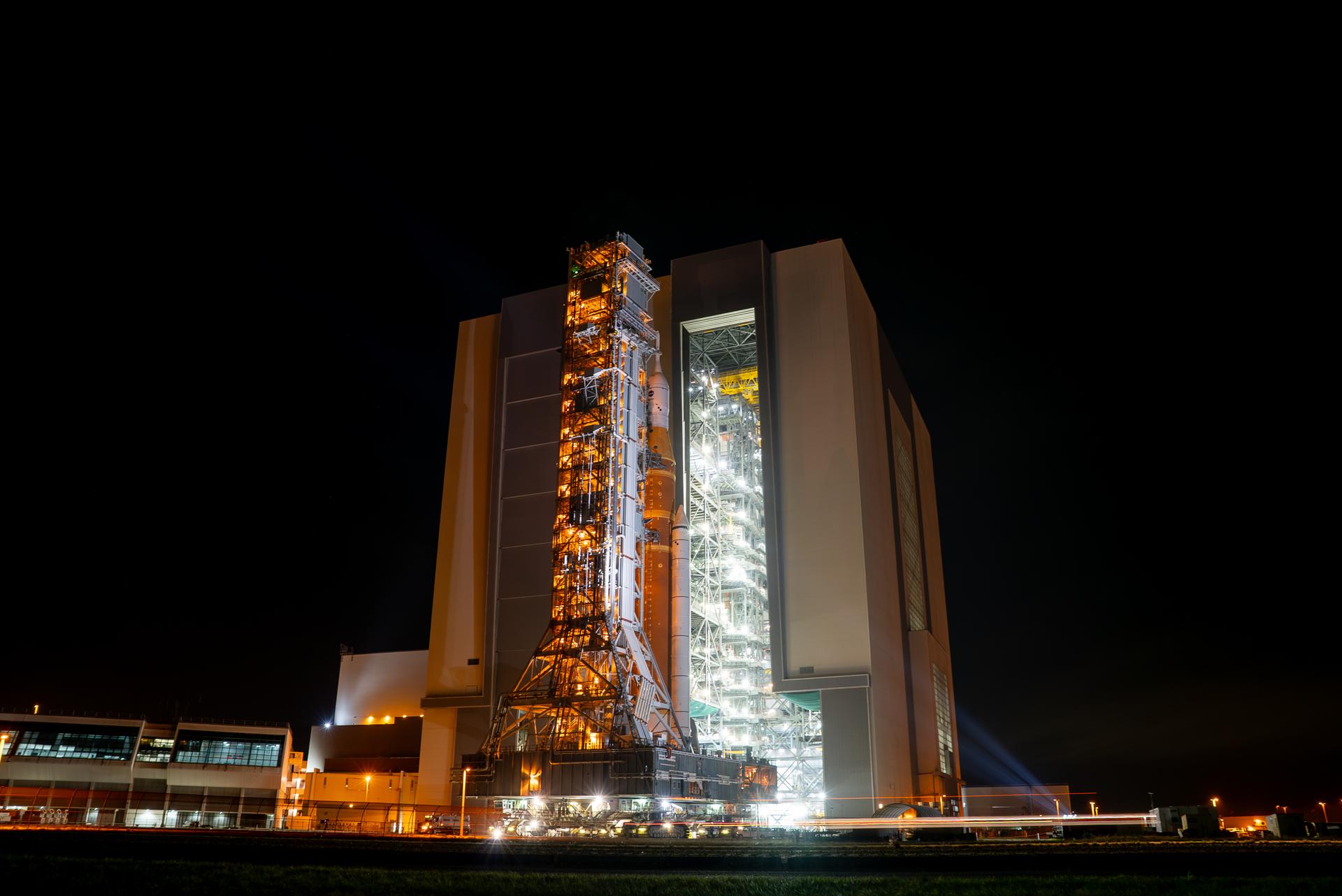
This image shows NASA’s SLS (Space Launch System) and Orion spacecraft rolling out of the Vehicle Assembly Building at NASA’s Kennedy Space Center. NASA's massive Crawler-Transporter, upgraded for the Artemis program, carries the powerful SLS rocket and Orion spacecraft on the Mobile Launcher from the Vehicle Assembly Building to Launch Pad 39B at Kennedy Space Center in preparation for the Artemis II mission.
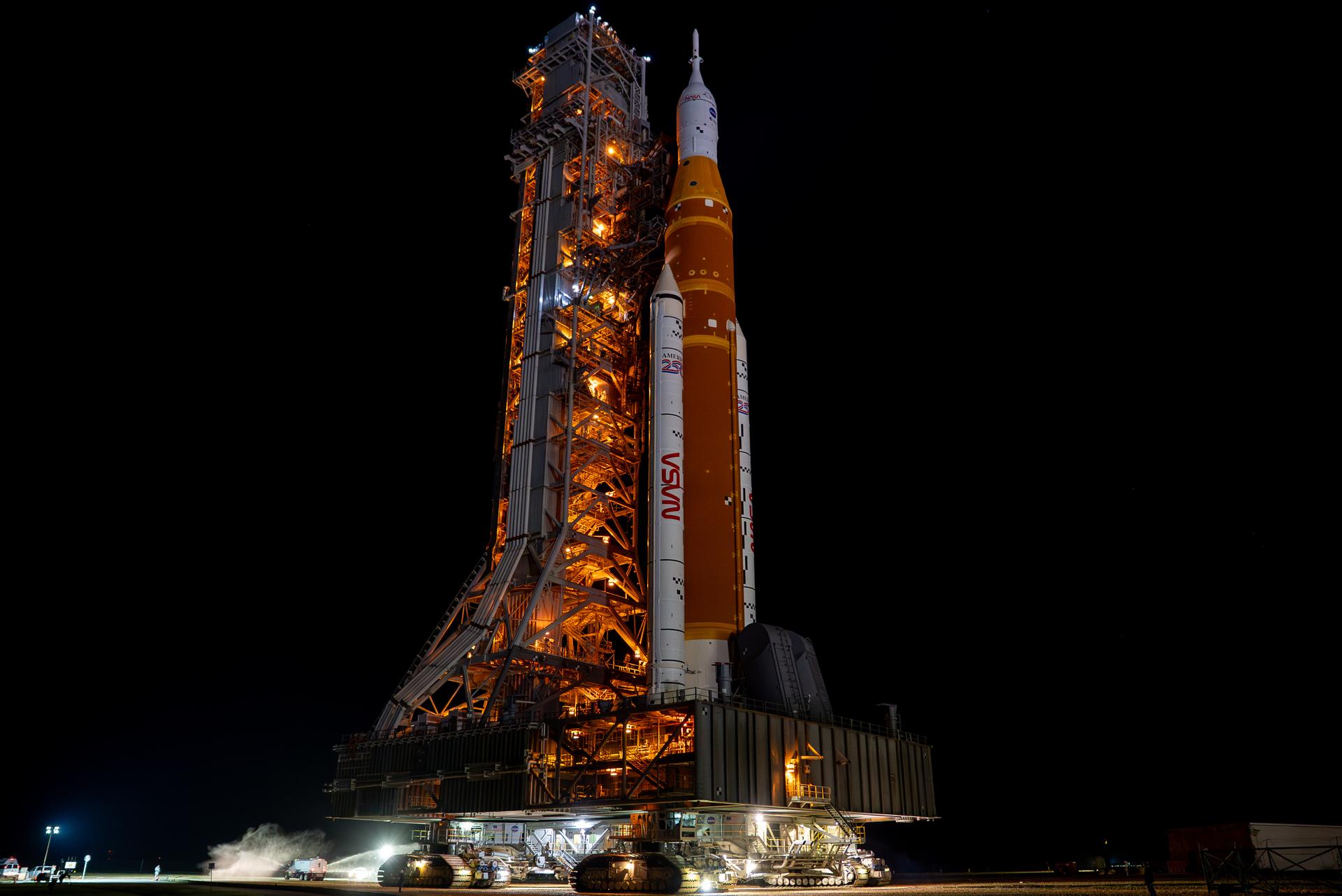
This image shows NASA’s SLS (Space Launch System) and Orion spacecraft rolling out of the Vehicle Assembly Building at NASA’s Kennedy Space Center. NASA's massive Crawler-Transporter, upgraded for the Artemis program, carries the powerful SLS rocket and Orion spacecraft on the Mobile Launcher from the Vehicle Assembly Building to Launch Pad 39B at Kennedy Space Center in preparation for the Artemis II mission.
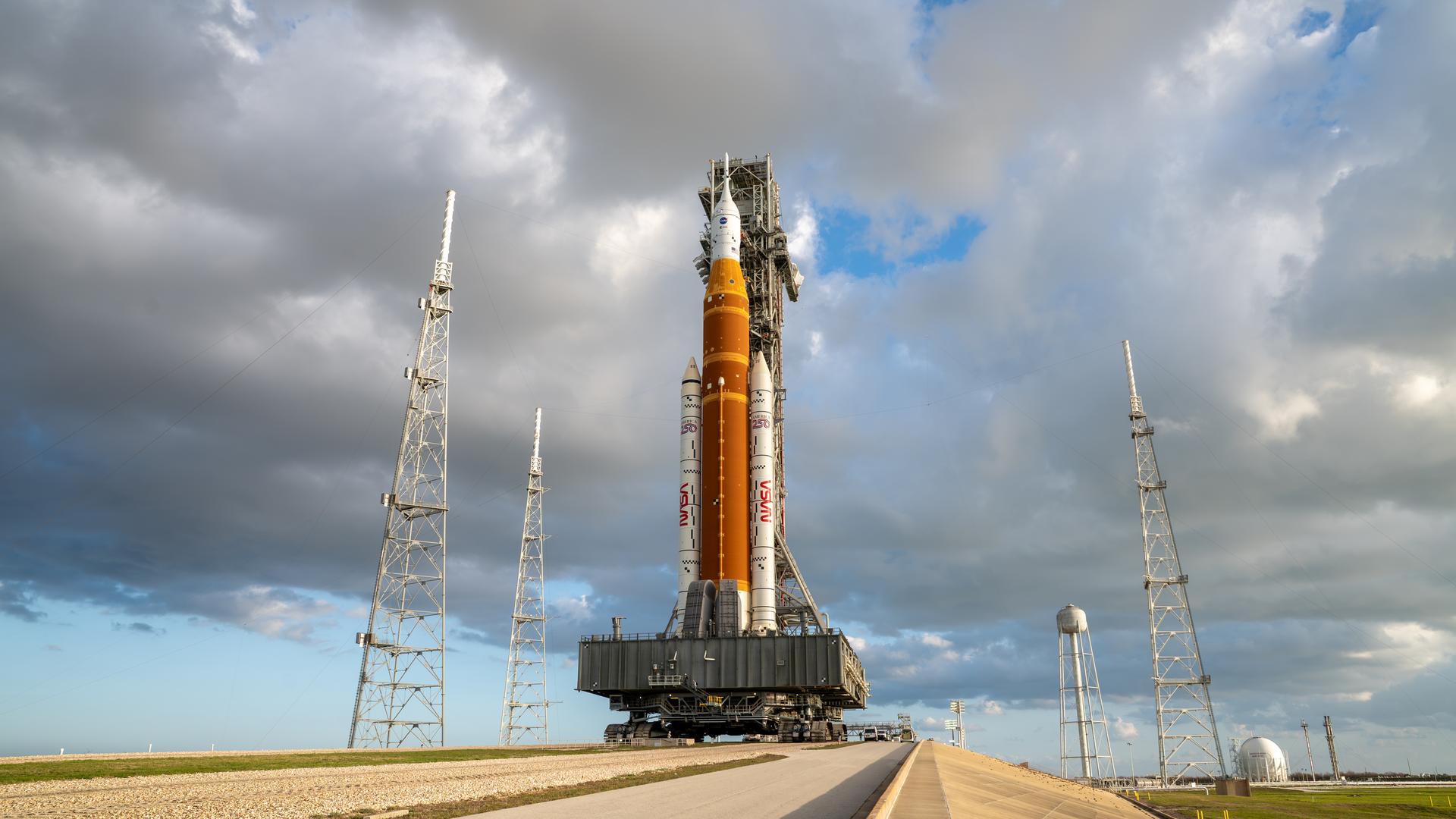
This image shows NASA’s SLS (Space Launch System) and Orion spacecraft rolling out of the Vehicle Assembly Building at NASA’s Kennedy Space Center. NASA's massive Crawler-Transporter, upgraded for the Artemis program, carries the powerful SLS rocket and Orion spacecraft on the Mobile Launcher from the Vehicle Assembly Building to Launch Pad 39B at Kennedy Space Center in preparation for the Artemis II mission.
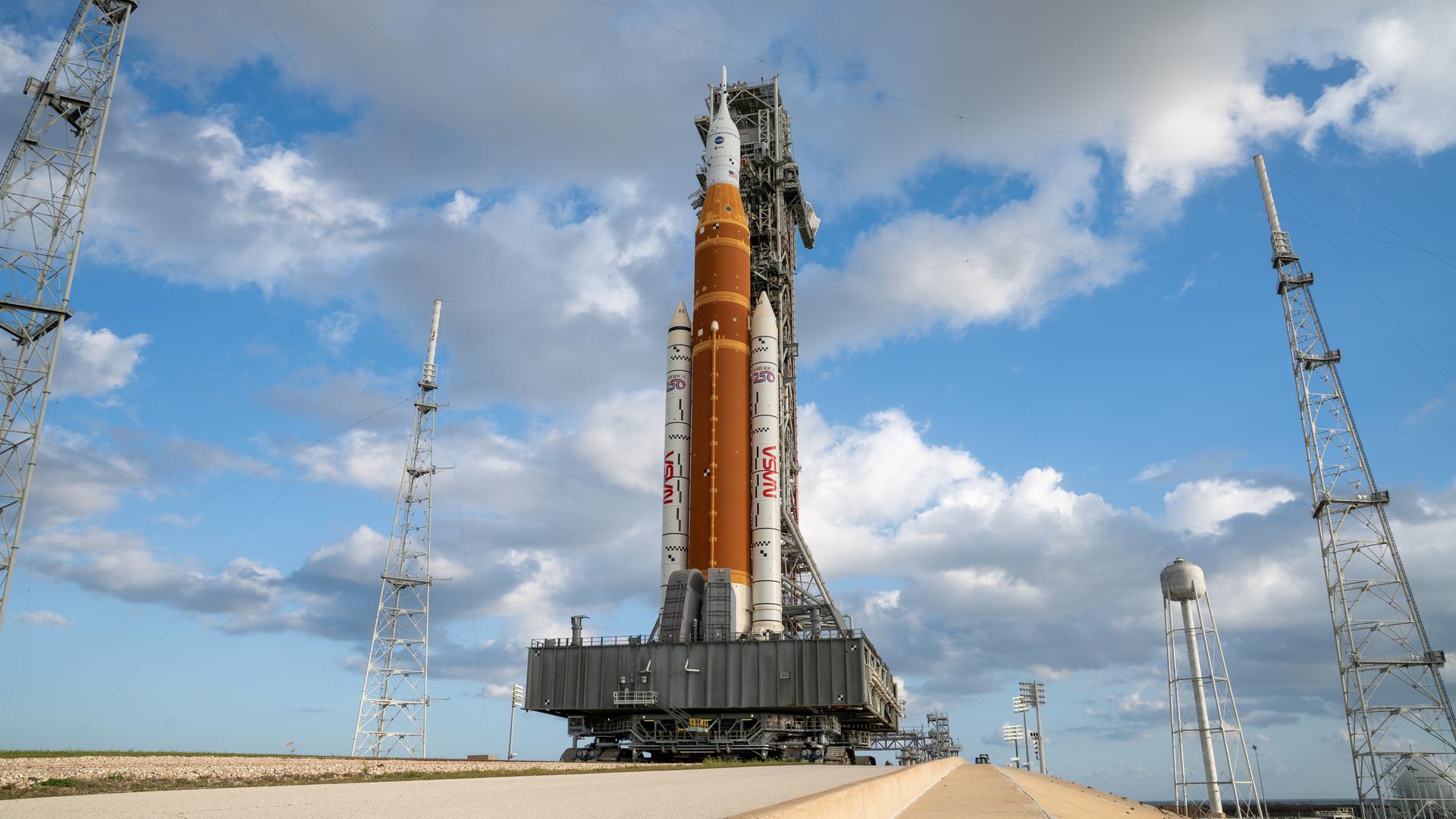
This image shows NASA’s SLS (Space Launch System) and Orion spacecraft rolling out of the Vehicle Assembly Building at NASA’s Kennedy Space Center. NASA's massive Crawler-Transporter, upgraded for the Artemis program, carries the powerful SLS rocket and Orion spacecraft on the Mobile Launcher from the Vehicle Assembly Building to Launch Pad 39B at Kennedy Space Center in preparation for the Artemis II mission.
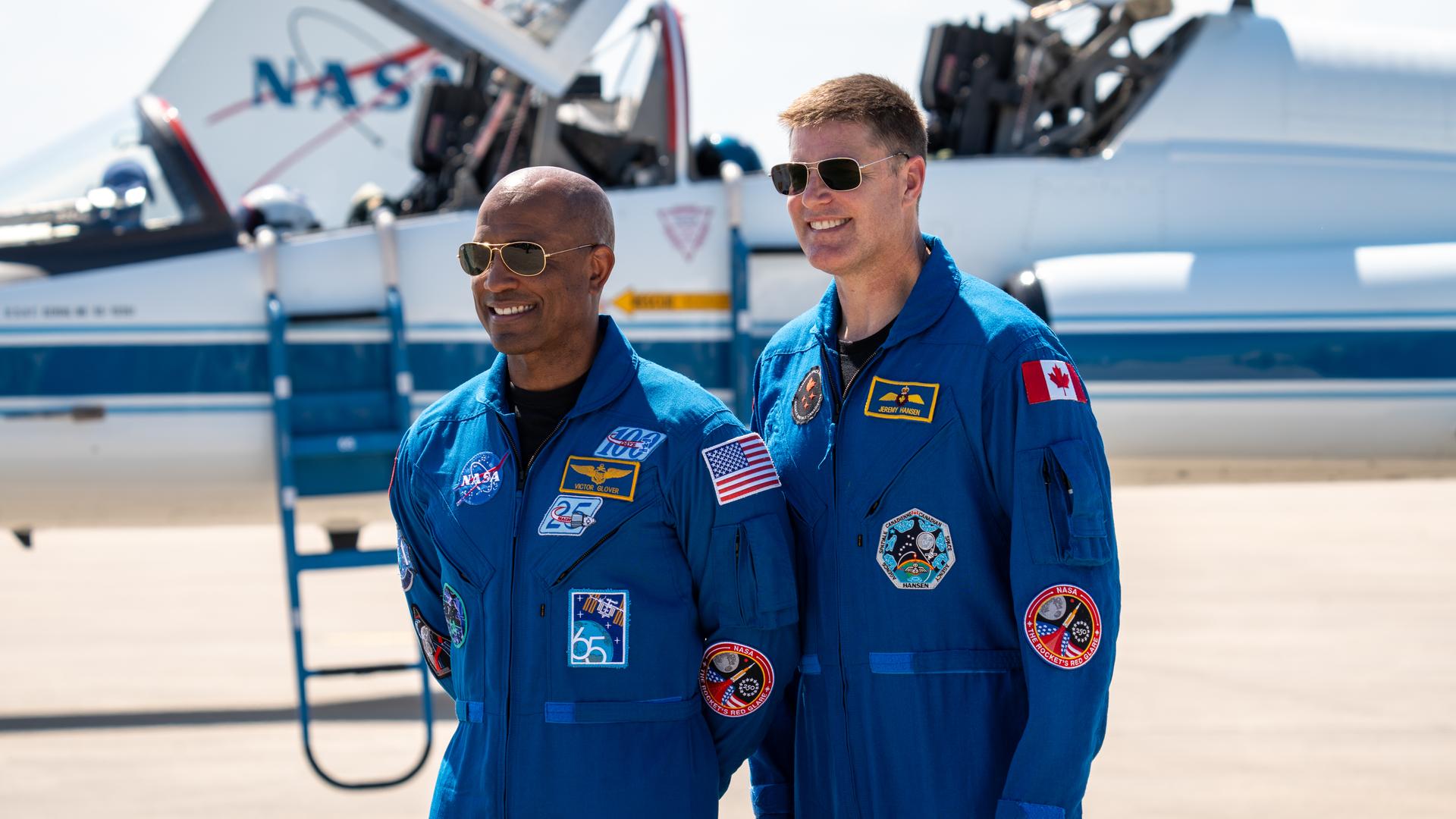
DESCRIPTION: These images show the moments shortly after the arrival of the Artemis II crew to NASA’s Kennedy Space Center on March 27, 2026 ahead of the launch. The four astronauts, Victor Glover, Reid Wiseman, Christina Koch, and Jeremy Hansen, arrived on a T38, which can be seen behind them. They took turns speaking to the crowd as they also announced the zero-gravity indicator they would be taking with them on their journey.
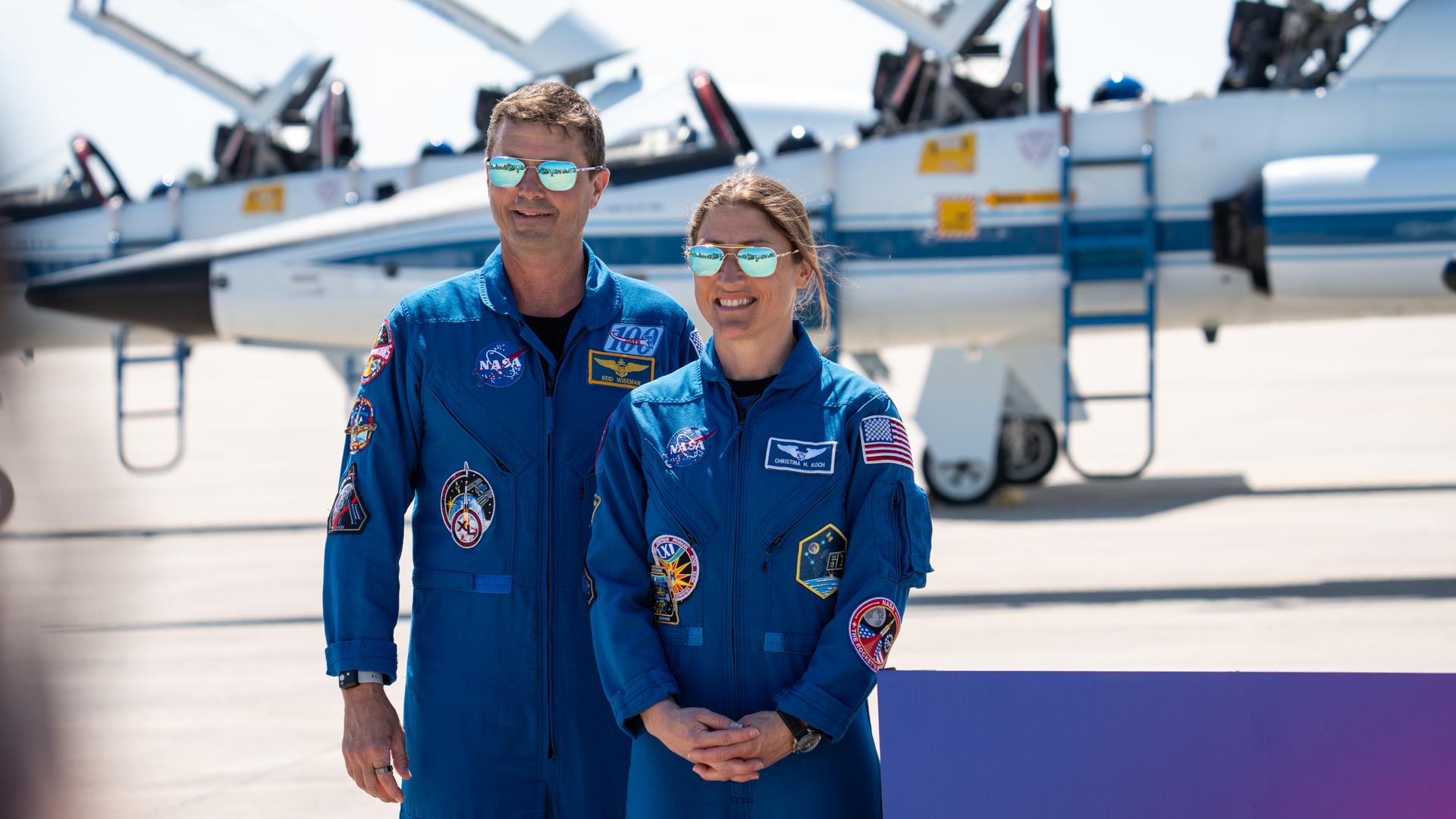
These images show the moments shortly after the arrival of the Artemis II crew to NASA’s Kennedy Space Center on March 27, 2026 ahead of the launch. The four astronauts, Victor Glover, Reid Wiseman, Christina Koch, and Jeremy Hansen, arrived on a T38, which can be seen behind them. They took turns speaking to the crowd as they also announced the zero-gravity indicator they would be taking with them on their journey.
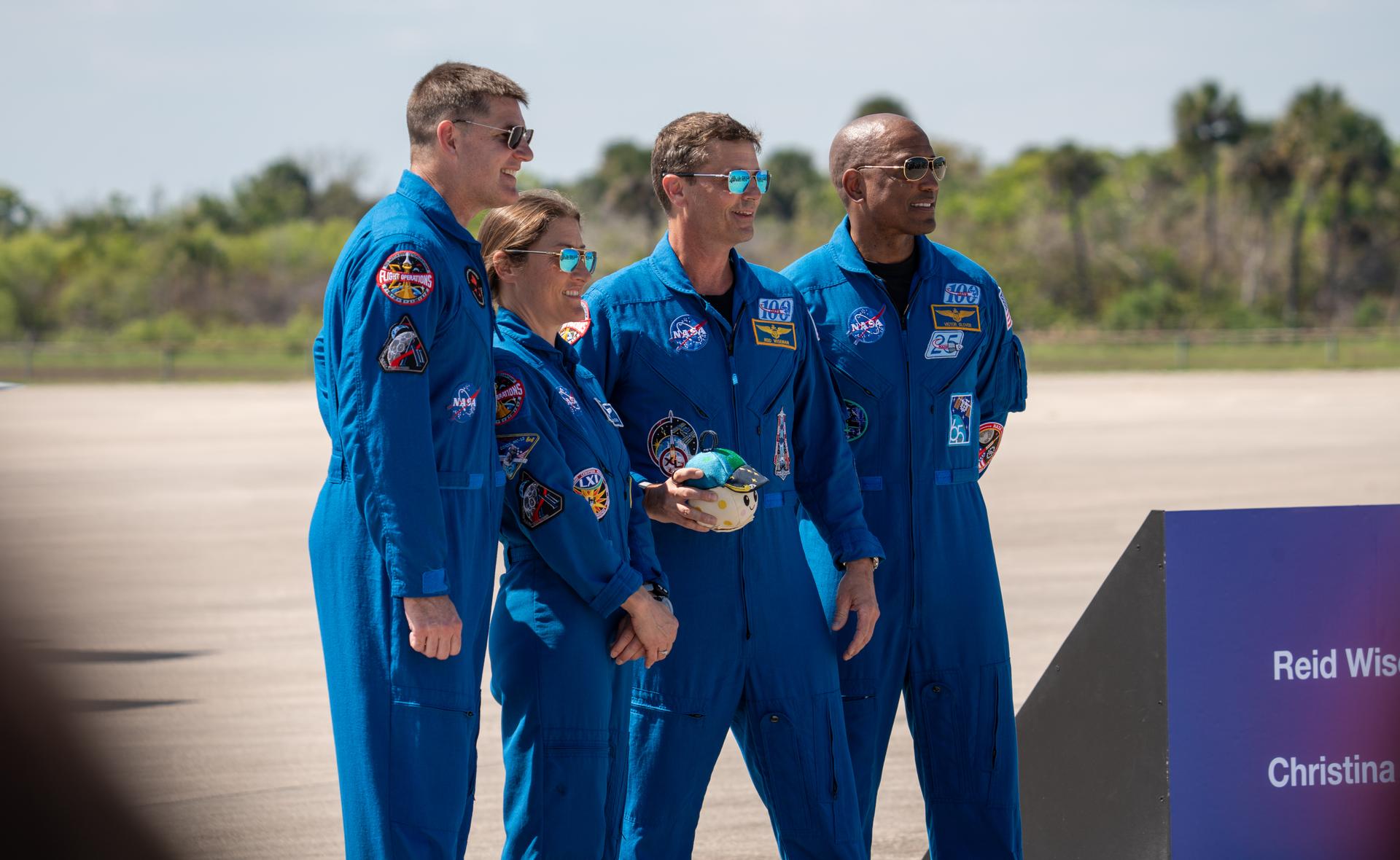
These images show the moments shortly after the arrival of the Artemis II crew to NASA’s Kennedy Space Center on March 27, 2026 ahead of the launch. The four astronauts, Victor Glover, Reid Wiseman, Christina Koch, and Jeremy Hansen, arrived on a T38, which can be seen behind them. They took turns speaking to the crowd as they also announced the zero-gravity indicator they would be taking with them on their journey.
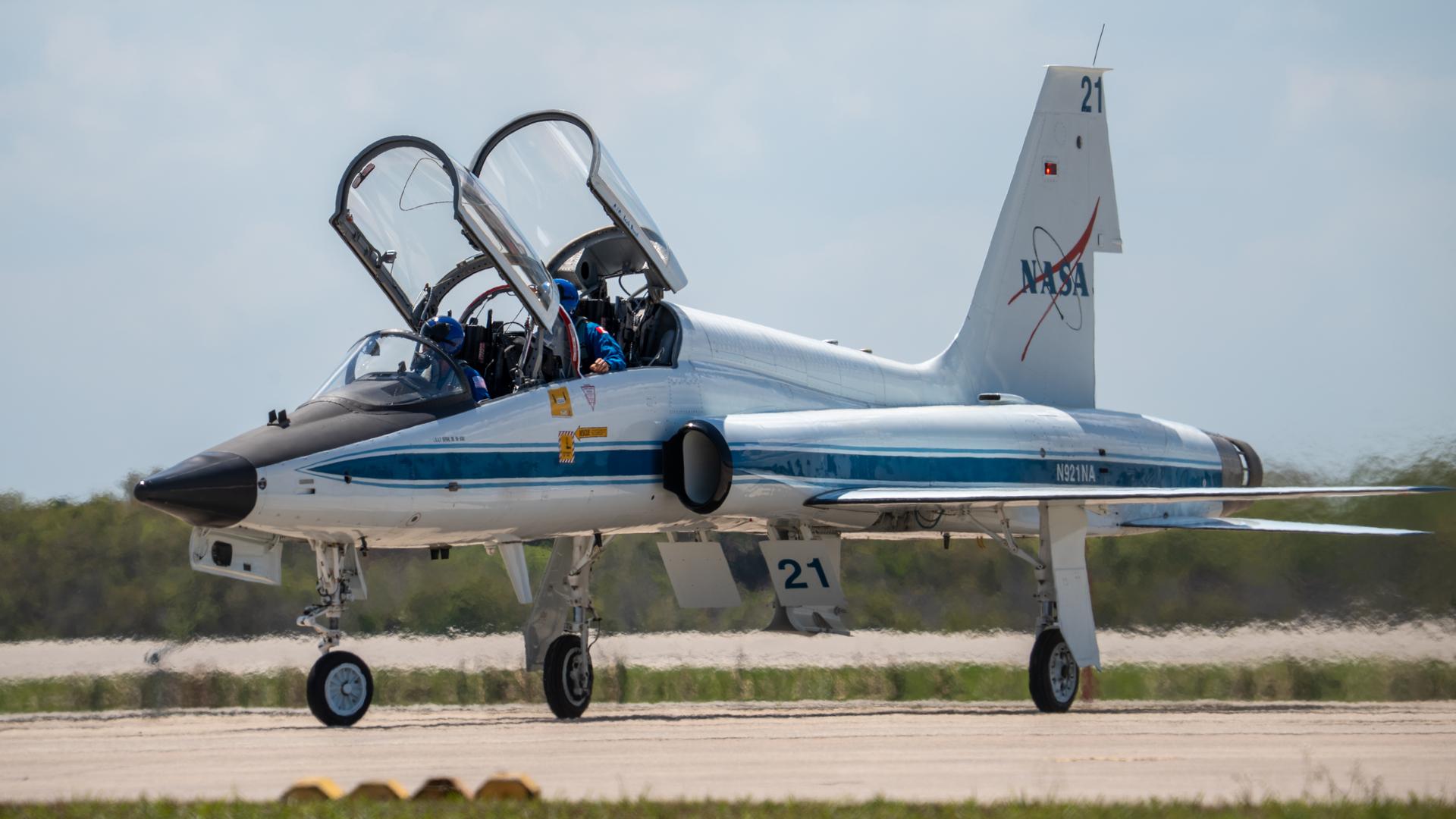
These images show the moments shortly after the arrival of the Artemis II crew to NASA’s Kennedy Space Center on March 27, 2026 ahead of the launch. The four astronauts, Victor Glover, Reid Wiseman, Christina Koch, and Jeremy Hansen, arrived on a T38, which can be seen behind them. They took turns speaking to the crowd as they also announced the zero-gravity indicator they would be taking with them on their journey.
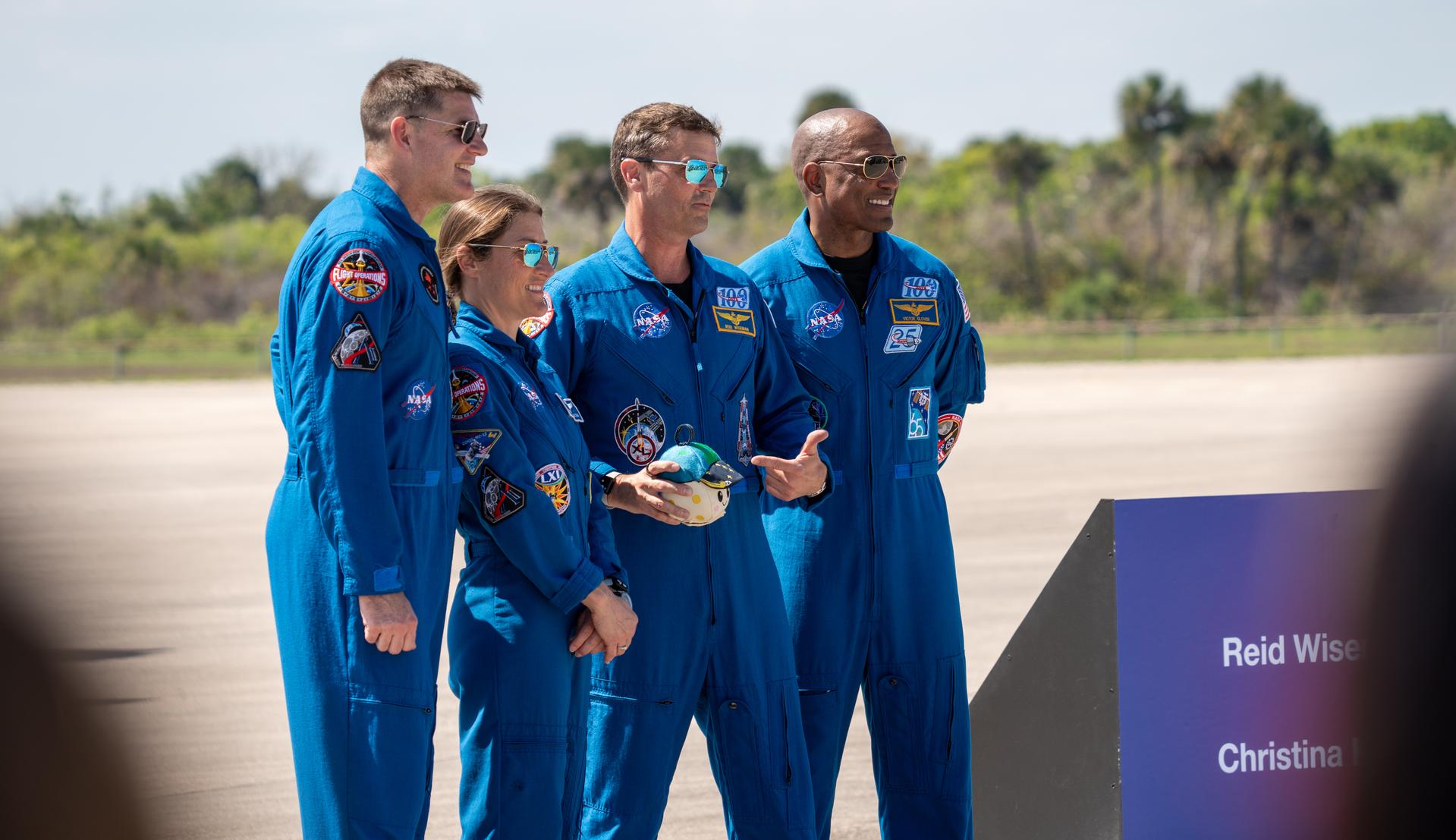
These images show the moments shortly after the arrival of the Artemis II crew to NASA’s Kennedy Space Center on March 27, 2026 ahead of the launch. The four astronauts, Victor Glover, Reid Wiseman, Christina Koch, and Jeremy Hansen, arrived on a T38, which can be seen behind them. They took turns speaking to the crowd as they also announced the zero-gravity indicator they would be taking with them on their journey.
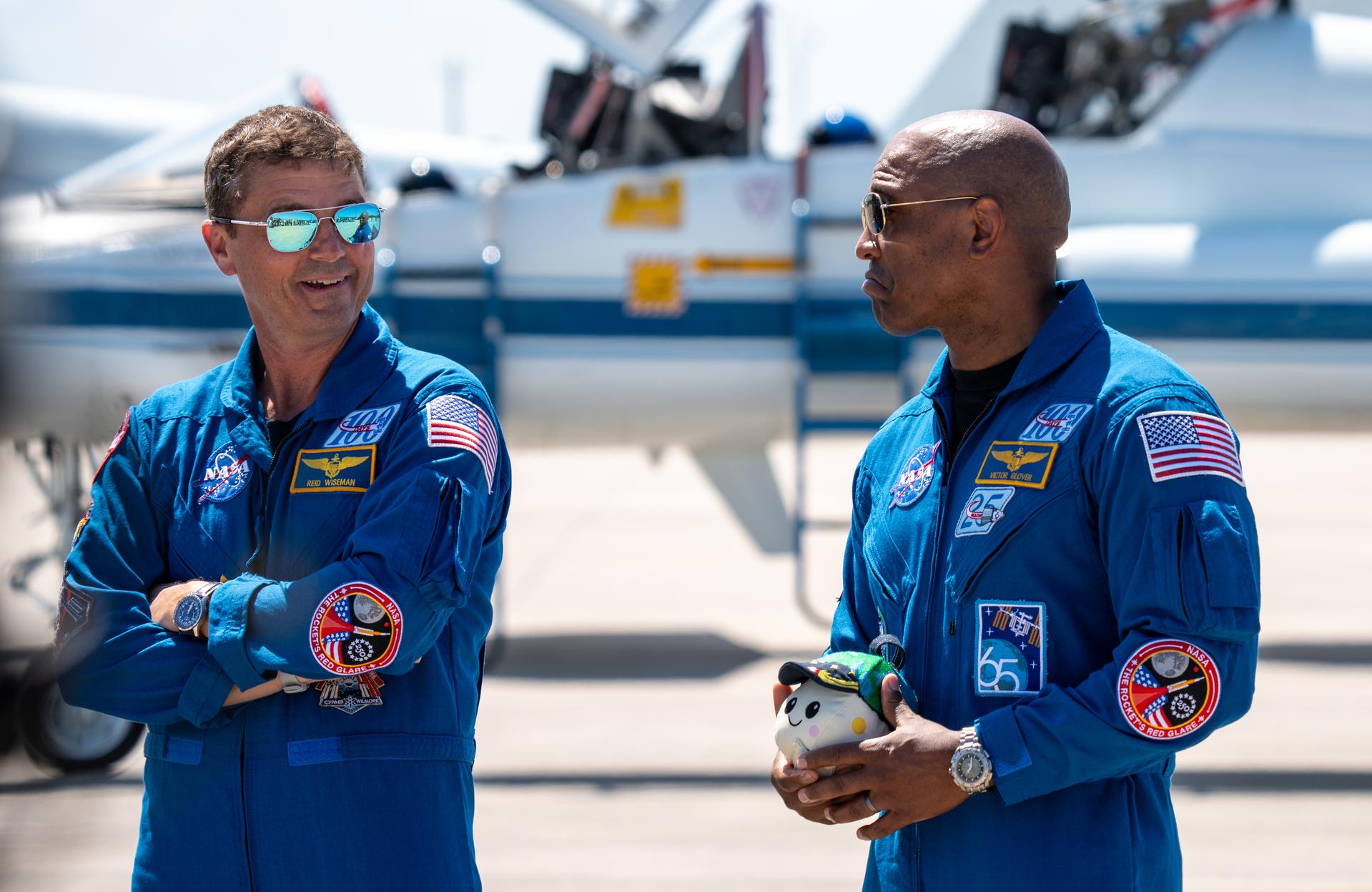
These images show the moments shortly after the arrival of the Artemis II crew to NASA’s Kennedy Space Center on March 27, 2026 ahead of the launch. The four astronauts, Victor Glover, Reid Wiseman, Christina Koch, and Jeremy Hansen, arrived on a T38, which can be seen behind them. They took turns speaking to the crowd as they also announced the zero-gravity indicator they would be taking with them on their journey.
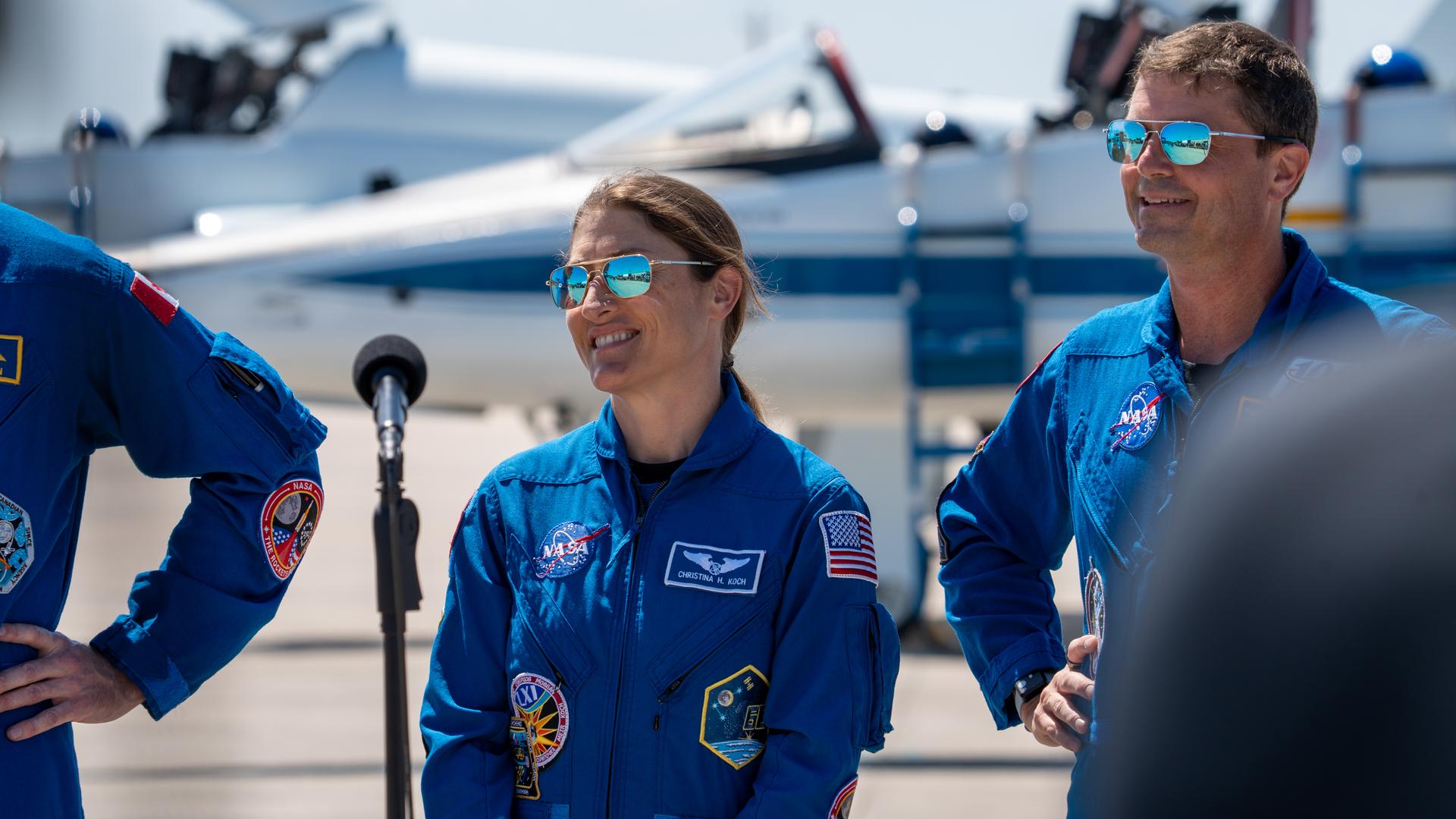
These images show the moments shortly after the arrival of the Artemis II crew to NASA’s Kennedy Space Center on March 27, 2026 ahead of the launch. The four astronauts, Victor Glover, Reid Wiseman, Christina Koch, and Jeremy Hansen, arrived on a T38, which can be seen behind them. They took turns speaking to the crowd as they also announced the zero-gravity indicator they would be taking with them on their journey.
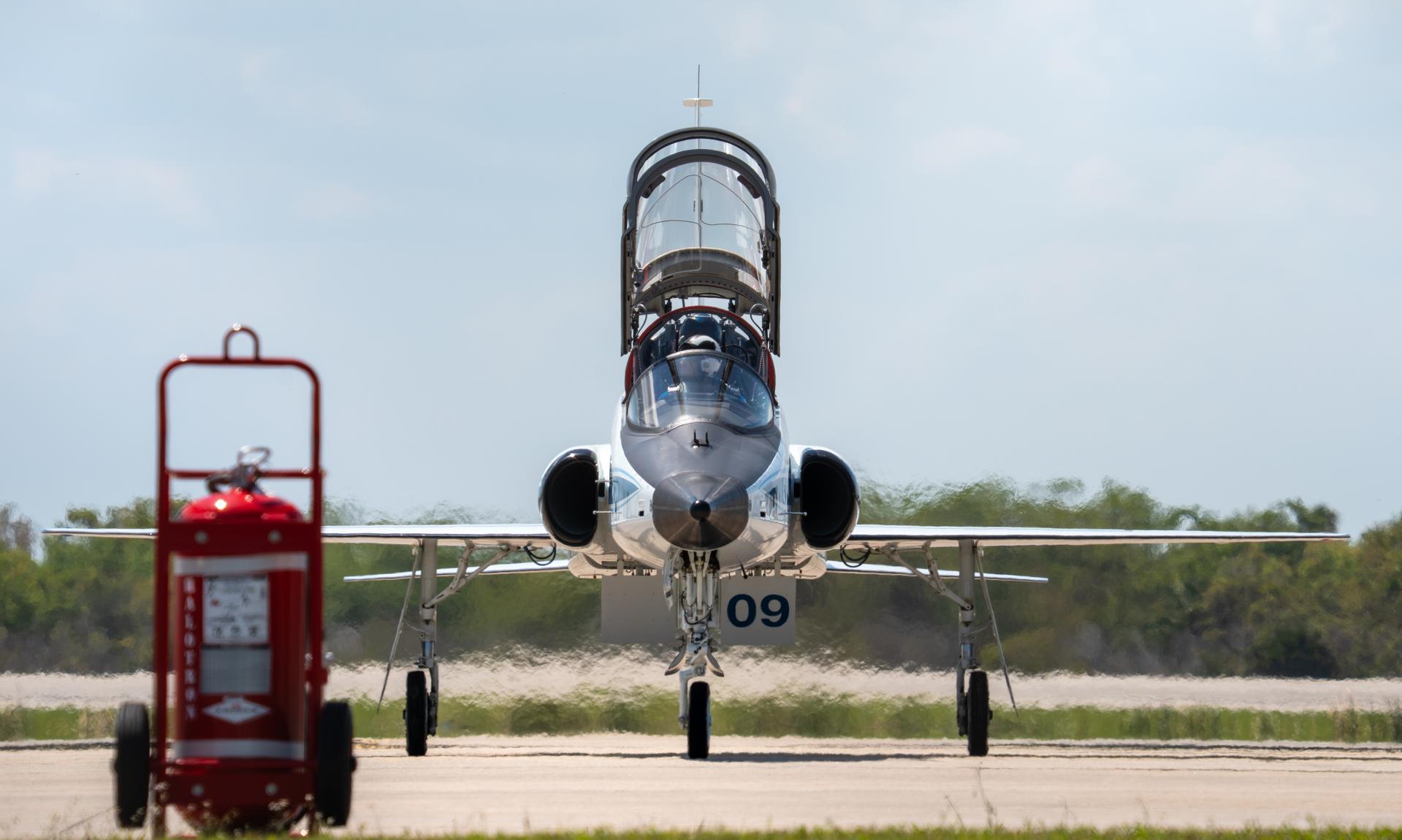
These images show the moments shortly after the arrival of the Artemis II crew to NASA’s Kennedy Space Center on March 27, 2026 ahead of the launch. The four astronauts, Victor Glover, Reid Wiseman, Christina Koch, and Jeremy Hansen, arrived on a T38, which can be seen behind them. They took turns speaking to the crowd as they also announced the zero-gravity indicator they would be taking with them on their journey.
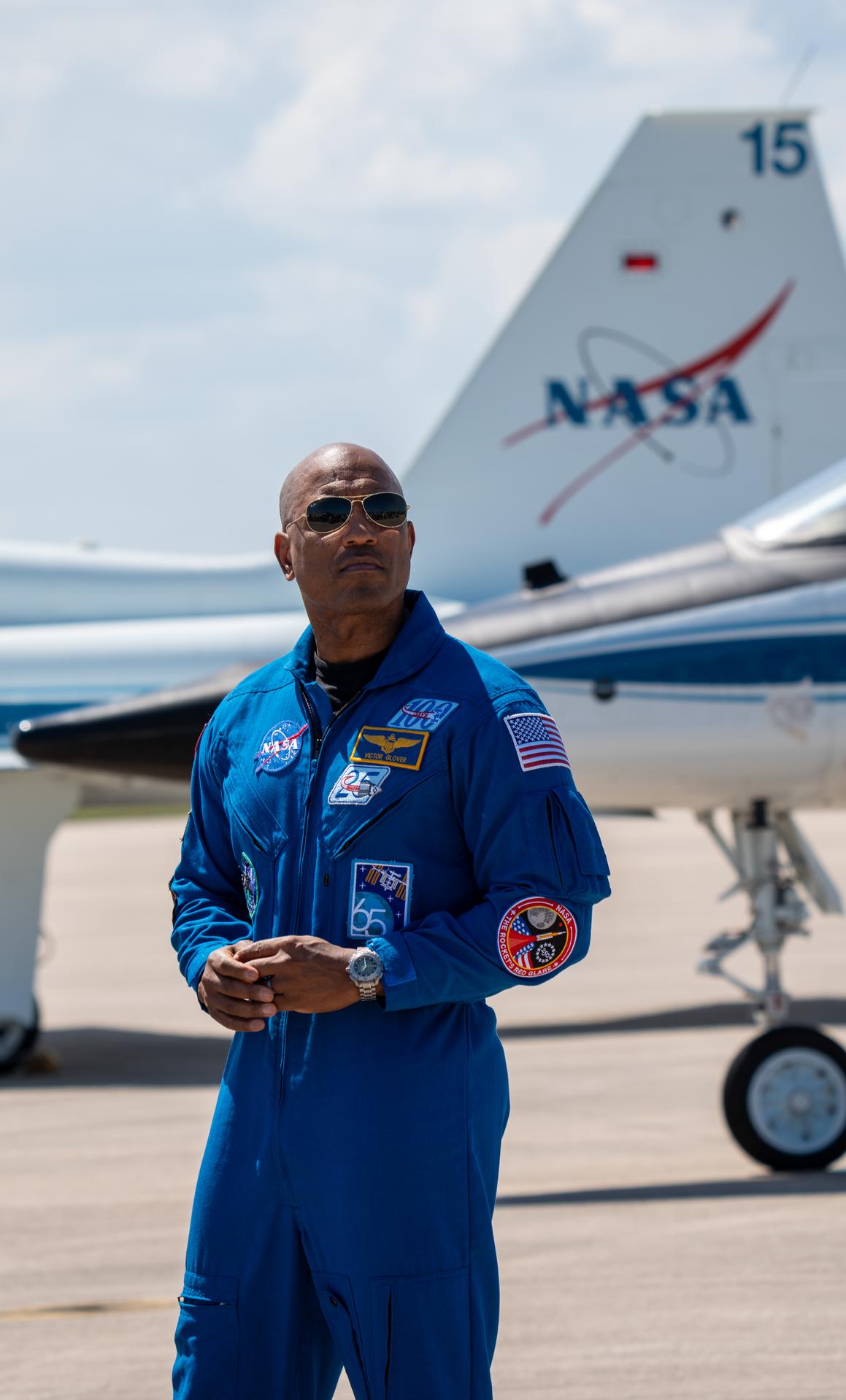
These images show the moments shortly after the arrival of the Artemis II crew to NASA’s Kennedy Space Center on March 27, 2026 ahead of the launch. The four astronauts, Victor Glover, Reid Wiseman, Christina Koch, and Jeremy Hansen, arrived on a T38, which can be seen behind them. They took turns speaking to the crowd as they also announced the zero-gravity indicator they would be taking with them on their journey.
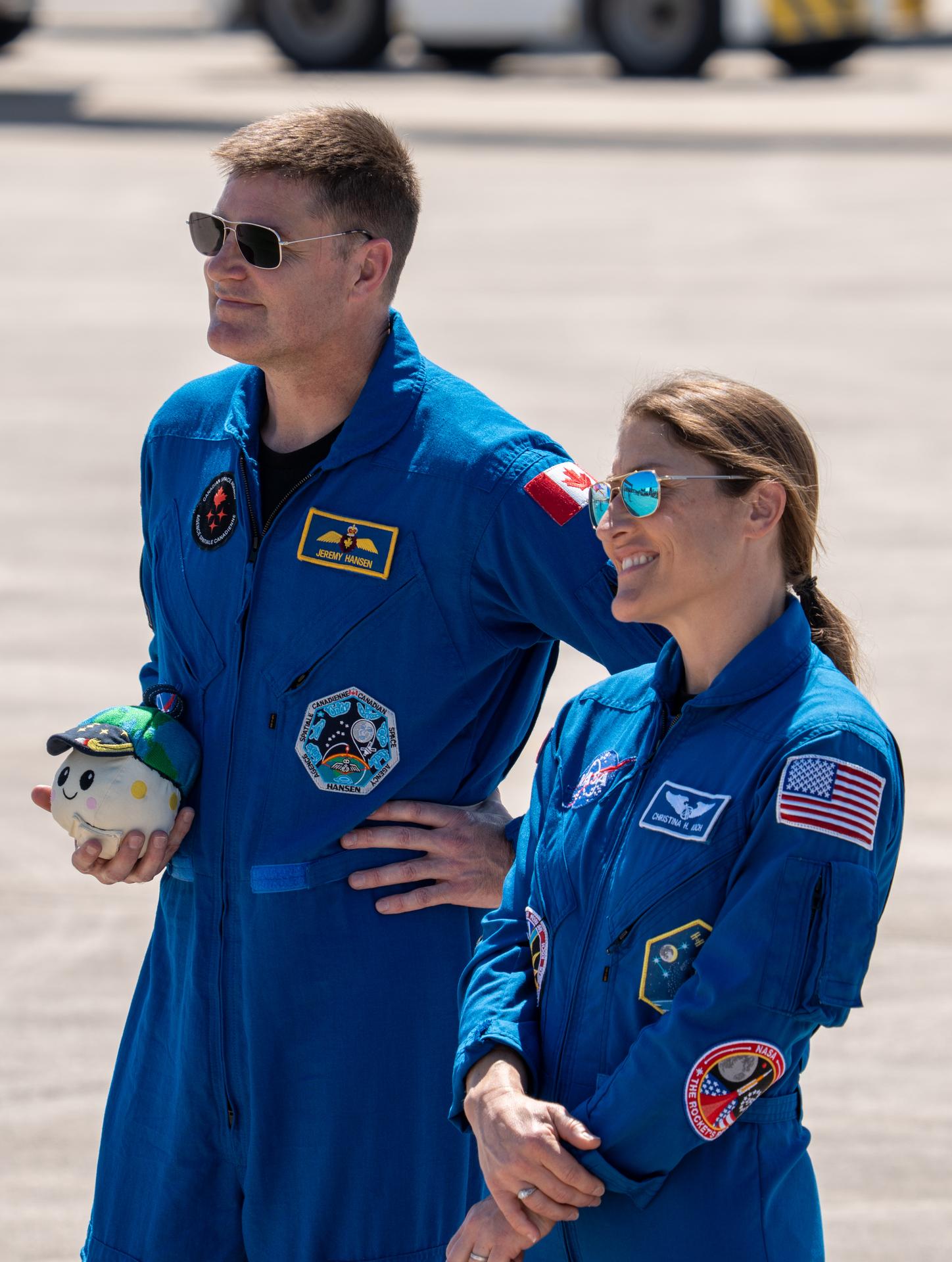
These images show the moments shortly after the arrival of the Artemis II crew to NASA’s Kennedy Space Center on March 27, 2026 ahead of the launch. The four astronauts, Victor Glover, Reid Wiseman, Christina Koch, and Jeremy Hansen, arrived on a T38, which can be seen behind them. They took turns speaking to the crowd as they also announced the zero-gravity indicator they would be taking with them on their journey.
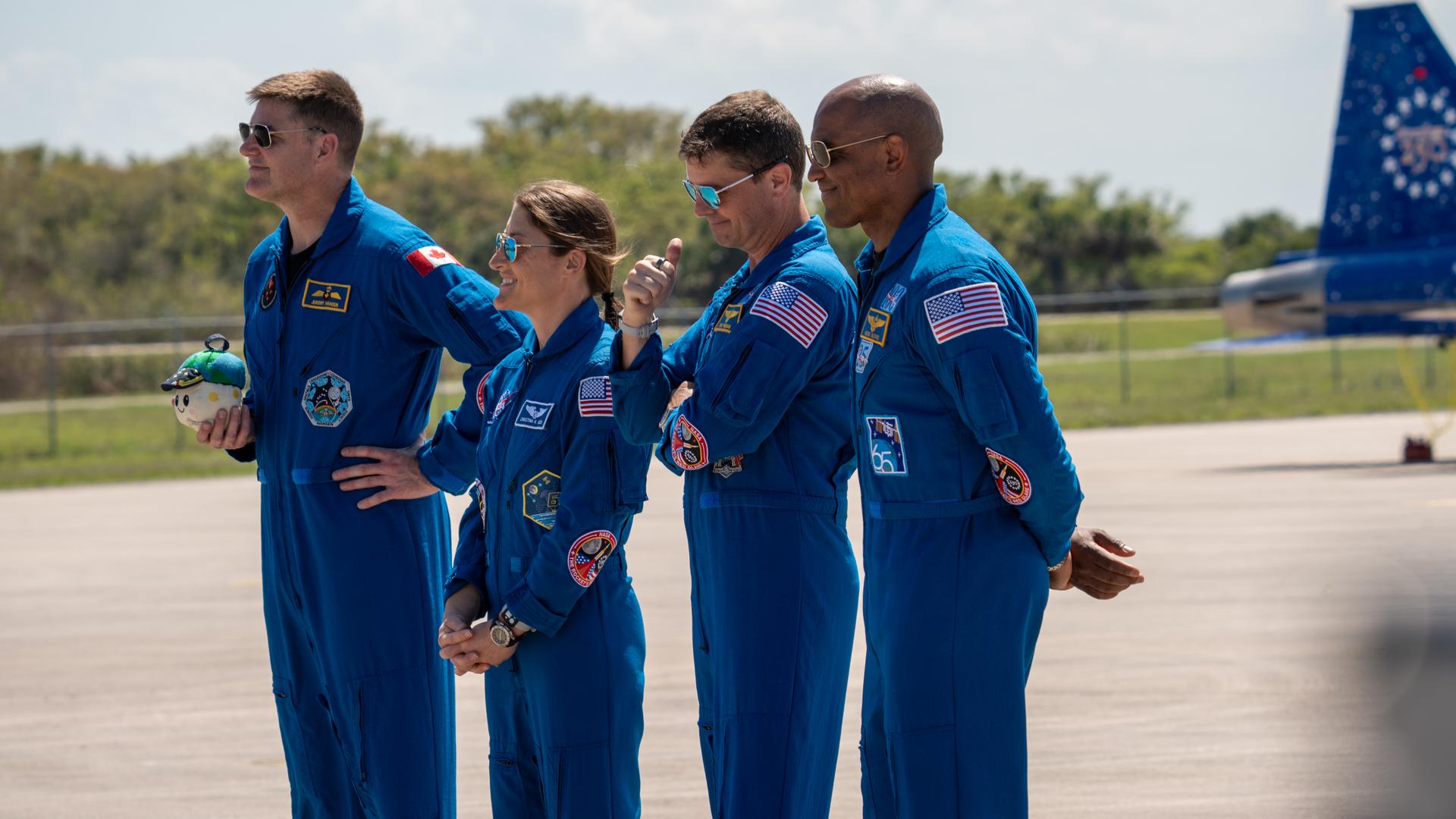
These images show the moments shortly after the arrival of the Artemis II crew to NASA’s Kennedy Space Center on March 27, 2026 ahead of the launch. The four astronauts, Victor Glover, Reid Wiseman, Christina Koch, and Jeremy Hansen, arrived on a T38, which can be seen behind them. They took turns speaking to the crowd as they also announced the zero-gravity indicator they would be taking with them on their journey.
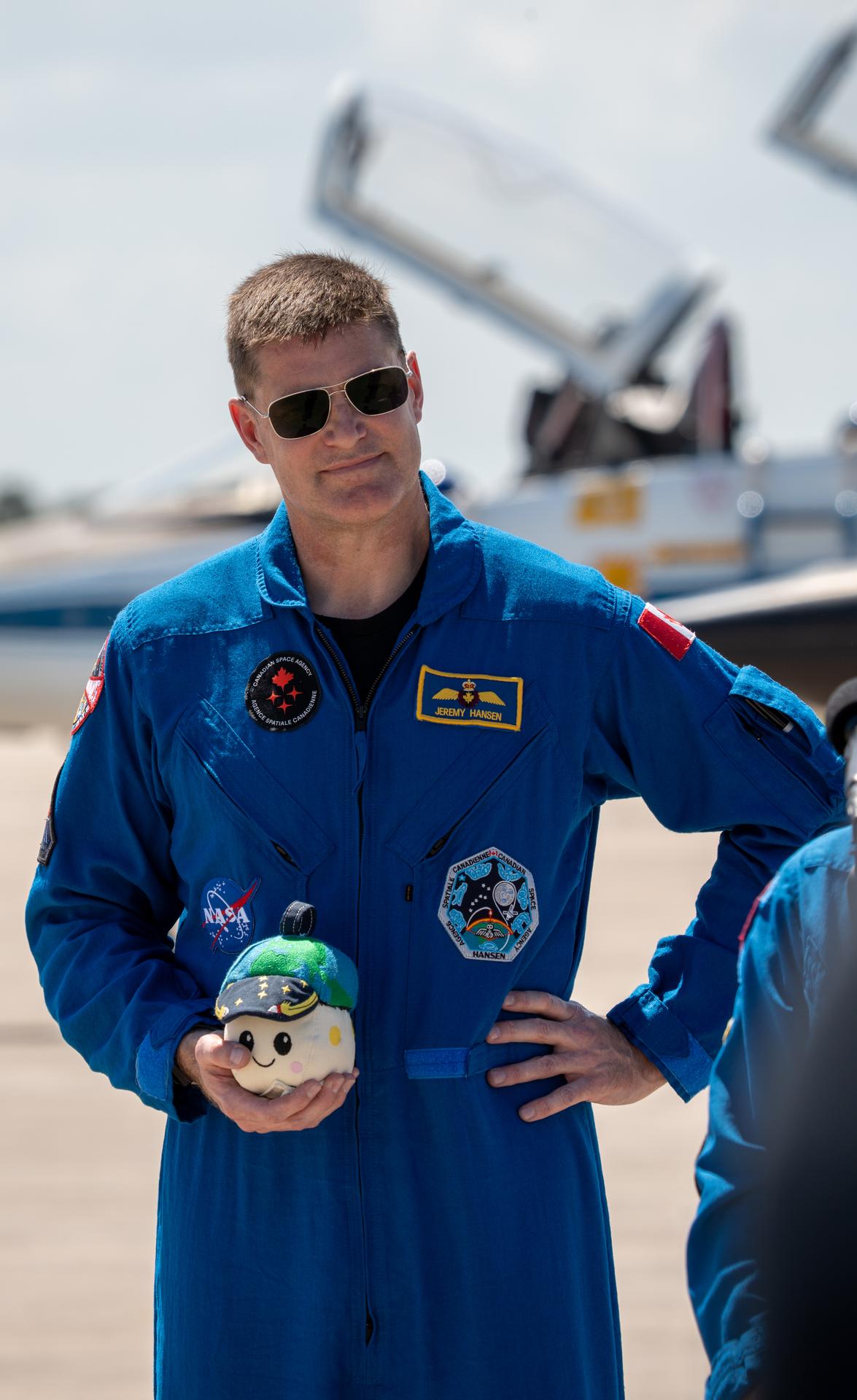
These images show the moments shortly after the arrival of the Artemis II crew to NASA’s Kennedy Space Center on March 27, 2026 ahead of the launch. The four astronauts, Victor Glover, Reid Wiseman, Christina Koch, and Jeremy Hansen, arrived on a T38, which can be seen behind them. They took turns speaking to the crowd as they also announced the zero-gravity indicator they would be taking with them on their journey.
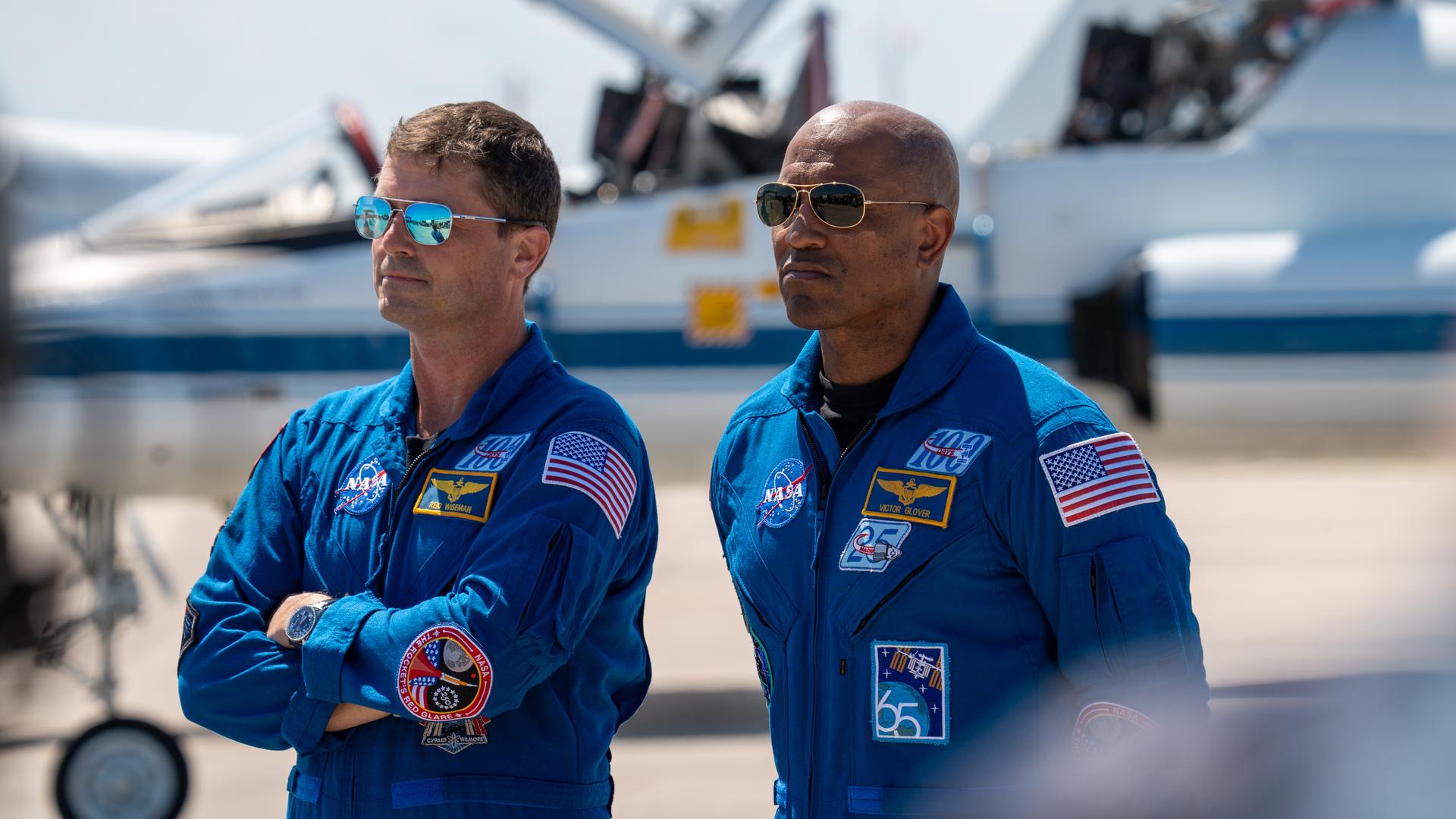
These images show the moments shortly after the arrival of the Artemis II crew to NASA’s Kennedy Space Center on March 27, 2026 ahead of the launch. The four astronauts, Victor Glover, Reid Wiseman, Christina Koch, and Jeremy Hansen, arrived on a T38, which can be seen behind them. They took turns speaking to the crowd as they also announced the zero-gravity indicator they would be taking with them on their journey.
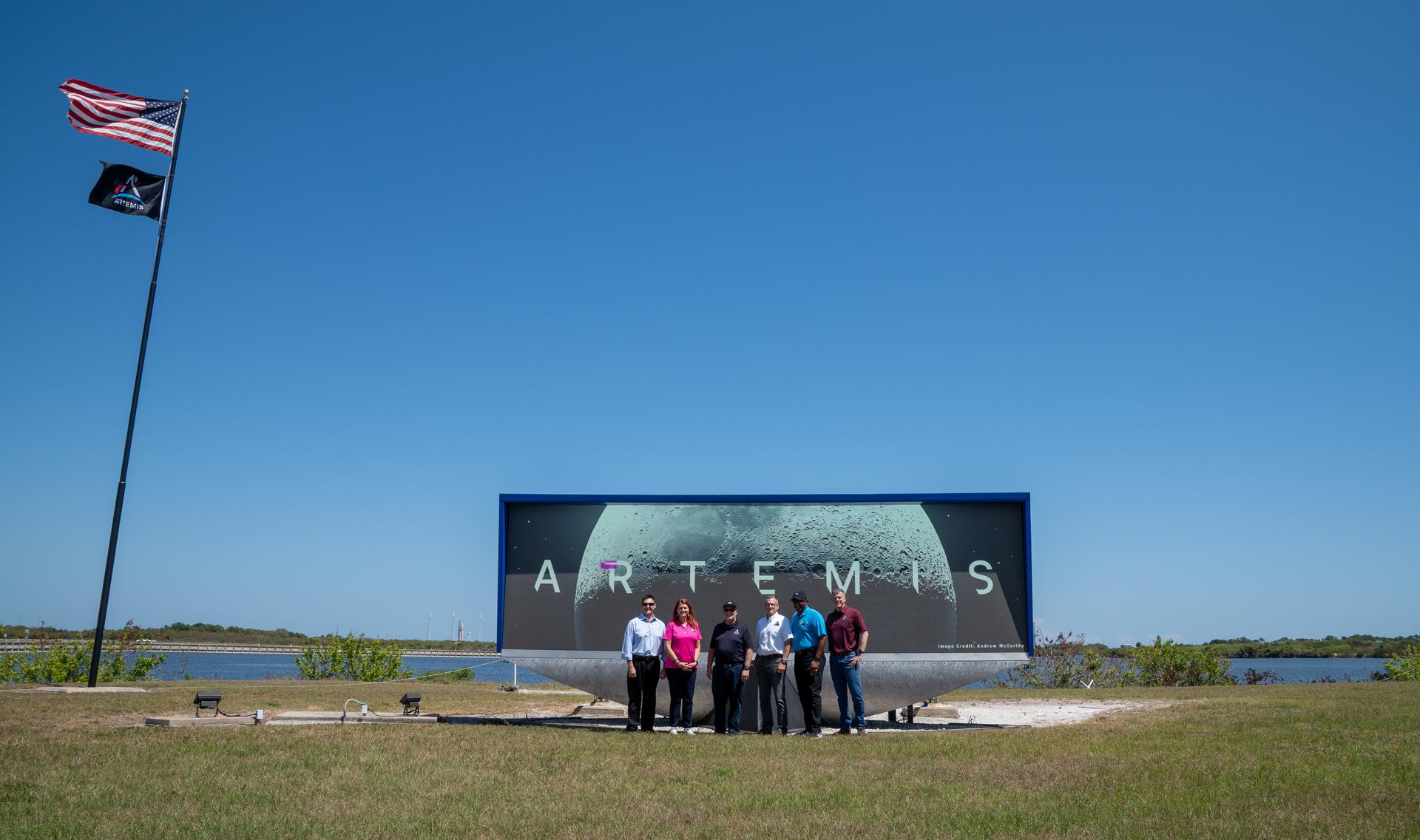
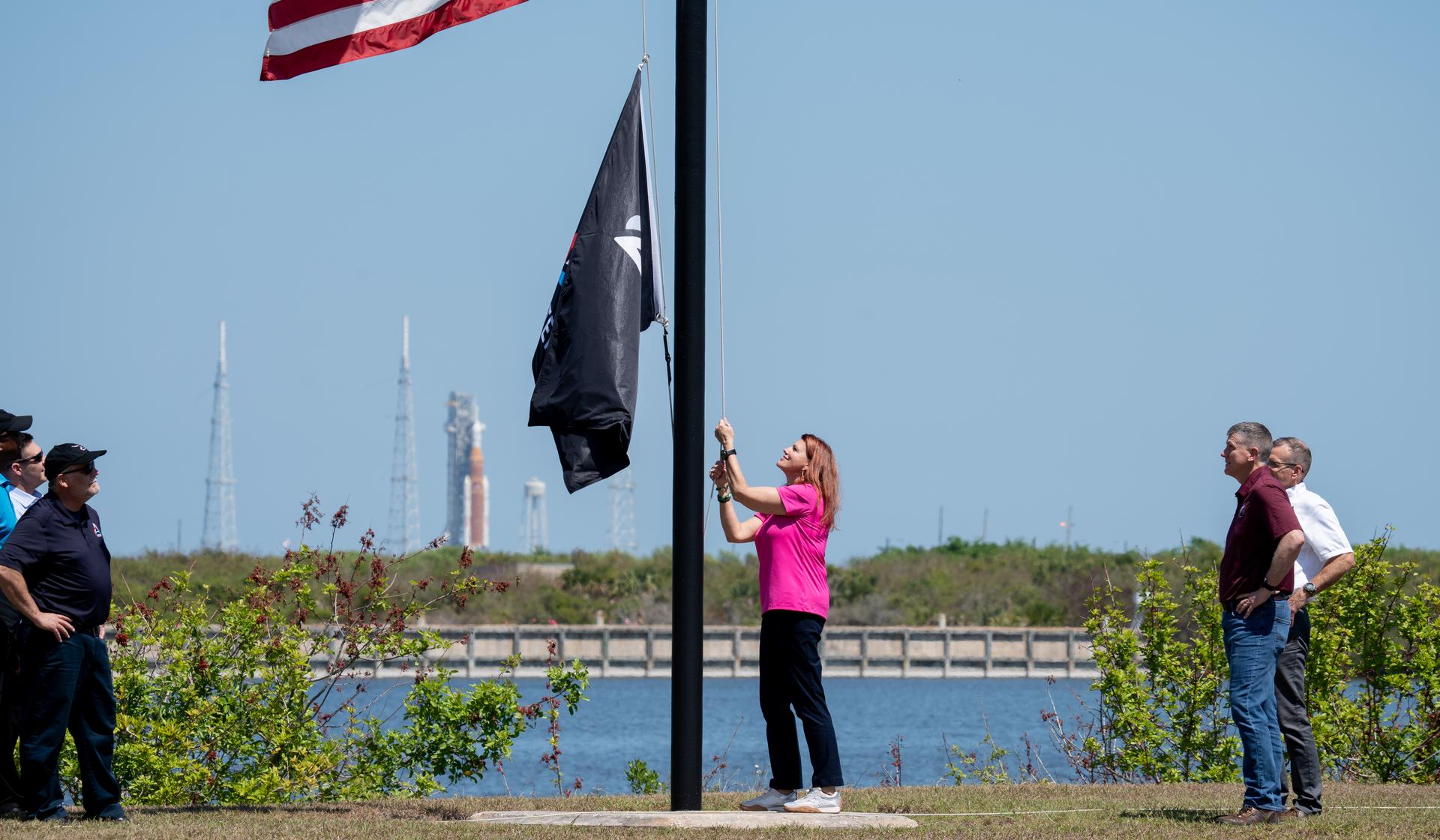
Robert Yaskovic, associate manager, Exploration Ground Systems Program; Charlie Blackwell-Thompson, Artemis II launch director; Shawn Quinn, manager, Exploration Ground Systems Program; Cliff Lanham, deputy manager, Exploration Ground Systems Program; NASA Kennedy Space Center Deputy Director Kelvin Manning; and Jeremy Graeber, assistant launch director, Exploration Ground Systems Program raise the Artemis flag near the countdown clock at the NASA News Center at NASA’s Kennedy Space Center in Florida on Friday, March 27, 2026. The Artemis II test flight mission will take Artemis II Commander Reid Wiseman, Pilot Victor Glover, and Mission Specialist Christina Koch from NASA, and Mission Specialist Jeremy Hansen from the CSA (Canadian Space Agency) on a 10-day journey around the Moon and back aboard NASA’s SLS (Space Launch System) rocket and Orion spacecraft from Launch Complex 39B no earlier than 6:24 p.m. EDT on Wednesday, April 1.
From left, NASA Kennedy Space Center Deputy Director Kelvin Manning; Robert Yaskovic, associate manager, Exploration Ground Systems Program; Shawn Quinn, manager, Exploration Ground Systems Program; Charlie Blackwell-Thompson, Artemis II launch director; Cliff Lanham, deputy manager, Exploration Ground Systems Program; and Jeremy Graeber, assistant launch director, Exploration Ground Systems Program raise the Artemis flag near the countdown clock at the NASA News Center at NASA’s Kennedy Space Center in Florida on Friday, March 27, 2026. The Artemis II test flight mission will take Artemis II Commander Reid Wiseman, Pilot Victor Glover, and Mission Specialist Christina Koch from NASA, and Mission Specialist Jeremy Hansen from the CSA (Canadian Space Agency) on a 10-day journey around the Moon and back aboard NASA’s SLS (Space Launch System) rocket and Orion spacecraft from Launch Complex 39B no earlier than 6:24 p.m. EDT on Wednesday, April 1.
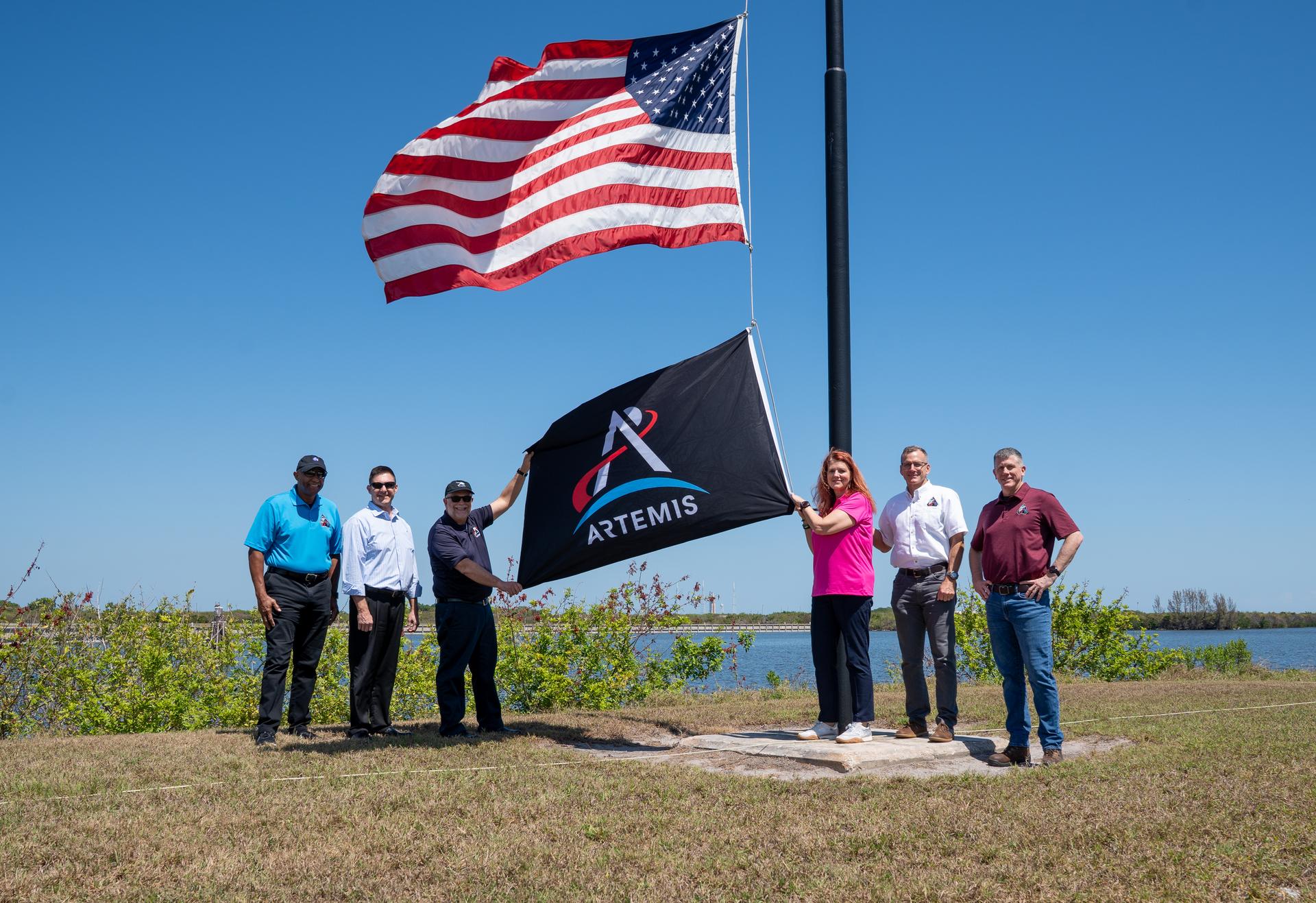
From left, NASA Kennedy Space Center Deputy Director Kelvin Manning; Robert Yaskovic, associate manager, Exploration Ground Systems Program; Shawn Quinn, manager, Exploration Ground Systems Program; Charlie Blackwell-Thompson, Artemis II launch director; Cliff Lanham, deputy manager, Exploration Ground Systems Program; and Jeremy Graeber, assistant launch director, Exploration Ground Systems Program raise the Artemis flag near the countdown clock at the NASA News Center at NASA’s Kennedy Space Center in Florida on Friday, March 27, 2026. The Artemis II test flight mission will take Artemis II Commander Reid Wiseman, Pilot Victor Glover, and Mission Specialist Christina Koch from NASA, and Mission Specialist Jeremy Hansen from the CSA (Canadian Space Agency) on a 10-day journey around the Moon and back aboard NASA’s SLS (Space Launch System) rocket and Orion spacecraft from Launch Complex 39B no earlier than 6:24 p.m. EDT on Wednesday, April 1.

The Artemis flag was raised with the American flag near the countdown clock at the NASA News Center at NASA’s Kennedy Space Center in Florida on Friday, March 27, 2026. The Artemis II test flight mission will take Artemis II Commander Reid Wiseman, Pilot Victor Glover, and Mission Specialist Christina Koch from NASA, and Mission Specialist Jeremy Hansen from the CSA (Canadian Space Agency) on a 10-day journey around the Moon and back aboard NASA’s SLS (Space Launch System) rocket and Orion spacecraft from Launch Complex 39B no earlier than 6:24 p.m. EDT on Wednesday, April 1.
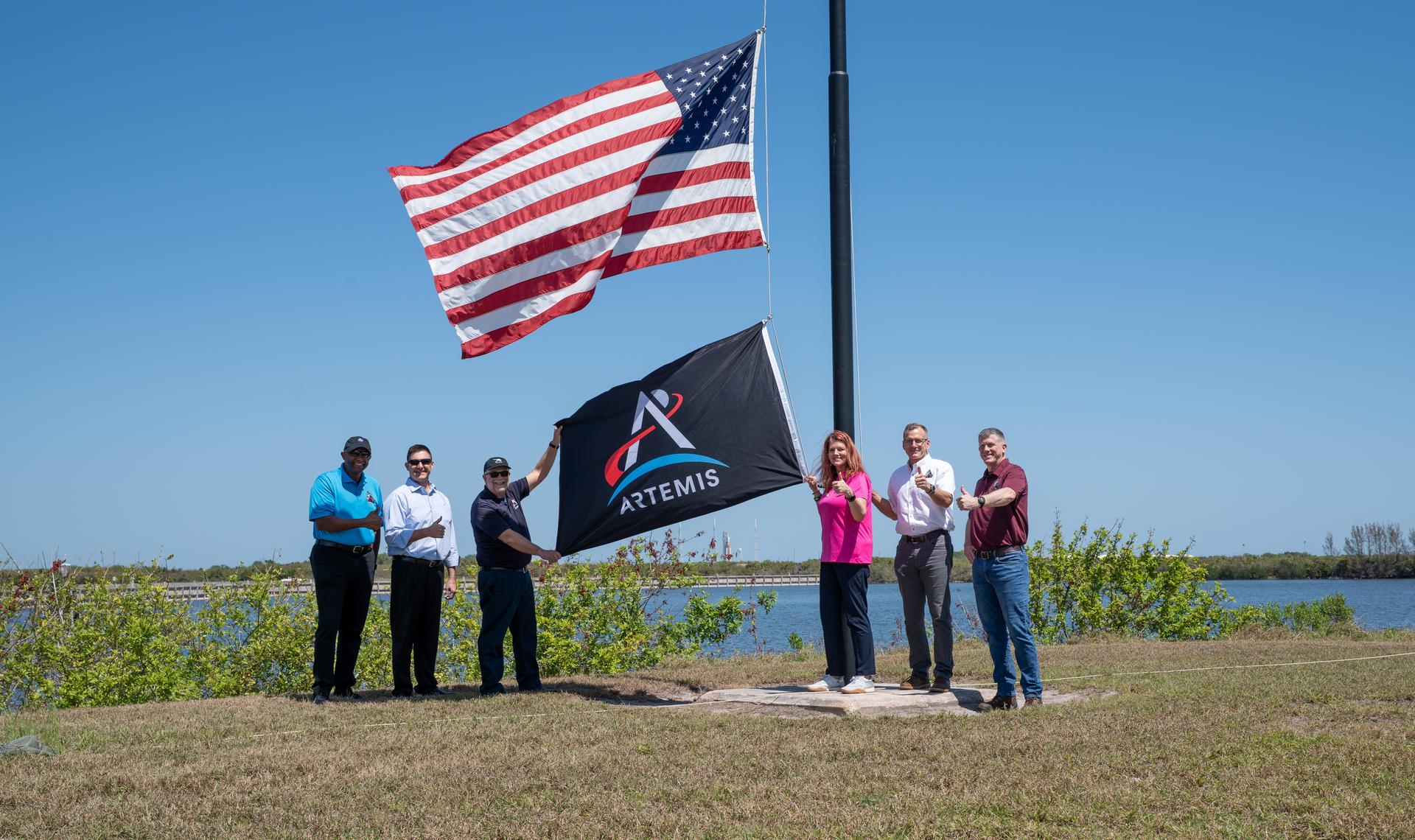
From left, NASA Kennedy Space Center Deputy Director Kelvin Manning; Robert Yaskovic, associate manager, Exploration Ground Systems Program; Shawn Quinn, manager, Exploration Ground Systems Program; Charlie Blackwell-Thompson, Artemis II launch director; Cliff Lanham, deputy manager, Exploration Ground Systems Program; and Jeremy Graeber, assistant launch director, Exploration Ground Systems Program raise the Artemis flag near the countdown clock at the NASA News Center at NASA’s Kennedy Space Center in Florida on Friday, March 27, 2026. The Artemis II test flight mission will take Artemis II Commander Reid Wiseman, Pilot Victor Glover, and Mission Specialist Christina Koch from NASA, and Mission Specialist Jeremy Hansen from the CSA (Canadian Space Agency) on a 10-day journey around the Moon and back aboard NASA’s SLS (Space Launch System) rocket and Orion spacecraft from Launch Complex 39B no earlier than 6:24 p.m. EDT on Wednesday, April 1.
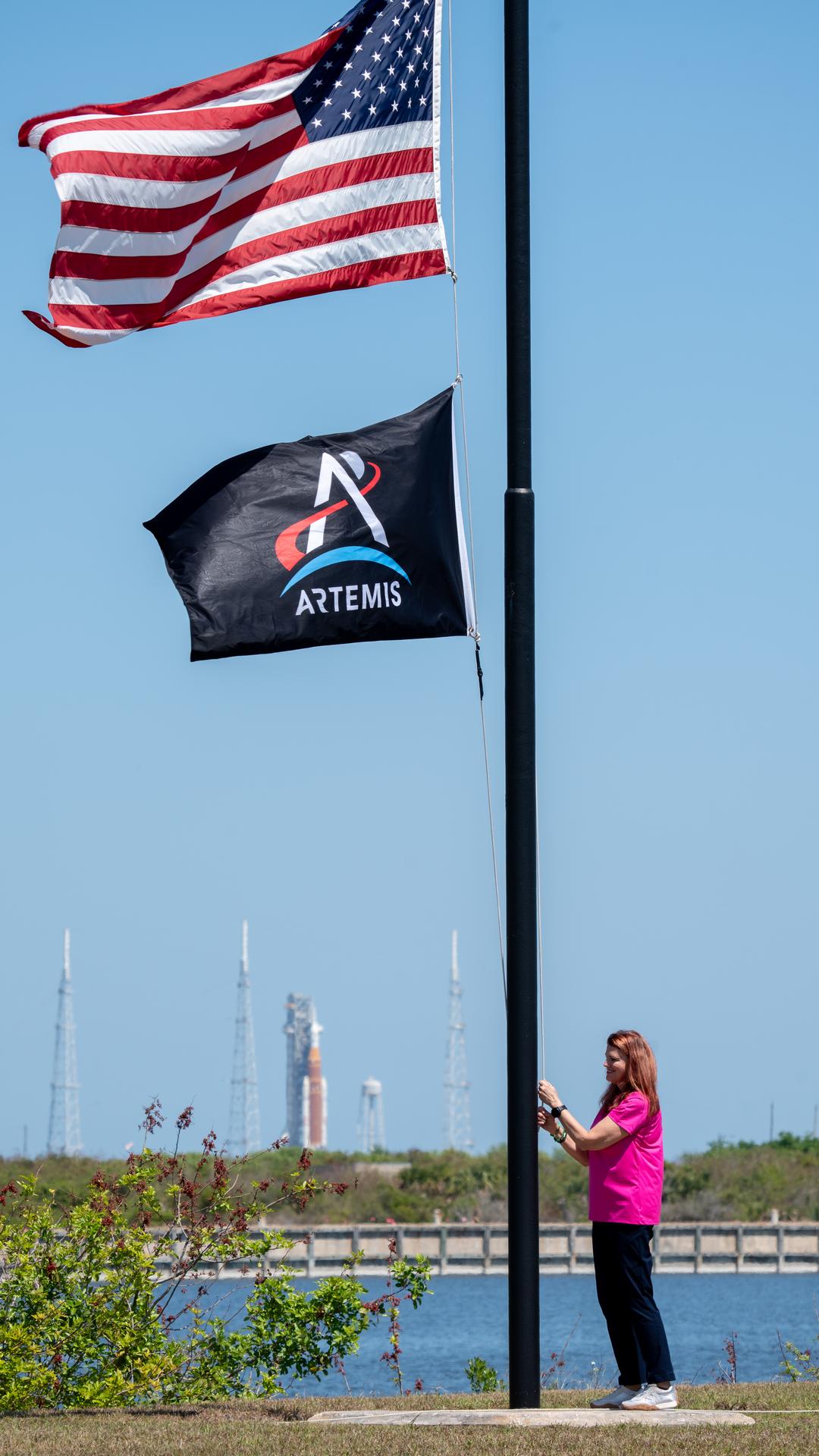
Charlie Blackwell-Thompson, Artemis II launch director raises the Artemis flag near the countdown clock at the NASA News Center at NASA’s Kennedy Space Center in Florida on Friday, March 27, 2026. The Artemis II test flight mission will take Artemis II Commander Reid Wiseman, Pilot Victor Glover, and Mission Specialist Christina Koch from NASA, and Mission Specialist Jeremy Hansen from the CSA (Canadian Space Agency) on a 10-day journey around the Moon and back aboard NASA’s SLS (Space Launch System) rocket and Orion spacecraft from Launch Complex 39B no earlier than 6:24 p.m. EDT on Wednesday, April 1.