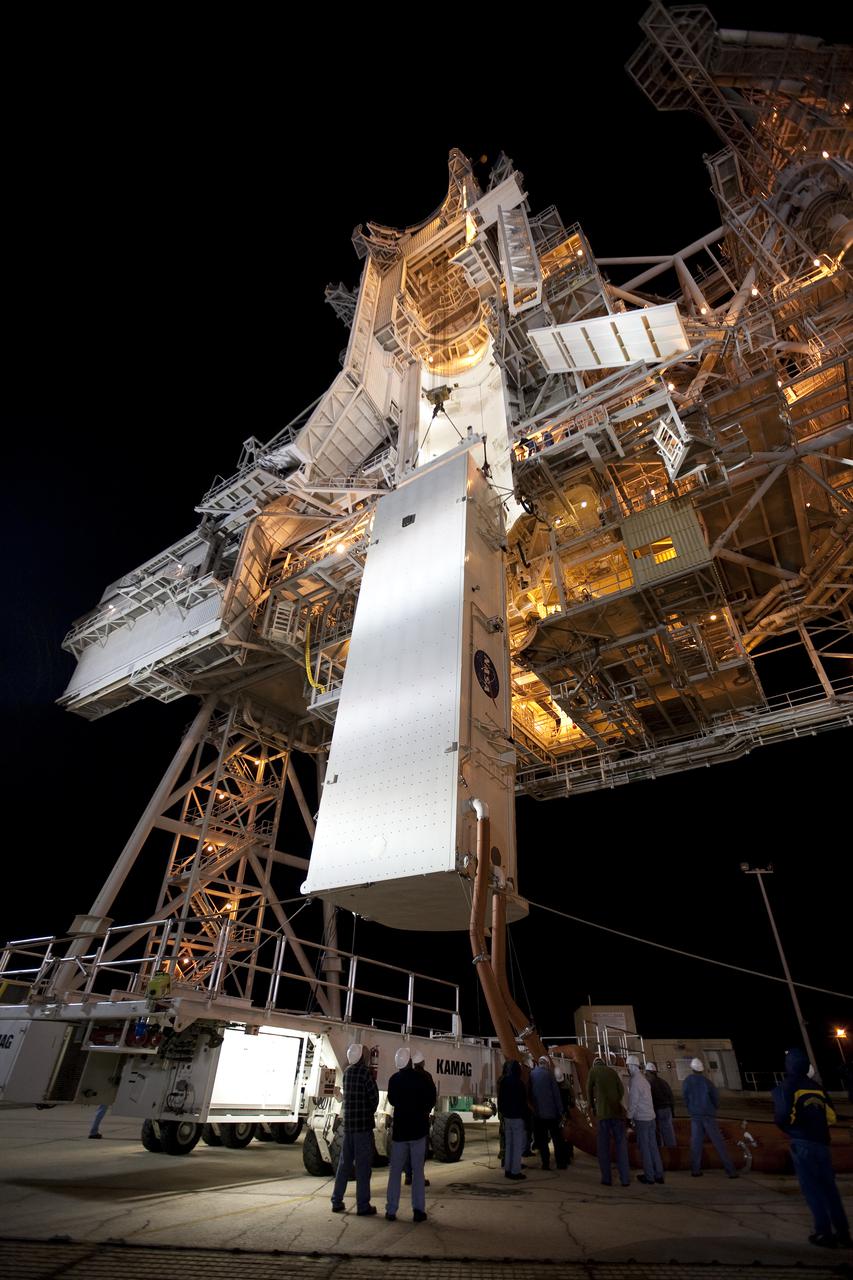
CAPE CANAVERAL, Fla. - At Launch Pad 39A at NASA's Kennedy Space Center in Florida, the payload canister containing the multi-purpose logistics module Leonardo is lifted into the pad's payload changout room. Located on the pad's rotating service structure, the room is an enclosed, environmentally controlled area that supports payload delivery and servicing at the pad and attaches to the shuttle's cargo bay for vertical payload installation. The contents of the canister, including Leonardo, is set to be transferred into space shuttle Discovery's cargo bay on March 24. The seven-member STS-131 crew will deliver Leonardo, filled with resupply stowage platforms and racks, to the International Space Station. STS-131 will be the 33rd shuttle mission to the station and the 131st shuttle mission overall. Launch is targeted for April 5. For information on the STS-131 mission and crew, visit http:__www.nasa.gov_mission_pages_shuttle_shuttlemissions_sts131_index.html. Photo credit: NASA_Amanda Diller
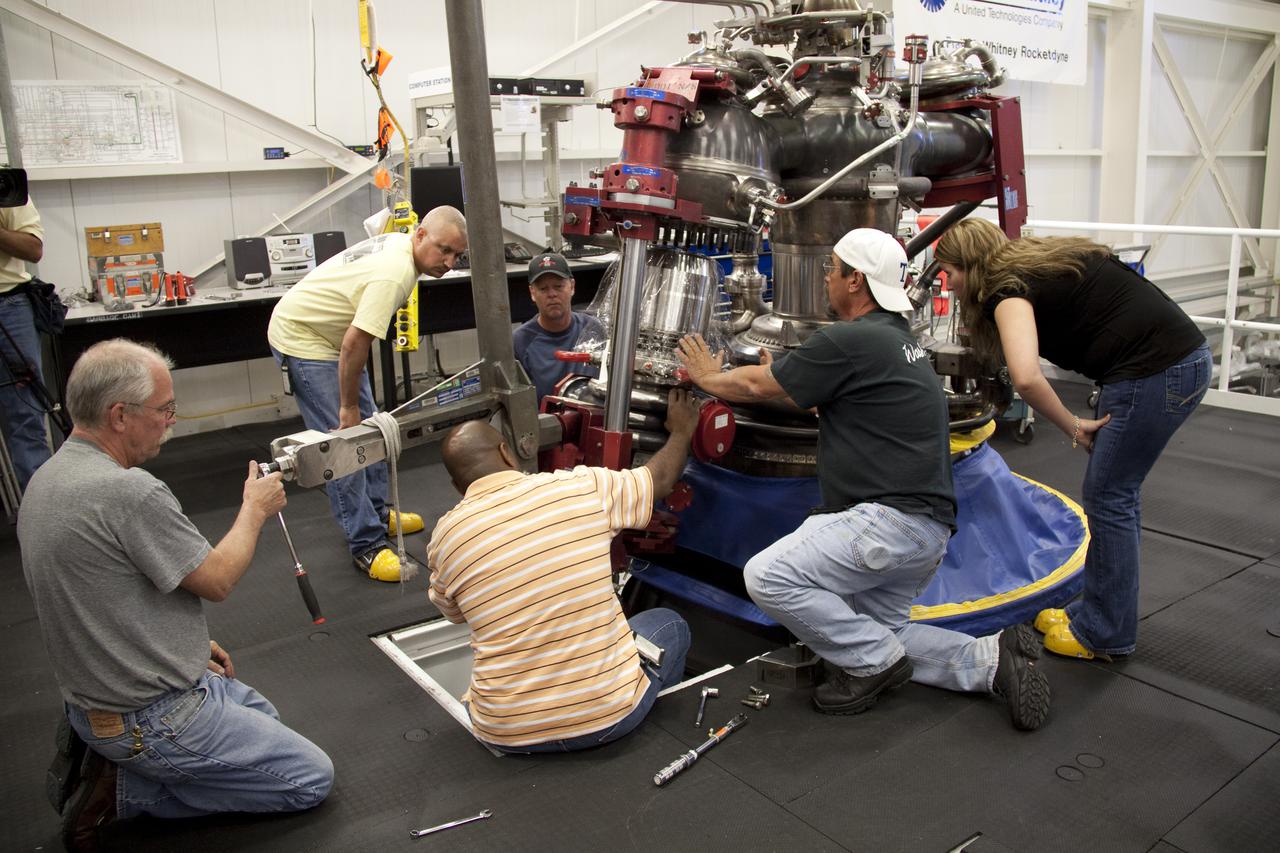
CAPE CANAVERAL, Fla. – In the Space Shuttle Main Engine Processing Facility at NASA's Kennedy Space Center in Florida, Pratt and Whitney Rocketdyne engine technicians install a high pressure oxidizer turbo pump on space shuttle main engine no. 2062. The engine, or SSME, is the last one scheduled to be built at Kennedy before the end of the Space Shuttle Program. In front of the engine, from left, are Dan Bode, Teryon Jones, quality inspector Barry Martin, and engineer Jessica Tandy. Behind the engine, from left, are Ryan Mahony and Ken Burley. Three main engines are clustered at the aft end of the shuttle and have a combined thrust of more than 1.2 million pounds. Even though an SSME weighs one-seventh as much as a locomotive engine, its high-pressure fuel pump alone delivers as much horsepower as 28 locomotives. Each engine operates during the entire eight-and-a-half minute climb to orbit. Post-flight inspections and maintenance of each engine also are conducted in the SSME Processing Facility between shuttle missions. Photo credit: NASA_Amanda Diller
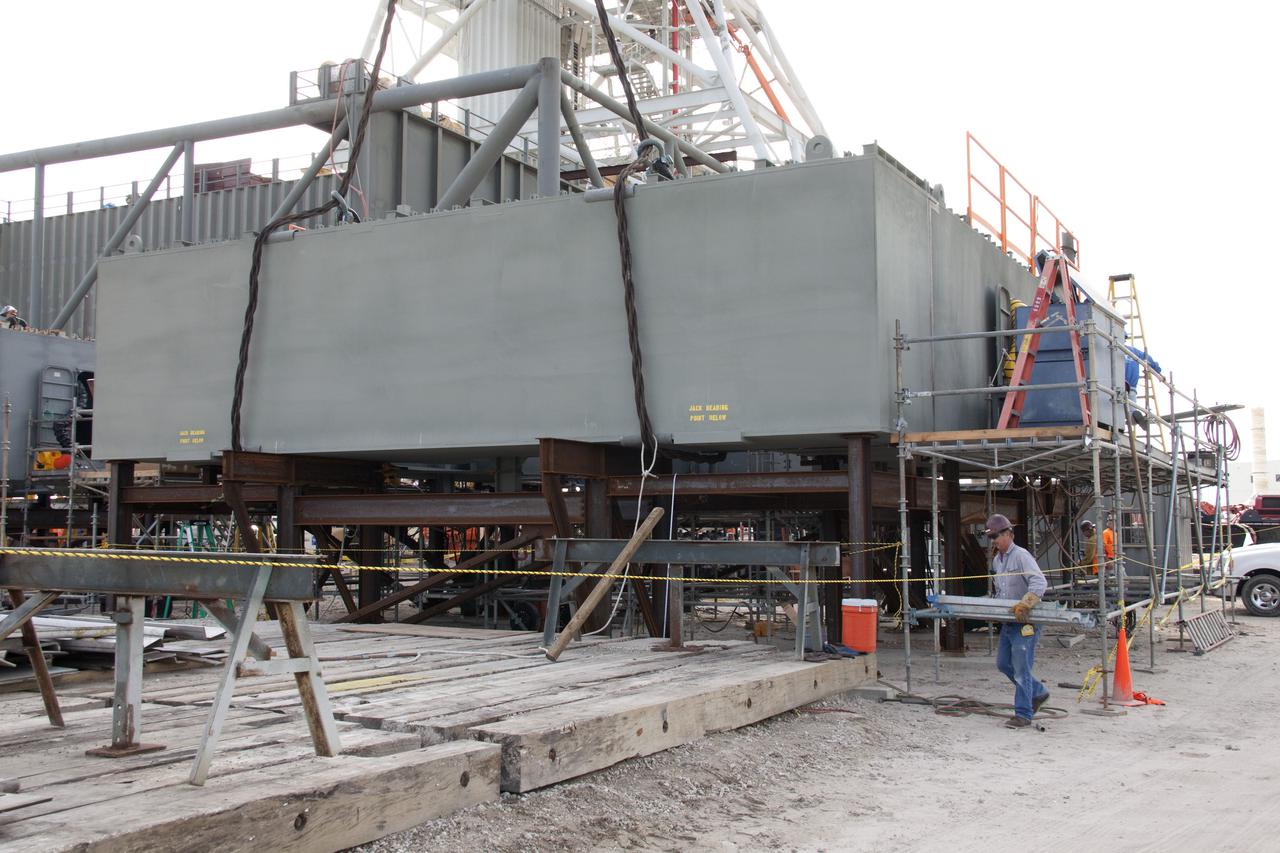
CAPE CANAVERAL, Fla. – At NASA's Kennedy Space Center in Florida, works begins to construct the launch mount for a new mobile launcher, or ML, which will support NASA's future human spaceflight program, following the arrival of all eight segments. The construction is taking place in Launch Complex 39 in the mobile launcher park site north of Kennedy's Vehicle Assembly Building. The new launcher is 355 feet tall and has multiple platforms for personnel access. The base of the launcher is lighter than space shuttle mobile launcher platforms so the crawler-transporter can pick up the heavier load of the tower and a taller rocket. For information on NASA's future plans, visit http:__www.nasa.gov. Photo credit: NASA_Amanda Diller
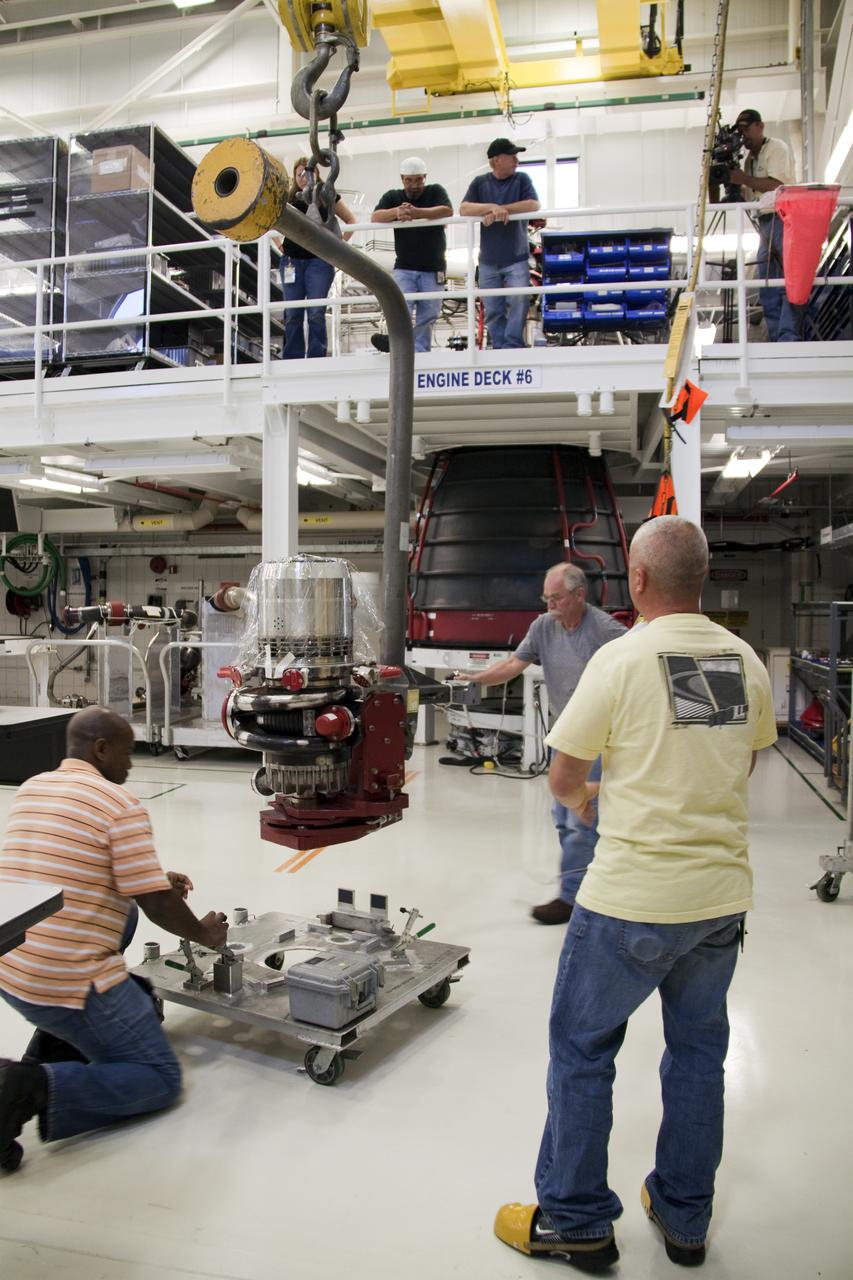
CAPE CANAVERAL, Fla. – On the floor of the Space Shuttle Main Engine Processing Facility at NASA's Kennedy Space Center in Florida, Pratt and Whitney Rocketdyne engine technicians lift a high pressure oxidizer turbo pump off its stand for installation on space shuttle main engine no. 2062. The engine, or SSME, is the last one scheduled to be built at Kennedy by Pratt and Whitney Rocketdyne before the end of the Space Shuttle Program. From left are Teryon Jones, Dan Bode and Ryan Mahony. Three main engines are clustered at the aft end of the shuttle and have a combined thrust of more than 1.2 million pounds. Even though an SSME weighs one-seventh as much as a locomotive engine, its high-pressure fuel pump alone delivers as much horsepower as 28 locomotives. Each engine operates during the entire eight-and-a-half minute climb to orbit. Post-flight inspections and maintenance of each engine also are conducted in the SSME Processing Facility between shuttle missions. Photo credit: NASA_Amanda Diller
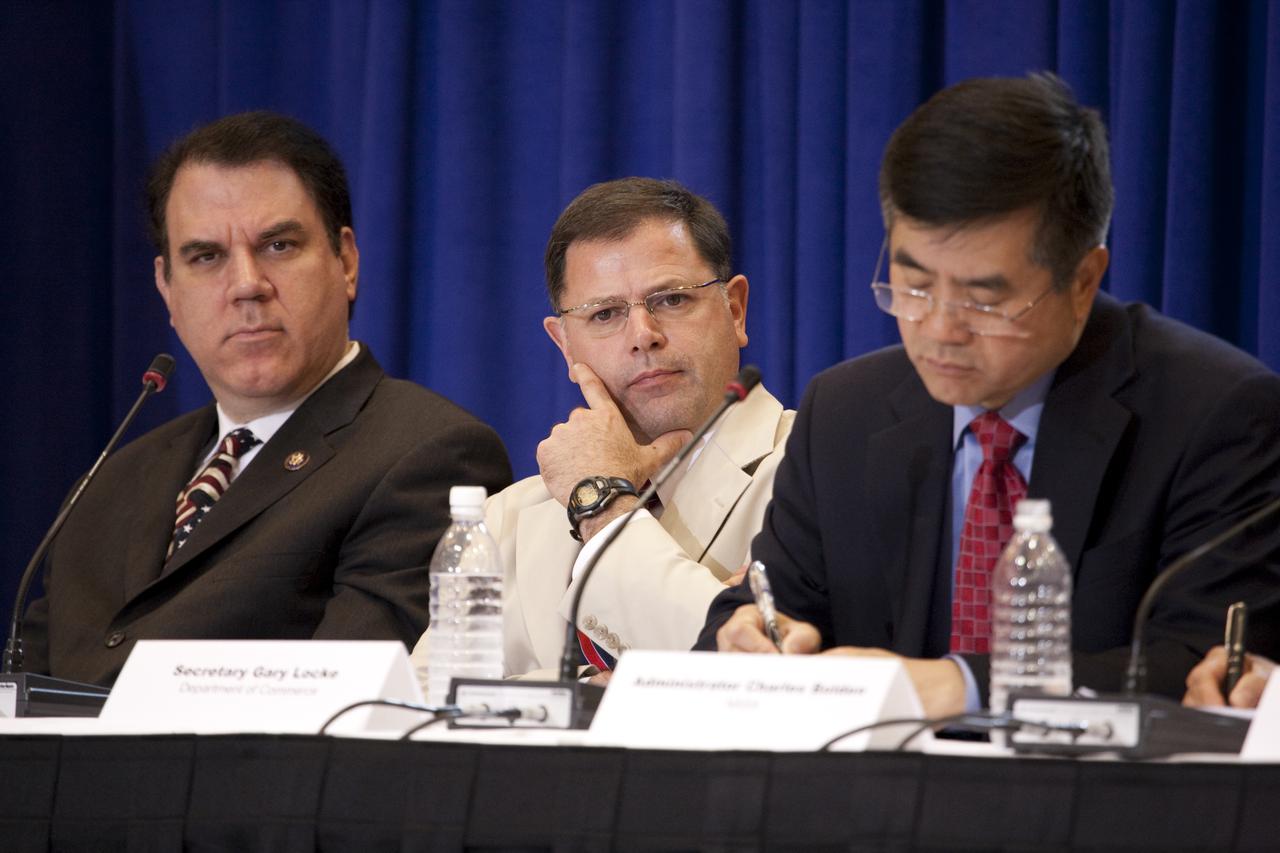
ORLANDO, Fla. – From left, Rep. Alan Grayson of Florida, Assistant Secretary of Commerce for Economic Development John Fernandez and Secretary of Commerce Gary Locke listen to presentations from business and community leaders during a town hall meeting at the Orlando Airport Hyatt Hotel as part of the Presidential Task Force on Space Industry Work Force and Economic Development. The task force heard from local leaders about ways to strengthen the work force as NASA moves toward retirement of the Space Shuttle Program. The task force is a $40 million, multi-agency initiative for regional and economic growth to assist the Space Coast as the country’s space exploration efforts expand and transform. Photo credit: NASA_Amanda Diller
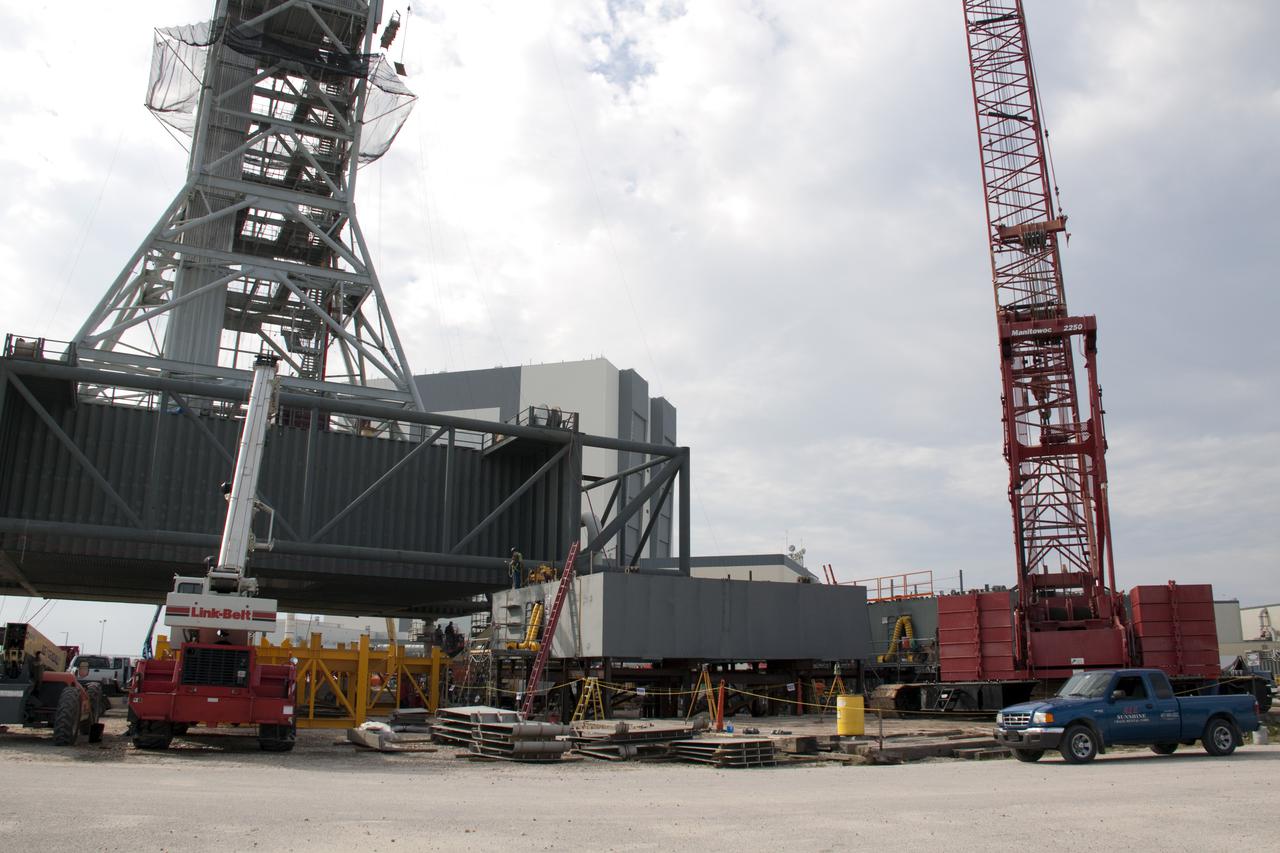
CAPE CANAVERAL, Fla. – At NASA's Kennedy Space Center in Florida, work progresses on the construction of the launch mount for a new mobile launcher, or ML, which will support NASA's future human spaceflight program, following the arrival of all eight segments. The base of the launcher's tower is at left. The construction is taking place in Launch Complex 39 in the mobile launcher park site north of Kennedy's Vehicle Assembly Building. The new launcher is 355 feet tall and has multiple platforms for personnel access. The base of the launcher is lighter than space shuttle mobile launcher platforms so the crawler-transporter can pick up the heavier load of the tower and a taller rocket. For information on NASA's future plans, visit http:__www.nasa.gov. Photo credit: NASA_Amanda Diller
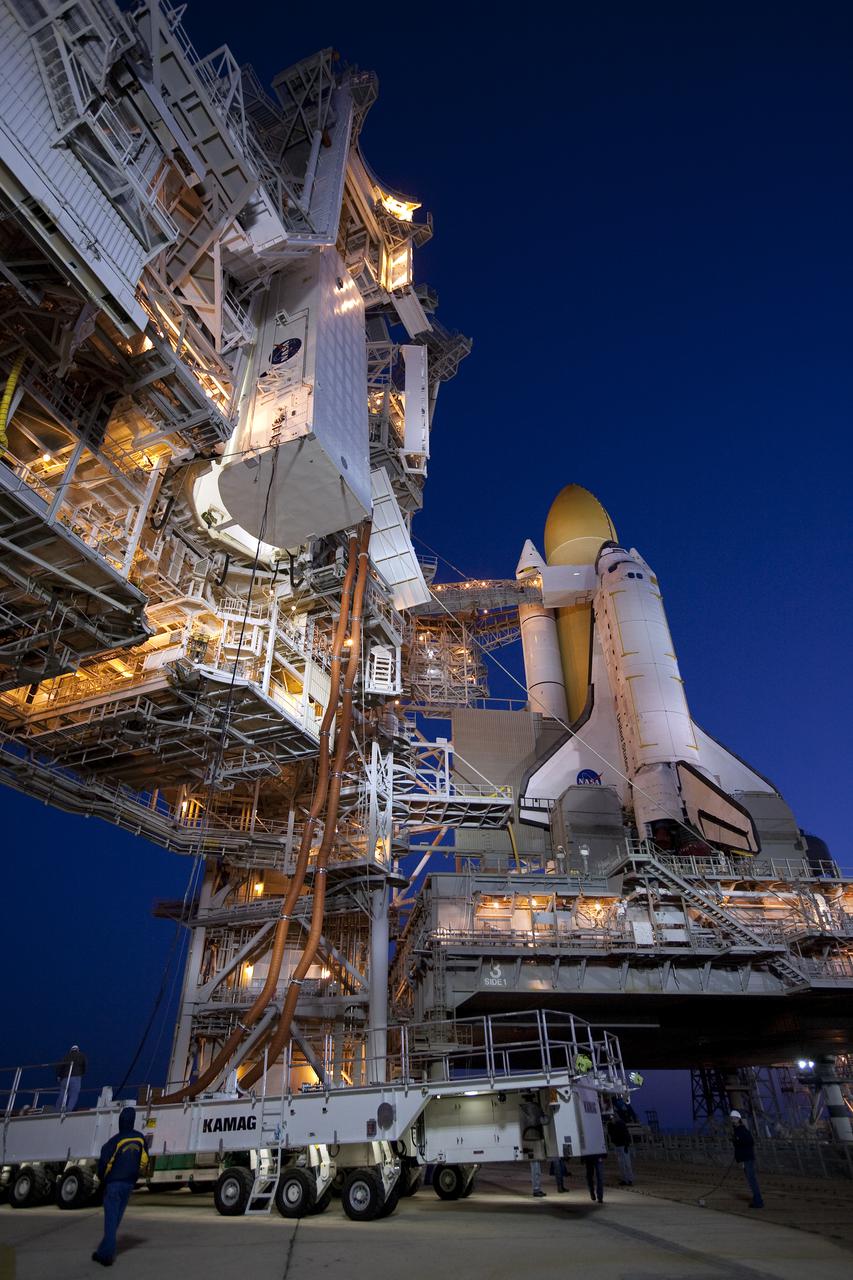
CAPE CANAVERAL, Fla. - Dawn over Launch Pad 39A at NASA's Kennedy Space Center in Florida finds the payload canister containing the multi-purpose logistics module Leonardo being lifted into the pad's payload changeout room. Located on the pad's rotating service structure, the room is an enclosed, environmentally controlled area that supports payload delivery and servicing at the pad and attaches to the shuttle's cargo bay for vertical payload installation. The contents of the canister, including Leonardo, is set to be transferred into space shuttle Discovery's cargo bay on March 24. The seven-member STS-131 crew will deliver Leonardo, filled with resupply stowage platforms and racks, to the International Space Station. STS-131 will be the 33rd shuttle mission to the station and the 131st shuttle mission overall. Launch is targeted for April 5. For information on the STS-131 mission and crew, visit http:__www.nasa.gov_mission_pages_shuttle_shuttlemissions_sts131_index.html. Photo credit: NASA_Amanda Diller
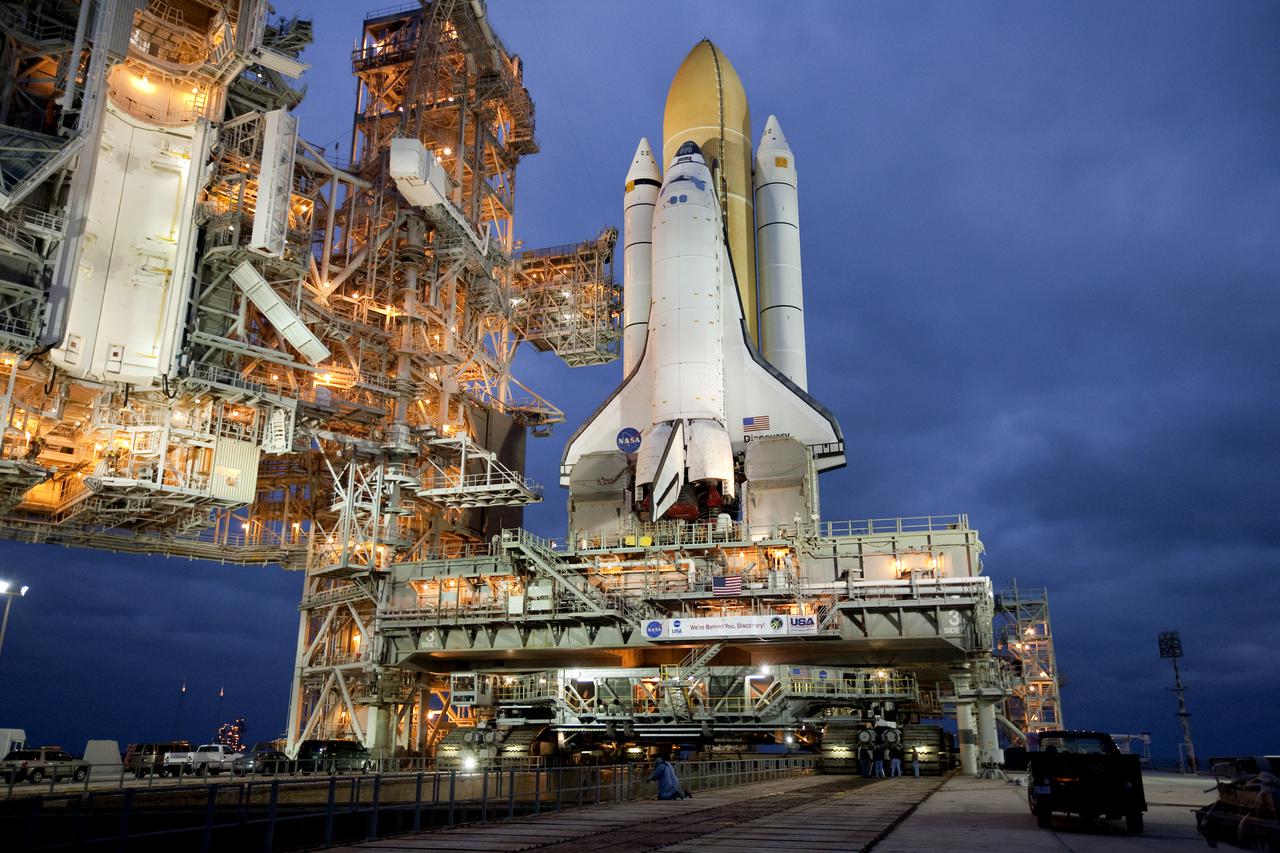
CAPE CANAVERAL, Fla. – Dawn at Launch Pad 39A at NASA's Kennedy Space Center in Florida finds NASA and United Space Alliance employees hard at work securing space shuttle Discovery to the pad. Discovery's first motion on its 3.4-mile trip from the Vehicle Assembly Building was at 11:58 p.m. EST March 2. The shuttle was secured on the pad at 6:48 a.m. March 3. Rollout is a significant milestone in launch processing activities. The seven-member STS-131 crew will deliver the multi-purpose logistics module Leonardo, filled with resupply stowage platforms and racks, to the International Space Station aboard Discovery. Targeted for launch on April 5, STS-131 will be the 33rd shuttle mission to the station and the 131st shuttle mission overall. For information on the STS-131 mission and crew, visit http:__www.nasa.gov_mission_pages_shuttle_shuttlemissions_sts131_index.html. Photo credit: NASA_Amanda Diller
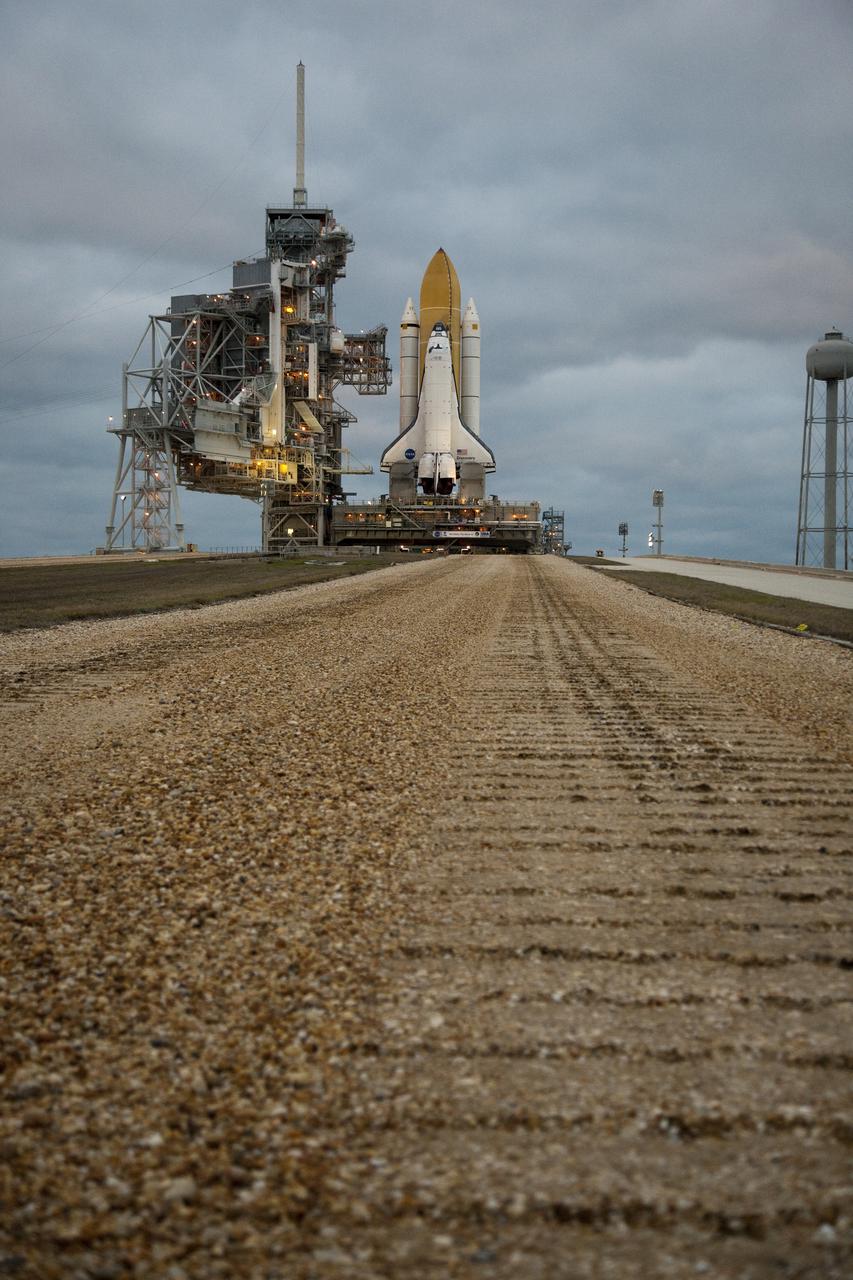
CAPE CANAVERAL, Fla. – Sunrise finds space shuttle Discovery has traveled the five percent grade to the top of Launch Pad 39A at NASA's Kennedy Space Center in Florida. Discovery's first motion on its 3.4-mile trip from the Vehicle Assembly Building was at 11:58 p.m. EST March 2. The shuttle was secured on the pad at 6:48 a.m. March 3. Rollout is a significant milestone in launch processing activities. The seven-member STS-131 crew will deliver the multi-purpose logistics module Leonardo, filled with resupply stowage platforms and racks, to the International Space Station aboard Discovery. Targeted for launch on April 5, STS-131 will be the 33rd shuttle mission to the station and the 131st shuttle mission overall. For information on the STS-131 mission and crew, visit http:__www.nasa.gov_mission_pages_shuttle_shuttlemissions_sts131_index.html. Photo credit: NASA_Amanda Diller
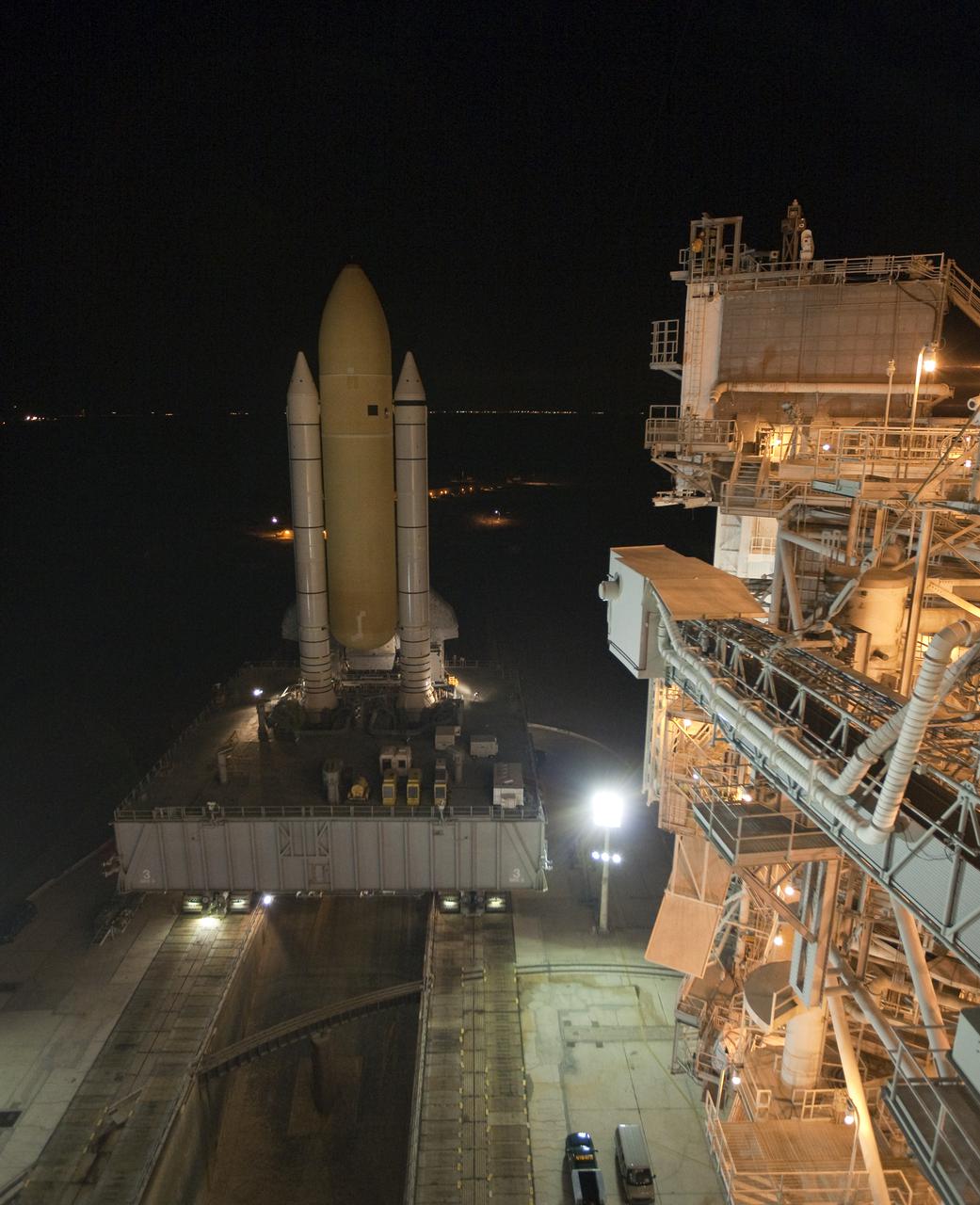
CAPE CANAVERAL, Fla. – Space shuttle Discovery rolls into place over the flame trench on Launch Pad 39A at NASA's Kennedy Space Center in Florida just before dawn. Discovery's first motion on its 3.4-mile trip from the Vehicle Assembly Building was at 11:58 p.m. EST March 2. The shuttle was secured on the pad at 6:48 a.m. March 3. Rollout is a significant milestone in launch processing activities. The seven-member STS-131 crew will deliver the multi-purpose logistics module Leonardo, filled with resupply stowage platforms and racks, to the International Space Station aboard Discovery. Targeted for launch on April 5, STS-131 will be the 33rd shuttle mission to the station and the 131st shuttle mission overall. For information on the STS-131 mission and crew, visit http:__www.nasa.gov_mission_pages_shuttle_shuttlemissions_sts131_index.html. Photo credit: NASA_Amanda Diller
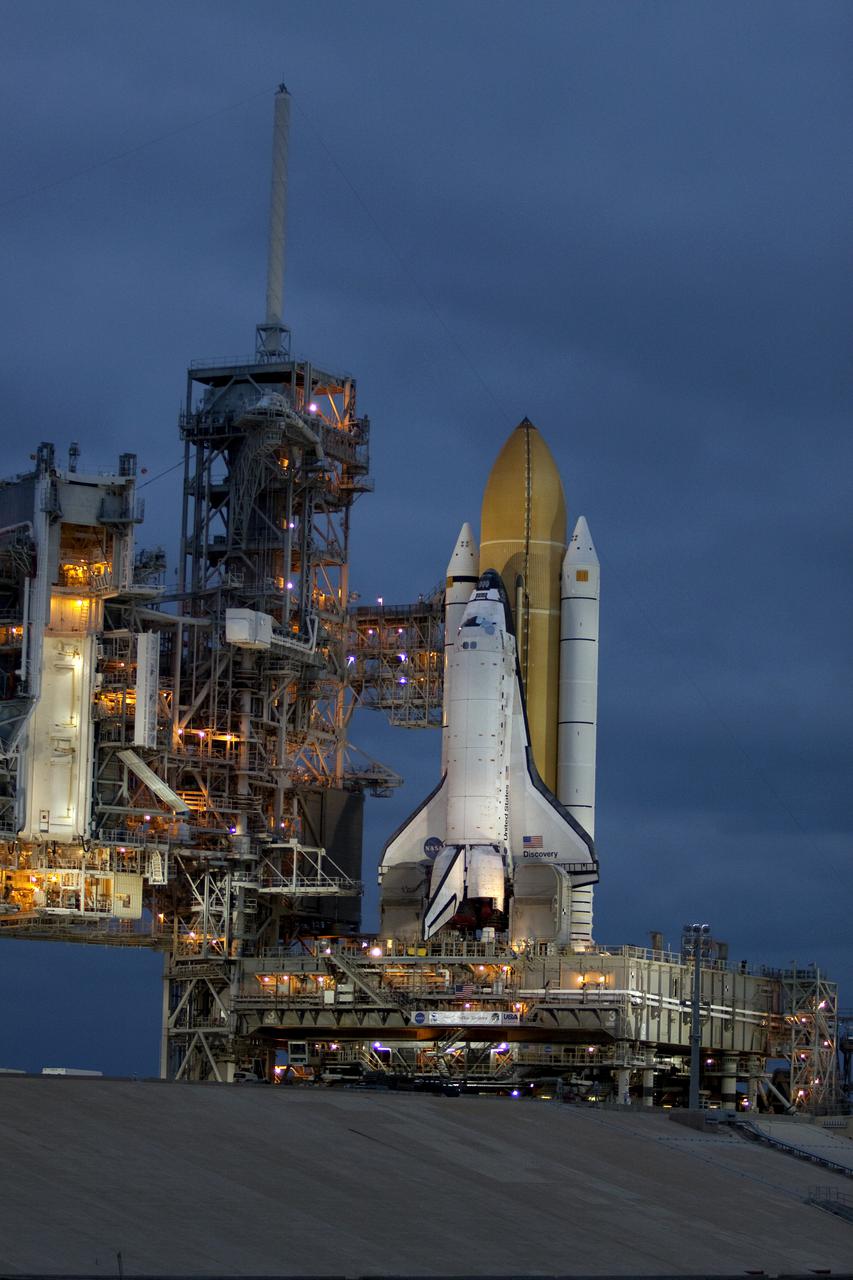
CAPE CANAVERAL, Fla. – The fixed and rotating service structures are brightly lit on Launch Pad 39A at NASA's Kennedy Space Center in Florida for the arrival of space shuttle Discovery just before dawn. Discovery's first motion on its 3.4-mile trip from the Vehicle Assembly Building was at 11:58 p.m. EST March 2. The shuttle was secured on the pad at 6:48 a.m. March 3. Rollout is a significant milestone in launch processing activities. The seven-member STS-131 crew will deliver the multi-purpose logistics module Leonardo, filled with resupply stowage platforms and racks, to the International Space Station aboard Discovery. Targeted for launch on April 5, STS-131 will be the 33rd shuttle mission to the station and the 131st shuttle mission overall. For information on the STS-131 mission and crew, visit http:__www.nasa.gov_mission_pages_shuttle_shuttlemissions_sts131_index.html. Photo credit: NASA_Amanda Diller
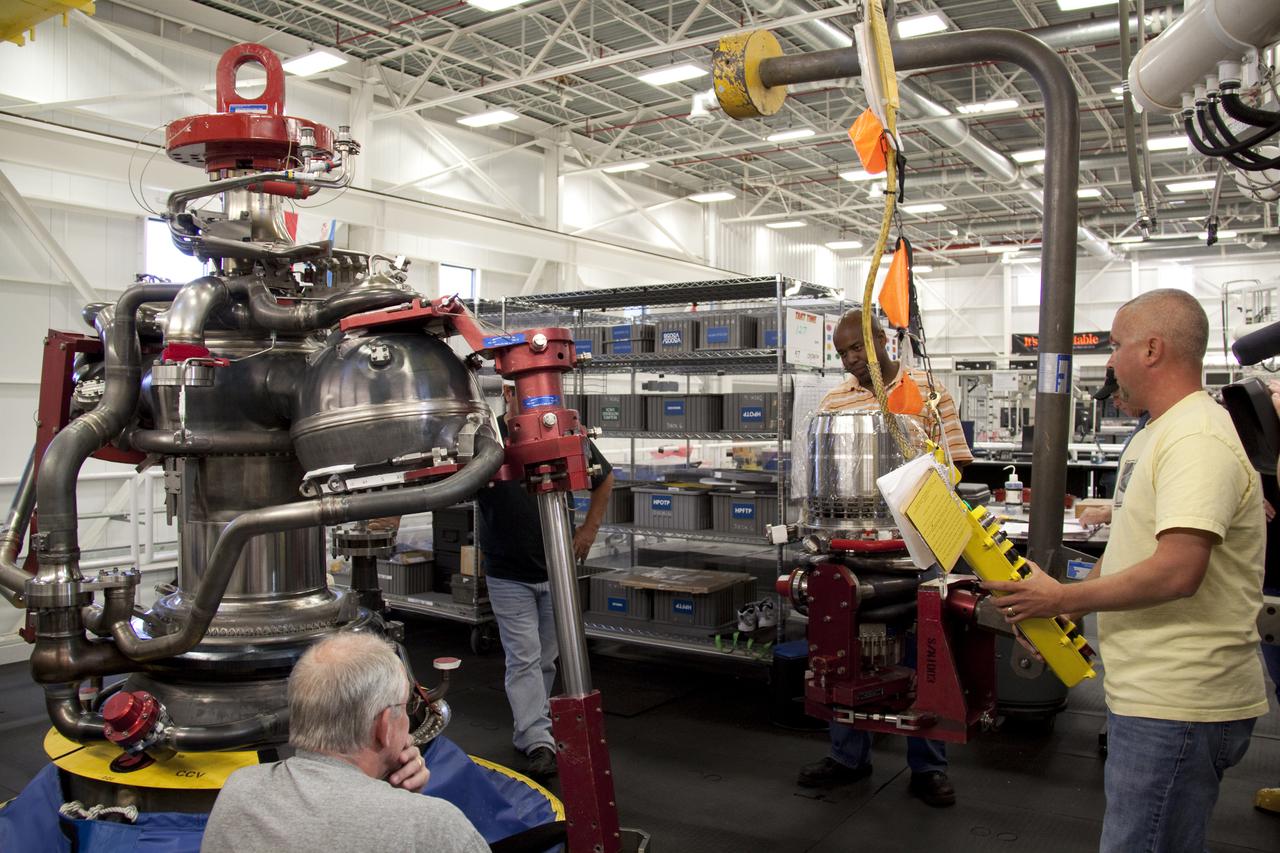
CAPE CANAVERAL, Fla. – In the Space Shuttle Main Engine Processing Facility at NASA's Kennedy Space Center in Florida, Pratt and Whitney Rocketdyne engine technicians prepare to install a high pressure oxidizer turbo pump on space shuttle main engine no. 2062. The engine, or SSME, is the last one scheduled to be built at Kennedy before the end of the Space Shuttle Program. From left are Dan Bode, Teryon Jones, and Ryan Mahony. Quality inspector Barry Martin is standing beside the engine, just out of view. Three main engines are clustered at the aft end of the shuttle and have a combined thrust of more than 1.2 million pounds. Even though an SSME weighs one-seventh as much as a locomotive engine, its high-pressure fuel pump alone delivers as much horsepower as 28 locomotives. Each engine operates during the entire eight-and-a-half minute climb to orbit. Post-flight inspections and maintenance of each engine also are conducted in the SSME Processing Facility between shuttle missions. Photo credit: NASA_Amanda Diller
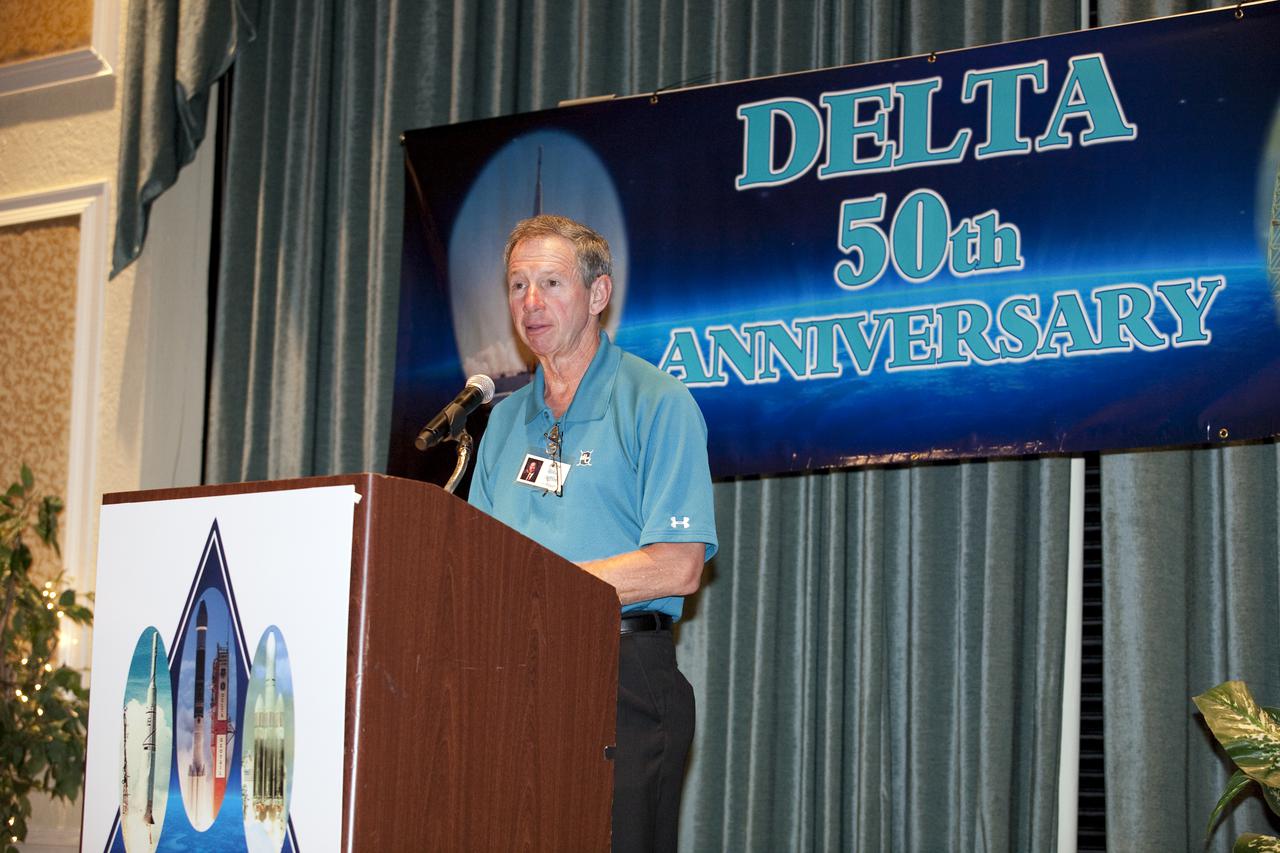
CAPE CANAVERAL, Fla. - Mike Griffin, professor of mechanical and aerospace engineering at the University of Alabama in Huntsville and former NASA administrator, helps the space agency, the U.S. Air Force, United Launch Alliance, Boeing, Pratt and Whitney Rocketdyne, Aerojet and the NASA Alumni League celebrate the Delta expendable launch vehicle program's 50th anniversary at the Radisson Resort in Cape Canaveral, Fla., on May 16. NASA launched the first Delta rocket, which only was intended to be an interim launch vehicle, on May 13, 1960. A half-century later, more than 300 Delta rockets have launched to place crucial weather and environmental satellites into Earth orbit. The vehicles also have sent spacecraft on missions to other planets and comets, and to study the universe. Currently, the Delta II and Delta IV are in use by NASA's Launch Services Program based at Kennedy Space Center in Florida, and are launched by United Launch Alliance. Photo credit: NASA_Amanda Diller
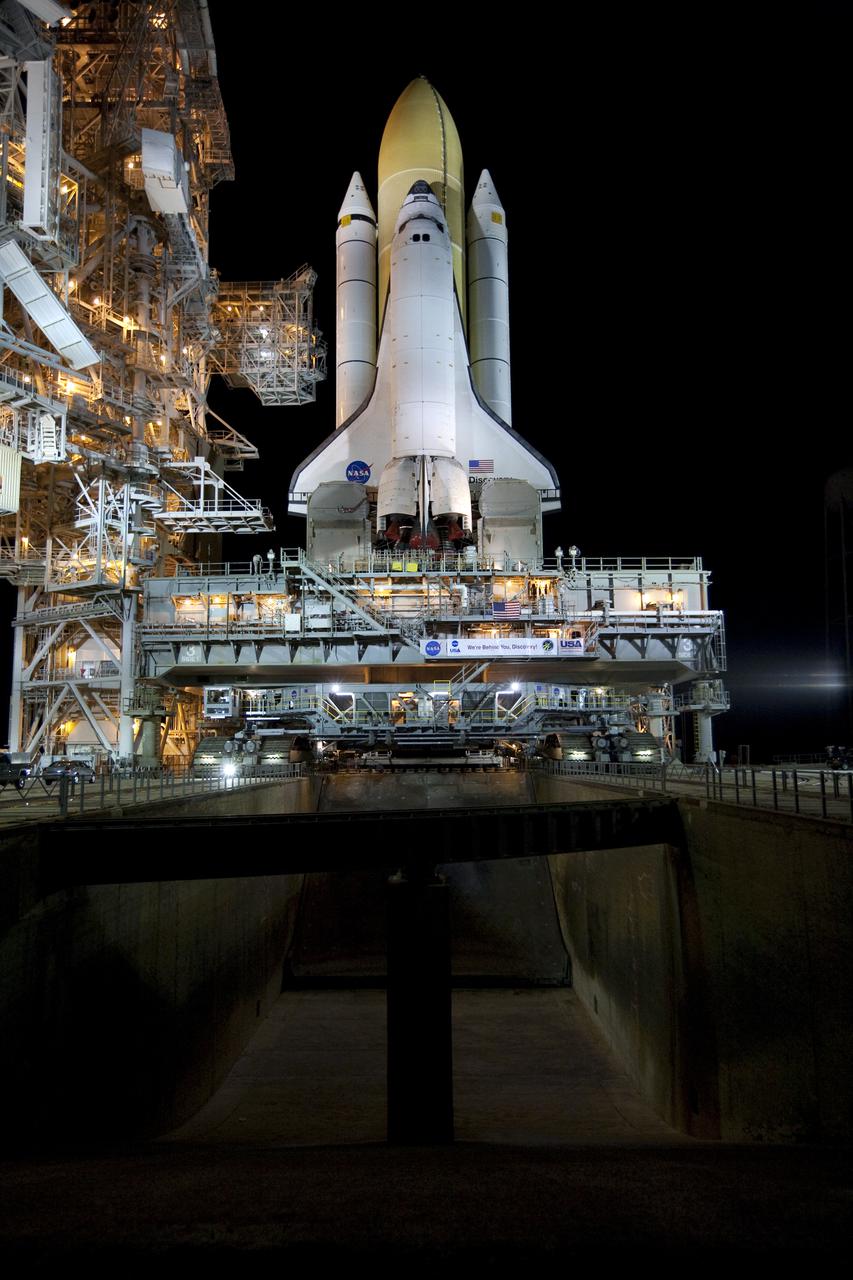
CAPE CANAVERAL, Fla. – On Launch Pad 39A at NASA's Kennedy Space Center in Florida, operations are under way to secure the mobile launcher platform supporting space shuttle Discovery on the pad's pedestals. Discovery's first motion on its 3.4-mile trip from the Vehicle Assembly Building was at 11:58 p.m. EST March 2. The shuttle was secured on the pad at 6:48 a.m. March 3. Rollout is a significant milestone in launch processing activities. The seven-member STS-131 crew will deliver the multi-purpose logistics module Leonardo, filled with resupply stowage platforms and racks, to the International Space Station aboard Discovery. Targeted for launch on April 5, STS-131 will be the 33rd shuttle mission to the station and the 131st shuttle mission overall. For information on the STS-131 mission and crew, visit http:__www.nasa.gov_mission_pages_shuttle_shuttlemissions_sts131_index.html. Photo credit: NASA_Amanda Diller
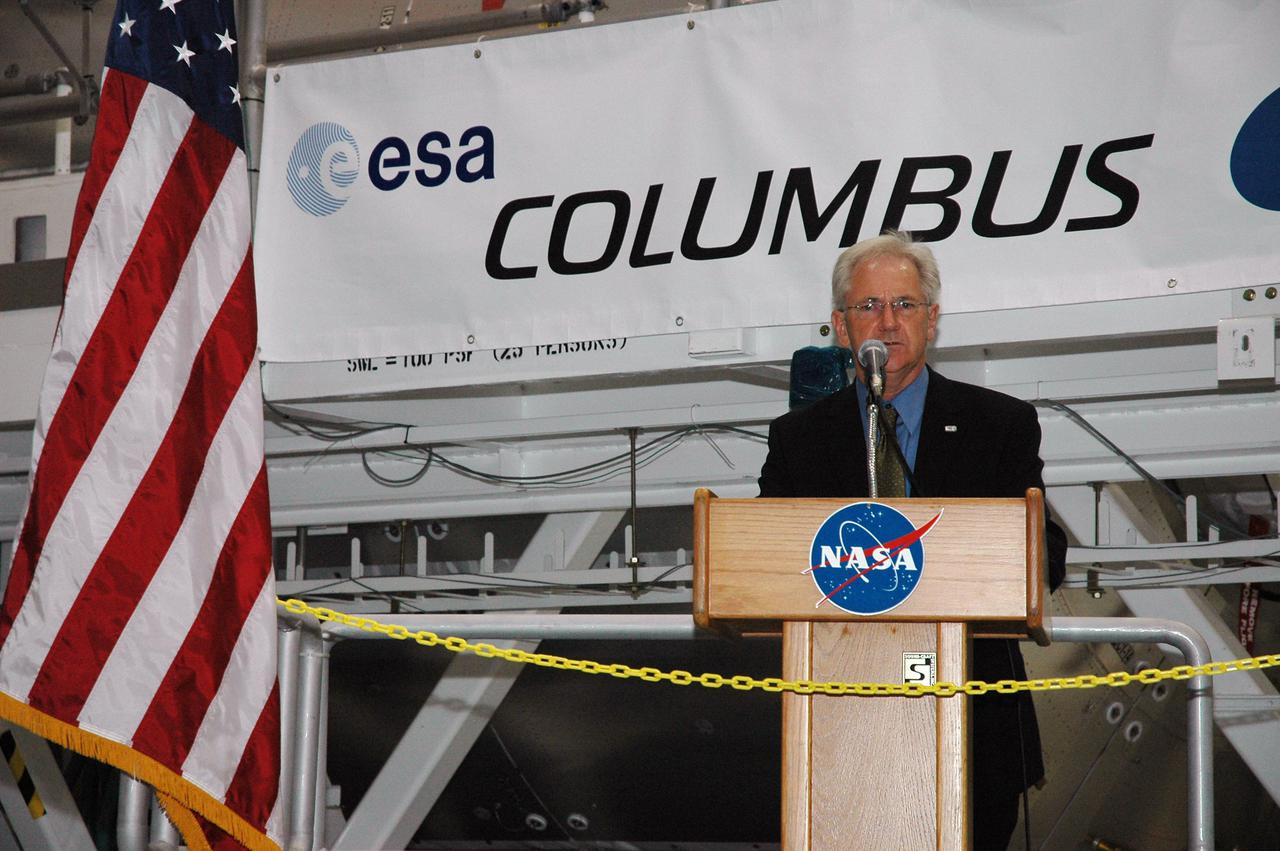
KENNEDY SPACE CENTER, FLA. - Alan Thirkettle, International Space Station program manager for the European Space Agency (ESA), speaks at a ceremony in the Space Station Processing Facility following the delivery of ESA's Columbus module to Kennedy Space Center. Columbus is the European Space Agency's research laboratory for the International Space Station. The module will be prepared in the SSPF for delivery to the space station on a future space shuttle mission. Columbus will expand the research facilities of the station and provide researchers with the ability to conduct numerous experiments in the life, physical and materials sciences. Photo credit: NASA_Amanda Diller
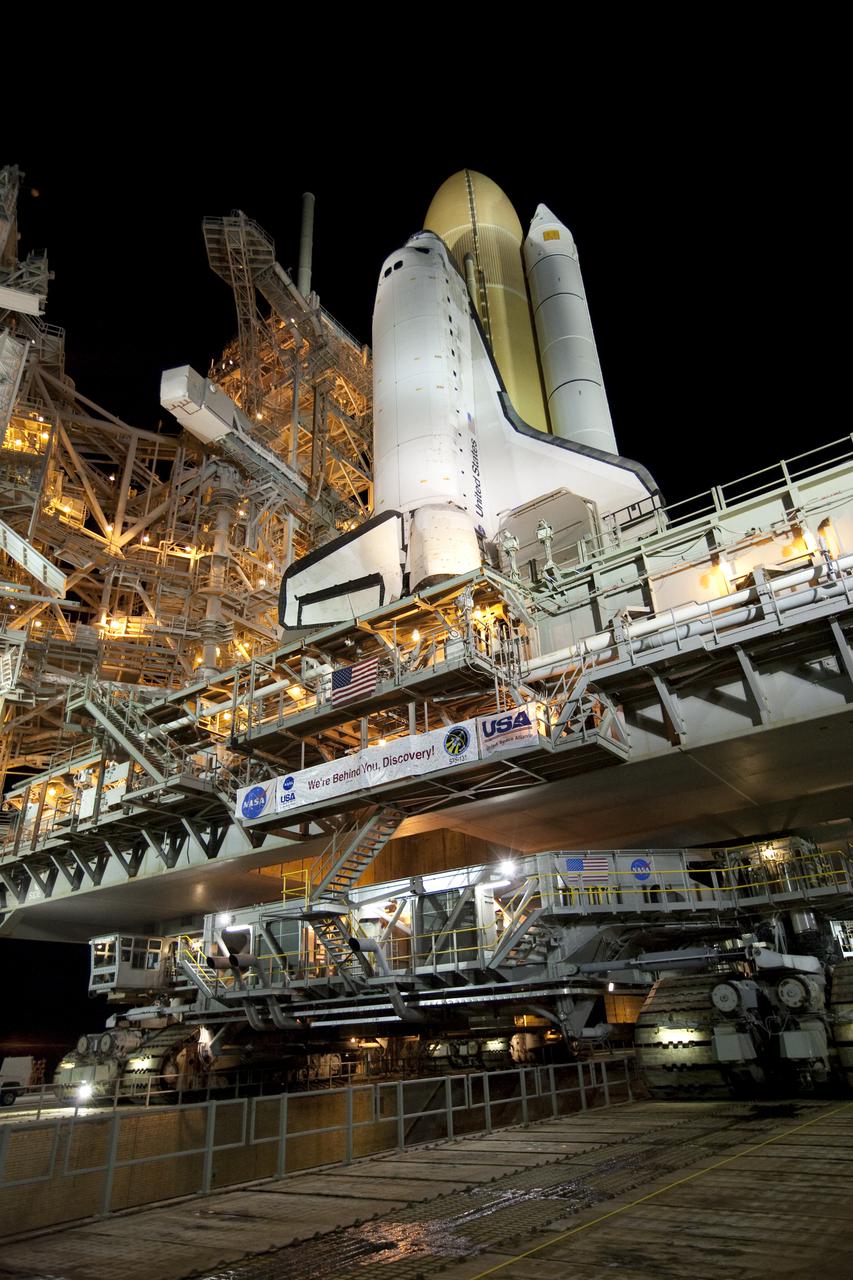
CAPE CANAVERAL, Fla. – On Launch Pad 39A at NASA's Kennedy Space Center in Florida, the crawler-transporter beneath space shuttle Discovery crosses over the pad's flame trench. Discovery's first motion on its 3.4-mile trip from the Vehicle Assembly Building was at 11:58 p.m. EST March 2. The shuttle was secured on the pad at 6:48 a.m. March 3. Rollout is a significant milestone in launch processing activities. The seven-member STS-131 crew will deliver the multi-purpose logistics module Leonardo, filled with resupply stowage platforms and racks, to the International Space Station aboard Discovery. Targeted for launch on April 5, STS-131 will be the 33rd shuttle mission to the station and the 131st shuttle mission overall. For information on the STS-131 mission and crew, visit http:__www.nasa.gov_mission_pages_shuttle_shuttlemissions_sts131_index.html. Photo credit: NASA_Amanda Diller
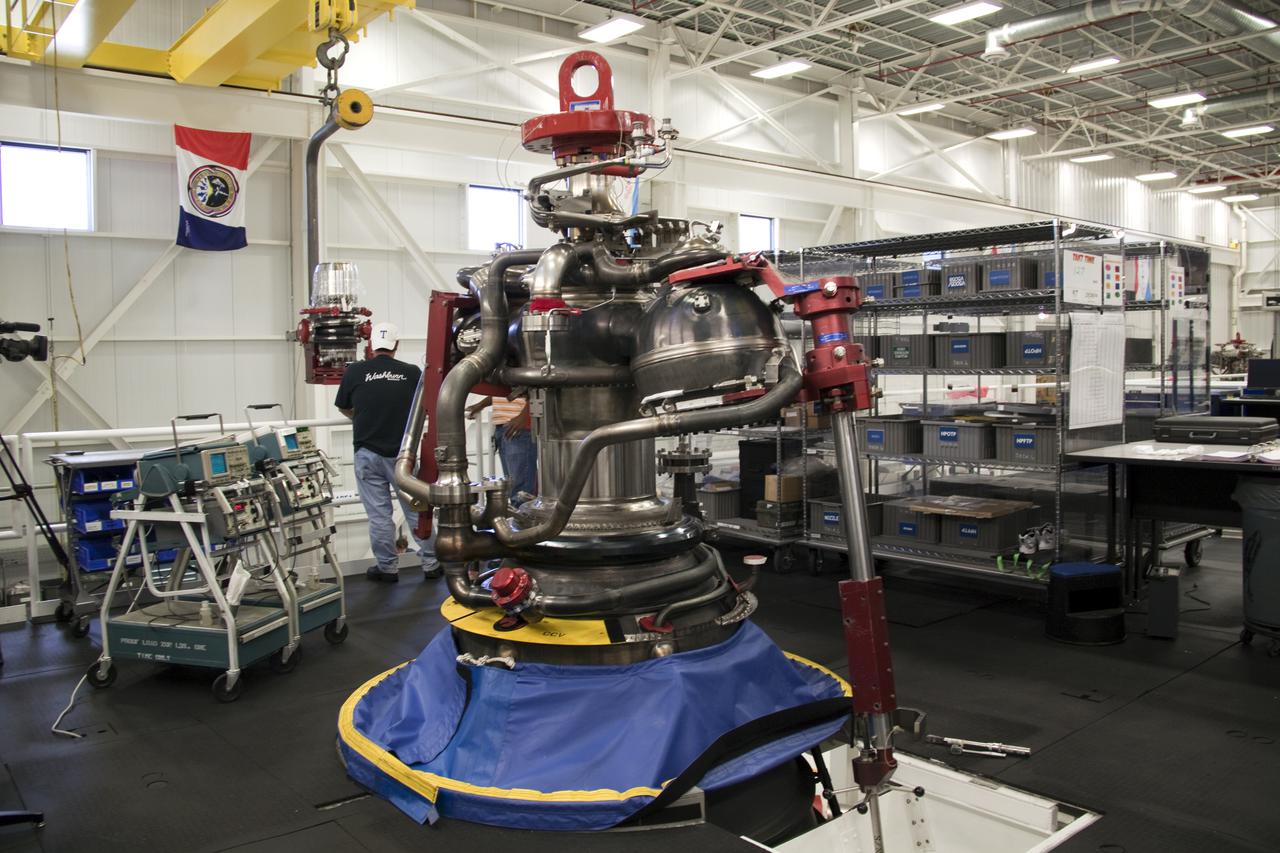
CAPE CANAVERAL, Fla. – In the Space Shuttle Main Engine Processing Facility at NASA's Kennedy Space Center in Florida, preparations are under way to install a high pressure oxidizer turbo pump on space shuttle main engine no. 2062, seen here. The engine, or SSME, is the last one scheduled to be built at Kennedy by Pratt and Whitney Rocketdyne before the end of the Space Shuttle Program. Three main engines are clustered at the aft end of the shuttle and have a combined thrust of more than 1.2 million pounds. Even though an SSME weighs one-seventh as much as a locomotive engine, its high-pressure fuel pump alone delivers as much horsepower as 28 locomotives. Each engine operates during the entire eight-and-a-half minute climb to orbit. Post-flight inspections and maintenance of each engine also are conducted in the SSME Processing Facility between shuttle missions. Photo credit: NASA_Amanda Diller
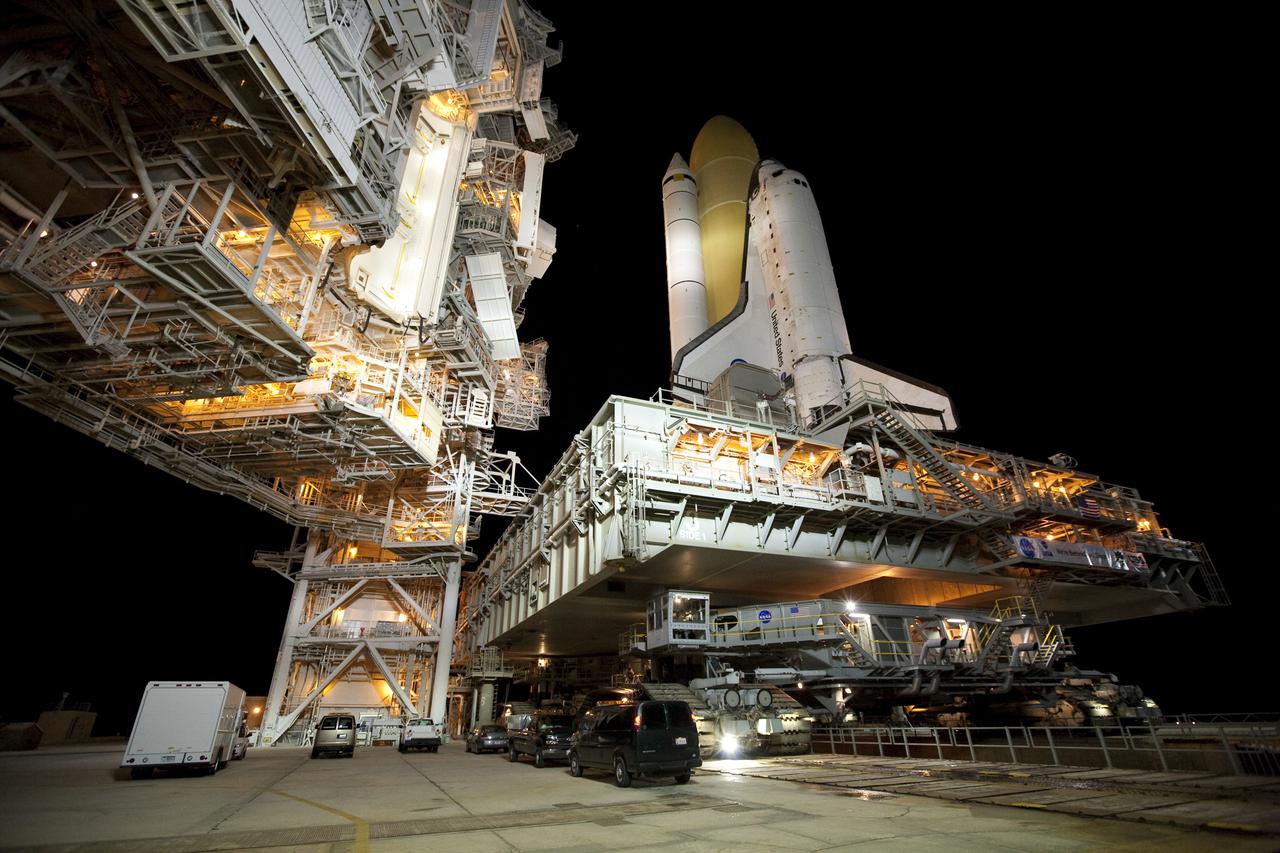
CAPE CANAVERAL, Fla. – A crawler-transporter delivers space shuttle Discovery over the flame trench next to the fixed service structure on Launch Pad 39A at NASA's Kennedy Space Center in Florida before sunrise. Discovery's first motion on its 3.4-mile trip from the Vehicle Assembly Building was at 11:58 p.m. EST March 2. The shuttle was secured on the pad at 6:48 a.m. March 3. Rollout is a significant milestone in launch processing activities. The seven-member STS-131 crew will deliver the multi-purpose logistics module Leonardo, filled with resupply stowage platforms and racks, to the International Space Station aboard Discovery. Targeted for launch on April 5, STS-131 will be the 33rd shuttle mission to the station and the 131st shuttle mission overall. For information on the STS-131 mission and crew, visit http:__www.nasa.gov_mission_pages_shuttle_shuttlemissions_sts131_index.html. Photo credit: NASA_Amanda Diller
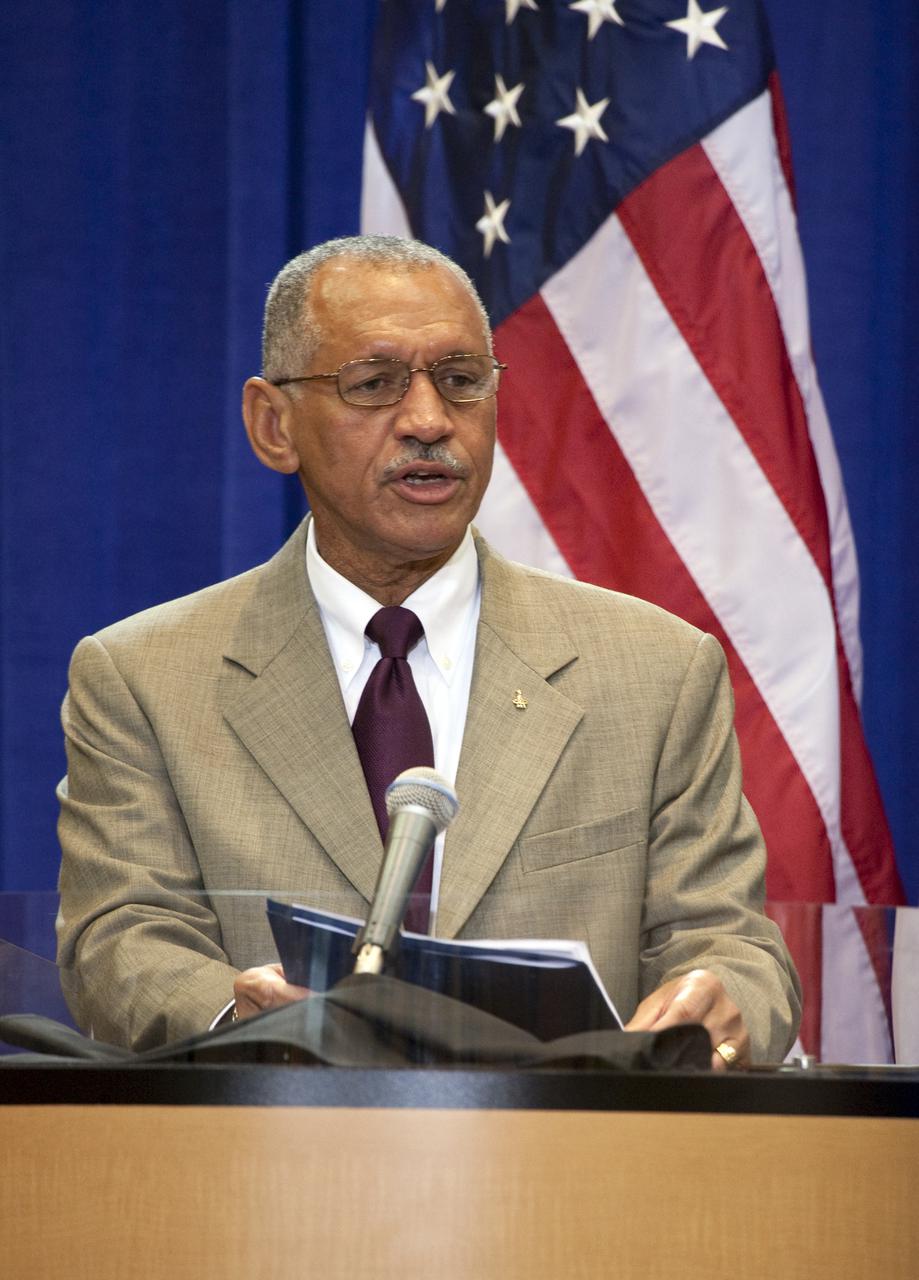
ORLANDO, Fla. – NASA Administrator Charles Bolden speaks to business and industry leaders during a town hall meeting at the Orlando Airport Hyatt Hotel as part of the Presidential Task Force on Space Industry Work Force and Economic Development. The task force heard from local leaders about ways to strengthen the work force as NASA moves toward retirement of the Space Shuttle Program. The task force is a $40 million, multi-agency initiative for regional and economic growth to assist the Space Coast as the country’s space exploration efforts expand and transform. Photo credit: NASA_Amanda Diller
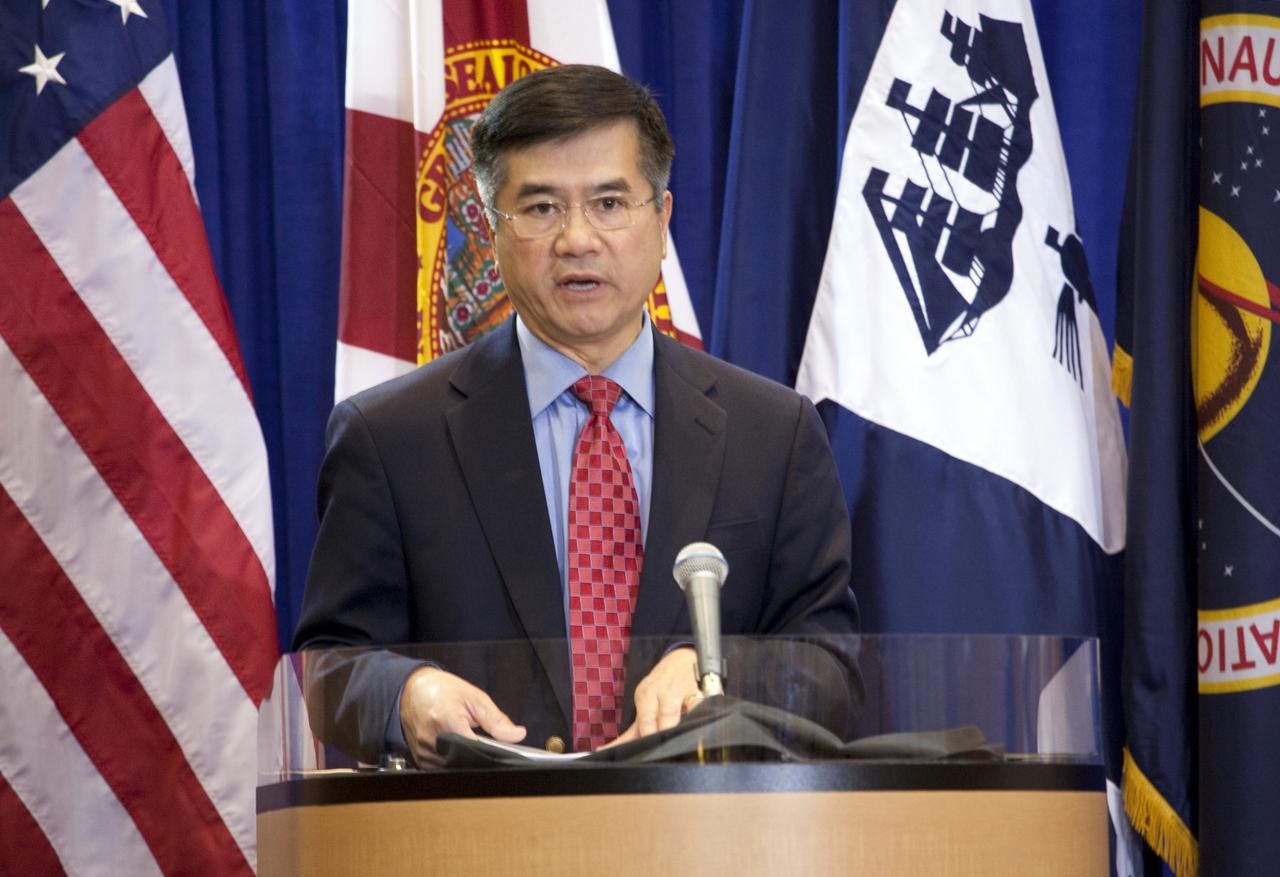
ORLANDO, Fla. – Secretary of Commerce Gary Locke addresses business and industry leaders during a town hall meeting at the Orlando Airport Hyatt Hotel as part of the Presidential Task Force on Space Industry Work Force and Economic Development. The task force heard from local leaders about ways to strengthen the work force as NASA moves toward retirement of the Space Shuttle Program. The task force is a $40 million, multi-agency initiative for regional and economic growth to assist the Space Coast as the country’s space exploration efforts expand and transform. Photo credit: NASA_Amanda Diller
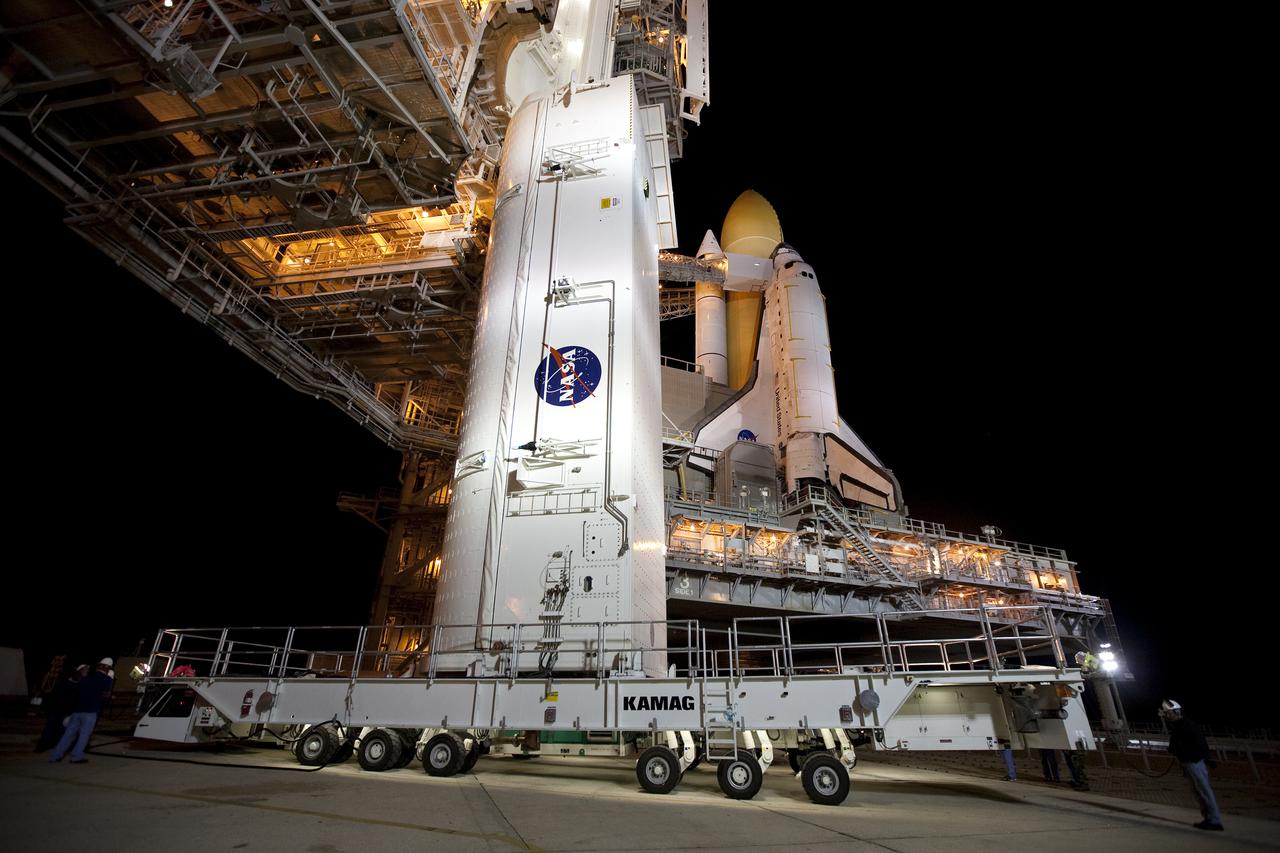
CAPE CANAVERAL, Fla. - At Launch Pad 39A at NASA's Kennedy Space Center in Florida, preparations are under way to lift the payload canister containing the multi-purpose logistics module Leonardo, standing vertically on a transporter, into the pad's payload changout room. Located on the pad's rotating service structure, the room is an enclosed, environmentally controlled area that supports payload delivery and servicing at the pad and attaches to the shuttle's cargo bay for vertical payload installation. The contents of the canister, including Leonardo, is set to be transferred into space shuttle Discovery's cargo bay on March 24. The seven-member STS-131 crew will deliver Leonardo, filled with resupply stowage platforms and racks, to the International Space Station. STS-131 will be the 33rd shuttle mission to the station and the 131st shuttle mission overall. Launch is targeted for April 5. For information on the STS-131 mission and crew, visit http:__www.nasa.gov_mission_pages_shuttle_shuttlemissions_sts131_index.html. Photo credit: NASA_Amanda Diller
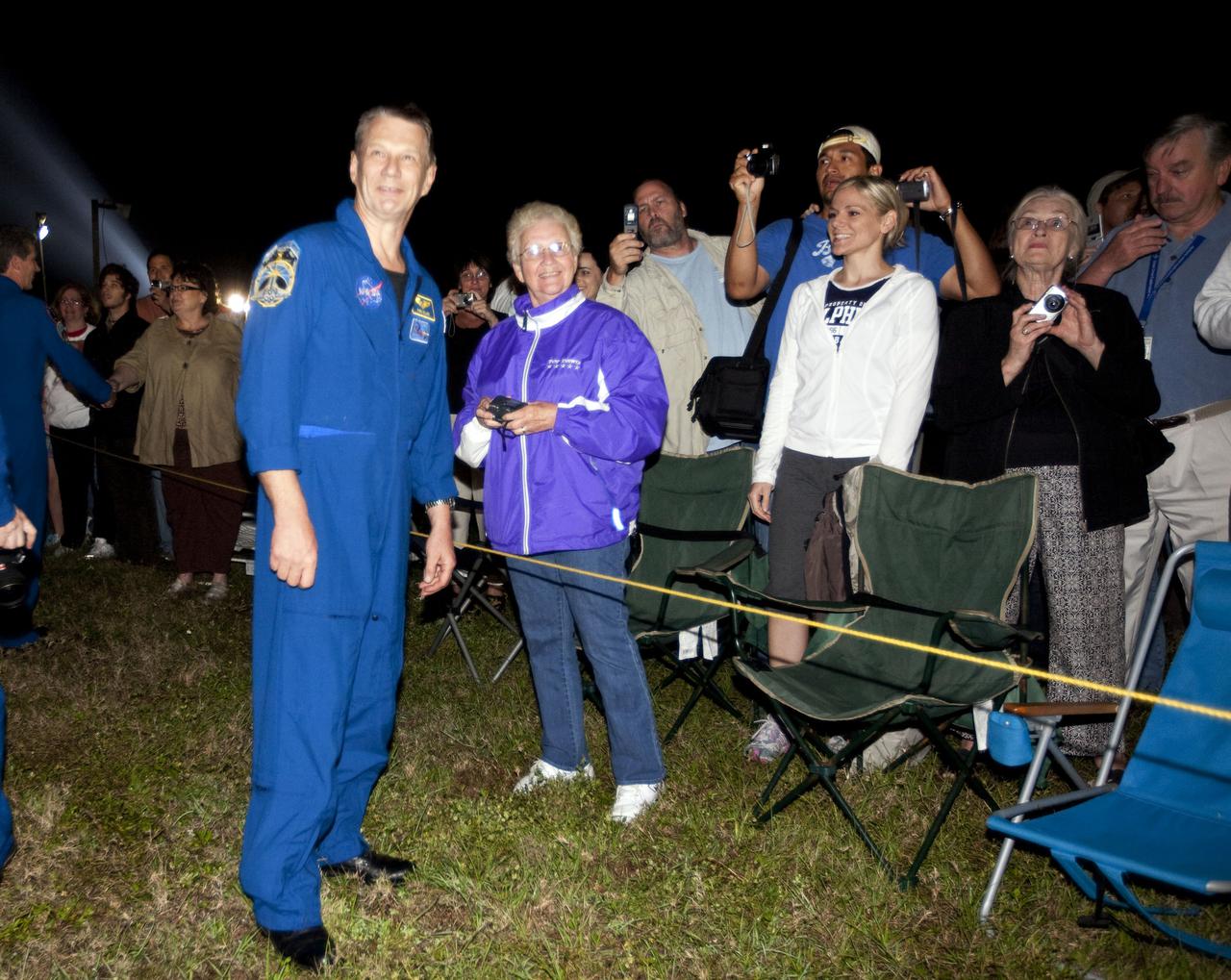
CAPE CANAVERAL, Fla. – Outside the Vehicle Assembly Building at NASA's Kennedy Space Center in Florida, STS-132 Mission Specialist Piers Sellers joins Kennedy employees and their families who turned out to watch space shuttle Atlantis begin its move to Launch Pad 39A. Atlantis' first motion on its 3.4-mile trip from the Vehicle Assembly Building was at 11:31 p.m. EDT April 21. The shuttle was secured on the pad at 6:03 a.m. April 22. Rollout is a significant milestone in launch processing activities. On the STS-132 mission, the six-member crew will deliver an Integrated Cargo Carrier, or ICC, and the Russian-built Mini-Research Module-1, or MRM-1, to the International Space Station. The ICC is an unpressurized flat bed pallet and keel yoke assembly used to support the transfer of exterior cargo from the shuttle to the space station. The MRM-1, known as Rassvet, is the second in a series of new pressurized components for Russia and will be permanently attached to the Earth-facing port of the Zarya control module. Rassvet, which translates to 'dawn,' will be used for cargo storage and will provide an additional docking port to the station. STS-132 is the 34th mission to the station and the 132nd shuttle mission overall. Atlantis is targeted to launch on May 14 at 2:19 p.m. For information on the STS-132 mission, visit http:__www.nasa.gov_mission_pages_shuttle_shuttlemissions_sts132_index.html. Photo credit: NASA_Amanda Diller
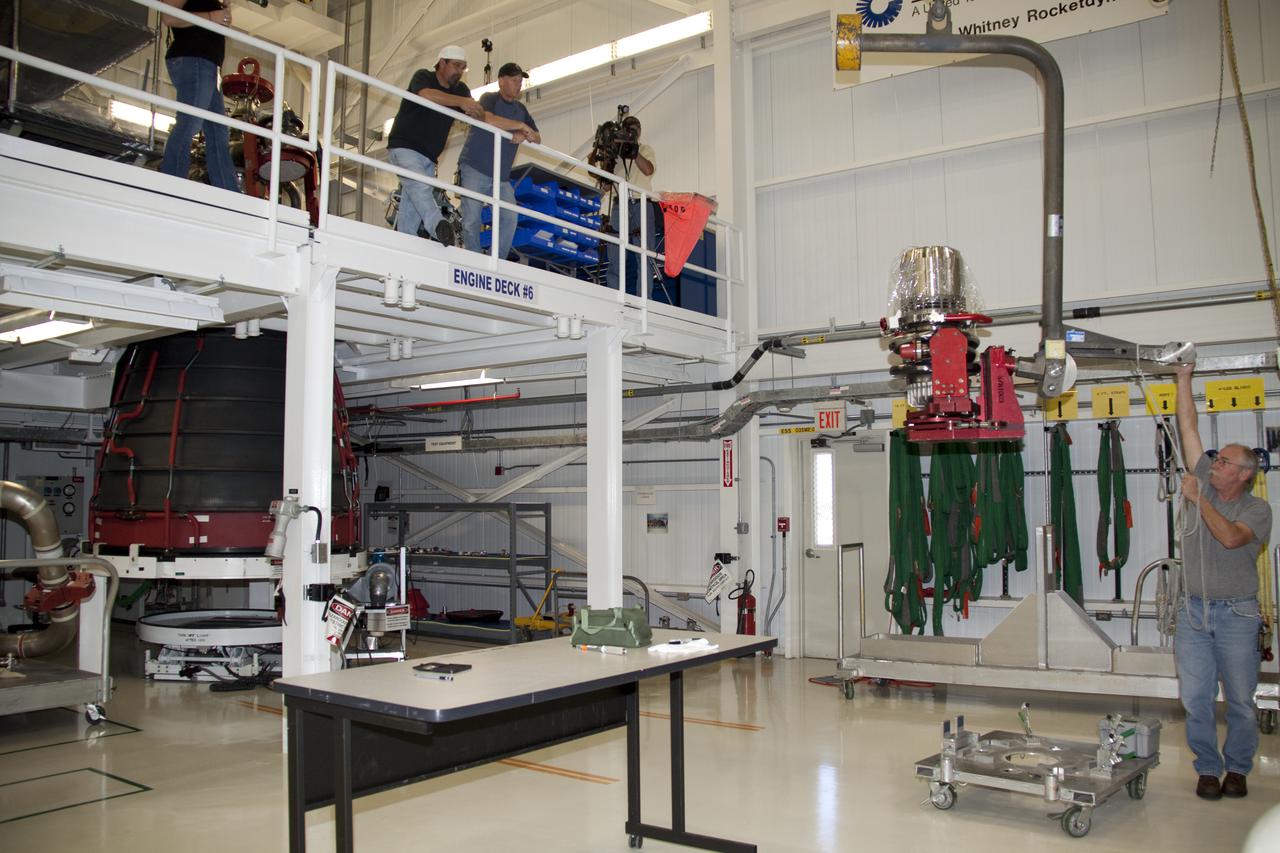
CAPE CANAVERAL, Fla. – On the floor of the Space Shuttle Main Engine Processing Facility at NASA's Kennedy Space Center in Florida, Pratt and Whitney Rocketdyne engine technician Dan Bode lifts a high pressure oxidizer turbo pump off its stand for installation on space shuttle main engine no. 2062. The engine, or SSME, is the last one scheduled to be built at Kennedy by Pratt and Whitney Rocketdyne before the end of the Space Shuttle Program. Three main engines are clustered at the aft end of the shuttle and have a combined thrust of more than 1.2 million pounds. Even though an SSME weighs one-seventh as much as a locomotive engine, its high-pressure fuel pump alone delivers as much horsepower as 28 locomotives. Each engine operates during the entire eight-and-a-half minute climb to orbit. Post-flight inspections and maintenance of each engine also are conducted in the SSME Processing Facility between shuttle missions. Photo credit: NASA_Amanda Diller

CAPE CANAVERAL, Fla. – At NASA's Kennedy Space Center in Florida, work is under way to construct the launch mount for a new mobile launcher, or ML, which will support NASA's future human spaceflight program, following the arrival of all eight segments. The construction is taking place in Launch Complex 39 in the mobile launcher park site north of Kennedy's Vehicle Assembly Building. The new launcher is 355 feet tall and has multiple platforms for personnel access. The base of the launcher is lighter than space shuttle mobile launcher platforms so the crawler-transporter can pick up the heavier load of the tower and a taller rocket. For information on NASA's future plans, visit http:__www.nasa.gov. Photo credit: NASA_Amanda Diller
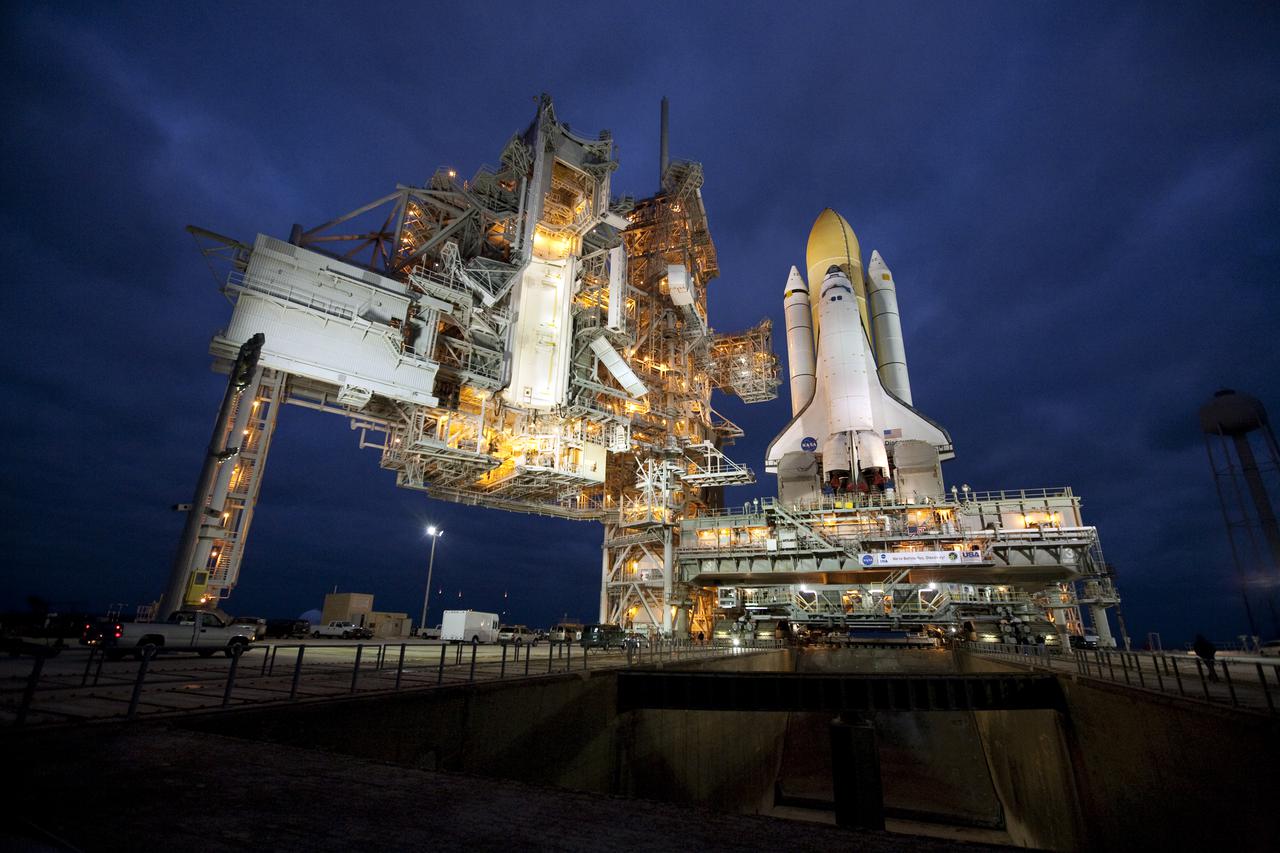
CAPE CANAVERAL, Fla. – On Launch Pad 39A at NASA's Kennedy Space Center in Florida, operations are under way to secure space shuttle Discovery to the pad. Discovery's first motion on its 3.4-mile trip from the Vehicle Assembly Building was at 11:58 p.m. EST March 2. The shuttle was secured on the pad at 6:48 a.m. March 3. Rollout is a significant milestone in launch processing activities. The seven-member STS-131 crew will deliver the multi-purpose logistics module Leonardo, filled with resupply stowage platforms and racks, to the International Space Station aboard Discovery. Targeted for launch on April 5, STS-131 will be the 33rd shuttle mission to the station and the 131st shuttle mission overall. For information on the STS-131 mission and crew, visit http:__www.nasa.gov_mission_pages_shuttle_shuttlemissions_sts131_index.html. Photo credit: NASA_Amanda Diller
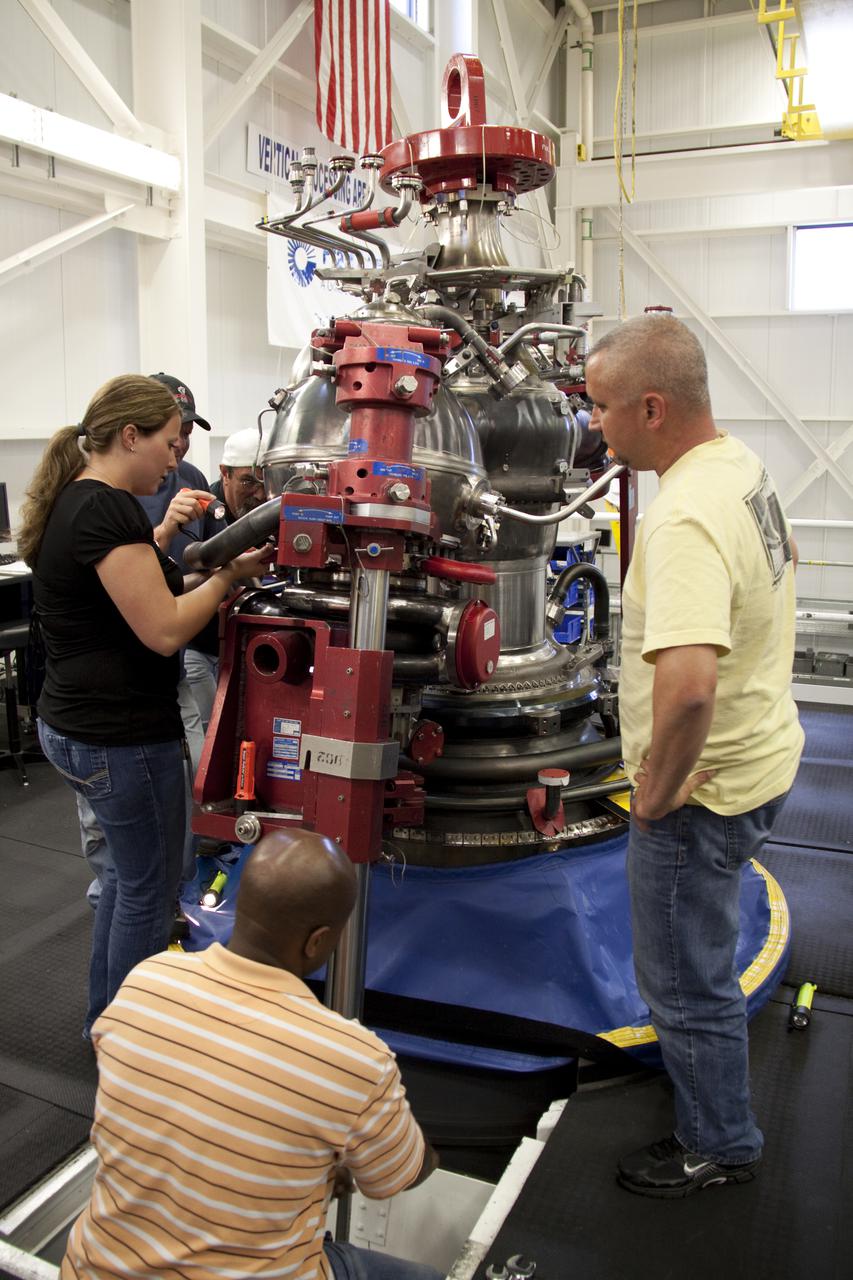
CAPE CANAVERAL, Fla. – In the Space Shuttle Main Engine Processing Facility at NASA's Kennedy Space Center in Florida, a team of Pratt and Whitney Rocketdyne employees installs a high pressure oxidizer turbo pump on space shuttle main engine no. 2062. The engine, or SSME, is the last one scheduled to be built at Kennedy before the end of the Space Shuttle Program. Around the engine, from right to left, are engine technicians Ryan Mahony and Teryon Jones, engineer Jessica Tandy, engine technician Ken Burley and quality inspector Barry Martin. Three main engines are clustered at the aft end of the shuttle and have a combined thrust of more than 1.2 million pounds. Even though an SSME weighs one-seventh as much as a locomotive engine, its high-pressure fuel pump alone delivers as much horsepower as 28 locomotives. Each engine operates during the entire eight-and-a-half minute climb to orbit. Post-flight inspections and maintenance of each engine also are conducted in the SSME Processing Facility between shuttle missions. Photo credit: NASA_Amanda Diller
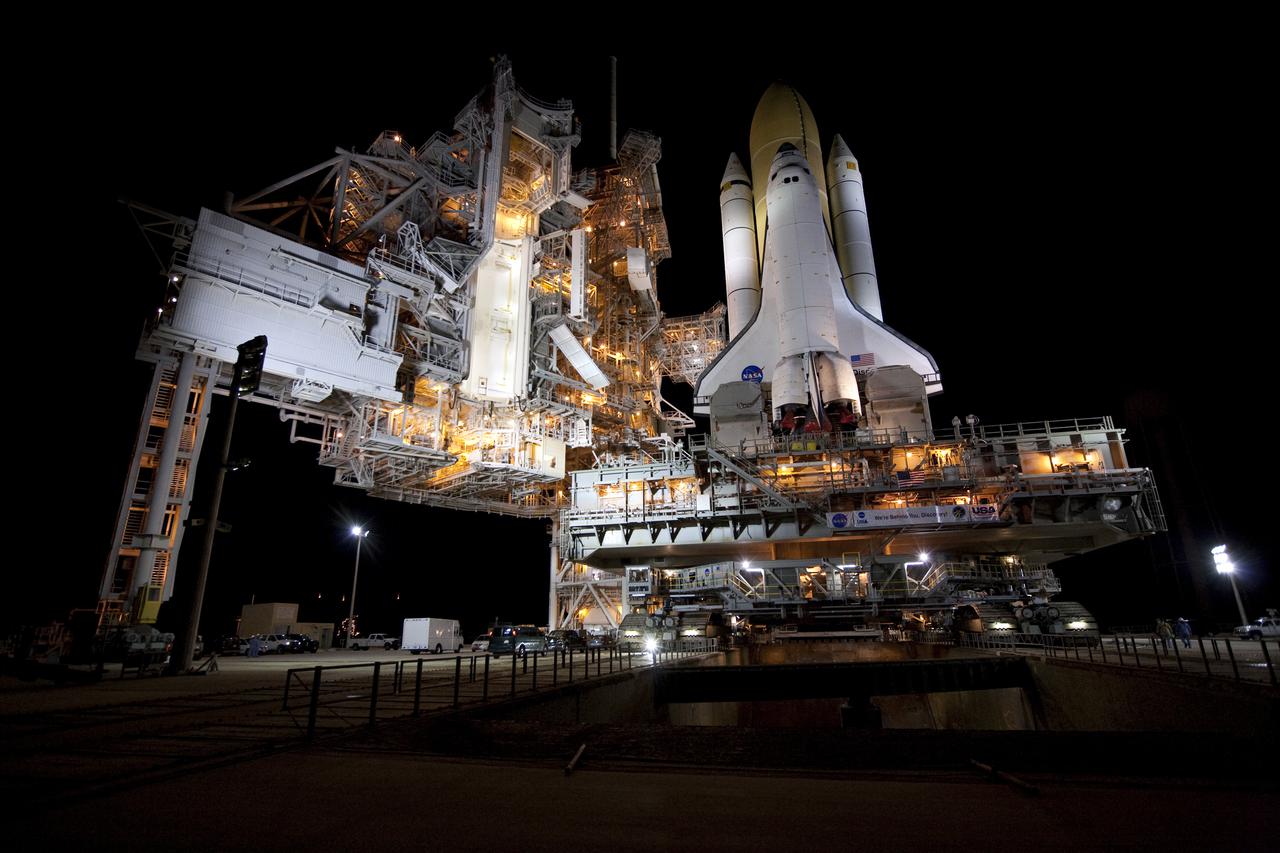
CAPE CANAVERAL, Fla. – The rotating service structure, at left, is retracted on Launch Pad 39A at NASA's Kennedy Space Center in Florida to receive space shuttle Discovery. Discovery's first motion on its 3.4-mile trip from the Vehicle Assembly Building was at 11:58 p.m. EST March 2. The shuttle was secured on the pad at 6:48 a.m. March 3. Rollout is a significant milestone in launch processing activities. The seven-member STS-131 crew will deliver the multi-purpose logistics module Leonardo, filled with resupply stowage platforms and racks, to the International Space Station aboard Discovery. Targeted for launch on April 5, STS-131 will be the 33rd shuttle mission to the station and the 131st shuttle mission overall. For information on the STS-131 mission and crew, visit http:__www.nasa.gov_mission_pages_shuttle_shuttlemissions_sts131_index.html. Photo credit: NASA_Amanda Diller
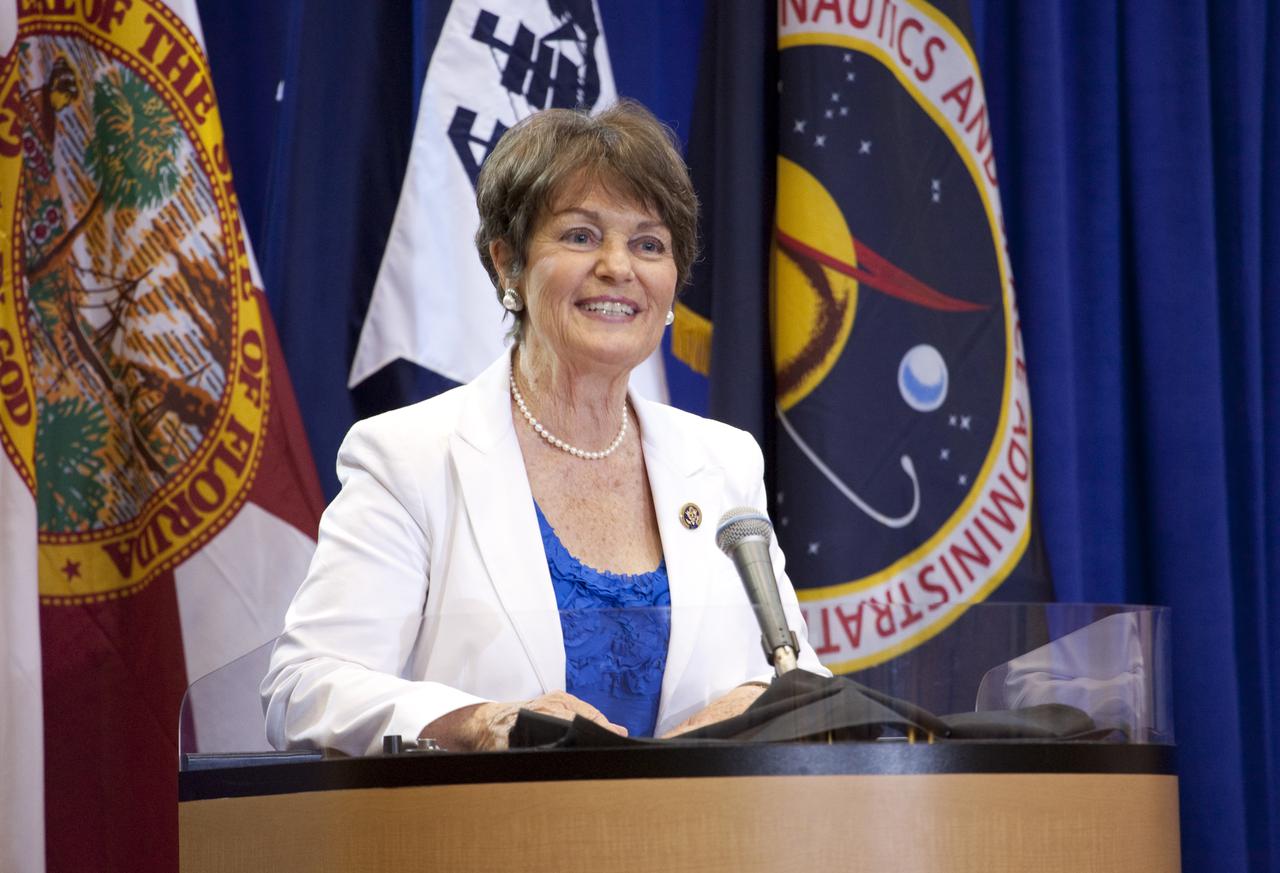
ORLANDO, Fla. – Rep. Suzanne Kosmas of Florida speaks during a town hall meeting at the Orlando Airport Hyatt Hotel as part of the Presidential Task Force on Space Industry Work Force and Economic Development. The task force heard from local leaders about ways to strengthen the work force as NASA moves toward retirement of the Space Shuttle Program. The task force is a $40 million, multi-agency initiative for regional and economic growth to assist the Space Coast as the country’s space exploration efforts expand and transform. Photo credit: NASA_Amanda Diller
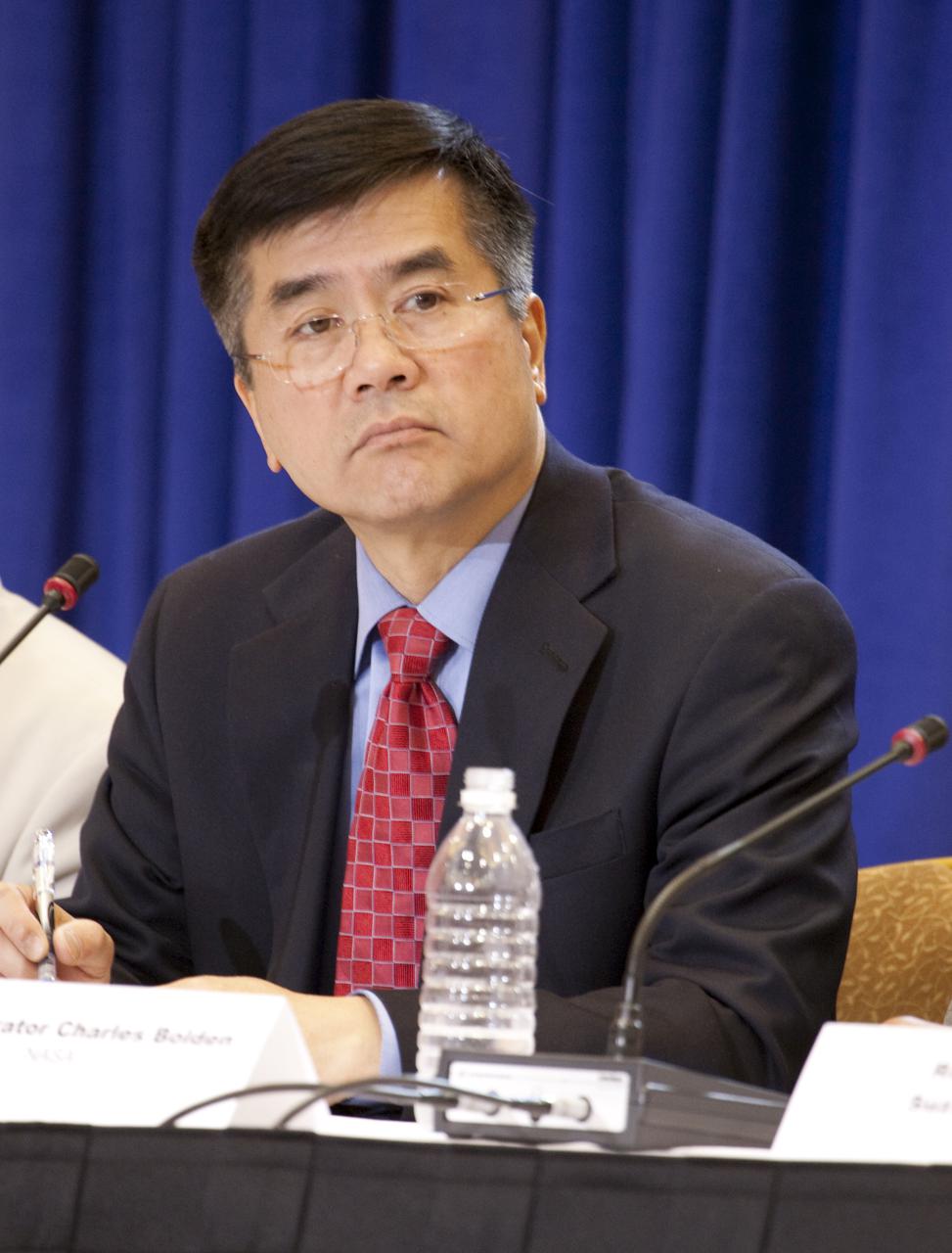
ORLANDO, Fla. – Secretary of Commerce Gary Locke listens to presentations from business and community leaders during a town hall meeting at the Orlando Airport Hyatt Hotel as part of the Presidential Task Force on Space Industry Work Force and Economic Development. The task force heard from local leaders about ways to strengthen the work force as NASA moves toward retirement of the Space Shuttle Program. The task force is a $40 million, multi-agency initiative for regional and economic growth to assist the Space Coast as the country’s space exploration efforts expand and transform. Photo credit: NASA_Amanda Diller
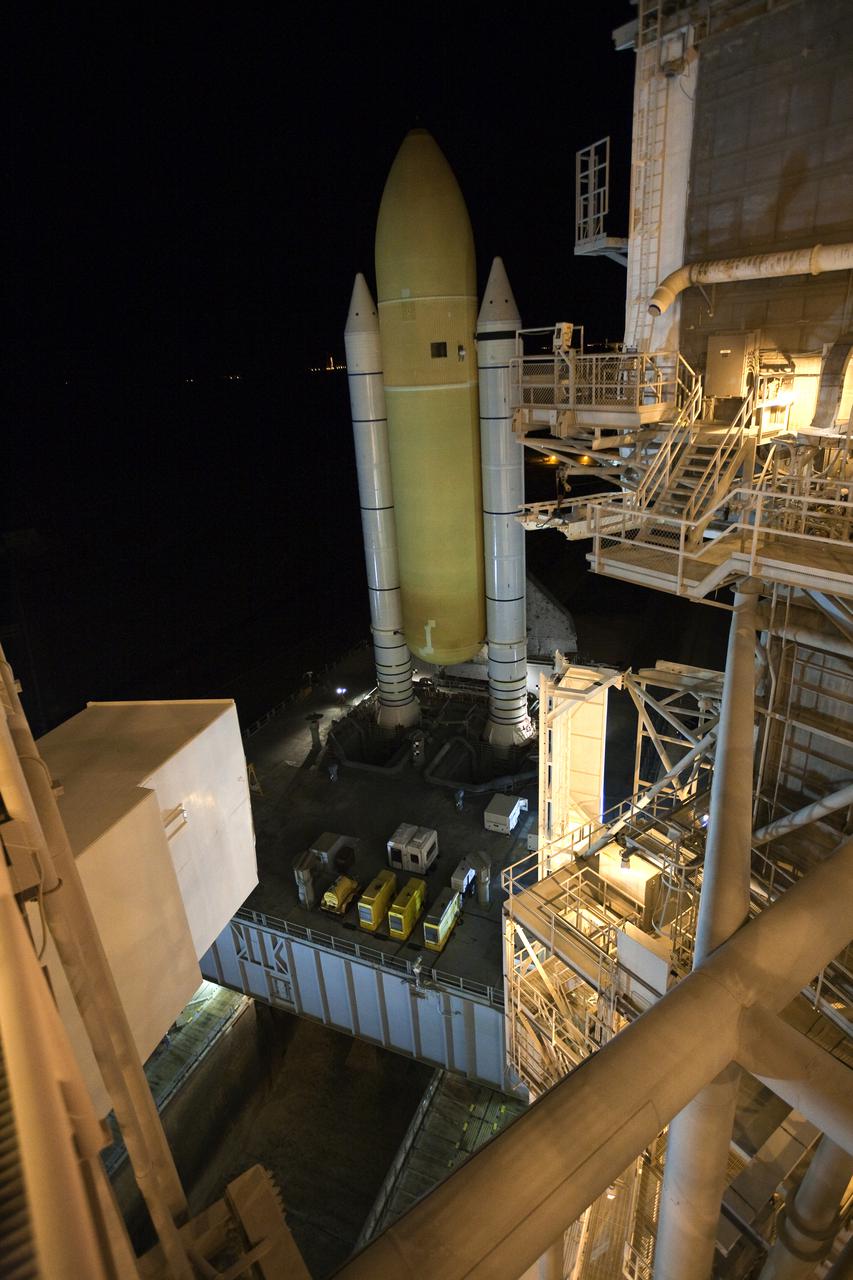
CAPE CANAVERAL, Fla. – Space shuttle Discovery rolls into place over the flame trench on Launch Pad 39A at NASA's Kennedy Space Center in Florida just before dawn. Discovery's first motion on its 3.4-mile trip from the Vehicle Assembly Building was at 11:58 p.m. EST March 2. The shuttle was secured on the pad at 6:48 a.m. March 3. Rollout is a significant milestone in launch processing activities. The seven-member STS-131 crew will deliver the multi-purpose logistics module Leonardo, filled with resupply stowage platforms and racks, to the International Space Station aboard Discovery. Targeted for launch on April 5, STS-131 will be the 33rd shuttle mission to the station and the 131st shuttle mission overall. For information on the STS-131 mission and crew, visit http:__www.nasa.gov_mission_pages_shuttle_shuttlemissions_sts131_index.html. Photo credit: NASA_Amanda Diller
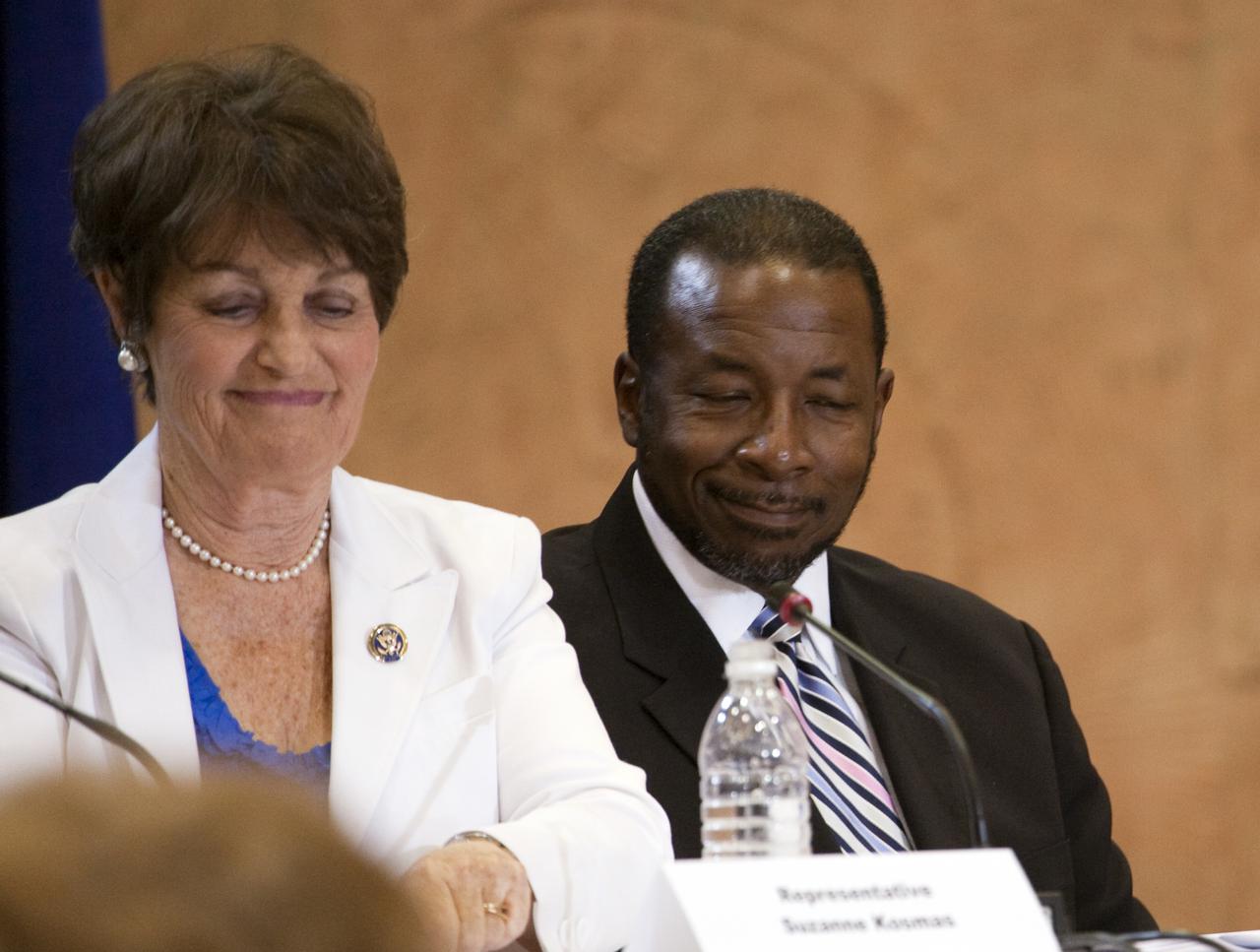
ORLANDO, Fla. – Rep. Suzanne Kosmas of Florida and NASA Associate Administrator for Mission Support Woodrow Whitlow, listen to presentations from business and community leaders during a town hall meeting at the Orlando Airport Hyatt Hotel as part of the Presidential Task Force on Space Industry Work Force and Economic Development. The task force heard from local leaders about ways to strengthen the work force as NASA moves toward retirement of the Space Shuttle Program. The task force is a $40 million, multi-agency initiative for regional and economic growth to assist the Space Coast as the country’s space exploration efforts expand and transform. Photo credit: NASA_Amanda Diller
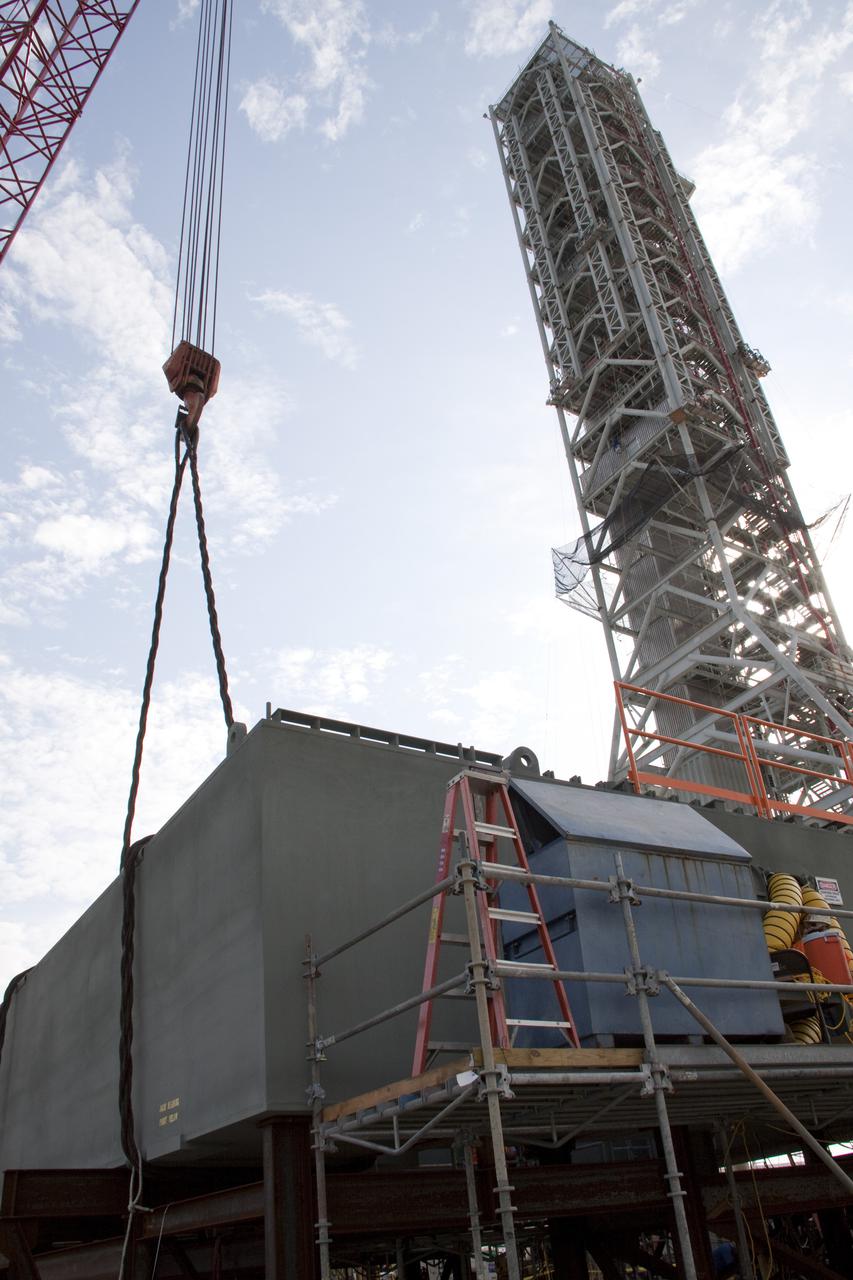
CAPE CANAVERAL, Fla. – At NASA's Kennedy Space Center in Florida, a crane is enlisted to lift a section of the launch mount for a new mobile launcher, or ML, being constructed to support NASA's future human spaceflight program. All eight segments of the mount have been delivered to Kennedy. The launcher's tower looms overhead, at right. The construction is taking place in Launch Complex 39 in the mobile launcher park site north of Kennedy's Vehicle Assembly Building. The new launcher is 355 feet tall and has multiple platforms for personnel access. The base of the launcher is lighter than space shuttle mobile launcher platforms so the crawler-transporter can pick up the heavier load of the tower and a taller rocket. For information on NASA's future plans, visit http:__www.nasa.gov. Photo credit: NASA_Amanda Diller
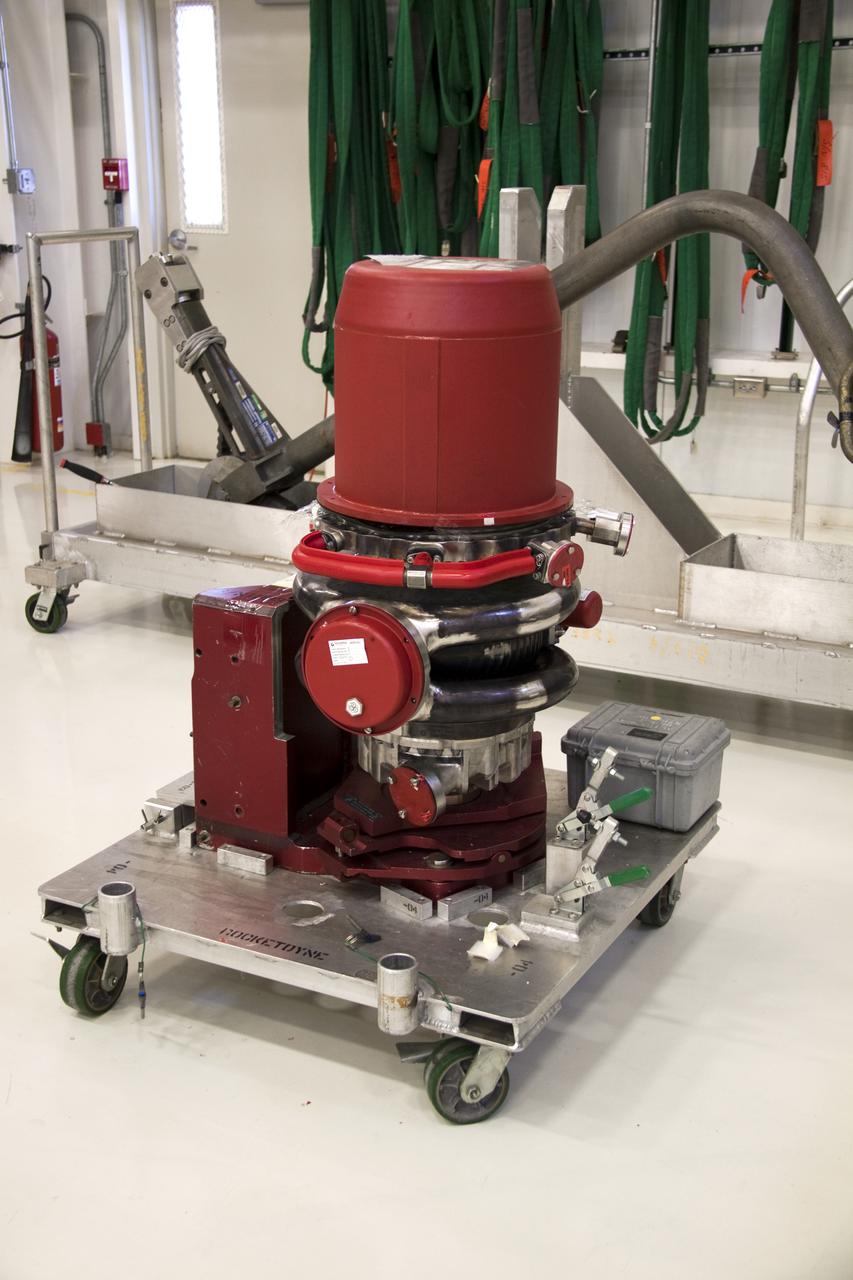
CAPE CANAVERAL, Fla. – In the Space Shuttle Main Engine Processing Facility at NASA's Kennedy Space Center in Florida, preparations are under way to install this high pressure oxidizer turbo pump on space shuttle main engine no. 2062. The engine, or SSME, is the last one scheduled to be built at Kennedy by Pratt and Whitney Rocketdyne before the end of the Space Shuttle Program. Three main engines are clustered at the aft end of the shuttle and have a combined thrust of more than 1.2 million pounds. Even though an SSME weighs one-seventh as much as a locomotive engine, its high-pressure fuel pump alone delivers as much horsepower as 28 locomotives. Each engine operates during the entire eight-and-a-half minute climb to orbit. Post-flight inspections and maintenance of each engine also are conducted in the SSME Processing Facility between shuttle missions. Photo credit: NASA_Amanda Diller
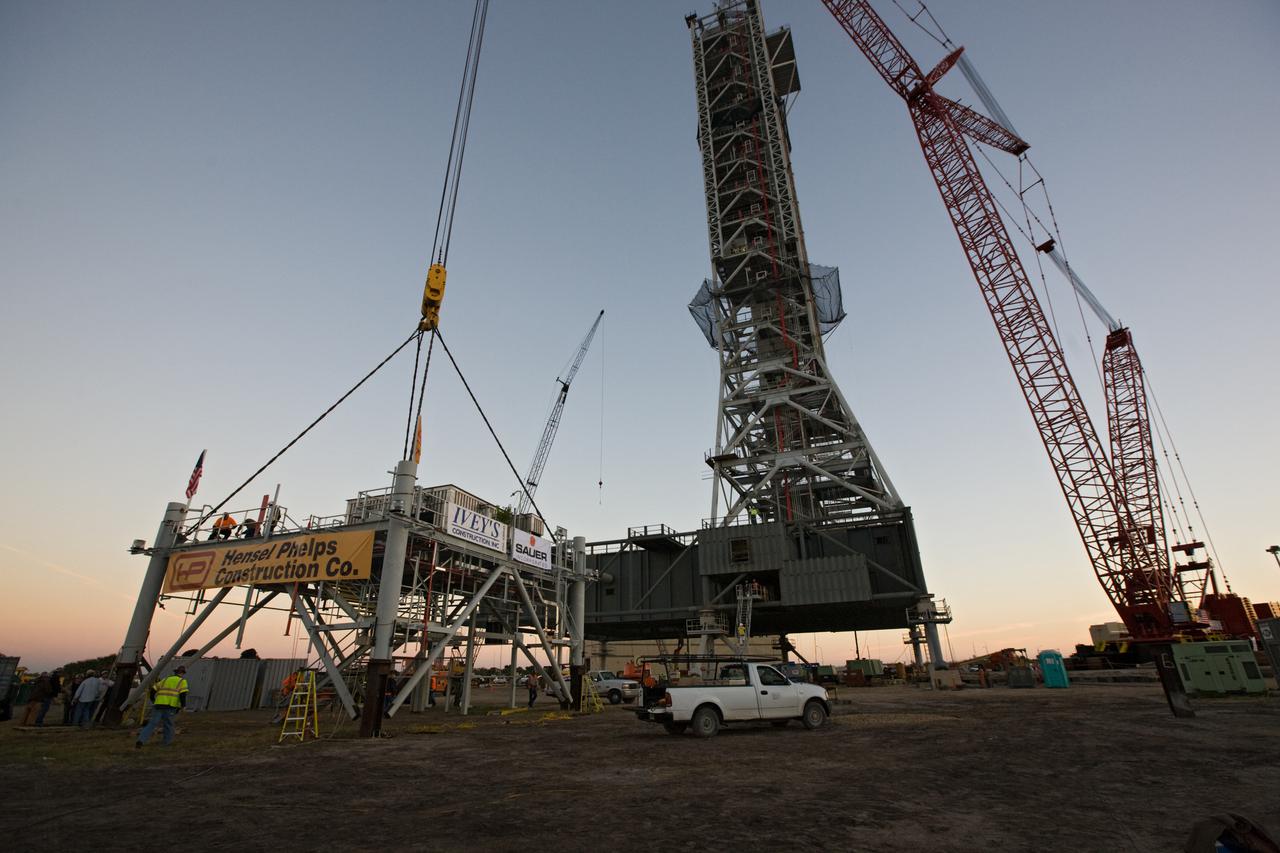
CAPE CANAVERAL, Fla. – At NASA’s Kennedy Space Center in Florida, a large crane is attached to the tenth and final tower segment of the new mobile launcher, or ML, being constructed to support the Constellation Program. When completed, the tower will be approximately 345 feet tall and have multiple platforms for personnel access. Its base is being made lighter than space shuttle mobile launcher platforms so the crawler-transporter can pick up the heavier load of the tower and a taller rocket. For information on the Constellation Program, visit http:__www.nasa.gov_constellation. Photo credit: NASA_Amanda Diller
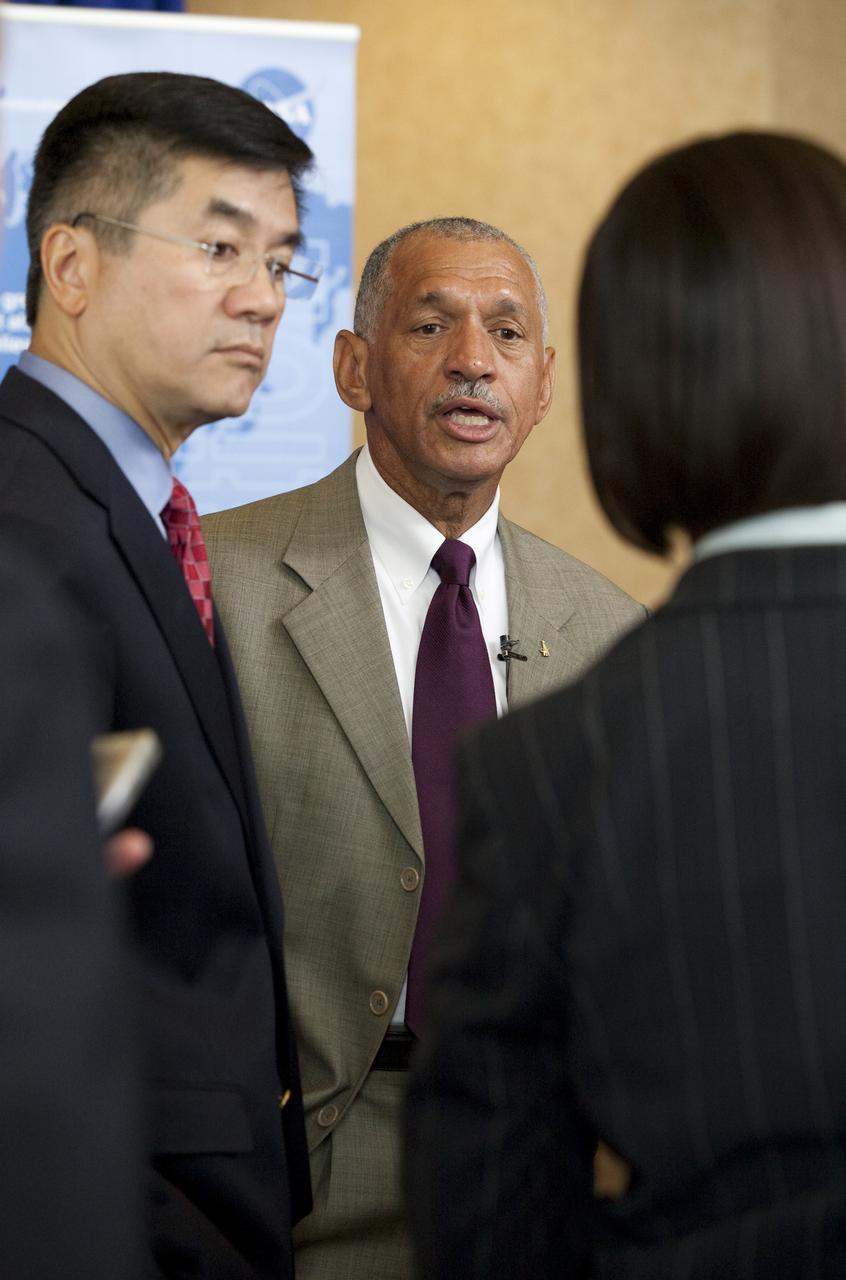
ORLANDO, Fla. – Secretary of Commerce Gary Locke, left, and NASA Administrator Charles Bolden speak to reporters during a town hall meeting at the Orlando Airport Hyatt Hotel as part of the Presidential Task Force on Space Industry Work Force and Economic Development. The task force heard from local leaders about ways to strengthen the work force as NASA moves toward retirement of the Space Shuttle Program. The task force is a $40 million, multi-agency initiative for regional and economic growth to assist the Space Coast as the country’s space exploration efforts expand and transform. Photo credit: NASA_Amanda Diller
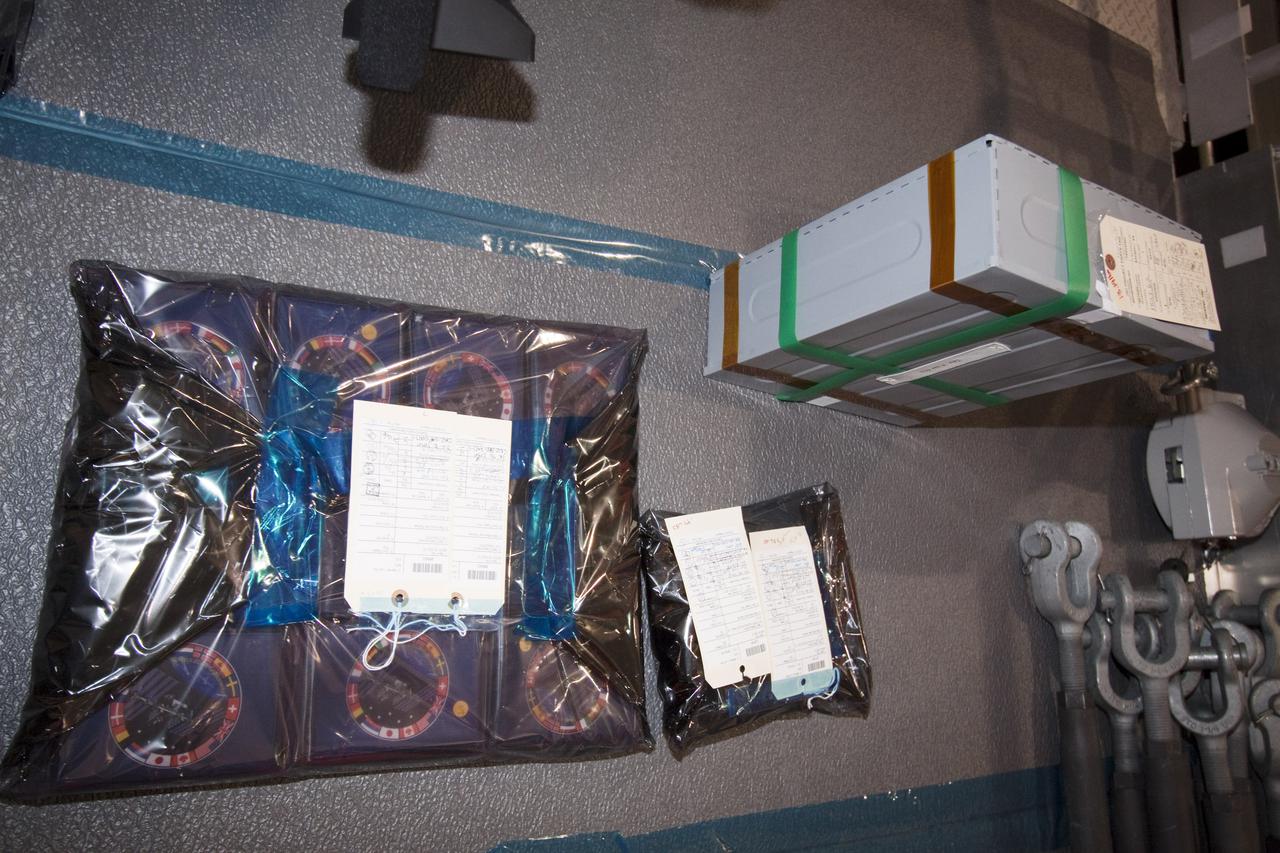
CAPE CANAVERAL, Fla. - In the Space Station Processing Facility at NASA's Kennedy Space Center in Florida, plastic bags contain International Space Station patches and other memorabilia that will be stored in the Multi-Purpose Logistics Module Leonardo and carried into space on its upcoming flight. The seven-member STS-131 crew will deliver Leonardo, filled with resupply stowage platforms and racks, to the International Space Station aboard space shuttle Discovery. On STS-131, work to attach a spare ammonia tank assembly to the station's exterior and return a European experiment from outside the station's Columbus module will be conducted during three spacewalks. Targeted for launch on April 5, STS-131 will be the 33rd shuttle mission to the station and the 131st shuttle mission overall. For information on the STS-131 mission and crew, visit http:__www.nasa.gov_mission_pages_shuttle_shuttlemissions_sts131_index.html. Photo credit: NASA_Amanda Diller

CAPE CANAVERAL, Fla. – In the Space Shuttle Main Engine Processing Facility at NASA's Kennedy Space Center in Florida, Pratt and Whitney Rocketdyne engine technicians prepare a high pressure oxidizer turbo pump for installation on space shuttle main engine no. 2062. The engine, or SSME, is the last one scheduled to be built at Kennedy before the end of the Space Shuttle Program. Ryan Mahony is standing; Teryon Jones, left, and Dan Bode are kneeling next to the pump. Three main engines are clustered at the aft end of the shuttle and have a combined thrust of more than 1.2 million pounds. Even though an SSME weighs one-seventh as much as a locomotive engine, its high-pressure fuel pump alone delivers as much horsepower as 28 locomotives. Each engine operates during the entire eight-and-a-half minute climb to orbit. Post-flight inspections and maintenance of each engine also are conducted in the SSME Processing Facility between shuttle missions. Photo credit: NASA_Amanda Diller
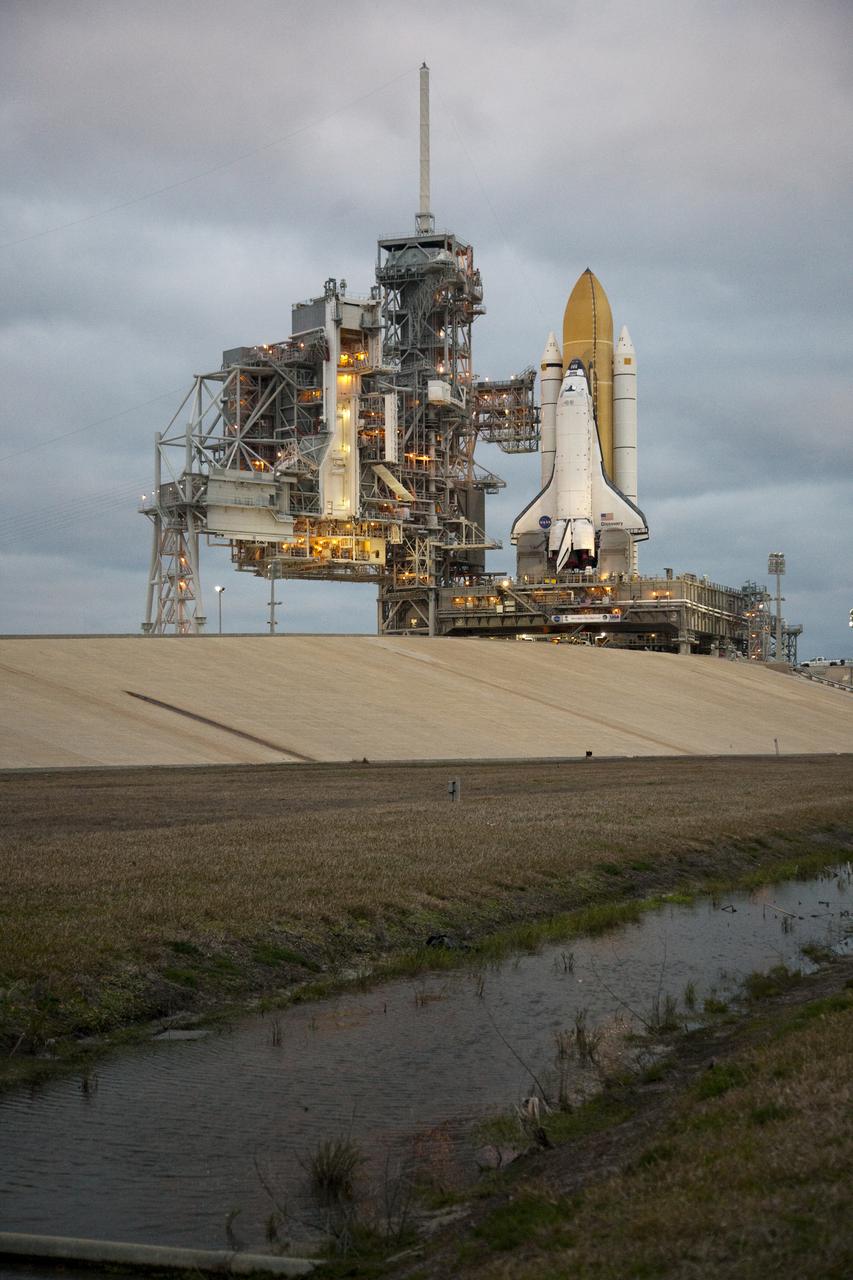
CAPE CANAVERAL, Fla. – The sun rises over Launch Pad 39A at NASA's Kennedy Space Center in Florida to a cloud-filled sky and operations under way to secure space shuttle Discovery to the pad. Discovery's first motion on its 3.4-mile trip from the Vehicle Assembly Building was at 11:58 p.m. EST March 2. The shuttle was secured on the pad at 6:48 a.m. March 3. Rollout is a significant milestone in launch processing activities. The seven-member STS-131 crew will deliver the multi-purpose logistics module Leonardo, filled with resupply stowage platforms and racks, to the International Space Station aboard Discovery. Targeted for launch on April 5, STS-131 will be the 33rd shuttle mission to the station and the 131st shuttle mission overall. For information on the STS-131 mission and crew, visit http:__www.nasa.gov_mission_pages_shuttle_shuttlemissions_sts131_index.html. Photo credit: NASA_Amanda Diller
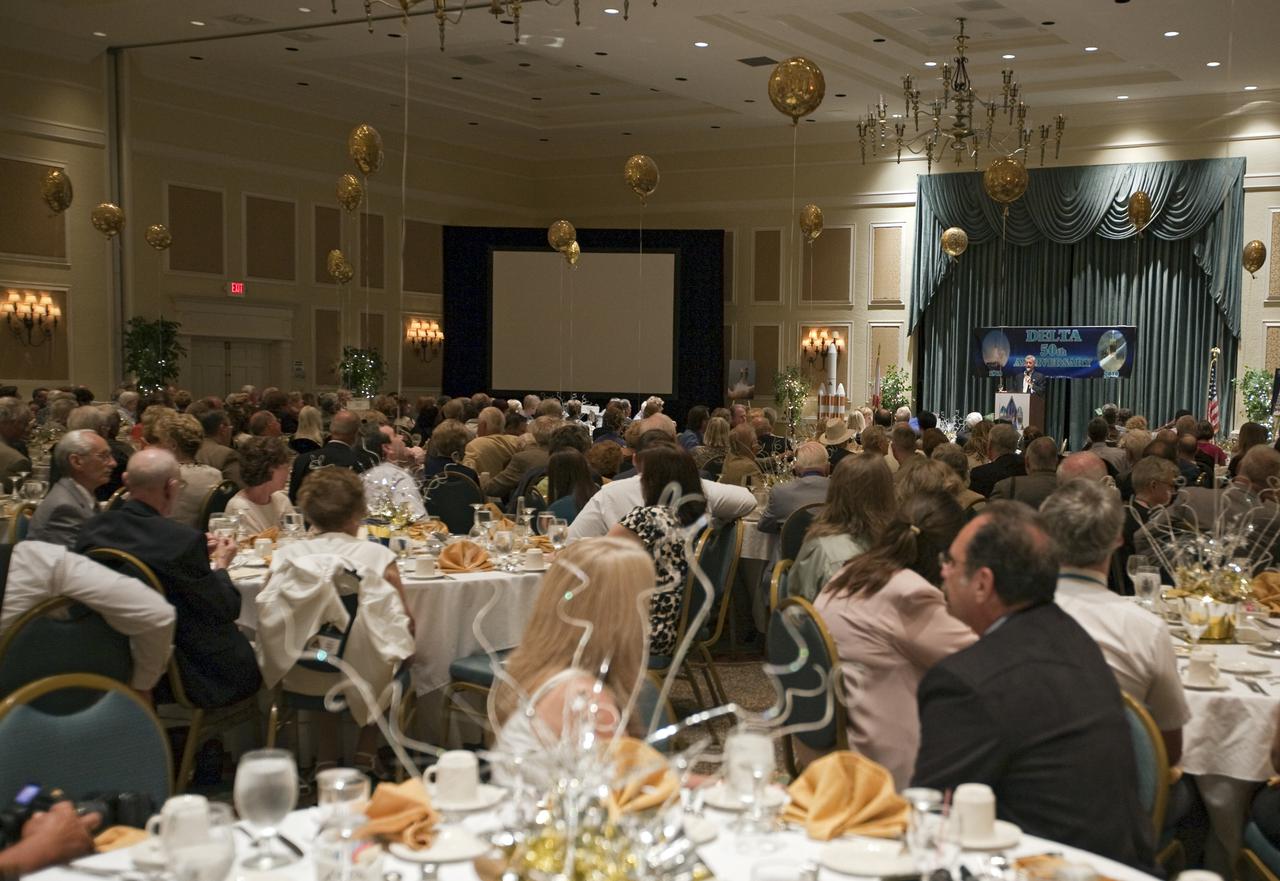
CAPE CANAVERAL, Fla. - Hundreds of NASA, U.S. Air Force, United Launch Alliance, Boeing, Pratt and Whitney Rocketdyne and Aerojet employees, along with NASA Alumni League members, celebrate the Delta expendable launch vehicle program's 50th anniversary at the Radisson Resort in Cape Canaveral, Fla., on May 16. NASA launched the first Delta rocket, which only was intended to be an interim launch vehicle, on May 13, 1960. A half-century later, more than 300 Delta rockets have launched to place crucial weather and environmental satellites into Earth orbit. The vehicles also have sent spacecraft on missions to other planets and comets, and to study the universe. Currently, the Delta II and Delta IV are in use by NASA's Launch Services Program based at Kennedy Space Center in Florida, and are launched by United Launch Alliance. Photo credit: NASA_Amanda Diller
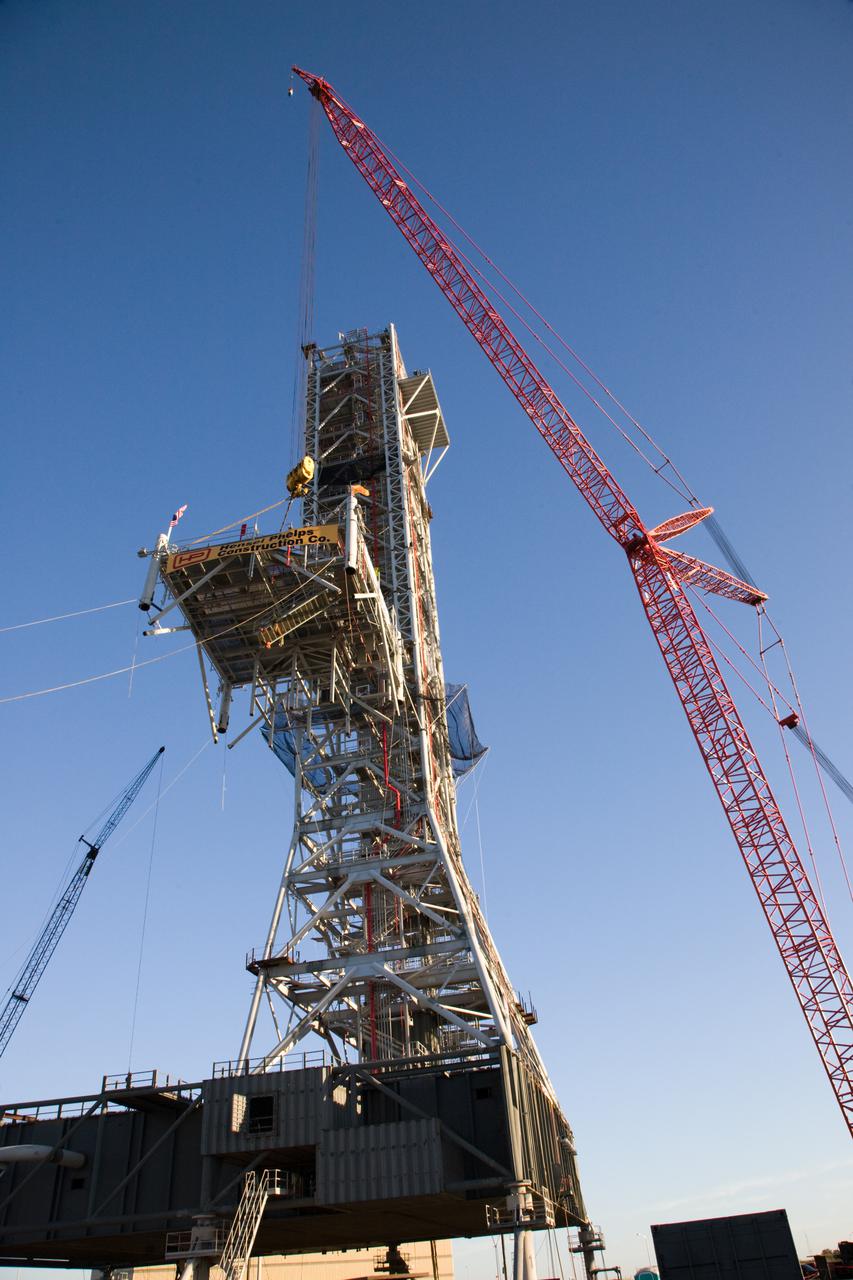
CAPE CANAVERAL, Fla. – At NASA’s Kennedy Space Center in Florida, a large crane lifts the tenth and final tower segment of a new mobile launcher, or ML, being constructed to support the Constellation Program, to the top of the growing tower. When completed, the tower will be approximately 345 feet tall and have multiple platforms for personnel access. Its base is being made lighter than space shuttle mobile launcher platforms so the crawler-transporter can pick up the heavier load of the tower and a taller rocket. For information on the Constellation Program, visit http:__www.nasa.gov_constellation. Photo credit: NASA_Amanda Diller
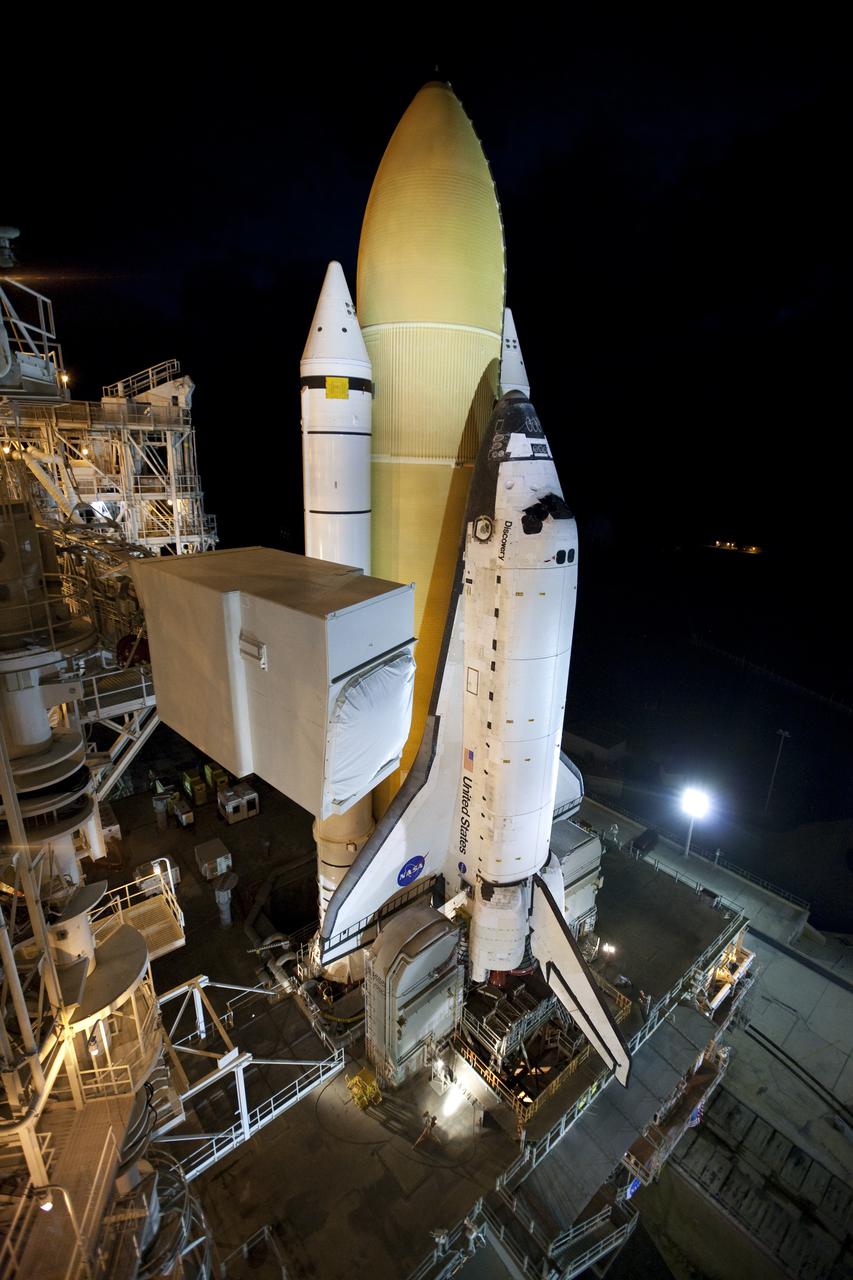
CAPE CANAVERAL, Fla. – On Launch Pad 39A at NASA's Kennedy Space Center in Florida, the pad's White Room, which provides workers and astronauts an entry point to a shuttle's crew compartment, awaits placement against space shuttle Discovery. Discovery's first motion on its 3.4-mile trip from the Vehicle Assembly Building was at 11:58 p.m. EST March 2. The shuttle was secured on the pad at 6:48 a.m. March 3. Rollout is a significant milestone in launch processing activities. The seven-member STS-131 crew will deliver the multi-purpose logistics module Leonardo, filled with resupply stowage platforms and racks, to the International Space Station aboard Discovery. Targeted for launch on April 5, STS-131 will be the 33rd shuttle mission to the station and the 131st shuttle mission overall. For information on the STS-131 mission and crew, visit http:__www.nasa.gov_mission_pages_shuttle_shuttlemissions_sts131_index.html. Photo credit: NASA_Amanda Diller
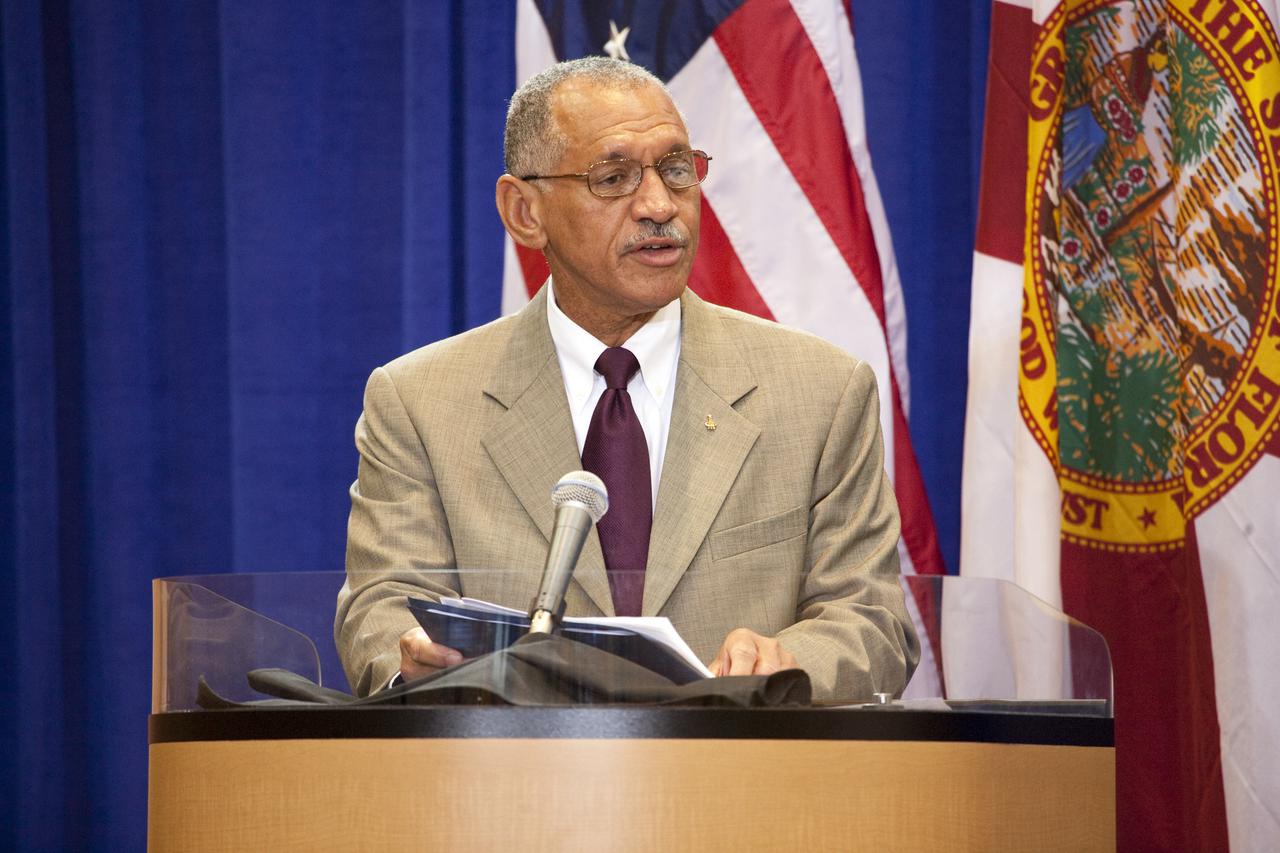
ORLANDO, Fla. – NASA Administrator Charles Bolden speaks to business and industry leaders during a town hall meeting at the Orlando Airport Hyatt Hotel as part of the Presidential Task Force on Space Industry Work Force and Economic Development. The task force heard from local leaders about ways to strengthen the work force as NASA moves toward retirement of the Space Shuttle Program. The task force is a $40 million, multi-agency initiative for regional and economic growth to assist the Space Coast as the country’s space exploration efforts expand and transform. Photo credit: NASA_Amanda Diller
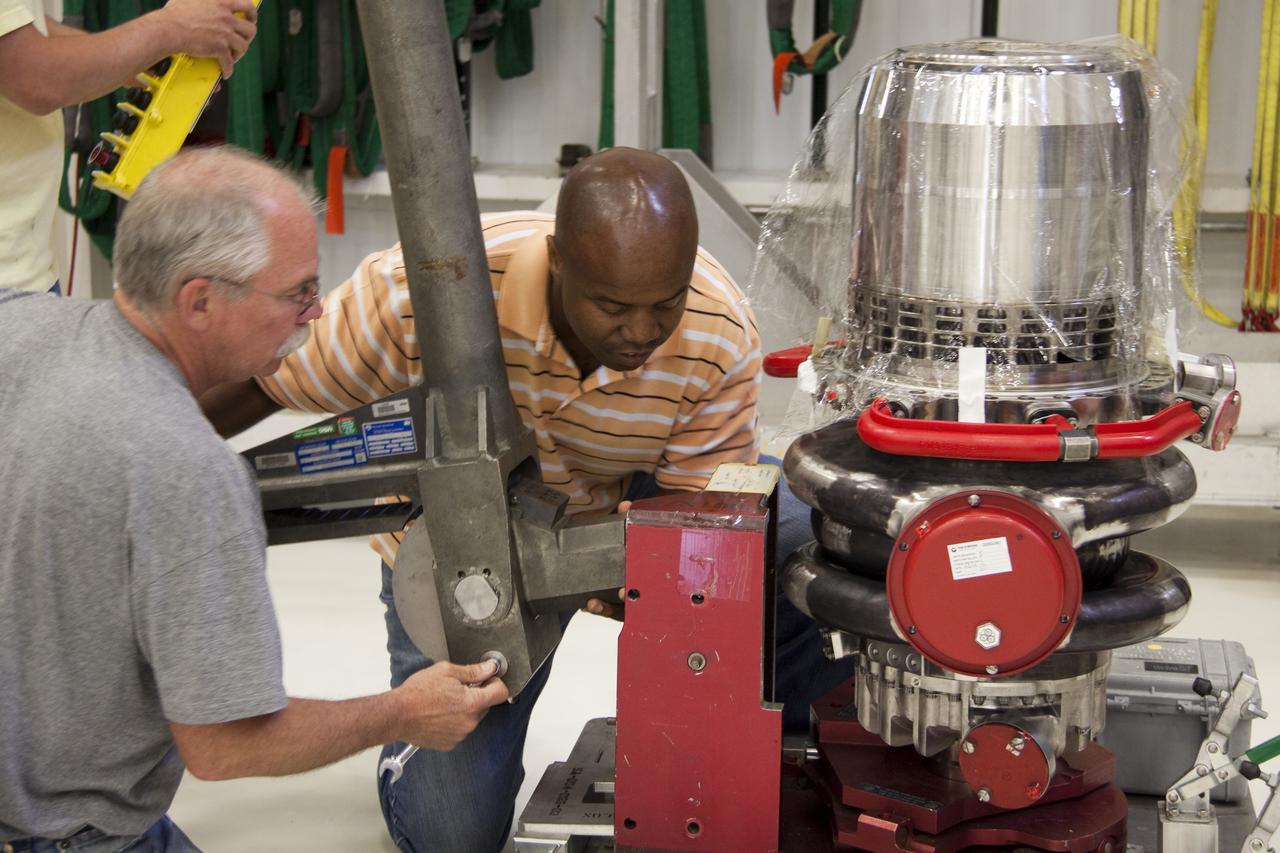
CAPE CANAVERAL, Fla. – In the Space Shuttle Main Engine Processing Facility at NASA's Kennedy Space Center in Florida, Pratt and Whitney Rocketdyne engine technicians prepare a high pressure oxidizer turbo pump for installation on space shuttle main engine no. 2062. The engine, or SSME, is the last one scheduled to be built at Kennedy by Pratt and Whitney Rocketdyne before the end of the Space Shuttle Program. From left are Dan Bode and Teryon Jones. Three main engines are clustered at the aft end of the shuttle and have a combined thrust of more than 1.2 million pounds. Even though an SSME weighs one-seventh as much as a locomotive engine, its high-pressure fuel pump alone delivers as much horsepower as 28 locomotives. Each engine operates during the entire eight-and-a-half minute climb to orbit. Post-flight inspections and maintenance of each engine also are conducted in the SSME Processing Facility between shuttle missions. Photo credit: NASA_Amanda Diller
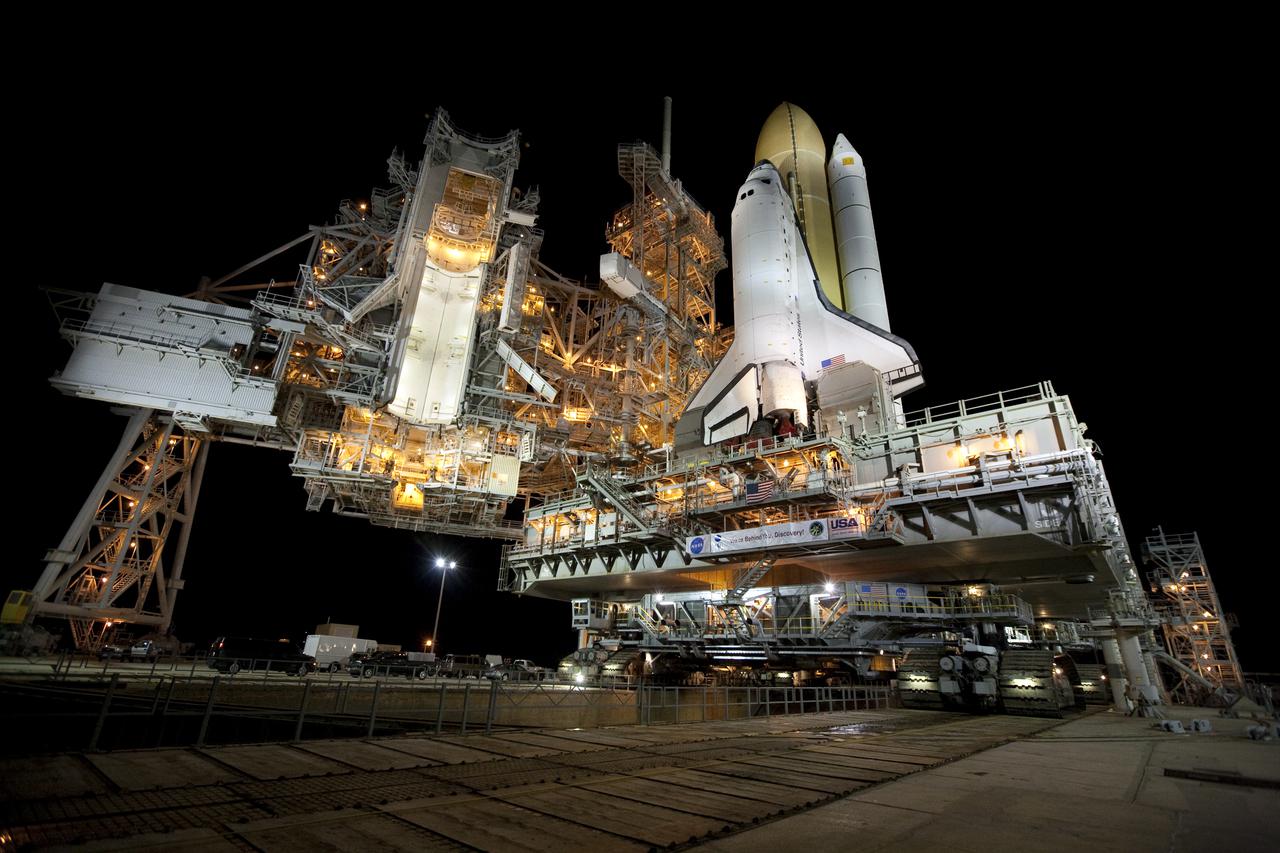
CAPE CANAVERAL, Fla. – The rotating and fixed service structures are brightly lit on Launch Pad 39A at NASA's Kennedy Space Center in Florida for the arrival of space shuttle Discovery just before sunrise. Discovery's first motion on its 3.4-mile trip from the Vehicle Assembly Building was at 11:58 p.m. EST March 2. The shuttle was secured on the pad at 6:48 a.m. March 3. Rollout is a significant milestone in launch processing activities. The seven-member STS-131 crew will deliver the multi-purpose logistics module Leonardo, filled with resupply stowage platforms and racks, to the International Space Station aboard Discovery. Targeted for launch on April 5, STS-131 will be the 33rd shuttle mission to the station and the 131st shuttle mission overall. For information on the STS-131 mission and crew, visit http:__www.nasa.gov_mission_pages_shuttle_shuttlemissions_sts131_index.html. Photo credit: NASA_Amanda Diller
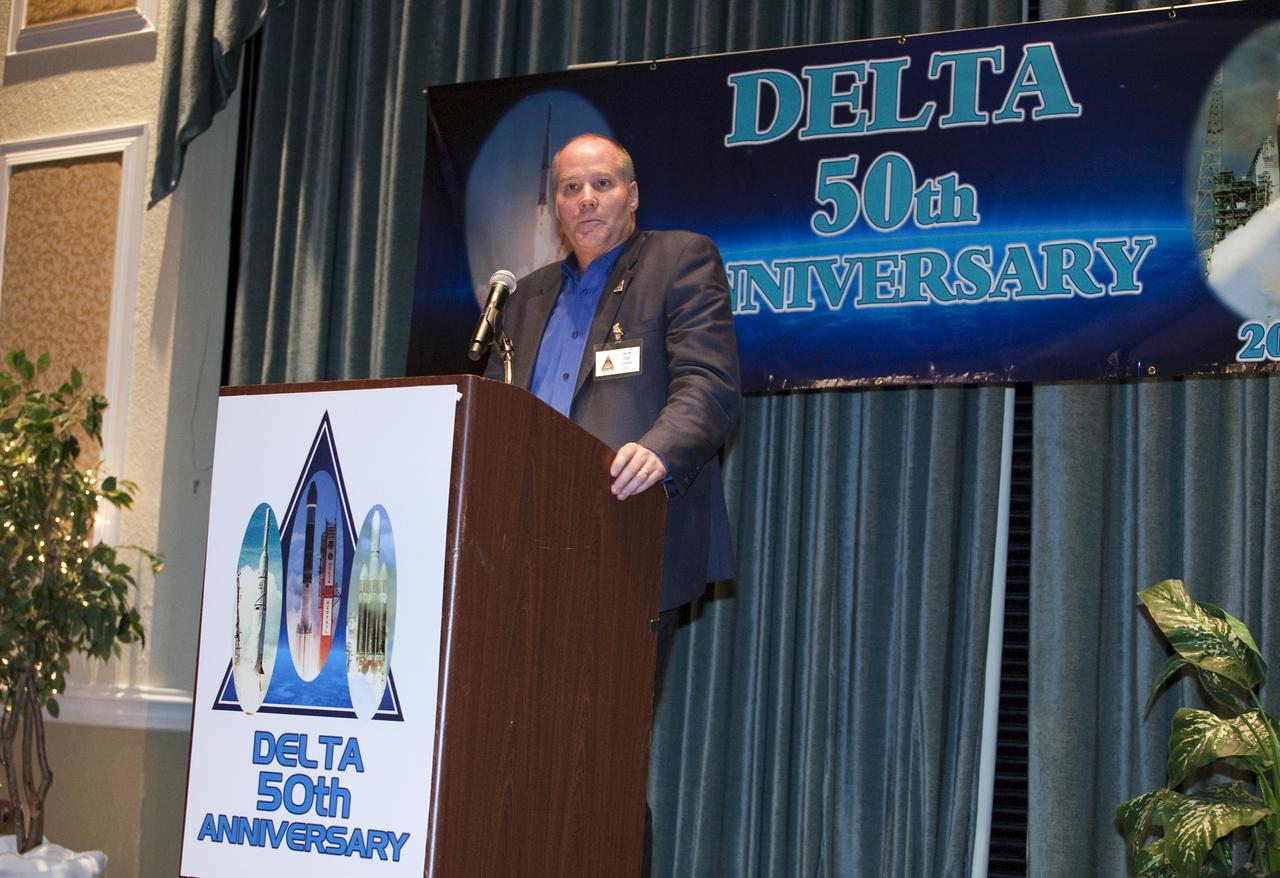
CAPE CANAVERAL, Fla. - Daniel Collins, chief operating officer of United Launch Alliance, helps the company, NASA, the U.S. Air Force, Boeing, Pratt and Whitney Rocketdyne, Aerojet and the NASA Alumni League celebrate the Delta expendable launch vehicle program's 50th anniversary at the Radisson Resort in Cape Canaveral, Fla., on May 16. NASA launched the first Delta rocket, which only was intended to be an interim launch vehicle, on May 13, 1960. A half-century later, more than 300 Delta rockets have launched to place crucial weather and environmental satellites into Earth orbit. The vehicles also have sent spacecraft on missions to other planets and comets, and to study the universe. Currently, the Delta II and Delta IV are in use by NASA's Launch Services Program based at Kennedy Space Center in Florida, and are launched by United Launch Alliance. Photo credit: NASA_Amanda Diller
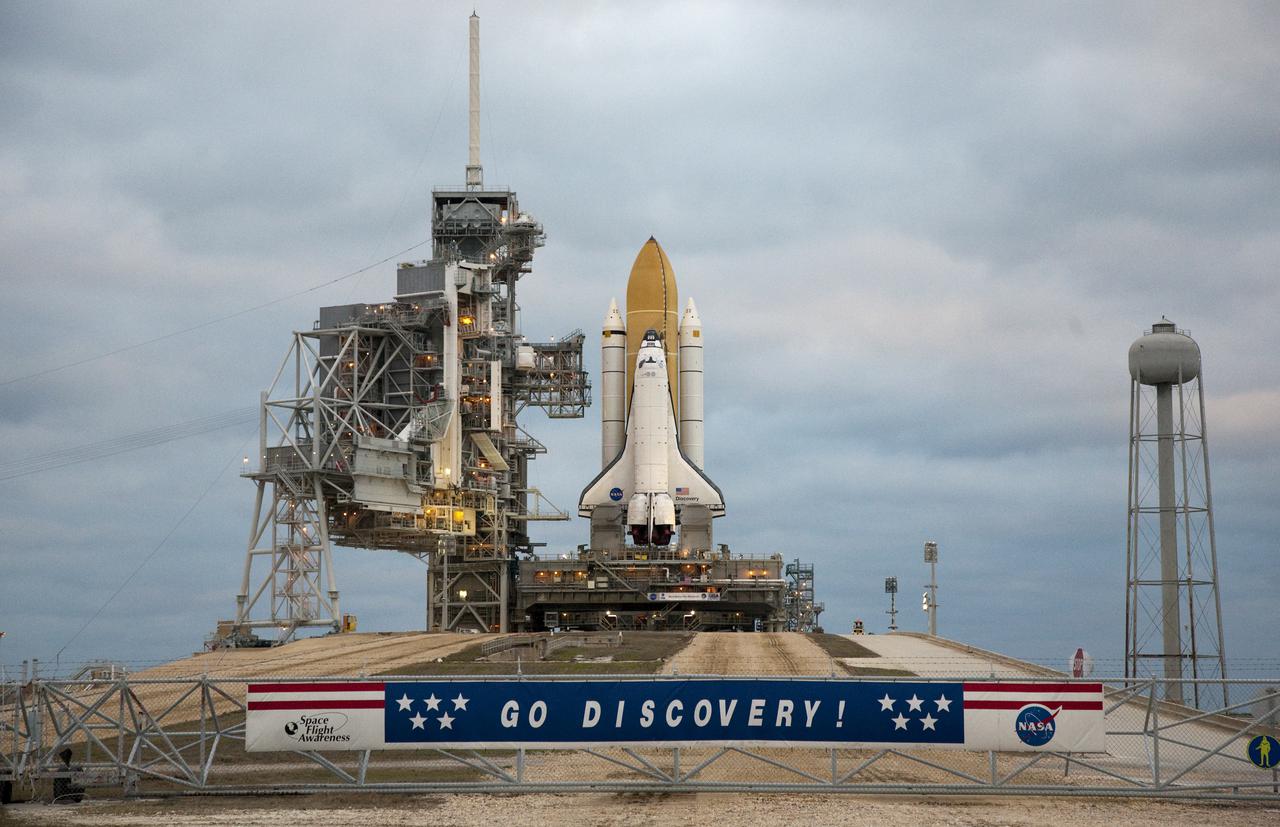
CAPE CANAVERAL, Fla. – Excitement builds at NASA's Kennedy Space Center in Florida in anticipation of space shuttle Discovery's upcoming liftoff from Launch Pad 39A. Go Discovery_ Discovery's first motion on its 3.4-mile trip from the Vehicle Assembly Building was at 11:58 p.m. EST March 2. The shuttle was secured on the pad at 6:48 a.m. March 3. Rollout is a significant milestone in launch processing activities. The seven-member STS-131 crew will deliver the multi-purpose logistics module Leonardo, filled with resupply stowage platforms and racks, to the International Space Station aboard Discovery. Targeted for launch on April 5, STS-131 will be the 33rd shuttle mission to the station and the 131st shuttle mission overall. For information on the STS-131 mission and crew, visit http:__www.nasa.gov_mission_pages_shuttle_shuttlemissions_sts131_index.html. Photo credit: NASA_Amanda Diller
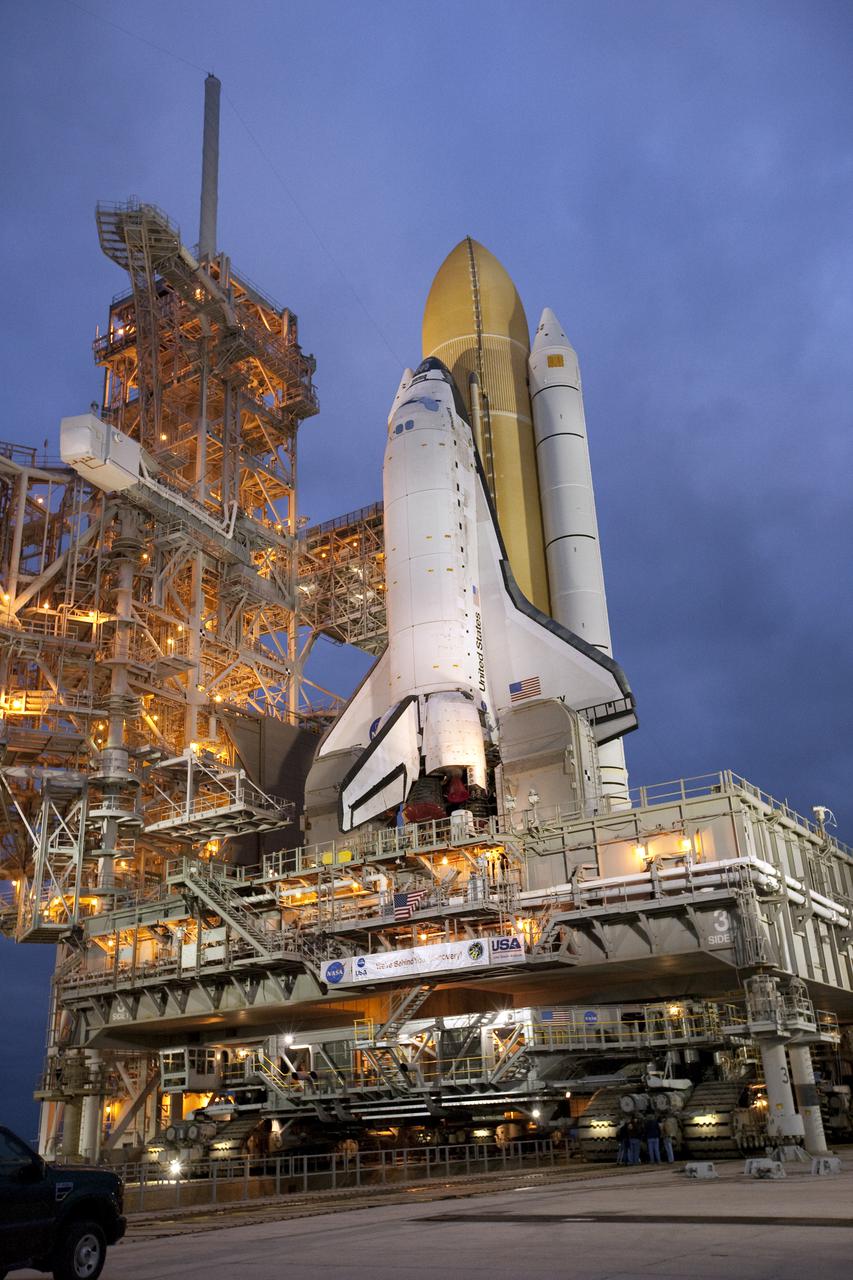
CAPE CANAVERAL, Fla. – The lightning mast atop the fixed service structure at Launch Pad 39A at NASA's Kennedy Space Center in Florida stands ready to protect space shuttle Discovery. Discovery's first motion on its 3.4-mile trip from the Vehicle Assembly Building was at 11:58 p.m. EST March 2. The shuttle was secured on the pad at 6:48 a.m. March 3. Rollout is a significant milestone in launch processing activities. The seven-member STS-131 crew will deliver the multi-purpose logistics module Leonardo, filled with resupply stowage platforms and racks, to the International Space Station aboard Discovery. Targeted for launch on April 5, STS-131 will be the 33rd shuttle mission to the station and the 131st shuttle mission overall. For information on the STS-131 mission and crew, visit http:__www.nasa.gov_mission_pages_shuttle_shuttlemissions_sts131_index.html. Photo credit: NASA_Amanda Diller
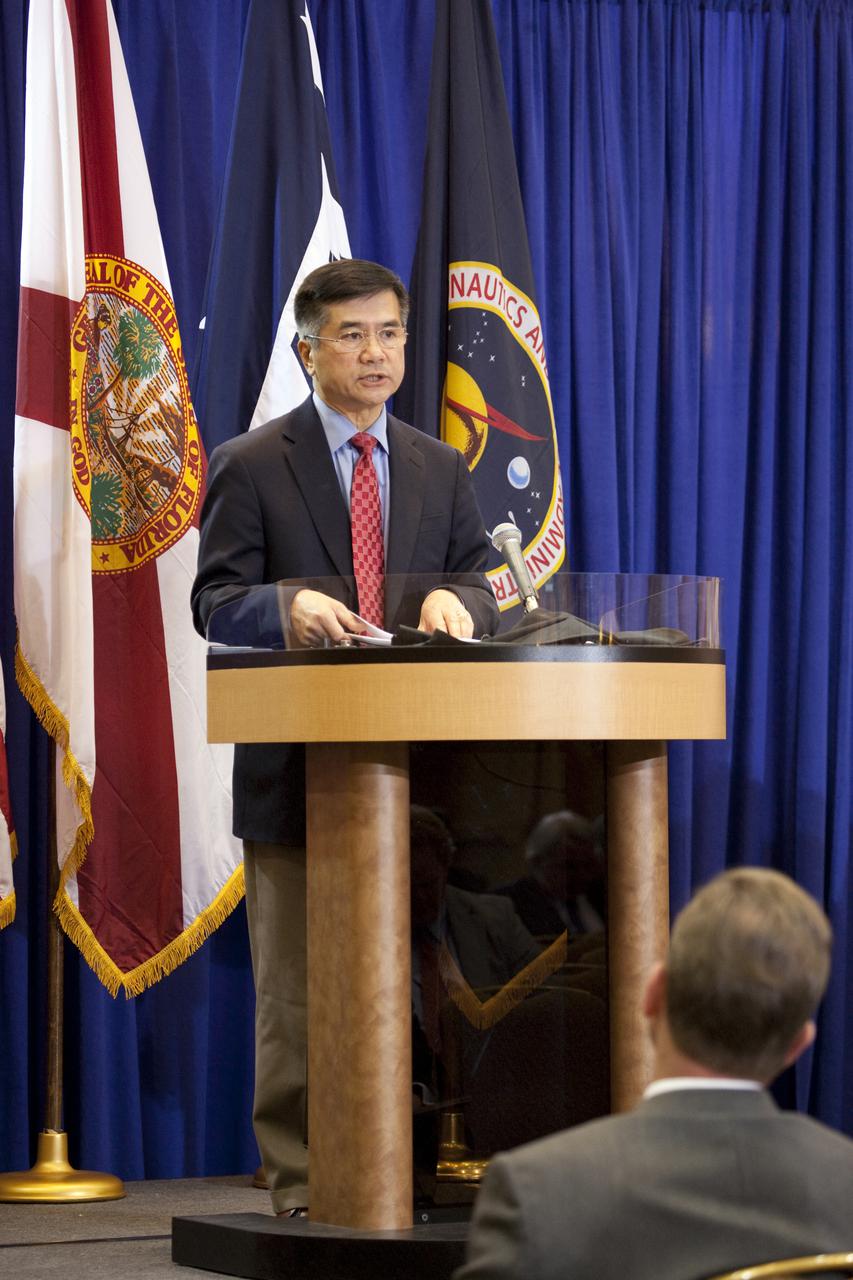
ORLANDO, Fla. – Secretary of Commerce Gary Locke addresses business and industry leaders during a town hall meeting at the Orlando Airport Hyatt Hotel as part of the Presidential Task Force on Space Industry Work Force and Economic Development. The task force heard from local leaders about ways to strengthen the work force as NASA moves toward retirement of the Space Shuttle Program. The task force is a $40 million, multi-agency initiative for regional and economic growth to assist the Space Coast as the country’s space exploration efforts expand and transform. Photo credit: NASA_Amanda Diller
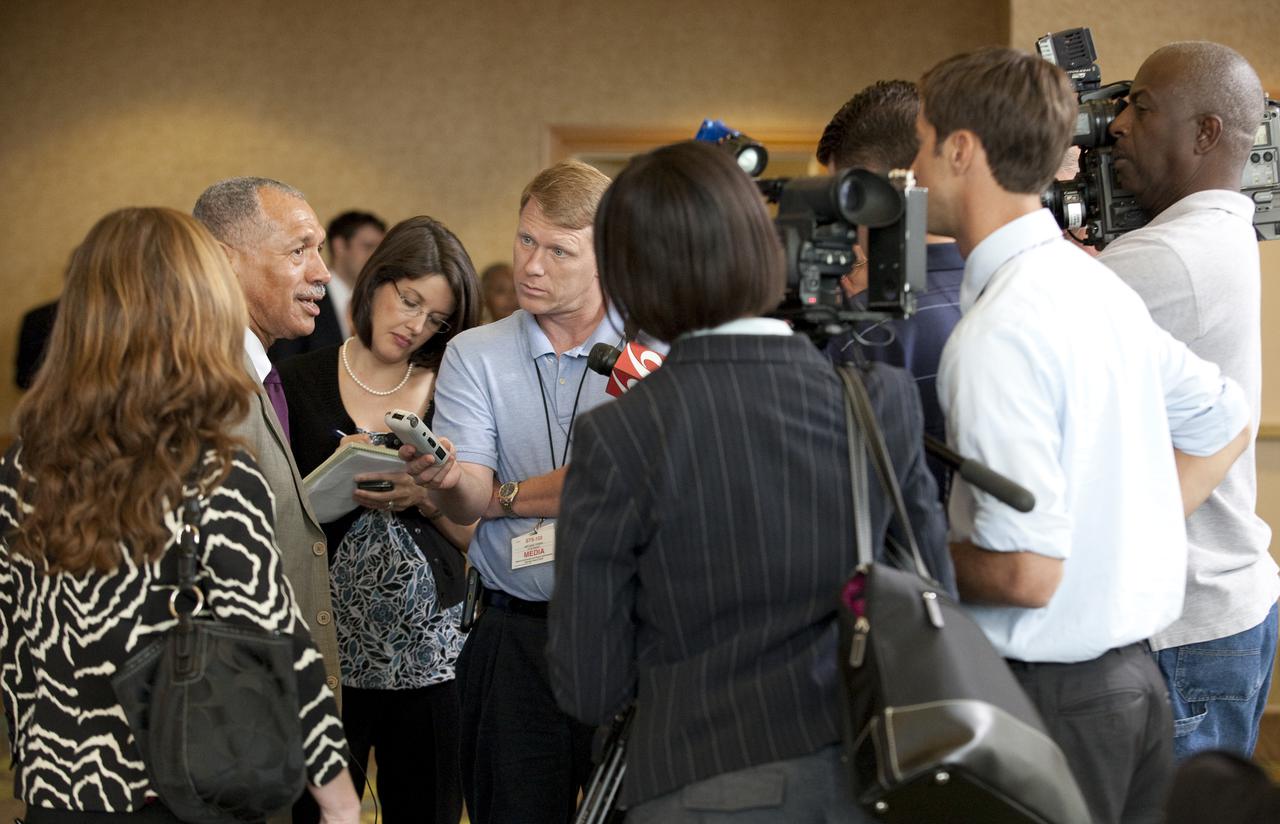
ORLANDO, Fla. – NASA Administrator Charles Bolden, second from left, speaks to reporters during a town hall meeting at the Orlando Airport Hyatt Hotel as part of the Presidential Task Force on Space Industry Work Force and Economic Development. The task force heard from local leaders about ways to strengthen the work force as NASA moves toward retirement of the Space Shuttle Program. The task force is a $40 million, multi-agency initiative for regional and economic growth to assist the Space Coast as the country’s space exploration efforts expand and transform. Photo credit: NASA_Amanda Diller
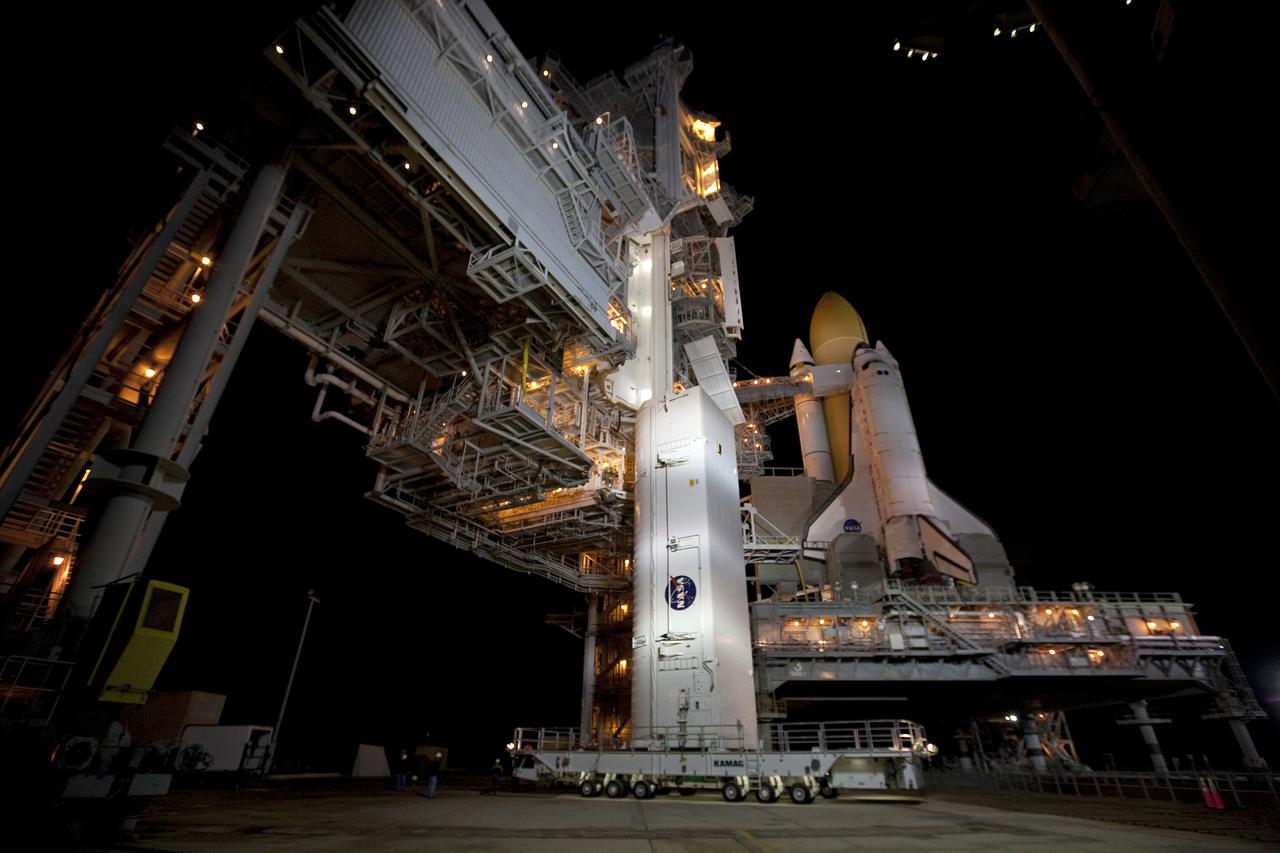
CAPE CANAVERAL, Fla. - At NASA's Kennedy Space Center in Florida, the payload canister containing the multi-purpose logistics module Leonardo, standing vertically on a transporter, arrives at Launch Pad 39A. The canister next will be lifted into the pad's payload changout room. Located on the pad's rotating service structure, the room is an enclosed, environmentally controlled area that supports payload delivery and servicing at the pad and attaches to the shuttle's cargo bay for vertical payload installation. The contents of the canister, including Leonardo, is set to be transferred into space shuttle Discovery's cargo bay on March 24. The seven-member STS-131 crew will deliver Leonardo, filled with resupply stowage platforms and racks, to the International Space Station. STS-131 will be the 33rd shuttle mission to the station and the 131st shuttle mission overall. Launch is targeted for April 5. For information on the STS-131 mission and crew, visit http:__www.nasa.gov_mission_pages_shuttle_shuttlemissions_sts131_index.html. Photo credit: NASA_Amanda Diller
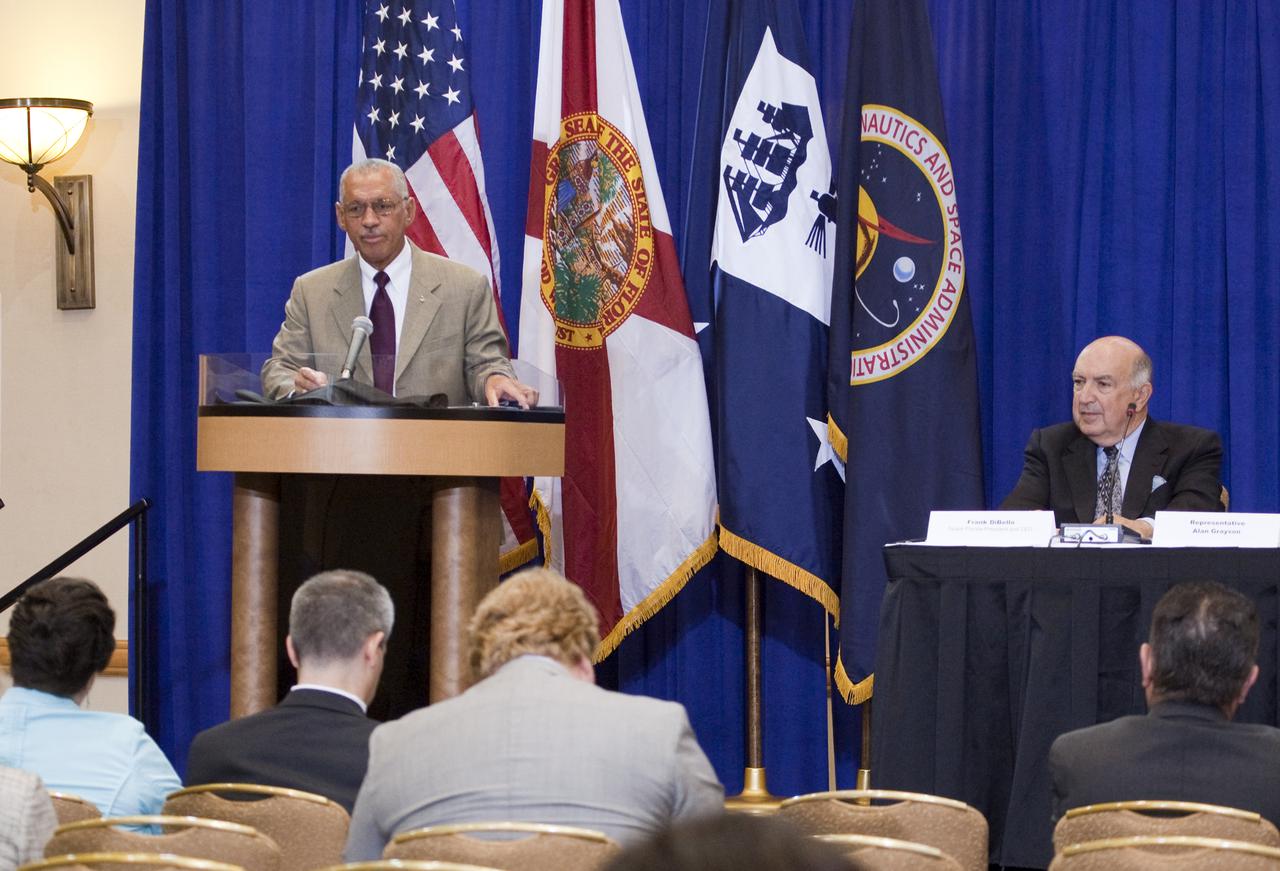
ORLANDO, Fla. – NASA Administrator Charles Bolden speaks during a town hall meeting at the Orlando Airport Hyatt Hotel as part of the Presidential Task Force on Space Industry Work Force and Economic Development. Seated at right is panel moderator and Space Florida President Frank DiBello. The task force heard from local leaders about ways to strengthen the work force as NASA moves toward retirement of the Space Shuttle Program. The task force is a $40 million, multi-agency initiative for regional and economic growth to assist the Space Coast as the country’s space exploration efforts expand and transform. Photo credit: NASA_Amanda Diller
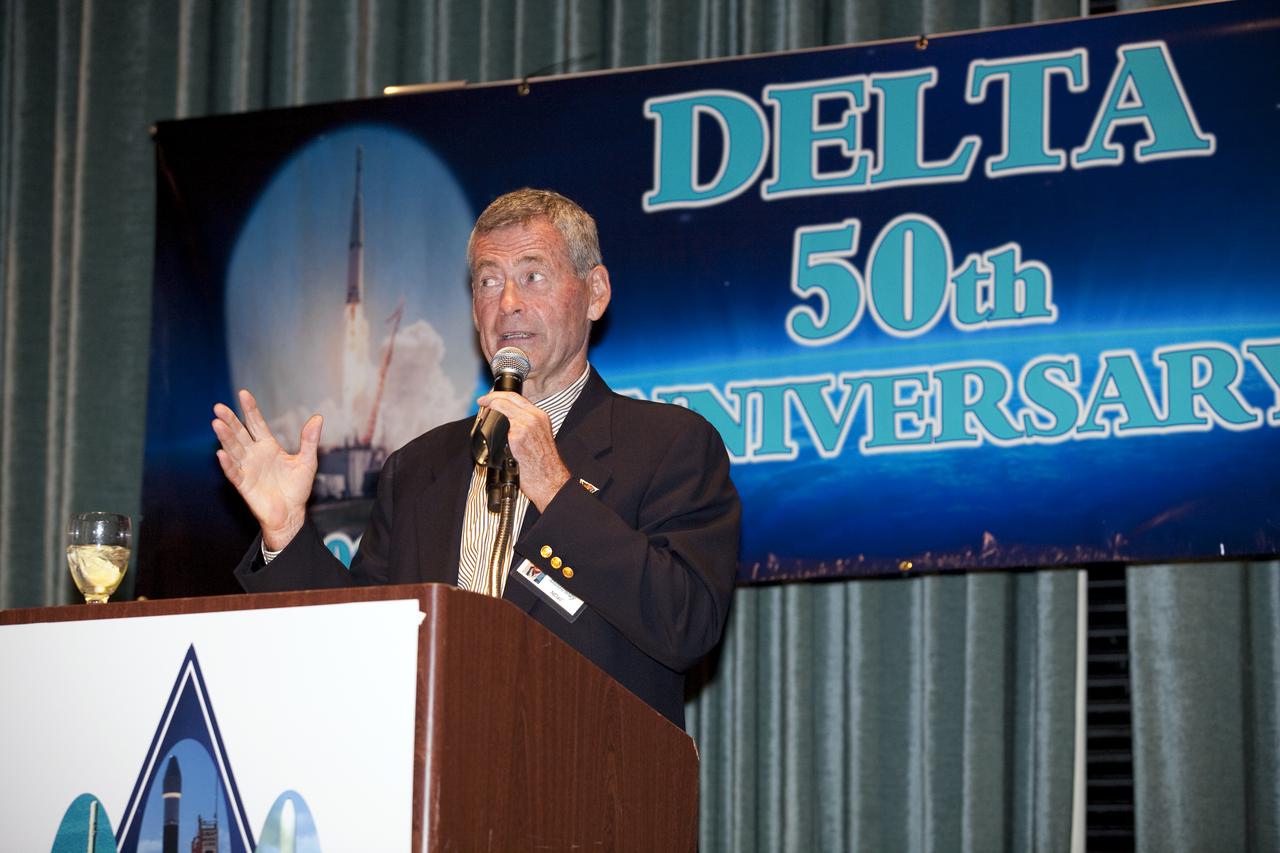
CAPE CANAVERAL, Fla. - Lyle Holloway, former director of launch sites originally for McDonnell Douglas, helps NASA, the U.S. Air Force, United Launch Alliance, Boeing, Pratt and Whitney Rocketdyne, Aerojet and the NASA Alumni League celebrate the Delta expendable launch vehicle program's 50th anniversary at the Radisson Resort in Cape Canaveral, Fla., on May 16. NASA launched the first Delta rocket, which only was intended to be an interim launch vehicle, on May 13, 1960. A half-century later, more than 300 Delta rockets have launched to place crucial weather and environmental satellites into Earth orbit. The vehicles also have sent spacecraft on missions to other planets and comets, and to study the universe. Currently, the Delta II and Delta IV are in use by NASA's Launch Services Program based at Kennedy Space Center in Florida, and are launched by United Launch Alliance. Photo credit: NASA_Amanda Diller
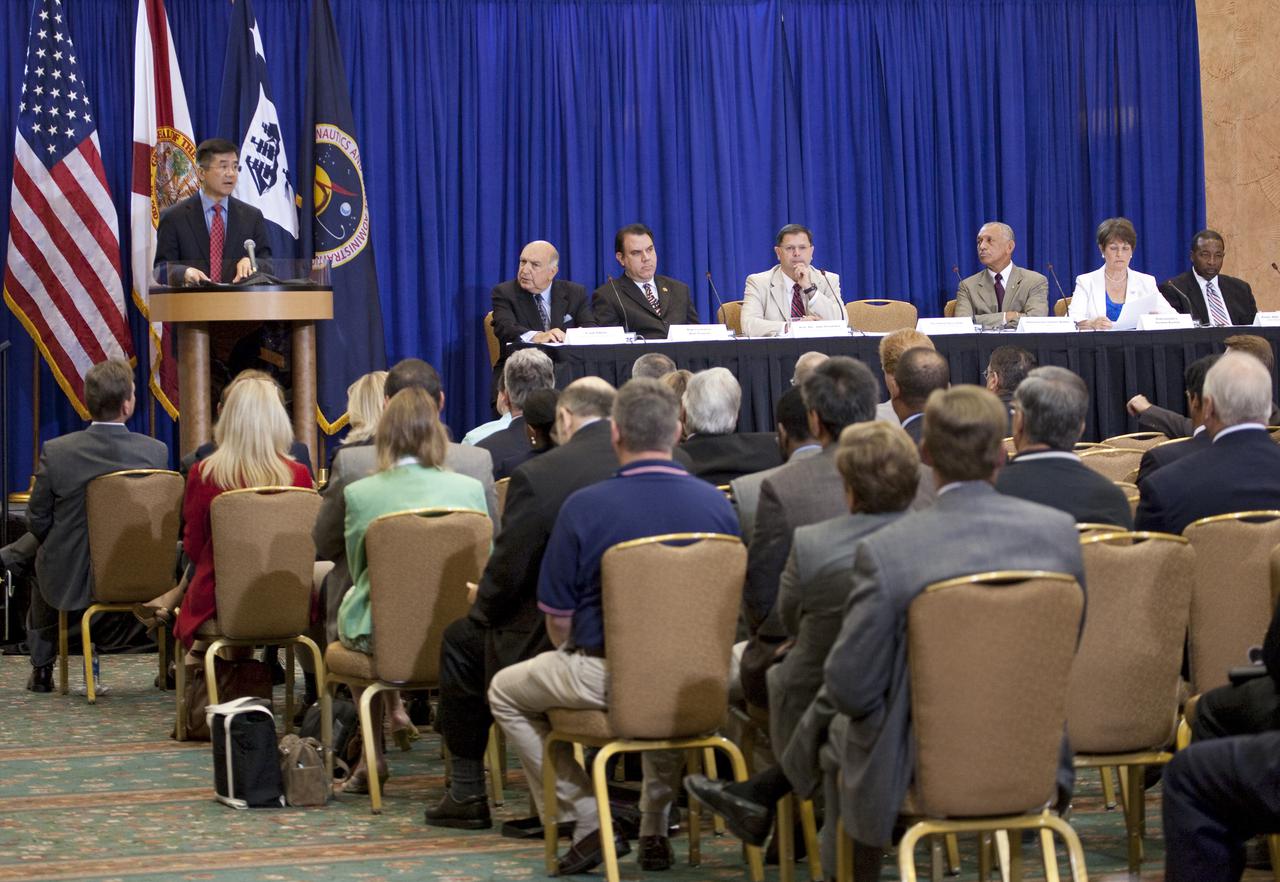
ORLANDO, Fla. – Secretary of Commerce Gary Locke addresses business and industry leaders during a town hall meeting at the Orlando Airport Hyatt Hotel as part of the Presidential Task Force on Space Industry Work Force and Economic Development. Panel members, seated from the left are, Space Florida President Frank DiBello, Rep. Alan Grayson of Florida, Assistant Secretary of Commerce for Economic Development John Fernandez, NASA Administrator Charles Bolden, Rep. Suzanne Kosmas of Florida and NASA Associate Administrator for Mission Support Woodrow Whitlow. The task force heard from local leaders about ways to strengthen the work force as NASA moves toward retirement of the Space Shuttle Program. The task force is a $40 million, multi-agency initiative for regional and economic growth to assist the Space Coast as the country’s space exploration efforts expand and transform. Photo credit: NASA_Amanda Diller
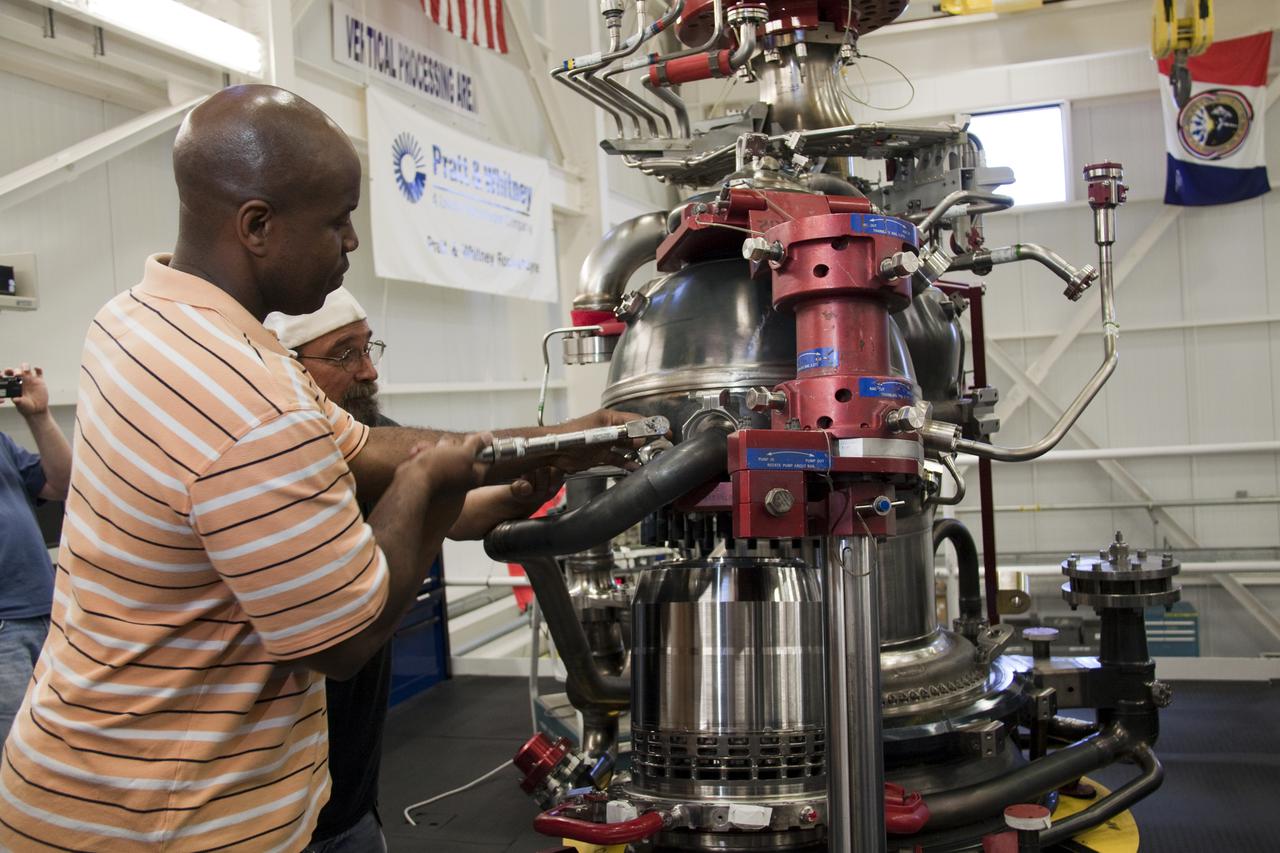
CAPE CANAVERAL, Fla. – In the Space Shuttle Main Engine Processing Facility at NASA's Kennedy Space Center in Florida, Pratt and Whitney Rocketdyne engine technician Teryon Jones, left, and quality inspector Barry Martin install a high pressure oxidizer turbo pump on space shuttle main engine no. 2062. The engine, or SSME, is the last one scheduled to be built at Kennedy before the end of the Space Shuttle Program. Three main engines are clustered at the aft end of the shuttle and have a combined thrust of more than 1.2 million pounds. Even though an SSME weighs one-seventh as much as a locomotive engine, its high-pressure fuel pump alone delivers as much horsepower as 28 locomotives. Each engine operates during the entire eight-and-a-half minute climb to orbit. Post-flight inspections and maintenance of each engine also are conducted in the SSME Processing Facility between shuttle missions. Photo credit: NASA_Amanda Diller