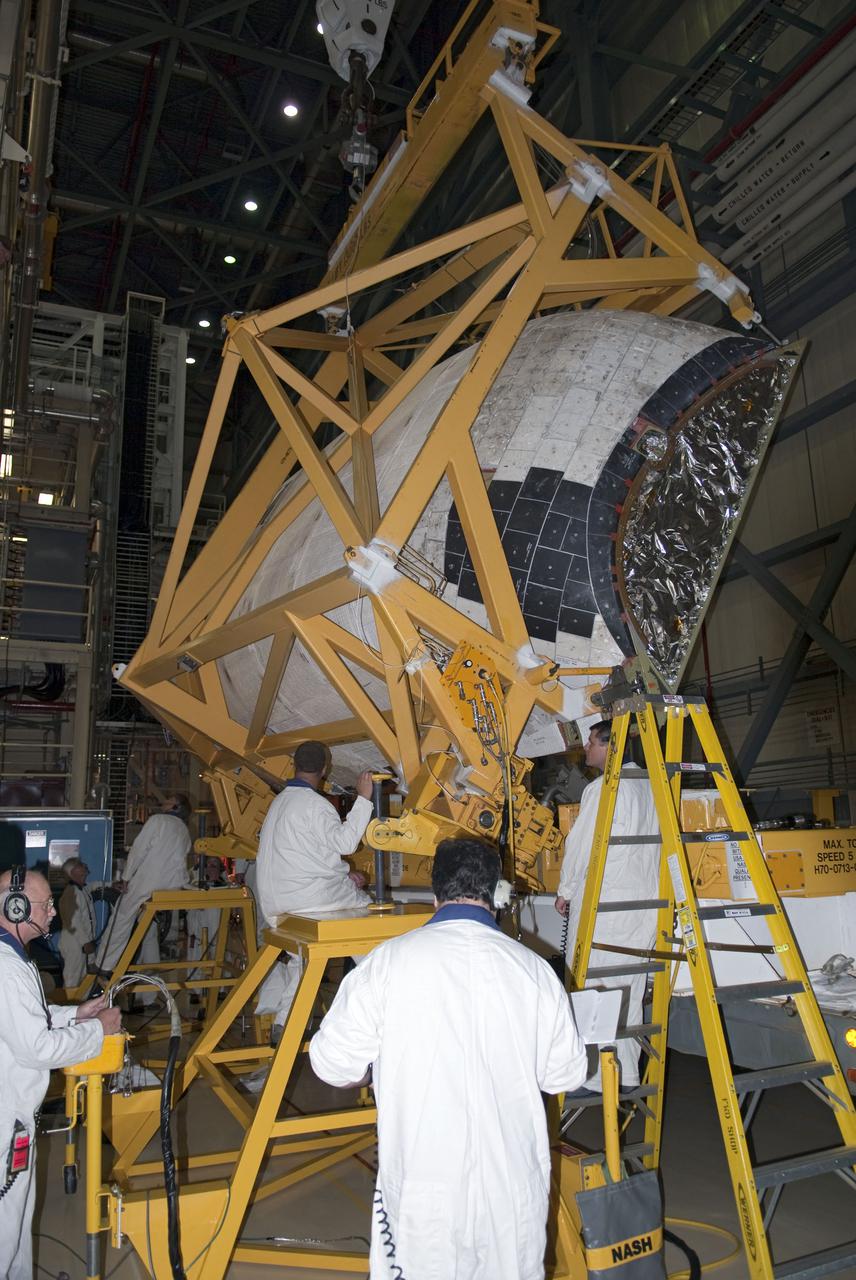
CAPE CANAVERAL, Fla. -- In Orbiter Processing Facility-3 at NASA's Kennedy Space Center in Florida, technicians assisted by an overhead crane prepare to install the right-hand orbital maneuvering system, or OMS, pod on space shuttle Discovery. Discovery and its crew will deliver the Permanent Multipurpose Module, or PMM, which will carry supplies and critical spare parts on the STS-133 mission to the International Space Station. The module will be left behind so it can be used for microgravity experiments in fluid physics, materials science, biology and biotechnology. For more information go to www.nasa.gov_shuttle. Photo credit: NASA_Ben Smegelsky
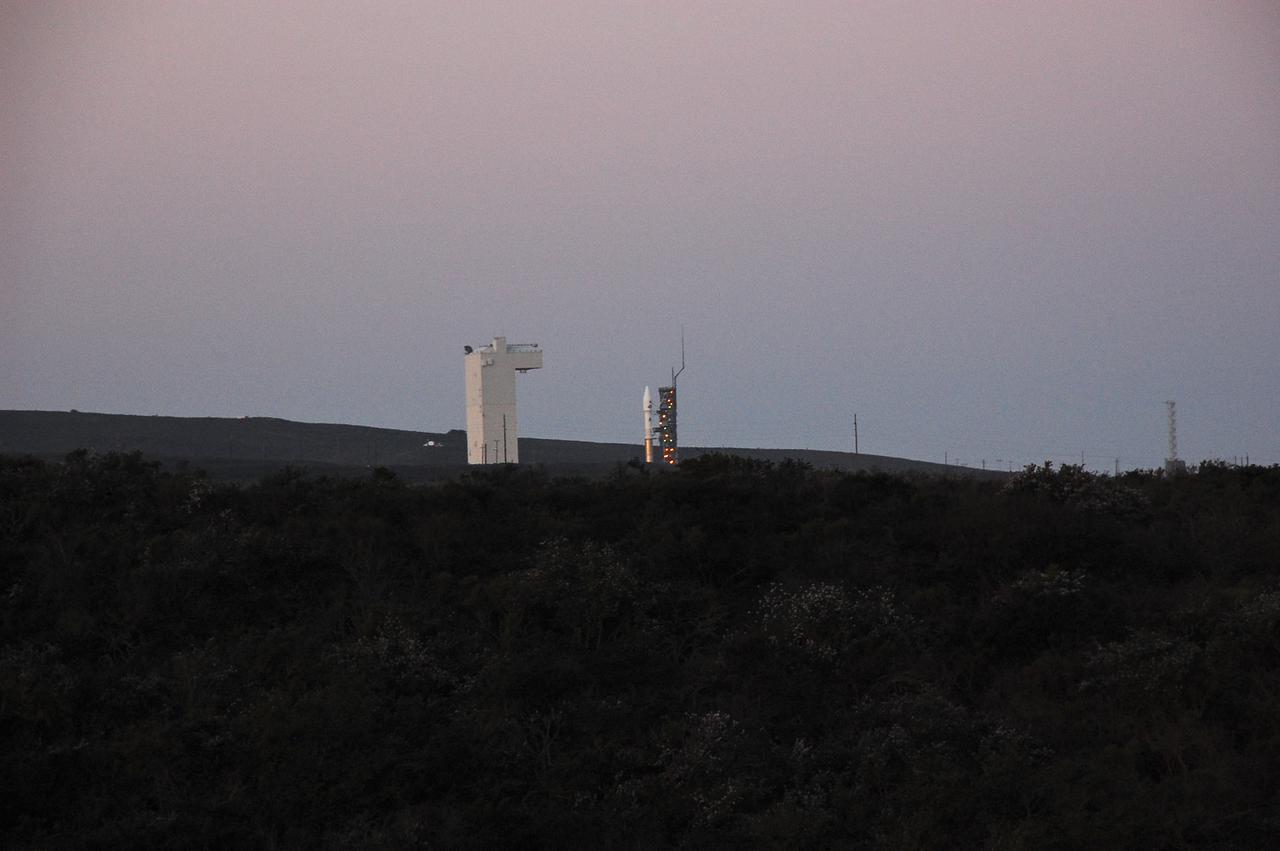
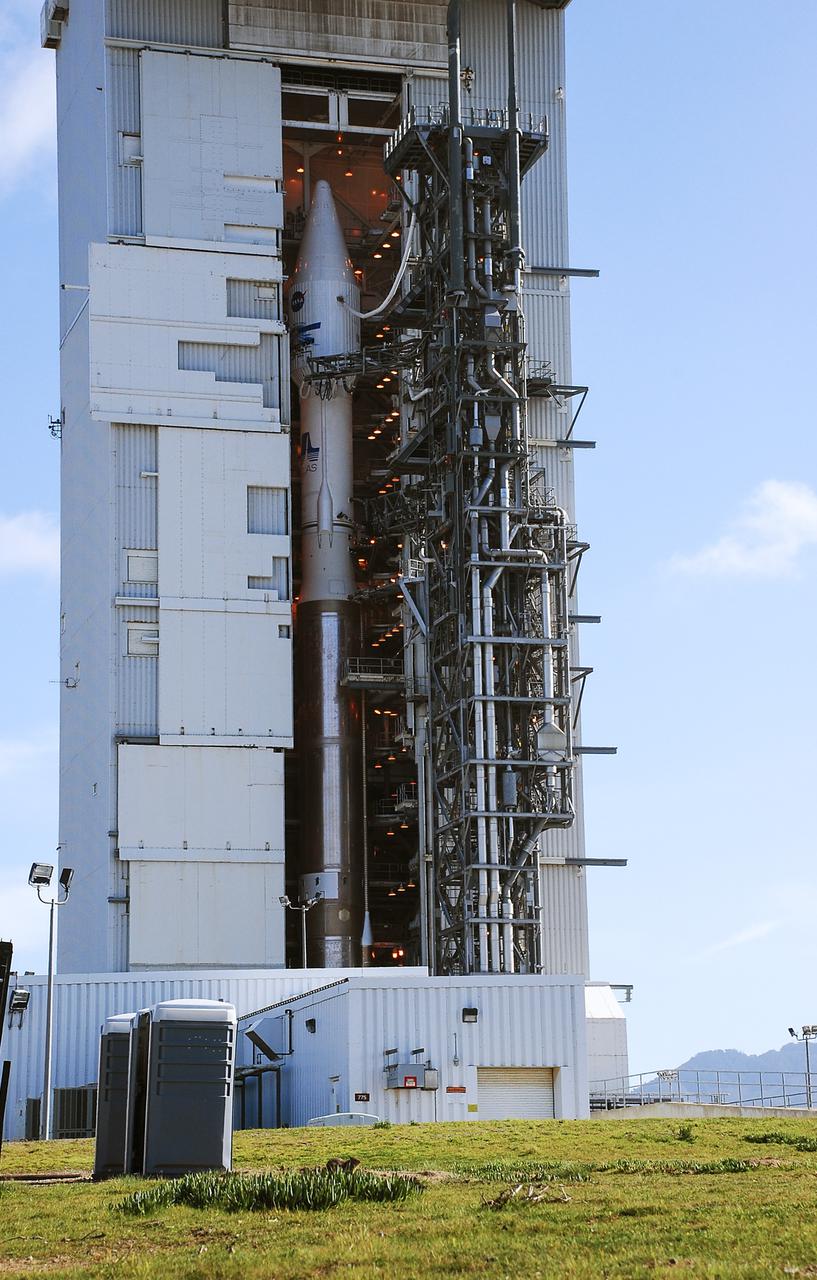
VANDENBERG AFB, Calif. – A United Launch Alliance Atlas V rocket carrying the Landsat Data Continuity Mission spacecraft from Vandenberg Air Force Base in California. Photo credit: NASA_Ben Smegelsky
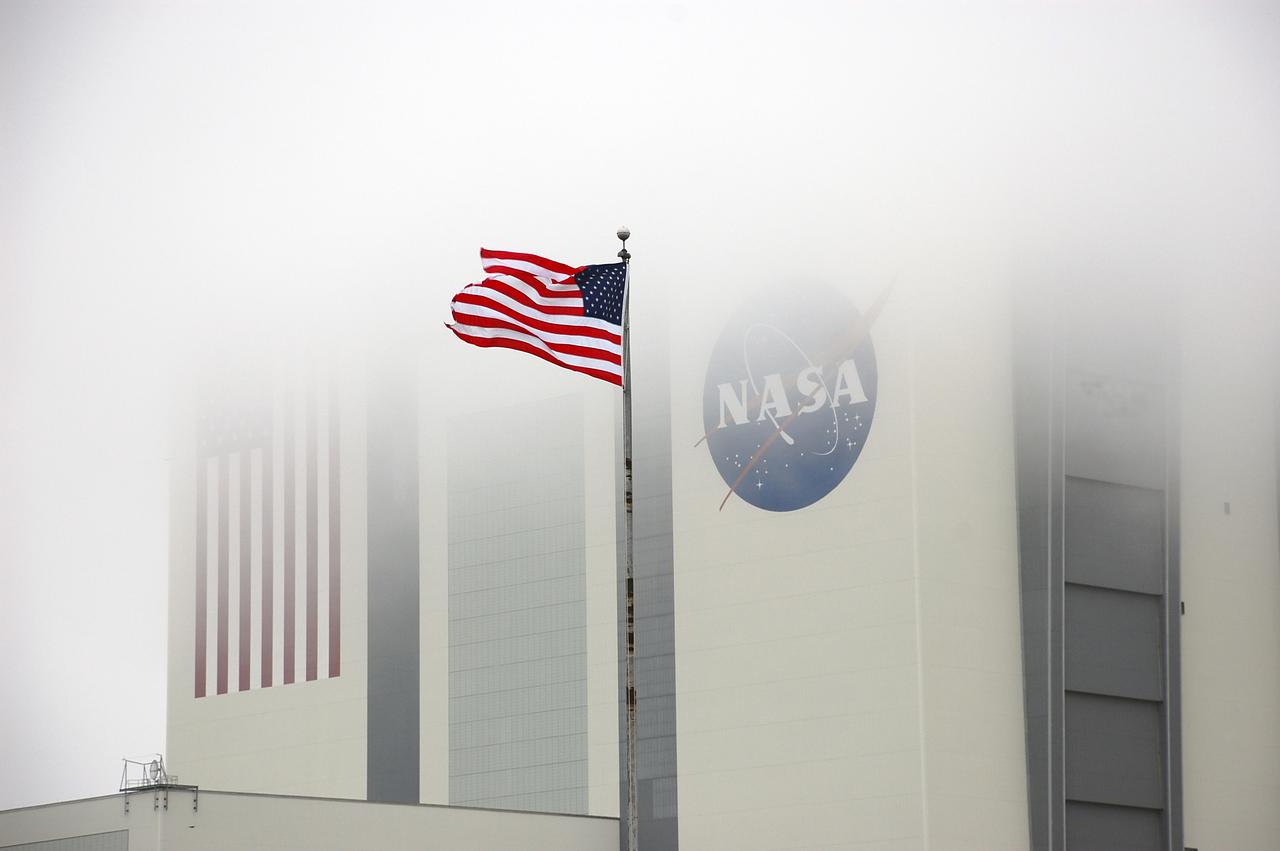
CAPE CANAVERAL, Fla. – At NASA's Kennedy Space Center in Florida, a U.S. flag flies proud near the 525-foot-tall Vehicle Assembly Building, obscured in the fog. The massive building, once used to process Apollo Saturn V rockets and space shuttles for launch, is undergoing a transformation to prepare it to support NASA's next-generation rocket, the Space Launch System, or SLS, as well as myriad commercial rockets under development. To learn more about the SLS, visit http:__www.nasa.gov_exploration_systems_sls_. For more on NASA's Commercial Crew Program, visit http:__www.nasa.gov_exploration_commercial_crew_. Photo credit: NASA_Ben Smegelsky
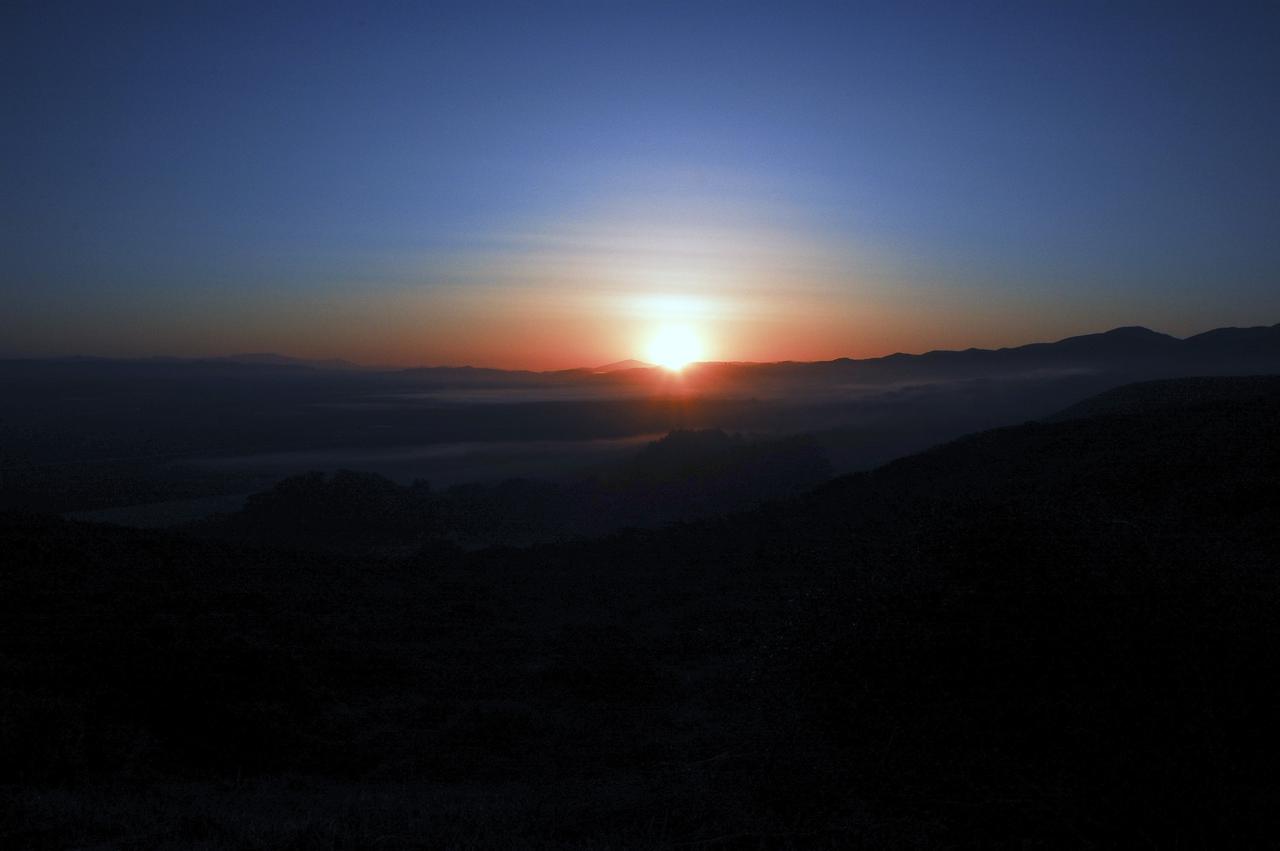
KSC-2013-1641 – VANDENBERG AFB, Calif. – Sunrise over Vandenberg Air Force Base in California on the morning of the launch of a United Launch Alliance Atlas V rocket carrying the Landsat Data Continuity Mission spacecraft from. Photo credit: NASA_Ben Smegelsky
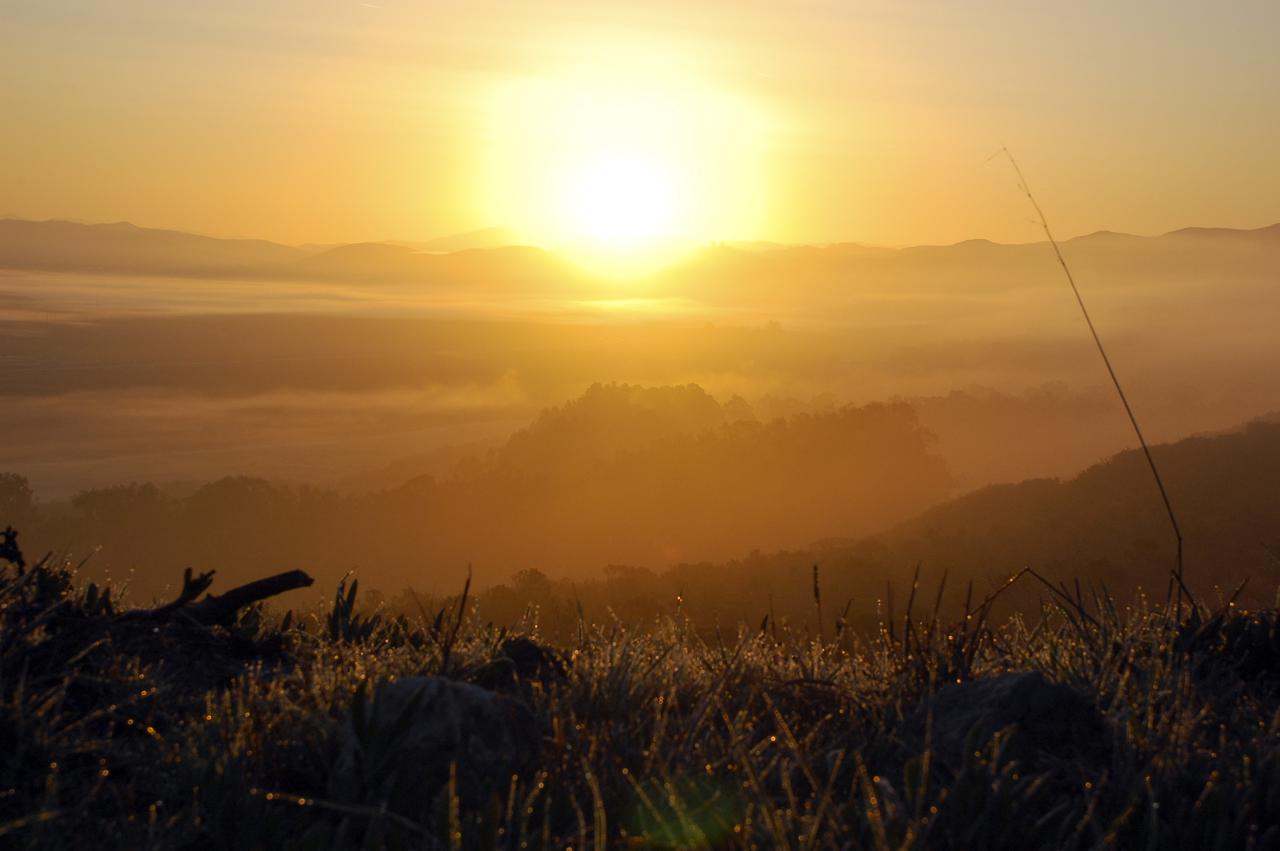
VANDENBERG AFB, Calif. – Sunrise over Vandenberg Air Force Base in California on the morning of the launch of a United Launch Alliance Atlas V rocket carrying the Landsat Data Continuity Mission spacecraft from. Photo credit: NASA_Ben Smegelsky
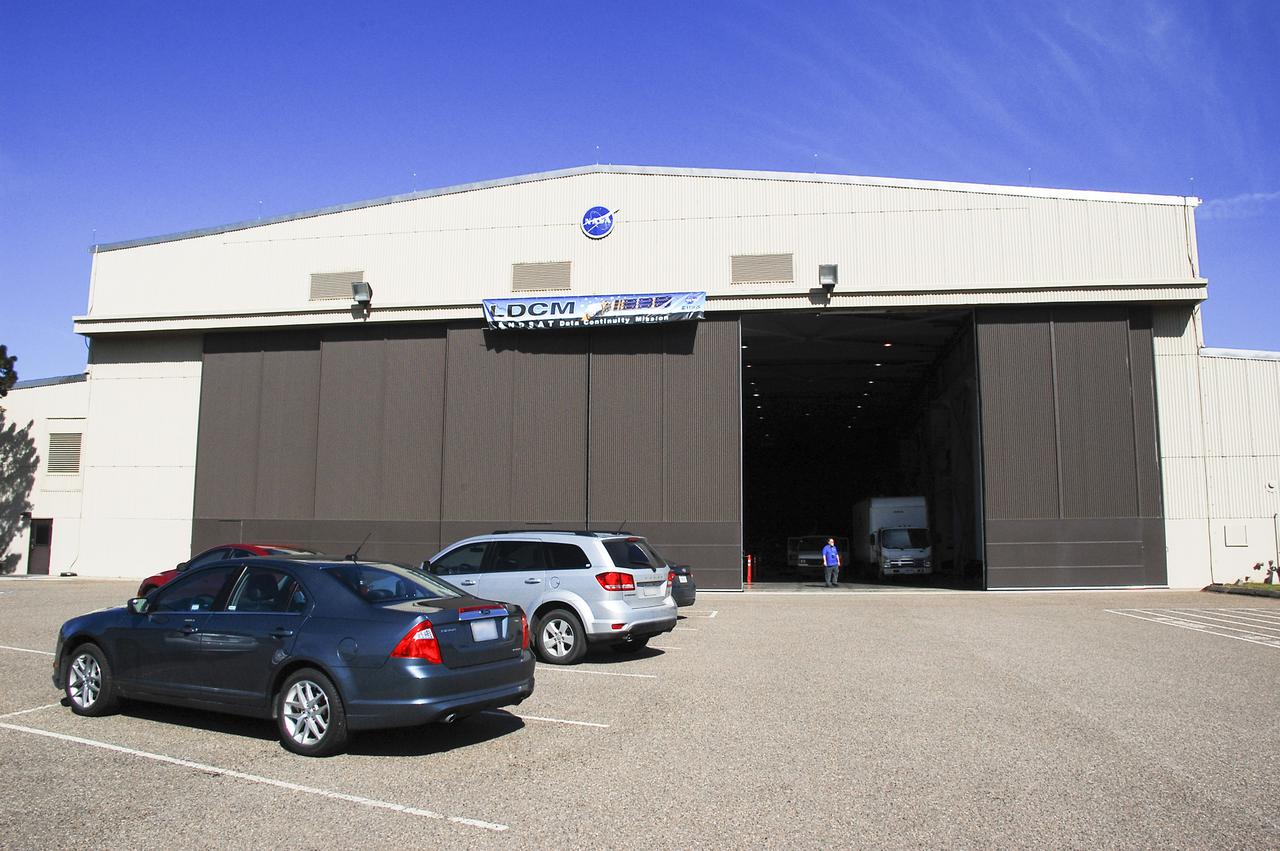
VANDENBERG AFB, Calif. – A NASA hangar at Vandenberg Air Force Base in California shows the upcoming Landsat Data Continuity Mission banner. Photo credit: NASA_Ben Smegelsky
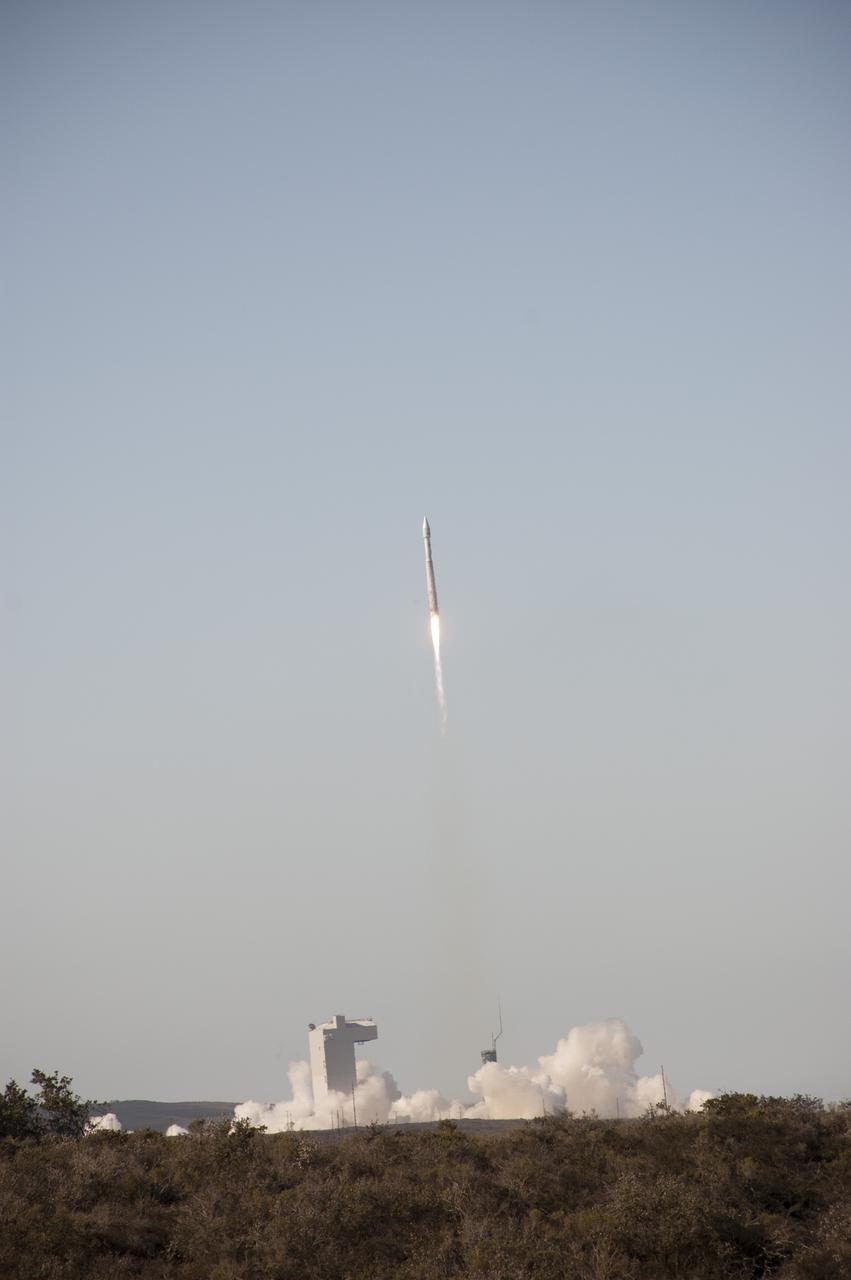
VANDENBERG AFB, Calif. -- The Landsat Data Continuity Mission spacecraft lifts off at 1:02 p.m. EST, 10:02 a.m. PST) atop a United Launch Alliance Atlas V rocket from Space Launch Complex 3 at California's Vandenberg Air Force Base. The Landsat Data Continuity Mission LDCM is the future of Landsat satellites. It will continue to obtain valuable data and imagery to be used in agriculture, education, business, science, and government. The Landsat Program provides repetitive acquisition of high resolution multispectral data of the Earth's surface on a global basis. The data from the Landsat spacecraft constitute the longest record of the Earth's continental surfaces as seen from space. It is a record unmatched in quality, detail, coverage, and value. For more information, visit: http:__www.nasa.gov_mission_pages_landsat_main_index.html Photo credit: NASA_Ben Smegelsky
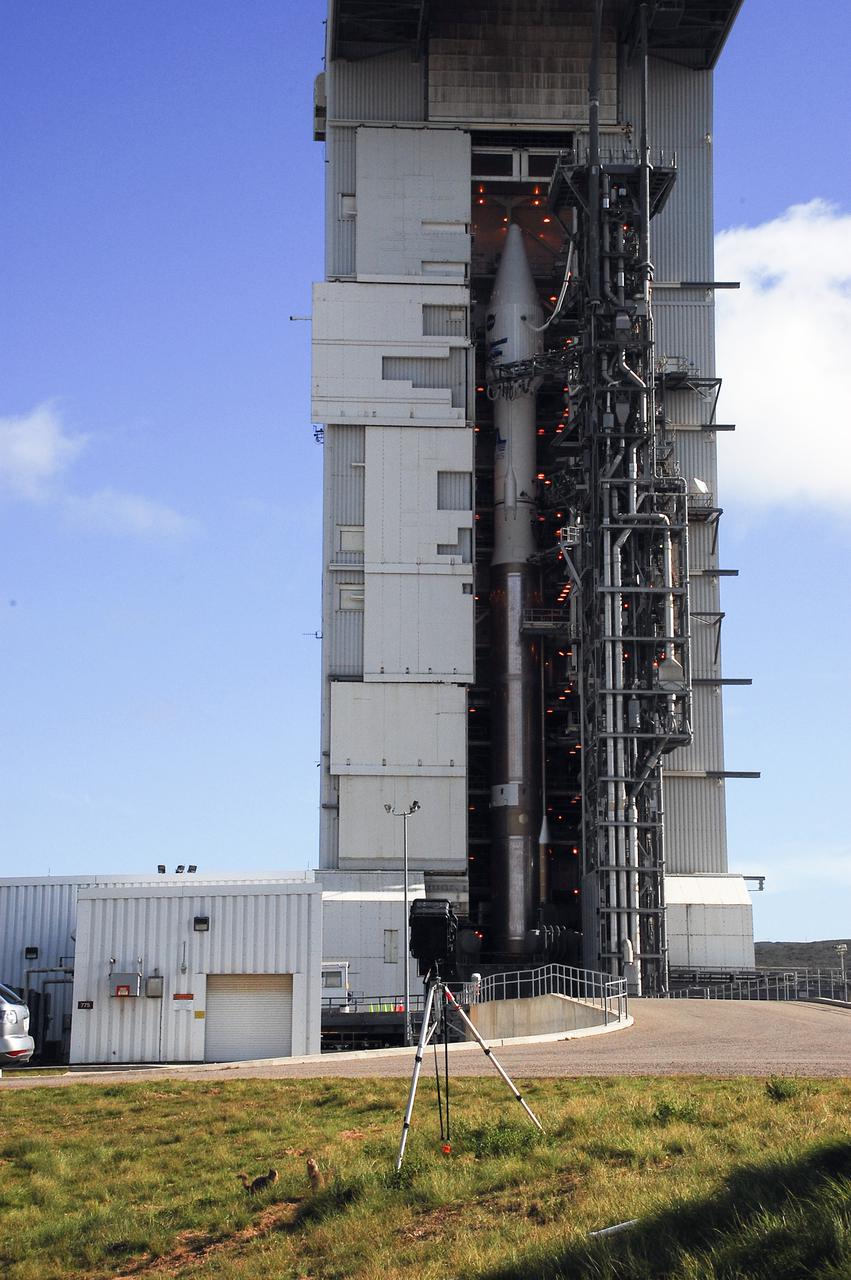
VANDENBERG AFB, Calif. – A pair of squirrels look around near the launch site of a United Launch Alliance Atlas V rocket carrying the Landsat Data Continuity Mission spacecraft from Vandenberg Air Force Base in California. Photo credit: NASA_Ben Smegelsky
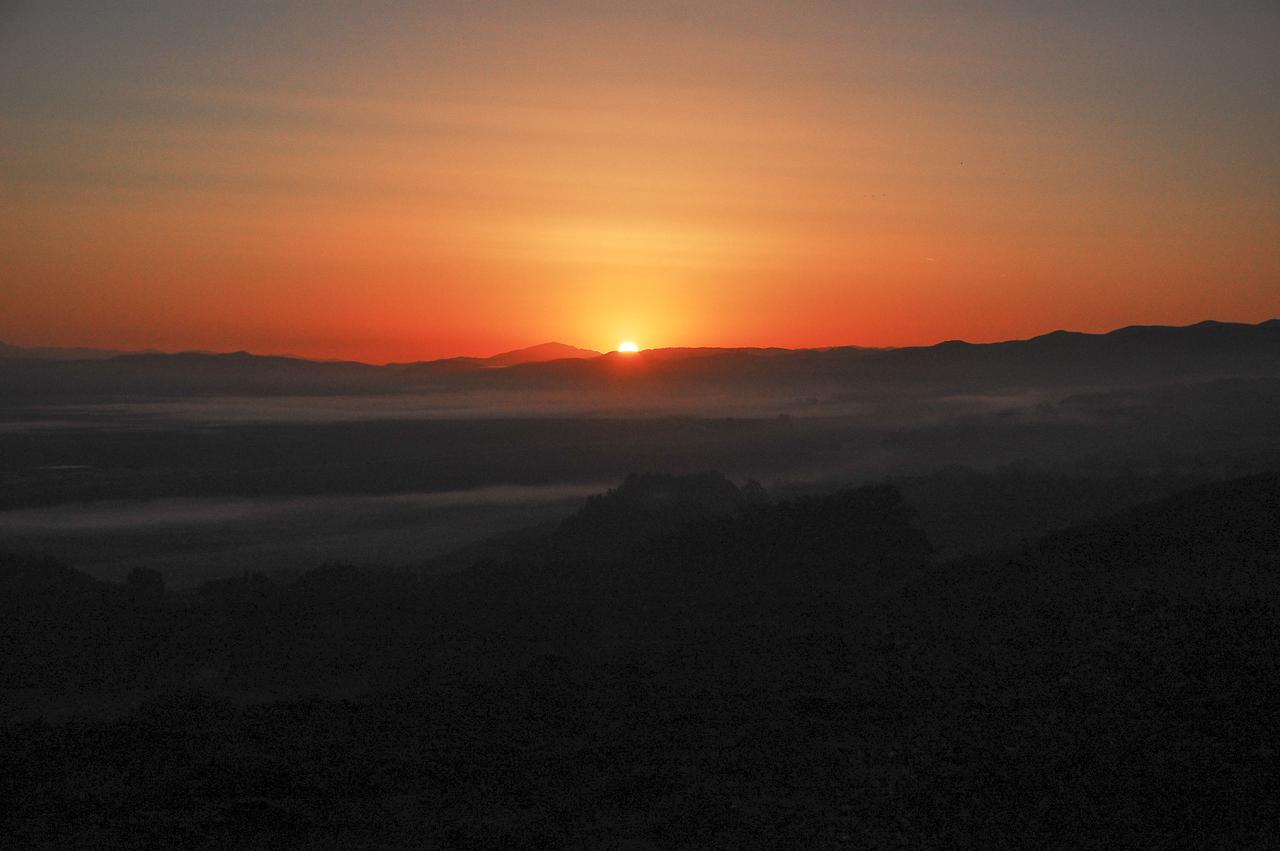
VANDENBERG AFB, Calif. – Sunrise over Vandenberg Air Force Base in California on the morning of the launch of a United Launch Alliance Atlas V rocket carrying the Landsat Data Continuity Mission spacecraft from. Photo credit: NASA_Ben Smegelsky
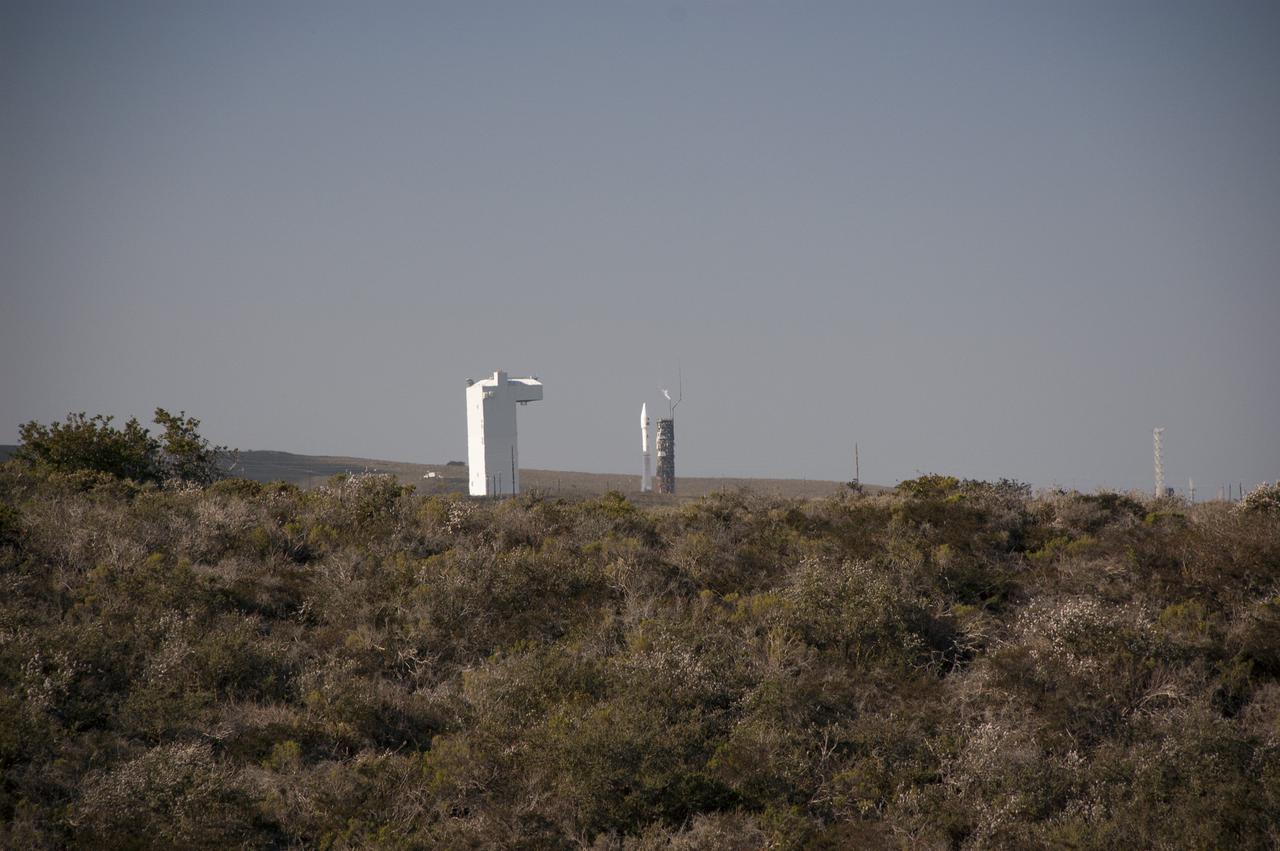
VANDENBERG AFB, Calif. -- The Landsat Data Continuity Mission spacecraft is poised for lift off atop a United Launch Alliance Atlas V rocket from Space Launch Complex 3 at California's Vandenberg Air Force Base. The Landsat Data Continuity Mission LDCM is the future of Landsat satellites. It will continue to obtain valuable data and imagery to be used in agriculture, education, business, science, and government. The Landsat Program provides repetitive acquisition of high resolution multispectral data of the Earth's surface on a global basis. The data from the Landsat spacecraft constitute the longest record of the Earth's continental surfaces as seen from space. It is a record unmatched in quality, detail, coverage, and value. For more information, visit: http:__www.nasa.gov_mission_pages_landsat_main_index.html Photo credit: NASA_Ben Smegelsky
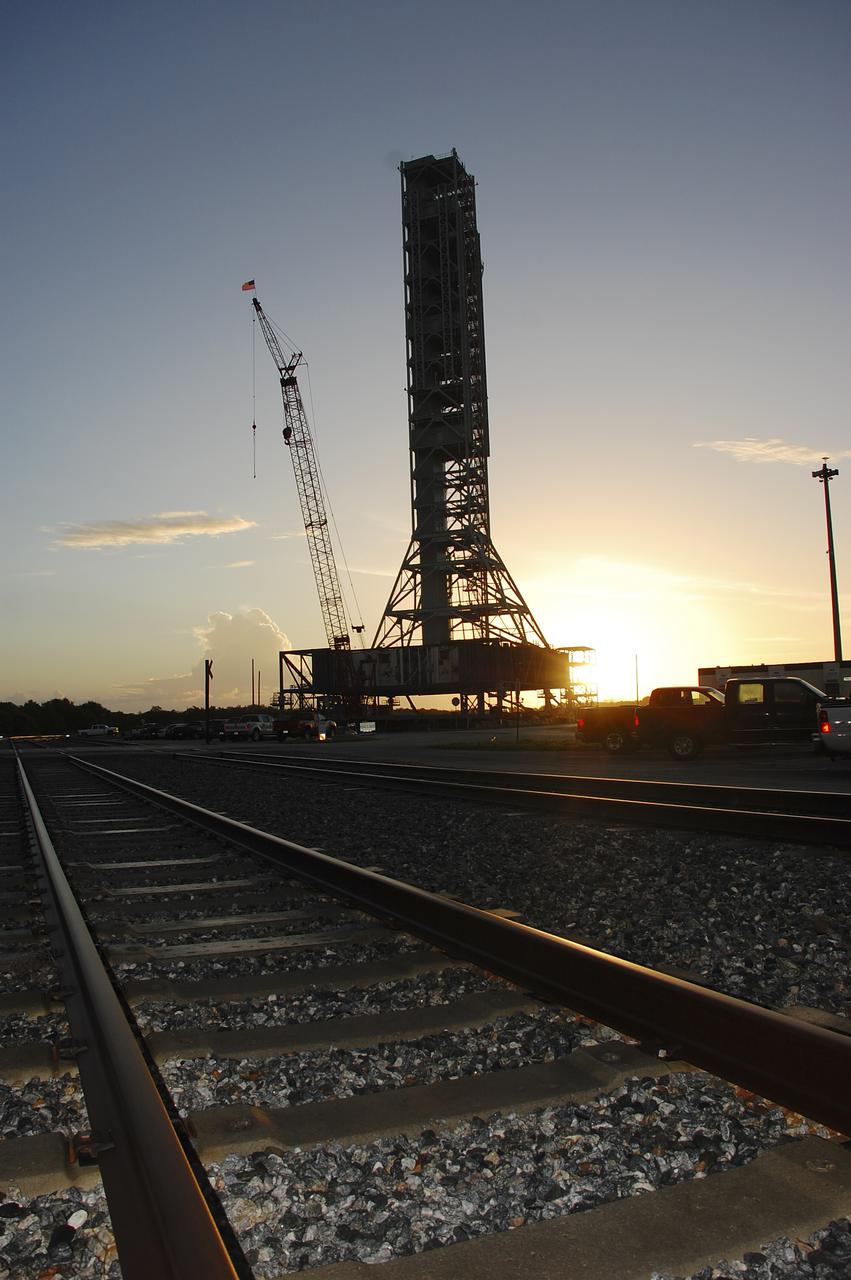
CAPE CANAVERAL, Fla. – An early morning sunrise partially illuminates the Mobile Launcher, or ML, at NASA’s Kennedy Space Center in Florida. Railroad tracks are visible in the foreground. In 2013, the agency awarded a contract to J.P. Donovan Construction Inc. of Rockledge, Fla., to modify the ML, which is one of the key elements of ground support equipment that is being upgraded by the Ground Systems Development and Operations Program office at Kennedy. The ML will carry the SLS rocket and Orion spacecraft to Launch Pad 39B for its first mission, Exploration Mission 1, in 2017. Photo credit: NASA_Ben Smegelsky
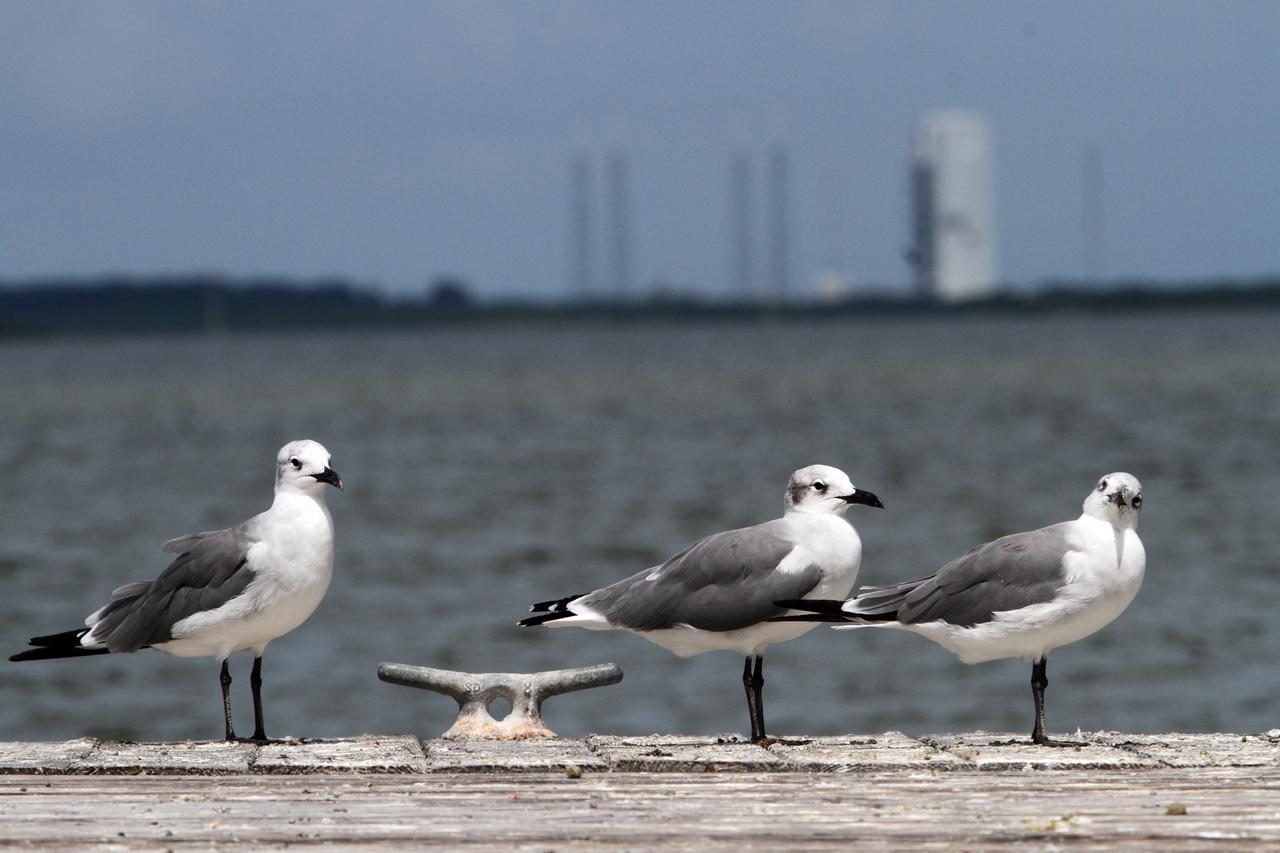
CAPE CANAVERAL, Fla. – At NASA’s Kennedy Space Center in Florida, three seagulls stand on a dock along the NASA Causeway admiring the view of the intercoastal waterway. The seagull to the right seems to have a somewhat quizzical look. The center shares a boundary with the Merritt Island National Wildlife Refuge, consisting of 140,000 acres. The Refuge provides a wide variety of habitats: coastal dunes, saltwater estuaries and marshes, freshwater impoundments, scrub, pine flatwoods, and hardwood hammocks that provide habitat for more than 1,500 species of plants and animals, including about 331 species of birds. Photo credit: NASA_Ben Smegelsky
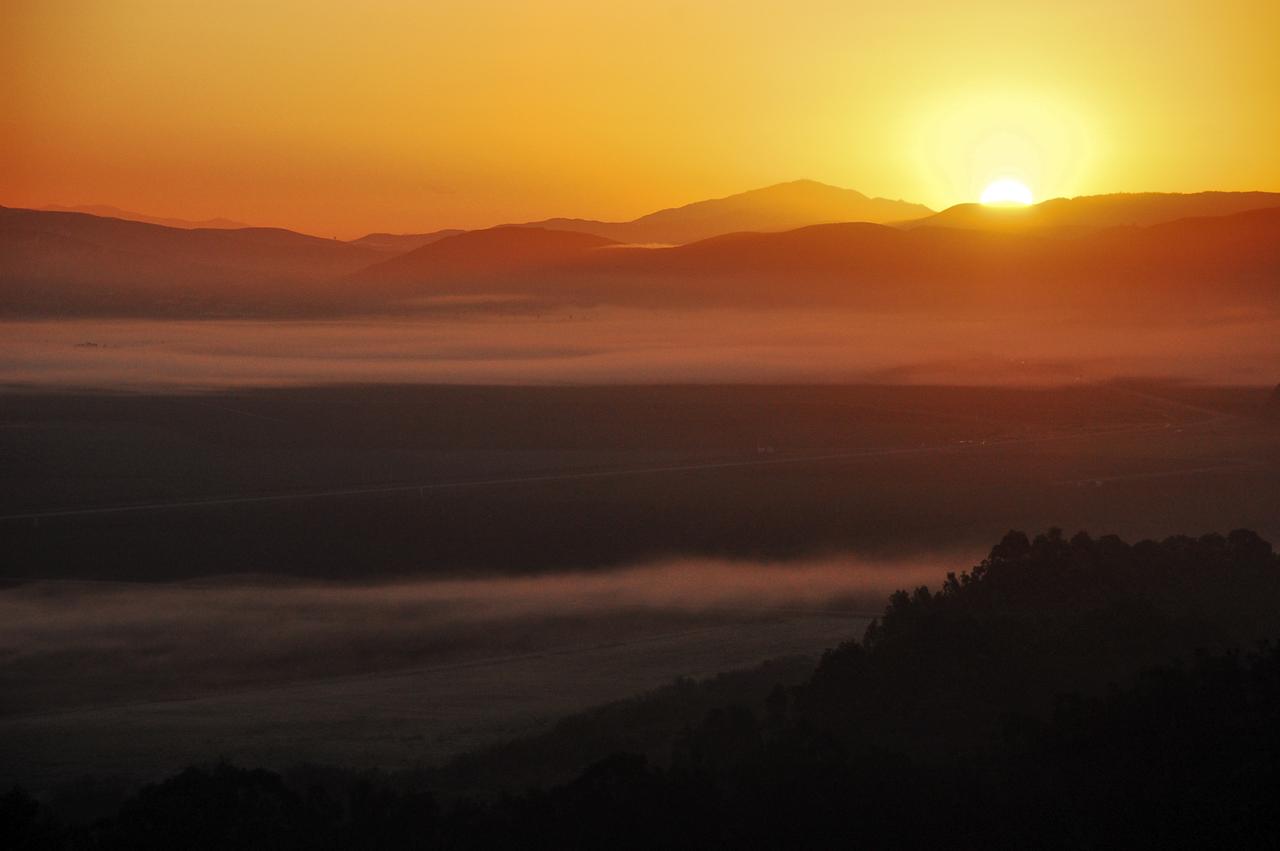
VANDENBERG AFB, Calif. – Sunrise over Vandenberg Air Force Base in California on the morning of the launch of a United Launch Alliance Atlas V rocket carrying the Landsat Data Continuity Mission spacecraft from. Photo credit: NASA_Ben Smegelsky
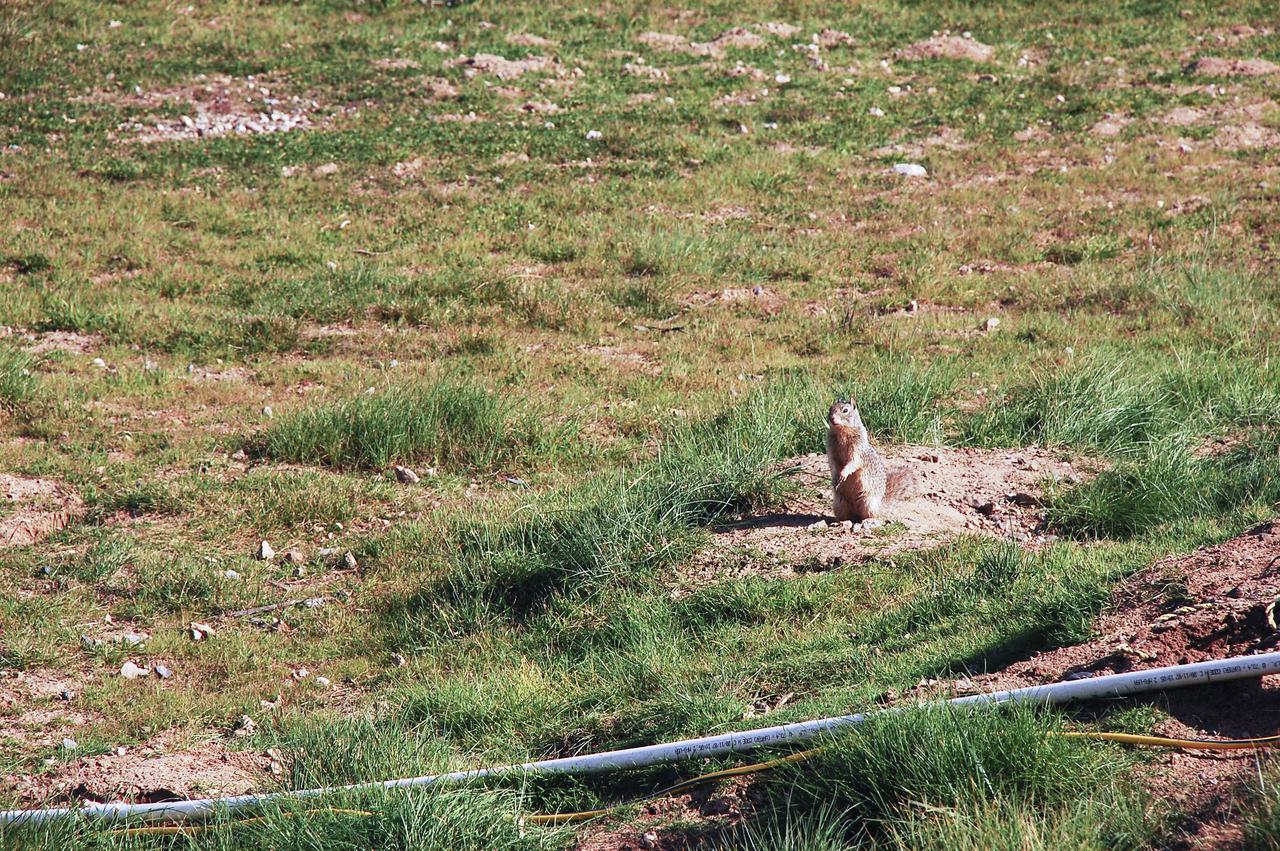
VANDENBERG AFB, Calif. – A squirrel looks around near the launch site of a United Launch Alliance Atlas V rocket carrying the Landsat Data Continuity Mission spacecraft from Vandenberg Air Force Base in California. Photo credit: NASA_Ben Smegelsky
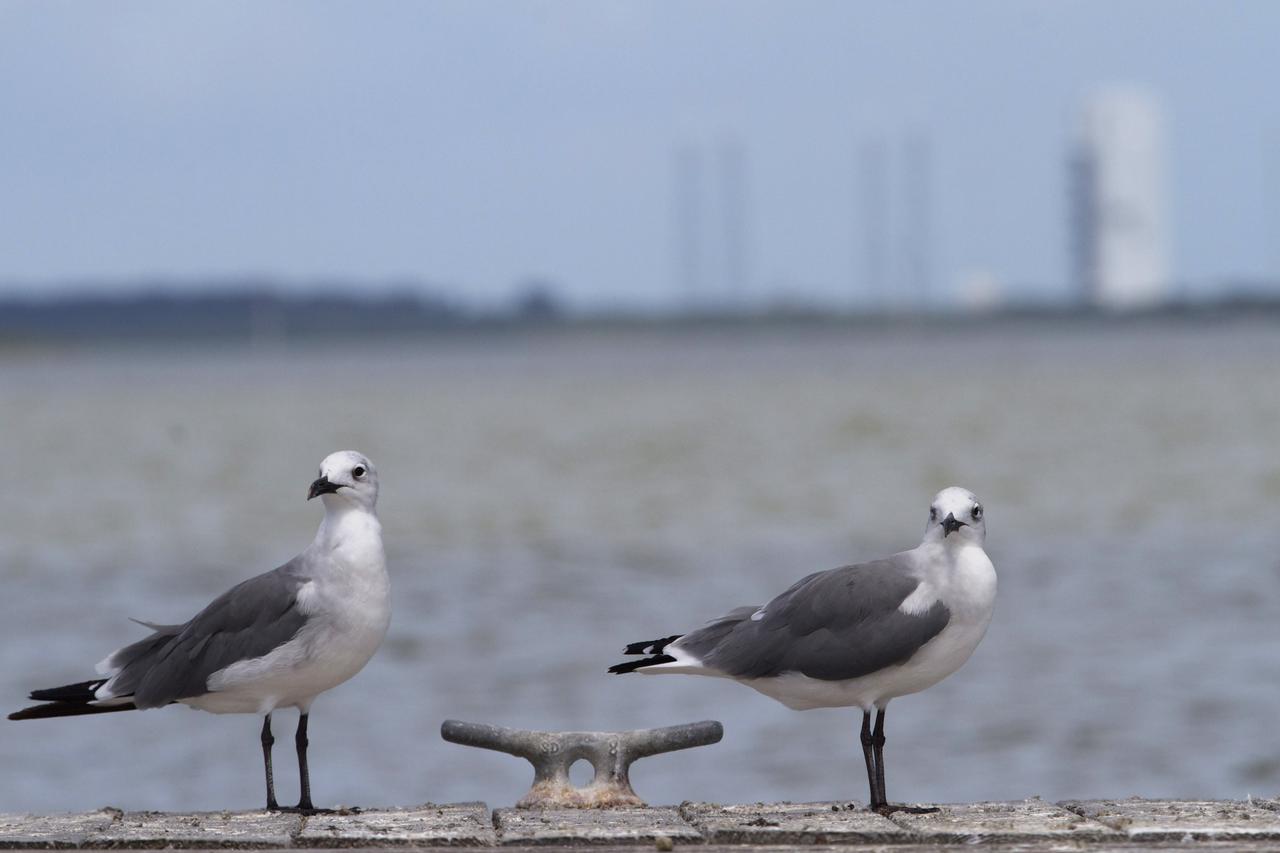
CAPE CANAVERAL, Fla. – At NASA’s Kennedy Space Center in Florida, two seagulls sit on a dock along the NASA Causeway admiring the view of the intercoastal waterway. The center shares a boundary with the Merritt Island National Wildlife Refuge, consisting of 140,000 acres. The Refuge provides a wide variety of habitats: coastal dunes, saltwater estuaries and marshes, freshwater impoundments, scrub, pine flatwoods, and hardwood hammocks that provide habitat for more than 1,500 species of plants and animals, including about 331 species of birds. Photo credit: NASA_Ben Smegelsky
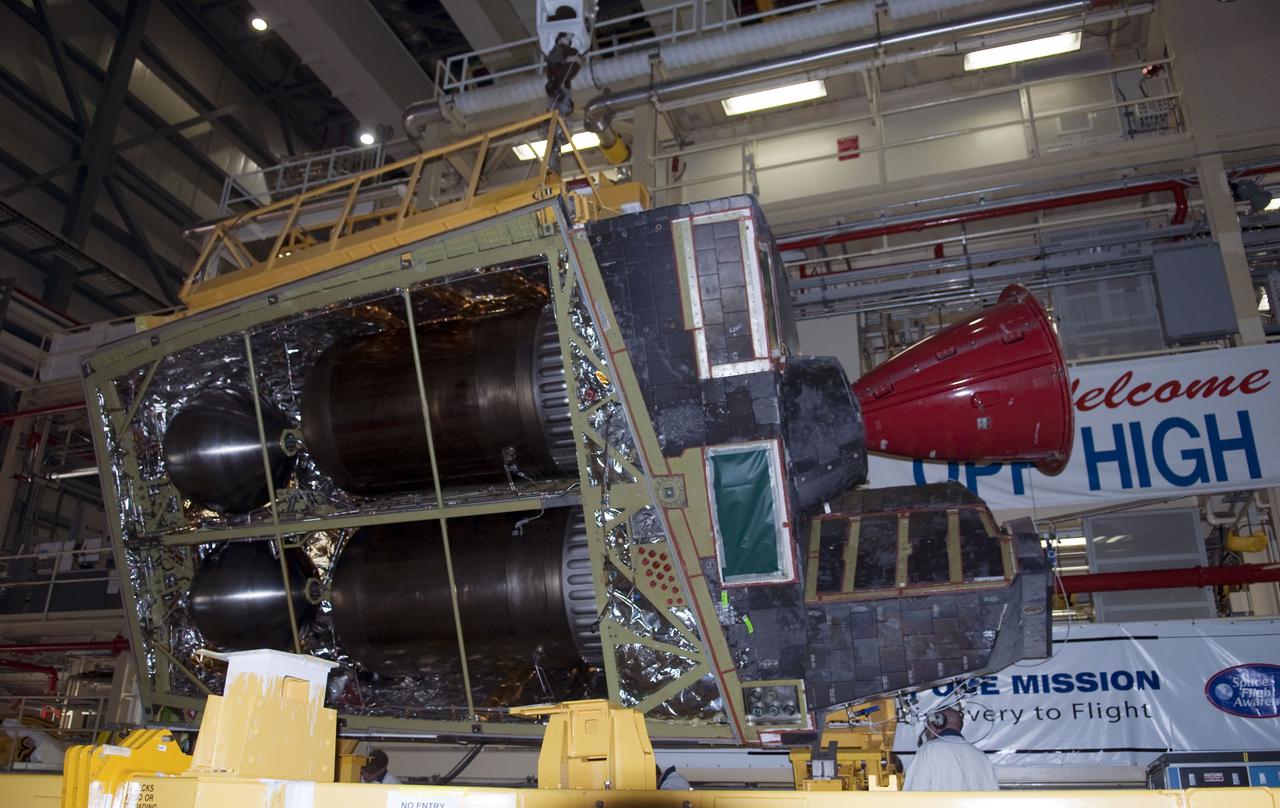
CAPE CANAVERAL, Fla. -- In Orbiter Processing Facility-3 at NASA's Kennedy Space Center in Florida, the right-hand orbital maneuvering system, or OMS, pod is being lifted by an overhead crane for installation on space shuttle Discovery. Discovery and its crew will deliver the Permanent Multipurpose Module, or PMM, which will carry supplies and critical spare parts on the STS-133 mission to the International Space Station. The module will be left behind so it can be used for microgravity experiments in fluid physics, materials science, biology and biotechnology. For more information go to www.nasa.gov_shuttle. Photo credit: NASA_Ben Smegelsky
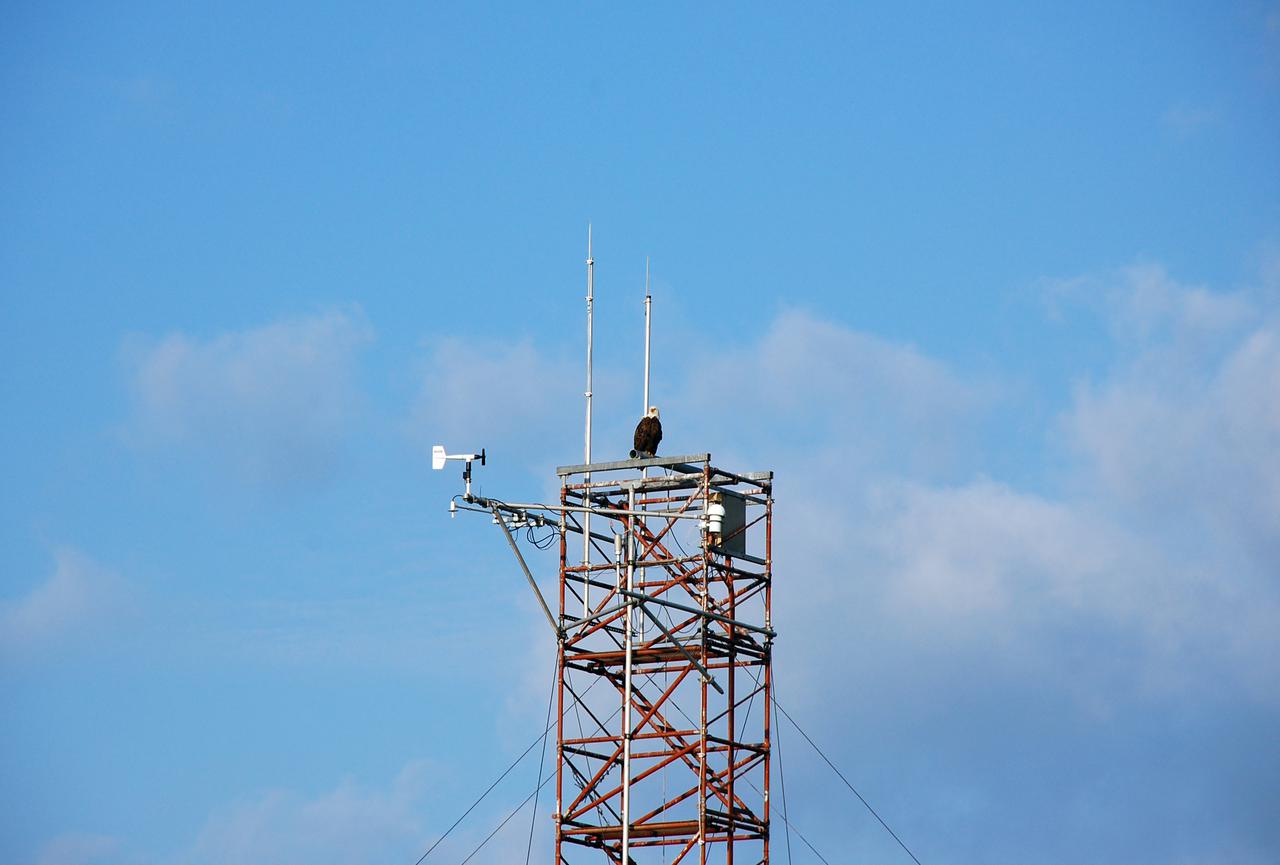
CAPE CANAVERAL, Fla. - At NASA's Kennedy Space Center in Florida, a bald eagle is in prime position at the top of a tower at the Shuttle Landing Facility to watch the landing of space shuttle Discovery. Bald eagles mate for life, choosing the tops of large trees to build nests, which they typically use and enlarge each year. Nests may reach 10 feet across and weigh half a ton. The birds travel great distances but usually return to breeding grounds within 100 miles of the place where they were raised. Bald eagles may live 15 to 25 years in the wild. There are 18 active eagle nests within Kennedy's boundaries, including several in the vicinity of the landing strip. The Merritt Island National Wildlife Refuge coexists with Kennedy Space Center and provides a habitat for 330 species of birds including the bald eagle. A variety of other wildlife - 117 kinds of fish, 65 types of amphibians and reptiles, 31 different mammals, and 1,045 species of plants - also inhabit the refuge. For information on the refuge, visit http:__www.fws.gov_merrittisland_Index.html. For information on Kennedy Space Center, visit http:__www.nasa.gov_kennedy. Photo credit: NASA_Ben Smegelsky
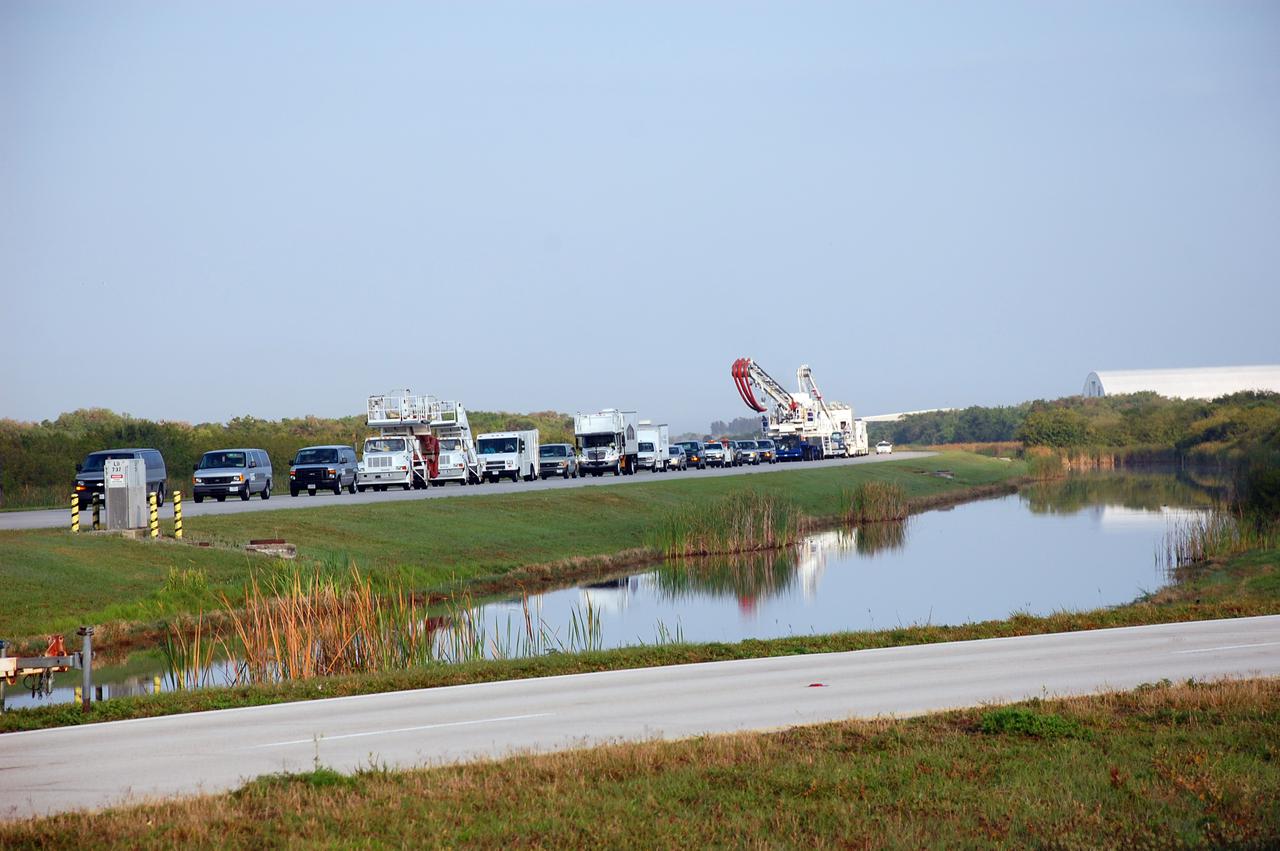
CAPE CANAVERAL, Fla. - At NASA's Kennedy Space Center in Florida, the shuttle convoy vehicles roll to the Shuttle Landing Facility in preparation for the landing of space shuttle Discovery. The convoy is made up of about 40 vehicles, including 25 specially designed vehicles, and a team of trained personnel who 'safe' the shuttle, prepare it for towing, assist the crew in leaving the shuttle, and finally, tow the shuttle to its hangar. Discovery landed at Kennedy after 15 days in space, completing the more than 6.2-million-mile STS-131 mission on orbit 238. Main gear touchdown was at 9:08:35 a.m. EDT followed by nose gear touchdown at 9:08:47 a.m. and wheelstop at 9:09:33 a.m. Aboard are Commander Alan Poindexter; Pilot James P. Dutton Jr.; and Mission Specialists Rick Mastracchio, Clayton Anderson, Dorothy Metcalf-Lindenburger, Stephanie Wilson and Naoko Yamazaki of the Japan Aerospace Exploration Agency. The seven-member STS-131 crew carried the multi-purpose logistics module Leonardo, filled with supplies, a new crew sleeping quarters and science racks that were transferred to the International Space Station's laboratories. The crew also switched out a gyroscope on the station’s truss, installed a spare ammonia storage tank and retrieved a Japanese experiment from the station’s exterior. STS-131 is the 33rd shuttle mission to the station and the 131st shuttle mission overall. For information on the STS-131 mission and crew, visit http:__www.nasa.gov_mission_pages_shuttle_shuttlemissions_sts131_index.html. Photo credit: NASA_Ben Smegelsky
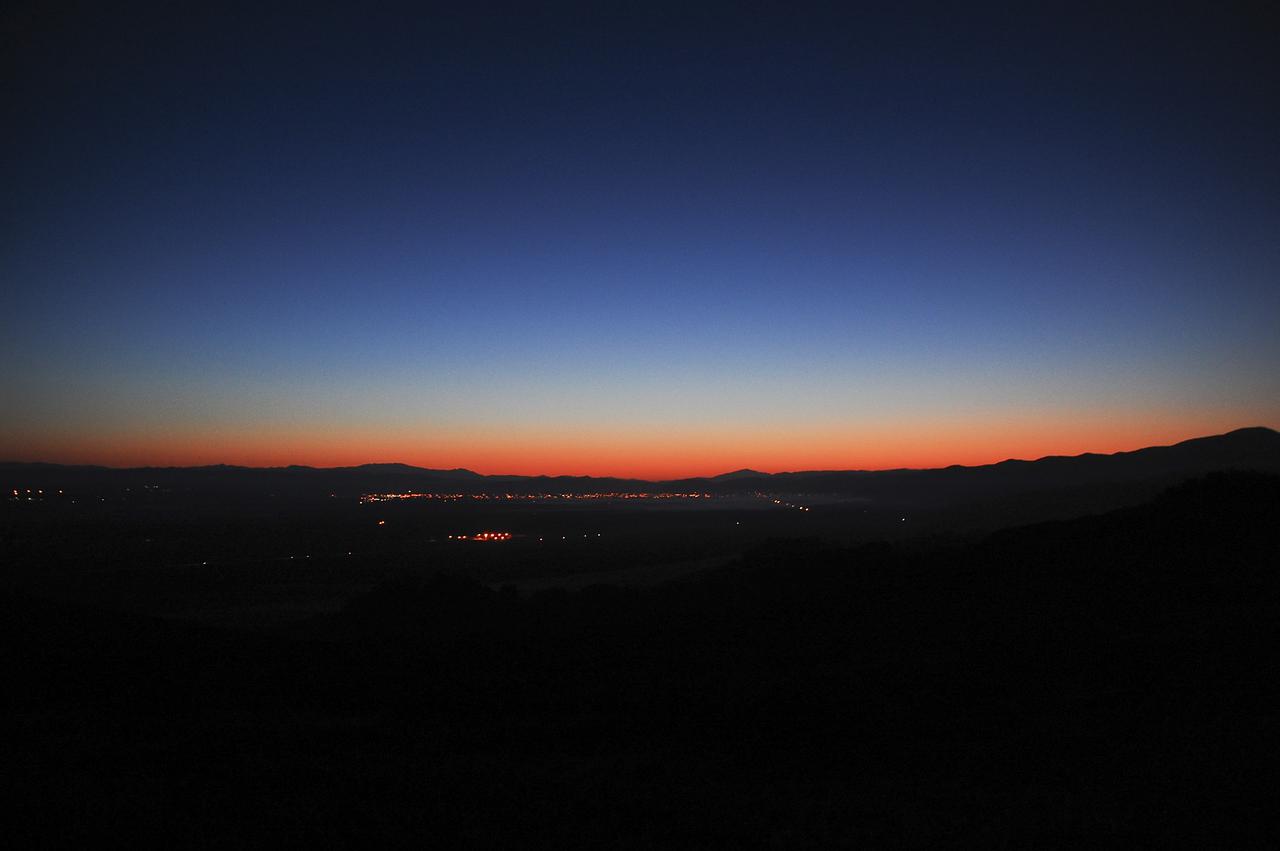
VANDENBERG AFB, Calif. – The sun rises over a United Launch Alliance Atlas V rocket carrying the Landsat Data Continuity Mission spacecraft from Vandenberg Air Force Base in California. Photo credit: NASA_Ben Smegelsky
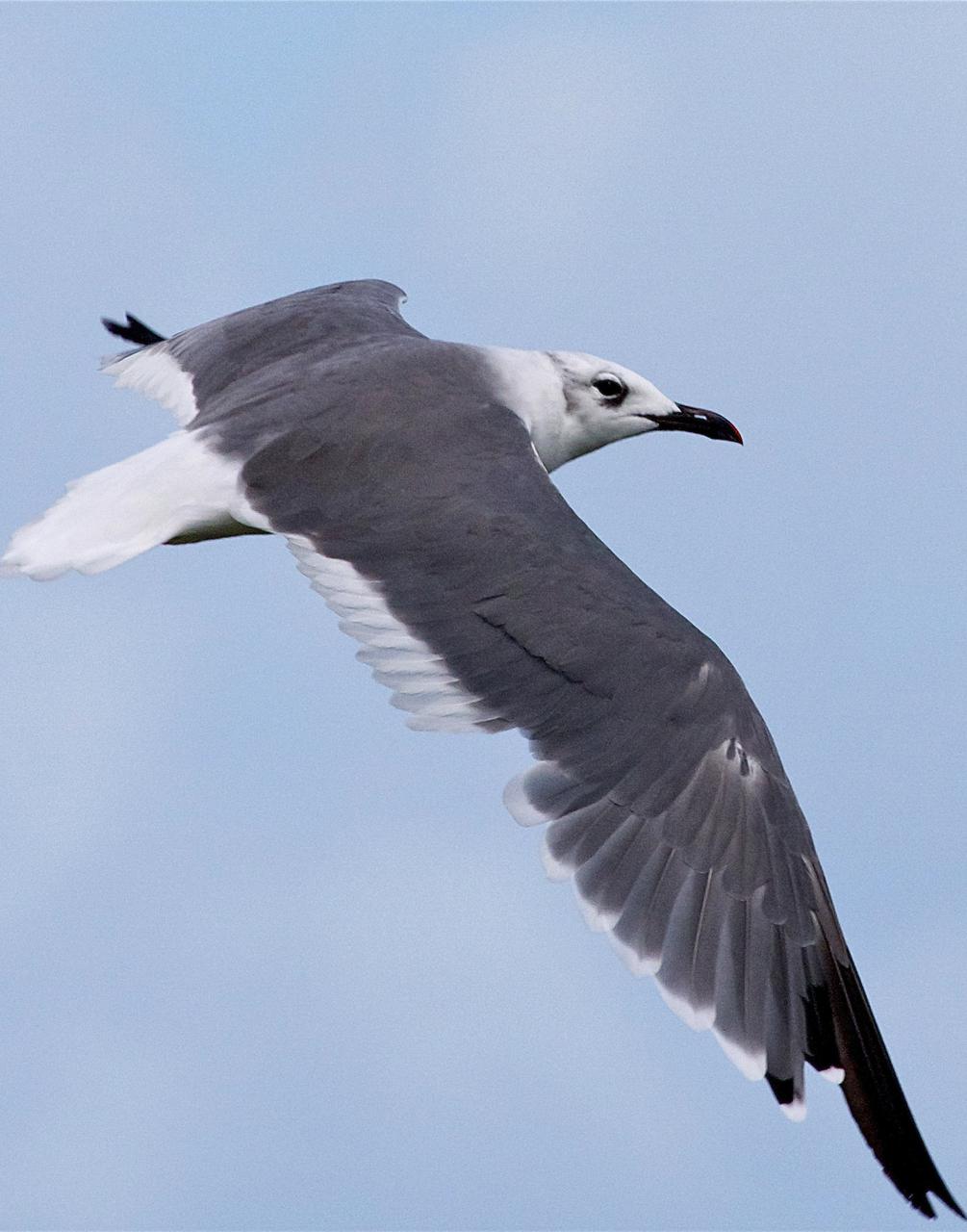
CAPE CANAVERAL, Fla. – A seagull soars through the air near the NASA Causeway at NASA’s Kennedy Space Center in Florida. The center shares a boundary with the Merritt Island National Wildlife Refuge, consisting of 140,000 acres. The Refuge provides a wide variety of habitats: coastal dunes, saltwater estuaries and marshes, freshwater impoundments, scrub, pine flatwoods, and hardwood hammocks that provide habitat for more than 1,500 species of plants and animals, including about 331 species of birds. Photo credit: NASA_Ben Smegelsky
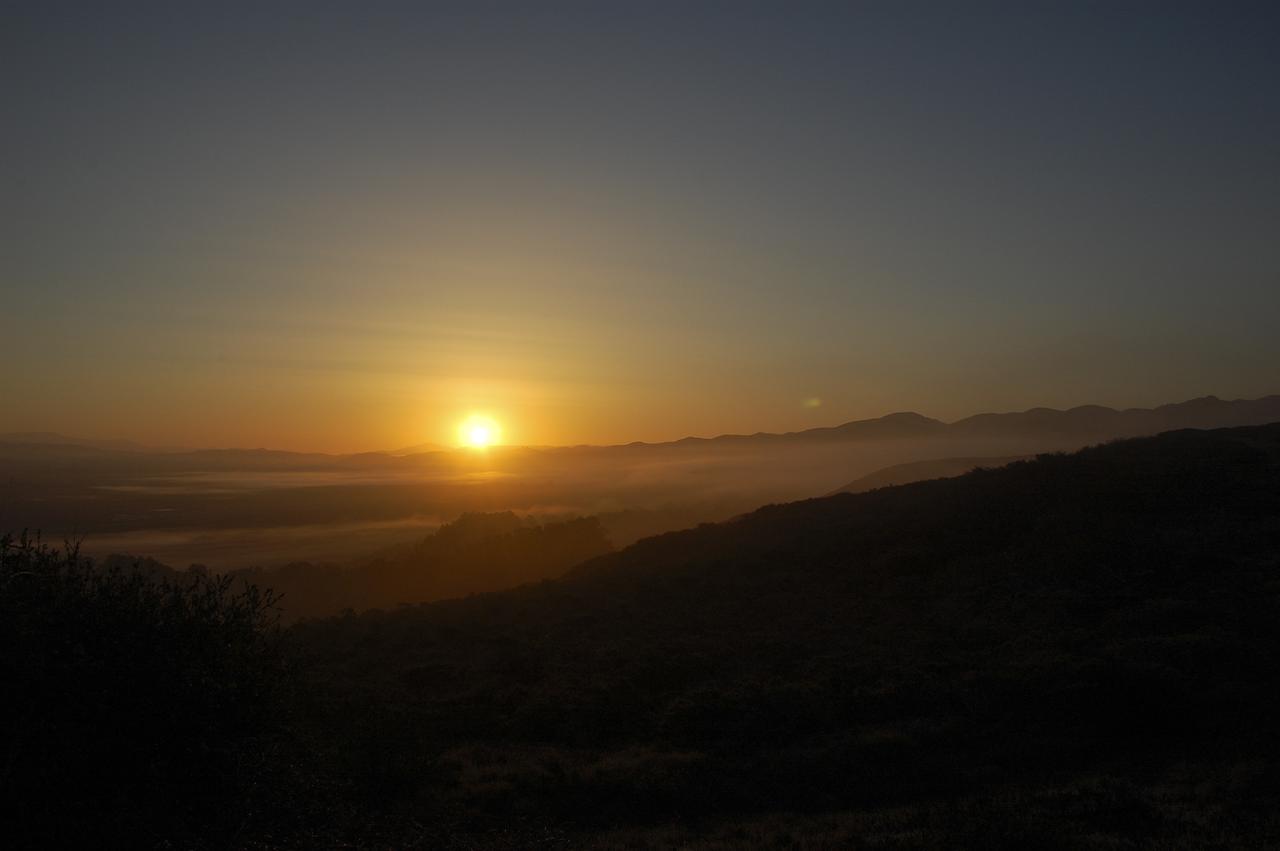
VANDENBERG AFB, Calif. – Sunrise over Vandenberg Air Force Base in California on the morning of the launch of a United Launch Alliance Atlas V rocket carrying the Landsat Data Continuity Mission spacecraft from. Photo credit: NASA_Ben Smegelsky
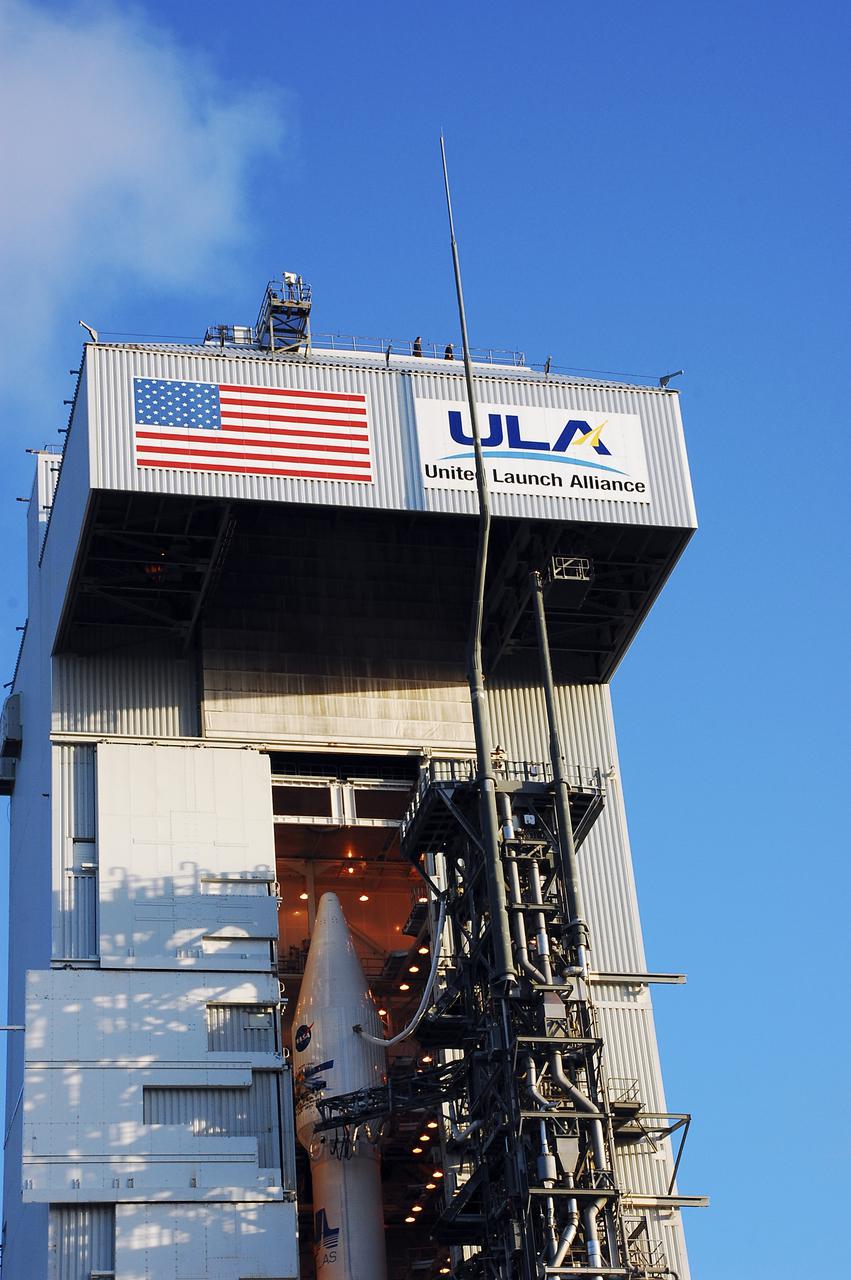
VANDENBERG AFB, Calif. – A United Launch Alliance Atlas V rocket carrying the Landsat Data Continuity Mission spacecraft from Vandenberg Air Force Base in California. Photo credit: NASA_Ben Smegelsky
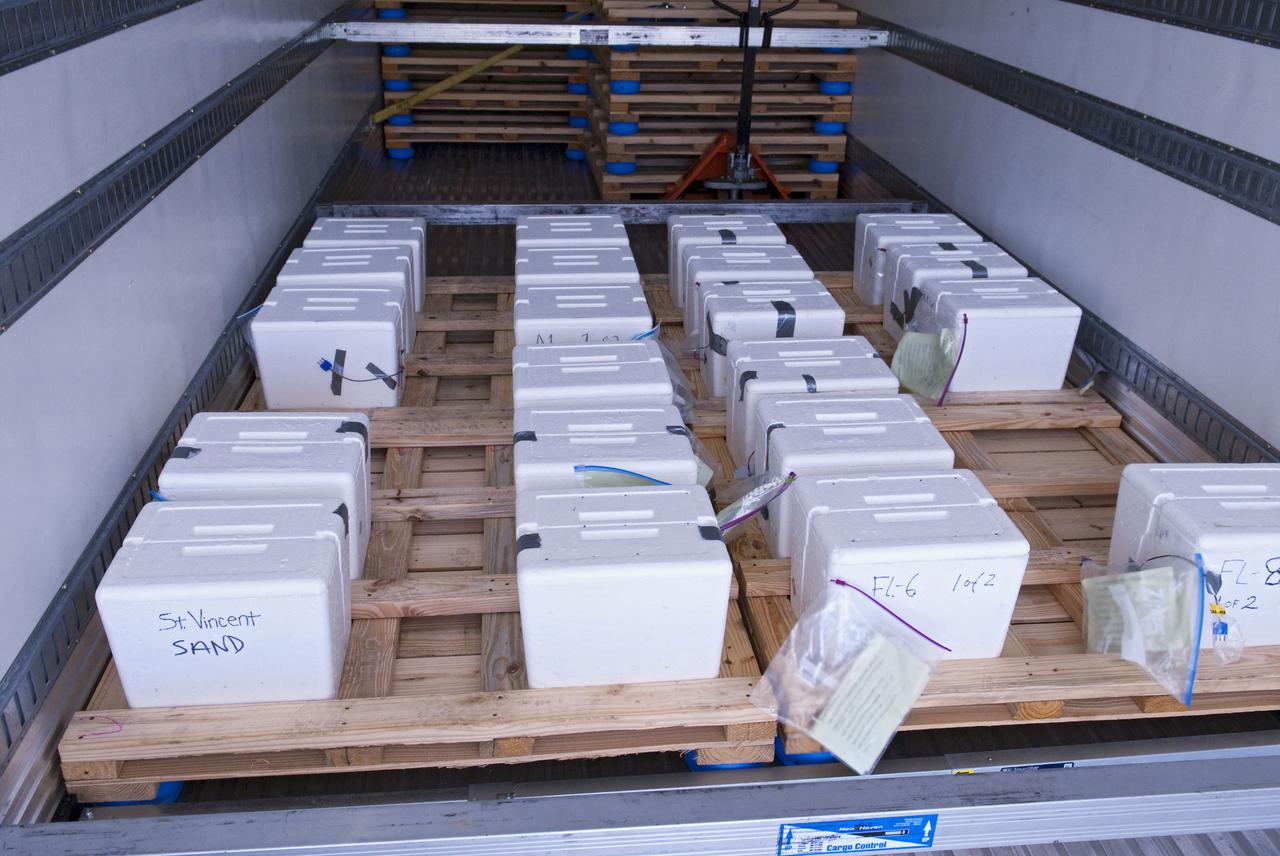
CAPE CANAVERAL, Fla. -- A new batch of endangered sea turtle eggs brought from beaches along the northern U.S. Gulf Coast arrive at NASA's Kennedy Space Center in Florida. Nests of Kemp’s ridley and Loggerhead turtle eggs from Gulf Shores, Ala., and various Florida Gulf Coast beaches are being transported by a specially equipped FedEx truck to a secure, climate-controlled facility at Kennedy. They will be monitored by biologists and hatchery workers until incubation is complete. The hatchlings will be released at different points along a 100-mile stretch of the Atlantic Ocean shoreline. That includes beaches adjacent to the Merritt Island National Wildlife Refuge, which is located inside Kennedy. The release and relocation work is part of an effort by the U.S. Fish and Wildlife Service, the Florida Fish and Wildlife Conservation Commission, the National Park Service, NOAA, FedEx and conservationists to help minimize the risk to this year’s sea turtle hatchlings from impacts of the BP Deepwater Horizon oil spill in the Gulf of Mexico. This plan involves carefully moving an anticipated 700 nests during the next several months. Photo credit: NASA_Ben Smegelsky
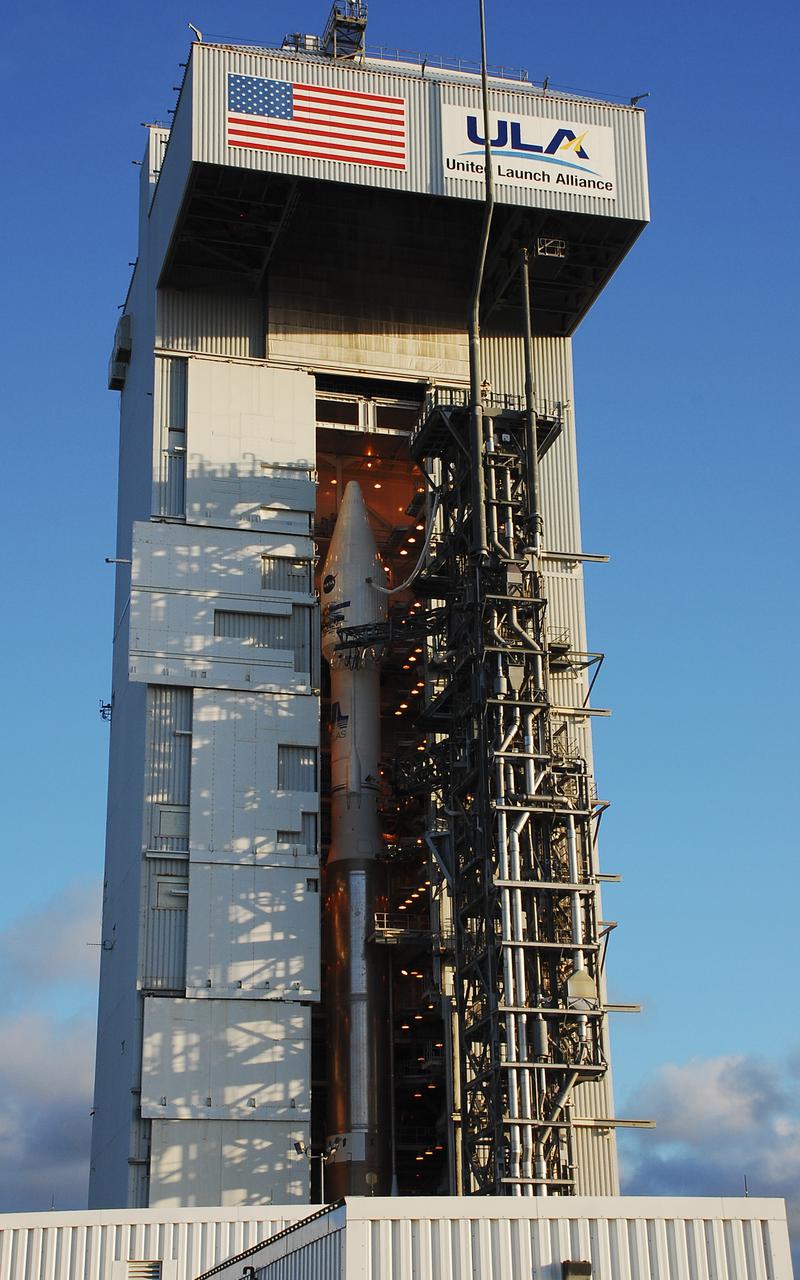
VANDENBERG AFB, Calif. – A United Launch Alliance Atlas V rocket carrying the Landsat Data Continuity Mission spacecraft from Vandenberg Air Force Base in California. Photo credit: NASA_Ben Smegelsky
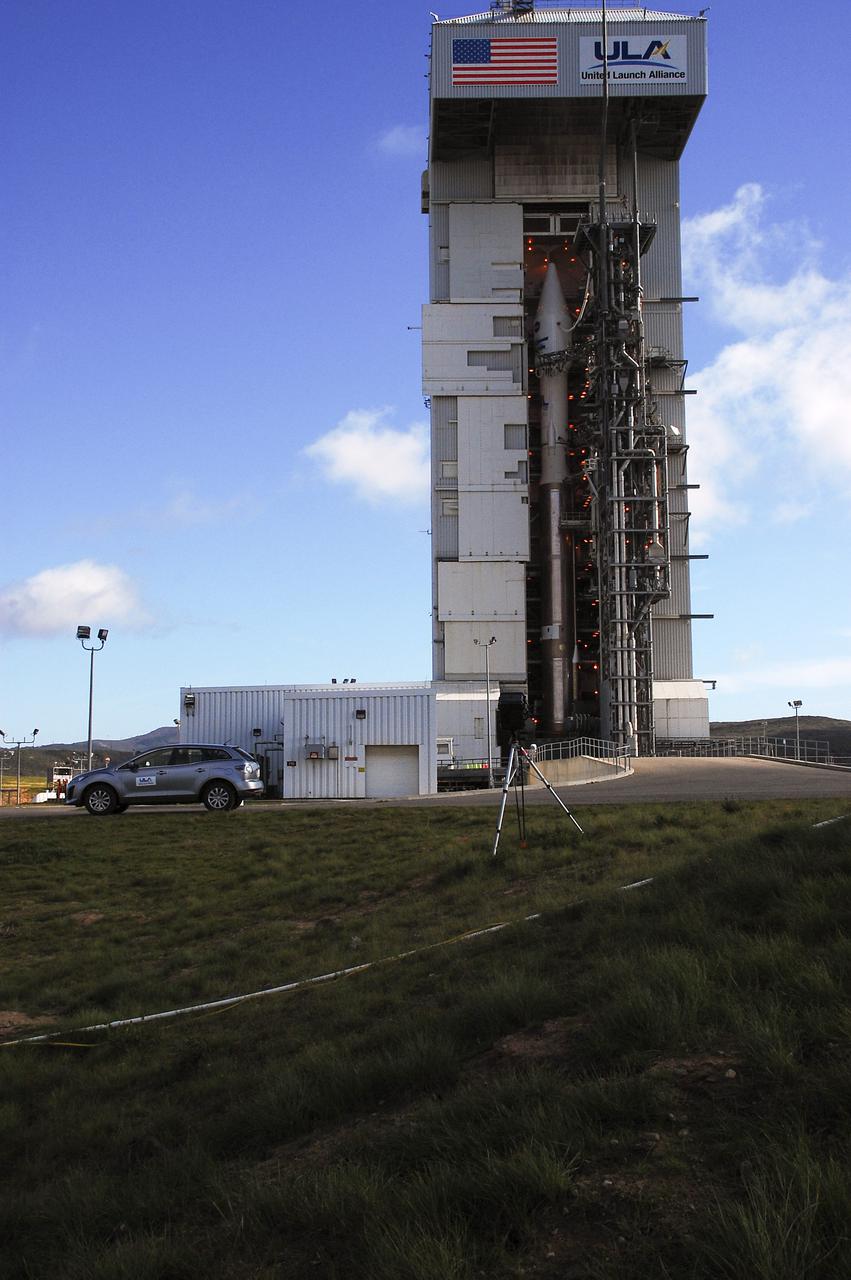
VANDENBERG AFB, Calif. – Squirrel nests near the launch site of a United Launch Alliance Atlas V rocket carrying the Landsat Data Continuity Mission spacecraft from Vandenberg Air Force Base in California. Photo credit: NASA_Ben Smegelsky
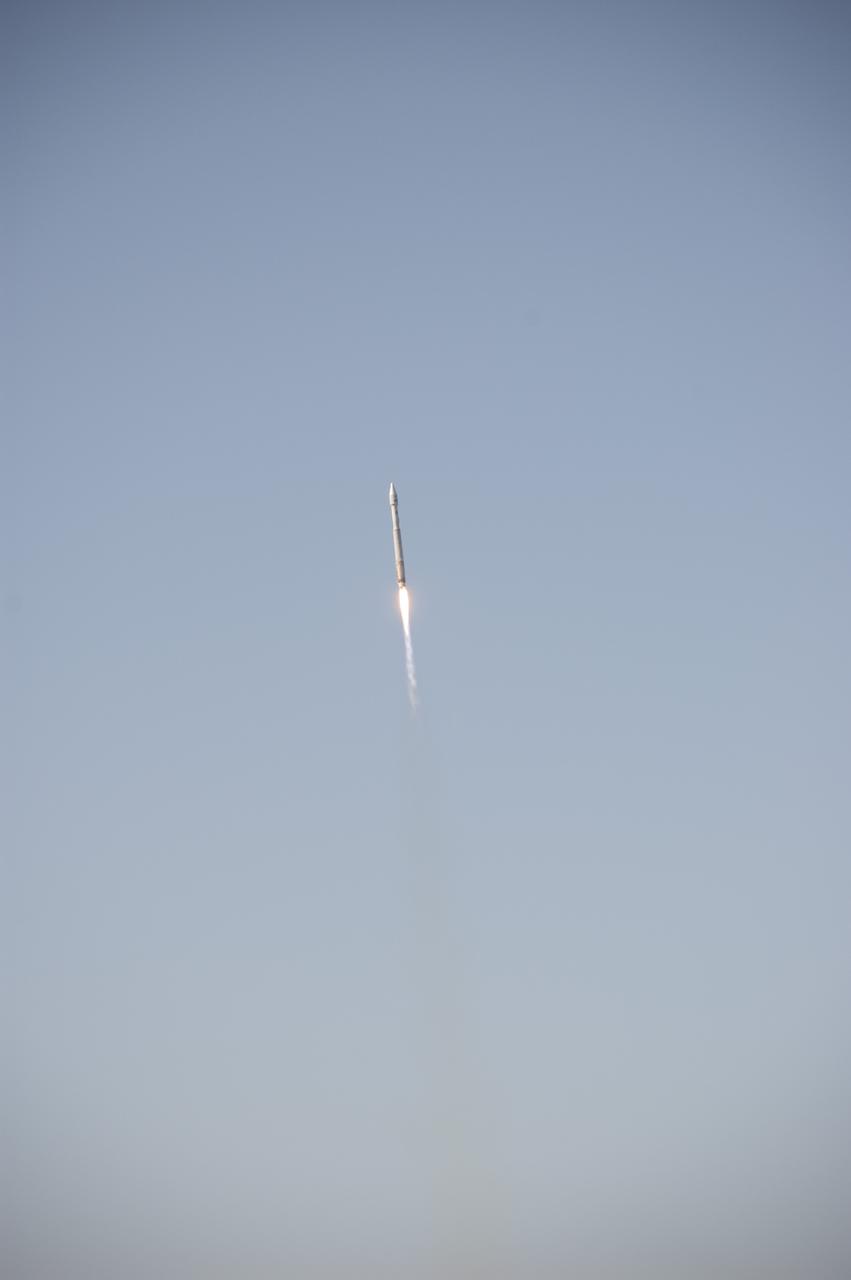
VANDENBERG AFB, Calif. -- The Landsat Data Continuity Mission spacecraft lifts off at 1:02 p.m. EST, 10:02 a.m. PST) atop a United Launch Alliance Atlas V rocket from Space Launch Complex 3 at California's Vandenberg Air Force Base. The Landsat Data Continuity Mission LDCM is the future of Landsat satellites. It will continue to obtain valuable data and imagery to be used in agriculture, education, business, science, and government. The Landsat Program provides repetitive acquisition of high resolution multispectral data of the Earth's surface on a global basis. The data from the Landsat spacecraft constitute the longest record of the Earth's continental surfaces as seen from space. It is a record unmatched in quality, detail, coverage, and value. For more information, visit: http:__www.nasa.gov_mission_pages_landsat_main_index.html Photo credit: NASA_Ben Smegelsky
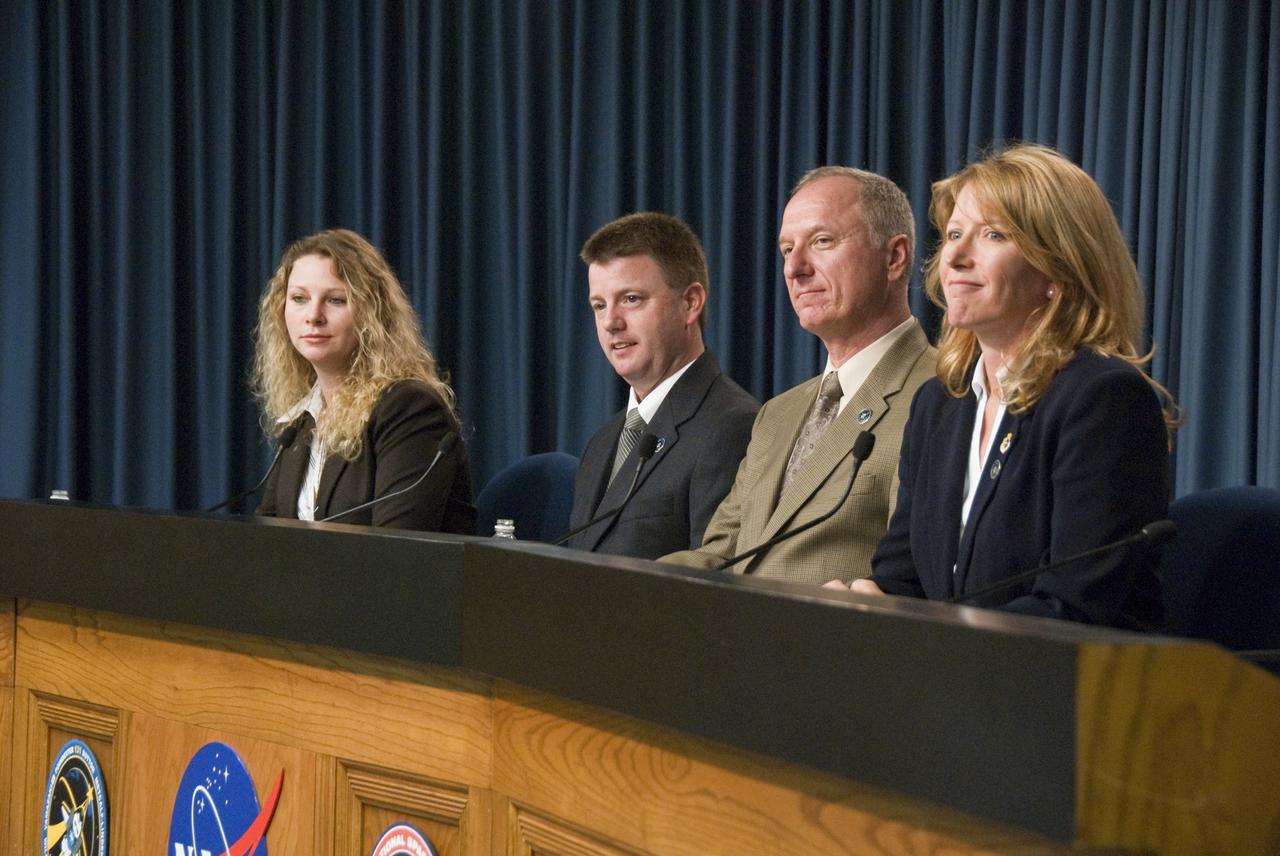
CAPE CANAVERAL, Fla. - In the Press Site auditorium at NASA's Kennedy Space Center in Florida, NASA managers participate in a prelaunch news conference for space shuttle Discovery's STS-131 mission. From left are Candrea Thomas, NASA Public Affairs moderator; Mike Moses, chair, Mission Management Team; Pete Nickolenko, STS-131 launch director; and Kathy Winters, shuttle weather officer. Liftoff of the STS-131 mission is set for 6:21 a.m. EDT on April 5. On STS-131, the seven-member crew will deliver the multi-purpose logistics module Leonardo, filled with supplies, a new crew sleeping quarters and science racks that will be transferred to the International Space Station's laboratories. The crew also will switch out a gyroscope on the station’s truss, install a spare ammonia storage tank and retrieve a Japanese experiment from the station’s exterior. STS-131 is the 33rd shuttle mission to the station and the 131st shuttle mission overall. For information on the STS-131 mission and crew, visit http:__www.nasa.gov_mission_pages_shuttle_shuttlemissions_sts131_index.html. Photo credit: NASA_Ben Smegelsky

VANDENBERG AFB, Calif. – A NASA TV technician sets up equipment to record the launch of a United Launch Alliance Atlas V rocket carrying the Landsat Data Continuity Mission spacecraft from Vandenberg Air Force Base in California. Photo credit: NASA_Ben Smegelsky
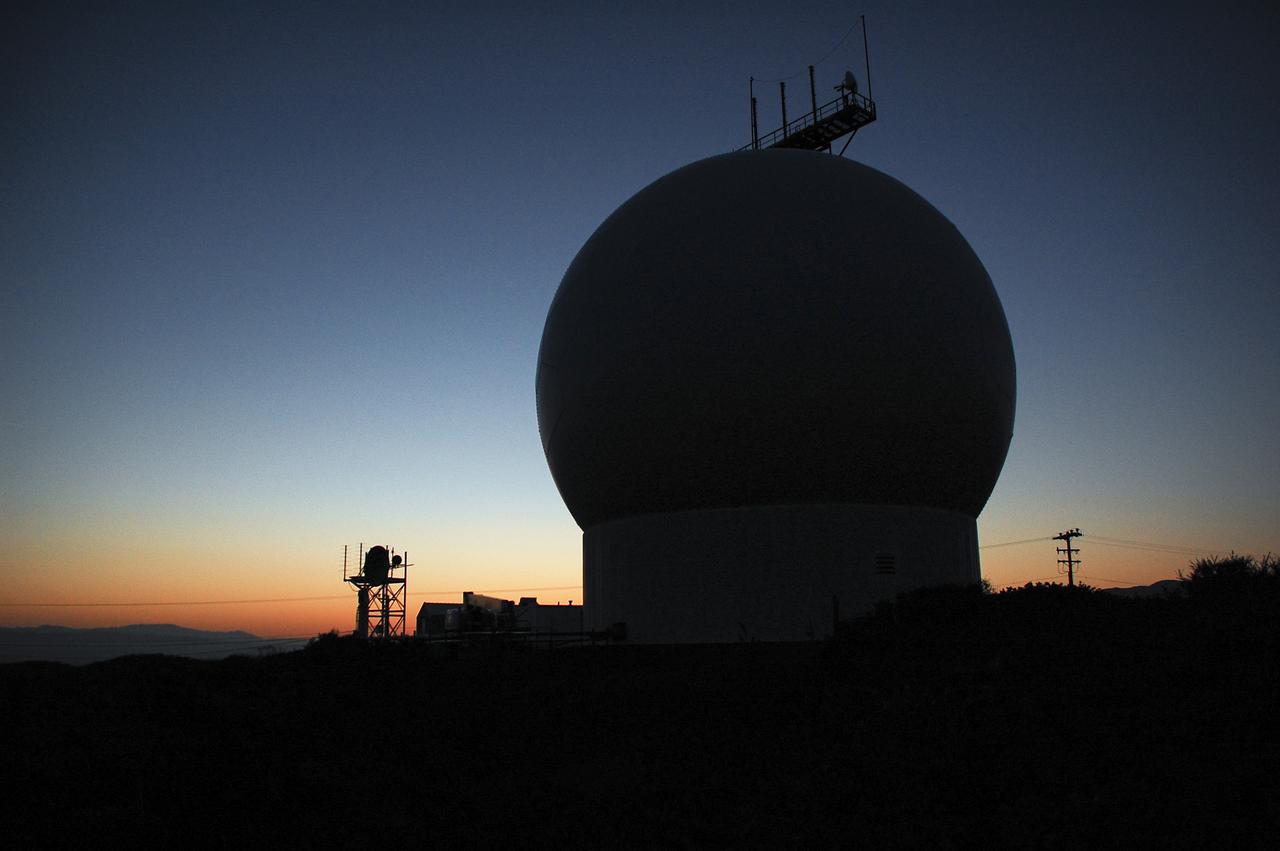
VANDENBERG AFB, Calif. – Tracking equipment and antennas show in silhouette as the sun rises over a United Launch Alliance Atlas V rocket carrying the Landsat Data Continuity Mission spacecraft from Vandenberg Air Force Base in California. Photo credit: NASA_Ben Smegelsky
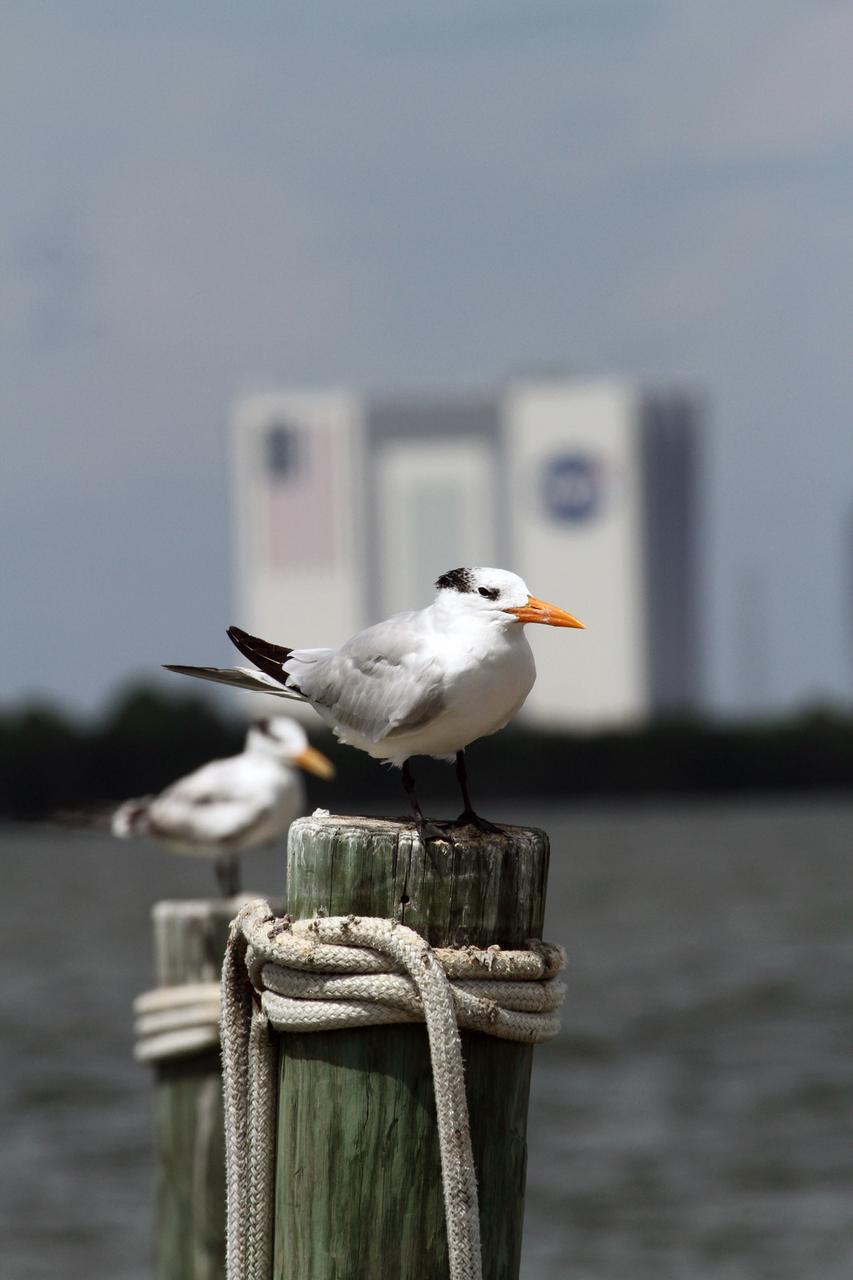
CAPE CANAVERAL, Fla. – At NASA’s Kennedy Space Center in Florida, two birds sit on a dock along the NASA Causeway admiring the view of the Vehicle Assembly building from across the intercoastal waterway. The center shares a boundary with the Merritt Island National Wildlife Refuge, consisting of 140,000 acres. The Refuge provides a wide variety of habitats: coastal dunes, saltwater estuaries and marshes, freshwater impoundments, scrub, pine flatwoods, and hardwood hammocks that provide habitat for more than 1,500 species of plants and animals, including about 331 species of birds. Photo credit: NASA_Ben Smegelsky

VANDENBERG AFB, Calif. – The sun rises over a United Launch Alliance Atlas V rocket carrying the Landsat Data Continuity Mission spacecraft from Vandenberg Air Force Base in California. Photo credit: NASA_Ben Smegelsky
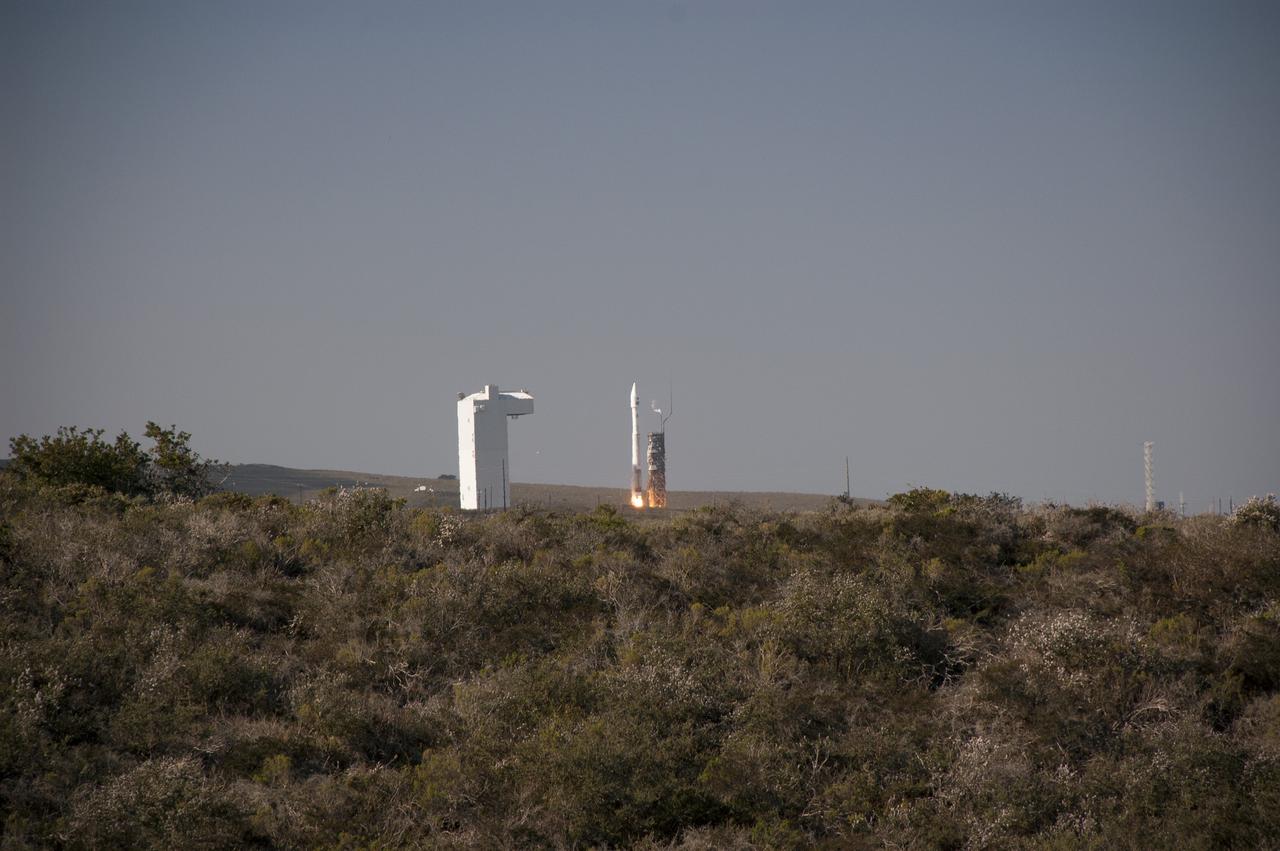
VANDENBERG AFB, Calif. -- The Landsat Data Continuity Mission spacecraft lifts off at 1:02 p.m. EST, 10:02 a.m. PST) atop a United Launch Alliance Atlas V rocket from Space Launch Complex 3 at California's Vandenberg Air Force Base. The Landsat Data Continuity Mission LDCM is the future of Landsat satellites. It will continue to obtain valuable data and imagery to be used in agriculture, education, business, science, and government. The Landsat Program provides repetitive acquisition of high resolution multispectral data of the Earth's surface on a global basis. The data from the Landsat spacecraft constitute the longest record of the Earth's continental surfaces as seen from space. It is a record unmatched in quality, detail, coverage, and value. For more information, visit: http:__www.nasa.gov_mission_pages_landsat_main_index.html Photo credit: NASA_Ben Smegelsky
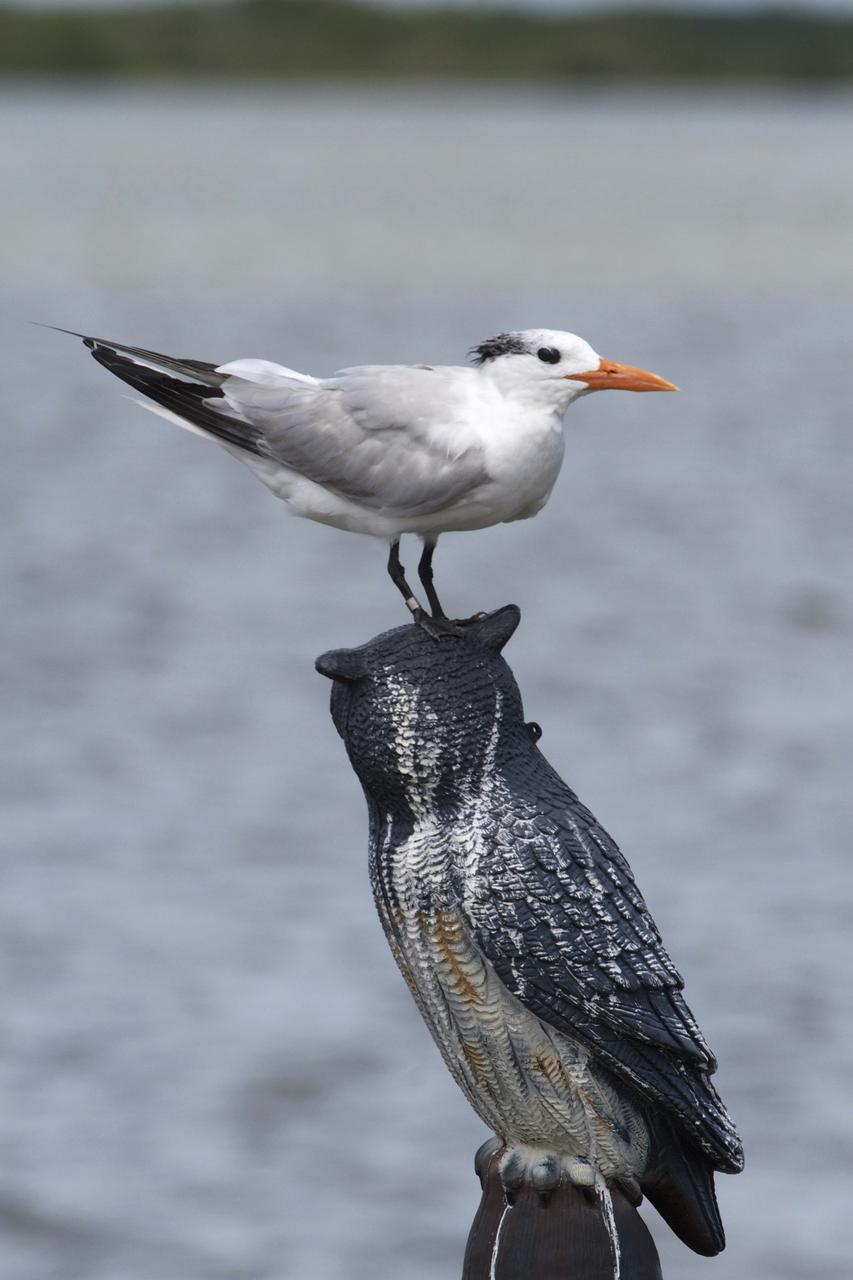
CAPE CANAVERAL, Fla. – At NASA’s Kennedy Space Center in Florida, a bird perches atop a wood-carved owl on a dock along the NASA Causeway. The center shares a boundary with the Merritt Island National Wildlife Refuge, consisting of 140,000 acres. The Refuge provides a wide variety of habitats: coastal dunes, saltwater estuaries and marshes, freshwater impoundments, scrub, pine flatwoods, and hardwood hammocks that provide habitat for more than 1,500 species of plants and animals, including about 331 species of birds. Photo credit: NASA_Ben Smegelsky
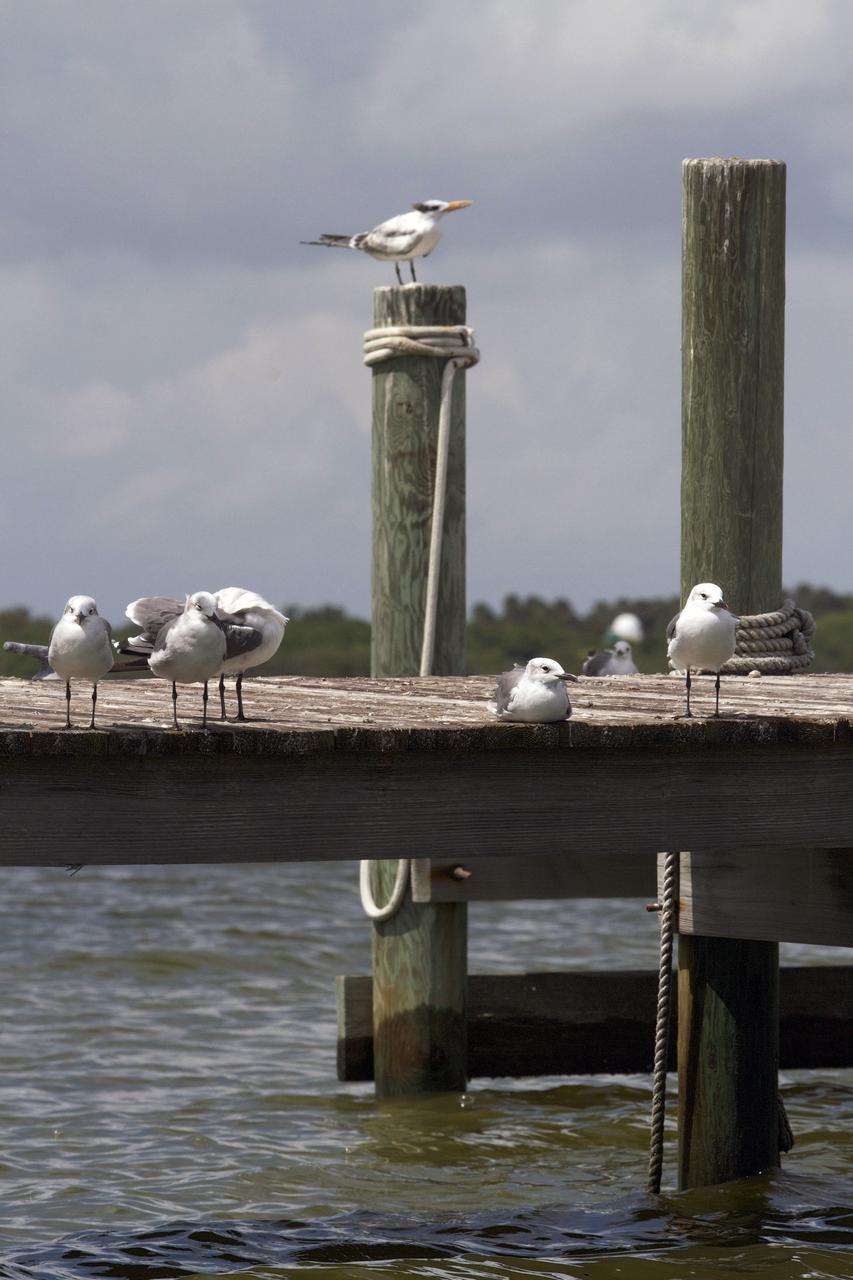
CAPE CANAVERAL, Fla. – At NASA’s Kennedy Space Center in Florida, several birds, including some seagulls, sit on a dock along the NASA Causeway. The center shares a boundary with the Merritt Island National Wildlife Refuge, consisting of 140,000 acres. The Refuge provides a wide variety of habitats: coastal dunes, saltwater estuaries and marshes, freshwater impoundments, scrub, pine flatwoods, and hardwood hammocks that provide habitat for more than 1,500 species of plants and animals, including about 331 species of birds. Photo credit: NASA_Ben Smegelsky
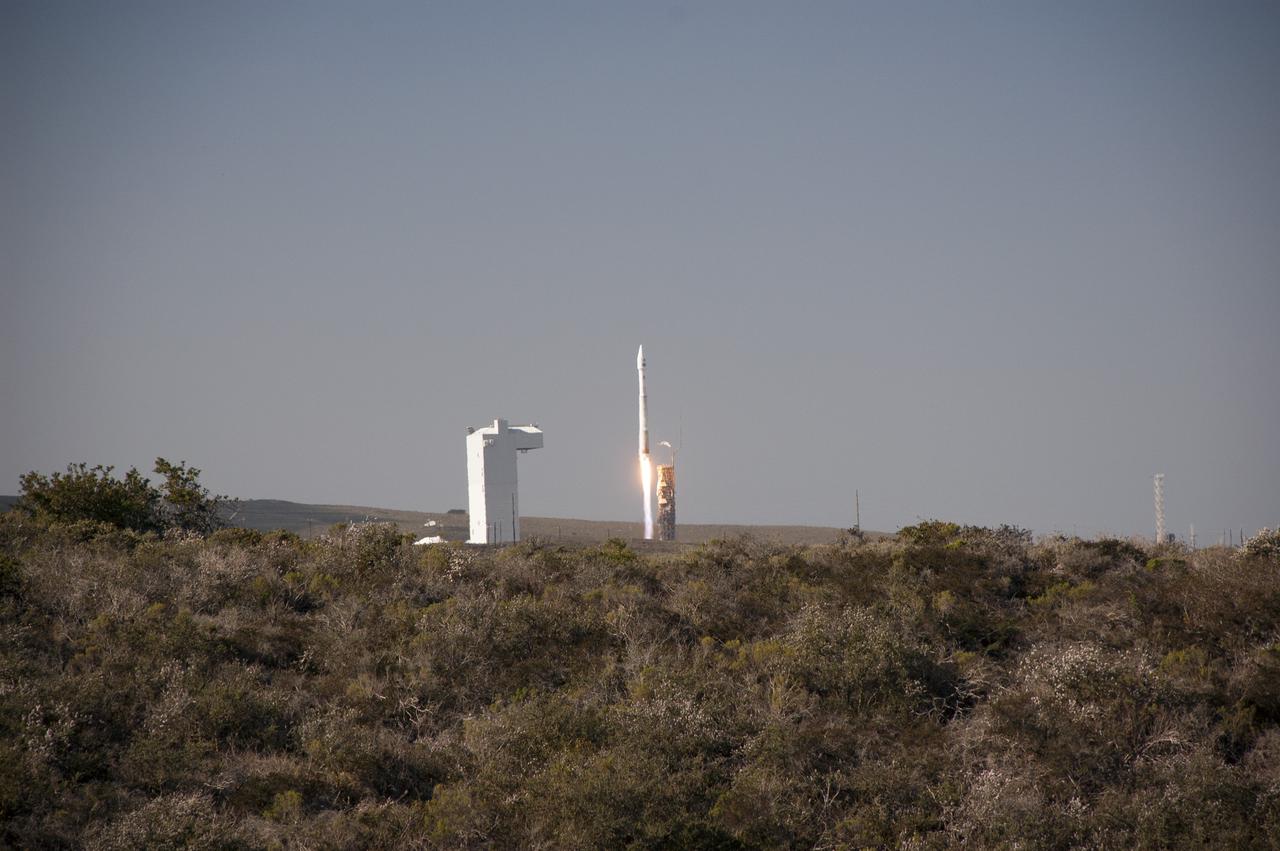
VANDENBERG AFB, Calif. -- The Landsat Data Continuity Mission spacecraft lifts off at 1:02 p.m. EST, 10:02 a.m. PST) atop a United Launch Alliance Atlas V rocket from Space Launch Complex 3 at California's Vandenberg Air Force Base. The Landsat Data Continuity Mission LDCM is the future of Landsat satellites. It will continue to obtain valuable data and imagery to be used in agriculture, education, business, science, and government. The Landsat Program provides repetitive acquisition of high resolution multispectral data of the Earth's surface on a global basis. The data from the Landsat spacecraft constitute the longest record of the Earth's continental surfaces as seen from space. It is a record unmatched in quality, detail, coverage, and value. For more information, visit: http:__www.nasa.gov_mission_pages_landsat_main_index.html Photo credit: NASA_Ben Smegelsky

CAPE CANAVERAL, Fla. - At NASA's Kennedy Space Center in Florida, the shuttle convoy vehicles are in position near the Shuttle Landing Facility awaiting the return of space shuttle Discovery. The convoy is made up of about 40 vehicles, including 25 specially designed vehicles, and a team of trained personnel who 'safe' the shuttle, prepare it for towing, assist the crew in leaving the shuttle, and finally, tow the shuttle to its hangar. Discovery landed at Kennedy after 15 days in space, completing the more than 6.2-million-mile STS-131 mission on orbit 238. Main gear touchdown was at 9:08:35 a.m. EDT followed by nose gear touchdown at 9:08:47 a.m. and wheelstop at 9:09:33 a.m. Aboard are Commander Alan Poindexter; Pilot James P. Dutton Jr.; and Mission Specialists Rick Mastracchio, Clayton Anderson, Dorothy Metcalf-Lindenburger, Stephanie Wilson and Naoko Yamazaki of the Japan Aerospace Exploration Agency. The seven-member STS-131 crew carried the multi-purpose logistics module Leonardo, filled with supplies, a new crew sleeping quarters and science racks that were transferred to the International Space Station's laboratories. The crew also switched out a gyroscope on the station’s truss, installed a spare ammonia storage tank and retrieved a Japanese experiment from the station’s exterior. STS-131 is the 33rd shuttle mission to the station and the 131st shuttle mission overall. For information on the STS-131 mission and crew, visit http:__www.nasa.gov_mission_pages_shuttle_shuttlemissions_sts131_index.html. Photo credit: NASA_Ben Smegelsky
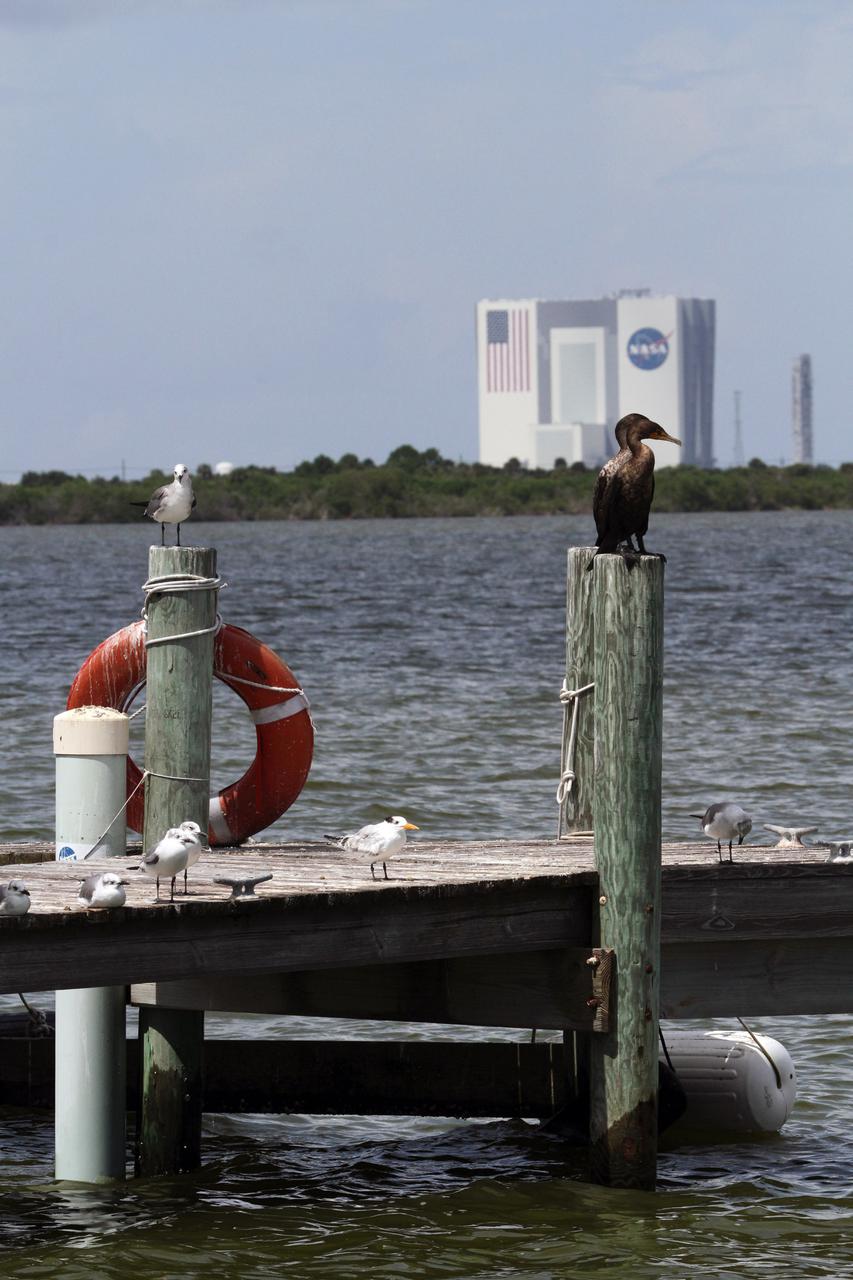
CAPE CANAVERAL, Fla. – At NASA’s Kennedy Space Center in Florida, several birds sit on a dock along the NASA Causeway admiring the view of the Vehicle Assembly building from across the intercoastal waterway. The center shares a boundary with the Merritt Island National Wildlife Refuge, consisting of 140,000 acres. The Refuge provides a wide variety of habitats: coastal dunes, saltwater estuaries and marshes, freshwater impoundments, scrub, pine flatwoods, and hardwood hammocks that provide habitat for more than 1,500 species of plants and animals, including about 331 species of birds. Photo credit: NASA_Ben Smegelsky
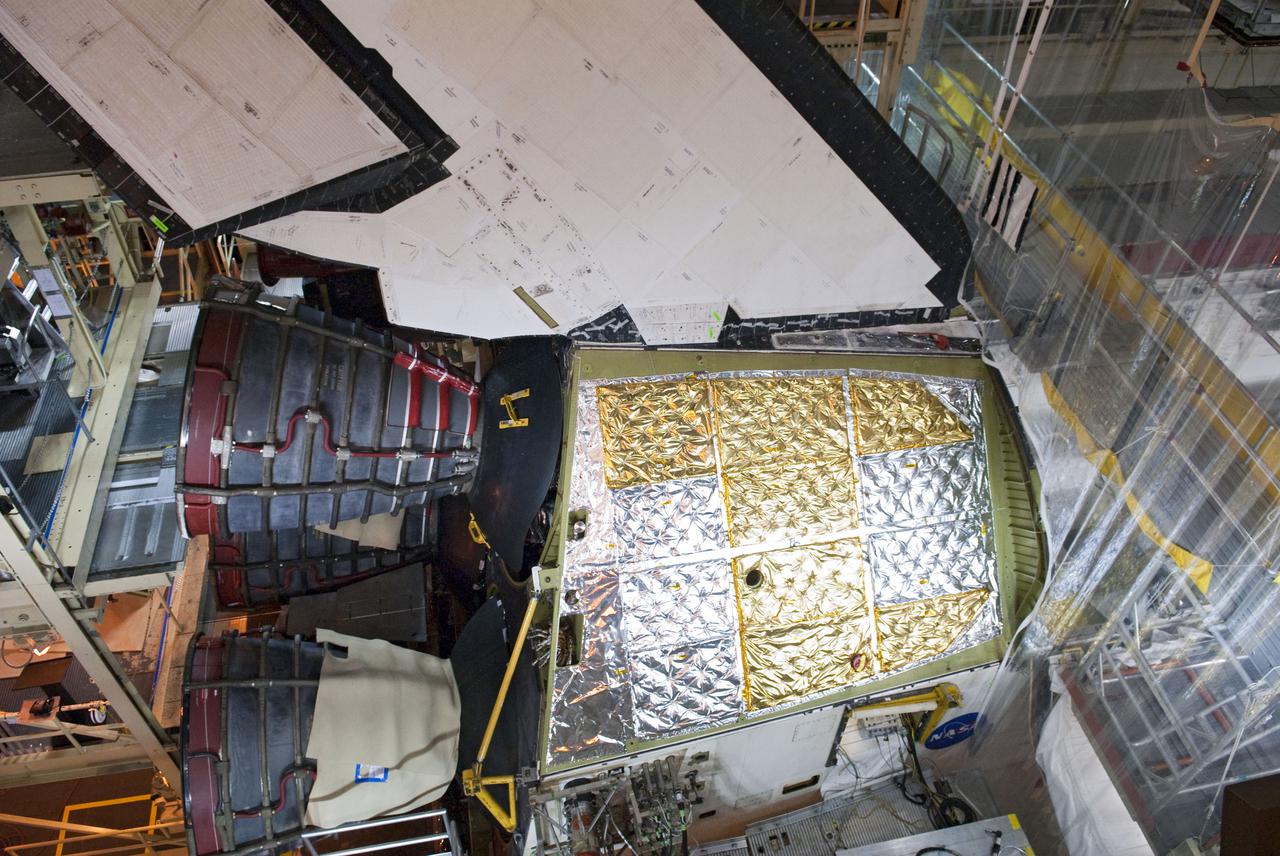
CAPE CANAVERAL, Fla. -- In Orbiter Processing Facility-3 at NASA's Kennedy Space Center in Florida, the aft section on space shuttle Discovery is set to accept the installation of the right-hand orbital maneuvering system, or OMS, pod. Discovery and its crew will deliver the Permanent Multipurpose Module, or PMM, which will carry supplies and critical spare parts on the STS-133 mission to the International Space Station. The module will be left behind so it can be used for microgravity experiments in fluid physics, materials science, biology and biotechnology. For more information go to www.nasa.gov_shuttle. Photo credit: NASA_Ben Smegelsky
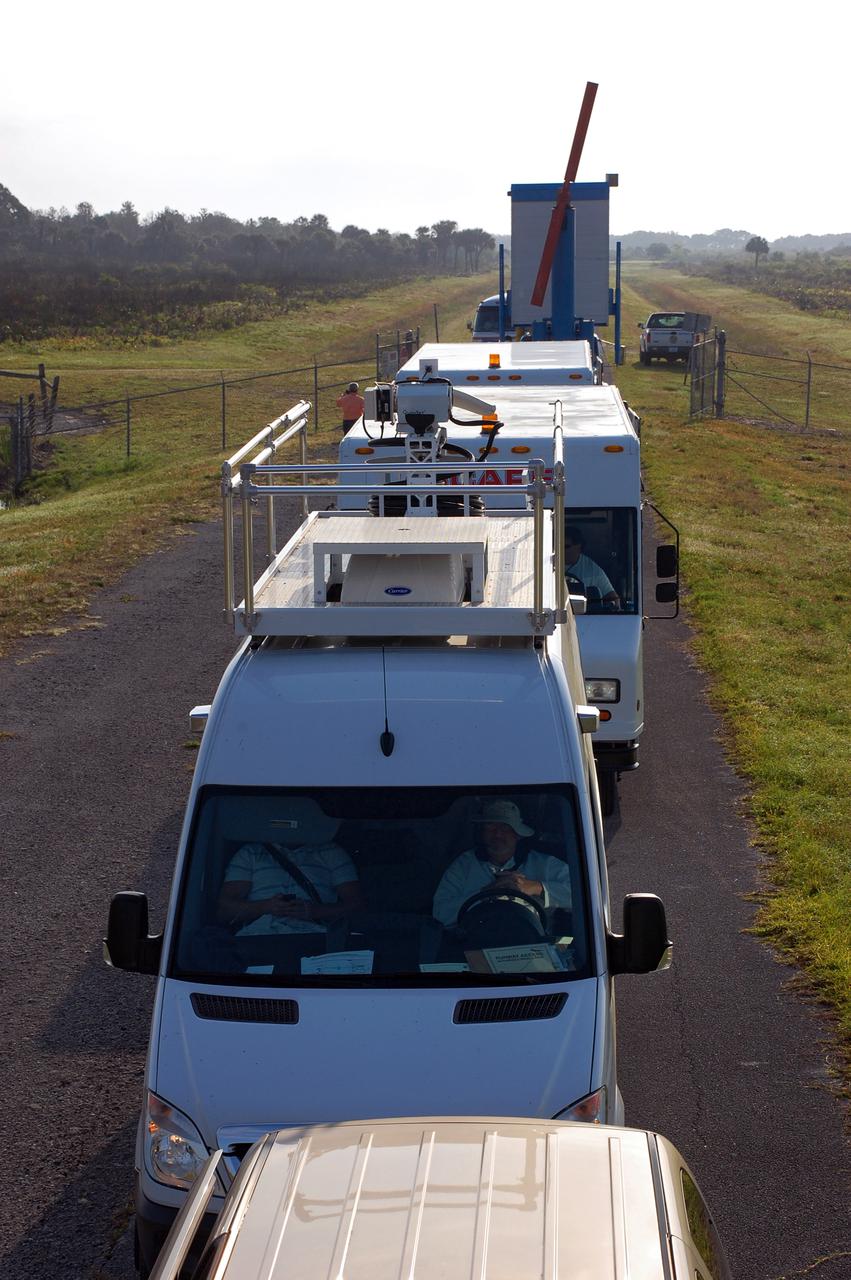
CAPE CANAVERAL, Fla. - At NASA's Kennedy Space Center in Florida, the shuttle convoy vehicles are in position near the Shuttle Landing Facility in preparation for the return of space shuttle Discovery. The convoy is made up of about 40 vehicles, including 25 specially designed vehicles, and a team of trained personnel who 'safe' the shuttle, prepare it for towing, assist the crew in leaving the shuttle, and finally, tow the shuttle to its hangar. Discovery landed at Kennedy after 15 days in space, completing the more than 6.2-million-mile STS-131 mission on orbit 238. Main gear touchdown was at 9:08:35 a.m. EDT followed by nose gear touchdown at 9:08:47 a.m. and wheelstop at 9:09:33 a.m. Aboard are Commander Alan Poindexter; Pilot James P. Dutton Jr.; and Mission Specialists Rick Mastracchio, Clayton Anderson, Dorothy Metcalf-Lindenburger, Stephanie Wilson and Naoko Yamazaki of the Japan Aerospace Exploration Agency. The seven-member STS-131 crew carried the multi-purpose logistics module Leonardo, filled with supplies, a new crew sleeping quarters and science racks that were transferred to the International Space Station's laboratories. The crew also switched out a gyroscope on the station’s truss, installed a spare ammonia storage tank and retrieved a Japanese experiment from the station’s exterior. STS-131 is the 33rd shuttle mission to the station and the 131st shuttle mission overall. For information on the STS-131 mission and crew, visit http:__www.nasa.gov_mission_pages_shuttle_shuttlemissions_sts131_index.html. Photo credit: NASA_Ben Smegelsky
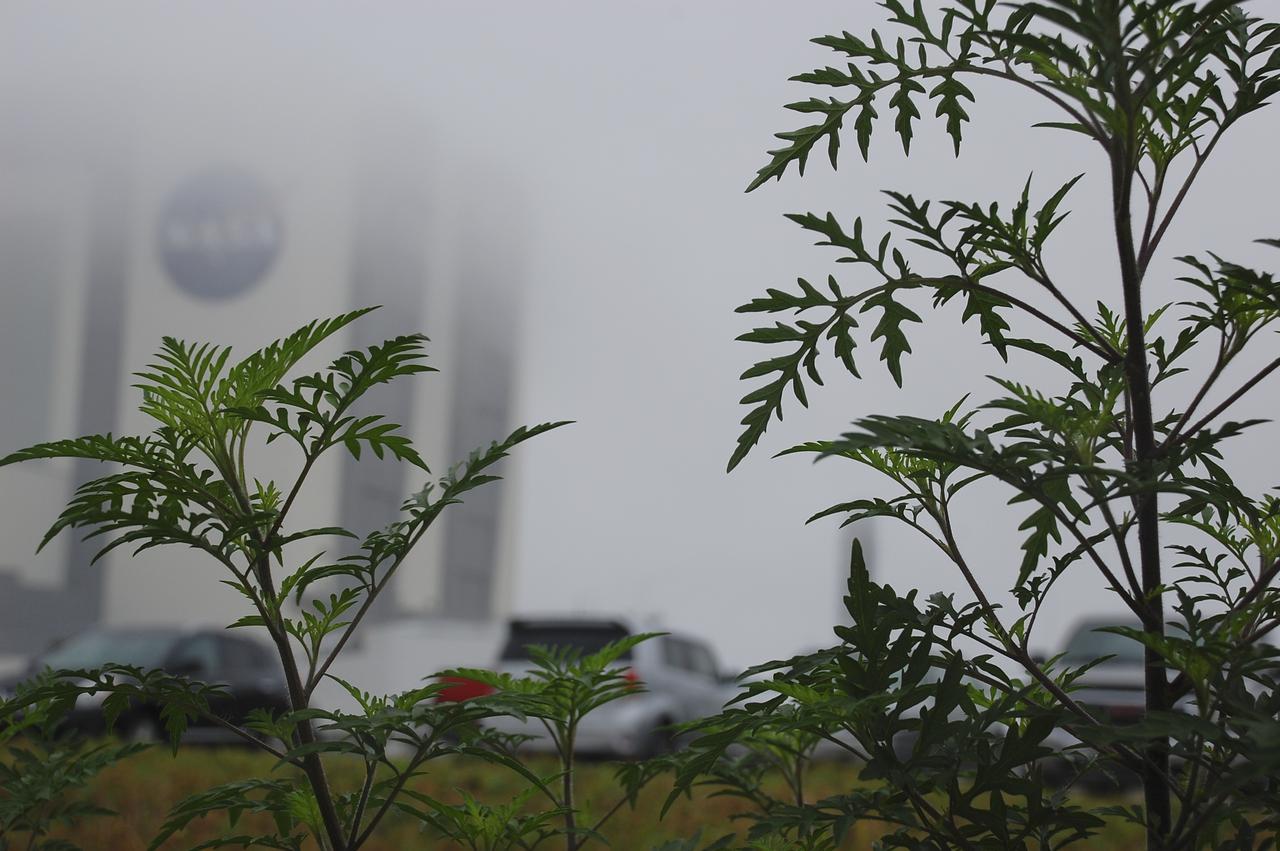
CAPE CANAVERAL, Fla. – At NASA's Kennedy Space Center in Florida, the 525-foot-tall Vehicle Assembly Building is obscured in the fog. The massive building, once used to process Apollo Saturn V rockets and space shuttles for launch, is undergoing a transformation to prepare it to support NASA's next-generation rocket, the Space Launch System, or SLS, as well as myriad commercial rockets under development. To learn more about the SLS, visit http:__www.nasa.gov_exploration_systems_sls_. For more on NASA's Commercial Crew Program, visit http:__www.nasa.gov_exploration_commercial_crew_. Photo credit: NASA_Ben Smegelsky
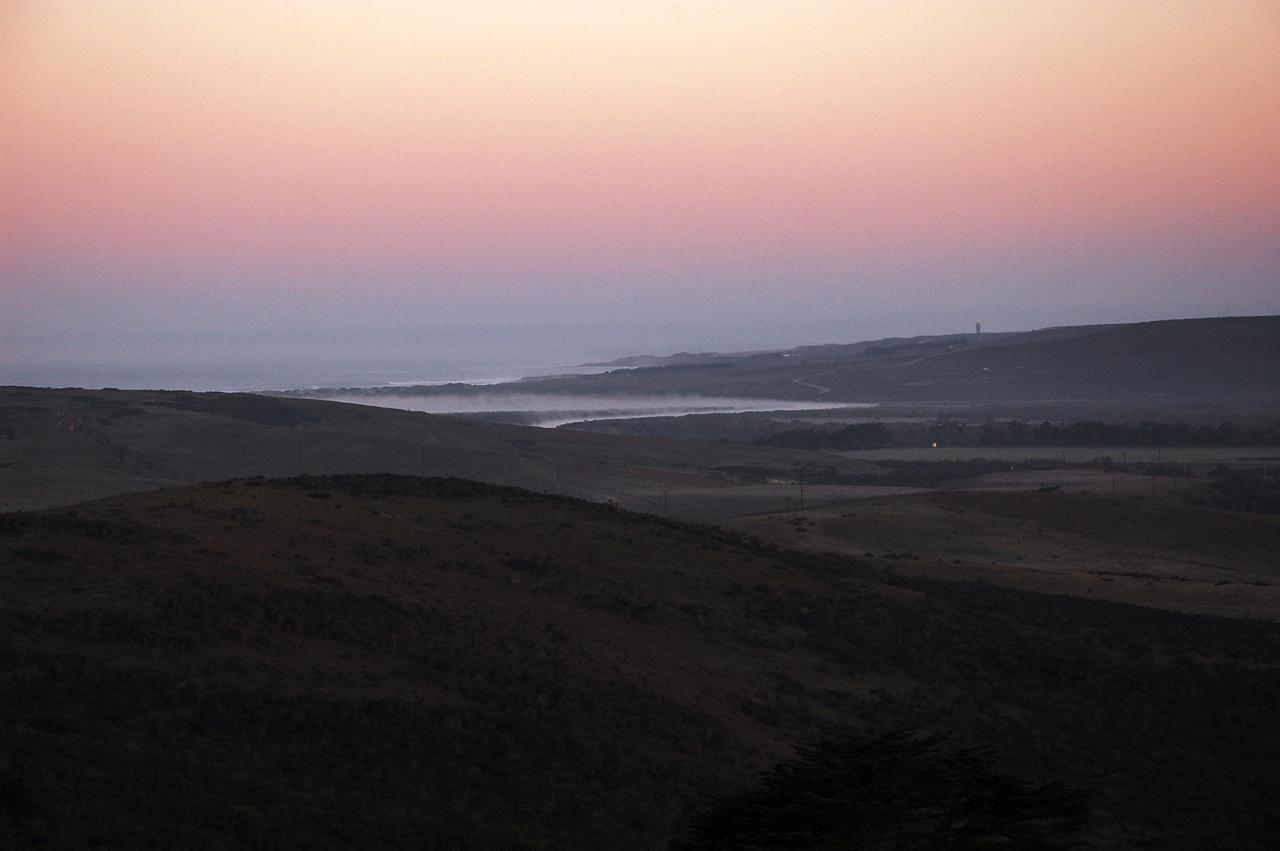
VANDENBERG AFB, Calif. – Sunrise over Vandenberg Air Force Base in California on the morning of the launch of a United Launch Alliance Atlas V rocket carrying the Landsat Data Continuity Mission spacecraft from. Photo credit: NASA_Ben Smegelsky
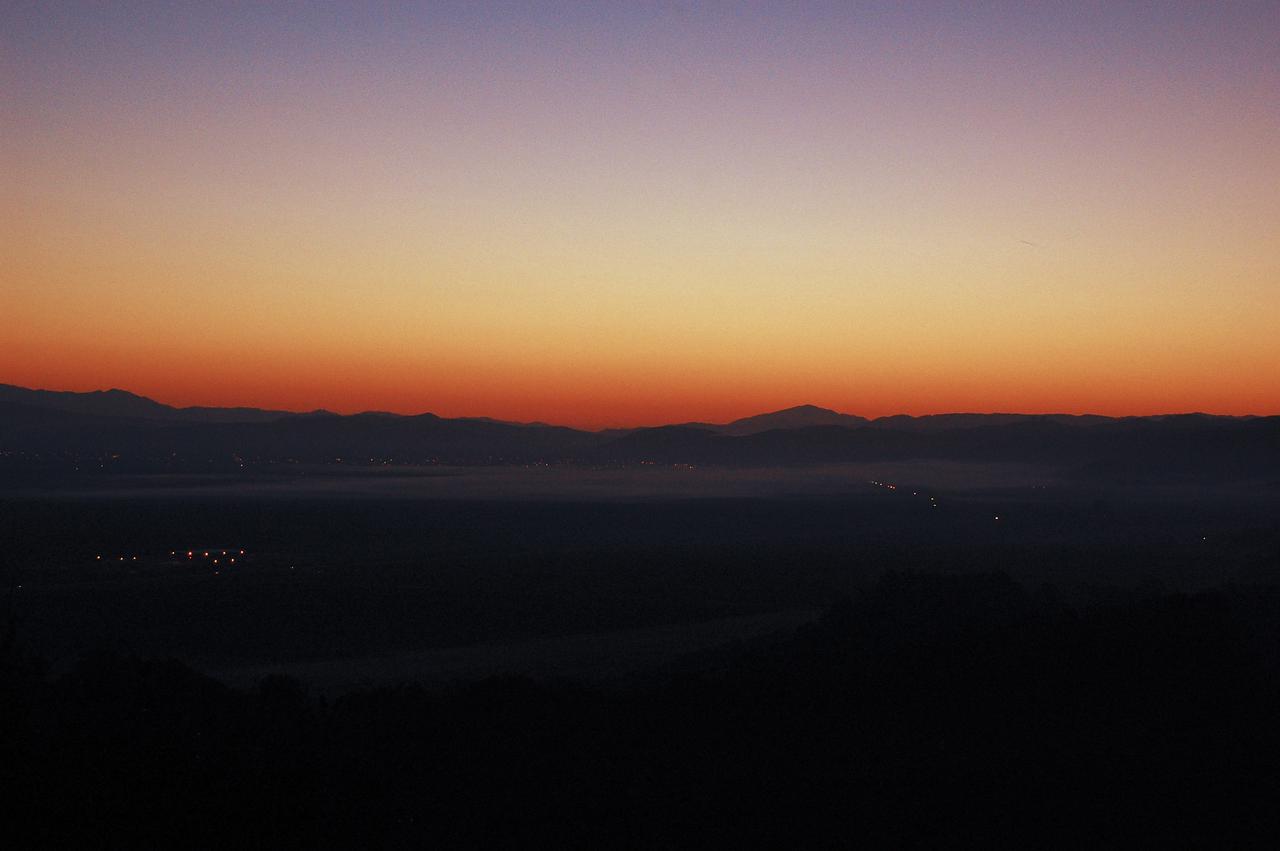
VANDENBERG AFB, Calif. – The sun rises over a United Launch Alliance Atlas V rocket carrying the Landsat Data Continuity Mission spacecraft from Vandenberg Air Force Base in California. Photo credit: NASA_Ben Smegelsky
VANDENBERG AFB, Calif. – A squirrel looks around from his nest near the launch site of a United Launch Alliance Atlas V rocket carrying the Landsat Data Continuity Mission spacecraft from Vandenberg Air Force Base in California. Photo credit: NASA_Ben Smegelsky
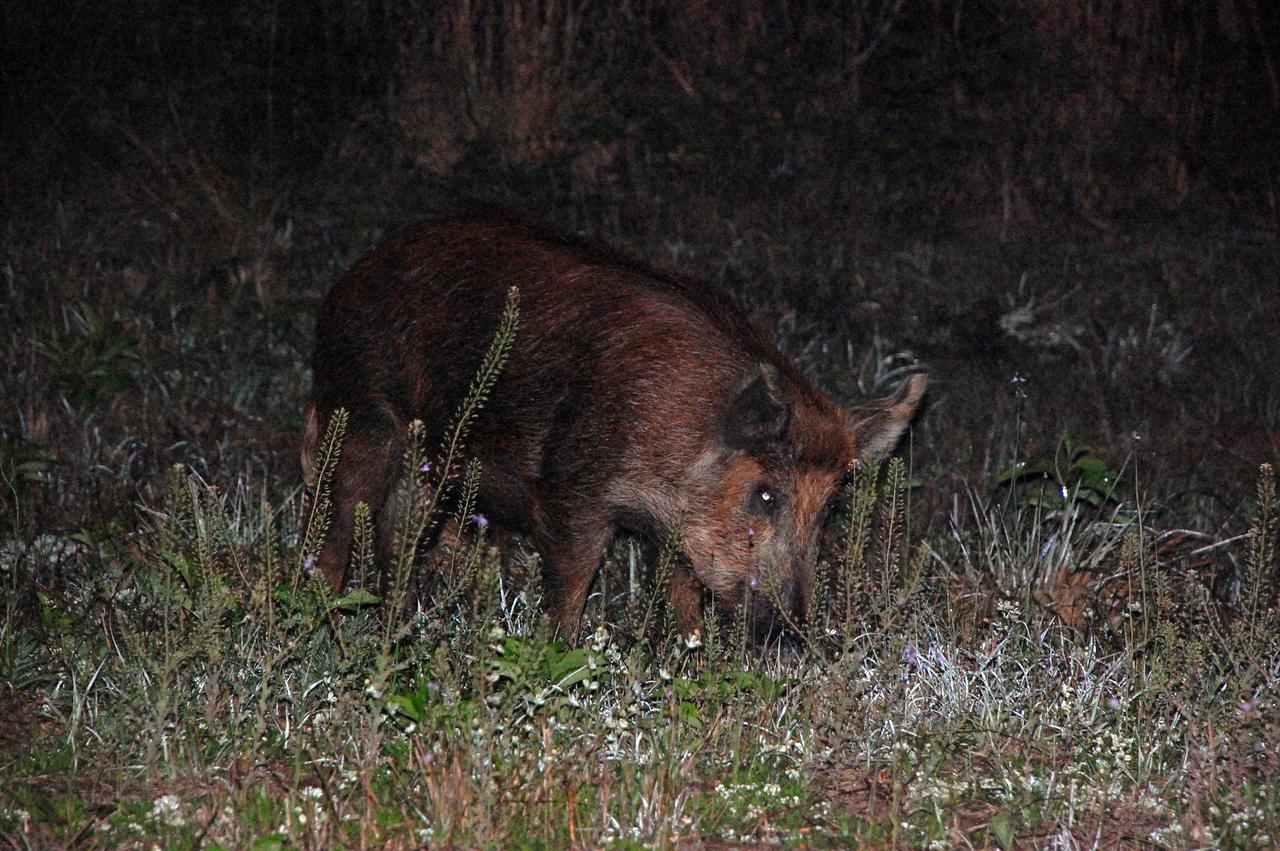
CAPE CANAVERAL, Fla. - A young feral hog roots for his breakfast at NASA's Kennedy Space Center in Florida. Wild hogs flourish in the environs around Kennedy, which coexists with the Merritt Island National Wildlife Refuge, without many predators other than panthers and humans. Hogs were introduced to Florida in the 1500s and are now found statewide in wooded areas close to water. Estimates of the hog population on the refuge vary from 5,000 to 12,000. The Merritt Island National Wildlife Refuge coexists with Kennedy Space Center and provides a habitat for 330 species of birds and a variety of other wildlife - 117 kinds of fish, 65 types of amphibians and reptiles, 31 different mammals, and 1,045 species of plants. For information on the refuge, visit http:__www.fws.gov_merrittisland_Index.html. For information on Kennedy Space Center, visit http:__www.nasa.gov_kennedy. Photo credit: NASA_Ben Smegelsky
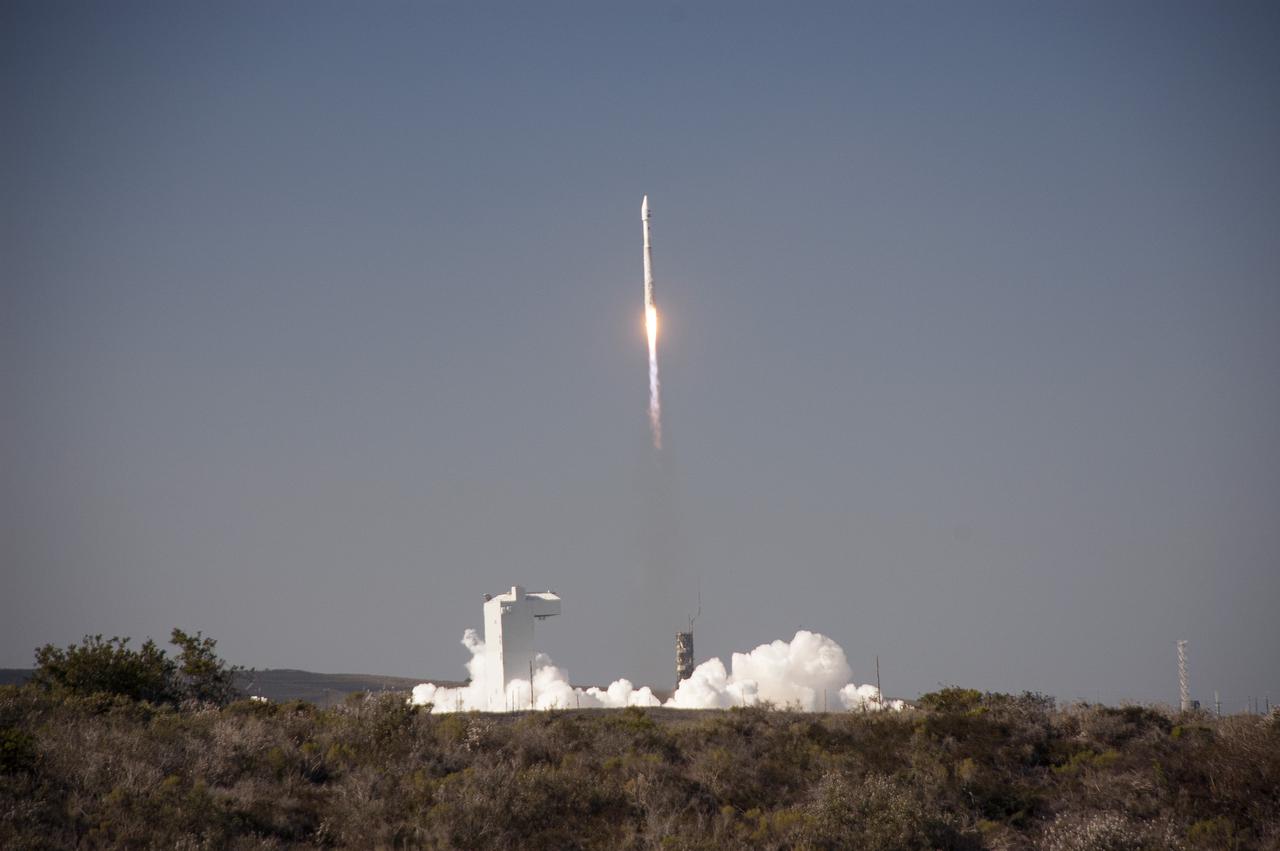
VANDENBERG AFB, Calif. -- The Landsat Data Continuity Mission spacecraft lifts off at 1:02 p.m. EST, 10:02 a.m. PST) atop a United Launch Alliance Atlas V rocket from Space Launch Complex 3 at California's Vandenberg Air Force Base. The Landsat Data Continuity Mission LDCM is the future of Landsat satellites. It will continue to obtain valuable data and imagery to be used in agriculture, education, business, science, and government. The Landsat Program provides repetitive acquisition of high resolution multispectral data of the Earth's surface on a global basis. The data from the Landsat spacecraft constitute the longest record of the Earth's continental surfaces as seen from space. It is a record unmatched in quality, detail, coverage, and value. For more information, visit: http:__www.nasa.gov_mission_pages_landsat_main_index.html Photo credit: NASA_Ben Smegelsky
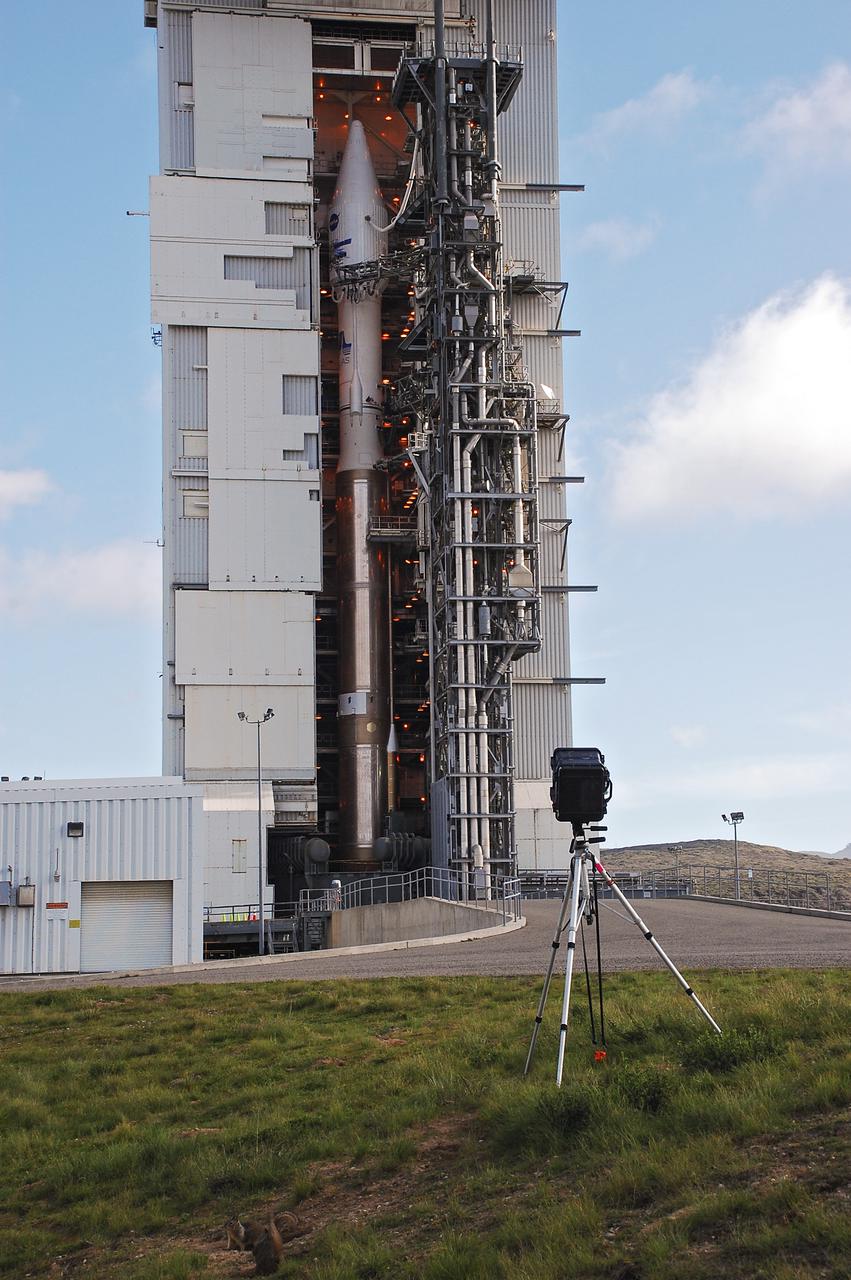
VANDENBERG AFB, Calif. – A pair of squirrels look around near the launch site of a United Launch Alliance Atlas V rocket carrying the Landsat Data Continuity Mission spacecraft from Vandenberg Air Force Base in California. Photo credit: NASA_Ben Smegelsky
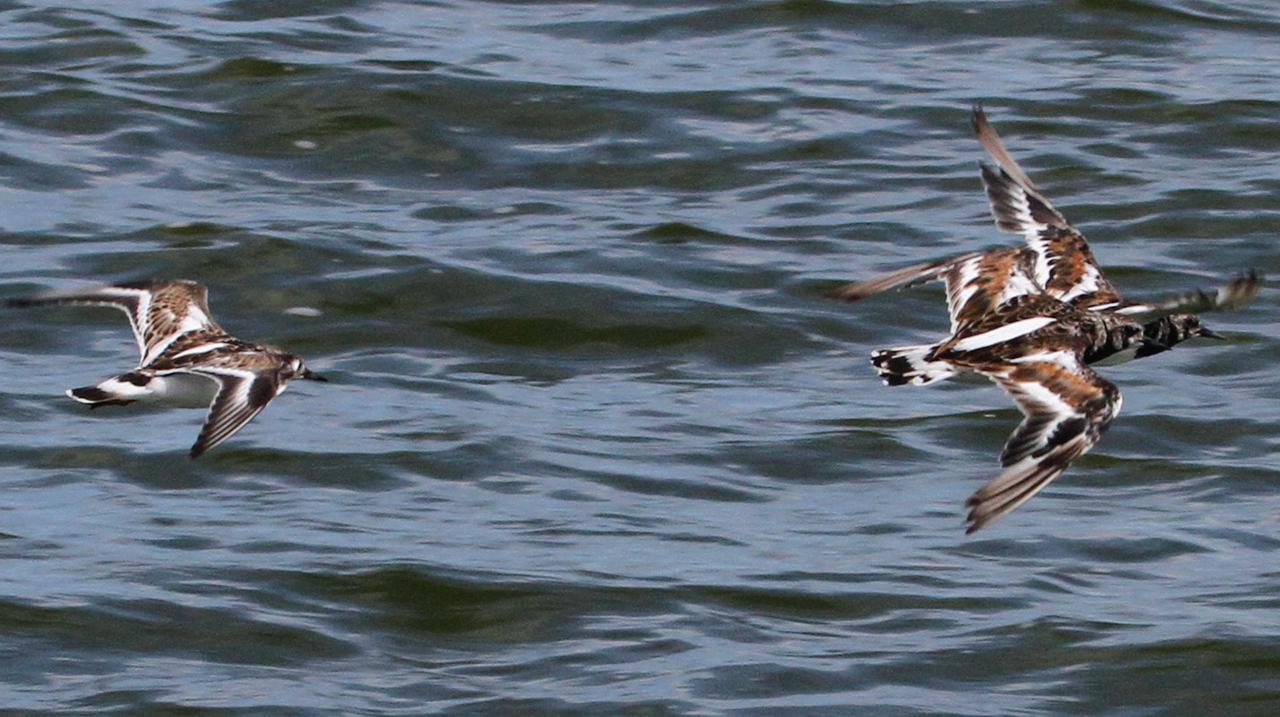
CAPE CANAVERAL, Fla. – Several colorful birds fly above the intercoastal waterway along NASA Causeway at NASA’s Kennedy Space Center in Florida. The center shares a boundary with the Merritt Island National Wildlife Refuge, consisting of 140,000 acres. The Refuge provides a wide variety of habitats: coastal dunes, saltwater estuaries and marshes, freshwater impoundments, scrub, pine flatwoods, and hardwood hammocks that provide habitat for more than 1,500 species of plants and animals, including about 331 species of birds. Photo credit: NASA_Ben Smegelsky
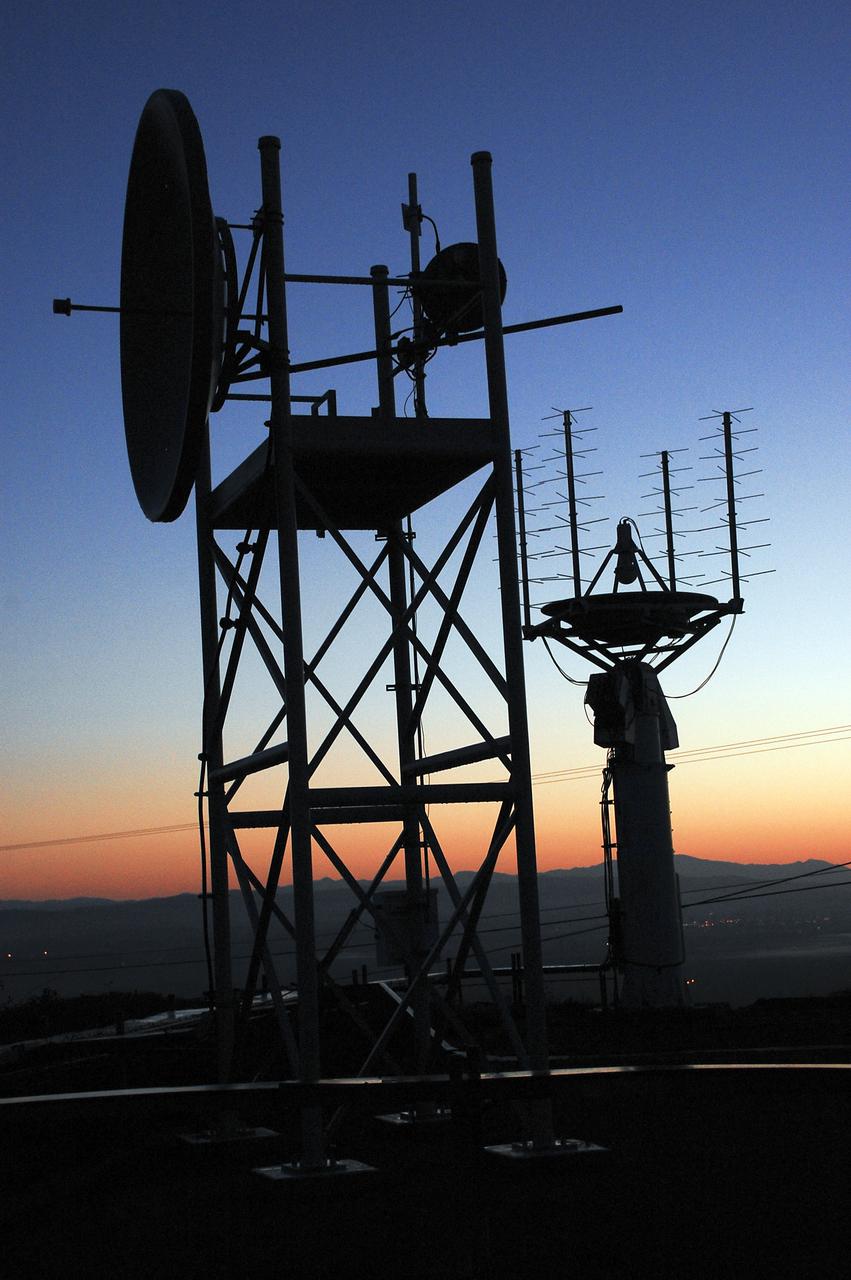
VANDENBERG AFB, Calif. – Tracking equipment and antennas show in silhouette as the sun rises over a United Launch Alliance Atlas V rocket carrying the Landsat Data Continuity Mission spacecraft from Vandenberg Air Force Base in California. Photo credit: NASA_Ben Smegelsky

CAPE CANAVERAL, Fla. – Fog envelopes the top of the 355-foot-tall Mobile Launcher at NASA's Kennedy Space Center in Florida. In 2013, the agency awarded a contract to J.P. Donovan Construction Inc. of Rockledge, Fla., to modify the launcher, or ML, one of the key elements of ground support equipment being upgraded by the Ground Systems Development and Operations Program office at Kennedy. The ML will carry the Space Launch System rocket, or SLS, and Orion spacecraft to Launch Pad 39B for its first mission, Exploration Mission-1, in 2017. To learn more about the SLS, visit http:__www.nasa.gov_exploration_systems_sls_. Photo credit: NASA_Ben Smegelsky
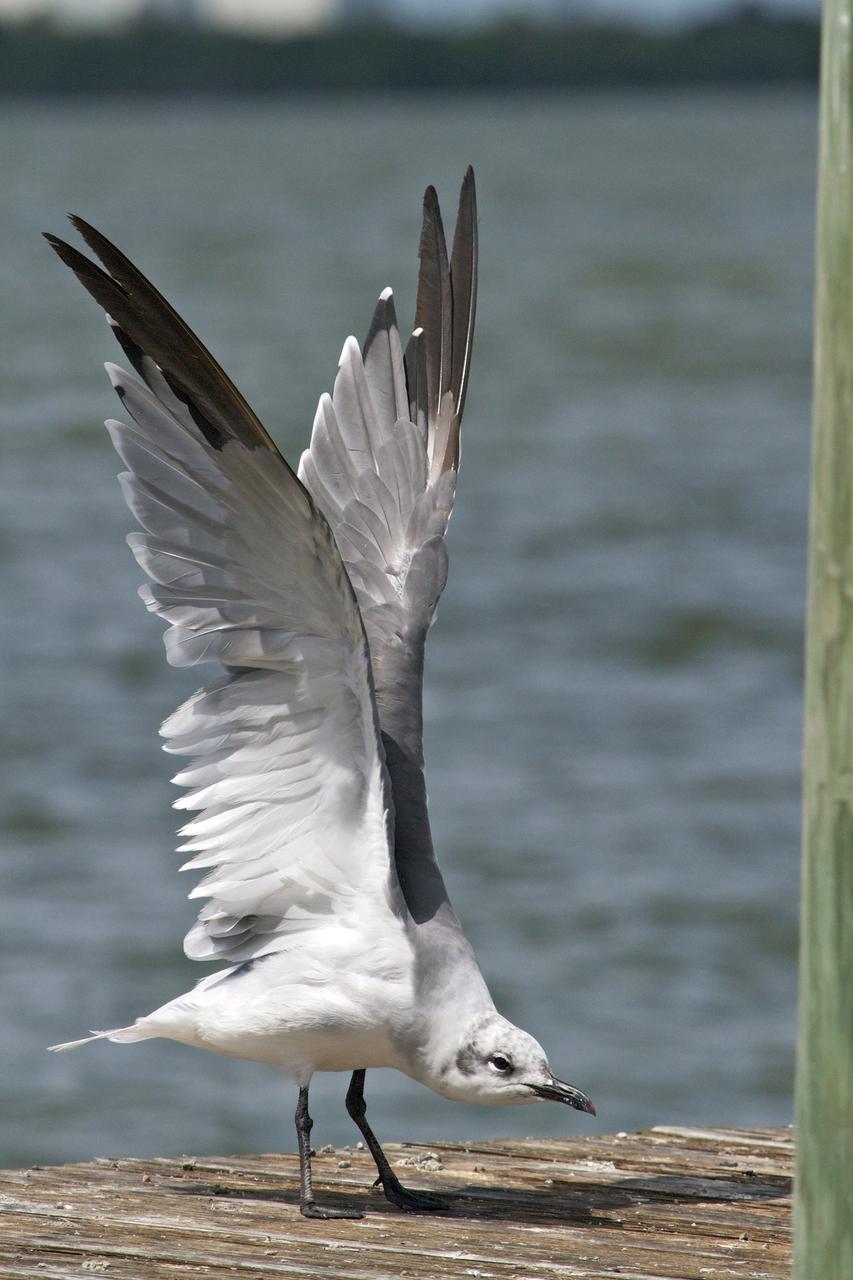
CAPE CANAVERAL, Fla. – At NASA’s Kennedy Space Center in Florida, a seagull flexes his wings while sitting on a dock along the NASA Causeway. The center shares a boundary with the Merritt Island National Wildlife Refuge, consisting of 140,000 acres. The Refuge provides a wide variety of habitats: coastal dunes, saltwater estuaries and marshes, freshwater impoundments, scrub, pine flatwoods, and hardwood hammocks that provide habitat for more than 1,500 species of plants and animals, including about 331 species of birds. Photo credit: NASA_Ben Smegelsky
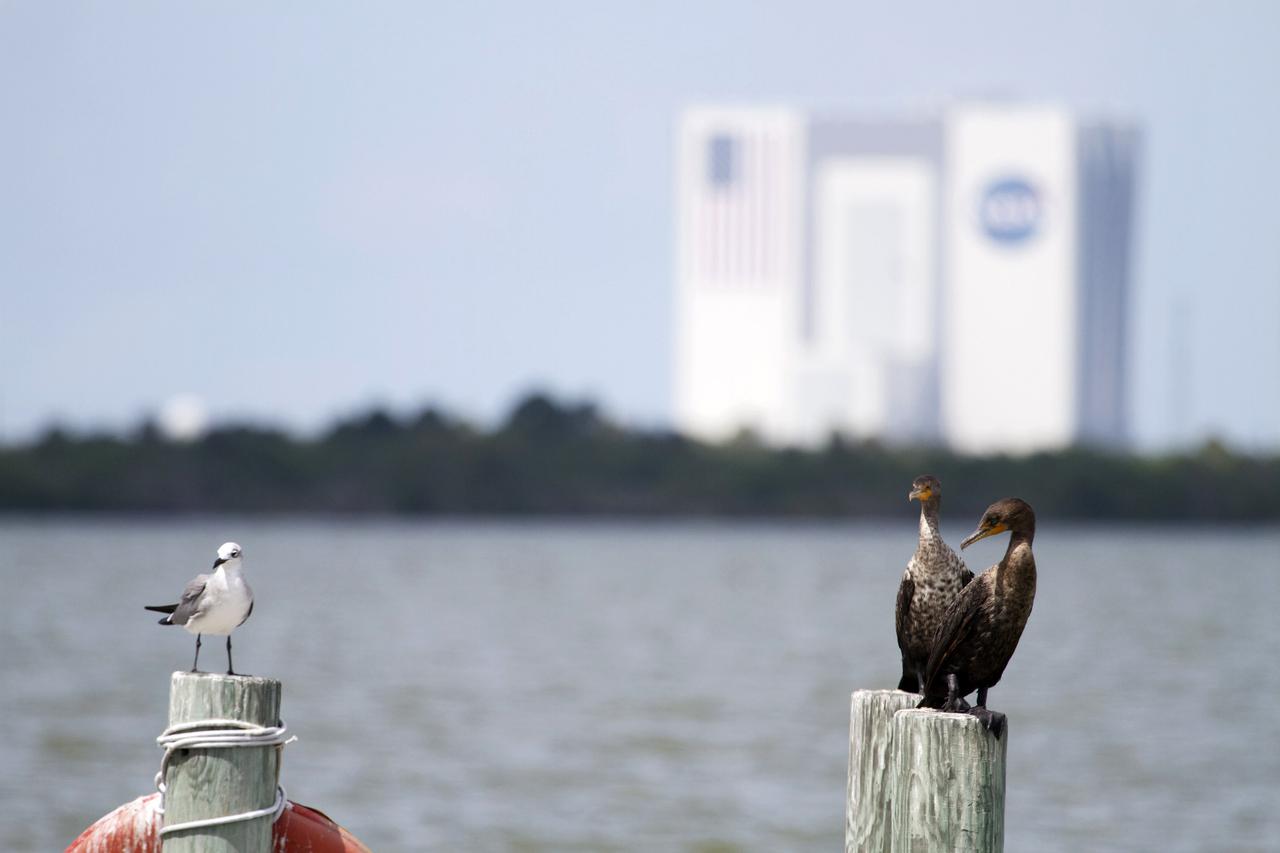
CAPE CANAVERAL, Fla. – At NASA’s Kennedy Space Center in Florida, several birds sit on the posts of a dock along the NASA Causeway with a view of the Vehicle Assembly building across the intercoastal waterway. The center shares a boundary with the Merritt Island National Wildlife Refuge, consisting of 140,000 acres. The Refuge provides a wide variety of habitats: coastal dunes, saltwater estuaries and marshes, freshwater impoundments, scrub, pine flatwoods, and hardwood hammocks that provide habitat for more than 1,500 species of plants and animals, including about 331 species of birds. Photo credit: NASA_Ben Smegelsky
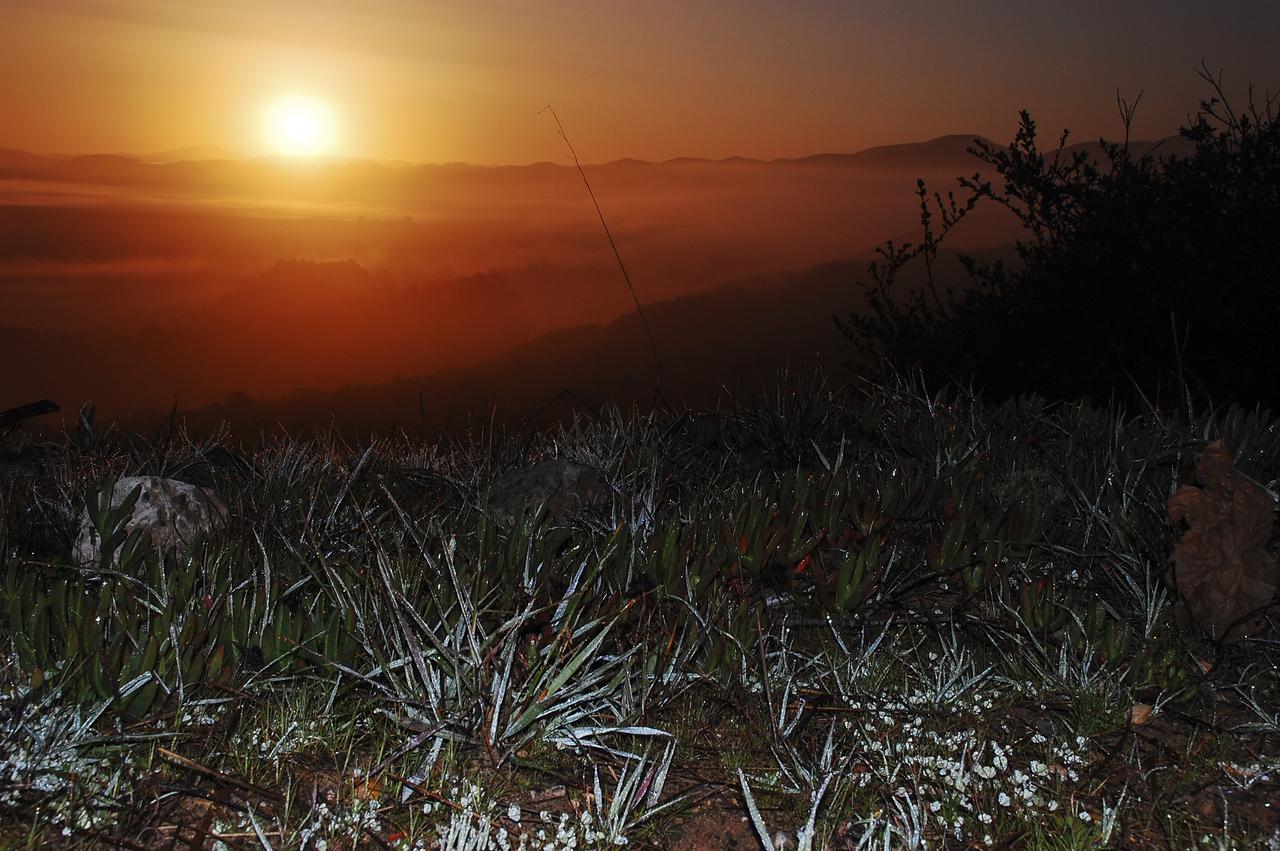
VANDENBERG AFB, Calif. – Sunrise over Vandenberg Air Force Base in California on the morning of the launch of a United Launch Alliance Atlas V rocket carrying the Landsat Data Continuity Mission spacecraft from. Photo credit: NASA_Ben Smegelsky
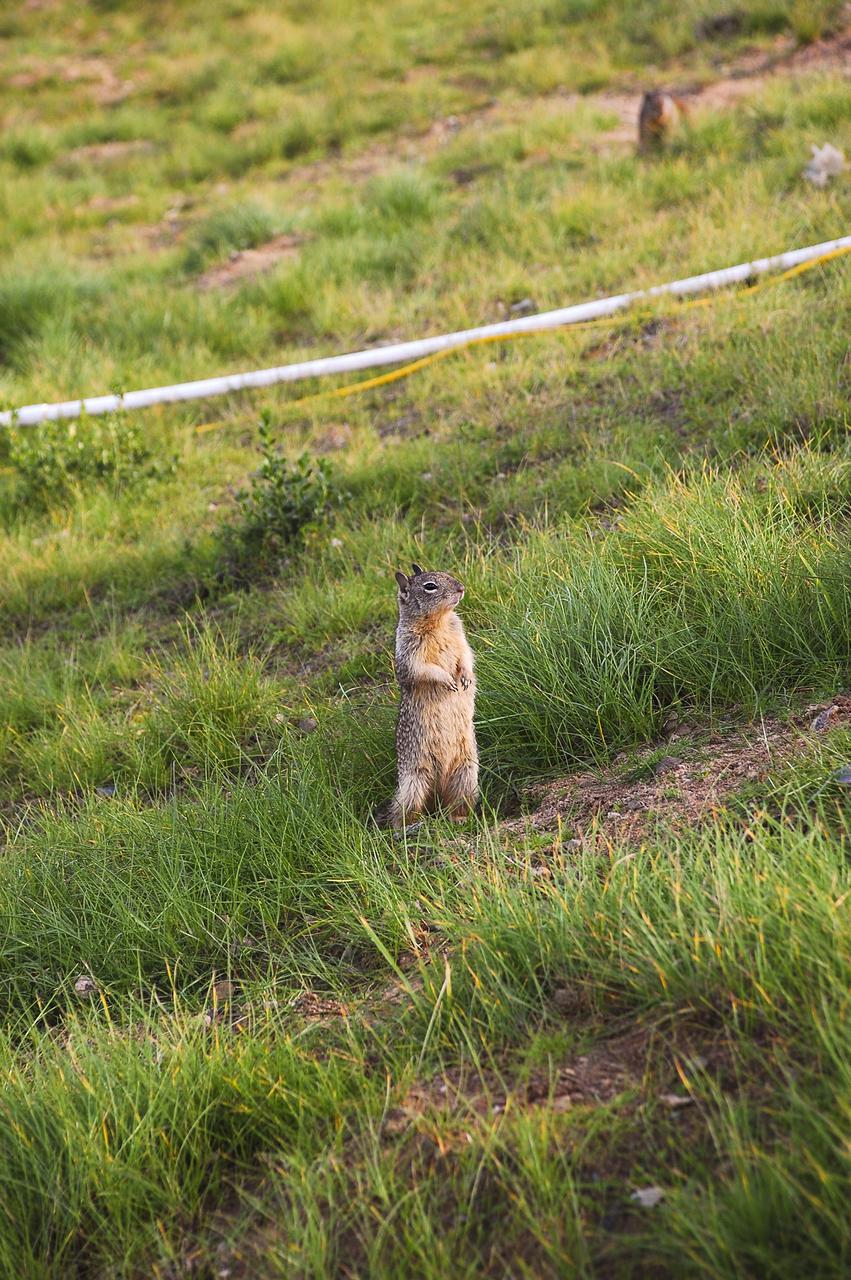
VANDENBERG AFB, Calif. – A squirrel looks around from his nest near the launch site of a United Launch Alliance Atlas V rocket carrying the Landsat Data Continuity Mission spacecraft from Vandenberg Air Force Base in California. Photo credit: NASA_Ben Smegelsky
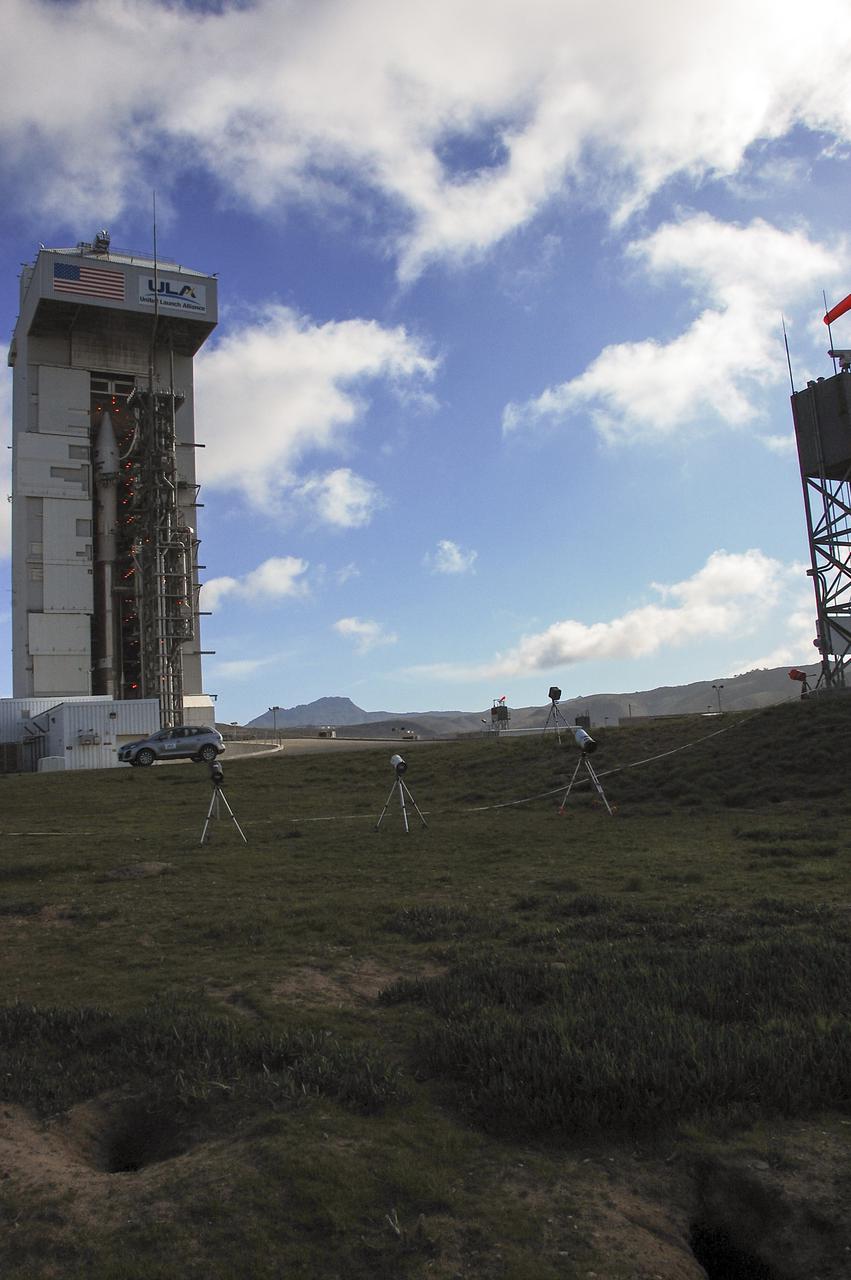
VANDENBERG AFB, Calif. – Squirrel nests near the launch site of a United Launch Alliance Atlas V rocket carrying the Landsat Data Continuity Mission spacecraft from Vandenberg Air Force Base in California. Photo credit: NASA_Ben Smegelsky
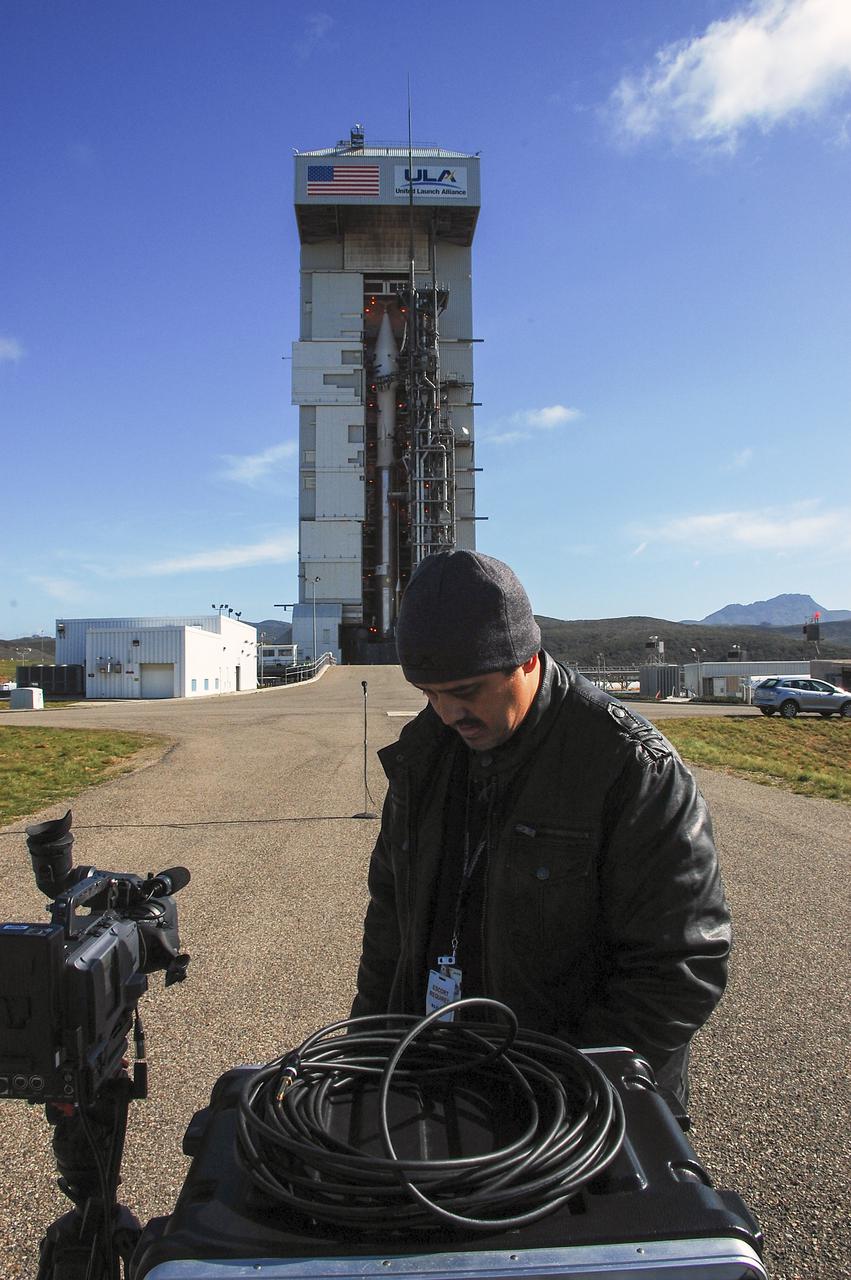
VANDENBERG AFB, Calif. – A NASA TV technician sets up equipment to record the launch of a United Launch Alliance Atlas V rocket carrying the Landsat Data Continuity Mission spacecraft from Vandenberg Air Force Base in California. Photo credit: NASA_Ben Smegelsky
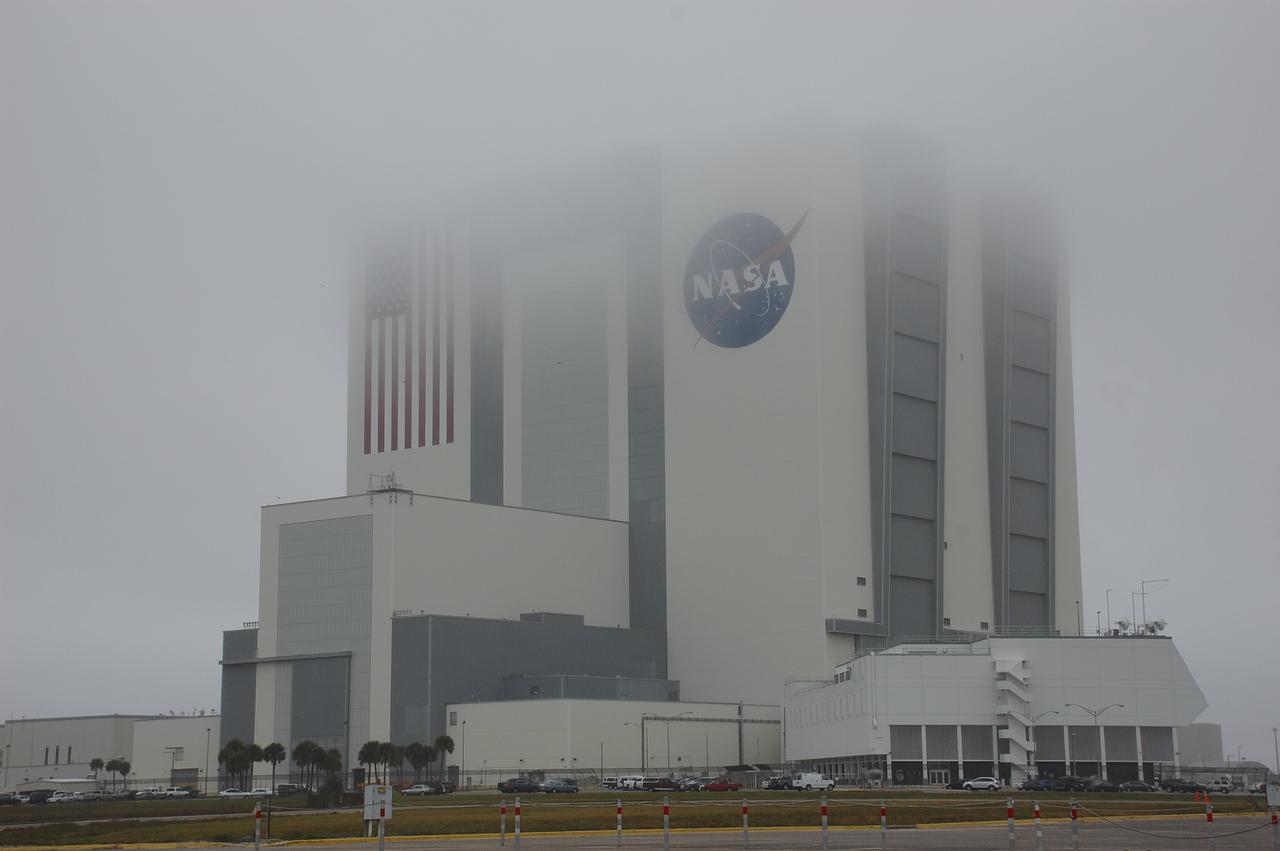
CAPE CANAVERAL, Fla. – Fog envelopes the top of the 525-foot-tall Vehicle Assembly Building at NASA's Kennedy Space Center in Florida. The massive building, once used to process Apollo Saturn V rockets and space shuttles for launch, is undergoing a transformation to prepare it to support NASA's next-generation rocket, the Space Launch System, or SLS, as well as myriad commercial rockets under development. To learn more about the SLS, visit http:__www.nasa.gov_exploration_systems_sls_. For more on NASA's Commercial Crew Program, visit http:__www.nasa.gov_exploration_commercial_crew_. Photo credit: NASA_Ben Smegelsky
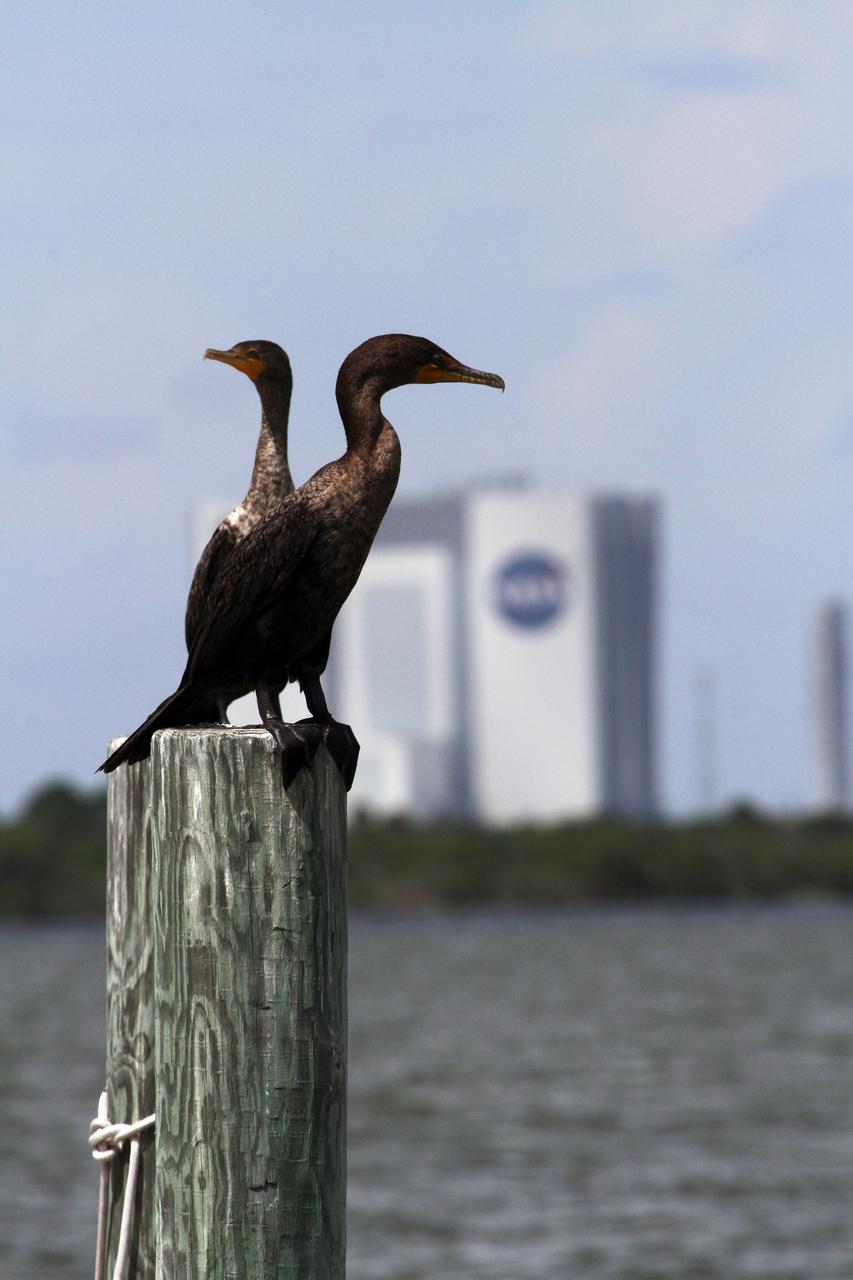
CAPE CANAVERAL, Fla. – At NASA’s Kennedy Space Center in Florida, two birds sit on a dock along the NASA Causeway admiring the view of the Vehicle Assembly building from across the intercoastal waterway. The center shares a boundary with the Merritt Island National Wildlife Refuge, consisting of 140,000 acres. The Refuge provides a wide variety of habitats: coastal dunes, saltwater estuaries and marshes, freshwater impoundments, scrub, pine flatwoods, and hardwood hammocks that provide habitat for more than 1,500 species of plants and animals, including about 331 species of birds. Photo credit: NASA_Ben Smegelsky
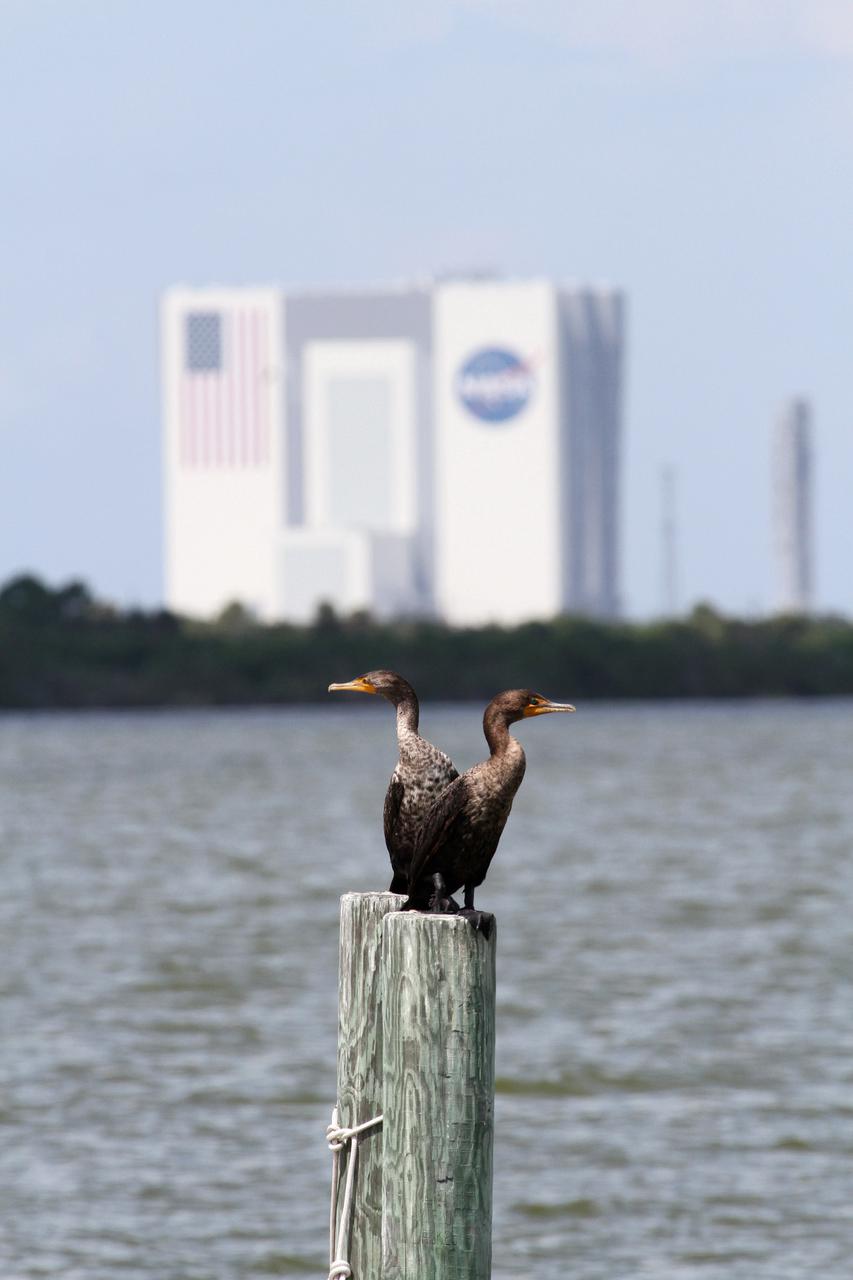
CAPE CANAVERAL, Fla. – At NASA’s Kennedy Space Center in Florida, two birds sit on the post of a dock along the NASA Causeway with a view of the Vehicle Assembly building across the intercoastal waterway. The center shares a boundary with the Merritt Island National Wildlife Refuge, consisting of 140,000 acres. The Refuge provides a wide variety of habitats: coastal dunes, saltwater estuaries and marshes, freshwater impoundments, scrub, pine flatwoods, and hardwood hammocks that provide habitat for more than 1,500 species of plants and animals, including about 331 species of birds. Photo credit: NASA_Ben Smegelsky