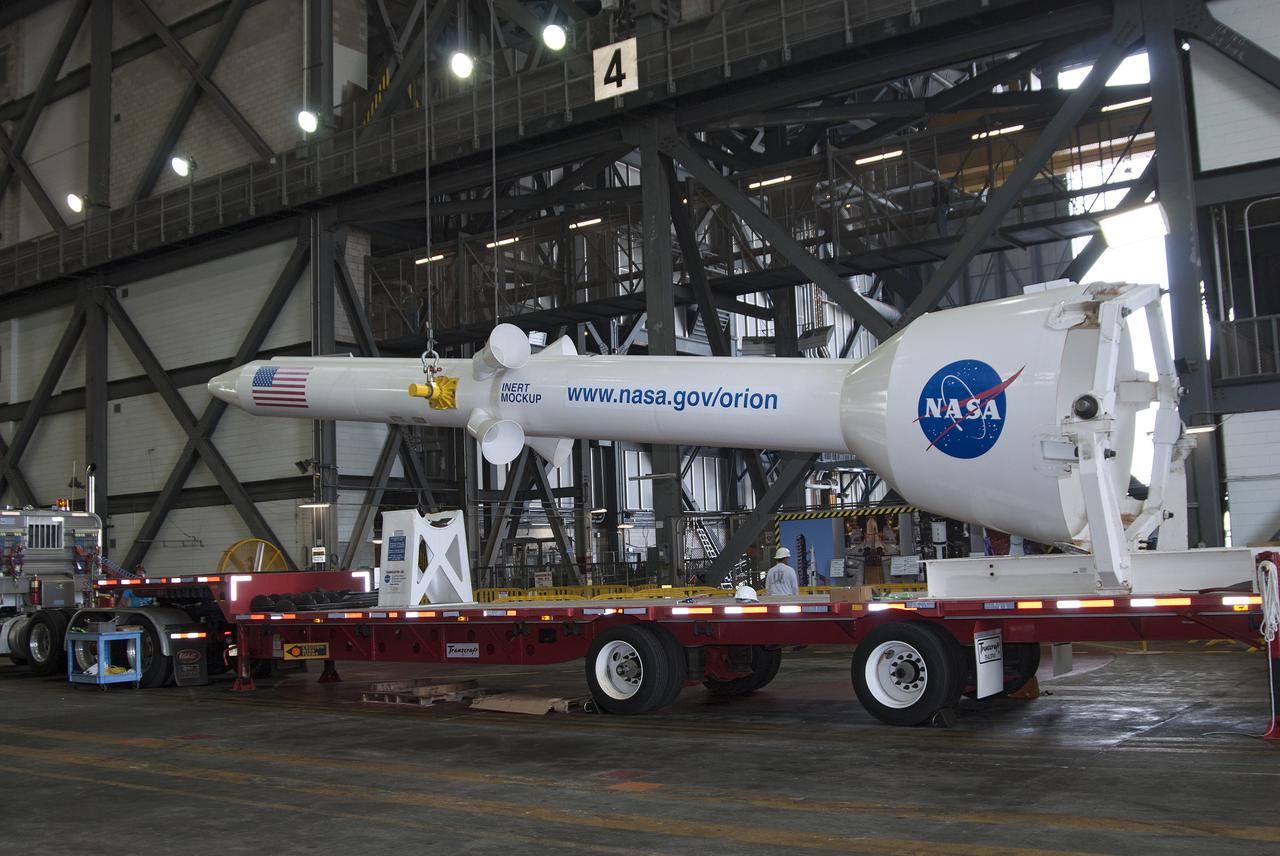
CAPE CANAVERAL, Fla. – A mockup of the Launch Abort System, or LAS, is lifted off a trailer inside the Vehicle Assembly Building at NASA's Kennedy Space Center in Florida so it can be positioned atop a boilerplate Orion capsule during test stacking operations. The Orion spacecraft is being designed to carry astronauts on missions beyond Earth orbit. It will have the LAS during the first part of launch in case an emergency develops that requires the spacecraft to be pulled away from the rocket to save the crew. NASA's Ground Services Development and Operations Program, or GSDO, performed the test operations. Photo credit: NASA_Charisse Nahser
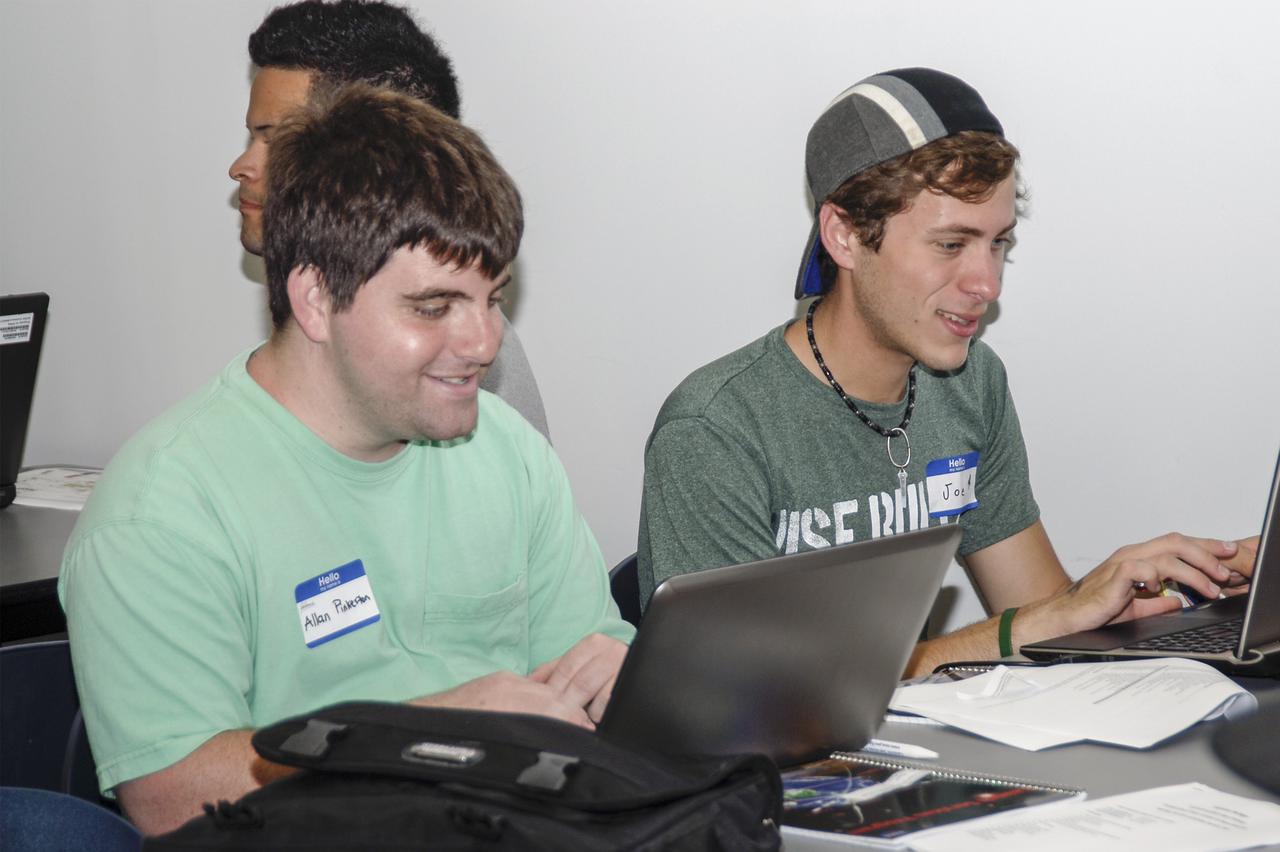
CAPE CANAVERAL, Fla. – Allan Pinkerton, at left, and Joey Vars, students from the University of South Florida at St. Petersburg, brainstorm ideas during the 2013 International Space Apps Challenge at the Center for Space Education at the Kennedy Space Center Visitor Complex in Florida. During the worldwide two-day challenge, more than 9,000 people and 484 organizations came together in 83 cities across 44 countries, as well as online, to develop new ways of solving challenges that NASA faces. At Kennedy, four teams brainstormed ideas with subject matter experts and others and worked nearly 32 hours straight to present their concepts to a panel of three technical and non-technical judges. Challenges tackled at Kennedy were: Deployable Greenhouse, Kennedy Space Center 2040, Seven Minutes of Science, and Moonville – Lunar Industry Game. Photo credit: NASA_Charisse Nahser
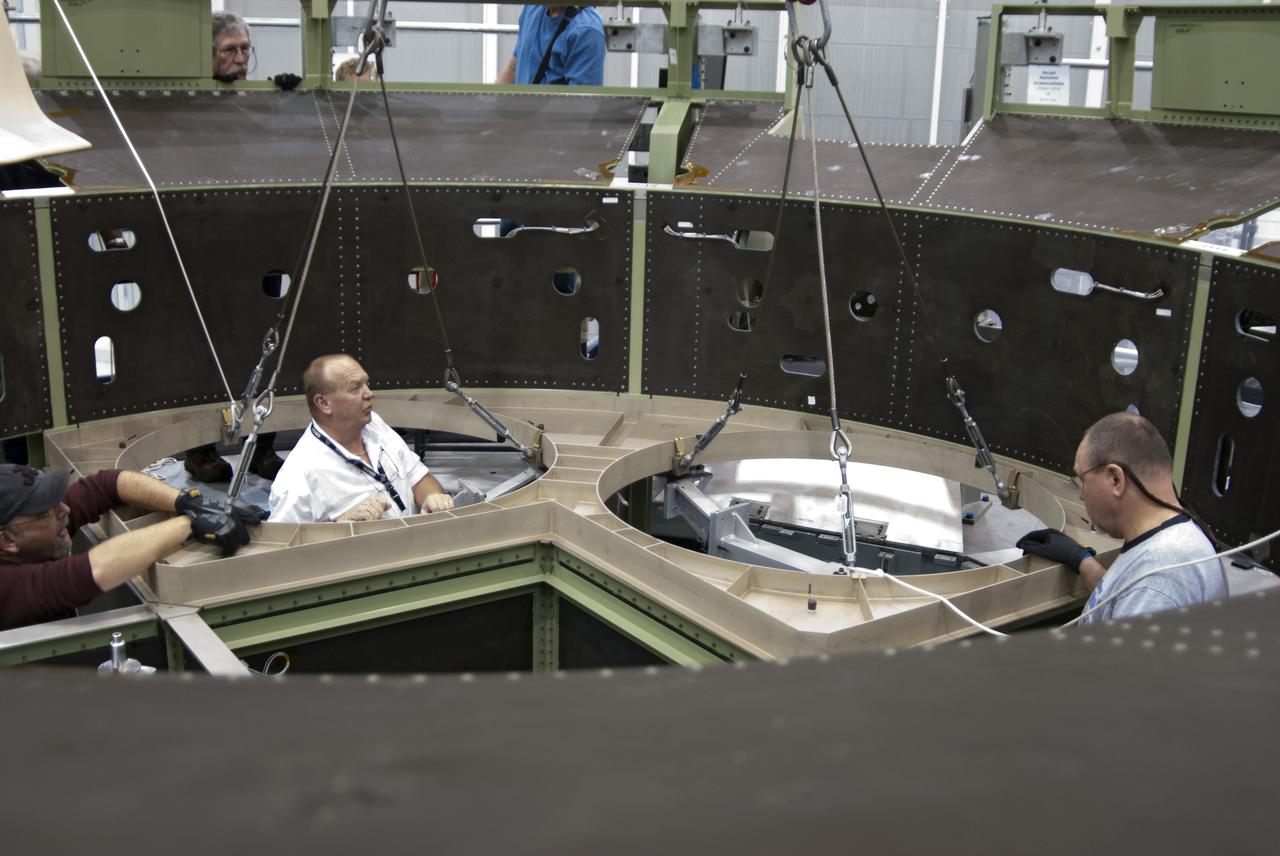
CAPE CANAVERAL, Fla. – Inside the Operations and Checkout Building high bay at NASA’s Kennedy Space Center in Florida, technicians help guide a bulkhead as it is lowered for installation on the Orion service module in preparation for Exploration Flight Test 1, or EFT-1. Orion is the exploration spacecraft designed to carry crews to space beyond low Earth orbit. It will provide emergency abort capability, sustain the crew during the space travel and provide safe re-entry from deep space return velocities. Orion’s first unpiloted test flight is scheduled to launch in 2014 atop a United Launch Alliance Delta IV heavy rocket. A second uncrewed flight test is scheduled for 2017 on the Space Launch System rocket. For more information, visit http:__www.nasa.gov_orion. Photo credit: NASA_Charisse Nahser
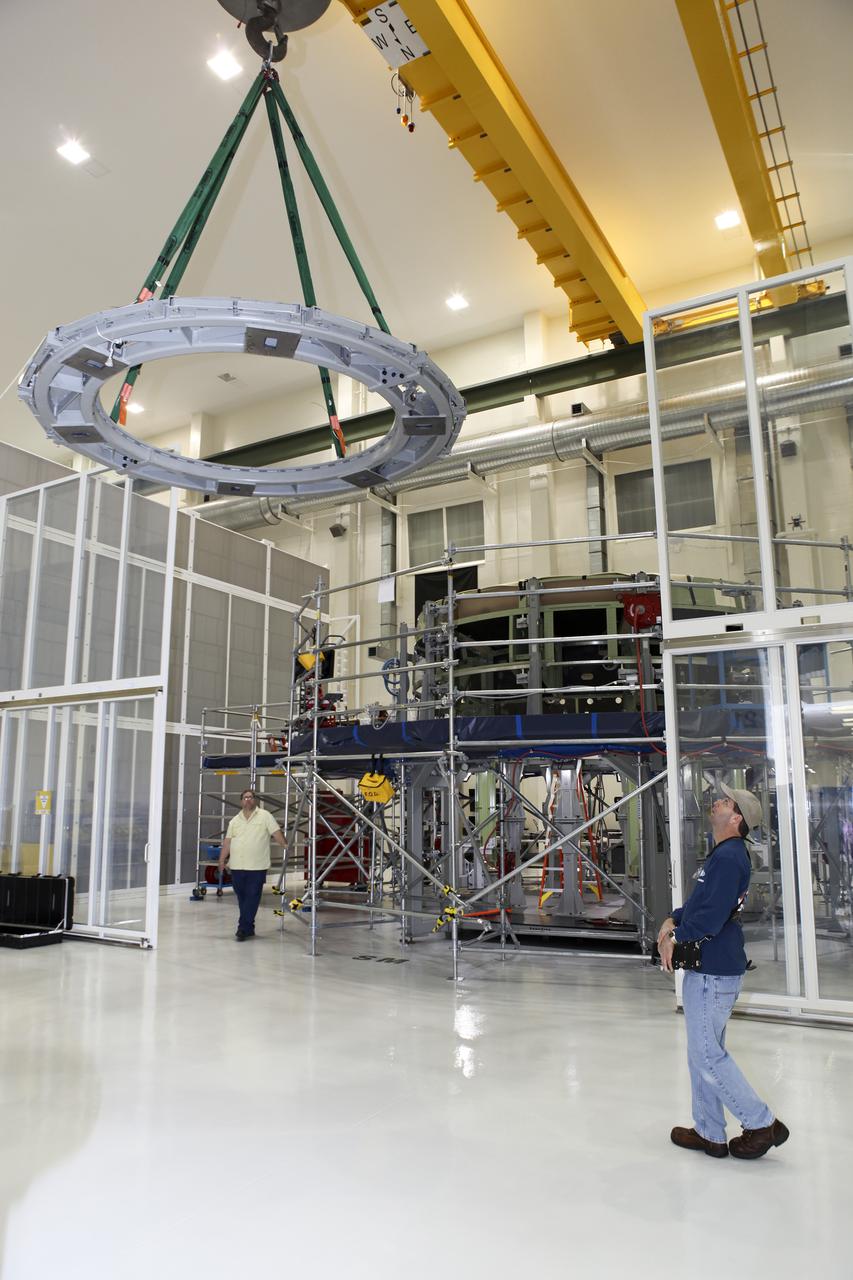
CAPE CANAVERAL, Fla. – Inside the Operations and Checkout Building high bay at NASA’s Kennedy Space Center in Florida, technicians monitor the progress as a processing tool is lifted away from an Orion service module work stand. Work continues to prepare for Exploration Flight Test 1, or EFT-1. Orion is the exploration spacecraft designed to carry crews to space beyond low Earth orbit. It will provide emergency abort capability, sustain the crew during the space travel and provide safe re-entry from deep space return velocities. Orion’s first unpiloted test flight is scheduled to launch in 2014 atop a United Launch Alliance Delta IV heavy rocket. A second uncrewed flight test is scheduled for 2017 on the Space Launch System rocket. For more information, visit http:__www.nasa.gov_orion. Photo credit: NASA_Charisse Nahser
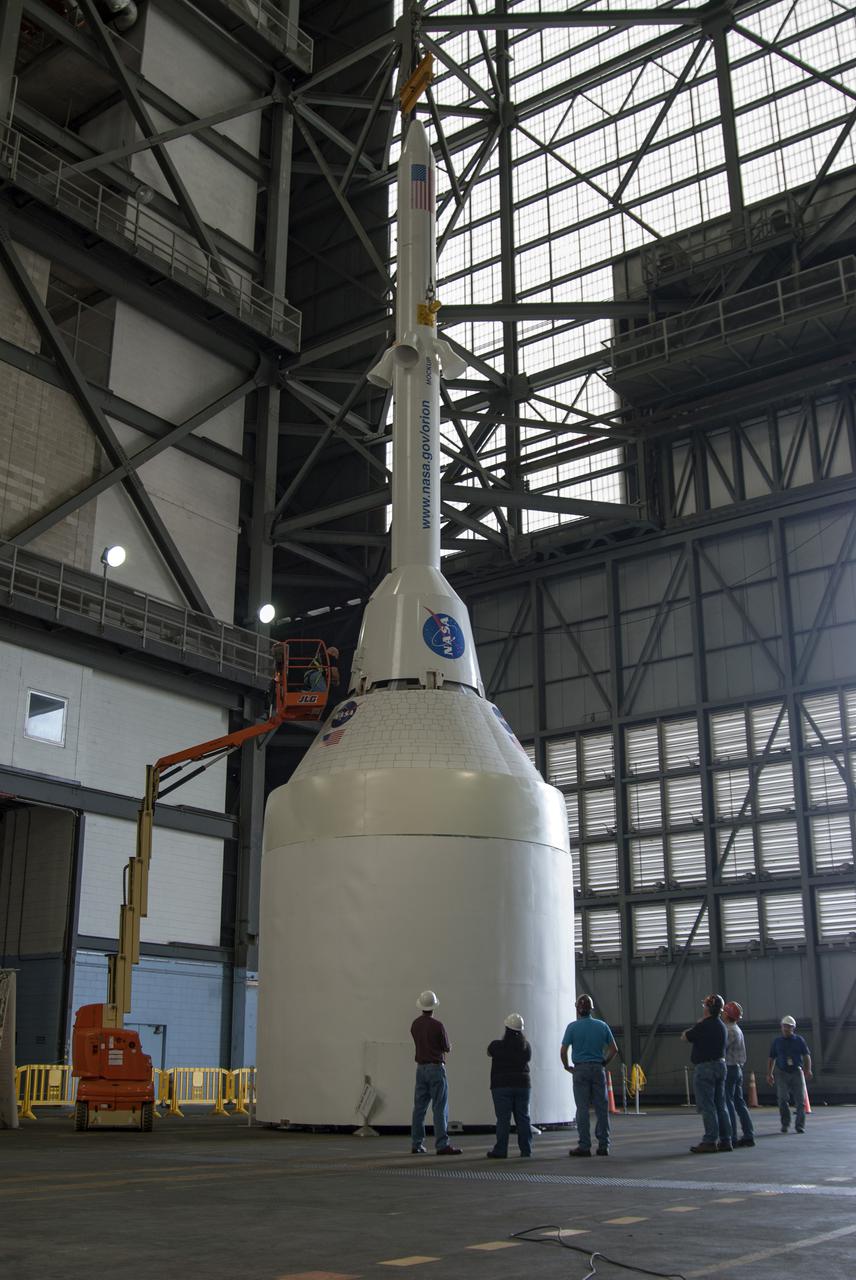
CAPE CANAVERAL, Fla. – A mockup of the Launch Abort System, or LAS, is positioned atop a boilerplate Orion capsule and replica service module during test stacking operations inside the Vehicle Assembly Building at NASA's Kennedy Space Center in Florida. The Orion spacecraft is being designed to carry astronauts on missions beyond Earth orbit. It will have the LAS during the first part of launch in case an emergency develops that requires the spacecraft to be pulled away from the rocket to save the crew. NASA's Ground Services Development and Operations Program, or GSDO, performed the test operations. Photo credit: NASA_Charisse Nahser
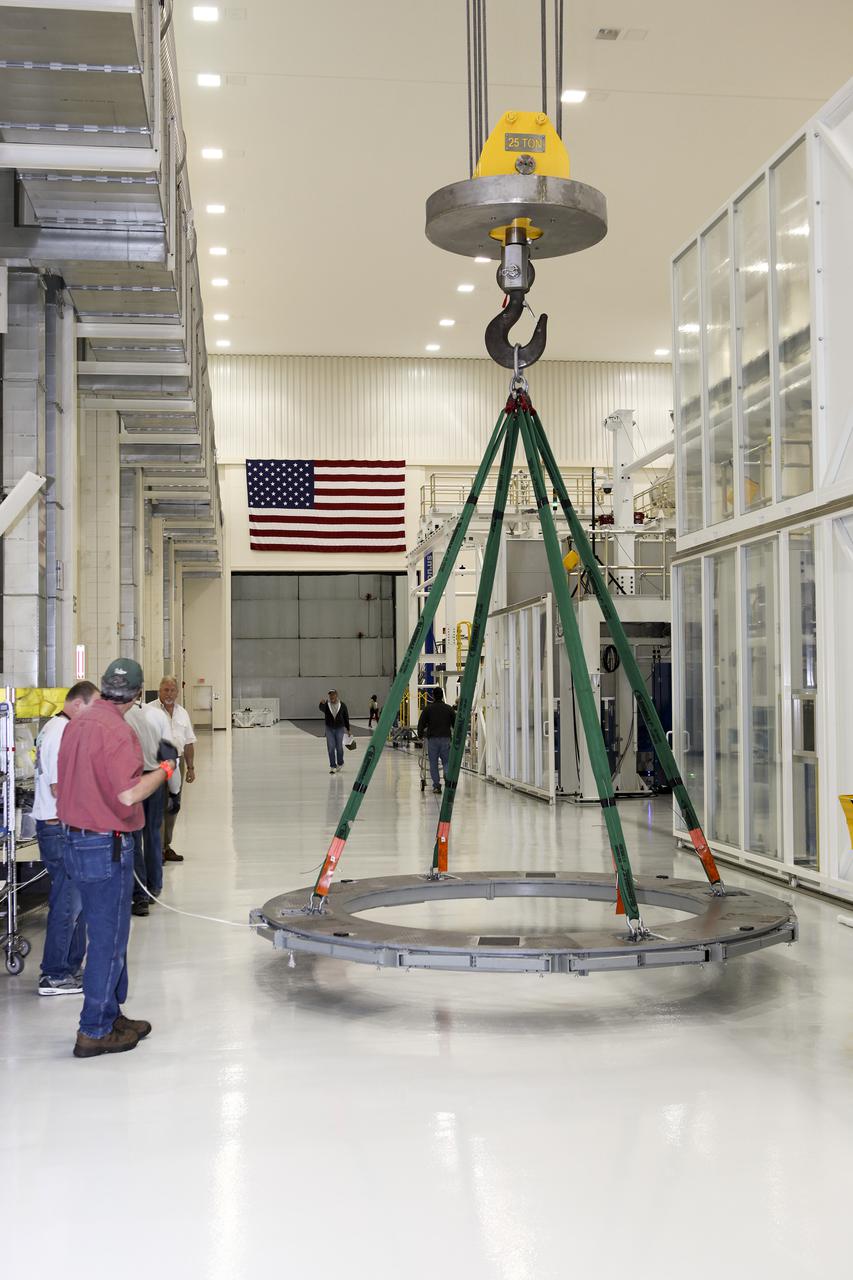
CAPE CANAVERAL, Fla. – Inside the Operations and Checkout Building high bay at NASA’s Kennedy Space Center in Florida, technicians monitor the progress as a processing tool is lowered to the floor after it was lifted away from an Orion service module work stand. Work continues to prepare for Exploration Flight Test 1, or EFT-1. Orion is the exploration spacecraft designed to carry crews to space beyond low Earth orbit. It will provide emergency abort capability, sustain the crew during the space travel and provide safe re-entry from deep space return velocities. Orion’s first unpiloted test flight is scheduled to launch in 2014 atop a United Launch Alliance Delta IV heavy rocket. A second uncrewed flight test is scheduled for 2017 on the Space Launch System rocket. For more information, visit http:__www.nasa.gov_orion. Photo credit: NASA_Charisse Nahser

CAPE CANAVERAL, Fla. – Kennedy Space Center Director Bob Cabana speaks with participants of the 2013 International Space Apps Challenge, or ISAC, at The Astronaut Memorial Foundation’s Center for Space Education in Florida during a networking event. During the worldwide two-day challenge, more than 9,000 people and 484 organizations came together in 83 cities across 44 countries, as well as online, to develop new ways of solving challenges that NASA faces. At Kennedy, four teams brainstormed ideas with subject matter experts and others and worked nearly 32 hours straight to present their concepts to a panel of three technical and non-technical judges. Challenges tackled at Kennedy were: Deployable Greenhouse, Kennedy Space Center 2040, Seven Minutes of Science, and Moonville – Lunar Industry Game. Photo credit: NASA_Charisse Nahser
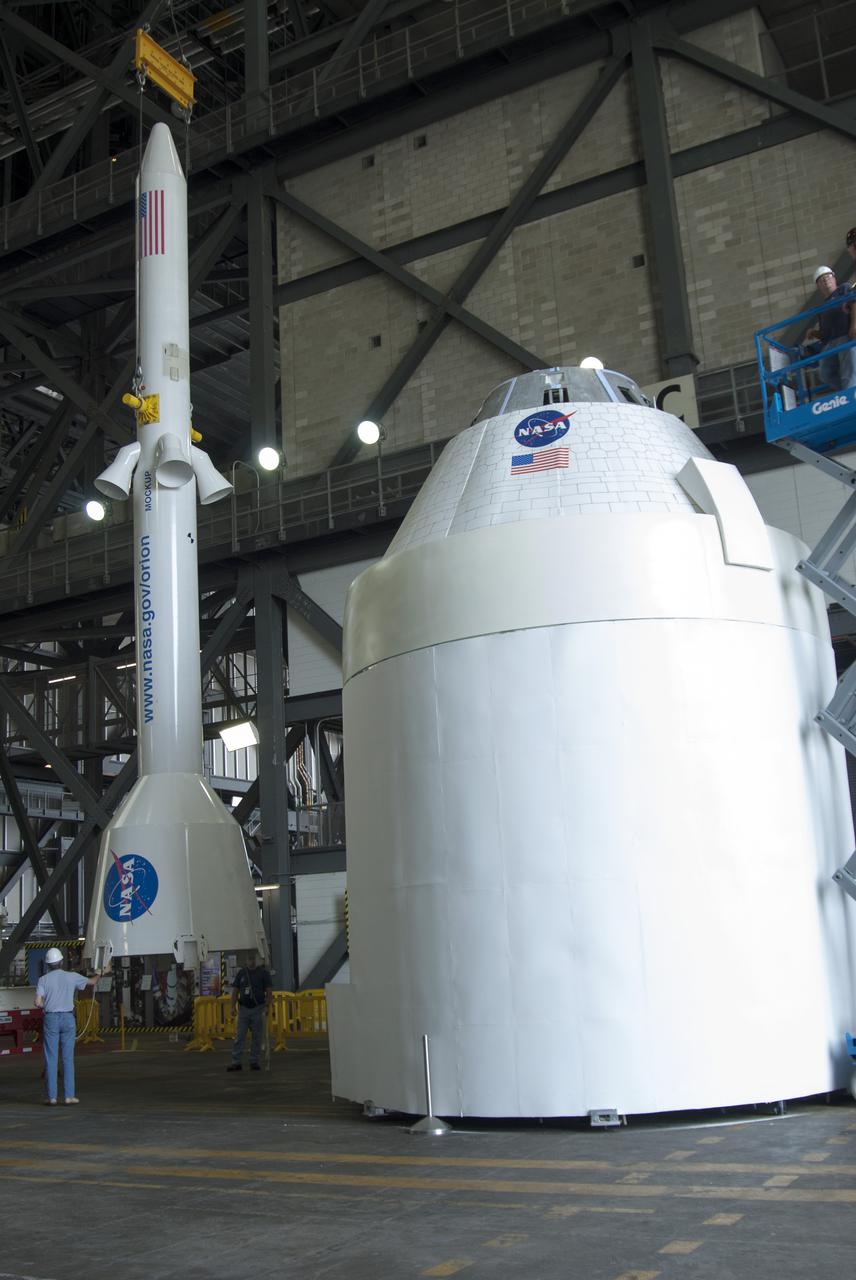
CAPE CANAVERAL, Fla. – A mockup of the Launch Abort System, or LAS, is lifted inside the Vehicle Assembly Building at NASA's Kennedy Space Center in Florida so it can be positioned atop a boilerplate Orion capsule and replica service module during test stacking operations. The Orion spacecraft is being designed to carry astronauts on missions beyond Earth orbit. It will have the LAS during the first part of launch in case an emergency develops that requires the spacecraft to be pulled away from the rocket to save the crew. NASA's Ground Services Development and Operations Program, or GSDO, performed the test operations. Photo credit: NASA_Charisse Nahser
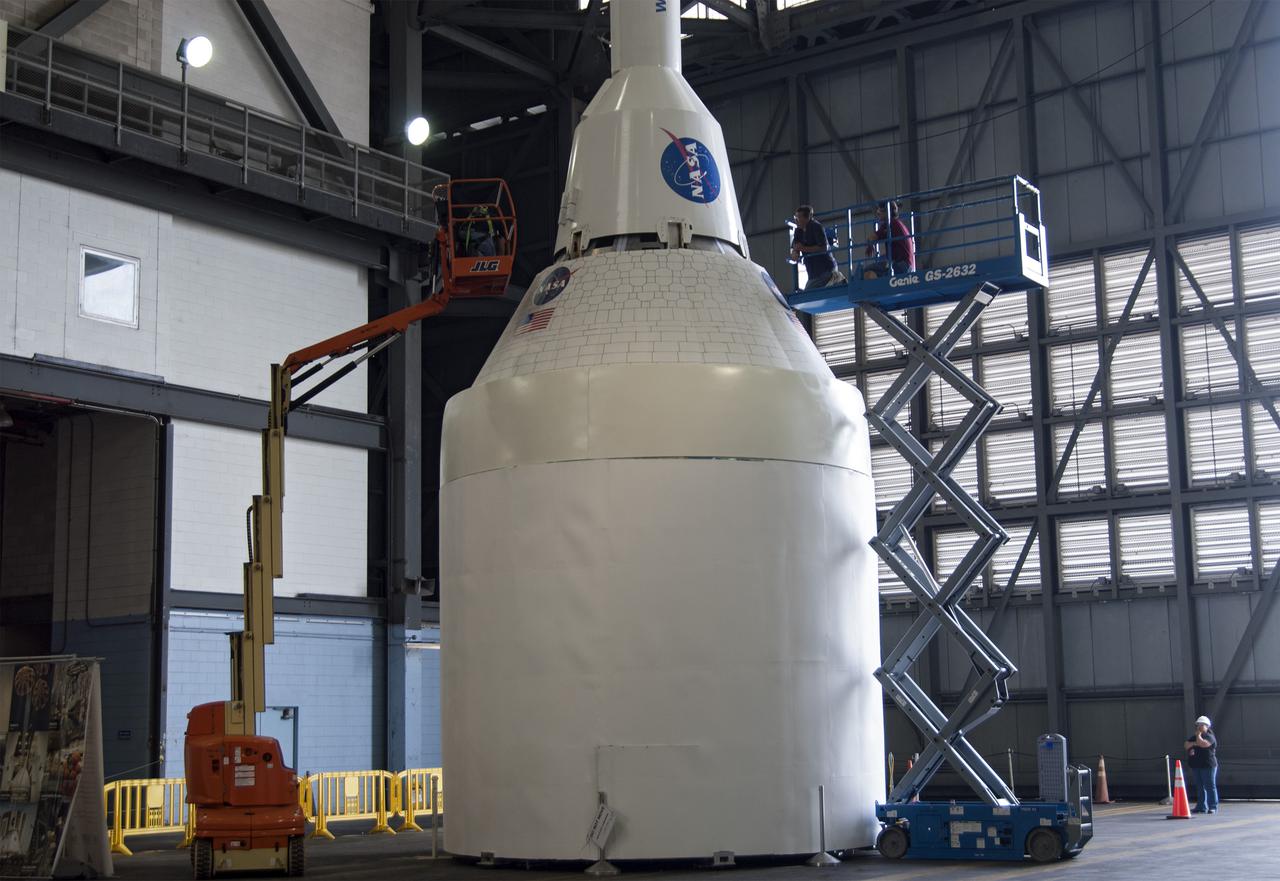
CAPE CANAVERAL, Fla. – A mockup of the Launch Abort System, or LAS, is positioned atop a boilerplate Orion capsule and replica service module during test stacking operations inside the Vehicle Assembly Building at NASA's Kennedy Space Center in Florida. The Orion spacecraft is being designed to carry astronauts on missions beyond Earth orbit. It will have the LAS during the first part of launch in case an emergency develops that requires the spacecraft to be pulled away from the rocket to save the crew. NASA's Ground Services Development and Operations Program, or GSDO, performed the test operations. Photo credit: NASA_Charisse Nahser
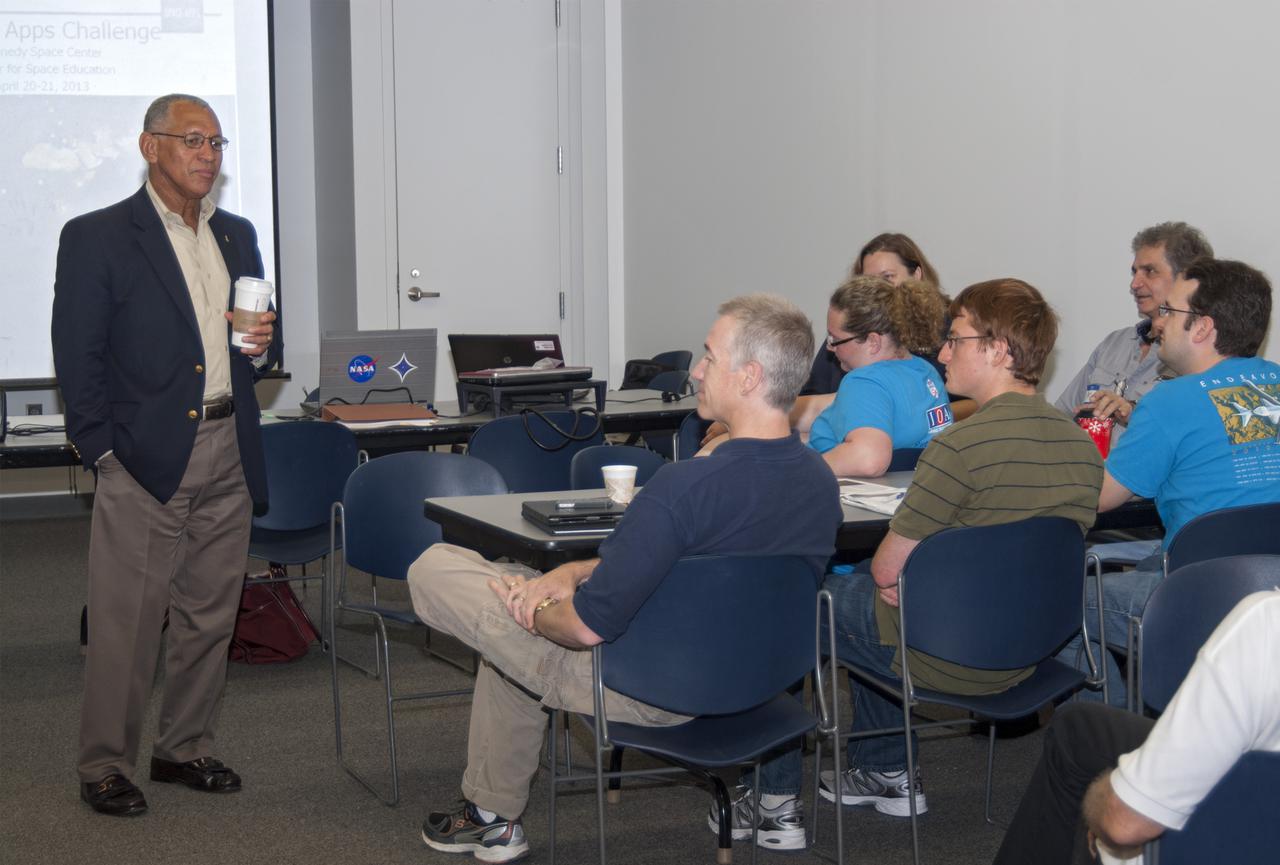
CAPE CANAVERAL, Fla. – NASA Administrator Charlie Bolden speaks with participants of the 2013 International Space Apps Challenge, or ISAC, at The Astronaut Memorial Foundation’s Center for Space Education in Florida during a networking event. During the worldwide two-day challenge, more than 9,000 people and 484 organizations came together in 83 cities across 44 countries, as well as online, to develop new ways of solving challenges that NASA faces. At Kennedy, four teams brainstormed ideas with subject matter experts and others and worked nearly 32 hours straight to present their concepts to a panel of three technical and non-technical judges. Challenges tackled at Kennedy were: Deployable Greenhouse, Kennedy Space Center 2040, Seven Minutes of Science, and Moonville – Lunar Industry Game. Photo credit: NASA_Charisse Nahser
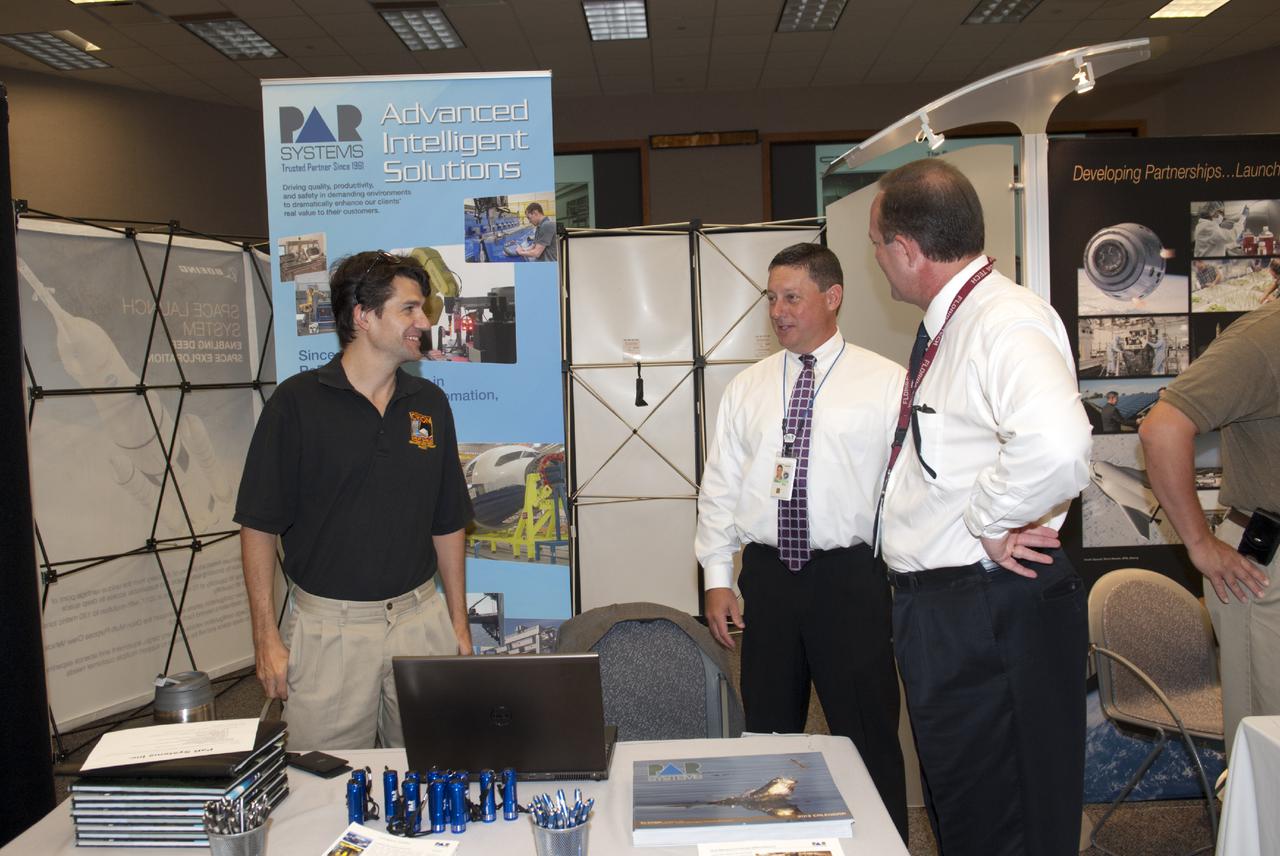
CAPE CANAVERAL, Fla. -- At the Kennedy Space Center in Florida, representatives of PaR Systems talk with guests at the Innovation Expo KSC Showcase. The event gave Kennedy employees an opportunity to meet 12 NASA partners and see how the Center Planning and Development Directorate is transforming Kennedy into a multi-user spaceport through partnerships and resource planning. The 17-booth exhibit consists of 12 partner booths along with Spaceport Planning, Partnership Development and Research and Technology offices. Photo credit: NASA_Charisse Nahser
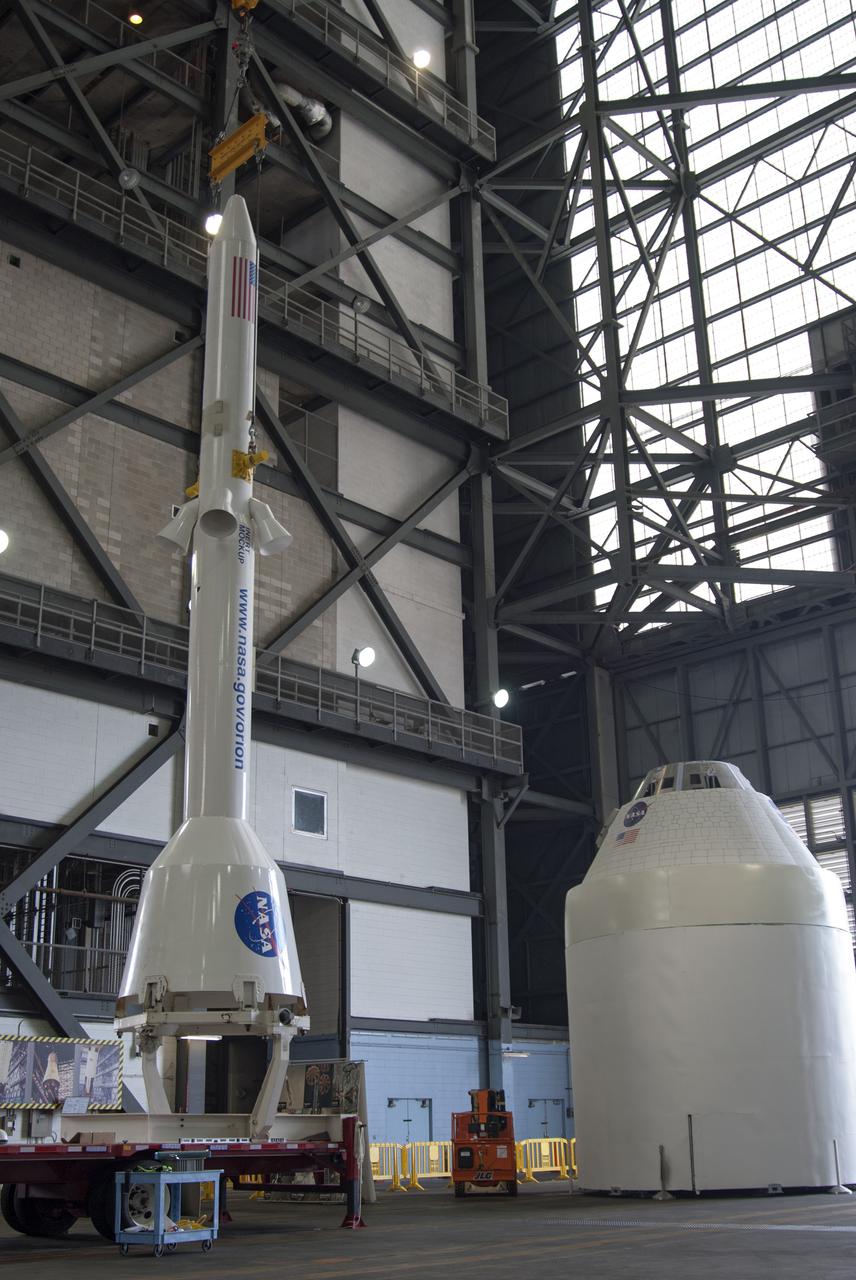
CAPE CANAVERAL, Fla. – A mockup of the Launch Abort System, or LAS, is lifted off a trailer inside the Vehicle Assembly Building at NASA's Kennedy Space Center in Florida so it can be positioned atop a boilerplate Orion capsule and replica service module during test stacking operations. The Orion spacecraft is being designed to carry astronauts on missions beyond Earth orbit. It will have the LAS during the first part of launch in case an emergency develops that requires the spacecraft to be pulled away from the rocket to save the crew. NASA's Ground Services Development and Operations Program, or GSDO, performed the test operations. Photo credit: NASA_Charisse Nahser

CAPE CANAVERAL, Fla. – Inside the Operations and Checkout Building high bay at NASA’s Kennedy Space Center in Florida, a bulkhead is lowered for installation on the Orion service module in preparation for Exploration Flight Test 1, or EFT-1. Orion is the exploration spacecraft designed to carry crews to space beyond low Earth orbit. It will provide emergency abort capability, sustain the crew during the space travel and provide safe re-entry from deep space return velocities. Orion’s first unpiloted test flight is scheduled to launch in 2014 atop a United Launch Alliance Delta IV heavy rocket. A second uncrewed flight test is scheduled for 2017 on the Space Launch System rocket. For more information, visit http:__www.nasa.gov_orion. Photo credit: NASA_Charisse Nahser
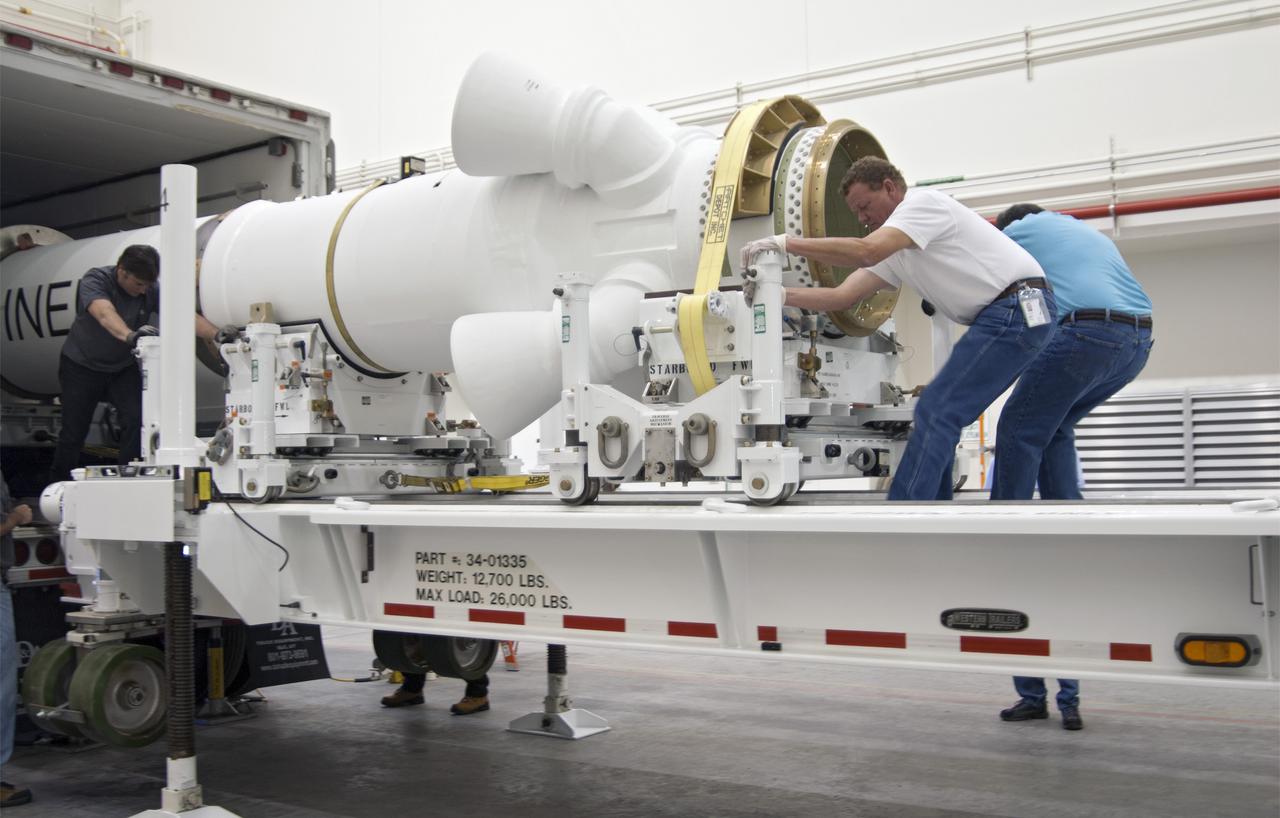
CAPE CANAVERAL, Fla. – At NASA’s Kennedy Space Center in Florida, technicians help remove the Alliant Techsystems, or ATK, launch abort motor from a truck after arrival at the Launch Abort System Facility. The test flight abort motor is for Exploration Flight Test 1, or EFT-1, of the agency’s Orion Multi-Purpose Crew Vehicle. It is part of Orion’s Launch Abort System, which is designed to safely pull the Orion crew module away from the launch vehicle in the event of an emergency on the launch pad or during the initial ascent of NASA’s Space Launch System, or SLS, rocket. The motor is configured with inert propellant. Orion is the exploration spacecraft designed to carry crews to space beyond low Earth orbit. It will provide emergency abort capability, sustain the crew during the space travel and provide safe re-entry from deep space return velocities. Orion’s first unpiloted test flight is scheduled to launch in 2014 atop a Delta IV rocket. A second uncrewed flight test is scheduled for 2017 on the SLS rocket. For more information, visit http:__www.nasa.gov_orion. Photo credit: NASA_Charisse Nahser
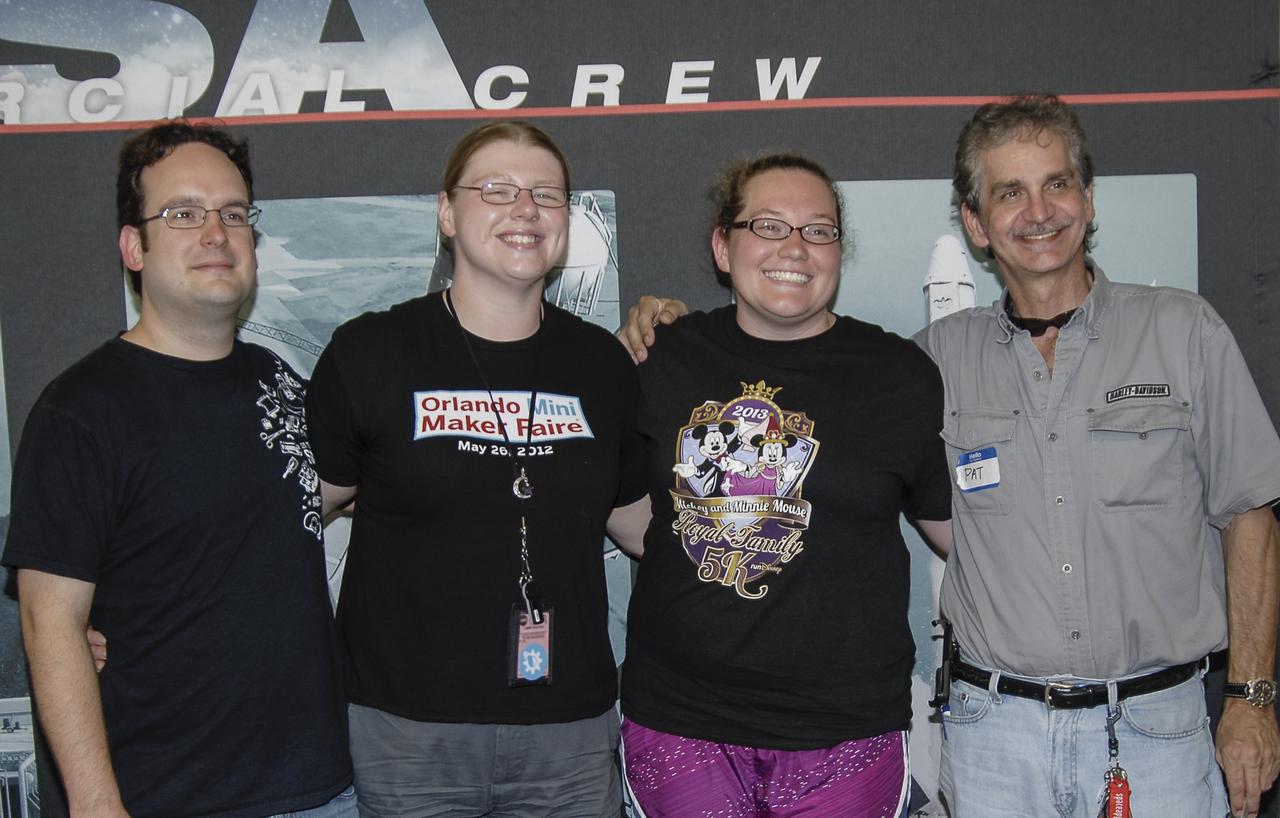
CAPE CANAVERAL, Fla. – Space enthusiasts Mike King, at left, Jamie Szafran, Jessica King and Pat Starace, were first-place winners from Kennedy Space Center during the 2013 International Space Apps Challenge held at the Center for Space Education at the Kennedy Space Center Visitor Complex in Florida. During the worldwide two-day challenge, more than 9,000 people and 484 organizations came together in 83 cities across 44 countries, as well as online, to develop new ways of solving challenges that NASA faces. At Kennedy, four teams brainstormed ideas with subject matter experts and others and worked nearly 32 hours straight to present their concepts to a panel of three technical and non-technical judges. Challenges tackled at Kennedy were: Deployable Greenhouse, Kennedy Space Center 2040, Seven Minutes of Science, and Moonville – Lunar Industry Game. Photo credit: NASA_Charisse Nahser
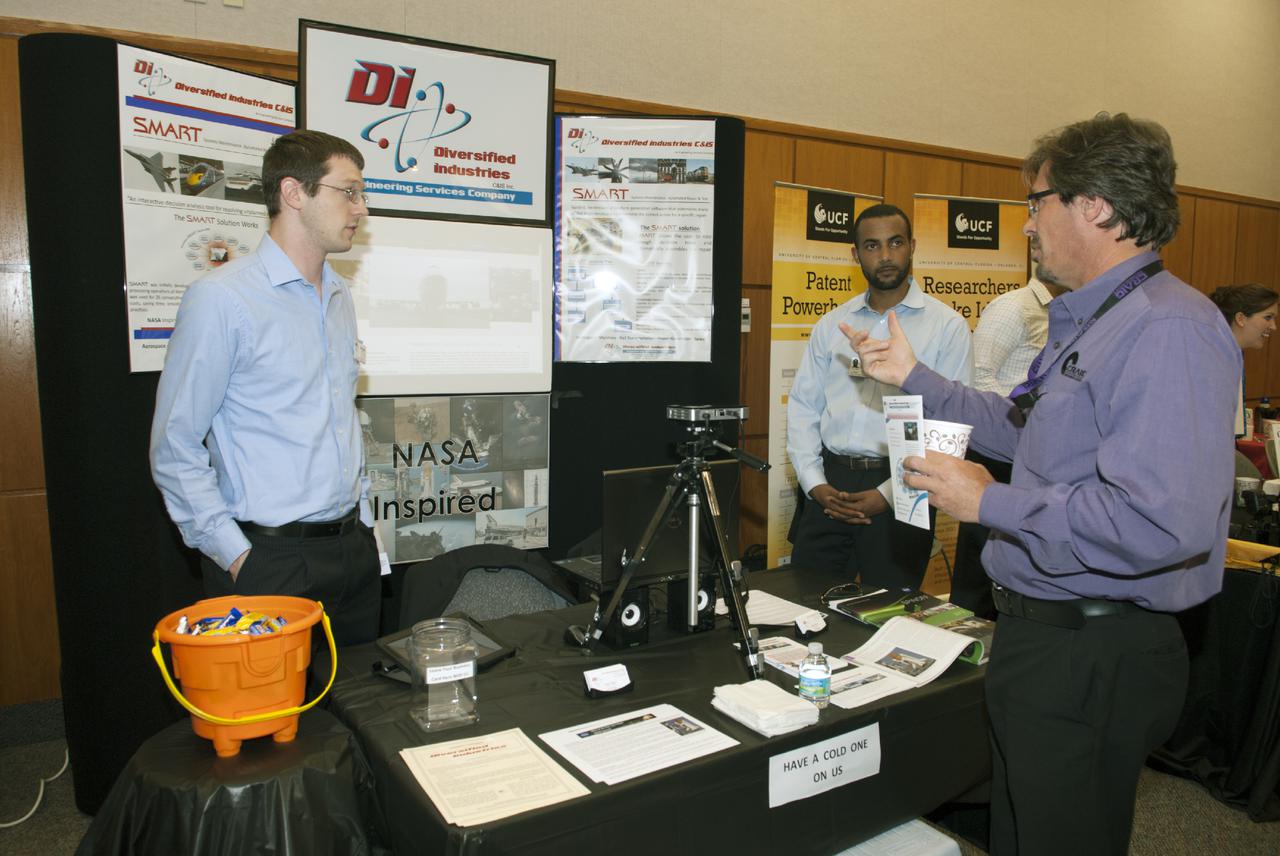
CAPE CANAVERAL, Fla. -- At the Kennedy Space Center in Florida, representatives of Diversified Industries talk with guests at the Innovation Expo KSC Showcase. The event gave Kennedy employees an opportunity to meet 12 NASA partners and see how the Center Planning and Development Directorate is transforming Kennedy into a multi-user spaceport through partnerships and resource planning. The 17-booth exhibit consists of 12 partner booths along with Spaceport Planning, Partnership Development and Research and Technology offices. Photo credit: NASA_Charisse Nahser
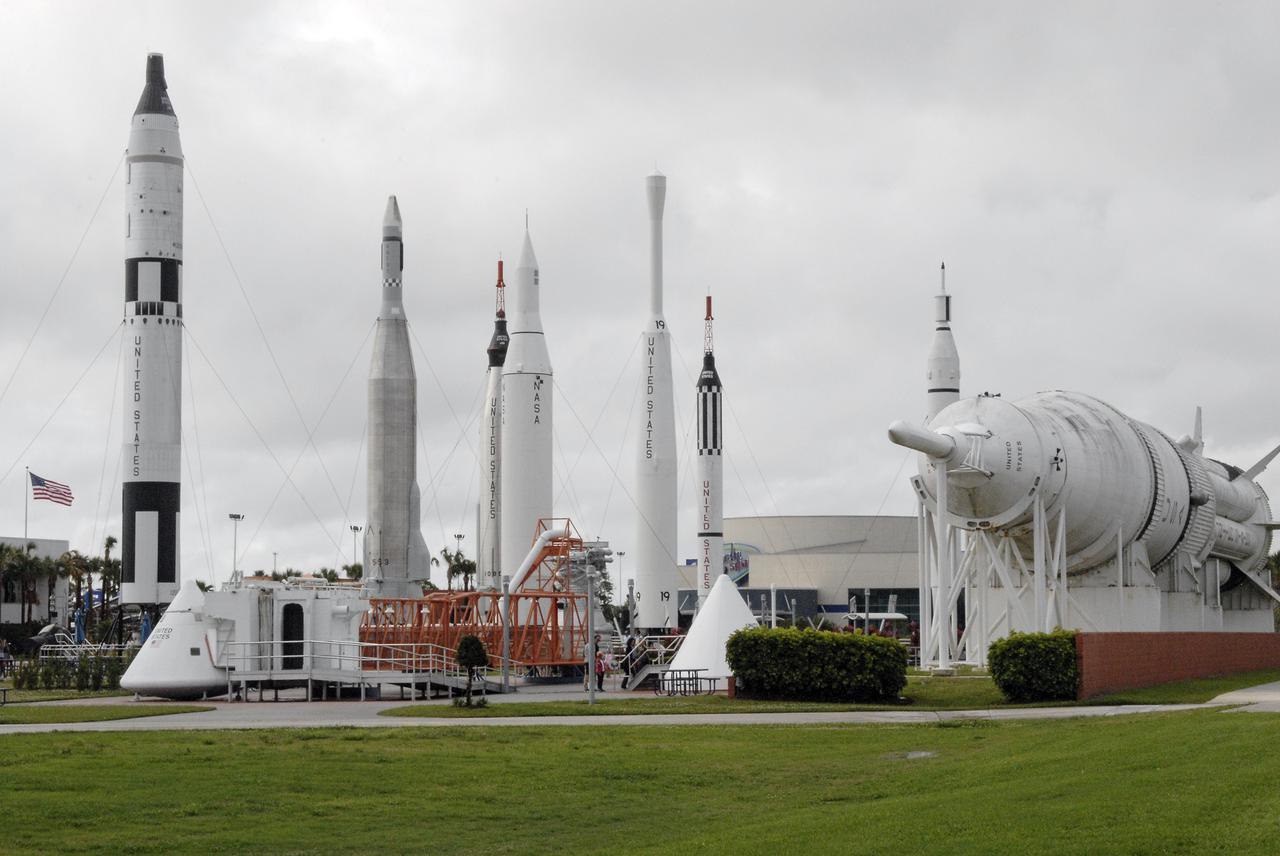
CAPE CANAVERAL, Fla. – The Rocket Garden at the Kennedy Space Center Visitor Complex in Florida, features real and mock-up rockets from NASA’s Mercury, Gemini and Apollo programs, as well as others from uncrewed missions. The large rocket positioned horizontally at far right is an Apollo Saturn 1B, while the rocket standing at far left is a Gemini Titan launch vehicle. The visitor complex is managed for NASA by Delaware North Companies Parks and Resorts. The complex features interactive displays, astronaut encounters, IMAX movies and attractions that help to tell the story of U.S. space exploration. It is home to the recently-opened Angry Birds Space attraction and the Space Shuttle Atlantis exhibit that will open to the general public this summer. Photo credit: NASA_Charisse Nahser
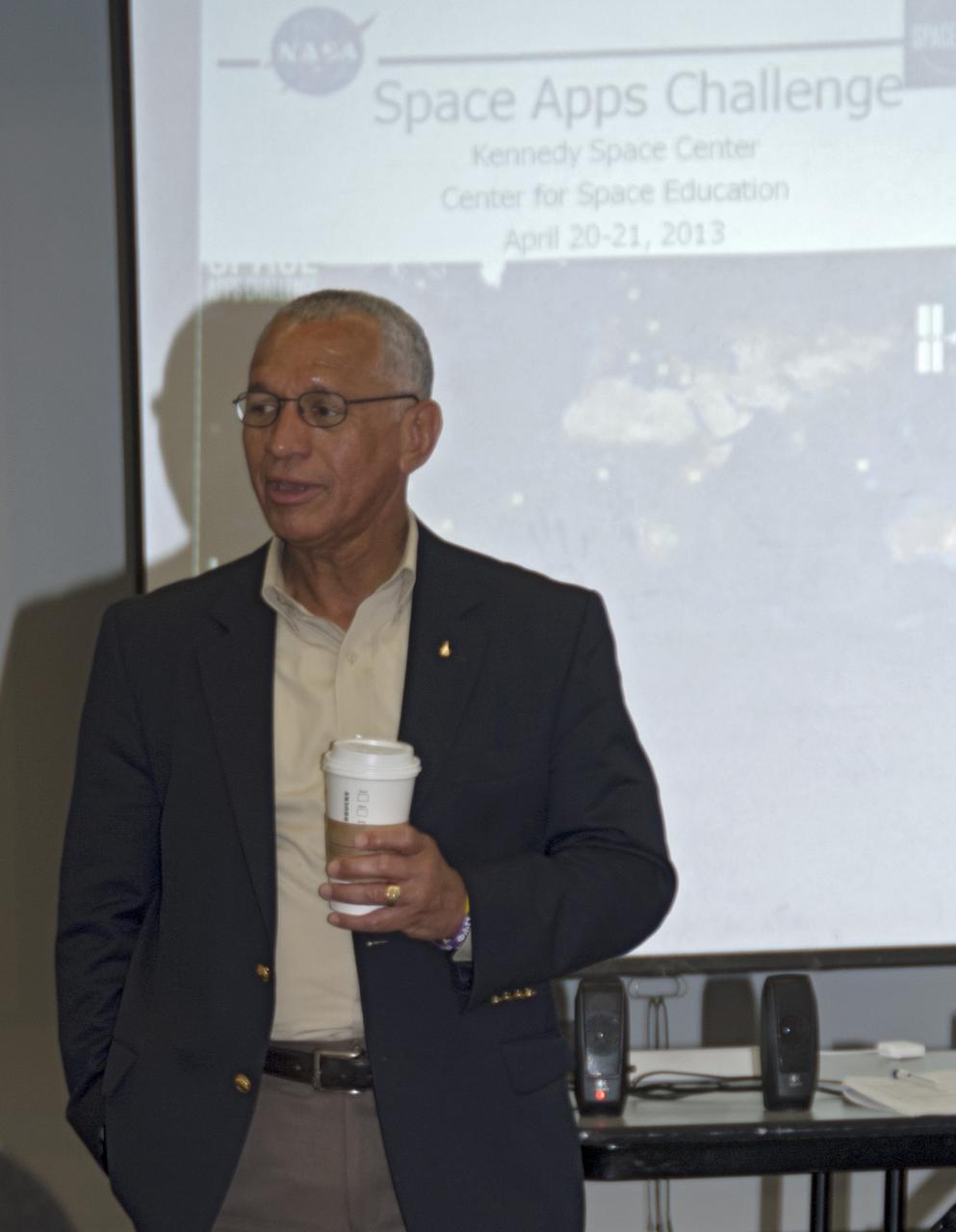
CAPE CANAVERAL, Fla. – NASA Administrator Charlie Bolden speaks with participants of the 2013 International Space Apps Challenge, or ISAC, at The Astronaut Memorial Foundation’s Center for Space Education in Florida during a networking event. During the worldwide two-day challenge, more than 9,000 people and 484 organizations came together in 83 cities across 44 countries, as well as online, to develop new ways of solving challenges that NASA faces. At Kennedy, four teams brainstormed ideas with subject matter experts and others and worked nearly 32 hours straight to present their concepts to a panel of three technical and non-technical judges. Challenges tackled at Kennedy were: Deployable Greenhouse, Kennedy Space Center 2040, Seven Minutes of Science, and Moonville – Lunar Industry Game. Photo credit: NASA_Charisse Nahser
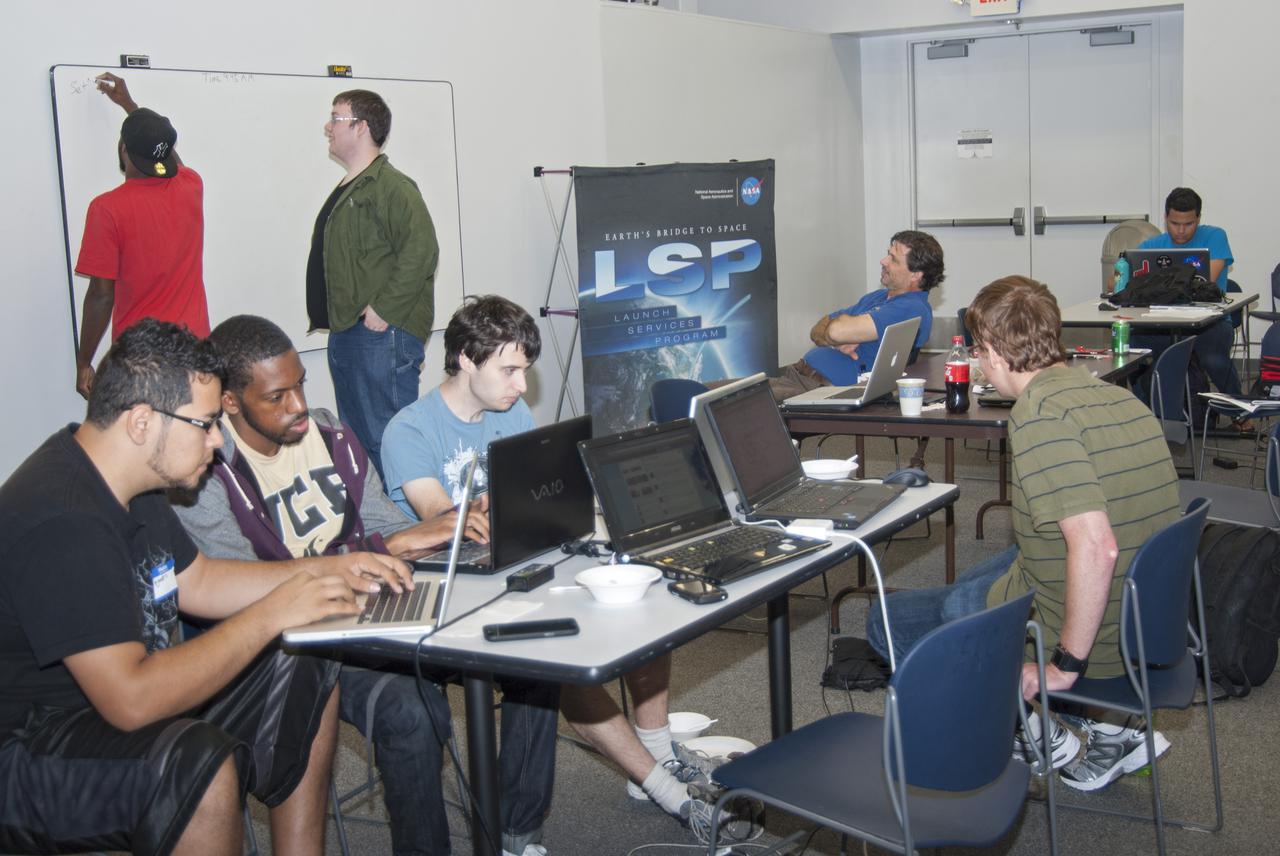
CAPE CANAVERAL, Fla. – Students from the University of Florida, the University of Central Florida, the University of Puerto Rico and private citizens brainstorm ideas during the 2013 International Space Apps Challenge, or ISAC, at The Astronaut Memorial Foundation’s Center for Space Education in Florida. Seated near the Launch Services Program poster is NASA subject matter expert Dr. Phil Metzger from Kennedy Space Center’s Swampworks Laboratory. During the worldwide two-day challenge, more than 9,000 people and 484 organizations came together in 83 cities across 44 countries, as well as online, to develop new ways of solving challenges that NASA faces. At Kennedy, four teams brainstormed ideas with subject matter experts and others and worked nearly 32 hours straight to present their concepts to a panel of three technical and non-technical judges. Challenges tackled at Kennedy were: Deployable Greenhouse, Kennedy Space Center 2040, Seven Minutes of Science, and Moonville – Lunar Industry Game. Photo credit: NASA_Charisse Nahser
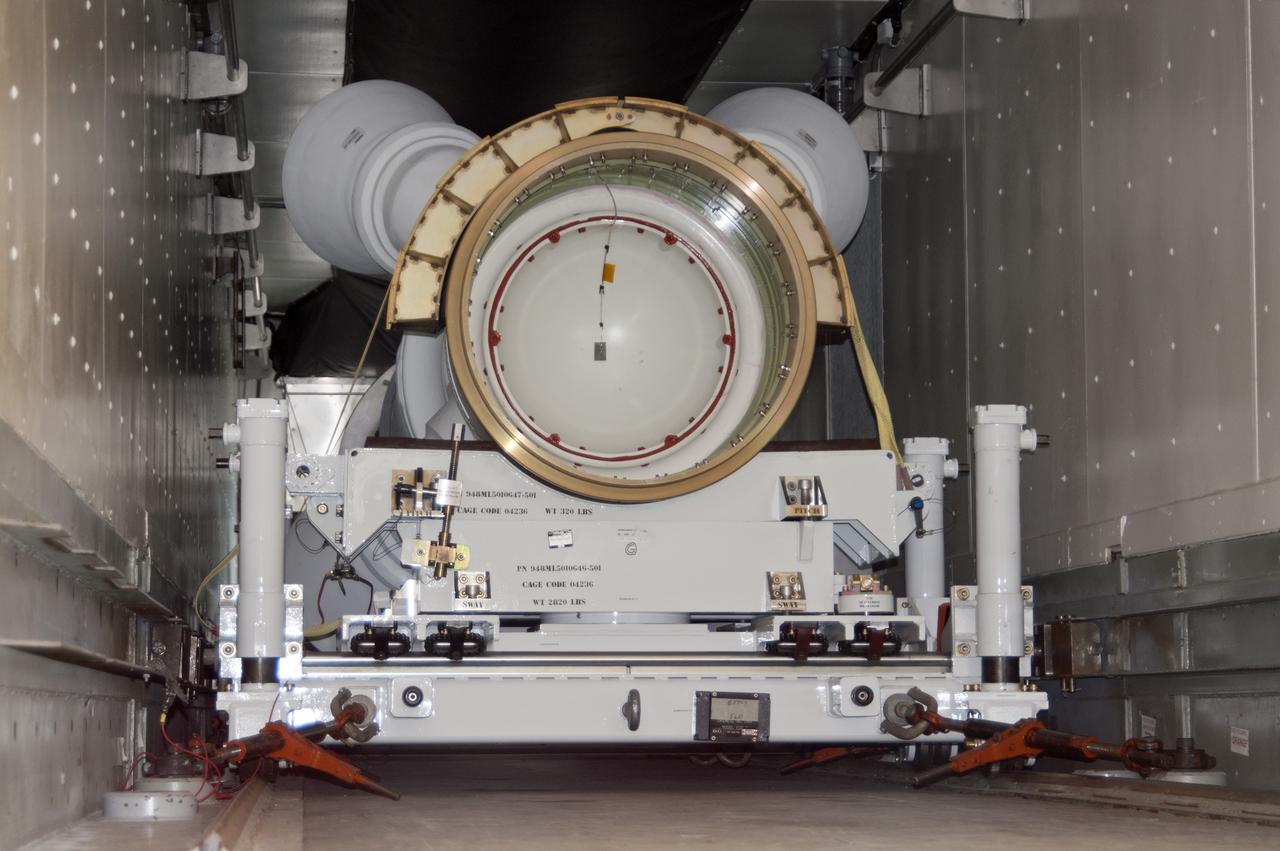
CAPE CANAVERAL, Fla. – At NASA’s Kennedy Space Center in Florida, the Alliant Techsystems, or ATK, launch abort motor arrives at the Launch Abort System Facility for Exploration Flight Test 1, or EFT-1, of the agency’s Orion Multi-Purpose Crew Vehicle. ATK’s abort motor is part of Orion’s Launch Abort System, which is designed to safely pull the Orion crew module away from the launch vehicle in the event of an emergency on the launch pad or during the initial ascent of NASA’s Space Launch System, or SLS, rocket. The test flight abort motor is configured with inert propellant. Orion is the exploration spacecraft designed to carry crews to space beyond low Earth orbit. It will provide emergency abort capability, sustain the crew during the space travel and provide safe re-entry from deep space return velocities. Orion’s first unpiloted test flight is scheduled to launch in 2014 atop a Delta IV rocket. A second uncrewed flight test is scheduled for 2017 on the SLS rocket. For more information, visit http:__www.nasa.gov_orion. Photo credit: NASA_Charisse Nahser
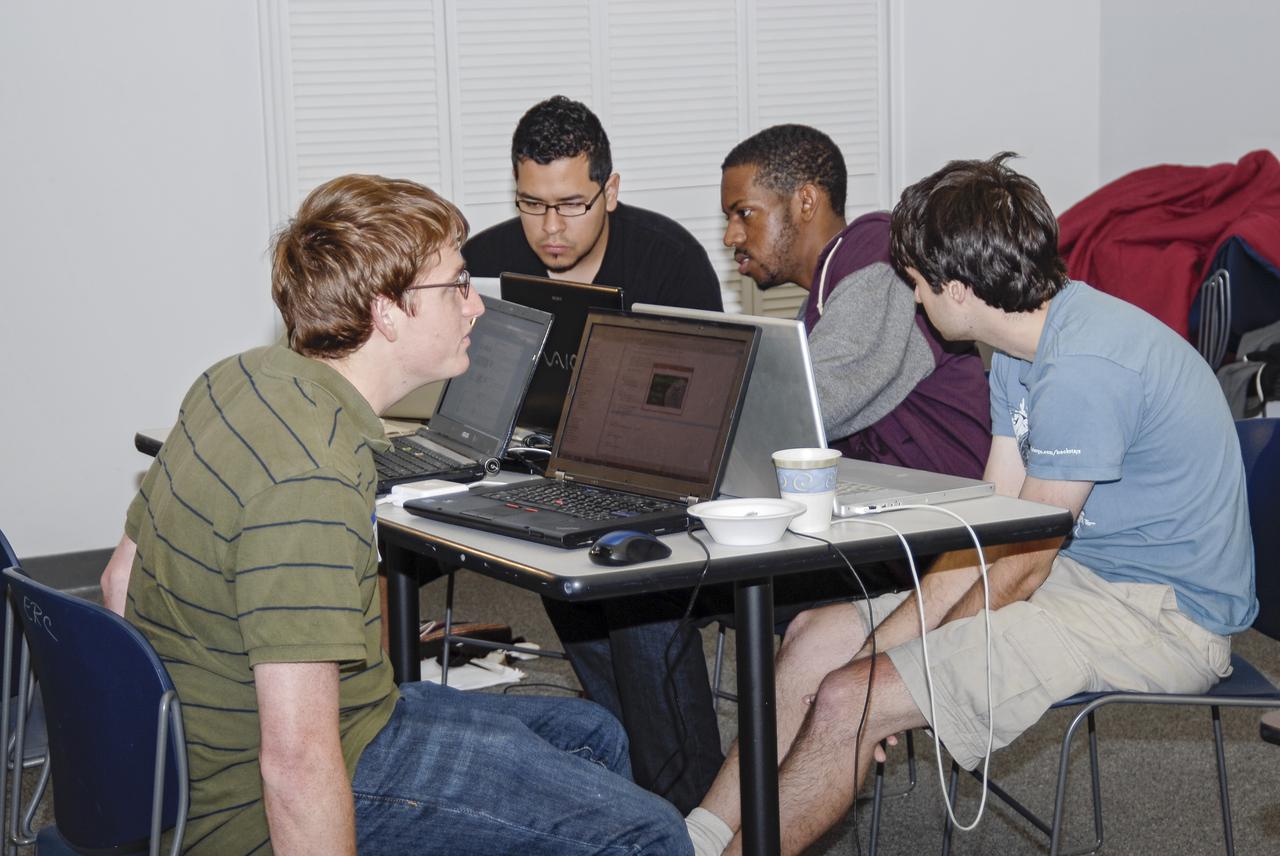
CAPE CANAVERAL, Fla. – Students from the University of Florida, University of Central Florida and the University of Puerto Rico brainstorm ideas during the 2013 International Space Apps Challenge, or ISAC, at The Astronaut Memorial Foundation’s Center for Space Education in Florida. During the worldwide two-day challenge, more than 9,000 people and 484 organizations came together in 83 cities across 44 countries, as well as online, to develop new ways of solving challenges that NASA faces. At Kennedy, four teams brainstormed ideas with subject matter experts and others and worked nearly 32 hours straight to present their concepts to a panel of three technical and non-technical judges. Challenges tackled at Kennedy were: Deployable Greenhouse, Kennedy Space Center 2040, Seven Minutes of Science, and Moonville – Lunar Industry Game. Photo credit: NASA_Charisse Nahser
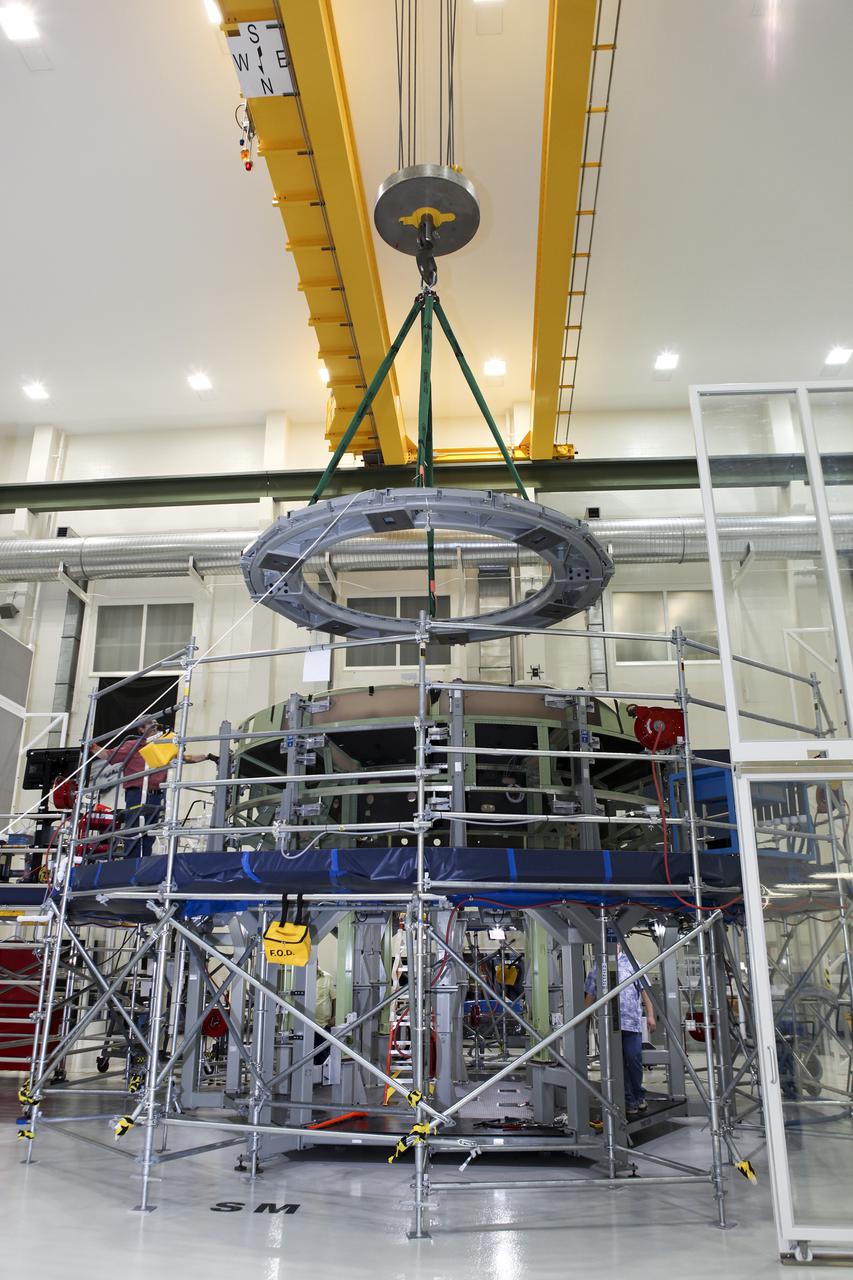
CAPE CANAVERAL, Fla. – Inside the Operations and Checkout Building high bay at NASA’s Kennedy Space Center in Florida, a processing tool is lifted out of an Orion service module work stand. Work continues to prepare for Exploration Flight Test 1, or EFT-1. Orion is the exploration spacecraft designed to carry crews to space beyond low Earth orbit. It will provide emergency abort capability, sustain the crew during the space travel and provide safe re-entry from deep space return velocities. Orion’s first unpiloted test flight is scheduled to launch in 2014 atop a United Launch Alliance Delta IV heavy rocket. A second uncrewed flight test is scheduled for 2017 on the Space Launch System rocket. For more information, visit http:__www.nasa.gov_orion. Photo credit: NASA_Charisse Nahser
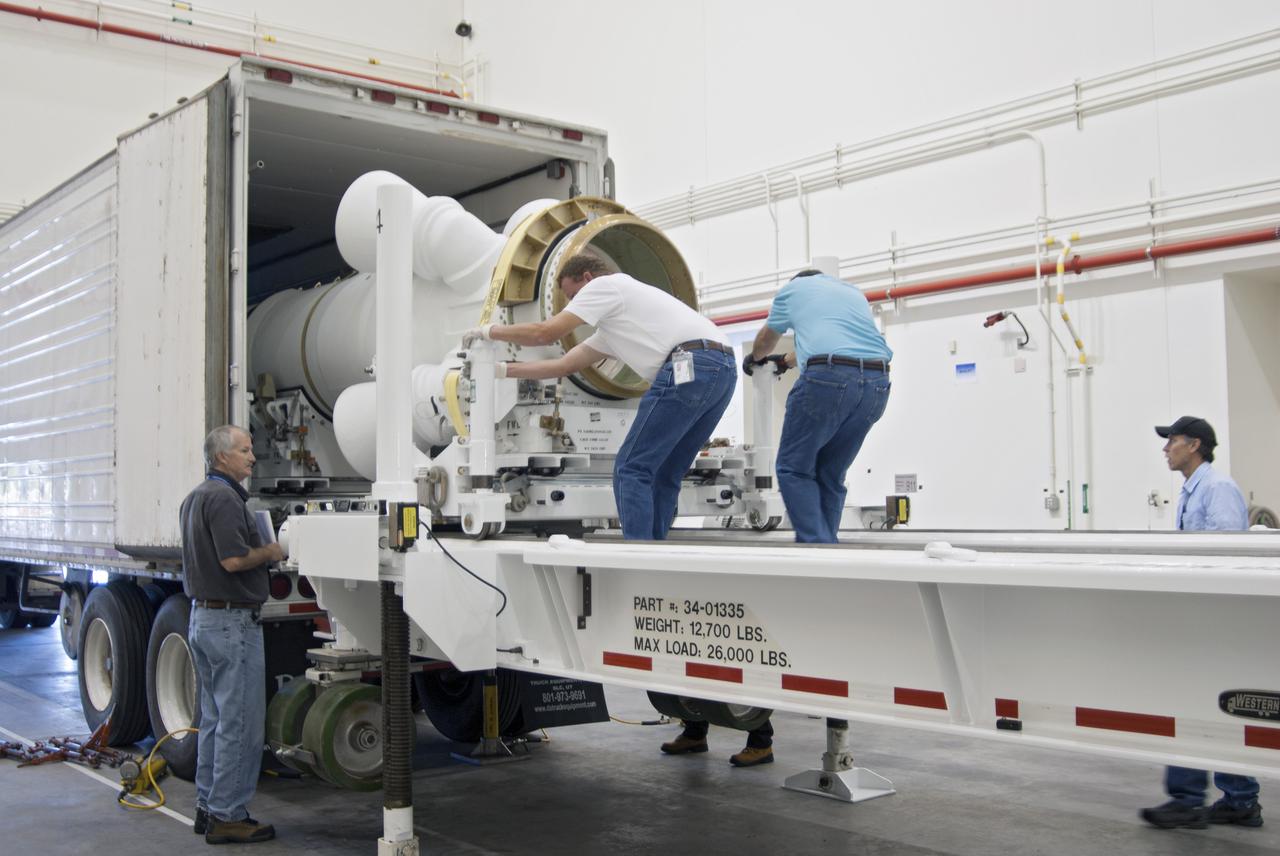
CAPE CANAVERAL, Fla. – At NASA’s Kennedy Space Center in Florida, technicians help remove the Alliant Techsystems, or ATK, launch abort motor from a truck after arrival at the Launch Abort System Facility. The test flight abort motor is for Exploration Flight Test 1, or EFT-1, of the agency’s Orion Multi-Purpose Crew Vehicle. It is part of Orion’s Launch Abort System, which is designed to safely pull the Orion crew module away from the launch vehicle in the event of an emergency on the launch pad or during the initial ascent of NASA’s Space Launch System, or SLS, rocket. The motor is configured with inert propellant. Orion is the exploration spacecraft designed to carry crews to space beyond low Earth orbit. It will provide emergency abort capability, sustain the crew during the space travel and provide safe re-entry from deep space return velocities. Orion’s first unpiloted test flight is scheduled to launch in 2014 atop a Delta IV rocket. A second uncrewed flight test is scheduled for 2017 on the SLS rocket. For more information, visit http:__www.nasa.gov_orion. Photo credit: NASA_Charisse Nahser
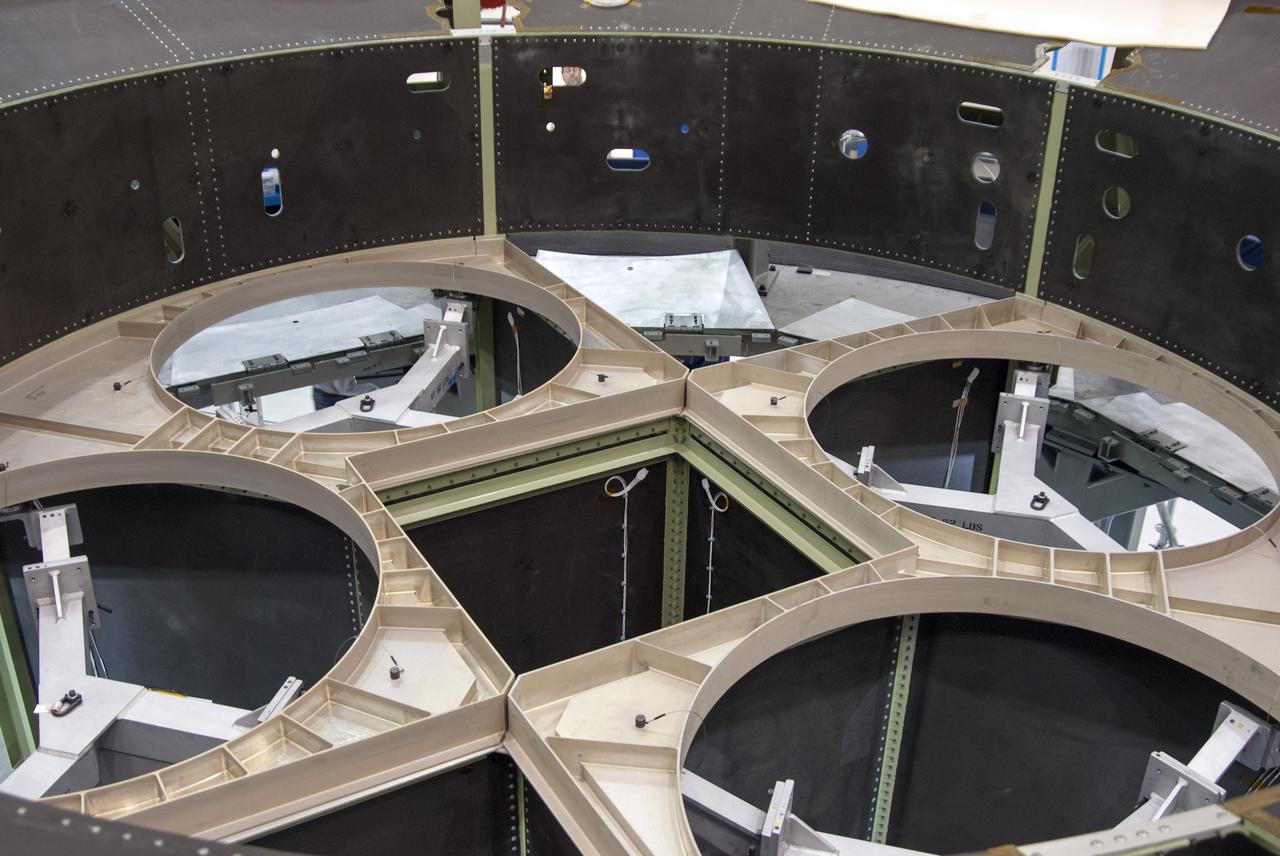
CAPE CANAVERAL, Fla. – Inside the Operations and Checkout Building high bay at NASA’s Kennedy Space Center in Florida, two sets of bulkheads have been installed on the Orion service module in preparing for Exploration Flight Test 1, or EFT-1. Orion is the exploration spacecraft designed to carry crews to space beyond low Earth orbit. It will provide emergency abort capability, sustain the crew during the space travel and provide safe re-entry from deep space return velocities. Orion’s first unpiloted test flight is scheduled to launch in 2014 atop a United Launch Alliance Delta IV heavy rocket. A second uncrewed flight test is scheduled for 2017 on the Space Launch System rocket. For more information, visit http:__www.nasa.gov_orion. Photo credit: NASA_Charisse Nahser
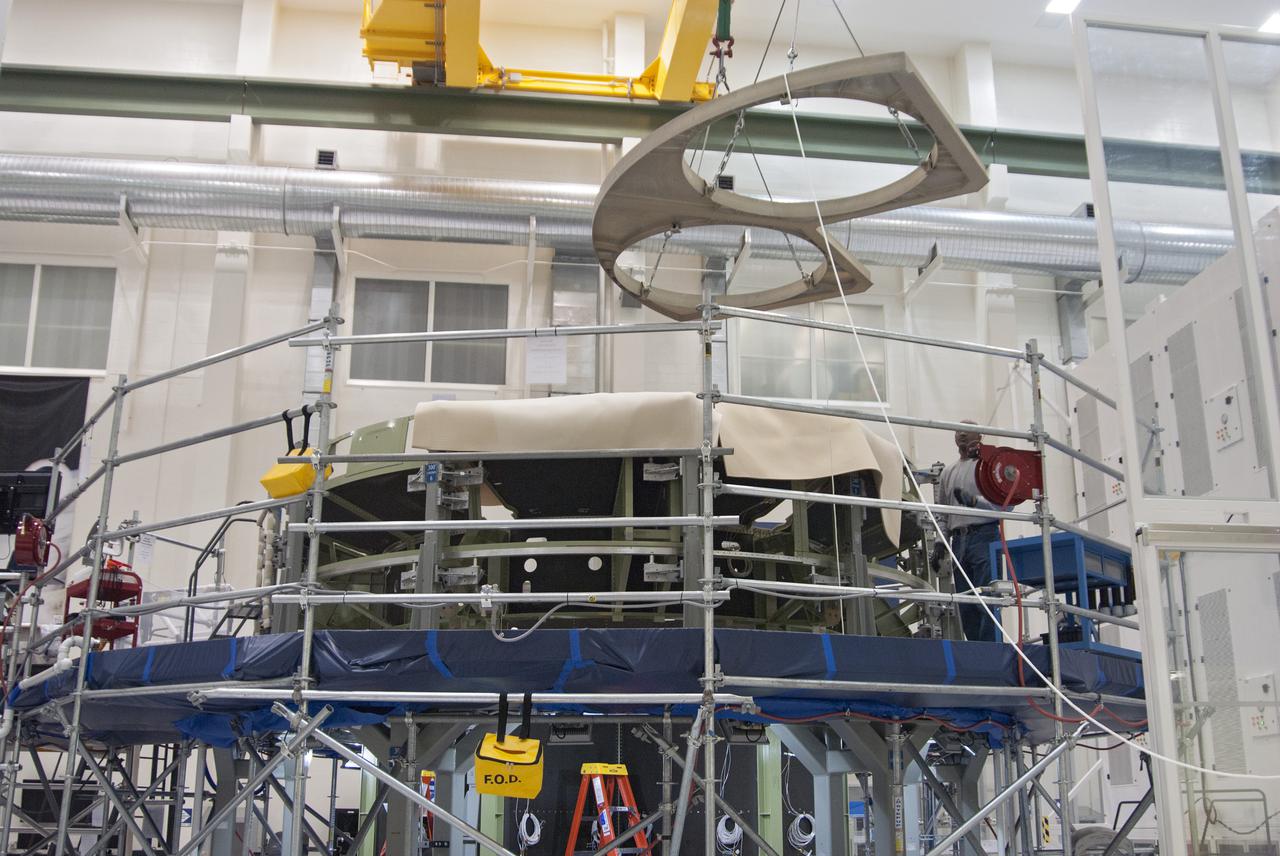
CAPE CANAVERAL, Fla. – Inside the Operations and Checkout Building high bay at NASA’s Kennedy Space Center in Florida, a bulkhead is lowered for installation on the Orion service module in preparation for Exploration Flight Test 1, or EFT-1. Orion is the exploration spacecraft designed to carry crews to space beyond low Earth orbit. It will provide emergency abort capability, sustain the crew during the space travel and provide safe re-entry from deep space return velocities. Orion’s first unpiloted test flight is scheduled to launch in 2014 atop a United Launch Alliance Delta IV heavy rocket. A second uncrewed flight test is scheduled for 2017 on the Space Launch System rocket. For more information, visit http:__www.nasa.gov_orion. Photo credit: NASA_Charisse Nahser

CAPE CANAVERAL, Fla. – A mockup of the Launch Abort System, or LAS, is positioned atop a boilerplate Orion capsule and replica service module during test stacking operations inside the Vehicle Assembly Building at NASA's Kennedy Space Center in Florida. The Orion spacecraft is being designed to carry astronauts on missions beyond Earth orbit. It will have the LAS during the first part of launch in case an emergency develops that requires the spacecraft to be pulled away from the rocket to save the crew. NASA's Ground Services Development and Operations Program, or GSDO, performed the test operations. Photo credit: NASA_Charisse Nahser
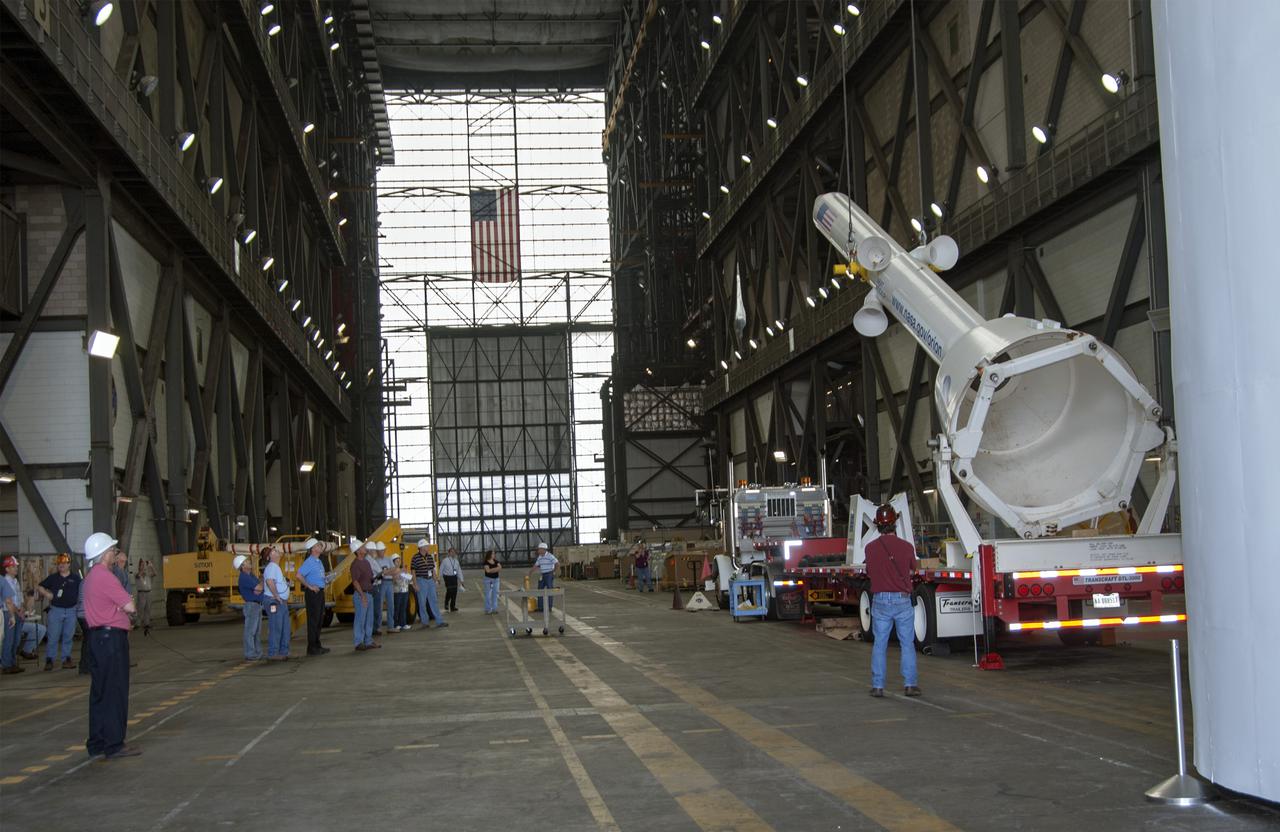
CAPE CANAVERAL, Fla. – A mockup of the Launch Abort System, or LAS, is lifted off a trailer inside the Vehicle Assembly Building at NASA's Kennedy Space Center in Florida so it can be positioned atop a boilerplate Orion capsule during test stacking operations. The Orion spacecraft is being designed to carry astronauts on missions beyond Earth orbit. It will have the LAS during the first part of launch in case an emergency develops that requires the spacecraft to be pulled away from the rocket to save the crew. NASA's Ground Services Development and Operations Program, or GSDO, performed the test operations. Photo credit: NASA_Charisse Nahser
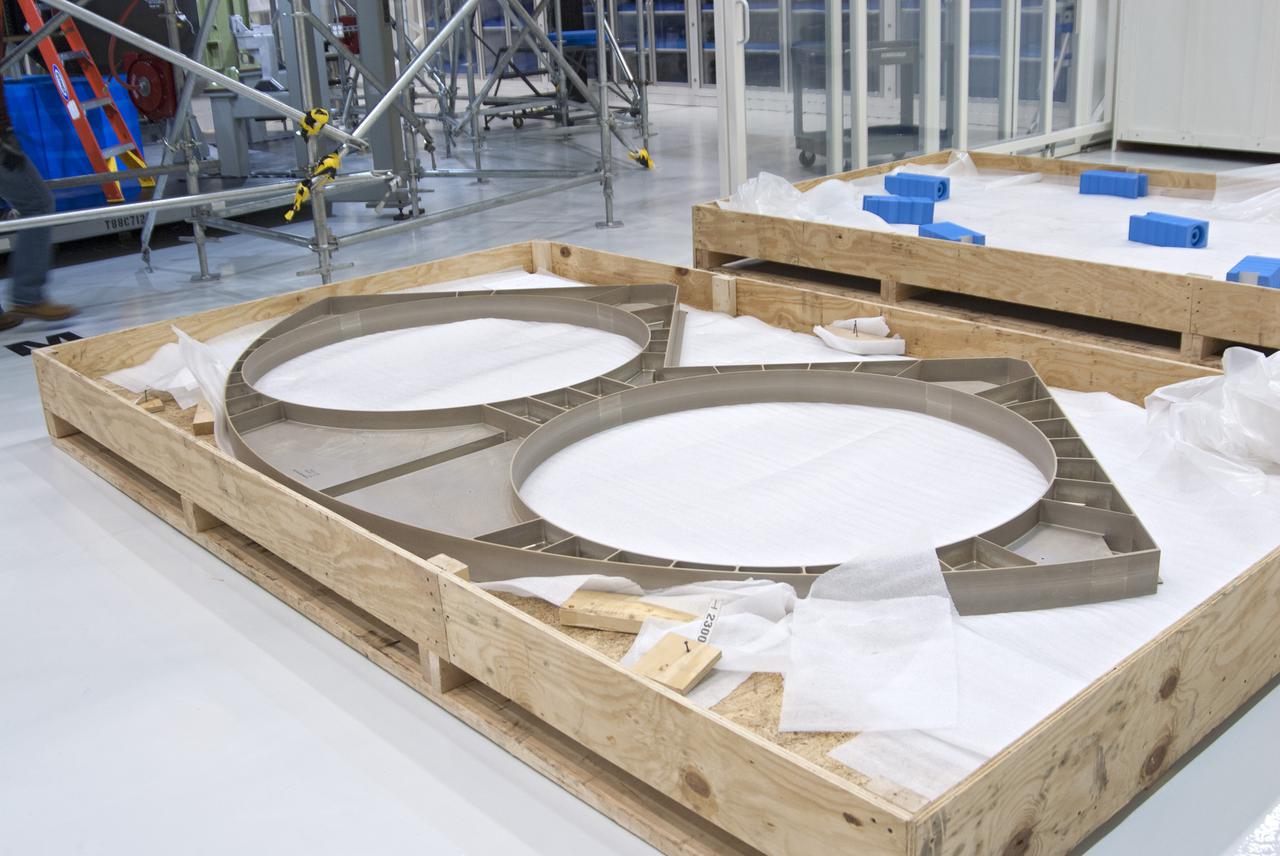
CAPE CANAVERAL, Fla. – Inside the Operations and Checkout Building high bay at NASA’s Kennedy Space Center in Florida, a bulkhead is being prepared for installation on the Orion service module for Exploration Flight Test 1, or EFT-1. Orion is the exploration spacecraft designed to carry crews to space beyond low Earth orbit. It will provide emergency abort capability, sustain the crew during the space travel and provide safe re-entry from deep space return velocities. Orion’s first unpiloted test flight is scheduled to launch in 2014 atop a United Launch Alliance Delta IV heavy rocket. A second uncrewed flight test is scheduled for 2017 on the Space Launch System rocket. For more information, visit http:__www.nasa.gov_orion. Photo credit: NASA_Charisse Nahser
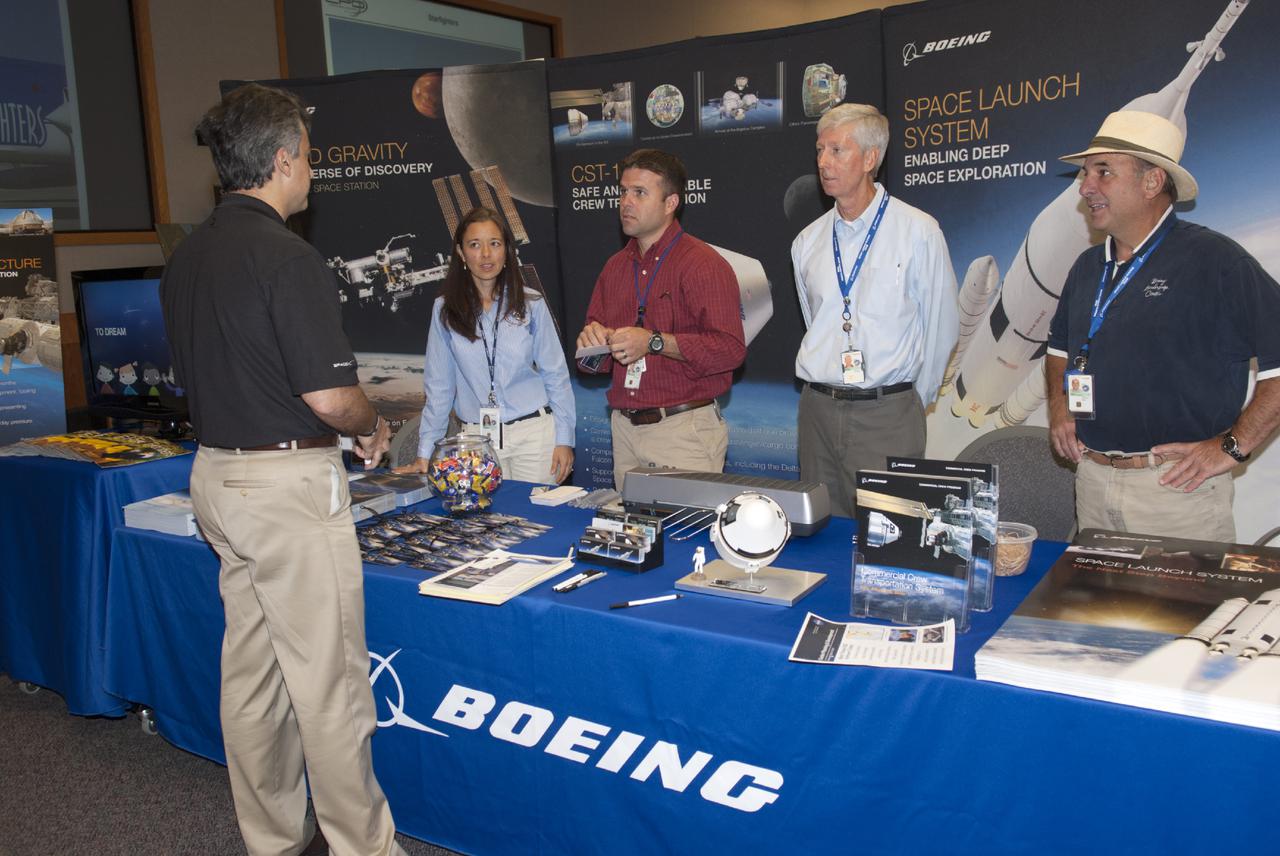
CAPE CANAVERAL, Fla. -- At the Kennedy Space Center in Florida, representatives of Boeing talk with guests at the Innovation Expo KSC Showcase. The event gave Kennedy employees an opportunity to meet 12 NASA partners and see how the Center Planning and Development Directorate is transforming Kennedy into a multi-user spaceport through partnerships and resource planning. The 17-booth exhibit consists of 12 partner booths along with Spaceport Planning, Partnership Development and Research and Technology offices. Photo credit: NASA_Charisse Nahser
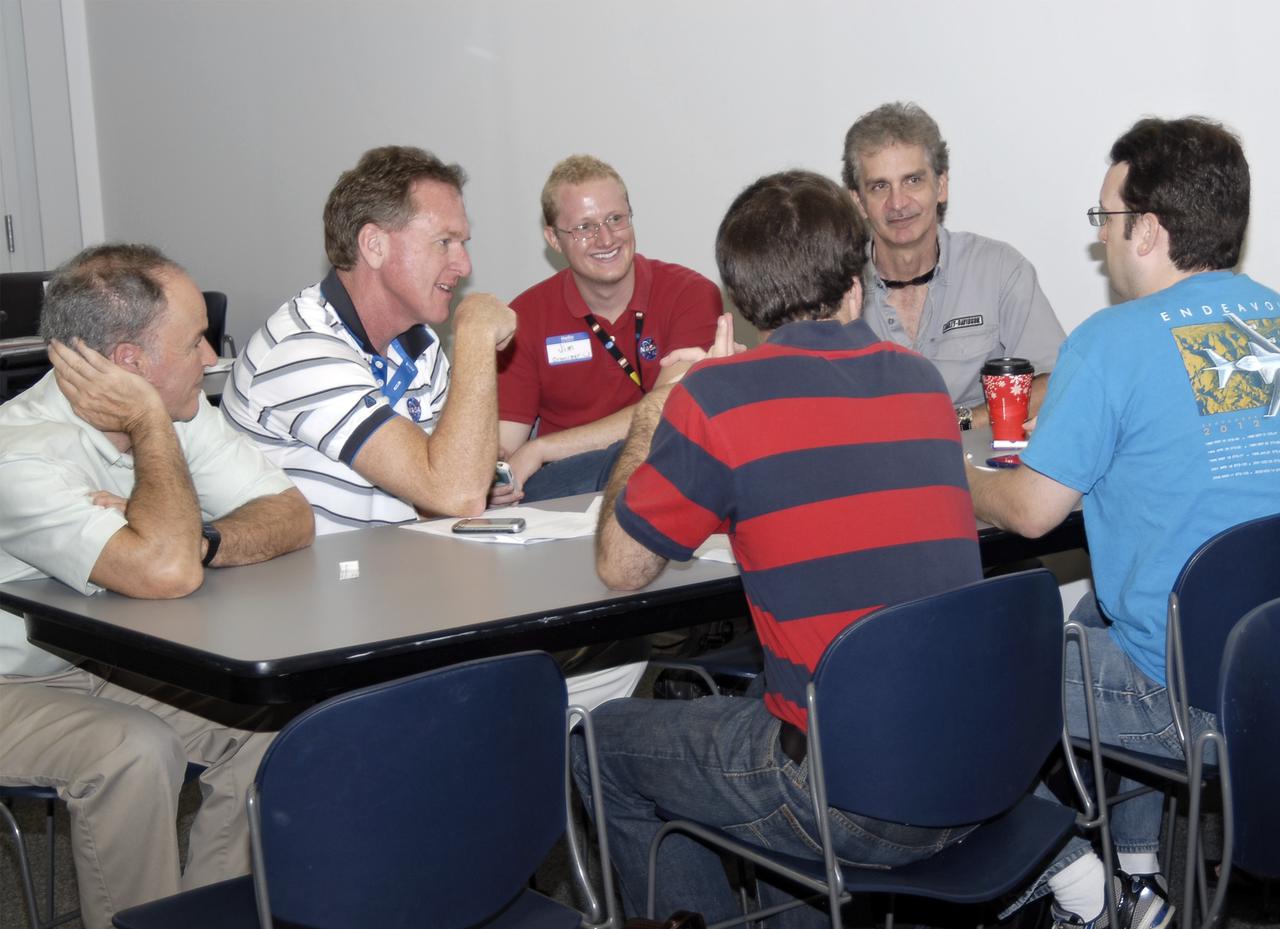
CAPE CANAVERAL, Fla. – Subject matter experts, event volunteers and participants discuss ideas during the 2013 International Space Apps Challenge at the Center for Space Education at the Kennedy Space Center Visitor Complex in Florida. From left, are Dr. Ray Wheeler, NASA subject matter expert Mike Bolger, Kennedy’s Information Technology director Jim Wood, event volunteer challenge participants Pat Starace and Mike King from Orlando and David Thorpe in Kennedy’s Center Planning and Development Directorate. During the worldwide two-day challenge, more than 9,000 people and 484 organizations came together in 83 cities across 44 countries, as well as online, to develop new ways of solving challenges that NASA faces. At Kennedy, four teams brainstormed ideas with subject matter experts and others and worked nearly 32 hours straight to present their concepts to a panel of three technical and non-technical judges. Challenges tackled at Kennedy were: Deployable Greenhouse, Kennedy Space Center 2040, Seven Minutes of Science, and Moonville – Lunar Industry Game. Photo credit: NASA_Charisse Nahser
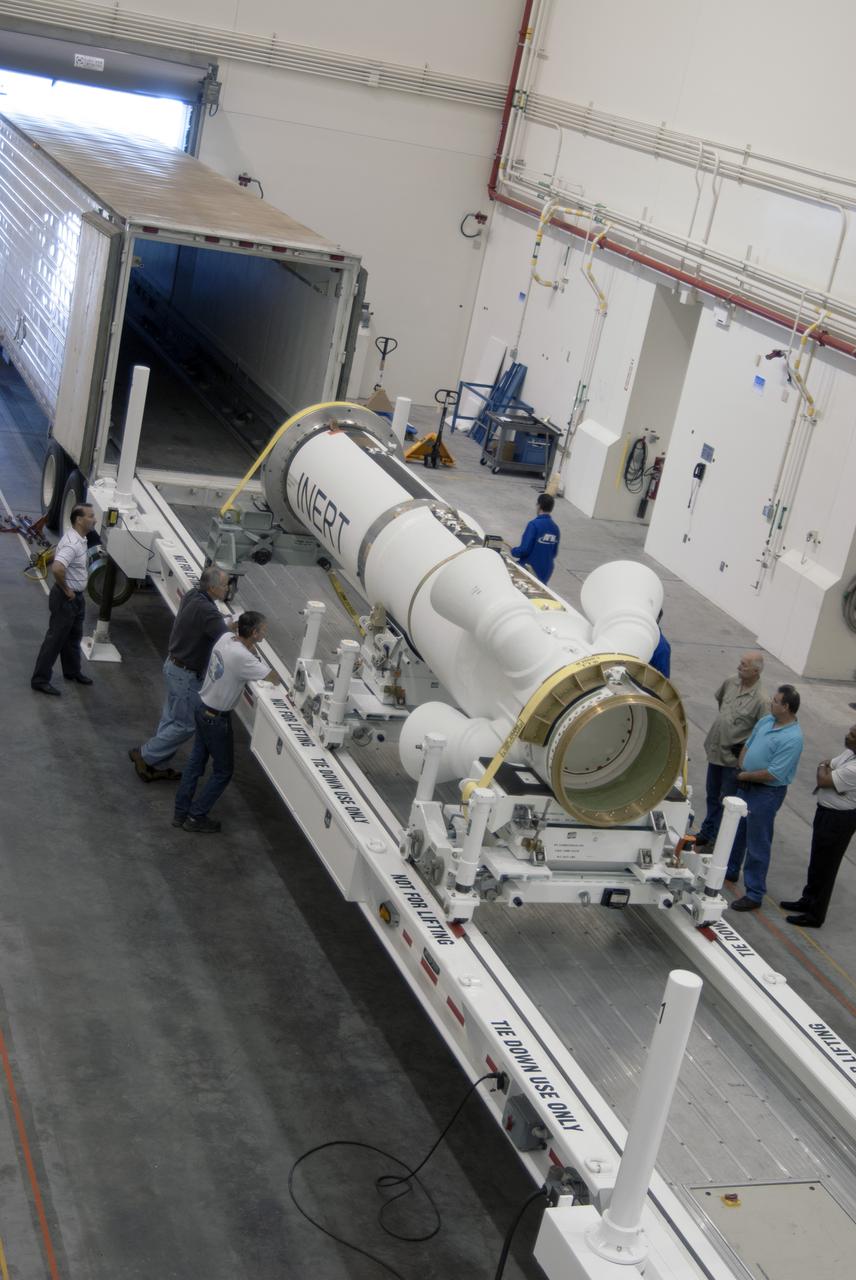
CAPE CANAVERAL, Fla. – Inside the Launch Abort System Facility at NASA’s Kennedy Space Center in Florida, technicians have removed the Alliant Techsystems, or ATK, launch abort motor from a truck. The test flight launch abort motor is for Exploration Flight Test 1, or EFT-1, of the agency’s Orion Multi-Purpose Crew Vehicle. It is part of Orion’s Launch Abort System, which is designed to safely pull the Orion crew module away from the launch vehicle in the event of an emergency on the launch pad or during the initial ascent of NASA’s Space Launch System, or SLS, rocket. The motor is configured with inert propellant. Orion is the exploration spacecraft designed to carry crews to space beyond low Earth orbit. It will provide emergency abort capability, sustain the crew during the space travel and provide safe re-entry from deep space return velocities. Orion’s first unpiloted test flight is scheduled to launch in 2014 atop a Delta IV rocket. A second uncrewed flight test is scheduled for 2017 on the SLS rocket. For more information, visit http:__www.nasa.gov_orion. Photo credit: NASA_Charisse Nahser
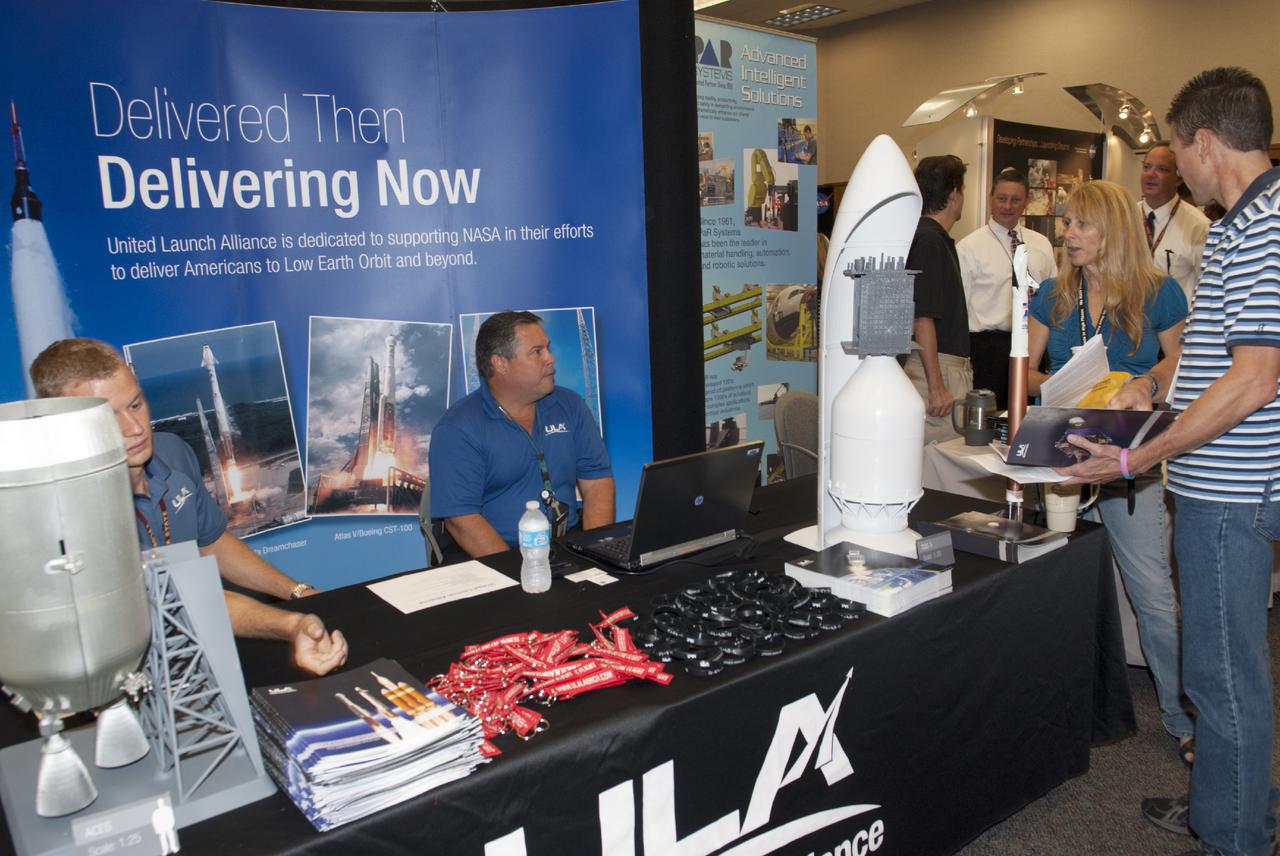
CAPE CANAVERAL, Fla. -- At the Kennedy Space Center in Florida, representatives of United Launch Alliance talk with guests at the Innovation Expo KSC Showcase. The event gave Kennedy employees an opportunity to meet 12 NASA partners and see how the Center Planning and Development Directorate is transforming Kennedy into a multi-user spaceport through partnerships and resource planning. The 17-booth exhibit consists of 12 partner booths along with Spaceport Planning, Partnership Development and Research and Technology offices. Photo credit: NASA_Charisse Nahser
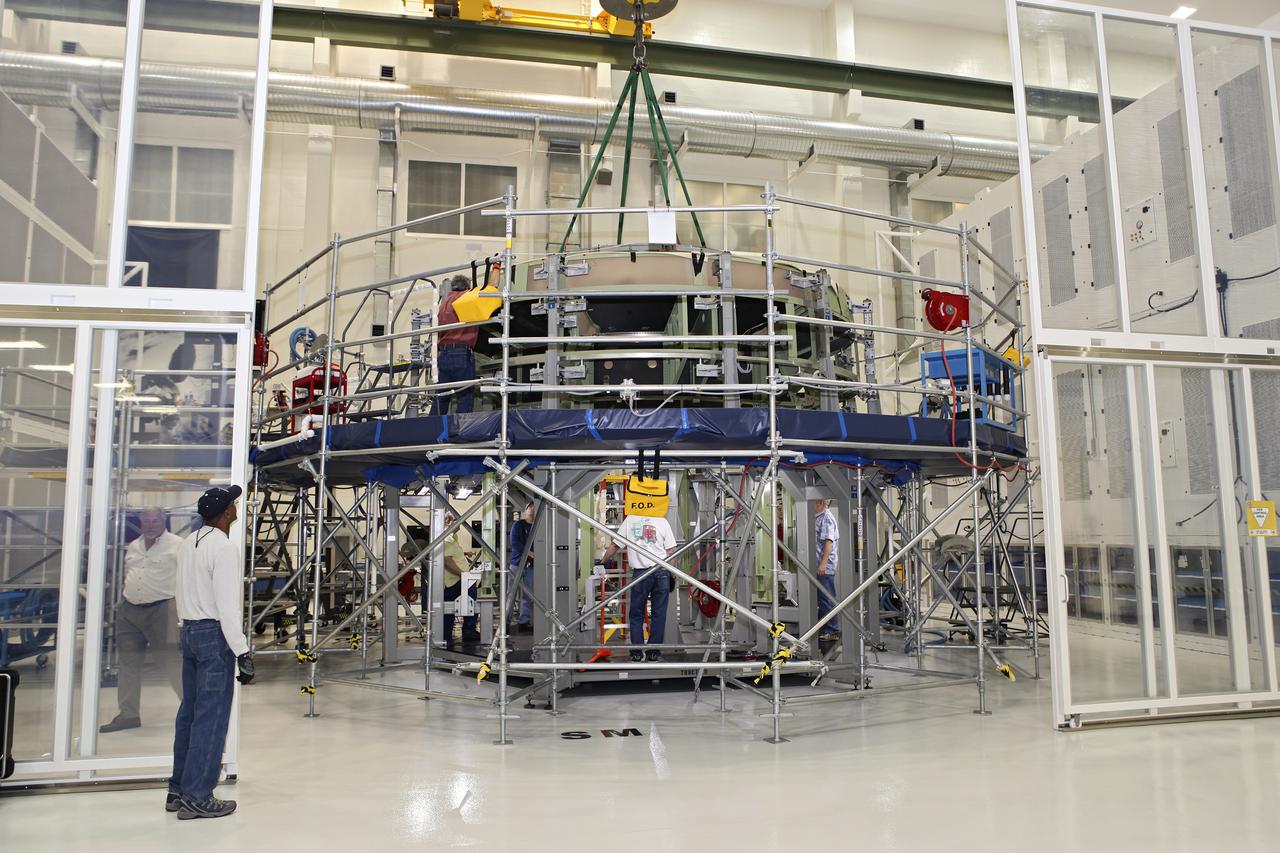
CAPE CANAVERAL, Fla. – Inside the Operations and Checkout Building high bay at NASA’s Kennedy Space Center in Florida, technicians monitor the progress as a processing tool is lifted out of an Orion service module work stand. Work continues to prepare for Exploration Flight Test 1, or EFT-1. Orion is the exploration spacecraft designed to carry crews to space beyond low Earth orbit. It will provide emergency abort capability, sustain the crew during the space travel and provide safe re-entry from deep space return velocities. Orion’s first unpiloted test flight is scheduled to launch in 2014 atop a United Launch Alliance Delta IV heavy rocket. A second uncrewed flight test is scheduled for 2017 on the Space Launch System rocket. For more information, visit http:__www.nasa.gov_orion. Photo credit: NASA_Charisse Nahser
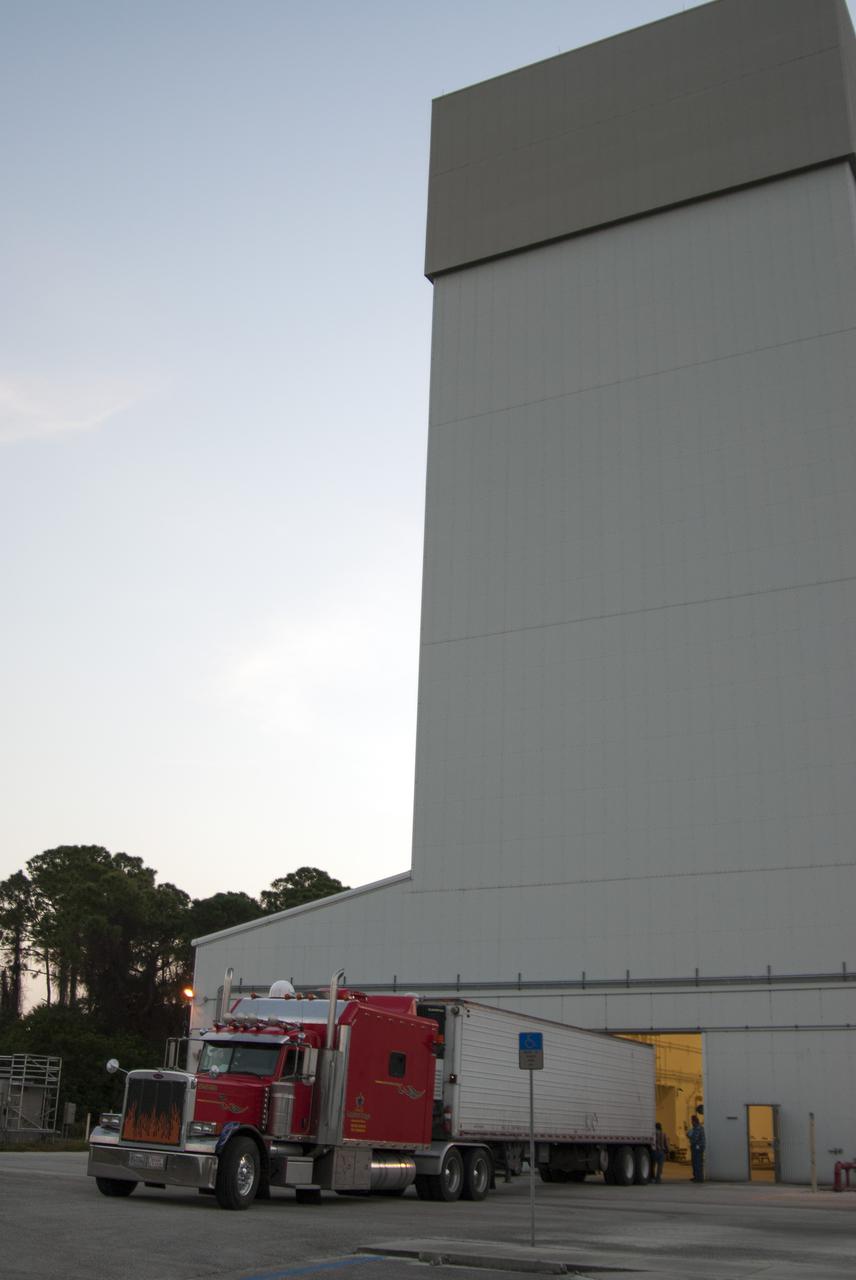
CAPE CANAVERAL, Fla. – At NASA’s Kennedy Space Center in Florida, a truck arrives at the Launch Abort System Facility with a launch abort motor from Alliant Techsystems, or ATK, for Exploration Flight Test 1, or EFT-1, of the agency’s Orion Multi-Purpose Crew Vehicle. ATK’s abort motor is part of Orion’s Launch Abort System, which is designed to safely pull the Orion crew module away from the launch vehicle in the event of an emergency on the launch pad or during the initial ascent of NASA’s Space Launch System, or SLS, rocket. The test flight abort motor is configured with inert propellant. Orion is the exploration spacecraft designed to carry crews to space beyond low Earth orbit. It will provide emergency abort capability, sustain the crew during the space travel and provide safe re-entry from deep space return velocities. Orion’s first unpiloted test flight is scheduled to launch in 2014 atop a Delta IV rocket. A second uncrewed flight test is scheduled for 2017 on the SLS rocket. For more information, visit http:__www.nasa.gov_orion. Photo credit: NASA_Charisse Nahser
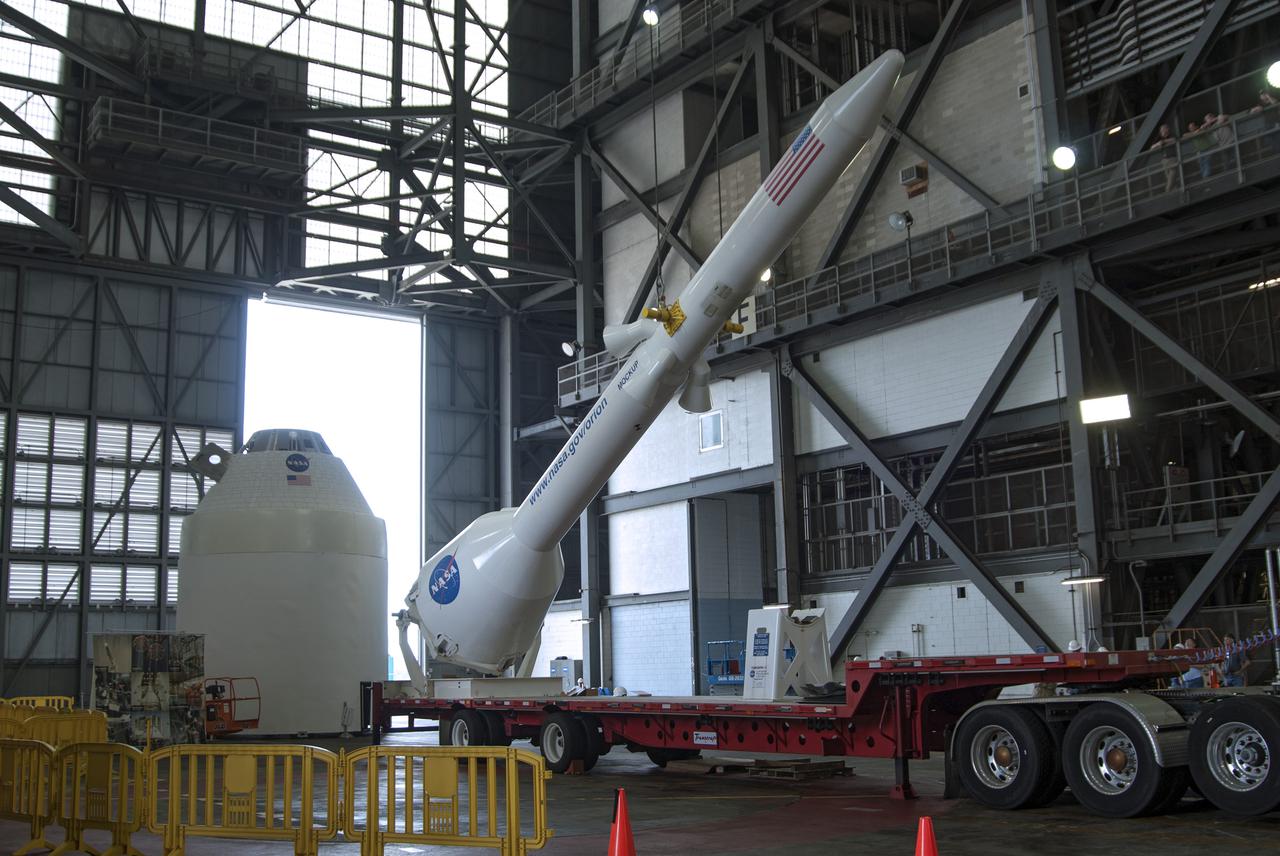
CAPE CANAVERAL, Fla. – A mockup of the Launch Abort System, or LAS, is lifted off a trailer inside the Vehicle Assembly Building at NASA's Kennedy Space Center in Florida so it can be positioned atop a boilerplate Orion capsule during test stacking operations. The Orion spacecraft is being designed to carry astronauts on missions beyond Earth orbit. It will have the LAS during the first part of launch in case an emergency develops that requires the spacecraft to be pulled away from the rocket to save the crew. NASA's Ground Services Development and Operations Program, or GSDO, performed the test operations. Photo credit: NASA_Charisse Nahser
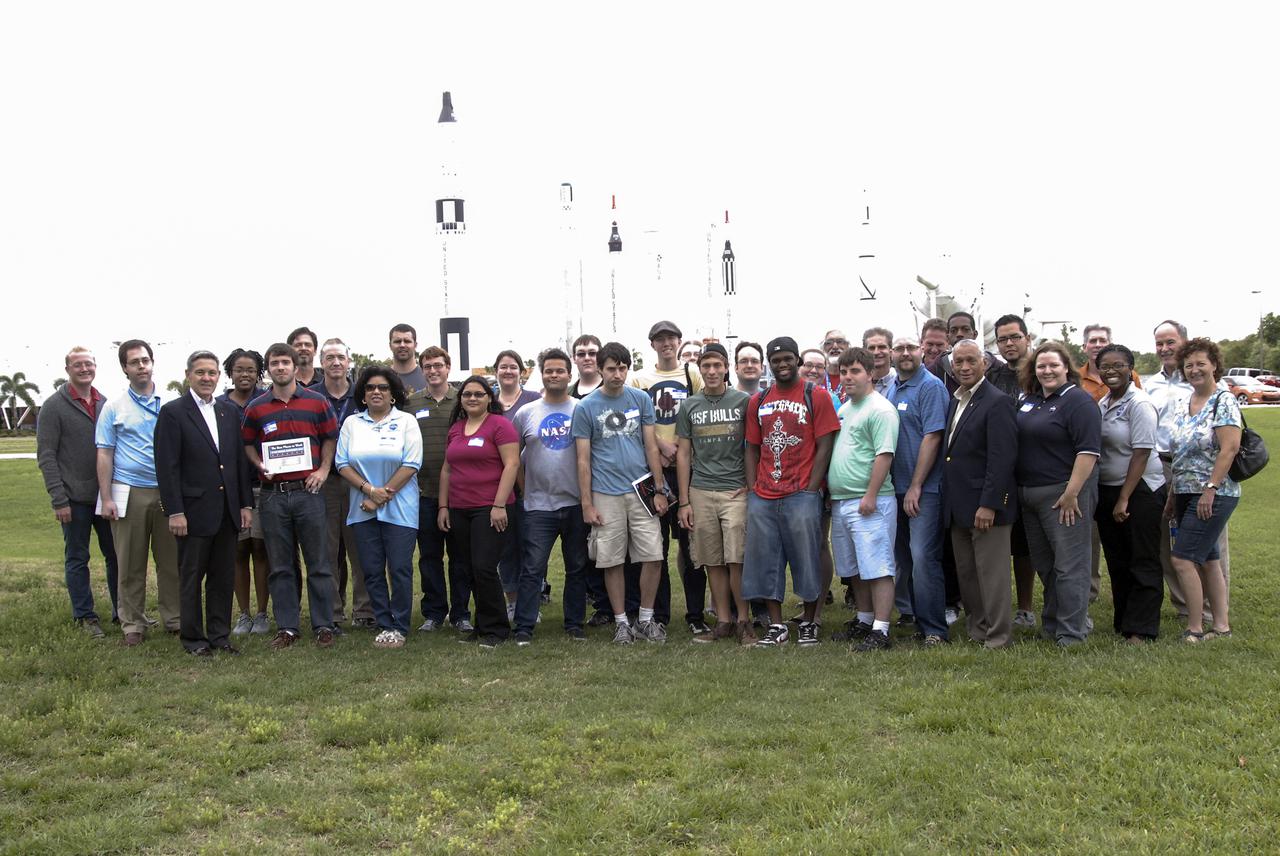
CAPE CANAVERAL, Fla. – Kennedy Space Center Director Bob Cabana, third from left, and NASA Administrator Charlie Bolden, fourth from right, gather with participants, subject matter experts and volunteers in front of the Rocket Garden at the Kennedy Space Center Visitor Complex in Florida during the 2013 International Space Apps Challenge. The group took a brief break before returning to The Astronaut Memorial Foundation’s Center for Space Education to continue working on their challenges. During the worldwide two-day challenge, more than 9,000 people and 484 organizations came together in 83 cities across 44 countries, as well as online, to develop new ways of solving challenges that NASA faces. At Kennedy, four teams brainstormed ideas with subject matter experts and others and worked nearly 32 hours straight to present their concepts to a panel of three technical and non-technical judges. Challenges tackled at Kennedy were: Deployable Greenhouse, Kennedy Space Center 2040, Seven Minutes of Science, and Moonville – Lunar Industry Game. Photo credit: NASA_Charisse Nahser
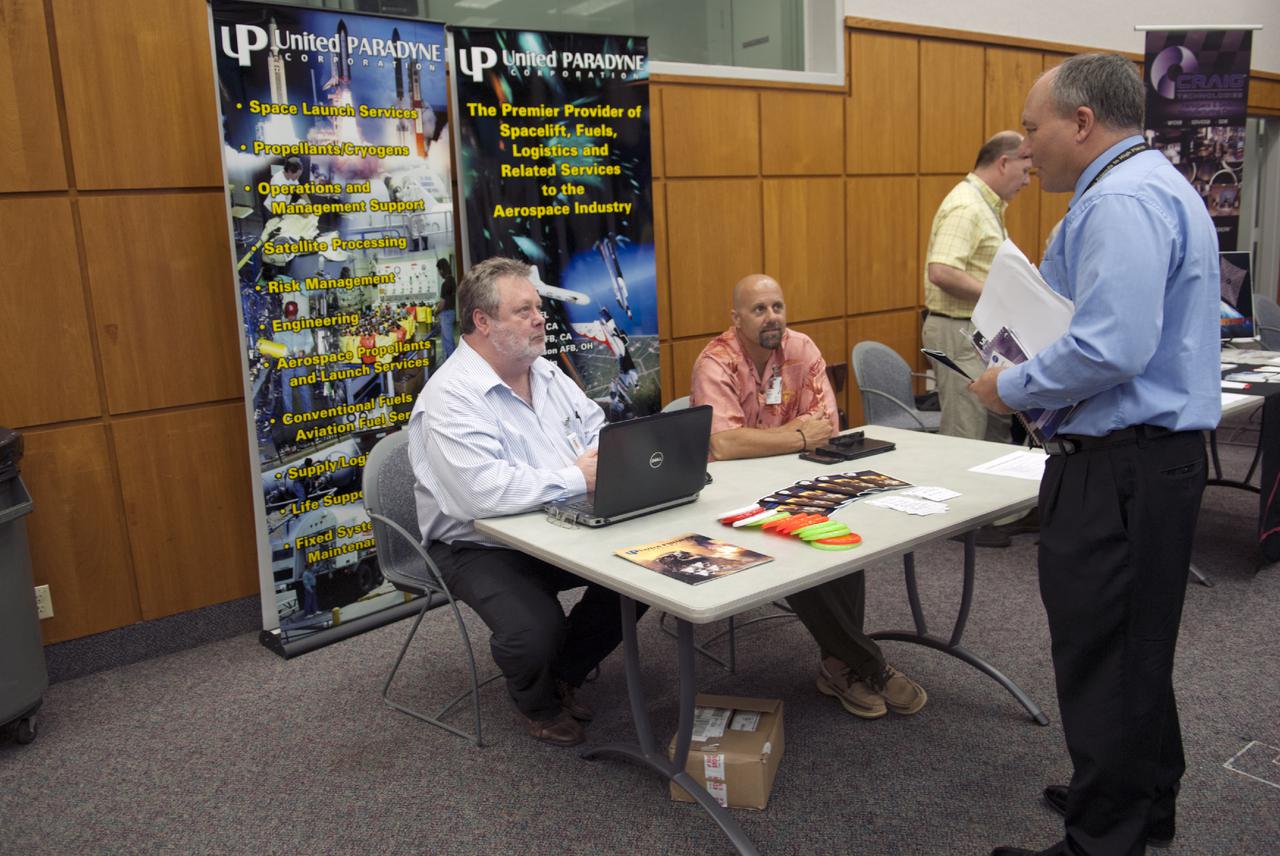
CAPE CANAVERAL, Fla. -- At the Kennedy Space Center in Florida, representatives of United Paradyne talk with guests at the Innovation Expo KSC Showcase. The event gave Kennedy employees an opportunity to meet 12 NASA partners and see how the Center Planning and Development Directorate is transforming Kennedy into a multi-user spaceport through partnerships and resource planning. The 17-booth exhibit consists of 12 partner booths along with Spaceport Planning, Partnership Development and Research and Technology offices. Photo credit: NASA_Charisse Nahser
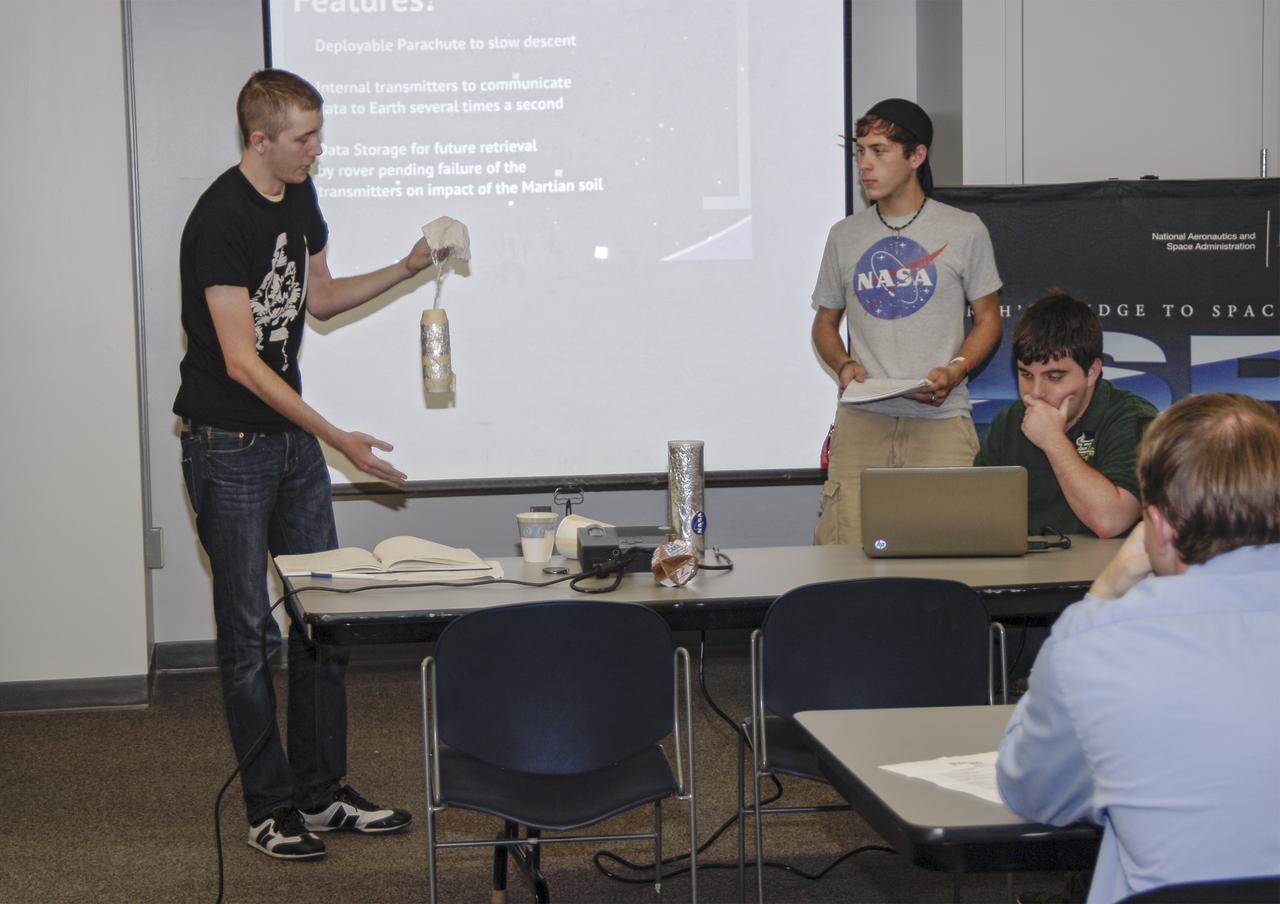
CAPE CANAVERAL, Fla. – Michael Strittmatter, at left, Joey Vars and Allan Pinkerton, all students at the University of South Florida St. Petersburg, present their ideas to a panel of technical and non-technical judges during the 2013 International Space Apps Challenge at The Astronaut Memorial Foundation’s Center for Space Education in Florida. During the worldwide two-day challenge, more than 9,000 people and 484 organizations came together in 83 cities across 44 countries, as well as online, to develop new ways of solving challenges that NASA faces. At Kennedy, four teams brainstormed ideas with subject matter experts and others and worked nearly 32 hours straight to present their concepts to a panel of three technical and non-technical judges. Challenges tackled at Kennedy were: Deployable Greenhouse, Kennedy Space Center 2040, Seven Minutes of Science, and Moonville – Lunar Industry Game. Photo credit: NASA_Charisse Nahser
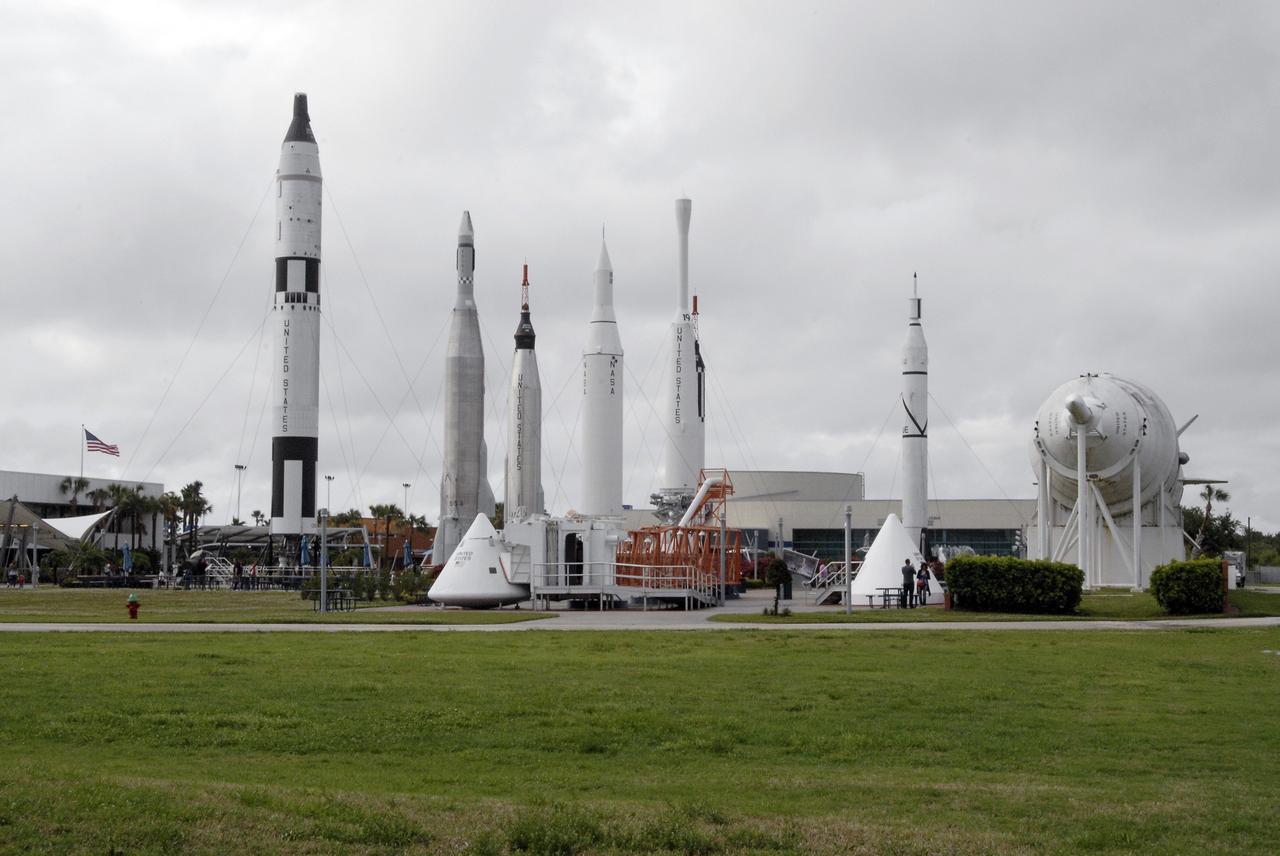
CAPE CANAVERAL, Fla. – The Rocket Garden at the Kennedy Space Center Visitor Complex in Florida, features real and mock-up rockets from NASA’s Mercury, Gemini and Apollo programs, as well as others from uncrewed missions. The large rocket positioned horizontally at far right is an Apollo Saturn 1B, while the rocket standing at far left is a Gemini Titan launch vehicle. The visitor complex is managed for NASA by Delaware North Companies Parks and Resorts. The complex features interactive displays, astronaut encounters, IMAX movies and attractions that help to tell the story of U.S. space exploration. It is home to the recently-opened Angry Birds Space attraction and the Space Shuttle Atlantis exhibit that will open to the general public this summer. Photo credit: NASA_Charisse Nahser
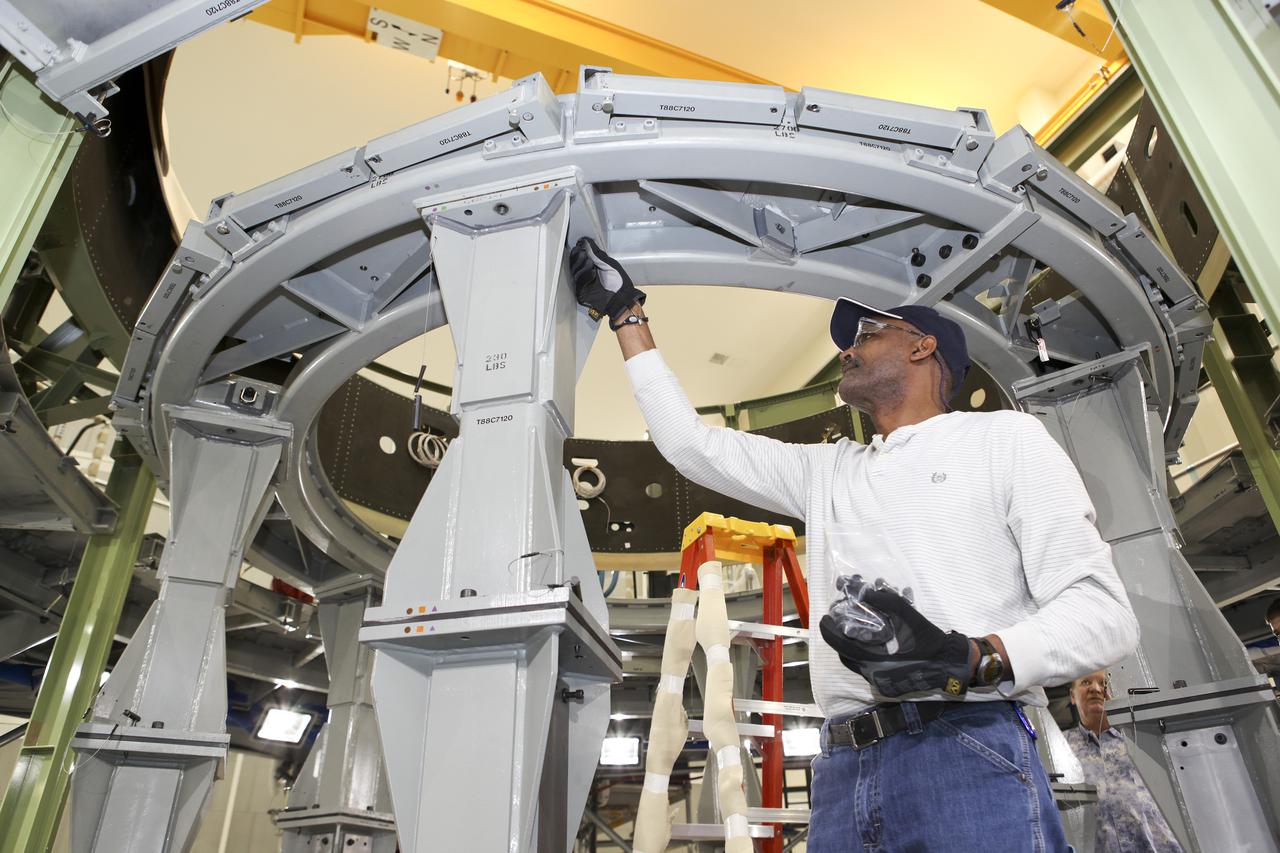
CAPE CANAVERAL, Fla. – Inside the Operations and Checkout Building high bay at NASA’s Kennedy Space Center in Florida, a technician prepares a processing tool for lifting out of an Orion service module work stand. Work continues to prepare for Exploration Flight Test 1, or EFT-1. Orion is the exploration spacecraft designed to carry crews to space beyond low Earth orbit. It will provide emergency abort capability, sustain the crew during the space travel and provide safe re-entry from deep space return velocities. Orion’s first unpiloted test flight is scheduled to launch in 2014 atop a United Launch Alliance Delta IV heavy rocket. A second uncrewed flight test is scheduled for 2017 on the Space Launch System rocket. For more information, visit http:__www.nasa.gov_orion. Photo credit: NASA_Charisse Nahser
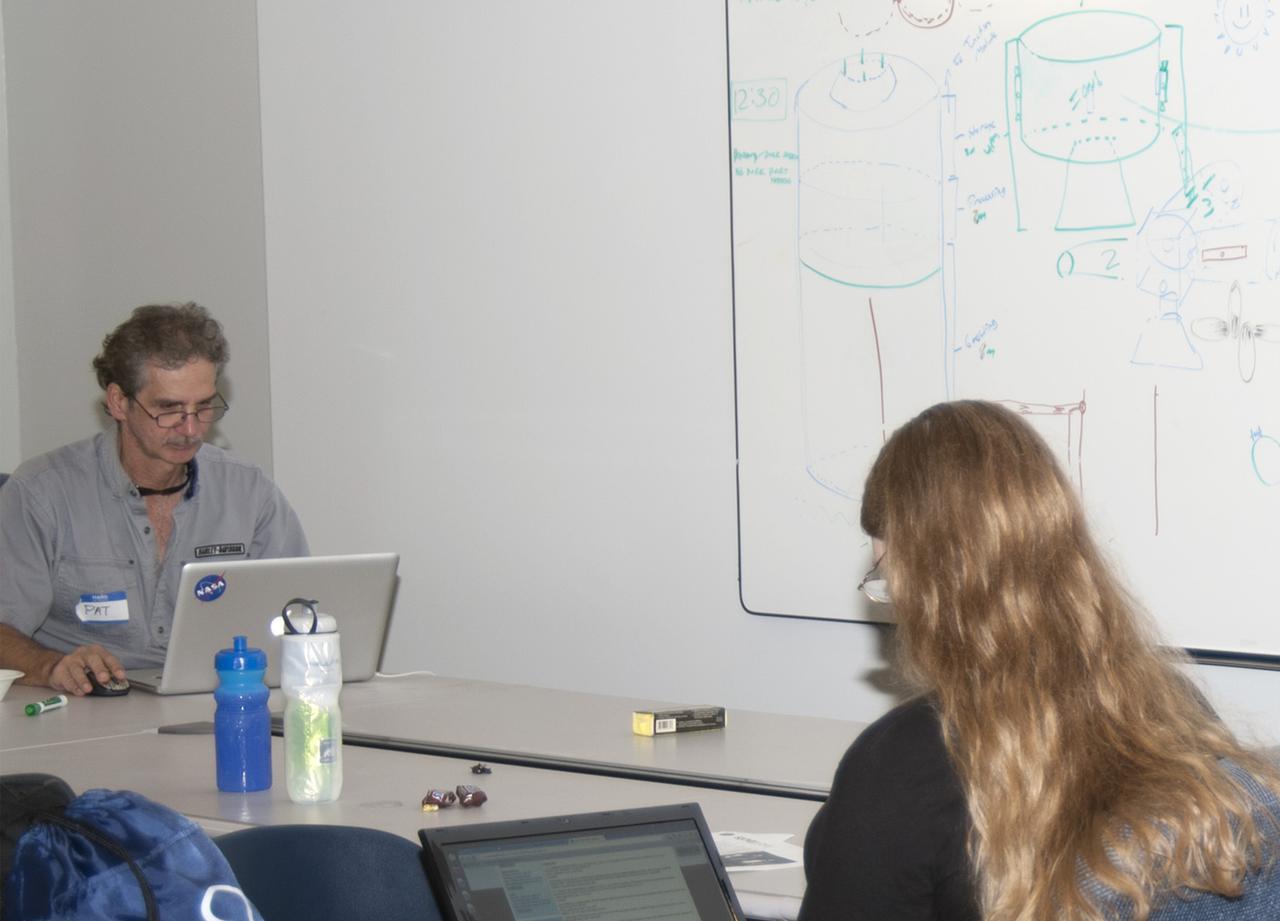
CAPE CANAVERAL, Fla. – Pat Starace, at left, from Orlando, and Kennedy Space Center engineer Jamie Szafran brainstorm ideas on deployable greenhouses during the 2013 International Space Apps Challenge, or ISAC, at The Astronaut Memorial Foundation’s Center for Space Education in Florida. During the worldwide two-day challenge, more than 9,000 people and 484 organizations came together in 83 cities across 44 countries, as well as online, to develop new ways of solving challenges that NASA faces. At Kennedy, four teams brainstormed ideas with subject matter experts and others and worked nearly 32 hours straight to present their concepts to a panel of three technical and non-technical judges. Challenges tackled at Kennedy were: Deployable Greenhouse, Kennedy Space Center 2040, Seven Minutes of Science, and Moonville – Lunar Industry Game. Photo credit: NASA_Charisse Nahser
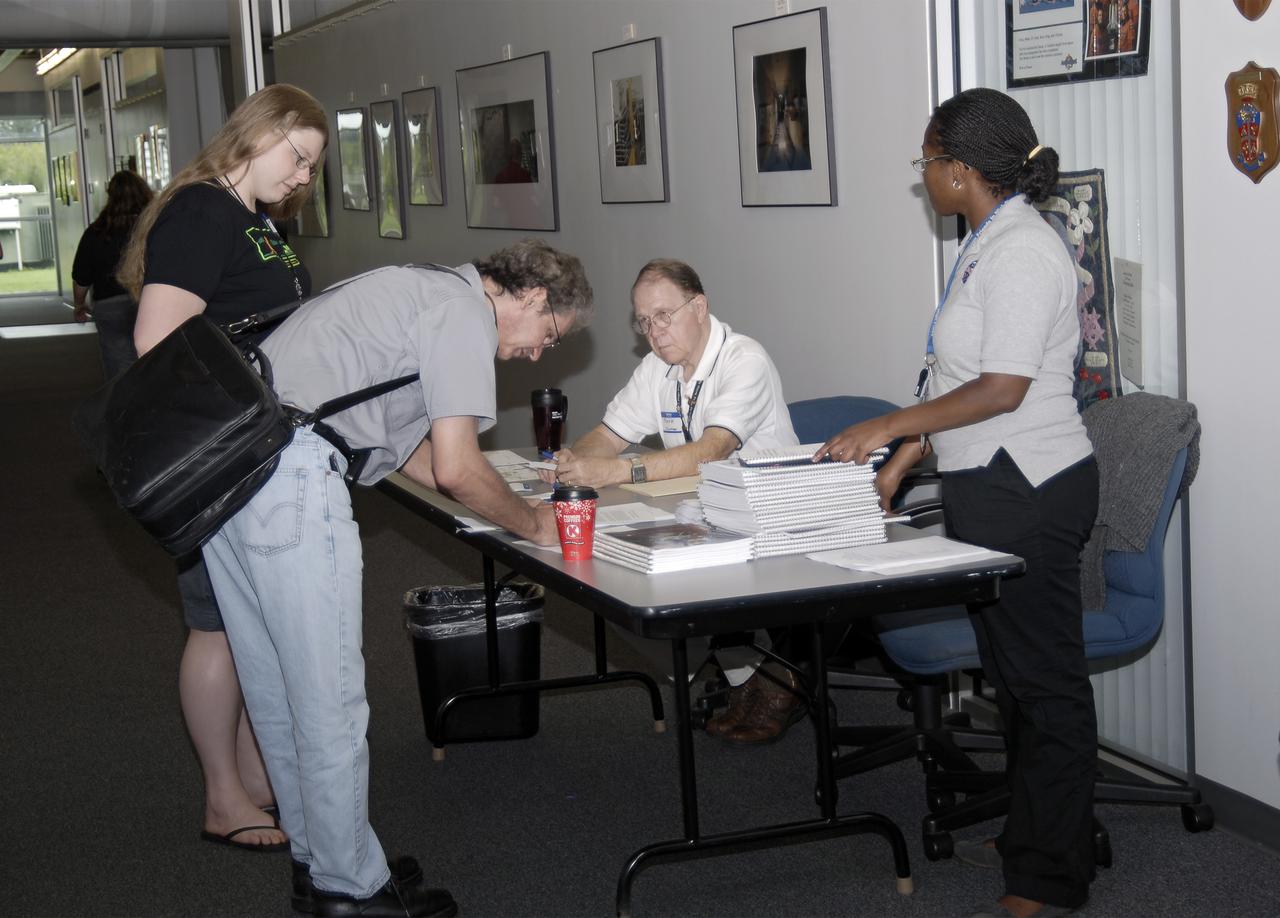
CAPE CANAVERAL, Fla. – Participants sign in at the Center for Space Education at the Kennedy Space Center Visitor Complex in Florida for the 2013 International Space Apps Challenge. . During the worldwide two-day challenge, more than 9,000 people and 484 organizations came together in 83 cities across 44 countries, as well as online, to develop new ways of solving challenges that NASA faces. At Kennedy, four teams brainstormed ideas with subject matter experts and others and worked nearly 32 hours straight to present their concepts to a panel of three technical and non-technical judges. Challenges tackled at Kennedy were: Deployable Greenhouse, Kennedy Space Center 2040, Seven Minutes of Science, and Moonville – Lunar Industry Game. Photo credit: NASA_Charisse Nahser
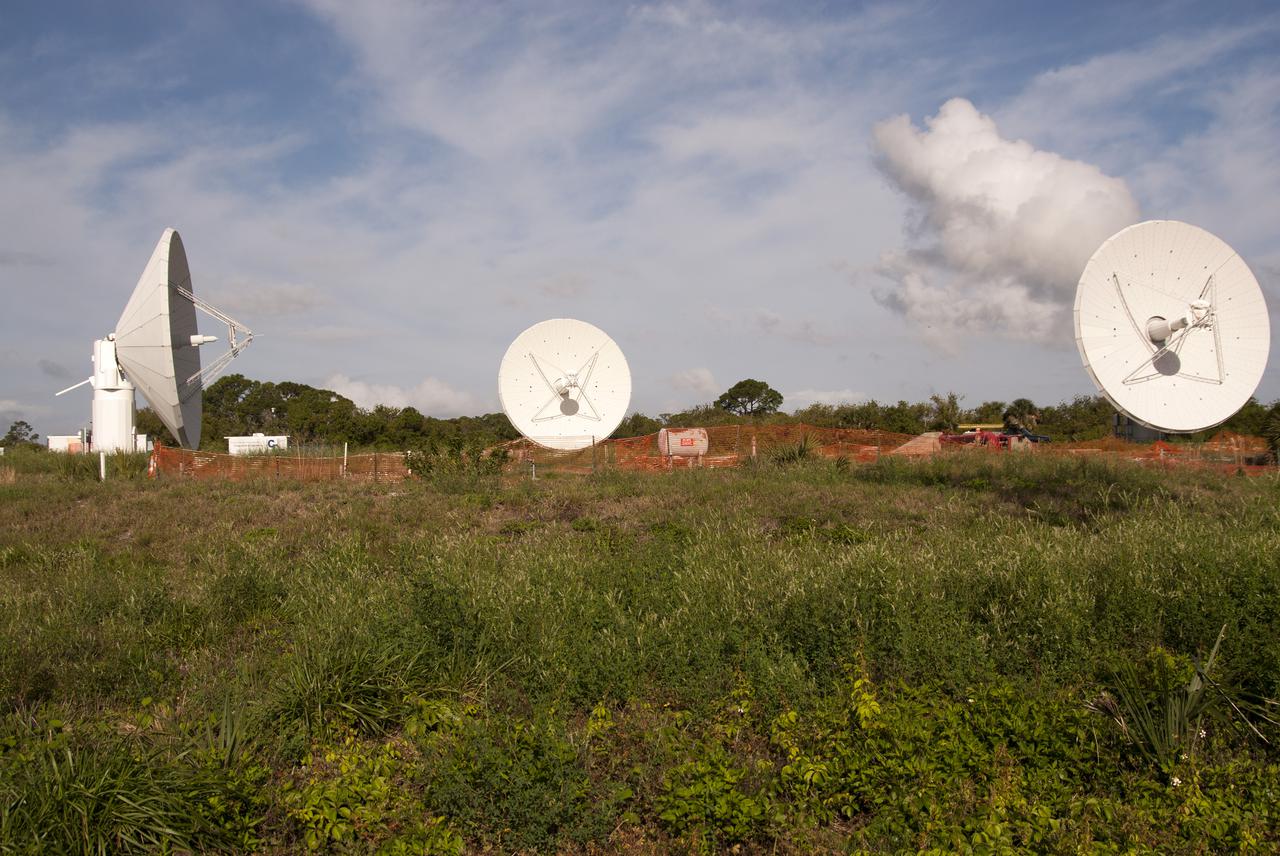
CAPE CANAVERAL, Fla. – At NASA’s Kennedy Space Center in Florida, construction is almost complete on the Antenna Test Bed Array for the Ka-Band Objects Observation and Monitoring, or Ka-BOOM, system. The Ka-BOOM project is one of the final steps in developing the techniques to build a high power, high resolution radar system capable of becoming a Near Earth Object Early Warning System. While also capable of space communication and radio science experiments, developing radar applications is the primary focus of the arrays. The 40-foot-diameter dish antenna arrays are near the former Vertical Processing Facility, which has been demolished. Photo credit: NASA_Charisse Nahser
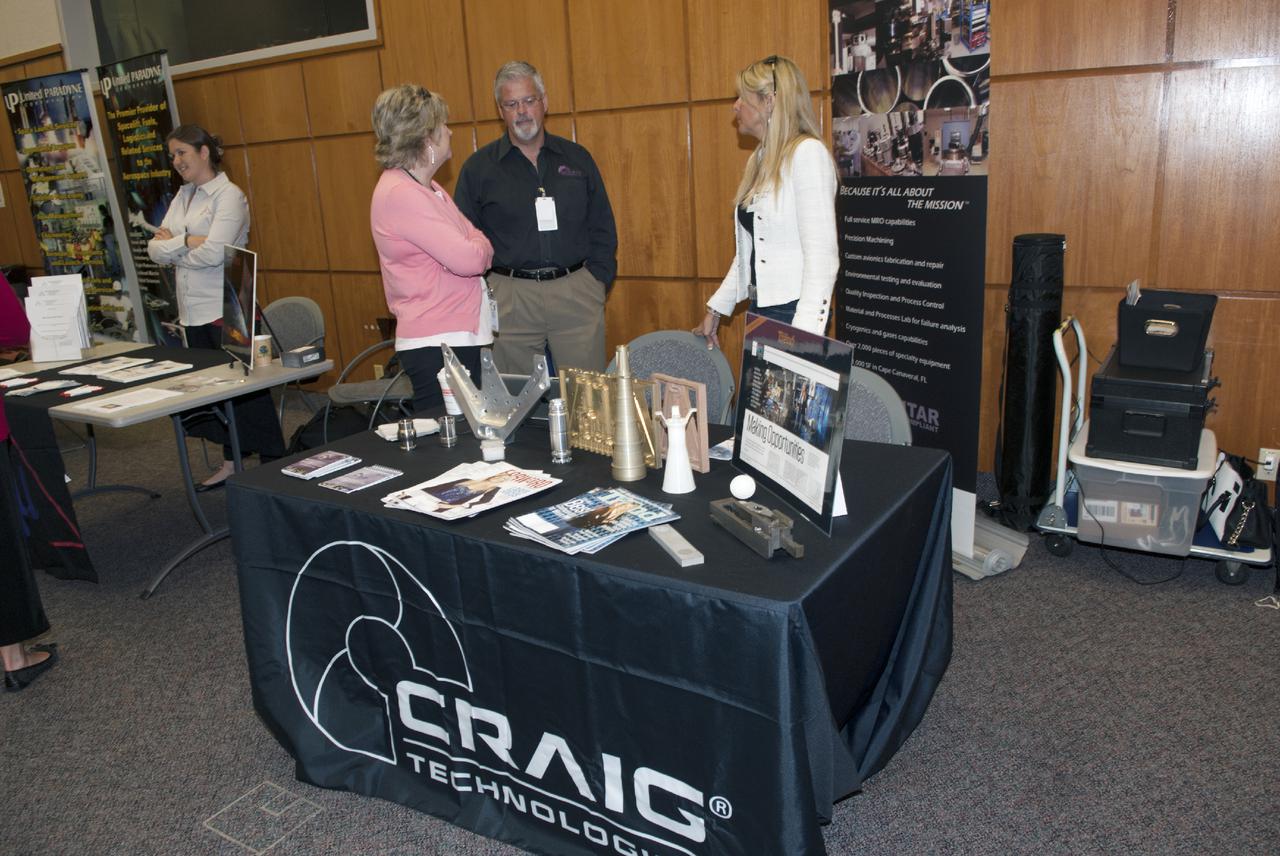
CAPE CANAVERAL, Fla. -- At the Kennedy Space Center in Florida, representatives of Craig Technologies talk with guests at the Innovation Expo KSC Showcase. The event gave Kennedy employees an opportunity to meet 12 NASA partners and see how the Center Planning and Development Directorate is transforming Kennedy into a multi-user spaceport through partnerships and resource planning. The 17-booth exhibit consists of 12 partner booths along with Spaceport Planning, Partnership Development and Research and Technology offices. Photo credit: NASA_Charisse Nahser
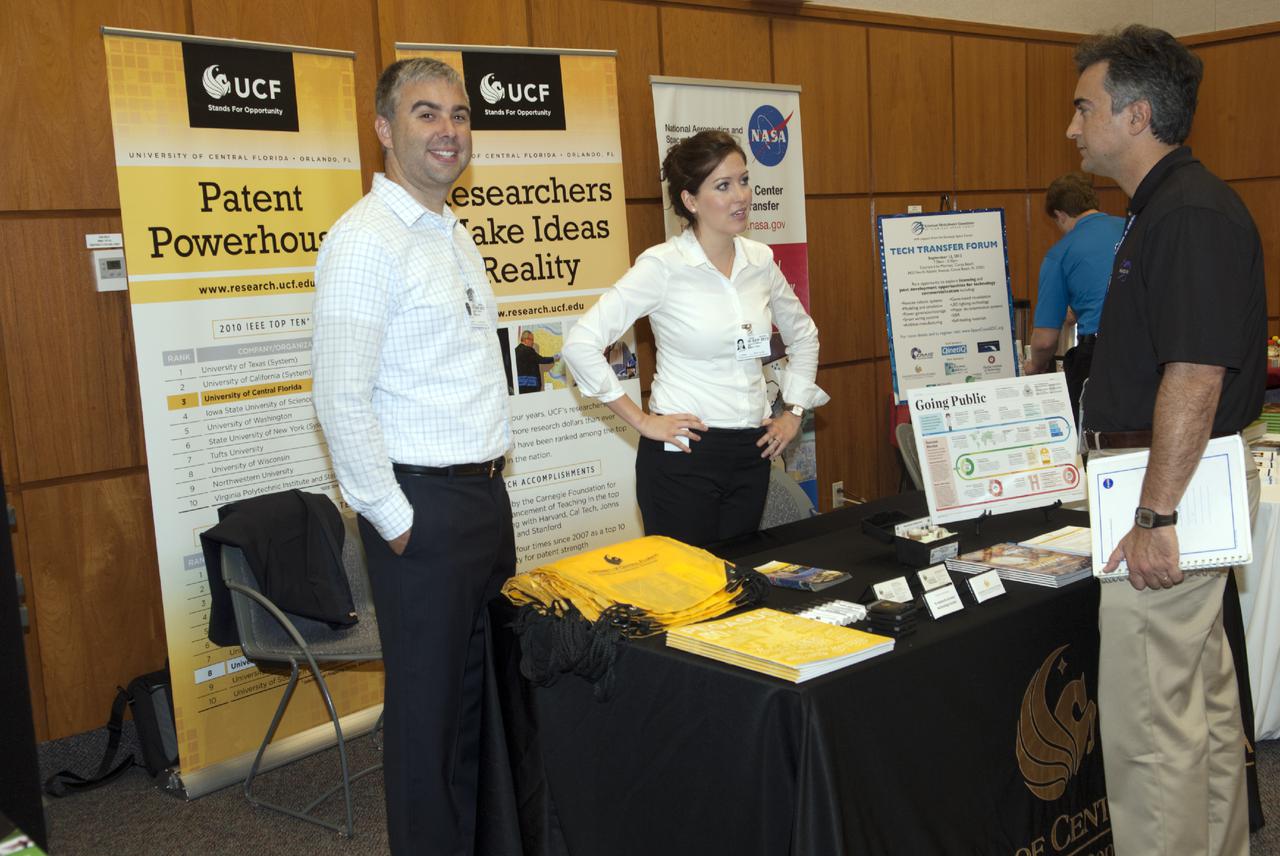
CAPE CANAVERAL, Fla. -- At the Kennedy Space Center in Florida, representatives of the University of Central Florida talk with guests at the Innovation Expo KSC Showcase. The event gave Kennedy employees an opportunity to meet 12 NASA partners and see how the Center Planning and Development Directorate is transforming Kennedy into a multi-user spaceport through partnerships and resource planning. The 17-booth exhibit consists of 12 partner booths along with Spaceport Planning, Partnership Development and Research and Technology offices. Photo credit: NASA_Charisse Nahser

CAPE CANAVERAL, Fla. – A mockup of the Launch Abort System, or LAS, is lifted off a trailer inside the Vehicle Assembly Building at NASA's Kennedy Space Center in Florida so it can be positioned atop a boilerplate Orion capsule during test stacking operations. The Orion spacecraft is being designed to carry astronauts on missions beyond Earth orbit. It will have the LAS during the first part of launch in case an emergency develops that requires the spacecraft to be pulled away from the rocket to save the crew. NASA's Ground Services Development and Operations Program, or GSDO, performed the test operations. Photo credit: NASA_Charisse Nahser
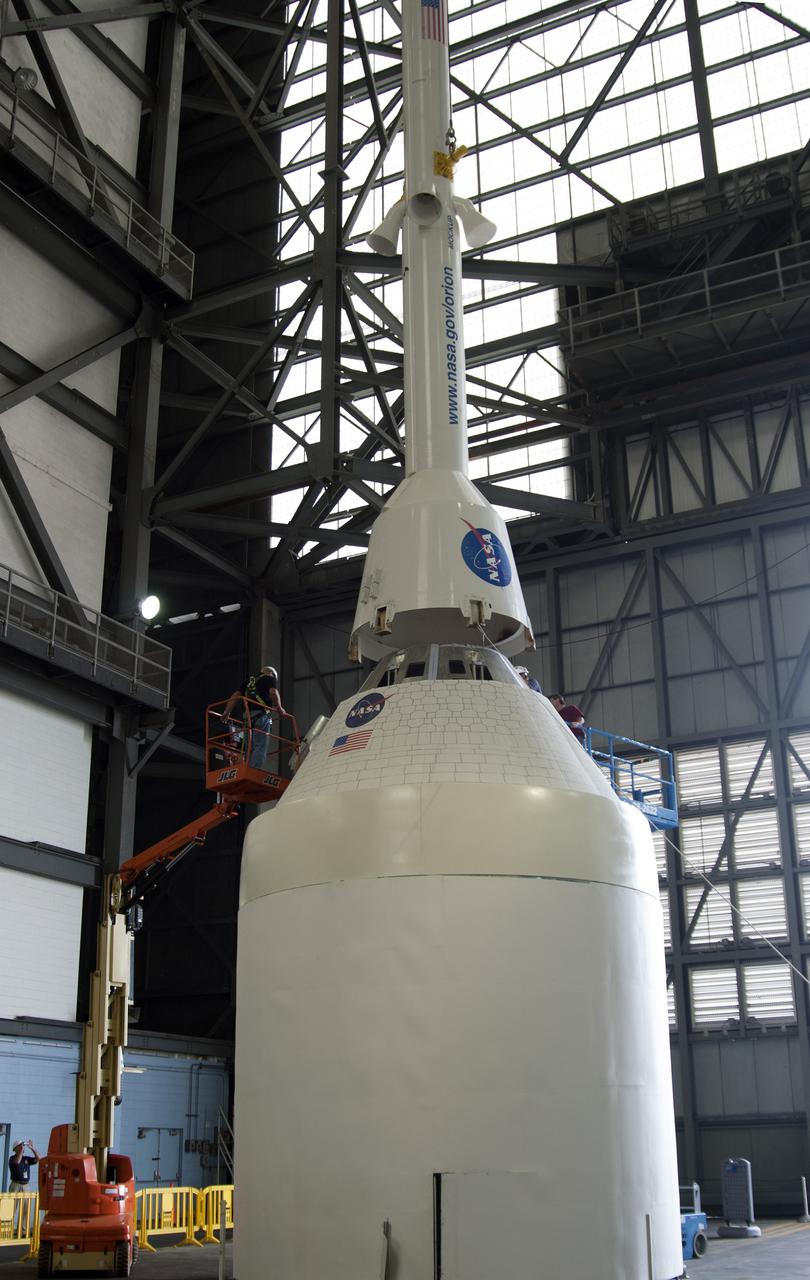
CAPE CANAVERAL, Fla. – A mockup of the Launch Abort System, or LAS, is positioned atop a boilerplate Orion capsule and replica service module during test stacking operations inside the Vehicle Assembly Building at NASA's Kennedy Space Center in Florida. The Orion spacecraft is being designed to carry astronauts on missions beyond Earth orbit. It will have the LAS during the first part of launch in case an emergency develops that requires the spacecraft to be pulled away from the rocket to save the crew. NASA's Ground Services Development and Operations Program, or GSDO, performed the test operations. Photo credit: NASA_Charisse Nahser
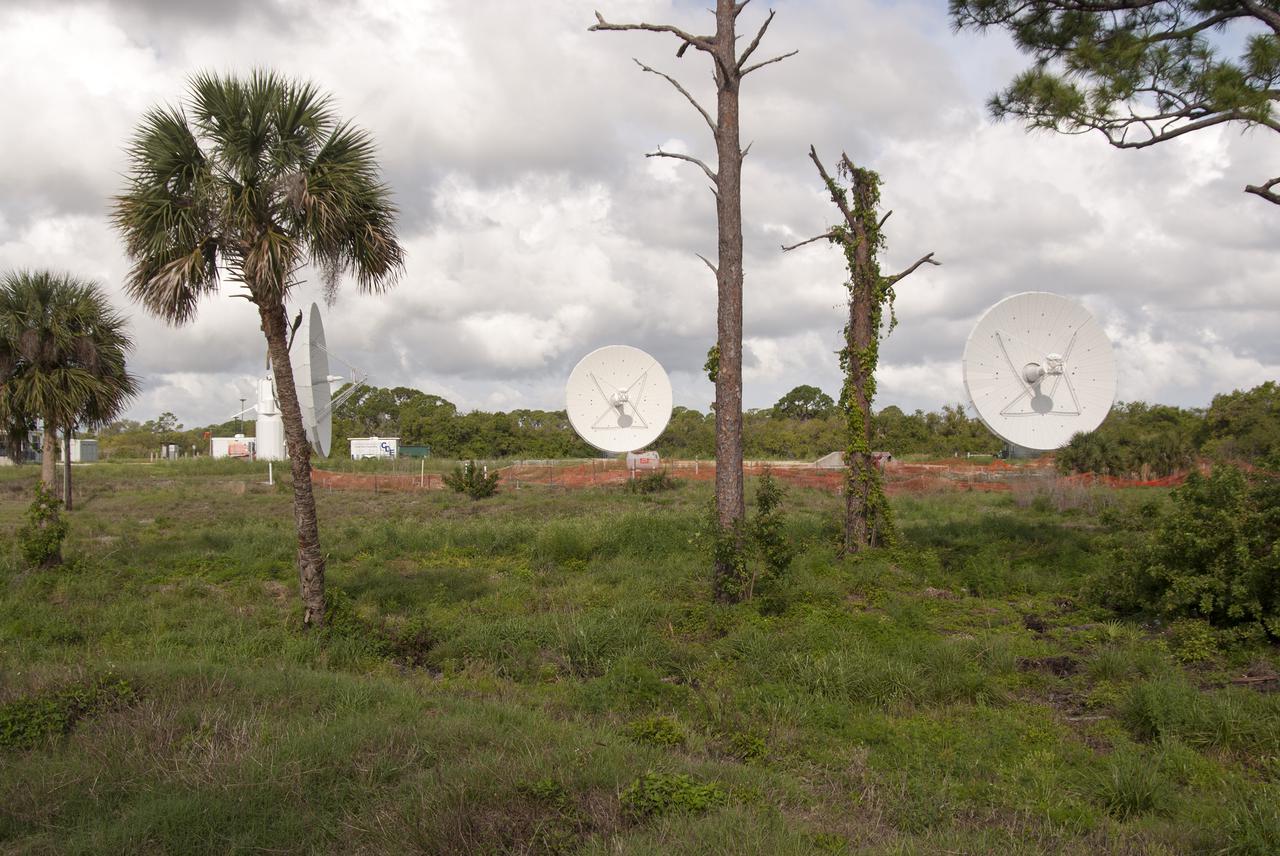
CAPE CANAVERAL, Fla. – At NASA’s Kennedy Space Center in Florida, construction is almost complete on the Antenna Test Bed Array for the Ka-Band Objects Observation and Monitoring, or Ka-BOOM, system. The Ka-BOOM project is one of the final steps in developing the techniques to build a high power, high resolution radar system capable of becoming a Near Earth Object Early Warning System. While also capable of space communication and radio science experiments, developing radar applications is the primary focus of the arrays. The 40-foot-diameter dish antenna arrays are near the former Vertical Processing Facility, which has been demolished. Photo credit: NASA_Charisse Nahser