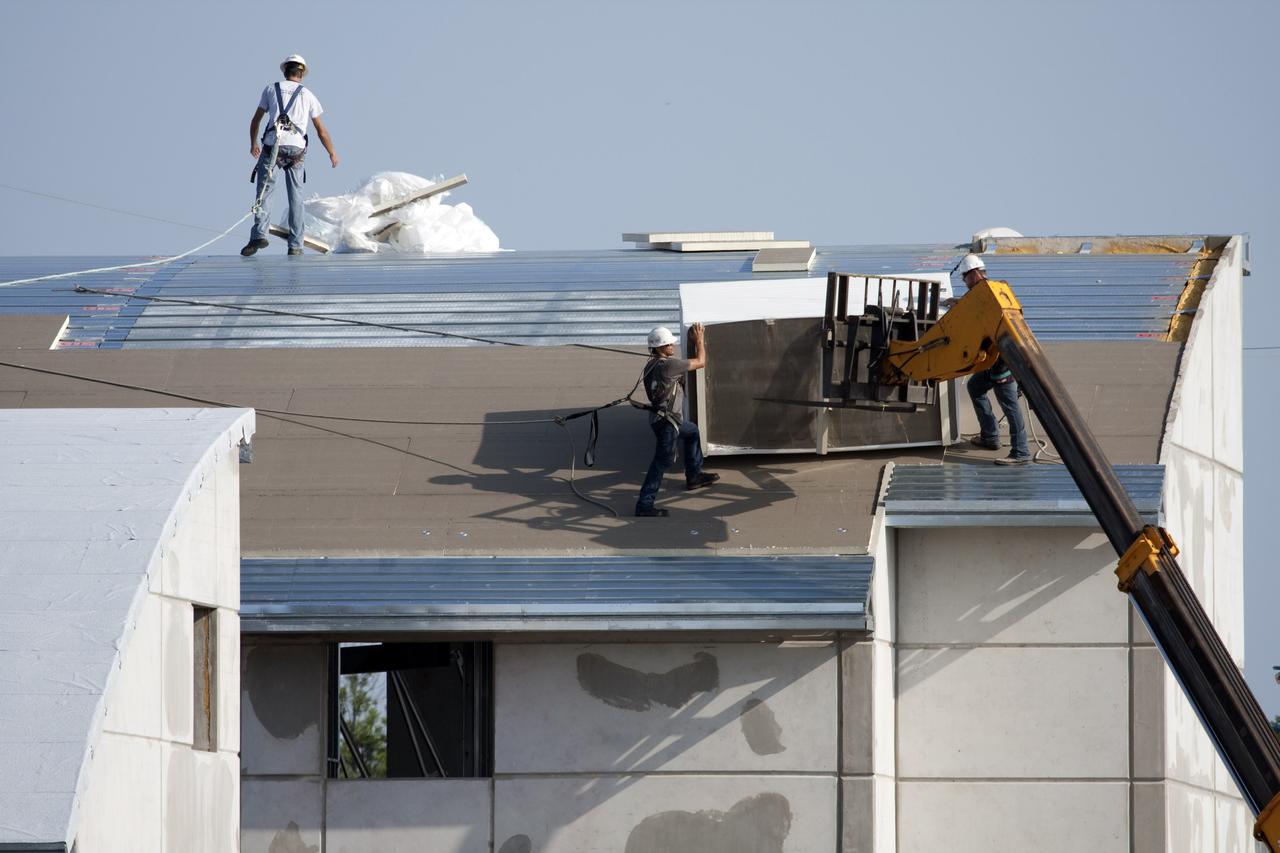
CAPE CANAVERAL, Fla. - At Launch Complex 39 at NASA's Kennedy Space Center in Florida, insulation material is delivered to roofers on one of the Propellants North Administrative and Maintenance Facility buildings by a boom lift. The insulation has an R-40 rating, compared to the insulation under the roof of an average home which has a rating of R-10 or R-15. The facility will have a two-story administrative building to house managers, mechanics and technicians who fuel spacecraft at Kennedy adjacent to an 1,800-square-foot single-story shop to store cryogenic fuel transfer equipment. The new facility will feature high-efficiency roofs and walls, “Cool Dry Quiet” air conditioning with energy recovery technology, efficient lighting, and other sustainable features. The facility is striving to qualify for the U.S. Green Building Council’s Leadership in Energy and Environmental Design, or LEED, Platinum certification. If successful, Propellants North will be the first Kennedy facility to achieve this highest of LEED ratings after it is completed in December 2010. The facility was designed for NASA by Jones Edmunds and Associates. H. W. Davis Construction is the construction contractor. Photo credit: NASA_Dimitri Gerondidakis
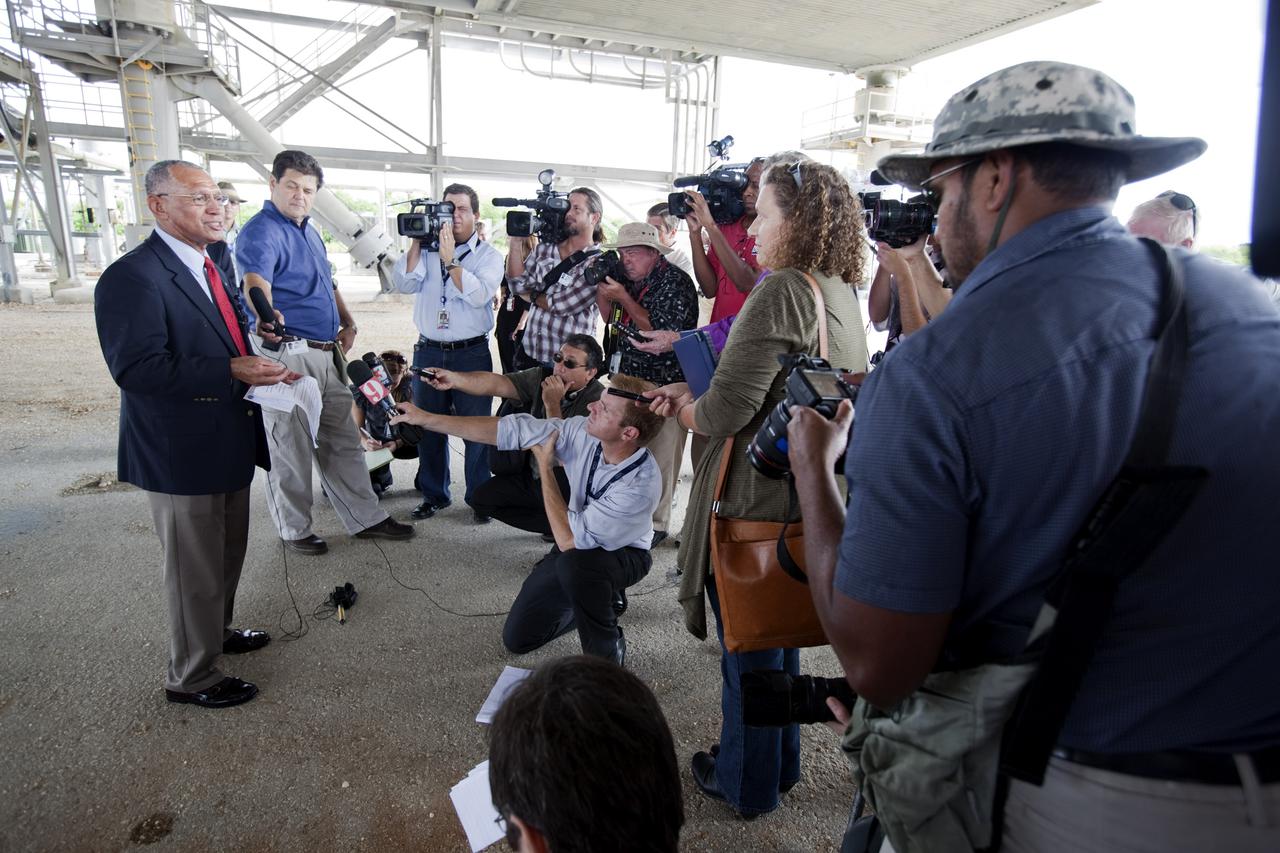
CAPE CANAVERAL, Fla. – At Kennedy Space Center in Florida, NASA Administrator Charlie Bolden talks to media underneath NASA’s mobile launcher (ML) support structure. Center Director Bob Cabana also attended the media event held to detail ML’s use with NASA’s Space Launch System (SLS) heavy-lift rocket, which will take astronauts into deep space on missions to asteroids, the moon or Mars. It took about two years to construct the 355-foot-tall ML structure, which will support NASA's future human spaceflight program. The ML can be outfitted with ground support equipment, such as umbilicals and access arms, for future rocket launches. Photo credit: NASA_Dimitri Gerondidakis
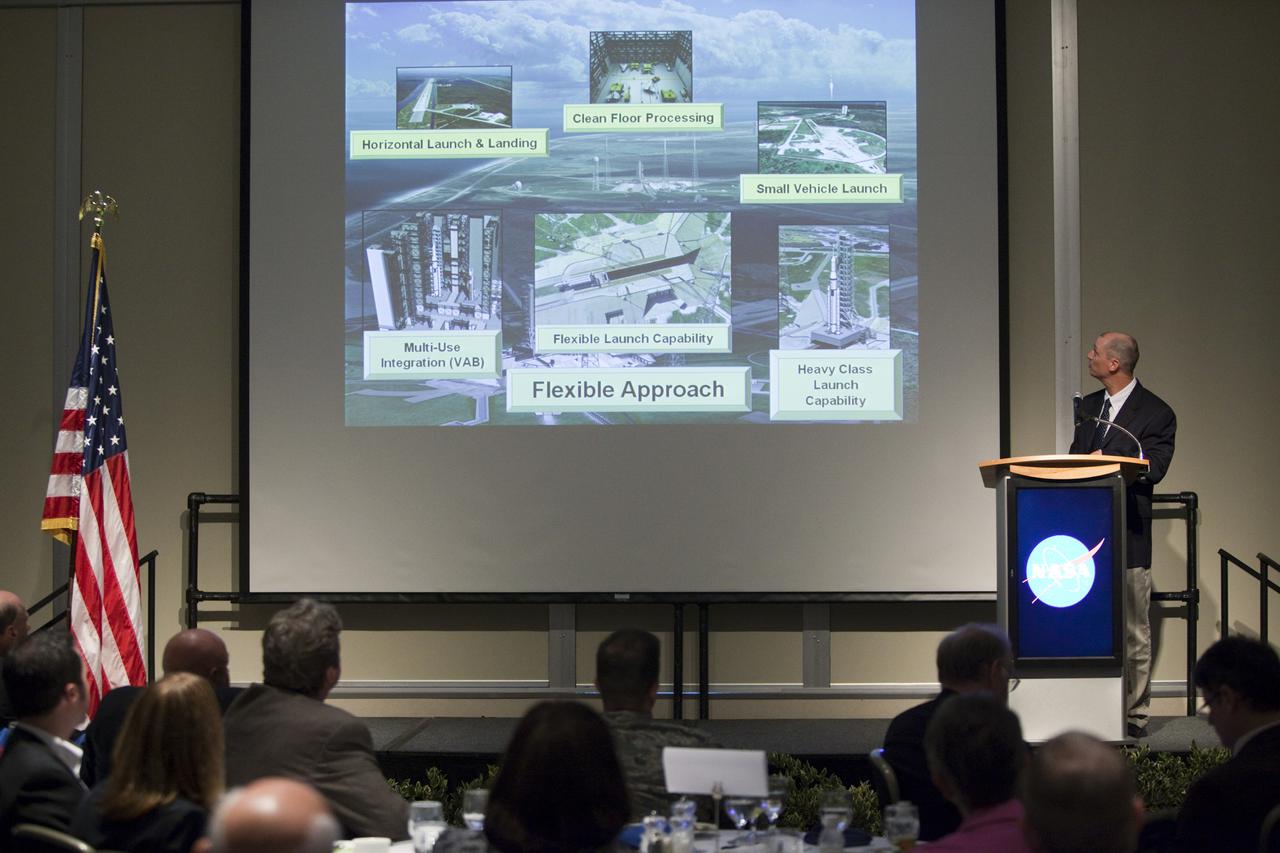
CAPE CANAVERAL, Fla. – Pepper Phillips, NASA’s 21st Century Ground Systems Program Office manager at Kennedy Space Center, addresses guests at the annual Community Leaders Breakfast held in the Debus Center at Kennedy's Visitor Complex in Florida. Community leaders, business executives, educators, community organizers and state and local government officials heard NASA Administrator Charlie Bolden, Kennedy Space Center Director Bob Cabana, and other senior Kennedy managers provide an overview of the future of the space center. Photo credit: NASA_Dimitri Gerondidakis
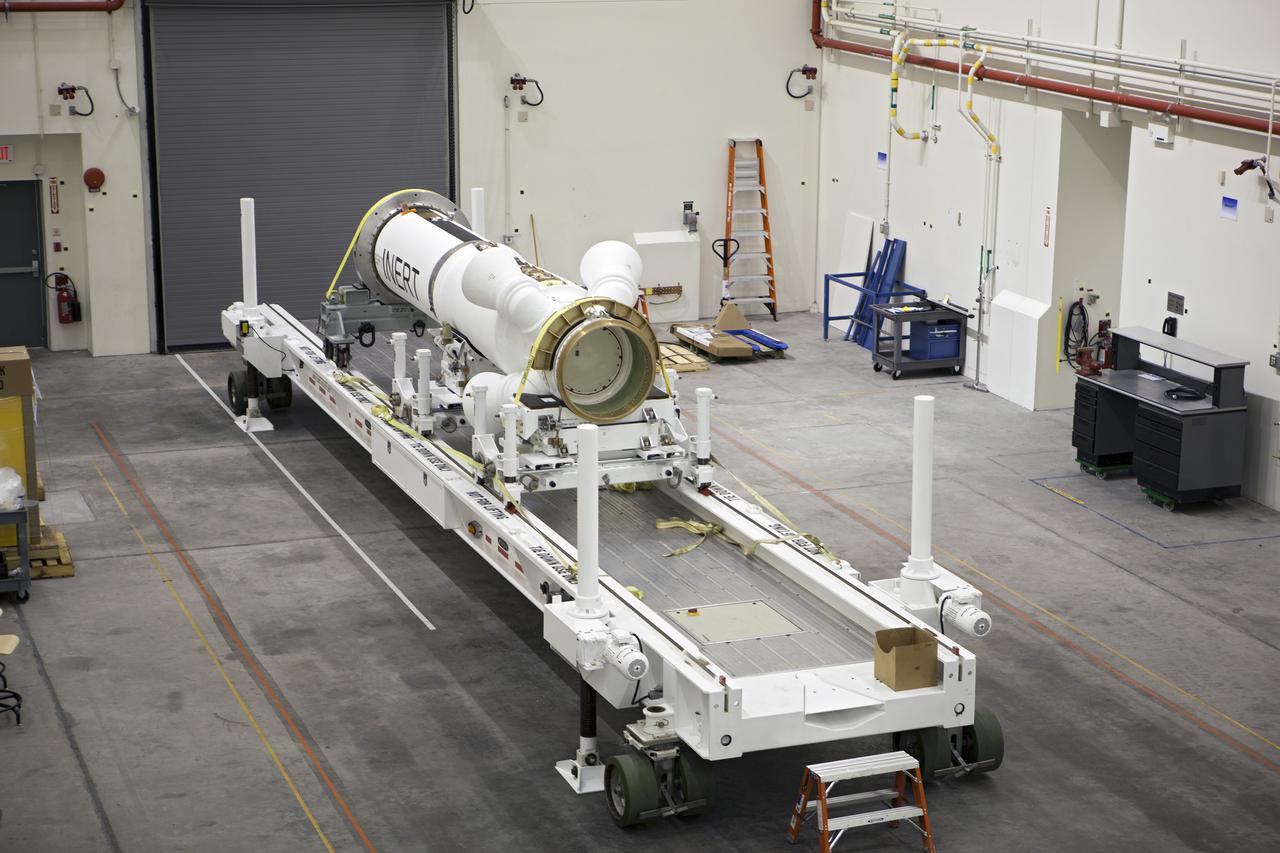
CAPE CANAVERAL, Fla. – At NASA’s Kennedy Space Center in Florida, members of the media viewed the Alliant Techsystems, or ATK, launch abort motor inside the Launch Abort System Facility. ATK’s abort motor is one of the components of Orion’s Launch Abort System, which will be used for Exploration Flight Test 1, or EFT-1. The system is designed to safely pull the Orion crew module away from the launch vehicle in the event of an emergency on the launch pad or during the initial ascent of NASA’s Space Launch System, or SLS, rocket. The test flight abort motor is configured with inert propellant. Orion is the exploration spacecraft designed to carry crews to space beyond low Earth orbit. It will provide emergency abort capability, sustain the crew during the space travel and provide safe re-entry from deep space return velocities. Orion’s first unpiloted test flight is scheduled to launch in 2014 atop a Delta IV rocket. A second uncrewed flight test is scheduled for 2017 on the SLS rocket. For more information, visit http:__www.nasa.gov_orion. Photo credit: NASA_Dimitri Gerondidakis
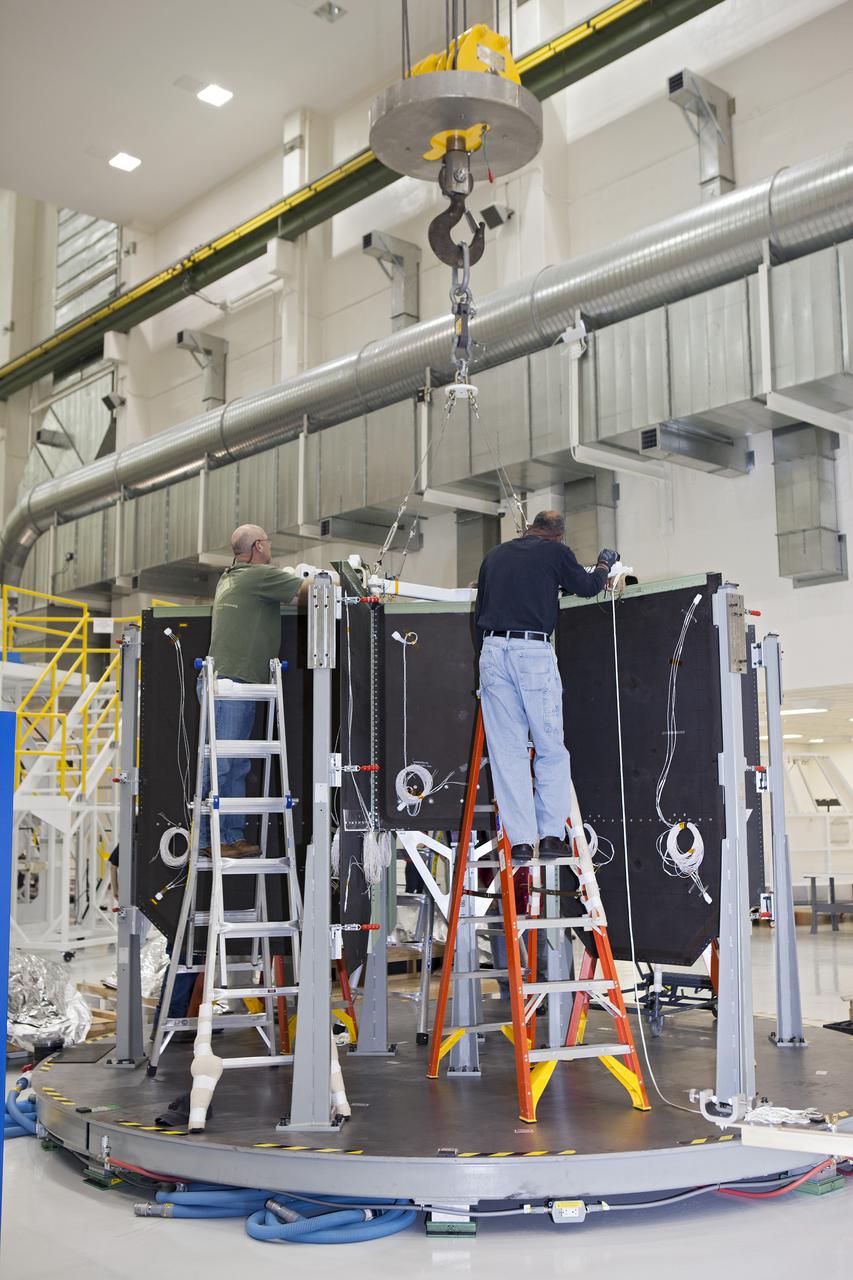
CAPE CANAVERAL, Fla. – Inside the Operations and Checkout Building high bay at NASA’s Kennedy Space Center in Florida, technicians attach a crane to the shear web assembly, or inner core, that will be inserted into the Orion service module. Orion is being prepared for Exploration Flight Test 1, or EFT-1. Orion is the exploration spacecraft designed to carry crews to space beyond low Earth orbit. It will provide emergency abort capability, sustain the crew during the space travel and provide safe re-entry from deep space return velocities. Orion’s first unpiloted test flight is scheduled to launch in 2014 atop a United Launch Alliance Delta IV heavy rocket. A second uncrewed flight test is scheduled for 2017 on the Space Launch System rocket. For more information, visit http:__www.nasa.gov_orion. Photo credit: NASA_Dimitri Gerondidakis
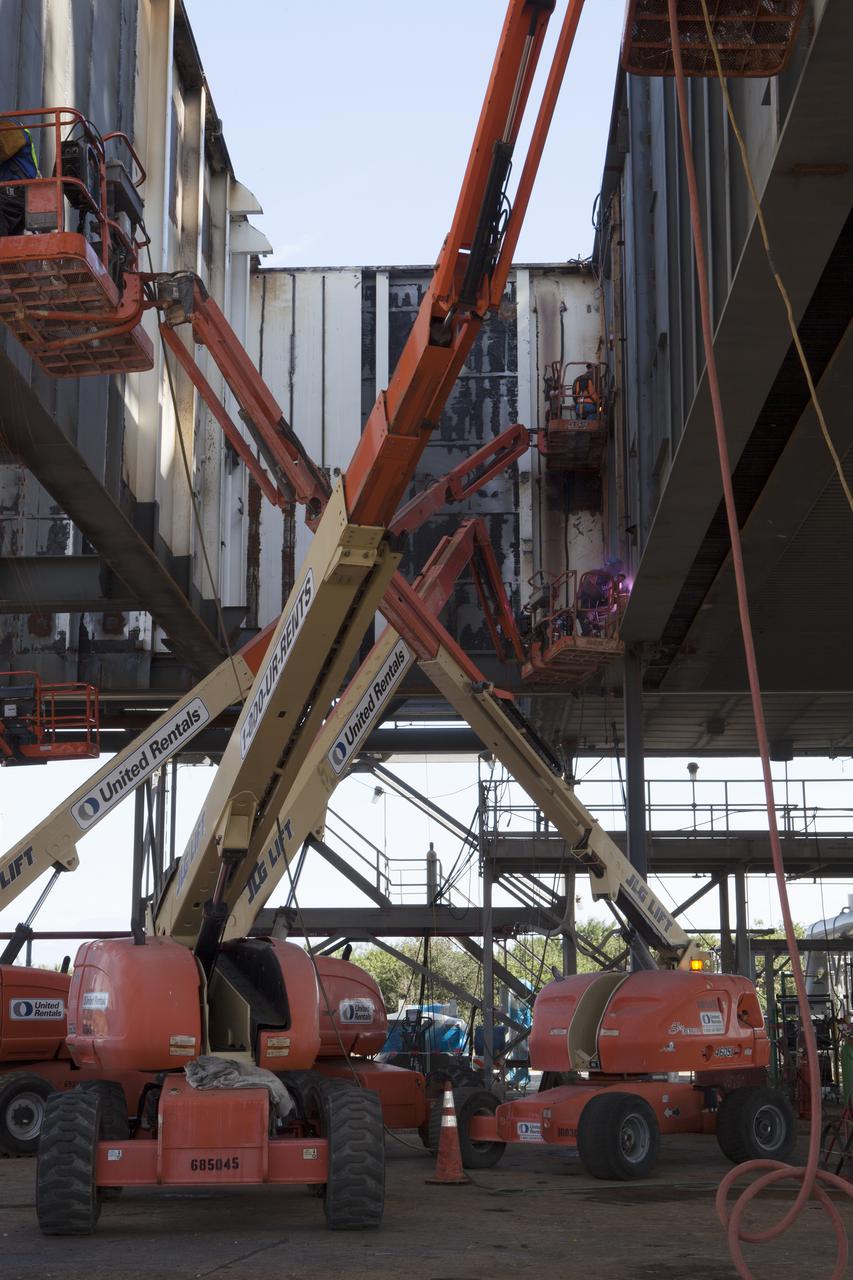
CAPE CANAVERAL, Fla. – Modifications continue on the Mobile Launcher, or ML, at the Mobile Launcher Park Site at NASA’s Kennedy Space Center in Florida. Construction workers on lifts perform welding work on the exterior of the ML. In 2013, the agency awarded a contract to J.P. Donovan Construction Inc. of Rockledge, Fla., to modify the ML, which is one of the key elements of ground support equipment that is being upgraded by the Ground Systems Development and Operations Program office at Kennedy. The ML will carry the SLS rocket and Orion spacecraft to Launch Pad 39B for its first mission, Exploration Mission 1, in 2017. Photo credit: NASA_Dimitri Gerondidakis
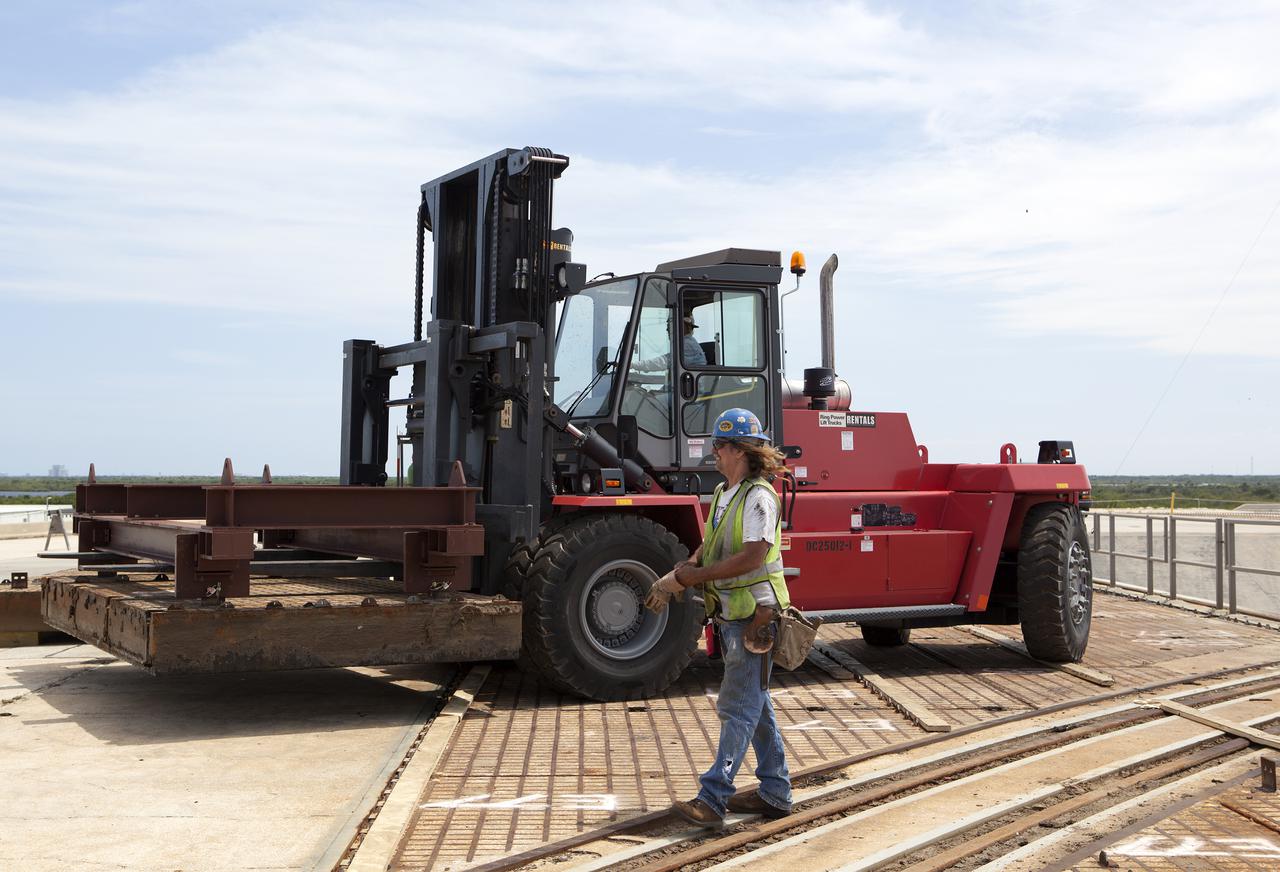
CAPE CANAVERAL, Fla. – At Launch Pad 39B at NASA’s Kennedy Space Center in Florida, removal of the crawler track panels on the pad’s surface is underway. The concrete surface beneath the panels and the catacomb roof below will be inspected for water damage and repaired. There are 176 panels, each weighing about 30,000 pounds that will be removed. Launch Pad 39B is being refurbished to support NASA’s Space Launch System and other launch vehicles. The Ground Systems Development and Operations, or GSDO, Program office at Kennedy is leading the center’s transformation to safely handle a variety of rockets and spacecraft. For more information about GSDO, visit: http:__go.nasa.gov_groundsystems. Photo credit: NASA_Dimitri Gerondidakis
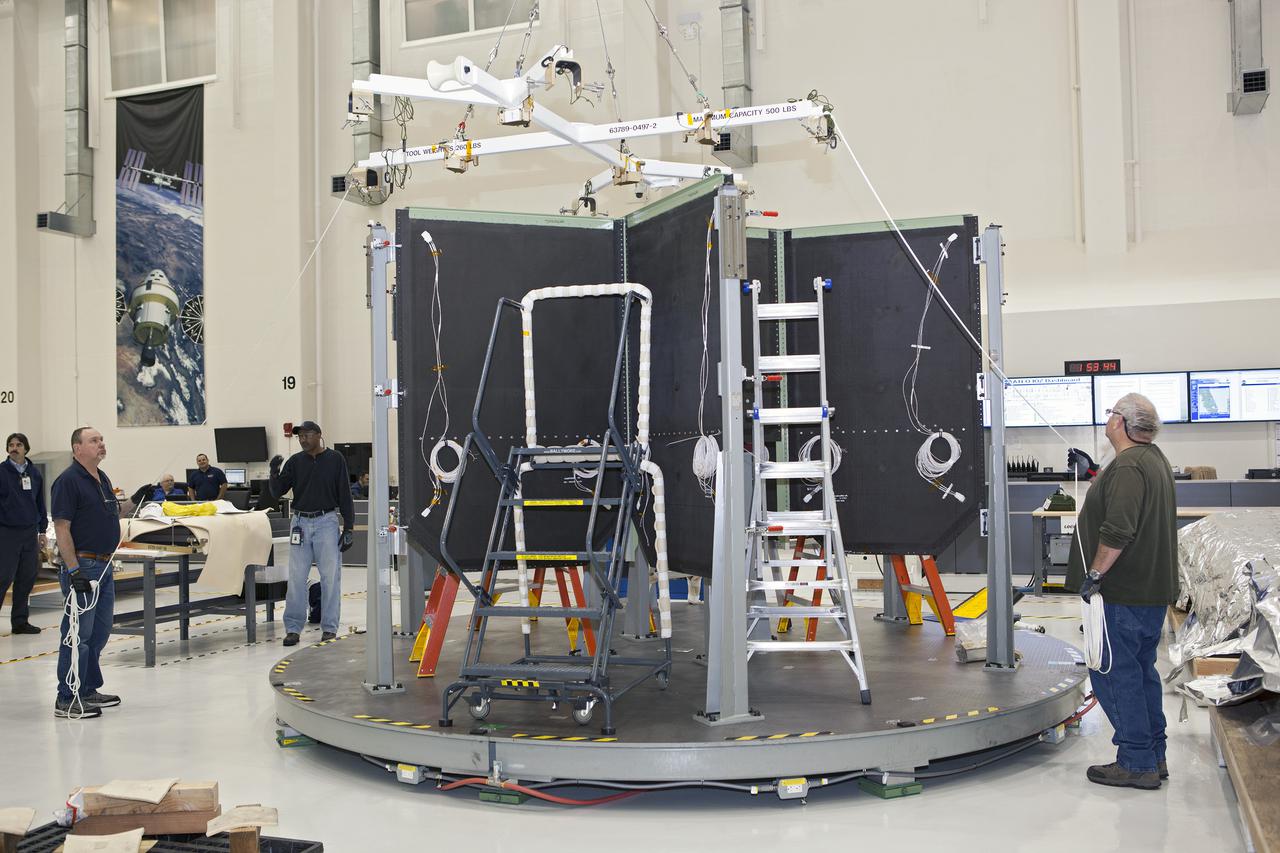
CAPE CANAVERAL, Fla. – Inside the Operations and Checkout Building high bay at NASA’s Kennedy Space Center in Florida, technicians prepare the shear web assembly, or inner core, that will be inserted into the Orion service module. Orion is being prepared for Exploration Flight Test 1, or EFT-1. Orion is the exploration spacecraft designed to carry crews to space beyond low Earth orbit. It will provide emergency abort capability, sustain the crew during the space travel and provide safe re-entry from deep space return velocities. Orion’s first unpiloted test flight is scheduled to launch in 2014 atop a United Launch Alliance Delta IV heavy rocket. A second uncrewed flight test is scheduled for 2017 on the Space Launch System rocket. For more information, visit http:__www.nasa.gov_orion. Photo credit: NASA_Dimitri Gerondidakis
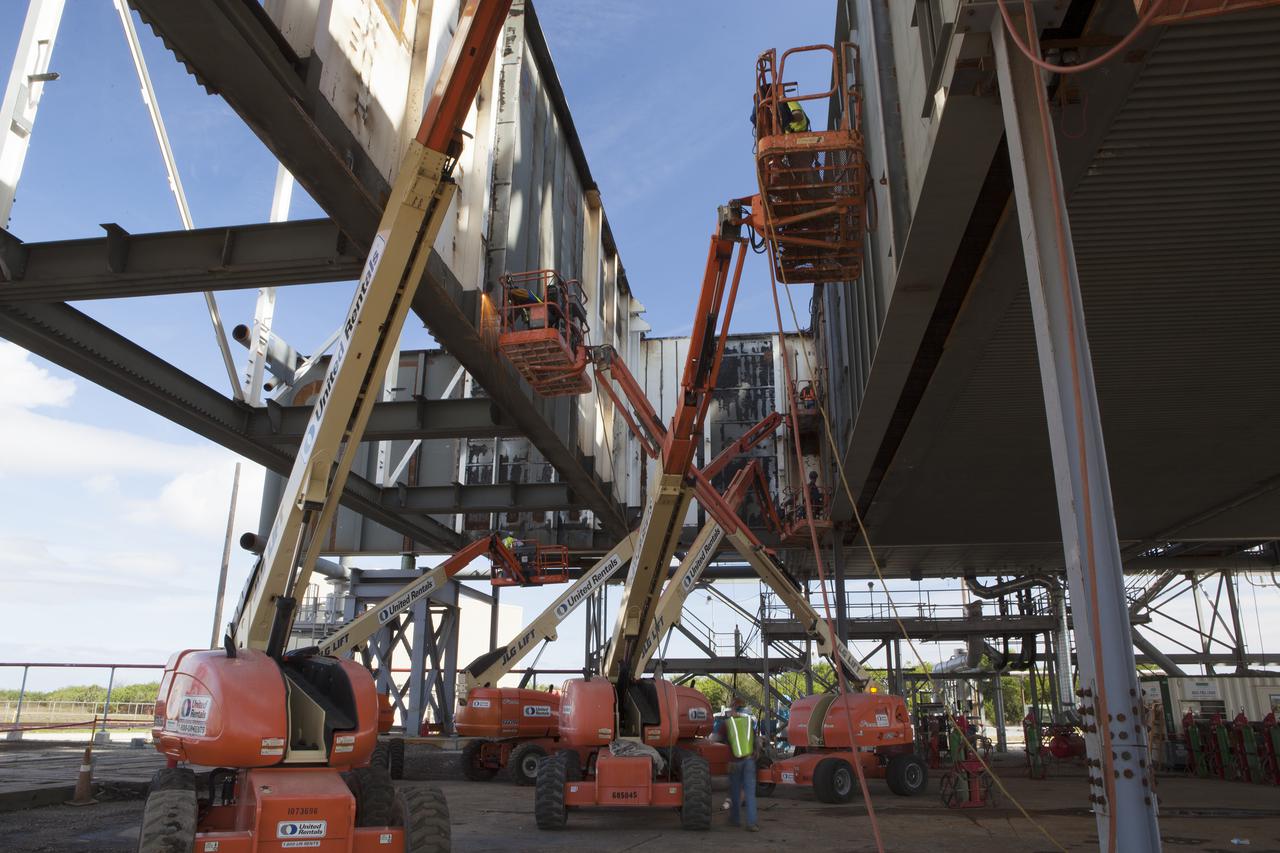
CAPE CANAVERAL, Fla. – Modifications continue on the Mobile Launcher, or ML, at the Mobile Launcher Park Site at NASA’s Kennedy Space Center in Florida. Construction workers on lifts perform welding work on the exterior of the ML. In 2013, the agency awarded a contract to J.P. Donovan Construction Inc. of Rockledge, Fla., to modify the ML, which is one of the key elements of ground support equipment that is being upgraded by the Ground Systems Development and Operations Program office at Kennedy. The ML will carry the SLS rocket and Orion spacecraft to Launch Pad 39B for its first mission, Exploration Mission 1, in 2017. Photo credit: NASA_Dimitri Gerondidakis
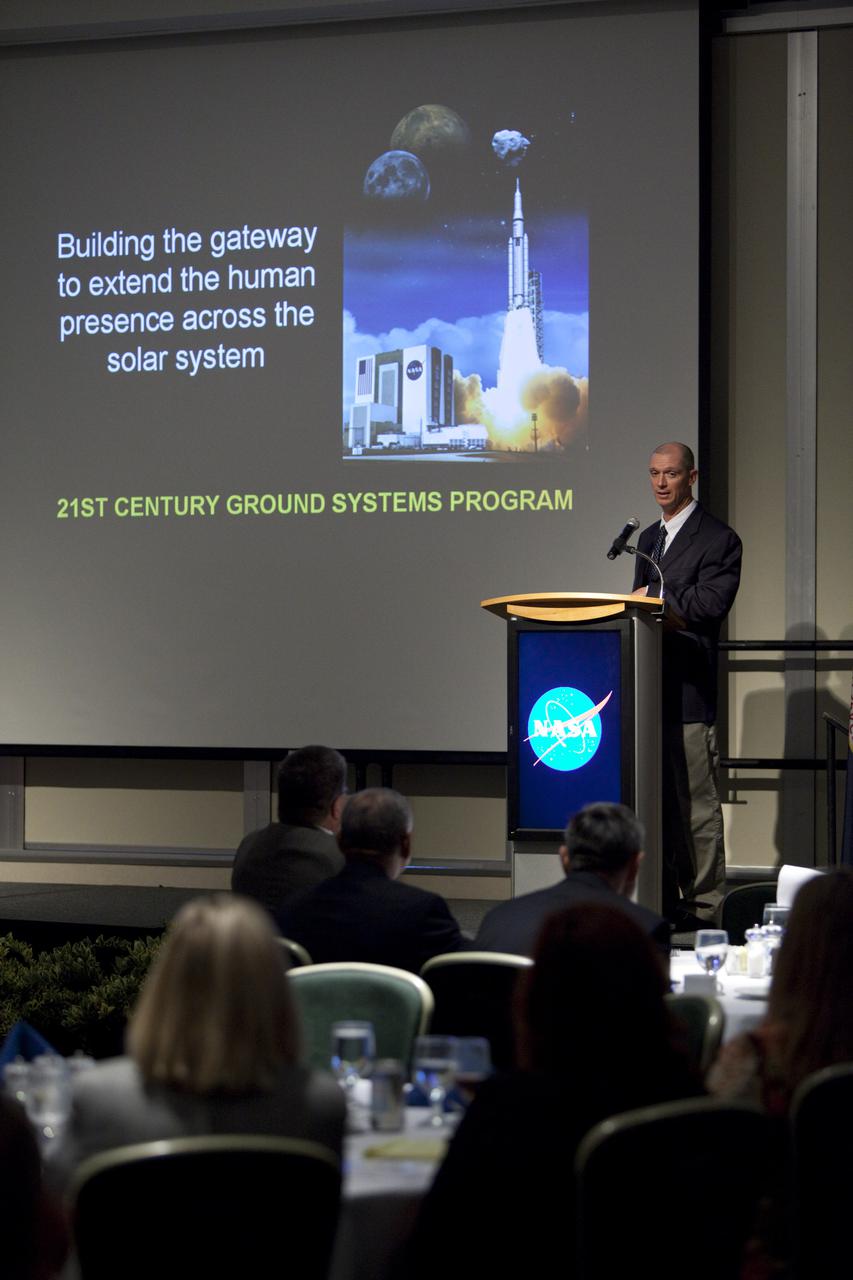
CAPE CANAVERAL, Fla. – Pepper Phillips, NASA’s 21st Century Ground Systems Program Office manager at Kennedy Space Center, addresses guests at the annual Community Leaders Breakfast held in the Debus Center at Kennedy's Visitor Complex in Florida. Community leaders, business executives, educators, community organizers and state and local government officials heard NASA Administrator Charlie Bolden, Kennedy Space Center Director Bob Cabana, and other senior Kennedy managers provide an overview of the future of the space center. Photo credit: NASA_Dimitri Gerondidakis
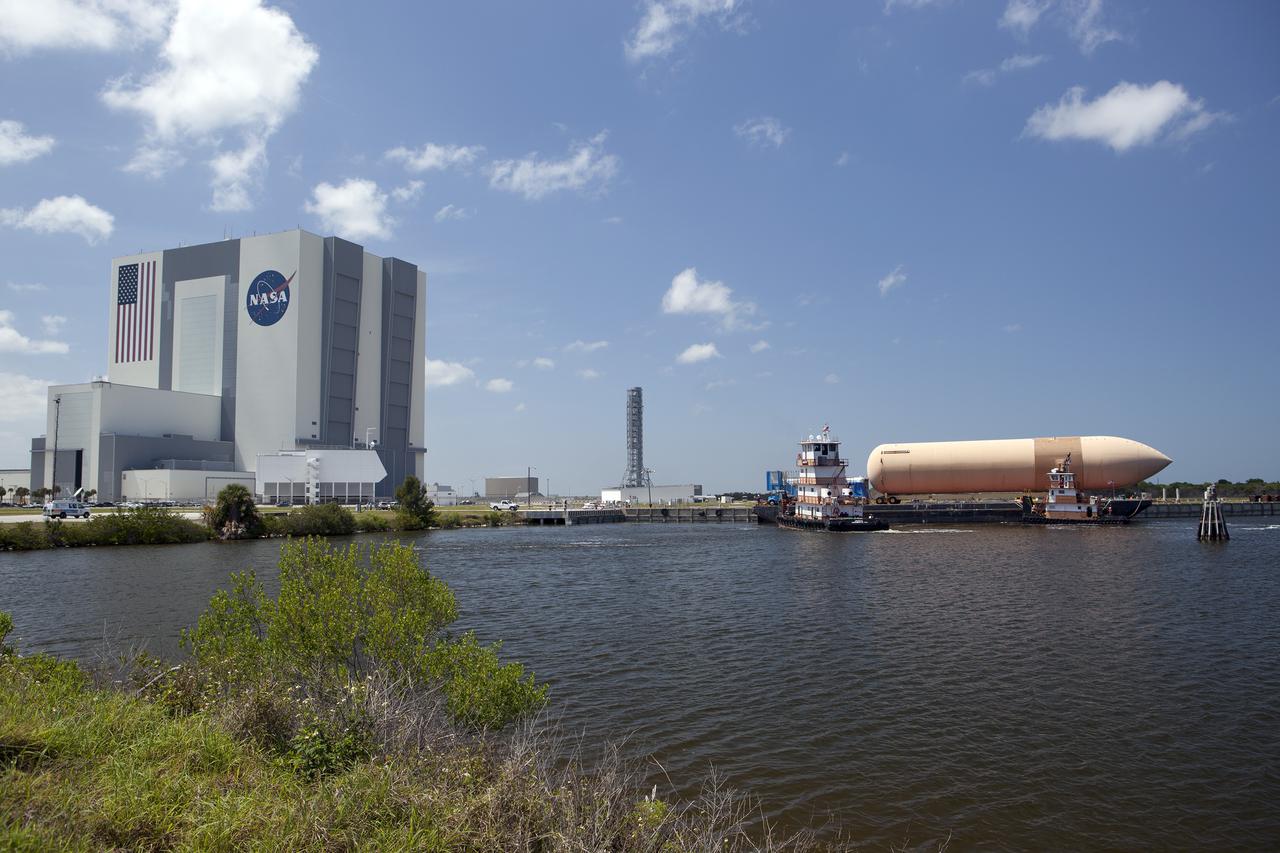
CAPE CANAVERAL, Fla. -- A space shuttle orange flight test article external fuel tank, or ET, an ET transporter, crew hatch access vehicle, crew transport vehicle, solid rocket booster, or SRB, aft skirt and SRB frustum are loaded onto a barge and beginning the first leg of their journey from NASA's Kennedy Space Center in Florida to the Wings of Dreams Aviation Museum located at Keystone Heights Airport in North Central Florida. Thousands of unique space shuttle era artifacts are being allocated to facilities across the country for their new missions to educate and inspire America's next generation of explorers. Photo credit: NASA_Dimitri Gerondidakis
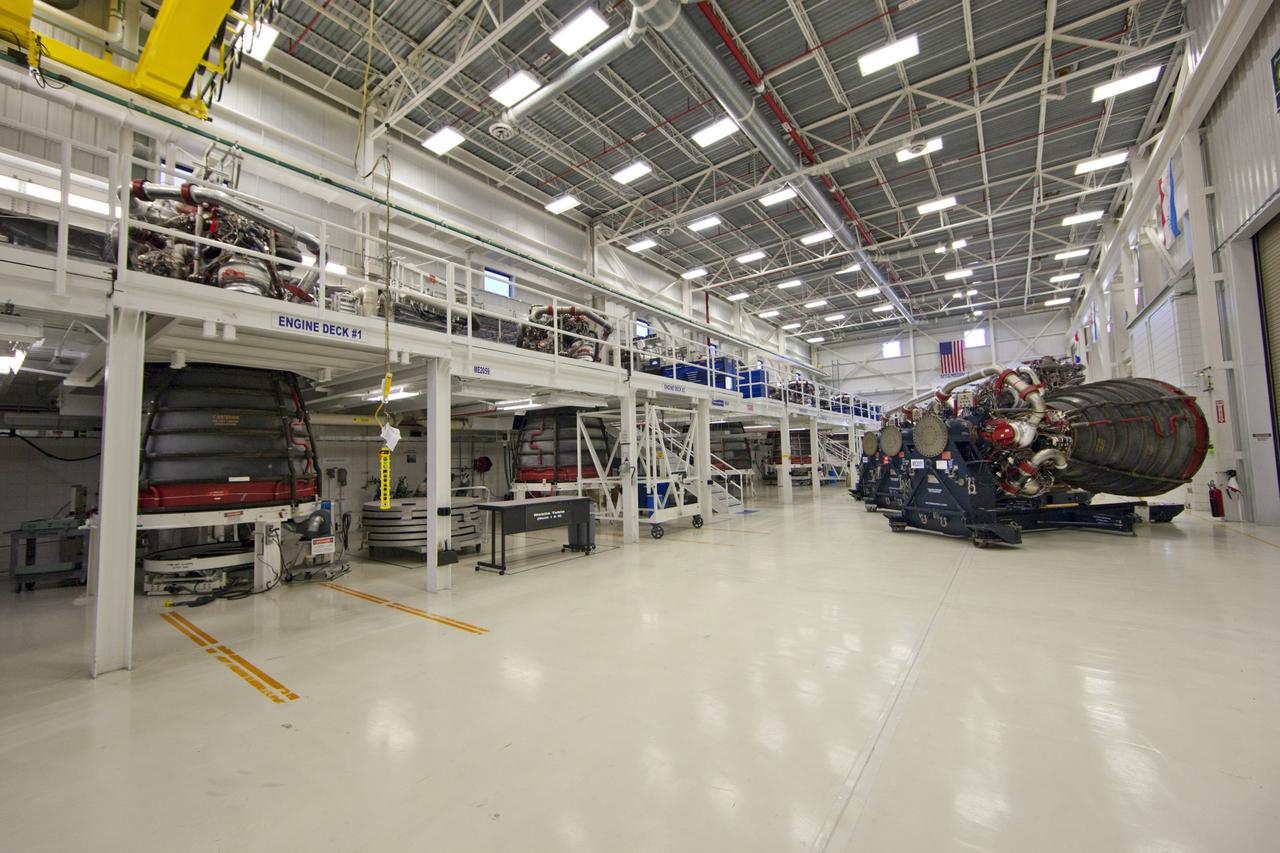
CAPE CANAVERAL, Fla. – At NASA’s Kennedy Space Center in Florida, all six Pratt Whitney Rocketdyne space shuttle main engines (SSMEs) from space shuttle Endeavour's STS-134 and space shuttle Atlantis' STS-135 missions sit in test cells inside the Engine Shop. To the right are three more main engines on platforms. For the first time, all 15 main engines are in the Engine Shop at the same time. They are being prepared for shipment to NASA's Stennis Space Center in Mississippi for storage following the completion of the Space Shuttle Program. The engines are being repurposed for use on NASA’s Space Launch System heavy lift rocket. Photo credit: NASA_Dimitri Gerondidakis
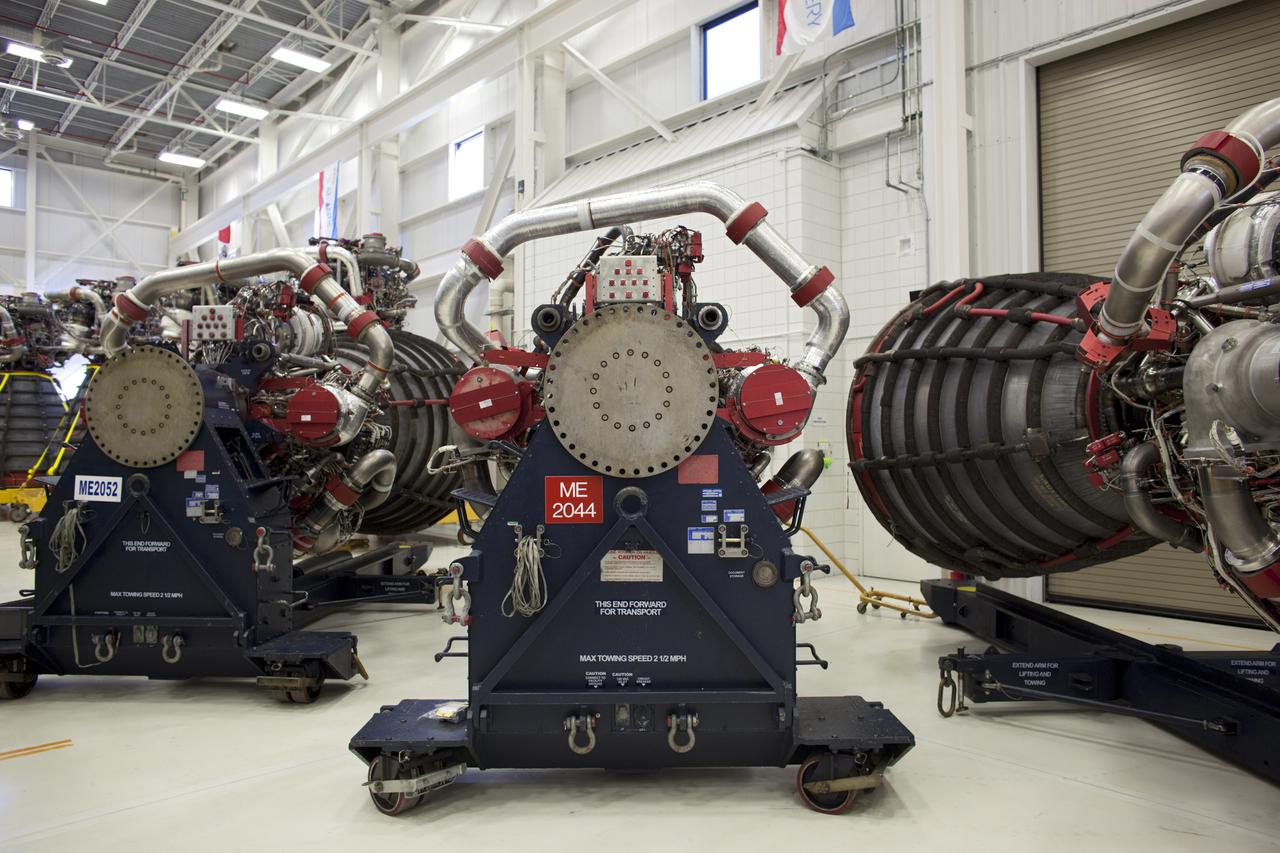
CAPE CANAVERAL, Fla. – Several Pratt Whitney Rocketdyne space shuttle main engines (SSMEs) sit on stands inside the Engine Shop at NASA’s Kennedy Space Center in Florida. For the first time, all 15 main engines are in the Engine Shop at the same time. They are being prepared for shipment to NASA's Stennis Space Center in Mississippi for storage following the completion of the Space Shuttle Program. The engines are being repurposed for use on NASA’s Space Launch System heavy lift rocket. Photo credit: NASA_Dimitri Gerondidakis
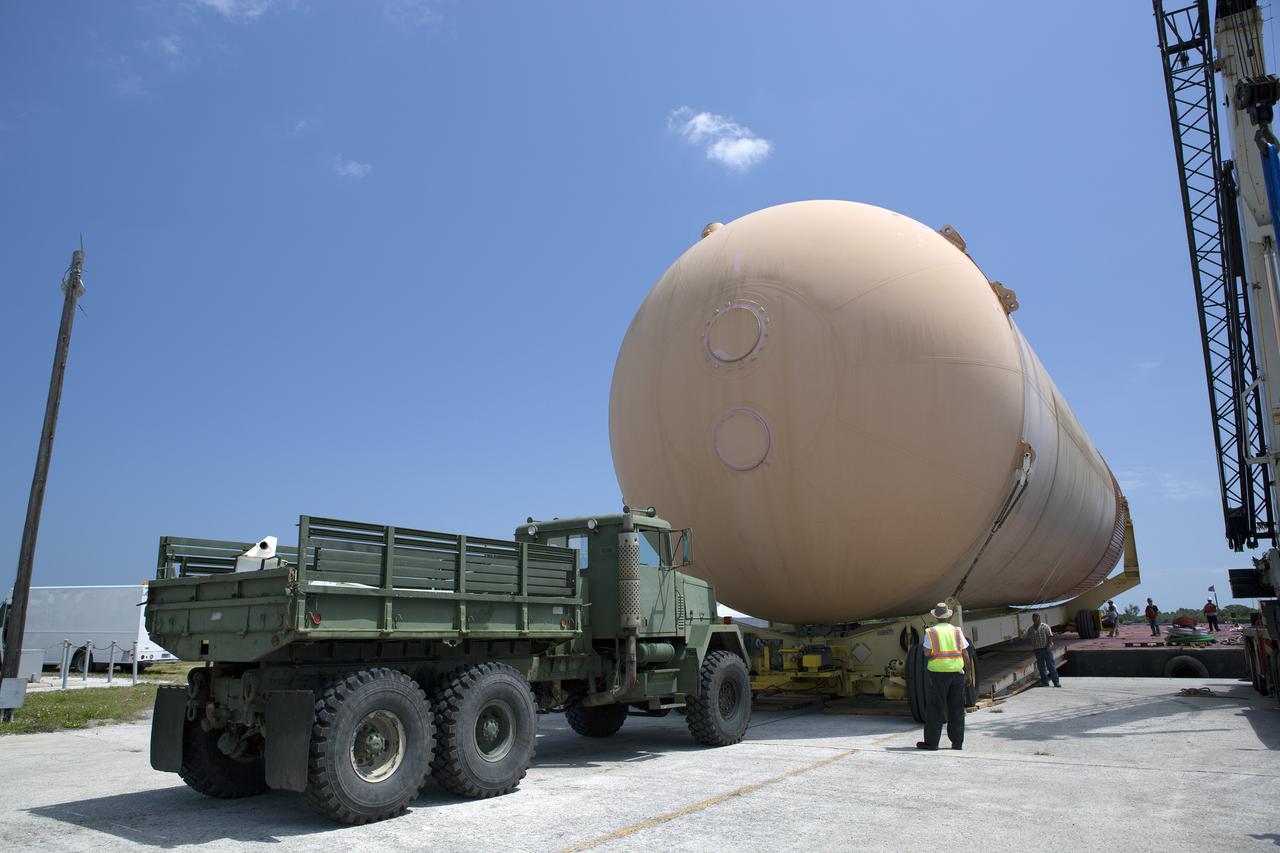
CAPE CANAVERAL, Fla. – An orange flight test article space shuttle external fuel tank, or ET, is loaded onto a barge for the first leg of its journey from NASA's Kennedy Space Center in Florida to the Wings of Dreams Aviation Museum located at Keystone Heights Airport in North Central Florida. Weighing in at 58,000 pounds unfueled and standing more than 15-stories tall, the ET was referred to as the 'backbone' of the space shuttle. Its job was to hold about 535,000 gallons of super-cold liquid hydrogen and liquid oxygen. It also absorbed the thrust loads produced at launch by the orbiter and the solid rocket boosters, or SRBs. Also joining the ET at Wings of Dreams is an ET transporter, the crew transport vehicle, crew hatch access vehicle, SRB aft skirt and SRB frustum. Thousands of unique space shuttle era artifacts are being allocated to facilities across the country for their new missions to educate and inspire America's next generation of explorers. Photo credit: NASA_Dimitri Gerondidakis
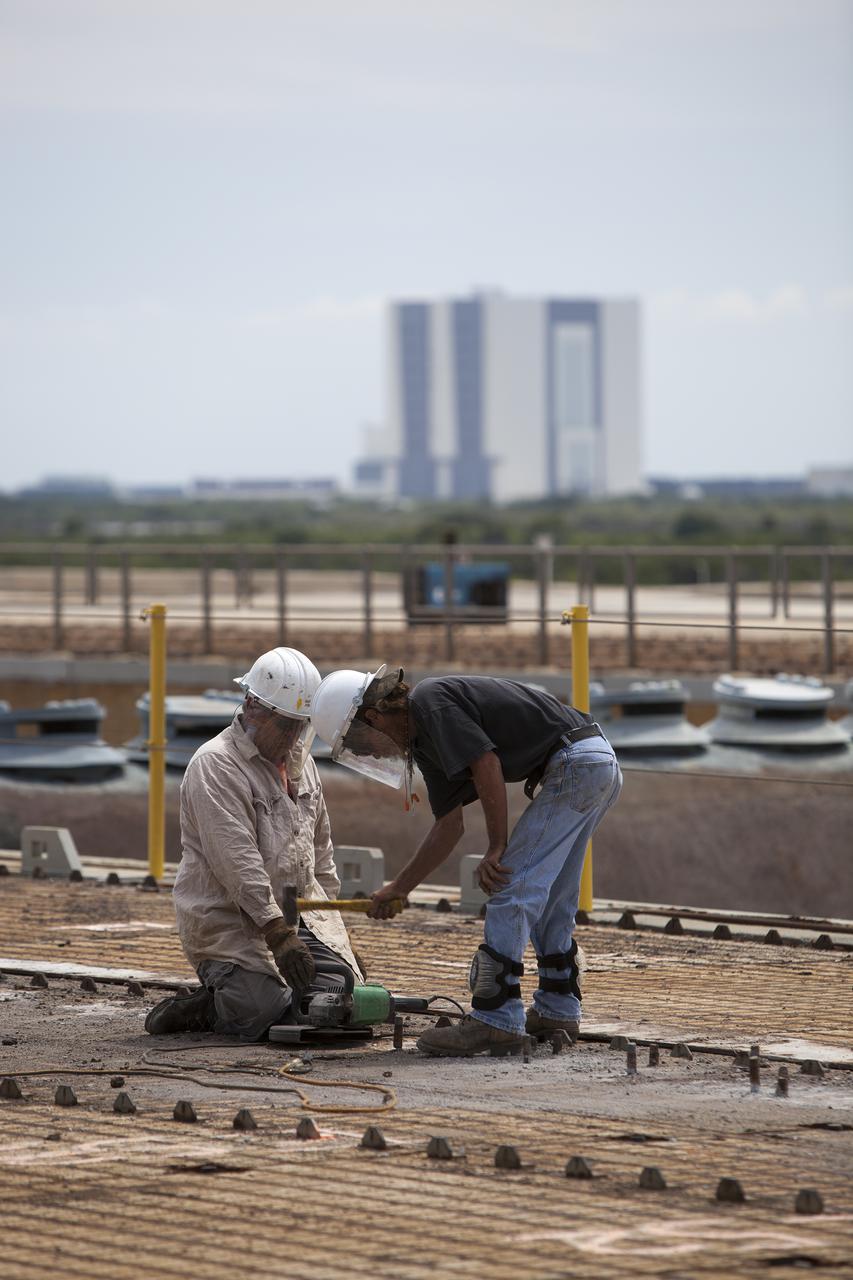
CAPE CANAVERAL, Fla. – At Launch Pad 39B at NASA’s Kennedy Space Center in Florida, construction workers prepare a crawler track panel on the pad’s surface for removal. The concrete surface beneath the panels and the catacomb roof below will be inspected for water damage and repaired. There are 176 panels, each weighing about 30,000 pounds that will be removed. Launch Pad 39B is being refurbished to support NASA’s Space Launch System and other launch vehicles. The Ground Systems Development and Operations, or GSDO, Program office at Kennedy is leading the center’s transformation to safely handle a variety of rockets and spacecraft. For more information about GSDO, visit: http:__go.nasa.gov_groundsystems. Photo credit: NASA_Dimitri Gerondidakis
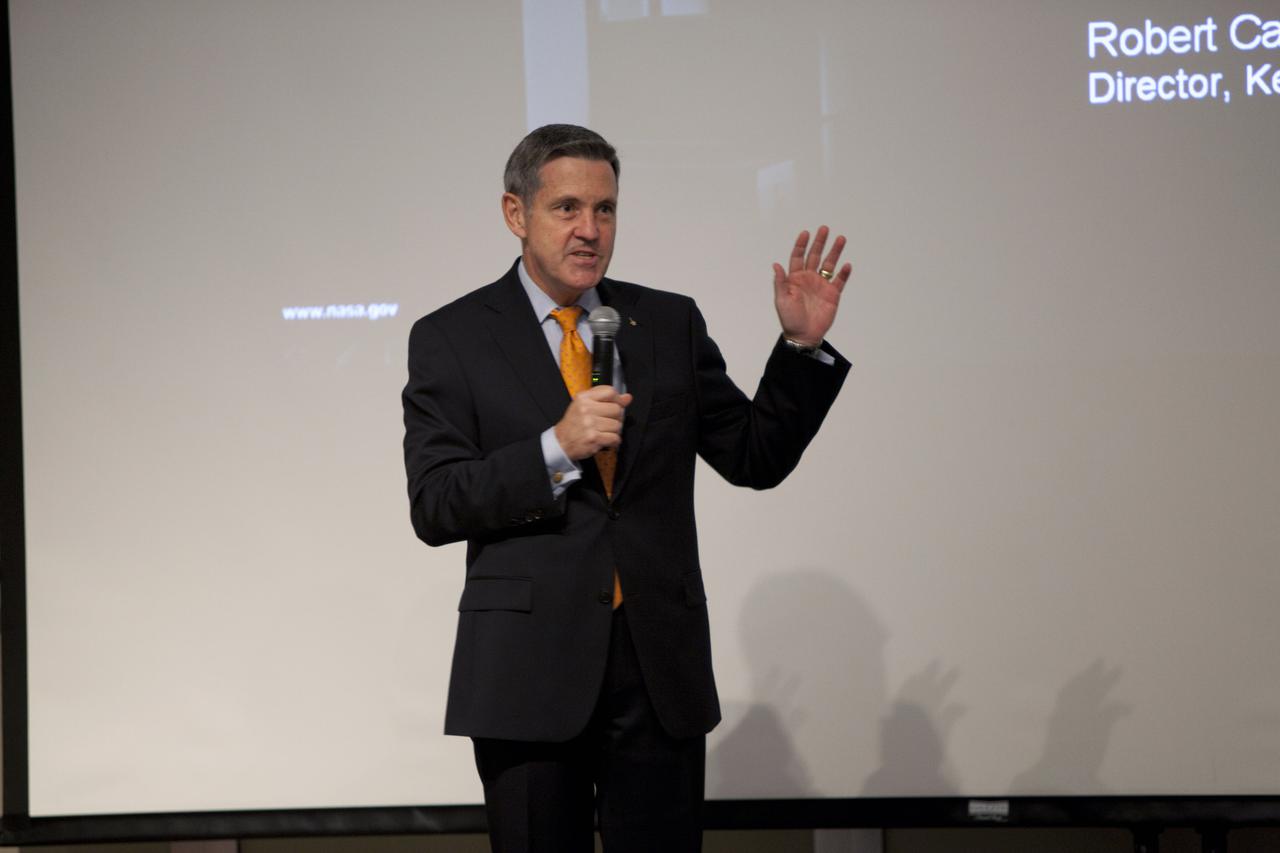
CAPE CANAVERAL, Fla. – NASA Kennedy Space Center Director Bob Cabana addresses guests at the annual Community Leaders Breakfast held in the Debus Center at Kennedy's Visitor Complex in Florida. Community leaders, business executives, educators, community organizers and state and local government officials heard NASA Administrator Charlie Bolden, Kennedy Space Center Director Bob Cabana, and other senior Kennedy managers provide an overview of the future of the space center. Photo credit: NASA_Dimitri Gerondidakis
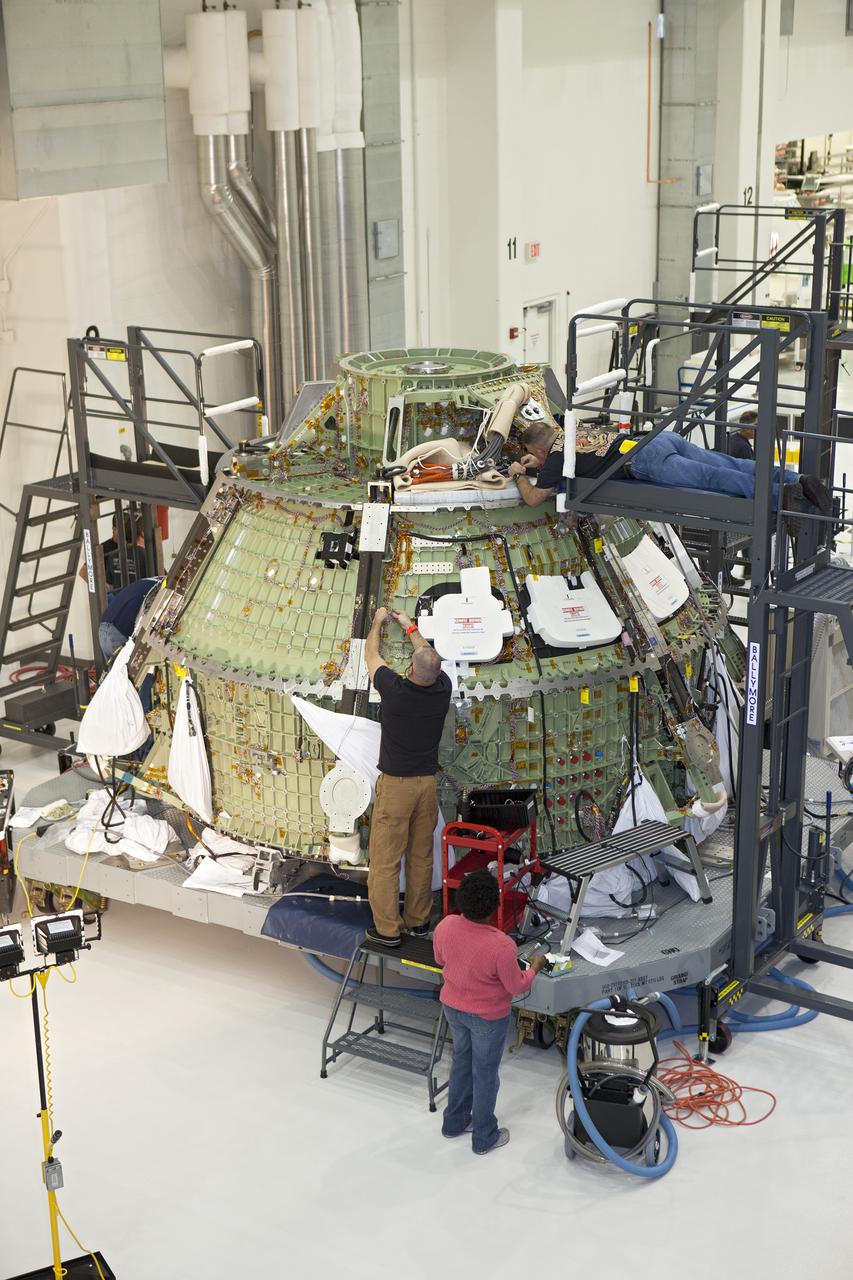
CAPE CANAVERAL, Fla. – Inside the Operations and Checkout Building high bay at NASA’s Kennedy Space Center in Florida, technicians work on the Orion crew module. Orion is being prepared for Exploration Flight Test 1, or EFT-1. Orion is the exploration spacecraft designed to carry crews to space beyond low Earth orbit. It will provide emergency abort capability, sustain the crew during the space travel and provide safe re-entry from deep space return velocities. Orion’s first unpiloted test flight is scheduled to launch in 2014 atop a United Launch Alliance Delta IV heavy rocket. A second uncrewed flight test is scheduled for 2017 on the Space Launch System rocket. For more information, visit http:__www.nasa.gov_orion. Photo credit: NASA_Dimitri Gerondidakis
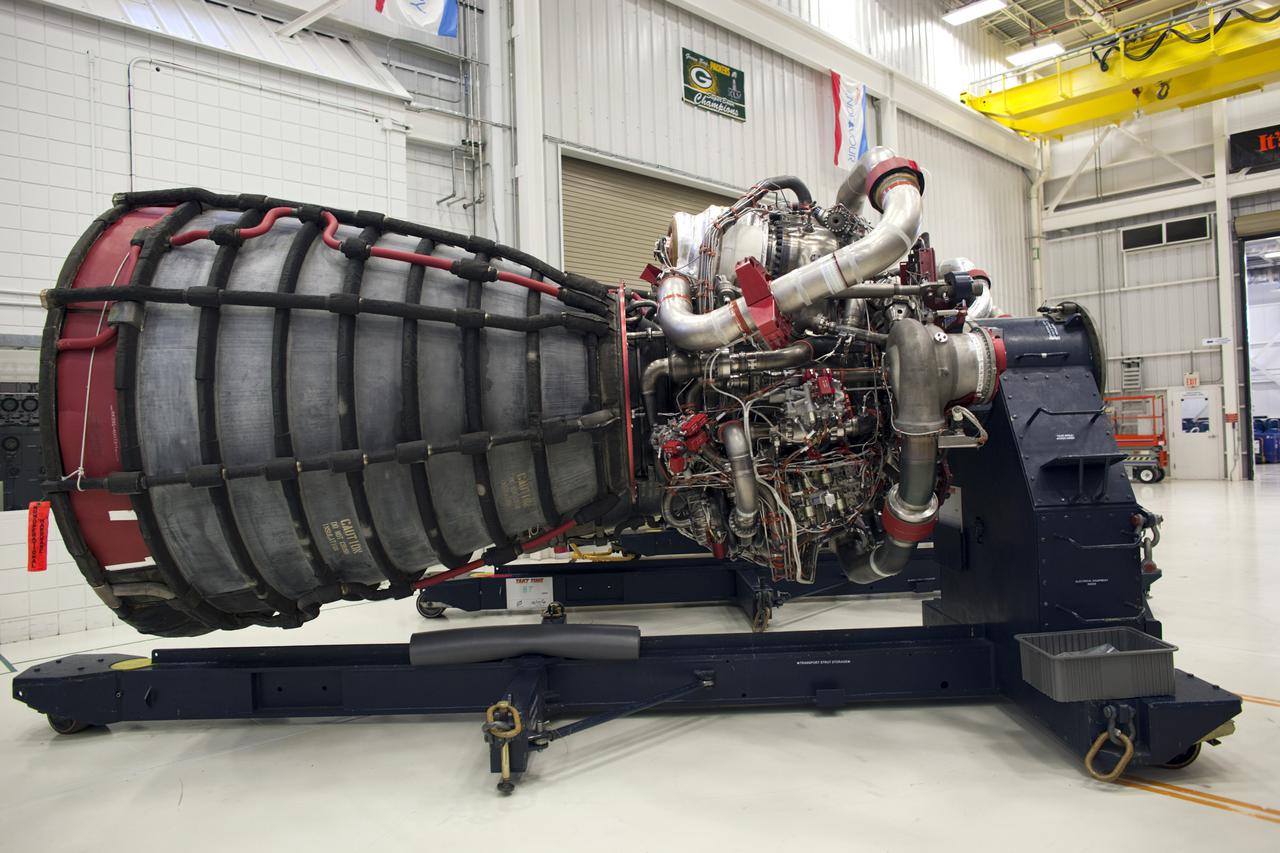
CAPE CANAVERAL, Fla. – At NASA’s Kennedy Space Center in Florida, a Pratt Whitney Rocketdyne space shuttle main engine (SSME) sits on a stand inside the Engine Shop. For the first time, all 15 main engines are in the Engine Shop at the same time. They are being prepared for shipment to NASA's Stennis Space Center in Mississippi for storage following the completion of the Space Shuttle Program. The engines are being repurposed for use on NASA’s Space Launch System heavy lift rocket. Photo credit: NASA_Dimitri Gerondidakis
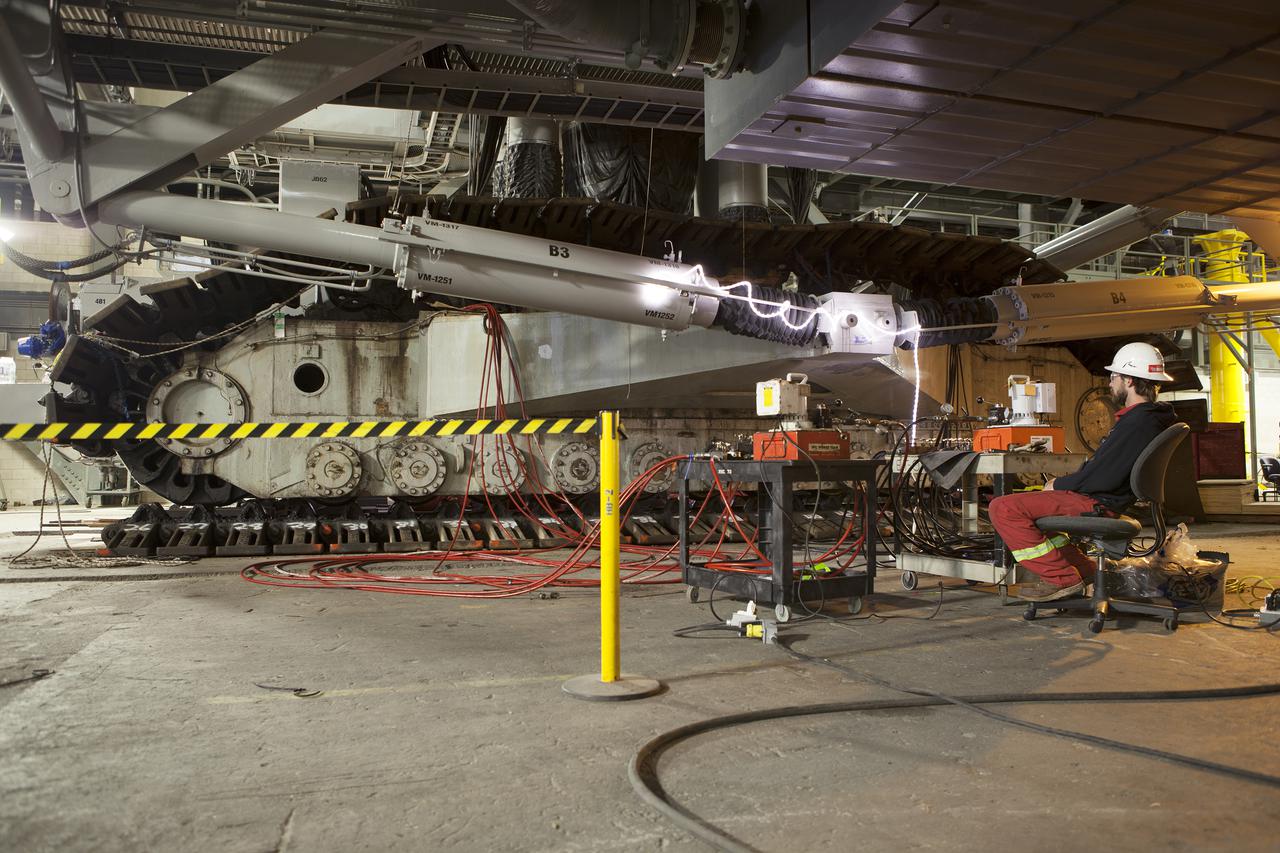
CAPE CANAVERAL, Fla. – Inside the Vehicle Assembly Building at NASA’s Kennedy Space Center in Florida, a technician monitors the progress as the B and D truck sections of crawler-transporter 2, or CT-2, are raised up to prepare for installation of new roller bearing assemblies. Work continues in high bay 2 to upgrade CT-2. The modifications are designed to ensure CT-2’s ability to transport launch vehicles currently in development, such as the agency’s Space Launch System, to the launch pad. The Ground Systems Development and Operations Program office at Kennedy is overseeing the upgrades. For more than 45 years the crawler-transporters were used to transport the mobile launcher platform and the Apollo-Saturn V rockets and, later, space shuttles to Launch Pads 39A and B. For more information, visit: http:__www.nasa.gov_exploration_systems_ground_crawler-transporter. Photo credit: NASA_Dimitri Gerondidakis
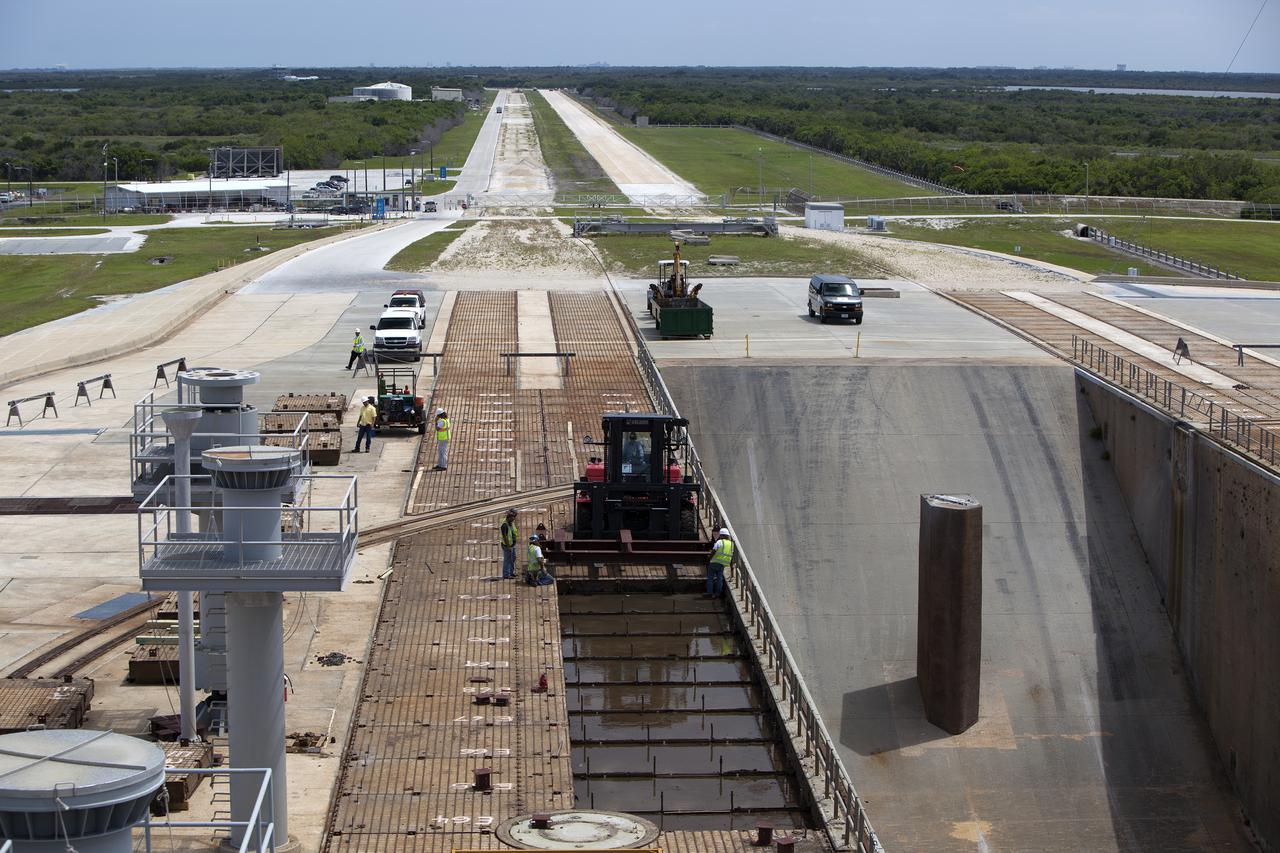
CAPE CANAVERAL, Fla. – At Launch Pad 39B at NASA’s Kennedy Space Center in Florida, an aerial view shows the progress as construction workers remove crawler track panels from the pad’s surface. The concrete surface beneath the panels and the catacomb roof below will be inspected for water damage and repaired. There are 176 panels, each weighing about 30,000 pounds that will be removed. Launch Pad 39B is being refurbished to support NASA’s Space Launch System and other launch vehicles. The Ground Systems Development and Operations, or GSDO, Program office at Kennedy is leading the center’s transformation to safely handle a variety of rockets and spacecraft. For more information about GSDO, visit: http:__go.nasa.gov_groundsystems. Photo credit: NASA_Dimitri Gerondidakis
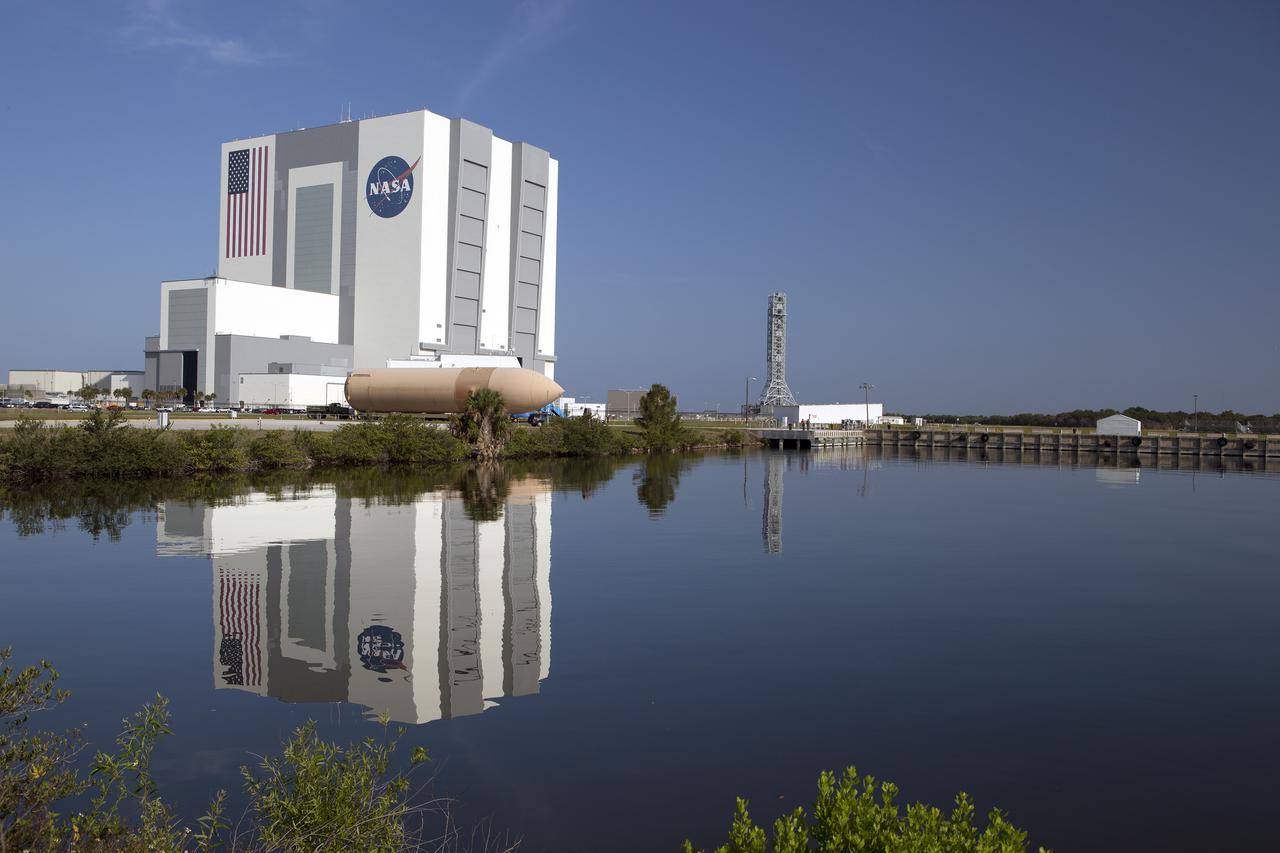
CAPE CANAVERAL, Fla. – An orange flight test article space shuttle external fuel tank, or ET, awaits transport from NASA's Kennedy Space Center in Florida to the Wings of Dreams Aviation Museum located at Keystone Heights Airport in North Central Florida. Weighing in at 58,000 pounds unfueled and standing more than 15-stories tall, the ET was referred to as the 'backbone' of the space shuttle. Its job was to hold about 535,000 gallons of super-cold liquid hydrogen and liquid oxygen. It also absorbed the thrust loads produced at launch by the orbiter and the solid rocket boosters, or SRBs. Also joining the ET at Wings of Dreams is an ET transporter, the crew transport vehicle, crew hatch access vehicle, SRB aft skirt and SRB frustum. Thousands of unique space shuttle era artifacts are being allocated to facilities across the country for their new missions to educate and inspire America's next generation of explorers. Photo credit: NASA_Dimitri Gerondidakis
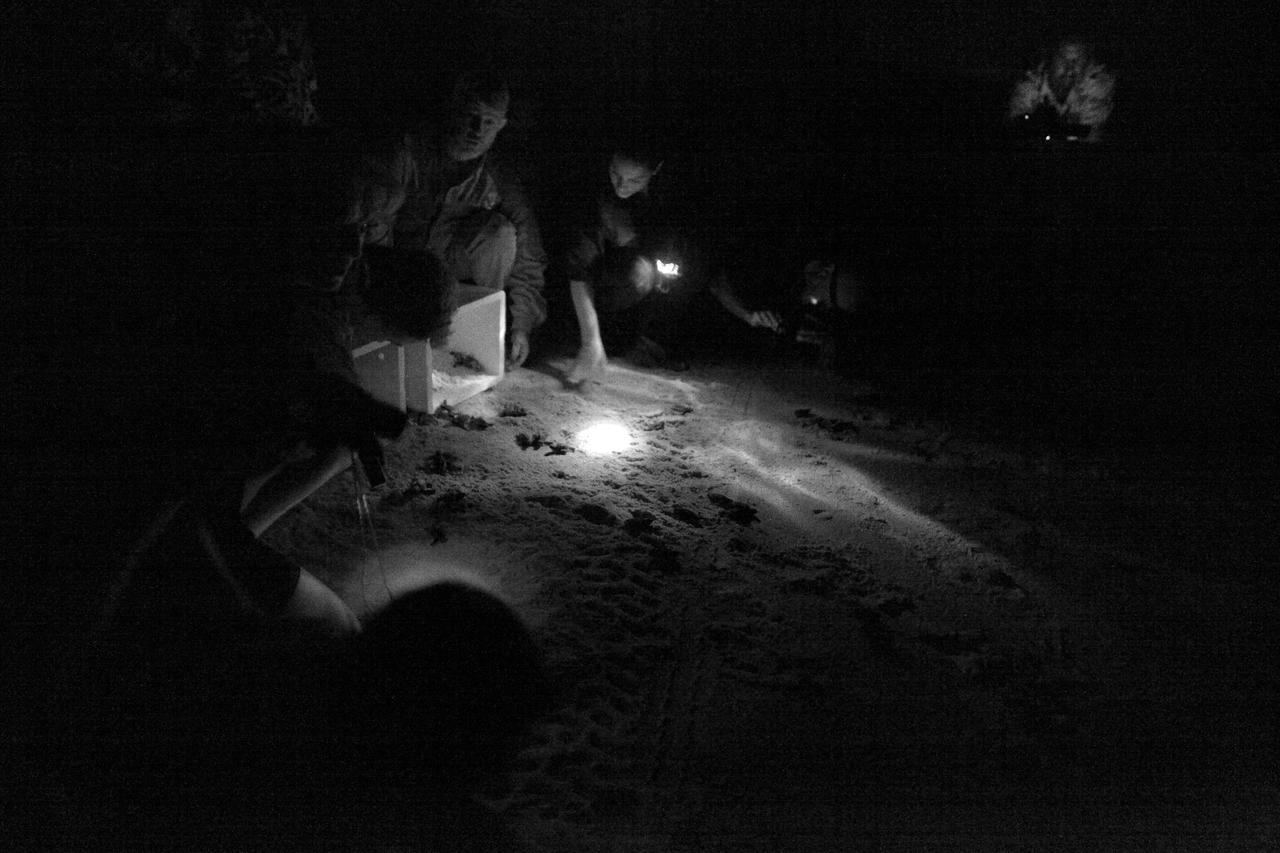
CAPE CANAVERAL, Fla. -- Hatchlings from endangered loggerhead turtle eggs, brought from beaches along the northern U.S. Gulf Coast, are being released into the Atlantic Ocean at Playalinda Beach, adjacent to the Merritt Island National Wildlife Refuge within NASA's Kennedy Space Center in Florida. The release and relocation work is part of an effort by the U.S. Fish and Wildlife Service, the Florida Fish and Wildlife Conservation Commission, the National Park Service, NOAA, FedEx and conservationists to help minimize the risk to this year's sea turtle hatchlings from impacts of the BP Deepwater Horizon oil spill in the Gulf of Mexico. This plan involves carefully moving an anticipated 700 nests deposited on Florida Panhandle and Alabama beaches during the next several months. Note: The photos were shot using an infrared filter to protect the hatchlings. Photo credit: NASA_Dimitri Gerondidakis
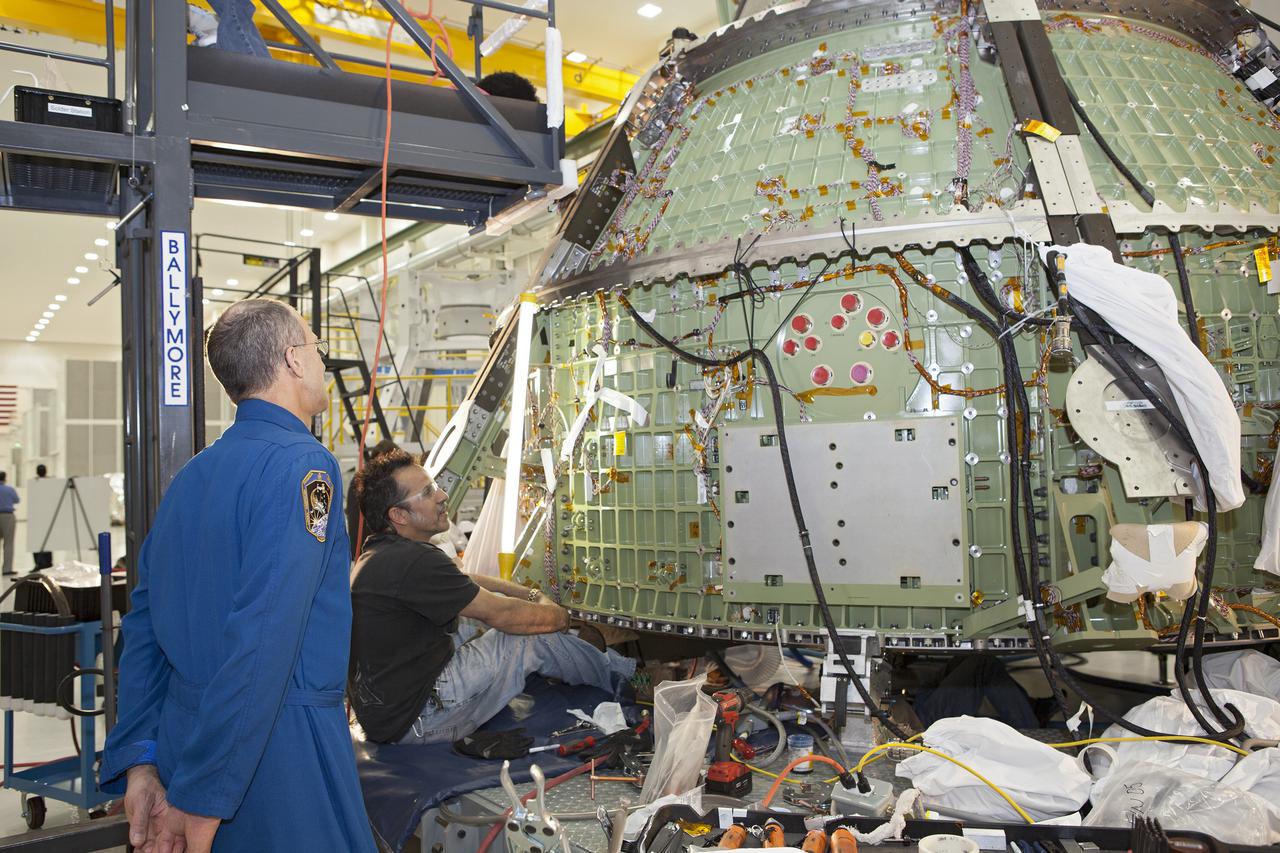
CAPE CANAVERAL, Fla. – Inside the Operations and Checkout Building high bay at NASA’s Kennedy Space Center in Florida, astronaut Don Pettit watches as a technician works on the Orion crew module. Orion is being prepared for Exploration Flight Test 1, or EFT-1. Orion is the exploration spacecraft designed to carry crews to space beyond low Earth orbit. It will provide emergency abort capability, sustain the crew during the space travel and provide safe re-entry from deep space return velocities. Orion’s first unpiloted test flight is scheduled to launch in 2014 atop a United Launch Alliance Delta IV heavy rocket. A second uncrewed flight test is scheduled for 2017 on the Space Launch System rocket. For more information, visit http:__www.nasa.gov_orion. Photo credit: NASA_Dimitri Gerondidakis
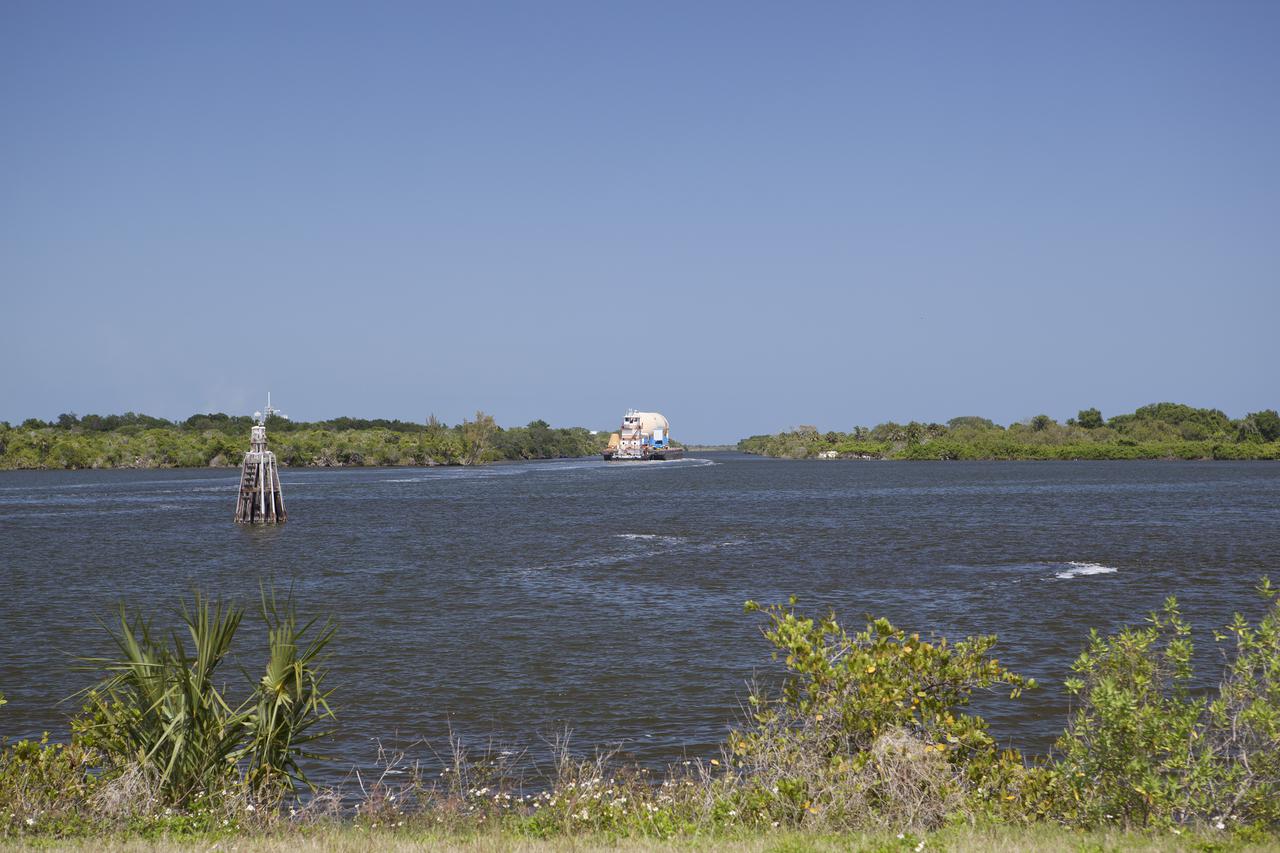
CAPE CANAVERAL, Fla. – A space shuttle orange flight test article external fuel tank, or ET, an ET transporter, crew hatch access vehicle, crew transport vehicle, solid rocket booster, or SRB, aft skirt and SRB frustum are loaded onto a barge and beginning the first leg of their journey down the Banana River from NASA's Kennedy Space Center in Florida to the Wings of Dreams Aviation Museum located at Keystone Heights Airport in North Central Florida. Thousands of unique space shuttle era artifacts are being allocated to facilities across the country for their new missions to educate and inspire America's next generation of explorers. Photo credit: NASA_Dimitri Gerondidakis

CAPE CANAVERAL, Fla. - University students gather for the opening ceremony of NASA's first Lunabotics Mining Competition at the Kennedy Space Center Visitor Complex's Astronaut Hall of Fame. Twenty-two teams from around the country will maneuver their remote controlled or autonomous excavators, called lunabots, in about 60 tons of ultra-fine simulated lunar soil, called BP-1. The competition is an Exploration Systems Mission Directorate project managed by Kennedy's Education Division. The purpose is to engage and retain students in science, technology, engineering and mathematics, or STEM, fields. It also provides a competitive environment that could result in innovative ideas and solutions for NASA's future excavation of the moon. Photo credit: NASA_Dimitri Gerondidakis
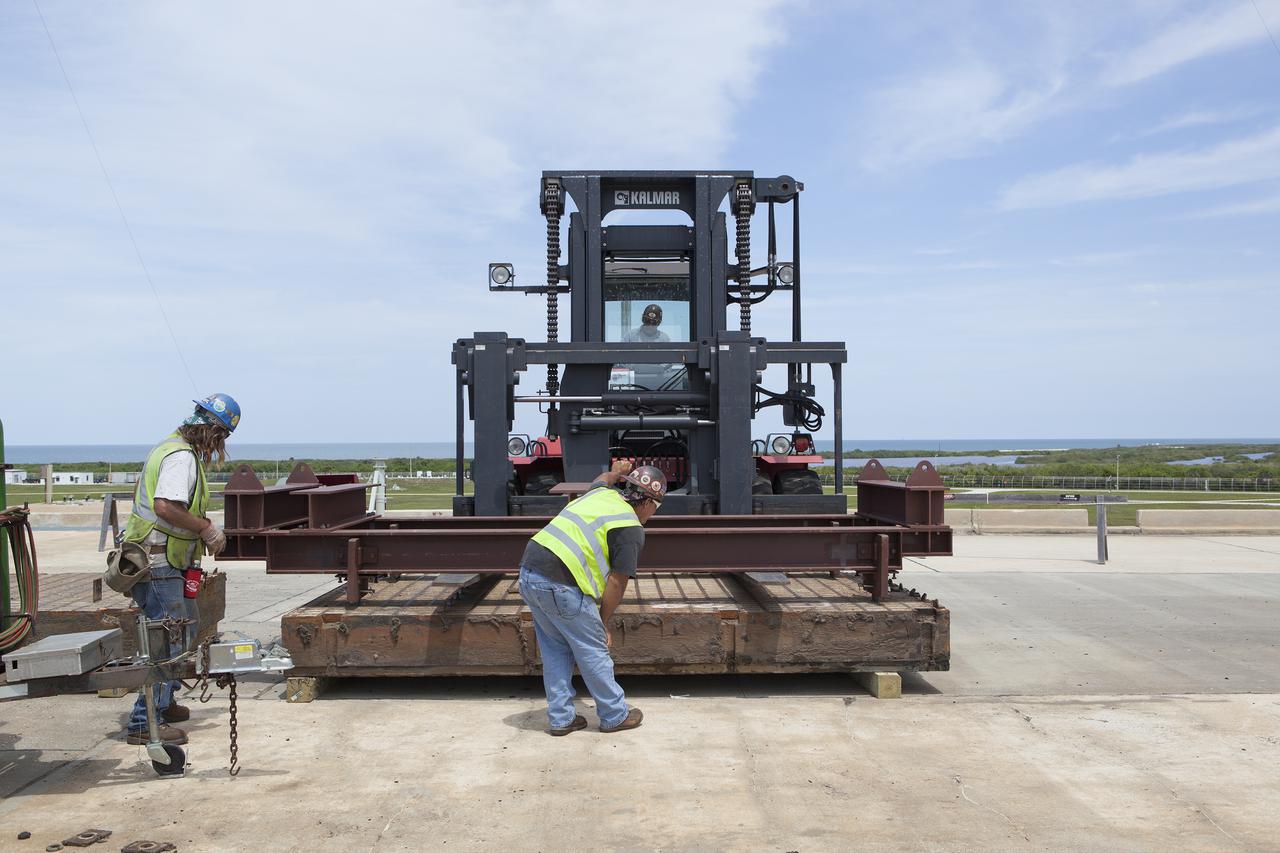
CAPE CANAVERAL, Fla. – At Launch Pad 39B at NASA’s Kennedy Space Center in Florida, a crawler track panel has been removed from the pad’s surface and is being stored in an area away from the construction work. The concrete surface beneath the panels and the catacomb roof below will be inspected for water damage and repaired. There are 176 panels, each weighing about 30,000 pounds that will be removed. Launch Pad 39B is being refurbished to support NASA’s Space Launch System and other launch vehicles. The Ground Systems Development and Operations, or GSDO, Program office at Kennedy is leading the center’s transformation to safely handle a variety of rockets and spacecraft. For more information about GSDO, visit: http:__go.nasa.gov_groundsystems. Photo credit: NASA_Dimitri Gerondidakis
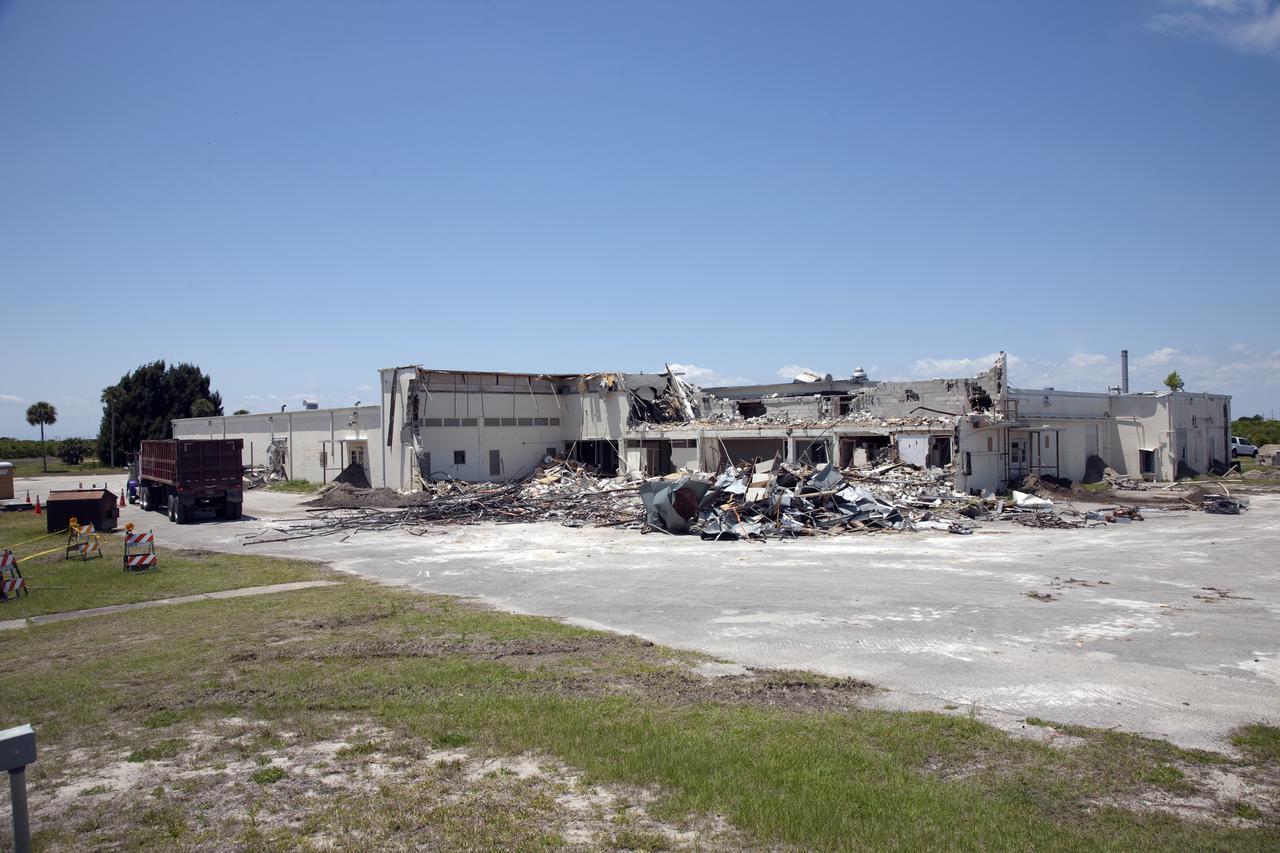
CAPE CANAVERAL, Fla. – At Cape Canaveral Air Force Station in Florida, deconstruction of the Mercury Mission Control Center is under way. The original building, constructed between 1956 and 1958, was last modified in 1963. The center succumbed to the two worst enemies of structures along the space coast - time and salt air - necessitating that it be demolished as a safety measure. The facility served as mission control during all the Project Mercury missions, as well as the first three flights of the Gemini Program. The center housed the flight controllers whose duty was to take over flight control after liftoff and follow it through until splashdown. Additionally, it supported vehicle checkout, spacecraft tracking, and astronaut training. With Gemini IV, mission control moved to Houston, and the facility took on the roles of launch control and tracking station. In 1999, much of the equipment and furnishings from the flight control area was moved to Kennedy Space Center's Visitor Complex. A re-created mission control room currently is on display in the complex's Dr. Kurt H. Debus Conference Facility. Speegle II of Cocoa, Fla., was awarded the contract for the deconstruction project. Frank-Lin Excavating is performing the demolition for Sunrise Systems of Brevard, a subcontractor to Speegle II. Photo credit: NASA_Dimitri Gerondidakis
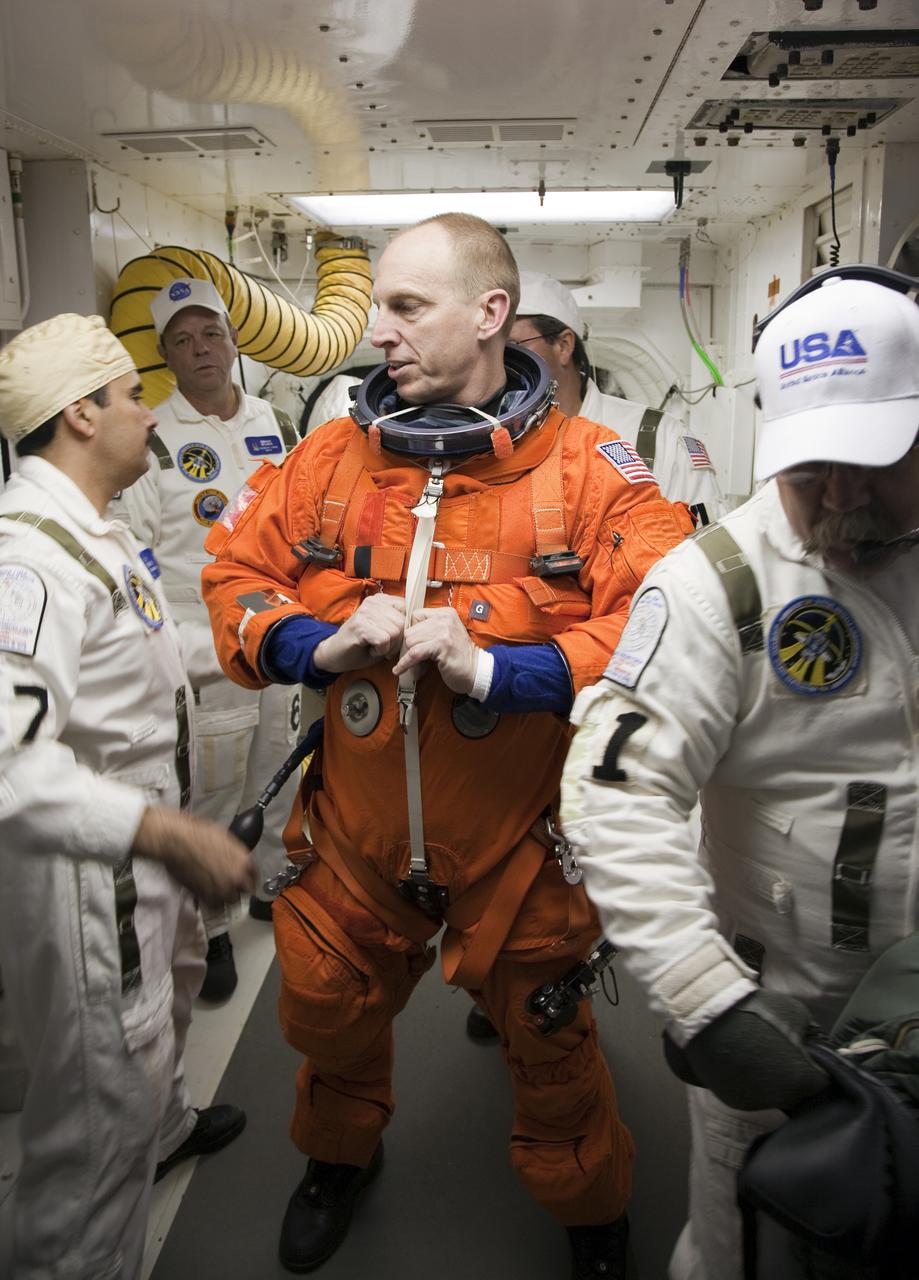
CAPE CANAVERAL, Fla. - At Launch Pad 39A at NASA's Kennedy Space Center in Florida, STS-131 Mission Specialist Clayton Anderson prepares to enter space shuttle Discovery from the pad's White Room. The crew members of Discovery's STS-131 mission, dressed in their launch-and-entry suits, are participating in the Terminal Countdown Demonstration Test, or TCDT, a dress rehearsal for launch. TCDT includes training on the emergency exit systems at the launch pad, driving practice of the M-113 armored personnel carrier and a simulated launch countdown. The crew will deliver the multi-purpose logistics module Leonard, filled with resupply stowage platforms and science racks, to the International Space Station. STS-131, targeted for launch on April 5, will be the 33rd shuttle mission to the station and the 131st shuttle mission overall. For information on the STS-131 mission and crew, visit http:__www.nasa.gov_mission_pages_shuttle_shuttlemissions_sts131_index.htm. Photo credit: NASA_Dimitri Gerondidakis
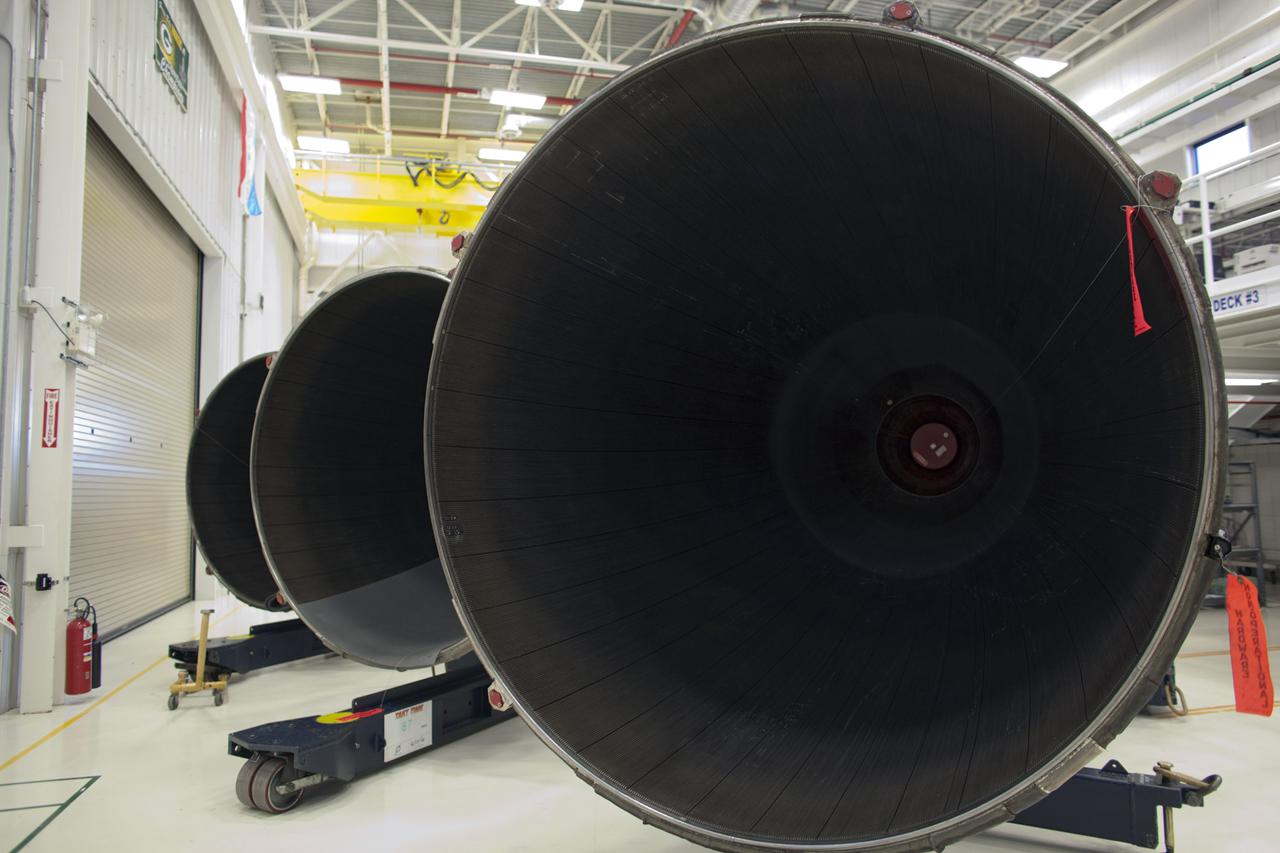
CAPE CANAVERAL, Fla. – At NASA’s Kennedy Space Center in Florida, the large engine bells of several Pratt Whitney Rocketdyne space shuttle main engines (SSMEs) are lined up inside the Engine Shop. For the first time, all 15 main engines are in the Engine Shop at the same time. They are being prepared for shipment to NASA's Stennis Space Center in Mississippi for storage following the completion of the Space Shuttle Program. The engines are being repurposed for use on NASA’s Space Launch System heavy lift rocket. Photo credit: NASA_Dimitri Gerondidakis
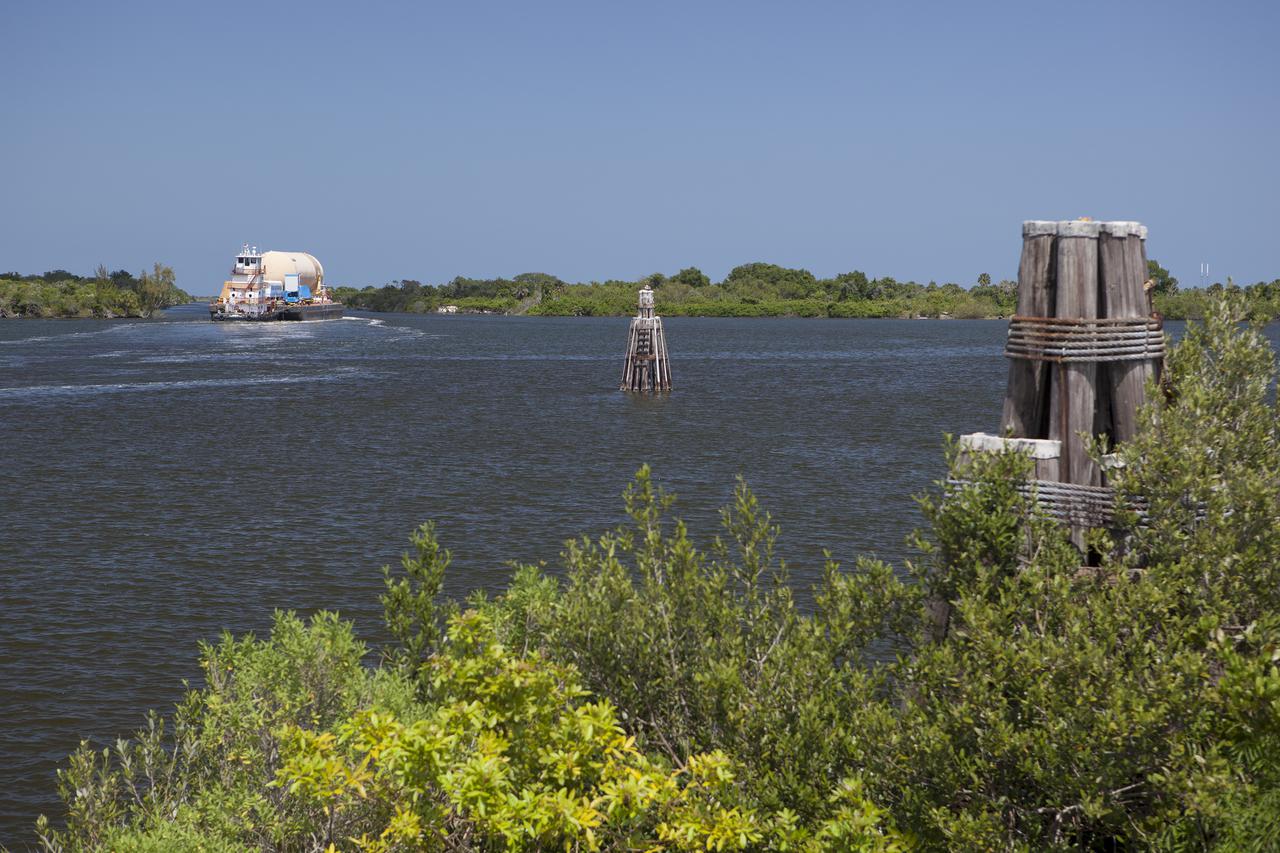
CAPE CANAVERAL, Fla. -- A space shuttle orange flight test article external fuel tank, or ET, an ET transporter, crew hatch access vehicle, crew transport vehicle, solid rocket booster, or SRB, aft skirt and SRB frustum are loaded onto a barge and beginning the first leg of their journey down the Banana River from NASA's Kennedy Space Center in Florida to the Wings of Dreams Aviation Museum located at Keystone Heights Airport in North Central Florida. Thousands of unique space shuttle era artifacts are being allocated to facilities across the country for their new missions to educate and inspire America's next generation of explorers. Photo credit: NASA_Dimitri Gerondidakis
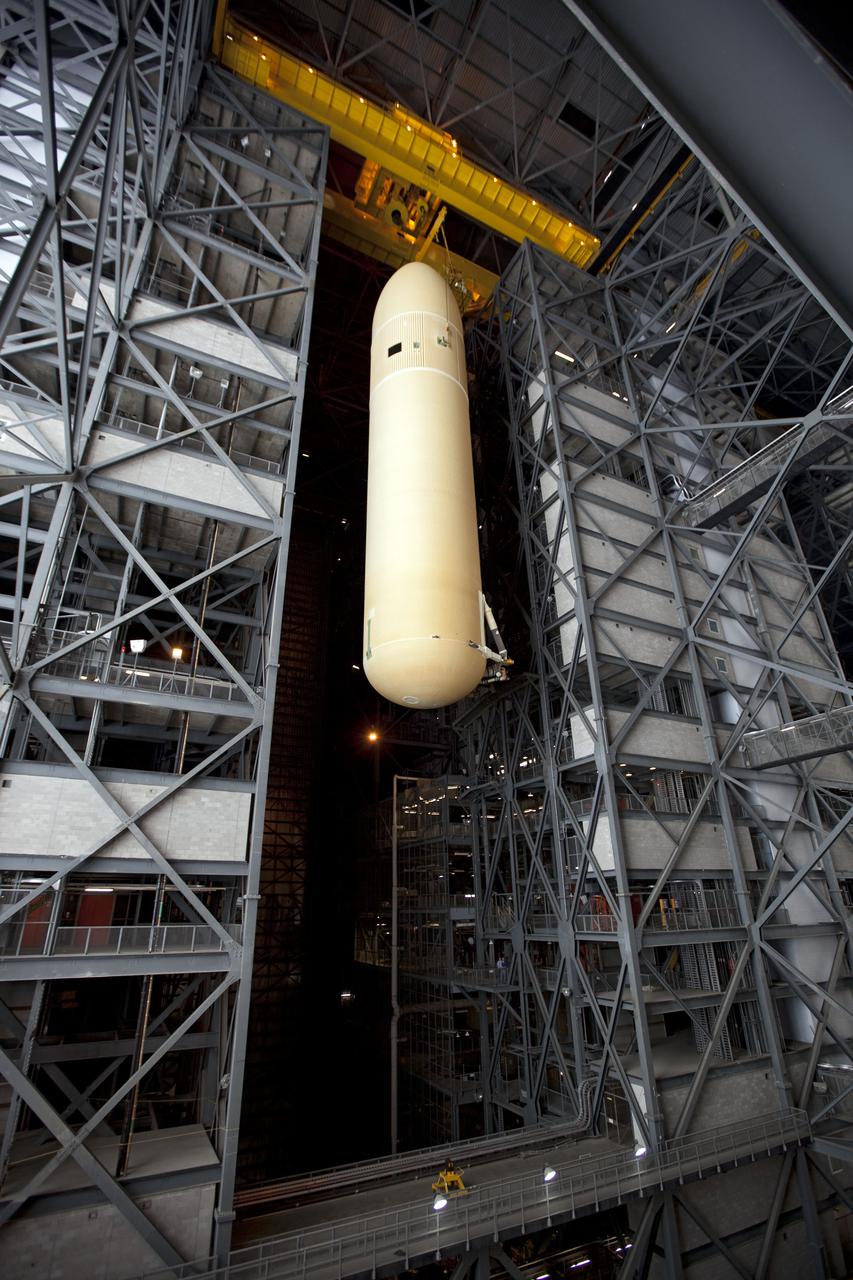
CAPE CANAVERAL, Fla. -- External Tank-138 is lifted high above the transfer aisle in the Vehicle Assembly Building at NASA's Kennedy Space Center in Florida, prior to its move to a test cell where it will be checked before launch. ET-138, the last newly manufactured tank, was originally designated to fly on Endeavour's STS-134 mission to the International Space Station, but later reassigned to fly on space shuttle Atlantis' final mission, STS-135. For information, visit www.nasa.gov_shuttle. Photo credit: NASA_Dimitri Gerondidakis
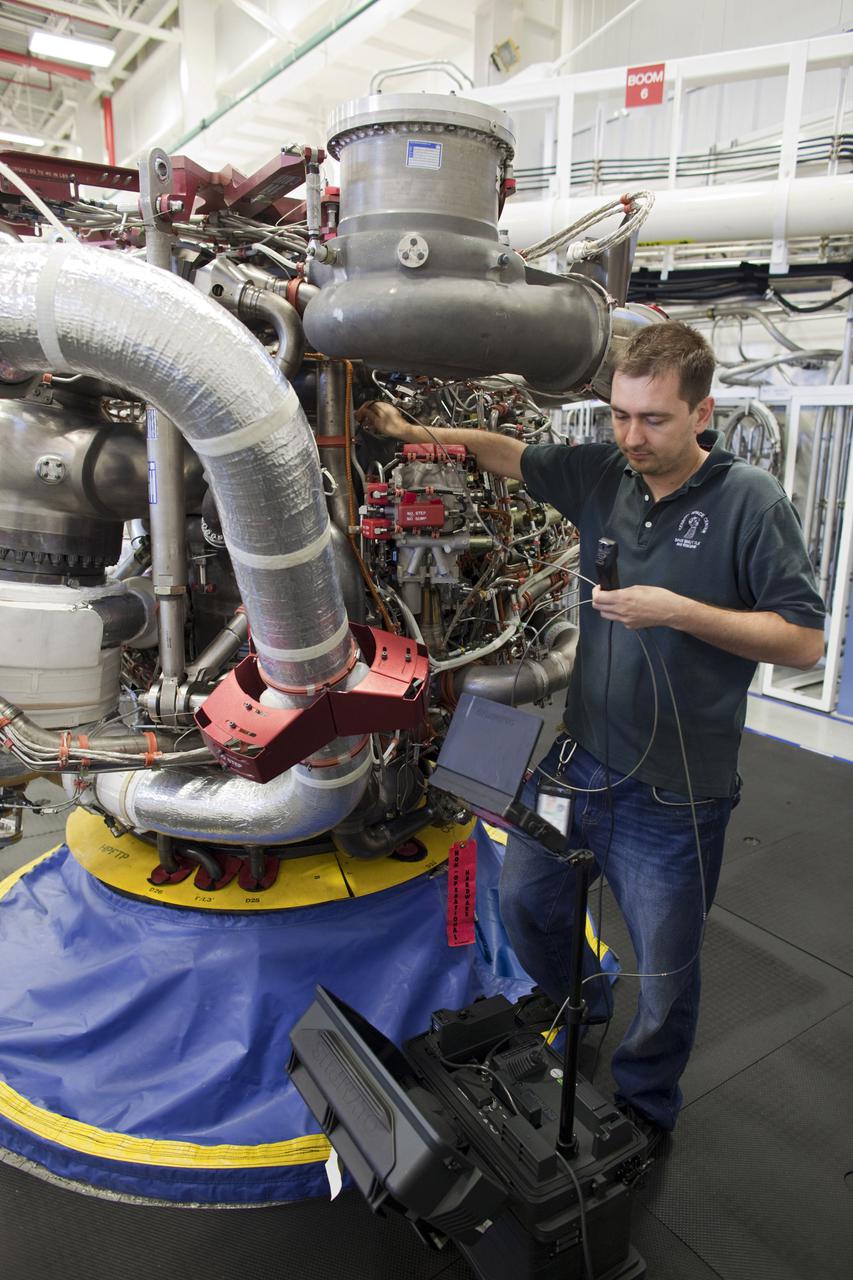
CAPE CANAVERAL, Fla. – Inside the Engine Shop at NASA’s Kennedy Space Center in Florida, a technician performs a boroscope test on a high pressure oxidizer pump on one of the Pratt Whitney Rocketdyne space shuttle main engines (SSMEs) positioned in a test cell. For the first time, all 15 main engines are in the Engine Shop at the same time. They are being prepared for shipment to NASA's Stennis Space Center in Mississippi for storage following the completion of the Space Shuttle Program. The engines are being repurposed for use on NASA’s Space Launch System heavy lift rocket. Photo credit: NASA_Dimitri Gerondidakis
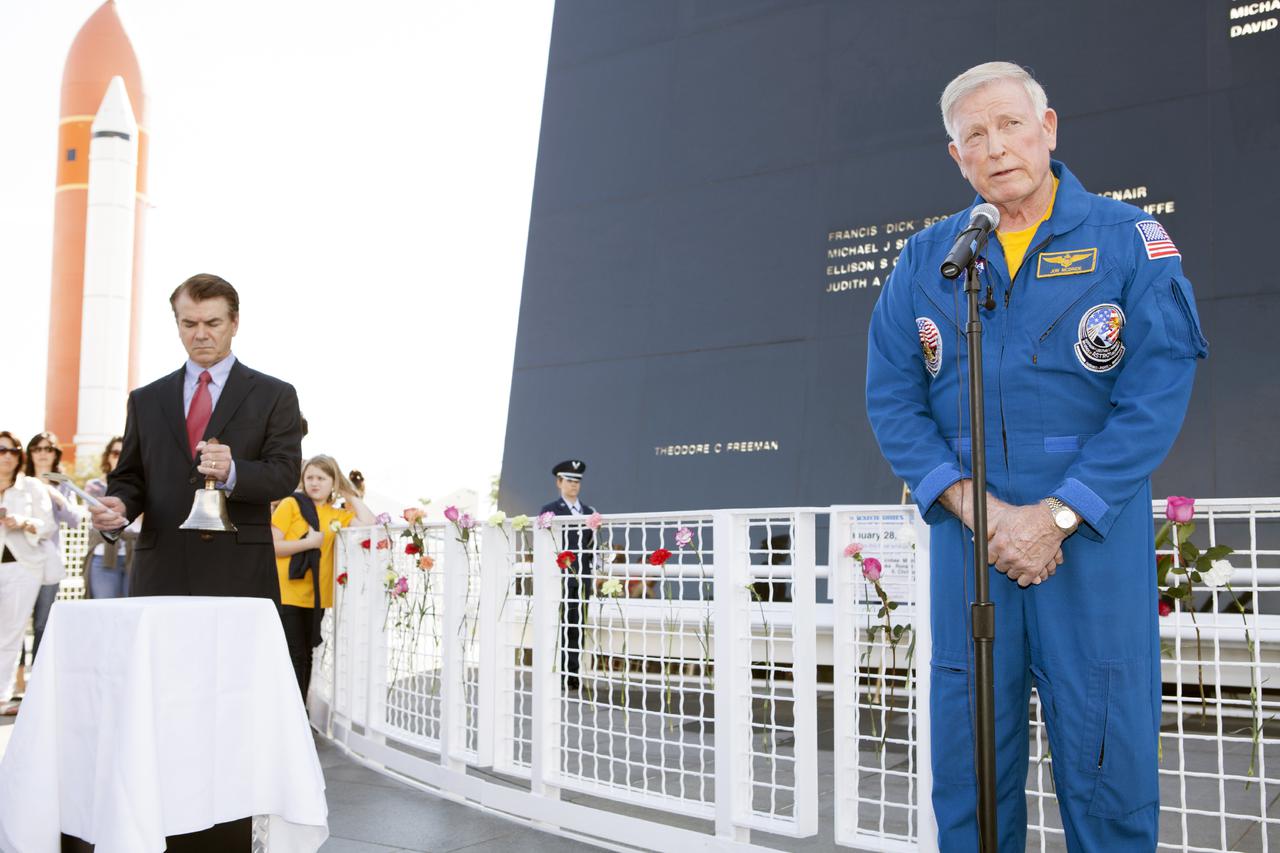
CAPE CANAVERAL, Fla. – Flowers are placed at the Astronauts Memorial Foundation's Space Mirror Memorial at NASA's Kennedy Space Center Visitor Complex on the 28th anniversary of the space shuttle Challenger accident. The day of the accident in 1986 dawned bitterly cold. Temperatures hovered just a few degrees above freezing as Challenger and its seven astronauts lifted off on the STS-51L mission. The flight ended just 73 seconds later when an O-ring in the right solid rocket booster failed, causing a fireball that led to the loss of the vehicle and crew: Commander Francis Scobee, Pilot Michael Smith, Mission Specialists Judith Resnik, Ellison Onizuka and Ronald McNair, and Payload Specialists Gregory Jarvis and Sharon Christa McAuliffe, a teacher. To learn more about the Space Shuttle Program, visit http:__www.nasa.gov_mission_pages_shuttle_main_index.html. To read the astronauts' NASA biographies, visit http:__www.jsc.nasa.gov_Bios_astrobio_former.html. For information about the AMF, visit http:__www.astronautsmemorial.org_home.html. Photo credit: NASA_Dimitri Gerondidakis
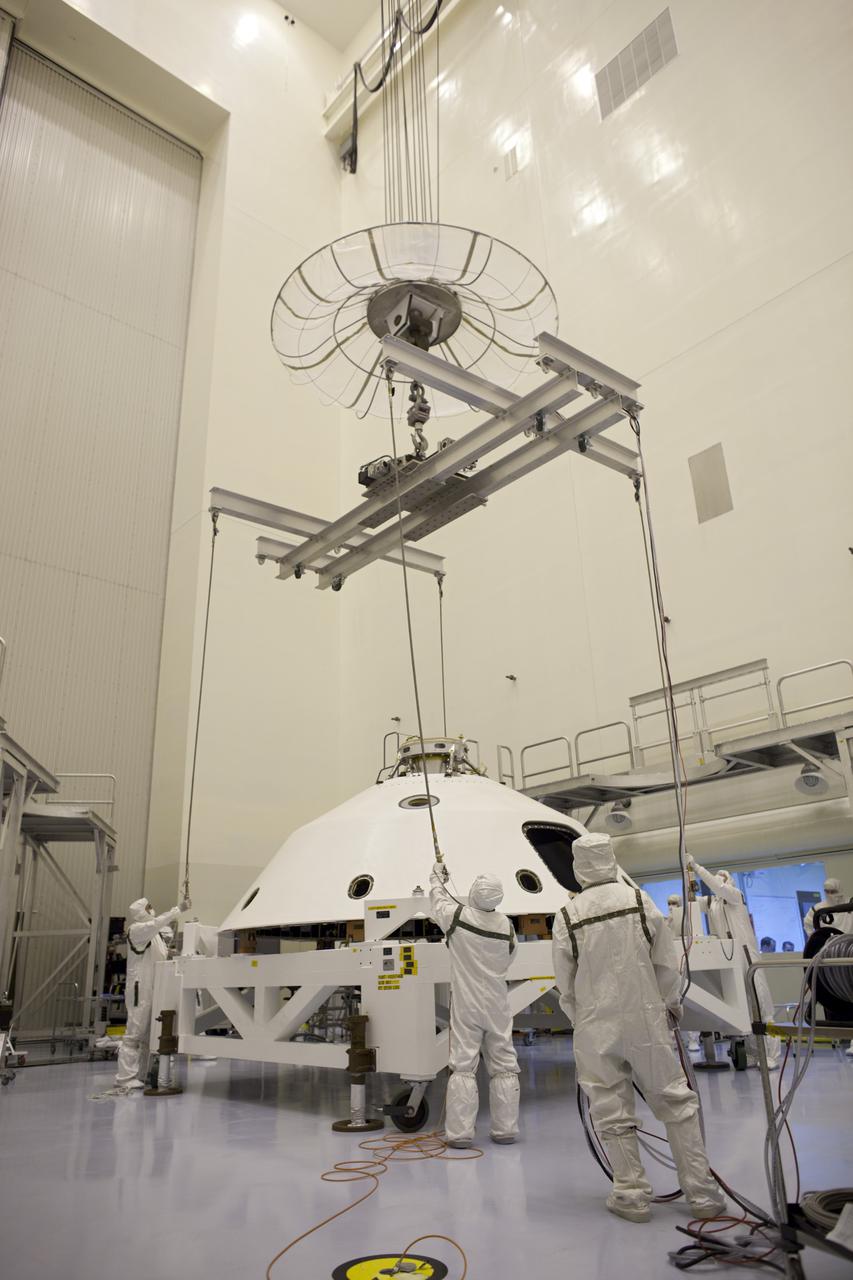
CAPE CANAVERAL, Fla. – In the Payload Hazardous Servicing Facility at NASA's Kennedy Space Center in Florida, technicians attach an overhead crane to the backshell for NASA's Mars Science Laboratory (MSL) rover, Curiosity. The backshell, a protective cover which carries the parachute and several components used during later stages of entry, descent and landing, will be encapsulated over the rover. A United Launch Alliance Atlas V-541 configuration will be used to loft MSL into space. MSL's components include a compact car-sized rover, Curiosity, which has 10 science instruments designed to search for evidence on whether Mars has had environments favorable to microbial life, including chemical ingredients for life. The unique rover will use a laser to look inside rocks and release its gasses so that the rover’s spectrometer can analyze and send the data back to Earth. MSL is scheduled to launch Nov. 25 with a window extending to Dec. 18 and arrival at Mars Aug. 2012. For more information, visit http:__www.nasa.gov_msl. Photo credit: NASA_Dimitri Gerondidakis
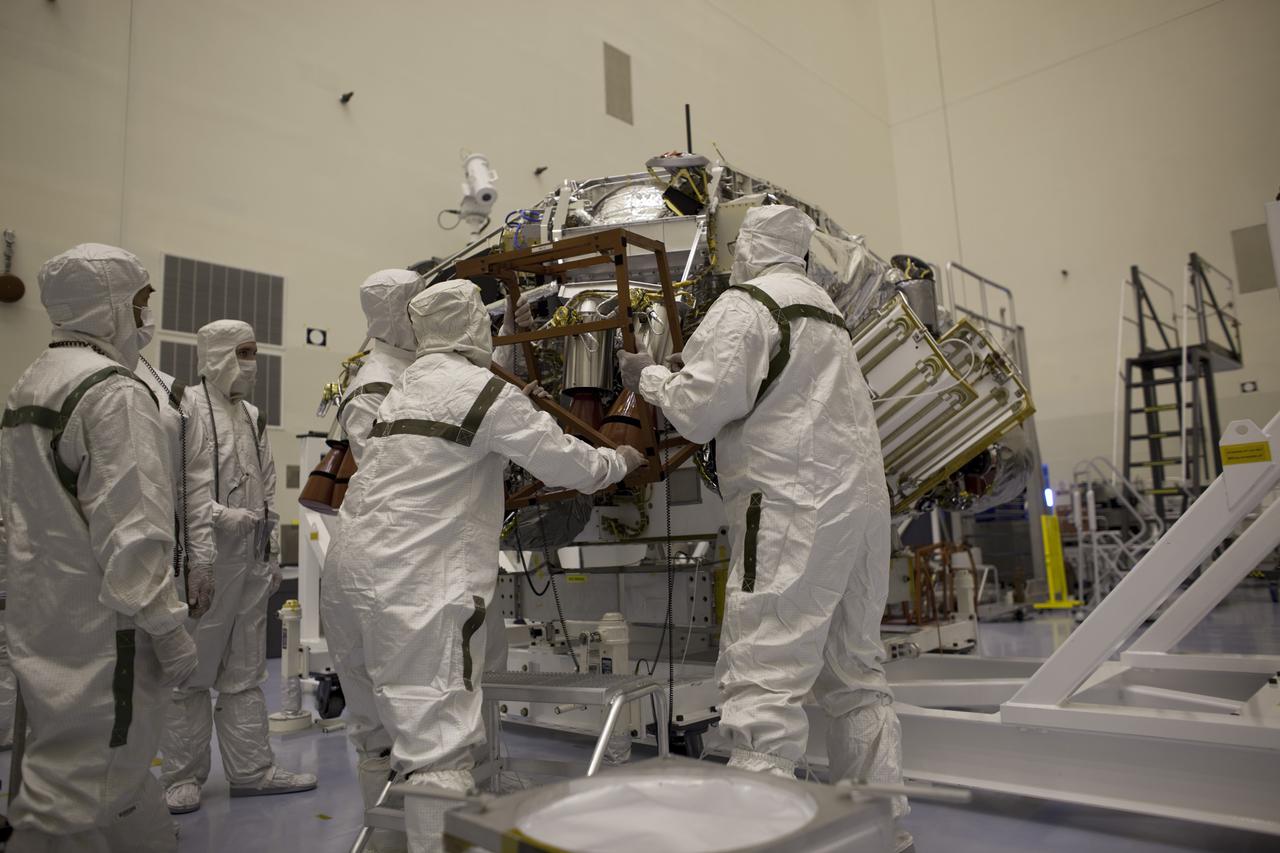
CAPE CANAVERAL, Fla. – In the Payload Hazardous Servicing Facility at NASA's Kennedy Space Center in Florida, technicians dressed in clean room attire, known as 'bunny' suits, prepare the Mars Science Laboratory (MSL) rover, Curiosity, for encapsulation inside a backshell by first removing the protective cage over the rockets on the descent stage. The spacecraft's backshell, a protective cover, carries the parachute and several components used during later stages of entry, descent and landing of the MSL's rover. A United Launch Alliance Atlas V-541 configuration will be used to loft MSL into space. MSL's components include a compact car-sized rover, Curiosity, which has 10 science instruments designed to search for evidence on whether Mars has had environments favorable to microbial life, including chemical ingredients for life. The unique rover will use a laser to look inside rocks and release its gasses so that the rover’s spectrometer can analyze and send the data back to Earth. MSL is scheduled to launch Nov. 25 with a window extending to Dec. 18 and arrival at Mars Aug. 2012. For more information, visit http:__www.nasa.gov_msl. Photo credit: NASA_Dimitri Gerondidakis
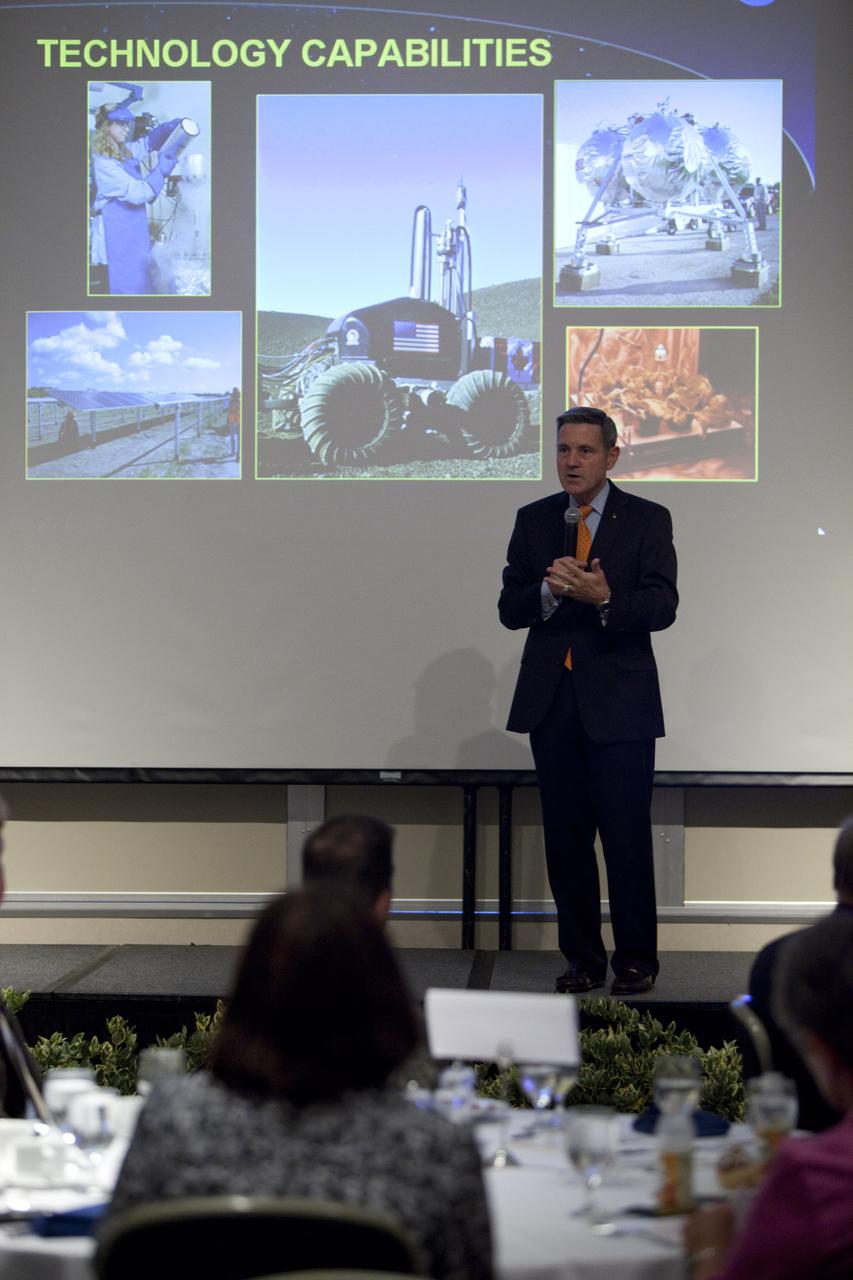
CAPE CANAVERAL, Fla. – NASA Kennedy Space Center Director Bob Cabana addresses guests at the annual Community Leaders Breakfast held in the Debus Center at Kennedy's Visitor Complex in Florida. Community leaders, business executives, educators, community organizers and state and local government officials heard NASA Administrator Charlie Bolden, Kennedy Space Center Director Bob Cabana, and other senior Kennedy managers provide an overview of the future of the space center. Photo credit: NASA_Dimitri Gerondidakis
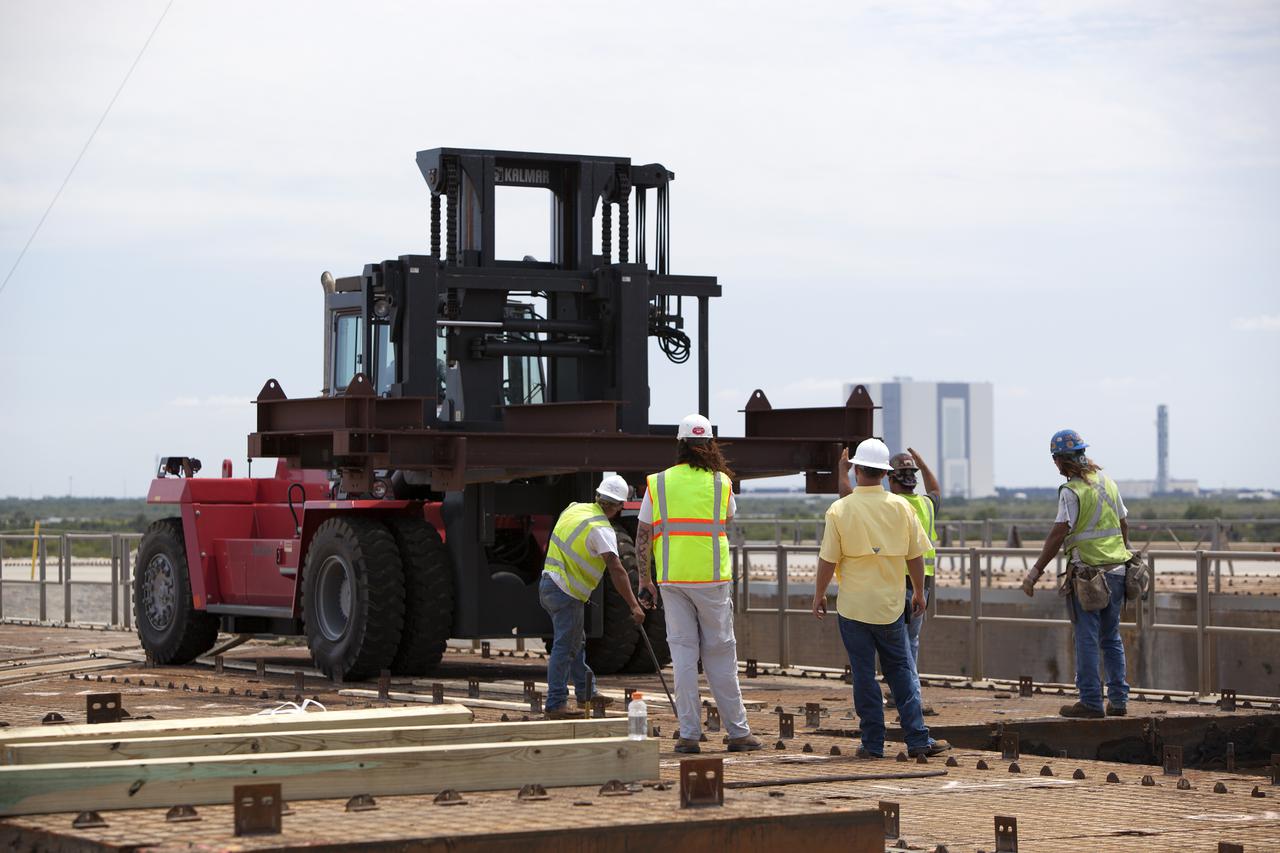
CAPE CANAVERAL, Fla. – At Launch Pad 39B at NASA’s Kennedy Space Center in Florida, removal of the crawler track panels on the pad’s surface is underway. The concrete surface beneath the panels and the catacomb roof below will be inspected for water damage and repaired. There are 176 panels, each weighing about 30,000 pounds that will be removed. Launch Pad 39B is being refurbished to support NASA’s Space Launch System and other launch vehicles. The Ground Systems Development and Operations, or GSDO, Program office at Kennedy is leading the center’s transformation to safely handle a variety of rockets and spacecraft. For more information about GSDO, visit: http:__go.nasa.gov_groundsystems. Photo credit: NASA_Dimitri Gerondidakis
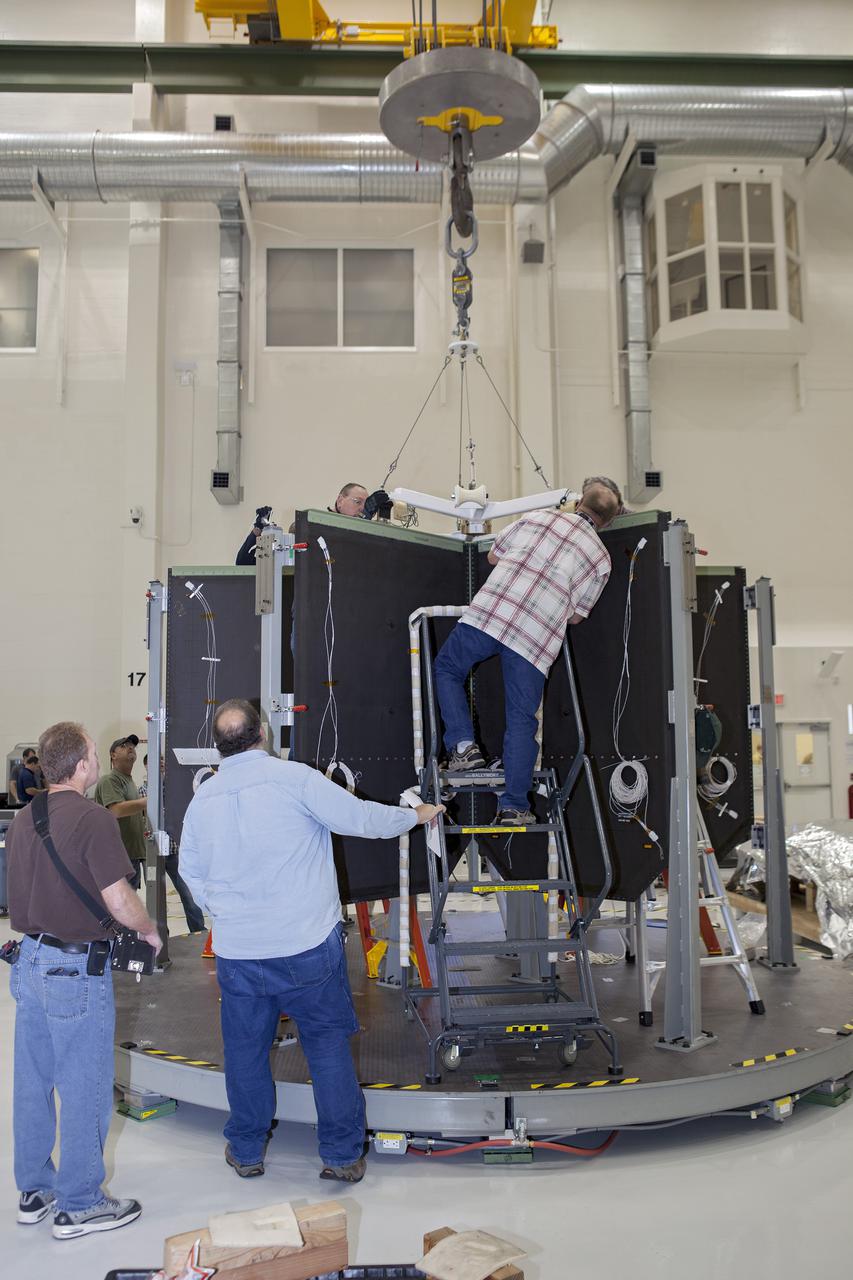
CAPE CANAVERAL, Fla. – Inside the Operations and Checkout Building high bay at NASA’s Kennedy Space Center in Florida, technicians attach a crane to the shear web assembly, or inner core, that will be inserted into the Orion service module. Orion is being prepared for Exploration Flight Test 1, or EFT-1. Orion is the exploration spacecraft designed to carry crews to space beyond low Earth orbit. It will provide emergency abort capability, sustain the crew during the space travel and provide safe re-entry from deep space return velocities. Orion’s first unpiloted test flight is scheduled to launch in 2014 atop a United Launch Alliance Delta IV heavy rocket. A second uncrewed flight test is scheduled for 2017 on the Space Launch System rocket. For more information, visit http:__www.nasa.gov_orion. Photo credit: NASA_Dimitri Gerondidakis

CAPE CANAVERAL, Fla. -- Kennedy Space Center Director Bob Cabana and several members of his leadership team provided an on current and future activities at the Florida spaceport during the annual Community Leaders Briefing. Cabana explained that the space center has a great deal of work going on in support of current and future space program projects. The reports were part of the annual Community Leaders Briefing at the Kurt H. Debus Conference Center at the Kennedy Space Center Visitor Complex attended by local, state and U.S. government representatives, along with individuals from business and industry. Photo credit: NASA_Dimitri Gerondidakis
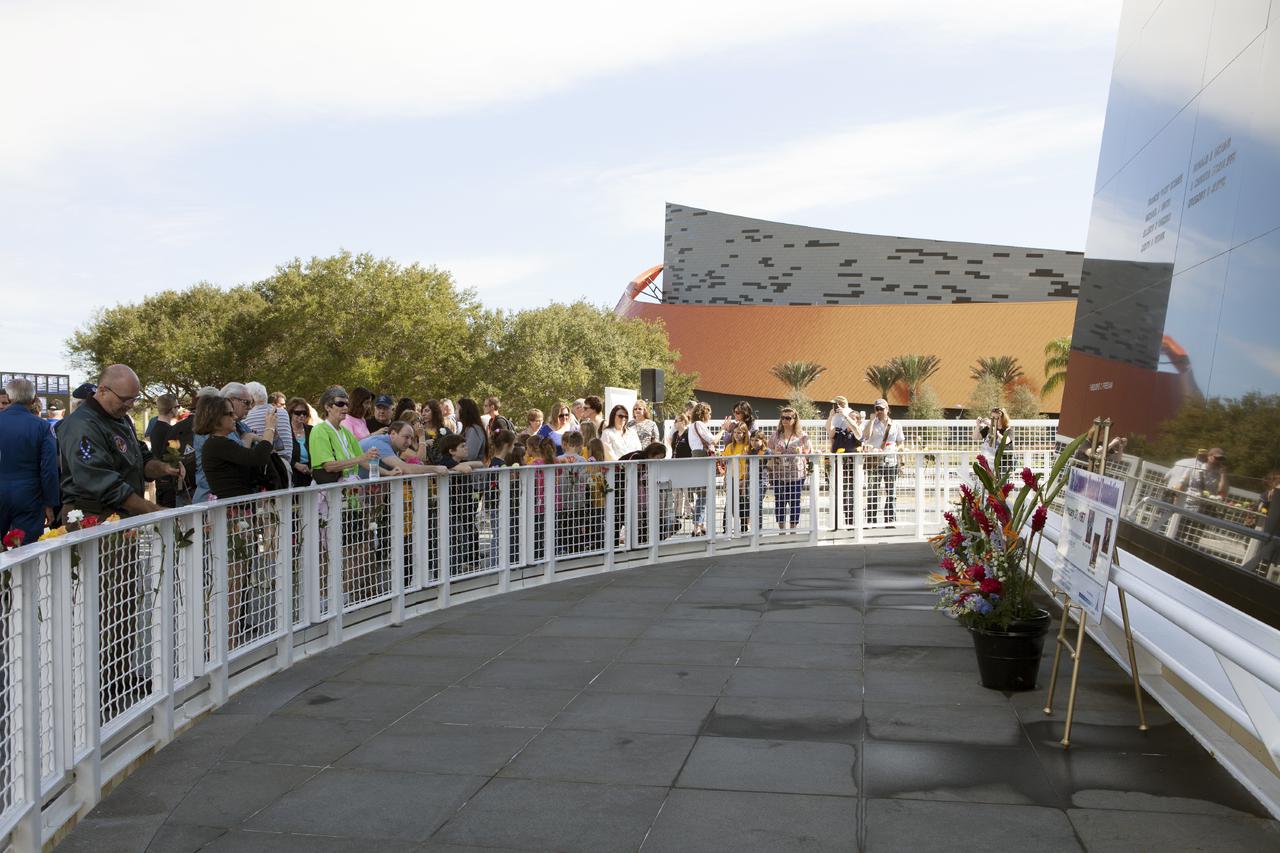
CAPE CANAVERAL, Fla. – Media representatives, NASA Kennedy Space Center employees and guests of the Kennedy Space Center Visitor Complex participate in a ceremony at the Astronauts Memorial Foundation's Space Mirror Memorial at the visitor complex on the 28th anniversary of the space shuttle Challenger accident. The day of the accident in 1986 dawned bitterly cold. Temperatures hovered just a few degrees above freezing as Challenger and its seven astronauts lifted off on the STS-51L mission. The flight ended just 73 seconds later when an O-ring in the right solid rocket booster failed, causing a fireball that led to the loss of the vehicle and crew: Commander Francis Scobee, Pilot Michael Smith, Mission Specialists Judith Resnik, Ellison Onizuka and Ronald McNair, and Payload Specialists Gregory Jarvis and Sharon Christa McAuliffe, a teacher. To learn more about the Space Shuttle Program, visit http:__www.nasa.gov_mission_pages_shuttle_main_index.html. To read the astronauts' NASA biographies, visit http:__www.jsc.nasa.gov_Bios_astrobio_former.html. For information about the AMF, visit http:__www.astronautsmemorial.org_home.html. Photo credit: NASA_Dimitri Gerondidakis
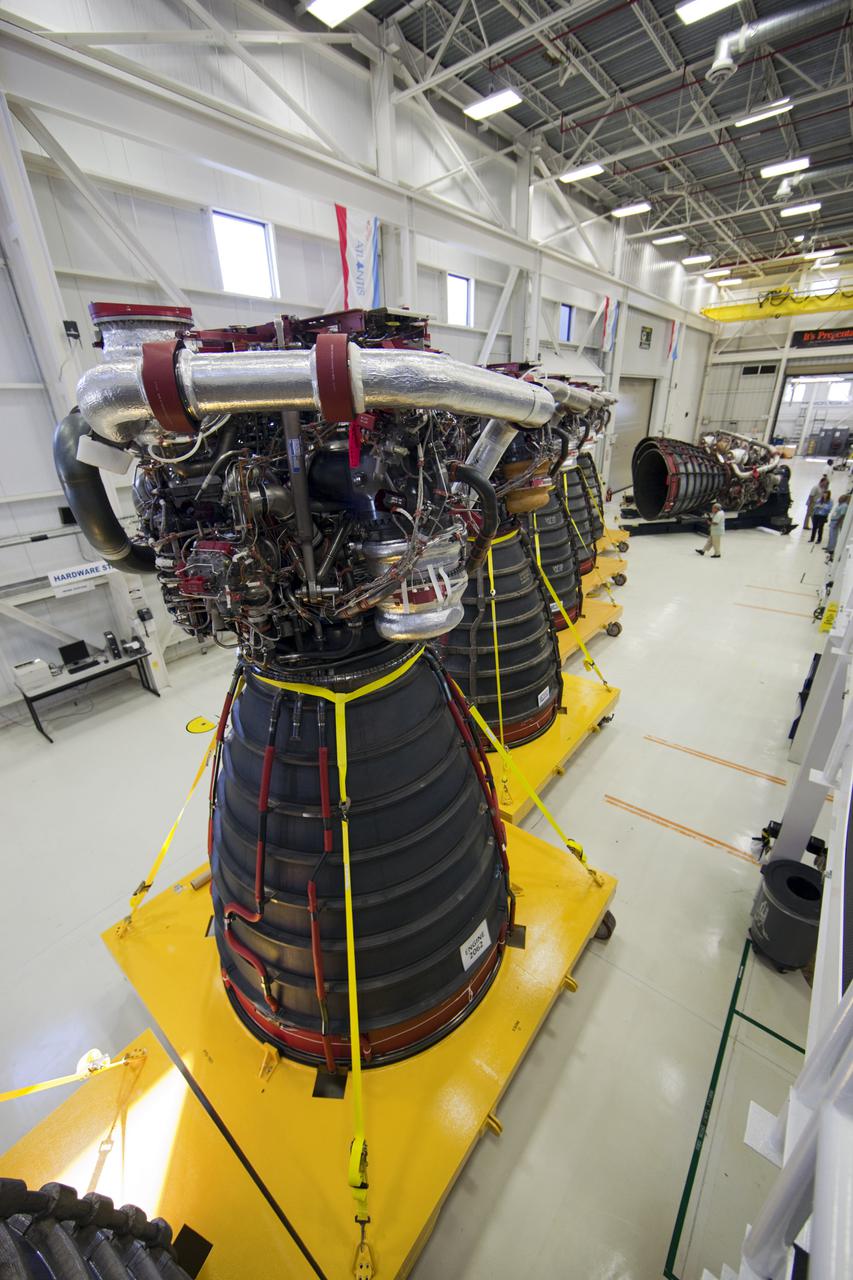
CAPE CANAVERAL, Fla. – Lined up in a row, several Pratt Whitney Rocketdyne space shuttle main engines (SSMEs) sit on stands inside the Engine Shop at NASA’s Kennedy Space Center in Florida. For the first time, all 15 main engines are in the Engine Shop at the same time. They are being prepared for shipment to NASA's Stennis Space Center in Mississippi for storage following the completion of the Space Shuttle Program. The engines are being repurposed for use on NASA’s Space Launch System heavy lift rocket. Photo credit: NASA_Dimitri Gerondidakis
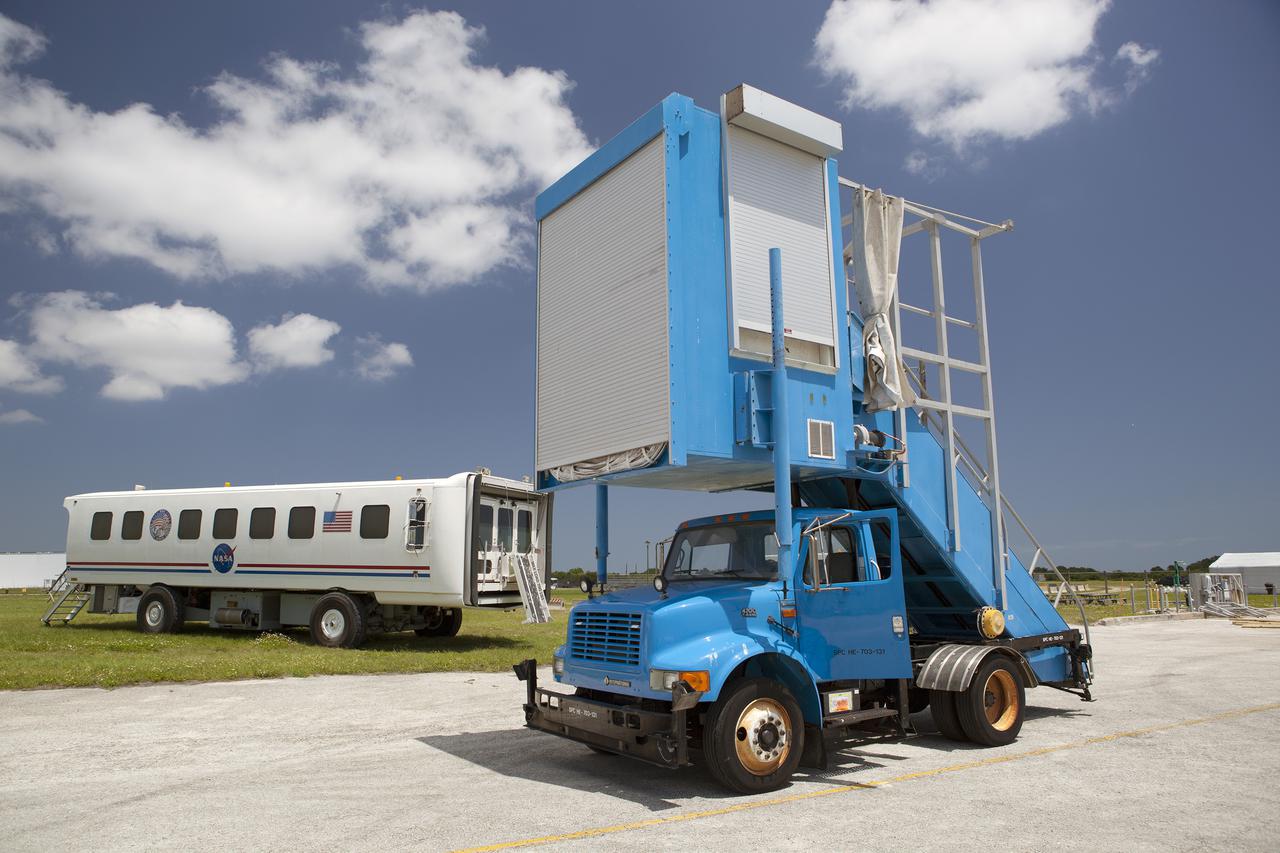
CAPE CANAVERAL, Fla. – The space shuttle crew hatch access vehicle is loaded onto a barge for the first leg of its journey from NASA's Kennedy Space Center in Florida to the Wings of Dreams Aviation Museum located at Keystone Heights Airport in North Central Florida. Also joining the vehicle at Wings of Dreams is an orange flight test article external fuel tank, or ET, an ET transporter, the crew transport vehicle, solid rocket booster, or SRB, aft skirt and SRB frustum. Thousands of unique space shuttle era artifacts are being allocated to facilities across the country for their new missions to educate and inspire America's next generation of explorers. Photo credit: NASA_Dimitri Gerondidakis
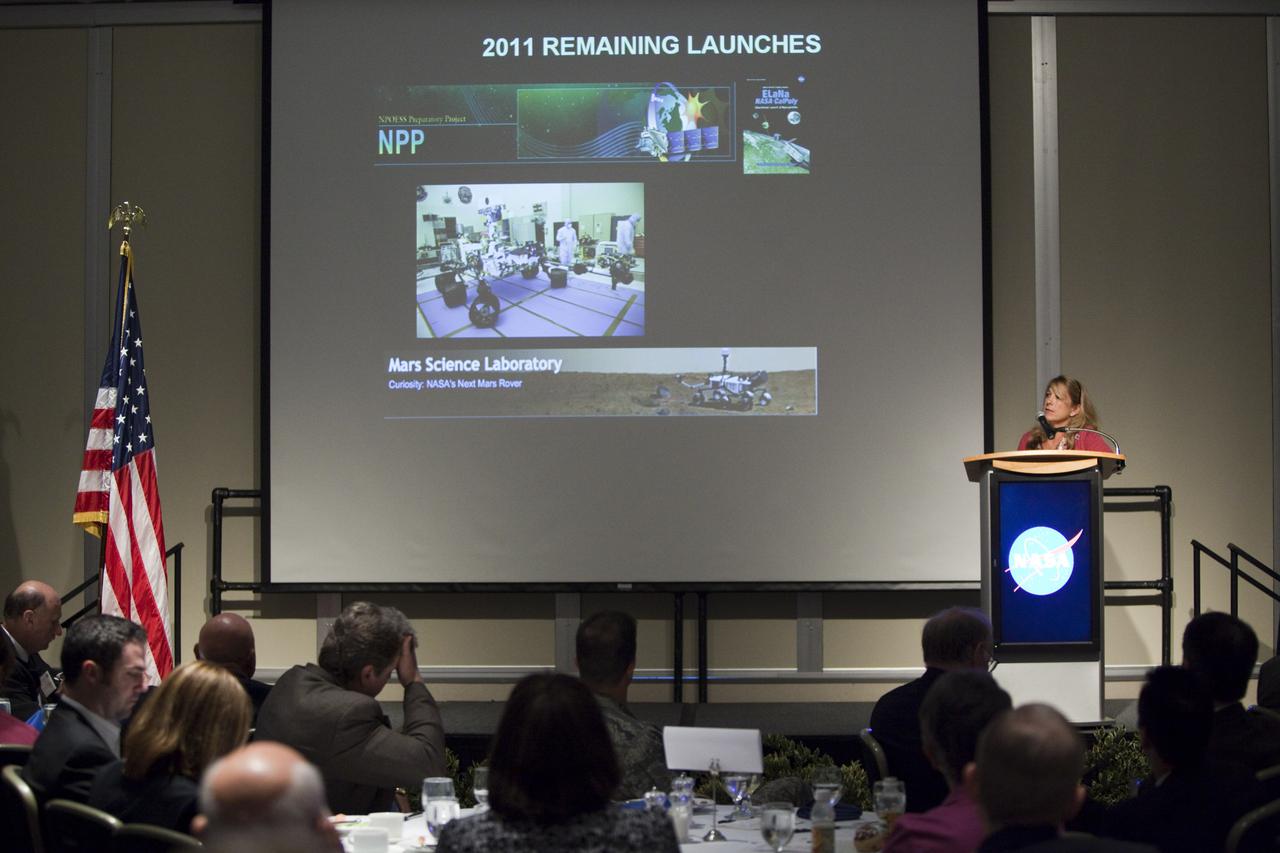
CAPE CANAVERAL, Fla. – Amanda Mitskevich, NASA’s Launch Services Program manager at Kennedy Space Center, addresses guests at the annual Community Leaders Breakfast held in the Debus Center at Kennedy's Visitor Complex in Florida. Community leaders, business executives, educators, community organizers and state and local government officials heard NASA Administrator Charlie Bolden, Kennedy Space Center Director Bob Cabana, and other senior Kennedy managers provide an overview of the future of the space center. Photo credit: NASA_Dimitri Gerondidakis
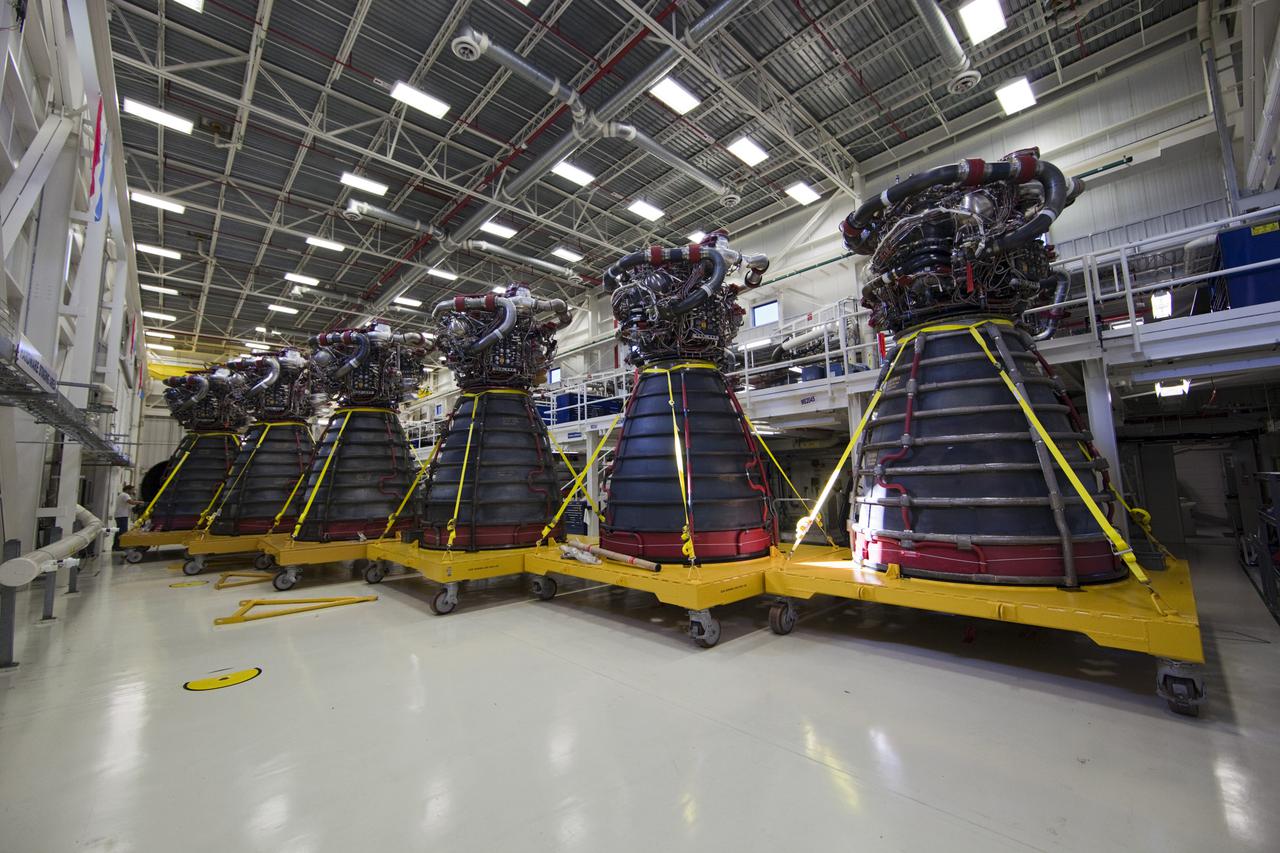
CAPE CANAVERAL, Fla. – Lined up in a row, six Pratt Whitney Rocketdyne space shuttle main engines (SSMEs) sit on stands inside the Engine Shop at NASA’s Kennedy Space Center in Florida. For the first time, all 15 main engines are in the Engine Shop at the same time. They are being prepared for shipment to NASA's Stennis Space Center in Mississippi for storage following the completion of the Space Shuttle Program. The engines are being repurposed for use on NASA’s Space Launch System heavy lift rocket. Photo credit: NASA_Dimitri Gerondidakis
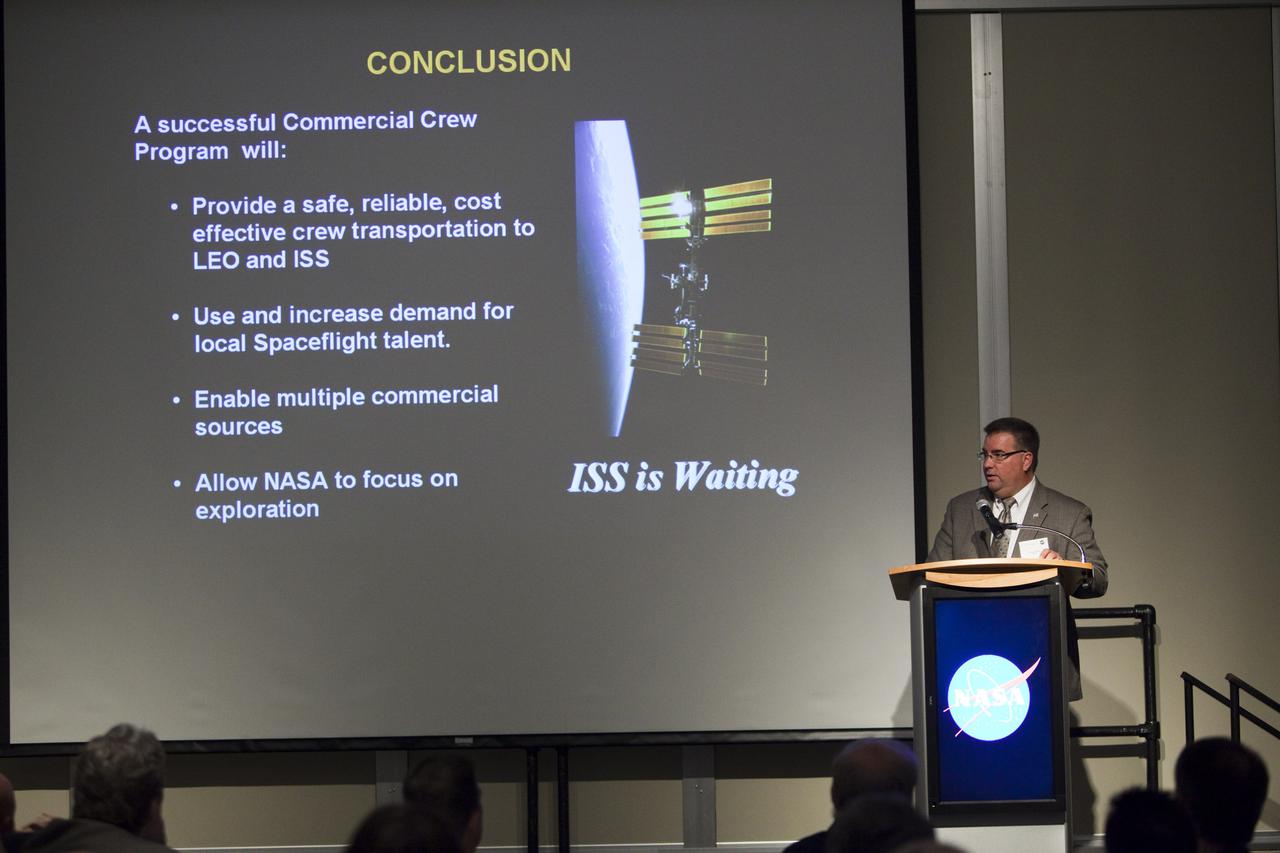
CAPE CANAVERAL, Fla. – Edward Mango, NASA’s Commercial Crew Program manager at Kennedy Space Center, addresses guests at the annual Community Leaders Breakfast held in the Debus Center at Kennedy's Visitor Complex in Florida. Community leaders, business executives, educators, community organizers and state and local government officials heard NASA Administrator Charlie Bolden, Kennedy Space Center Director Bob Cabana, and other senior Kennedy managers provide an overview of the future of the space center. Photo credit: NASA_Dimitri Gerondidakis
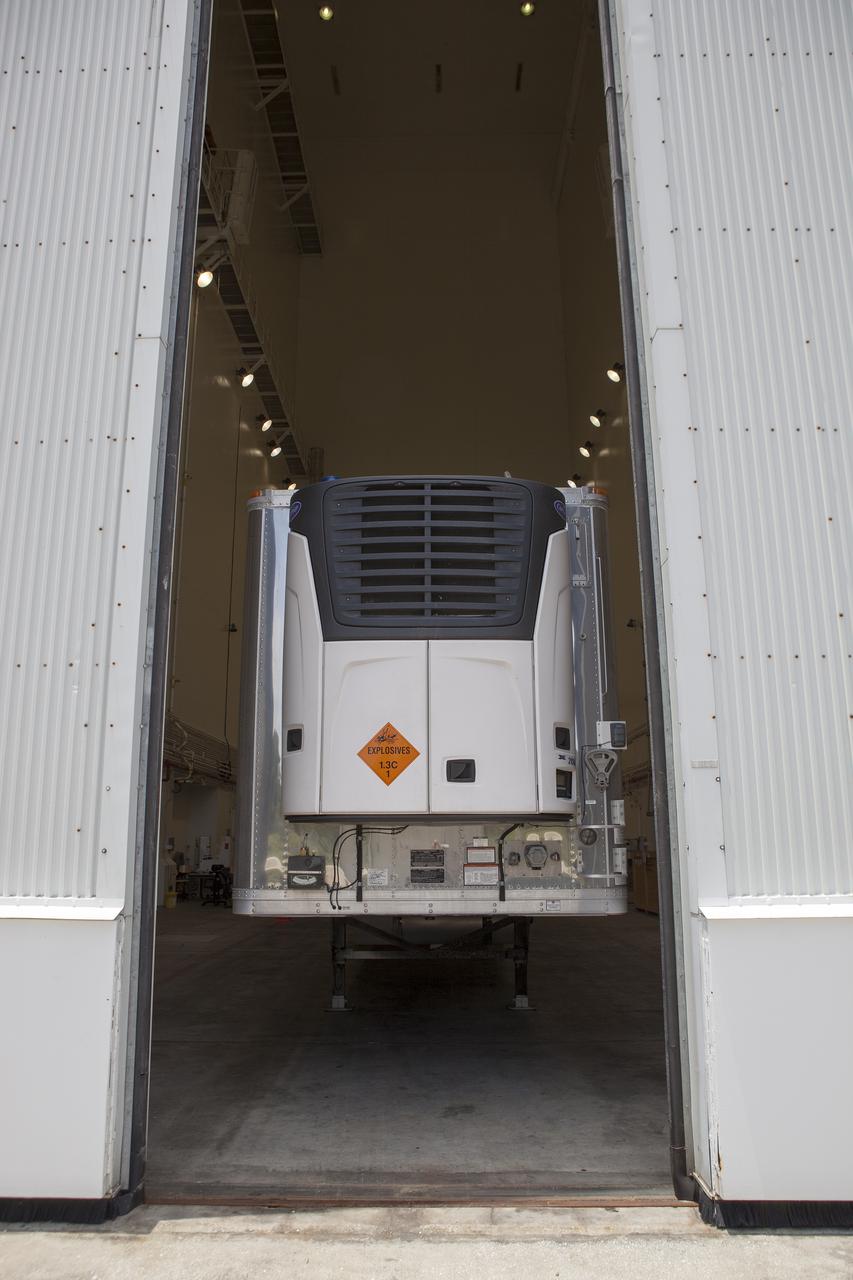
CAPE CANAVERAL, Fla. – At NASA’s Kennedy Space Center in Florida, a truck arrives at the Launch Abort System Facility with the jettison motor from Aerojet in Redmond, Wash. The motor is part of the Launch Abort System, or LAS, for Exploration Flight Test 1, or EFT-1, of the agency’s Orion Multi-Purpose Crew Vehicle. The motor will jettison the LAS away from the Orion crew capsule during the flight test’s early ascent phase. Orion’s Launch Abort System is designed to safely pull the Orion crew module away from the launch vehicle in the event of an emergency on the launch pad or during the initial ascent of NASA’s Space Launch System, or SLS, rocket. Orion is the exploration spacecraft designed to carry crews to space beyond low Earth orbit. It will provide emergency abort capability, sustain the crew during the space travel and provide safe re-entry from deep space return velocities. Orion’s first unpiloted test flight is scheduled to launch in 2014 atop a Delta IV rocket. A second uncrewed flight test is scheduled for 2017 on the SLS rocket. For more information, visit http:__www.nasa.gov_orion. Photo credit: NASA_Dimitri Gerondidakis
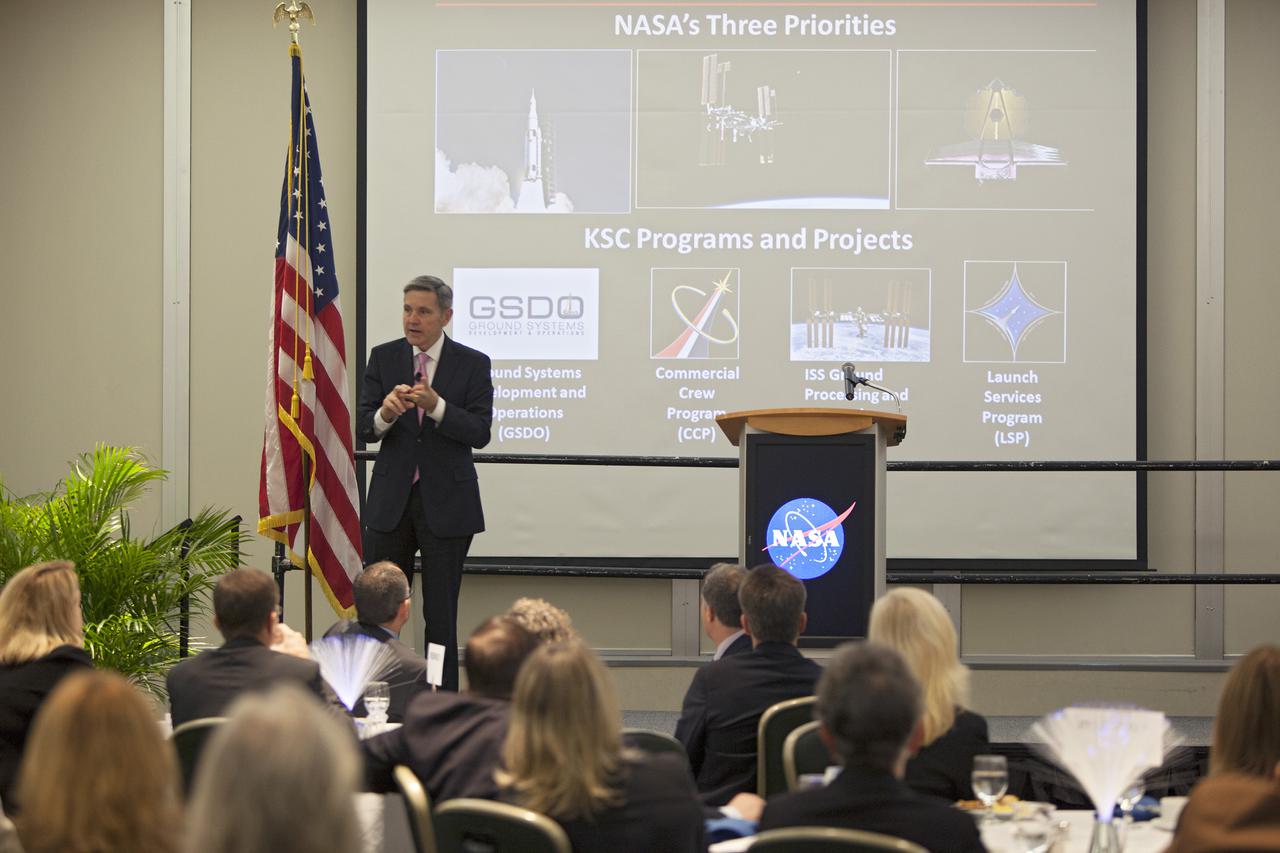
CAPE CANAVERAL, Fla. -- Kennedy Space Center Director Bob Cabana and several members of his leadership team provided an on current and future activities at the Florida spaceport during the annual Community Leaders Briefing. Cabana explained that the space center has a great deal of work going on in support of current and future space program projects. The reports were part of the annual Community Leaders Briefing at the Kurt H. Debus Conference Center at the Kennedy Space Center Visitor Complex attended by local, state and U.S. government representatives, along with individuals from business and industry. Photo credit: NASA_Dimitri Gerondidakis
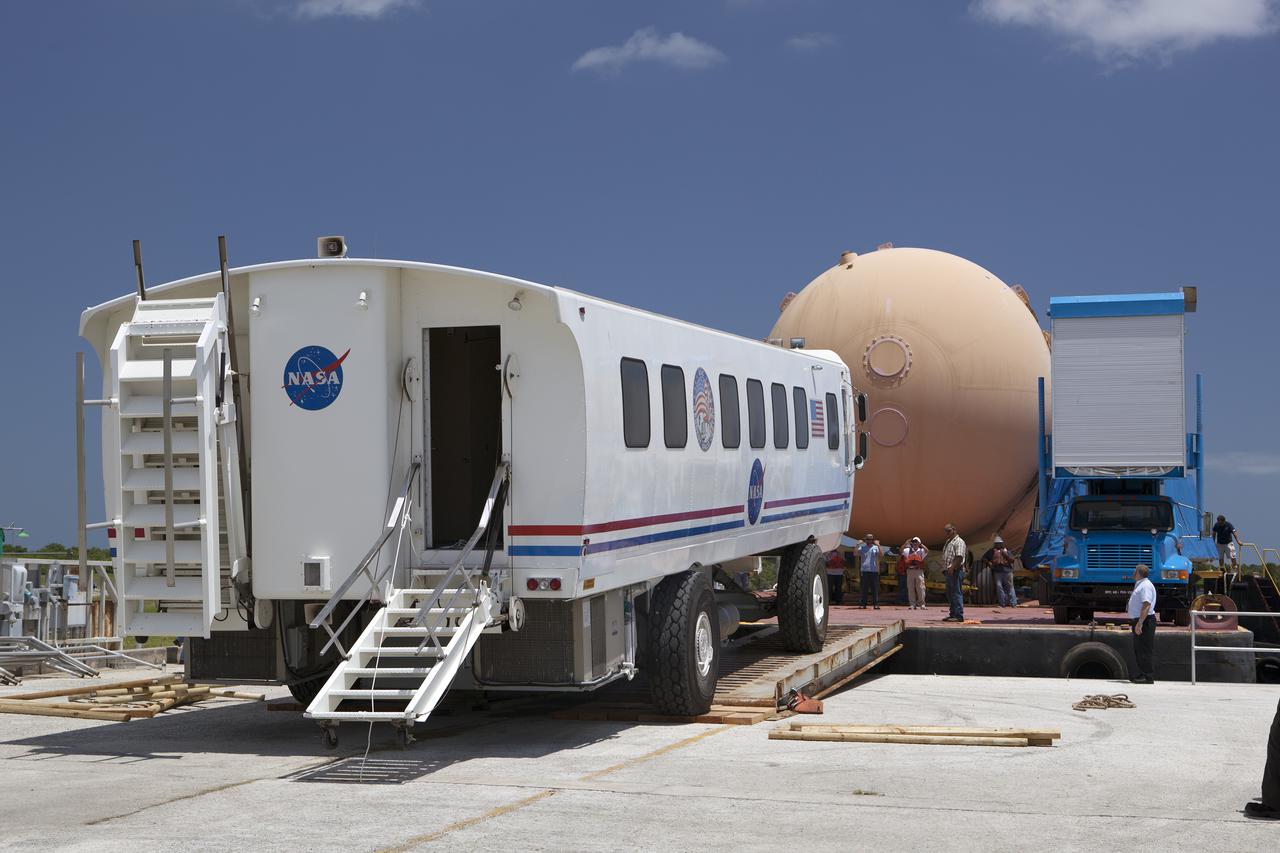
CAPE CANAVERAL, Fla. – The space shuttle crew transport vehicle is loaded onto a barge for the first leg of its journey from NASA's Kennedy Space Center in Florida to the Wings of Dreams Aviation Museum located at Keystone Heights Airport in North Central Florida. Also joining the vehicle at Wings of Dreams is an orange flight test article external fuel tank, or ET, an ET transporter, crew hatch access vehicle, solid rocket booster, or SRB, aft skirt and SRB frustum. Thousands of unique space shuttle era artifacts are being allocated to facilities across the country for their new missions to educate and inspire America's next generation of explorers. Photo credit: NASA_Dimitri Gerondidakis
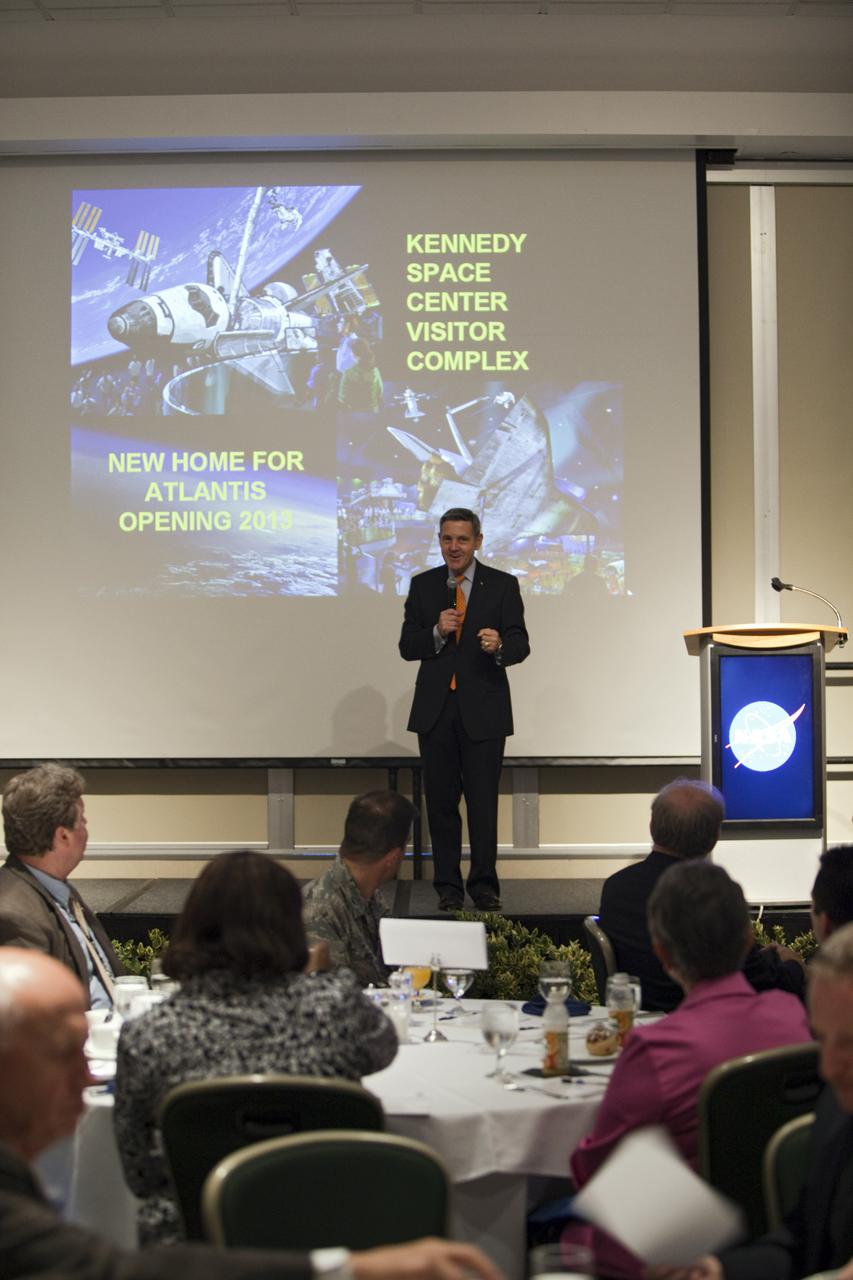
CAPE CANAVERAL, Fla. – NASA Kennedy Space Center Director Bob Cabana addresses guests at the annual Community Leaders Breakfast held in the Debus Center at Kennedy's Visitor Complex in Florida. Community leaders, business executives, educators, community organizers and state and local government officials heard NASA Administrator Charlie Bolden, Kennedy Space Center Director Bob Cabana, and other senior Kennedy managers provide an overview of the future of the space center. Photo credit: NASA_Dimitri Gerondidakis
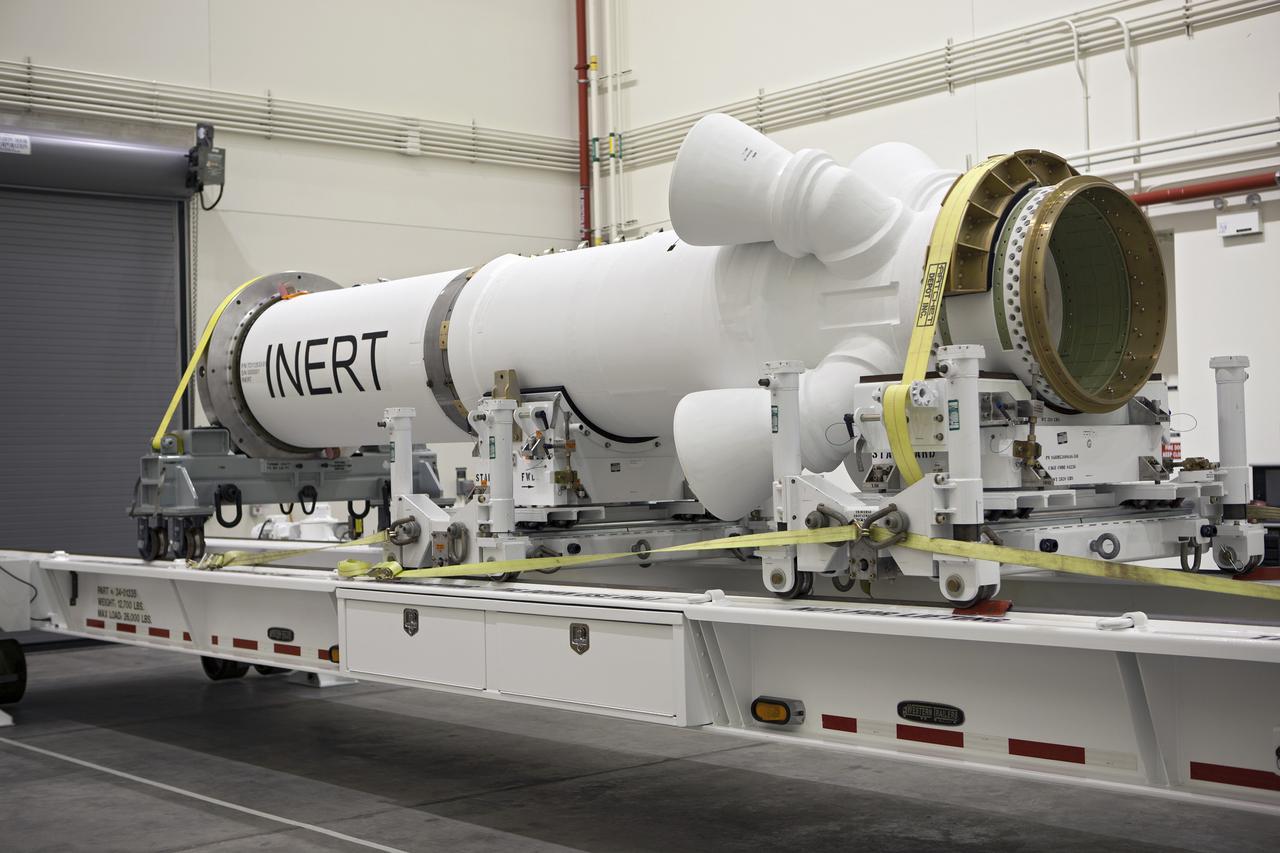
CAPE CANAVERAL, Fla. – At NASA’s Kennedy Space Center in Florida, members of the media viewed the Alliant Techsystems, or ATK, launch abort motor inside the Launch Abort System Facility. ATK’s abort motor is one of the components of Orion’s Launch Abort System, which will be used for Exploration Flight Test 1, or EFT-1. The system is designed to safely pull the Orion crew module away from the launch vehicle in the event of an emergency on the launch pad or during the initial ascent of NASA’s Space Launch System, or SLS, rocket. The test flight abort motor is configured with inert propellant. Orion is the exploration spacecraft designed to carry crews to space beyond low Earth orbit. It will provide emergency abort capability, sustain the crew during the space travel and provide safe re-entry from deep space return velocities. Orion’s first unpiloted test flight is scheduled to launch in 2014 atop a Delta IV rocket. A second uncrewed flight test is scheduled for 2017 on the SLS rocket. For more information, visit http:__www.nasa.gov_orion. Photo credit: NASA_Dimitri Gerondidakis
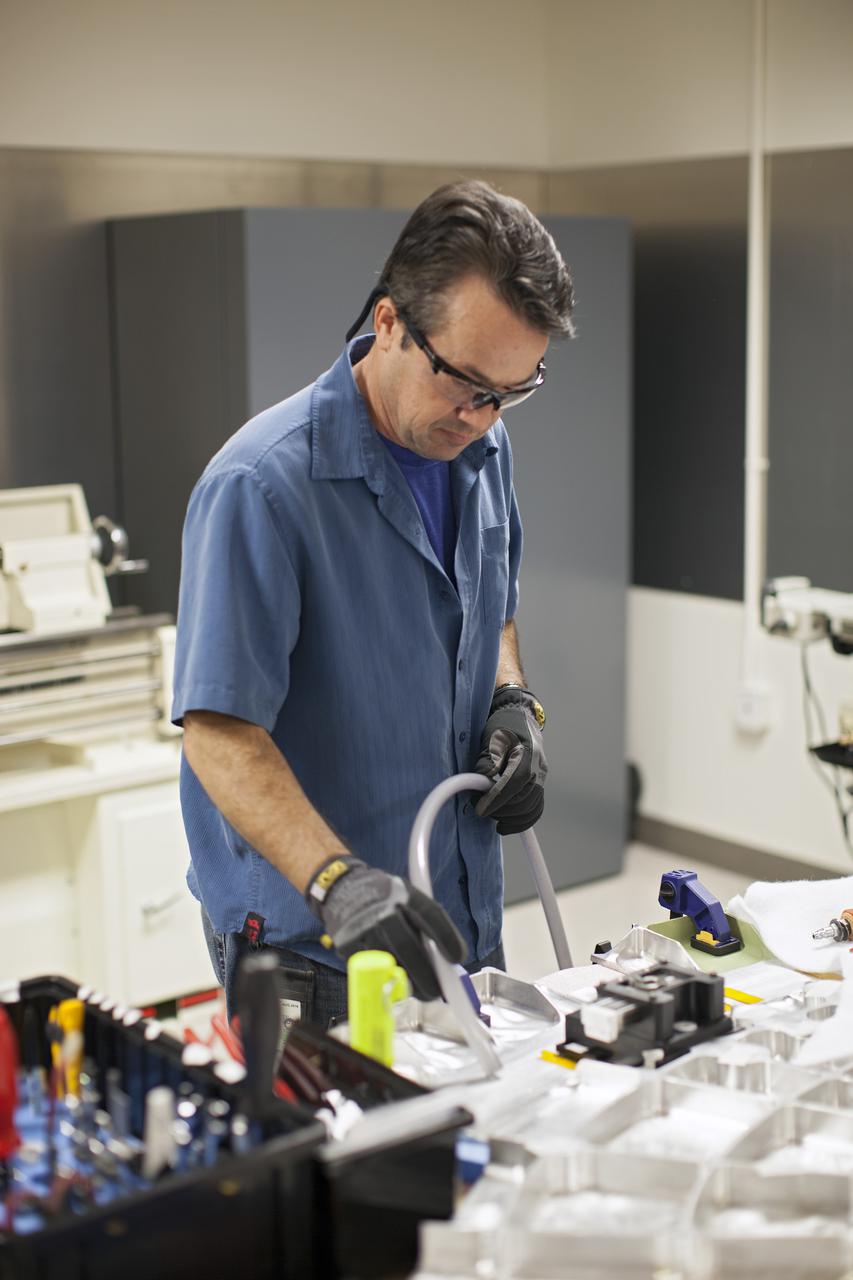
CAPE CANAVERAL, Fla. -- Inside the Operations and Checkout Building high bay at NASA’s Kennedy Space Center in Florida, a technician practices a procedure to repair cracks on the agency’s Orion Exploration Flight Test 1 crew module, during a dry run. During proof pressure testing on the vehicle, the spacecraft sustained three cracks in the aft bulkhead. A team composed of Lockheed Martin and NASA engineers designed a set of brackets that will be used to repair the area, as well as tooling to fix the cracked structure. Orion is the exploration spacecraft designed to carry humans further into space than ever before. It will provide emergency abort capability, sustain the crew during the space travel and provide safe re-entry from deep space return velocities. Orion’s first unpiloted test flight is scheduled to launch in 2014 atop a United Launch Alliance Delta IV heavy rocket. A second uncrewed flight test is scheduled for 2017 on the Space Launch System rocket. For more information, visit http:__www.nasa.gov_orion. Photo credit: NASA_Dimitri Gerondidakis
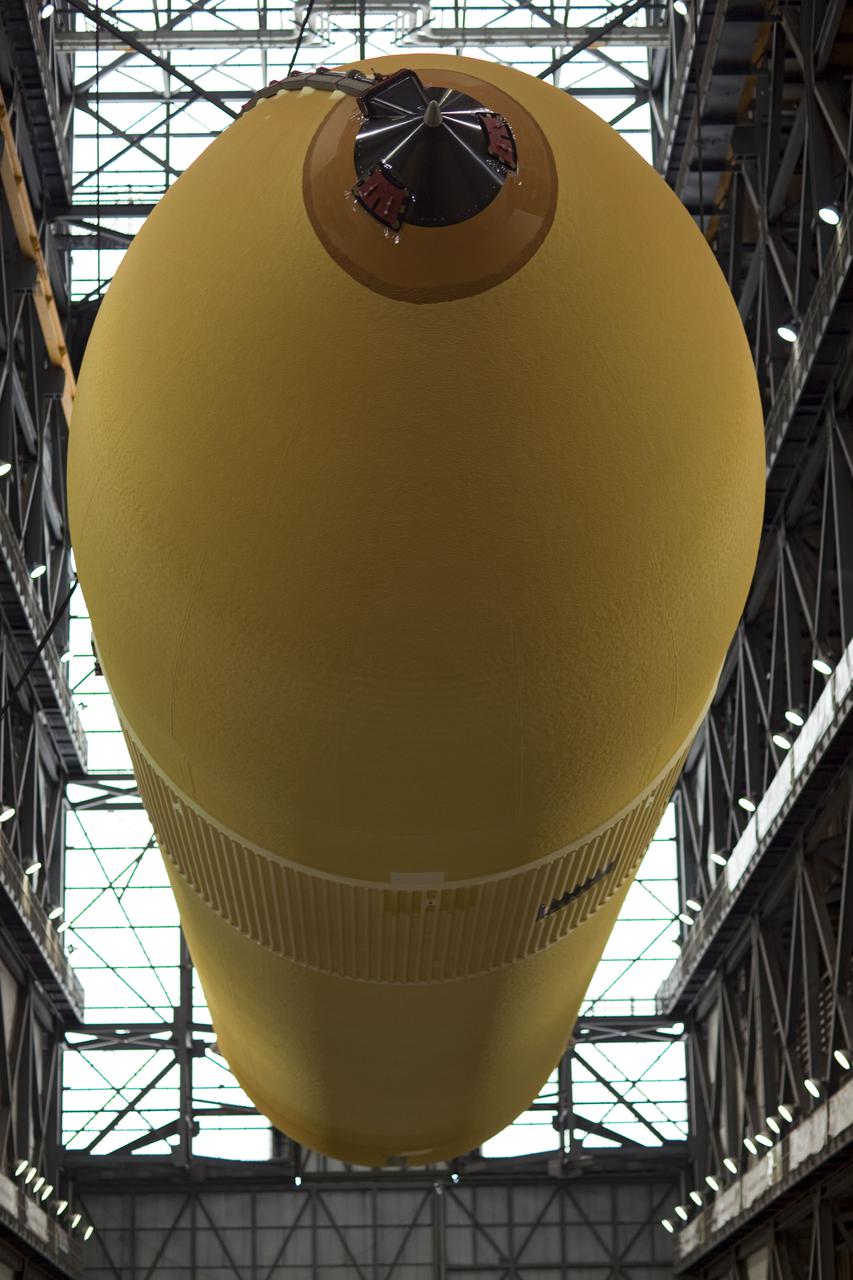
CAPE CANAVERAL, Fla. -- A close-up view of External Tank-138 being lifted above the transfer aisle in the Vehicle Assembly Building at NASA's Kennedy Space Center in Florida. The external fuel tank is being moved into a test cell where it will be checked out before launch. ET-138, the last newly manufactured tank, was originally designated to fly on Endeavour's STS-134 mission to the International Space Station, but later reassigned to fly on space shuttle Atlantis' final mission, STS-135. For information, visit www.nasa.gov_shuttle. Photo credit: NASA_Dimitri Gerondidakis
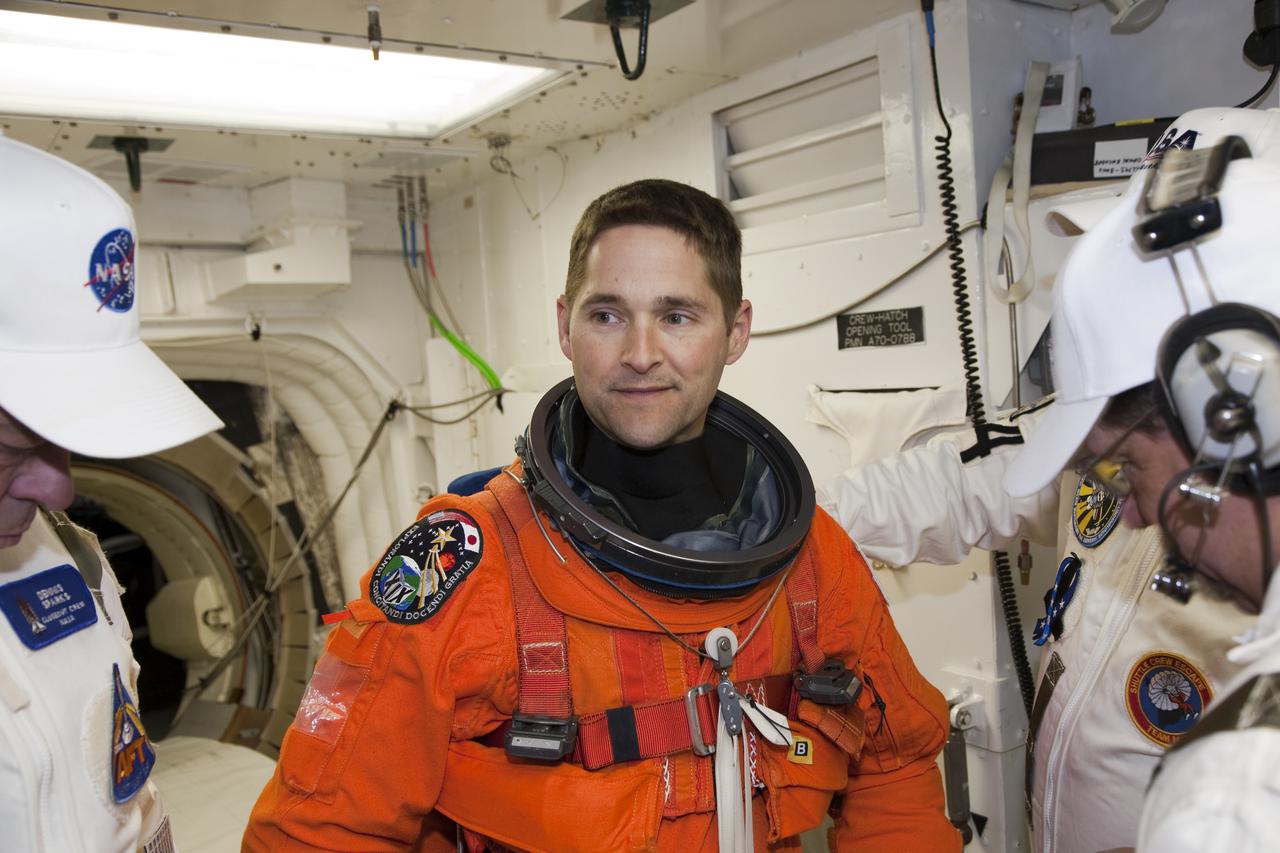
CAPE CANAVERAL, Fla. - At Launch Pad 39A at NASA's Kennedy Space Center in Florida, STS-131 Pilot James P. Dutton Jr. prepares to enter space shuttle Discovery from the pad's White Room. The crew members of Discovery's STS-131 mission, dressed in their launch-and-entry suits, are participating in the Terminal Countdown Demonstration Test, or TCDT, a dress rehearsal for launch. TCDT includes training on the emergency exit systems at the launch pad, driving practice of the M-113 armored personnel carrier and a simulated launch countdown. The crew will deliver the multi-purpose logistics module Leonard, filled with resupply stowage platforms and science racks, to the International Space Station. STS-131, targeted for launch on April 5, will be the 33rd shuttle mission to the station and the 131st shuttle mission overall. For information on the STS-131 mission and crew, visit http:__www.nasa.gov_mission_pages_shuttle_shuttlemissions_sts131_index.htm. Photo credit: NASA_Dimitri Gerondidakis
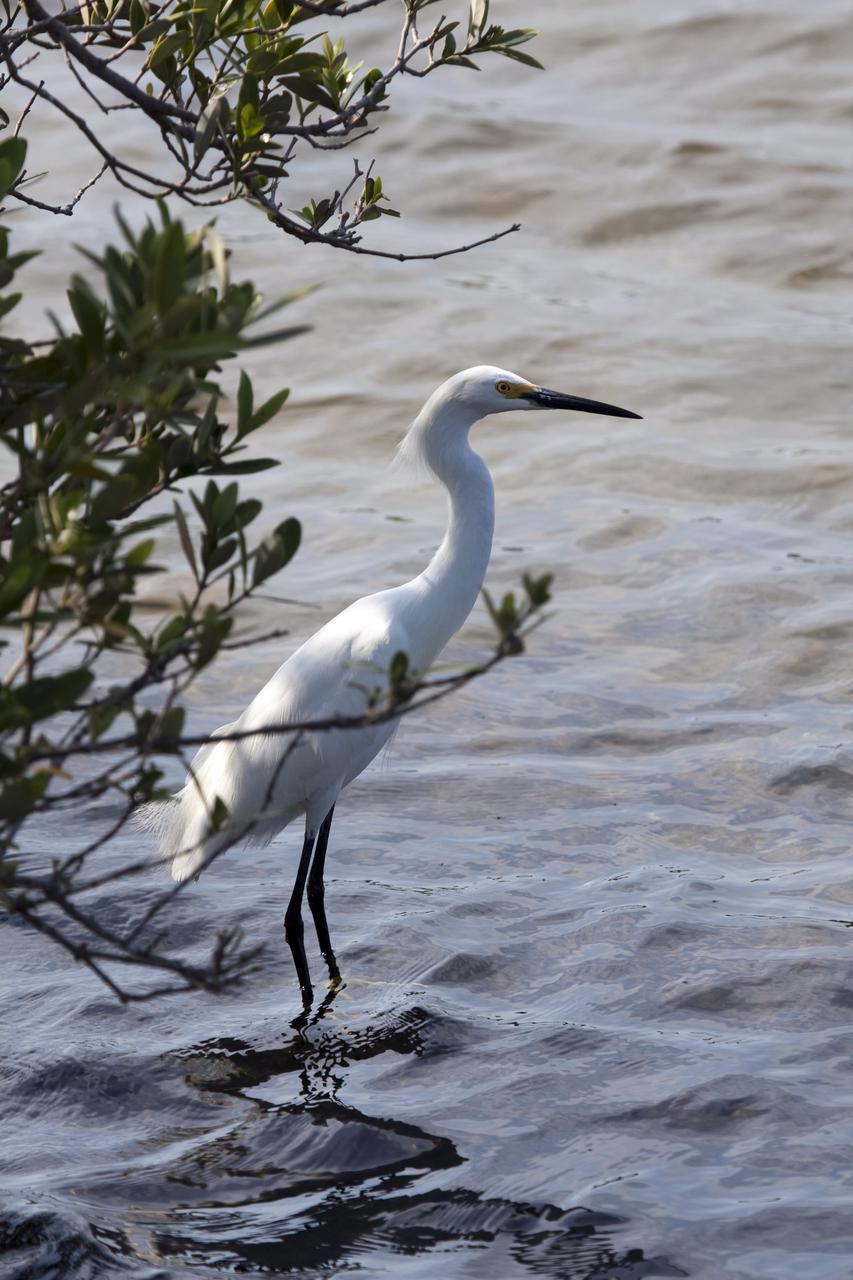
CAPE CANAVERAL, Fla. - At NASA's Kennedy Space Center in Florida, a great white egret fishes in Launch Complex 39. Egrets use a foot-foraging method to fish, standing motionless in the shallows and raking the bottom to attract fish which they quickly capture in their bills. The Merritt Island National Wildlife Refuge overlaps with Kennedy Space Center property and provides a habitat for 330 species of birds, including egrets. A variety of other wildlife - 117 kinds of fish, 65 types of amphibians and reptiles, 31 different mammals, and 1,045 species of plants - also inhabit the refuge. For information on the refuge, visit http:__www.fws.gov_merrittisland_Index.html. For information on Kennedy Space Center, visit http:__www.nasa.gov_kennedy. Photo credit: NASA_Dimitri Gerondidakis
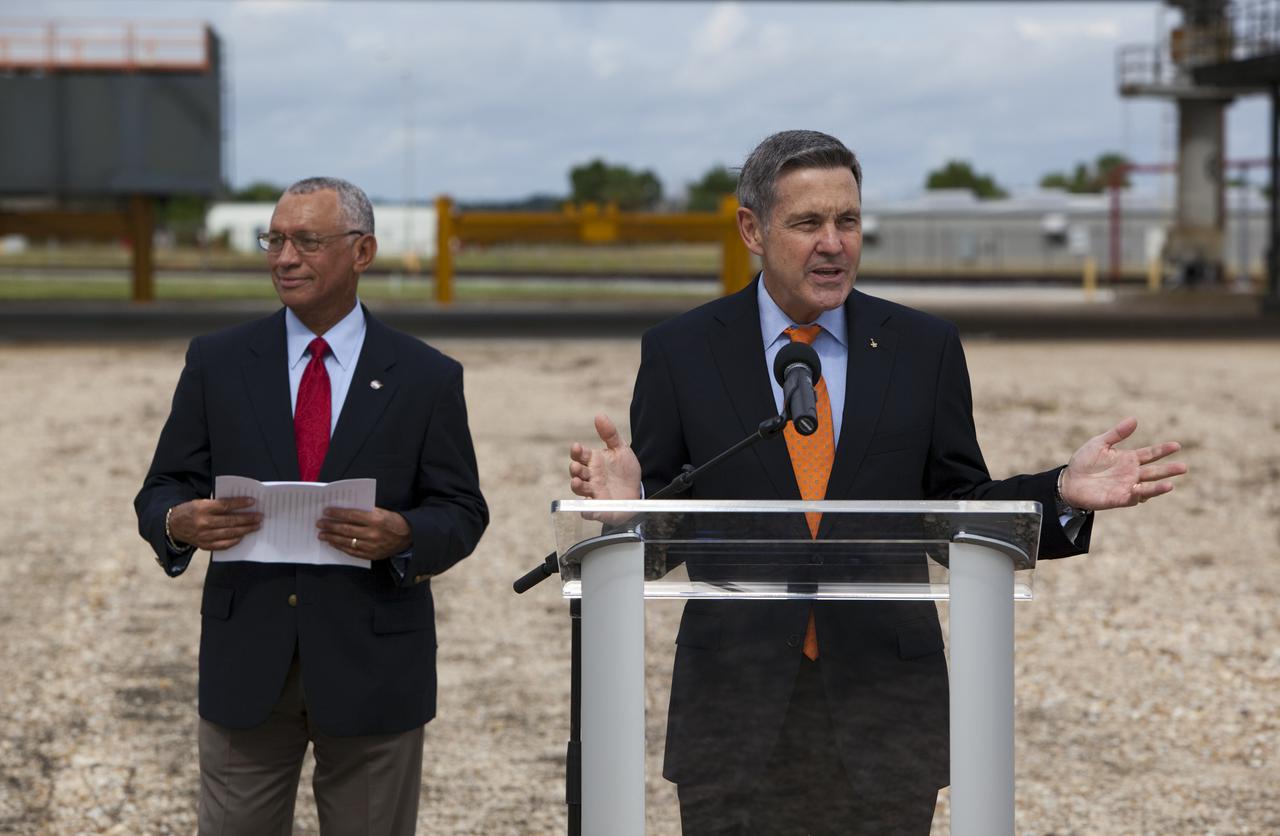
CAPE CANAVERAL, Fla. –At Kennedy Space Center in Florida, Center Director Bob Cabana talks to media near NASA’s mobile launcher (ML) support structure. The media event was held to detail ML’s use with NASA’s Space Launch System (SLS) heavy-lift rocket, which will take astronauts into deep space on missions to asteroids, the moon or Mars. Standing to the left of the podium is NASA Administrator Charlie Bolden. It took about two years to construct the 355-foot-tall ML structure, which will support NASA's future human spaceflight program. The ML can be outfitted with ground support equipment, such as umbilicals and access arms, for future rocket launches. Photo credit: NASA_Dimitri Gerondidakis
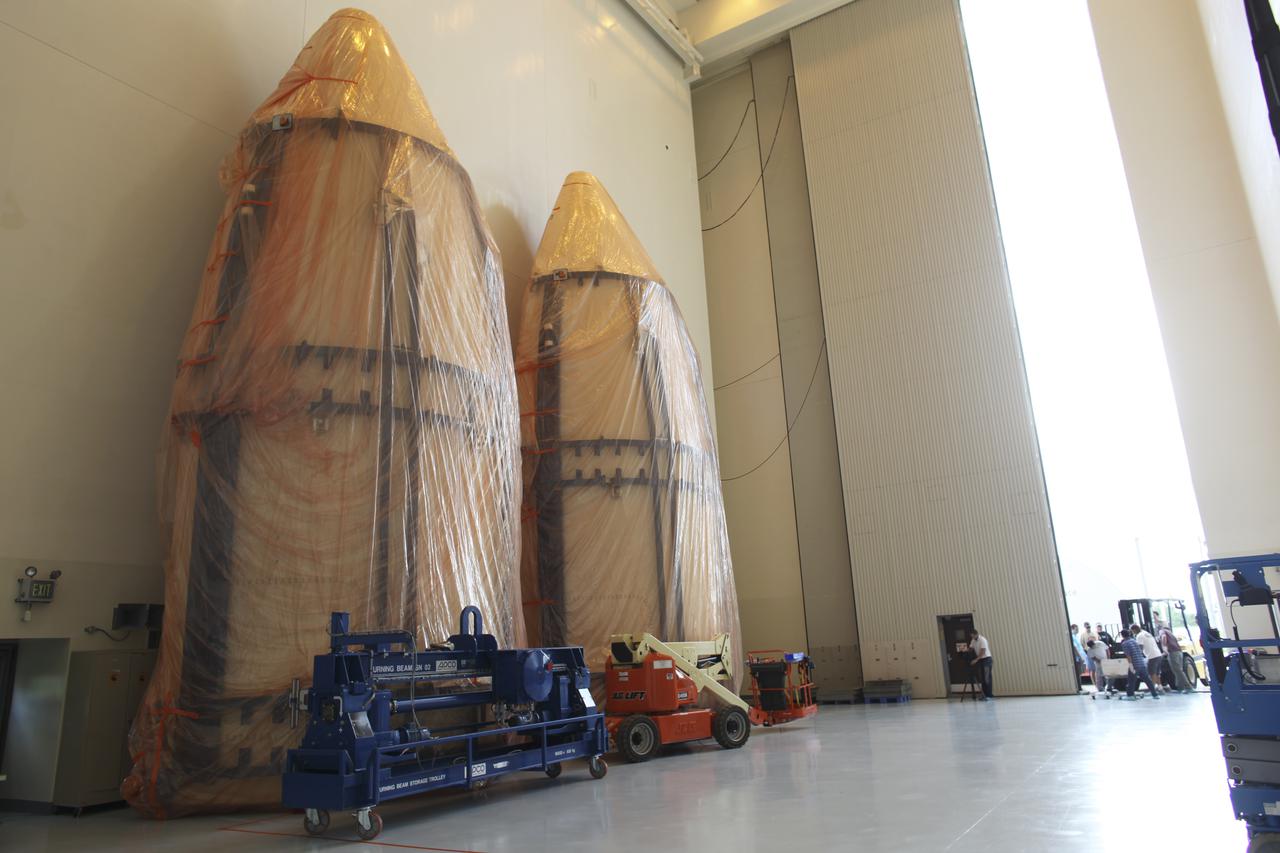
CAPE CANAVERAL, Fla. -- The dual sections of the Atlas V payload fairing for NASA's Mars Science Laboratory (MSL) mission await further processing in the airlock of the Payload Hazardous Servicing Facility at NASA's Kennedy Space Center in Florida. The fairing will protect the spacecraft from the impact of aerodynamic pressure and heating during ascent and will be jettisoned once the spacecraft is outside the Earth's atmosphere. MSL's components include a compact car-sized rover, Curiosity, which has 10 science instruments designed to search for evidence on whether Mars has had environments favorable to microbial life, including chemical ingredients for life. The unique rover will use a laser to look inside rocks and release its gasses so that the rover’s spectrometer can analyze and send the data back to Earth. Launch of MSL aboard a United Launch Alliance Atlas V rocket is planned for Nov. 25 from Space Launch Complex 41 on Cape Canaveral Air Force Station. For more information, visit http:__www.nasa.gov_msl. Photo credit: NASA_Dimitri Gerondidakis
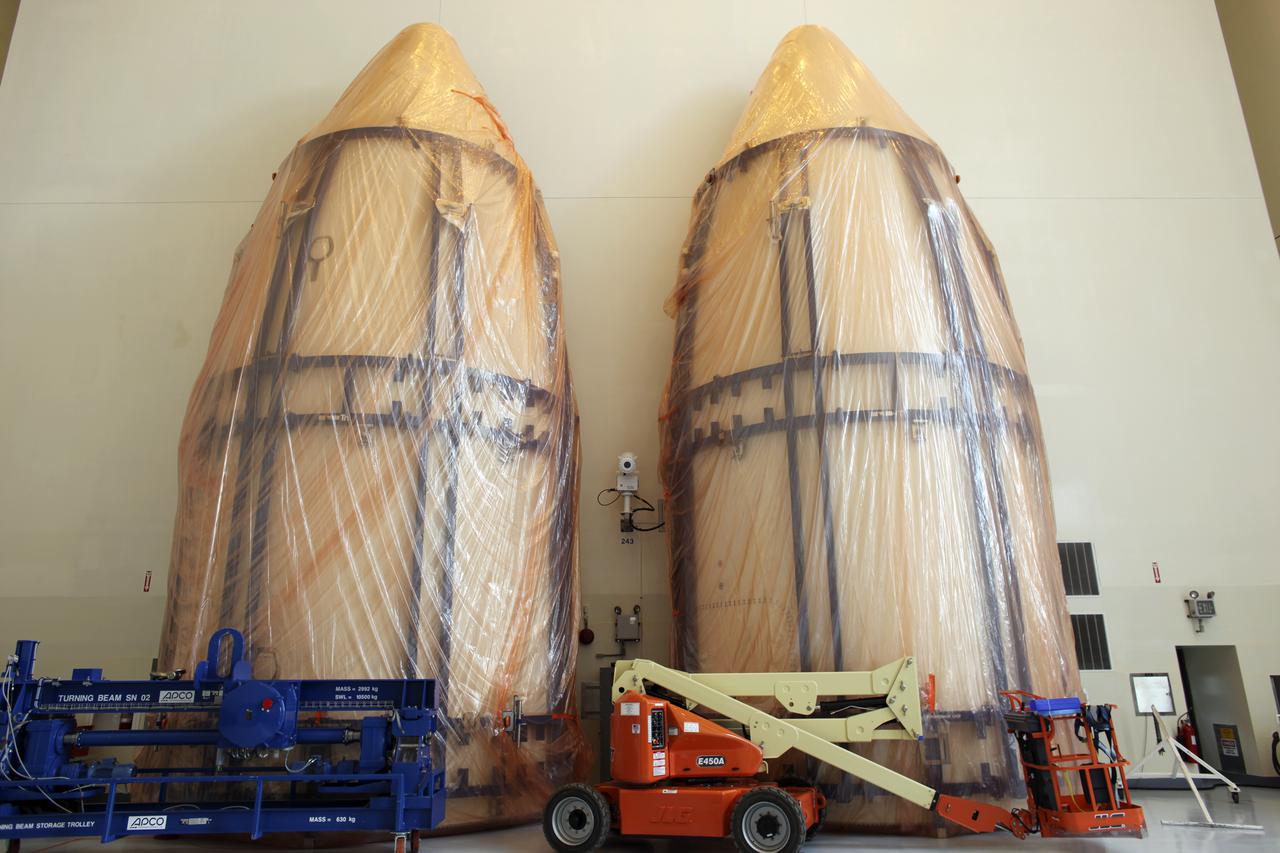
CAPE CANAVERAL, Fla. -- Both halves of the Atlas V payload fairing for NASA's Mars Science Laboratory (MSL) mission stand side-by-side in the airlock of the Payload Hazardous Servicing Facility at NASA's Kennedy Space Center in Florida. The fairing will protect the spacecraft from the impact of aerodynamic pressure and heating during ascent and will be jettisoned once the spacecraft is outside the Earth's atmosphere. MSL's components include a compact car-sized rover, Curiosity, which has 10 science instruments designed to search for evidence on whether Mars has had environments favorable to microbial life, including chemical ingredients for life. The unique rover will use a laser to look inside rocks and release its gasses so that the rover’s spectrometer can analyze and send the data back to Earth. Launch of MSL aboard a United Launch Alliance Atlas V rocket is planned for Nov. 25 from Space Launch Complex 41 on Cape Canaveral Air Force Station. For more information, visit http:__www.nasa.gov_msl. Photo credit: NASA_Dimitri Gerondidakis
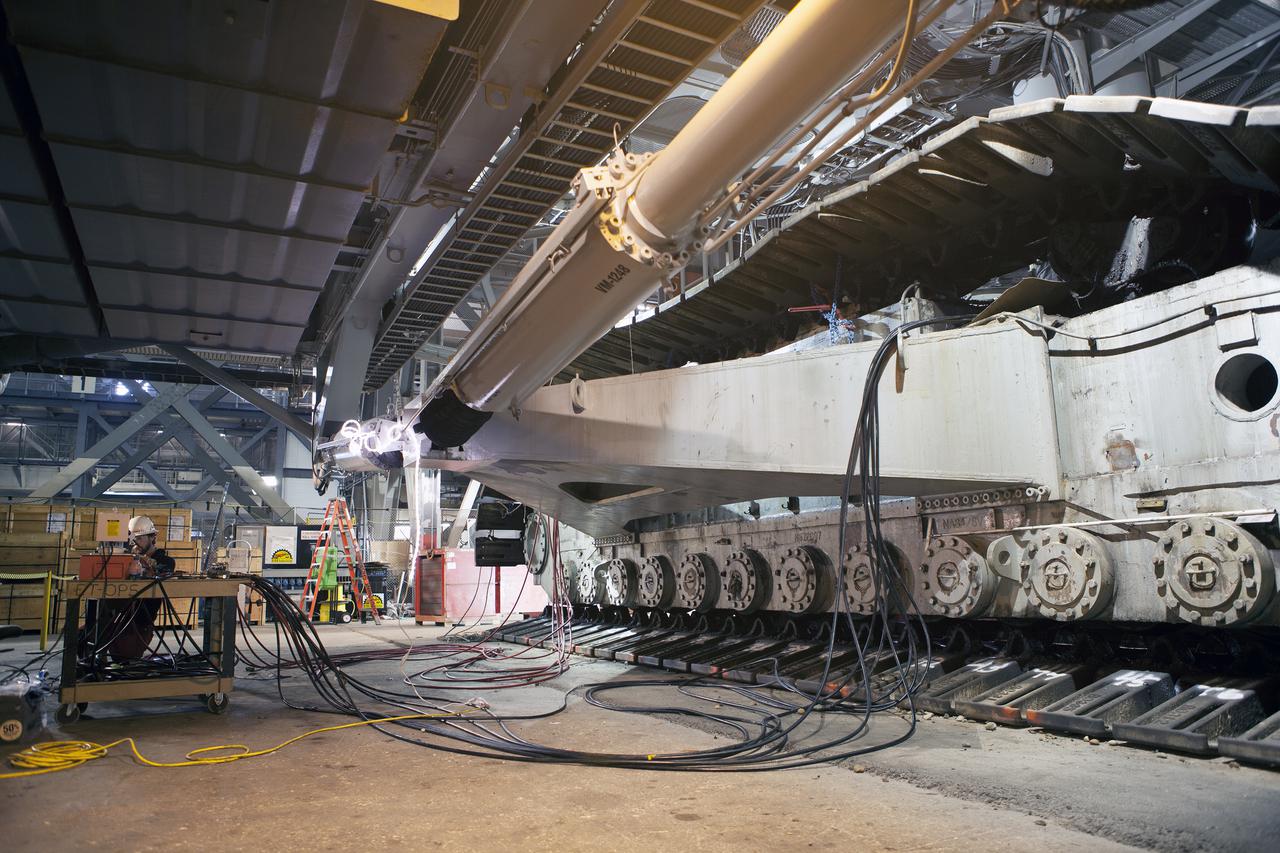
CAPE CANAVERAL, Fla. – Inside the Vehicle Assembly Building at NASA’s Kennedy Space Center in Florida, the B and D truck sections of crawler-transporter 2, or CT-2, are being raised up to prepare for installation of new roller bearing assemblies. Work continues in high bay 2 to upgrade CT-2. The modifications are designed to ensure CT-2’s ability to transport launch vehicles currently in development, such as the agency’s Space Launch System, to the launch pad. The Ground Systems Development and Operations Program office at Kennedy is overseeing the upgrades. For more than 45 years the crawler-transporters were used to transport the mobile launcher platform and the Apollo-Saturn V rockets and, later, space shuttles to Launch Pads 39A and B. For more information, visit: http:__www.nasa.gov_exploration_systems_ground_crawler-transporter. Photo credit: NASA_Dimitri Gerondidakis
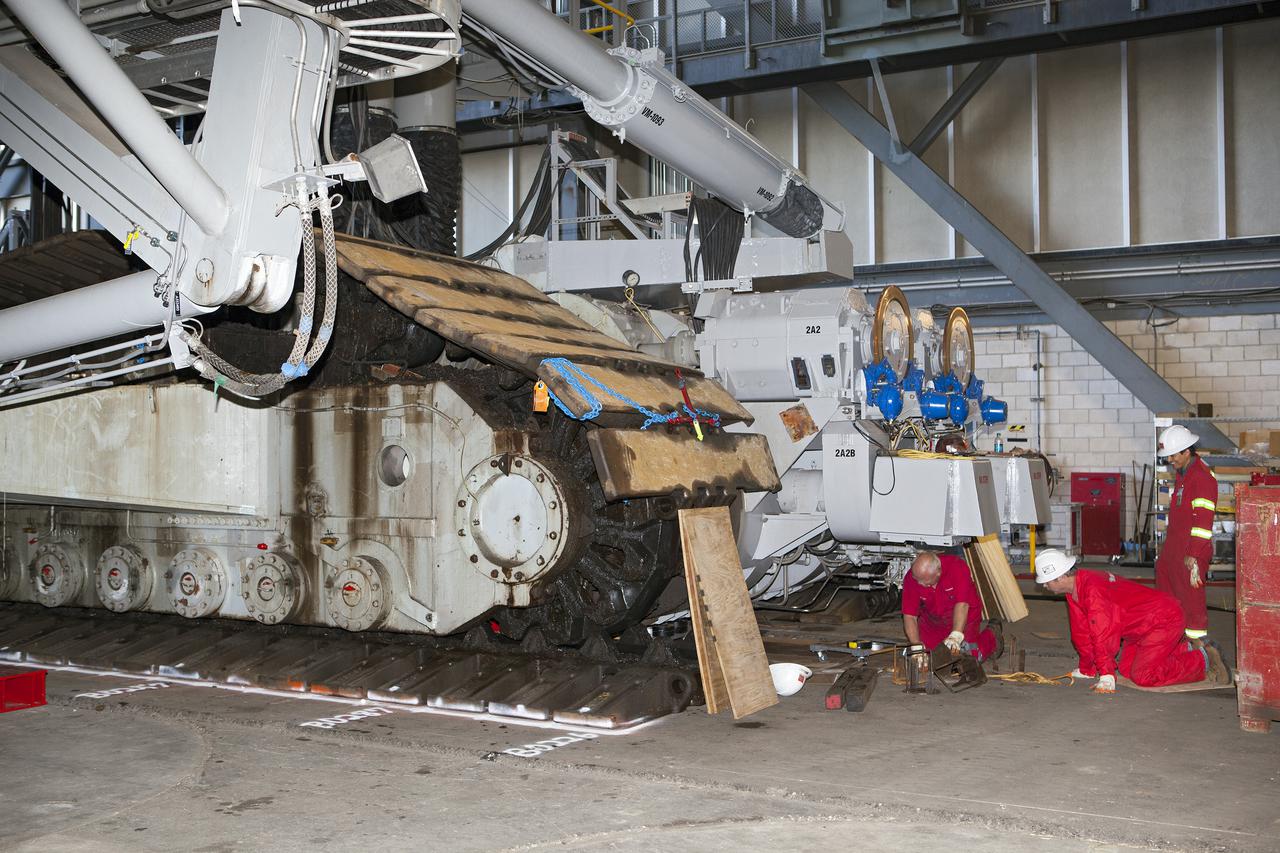
CAPE CANAVERAL, Fla. -- Technicians in the Vehicle Assembly Building at NASA’s Kennedy Space Center in Florida, prepare to jack crawler-transporter 2, or CT-2, four feet off the floor to facilitate removal of the roller bearing assemblies. After inspections, new assemblies will be installed. The Ground Systems Development and Operations Program office at Kennedy is overseeing the upgrades to CT-2 so that it can carry NASA’s Space Launch System heavy-lift rocket and new Orion spacecraft to the launch pad. For more than 45 years the crawler-transporters were used to transport the mobile launcher platform and the Apollo-Saturn V rockets and, later, space shuttles to Launch Pads 39A and B. Photo credit: NASA_Dimitri Gerondidakis
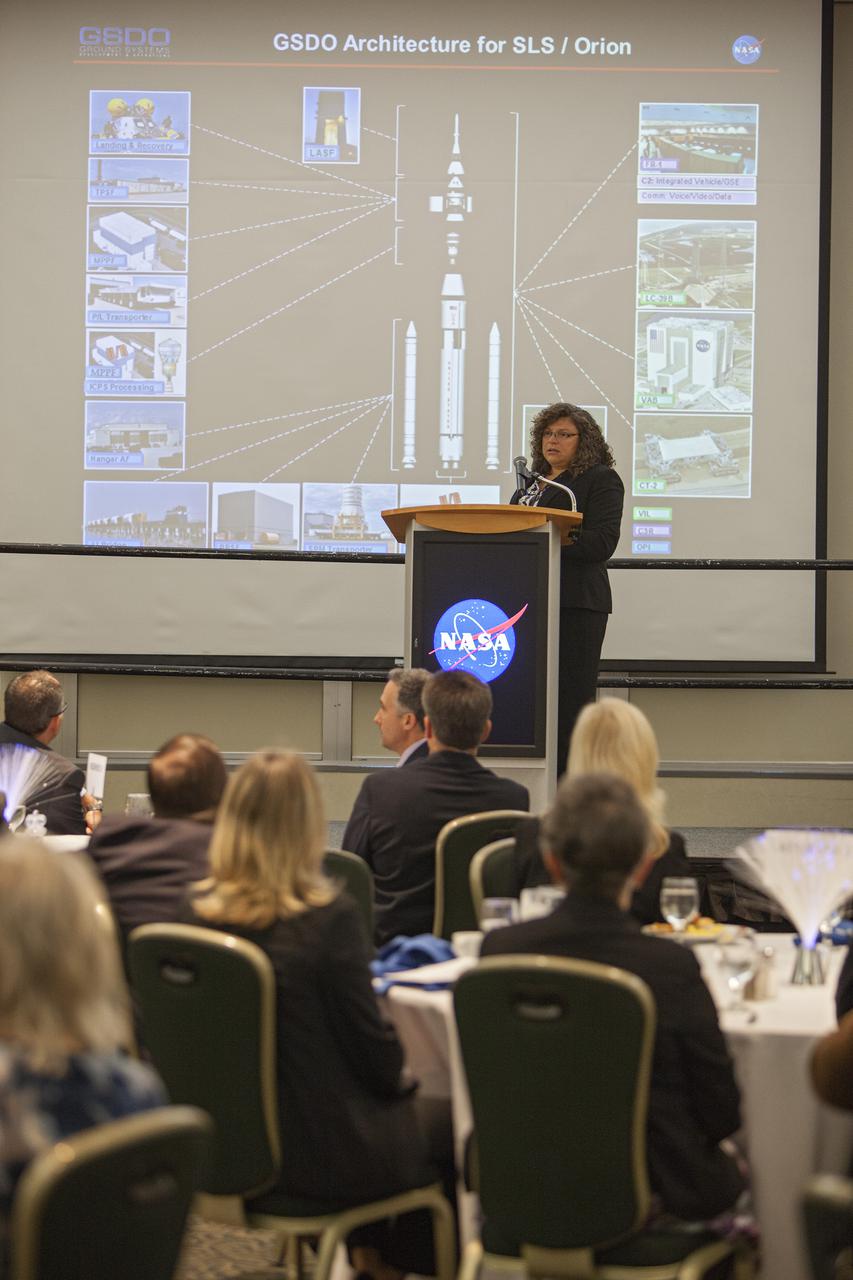
CAPE CANAVERAL, Fla. -- Ruth Gardner, Exploration Systems manager in Ground System Development and Operations at the Kennedy Space Center provided an on current and future activities at the Florida spaceport during the annual Community Leaders Briefing. The reports were part of the annual Community Leaders Briefing at the Kurt H. Debus Conference Center at the Kennedy Space Center Visitor Complex attended by local, state and U.S. government representatives, along with individuals from business and industry. Photo credit: NASA_Dimitri Gerondidakis
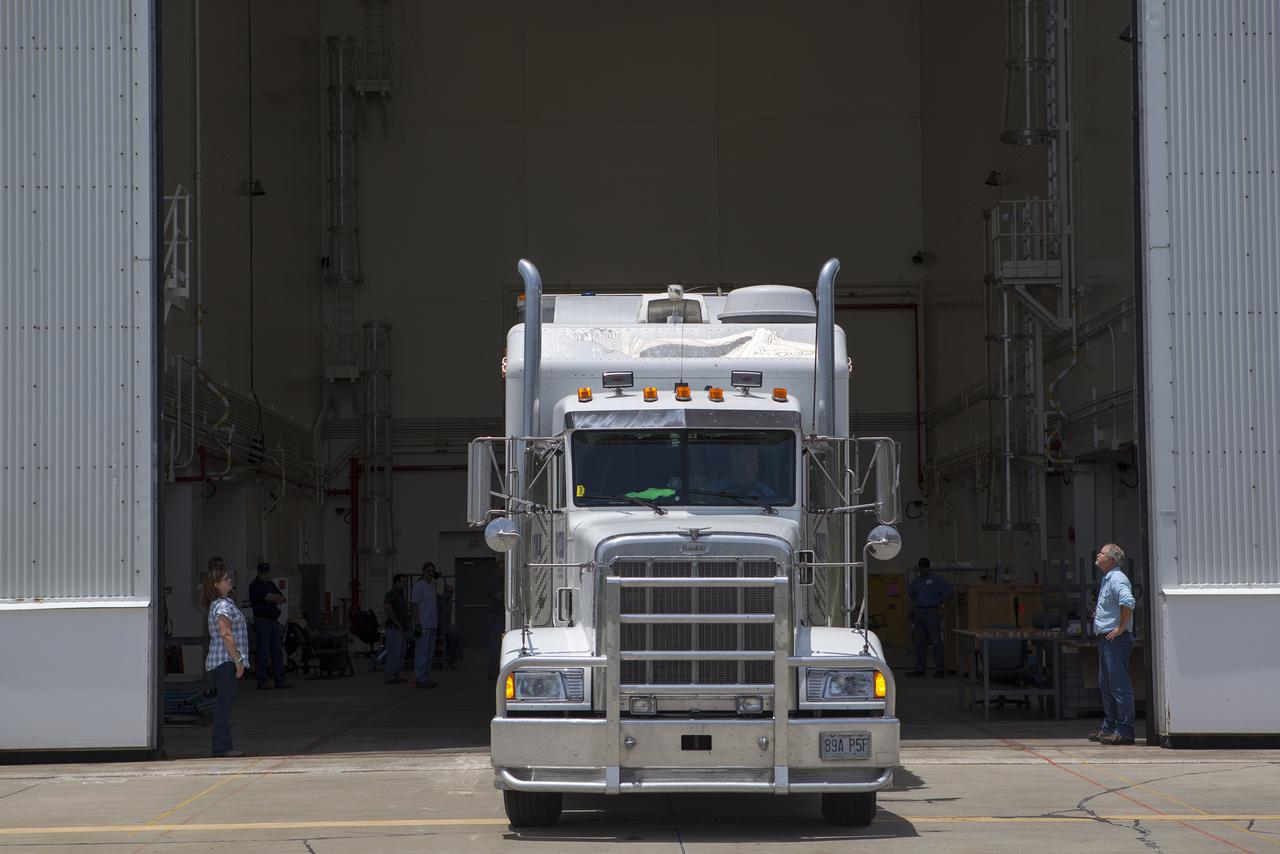
CAPE CANAVERAL, Fla. – At NASA’s Kennedy Space Center in Florida, a truck arrives at the Launch Abort System Facility with the jettison motor from Aerojet in Redmond, Wash. The motor is part of the Launch Abort System, or LAS, for Exploration Flight Test 1, or EFT-1, of the agency’s Orion Multi-Purpose Crew Vehicle. The motor will jettison the LAS away from the Orion crew capsule during the flight test’s early ascent phase. Orion’s Launch Abort System is designed to safely pull the Orion crew module away from the launch vehicle in the event of an emergency on the launch pad or during the initial ascent of NASA’s Space Launch System, or SLS, rocket. Orion is the exploration spacecraft designed to carry crews to space beyond low Earth orbit. It will provide emergency abort capability, sustain the crew during the space travel and provide safe re-entry from deep space return velocities. Orion’s first unpiloted test flight is scheduled to launch in 2014 atop a Delta IV rocket. A second uncrewed flight test is scheduled for 2017 on the SLS rocket. For more information, visit http:__www.nasa.gov_orion. Photo credit: NASA_Dimitri Gerondidakis
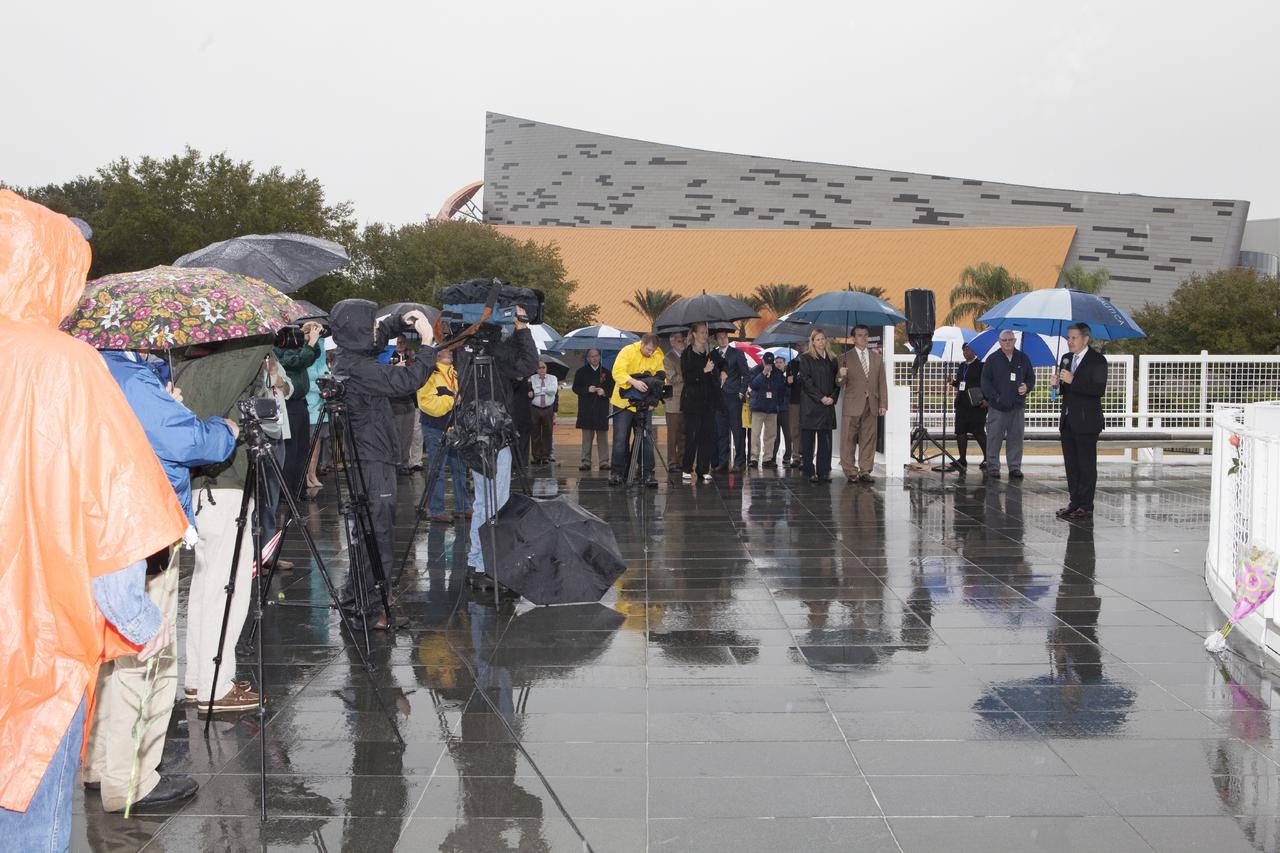
CAPE CANAVERAL, Fla. -- Under rainy skies, Kennedy Space Center Director Bob Cabana speaks to guests after placing a wreath in front of the Space Mirror Memorial at the spaceport's Visitor Complex during NASA's Day of Remembrance. The brief ceremony honored the astronauts of Apollo 1, who were lost in 1967, the shuttle Challenger crew, who perished in 1986, the space shuttle Columbia astronauts who were lost in 2003, as well as other astronauts who gave their lives while furthering the cause of exploration and discovery. Dedicated in 1991, the names of fallen astronauts are emblazoned the monument's 4.5-foot-high-by-50-foot-wide polished black granite surface which reflects the sky and has been designated by Congress as a National Memorial. Photo credit: NASA_Dimitri Gerondidakis
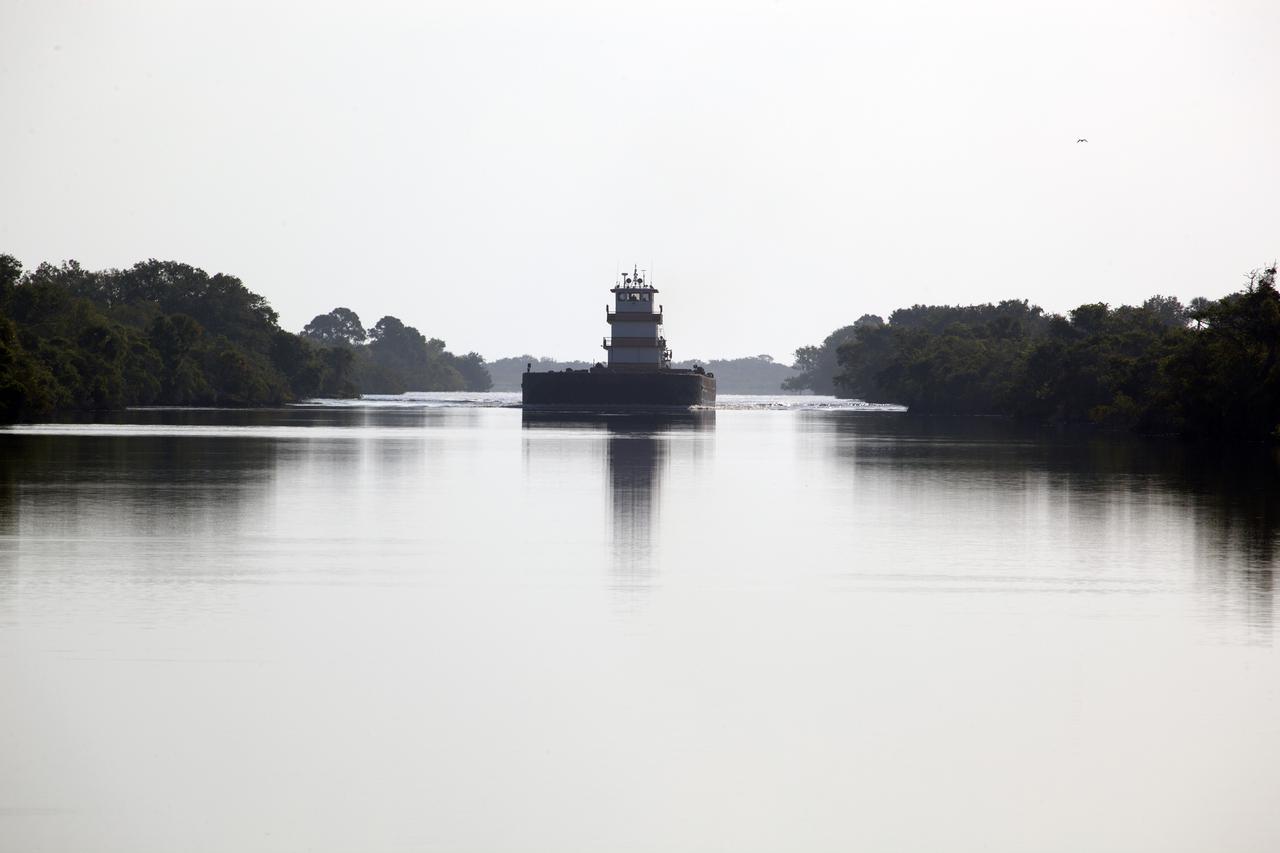
CAPE CANAVERAL, Fla. – A barge arrives at the Kennedy Space Center Turn Basin to pick up an orange flight test article space shuttle external fuel tank, or ET, an ET transporter, the crew transport vehicle, crew hatch access vehicle, solid rocket booster, or SRB, aft skirt and SRB frustum for the first leg of their journey from NASA's Kennedy Space Center in Florida to the Wings of Dreams Aviation Museum located at Keystone Heights Airport in North Central Florida. Thousands of unique space shuttle era artifacts are being allocated to facilities across the country for their new missions to educate and inspire America's next generation of explorers. Photo credit: NASA_Dimitri Gerondidakis
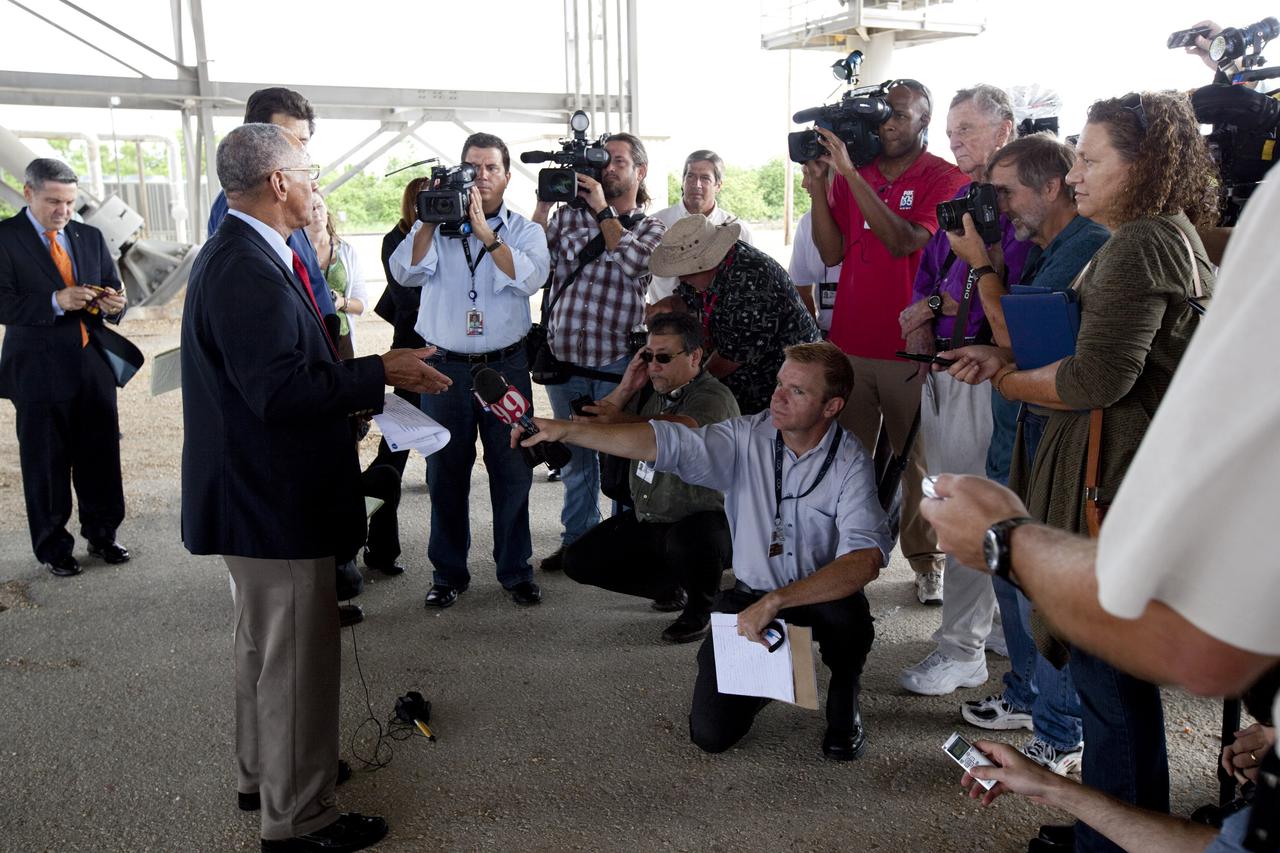
CAPE CANAVERAL, Fla. – At Kennedy Space Center in Florida, NASA Administrator Charlie Bolden talks to media underneath NASA’s mobile launcher (ML) support structure. Center Director Bob Cabana, at far left, also attended the media event held to detail ML’s use with NASA’s Space Launch System (SLS) heavy-lift rocket, which will take astronauts into deep space on missions to asteroids, the moon or Mars. It took about two years to construct the 355-foot-tall ML structure, which will support NASA's future human spaceflight program. The ML can be outfitted with ground support equipment, such as umbilicals and access arms, for future rocket launches. Photo credit: NASA_Dimitri Gerondidakis
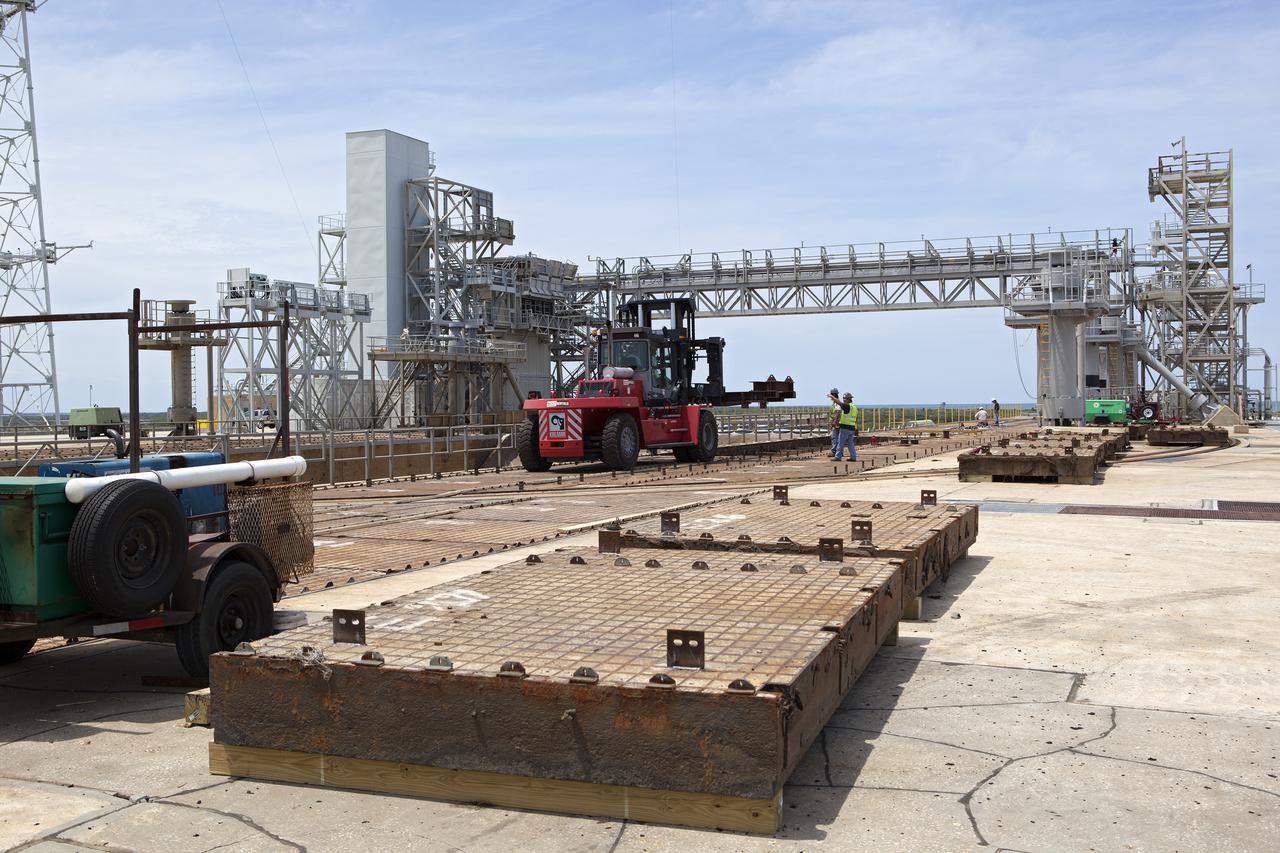
CAPE CANAVERAL, Fla. – At Launch Pad 39B at NASA’s Kennedy Space Center in Florida, removal of the crawler track panels on the pad’s surface is underway. The concrete surface beneath the panels and the catacomb roof below will be inspected for water damage and repaired. There are 176 panels, each weighing about 30,000 pounds that will be removed. Launch Pad 39B is being refurbished to support NASA’s Space Launch System and other launch vehicles. The Ground Systems Development and Operations, or GSDO, Program office at Kennedy is leading the center’s transformation to safely handle a variety of rockets and spacecraft. For more information about GSDO, visit: http:__go.nasa.gov_groundsystems. Photo credit: NASA_Dimitri Gerondidakis
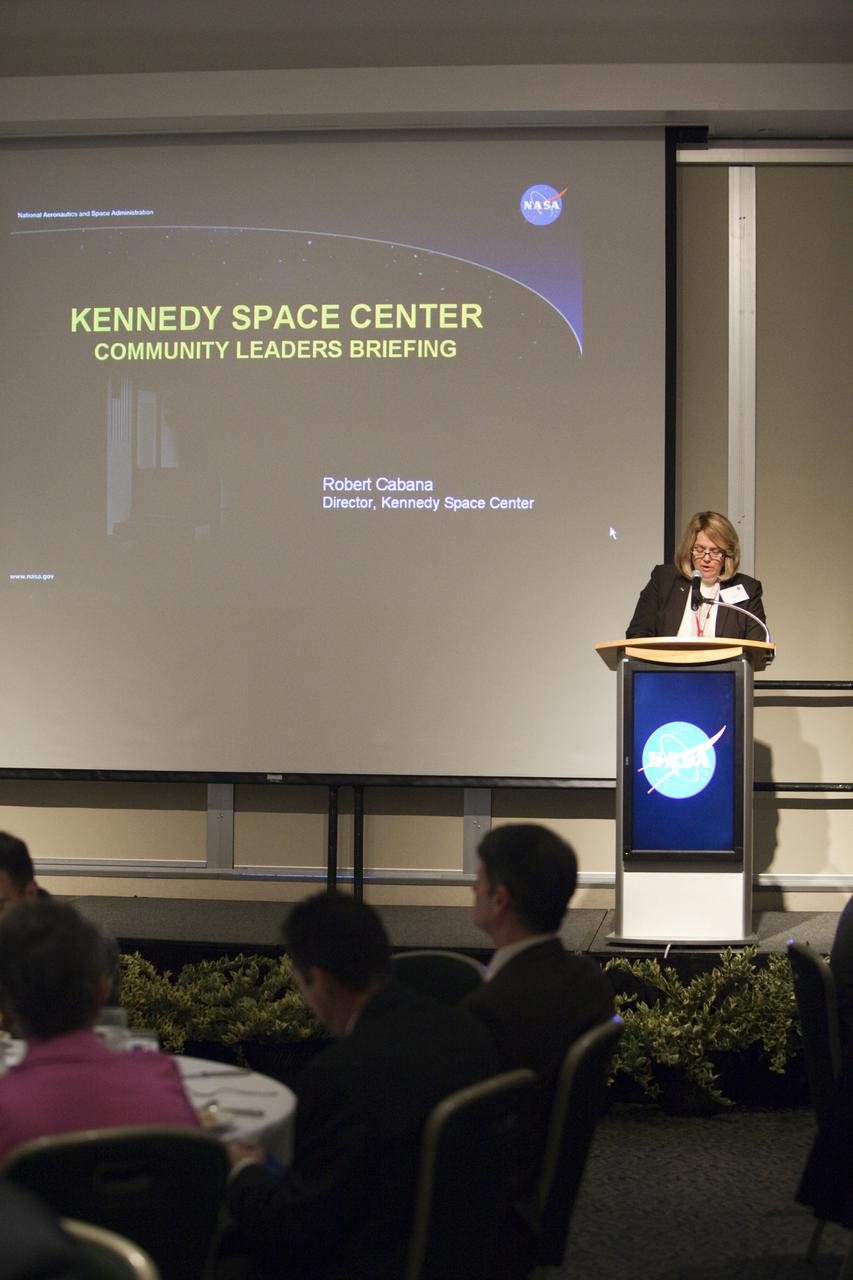
CAPE CANAVERAL, Fla. –Cheryl Hurst, Director of Education and External Relations for NASA’s Kennedy Space Center, addresses guests at the annual Community Leaders Breakfast held in the Debus Center at Kennedy's Visitor Complex in Florida. Community leaders, business executives, educators, community organizers and state and local government officials heard NASA Administrator Charlie Bolden, Kennedy Space Center Director Bob Cabana, and other senior Kennedy managers provide an overview of the future of the space center. Photo credit: NASA_Dimitri Gerondidakis
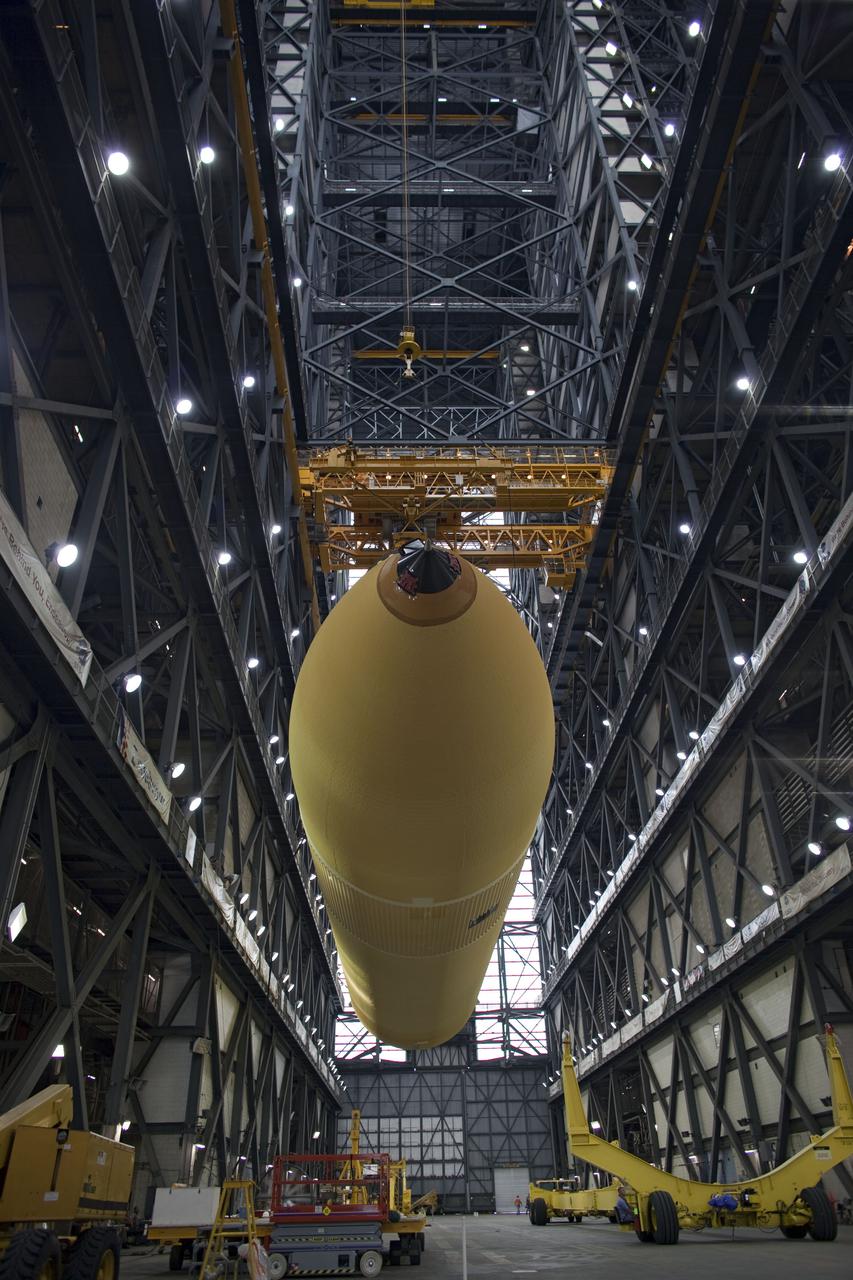
CAPE CANAVERAL, Fla. -- In the Vehicle Assembly Building at NASA's Kennedy Space Center in Florida, External Tank-138 is lifted above the transfer aisle. The external fuel tank is being moved into a test cell where it will be checked out before launch. ET-138, the last newly manufactured tank, was originally designated to fly on Endeavour's STS-134 mission to the International Space Station, but later reassigned to fly on space shuttle Atlantis' final mission, STS-135. For information, visit www.nasa.gov_shuttle. Photo credit: NASA_Dimitri Gerondidakis
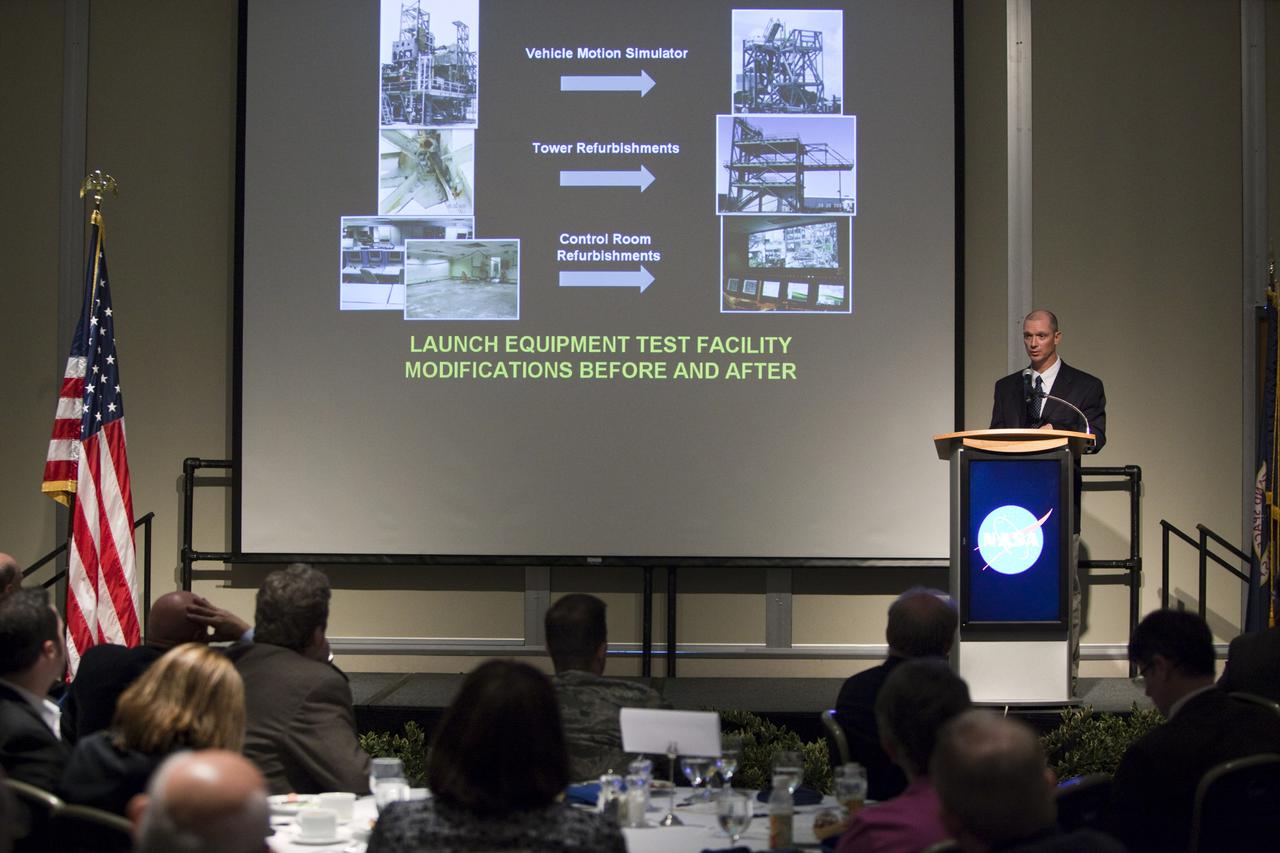
CAPE CANAVERAL, Fla. – Pepper Phillips, NASA’s 21st Century Ground Systems Program Office manager at Kennedy Space Center, addresses guests at the annual Community Leaders Breakfast held in the Debus Center at Kennedy's Visitor Complex in Florida. Community leaders, business executives, educators, community organizers and state and local government officials heard NASA Administrator Charlie Bolden, Kennedy Space Center Director Bob Cabana, and other senior Kennedy managers provide an overview of the future of the space center. Photo credit: NASA_Dimitri Gerondidakis
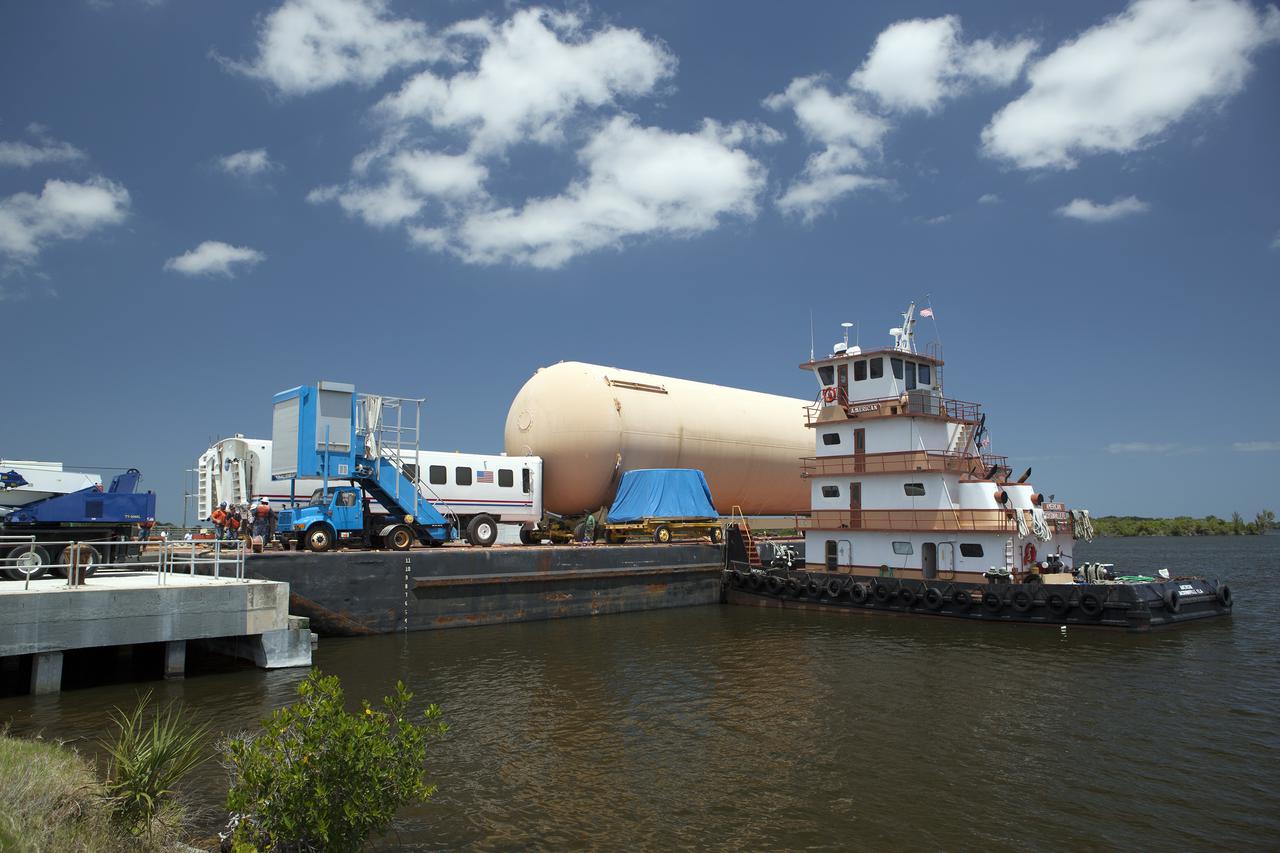
CAPE CANAVERAL, Fla. -- A space shuttle orange flight test article external fuel tank, or ET, an ET transporter, crew hatch access vehicle, crew transport vehicle, solid rocket booster, or SRB, aft skirt and SRB frustum are loaded onto a barge for the first leg of their journey from NASA's Kennedy Space Center in Florida to the Wings of Dreams Aviation Museum located at Keystone Heights Airport in North Central Florida. Thousands of unique space shuttle era artifacts are being allocated to facilities across the country for their new missions to educate and inspire America's next generation of explorers. Photo credit: NASA_Dimitri Gerondidakis
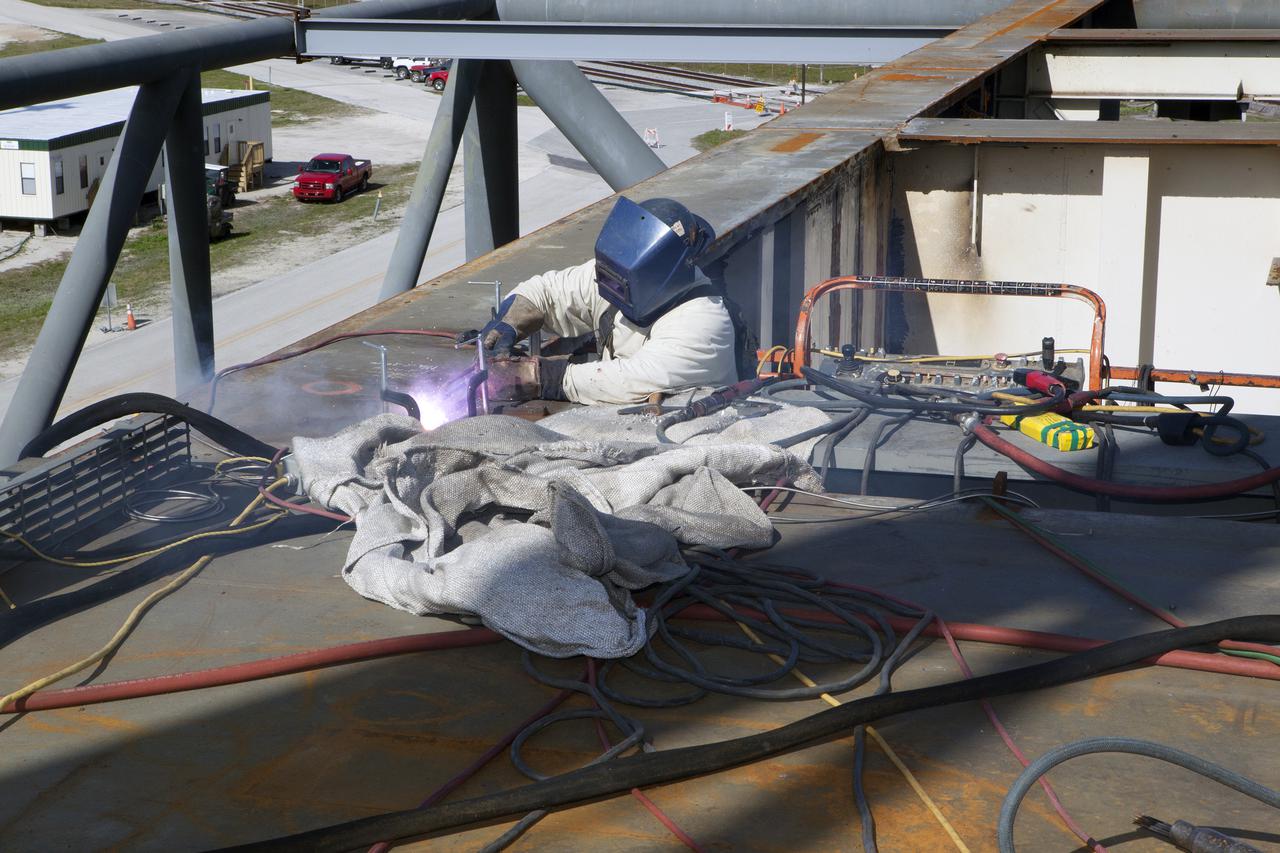
CAPE CANAVERAL, Fla. – Modifications continue on the Mobile Launcher, or ML, at the Mobile Launcher Park Site at NASA’s Kennedy Space Center in Florida. A construction worker performs welding on the exterior of the ML. In 2013, the agency awarded a contract to J.P. Donovan Construction Inc. of Rockledge, Fla., to modify the ML, which is one of the key elements of ground support equipment that is being upgraded by the Ground Systems Development and Operations Program office at Kennedy. The ML will carry the SLS rocket and Orion spacecraft to Launch Pad 39B for its first mission, Exploration Mission 1, in 2017. Photo credit: NASA_Dimitri Gerondidakis
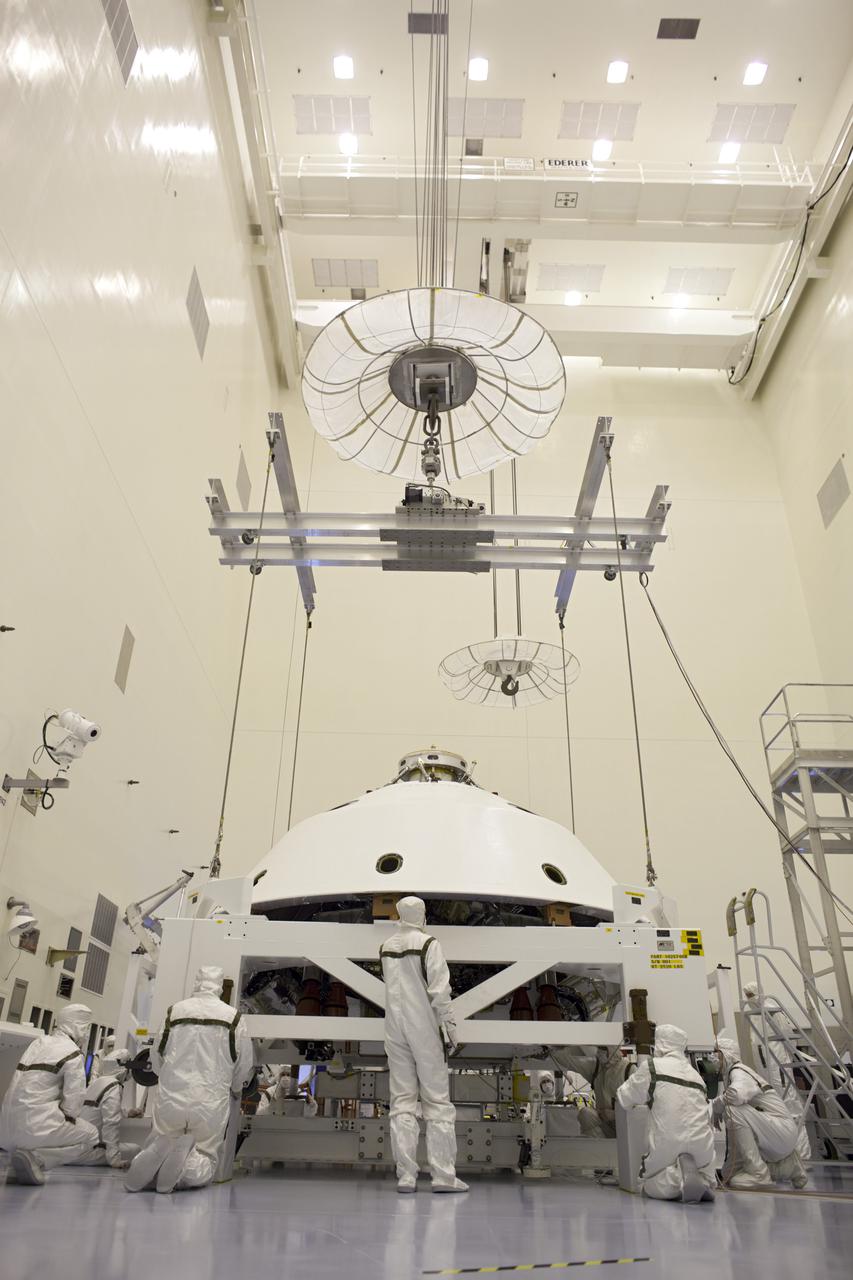
CAPE CANAVERAL, Fla. – In the Payload Hazardous Servicing Facility at NASA's Kennedy Space Center in Florida, technicians check the placement of the backshell over NASA's Mars Science Laboratory (MSL) rover, Curiosity. The backshell, a protective cover, carries the parachute and several components used during later stages of entry, descent and landing. A United Launch Alliance Atlas V-541 configuration will be used to loft MSL into space. MSL's components include a compact car-sized rover, Curiosity, which has 10 science instruments designed to search for evidence on whether Mars has had environments favorable to microbial life, including chemical ingredients for life. The unique rover will use a laser to look inside rocks and release its gasses so that the rover’s spectrometer can analyze and send the data back to Earth. MSL is scheduled to launch Nov. 25 with a window extending to Dec. 18 and arrival at Mars Aug. 2012. For more information, visit http:__www.nasa.gov_msl. Photo credit: NASA_Dimitri Gerondidakis
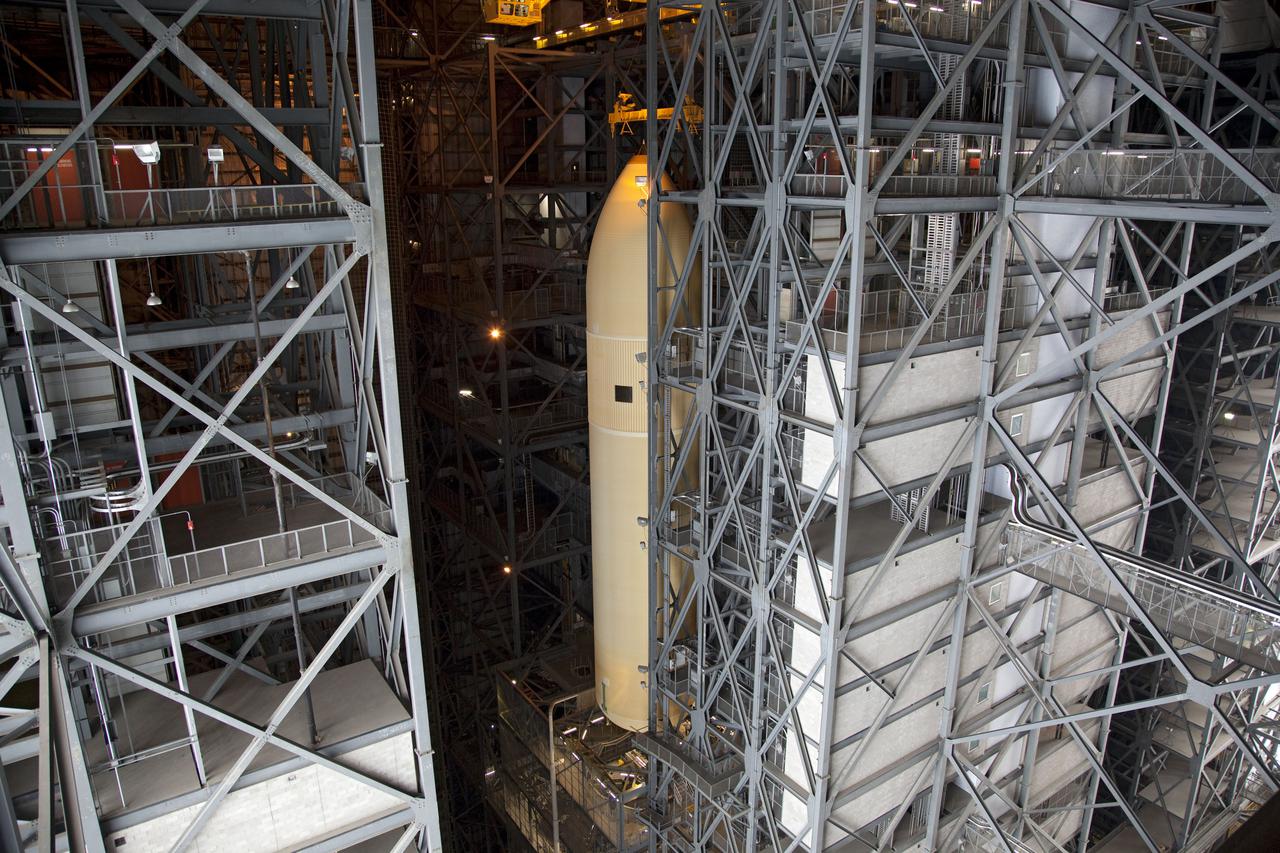
CAPE CANAVERAL, Fla. -- At NASA's Kennedy Space Center in Florida, External Tank-138 has been lifted into the upper levels of a high bay in the Vehicle Assembly Building. It will then be lowered onto a test stand and checked before launch. ET-138, the last newly manufactured tank, was originally designated to fly on Endeavour's STS-134 mission to the International Space Station, but later reassigned to fly on space shuttle Atlantis' final mission, STS-135. For information, visit www.nasa.gov_shuttle. Photo credit: NASA_Dimitri Gerondidakis
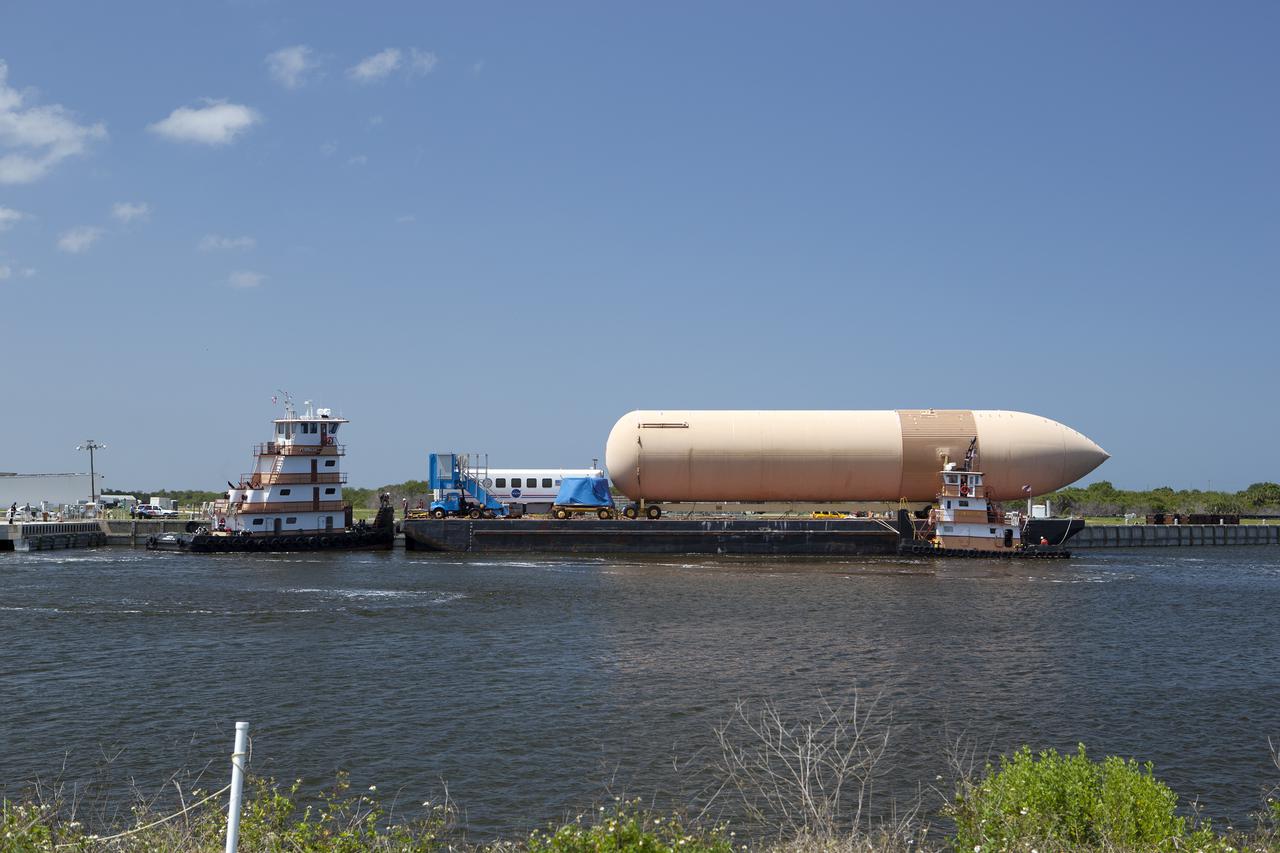
CAPE CANAVERAL, Fla. – A space shuttle orange flight test article external fuel tank, or ET, an ET transporter, crew hatch access vehicle, crew transport vehicle, solid rocket booster, or SRB, aft skirt and SRB frustum are loaded onto a barge and beginning the first leg of their journey from NASA's Kennedy Space Center in Florida to the Wings of Dreams Aviation Museum located at Keystone Heights Airport in North Central Florida. Thousands of unique space shuttle era artifacts are being allocated to facilities across the country for their new missions to educate and inspire America's next generation of explorers. Photo credit: NASA_Dimitri Gerondidakis
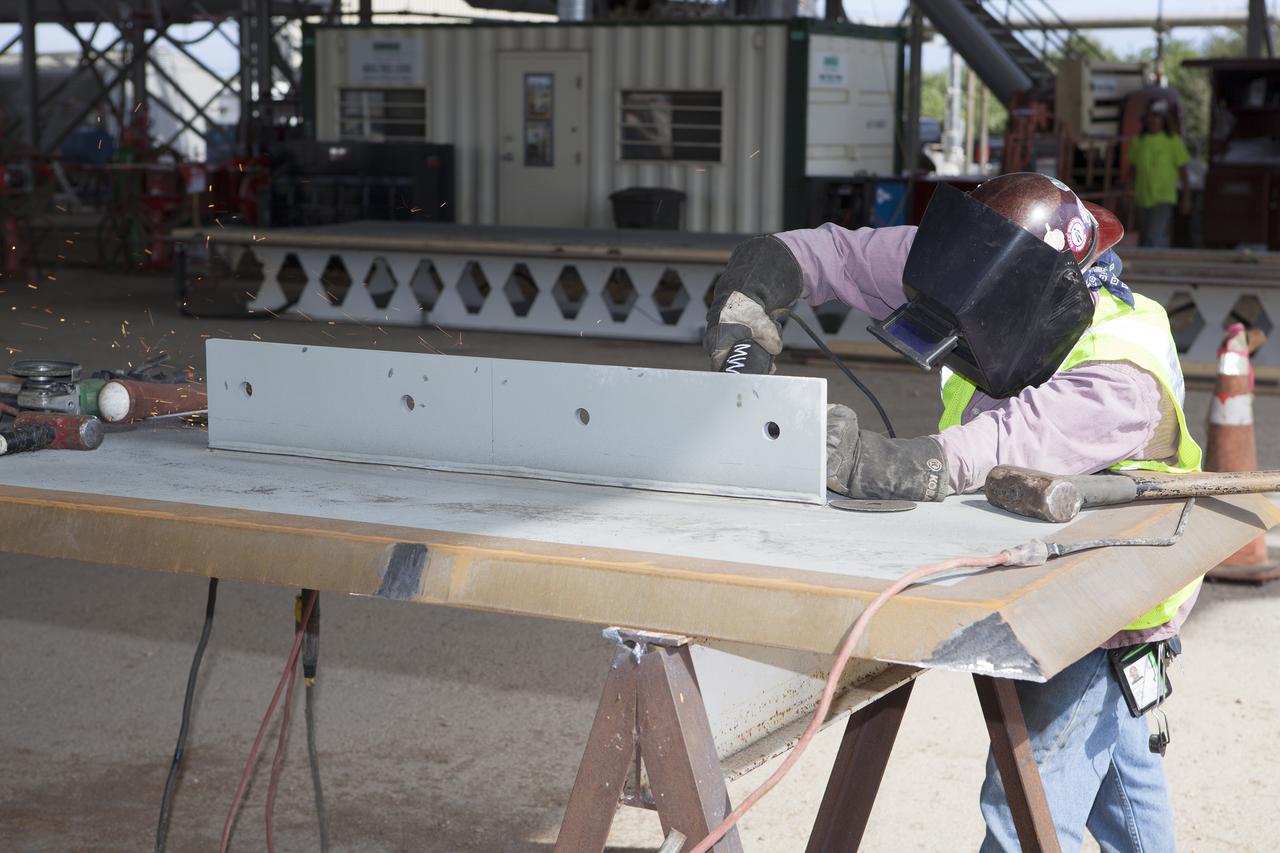
CAPE CANAVERAL, Fla. – Modifications continue on the Mobile Launcher, or ML, at the Mobile Launcher Park Site at NASA’s Kennedy Space Center in Florida. A construction worker prepares a metal part for installation on the ML. In 2013, the agency awarded a contract to J.P. Donovan Construction Inc. of Rockledge, Fla., to modify the ML, which is one of the key elements of ground support equipment that is being upgraded by the Ground Systems Development and Operations Program office at Kennedy. The ML will carry the SLS rocket and Orion spacecraft to Launch Pad 39B for its first mission, Exploration Mission 1, in 2017. Photo credit: NASA_Dimitri Gerondidakis
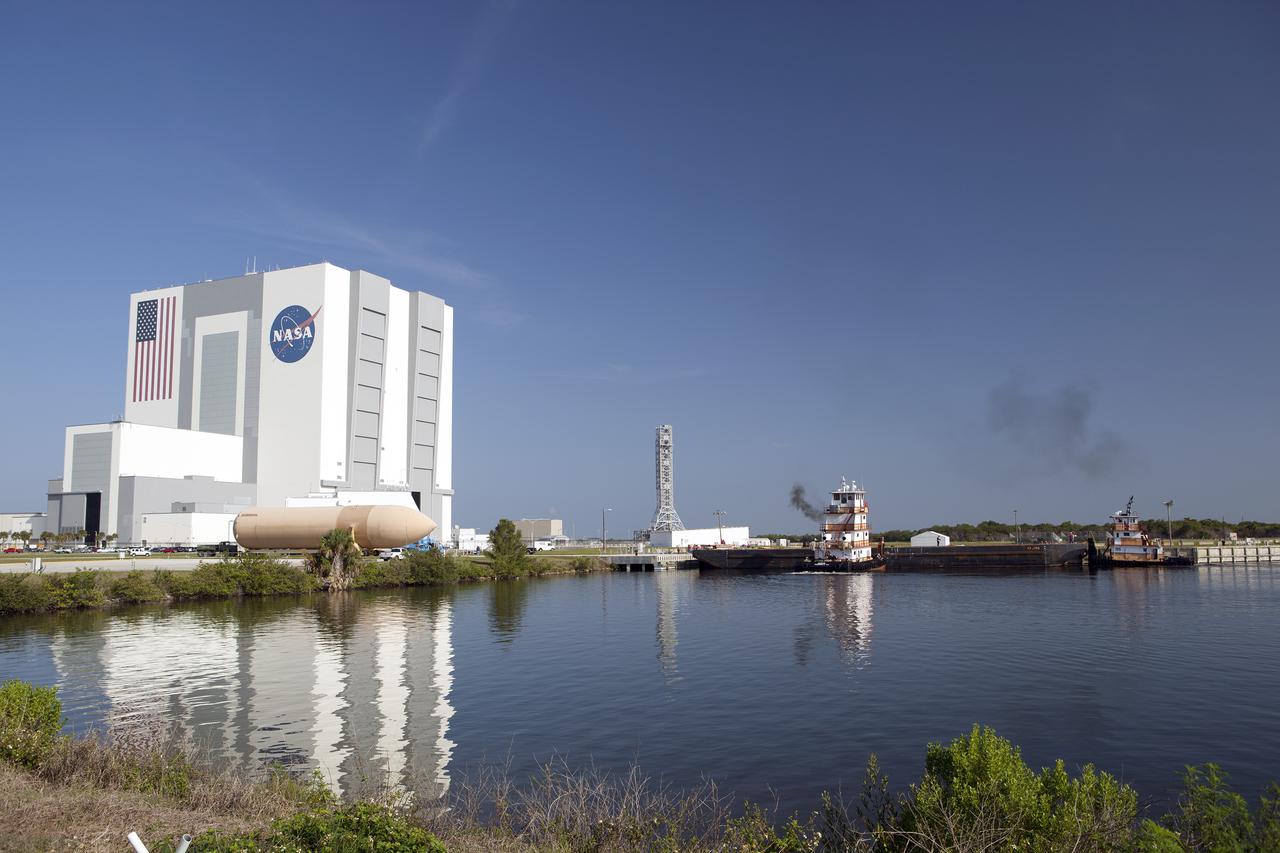
CAPE CANAVERAL, Fla. – An orange flight test article space shuttle external fuel tank, or ET, and the crew transport vehicle await transport from NASA's Kennedy Space Center in Florida to the Wings of Dreams Aviation Museum located at Keystone Heights Airport in North Central Florida. Also joining the two artifacts at Wings of Dreams is an ET transporter, crew hatch access vehicle, solid rocket booster, or SRB, aft skirt and SRB frustum. Thousands of unique space shuttle era artifacts are being allocated to facilities across the country for their new missions to educate and inspire America's next generation of explorers. Photo credit: NASA_Dimitri Gerondidakis
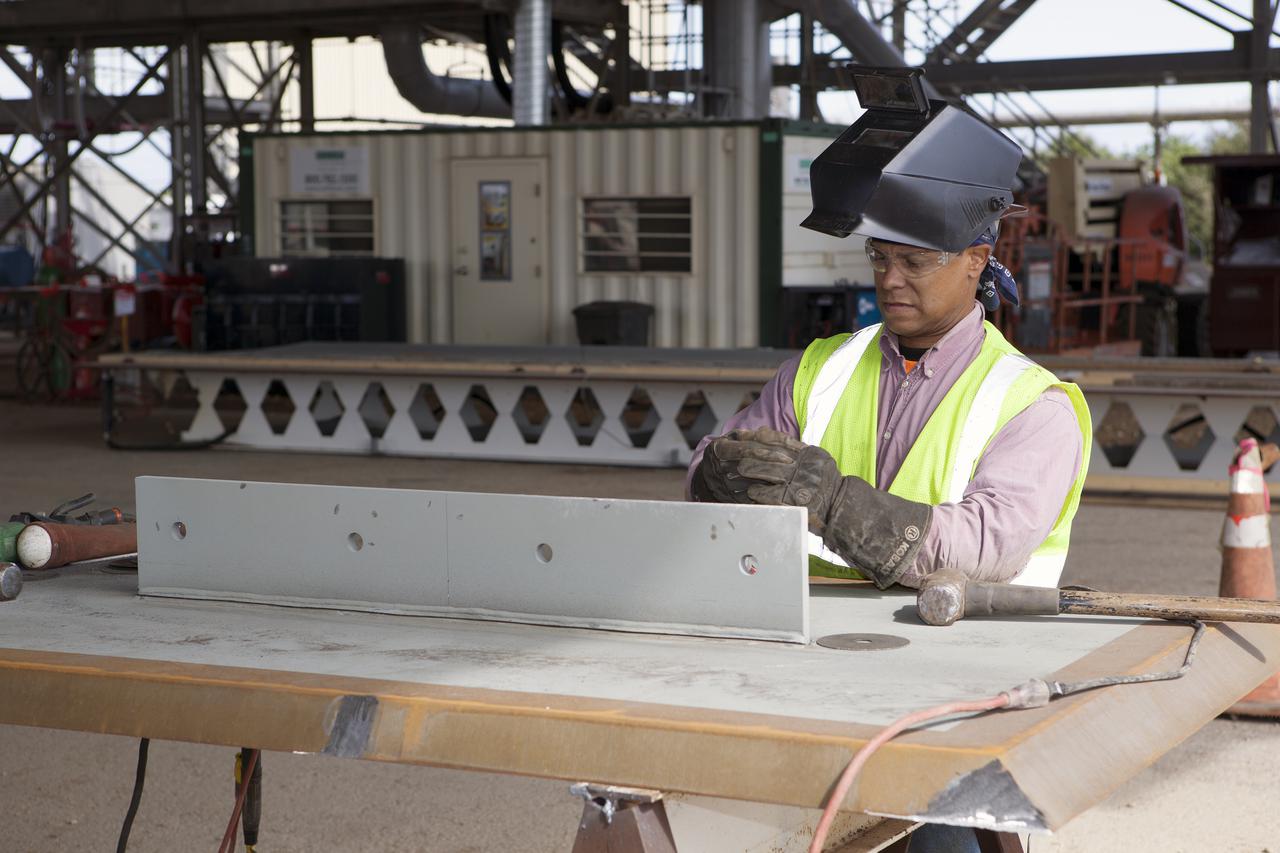
CAPE CANAVERAL, Fla. – Modifications continue on the Mobile Launcher, or ML, at the Mobile Launcher Park Site at NASA’s Kennedy Space Center in Florida. A construction worker prepares a metal part for installation on the ML. In 2013, the agency awarded a contract to J.P. Donovan Construction Inc. of Rockledge, Fla., to modify the ML, which is one of the key elements of ground support equipment that is being upgraded by the Ground Systems Development and Operations Program office at Kennedy. The ML will carry the SLS rocket and Orion spacecraft to Launch Pad 39B for its first mission, Exploration Mission 1, in 2017. Photo credit: NASA_Dimitri Gerondidakis
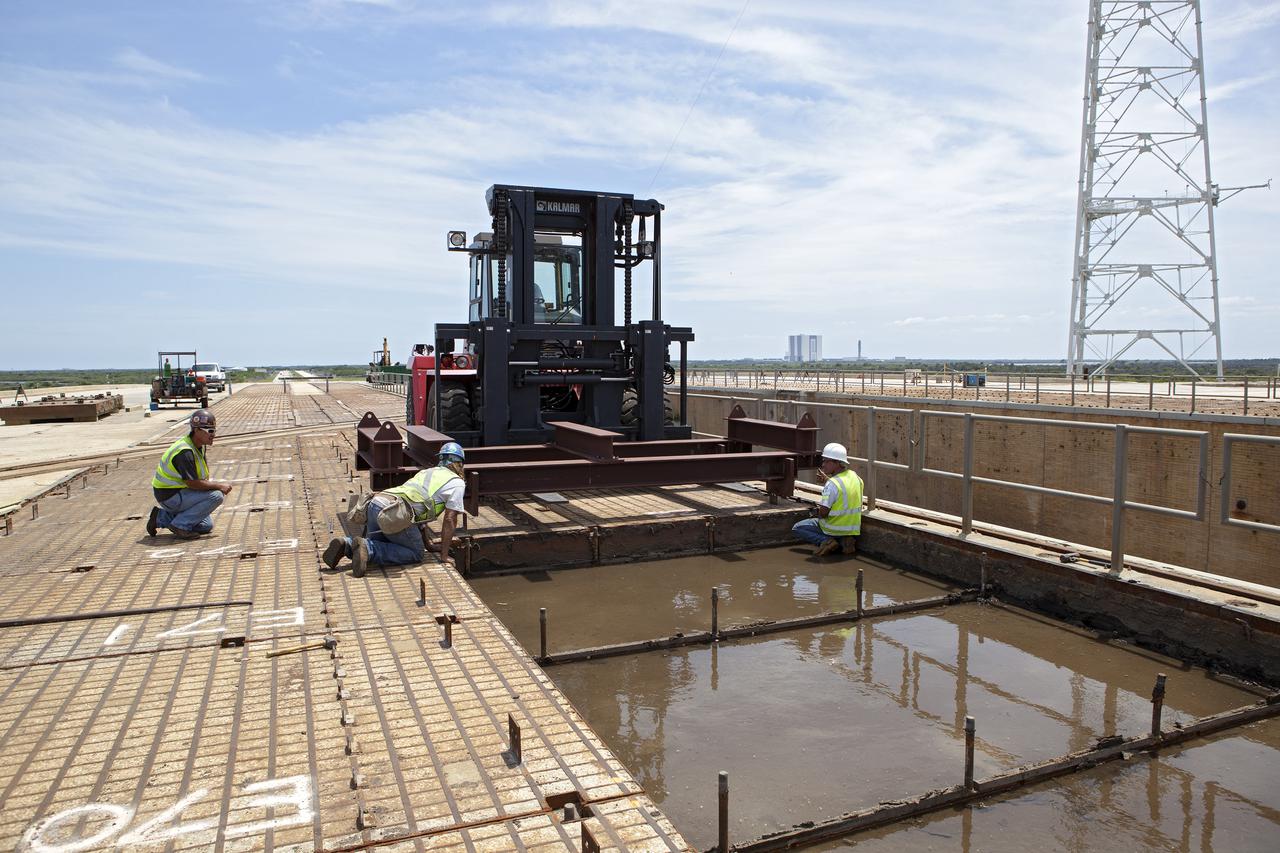
CAPE CANAVERAL, Fla. – At Launch Pad 39B at NASA’s Kennedy Space Center in Florida, removal of the crawler track panels on the pad’s surface is underway. The concrete surface beneath the panels and the catacomb roof below will be inspected for water damage and repaired. There are 176 panels, each weighing about 30,000 pounds that will be removed. Launch Pad 39B is being refurbished to support NASA’s Space Launch System and other launch vehicles. The Ground Systems Development and Operations, or GSDO, Program office at Kennedy is leading the center’s transformation to safely handle a variety of rockets and spacecraft. For more information about GSDO, visit: http:__go.nasa.gov_groundsystems. Photo credit: NASA_Dimitri Gerondidakis
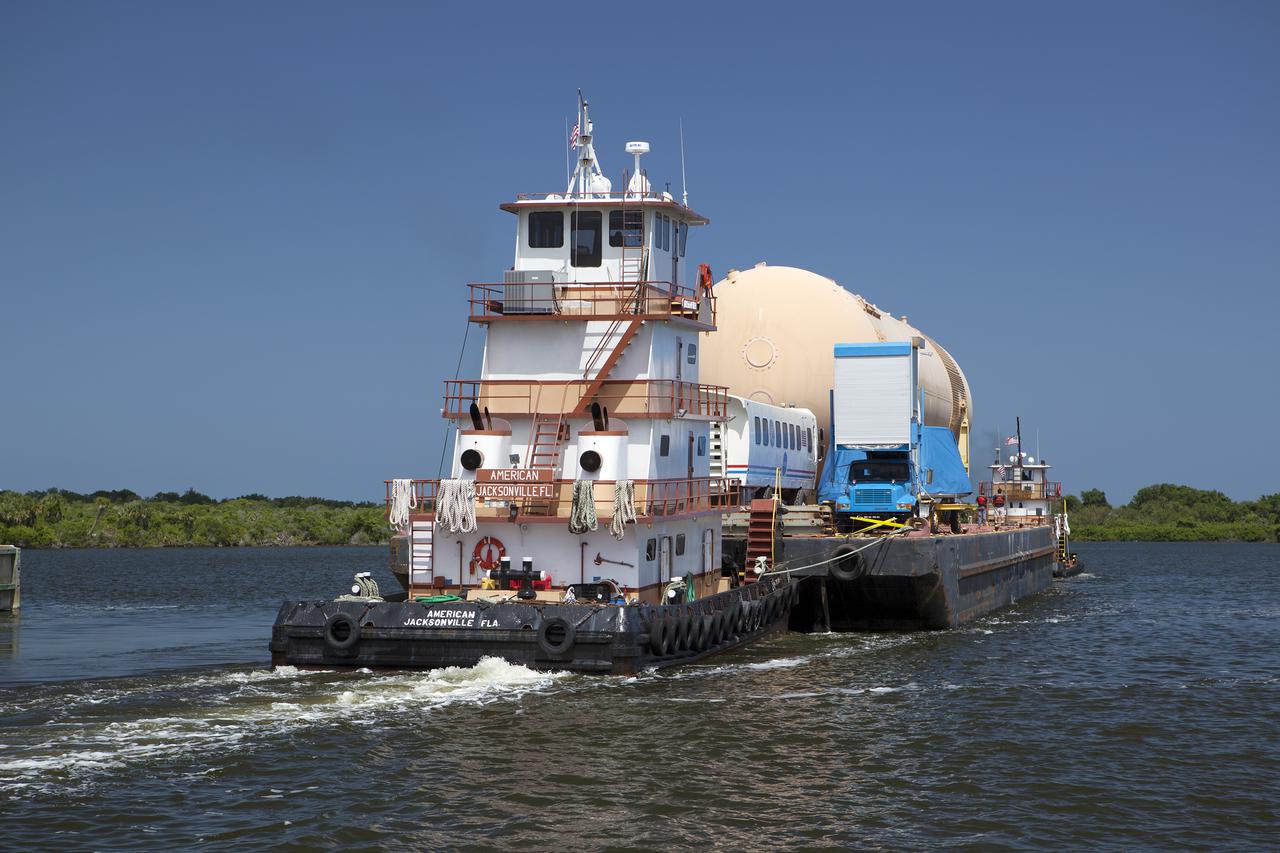
CAPE CANAVERAL, Fla. -- A space shuttle orange flight test article external fuel tank, or ET, an ET transporter, crew hatch access vehicle, crew transport vehicle, solid rocket booster, or SRB, aft skirt and SRB frustum are loaded onto a barge and beginning the first leg of their journey down the Banana River from NASA's Kennedy Space Center in Florida to the Wings of Dreams Aviation Museum located at Keystone Heights Airport in North Central Florida. Thousands of unique space shuttle era artifacts are being allocated to facilities across the country for their new missions to educate and inspire America's next generation of explorers. Photo credit: NASA_Dimitri Gerondidakis
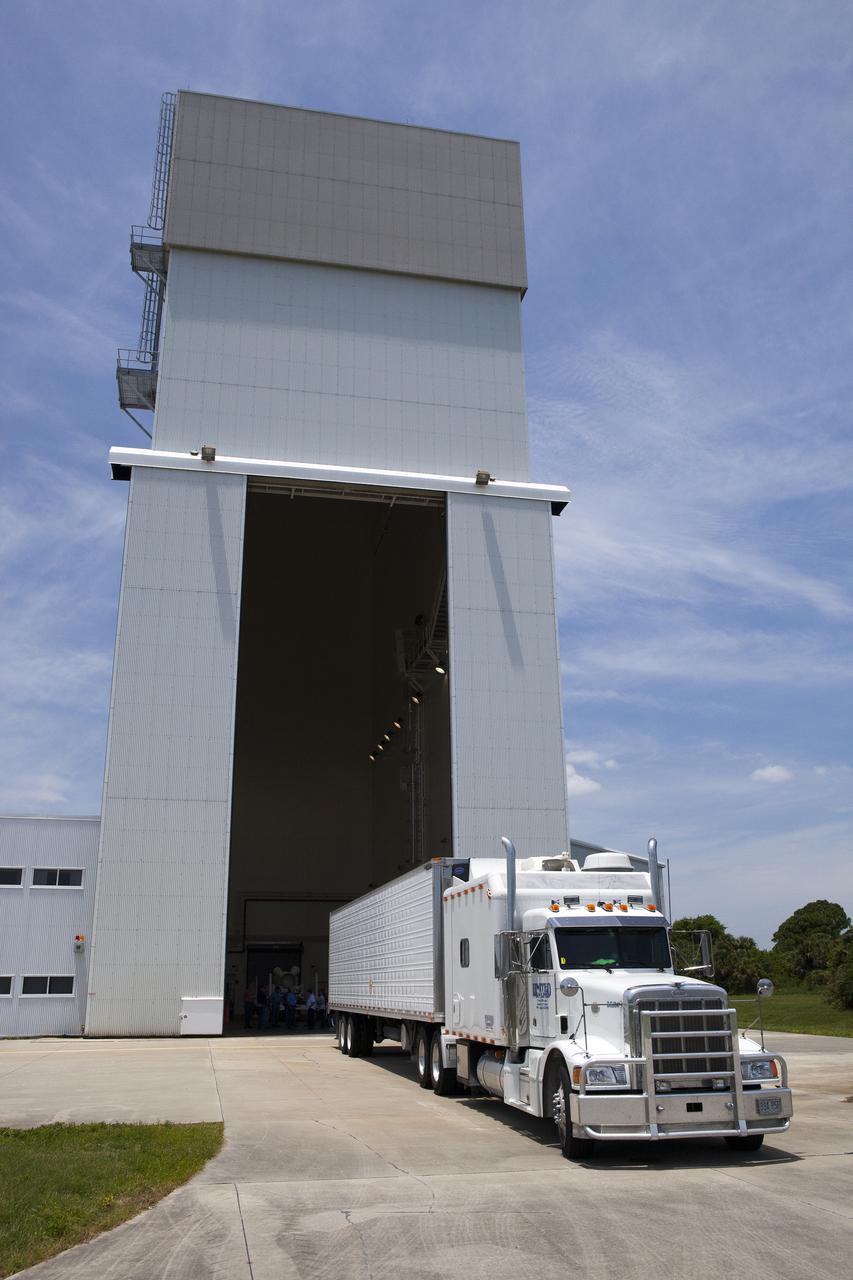
CAPE CANAVERAL, Fla. – At NASA’s Kennedy Space Center in Florida, a truck arrives at the Launch Abort System Facility with the jettison motor from Aerojet in Redmond, Wash. The motor is part of the Launch Abort System, or LAS, for Exploration Flight Test 1, or EFT-1, of the agency’s Orion Multi-Purpose Crew Vehicle. The motor will jettison the LAS away from the Orion crew capsule during the flight test’s early ascent phase. Orion’s Launch Abort System is designed to safely pull the Orion crew module away from the launch vehicle in the event of an emergency on the launch pad or during the initial ascent of NASA’s Space Launch System, or SLS, rocket. Orion is the exploration spacecraft designed to carry crews to space beyond low Earth orbit. It will provide emergency abort capability, sustain the crew during the space travel and provide safe re-entry from deep space return velocities. Orion’s first unpiloted test flight is scheduled to launch in 2014 atop a Delta IV rocket. A second uncrewed flight test is scheduled for 2017 on the SLS rocket. For more information, visit http:__www.nasa.gov_orion. Photo credit: NASA_Dimitri Gerondidakis
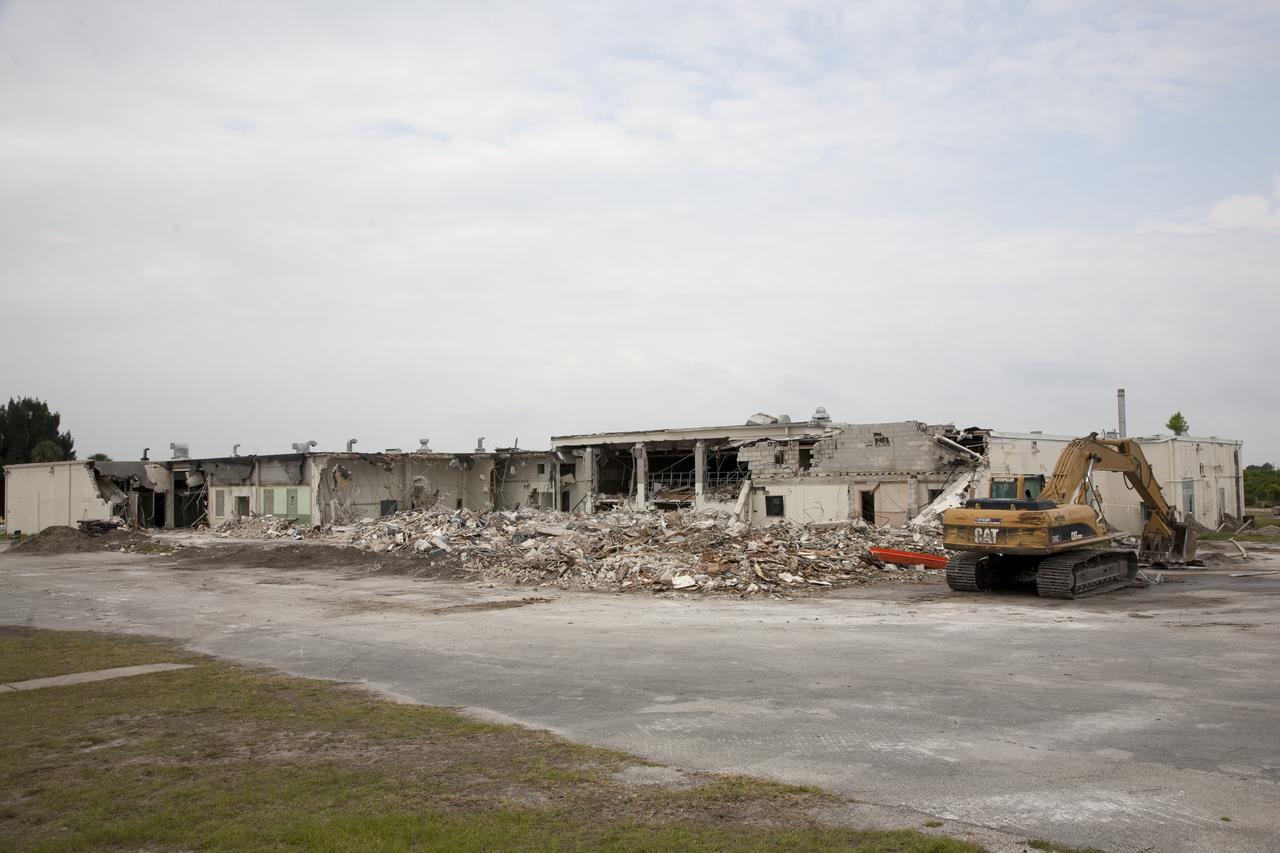
CAPE CANAVERAL, Fla. – At Cape Canaveral Air Force Station in Florida, the control room of the Mercury Mission Control Center is exposed to the elements during the deconstruction of the dilapidated facility. The original building, constructed between 1956 and 1958, was last modified in 1963. The center succumbed to the two worst enemies of structures along the space coast - time and salt air - necessitating that it be demolished as a safety measure. The facility served as mission control during all the Project Mercury missions, as well as the first three flights of the Gemini Program. The center housed the flight controllers whose duty was to take over flight control after liftoff and follow it through until splashdown. Additionally, it supported vehicle checkout, spacecraft tracking, and astronaut training. With Gemini IV, mission control moved to Houston, and the facility took on the roles of launch control and tracking station. In 1999, much of the equipment and furnishings from the flight control area was moved to Kennedy Space Center's Visitor Complex. A re-created mission control room currently is on display in the complex's Dr. Kurt H. Debus Conference Facility. Speegle II of Cocoa, Fla., was awarded the contract for the deconstruction project. Frank-Lin Excavating is performing the demolition for Sunrise Systems of Brevard, a subcontractor to Speegle II. Photo credit: NASA_Dimitri Gerondidakis
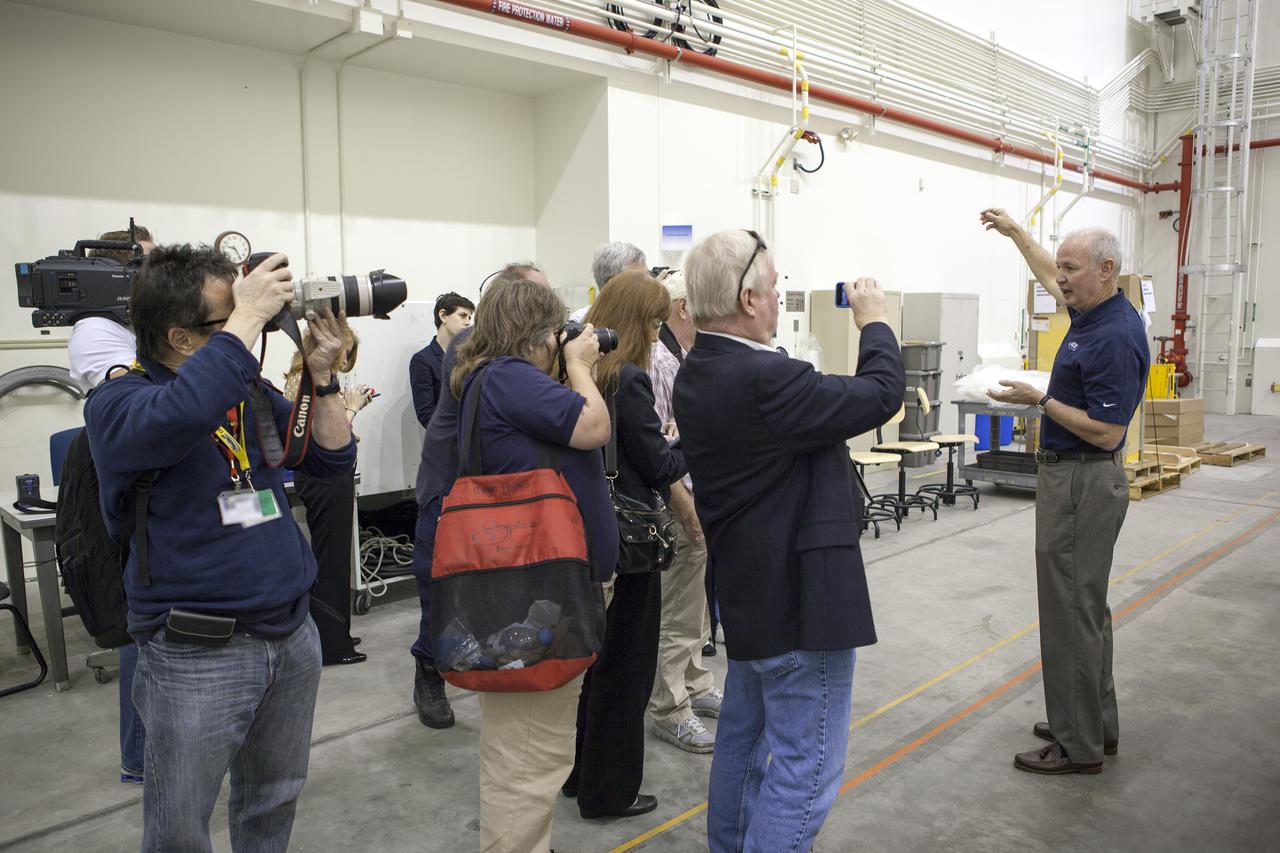
CAPE CANAVERAL, Fla. – At NASA’s Kennedy Space Center in Florida, Brian Duffy, the vice president and Johnson Space Center manager for Exploration Systems with ATK Aerospace Systems, talks with members of the media during a viewing of ATK’s launch abort motor inside the Launch Abort System Facility. The abort motor is one of the components of Orion’s Launch Abort System, which will be used for Exploration Flight Test 1, or EFT-1. The system is designed to safely pull the Orion crew module away from the launch vehicle in the event of an emergency on the launch pad or during the initial ascent of NASA’s Space Launch System, or SLS, rocket. The test flight abort motor is configured with inert propellant. Orion is the exploration spacecraft designed to carry crews to space beyond low Earth orbit. It will provide emergency abort capability, sustain the crew during the space travel and provide safe re-entry from deep space return velocities. Orion’s first unpiloted test flight is scheduled to launch in 2014 atop a Delta IV rocket. A second uncrewed flight test is scheduled for 2017 on the SLS rocket. For more information, visit http:__www.nasa.gov_orion. Photo credit: NASA_Dimitri Gerondidakis
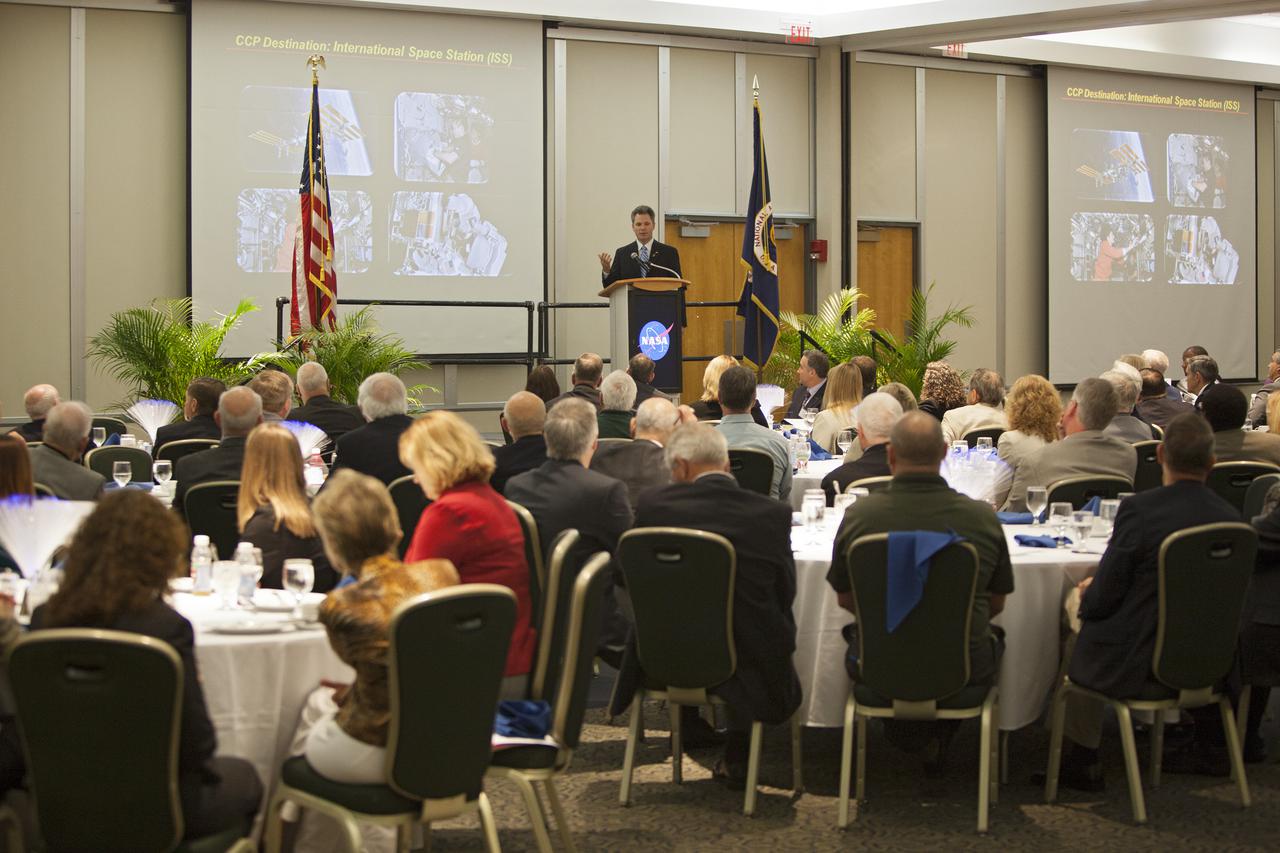
CAPE CANAVERAL, Fla. -- Scott Thurston, manager of the Commercial Crew Program’s Partner Integration Office at the Kennedy Space Center provided an on current and future activities at the Florida spaceport during the annual Community Leaders Briefing. The reports were part of the annual Community Leaders Briefing at the Kurt H. Debus Conference Center at the Kennedy Space Center Visitor Complex attended by local, state and U.S. government representatives, along with individuals from business and industry. Photo credit: NASA_Dimitri Gerondidakis
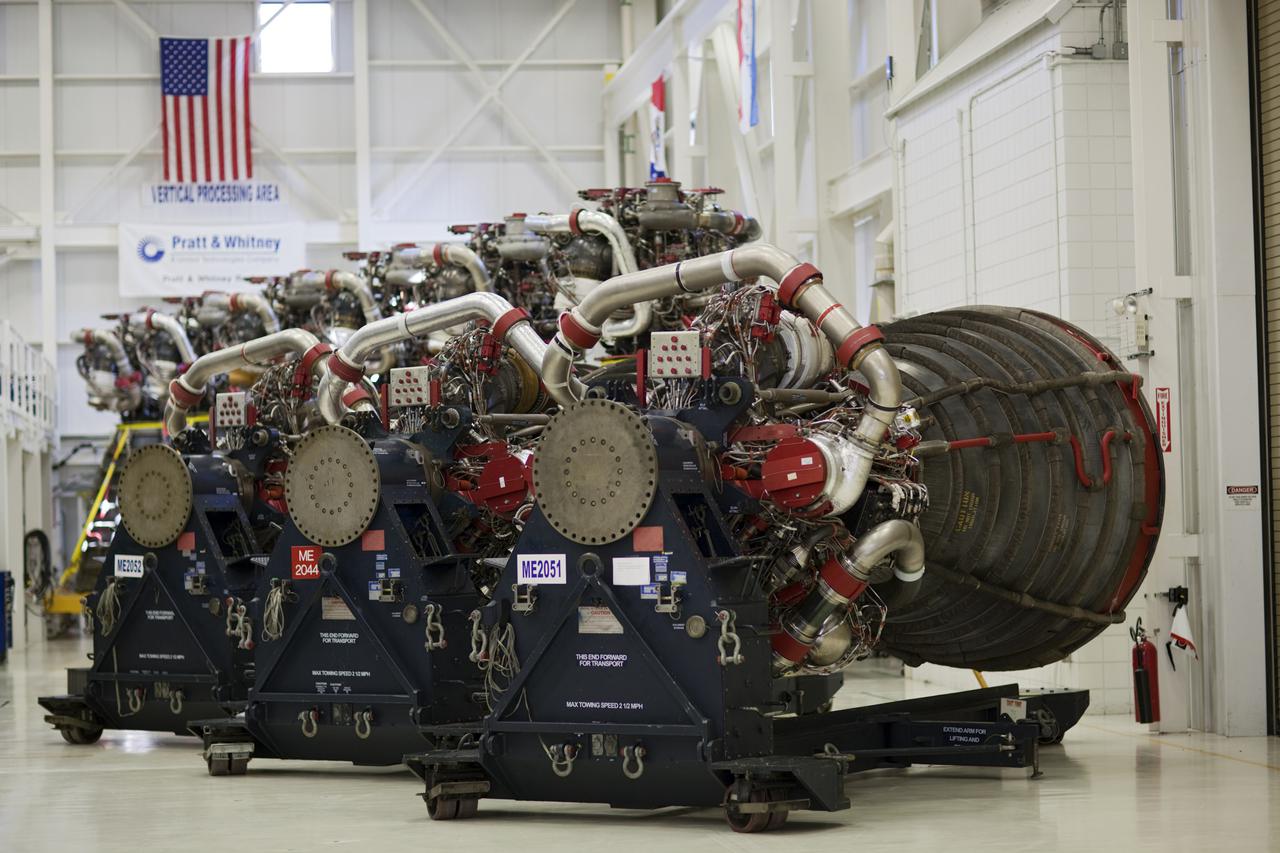
CAPE CANAVERAL, Fla. – At NASA’s Kennedy Space Center in Florida, three Pratt Whitney Rocketdyne space shuttle main engines (SSMEs) sit on stands inside the Engine Shop, with six more engines lined up behind them. For the first time, all 15 main engines are in the Engine Shop at the same time. They are being prepared for shipment to NASA's Stennis Space Center in Mississippi for storage following the completion of the Space Shuttle Program. The engines are being repurposed for use on NASA’s Space Launch System heavy lift rocket. Photo credit: NASA_Dimitri Gerondidakis
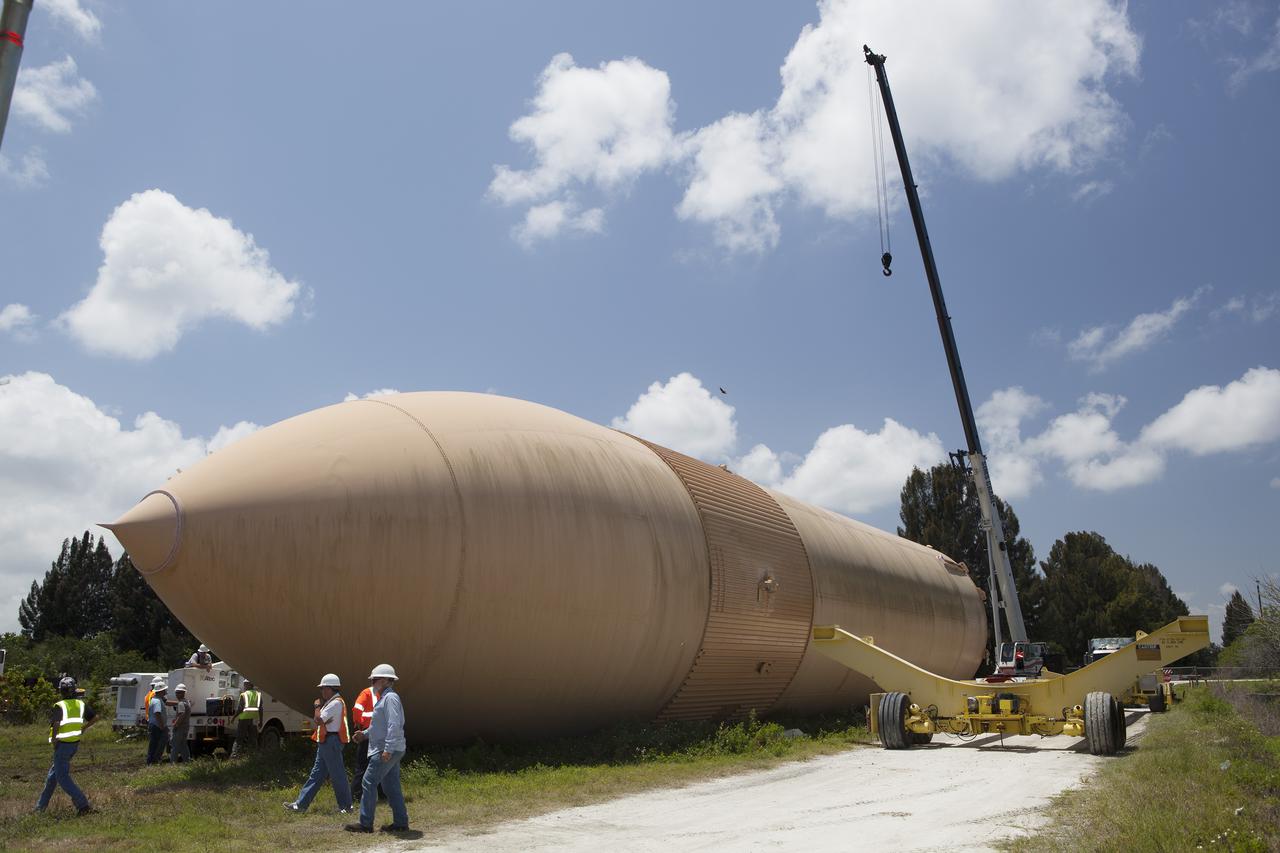
CAPE CANAVERAL, Fla. – Volunteers prepare an orange flight test article space shuttle external fuel tank, or ET, for transport from NASA's Kennedy Space Center in Florida to the Wings of Dreams Aviation Museum located at Keystone Heights Airport in North Central Florida. Weighing in at 58,000 pounds unfueled and standing more than 15-stories tall, the ET was referred to as the 'backbone' of the space shuttle. Its job was to hold about 535,000 gallons of super-cold liquid hydrogen and liquid oxygen. It also absorbed the thrust loads produced at launch by the orbiter and the solid rocket boosters, or SRBs. Also joining the ET at Wings of Dreams is an ET transporter, the crew transport vehicle, crew hatch access vehicle, SRB aft skirt and SRB frustum. Thousands of unique space shuttle era artifacts are being allocated to facilities across the country for their new missions to educate and inspire America's next generation of explorers. Photo credit: NASA_Dimitri Gerondidakis
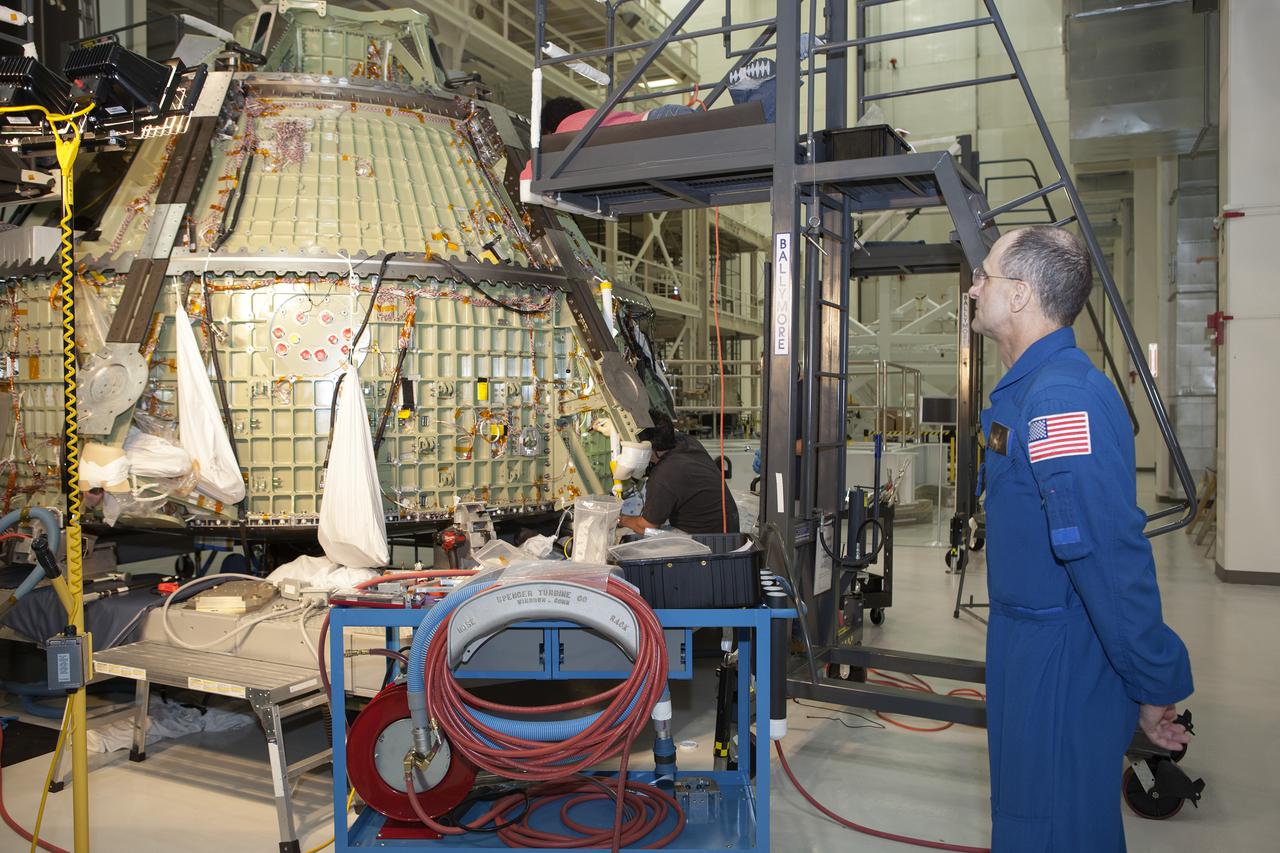
CAPE CANAVERAL, Fla. – Inside the Operations and Checkout Building high bay at NASA’s Kennedy Space Center in Florida, astronaut Don Pettit watches as technicians work on the Orion crew module. Orion is being prepared for Exploration Flight Test 1, or EFT-1. Orion is the exploration spacecraft designed to carry crews to space beyond low Earth orbit. It will provide emergency abort capability, sustain the crew during the space travel and provide safe re-entry from deep space return velocities. Orion’s first unpiloted test flight is scheduled to launch in 2014 atop a United Launch Alliance Delta IV heavy rocket. A second uncrewed flight test is scheduled for 2017 on the Space Launch System rocket. For more information, visit http:__www.nasa.gov_orion. Photo credit: NASA_Dimitri Gerondidakis
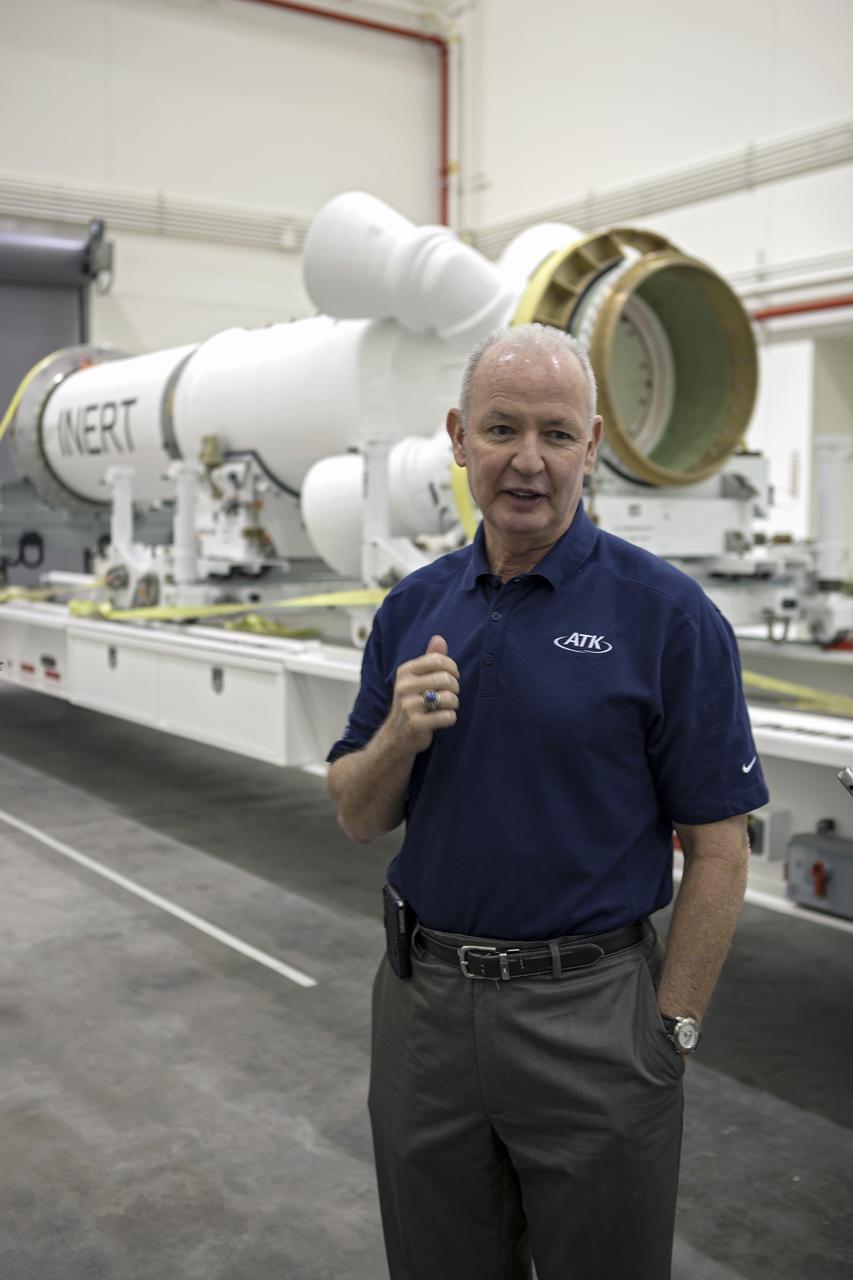
CAPE CANAVERAL, Fla. – At NASA’s Kennedy Space Center in Florida, Brian Duffy, the vice president and Johnson Space Center manager for Exploration Systems with ATK Aerospace Systems, talks with members of the media during a viewing of ATK’s launch abort motor inside the Launch Abort System Facility. The abort motor is one of the components of Orion’s Launch Abort System, which will be used for Exploration Flight Test 1, or EFT-1. The system is designed to safely pull the Orion crew module away from the launch vehicle in the event of an emergency on the launch pad or during the initial ascent of NASA’s Space Launch System, or SLS, rocket. The test flight abort motor is configured with inert propellant. Orion is the exploration spacecraft designed to carry crews to space beyond low Earth orbit. It will provide emergency abort capability, sustain the crew during the space travel and provide safe re-entry from deep space return velocities. Orion’s first unpiloted test flight is scheduled to launch in 2014 atop a Delta IV rocket. A second uncrewed flight test is scheduled for 2017 on the SLS rocket. For more information, visit http:__www.nasa.gov_orion. Photo credit: NASA_Dimitri Gerondidakis
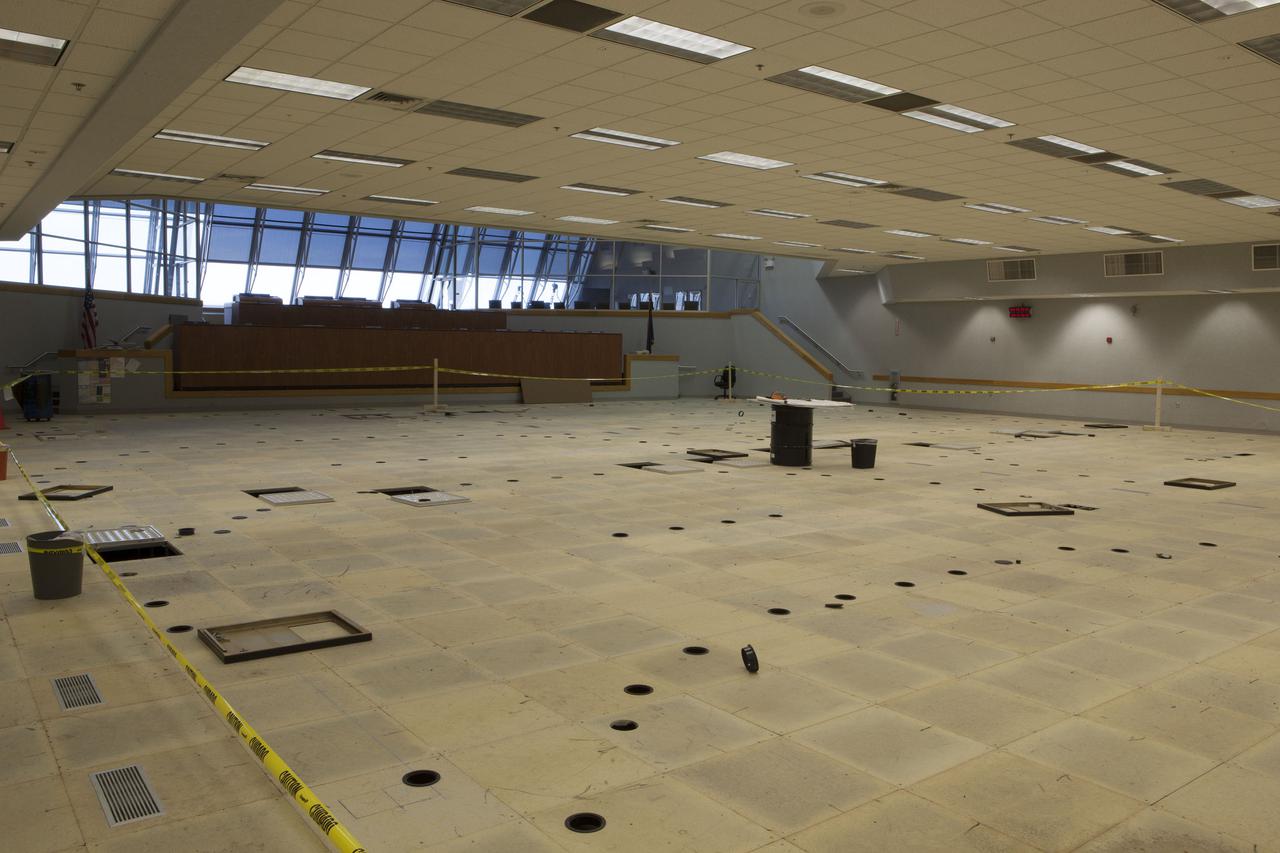
CAPE CANAVERAL, Fla. – In Firing Room 4 in the Launch Control Center at NASA’s Kennedy Space Center in Florida, the legacy consoles, Launch Processing System and cabling that once supported the Space Shuttle Program have been removed. The Ground Systems Development and Operations Program is overseeing the construction in progress on a multi-use control room that will support NASA and commercial launch needs. The design of Firing Room 4 will incorporate five control room areas that are flexible to meet current and future user requirements. The equipment and consoles from Firing Room 4 are being moved to Firing Room 2 for possible future reuse. Photo credit: NASA_Dimitri Gerondidakis
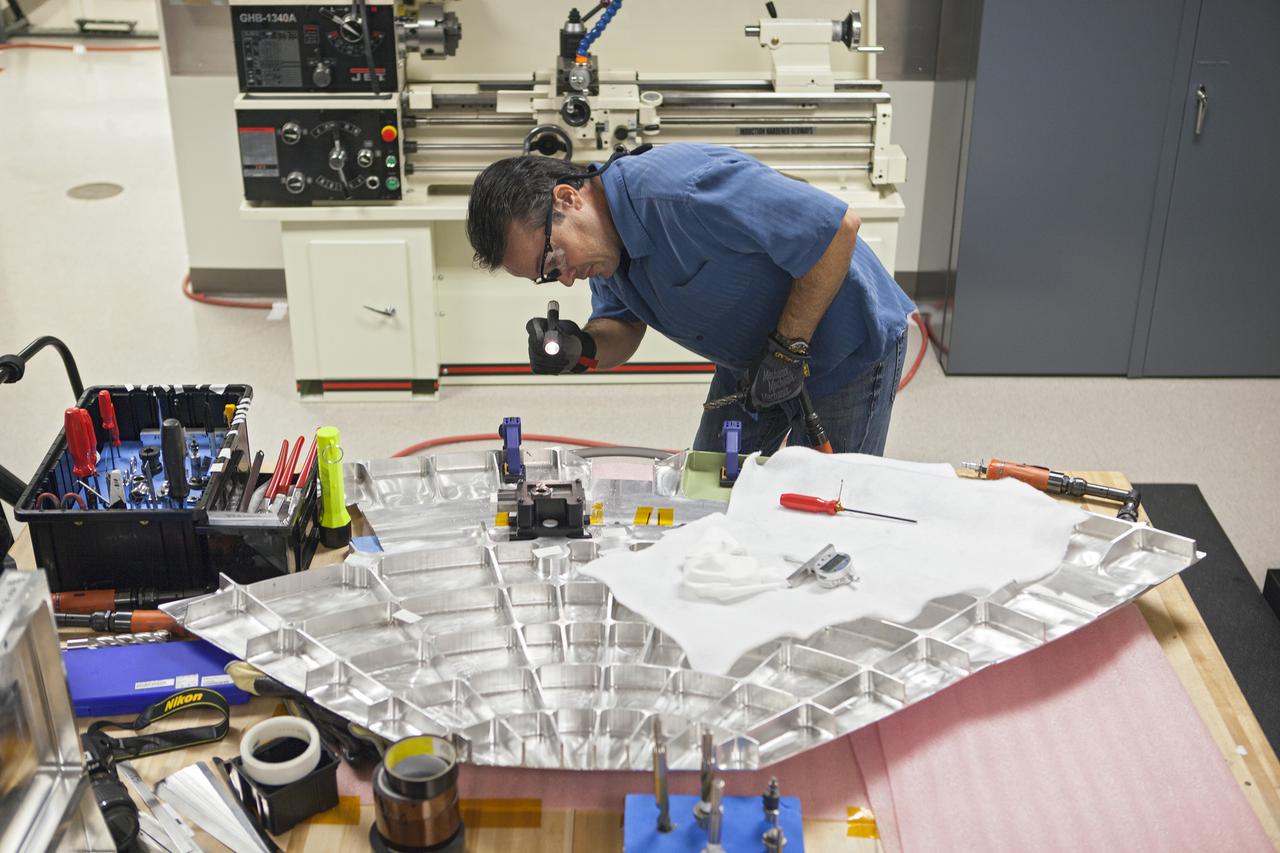
CAPE CANAVERAL, Fla. -- Inside the Operations and Checkout Building high bay at NASA’s Kennedy Space Center in Florida, a technician practices a procedure to repair cracks on the agency’s Orion Exploration Flight Test 1 crew module, during a dry run. During proof pressure testing on the vehicle, the spacecraft sustained three cracks in the aft bulkhead. A team composed of Lockheed Martin and NASA engineers designed a set of brackets that will be used to repair the area, as well as tooling to fix the cracked structure. Orion is the exploration spacecraft designed to carry humans further into space than ever before. It will provide emergency abort capability, sustain the crew during the space travel and provide safe re-entry from deep space return velocities. Orion’s first unpiloted test flight is scheduled to launch in 2014 atop a United Launch Alliance Delta IV heavy rocket. A second uncrewed flight test is scheduled for 2017 on the Space Launch System rocket. For more information, visit http:__www.nasa.gov_orion. Photo credit: NASA_Dimitri Gerondidakis
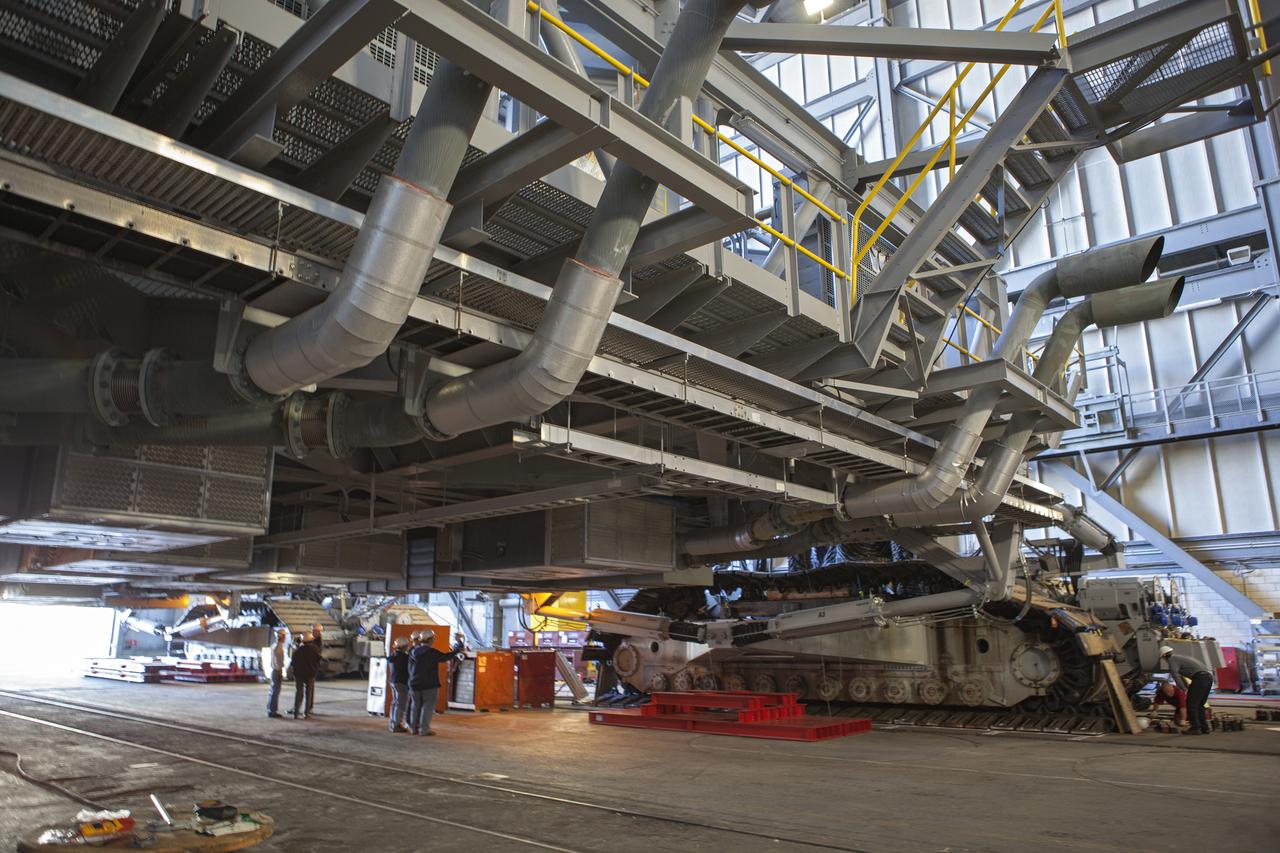
CAPE CANAVERAL, Fla. -- Technicians in the Vehicle Assembly Building at NASA’s Kennedy Space Center in Florida, prepare to jack crawler-transporter 2, or CT-2, four feet off the floor to facilitate removal of the roller bearing assemblies. After inspections, new assemblies will be installed. The Ground Systems Development and Operations Program office at Kennedy is overseeing the upgrades to CT-2 so that it can carry NASA’s Space Launch System heavy-lift rocket and new Orion spacecraft to the launch pad. For more than 45 years the crawler-transporters were used to transport the mobile launcher platform and the Apollo-Saturn V rockets and, later, space shuttles to Launch Pads 39A and B. Photo credit: NASA_Dimitri Gerondidakis
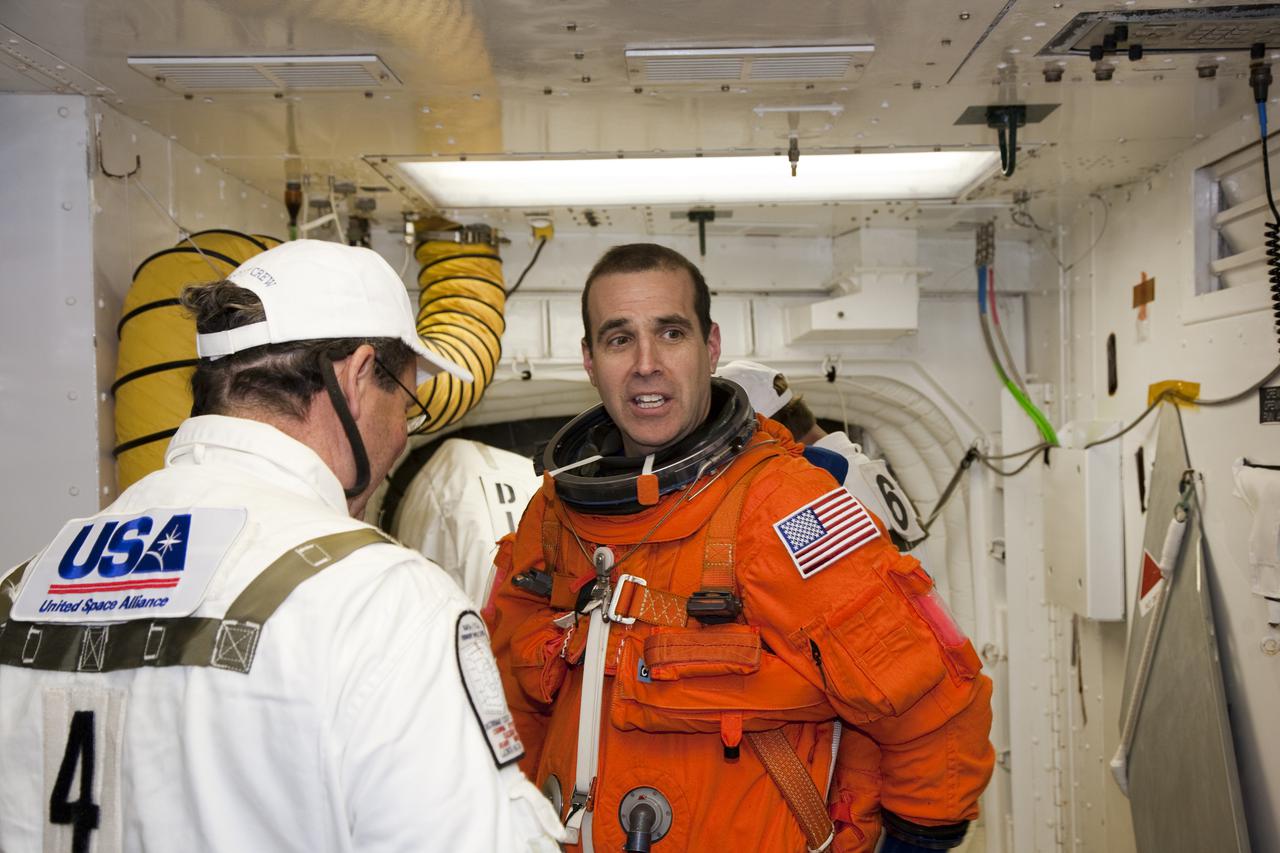
CAPE CANAVERAL, Fla. - At Launch Pad 39A at NASA's Kennedy Space Center in Florida, STS-131 Mission Specialist Rick Mastracchio prepares to enter space shuttle Discovery from the pad's White Room. The crew members of Discovery's STS-131 mission, dressed in their launch-and-entry suits, are participating in the Terminal Countdown Demonstration Test, or TCDT, a dress rehearsal for launch. TCDT includes training on the emergency exit systems at the launch pad, driving practice of the M-113 armored personnel carrier and a simulated launch countdown. The crew will deliver the multi-purpose logistics module Leonard, filled with resupply stowage platforms and science racks, to the International Space Station. STS-131, targeted for launch on April 5, will be the 33rd shuttle mission to the station and the 131st shuttle mission overall. For information on the STS-131 mission and crew, visit http:__www.nasa.gov_mission_pages_shuttle_shuttlemissions_sts131_index.htm. Photo credit: NASA_Dimitri Gerondidakis
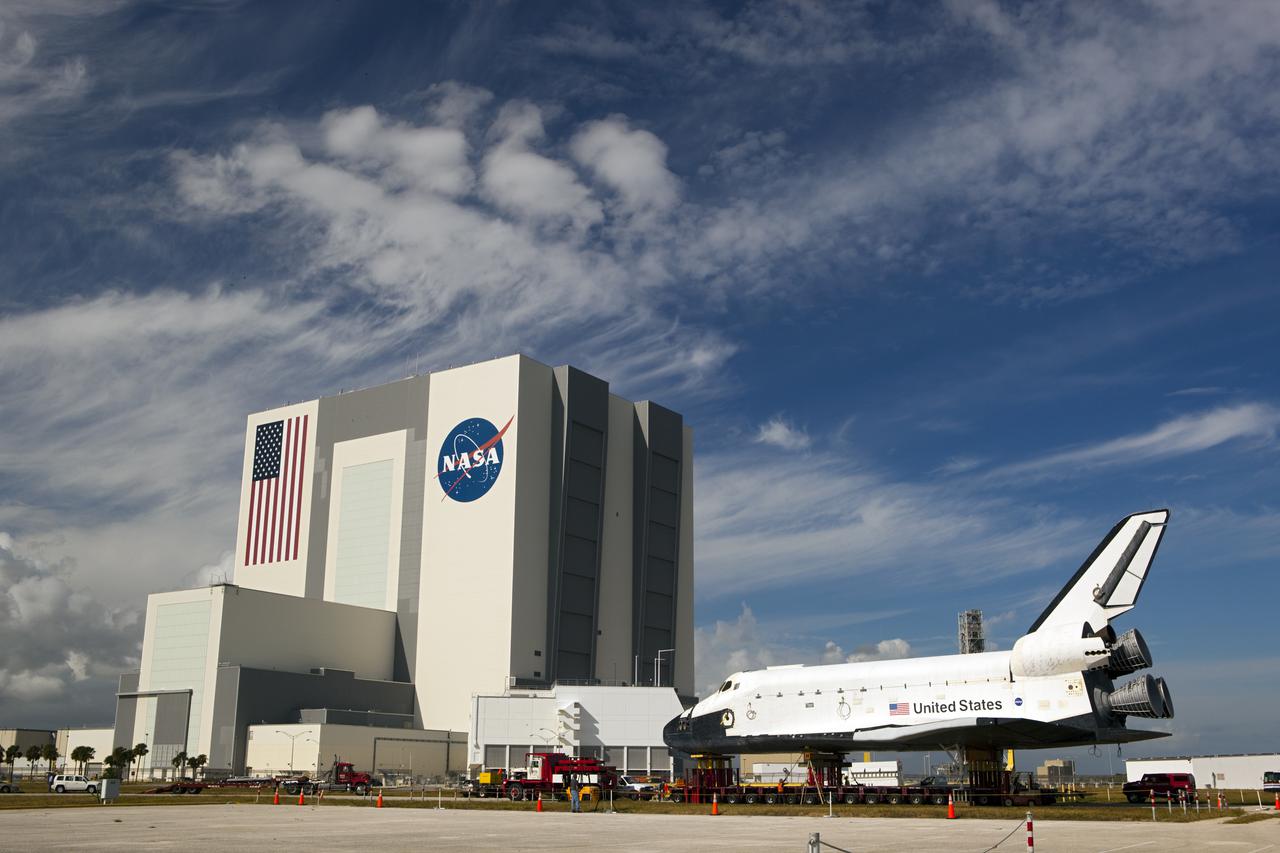
CAPE CANAVERAL, Fla. – The high-fidelity space shuttle model which was on display at the NASA Kennedy Space Center Visitor Complex in Florida is delivered to Kennedy's Launch Complex 39 turn basin where it will be prepared for the next leg of its journey. Across the street are the 525-foot-tall Vehicle Assembly Building and the attached Launch Control Center. The shuttle was part of a display at the visitor complex that also included an external tank and two solid rocket boosters that were used to show visitors the size of actual space shuttle components. The full-scale shuttle model is being transferred from Kennedy to Space Center Houston, NASA Johnson Space Center's visitor center. The model will stay at the turn basin for a few months until it is ready to be transported to Texas via barge. The move also helps clear the way for the Kennedy Space Center Visitor Complex to begin construction of a new facility next year to display space shuttle Atlantis in 2013. For more information about Space Center Houston, visit http:__www.spacecenter.org. Photo credit: NASA_Dimitri Gerondidakis
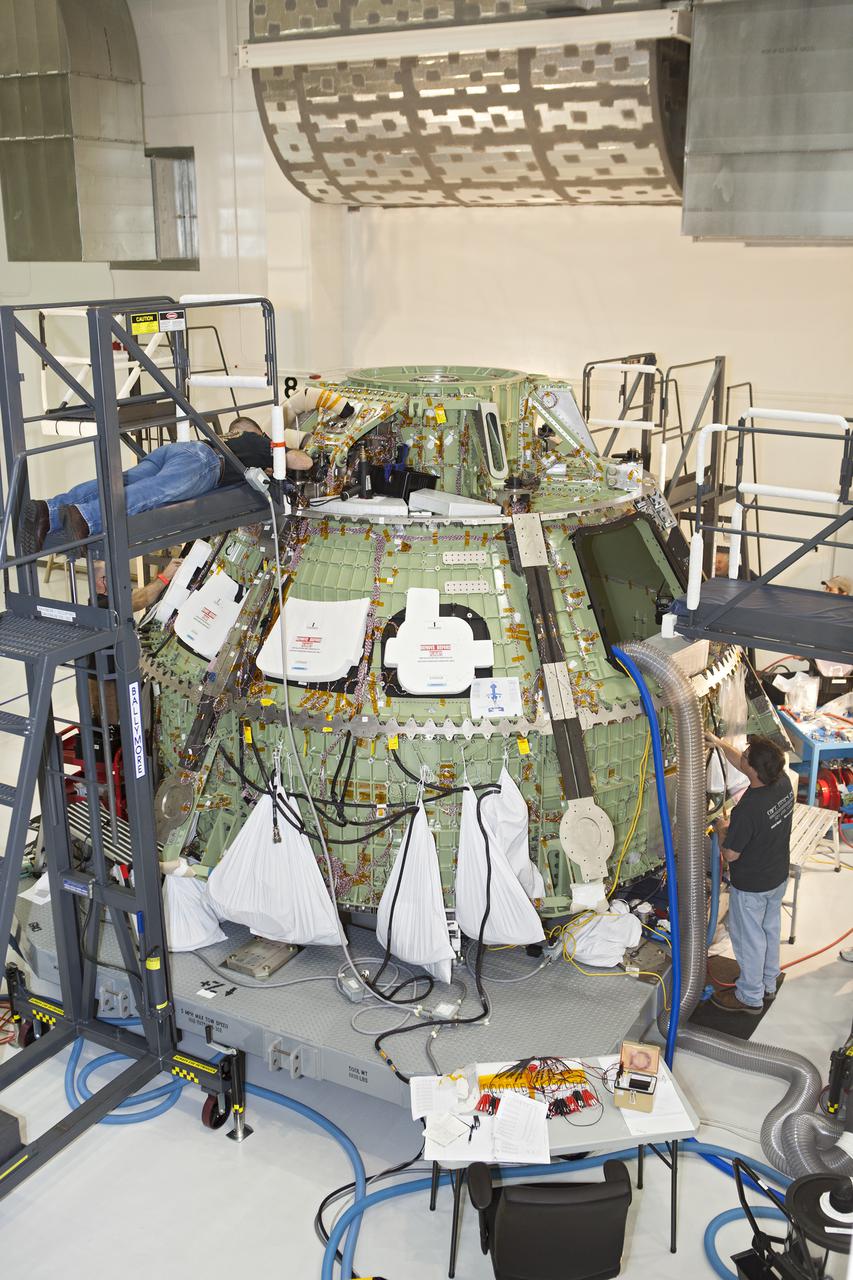
CAPE CANAVERAL, Fla. – Inside the Operations and Checkout Building high bay at NASA’s Kennedy Space Center in Florida, technicians work on the Orion crew module. Orion is being prepared for Exploration Flight Test 1, or EFT-1. Orion is the exploration spacecraft designed to carry crews to space beyond low Earth orbit. It will provide emergency abort capability, sustain the crew during the space travel and provide safe re-entry from deep space return velocities. Orion’s first unpiloted test flight is scheduled to launch in 2014 atop a United Launch Alliance Delta IV heavy rocket. A second uncrewed flight test is scheduled for 2017 on the Space Launch System rocket. For more information, visit http:__www.nasa.gov_orion. Photo credit: NASA_Dimitri Gerondidakis
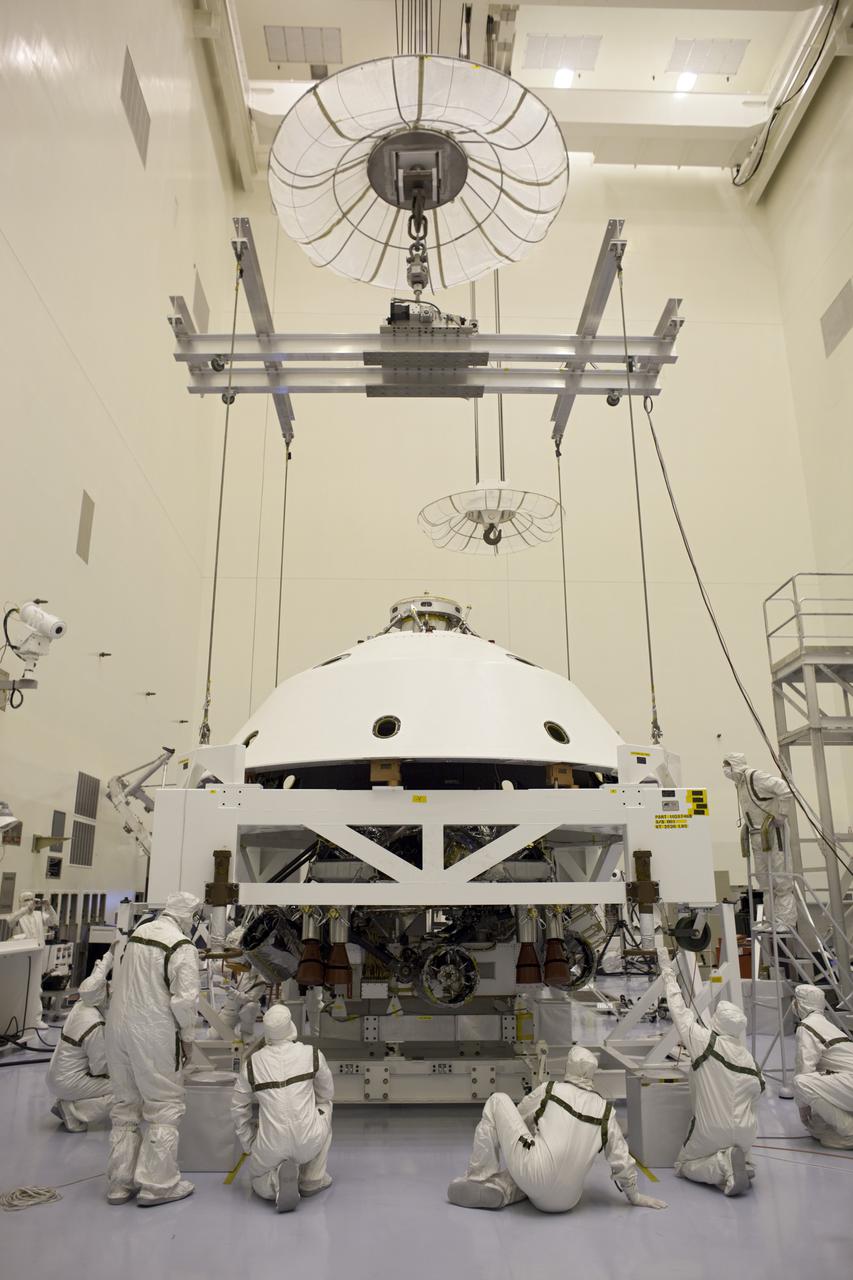
CAPE CANAVERAL, Fla. – In the Payload Hazardous Servicing Facility at NASA's Kennedy Space Center in Florida, technicians guide the backshell as it is lowered over NASA's Mars Science Laboratory (MSL) rover, Curiosity, for encapsulation. The backshell, a protective cover, carries the parachute and several components used during later stages of entry, descent and landing. A United Launch Alliance Atlas V-541 configuration will be used to loft MSL into space. MSL's components include a compact car-sized rover, Curiosity, which has 10 science instruments designed to search for evidence on whether Mars has had environments favorable to microbial life, including chemical ingredients for life. The unique rover will use a laser to look inside rocks and release its gasses so that the rover’s spectrometer can analyze and send the data back to Earth. MSL is scheduled to launch Nov. 25 with a window extending to Dec. 18 and arrival at Mars Aug. 2012. For more information, visit http:__www.nasa.gov_msl. Photo credit: NASA_Dimitri Gerondidakis
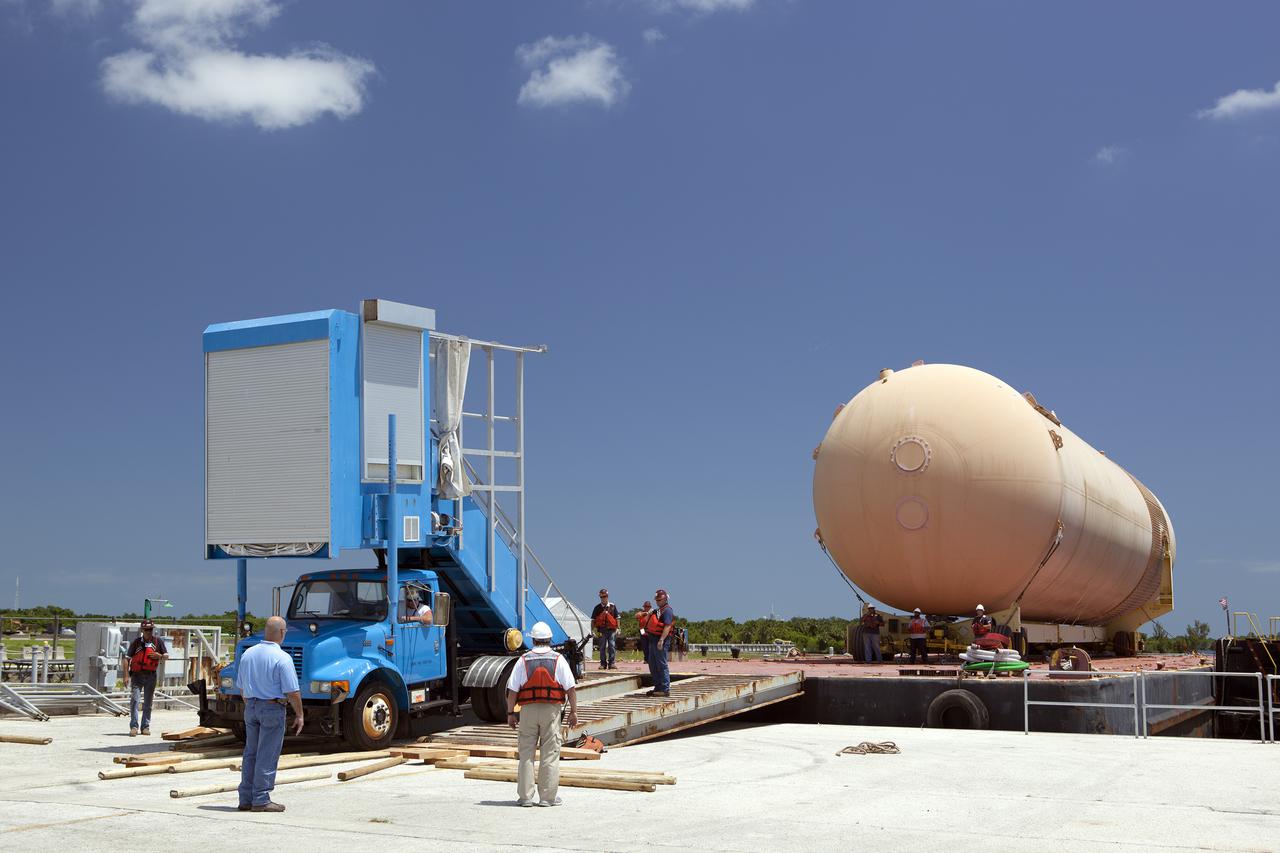
CAPE CANAVERAL, Fla. – The space shuttle crew hatch access vehicle is loaded onto a barge for the first leg of its journey from NASA's Kennedy Space Center in Florida to the Wings of Dreams Aviation Museum located at Keystone Heights Airport in North Central Florida. Also joining the vehicle at Wings of Dreams is an orange flight test article external fuel tank, or ET, an ET transporter, the crew transport vehicle, solid rocket booster, or SRB, aft skirt and SRB frustum. Thousands of unique space shuttle era artifacts are being allocated to facilities across the country for their new missions to educate and inspire America's next generation of explorers. Photo credit: NASA_Dimitri Gerondidakis
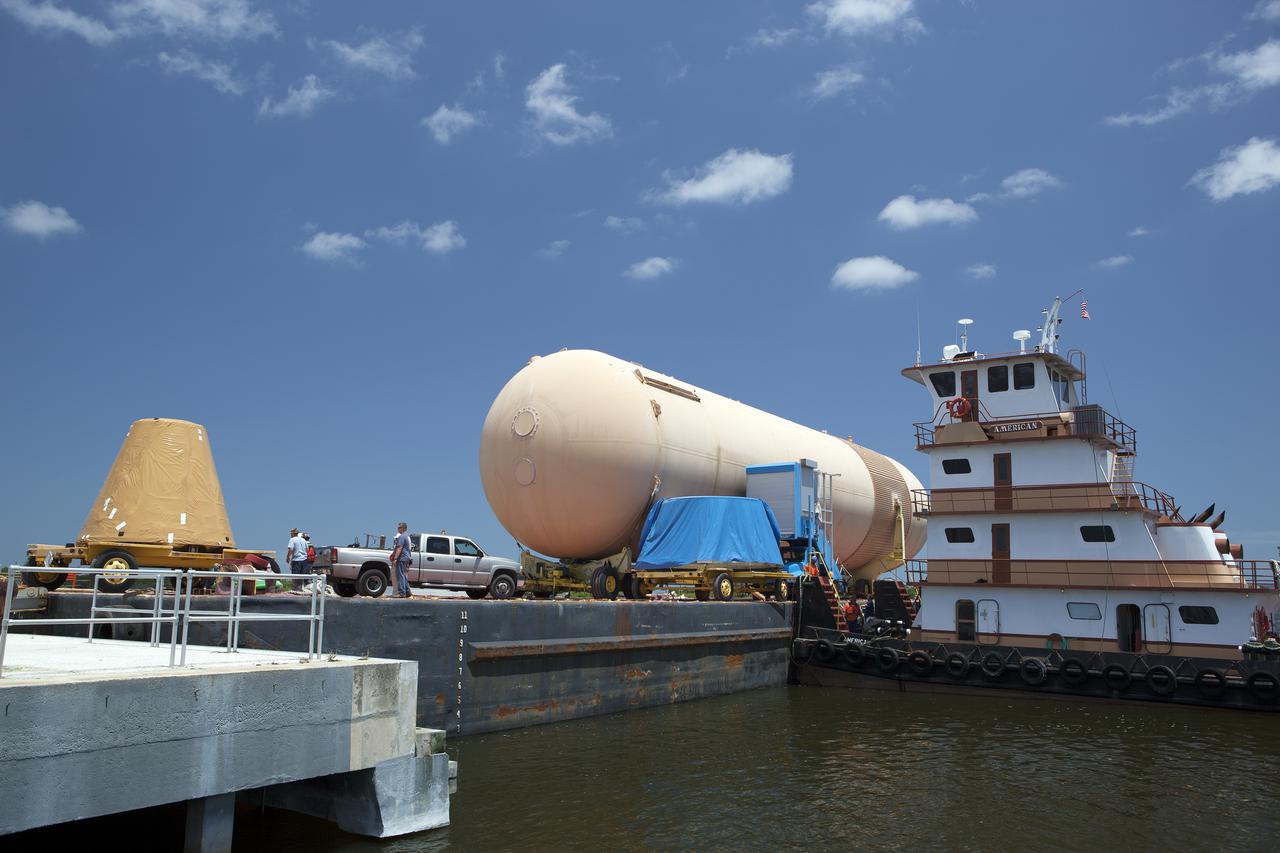
CAPE CANAVERAL, Fla. – A space shuttle solid rocket booster, or SRB, frustum is loaded onto a barge for the first leg of its journey from NASA's Kennedy Space Center in Florida to the Wings of Dreams Aviation Museum located at Keystone Heights Airport in North Central Florida. Also joining the booster segment at Wings of Dreams is an orange flight test article external fuel tank, or ET, an ET transporter, the crew transport vehicle, crew hatch access vehicle and SRB aft skirt. Thousands of unique space shuttle era artifacts are being allocated to facilities across the country for their new missions to educate and inspire America's next generation of explorers. Photo credit: NASA_Dimitri Gerondidakis

CAPE CANAVERAL, Fla. – Inside the Operations and Checkout Building high bay at NASA’s Kennedy Space Center in Florida, technicians prepare the shear web assembly, or inner core, that will be inserted into the Orion service module. Orion is being prepared for Exploration Flight Test 1, or EFT-1. Orion is the exploration spacecraft designed to carry crews to space beyond low Earth orbit. It will provide emergency abort capability, sustain the crew during the space travel and provide safe re-entry from deep space return velocities. Orion’s first unpiloted test flight is scheduled to launch in 2014 atop a United Launch Alliance Delta IV heavy rocket. A second uncrewed flight test is scheduled for 2017 on the Space Launch System rocket. For more information, visit http:__www.nasa.gov_orion. Photo credit: NASA_Dimitri Gerondidakis
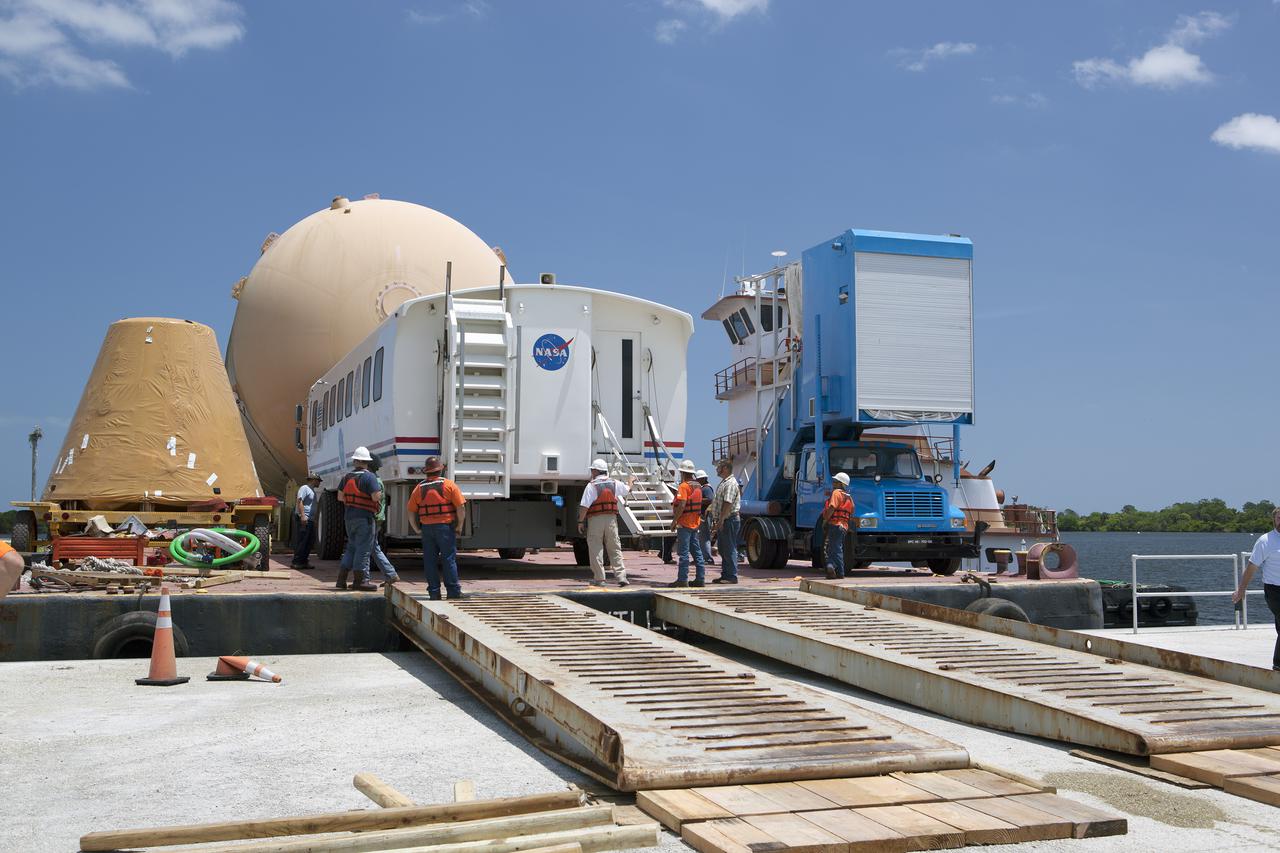
CAPE CANAVERAL, Fla. – A space shuttle orange flight test article external fuel tank, or ET, an ET transporter, crew hatch access vehicle, crew transport vehicle, solid rocket booster, or SRB, aft skirt and SRB frustum are loaded onto a barge for the first leg of their journey from NASA's Kennedy Space Center in Florida to the Wings of Dreams Aviation Museum located at Keystone Heights Airport in North Central Florida. Thousands of unique space shuttle era artifacts are being allocated to facilities across the country for their new missions to educate and inspire America's next generation of explorers. Photo credit: NASA_Dimitri Gerondidakis
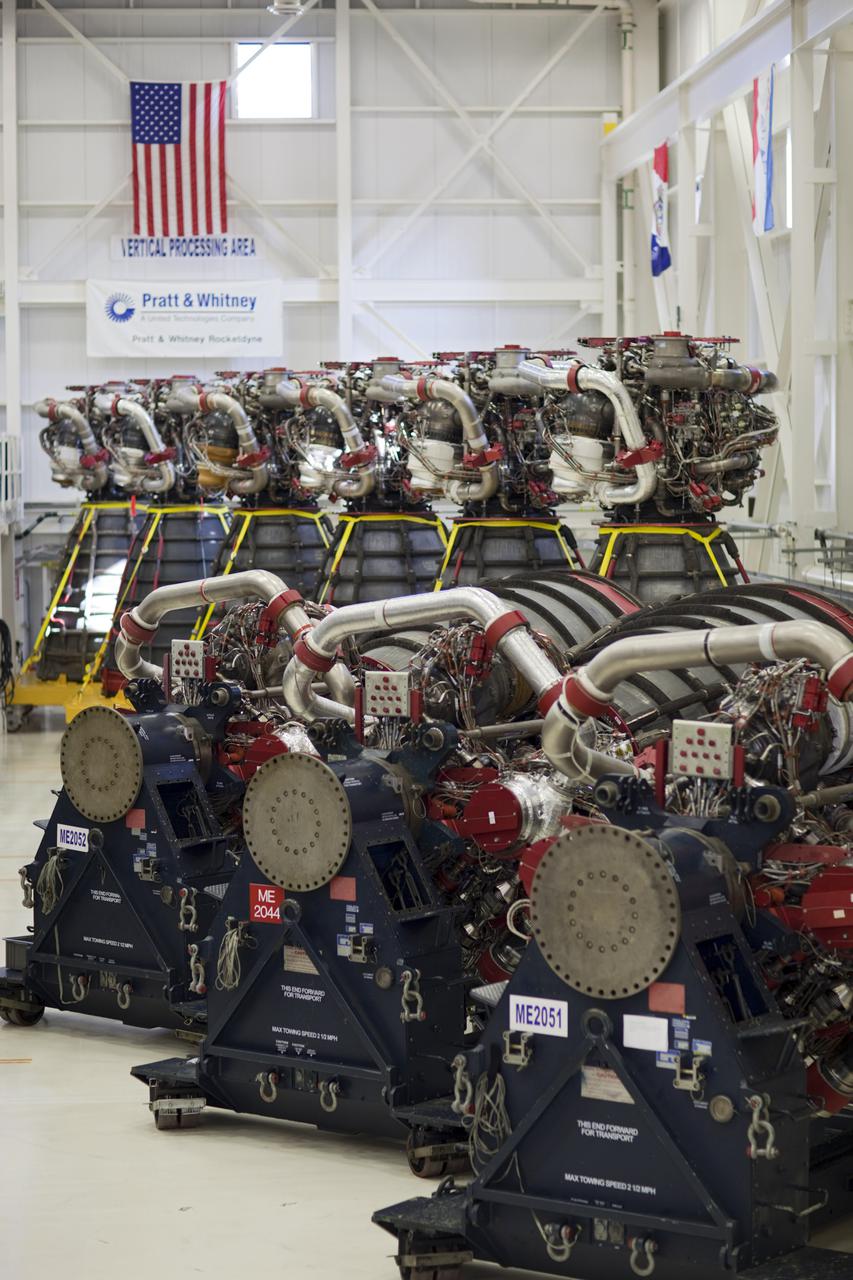
CAPE CANAVERAL, Fla. – At NASA’s Kennedy Space Center in Florida, three Pratt Whitney Rocketdyne space shuttle main engines (SSMEs) sit on stands inside the Engine Shop, with six more engines lined up behind them. For the first time, all 15 main engines are in the Engine Shop at the same time. They are being prepared for shipment to NASA's Stennis Space Center in Mississippi for storage following the completion of the Space Shuttle Program. The engines are being repurposed for use on NASA’s Space Launch System heavy lift rocket. Photo credit: NASA_Dimitri Gerondidakis
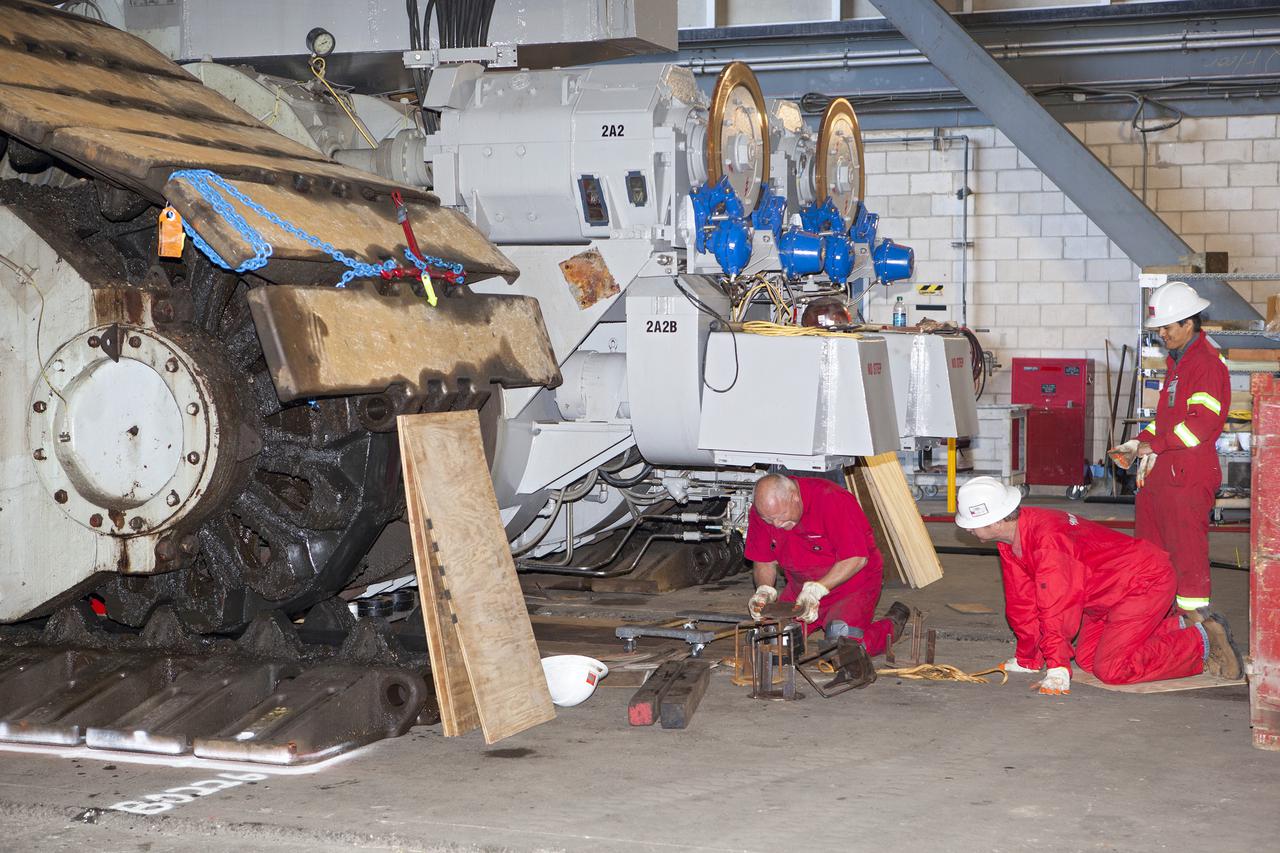
CAPE CANAVERAL, Fla. -- Technicians in the Vehicle Assembly Building at NASA’s Kennedy Space Center in Florida, prepare to jack crawler-transporter 2, or CT-2, four feet off the floor to facilitate removal of the roller bearing assemblies. After inspections, new assemblies will be installed. The Ground Systems Development and Operations Program office at Kennedy is overseeing the upgrades to CT-2 so that it can carry NASA’s Space Launch System heavy-lift rocket and new Orion spacecraft to the launch pad. For more than 45 years the crawler-transporters were used to transport the mobile launcher platform and the Apollo-Saturn V rockets and, later, space shuttles to Launch Pads 39A and B. Photo credit: NASA_Dimitri Gerondidakis
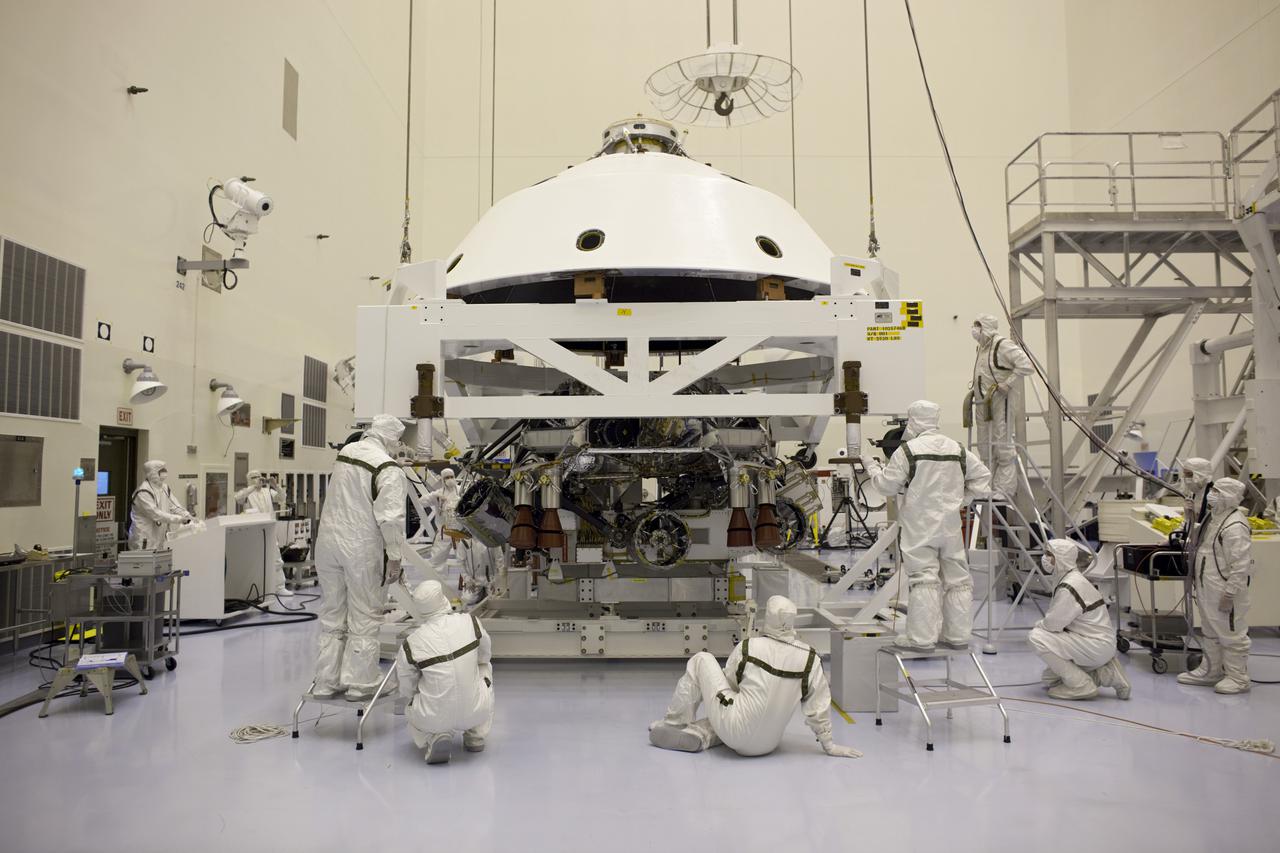
CAPE CANAVERAL, Fla. – In the Payload Hazardous Servicing Facility at NASA's Kennedy Space Center in Florida, technicians guide the backshell as it is lowered over NASA's Mars Science Laboratory (MSL) rover, Curiosity, for encapsulation. The backshell, a protective cover, carries the parachute and several components used during later stages of entry, descent and landing. A United Launch Alliance Atlas V-541 configuration will be used to loft MSL into space. MSL's components include a compact car-sized rover, Curiosity, which has 10 science instruments designed to search for evidence on whether Mars has had environments favorable to microbial life, including chemical ingredients for life. The unique rover will use a laser to look inside rocks and release its gasses so that the rover’s spectrometer can analyze and send the data back to Earth. MSL is scheduled to launch Nov. 25 with a window extending to Dec. 18 and arrival at Mars Aug. 2012. For more information, visit http:__www.nasa.gov_msl. Photo credit: NASA_Dimitri Gerondidakis