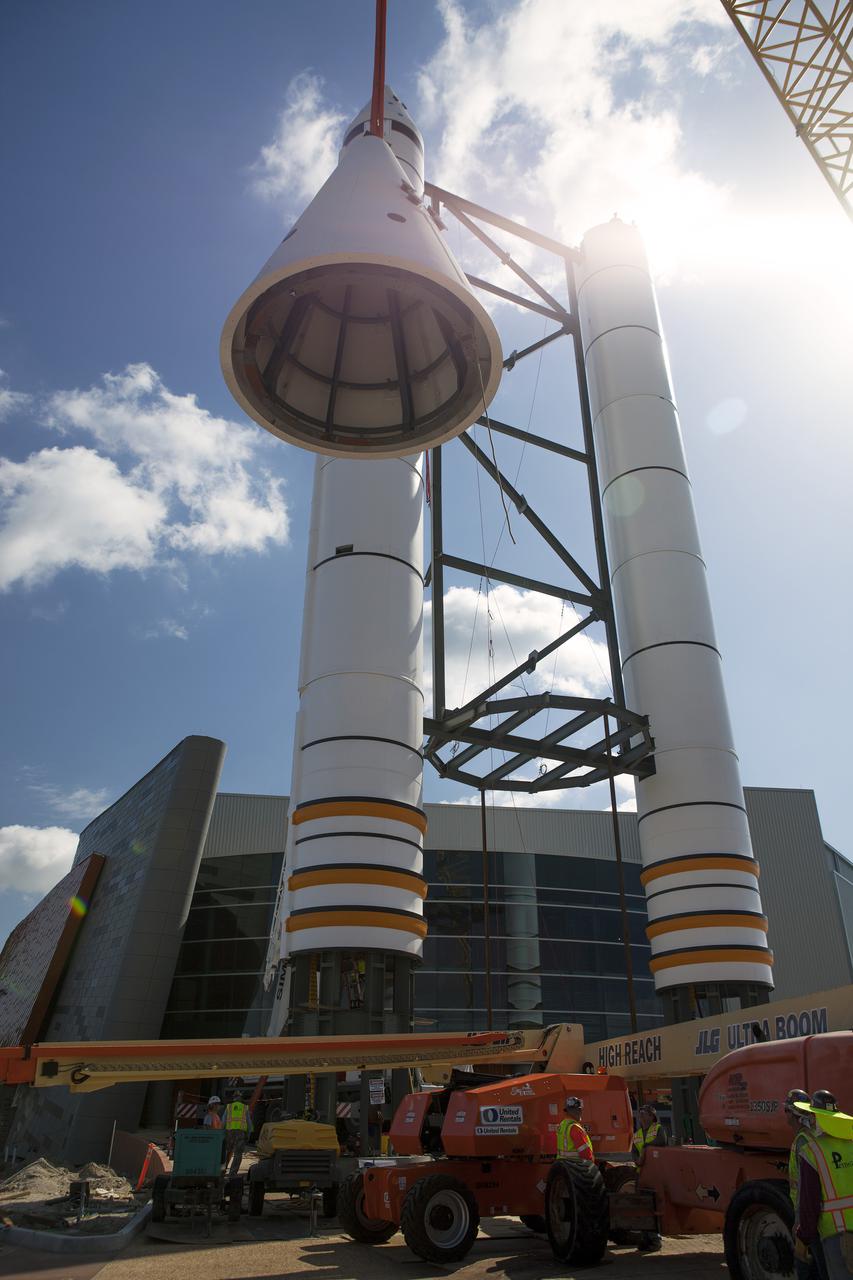
CAPE CANAVERAL, Fla. – A crane lifts the nosecone part of a solid rocket booster replica into place at the Kennedy Space Center Visitor Complex where the Space Shuttle Atlantis exhibit and attraction is under construction. Photo credit: NASA_Dmitri Gerondidakis
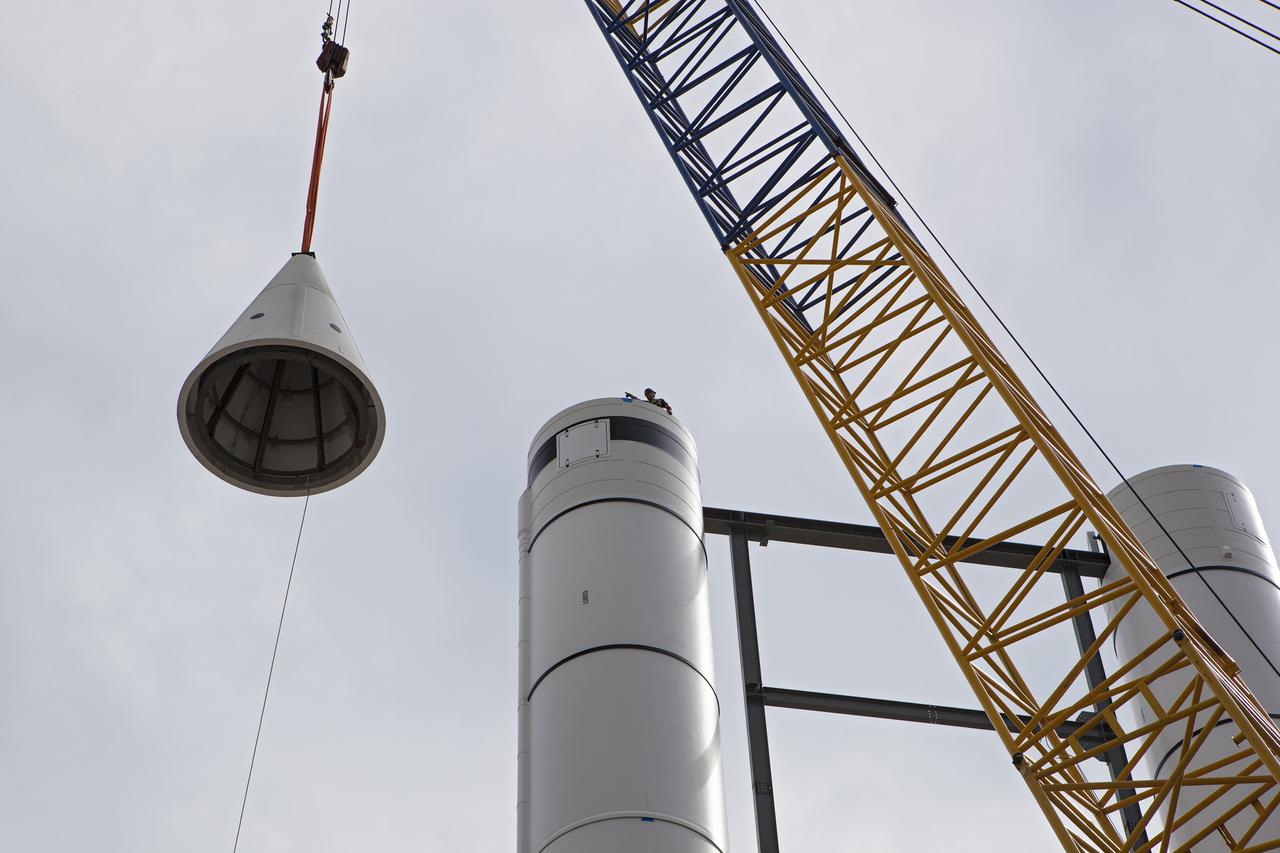
CAPE CANAVERAL, Fla. – A crane lifts a nose cone to top out one of a pair of replica space shuttle solid rocket boosters at the entry of the space shuttle Atlantis attraction under construction at the Kennedy Space Center Visitor Complex. Workers will use cranes to place the nose cones atop each of the model boosters. The building in the background houses the actual shuttle Atlantis. Photo credit: NASA_Dmitri Gerondidakis
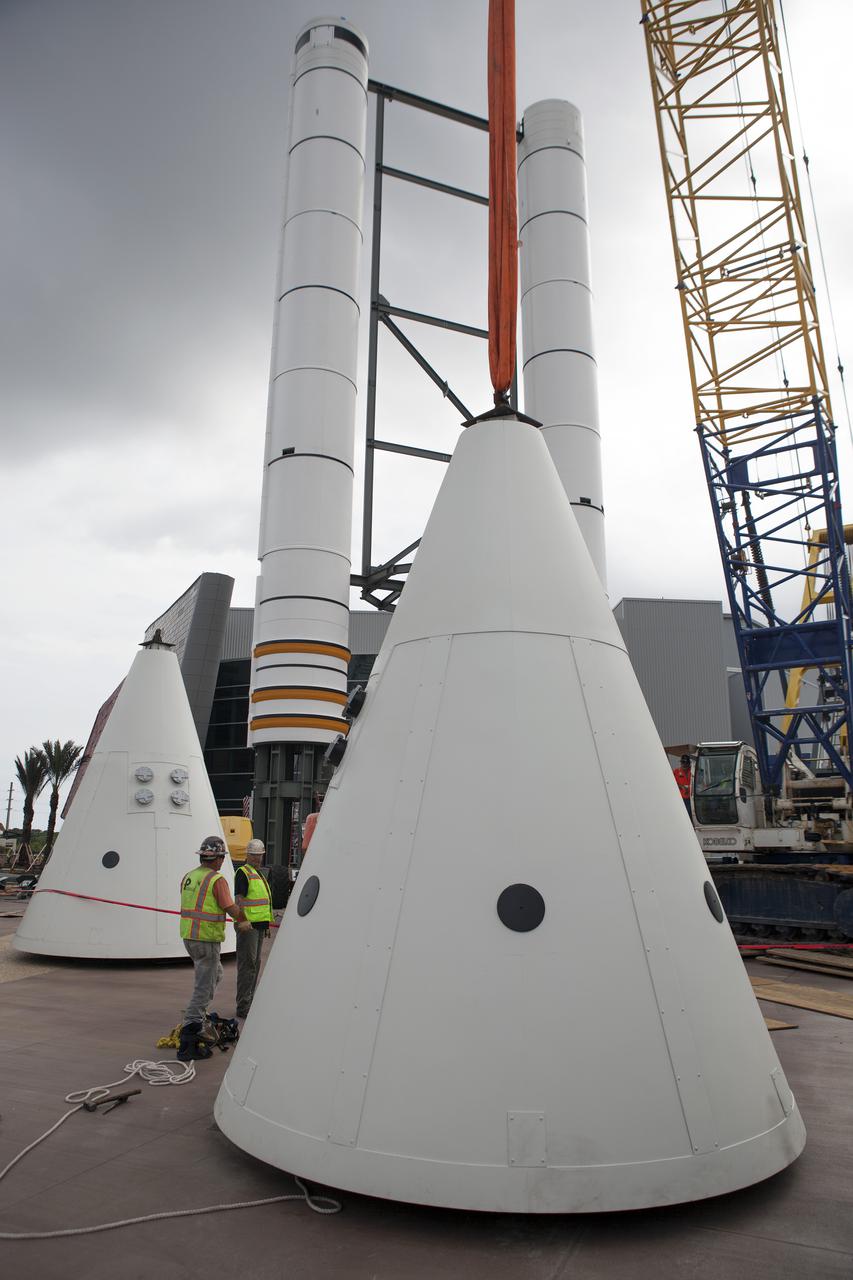
CAPE CANAVERAL, Fla. – Workers prepare to lift a nose cone to top out one of a pair of replica space shuttle solid rocket boosters at the entry of the space shuttle Atlantis attraction under construction at the Kennedy Space Center Visitor Complex. Workers will use cranes to place the nose cones atop each of the model boosters. The building in the background houses the actual shuttle Atlantis. Photo credit: NASA_Dmitri Gerondidakis
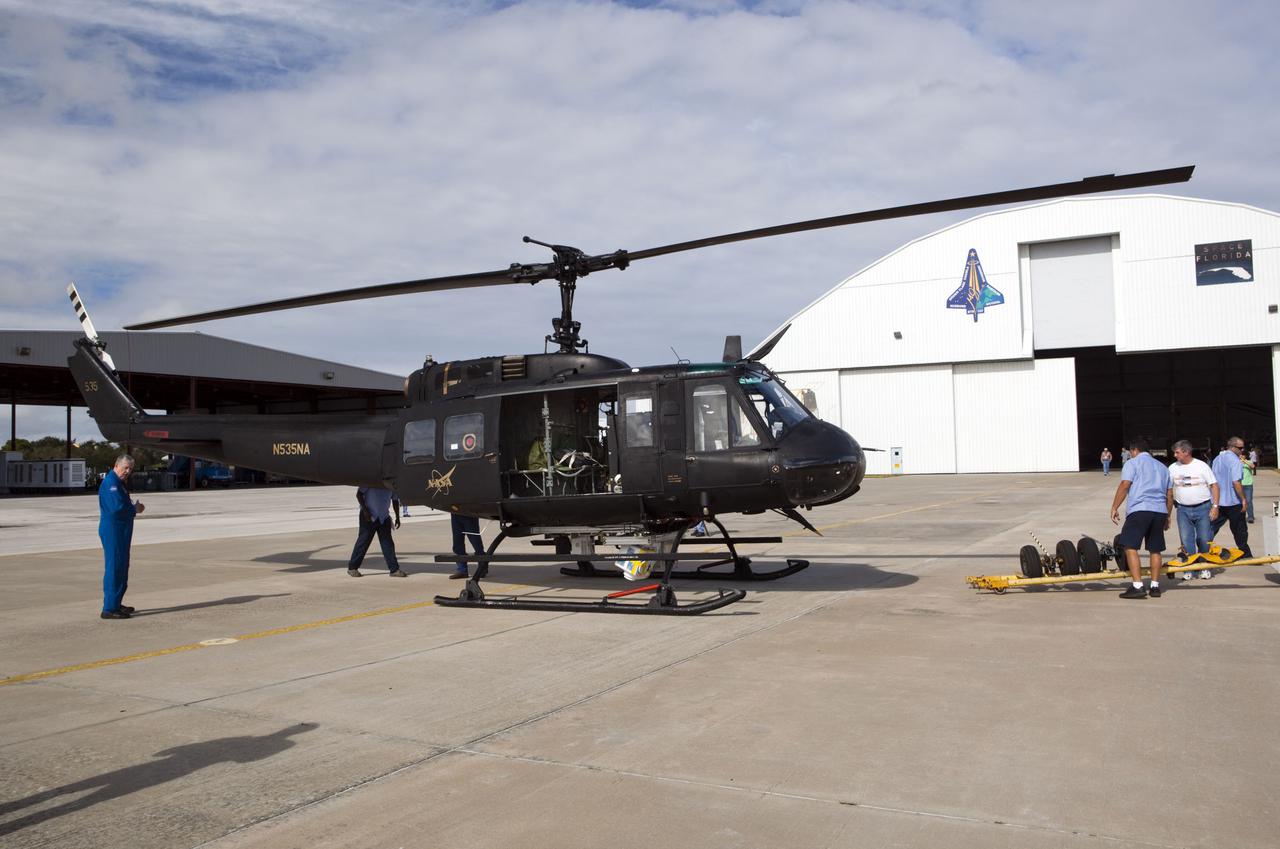
CAPE CANAVERAL, Fla. – Near the Shuttle Landing Facility at NASA's Kennedy Space Center in Florida, a space agency team installed and tested hazard avoidance instrumentation on a Huey helicopter. Led by the Johnson Space Center and supported by Jet Propulsion Laboratory and Langley Research Center, the Autonomous Landing Hazard Avoidance Technology, or ALHAT, laser system provides a planetary lander the ability to precisely land safely on a surface while detecting any dangerous obstacles such as rocks, holes and slopes. Just north of Kennedy's Shuttle Landing Facility runway, a rock- and crater-filled planetary scape has been built so engineers can test the ability to negotiate away from risks. Photo credit: NASA_Dmitri Gerondidakis
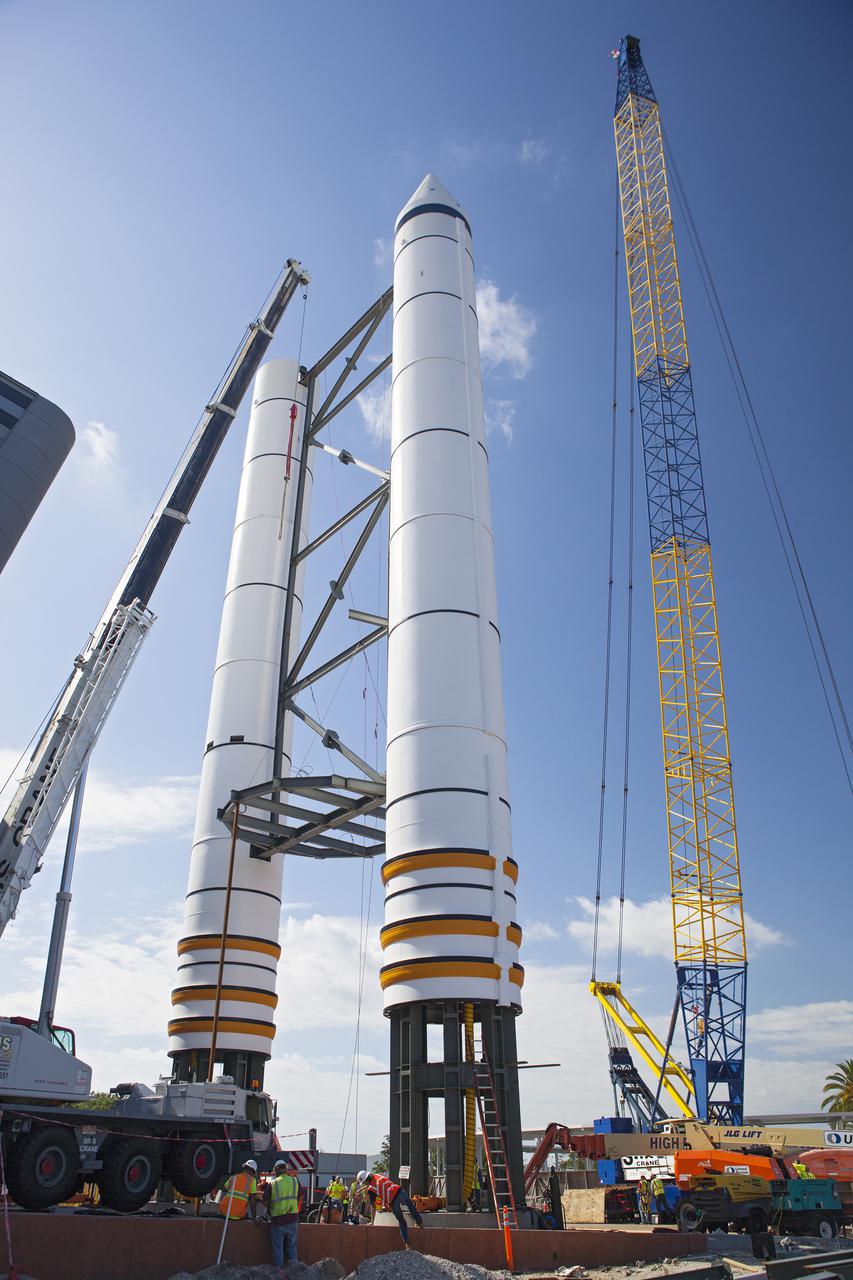
CAPE CANAVERAL, Fla. – Cranes and workers are in place to lift the nosecone part of a solid rocket booster replica into place at the Kennedy Space Center Visitor Complex where the Space Shuttle Atlantis exhibit and attraction is under construction. Photo credit: NASA_Dmitri Gerondidakis
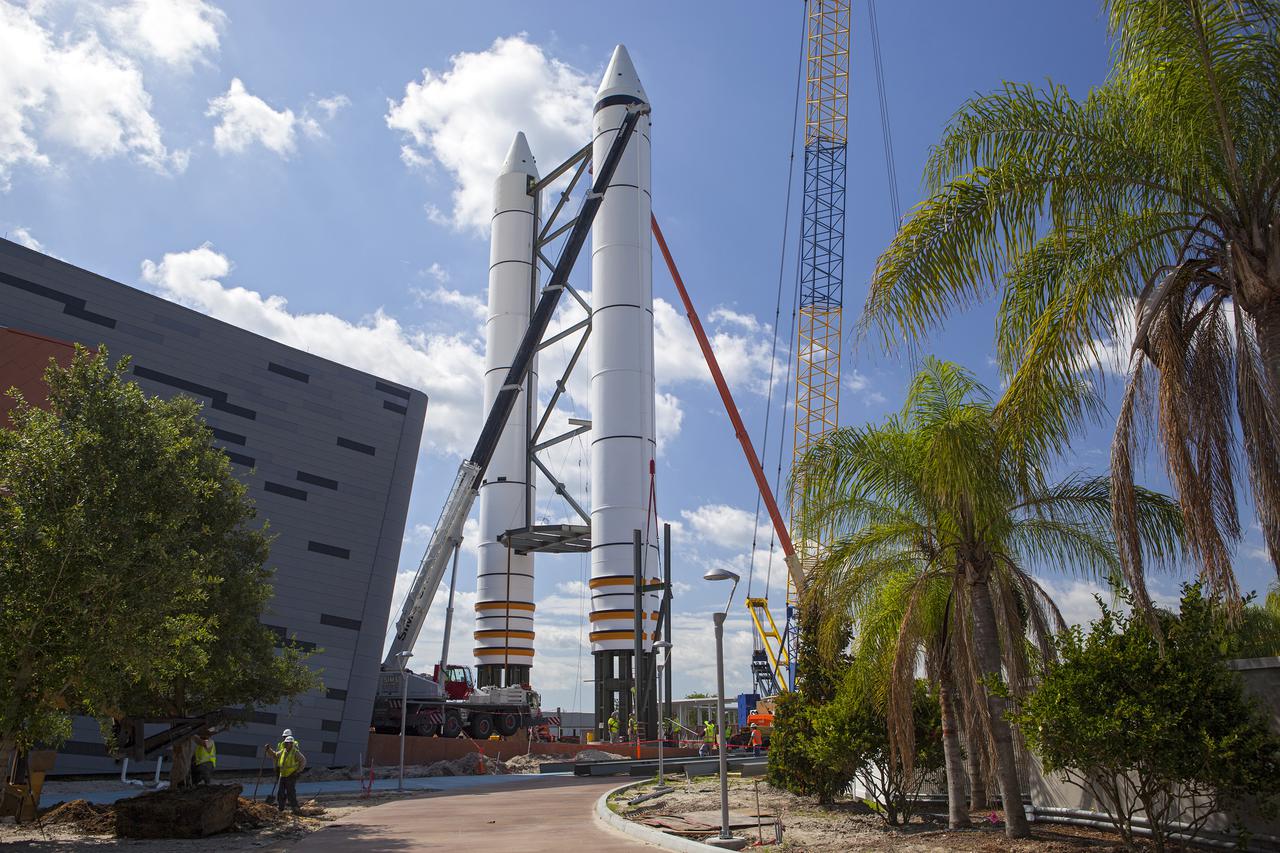
Workers connect the nosecone of a solid rocket booster replica into place at the Kennedy Space Center Visitor Complex where the Space Shuttle Atlantis exhibit and attraction is under construction. Photo credit: NASA_Dmitri Gerondidakis
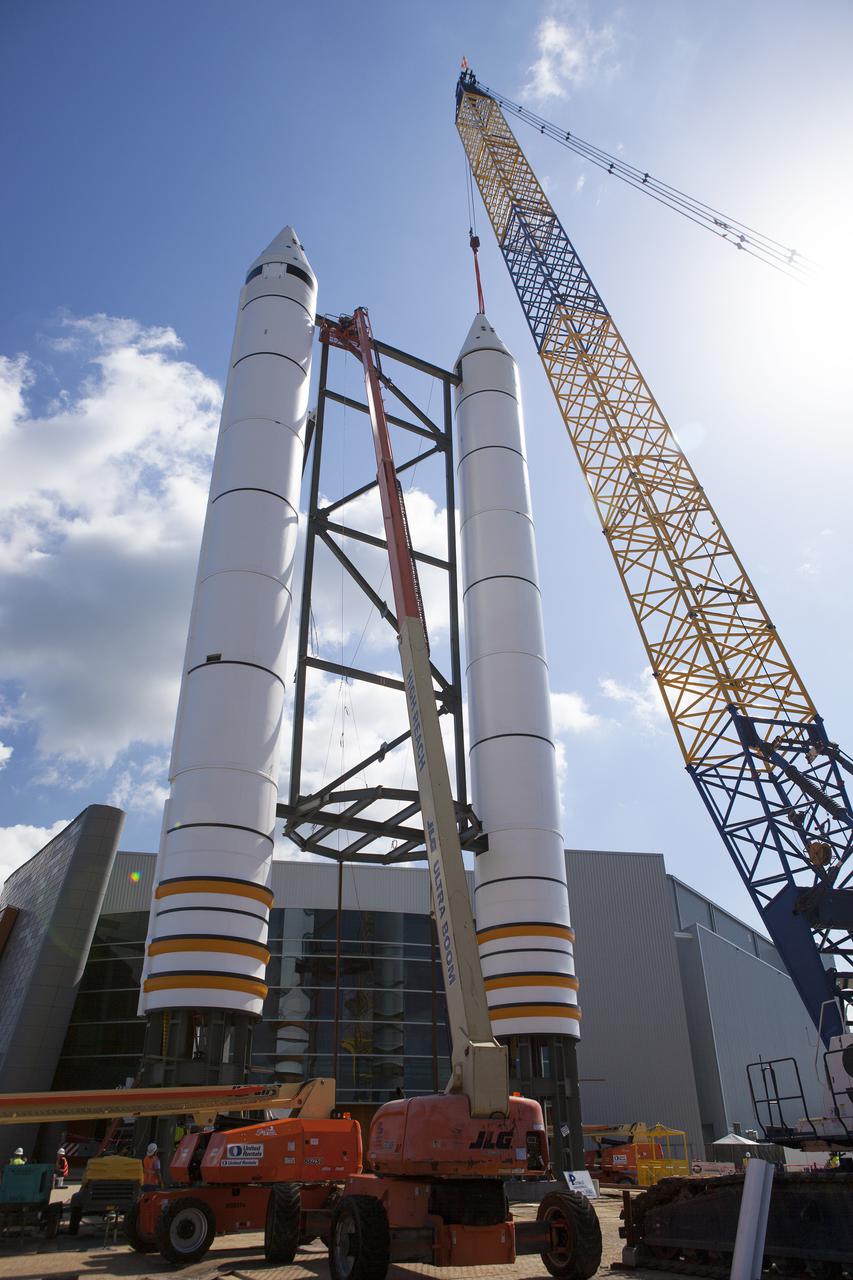
A crane lifts the nosecone part of a solid rocket booster replica into place at the Kennedy Space Center Visitor Complex where the Space Shuttle Atlantis exhibit and attraction is under construction. Photo credit: NASA_Dmitri Gerondidakis
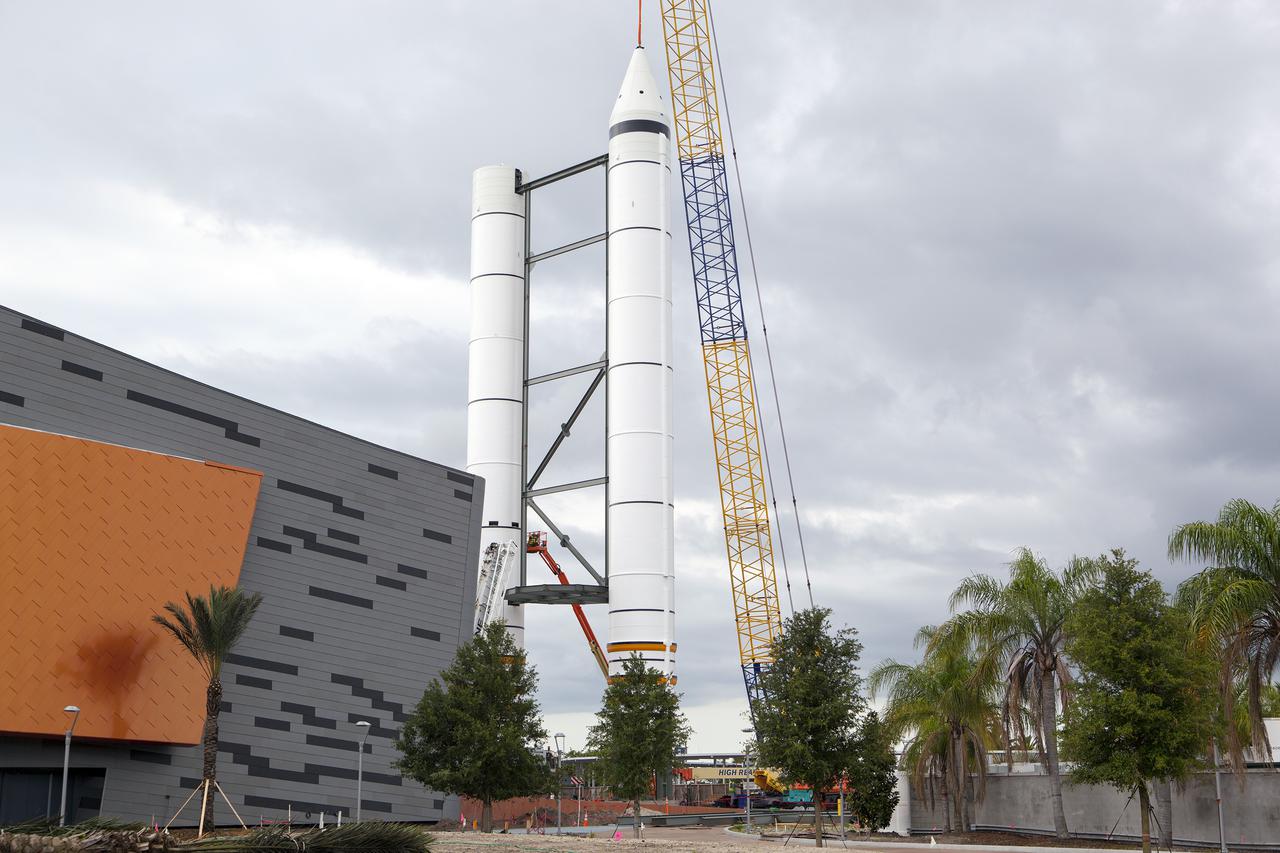
CAPE CANAVERAL, Fla. – A crane places a nose cone to top out one of a pair of replica space shuttle solid rocket boosters at the entry of the space shuttle Atlantis attraction under construction at the Kennedy Space Center Visitor Complex. Workers will use cranes to place the nose cones atop each of the model boosters. The building in the background houses the actual shuttle Atlantis. Photo credit: NASA_Dmitri Gerondidakis
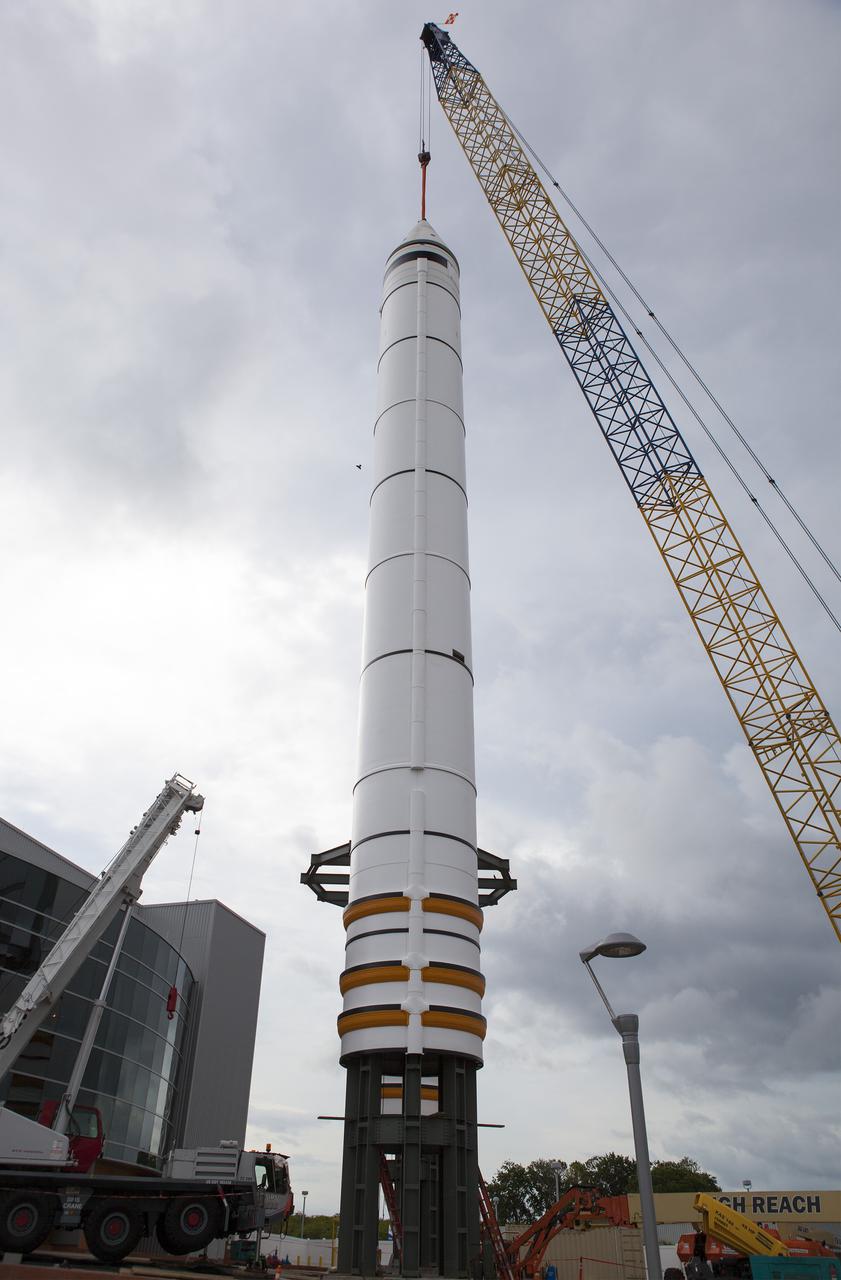
CAPE CANAVERAL, Fla. – A crane places a nose cone to top out one of a pair of replica space shuttle solid rocket boosters at the entry of the space shuttle Atlantis attraction under construction at the Kennedy Space Center Visitor Complex. Workers will use cranes to place the nose cones atop each of the model boosters. The building in the background houses the actual shuttle Atlantis. Photo credit: NASA_Dmitri Gerondidakis
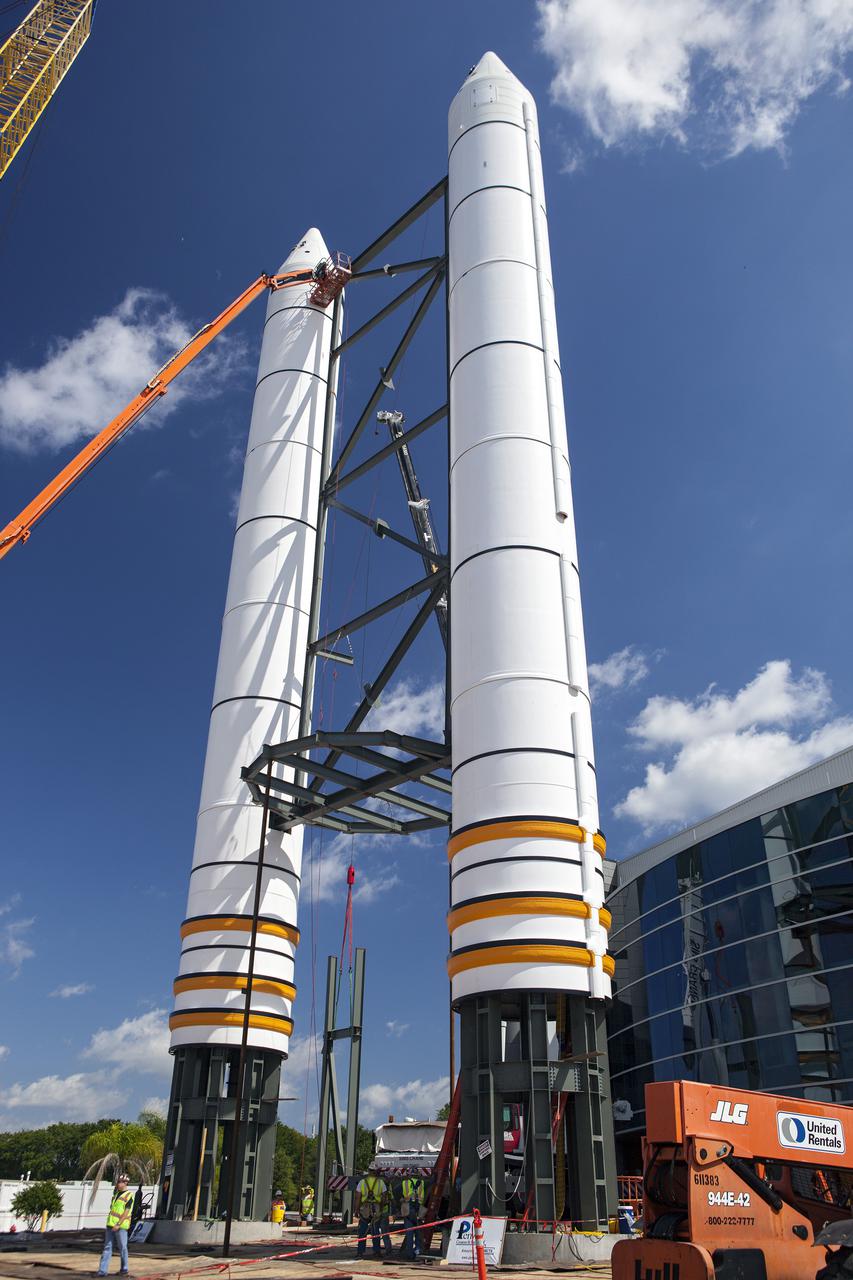
Workers connect the nosecone of a solid rocket booster replica into place at the Kennedy Space Center Visitor Complex where the Space Shuttle Atlantis exhibit and attraction is under construction. Photo credit: NASA_Dmitri Gerondidakis

CAPE CANAVERAL, Fla. – A crane lifts the nosecone part of a solid rocket booster replica into place at the Kennedy Space Center Visitor Complex where the Space Shuttle Atlantis exhibit and attraction is under construction. Photo credit: NASA_Dmitri Gerondidakis
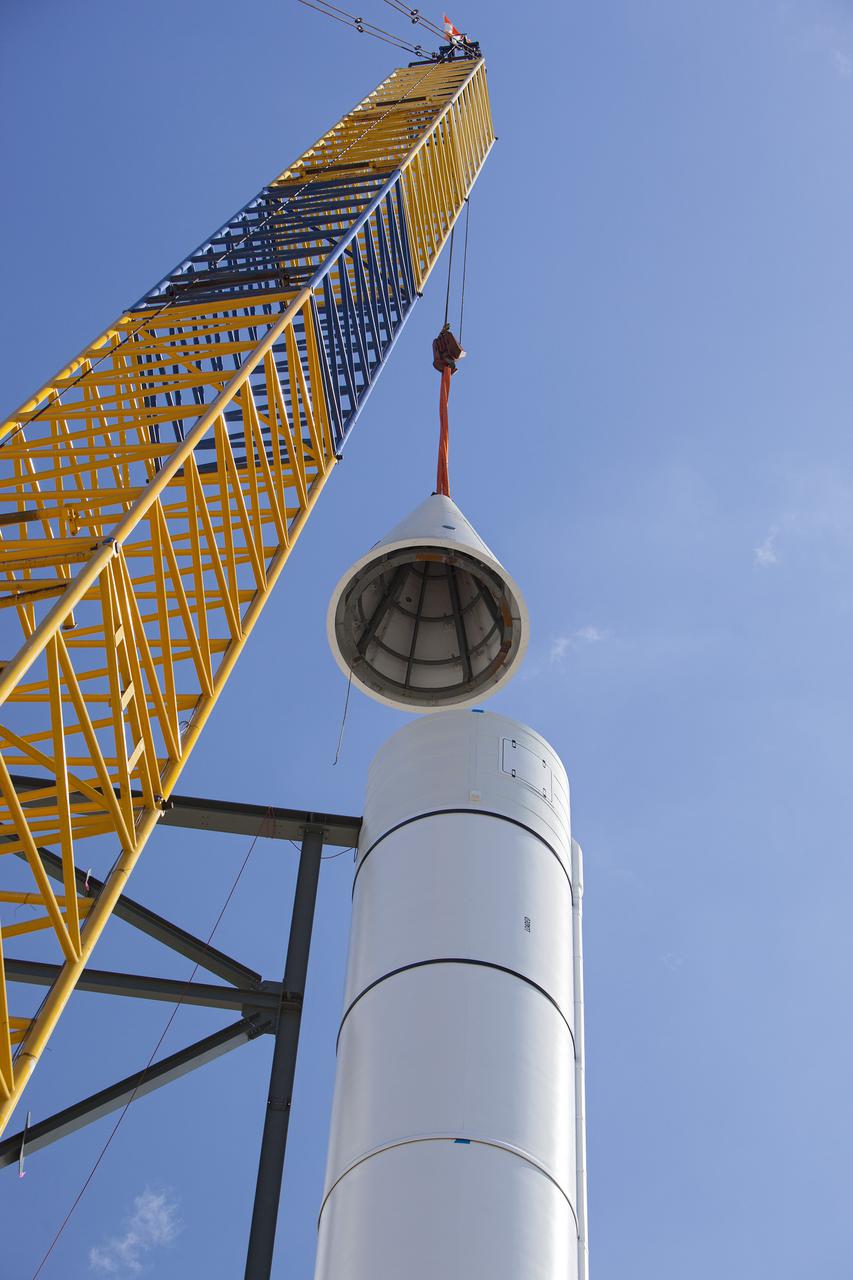
CAPE CANAVERAL, Fla. – A crane lifts the nosecone part of a solid rocket booster replica into place at the Kennedy Space Center Visitor Complex where the Space Shuttle Atlantis exhibit and attraction is under construction. Photo credit: NASA_Dmitri Gerondidakis
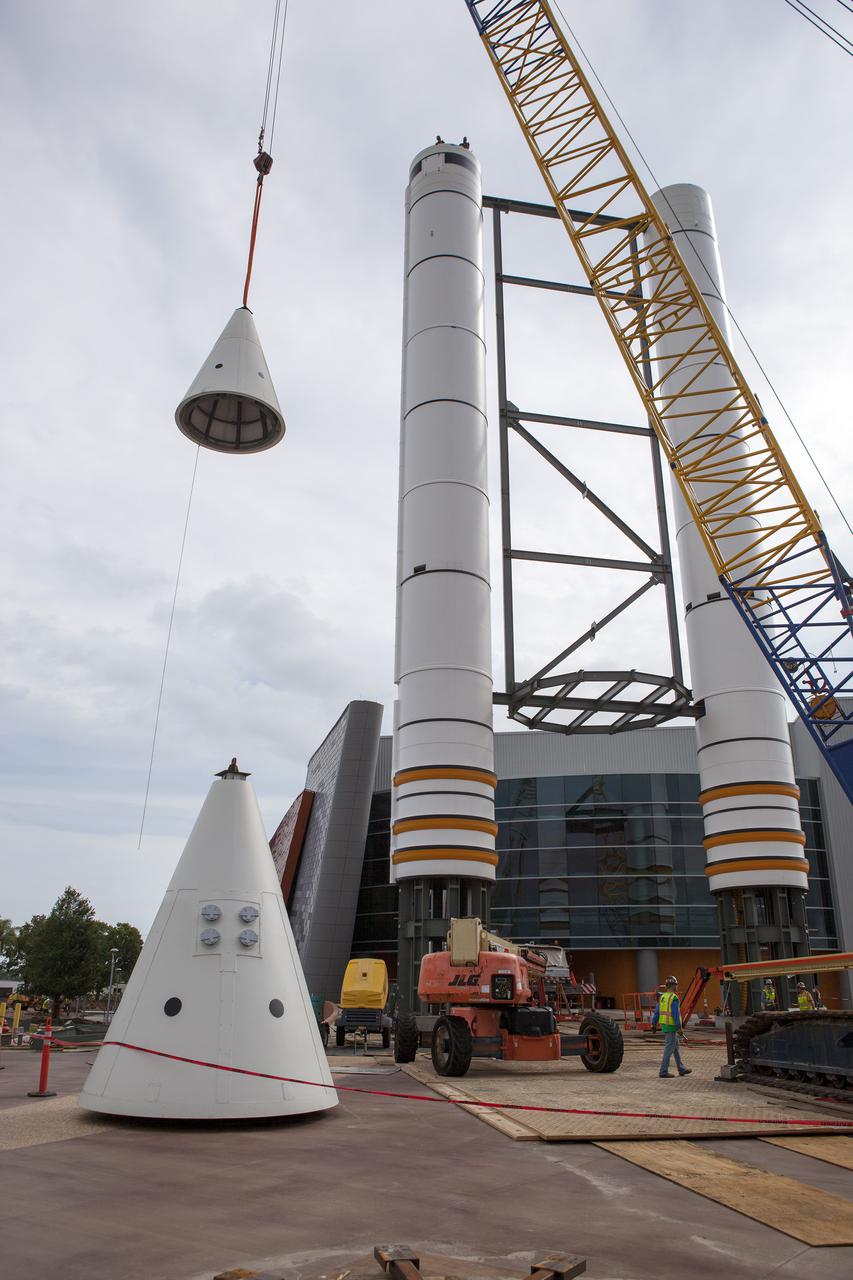
CAPE CANAVERAL, Fla. – A crane lifts a nose cone to top out one of a pair of replica space shuttle solid rocket boosters at the entry of the space shuttle Atlantis attraction under construction at the Kennedy Space Center Visitor Complex. Workers will use cranes to place the nose cones atop each of the model boosters. The building in the background houses the actual shuttle Atlantis. Photo credit: NASA_Dmitri Gerondidakis
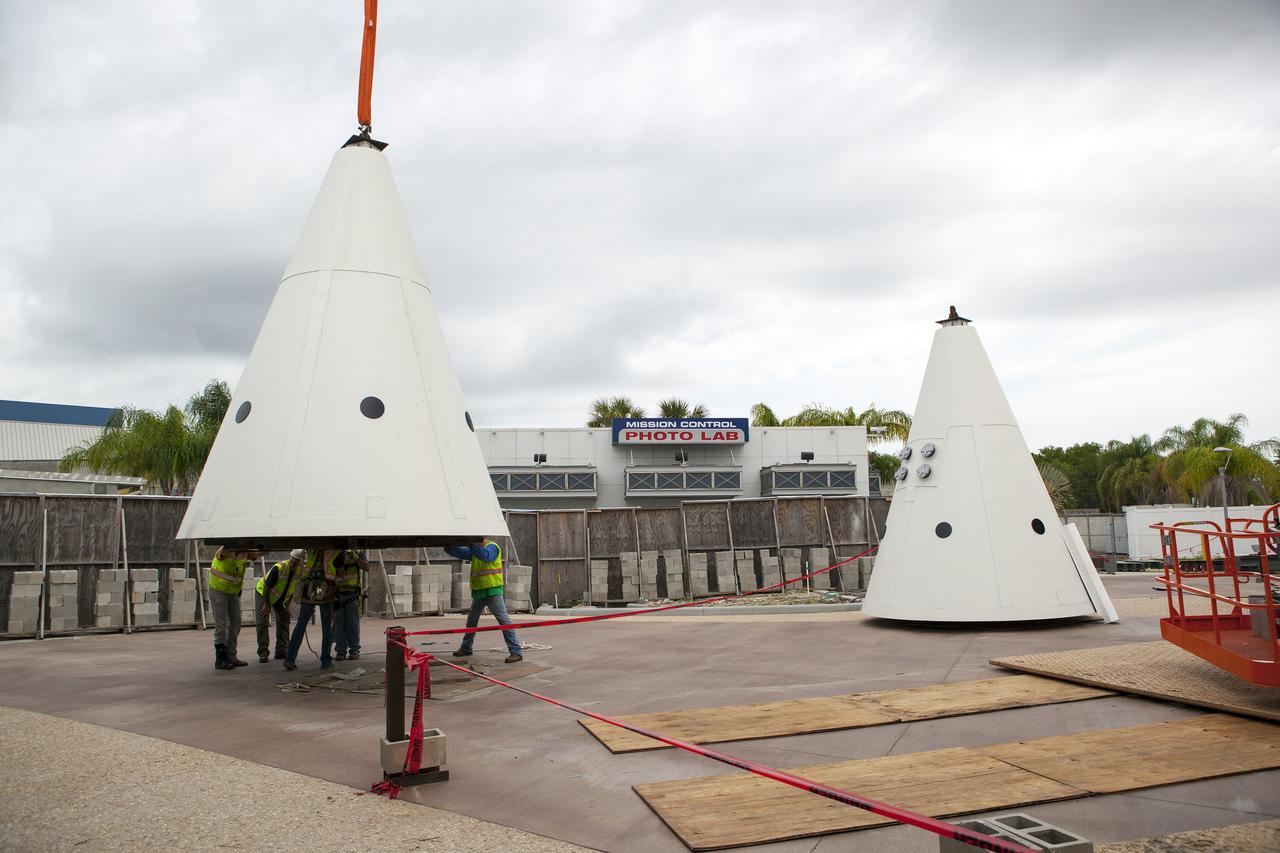
CAPE CANAVERAL, Fla. – Workers prepare to lift a nose cone to top out one of a pair of replica space shuttle solid rocket boosters at the entry of the space shuttle Atlantis attraction under construction at the Kennedy Space Center Visitor Complex. Workers will use cranes to place the nose cones atop each of the model boosters. Photo credit: NASA_Dmitri Gerondidakis
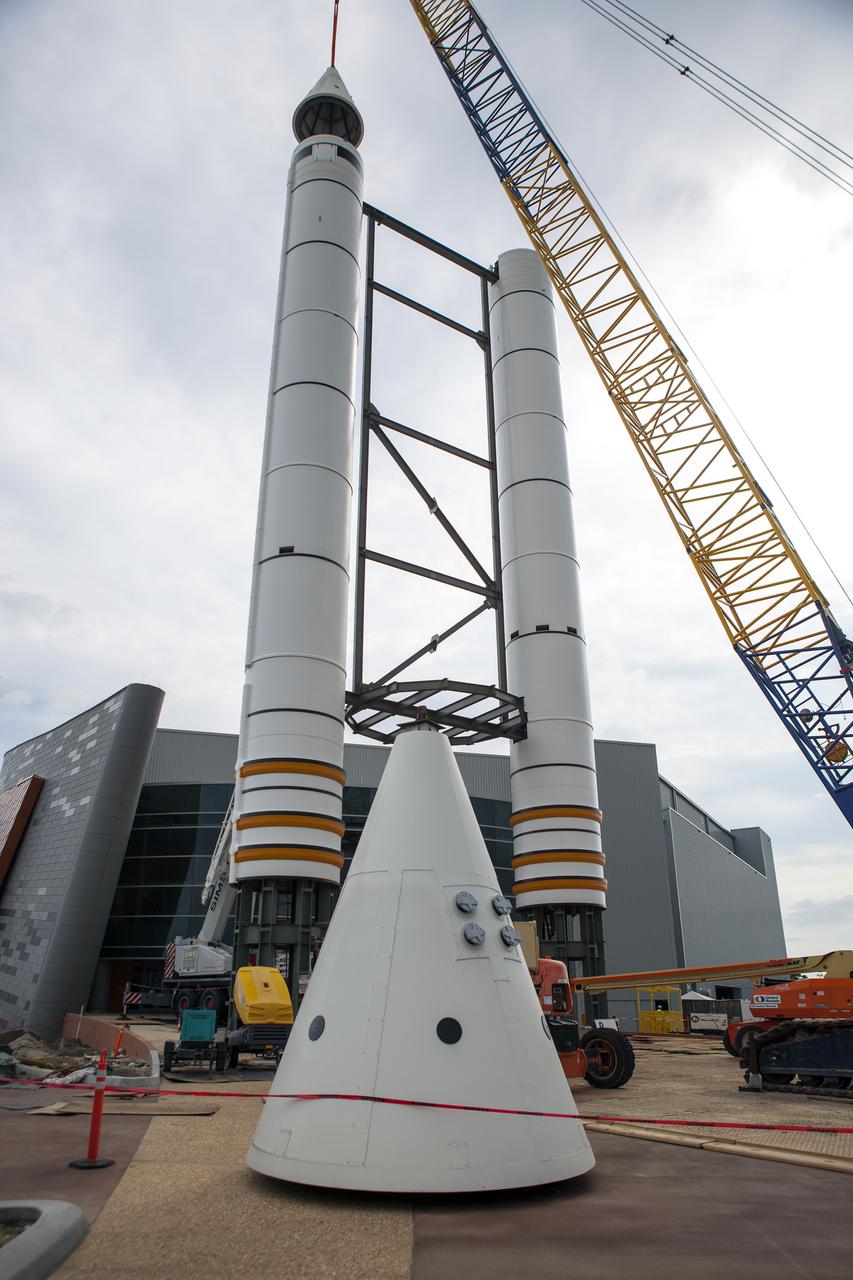
CAPE CANAVERAL, Fla. – A crane lifts a nose cone to top out one of a pair of replica space shuttle solid rocket boosters at the entry of the space shuttle Atlantis attraction under construction at the Kennedy Space Center Visitor Complex. Workers will use cranes to place the nose cones atop each of the model boosters. The building in the background houses the actual shuttle Atlantis. Photo credit: NASA_Dmitri Gerondidakis
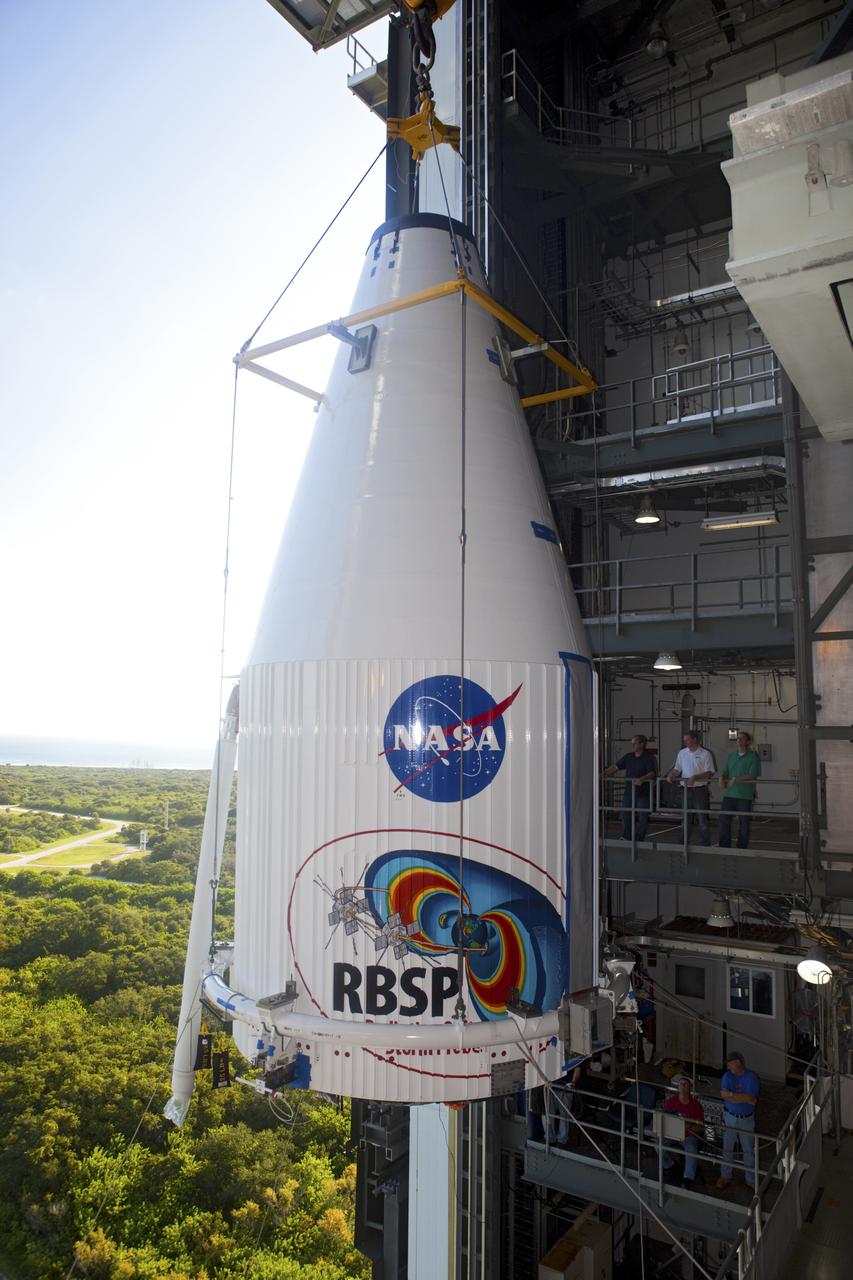
CAPE CANAVERAL, Fla. – Technicians hoist the Radiation Belt Storm Probes, or RBSP, spacecraft inside their payload fairing to the top of a United Launch Alliance Atlas V rocket at Space Launch Complex-41 at Cape Canaveral Air Force Station. The two spacecraft are designed to study the Van Allen radiation belts in unprecedented detail. Photo credit: NASA_Dmitri Gerondidakis

CAPE CANAVERAL, Fla. – Cranes and workers are in place to lift the nosecone part of a solid rocket booster replica into place at the Kennedy Space Center Visitor Complex where the Space Shuttle Atlantis exhibit and attraction is under construction. Photo credit: NASA_Dmitri Gerondidakis

A crane lifts the nosecone part of a solid rocket booster replica into place at the Kennedy Space Center Visitor Complex where the Space Shuttle Atlantis exhibit and attraction is under construction. Photo credit: NASA_Dmitri Gerondidakis
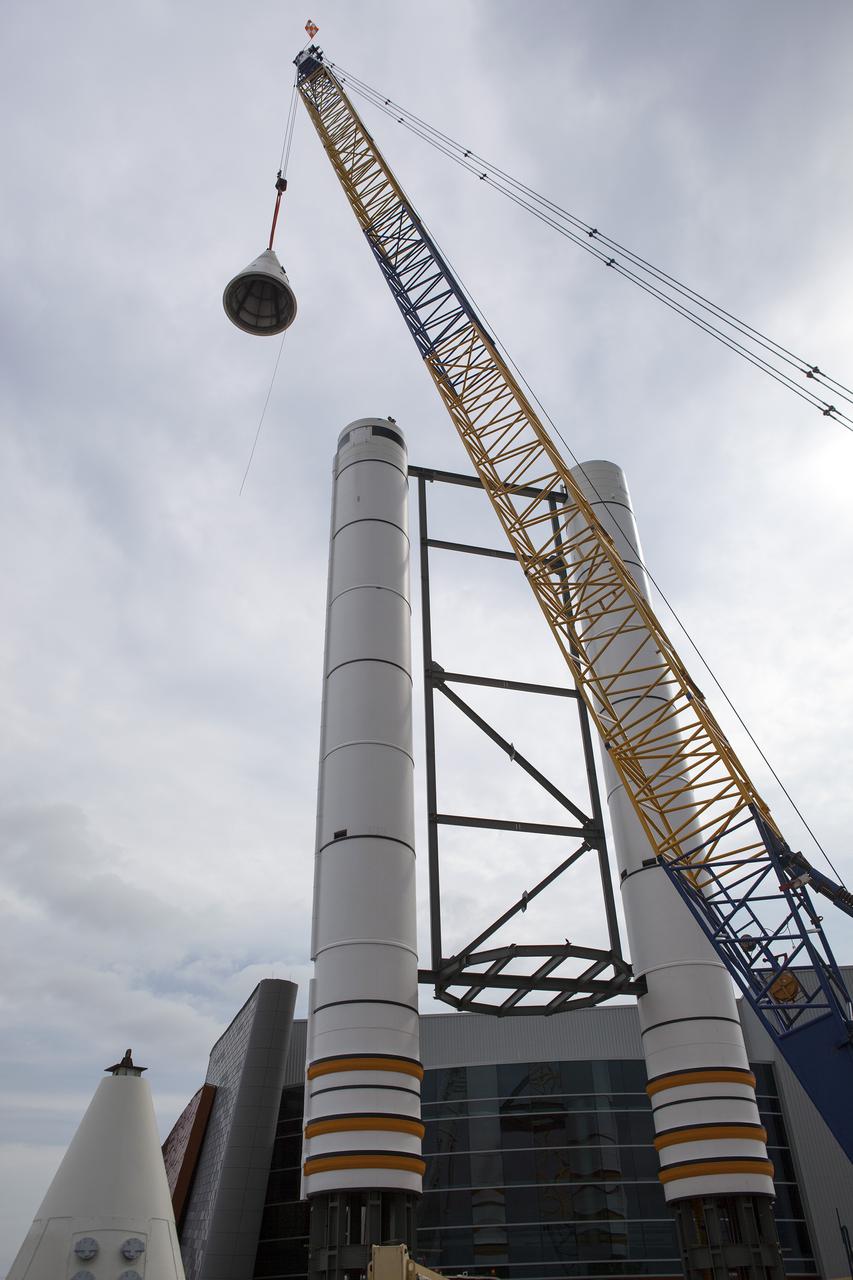
CAPE CANAVERAL, Fla. – A crane lifts a nose cone to top out one of a pair of replica space shuttle solid rocket boosters at the entry of the space shuttle Atlantis attraction under construction at the Kennedy Space Center Visitor Complex. Workers will use cranes to place the nose cones atop each of the model boosters. The building in the background houses the actual shuttle Atlantis. Photo credit: NASA_Dmitri Gerondidakis
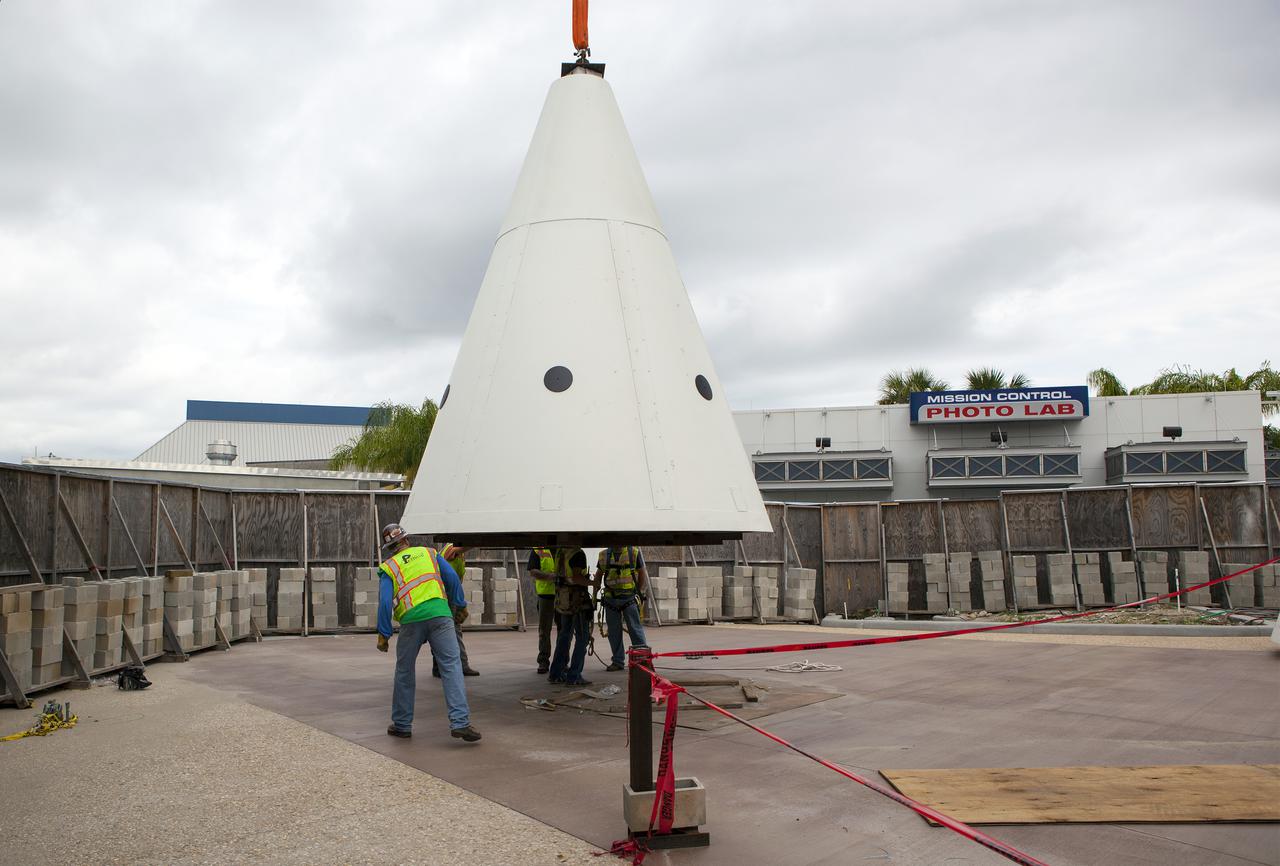
CAPE CANAVERAL, Fla. – Workers prepare to lift a nose cone to top out one of a pair of replica space shuttle solid rocket boosters at the entry of the space shuttle Atlantis attraction under construction at the Kennedy Space Center Visitor Complex. Workers will use cranes to place the nose cones atop each of the model boosters. The building at right houses the actual shuttle Atlantis. Photo credit: NASA_Dmitri Gerondidakis IRIS will open a new window of discovery by tracing the flow of energy and plasma through the chromospheres and transition region into the sun’s corona using spectrometry and imaging. IRIS fills a crucial gap in our ability to advance studies of the sun-to-Earth connection by tracing the flow of energy and plasma through the foundation of the corona and the region around the sun known as the heliosphere. Photo credit: VAFB_Randy Beaudoin
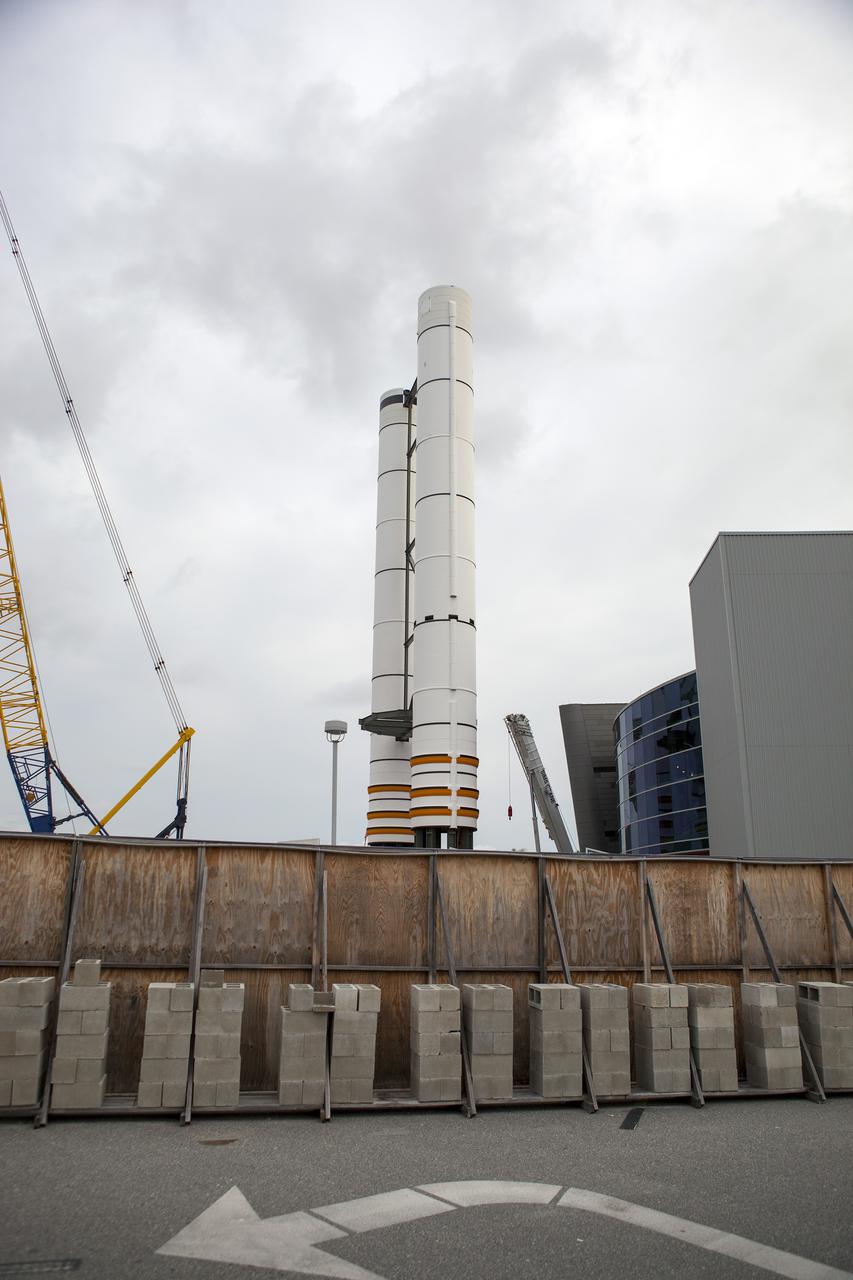
CAPE CANAVERAL, Fla. – A pair of replica space shuttle solid rocket boosters stand at the entry of the space shuttle Atlantis attraction under construction at the Kennedy Space Center Visitor Complex. Workers will use cranes to place the nose cones atop each of the model boosters. The building at right houses the actual shuttle Atlantis. Photo credit: NASA_Dmitri Gerondidakis IRIS will open a new window of discovery by tracing the flow of energy and plasma through the chromospheres and transition region into the sun’s corona using spectrometry and imaging. IRIS fills a crucial gap in our ability to advance studies of the sun-to-Earth connection by tracing the flow of energy and plasma through the foundation of the corona and the region around the sun known as the heliosphere. Photo credit: VAFB_Randy Beaudoin