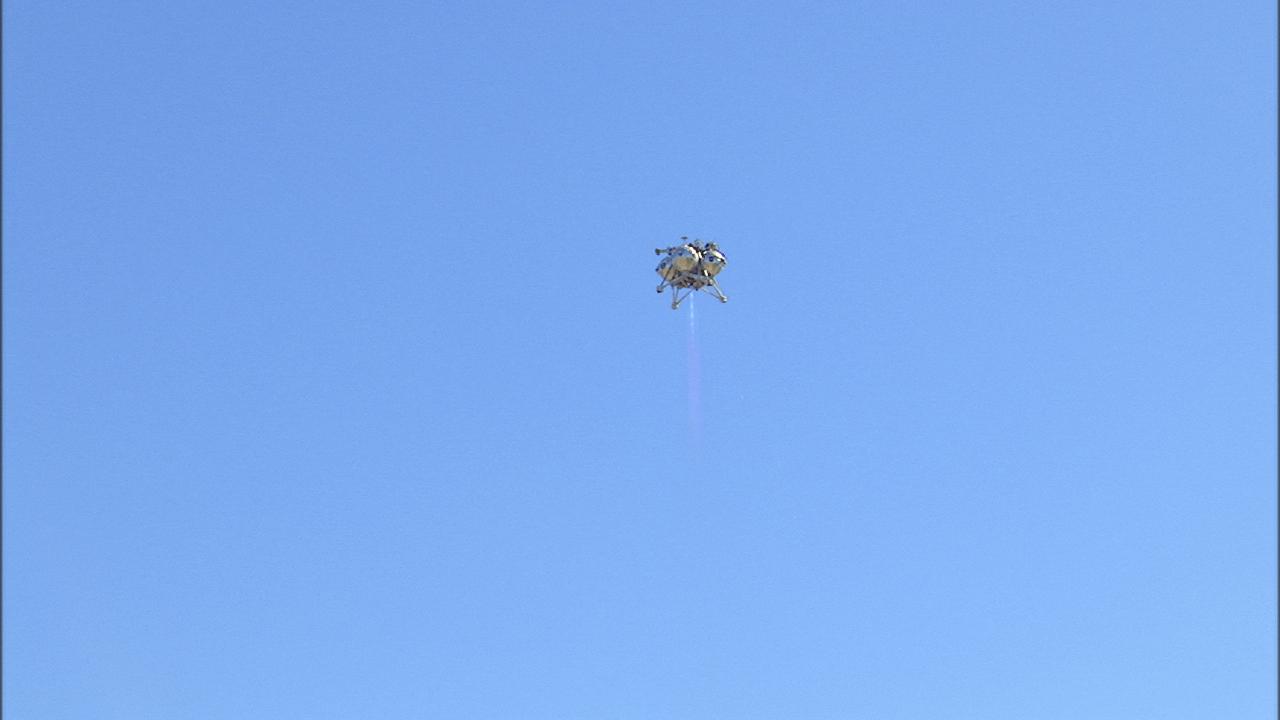
CAPE CANAVERAL, Fla. – The fifth free flight of the Project Morpheus prototype lander was conducted at the north end of the Shuttle Landing Facility at NASA’s Kennedy Space Center in Florida. The 74-second test began at about 1 p.m. EST with the Morpheus lander launching from the ground over a flame trench and ascending about to 476 feet, more than 160 feet higher than its last test. The lander flew forward, covering 637 feet in 30 seconds before descending and landing on target on a dedicated landing pad inside the autonomous landing and hazard avoidance technology, or ALHAT, hazard field. Project Morpheus tests NASA’s ALHAT and an engine that runs on liquid oxygen and methane, or green propellants, into a fully-operational lander that could deliver cargo to other planetary surfaces. The landing facility provides the lander with the kind of field necessary for realistic testing, complete with rocks, craters and hazards to avoid. Morpheus’ ALHAT payload allows it to navigate to clear landing sites amidst rocks, craters and other hazards during its descent. Project Morpheus is being managed under the Advanced Exploration Systems, or AES, Division in NASA’s Human Exploration and Operations Mission Directorate. The efforts in AES pioneer new approaches for rapidly developing prototype systems, demonstrating key capabilities and validating operational concepts for future human missions beyond Earth orbit. For more information on Project Morpheus, visit http:__www.nasa.gov_centers_johnson_exploration_morpheus. Photo credit: NASA_Frankie Martin
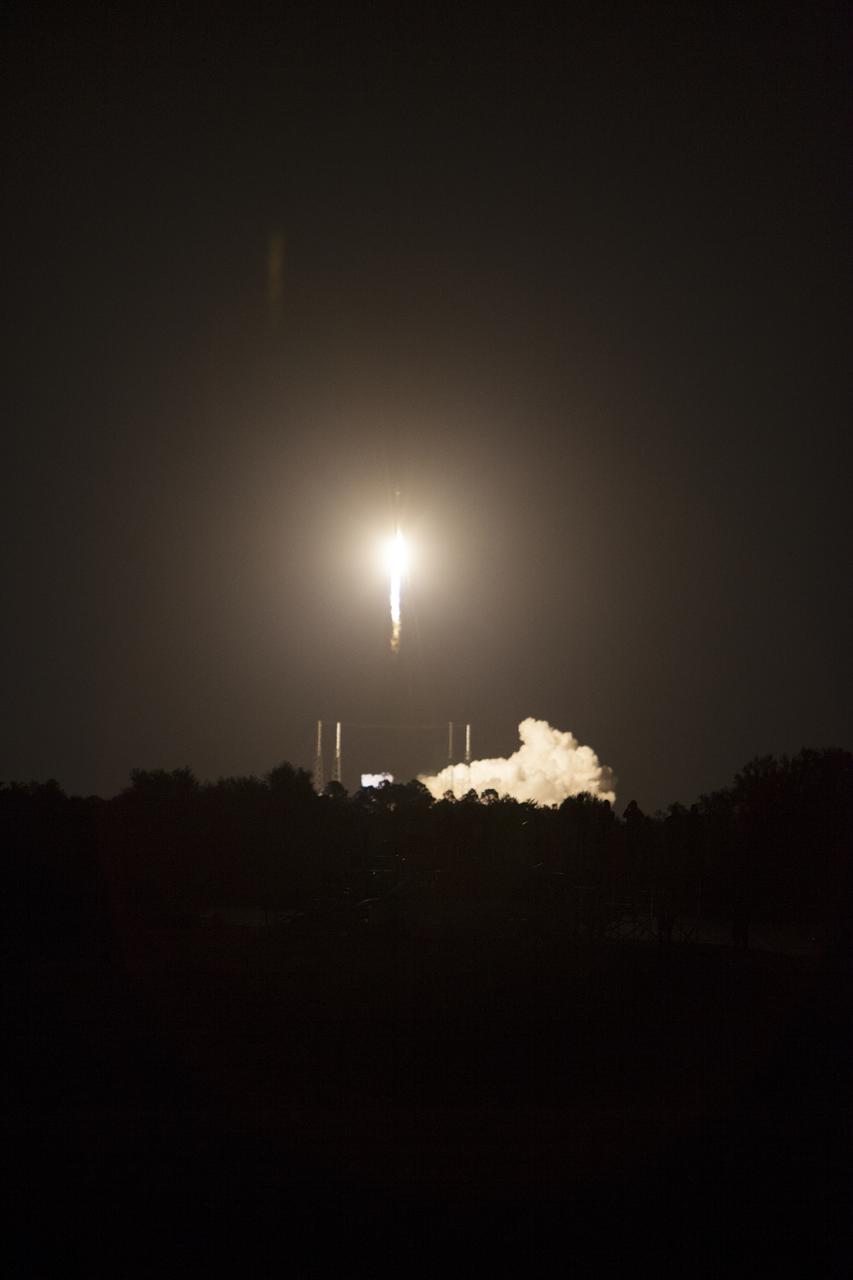
CAPE CANAVERAL, Fla. -- A United Launch Alliance Atlas V rocket soars into the darkness over Space Launch Complex 41 at Cape Canaveral Air Force Station in Florida, carrying NASA's Tracking and Data Relay Satellite, or TDRS-L, to Earth orbit. Launch was at 9:33 p.m. EST Jan. 23 during a 40-minute launch window. The TDRS-L spacecraft is the second of three new satellites designed to ensure vital operational continuity for NASA by expanding the lifespan of the Tracking and Data Relay Satellite System TDRSS fleet, which consists of eight satellites in geosynchronous orbit. The spacecraft provide tracking, telemetry, command and high-bandwidth data return services for numerous science and human exploration missions orbiting Earth. These include NASA's Hubble Space Telescope and the International Space Station. TDRS-L has a high-performance solar panel designed for more spacecraft power to meet the growing S-band communications requirements. TDRSS is one of three NASA Space Communication and Navigation SCaN networks providing space communications to NASA’s missions. For more information more about TDRS-L, visit http:__www.nasa.gov_tdrs. To learn more about SCaN, visit www.nasa.gov_scan. Photo credit: NASA_Frankie Martin
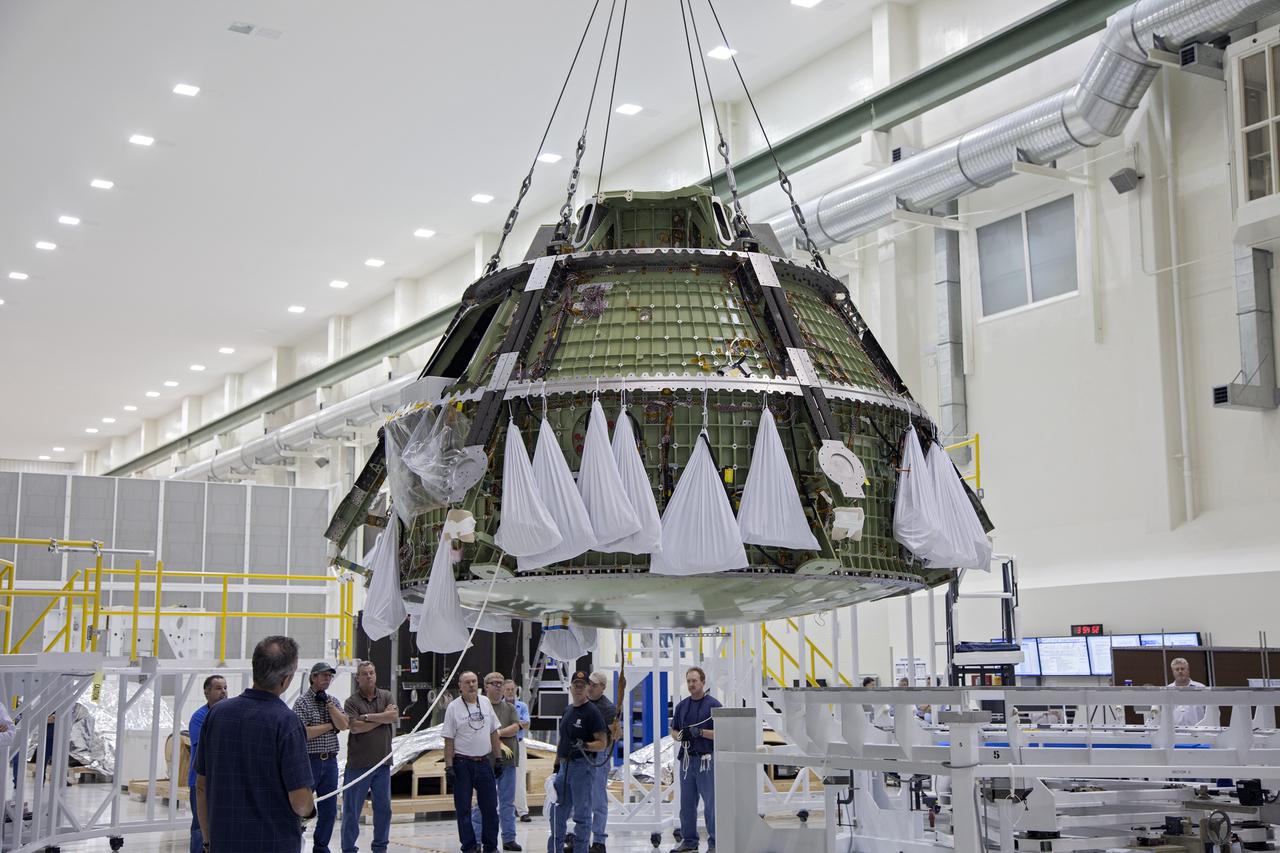
CAPE CANAVERAL, Fla. --Inside the Operations and Checkout Building high bay at NASA’s Kennedy Space Center in Florida, workers monitor the progress as a crane lifts the Orion crew module from its processing stand for transfer to a dolly. Orion is being prepared for Exploration Flight Test 1, or EFT-1. Orion is the exploration spacecraft designed to carry crews to space beyond low Earth orbit. It will provide emergency abort capability, sustain the crew during the space travel and provide safe re-entry from deep space return velocities. Orion’s first unpiloted test flight is scheduled to launch in 2014 atop a United Launch Alliance Delta IV heavy rocket. A second uncrewed flight test is scheduled for 2017 on the Space Launch System rocket. For more information, visit http:__www.nasa.gov_orion. Photo credit: NASA_Frankie Martin
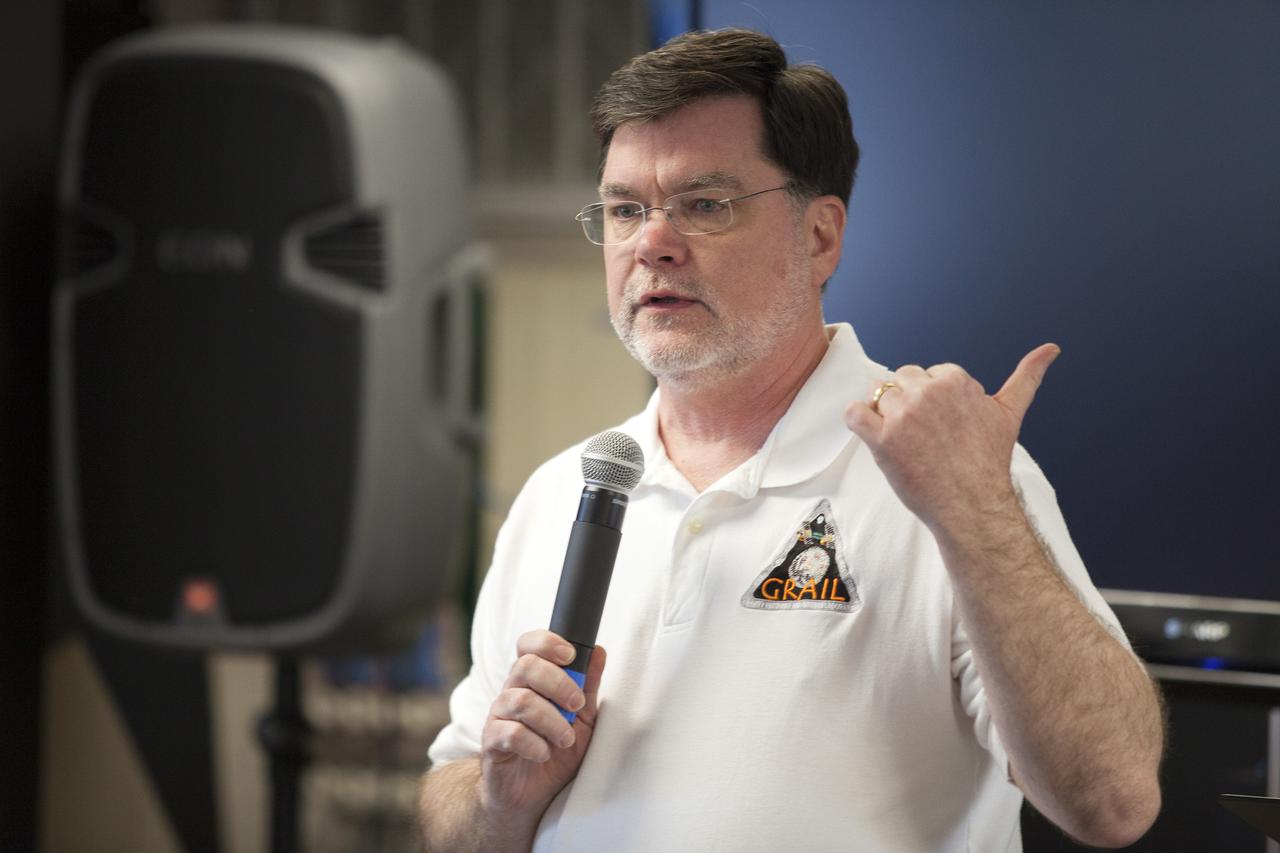
CAPE CANAVERAL, Fla. -- NASA Deputy Chief Technologist James Adams speaks to some of the agency's social media followers during two days of presentations on the launch of SpaceX-2. The social media participants gathered at the Florida spaceport on Feb. 28 and March 1, to hear from key leaders who updated the space agency's current efforts. Photo credit: NASA_Frankie Martin
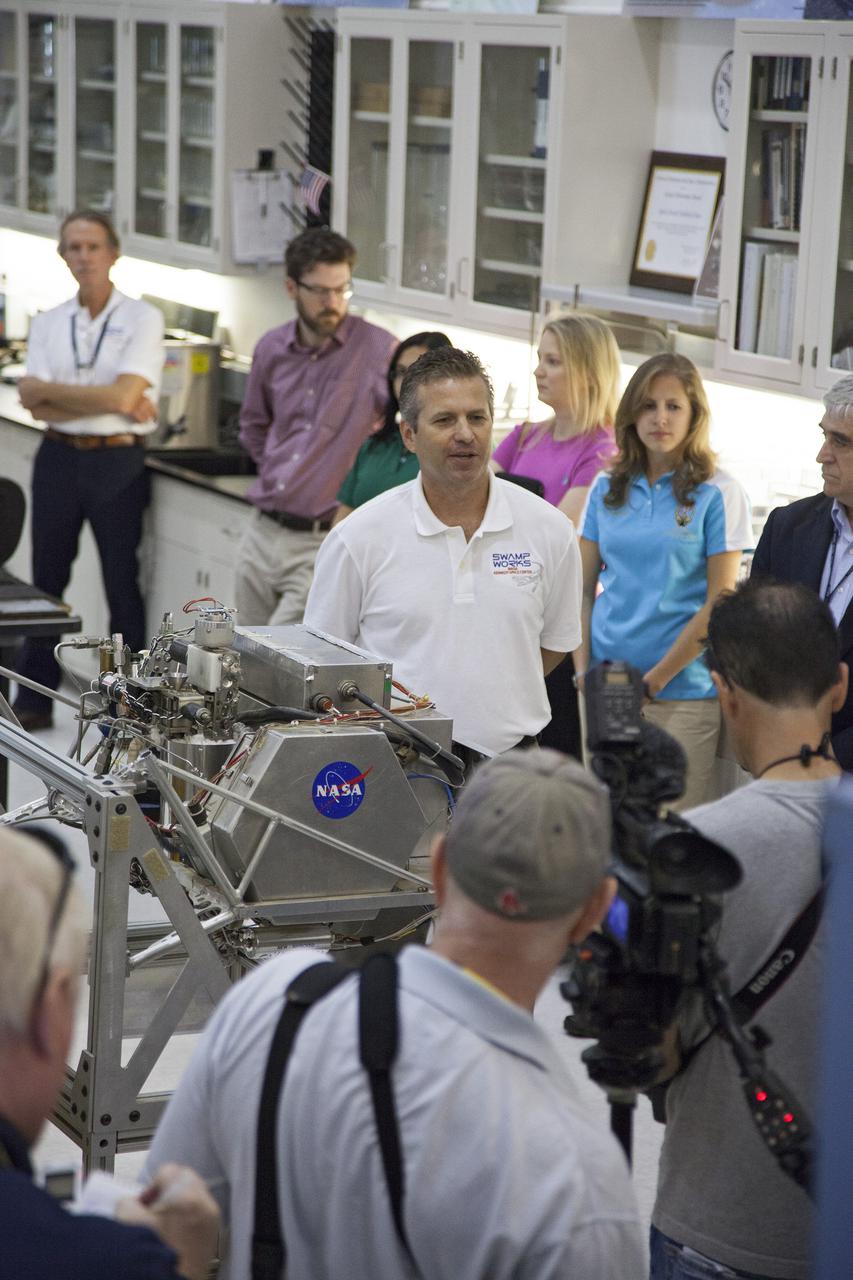
CAPE CANAVERAL, Fla. -- Robert Mueller, at center, chief of the Surface Systems Office, talks to media representatives touring the Swamp Works at NASA's Kennedy Space Center in Florida. Kennedy's Swamp Works provides rapid, innovative and cost-effective exploration mission solutions, leveraging partnerships across NASA, industry and academia. Kennedy's research and technology mission is to improve spaceports on Earth, as well as lay the groundwork for establishing spaceports at destinations in space. For more information, visit http:__www.nasa.gov_centers_kennedy_exploration_researchtech_index.html. Photo credit: NASA_Frankie Martin
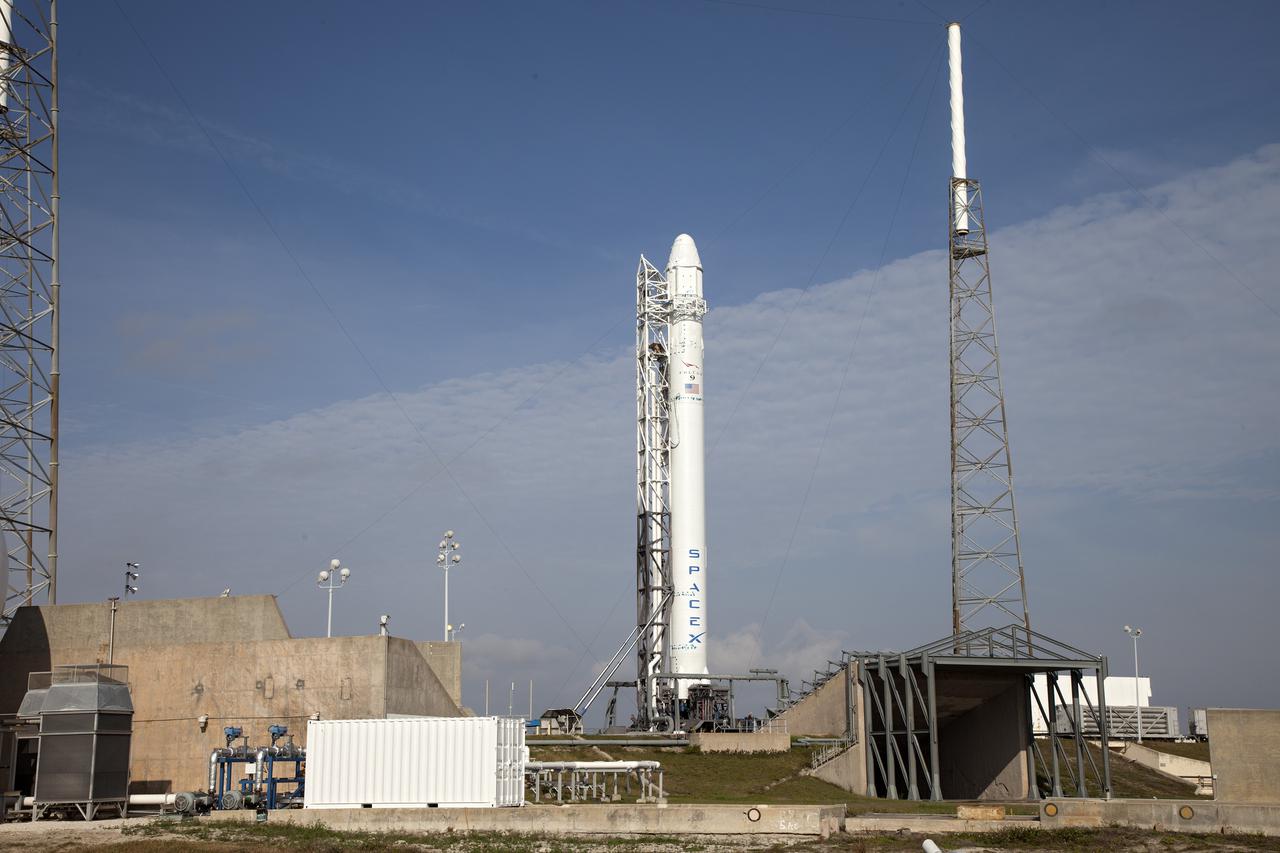
CAPE CANAVERAL, Fla. - At Cape Canaveral Air Force Station in Florida, the SpaceX Falcon 9 rocket stands on the launch pad at Launch Complex 40, awaiting a test firing of the vehicle's nine Merlin first-stage engines. The test is part of prelaunch preparations for the upcoming SpaceX 2 mission. Liftoff of the SpaceX Falcon 9 rocket and Dragon spacecraft is planned for March 1, 2013, at 10:10 a.m. EST, from Space Launch Complex-40 at Cape Canaveral Air Force Station, Fla. Dragon will be making its third trip to the space station. It will carry supplies and experiments to the orbiting laboratory. The mission is the second of 12 SpaceX flights contracted by NASA to resupply the space station. For more information, visit http:__www.nasa.gov_mission_pages_station_structure_launch_spacex2-feature.html Photo credit: NASA_Frankie Martin
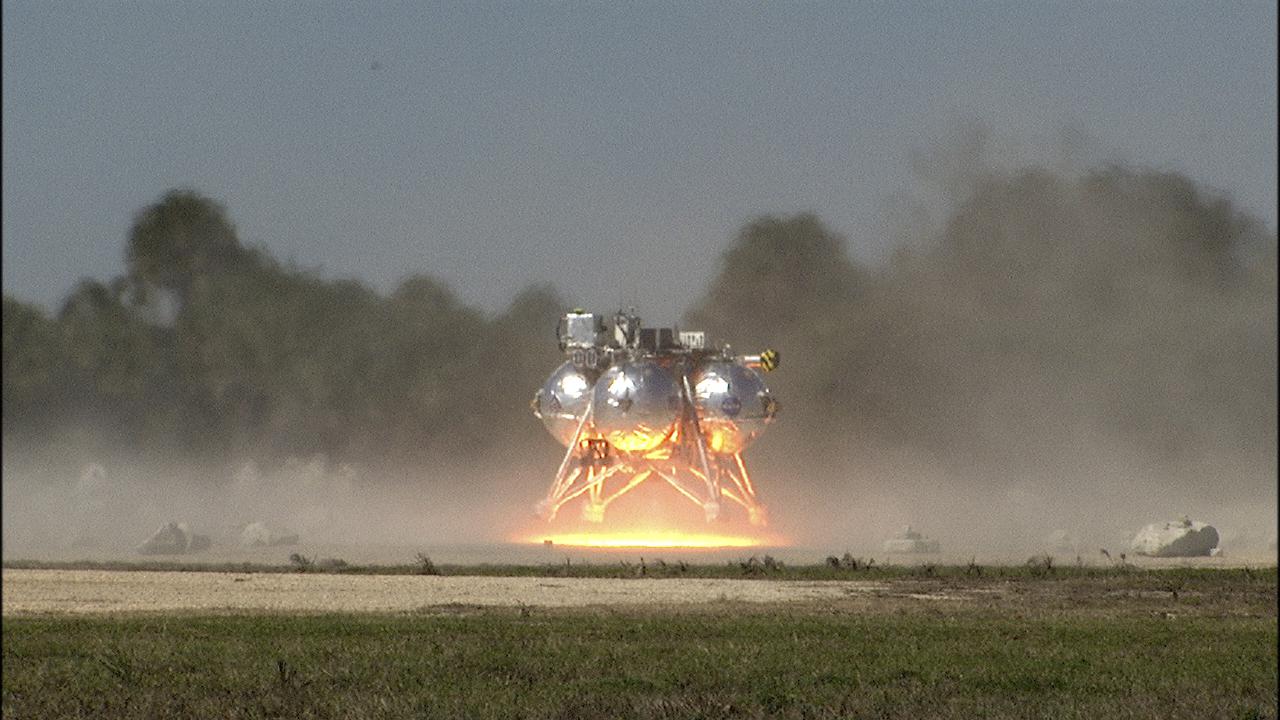
CAPE CANAVERAL, Fla. – The fifth free flight of the Project Morpheus prototype lander was conducted at the north end of the Shuttle Landing Facility at NASA’s Kennedy Space Center in Florida. The 74-second test began at about 1 p.m. EST with the Morpheus lander launching from the ground over a flame trench and ascending about to 476 feet, more than 160 feet higher than its last test. The lander flew forward, covering 637 feet in 30 seconds before descending and landing on target on a dedicated landing pad inside the autonomous landing and hazard avoidance technology, or ALHAT, hazard field. Project Morpheus tests NASA’s ALHAT and an engine that runs on liquid oxygen and methane, or green propellants, into a fully-operational lander that could deliver cargo to other planetary surfaces. The landing facility provides the lander with the kind of field necessary for realistic testing, complete with rocks, craters and hazards to avoid. Morpheus’ ALHAT payload allows it to navigate to clear landing sites amidst rocks, craters and other hazards during its descent. Project Morpheus is being managed under the Advanced Exploration Systems, or AES, Division in NASA’s Human Exploration and Operations Mission Directorate. The efforts in AES pioneer new approaches for rapidly developing prototype systems, demonstrating key capabilities and validating operational concepts for future human missions beyond Earth orbit. For more information on Project Morpheus, visit http:__www.nasa.gov_centers_johnson_exploration_morpheus. Photo credit: NASA_Frankie Martin
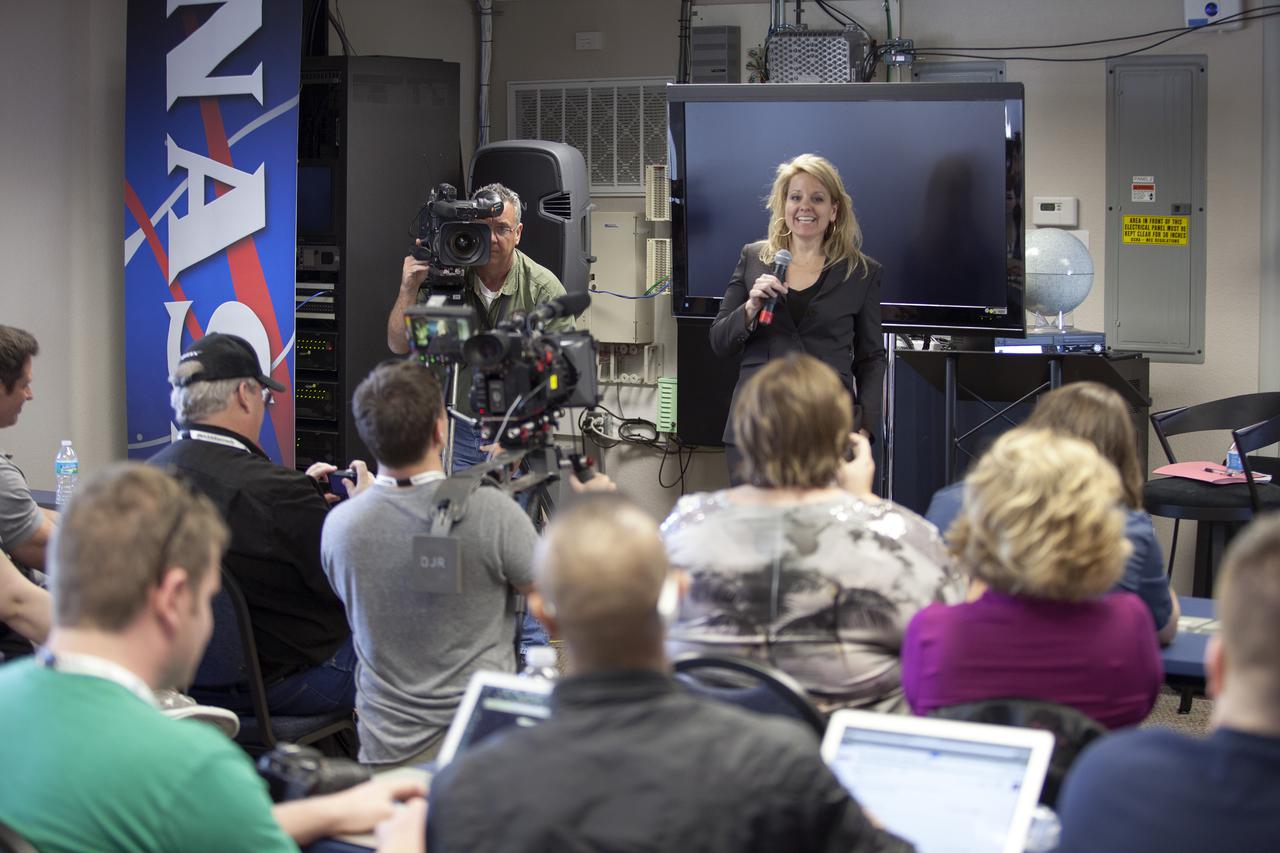
CAPE CANAVERAL, Fla. -- SpaceX President Gwynne Shotwell speaks to NASA’s social media followers during two days of presentations on the launch of SpaceX-2. The social media participants gathered at the Florida spaceport on Feb. 28 and March 1, to hear from key leaders who updated the space agency's current efforts. Photo credit: NASA_Frankie Martin
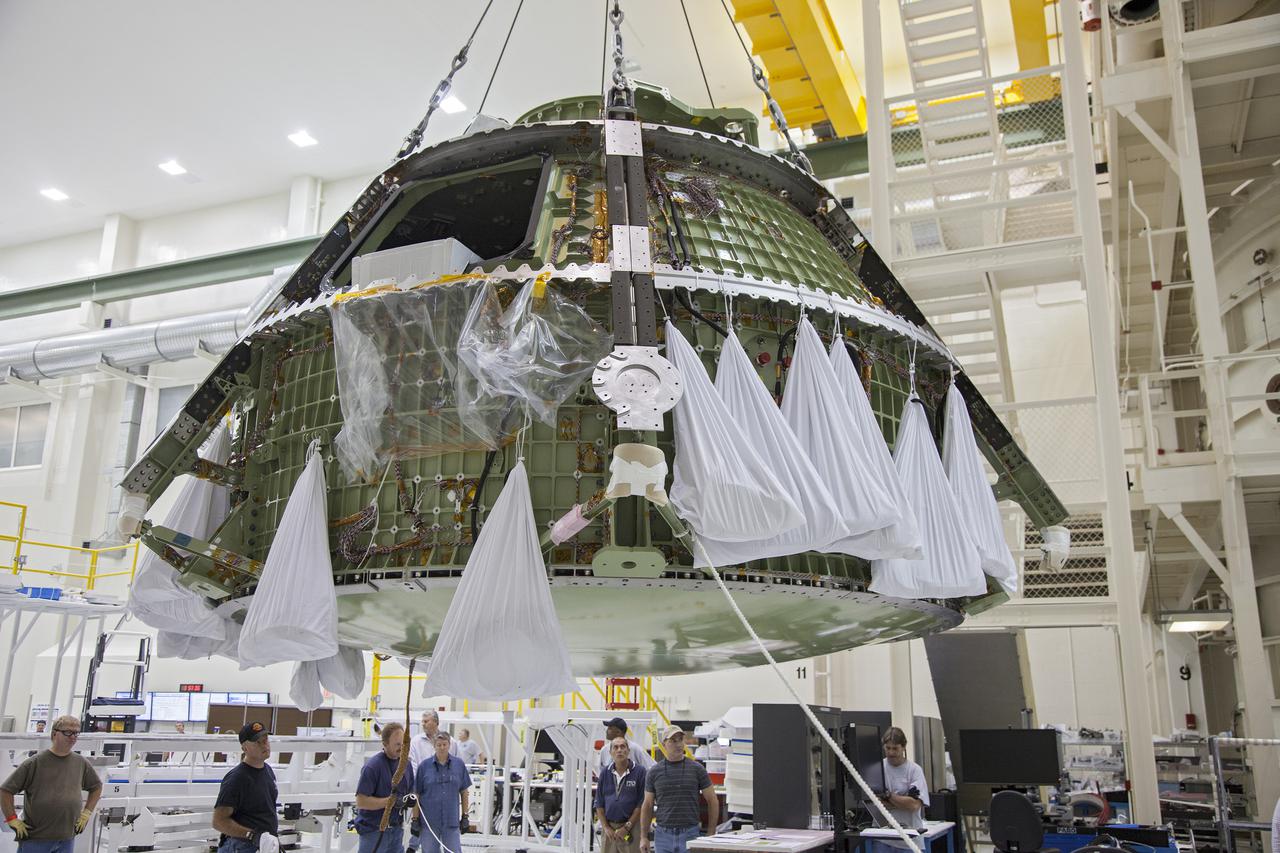
CAPE CANAVERAL, Fla. --Inside the Operations and Checkout Building high bay at NASA’s Kennedy Space Center in Florida, workers monitor the progress as a crane lifts the Orion crew module from its processing stand for transfer to a dolly. Orion is being prepared for Exploration Flight Test 1, or EFT-1. Orion is the exploration spacecraft designed to carry crews to space beyond low Earth orbit. It will provide emergency abort capability, sustain the crew during the space travel and provide safe re-entry from deep space return velocities. Orion’s first unpiloted test flight is scheduled to launch in 2014 atop a United Launch Alliance Delta IV heavy rocket. A second uncrewed flight test is scheduled for 2017 on the Space Launch System rocket. For more information, visit http:__www.nasa.gov_orion. Photo credit: NASA_Frankie Martin
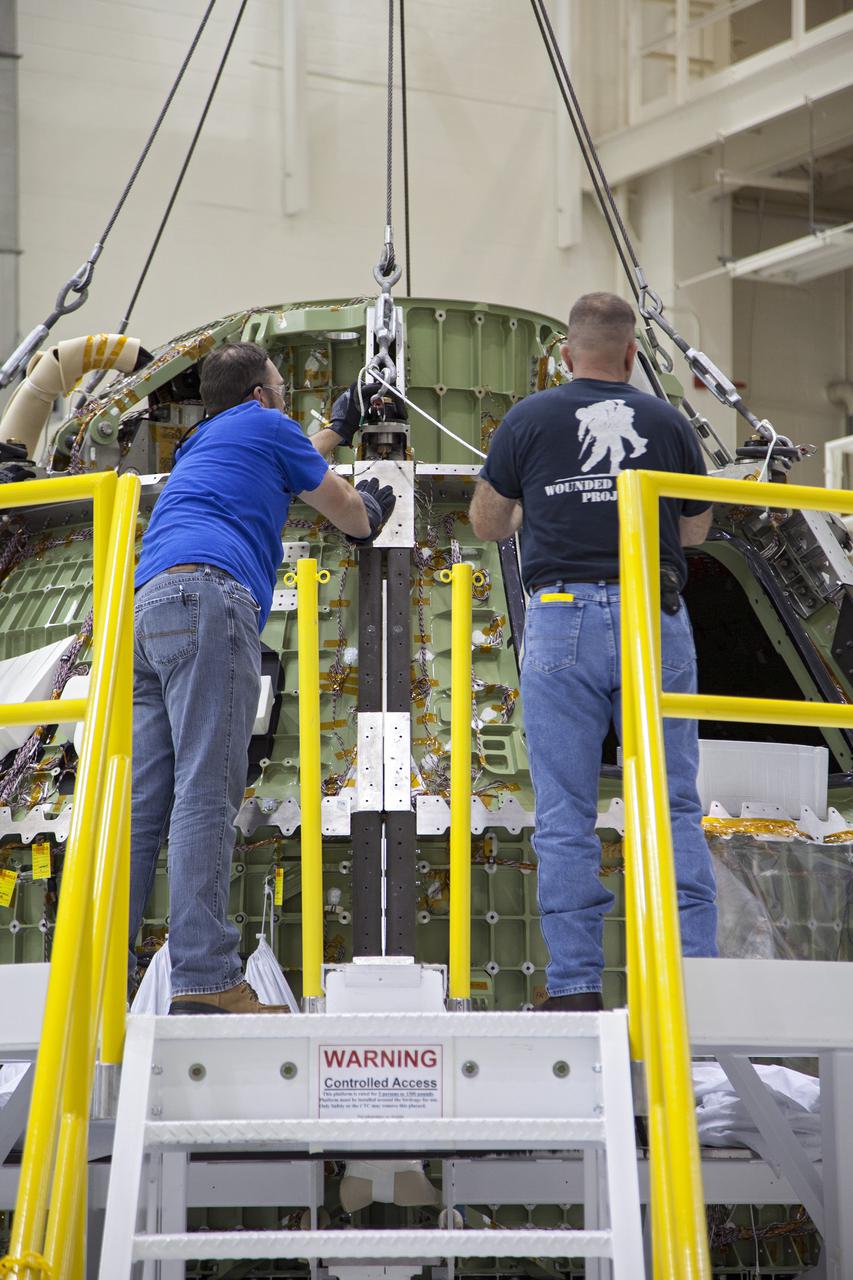
CAPE CANAVERAL, Fla. -- Inside the Operations and Checkout Building high bay at NASA’s Kennedy Space Center in Florida, workers prepare the Orion crew module for its move from a processing stand to a dolly. Orion is being prepared for Exploration Flight Test 1, or EFT-1. Orion is the exploration spacecraft designed to carry crews to space beyond low Earth orbit. It will provide emergency abort capability, sustain the crew during the space travel and provide safe re-entry from deep space return velocities. Orion’s first unpiloted test flight is scheduled to launch in 2014 atop a United Launch Alliance Delta IV heavy rocket. A second uncrewed flight test is scheduled for 2017 on the Space Launch System rocket. For more information, visit http:__www.nasa.gov_orion. Photo credit: NASA_Frankie Martin
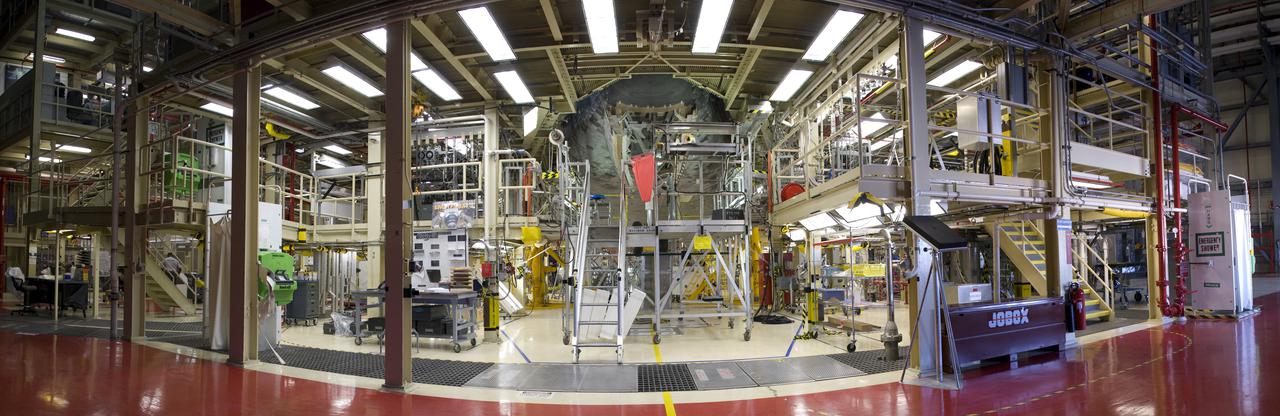
CAPE CANAVERAL, Fla. -- In Orbiter Processing Facility-3 at NASA's Kennedy Space Center in Florida, space shuttle Discovery is being processed for its upcoming mission to the International Space Station. Discovery and its crew of six will deliver the Express Logistics Carrier-4 filled with external payloads and experiments, as well as critical spare components to the station during the STS-133 mission targeted for Nov. 1. Photo credit: NASA_Frankie Martin
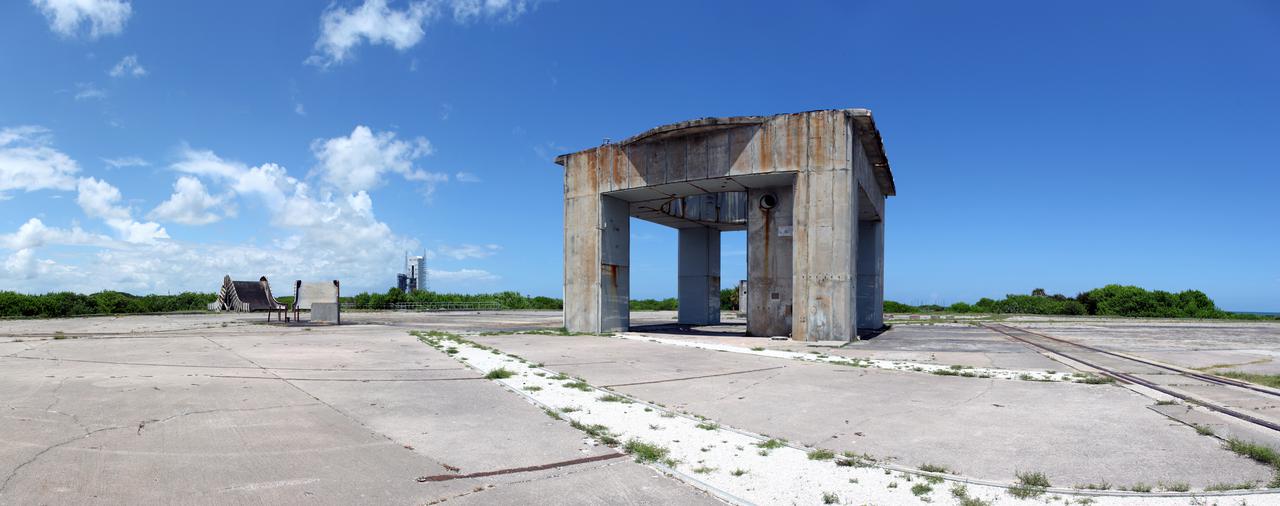
CAPE CANAVERAL, Fla. -- At Cape Canaveral Air Force Station in Florida stands the Launch Complex-34 launch platform. During the Apollo Program, Complex-34 was the site of the first Saturn I and Saturn IB launches, as well as the tragic fire in which the Apollo 1 astronauts lost their lives. Apollo 7, the first crewed Apollo flight, was the last to launch from Complex-34. Subsequent Apollo mission launched from NASA Kennedy Space Center's Launch Complex 39. Photo credit: NASA_Frankie Martin
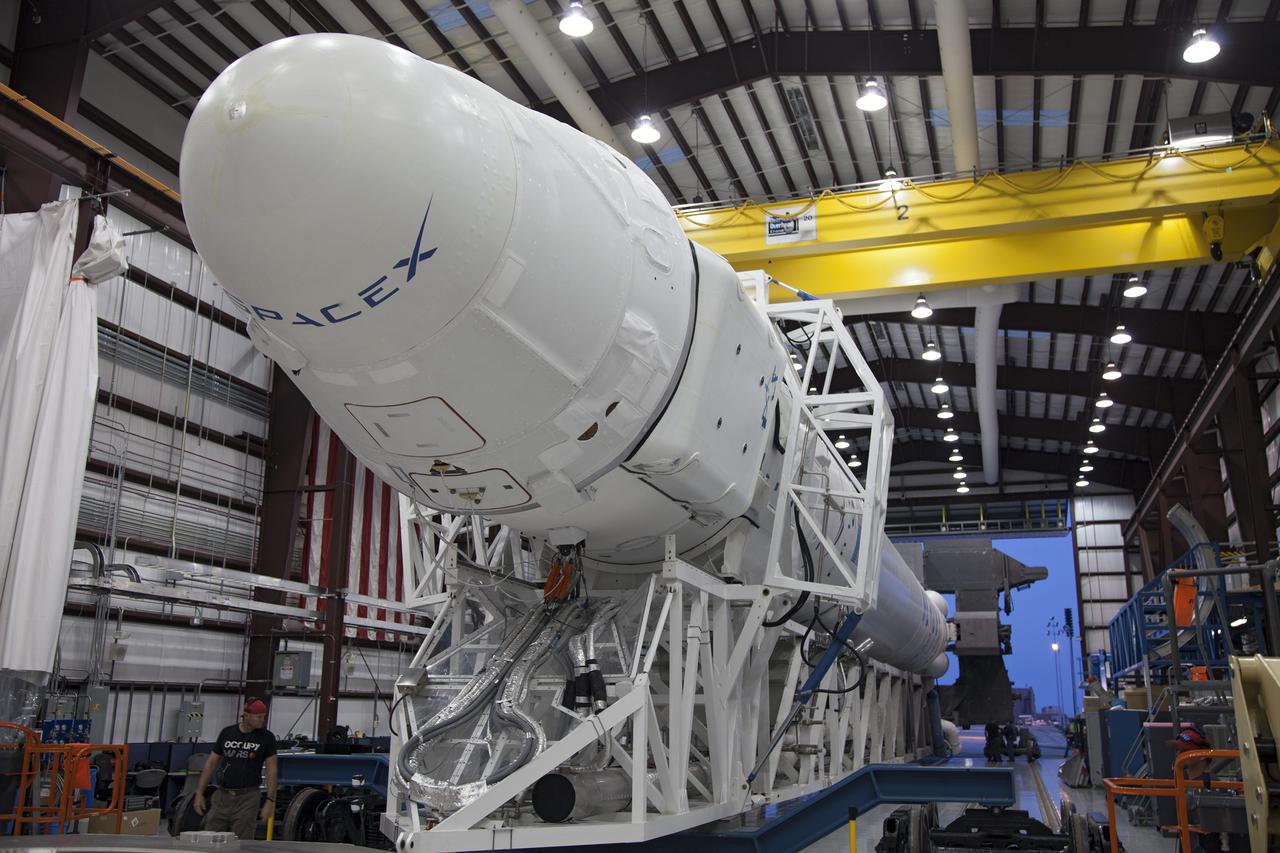
CAPE CANAVERAL, Fla. - The SpaceX Falcon 9 rocket begins its early morning move out of the company's Falcon Hangar at Launch Complex 40 on Cape Canaveral Air Force Station in Florida. Topped by the Dragon spacecraft, the rocket is rolling to the launch pad for a test firing of its nine Merlin first-stage engines in preparation for the SpaceX 2 launch. Liftoff of the SpaceX Falcon 9 rocket and Dragon spacecraft is planned for March 1, 2013, at 10:10 a.m. EST, from Space Launch Complex-40 at Cape Canaveral Air Force Station, Fla. Dragon will be making its third trip to the space station. It will carry supplies and experiments to the orbiting laboratory. The mission is the second of 12 SpaceX flights contracted by NASA to resupply the space station. For more information, visit http:__www.nasa.gov_mission_pages_station_structure_launch_spacex2-feature.html Photo credit: NASA_Frankie Martin
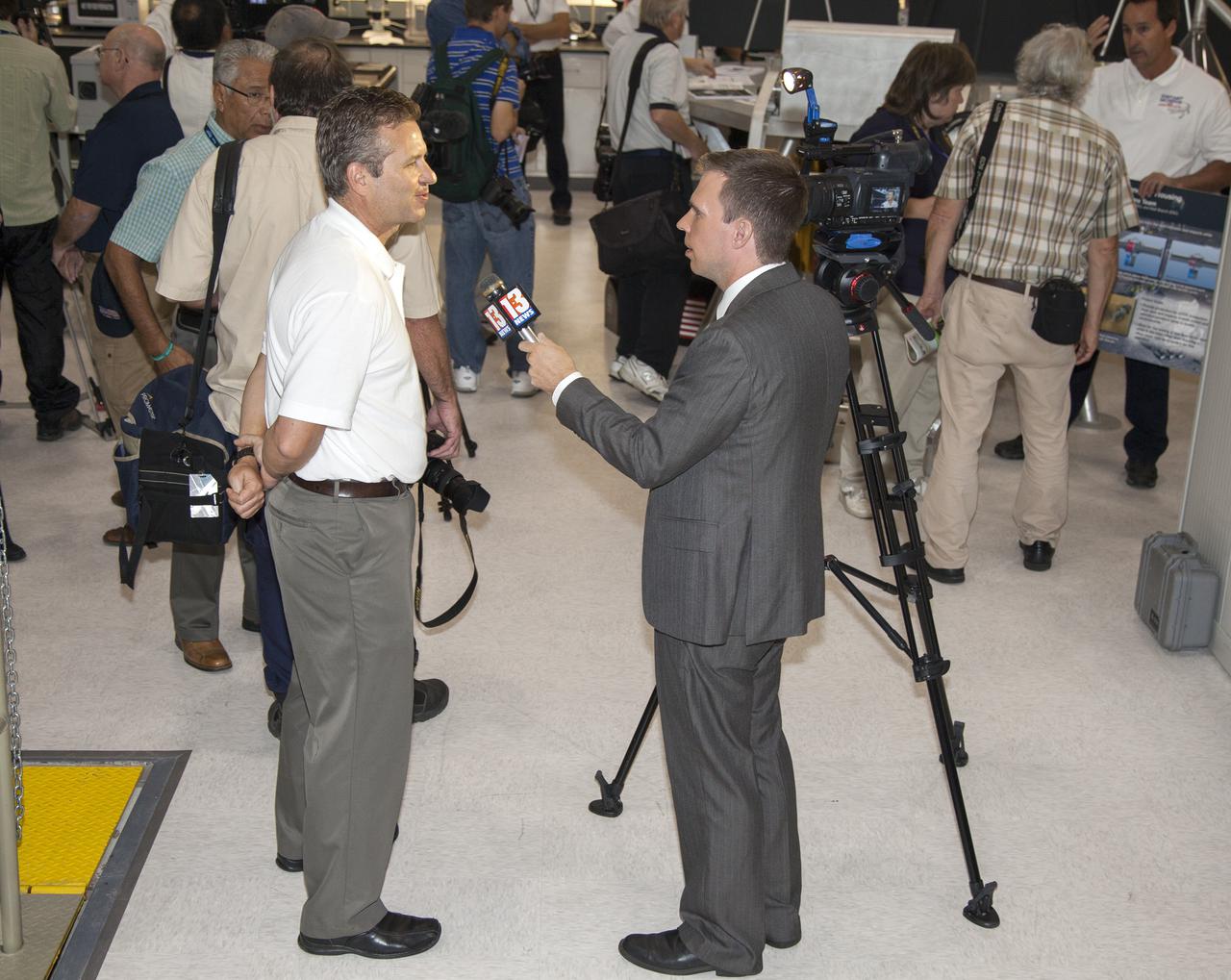
CAPE CANAVERAL, Fla. -- Robert Mueller, chief of the Surface Systems Office, is interviewed by a representative of the media during a tour of the Swamp Works at NASA's Kennedy Space Center in Florida. Kennedy's Swamp Works provides rapid, innovative and cost-effective exploration mission solutions, leveraging partnerships across NASA, industry and academia. Kennedy's research and technology mission is to improve spaceports on Earth, as well as lay the groundwork for establishing spaceports at destinations in space. For more information, visit http:__www.nasa.gov_centers_kennedy_exploration_researchtech_index.html. Photo credit: NASA_Frankie Martin
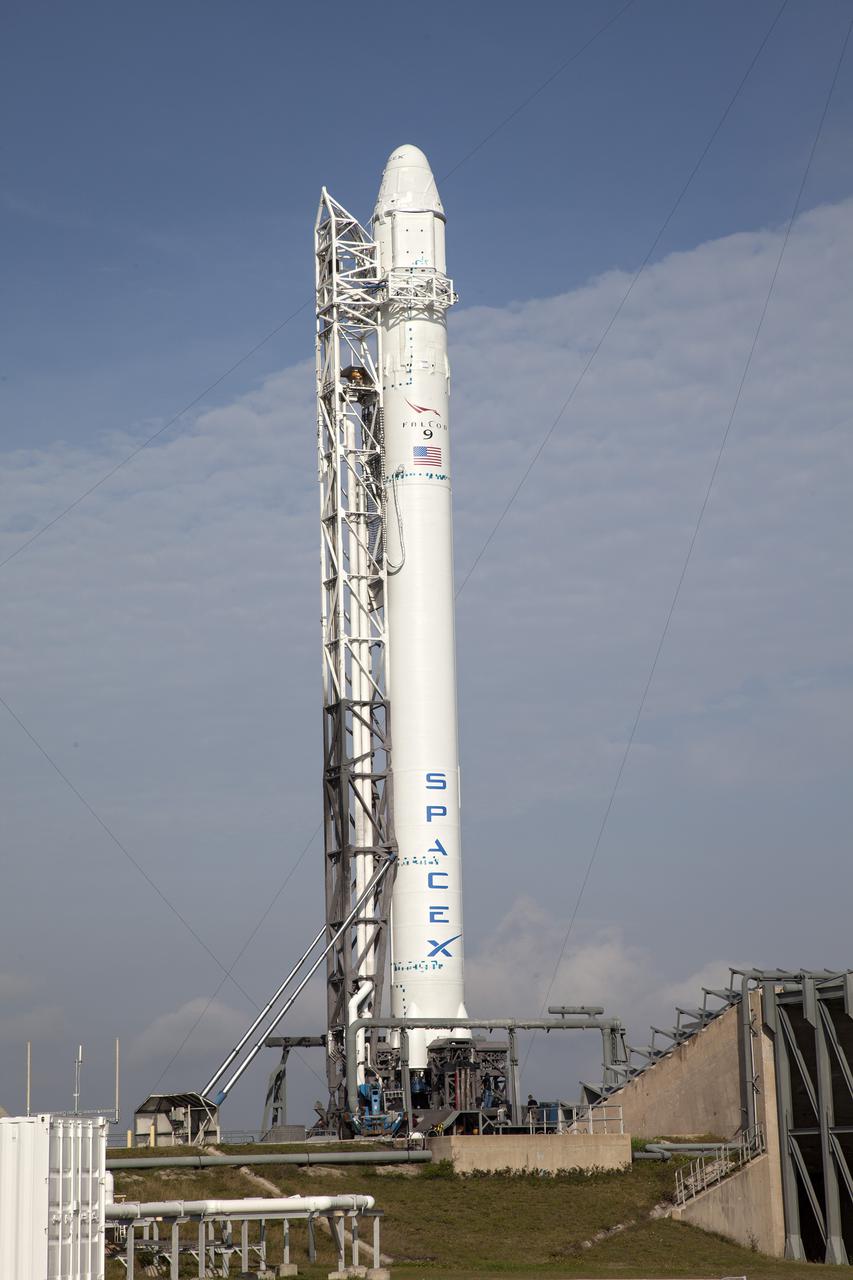
CAPE CANAVERAL, Fla. - At Cape Canaveral Air Force Station in Florida, the SpaceX Falcon 9 rocket has been raised to vertical on the launch pad at Launch Complex 40, awaiting a test firing of the vehicle's nine Merlin first-stage engines. The test is part of prelaunch preparations for the upcoming SpaceX 2 mission. Liftoff of the SpaceX Falcon 9 rocket and Dragon spacecraft is planned for March 1, 2013, at 10:10 a.m. EST, from Space Launch Complex-40 at Cape Canaveral Air Force Station, Fla. Dragon will be making its third trip to the space station. It will carry supplies and experiments to the orbiting laboratory. The mission is the second of 12 SpaceX flights contracted by NASA to resupply the space station. For more information, visit http:__www.nasa.gov_mission_pages_station_structure_launch_spacex2-feature.html Photo credit: NASA_Frankie Martin
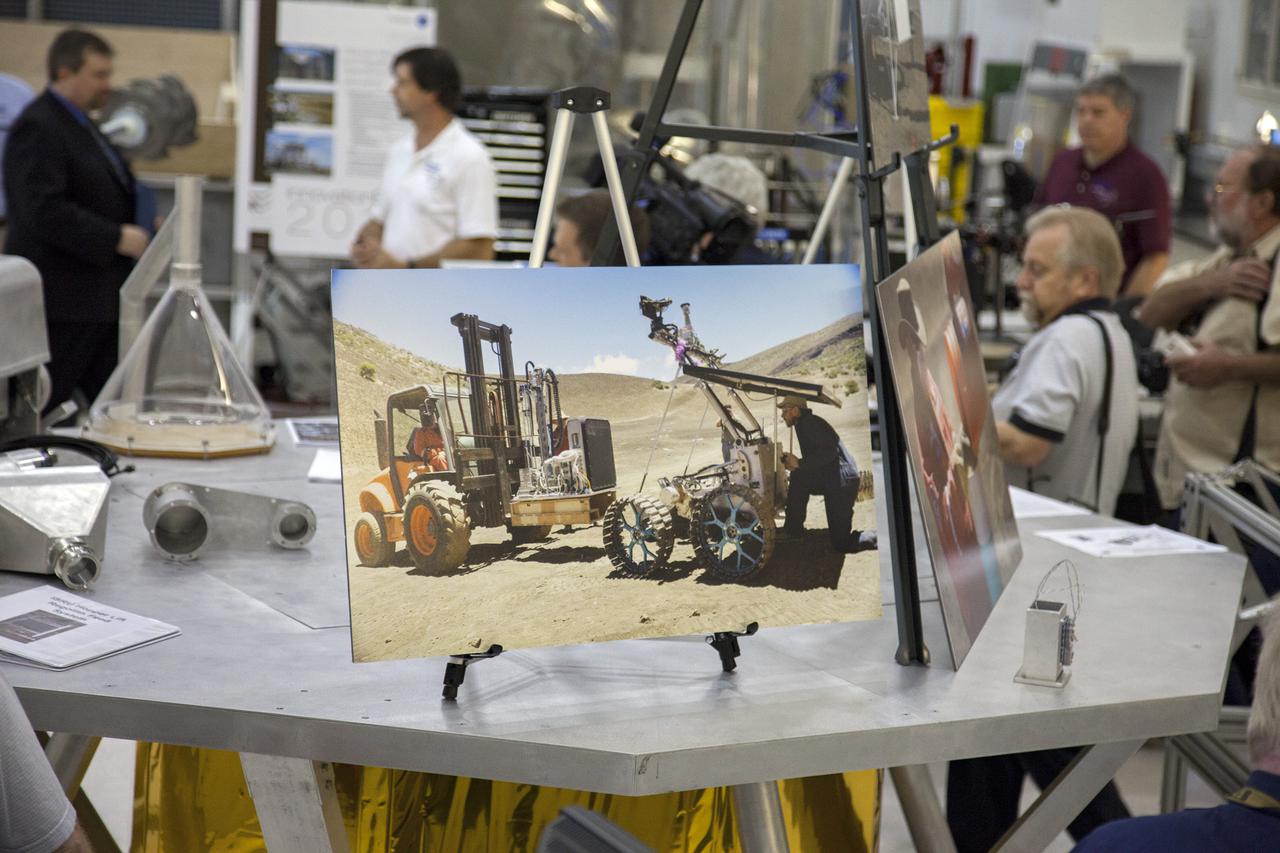
CAPE CANAVERAL, Fla. -- A photograph of NASA's Regolith and Environment Science and Oxygen and Lunar Volatiles Extraction, or RESOLVE, rover is on display atop a RESOLVE lander during a media tour of the Swamp Works at NASA's Kennedy Space Center in Florida. RESOLVE consists of a rover and drill provided by the Canadian Space Agency to support a NASA payload under development to prospect for water, ice and other lunar resources. RESOLVE also will demonstrate how future explorers can take advantage of resources at potential landing sites by manufacturing oxygen from soil. NASA used the lander to conduct field tests outside Hilo, Hawaii, in July 2012. Kennedy's Swamp Works provides rapid, innovative and cost-effective exploration mission solutions, leveraging partnerships across NASA, industry and academia. Kennedy's research and technology mission is to improve spaceports on Earth, as well as lay the groundwork for establishing spaceports at destinations in space. For more information, visit http:__www.nasa.gov_centers_kennedy_exploration_researchtech_index.html. Photo credit: NASA_Frankie Martin
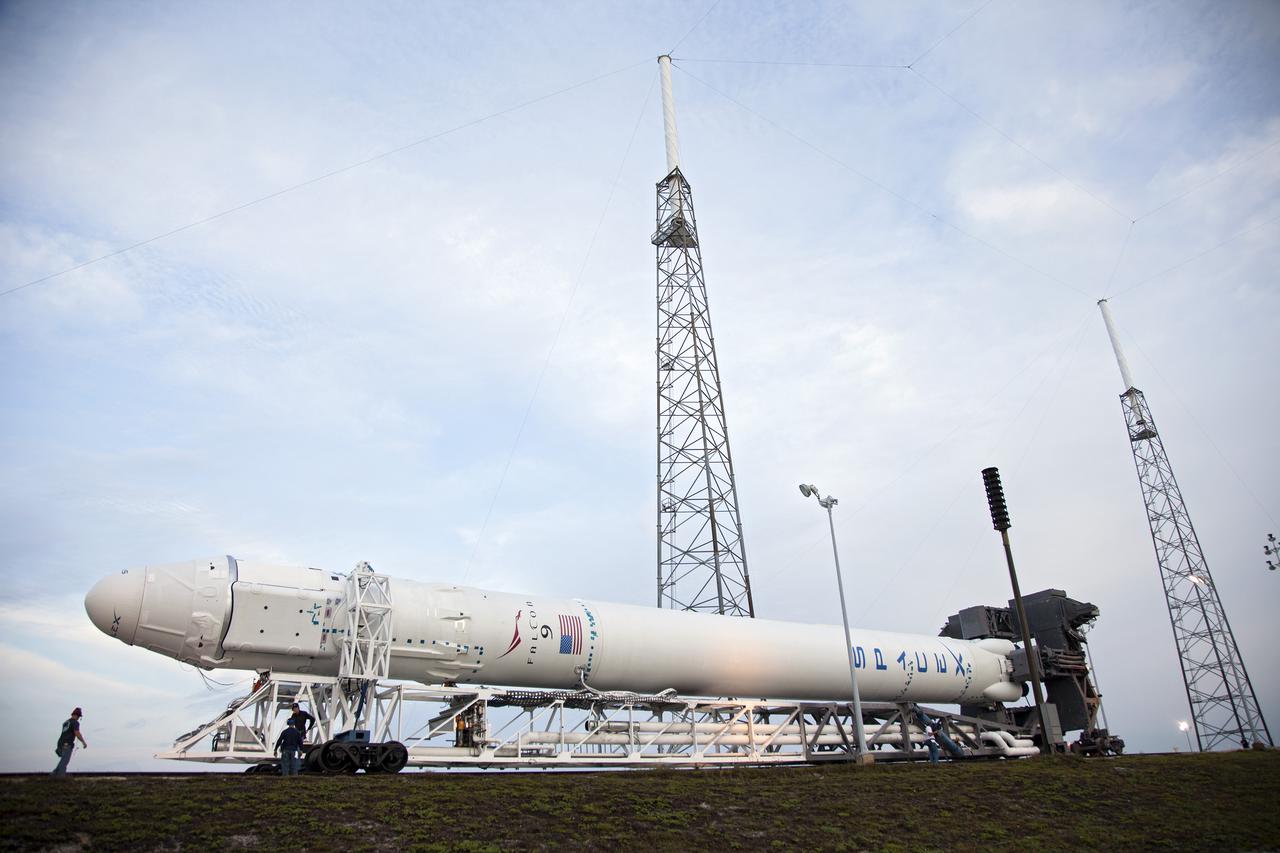
CAPE CANAVERAL, Fla. - At Cape Canaveral Air Force Station in Florida, the SpaceX Falcon 9 rocket approaches the launch pad at Launch Complex 40 for a test firing of the vehicle's nine Merlin first-stage engines. The test is part of prelaunch preparations for the upcoming SpaceX 2 mission. Liftoff of the SpaceX Falcon 9 rocket and Dragon spacecraft is planned for March 1, 2013, at 10:10 a.m. EST, from Space Launch Complex-40 at Cape Canaveral Air Force Station, Fla. Dragon will be making its third trip to the space station. It will carry supplies and experiments to the orbiting laboratory. The mission is the second of 12 SpaceX flights contracted by NASA to resupply the space station. For more information, visit http:__www.nasa.gov_mission_pages_station_structure_launch_spacex2-feature.html Photo credit: NASA_Frankie Martin
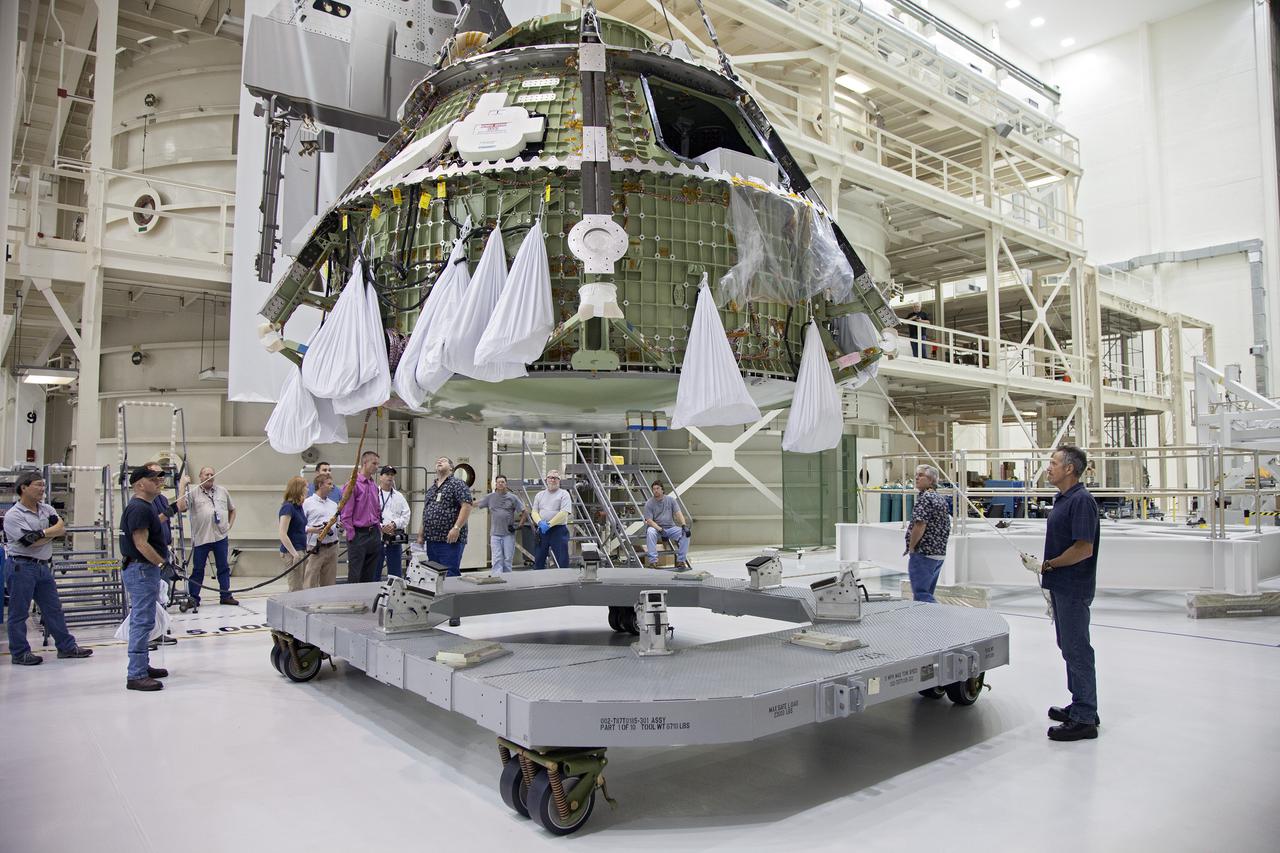
CAPE CANAVERAL, Fla. -- Inside the Operations and Checkout Building high bay at NASA’s Kennedy Space Center in Florida, workers monitor the progress as a crane lowers the Orion crew module onto a dolly. Orion is being prepared for Exploration Flight Test 1, or EFT-1. Orion is the exploration spacecraft designed to carry crews to space beyond low Earth orbit. It will provide emergency abort capability, sustain the crew during the space travel and provide safe re-entry from deep space return velocities. Orion’s first unpiloted test flight is scheduled to launch in 2014 atop a United Launch Alliance Delta IV heavy rocket. A second uncrewed flight test is scheduled for 2017 on the Space Launch System rocket. For more information, visit http:__www.nasa.gov_orion. Photo credit: NASA_Frankie Martin
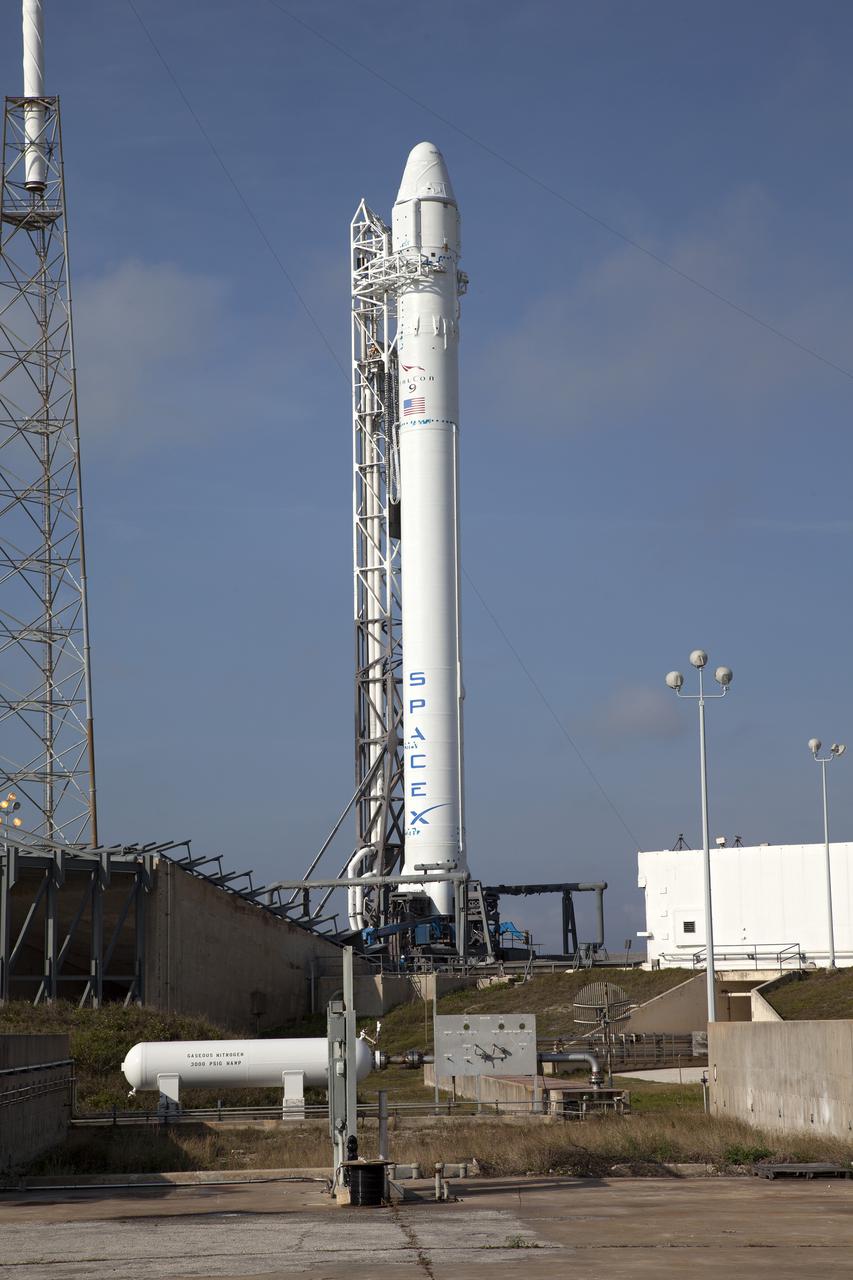
CAPE CANAVERAL, Fla. - At Cape Canaveral Air Force Station in Florida, the SpaceX Falcon 9 rocket stands on the launch pad at Launch Complex 40, awaiting a test firing of the vehicle's nine Merlin first-stage engines. The test is part of prelaunch preparations for the upcoming SpaceX 2 mission. Liftoff of the SpaceX Falcon 9 rocket and Dragon spacecraft is planned for March 1, 2013, at 10:10 a.m. EST, from Space Launch Complex-40 at Cape Canaveral Air Force Station, Fla. Dragon will be making its third trip to the space station. It will carry supplies and experiments to the orbiting laboratory. The mission is the second of 12 SpaceX flights contracted by NASA to resupply the space station. For more information, visit http:__www.nasa.gov_mission_pages_station_structure_launch_spacex2-feature.html Photo credit: NASA_Frankie Martin
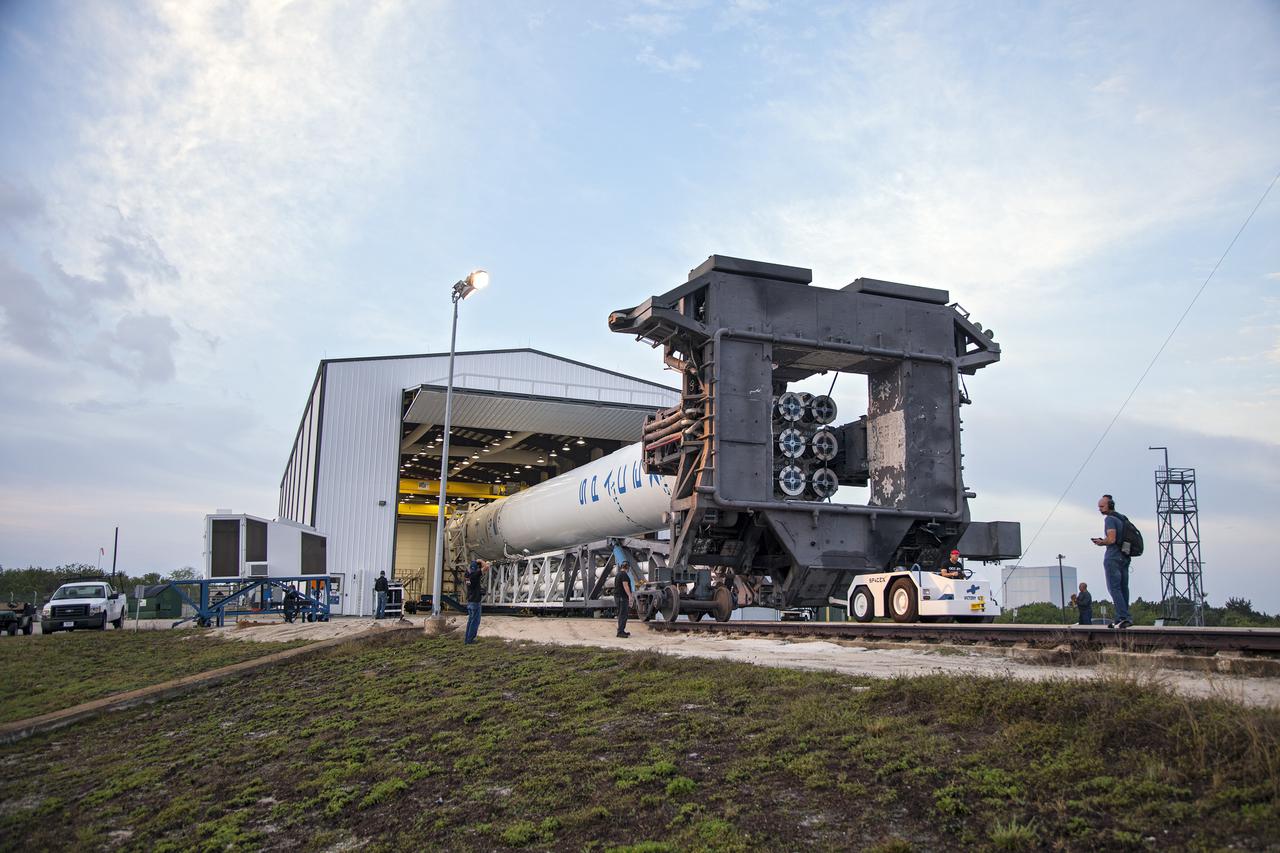
CAPE CANAVERAL, Fla. - The SpaceX Falcon 9 rocket moves out of the company's Falcon Hangar at Launch Complex 40 on Cape Canaveral Air Force Station in Florida. The rocket is rolling to the launch pad for a test firing of its nine Merlin first-stage engines in preparation for the SpaceX 2 launch. Liftoff of the SpaceX Falcon 9 rocket and Dragon spacecraft is planned for March 1, 2013, at 10:10 a.m. EST, from Space Launch Complex-40 at Cape Canaveral Air Force Station, Fla. Dragon will be making its third trip to the space station. It will carry supplies and experiments to the orbiting laboratory. The mission is the second of 12 SpaceX flights contracted by NASA to resupply the space station. For more information, visit http:__www.nasa.gov_mission_pages_station_structure_launch_spacex2-feature.html Photo credit: NASA_Frankie Martin
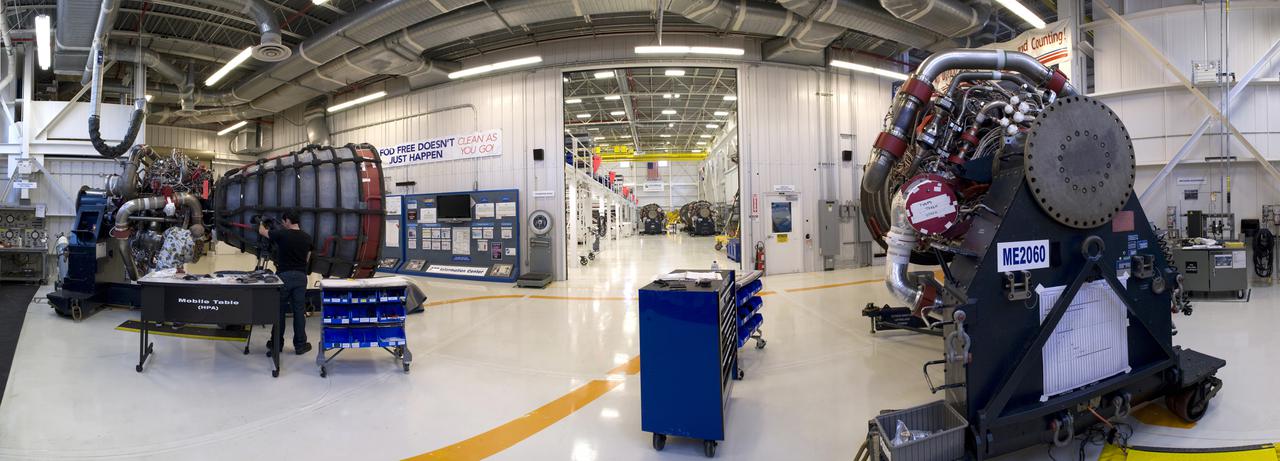
CAPE CANAVERAL, Fla. -- Two space shuttle main engines are undergoing processing in the 34,600-square-foot Space Shuttle Main Engine Processing Facility at NASA's Kennedy Space Center in Florida. The facility is a processing shop for engines once they are removed from a shuttle. Photo credit: NASA_Frankie Martin
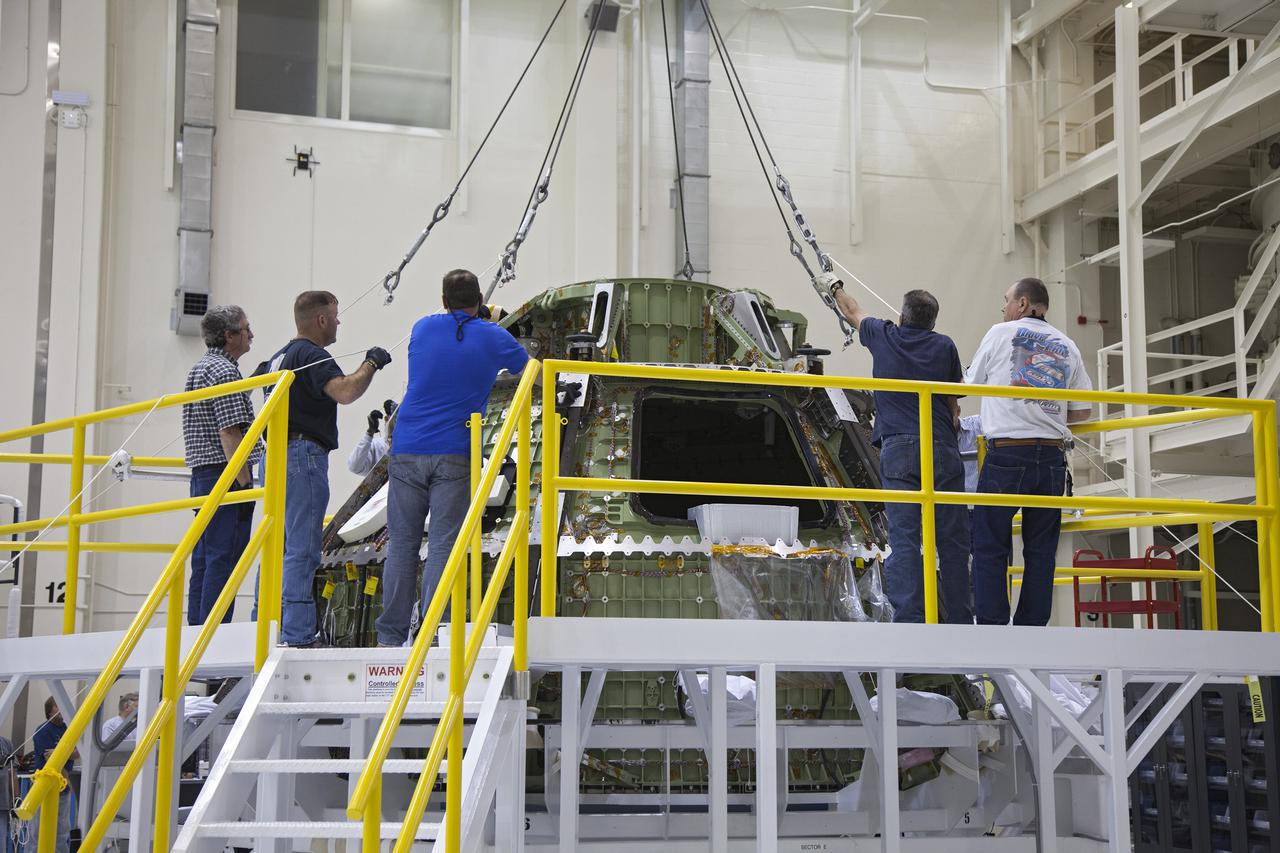
CAPE CANAVERAL, Fla. -- Inside the Operations and Checkout Building high bay at NASA’s Kennedy Space Center in Florida, workers prepare the Orion crew module for its move from a processing stand to a dolly. Orion is being prepared for Exploration Flight Test 1, or EFT-1. Orion is the exploration spacecraft designed to carry crews to space beyond low Earth orbit. It will provide emergency abort capability, sustain the crew during the space travel and provide safe re-entry from deep space return velocities. Orion’s first unpiloted test flight is scheduled to launch in 2014 atop a United Launch Alliance Delta IV heavy rocket. A second uncrewed flight test is scheduled for 2017 on the Space Launch System rocket. For more information, visit http:__www.nasa.gov_orion. Photo credit: NASA_Frankie Martin
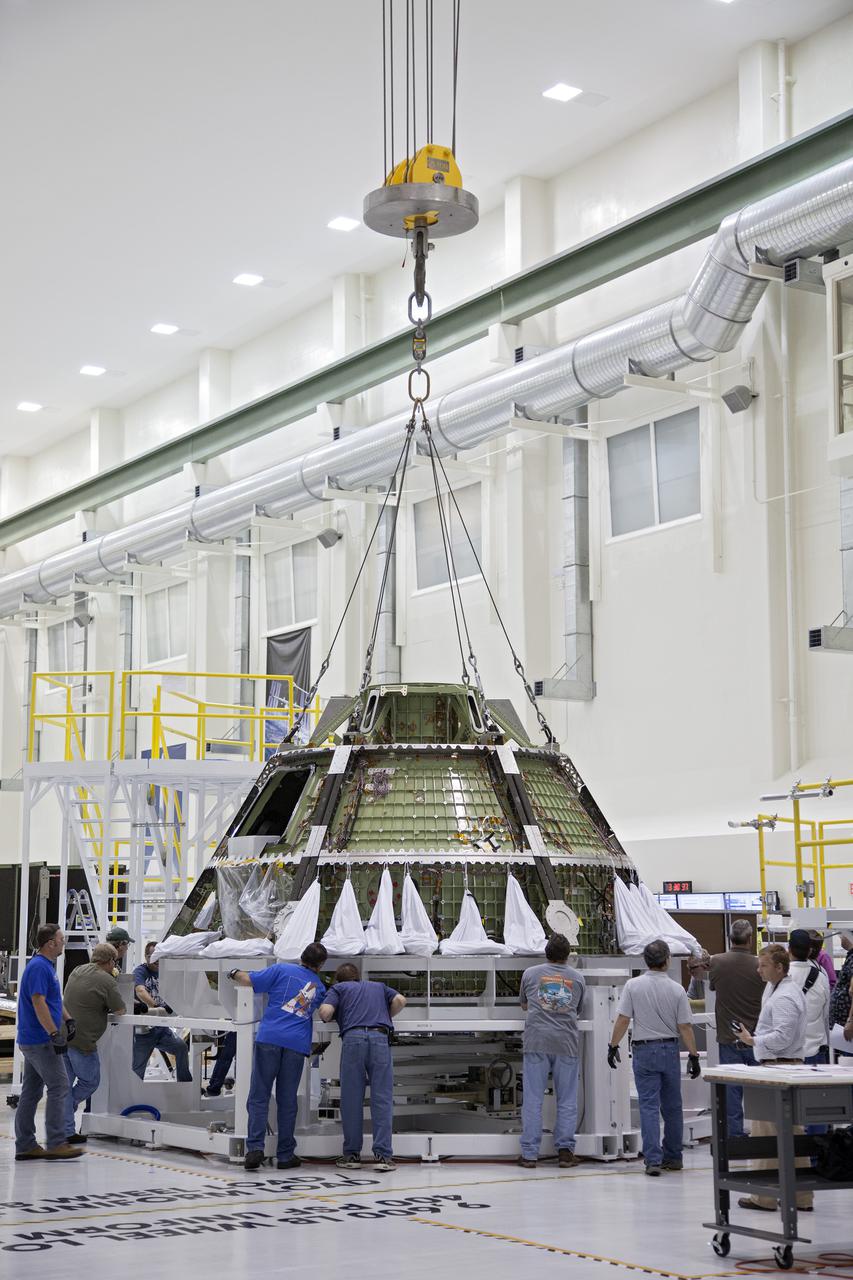
CAPE CANAVERAL, Fla. -- Inside the Operations and Checkout Building high bay at NASA’s Kennedy Space Center in Florida, workers monitor the progress as a crane begins to lift the Orion crew module from its processing stand and transfer it to a dolly. Orion is being prepared for Exploration Flight Test 1, or EFT-1. Orion is the exploration spacecraft designed to carry crews to space beyond low Earth orbit. It will provide emergency abort capability, sustain the crew during the space travel and provide safe re-entry from deep space return velocities. Orion’s first unpiloted test flight is scheduled to launch in 2014 atop a United Launch Alliance Delta IV heavy rocket. A second uncrewed flight test is scheduled for 2017 on the Space Launch System rocket. For more information, visit http:__www.nasa.gov_orion. Photo credit: NASA_Frankie Martin
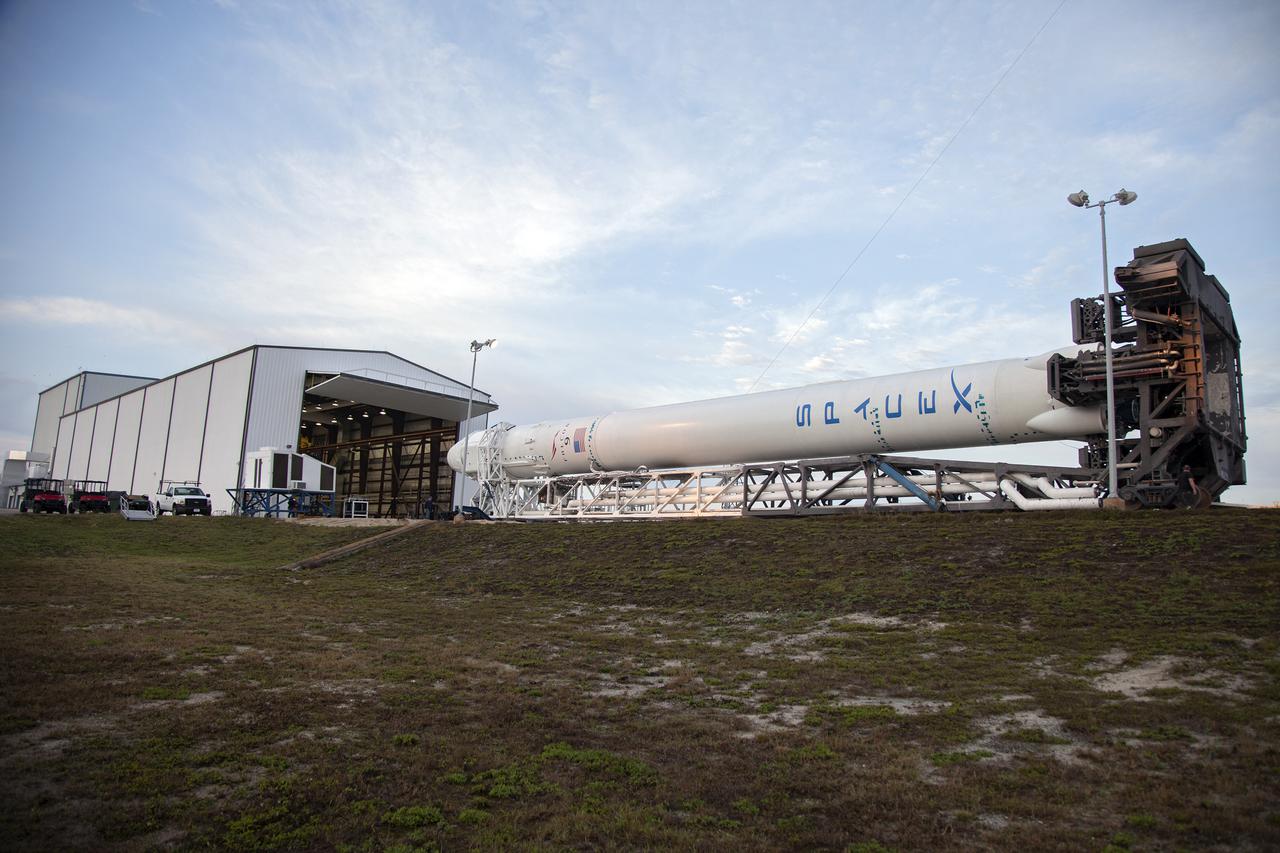
CAPE CANAVERAL, Fla. - The SpaceX Falcon 9 rocket moves away from the company's Falcon Hangar at Launch Complex 40 on Cape Canaveral Air Force Station in Florida. The rocket is rolling to the launch pad for a test firing of its nine Merlin first-stage engines in preparation for the SpaceX 2 launch. Liftoff of the SpaceX Falcon 9 rocket and Dragon spacecraft is planned for March 1, 2013, at 10:10 a.m. EST, from Space Launch Complex-40 at Cape Canaveral Air Force Station, Fla. Dragon will be making its third trip to the space station. It will carry supplies and experiments to the orbiting laboratory. The mission is the second of 12 SpaceX flights contracted by NASA to resupply the space station. For more information, visit http:__www.nasa.gov_mission_pages_station_structure_launch_spacex2-feature.html Photo credit: NASA_Frankie Martin
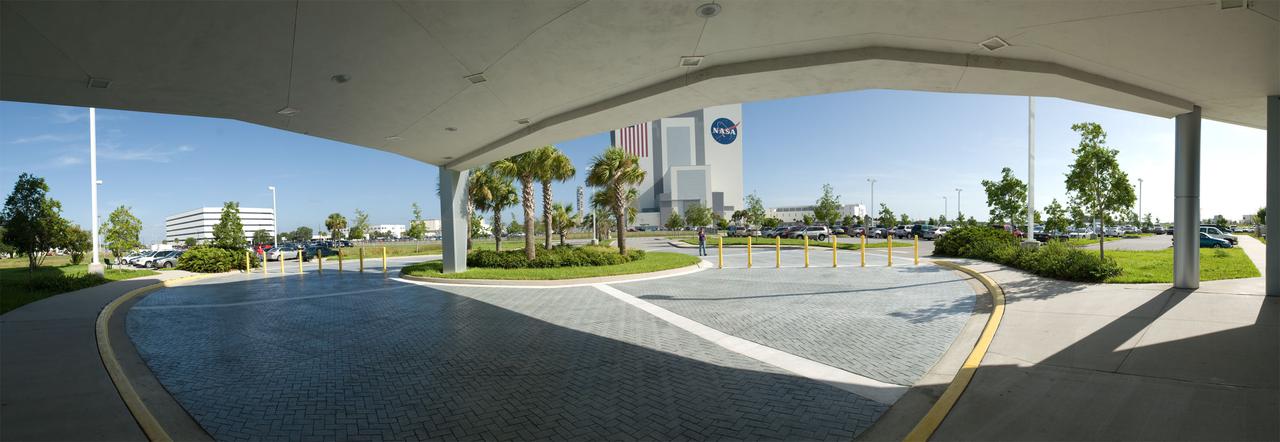
CAPE CANAVERAL, Fla. -- The panoramic view of the Vehicle Assembly Building, or VAB, at NASA's Kennedy Space Center in Florida is taken from under the porte cochere of the Operations Support Building, or OSB, II located in the Launch Complex 39 area. OSB I also is seen towards to the left of the VAB. To the right of the VAB in the distance, is the 4-story Launch Control Center. Photo credit: NASA_Frankie Martin
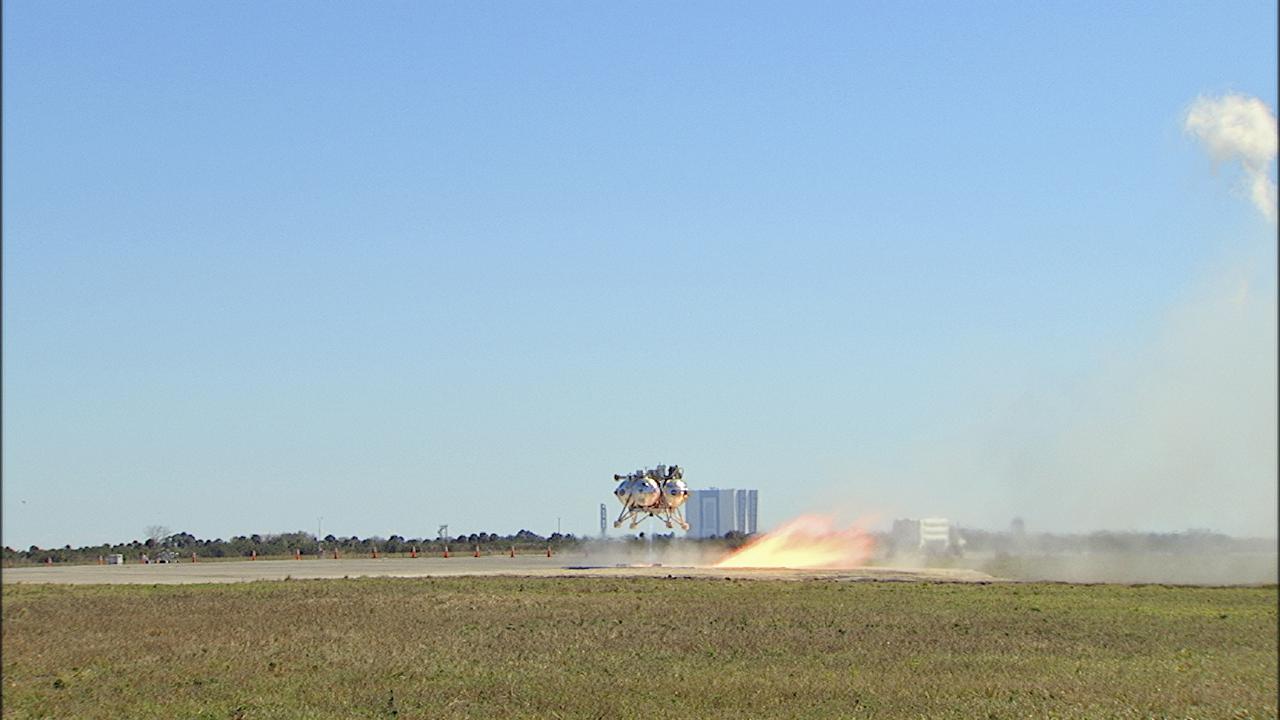
CAPE CANAVERAL, Fla. – The fifth free flight of the Project Morpheus prototype lander was conducted at the north end of the Shuttle Landing Facility at NASA’s Kennedy Space Center in Florida. The 74-second test began at about 1 p.m. EST with the Morpheus lander launching from the ground over a flame trench and ascending about to 476 feet, more than 160 feet higher than its last test. The lander flew forward, covering 637 feet in 30 seconds before descending and landing on target on a dedicated landing pad inside the autonomous landing and hazard avoidance technology, or ALHAT, hazard field. Project Morpheus tests NASA’s ALHAT and an engine that runs on liquid oxygen and methane, or green propellants, into a fully-operational lander that could deliver cargo to other planetary surfaces. The landing facility provides the lander with the kind of field necessary for realistic testing, complete with rocks, craters and hazards to avoid. Morpheus’ ALHAT payload allows it to navigate to clear landing sites amidst rocks, craters and other hazards during its descent. Project Morpheus is being managed under the Advanced Exploration Systems, or AES, Division in NASA’s Human Exploration and Operations Mission Directorate. The efforts in AES pioneer new approaches for rapidly developing prototype systems, demonstrating key capabilities and validating operational concepts for future human missions beyond Earth orbit. For more information on Project Morpheus, visit http:__www.nasa.gov_centers_johnson_exploration_morpheus. Photo credit: NASA_Frankie Martin
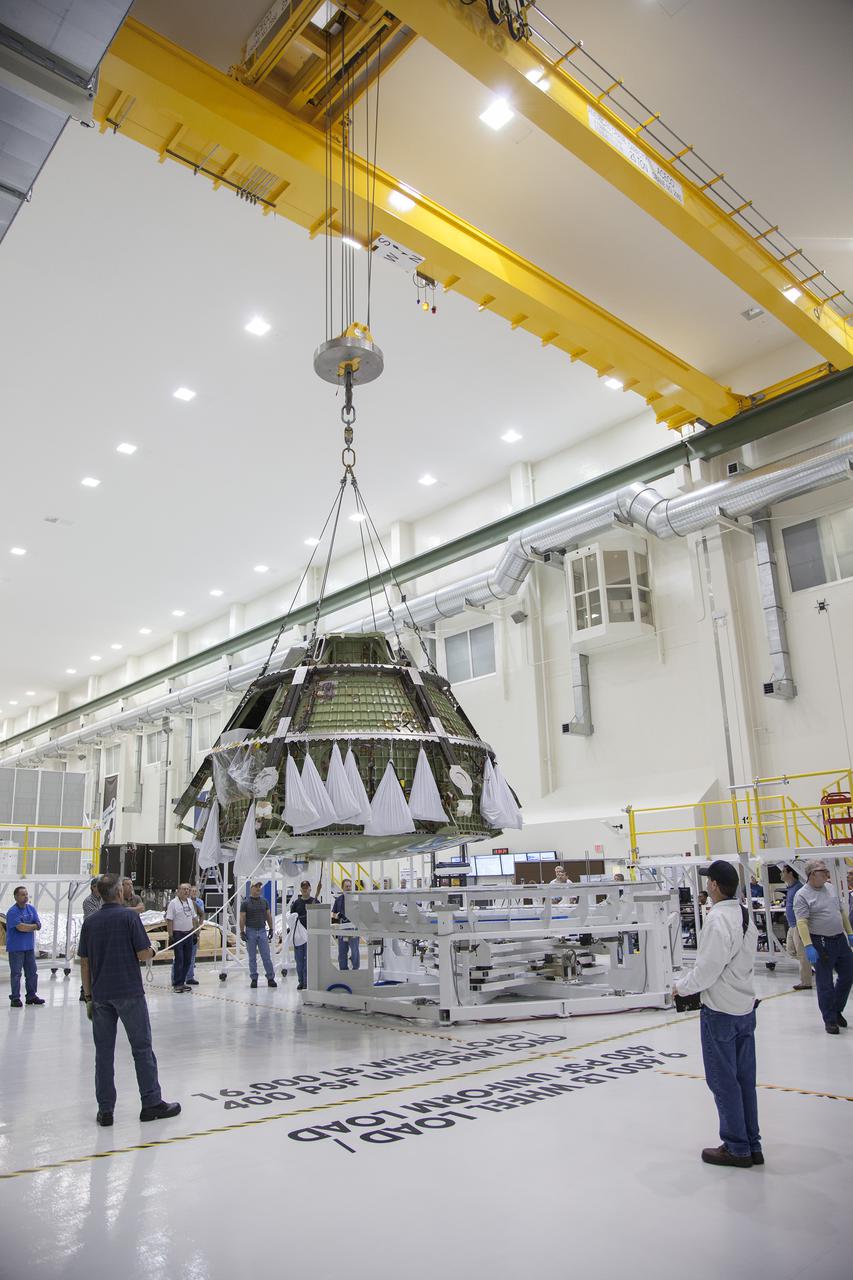
CAPE CANAVERAL, Fla. -- Inside the Operations and Checkout Building high bay at NASA’s Kennedy Space Center in Florida, workers monitor the progress as a crane lifts the Orion crew module from its processing stand for transfer to a dolly. Orion is being prepared for Exploration Flight Test 1, or EFT-1. Orion is the exploration spacecraft designed to carry crews to space beyond low Earth orbit. It will provide emergency abort capability, sustain the crew during the space travel and provide safe re-entry from deep space return velocities. Orion’s first unpiloted test flight is scheduled to launch in 2014 atop a United Launch Alliance Delta IV heavy rocket. A second uncrewed flight test is scheduled for 2017 on the Space Launch System rocket. For more information, visit http:__www.nasa.gov_orion. Photo credit: NASA_Frankie Martin
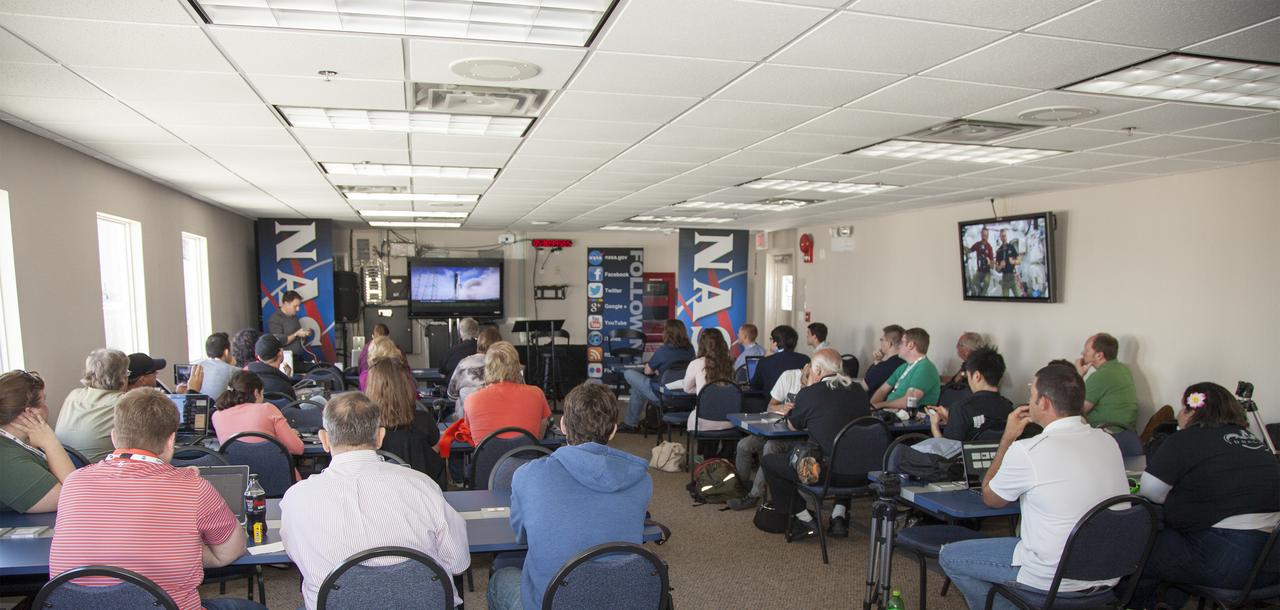
CAPE CANAVERAL, Fla. - At NASA Kennedy Space Center’s Press Site annex building in Florida, social media followers watch a movie titled, “Building Momentum,” during NASA Social media activities focused on the SpaceX 2 Commercial Resupply Mission to the International Space Station. Liftoff of the SpaceX Falcon 9 rocket and Dragon spacecraft is planned for March 1, 2013, at 10:10 a.m. EST, from Space Launch Complex-40 at Cape Canaveral Air Force Station, Fla. Dragon will be making its third trip to the space station. It will carry supplies and experiments to the orbiting laboratory. The mission is the second of 12 SpaceX flights contracted by NASA to resupply the space station. For more information, visit http:__www.nasa.gov_mission_pages_station_structure_launch_spacex2-feature.html Photo credit: NASA_Frankie Martin
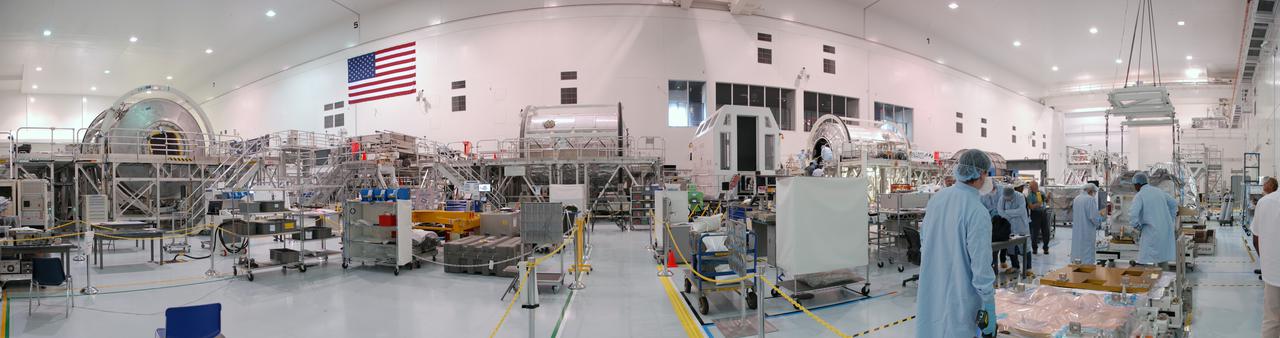
CAPE CANAVERAL, Fla. -- In the Space Station Processing Facility at NASA's Kennedy Space Center in Florida, technicians prepare to lift the cargo transportation container, or CTC, for installation into a shipping container. The container will be transported to the Japanese Aerospace Exploration Agency's Tanegashima Space Center to begin processing for launch to the International Space Station aboard HTV-2, scheduled for Jan. 20, 2011. HTV-2 is an uncrewed cargo transporter that will be launched by the H-IIB launch vehicle. It is designed to deliver up to 6 tons of supplies, including food, clothes and experiment devices to the space station. Photo credit: NASA_Frankie Martin
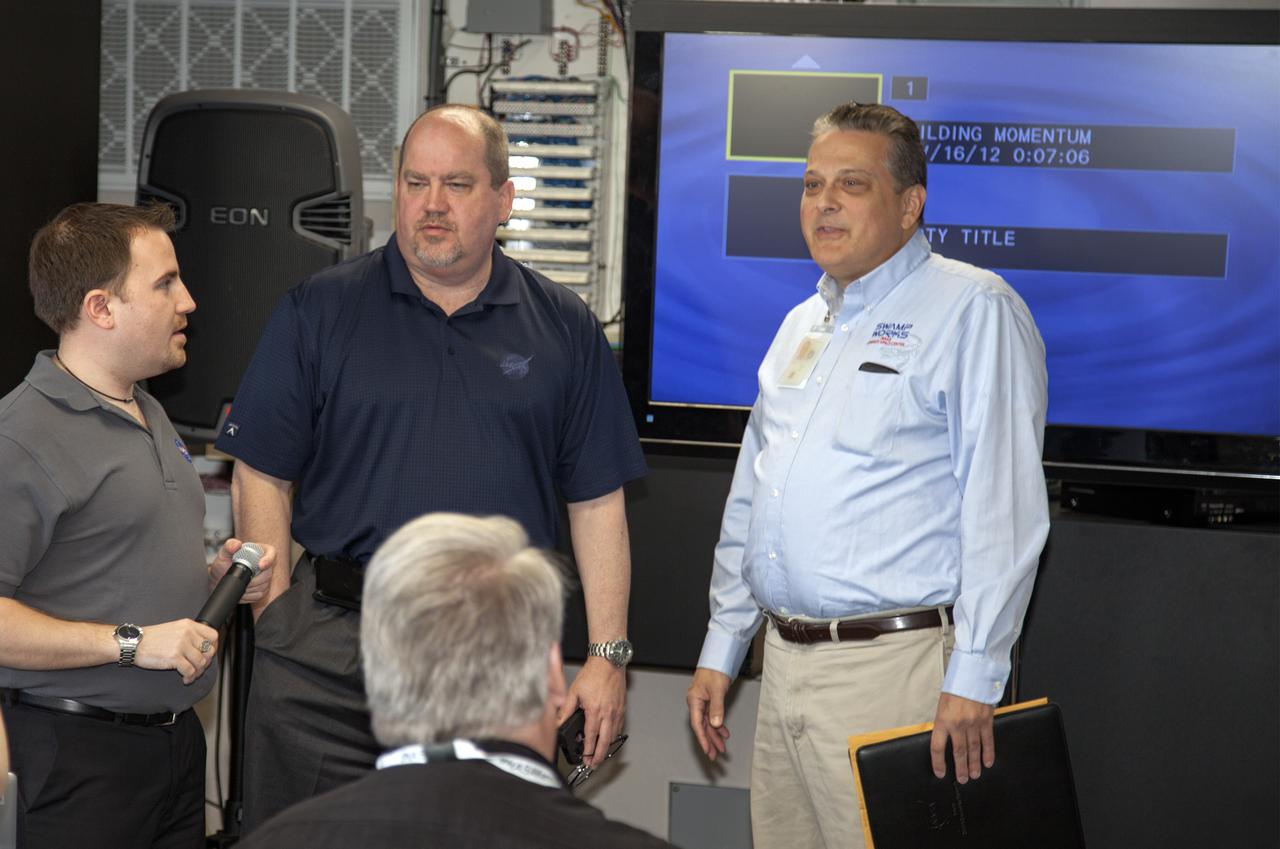
CAPE CANAVERAL, Fla. - At NASA Kennedy Space Center’s Press Site annex building in Florida, social media followers listen to NASA Social media coordinator Jason Townsend, far left, Bob Jacobs, NASA Deputy Associate Administrator for Communications, and Jack Fox, chief of the Surface Systems Office in Kennedy’s Engineering and Technology Directorate, describe the SpaceX 2 Commercial Resupply Mission to the International Space Station. Liftoff of the SpaceX Falcon 9 rocket and Dragon spacecraft is planned for March 1, 2013, at 10:10 a.m. EST, from Space Launch Complex-40 at Cape Canaveral Air Force Station, Fla. Dragon will be making its third trip to the space station. It will carry supplies and experiments to the orbiting laboratory. The mission is the second of 12 SpaceX flights contracted by NASA to resupply the space station. For more information, visit http:__www.nasa.gov_mission_pages_station_structure_launch_spacex2-feature.html Photo credit: NASA_Frankie Martin
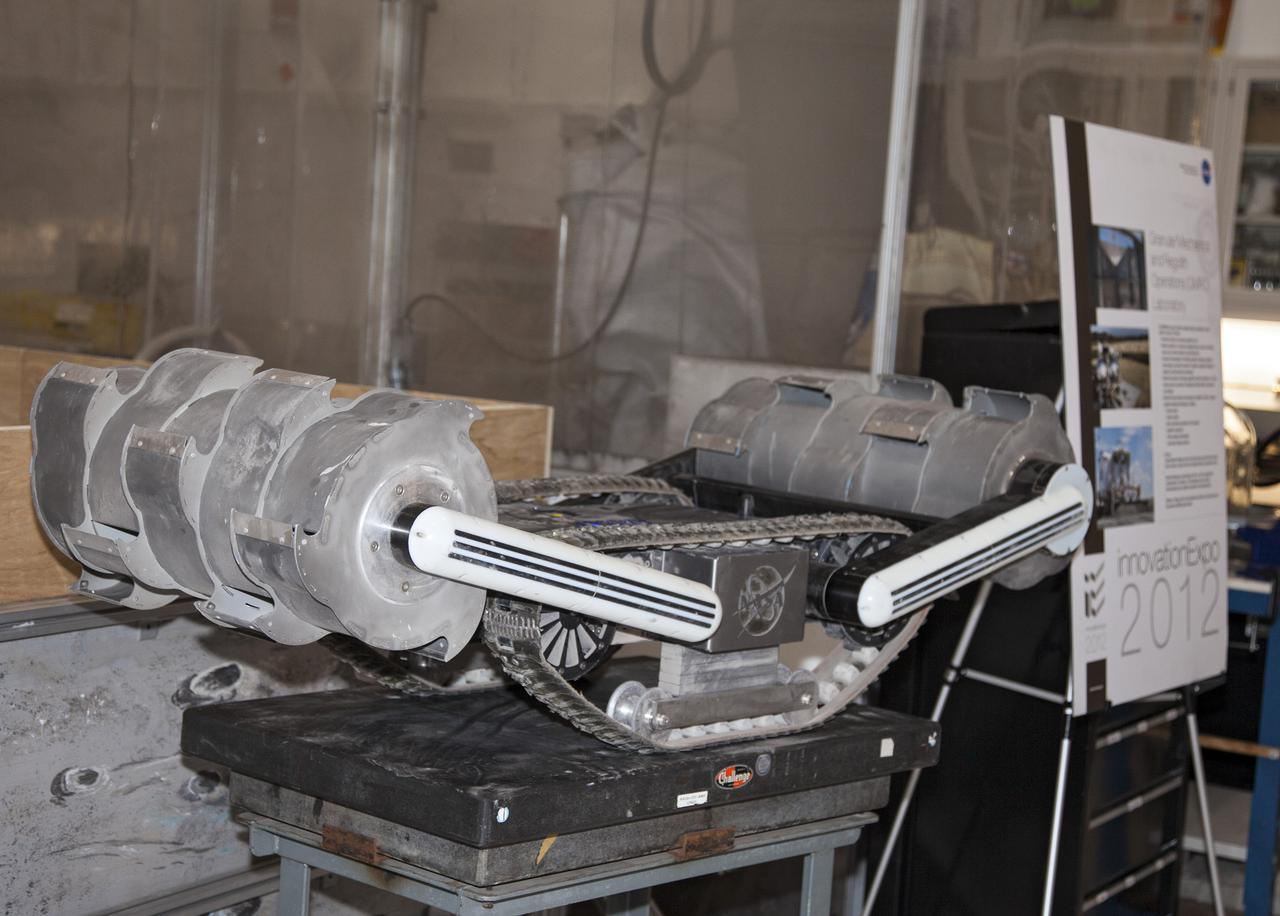
CAPE CANAVERAL, Fla. -- NASA's Regolith Advanced Surface Systems Operations Robot, or RASSOR, is ready to demonstrate its unique skills during a media tour of the Granular Mechanics and Regolith Operations, or GMRO, Lab in the Swamp Works at NASA's Kennedy Space Center in Florida. RASSOR, lunar soil excavator, resembles a small tank chassis with a drum at either end, each attached with arms. The drums, one of the robot's most innovative feature, are mounted on moving arms, allowing the robot to step and climb over obstacles. Kennedy's Swamp Works provides rapid, innovative and cost-effective exploration mission solutions, leveraging partnerships across NASA, industry and academia. Kennedy's research and technology mission is to improve spaceports on Earth, as well as lay the groundwork for establishing spaceports at destinations in space. For more information, visit http:__www.nasa.gov_centers_kennedy_exploration_researchtech_index.html. Photo credit: NASA_Frankie Martin
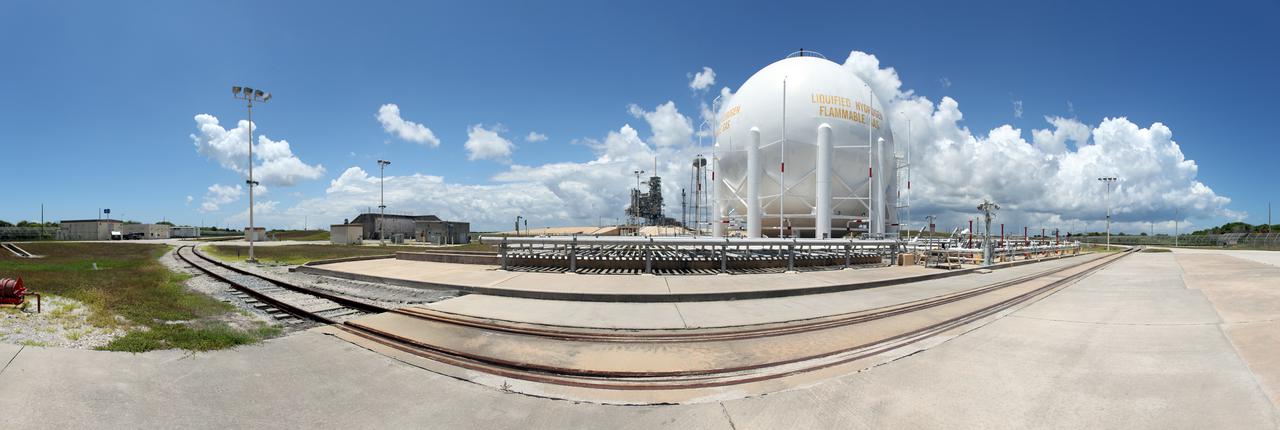
CAPE CANAVERAL, Fla. -- In the Launch Complex 39 area at NASA's Kennedy Space Center in Florida is a liquid hydrogen, or LH2, storage tank. This large ball-shaped, vacuum-jacketed tank is used to store cryogenic propellants for the space shuttle's orange external fuel tank. The LH2 tank is located at the northeast corner of Launch Pad 39A and stores 850,000 gallons of LH2 at a temperature of minus 423 degrees F. The shuttle's external tank is loaded with about 500,000 gallons of LH2 and liquid oxygen, or LOX, about six hours prior to launch in a process known as 'tanking.' Photo credit: NASA_Frankie Martin
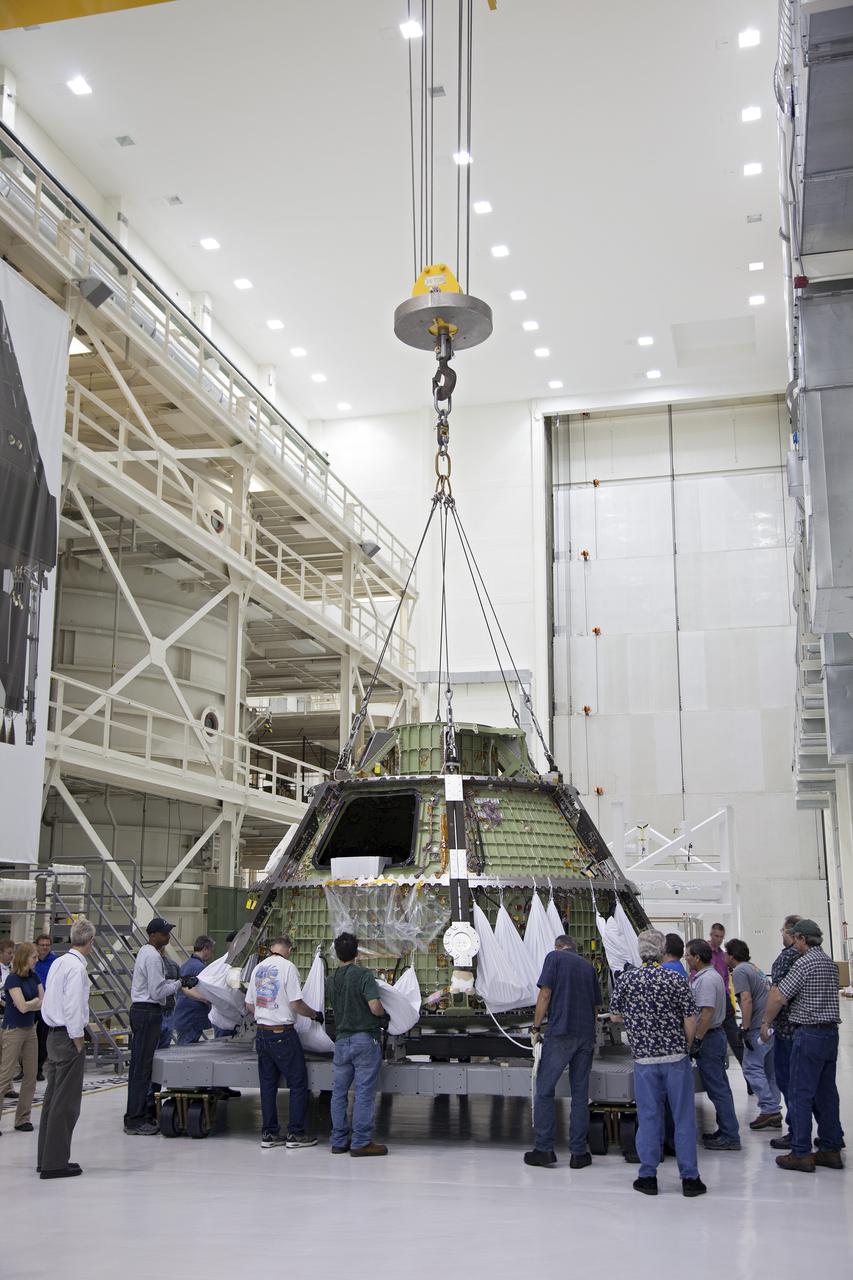
CAPE CANAVERAL, Fla. -- Inside the Operations and Checkout Building high bay at NASA’s Kennedy Space Center in Florida, workers monitor the progress as a crane lowers the Orion crew module onto a dolly. Orion is being prepared for Exploration Flight Test 1, or EFT-1. Orion is the exploration spacecraft designed to carry crews to space beyond low Earth orbit. It will provide emergency abort capability, sustain the crew during the space travel and provide safe re-entry from deep space return velocities. Orion’s first unpiloted test flight is scheduled to launch in 2014 atop a United Launch Alliance Delta IV heavy rocket. A second uncrewed flight test is scheduled for 2017 on the Space Launch System rocket. For more information, visit http:__www.nasa.gov_orion. Photo credit: NASA_Frankie Martin
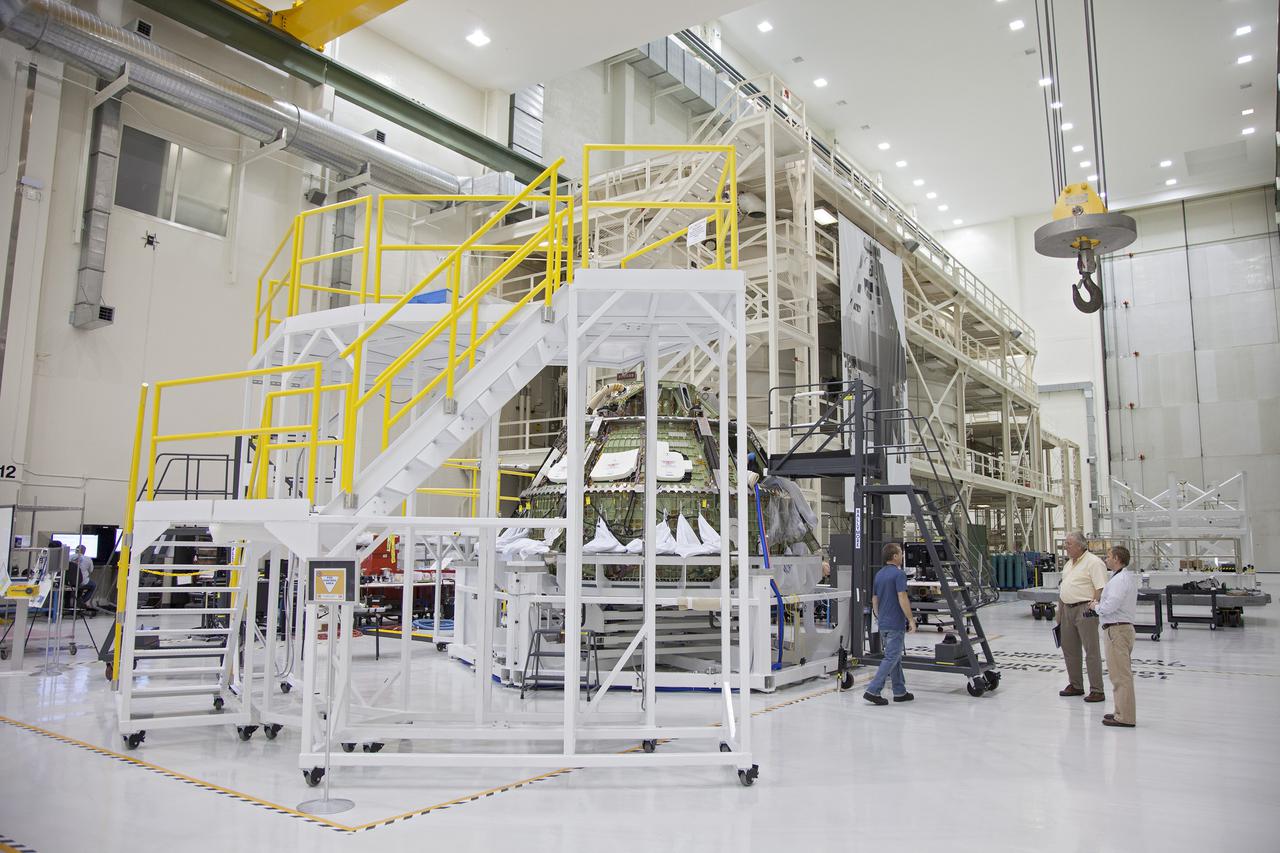
CAPE CANAVERAL, Fla. -- Inside the Operations and Checkout Building high bay at NASA’s Kennedy Space Center in Florida, preparations are underway to lift the Orion crew module from its processing stand and transfer it onto a dolly. Orion is being prepared for Exploration Flight Test 1, or EFT-1. Orion is the exploration spacecraft designed to carry crews to space beyond low Earth orbit. It will provide emergency abort capability, sustain the crew during the space travel and provide safe re-entry from deep space return velocities. Orion’s first unpiloted test flight is scheduled to launch in 2014 atop a United Launch Alliance Delta IV heavy rocket. A second uncrewed flight test is scheduled for 2017 on the Space Launch System rocket. For more information, visit http:__www.nasa.gov_orion. Photo credit: NASA_Frankie Martin
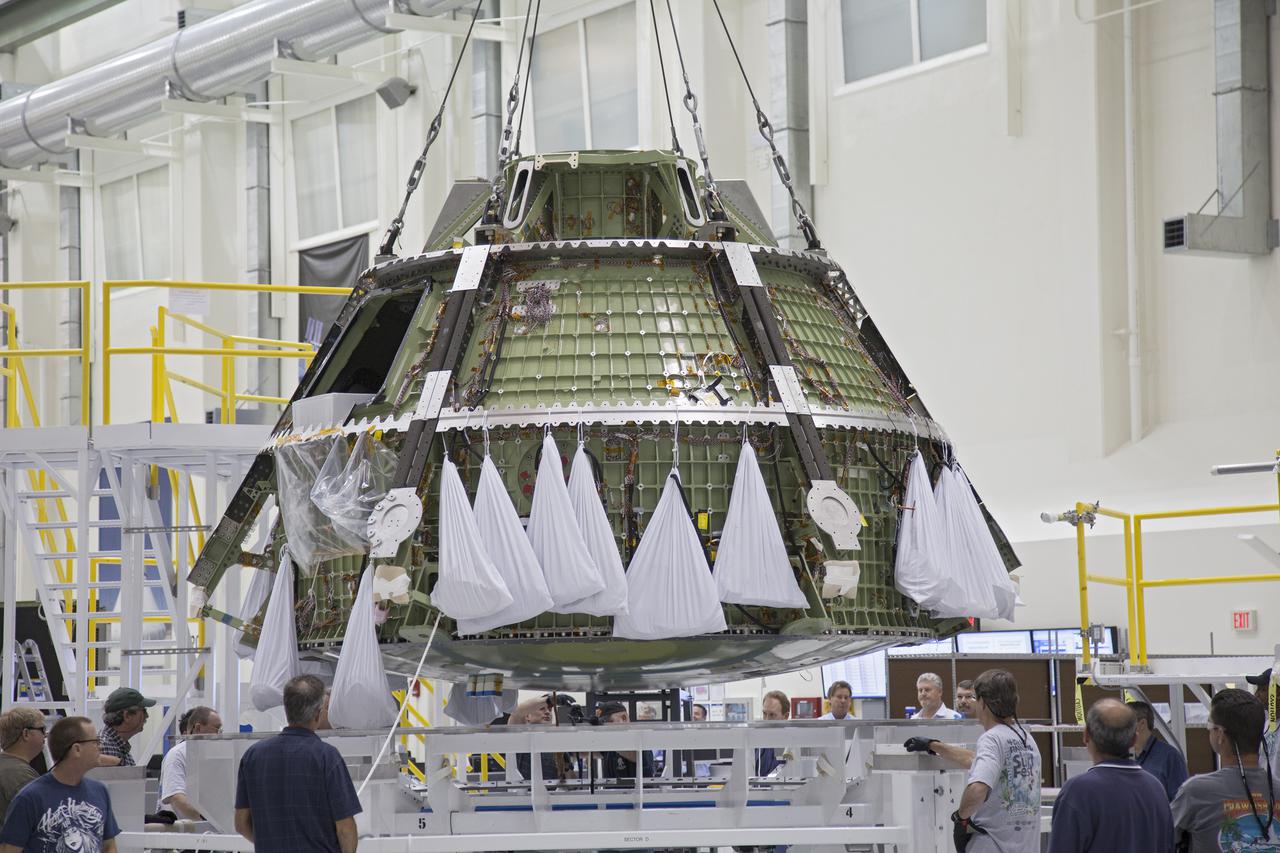
CAPE CANAVERAL, Fla. -- Inside the Operations and Checkout Building high bay at NASA’s Kennedy Space Center in Florida, workers monitor the progress as a crane begins to lift the Orion crew module from its processing stand and transfer it to a dolly. Orion is being prepared for Exploration Flight Test 1, or EFT-1. Orion is the exploration spacecraft designed to carry crews to space beyond low Earth orbit. It will provide emergency abort capability, sustain the crew during the space travel and provide safe re-entry from deep space return velocities. Orion’s first unpiloted test flight is scheduled to launch in 2014 atop a United Launch Alliance Delta IV heavy rocket. A second uncrewed flight test is scheduled for 2017 on the Space Launch System rocket. For more information, visit http:__www.nasa.gov_orion. Photo credit: NASA_Frankie Martin
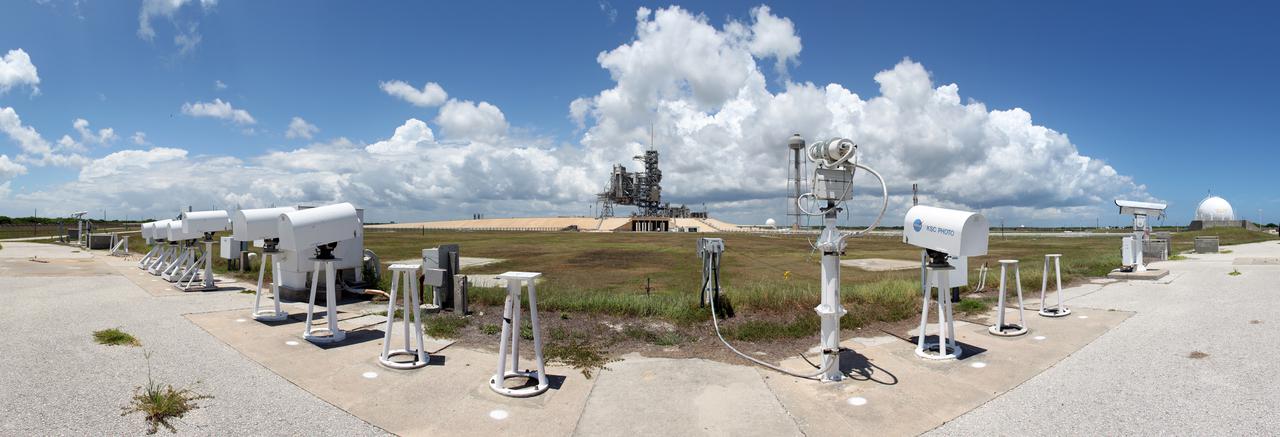
CAPE CANAVERAL, Fla. -- At NASA's Kennedy Space Center in Florida, remote cameras look toward Launch Pad 39A. The cameras capture space shuttle launches as well as lightning and wildlife in and the Launch Complex 39 area. There also are cameras on each shuttle, their solid rocket boosters and external fuel tank. Photo credit: NASA_Frankie Martin
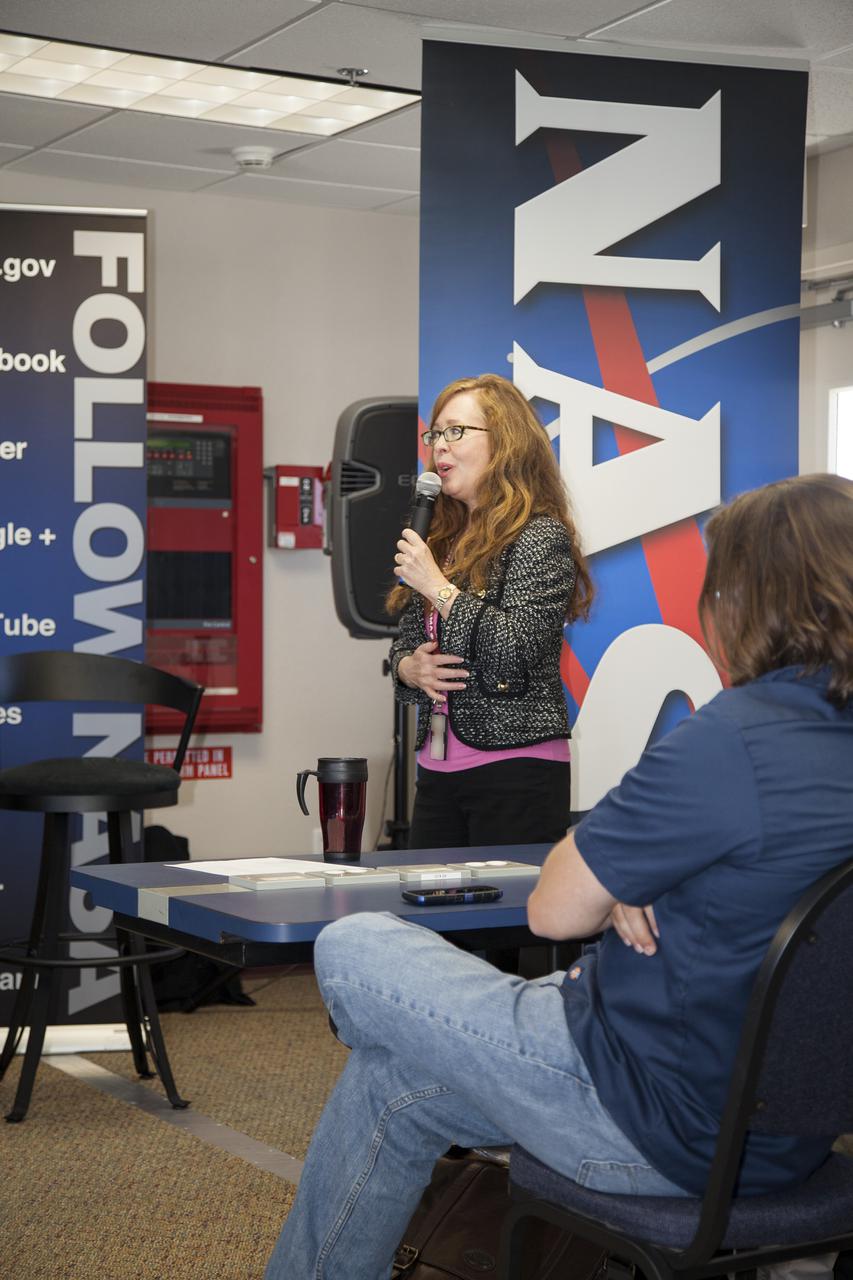
CAPE CANAVERAL, Fla. - At NASA Kennedy Space Center’s Press Site annex building in Florida, Public Affairs Director Lisa Malone speaks to NASA Social media followers about the SpaceX 2 Commercial Resupply Mission to the International Space Station and how Kennedy’s News Center supports prelaunch and launch activities. Liftoff of the SpaceX Falcon 9 rocket and Dragon spacecraft is planned for March 1, 2013, at 10:10 a.m. EST, from Space Launch Complex-40 at Cape Canaveral Air Force Station, Fla. Dragon will be making its third trip to the space station. It will carry supplies and experiments to the orbiting laboratory. The mission is the second of 12 SpaceX flights contracted by NASA to resupply the space station. For more information, visit http:__www.nasa.gov_mission_pages_station_structure_launch_spacex2-feature.html Photo credit: NASA_Frankie Martin
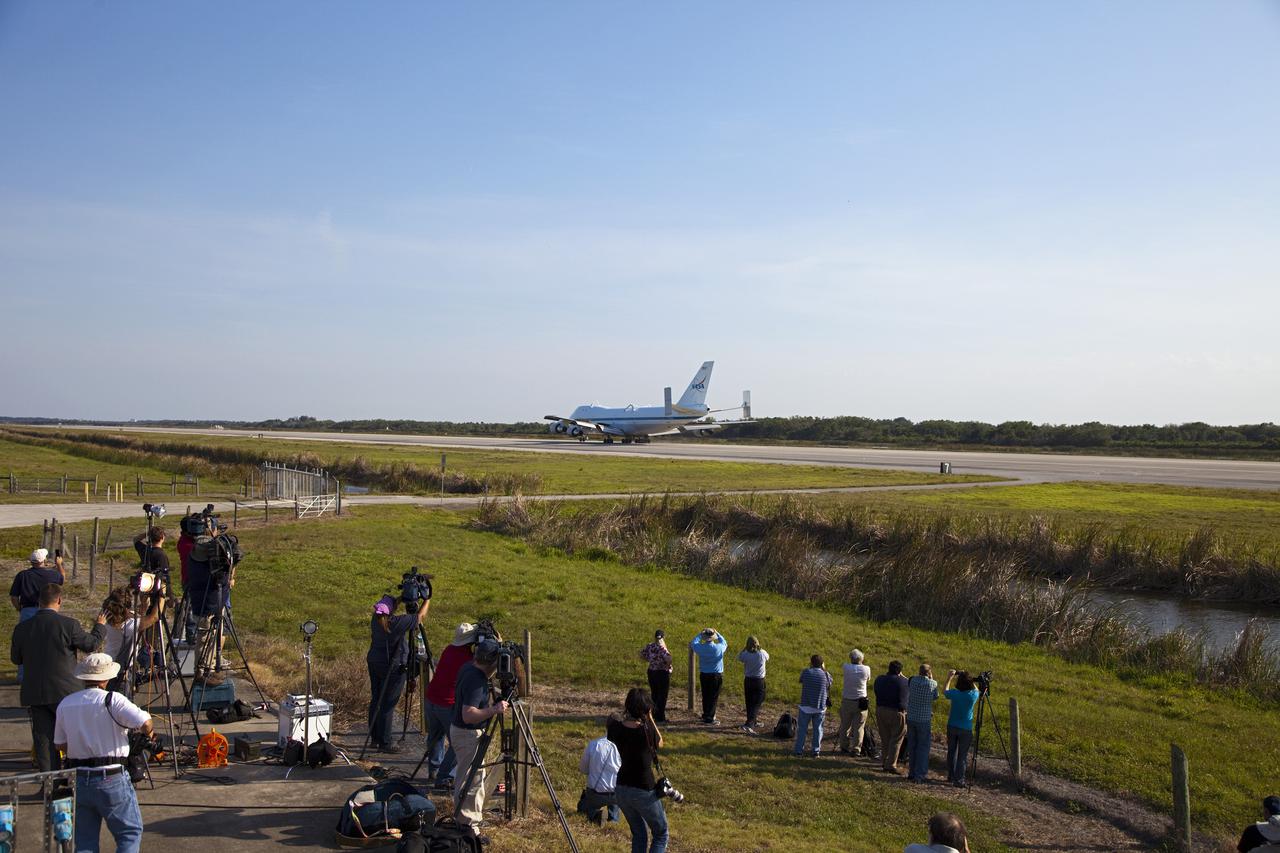
CAPE CANAVERAL, Fla. – Media representatives are on hand at the Shuttle Landing Facility at NASA’s Kennedy Space Center in Florida for the arrival of the Shuttle Carrier Aircraft. The aircraft, known as an SCA, arrived at 5:35 p.m. EDT to prepare for shuttle Discovery’s ferry flight to the Washington Dulles International Airport in Sterling, Va., on April 17. This SCA, designated NASA 905, is a modified Boeing 747 jet airliner, originally manufactured for commercial use. One of two SCAs employed over the course of the Space Shuttle Program, NASA 905 is assigned to the remaining ferry missions, delivering the shuttles to their permanent public display sites. NASA 911 was decommissioned at the NASA Dryden Flight Research Center in California in February. Discovery will be placed on permanent public display in the Smithsonian's National Air and Space Museum Steven F. Udvar-Hazy Center in Chantilly, Va. For more information on the SCA, visit http:__www.nasa.gov_centers_dryden_news_FactSheets_FS-013-DFRC.html. For more information on shuttle transition and retirement activities, visit http:__www.nasa.gov_shuttle. Photo credit: NASA_Frankie Martin
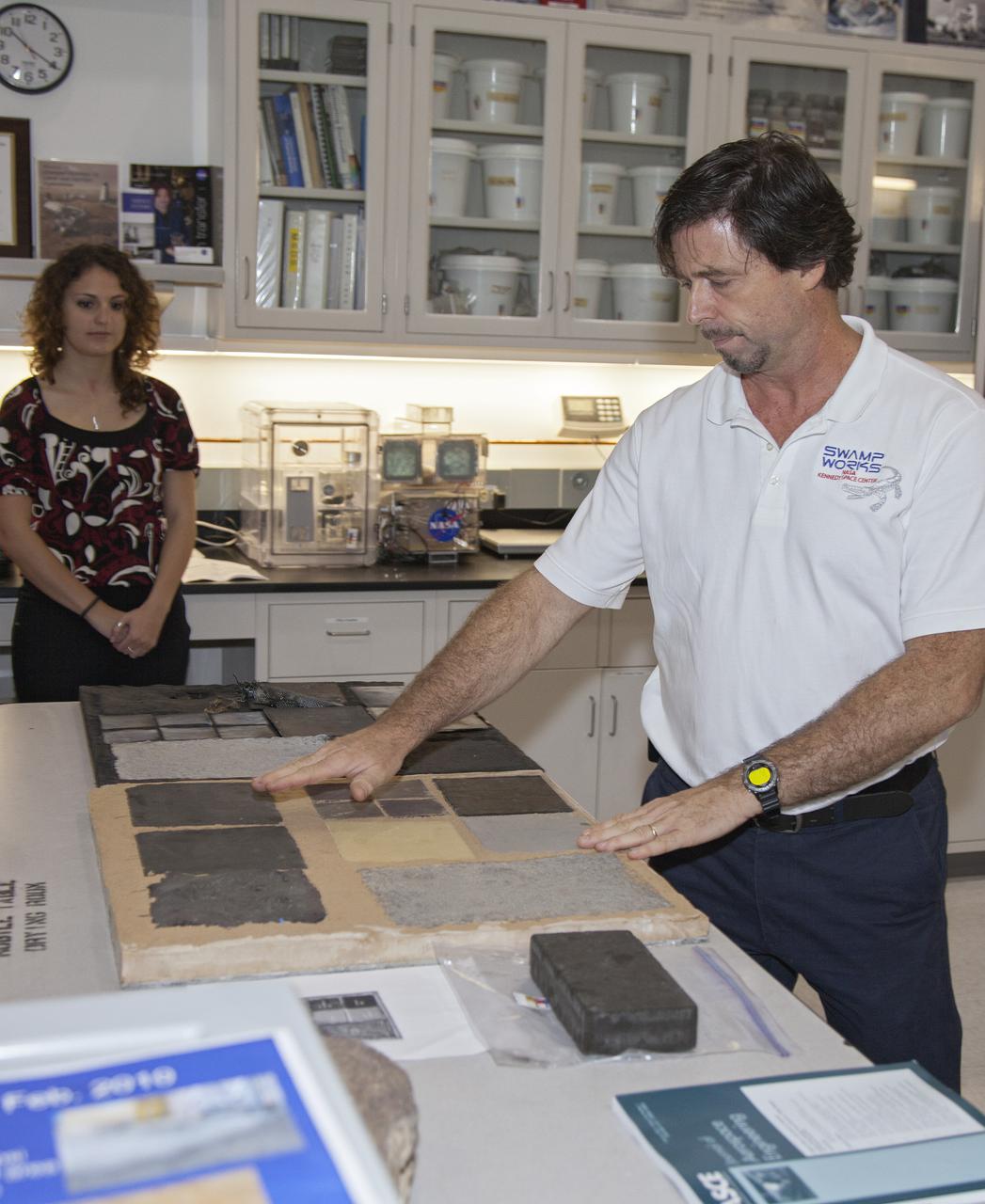
CAPE CANAVERAL, Fla. -- Dr. Phil Metzger, at right, a principal investigator in the Surface Systems Office, discusses some of NASA's cutting-edge projects with media representatives touring the Granular Mechanics and Regolith Operations, or GMRO, Lab in the Swamp Works at NASA's Kennedy Space Center in Florida. The GMRO team develops robotics to excavate regolith and ice as resources and to prepare berms, roads and landing pads. The laboratory also studies the physics of blowing rego¬lith and other materials in a rocket exhaust plume to predict and mitigate the blast effects of launches and landings. The team performed a demonstration of the Regolith Advanced Surface Systems Operations Robot, or RASSOR, for the media. Kennedy's Swamp Works provides rapid, innovative and cost-effective exploration mission solutions, leveraging partnerships across NASA, industry and academia. Kennedy's research and technology mission is to improve spaceports on Earth, as well as lay the groundwork for establishing spaceports at destinations in space. For more information, visit http:__www.nasa.gov_centers_kennedy_exploration_researchtech_index.html. Photo credit: NASA_Frankie Martin
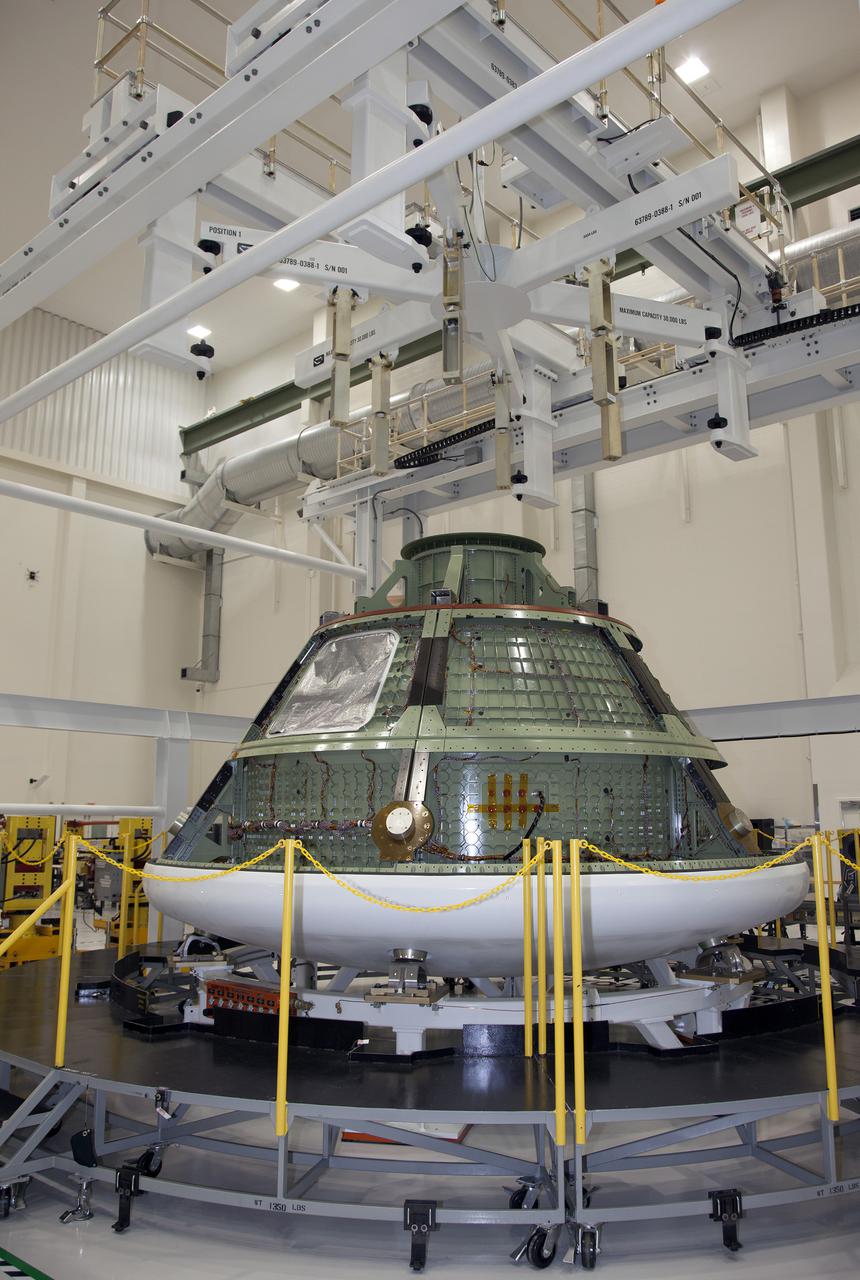
CAPE CANAVERAL, Fla. -- The Orion Ground Test Vehicle is on display in the high bay of the Operations and Checkout Building at NASA's Kennedy Space Center in Florida during a tour for media representatives. Orion is the exploration spacecraft designed to carry crews to space beyond low-Earth orbit. It will provide emergency abort capability, sustain the crew during the space travel and provide safe re-entry from deep space return velocities. The first unpiloted test flight of the Orion is scheduled in 2014 atop a Delta IV rocket, and in 2017, on a Space Launch System rocket. For more information, visit http:__www.nasa.gov_orion. Photo credit: NASA_Frankie Martin

CAPE CANAVERAL, Fla. -- Inside the Operations and Checkout Building high bay at NASA’s Kennedy Space Center in Florida, workers prepare the Orion crew module for its move from a processing stand to a dolly. Orion is being prepared for Exploration Flight Test 1, or EFT-1. Orion is the exploration spacecraft designed to carry crews to space beyond low Earth orbit. It will provide emergency abort capability, sustain the crew during the space travel and provide safe re-entry from deep space return velocities. Orion’s first unpiloted test flight is scheduled to launch in 2014 atop a United Launch Alliance Delta IV heavy rocket. A second uncrewed flight test is scheduled for 2017 on the Space Launch System rocket. For more information, visit http:__www.nasa.gov_orion. Photo credit: NASA_Frankie Martin
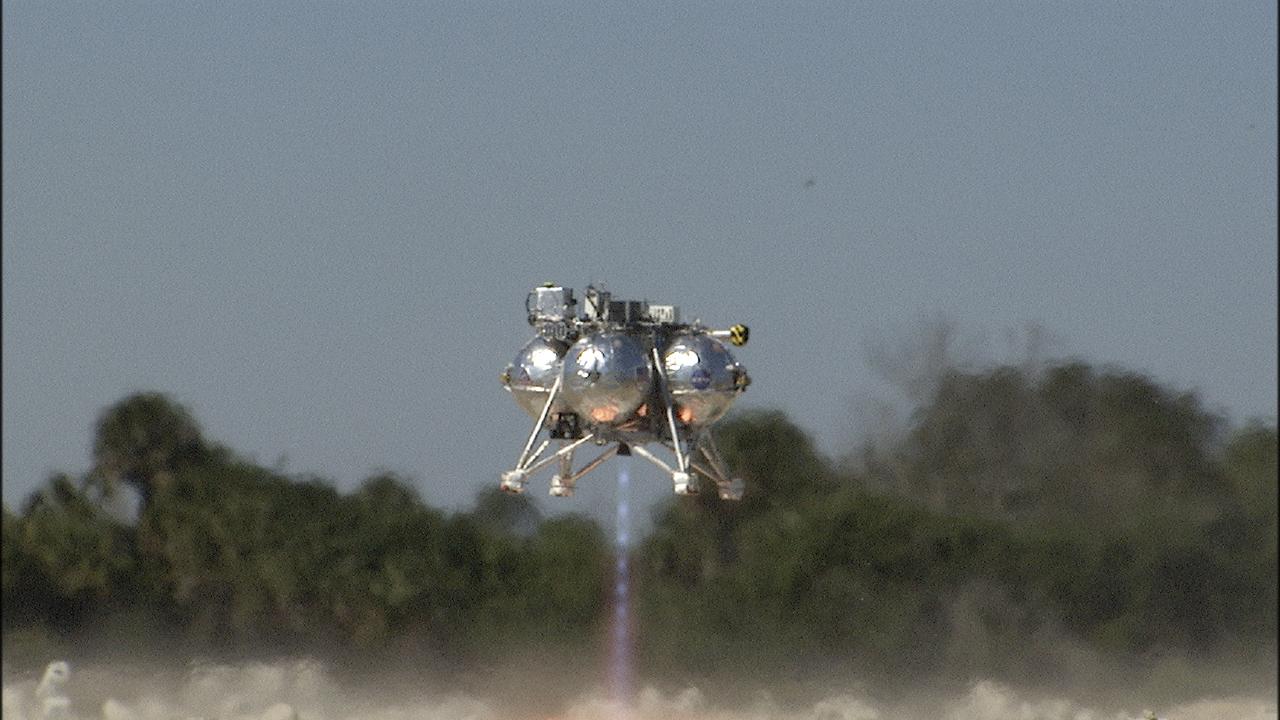
CAPE CANAVERAL, Fla. – The fifth free flight of the Project Morpheus prototype lander was conducted at the north end of the Shuttle Landing Facility at NASA’s Kennedy Space Center in Florida. The 74-second test began at about 1 p.m. EST with the Morpheus lander launching from the ground over a flame trench and ascending about to 476 feet, more than 160 feet higher than its last test. The lander flew forward, covering 637 feet in 30 seconds before descending and landing on target on a dedicated landing pad inside the autonomous landing and hazard avoidance technology, or ALHAT, hazard field. Project Morpheus tests NASA’s ALHAT and an engine that runs on liquid oxygen and methane, or green propellants, into a fully-operational lander that could deliver cargo to other planetary surfaces. The landing facility provides the lander with the kind of field necessary for realistic testing, complete with rocks, craters and hazards to avoid. Morpheus’ ALHAT payload allows it to navigate to clear landing sites amidst rocks, craters and other hazards during its descent. Project Morpheus is being managed under the Advanced Exploration Systems, or AES, Division in NASA’s Human Exploration and Operations Mission Directorate. The efforts in AES pioneer new approaches for rapidly developing prototype systems, demonstrating key capabilities and validating operational concepts for future human missions beyond Earth orbit. For more information on Project Morpheus, visit http:__www.nasa.gov_centers_johnson_exploration_morpheus. Photo credit: NASA_Frankie Martin
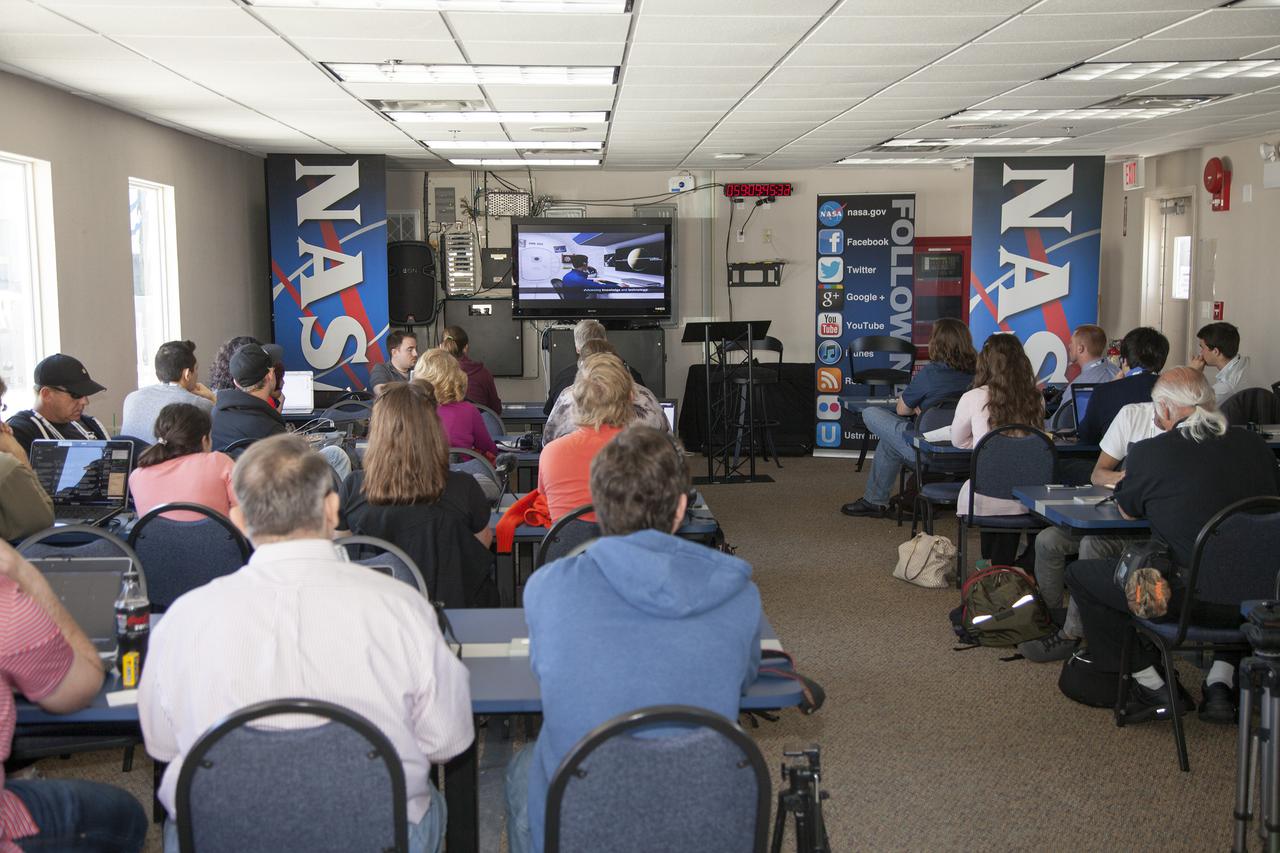
CAPE CANAVERAL, Fla. - At NASA Kennedy Space Center’s Press Site annex building in Florida, social media followers watch a movie titled, “Building Momentum,” during NASA Social media activities focused on the SpaceX 2 Commercial Resupply Mission to the International Space Station. Liftoff of the SpaceX Falcon 9 rocket and Dragon spacecraft is planned for March 1, 2013, at 10:10 a.m. EST, from Space Launch Complex-40 at Cape Canaveral Air Force Station, Fla. Dragon will be making its third trip to the space station. It will carry supplies and experiments to the orbiting laboratory. The mission is the second of 12 SpaceX flights contracted by NASA to resupply the space station. For more information, visit http:__www.nasa.gov_mission_pages_station_structure_launch_spacex2-feature.html Photo credit: NASA_Frankie Martin
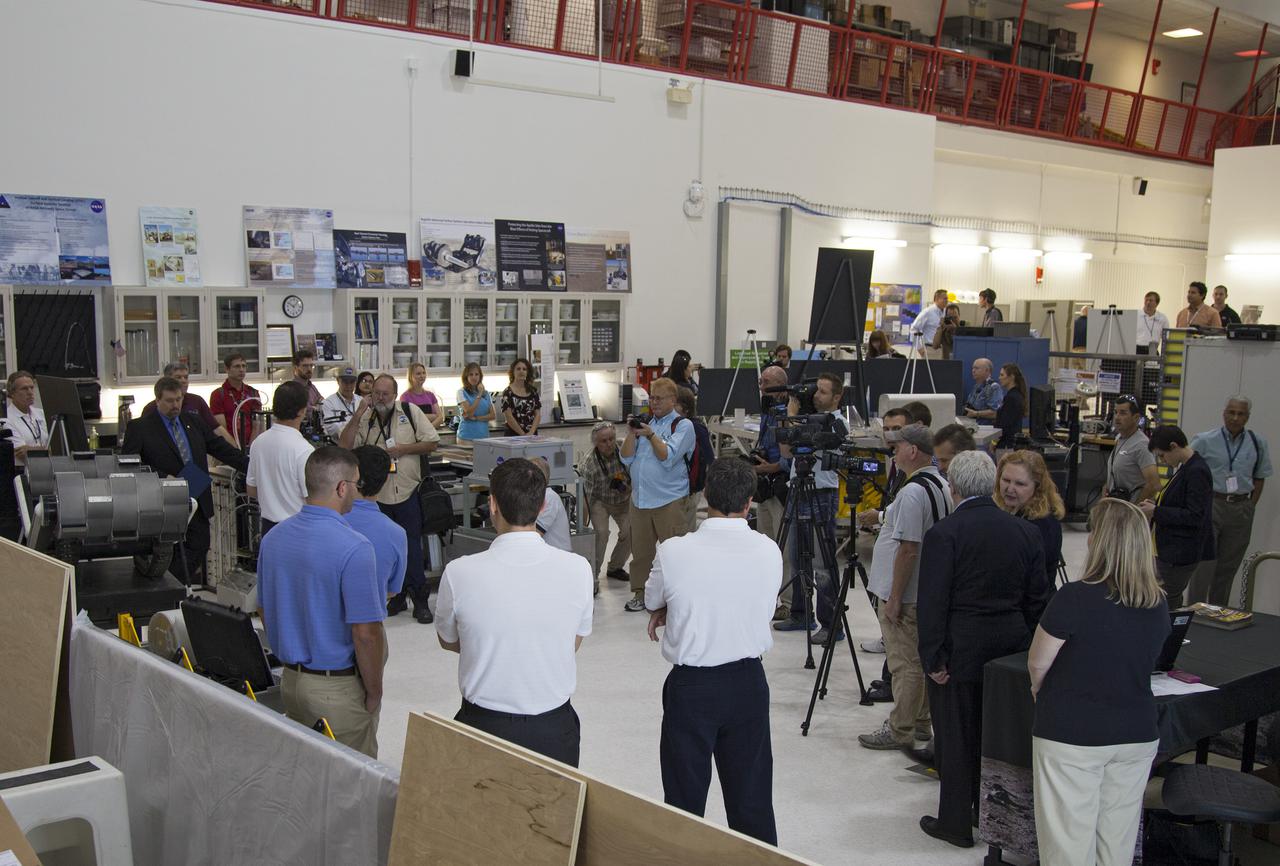
CAPE CANAVERAL, Fla. -- Dr. Mason Peck, second from left, NASA's chief technologist, and a team of NASA's innovative engineers discuss some of NASA's cutting-edge projects with media representatives touring the Swamp Works at NASA's Kennedy Space Center in Florida. Kennedy's Swamp Works provides rapid, innovative and cost-effective exploration mission solutions, leveraging partnerships across NASA, industry and academia. Kennedy's research and technology mission is to improve spaceports on Earth, as well as lay the groundwork for establishing spaceports at destinations in space. For more information, visit http:__www.nasa.gov_centers_kennedy_exploration_researchtech_index.html. Photo credit: NASA_Frankie Martin
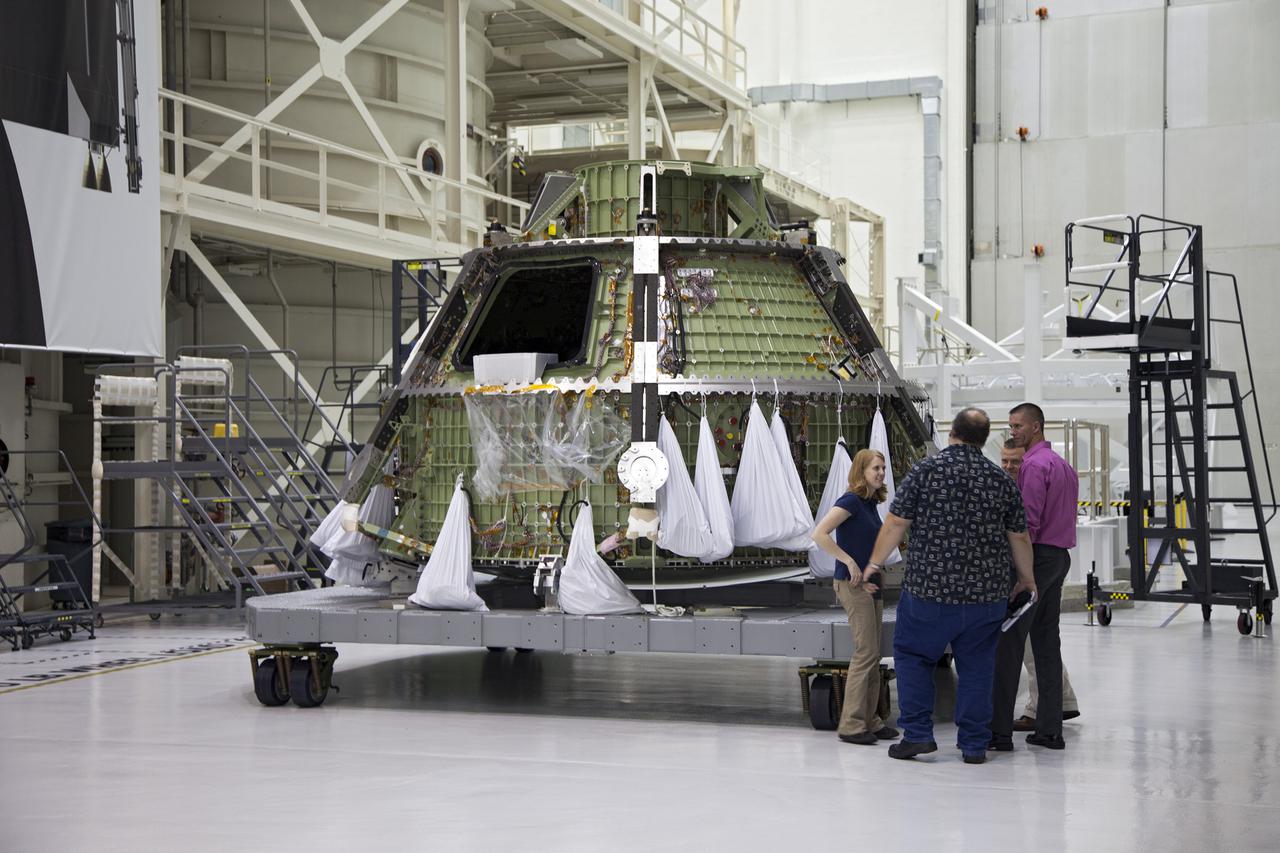
CAPE CANAVERAL, Fla. -- Inside the Operations and Checkout Building high bay at NASA’s Kennedy Space Center in Florida, a crane has lowered the Orion crew module onto a dolly. Orion is being prepared for Exploration Flight Test 1, or EFT-1. Orion is the exploration spacecraft designed to carry crews to space beyond low Earth orbit. It will provide emergency abort capability, sustain the crew during the space travel and provide safe re-entry from deep space return velocities. Orion’s first unpiloted test flight is scheduled to launch in 2014 atop a United Launch Alliance Delta IV heavy rocket. A second uncrewed flight test is scheduled for 2017 on the Space Launch System rocket. For more information, visit http:__www.nasa.gov_orion. Photo credit: NASA_Frankie Martin
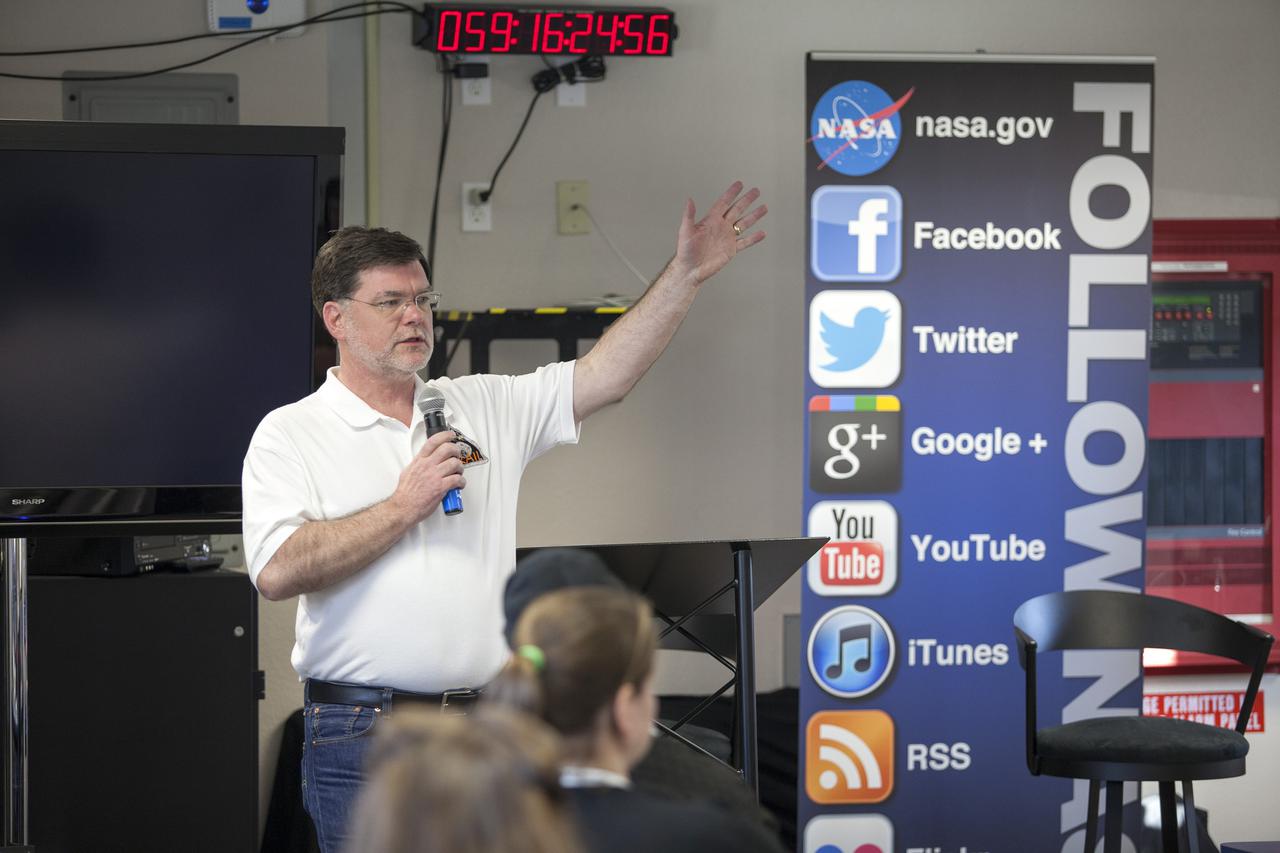
CAPE CANAVERAL, Fla. -- NASA Deputy Chief Technologist James Adams speaks to some of the agency's social media followers during two days of presentations on the launch of SpaceX-2. The social media participants gathered at the Florida spaceport on Feb. 28 and March 1, to hear from key leaders who updated the space agency's current efforts. Photo credit: NASA_Frankie Martin