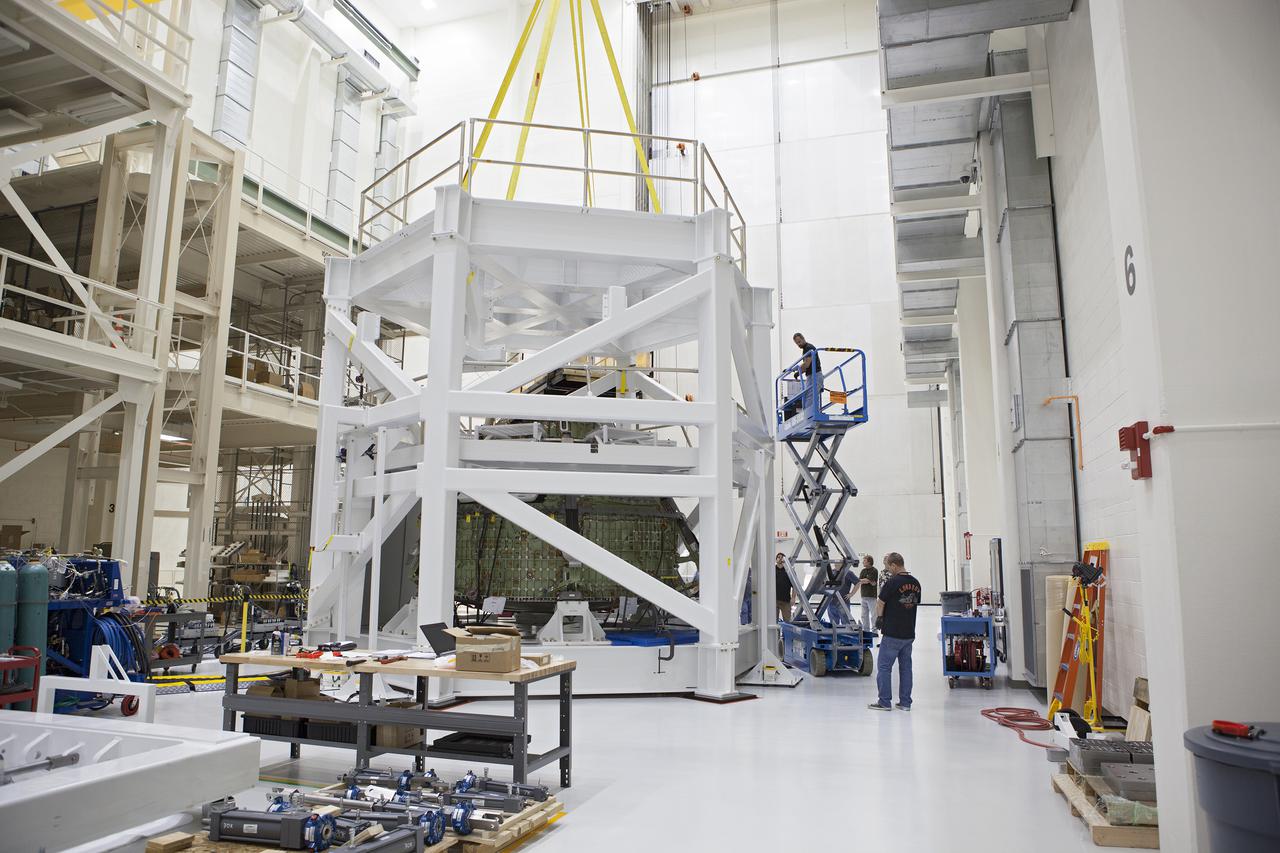
CAPE CANAVERAL, Fla. – Inside the Operations and Checkout Building high bay at NASA’s Kennedy Space Center in Florida, technicians have attached the top platform to the test stand for the Orion crew module. Lockheed Martin Space Systems and NASA engineers are preparing Orion for a series of static load tests that simulate the massive loads the spacecraft would experience during its mission. Orion is the exploration spacecraft designed to carry crews to space beyond low Earth orbit. It will provide emergency abort capability, sustain the crew during the space travel and provide safe re-entry from deep space return velocities. Orion’s first unpiloted test flight, Exploration Flight Test 1, is scheduled to launch in 2014 atop a Delta IV rocket. A second uncrewed flight test is scheduled for 2017 on NASA’s Space Launch System rocket. For more information, visit http:__www.nasa.gov_orion. Photo credit: NASA_Gary Thompson
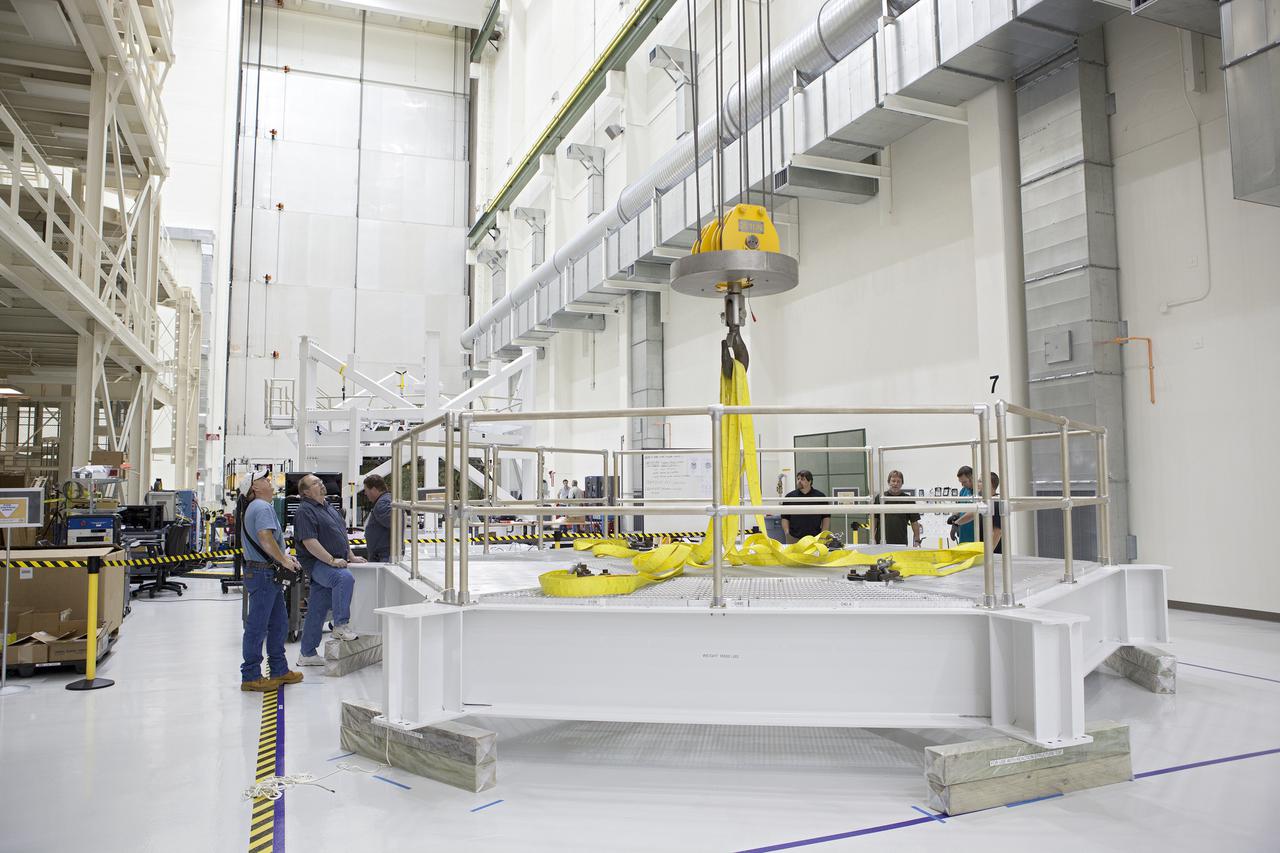
CAPE CANAVERAL, Fla. – Inside the Operations and Checkout Building high bay at NASA’s Kennedy Space Center in Florida, technicians monitor the progress as a crane is attached to the top platform of a test stand for the Orion crew module. Lockheed Martin Space Systems and NASA engineers are preparing Orion for a series of static load tests that simulate the massive loads the spacecraft would experience during its mission. Orion is the exploration spacecraft designed to carry crews to space beyond low Earth orbit. It will provide emergency abort capability, sustain the crew during the space travel and provide safe re-entry from deep space return velocities. Orion’s first unpiloted test flight, Exploration Flight Test 1, is scheduled to launch in 2014 atop a Delta IV rocket. A second uncrewed flight test is scheduled for 2017 on NASA’s Space Launch System rocket. For more information, visit http:__www.nasa.gov_orion. Photo credit: NASA_Gary Thompson
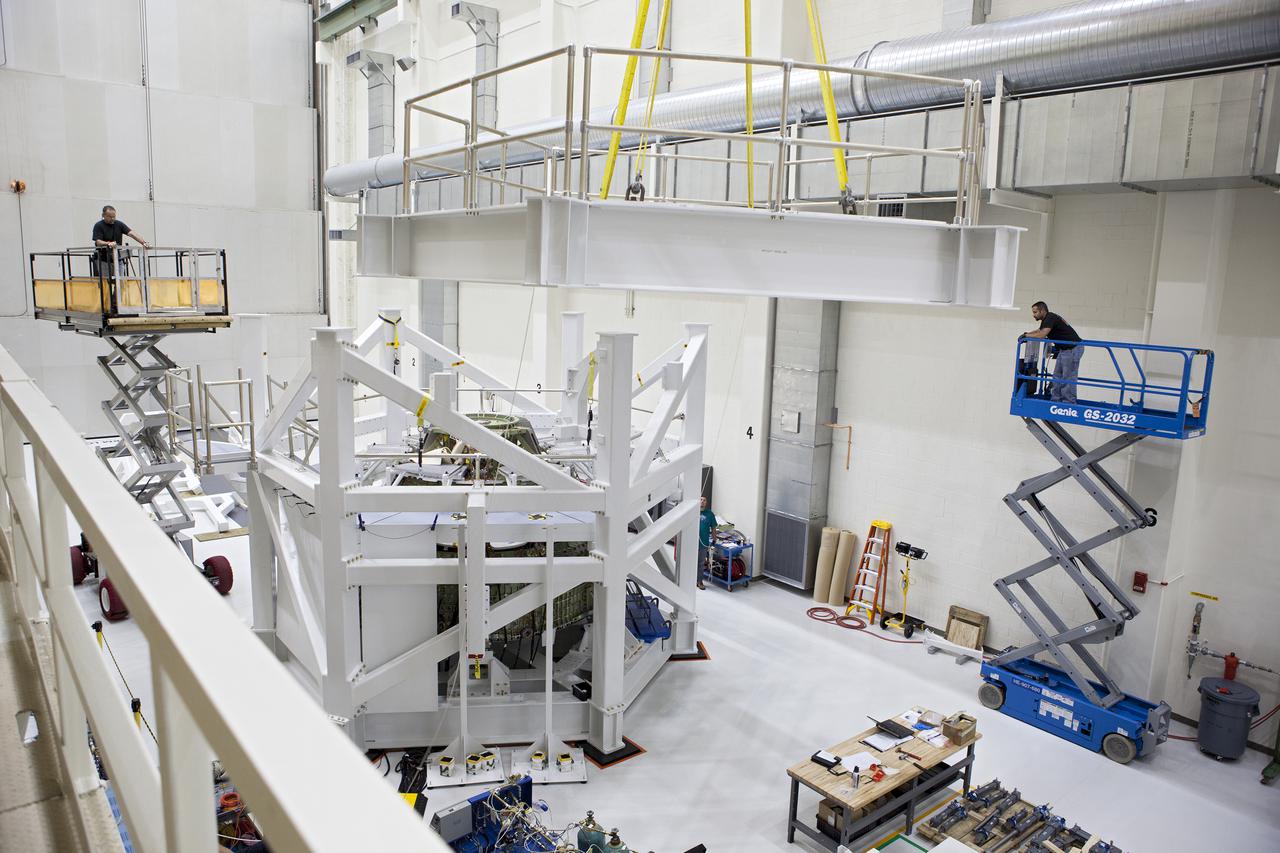
CAPE CANAVERAL, Fla. – Inside the Operations and Checkout Building high bay at NASA’s Kennedy Space Center in Florida, technicians monitor the progress as a crane lifts the top platform of a test stand for the Orion crew module. Lockheed Martin Space Systems and NASA engineers are preparing Orion for a series of static load tests that simulate the massive loads the spacecraft would experience during its mission. Orion is the exploration spacecraft designed to carry crews to space beyond low Earth orbit. It will provide emergency abort capability, sustain the crew during the space travel and provide safe re-entry from deep space return velocities. Orion’s first unpiloted test flight, Exploration Flight Test 1, is scheduled to launch in 2014 atop a Delta IV rocket. A second uncrewed flight test is scheduled for 2017 on NASA’s Space Launch System rocket. For more information, visit http:__www.nasa.gov_orion. Photo credit: NASA_Gary Thompson
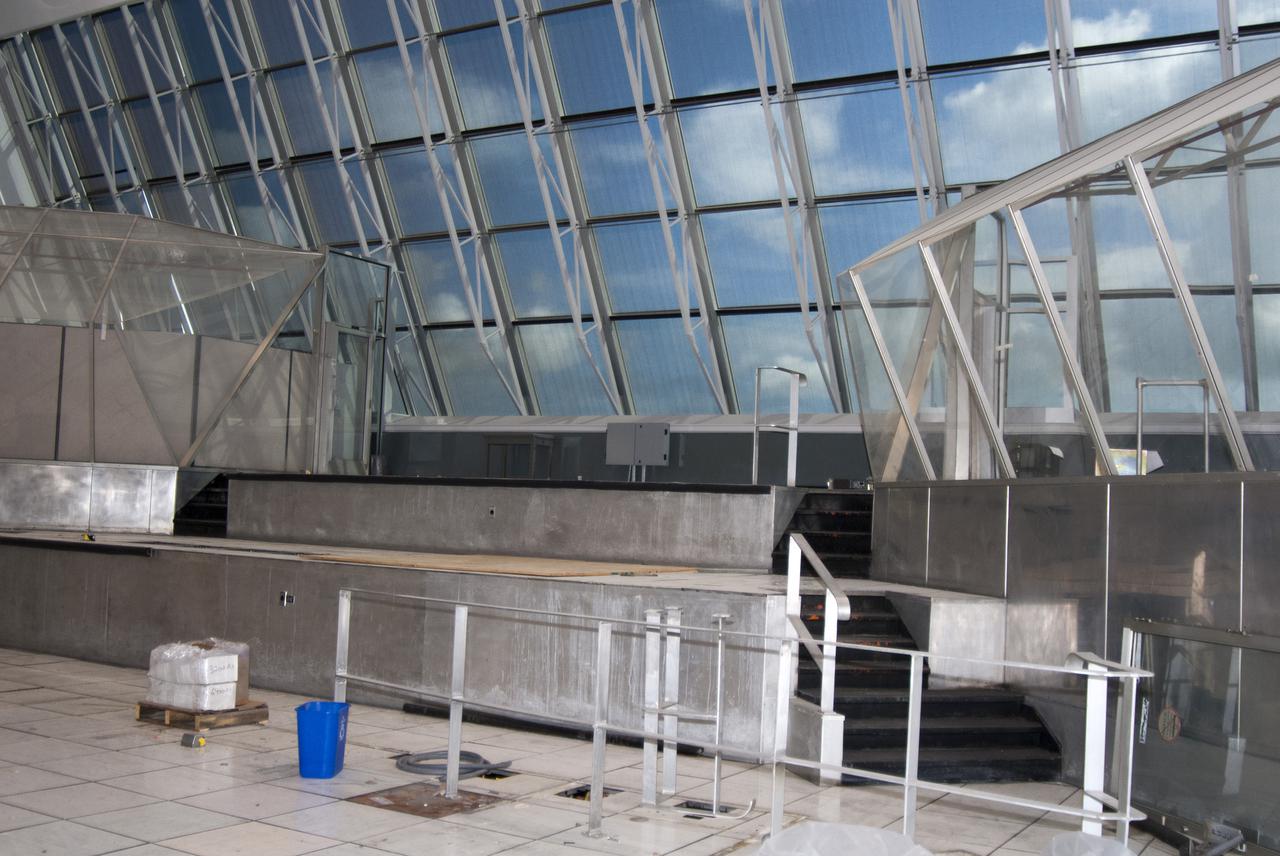
CAPE CANAVERAL, Fla. – At NASA’s Kennedy Space Center in Florida, work continues in Firing Room 2 in the Launch Control Center, or LCC. The legacy flooring is being removed and wiring and conduits below the floor will be upgraded. The mission director’s room to the left and another viewing room to the right also will be upgraded. Firing Rooms inside the LCC are being upgraded by the Ground System Development and Operations Program at Kennedy to support the processing and launch of multiple types of rockets and spacecraft, whether they are government or commercial models. Kennedy’s Launch Complex 39 is transitioning to support multiple users with the Firing Rooms being modified to be more generic in nature for upcoming programs. Photo credit: NASA_Gary Thompson
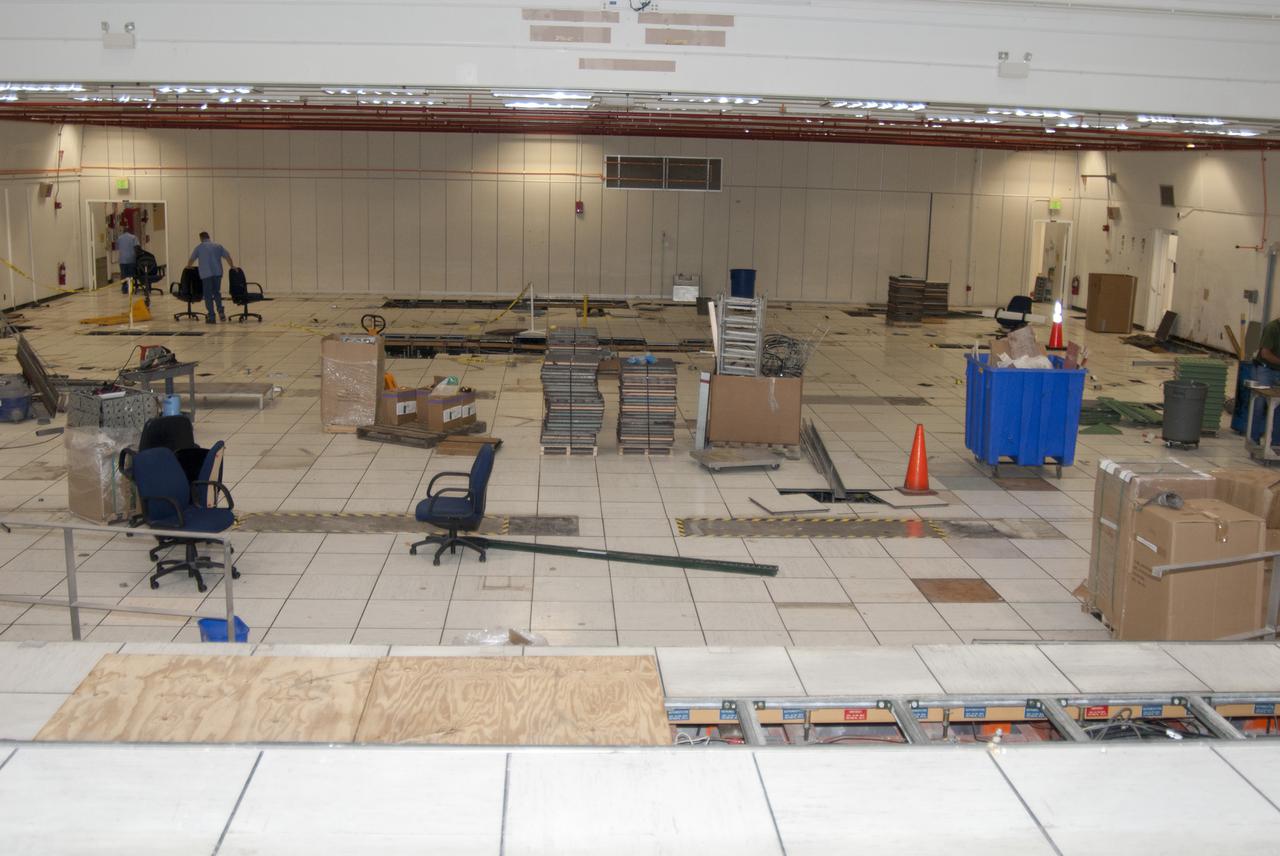
CAPE CANAVERAL, Fla. – At NASA’s Kennedy Space Center in Florida, work continues in Firing Room 2 in the Launch Control Center, or LCC. The legacy flooring is being removed and wiring and conduits below the floor will be upgraded. Firing Rooms inside the LCC are being upgraded by the Ground System Development and Operations Program at Kennedy to support the processing and launch of multiple types of rockets and spacecraft, whether they are government or commercial models. Kennedy’s Launch Complex 39 is transitioning to support multiple users with the Firing Rooms being modified to be more generic in nature for upcoming programs. Photo credit: NASA_Gary Thompson
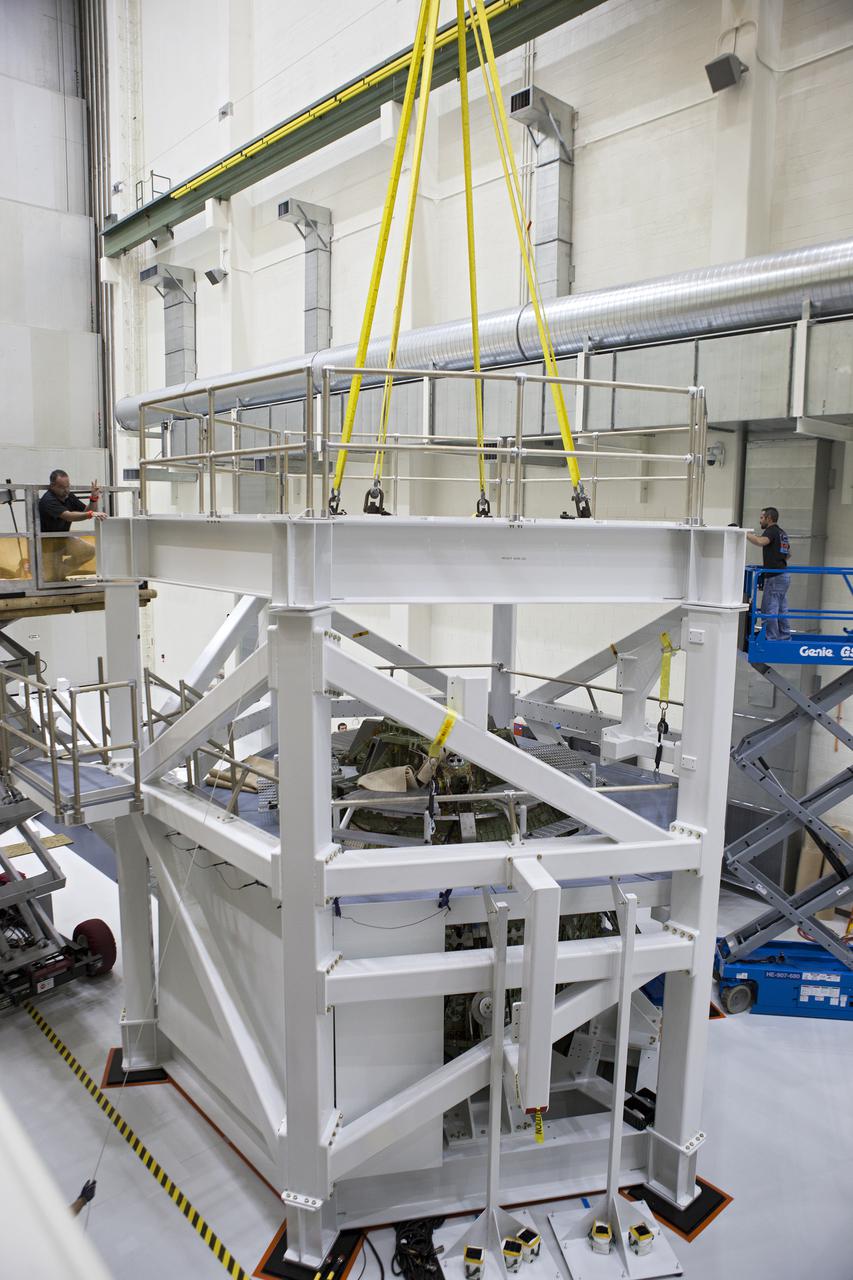
CAPE CANAVERAL, Fla. – Inside the Operations and Checkout Building high bay at NASA’s Kennedy Space Center in Florida, technicians attach the top platform to the test stand for the Orion crew module. Lockheed Martin Space Systems and NASA engineers are preparing Orion for a series of static load tests that simulate the massive loads the spacecraft would experience during its mission. Orion is the exploration spacecraft designed to carry crews to space beyond low Earth orbit. It will provide emergency abort capability, sustain the crew during the space travel and provide safe re-entry from deep space return velocities. Orion’s first unpiloted test flight, Exploration Flight Test 1, is scheduled to launch in 2014 atop a Delta IV rocket. A second uncrewed flight test is scheduled for 2017 on NASA’s Space Launch System rocket. For more information, visit http:__www.nasa.gov_orion. Photo credit: NASA_Gary Thompson
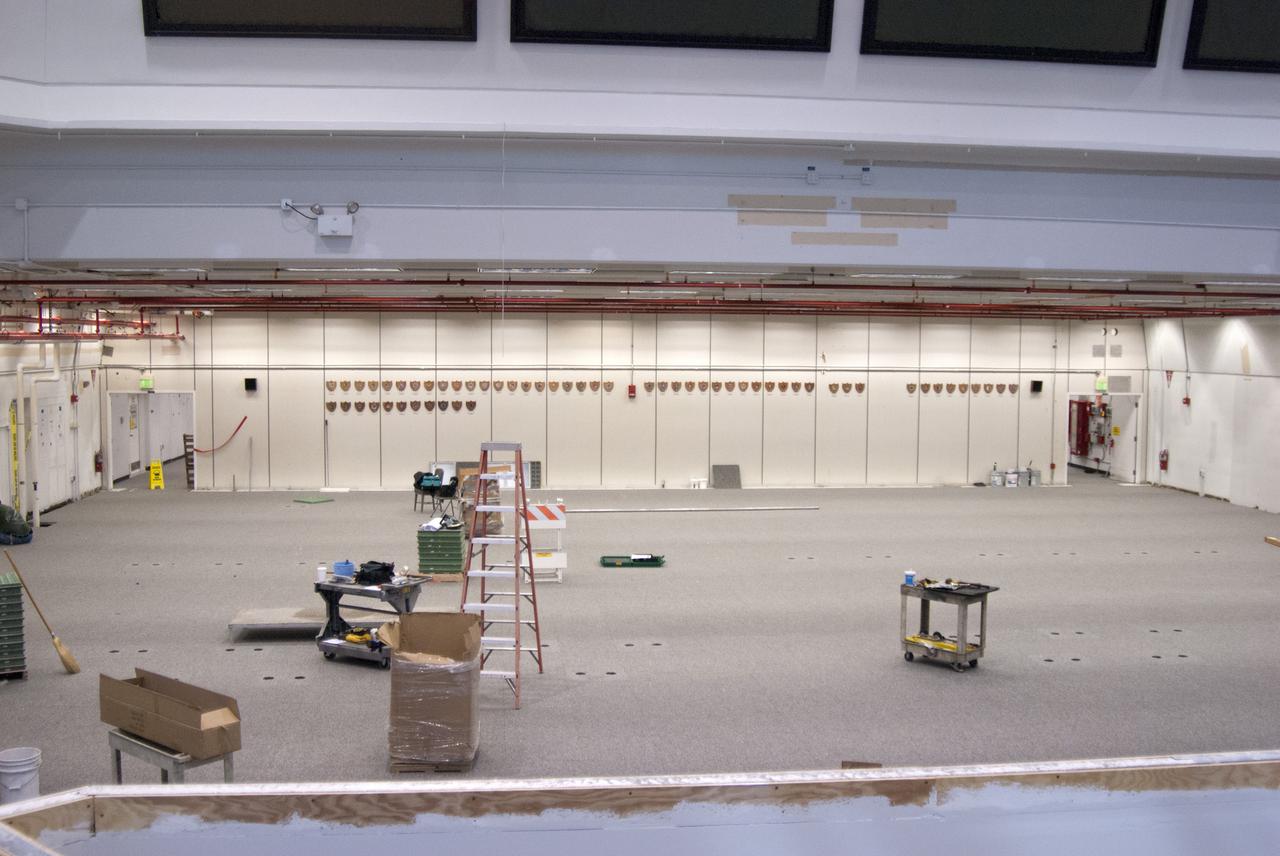
CAPE CANAVERAL, Fla. – At NASA’s Kennedy Space Center in Florida, modifications continue to Firing Room 3 in the Launch Control Center, or LCC. Wiring and conduits below the floor have been upgraded and new flooring is being installed. Firing Rooms inside the LCC are being upgraded by the Ground System Development and Operations Program at Kennedy to support the processing and launch of multiple types of rockets and spacecraft, whether they are government or commercial models. Kennedy’s Launch Complex 39 is transitioning to support multiple users with the Firing Rooms being modified to be more generic in nature for upcoming programs. Photo credit: NASA_Gary Thompson
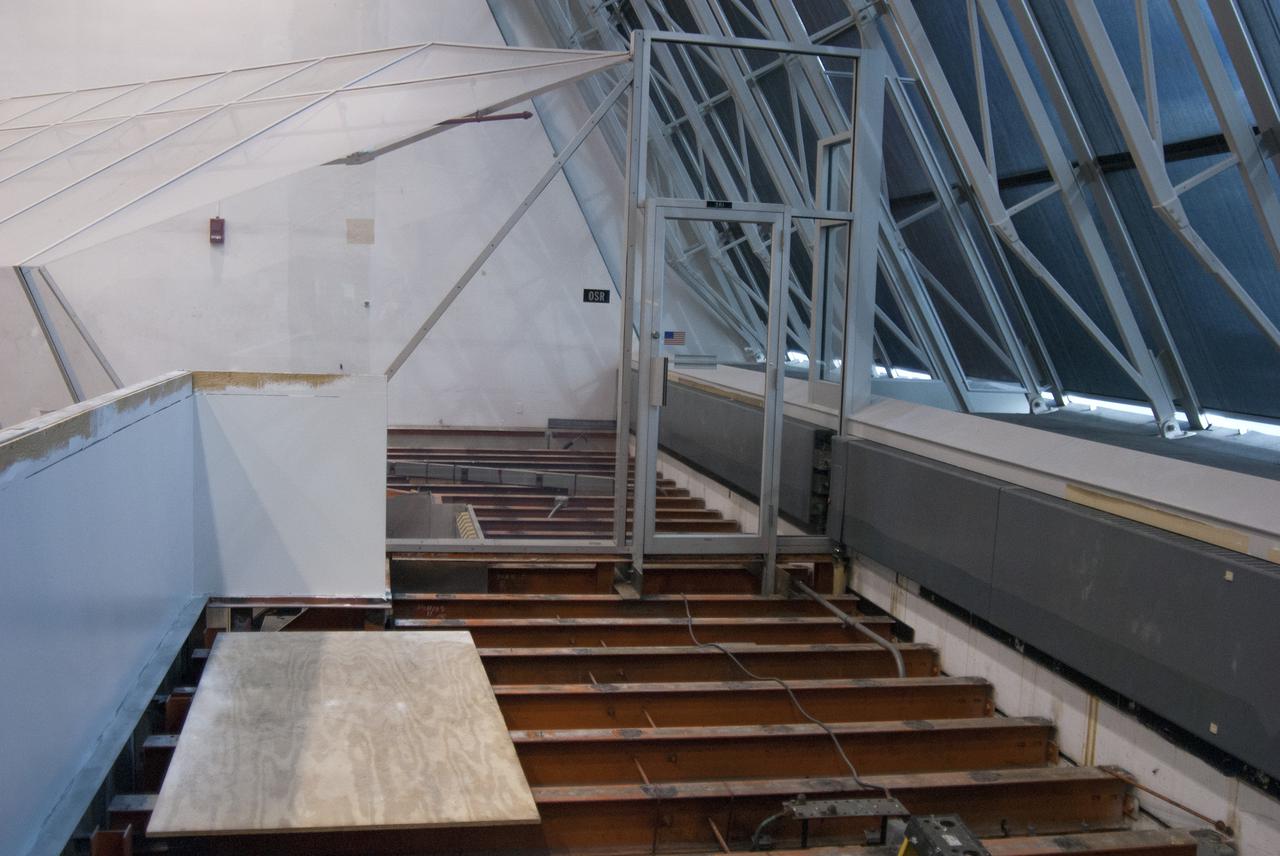
CAPE CANAVERAL, Fla. – At NASA’s Kennedy Space Center in Florida, modifications continue to Firing Room 3 in the Launch Control Center, or LCC. Wiring and conduits below the floor have been upgraded. The legacy flooring leading to and inside a viewing room has been removed and the area is being prepared for new flooring to be installed. Firing Rooms inside the LCC are being upgraded by the Ground System Development and Operations Program at Kennedy to support the processing and launch of multiple types of rockets and spacecraft, whether they are government or commercial models. Kennedy’s Launch Complex 39 is transitioning to support multiple users with the Firing Rooms being modified to be more generic in nature for upcoming programs. Photo credit: NASA_Gary Thompson
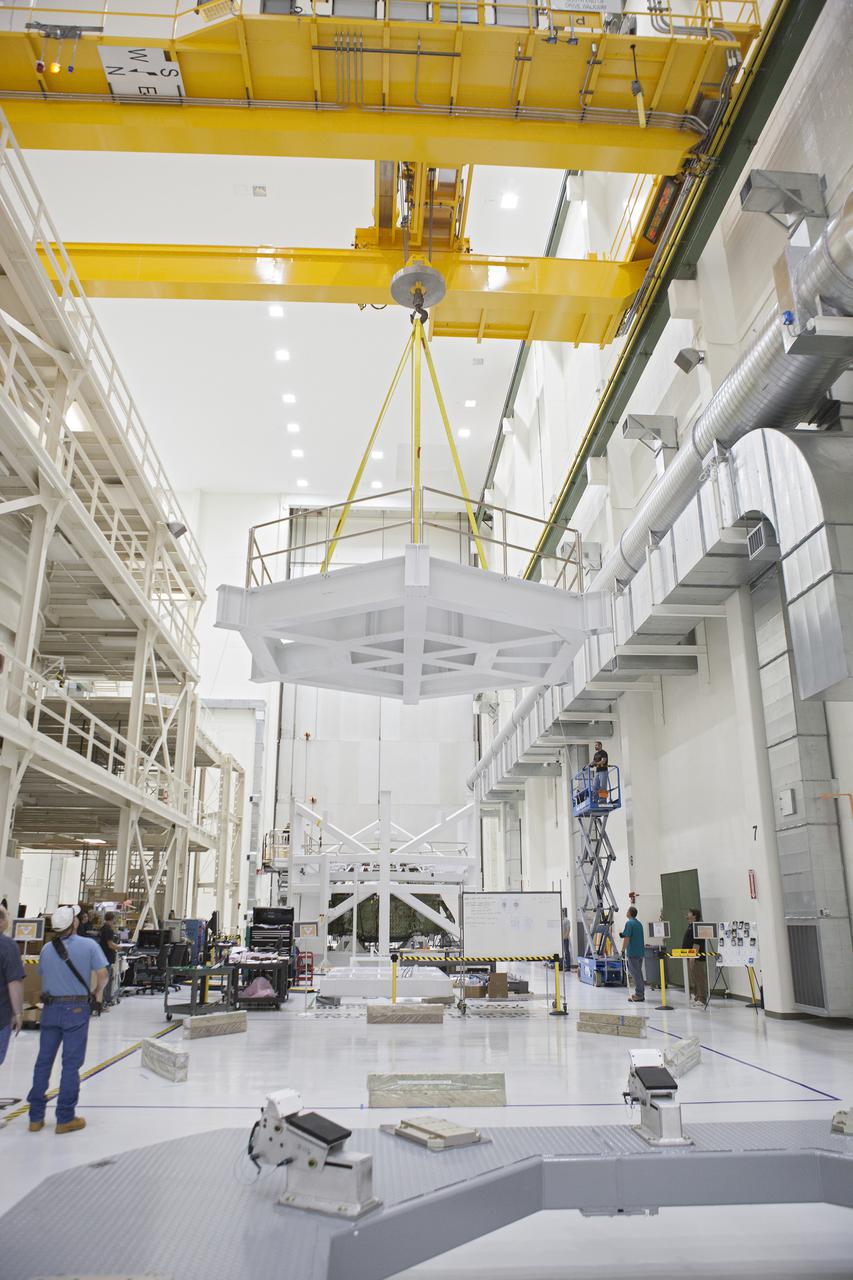
CAPE CANAVERAL, Fla. – Inside the Operations and Checkout Building high bay at NASA’s Kennedy Space Center in Florida, technicians monitor the progress as a crane lifts the top platform of a test stand for the Orion crew module. Lockheed Martin Space Systems and NASA engineers are preparing Orion for a series of static load tests that simulate the massive loads the spacecraft would experience during its mission. Orion is the exploration spacecraft designed to carry crews to space beyond low Earth orbit. It will provide emergency abort capability, sustain the crew during the space travel and provide safe re-entry from deep space return velocities. Orion’s first unpiloted test flight, Exploration Flight Test 1, is scheduled to launch in 2014 atop a Delta IV rocket. A second uncrewed flight test is scheduled for 2017 on NASA’s Space Launch System rocket. For more information, visit http:__www.nasa.gov_orion. Photo credit: NASA_Gary Thompson
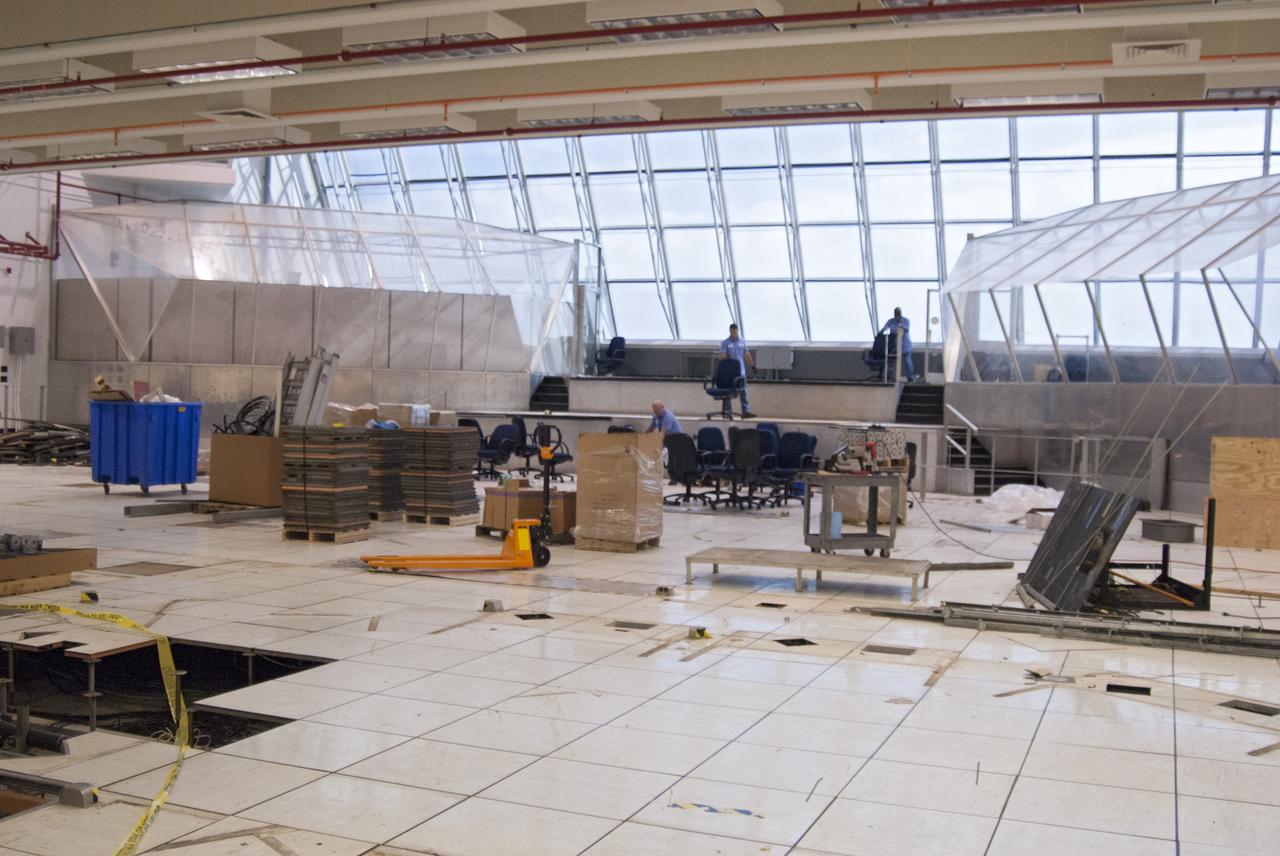
CAPE CANAVERAL, Fla. – At NASA’s Kennedy Space Center in Florida, work continues in Firing Room 2 in the Launch Control Center, or LCC. The legacy flooring is being removed and wiring and conduits below the floor will be upgraded. The mission director’s room to the left and another viewing room to the right also will be upgraded. Firing Rooms inside the LCC are being upgraded by the Ground System Development and Operations Program at Kennedy to support the processing and launch of multiple types of rockets and spacecraft, whether they are government or commercial models. Kennedy’s Launch Complex 39 is transitioning to support multiple users with the Firing Rooms being modified to be more generic in nature for upcoming programs. Photo credit: NASA_Gary Thompson
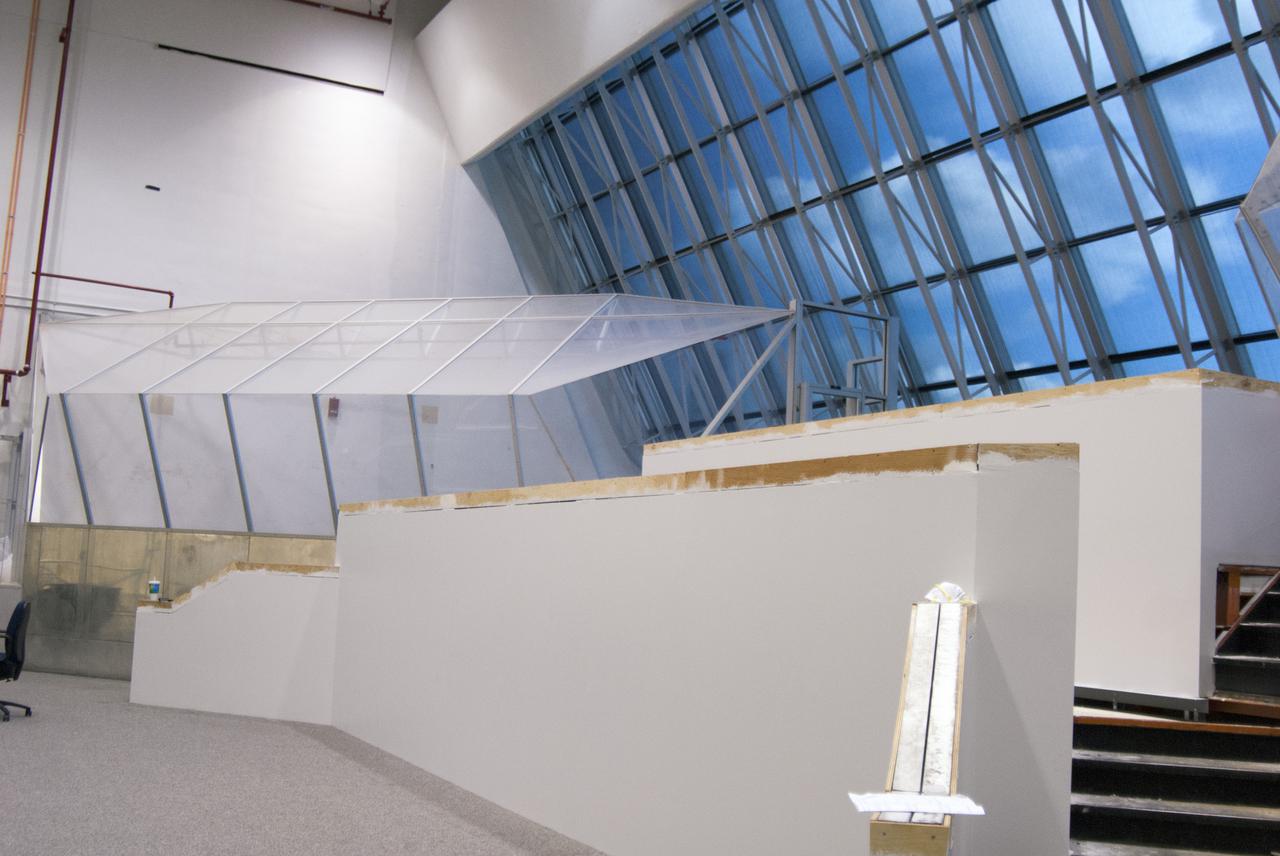
CAPE CANAVERAL, Fla. – At NASA’s Kennedy Space Center in Florida, modifications continue to Firing Room 3 in the Launch Control Center, or LCC. Wiring and conduits below the floor have been upgraded and new flooring has been installed. Walls have been repaired and are in the process of being painted. Firing Rooms inside the LCC are being upgraded by the Ground System Development and Operations Program at Kennedy to support the processing and launch of multiple types of rockets and spacecraft, whether they are government or commercial models. Kennedy’s Launch Complex 39 is transitioning to support multiple users with the Firing Rooms being modified to be more generic in nature for upcoming programs. Photo credit: NASA_Gary Thompson
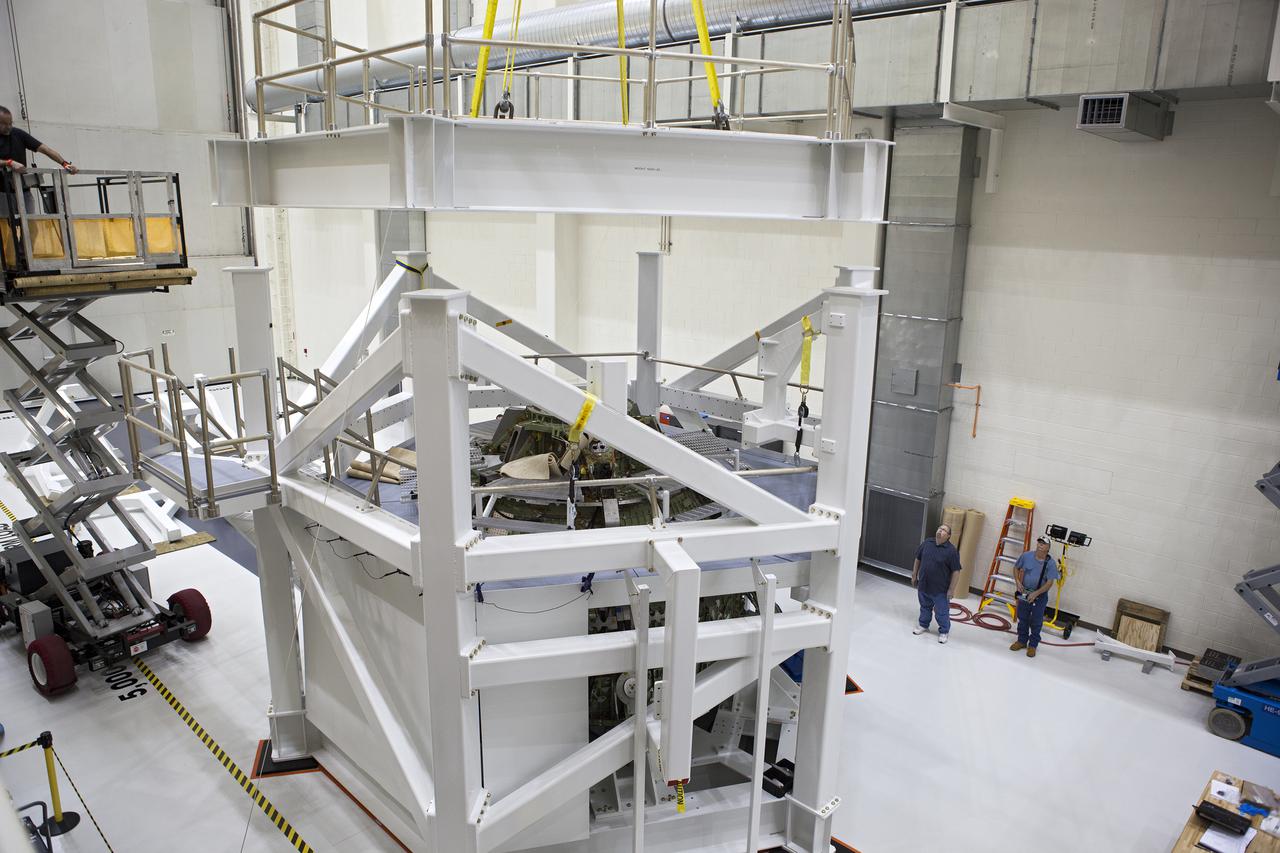
CAPE CANAVERAL, Fla. – Inside the Operations and Checkout Building high bay at NASA’s Kennedy Space Center in Florida, technicians monitor the progress as a crane lowers the top platform of a test stand for the Orion crew module. Lockheed Martin Space Systems and NASA engineers are preparing Orion for a series of static load tests that simulate the massive loads the spacecraft would experience during its mission. Orion is the exploration spacecraft designed to carry crews to space beyond low Earth orbit. It will provide emergency abort capability, sustain the crew during the space travel and provide safe re-entry from deep space return velocities. Orion’s first unpiloted test flight, Exploration Flight Test 1, is scheduled to launch in 2014 atop a Delta IV rocket. A second uncrewed flight test is scheduled for 2017 on NASA’s Space Launch System rocket. For more information, visit http:__www.nasa.gov_orion. Photo credit: NASA_Gary Thompson