
CAPE CANAVERAL, Fla. – At NASA’s Kennedy Space Center Visitor Complex in Florida, college students arrive with their custom designed and built robots for NASA’s Fourth Annual Robotic Mining Competition, held May 20-24. The mining competition is coordinated by Kennedy Space Center’s Education Office for the agency’s Exploration Systems Mission Directorate. Undergraduate and graduate students from 50 universities and colleges in the U.S. and around the world use their remote-controlled robots to maneuver and dig in a supersized sandbox filled with a crushed material called regolith that has characteristics similar to asteroids, moons of Mars and Mars itself. Photo credit: NASA_Jim Grossman
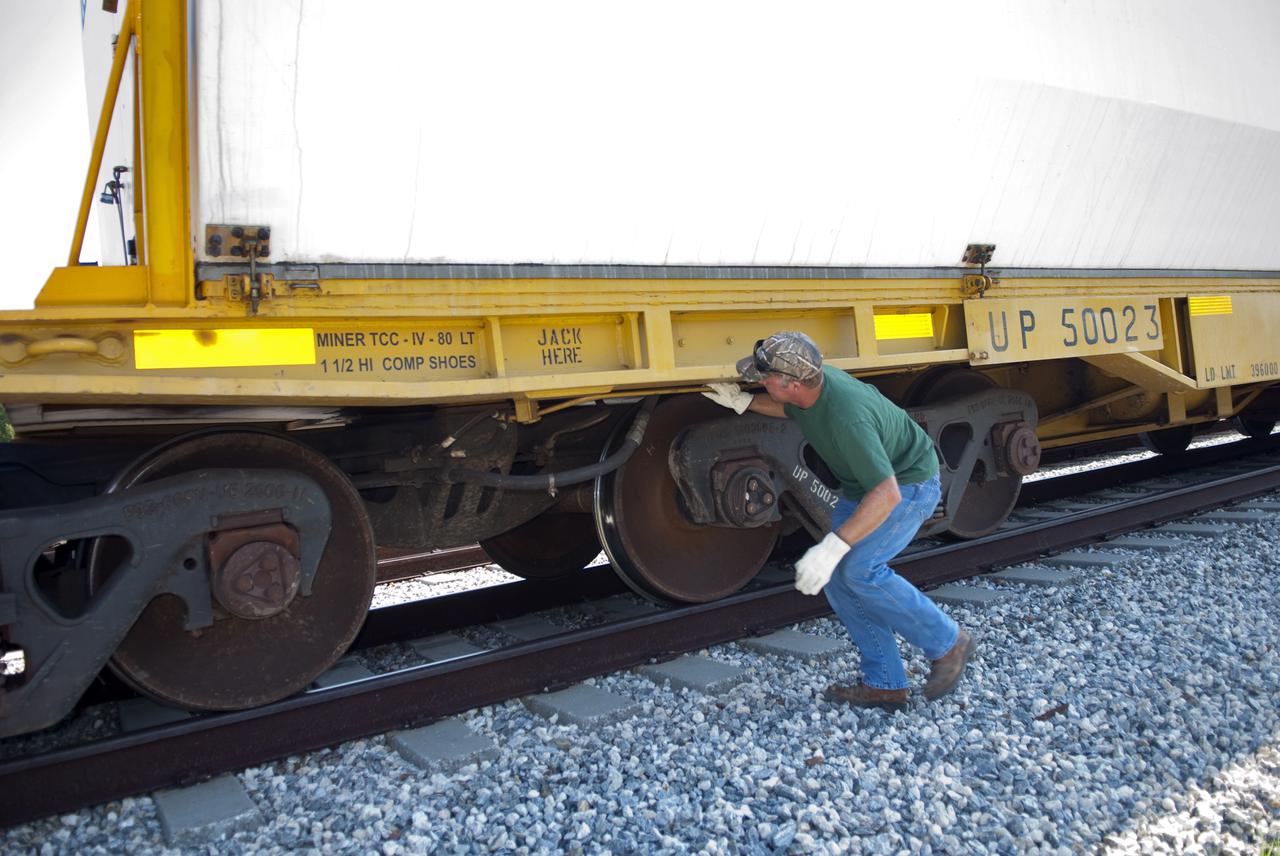
CAPE CANAVERAL, Fla. - At the Jay Jay Rail Yard in Titusville, Fla., a NASA Railroad mechanic checks out the brakes on a Union Pacific rail car carrying one of the last space shuttle solid rocket booster segments. The NASA train will transport the segments on the last leg of their journey into NASA's Kennedy Space Center. Six cars transported the segments along the Florida East Coast Railway, which began at the ATK solid rocket booster plant in Promontory, Utah. The booster segments will be used for shuttle Atlantis on what currently is planned as the 'launch on need,' or potential rescue mission for the final shuttle flight, Endeavour's STS-134 mission. For information, visit www.nasa.gov_shuttle. Photo credit: NASA_Jim Grossman
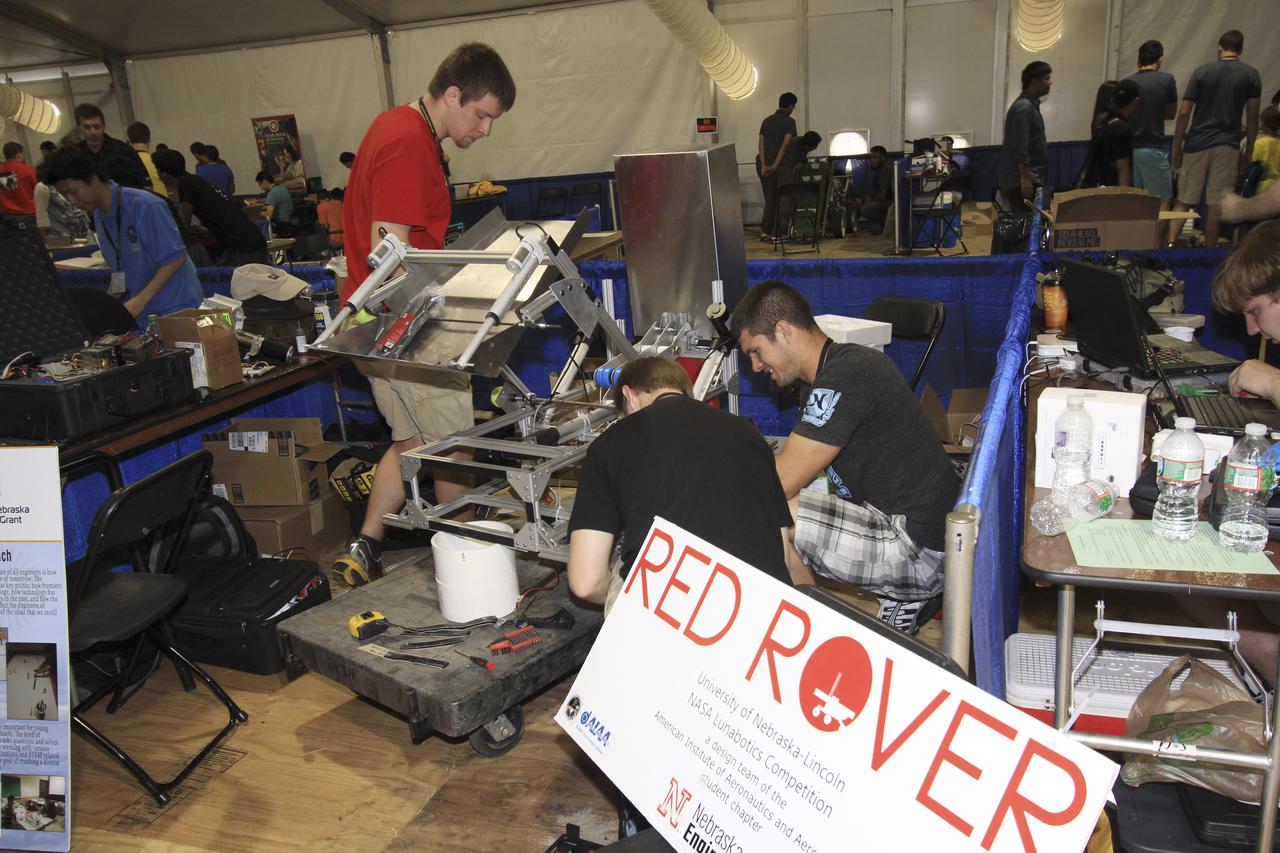
CAPE CANAVERAL, Fla. – At NASA’s Kennedy Space Center Visitor Complex in Florida, students from the University of Nebraska-Lincoln prepare their custom robot for NASA’s Fourth Annual Robotic Mining Competition, held May 20-24. The mining competition is coordinated by Kennedy Space Center’s Education Office for the agency’s Exploration Systems Mission Directorate. Undergraduate and graduate students from 50 universities and colleges in the U.S. and around the world use their remote-controlled robots to maneuver and dig in a supersized sandbox filled with a crushed material called regolith that has characteristics similar to asteroids, moons of Mars and Mars itself. Photo credit: NASA_Jim Grossman

CAPE CANAVERAL, Fla. – Inside the Vehicle Assembly Building at NASA’s Kennedy Space Center in Florida, technicians prepare to remove a fuel tank from crawler-transporter 1 CT-1 in high bay 3. The fuel tank will be transported to the Wiltech facility at Kennedy for cleaning and inspection. Work continues in high bay 3 to upgrade CT-1 as part of its general maintenance. CT-1 could be available to carry commercial launch vehicles to the launch pad. The crawler-transporters were used to carry the mobile launcher platform and space shuttle to Launch Complex 39 for space shuttle launches for 30 years. Photo credit: NASA_Jim Grossman
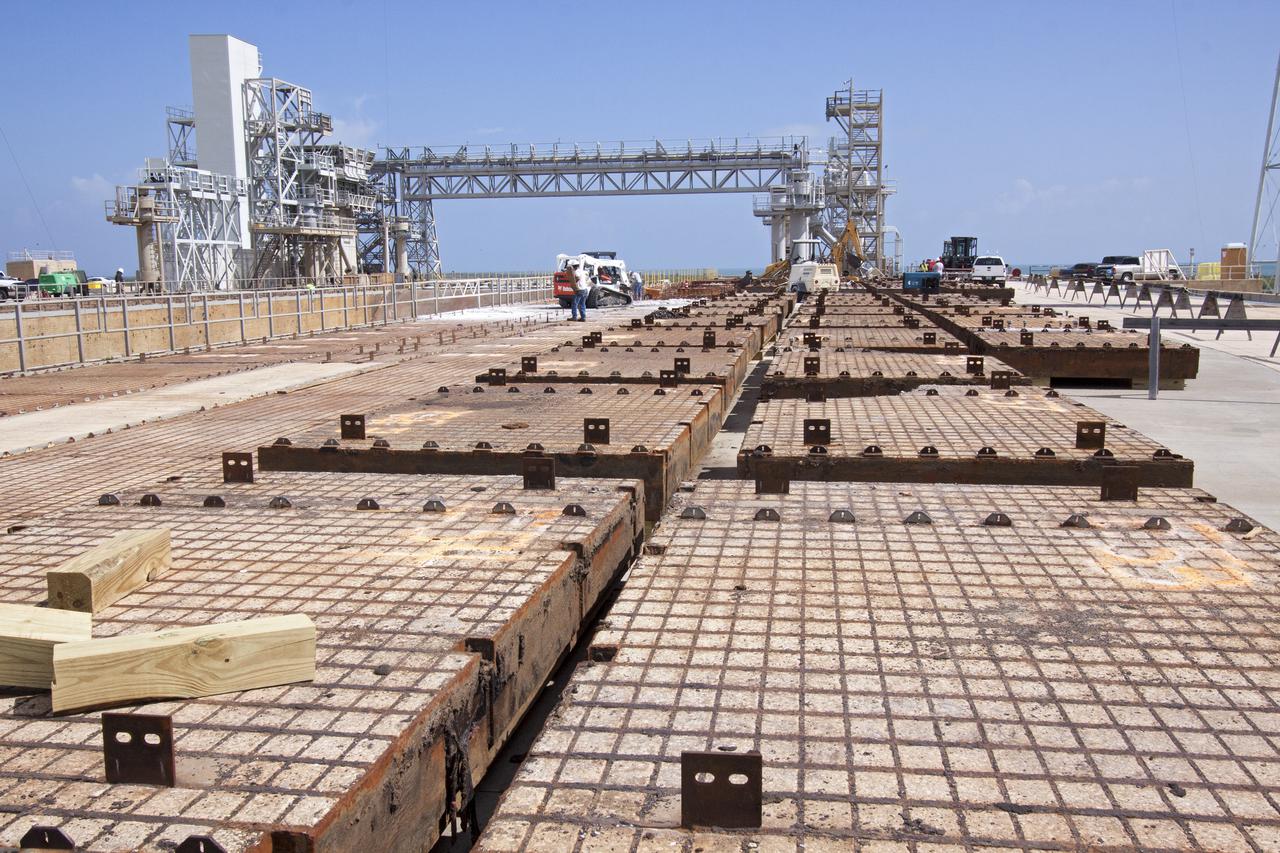
CAPE CANAVERAL, Fla. -- At Launch Pad 39B at NASA’s Kennedy Space Center in Florida, removal of the crawler track panels on the pad’s surface is underway. The concrete surface beneath the panels and the catacomb roof below will be inspected for water damage and repaired. There are 176 panels, each weighing about 30,000 pounds that will be removed. Launch Pad 39B is being refurbished to support NASA’s Space Launch System and other launch vehicles. The Ground Systems Development and Operations, or GSDO, Program office at Kennedy is leading the center’s transformation to safely handle a variety of rockets and spacecraft. For more information about GSDO, visit: http:__go.nasa.gov_groundsystems. Photo credit: NASA_Jim Grossman
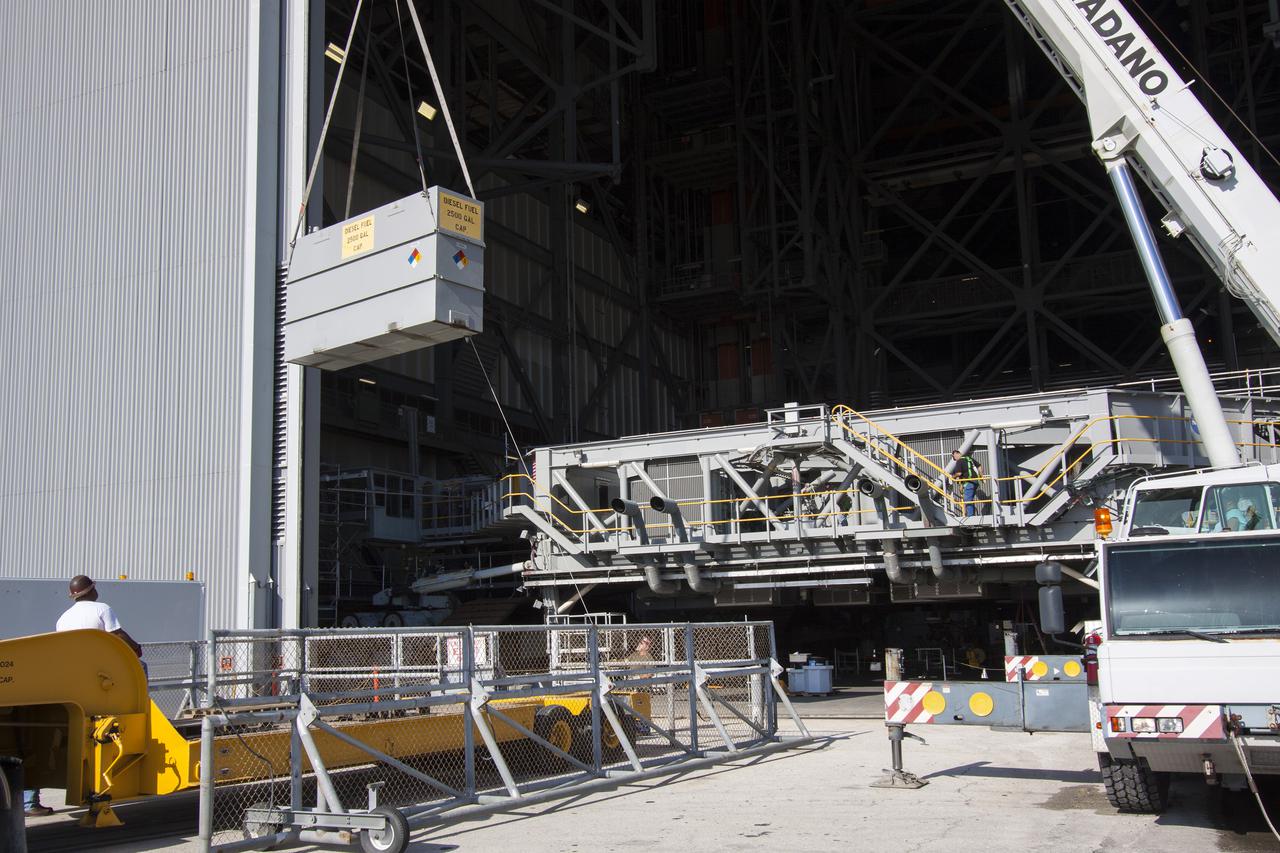
CAPE CANAVERAL, Fla. – Inside the Vehicle Assembly Building at NASA’s Kennedy Space Center in Florida, a large crane is used to lift a fuel tank away from crawler-transporter 1 CT-1 in high bay 3. The fuel tank will be transported to the Wiltech facility at Kennedy for cleaning and inspection. Work continues in high bay 3 to upgrade CT-1 as part of its general maintenance. CT-1 could be available to carry commercial launch vehicles to the launch pad. The crawler-transporters were used to carry the mobile launcher platform and space shuttle to Launch Complex 39 for space shuttle launches for 30 years. Photo credit: NASA_Jim Grossman
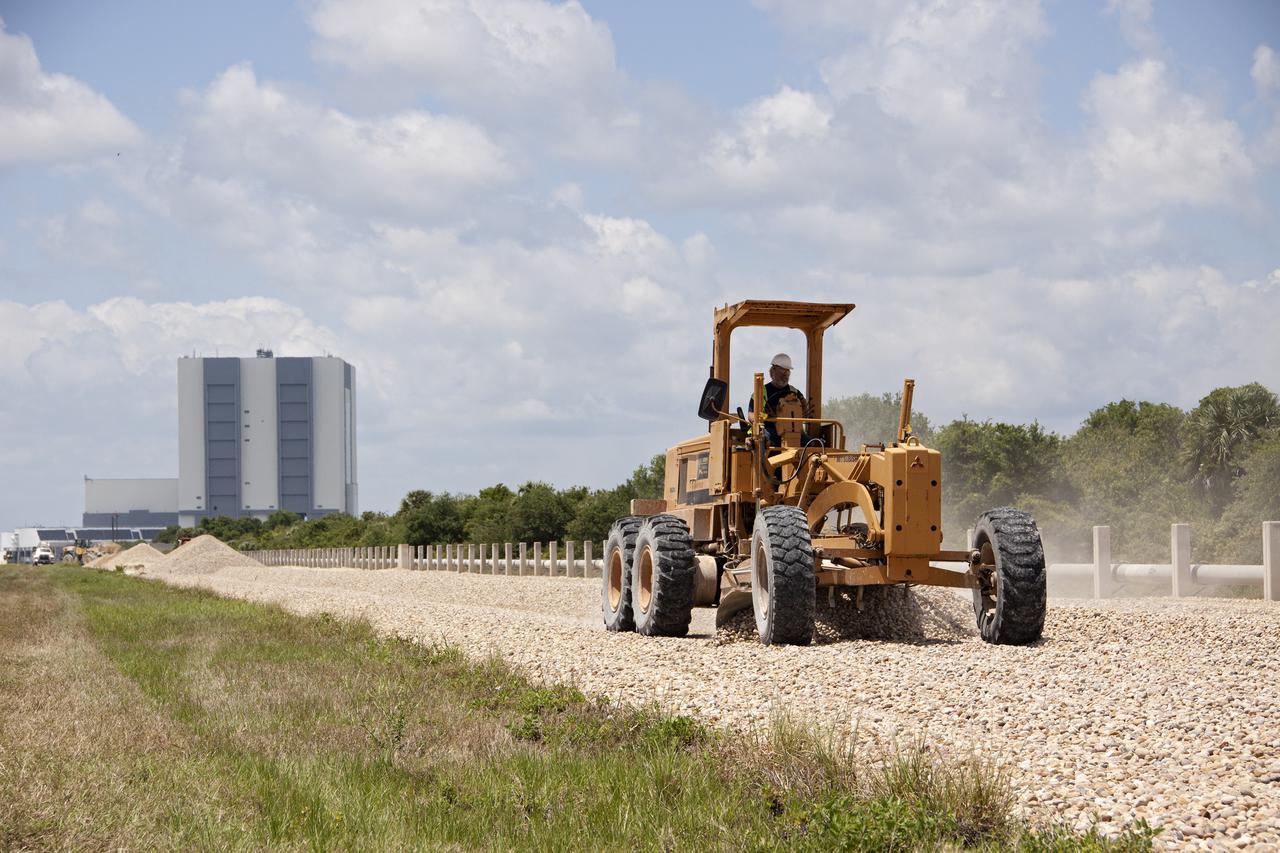
CAPE CANAVERAL, Fla. – At NASA’s Kennedy Space Center in Florida, a road-grader resurfaces a section of the crawlerway leading from the Vehicle Assembly Building VAB to the launch pads. The Ground Systems Development and Operations GSDO Program office at Kennedy is working to upgrade the two 40-foot-wide pathways the crawler-transporter will travel as it transports launch vehicles such as NASA's Space Launch System SLS rocket from the VAB to the launch pad. For more: http:__www.nasa.gov_exploration_systems_ground_crawlerway_upgrades.html Photo credit: NASA_Jim Grossman
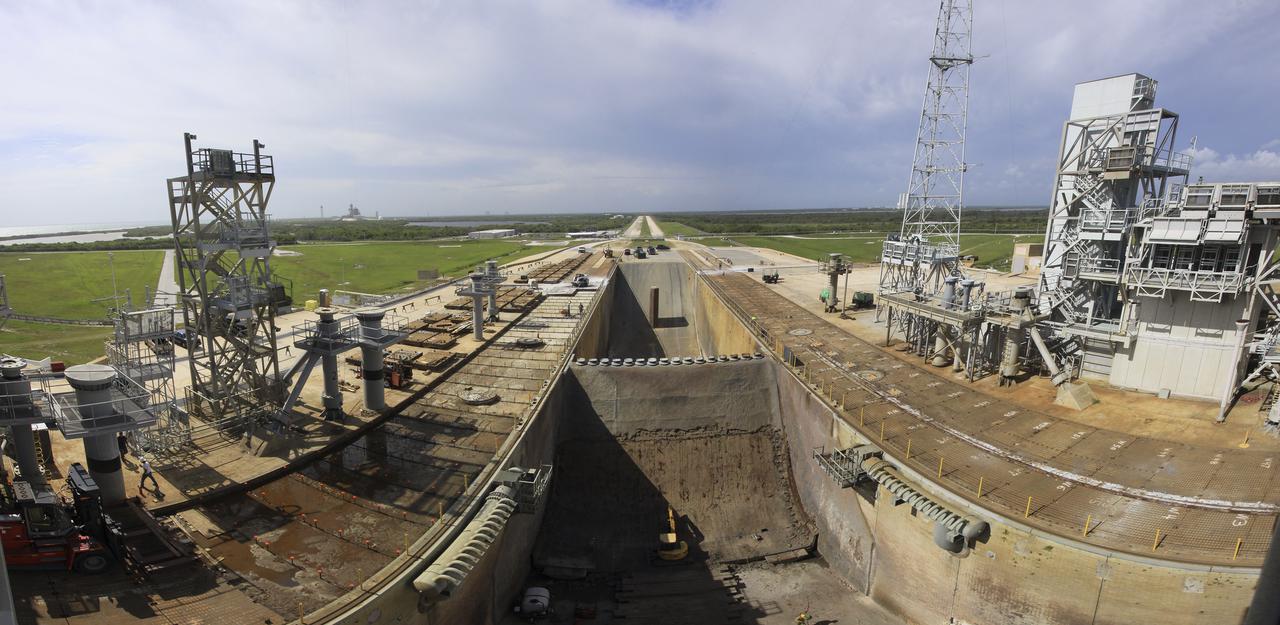
CAPE CANAVERAL, Fla. -- At Launch Pad 39B at NASA’s Kennedy Space Center in Florida, the view from a fisheye lens reveals nearly all of the crawler track panels on the pad’s surface have been removed. The concrete surface beneath the panels and the catacomb roof below will be inspected for water damage and repaired. Work also is underway to remove the flame trench deflector that sits below and between the left and right crawler track panels. There are 176 panels, each weighing about 30,000 pounds that will be removed. Launch Pad 39B is being refurbished to support NASA’s Space Launch System and other launch vehicles. The Ground Systems Development and Operations, or GSDO, Program office at Kennedy is leading the center’s transformation to safely handle a variety of rockets and spacecraft. For more information about GSDO, visit: http:__go.nasa.gov_groundsystems. Photo credit: NASA_Jim Grossman
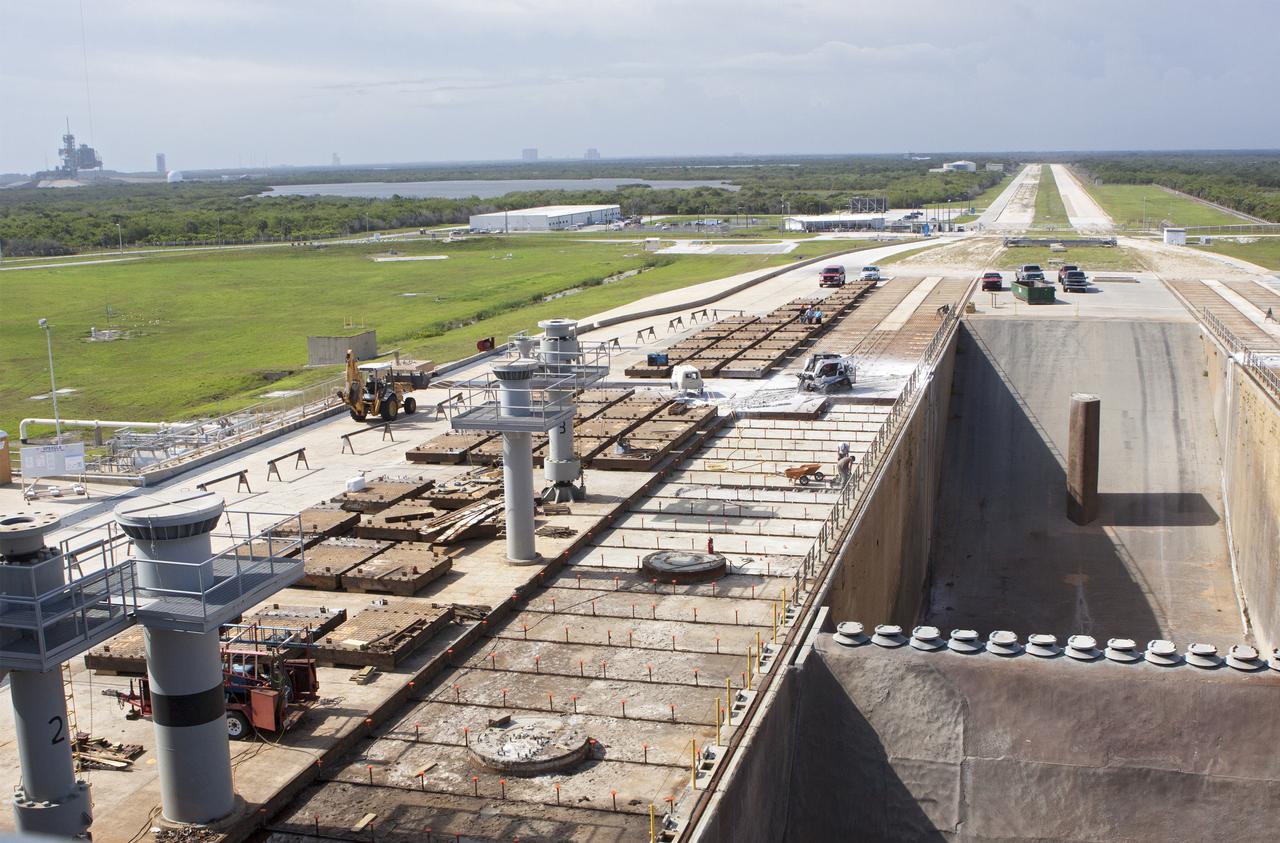
CAPE CANAVERAL, Fla. -- At Launch Pad 39B at NASA’s Kennedy Space Center in Florida, nearly all of the crawler track panels on the pad’s surface have been removed. The concrete surface beneath the panels and the catacomb roof below will be inspected for water damage and repaired. There are 176 panels, each weighing about 30,000 pounds that will be removed. Launch Pad 39B is being refurbished to support NASA’s Space Launch System and other launch vehicles. The Ground Systems Development and Operations, or GSDO, Program office at Kennedy is leading the center’s transformation to safely handle a variety of rockets and spacecraft. For more information about GSDO, visit: http:__go.nasa.gov_groundsystems. Photo credit: NASA_Jim Grossman
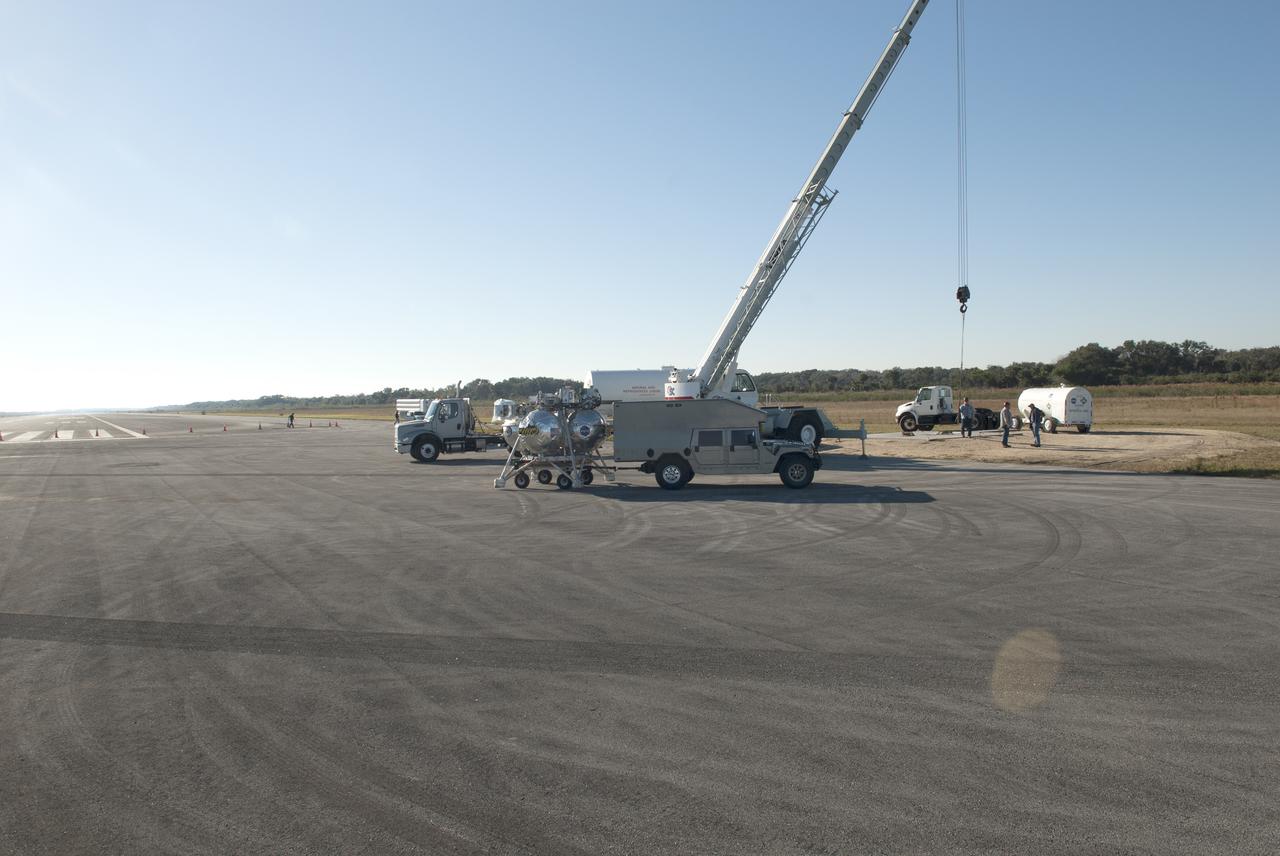
CAPE CANAVERAL, Fla. – NASA’s Project Morpheus prototype lander is moved into position at the north end of the Shuttle Landing Facility at Kennedy Space Center in Florida in preparation for free flight test No. 15. During the 97-second test, onboard autonomous landing and hazard avoidance technology sensors, or ALHAT, surveyed the hazard field for safe landing sites, then guided the lander forward and downward to a successful landing. For more information on Morpheus, visit: http:__www.morpheuslander.jsc.nasa.gov. Photo credit: NASA_Jim Grossman
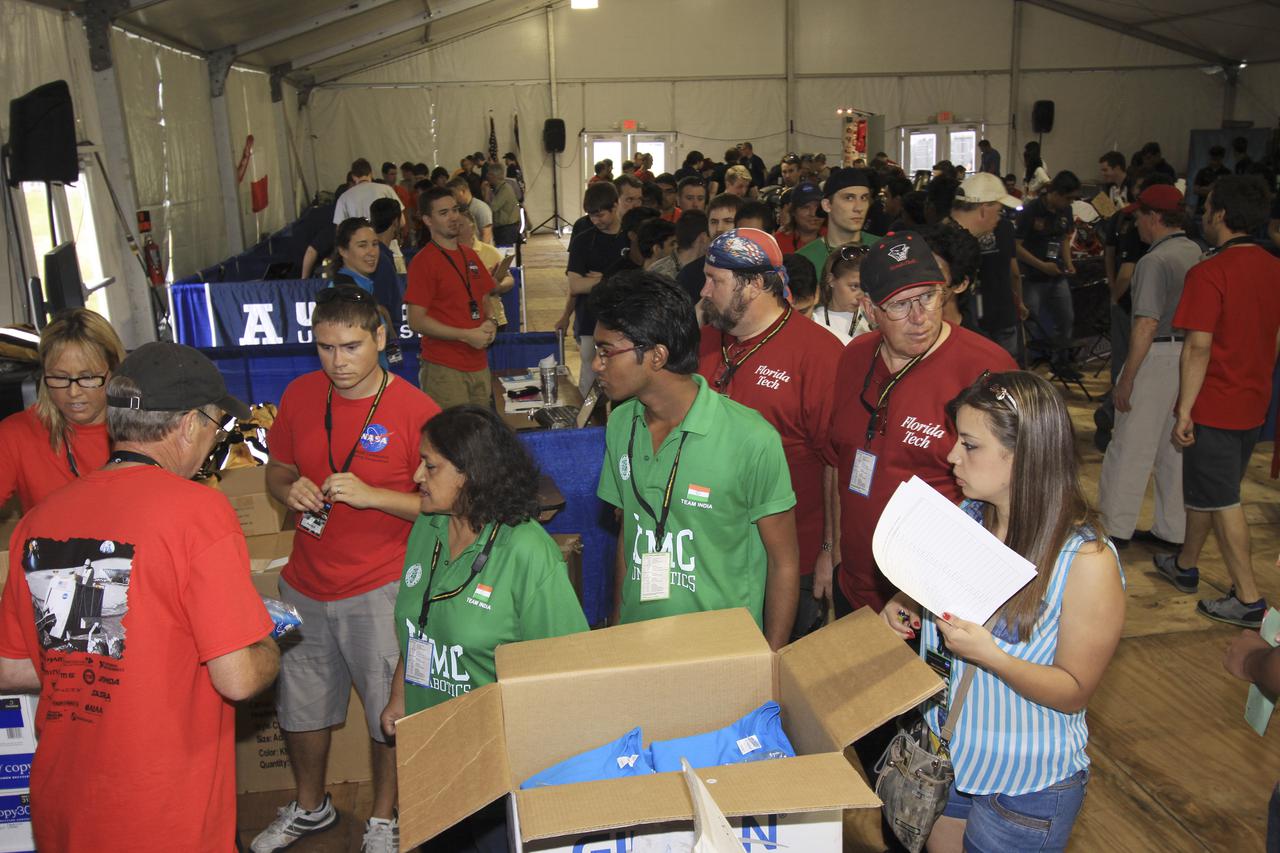
CAPE CANAVERAL, Fla. – At NASA’s Kennedy Space Center Visitor Complex in Florida, college students arrive for NASA’s Fourth Annual Robotic Mining Competition, held May 20-24. The mining competition is coordinated by Kennedy Space Center’s Education Office for the agency’s Exploration Systems Mission Directorate. Undergraduate and graduate students from 50 universities and colleges in the U.S. and around the world use their remote-controlled robots to maneuver and dig in a supersized sandbox filled with a crushed material called regolith that has characteristics similar to asteroids, moons of Mars and Mars itself. Photo credit: NASA_Jim Grossman
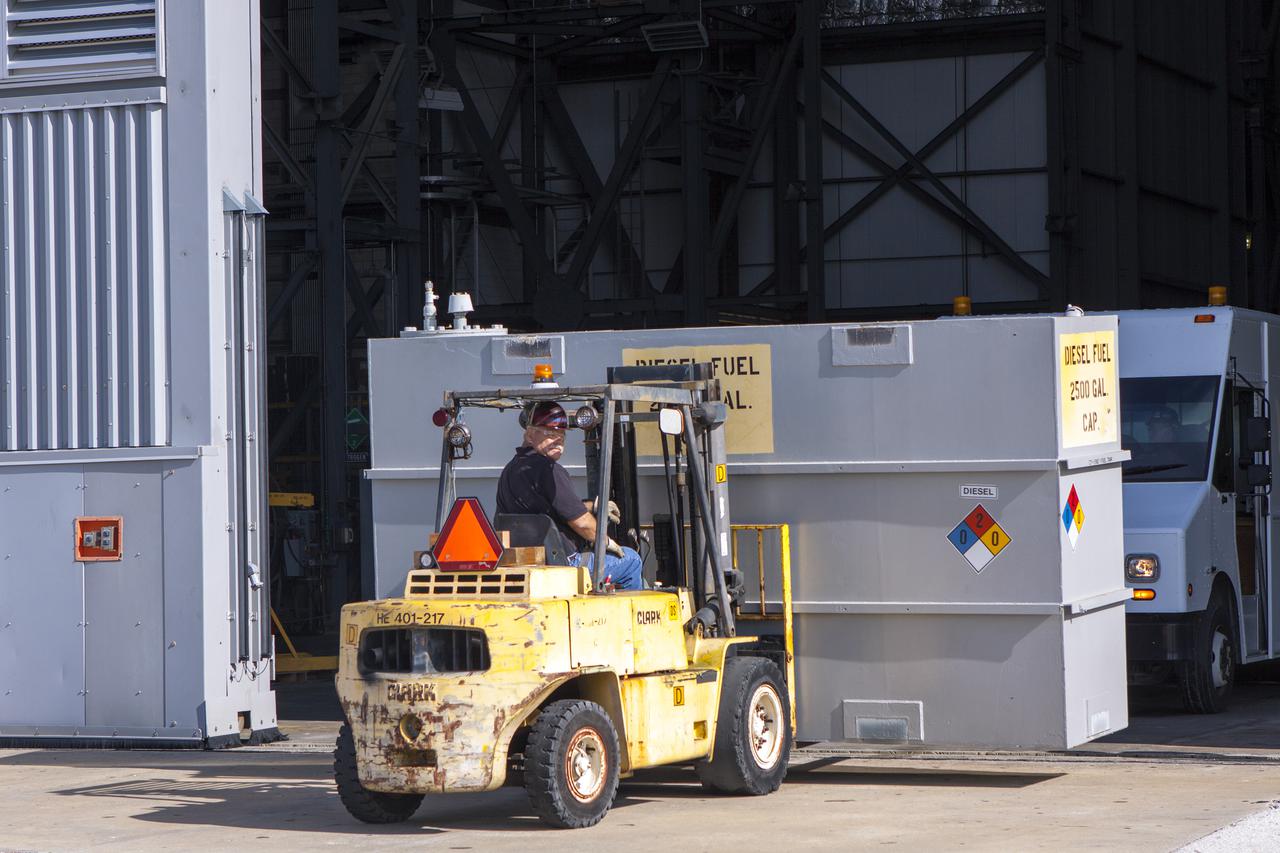
CAPE CANAVERAL, Fla. – In front of the Vehicle Assembly Building at NASA’s Kennedy Space Center in Florida, a technician uses a forklift to move a fuel tank after it was removed from crawler-transporter 1 CT-1 in high bay 3. The fuel tank will be transporter to the Wiltech facility at Kennedy for cleaning and inspection. Work continues in high bay 3 to upgrade CT-1 as part of its general maintenance. CT-1 could be available to carry commercial launch vehicles to the launch pad. The crawler-transporters were used to carry the mobile launcher platform and space shuttle to Launch Complex 39 for space shuttle launches for 30 years. Photo credit: NASA_Jim Grossman
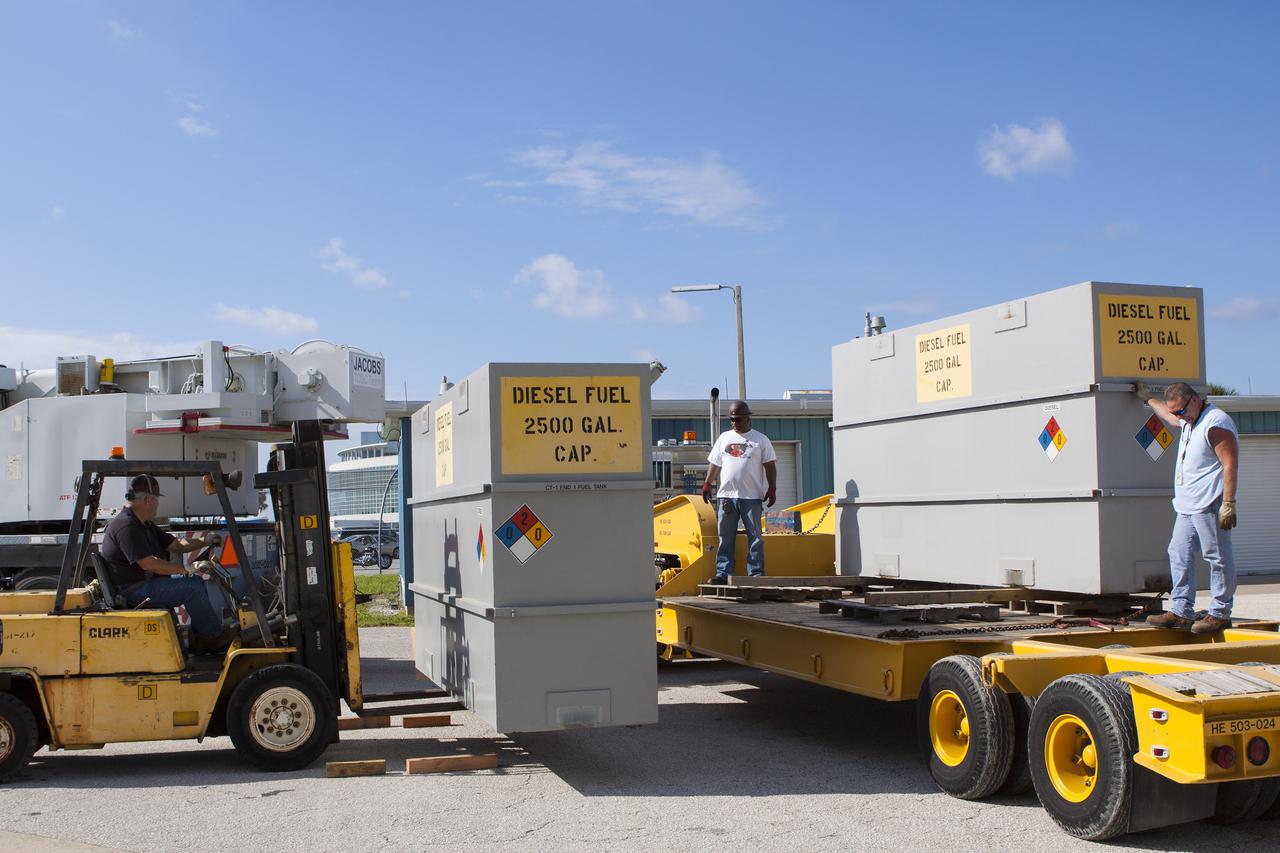
CAPE CANAVERAL, Fla. – In front of the Vehicle Assembly Building at NASA’s Kennedy Space Center in Florida, a technician uses a forklift to move a fuel tank onto a flatbed truck. Two fuel tanks were removed from crawler-transporter 1 CT-1 in high bay 3. The tanks will be sent to the Wiltech facility at Kennedy for cleaning and inspection. Work continues in high bay 3 to upgrade CT-1 as part of its general maintenance. CT-1 could be available to carry commercial launch vehicles to the launch pad. The crawler-transporters were used to carry the mobile launcher platform and space shuttle to Launch Complex 39 for space shuttle launches for 30 years. Photo credit: NASA_Jim Grossman
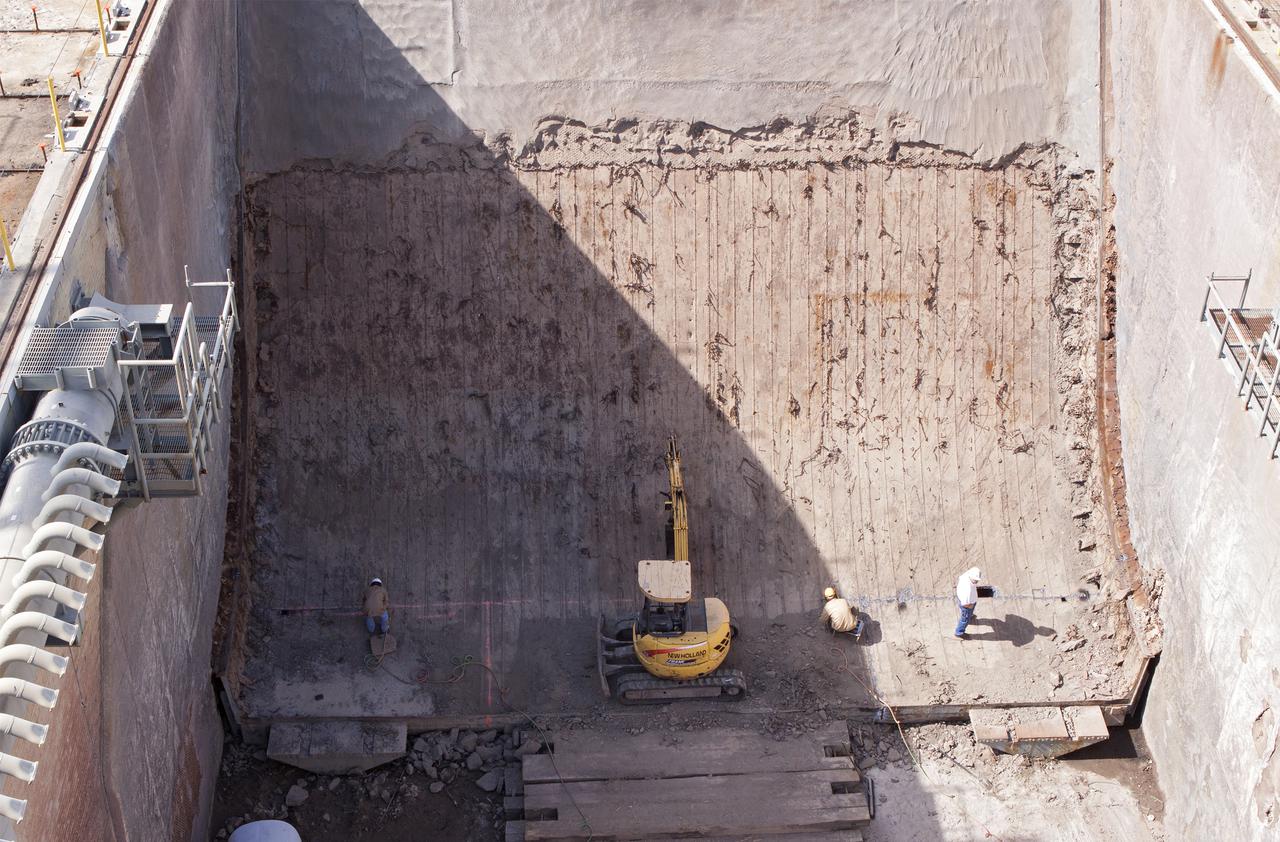
CAPE CANAVERAL, Fla. -- At Launch Pad 39B at NASA’s Kennedy Space Center in Florida, workers are removing the flame trench deflector that sits below and between the left and right crawler track panels. Launch Pad 39B is being refurbished to support NASA’s Space Launch System and other launch vehicles. The Ground Systems Development and Operations, or GSDO, Program office at Kennedy is leading the center’s transformation to safely handle a variety of rockets and spacecraft. For more information about GSDO, visit: http:__go.nasa.gov_groundsystems. Photo credit: NASA_Jim Grossman
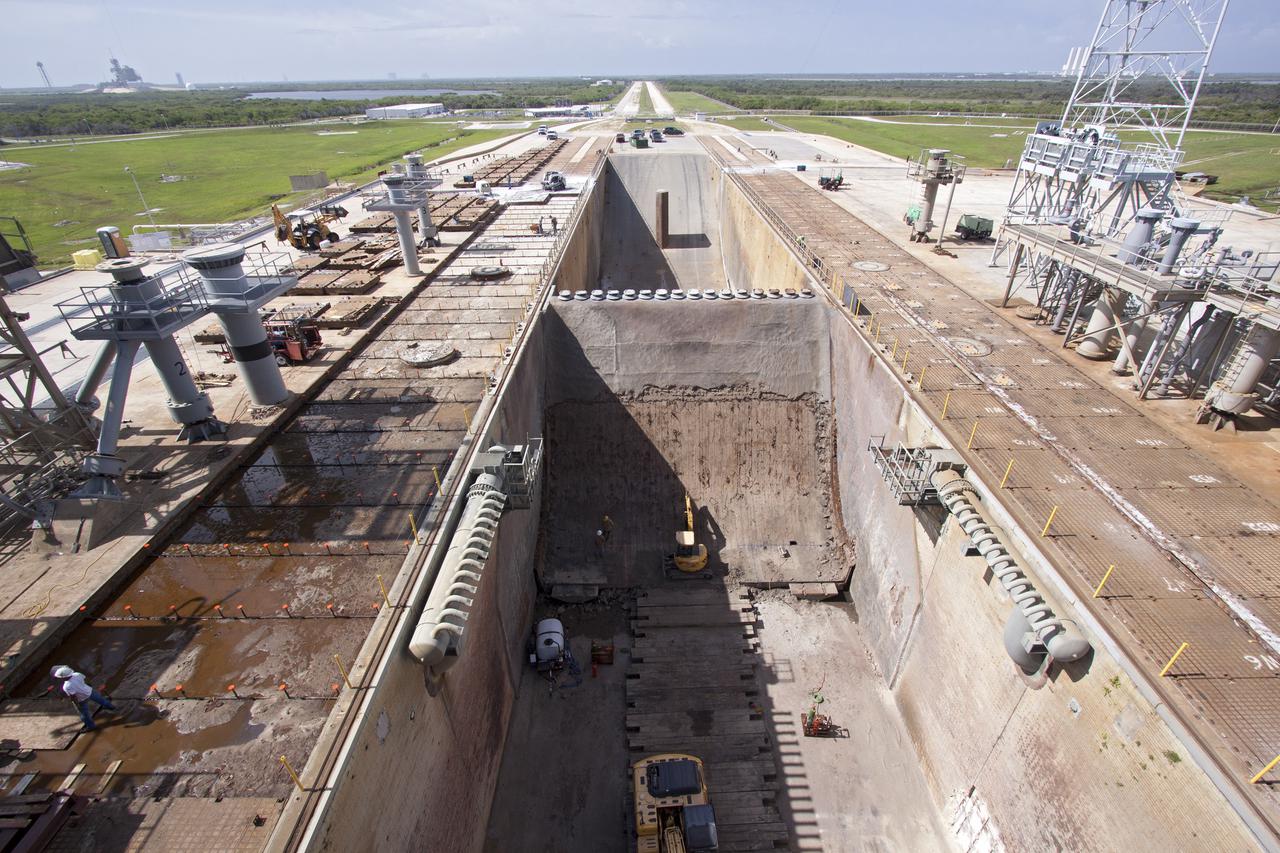
CAPE CANAVERAL, Fla. -- At Launch Pad 39B at NASA’s Kennedy Space Center in Florida, construction workers have removed nearly all of the crawler track panels on the pad’s surface. Workers also are removing the flame trench deflector that sits below and between the left and right crawler track panels. The concrete surface beneath the panels and the catacomb roof below will be inspected for water damage and repaired. There are 176 panels, each weighing about 30,000 pounds that will be removed. Launch Pad 39B is being refurbished to support NASA’s Space Launch System and other launch vehicles. The Ground Systems Development and Operations, or GSDO, Program office at Kennedy is leading the center’s transformation to safely handle a variety of rockets and spacecraft. For more information about GSDO, visit: http:__go.nasa.gov_groundsystems. Photo credit: NASA_Jim Grossman
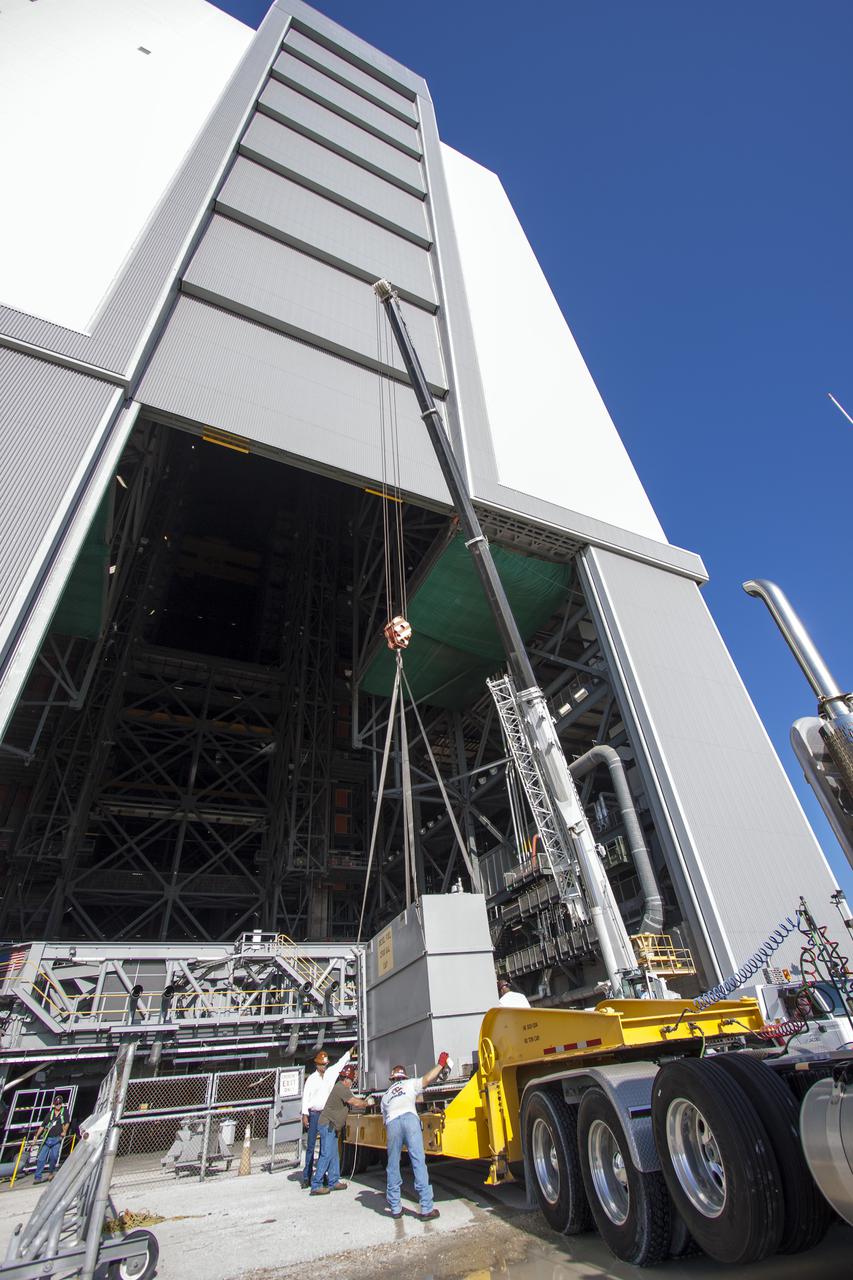
CAPE CANAVERAL, Fla. – In front of the Vehicle Assembly Building at NASA’s Kennedy Space Center in Florida, technicians monitor the progress as a large crane lowers a fuel tank from crawler-transporter 1 CT-1 in high bay 3 onto a flatbed truck. The fuel tank will be transported to the Wiltech facility at Kennedy for cleaning and inspection. Work continues in high bay 3 to upgrade CT-1 as part of its general maintenance. CT-1 could be available to carry commercial launch vehicles to the launch pad. The crawler-transporters were used to carry the mobile launcher platform and space shuttle to Launch Complex 39 for space shuttle launches for 30 years. Photo credit: NASA_Jim Grossman