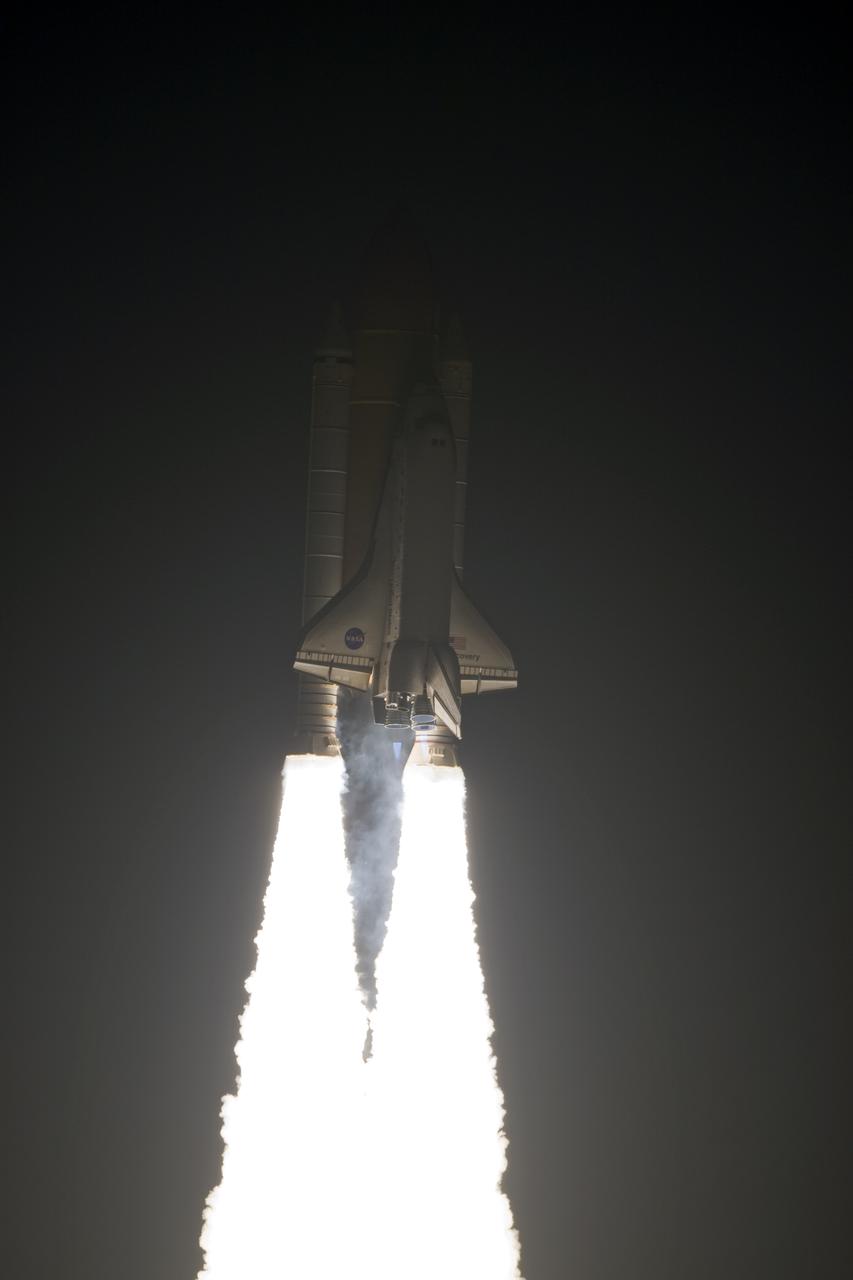
CAPE CANAVERAL, Fla. - Rising on a column of fire, space shuttle Discovery disappears into the predawn sky above Launch Pad 39A at NASA's Kennedy Space Center in Florida. Liftoff on the STS-131 mission was on time at 6:21 a.m. EDT. The seven-member crew will deliver the multi-purpose logistics module Leonardo, filled with supplies, a new crew sleeping quarters and science racks that will be transferred to the International Space Station's laboratories. The crew also will switch out a gyroscope on the station’s truss, install a spare ammonia storage tank and retrieve a Japanese experiment from the station’s exterior. STS-131 is the 33rd shuttle mission to the station and the 131st shuttle mission overall. For information on the STS-131 mission and crew, visit http:__www.nasa.gov_mission_pages_shuttle_shuttlemissions_sts131_index.html. Photo credit: NASA_Kenny Allen
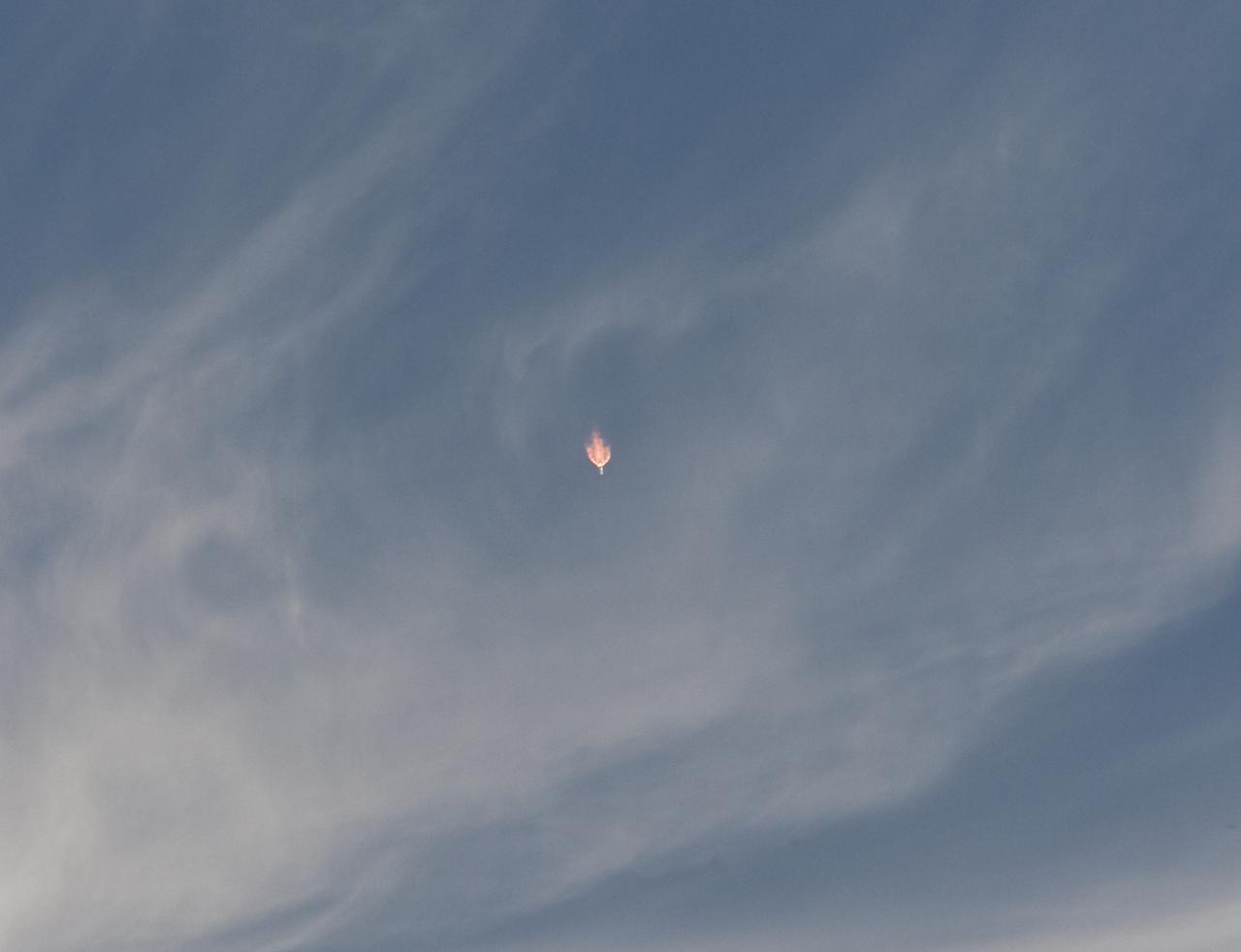
CAPE CANAVERAL, Fla. – Visibility of the United Launch Alliance Atlas V rocket carrying NASA's Solar Dynamics Observatory is good through the thin upper-level clouds through which it must travel to reach orbit. Liftoff from Launch Complex 41 on Cape Canaveral Air Force Station was at 10:23 a.m. EST Feb. 11. This is the 100th launch of a commercial Atlas_Centaur rocket. The observatory, known as SDO, is the first mission in NASA's Living With a Star Program and is designed to study the causes of solar variability and its impacts on Earth. The spacecraft's long-term measurements will give solar scientists in-depth information to help characterize the interior of the Sun, the Sun's magnetic field, the hot plasma of the solar corona, and the density of radiation that creates the ionosphere of the planets. The information will be used to create better forecasts of space weather needed to protect the aircraft, satellites and astronauts living and working in space. For information on SDO, visit http:__www.nasa.gov_sdo. Photo credit: NASA_Kenny Allen
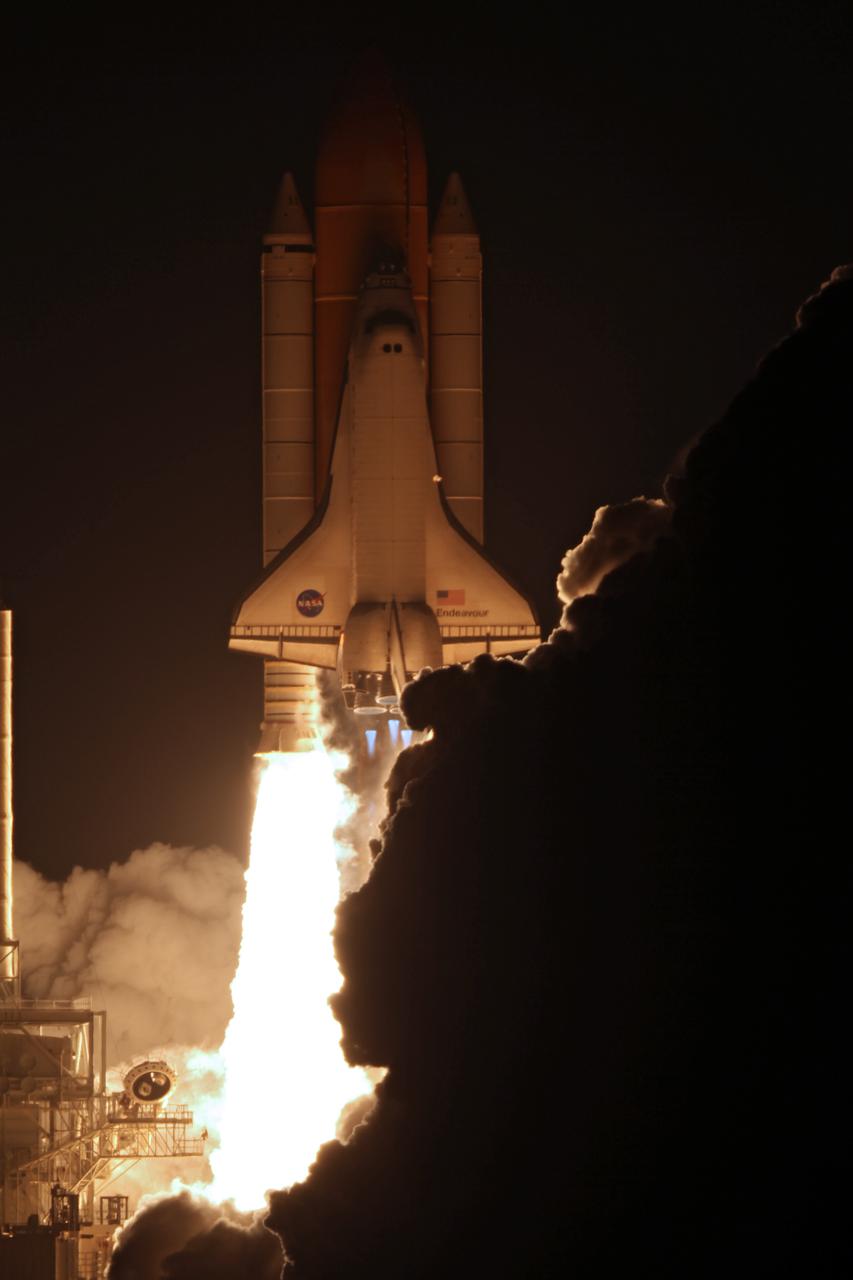
CAPE CANAVERAL, Fla. - Space shuttle Endeavour emerges from behind its exhaust plume as it lifts off from Launch Pad 39A at NASA's Kennedy Space Center in Florida. Launch of the STS-130 mission to the International Space Station was at 4:14 a.m. EST. This was the second launch attempt for space shuttle Endeavour's STS-130 crew and the final scheduled space shuttle night launch. The first attempt on Feb. 7 was scrubbed due to unfavorable weather. The primary payload for the STS-130 mission to the International Space Station is the Tranquility node, a pressurized module that will provide additional room for crew members and many of the station's life support and environmental control systems. Attached to one end of Tranquility is a cupola, a unique work area with six windows on its sides and one on top. The cupola resembles a circular bay window and will provide a vastly improved view of the station's exterior. The multi-directional view will allow the crew to monitor spacewalks and docking operations, as well as provide a spectacular view of Earth and other celestial objects. The module was built in Turin, Italy, by Thales Alenia Space for the European Space Agency. For information on the STS-130 mission and crew, visit http:__www.nasa.gov_mission_pages_shuttle_shuttlemissions_sts130_index.html. Photo credit: NASA_Kenny Allen
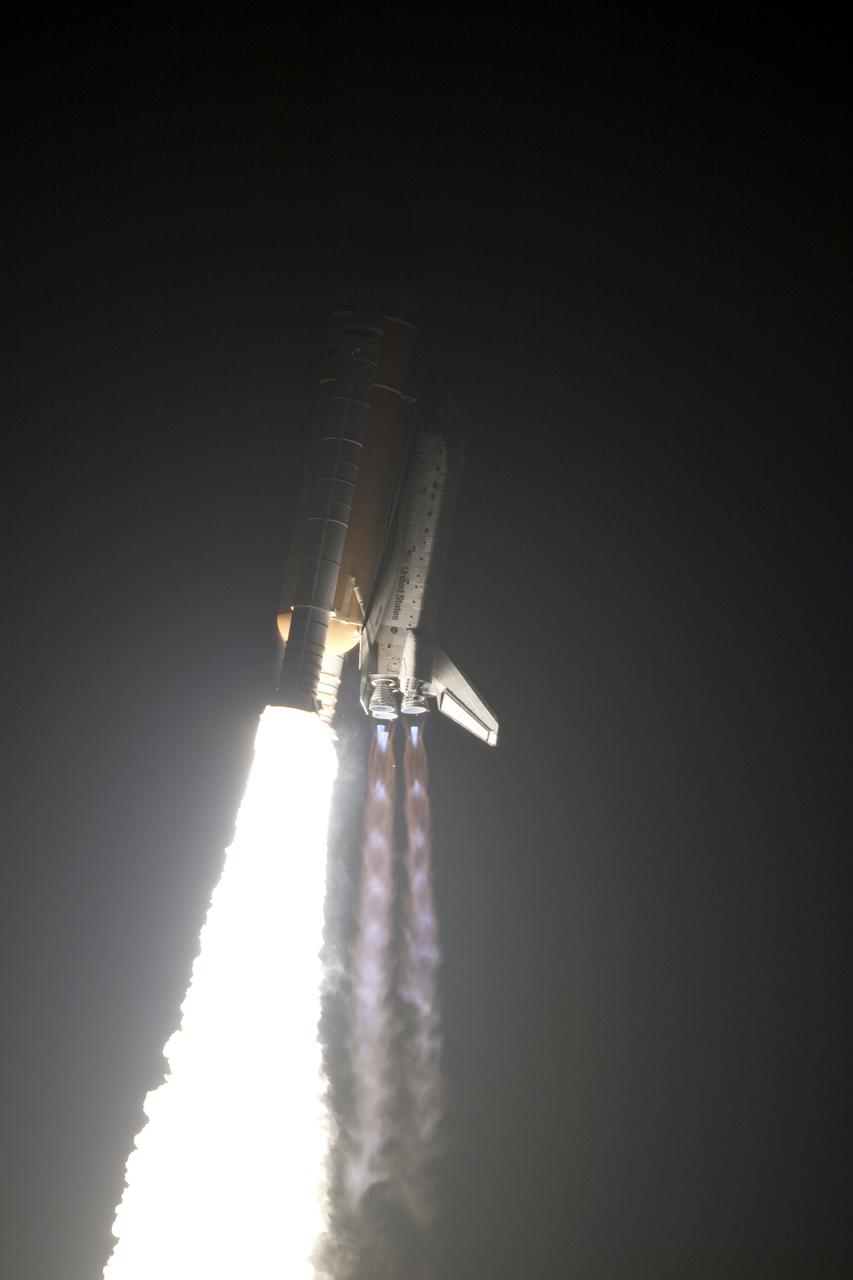
CAPE CANAVERAL, Fla. - The light from the solid rocket boosters and main engines of space shuttle Discovery is blinding as the shuttle rushes to orbit from Launch Pad 39A at NASA's Kennedy Space Center. Liftoff on the STS-131 mission was on time at 6:21 a.m. EDT. The seven-member crew will deliver the multi-purpose logistics module Leonardo, filled with supplies, a new crew sleeping quarters and science racks that will be transferred to the International Space Station's laboratories. The crew also will switch out a gyroscope on the station’s truss, install a spare ammonia storage tank and retrieve a Japanese experiment from the station’s exterior. STS-131 is the 33rd shuttle mission to the station and the 131st shuttle mission overall. For information on the STS-131 mission and crew, visit http:__www.nasa.gov_mission_pages_shuttle_shuttlemissions_sts131_index.html. Photo credit: NASA_Kenny Allen
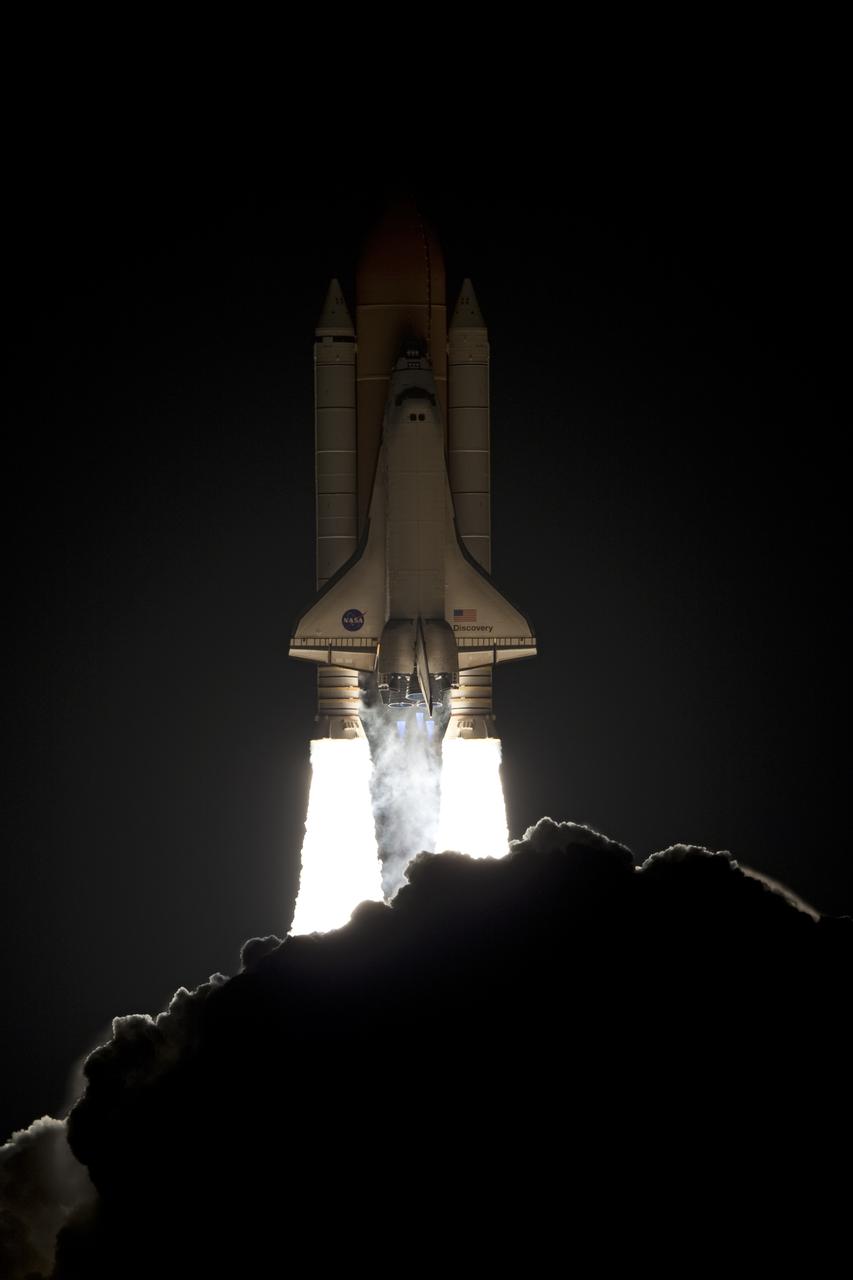
CAPE CANAVERAL, Fla. - Space shuttle Discovery rises above the exhaust cloud building at Launch Pad 39A at NASA's Kennedy Space Center in Florida as it begins its climb to orbit at 6:21 a.m. EDT April 5 on the STS-131 mission. The seven-member crew will deliver the multi-purpose logistics module Leonardo, filled with supplies, a new crew sleeping quarters and science racks that will be transferred to the International Space Station's laboratories. The crew also will switch out a gyroscope on the station’s truss, install a spare ammonia storage tank and retrieve a Japanese experiment from the station’s exterior. STS-131 is the 33rd shuttle mission to the station and the 131st shuttle mission overall. For information on the STS-131 mission and crew, visit http:__www.nasa.gov_mission_pages_shuttle_shuttlemissions_sts131_index.html. Photo credit: NASA_Kenny Allen
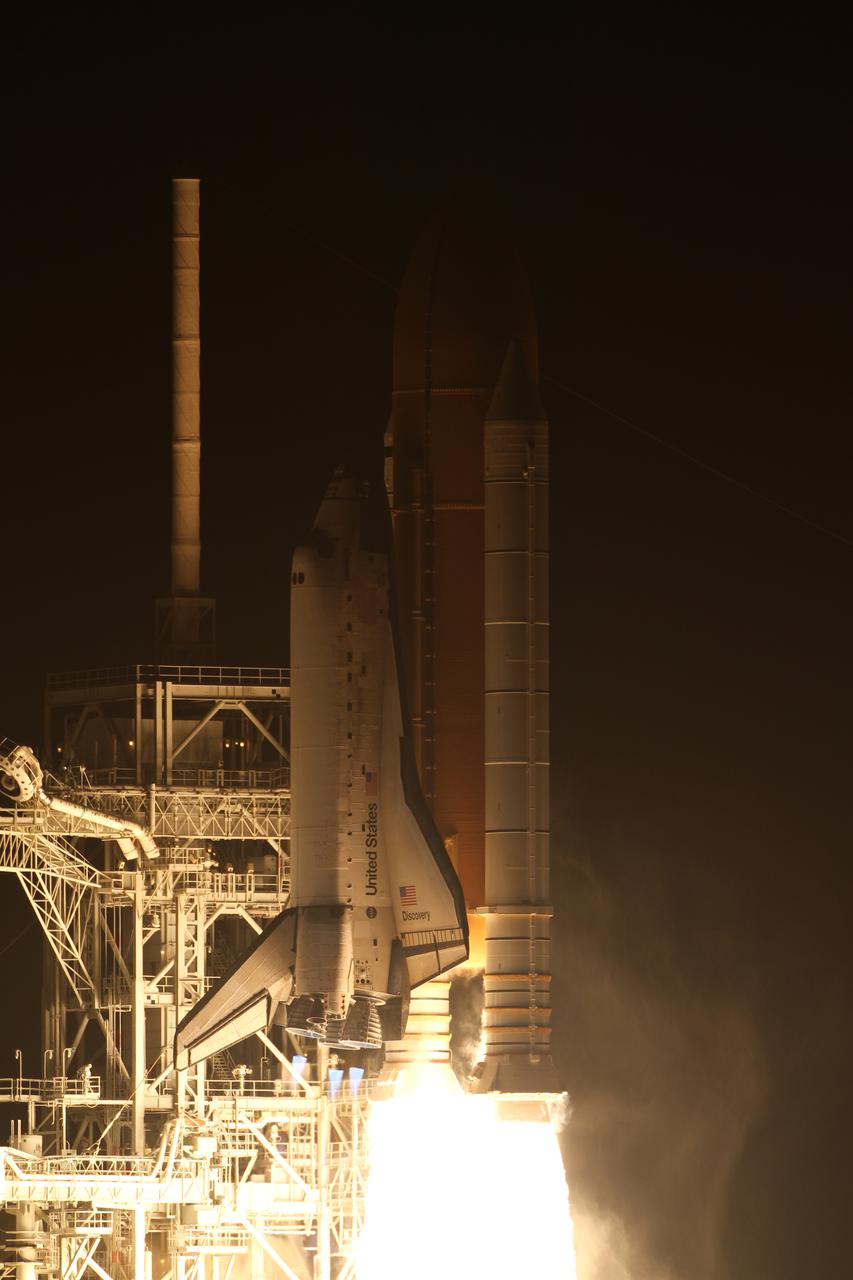
CAPE CANAVERAL, Fla. - Engine ignition on space shuttle Discovery illuminates the lightning mast atop the fixed service structure on Launch Pad 39A at NASA's Kennedy Space Center in Florida. Discovery launched at 6:21 a.m. EDT April 5 on the STS-131 mission. The seven-member crew will deliver the multi-purpose logistics module Leonardo, filled with supplies, a new crew sleeping quarters and science racks that will be transferred to the International Space Station's laboratories. The crew also will switch out a gyroscope on the station’s truss, install a spare ammonia storage tank and retrieve a Japanese experiment from the station’s exterior. STS-131 is the 33rd shuttle mission to the station and the 131st shuttle mission overall. For information on the STS-131 mission and crew, visit http:__www.nasa.gov_mission_pages_shuttle_shuttlemissions_sts131_index.html. Photo credit: NASA_Kenny Allen
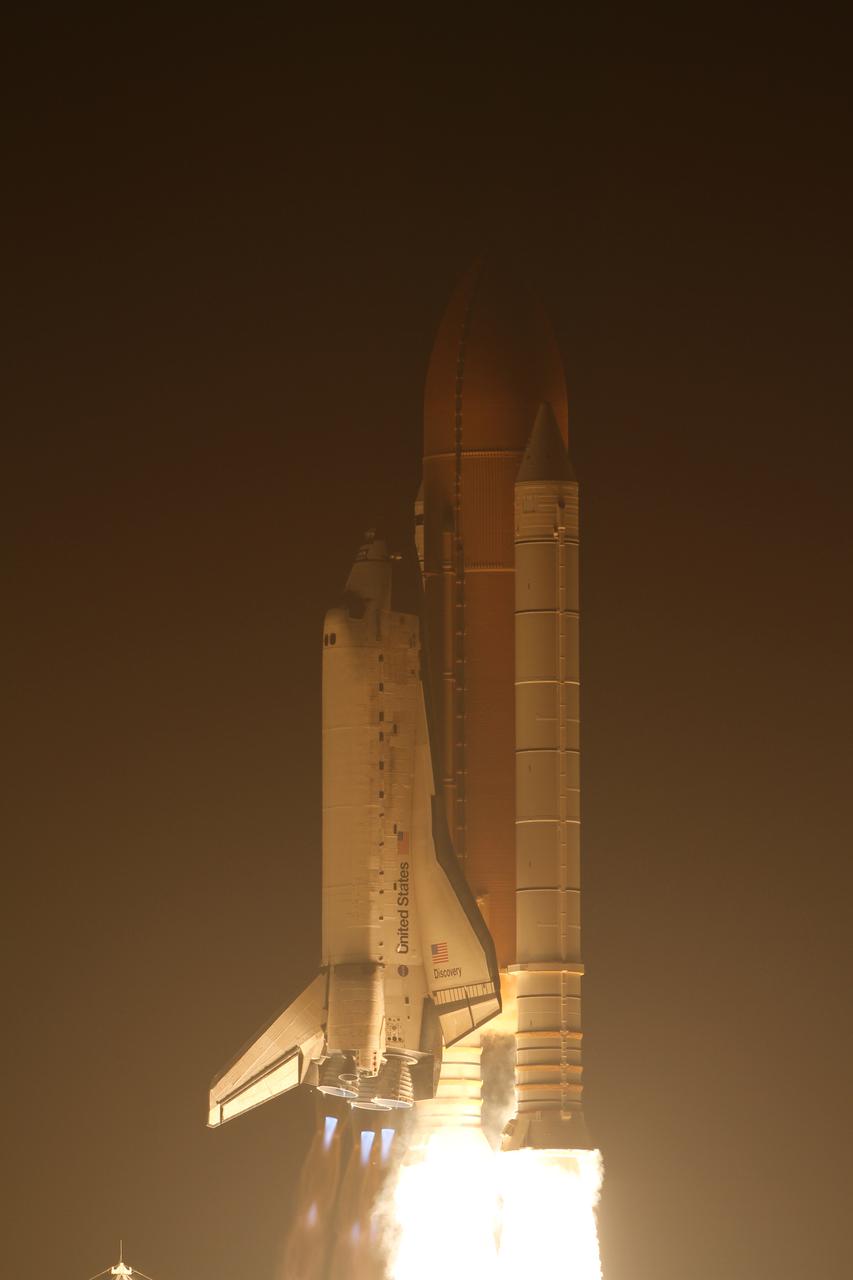
CAPE CANAVERAL, Fla. - Space shuttle Discovery roars off Launch Pad 39A at NASA's Kennedy Space Center in Florida at 6:21 a.m. EDT April 5 beginning the STS-131 mission. The seven-member crew will deliver the multi-purpose logistics module Leonardo, filled with supplies, a new crew sleeping quarters and science racks that will be transferred to the International Space Station's laboratories. The crew also will switch out a gyroscope on the station’s truss, install a spare ammonia storage tank and retrieve a Japanese experiment from the station’s exterior. STS-131 is the 33rd shuttle mission to the station and the 131st shuttle mission overall. For information on the STS-131 mission and crew, visit http:__www.nasa.gov_mission_pages_shuttle_shuttlemissions_sts131_index.html. Photo credit: NASA_Kenny Allen
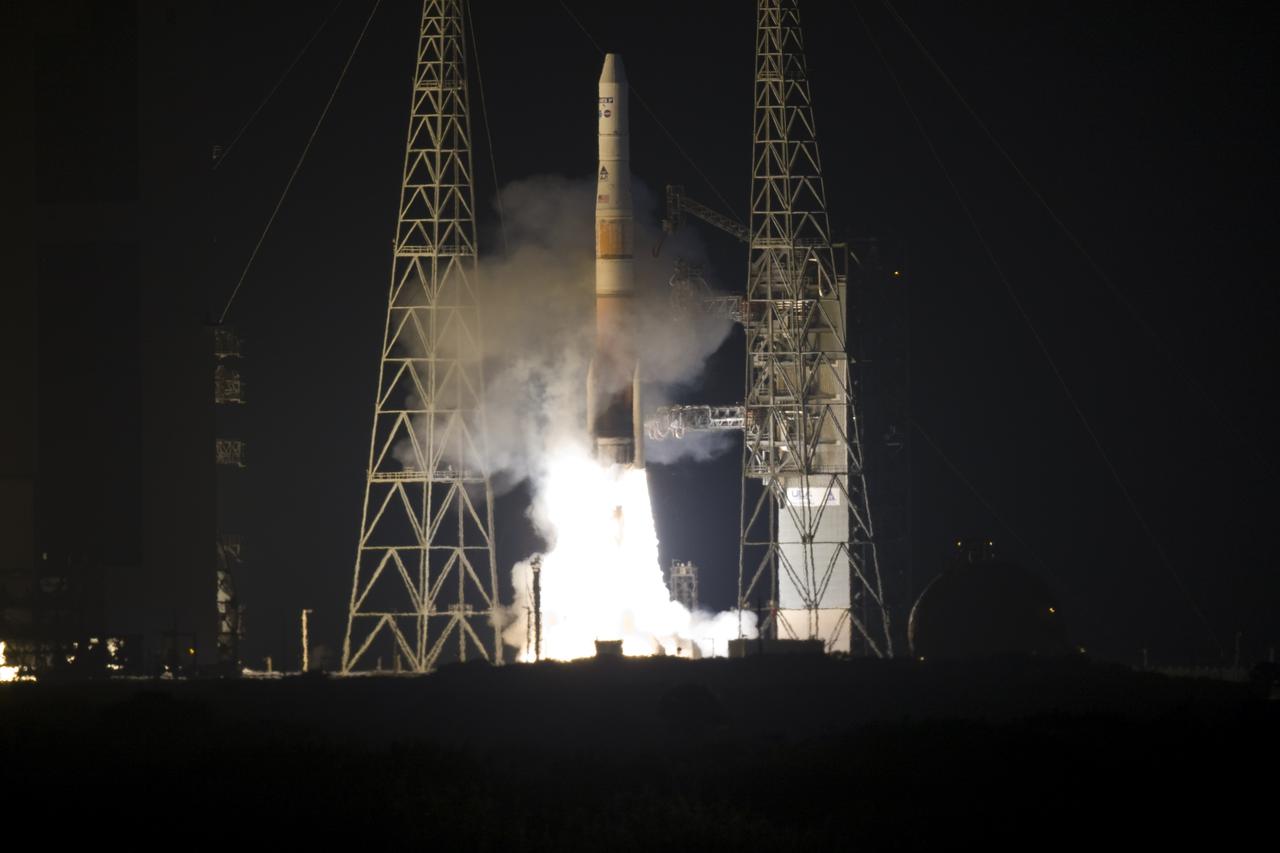
CAPE CANAVERAL, Fla. – At Launch Complex 37 on Cape Canaveral Air Force Station in Florida, a United Launch Alliance Delta IV rocket carrying NASA's GOES-P meteorological satellite lifts off at 6:57 p.m. EST. GOES-P, the latest Geostationary Operational Environmental Satellite, was developed by NASA for the National Oceanic and Atmospheric Administration, or NOAA. The GOES-P spacecraft will be placed in a 22,300-mile-high geosynchronous orbit where it will appear to hover over a single point on Earth. The spacecraft is outfitted with a complex suite of observation instruments and cameras so it can accurately report on weather and climate conditions on Earth. For information on GOES-P, visit http:__www.nasa.gov_mission_pages_GOES-P_main_index.html. Photo credit: NASA_Kenny Allen
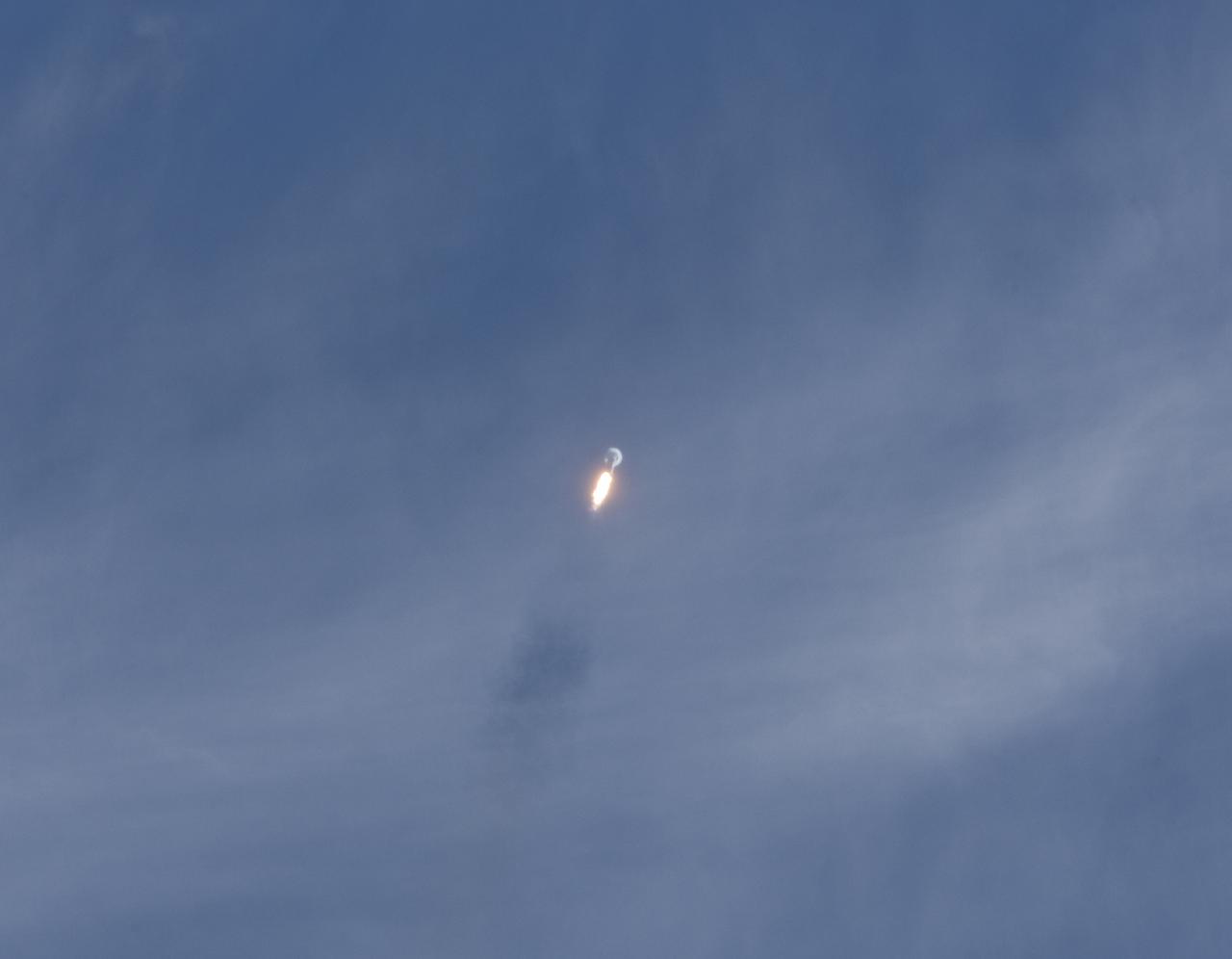
CAPE CANAVERAL, Fla. – A contrail begins to form behind the United Launch Alliance Atlas V rocket carrying NASA's Solar Dynamics Observatory as it climbs to orbit. Liftoff from Launch Complex 41 on Cape Canaveral Air Force Station was at 10:23 a.m. EST Feb. 11. This is the 100th launch of a commercial Atlas_Centaur rocket. The observatory, known as SDO, is the first mission in NASA's Living With a Star Program and is designed to study the causes of solar variability and its impacts on Earth. The spacecraft's long-term measurements will give solar scientists in-depth information to help characterize the interior of the Sun, the Sun's magnetic field, the hot plasma of the solar corona, and the density of radiation that creates the ionosphere of the planets. The information will be used to create better forecasts of space weather needed to protect the aircraft, satellites and astronauts living and working in space. For information on SDO, visit http:__www.nasa.gov_sdo. Photo credit: NASA_Kenny Allen
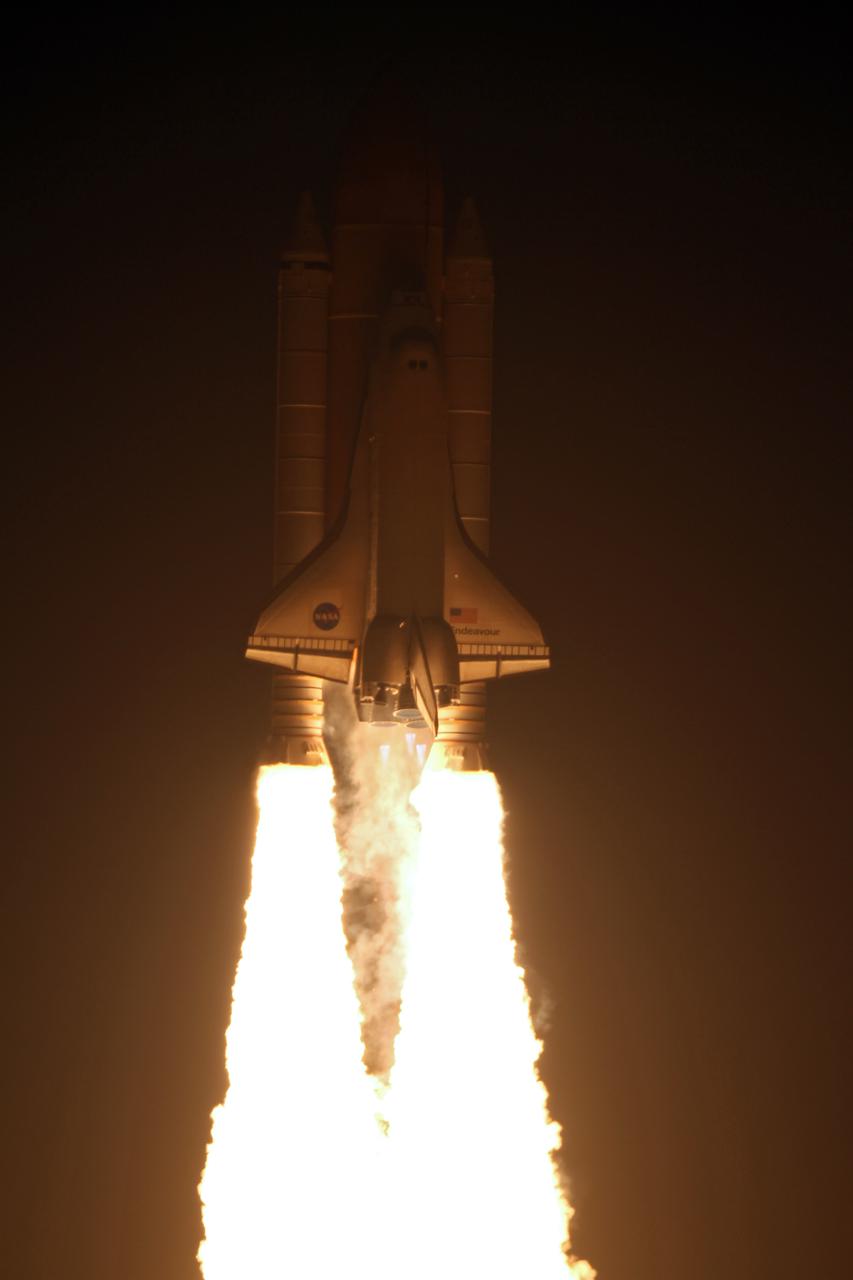
CAPE CANAVERAL, Fla. - Engines blazing, space shuttle Endeavour races to orbit from Launch Pad 39A at NASA's Kennedy Space Center in Florida, carrying a six-member crew. Launch of the STS-130 mission to the International Space Station was at 4:14 a.m. EST. This was the second launch attempt for space shuttle Endeavour's STS-130 crew and the final scheduled space shuttle night launch. The first attempt on Feb. 7 was scrubbed due to unfavorable weather. The primary payload for the STS-130 mission to the International Space Station is the Tranquility node, a pressurized module that will provide additional room for crew members and many of the station's life support and environmental control systems. Attached to one end of Tranquility is a cupola, a unique work area with six windows on its sides and one on top. The cupola resembles a circular bay window and will provide a vastly improved view of the station's exterior. The multi-directional view will allow the crew to monitor spacewalks and docking operations, as well as provide a spectacular view of Earth and other celestial objects. The module was built in Turin, Italy, by Thales Alenia Space for the European Space Agency. For information on the STS-130 mission and crew, visit http:__www.nasa.gov_mission_pages_shuttle_shuttlemissions_sts130_index.html. Photo credit: NASA_Kenny Allen
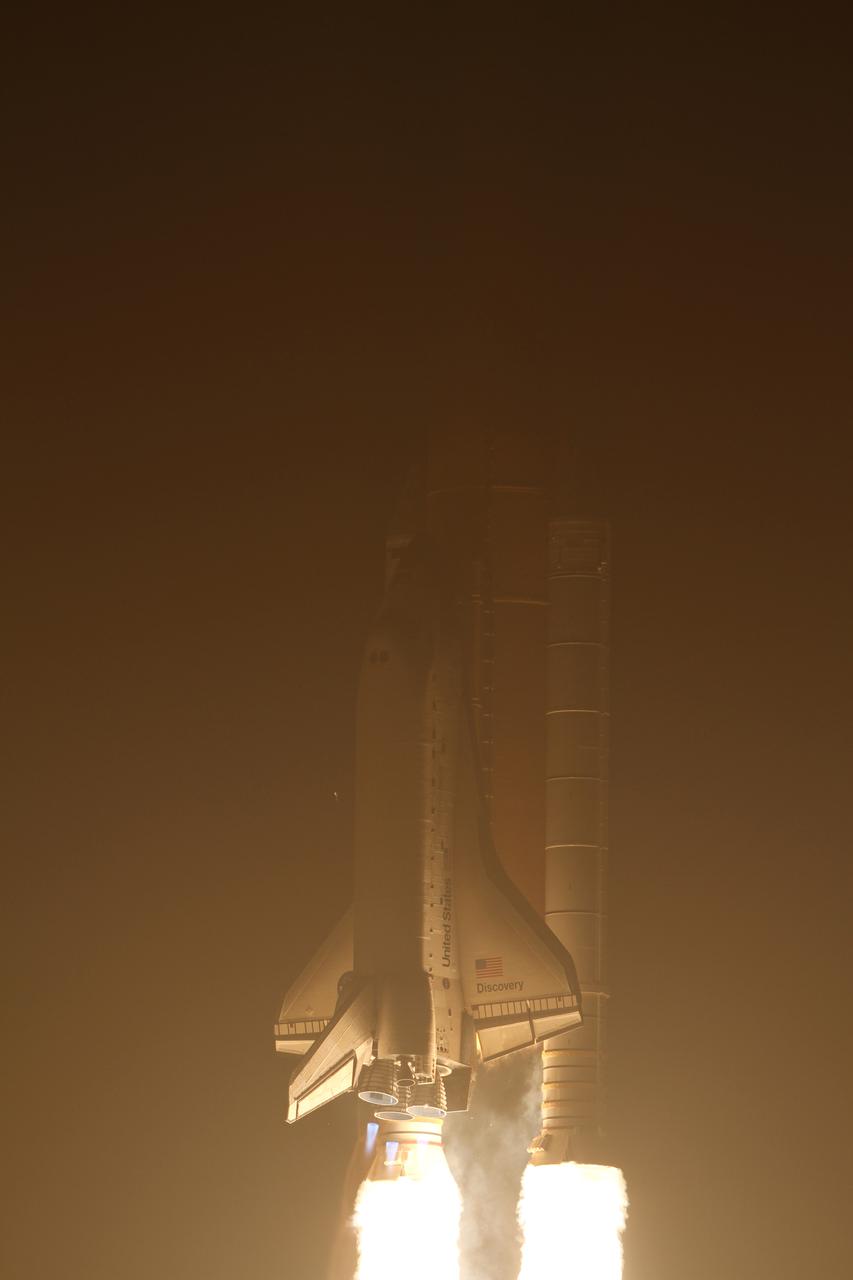
CAPE CANAVERAL, Fla. - Space shuttle Discovery roars into the predawn sky over Launch Pad 39A at NASA's Kennedy Space Center in Florida at 6:21 a.m. EDT April 5 kicking off the STS-131 mission. The seven-member crew will deliver the multi-purpose logistics module Leonardo, filled with supplies, a new crew sleeping quarters and science racks that will be transferred to the International Space Station's laboratories. The crew also will switch out a gyroscope on the station’s truss, install a spare ammonia storage tank and retrieve a Japanese experiment from the station’s exterior. STS-131 is the 33rd shuttle mission to the station and the 131st shuttle mission overall. For information on the STS-131 mission and crew, visit http:__www.nasa.gov_mission_pages_shuttle_shuttlemissions_sts131_index.html. Photo credit: NASA_Kenny Allen
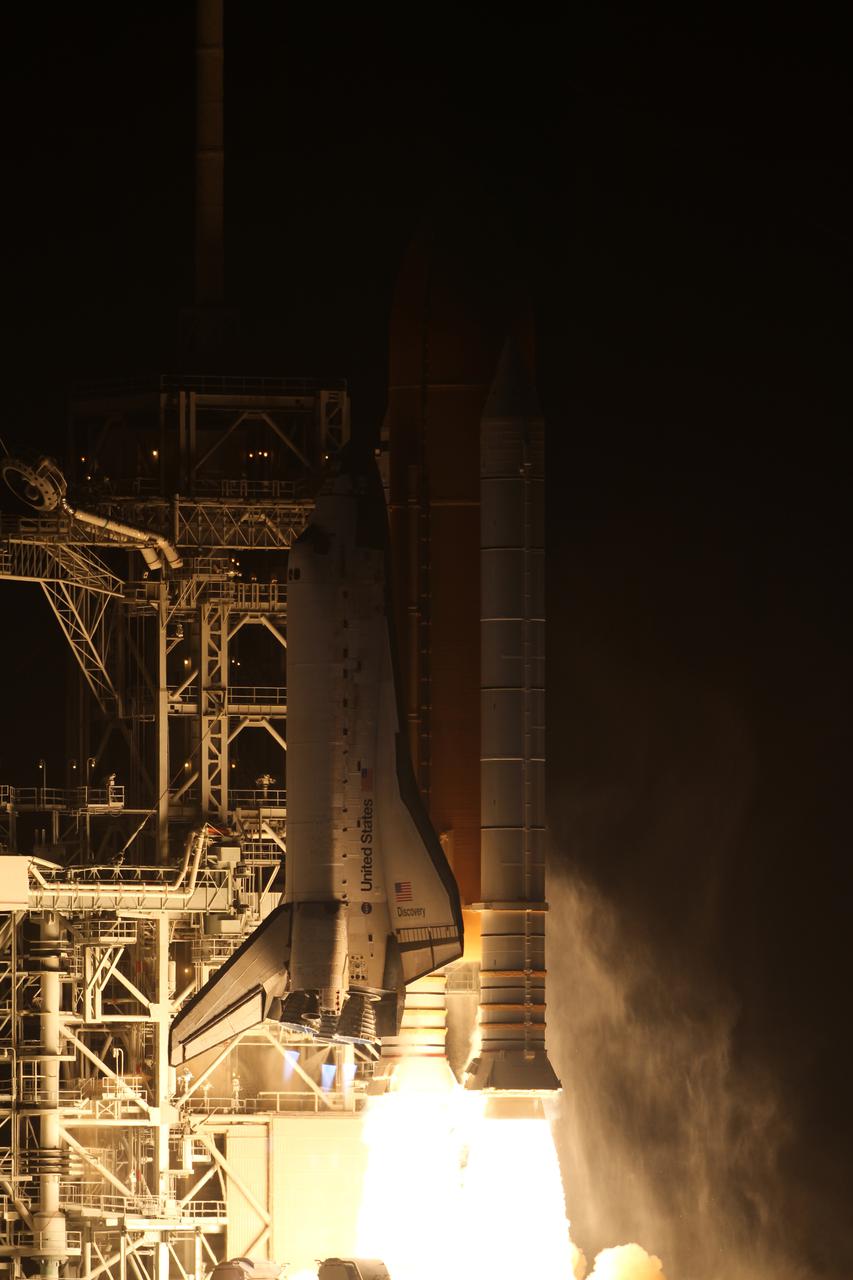
CAPE CANAVERAL, Fla. - In a blinding flash, space shuttle Discovery's engines ignite at 6:21 a.m. EDT April 5 for liftoff of the STS-131 mission from Launch Pad 39A at NASA's Kennedy Space Center in Florida. The seven-member crew will deliver the multi-purpose logistics module Leonardo, filled with supplies, a new crew sleeping quarters and science racks that will be transferred to the International Space Station's laboratories. The crew also will switch out a gyroscope on the station’s truss, install a spare ammonia storage tank and retrieve a Japanese experiment from the station’s exterior. STS-131 is the 33rd shuttle mission to the station and the 131st shuttle mission overall. For information on the STS-131 mission and crew, visit http:__www.nasa.gov_mission_pages_shuttle_shuttlemissions_sts131_index.html. Photo credit: NASA_Kenny Allen
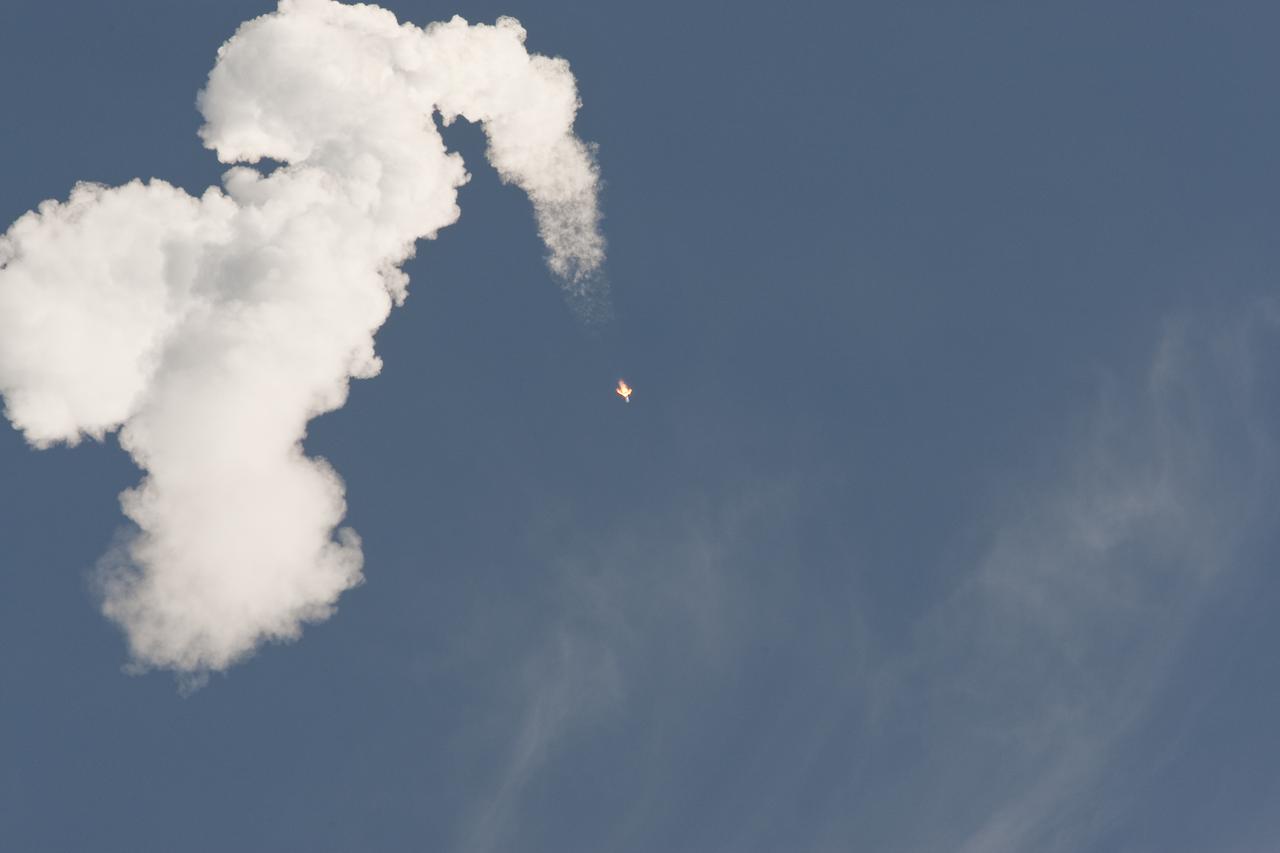
CAPE CANAVERAL, Fla. – Winds aloft affect the contrail of the United Launch Alliance Atlas V rocket carrying NASA's Solar Dynamics Observatory to orbit. Liftoff from Launch Complex 41 on Cape Canaveral Air Force Station was at 10:23 a.m. EST Feb. 11. This is the 100th launch of a commercial Atlas_Centaur rocket. The observatory, known as SDO, is the first mission in NASA's Living With a Star Program and is designed to study the causes of solar variability and its impacts on Earth. The spacecraft's long-term measurements will give solar scientists in-depth information to help characterize the interior of the Sun, the Sun's magnetic field, the hot plasma of the solar corona, and the density of radiation that creates the ionosphere of the planets. The information will be used to create better forecasts of space weather needed to protect the aircraft, satellites and astronauts living and working in space. For information on SDO, visit http:__www.nasa.gov_sdo. Photo credit: NASA_Kenny Allen
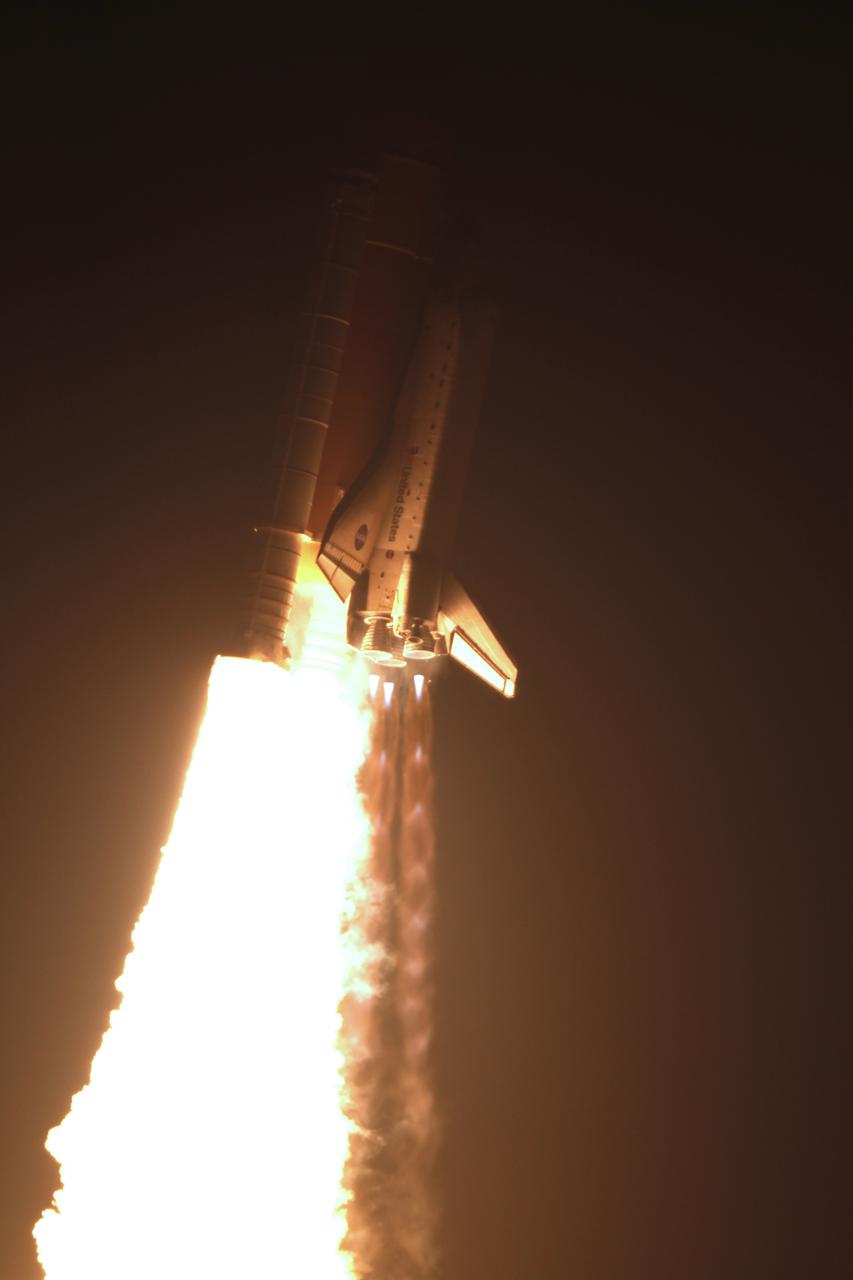
CAPE CANAVERAL, Fla. - It's 'go for throttle up' as space shuttle Endeavour leaves Launch Pad 39A behind at NASA's Kennedy Space Center in Florida, delivering its six-member crew to orbit. Launch of the STS-130 mission to the International Space Station was at 4:14 a.m. EST. This was the second launch attempt for space shuttle Endeavour's STS-130 crew and the final scheduled space shuttle night launch. The first attempt on Feb. 7 was scrubbed due to unfavorable weather. The primary payload for the STS-130 mission to the International Space Station is the Tranquility node, a pressurized module that will provide additional room for crew members and many of the station's life support and environmental control systems. Attached to one end of Tranquility is a cupola, a unique work area with six windows on its sides and one on top. The cupola resembles a circular bay window and will provide a vastly improved view of the station's exterior. The multi-directional view will allow the crew to monitor spacewalks and docking operations, as well as provide a spectacular view of Earth and other celestial objects. The module was built in Turin, Italy, by Thales Alenia Space for the European Space Agency. For information on the STS-130 mission and crew, visit http:__www.nasa.gov_mission_pages_shuttle_shuttlemissions_sts130_index.html. Photo credit: NASA_Kenny Allen
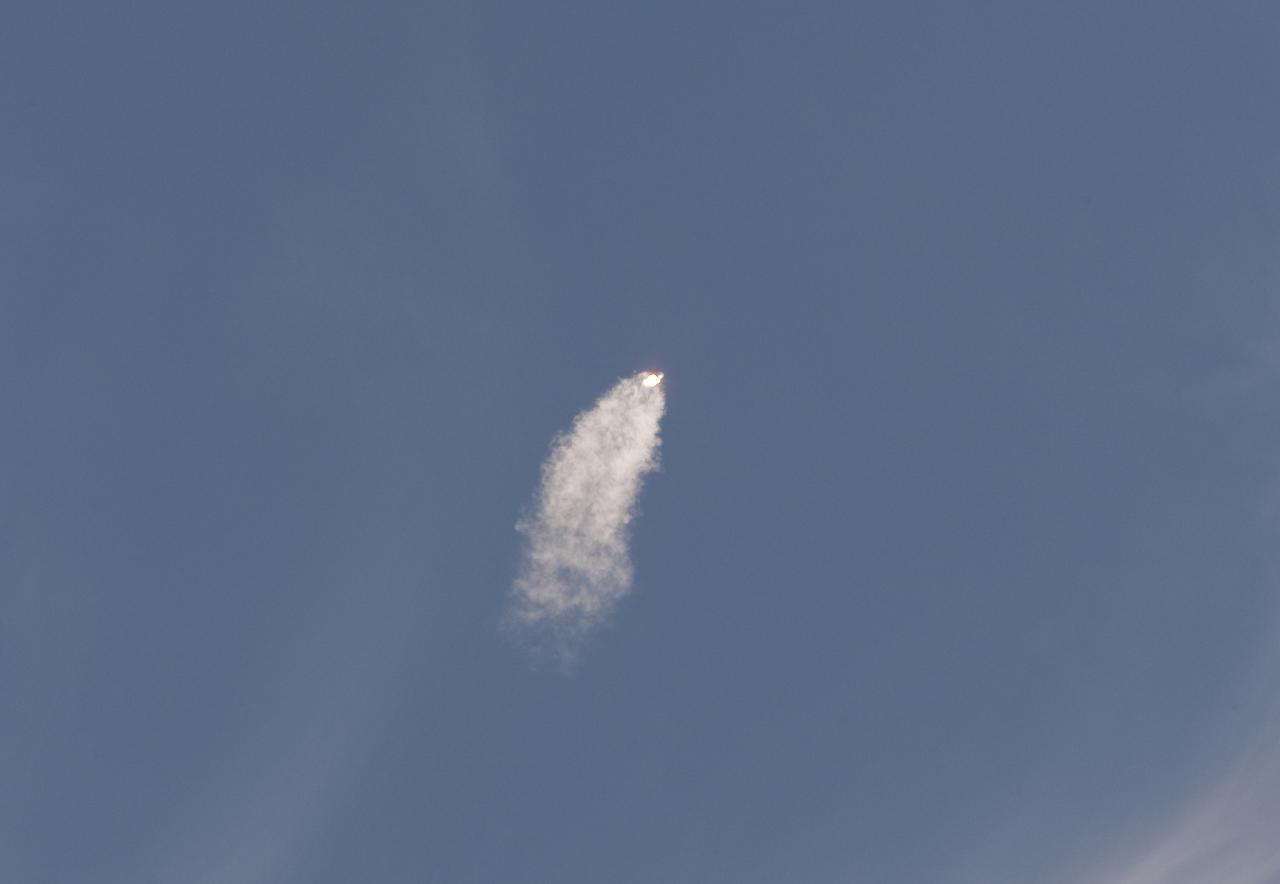
CAPE CANAVERAL, Fla. – A United Launch Alliance Atlas V rocket carrying NASA's Solar Dynamics Observatory creates a contrail as it climbs to orbit. Liftoff from Launch Complex 41 on Cape Canaveral Air Force Station was at 10:23 a.m. EST Feb. 11. This is the 100th launch of a commercial Atlas_Centaur rocket. The observatory, known as SDO, is the first mission in NASA's Living With a Star Program and is designed to study the causes of solar variability and its impacts on Earth. The spacecraft's long-term measurements will give solar scientists in-depth information to help characterize the interior of the Sun, the Sun's magnetic field, the hot plasma of the solar corona, and the density of radiation that creates the ionosphere of the planets. The information will be used to create better forecasts of space weather needed to protect the aircraft, satellites and astronauts living and working in space. For information on SDO, visit http:__www.nasa.gov_sdo. Photo credit: NASA_Kenny Allen
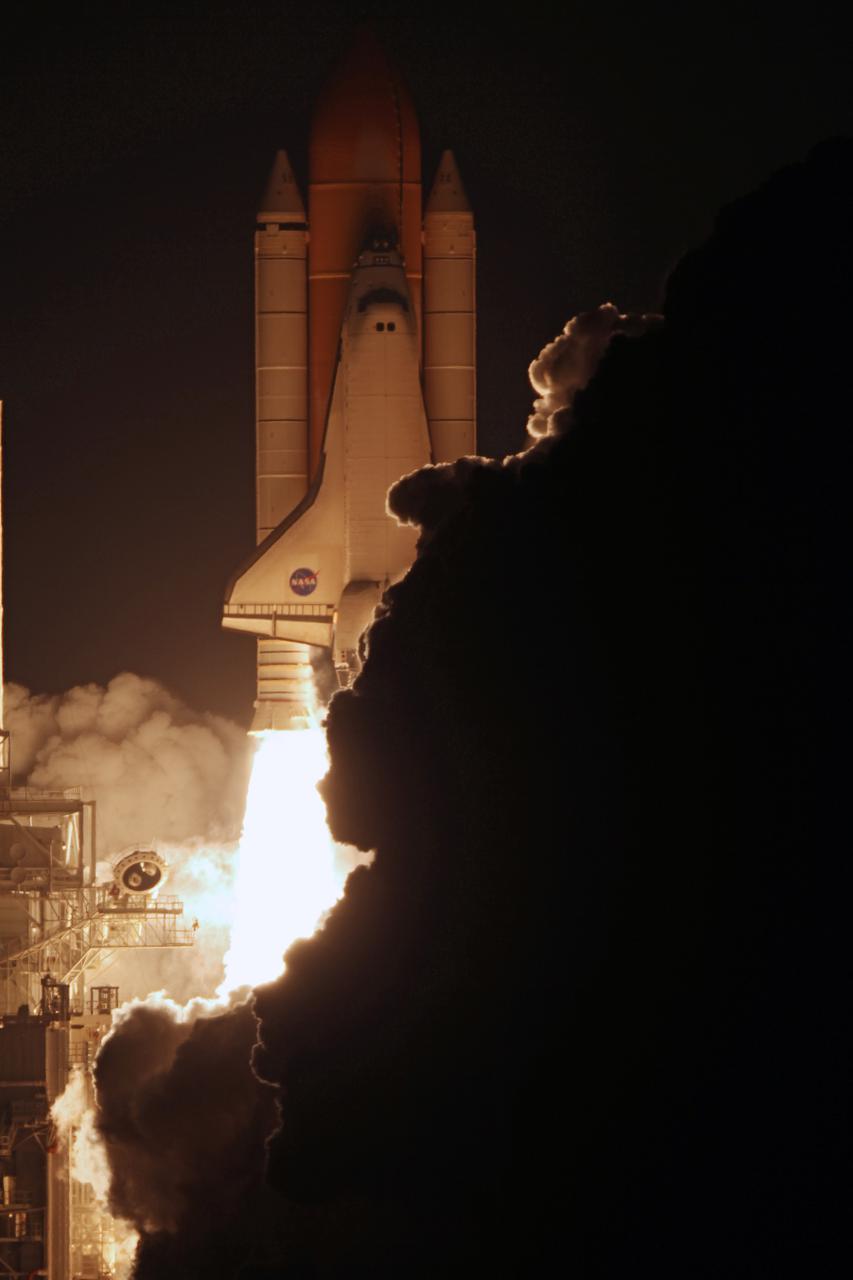
CAPE CANAVERAL, Fla. - Space shuttle Endeavour is partially obscured by its exhaust plume as it lifts off from Launch Pad 39A at NASA's Kennedy Space Center in Florida. Launch of the STS-130 mission to the International Space Station was at 4:14 a.m. EST. This was the second launch attempt for space shuttle Endeavour's STS-130 crew and the final scheduled space shuttle night launch. The first attempt on Feb. 7 was scrubbed due to unfavorable weather. The primary payload for the STS-130 mission to the International Space Station is the Tranquility node, a pressurized module that will provide additional room for crew members and many of the station's life support and environmental control systems. Attached to one end of Tranquility is a cupola, a unique work area with six windows on its sides and one on top. The cupola resembles a circular bay window and will provide a vastly improved view of the station's exterior. The multi-directional view will allow the crew to monitor spacewalks and docking operations, as well as provide a spectacular view of Earth and other celestial objects. The module was built in Turin, Italy, by Thales Alenia Space for the European Space Agency. For information on the STS-130 mission and crew, visit http:__www.nasa.gov_mission_pages_shuttle_shuttlemissions_sts130_index.html. Photo credit: NASA_Kenny Allen
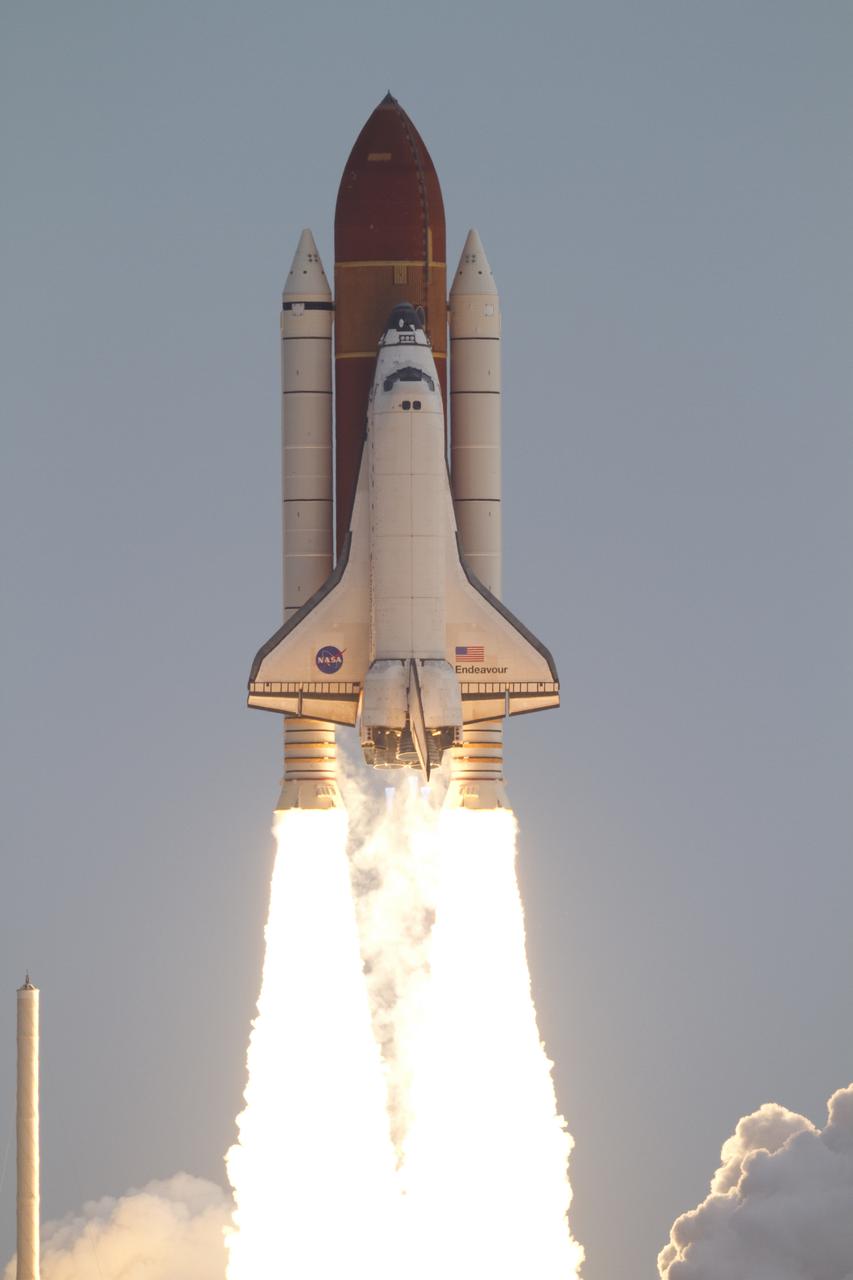
CAPE CANAVERAL, Fla. -- Space shuttle Endeavour rises on twin columns of flame from Launch Pad 39A at NASA's Kennedy Space Center in Florida. Endeavour began its final flight, the STS-134 mission to the International Space Station, at 8:56 a.m. EDT on May 16. Endeavour and its six-member crew will deliver the Alpha Magnetic Spectrometer-2 (AMS), Express Logistics Carrier-3, a high-pressure gas tank and additional spare parts for the Dextre robotic helper to the space station. For more information visit, www.nasa.gov_mission_pages_shuttle_shuttlemissions_sts134_index.html. Photo credit: NASA_Kenny Allen
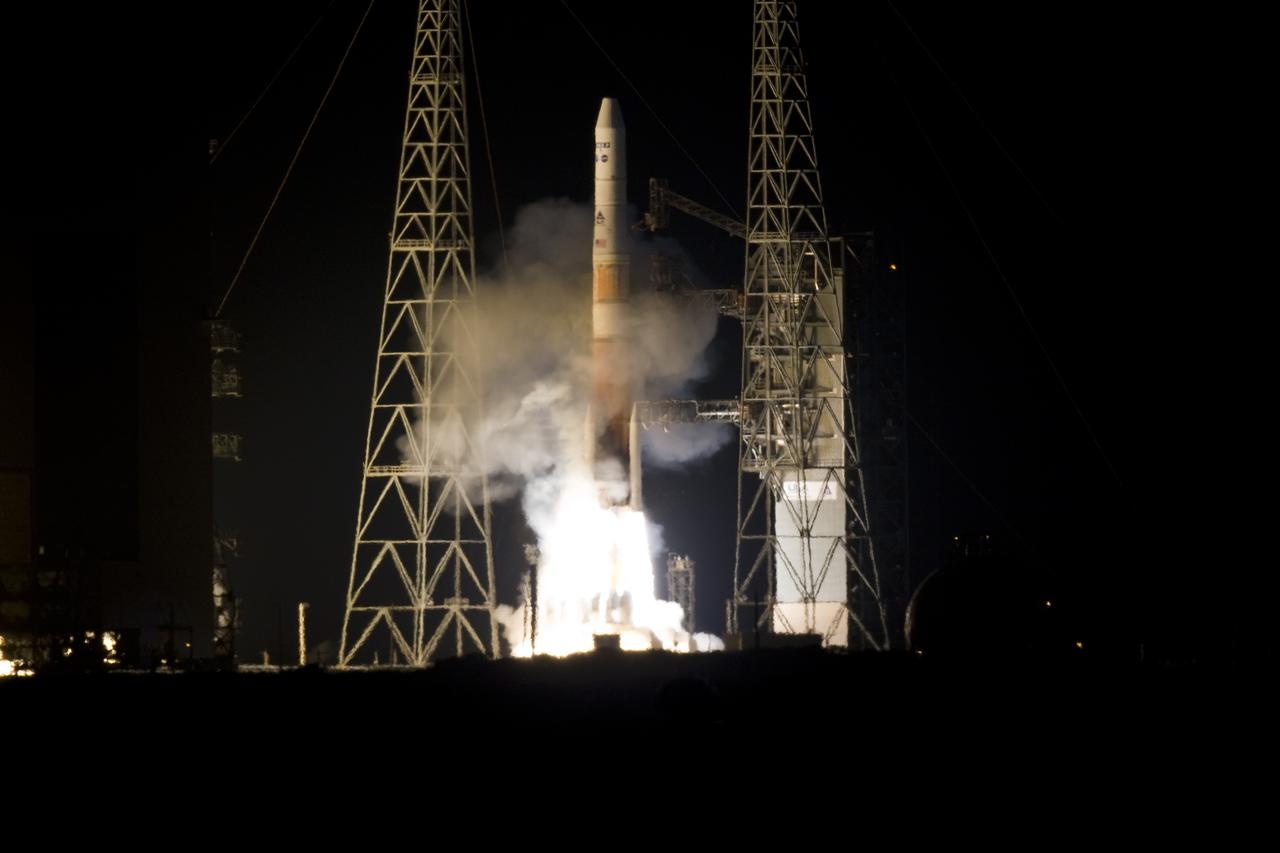
CAPE CANAVERAL, Fla. – NASA's GOES-P meteorological satellite launches aboard a United Launch Alliance Delta IV rocket at 6:57 p.m. EST from Launch Complex 37 on Cape Canaveral Air Force Station in Florida. GOES-P, the latest Geostationary Operational Environmental Satellite, was developed by NASA for the National Oceanic and Atmospheric Administration, or NOAA. The GOES-P spacecraft will be placed in a 22,300-mile-high geosynchronous orbit where it will appear to hover over a single point on Earth. The spacecraft is outfitted with a complex suite of observation instruments and cameras so it can accurately report on weather and climate conditions on Earth. For information on GOES-P, visit http:__www.nasa.gov_mission_pages_GOES-P_main_index.html. Photo credit: NASA_Kenny Allen
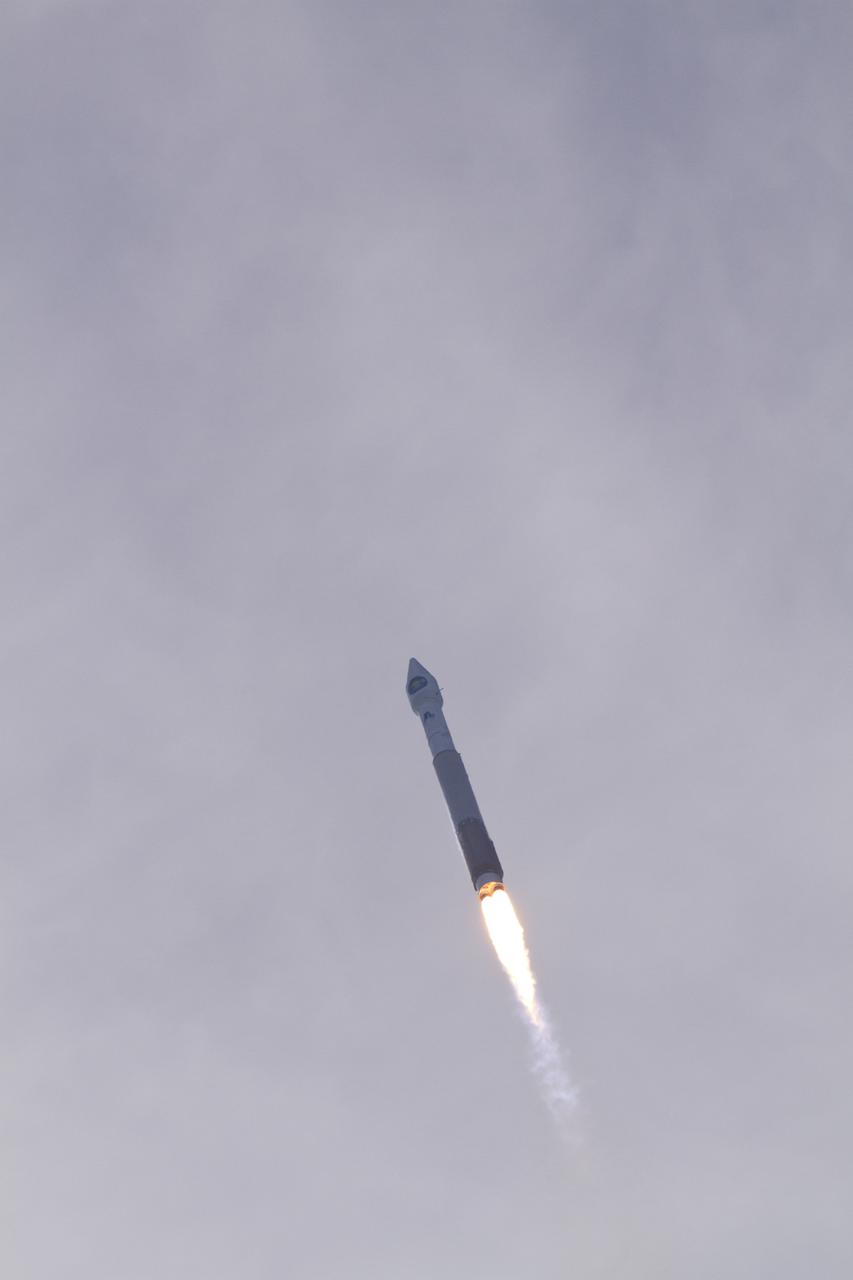
CAPE CANAVERAL, Fla. – A United Launch Alliance Atlas V rocket carrying NASA's Solar Dynamics Observatory heads into the thin upper-level clouds over Launch Complex 41 on Cape Canaveral Air Force Station on a crisp Florida morning. Liftoff was at 10:23 a.m. EST Feb. 11. This is the 100th launch of a commercial Atlas_Centaur rocket. The observatory, known as SDO, is the first mission in NASA's Living With a Star Program and is designed to study the causes of solar variability and its impacts on Earth. The spacecraft's long-term measurements will give solar scientists in-depth information to help characterize the interior of the Sun, the Sun's magnetic field, the hot plasma of the solar corona, and the density of radiation that creates the ionosphere of the planets. The information will be used to create better forecasts of space weather needed to protect the aircraft, satellites and astronauts living and working in space. For information on SDO, visit http:__www.nasa.gov_sdo. Photo credit: NASA_Kenny Allen and Rusty Backer
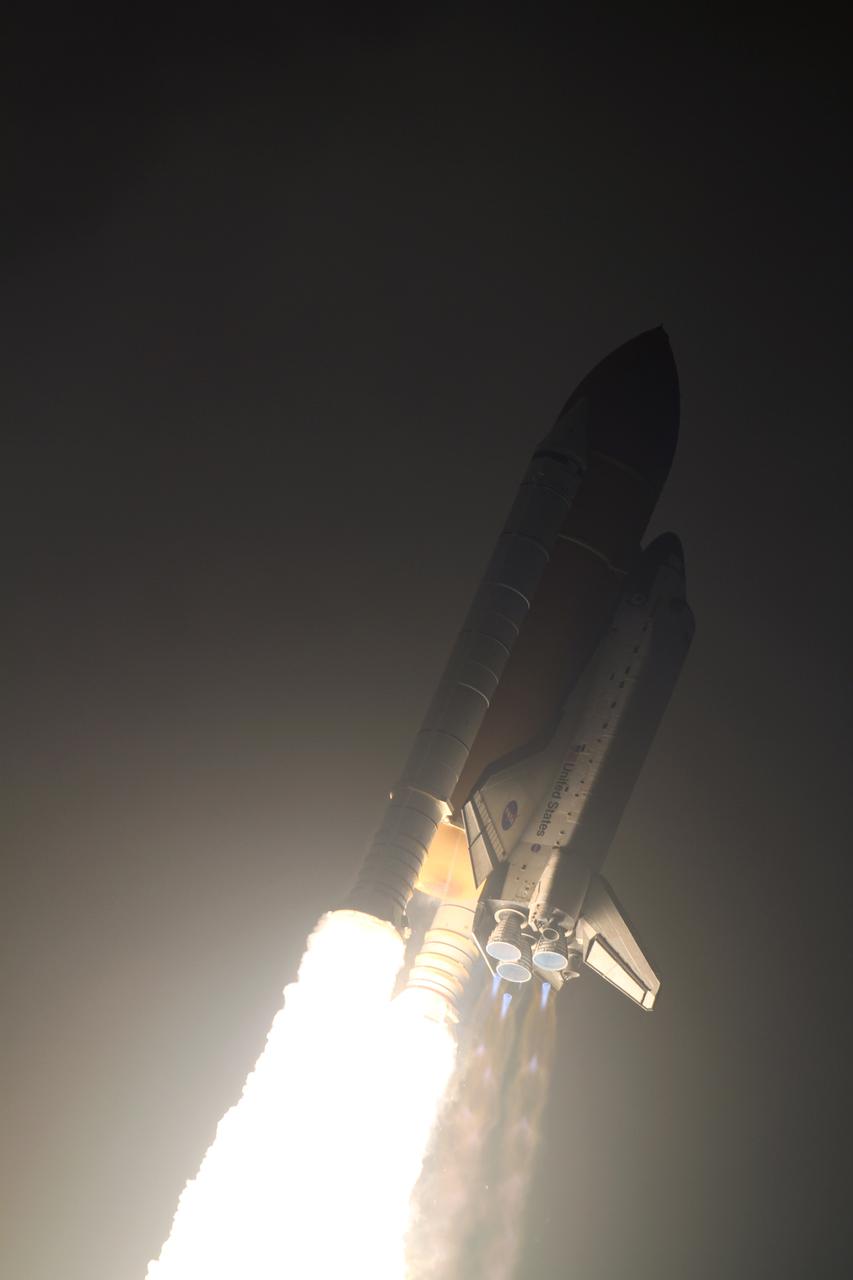
CAPE CANAVERAL, Fla. - Space shuttle Endeavour races to orbit from Launch Pad 39A at NASA's Kennedy Space Center in Florida. Launch of the STS-130 mission to the International Space Station was at 4:14 a.m. EST. This was the second launch attempt for space shuttle Endeavour's STS-130 crew and the final scheduled space shuttle night launch. The first attempt on Feb. 7 was scrubbed due to unfavorable weather. The primary payload for the STS-130 mission to the International Space Station is the Tranquility node, a pressurized module that will provide additional room for crew members and many of the station's life support and environmental control systems. Attached to one end of Tranquility is a cupola, a unique work area with six windows on its sides and one on top. The cupola resembles a circular bay window and will provide a vastly improved view of the station's exterior. The multi-directional view will allow the crew to monitor spacewalks and docking operations, as well as provide a spectacular view of Earth and other celestial objects. The module was built in Turin, Italy, by Thales Alenia Space for the European Space Agency. For information on the STS-130 mission and crew, visit http:__www.nasa.gov_mission_pages_shuttle_shuttlemissions_sts130_index.html. Photo credit: NASA_Kenny Allen and Michael Gayle
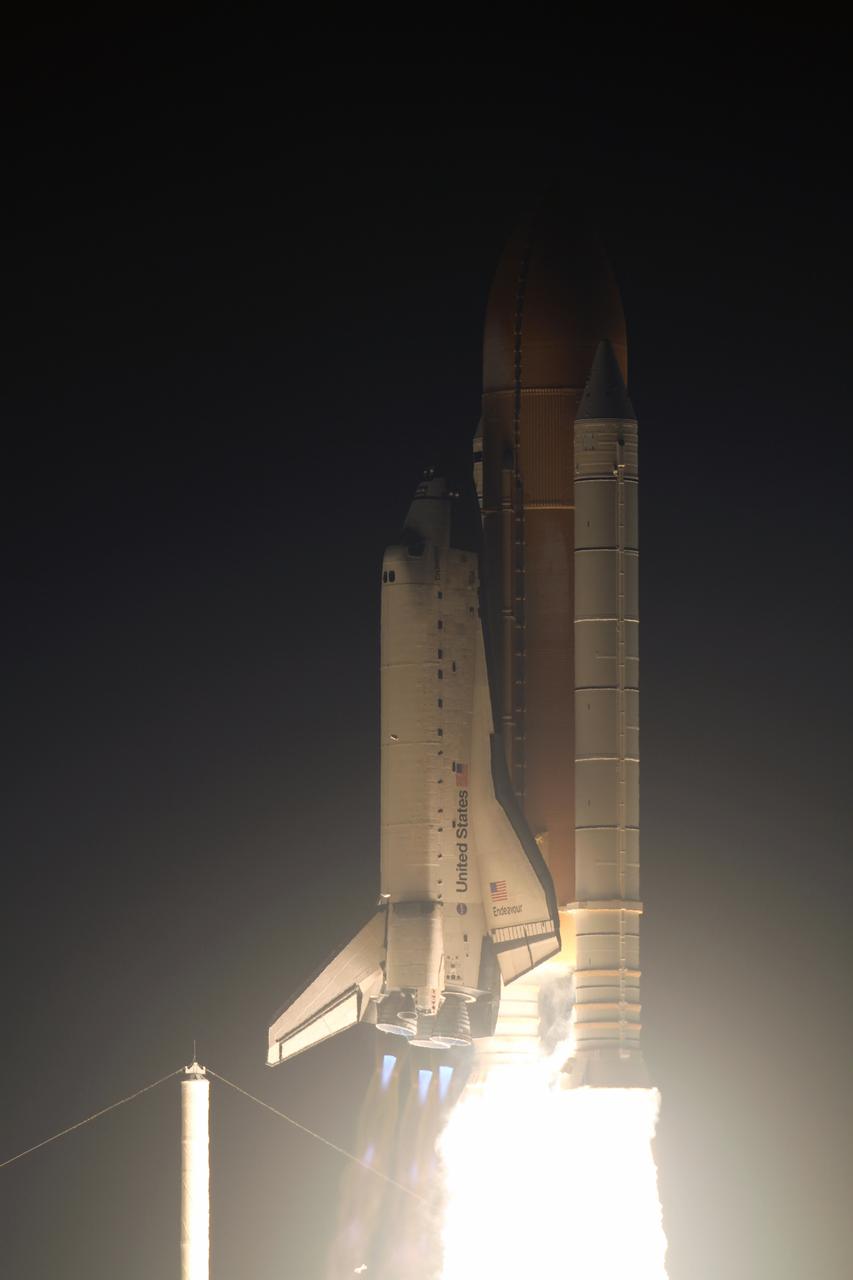
CAPE CANAVERAL, Fla. - Space shuttle Endeavour clears the tower on Launch Pad 39A at NASA's Kennedy Space Center in Florida. Launch of the STS-130 mission to the International Space Station was at 4:14 a.m. EST. This was the second launch attempt for space shuttle Endeavour's STS-130 crew and the final scheduled space shuttle night launch. The first attempt on Feb. 7 was scrubbed due to unfavorable weather. The primary payload for the STS-130 mission to the International Space Station is the Tranquility node, a pressurized module that will provide additional room for crew members and many of the station's life support and environmental control systems. Attached to one end of Tranquility is a cupola, a unique work area with six windows on its sides and one on top. The cupola resembles a circular bay window and will provide a vastly improved view of the station's exterior. The multi-directional view will allow the crew to monitor spacewalks and docking operations, as well as provide a spectacular view of Earth and other celestial objects. The module was built in Turin, Italy, by Thales Alenia Space for the European Space Agency. For information on the STS-130 mission and crew, visit http:__www.nasa.gov_mission_pages_shuttle_shuttlemissions_sts130_index.html. Photo credit: NASA_Kenny Allen and Michael Gayle
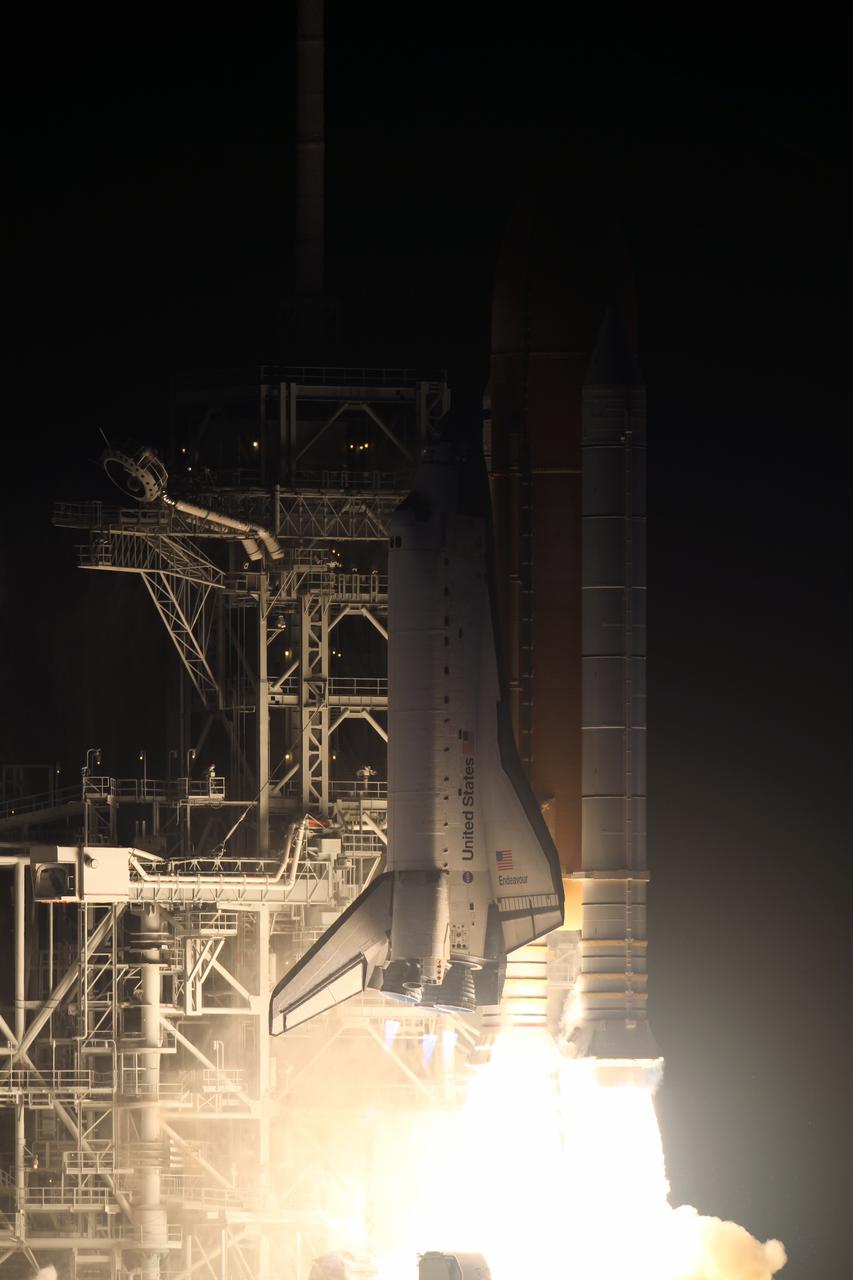
CAPE CANAVERAL, Fla. - Launch Pad 39A is illuminated by engine ignition on space shuttle Endeavour at NASA's Kennedy Space Center in Florida. Launch of the STS-130 mission to the International Space Station was at 4:14 a.m. EST. This was the second launch attempt for space shuttle Endeavour's STS-130 crew and the final scheduled space shuttle night launch. The first attempt on Feb. 7 was scrubbed due to unfavorable weather. The primary payload for the STS-130 mission to the International Space Station is the Tranquility node, a pressurized module that will provide additional room for crew members and many of the station's life support and environmental control systems. Attached to one end of Tranquility is a cupola, a unique work area with six windows on its sides and one on top. The cupola resembles a circular bay window and will provide a vastly improved view of the station's exterior. The multi-directional view will allow the crew to monitor spacewalks and docking operations, as well as provide a spectacular view of Earth and other celestial objects. The module was built in Turin, Italy, by Thales Alenia Space for the European Space Agency. For information on the STS-130 mission and crew, visit http:__www.nasa.gov_mission_pages_shuttle_shuttlemissions_sts130_index.html. Photo credit: NASA_Kenny Allen and Michael Gayle
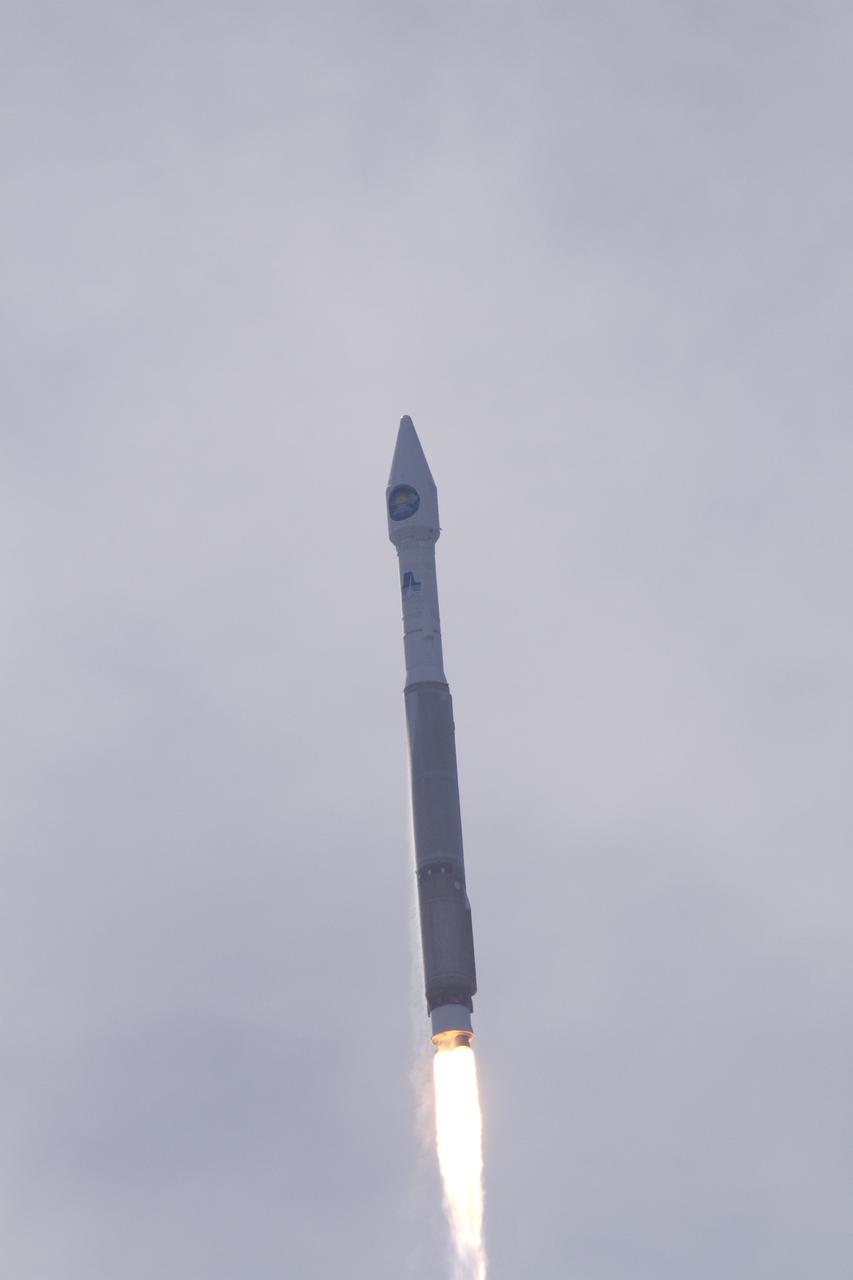
CAPE CANAVERAL, Fla. – A United Launch Alliance Atlas V rocket carrying NASA's Solar Dynamics Observatory heads toward the thin upper-level clouds over Launch Complex 41 on Cape Canaveral Air Force Station on a crisp Florida morning. Liftoff was at 10:23 a.m. EST Feb. 11. This is the 100th launch of a commercial Atlas_Centaur rocket. The observatory, known as SDO, is the first mission in NASA's Living With a Star Program and is designed to study the causes of solar variability and its impacts on Earth. The spacecraft's long-term measurements will give solar scientists in-depth information to help characterize the interior of the Sun, the Sun's magnetic field, the hot plasma of the solar corona, and the density of radiation that creates the ionosphere of the planets. The information will be used to create better forecasts of space weather needed to protect the aircraft, satellites and astronauts living and working in space. For information on SDO, visit http:__www.nasa.gov_sdo. Photo credit: NASA_Kenny Allen and Rusty Backer
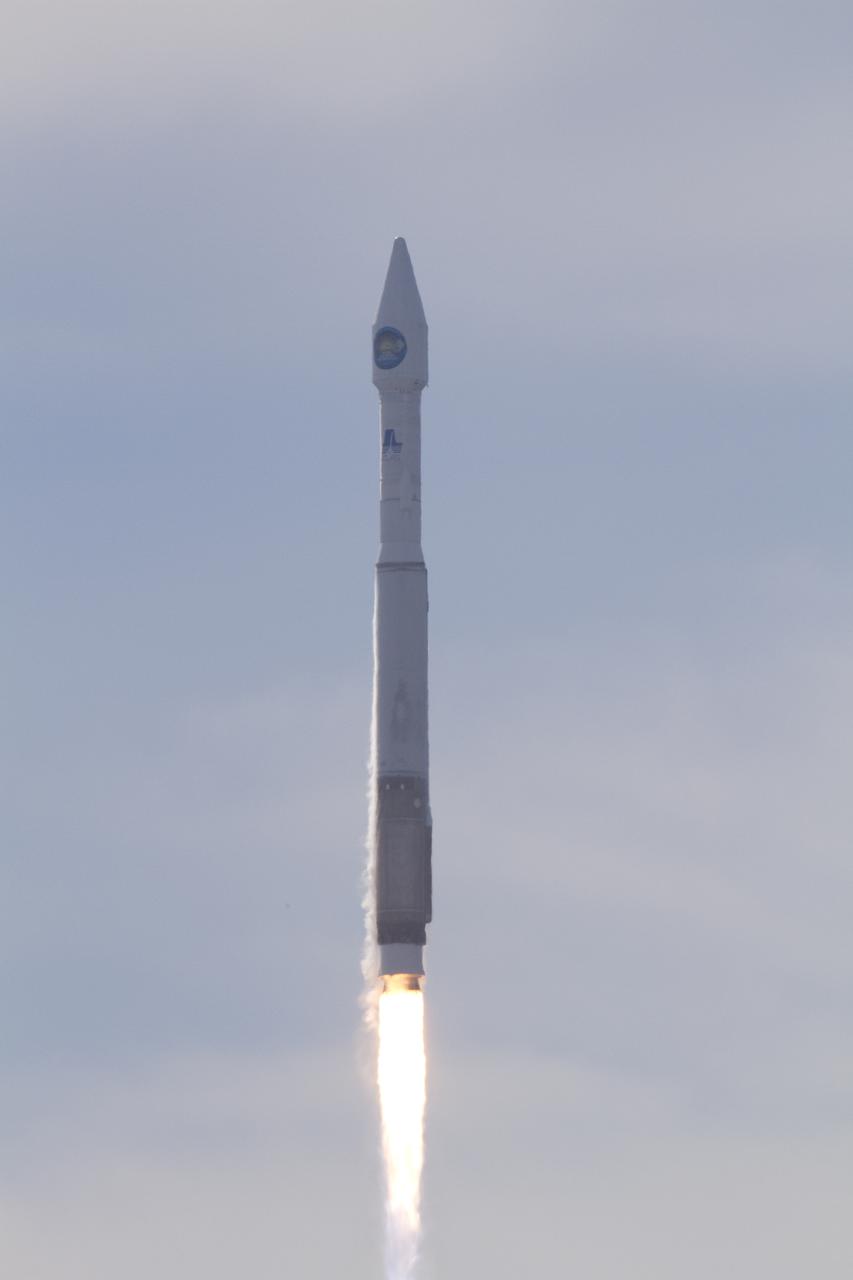
CAPE CANAVERAL, Fla. – A United Launch Alliance Atlas V rocket carrying NASA's Solar Dynamics Observatory climbs to orbit on a crisp Florida morning. Liftoff from Launch Complex 41 on Cape Canaveral Air Force Station was at 10:23 a.m. EST Feb. 11. This is the 100th launch of a commercial Atlas_Centaur rocket. The observatory, known as SDO, is the first mission in NASA's Living With a Star Program and is designed to study the causes of solar variability and its impacts on Earth. The spacecraft's long-term measurements will give solar scientists in-depth information to help characterize the interior of the Sun, the Sun's magnetic field, the hot plasma of the solar corona, and the density of radiation that creates the ionosphere of the planets. The information will be used to create better forecasts of space weather needed to protect the aircraft, satellites and astronauts living and working in space. For information on SDO, visit http:__www.nasa.gov_sdo. Photo credit: NASA_Kenny Allen and Rusty Backer
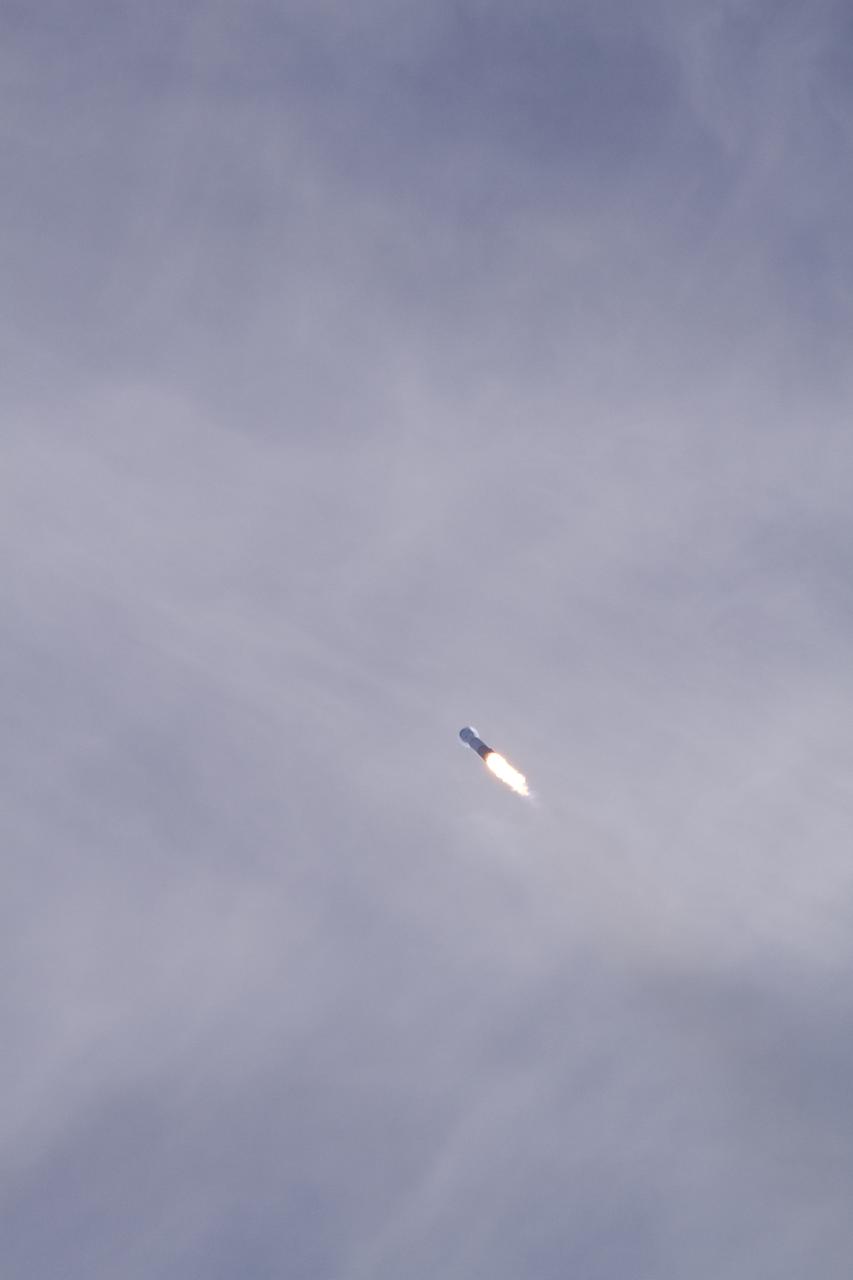
CAPE CANAVERAL, Fla. – Visibility of the United Launch Alliance Atlas V rocket carrying NASA's Solar Dynamics Observatory is good through the thin upper-level clouds through which it must travel to reach orbit. Liftoff from Launch Complex 41 on Cape Canaveral Air Force Station was at 10:23 a.m. EST Feb. 11. This is the 100th launch of a commercial Atlas_Centaur rocket. The observatory, known as SDO, is the first mission in NASA's Living With a Star Program and is designed to study the causes of solar variability and its impacts on Earth. The spacecraft's long-term measurements will give solar scientists in-depth information to help characterize the interior of the Sun, the Sun's magnetic field, the hot plasma of the solar corona, and the density of radiation that creates the ionosphere of the planets. The information will be used to create better forecasts of space weather needed to protect the aircraft, satellites and astronauts living and working in space. For information on SDO, visit http:__www.nasa.gov_sdo. Photo credit: NASA_Kenny Allen and Rusty Backer
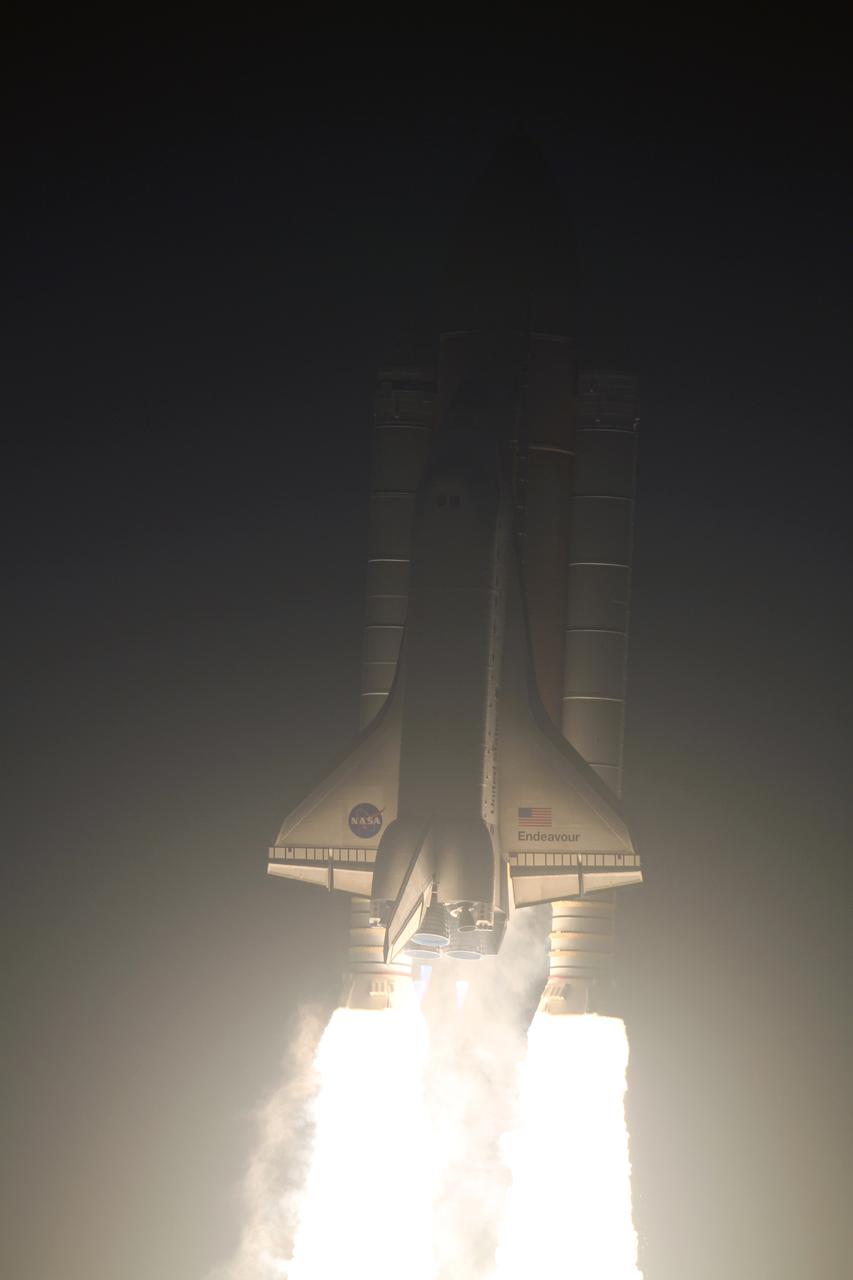
CAPE CANAVERAL, Fla. - Space shuttle Endeavour roars off Launch Pad 39A into the night sky at NASA's Kennedy Space Center in Florida. Launch of the STS-130 mission to the International Space Station was at 4:14 a.m. EST. This was the second launch attempt for space shuttle Endeavour's STS-130 crew and the final scheduled space shuttle night launch. The first attempt on Feb. 7 was scrubbed due to unfavorable weather. The primary payload for the STS-130 mission to the International Space Station is the Tranquility node, a pressurized module that will provide additional room for crew members and many of the station's life support and environmental control systems. Attached to one end of Tranquility is a cupola, a unique work area with six windows on its sides and one on top. The cupola resembles a circular bay window and will provide a vastly improved view of the station's exterior. The multi-directional view will allow the crew to monitor spacewalks and docking operations, as well as provide a spectacular view of Earth and other celestial objects. The module was built in Turin, Italy, by Thales Alenia Space for the European Space Agency. For information on the STS-130 mission and crew, visit http:__www.nasa.gov_mission_pages_shuttle_shuttlemissions_sts130_index.html. Photo credit: NASA_Kenny Allen and Michael Gayle
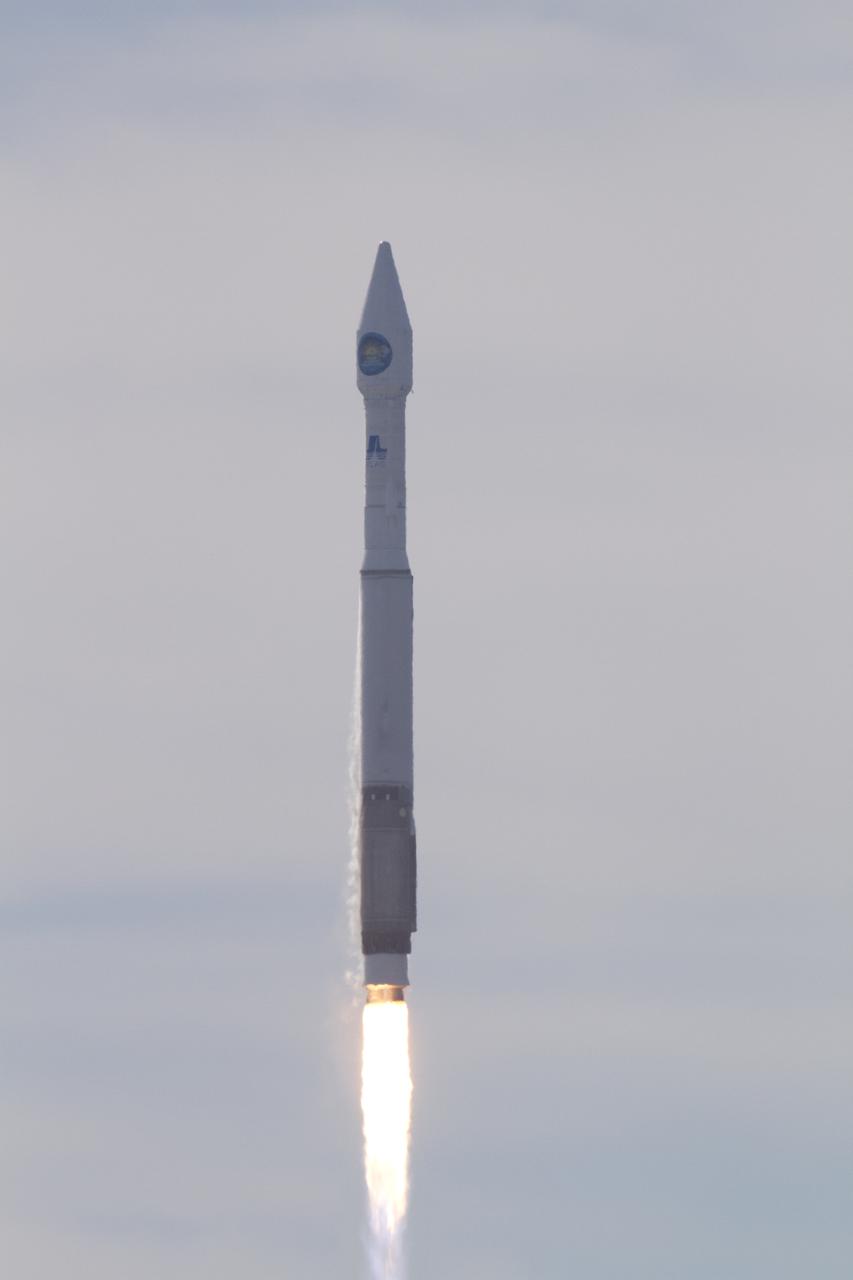
CAPE CANAVERAL, Fla. – NASA's Solar Dynamics Observatory begins its climb to orbit from Launch Complex 41 on Cape Canaveral Air Force Station at 10:23 a.m. EST Feb. 11 atop a United Launch Alliance Atlas V rocket. This is the 100th launch of a commercial Atlas_Centaur rocket. The observatory, known as SDO, is the first mission in NASA's Living With a Star Program and is designed to study the causes of solar variability and its impacts on Earth. The spacecraft's long-term measurements will give solar scientists in-depth information to help characterize the interior of the Sun, the Sun's magnetic field, the hot plasma of the solar corona, and the density of radiation that creates the ionosphere of the planets. The information will be used to create better forecasts of space weather needed to protect the aircraft, satellites and astronauts living and working in space. For information on SDO, visit http:__www.nasa.gov_sdo. Photo credit: NASA_Kenny Allen and Rusty Backer