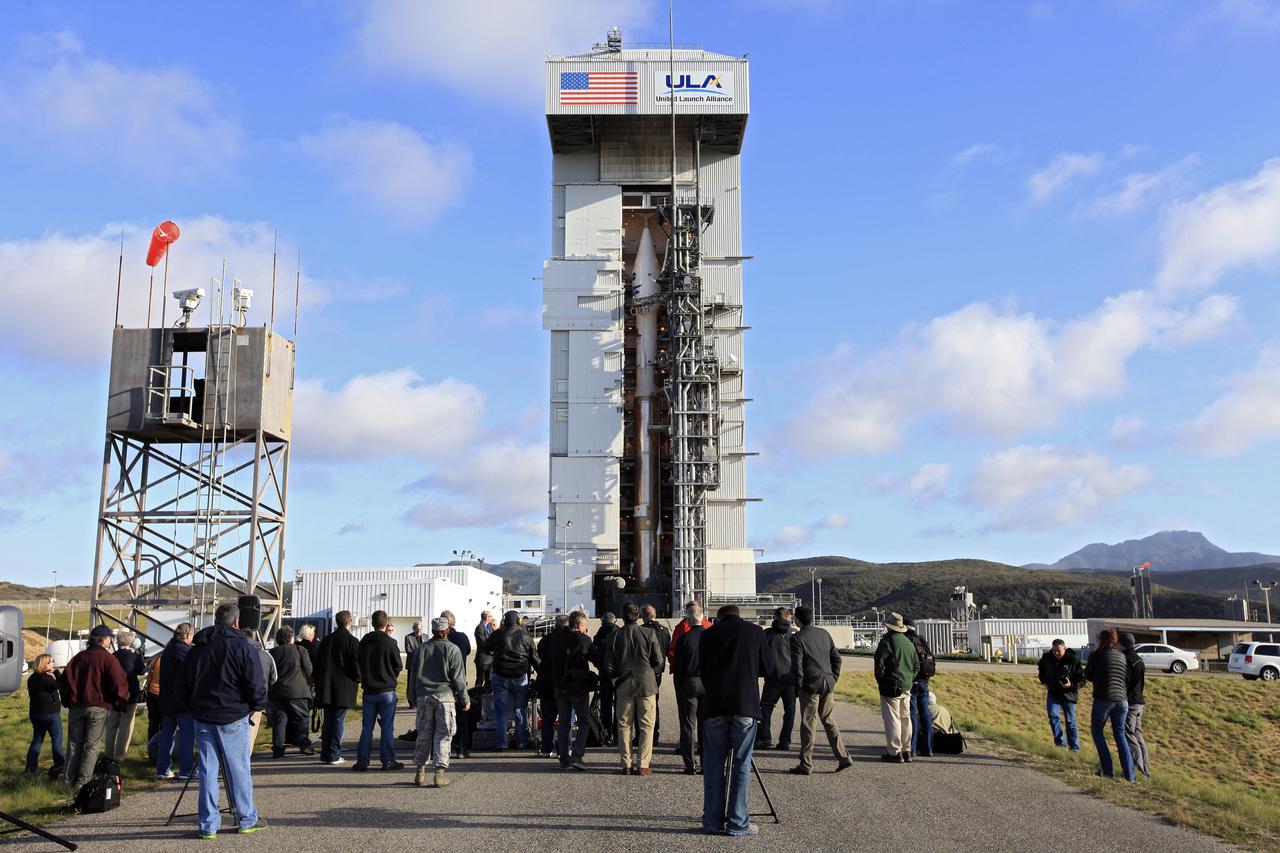
VANDENBERG AFB, Calif. -- At Vandenberg Air Force Base, Calif., NASA social media followers are briefed on the agency's Landsat Data Continuity Mission, or LDCM, satellite mission. In the background, the satellite is mounted atop a United Launch Alliance Atlas V rocket in the gantry at Space Launch Complex 3E. The Landsat Data Continuity Mission LDCM is the future of Landsat satellites. It will continue to obtain valuable data and imagery to be used in agriculture, education, business, science, and government. The Landsat Program provides repetitive acquisition of high resolution multispectral data of the Earth's surface on a global basis. The data from the Landsat spacecraft constitute the longest record of the Earth's continental surfaces as seen from space. It is a record unmatched in quality, detail, coverage, and value. Liftoff is planned for Feb. 11, 2013 aboard a United Launch Alliance Atlas V rocket. For more information, visit: http:__www.nasa.gov_mission_pages_landsat_main_index.html Photo credit: NASA_Kim Shiflett
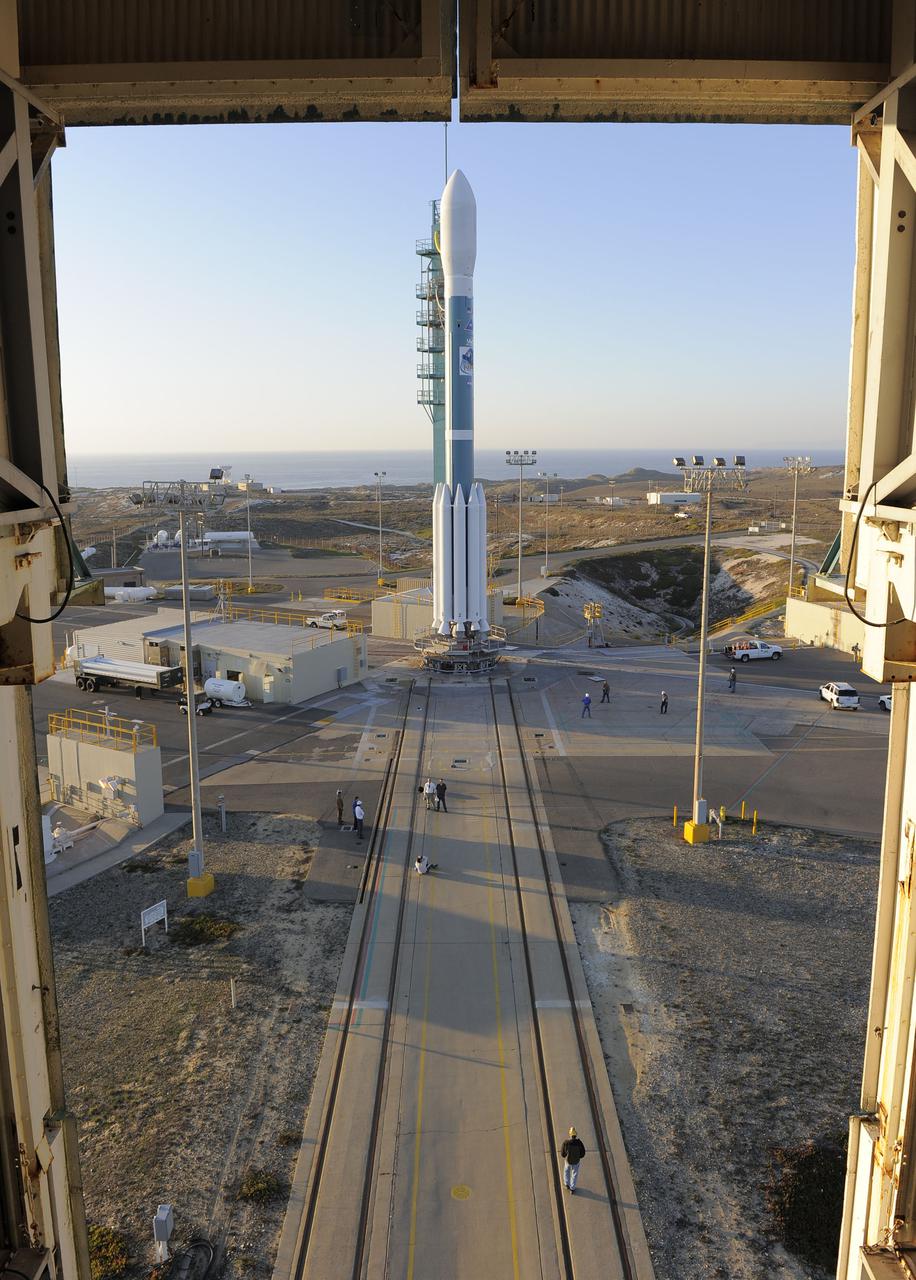
VANDENBERG AIR FORCE BASE, Calif. – At Vandenberg Air Force Base's Space Launch Complex-2 in California, a United Launch Alliance Delta II rocket with the National Polar-orbiting Operational Environmental Satellite System Preparatory Project (NPP) spacecraft aboard stands by itself on the launch pad following rollback of the mobile service tower. NPP represents a critical first step in building the next-generation of Earth-observing satellites. NPP will carry the first of the new sensors developed for this satellite fleet, now known as the Joint Polar Satellite System (JPSS) to be launched in 2016. NPP is the bridge between NASA's Earth Observing System (EOS) satellites and the forthcoming series of JPSS satellites. The mission will test key technologies and instruments for the JPSS missions. For more information, visit http:__www.nasa.gov_NPP. Photo credit: NASA_Kim Shiflett

CAPE CANAVERAL, Fla. - At Launch Pad 39A at NASA's Kennedy Space Center in Florida, STS-132 Commander Ken Ham, at the microphone, addresses media representatives during a question-and-answer session. Also on the STS-132 crew are, from left, Pilot Tony Antonelli and Mission Specialists Garrett Reisman, Michael Good, Steve Bowen and Piers Sellers. Behind them is space shuttle Atlantis, their ride into orbit. The crew is at Kennedy for their Terminal Countdown Demonstration Test, or TCDT, a dress rehearsal for launch. TCDT provides each shuttle crew and launch team the opportunity to participate in various simulated countdown activities, including equipment familiarization and emergency training. On the STS-132 mission, the six-member crew will deliver an Integrated Cargo Carrier, or ICC, and the Russian-built Mini-Research Module-1, or MRM-1, to the International Space Station aboard space shuttle Atlantis. The ICC is an unpressurized flat bed pallet and keel yoke assembly used to support the transfer of exterior cargo from the shuttle to the space station. The MRM-1, known as Rassvet, is the second in a series of new pressurized components for Russia and will be permanently attached to the Earth-facing port of the Zarya control module. Rassvet, which translates to 'dawn,' will be used for cargo storage and will provide an additional docking port to the station. STS-132 is the 34th mission to the station and the 132nd shuttle mission overall. Atlantis is targeted to launch on May 14 at 2:19 p.m. For information on the STS-132 mission, visit http:__www.nasa.gov_mission_pages_shuttle_shuttlemissions_sts132_index.html. Photo credit: NASA_Kim Shiflett
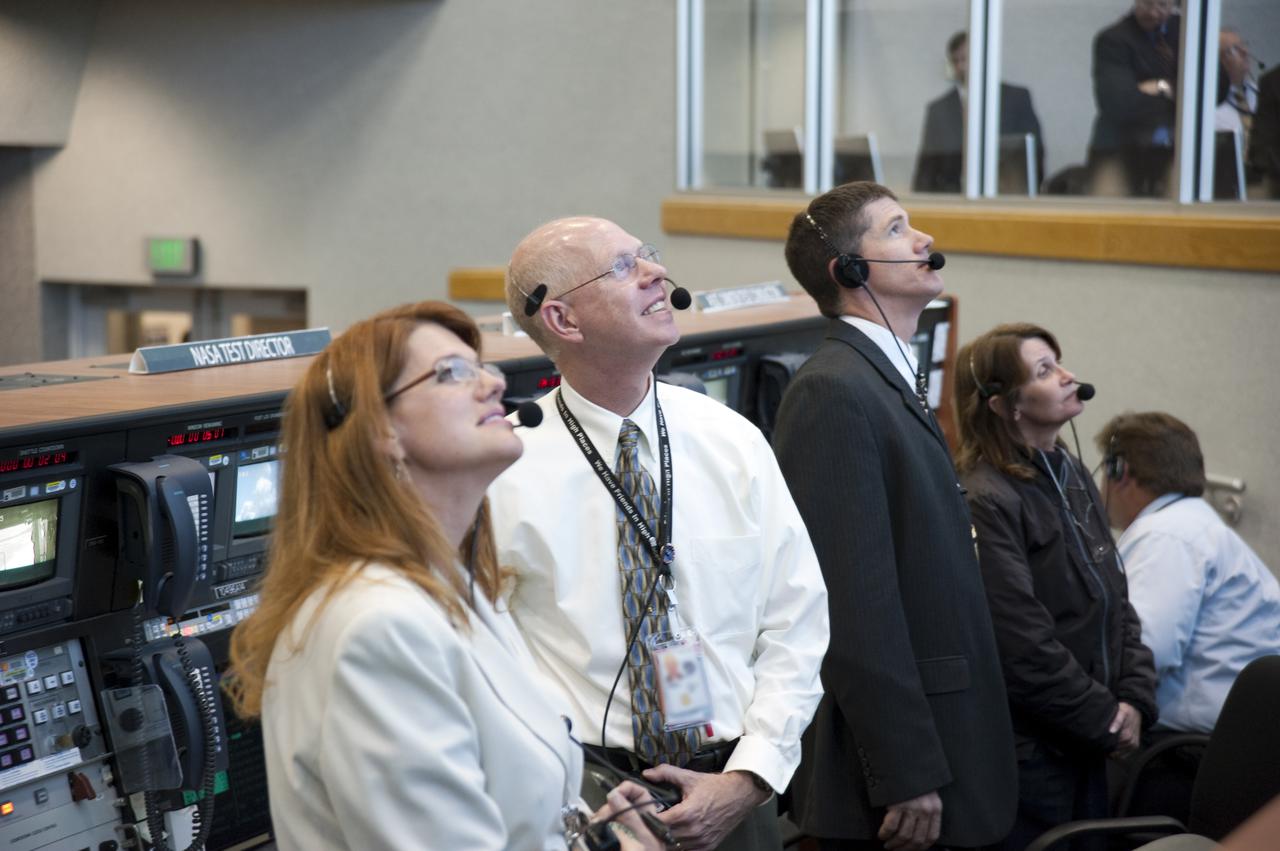
CAPE CANAVERAL, Fla. -- NASA test directors, from left, Charlie Blackwell-Thompson, Steve Payne and Jeremy Graeber, and Orbiter Test Conductor Teresa Annulis, watch space shuttle Atlantis lift off on its STS-132 mission to the International Space Station through the windows of Firing Room 4 of the Launch Control Center at NASA's Kennedy Space Center in Florida. Launch was on time at 2:20 p.m. EDT. STS-132 is the 132nd shuttle flight, the 32nd for Atlantis and the 34th shuttle mission dedicated to station assembly and maintenance. For more information on the STS-132 mission objectives, payload and crew, visit www.nasa.gov_mission_pages_shuttle_shuttlemissions_sts132_index.html. Photo credit: NASA_Kim Shiflett
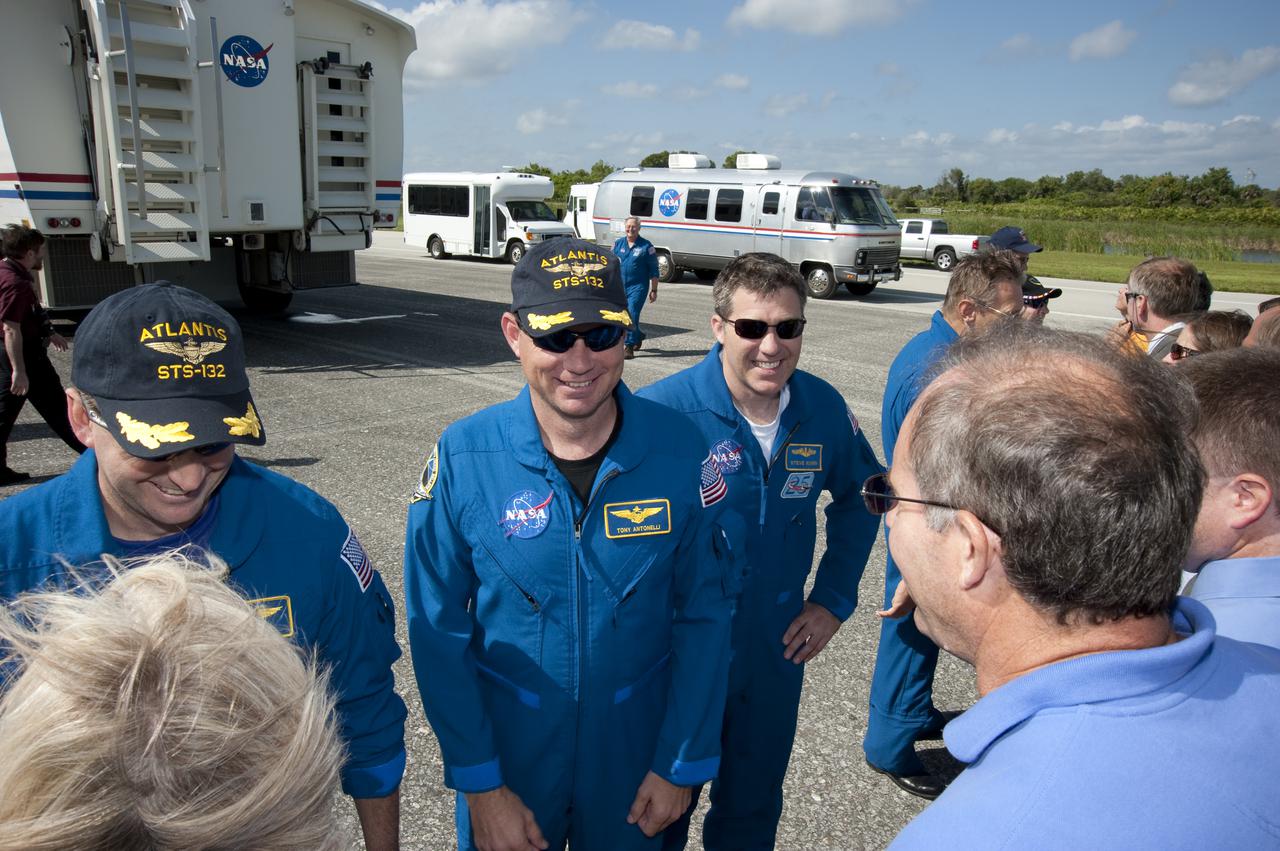
CAPE CANAVERAL, Fla. - At NASA's Kennedy Space Center in Florida, workers greet STS-132 Commander Ken Ham , left, Pilot Tony Antonelli and Mission Specialist Steve Bowen on the Shuttle Landing Facility. Atlantis wrapped up its 4.8-million-mile STS-132 mission to the International Space Station at 8:48 a.m. EDT. The six-member STS-132 crew carried the Russian-built Mini Research Module-1 to the space station. STS-132 is the 34th shuttle mission to the station, the 132nd shuttle mission overall and the last planned flight for Atlantis. For information on the STS-132 mission and crew, visit www.nasa.gov_mission_pages_shuttle_shuttlemissions_sts132_index.html. Photo credit: NASA_Kim Shiflett
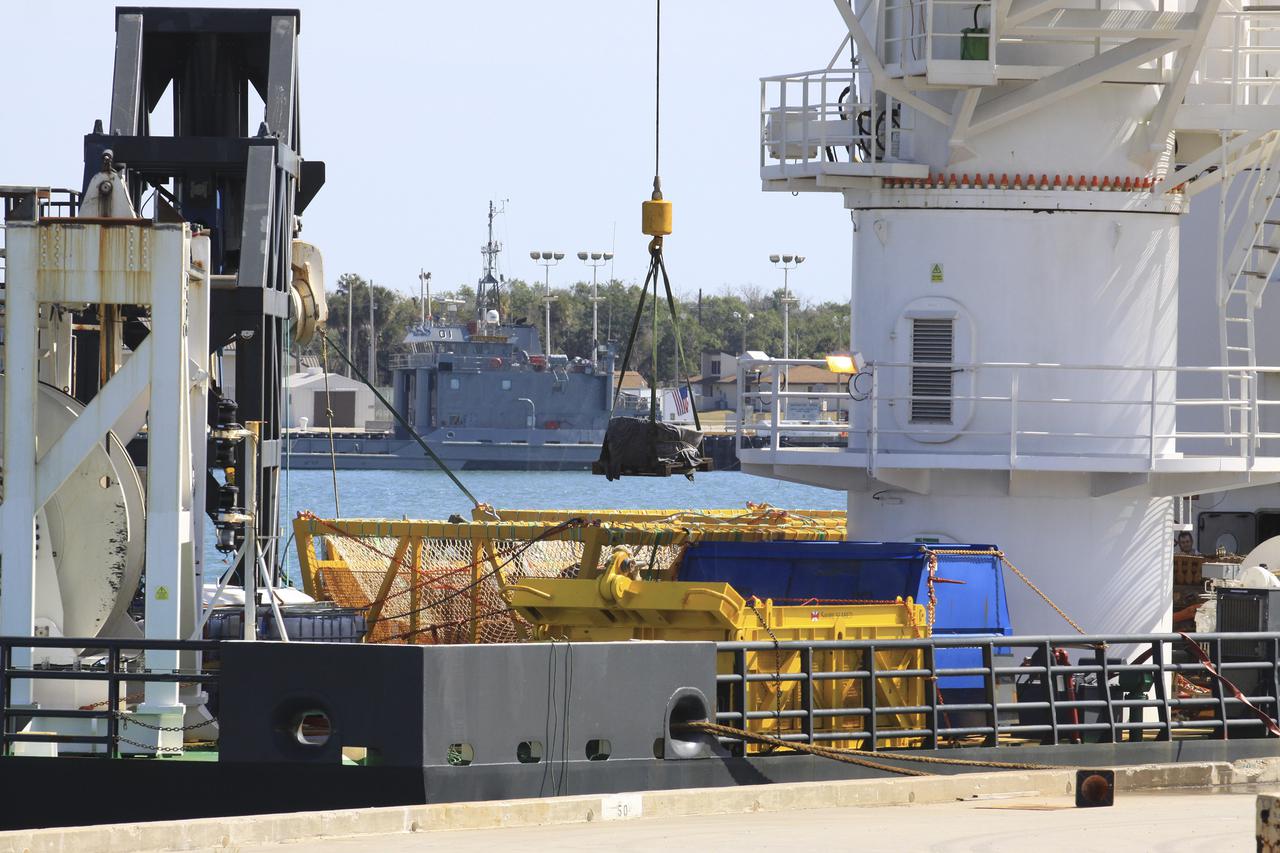
CAPE CANAVERAL, Fla. – Components for two of the F-1 engines that powered the first stage of the Saturn V rockets that lifted NASA's Apollo missions to the moon were recovered from the Atlantic Ocean March 21 by Jeff Bezos, the founder and Chief Executive Officer of the aerospace company Blue Origin and Amazon.com and arrived at Port Canaveral March 22. The engines will be restored by Bezos' team for public display. The engines were found some 14,000 feet underwater where they came to rest more than 40 years ago after sending astronauts into space on missions to the moon. Restoration may reveal exactly which engines were recovered, but Bezos said in a statement that the serial numbers were not immediately visible. Photo credit: NASA_Kim Shiflett

VANDENBERG AIR FORCE BASE, Calif. -- Media attending a post-launch news conference at Vandenberg Air Force Base, Calif. heard from Michael Freilich, director of the Earth Science Division, Science Mission Directorate at Headquarters. The Landsat Data Continuity Mission LDCM is the future of Landsat satellites. It will continue to obtain valuable data and imagery to be used in agriculture, education, business, science, and government. The Landsat Program provides repetitive acquisition of high resolution multispectral data of the Earth's surface on a global basis. The data from the Landsat spacecraft constitute the longest record of the Earth's continental surfaces as seen from space. It is a record unmatched in quality, detail, coverage, and value. Liftoff took place at 10:02 a.m. PST 1:02 P.M. EST) on Feb. 11, 2013 aboard a United Launch Alliance Atlas V rocket. For more information, visit: http:__www.nasa.gov_mission_pages_landsat_main_index.html Photo credit: NASA_Kim Shiflett
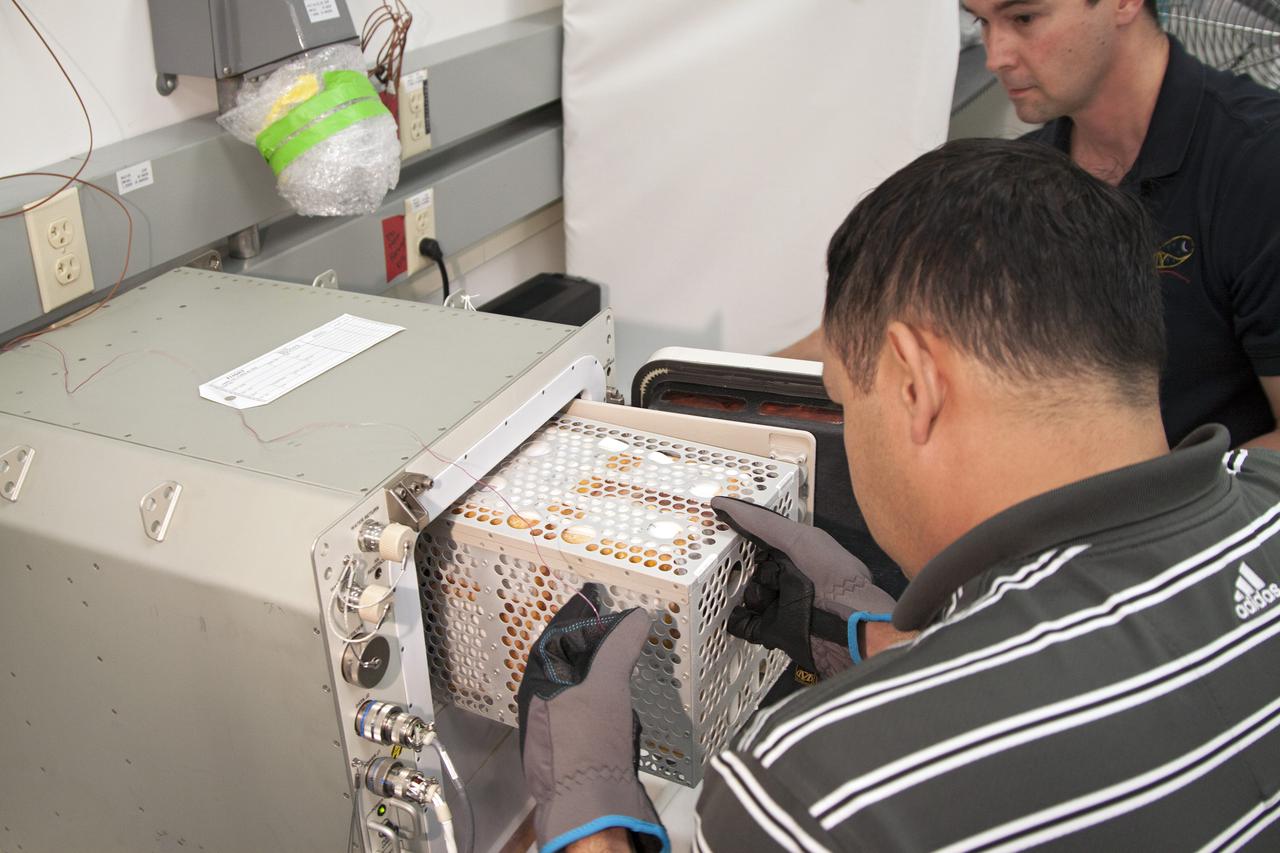
CAPE CANAVERAL, Fla. - In the Space Station Processing Facility at NASA's Kennedy Space Center in Florida, engineers load experiments requiring low temperatures into the General Laboratory Active Cryogenic International Space Station ISS Experiment Refrigerator, or GLACIER. The samples will then be transported to Space Launch Complex-40 on Cape Canaveral Air Force Station where the GLACIER will be loaded aboard the SpaceX Dragon capsule. Scheduled for launch on March 1 atop a Falcon 9 rocket, Dragon will be marking its third trip to the space station. The mission is the second of 12 SpaceX flights contracted by NASA to resupply the orbiting laboratory. For more information, visit http:__www.nasa.gov_mission_pages_station_structure_launch_spacex2-feature.html Photo credit: NASA_Kim Shiflett
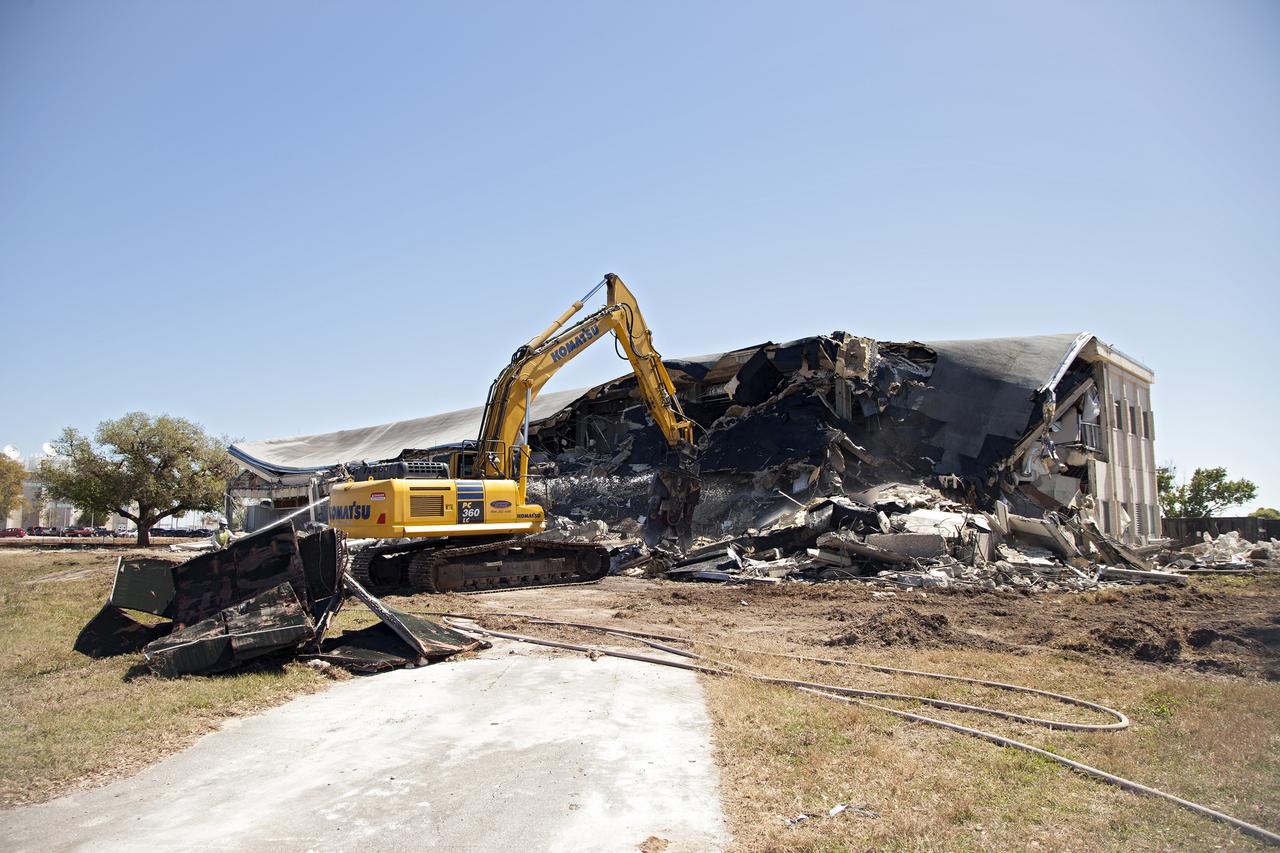
CAPE CANAVERAL, Fla. -- At NASA’s Kennedy Space Center in Florida, demolition is underway on the Base Operations Building, or BOB, in the Industrial Area. The two-story BOB was constructed in 1965 as office space for workers. Kennedy is demolishing some of the older facilities due to their age and to reduce maintenance and repair costs. Photo credit: NASA_Kim Shiflett
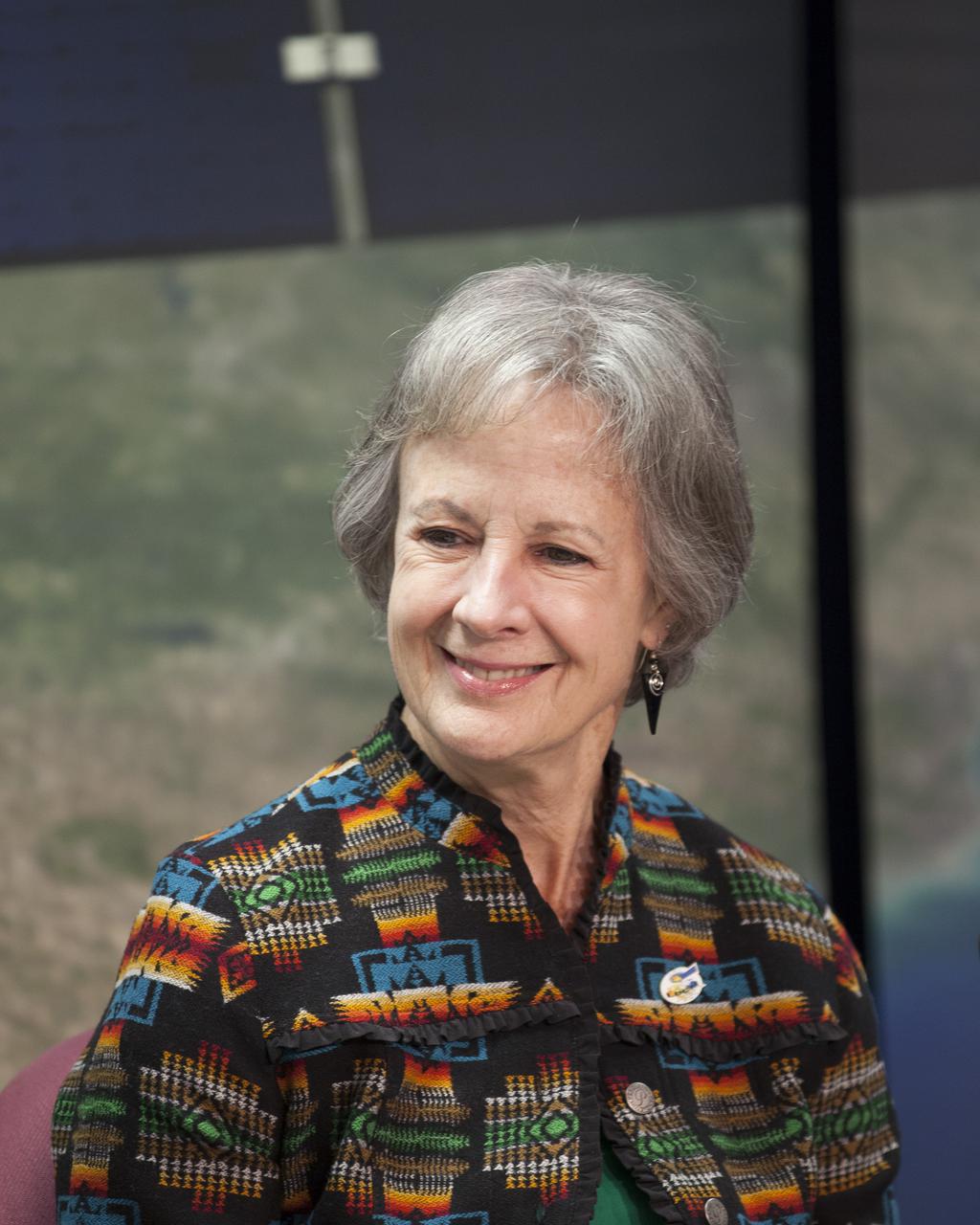
VANDENBERG AIR FORCE BASE, Calif. -- Media attending a post-launch news conference at Vandenberg Air Force Base, Calif. heard from Anne Castle, assistant secretary for Water and Science, U.S. Department of the Interior. The Landsat Data Continuity Mission LDCM is the future of Landsat satellites. It will continue to obtain valuable data and imagery to be used in agriculture, education, business, science, and government. The Landsat Program provides repetitive acquisition of high resolution multispectral data of the Earth's surface on a global basis. The data from the Landsat spacecraft constitute the longest record of the Earth's continental surfaces as seen from space. It is a record unmatched in quality, detail, coverage, and value. Liftoff took place at 10:02 a.m. PST 1:02 P.M. EST) on Feb. 11, 2013 aboard a United Launch Alliance Atlas V rocket. For more information, visit: http:__www.nasa.gov_mission_pages_landsat_main_index.html Photo credit: NASA_Kim Shiflett
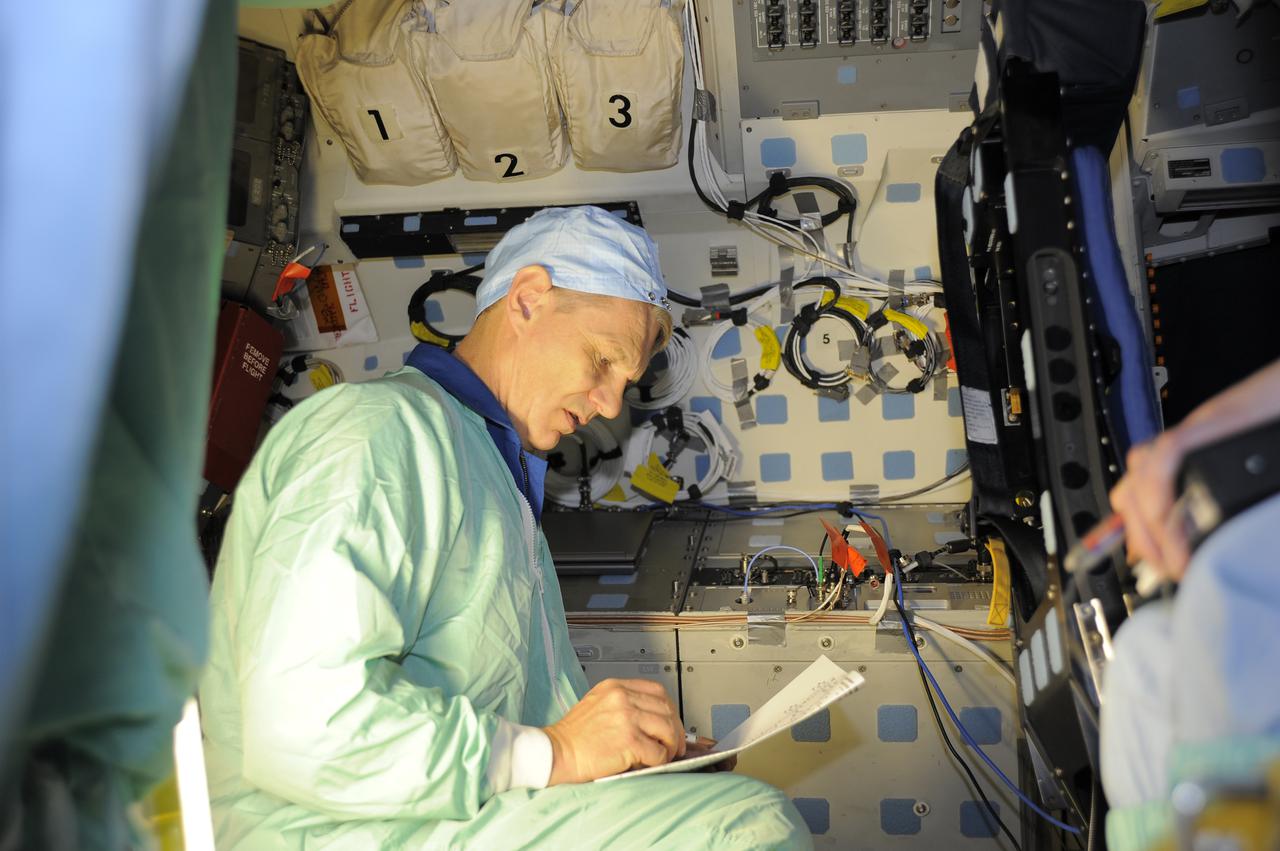
CAPE CANAVERAL, Fla. – In Orbiter Processing Facility-1 at NASA's Kennedy Space Center in Florida, members of space shuttle Atlantis' STS-132 crew participate in training activities during the Crew Equipment Interface Test, or CEIT, for their mission. Here, Mission Specialist Piers Sellers reviews instructions on the operation of the hardware that will fly on Atlantis' middeck. Sellers is dressed in clean room attire, known as a bunny suit. CEIT provides the crew with hands-on training and observation of shuttle and flight hardware. The six-member crew of Atlantis' STS-132 mission will deliver an Integrated Cargo Carrier and the Russian-built Mini-Research Module-1 to the International Space Station. STS-132 is the 34th mission to the station and the 132nd space shuttle mission. Launch is targeted for May 14. For information on the STS-132 mission, visit http:__www.nasa.gov_mission_pages_shuttle_shuttlemissions_sts132_index.html. Photo credit: NASA_Kim Shiflett
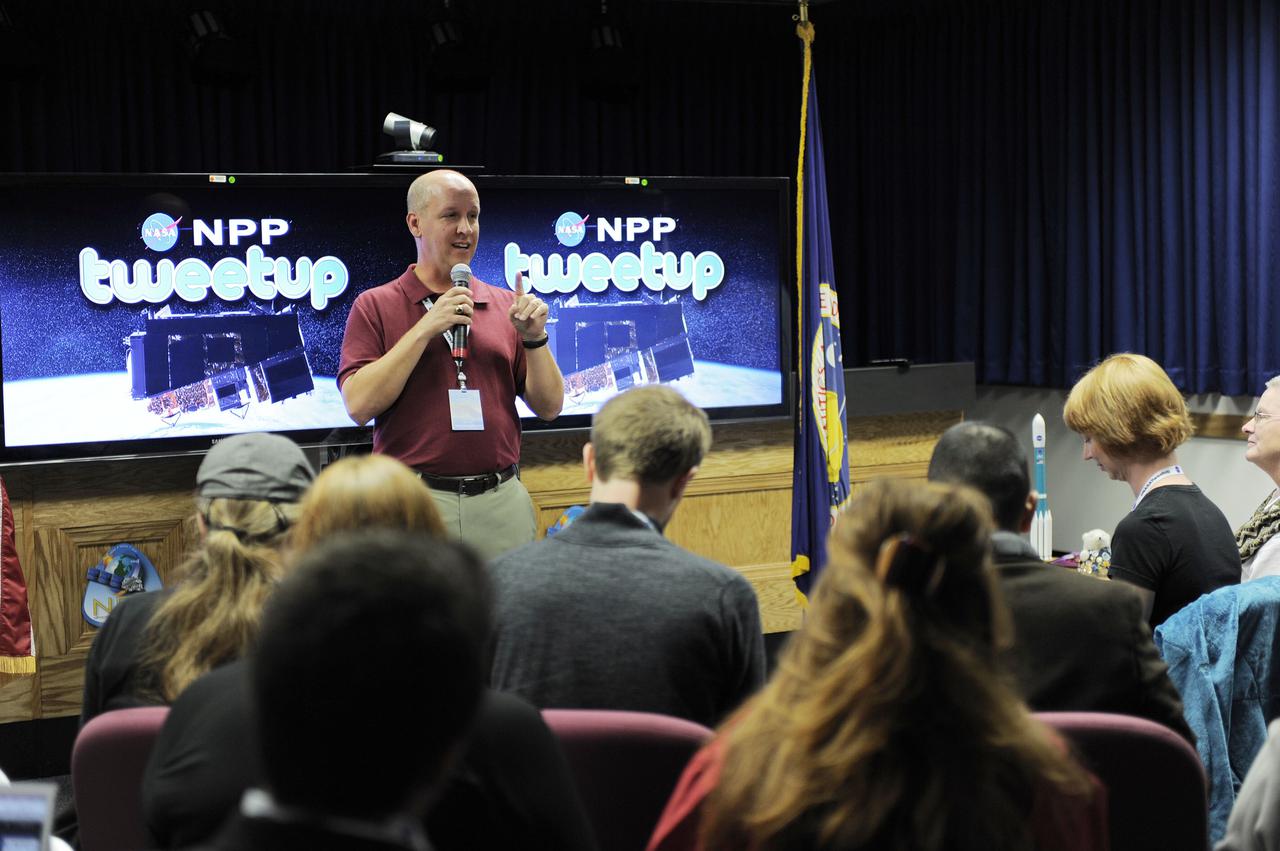
VANDENBERG AIR FORCE BASE, Calif. – A speaker talks with a group of Tweetup participants at Vandenberg Air Force Base in California during prelaunch activities for NASA’s National Polar-orbiting Operational Environmental Satellite System Preparatory Project (NPP) spacecraft mission. The tweeters will share their experiences with followers through the social networking site Twitter. NPP represents a critical first step in building the next-generation of Earth-observing satellites. NPP will carry the first of the new sensors developed for this satellite fleet, now known as the Joint Polar Satellite System (JPSS) to be launched in 2016. NPP is the bridge between NASA's Earth Observing System (EOS) satellites and the forthcoming series of JPSS satellites. The mission will test key technologies and instruments for the JPSS missions. NPP is targeted to launch Oct. 28 from Space Launch Complex-2 aboard a United Launch Alliance Delta II rocket. For more information, visit http:__www.nasa.gov_NPP. Photo credit: NASA_Kim Shiflett
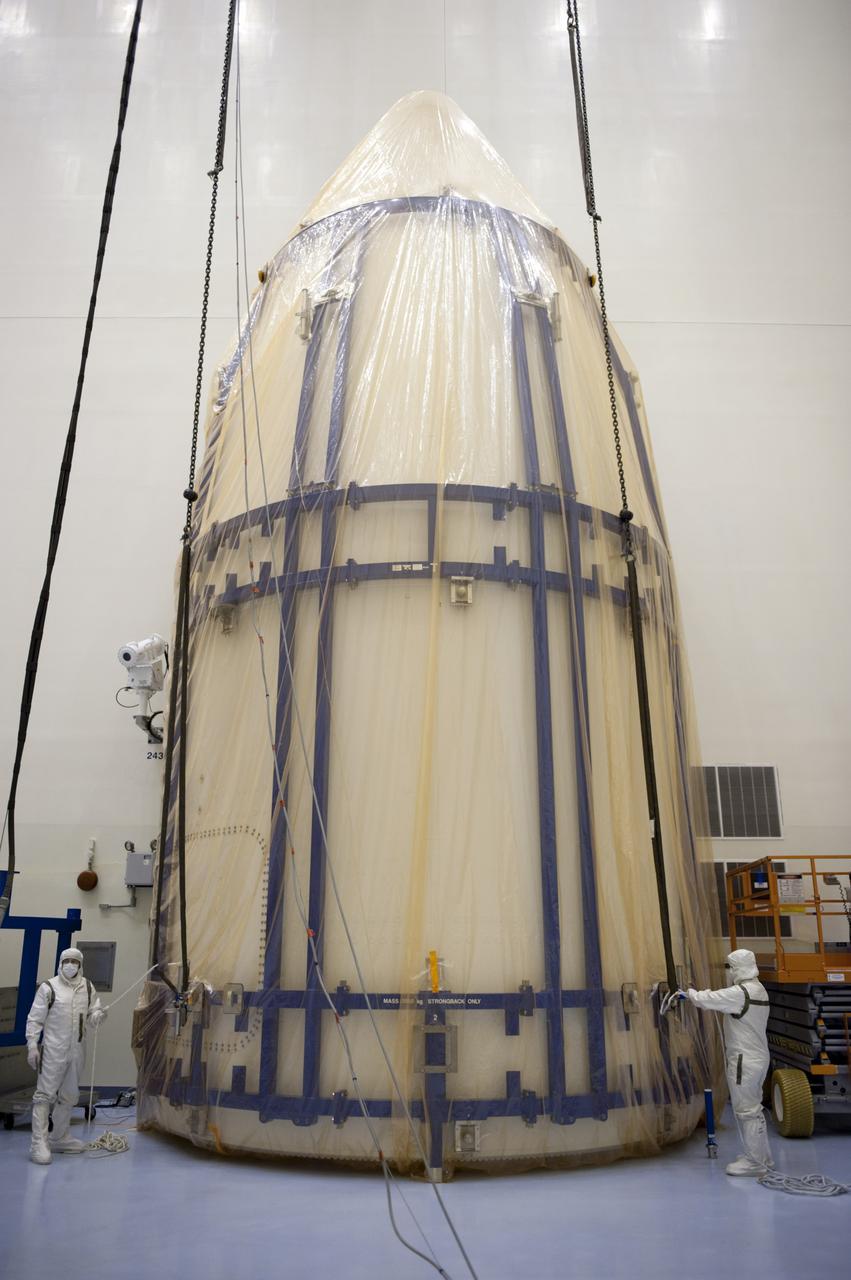
CAPE CANAVERAL, Fla. -- In the Payload Hazardous Servicing Facility at NASA's Kennedy Space Center in Florida, United Launch Alliance technicians prepare to lift half of the Atlas V payload fairing for NASA's Mars Science Laboratory (MSL) mission from the floor. Preparations are under way to lower it into a horizontal position to uncover and then clean it to meet NASA's planetary protection requirements. The fairing will protect the spacecraft from the impact of aerodynamic pressure and heating during ascent. Although jettisoned once the spacecraft is outside the Earth's atmosphere, the fairing must be cleaned to the same exacting standards as the laboratory to avoid the possibility of contaminating it. MSL's components include a compact car-sized rover, Curiosity, which has 10 science instruments designed to search for evidence on whether Mars has had environments favorable to microbial life, including the chemical ingredients for life. The unique rover will use a laser to look inside rocks and release its gasses so that the rover’s spectrometer can analyze and send the data back to Earth. Launch of MSL aboard a United Launch Alliance Atlas V rocket is planned for Nov. 25 from Space Launch Complex 41 on Cape Canaveral Air Force Station. For more information, visit http:__www.nasa.gov_msl. Photo credit: NASA_Kim Shiflett
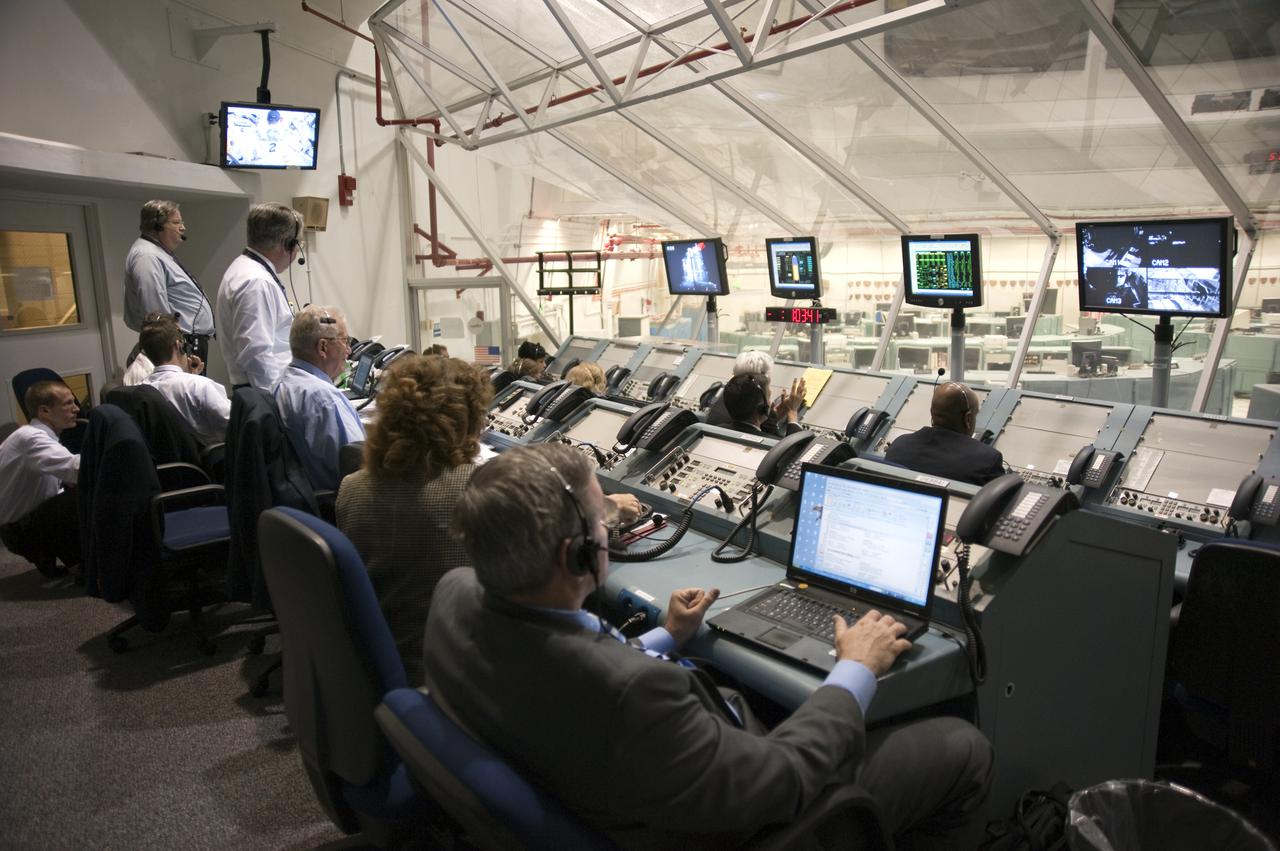
CAPE CANAVERAL, Fla. - In Firing Room 4 of the Launch Control Center at NASA's Kennedy Space Center in Florida, NASA managers monitor the countdown to launch of space shuttle Discovery's STS-131 mission. Shuttle Discovery lifted off at 6:21 a.m. EDT on April 5, 2010. The seven-member STS-131 crew will deliver the multi-purpose logistics module Leonardo, filled with supplies, a new crew sleeping quarters and science racks that will be transferred to the International Space Station's laboratories. The crew also will switch out a gyroscope on the station’s truss, install a spare ammonia storage tank and retrieve a Japanese experiment from the station’s exterior. STS-131 is the 33rd shuttle mission to the station and the 131st shuttle mission overall. For information on the STS-131 mission and crew, visit http:__www.nasa.gov_mission_pages_shuttle_shuttlemissions_sts131_index.html. Photo credit: NASA_Kim Shiflett
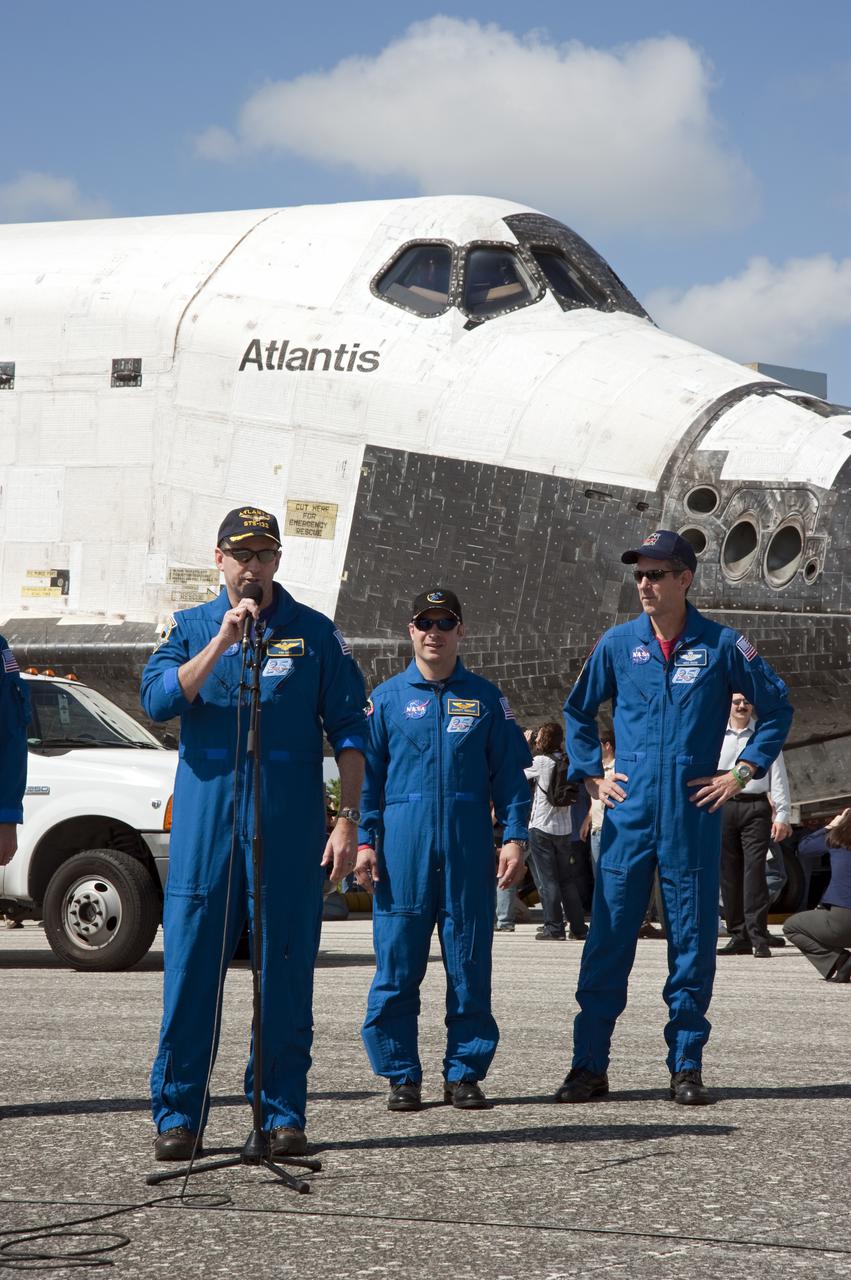
CAPE CANAVERAL, Fla. - STS-132 Commander Ken Ham speaks to the media after landing space shuttle Atlantis at the Shuttle Landing Facility at NASA's Kennedy Space Center in Florida. Behind Ham is STS-132 Mission Specialists Garrett Reisman (center) and Michael Good. The six-member STS-132 crew carried the Russian-built Mini Research Module-1 to the space station. STS-132 is the 34th shuttle mission to the station, the 132nd shuttle mission overall and the last planned flight for Atlantis. For information on the STS-132 mission and crew, visit www.nasa.gov_mission_pages_shuttle_shuttlemissions_sts132_index.html. Photo credit: NASA_Kim Shiflett
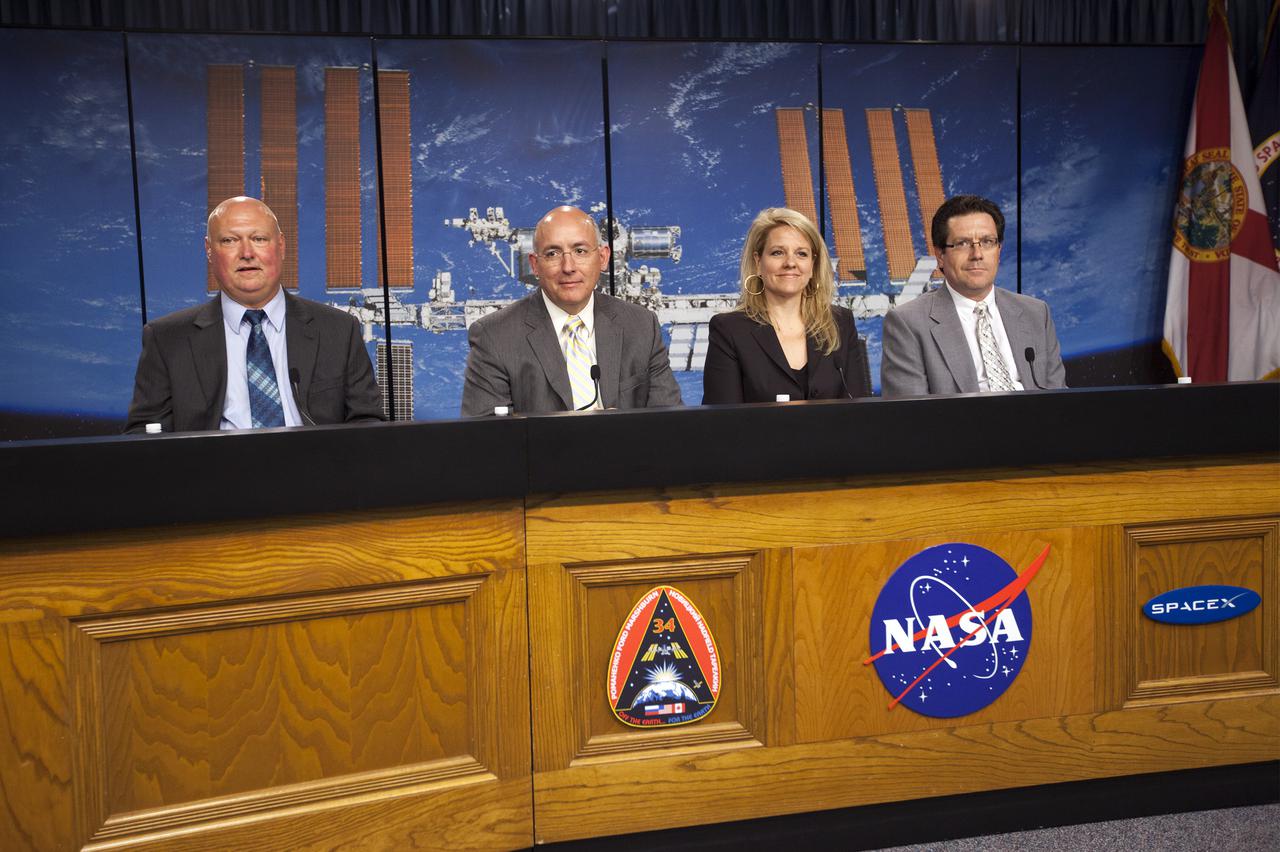
CAPE CANAVERAL, Fla. - Media attending a pre-launch news conference at the Kennedy Space Center, Fla. heard from officials who discussed payloads to be launched aboard a SpaceX Dragon capsule. From the left are: Mike Curie of NASA Public Affairs at the Kennedy Space Center, Mike Suffredini, NASA program manager for the International Space Station at the Johnson Space Center, Gwynne Shotwell, president of SpaceX, and Joel Tumbiolo, launch weather officer for the 45th Weather Squadron at Cape Canaveral Air Force Station. Scheduled for launch March 1 atop a Falcon 9 rocket, the SpaceX Dragon capsule will be making its third trip to the space station. The mission is the second of 12 SpaceX flights contracted by NASA to resupply the orbiting laboratory. For more information, visit http:__www.nasa.gov_mission_pages_station_structure_launch_spacex2-feature.html Photo credit: NASA_Kim Shiflett
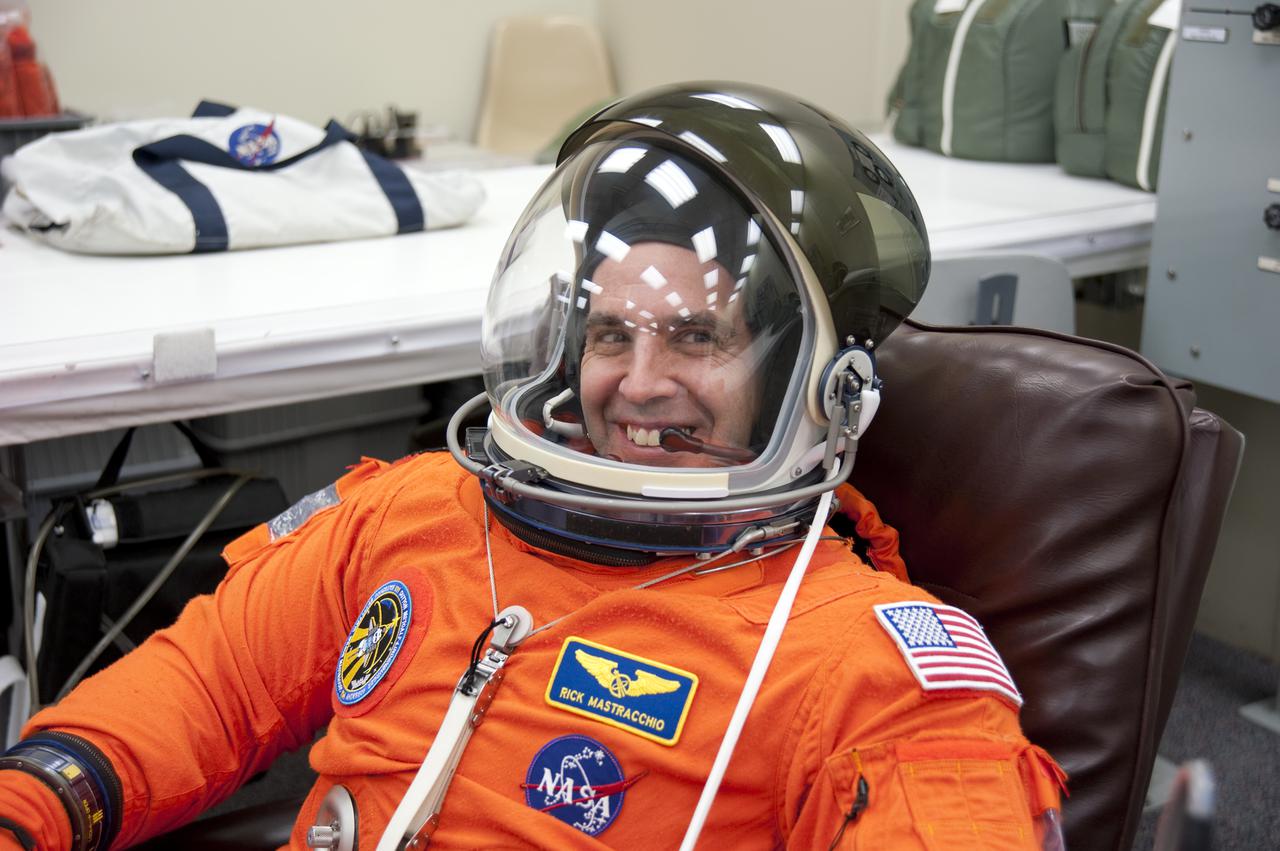
CAPE CANAVERAL, Fla. - In the Operations and Checkout Building at NASA's Kennedy Space Center in Florida, STS-131 Mission Specialist Rick Mastracchio verifies that his helmet is functioning properly. The members of space shuttle Discovery's STS-131 crew put on their launch-and-entry suits before heading to the Astrovan for the ride to Launch Pad 39A. The crew is participating in the Terminal Countdown Demonstration Test, or TCDT, a dress rehearsal for launch. TCDT includes training on the emergency egress systems at the launch pad, driving practice of the M-113 armored personnel carrier and a simulated launch countdown. The crew will deliver the multi-purpose logistics module Leonard, filled with resupply stowage platforms and science racks, to the International Space Station. STS-131, targeted for launch on April 5, will be the 33rd shuttle mission to the station and the 131st shuttle mission overall. For information on the STS-131 mission and crew, visit http:__www.nasa.gov_mission_pages_shuttle_shuttlemissions_sts131_index.htm. Photo credit: NASA_Kim Shiflett
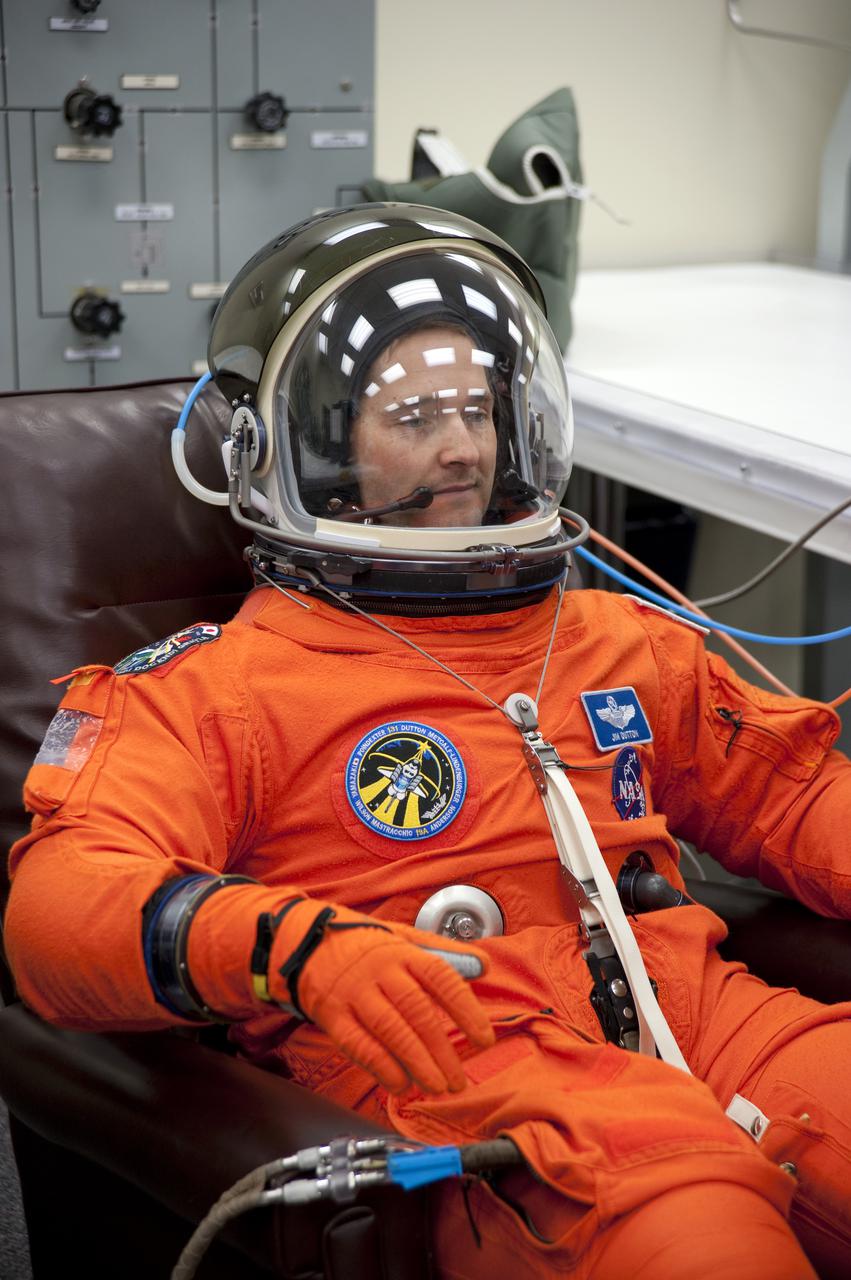
CAPE CANAVERAL, Fla. - In the Operations and Checkout Building at NASA's Kennedy Space Center in Florida, STS-131 Pilot James P. Dutton Jr. verifies that his helmet is functioning properly. The members of space shuttle Discovery's STS-131 crew put on their launch-and-entry suits before heading to the Astrovan for the ride to Launch Pad 39A. The crew is participating in the Terminal Countdown Demonstration Test, or TCDT, a dress rehearsal for launch. TCDT includes training on the emergency egress systems at the launch pad, driving practice of the M-113 armored personnel carrier and a simulated launch countdown. The crew will deliver the multi-purpose logistics module Leonard, filled with resupply stowage platforms and science racks, to the International Space Station. STS-131, targeted for launch on April 5, will be the 33rd shuttle mission to the station and the 131st shuttle mission overall. For information on the STS-131 mission and crew, visit http:__www.nasa.gov_mission_pages_shuttle_shuttlemissions_sts131_index.htm. Photo credit: NASA_Kim Shiflett
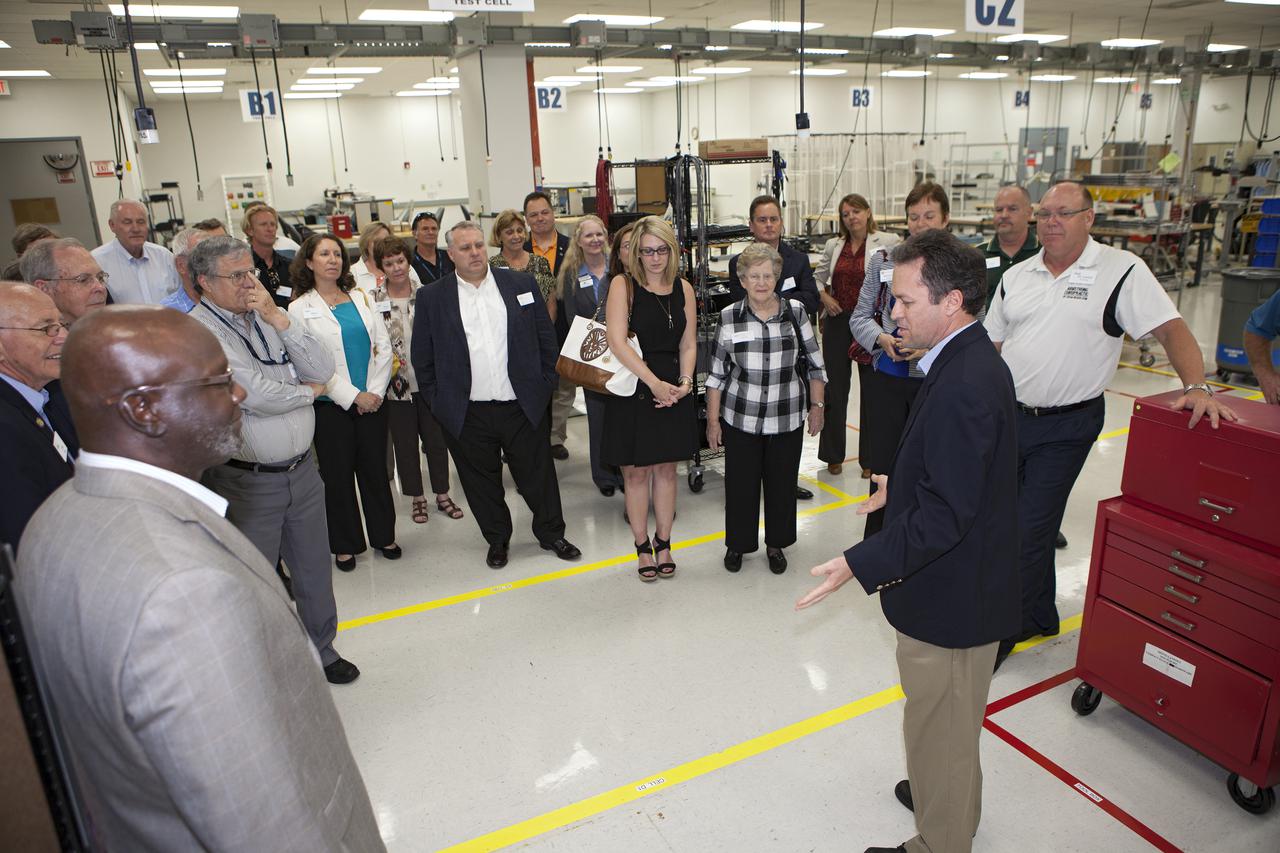
CAPE CANAVERAL, Fla. – At the Aerospace and Defense Manufacturing Center in Cape Canaveral, Fla., Craig Technologies Vice President and Site Director Jim Kell describes operations at the 161,000-square-foot facility during a community open house. In June of last year, NASA signed a partnership agreement with Craig Technologies to maintain an inventory of unique processing and manufacturing equipment for future mission support at the agency's Kennedy Space Center. The Cape Canaveral, Fla., facility, formerly known as the NASA Shuttle Logistics Depot NSLD, is now the Aerospace and Defense Manufacturing Center ADMC. Photo credit: NASA_Kim Shiflett
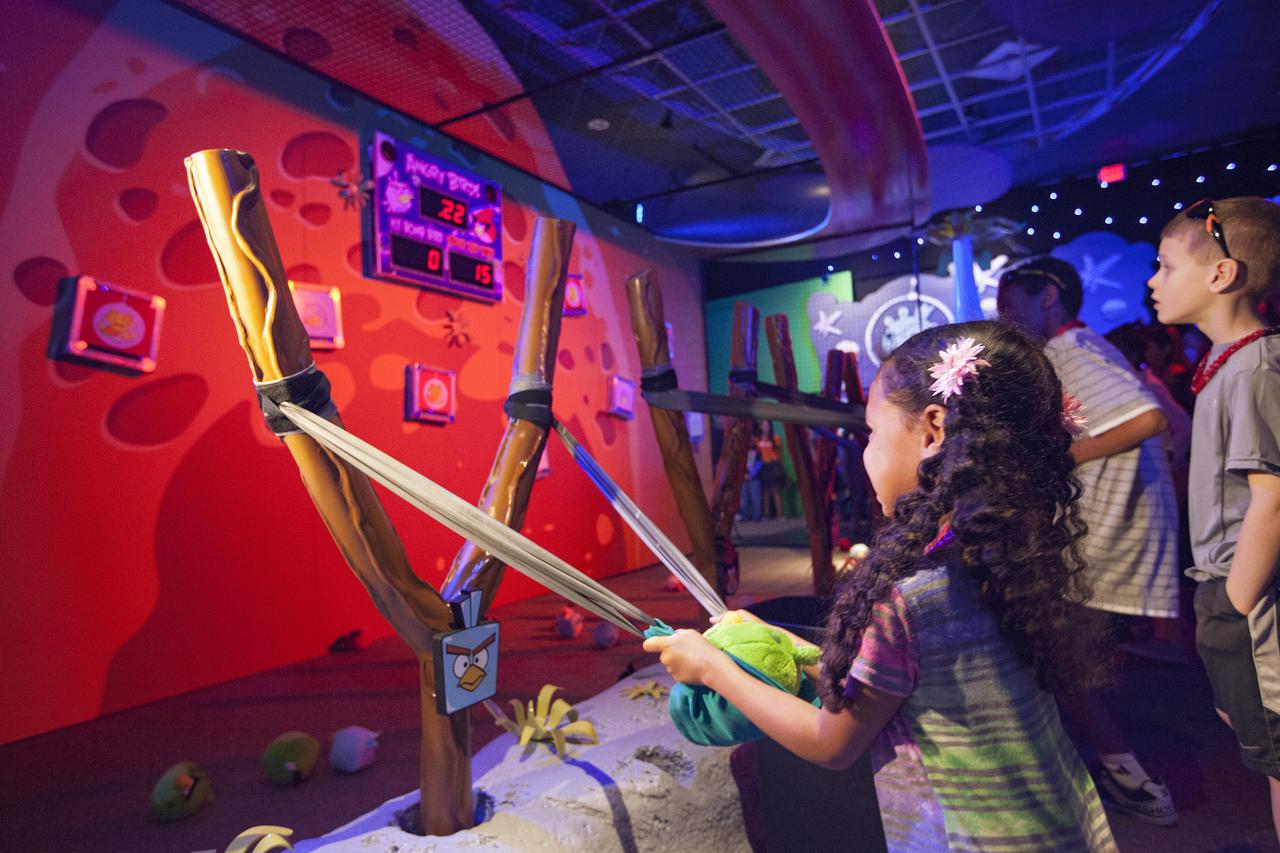
CAPE CANAVERAL, Fla. -- At NASA’s Kennedy Space Center Visitor Complex in Florida, children try out some of the interactive exhibits inside the new Angry Birds Space Encounter after the grand opening ceremony for the new attraction. Finland-based Rovio Entertainment, the creator of the Angry Birds Space game, partnered with Kennedy Space Center to bring the beloved characters to life. It is the first Angry Birds interactive exhibit in the United States designed for people of all ages. The 4,485-square-foot facility hosts the space adventures of the Angry Birds as they travel into an intergalactic wormhole, come face-to-face with Space Pigs and discover heroic superpowers. Six interactive stations are designed to encourage children in science, technology, engineering and mathematics fields of study. Photo credit: NASA_Kim Shiflett
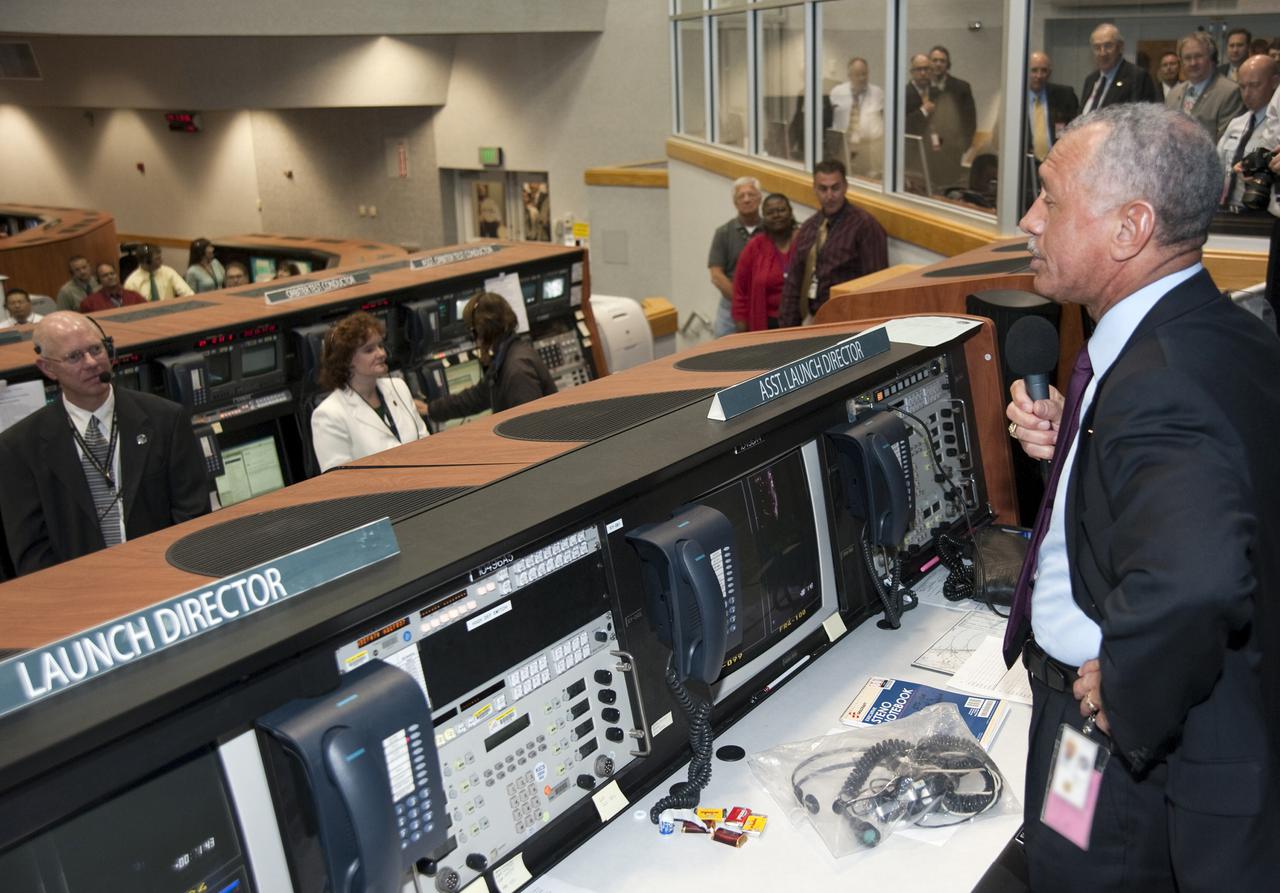
CAPE CANAVERAL, Fla. - NASA Administrator Charles Bolden congratulates the team in NASA Kennedy Space Center's Launch Control Center after space shuttle Discovery's majestic launch on the STS-131 mission. Seen in the left background is Steve Payne, shuttle test director. Shuttle Discovery lifted off at 6:21 a.m. EDT on April 5, 2010. The seven-member STS-131 crew will deliver the multi-purpose logistics module Leonardo, filled with supplies, a new crew sleeping quarters and science racks that will be transferred to the International Space Station's laboratories. The crew also will switch out a gyroscope on the station’s truss, install a spare ammonia storage tank and retrieve a Japanese experiment from the station’s exterior. STS-131 is the 33rd shuttle mission to the station and the 131st shuttle mission overall. For information on the STS-131 mission and crew, visit http:__www.nasa.gov_mission_pages_shuttle_shuttlemissions_sts131_index.html. Photo credit: NASA_Kim Shiflett
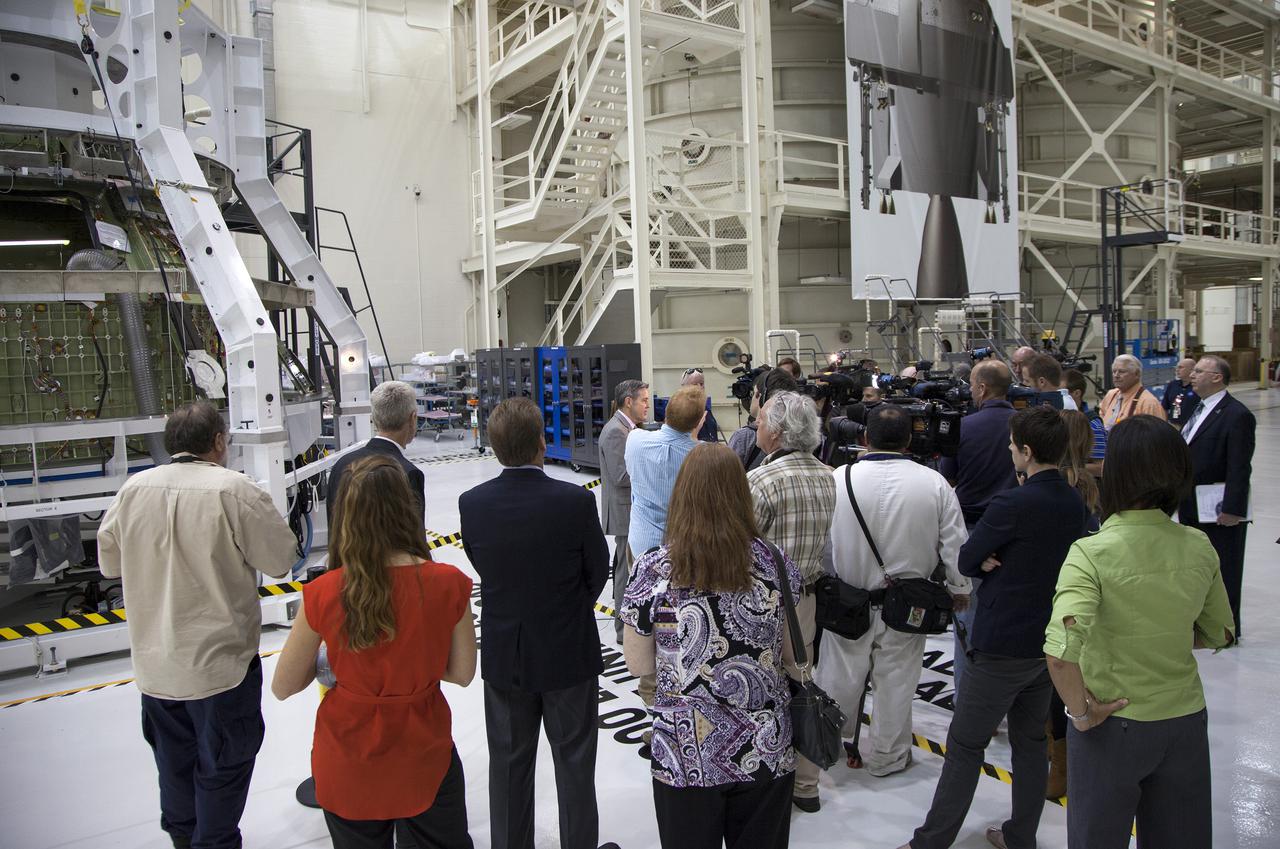
CAPE CANAVERAL, Fla. – Inside the high bay of Kennedy Space Center's Operations and Checkout Building, Kennedy Director Bob Cabana, provided members of the news media a status on the center's transformation to a multiuse government and commercial space launch and recovery complex. In the background, the Orion spacecraft is surrounded by a special pre-launch processing access fixture. Orion is the exploration spacecraft designed to carry crews to space beyond low Earth orbit. It will provide emergency abort capability, sustain the crew during the space travel and provide safe re-entry from deep space return velocities. The first unpiloted test flight of the Orion is scheduled to launch in 2014 atop a Delta IV rocket and in 2017 on a Space Launch System rocket. For more information, visit http:__www.nasa.gov_orion Photo credit: NASA_Kim Shiflett
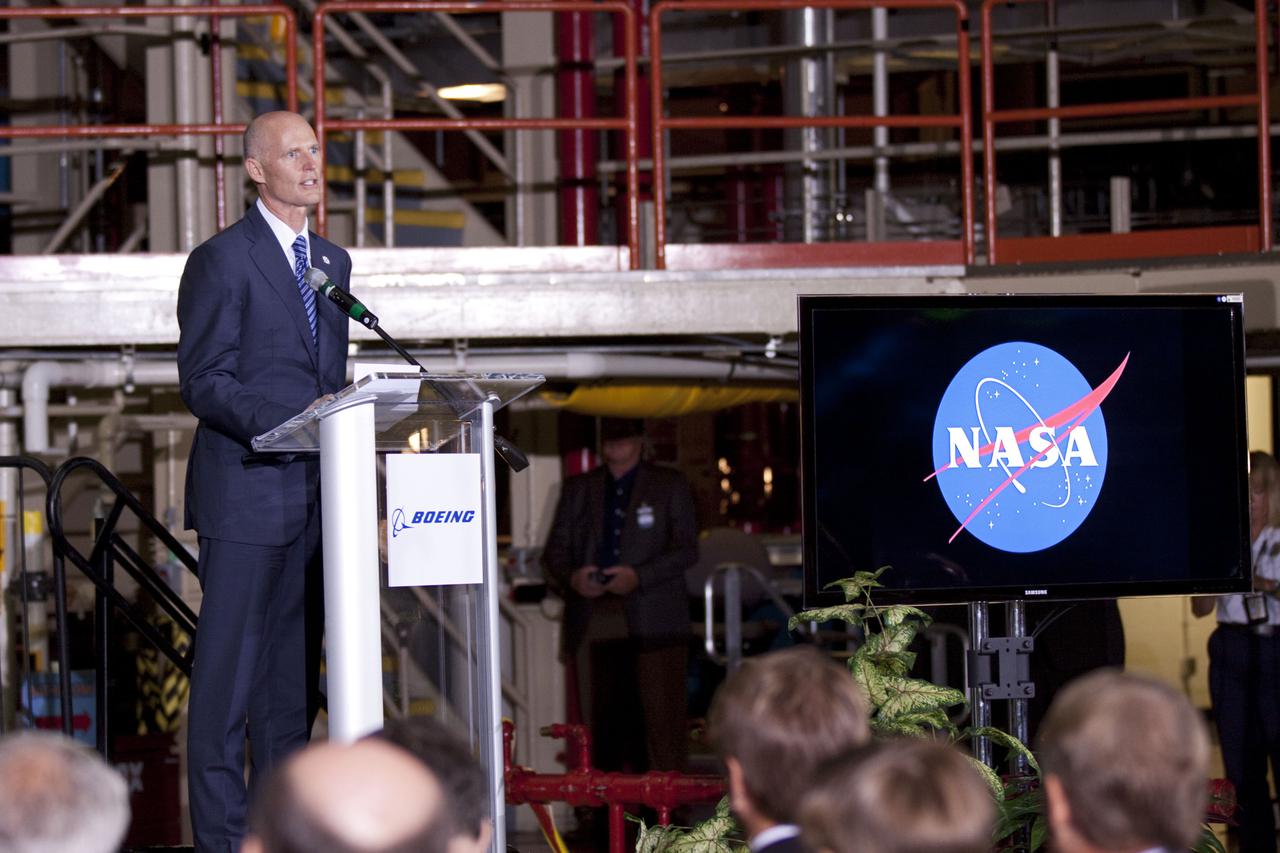
CAPE CANAVERAL, Fla. – In the Orbiter Processing Facility-3 (OPF-3) at NASA’s Kennedy Space Center in Florida, Florida Gov. Rick Scott speaks to the audience during the ceremony announcing the signing of an innovative agreement between NASA and Space Florida. NASA announced a partnership with Space Florida to occupy, use and modify Kennedy Space Center's Orbiter Processing Facility-3 (OPF-3), the Space Shuttle Main Engine Processing Facility and Processing Control Center. Space Florida has an agreement for use of the OPF-3 with the Boeing Company to manufacture and test the company's Crew Space Transportation (CST-100) spacecraft. The 15-year use permit deal is the latest step Kennedy is making as the center transitions from a historically government-only launch complex to a multi-user spaceport. For more information, visit http:__www.nasa.gov_exploration_commercial_index.html. Photo credit: NASA_Kim Shiflett
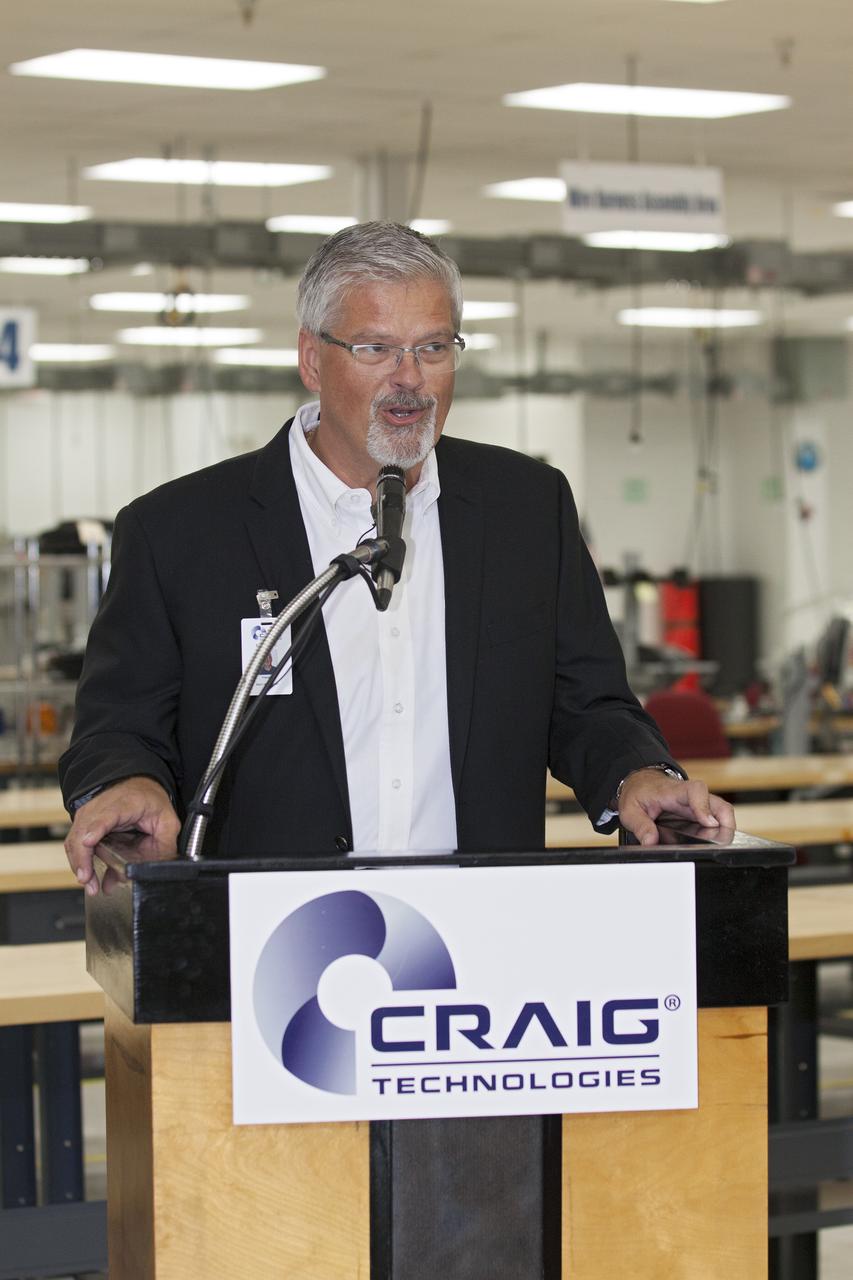
CAPE CANAVERAL, Fla. – At the Aerospace and Defense Manufacturing Center in Cape Canaveral, Fla., Craig Technologies President Mark Mikolajczyk speaks to guests during a community open house at the 161,000-square-foot facility. In June of last year, NASA signed a partnership agreement with Craig Technologies to maintain an inventory of unique processing and manufacturing equipment for future mission support at the agency's Kennedy Space Center. The Cape Canaveral, Fla., facility, formerly known as the NASA Shuttle Logistics Depot NSLD, is now the Aerospace and Defense Manufacturing Center ADMC. Photo credit: NASA_Kim Shiflett
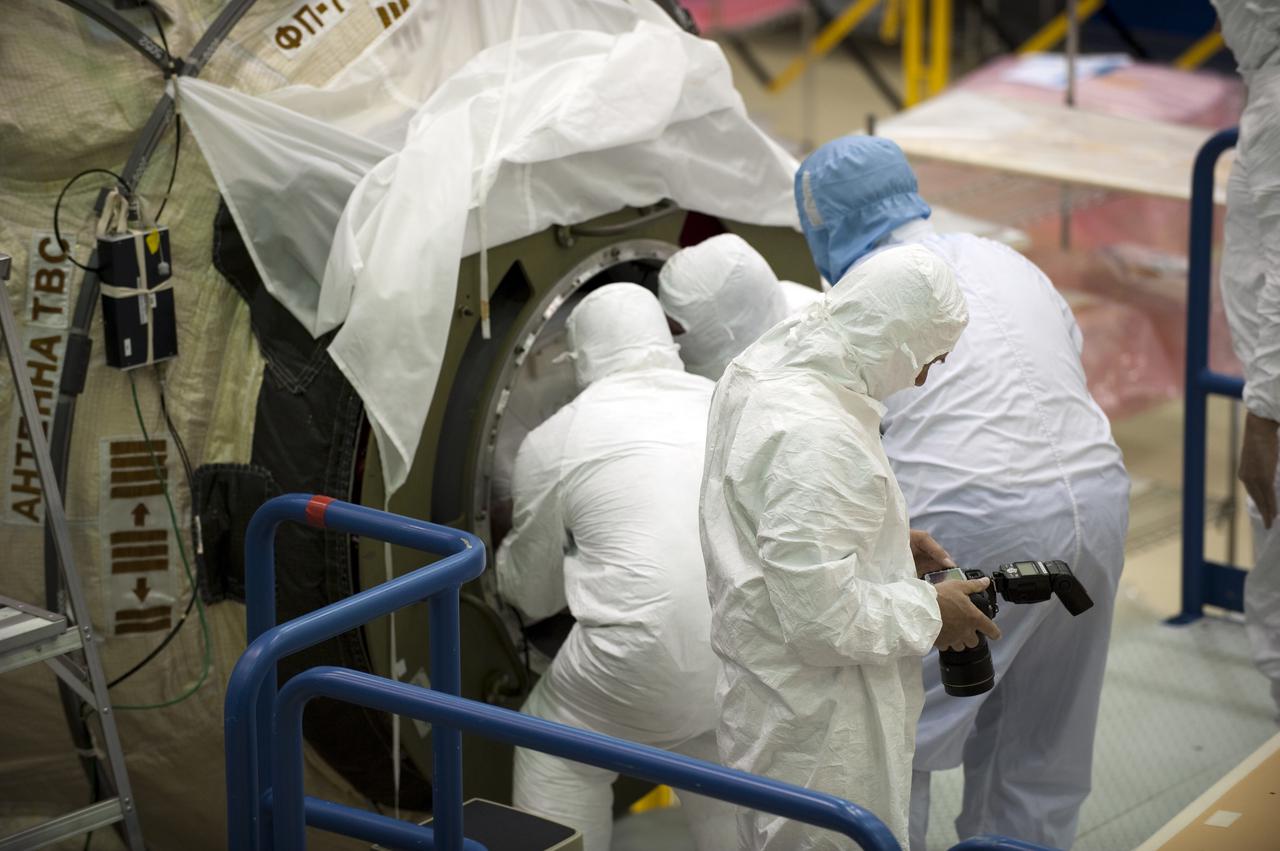
CAPE CANAVERAL, Fla. – In the Astrotech payload processing facility at Port Canaveral, Fla., workers dressed in clean room attire, known as bunny suits, install supplies and other cargo in the Russian-built Mini-Research Module, or MRM, through a hatch on the end of the module. The six-member crew of space shuttle Atlantis' STS-132 mission will deliver an Integrated Cargo Carrier and the MRM to the International Space Station. The second in a series of new pressurized components for Russia, the MRM will be permanently attached to the bottom port of the Zarya module. The MRM also will carry U.S. pressurized cargo. STS-132 is the 34th mission to the station and the 132nd space shuttle mission. Launch is targeted for May 14. For information on the STS-132 mission, visit http:__www.nasa.gov_mission_pages_shuttle_shuttlemissions_sts132_index.html. Photo credit: NASA_Kim Shiflett

CAPE CANAVERAL, Fla. - In Firing Room 4 in the Launch Control Center at NASA's Kennedy Space Center in Florida, from left, Johnson Space Center Director Michael Coats, NASA Administrator Charles Bolden and Kennedy Space Center Director Robert Cabana find a few minutes to talk before the launch of space shuttle Endeavour. Launch of Endeavour on the STS-130 mission to the International Space Station was at 4:14 a.m. EST. This was the second launch attempt for space shuttle Endeavour's STS-130 crew and the final scheduled space shuttle night launch. The first attempt on Feb. 7 was scrubbed due to unfavorable weather. The primary payload for the STS-130 mission to the International Space Station is the Tranquility node, a pressurized module that will provide additional room for crew members and many of the station's life support and environmental control systems. Attached to one end of Tranquility is a cupola, a unique work area with six windows on its sides and one on top. The cupola resembles a circular bay window and will provide a vastly improved view of the station's exterior. The multi-directional view will allow the crew to monitor spacewalks and docking operations, as well as provide a spectacular view of Earth and other celestial objects. The module was built in Turin, Italy, by Thales Alenia Space for the European Space Agency. For information on the STS-130 mission and crew, visit http:__www.nasa.gov_mission_pages_shuttle_shuttlemissions_sts130_index.html. Photo credit: NASA_Kim Shiflett
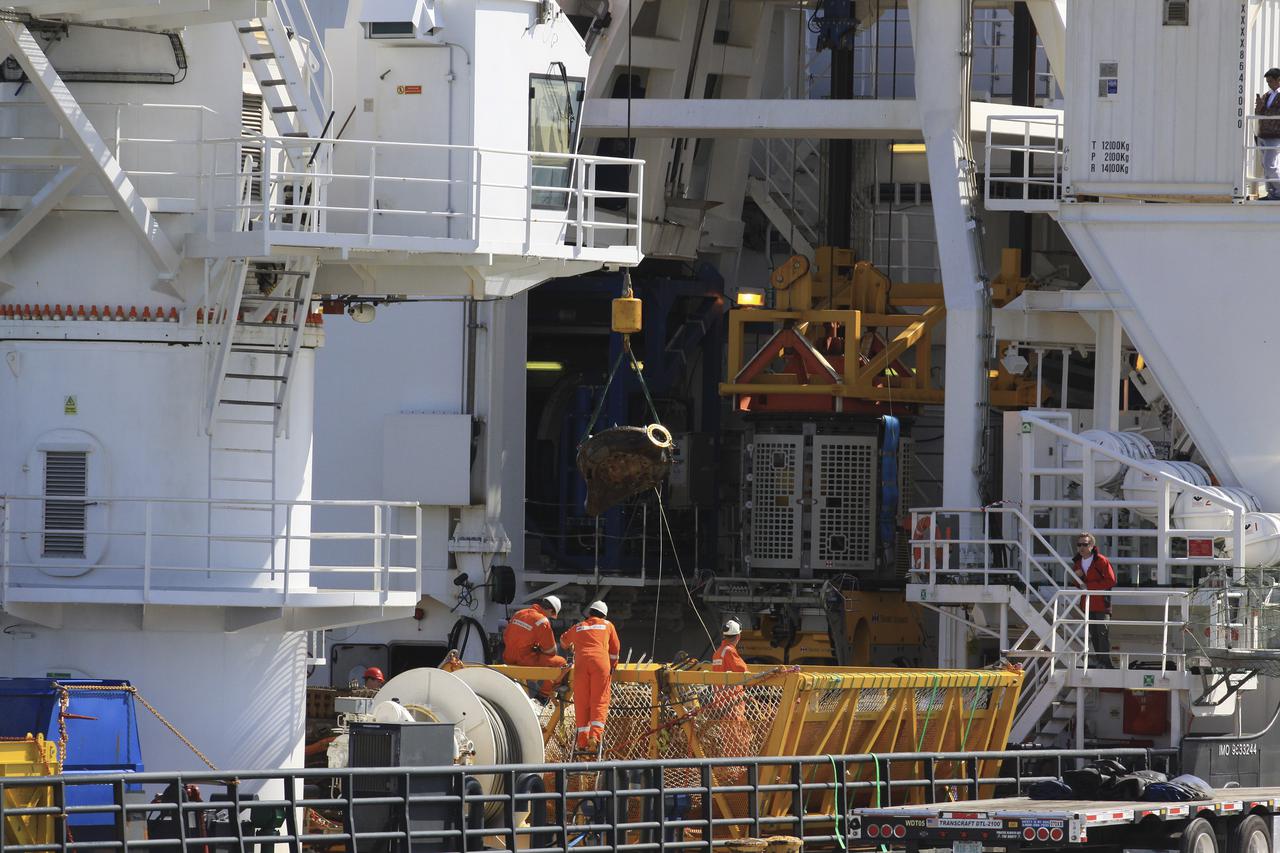
CAPE CANAVERAL, Fla. – Components for two of the F-1 engines that powered the first stage of the Saturn V rockets that lifted NASA's Apollo missions to the moon were recovered from the Atlantic Ocean March 21 by Jeff Bezos, the founder and Chief Executive Officer of the aerospace company Blue Origin and Amazon.com and arrived at Port Canaveral March 22. The engines will be restored by Bezos' team for public display. The engines were found some 14,000 feet underwater where they came to rest more than 40 years ago after sending astronauts into space on missions to the moon. Restoration may reveal exactly which engines were recovered, but Bezos said in a statement that the serial numbers were not immediately visible. Photo credit: NASA_Kim Shiflett
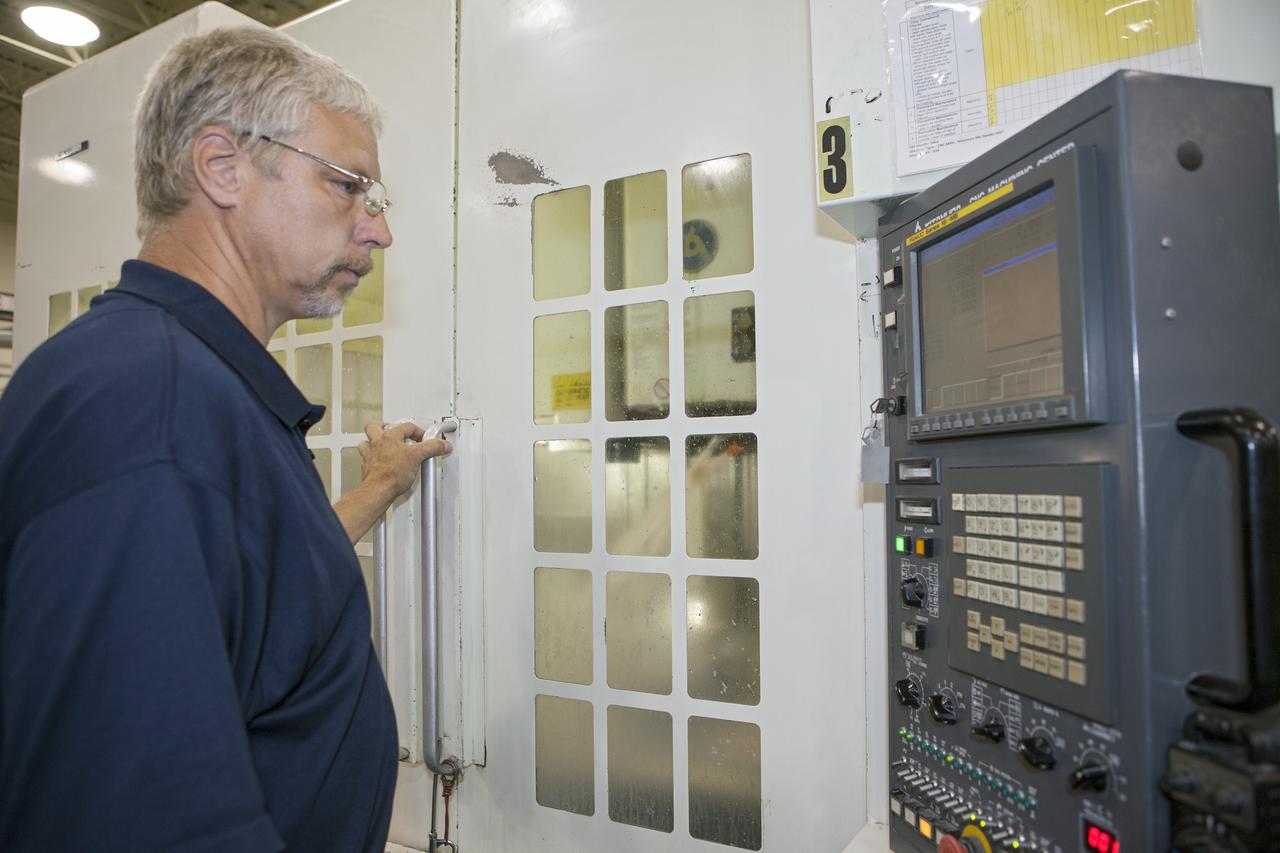
CAPE CANAVERAL, Fla. – At the Aerospace and Defense Manufacturing Center in Cape Canaveral, Fla., Craig Technologies Mechanical Engineer Technician Mike Cousineau checks the performance of one of the 1,600 pieces of specialty equipment at the 161,000-square-foot facility. In June of last year, NASA signed a partnership agreement with Craig Technologies to maintain an inventory of unique processing and manufacturing equipment for future mission support at the agency's Kennedy Space Center. The Cape Canaveral, Fla., facility, formerly known as the NASA Shuttle Logistics Depot NSLD, is now the Aerospace and Defense Manufacturing Center ADMC. Photo credit: NASA_Kim Shiflett
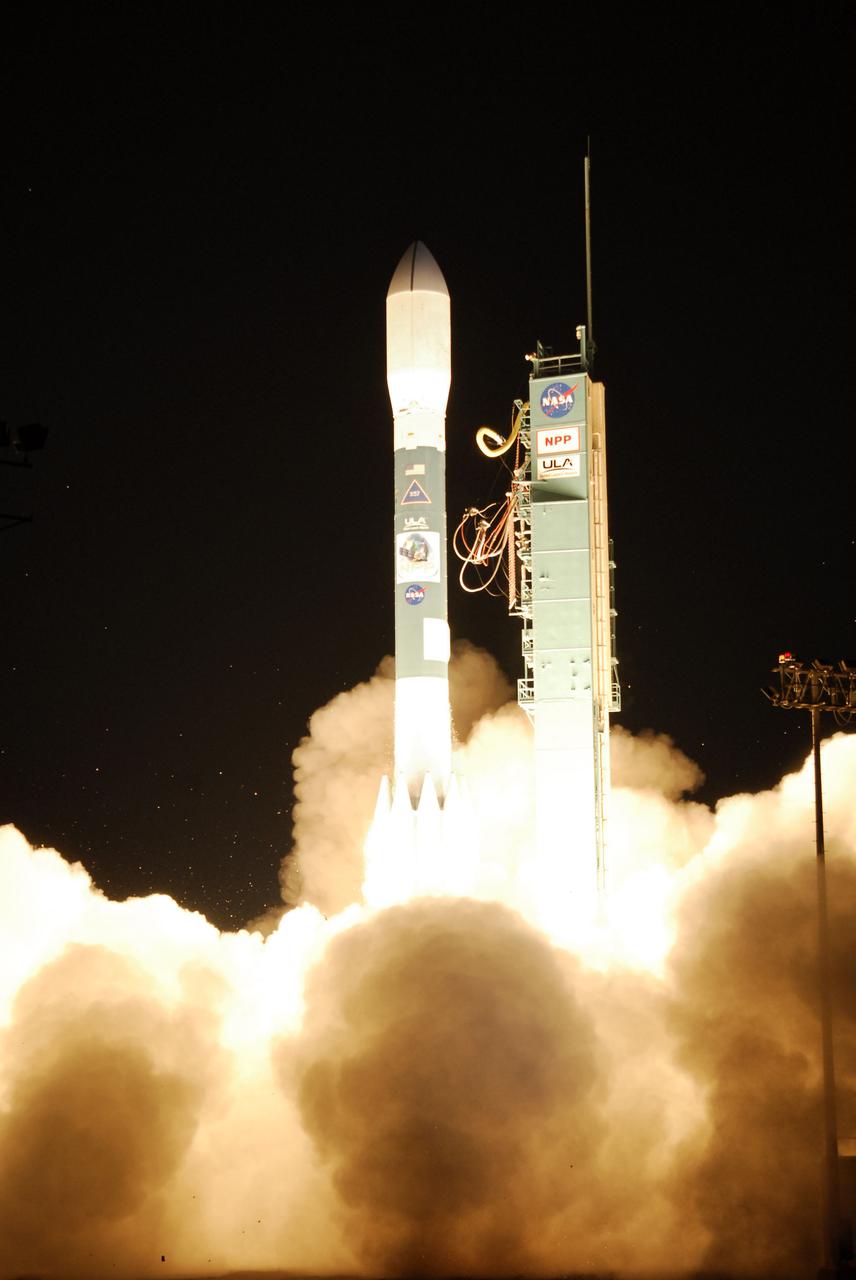
VANDENBERG AIR FORCE BASE, Calif. -- At Space Launch Complex-2 on Vandenberg Air Force Base in California, an exhaust cloud builds around the United Launch Alliance Delta II rocket carrying NASA's National Polar-orbiting Operational Environmental Satellite System Preparatory Project (NPP) into space. Liftoff was at 2:48 a.m. PDT. NPP represents a critical first step in building the next-generation of Earth-observing satellites. NPP will carry the first of the new sensors developed for this satellite fleet, now known as the Joint Polar Satellite System (JPSS) to be launched in 2016. NPP is the bridge between NASA's Earth Observing System (EOS) satellites and the forthcoming series of JPSS satellites. The mission will test key technologies and instruments for the JPSS missions. For more information, visit http:__www.nasa.gov_NPP. Photo credit: NASA_Kim Shiflett
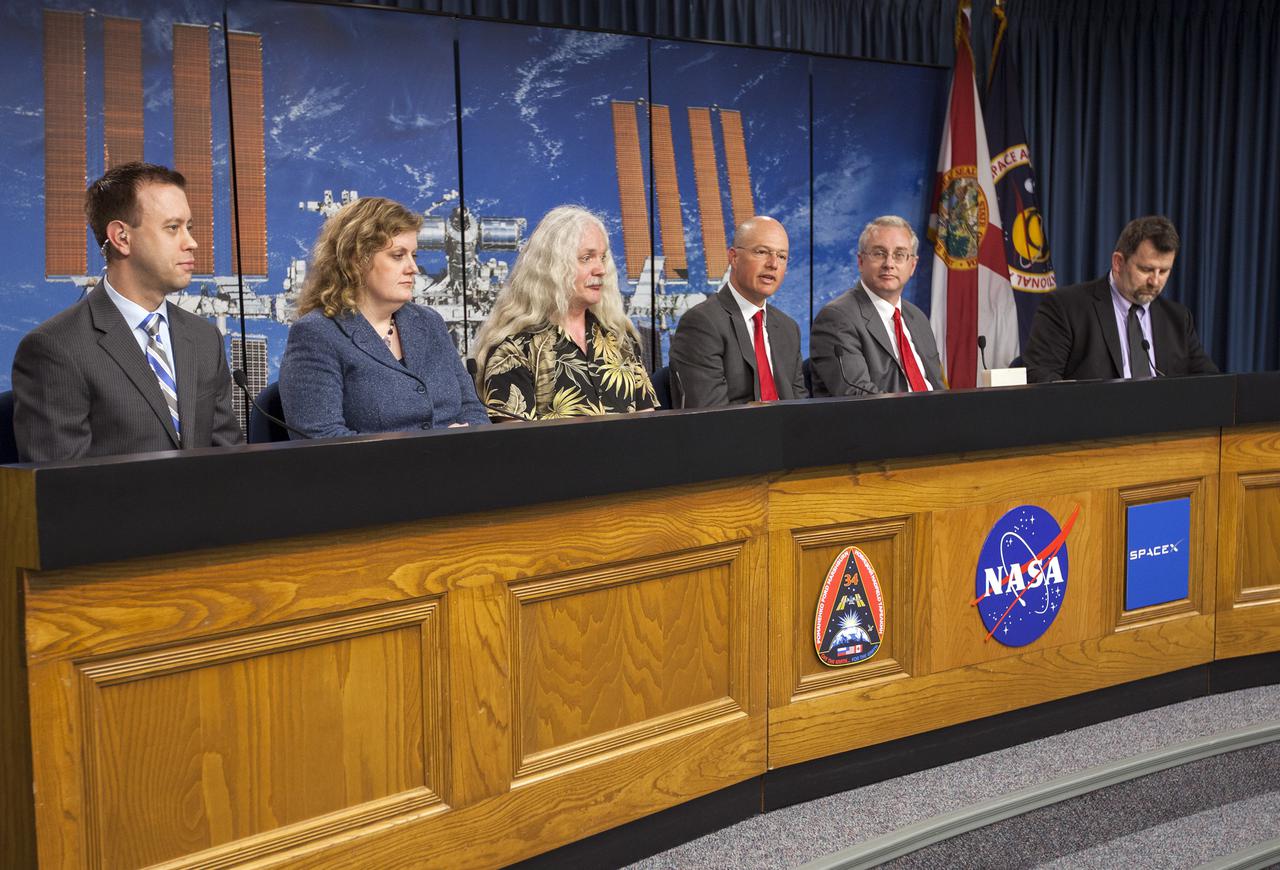
CAPE CANAVERAL, Fla. - Media attending a pre-launch news conference at the Kennedy Space Center, Fla. heard from officials who discussed payloads to be launched aboard a SpaceX Dragon capsule. From the left are: Josh Byerly of NASA Public Affairs at the Johnson Space Center, Julie Robinson, NASA program scientist for the International Space Station, Simon Gilroy, Ph.D., BRIC-17 Lead Investigator from the University of Wisconsin, Marshall Porterfield, division director of the Life and Physical Sciences at NASA Headquarters, Michael Johnson, chief technical officer for NanoRacks, and Michael Roberts, research scientist with the Center for Advancement of Science in Space. Scheduled for launch March 1 atop a Falcon 9 rocket, the SpaceX Dragon capsule will be making its third trip to the space station. The mission is the second of 12 SpaceX flights contracted by NASA to resupply the orbiting laboratory. For more information, visit http:__www.nasa.gov_mission_pages_station_structure_launch_spacex2-feature.html Photo credit: NASA_Kim Shiflett
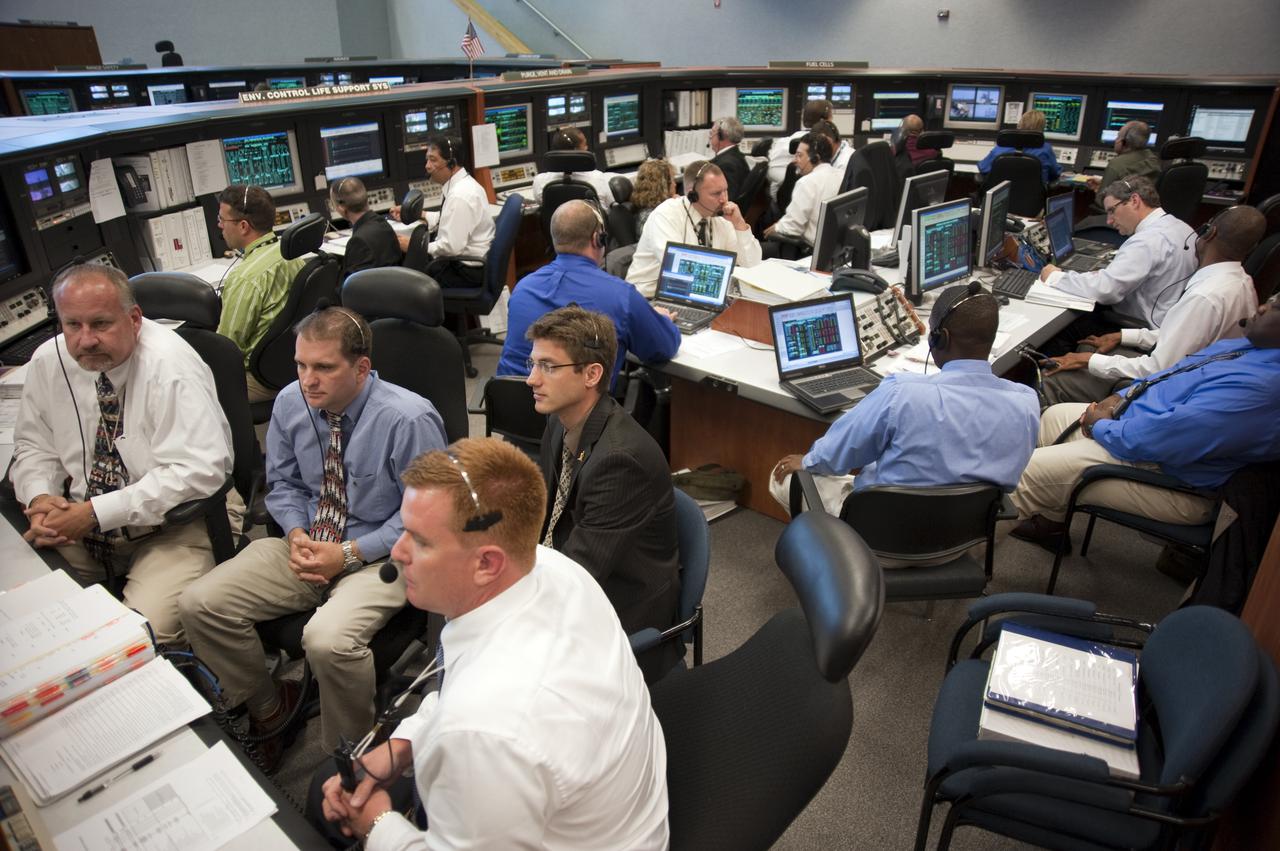
CAPE CANAVERAL, Fla. -- In Firing Room 4 of the Launch Control Center at NASA's Kennedy Space Center in Florida, launch controllers keep track of the imminent launch of space shuttle Atlantis on its STS-132 mission to the International Space Station. The launch team worked very few issues during the countdown and picture-perfect weather led to an on-time launch at 2:20 p.m. EDT on May 14. STS-132 is the 132nd shuttle flight, the 32nd for Atlantis and the 34th shuttle mission dedicated to station assembly and maintenance. For more information on the STS-132 mission objectives, payload and crew, visit www.nasa.gov_mission_pages_shuttle_shuttlemissions_sts132_index.html. Photo credit: NASA_Kim Shiflett

CAPE CANAVERAL, Fla. - At NASA's Kennedy Space Center in Florida, water stands on the crawlerway outside Launch Pad 39A, awaiting the arrival of space shuttle Atlantis. Thunderstorms that passed over the center around 4 a.m. made the crawlerway too wet for the massive crawler-transporter to carry Atlantis the 3.4 miles from the Vehicle Assembly Building to the pad. Atlantis and a six-member crew will deliver an Integrated Cargo Carrier, or ICC, and the Russian-built Mini-Research Module-1, or MRM-1, to the International Space Station on the STS-132 mission. The ICC is an unpressurized flat bed pallet and keel yoke assembly used to support the transfer of exterior cargo from the shuttle to the space station. The MRM-1, known as Rassvet, is the second in a series of new pressurized components for Russia and will be permanently attached to the Earth-facing port of the Zarya control module. Rassvet, which translates to 'dawn,' will be used for cargo storage and will provide an additional docking port to the station. STS-132 is the 34th mission to the station and the 132nd shuttle mission overall. Atlantis is targeted to launch on May 14 at 2:19 p.m. For information on the STS-132 mission, visit http:__www.nasa.gov_mission_pages_shuttle_shuttlemissions_sts132_index.html. Photo credit: NASA_Kim Shiflett
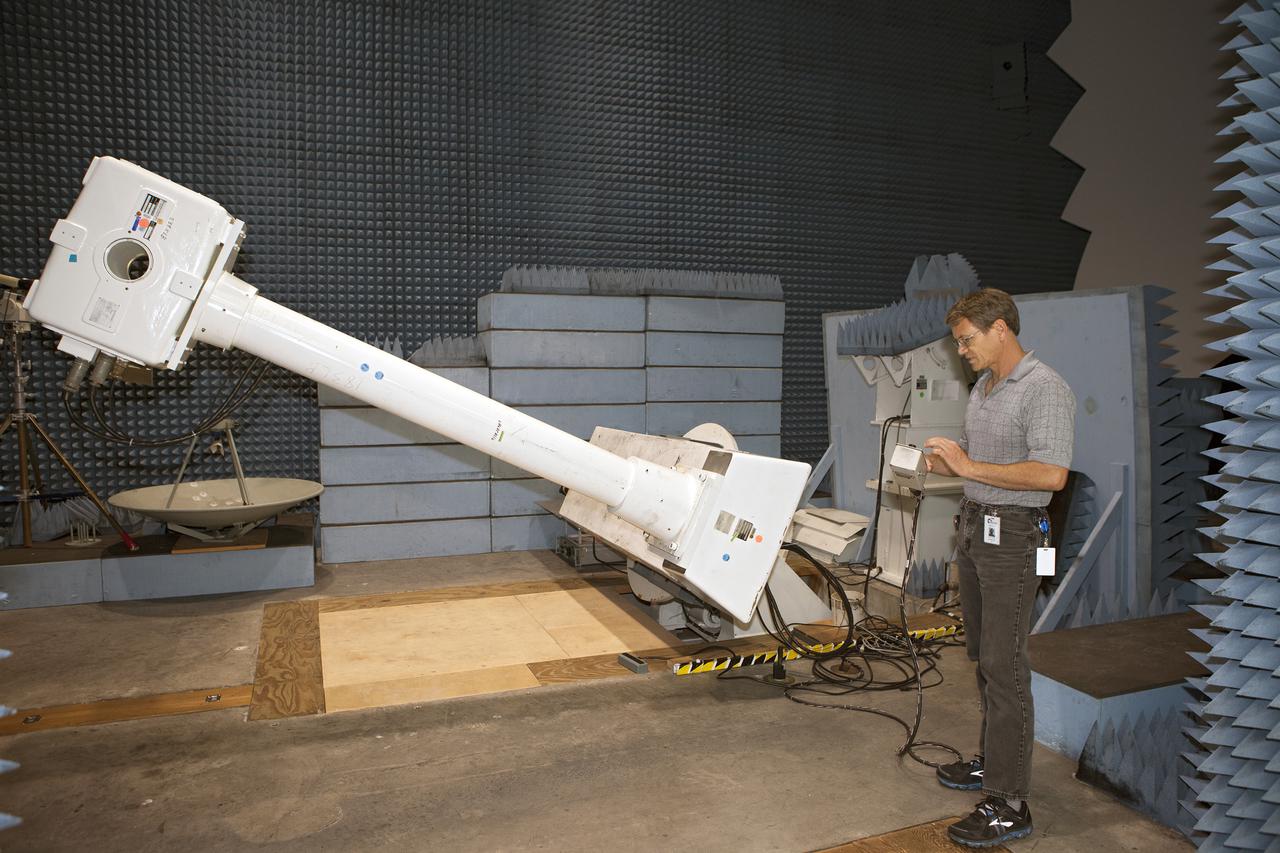
CAPE CANAVERAL, Fla. – At the Aerospace and Defense Manufacturing Center in Cape Canaveral, Fla., Craig Technologies Electrical Technician Mike Palin checks the performance of one of the 1,600 pieces of specialty equipment to be operated in the Avionics Laboratory at the 161,000-square-foot facility. In June of last year, NASA signed a partnership agreement with Craig Technologies to maintain an inventory of unique processing and manufacturing equipment for future mission support at the agency's Kennedy Space Center. The Cape Canaveral, Fla., facility, formerly known as the NASA Shuttle Logistics Depot NSLD, is now the Aerospace and Defense Manufacturing Center ADMC. Photo credit: NASA_Kim Shiflett
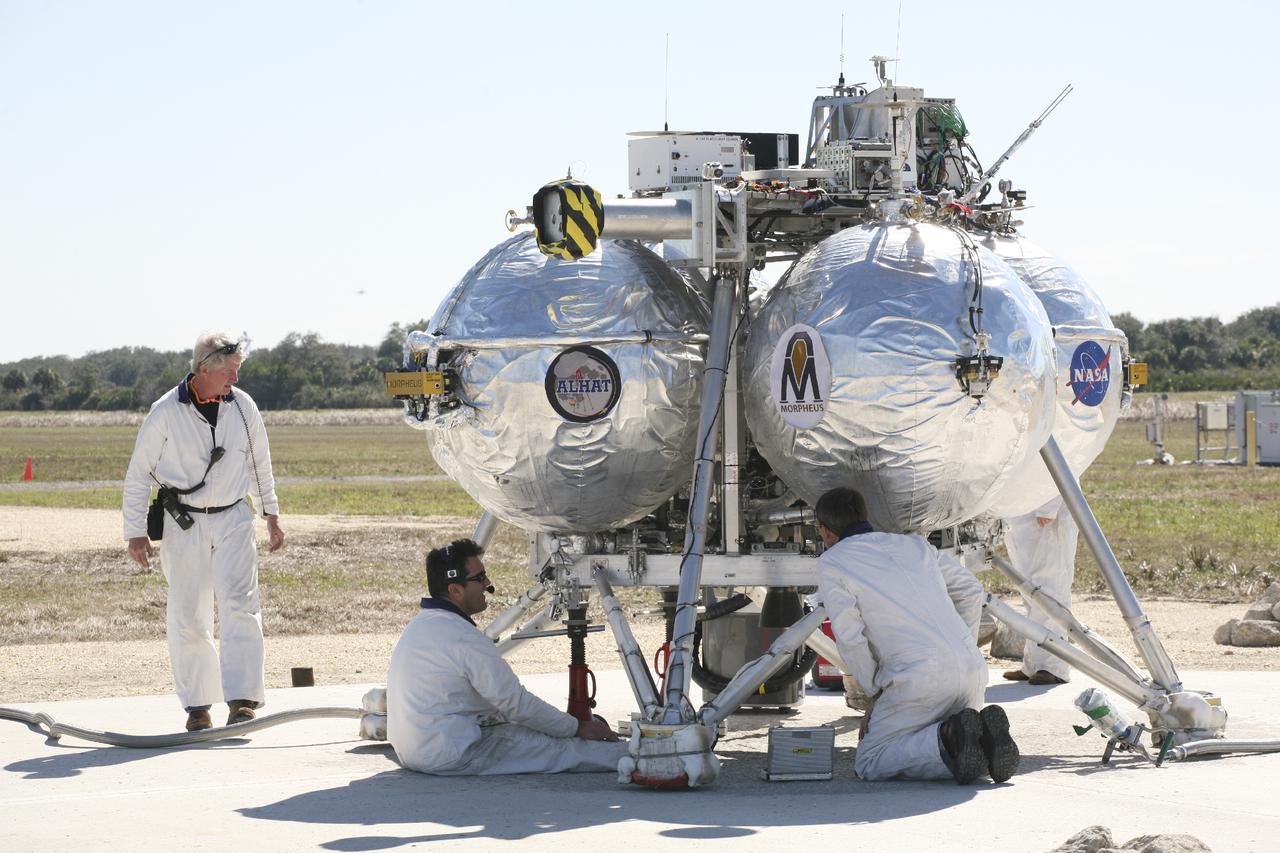
CAPE CANAVERAL, Fla. – Technicians and engineers check the Project Morpheus prototype lander after it lands on a dedicated pad inside the autonomous landing and hazard avoidance technology, or ALHAT, hazard field at the north end of the Shuttle Landing Facility at NASA’s Kennedy Space Center in Florida. Morpheus launched from the ground over a flame trench on its fifth free flight test at around 1 p.m. EST. It ascended 467 feet, more than 160 feet higher than its last test. Morpheus flew forward, covering 637 feet in 30 seconds before descending on target. Project Morpheus tests NASA’s ALHAT and an engine that runs on liquid oxygen and methane, or green propellants, into a fully-operational lander that could deliver cargo to other planetary surfaces. The landing facility provides the lander with the kind of field necessary for realistic testing, complete with rocks, craters and hazards to avoid. Morpheus’ ALHAT payload will allow it to navigate to clear landing sites amidst rocks, craters and other hazards during its descent. Project Morpheus is being managed under the Advanced Exploration Systems, or AES, Division in NASA’s Human Exploration and Operations Mission Directorate. The efforts in AES pioneer new approaches for rapidly developing prototype systems, demonstrating key capabilities and validating operational concepts for future human missions beyond Earth orbit. For more information, visit http:__morpheuslander.jsc.nasa.gov. Photo credit: NASA_Kim Shiflett
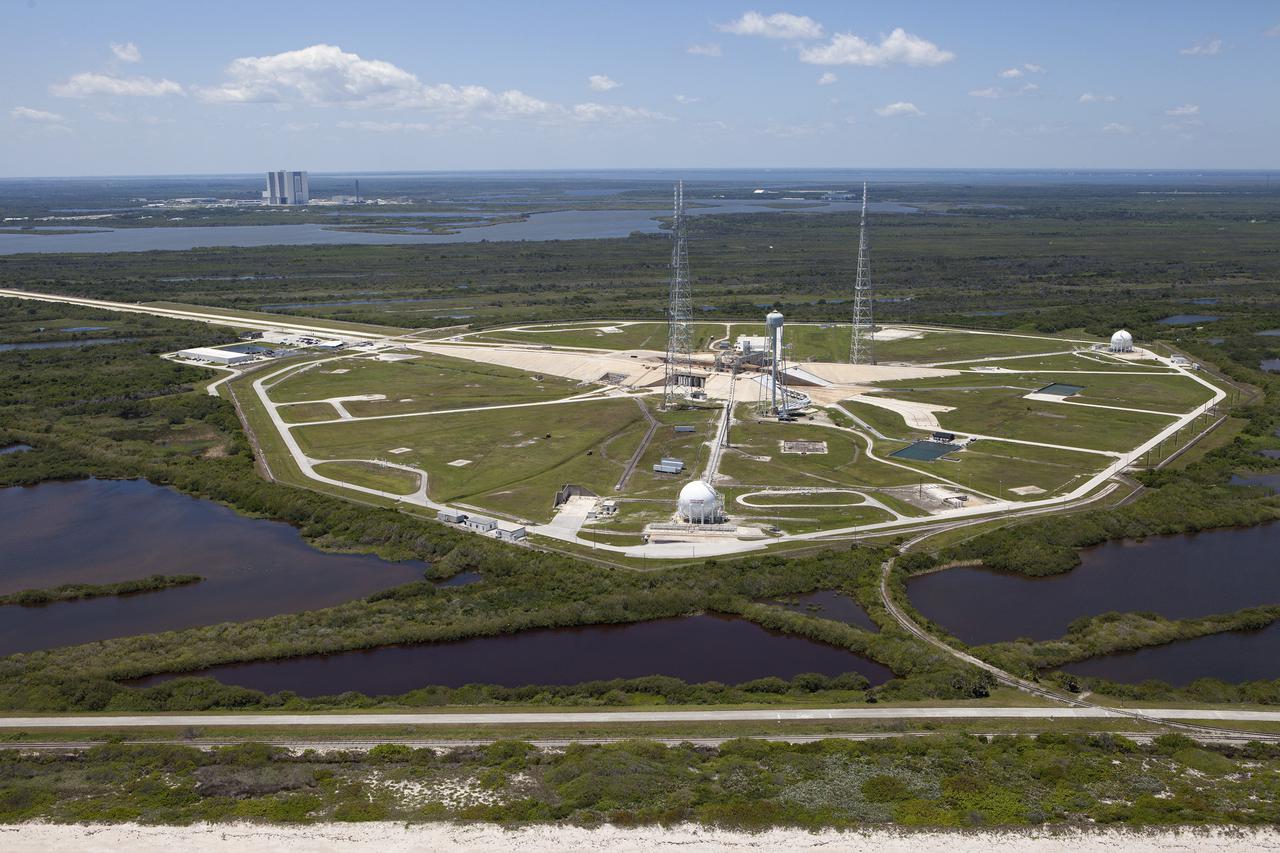
CAPE CANAVERAL, Fla. – An aerial view, from the east looking toward the west, shows the entire Launch Pad 39B area at NASA’s Kennedy Space Center in Florida. A new elevator has been constructed on the surface of the pad and the crawlerway leading up to the surface is being repaired. Repairs also are being made to the crawler track panels and catacomb roof below on either side of the flame trench. Also in view are the water tower and the three tall lightning towers that surround the pad. To the left, in the background is the Vehicle Assembly Building. Upgrades are underway at Pad B and other facilities in the Launch Complex 39 area. The Ground Systems Development and Operations, or GSDO, Program office at Kennedy is leading the center’s transformation from a historically government-only launch complex to a spaceport that can safely handle a variety of rockets and spacecraft, including NASA’s Space Launch System. For more information about GSDO, visit: http:__go.nasa.gov_groundsystems. Photo credit: NASA_Kim Shiflett
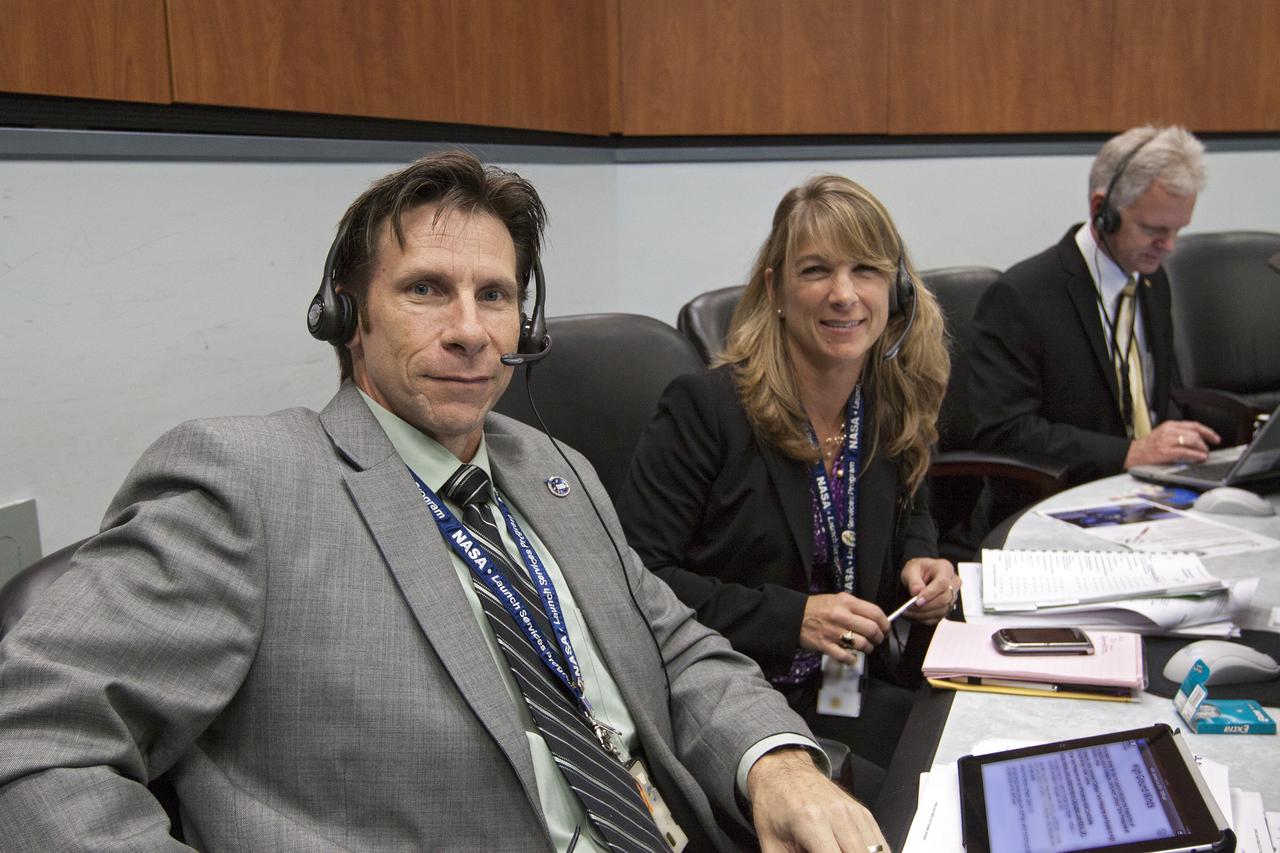
CAPE CANAVERAL, Fla. – Amanda Mitskevich, program manager of NASA's Launch Services Program, or LSP, center, and Chuck Dovale, deputy program manager of LSP, monitors the countdown for the launch of the TDRS-K spacecraft on an Atlas V rocket. The launch teams for NASA and the United Launch Alliance work inside the Atlas Space Operations Center at Cape Canaveral Air Force Station, Fla., known as the ASOC. Photo credit: NASA_Kim Shiflett
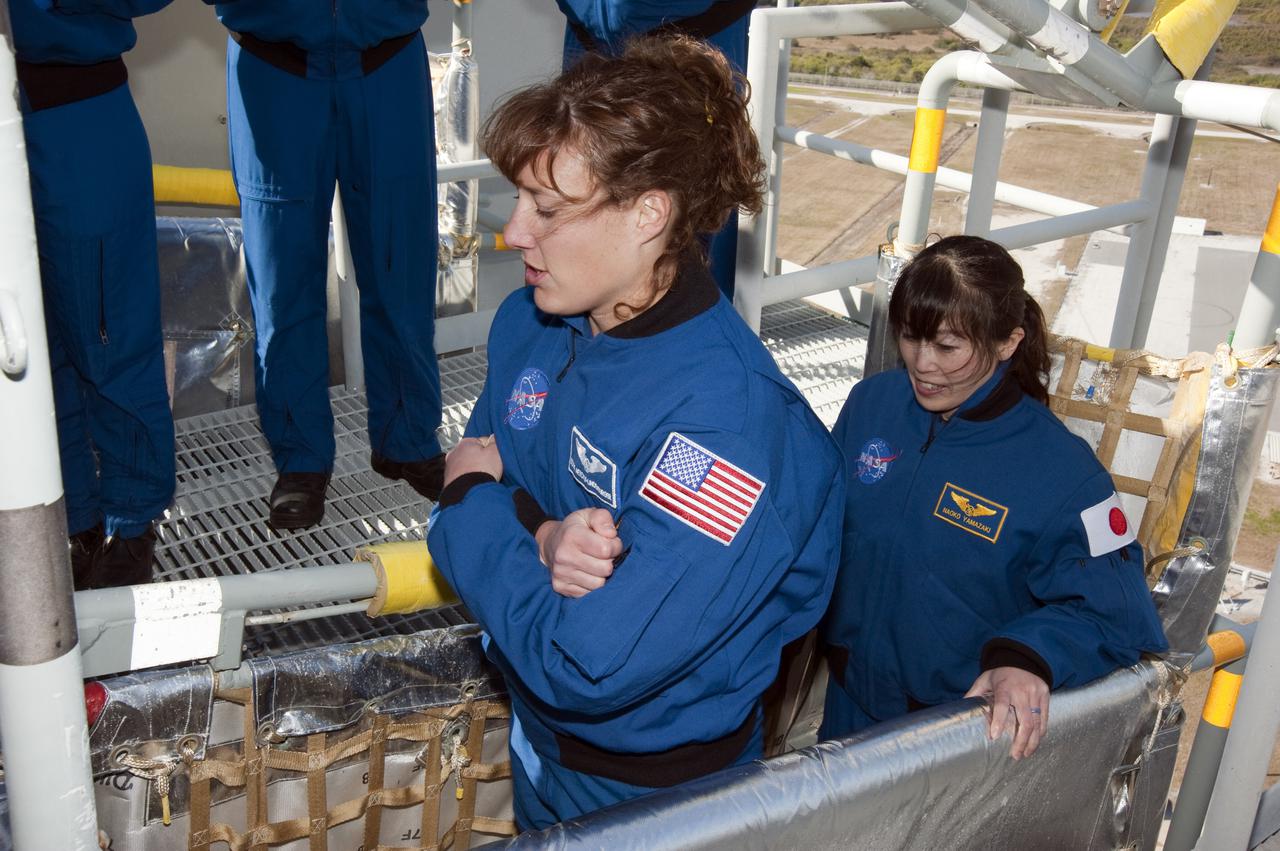
CAPE CANAVERAL, Fla. - On a brisk Florida morning at Launch Pad 39A at NASA's Kennedy Space Center, STS-131 Mission Specialists Dorothy Metcalf-Lindenburger, left, and Naoko Yamazaki of the Japan Aerospace Exploration Agency try out one of the slidewire baskets during training on the emergency exit system at the pad. The system includes seven baskets suspended from seven slidewires that extend from the fixed service structure to a landing zone 1,200 feet west of the pad. The crew members of space shuttle Discovery's STS-131 mission are at Kennedy for training related to their launch dress rehearsal, the Terminal Countdown Demonstration Test. The seven-member crew will deliver the multi-purpose logistics module Leonardo, filled with resupply stowage platforms and racks, to the International Space Station aboard Discovery. Targeted for launch on April 5, STS-131 will be the 33rd shuttle mission to the station and the 131st shuttle mission overall. For information on the STS-131 mission and crew, visit http:__www.nasa.gov_mission_pages_shuttle_shuttlemissions_sts131_index.html. Photo credit: NASA_Kim Shiflett

CAPE CANAVERAL, Fla. - NASA Administrator Charles Bolden, center, gets a close-up look at space shuttle Endeavour following its successful landing on Runway 15 at the Shuttle Landing Facility at NASA's Kennedy Space Center in Florida. After 14 days in space, Endeavour's 5.7-million-mile STS-130 mission was completed on orbit 217. Main gear touchdown was at 10:20:31 p.m. EST followed by nose gear touchdown at 10:20:39 p.m. and wheels stop at 10:22:10 p.m. It was the 23rd night landing in shuttle history and the 17th at Kennedy. During Endeavour's STS-130 mission, astronauts installed the Tranquility node, a module that provides additional room for crew members and many of the station's life support and environmental control systems. Attached to Tranquility is a cupola with seven windows that provide a panoramic view of Earth, celestial objects and visiting spacecraft. The module was built in Turin, Italy, by Thales Alenia Space for the European Space Agency. The orbiting laboratory is approximately 90 percent complete now in terms of mass. STS-130 was the 24th flight for Endeavour, the 32nd shuttle mission devoted to ISS assembly and maintenance, and the 130th shuttle mission to date. For information on the STS-130 mission and crew, visit http:__www.nasa.gov_mission_pages_shuttle_shuttlemissions_sts130_index.html. Photo credit: NASA_Kim Shiflett
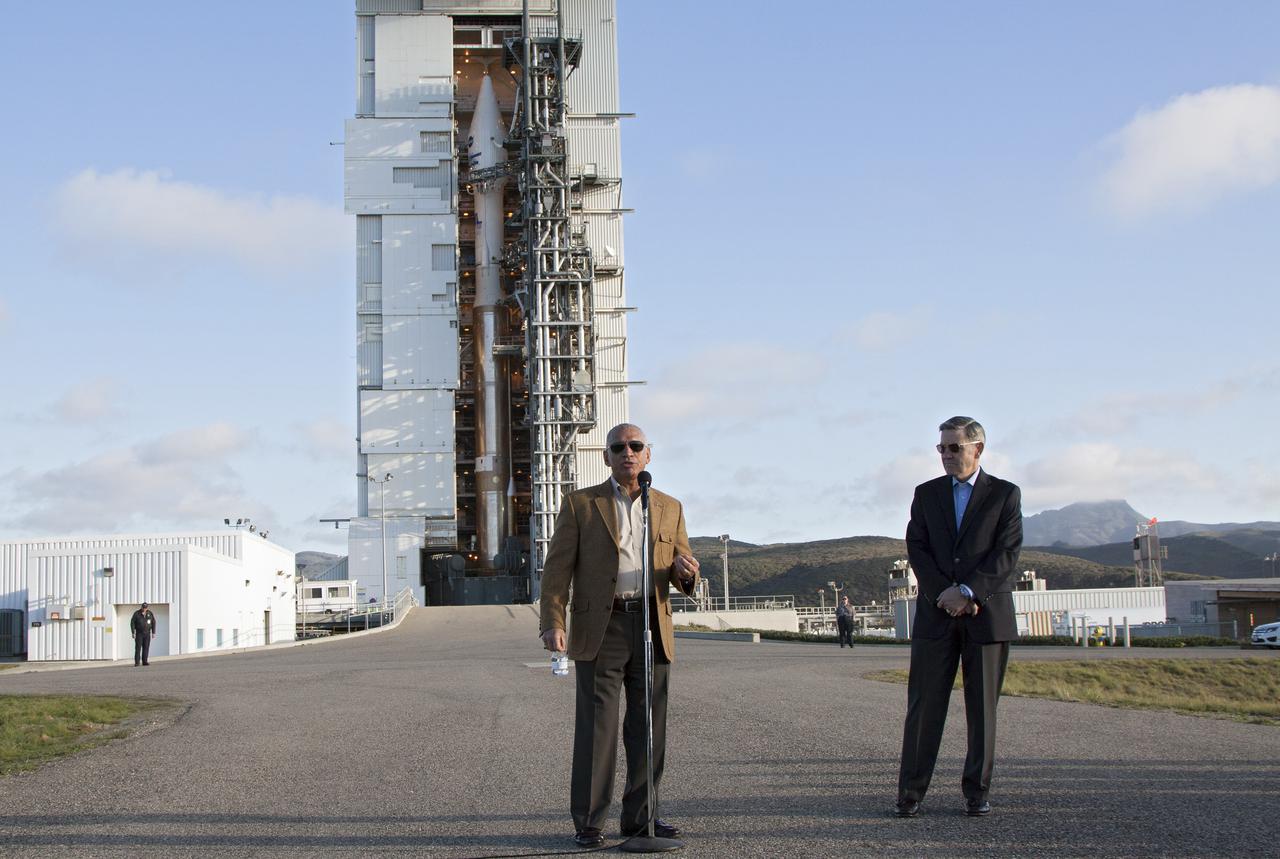
VANDENBERG AFB, Calif. -- At Space Launch Complex 3E at Vandenberg Air Force Base, NASA Administrator Charles Bolden discusses the Landsat Data Continuity Mission, or LDCM, satellite mission with NASA social media followers. Looking on, to the right, is Kennedy Space Center Director Bob Cabana. The Landsat Data Continuity Mission LDCM is the future of Landsat satellites. It will continue to obtain valuable data and imagery to be used in agriculture, education, business, science, and government. The Landsat Program provides repetitive acquisition of high resolution multispectral data of the Earth's surface on a global basis. The data from the Landsat spacecraft constitute the longest record of the Earth's continental surfaces as seen from space. It is a record unmatched in quality, detail, coverage, and value. Liftoff is planned for Feb. 11, 2013 aboard a United Launch Alliance Atlas V rocket. For more information, visit: http:__www.nasa.gov_mission_pages_landsat_main_index.html Photo credit: NASA_Kim Shiflett
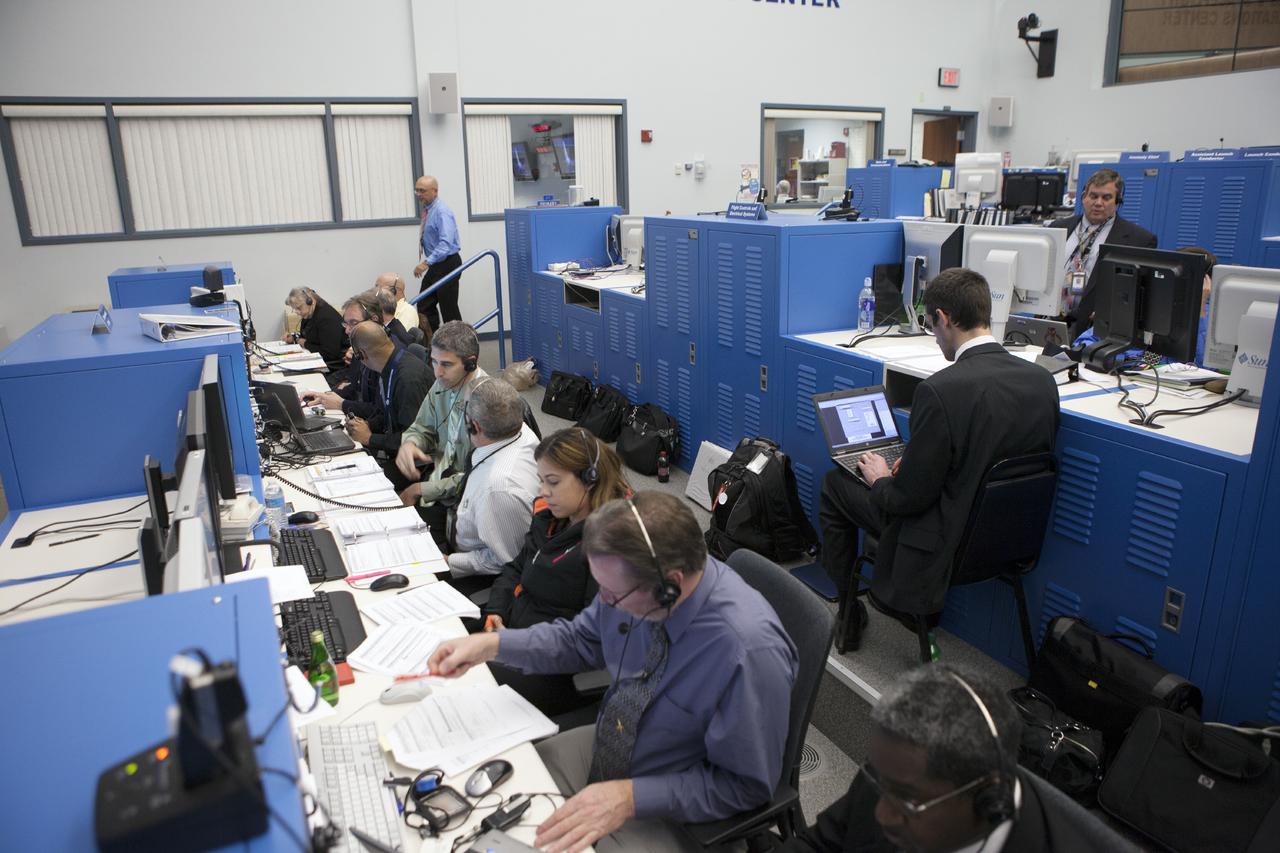
CAPE CANAVERAL, Fla. – At Cape Canaveral Air Force Station's Atlas V Spaceflight Operations Center NASA and contractor managers and engineers monitor progress of the countdown for the launch the agency's Tracking and Data Relay Satellite, or TDRS-L, spacecraft atop a United Launch Alliance Atlas V rocket. The TDRS-L spacecraft is the second of three new satellites designed to ensure vital operational continuity for NASA by expanding the lifespan of the Tracking and Data Relay Satellite System TDRSS fleet, which consists of eight satellites in geosynchronous orbit. The spacecraft provide tracking, telemetry, command and high bandwidth data return services for numerous science and human exploration missions orbiting Earth. These include NASA's Hubble Space Telescope and the International Space Station. TDRS-L has a high-performance solar panel designed for more spacecraft power to meet the growing S-band communications requirements. TDRSS is one of NASA Space Communication and Navigation’s SCaN three networks providing space communications to NASA’s missions. For more information more about TDRS-L, visit: http:__www.nasa.gov_tdrs To learn more about SCaN, visit: www.nasa.gov_scan Photo credit: NASA_Kim Shiflett
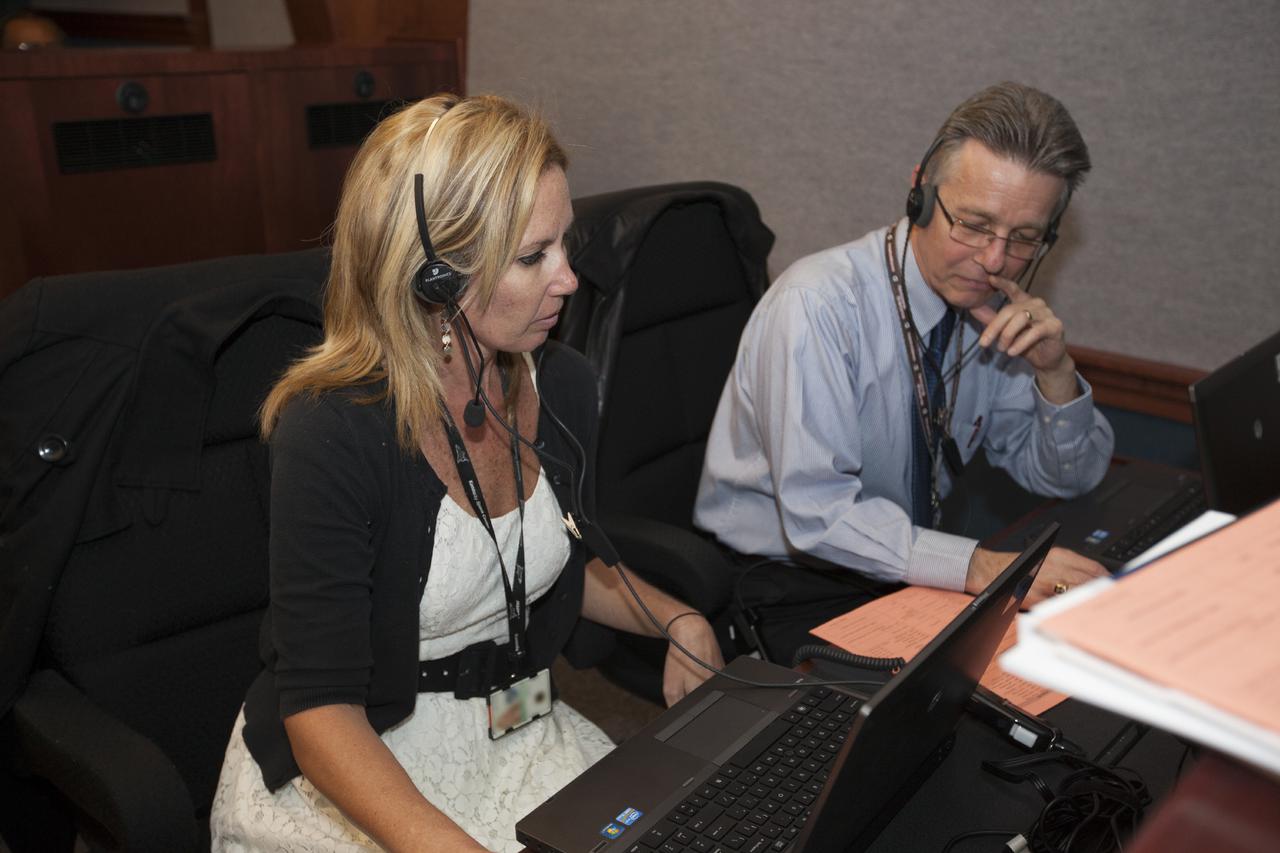
CAPE CANAVERAL, Fla. – In the Hangar AE Mission Director's Center at Cape Canaveral Air Force Station in Florida, NASA and contractor managers and engineers monitor progress of the countdown for the launch the agency's Tracking and Data Relay Satellite, or TDRS-L, spacecraft atop a United Launch Alliance Atlas V rocket. The TDRS-L spacecraft is the second of three new satellites designed to ensure vital operational continuity for NASA by expanding the lifespan of the Tracking and Data Relay Satellite System TDRSS fleet, which consists of eight satellites in geosynchronous orbit. The spacecraft provide tracking, telemetry, command and high bandwidth data return services for numerous science and human exploration missions orbiting Earth. These include NASA's Hubble Space Telescope and the International Space Station. TDRS-L has a high-performance solar panel designed for more spacecraft power to meet the growing S-band communications requirements. TDRSS is one of NASA Space Communication and Navigation’s SCaN three networks providing space communications to NASA’s missions. For more information more about TDRS-L, visit: http:__www.nasa.gov_tdrs To learn more about SCaN, visit: www.nasa.gov_scan Photo credit: NASA_Kim Shiflett
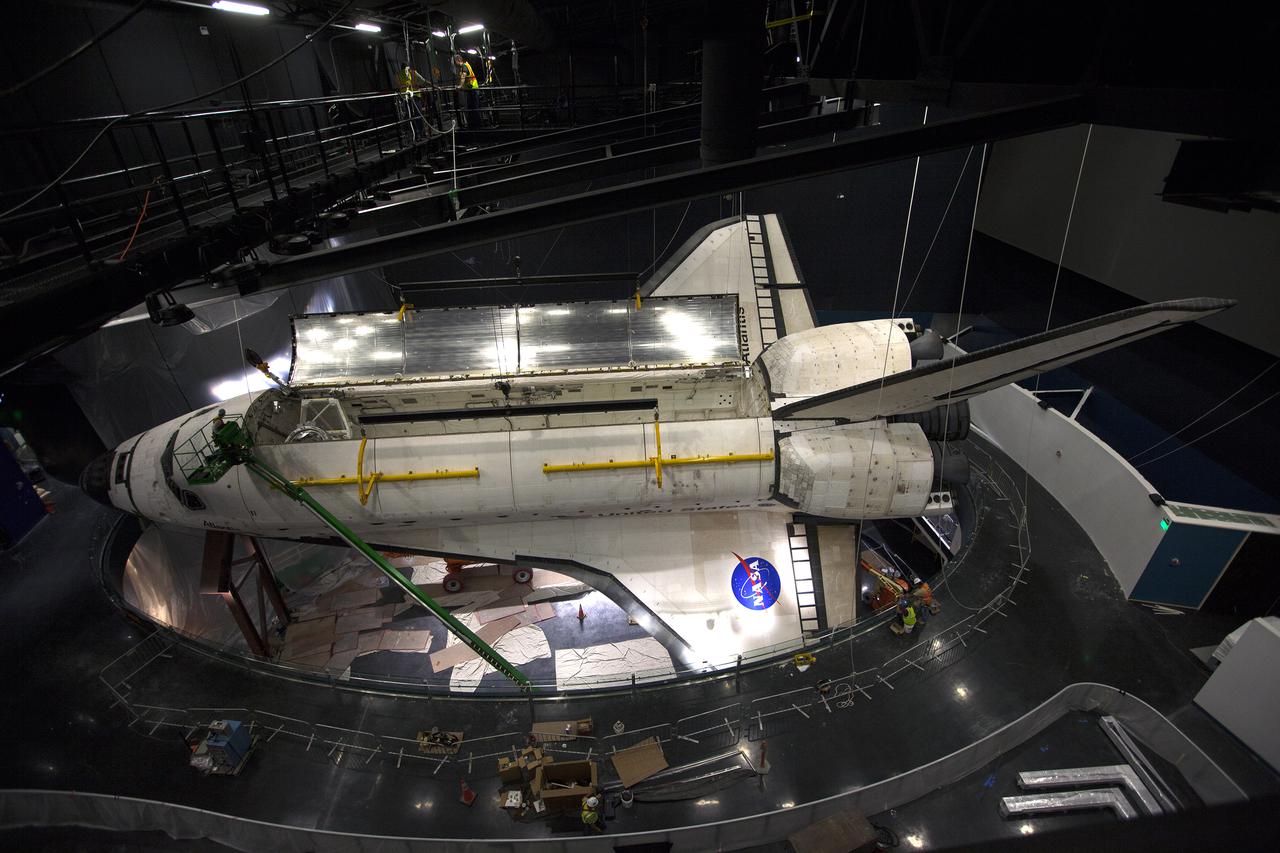
CAPE CANAVERAL, Fla. – At the Kennedy Space Center Visitor Complex in Florida, technicians monitor the progress as space shuttle Atlantis’ payload bay doors are opened. Atlantis is being prepared for display in the “Space Shuttle Atlantis” exhibit, a 90,000-square-foot facility, scheduled to open June 29, 2013. The new $100 million facility will include interactive exhibits that tell the story of the 30-year Space Shuttle Program and highlight the future of space exploration. Visitors to the exhibit will get an up close look at Atlantis with its payload bay doors open, similar to how it looked in space. Photo credit: NASA_Kim Shiflett
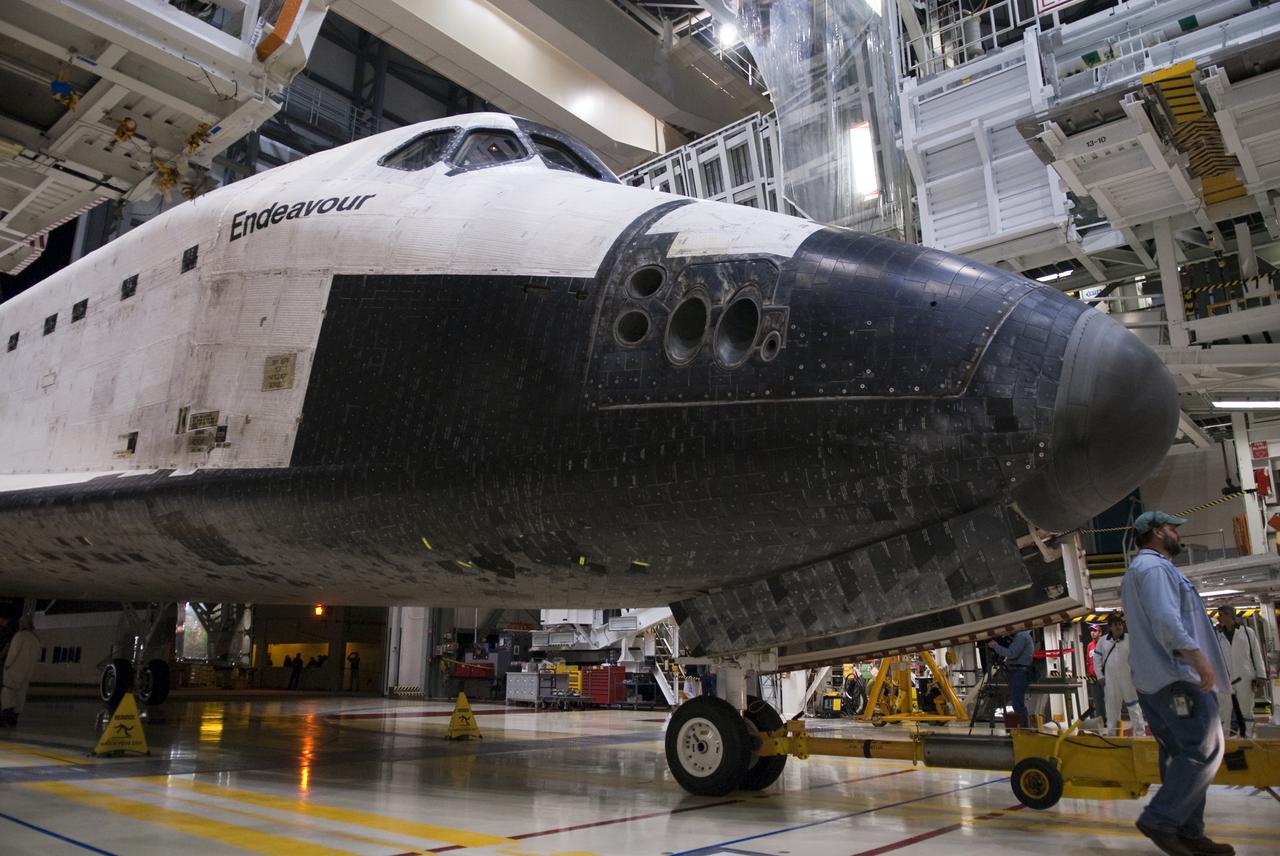
CAPE CANAVERAL, Fla. - At NASA's Kennedy Space Center in Florida, space shuttle Endeavour is towed into Orbiter Processing Facility-2. Endeavour's touchdown at Kennedy's Shuttle Landing Facility following the STS-130 mission to the International Space Station was at 10:20 p.m. EST Feb. 21. Processing now will begin for Endeavour's next flight, STS-134. The six-member STS-134 crew will deliver Express Logistics Carrier 3 and the Alpha Magnetic Spectrometer to the International Space Station, as well as a variety of spare parts including two S-band communications antennas, a high-pressure gas tank, additional spare parts for Dextre and micrometeoroid debris shields. STS-134 will be the 35th shuttle mission to the station and the 133rd flight in the shuttle program. Launch is targeted for July 29. For information on the STS-134 mission and crew, visit http:__www.nasa.gov_mission_pages_shuttle_shuttlemissions_sts134_index.html. Photo credit: NASA_Kim Shiflett
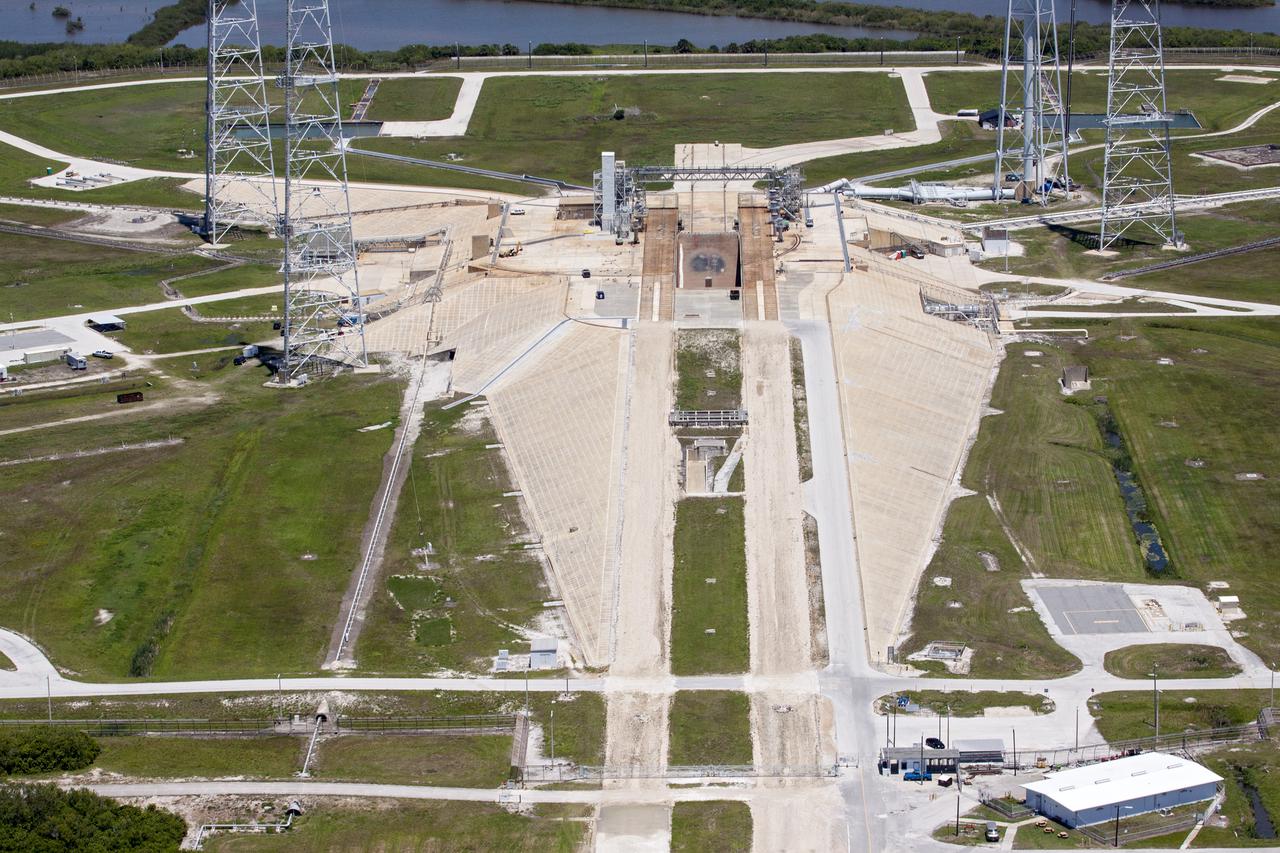
CAPE CANAVERAL, Fla. – An aerial view shows construction progress at Launch Pad 39B at NASA’s Kennedy Space Center in Florida. A new elevator has been constructed on the surface of the pad and the crawlerway leading up to the surface is being repaired. Repairs also are being made to the crawler track panels and catacomb roof below on either side of the flame trench. Also in view are portions of the water tower and the three tall lightning towers that surround the pad. Upgrades are underway at Pad B and other facilities in the Launch Complex 39 area. The Ground Systems Development and Operations, or GSDO, Program office at Kennedy is leading the center’s transformation from a historically government-only launch complex to a spaceport that can safely handle a variety of rockets and spacecraft, including NASA’s Space Launch System. For more information about GSDO, visit: http:__go.nasa.gov_groundsystems. Photo credit: NASA_Kim Shiflett
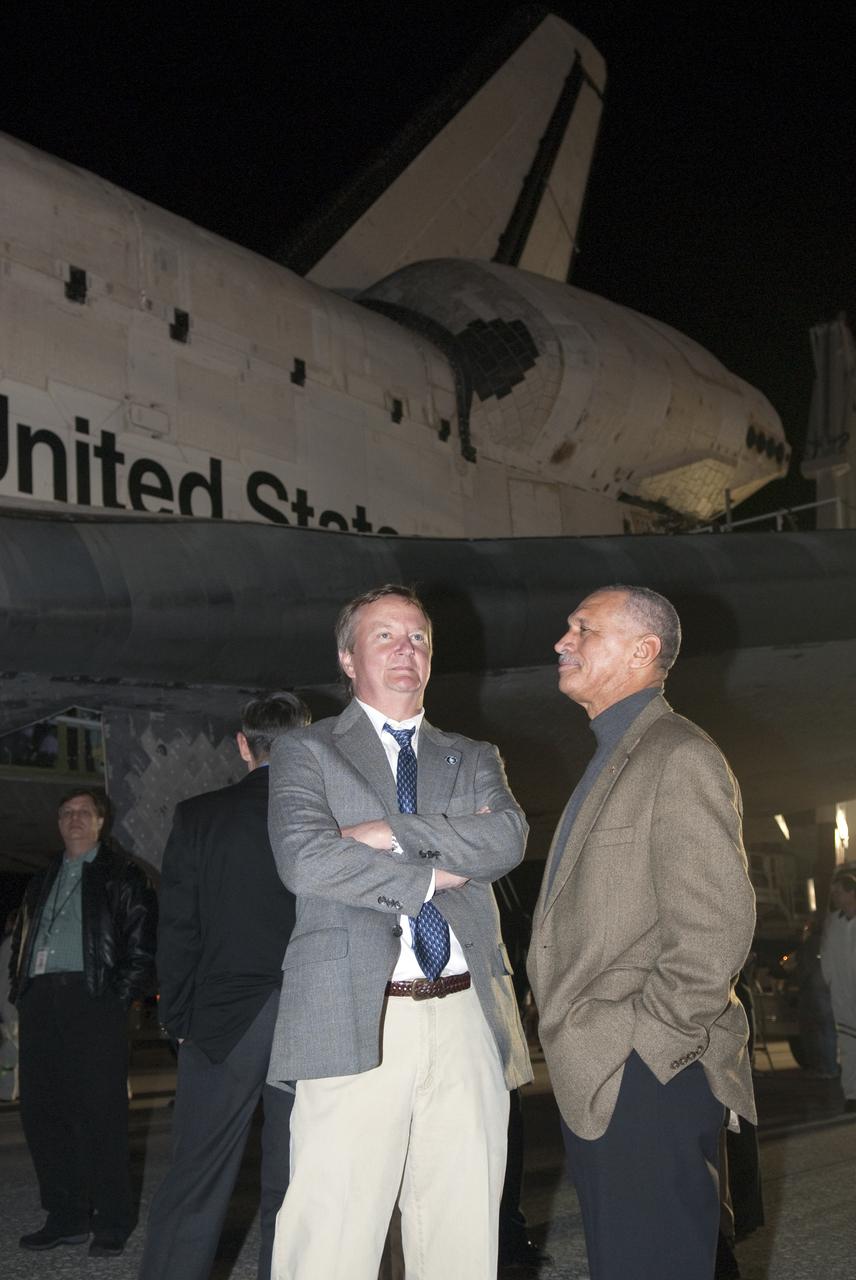
CAPE CANAVERAL, Fla. - NASA's Shuttle Launch Director Mike Leinbach, left, and NASA Administrator Charles Bolden wait to welcome the STS-130 crew back to Earth following space shuttle Endeavour's successful landing on Runway 15 at the Shuttle Landing Facility at NASA's Kennedy Space Center in Florida. After 14 days in space, Endeavour's 5.7-million-mile STS-130 mission was completed on orbit 217. Main gear touchdown was at 10:20:31 p.m. EST followed by nose gear touchdown at 10:20:39 p.m. and wheels stop at 10:22:10 p.m. It was the 23rd night landing in shuttle history and the 17th at Kennedy. During Endeavour's STS-130 mission, astronauts installed the Tranquility node, a module that provides additional room for crew members and many of the station's life support and environmental control systems. Attached to Tranquility is a cupola with seven windows that provide a panoramic view of Earth, celestial objects and visiting spacecraft. The module was built in Turin, Italy, by Thales Alenia Space for the European Space Agency. The orbiting laboratory is approximately 90 percent complete now in terms of mass. STS-130 was the 24th flight for Endeavour, the 32nd shuttle mission devoted to ISS assembly and maintenance, and the 130th shuttle mission to date. For information on the STS-130 mission and crew, visit http:__www.nasa.gov_mission_pages_shuttle_shuttlemissions_sts130_index.html. Photo credit: NASA_Kim Shiflett
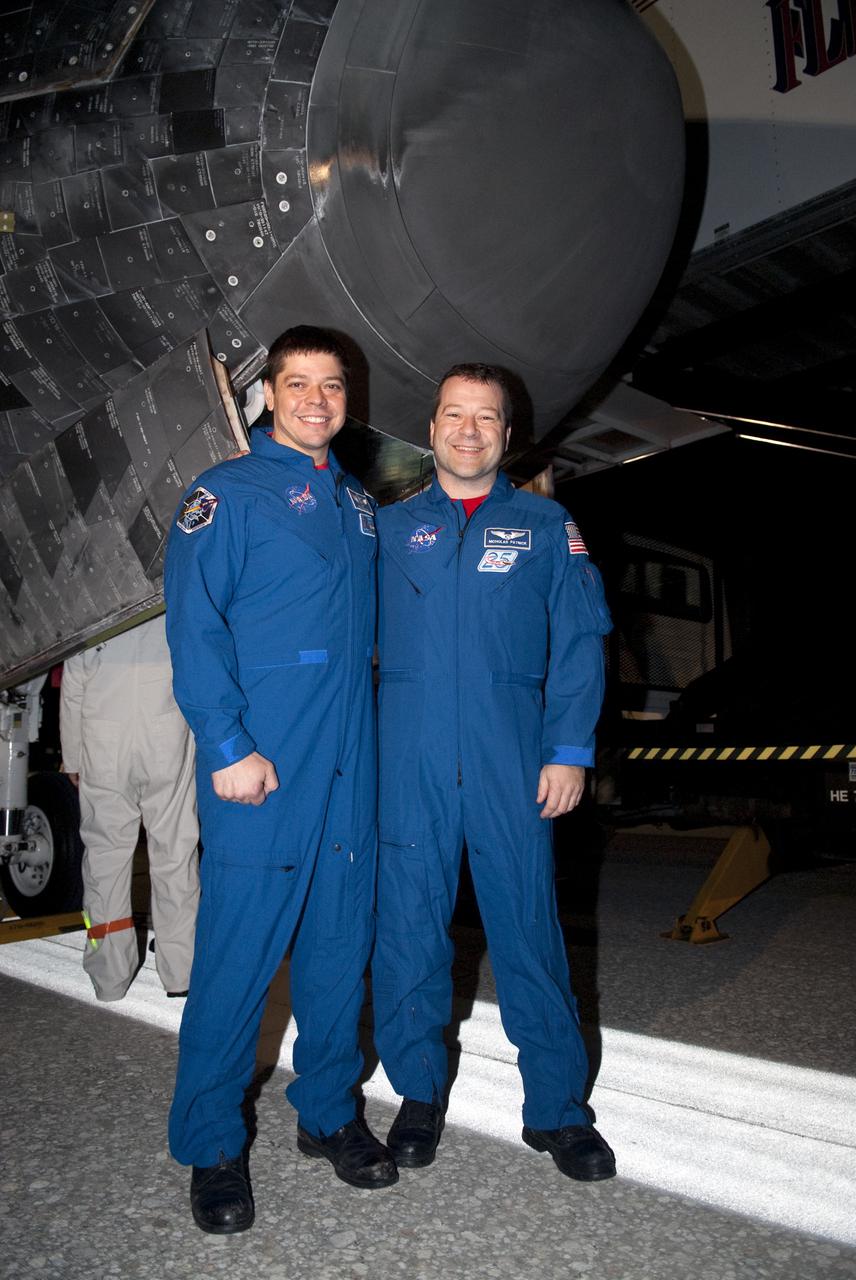
CAPE CANAVERAL, Fla. - STS-130 Mission Specialists Robert Behnken, left, and Nicholas Patrick pause for a photograph under space shuttle Endeavour's nosecone following its successful landing on Runway 15 at the Shuttle Landing Facility at NASA's Kennedy Space Center in Florida. After 14 days in space, Endeavour's 5.7-million-mile STS-130 mission was completed on orbit 217. Main gear touchdown was at 10:20:31 p.m. EST followed by nose gear touchdown at 10:20:39 p.m. and wheels stop at 10:22:10 p.m. It was the 23rd night landing in shuttle history and the 17th at Kennedy. During Endeavour's STS-130 mission, astronauts installed the Tranquility node, a module that provides additional room for crew members and many of the station's life support and environmental control systems. Attached to Tranquility is a cupola with seven windows that provide a panoramic view of Earth, celestial objects and visiting spacecraft. The module was built in Turin, Italy, by Thales Alenia Space for the European Space Agency. The orbiting laboratory is approximately 90 percent complete now in terms of mass. STS-130 was the 24th flight for Endeavour, the 32nd shuttle mission devoted to ISS assembly and maintenance, and the 130th shuttle mission to date. For information on the STS-130 mission and crew, visit http:__www.nasa.gov_mission_pages_shuttle_shuttlemissions_sts130_index.html. Photo credit: NASA_Kim Shiflett
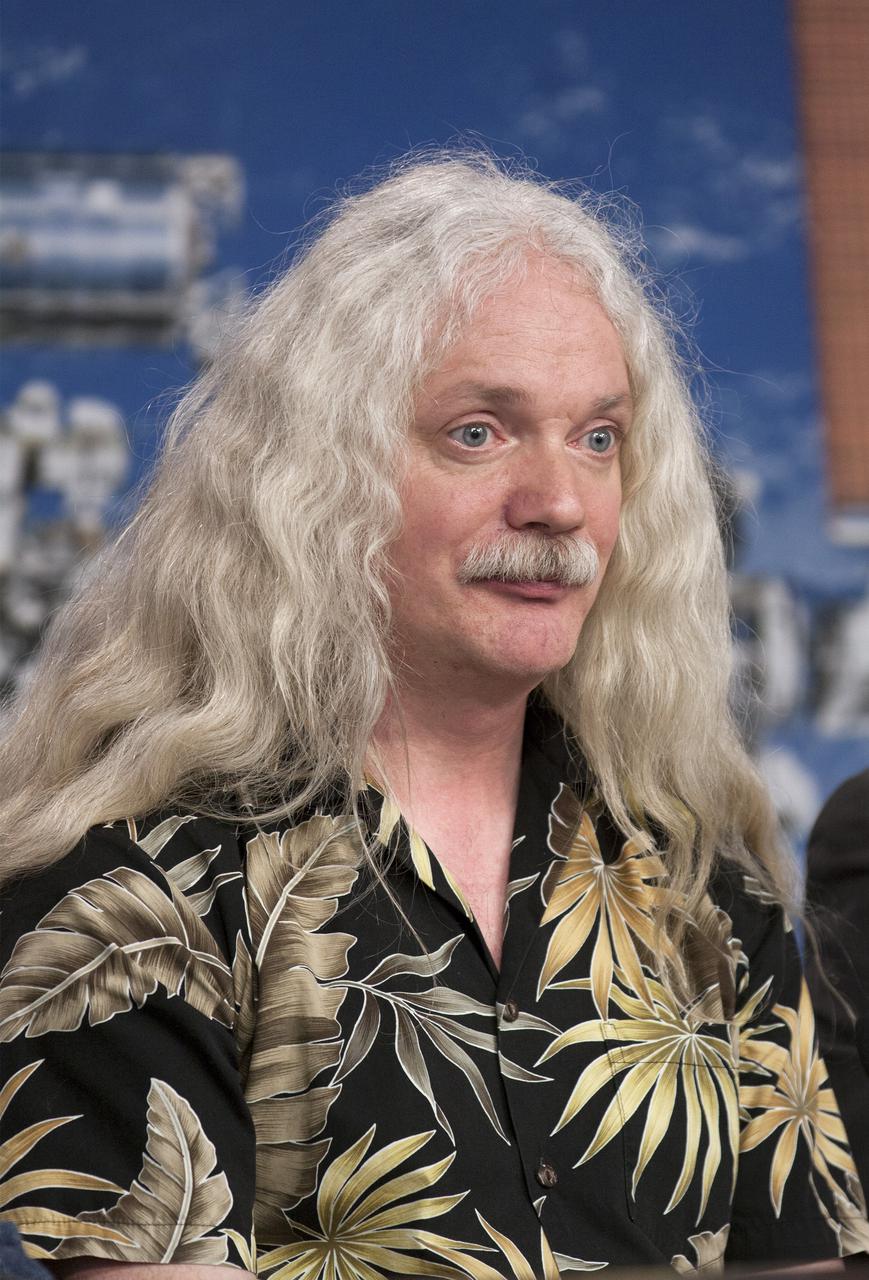
CAPE CANAVERAL, Fla. - Media attending a pre-launch news conference at the Kennedy Space Center, Fla. heard from Simon Gilroy, BRIC-17 Lead Investigator from the University of Wisconsin. Scheduled for launch March 1 atop a Falcon 9 rocket, the SpaceX Dragon capsule will be making its third trip to the space station. The mission is the second of 12 SpaceX flights contracted by NASA to resupply the orbiting laboratory. For more information, visit http:__www.nasa.gov_mission_pages_station_structure_launch_spacex2-feature.html Photo credit: NASA_Kim Shiflett
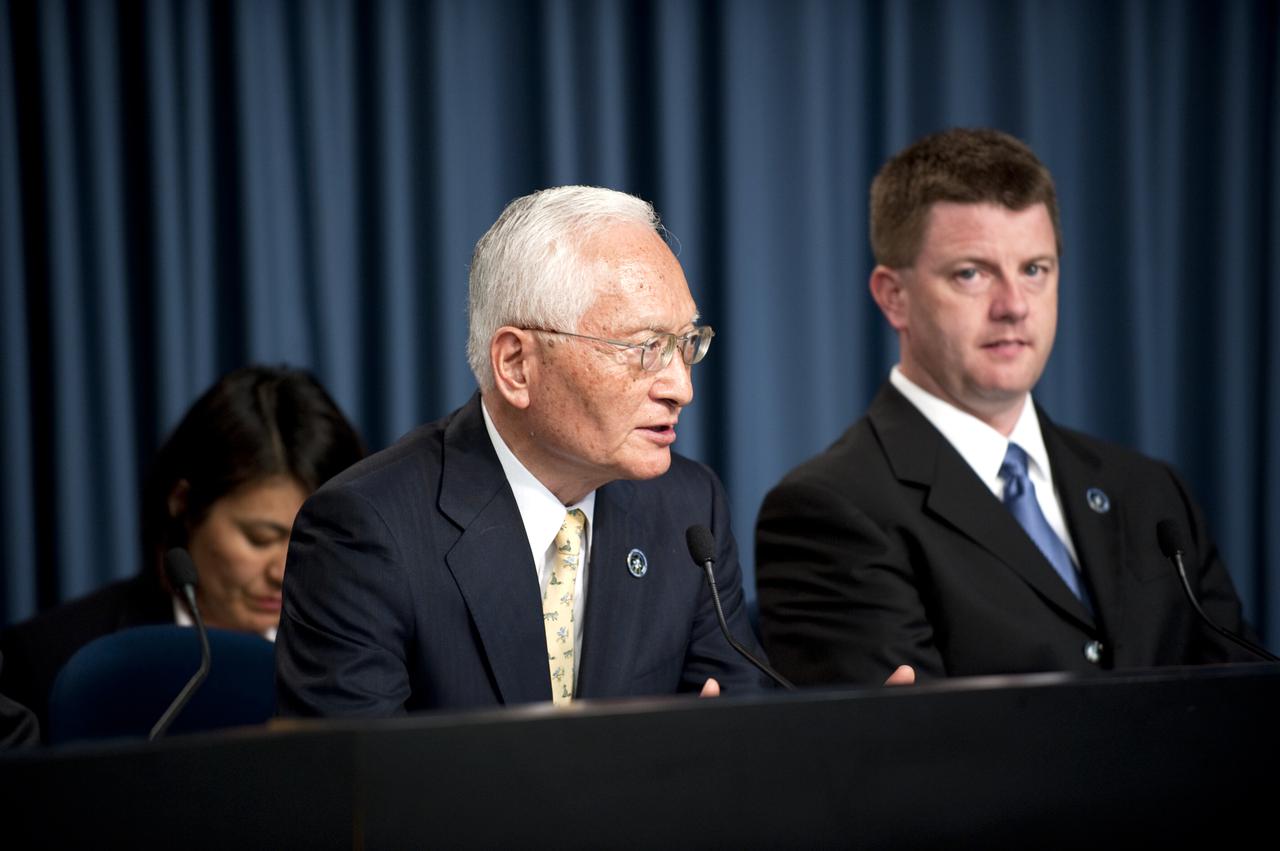
CAPE CANAVERAL, Fla. - Japan Aerospace Exploration Agency President Keiji Tachikawa speaks to the media during a news conference in the Press Site auditorium at NASA's Kennedy Space Center in Florida following the successful launch of space shuttle Discovery. Mike Moses, shuttle launch integration manager is seated on the right. Shuttle Discovery lifted off at 6:21 a.m. EDT on April 5, 2010. The seven-member STS-131 crew will deliver the multi-purpose logistics module Leonardo, filled with supplies, a new crew sleeping quarters and science racks that will be transferred to the International Space Station's laboratories. The crew also will switch out a gyroscope on the station’s truss, install a spare ammonia storage tank and retrieve a Japanese experiment from the station’s exterior. STS-131 is the 33rd shuttle mission to the station and the 131st shuttle mission overall. For information on the STS-131 mission and crew, visit http:__www.nasa.gov_mission_pages_shuttle_shuttlemissions_sts131_index.html. Photo credit: NASA_Kim Shiflett
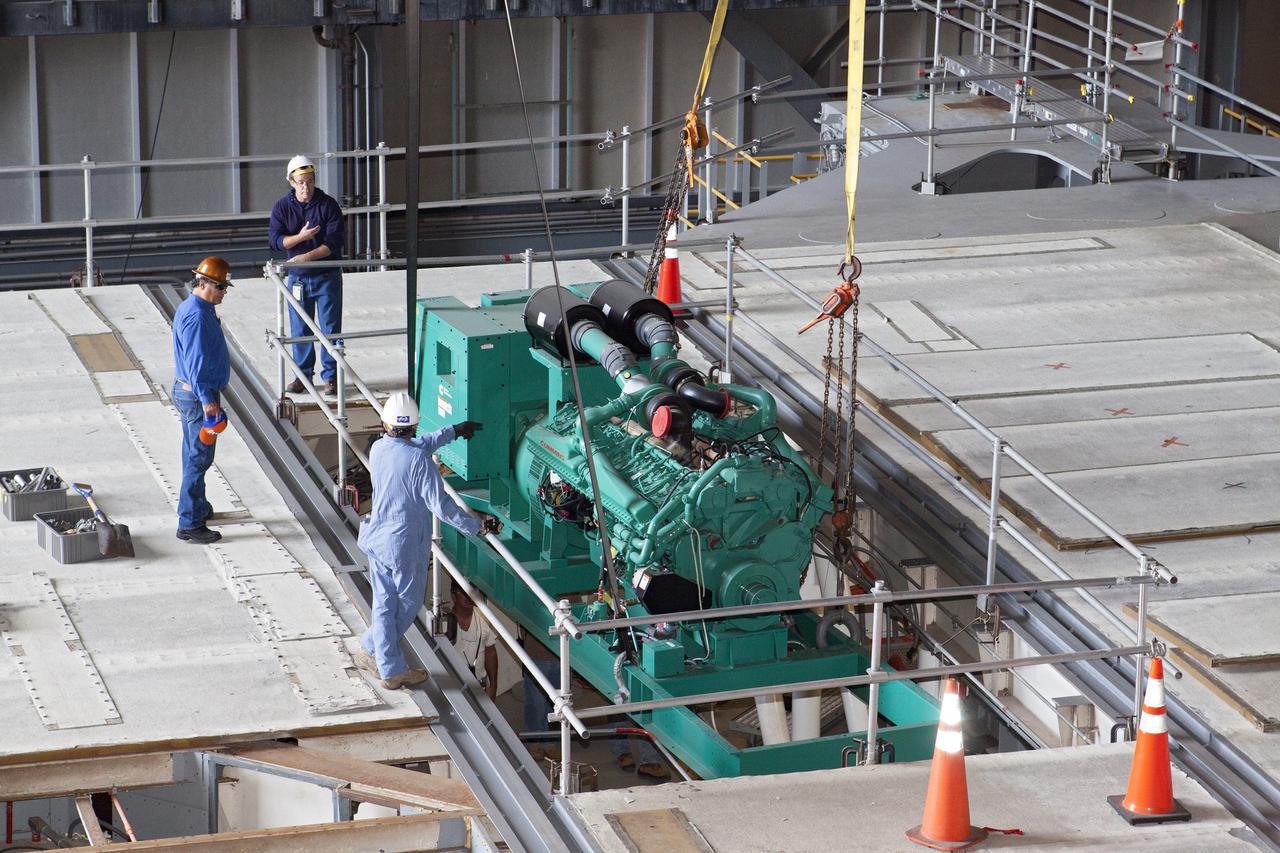
CAPE CANAVERAL, Fla. – Inside the Vehicle Assembly Building at NASA’s Kennedy Space Center in Florida, technicians monitor the progress as a large crane is used to lower a new Cummins engine and generator for installation inside crawler-transporter 1 CT-1. The Apollo era diesel engines were removed so that the new engine can be installed. Work continues in high bay 3 to upgrade CT-1 as part of its general maintenance and could be available to carry commercial launch vehicles to the launch pad. The crawler-transporters were used to carry the mobile launcher platform and space shuttle to Launch Complex 39 for space shuttle launches for 30 years. Photo credit: NASA_Kim Shiflett
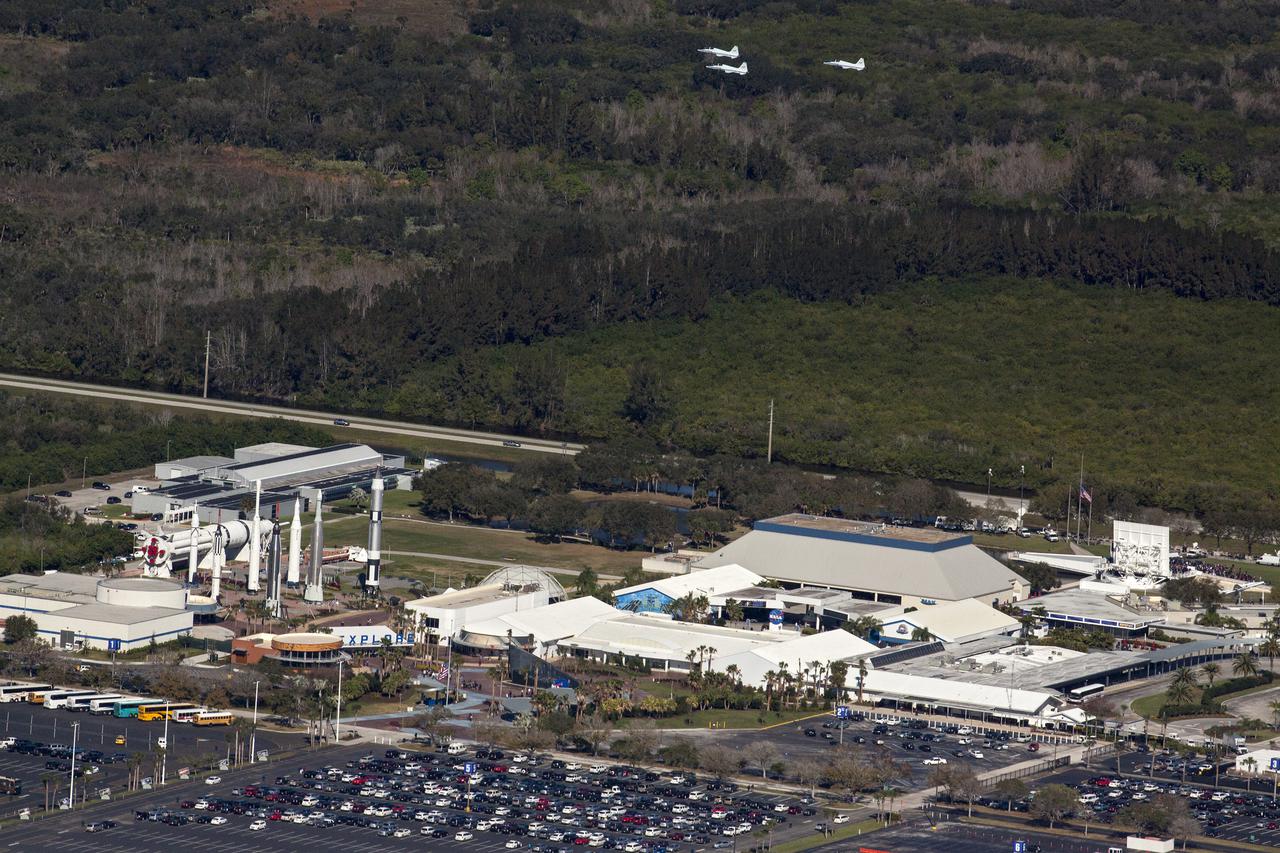
CAPE CANAVERAL, Fla. – Three NASA T-38 aircraft fly in formation over the Kennedy Space Center Visitor Complex during the agency's Day of Remembrance ceremony. NASA's Kennedy Space Center, Fla., honored the crews of Apollo 1 and space shuttles Challenger and Columbia, as well as other NASA colleagues, during the observance on Friday, Feb. 1, the 10th anniversary of the Columbia tragedy. The annual Day of Remembrance honors members of the NASA family who lost their lives while furthering the cause of exploration and discovery. Photo credit: NASA_Kim Shiflett
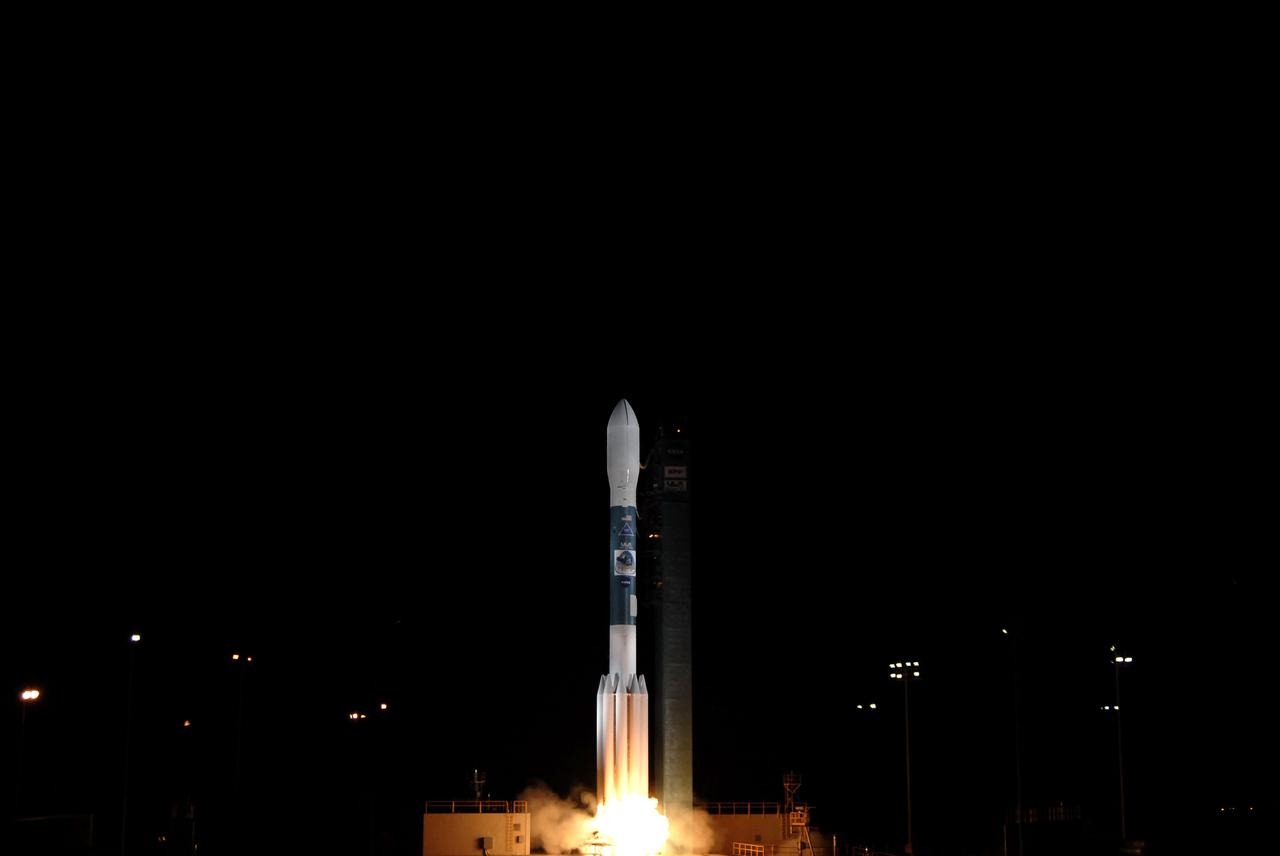
VANDENBERG AIR FORCE BASE, Calif. -- At Space Launch Complex-2 on Vandenberg Air Force Base in California, the engines ignite beneath the United Launch Alliance Delta II rocket carrying NASA's National Polar-orbiting Operational Environmental Satellite System Preparatory Project (NPP) into space. Liftoff was at 2:48 a.m. PDT. NPP represents a critical first step in building the next-generation of Earth-observing satellites. NPP will carry the first of the new sensors developed for this satellite fleet, now known as the Joint Polar Satellite System (JPSS) to be launched in 2016. NPP is the bridge between NASA's Earth Observing System (EOS) satellites and the forthcoming series of JPSS satellites. The mission will test key technologies and instruments for the JPSS missions. For more information, visit http:__www.nasa.gov_NPP. Photo credit: NASA_Kim Shiflett
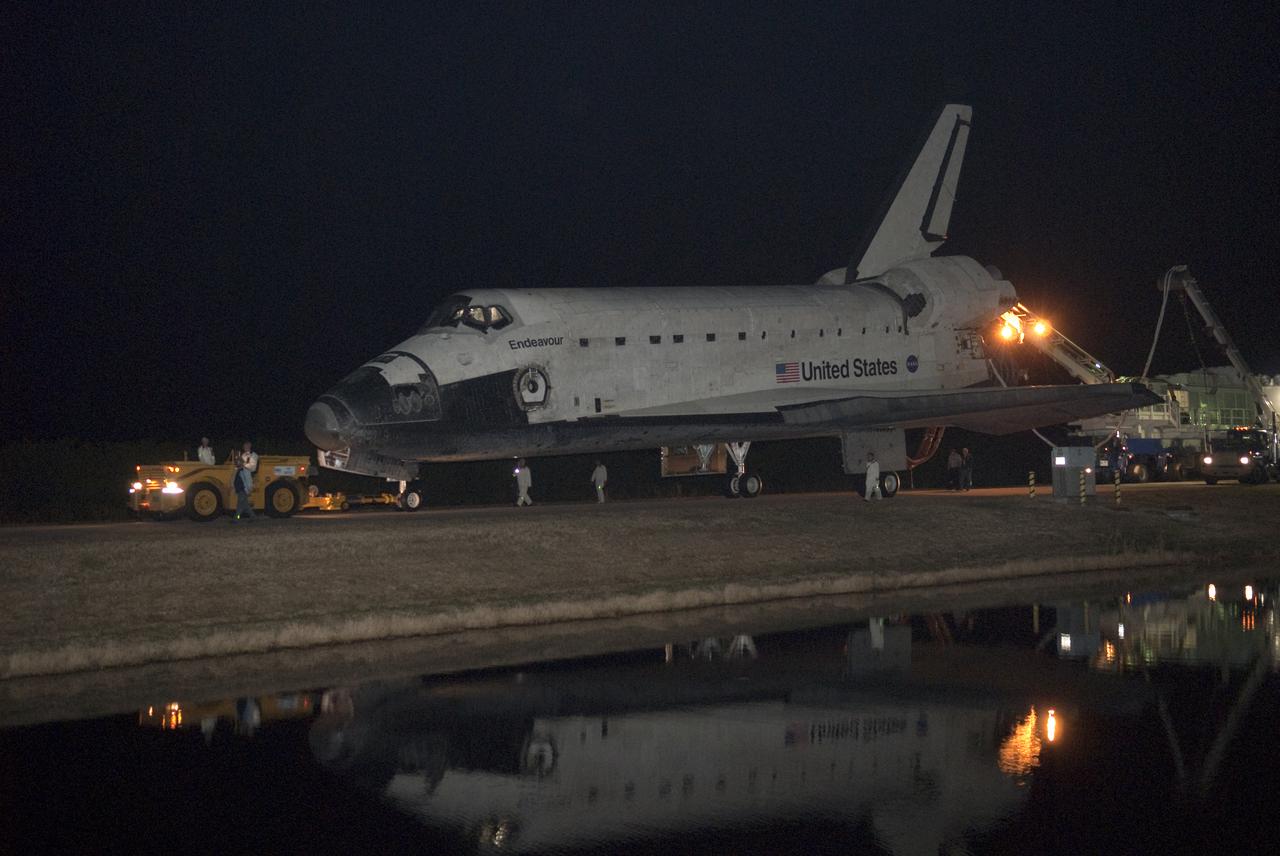
CAPE CANAVERAL, Fla. - At NASA's Kennedy Space Center in Florida, space shuttle Endeavour makes its slow trek from the Shuttle Landing Facility to Orbiter Processing Facility-2 following its successful landing on Runway 15. After 14 days in space, Endeavour's 5.7-million-mile STS-130 mission was completed on orbit 217. Main gear touchdown was at 10:20:31 p.m. EST followed by nose gear touchdown at 10:20:39 p.m. and wheels stop at 10:22:10 p.m. It was the 23rd night landing in shuttle history and the 17th at Kennedy. Aboard were Commander George Zamka; Pilot Terry Virts; and Mission Specialists Robert Behnken, Nicholas Patrick, Kathryn Hire and Stephen Robinson. During Endeavour's STS-130 mission, astronauts installed the Tranquility node, a module that provides additional room for crew members and many of the station's life support and environmental control systems. Attached to Tranquility is a cupola with seven windows that provide a panoramic view of Earth, celestial objects and visiting spacecraft. The module was built in Turin, Italy, by Thales Alenia Space for the European Space Agency. The orbiting laboratory is approximately 90 percent complete now in terms of mass. STS-130 was the 24th flight for Endeavour, the 32nd shuttle mission devoted to ISS assembly and maintenance, and the 130th shuttle mission to date. For information on the STS-130 mission and crew, visit http:__www.nasa.gov_mission_pages_shuttle_shuttlemissions_sts130_index.html. Photo credit: NASA_Kim Shiflett
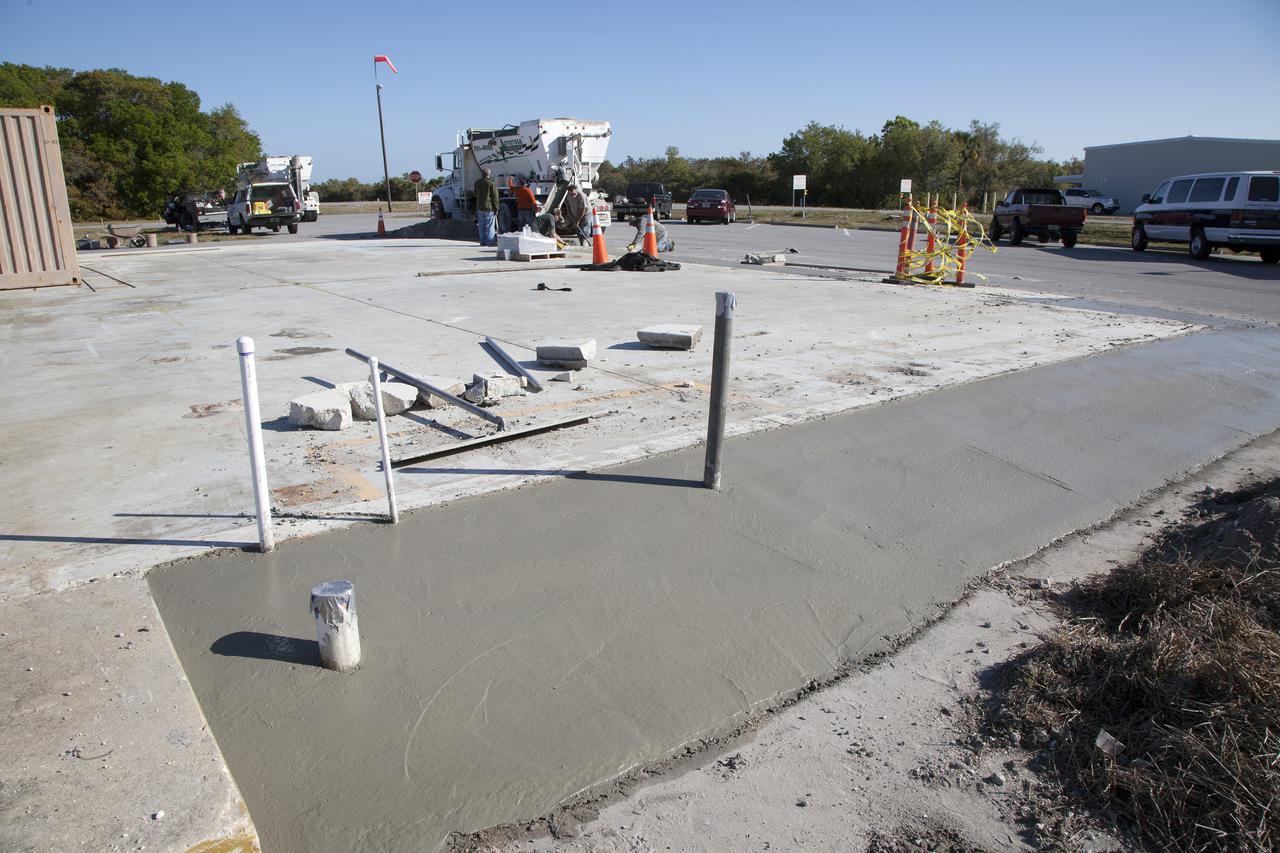
CAPE CANAVERAL, Fla. – Workers pour a concrete mix that utilizes spent material from sandblasting projects at NASA's Kennedy Space Center in Florida. The experimental formula is being tested at the Propellants North facility at Kennedy and will undergo structural and other evaluations as part of a pilot project. Spent blast media, or SBM, makes up much of the waste deposited at the center's landfill and engineers are trying to develop ways to put the debris to use in other ways instead. Photo credit: NASA_Kim Shiflett

CAPE CANAVERAL, Fla. - At Launch Pad 39A at NASA's Kennedy Space Center in Florida, from left, STS-131 Mission Specialists Clayton Anderson, Naoko Yamazaki of the Japan Aerospace Exploration Agency, and Stephanie Wilson try out their seats in space shuttle Discovery during a simulated countdown. The crew members of Discovery's STS-131 mission are participating in training related to their launch dress rehearsal, the Terminal Countdown Demonstration Test. The seven-member crew will deliver the multi-purpose logistics module Leonardo, filled with resupply stowage platforms and racks, to the International Space Station aboard Discovery. Targeted for launch on April 5, STS-131 will be the 33rd shuttle mission to the station and the 131st shuttle mission overall. For information on the STS-131 mission and crew, visit http:__www.nasa.gov_mission_pages_shuttle_shuttlemissions_sts131_index.html. Photo credit: NASA_Kim Shiflett
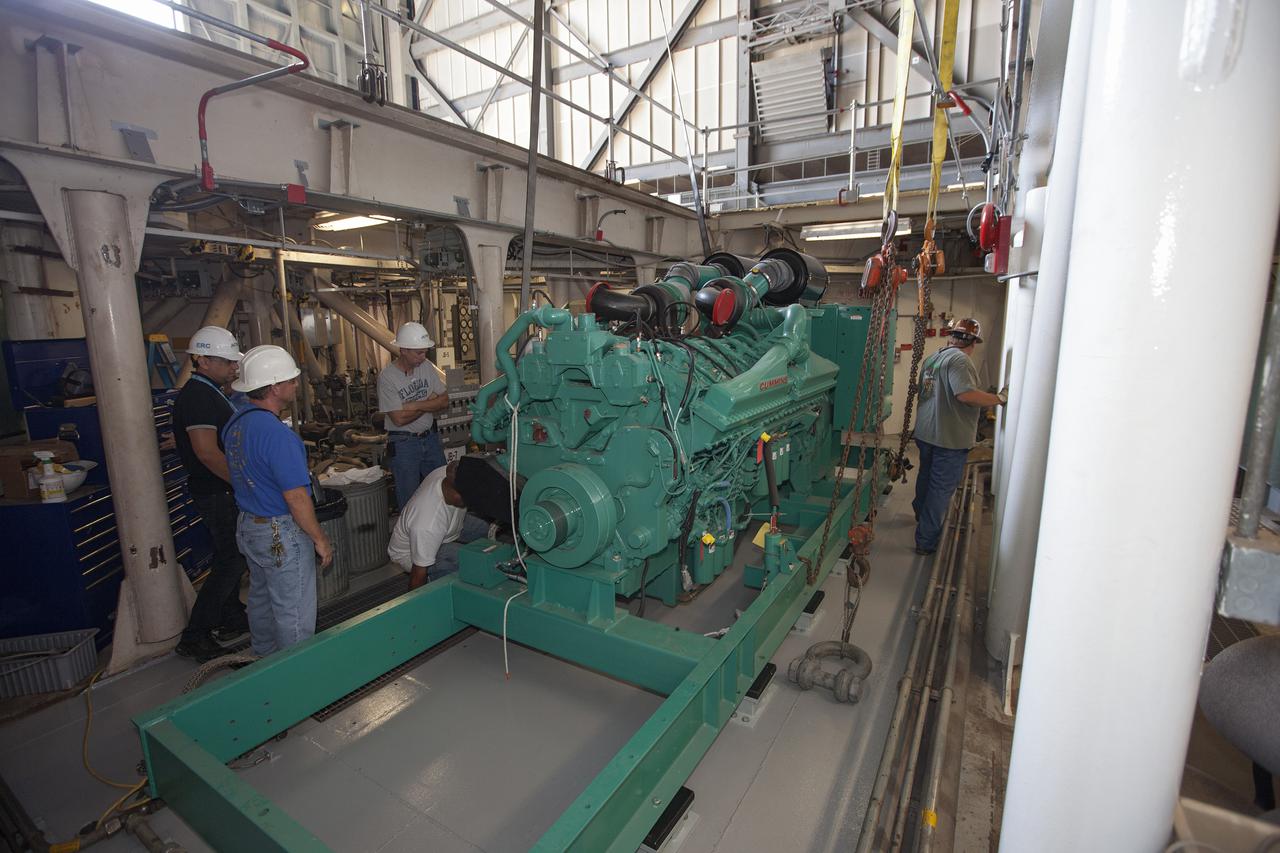
CAPE CANAVERAL, Fla. – Inside the Vehicle Assembly Building at NASA’s Kennedy Space Center in Florida, technicians begin the work to secure a new Cummins engine and generator inside crawler-transporter 1 CT-1. The Apollo era diesel engines were removed so that the new engine can be installed. Work continues in high bay 3 to upgrade CT-1 as part of its general maintenance and could be available to carry commercial launch vehicles to the launch pad. The crawler-transporters were used to carry the mobile launcher platform and space shuttle to Launch Complex 39 for space shuttle launches for 30 years. Photo credit: NASA_Kim Shiflett
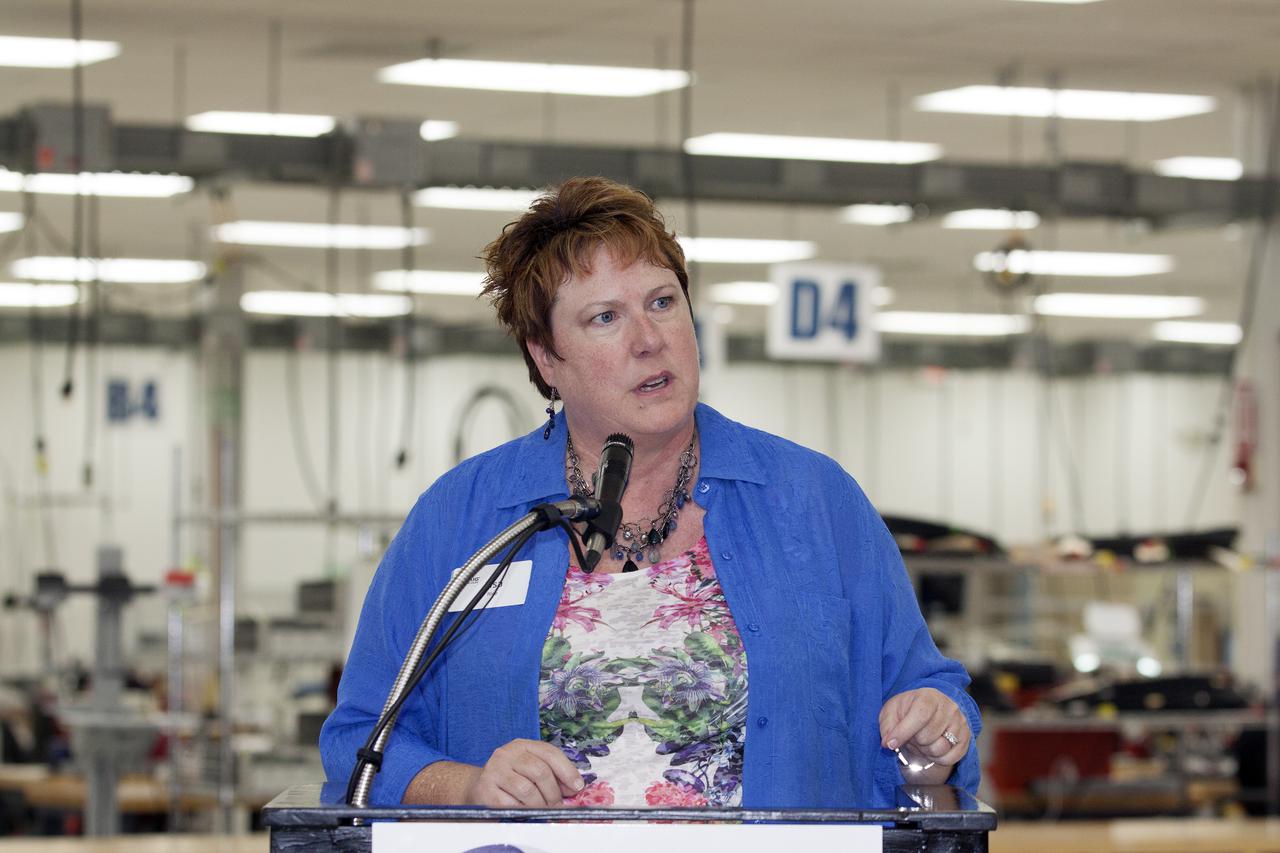
CAPE CANAVERAL, Fla. – At the Aerospace and Defense Manufacturing Center in Cape Canaveral, Fla., Brevard Workforce President Lisa Rice speaks to guests during a community open house at the 161,000-square-foot facility now operated by Craig Technologies. In June of last year, NASA signed a partnership agreement with Craig Technologies to maintain an inventory of unique processing and manufacturing equipment for future mission support at the agency's Kennedy Space Center. The Cape Canaveral, Fla., facility, formerly known as the NASA Shuttle Logistics Depot NSLD, is now the Aerospace and Defense Manufacturing Center ADMC. Photo credit: NASA_Kim Shiflett
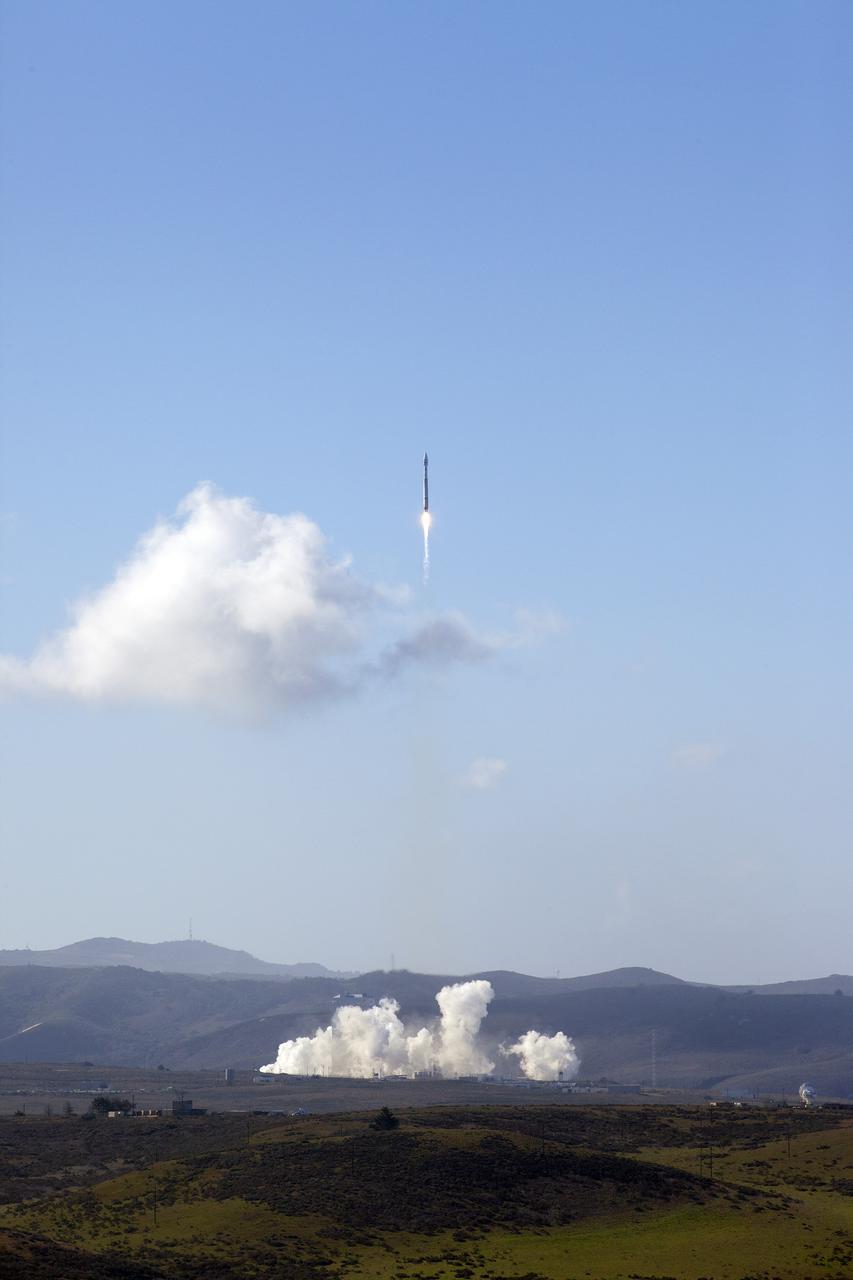
VANDENBERG AFB, Calif. -- The Landsat Data Continuity Mission spacecraft lifted off at 1:02 p.m. EST, 10:02 a.m. PST) atop a United Launch Alliance Atlas V rocket from Space Launch Complex 3 at California's Vandenberg Air Force Base. The Landsat Data Continuity Mission LDCM is the future of Landsat satellites. It will continue to obtain valuable data and imagery to be used in agriculture, education, business, science, and government. The Landsat Program provides repetitive acquisition of high resolution multispectral data of the Earth's surface on a global basis. The data from the Landsat spacecraft constitute the longest record of the Earth's continental surfaces as seen from space. It is a record unmatched in quality, detail, coverage, and value. For more information, visit: http:__www.nasa.gov_mission_pages_landsat_main_index.html Photo credit: NASA_Kim Shiflett
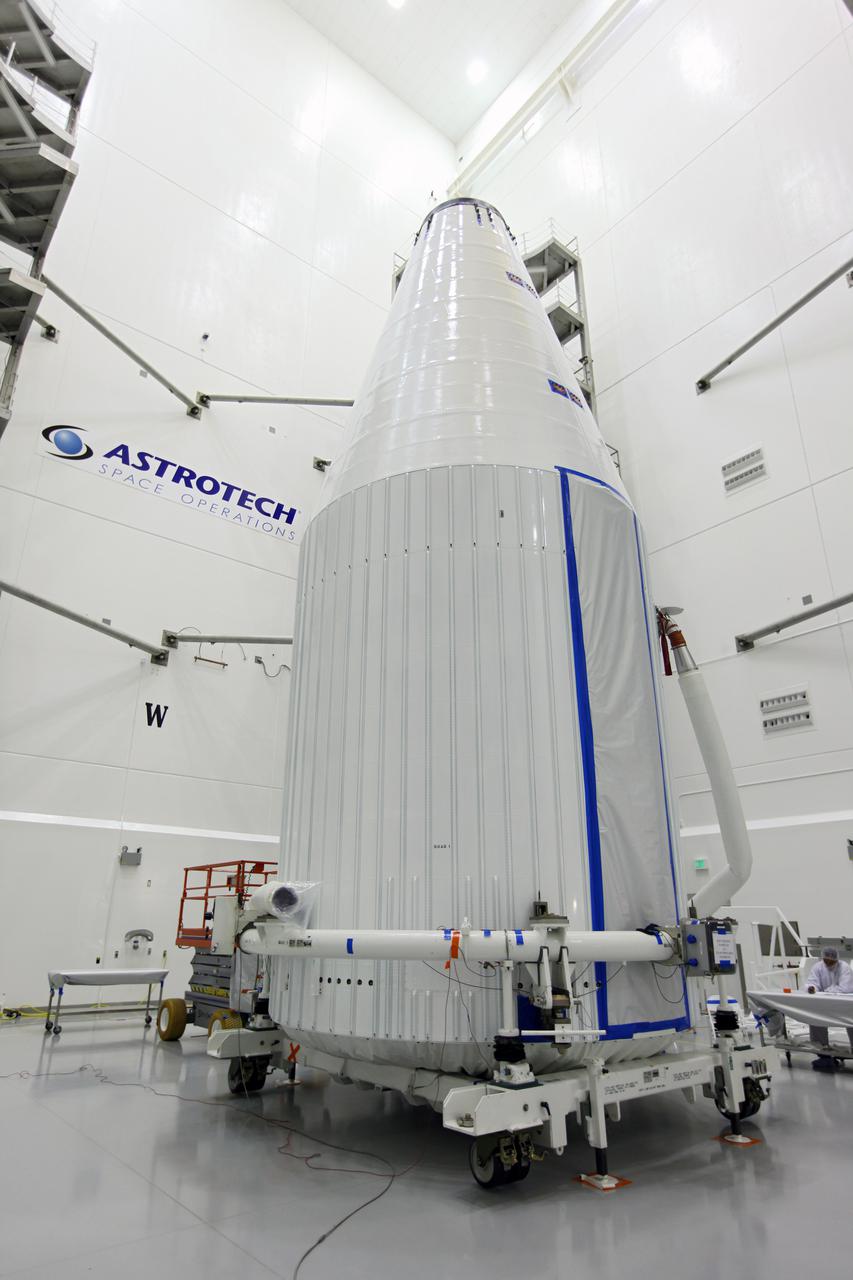
TITUSVILLE, Fla. - Inside the Astrotech payload processing facility in Titusville, Fla. near NASA’s Kennedy Space Center, the Tracking and Data Relay Satellite, TDRS-K, has been encapsulated in its payload fairing. The spacecraft will now be transported to Space Launch Complex 41 at Cape Canaveral Air Force Station. Liftoff for the TDRS-K is planned for January 30, 2013. The TDRS-K spacecraft is part of the next-generation series in the Tracking and Data Relay Satellite System, a constellation of space-based communication satellites providing tracking, telemetry, command and high-bandwidth data return services. For more information, visit http:__www.nasa.gov_mission_pages_tdrs_index.html Photo credit: NASA_Kim Shiflett
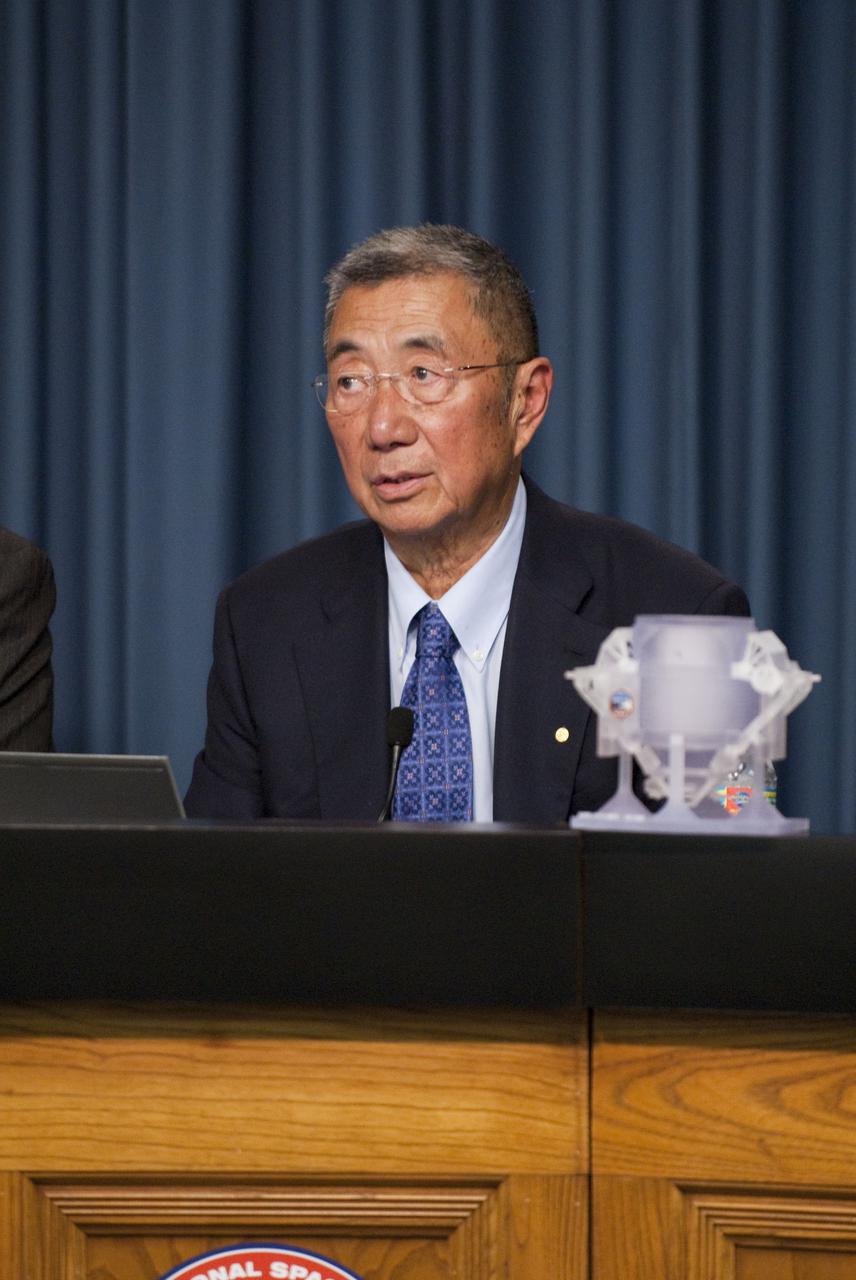
CAPE CANAVERAL, Fla. -- The International Space Station Science and Technology Briefing was held in the Press Site auditorium at NASA's Kennedy Space Center in Florida. Speaking to media about the Alpha Magnetic Spectrometer-2 (AMS) is Professor Sam Ting, AMS-2 principal investigator at the Massachusetts Institute of Technology. Endeavour and its crew will deliver the Express Logistics Carrier-3, Alpha Magnetic Spectrometer-2 (AMS), a high-pressure gas tank and additional spare parts for the Dextre robotic helper to the International Space Station. Launch is scheduled for April 29 at 3:47 p.m. EDT. This will be the final spaceflight for Endeavour. For more information visit, www.nasa.gov_mission_pages_shuttle_shuttlemissions_sts134_index.html. Photo credit: NASA_Kim Shiflett
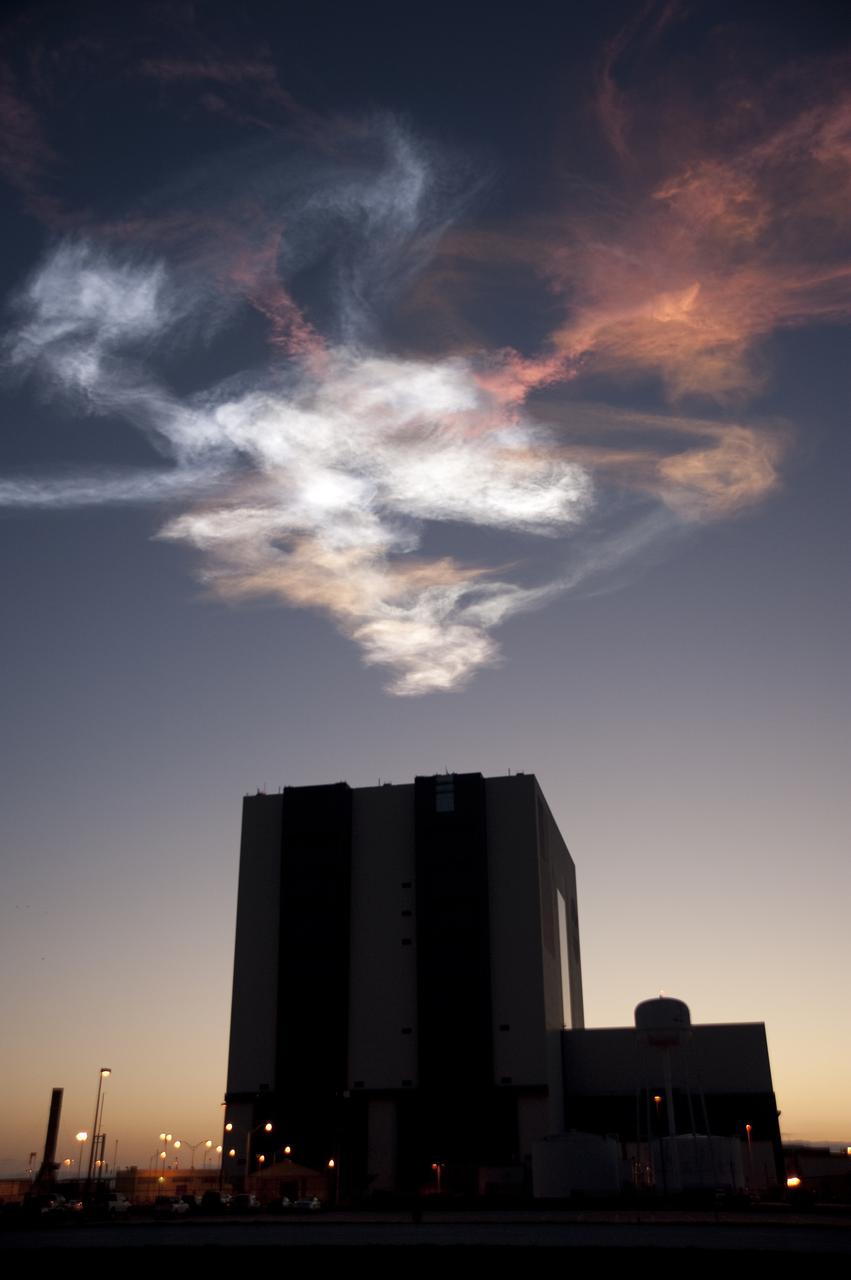
CAPE CANAVERAL, Fla. - Contrails from the launch of space shuttle Discovery on the STS-131 mission glow in rainbow colors in the early morning hours as the sun rises over the Vehicle Assembly Building at NASA's Kennedy Space Center in Florida. Shuttle Discovery lifted off at 6:21 a.m. EDT on April 5, 2010. The seven-member STS-131 crew will deliver the multi-purpose logistics module Leonardo, filled with supplies, a new crew sleeping quarters and science racks that will be transferred to the International Space Station's laboratories. The crew also will switch out a gyroscope on the station’s truss, install a spare ammonia storage tank and retrieve a Japanese experiment from the station’s exterior. STS-131 is the 33rd shuttle mission to the station and the 131st shuttle mission overall. For information on the STS-131 mission and crew, visit http:__www.nasa.gov_mission_pages_shuttle_shuttlemissions_sts131_index.html. Photo credit: NASA_Kim Shiflett

CAPE CANAVERAL, Fla. - At Launch Pad 39A at NASA's Kennedy Space Center in Florida, STS-131 Mission Specialist Rick Mastracchio, at right, practices pad emergency evacuation procedures inside a slidewire basket with one of his crewmates. Evacuation from the pad's 195-foot level is made possible by seven baskets suspended from seven slidewires that extend from the fixed service structure to a landing zone 1,200 feet west of the pad. The crew members of space shuttle Discovery's STS-131 mission are participating in training related to their launch dress rehearsal, the Terminal Countdown Demonstration Test. The seven-member crew will deliver the multi-purpose logistics module Leonardo, filled with resupply stowage platforms and racks, to the International Space Station aboard Discovery. Targeted for launch on April 5, STS-131 will be the 33rd shuttle mission to the station and the 131st shuttle mission overall. For information on the STS-131 mission and crew, visit http:__www.nasa.gov_mission_pages_shuttle_shuttlemissions_sts131_index.html. Photo credit: NASA_Kim Shiflett
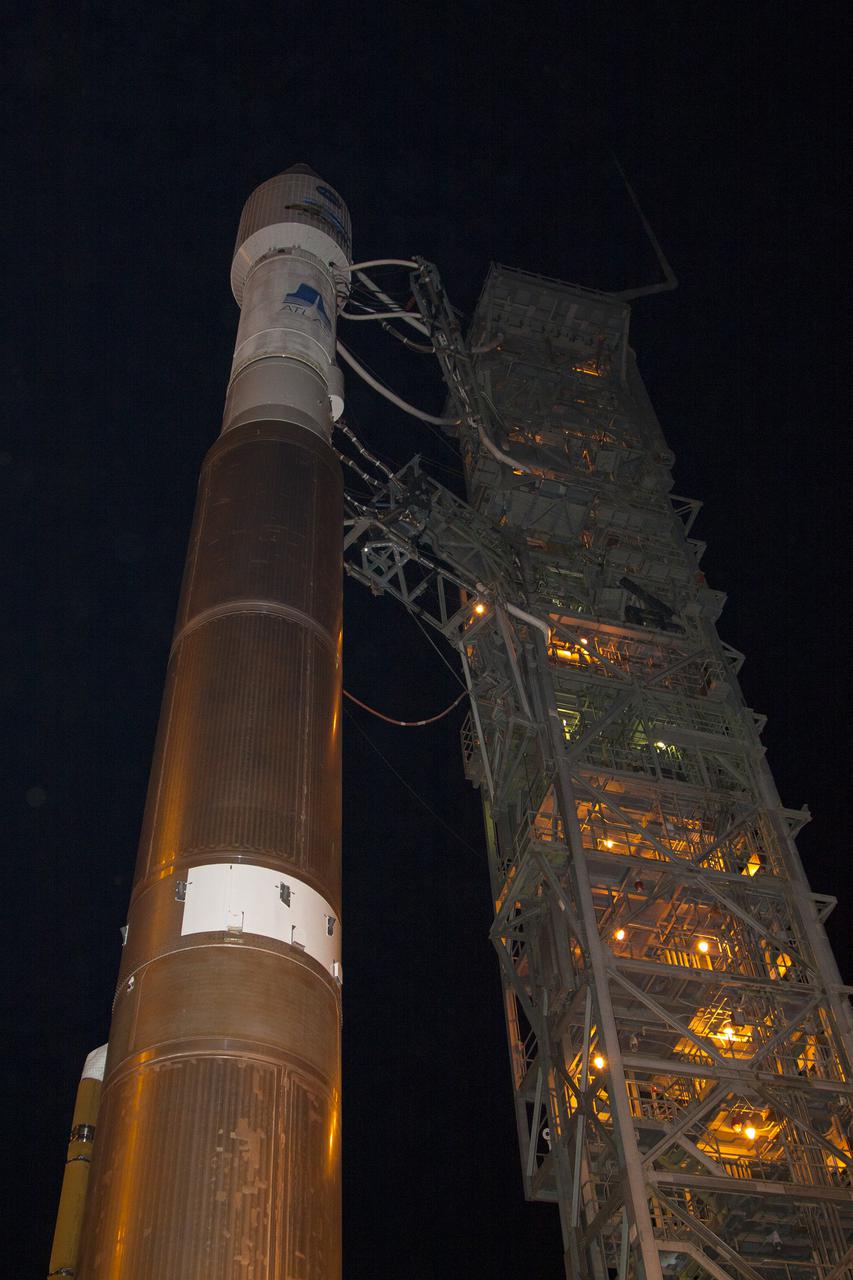
VANDENBERG AFB, Calif. -- At Vandenberg Air Force Base, Calif., NASA's Landsat Data Continuity Mission, or LDCM, satellite is mounted atop a United Launch Alliance Atlas V rocket poised for launch at Space Launch Complex 3E. The Landsat Data Continuity Mission LDCM is the future of Landsat satellites. It will continue to obtain valuable data and imagery to be used in agriculture, education, business, science, and government. The Landsat Program provides repetitive acquisition of high resolution multispectral data of the Earth's surface on a global basis. The data from the Landsat spacecraft constitute the longest record of the Earth's continental surfaces as seen from space. It is a record unmatched in quality, detail, coverage, and value. Liftoff is planned for Feb. 11, 2013 aboard a United Launch Alliance Atlas V rocket. For more information, visit: http:__www.nasa.gov_mission_pages_landsat_main_index.html Photo credit: NASA_Kim Shiflett
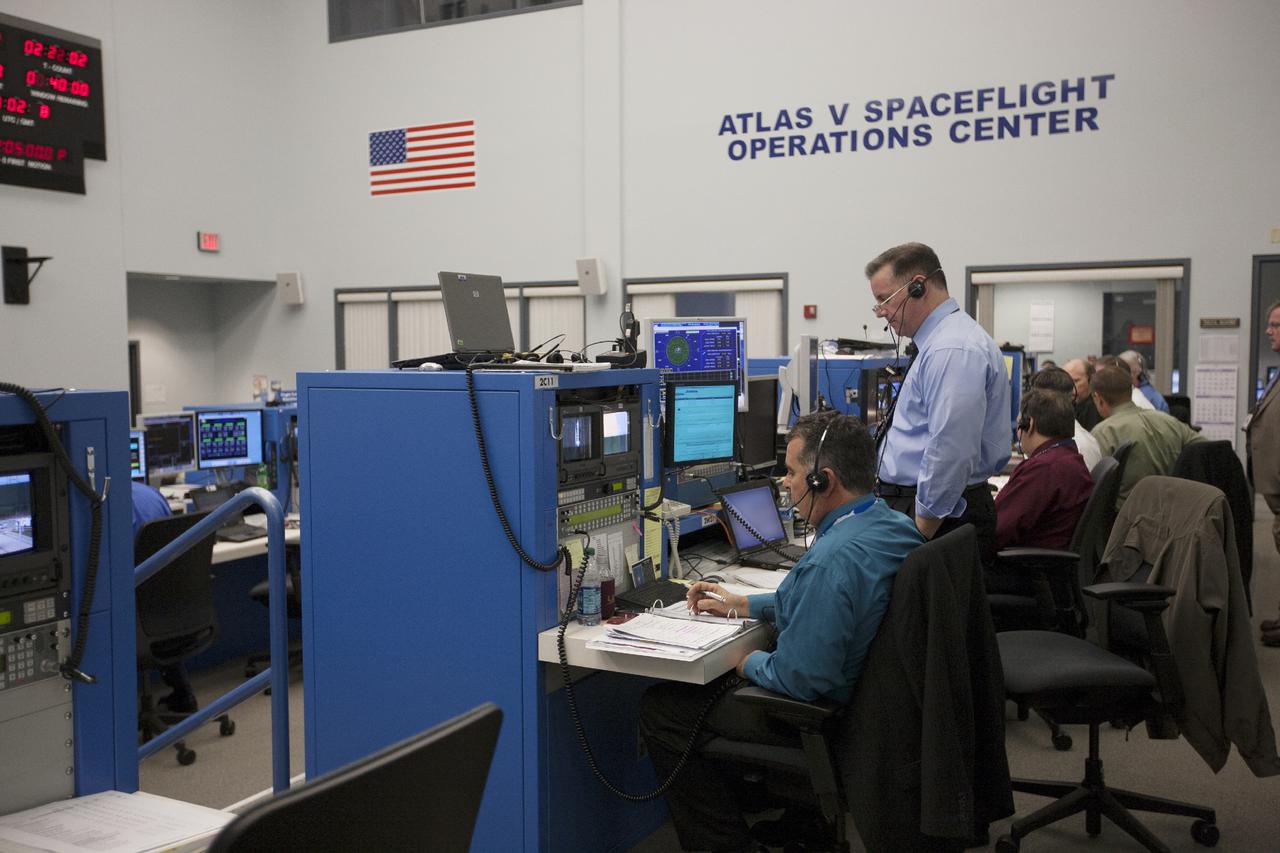
CAPE CANAVERAL, Fla. – At Cape Canaveral Air Force Station's Atlas V Spaceflight Operations Center NASA and contractor managers and engineers monitor progress of the countdown for the launch the agency's Tracking and Data Relay Satellite, or TDRS-L, spacecraft atop a United Launch Alliance Atlas V rocket. The TDRS-L spacecraft is the second of three new satellites designed to ensure vital operational continuity for NASA by expanding the lifespan of the Tracking and Data Relay Satellite System TDRSS fleet, which consists of eight satellites in geosynchronous orbit. The spacecraft provide tracking, telemetry, command and high bandwidth data return services for numerous science and human exploration missions orbiting Earth. These include NASA's Hubble Space Telescope and the International Space Station. TDRS-L has a high-performance solar panel designed for more spacecraft power to meet the growing S-band communications requirements. TDRSS is one of NASA Space Communication and Navigation’s SCaN three networks providing space communications to NASA’s missions. For more information more about TDRS-L, visit: http:__www.nasa.gov_tdrs To learn more about SCaN, visit: www.nasa.gov_scan Photo credit: NASA_Kim Shiflett
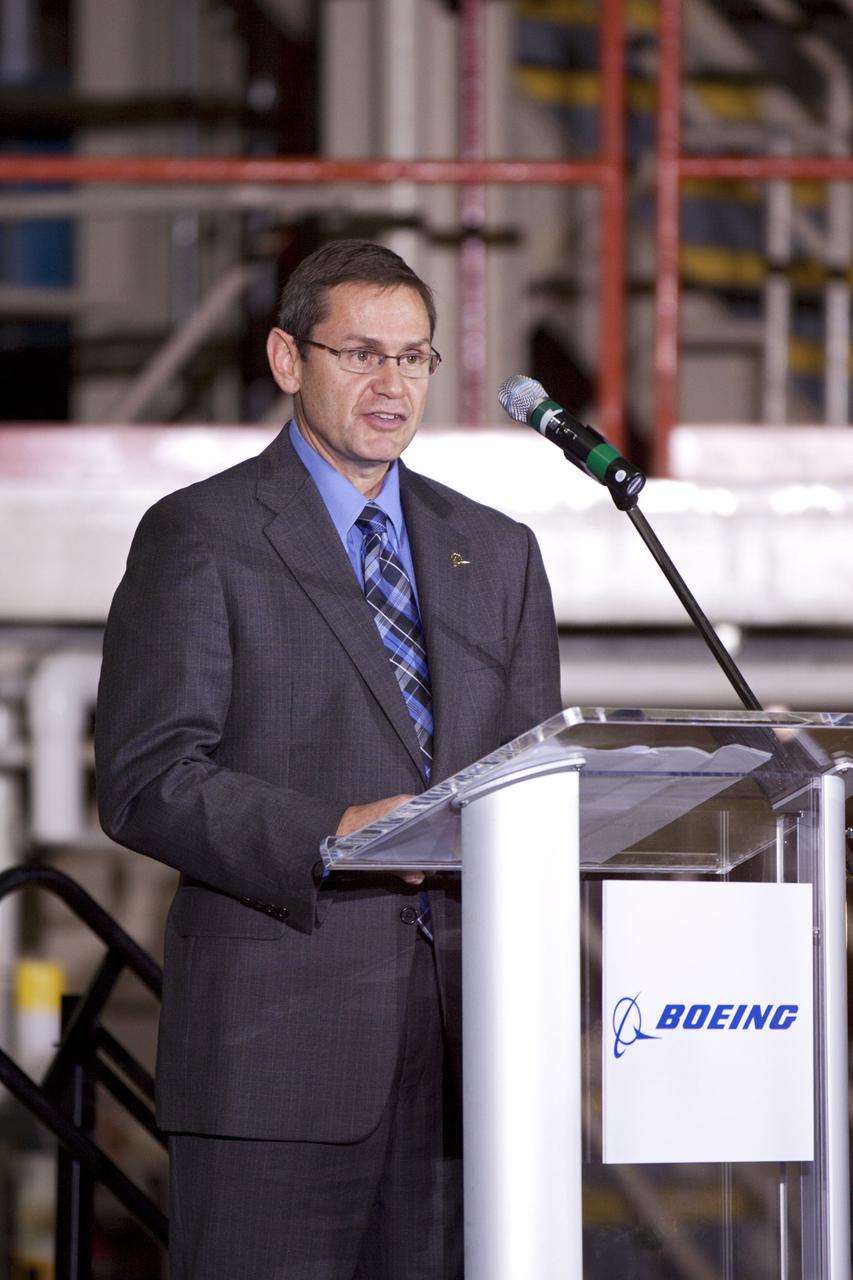
CAPE CANAVERAL, Fla. – In the Orbiter Processing Facility-3 (OPF-3) at NASA’s Kennedy Space Center in Florida, John Elbon, vice president and general manager of Boeing's Space Exploration, speaks to the audience during the ceremony announcing the signing of an innovative agreement between NASA and Space Florida. NASA announced a partnership with Space Florida to occupy, use and modify Kennedy Space Center's Orbiter Processing Facility-3 (OPF-3), the Space Shuttle Main Engine Processing Facility and Processing Control Center. Space Florida has an agreement for use of the OPF-3 with the Boeing Company to manufacture and test the company's Crew Space Transportation (CST-100) spacecraft. The 15-year use permit deal is the latest step Kennedy is making as the center transitions from a historically government-only launch complex to a multi-user spaceport. For more information, visit http:__www.nasa.gov_exploration_commercial_index.html. Photo credit: NASA_Kim Shiflett
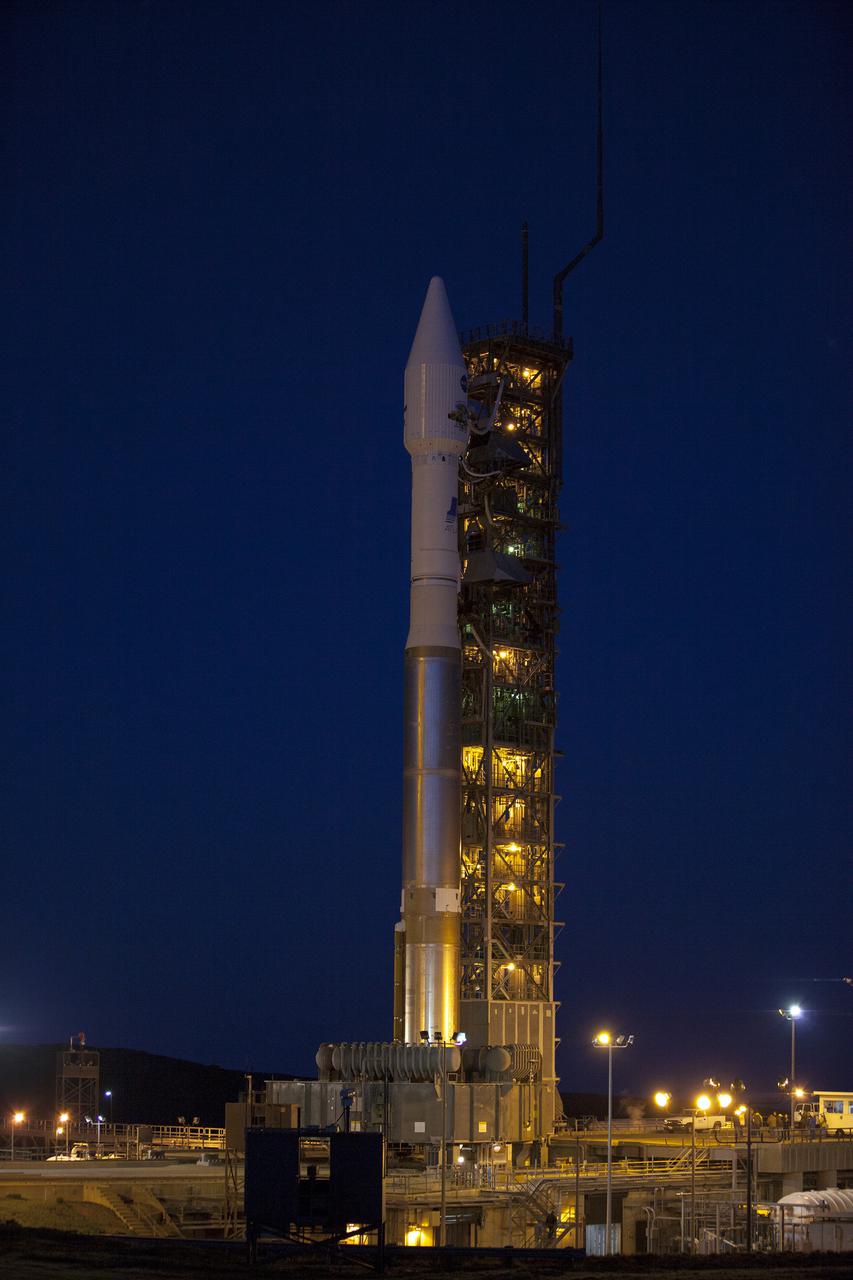
VANDENBERG AFB, Calif. -- At Vandenberg Air Force Base, Calif., NASA's Landsat Data Continuity Mission, or LDCM, satellite is mounted atop a United Launch Alliance Atlas V rocket poised for launch at Space Launch Complex 3E. The Landsat Data Continuity Mission LDCM is the future of Landsat satellites. It will continue to obtain valuable data and imagery to be used in agriculture, education, business, science, and government. The Landsat Program provides repetitive acquisition of high resolution multispectral data of the Earth's surface on a global basis. The data from the Landsat spacecraft constitute the longest record of the Earth's continental surfaces as seen from space. It is a record unmatched in quality, detail, coverage, and value. Liftoff is planned for Feb. 11, 2013 aboard a United Launch Alliance Atlas V rocket. For more information, visit: http:__www.nasa.gov_mission_pages_landsat_main_index.html Photo credit: NASA_Kim Shiflett

CAPE CANAVERAL, Fla. -- At NASA’s Kennedy Space Center Visitor Complex in Florida, the Spaceperson stands at the entrance of the new Angry Birds Space Encounter during the grand opening ceremony. Finland-based Rovio Entertainment, the creator of the Angry Birds Space game, partnered with Kennedy Space Center to bring the beloved characters to life. It is the first Angry Birds interactive exhibit in the United States designed for people of all ages. The 4,485-square-foot facility hosts the space adventures of the Angry Birds as they travel into an intergalactic wormhole, come face-to-face with Space Pigs and discover heroic superpowers. Six interactive stations are designed to encourage children in science, technology, engineering and mathematics fields of study. Photo credit: NASA_Kim Shiflett
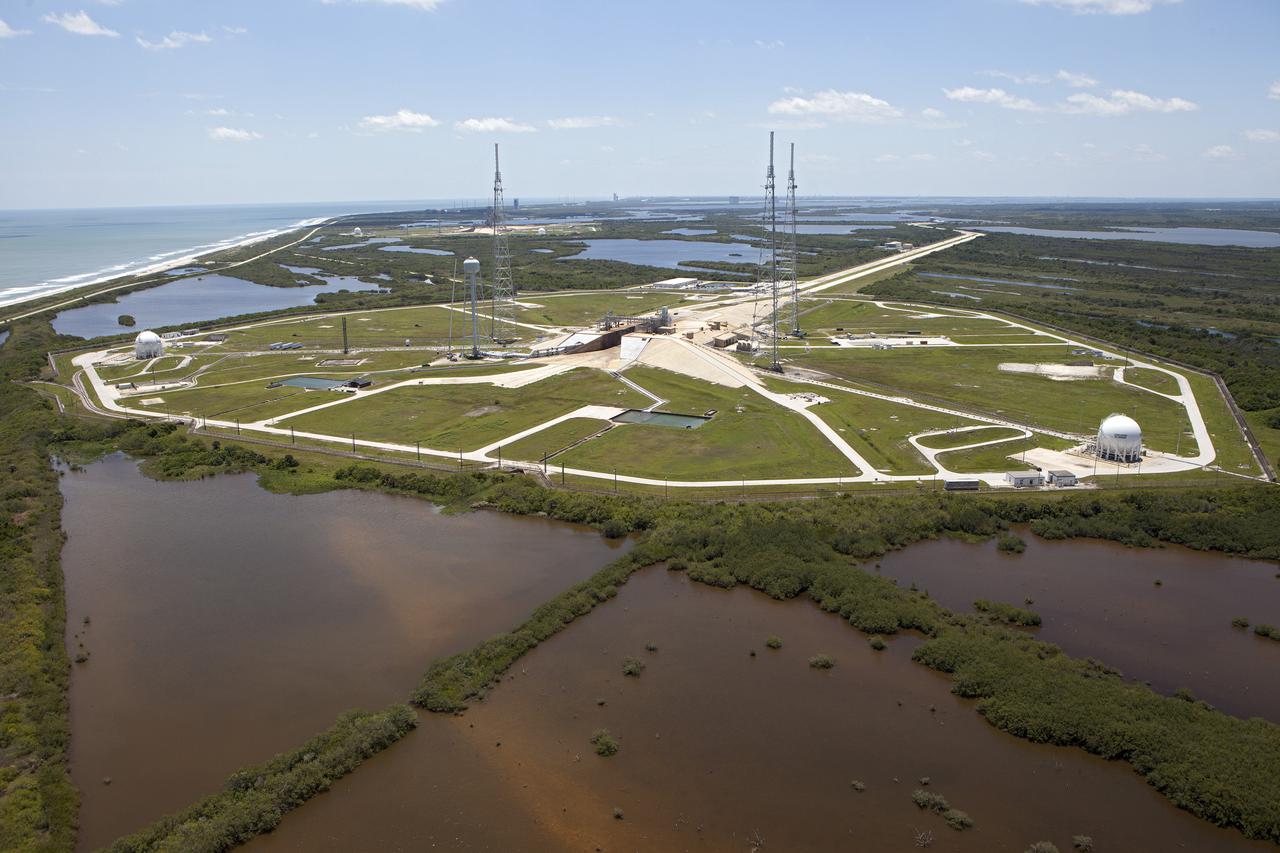
CAPE CANAVERAL, Fla. – An aerial view, from the west looking toward the east, shows the entire Launch Pad 39B area at NASA’s Kennedy Space Center in Florida. A new elevator has been constructed on the surface of the pad and the crawlerway leading up to the surface is being repaired. Repairs also are being made to the crawler track panels and catacomb roof below on either side of the flame trench. Also in view are the water tower and the three tall lightning towers that surround the pad. To the east is the Atlantic Ocean. Upgrades are underway at Pad B and other facilities in the Launch Complex 39 area. The Ground Systems Development and Operations, or GSDO, Program office at Kennedy is leading the center’s transformation from a historically government-only launch complex to a spaceport that can safely handle a variety of rockets and spacecraft, including NASA’s Space Launch System. For more information about GSDO, visit: http:__go.nasa.gov_groundsystems. Photo credit: NASA_Kim Shiflett
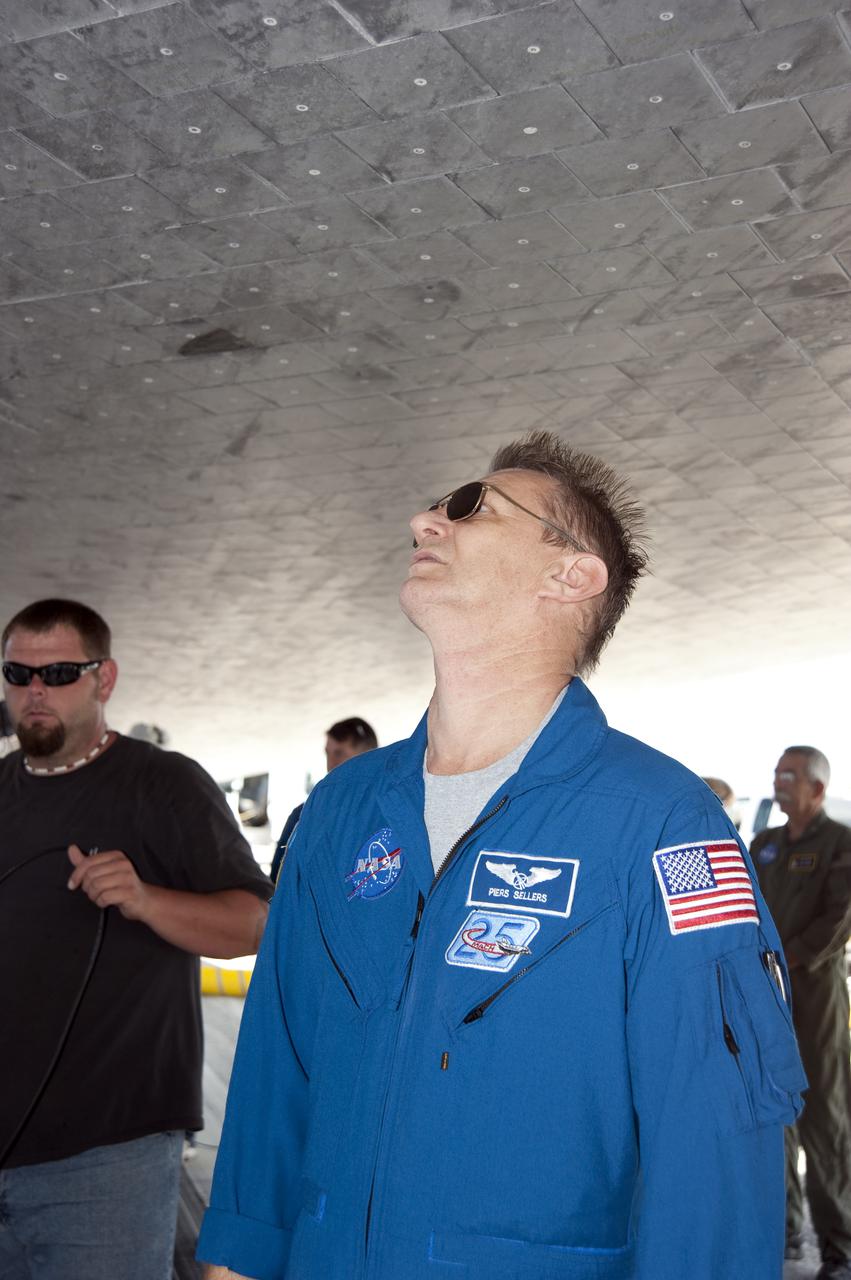
CAPE CANAVERAL, Fla. - STS-132 Mission Specialist Piers Sellers takes an up-close look at the underside of space shuttle Atlantis after its picture-perfect touchdown at the Shuttle Landing Facility at NASA's Kennedy Space Center in Florida. The six-member STS-132 crew carried the Russian-built Mini Research Module-1 to the space station. STS-132 is the 34th shuttle mission to the station, the 132nd shuttle mission overall and the last planned flight for Atlantis. For information on the STS-132 mission and crew, visit www.nasa.gov_mission_pages_shuttle_shuttlemissions_sts132_index.html. Photo credit: NASA_Kim Shiflett

KENNEDY SPACE CENTER, FLA. -- The drifting smoke plumes from the launch of Space Shuttle Atlantis appear to swirl above the Vehicle Assembly Building near sunset. Liftoff of Atlantis on mission STS-117 from Launch Pad 39A was on-time at 7:38:04 p.m. EDT. The shuttle is delivering a new segment to the starboard side of the International Space Station's backbone, known as the truss. Three spacewalks are planned to install the S3_S4 truss segment, deploy a set of solar arrays and prepare them for operation. STS-117 is the 118th space shuttle flight, the 21st flight to the station, the 28th flight for Atlantis and the first of four flights planned for 2007. Photo credit: NASA_Kim Shiflett

VANDENBERG AFB, Calif. -- Dr. Thomas Loveland, senior scientist and co-chair of the Landsat Science Team U.S. Geological Survey Earth Resources Observation and Science Center, left, and Dr. Jim Irons, Landsat Data Continuity Mission project scientist from NASA's Goddard Space Flight Center, speak to NASA social media followers at Vandenberg Air Force Base, Calif., prior to the launch of the LDCM satellite. The Landsat Data Continuity Mission LDCM is the future of Landsat satellites. It will continue to obtain valuable data and imagery to be used in agriculture, education, business, science, and government. The Landsat Program provides repetitive acquisition of high resolution multispectral data of the Earth's surface on a global basis. The data from the Landsat spacecraft constitute the longest record of the Earth's continental surfaces as seen from space. It is a record unmatched in quality, detail, coverage, and value. Liftoff is planned for Feb. 11, 2013 aboard a United Launch Alliance Atlas V rocket. For more information, visit: http:__www.nasa.gov_mission_pages_landsat_main_index.html Photo credit: NASA_Kim Shiflett
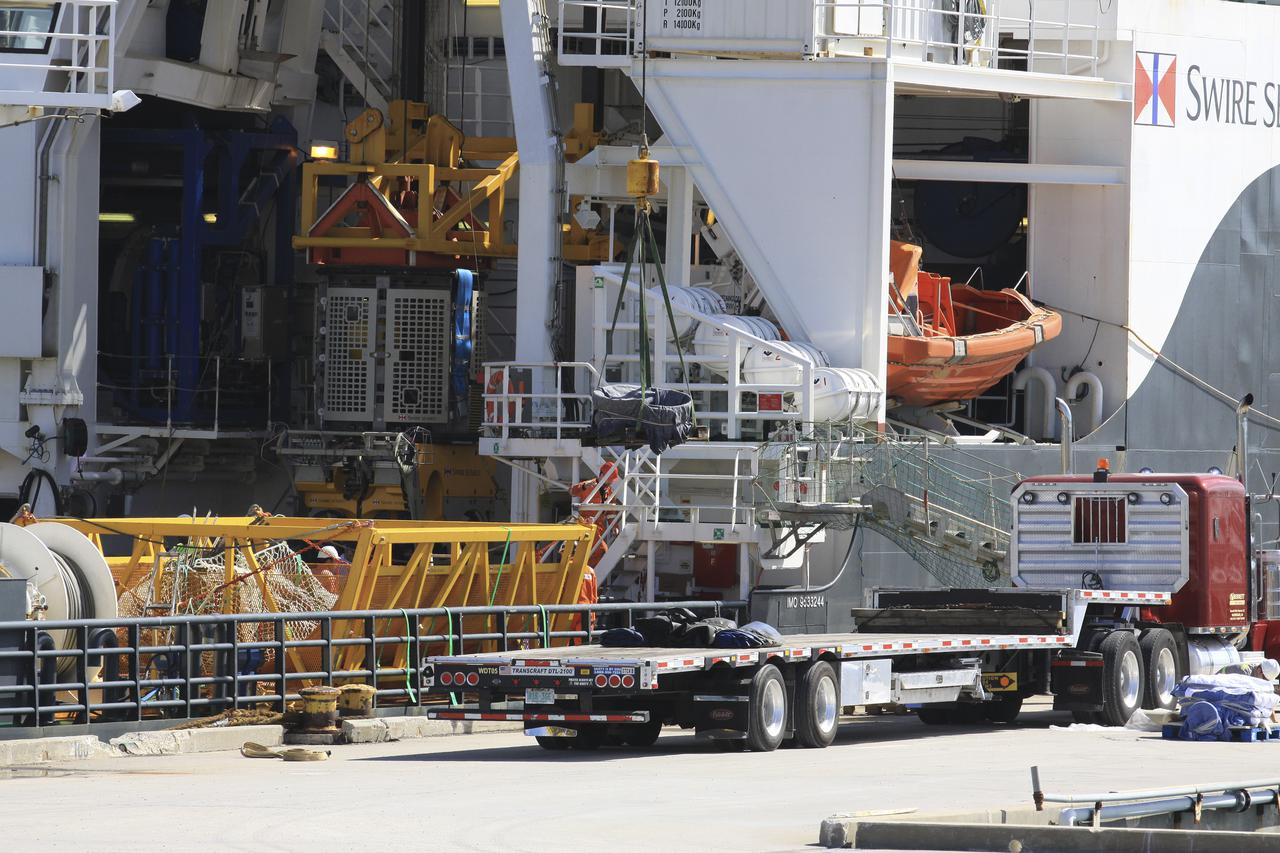
CAPE CANAVERAL, Fla. – Components for two of the F-1 engines that powered the first stage of the Saturn V rockets that lifted NASA's Apollo missions to the moon were recovered from the Atlantic Ocean March 21 by Jeff Bezos, the founder and Chief Executive Officer of the aerospace company Blue Origin and Amazon.com and arrived at Port Canaveral March 22. The engines will be restored by Bezos' team for public display. The engines were found some 14,000 feet underwater where they came to rest more than 40 years ago after sending astronauts into space on missions to the moon. Restoration may reveal exactly which engines were recovered, but Bezos said in a statement that the serial numbers were not immediately visible. Photo credit: NASA_Kim Shiflett
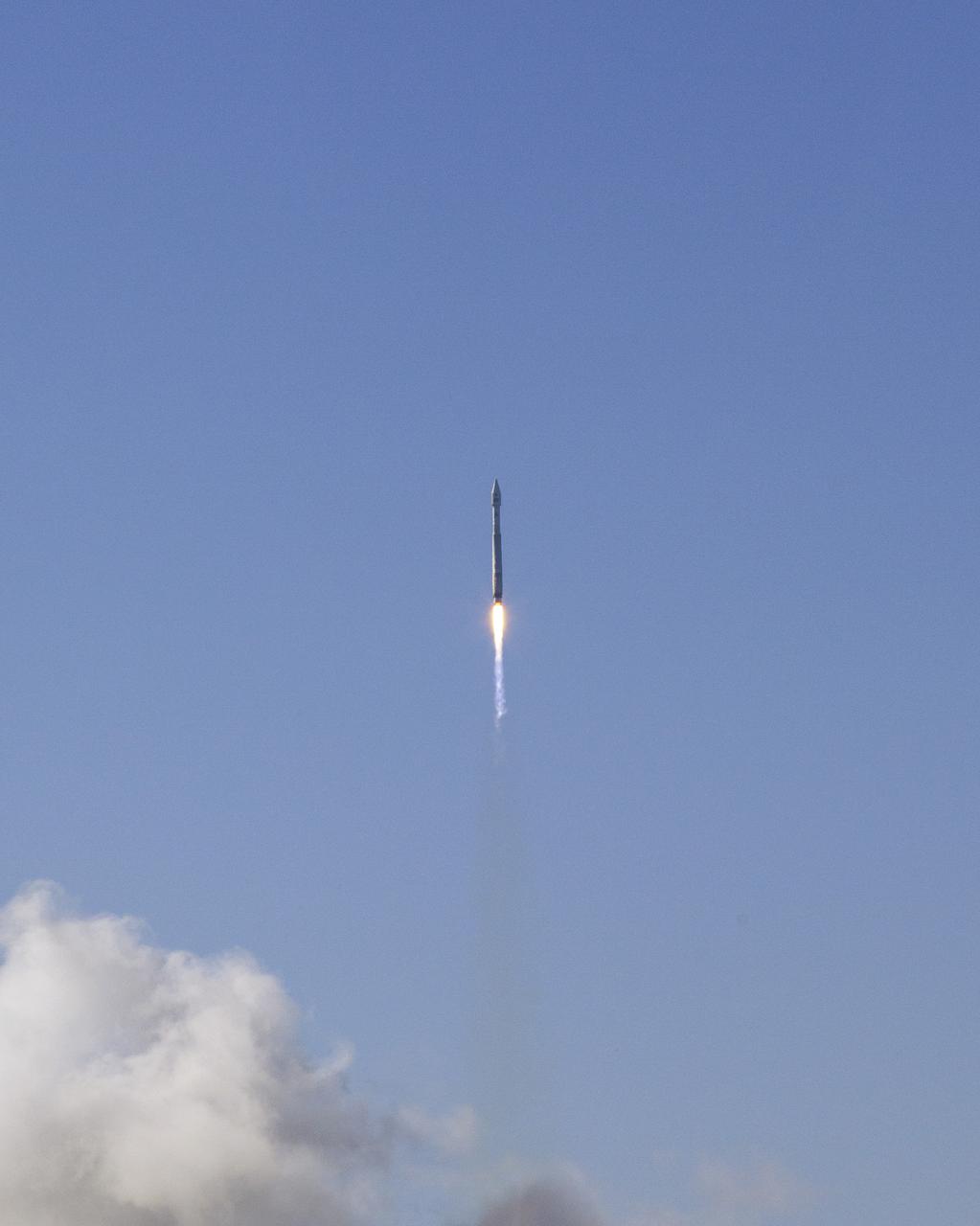
VANDENBERG AFB, Calif. -- The Landsat Data Continuity Mission spacecraft lifted off at 1:02 p.m. EST, 10:02 a.m. PST) atop a United Launch Alliance Atlas V rocket from Space Launch Complex 3 at California's Vandenberg Air Force Base. The Landsat Data Continuity Mission LDCM is the future of Landsat satellites. It will continue to obtain valuable data and imagery to be used in agriculture, education, business, science, and government. The Landsat Program provides repetitive acquisition of high resolution multispectral data of the Earth's surface on a global basis. The data from the Landsat spacecraft constitute the longest record of the Earth's continental surfaces as seen from space. It is a record unmatched in quality, detail, coverage, and value. For more information, visit: http:__www.nasa.gov_mission_pages_landsat_main_index.html Photo credit: NASA_Kim Shiflett
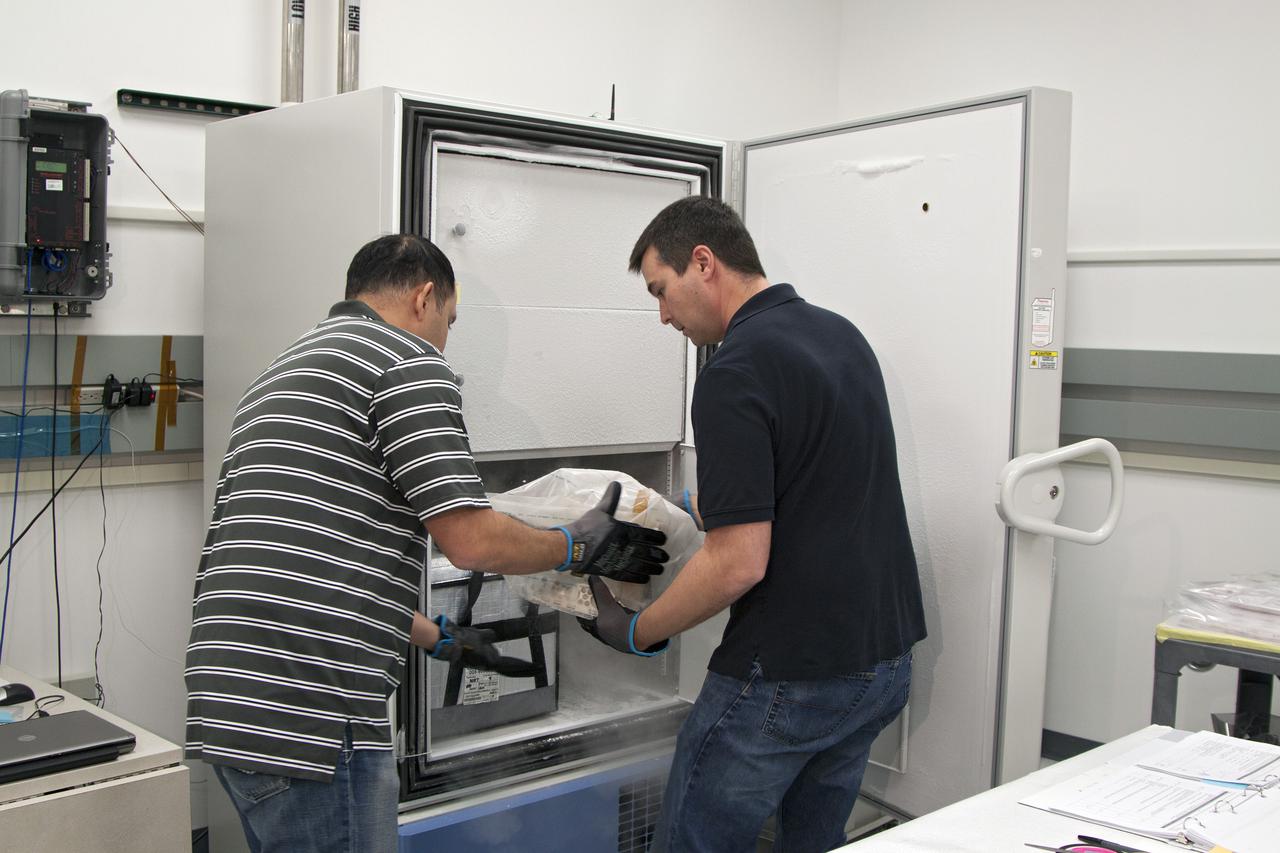
CAPE CANAVERAL, Fla. - In the Space Station Processing Facility at NASA's Kennedy Space Center in Florida, engineers prepare to load experiments requiring low temperatures into the General Laboratory Active Cryogenic International Space Station ISS Experiment Refrigerator, or GLACIER. The samples will then be transported to Space Launch Complex-40 on Cape Canaveral Air Force Station where the GLACIER will be loaded aboard the SpaceX Dragon capsule. Scheduled for launch on March 1 atop a Falcon 9 rocket, Dragon will be marking its third trip to the space station. The mission is the second of 12 SpaceX flights contracted by NASA to resupply the orbiting laboratory. For more information, visit http:__www.nasa.gov_mission_pages_station_structure_launch_spacex2-feature.html Photo credit: NASA_Kim Shiflett
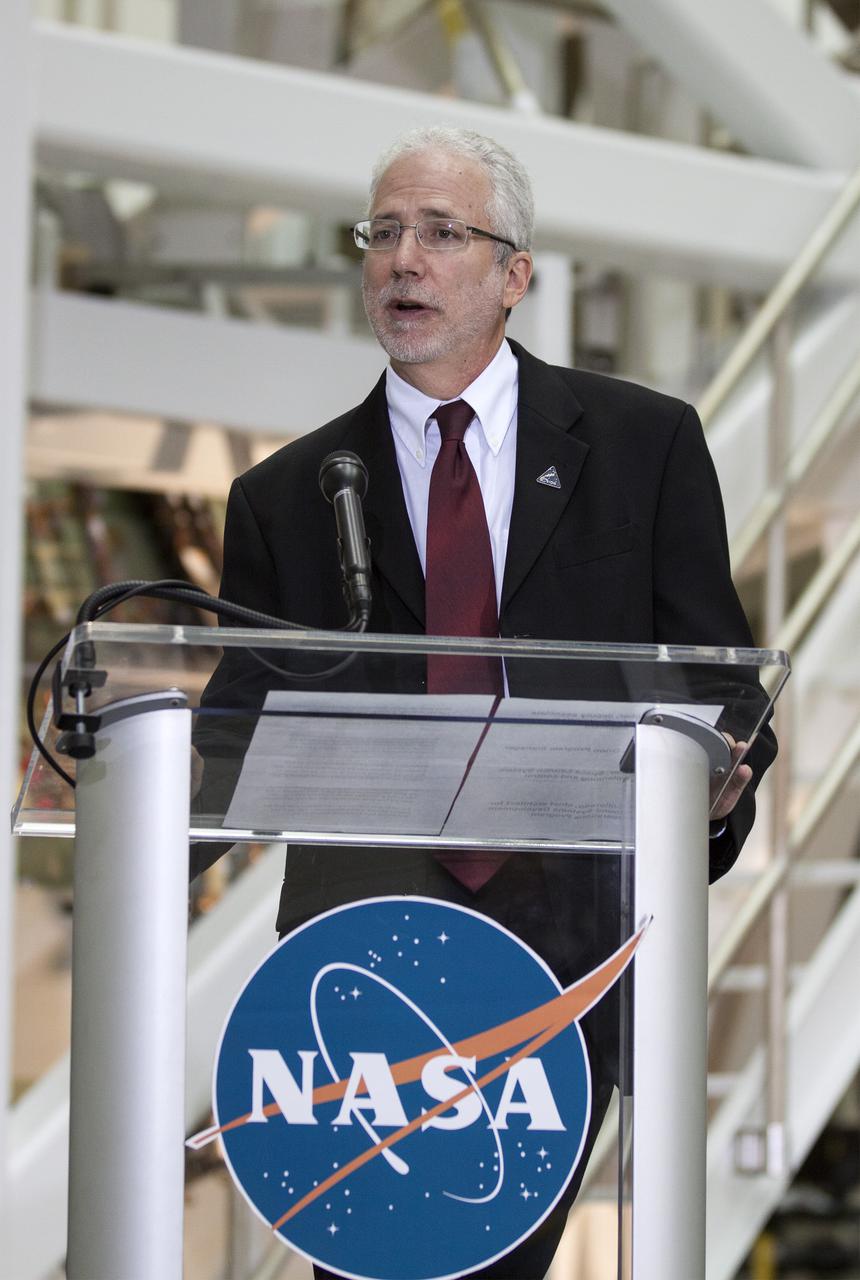
CAPE CANAVERAL, Fla. – In the Operations and Checkout Building OandC at the Kennedy Space Center in Florida, Mark Geyer, NASA's Orion program manager, speaks to news media representatives updating progress on preparing the Orion spacecraft for its first uncrewed mission, Exploration Flight Test-1 EFT-1 in 2014. Launched atop NASA's heavy-lift Space Launch System rocket, Orion is now targeted to take astronauts in a sample return mission to an asteroid as early as 2021. On the third anniversary of President Barack Obama issuing his challenge to NASA to send astronauts to an asteroid, news media representatives were given an opportunity to see up-close the Orion spacecraft which could take astronauts on such a flight. They also heard from key leaders of that effort in Kennedy's OandC where Orion's assembly is taking place. Photo credit: NASA_Kim Shiflett
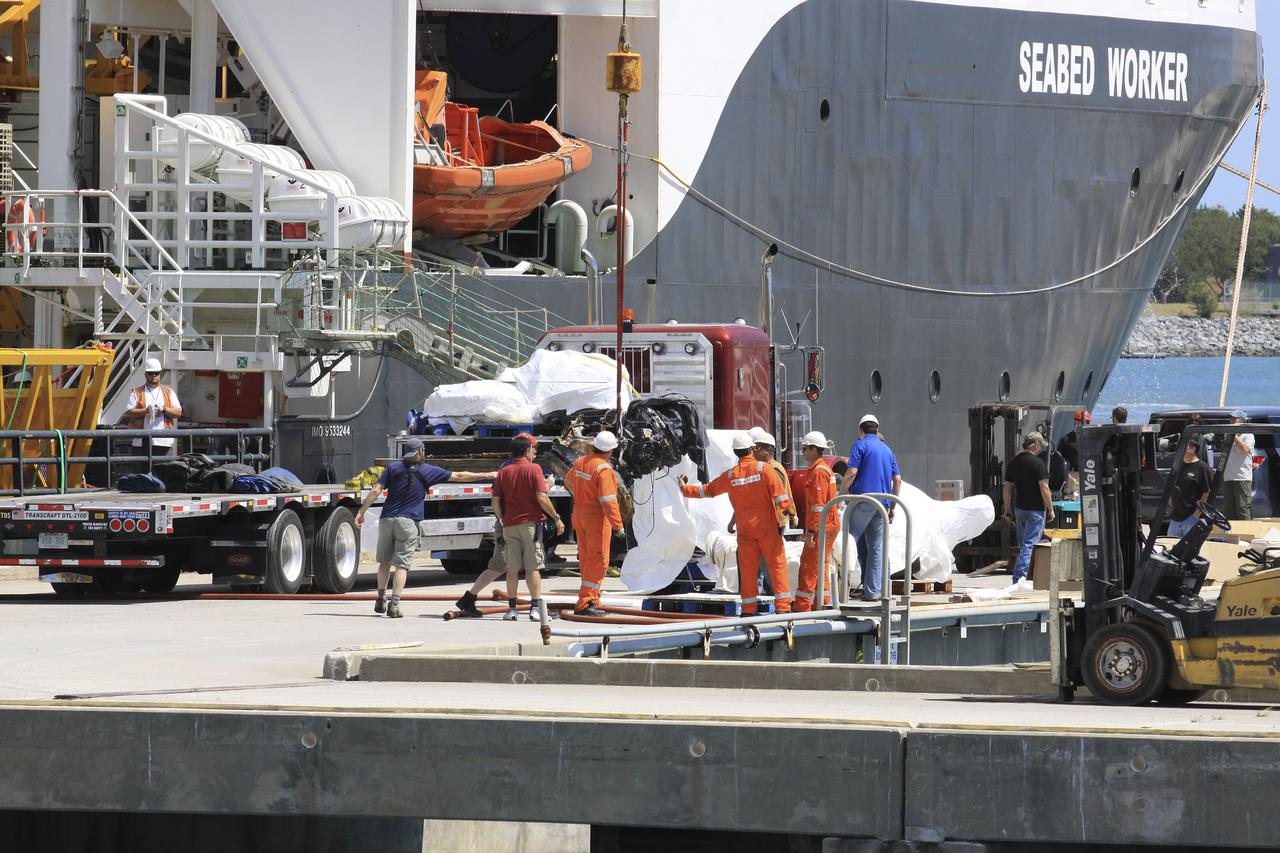
CAPE CANAVERAL, Fla. – Components for two of the F-1 engines that powered the first stage of the Saturn V rockets that lifted NASA's Apollo missions to the moon were recovered from the Atlantic Ocean March 21 by Jeff Bezos, the founder and Chief Executive Officer of the aerospace company Blue Origin and Amazon.com and arrived at Port Canaveral March 22. The engines will be restored by Bezos' team for public display. The engines were found some 14,000 feet underwater where they came to rest more than 40 years ago after sending astronauts into space on missions to the moon. Restoration may reveal exactly which engines were recovered, but Bezos said in a statement that the serial numbers were not immediately visible. Photo credit: NASA_Kim Shiflett
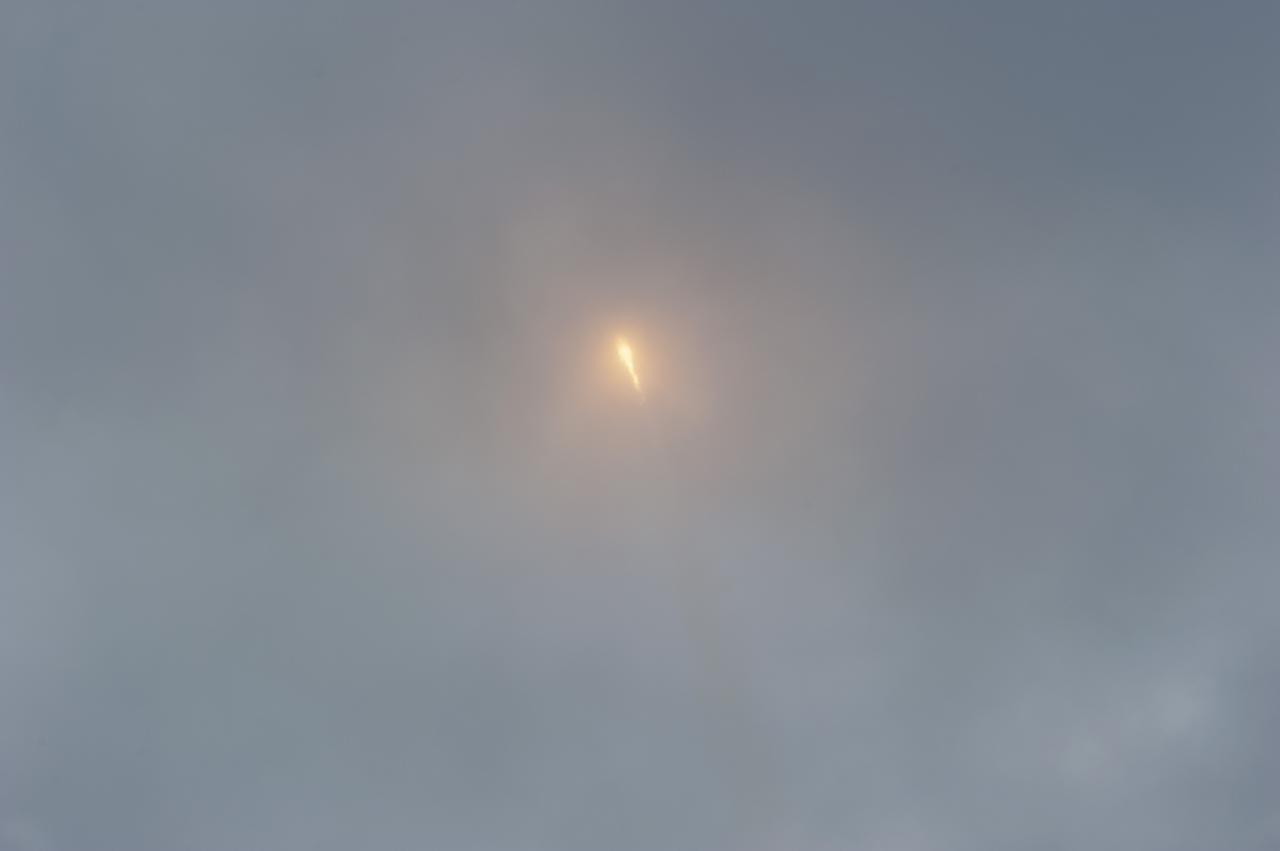
CAPE CANAVERAL, Fla. -- A Space Exploration Technologies, or SpaceX, Falcon 9 rocket disappears into the clouds over Space Launch Complex 40 on Cape Canaveral Air Force Station in Florida, carrying a Dragon capsule filled with cargo to orbit. Launch was at 10:10 a.m. EST. The SpaceX Dragon capsule is making its third trip to the International Space Station, following a demonstration flight in May 2012 and the first resupply mission in October 2012. The mission is the second of 12 SpaceX flights contracted by NASA to resupply the orbiting laboratory. For more information, visit http:__www.nasa.gov_mission_pages_station_structure_launch_spacex2-feature.html. Photo credit: NASA_Kim Shiflett
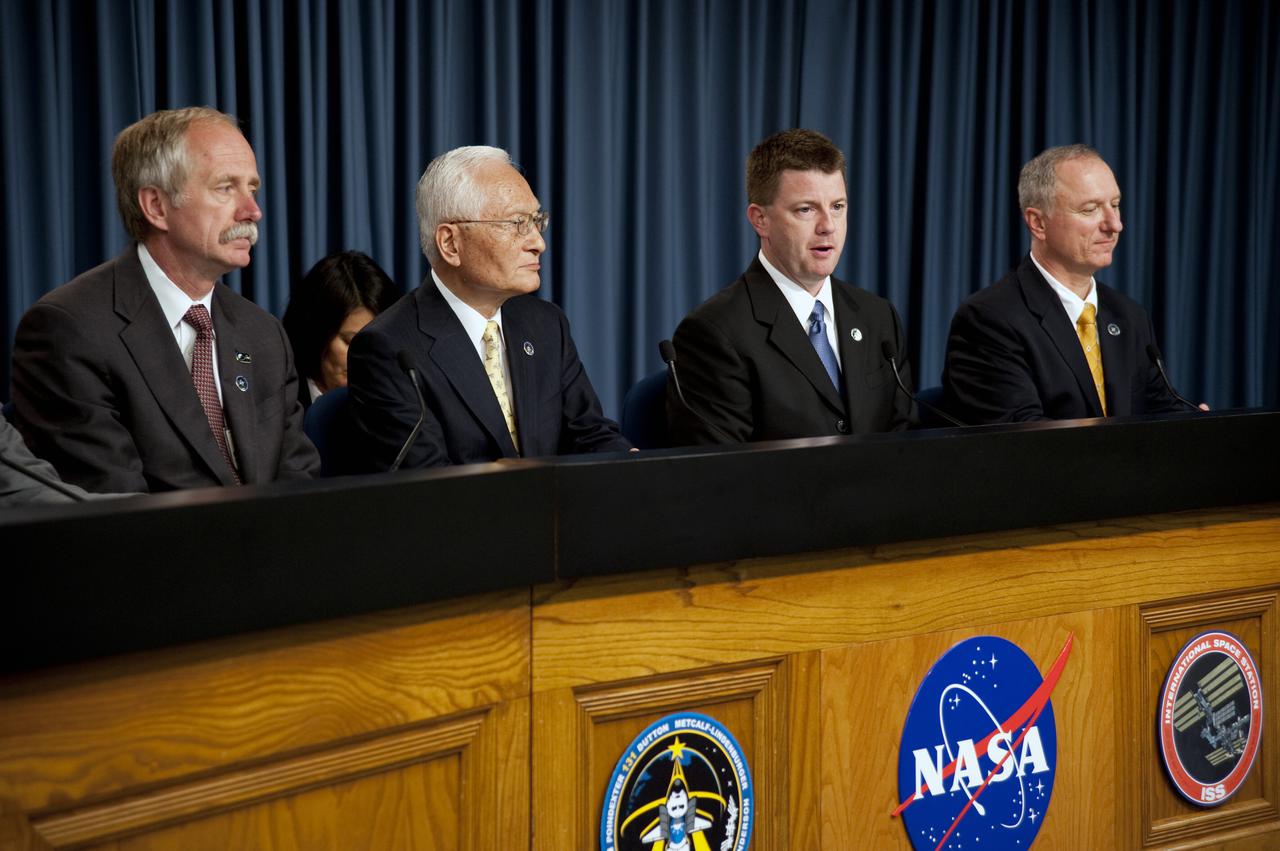
CAPE CANAVERAL, Fla. - NASA managers participate in a news conference in the Press Site auditorium at NASA's Kennedy Space Center in Florida following the successful launch of space shuttle Discovery. From left are Bill Gerstenmaier, associate administrator for Space Operations; Japan Aerospace Exploration Agency President Keiji Tachikawa; Mike Moses, shuttle launch integration manager; and Pete Nickolenko, STS-131 launch director. Shuttle Discovery lifted off at 6:21 a.m. EDT on April 5, 2010. The seven-member STS-131 crew will deliver the multi-purpose logistics module Leonardo, filled with supplies, a new crew sleeping quarters and science racks that will be transferred to the International Space Station's laboratories. The crew also will switch out a gyroscope on the station’s truss, install a spare ammonia storage tank and retrieve a Japanese experiment from the station’s exterior. STS-131 is the 33rd shuttle mission to the station and the 131st shuttle mission overall. For information on the STS-131 mission and crew, visit http:__www.nasa.gov_mission_pages_shuttle_shuttlemissions_sts131_index.html. Photo credit: NASA_Kim Shiflett
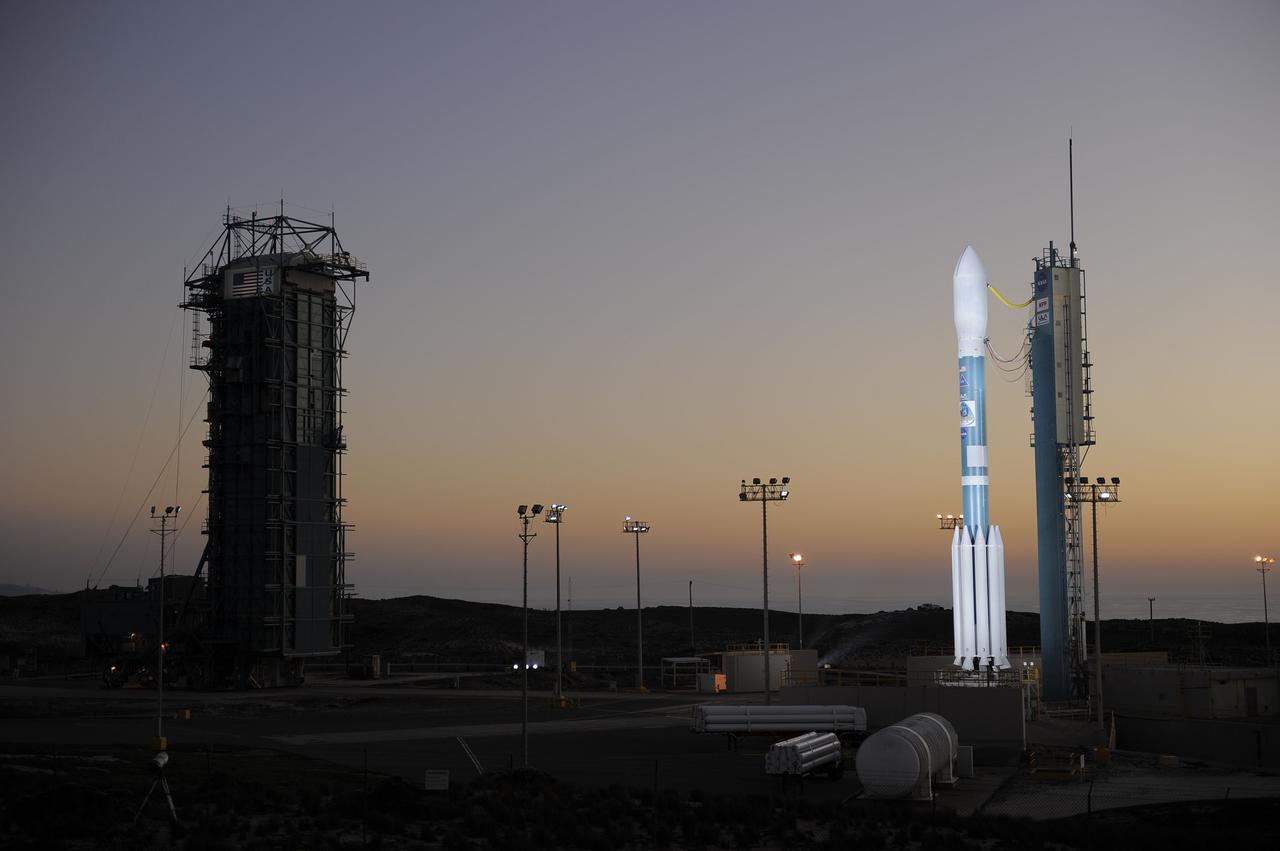
VANDENBERG AIR FORCE BASE, Calif. – At Vandenberg Air Force Base's Space Launch Complex-2 in California, a United Launch Alliance Delta II rocket with the National Polar-orbiting Operational Environmental Satellite System Preparatory Project (NPP) spacecraft aboard stands by itself on the launch pad following rollback of the mobile service tower. NPP represents a critical first step in building the next-generation of Earth-observing satellites. NPP will carry the first of the new sensors developed for this satellite fleet, now known as the Joint Polar Satellite System (JPSS) to be launched in 2016. NPP is the bridge between NASA's Earth Observing System (EOS) satellites and the forthcoming series of JPSS satellites. The mission will test key technologies and instruments for the JPSS missions. For more information, visit http:__www.nasa.gov_NPP. Photo credit: NASA_Kim Shiflett
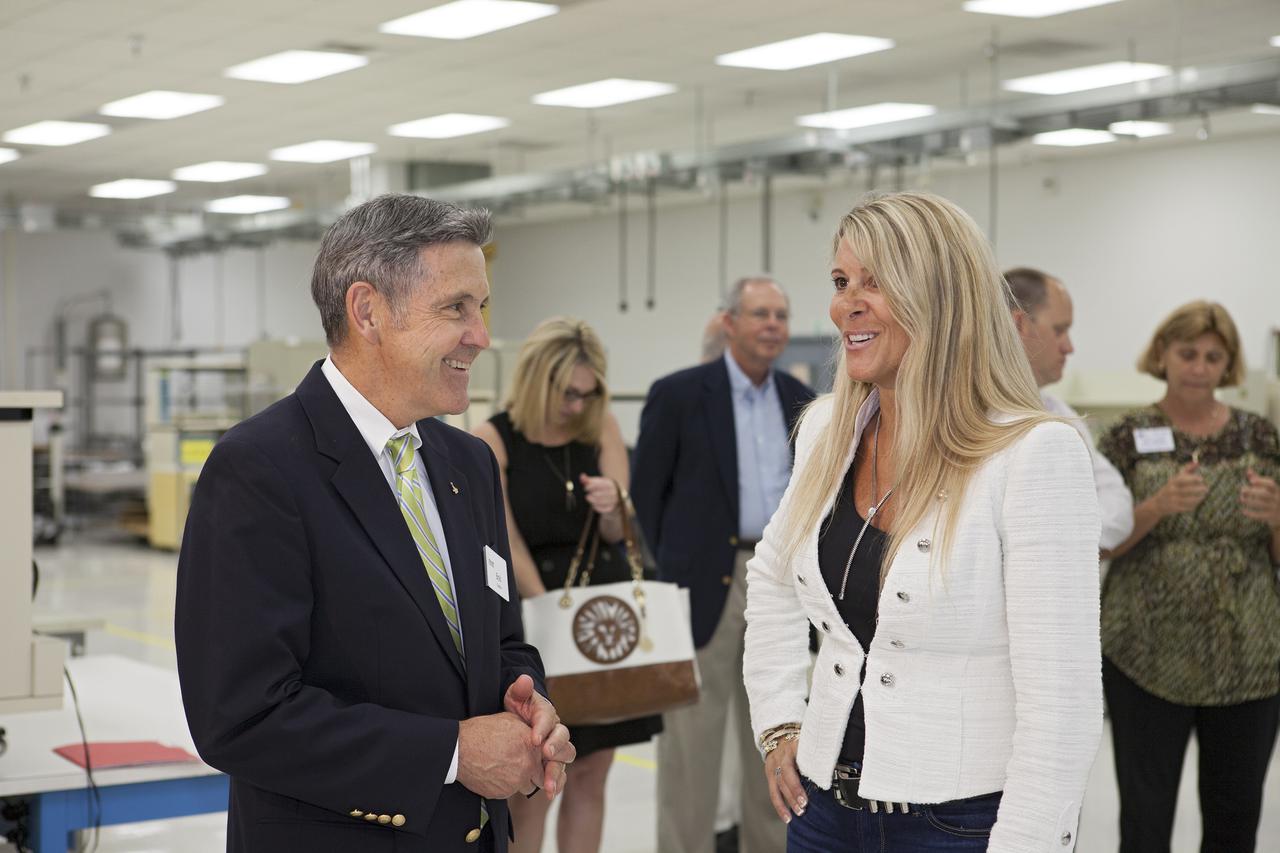
CAPE CANAVERAL, Fla. – At the Aerospace and Defense Manufacturing Center in Cape Canaveral, Fla., Kennedy Space Center Director Bob Cabana talks with Craig Technologies founder and chief executive officer Carol Craig during a community open house. In June of last year, NASA signed a partnership agreement with Craig Technologies to maintain an inventory of unique processing and manufacturing equipment for future mission support at the agency's Kennedy Space Center. The Cape Canaveral, Fla., facility, formerly known as the NASA Shuttle Logistics Depot NSLD, is now the Aerospace and Defense Manufacturing Center ADMC. Photo credit: NASA_Kim Shiflett
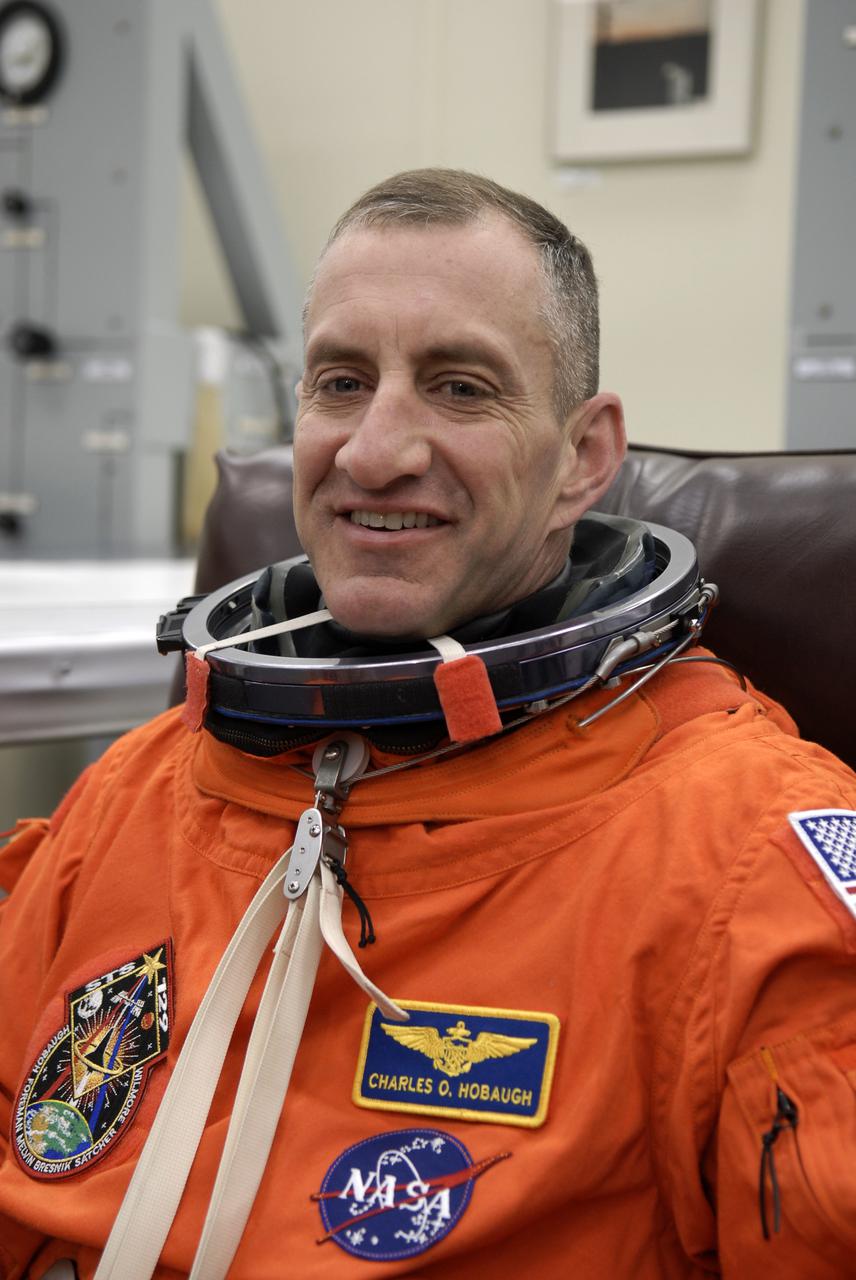
CAPE CANAVERAL, Fla. - In the Operations and Checkout Building at NASA's Kennedy Space Center in Florida, STS-129 Commander Charles O. Hobaugh dons his launch-and-entry suit. The six astronauts for space shuttle Atlantis’ STS-129 mission are at Kennedy for their launch dress rehearsal, the Terminal Countdown Demonstration Test, on Launch Pad 39A. Additional training associated with the test was done last month, but the simulated countdown was postponed because of a scheduling conflict with the launch of NASA’s Ares I-X test rocket. Launch of Atlantis on its STS-129 mission to the International Space Station is set for Nov. 16. On STS-129, the crew will deliver to the station two spare gyroscopes, two nitrogen tank assemblies, two pump modules, an ammonia tank assembly and a spare latching end effector for the station's robotic arm. For information on the STS-129 crew and mission objectives, visit http:__www.nasa.gov_mission_pages_shuttle_shuttlemissions_sts129_index.html. Photo credit: NASA_Kim Shiflett
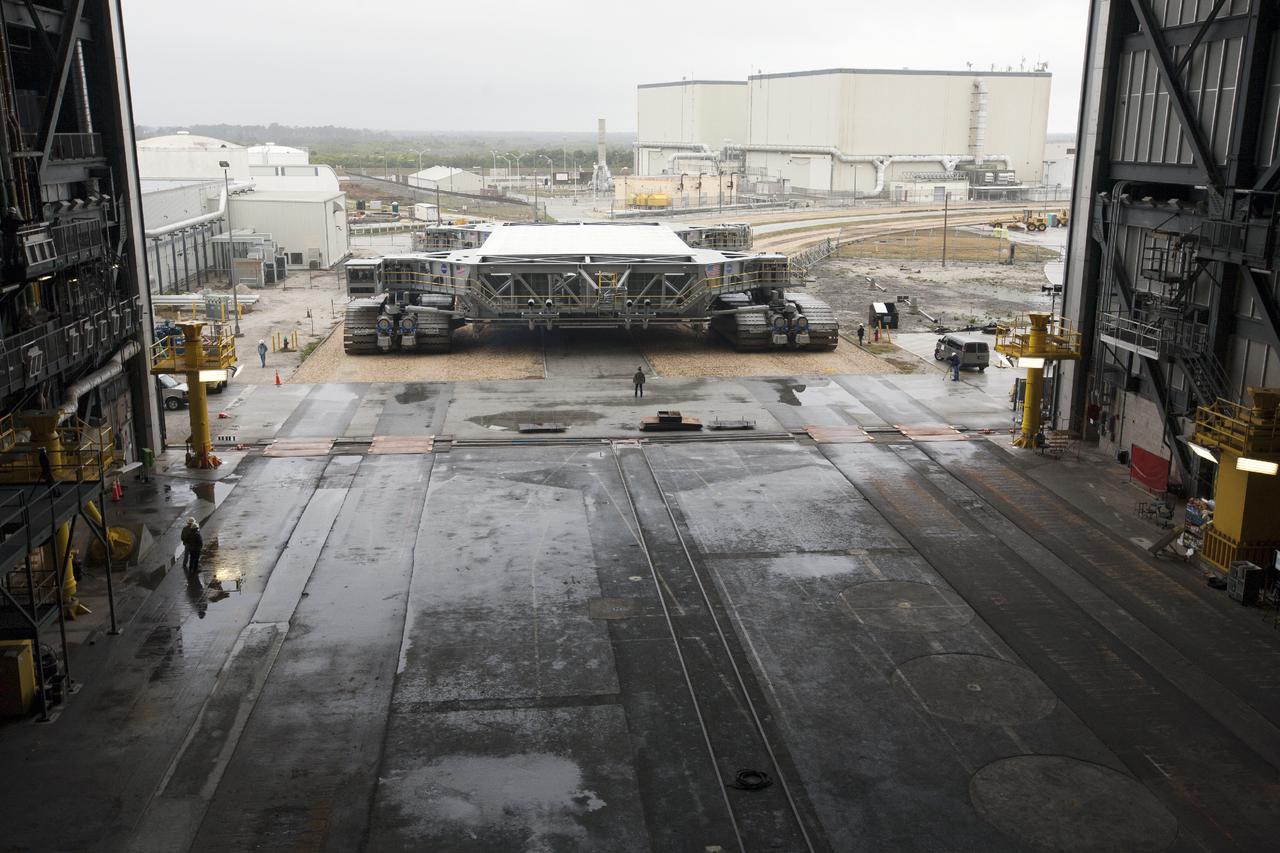
CAPE CANAVERAL, Fla. – Crawler-transporter 2, or CT-2, nears the entrance to the Vehicle Assembly Building at NASA’s Kennedy Space Center in Florida. The Ground Systems Development and Operations Program completed a roller bearing assembly test on CT-2 truck sections A and C. The left- and right-hand steering was tested in both directions. The temperature of the roller assemblies was monitored and recorded as it traveled along the crawlerway. Engineers and technicians performed visual inspections of the roller bearing pumps, valves and lines to ensure that the grease injectors worked properly and provided the required flow of grease to the new roller assemblies. Work continues in high bay 2 to upgrade CT-2. The modifications are designed to ensure CT-2’s ability to transport launch vehicles currently in development, such as the agency’s Space Launch System, to the launch pad. The Ground Systems Development and Operations Program office at Kennedy is overseeing the upgrades. For more than 45 years the crawler-transporters were used to transport the mobile launcher platform and the Apollo-Saturn V rockets and, later, space shuttles to Launch Pads 39A and B. For more information, visit: http:__www.nasa.gov_exploration_systems_ground_crawler-transporter. Photo credit: NASA_Kim Shiflett
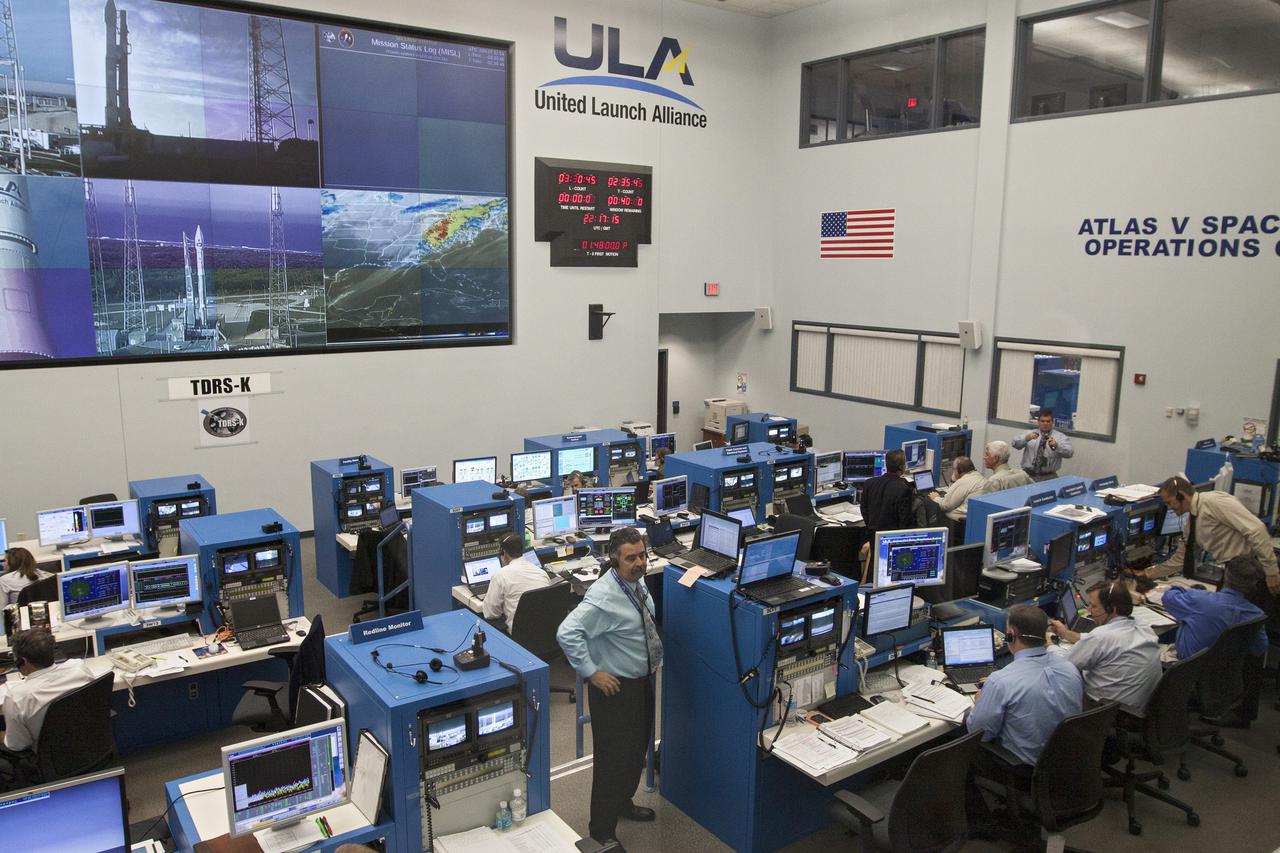
CAPE CANAVERAL, Fla. – The NASA and United Launch Alliance launch teams monitor the countdown before the launch of the TDRS-K spacecraft on an Atlas V rocket. The teams work inside the Atlas Space Operations Center at Cape Canaveral Air Force Station, Fla., known as the ASOC. Photo credit: NASA_Kim Shiflett
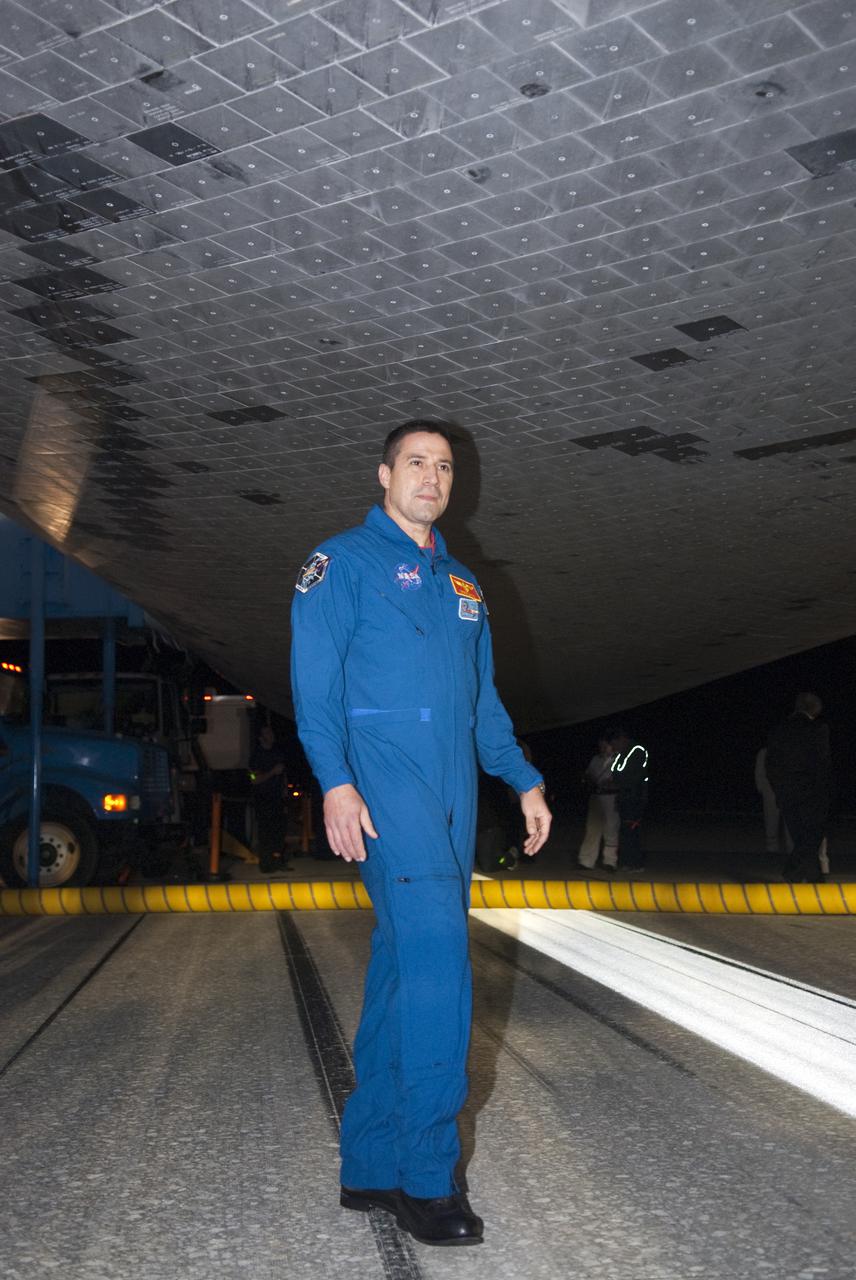
CAPE CANAVERAL, Fla. - STS-130 Commander George Zamka inspects the thermal protection system tiles under space shuttle Endeavour following its successful landing on Runway 15 at the Shuttle Landing Facility at NASA's Kennedy Space Center in Florida. After 14 days in space, Endeavour's 5.7-million-mile STS-130 mission was completed on orbit 217. Main gear touchdown was at 10:20:31 p.m. EST followed by nose gear touchdown at 10:20:39 p.m. and wheels stop at 10:22:10 p.m. It was the 23rd night landing in shuttle history and the 17th at Kennedy. During Endeavour's STS-130 mission, astronauts installed the Tranquility node, a module that provides additional room for crew members and many of the station's life support and environmental control systems. Attached to Tranquility is a cupola with seven windows that provide a panoramic view of Earth, celestial objects and visiting spacecraft. The module was built in Turin, Italy, by Thales Alenia Space for the European Space Agency. The orbiting laboratory is approximately 90 percent complete now in terms of mass. STS-130 was the 24th flight for Endeavour, the 32nd shuttle mission devoted to ISS assembly and maintenance, and the 130th shuttle mission to date. For information on the STS-130 mission and crew, visit http:__www.nasa.gov_mission_pages_shuttle_shuttlemissions_sts130_index.html. Photo credit: NASA_Kim Shiflett
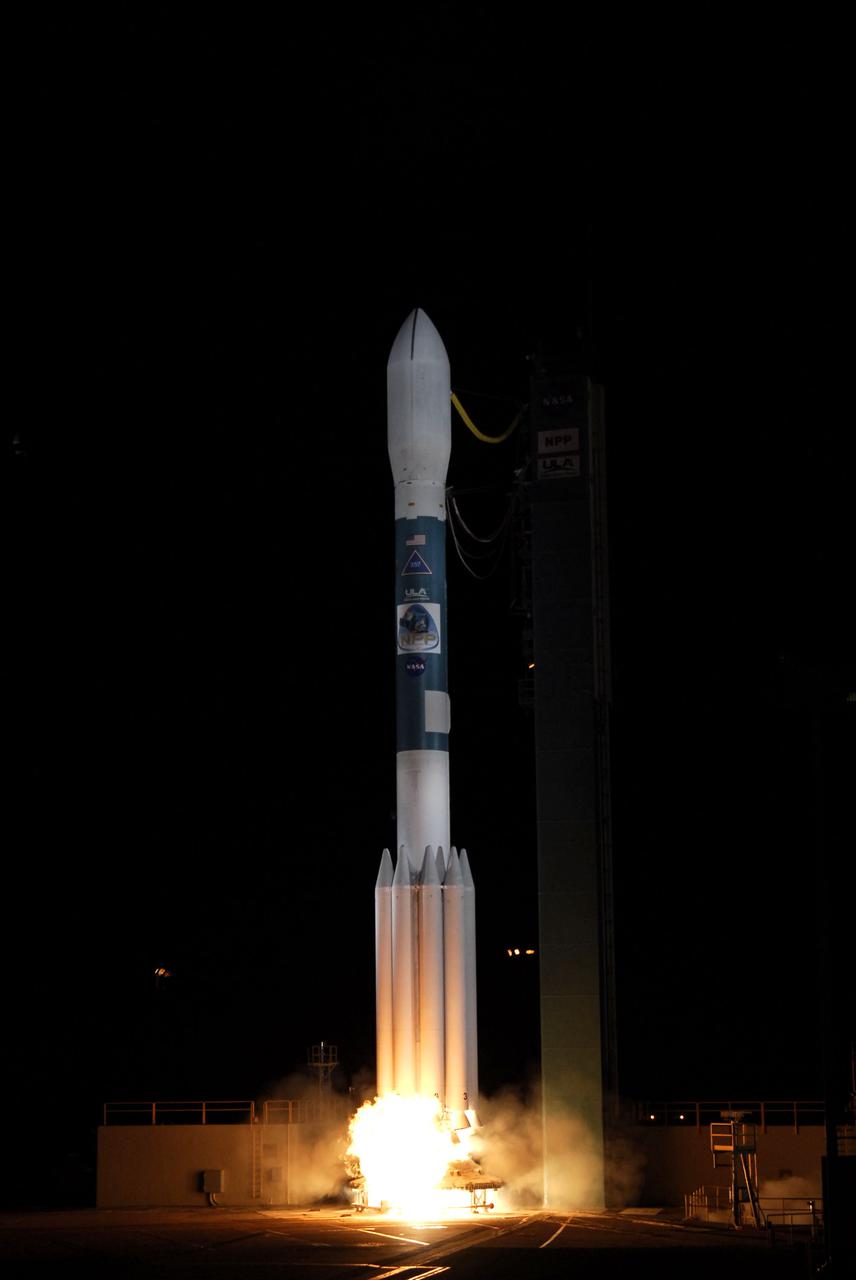
VANDENBERG AIR FORCE BASE, Calif. -- The ground begins to rumble at Space Launch Complex-2 on Vandenberg Air Force Base in California as the engines ignite beneath the United Launch Alliance Delta II rocket carrying NASA's National Polar-orbiting Operational Environmental Satellite System Preparatory Project (NPP) into space. Liftoff was at 2:48 a.m. PDT. NPP represents a critical first step in building the next-generation of Earth-observing satellites. NPP will carry the first of the new sensors developed for this satellite fleet, now known as the Joint Polar Satellite System (JPSS) to be launched in 2016. NPP is the bridge between NASA's Earth Observing System (EOS) satellites and the forthcoming series of JPSS satellites. The mission will test key technologies and instruments for the JPSS missions. For more information, visit http:__www.nasa.gov_NPP. Photo credit: NASA_Kim Shiflett
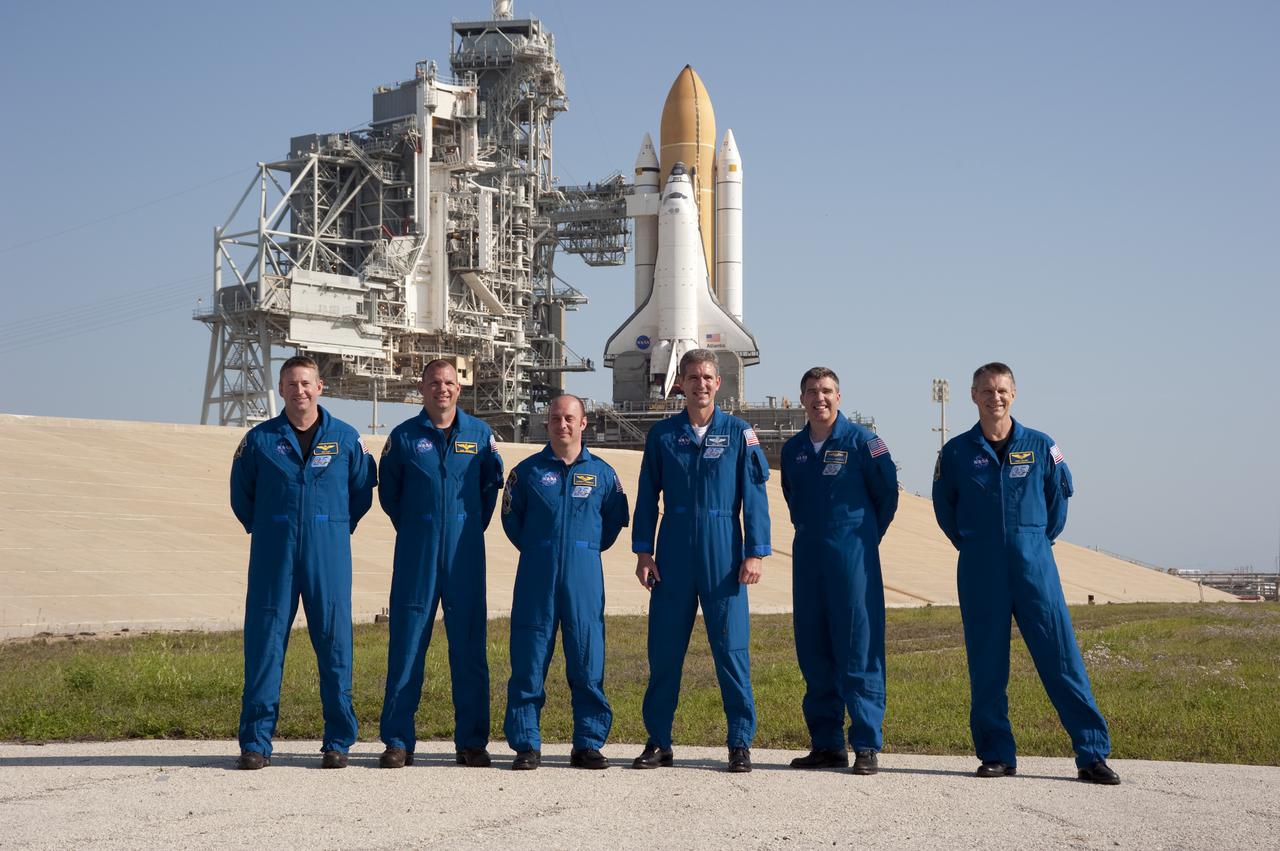
CAPE CANAVERAL, Fla. - At Launch Pad 39A at NASA's Kennedy Space Center in Florida, the STS-132 crew poses for a group portrait following a question-and-answer session with media representatives. From left are Commander Ken Ham; Pilot Tony Antonelli; and Mission Specialists Garrett Reisman, Michael Good, Steve Bowen and Piers Sellers. The crew is at Kennedy for their Terminal Countdown Demonstration Test, or TCDT, a dress rehearsal for launch. TCDT provides each shuttle crew and launch team the opportunity to participate in various simulated countdown activities, including equipment familiarization and emergency training. On the STS-132 mission, the six-member crew will deliver an Integrated Cargo Carrier, or ICC, and the Russian-built Mini-Research Module-1, or MRM-1, to the International Space Station aboard space shuttle Atlantis. The ICC is an unpressurized flat bed pallet and keel yoke assembly used to support the transfer of exterior cargo from the shuttle to the space station. The MRM-1, known as Rassvet, is the second in a series of new pressurized components for Russia and will be permanently attached to the Earth-facing port of the Zarya control module. Rassvet, which translates to 'dawn,' will be used for cargo storage and will provide an additional docking port to the station. STS-132 is the 34th mission to the station and the 132nd shuttle mission overall. Atlantis is targeted to launch on May 14 at 2:19 p.m. For information on the STS-132 mission, visit http:__www.nasa.gov_mission_pages_shuttle_shuttlemissions_sts132_index.html. Photo credit: NASA_Kim Shiflett
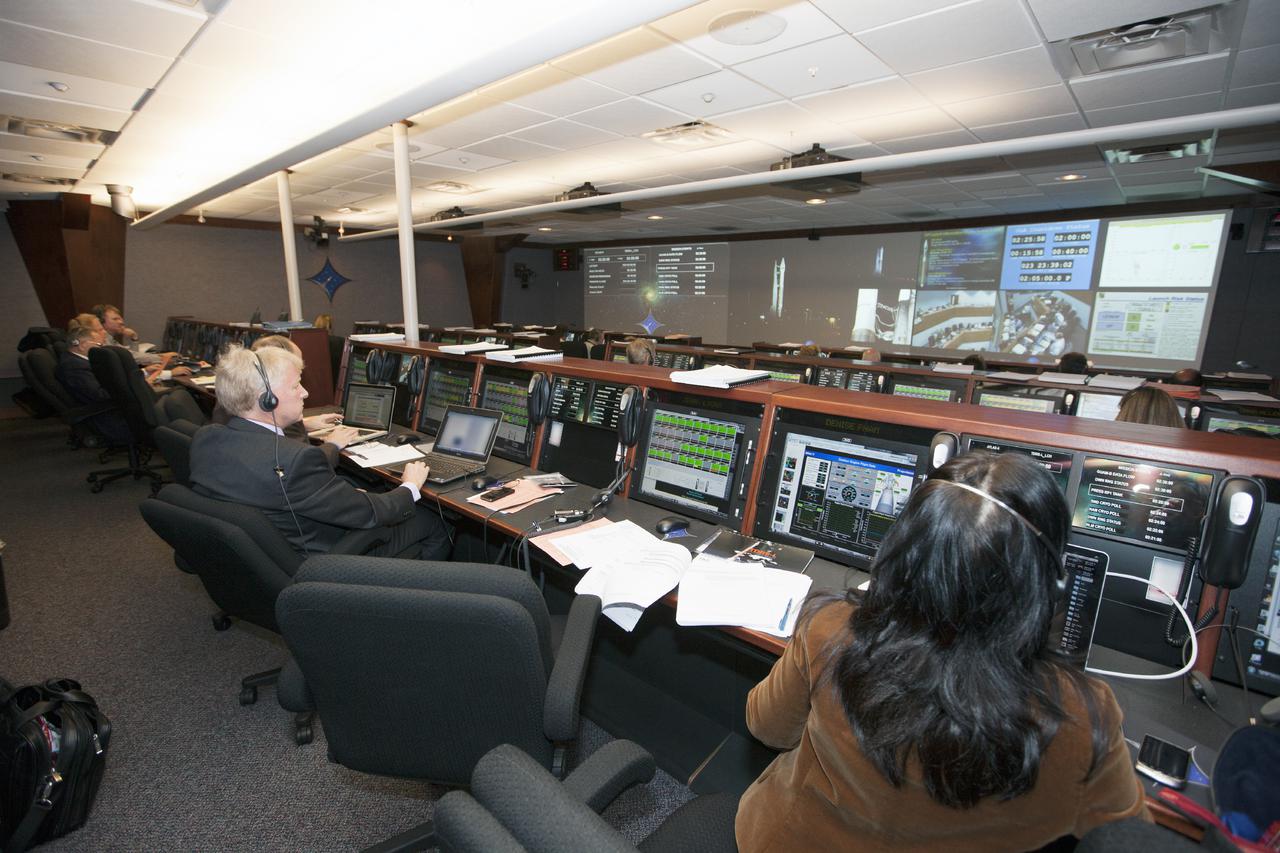
CAPE CANAVERAL, Fla. – In the Hangar AE Mission Director's Center at Cape Canaveral Air Force Station in Florida, NASA and contractor managers and engineers monitor progress of the countdown for the launch the agency's Tracking and Data Relay Satellite, or TDRS-L, spacecraft atop a United Launch Alliance Atlas V rocket. The TDRS-L spacecraft is the second of three new satellites designed to ensure vital operational continuity for NASA by expanding the lifespan of the Tracking and Data Relay Satellite System TDRSS fleet, which consists of eight satellites in geosynchronous orbit. The spacecraft provide tracking, telemetry, command and high bandwidth data return services for numerous science and human exploration missions orbiting Earth. These include NASA's Hubble Space Telescope and the International Space Station. TDRS-L has a high-performance solar panel designed for more spacecraft power to meet the growing S-band communications requirements. TDRSS is one of NASA Space Communication and Navigation’s SCaN three networks providing space communications to NASA’s missions. For more information more about TDRS-L, visit: http:__www.nasa.gov_tdrs To learn more about SCaN, visit: www.nasa.gov_scan Photo credit: NASA_Kim Shiflett
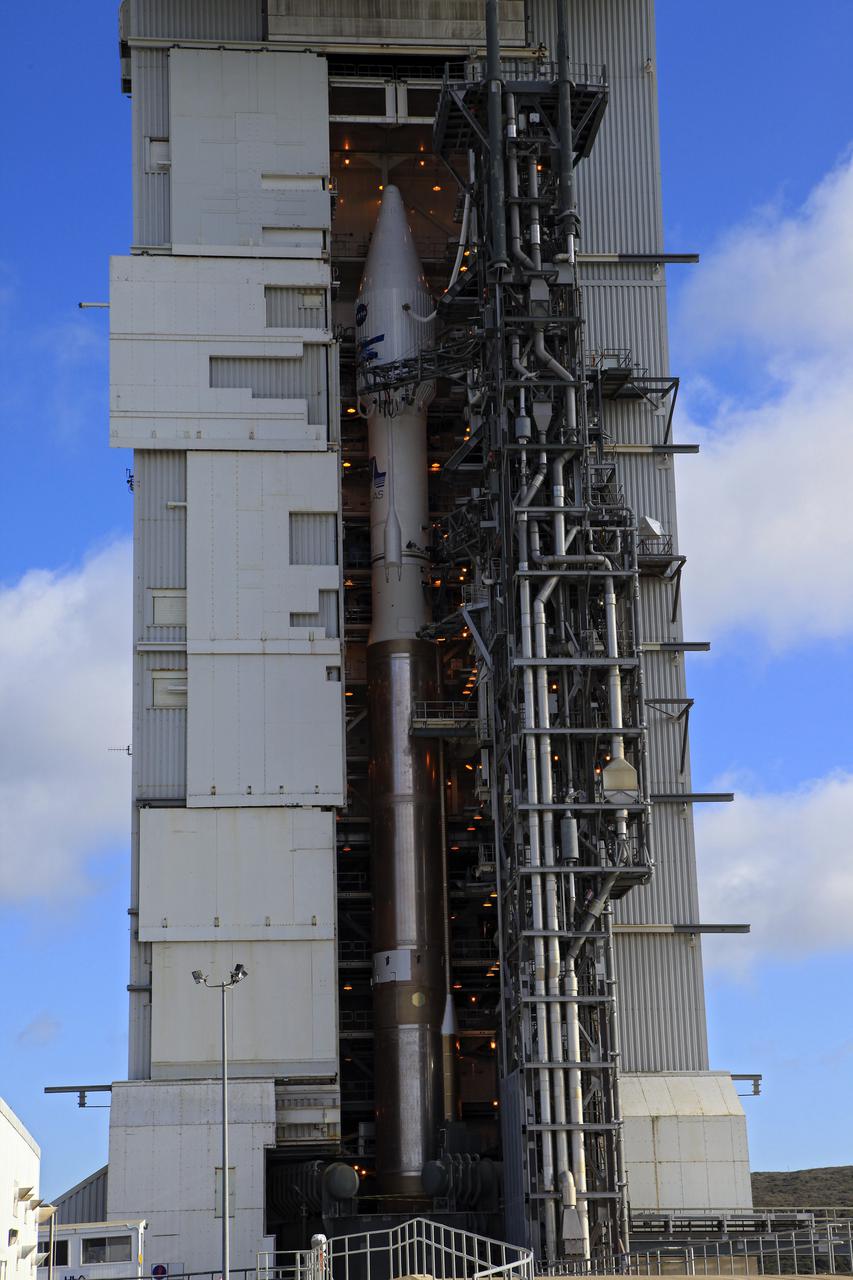
VANDENBERG AFB, Calif. -- At Vandenberg Air Force Base, Calif., NASA's Landsat Data Continuity Mission, or LDCM, satellite is mounted atop a United Launch Alliance Atlas V rocket in the gantry at Space Launch Complex 3E. The Landsat Data Continuity Mission LDCM is the future of Landsat satellites. It will continue to obtain valuable data and imagery to be used in agriculture, education, business, science, and government. The Landsat Program provides repetitive acquisition of high resolution multispectral data of the Earth's surface on a global basis. The data from the Landsat spacecraft constitute the longest record of the Earth's continental surfaces as seen from space. It is a record unmatched in quality, detail, coverage, and value. Liftoff is planned for Feb. 11, 2013 aboard a United Launch Alliance Atlas V rocket. For more information, visit: http:__www.nasa.gov_mission_pages_landsat_main_index.html Photo credit: NASA_Kim Shiflett
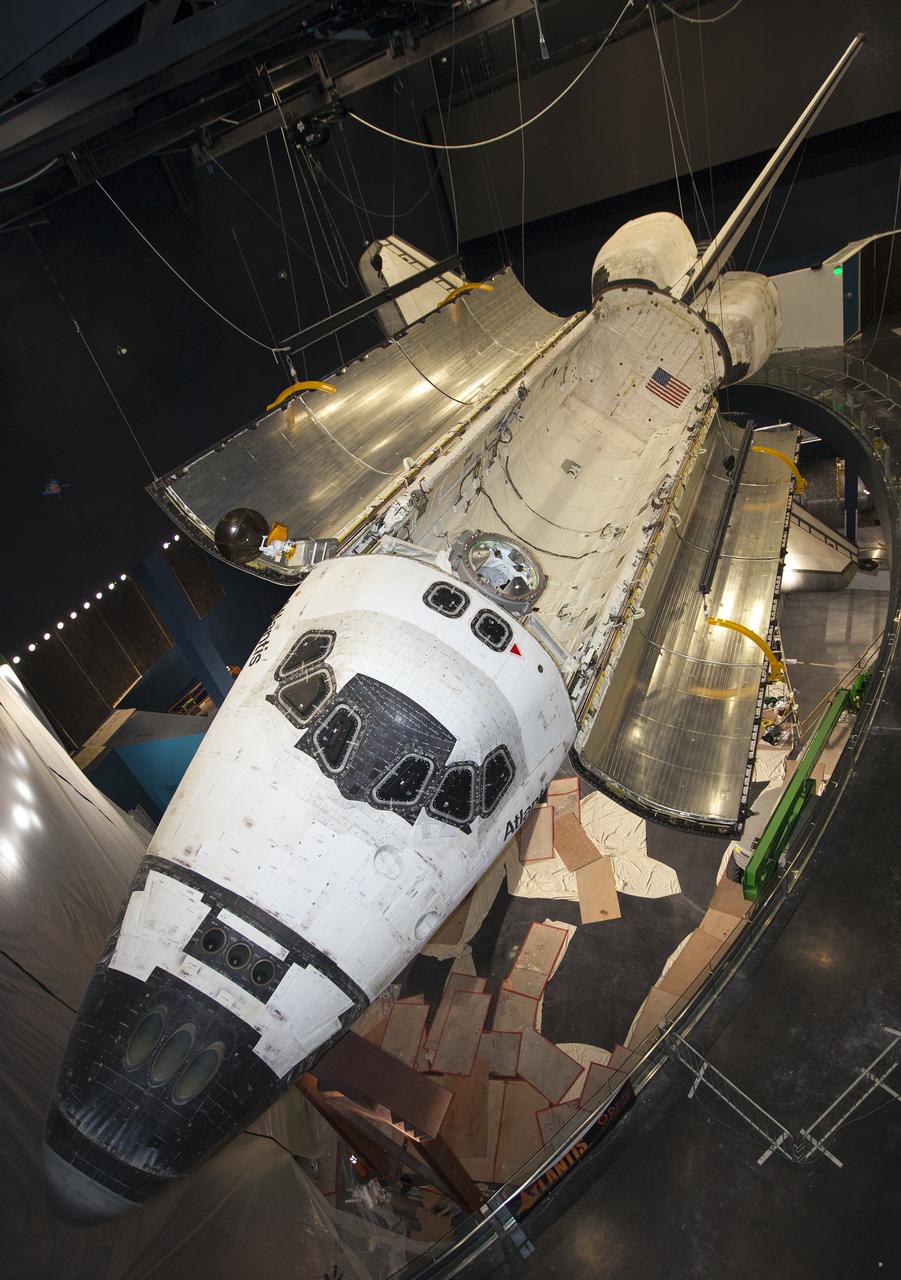
CAPE CANAVERAL, Fla. – At the Kennedy Space Center Visitor Complex in Florida, space shuttle Atlantis’ payload bay doors have been opened, revealing the payload bay. Atlantis is being prepared for display in the “Space Shuttle Atlantis” exhibit, a 90,000-square-foot facility, scheduled to open June 29, 2013. The new $100 million facility will include interactive exhibits that tell the story of the 30-year Space Shuttle Program and highlight the future of space exploration. Visitors to the exhibit will get an up close look at Atlantis with its payload bay doors open, similar to how it looked in space. Photo credit: NASA_Kim Shiflett
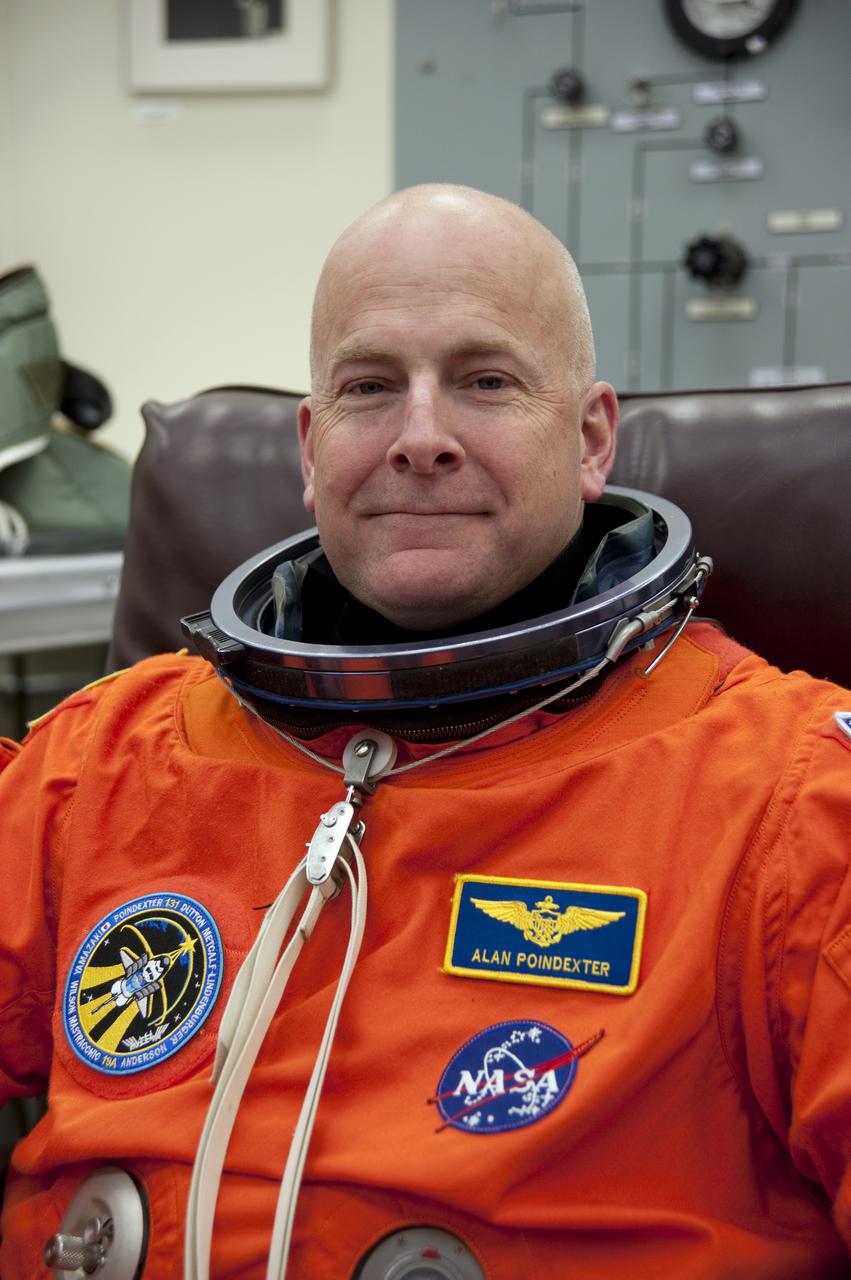
CAPE CANAVERAL, Fla. - In the Operations and Checkout Building at NASA's Kennedy Space Center in Florida, the astronauts of space shuttle Discovery's STS-131 crew put on their launch-and-entry suits before heading to the Astrovan for the ride to Launch Pad 39A. Commander Alan Poindexter, seen here, is dressed for launch. Liftoff of the STS-131 mission is set for 6:21 a.m. EDT on April 5. On STS-131, the seven-member crew will deliver the multi-purpose logistics module Leonardo, filled with supplies, a new crew sleeping quarters and science racks that will be transferred to the International Space Station's laboratories. The crew also will switch out a gyroscope on the station’s truss, install a spare ammonia storage tank and retrieve a Japanese experiment from the station’s exterior. STS-131 is the 33rd shuttle mission to the station and the 131st shuttle mission overall. For information on the STS-131 mission and crew, visit http:__www.nasa.gov_mission_pages_shuttle_shuttlemissions_sts131_index.html. Photo credit: NASA_Kim Shiflett
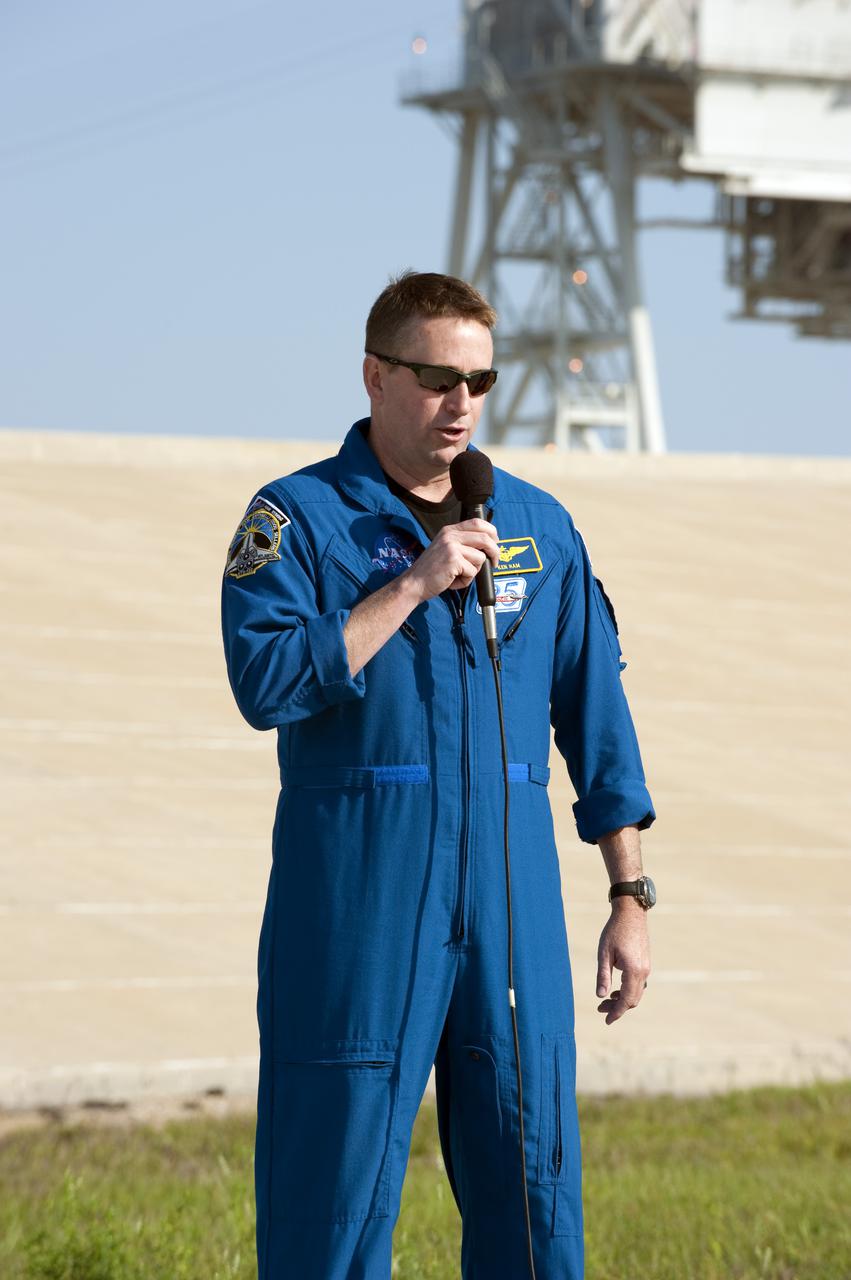
CAPE CANAVERAL, Fla. - At Launch Pad 39A at NASA's Kennedy Space Center in Florida, STS-132 Commander Ken Ham addresses media representatives during a question-and-answer session. The crew is at Kennedy for their Terminal Countdown Demonstration Test, or TCDT, a dress rehearsal for launch. TCDT provides each shuttle crew and launch team the opportunity to participate in various simulated countdown activities, including equipment familiarization and emergency training. On the STS-132 mission, the six-member crew will deliver an Integrated Cargo Carrier, or ICC, and the Russian-built Mini-Research Module-1, or MRM-1, to the International Space Station aboard space shuttle Atlantis. The ICC is an unpressurized flat bed pallet and keel yoke assembly used to support the transfer of exterior cargo from the shuttle to the space station. The MRM-1, known as Rassvet, is the second in a series of new pressurized components for Russia and will be permanently attached to the Earth-facing port of the Zarya control module. Rassvet, which translates to 'dawn,' will be used for cargo storage and will provide an additional docking port to the station. STS-132 is the 34th mission to the station and the 132nd shuttle mission overall. Atlantis is targeted to launch on May 14 at 2:19 p.m. For information on the STS-132 mission, visit http:__www.nasa.gov_mission_pages_shuttle_shuttlemissions_sts132_index.html. Photo credit: NASA_Kim Shiflett
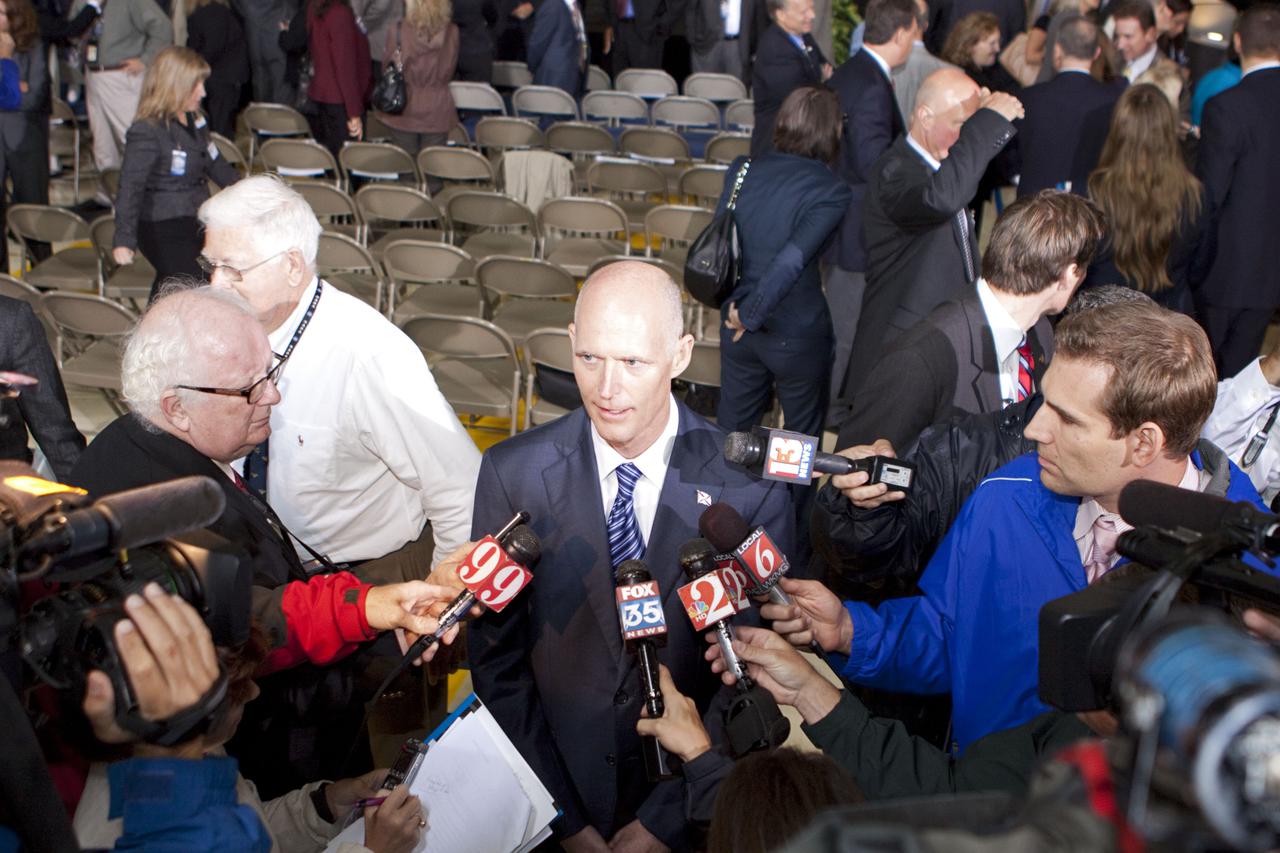
CAPE CANAVERAL, Fla. – In the Orbiter Processing Facility-3 (OPF-3) at NASA’s Kennedy Space Center in Florida, Florida Gov. Rick Scott speaks to the media following the ceremony which announced the signing of an innovative agreement between NASA and Space Florida. NASA announced a partnership with Space Florida to occupy, use and modify Kennedy Space Center's Orbiter Processing Facility-3 (OPF-3), the Space Shuttle Main Engine Processing Facility and Processing Control Center. Space Florida has an agreement for use of the OPF-3 with the Boeing Company to manufacture and test the company's Crew Space Transportation (CST-100) spacecraft. The 15-year use permit deal is the latest step Kennedy is making as the center transitions from a historically government-only launch complex to a multi-user spaceport. For more information, visit http:__www.nasa.gov_exploration_commercial_index.html. Photo credit: NASA_Kim Shiflett
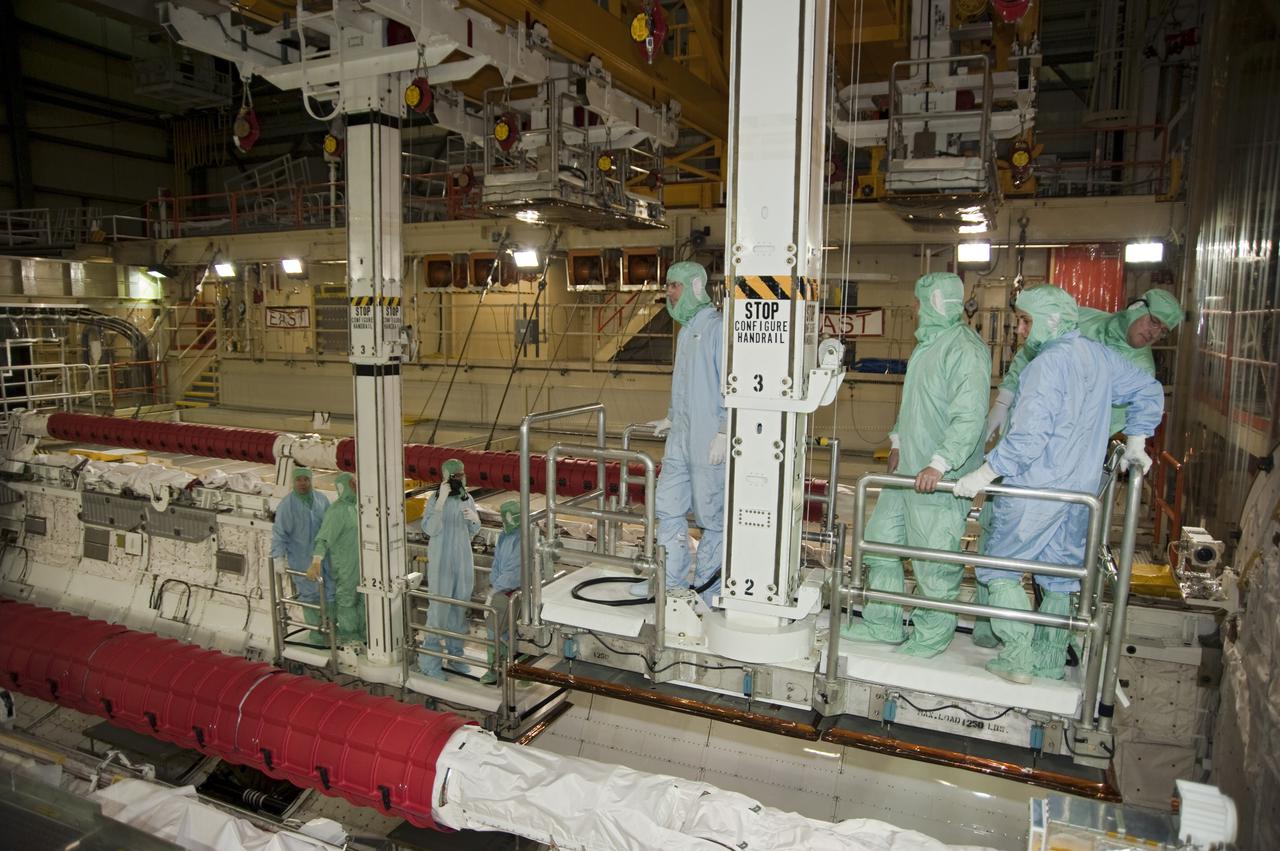
CAPE CANAVERAL, Fla. -- Attired in clean-room gear, known as 'bunny suits,' the STS-133 crew members look into the shuttle's payload bay in Orbiter Processing Facility-3 at NASA's Kennedy Space Center in Florida. The astronauts are at Kennedy for the Crew Equipment Interface Test, or CEIT, which provides the crew with hands-on training and observation of shuttle and flight hardware for their mission to the International Space Station. Launch of the STS-133 mission on space shuttle Discovery is targeted for Nov. 1 at 4:33 p.m. EDT. Photo credit: NASA_Kim Shiflett
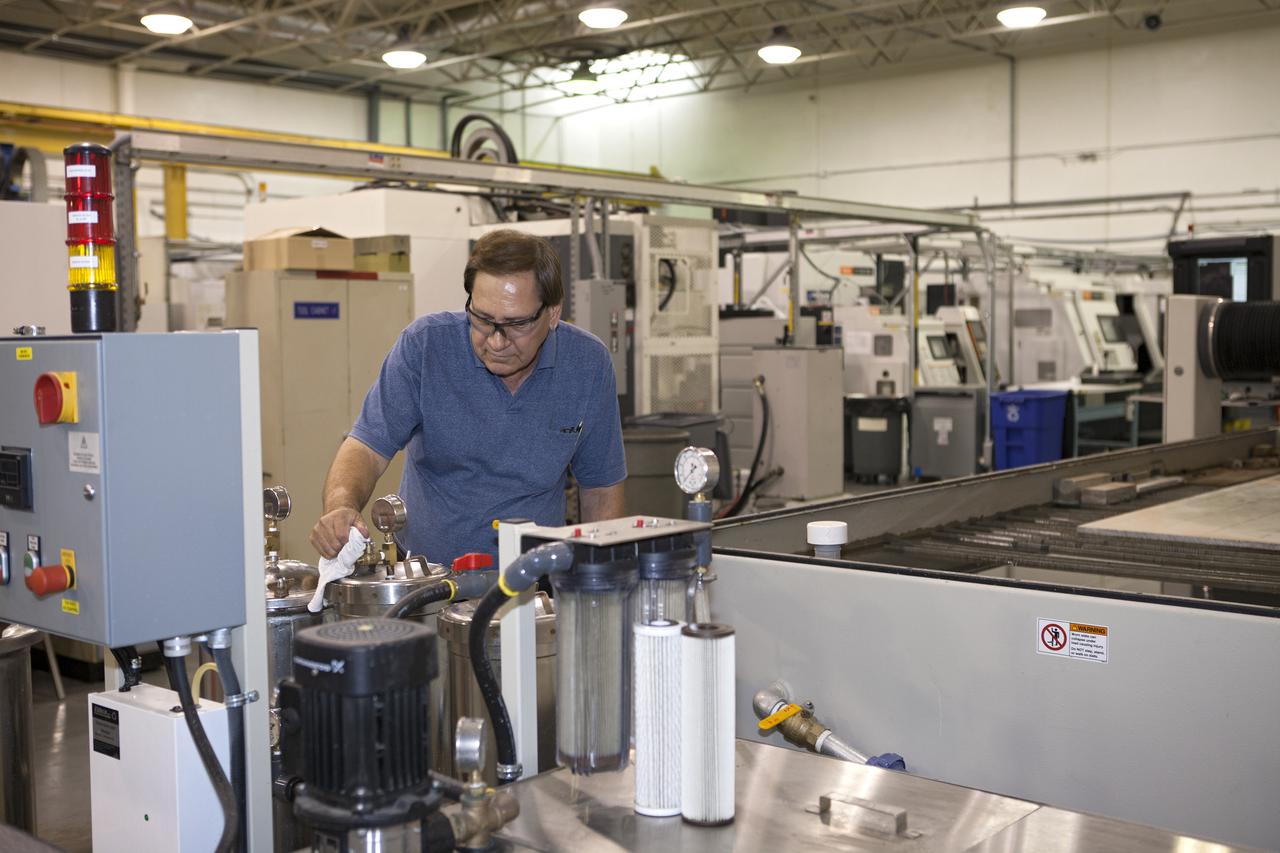
CAPE CANAVERAL, Fla. – At the Aerospace and Defense Manufacturing Center in Cape Canaveral, Fla., Jim England of Craig Technologies Environmental, Health and Safety checks the performance of one of the 1,600 pieces of specialty equipment at the 161,000-square-foot facility. In June of last year, NASA signed a partnership agreement with Craig Technologies to maintain an inventory of unique processing and manufacturing equipment for future mission support at the agency's Kennedy Space Center. The Cape Canaveral, Fla., facility, formerly known as the NASA Shuttle Logistics Depot NSLD, is now the Aerospace and Defense Manufacturing Center ADMC. Photo credit: NASA_Kim Shiflett
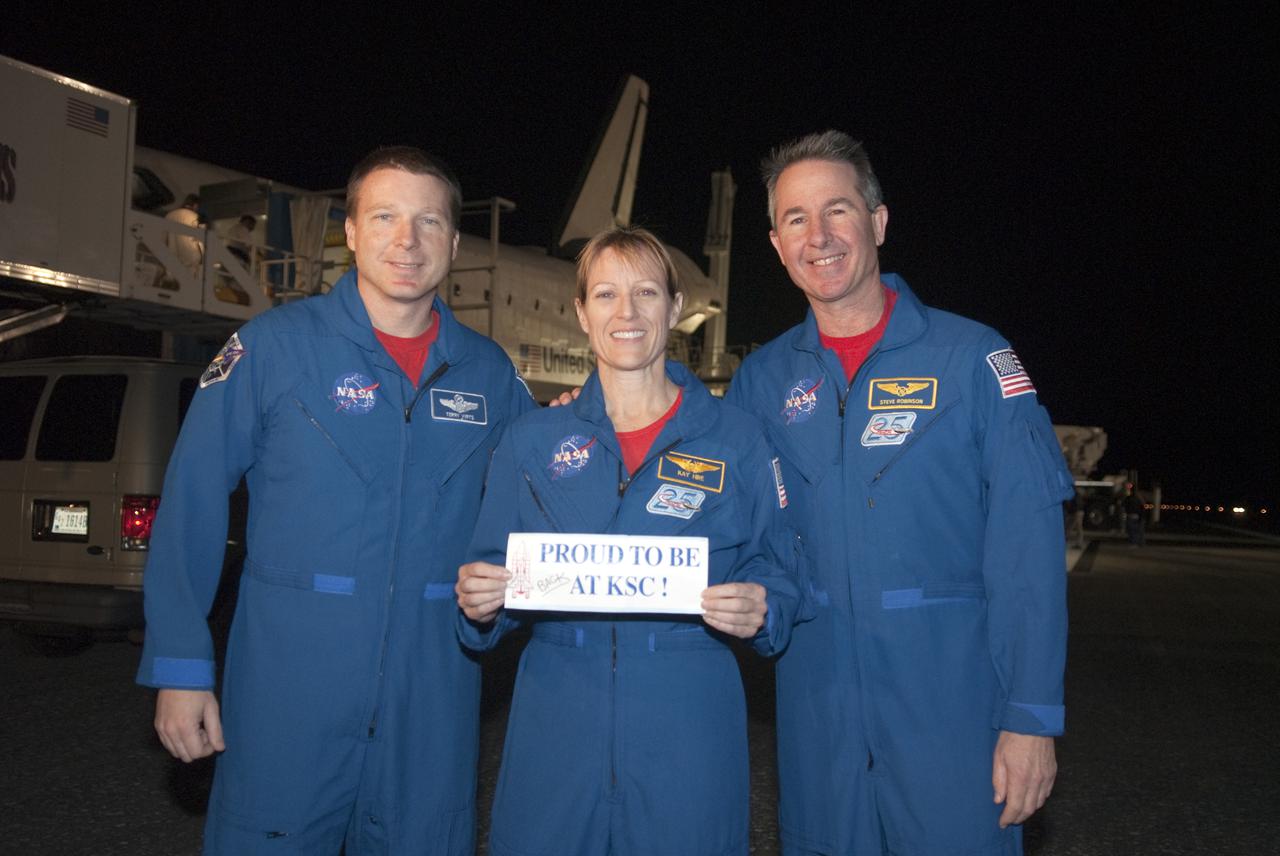
CAPE CANAVERAL, Fla. - STS-130 Mission Specialist Kathryn Hire holds up a sign proclaiming 'Proud to be at KSC_' following space shuttle Endeavour's successful landing on Runway 15 at the Shuttle Landing Facility at NASA's Kennedy Space Center in Florida. From left are Pilot Terry Virts, Hire, and Mission Specialist Stephen Robinson. After 14 days in space, Endeavour's 5.7-million-mile STS-130 mission was completed on orbit 217. Main gear touchdown was at 10:20:31 p.m. EST followed by nose gear touchdown at 10:20:39 p.m. and wheels stop at 10:22:10 p.m. It was the 23rd night landing in shuttle history and the 17th at Kennedy. During Endeavour's STS-130 mission, astronauts installed the Tranquility node, a module that provides additional room for crew members and many of the station's life support and environmental control systems. Attached to Tranquility is a cupola with seven windows that provide a panoramic view of Earth, celestial objects and visiting spacecraft. The module was built in Turin, Italy, by Thales Alenia Space for the European Space Agency. The orbiting laboratory is approximately 90 percent complete now in terms of mass. STS-130 was the 24th flight for Endeavour, the 32nd shuttle mission devoted to ISS assembly and maintenance, and the 130th shuttle mission to date. For information on the STS-130 mission and crew, visit http:__www.nasa.gov_mission_pages_shuttle_shuttlemissions_sts130_index.html. Photo credit: NASA_Kim Shiflett
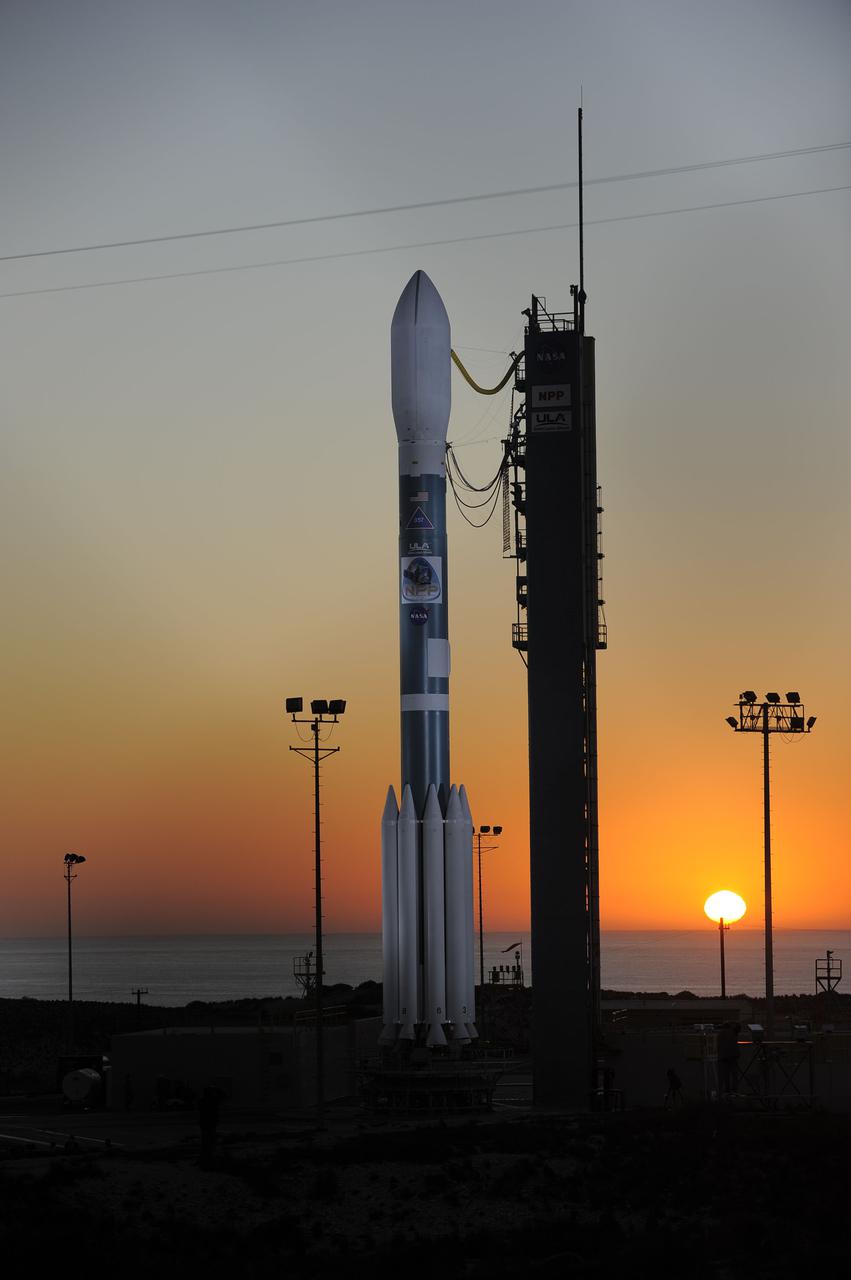
VANDENBERG AIR FORCE BASE, Calif. – At Vandenberg Air Force Base's Space Launch Complex-2 in California, a United Launch Alliance Delta II rocket with the National Polar-orbiting Operational Environmental Satellite System Preparatory Project (NPP) spacecraft aboard stands by itself on the launch pad following rollback of the mobile service tower. NPP represents a critical first step in building the next-generation of Earth-observing satellites. NPP will carry the first of the new sensors developed for this satellite fleet, now known as the Joint Polar Satellite System (JPSS) to be launched in 2016. NPP is the bridge between NASA's Earth Observing System (EOS) satellites and the forthcoming series of JPSS satellites. The mission will test key technologies and instruments for the JPSS missions. For more information, visit http:__www.nasa.gov_NPP. Photo credit: NASA_Kim Shiflett
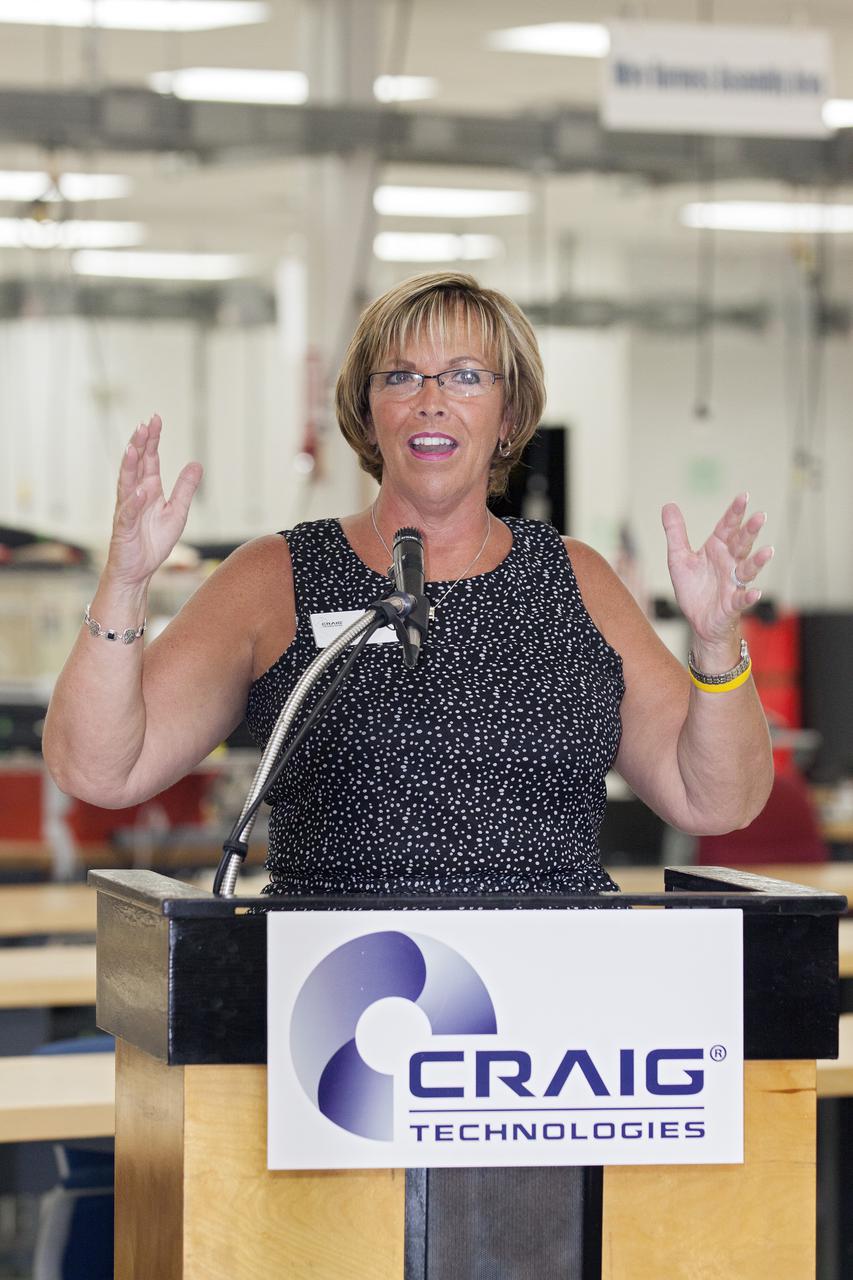
CAPE CANAVERAL, Fla. – At the Aerospace and Defense Manufacturing Center in Cape Canaveral, Fla., Julie Song, regional director of Florida Manufacturing Extension Partnership, speaks to guests during a community open house at the 161,000-square-foot facility now operated by Craig Technologies. In June of last year, NASA signed a partnership agreement with Craig Technologies to maintain an inventory of unique processing and manufacturing equipment for future mission support at the agency's Kennedy Space Center. The Cape Canaveral, Fla., facility, formerly known as the NASA Shuttle Logistics Depot NSLD, is now the Aerospace and Defense Manufacturing Center ADMC. Photo credit: NASA_Kim Shiflett
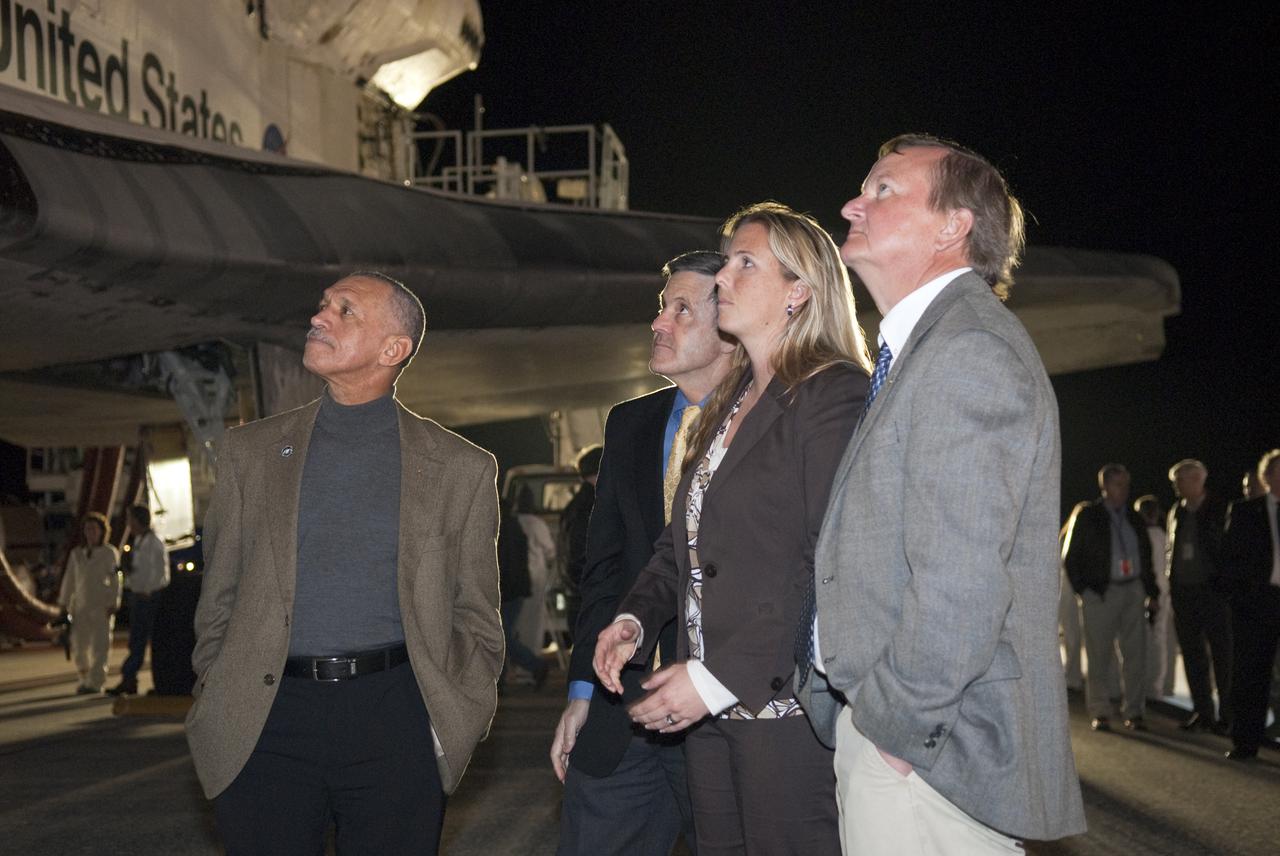
CAPE CANAVERAL, Fla. - From left, NASA Administrator Charles Bolden, Kennedy Space Center Director Bob Cabana, Flow Director for space shuttle Endeavour Dana Hutcherson, and Shuttle Launch Director Mike Leinbach get a close look at Endeavour as they wait to greet the STS-130 crew following Endeavour's successful landing on Runway 15 at the Shuttle Landing Facility at NASA's Kennedy Space Center in Florida. After 14 days in space, Endeavour's 5.7-million-mile STS-130 mission was completed on orbit 217. Main gear touchdown was at 10:20:31 p.m. EST followed by nose gear touchdown at 10:20:39 p.m. and wheels stop at 10:22:10 p.m. It was the 23rd night landing in shuttle history and the 17th at Kennedy. During Endeavour's STS-130 mission, astronauts installed the Tranquility node, a module that provides additional room for crew members and many of the station's life support and environmental control systems. Attached to Tranquility is a cupola with seven windows that provide a panoramic view of Earth, celestial objects and visiting spacecraft. The module was built in Turin, Italy, by Thales Alenia Space for the European Space Agency. The orbiting laboratory is approximately 90 percent complete now in terms of mass. STS-130 was the 24th flight for Endeavour, the 32nd shuttle mission devoted to ISS assembly and maintenance, and the 130th shuttle mission to date. For information on the STS-130 mission and crew, visit http:__www.nasa.gov_mission_pages_shuttle_shuttlemissions_sts130_index.html. Photo credit: NASA_Kim Shiflett
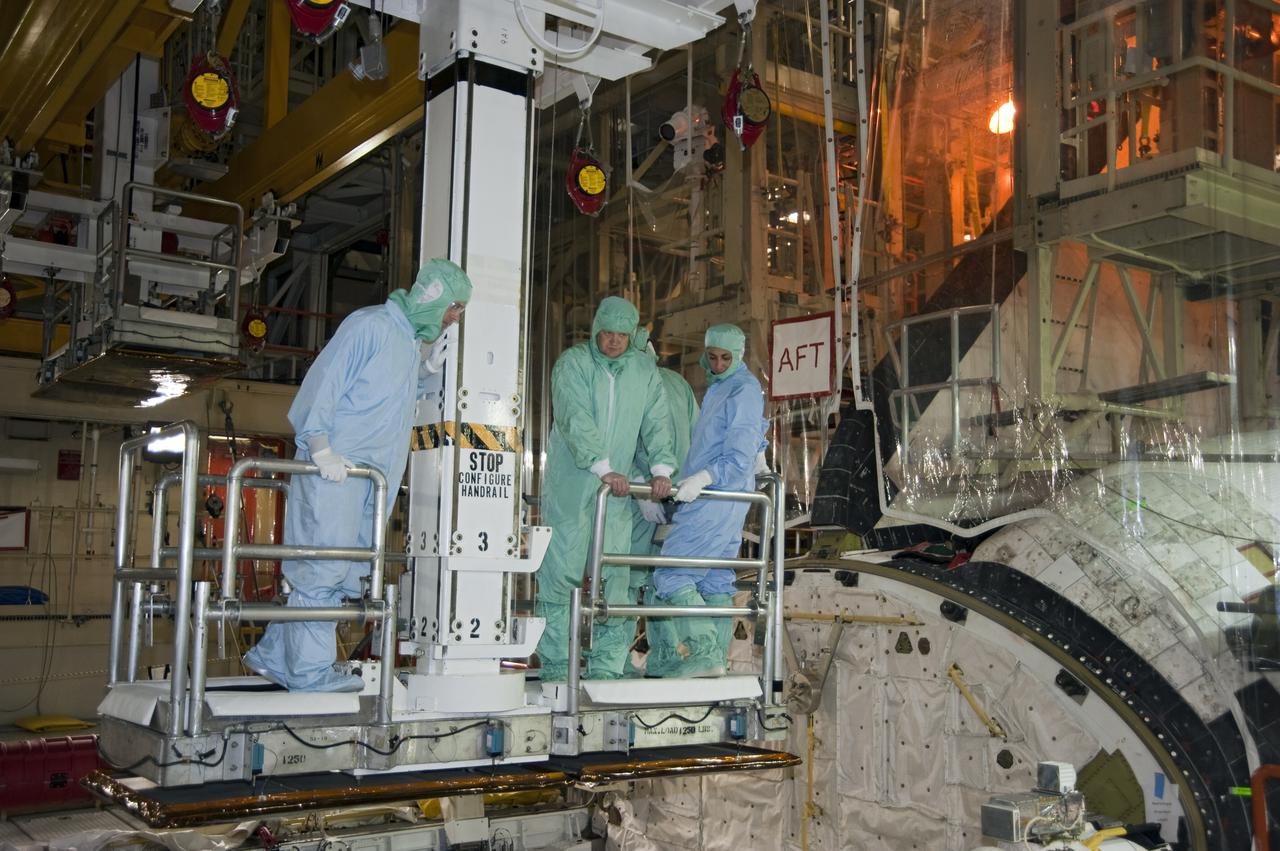
CAPE CANAVERAL, Fla. -- Attired in clean-room gear, known as 'bunny suits,' STS-133 Pilot Eric Boe and Mission Specialist Nicole Stott peer into the shuttle's payload bay under the watchful eye of a technician in Orbiter Processing Facility-3 at NASA's Kennedy Space Center in Florida. The astronauts are at Kennedy for the Crew Equipment Interface Test, or CEIT, which provides the crew with hands-on training and observation of shuttle and flight hardware for their mission to the International Space Station. Launch of the STS-133 mission on space shuttle Discovery is targeted for Nov. 1 at 4:33 p.m. EDT. Photo credit: NASA_Kim Shiflett
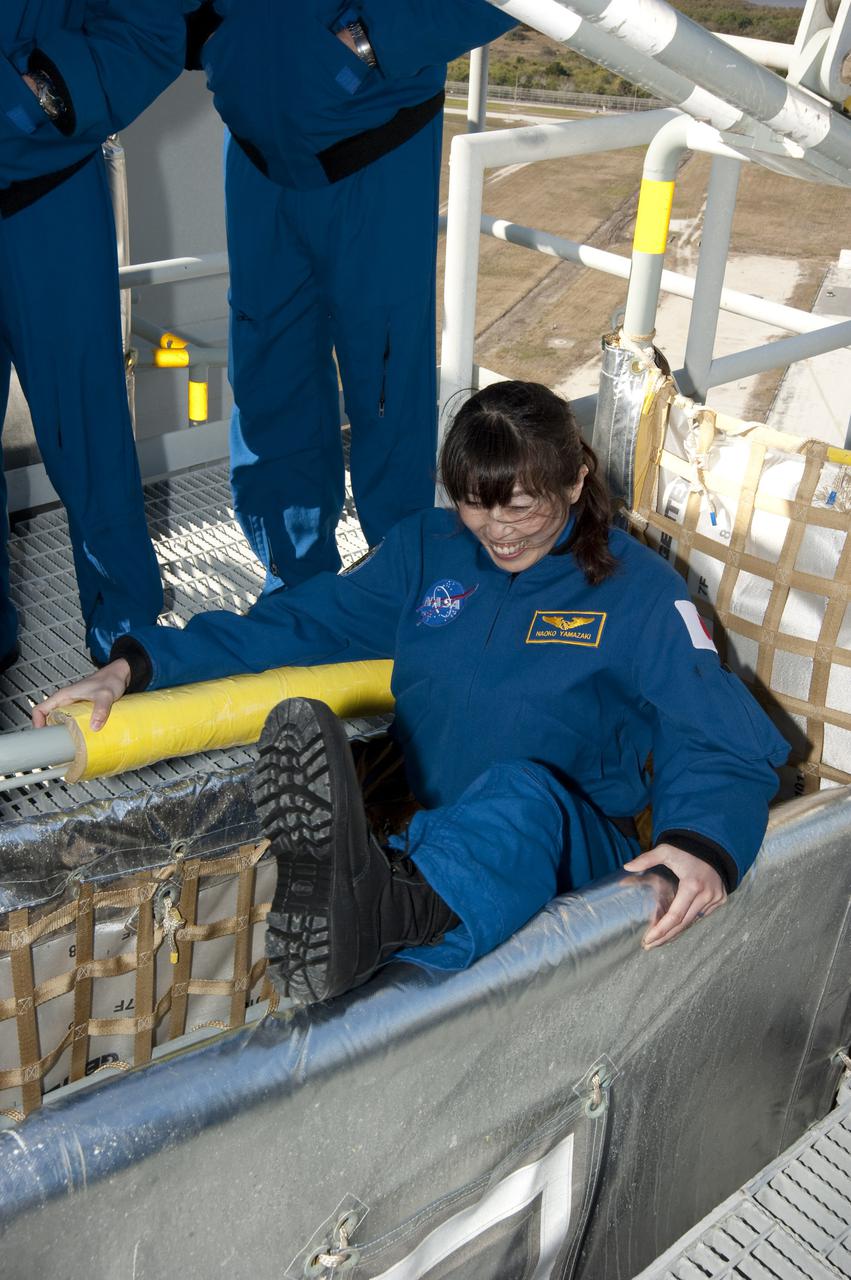
CAPE CANAVERAL, Fla. - On Launch Pad 39A at NASA's Kennedy Space Center in Florida, STS-131 Mission Specialist Naoko Yamazaki of the Japan Aerospace Exploration Agency hops into a slidewire basket during training on the emergency exit system at the pad. The system includes seven baskets suspended from seven slidewires that extend from the fixed service structure to a landing zone 1,200 feet west of the pad. The crew members of space shuttle Discovery's STS-131 mission are at Kennedy for training related to their launch dress rehearsal, the Terminal Countdown Demonstration Test. The seven-member crew will deliver the multi-purpose logistics module Leonardo, filled with resupply stowage platforms and racks, to the International Space Station aboard Discovery. Targeted for launch on April 5, STS-131 will be the 33rd shuttle mission to the station and the 131st shuttle mission overall. For information on the STS-131 mission and crew, visit http:__www.nasa.gov_mission_pages_shuttle_shuttlemissions_sts131_index.html. Photo credit: NASA_Kim Shiflett
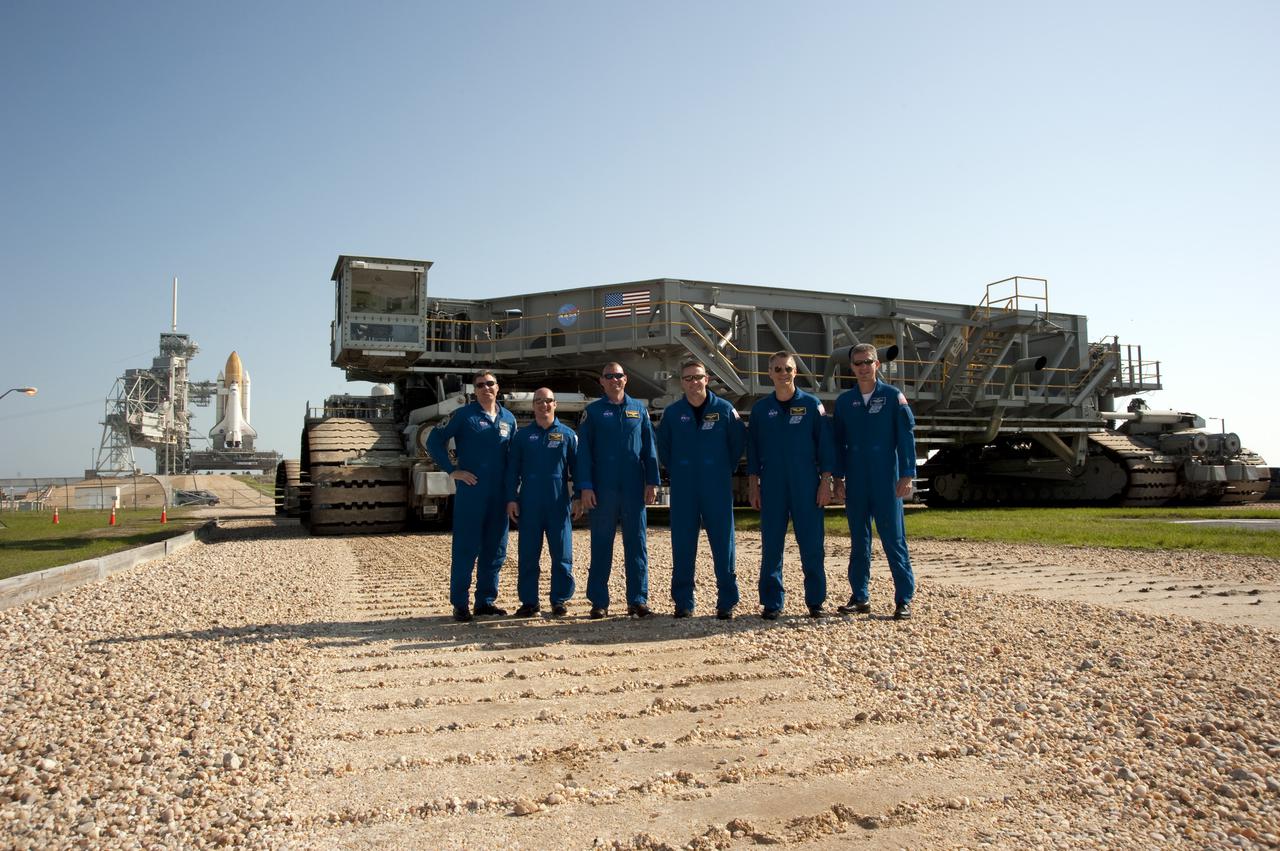
CAPE CANAVERAL, Fla. - At Launch Pad 39A at NASA's Kennedy Space Center in Florida, the STS-132 crew poses for a group portrait in front of the crawler-transporter that delivered space shuttle Atlantis to the pad earlier in the morning. From left are Mission Specialists Steve Bowen and Garrett Reisman; Pilot Tony Antonelli; Commander Ken Ham; and Mission Specialists Piers Sellers and Michael Good. The crew is at Kennedy for their Terminal Countdown Demonstration Test, or TCDT, a dress rehearsal for launch. TCDT provides each shuttle crew and launch team the opportunity to participate in various simulated countdown activities, including equipment familiarization and emergency training. On the STS-132 mission, the six-member crew will deliver an Integrated Cargo Carrier, or ICC, and the Russian-built Mini-Research Module-1, or MRM-1, to the International Space Station aboard space shuttle Atlantis. The ICC is an unpressurized flat bed pallet and keel yoke assembly used to support the transfer of exterior cargo from the shuttle to the space station. The MRM-1, known as Rassvet, is the second in a series of new pressurized components for Russia and will be permanently attached to the Earth-facing port of the Zarya control module. Rassvet, which translates to 'dawn,' will be used for cargo storage and will provide an additional docking port to the station. STS-132 is the 34th mission to the station and the 132nd shuttle mission overall. Atlantis is targeted to launch on May 14 at 2:19 p.m. For information on the STS-132 mission, visit http:__www.nasa.gov_mission_pages_shuttle_shuttlemissions_sts132_index.html. Photo credit: NASA_Kim Shiflett