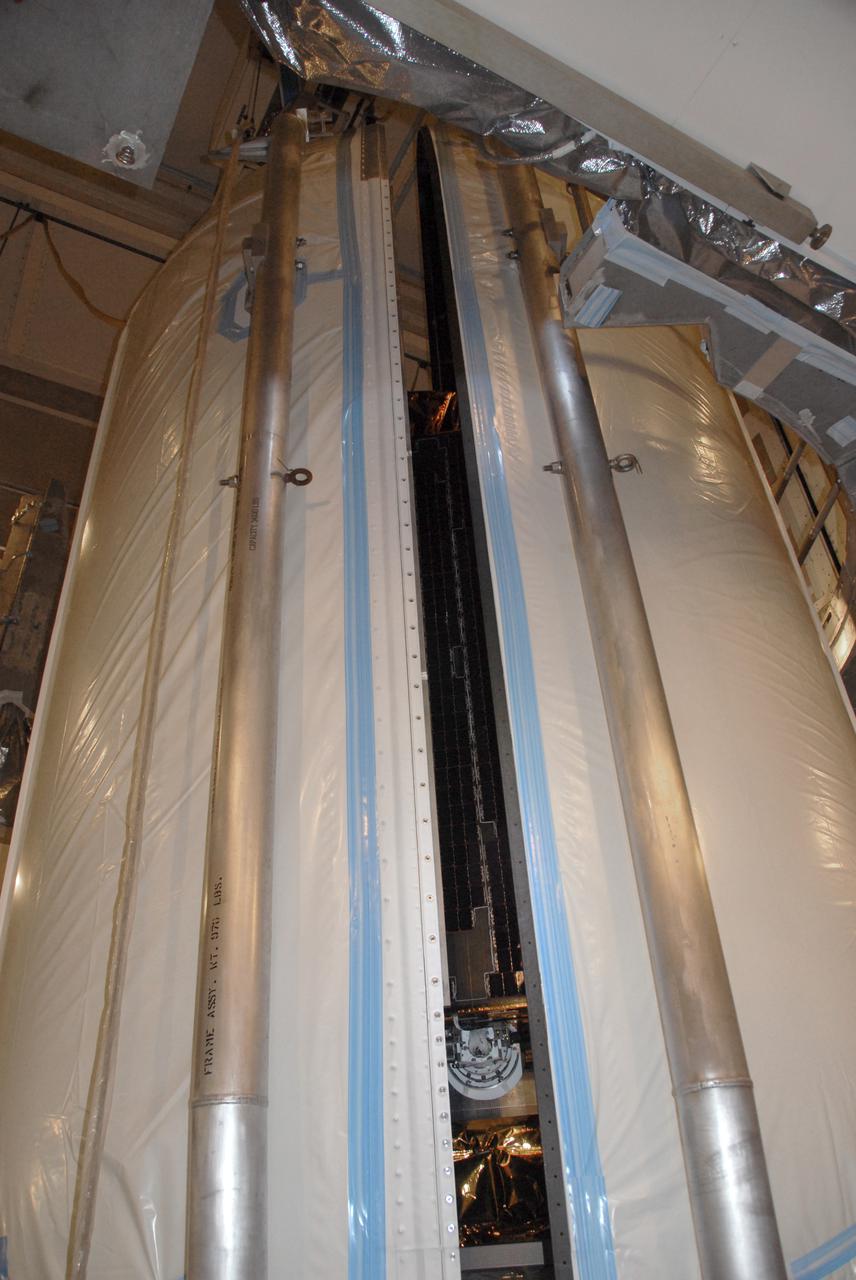
VANDENBERG AIR FORCE BASE, Calif. – At Vandenberg Air Force Base's Space Launch Complex-2 in California, encapsulation of NASA’s National Polar-orbiting Operational Environmental Satellite System Preparatory Project (NPP) spacecraft into the clamshell-shaped Delta payload fairing is almost complete. The fairing will protect the spacecraft from the impact of aerodynamic pressure and heating during ascent and will be jettisoned once the spacecraft is outside the Earth's atmosphere. NPP represents a critical first step in building the next-generation of Earth-observing satellites. NPP will carry the first of the new sensors developed for this satellite fleet, now known as the Joint Polar Satellite System (JPSS) to be launched in 2016. NPP is the bridge between NASA's Earth Observing System (EOS) satellites and the forthcoming series of JPSS satellites. The mission will test key technologies and instruments for the JPSS missions. NPP is targeted to launch Oct. 28 from Space Launch Complex-2 aboard a United Launch Alliance Delta II rocket. For more information, visit http:__www.nasa.gov_NPP. Photo credit: NASA_Mark P. Mackley, VAFB
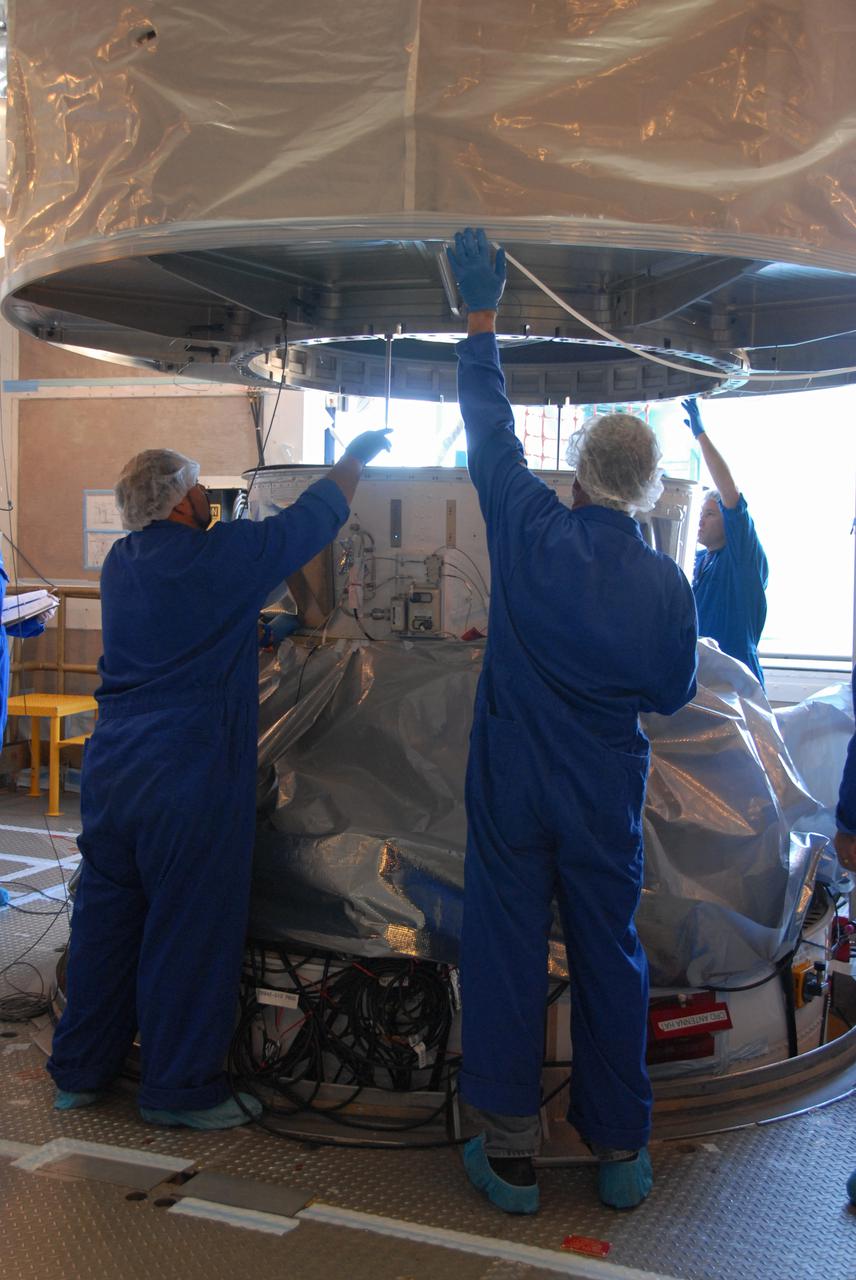
Workers atop Vandenberg Air Force Base's Space Launch Complex-2 prepare to secure the payload transportation canister containing NASA’s National Polar-orbiting Operational Environmental Satellite System Preparatory Project (NPP) spacecraft. NPP represents a critical first step in building the next-generation of Earth-observing satellites. NPP will carry the first of the new sensors developed for this satellite fleet, now known as the Joint Polar Satellite System (JPSS), to be launched in 2016. NPP is the bridge between NASA's Earth Observing System (EOS) satellites and the forthcoming series of JPSS satellites. The mission will test key technologies and instruments for the JPSS missions. NPP is targeted to launch Oct. 28 from Space Launch Complex-2 aboard a United Launch Alliance Delta II rocket. For more information, visit http:__www.nasa.gov_NPP. Photo credit: NASA_Mark P. Mackley, VAFB
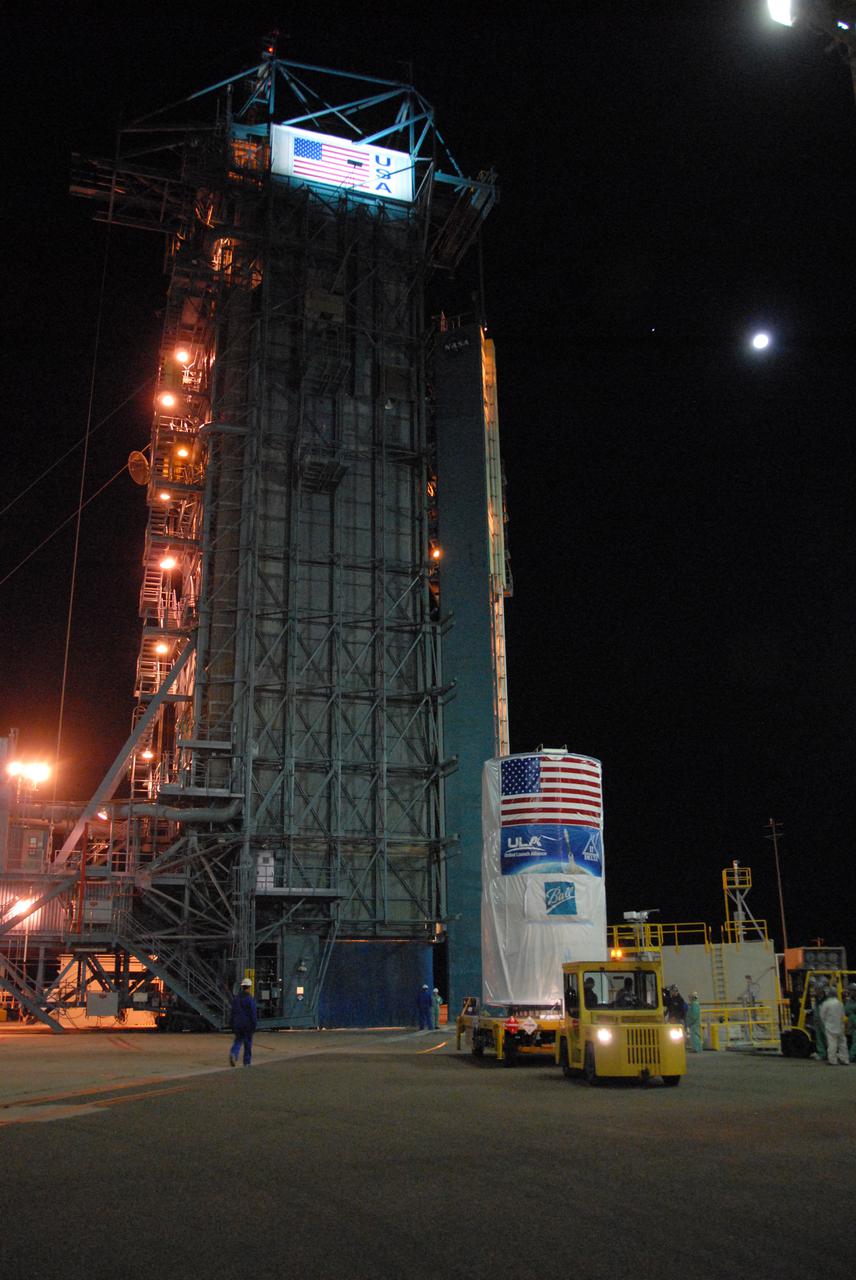
Tucked inside a protective payload transportation canister, NASA’s National Polar-orbiting Operational Environmental Satellite System Preparatory Project (NPP) spacecraft arrives at Vandenberg Air Force Base's Space Launch Complex-2. NPP represents a critical first step in building the next-generation of Earth-observing satellites. NPP will carry the first of the new sensors developed for this satellite fleet, now known as the Joint Polar Satellite System (JPSS), to be launched in 2016. NPP is the bridge between NASA's Earth Observing System (EOS) satellites and the forthcoming series of JPSS satellites. The mission will test key technologies and instruments for the JPSS missions. NPP is targeted to launch Oct. 28 from Space Launch Complex-2 aboard a United Launch Alliance Delta II rocket. For more information, visit http:__www.nasa.gov_NPP. Photo credit: NASA_Mark P. Mackley, VAFB
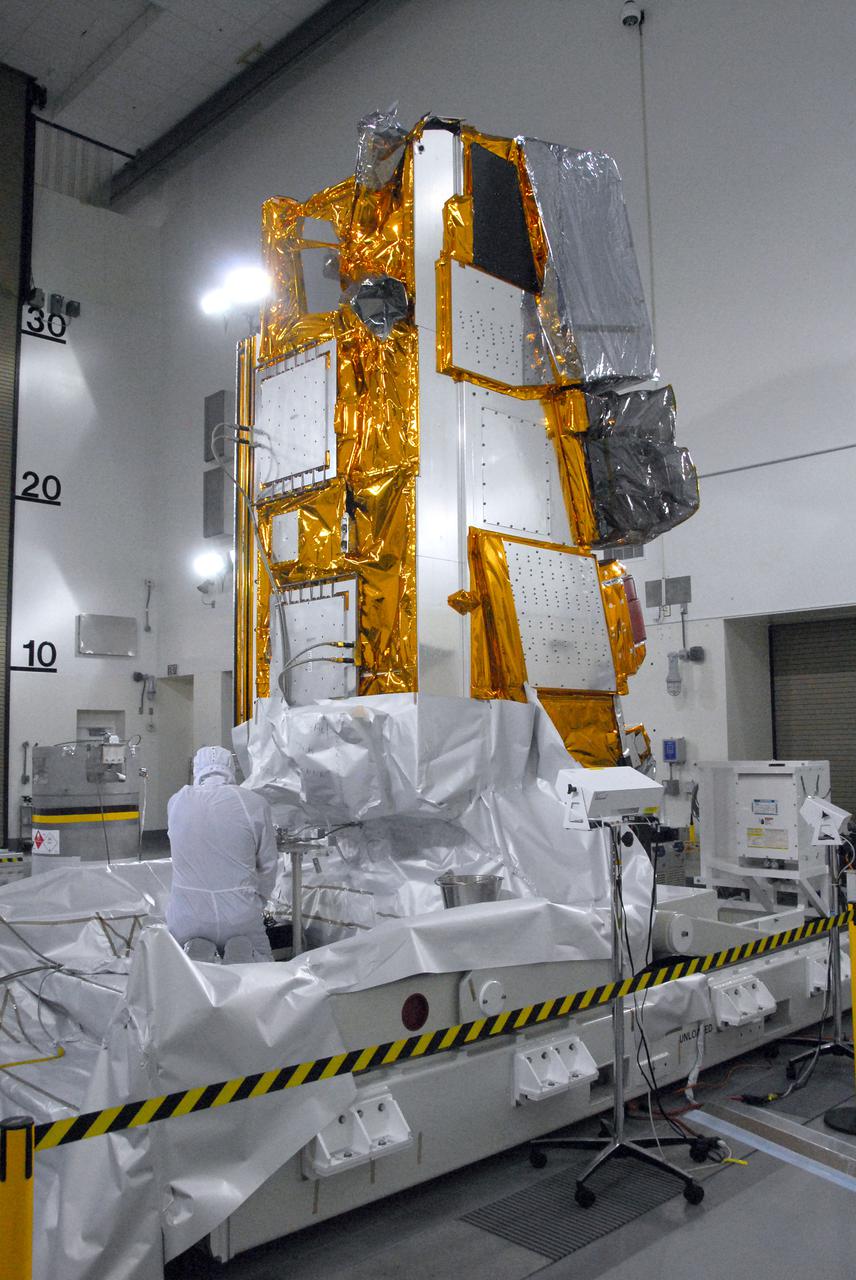
In a clean room inside the Astrotech Payload Processing Facility at Vandenberg Air Force Base in California, a Ball Aerospace technician prepares NASA’s National Polar-orbiting Operational Environmental Satellite System Preparatory Project (NPP) spacecraft for propellant loading. NPP represents a critical first step in building the next-generation of Earth-observing satellites. NPP will carry the first of the new sensors developed for this satellite fleet, now known as the Joint Polar Satellite System (JPSS), to be launched in 2016. NPP is the bridge between NASA's Earth Observing System (EOS) satellites and the forthcoming series of JPSS satellites. The mission will test key technologies and instruments for the JPSS missions. NPP is targeted to launch Oct. 28 from Space Launch Complex-2 aboard a United Launch Alliance Delta II rocket. For more information, visit http:__www.nasa.gov_NPP. Photo credit: NASA_Mark Mackley, VAFB
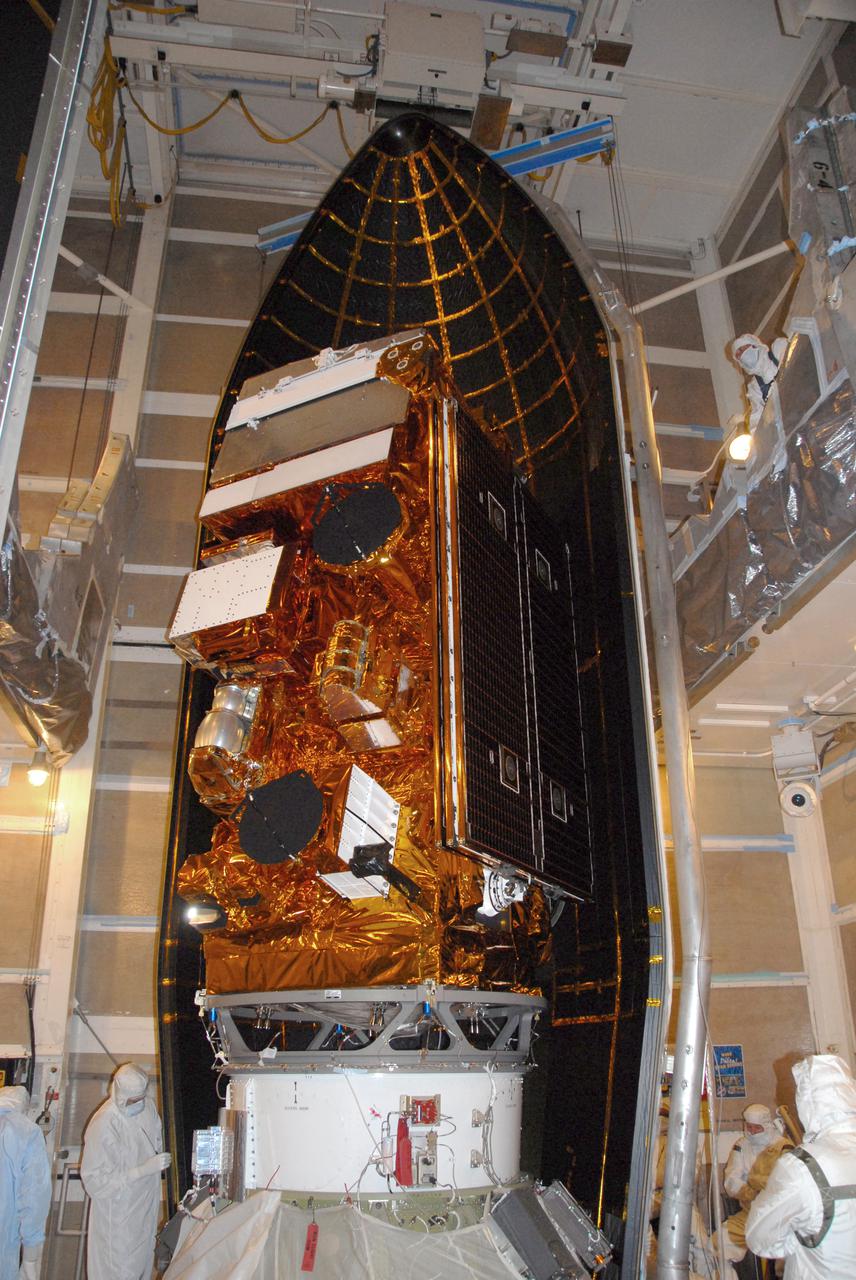
VANDENBERG AIR FORCE BASE, Calif. – At Vandenberg Air Force Base's Space Launch Complex-2 in California, technicians monitor the movement of a section of the clamshell-shaped Delta payload fairing as it encloses NASA’s National Polar-orbiting Operational Environmental Satellite System Preparatory Project (NPP) spacecraft. The fairing will protect the spacecraft from the impact of aerodynamic pressure and heating during ascent and will be jettisoned once the spacecraft is outside the Earth's atmosphere. NPP represents a critical first step in building the next-generation of Earth-observing satellites. NPP will carry the first of the new sensors developed for this satellite fleet, now known as the Joint Polar Satellite System (JPSS) to be launched in 2016. NPP is the bridge between NASA's Earth Observing System (EOS) satellites and the forthcoming series of JPSS satellites. The mission will test key technologies and instruments for the JPSS missions. NPP is targeted to launch Oct. 28 from Space Launch Complex-2 aboard a United Launch Alliance Delta II rocket. For more information, visit http:__www.nasa.gov_NPP. Photo credit: NASA_Mark P. Mackley, VAFB
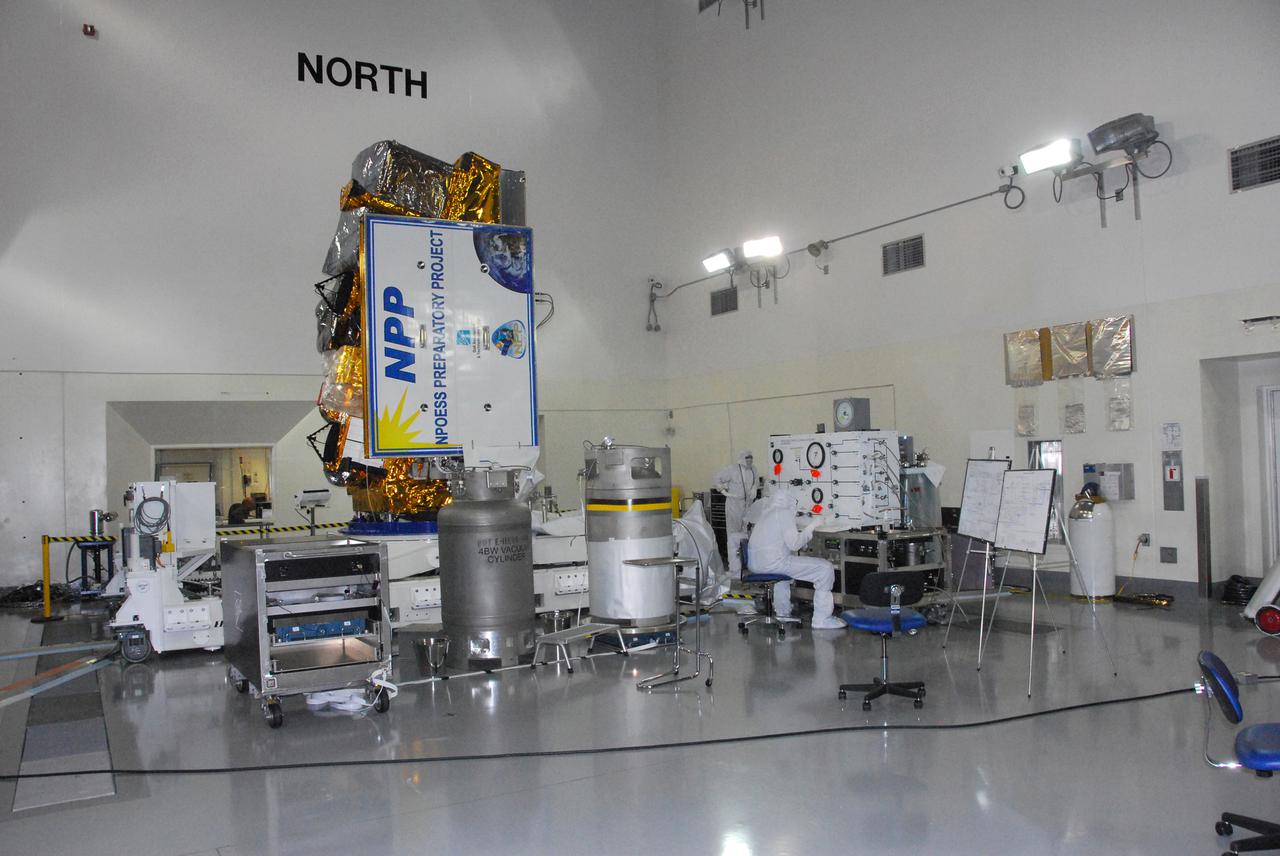
In a clean room inside the Astrotech Payload Processing Facility at Vandenberg Air Force Base in California, a Ball Aerospace technician prepares NASA’s National Polar-orbiting Operational Environmental Satellite System Preparatory Project (NPP) spacecraft for propellant loading. NPP represents a critical first step in building the next-generation of Earth-observing satellites. NPP will carry the first of the new sensors developed for this satellite fleet, now known as the Joint Polar Satellite System (JPSS), to be launched in 2016. NPP is the bridge between NASA's Earth Observing System (EOS) satellites and the forthcoming series of JPSS satellites. The mission will test key technologies and instruments for the JPSS missions. NPP is targeted to launch Oct. 28 from Space Launch Complex-2 aboard a United Launch Alliance Delta II rocket. For more information, visit http:__www.nasa.gov_NPP. Photo credit: NASA_Mark Mackley, VAFB
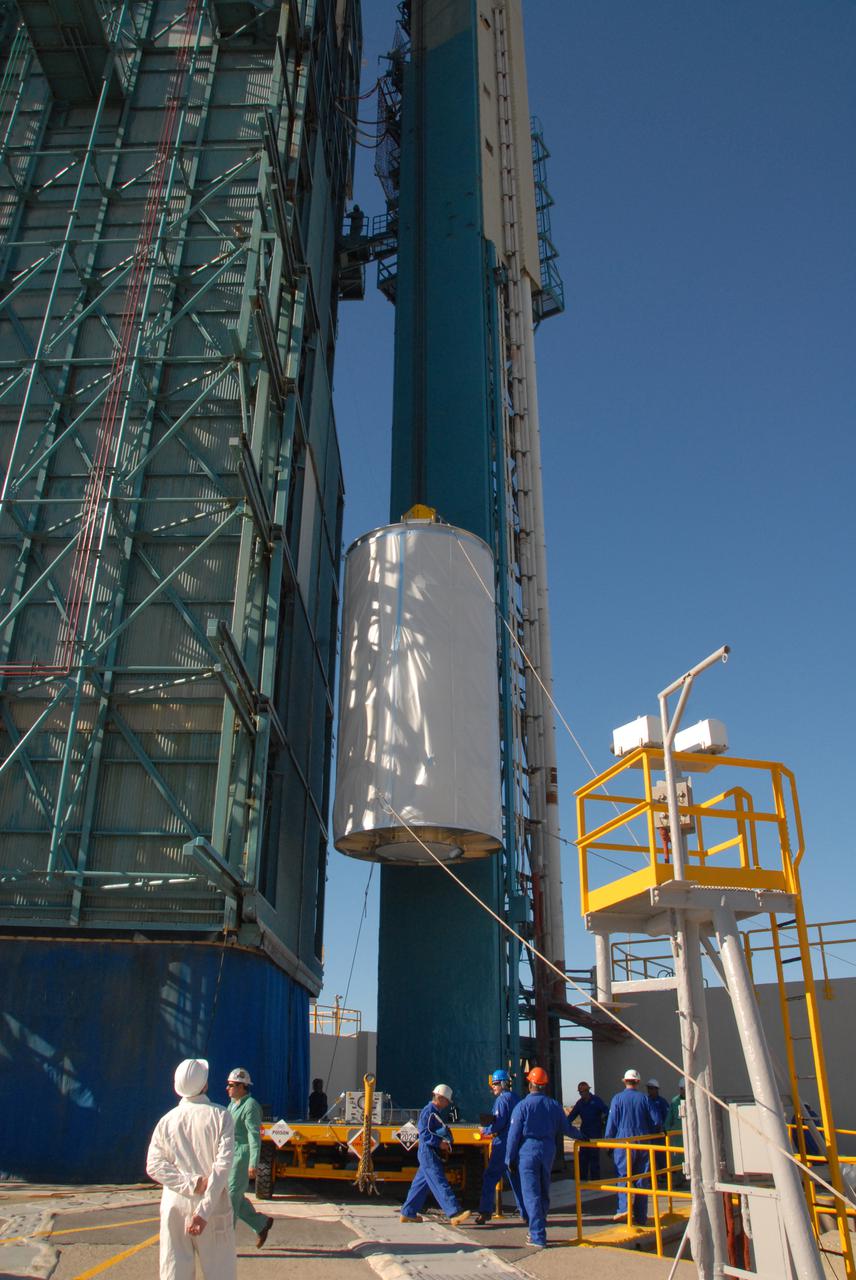
Workers at Vandenberg Air Force Base's Space Launch Complex-2 prepare to hoist NASA’s National Polar-orbiting Operational Environmental Satellite System Preparatory Project (NPP) spacecraft, which is tucked inside a protective payload transportation canister. NPP represents a critical first step in building the next-generation of Earth-observing satellites. NPP will carry the first of the new sensors developed for this satellite fleet, now known as the Joint Polar Satellite System (JPSS), to be launched in 2016. NPP is the bridge between NASA's Earth Observing System (EOS) satellites and the forthcoming series of JPSS satellites. The mission will test key technologies and instruments for the JPSS missions. NPP is targeted to launch Oct. 28 from Space Launch Complex-2 aboard a United Launch Alliance Delta II rocket. For more information, visit http:__www.nasa.gov_NPP. Photo credit: NASA_Mark P. Mackley, VAFB
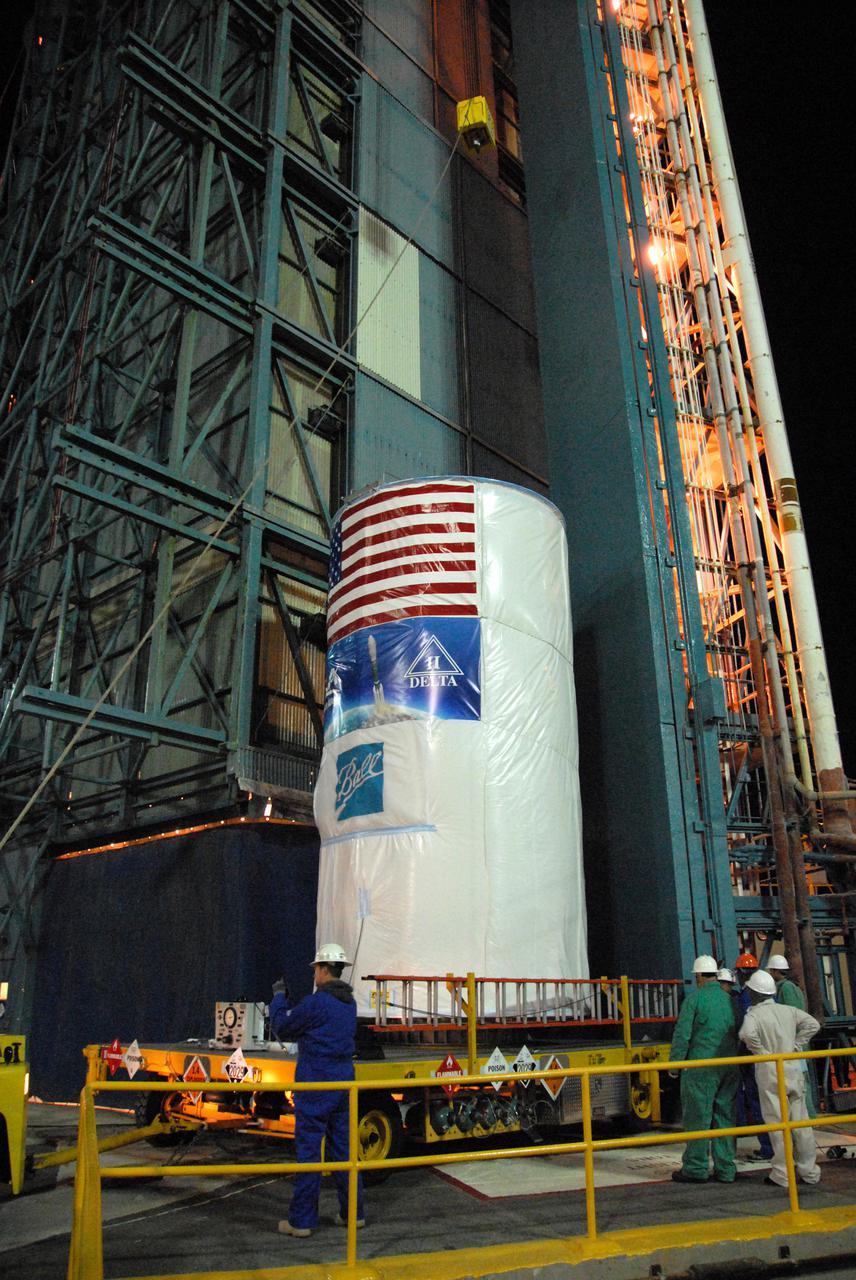
Workers at Vandenberg Air Force Base's Space Launch Complex-2 prepare to hoist NASA’s National Polar-orbiting Operational Environmental Satellite System Preparatory Project (NPP) spacecraft, which is tucked inside a protective payload transportation canister. NPP represents a critical first step in building the next-generation of Earth-observing satellites. NPP will carry the first of the new sensors developed for this satellite fleet, now known as the Joint Polar Satellite System (JPSS), to be launched in 2016. NPP is the bridge between NASA's Earth Observing System (EOS) satellites and the forthcoming series of JPSS satellites. The mission will test key technologies and instruments for the JPSS missions. NPP is targeted to launch Oct. 28 from Space Launch Complex-2 aboard a United Launch Alliance Delta II rocket. For more information, visit http:__www.nasa.gov_NPP. Photo credit: NASA_Mark P. Mackley, VAFB
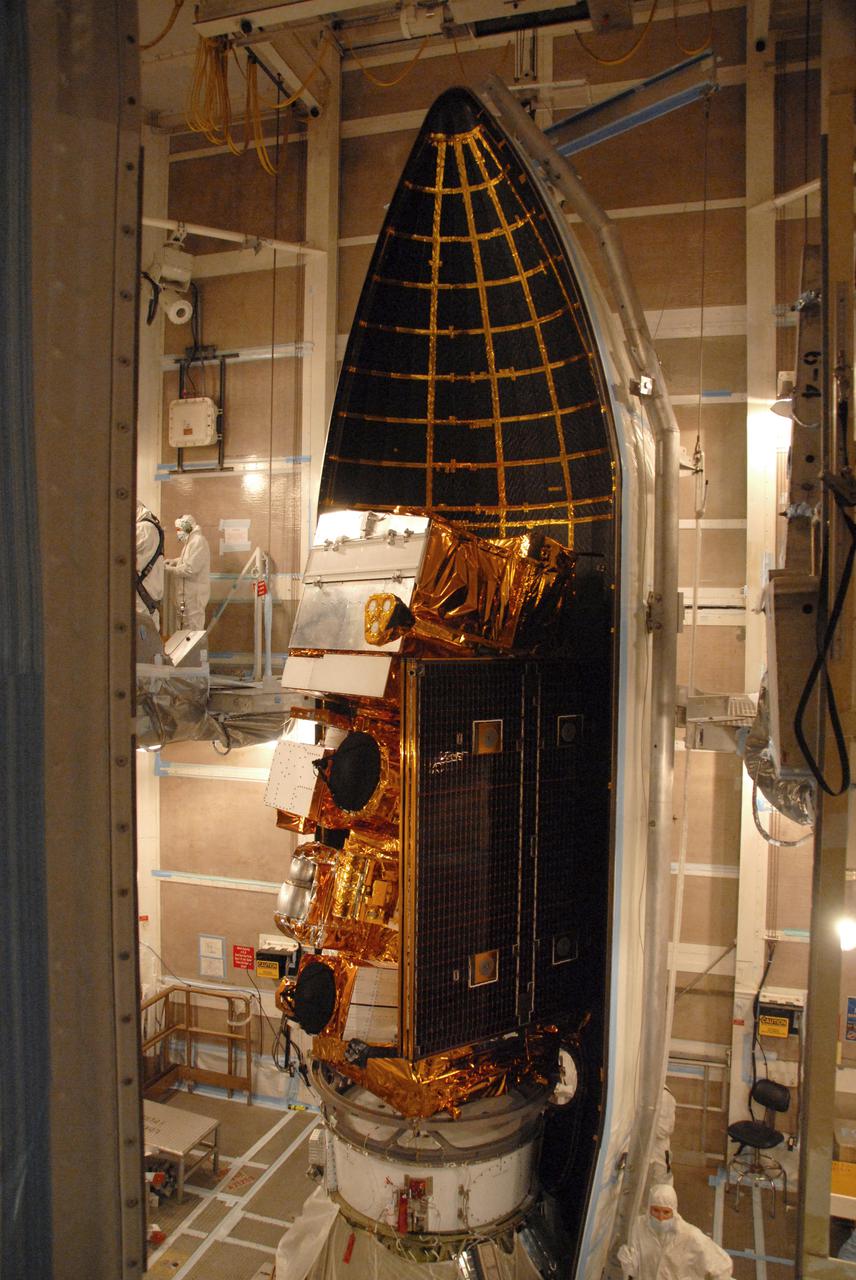
VANDENBERG AIR FORCE BASE, Calif. – At Vandenberg Air Force Base's Space Launch Complex-2 in California, technicians monitor the movement of a section of the clamshell-shaped Delta payload fairing as it encloses NASA’s National Polar-orbiting Operational Environmental Satellite System Preparatory Project (NPP) spacecraft. The fairing will protect the spacecraft from the impact of aerodynamic pressure and heating during ascent and will be jettisoned once the spacecraft is outside the Earth's atmosphere. NPP represents a critical first step in building the next-generation of Earth-observing satellites. NPP will carry the first of the new sensors developed for this satellite fleet, now known as the Joint Polar Satellite System (JPSS) to be launched in 2016. NPP is the bridge between NASA's Earth Observing System (EOS) satellites and the forthcoming series of JPSS satellites. The mission will test key technologies and instruments for the JPSS missions. NPP is targeted to launch Oct. 28 from Space Launch Complex-2 aboard a United Launch Alliance Delta II rocket. For more information, visit http:__www.nasa.gov_NPP. Photo credit: NASA_Mark P. Mackley, VAFB
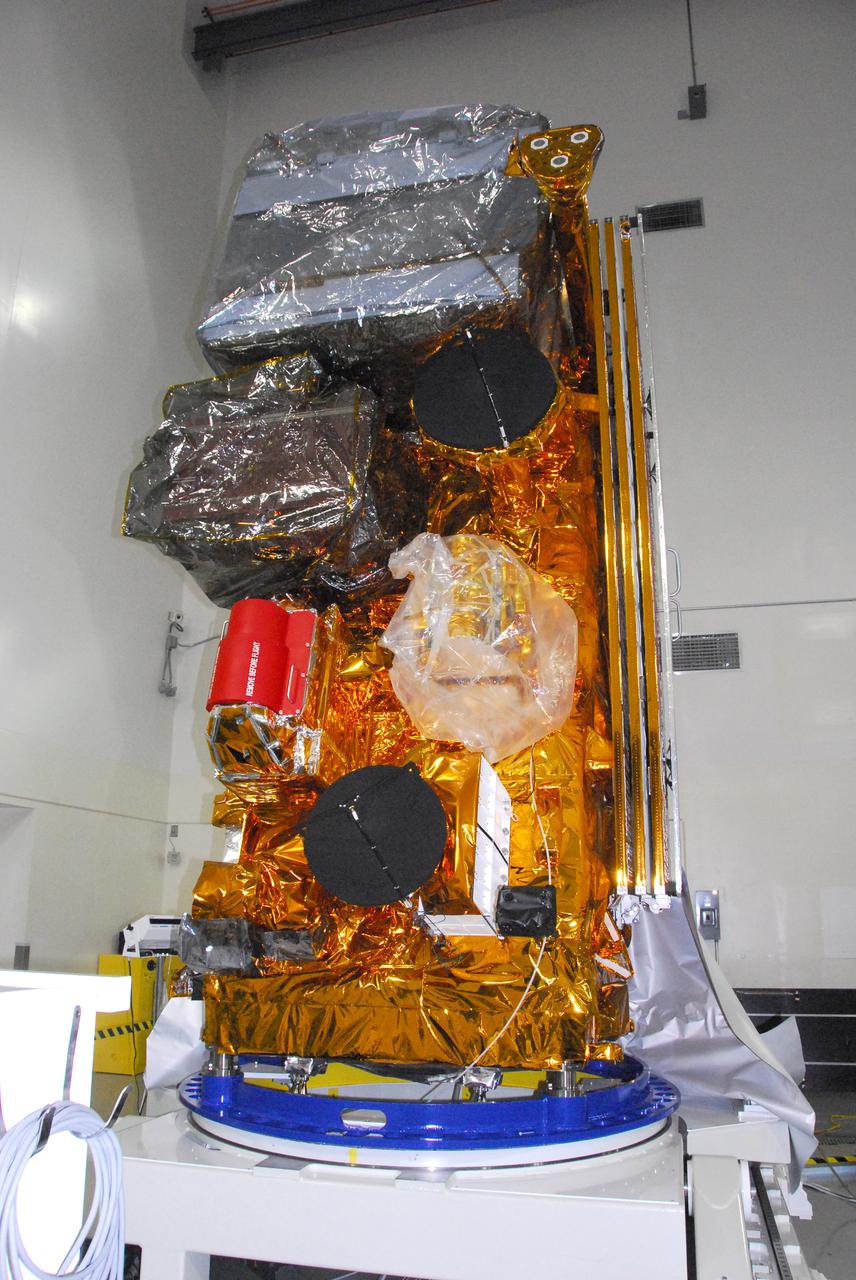
In a clean room inside the Astrotech Payload Processing Facility at Vandenberg Air Force Base in California, NASA’s National Polar-orbiting Operational Environmental Satellite System Preparatory Project (NPP) spacecraft is prepared for propellant loading. NPP represents a critical first step in building the next-generation of Earth-observing satellites. NPP will carry the first of the new sensors developed for this satellite fleet, now known as the Joint Polar Satellite System (JPSS), to be launched in 2016. NPP is the bridge between NASA's Earth Observing System (EOS) satellites and the forthcoming series of JPSS satellites. The mission will test key technologies and instruments for the JPSS missions. NPP is targeted to launch Oct. 28 from Space Launch Complex-2 aboard a United Launch Alliance Delta II rocket. For more information, visit http:__www.nasa.gov_NPP. Photo credit: NASA_Mark Mackley, VAFB
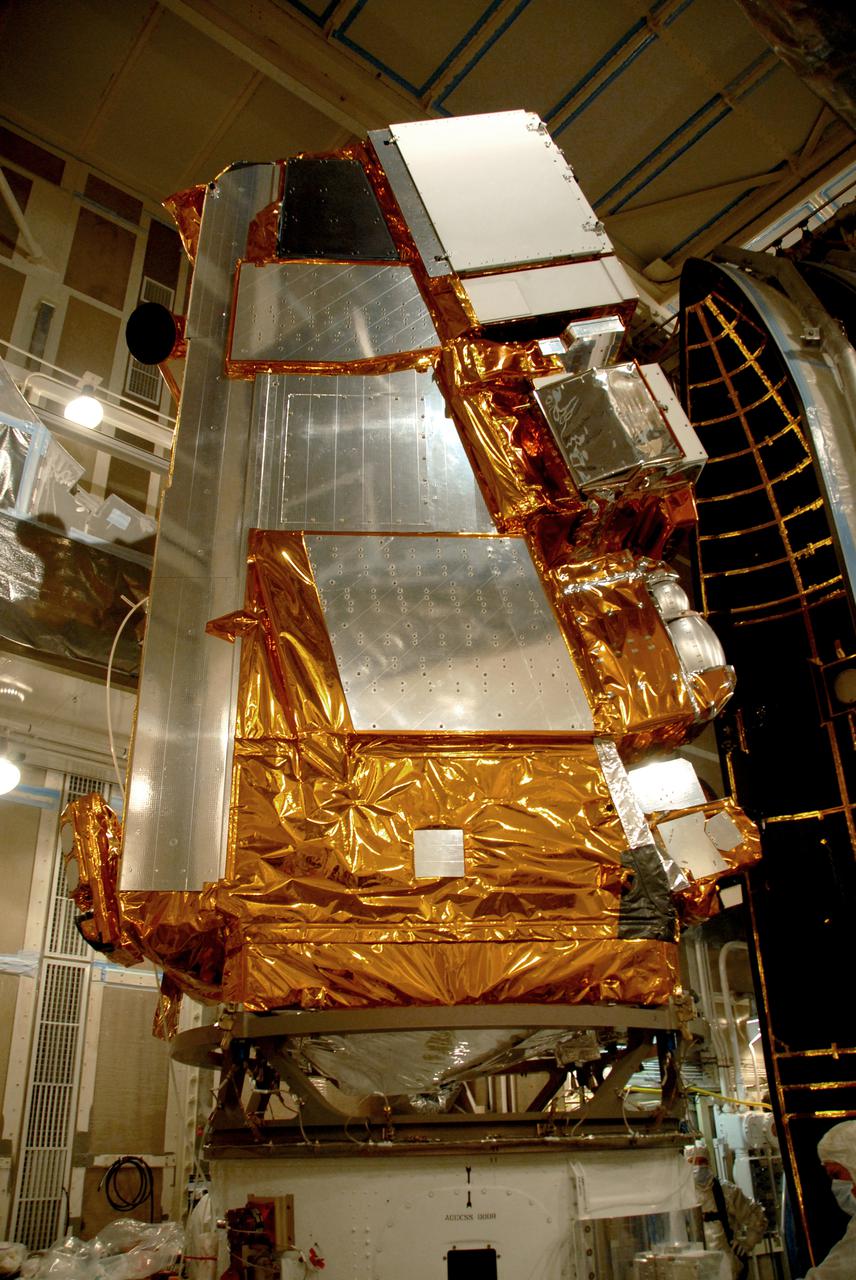
VANDENBERG AIR FORCE BASE, Calif. – At Vandenberg Air Force Base's Space Launch Complex-2 in California, preparations are under way to enclose NASA’s National Polar-orbiting Operational Environmental Satellite System Preparatory Project (NPP) spacecraft into clamshell-shaped the Delta payload fairing. The fairing will protect the spacecraft from the impact of aerodynamic pressure and heating during ascent and will be jettisoned once the spacecraft is outside the Earth's atmosphere. NPP represents a critical first step in building the next-generation of Earth-observing satellites. NPP will carry the first of the new sensors developed for this satellite fleet, now known as the Joint Polar Satellite System (JPSS) to be launched in 2016. NPP is the bridge between NASA's Earth Observing System (EOS) satellites and the forthcoming series of JPSS satellites. The mission will test key technologies and instruments for the JPSS missions. NPP is targeted to launch Oct. 28 from Space Launch Complex-2 aboard a United Launch Alliance Delta II rocket. For more information, visit http:__www.nasa.gov_NPP. Photo credit: NASA_Mark P. Mackley, VAFB
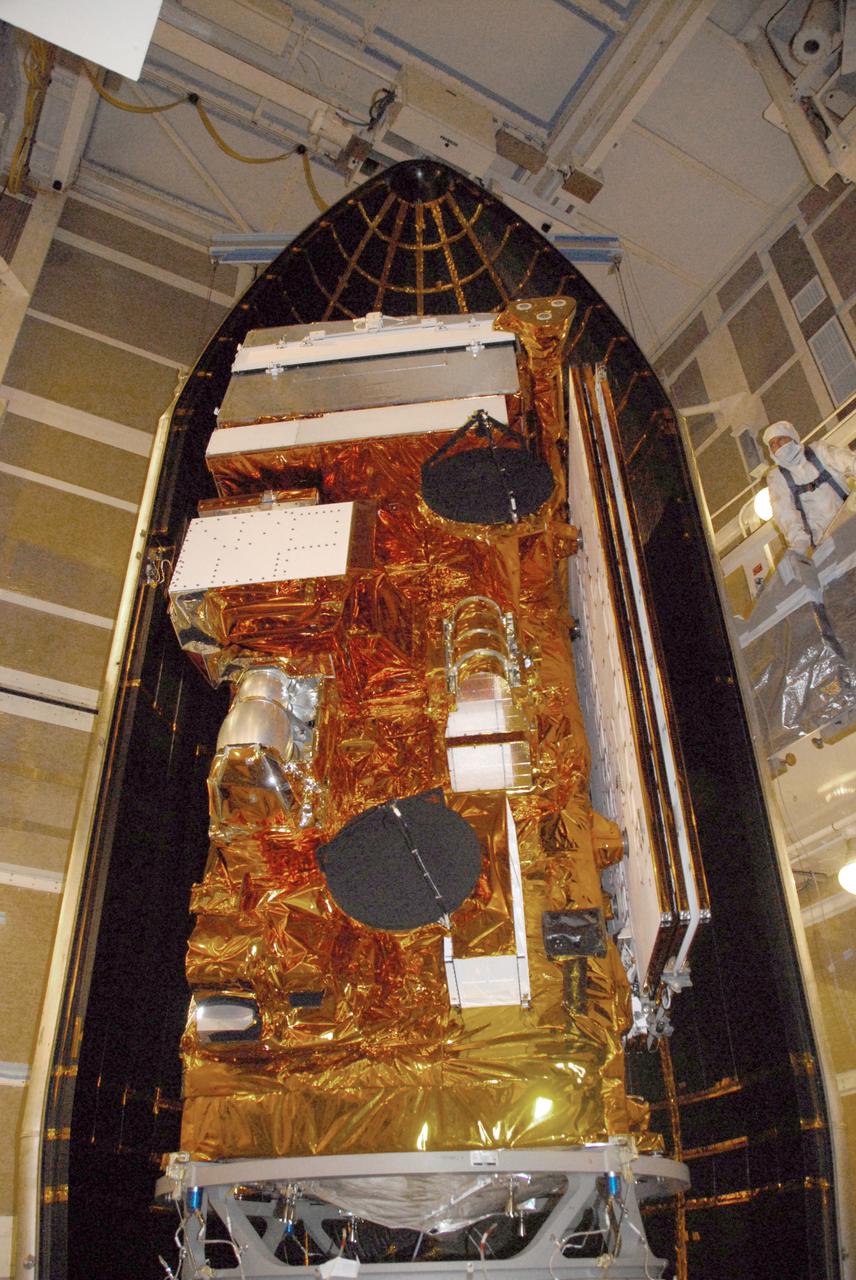
VANDENBERG AIR FORCE BASE, Calif. – At Vandenberg Air Force Base's Space Launch Complex-2 in California, technicians monitor the movement of a section of the clamshell-shaped Delta payload fairing as it encloses NASA’s National Polar-orbiting Operational Environmental Satellite System Preparatory Project (NPP) spacecraft. The fairing will protect the spacecraft from the impact of aerodynamic pressure and heating during ascent and will be jettisoned once the spacecraft is outside the Earth's atmosphere. NPP represents a critical first step in building the next-generation of Earth-observing satellites. NPP will carry the first of the new sensors developed for this satellite fleet, now known as the Joint Polar Satellite System (JPSS) to be launched in 2016. NPP is the bridge between NASA's Earth Observing System (EOS) satellites and the forthcoming series of JPSS satellites. The mission will test key technologies and instruments for the JPSS missions. NPP is targeted to launch Oct. 28 from Space Launch Complex-2 aboard a United Launch Alliance Delta II rocket. For more information, visit http:__www.nasa.gov_NPP. Photo credit: NASA_Mark P. Mackley, VAFB
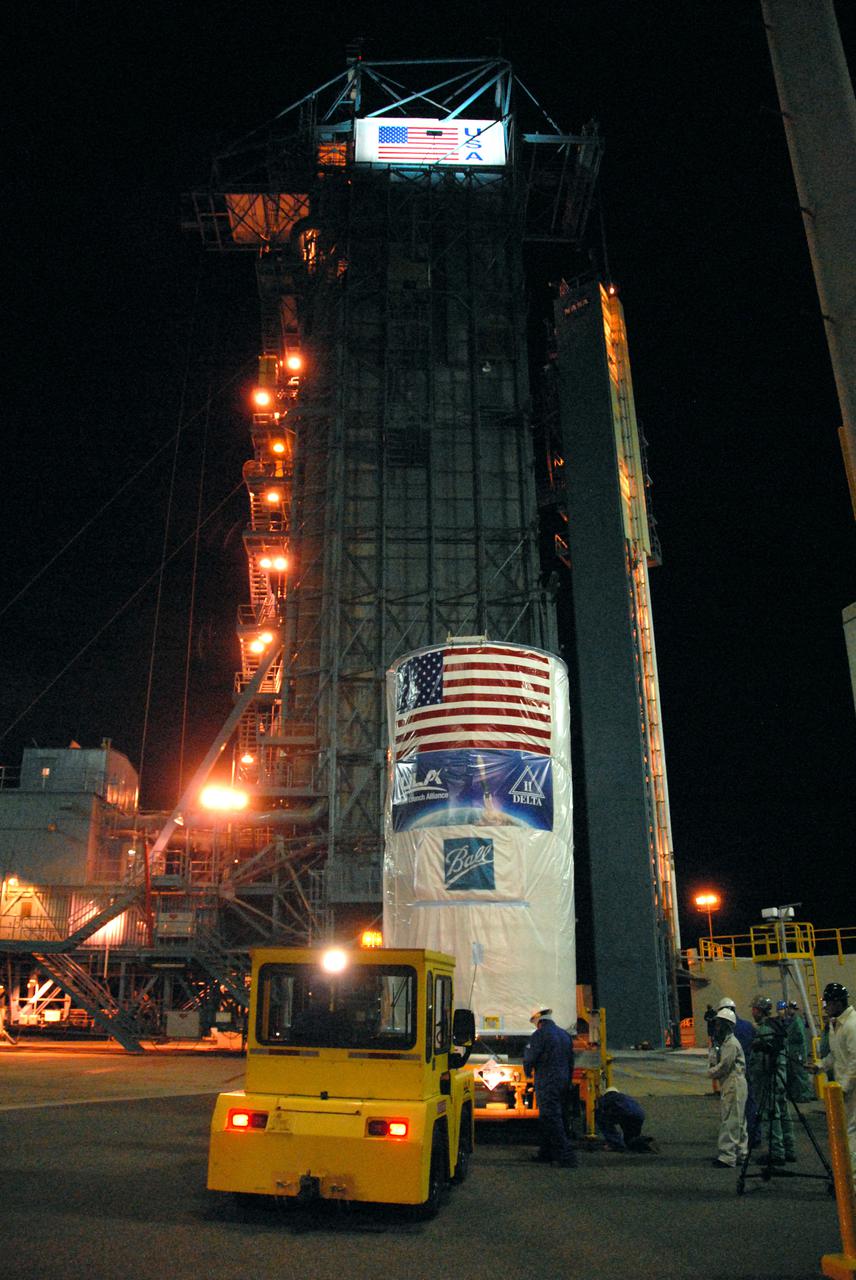
Tucked inside a protective payload transportation canister, NASA’s National Polar-orbiting Operational Environmental Satellite System Preparatory Project (NPP) spacecraft arrives at Vandenberg Air Force Base's Space Launch Complex-2. NPP represents a critical first step in building the next-generation of Earth-observing satellites. NPP will carry the first of the new sensors developed for this satellite fleet, now known as the Joint Polar Satellite System (JPSS), to be launched in 2016. NPP is the bridge between NASA's Earth Observing System (EOS) satellites and the forthcoming series of JPSS satellites. The mission will test key technologies and instruments for the JPSS missions. NPP is targeted to launch Oct. 28 from Space Launch Complex-2 aboard a United Launch Alliance Delta II rocket. For more information, visit http:__www.nasa.gov_NPP. Photo credit: NASA_Mark P. Mackley, VAFB
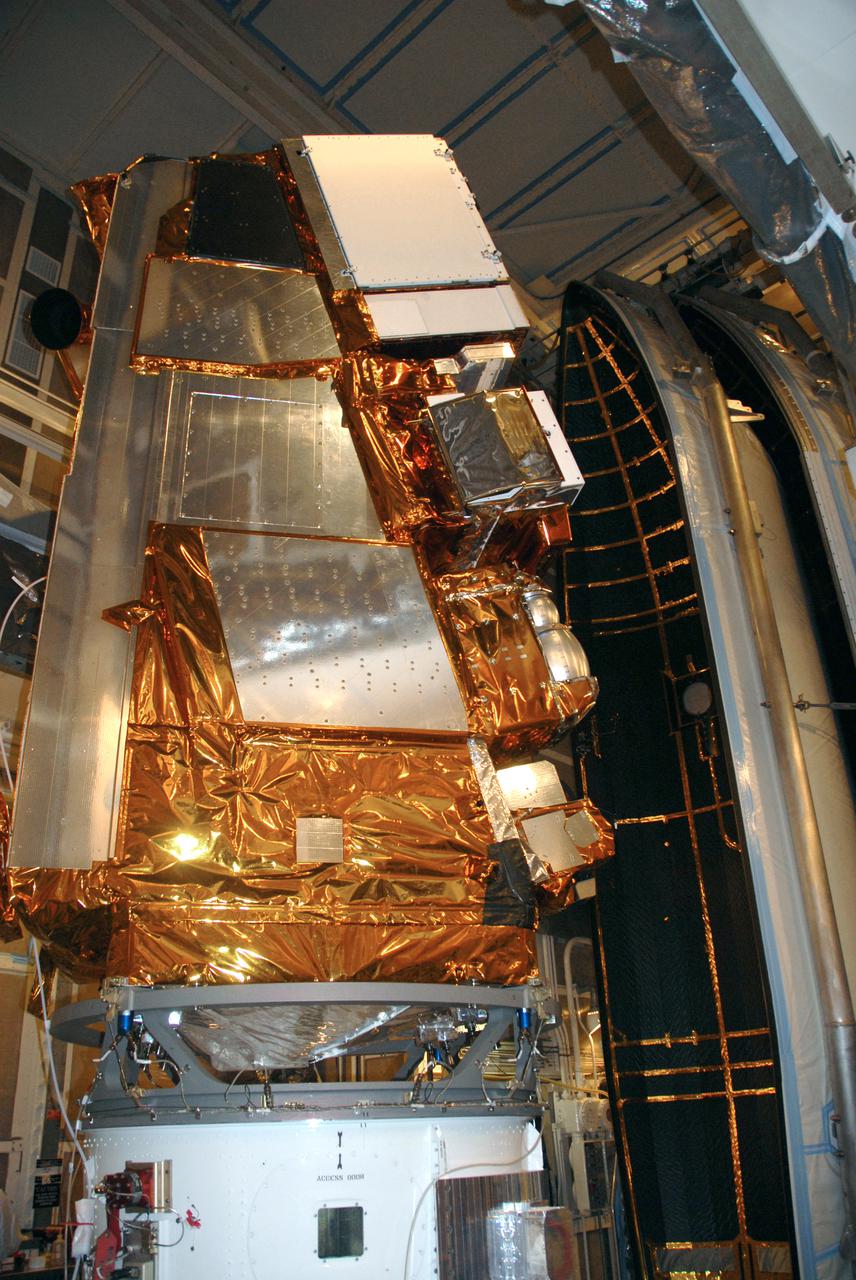
VANDENBERG AIR FORCE BASE, Calif. – At Vandenberg Air Force Base's Space Launch Complex-2 in California, preparations are under way to enclose NASA’s National Polar-orbiting Operational Environmental Satellite System Preparatory Project (NPP) spacecraft into the clamshell-shaped Delta payload fairing. The fairing will protect the spacecraft from the impact of aerodynamic pressure and heating during ascent and will be jettisoned once the spacecraft is outside the Earth's atmosphere. NPP represents a critical first step in building the next-generation of Earth-observing satellites. NPP will carry the first of the new sensors developed for this satellite fleet, now known as the Joint Polar Satellite System (JPSS) to be launched in 2016. NPP is the bridge between NASA's Earth Observing System (EOS) satellites and the forthcoming series of JPSS satellites. The mission will test key technologies and instruments for the JPSS missions. NPP is targeted to launch Oct. 28 from Space Launch Complex-2 aboard a United Launch Alliance Delta II rocket. For more information, visit http:__www.nasa.gov_NPP. Photo credit: NASA_Mark P. Mackley, VAFB

Tucked inside a protective payload transportation canister, NASA’s National Polar-orbiting Operational Environmental Satellite System Preparatory Project (NPP) spacecraft is hoisted atop Vandenberg Air Force Base's Space Launch Complex-2. NPP represents a critical first step in building the next-generation of Earth-observing satellites. NPP will carry the first of the new sensors developed for this satellite fleet, now known as the Joint Polar Satellite System (JPSS), to be launched in 2016. NPP is the bridge between NASA's Earth Observing System (EOS) satellites and the forthcoming series of JPSS satellites. The mission will test key technologies and instruments for the JPSS missions. NPP is targeted to launch Oct. 28 from Space Launch Complex-2 aboard a United Launch Alliance Delta II rocket. For more information, visit http:__www.nasa.gov_NPP. Photo credit: NASA_Mark P. Mackley, VAFB