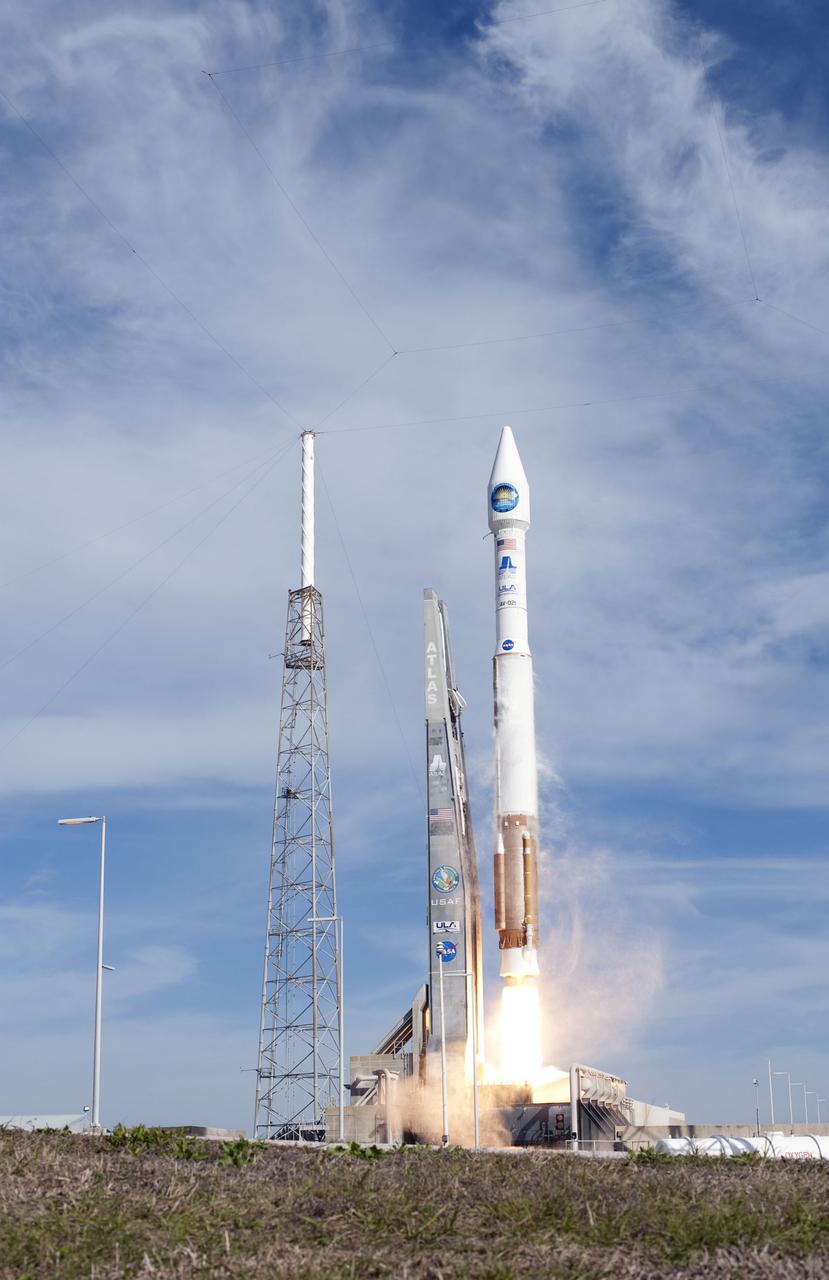
CAPE CANAVERAL, Fla. – The United Launch Alliance Atlas V rocket carrying NASA's Solar Dynamics Observatory lifts off into thin upper-level clouds over Launch Complex 41 on Cape Canaveral Air Force Station to deliver its payload to orbit. Launch was at 10:23 a.m. EST Feb. 11. This is the 100th launch of a commercial Atlas_Centaur rocket. The observatory, known as SDO, is the first mission in NASA's Living With a Star Program and is designed to study the causes of solar variability and its impacts on Earth. The spacecraft's long-term measurements will give solar scientists in-depth information to help characterize the interior of the Sun, the Sun's magnetic field, the hot plasma of the solar corona, and the density of radiation that creates the ionosphere of the planets. The information will be used to create better forecasts of space weather needed to protect the aircraft, satellites and astronauts living and working in space. For information on SDO, visit http:__www.nasa.gov_sdo. Photo credit: NASA_Sandra Joseph and Tony Gray
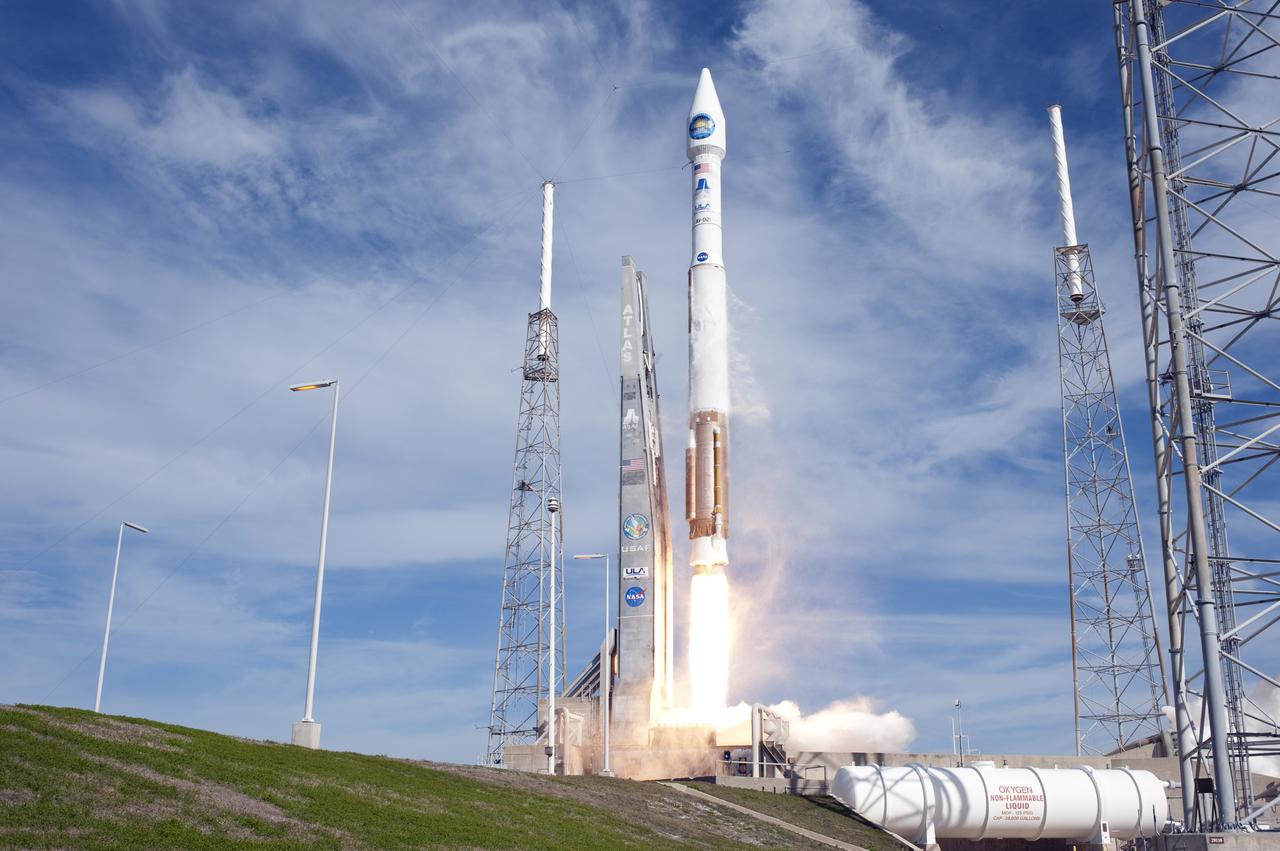
CAPE CANAVERAL, Fla. – With a blinding flash, the United Launch Alliance Atlas V rocket carrying NASA's Solar Dynamics Observatory lifts off Launch Complex 41 on Cape Canaveral Air Force Station. Launch was at 10:23 a.m. EST Feb. 11. This is the 100th launch of a commercial Atlas_Centaur rocket. The observatory, known as SDO, is the first mission in NASA's Living With a Star Program and is designed to study the causes of solar variability and its impacts on Earth. The spacecraft's long-term measurements will give solar scientists in-depth information to help characterize the interior of the Sun, the Sun's magnetic field, the hot plasma of the solar corona, and the density of radiation that creates the ionosphere of the planets. The information will be used to create better forecasts of space weather needed to protect the aircraft, satellites and astronauts living and working in space. For information on SDO, visit http:__www.nasa.gov_sdo. Photo credit: NASA_Sandra Joseph and Tony Gray
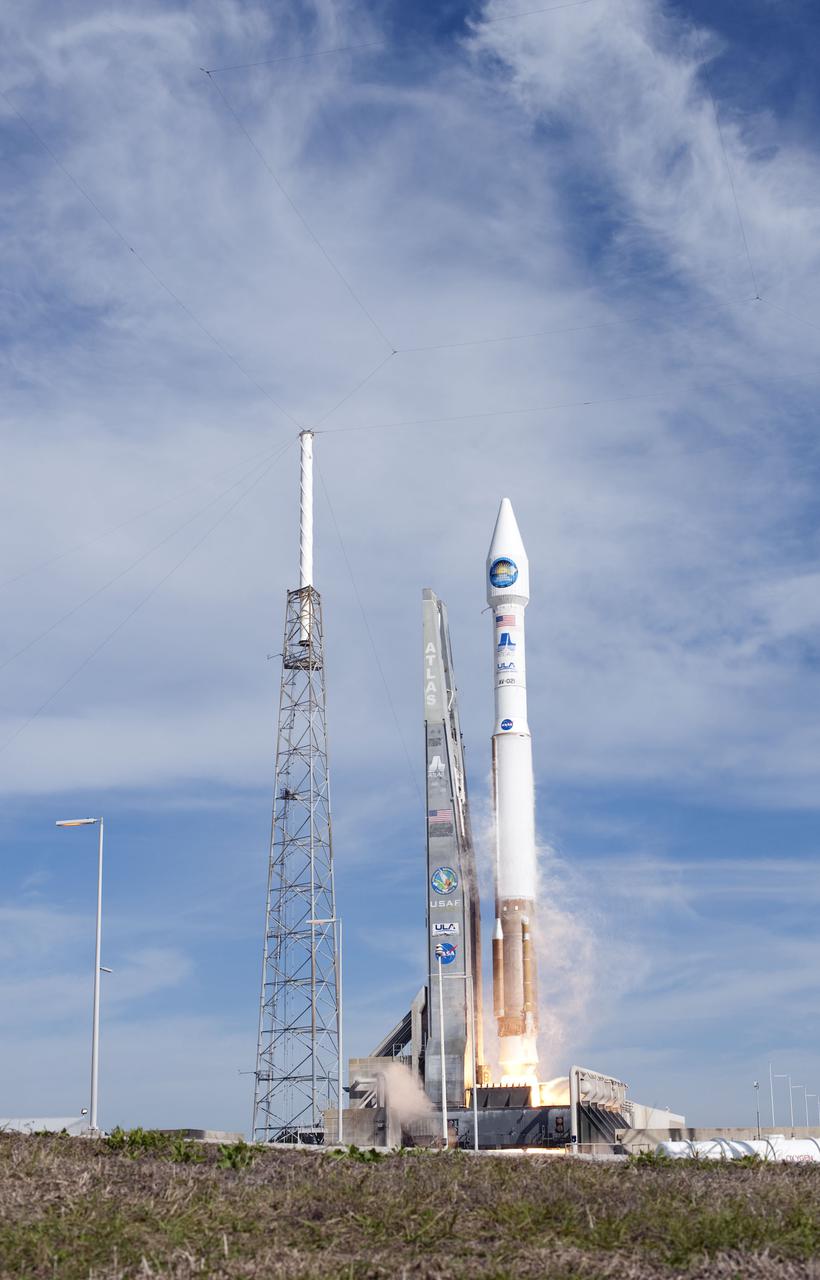
CAPE CANAVERAL, Fla. – The countdown to launch of the United Launch Alliance Atlas V rocket carrying NASA's Solar Dynamics Observatory comes to a successful conclusion with liftoff from Launch Complex 41 on Cape Canaveral Air Force Station at 10:23 a.m. EST Feb. 11. This is the 100th launch of a commercial Atlas_Centaur rocket. The observatory, known as SDO, is the first mission in NASA's Living With a Star Program and is designed to study the causes of solar variability and its impacts on Earth. The spacecraft's long-term measurements will give solar scientists in-depth information to help characterize the interior of the Sun, the Sun's magnetic field, the hot plasma of the solar corona, and the density of radiation that creates the ionosphere of the planets. The information will be used to create better forecasts of space weather needed to protect the aircraft, satellites and astronauts living and working in space. For information on SDO, visit http:__www.nasa.gov_sdo. Photo credit: NASA_Sandra Joseph and Tony Gray
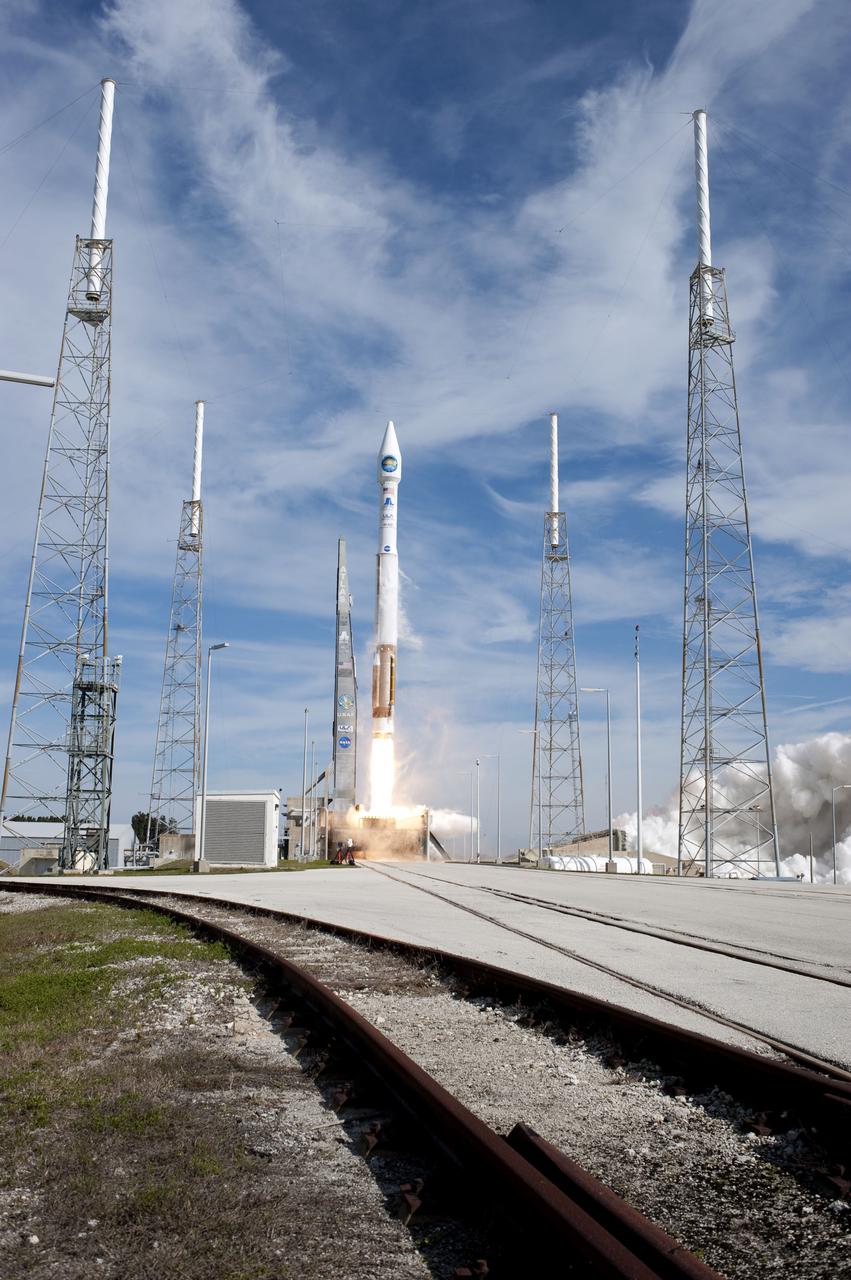
CAPE CANAVERAL, Fla. – NASA's Solar Dynamics Observatory begins its climb to orbit from Launch Complex 41 on Cape Canaveral Air Force Station at 10:23 a.m. EST Feb. 11 atop a United Launch Alliance Atlas V rocket. This is the 100th launch of a commercial Atlas_Centaur rocket. The observatory, known as SDO, is the first mission in NASA's Living With a Star Program and is designed to study the causes of solar variability and its impacts on Earth. The spacecraft's long-term measurements will give solar scientists in-depth information to help characterize the interior of the Sun, the Sun's magnetic field, the hot plasma of the solar corona, and the density of radiation that creates the ionosphere of the planets. The information will be used to create better forecasts of space weather needed to protect the aircraft, satellites and astronauts living and working in space. For information on SDO, visit http:__www.nasa.gov_sdo. Photo credit: NASA_Sandra Joseph and Tony Gray
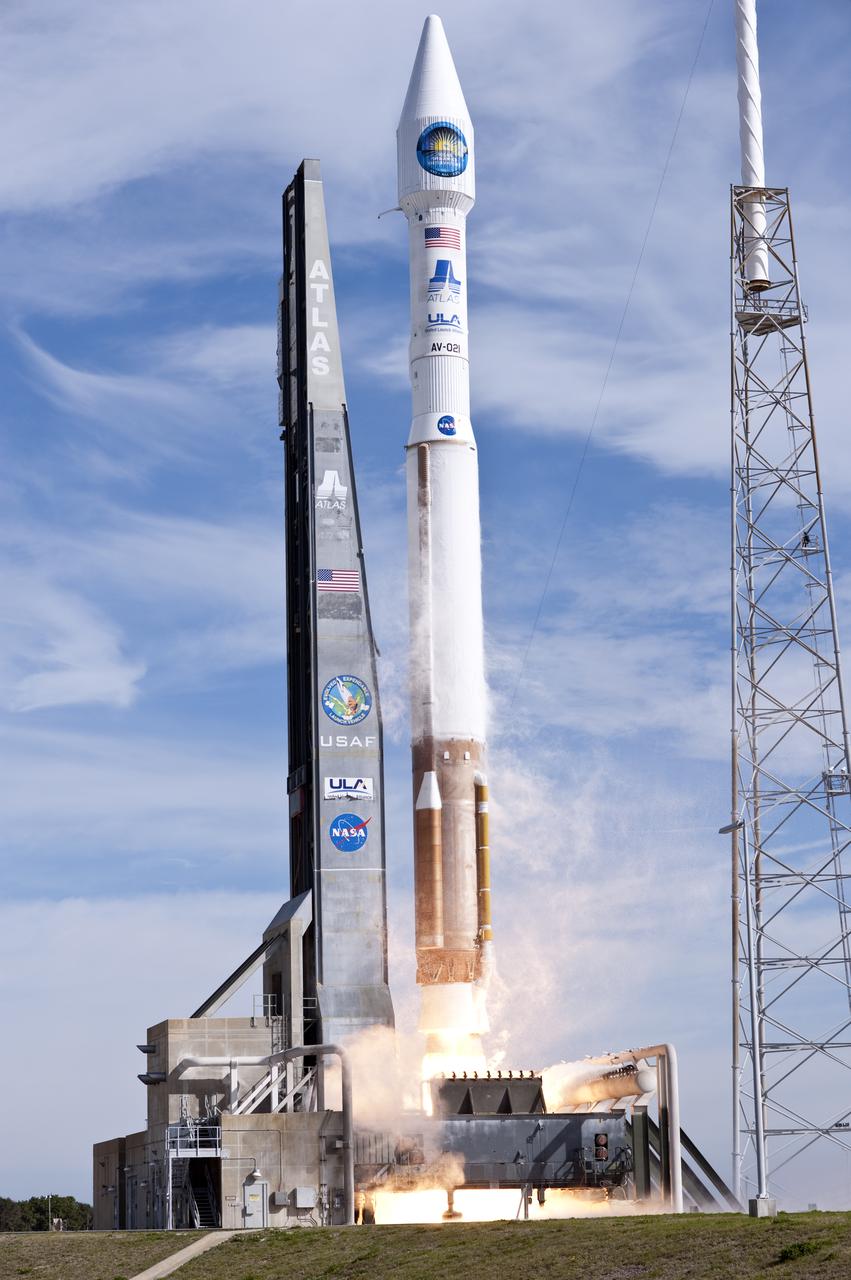
CAPE CANAVERAL, Fla. – Engine ignition lifts the United Launch Alliance Atlas V rocket carrying NASA's Solar Dynamics Observatory off Launch Complex 41 on Cape Canaveral Air Force Station. Liftoff was at 10:23 a.m. EST Feb. 11. This is the 100th launch of a commercial Atlas_Centaur rocket. The observatory, known as SDO, is the first mission in NASA's Living With a Star Program and is designed to study the causes of solar variability and its impacts on Earth. The spacecraft's long-term measurements will give solar scientists in-depth information to help characterize the interior of the Sun, the Sun's magnetic field, the hot plasma of the solar corona, and the density of radiation that creates the ionosphere of the planets. The information will be used to create better forecasts of space weather needed to protect the aircraft, satellites and astronauts living and working in space. For information on SDO, visit http:__www.nasa.gov_sdo. Photo credit: NASA_Sandra Joseph and Tony Gray
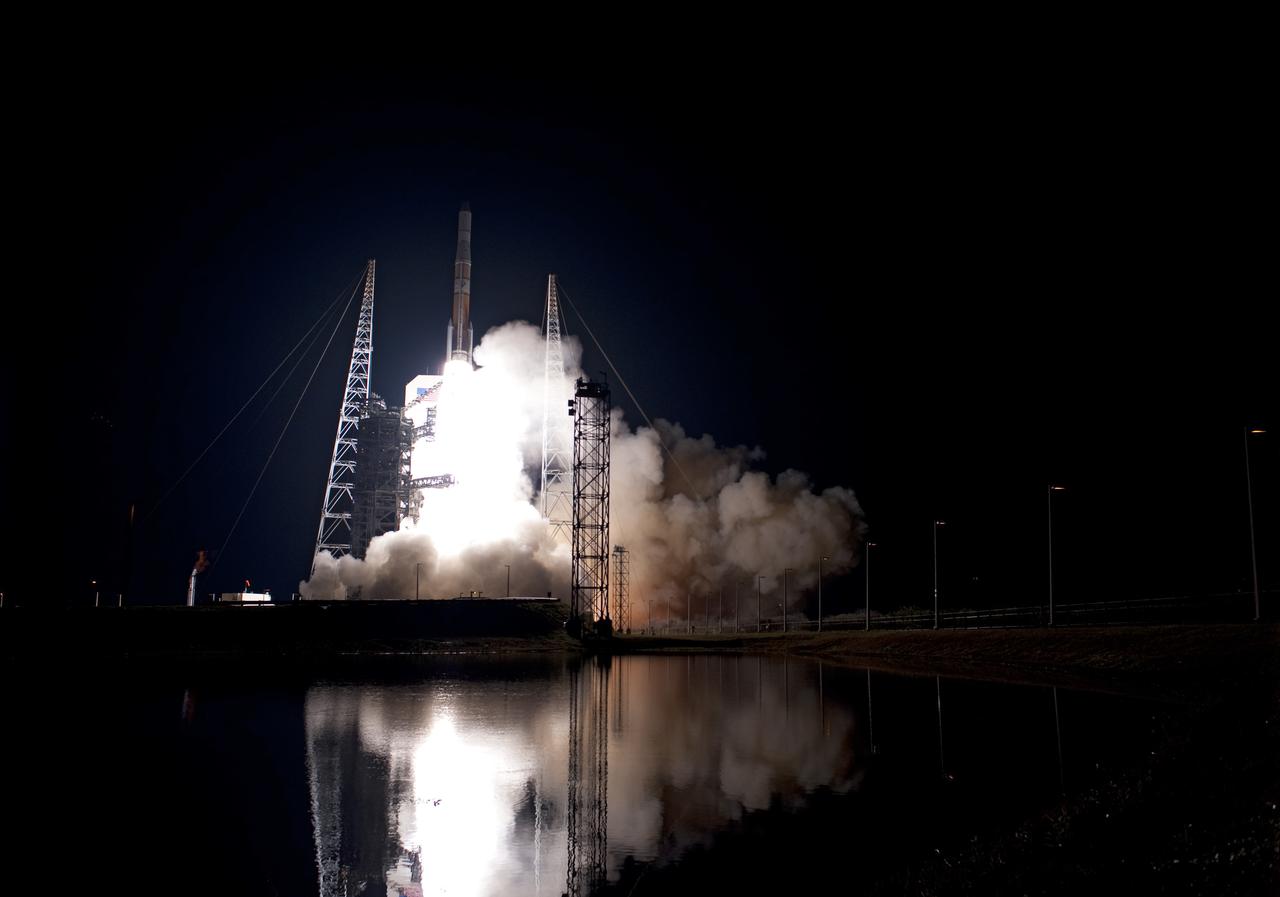
CAPE CANAVERAL, Fla. – Launch of the United Launch Alliance Delta IV rocket carrying NASA's GOES-P meteorological satellite is reflected in the water near Launch Complex 37 on Cape Canaveral Air Force Station in Florida. Liftoff was at 6:57 p.m. EST. GOES-P, the latest Geostationary Operational Environmental Satellite, was developed by NASA for the National Oceanic and Atmospheric Administration, or NOAA. The GOES-P spacecraft will be placed in a 22,300-mile-high geosynchronous orbit where it will appear to hover over a single point on Earth. The spacecraft is outfitted with a complex suite of observation instruments and cameras so it can accurately report on weather and climate conditions on Earth. For information on GOES-P, visit http:__www.nasa.gov_mission_pages_GOES-P_main_index.html. Photo credit: NASA_Sandra Joseph and Tony Gray
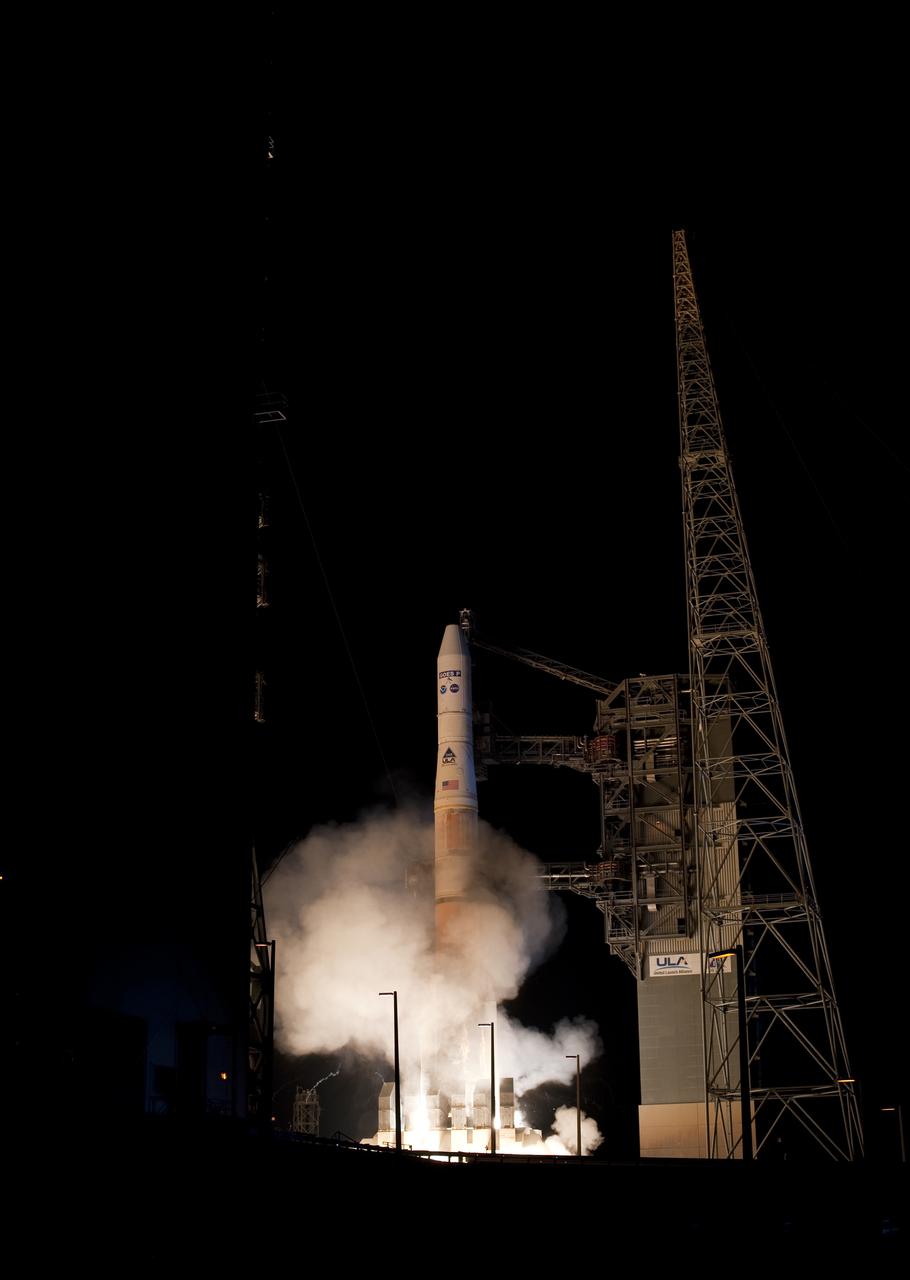
CAPE CANAVERAL, Fla. – The base of the United Launch Alliance Delta IV rocket carrying NASA's GOES-P meteorological satellite is engulfed in its exhaust cloud as it lifts off Launch Complex 37 on Cape Canaveral Air Force Station in Florida at 6:57 p.m. EST. GOES-P, the latest Geostationary Operational Environmental Satellite, was developed by NASA for the National Oceanic and Atmospheric Administration, or NOAA. The GOES-P spacecraft will be placed in a 22,300-mile-high geosynchronous orbit where it will appear to hover over a single point on Earth. The spacecraft is outfitted with a complex suite of observation instruments and cameras so it can accurately report on weather and climate conditions on Earth. For information on GOES-P, visit http:__www.nasa.gov_mission_pages_GOES-P_main_index.html. Photo credit: NASA_Sandra Joseph and Tony Gray
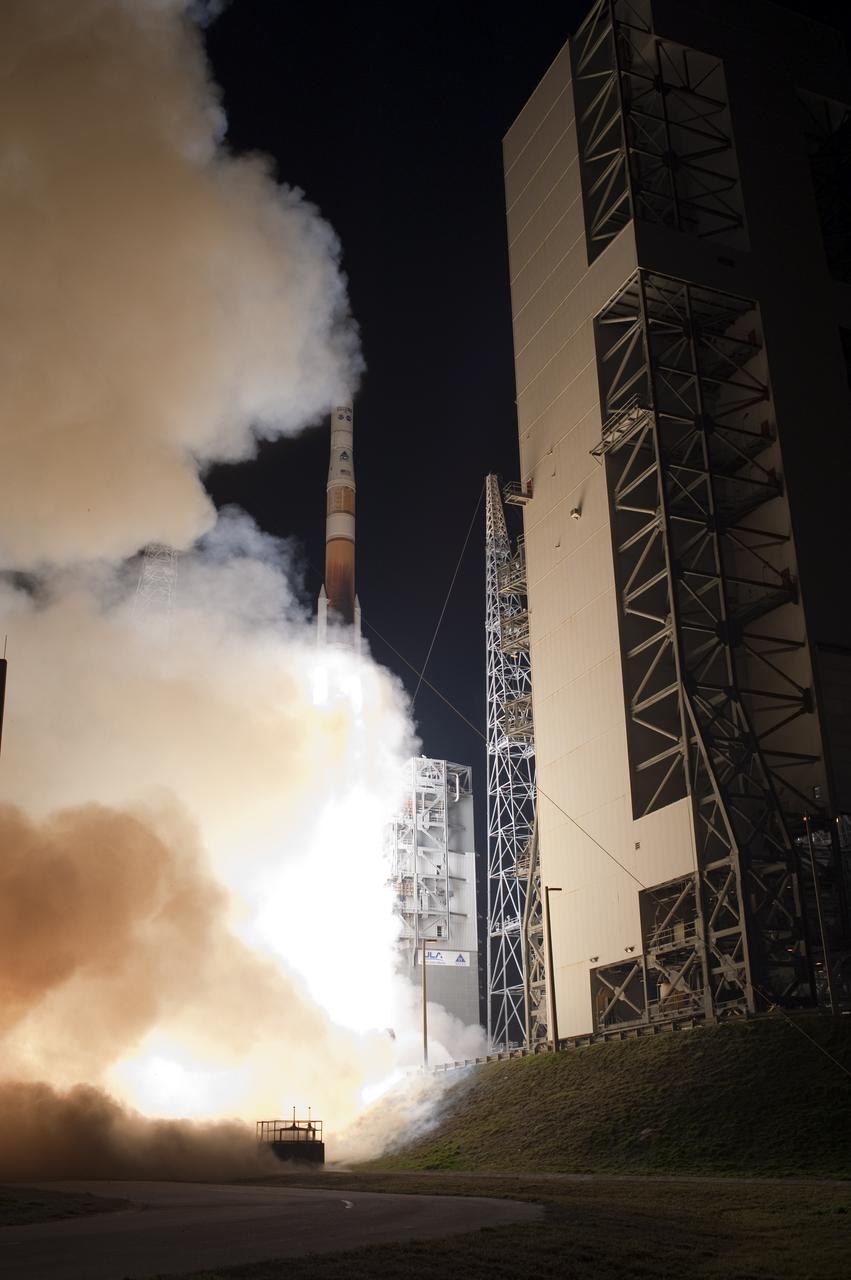
CAPE CANAVERAL, Fla. – An exhaust cloud building at Launch Complex 37 on Cape Canaveral Air Force Station in Florida obscures the United Launch Alliance Delta IV rocket carrying NASA's GOES-P meteorological satellite as it lifts off at 6:57 p.m. EST. GOES-P, the latest Geostationary Operational Environmental Satellite, was developed by NASA for the National Oceanic and Atmospheric Administration, or NOAA. The GOES-P spacecraft will be placed in a 22,300-mile-high geosynchronous orbit where it will appear to hover over a single point on Earth. The spacecraft is outfitted with a complex suite of observation instruments and cameras so it can accurately report on weather and climate conditions on Earth. For information on GOES-P, visit http:__www.nasa.gov_mission_pages_GOES-P_main_index.html. Photo credit: NASA_Sandra Joseph and Tony Gray
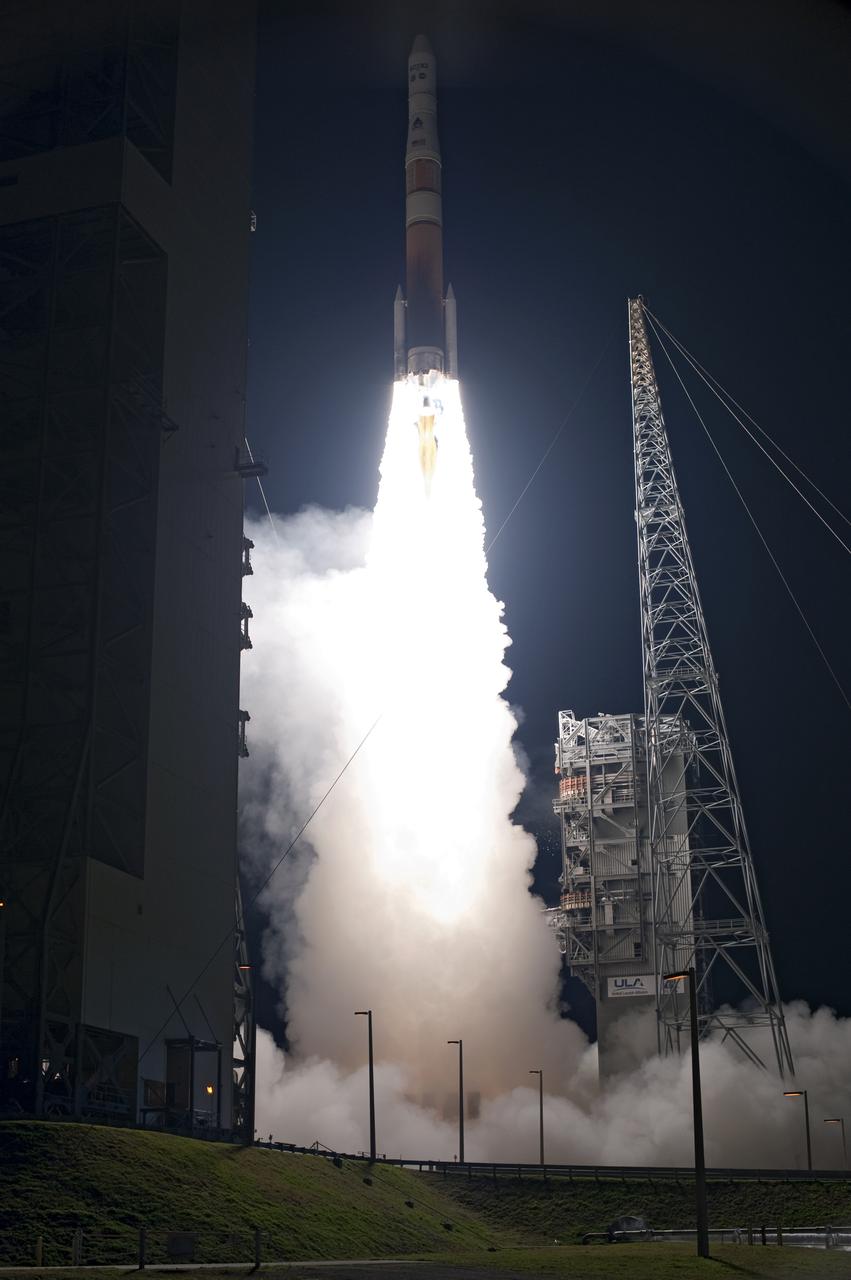
CAPE CANAVERAL, Fla. – The United Launch Alliance Delta IV rocket carrying NASA's GOES-P meteorological satellite rushes to orbit from Launch Complex 37 on Cape Canaveral Air Force Station in Florida. Liftoff was at 6:57 p.m. EST. GOES-P, the latest Geostationary Operational Environmental Satellite, was developed by NASA for the National Oceanic and Atmospheric Administration, or NOAA. The GOES-P spacecraft will be placed in a 22,300-mile-high geosynchronous orbit where it will appear to hover over a single point on Earth. The spacecraft is outfitted with a complex suite of observation instruments and cameras so it can accurately report on weather and climate conditions on Earth. For information on GOES-P, visit http:__www.nasa.gov_mission_pages_GOES-P_main_index.html. Photo credit: NASA_Sandra Joseph and Tony Gray

CAPE CANAVERAL, Fla. – An exhaust cloud forms at Launch Complex 37 on Cape Canaveral Air Force Station in Florida as the United Launch Alliance Delta IV rocket carrying NASA's GOES-P meteorological satellite lifts off at 6:57 p.m. EST. GOES-P, the latest Geostationary Operational Environmental Satellite, was developed by NASA for the National Oceanic and Atmospheric Administration, or NOAA. The GOES-P spacecraft will be placed in a 22,300-mile-high geosynchronous orbit where it will appear to hover over a single point on Earth. The spacecraft is outfitted with a complex suite of observation instruments and cameras so it can accurately report on weather and climate conditions on Earth. For information on GOES-P, visit http:__www.nasa.gov_mission_pages_GOES-P_main_index.html. Photo credit: NASA_Sandra Joseph and Tony Gray
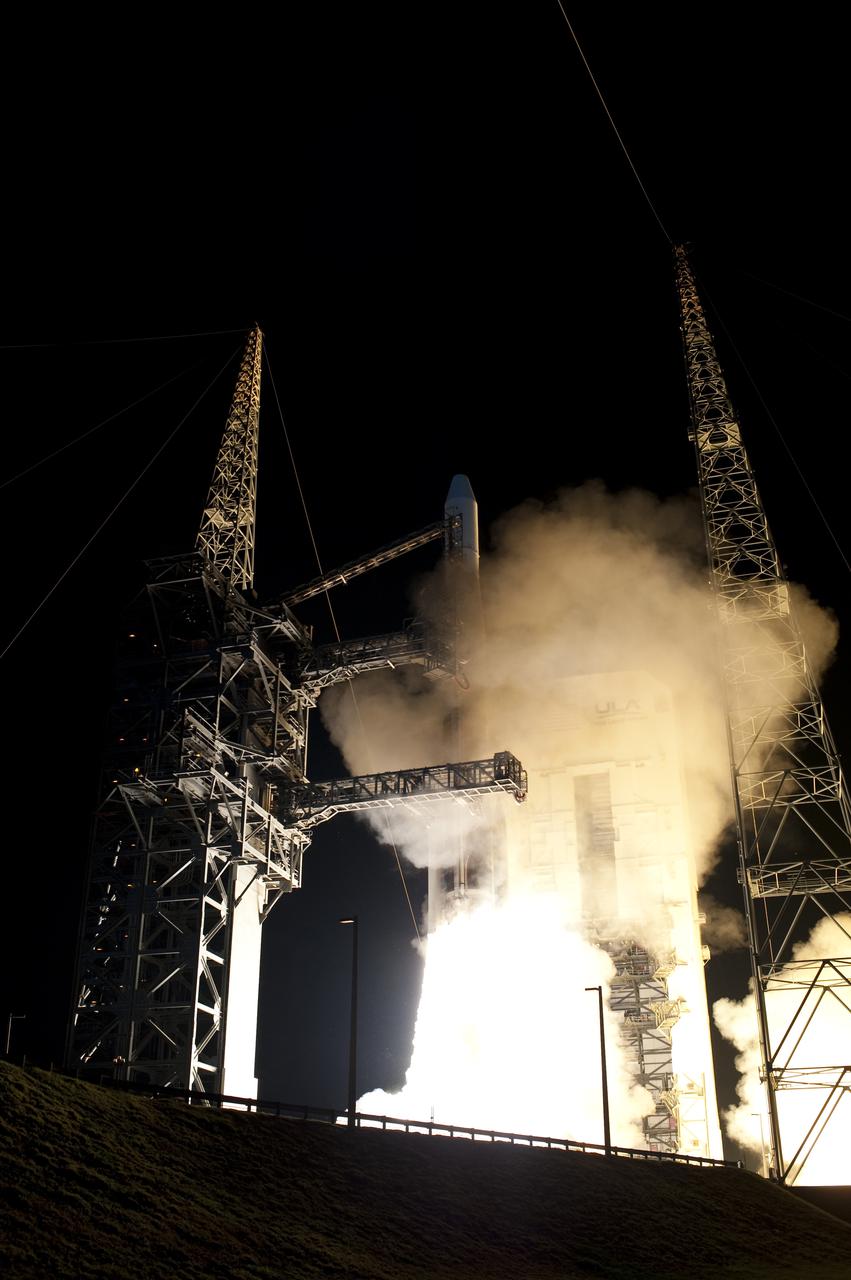
CAPE CANAVERAL, Fla. – A United Launch Alliance Delta IV rocket with the GOES-P satellite aboard roars to life after ignition and liftoff from Launch Complex 37 at Cape Canaveral Air Force Station in Florida at 6:57 p.m. EST. GOES-P, the latest Geostationary Operational Environmental Satellite, was developed by NASA for the National Oceanic and Atmospheric Administration, or NOAA. The GOES-P spacecraft will be placed in a 22,300-mile-high geosynchronous orbit where it will appear to hover over a single point on Earth. The spacecraft is outfitted with a complex suite of observation instruments and cameras so it can accurately report on weather and climate conditions on Earth. For information on GOES-P, visit http:__www.nasa.gov_mission_pages_GOES-P_main_index.html. Photo credit: NASA_Sandra Joseph and Tony Gray
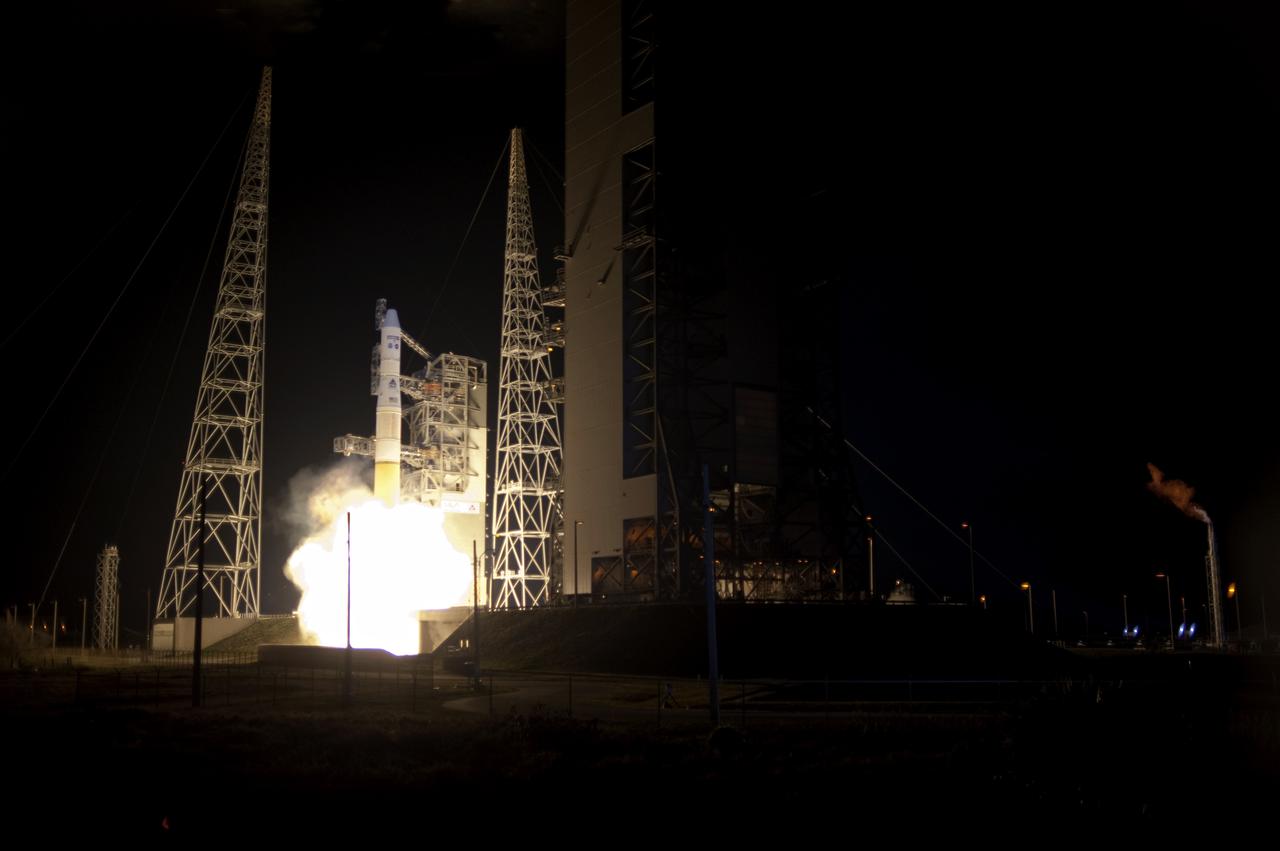
CAPE CANAVERAL, Fla. – Engine ignition on the United Launch Alliance Delta IV rocket carrying NASA's GOES-P meteorological satellite creates a flash of light on Launch Complex 37 on Cape Canaveral Air Force Station in Florida. Liftoff was at 6:57 p.m. EST. GOES-P, the latest Geostationary Operational Environmental Satellite, was developed by NASA for the National Oceanic and Atmospheric Administration, or NOAA. The GOES-P spacecraft will be placed in a 22,300-mile-high geosynchronous orbit where it will appear to hover over a single point on Earth. The spacecraft is outfitted with a complex suite of observation instruments and cameras so it can accurately report on weather and climate conditions on Earth. For information on GOES-P, visit http:__www.nasa.gov_mission_pages_GOES-P_main_index.html. Photo credit: NASA_Sandra Joseph and Tony Gray
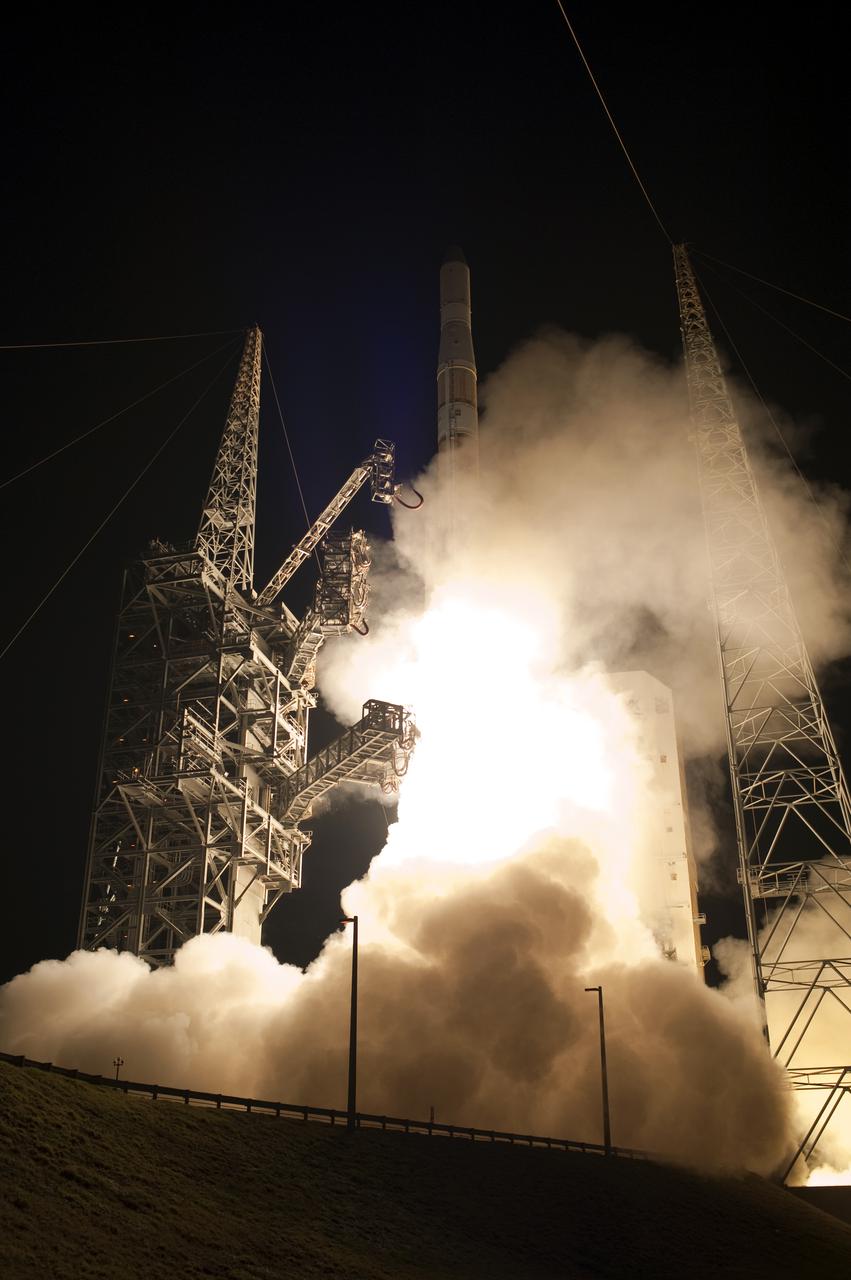
CAPE CANAVERAL, Fla. – The GOES-P spacecraft atop a United Launch Alliance Delta IV rocket begins its climb to orbit from Launch Complex 37 on Cape Canaveral Air Force Station at 6:57 p.m. EST. GOES-P, the latest Geostationary Operational Environmental Satellite, was developed by NASA for the National Oceanic and Atmospheric Administration, or NOAA. The GOES-P spacecraft will be placed in a 22,300-mile-high geosynchronous orbit where it will appear to hover over a single point on Earth. The spacecraft is outfitted with a complex suite of observation instruments and cameras so it can accurately report on weather and climate conditions on Earth. For information on GOES-P, visit http:__www.nasa.gov_mission_pages_GOES-P_main_index.html. Photo credit: NASA_Sandra Joseph and Tony Gray
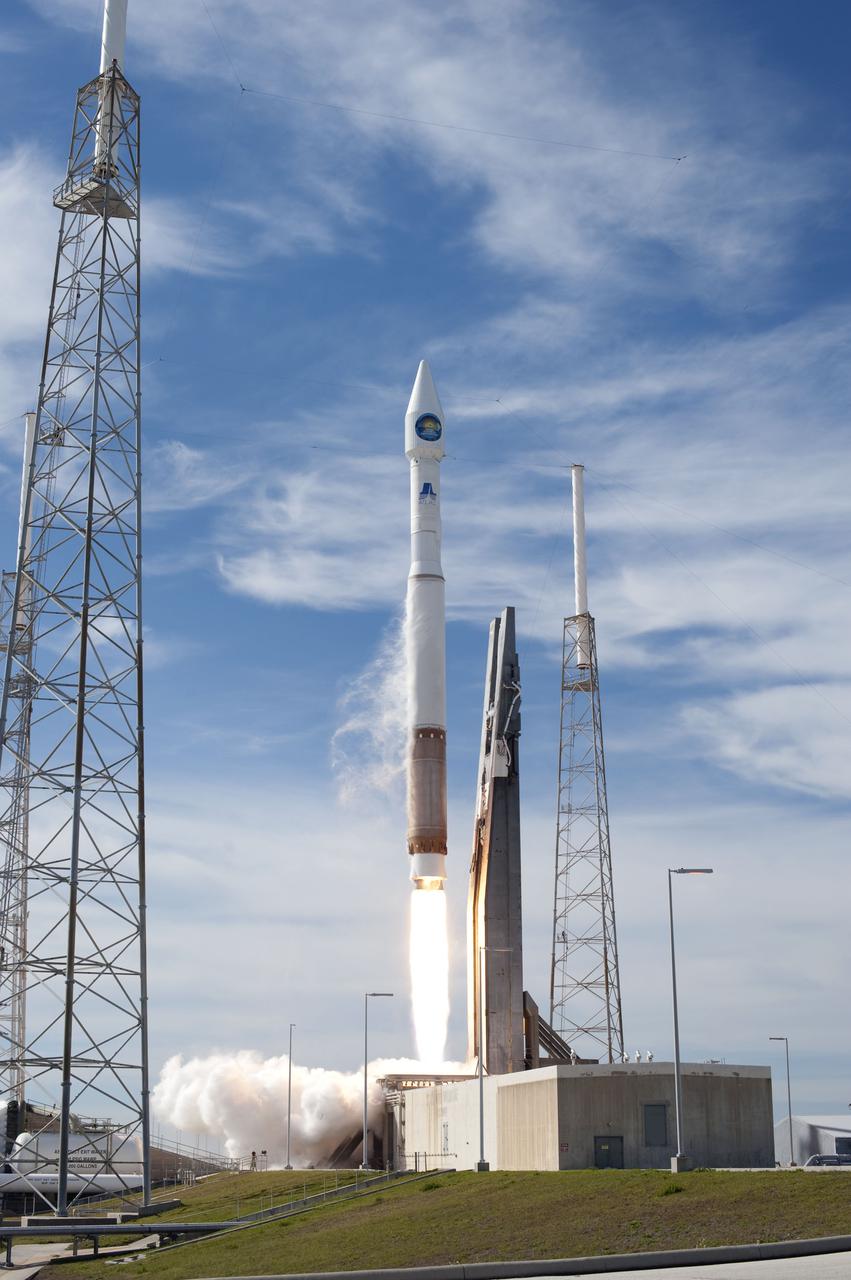
CAPE CANAVERAL, Fla. – The United Launch Alliance Atlas V rocket carrying NASA's Solar Dynamics Observatory defies gravity at Launch Complex 41 on Cape Canaveral Air Force Station as its engines ignite. Liftoff was at 10:23 a.m. EST Feb. 11. This is the 100th launch of a commercial Atlas_Centaur rocket. The observatory, known as SDO, is the first mission in NASA's Living With a Star Program and is designed to study the causes of solar variability and its impacts on Earth. The spacecraft's long-term measurements will give solar scientists in-depth information to help characterize the interior of the Sun, the Sun's magnetic field, the hot plasma of the solar corona, and the density of radiation that creates the ionosphere of the planets. The information will be used to create better forecasts of space weather needed to protect the aircraft, satellites and astronauts living and working in space. For information on SDO, visit http:__www.nasa.gov_sdo. Photo credit: NASA_Sandra Joseph and Tony Gray
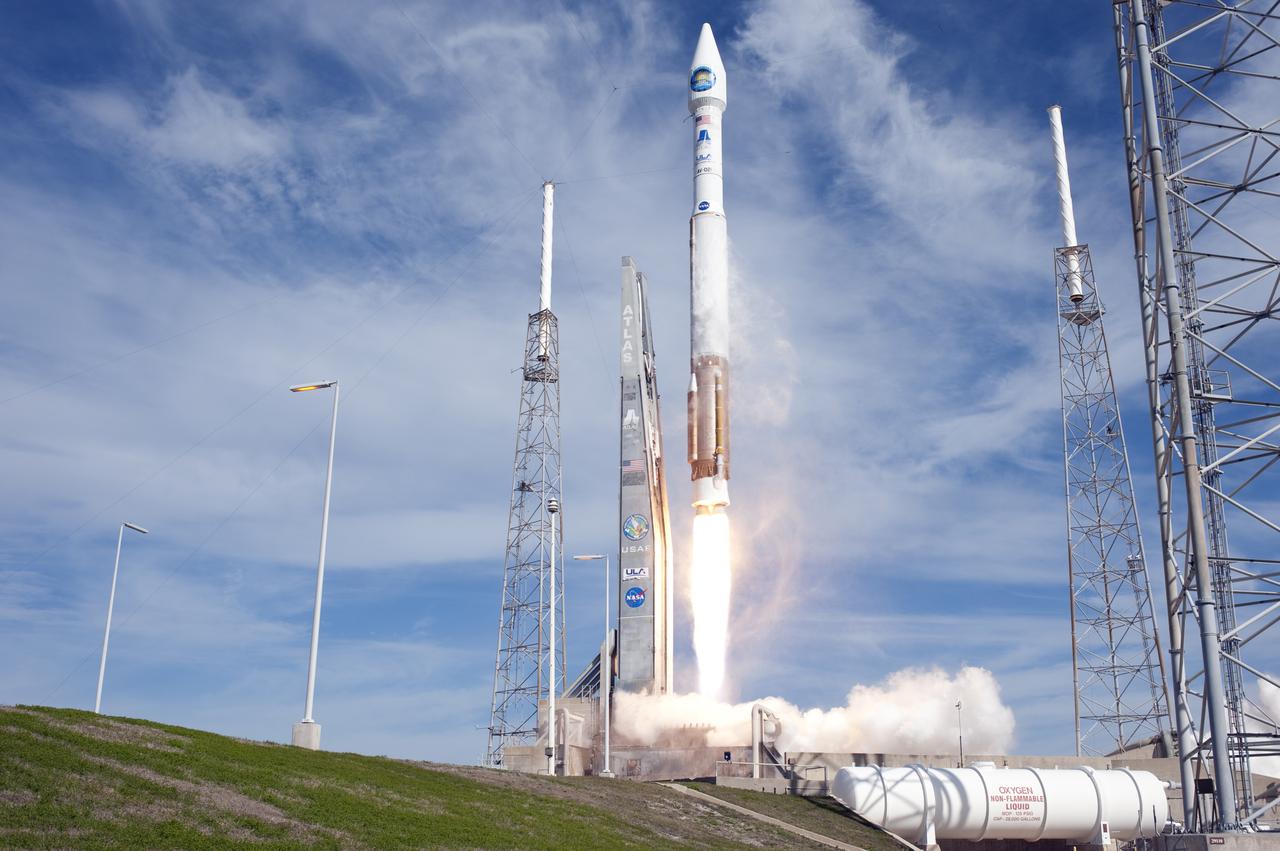
CAPE CANAVERAL, Fla. – The United Launch Alliance Atlas V rocket carrying NASA's Solar Dynamics Observatory heads into the 'wild blue yonder' from Launch Complex 41 on Cape Canaveral Air Force Station. Launch was at 10:23 a.m. EST Feb. 11. This is the 100th launch of a commercial Atlas_Centaur rocket. The observatory, known as SDO, is the first mission in NASA's Living With a Star Program and is designed to study the causes of solar variability and its impacts on Earth. The spacecraft's long-term measurements will give solar scientists in-depth information to help characterize the interior of the Sun, the Sun's magnetic field, the hot plasma of the solar corona, and the density of radiation that creates the ionosphere of the planets. The information will be used to create better forecasts of space weather needed to protect the aircraft, satellites and astronauts living and working in space. For information on SDO, visit http:__www.nasa.gov_sdo. Photo credit: NASA_Sandra Joseph and Tony Gray
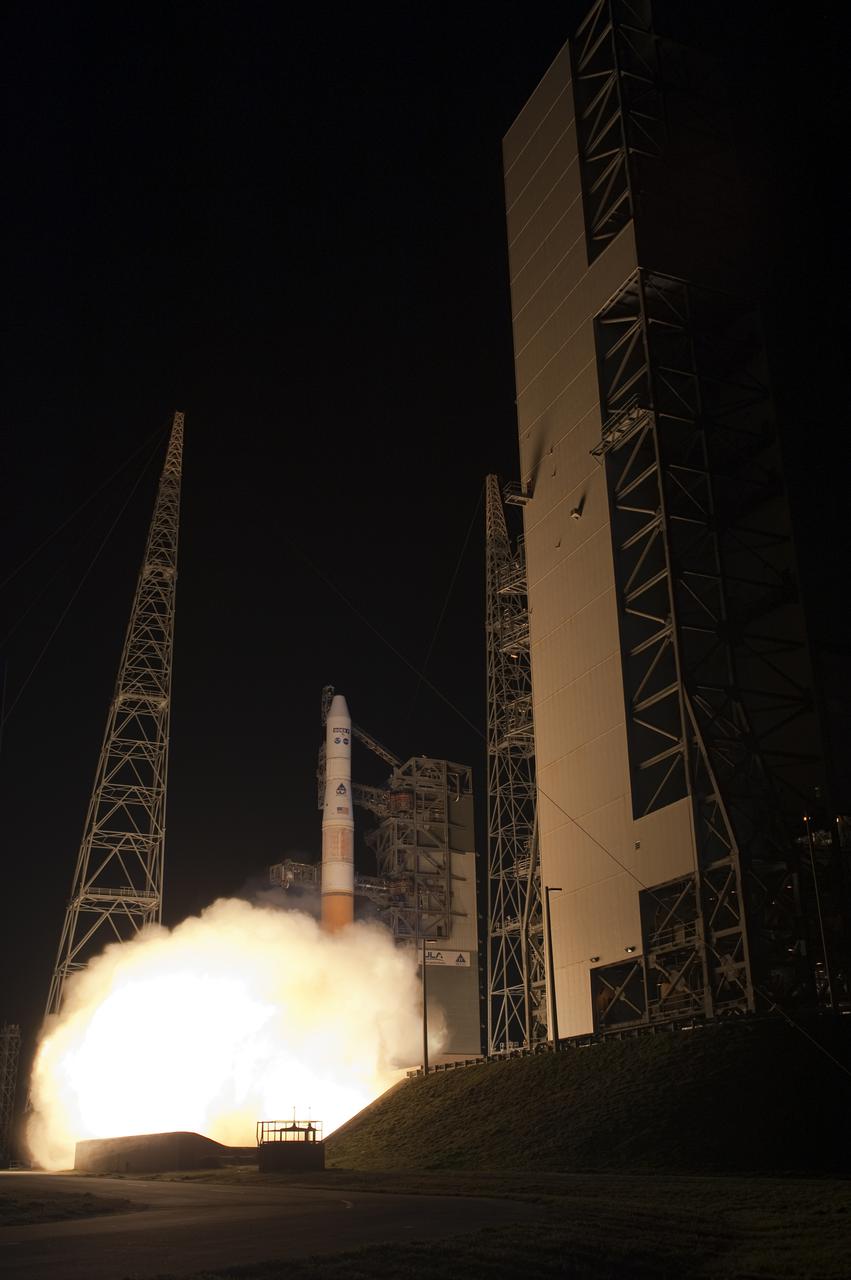
CAPE CANAVERAL, Fla. – In a flash of light, the United Launch Alliance Delta IV rocket carrying NASA's GOES-P meteorological satellite lifts off Launch Complex 37 on Cape Canaveral Air Force Station in Florida at 6:57 p.m. EST. GOES-P, the latest Geostationary Operational Environmental Satellite, was developed by NASA for the National Oceanic and Atmospheric Administration, or NOAA. The GOES-P spacecraft will be placed in a 22,300-mile-high geosynchronous orbit where it will appear to hover over a single point on Earth. The spacecraft is outfitted with a complex suite of observation instruments and cameras so it can accurately report on weather and climate conditions on Earth. For information on GOES-P, visit http:__www.nasa.gov_mission_pages_GOES-P_main_index.html. Photo credit: NASA_Sandra Joseph and Tony Gray
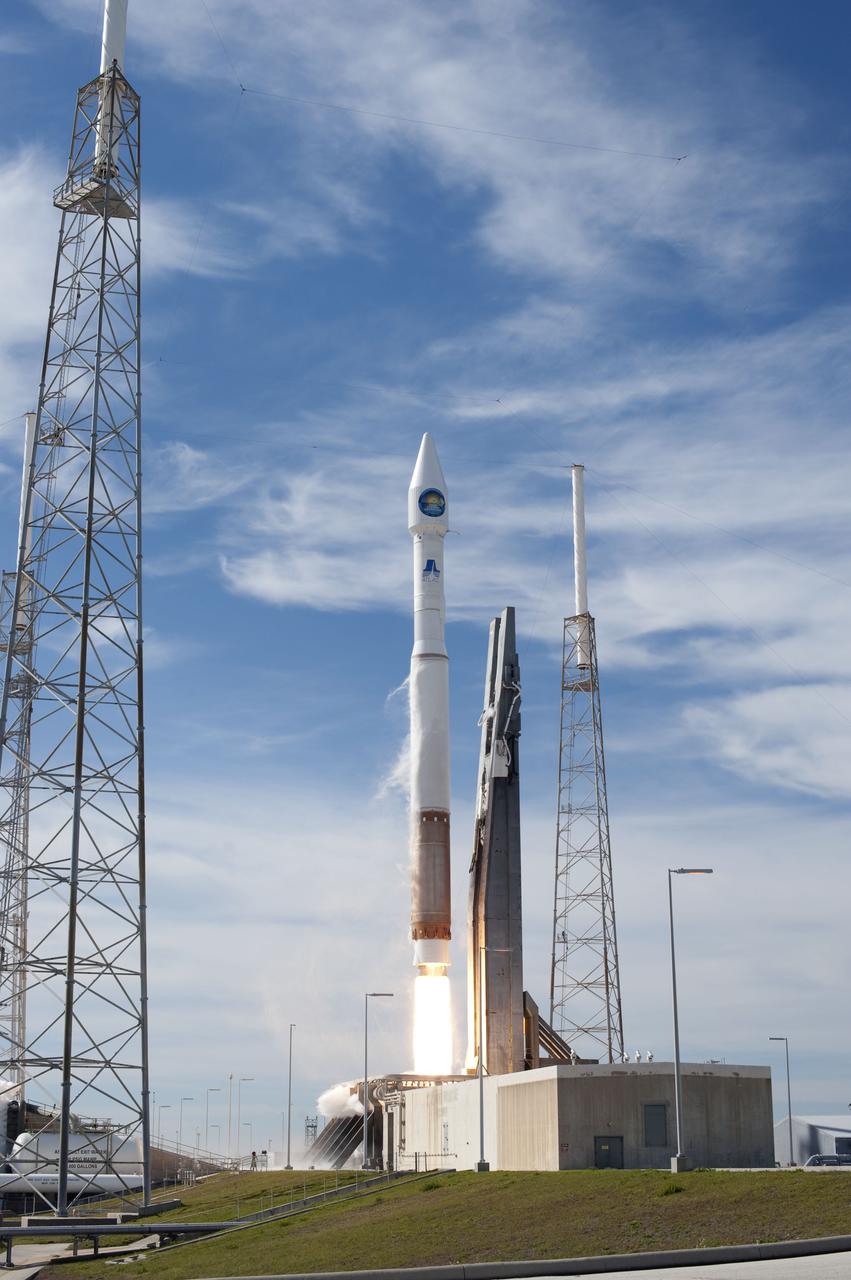
CAPE CANAVERAL, Fla. – The United Launch Alliance Atlas V rocket carrying NASA's Solar Dynamics Observatory levitates off Launch Complex 41 on Cape Canaveral Air Force Station as its engines ignite. Liftoff was at 10:23 a.m. EST Feb. 11. This is the 100th launch of a commercial Atlas_Centaur rocket. The observatory, known as SDO, is the first mission in NASA's Living With a Star Program and is designed to study the causes of solar variability and its impacts on Earth. The spacecraft's long-term measurements will give solar scientists in-depth information to help characterize the interior of the Sun, the Sun's magnetic field, the hot plasma of the solar corona, and the density of radiation that creates the ionosphere of the planets. The information will be used to create better forecasts of space weather needed to protect the aircraft, satellites and astronauts living and working in space. For information on SDO, visit http:__www.nasa.gov_sdo. Photo credit: NASA_Sandra Joseph and Tony Gray
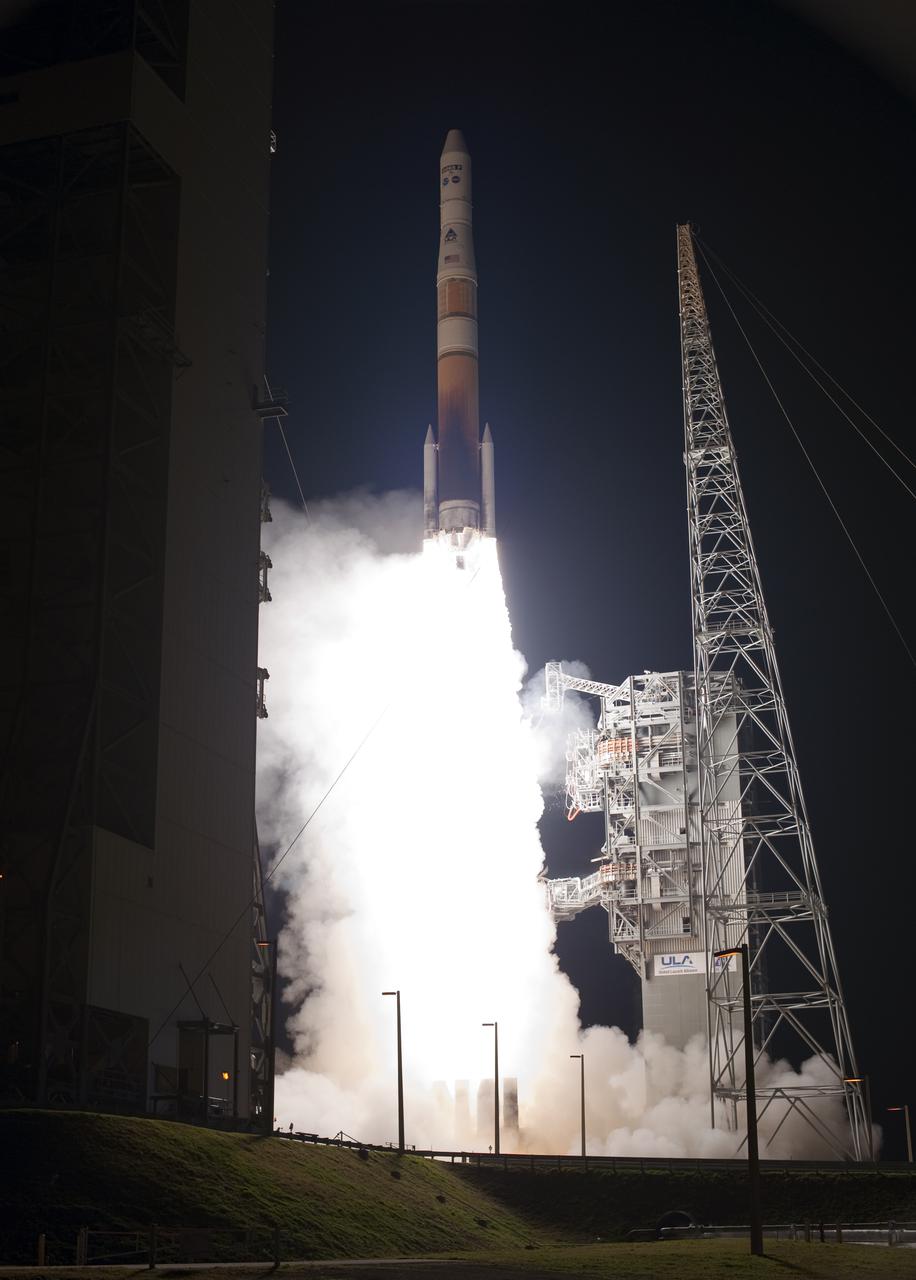
CAPE CANAVERAL, Fla. – The United Launch Alliance Delta IV rocket carrying NASA's GOES-P meteorological satellite begins to rise from Launch Complex 37 on Cape Canaveral Air Force Station in Florida. Liftoff was at 6:57 p.m. EST. GOES-P, the latest Geostationary Operational Environmental Satellite, was developed by NASA for the National Oceanic and Atmospheric Administration, or NOAA. The GOES-P spacecraft will be placed in a 22,300-mile-high geosynchronous orbit where it will appear to hover over a single point on Earth. The spacecraft is outfitted with a complex suite of observation instruments and cameras so it can accurately report on weather and climate conditions on Earth. For information on GOES-P, visit http:__www.nasa.gov_mission_pages_GOES-P_main_index.html. Photo credit: NASA_Sandra Joseph and Tony Gray
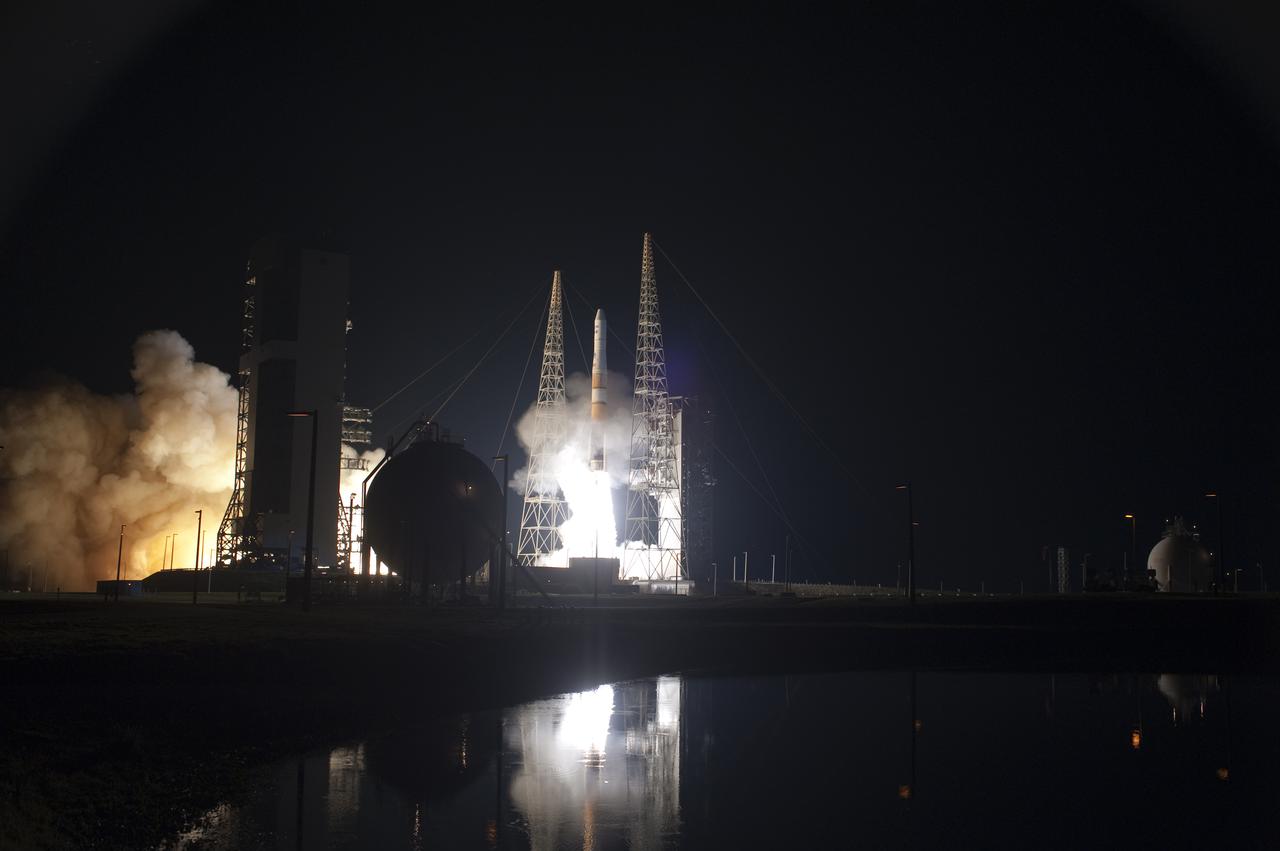
CAPE CANAVERAL, Fla. – The United Launch Alliance Delta IV rocket carrying NASA's GOES-P meteorological satellite begins to rise from Launch Complex 37 on Cape Canaveral Air Force Station in Florida. Liftoff was at 6:57 p.m. EST. GOES-P, the latest Geostationary Operational Environmental Satellite, was developed by NASA for the National Oceanic and Atmospheric Administration, or NOAA. The GOES-P spacecraft will be placed in a 22,300-mile-high geosynchronous orbit where it will appear to hover over a single point on Earth. The spacecraft is outfitted with a complex suite of observation instruments and cameras so it can accurately report on weather and climate conditions on Earth. For information on GOES-P, visit http:__www.nasa.gov_mission_pages_GOES-P_main_index.html. Photo credit: NASA_Sandra Joseph and Tony Gray
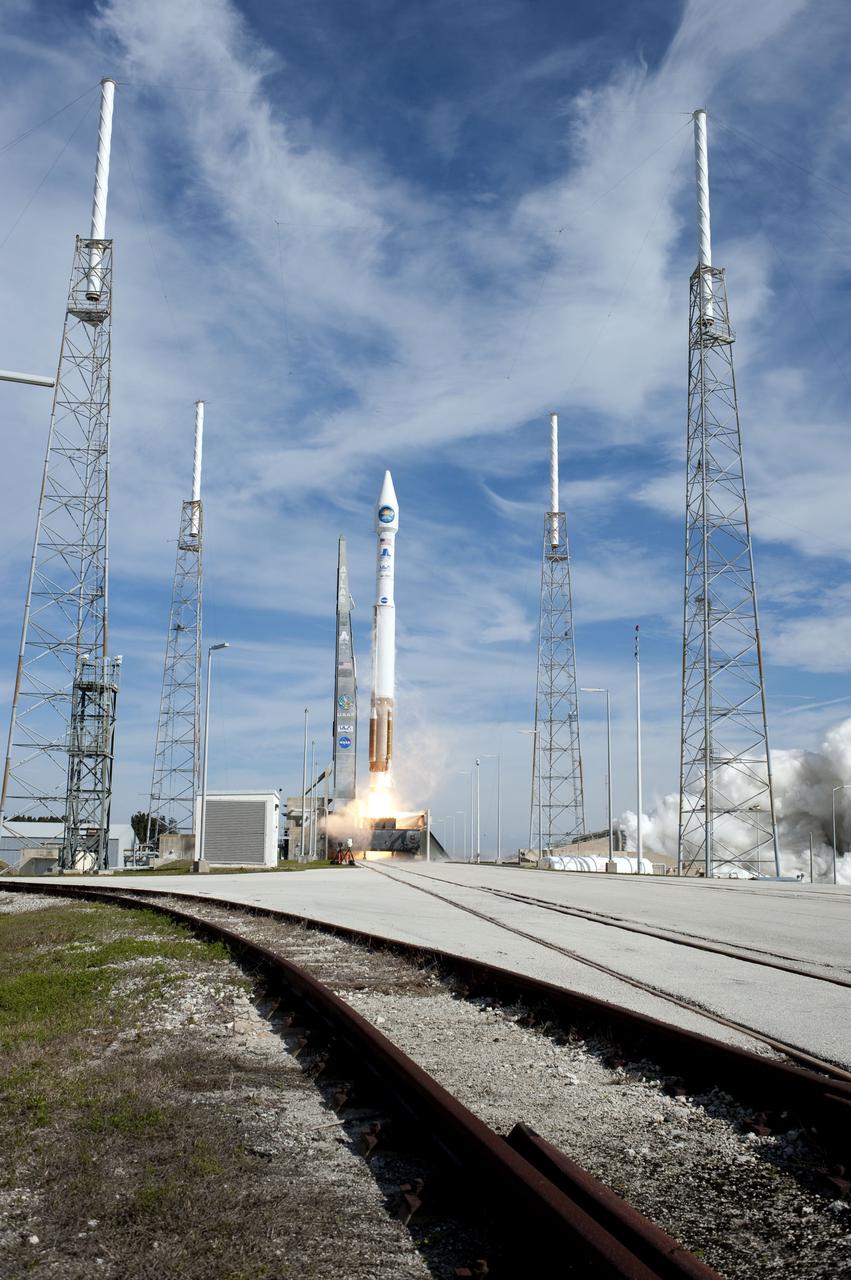
CAPE CANAVERAL, Fla. – The United Launch Alliance Atlas V rocket carrying NASA's Solar Dynamics Observatory begins its slow climb to orbit from Launch Complex 41 on Cape Canaveral Air Force Station. Liftoff was at 10:23 a.m. EST Feb. 11. This is the 100th launch of a commercial Atlas_Centaur rocket. The observatory, known as SDO, is the first mission in NASA's Living With a Star Program and is designed to study the causes of solar variability and its impacts on Earth. The spacecraft's long-term measurements will give solar scientists in-depth information to help characterize the interior of the Sun, the Sun's magnetic field, the hot plasma of the solar corona, and the density of radiation that creates the ionosphere of the planets. The information will be used to create better forecasts of space weather needed to protect the aircraft, satellites and astronauts living and working in space. For information on SDO, visit http:__www.nasa.gov_sdo. Photo credit: NASA_Sandra Joseph and Tony Gray

CAPE CANAVERAL, Fla. – An exhaust cloud builds at Launch Complex 37 on Cape Canaveral Air Force Station in Florida as the United Launch Alliance Delta IV rocket carrying NASA's GOES-P meteorological satellite lifts off at 6:57 p.m. EST. GOES-P, the latest Geostationary Operational Environmental Satellite, was developed by NASA for the National Oceanic and Atmospheric Administration, or NOAA. The GOES-P spacecraft will be placed in a 22,300-mile-high geosynchronous orbit where it will appear to hover over a single point on Earth. The spacecraft is outfitted with a complex suite of observation instruments and cameras so it can accurately report on weather and climate conditions on Earth. For information on GOES-P, visit http:__www.nasa.gov_mission_pages_GOES-P_main_index.html. Photo credit: NASA_Sandra Joseph and Tony Gray
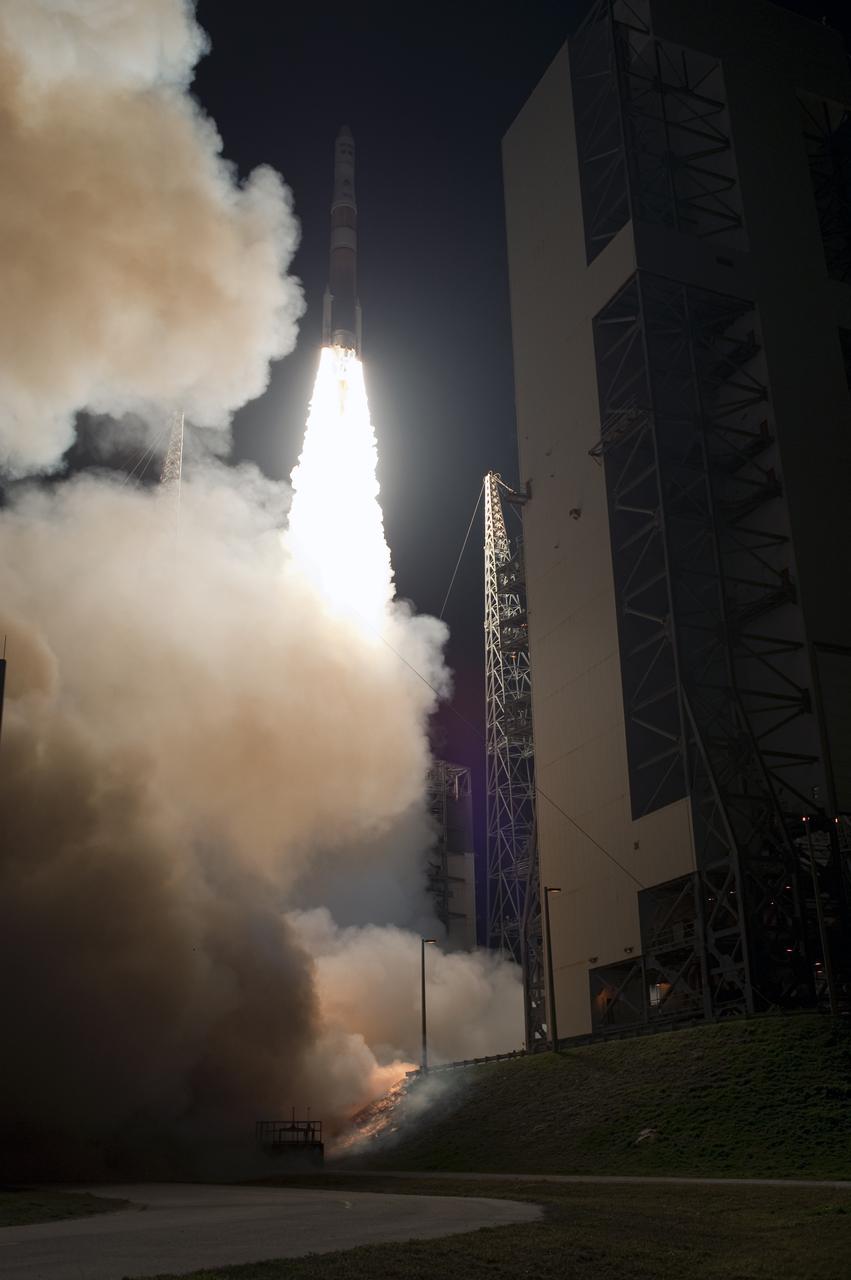
CAPE CANAVERAL, Fla. – The United Launch Alliance Delta IV rocket carrying NASA's GOES-P meteorological satellite races to orbit from Launch Complex 37 on Cape Canaveral Air Force Station in Florida. Liftoff was at 6:57 p.m. EST. GOES-P, the latest Geostationary Operational Environmental Satellite, was developed by NASA for the National Oceanic and Atmospheric Administration, or NOAA. The GOES-P spacecraft will be placed in a 22,300-mile-high geosynchronous orbit where it will appear to hover over a single point on Earth. The spacecraft is outfitted with a complex suite of observation instruments and cameras so it can accurately report on weather and climate conditions on Earth. For information on GOES-P, visit http:__www.nasa.gov_mission_pages_GOES-P_main_index.html. Photo credit: NASA_Sandra Joseph and Tony Gray
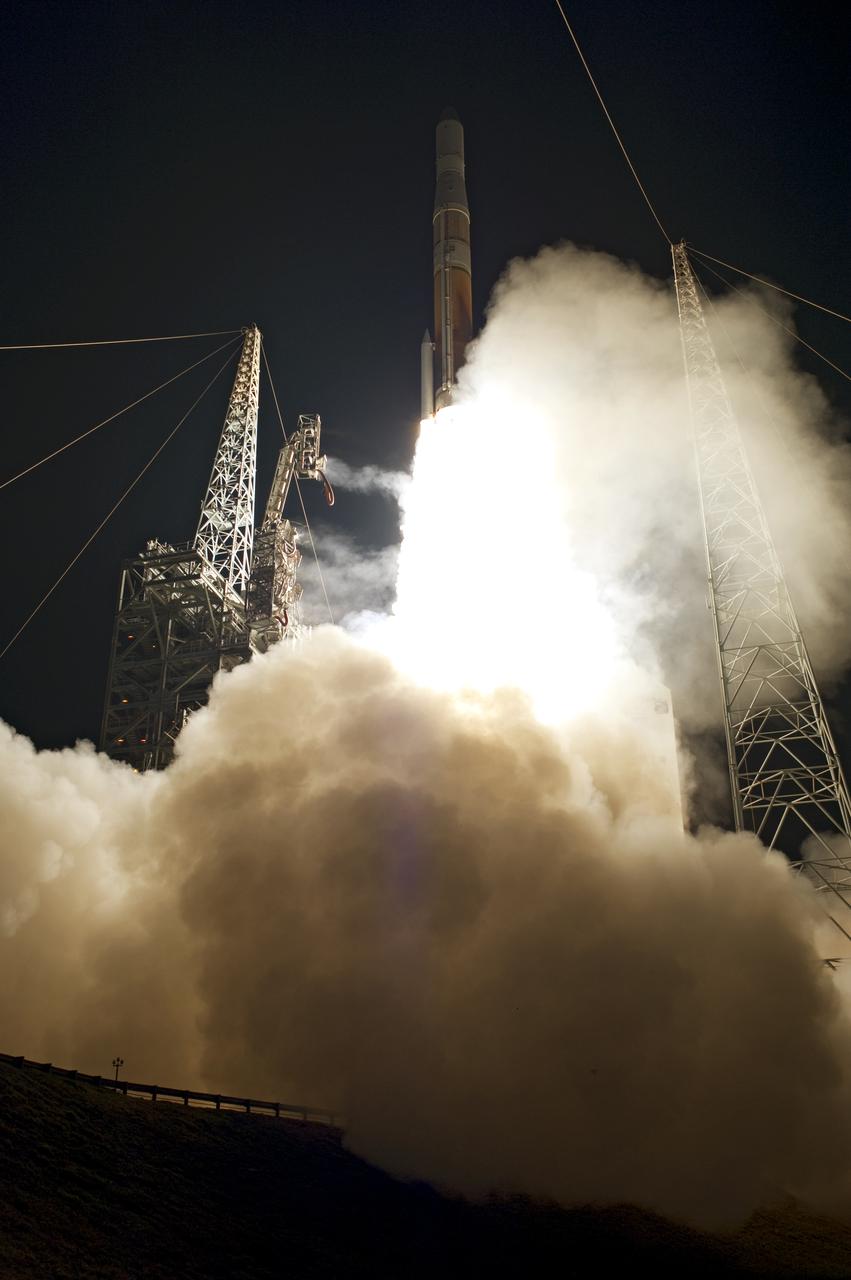
CAPE CANAVERAL, Fla. – A United Launch Alliance Delta IV rocket lifts off between the towers of the lightning protection system at Launch Complex 37 on Cape Canaveral Air Force Station at 6:57 p.m. EST carrying the GOES-P satellite to orbit. GOES-P, the latest Geostationary Operational Environmental Satellite, was developed by NASA for the National Oceanic and Atmospheric Administration, or NOAA. The GOES-P spacecraft will be placed in a 22,300-mile-high geosynchronous orbit where it will appear to hover over a single point on Earth. The spacecraft is outfitted with a complex suite of observation instruments and cameras so it can accurately report on weather and climate conditions on Earth. For information on GOES-P, visit http:__www.nasa.gov_mission_pages_GOES-P_main_index.html. Photo credit: NASA_Sandra Joseph and Tony Gray

CAPE CANAVERAL, Fla. – Liftoff of the United Launch Alliance Delta IV rocket carrying NASA's GOES-P meteorological satellite is reflected in the water near Launch Complex 37 on Cape Canaveral Air Force Station in Florida. Launch was at 6:57 p.m. EST. GOES-P, the latest Geostationary Operational Environmental Satellite, was developed by NASA for the National Oceanic and Atmospheric Administration, or NOAA. The GOES-P spacecraft will be placed in a 22,300-mile-high geosynchronous orbit where it will appear to hover over a single point on Earth. The spacecraft is outfitted with a complex suite of observation instruments and cameras so it can accurately report on weather and climate conditions on Earth. For information on GOES-P, visit http:__www.nasa.gov_mission_pages_GOES-P_main_index.html. Photo credit: NASA_Sandra Joseph and Tony Gray

CAPE CANAVERAL, Fla. – The United Launch Alliance Atlas V rocket carrying NASA's Solar Dynamics Observatory heads into the 'wild blue yonder' from Launch Complex 41 on Cape Canaveral Air Force Station. Launch was at 10:23 a.m. EST Feb. 11. This is the 100th launch of a commercial Atlas_Centaur rocket. The observatory, known as SDO, is the first mission in NASA's Living With a Star Program and is designed to study the causes of solar variability and its impacts on Earth. The spacecraft's long-term measurements will give solar scientists in-depth information to help characterize the interior of the Sun, the Sun's magnetic field, the hot plasma of the solar corona, and the density of radiation that creates the ionosphere of the planets. The information will be used to create better forecasts of space weather needed to protect the aircraft, satellites and astronauts living and working in space. For information on SDO, visit http:__www.nasa.gov_sdo. Photo credit: NASA_Sandra Joseph and Tony Gray
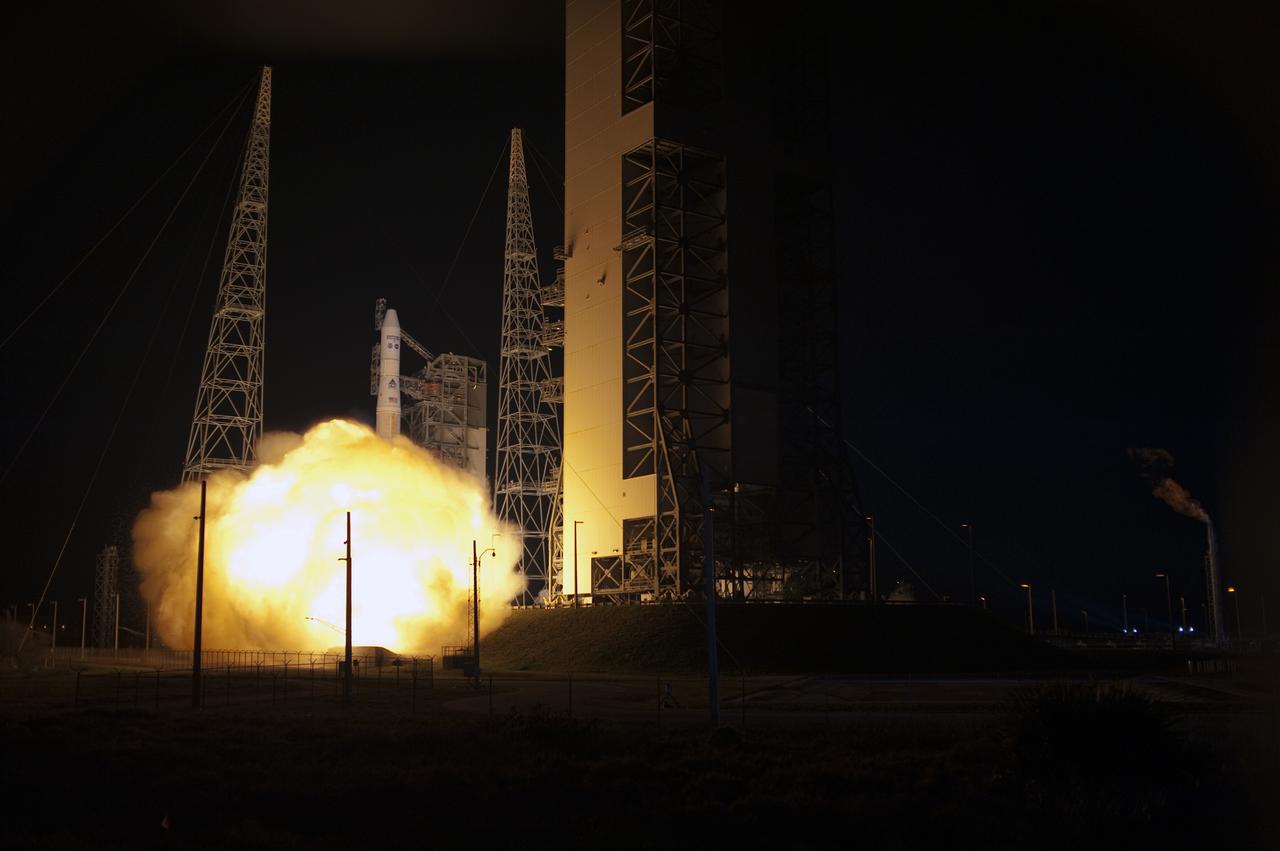
CAPE CANAVERAL, Fla. – The base of the United Launch Alliance Delta IV rocket carrying NASA's GOES-P meteorological satellite is engulfed in a brilliant exhaust cloud as it lifts off Launch Complex 37 on Cape Canaveral Air Force Station in Florida at 6:57 p.m. EST. GOES-P, the latest Geostationary Operational Environmental Satellite, was developed by NASA for the National Oceanic and Atmospheric Administration, or NOAA. The GOES-P spacecraft will be placed in a 22,300-mile-high geosynchronous orbit where it will appear to hover over a single point on Earth. The spacecraft is outfitted with a complex suite of observation instruments and cameras so it can accurately report on weather and climate conditions on Earth. For information on GOES-P, visit http:__www.nasa.gov_mission_pages_GOES-P_main_index.html. Photo credit: NASA_Sandra Joseph and Tony Gray
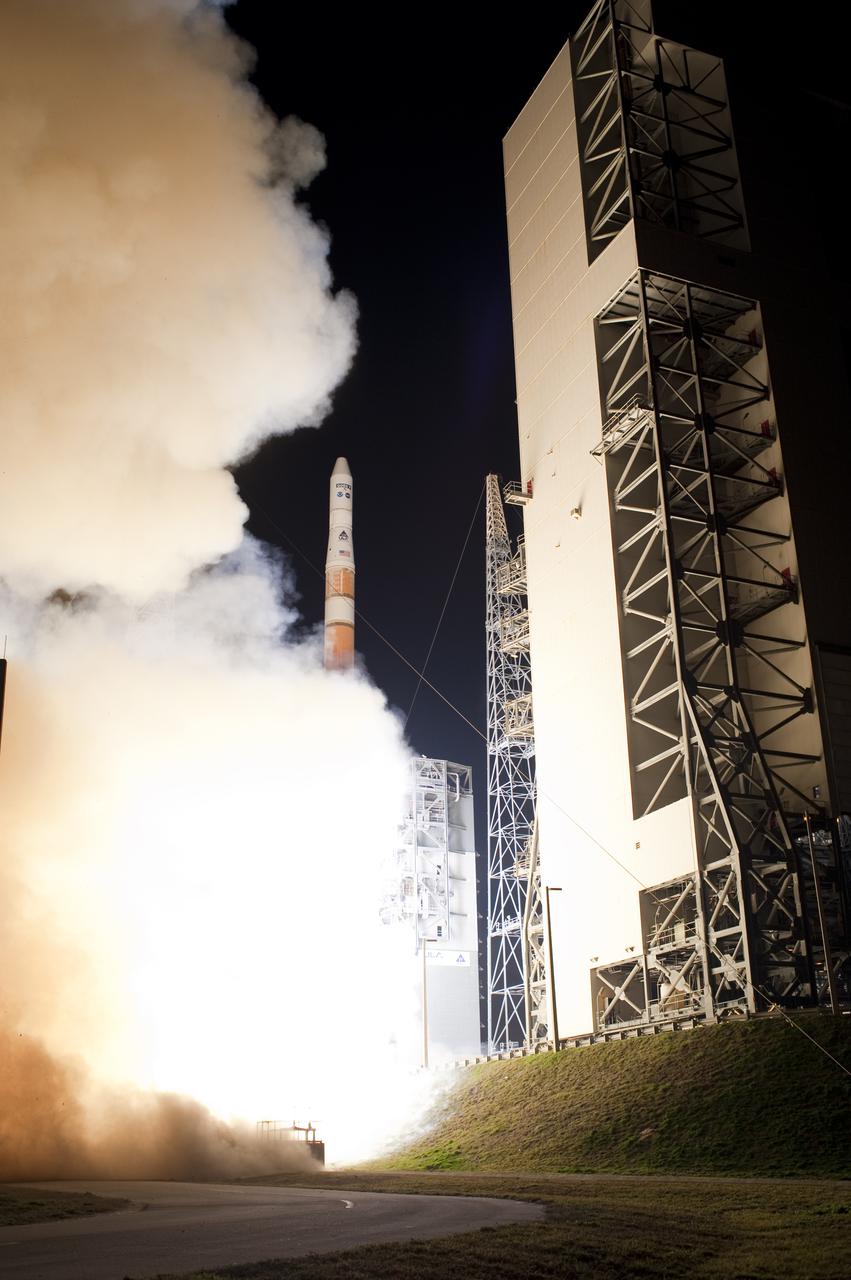
CAPE CANAVERAL, Fla. – An exhaust cloud builds at Launch Complex 37 on Cape Canaveral Air Force Station in Florida as the United Launch Alliance Delta IV rocket carrying NASA's GOES-P meteorological satellite lifts off at 6:57 p.m. EST. GOES-P, the latest Geostationary Operational Environmental Satellite, was developed by NASA for the National Oceanic and Atmospheric Administration, or NOAA. The GOES-P spacecraft will be placed in a 22,300-mile-high geosynchronous orbit where it will appear to hover over a single point on Earth. The spacecraft is outfitted with a complex suite of observation instruments and cameras so it can accurately report on weather and climate conditions on Earth. For information on GOES-P, visit http:__www.nasa.gov_mission_pages_GOES-P_main_index.html. Photo credit: NASA_Sandra Joseph and Tony Gray
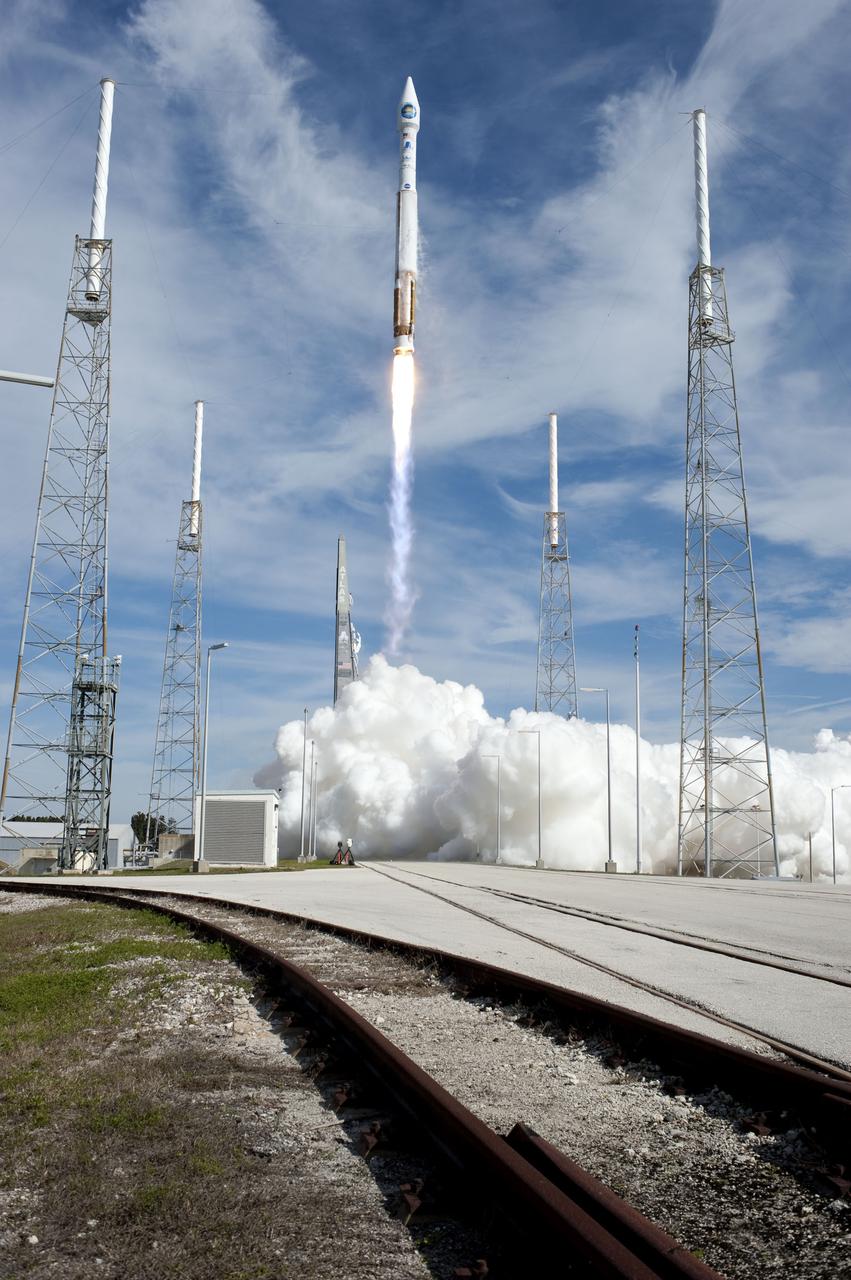
CAPE CANAVERAL, Fla. – A United Launch Alliance Atlas V rocket lifts off between the towers of the lightning protection system at Launch Complex 41 on Cape Canaveral Air Force Station at 10:23 a.m. EST Feb. 11 carrying NASA's Solar Dynamics Observatory to orbit. This is the 100th launch of a commercial Atlas_Centaur rocket. The observatory, known as SDO, is the first mission in NASA's Living With a Star Program and is designed to study the causes of solar variability and its impacts on Earth. The spacecraft's long-term measurements will give solar scientists in-depth information to help characterize the interior of the Sun, the Sun's magnetic field, the hot plasma of the solar corona, and the density of radiation that creates the ionosphere of the planets. The information will be used to create better forecasts of space weather needed to protect the aircraft, satellites and astronauts living and working in space. For information on SDO, visit http:__www.nasa.gov_sdo. Photo credit: NASA_Sandra Joseph and Tony Gray
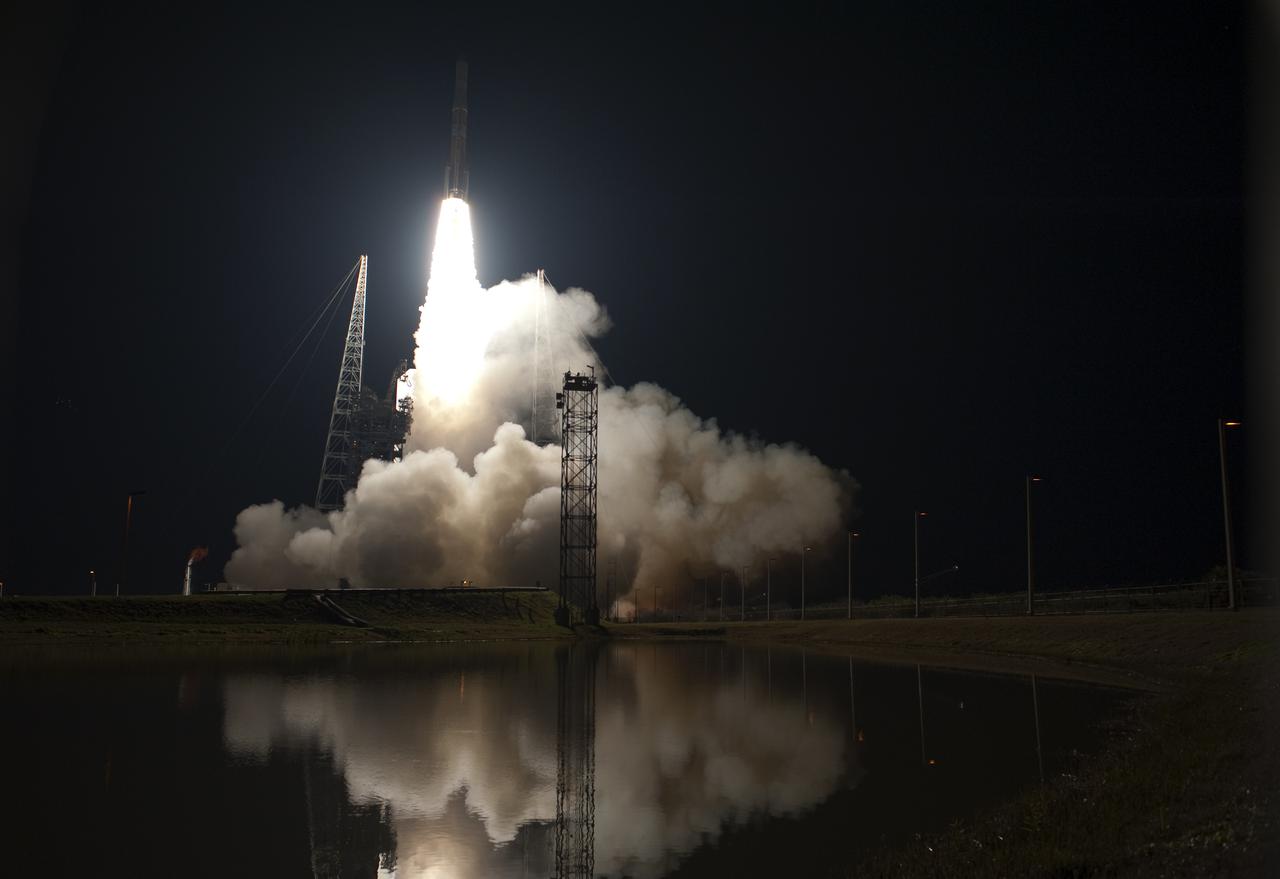
CAPE CANAVERAL, Fla. – The United Launch Alliance Delta IV rocket carrying NASA's GOES-P meteorological satellite clears the towers on Launch Complex 37 on Cape Canaveral Air Force Station in Florida. Liftoff was at 6:57 p.m. EST. GOES-P, the latest Geostationary Operational Environmental Satellite, was developed by NASA for the National Oceanic and Atmospheric Administration, or NOAA. The GOES-P spacecraft will be placed in a 22,300-mile-high geosynchronous orbit where it will appear to hover over a single point on Earth. The spacecraft is outfitted with a complex suite of observation instruments and cameras so it can accurately report on weather and climate conditions on Earth. For information on GOES-P, visit http:__www.nasa.gov_mission_pages_GOES-P_main_index.html. Photo credit: NASA_Sandra Joseph and Tony Gray
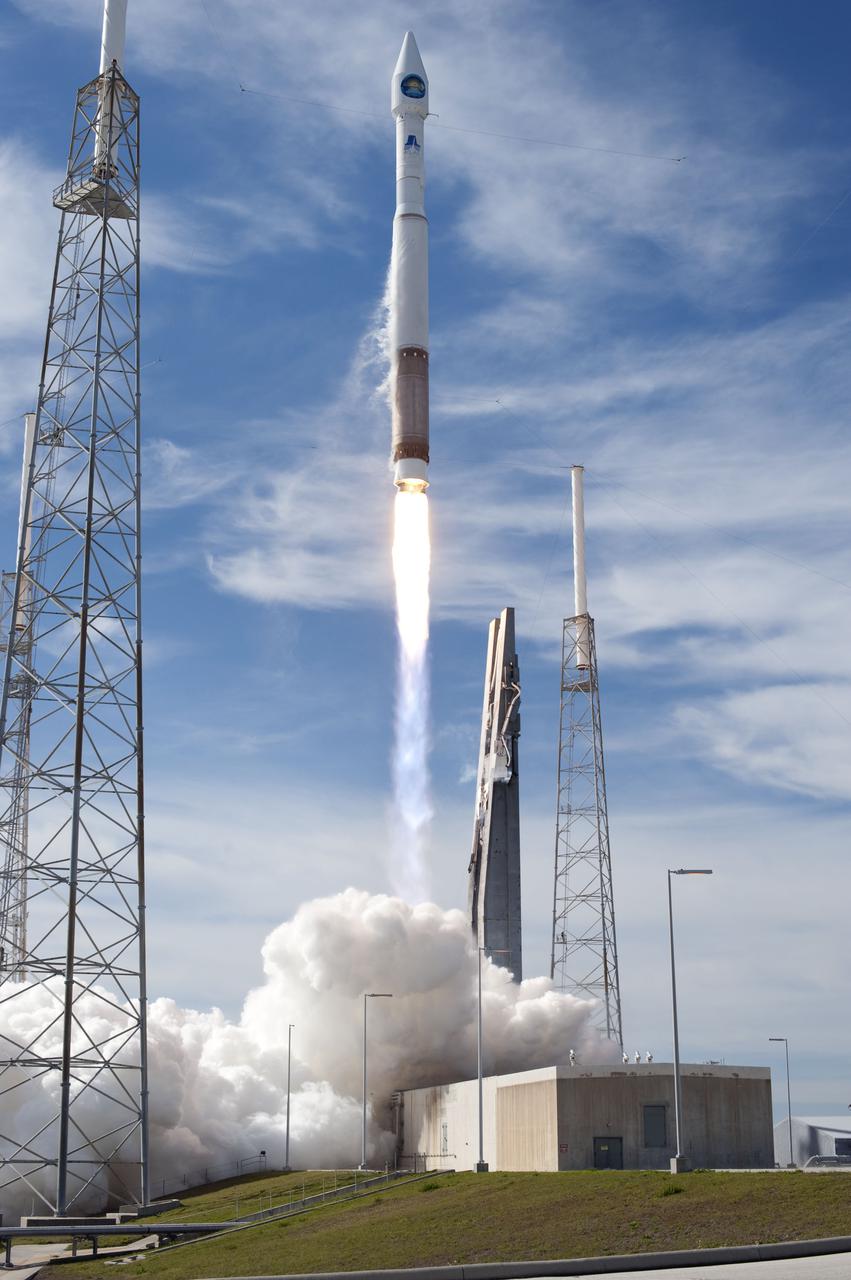
CAPE CANAVERAL, Fla. – A United Launch Alliance Atlas V rocket carrying NASA's Solar Dynamics Observatory begins its climb to orbit on a crisp Florida morning. Liftoff from Launch Complex 41 on Cape Canaveral Air Force Station was at 10:23 a.m. EST Feb. 11. This is the 100th launch of a commercial Atlas_Centaur rocket. The observatory, known as SDO, is the first mission in NASA's Living With a Star Program and is designed to study the causes of solar variability and its impacts on Earth. The spacecraft's long-term measurements will give solar scientists in-depth information to help characterize the interior of the Sun, the Sun's magnetic field, the hot plasma of the solar corona, and the density of radiation that creates the ionosphere of the planets. The information will be used to create better forecasts of space weather needed to protect the aircraft, satellites and astronauts living and working in space. For information on SDO, visit http:__www.nasa.gov_sdo. Photo credit: NASA_Sandra Joseph and Tony Gray
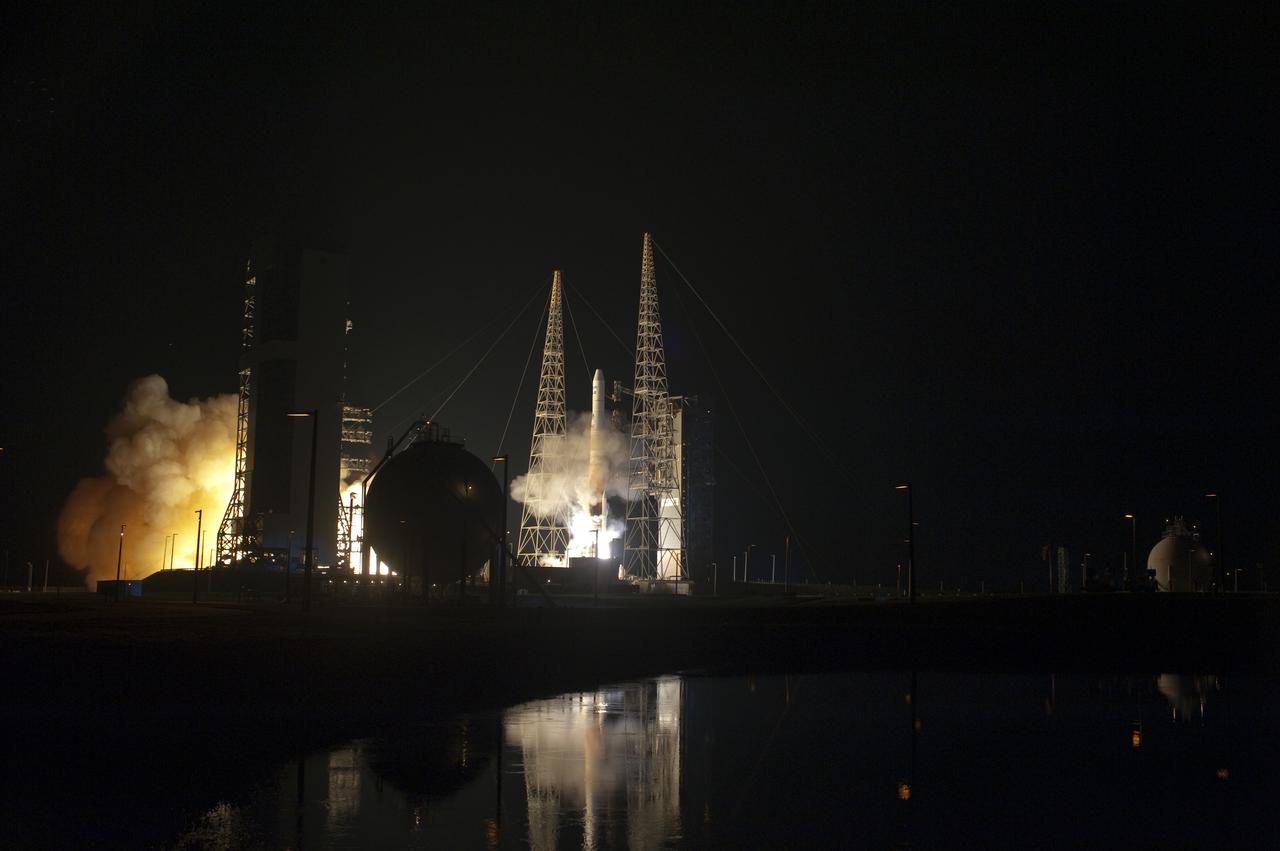
CAPE CANAVERAL, Fla. – On Launch Complex 37 on Cape Canaveral Air Force Station in Florida, the engines ignite on the United Launch Alliance Delta IV rocket carrying NASA's GOES-P meteorological satellite. Liftoff was at 6:57 p.m. EST. GOES-P, the latest Geostationary Operational Environmental Satellite, was developed by NASA for the National Oceanic and Atmospheric Administration, or NOAA. The GOES-P spacecraft will be placed in a 22,300-mile-high geosynchronous orbit where it will appear to hover over a single point on Earth. The spacecraft is outfitted with a complex suite of observation instruments and cameras so it can accurately report on weather and climate conditions on Earth. For information on GOES-P, visit http:__www.nasa.gov_mission_pages_GOES-P_main_index.html. Photo credit: NASA_Sandra Joseph and Tony Gray

KENNEDY SPACE CENTER, FLA. -- The water near Launch Pad 39A at NASA's Kennedy Space Center provides a mirror image of space shuttle Endeavour's launch on the STS-123 mission. Liftoff was on time at 2:28 a.m. EDT. Endeavour's crew will make a record-breaking 16-day mission to the International Space Station and deliver the first section of the Japan Aerospace Exploration Agency's Kibo laboratory and the Canadian Space Agency's two-armed robotic system, Dextre. Photo credit: NASA_Sandra Joseph, Tony Gray, Robert Murray