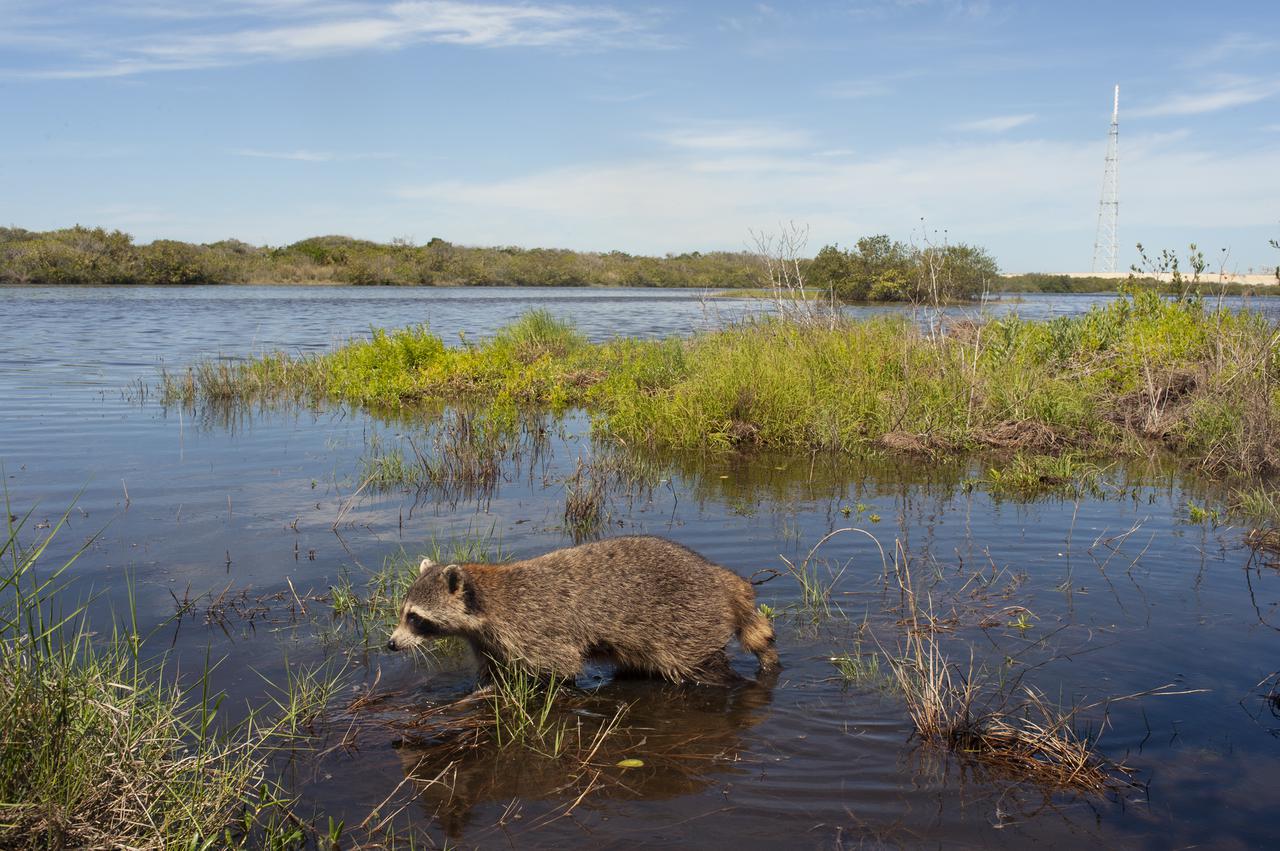
CAPE CANAVERAL, Fla. – A raccoon wades in one of the waterways at NASA's Kennedy Space Center in Florida. Kennedy Space Center shares a boundary with the Merritt Island National Wildlife Refuge. The Refuge encompasses 92,000 acres that are a habitat for more than 331 species of birds, 31 mammals, 117 fishes, and 65 amphibians and reptiles. The marshes and open water of the refuge provide wintering areas for 23 species of migratory waterfowl, as well as a year-round home for great blue herons, great egrets, wood storks, cormorants, brown pelicans and other species of marsh and shore birds, as well as a variety of insects. For more information, visit: http:__www.fws.gov_merrittisland Photo credit: NASA_Tony Gray
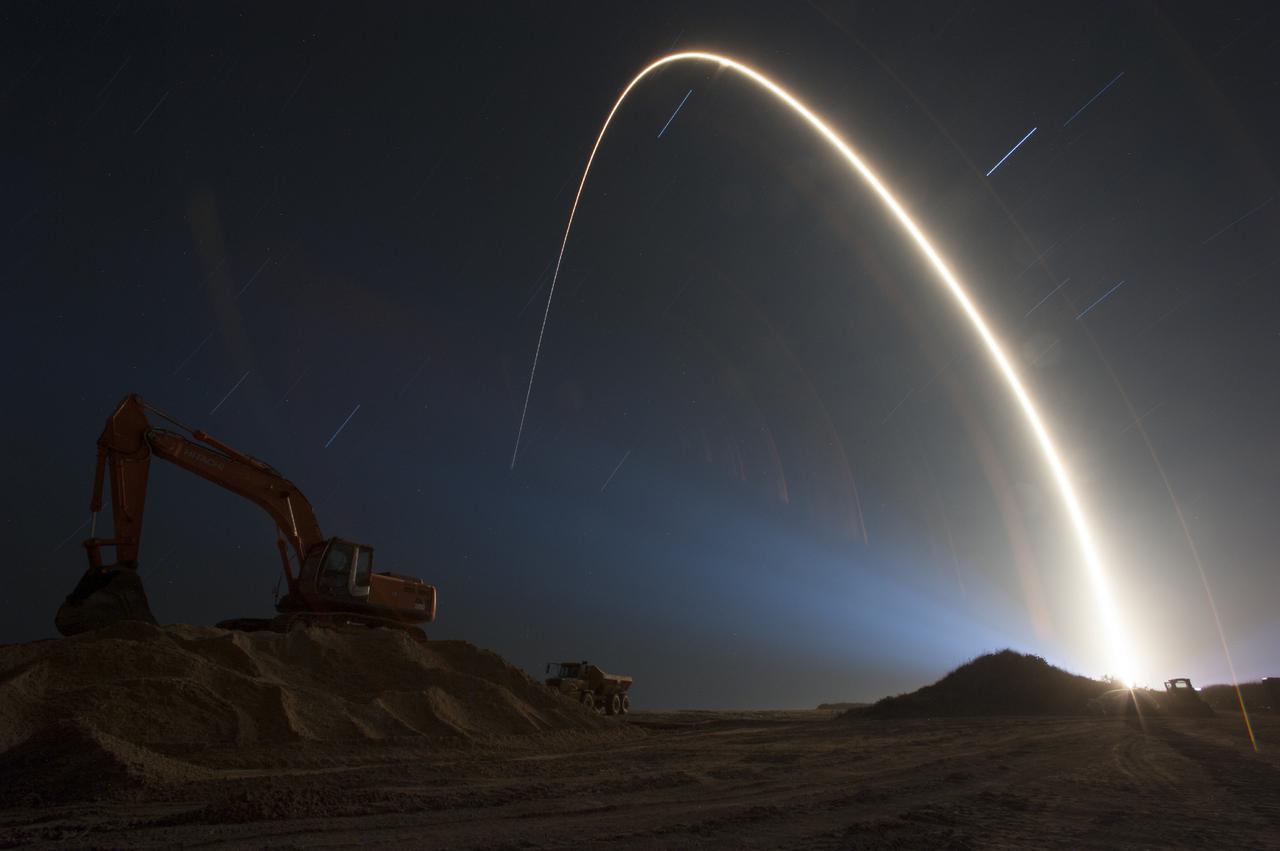
CAPE CANAVERAL, Fla. – In this time lapse photograph, a United Launch Alliance Atlas V rocket lifts off from Space Launch Complex 41 illuminating a beach restoration site at NASA's Kennedy Space Center in Florida. Liftoff was at 9:33 p.m. EST boosting the agency's Tracking and Data Relay Satellite, or TDRS-L, spacecraft to Earth orbit. The TDRS-L spacecraft is the second of three new satellites designed to ensure vital operational continuity for NASA by expanding the lifespan of the Tracking and Data Relay Satellite System TDRSS fleet, which consists of eight satellites in geosynchronous orbit. The spacecraft provide tracking, telemetry, command and high bandwidth data return services for numerous science and human exploration missions orbiting Earth. These include NASA's Hubble Space Telescope and the International Space Station. TDRS-L has a high-performance solar panel designed for more spacecraft power to meet the growing S-band communications requirements. TDRSS is one of NASA Space Communication and Navigation’s SCaN three networks providing space communications to NASA’s missions. For more information more about TDRS-L, visit: http:__www.nasa.gov_tdrs To learn more about SCaN, visit: www.nasa.gov_scan For more on beach restoration at Kennedy visit: http:__www.nasa.gov_centers_kennedy_about_sustainability_beach_erosion.html Photo credit: NASA_Tony Gray
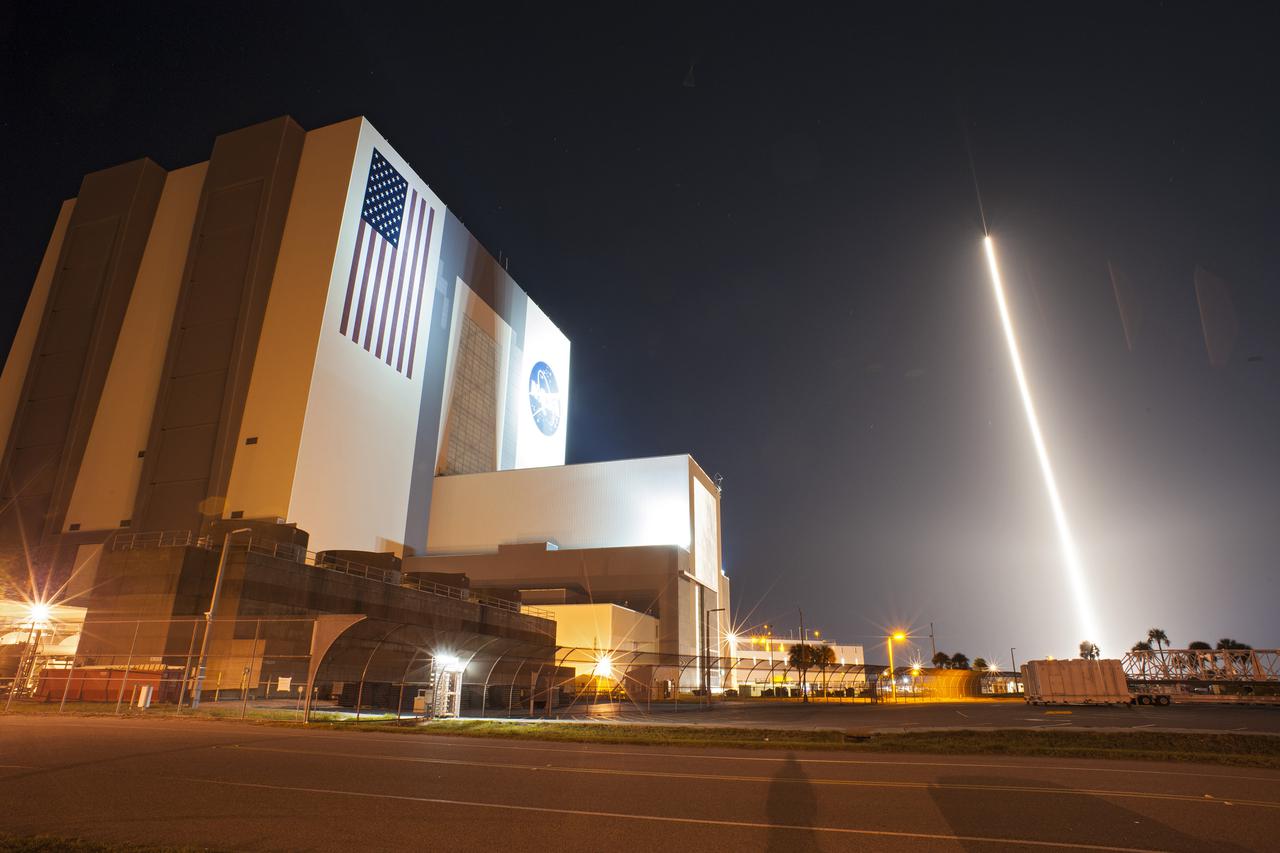
CAPE CANAVERAL, Fla. -- The United Launch Alliance Atlas V 401 rocket carrying NASA's Tracking and Data Relay Satellite-K, TDRS-K, streaks past the Vehicle Assembly Building and Launch Complex 39 at Kennedy Space Center in Florida after launching from Space Launch Complex 41 at 8:48 p.m. EST. The TDRS-K spacecraft is part of the next-generation series in the Tracking and Data Relay Satellite System, a constellation of space-based communication satellites providing tracking, telemetry, command and high-bandwidth data return services. For more information, visit http:__www.nasa.gov_mission_pages_tdrs_index.html. Photo credit: NASA_Tony Gray
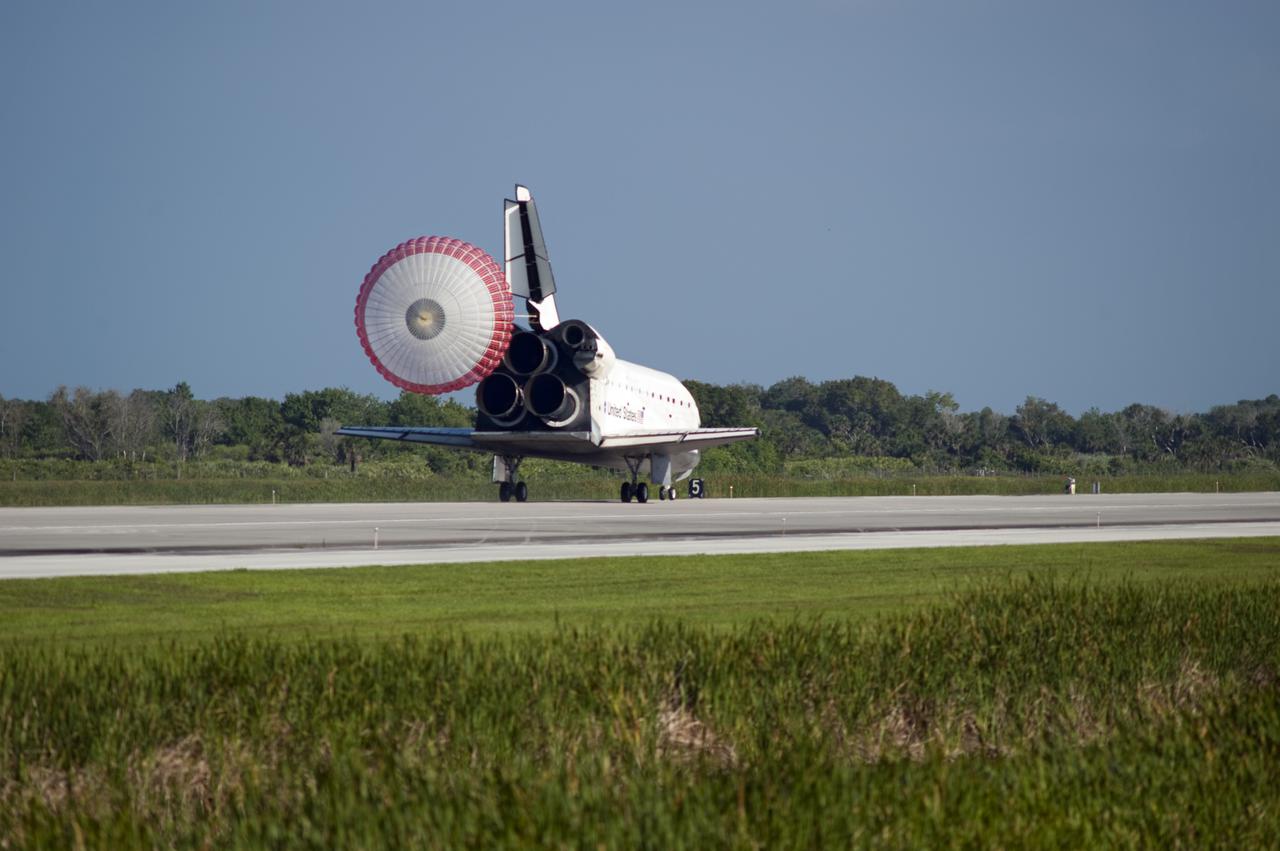
CAPE CANAVERAL, Fla. - Space shuttle Atlantis' drag chute slows the vehicle as it rolls to a stop on Runway 33 at the Shuttle Landing Facility at NASA's Kennedy Space Center in Florida. Landing was at 8:48 a.m. EDT, completing the 12-day STS-132 mission to the International Space Station. The six-member STS-132 crew carried the Russian-built Mini Research Module-1 to the International Space Station. STS-132 is the 34th shuttle mission to the station, the 132nd shuttle mission overall and the last planned flight for Atlantis. For information on the STS-132 mission and crew, visit www.nasa.gov_mission_pages_shuttle_shuttlemissions_sts132_index.html. Photo credit: NASA_Tony Gray
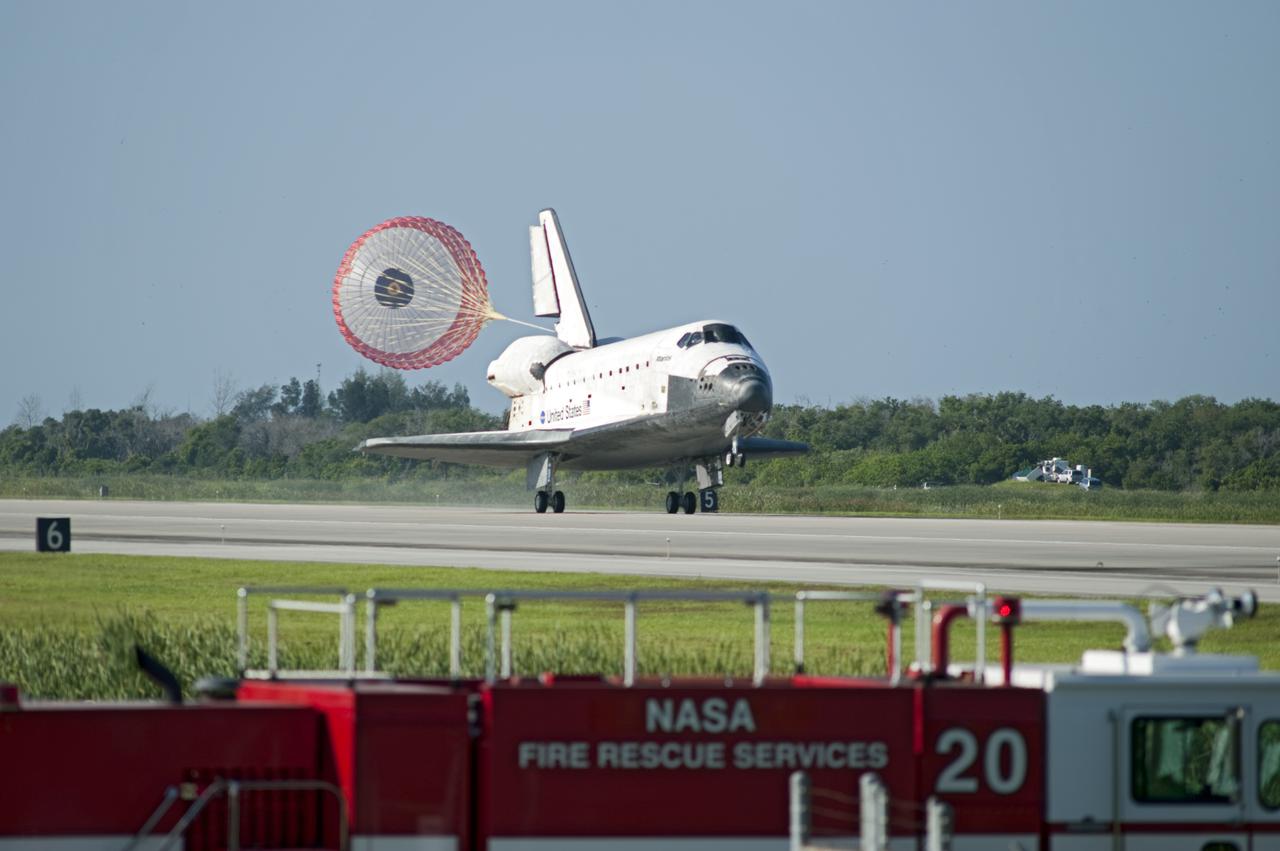
CAPE CANAVERAL, Fla. - NASA's Fire Rescue Services vehicle, part of the long convoy that meets a space shuttle upon its return from space, stands by as Atlantis rolls to a stop on Runway 33 at the Shuttle Landing Facility at NASA's Kennedy Space Center in Florida. Landing was at 8:48 a.m. EDT, completing the 12-day STS-132 mission to the International Space Station. The six-member STS-132 crew carried the Russian-built Mini Research Module-1 to the International Space Station. STS-132 is the 34th shuttle mission to the station, the 132nd shuttle mission overall and the last planned flight for Atlantis. For information on the STS-132 mission and crew, visit www.nasa.gov_mission_pages_shuttle_shuttlemissions_sts132_index.html. Photo credit: NASA_Tony Gray
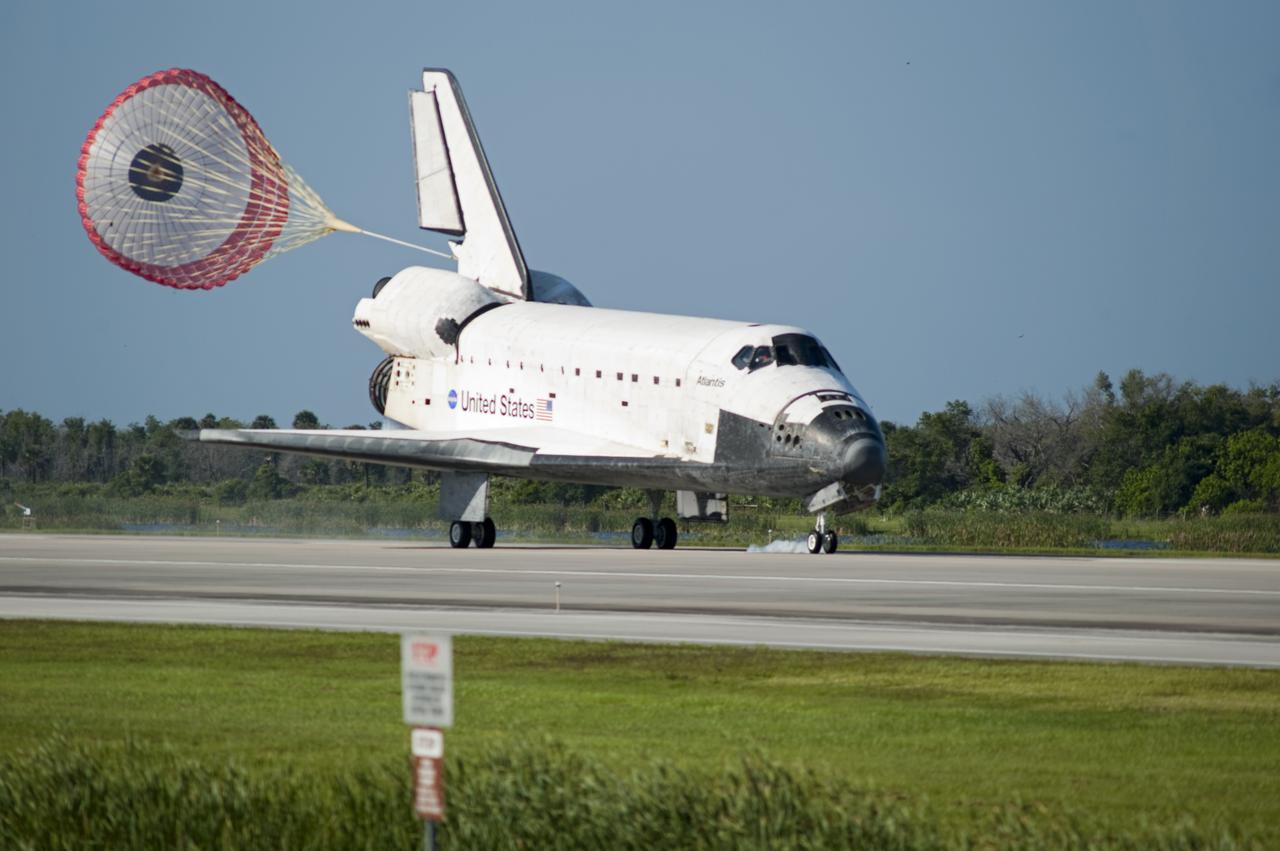
CAPE CANAVERAL, Fla. - Space shuttle Atlantis' drag chute slows the vehicle as it rolls to a stop on Runway 33 at the Shuttle Landing Facility at NASA's Kennedy Space Center in Florida. Landing was at 8:48 a.m. EDT, completing the 12-day STS-132 mission to the International Space Station. The six-member STS-132 crew carried the Russian-built Mini Research Module-1 to the International Space Station. STS-132 is the 34th shuttle mission to the station, the 132nd shuttle mission overall and the last planned flight for Atlantis. For information on the STS-132 mission and crew, visit www.nasa.gov_mission_pages_shuttle_shuttlemissions_sts132_index.html. Photo credit: NASA_Tony Gray
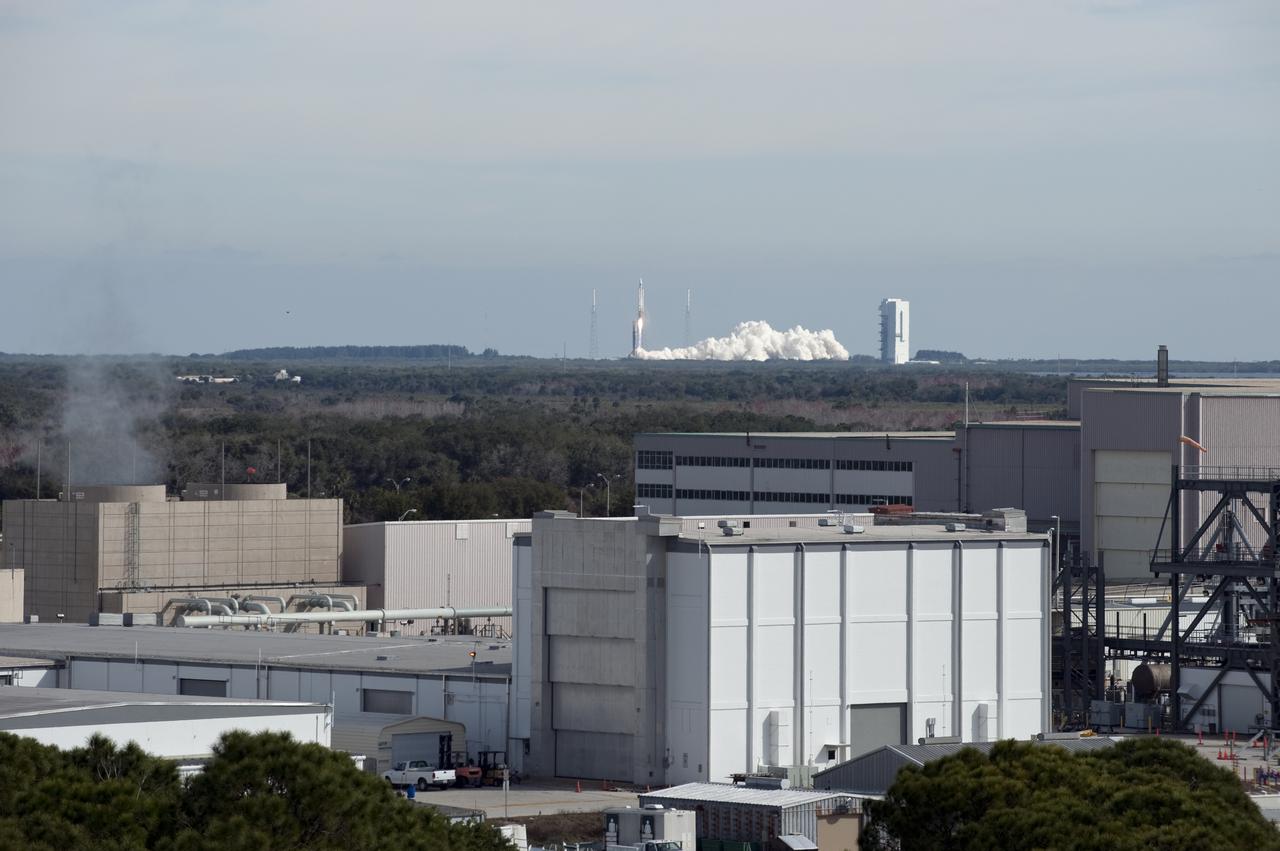
CAPE CANAVERAL, Fla. – A rooftop in the Industrial Area of NASA's Kennedy Space Center provides a bird's-eye view of the liftoff of the United Launch Alliance Atlas V rocket carrying NASA's Solar Dynamics Observatory from Launch Complex 41 on Cape Canaveral Air Force Station. Launch was at 10:23 a.m. EST Feb. 11. This is the 100th launch of a commercial Atlas_Centaur rocket. The observatory, known as SDO, is the first mission in NASA's Living With a Star Program and is designed to study the causes of solar variability and its impacts on Earth. The spacecraft's long-term measurements will give solar scientists in-depth information to help characterize the interior of the Sun, the Sun's magnetic field, the hot plasma of the solar corona, and the density of radiation that creates the ionosphere of the planets. The information will be used to create better forecasts of space weather needed to protect the aircraft, satellites and astronauts living and working in space. For information on SDO, visit http:__www.nasa.gov_sdo. Photo credit: NASA_Tony Gray
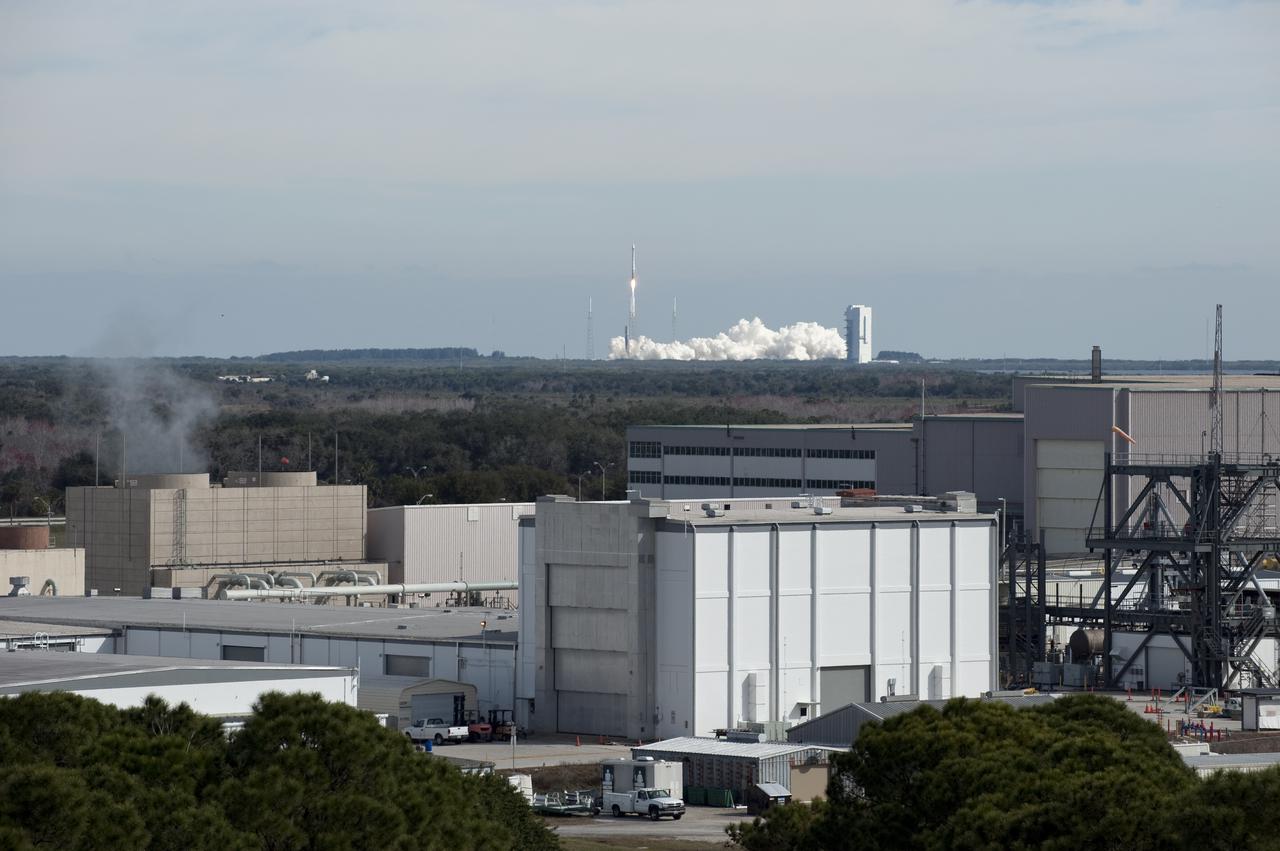
CAPE CANAVERAL, Fla. – This view shows the proximity of Launch Complex 41 on Cape Canaveral Air Force Station to the Industrial Area of NASA's Kennedy Space Center as a United Launch Alliance Atlas V rocket lifts off at 10:23 a.m. EST Feb. 11 carrying NASA's Solar Dynamics Observatory to orbit. This is the 100th launch of a commercial Atlas_Centaur rocket. The observatory, known as SDO, is the first mission in NASA's Living With a Star Program and is designed to study the causes of solar variability and its impacts on Earth. The spacecraft's long-term measurements will give solar scientists in-depth information to help characterize the interior of the Sun, the Sun's magnetic field, the hot plasma of the solar corona, and the density of radiation that creates the ionosphere of the planets. The information will be used to create better forecasts of space weather needed to protect the aircraft, satellites and astronauts living and working in space. For information on SDO, visit http:__www.nasa.gov_sdo. Photo credit: NASA_Tony Gray
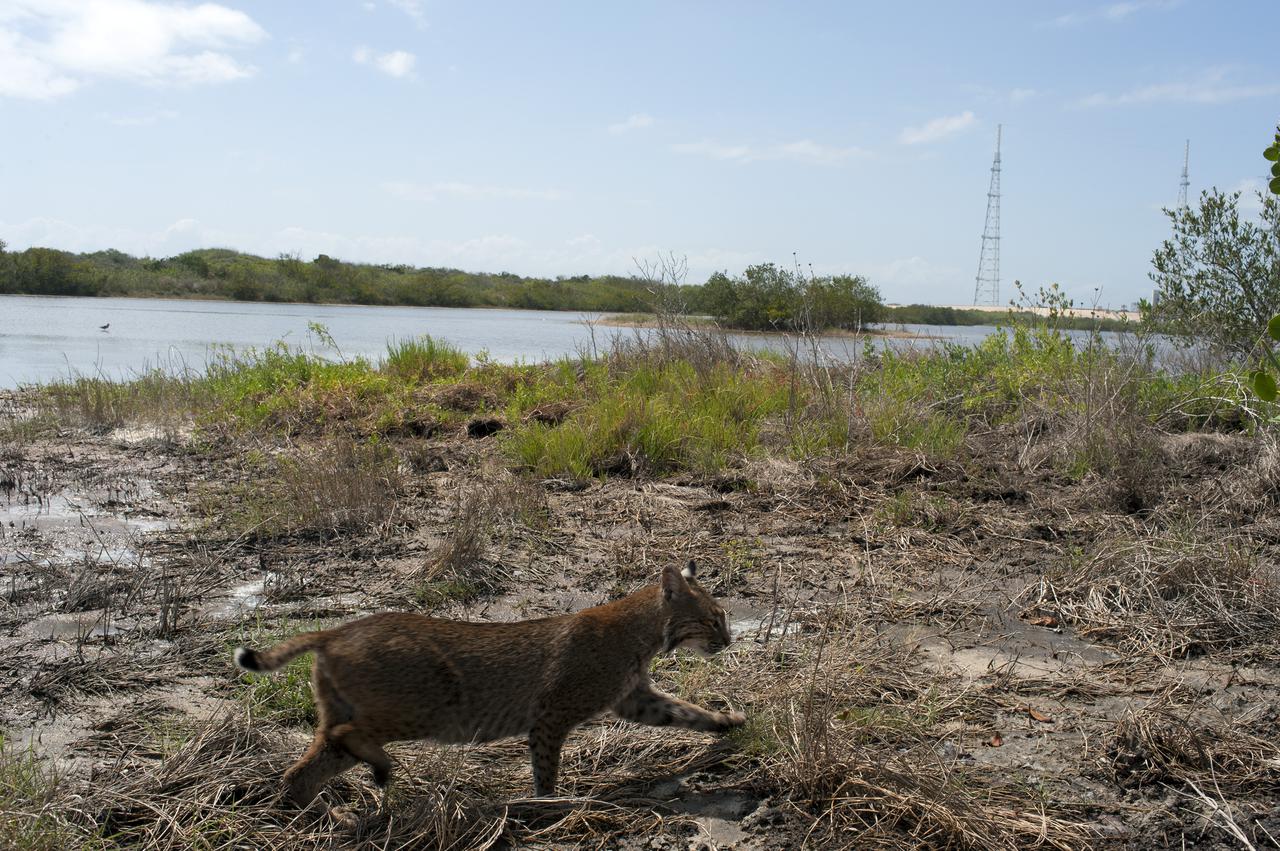
CAPE CANAVERAL, Fla. – A bobcat walks near a waterway at NASA's Kennedy Space Center in Florida. Kennedy Space Center shares a boundary with the Merritt Island National Wildlife Refuge. The Refuge encompasses 92,000 acres that are a habitat for more than 331 species of birds, 31 mammals, 117 fishes, and 65 amphibians and reptiles. The marshes and open water of the refuge provide wintering areas for 23 species of migratory waterfowl, as well as a year-round home for great blue herons, great egrets, wood storks, cormorants, brown pelicans and other species of marsh and shore birds, as well as a variety of insects. For more information, visit: http:__www.fws.gov_merrittisland Photo credit: NASA_Tony Gray
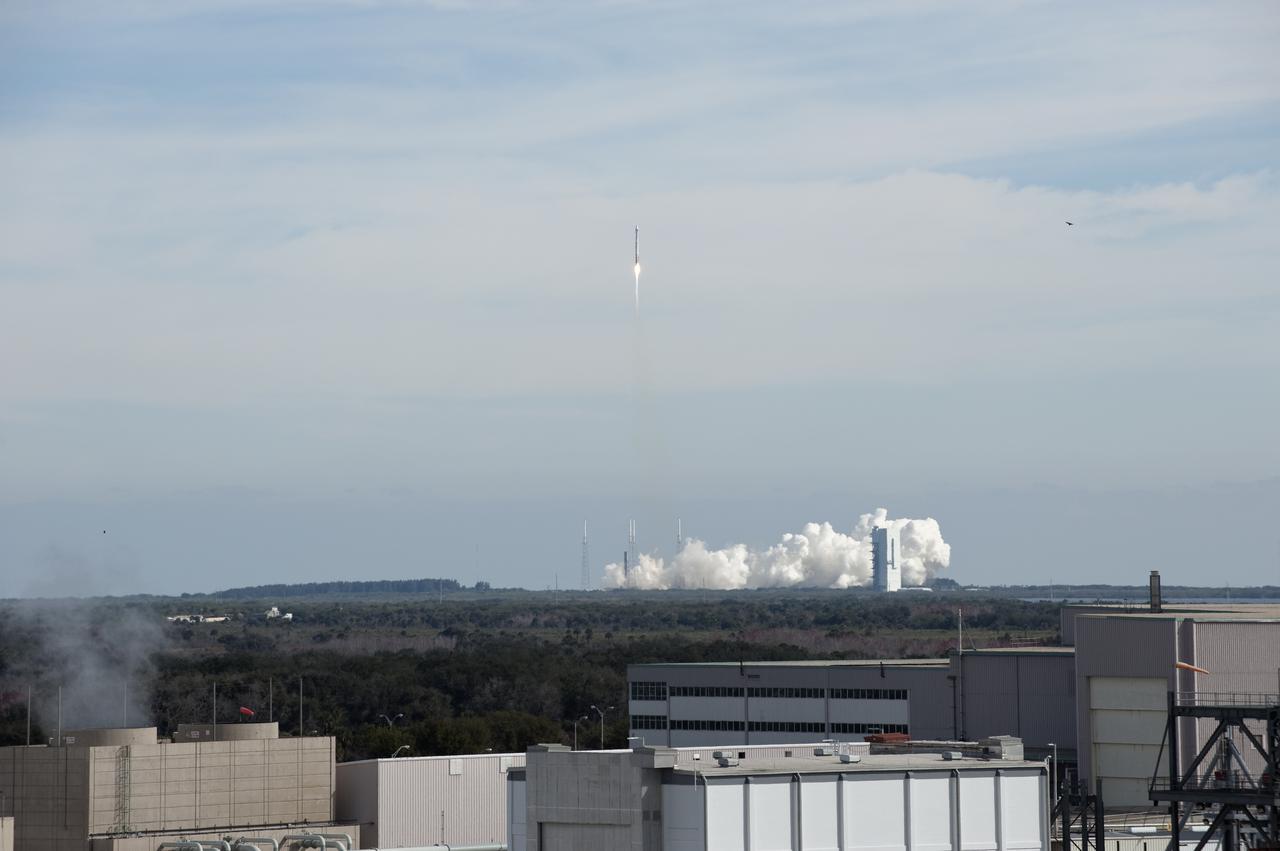
CAPE CANAVERAL, Fla. – Visibility of the launch of the United Launch Alliance Atlas V rocket carrying NASA's Solar Dynamics Observatory is good from a rooftop in the Industrial Area of NASA's Kennedy Space Center. Liftoff from Launch Complex 41 on Cape Canaveral Air Force Station was at 10:23 a.m. EST Feb. 11. This is the 100th launch of a commercial Atlas_Centaur rocket. The observatory, known as SDO, is the first mission in NASA's Living With a Star Program and is designed to study the causes of solar variability and its impacts on Earth. The spacecraft's long-term measurements will give solar scientists in-depth information to help characterize the interior of the Sun, the Sun's magnetic field, the hot plasma of the solar corona, and the density of radiation that creates the ionosphere of the planets. The information will be used to create better forecasts of space weather needed to protect the aircraft, satellites and astronauts living and working in space. For information on SDO, visit http:__www.nasa.gov_sdo. Photo credit: NASA_Tony Gray
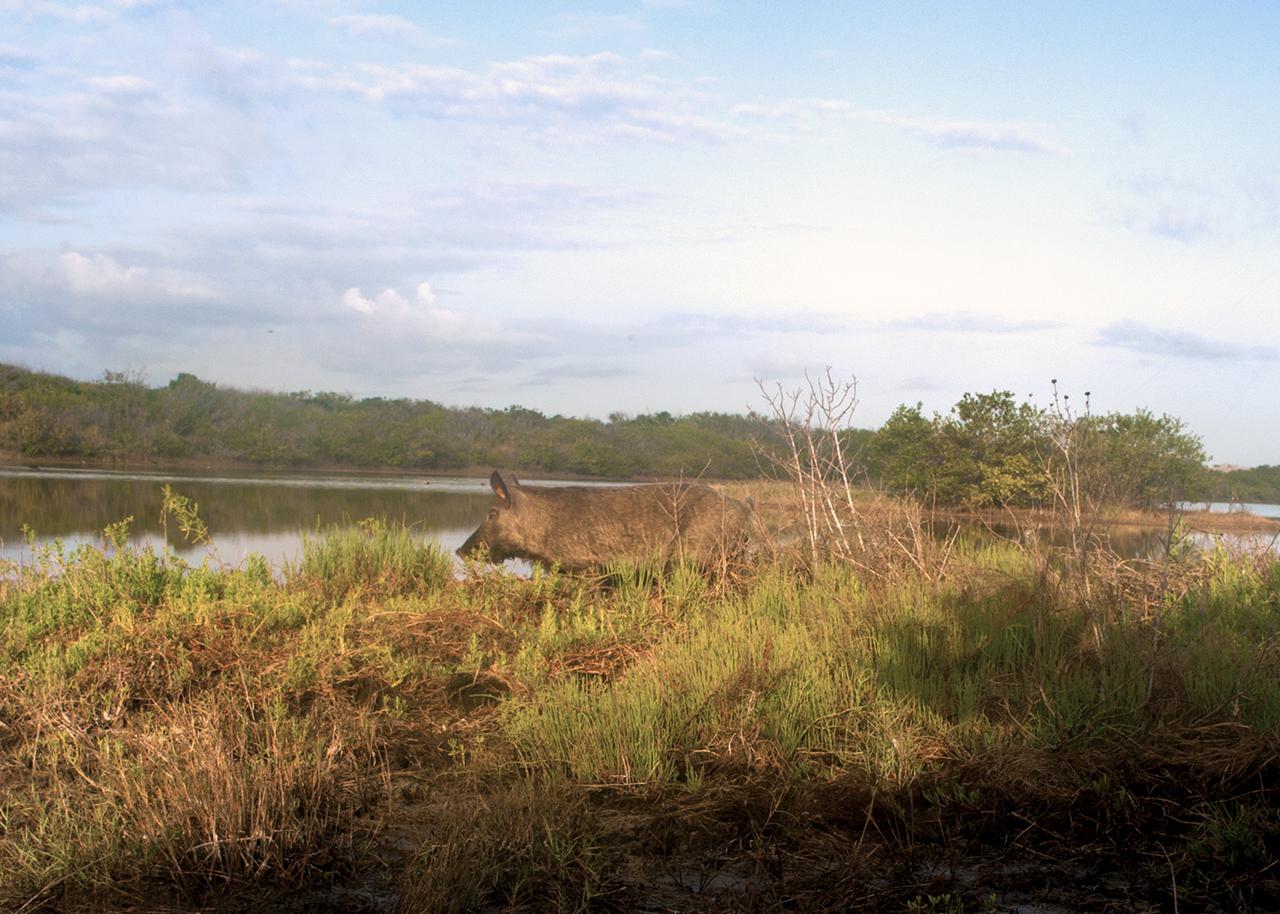
CAPE CANAVERAL, Fla. – A wild hog walks near a waterway at NASA's Kennedy Space Center in Florida. Kennedy Space Center shares a boundary with the Merritt Island National Wildlife Refuge. The Refuge encompasses 92,000 acres that are a habitat for more than 331 species of birds, 31 mammals, 117 fishes, and 65 amphibians and reptiles. The marshes and open water of the refuge provide wintering areas for 23 species of migratory waterfowl, as well as a year-round home for great blue herons, great egrets, wood storks, cormorants, brown pelicans and other species of marsh and shore birds, as well as a variety of insects. For more information, visit: http:__www.fws.gov_merrittisland Photo credit: NASA_Tony Gray
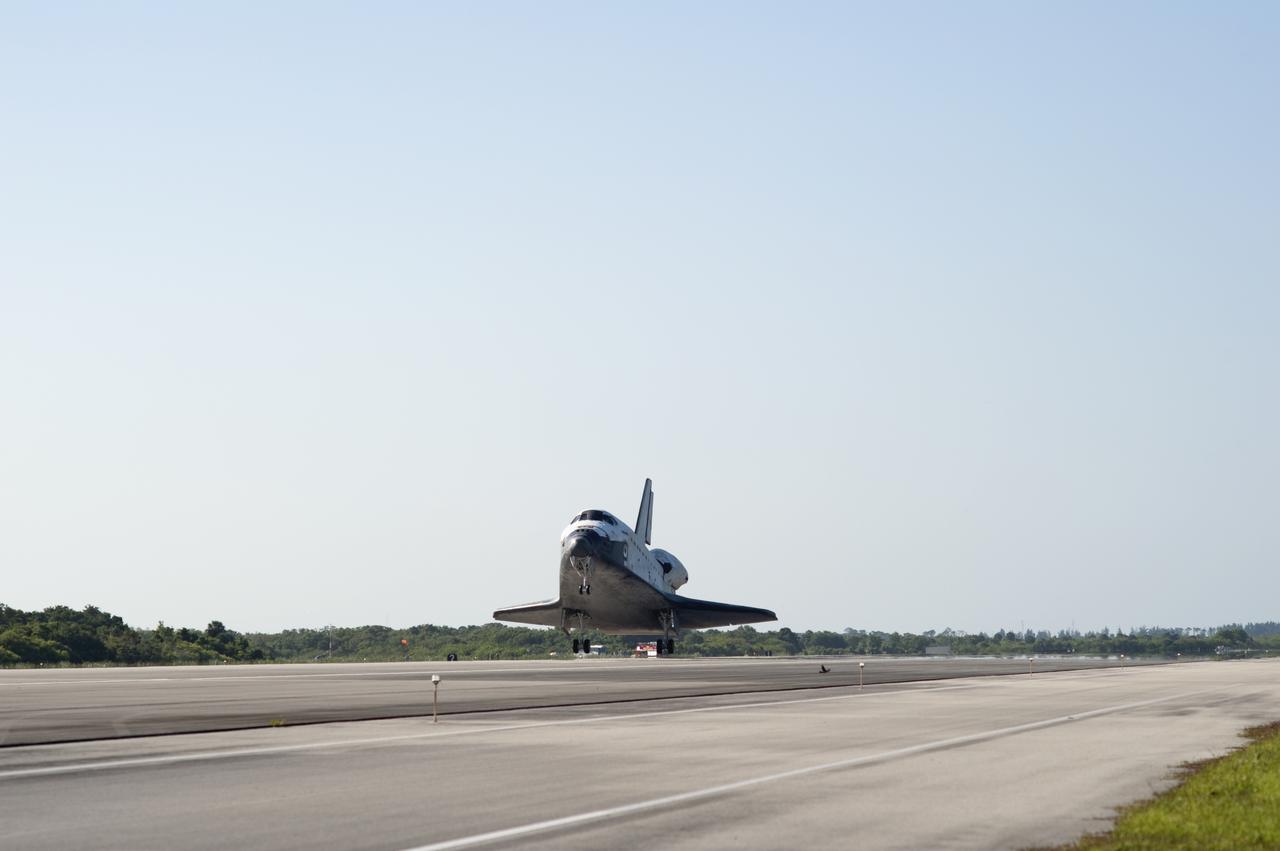
CAPE CANAVERAL, Fla. - Space shuttle Atlantis touches down on one of the world's longest runways, the Shuttle Landing Facility at NASA's Kennedy Space Center in Florida. The shuttle approached from the southeast in a crystal-clear blue sky, giving the Space Coast quite a show. Landing was on Runway 33 at 8:48 a.m. EDT, completing the 12-day STS-132 mission to the International Space Station. The six-member STS-132 crew carried the Russian-built Mini Research Module-1 to the space station. STS-132 is the 34th shuttle mission to the station, the 132nd shuttle mission overall and the last planned flight for Atlantis. For information on the STS-132 mission and crew, visit www.nasa.gov_mission_pages_shuttle_shuttlemissions_sts132_index.html. Photo credit: NASA_Tony Gray and Tom Farrar
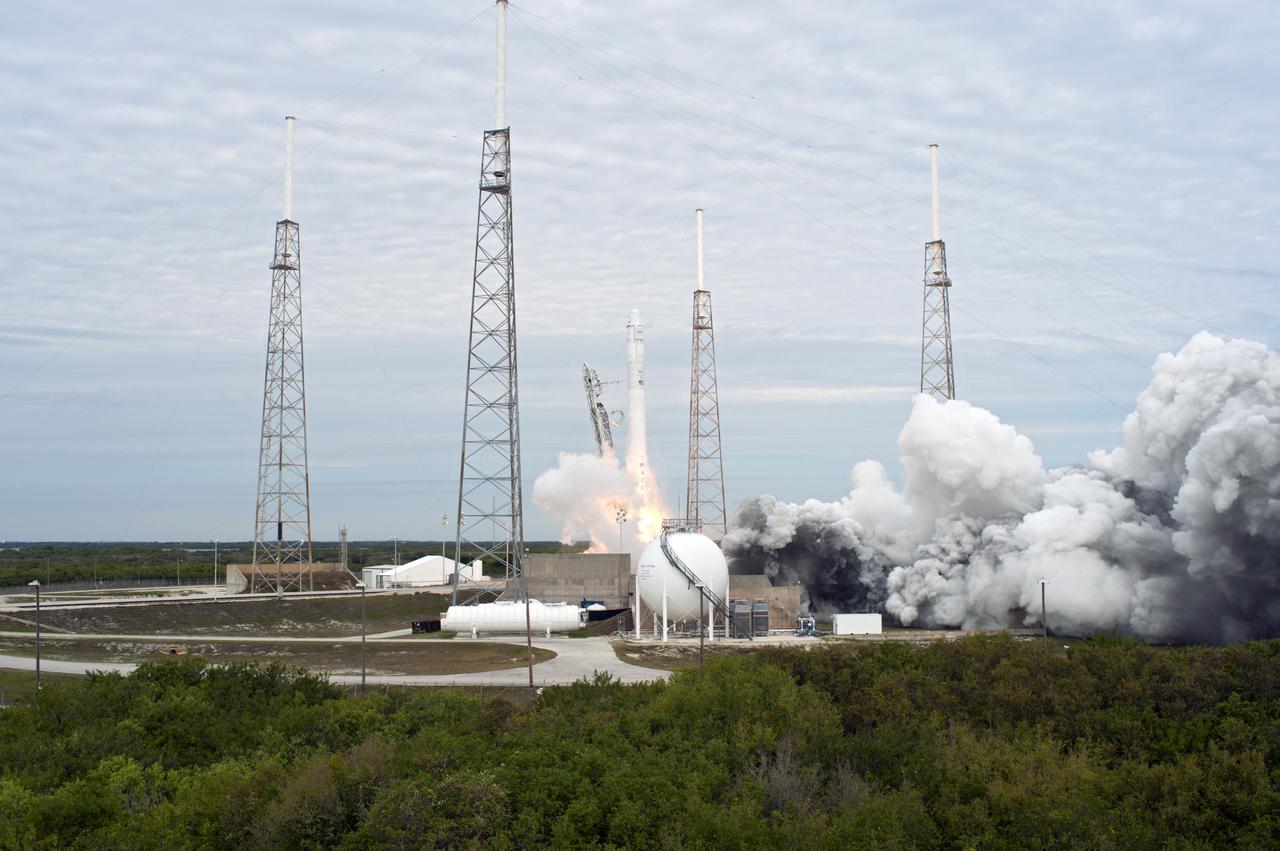
CAPE CANAVERAL, Fla. -- A Space Exploration Technologies, or SpaceX, Falcon 9 rocket lifts off Space Launch Complex 40 on Cape Canaveral Air Force Station in Florida at 10:10 a.m. EST, carrying a Dragon capsule filled with cargo. The SpaceX Dragon capsule is making its third trip to the International Space Station, following a demonstration flight in May 2012 and the first resupply mission in October 2012. The SpaceX-2 mission is the second of 12 SpaceX flights contracted by NASA to resupply the orbiting laboratory. For more information, visit http:__www.nasa.gov_mission_pages_station_structure_launch_spacex2-feature.html Photo credit: NASA_Tony Gray and Robert Murray
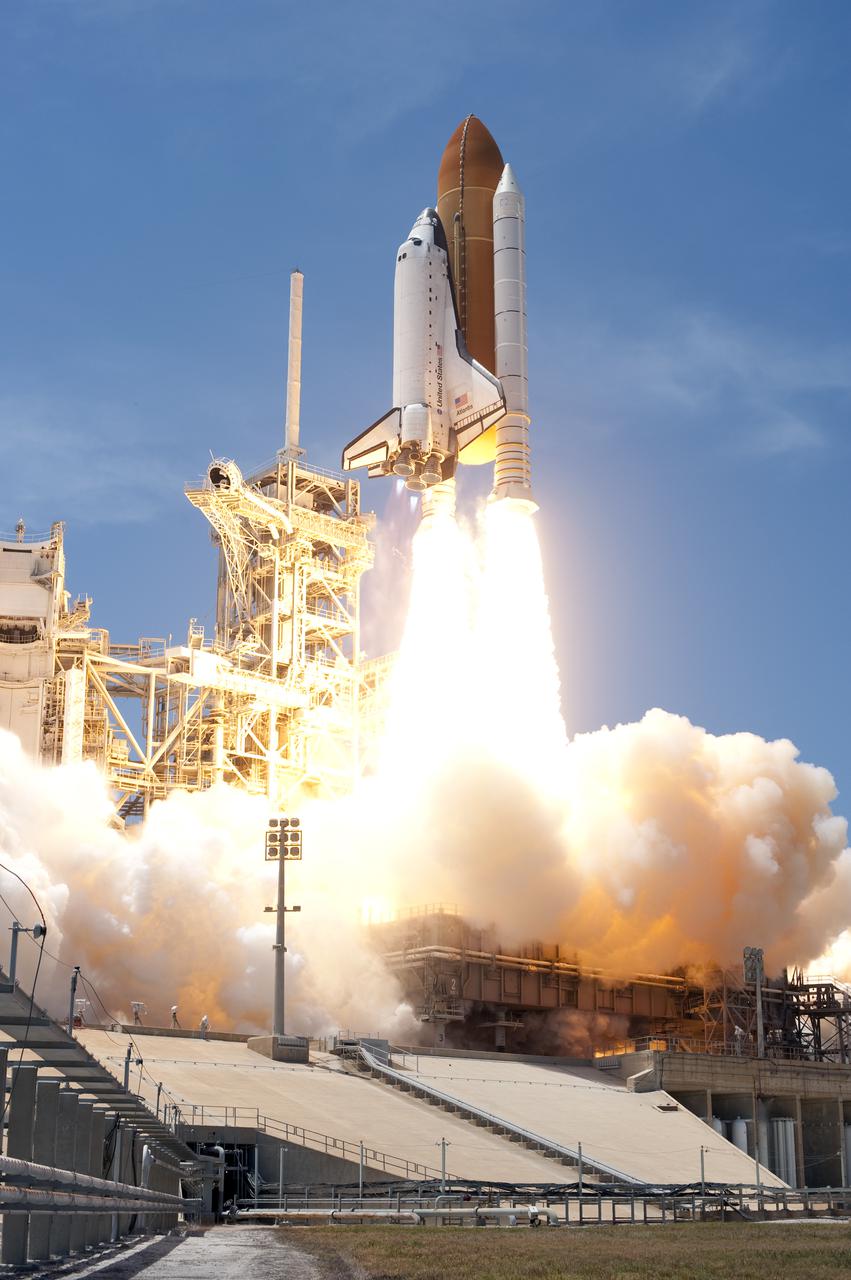
CAPE CANAVERAL, Fla. - Space shuttle Atlantis' twin solid rocket boosters propel to launch the spacecraft off NASA Kennedy Space Center's Launch Pad 39A and into orbit at 2:20 p.m. EDT on May 14. On board Atlantis, for its last planned flight, are six veteran NASA astronauts. Atlantis' primary payload for the STS-132 mission is the Russian-built Mini Research Module-1, which will provide additional storage space and a new docking port for Russian Soyuz and Progress spacecraft aboard the International Space Station. STS-132 is the 132nd shuttle flight, the 32nd for Atlantis and the 34th shuttle mission dedicated to station assembly and maintenance. For more information on the STS-132 mission objectives, payload and crew, visit www.nasa.gov_mission_pages_shuttle_shuttlemissions_sts132_index.html. Photo credit: NASA_Tony Gray and Tom Farrar

CAPE CANAVERAL, Fla. – The United Launch Alliance Atlas V rocket lifts off from Space Launch Complex 41 at Cape Canaveral Air Force Station carrying NASA's Tracking and Data Relay Satellite, or TDRS-L, spacecraft to Earth orbit. Liftoff was at 9:33 p.m. EST. The TDRS-L spacecraft is the second of three new satellites designed to ensure vital operational continuity for NASA by expanding the lifespan of the Tracking and Data Relay Satellite System TDRSS fleet, which consists of eight satellites in geosynchronous orbit. The spacecraft provide tracking, telemetry, command and high bandwidth data return services for numerous science and human exploration missions orbiting Earth. These include NASA's Hubble Space Telescope and the International Space Station. TDRS-L has a high-performance solar panel designed for more spacecraft power to meet the growing S-band communications requirements. TDRSS is one of NASA Space Communication and Navigation’s SCaN three networks providing space communications to NASA’s missions. For more information more about TDRS-L, visit: http:__www.nasa.gov_tdrs To learn more about SCaN, visit: www.nasa.gov_scan Photo credit: NASA_Tony Gray and Sandy Joseph
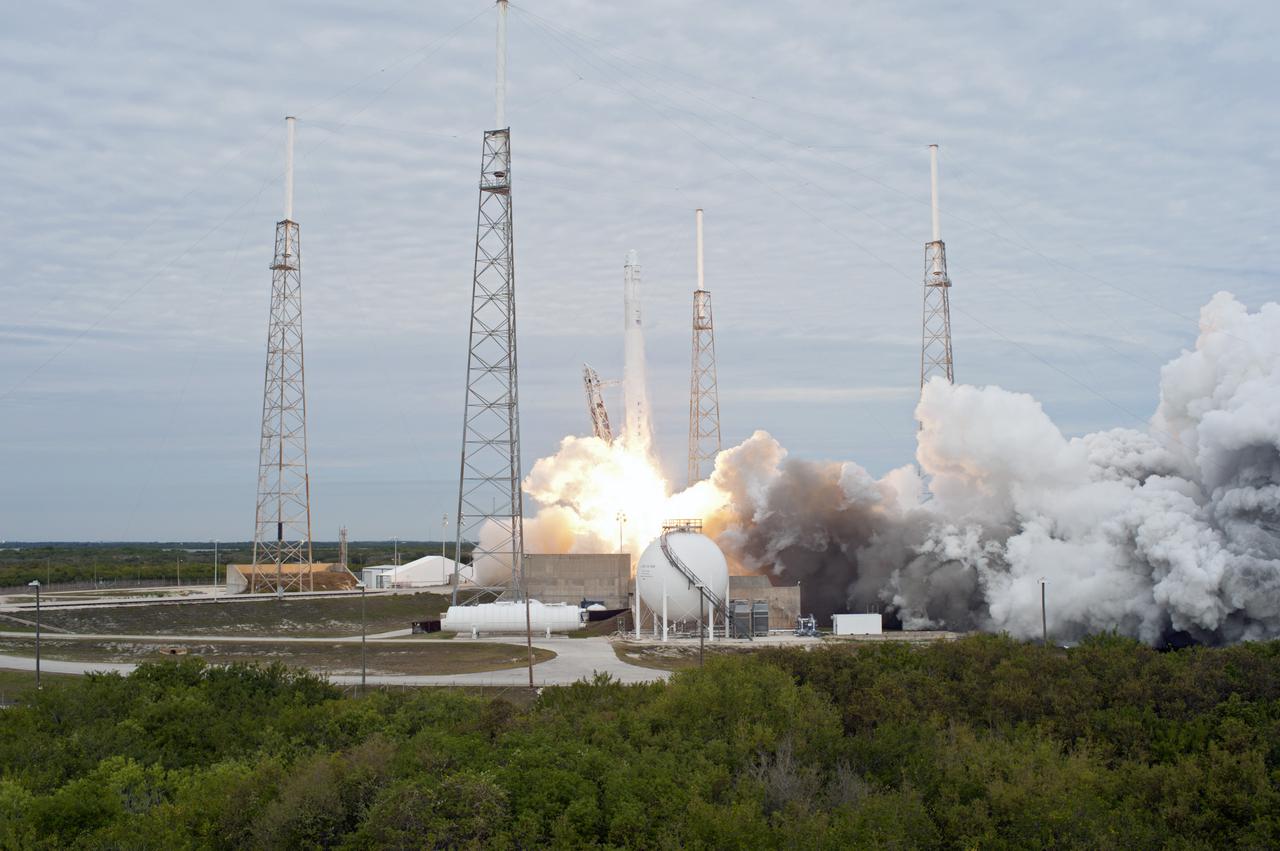
CAPE CANAVERAL, Fla. -- A Space Exploration Technologies, or SpaceX, Falcon 9 rocket lifts off Space Launch Complex 40 on Cape Canaveral Air Force Station in Florida at 10:10 a.m. EST, carrying a Dragon capsule filled with cargo. The SpaceX Dragon capsule is making its third trip to the International Space Station, following a demonstration flight in May 2012 and the first resupply mission in October 2012. The SpaceX-2 mission is the second of 12 SpaceX flights contracted by NASA to resupply the orbiting laboratory. For more information, visit http:__www.nasa.gov_mission_pages_station_structure_launch_spacex2-feature.html Photo credit: NASA_Tony Gray and Robert Murray
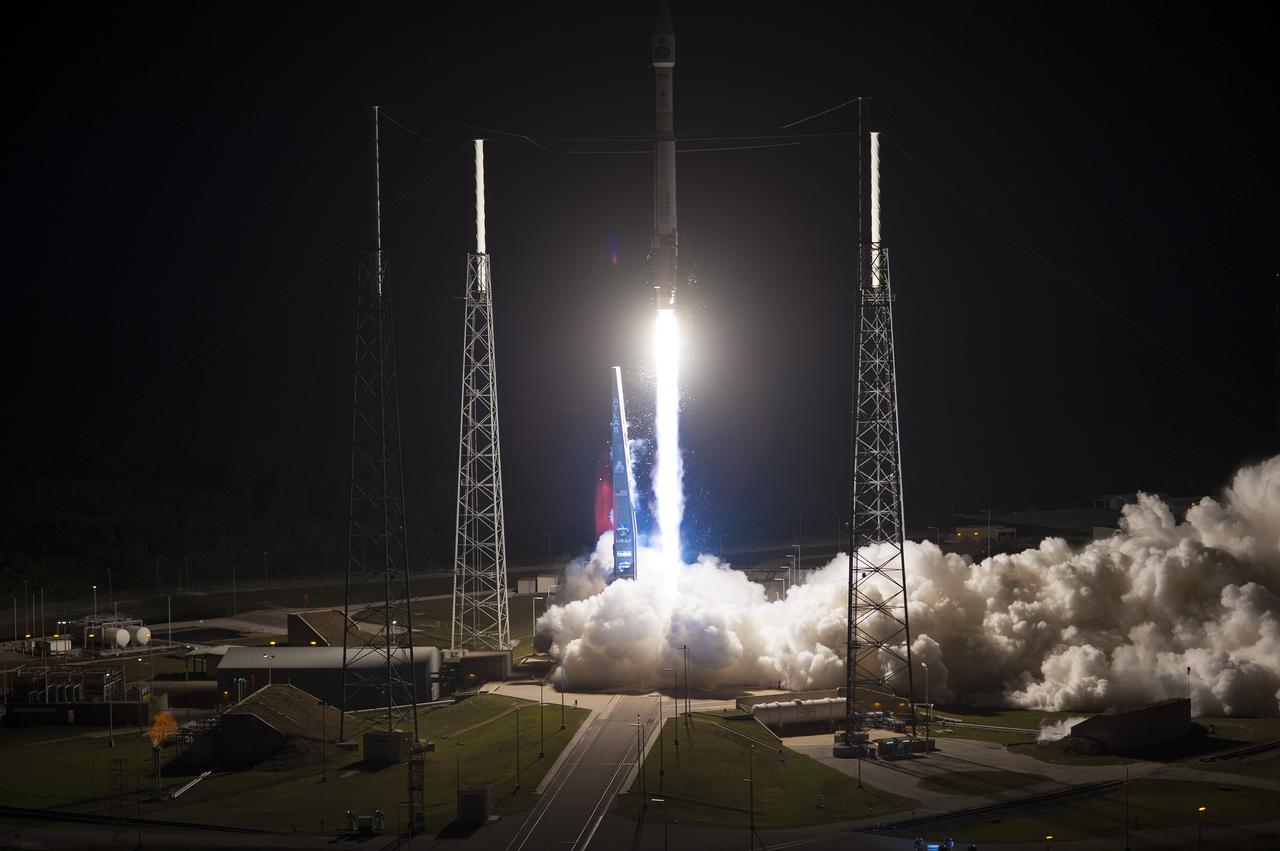
CAPE CANAVERAL, Fla. -- The umbilical tower drops back from a United Launch Alliance Atlas V 401 rocket as it lifts off Space Launch Complex 41 on Cape Canaveral Air Force Station in Florida. Launch, with NASA's Tracking and Data Relay Satellite-K or TDRS-K aboard, was at 8:48 p.m. EST. he TDRS-K spacecraft is part of the next-generation series in the Tracking and Data Relay Satellite System, a constellation of space-based communication satellites providing tracking, telemetry, command and high-bandwidth data return services. For more information, visit http:__www.nasa.gov_mission_pages_tdrs_index.html. Photo credit: NASA_Tony Gray and Robert Murray
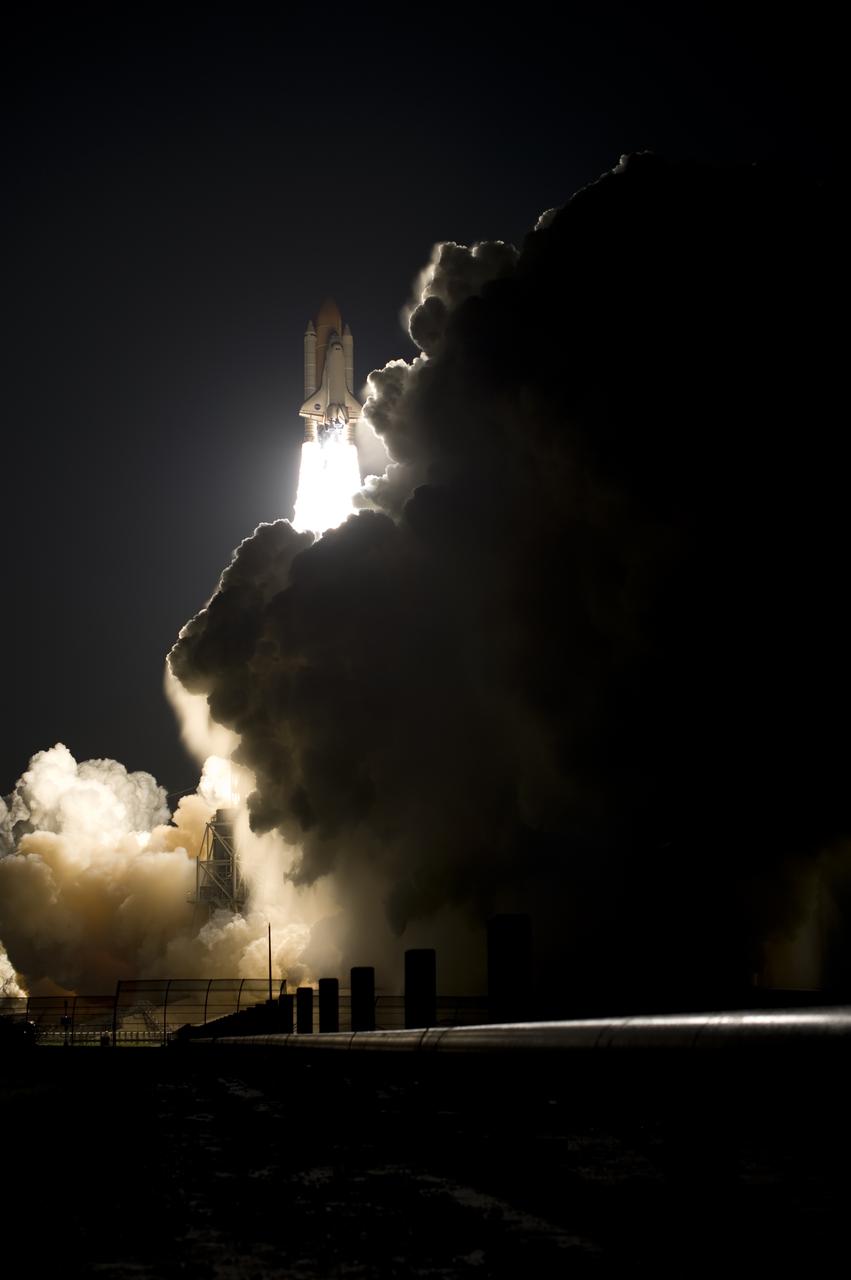
CAPE CANAVERAL, Fla. - An exhaust cloud threatens to obscure the view of space shuttle Discovery as it hurtles toward space after liftoff from Launch Pad 39A at NASA's Kennedy Space Center in Florida. Launch of the STS-131 mission was on time at 6:21 a.m. EDT. The seven-member crew will deliver the multi-purpose logistics module Leonardo, filled with supplies, a new crew sleeping quarters and science racks that will be transferred to the International Space Station's laboratories. The crew also will switch out a gyroscope on the station’s truss, install a spare ammonia storage tank and retrieve a Japanese experiment from the station’s exterior. STS-131 is the 33rd shuttle mission to the station and the 131st shuttle mission overall. For information on the STS-131 mission and crew, visit http:__www.nasa.gov_mission_pages_shuttle_shuttlemissions_sts131_index.html. Photo credit: NASA_Tony Gray and Tom Farrar
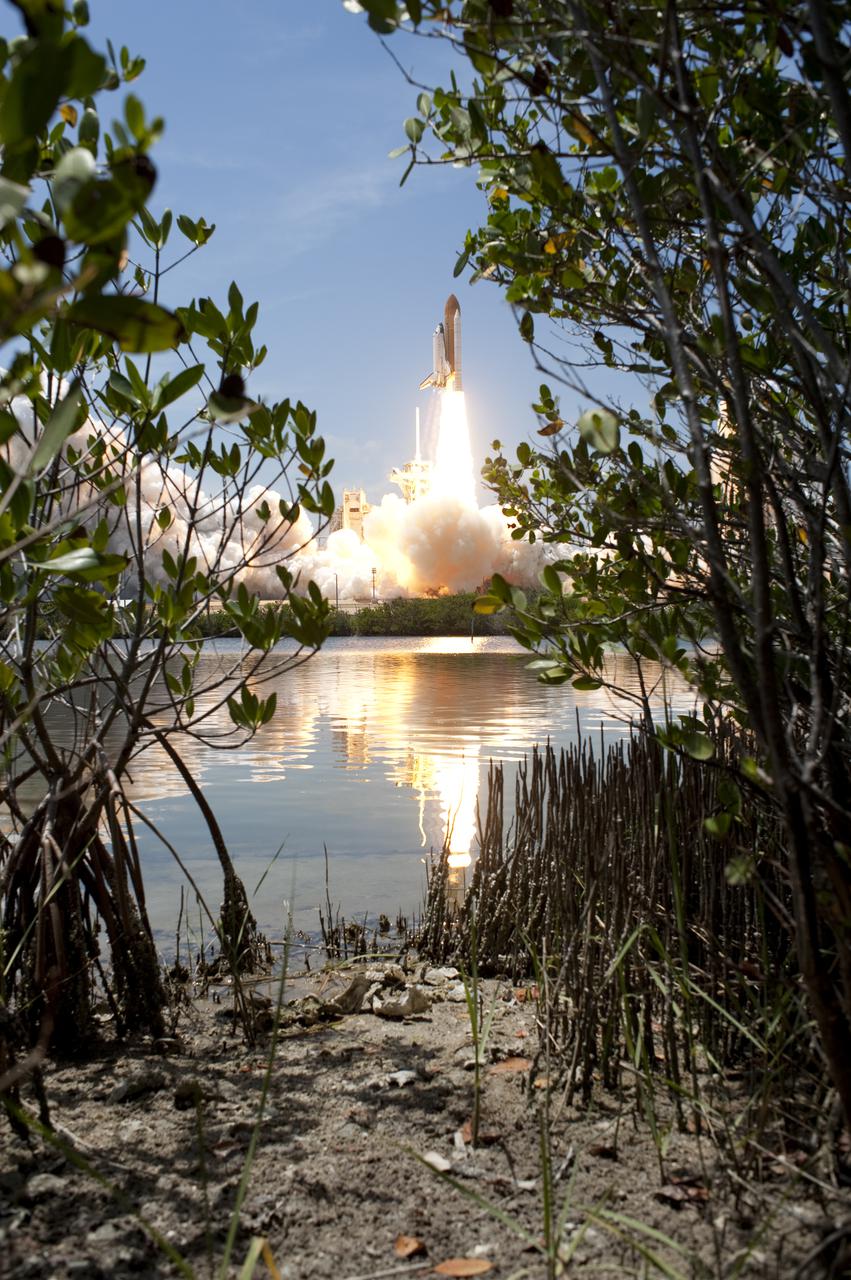
CAPE CANAVERAL, Fla. - Space shuttle Atlantis rumbles the Space Coast as it clears the tower at its pristine launch complex, which is home to the Merritt Island National Wildlife Refuge. Liftoff from NASA Kennedy Space Center's Launch Pad 39A occurred right on time at 2:20 p.m. EDT on May 14. Atlantis' primary payload for the STS-132 mission is the Russian-built Mini Research Module-1, which will provide additional storage space and a new docking port for Russian Soyuz and Progress spacecraft aboard the International Space Station. STS-132 is the 132nd shuttle flight, the 32nd for Atlantis and the 34th shuttle mission dedicated to station assembly and maintenance. For more information on the STS-132 mission objectives, payload and crew, visit www.nasa.gov_mission_pages_shuttle_shuttlemissions_sts132_index.html. Photo credit: NASA_Tony Gray and Tom Farrar
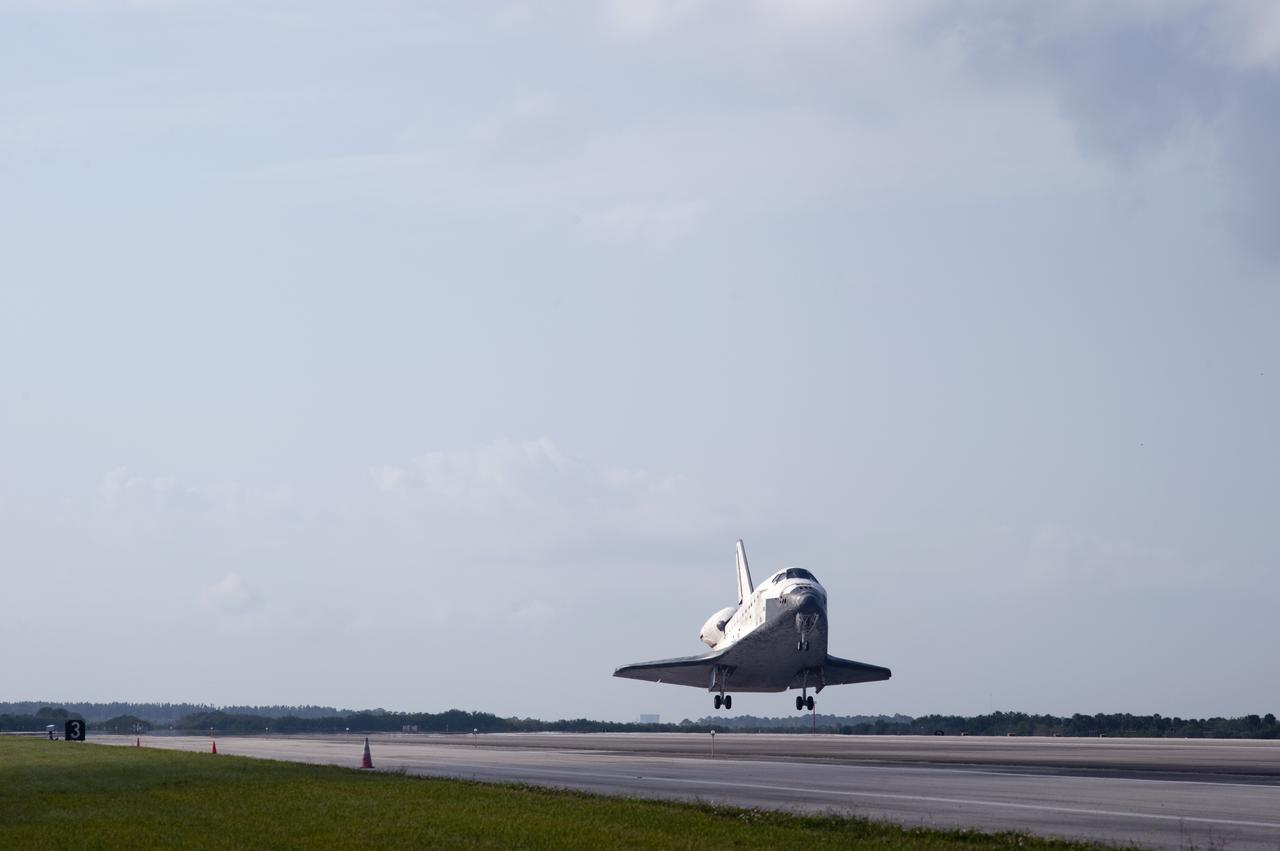
CAPE CANAVERAL, Fla. - Space shuttle Discovery appears to hover above the ground as it nears touchdown on Runway 33 at the Shuttle Landing Facility at NASA's Kennedy Space Center in Florida at 9:08 a.m. EDT, completing the 15-day STS-131 mission to the International Space Station. Main gear touchdown was at 9:08:35 a.m. EDT followed by nose gear touchdown at 9:08:47 a.m. and wheelstop at 9:09:33 a.m. Aboard are Commander Alan Poindexter; Pilot James P. Dutton Jr.; and Mission Specialists Rick Mastracchio, Clayton Anderson, Dorothy Metcalf-Lindenburger, Stephanie Wilson and Naoko Yamazaki of the Japan Aerospace Exploration Agency. The seven-member STS-131 crew carried the multi-purpose logistics module Leonardo, filled with supplies, a new crew sleeping quarters and science racks that were transferred to the International Space Station's laboratories. The crew also switched out a gyroscope on the station’s truss, installed a spare ammonia storage tank and retrieved a Japanese experiment from the station’s exterior. STS-131 is the 33rd shuttle mission to the station and the 131st shuttle mission overall. For information on the STS-131 mission and crew, visit http:__www.nasa.gov_mission_pages_shuttle_shuttlemissions_sts131_index.html. Photo credit: NASA_Tony Gray and Tom Farrar
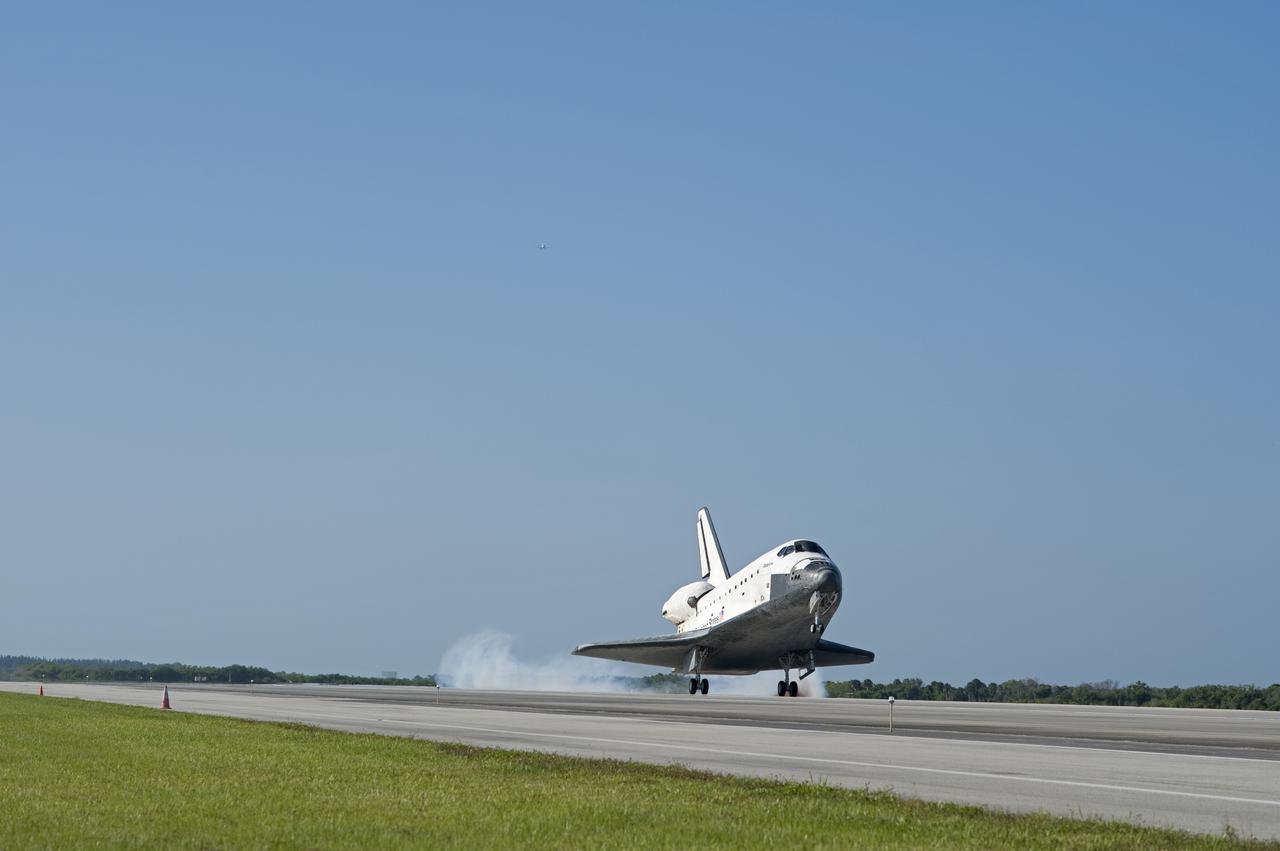
CAPE CANAVERAL, Fla. - A Shuttle Training Aircraft, or STA, top center, watches over space shuttle Atlantis as it touches down on Runway 33 at the Shuttle Landing Facility at NASA's Kennedy Space Center in Florida. The shuttle approached from the southeast in a crystal-clear blue sky, giving the Space Coast quite a show. Landing was at 8:48 a.m. EDT, completing the 12-day STS-132 mission to the International Space Station. The six-member STS-132 crew carried the Russian-built Mini Research Module-1 to the space station. STS-132 is the 34th shuttle mission to the station, the 132nd shuttle mission overall and the last planned flight for Atlantis. For information on the STS-132 mission and crew, visit www.nasa.gov_mission_pages_shuttle_shuttlemissions_sts132_index.html. Photo credit: NASA_Tony Gray and Tom Farrar
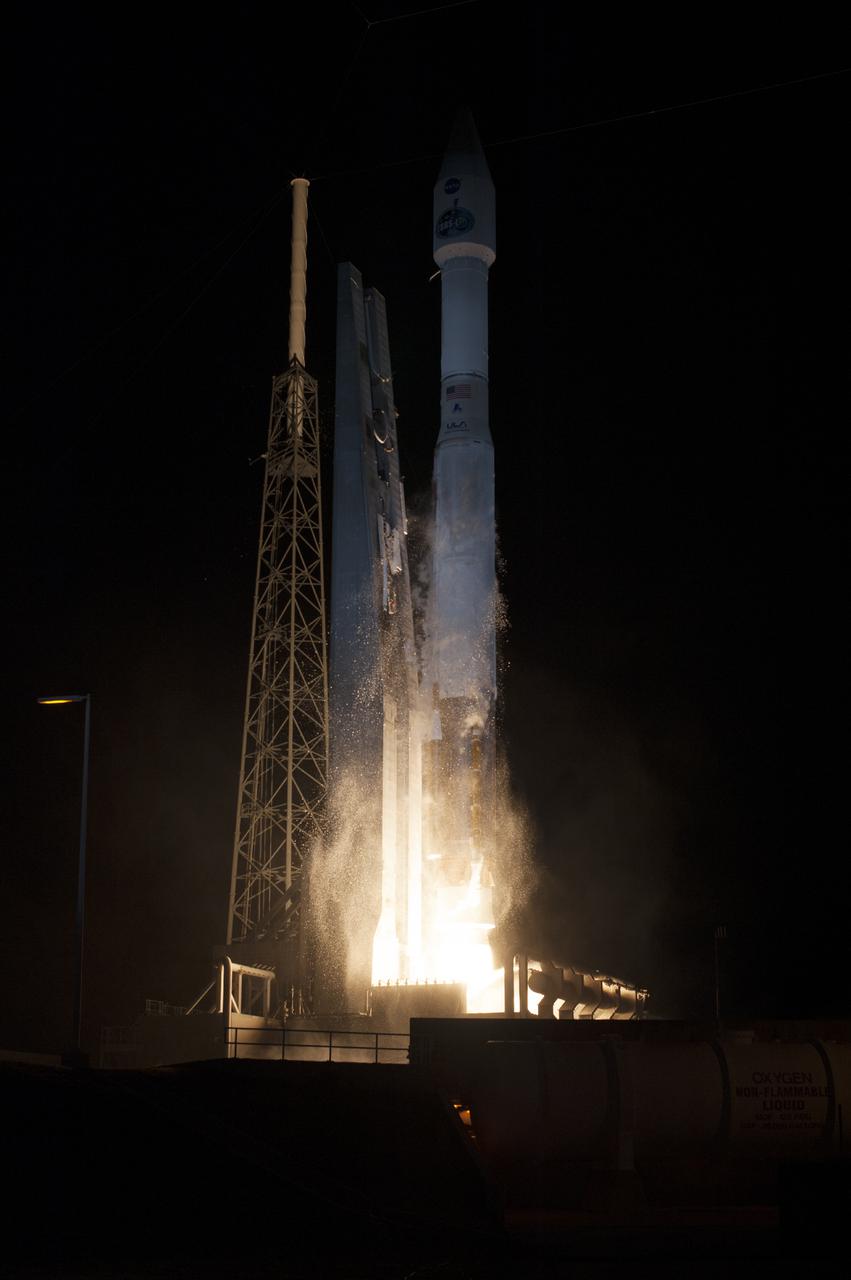
CAPE CANAVERAL, Fla. – The United Launch Alliance Atlas V rocket lifts off from Space Launch Complex 41 at Cape Canaveral Air Force Station carrying NASA's Tracking and Data Relay Satellite, or TDRS-L, spacecraft to Earth orbit. Liftoff was at 9:33 p.m. EST. The TDRS-L spacecraft is the second of three new satellites designed to ensure vital operational continuity for NASA by expanding the lifespan of the Tracking and Data Relay Satellite System TDRSS fleet, which consists of eight satellites in geosynchronous orbit. The spacecraft provide tracking, telemetry, command and high bandwidth data return services for numerous science and human exploration missions orbiting Earth. These include NASA's Hubble Space Telescope and the International Space Station. TDRS-L has a high-performance solar panel designed for more spacecraft power to meet the growing S-band communications requirements. TDRSS is one of NASA Space Communication and Navigation’s SCaN three networks providing space communications to NASA’s missions. For more information more about TDRS-L, visit: http:__www.nasa.gov_tdrs To learn more about SCaN, visit: www.nasa.gov_scan Photo credit: NASA_Tony Gray and Sandy Joseph
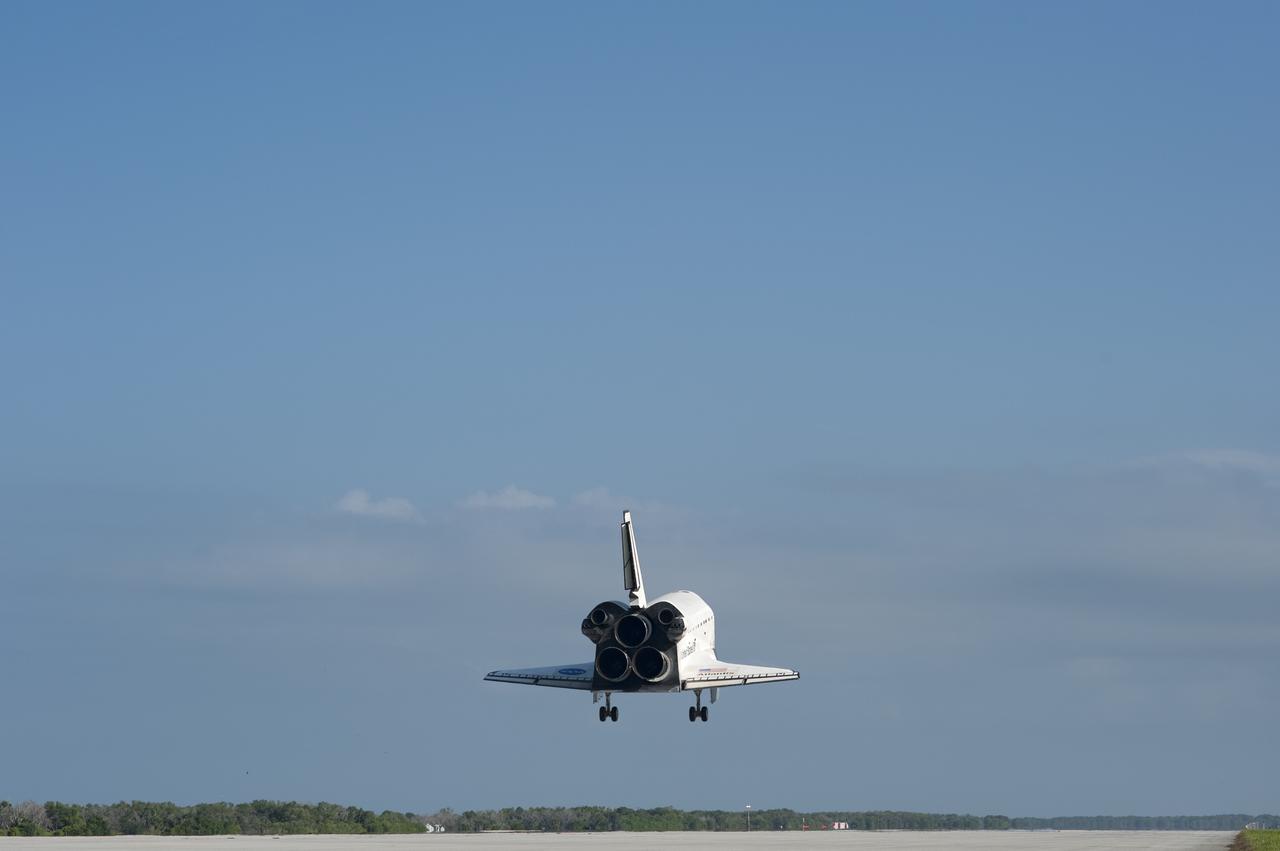
CAPE CANAVERAL, Fla. - Space shuttle Atlantis nears touchdown on Runway 33 at the Shuttle Landing Facility at NASA's Kennedy Space Center in Florida. Landing was at 8:48 a.m. EDT, completing the 12-day STS-132 mission to the International Space Station. The six-member STS-132 crew carried the Russian-built Mini Research Module-1 to the space station. STS-132 is the 34th shuttle mission to the station, the 132nd shuttle mission overall and the last planned flight for Atlantis. For information on the STS-132 mission and crew, visit www.nasa.gov_mission_pages_shuttle_shuttlemissions_sts132_index.html. Photo credit: NASA_Tony Gray and Tom Farrar
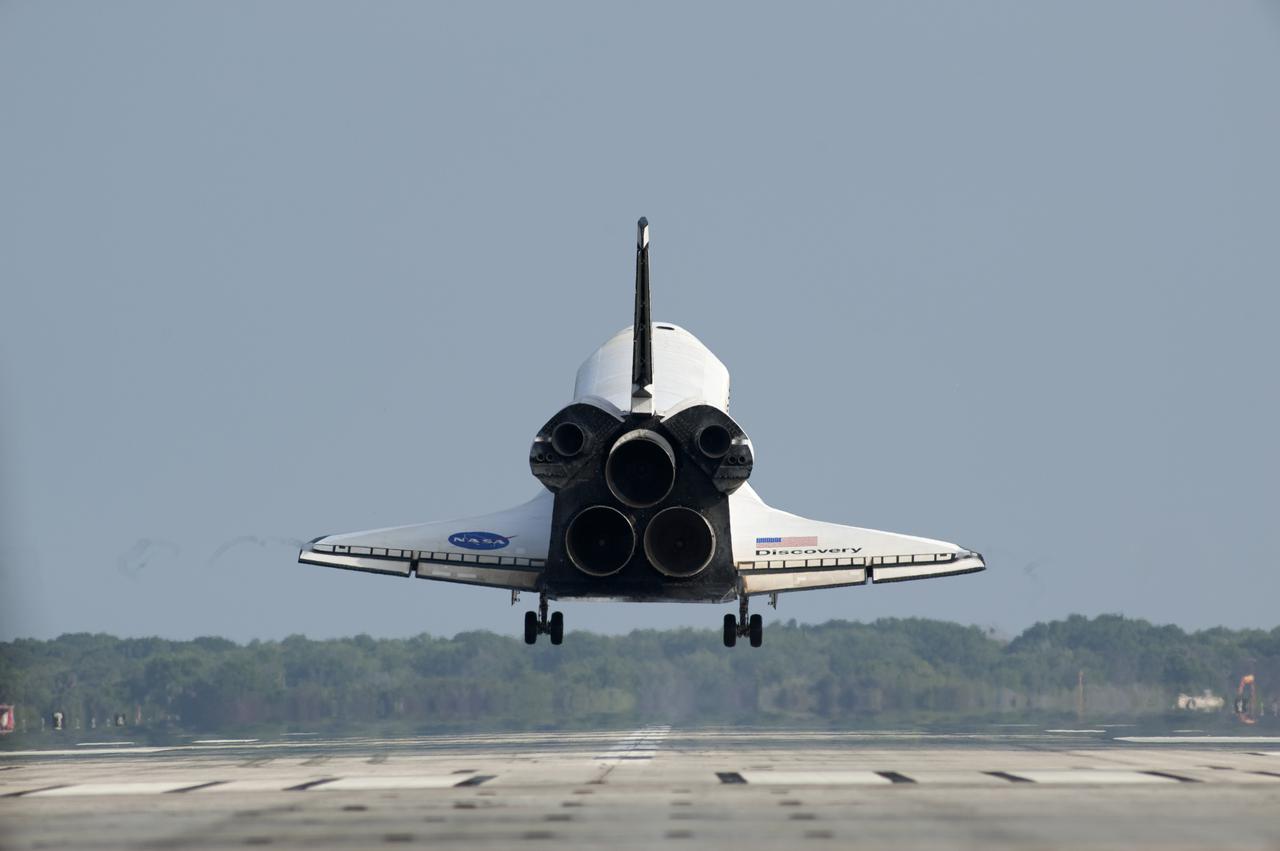
CAPE CANAVERAL, Fla. - Space shuttle Discovery is moments away from touchdown on Runway 33 at the Shuttle Landing Facility at NASA's Kennedy Space Center in Florida. Landing was at 9:08 a.m. EDT, completing the 15-day STS-131 mission to the International Space Station. Main gear touchdown was at 9:08:35 a.m. EDT followed by nose gear touchdown at 9:08:47 a.m. and wheelstop at 9:09:33 a.m. Aboard are Commander Alan Poindexter; Pilot James P. Dutton Jr.; and Mission Specialists Rick Mastracchio, Clayton Anderson, Dorothy Metcalf-Lindenburger, Stephanie Wilson and Naoko Yamazaki of the Japan Aerospace Exploration Agency. The seven-member STS-131 crew carried the multi-purpose logistics module Leonardo, filled with supplies, a new crew sleeping quarters and science racks that were transferred to the International Space Station's laboratories. The crew also switched out a gyroscope on the station’s truss, installed a spare ammonia storage tank and retrieved a Japanese experiment from the station’s exterior. STS-131 is the 33rd shuttle mission to the station and the 131st shuttle mission overall. For information on the STS-131 mission and crew, visit http:__www.nasa.gov_mission_pages_shuttle_shuttlemissions_sts131_index.html. Photo credit: NASA_Tony Gray and Tom Farrar
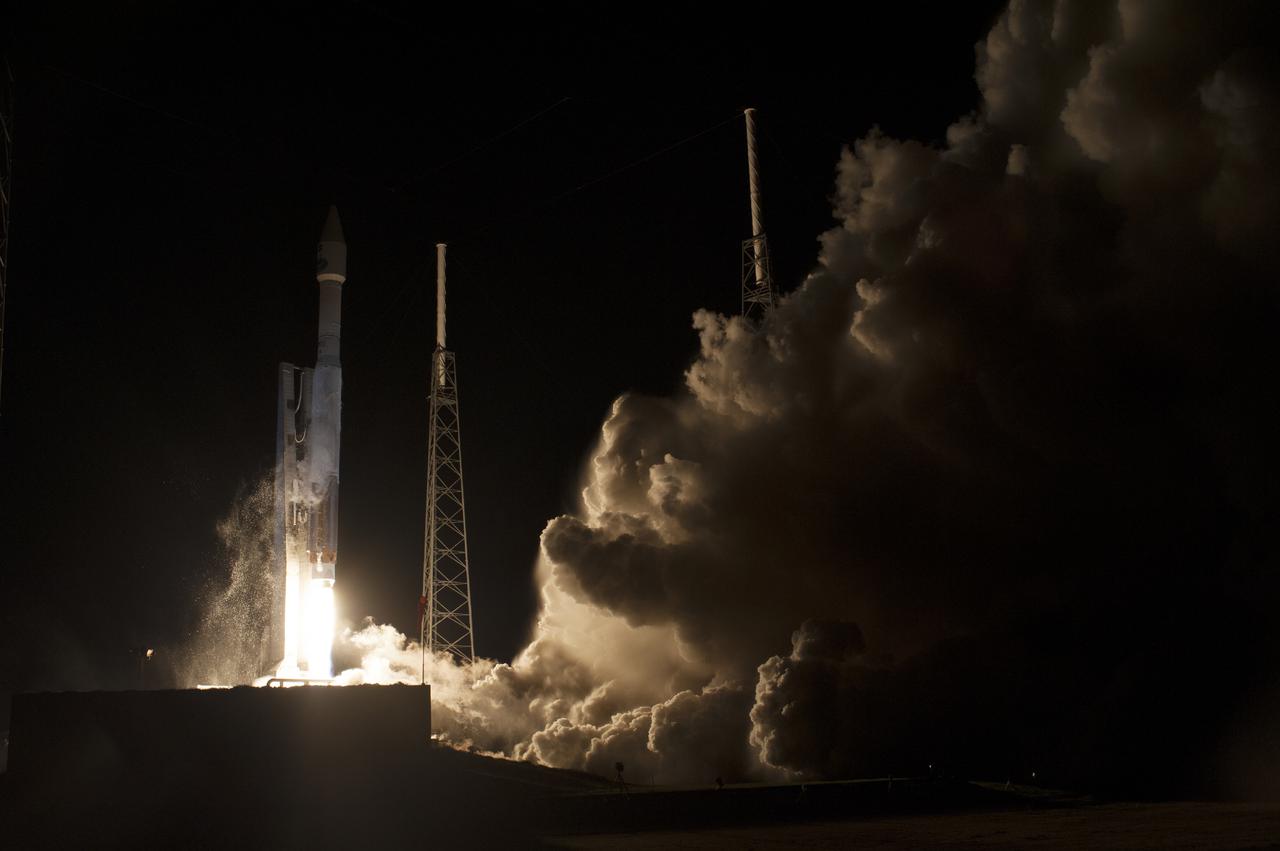
CAPE CANAVERAL, Fla. – The United Launch Alliance Atlas V rocket lifts off from Space Launch Complex 41 at Cape Canaveral Air Force Station carrying NASA's Tracking and Data Relay Satellite, or TDRS-L, spacecraft to Earth orbit. Liftoff was at 9:33 p.m. EST. The TDRS-L spacecraft is the second of three new satellites designed to ensure vital operational continuity for NASA by expanding the lifespan of the Tracking and Data Relay Satellite System TDRSS fleet, which consists of eight satellites in geosynchronous orbit. The spacecraft provide tracking, telemetry, command and high bandwidth data return services for numerous science and human exploration missions orbiting Earth. These include NASA's Hubble Space Telescope and the International Space Station. TDRS-L has a high-performance solar panel designed for more spacecraft power to meet the growing S-band communications requirements. TDRSS is one of NASA Space Communication and Navigation’s SCaN three networks providing space communications to NASA’s missions. For more information more about TDRS-L, visit: http:__www.nasa.gov_tdrs To learn more about SCaN, visit: www.nasa.gov_scan Photo credit: NASA_Tony Gray and Sandy Joseph
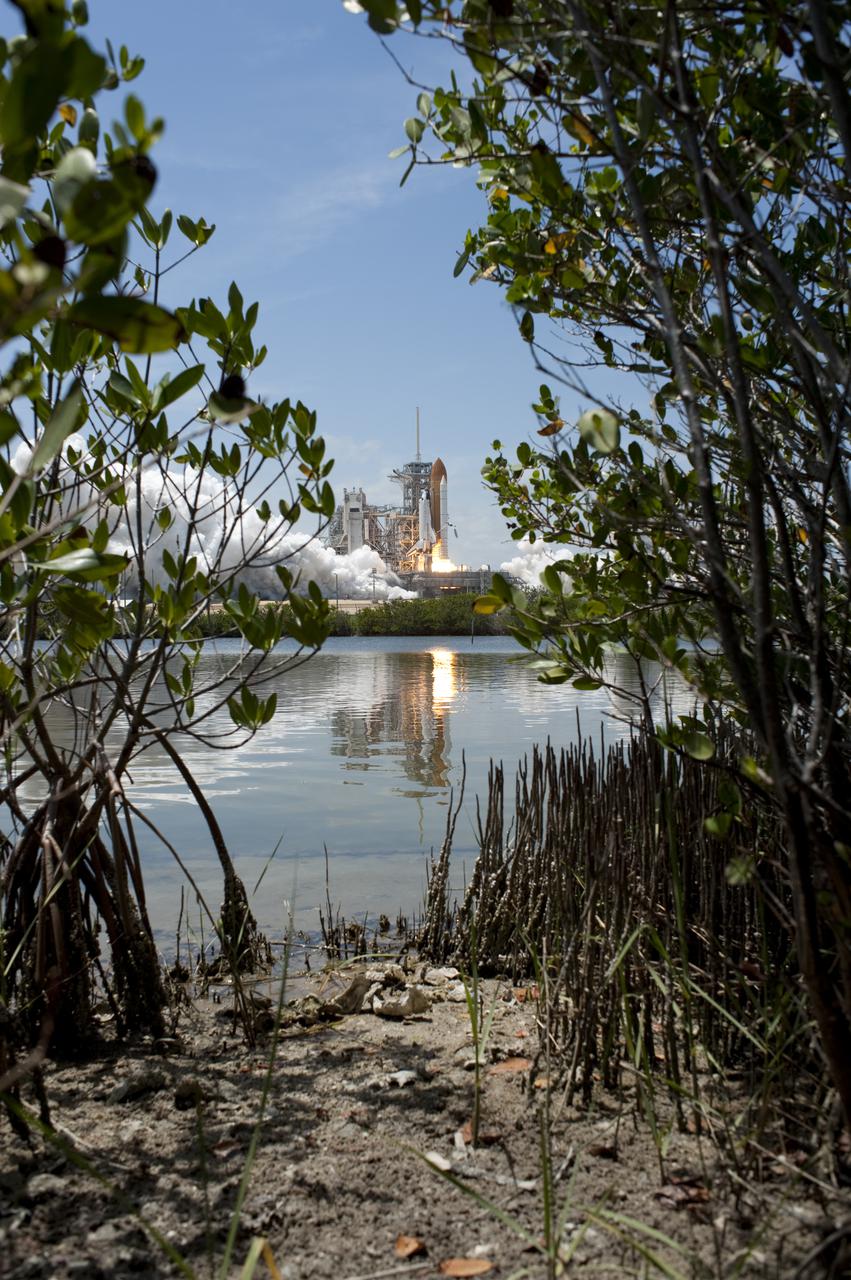
CAPE CANAVERAL, Fla. - Space shuttle Atlantis rumbles the Space Coast as it begins to lift off its pristine launch complex, which is home to the Merritt Island National Wildlife Refuge. Launch from NASA Kennedy Space Center's Launch Pad 39A occurred right on time at 2:20 p.m. EDT on May 14. Atlantis' primary payload for the STS-132 mission is the Russian-built Mini Research Module-1, which will provide additional storage space and a new docking port for Russian Soyuz and Progress spacecraft aboard the International Space Station. STS-132 is the 132nd shuttle flight, the 32nd for Atlantis and the 34th shuttle mission dedicated to station assembly and maintenance. For more information on the STS-132 mission objectives, payload and crew, visit www.nasa.gov_mission_pages_shuttle_shuttlemissions_sts132_index.html. Photo credit: NASA_Tony Gray and Tom Farrar
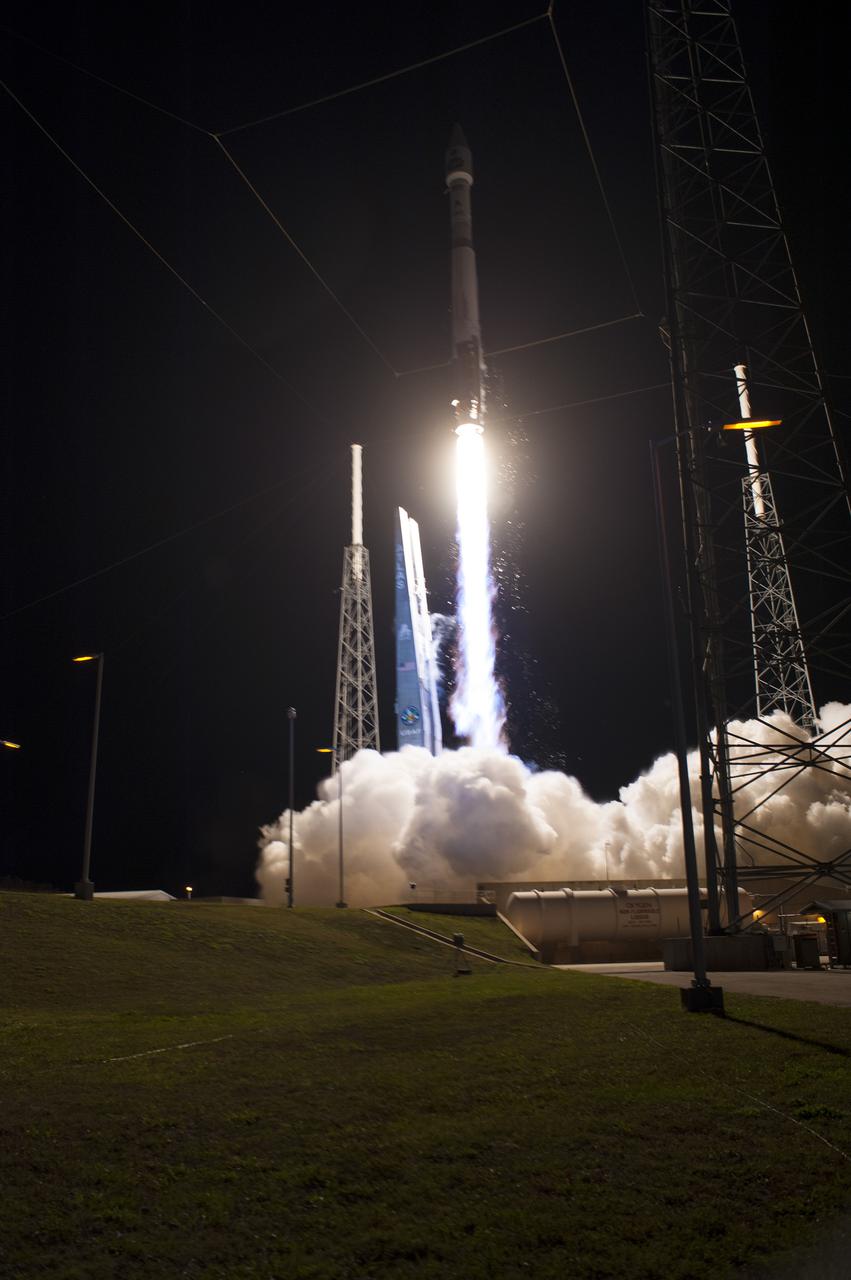
CAPE CANAVERAL, Fla. -- A United Launch Alliance Atlas V 401 rocket rushes past the lightning masts on Space Launch Complex 41 on Cape Canaveral Air Force Station in Florida, leaving plumes of exhaust and smoke in its wake. Its payload, NASA's Tracking and Data Relay Satellite-K or TDRS-K, began its climb to orbit at 8:48 p.m. EST. The TDRS-K spacecraft is part of the next-generation series in the Tracking and Data Relay Satellite System, a constellation of space-based communication satellites providing tracking, telemetry, command and high-bandwidth data return services. For more information, visit http:__www.nasa.gov_mission_pages_tdrs_index.html. Photo credit: NASA_Tony Gray and Rick Wetherington
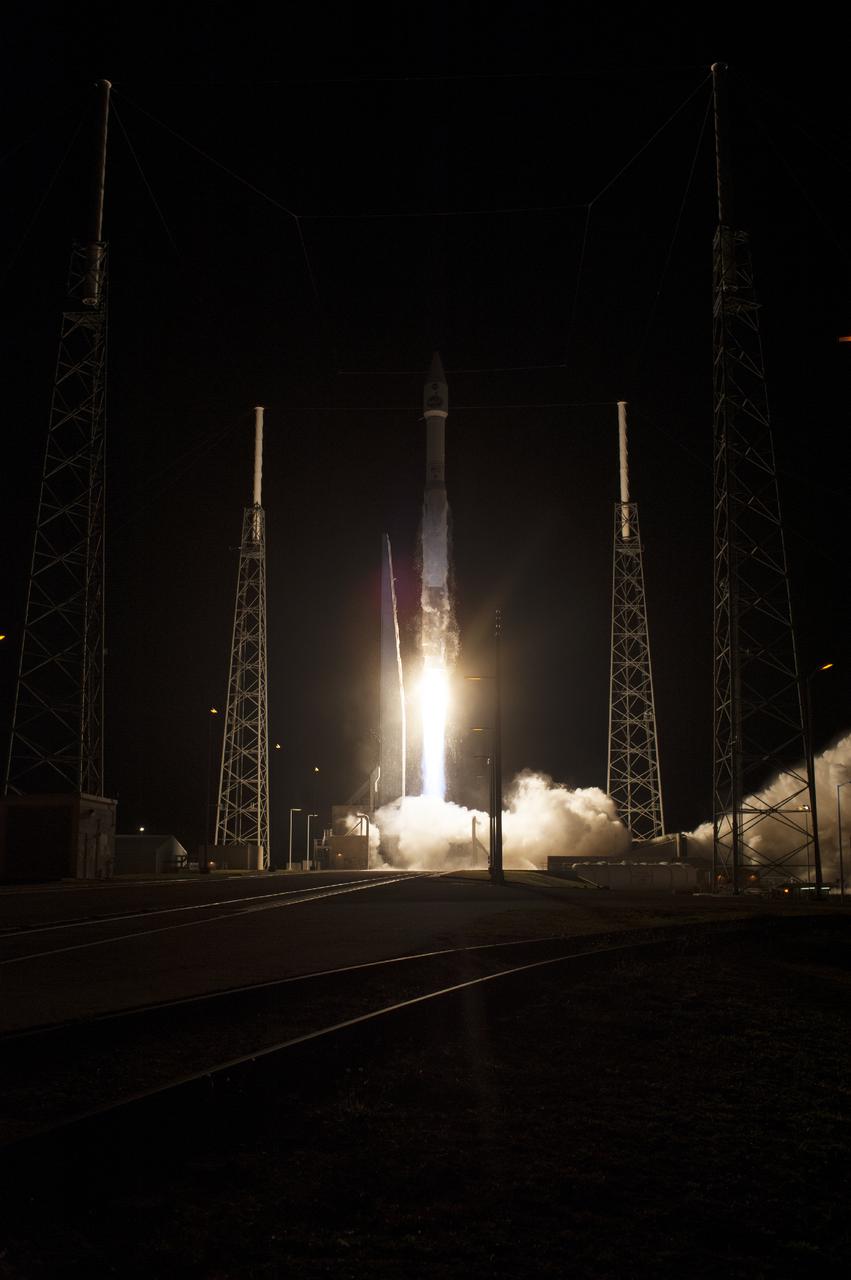
CAPE CANAVERAL, Fla. – The United Launch Alliance Atlas V rocket lifts off from Space Launch Complex 41 at Cape Canaveral Air Force Station carrying NASA's Tracking and Data Relay Satellite, or TDRS-L, spacecraft to Earth orbit. Liftoff was at 9:33 p.m. EST. The TDRS-L spacecraft is the second of three new satellites designed to ensure vital operational continuity for NASA by expanding the lifespan of the Tracking and Data Relay Satellite System TDRSS fleet, which consists of eight satellites in geosynchronous orbit. The spacecraft provide tracking, telemetry, command and high bandwidth data return services for numerous science and human exploration missions orbiting Earth. These include NASA's Hubble Space Telescope and the International Space Station. TDRS-L has a high-performance solar panel designed for more spacecraft power to meet the growing S-band communications requirements. TDRSS is one of NASA Space Communication and Navigation’s SCaN three networks providing space communications to NASA’s missions. For more information more about TDRS-L, visit: http:__www.nasa.gov_tdrs To learn more about SCaN, visit: www.nasa.gov_scan Photo credit: NASA_Tony Gray and Sandy Joseph
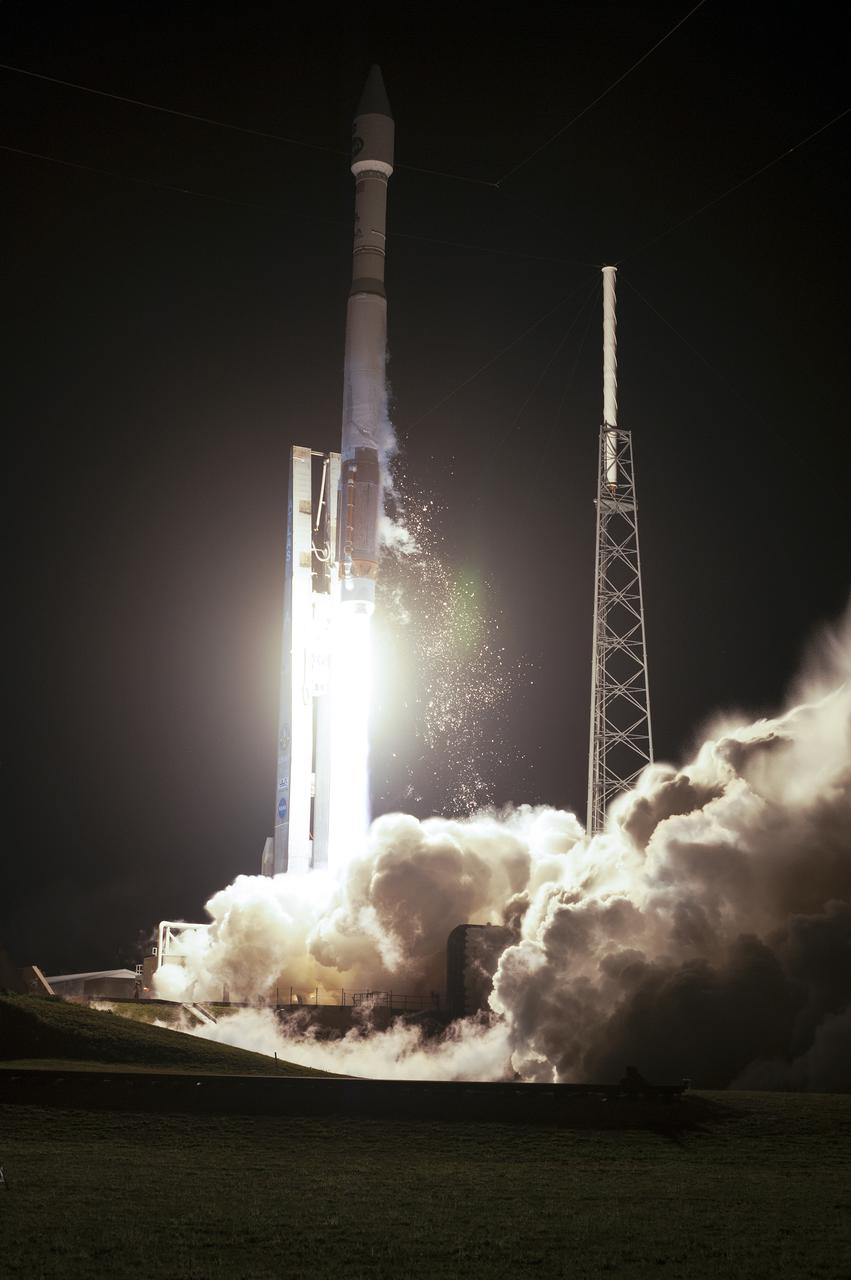
CAPE CANAVERAL, Fla. -- A rumble is heard across the Space Coast as a United Launch Alliance Atlas V 401 rocket roars off Space Launch Complex 41 on Cape Canaveral Air Force Station in Florida at 8:48 p.m. EST, carrying NASA's Tracking and Data Relay Satellite-K, TDRS-K, to orbit. The TDRS-K spacecraft is part of the next-generation series in the Tracking and Data Relay Satellite System, a constellation of space-based communication satellites providing tracking, telemetry, command and high-bandwidth data return services. For more information, visit http:__www.nasa.gov_mission_pages_tdrs_index.html. Photo credit: NASA_Tony Gray and Robert Murray
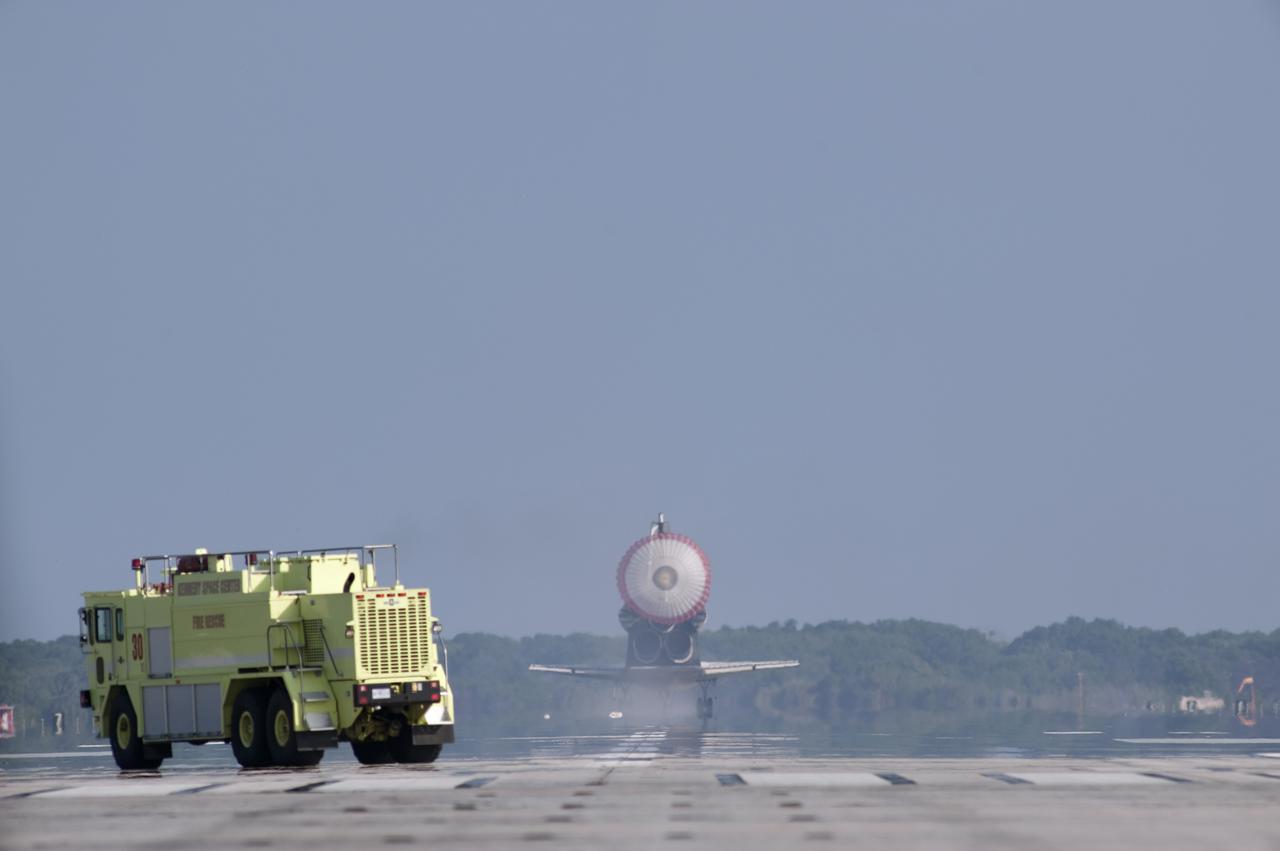
CAPE CANAVERAL, Fla. - With drag chute unfurled, space shuttle Discovery rolls past a fire rescue vehicle on Runway 33 as it lands at the Shuttle Landing Facility at NASA's Kennedy Space Center in Florida after 15 days in space, completing the more than 6.2-million-mile STS-131 mission on orbit 238. Main gear touchdown was at 9:08:35 a.m. EDT followed by nose gear touchdown at 9:08:47 a.m. and wheelstop at 9:09:33 a.m. Aboard are Commander Alan Poindexter; Pilot James P. Dutton Jr.; and Mission Specialists Rick Mastracchio, Clayton Anderson, Dorothy Metcalf-Lindenburger, Stephanie Wilson and Naoko Yamazaki of the Japan Aerospace Exploration Agency. The seven-member STS-131 crew carried the multi-purpose logistics module Leonardo, filled with supplies, a new crew sleeping quarters and science racks that were transferred to the International Space Station's laboratories. The crew also switched out a gyroscope on the station’s truss, installed a spare ammonia storage tank and retrieved a Japanese experiment from the station’s exterior. STS-131 is the 33rd shuttle mission to the station and the 131st shuttle mission overall. For information on the STS-131 mission and crew, visit http:__www.nasa.gov_mission_pages_shuttle_shuttlemissions_sts131_index.html. Photo credit: NASA_Tony Gray and Tom Farrar
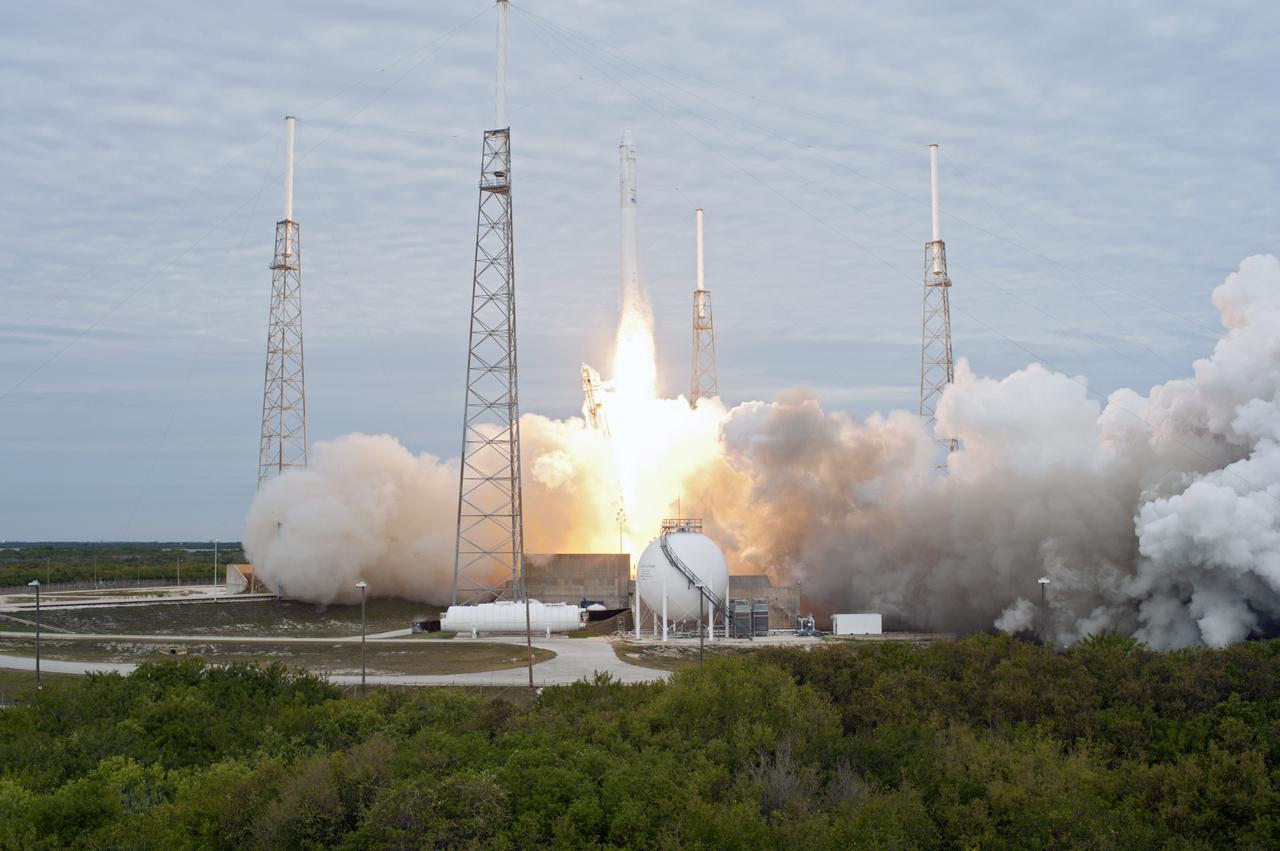
CAPE CANAVERAL, Fla. -- A Space Exploration Technologies, or SpaceX, Falcon 9 rocket lifts off Space Launch Complex 40 on Cape Canaveral Air Force Station in Florida at 10:10 a.m. EST, carrying a Dragon capsule filled with cargo. The SpaceX Dragon capsule is making its third trip to the International Space Station, following a demonstration flight in May 2012 and the first resupply mission in October 2012. The SpaceX-2 mission is the second of 12 SpaceX flights contracted by NASA to resupply the orbiting laboratory. For more information, visit http:__www.nasa.gov_mission_pages_station_structure_launch_spacex2-feature.html Photo credit: NASA_Tony Gray and Robert Murray
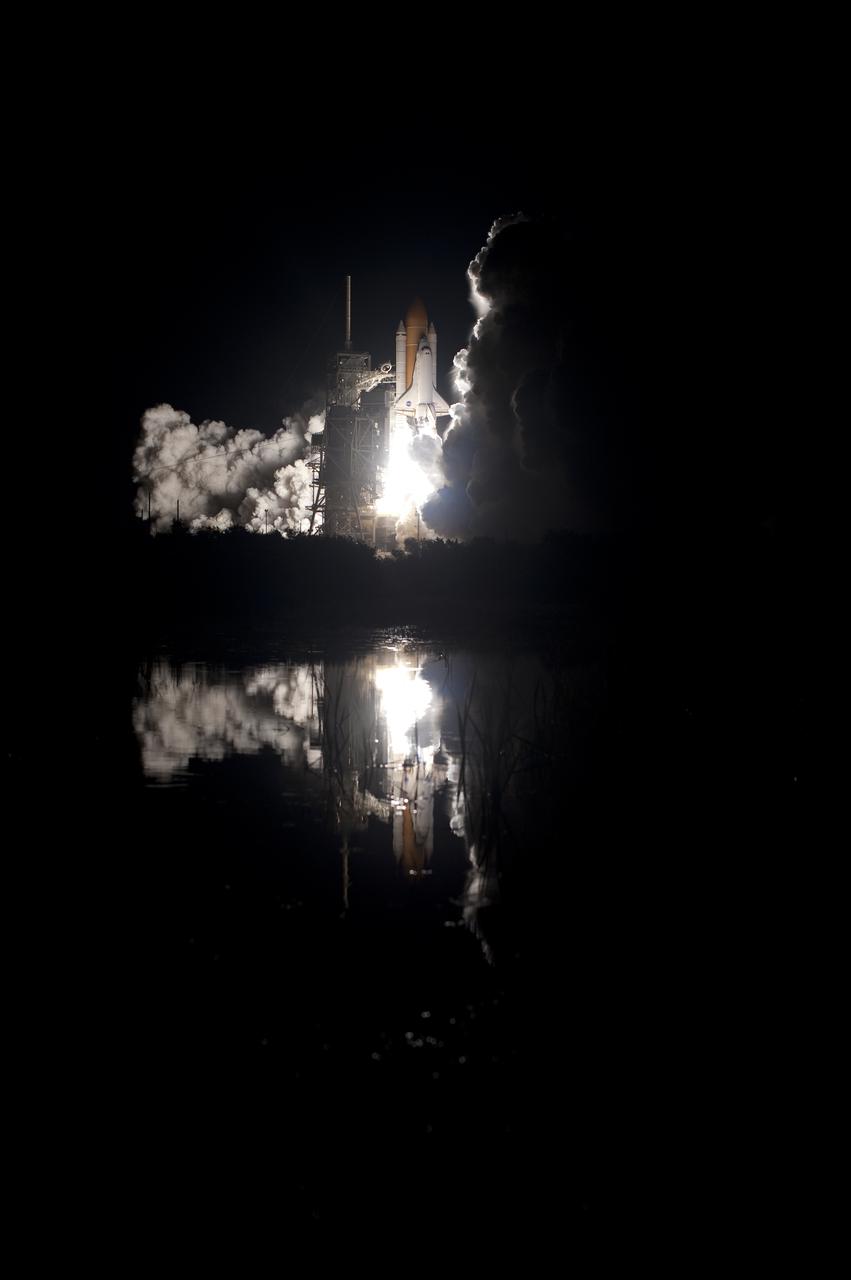
CAPE CANAVERAL, Fla. - Space shuttle Discovery begins its ascent into the predawn sky over Launch Pad 39A at NASA's Kennedy Space Center in Florida at 6:21 a.m. EDT April 5, a brilliant start for the STS-131 mission. The seven-member crew will deliver the multi-purpose logistics module Leonardo, filled with supplies, a new crew sleeping quarters and science racks that will be transferred to the International Space Station's laboratories. The crew also will switch out a gyroscope on the station’s truss, install a spare ammonia storage tank and retrieve a Japanese experiment from the station’s exterior. STS-131 is the 33rd shuttle mission to the station and the 131st shuttle mission overall. For information on the STS-131 mission and crew, visit http:__www.nasa.gov_mission_pages_shuttle_shuttlemissions_sts131_index.html. Photo credit: NASA_Tony Gray and Tom Farrar
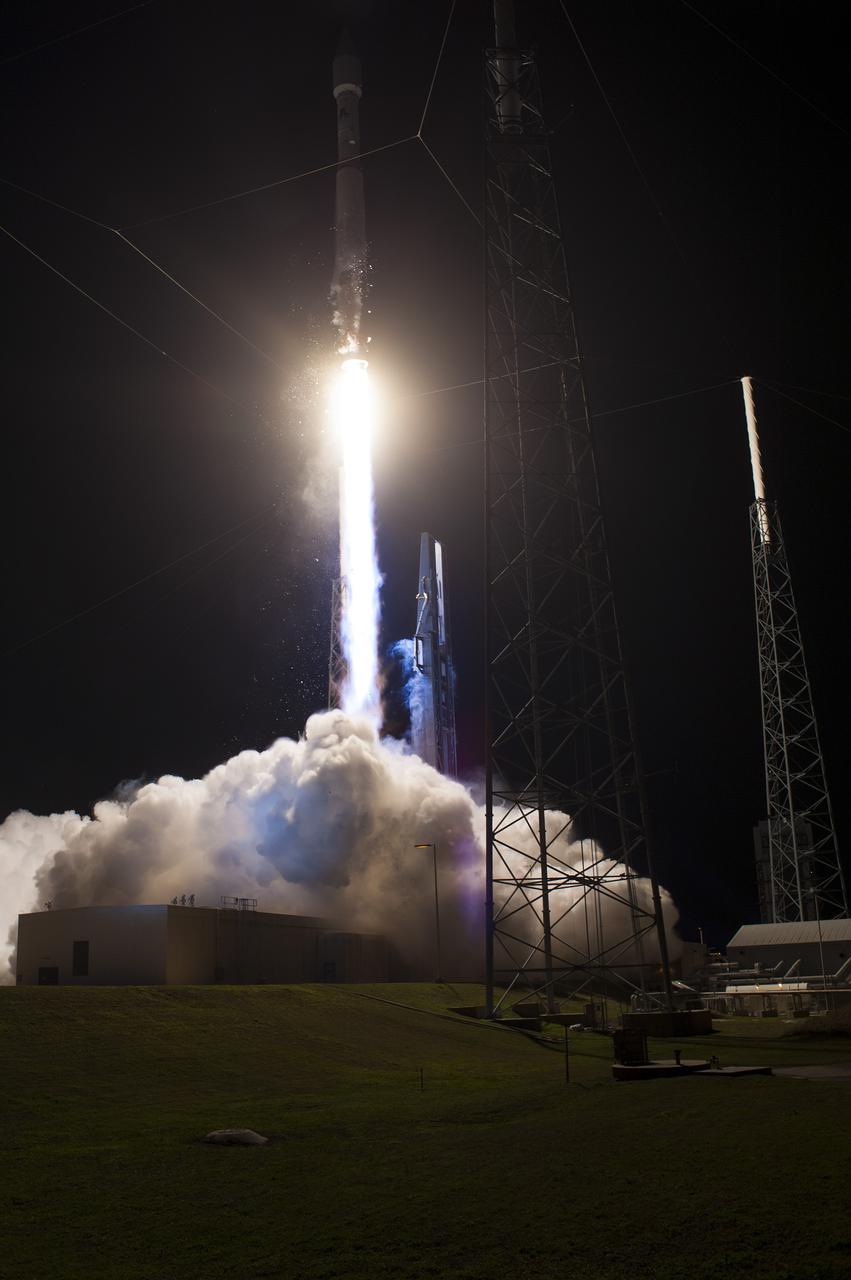
CAPE CANAVERAL, Fla. -- A United Launch Alliance Atlas V 401 rocket races above the lightning masts on Space Launch Complex 41 on Cape Canaveral Air Force Station in Florida, leaving plumes of exhaust and smoke in its wake. Its payload, NASA's Tracking and Data Relay Satellite-K or TDRS-K, began its climb to orbit at 8:48 p.m. EST. The TDRS-K spacecraft is part of the next-generation series in the Tracking and Data Relay Satellite System, a constellation of space-based communication satellites providing tracking, telemetry, command and high-bandwidth data return services. For more information, visit http:__www.nasa.gov_mission_pages_tdrs_index.html. Photo credit: NASA_Tony Gray and Robert Murray
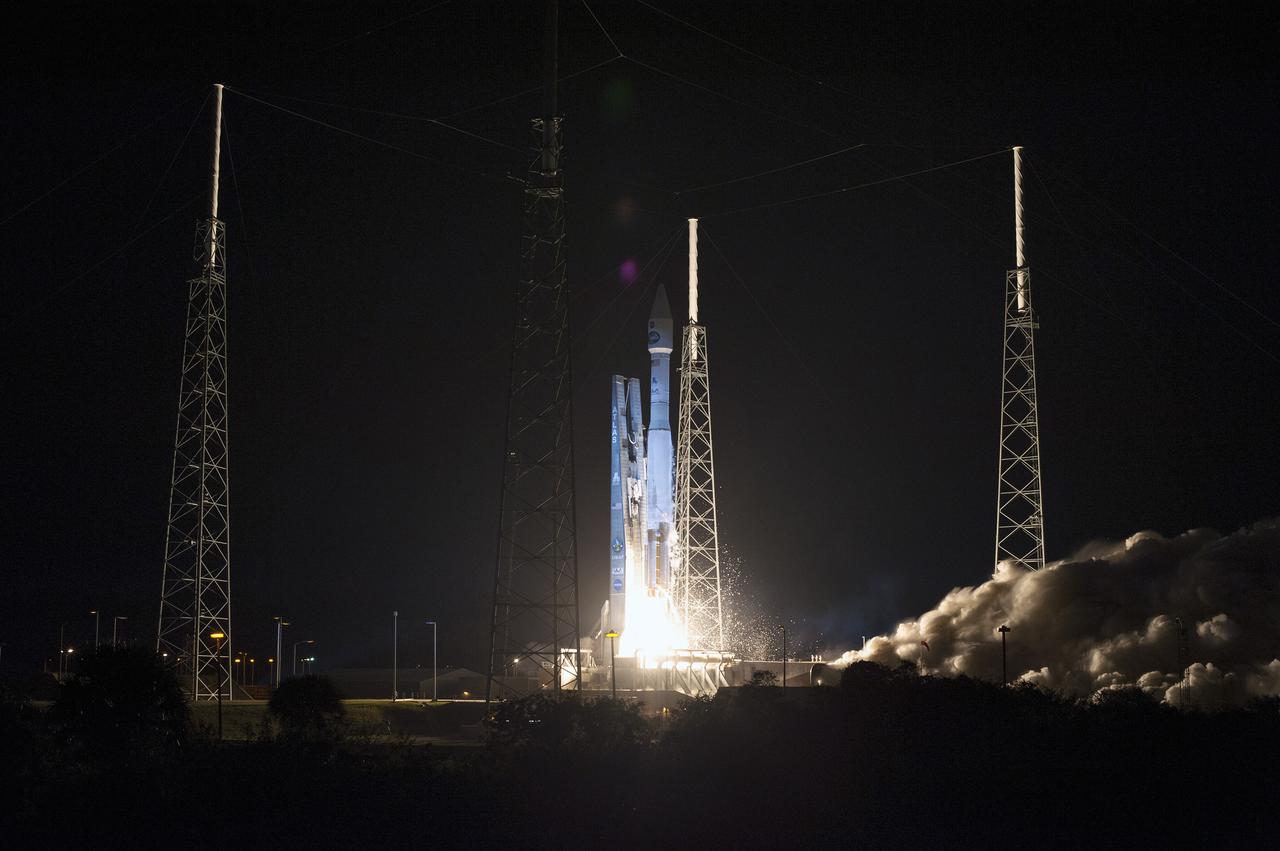
CAPE CANAVERAL, Fla. -- A United Launch Alliance Atlas V 401 rocket hovers above the hardstand on Space Launch Complex 41 on Cape Canaveral Air Force Station in Florida as its engines ignite. Liftoff, with NASA's Tracking and Data Relay Satellite-K or TDRS-K aboard, was at 8:48 p.m. EST. he TDRS-K spacecraft is part of the next-generation series in the Tracking and Data Relay Satellite System, a constellation of space-based communication satellites providing tracking, telemetry, command and high-bandwidth data return services. For more information, visit http:__www.nasa.gov_mission_pages_tdrs_index.html. Photo credit: NASA_Tony Gray and Rick Wetherington
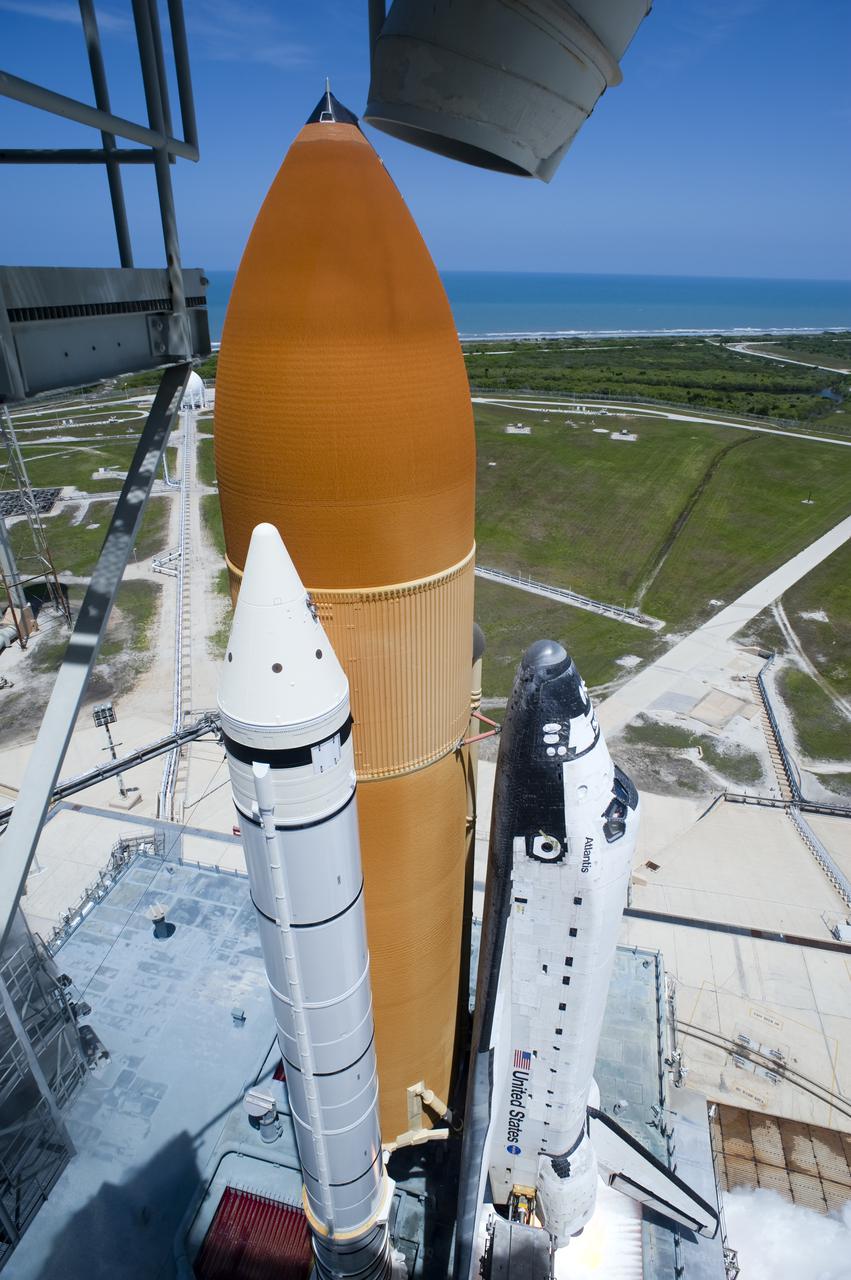
CAPE CANAVERAL, Fla. - Space shuttle Atlantis and its six STS-132 astronauts lift off seaside Launch Pad 39A at NASA's Kennedy Space Center in Florida at 2:20 p.m. EDT on May 14. Atlantis' primary payload for the STS-132 mission is the Russian-built Mini Research Module-1, which will provide additional storage space and a new docking port for Russian Soyuz and Progress spacecraft aboard the International Space Station. STS-132 is the 132nd shuttle flight, the 32nd for Atlantis and the 34th shuttle mission dedicated to station assembly and maintenance. For more information on the STS-132 mission objectives, payload and crew, visit www.nasa.gov_mission_pages_shuttle_shuttlemissions_sts132_index.html. Photo credit: NASA_Tony Gray and Tom Farrar
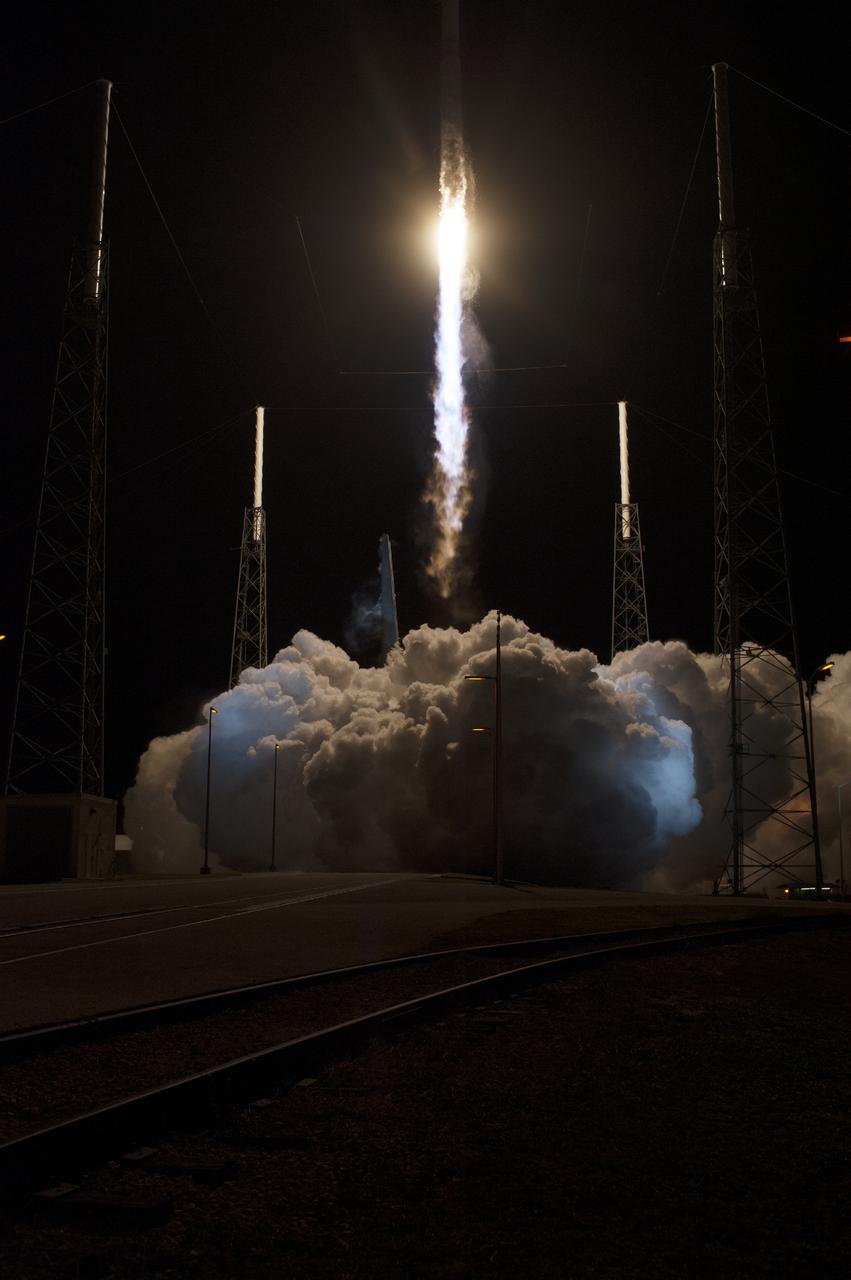
CAPE CANAVERAL, Fla. – The United Launch Alliance Atlas V rocket lifts off from Space Launch Complex 41 at Cape Canaveral Air Force Station carrying NASA's Tracking and Data Relay Satellite, or TDRS-L, spacecraft to Earth orbit. Liftoff was at 9:33 p.m. EST. The TDRS-L spacecraft is the second of three new satellites designed to ensure vital operational continuity for NASA by expanding the lifespan of the Tracking and Data Relay Satellite System TDRSS fleet, which consists of eight satellites in geosynchronous orbit. The spacecraft provide tracking, telemetry, command and high bandwidth data return services for numerous science and human exploration missions orbiting Earth. These include NASA's Hubble Space Telescope and the International Space Station. TDRS-L has a high-performance solar panel designed for more spacecraft power to meet the growing S-band communications requirements. TDRSS is one of NASA Space Communication and Navigation’s SCaN three networks providing space communications to NASA’s missions. For more information more about TDRS-L, visit: http:__www.nasa.gov_tdrs To learn more about SCaN, visit: www.nasa.gov_scan Photo credit: NASA_Tony Gray and Sandy Joseph
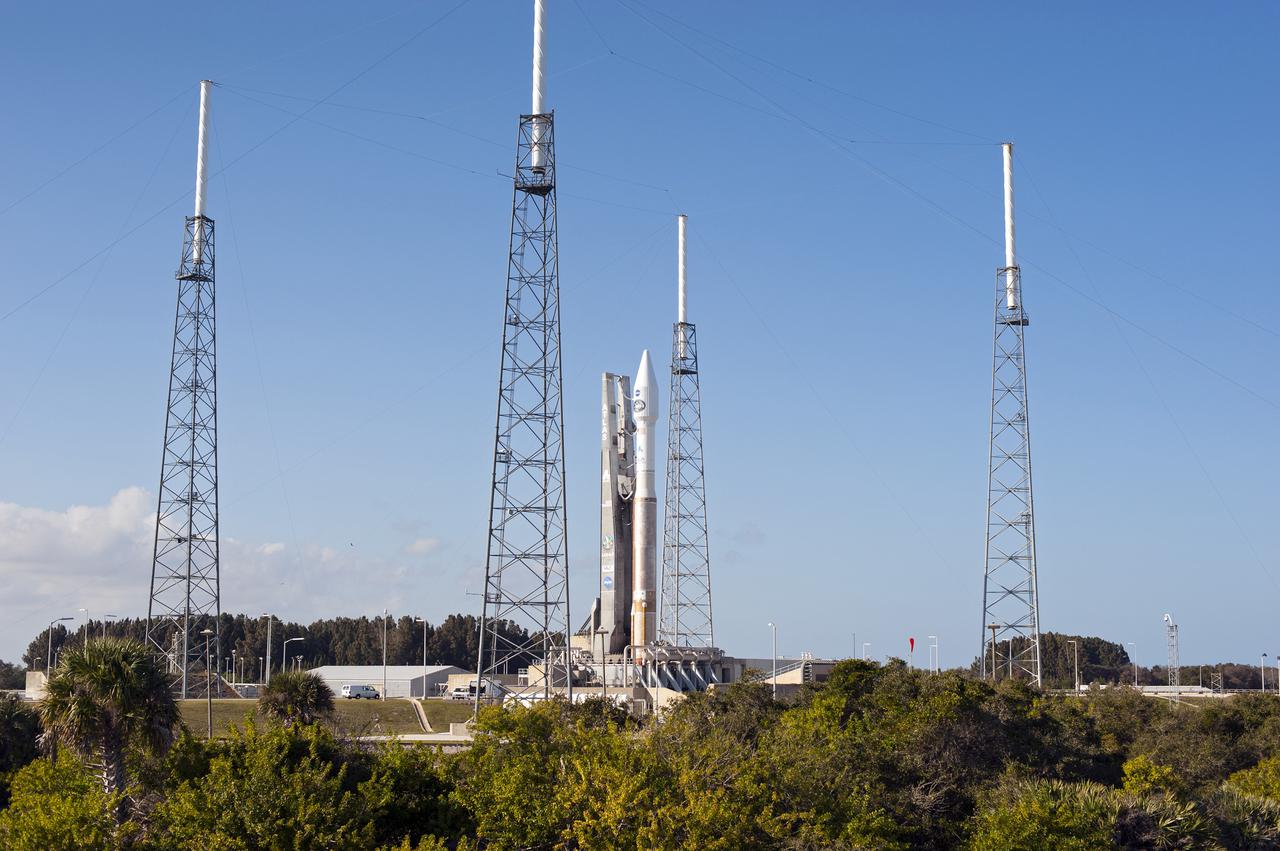
CAPE CANAVERAL, Fla. -- NASA's Tracking and Data Relay Satellite-K, TDRS-K, sits atop a United Launch Alliance Atlas V 401 rocket on Space Launch Complex 41 on Cape Canaveral Air Force Station in Florida, ready to begin its journey to orbit. Liftoff is set for 8:48 p.m. EST at the opening of a 40-minute launch window. The TDRS-K spacecraft is part of the next-generation series in the Tracking and Data Relay Satellite System, a constellation of space-based communication satellites providing tracking, telemetry, command and high-bandwidth data return services. For more information, visit http:__www.nasa.gov_mission_pages_tdrs_index.html. Photo credit: NASA_Tony Gray and Rick Wetherington
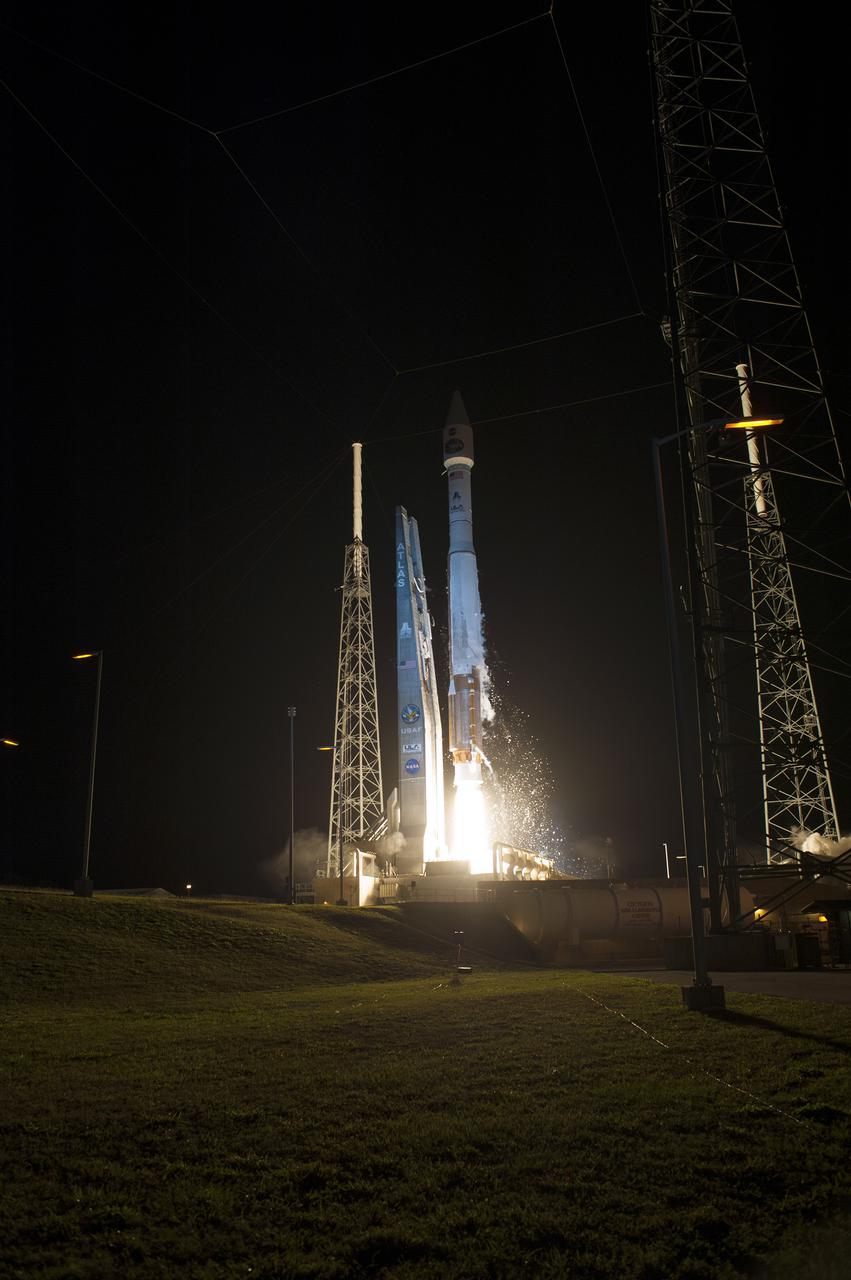
CAPE CANAVERAL, Fla. -- A United Launch Alliance Atlas V 401 rocket springs to life on Space Launch Complex 41 on Cape Canaveral Air Force Station in Florida at 8:48 p.m. EST, carrying NASA's Tracking and Data Relay Satellite-K, TDRS-K, to orbit. The TDRS-K spacecraft is part of the next-generation series in the Tracking and Data Relay Satellite System, a constellation of space-based communication satellites providing tracking, telemetry, command and high-bandwidth data return services. For more information, visit http:__www.nasa.gov_mission_pages_tdrs_index.html. Photo credit: NASA_Tony Gray and Rick Wetherington
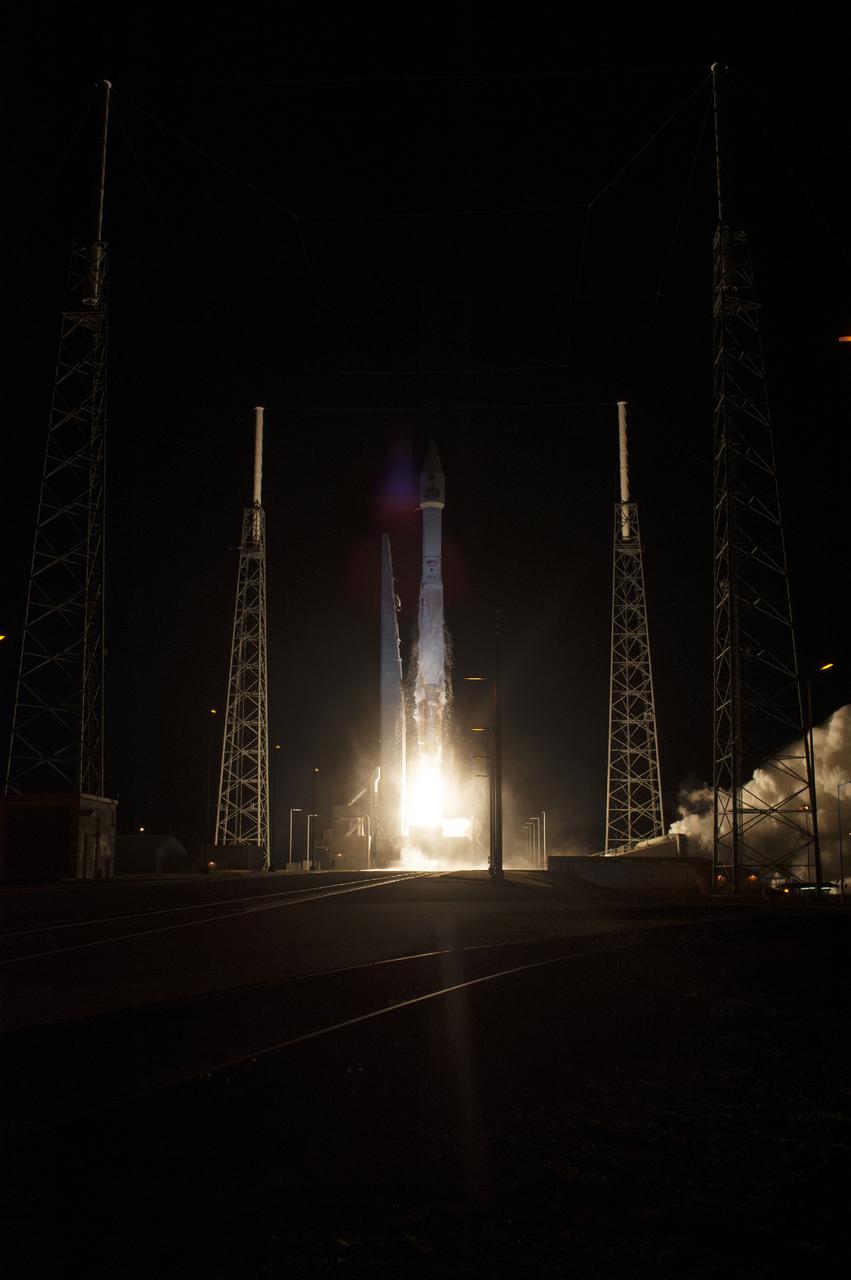
CAPE CANAVERAL, Fla. – The United Launch Alliance Atlas V rocket lifts off from Space Launch Complex 41 at Cape Canaveral Air Force Station carrying NASA's Tracking and Data Relay Satellite, or TDRS-L, spacecraft to Earth orbit. Liftoff was at 9:33 p.m. EST. The TDRS-L spacecraft is the second of three new satellites designed to ensure vital operational continuity for NASA by expanding the lifespan of the Tracking and Data Relay Satellite System TDRSS fleet, which consists of eight satellites in geosynchronous orbit. The spacecraft provide tracking, telemetry, command and high bandwidth data return services for numerous science and human exploration missions orbiting Earth. These include NASA's Hubble Space Telescope and the International Space Station. TDRS-L has a high-performance solar panel designed for more spacecraft power to meet the growing S-band communications requirements. TDRSS is one of NASA Space Communication and Navigation’s SCaN three networks providing space communications to NASA’s missions. For more information more about TDRS-L, visit: http:__www.nasa.gov_tdrs To learn more about SCaN, visit: www.nasa.gov_scan Photo credit: NASA_Tony Gray and Sandy Joseph
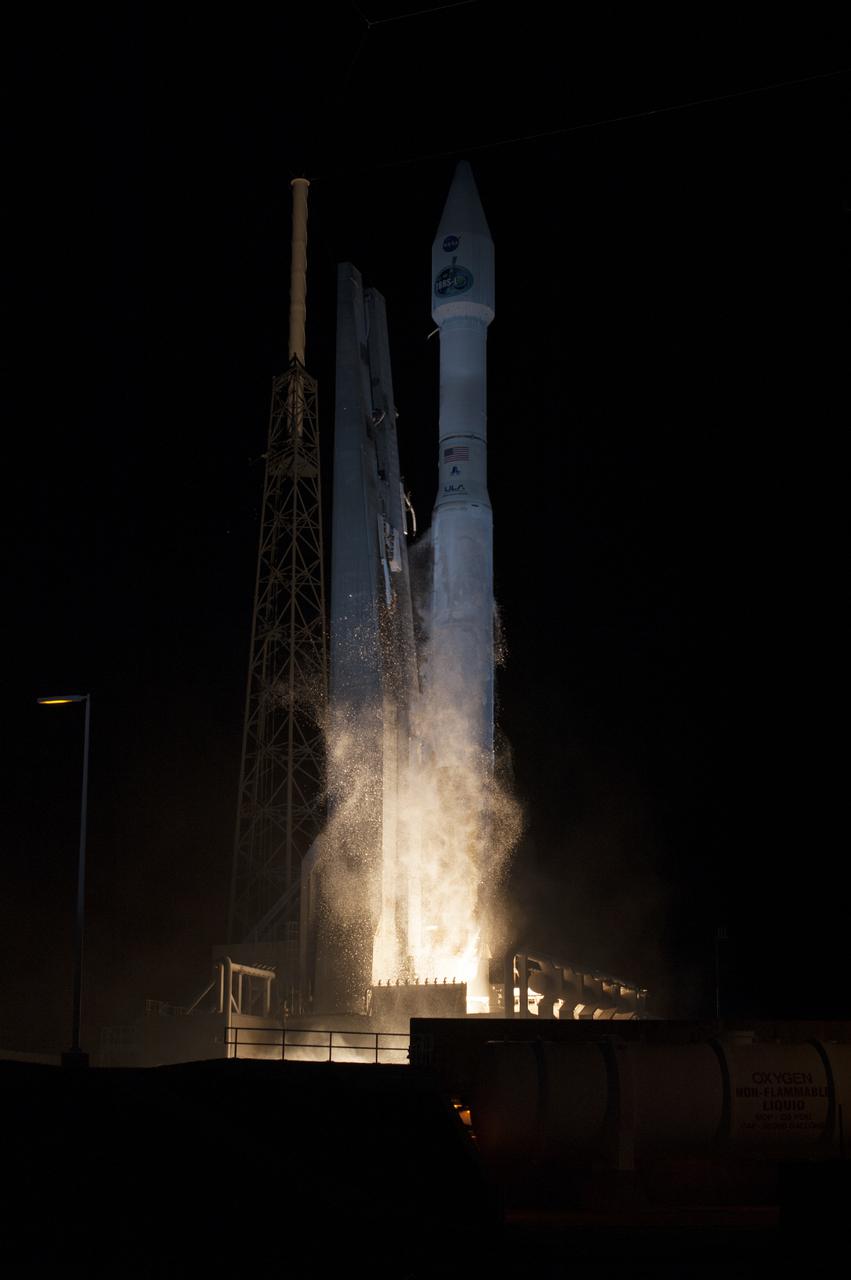
CAPE CANAVERAL, Fla. – The United Launch Alliance Atlas V rocket lifts off from Space Launch Complex 41 at Cape Canaveral Air Force Station carrying NASA's Tracking and Data Relay Satellite, or TDRS-L, spacecraft to Earth orbit. Liftoff was at 9:33 p.m. EST. The TDRS-L spacecraft is the second of three new satellites designed to ensure vital operational continuity for NASA by expanding the lifespan of the Tracking and Data Relay Satellite System TDRSS fleet, which consists of eight satellites in geosynchronous orbit. The spacecraft provide tracking, telemetry, command and high bandwidth data return services for numerous science and human exploration missions orbiting Earth. These include NASA's Hubble Space Telescope and the International Space Station. TDRS-L has a high-performance solar panel designed for more spacecraft power to meet the growing S-band communications requirements. TDRSS is one of NASA Space Communication and Navigation’s SCaN three networks providing space communications to NASA’s missions. For more information more about TDRS-L, visit: http:__www.nasa.gov_tdrs To learn more about SCaN, visit: www.nasa.gov_scan Photo credit: NASA_Tony Gray and Sandy Joseph
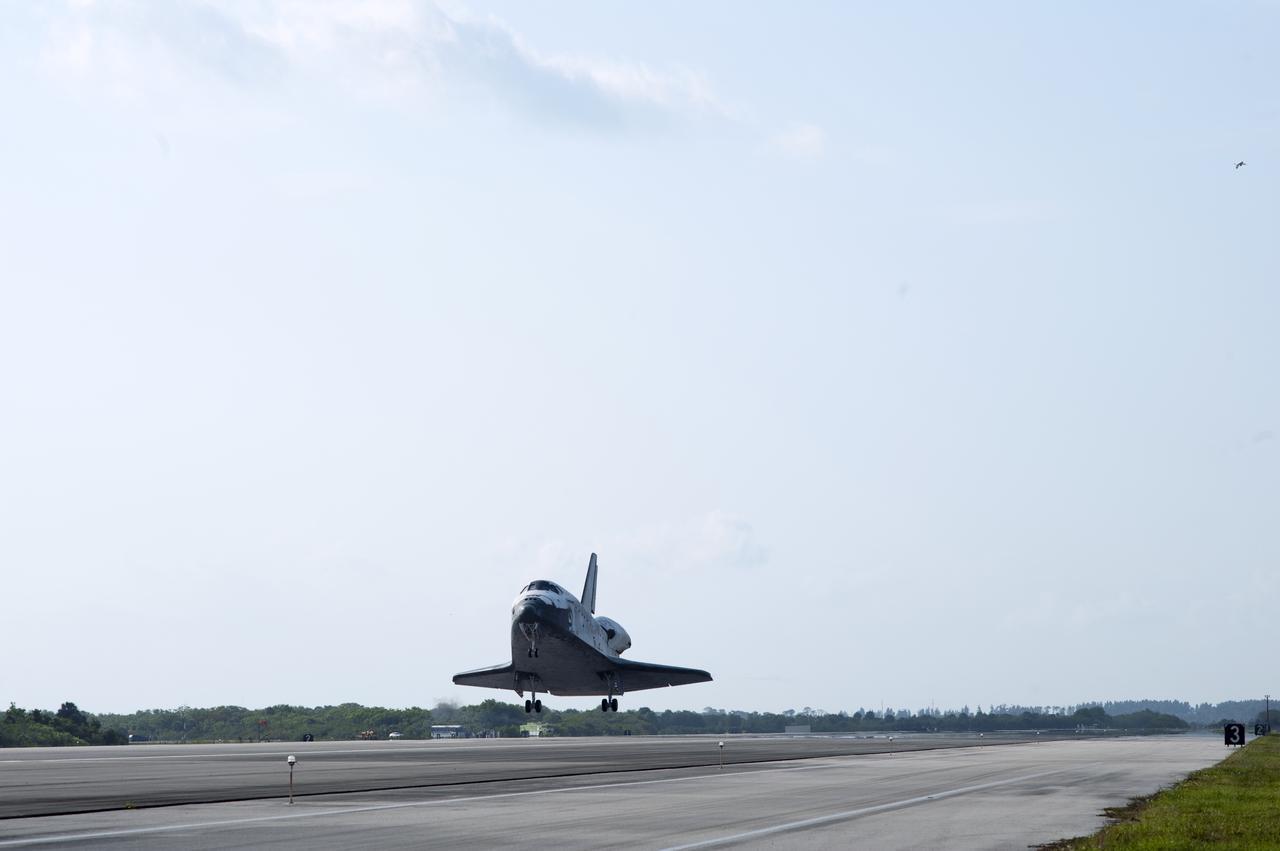
CAPE CANAVERAL, Fla. - Space shuttle Discovery appears to hover above the ground as it nears touchdown on Runway 33 at the Shuttle Landing Facility at NASA's Kennedy Space Center in Florida at 9:08 a.m. EDT, completing the 15-day STS-131 mission to the International Space Station. Main gear touchdown was at 9:08:35 a.m. EDT followed by nose gear touchdown at 9:08:47 a.m. and wheelstop at 9:09:33 a.m. Aboard are Commander Alan Poindexter; Pilot James P. Dutton Jr.; and Mission Specialists Rick Mastracchio, Clayton Anderson, Dorothy Metcalf-Lindenburger, Stephanie Wilson and Naoko Yamazaki of the Japan Aerospace Exploration Agency. The seven-member STS-131 crew carried the multi-purpose logistics module Leonardo, filled with supplies, a new crew sleeping quarters and science racks that were transferred to the International Space Station's laboratories. The crew also switched out a gyroscope on the station’s truss, installed a spare ammonia storage tank and retrieved a Japanese experiment from the station’s exterior. STS-131 is the 33rd shuttle mission to the station and the 131st shuttle mission overall. For information on the STS-131 mission and crew, visit http:__www.nasa.gov_mission_pages_shuttle_shuttlemissions_sts131_index.html. Photo credit: NASA_Tony Gray and Tom Farrar
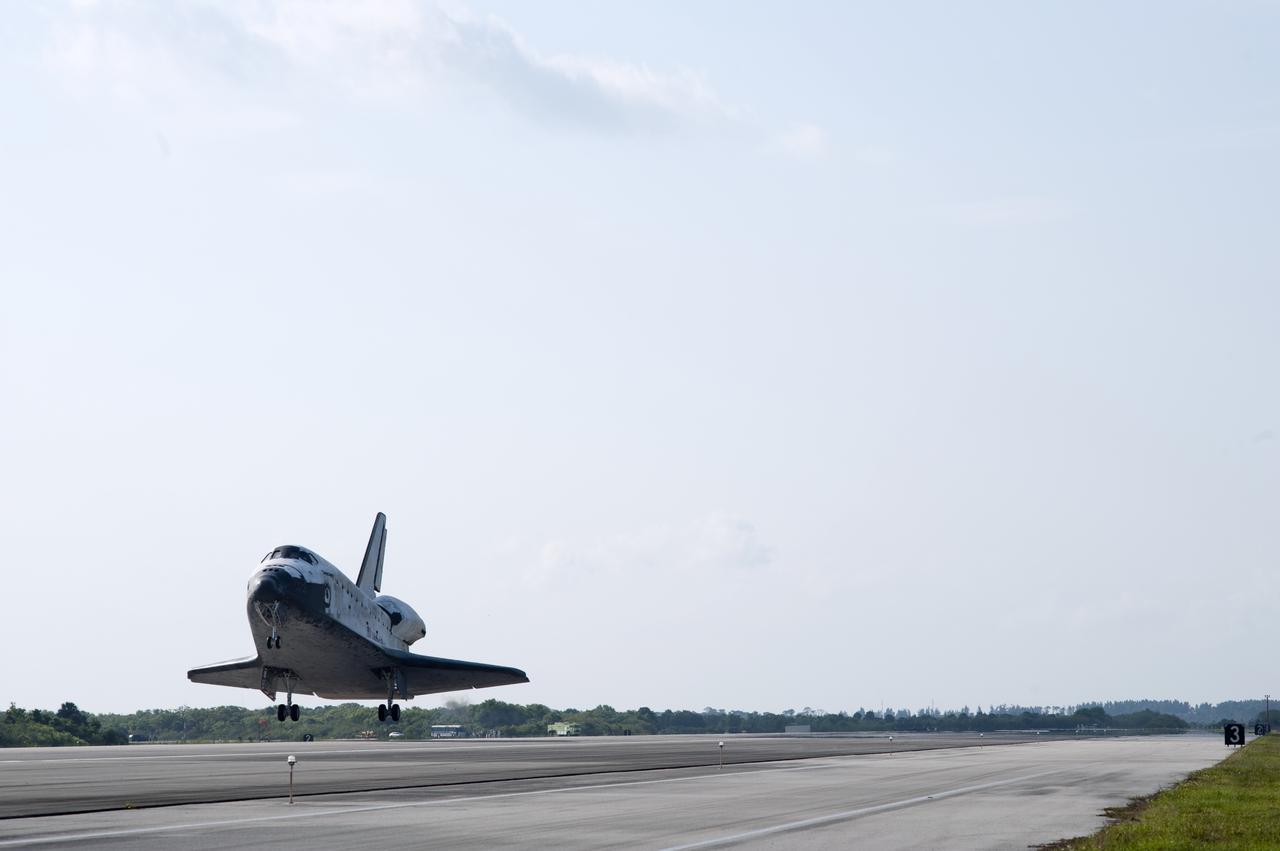
CAPE CANAVERAL, Fla. - Space shuttle Discovery nears touchdown on Runway 33 at the Shuttle Landing Facility at NASA's Kennedy Space Center in Florida. Landing was at 9:08 a.m. EDT, completing the 15-day STS-131 mission to the International Space Station. Main gear touchdown was at 9:08:35 a.m. EDT followed by nose gear touchdown at 9:08:47 a.m. and wheelstop at 9:09:33 a.m. Aboard are Commander Alan Poindexter; Pilot James P. Dutton Jr.; and Mission Specialists Rick Mastracchio, Clayton Anderson, Dorothy Metcalf-Lindenburger, Stephanie Wilson and Naoko Yamazaki of the Japan Aerospace Exploration Agency. The seven-member STS-131 crew carried the multi-purpose logistics module Leonardo, filled with supplies, a new crew sleeping quarters and science racks that were transferred to the International Space Station's laboratories. The crew also switched out a gyroscope on the station’s truss, installed a spare ammonia storage tank and retrieved a Japanese experiment from the station’s exterior. STS-131 is the 33rd shuttle mission to the station and the 131st shuttle mission overall. For information on the STS-131 mission and crew, visit http:__www.nasa.gov_mission_pages_shuttle_shuttlemissions_sts131_index.html. Photo credit: NASA_Tony Gray and Tom Farrar
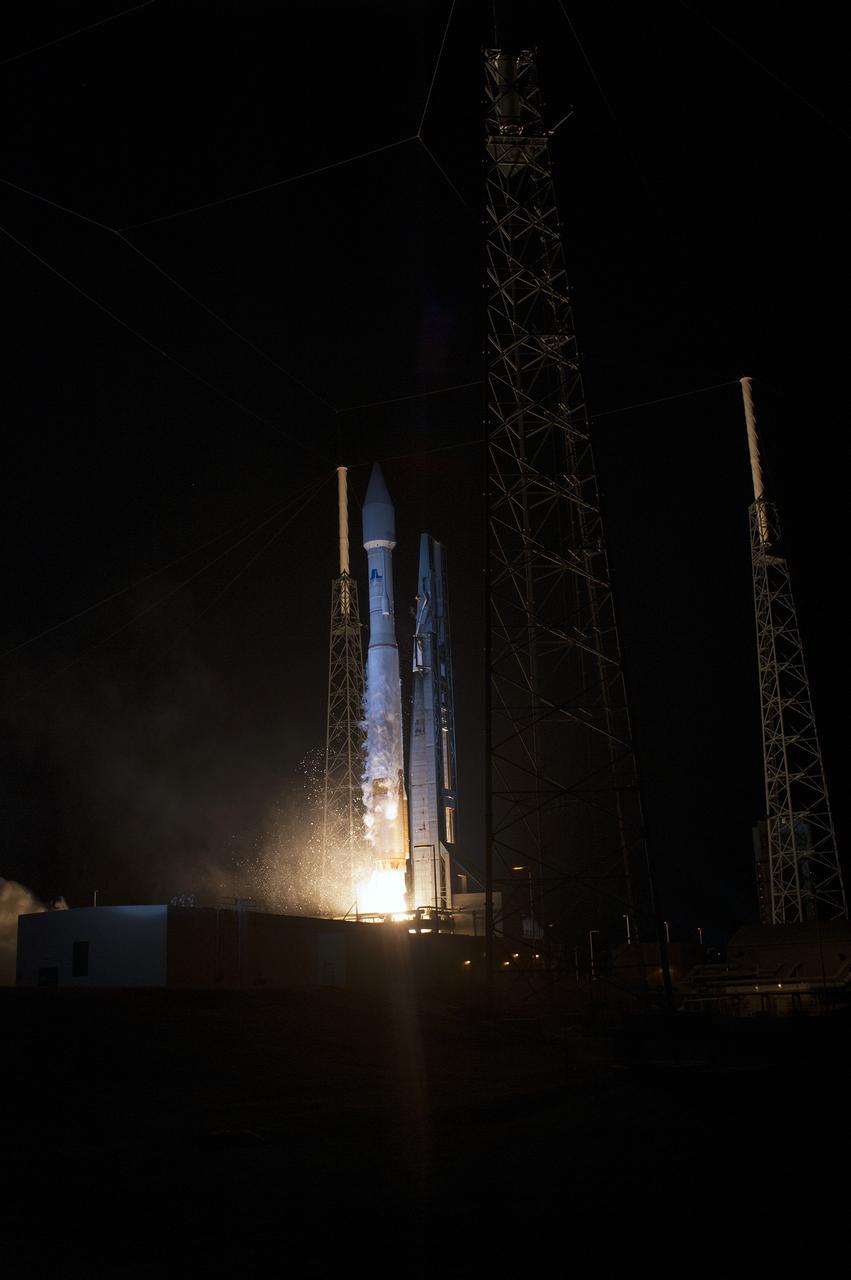
CAPE CANAVERAL, Fla. -- The engines ignite under the United Launch Alliance Atlas V 401 rocket at Space Launch Complex 41 on Cape Canaveral Air Force Station in Florida. NASA's Tracking and Data Relay Satellite-K, TDRS-K, began its journey to orbit at 8:48 p.m. EST. The TDRS-K spacecraft is part of the next-generation series in the Tracking and Data Relay Satellite System, a constellation of space-based communication satellites providing tracking, telemetry, command and high-bandwidth data return services. For more information, visit http:__www.nasa.gov_mission_pages_tdrs_index.html. Photo credit: NASA_Tony Gray and Robert Murray
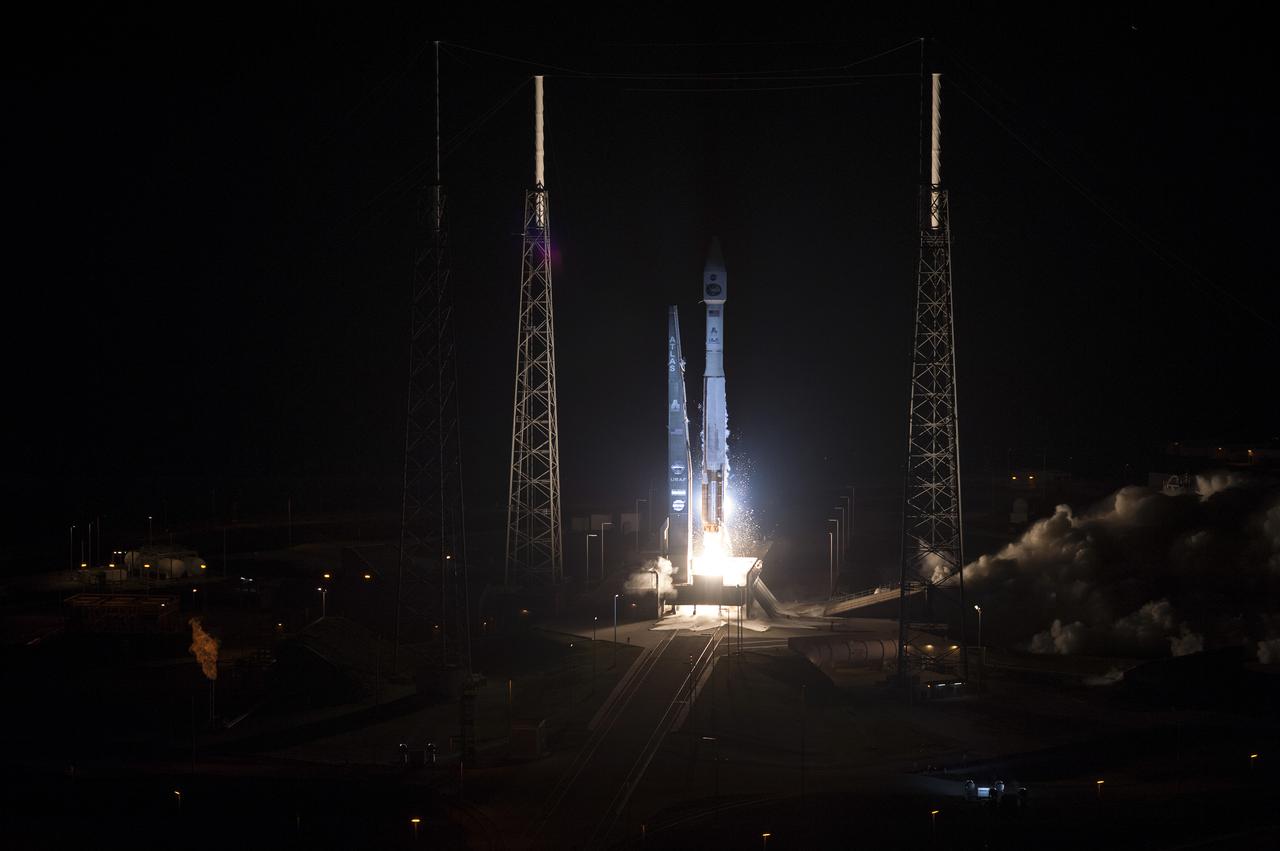
CAPE CANAVERAL, Fla. -- Plumes of exhaust and smoke form around the base of a lightning mast on Space Launch Complex 41 on Cape Canaveral Air Force Station in Florida as a United Launch Alliance Atlas V 401 rocket lifts off at 8:48 p.m. EST, carrying NASA's Tracking and Data Relay Satellite-K, TDRS-K, to orbit. The TDRS-K spacecraft is part of the next-generation series in the Tracking and Data Relay Satellite System, a constellation of space-based communication satellites providing tracking, telemetry, command and high-bandwidth data return services. For more information, visit http:__www.nasa.gov_mission_pages_tdrs_index.html. Photo credit: NASA_Tony Gray and Don Kight
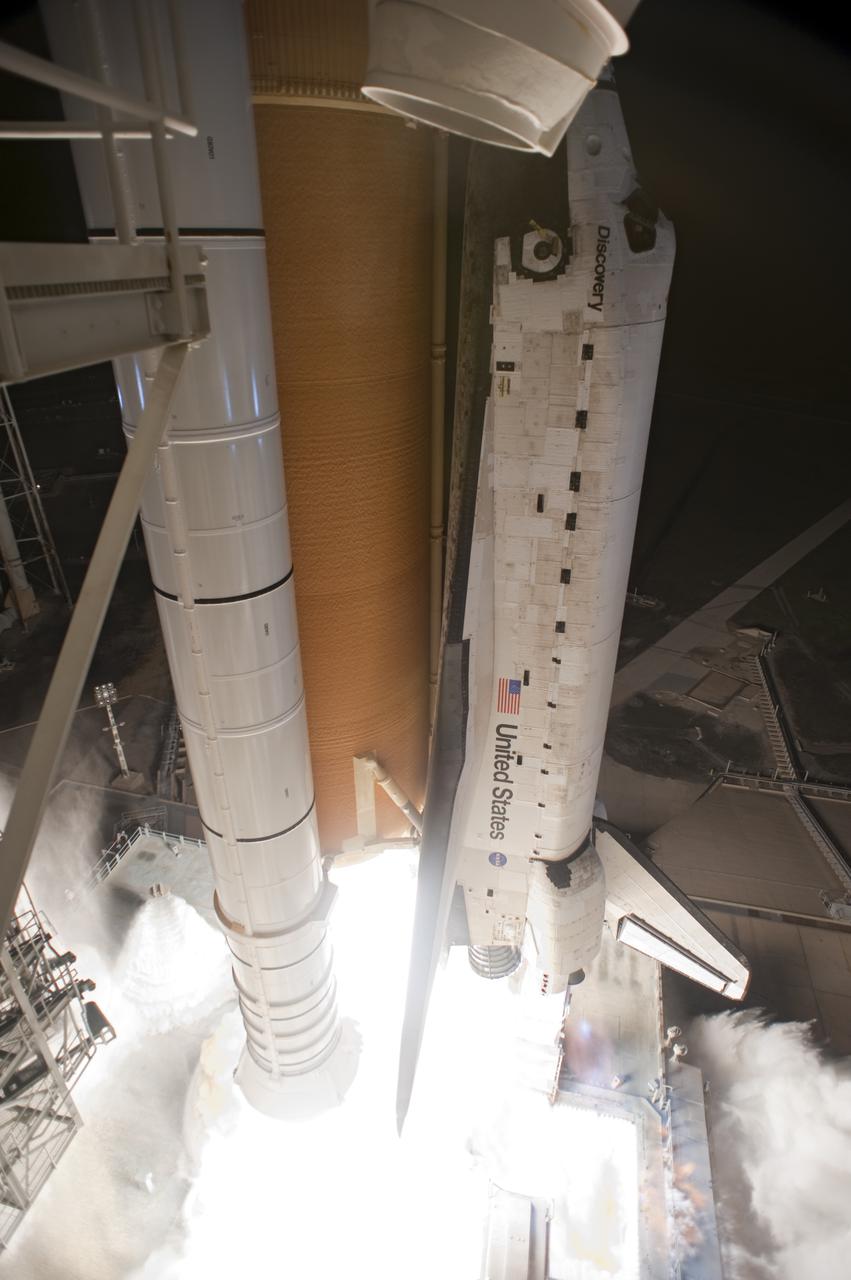
CAPE CANAVERAL, Fla. - On Launch Pad 39A at NASA's Kennedy Space Center in Florida, space shuttle Discovery lifts off on a column of dazzling smoke and fire headed for the International Space Station on the STS-131 mission. Shuttle Discovery lifted off at 6:21 a.m. EDT on April 5, 2010. The seven-member STS-131 crew will deliver the multi-purpose logistics module Leonardo, filled with supplies, a new crew sleeping quarters and science racks that will be transferred to the International Space Station's laboratories. The crew also will switch out a gyroscope on the station’s truss, install a spare ammonia storage tank and retrieve a Japanese experiment from the station’s exterior. STS-131 is the 33rd shuttle mission to the station and the 131st shuttle mission overall. For information on the STS-131 mission and crew, visit http:__www.nasa.gov_mission_pages_shuttle_shuttlemissions_sts131_index.html. Photo credit: NASA_Tony Gray and Tom Farrar
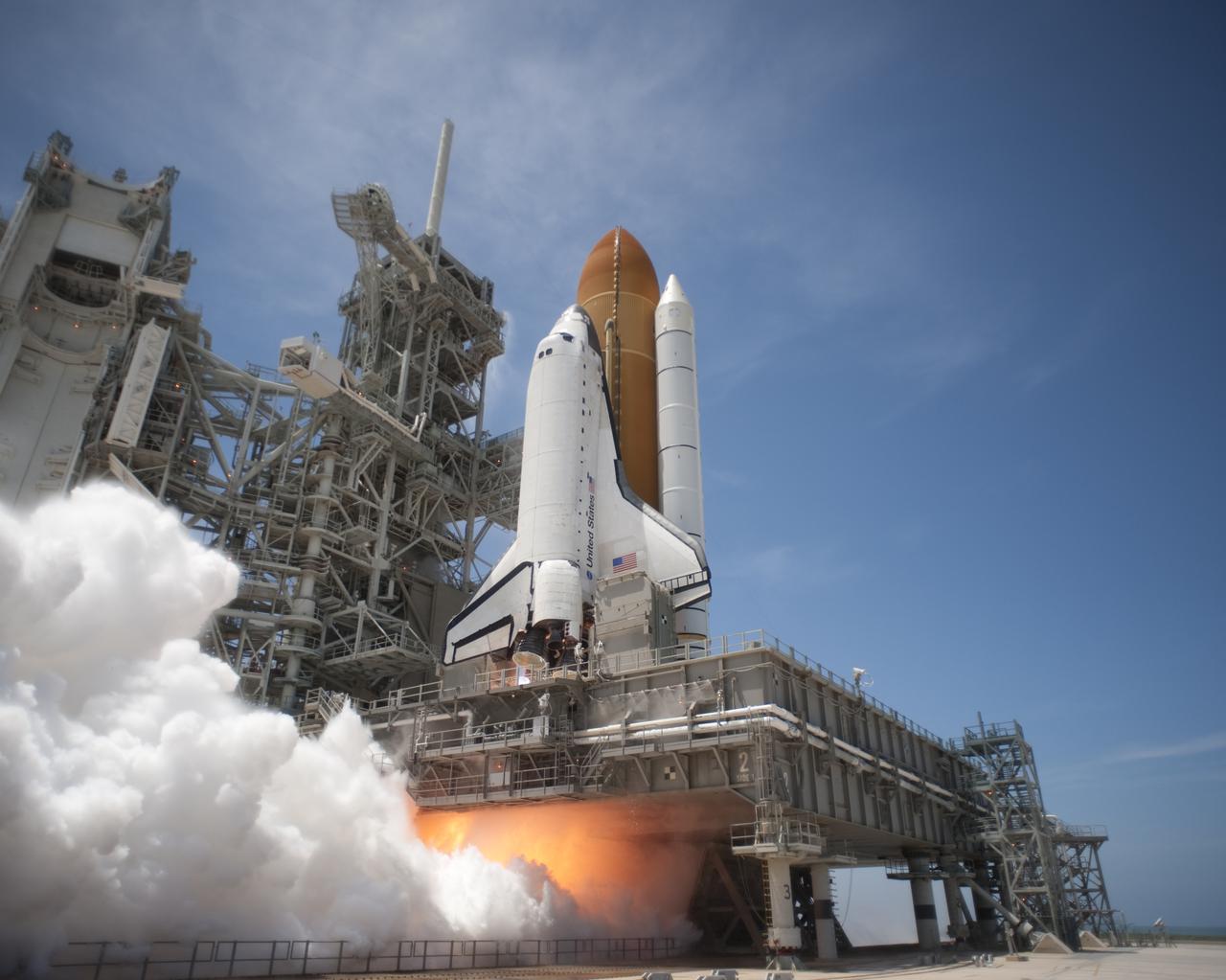
CAPE CANAVERAL, Fla. - At NASA's Kennedy Space Center in Florida, an exhaust plume forms under the mobile launcher platform on Launch Pad 39A as space shuttle Atlantis lifts off on the STS-132 mission at 2:20 p.m. EDT on May 14. Atlantis' primary payload for the STS-132 mission is the Russian-built Mini Research Module-1, which will provide additional storage space and a new docking port for Russian Soyuz and Progress spacecraft aboard the International Space Station. STS-132 is the 132nd shuttle flight, the 32nd for Atlantis and the 34th shuttle mission dedicated to station assembly and maintenance. For more information on the STS-132 mission objectives, payload and crew, visit www.nasa.gov_mission_pages_shuttle_shuttlemissions_sts132_index.html. Photo credit: NASA_Tony Gray and Tom Farrar
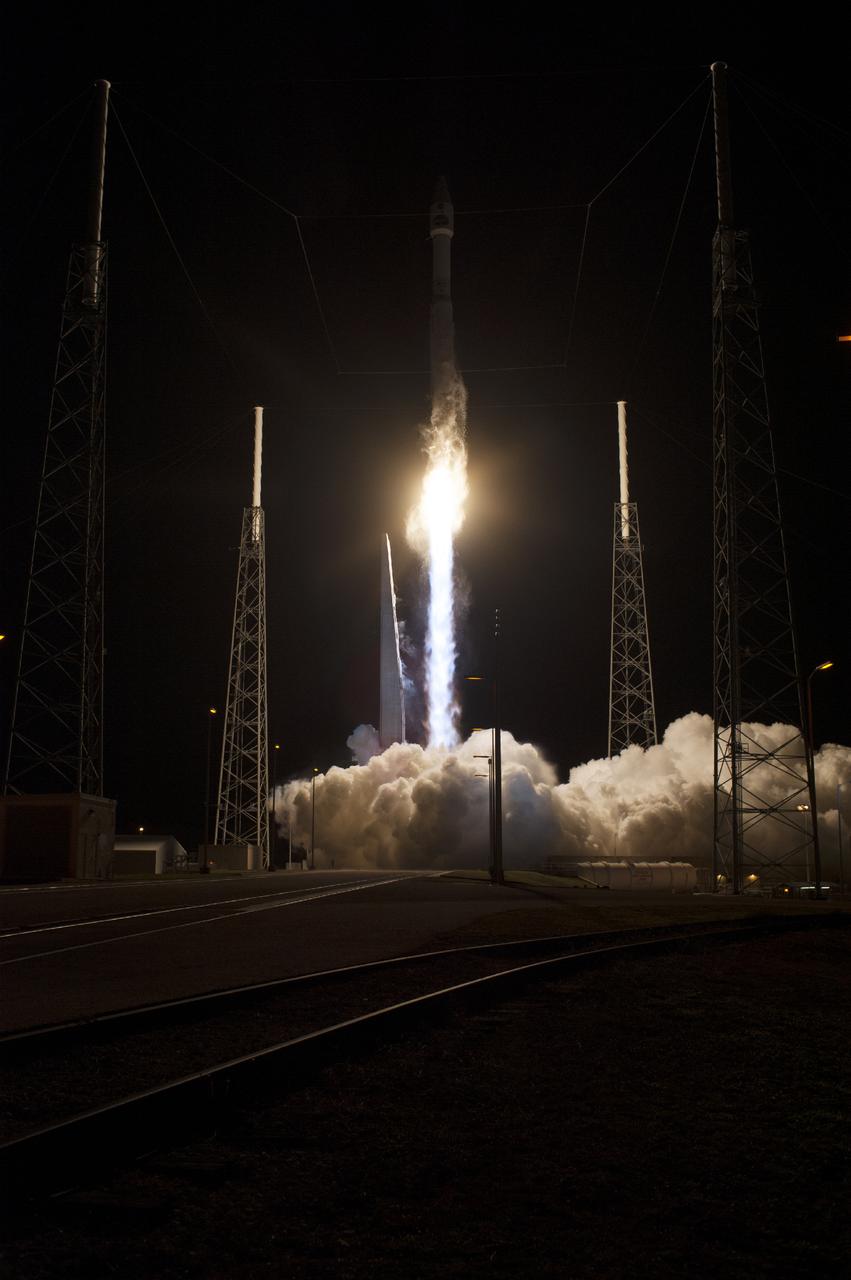
CAPE CANAVERAL, Fla. – The United Launch Alliance Atlas V rocket lifts off from Space Launch Complex 41 at Cape Canaveral Air Force Station carrying NASA's Tracking and Data Relay Satellite, or TDRS-L, spacecraft to Earth orbit. Liftoff was at 9:33 p.m. EST. The TDRS-L spacecraft is the second of three new satellites designed to ensure vital operational continuity for NASA by expanding the lifespan of the Tracking and Data Relay Satellite System TDRSS fleet, which consists of eight satellites in geosynchronous orbit. The spacecraft provide tracking, telemetry, command and high bandwidth data return services for numerous science and human exploration missions orbiting Earth. These include NASA's Hubble Space Telescope and the International Space Station. TDRS-L has a high-performance solar panel designed for more spacecraft power to meet the growing S-band communications requirements. TDRSS is one of NASA Space Communication and Navigation’s SCaN three networks providing space communications to NASA’s missions. For more information more about TDRS-L, visit: http:__www.nasa.gov_tdrs To learn more about SCaN, visit: www.nasa.gov_scan Photo credit: NASA_Tony Gray and Sandy Joseph
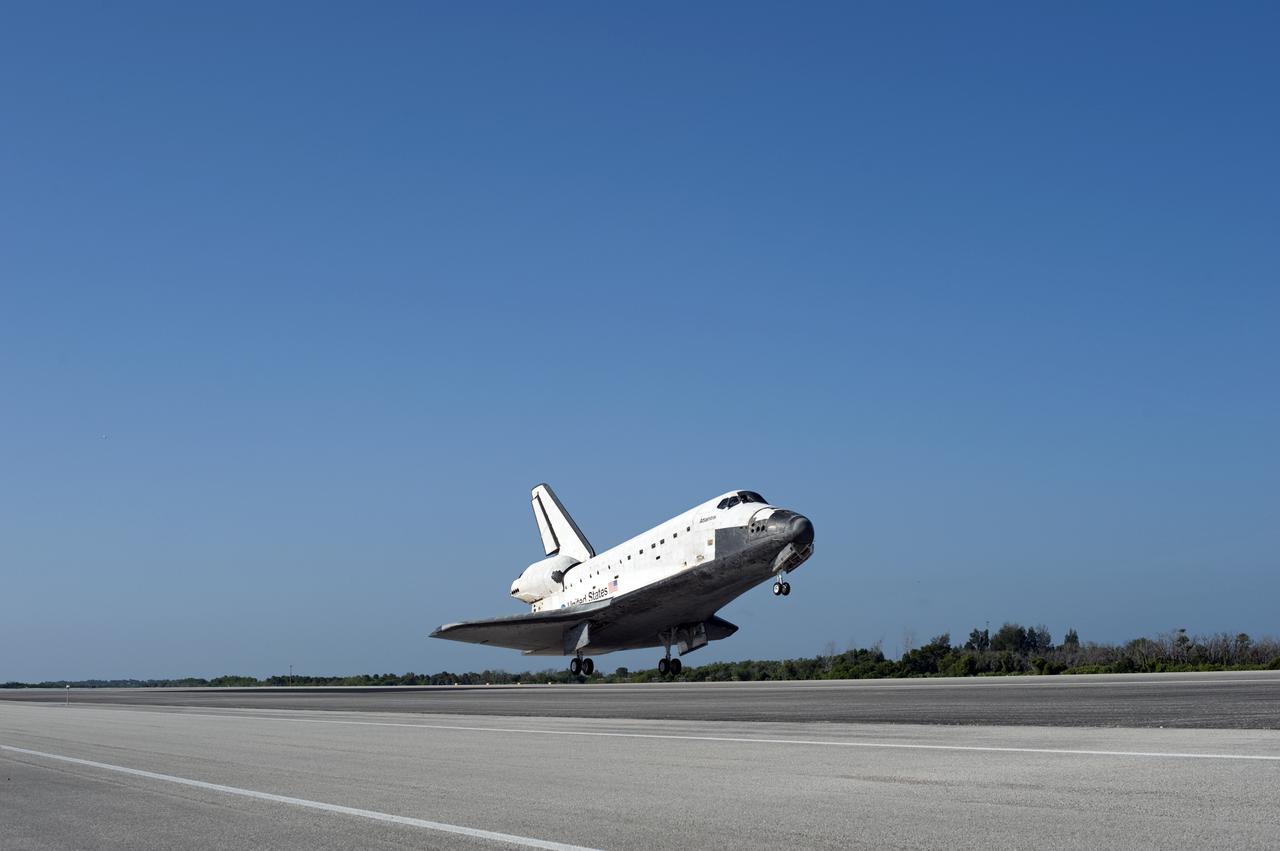
CAPE CANAVERAL, Fla. - Back dropped by a crystal-clear blue sky, space shuttle Atlantis' belly is visible as it approaches Runway 33 at the Shuttle Landing Facility at NASA's Kennedy Space Center in Florida. Landing was at 8:48 a.m. EDT, completing the 12-day STS-132 mission to the International Space Station. The six-member STS-132 crew carried the Russian-built Mini Research Module-1 to the space station. STS-132 is the 34th shuttle mission to the station, the 132nd shuttle mission overall and the last planned flight for Atlantis. For information on the STS-132 mission and crew, visit www.nasa.gov_mission_pages_shuttle_shuttlemissions_sts132_index.html. Photo credit: NASA_Tony Gray and Tom Farrar
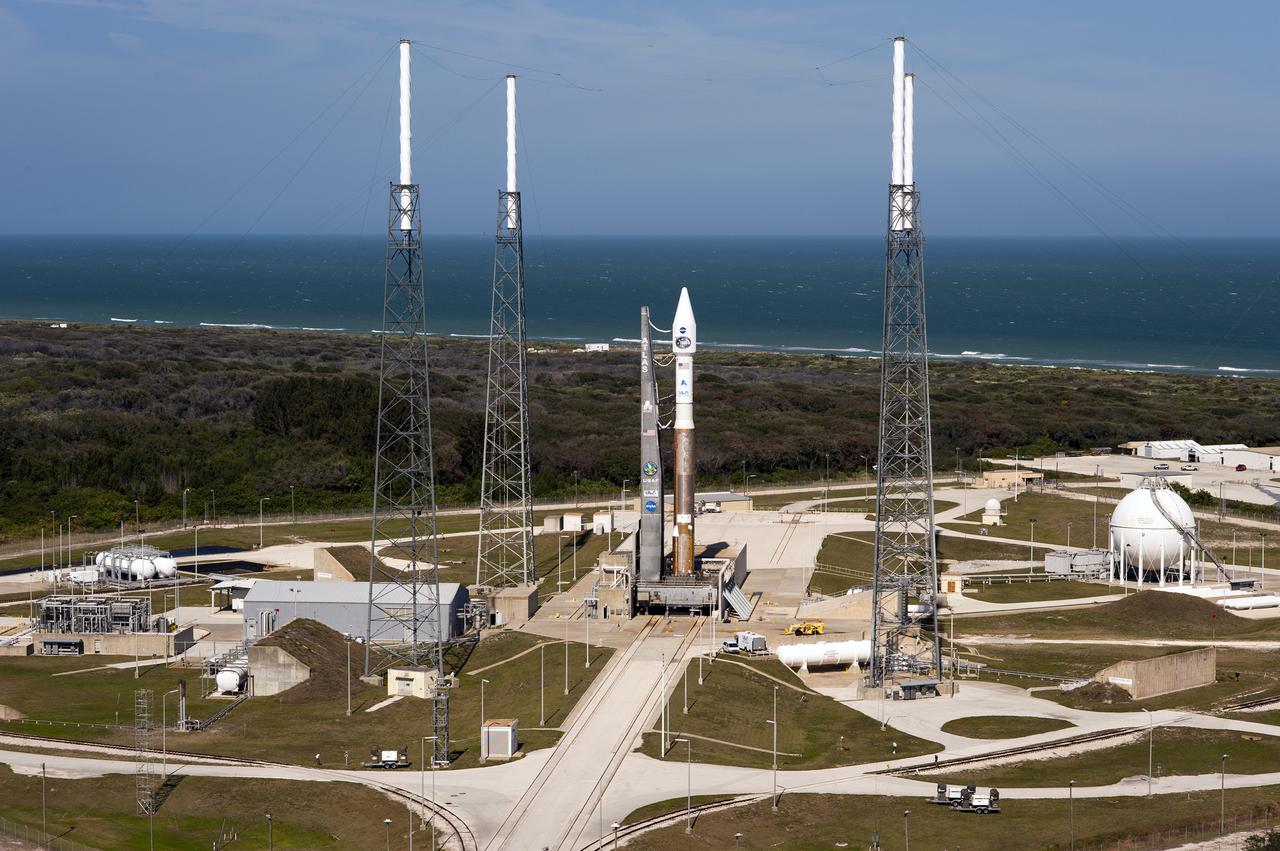
CAPE CANAVERAL, Fla. -- NASA's Tracking and Data Relay Satellite-K, TDRS-K, sits atop a United Launch Alliance Atlas V 401 rocket on Space Launch Complex 41 on Cape Canaveral Air Force Station in Florida, ready to begin its journey to orbit. Liftoff is set for 8:48 p.m. EST at the opening of a 40-minute launch window. The TDRS-K spacecraft is part of the next-generation series in the Tracking and Data Relay Satellite System, a constellation of space-based communication satellites providing tracking, telemetry, command and high-bandwidth data return services. For more information, visit http:__www.nasa.gov_mission_pages_tdrs_index.html. Photo credit: NASA_Tony Gray and Don Kight
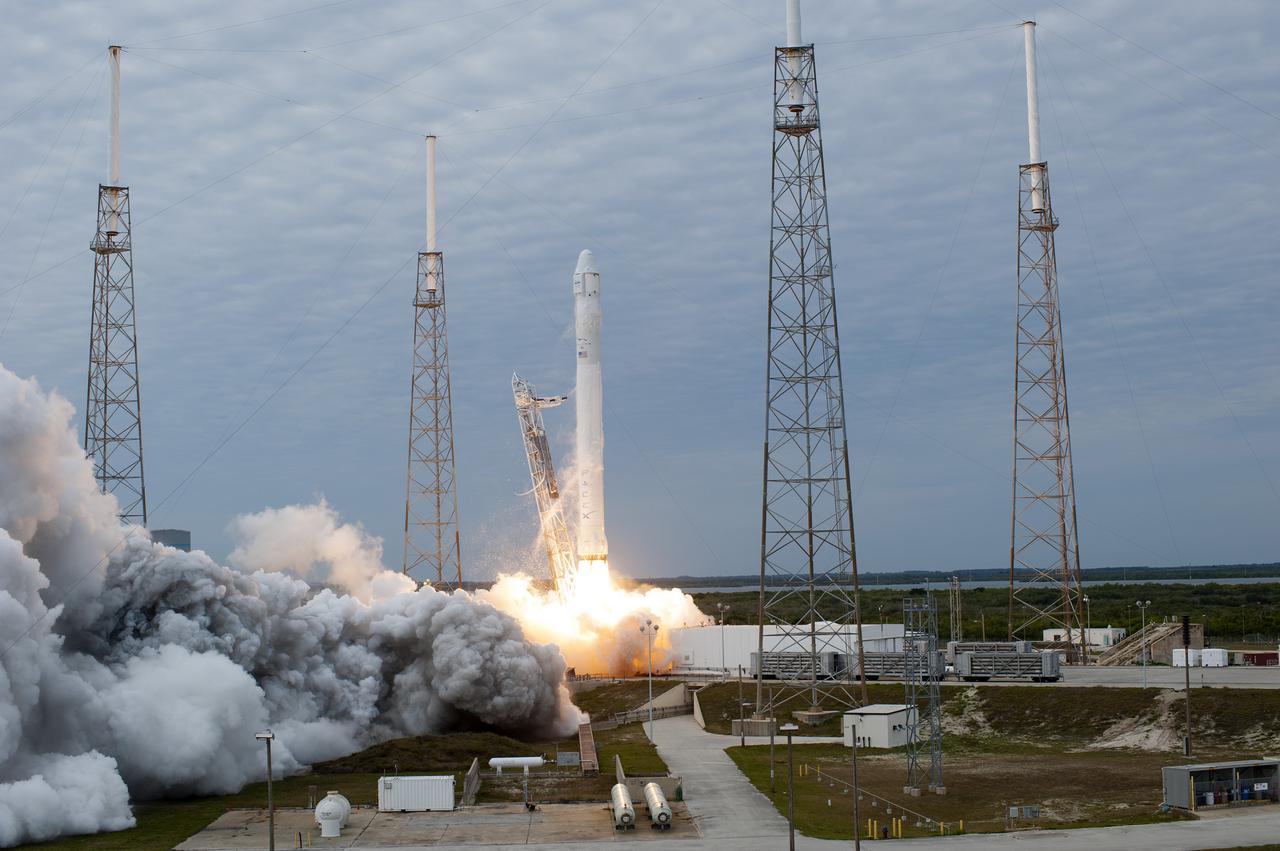
CAPE CANAVERAL, Fla. -- A Space Exploration Technologies, or SpaceX, Falcon 9 rocket lifts off Space Launch Complex 40 on Cape Canaveral Air Force Station in Florida at 10:10 a.m. EST, carrying a Dragon capsule filled with cargo. The SpaceX Dragon capsule is making its third trip to the International Space Station, following a demonstration flight in May 2012 and the first resupply mission in October 2012. The SpaceX-2 mission is the second of 12 SpaceX flights contracted by NASA to resupply the orbiting laboratory. For more information, visit http:__www.nasa.gov_mission_pages_station_structure_launch_spacex2-feature.html Photo credit: NASA_Tony Gray and Robert Murray
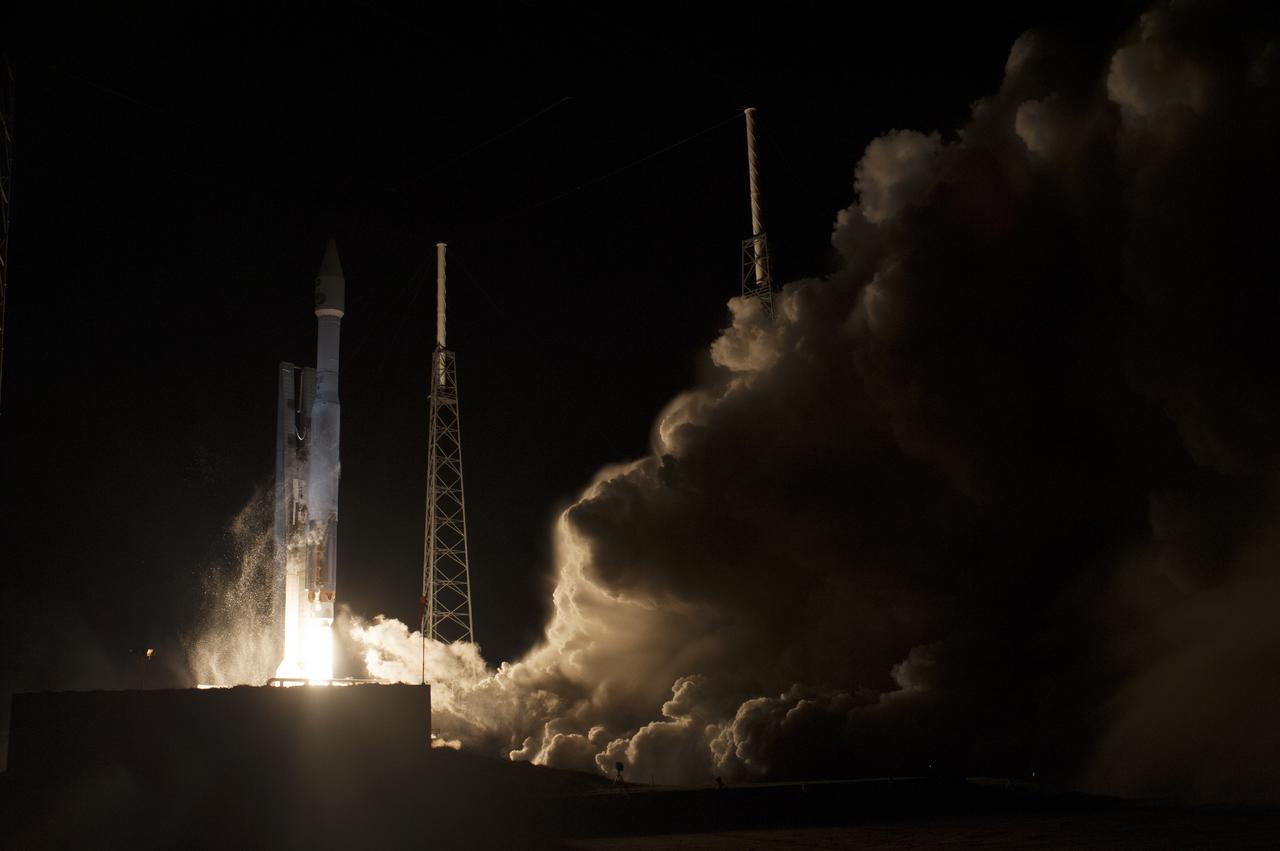
CAPE CANAVERAL, Fla. – The United Launch Alliance Atlas V rocket lifts off from Space Launch Complex 41 at Cape Canaveral Air Force Station carrying NASA's Tracking and Data Relay Satellite, or TDRS-L, spacecraft to Earth orbit. Liftoff was at 9:33 p.m. EST. The TDRS-L spacecraft is the second of three new satellites designed to ensure vital operational continuity for NASA by expanding the lifespan of the Tracking and Data Relay Satellite System TDRSS fleet, which consists of eight satellites in geosynchronous orbit. The spacecraft provide tracking, telemetry, command and high bandwidth data return services for numerous science and human exploration missions orbiting Earth. These include NASA's Hubble Space Telescope and the International Space Station. TDRS-L has a high-performance solar panel designed for more spacecraft power to meet the growing S-band communications requirements. TDRSS is one of NASA Space Communication and Navigation’s SCaN three networks providing space communications to NASA’s missions. For more information more about TDRS-L, visit: http:__www.nasa.gov_tdrs To learn more about SCaN, visit: www.nasa.gov_scan Photo credit: NASA_Tony Gray and Sandy Joseph
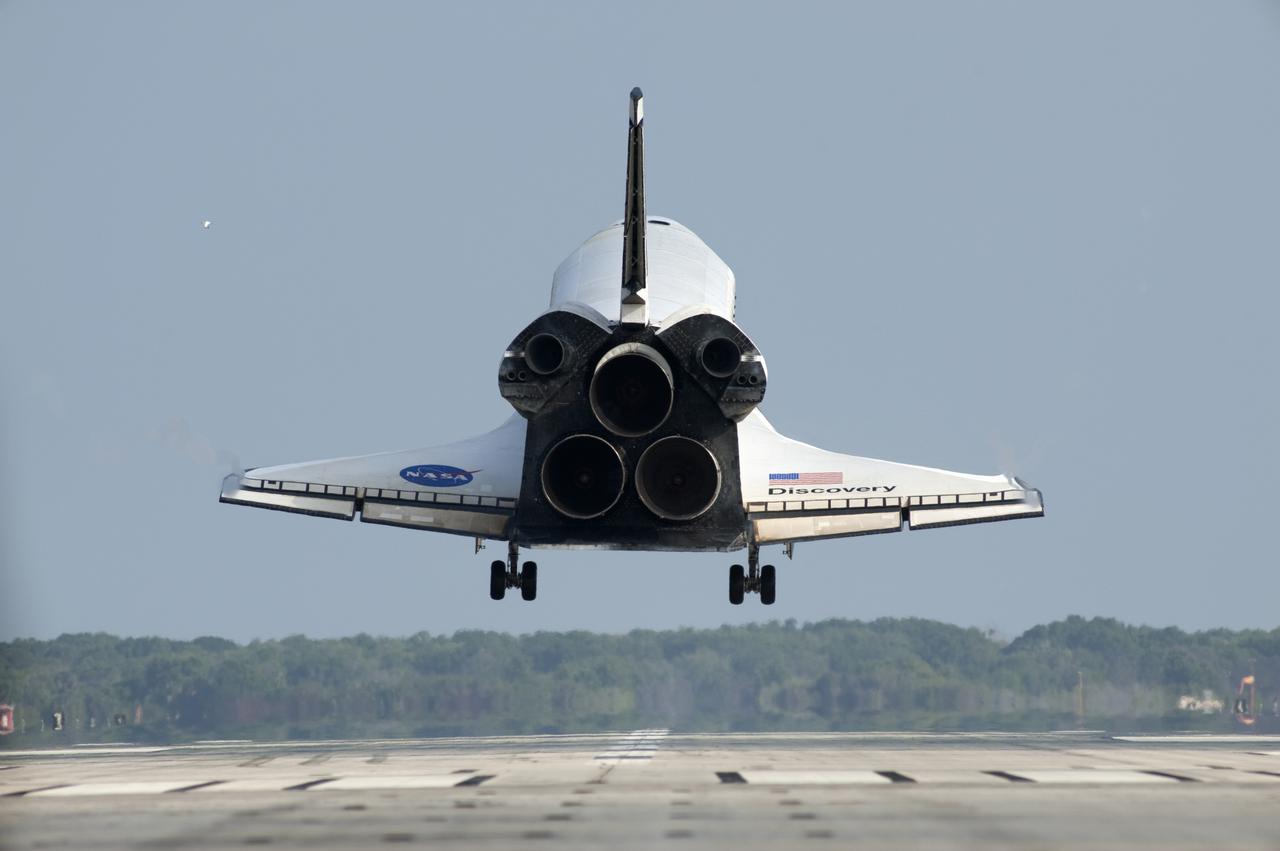
CAPE CANAVERAL, Fla. - Space shuttle Discovery is moments away from touchdown on Runway 33 at the Shuttle Landing Facility at NASA's Kennedy Space Center in Florida. Landing was at 9:08 a.m. EDT, completing the 15-day STS-131 mission to the International Space Station. Main gear touchdown was at 9:08:35 a.m. EDT followed by nose gear touchdown at 9:08:47 a.m. and wheelstop at 9:09:33 a.m. Aboard are Commander Alan Poindexter; Pilot James P. Dutton Jr.; and Mission Specialists Rick Mastracchio, Clayton Anderson, Dorothy Metcalf-Lindenburger, Stephanie Wilson and Naoko Yamazaki of the Japan Aerospace Exploration Agency. The seven-member STS-131 crew carried the multi-purpose logistics module Leonardo, filled with supplies, a new crew sleeping quarters and science racks that were transferred to the International Space Station's laboratories. The crew also switched out a gyroscope on the station’s truss, installed a spare ammonia storage tank and retrieved a Japanese experiment from the station’s exterior. STS-131 is the 33rd shuttle mission to the station and the 131st shuttle mission overall. For information on the STS-131 mission and crew, visit http:__www.nasa.gov_mission_pages_shuttle_shuttlemissions_sts131_index.html. Photo credit: NASA_Tony Gray and Tom Farrar
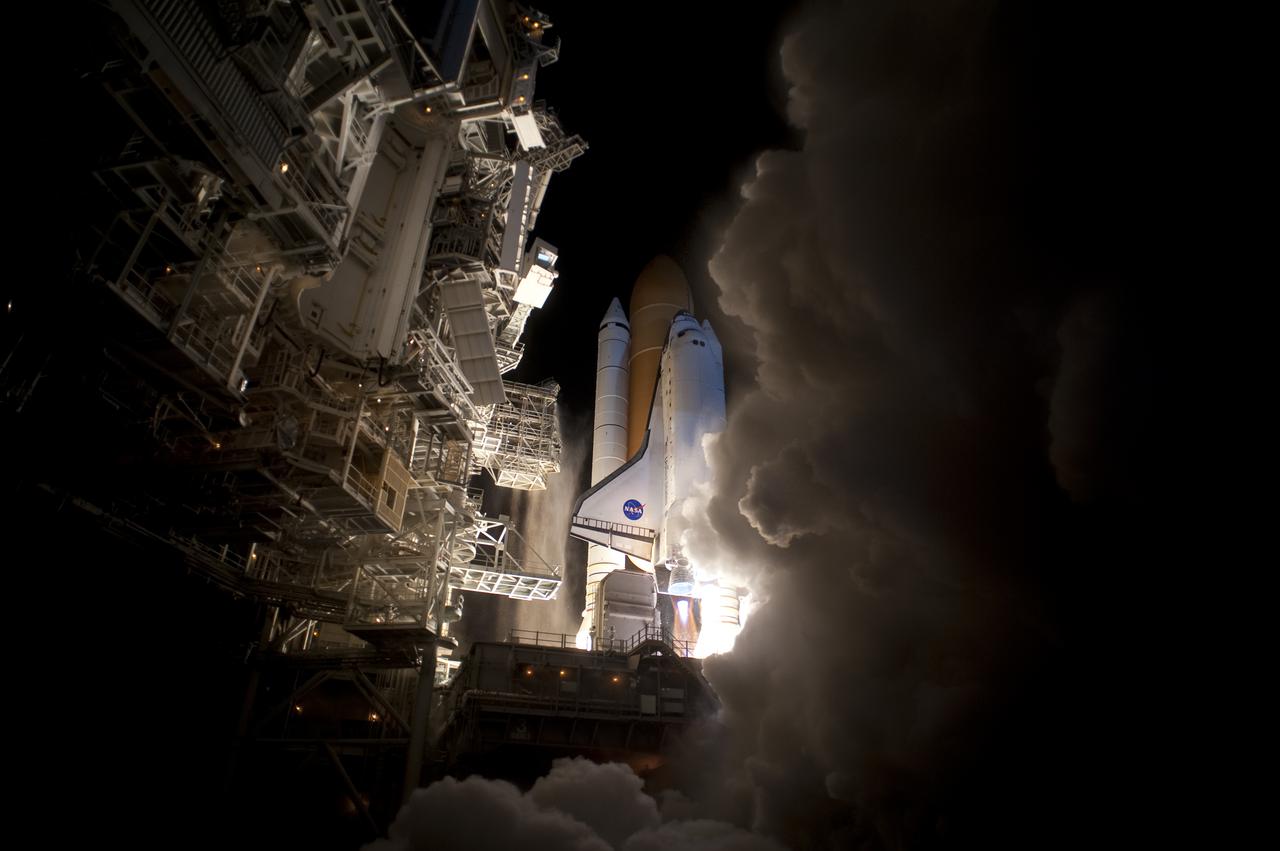
CAPE CANAVERAL, Fla. - An exhaust cloud threatens to obscure the view of space shuttle Discovery as it hurtles toward space after liftoff from Launch Pad 39A at NASA's Kennedy Space Center in Florida. Launch on the STS-131 mission was on time at 6:21 a.m. EDT. The seven-member crew will deliver the multi-purpose logistics module Leonardo, filled with supplies, a new crew sleeping quarters and science racks that will be transferred to the International Space Station's laboratories. The crew also will switch out a gyroscope on the station’s truss, install a spare ammonia storage tank and retrieve a Japanese experiment from the station’s exterior. STS-131 is the 33rd shuttle mission to the station and the 131st shuttle mission overall. For information on the STS-131 mission and crew, visit http:__www.nasa.gov_mission_pages_shuttle_shuttlemissions_sts131_index.html. Photo credit: NASA_Tony Gray and Tom Farrar
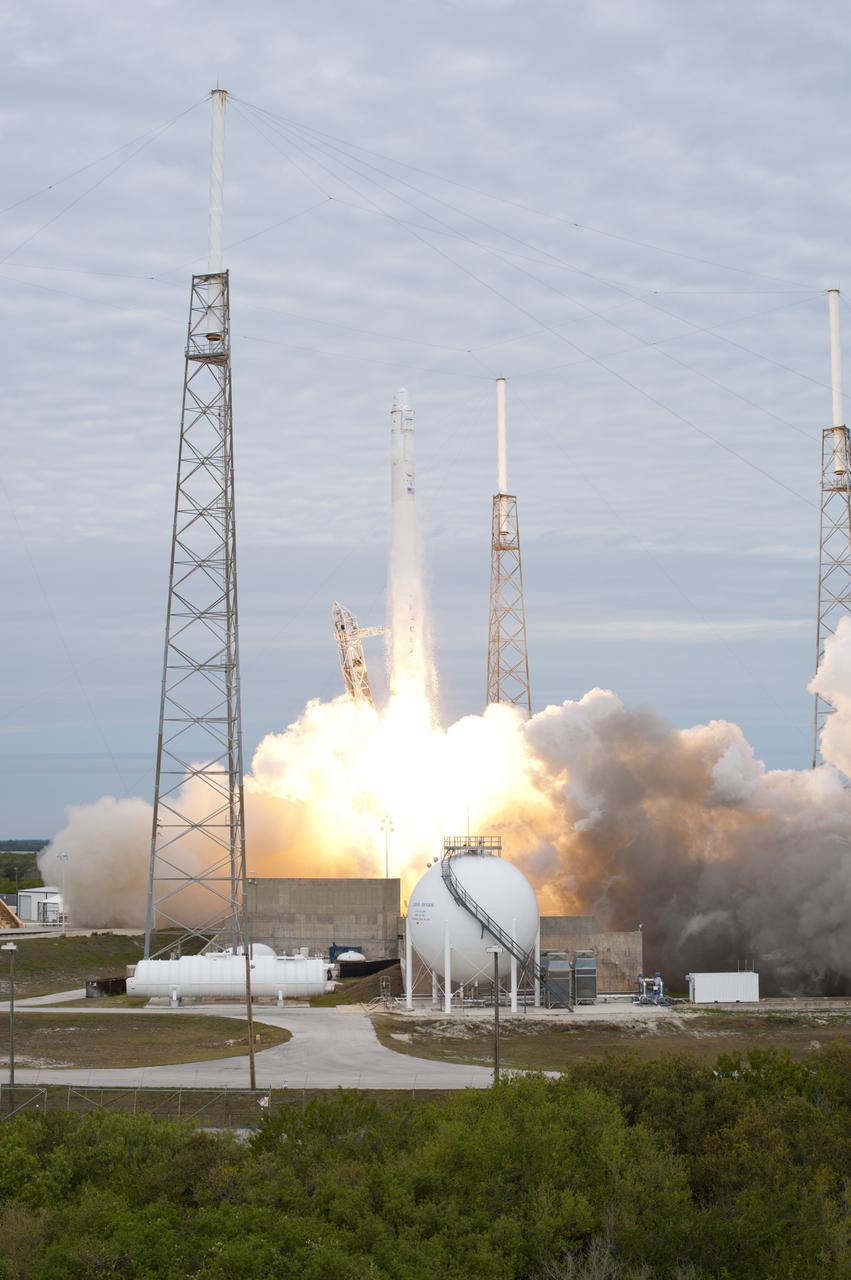
CAPE CANAVERAL, Fla. -- A Space Exploration Technologies, or SpaceX, Falcon 9 rocket lifts off Space Launch Complex 40 on Cape Canaveral Air Force Station in Florida at 10:10 a.m. EST, carrying a Dragon capsule filled with cargo. The SpaceX Dragon capsule is making its third trip to the International Space Station, following a demonstration flight in May 2012 and the first resupply mission in October 2012. The SpaceX-2 mission is the second of 12 SpaceX flights contracted by NASA to resupply the orbiting laboratory. For more information, visit http:__www.nasa.gov_mission_pages_station_structure_launch_spacex2-feature.html Photo credit: NASA_Tony Gray and Robert Murray
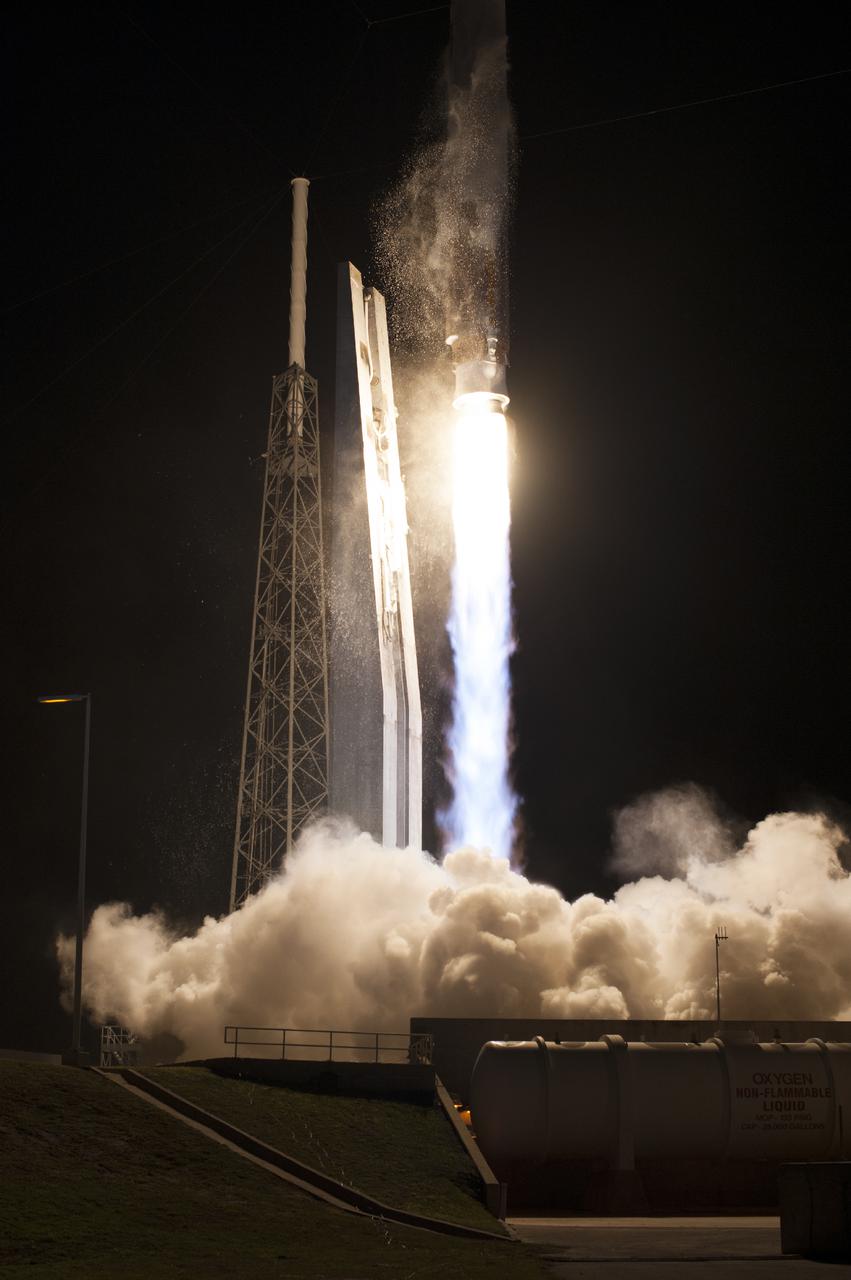
CAPE CANAVERAL, Fla. – The United Launch Alliance Atlas V rocket lifts off from Space Launch Complex 41 at Cape Canaveral Air Force Station carrying NASA's Tracking and Data Relay Satellite, or TDRS-L, spacecraft to Earth orbit. Liftoff was at 9:33 p.m. EST. The TDRS-L spacecraft is the second of three new satellites designed to ensure vital operational continuity for NASA by expanding the lifespan of the Tracking and Data Relay Satellite System TDRSS fleet, which consists of eight satellites in geosynchronous orbit. The spacecraft provide tracking, telemetry, command and high bandwidth data return services for numerous science and human exploration missions orbiting Earth. These include NASA's Hubble Space Telescope and the International Space Station. TDRS-L has a high-performance solar panel designed for more spacecraft power to meet the growing S-band communications requirements. TDRSS is one of NASA Space Communication and Navigation’s SCaN three networks providing space communications to NASA’s missions. For more information more about TDRS-L, visit: http:__www.nasa.gov_tdrs To learn more about SCaN, visit: www.nasa.gov_scan Photo credit: NASA_Tony Gray and Sandy Joseph
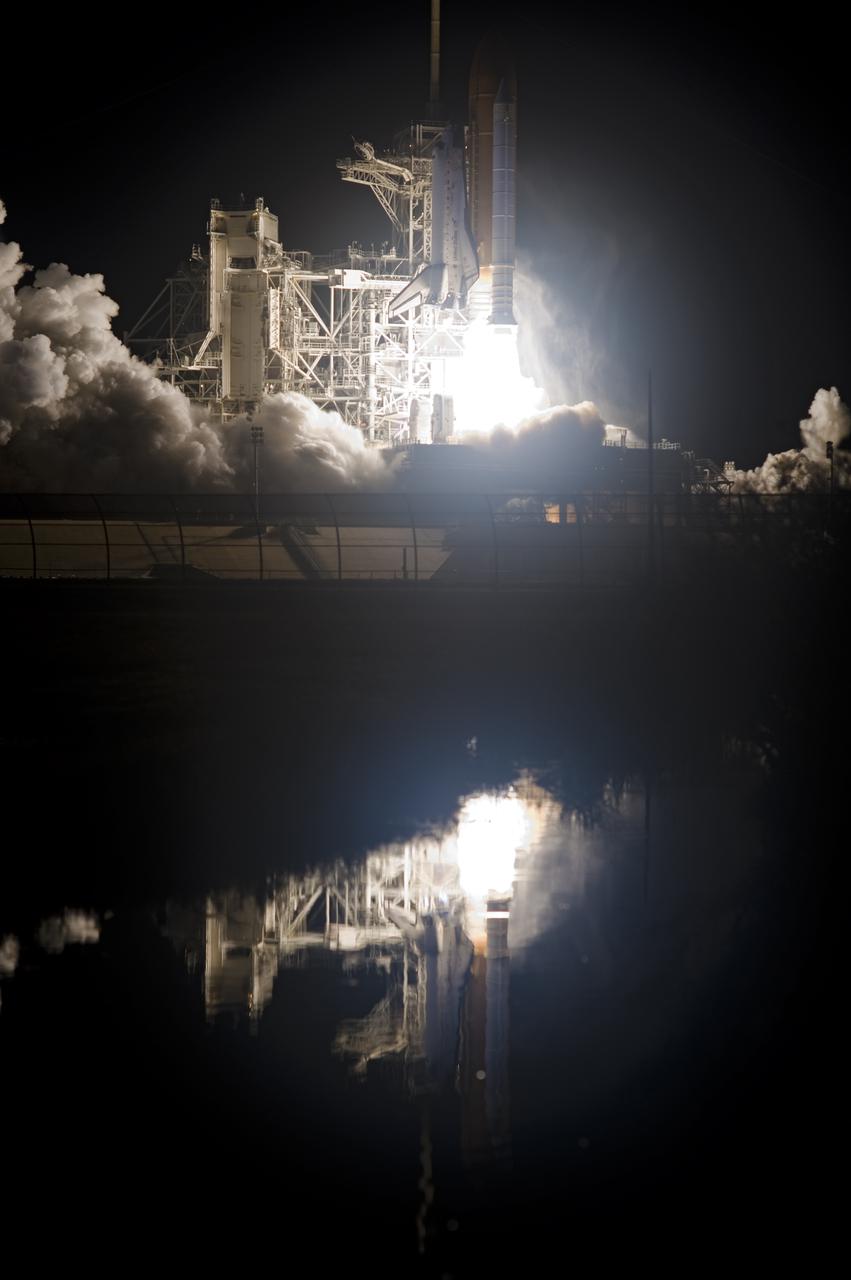
CAPE CANAVERAL, Fla. - Rising on a column of fire, space shuttle Discovery heads toward space after liftoff from Launch Pad 39A at NASA's Kennedy Space Center in Florida. Shuttle Discovery lifted off at 6:21 a.m. EDT on April 5, 2010. The seven-member STS-131 crew will deliver the multi-purpose logistics module Leonardo, filled with supplies, a new crew sleeping quarters and science racks that will be transferred to the International Space Station's laboratories. The crew also will switch out a gyroscope on the station’s truss, install a spare ammonia storage tank and retrieve a Japanese experiment from the station’s exterior. STS-131 is the 33rd shuttle mission to the station and the 131st shuttle mission overall. For information on the STS-131 mission and crew, visit http:__www.nasa.gov_mission_pages_shuttle_shuttlemissions_sts131_index.html. Photo credit: NASA_Tony Gray and Tom Farrar
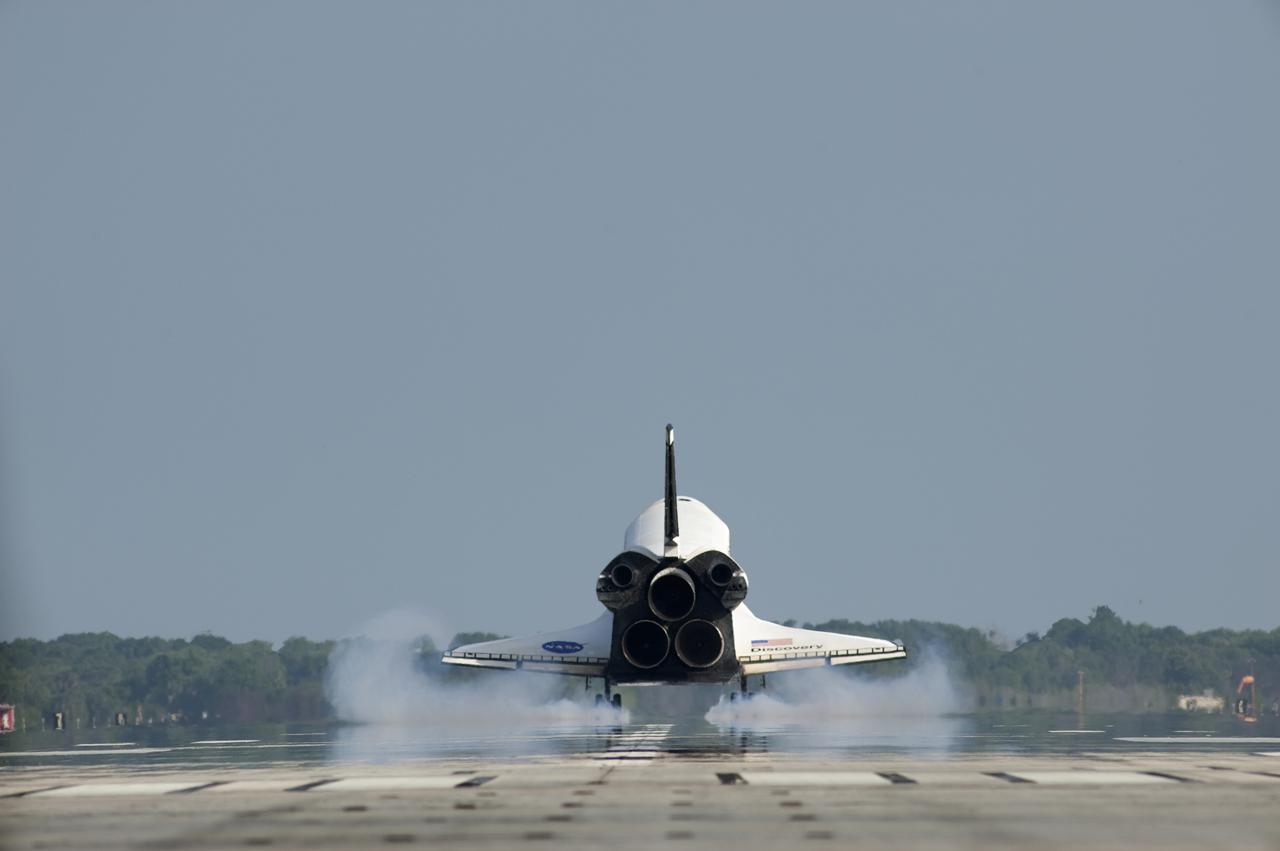
CAPE CANAVERAL, Fla. - Space shuttle Discovery touches down on Runway 33 at the Shuttle Landing Facility at NASA's Kennedy Space Center in Florida at 9:08 a.m. EDT, completing the 15-day STS-131 mission to the International Space Station. Main gear touchdown was at 9:08:35 a.m. EDT followed by nose gear touchdown at 9:08:47 a.m. and wheelstop at 9:09:33 a.m. Aboard are Commander Alan Poindexter; Pilot James P. Dutton Jr.; and Mission Specialists Rick Mastracchio, Clayton Anderson, Dorothy Metcalf-Lindenburger, Stephanie Wilson and Naoko Yamazaki of the Japan Aerospace Exploration Agency. The seven-member STS-131 crew carried the multi-purpose logistics module Leonardo, filled with supplies, a new crew sleeping quarters and science racks that were transferred to the International Space Station's laboratories. The crew also switched out a gyroscope on the station’s truss, installed a spare ammonia storage tank and retrieved a Japanese experiment from the station’s exterior. STS-131 is the 33rd shuttle mission to the station and the 131st shuttle mission overall. For information on the STS-131 mission and crew, visit http:__www.nasa.gov_mission_pages_shuttle_shuttlemissions_sts131_index.html. Photo credit: NASA_Tony Gray and Tom Farrar
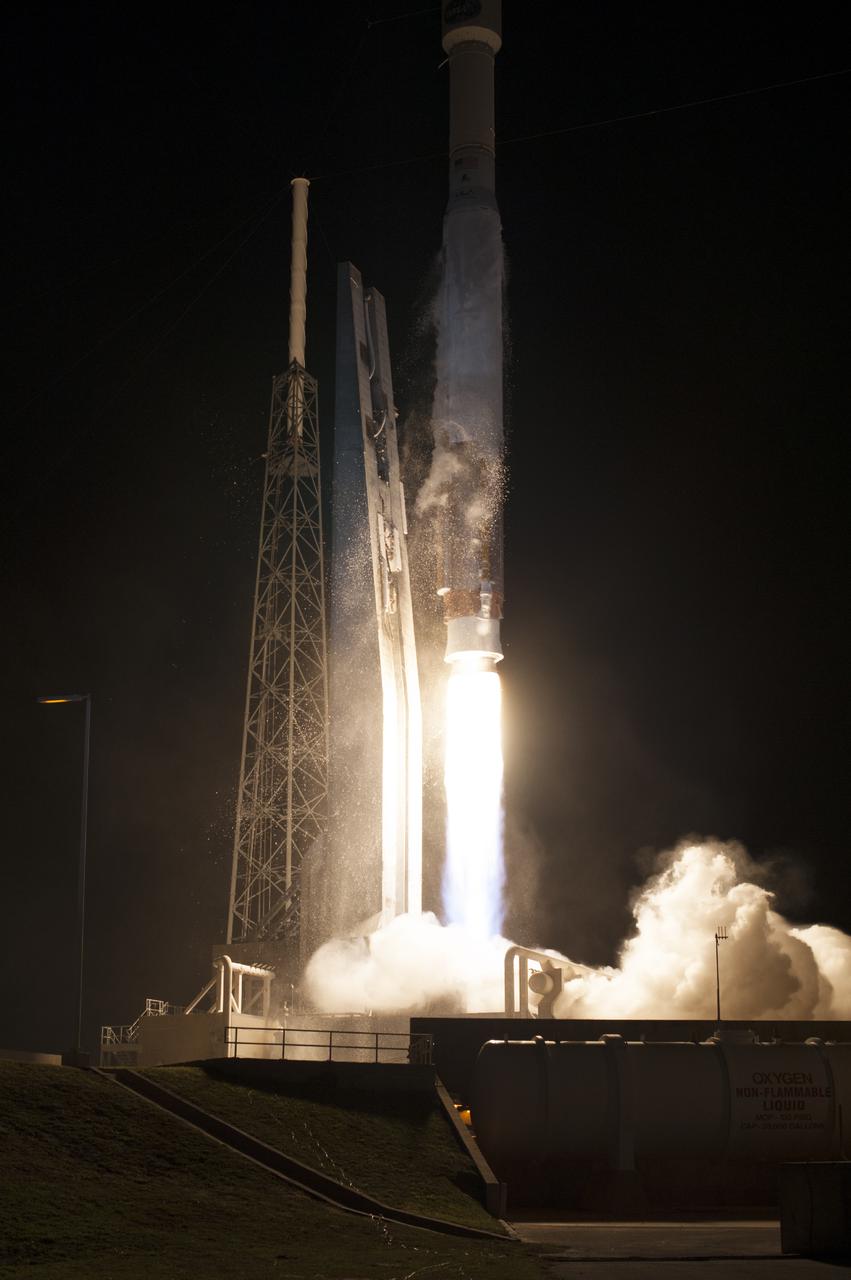
CAPE CANAVERAL, Fla. – The United Launch Alliance Atlas V rocket lifts off from Space Launch Complex 41 at Cape Canaveral Air Force Station carrying NASA's Tracking and Data Relay Satellite, or TDRS-L, spacecraft to Earth orbit. Liftoff was at 9:33 p.m. EST. The TDRS-L spacecraft is the second of three new satellites designed to ensure vital operational continuity for NASA by expanding the lifespan of the Tracking and Data Relay Satellite System TDRSS fleet, which consists of eight satellites in geosynchronous orbit. The spacecraft provide tracking, telemetry, command and high bandwidth data return services for numerous science and human exploration missions orbiting Earth. These include NASA's Hubble Space Telescope and the International Space Station. TDRS-L has a high-performance solar panel designed for more spacecraft power to meet the growing S-band communications requirements. TDRSS is one of NASA Space Communication and Navigation’s SCaN three networks providing space communications to NASA’s missions. For more information more about TDRS-L, visit: http:__www.nasa.gov_tdrs To learn more about SCaN, visit: www.nasa.gov_scan Photo credit: NASA_Tony Gray and Sandy Joseph
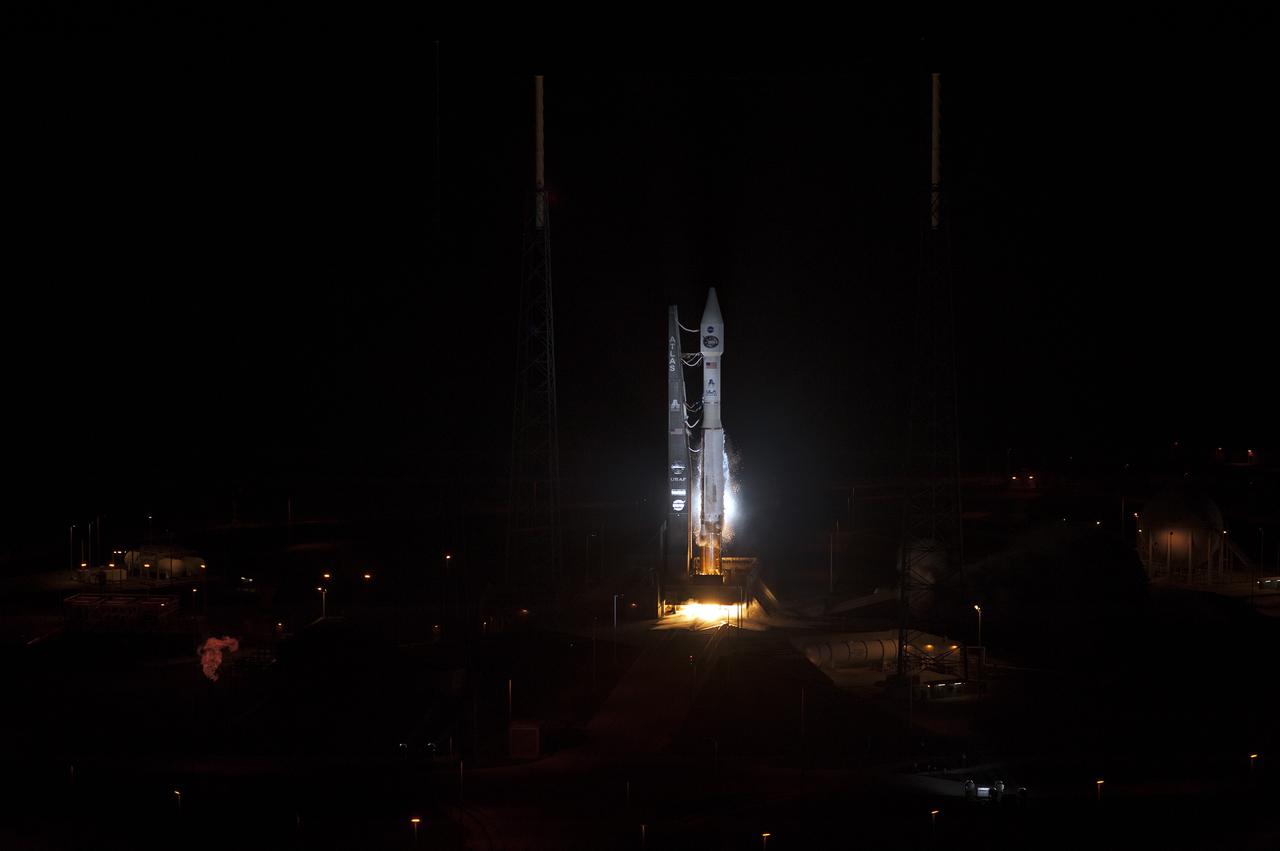
CAPE CANAVERAL, Fla. -- Space Launch Complex 41 on Cape Canaveral Air Force Station in Florida comes alive as the engines ignite under the United Launch Alliance Atlas V 401 rocket, carrying NASA's Tracking and Data Relay Satellite-K, TDRS-K, to orbit. Liftoff was at 8:48 p.m. EST. The TDRS-K spacecraft is part of the next-generation series in the Tracking and Data Relay Satellite System, a constellation of space-based communication satellites providing tracking, telemetry, command and high-bandwidth data return services. For more information, visit http:__www.nasa.gov_mission_pages_tdrs_index.html. Photo credit: NASA_Tony Gray and Don Kight
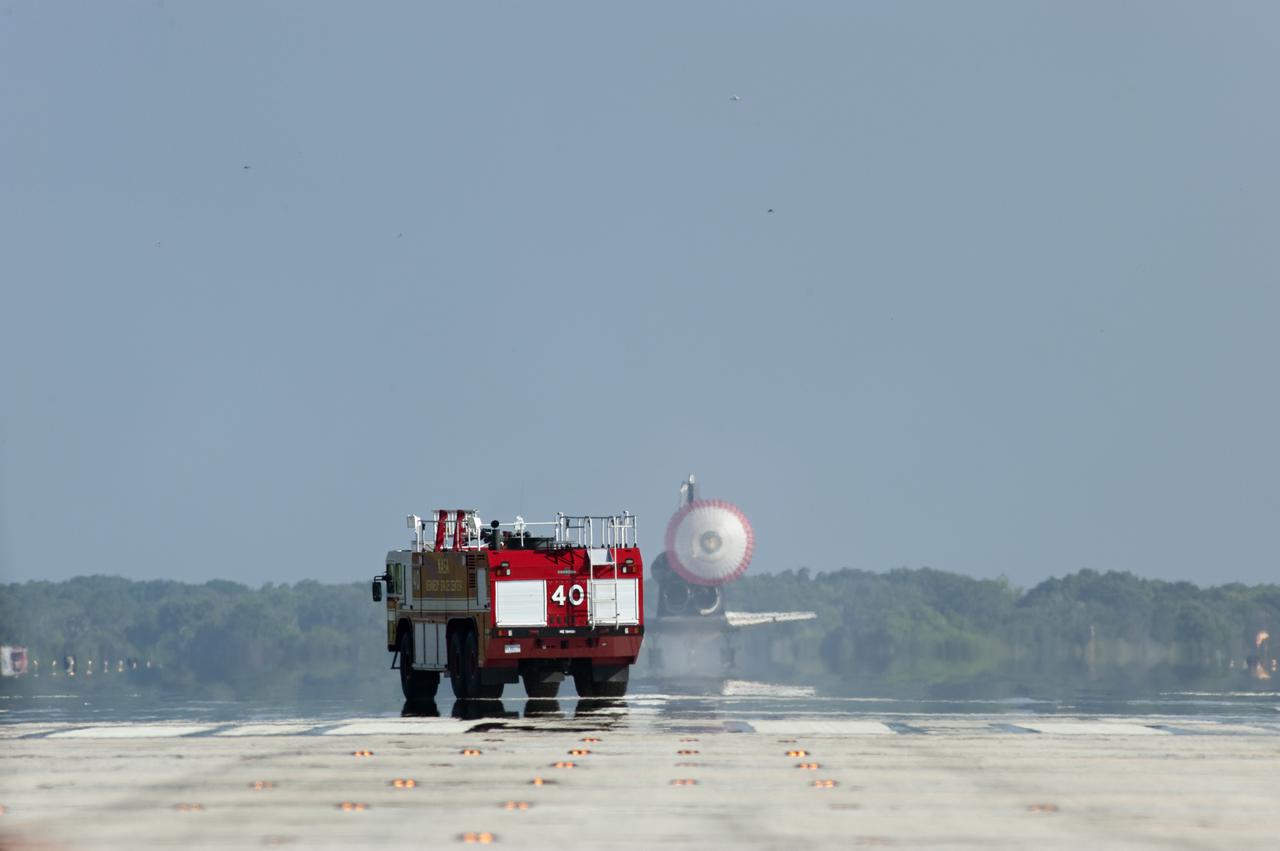
CAPE CANAVERAL, Fla. - NASA's Fire Rescue Services vehicle drives toward space shuttle Atlantis on Runway 33 at the Shuttle Landing Facility at NASA's Kennedy Space Center in Florida. Landing was at 8:48 a.m. EDT, completing the 12-day STS-132 mission to the International Space Station. The six-member STS-132 crew carried the Russian-built Mini Research Module-1 to the space station. STS-132 is the 34th shuttle mission to the station, the 132nd shuttle mission overall and the last planned flight for Atlantis. For information on the STS-132 mission and crew, visit www.nasa.gov_mission_pages_shuttle_shuttlemissions_sts132_index.html. Photo credit: NASA_Tony Gray and Tom Farrar
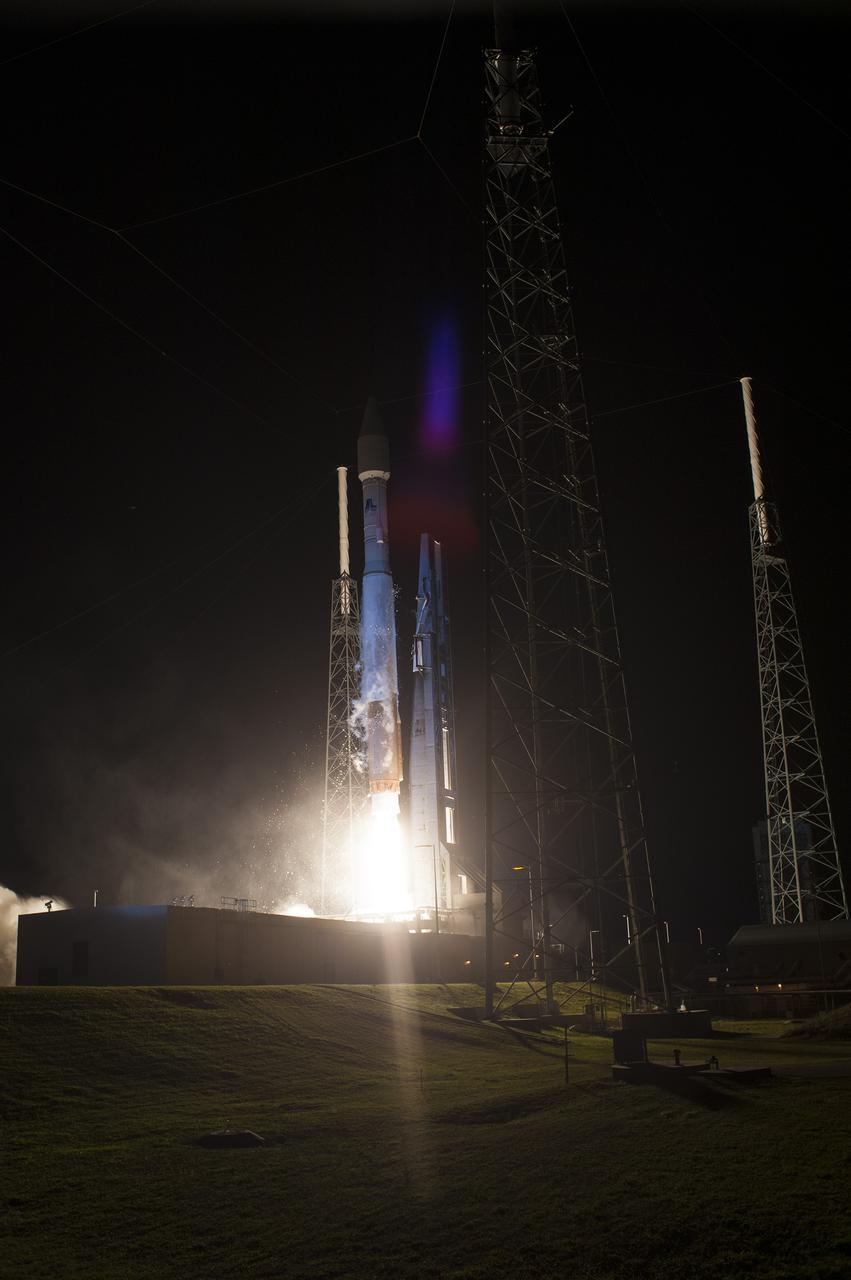
CAPE CANAVERAL, Fla. -- A brilliant flash signals engine ignition under the United Launch Alliance Atlas V 401 rocket at Space Launch Complex 41 on Cape Canaveral Air Force Station in Florida. NASA's Tracking and Data Relay Satellite-K, TDRS-K, began its journey to orbit at 8:48 p.m. EST. The TDRS-K spacecraft is part of the next-generation series in the Tracking and Data Relay Satellite System, a constellation of space-based communication satellites providing tracking, telemetry, command and high-bandwidth data return services. For more information, visit http:__www.nasa.gov_mission_pages_tdrs_index.html. Photo credit: NASA_Tony Gray and Robert Murray
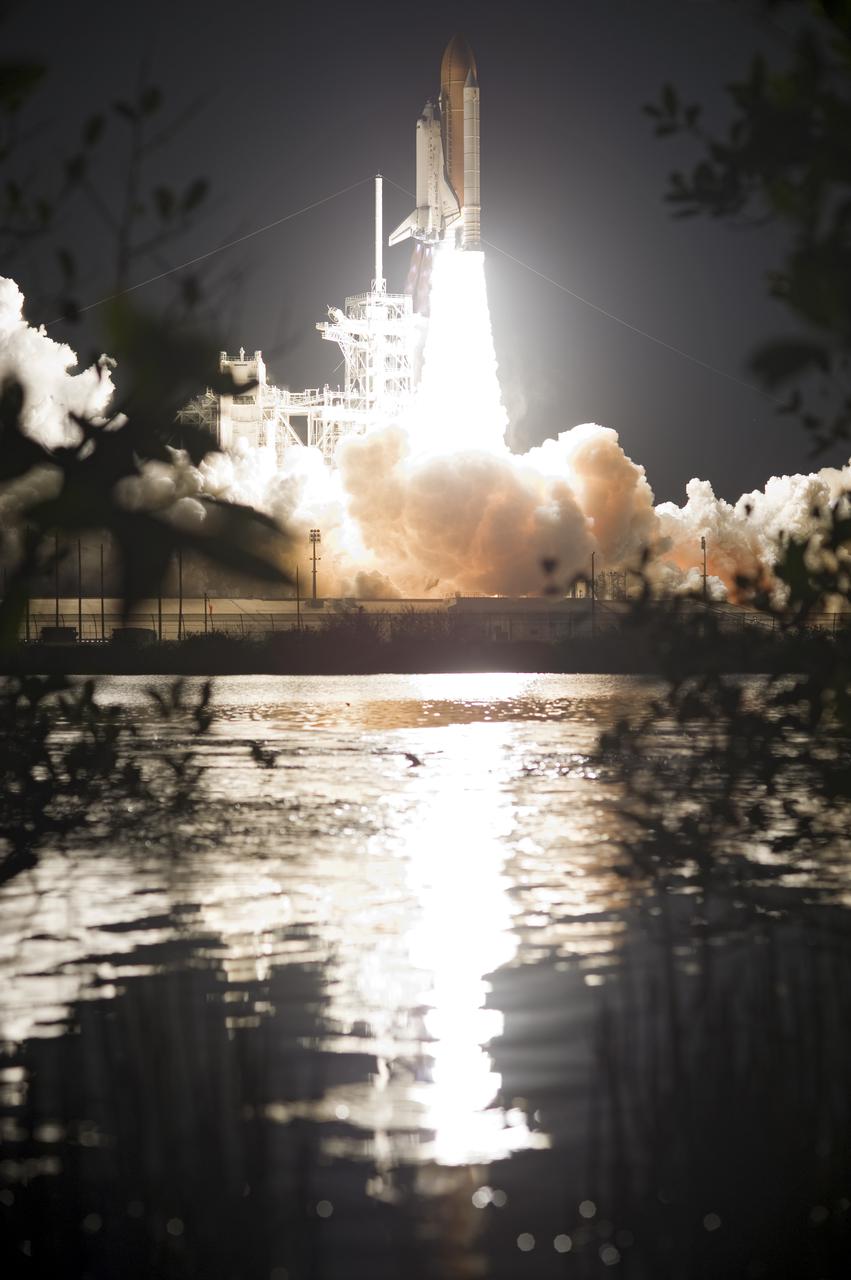
CAPE CANAVERAL, Fla. - Soaring above Launch Pad 39A's towers, space shuttle Discovery heads skyward on its STS-131 mission leaving NASA's Kennedy Space Center behind racing toward the International Space Station. Shuttle Discovery lifted off at 6:21 a.m. EDT on April 5, 2010. The seven-member STS-131 crew will deliver the multi-purpose logistics module Leonardo, filled with supplies, a new crew sleeping quarters and science racks that will be transferred to the International Space Station's laboratories. The crew also will switch out a gyroscope on the station’s truss, install a spare ammonia storage tank and retrieve a Japanese experiment from the station’s exterior. STS-131 is the 33rd shuttle mission to the station and the 131st shuttle mission overall. For information on the STS-131 mission and crew, visit http:__www.nasa.gov_mission_pages_shuttle_shuttlemissions_sts131_index.html. Photo credit: NASA_Tony Gray and Tom Farrar
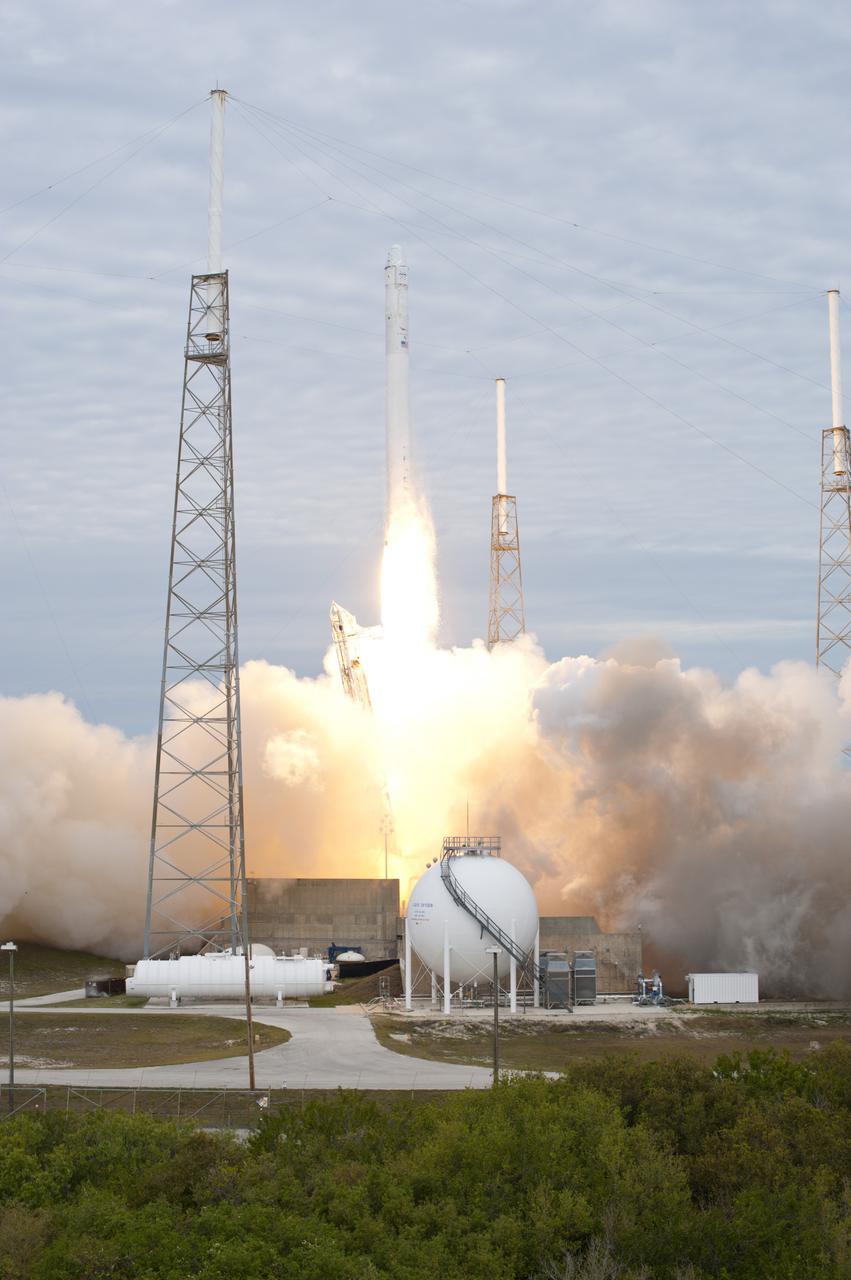
CAPE CANAVERAL, Fla. -- A Space Exploration Technologies, or SpaceX, Falcon 9 rocket lifts off Space Launch Complex 40 on Cape Canaveral Air Force Station in Florida at 10:10 a.m. EST, carrying a Dragon capsule filled with cargo. The SpaceX Dragon capsule is making its third trip to the International Space Station, following a demonstration flight in May 2012 and the first resupply mission in October 2012. The SpaceX-2 mission is the second of 12 SpaceX flights contracted by NASA to resupply the orbiting laboratory. For more information, visit http:__www.nasa.gov_mission_pages_station_structure_launch_spacex2-feature.html Photo credit: NASA_Tony Gray and Robert Murray
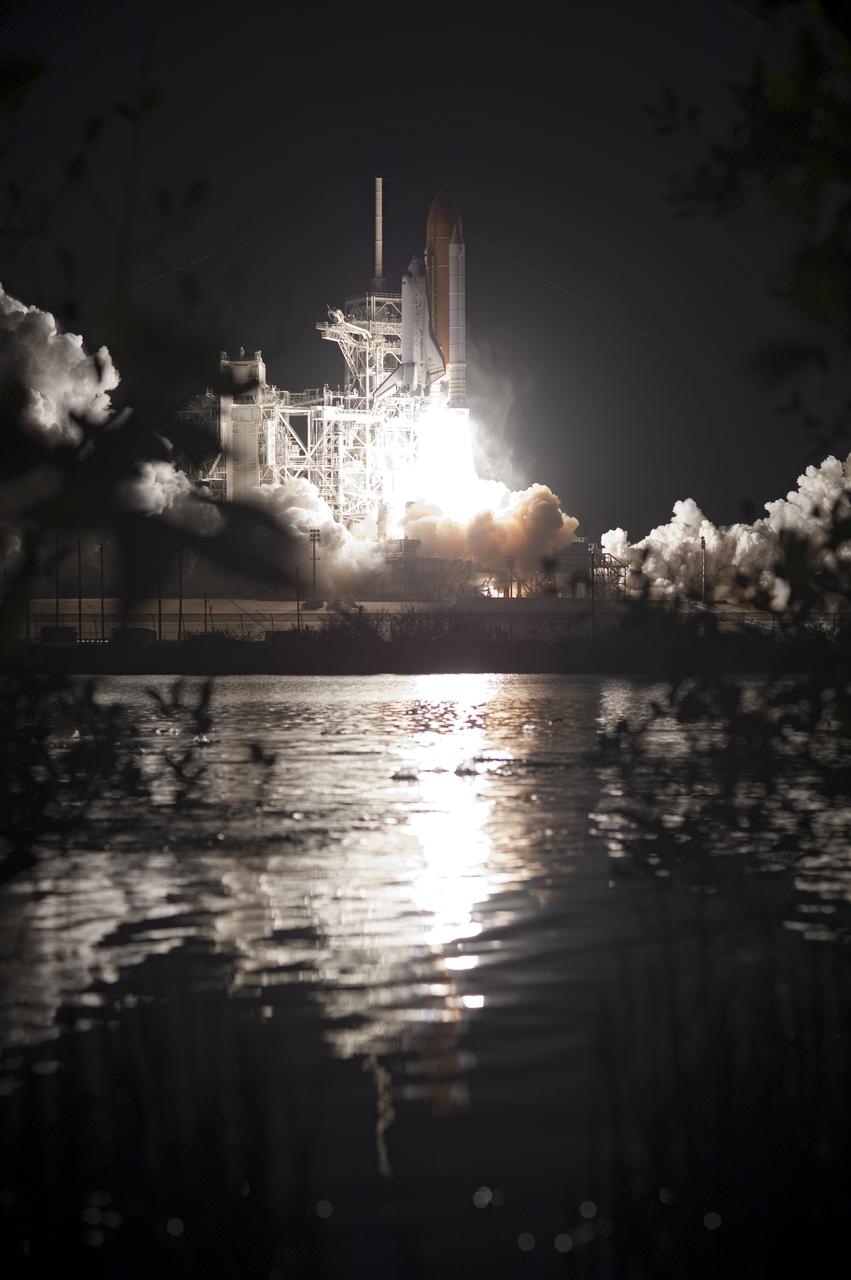
CAPE CANAVERAL, Fla. - Space shuttle Discovery blasts off in a blaze of fire and clouds seen reflected in waters surrounding Launch Pad 39A at NASA's Kennedy Space Center in Florida on the STS-131 mission. Shuttle Discovery lifted off at 6:21 a.m. EDT on April 5, 2010. The seven-member STS-131 crew will deliver the multi-purpose logistics module Leonardo, filled with supplies, a new crew sleeping quarters and science racks that will be transferred to the International Space Station's laboratories. The crew also will switch out a gyroscope on the station’s truss, install a spare ammonia storage tank and retrieve a Japanese experiment from the station’s exterior. STS-131 is the 33rd shuttle mission to the station and the 131st shuttle mission overall. For information on the STS-131 mission and crew, visit http:__www.nasa.gov_mission_pages_shuttle_shuttlemissions_sts131_index.html. Photo credit: NASA_Tony Gray and Tom Farrar
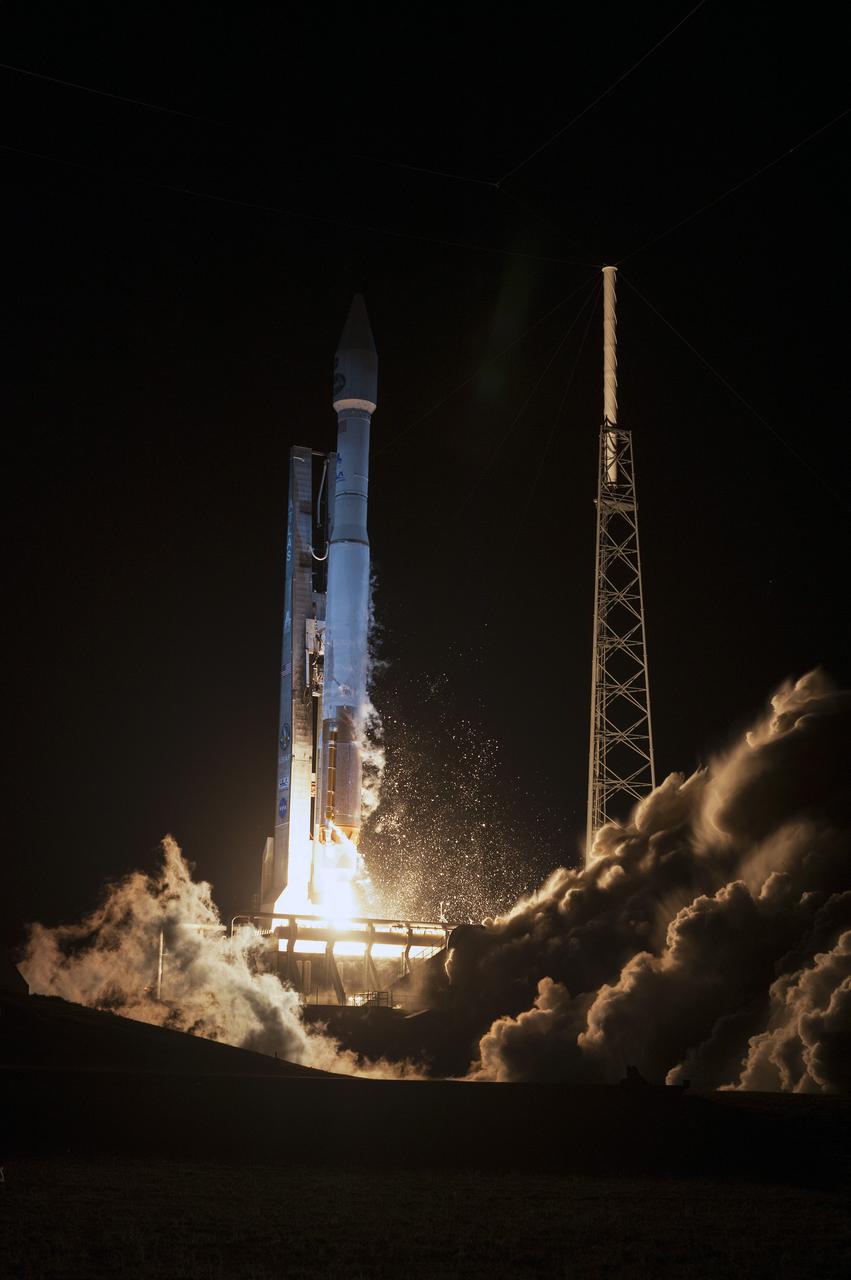
CAPE CANAVERAL, Fla. -- A cloud of exhaust and smoke billows past a lightning mast on Space Launch Complex 41 on Cape Canaveral Air Force Station in Florida as a United Launch Alliance Atlas V 401 rocket lifts off at 8:48 p.m. EST, carrying NASA's Tracking and Data Relay Satellite-K, TDRS-K, to orbit. The TDRS-K spacecraft is part of the next-generation series in the Tracking and Data Relay Satellite System, a constellation of space-based communication satellites providing tracking, telemetry, command and high-bandwidth data return services. For more information, visit http:__www.nasa.gov_mission_pages_tdrs_index.html. Photo credit: NASA_Tony Gray and Robert Murray
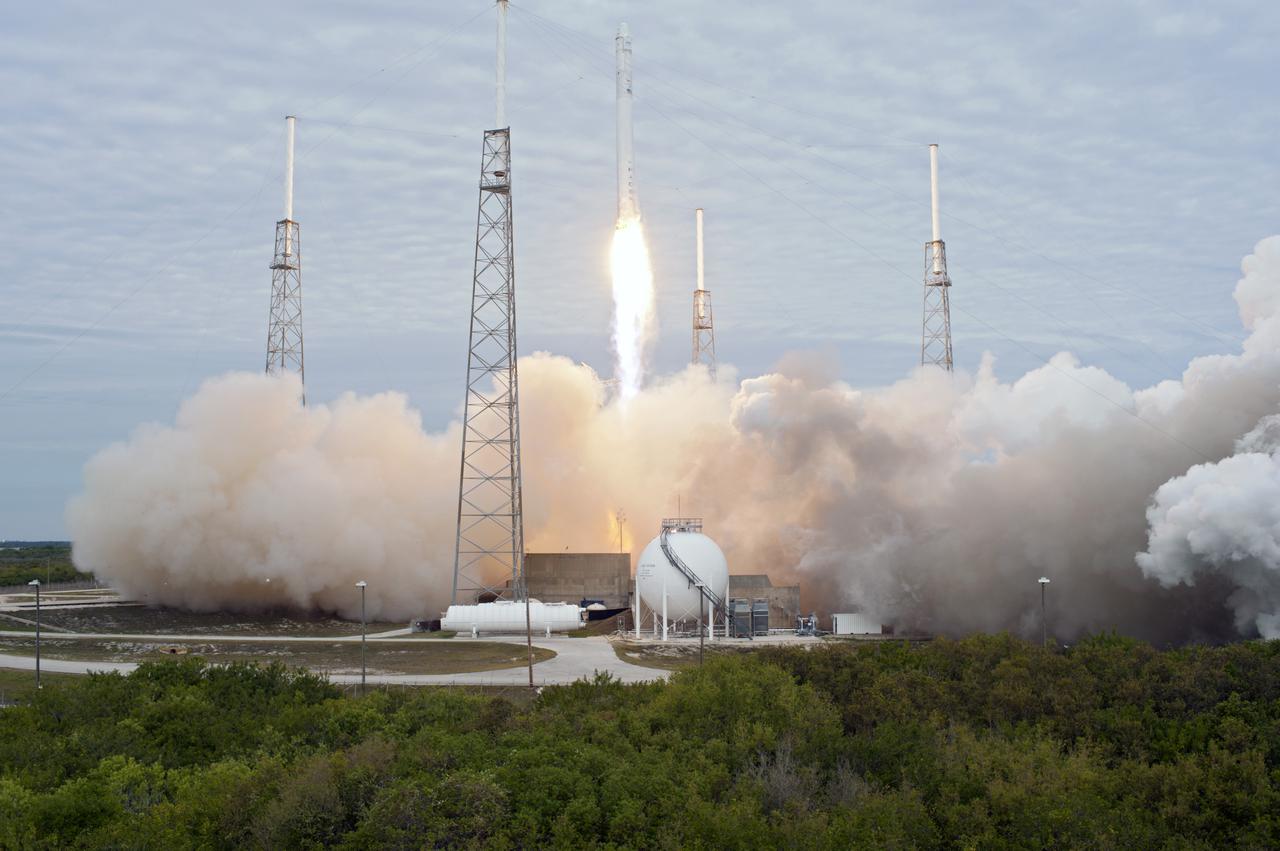
CAPE CANAVERAL, Fla. -- A Space Exploration Technologies, or SpaceX, Falcon 9 rocket lifts off Space Launch Complex 40 on Cape Canaveral Air Force Station in Florida at 10:10 a.m. EST, carrying a Dragon capsule filled with cargo. The SpaceX Dragon capsule is making its third trip to the International Space Station, following a demonstration flight in May 2012 and the first resupply mission in October 2012. The SpaceX-2 mission is the second of 12 SpaceX flights contracted by NASA to resupply the orbiting laboratory. For more information, visit http:__www.nasa.gov_mission_pages_station_structure_launch_spacex2-feature.html Photo credit: NASA_Tony Gray and Robert Murray
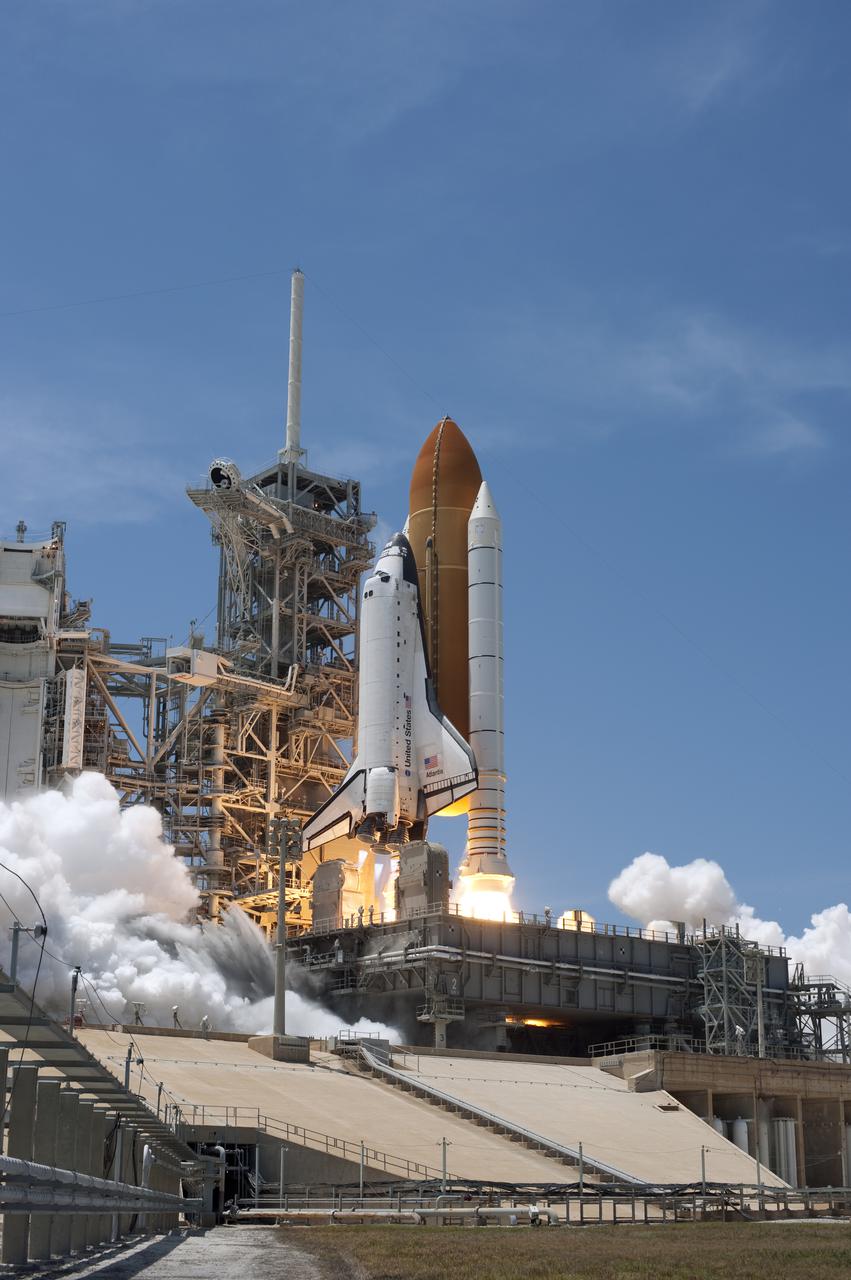
CAPE CANAVERAL, Fla. - Space shuttle Atlantis' twin solid rocket boosters ignite to propel the spacecraft off NASA Kennedy Space Center's Launch Pad 39A and into orbit at 2:20 p.m. EDT on May 14. On board Atlantis, for its last planned flight, are six veteran NASA astronauts. Atlantis' primary payload for the STS-132 mission is the Russian-built Mini Research Module-1, which will provide additional storage space and a new docking port for Russian Soyuz and Progress spacecraft aboard the International Space Station. STS-132 is the 132nd shuttle flight, the 32nd for Atlantis and the 34th shuttle mission dedicated to station assembly and maintenance. For more information on the STS-132 mission objectives, payload and crew, visit www.nasa.gov_mission_pages_shuttle_shuttlemissions_sts132_index.html. Photo credit: NASA_Tony Gray and Tom Farrar
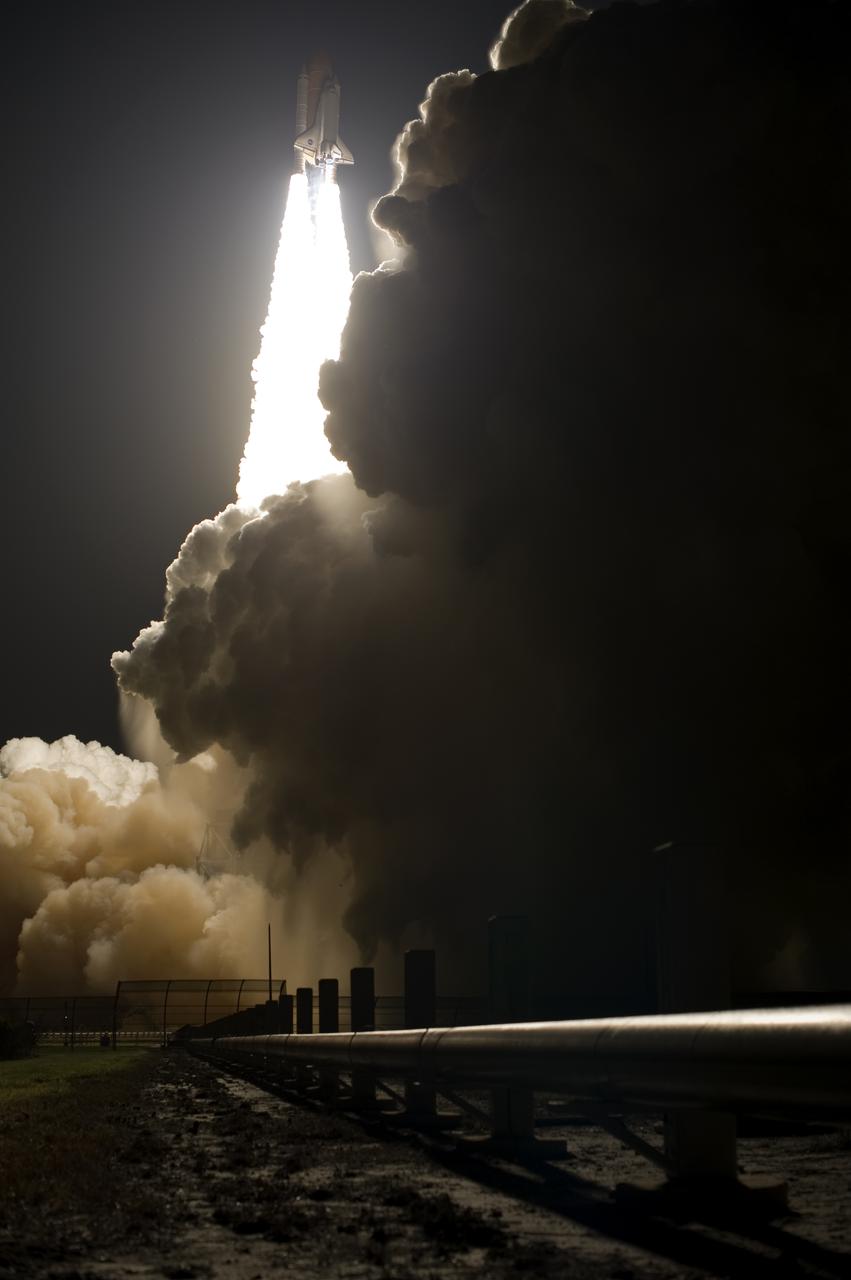
CAPE CANAVERAL, Fla. - An exhaust cloud billows around Launch Pad 39A at NASA's Kennedy Space Center in Florida as space shuttle Discovery lifts off at 6:21 a.m. EDT April 5 to begin the STS-131 mission. The seven-member crew will deliver the multi-purpose logistics module Leonardo, filled with supplies, a new crew sleeping quarters and science racks that will be transferred to the International Space Station's laboratories. The crew also will switch out a gyroscope on the station’s truss, install a spare ammonia storage tank and retrieve a Japanese experiment from the station’s exterior. STS-131 is the 33rd shuttle mission to the station and the 131st shuttle mission overall. For information on the STS-131 mission and crew, visit http:__www.nasa.gov_mission_pages_shuttle_shuttlemissions_sts131_index.html. Photo credit: NASA_Tony Gray and Tom Farrar
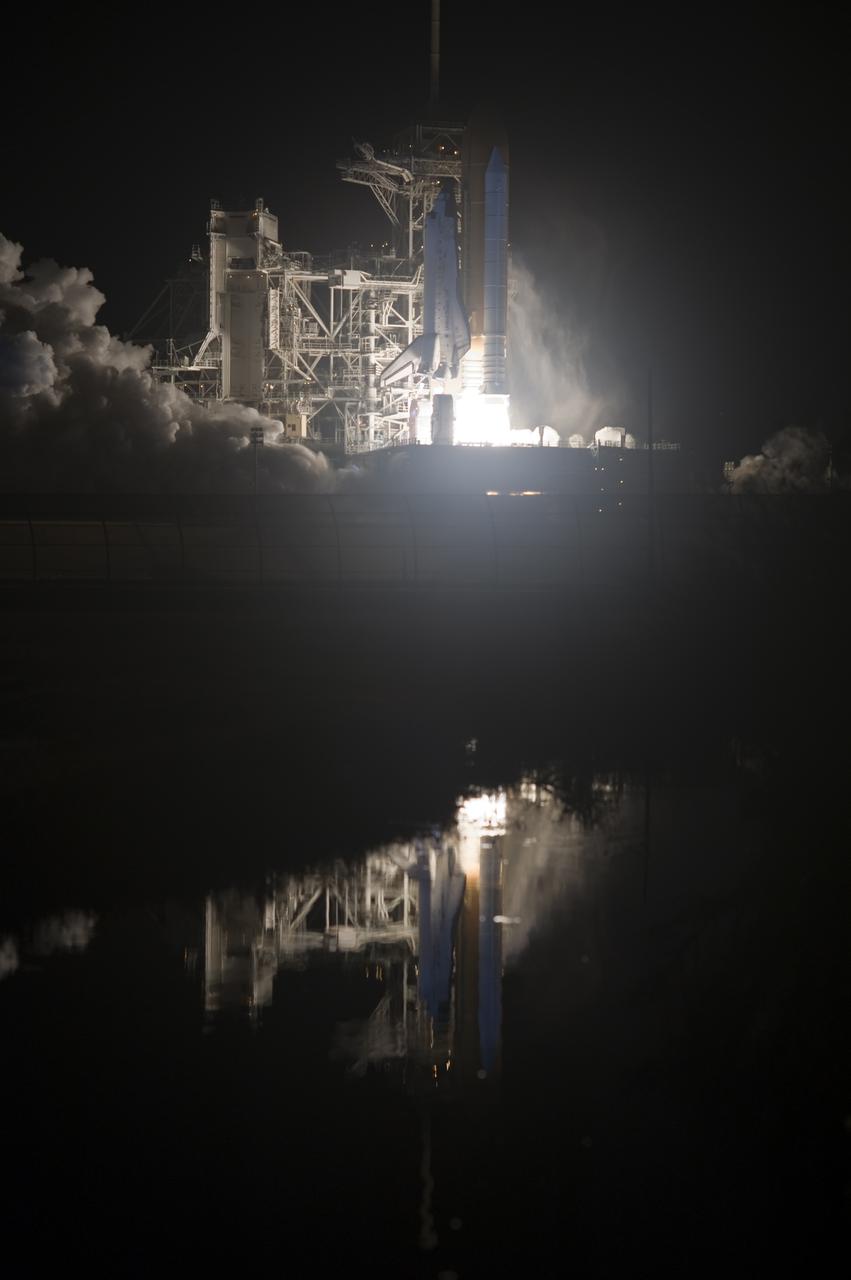
CAPE CANAVERAL, Fla. - Space shuttle Discovery begins its ascent into the predawn sky past Launch Pad 39A at NASA's Kennedy Space Center in Florida. Shuttle Discovery lifted off at 6:21 a.m. EDT on April 5, 2010. The seven-member STS-131 crew will deliver the multi-purpose logistics module Leonardo, filled with supplies, a new crew sleeping quarters and science racks that will be transferred to the International Space Station's laboratories. The crew also will switch out a gyroscope on the station’s truss, install a spare ammonia storage tank and retrieve a Japanese experiment from the station’s exterior. STS-131 is the 33rd shuttle mission to the station and the 131st shuttle mission overall. For information on the STS-131 mission and crew, visit http:__www.nasa.gov_mission_pages_shuttle_shuttlemissions_sts131_index.html. Photo credit: NASA_Tony Gray and Tom Farrar
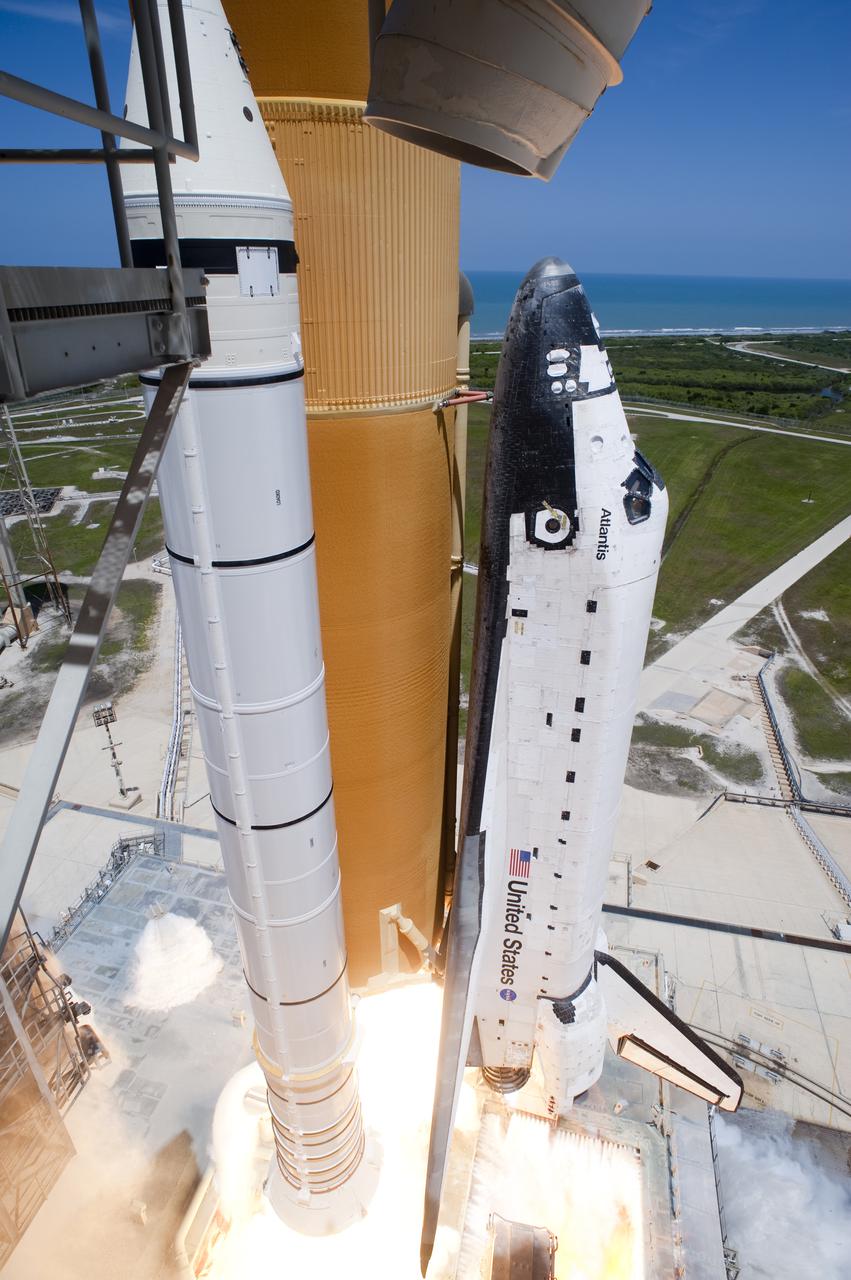
CAPE CANAVERAL, Fla. - Space shuttle Atlantis and its six STS-132 astronauts lift off seaside Launch Pad 39A at NASA's Kennedy Space Center in Florida at 2:20 p.m. EDT on May 14. Atlantis' primary payload for the STS-132 mission is the Russian-built Mini Research Module-1, which will provide additional storage space and a new docking port for Russian Soyuz and Progress spacecraft aboard the International Space Station. STS-132 is the 132nd shuttle flight, the 32nd for Atlantis and the 34th shuttle mission dedicated to station assembly and maintenance. For more information on the STS-132 mission objectives, payload and crew, visit www.nasa.gov_mission_pages_shuttle_shuttlemissions_sts132_index.html. Photo credit: NASA_Tony Gray and Tom Farrar
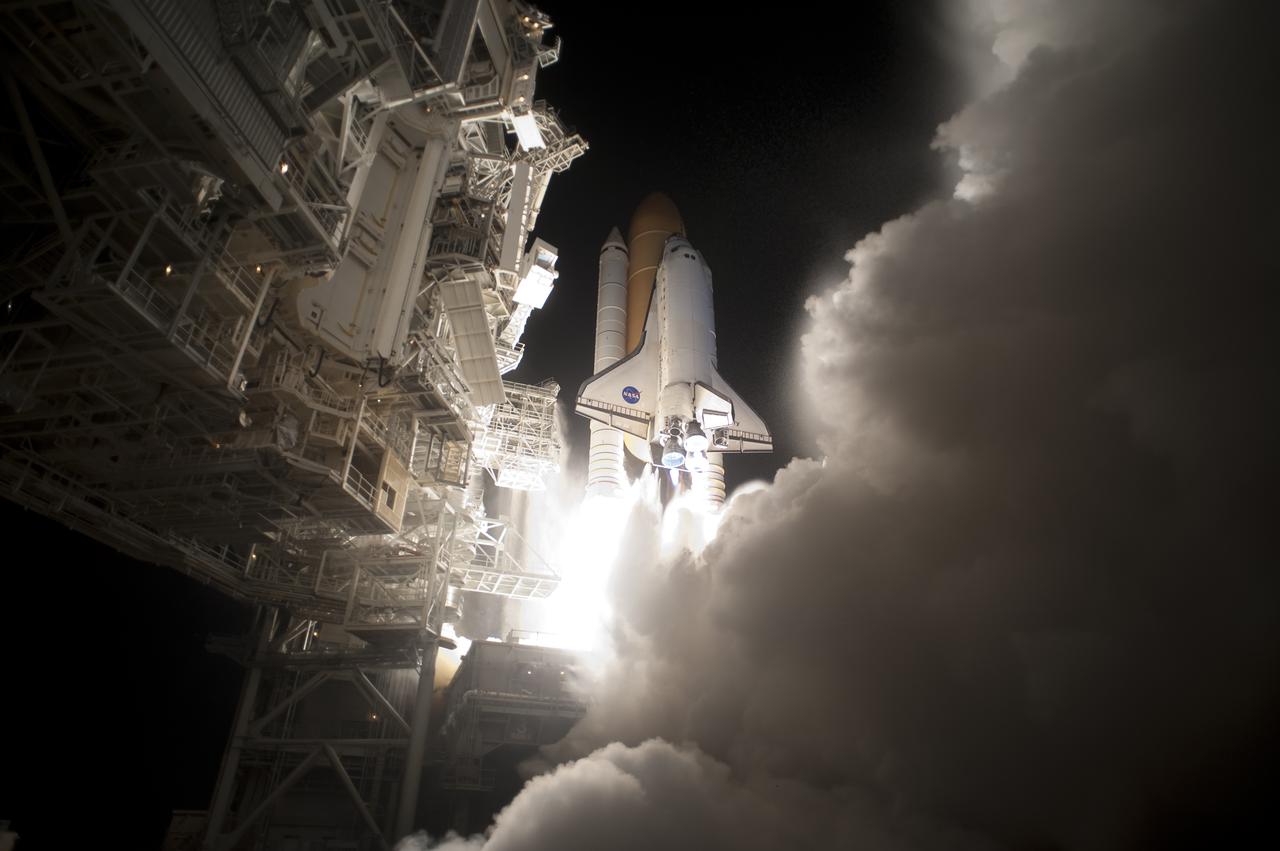
CAPE CANAVERAL, Fla. - An exhaust cloud billows around Launch Pad 39A at NASA's Kennedy Space Center in Florida as space shuttle Discovery lifts off at 6:21 a.m. EDT April 5 to begin the STS-131 mission. The seven-member crew will deliver the multi-purpose logistics module Leonardo, filled with supplies, a new crew sleeping quarters and science racks that will be transferred to the International Space Station's laboratories. The crew also will switch out a gyroscope on the station’s truss, install a spare ammonia storage tank and retrieve a Japanese experiment from the station’s exterior. STS-131 is the 33rd shuttle mission to the station and the 131st shuttle mission overall. For information on the STS-131 mission and crew, visit http:__www.nasa.gov_mission_pages_shuttle_shuttlemissions_sts131_index.html. Photo credit: NASA_Tony Gray and Tom Farrar
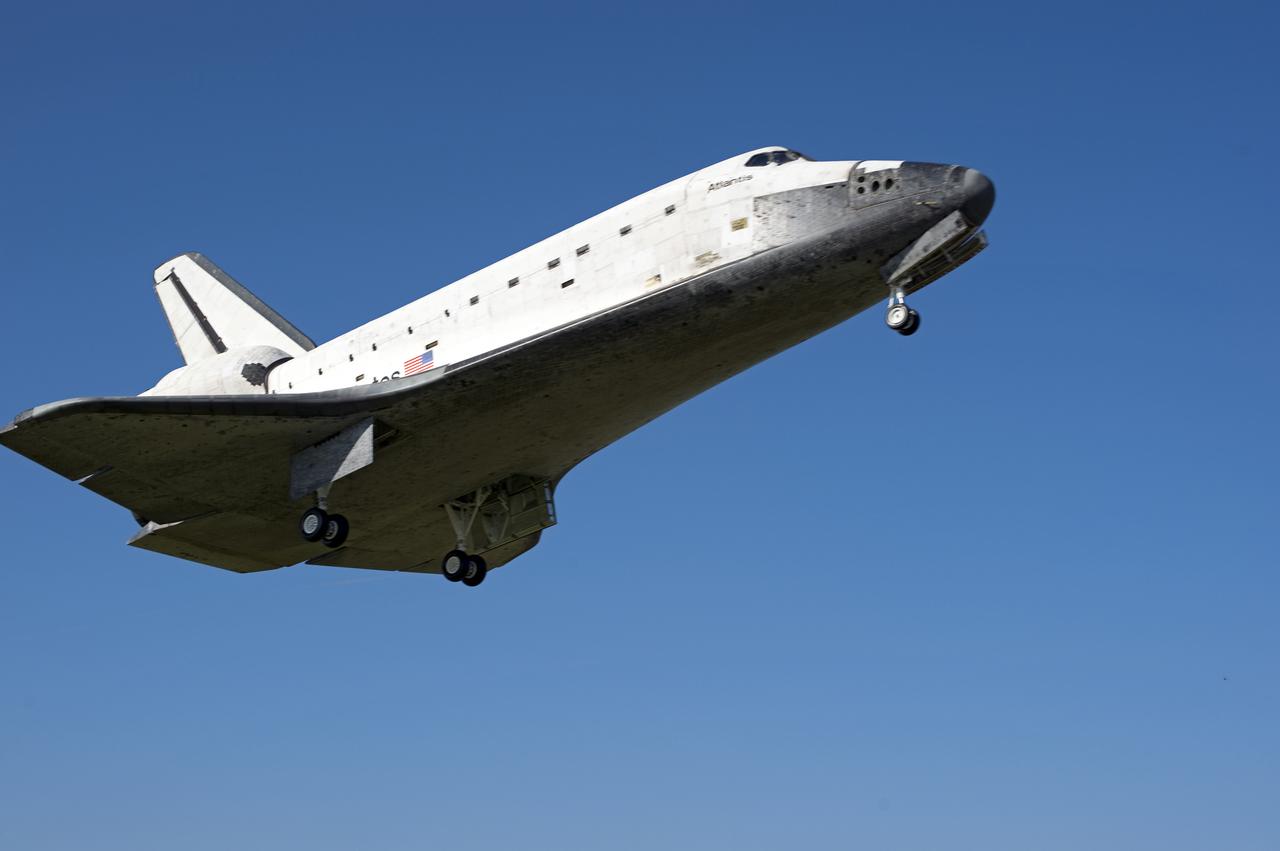
CAPE CANAVERAL, Fla. - Coming in from the southeast, space shuttle Atlantis' belly is visible in a crystal-clear blue sky as it approaches Runway 33 at the Shuttle Landing Facility at NASA's Kennedy Space Center in Florida. Landing was at 8:48 a.m. EDT, completing the 12-day STS-132 mission to the International Space Station. The six-member STS-132 crew carried the Russian-built Mini Research Module-1 to the space station. STS-132 is the 34th shuttle mission to the station, the 132nd shuttle mission overall and the last planned flight for Atlantis. For information on the STS-132 mission and crew, visit www.nasa.gov_mission_pages_shuttle_shuttlemissions_sts132_index.html. Photo credit: NASA_Tony Gray and Tom Farrar
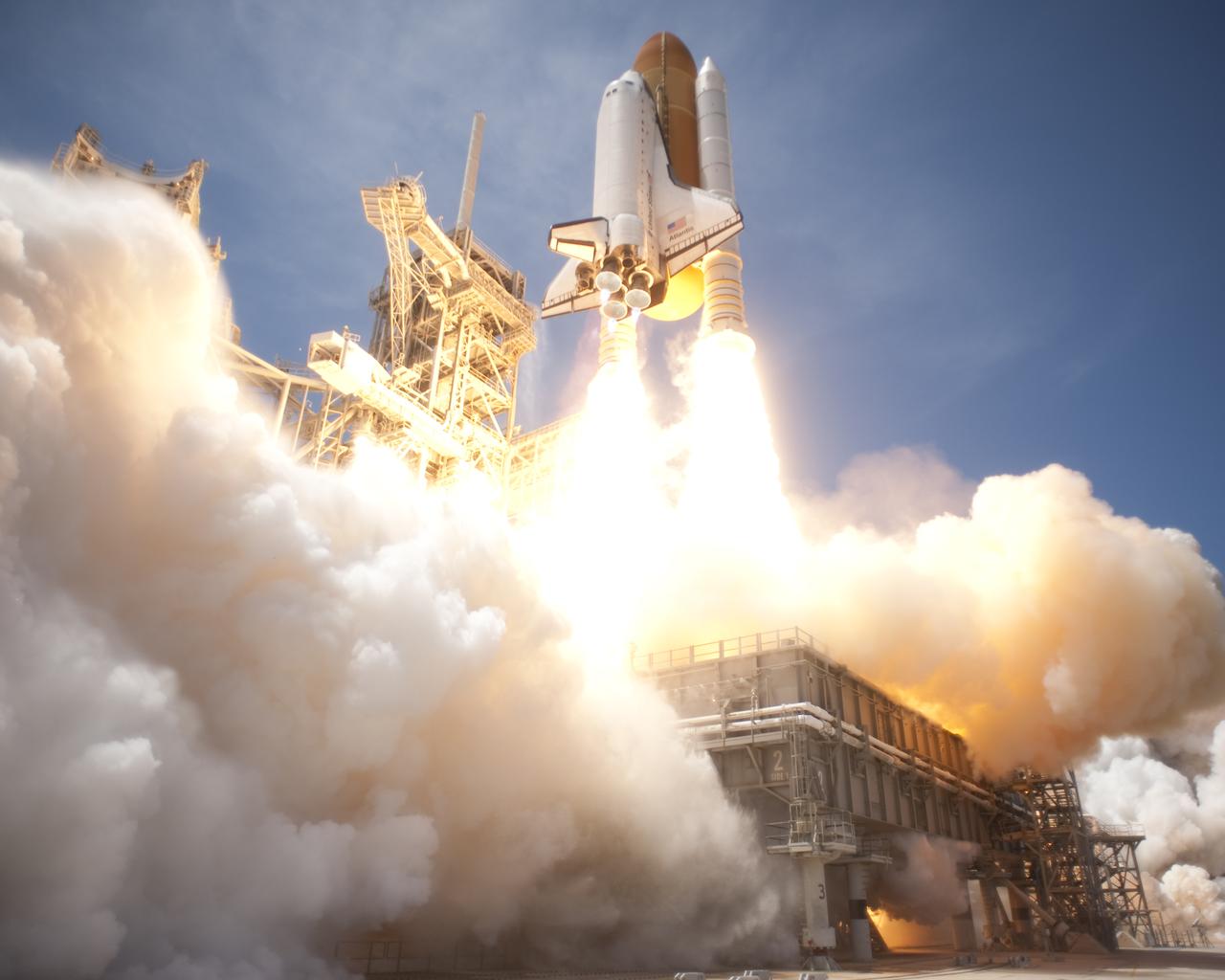
CAPE CANAVERAL, Fla. - At NASA's Kennedy Space Center in Florida, an exhaust plume builds on Launch Pad 39A as space shuttle Atlantis lifts off on the STS-132 mission at 2:20 p.m. EDT on May 14. Atlantis' primary payload for the STS-132 mission is the Russian-built Mini Research Module-1, which will provide additional storage space and a new docking port for Russian Soyuz and Progress spacecraft aboard the International Space Station. STS-132 is the 132nd shuttle flight, the 32nd for Atlantis and the 34th shuttle mission dedicated to station assembly and maintenance. For more information on the STS-132 mission objectives, payload and crew, visit www.nasa.gov_mission_pages_shuttle_shuttlemissions_sts132_index.html. Photo credit: NASA_Tony Gray and Tom Farrar
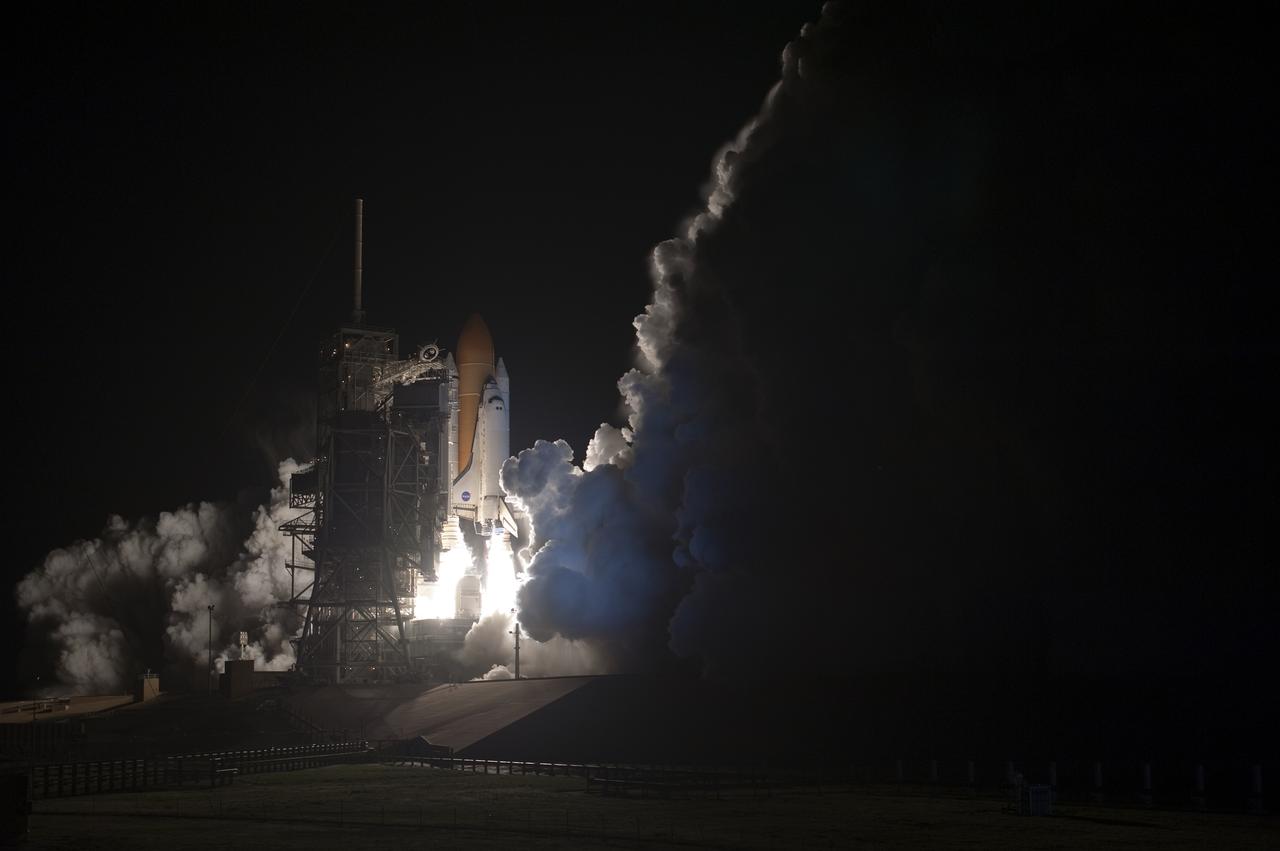
CAPE CANAVERAL, Fla. - An exhaust cloud threatens to obscure the view of space shuttle Discovery as it hurtles toward space after liftoff from Launch Pad 39A at NASA's Kennedy Space Center in Florida. Launch on the STS-131 mission was on time at 6:21 a.m. EDT. The seven-member crew will deliver the multi-purpose logistics module Leonardo, filled with supplies, a new crew sleeping quarters and science racks that will be transferred to the International Space Station's laboratories. The crew also will switch out a gyroscope on the station’s truss, install a spare ammonia storage tank and retrieve a Japanese experiment from the station’s exterior. STS-131 is the 33rd shuttle mission to the station and the 131st shuttle mission overall. For information on the STS-131 mission and crew, visit http:__www.nasa.gov_mission_pages_shuttle_shuttlemissions_sts131_index.html. Photo credit: NASA_Tony Gray and Tom Farrar
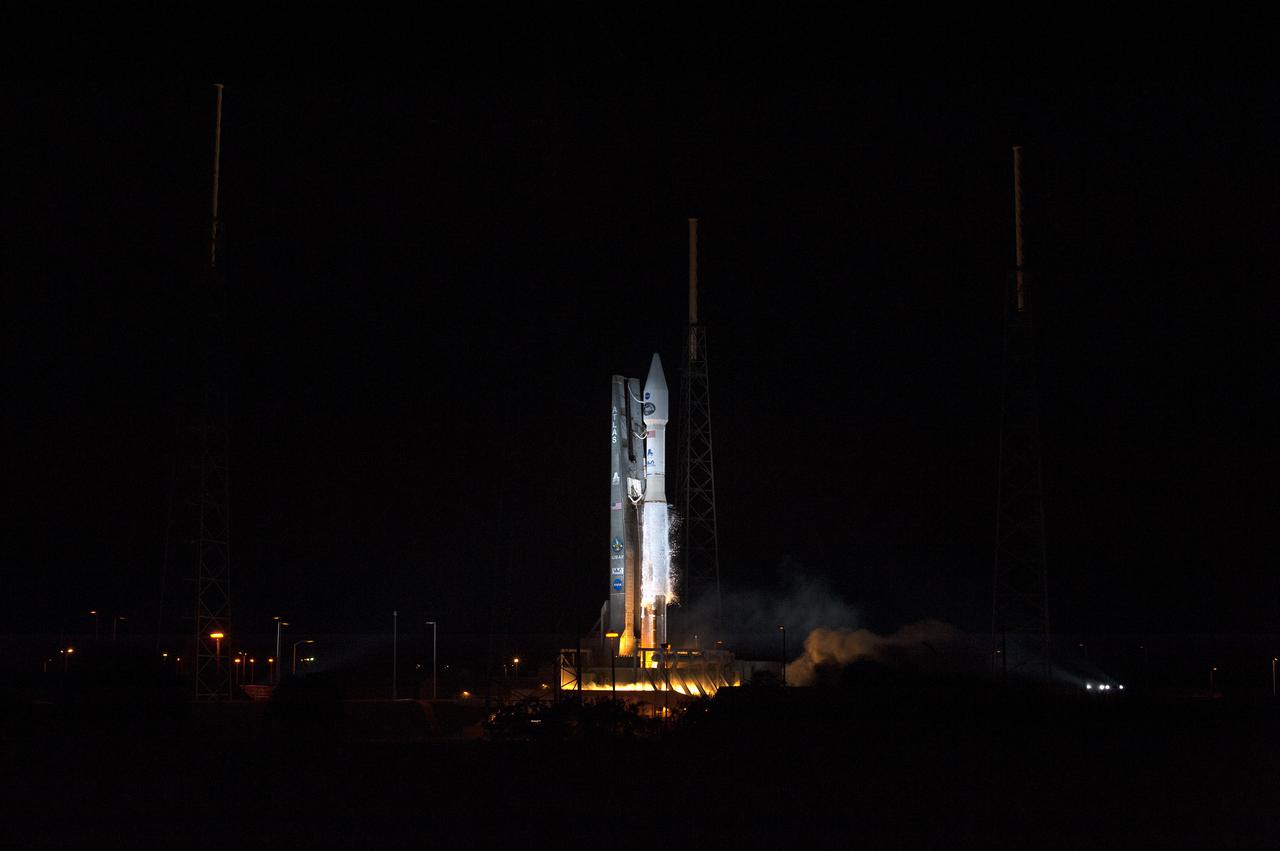
CAPE CANAVERAL, Fla. -- The engines ignite under the United Launch Alliance Atlas V 401 rocket at Space Launch Complex 41 on Cape Canaveral Air Force Station in Florida. NASA's Tracking and Data Relay Satellite-K, TDRS-K, began its journey to orbit at 8:48 p.m. EST. The TDRS-K spacecraft is part of the next-generation series in the Tracking and Data Relay Satellite System, a constellation of space-based communication satellites providing tracking, telemetry, command and high-bandwidth data return services. For more information, visit http:__www.nasa.gov_mission_pages_tdrs_index.html. Photo credit: NASA_Tony Gray and Rick Wetherington
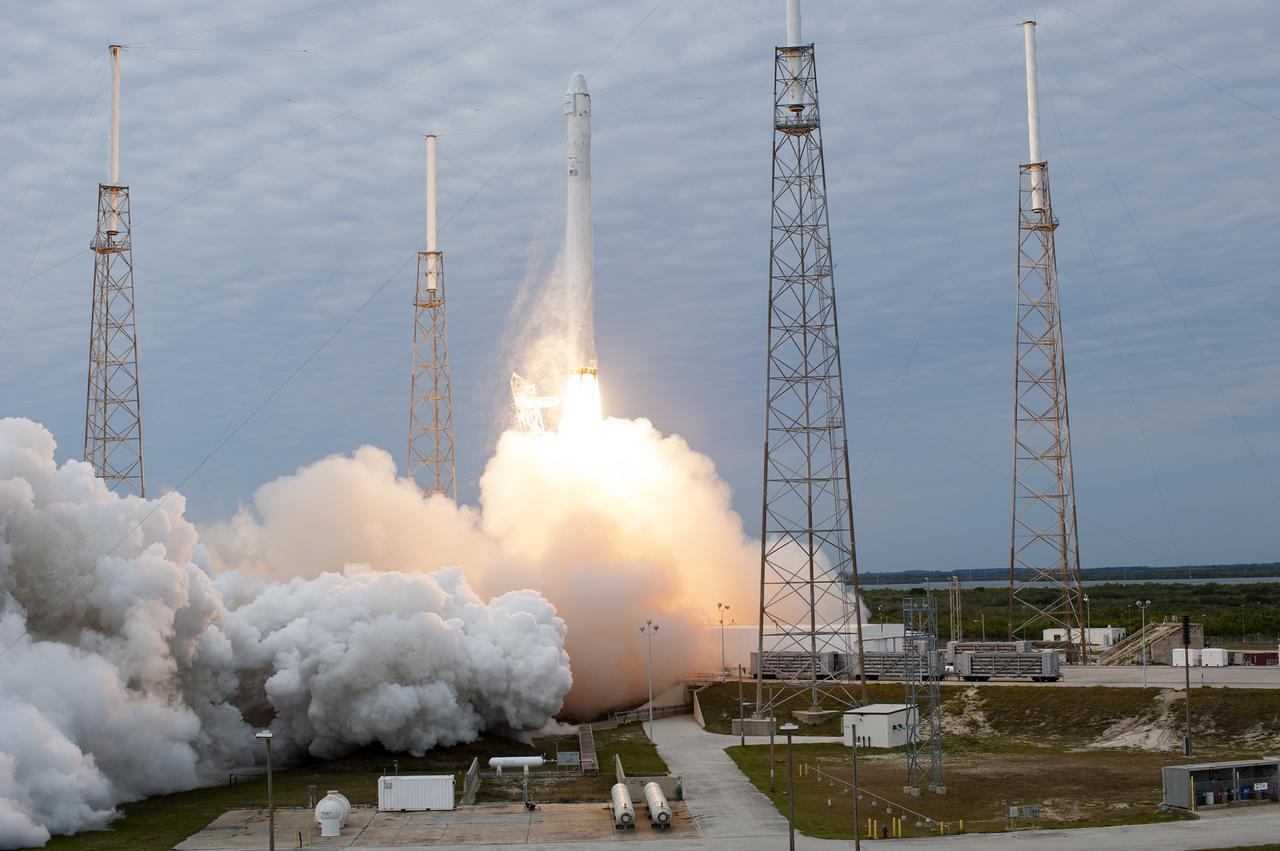
CAPE CANAVERAL, Fla. -- A Space Exploration Technologies, or SpaceX, Falcon 9 rocket lifts off Space Launch Complex 40 on Cape Canaveral Air Force Station in Florida at 10:10 a.m. EST, carrying a Dragon capsule filled with cargo. The SpaceX Dragon capsule is making its third trip to the International Space Station, following a demonstration flight in May 2012 and the first resupply mission in October 2012. The SpaceX-2 mission is the second of 12 SpaceX flights contracted by NASA to resupply the orbiting laboratory. For more information, visit http:__www.nasa.gov_mission_pages_station_structure_launch_spacex2-feature.html Photo credit: NASA_Tony Gray and Robert Murray

CAPE CANAVERAL, Fla. -- A faint rumbling begins on Space Launch Complex 41 on Cape Canaveral Air Force Station in Florida as the engines ignite beneath a United Launch Alliance Atlas V 401 rocket. Its payload, NASA's Tracking and Data Relay Satellite-K or TDRS-K, began its climb to orbit at 8:48 p.m. EST. The TDRS-K spacecraft is part of the next-generation series in the Tracking and Data Relay Satellite System, a constellation of space-based communication satellites providing tracking, telemetry, command and high-bandwidth data return services. For more information, visit http:__www.nasa.gov_mission_pages_tdrs_index.html. Photo credit: NASA_Tony Gray and Rick Wetherington
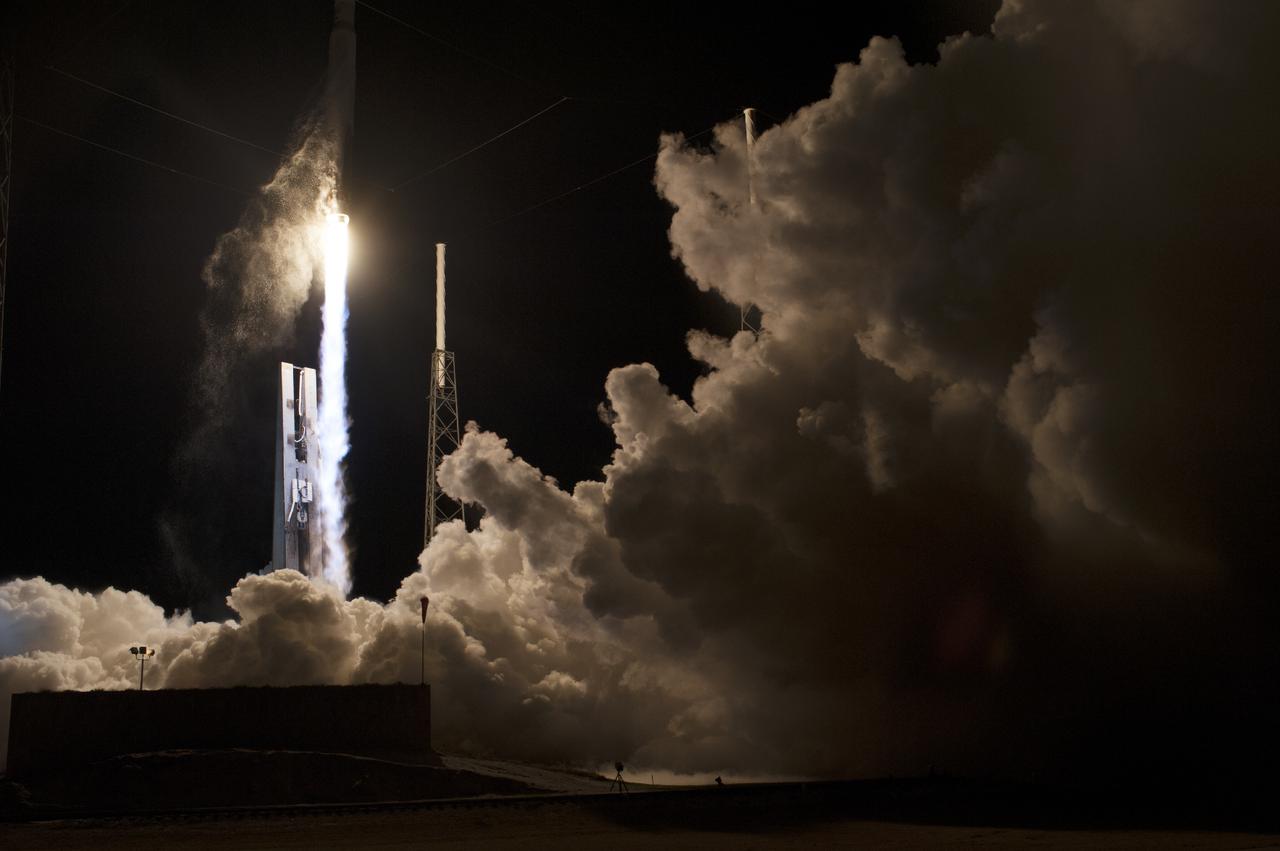
CAPE CANAVERAL, Fla. – The United Launch Alliance Atlas V rocket lifts off from Space Launch Complex 41 at Cape Canaveral Air Force Station carrying NASA's Tracking and Data Relay Satellite, or TDRS-L, spacecraft to Earth orbit. Liftoff was at 9:33 p.m. EST. The TDRS-L spacecraft is the second of three new satellites designed to ensure vital operational continuity for NASA by expanding the lifespan of the Tracking and Data Relay Satellite System TDRSS fleet, which consists of eight satellites in geosynchronous orbit. The spacecraft provide tracking, telemetry, command and high bandwidth data return services for numerous science and human exploration missions orbiting Earth. These include NASA's Hubble Space Telescope and the International Space Station. TDRS-L has a high-performance solar panel designed for more spacecraft power to meet the growing S-band communications requirements. TDRSS is one of NASA Space Communication and Navigation’s SCaN three networks providing space communications to NASA’s missions. For more information more about TDRS-L, visit: http:__www.nasa.gov_tdrs To learn more about SCaN, visit: www.nasa.gov_scan Photo credit: NASA_Tony Gray and Sandy Joseph
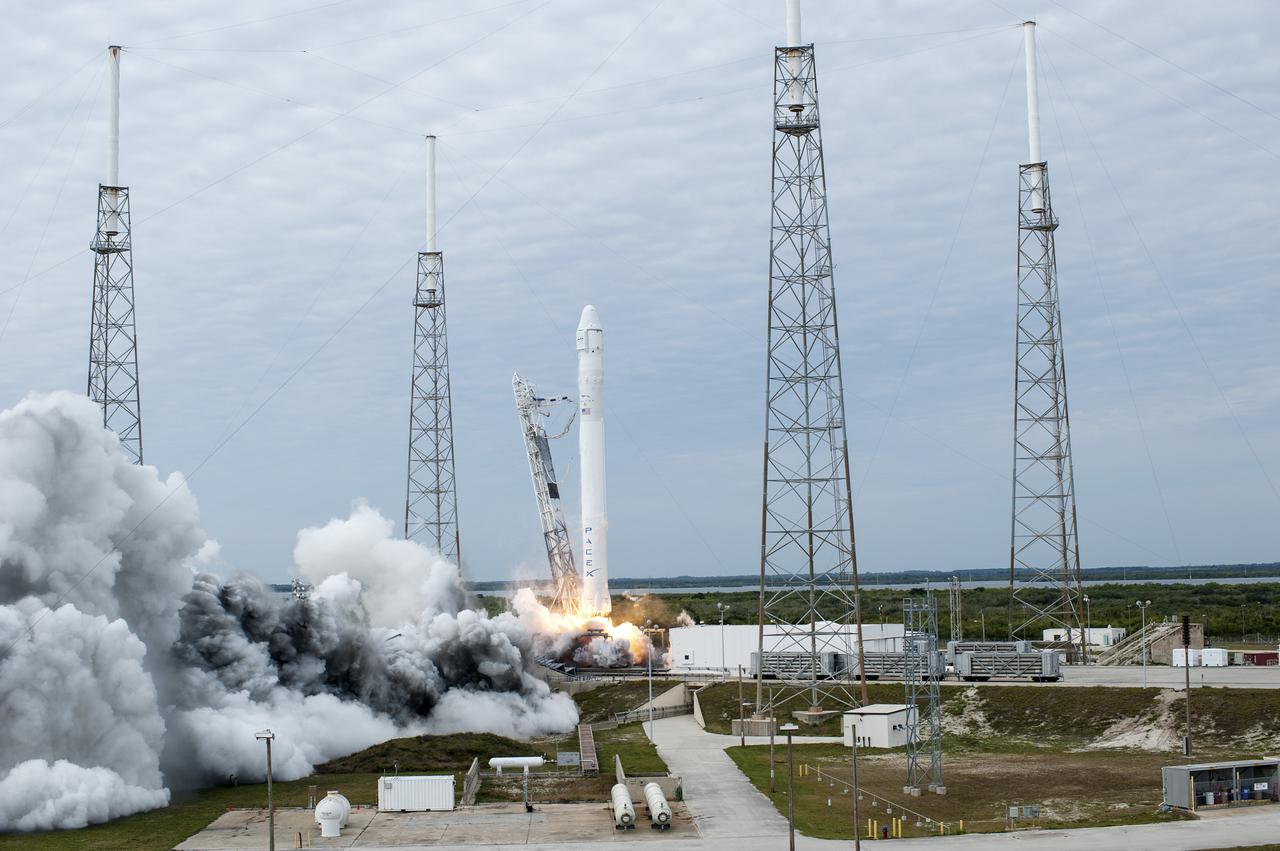
CAPE CANAVERAL, Fla. -- A Space Exploration Technologies, or SpaceX, Falcon 9 rocket lifts off Space Launch Complex 40 on Cape Canaveral Air Force Station in Florida at 10:10 a.m. EST, carrying a Dragon capsule filled with cargo. The SpaceX Dragon capsule is making its third trip to the International Space Station, following a demonstration flight in May 2012 and the first resupply mission in October 2012. The SpaceX-2 mission is the second of 12 SpaceX flights contracted by NASA to resupply the orbiting laboratory. For more information, visit http:__www.nasa.gov_mission_pages_station_structure_launch_spacex2-feature.html Photo credit: NASA_Tony Gray and Robert Murray
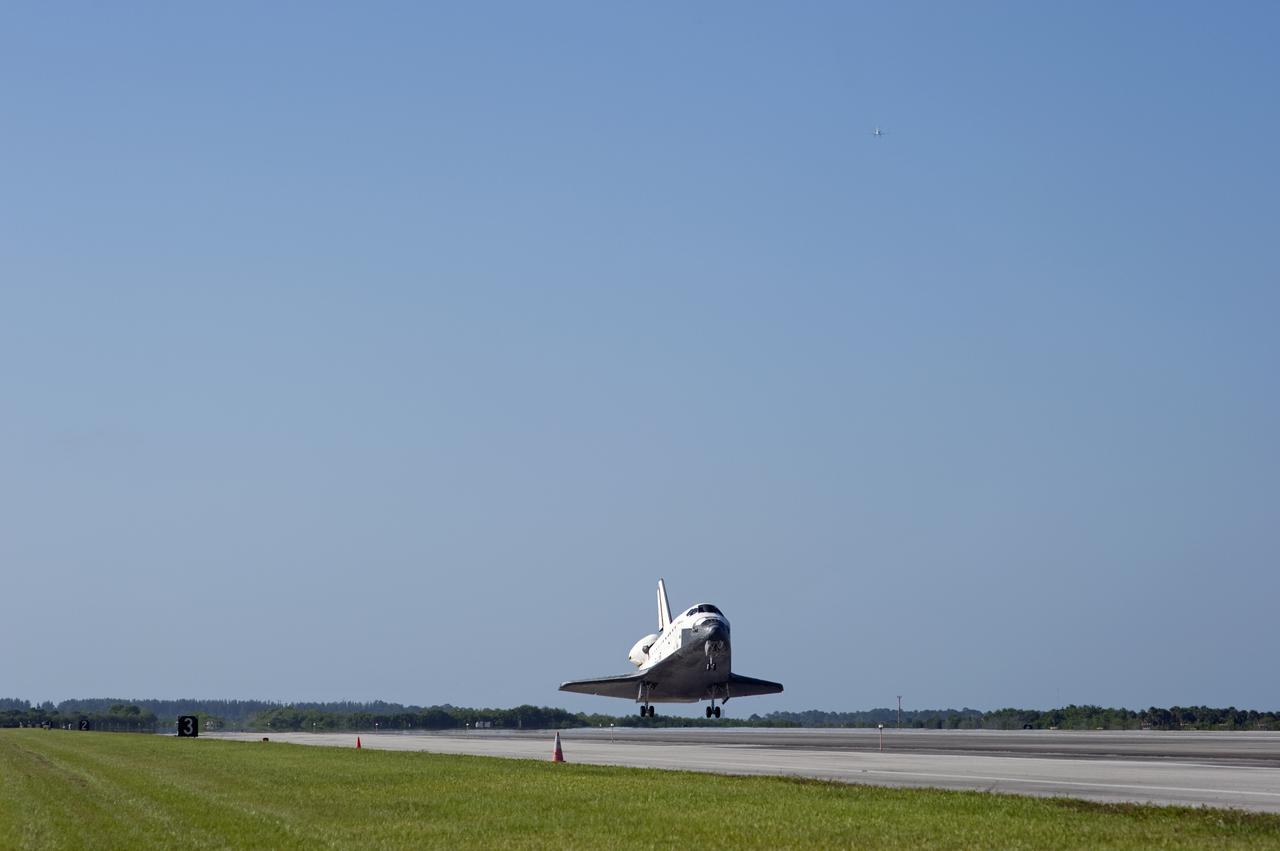
CAPE CANAVERAL, Fla. - A Shuttle Training Aircraft, or STA, top right, watches over space shuttle Atlantis as it touches down on Runway 33 at the Shuttle Landing Facility at NASA's Kennedy Space Center in Florida. The shuttle approached from the southeast in a crystal-clear blue sky, giving the Space Coast quite a show. Landing was at 8:48 a.m. EDT, completing the 12-day STS-132 mission to the International Space Station. The six-member STS-132 crew carried the Russian-built Mini Research Module-1 to the space station. STS-132 is the 34th shuttle mission to the station, the 132nd shuttle mission overall and the last planned flight for Atlantis. For information on the STS-132 mission and crew, visit www.nasa.gov_mission_pages_shuttle_shuttlemissions_sts132_index.html. Photo credit: NASA_Tony Gray and Tom Farrar
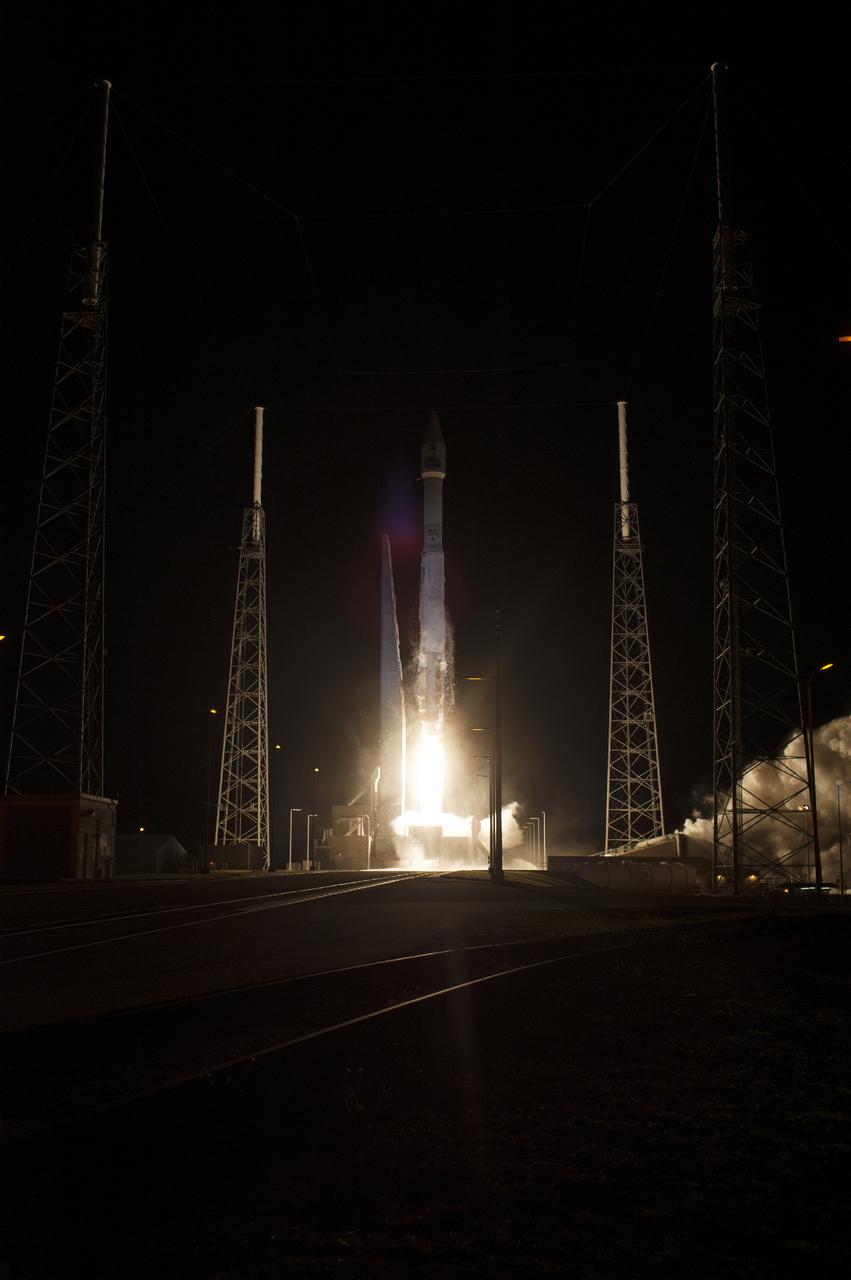
CAPE CANAVERAL, Fla. – The United Launch Alliance Atlas V rocket lifts off from Space Launch Complex 41 at Cape Canaveral Air Force Station carrying NASA's Tracking and Data Relay Satellite, or TDRS-L, spacecraft to Earth orbit. Liftoff was at 9:33 p.m. EST. The TDRS-L spacecraft is the second of three new satellites designed to ensure vital operational continuity for NASA by expanding the lifespan of the Tracking and Data Relay Satellite System TDRSS fleet, which consists of eight satellites in geosynchronous orbit. The spacecraft provide tracking, telemetry, command and high bandwidth data return services for numerous science and human exploration missions orbiting Earth. These include NASA's Hubble Space Telescope and the International Space Station. TDRS-L has a high-performance solar panel designed for more spacecraft power to meet the growing S-band communications requirements. TDRSS is one of NASA Space Communication and Navigation’s SCaN three networks providing space communications to NASA’s missions. For more information more about TDRS-L, visit: http:__www.nasa.gov_tdrs To learn more about SCaN, visit: www.nasa.gov_scan Photo credit: NASA_Tony Gray and Sandy Joseph
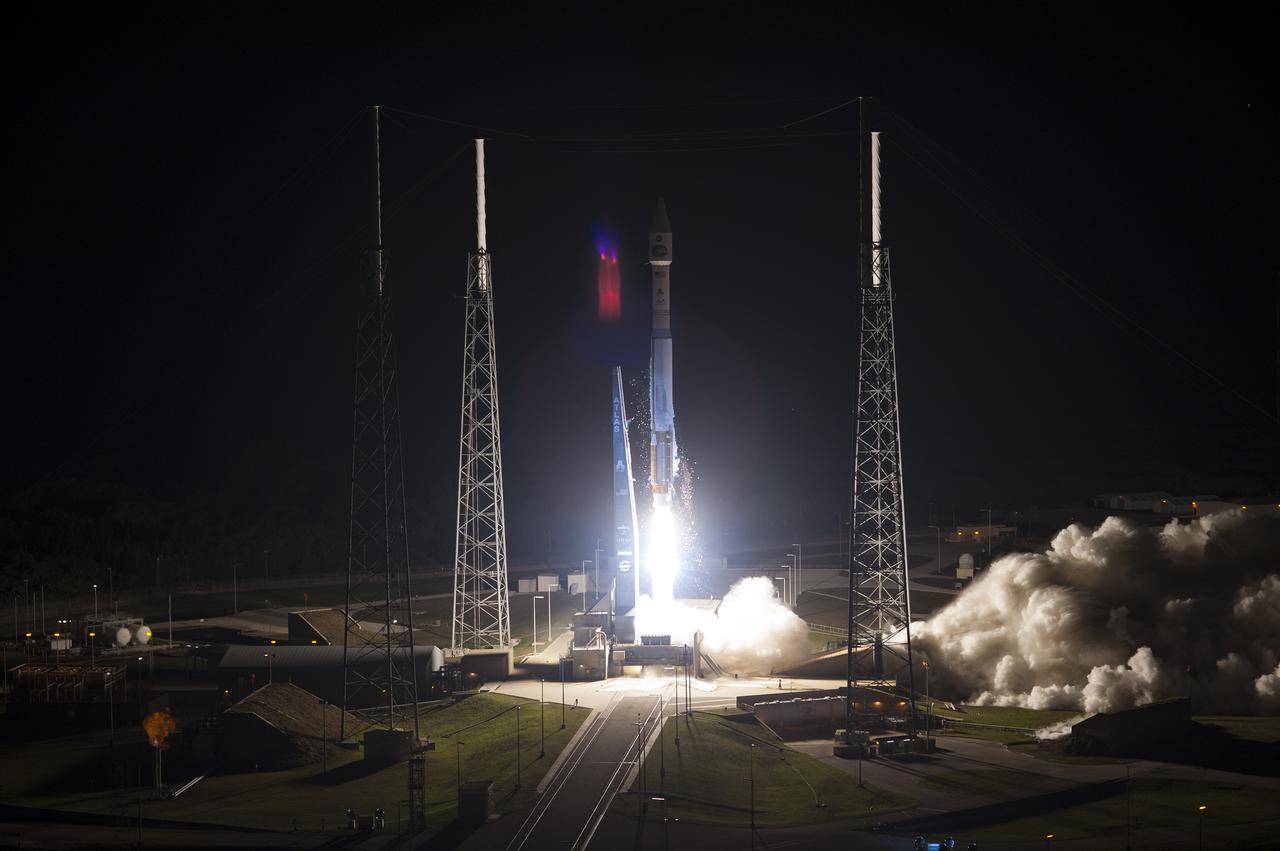
CAPE CANAVERAL, Fla. -- The United Launch Alliance Atlas V 401 rocket carrying NASA's Tracking and Data Relay Satellite-K, TDRS-K, roars to life on Space Launch Complex 41 on Cape Canaveral Air Force Station in Florida at 8:48 p.m. EST. he TDRS-K spacecraft is part of the next-generation series in the Tracking and Data Relay Satellite System, a constellation of space-based communication satellites providing tracking, telemetry, command and high-bandwidth data return services. For more information, visit http:__www.nasa.gov_mission_pages_tdrs_index.html. Photo credit: NASA_Tony Gray and Robert Murray
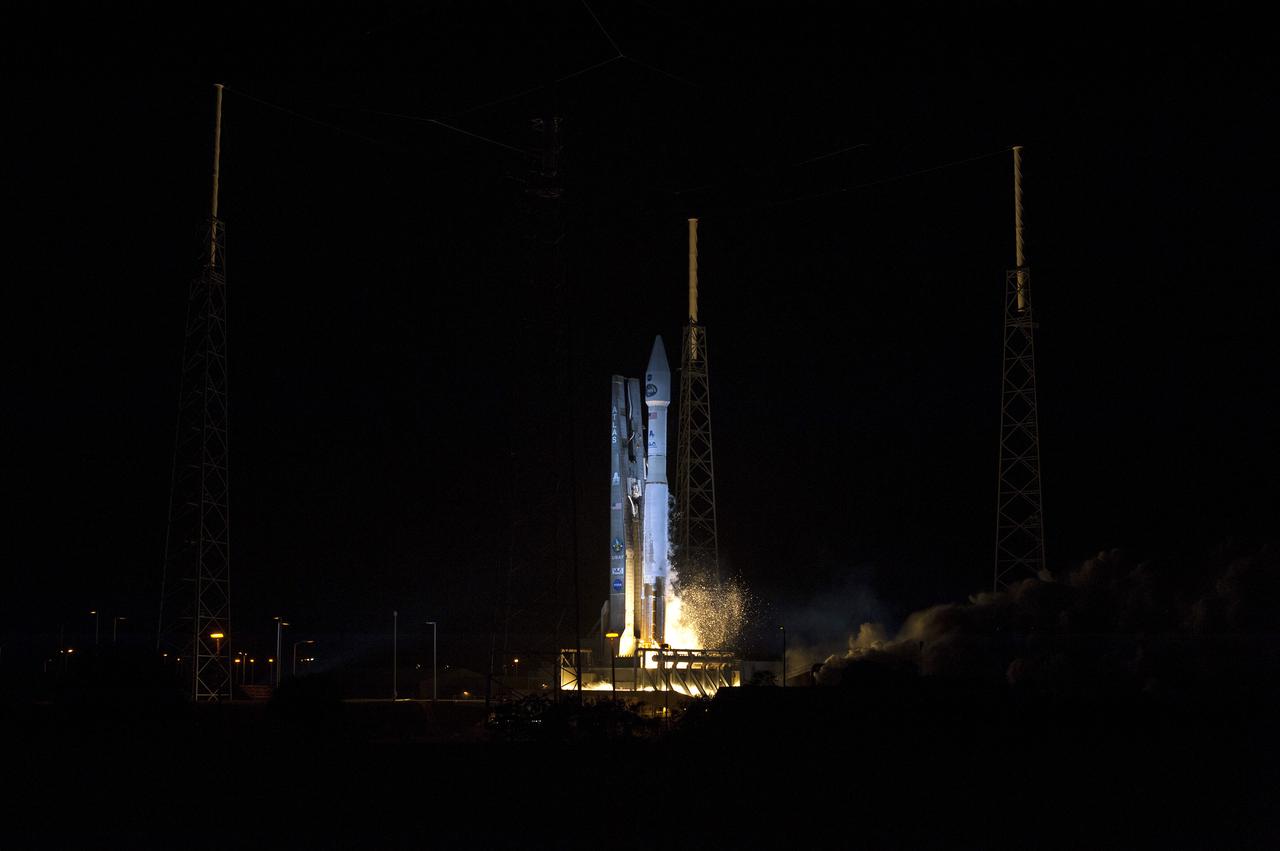
CAPE CANAVERAL, Fla. -- Pressure mounts under a United Launch Alliance Atlas V 401 rocket on Space Launch Complex 41 on Cape Canaveral Air Force Station in Florida as its engines ignite, propelling it to orbit carrying NASA's Tracking and Data Relay Satellite-K, TDRS-K. Liftoff was at 8:48 p.m. EST. he TDRS-K spacecraft is part of the next-generation series in the Tracking and Data Relay Satellite System, a constellation of space-based communication satellites providing tracking, telemetry, command and high-bandwidth data return services. For more information, visit http:__www.nasa.gov_mission_pages_tdrs_index.html. Photo credit: NASA_Tony Gray and Rick Wetherington
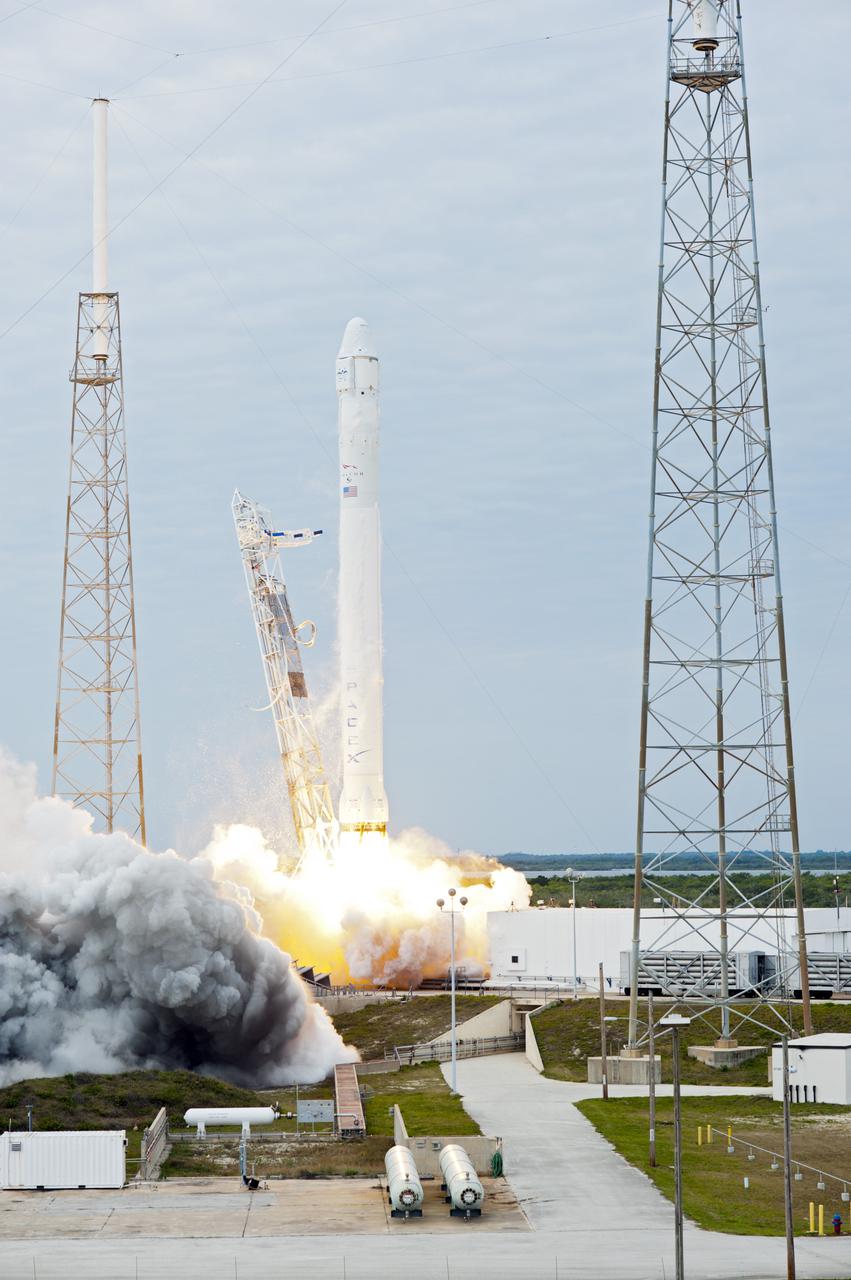
CAPE CANAVERAL, Fla. -- A Space Exploration Technologies, or SpaceX, Falcon 9 rocket lifts off Space Launch Complex 40 on Cape Canaveral Air Force Station in Florida at 10:10 a.m. EST, carrying a Dragon capsule filled with cargo. The SpaceX Dragon capsule is making its third trip to the International Space Station, following a demonstration flight in May 2012 and the first resupply mission in October 2012. The SpaceX-2 mission is the second of 12 SpaceX flights contracted by NASA to resupply the orbiting laboratory. For more information, visit http:__www.nasa.gov_mission_pages_station_structure_launch_spacex2-feature.html Photo credit: NASA_Tony Gray and Robert Murray
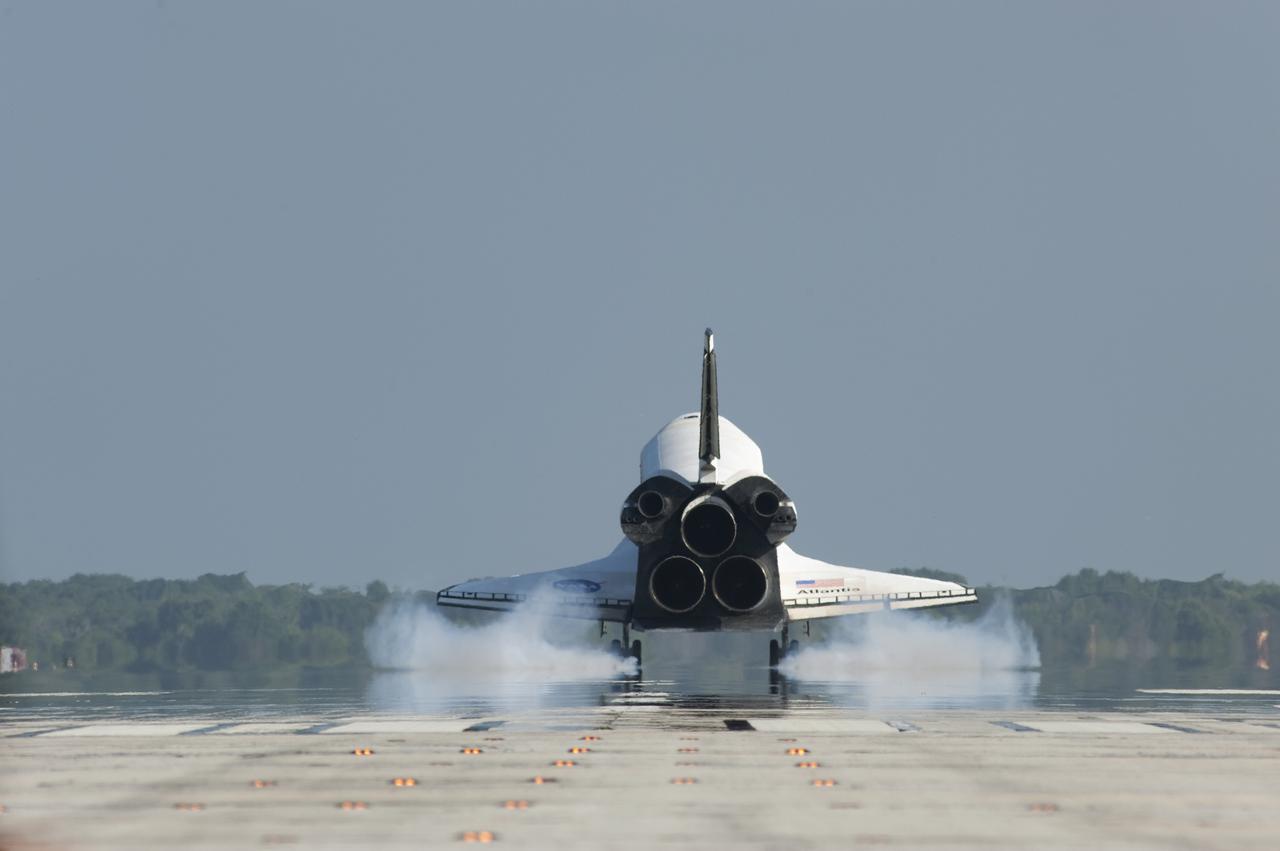
CAPE CANAVERAL, Fla. - Space shuttle Atlantis touches down on Runway 33 at the Shuttle Landing Facility at NASA's Kennedy Space Center in Florida. Landing was at 8:48 a.m. EDT, completing the 12-day STS-132 mission to the International Space Station. The six-member STS-132 crew carried the Russian-built Mini Research Module-1 to the space station. STS-132 is the 34th shuttle mission to the station, the 132nd shuttle mission overall and the last planned flight for Atlantis. For information on the STS-132 mission and crew, visit www.nasa.gov_mission_pages_shuttle_shuttlemissions_sts132_index.html. Photo credit: NASA_Tony Gray and Tom Farrar
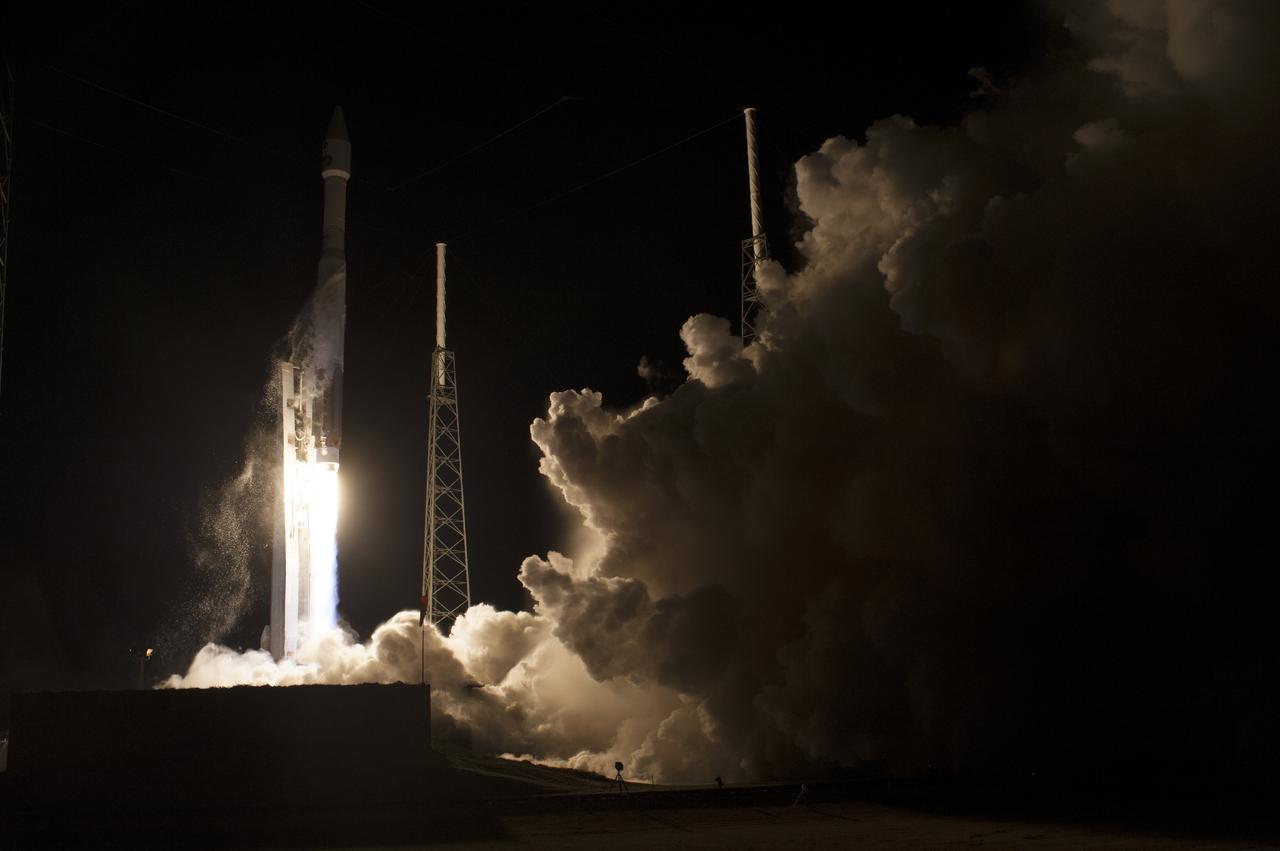
CAPE CANAVERAL, Fla. – The United Launch Alliance Atlas V rocket lifts off from Space Launch Complex 41 at Cape Canaveral Air Force Station carrying NASA's Tracking and Data Relay Satellite, or TDRS-L, spacecraft to Earth orbit. Liftoff was at 9:33 p.m. EST. The TDRS-L spacecraft is the second of three new satellites designed to ensure vital operational continuity for NASA by expanding the lifespan of the Tracking and Data Relay Satellite System TDRSS fleet, which consists of eight satellites in geosynchronous orbit. The spacecraft provide tracking, telemetry, command and high bandwidth data return services for numerous science and human exploration missions orbiting Earth. These include NASA's Hubble Space Telescope and the International Space Station. TDRS-L has a high-performance solar panel designed for more spacecraft power to meet the growing S-band communications requirements. TDRSS is one of NASA Space Communication and Navigation’s SCaN three networks providing space communications to NASA’s missions. For more information more about TDRS-L, visit: http:__www.nasa.gov_tdrs To learn more about SCaN, visit: www.nasa.gov_scan Photo credit: NASA_Tony Gray and Sandy Joseph
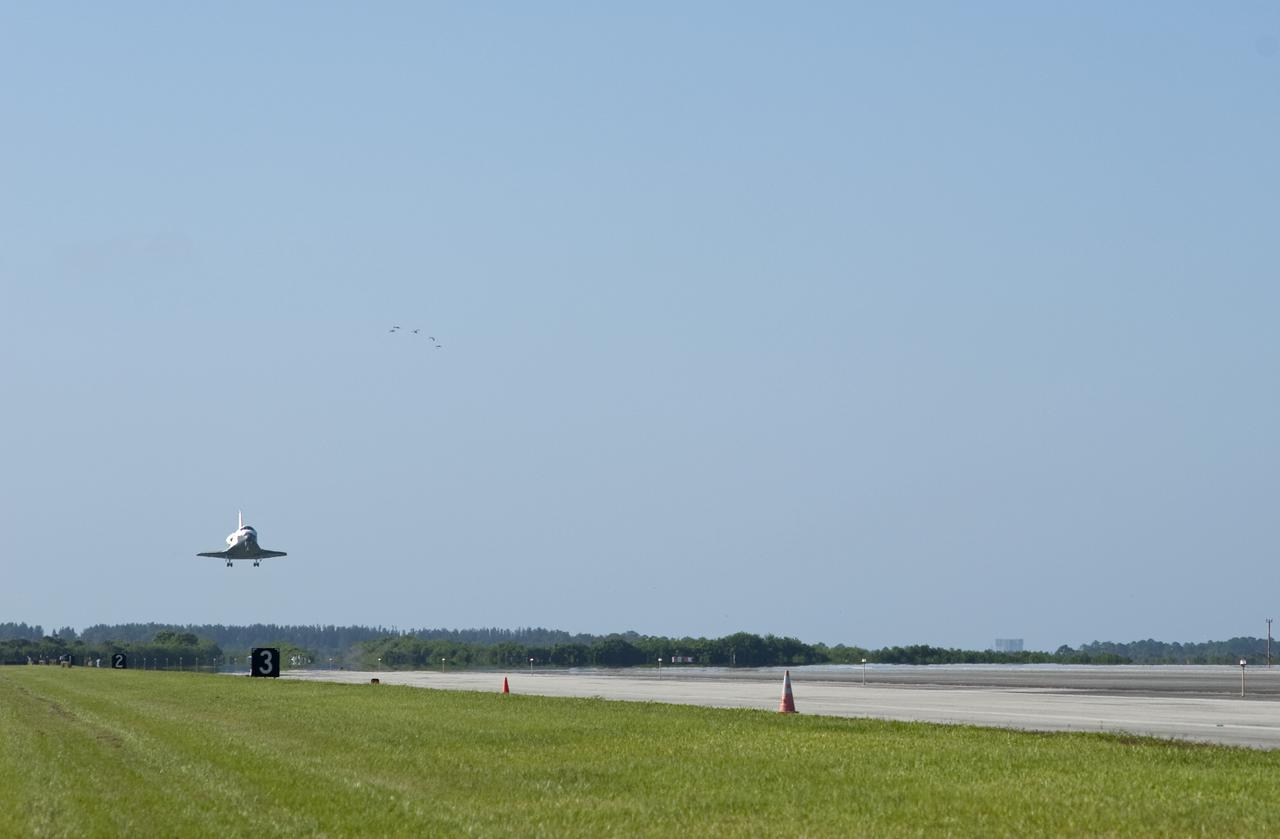
CAPE CANAVERAL, Fla. - A flock of birds usher space shuttle Atlantis toward Runway 33 at the Shuttle Landing Facility at NASA's Kennedy Space Center in Florida. The shuttle approached from the southeast in a crystal-clear blue sky, giving the Space Coast quite a show. Landing was at 8:48 a.m. EDT, completing the 12-day STS-132 mission to the International Space Station. The six-member STS-132 crew carried the Russian-built Mini Research Module-1 to the space station. STS-132 is the 34th shuttle mission to the station, the 132nd shuttle mission overall and the last planned flight for Atlantis. For information on the STS-132 mission and crew, visit www.nasa.gov_mission_pages_shuttle_shuttlemissions_sts132_index.html. Photo credit: NASA_Tony Gray and Tom Farrar
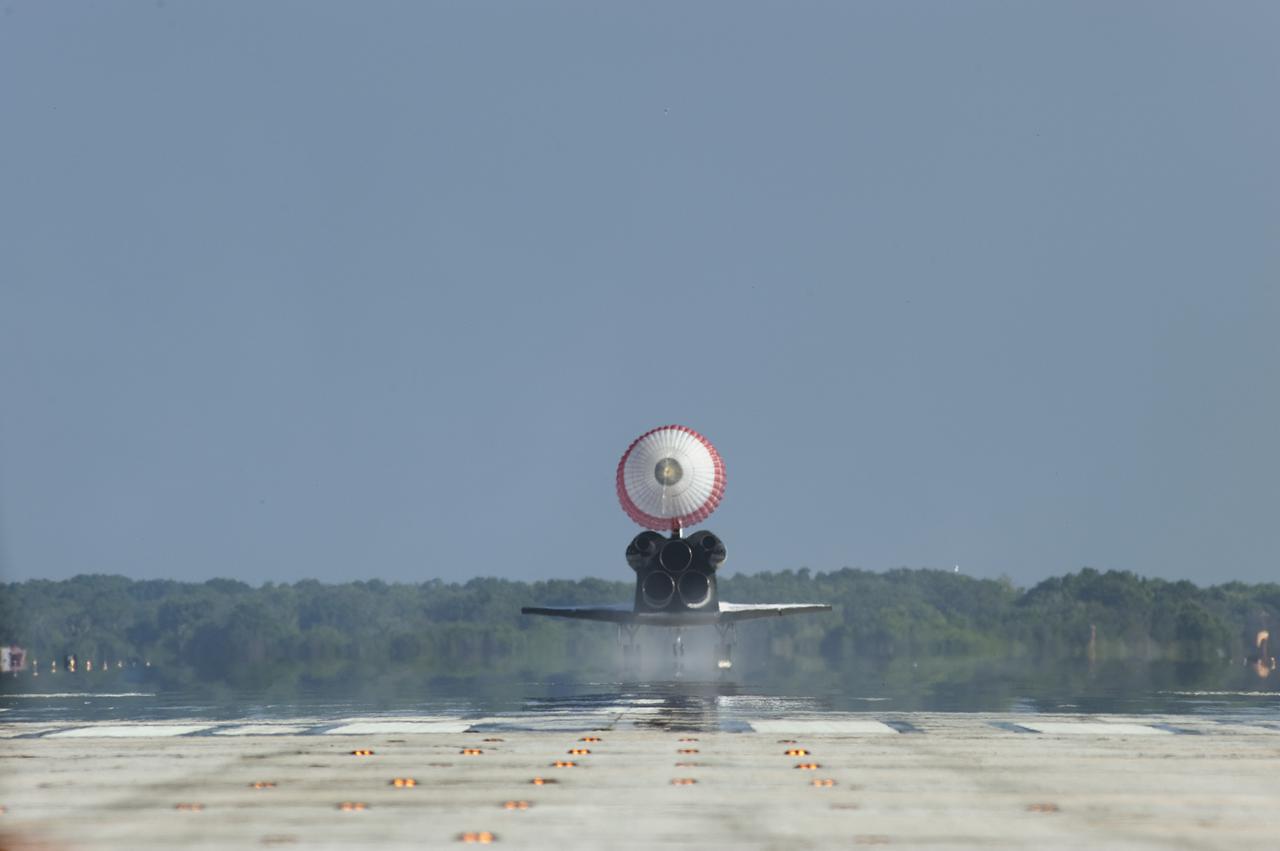
CAPE CANAVERAL, Fla. - With its drag chute unfurled, space shuttle Atlantis rolls down Runway 33 at the Shuttle Landing Facility at NASA's Kennedy Space Center in Florida. Landing was at 8:48 a.m. EDT, completing the 12-day STS-132 mission to the International Space Station. The six-member STS-132 crew carried the Russian-built Mini Research Module-1 to the space station. STS-132 is the 34th shuttle mission to the station, the 132nd shuttle mission overall and the last planned flight for Atlantis. For information on the STS-132 mission and crew, visit www.nasa.gov_mission_pages_shuttle_shuttlemissions_sts132_index.html. Photo credit: NASA_Tony Gray and Tom Farrar
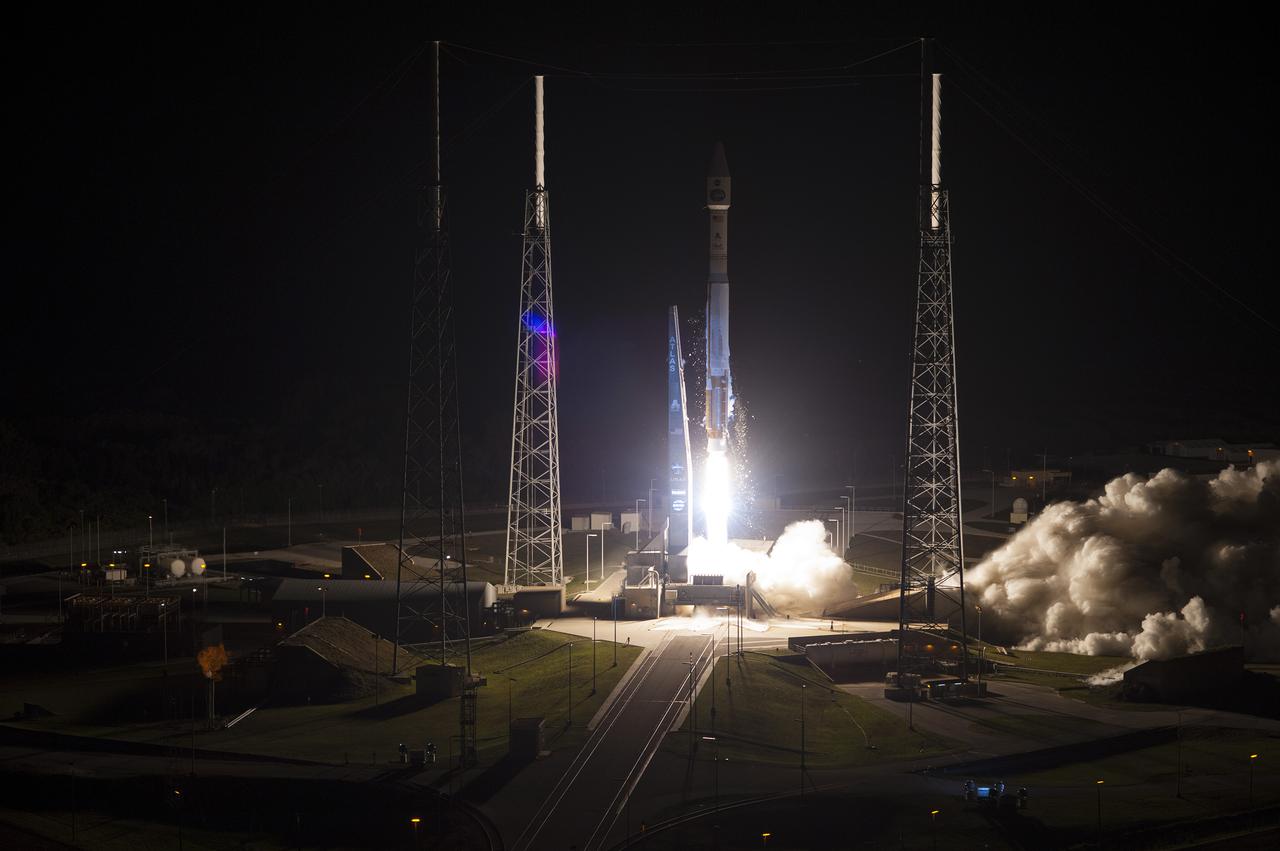
CAPE CANAVERAL, Fla. -- Space Launch Complex 41 on Cape Canaveral Air Force Station in Florida is illuminated by a United Launch Alliance Atlas V 401 rocket as it lifts off at 8:48 p.m. EST carrying NASA's Tracking and Data Relay Satellite-K, TDRS-K, to orbit. The TDRS-K spacecraft is part of the next-generation series in the Tracking and Data Relay Satellite System, a constellation of space-based communication satellites providing tracking, telemetry, command and high-bandwidth data return services. For more information, visit http:__www.nasa.gov_mission_pages_tdrs_index.html. Photo credit: NASA_Tony Gray and Don Kight
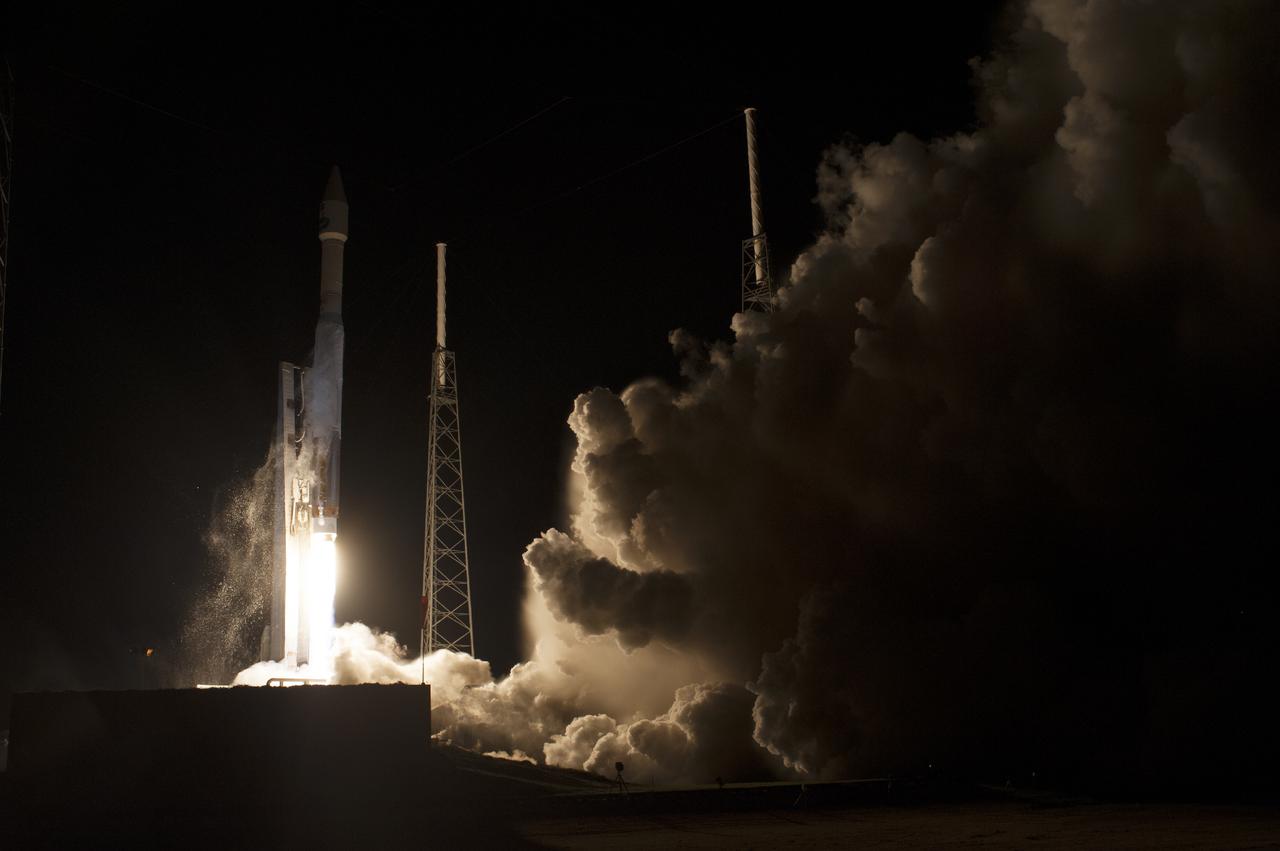
CAPE CANAVERAL, Fla. – The United Launch Alliance Atlas V rocket lifts off from Space Launch Complex 41 at Cape Canaveral Air Force Station carrying NASA's Tracking and Data Relay Satellite, or TDRS-L, spacecraft to Earth orbit. Liftoff was at 9:33 p.m. EST. The TDRS-L spacecraft is the second of three new satellites designed to ensure vital operational continuity for NASA by expanding the lifespan of the Tracking and Data Relay Satellite System TDRSS fleet, which consists of eight satellites in geosynchronous orbit. The spacecraft provide tracking, telemetry, command and high bandwidth data return services for numerous science and human exploration missions orbiting Earth. These include NASA's Hubble Space Telescope and the International Space Station. TDRS-L has a high-performance solar panel designed for more spacecraft power to meet the growing S-band communications requirements. TDRSS is one of NASA Space Communication and Navigation’s SCaN three networks providing space communications to NASA’s missions. For more information more about TDRS-L, visit: http:__www.nasa.gov_tdrs To learn more about SCaN, visit: www.nasa.gov_scan Photo credit: NASA_Tony Gray and Sandy Joseph
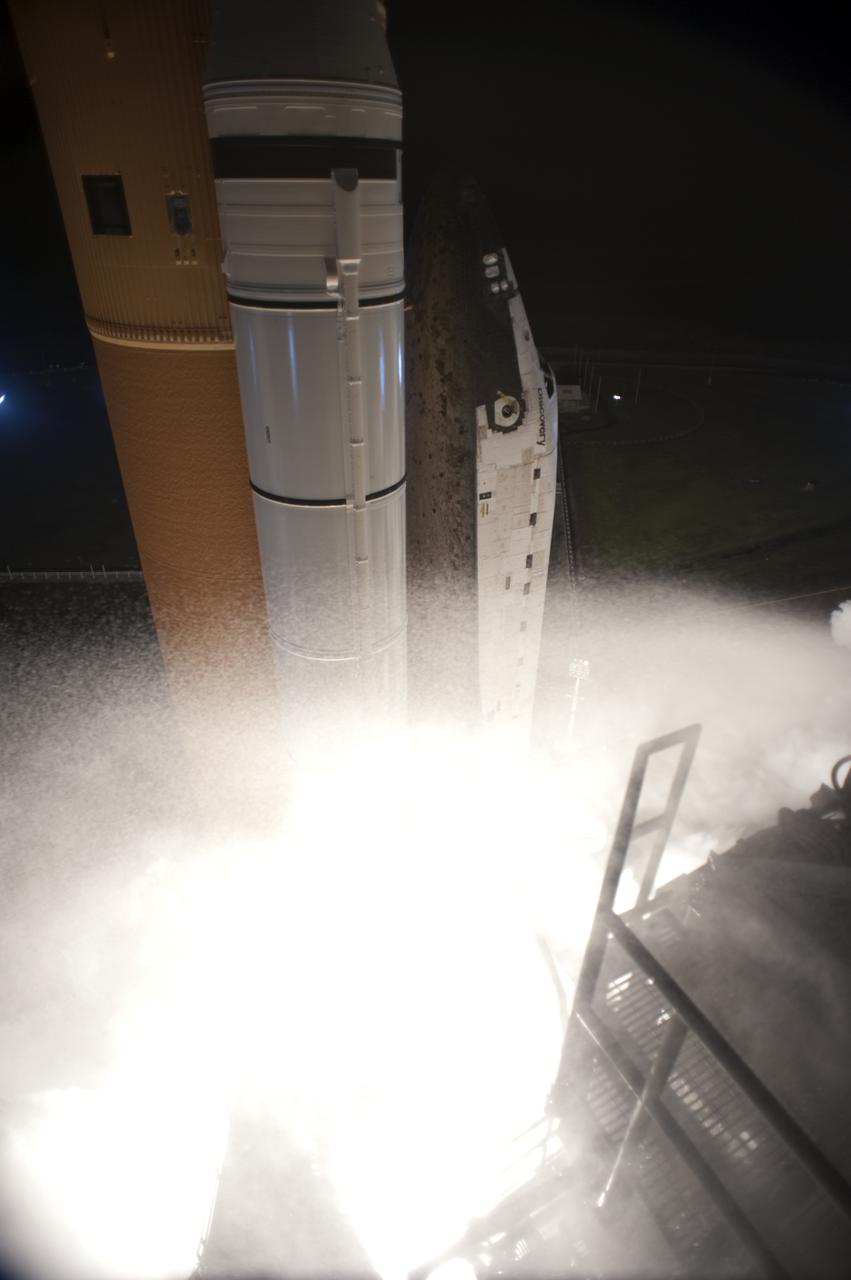
CAPE CANAVERAL, Fla. - An exhaust cloud billows around Launch Pad 39A at NASA's Kennedy Space Center in Florida as space shuttle Discovery lifts off to begin the STS-131 mission. Shuttle Discovery lifted off at 6:21 a.m. EDT on April 5, 2010. The seven-member STS-131 crew will deliver the multi-purpose logistics module Leonardo, filled with supplies, a new crew sleeping quarters and science racks that will be transferred to the International Space Station's laboratories. The crew also will switch out a gyroscope on the station’s truss, install a spare ammonia storage tank and retrieve a Japanese experiment from the station’s exterior. STS-131 is the 33rd shuttle mission to the station and the 131st shuttle mission overall. For information on the STS-131 mission and crew, visit http:__www.nasa.gov_mission_pages_shuttle_shuttlemissions_sts131_index.html. Photo credit: NASA_Tony Gray and Tom Farrar
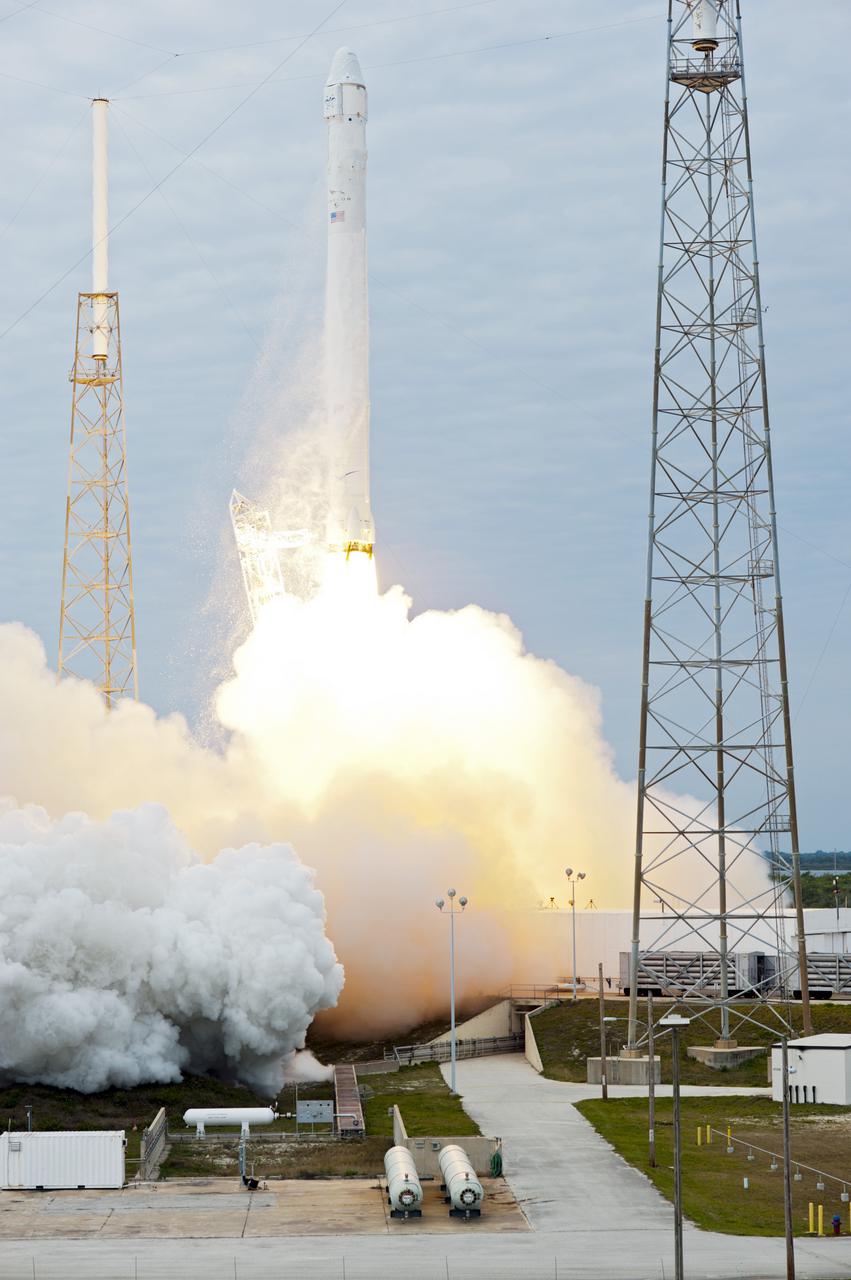
CAPE CANAVERAL, Fla. -- A Space Exploration Technologies, or SpaceX, Falcon 9 rocket lifts off Space Launch Complex 40 on Cape Canaveral Air Force Station in Florida at 10:10 a.m. EST, carrying a Dragon capsule filled with cargo. The SpaceX Dragon capsule is making its third trip to the International Space Station, following a demonstration flight in May 2012 and the first resupply mission in October 2012. The SpaceX-2 mission is the second of 12 SpaceX flights contracted by NASA to resupply the orbiting laboratory. For more information, visit http:__www.nasa.gov_mission_pages_station_structure_launch_spacex2-feature.html Photo credit: NASA_Tony Gray and Robert Murray
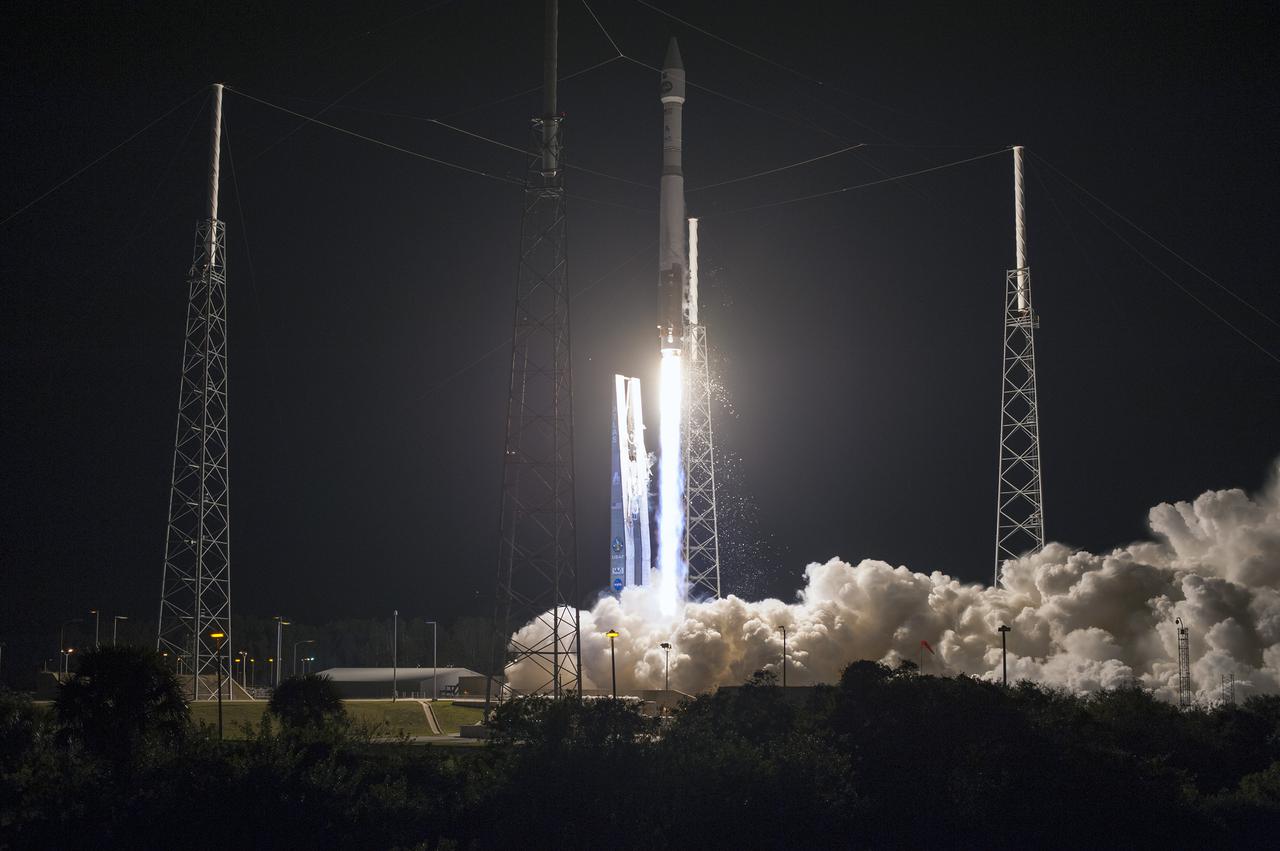
CAPE CANAVERAL, Fla. -- The umbilical tower drops back from a United Launch Alliance Atlas V 401 rocket as it lifts off Space Launch Complex 41 on Cape Canaveral Air Force Station in Florida. Launch, with NASA's Tracking and Data Relay Satellite-K or TDRS-K aboard, was at 8:48 p.m. EST. he TDRS-K spacecraft is part of the next-generation series in the Tracking and Data Relay Satellite System, a constellation of space-based communication satellites providing tracking, telemetry, command and high-bandwidth data return services. For more information, visit http:__www.nasa.gov_mission_pages_tdrs_index.html. Photo credit: NASA_Tony Gray and Rick Wetherington
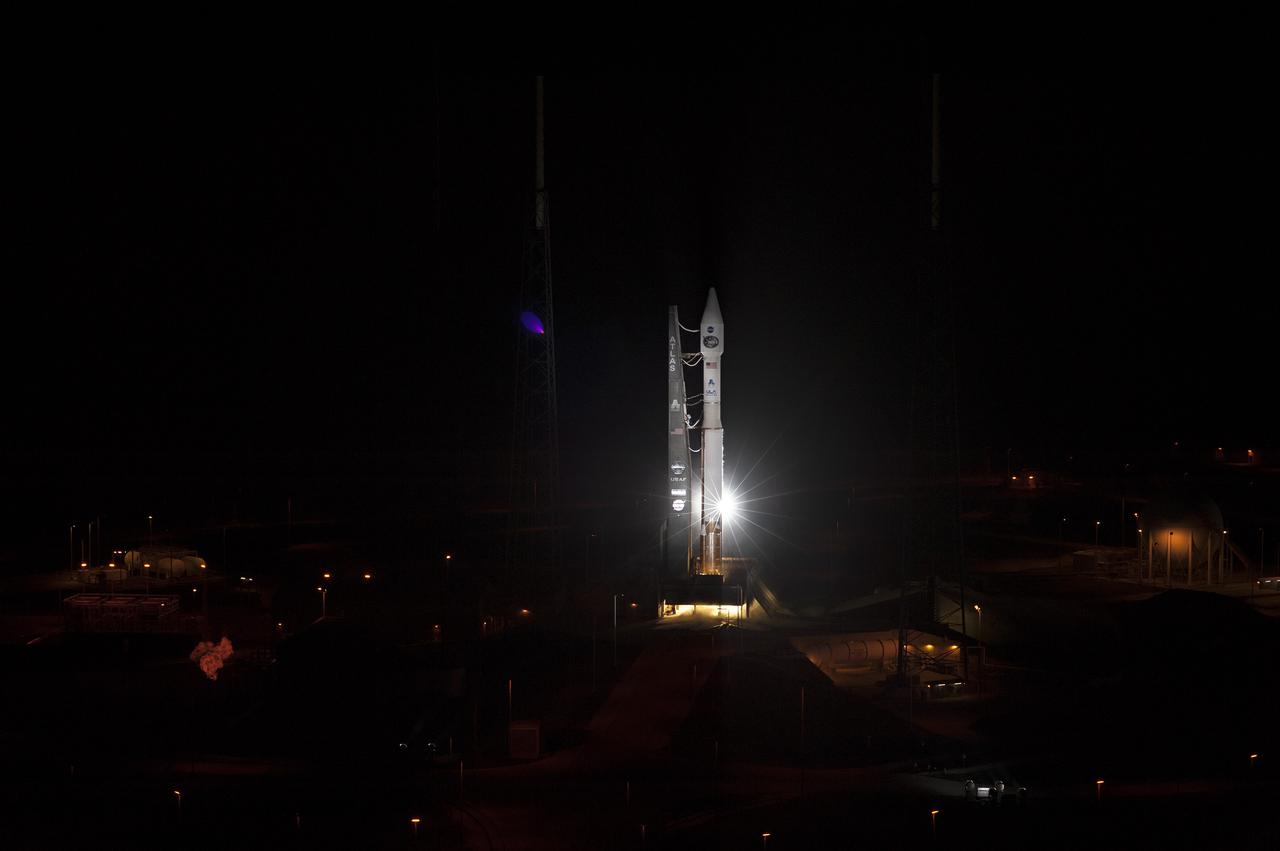
CAPE CANAVERAL, Fla. -- The engines ignite under the United Launch Alliance Atlas V 401 rocket at Space Launch Complex 41 on Cape Canaveral Air Force Station in Florida. NASA's Tracking and Data Relay Satellite-K, TDRS-K, began its journey to orbit at 8:48 p.m. EST. The TDRS-K spacecraft is part of the next-generation series in the Tracking and Data Relay Satellite System, a constellation of space-based communication satellites providing tracking, telemetry, command and high-bandwidth data return services. For more information, visit http:__www.nasa.gov_mission_pages_tdrs_index.html. Photo credit: NASA_Tony Gray and Don Kight
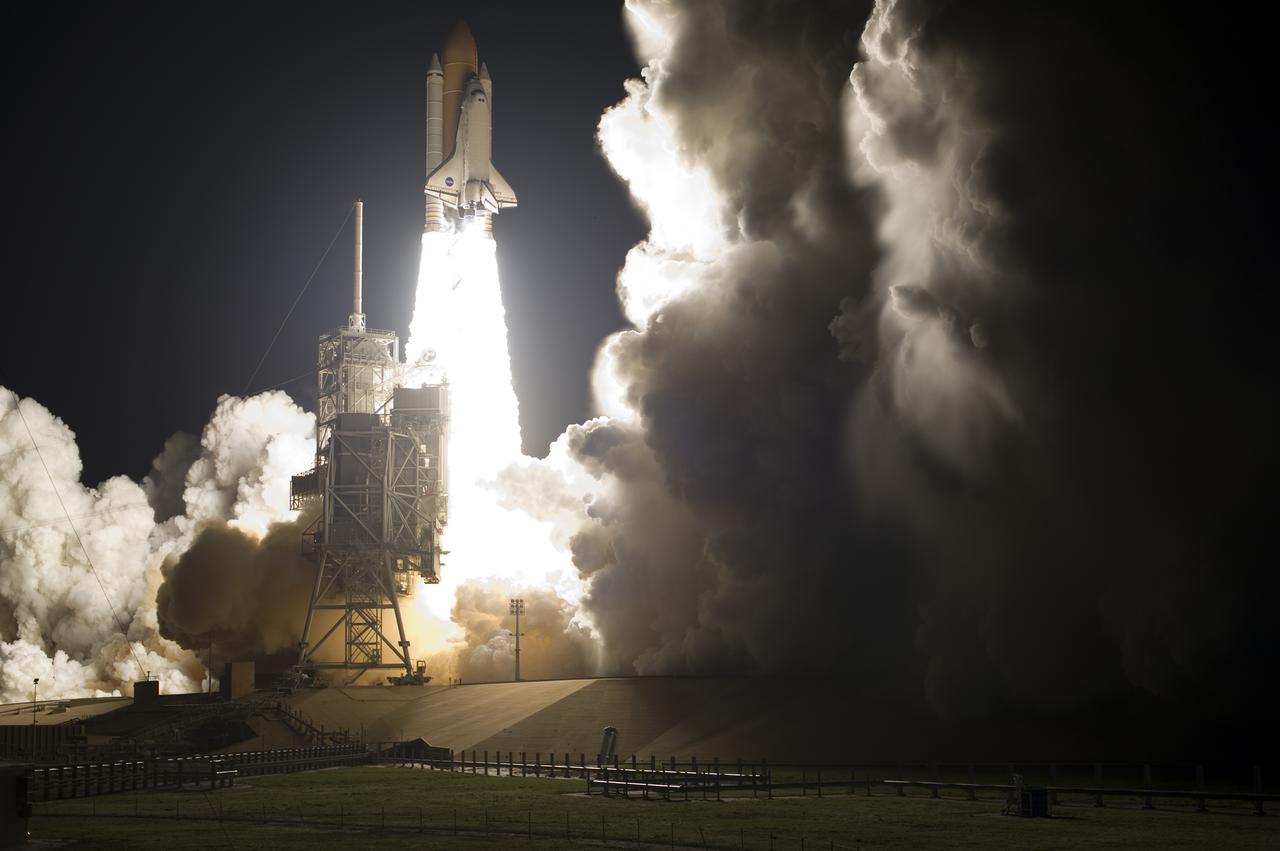
CAPE CANAVERAL, Fla. - An exhaust cloud billows around Launch Pad 39A at NASA's Kennedy Space Center in Florida as space shuttle Discovery lifts off at 6:21 a.m. EDT April 5 to begin the STS-131 mission. The seven-member crew will deliver the multi-purpose logistics module Leonardo, filled with supplies, a new crew sleeping quarters and science racks that will be transferred to the International Space Station's laboratories. The crew also will switch out a gyroscope on the station’s truss, install a spare ammonia storage tank and retrieve a Japanese experiment from the station’s exterior. STS-131 is the 33rd shuttle mission to the station and the 131st shuttle mission overall. For information on the STS-131 mission and crew, visit http:__www.nasa.gov_mission_pages_shuttle_shuttlemissions_sts131_index.html. Photo credit: NASA_Tony Gray and Tom Farrar
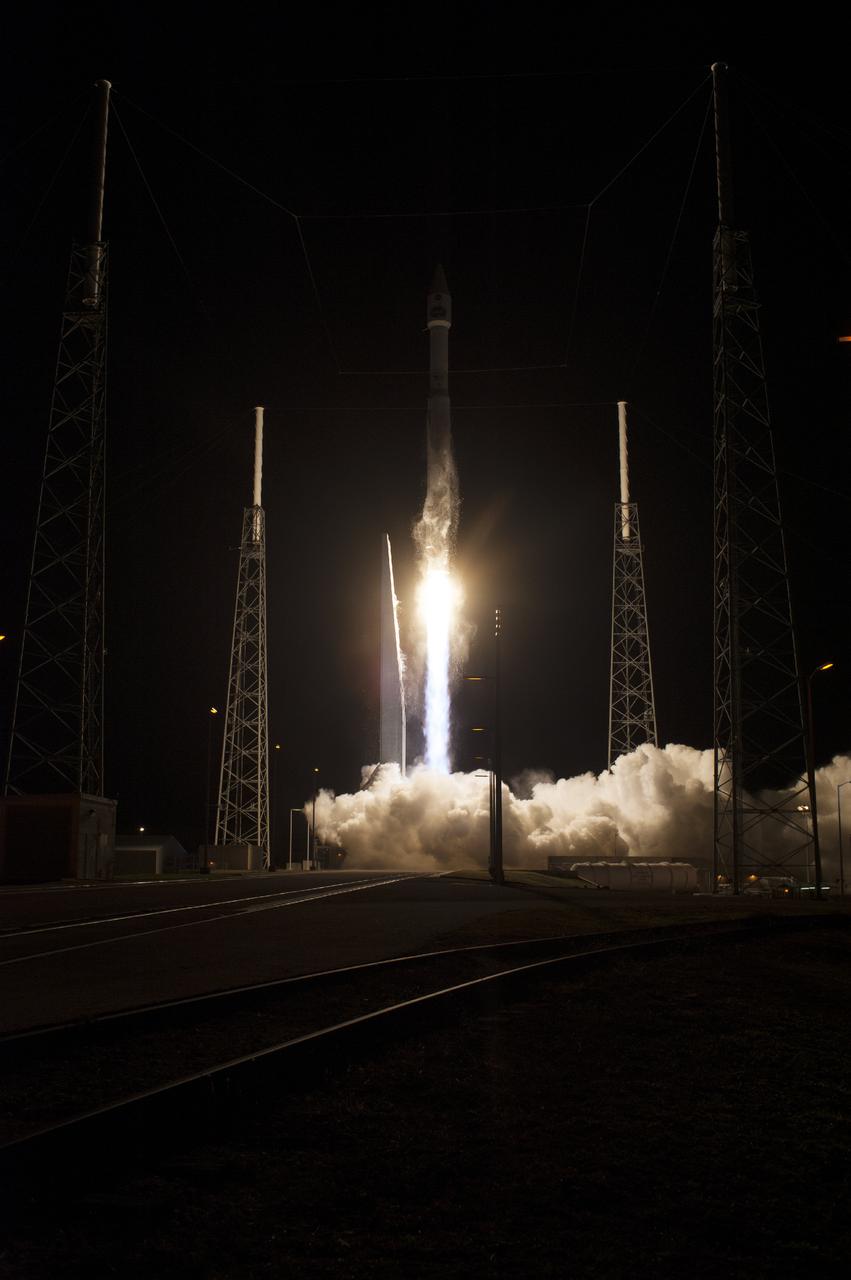
CAPE CANAVERAL, Fla. – The United Launch Alliance Atlas V rocket lifts off from Space Launch Complex 41 at Cape Canaveral Air Force Station carrying NASA's Tracking and Data Relay Satellite, or TDRS-L, spacecraft to Earth orbit. Liftoff was at 9:33 p.m. EST. The TDRS-L spacecraft is the second of three new satellites designed to ensure vital operational continuity for NASA by expanding the lifespan of the Tracking and Data Relay Satellite System TDRSS fleet, which consists of eight satellites in geosynchronous orbit. The spacecraft provide tracking, telemetry, command and high bandwidth data return services for numerous science and human exploration missions orbiting Earth. These include NASA's Hubble Space Telescope and the International Space Station. TDRS-L has a high-performance solar panel designed for more spacecraft power to meet the growing S-band communications requirements. TDRSS is one of NASA Space Communication and Navigation’s SCaN three networks providing space communications to NASA’s missions. For more information more about TDRS-L, visit: http:__www.nasa.gov_tdrs To learn more about SCaN, visit: www.nasa.gov_scan Photo credit: NASA_Tony Gray and Sandy Joseph

CAPE CANAVERAL, Fla. -- The United Launch Alliance Atlas V rocket carrying NASA's Mars Atmosphere and Volatile EvolutioN, or MAVEN, spacecraft soars off Space Launch Complex 41 on Cape Canaveral Air Force Station in Florida. Launch was on schedule at 1:28 p.m. EST Nov. 18 at the opening of a two-hour launch window. After a 10-month journey to the Red Planet, MAVEN will study its upper atmosphere in unprecedented detail from orbit above the planet. Built by Lockheed Martin in Littleton, Colo., MAVEN will arrive at Mars in September 2014 and will be inserted into an elliptical orbit with a high point of 3,900 miles, swooping down to as close as 93 miles above the planet's surface. For more information, visit: http:__www.nasa.gov_mission_pages_maven_main_index.html. Photo credit: NASA_Tony Gray and Rick Wetherington
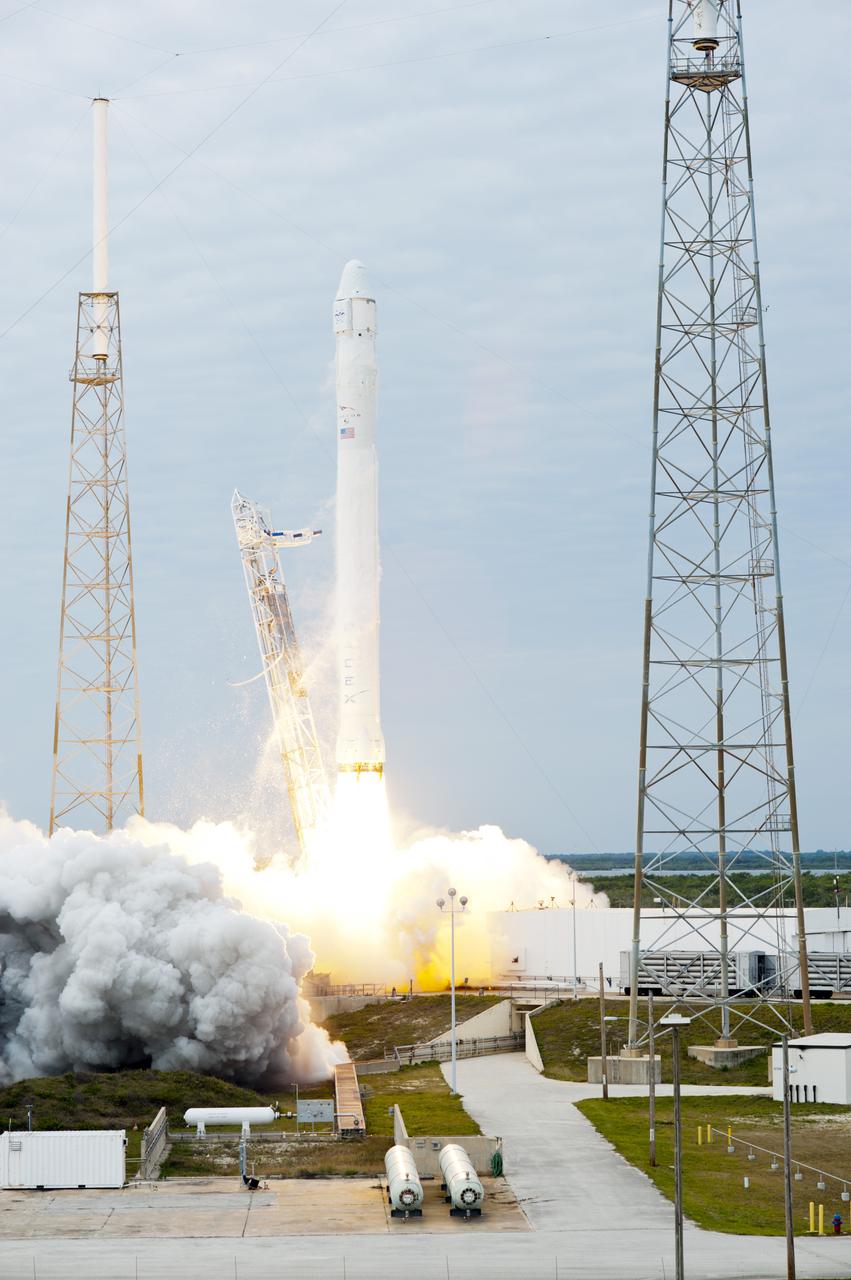
CAPE CANAVERAL, Fla. -- A Space Exploration Technologies, or SpaceX, Falcon 9 rocket lifts off Space Launch Complex 40 on Cape Canaveral Air Force Station in Florida at 10:10 a.m. EST, carrying a Dragon capsule filled with cargo. The SpaceX Dragon capsule is making its third trip to the International Space Station, following a demonstration flight in May 2012 and the first resupply mission in October 2012. The SpaceX-2 mission is the second of 12 SpaceX flights contracted by NASA to resupply the orbiting laboratory. For more information, visit http:__www.nasa.gov_mission_pages_station_structure_launch_spacex2-feature.html Photo credit: NASA_Tony Gray and Robert Murray
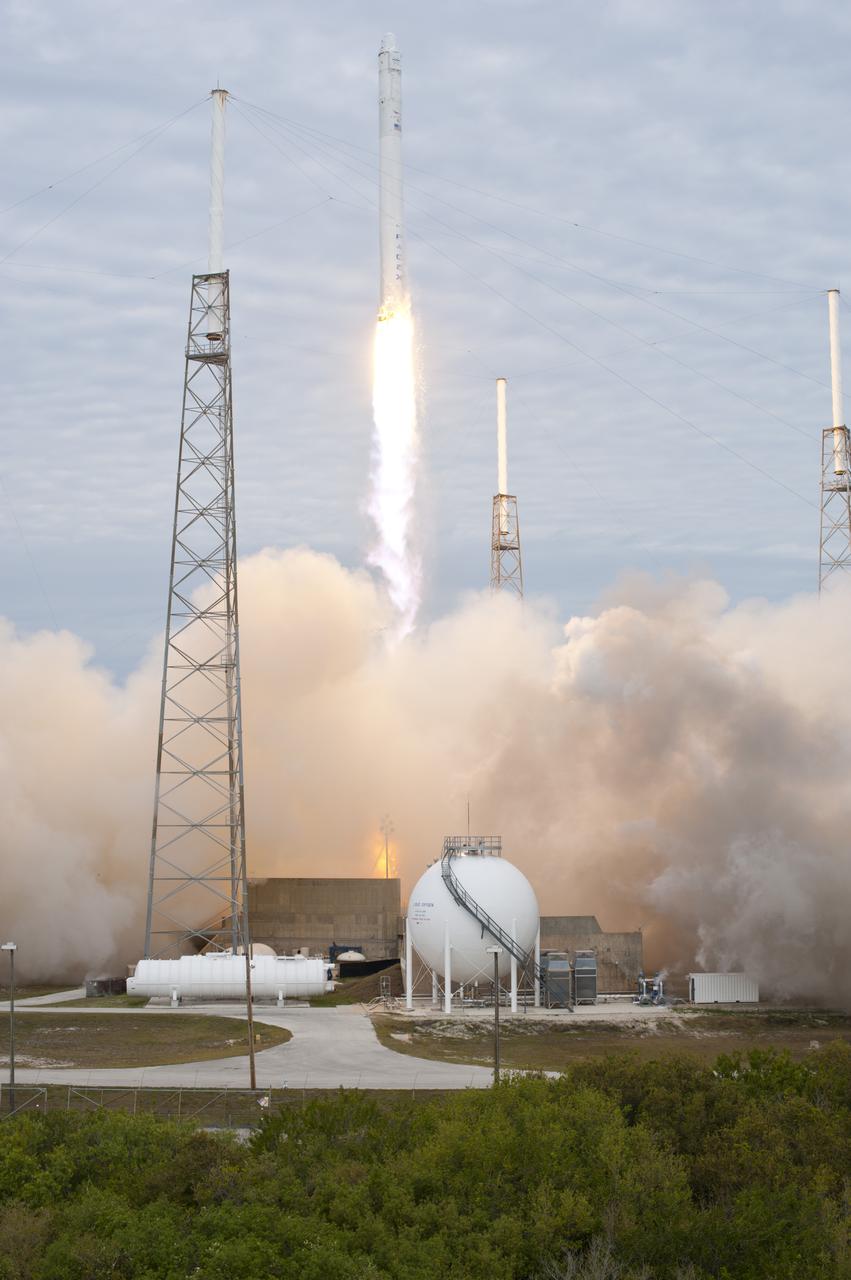
CAPE CANAVERAL, Fla. -- A Space Exploration Technologies, or SpaceX, Falcon 9 rocket lifts off Space Launch Complex 40 on Cape Canaveral Air Force Station in Florida at 10:10 a.m. EST, carrying a Dragon capsule filled with cargo. The SpaceX Dragon capsule is making its third trip to the International Space Station, following a demonstration flight in May 2012 and the first resupply mission in October 2012. The SpaceX-2 mission is the second of 12 SpaceX flights contracted by NASA to resupply the orbiting laboratory. For more information, visit http:__www.nasa.gov_mission_pages_station_structure_launch_spacex2-feature.html Photo credit: NASA_Tony Gray and Robert Murray
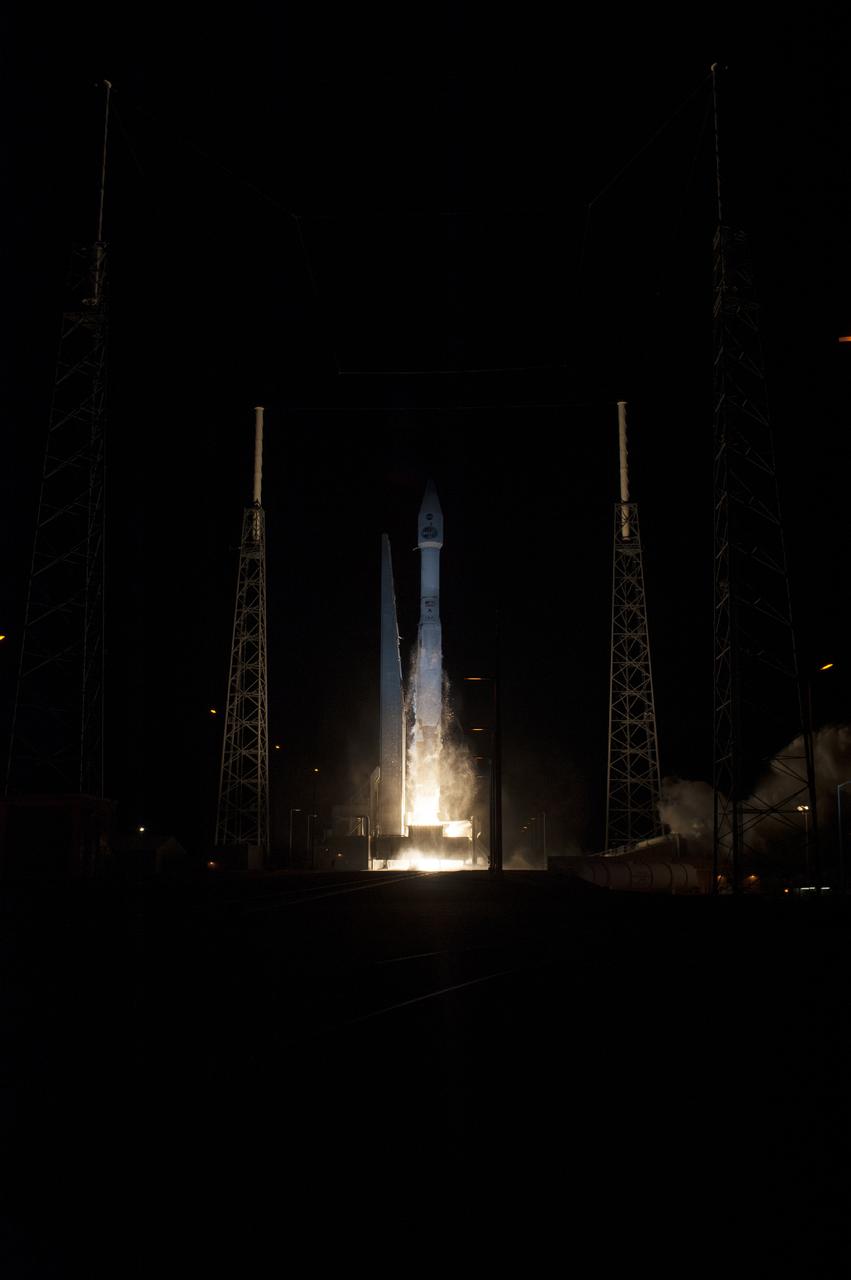
CAPE CANAVERAL, Fla. – The United Launch Alliance Atlas V rocket lifts off from Space Launch Complex 41 at Cape Canaveral Air Force Station carrying NASA's Tracking and Data Relay Satellite, or TDRS-L, spacecraft to Earth orbit. Liftoff was at 9:33 p.m. EST. The TDRS-L spacecraft is the second of three new satellites designed to ensure vital operational continuity for NASA by expanding the lifespan of the Tracking and Data Relay Satellite System TDRSS fleet, which consists of eight satellites in geosynchronous orbit. The spacecraft provide tracking, telemetry, command and high bandwidth data return services for numerous science and human exploration missions orbiting Earth. These include NASA's Hubble Space Telescope and the International Space Station. TDRS-L has a high-performance solar panel designed for more spacecraft power to meet the growing S-band communications requirements. TDRSS is one of NASA Space Communication and Navigation’s SCaN three networks providing space communications to NASA’s missions. For more information more about TDRS-L, visit: http:__www.nasa.gov_tdrs To learn more about SCaN, visit: www.nasa.gov_scan Photo credit: NASA_Tony Gray and Sandy Joseph