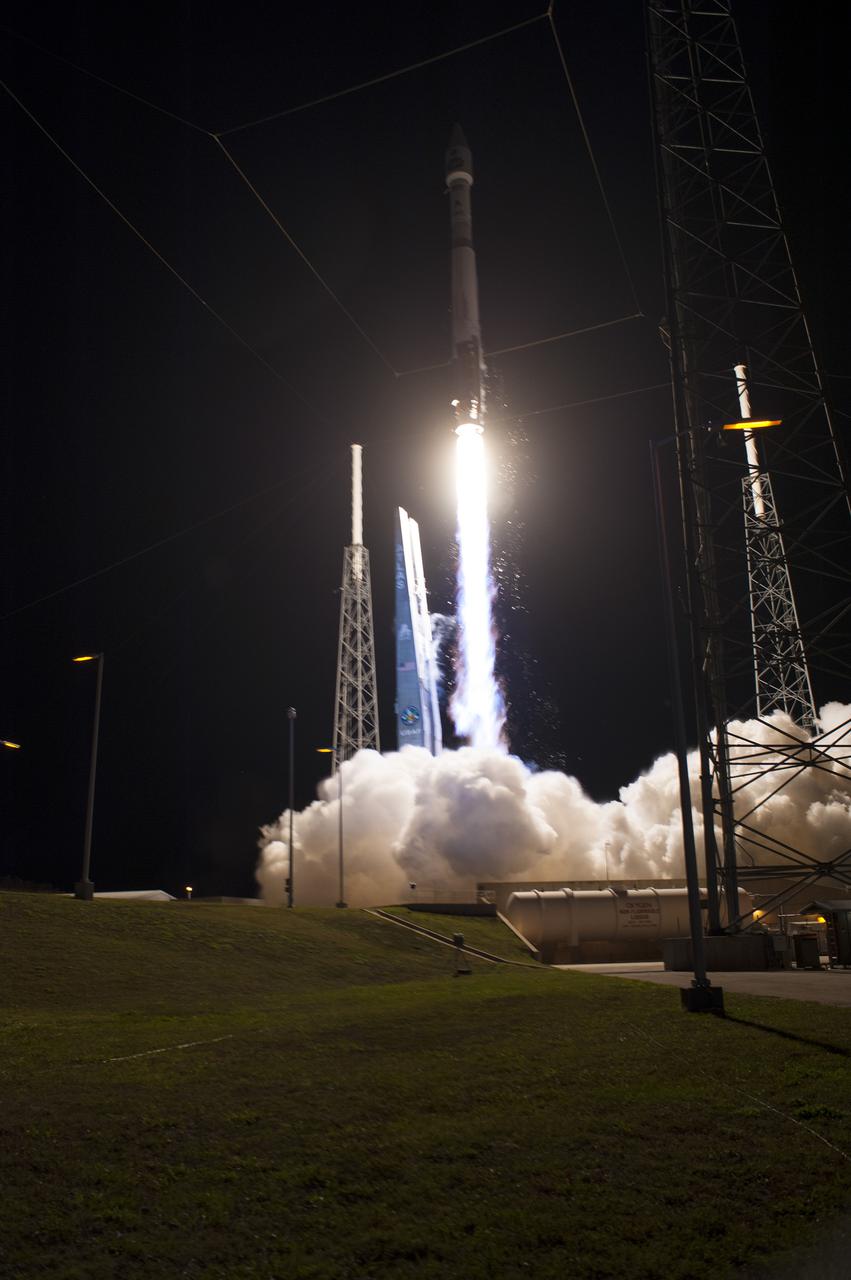
CAPE CANAVERAL, Fla. -- A United Launch Alliance Atlas V 401 rocket rushes past the lightning masts on Space Launch Complex 41 on Cape Canaveral Air Force Station in Florida, leaving plumes of exhaust and smoke in its wake. Its payload, NASA's Tracking and Data Relay Satellite-K or TDRS-K, began its climb to orbit at 8:48 p.m. EST. The TDRS-K spacecraft is part of the next-generation series in the Tracking and Data Relay Satellite System, a constellation of space-based communication satellites providing tracking, telemetry, command and high-bandwidth data return services. For more information, visit http:__www.nasa.gov_mission_pages_tdrs_index.html. Photo credit: NASA_Tony Gray and Rick Wetherington
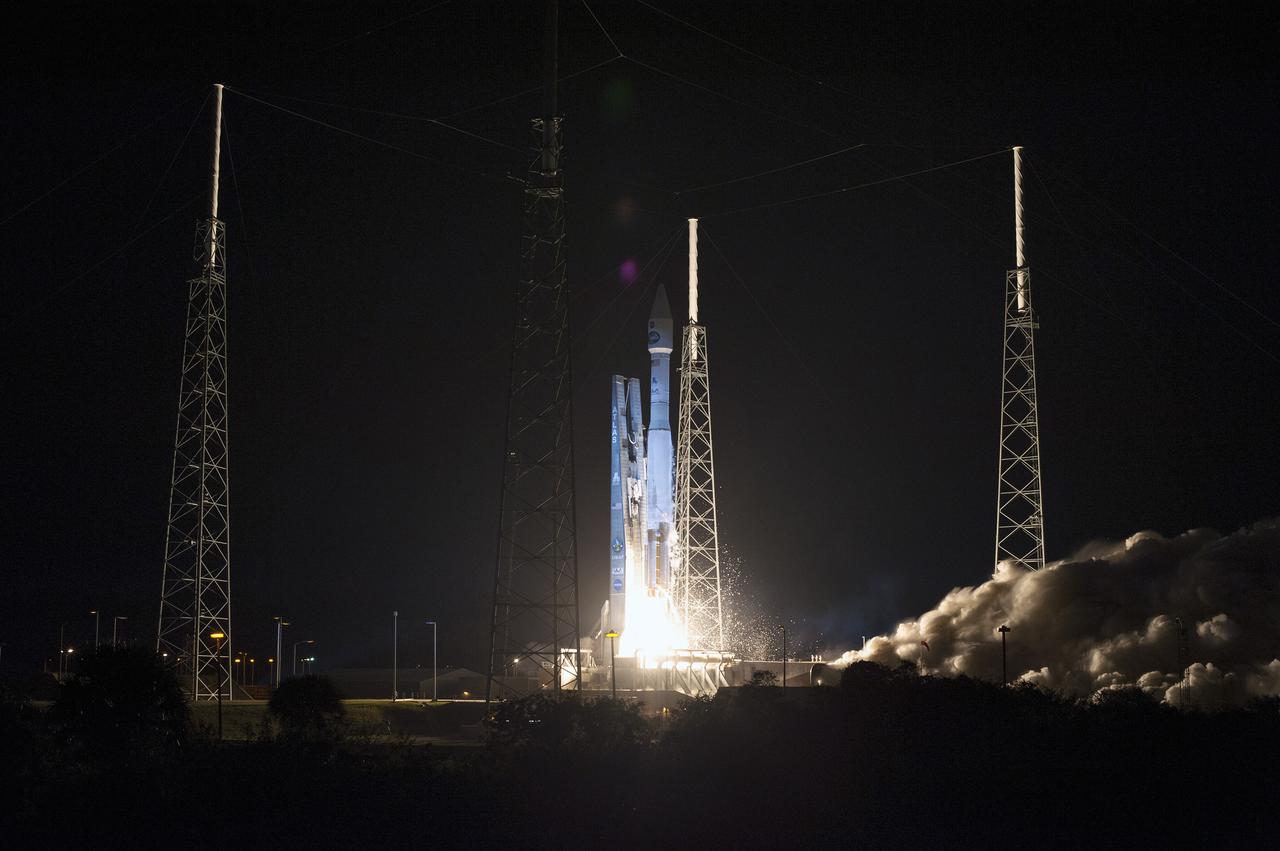
CAPE CANAVERAL, Fla. -- A United Launch Alliance Atlas V 401 rocket hovers above the hardstand on Space Launch Complex 41 on Cape Canaveral Air Force Station in Florida as its engines ignite. Liftoff, with NASA's Tracking and Data Relay Satellite-K or TDRS-K aboard, was at 8:48 p.m. EST. he TDRS-K spacecraft is part of the next-generation series in the Tracking and Data Relay Satellite System, a constellation of space-based communication satellites providing tracking, telemetry, command and high-bandwidth data return services. For more information, visit http:__www.nasa.gov_mission_pages_tdrs_index.html. Photo credit: NASA_Tony Gray and Rick Wetherington
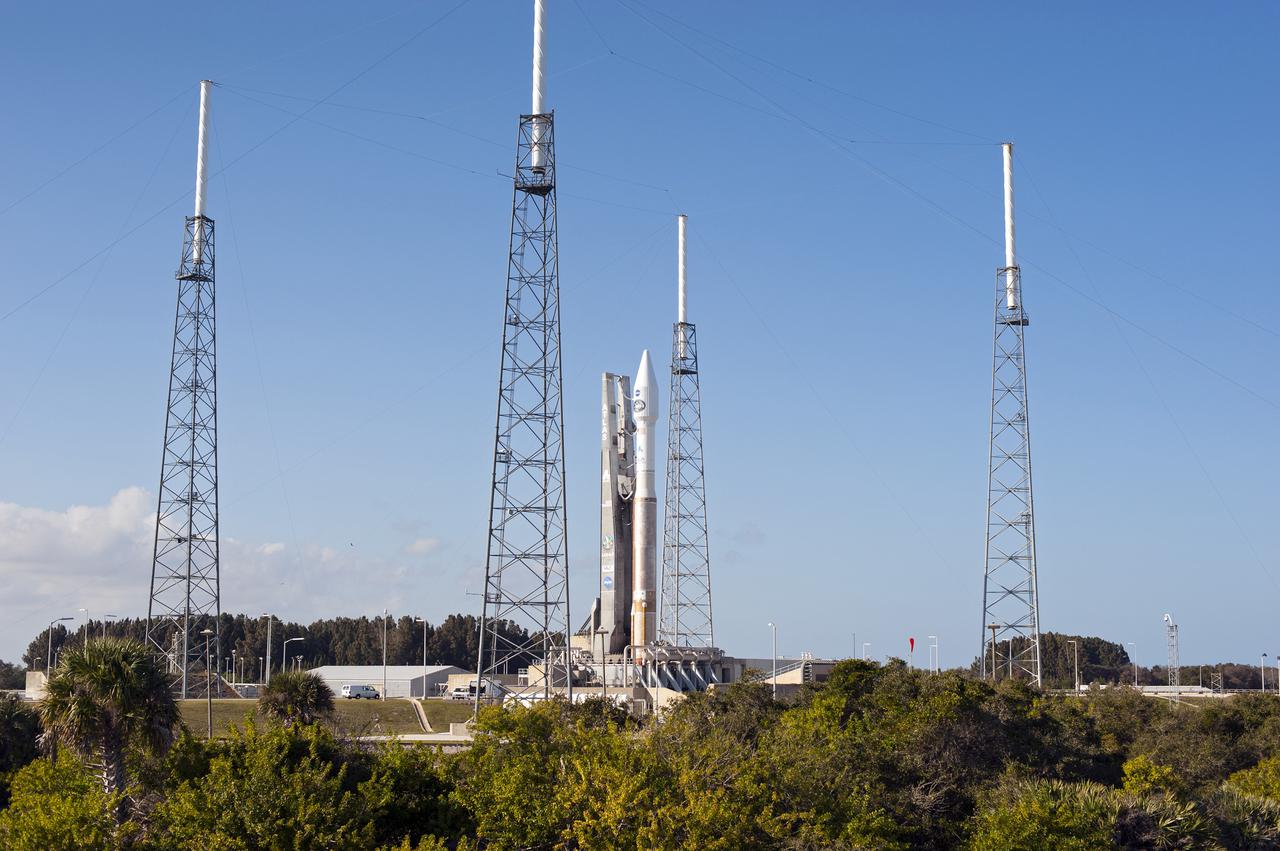
CAPE CANAVERAL, Fla. -- NASA's Tracking and Data Relay Satellite-K, TDRS-K, sits atop a United Launch Alliance Atlas V 401 rocket on Space Launch Complex 41 on Cape Canaveral Air Force Station in Florida, ready to begin its journey to orbit. Liftoff is set for 8:48 p.m. EST at the opening of a 40-minute launch window. The TDRS-K spacecraft is part of the next-generation series in the Tracking and Data Relay Satellite System, a constellation of space-based communication satellites providing tracking, telemetry, command and high-bandwidth data return services. For more information, visit http:__www.nasa.gov_mission_pages_tdrs_index.html. Photo credit: NASA_Tony Gray and Rick Wetherington
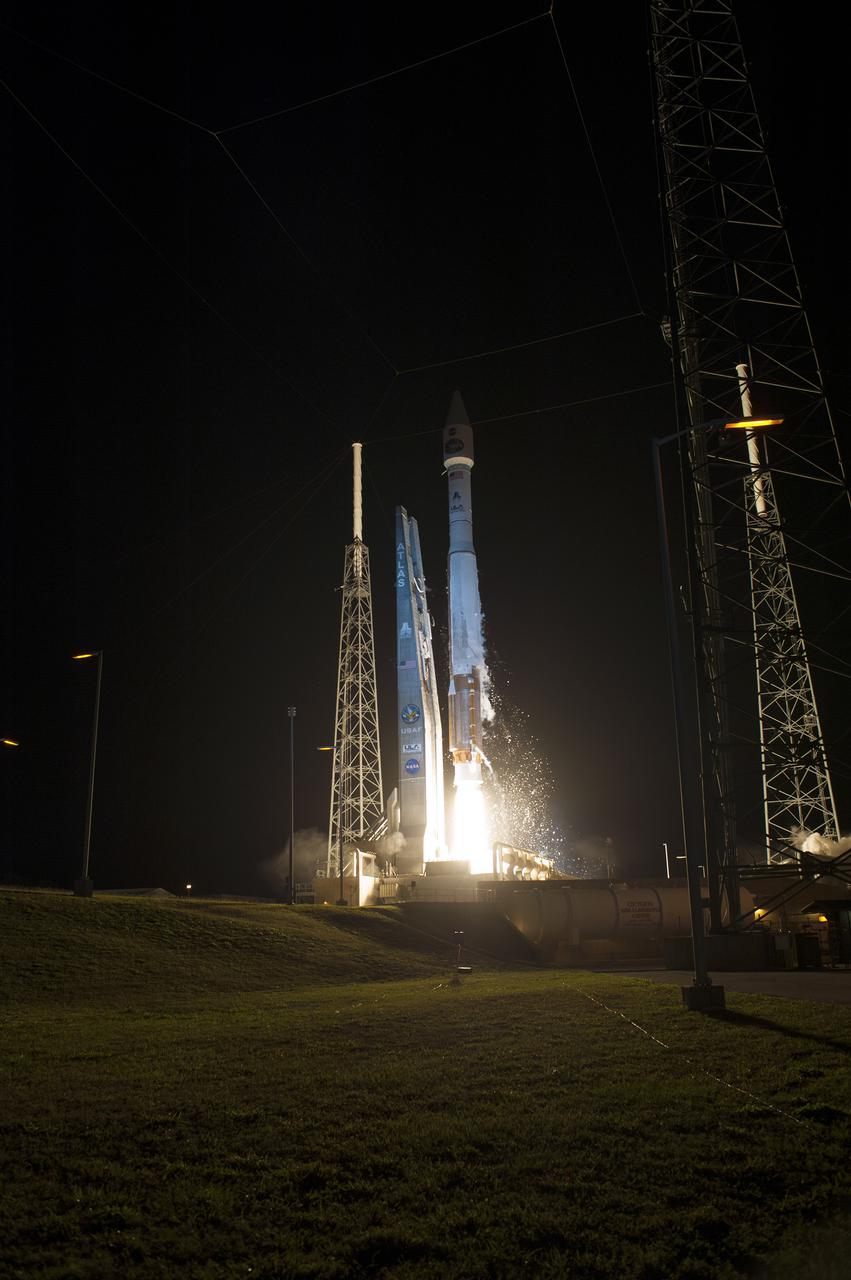
CAPE CANAVERAL, Fla. -- A United Launch Alliance Atlas V 401 rocket springs to life on Space Launch Complex 41 on Cape Canaveral Air Force Station in Florida at 8:48 p.m. EST, carrying NASA's Tracking and Data Relay Satellite-K, TDRS-K, to orbit. The TDRS-K spacecraft is part of the next-generation series in the Tracking and Data Relay Satellite System, a constellation of space-based communication satellites providing tracking, telemetry, command and high-bandwidth data return services. For more information, visit http:__www.nasa.gov_mission_pages_tdrs_index.html. Photo credit: NASA_Tony Gray and Rick Wetherington
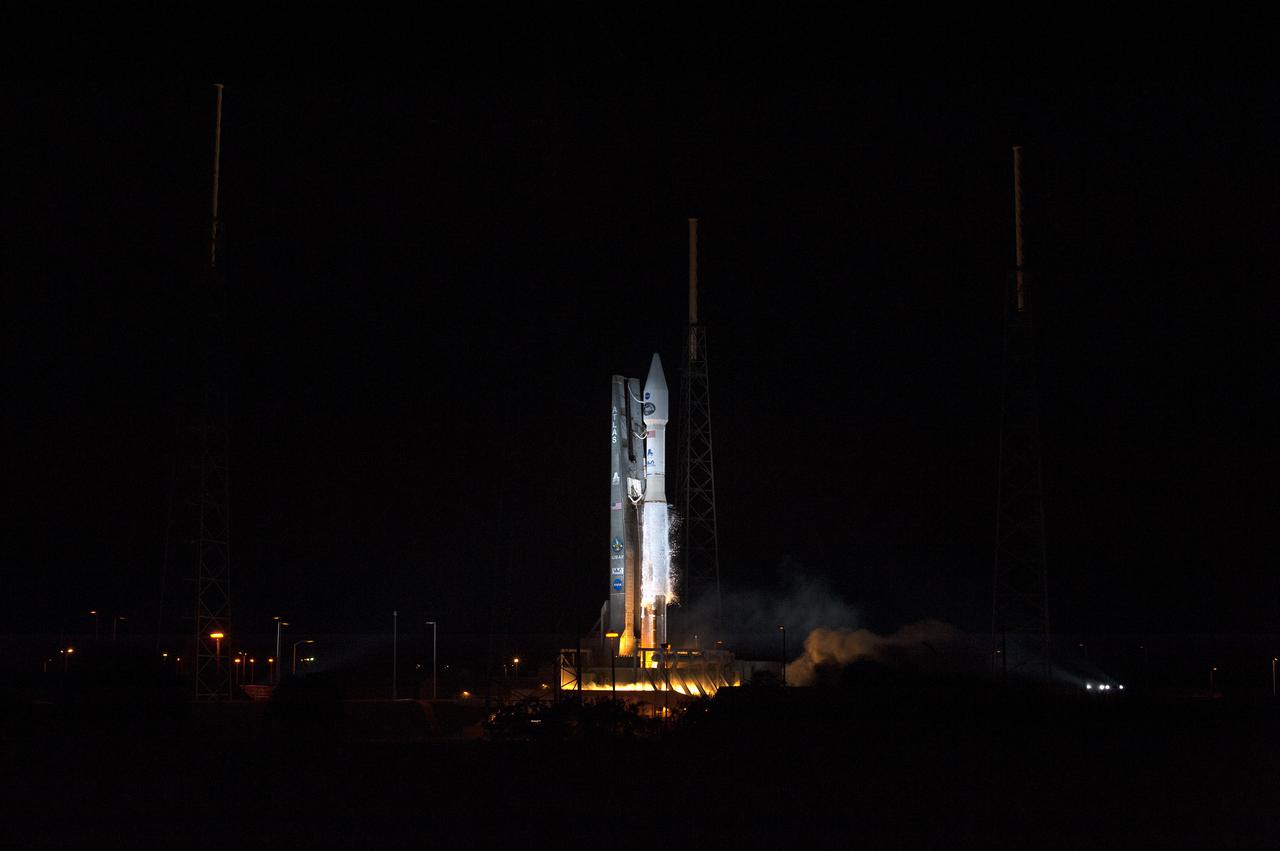
CAPE CANAVERAL, Fla. -- The engines ignite under the United Launch Alliance Atlas V 401 rocket at Space Launch Complex 41 on Cape Canaveral Air Force Station in Florida. NASA's Tracking and Data Relay Satellite-K, TDRS-K, began its journey to orbit at 8:48 p.m. EST. The TDRS-K spacecraft is part of the next-generation series in the Tracking and Data Relay Satellite System, a constellation of space-based communication satellites providing tracking, telemetry, command and high-bandwidth data return services. For more information, visit http:__www.nasa.gov_mission_pages_tdrs_index.html. Photo credit: NASA_Tony Gray and Rick Wetherington

CAPE CANAVERAL, Fla. -- A faint rumbling begins on Space Launch Complex 41 on Cape Canaveral Air Force Station in Florida as the engines ignite beneath a United Launch Alliance Atlas V 401 rocket. Its payload, NASA's Tracking and Data Relay Satellite-K or TDRS-K, began its climb to orbit at 8:48 p.m. EST. The TDRS-K spacecraft is part of the next-generation series in the Tracking and Data Relay Satellite System, a constellation of space-based communication satellites providing tracking, telemetry, command and high-bandwidth data return services. For more information, visit http:__www.nasa.gov_mission_pages_tdrs_index.html. Photo credit: NASA_Tony Gray and Rick Wetherington
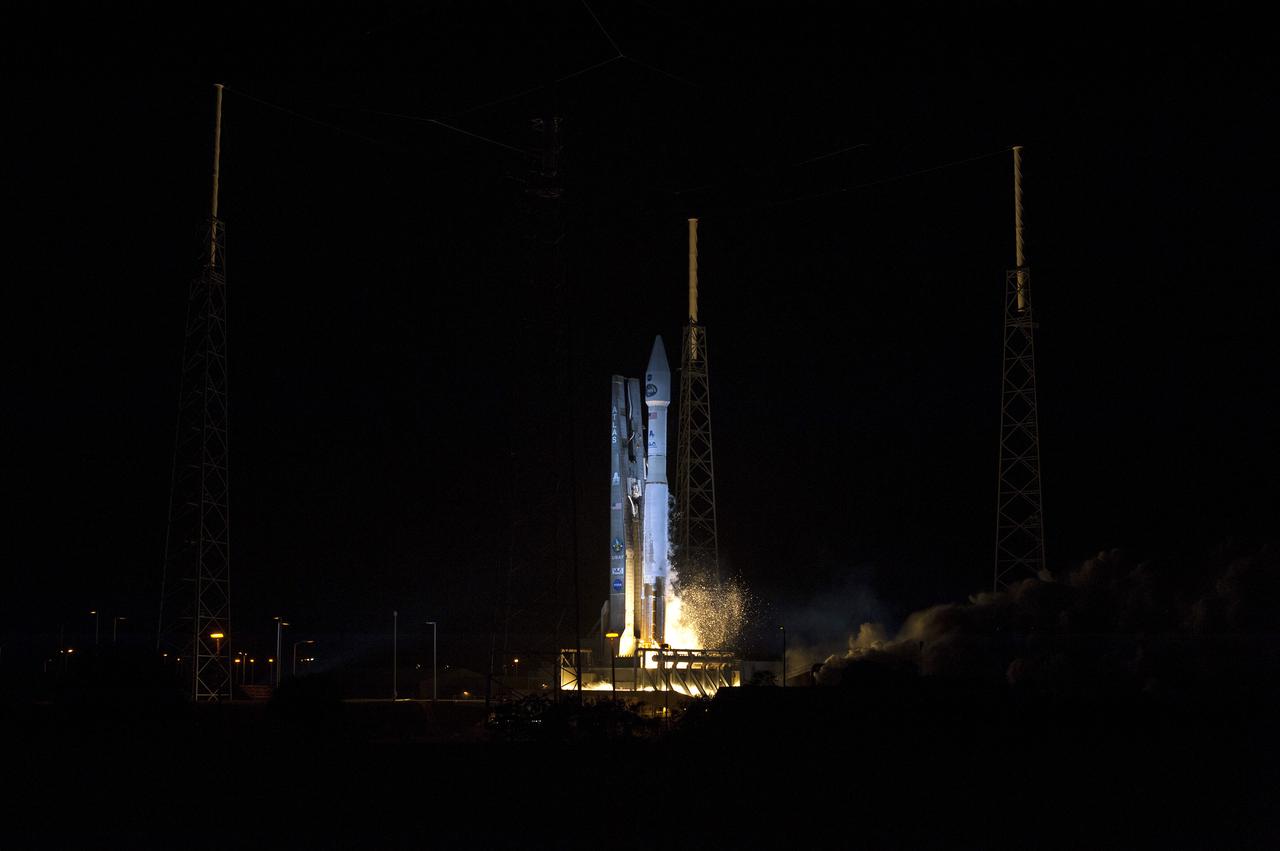
CAPE CANAVERAL, Fla. -- Pressure mounts under a United Launch Alliance Atlas V 401 rocket on Space Launch Complex 41 on Cape Canaveral Air Force Station in Florida as its engines ignite, propelling it to orbit carrying NASA's Tracking and Data Relay Satellite-K, TDRS-K. Liftoff was at 8:48 p.m. EST. he TDRS-K spacecraft is part of the next-generation series in the Tracking and Data Relay Satellite System, a constellation of space-based communication satellites providing tracking, telemetry, command and high-bandwidth data return services. For more information, visit http:__www.nasa.gov_mission_pages_tdrs_index.html. Photo credit: NASA_Tony Gray and Rick Wetherington
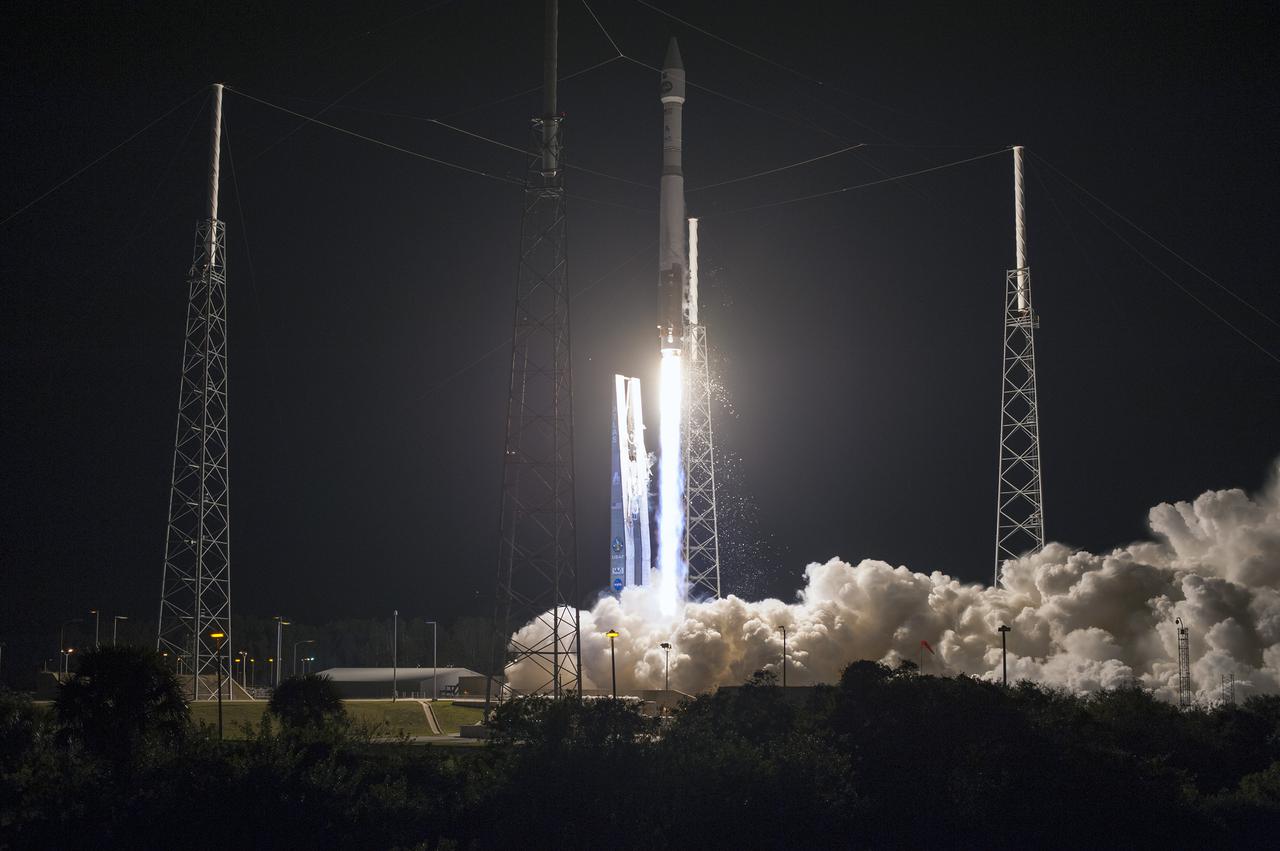
CAPE CANAVERAL, Fla. -- The umbilical tower drops back from a United Launch Alliance Atlas V 401 rocket as it lifts off Space Launch Complex 41 on Cape Canaveral Air Force Station in Florida. Launch, with NASA's Tracking and Data Relay Satellite-K or TDRS-K aboard, was at 8:48 p.m. EST. he TDRS-K spacecraft is part of the next-generation series in the Tracking and Data Relay Satellite System, a constellation of space-based communication satellites providing tracking, telemetry, command and high-bandwidth data return services. For more information, visit http:__www.nasa.gov_mission_pages_tdrs_index.html. Photo credit: NASA_Tony Gray and Rick Wetherington

CAPE CANAVERAL, Fla. -- The United Launch Alliance Atlas V rocket carrying NASA's Mars Atmosphere and Volatile EvolutioN, or MAVEN, spacecraft soars off Space Launch Complex 41 on Cape Canaveral Air Force Station in Florida. Launch was on schedule at 1:28 p.m. EST Nov. 18 at the opening of a two-hour launch window. After a 10-month journey to the Red Planet, MAVEN will study its upper atmosphere in unprecedented detail from orbit above the planet. Built by Lockheed Martin in Littleton, Colo., MAVEN will arrive at Mars in September 2014 and will be inserted into an elliptical orbit with a high point of 3,900 miles, swooping down to as close as 93 miles above the planet's surface. For more information, visit: http:__www.nasa.gov_mission_pages_maven_main_index.html. Photo credit: NASA_Tony Gray and Rick Wetherington