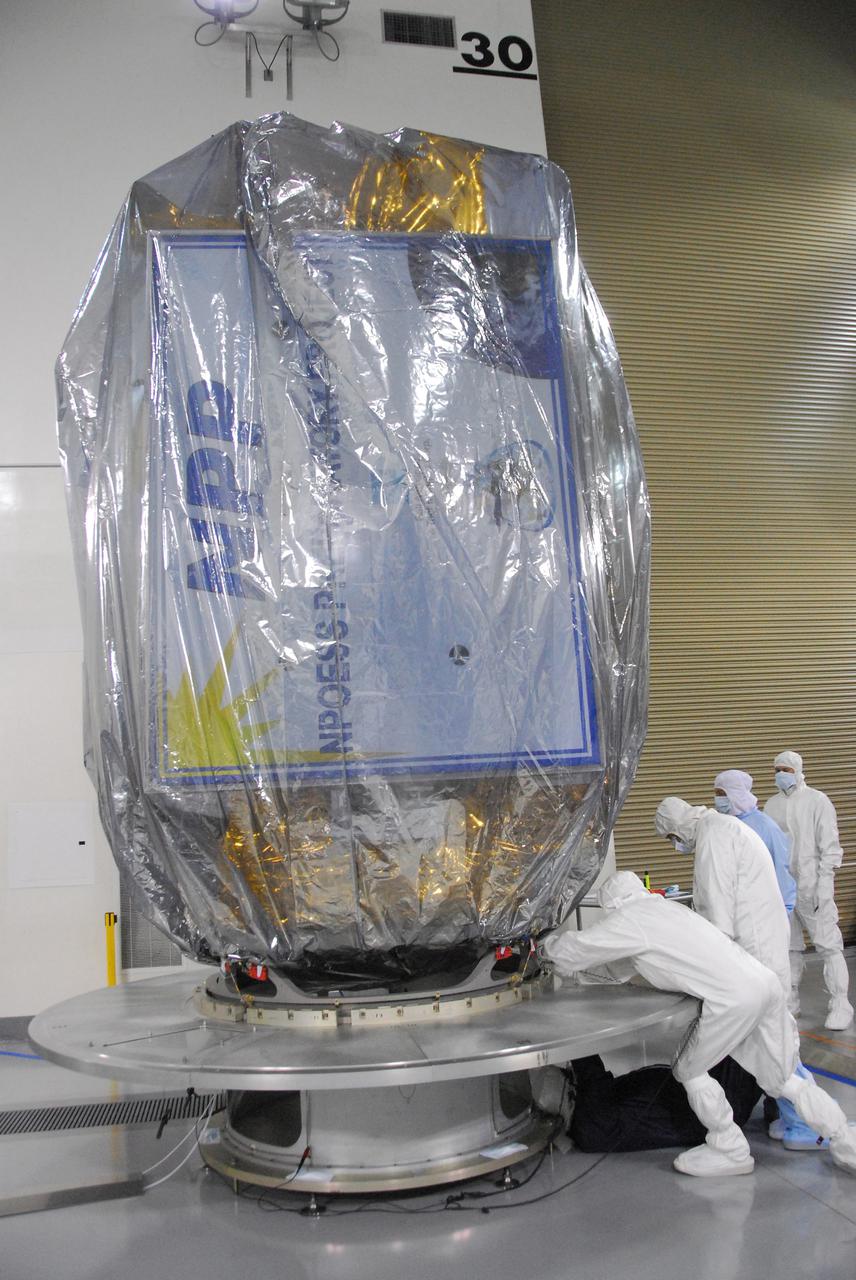
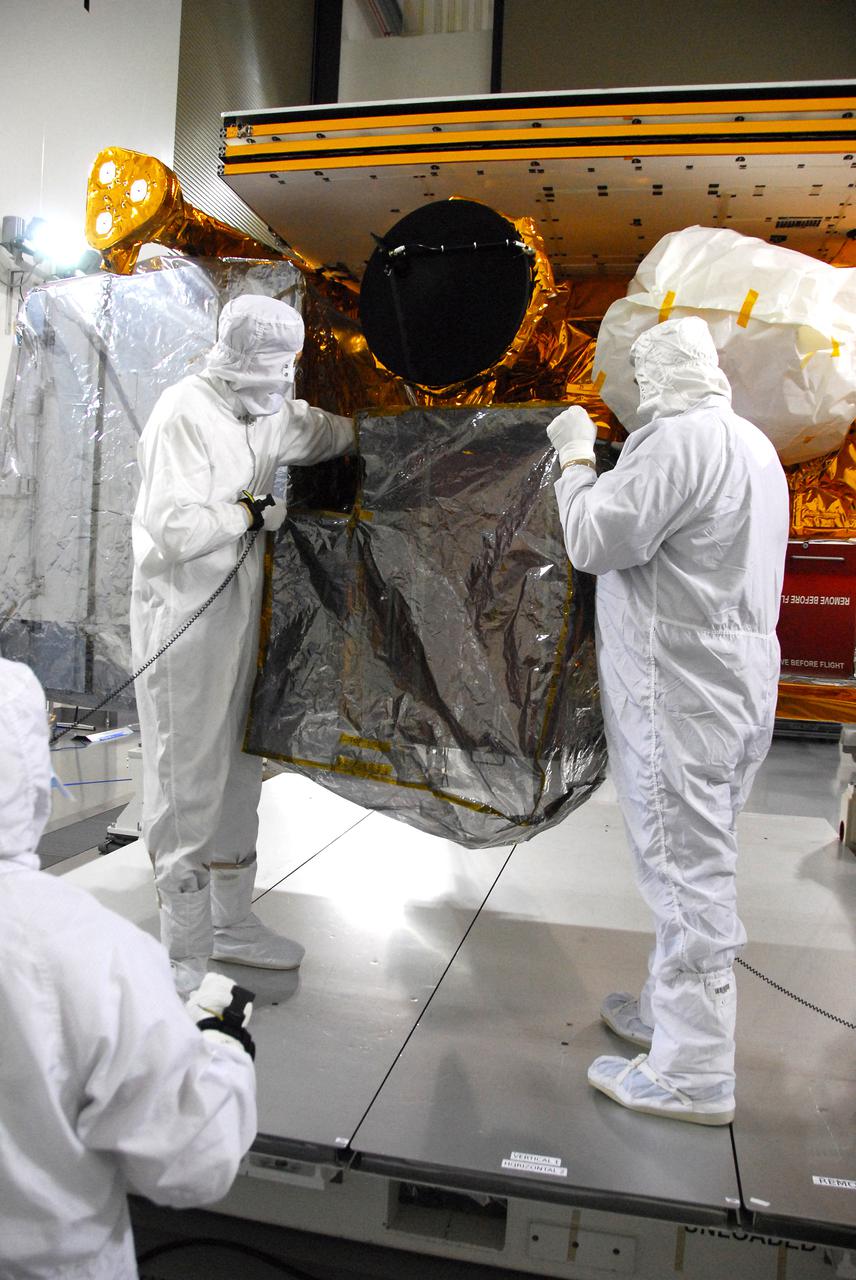
In a clean room inside the Astrotech Payload Processing Facility at Vandenberg Air Force Base in California, Ball Aerospace technicians NASA’s National Polar-orbiting Operational Environmental Satellite System Preparatory Project (NPP) spacecraft for its move to the launch pad. NPP represents a critical first step in building the next-generation of Earth-observing satellites. NPP will carry the first of the new sensors developed for this satellite fleet, now known as the Joint Polar Satellite System (JPSS), to be launched in 2016. NPP is the bridge between NASA's Earth Observing System (EOS) satellites and the forthcoming series of JPSS satellites. The mission will test key technologies and instruments for the JPSS missions. NPP is targeted to launch Oct. 28 from Space Launch Complex-2 aboard a United Launch Alliance Delta II rocket. For more information, visit http:__www.nasa.gov_NPP. Photo credit: NASA_VAFB
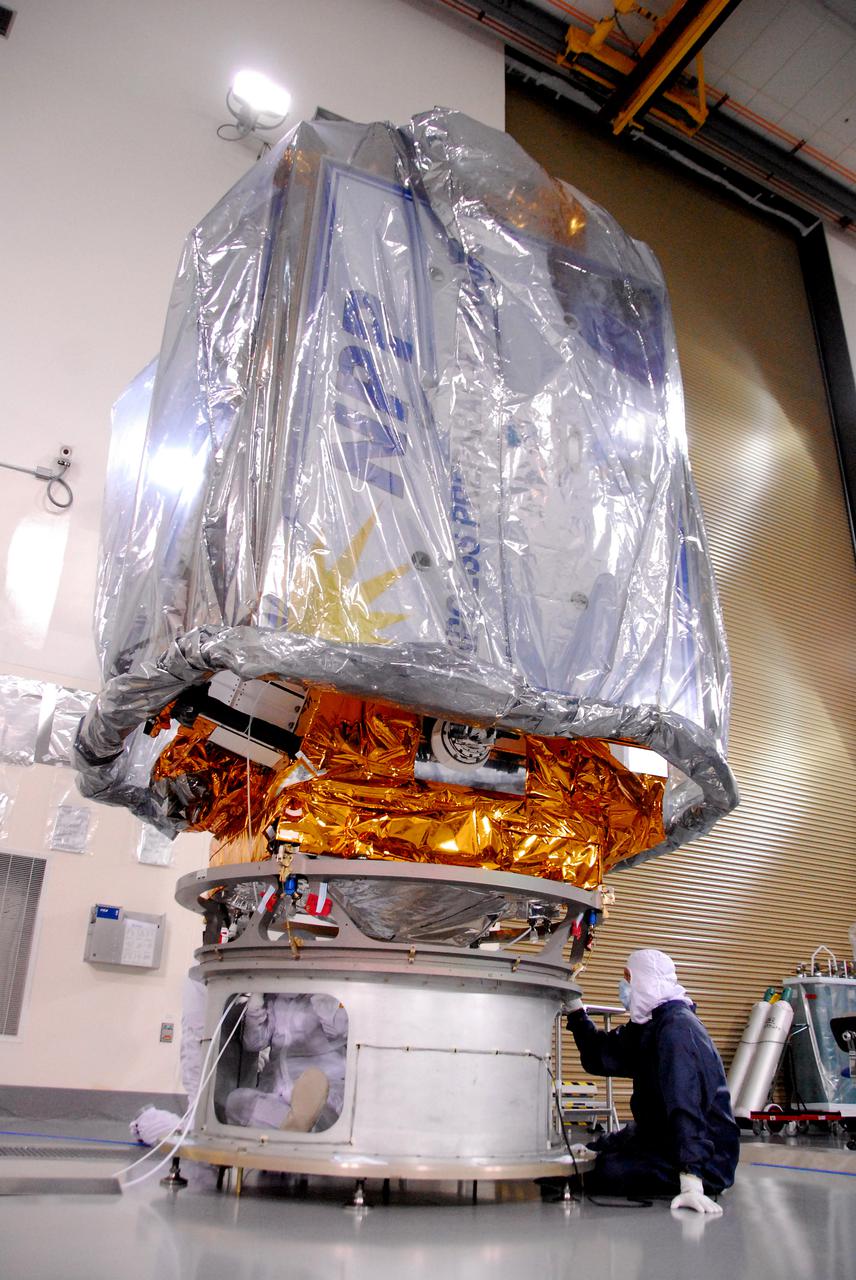
In a clean room inside the Astrotech Payload Processing Facility at Vandenberg Air Force Base in California, a Ball Aerospace technician NASA’s National Polar-orbiting Operational Environmental Satellite System Preparatory Project (NPP) spacecraft for its move to the launch pad. NPP represents a critical first step in building the next-generation of Earth-observing satellites. NPP will carry the first of the new sensors developed for this satellite fleet, now known as the Joint Polar Satellite System (JPSS), to be launched in 2016. NPP is the bridge between NASA's Earth Observing System (EOS) satellites and the forthcoming series of JPSS satellites. The mission will test key technologies and instruments for the JPSS missions. NPP is targeted to launch Oct. 28 from Space Launch Complex-2 aboard a United Launch Alliance Delta II rocket. For more information, visit http:__www.nasa.gov_NPP. Photo credit: NASA_VAFB
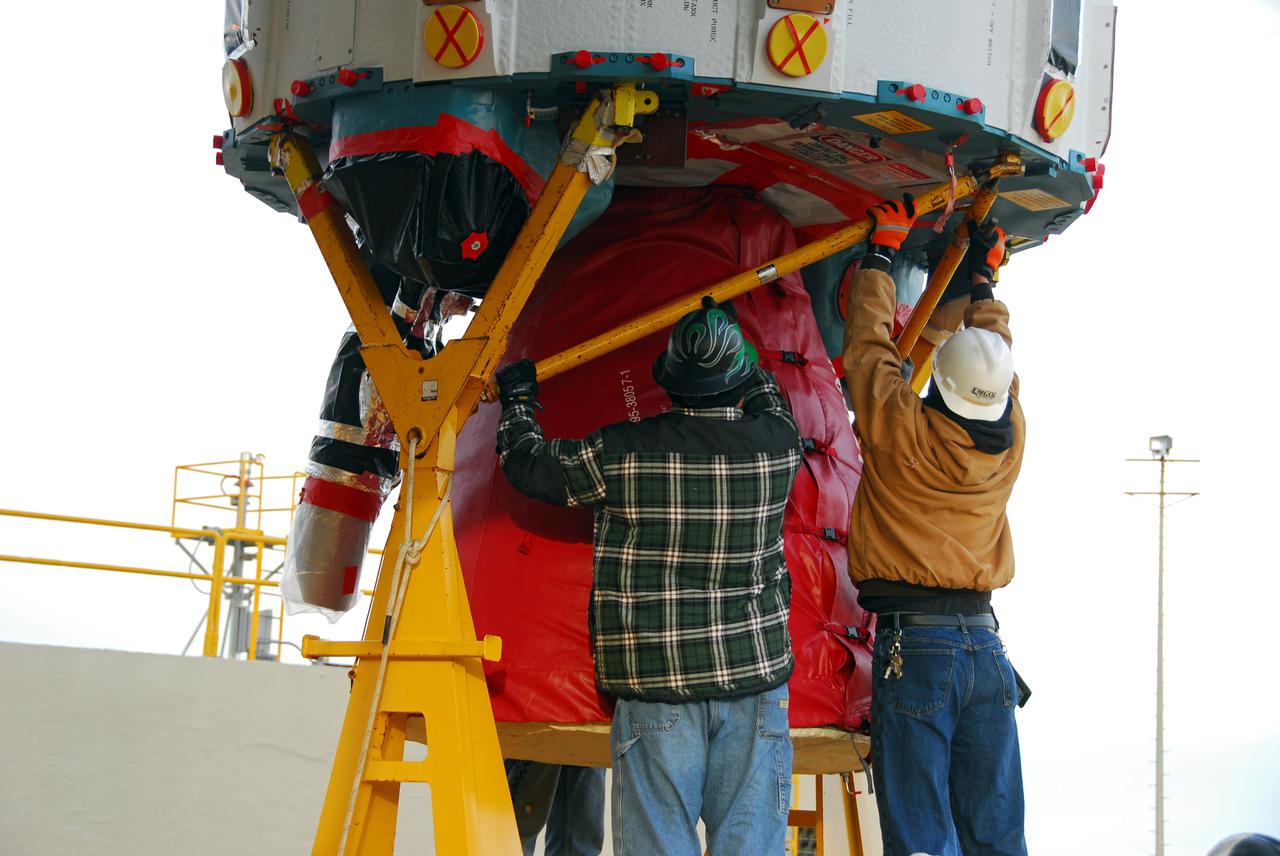
VANDENBERG AIR FORCE BASE, Calif. -- Workers guide the first stage of the United Launch Alliance Delta II rocket that will carry the Aquarius_SAC-D spacecraft into low Earth orbit onto the service tower at NASA's Space Launch Complex-2 (SLC-2) at Vandenberg Air Force Base in California. Following final tests, the spacecraft will be integrated to the Delta II in preparation for the targeted June launch. Aquarius, the NASA-built instrument on the SAC-D spacecraft, on its three-year mission, will provide new insights into how variations in ocean surface salinity relate to fundamental climate processes. Photo credit: NASA_VAFB
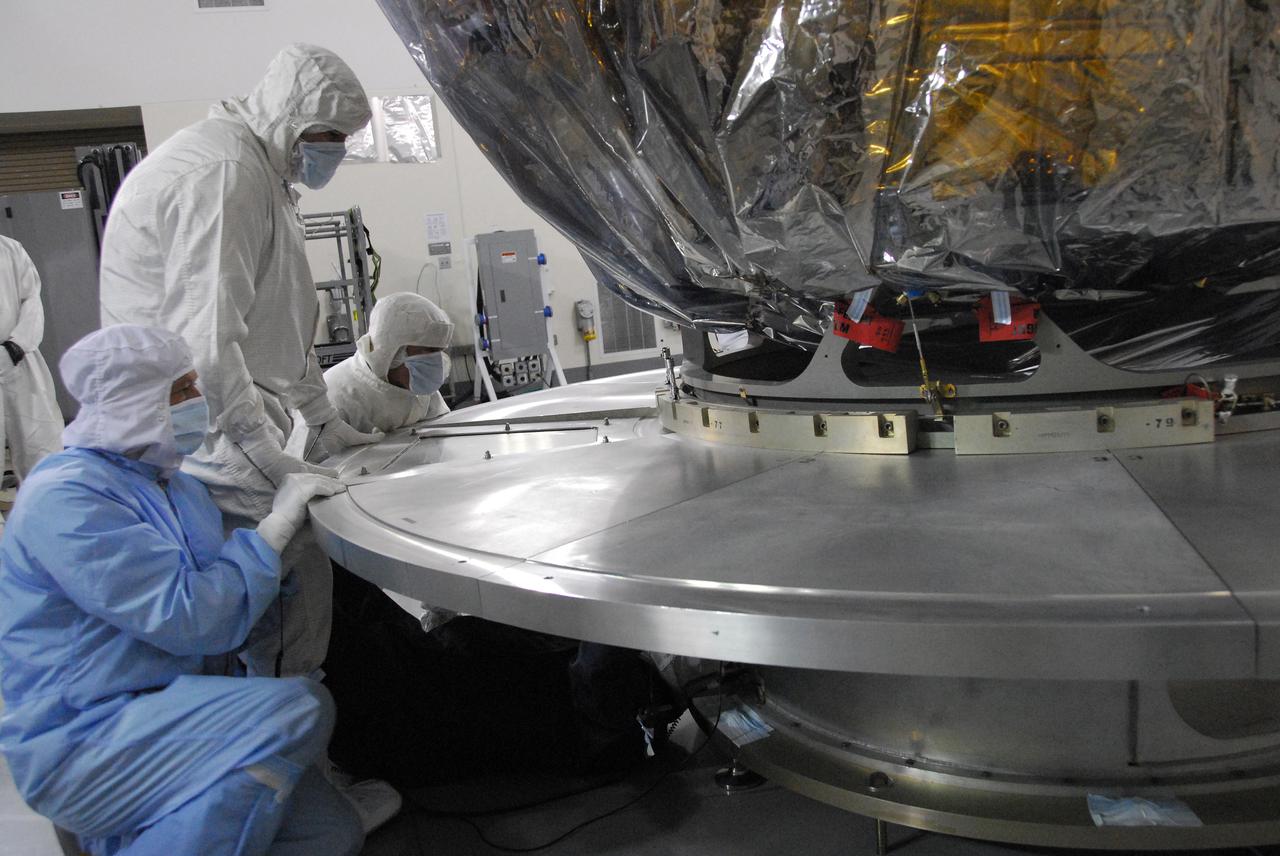
In a clean room inside the Astrotech Payload Processing Facility at Vandenberg Air Force Base in California, Ball Aerospace technicians NASA’s National Polar-orbiting Operational Environmental Satellite System Preparatory Project (NPP) spacecraft for its move to the launch pad. NPP represents a critical first step in building the next-generation of Earth-observing satellites. NPP will carry the first of the new sensors developed for this satellite fleet, now known as the Joint Polar Satellite System (JPSS), to be launched in 2016. NPP is the bridge between NASA's Earth Observing System (EOS) satellites and the forthcoming series of JPSS satellites. The mission will test key technologies and instruments for the JPSS missions. NPP is targeted to launch Oct. 28 from Space Launch Complex-2 aboard a United Launch Alliance Delta II rocket. For more information, visit http:__www.nasa.gov_NPP. Photo credit: NASA_VAFB
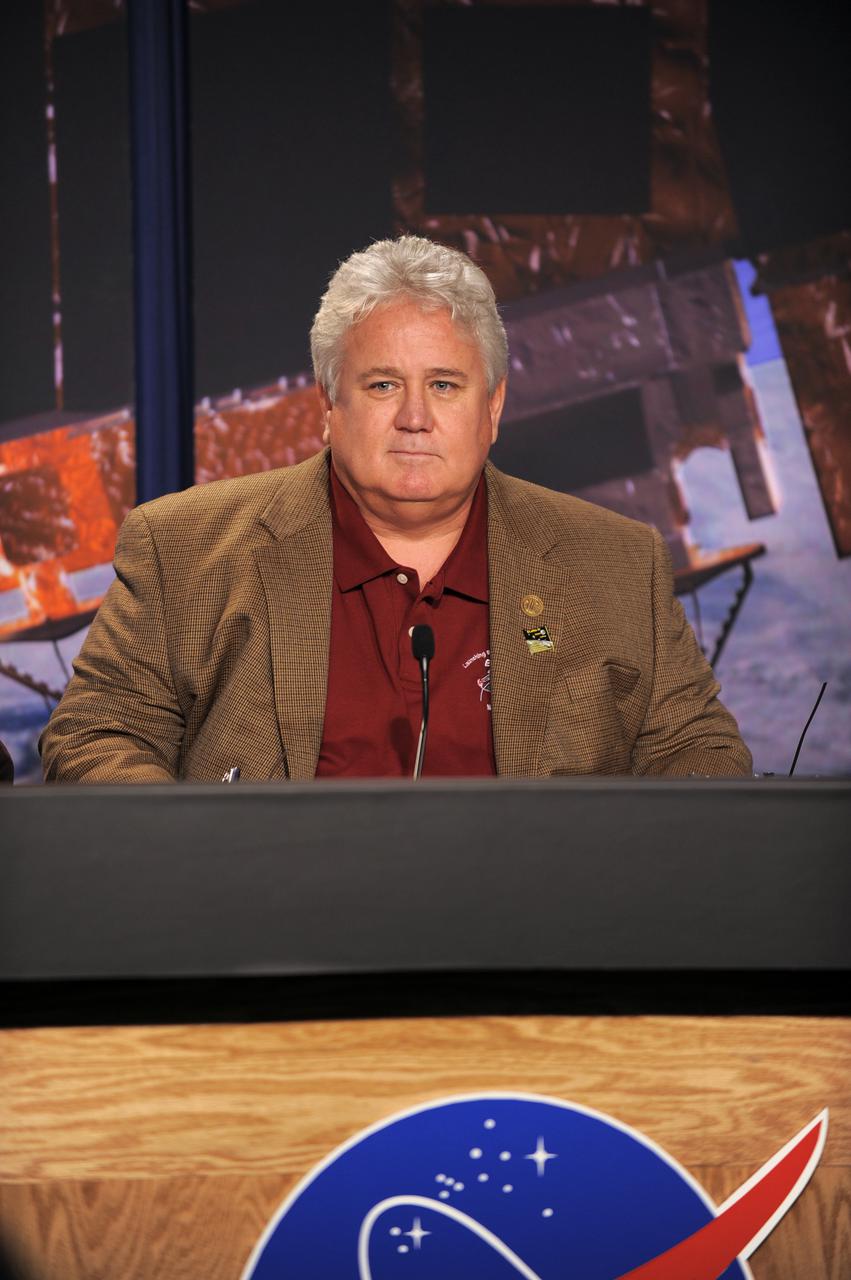
VANDENBERG AIR FORCE BASE, Calif. -- Garrett Skrobot, ELaNa mission manager, NASA Launch Services Program, Kennedy Space Center, Fla., participates in the prelaunch ELaNa briefing at Vandenberg Air Force Base, Calif. The five small 'CubeSat' research payloads that will be carried aboard the Delta II rocket during the NPP launch are the third in a series of NASA Educational Launch of Nanosatellite missions, known as ELaNa missions. Photo credit: NASA_VAFB
In a clean room inside the Astrotech Payload Processing Facility at Vandenberg Air Force Base in California, Ball Aerospace technicians conduct a final cleaning and inspection of the Cross-track Infrared Sounder (CrIS) on NASA’s National Polar-orbiting Operational Environmental Satellite System Preparatory Project (NPP) spacecraft. NPP represents a critical first step in building the next-generation of Earth-observing satellites. NPP will carry the first of the new sensors developed for this satellite fleet, now known as the Joint Polar Satellite System (JPSS), to be launched in 2016. NPP is the bridge between NASA's Earth Observing System (EOS) satellites and the forthcoming series of JPSS satellites. The mission will test key technologies and instruments for the JPSS missions. NPP is targeted to launch Oct. 28 from Space Launch Complex-2 aboard a United Launch Alliance Delta II rocket. For more information, visit http:__www.nasa.gov_NPP. Photo credit: NASA_VAFB
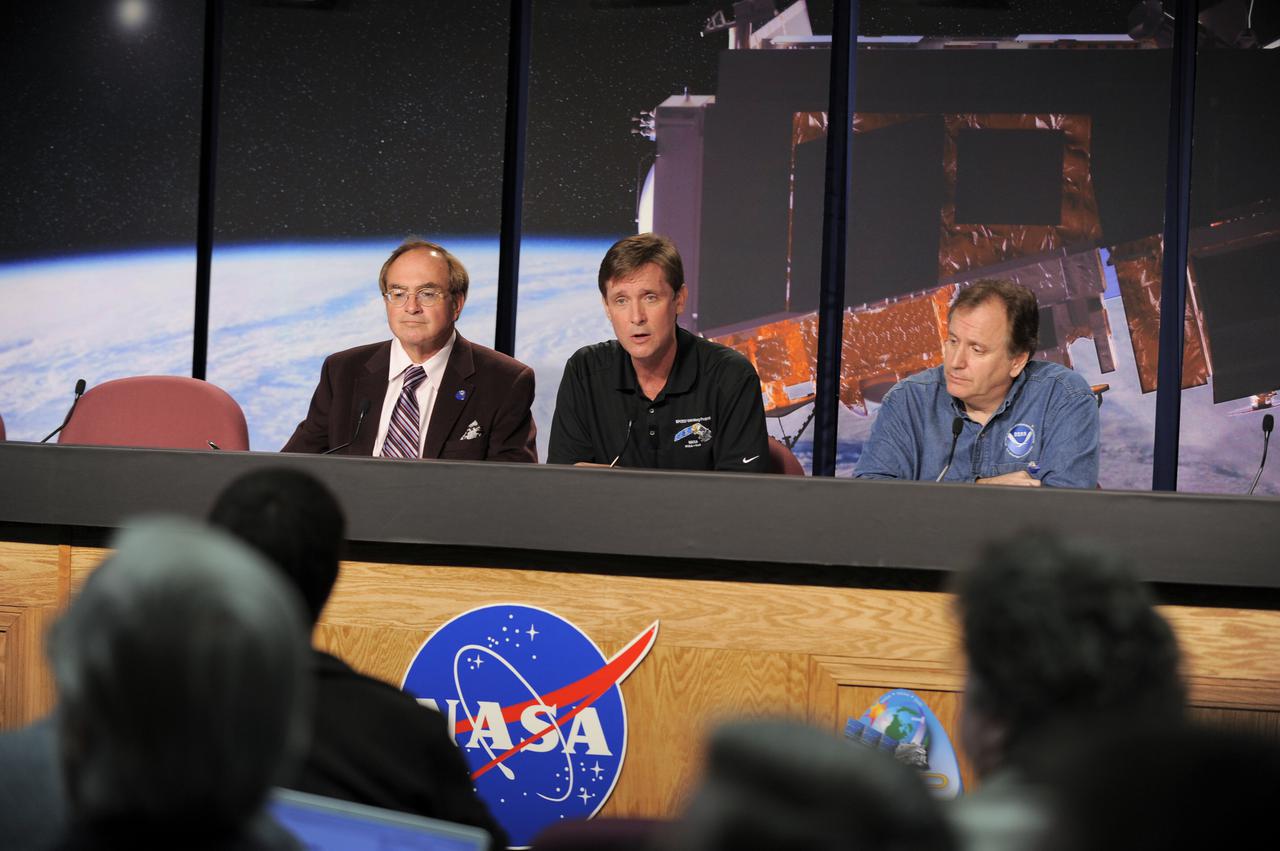
VANDENBERG AIR FORCE BASE, Calif. -- Participants in the prelaunch science briefing for NASA’s National Polar-orbiting Operational Environmental Satellite System Preparatory Project (NPP) spacecraft prepare to address members of the news media gathered at Vandenberg Air Force Base, Calif. Panelists are, from left, George Diller, NASA launch commentator, Jim Gleason, NPP project scientist, Goddard Space Flight Center, Greenbelt, Md., and Mitch Goldberg, NOAA Joint Polar Satellite System program scientist, Silver Spring, Md. NPP represents a critical first step in building the next-generation of Earth-observing satellites. NPP will carry the first of the new sensors developed for this satellite fleet, now known as the Joint Polar Satellite System (JPSS), to be launched in 2016. NPP is the bridge between NASA's Earth Observing System (EOS) satellites and the forthcoming series of JPSS satellites. The mission will test key technologies and instruments for the JPSS missions. NPP is targeted to launch Oct. 28 from Space Launch Complex-2 aboard a United Launch Alliance Delta II rocket. For more information, visit http:__www.nasa.gov_NPP. Photo credit: NASA_VAFB

VANDENBERG AIR FORCE BASE, Calif. -- Loaded on a transporter, the payload faring containing the Landsat Data Continuity Mission LDCM spacecraft leaves the Astrotech processing facility at Vandenberg Air Force Base in California and heads toward the launch pad at Space Launch Complex-3E. There it will be hoisted atop a United Launch Alliance Atlas V for launch. LDCM is the eighth satellite in the Landsat Program series of Earth-observing missions jointly managed by NASA and the U.S. Geological Survey. LDCM will continue the program’s critical role in monitoring, understanding and managing the resources needed for human sustainment such as food, water and forests. Photo credit: NASA_VAFB

VANDENBERG AIR FORCE BASE, Calif. -- Loaded on a transporter, the payload faring containing the Landsat Data Continuity Mission LDCM spacecraft departs the Astrotech processing facility at Vandenberg Air Force Base in California and heads toward the launch pad at Space Launch Complex-3E. There it will be hoisted atop a United Launch Alliance Atlas V for launch. LDCM is the eighth satellite in the Landsat Program series of Earth-observing missions jointly managed by NASA and the U.S. Geological Survey. LDCM will continue the program’s critical role in monitoring, understanding and managing the resources needed for human sustainment such as food, water and forests. Photo credit: NASA_VAFB

VANDENBERG AIR FORCE BASE, Calif. -- Roland Coelho, program lead, California Polytechnic State University, San Luis Obispo, Calif., participates in the prelaunch ELaNa briefing at Vandenberg Air Force Base, Calif. The five small 'CubeSat' research payloads that will be carried aboard the Delta II rocket during the NPP launch are the third in a series of NASA Educational Launch of Nanosatellite missions, known as ELaNa missions. Photo credit: NASA_VAFB
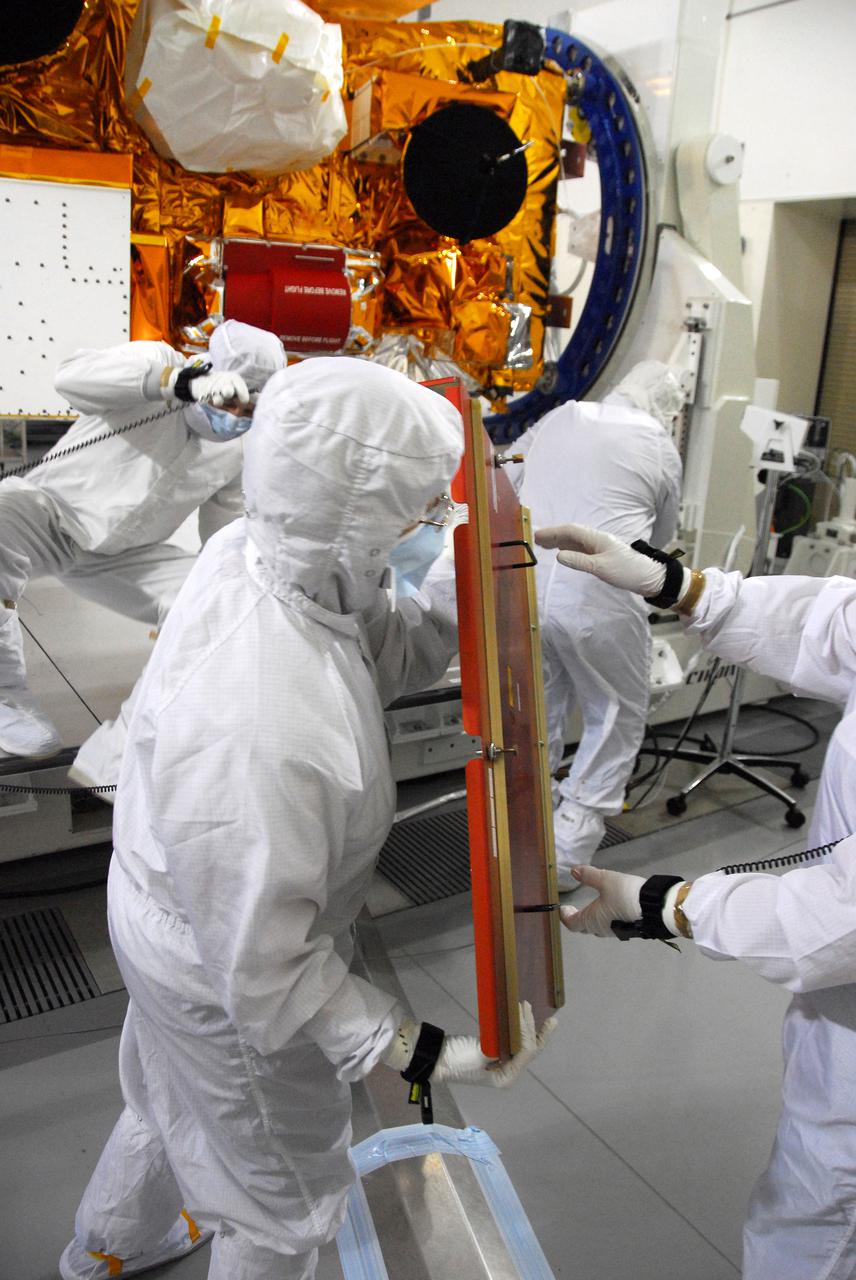
In a clean room inside the Astrotech Payload Processing Facility at Vandenberg Air Force Base in California, Ball Aerospace technicians conduct a final cleaning and inspection of the Cross-track Infrared Sounder (CrIS) on NASA’s National Polar-orbiting Operational Environmental Satellite System Preparatory Project (NPP) spacecraft. NPP represents a critical first step in building the next-generation of Earth-observing satellites. NPP will carry the first of the new sensors developed for this satellite fleet, now known as the Joint Polar Satellite System (JPSS), to be launched in 2016. NPP is the bridge between NASA's Earth Observing System (EOS) satellites and the forthcoming series of JPSS satellites. The mission will test key technologies and instruments for the JPSS missions. NPP is targeted to launch Oct. 28 from Space Launch Complex-2 aboard a United Launch Alliance Delta II rocket. For more information, visit http:__www.nasa.gov_NPP. Photo credit: NASA_VAFB

VANDENBERG AIR FORCE BASE, Calif. -- Loaded on a transporter, the payload faring containing the Landsat Data Continuity Mission LDCM spacecraft leaves the Astrotech processing facility at Vandenberg Air Force Base in California and heads toward the launch pad at Space Launch Complex-3E. There it will be hoisted atop a United Launch Alliance Atlas V for launch. LDCM is the eighth satellite in the Landsat Program series of Earth-observing missions jointly managed by NASA and the U.S. Geological Survey. LDCM will continue the program’s critical role in monitoring, understanding and managing the resources needed for human sustainment such as food, water and forests. Photo credit: NASA_VAFB
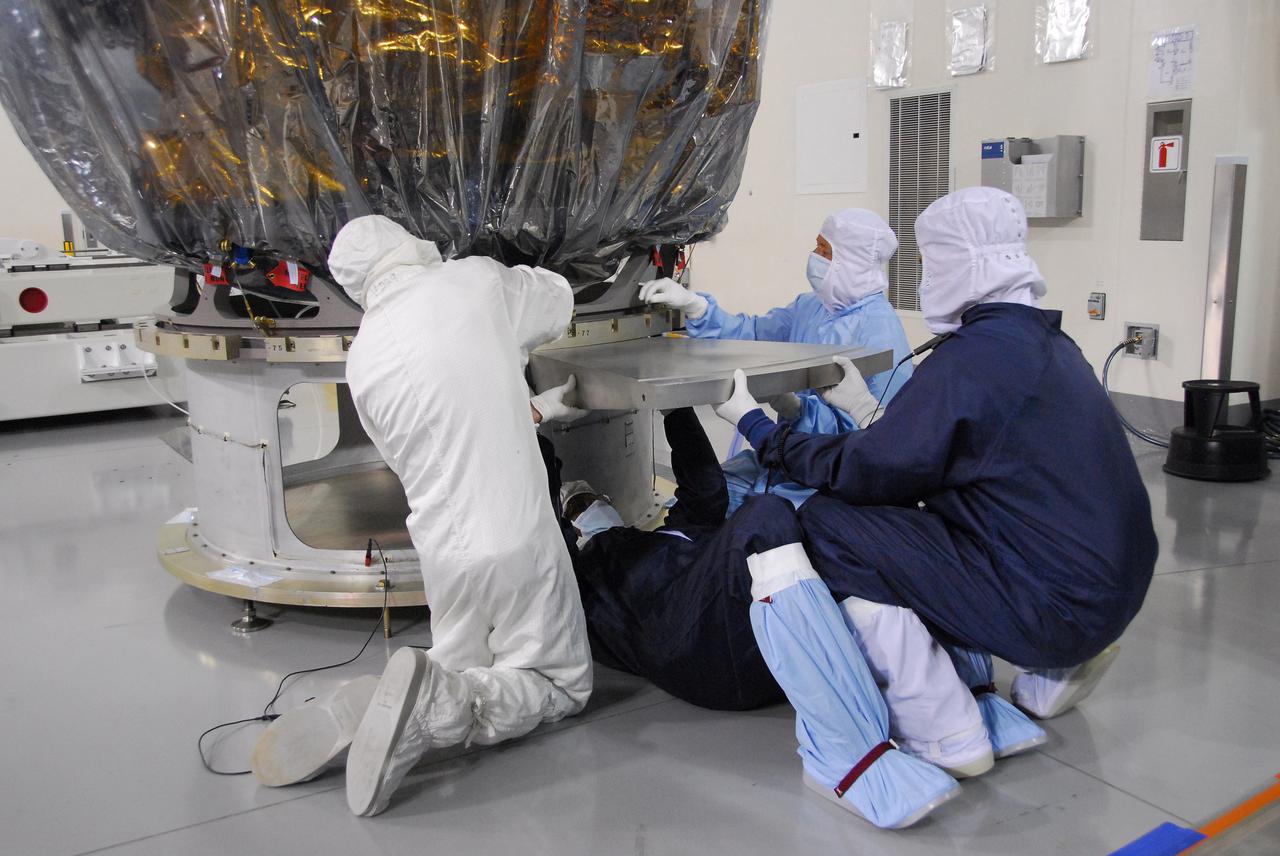
In a clean room inside the Astrotech Payload Processing Facility at Vandenberg Air Force Base in California, Ball Aerospace technicians NASA’s National Polar-orbiting Operational Environmental Satellite System Preparatory Project (NPP) spacecraft for its move to the launch pad. NPP represents a critical first step in building the next-generation of Earth-observing satellites. NPP will carry the first of the new sensors developed for this satellite fleet, now known as the Joint Polar Satellite System (JPSS), to be launched in 2016. NPP is the bridge between NASA's Earth Observing System (EOS) satellites and the forthcoming series of JPSS satellites. The mission will test key technologies and instruments for the JPSS missions. NPP is targeted to launch Oct. 28 from Space Launch Complex-2 aboard a United Launch Alliance Delta II rocket. For more information, visit http:__www.nasa.gov_NPP. Photo credit: NASA_VAFB

VANDENBERG AIR FORCE BASE, Calif. -- Loaded on a transporter, the payload faring containing the Landsat Data Continuity Mission LDCM spacecraft leaves the Astrotech processing facility at Vandenberg Air Force Base in California and heads toward the launch pad at Space Launch Complex-3E. There it will be hoisted atop a United Launch Alliance Atlas V for launch. LDCM is the eighth satellite in the Landsat Program series of Earth-observing missions jointly managed by NASA and the U.S. Geological Survey. LDCM will continue the program’s critical role in monitoring, understanding and managing the resources needed for human sustainment such as food, water and forests. Photo credit: NASA_VAFB
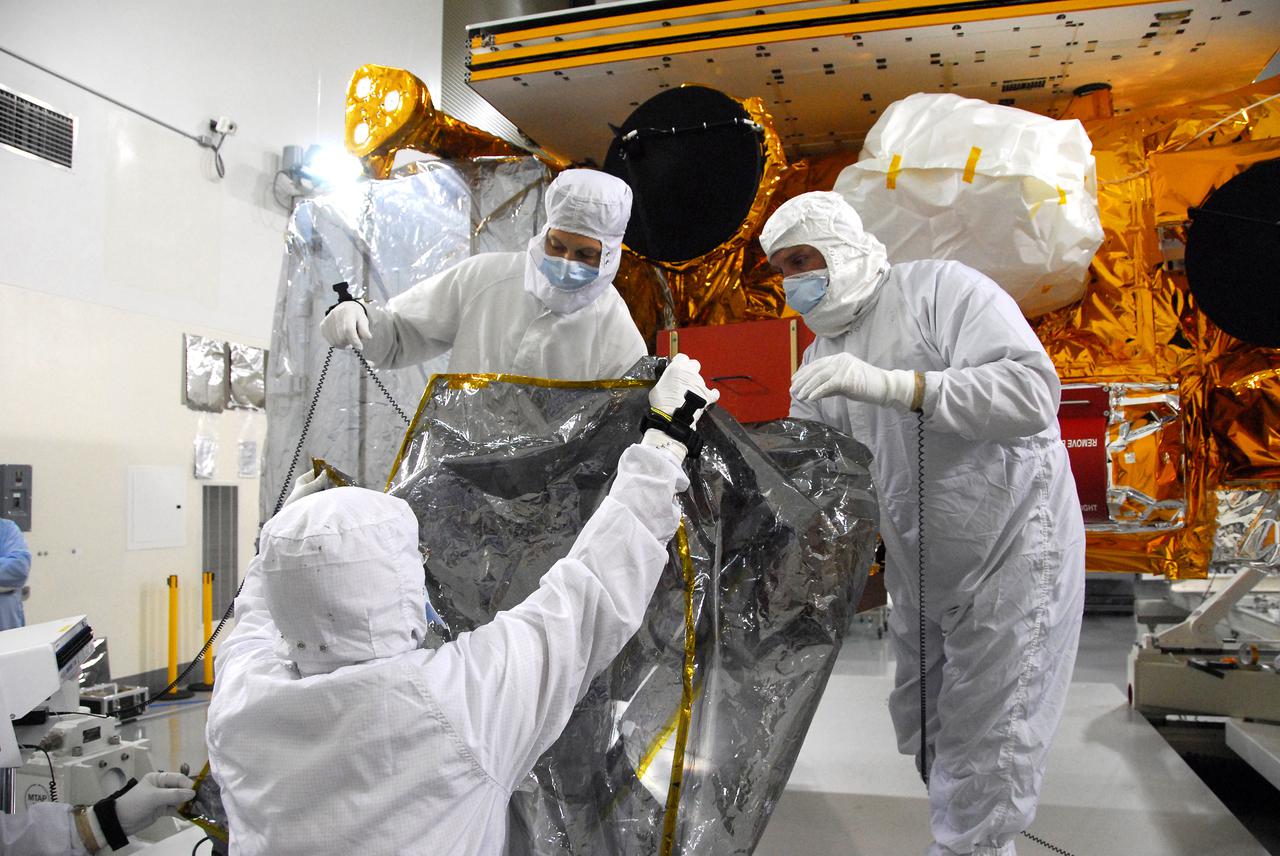
In a clean room inside the Astrotech Payload Processing Facility at Vandenberg Air Force Base in California, Ball Aerospace technicians conduct a final cleaning and inspection of the Cross-track Infrared Sounder (CrIS) on NASA’s National Polar-orbiting Operational Environmental Satellite System Preparatory Project (NPP) spacecraft. NPP represents a critical first step in building the next-generation of Earth-observing satellites. NPP will carry the first of the new sensors developed for this satellite fleet, now known as the Joint Polar Satellite System (JPSS), to be launched in 2016. NPP is the bridge between NASA's Earth Observing System (EOS) satellites and the forthcoming series of JPSS satellites. The mission will test key technologies and instruments for the JPSS missions. NPP is targeted to launch Oct. 28 from Space Launch Complex-2 aboard a United Launch Alliance Delta II rocket. For more information, visit http:__www.nasa.gov_NPP. Photo credit: NASA_VAFB
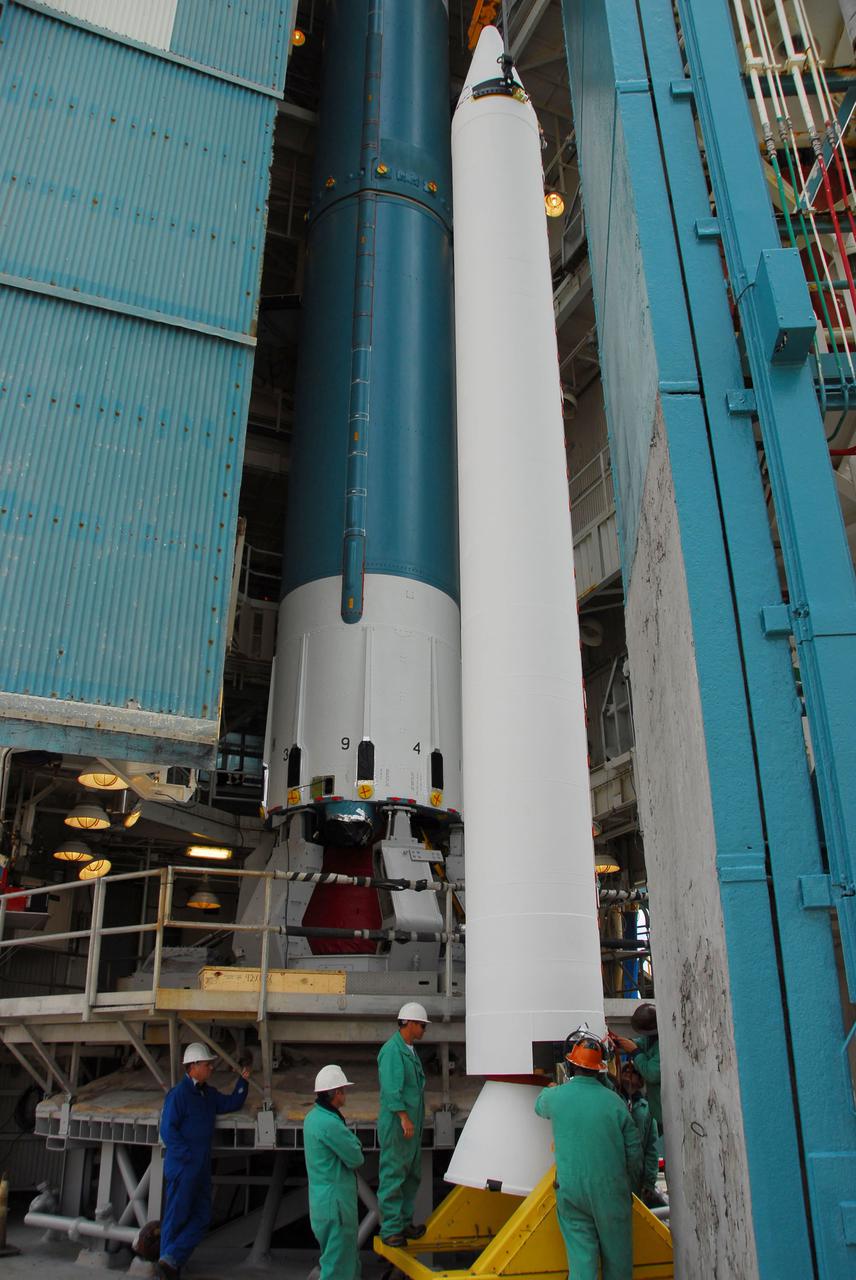
VANDENBERG AIR FORCE BASE, Calif. -- At Vandenberg Air Force Base in California, a crane is used to lift and position a solid rocket motor for attachment to the United Launch Alliance Delta II that will carry NASA's National Polar-orbiting Operational Environmental Satellite System Preparatory Project (NPP) satellite at NASA's Space Launch Complex-2. NPP represents a critical first step in building the next-generation of Earth-observing satellites. NPP will carry the first of the new sensors developed for this satellite fleet, now known as the Joint Polar Satellite System (JPSS) to be launched in 2016. NPP is the bridge between NASA's Earth Observing System (EOS) satellites and the forthcoming series of JPSS satellites. The mission will test key technologies and instruments for the JPSS missions. NPP is targeted to launch Oct. 25. For more information, visit http:__www.nasa.gov_NPP. Photo credit: NASA_VAFB, Dan Liberotti