
History of Cockpits - interior of control room onboard Dirigible (@1935)
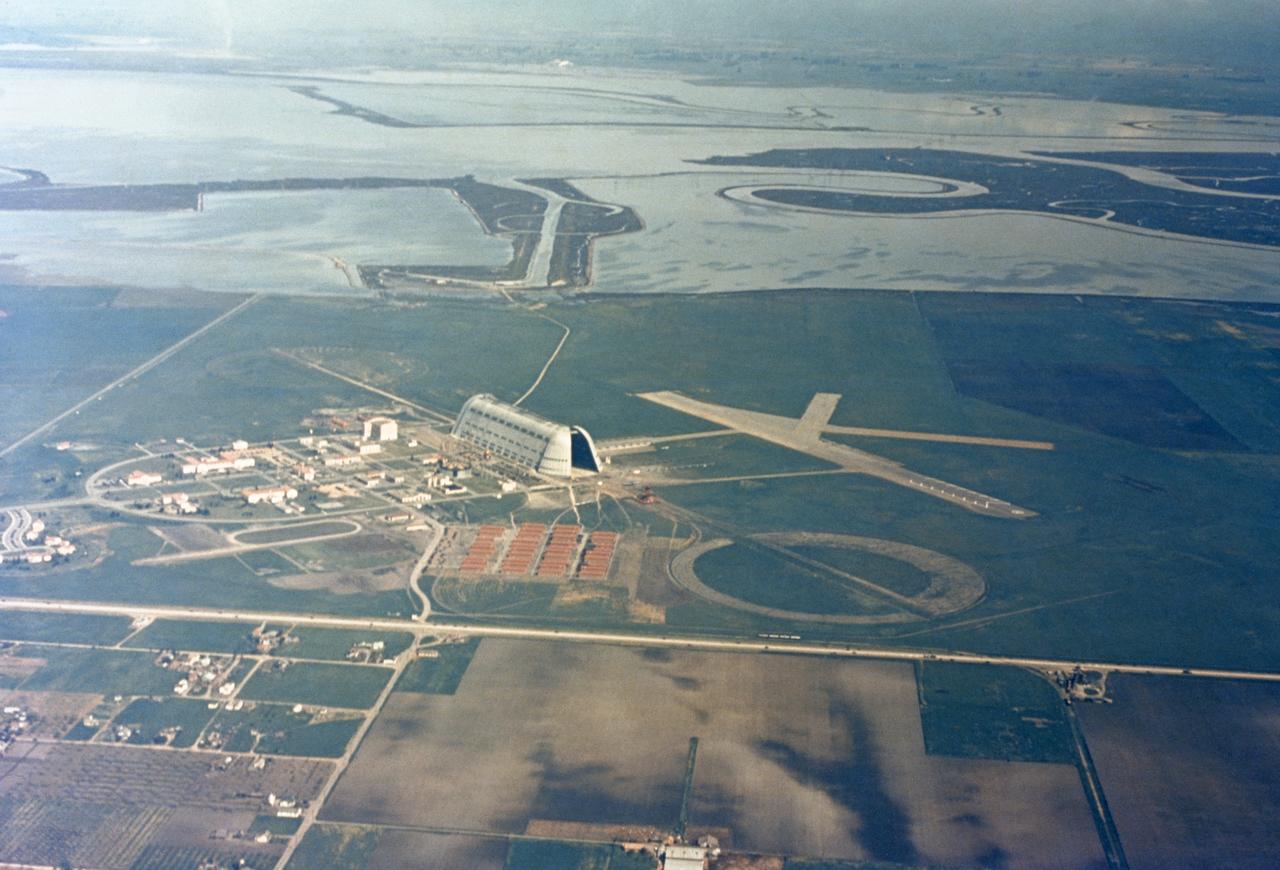
Circa 1938 Aerial of Ames Research Center - Moffett Field and area
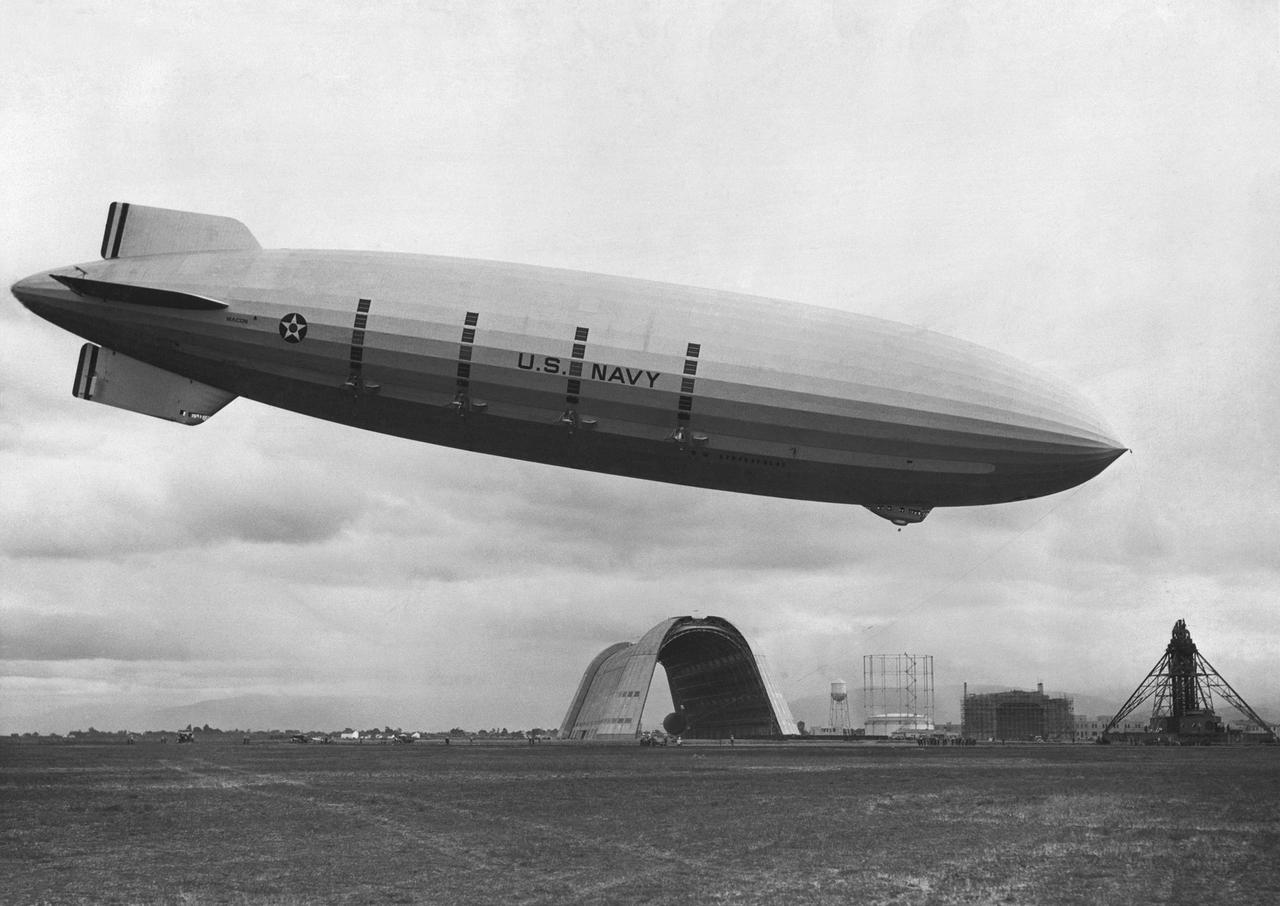
USS MACON AT NORTH CIRCLE NASA SUNNYVALE, MT VIEW, CA
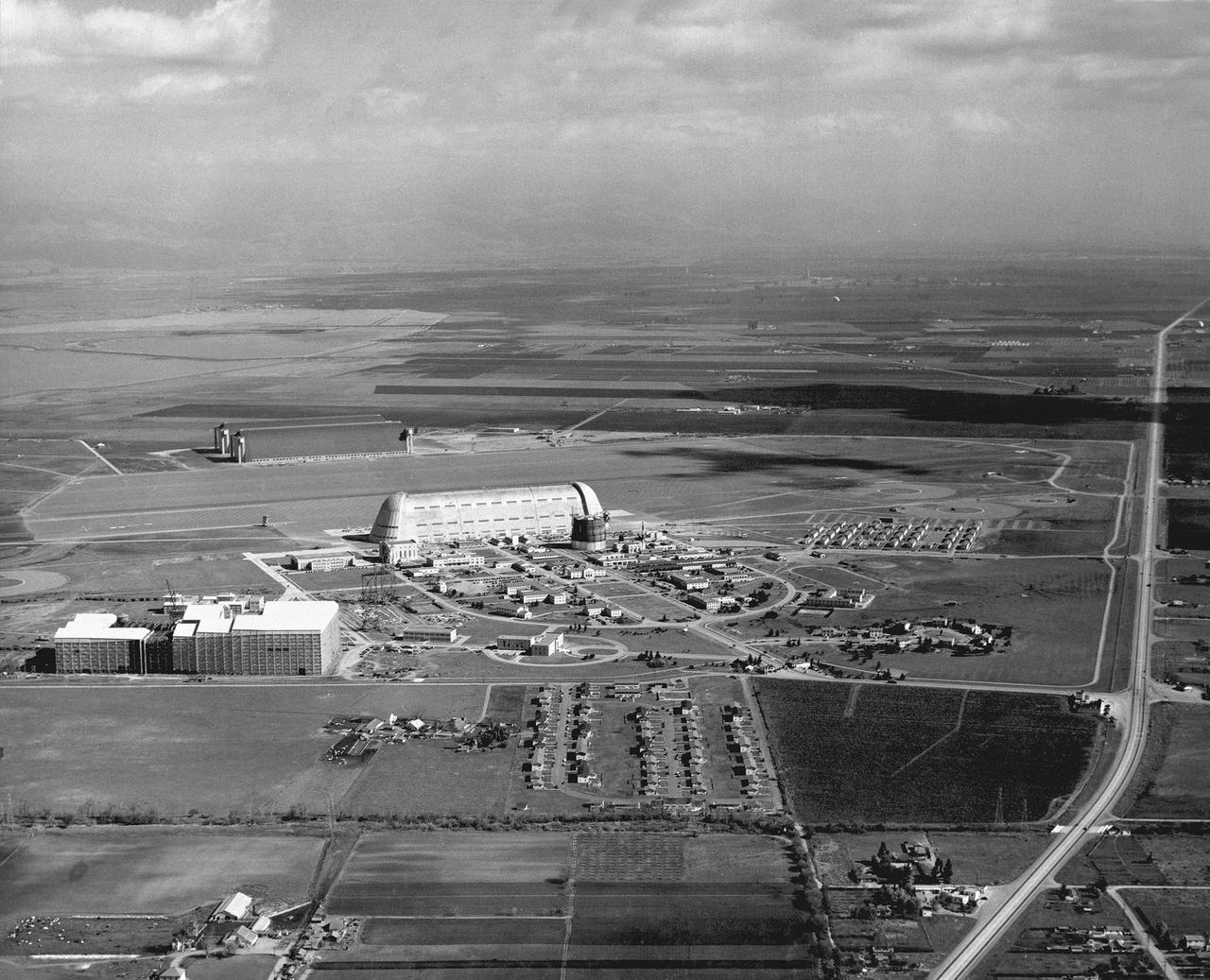
NAS Moffett Field Naval Air Station, Mt. View, Ca Altitude 1300ft E.S. East
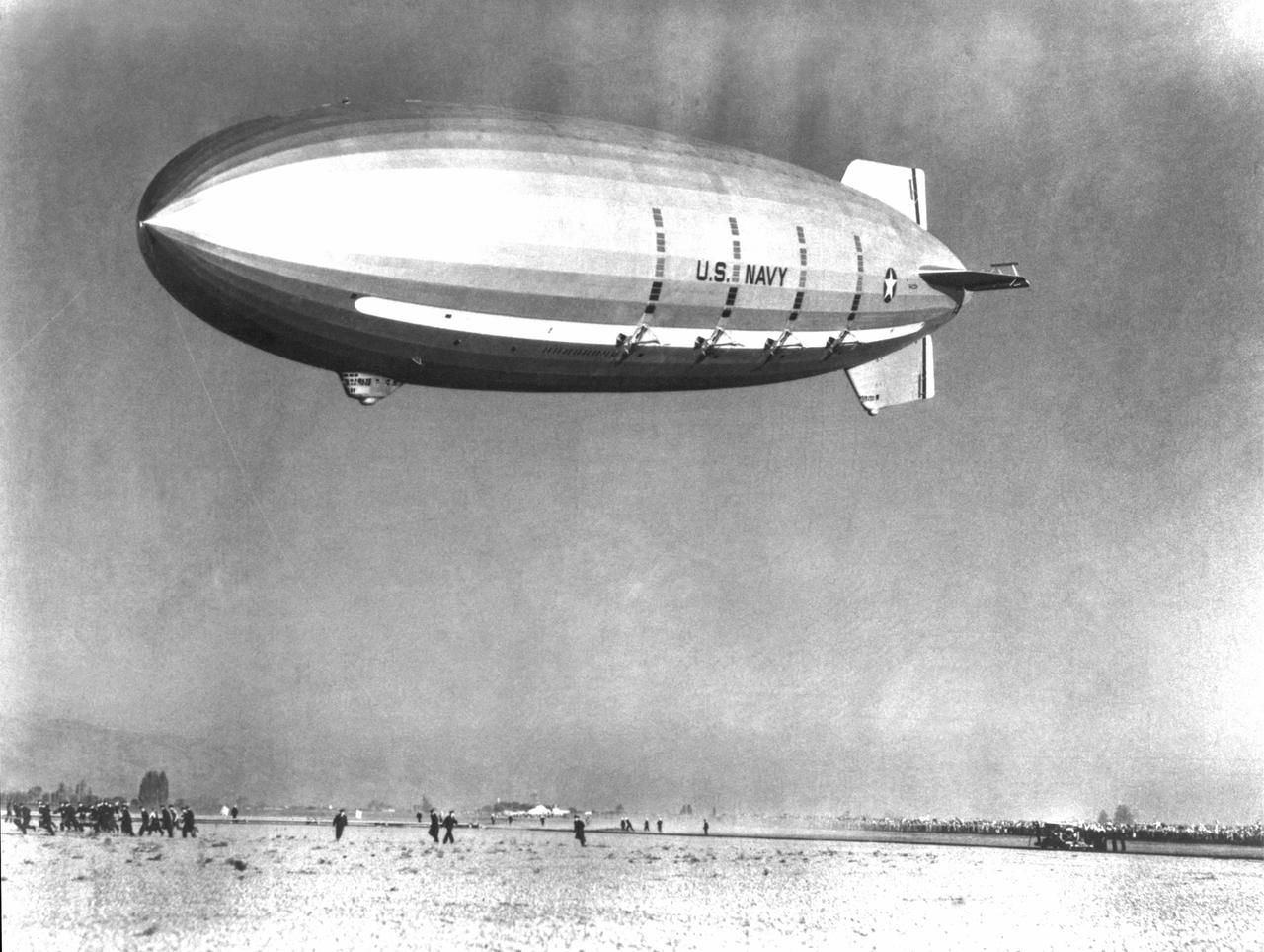
Dirigible returns to Moffett as people watch (1933)
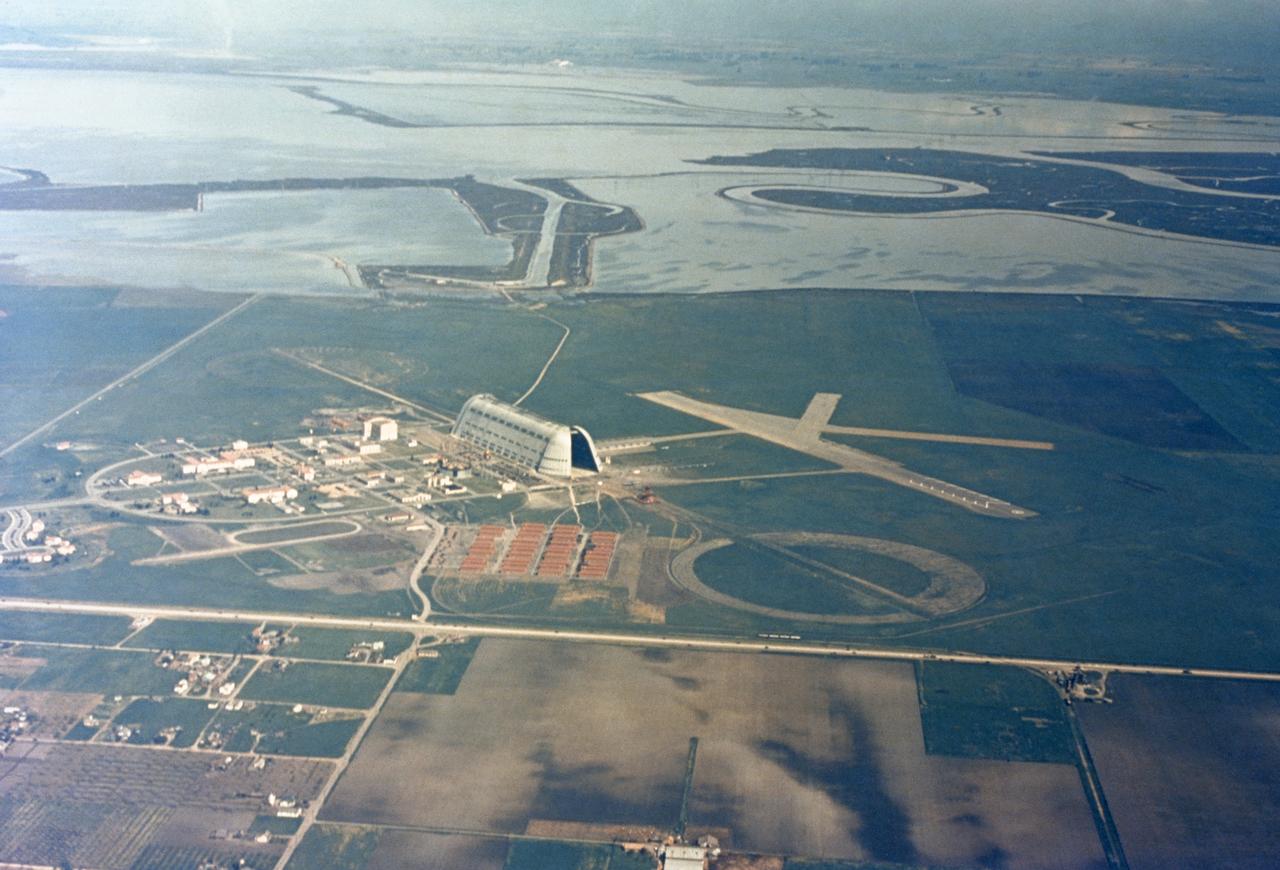
Circa 1938 Aerial of Ames Research Center - Moffett Field and area
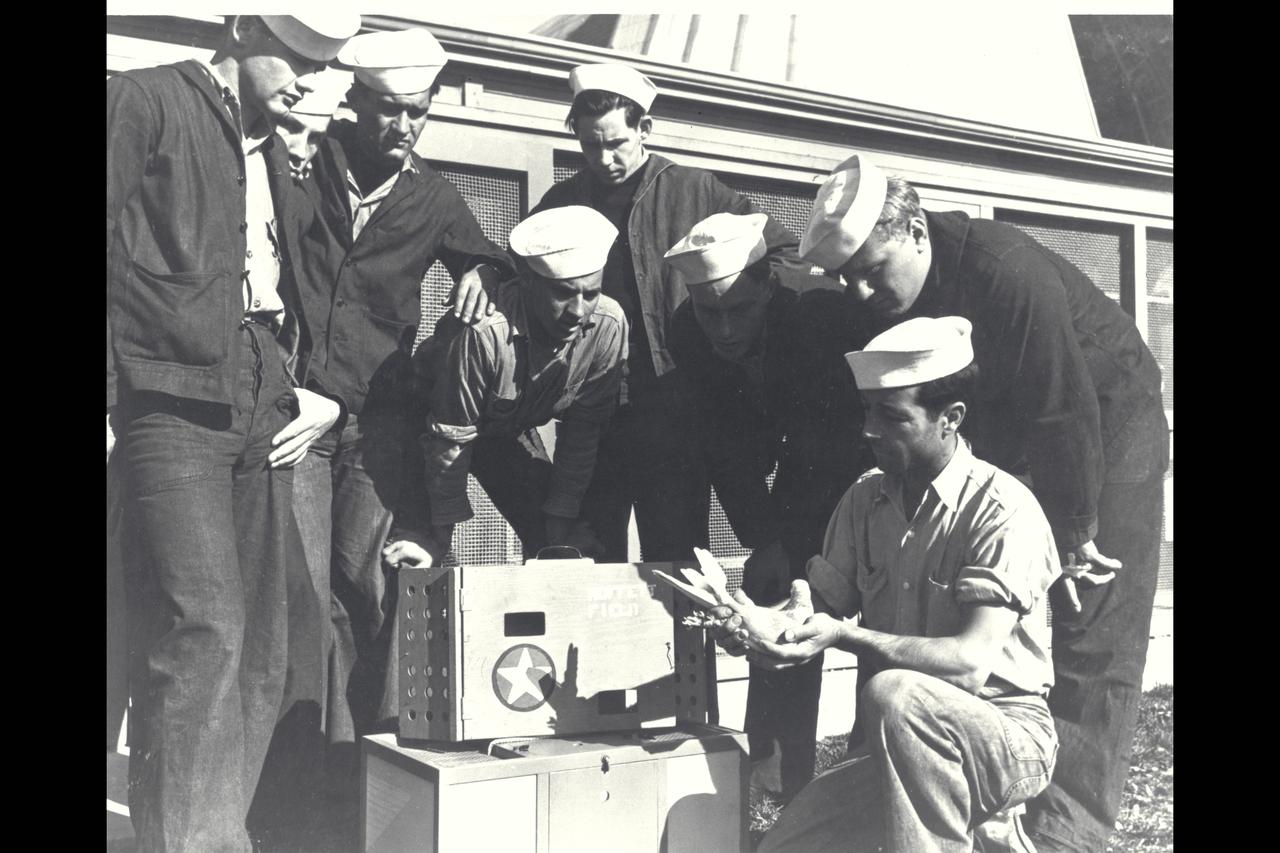
Moffett Field Pigeon with Navy personnel (@1935)
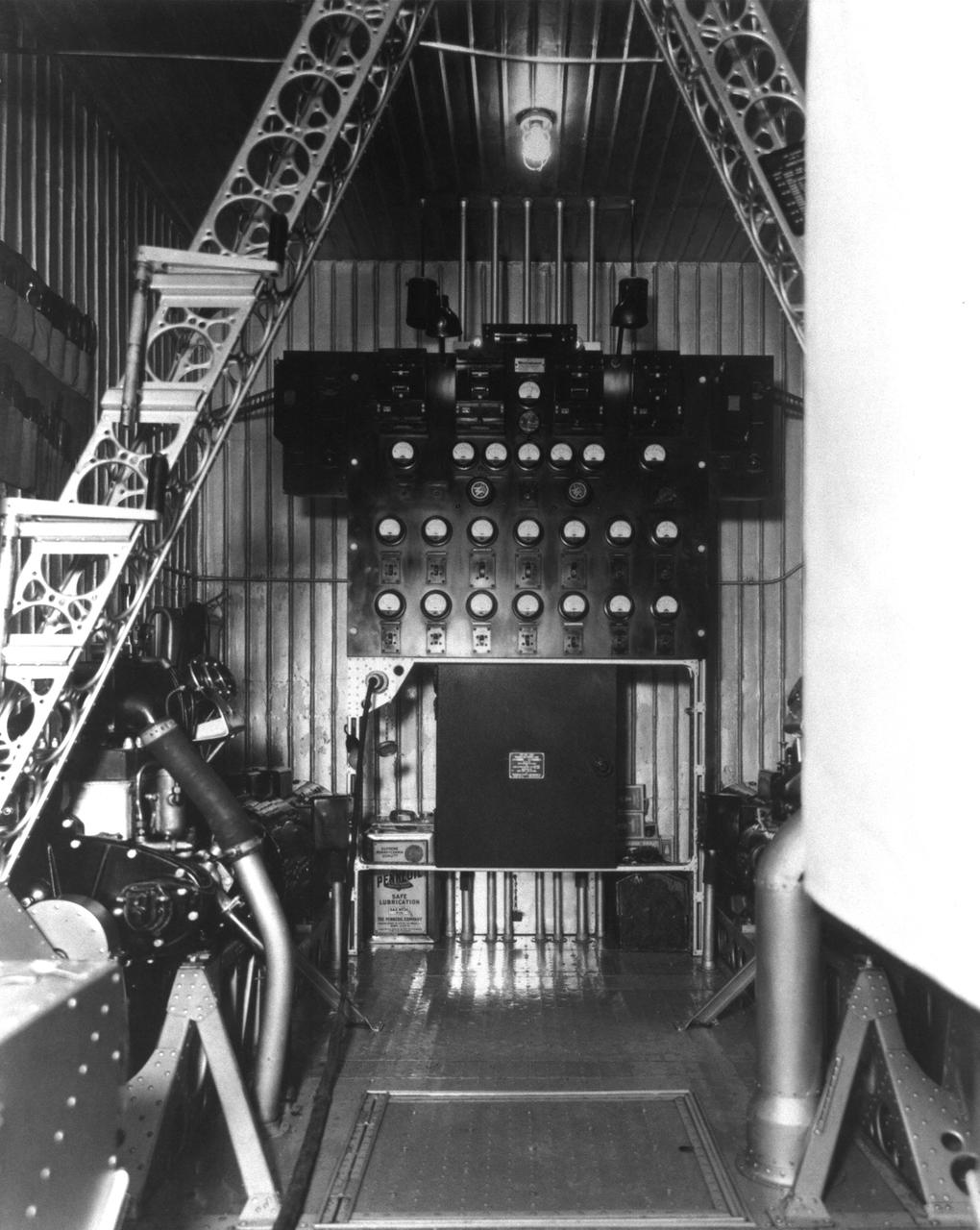
History of Cockpits - interior of control room showing pressure gages (@1935)
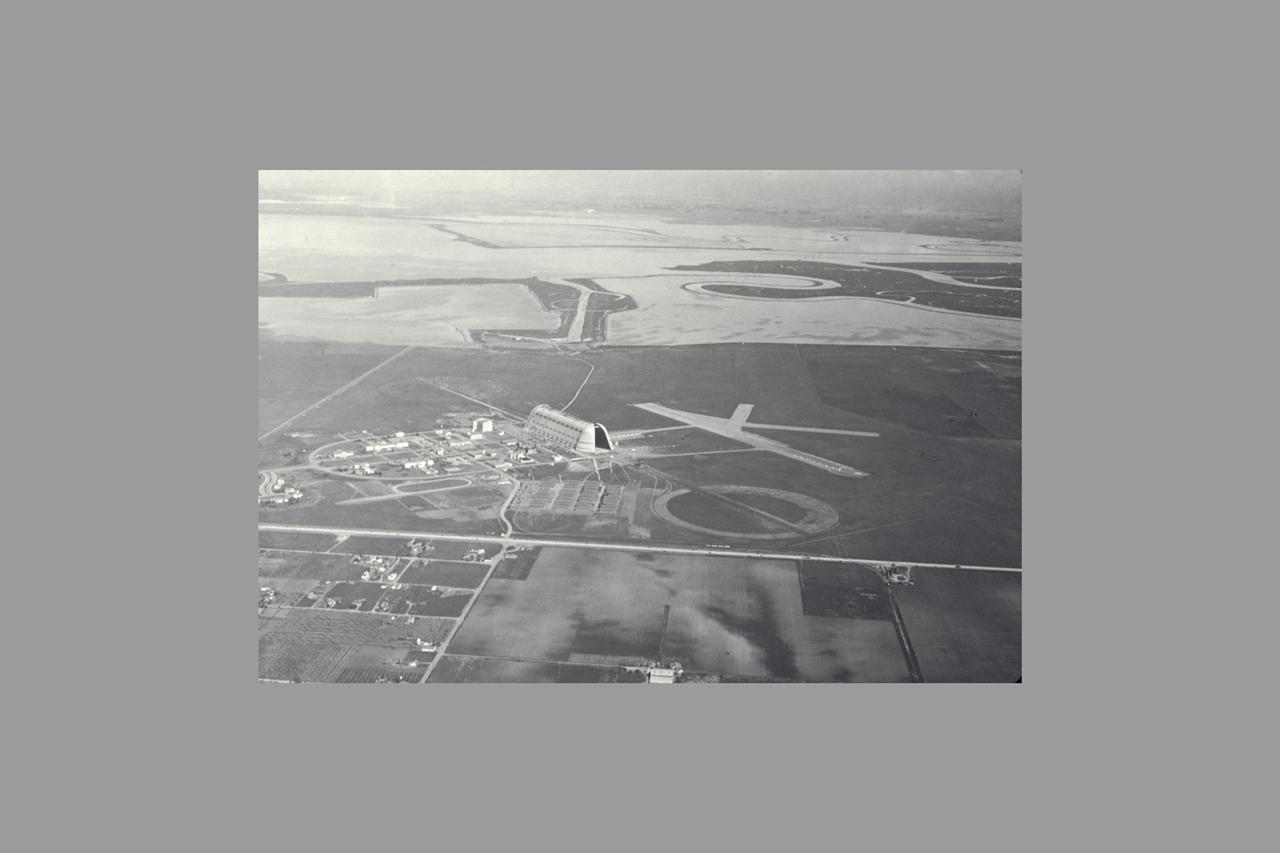
Sometime in 1938 Aerial of Ames Research Center - Moffett Field and Area
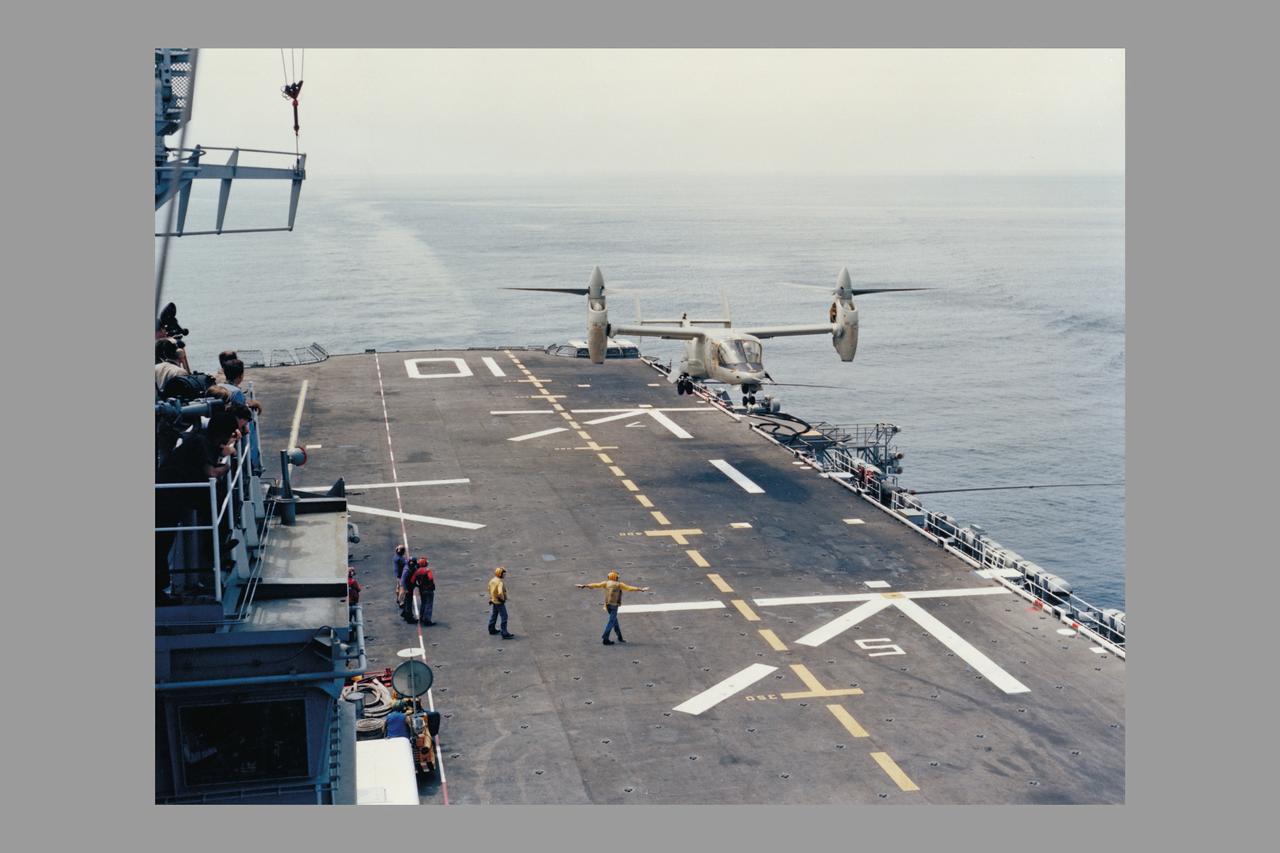
XV-15 Navy Sea Trials, Carrier Landing. Ref.: 024506.
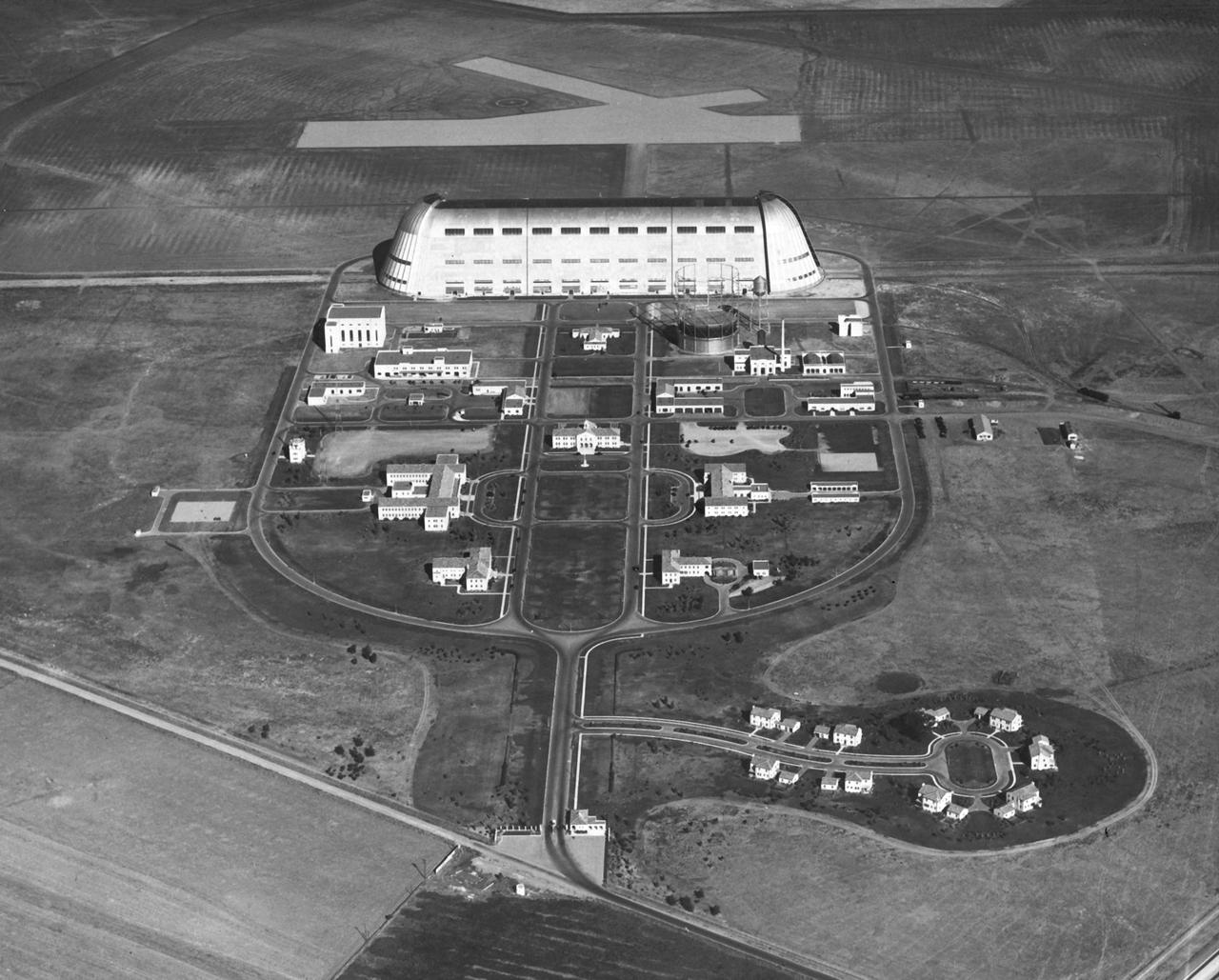
Naval Air Station Synnyvale, Mt View, Ca (aerial)
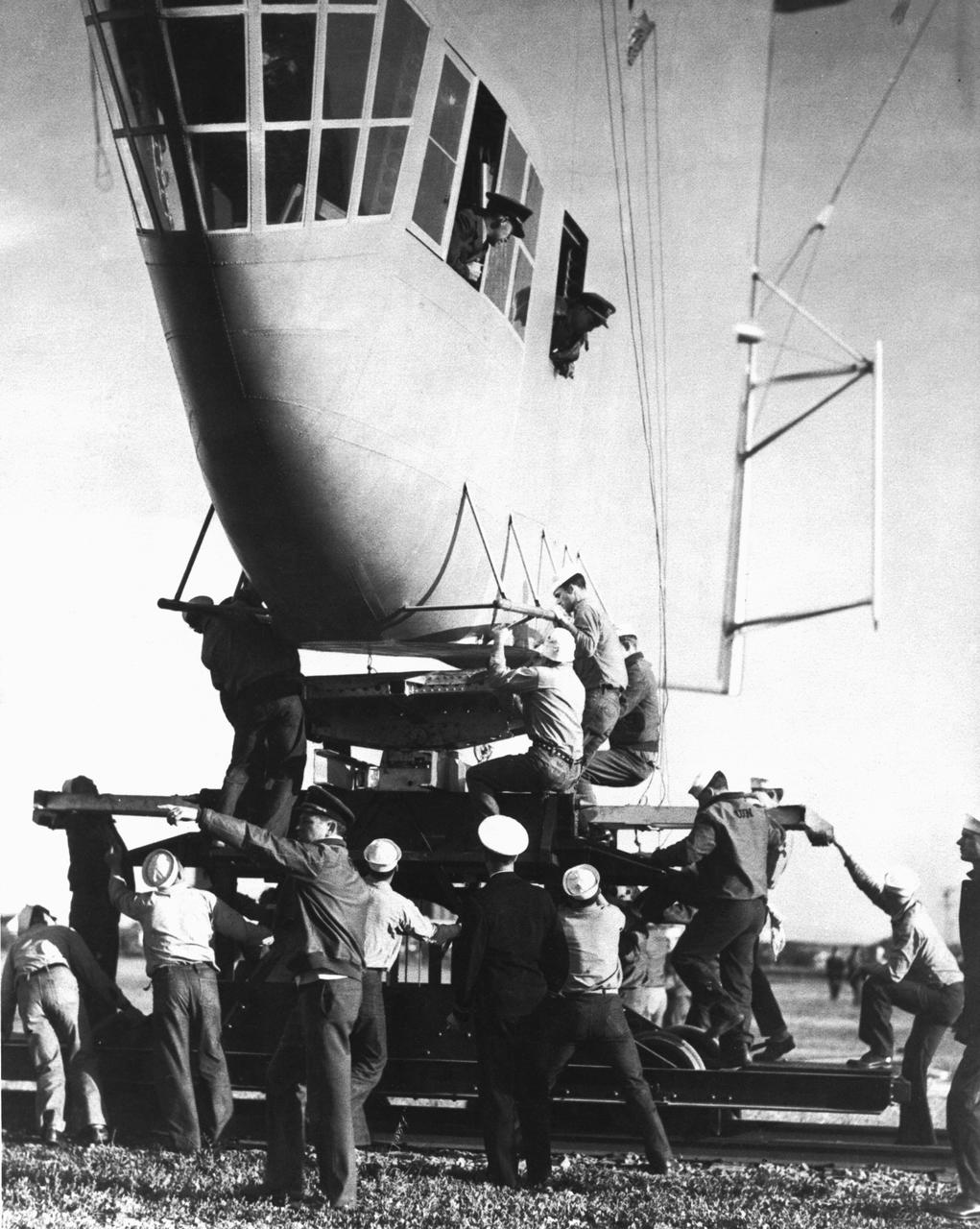
Circa 1935 History of Cockpits - Macon Dirigible cabin housing viewed as sailors moor the blimp at Moffett Field (@ 1935)

History of Cockpits: Airship Macon - Engine Control Station (1934 - 1935)

History of Cockpits - control room navigation station onboard a Dirigible (@1935)
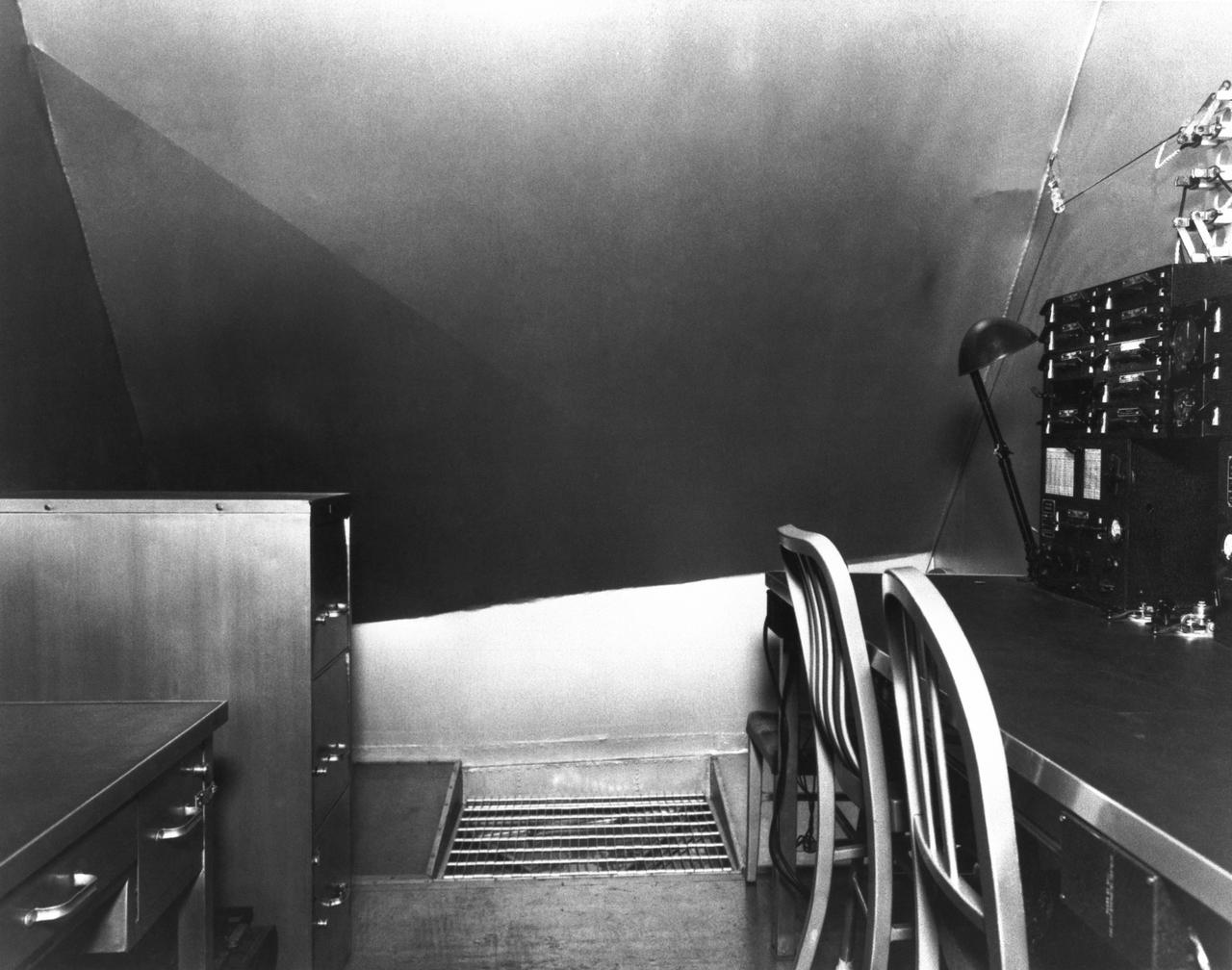
History of Cockpits - interior of control room of a Dirigible (@1935)
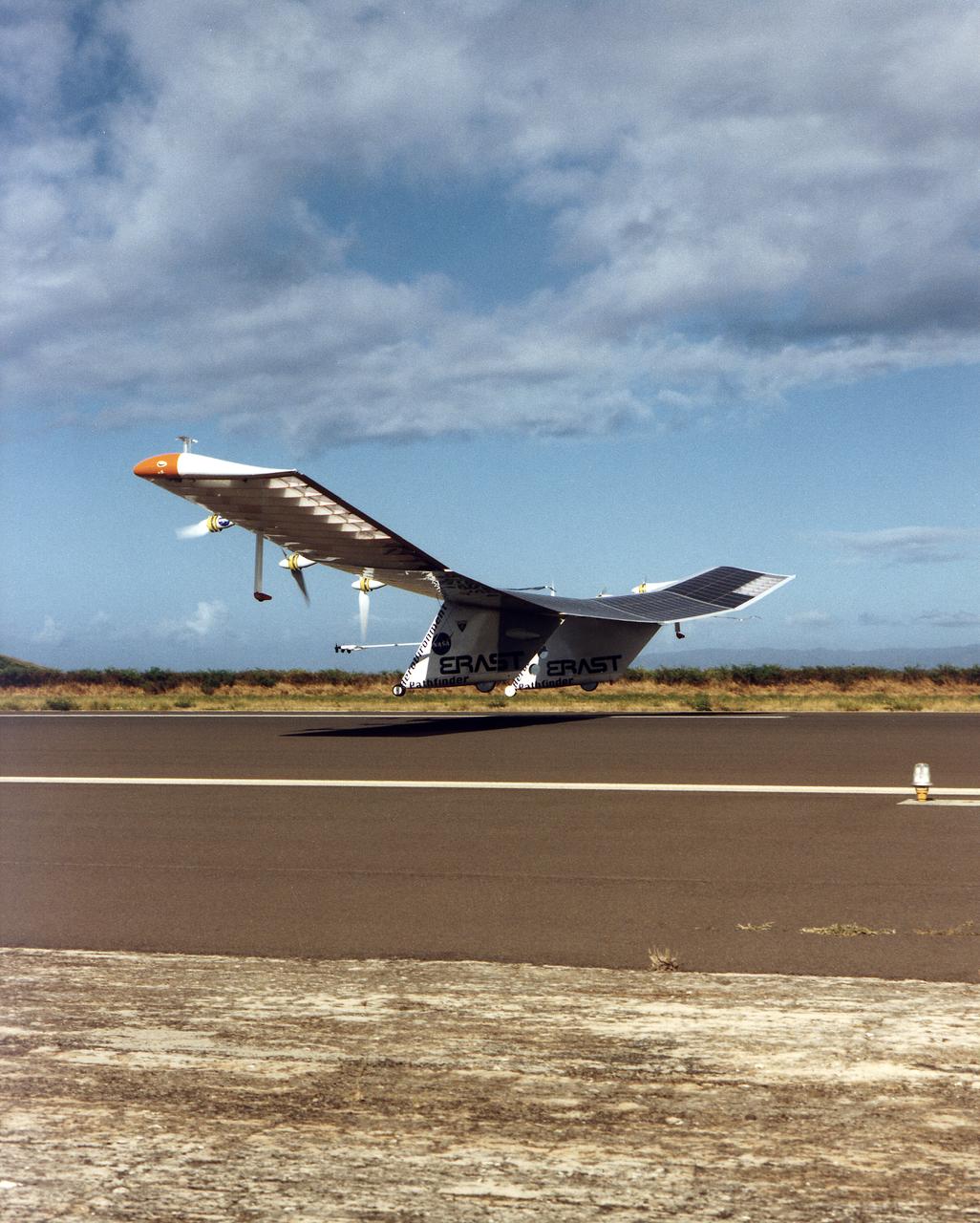
The Pathfinder aircraft has set a new unofficial world record for high-altitude flight of over 71,500 feet for solar-powered aircraft at the U.S. Navy's Pacific Missile Range Facility, Kauai, Hawaii. Pathfinder was designed and manufactured by AeroVironment, Inc, of Simi Valley, California, and was operated by the firm under a jointly sponsored research agreement with NASA's Dryden Flight Research Center, Edwards, California. Pathfinder's record-breaking flight occurred July 7, 1997. The aircraft took off at 11:34 a.m. PDT, passed its previous record altitude of 67,350 feet at about 5:45 p.m. and then reached its new record altitude at 7 p.m. The mission ended with a perfect nighttime landing at 2:05 a.m. PDT July 8. The new record is the highest altitude ever attained by a propellor-driven aircraft. Before Pathfinder, the altitude record for propellor-driven aircraft was 67,028 feet, set by the experimental Boeing Condor remotely piloted aircraft.
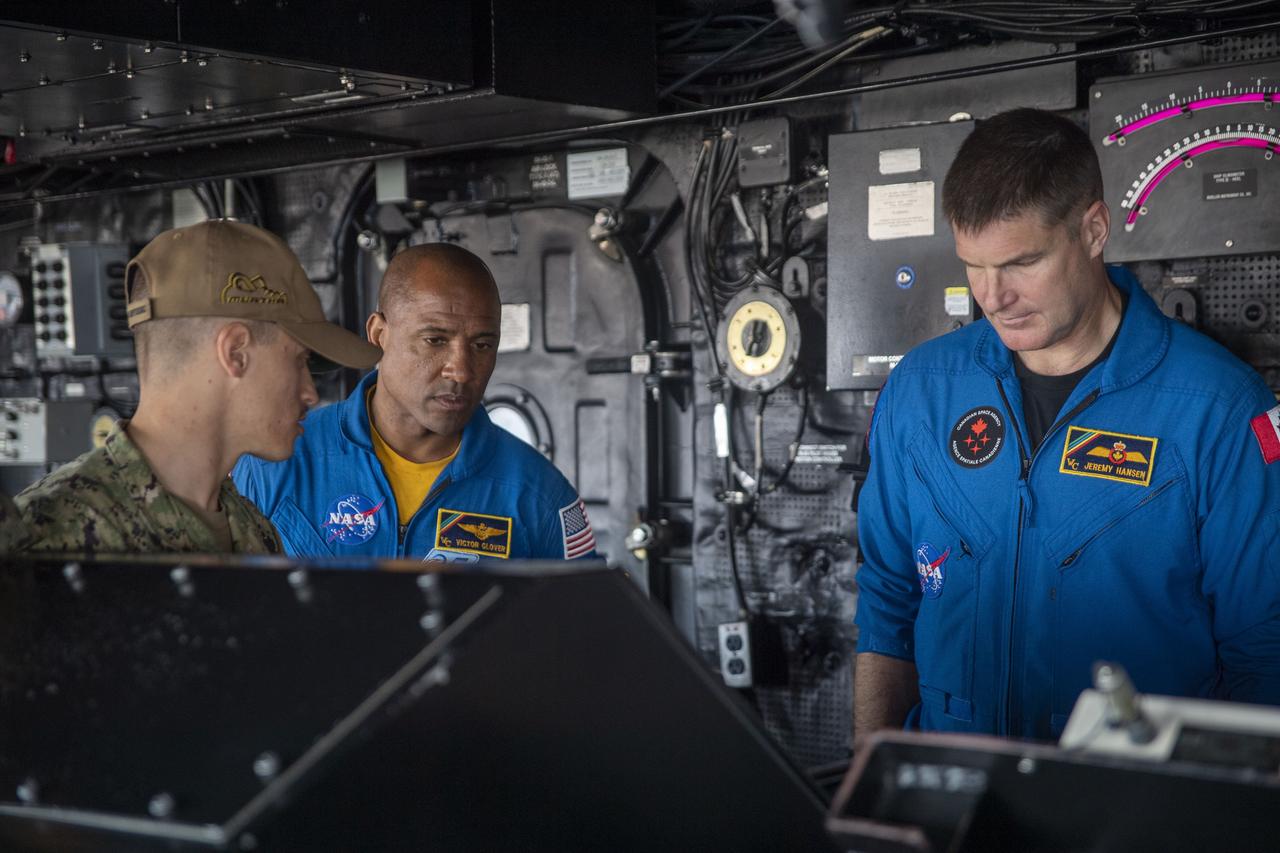
L.t. j.g Thomas Lampognana, left, explains amphibious transport dock ship USS John P. Murtha’s (LPD 26) helm control console to NASA Astronaut U.S. Navy Capt. Victor Glover and Canadian Space Agency Astronaut Jeremy Hansen, July 19, 2023. The helm is used as the primary steering for the ship underway. In preparation for NASA's Artemis II crewed mission, which will send four astronauts in Orion beyond the Moon, NASA and the U.S. Navy will conduct a series of tests to demonstrate and evaluate the processes, procedures, and hardware used in recovery operations for crewed lunar missions. The U.S. Navy has many unique capabilities that make it an ideal partner to support NASA, including its amphibious capabilities with the ability to embark helicopters, launch and recover small boats, three-dimensional air search radar and advanced medical facilities.
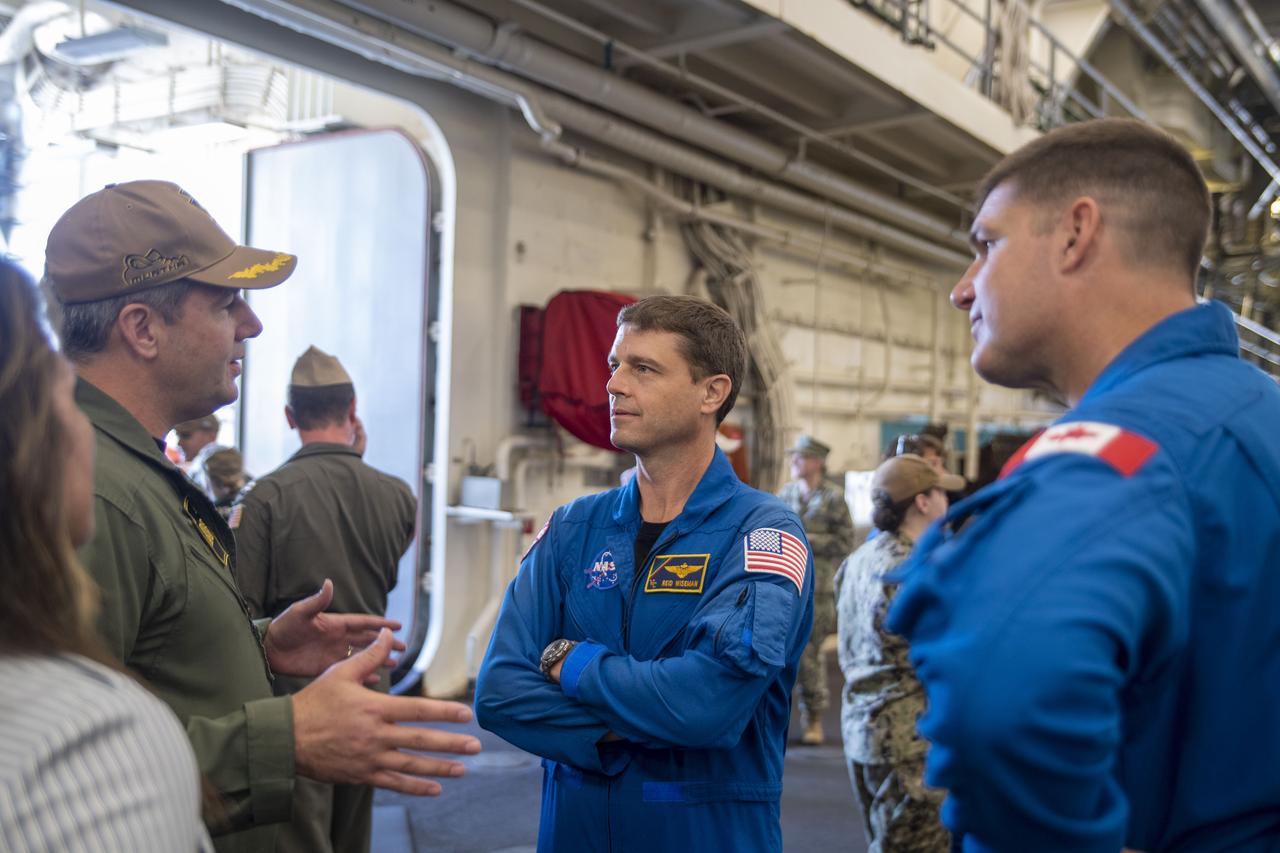
Amphibious transport dock ship USS John P. Murtha (LPD 26) Commanding Officer Capt. Doug Langenberg, left, explains to NASA Astronaut U.S. Navy Capt. Reid Wiseman and Canadian Space Agency Astronaut Jeremy Hansen, right, the ship’s recovery capabilities, July 19, 2023. In preparation for NASA's Artemis II crewed mission, which will send four astronauts in Orion beyond the Moon, NASA and the U.S. Navy will conduct a series of tests to demonstrate and evaluate the processes, procedures, and hardware used in recovery operations for crewed lunar missions. The U.S. Navy has many unique capabilities that make it an ideal partner to support NASA, including its amphibious capabilities with the ability to embark helicopters, launch and recover small boats, three-dimensional air search radar and advanced medical facilities.
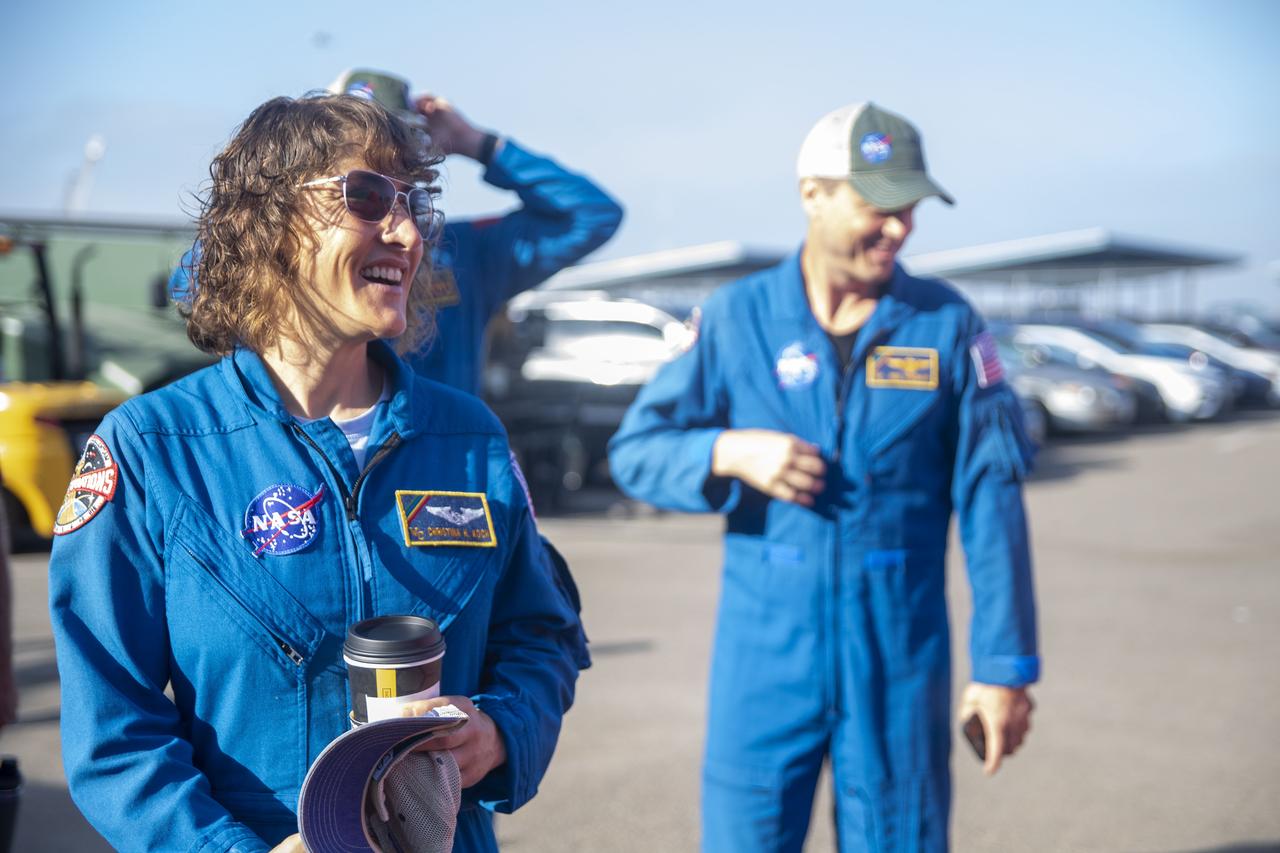
NASA’s Artemis II astronauts tour the U.S. Navy’s Defense Distribution Depot Center in San Diego, California, on July 19, 2023. The depot is currently being used by NASA to house the Vehicle Advanced Demonstrator for Emergency Recovery (VADER), a replica of the Orion crew module. In preparation for the agency’s Artemis II crewed mission, NASA and the U.S. Navy will conduct a series of tests to demonstrate and evaluate the processes, procedures, and hardware used in Orion recovery operations for crewed lunar missions. NASA astronauts Commander Reid Wiseman, Pilot Victor Glover, and Mission Specialist Christina Koch, and Canadian Space Agency astronaut Jeremy Hansen will venture around the Moon on Artemis II. The approximately 10-day flight will test NASA's foundational human deep space exploration capabilities, the Space Launch System rocket and Orion spacecraft, for the first time with astronauts and will pave the way to establishing a long-term presence at the Moon for science and exploration through Artemis.
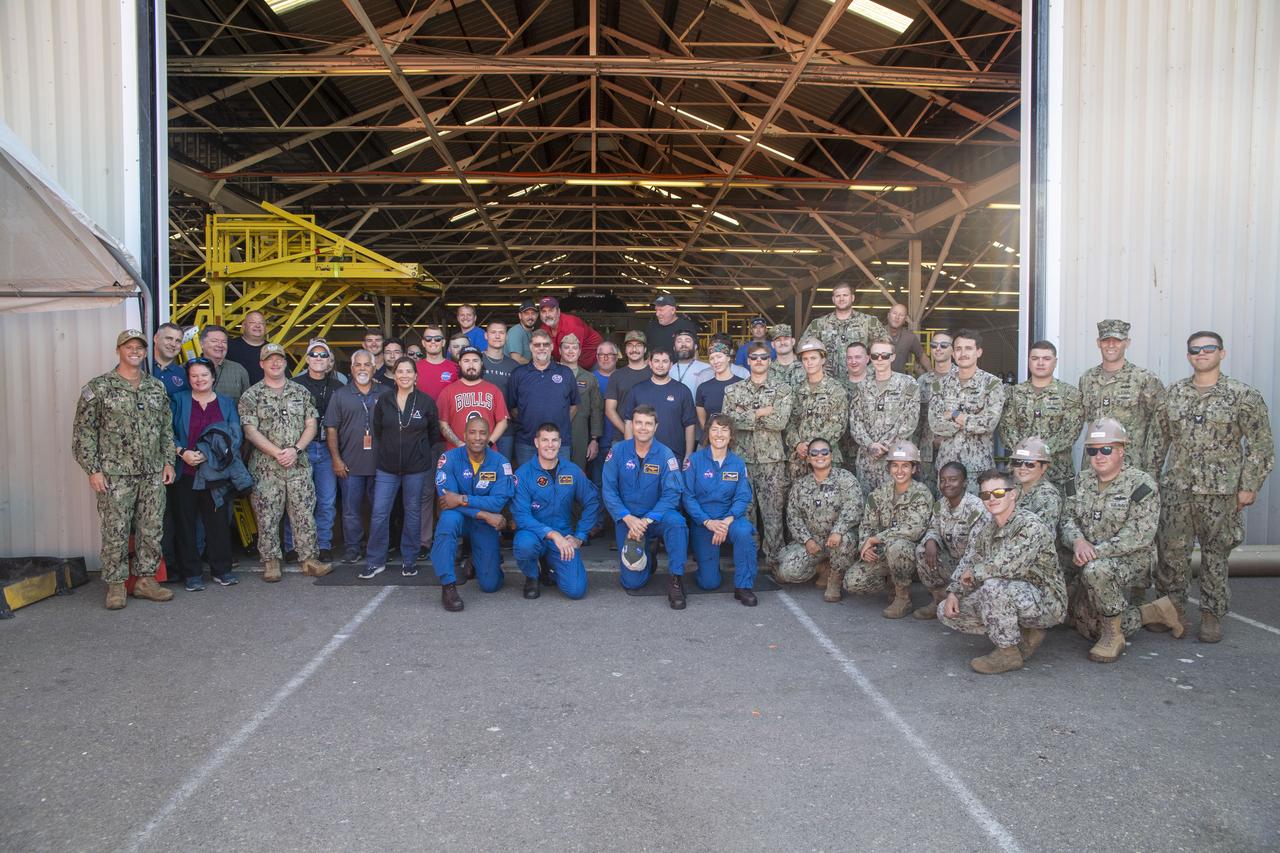
From left to right, NASA astronaut Victor Glover, Canadian Space Agency astronaut Jeremy Hansen, NASA astronauts Reid Wiseman and Christina Hammock Koch, pose with teams from NASA’s Exploration Ground Systems Program and sailors from the U.S. Navy assigned to Amphibious Construction Battalion 1 during a tour of Defense Distribution Depot Center in San Diego, California, on July 19, 2023. The depot is currently being used by NASA to house the Vehicle Advanced Demonstrator for Emergency Recovery, “VADER”, a replica of the space capsule. In preparation for NASA's Artemis II crewed mission, which will send four astronauts in Orion beyond the Moon, NASA and the U.S. Navy will conduct a series of tests to demonstrate and evaluate the processes, procedures, and hardware used in recovery operations for crewed lunar missions. The approximately 10-day flight of Artemis II will test NASA's foundational human deep space exploration capabilities, the Space Launch System rocket and Orion spacecraft, for the first time with astronauts and will pave the way to establishing a long-term presence at the Moon for science and exploration through Artemis.
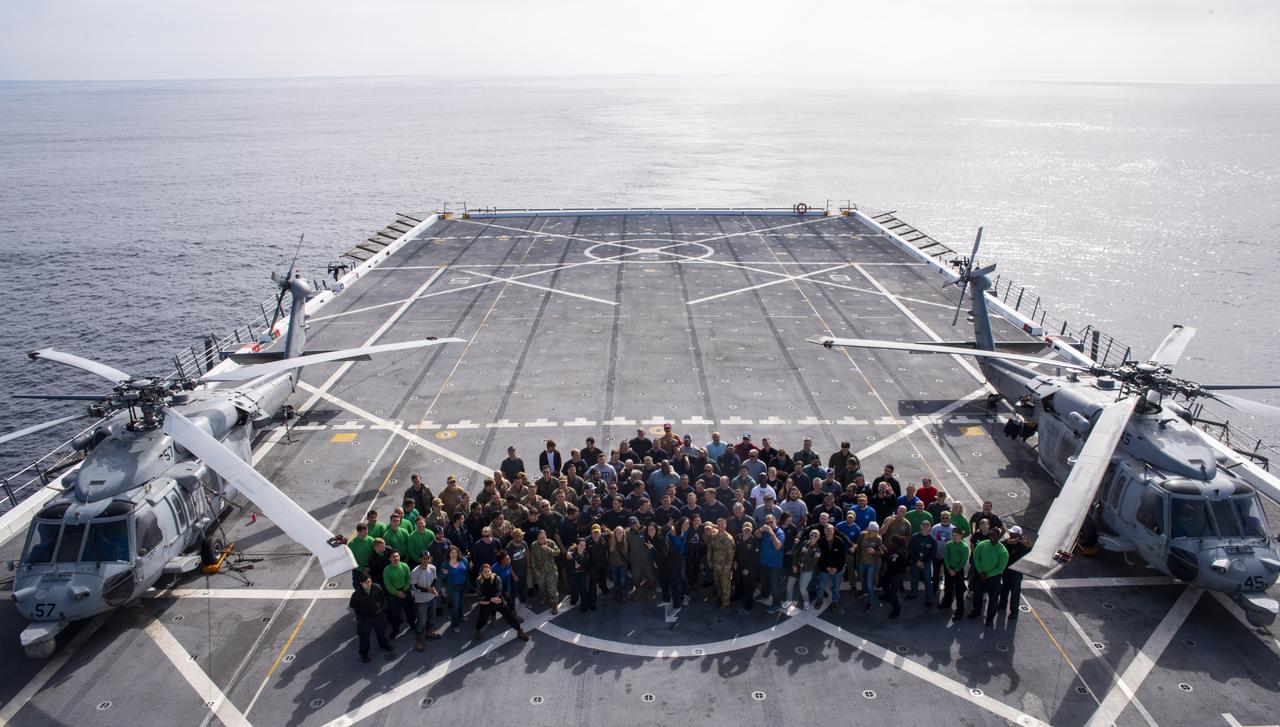
The NASA and DoD Recovery Team aboard the USS John P. Murtha for the Underway Recovery Test 9 (URT-9).

The NASA and DoD Recovery Team aboard the USS John P. Murtha for the Underway Recovery Test 9 (URT-9).
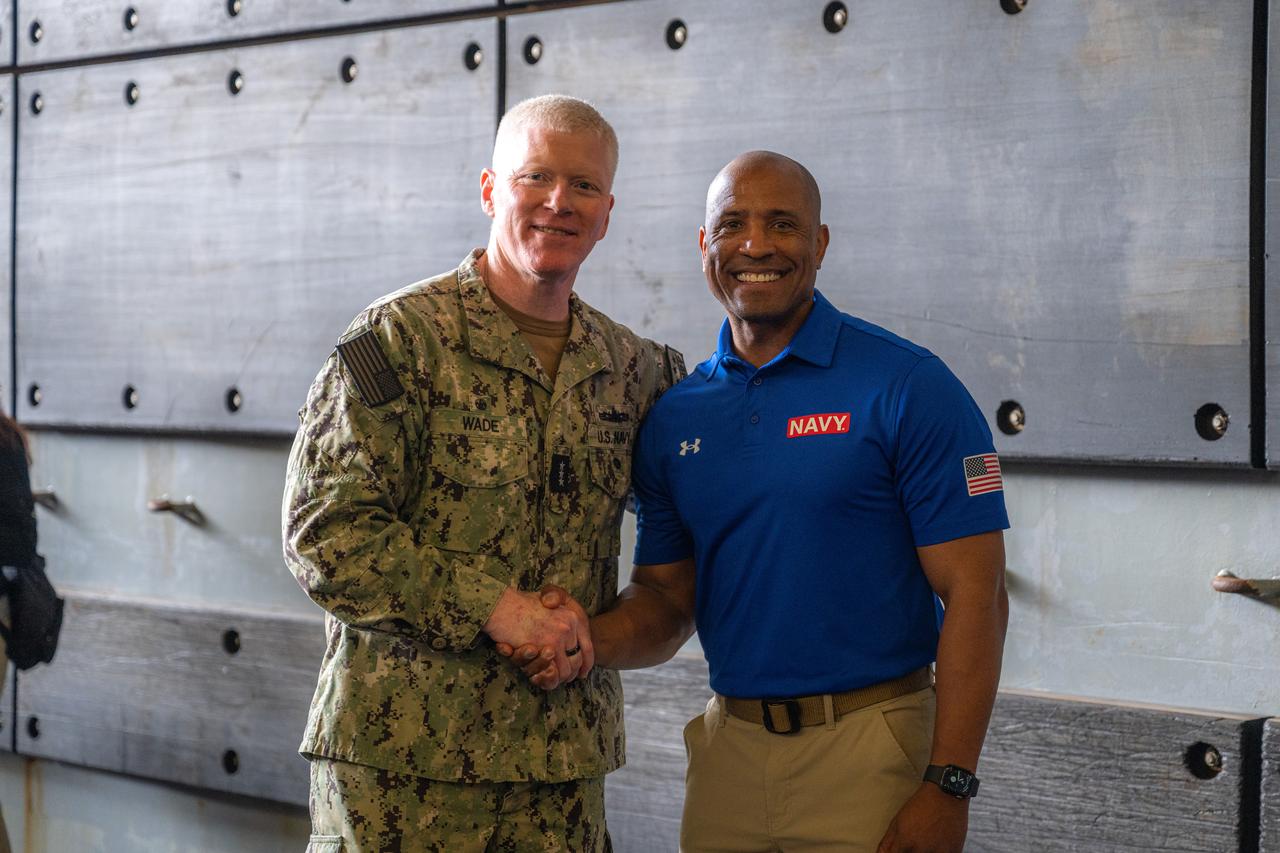
Vice Adm. John F. G. Wade, commander, U.S. 3rd Fleet, left, and NASA Artemis II Mission Pilot, Victor Glover, pose for a photo in the well deck of amphibious transport dock USS Somerset (LPD 25) ahead of NASA Underway Recovery Test 12 on Naval Base San Diego, March 25, 2025. In preparation for NASA's Artemis II crewed mission, which will send four astronauts around the moon and beyond in the Orion spacecraft, NASA and the Department of Defense will conduct a series of tests to demonstrate and evaluate the processes, procedures, and hardware used in recovery operations for crewed lunar missions.
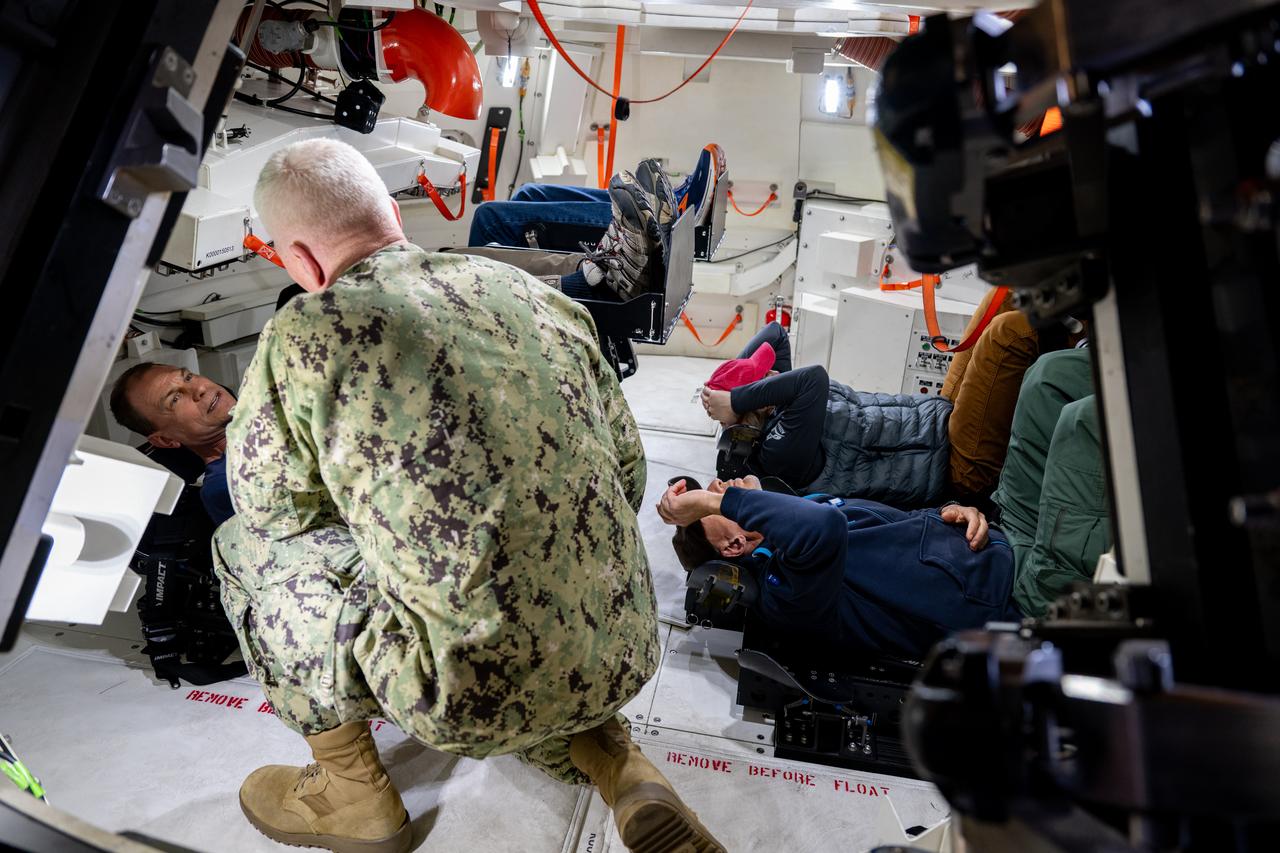
Vice Adm. John F. G. Wade, commander of U.S. 3rd Fleet, speaks with NASA astronaut Stan Love inside an Orion crew module test article in the well deck of amphibious transport dock USS Somerset (LPD 25) ahead of NASA Underway Recovery Test 12 on Naval Base San Diego, March 25, 2025. In preparation for NASA's Artemis II crewed mission, which will send four astronauts around the Moon and beyond in the Orion spacecraft, NASA and the Department of Defense will conduct a series of tests to demonstrate and evaluate the processes, procedures, and hardware used in recovery operations for crewed lunar missions.