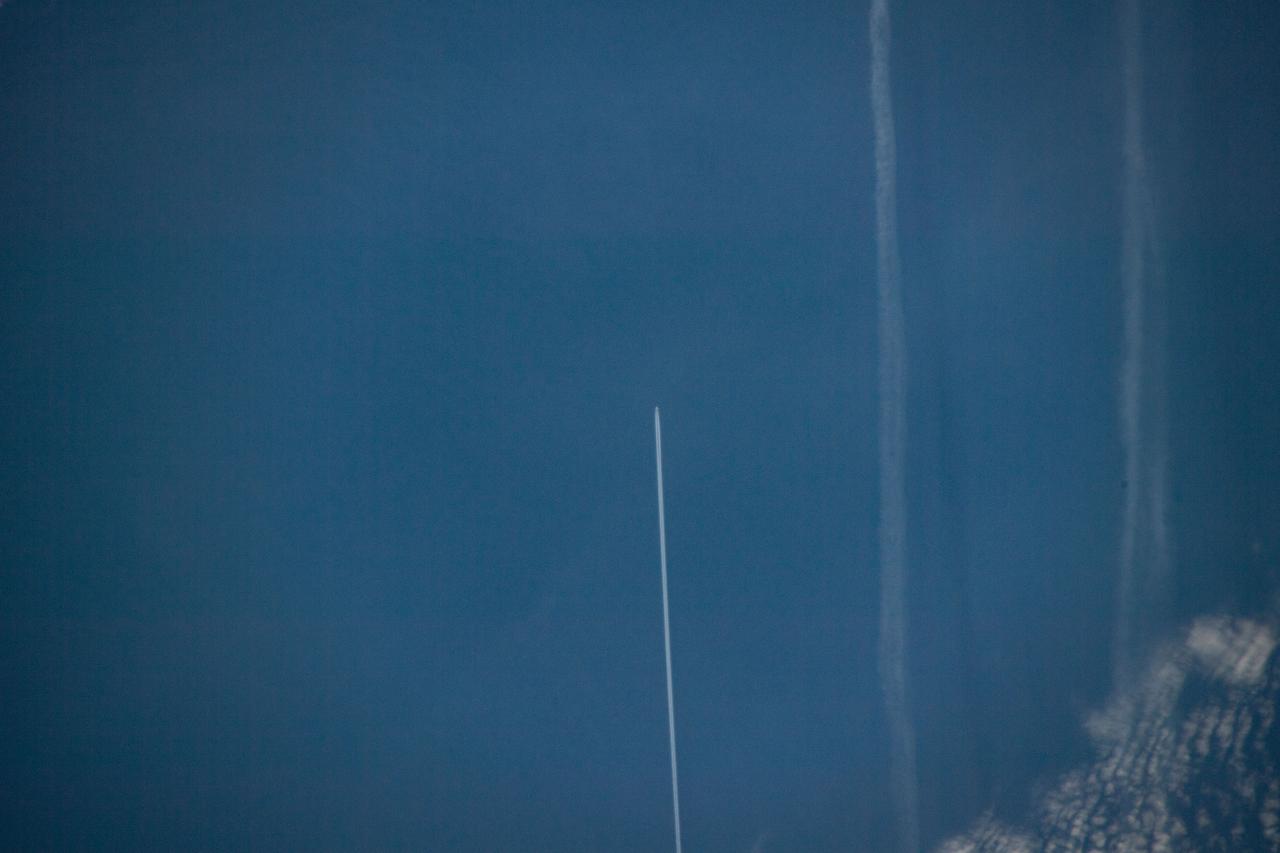
iss059e042046 (May 3, 2019) --- 258 miles above the North Atlantic Ocean an Expedition 59 crewmember photographed the contrail of an aircraft flying below as the International Space Station approached the coast of Ireland.

iss059e104298 (6/17/2019) --- Photo documentation taken of the JEM Small Satellite Orbital Deployer #11 (J-SSOD #11) micro-satellite deployment mission. J-SSOD#11 deploys the Joint Global Multi Nation Birds, known as the BIRDS-3 Project, which is a constellation of three 1U CubeSats developed by Japan, Nepal and Sri Lanka . The satellites, named Uguisu, Raavana-1, and NepaliSat-1, were released into Earth orbit for technology demonstrations.
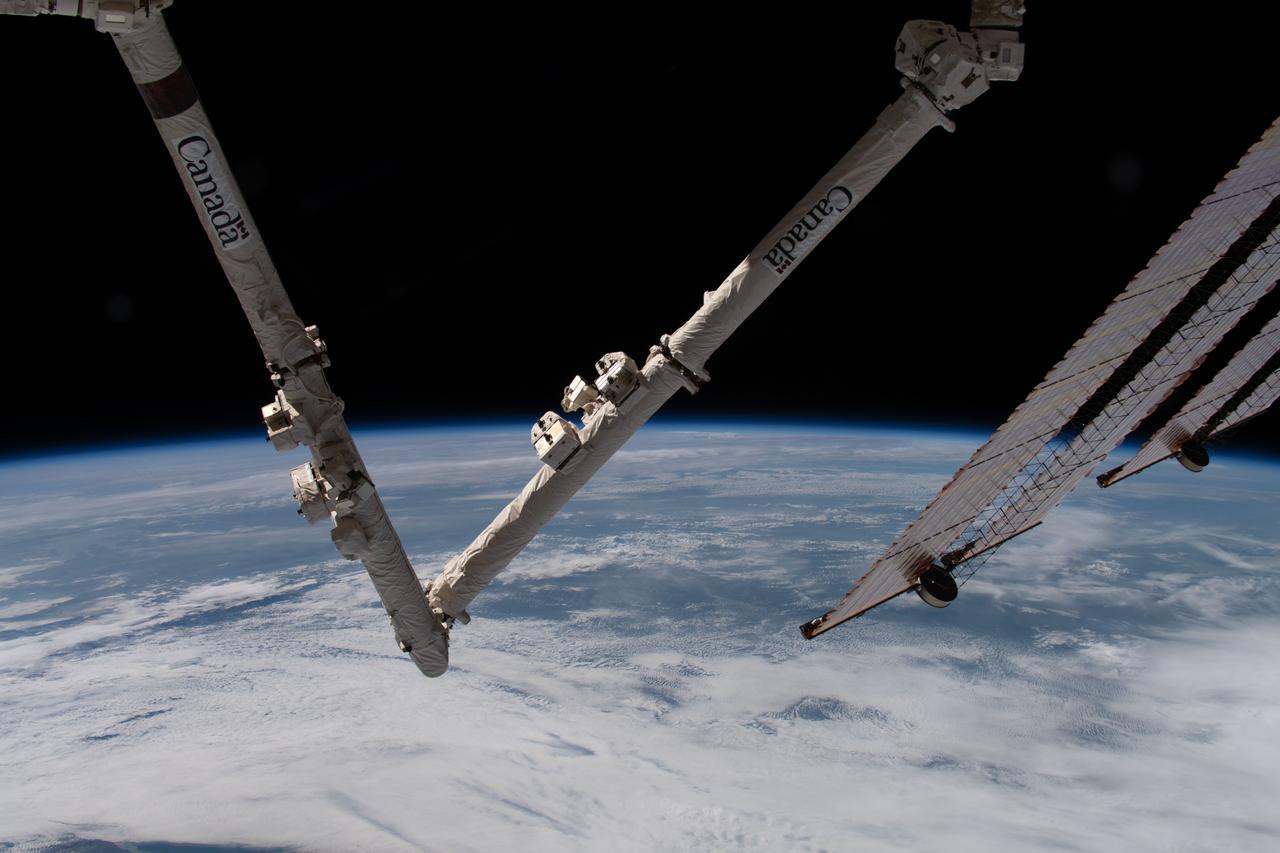
iss059e039713 (May 2, 2019) --- The Earth's limb and portions of the International Space Station's Canadarm2 robotic arm and solar arrays jut into the frame as the orbital complex flew 258 miles above the Great Lakes region of North America.
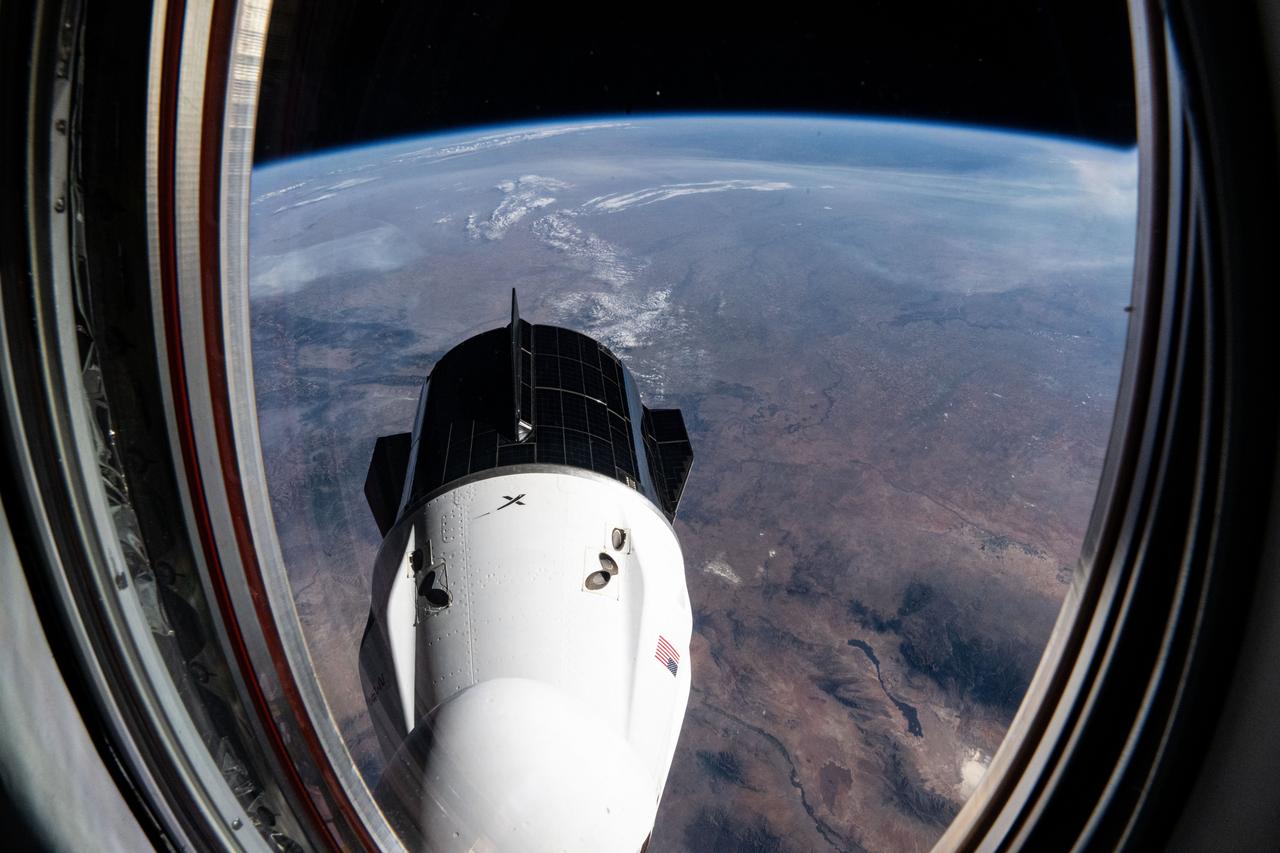
iss072e031305 (Oct. 7, 2024) --- The SpaceX Dragon Freedom spacecraft is pictured from a window on the Dragon Endeavour spacecraft in a photograph taken by NASA astronaut and Expedition 72 Flght Engineer Nick Hague. 258 miles below the International Space Station is the Sunflower State of Kansas.

iss059e103862 (6/17/2019) --- Photo documentation taken of the JEM Small Satellite Orbital Deployer #11 (J-SSOD #11) micro-satellite deployment mission. SpooQy-1 is a 3-Unit (3U) CubeSat deployed during the J-SSOD #11 mission. SpooQy-1 was developed by the National University of Singapore (NUS).
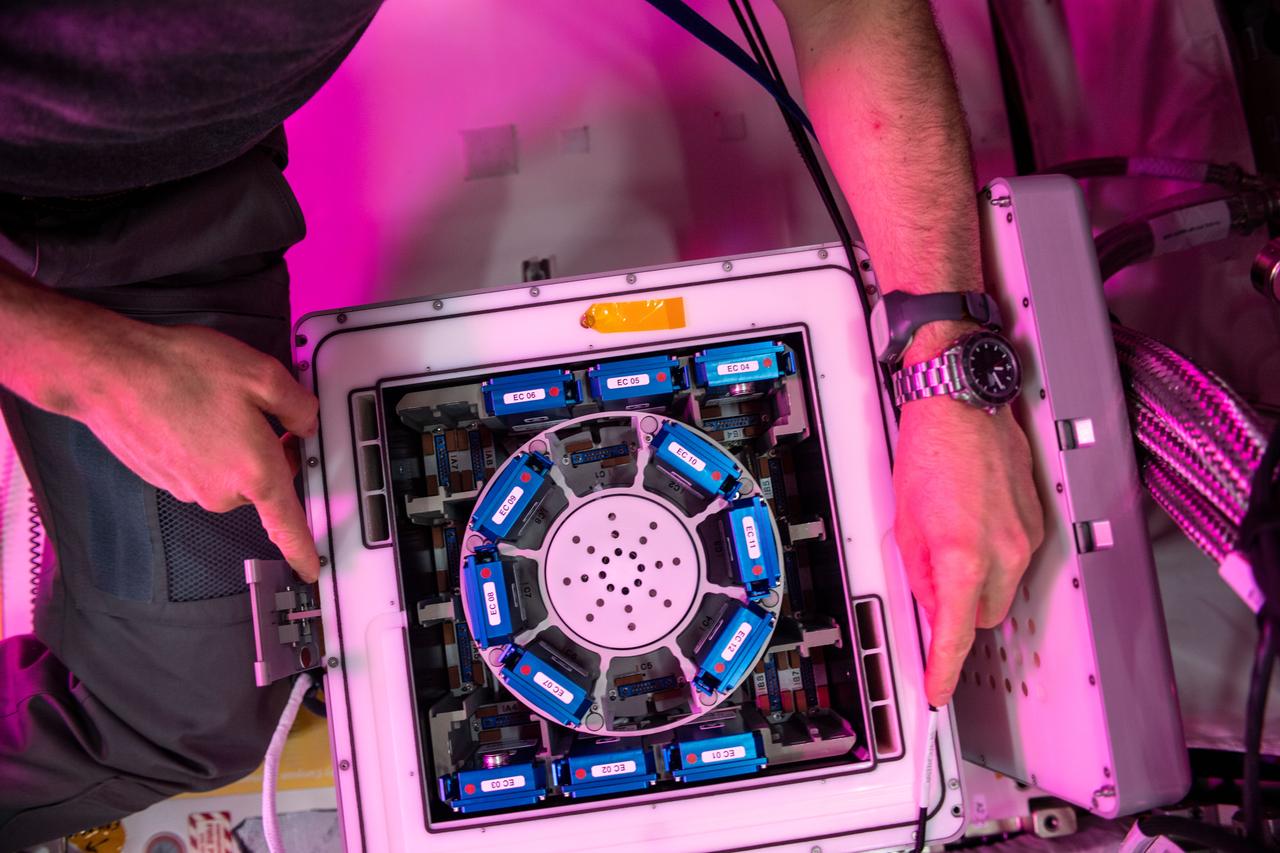
iss059e059071 (5/7/2019) --- Photo documentation of the 12 Nano Antioxidants Experiment Containers in Kubik 5 marking the start of the experiment run in the Columbus module aboard the International Space Station (ISS). The aim of the Nano Antioxidants investigation is to research innovative approaches for cellular stimulation to counteract the negative effects of long-term microgravity on the musculoskeletal system. There are numerous possible applications of this research project in other crucial social domains, such as healthcare of the elderly and of people with muscle atrophy disorders, through the implementation of new therapeutic strategies in the treatment of diseases involving oxidative stress as causing factor.
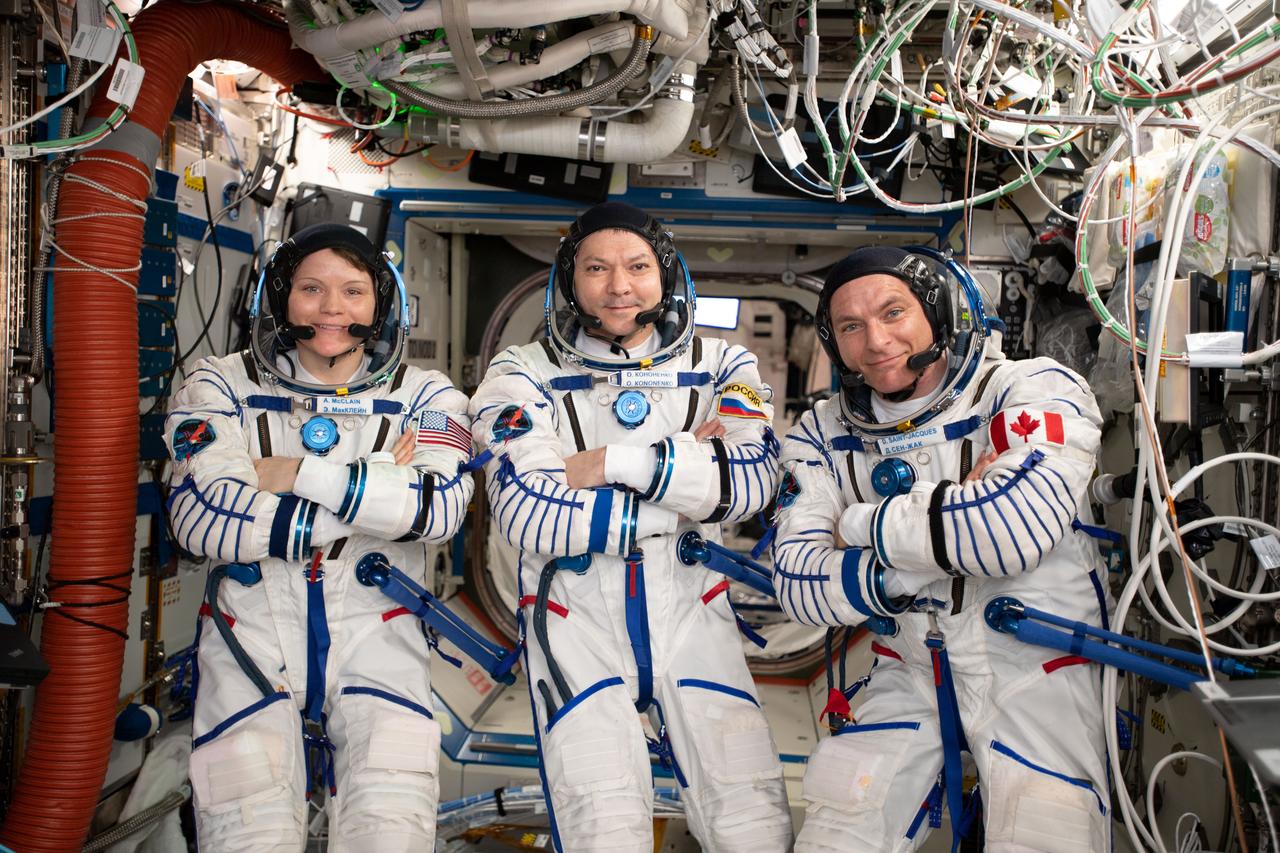
iss059e103489 (June 17, 2019) --- Expedition 59 crew members (from left) Anne McClain, Oleg Kononenko and David Saint-Jacques are wearing the Sokol launch and entry suits they will wear on the way back to Earth aboard the Soyuz MS-11 crew ship.
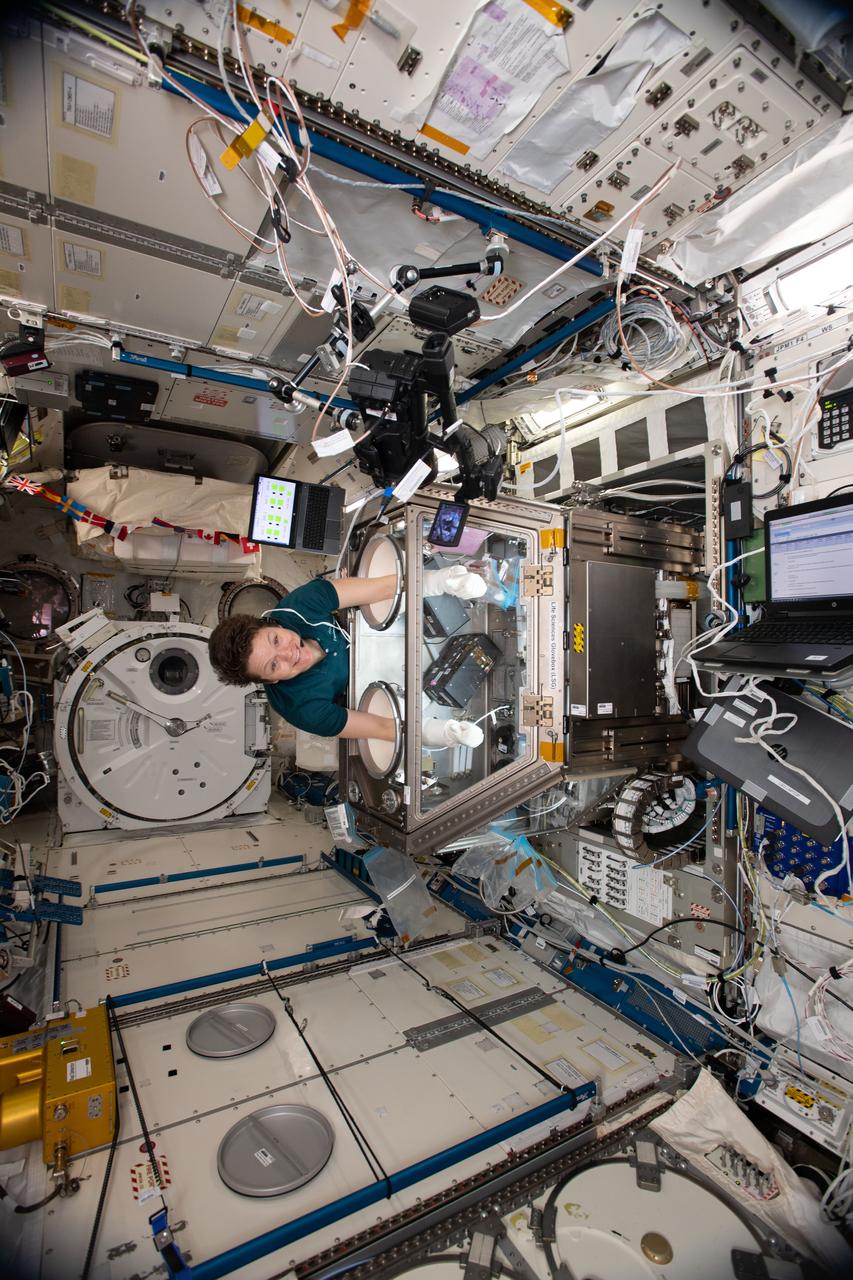
iss059e060922 (May 10, 2019) --- NASA astronaut Anne McClain works on Kidney Cells hardware inside the Life Sciences Glovebox located in Japan's Kibo laboratory module. Kidney Cells is an investigation that is seeking innovative treatments for kidney stones, osteoporosis and toxic chemical exposures to protect the health of astronauts in space and humans on Earth.
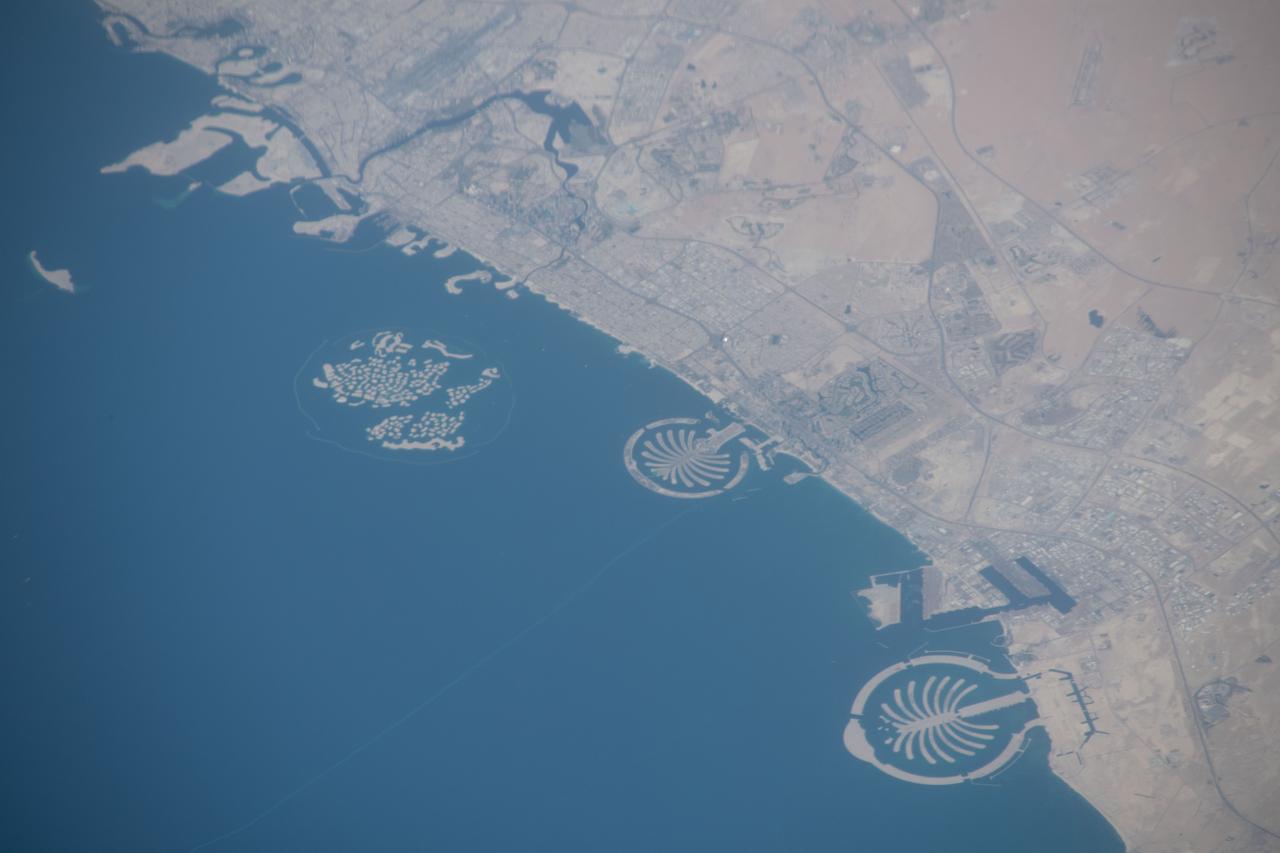
iss059e078929 (May 29, 2019) --- The artificial islands off the coast of Dubai in the United Arab Emirates are known as (from left) The World Islands, Palm Jumeirah and Palm Jebel Ali. The International Space Station was orbiting 255 miles above Saudi Arabia about to cross the Persian Gulf when this photograph was taken by an Expedition 59 crewmember.
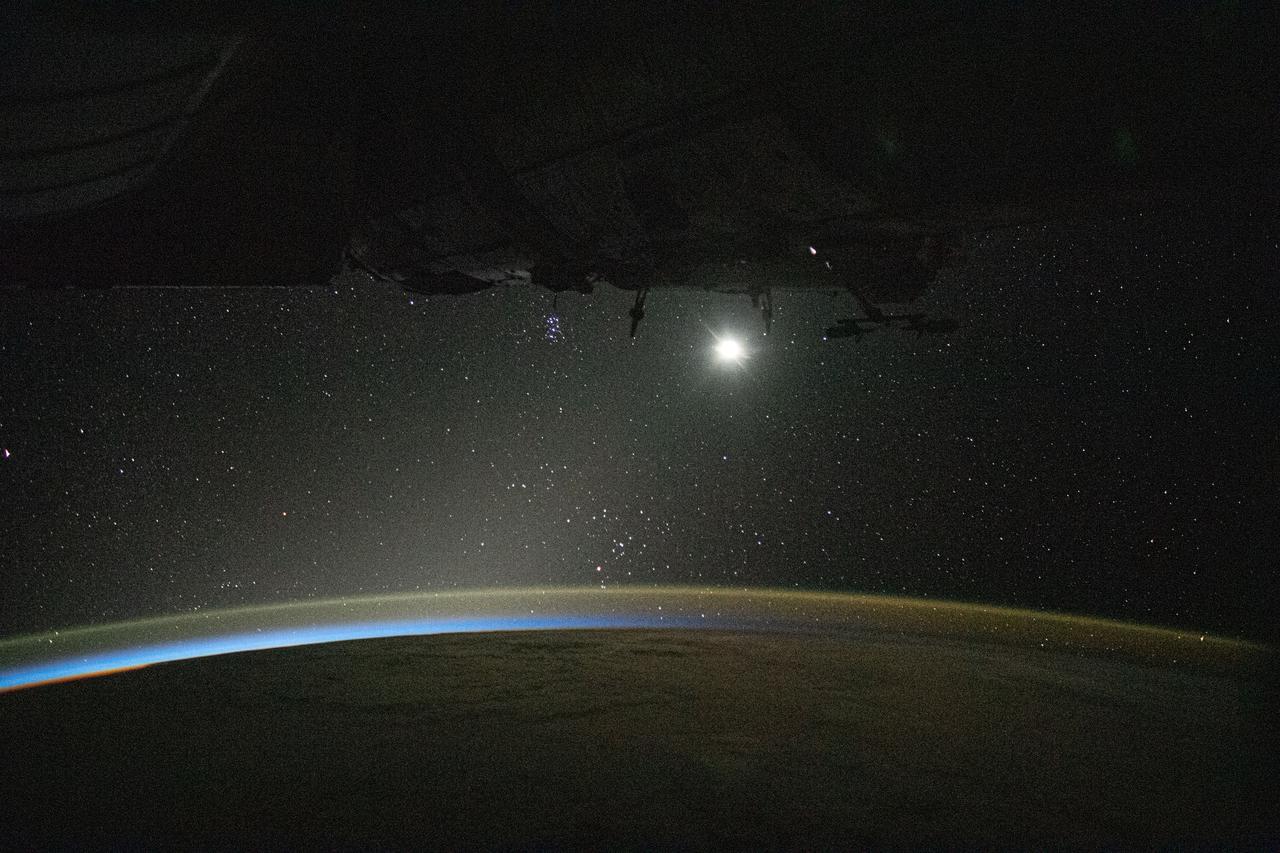
iss060e002090 (June 29, 2019) --- The Earth's limb and the atmospheric glow highlight the thin blue atmosphere back lit by the Sun's rays during a period between night and day. The light of the moon and the starry Milky Way drape the background as the International Space Station orbited 257 miles above the Pacific Ocean between Hawaii and Mexico.
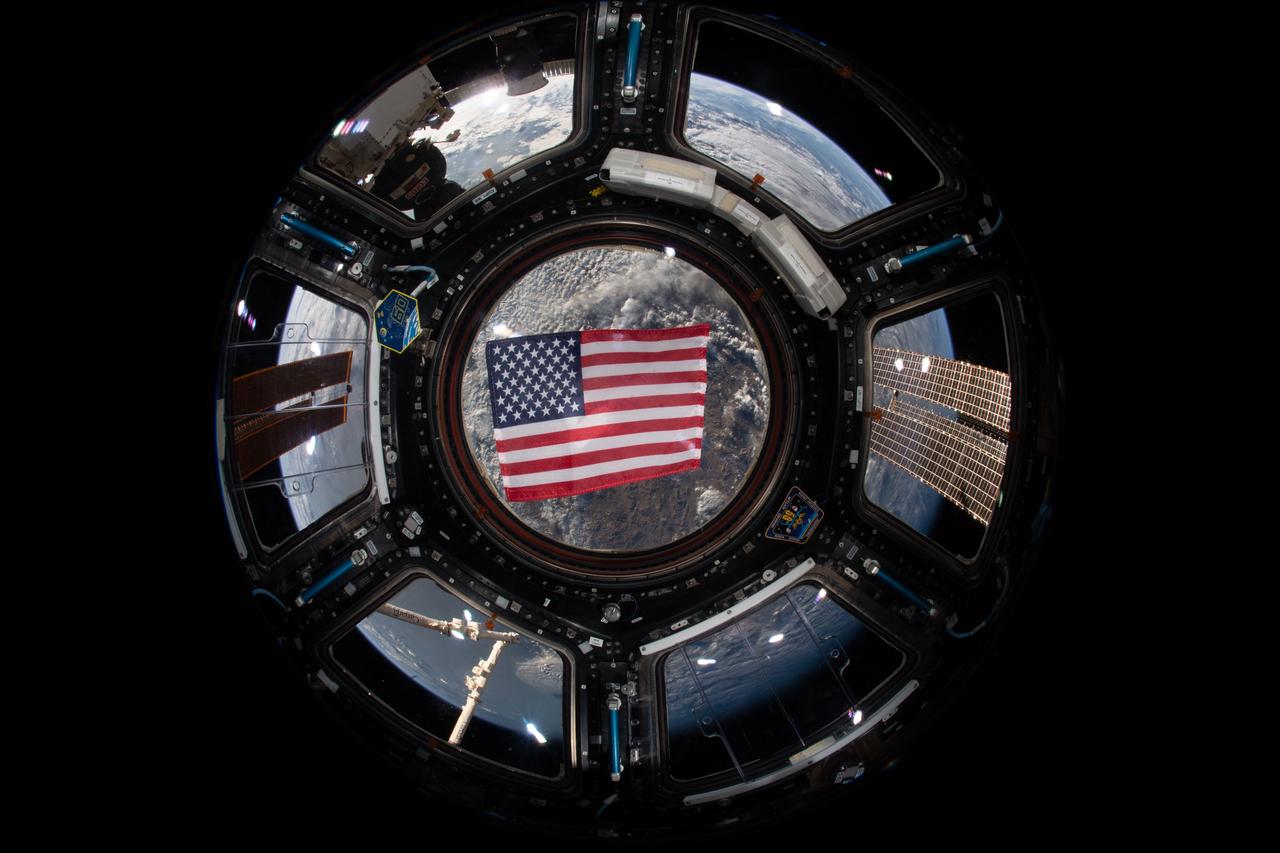
View of crew personal Flight Data File (FDF) item - American flag - floating in front of the Cupola windows.
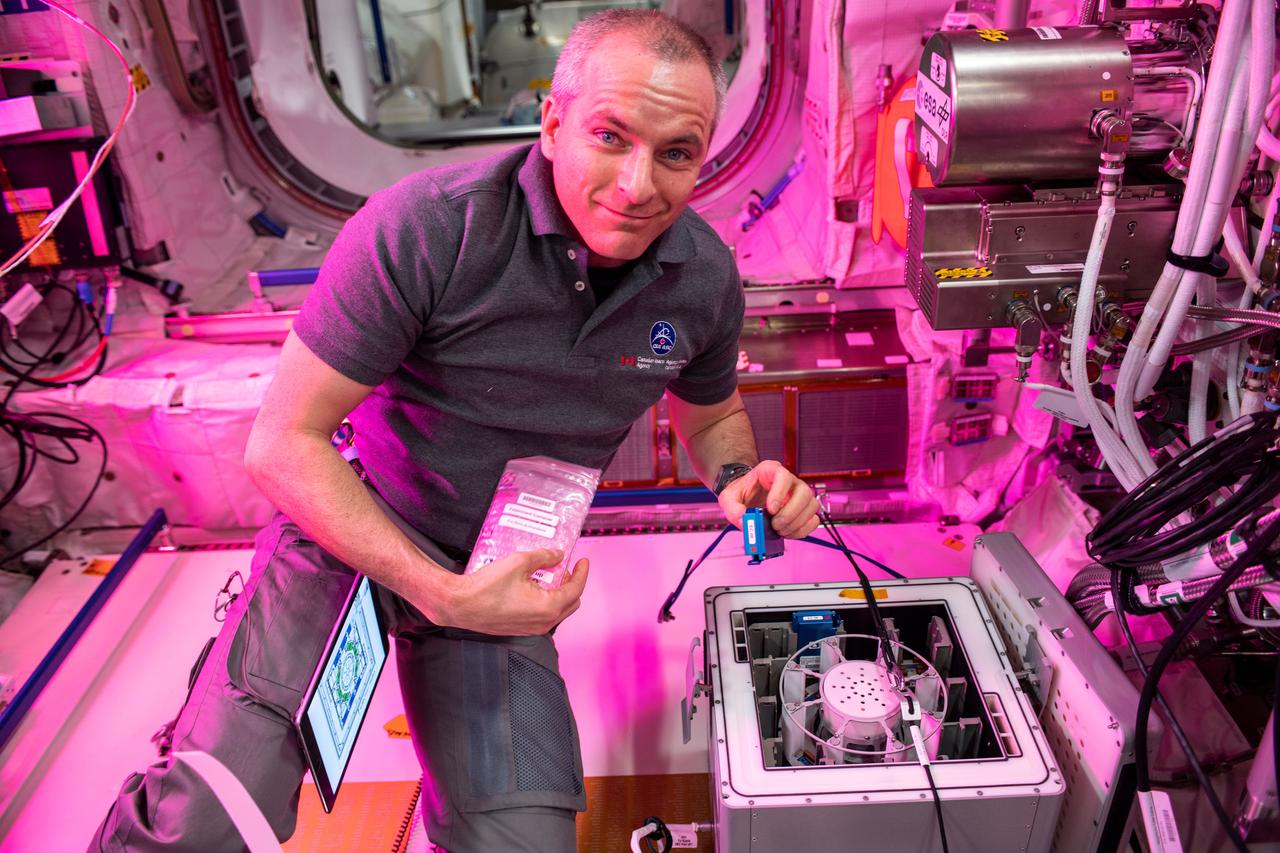
iss059e059049 (5/7/2019) --- Canadian Space Agency (CSA) astronaut David Saint-Jacques is photographed during the installation of the Nano Antioxidants Experiment Containers in Kubik 5 aboard the International Space Station (ISS). The aim of the Nano Antioxidants investigation is to research innovative approaches for cellular stimulation to counteract the negative effects of long-term microgravity on the musculoskeletal system. There are numerous possible applications of this research project in other crucial social domains, such as healthcare of the elderly and of people with muscle atrophy disorders, through the implementation of new therapeutic strategies in the treatment of diseases involving oxidative stress as causing factor.
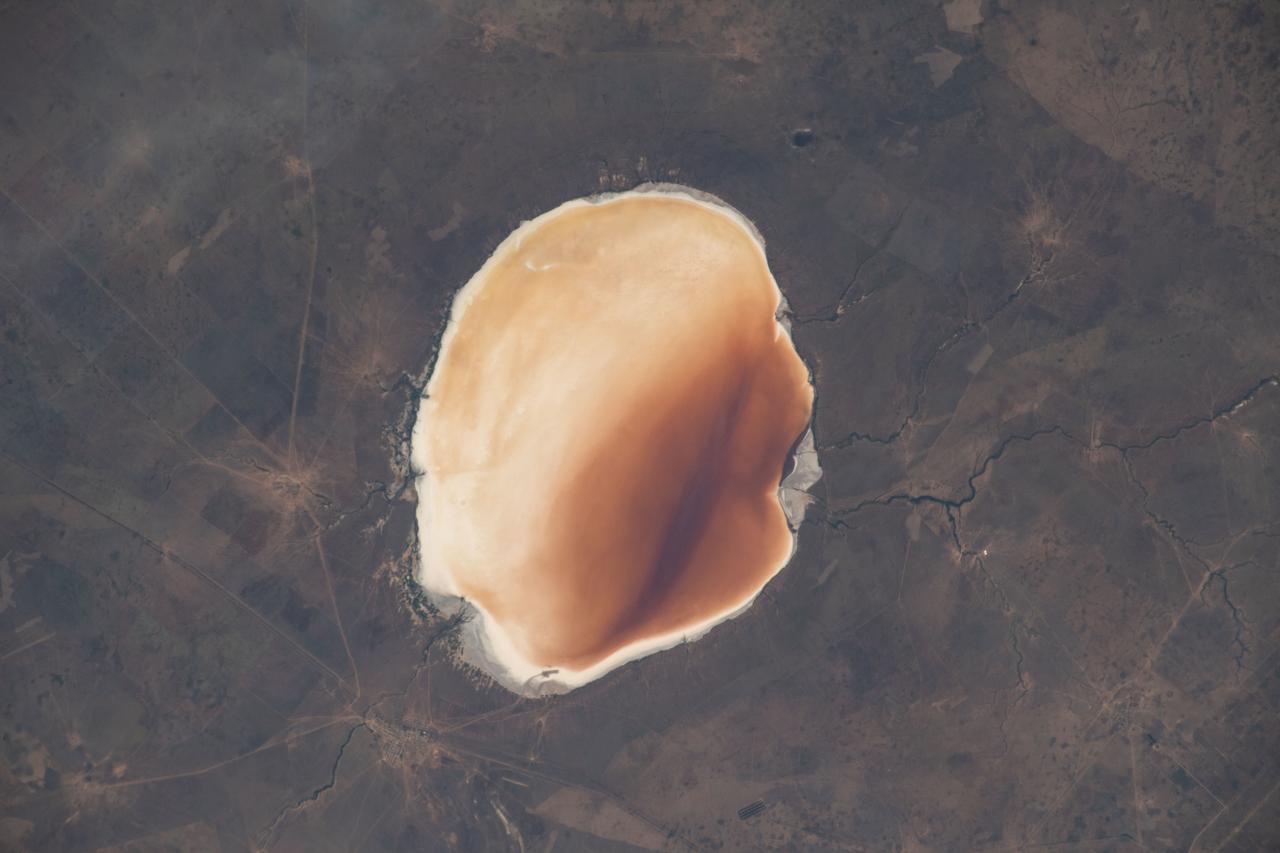
iss059e098991 (June 9, 2019) --- The highly saline Lake Elton in Russia, near the border with Kazakhstan, is the largest mineral lake in Europe. It was photographed from an altitude of 258 miles above the Earth's surface.
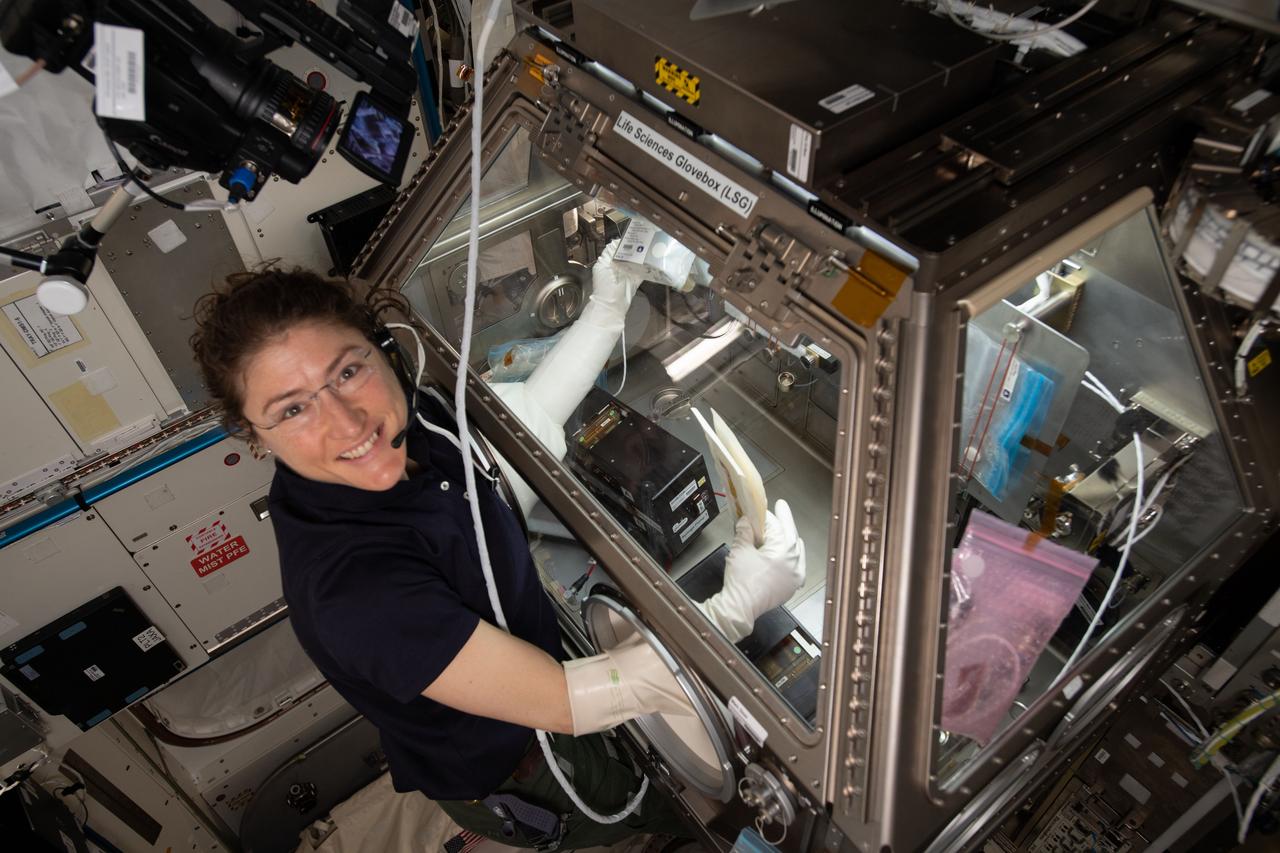
iss059e060936 (May 12, 2019) --- NASA astronaut Christina Koch works inside the Life Sciences Glovebox conducting research for the Kidney Cells investigation that is seeking innovative treatments for kidney stones, osteoporosis and toxic chemical exposures.
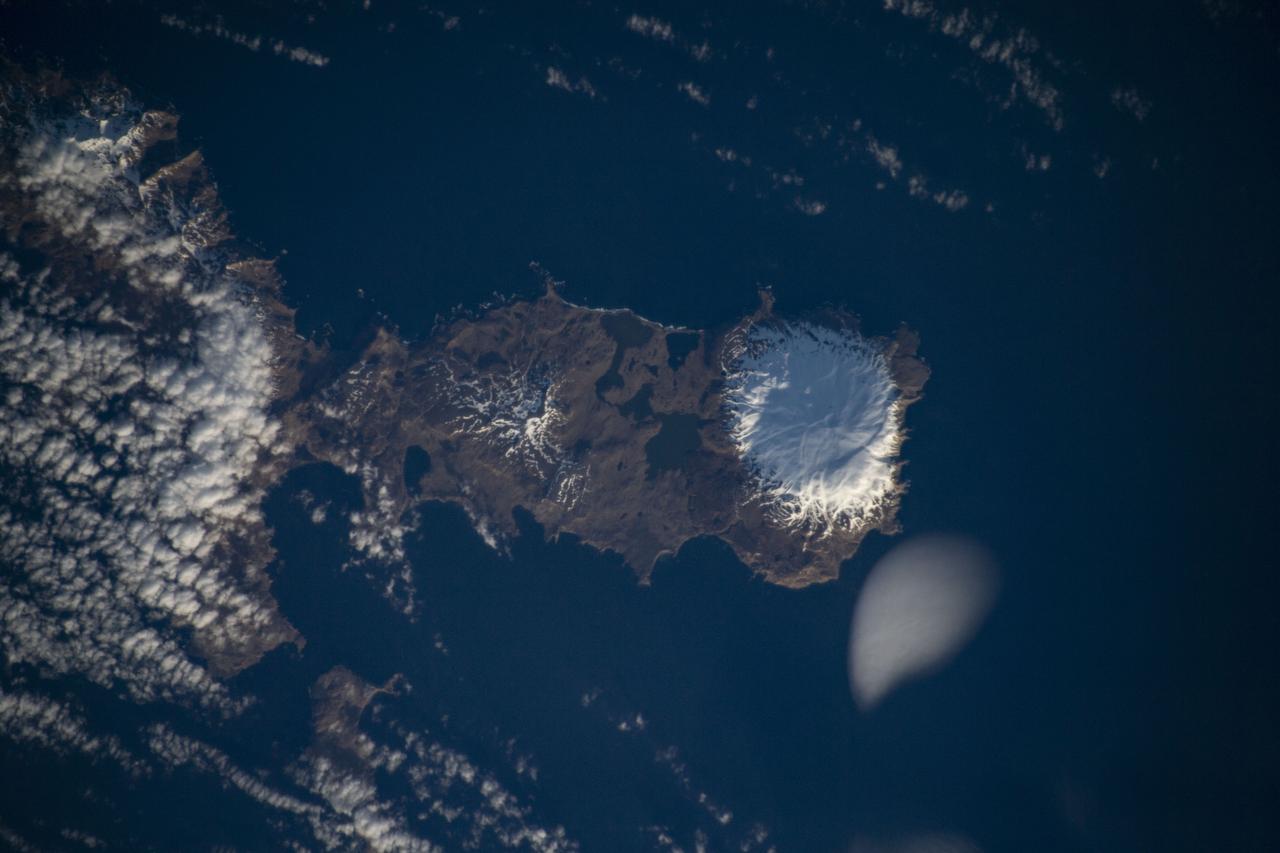
iss059e039843 (May 2, 2019) --- The International Space Station was orbiting 258 miles above the Aleutian Islands when an Expedition 59 crewmember photographed the snow-capped Kiska Volcano on Kiska Island which is part of the Alaska Maritime National Wildlife Refuge.

iss059e091418 (6/4/2019) --- View taken of the hardware for the Capillary Structures investigation in the Japanese Experiment Module (JEM) onboard the International Space Station (ISS). This investigation studies a new method using structures of specific shapes to manage fluid and gas mixtures. It also studies water recycling and carbon dioxide removal, benefitting future efforts to design lightweight, more reliable life support systems for future space missions.
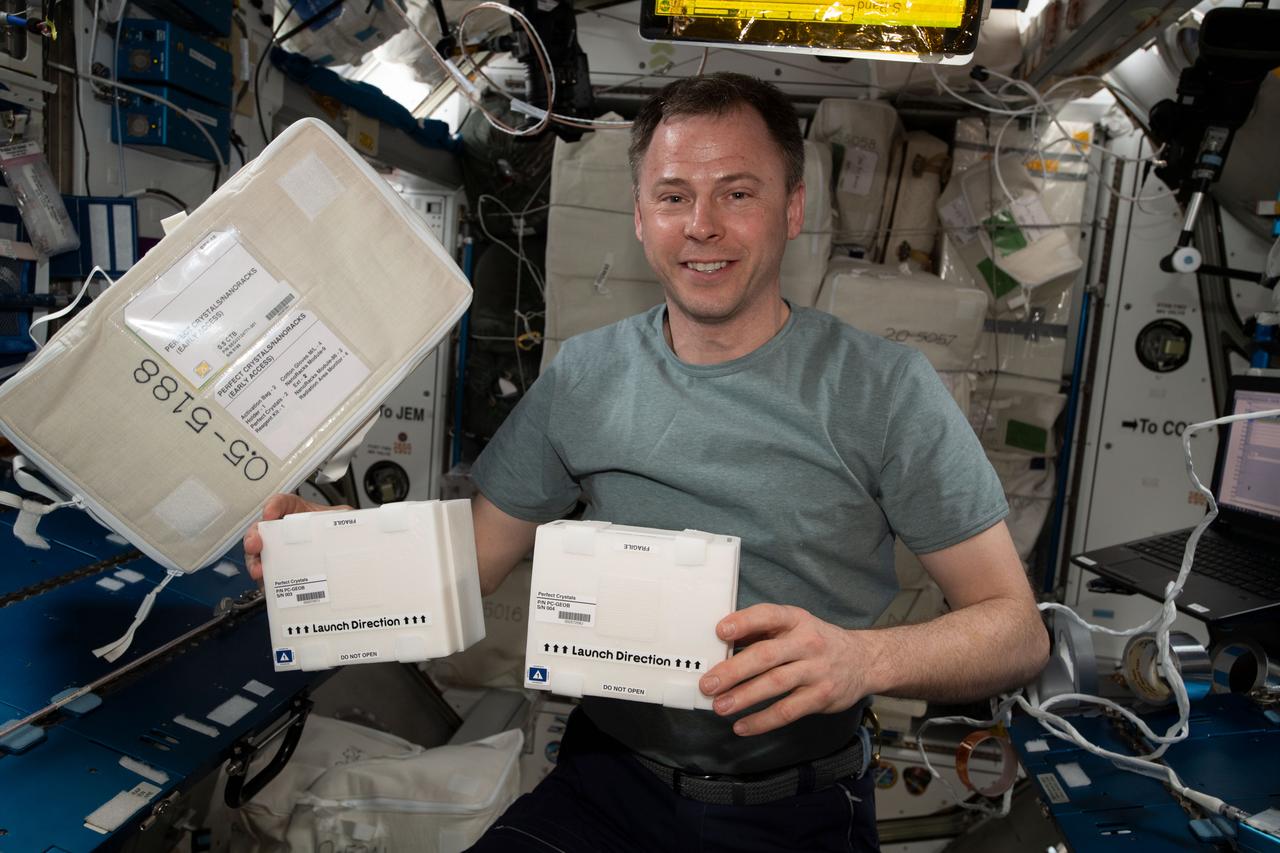
iss060e015022 (7/28/2019) — NASA astronaut Nick Hague is shown holding the Perfect Crystals investigation samples within Styrofoam containers in Node 3 aboard the International Space Station (ISS). Growth of Large, Perfect Protein Crystals for Neutron Crystallography (Perfect Crystals) crystallizes human manganese superoxide dismutase in order to analyze its shape. This sheds light on how the antioxidant protein helps protect the human body from oxidizing radiation and oxides created as a byproduct of metabolism.

iss059e054463 (5/7/2019) --- Photo documentation of Micro Alagae Culture Bags 1,2,3 and 4 in Node 2 aboard the International Space Station (ISS). Microalgae Biosynthesis in Microgravity (MicroAlgae) studies the effects of microgravity on Haematococcus pluvialis, an algae capable of producing a powerful antioxidant, astaxanthin. It could provide a readily available dietary supplement to promote astronaut health on long-duration space exploration missions.

iss059e104863 (6/17/2019) --- Photo documentation taken of the JEM Small Satellite Orbital Deployer #11 (J-SSOD #11) micro-satellite deployment mission. SpooQy-1 is a 3-Unit (3U) CubeSat deployed during the J-SSOD #11 mission. SpooQy-1 was developed by the National University of Singapore (NUS).
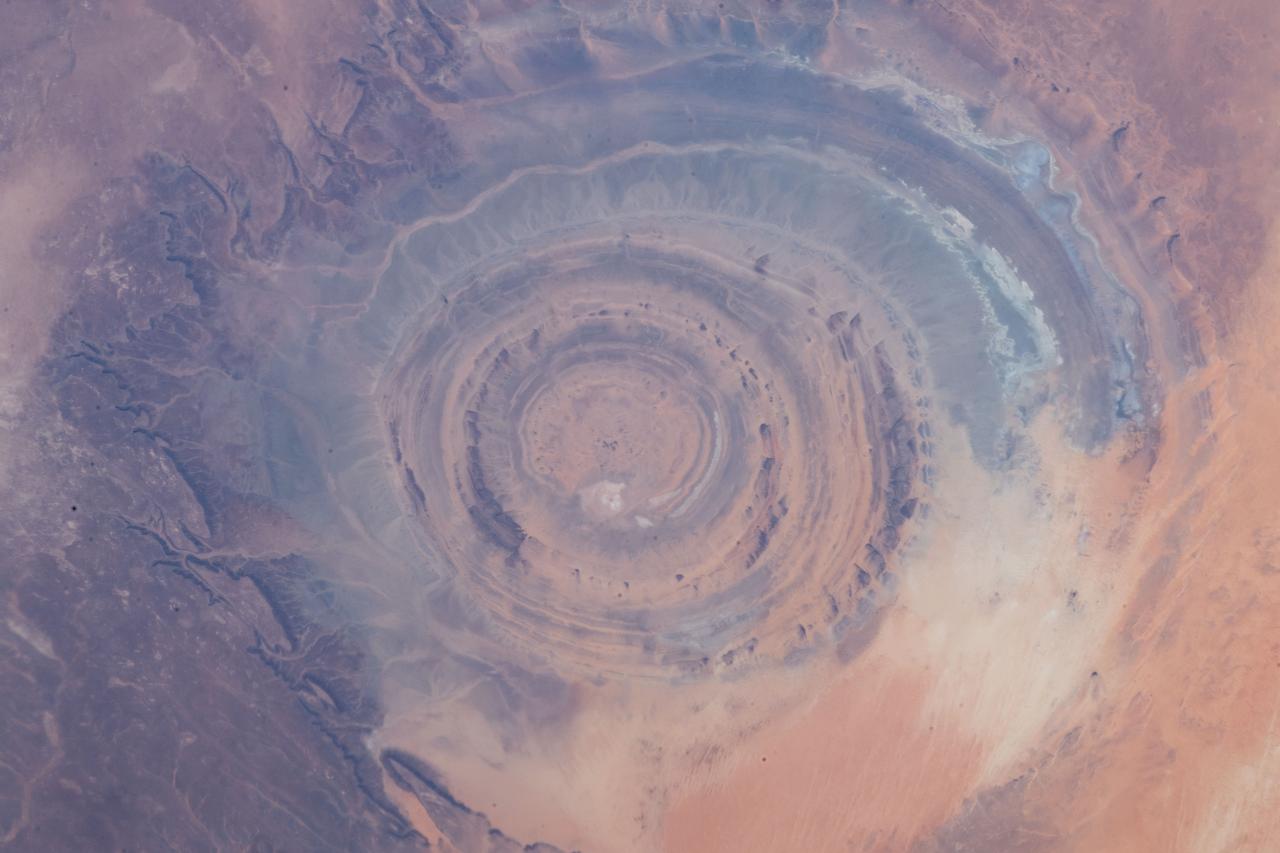
iss059e013137 (March 5, 2019) --- From an altitude of 255 miles, an Expedition 59 crewmember photographed the Richat Structure, or the "Eye of the Sahara," in northwestern Mauritania. The circular geologic feature is thought to be caused by an uplifted dome—geologists would classify it as a domed anticline—that has been eroded to expose the originally flat rock layers.
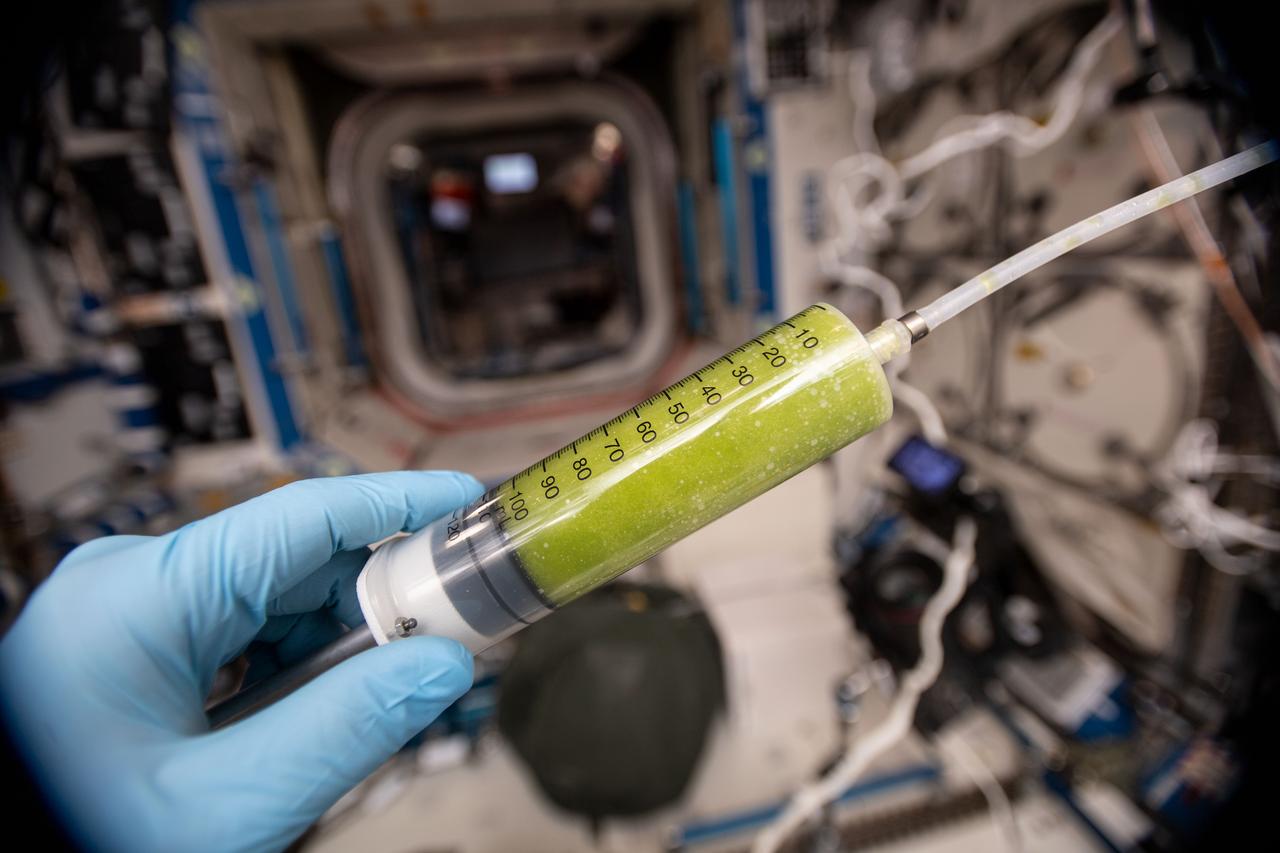
iss059e114352 (6/20/2019) — Photo documentation abroad the International Space Station (ISS) of the syringe during the filling of the Photobioreactor (PBR) with medium and algae to begin the experiment. The Photobioreactor investigation aims at demonstrating that microalgae (i.e. biological processes) can be used together with existing systems to improve recycling of resources, creating a hybrid life support system. This hybrid approach could be helpful in future long-duration exploration missions, as it could reduce the amount of consumables required from Earth.
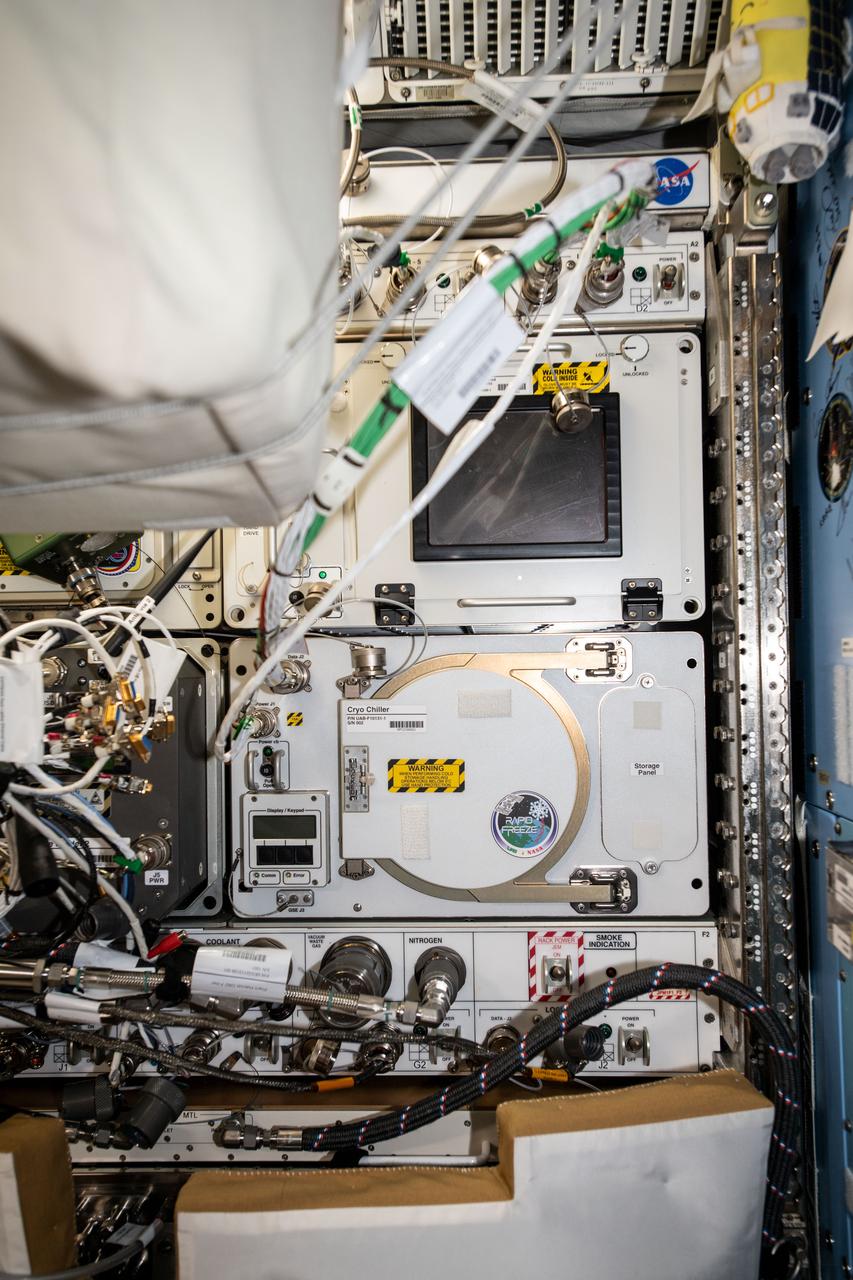
iss059e034458 (4/23/2019) --- A view of the Cryo Chiller Hardware during installation aboard the International Space Station (ISS). Cryo Chiller is a single Expedite the Processing of Experiments to Space Station (EXPRESS) locker replacement unit which provides rapid freezing capability in support of biological sciences, as well as temperature-controlled transfer to/from the International Space Station (ISS) on visiting vehicles.

iss059e104771 (6/17/2019) --- Photo documentation taken of the JEM Small Satellite Orbital Deployer #11 (J-SSOD #11) micro-satellite deployment mission. J-SSOD#11 deploys the Joint Global Multi Nation Birds, known as the BIRDS-3 Project, which is a constellation of three 1U CubeSats developed by Japan, Nepal and Sri Lanka . The satellites, named Uguisu, Raavana-1, and NepaliSat-1, were released into Earth orbit for technology demonstrations.
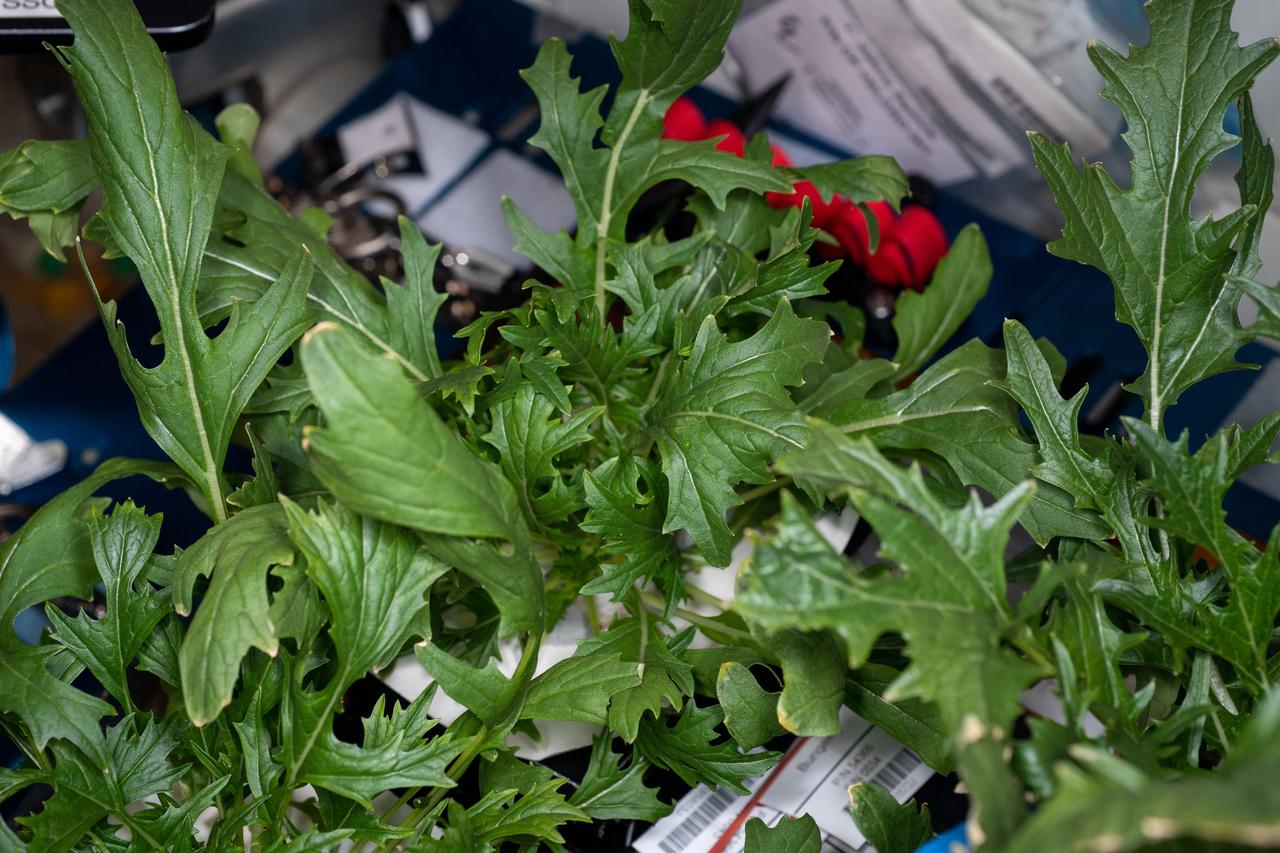
View during Plant Harvest in the Vegetable Production System (Veggie). Image was taken for the Veg-04 experiment. Photo was taken by Expedition 60 crew.
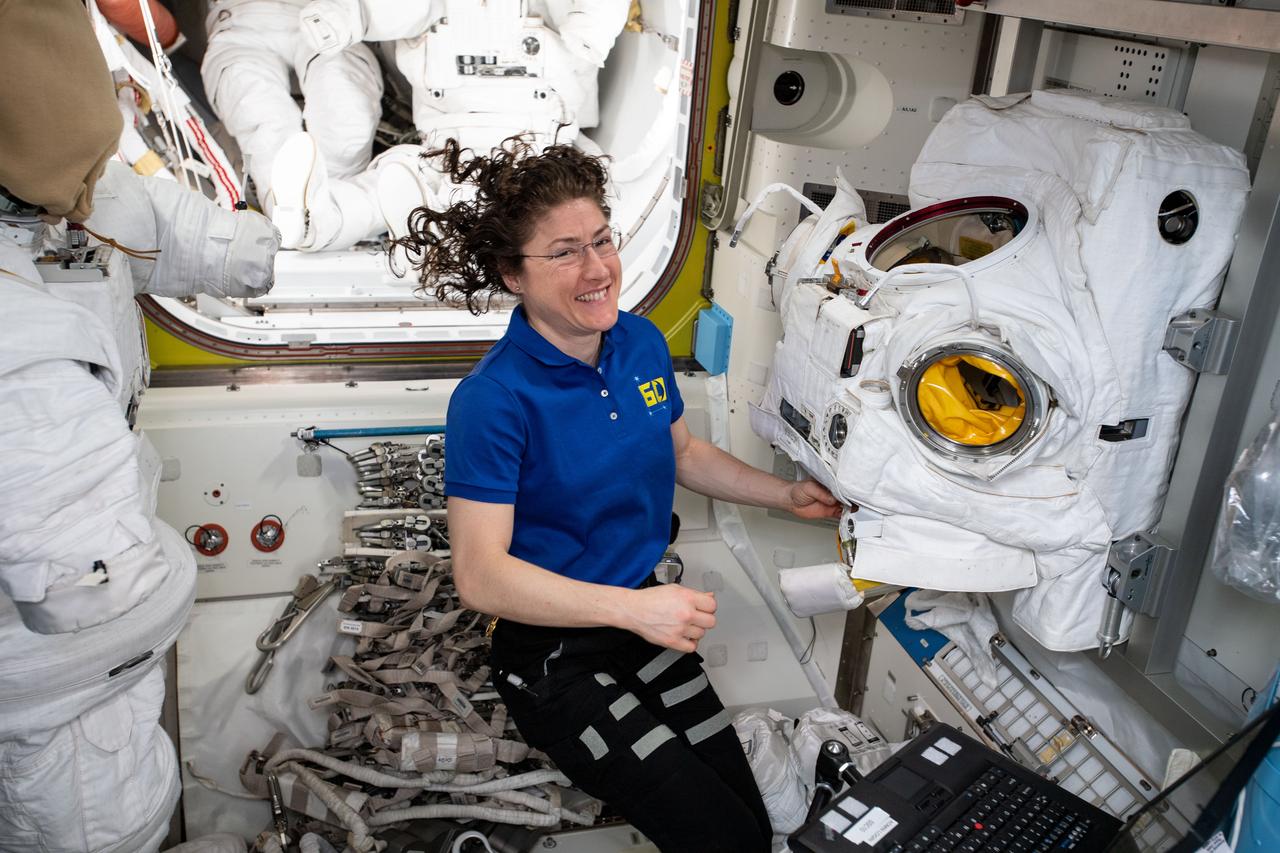
iss060e000808 (June 26, 2019) --- Expedition 60 Flight Engineer Christina Koch of NASA works on a U.S. spacesuit in the Quest airlock where U.S. spacewalks are staged aboard the International Space Station.
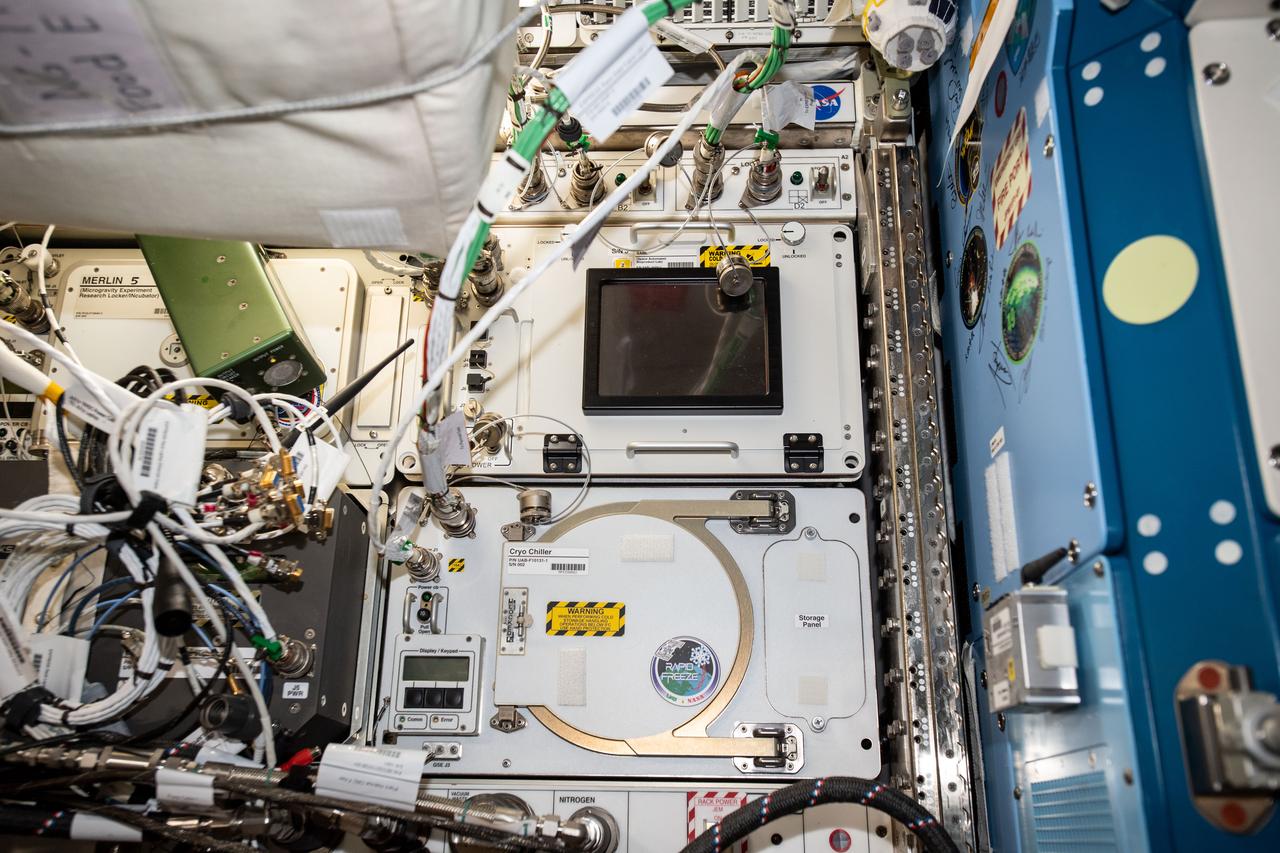
iss059e034456 (4/23/2019) --- A view of the Cryo Chiller Hardware during installation aboard the International Space Station (ISS). Cryo Chiller is a single Expedite the Processing of Experiments to Space Station (EXPRESS) locker replacement unit which provides rapid freezing capability in support of biological sciences, as well as temperature-controlled transfer to/from the International Space Station (ISS) on visiting vehicles.
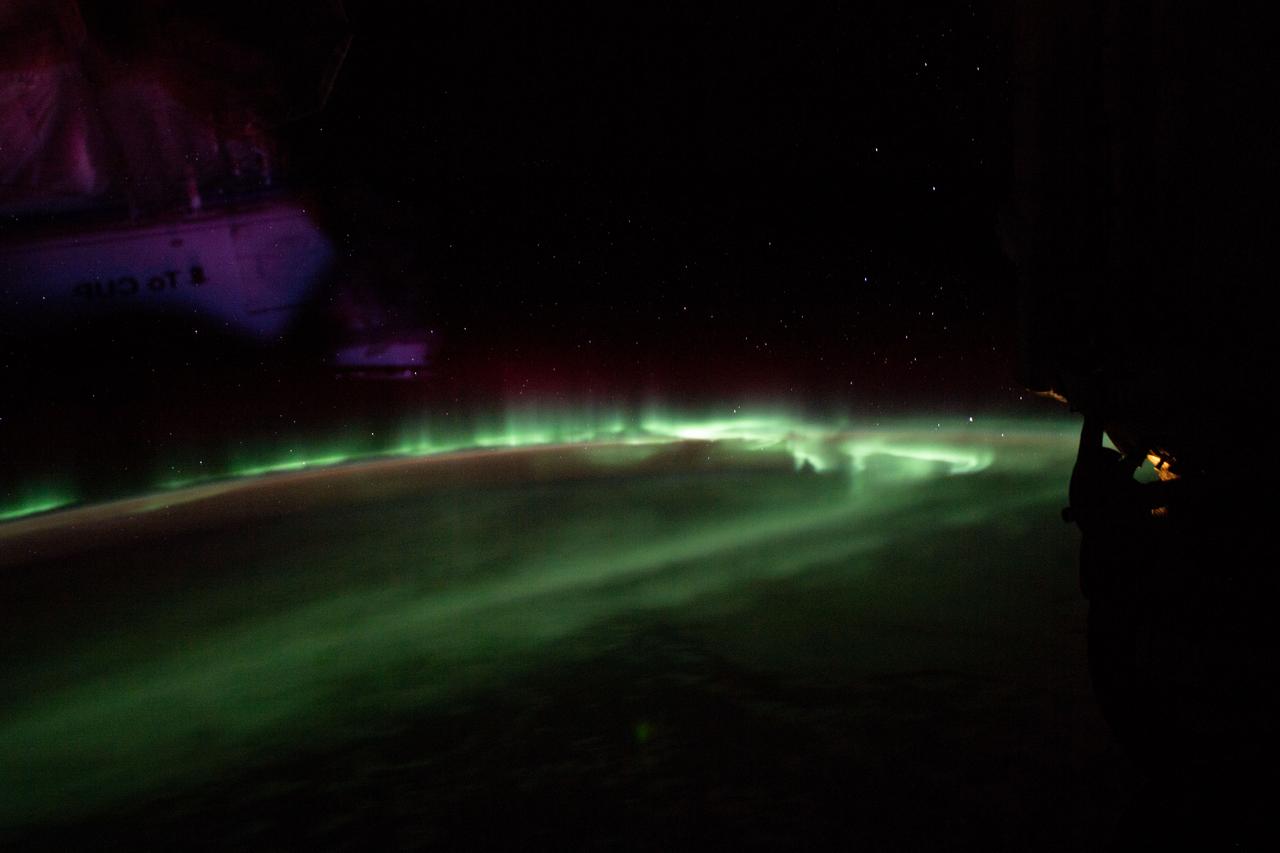
iss059e020015 (April 12, 2019) --- The aurora australis, also known as the "southern lights," is pictured as the International Space Station orbited 264 miles above the Indian Ocean south of the Australian island state of Tasmania.
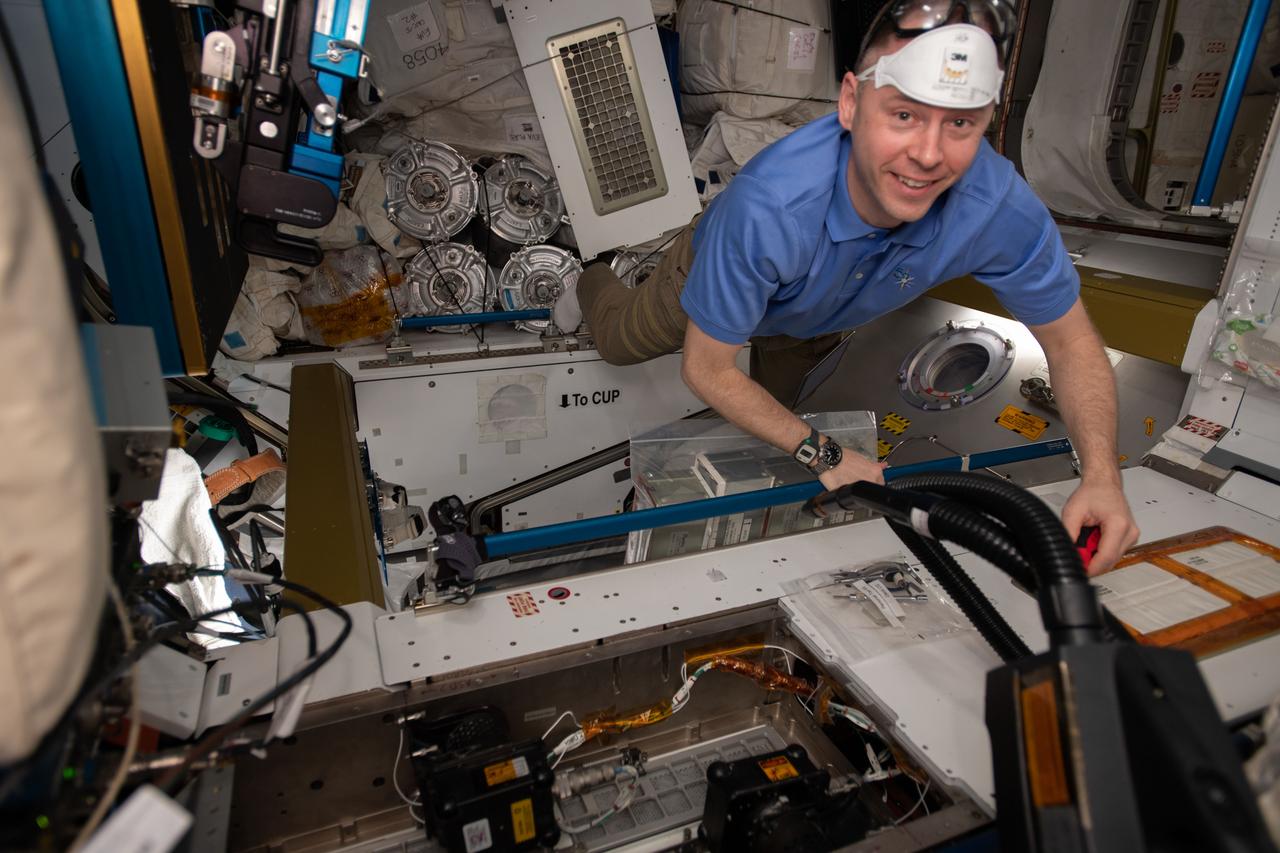
iss059e036143 (April 29, 2019) --- Expedition 59 Flight Engineer and NASA astronaut Nick Hague wears personal protection gear while working to remove bacteria filters and replacing them with charcoal filters inside the International Space Station's Tranquility module.

iss060e002056 (June 29, 2019) --- Flying 268 miles above New Zealand, the International Space Station's docked Progress 72 resupply ship is silhouetted over a wispy aurora australis, or "southern lights," the Earth's atmospheric glow and a starry orbital nighttime sky. The bright light at top is the Pirs module's lit airlock window.
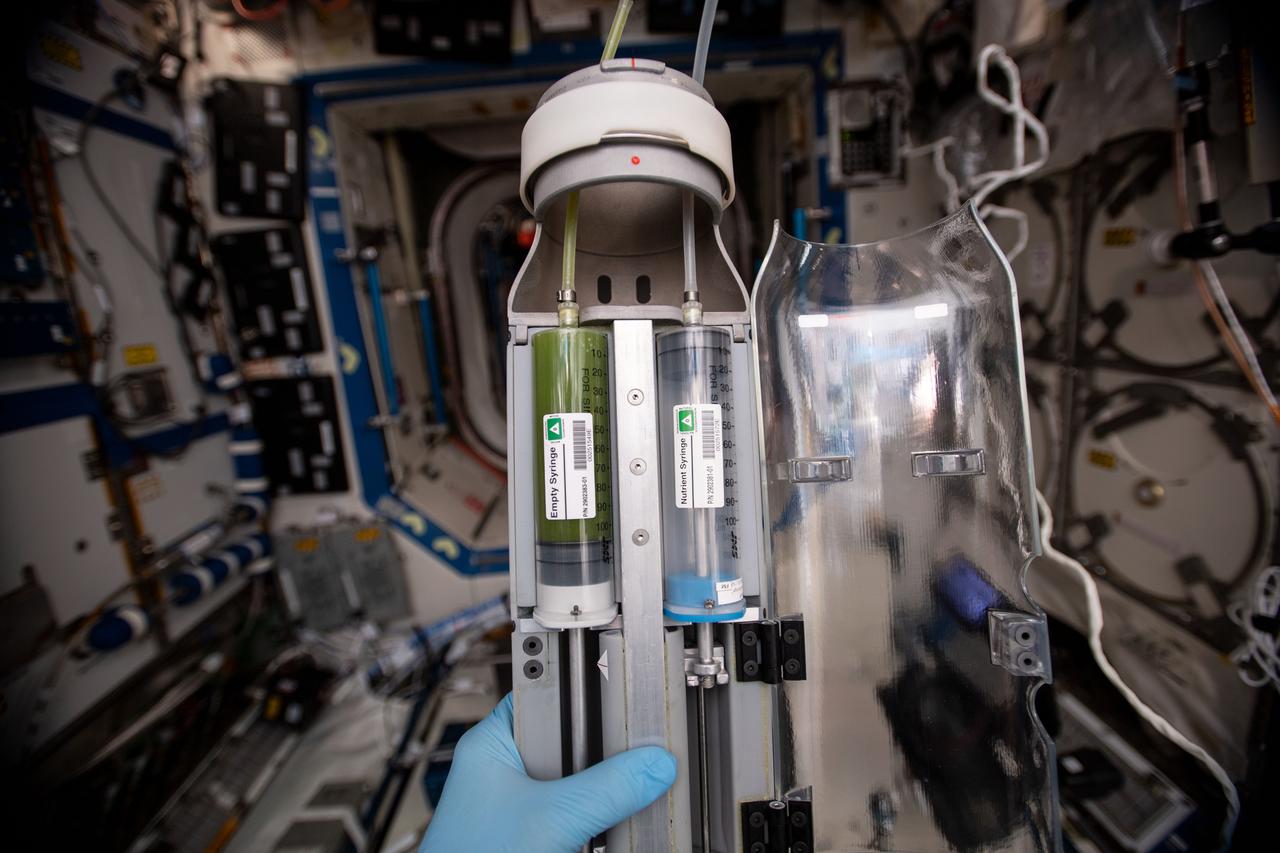
iss059e114346 (6/20/2019) — Photo documentation abroad the International Space Station (ISS) of the Empty Syringe and the Nutrient Syringe during the filling of the Photobioreactor (PBR) with medium and algae to begin the experiment. The Photobioreactor investigation aims at demonstrating that microalgae (i.e. biological processes) can be used together with existing systems to improve recycling of resources, creating a hybrid life support system. This hybrid approach could be helpful in future long-duration exploration missions, as it could reduce the amount of consumables required from Earth.
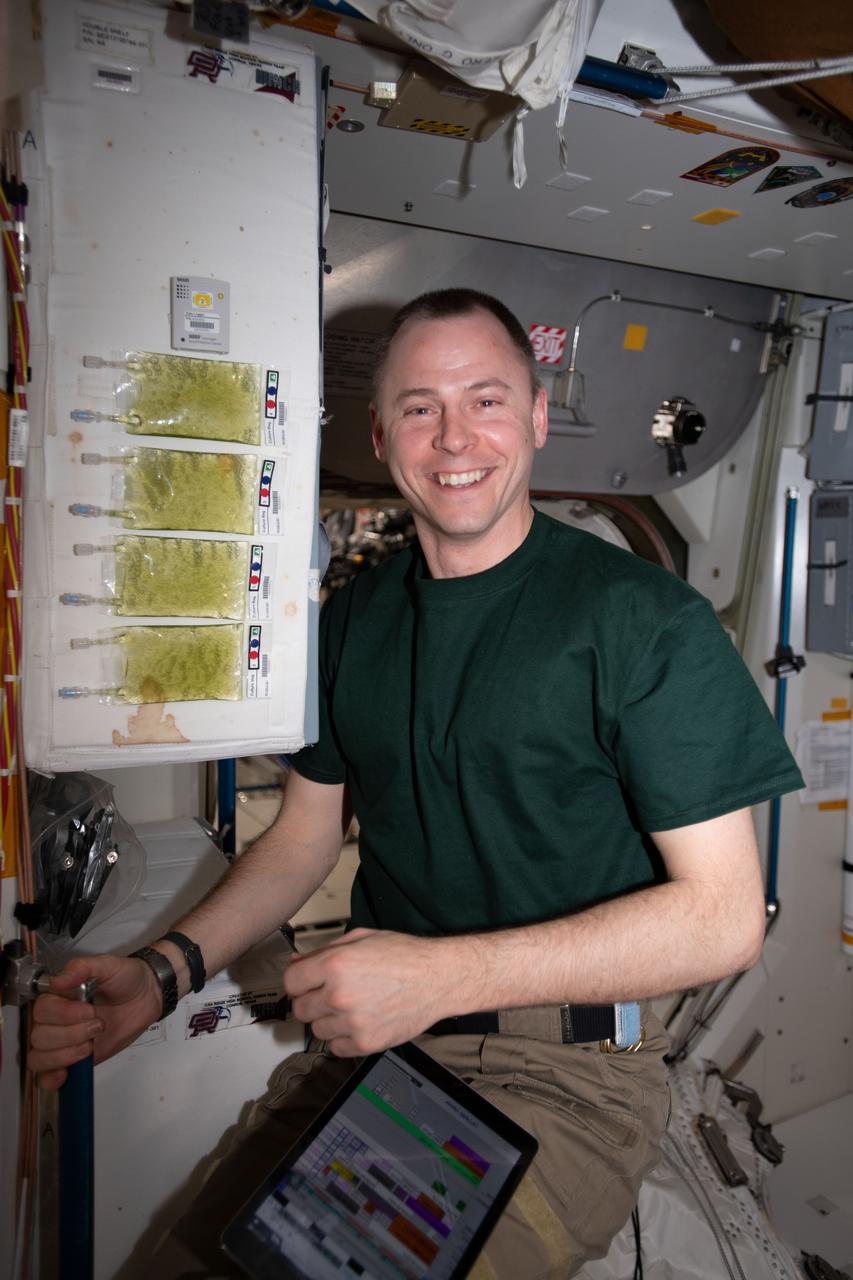
iss059e059230 (5/8/2019) --- NASA Astronaut Nick Hague with the MicroAlgae Culture Bags in Node 2 abord the International Space Station (ISS). Microalgae Biosynthesis in Microgravity (MicroAlgae) studies the effects of microgravity on Haematococcus pluvialis, an algae capable of producing a powerful antioxidant, astaxanthin. It could provide a readily available dietary supplement to promote astronaut health on long-duration space exploration missions.
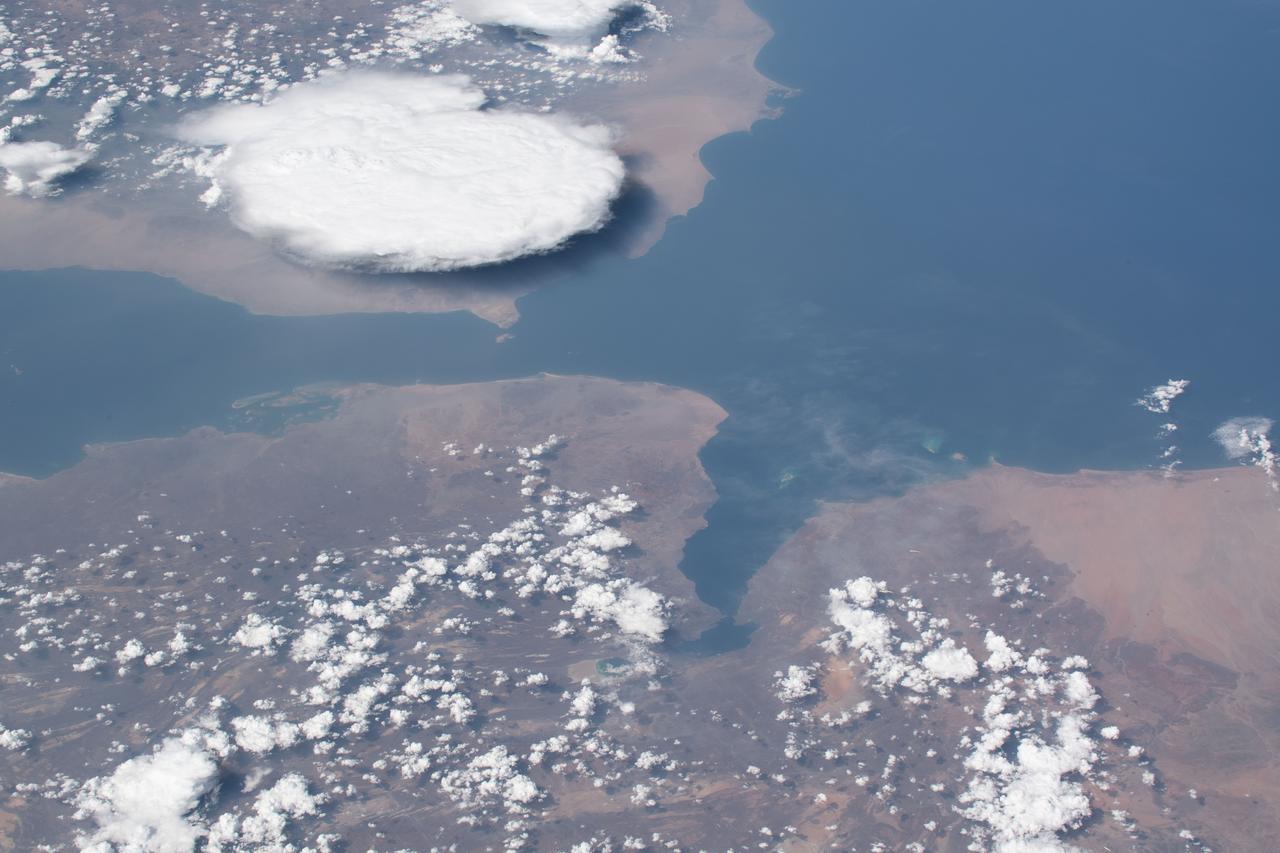
iss059e078914 (May 29, 2019) --- Storm clouds are seen on the southwestern coast of Yemen as the International Space Station was about to fly 254 miles over the Bab al-Mandab Strait in between the Gulf of Aden and the Red Sea.
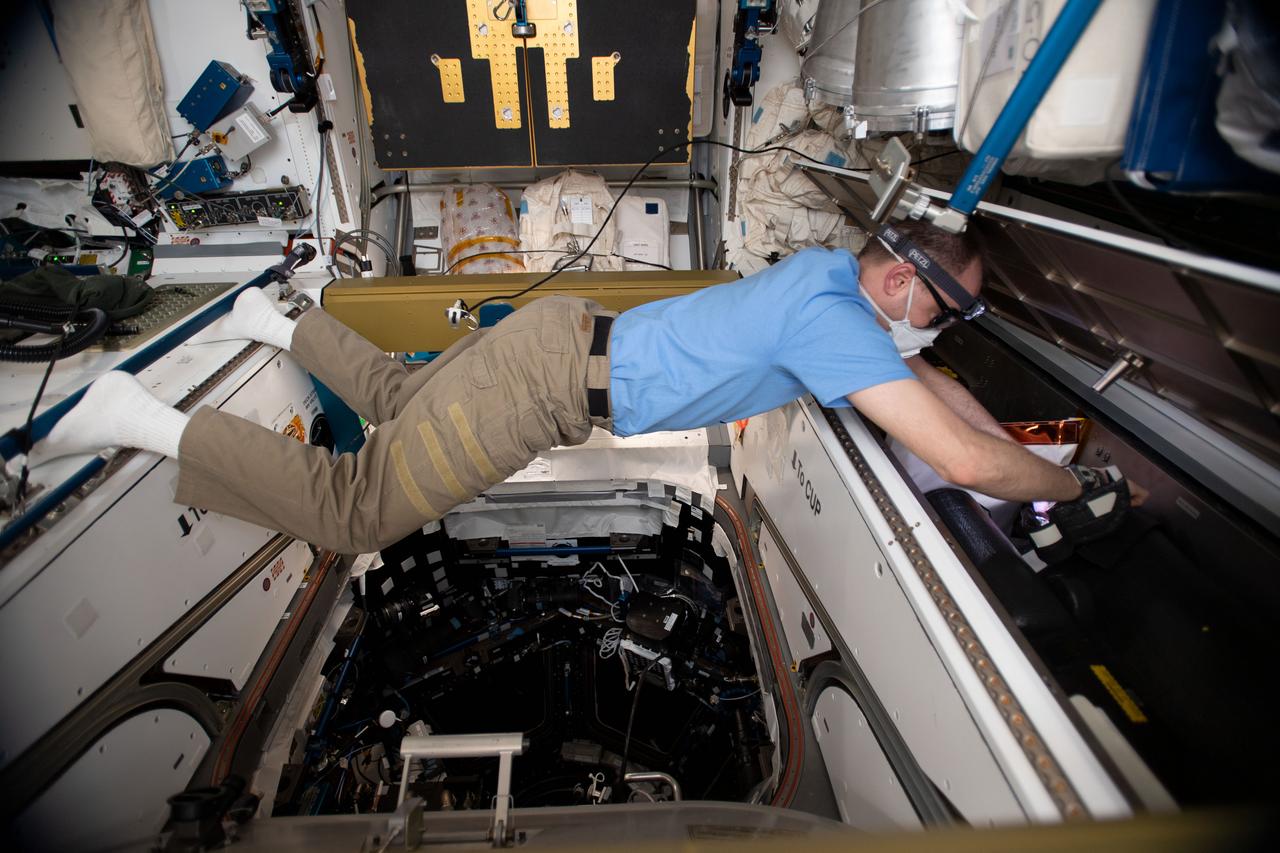
iss059e061760 (May 15, 2019) --- NASA astronaut Nick Hague of Expedition 59 installs gas trap plugs inside the Harmony module's Moderate Temperature Loop Pump Package Assembly. The gas trap plugs would slow an ammonia release through the gas trap vent hole in the event of an Interface Heat Exchanger breach and reduce coolant leakage during vacuum conditions at the International Space Station.
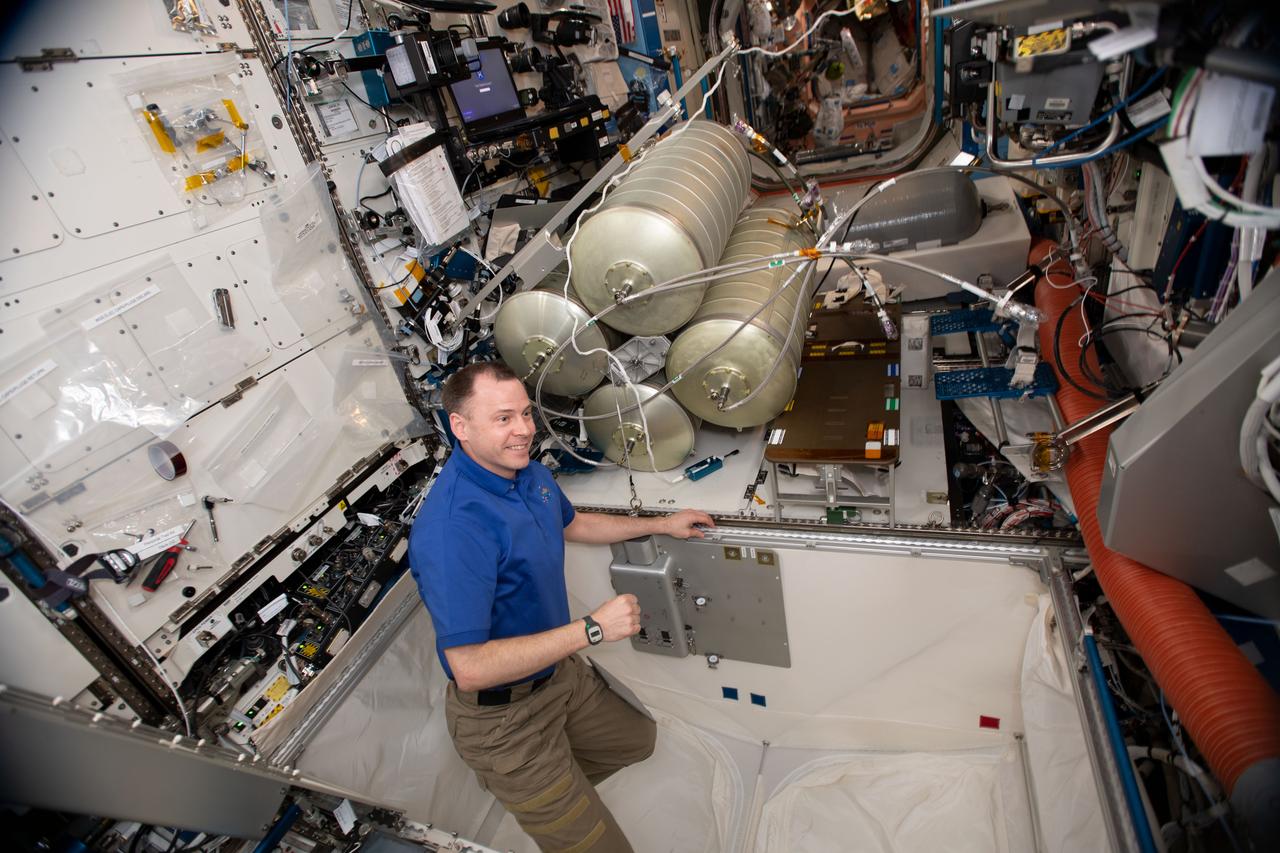
iss059e079472 (May 29, 2019) --- NASA astronaut Nick Hague assembles and installs the Water Storage System inside the U.S. Destiny laboratory module.
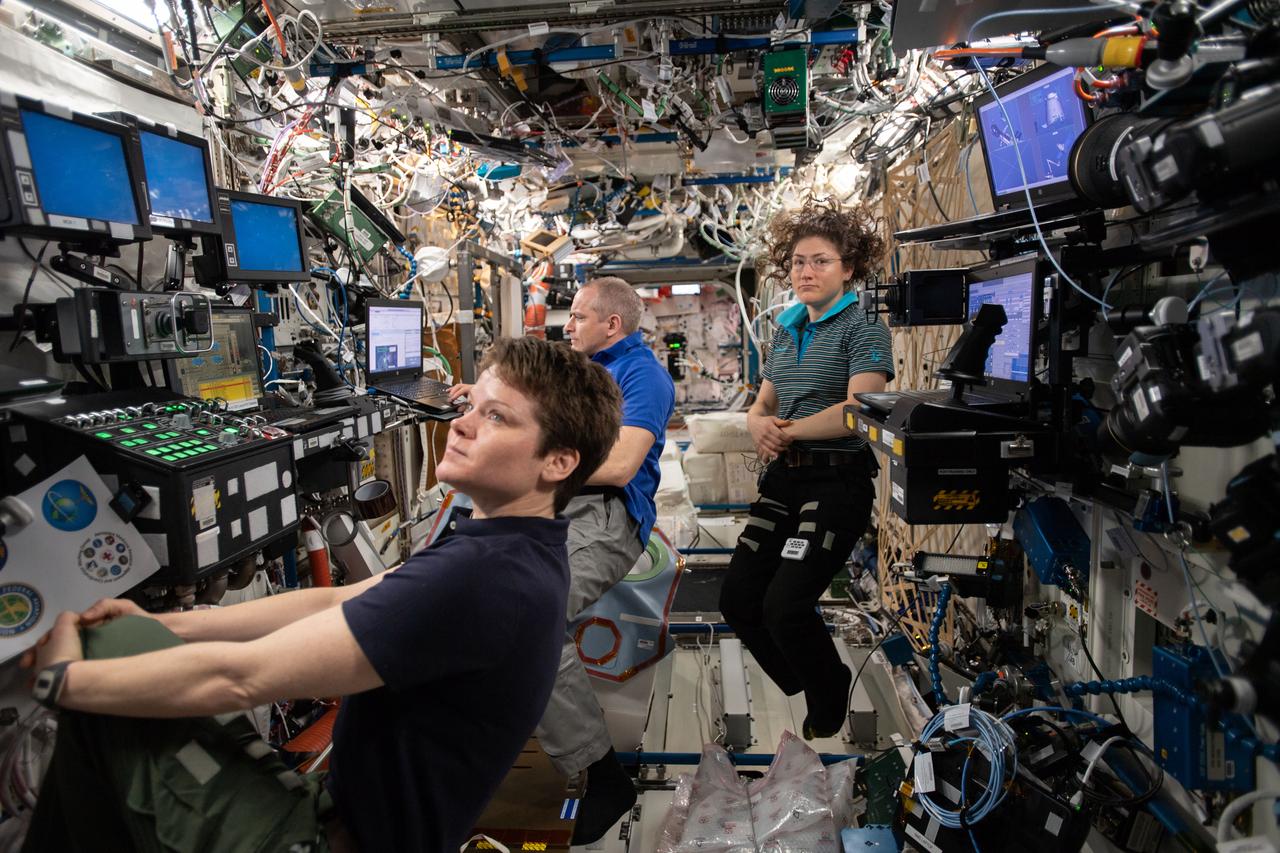
iss059e036125 (April 29, 2019) --- Expedition 59 Flight Engineers (from left) Anne McClain, David Saint-Jacques and Christina Koch are gathered inside the U.S. Destiny laboratory.
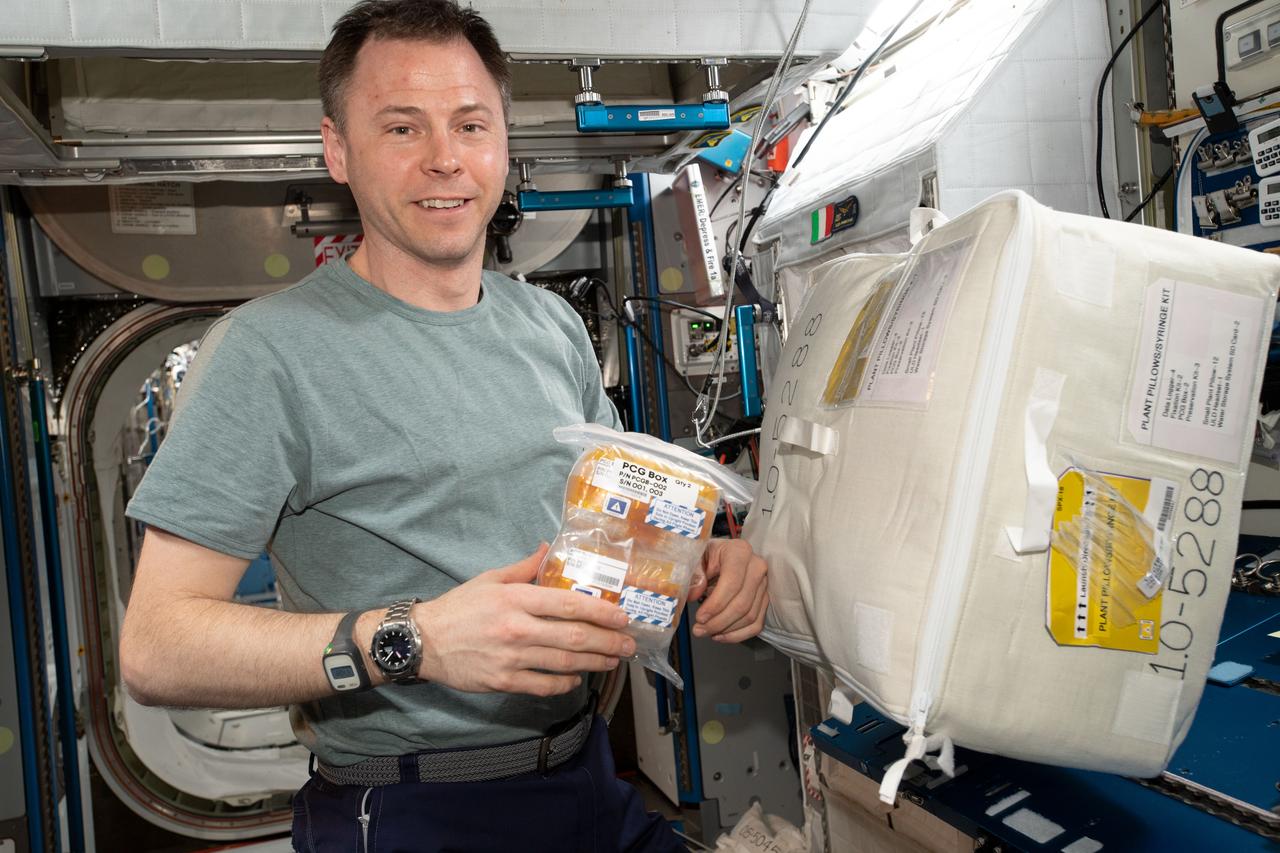
iss060e015014 (7/28/2019) — NASA astronaut Nick Hague is shown holding the CASIS Protein Crystal Growth 15 (CASIS PCG 15) investigation samples aboard the International Space Station (ISS). Microgravity Crystal Growth for Improvement in Neutron Diffraction and the Analysis of Protein Complexes (CASIS PCG 15) seeks a better understanding of enzyme catalysis by examining crystals from two model Pyridoxal phosphate (PLP) dependent enzymes and from a bacteriophage transient deoxyribonucleic acid (DNA) repair complex. Analysis of the crystals may reveal catalyst mechanisms and structures and visualize the interaction between the repair proteins. Results could contribute to identification of biomarkers for diagnosis of disease and to development of better antimicrobials.

iss059e000502 (March 16, 2019) --- Tropical Cyclone Idai is pictured from the International Space Station as the orbital complex flew 261 miles above the southeast coast of Africa. Idai's track took it over the Mozambique Channel and portions of the nations of Madagascar, Mozambique, Malawi and Zimbabwe creating devastation and casualties in the southeast portion of the African continent.
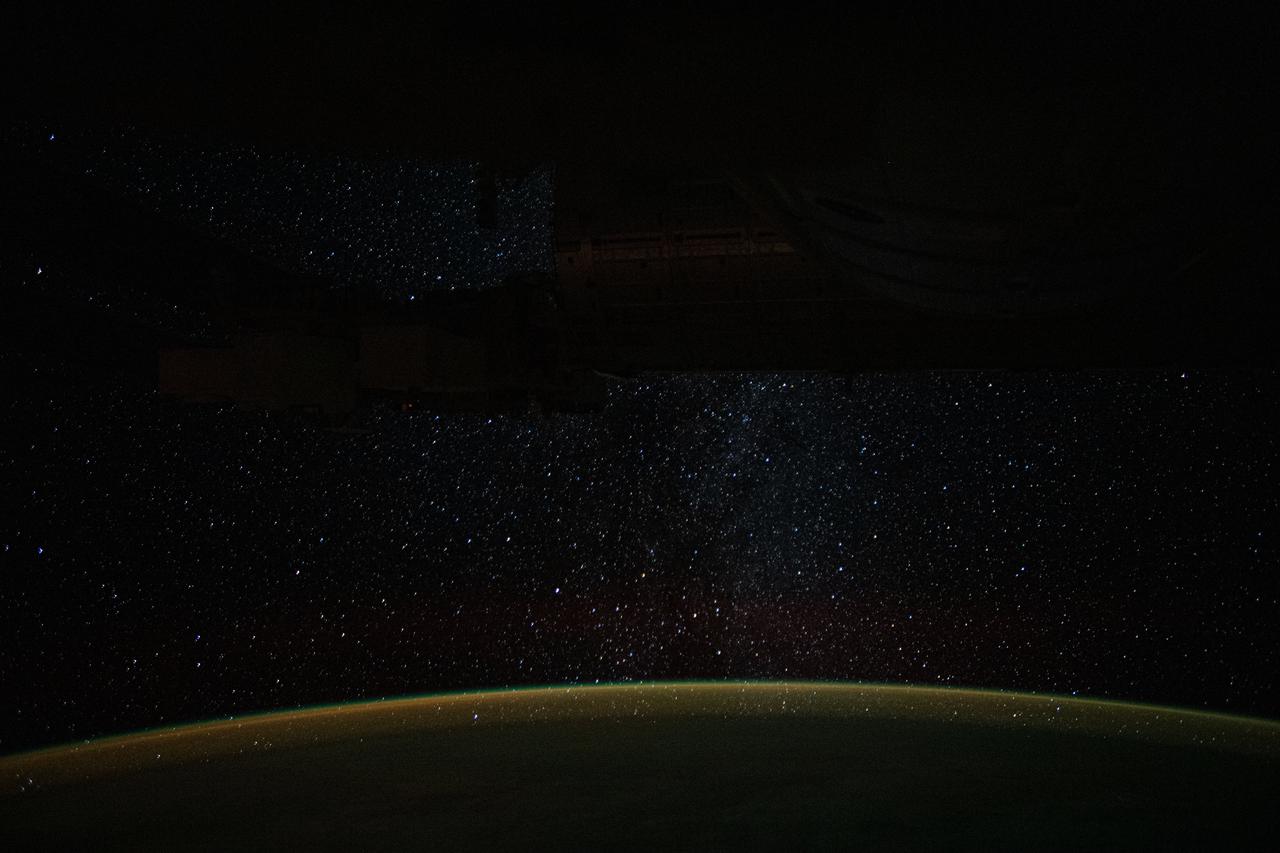
iss060e002064 (June 29, 2019) -- A starry Milky Way glitters above Earth's tranquil atmospheric glow as the International Space Station orbited 266 miles above the Pacific Ocean off the northwest coast of New Zealand.
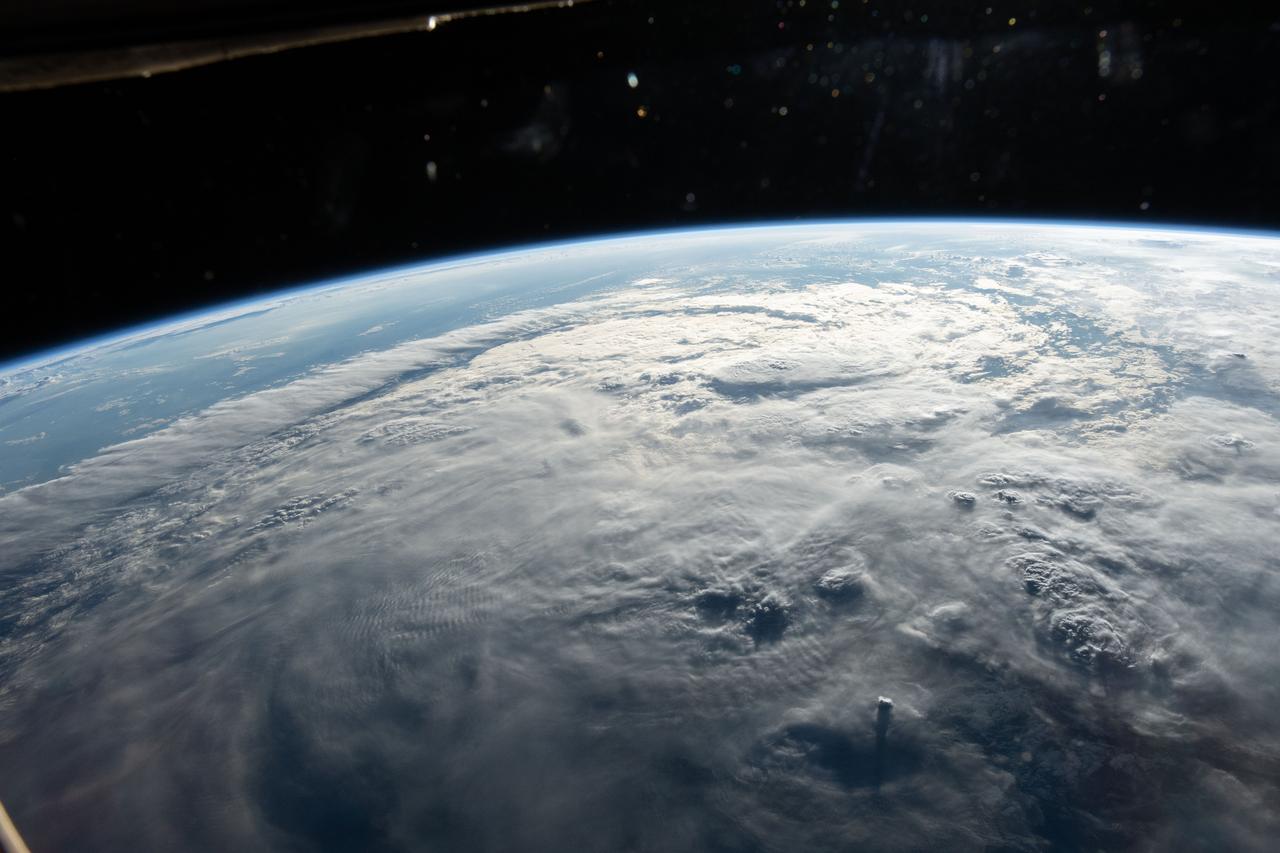
iss059e000515 (March 16, 2019) --- Tropical Cyclone Idai is pictured from the International Space Station as the orbital complex flew 261 miles above the southeast coast of Africa. Idai's track took it over the Mozambique Channel and portions of the nations of Madagascar, Mozambique, Malawi and Zimbabwe creating devastation and casualties in the southeast portion of the African continent.
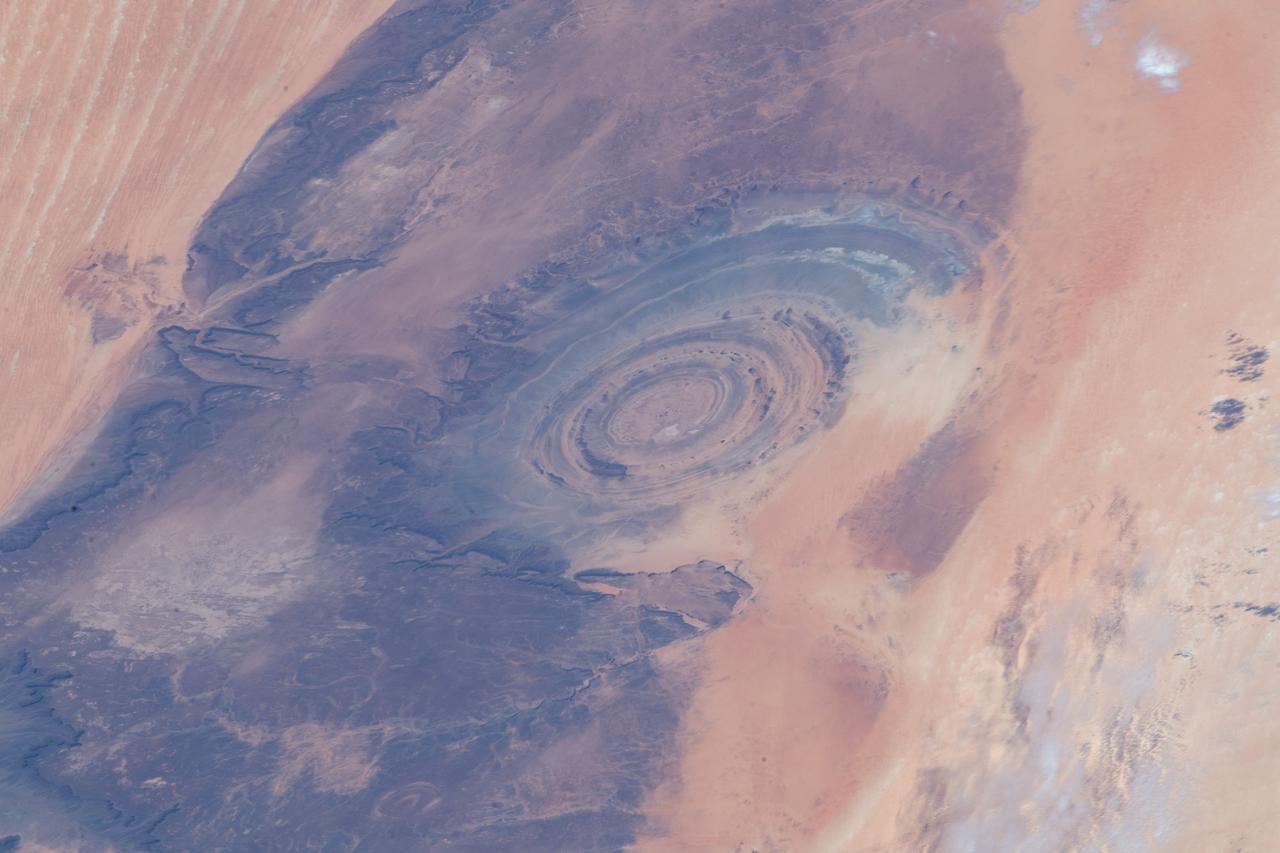
iss059e013142 (April 5, 2019) --- From an altitude of 255 miles, an Expedition 59 crewmember photographed the Richat Structure, or the "Eye of the Sahara," in northwestern Mauritania. The circular geologic feature is thought to be caused by an uplifted dome—geologists would classify it as a domed anticline—that has been eroded to expose the originally flat rock layers.