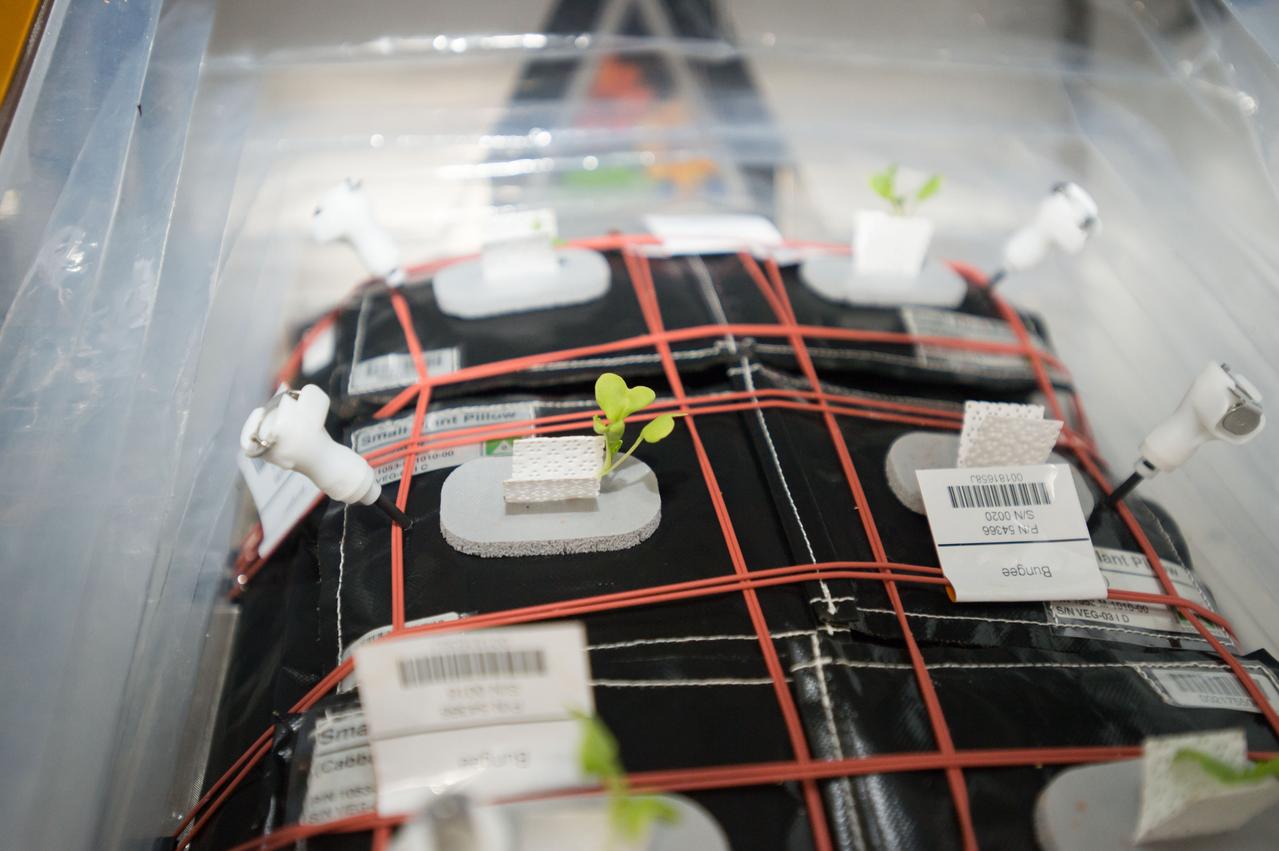
iss050e036324 (1/29/2017) --- Photographic documentation of Small Plant Pilllow (Cabbage) - Veggie-03. Organisms grow differently in space, from single-celled bacteria to plants and humans. But future long-duration space missions will require crew members to grow their own food, so understanding how plants respond to microgravity is an important step toward that goal. Veg-03 uses the Veggie plant growth facility to cultivate a type of cabbage, which is harvested in orbit with samples returned to Earth for testing.
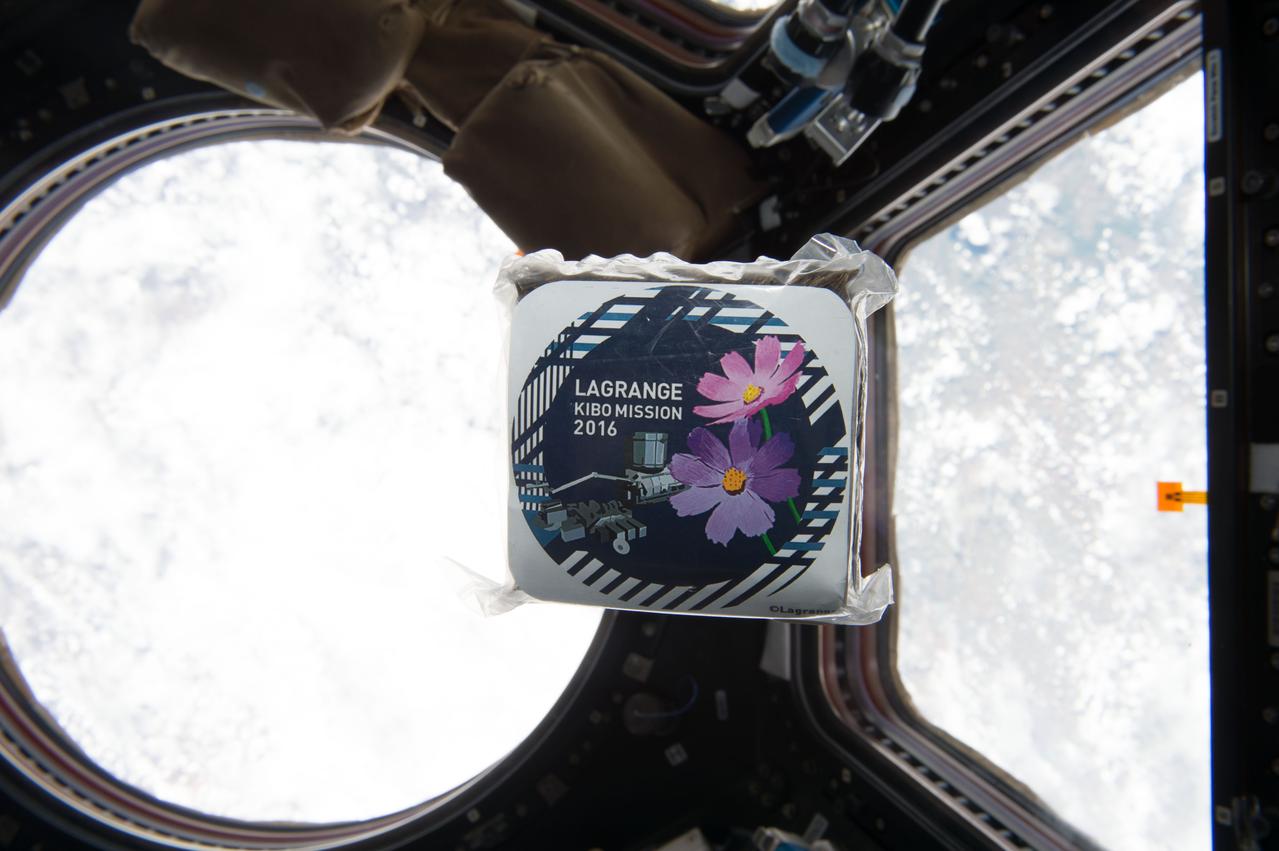
iss052e009464 (6/29/2017) --- A view of items from the NanoRacks-Lagrange investigation floating in front of the windows in the Cupola module aboard the International Space Station (ISS). NanoRacks-Lagrange seeks to increase interest in space. For this investigation, student photos and printed logos sheets are launched to the International Space Station (ISS) with a message card. Additionally, plant seeds are flown to the ISS. The students plant the seeds once they return to Earth and compare them to plants grown from regular seeds. Students are able to touch and feel close to space through this experiment.
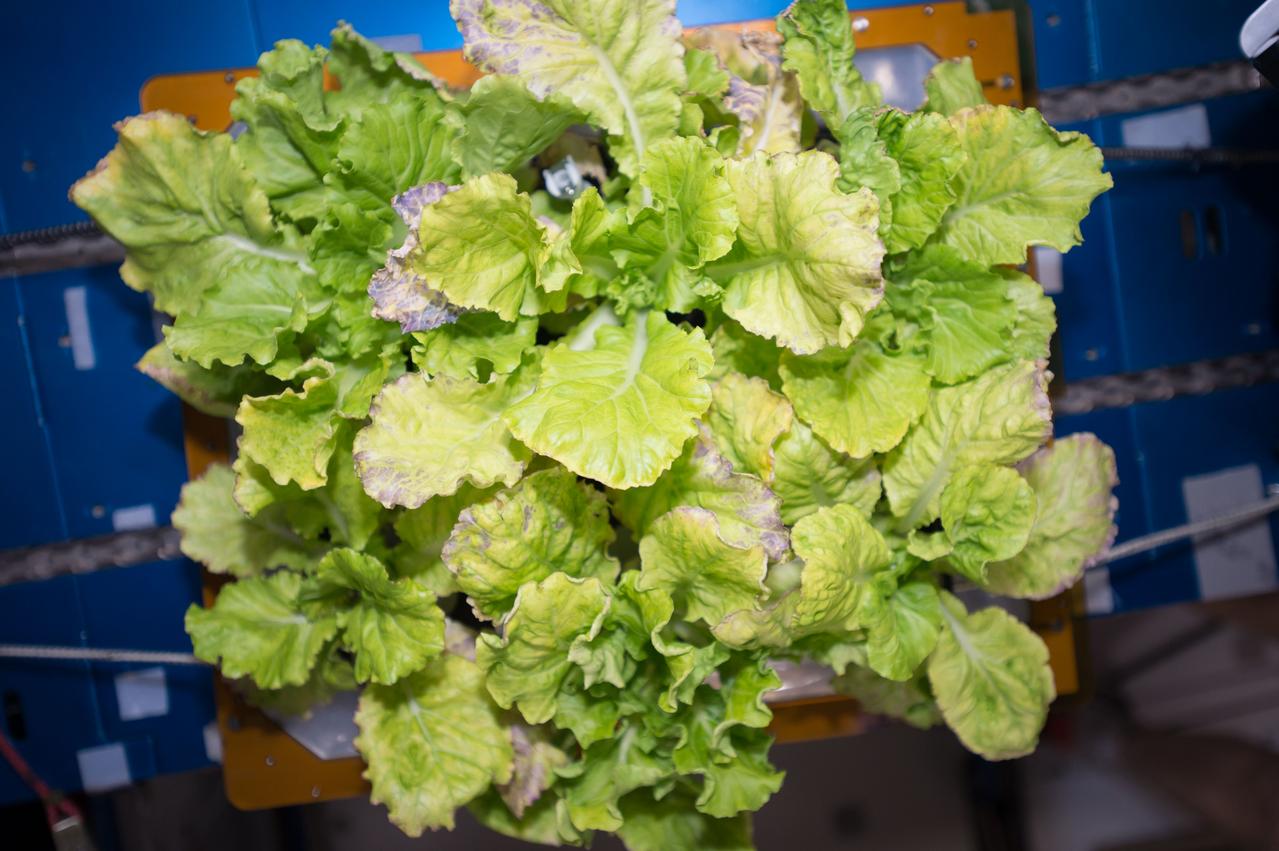
View of cabbage plants in the Vegetable Production System (Veggie) bellows, with the bellows secured to the Maintenance Work Area (MWA) in the Harmony Node 2. Image was taken during final harvesting operations (OPS) for the Veg-03 experiment.
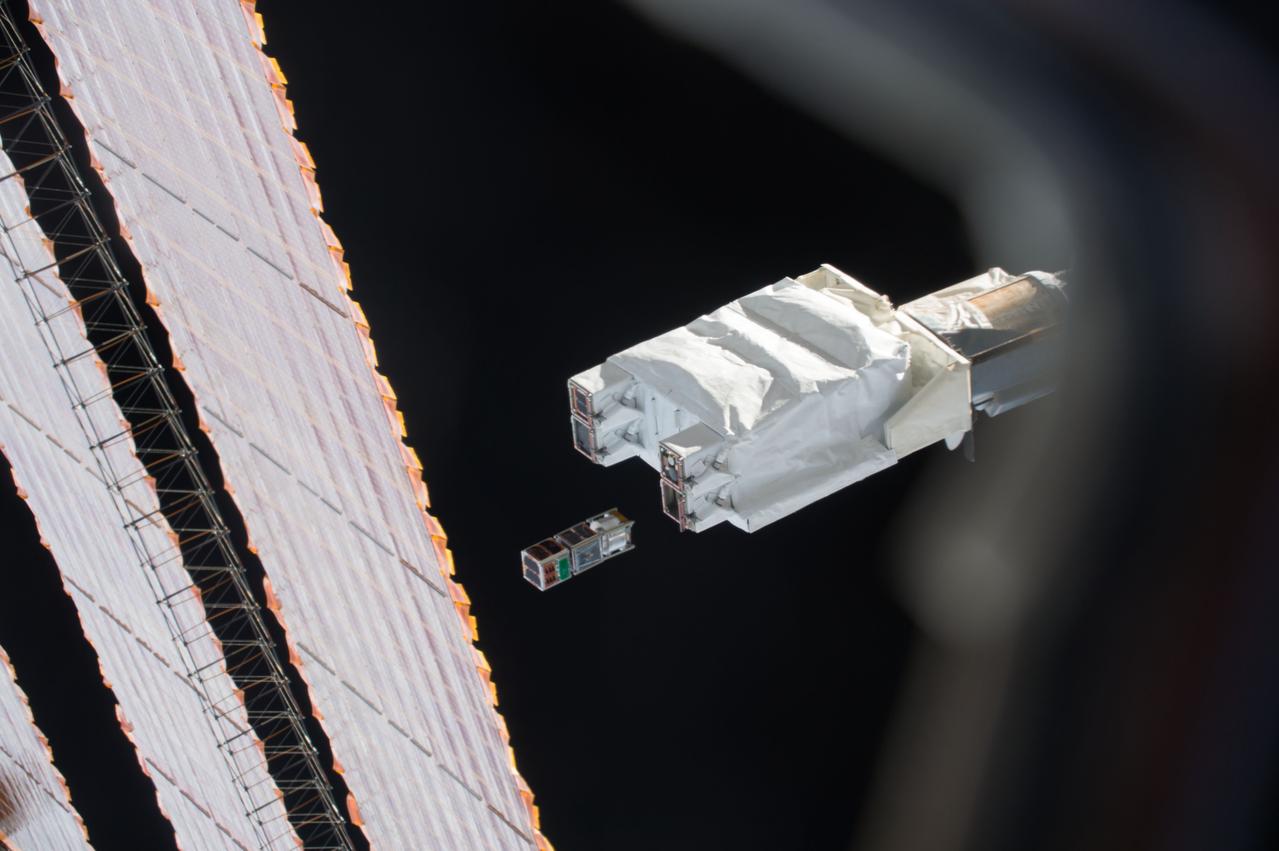
iss050e031198 (1/17/2017) --- Photo documentation of the Japanese-Small Satellite Orbital Deployer-6 (J-SSOD-6) deployment of the ITF-2, Waseda-SAT3 and Freedom CubeSats. The Imagine The Future-2 (ITF-2) CubeSat mission supports amateur radio networking by testing a micro engineered 1/20 wavelength small antenna. The WASEDA SAT-3 is a CubeSat developed by Waseda University aiming to test an ultra-light drag chute for accelerated deorbit. An LCD projector shows images on the chute with imagery sent back to Earth via an onboard camera. FREEDOM is a 1 Unit (1U) CubeSat developed by the Nakashimada Engineering Works and the Tohoku University to demonstrate a deployable deorbit device “DOM” for application in future missions for space debris mitigation.
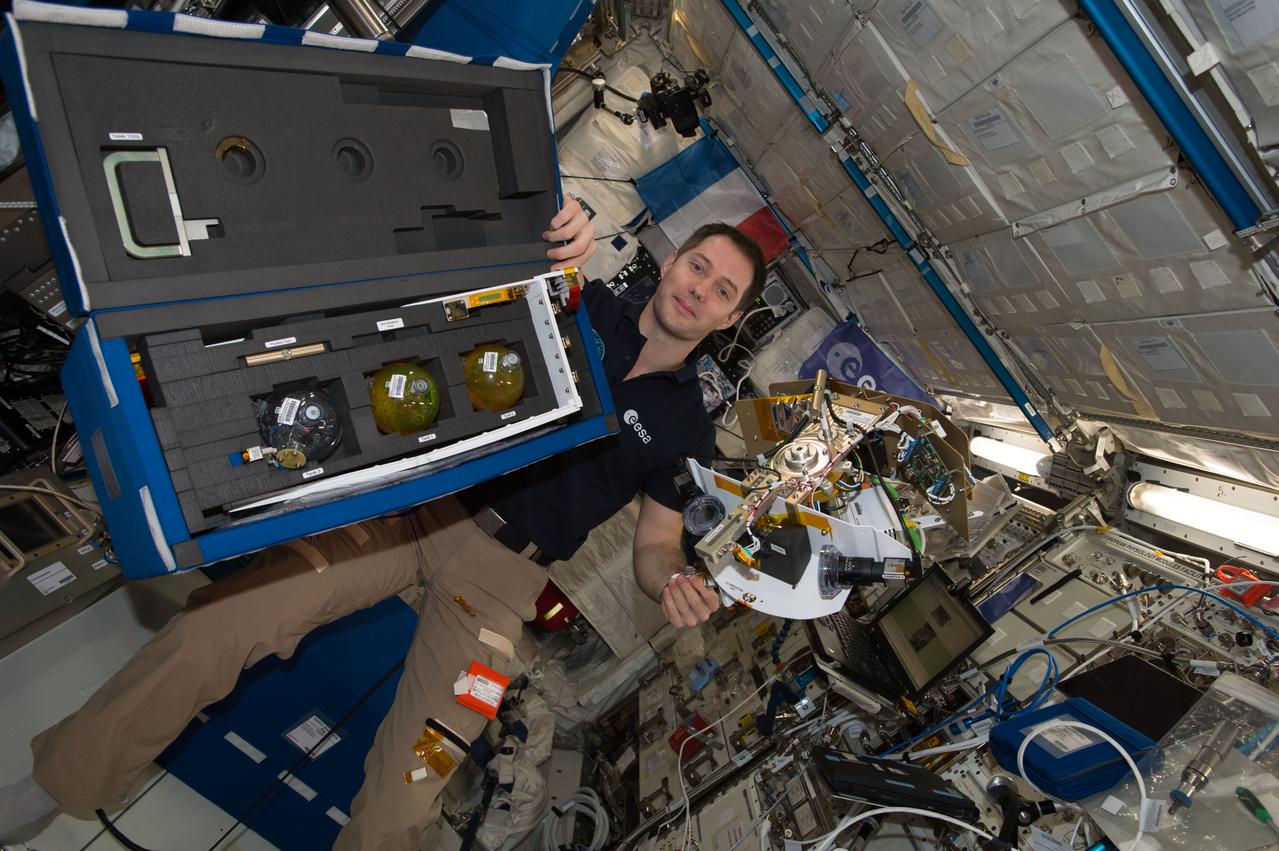
iss051e033988 (5/2/2017) --- European Space Agency (ESA) astronaut Thomas Pesquet is photographed with the Tanks Bag and Science Arm for the Fluid Dynamics in Space (FLUIDICS) experiment. Image was taken in the Columbus European Laboratory during preparations for the first run of the experiment. The FLUIDICS investigation evaluates the Center of Mass (CoM) position regarding a temperature gradient on a representation of a fuel tank. The observation of capillary wave turbulence on the surface of a fluid layer in a low-gravity environment can provide insights into measuring the existing volume in a sphere.
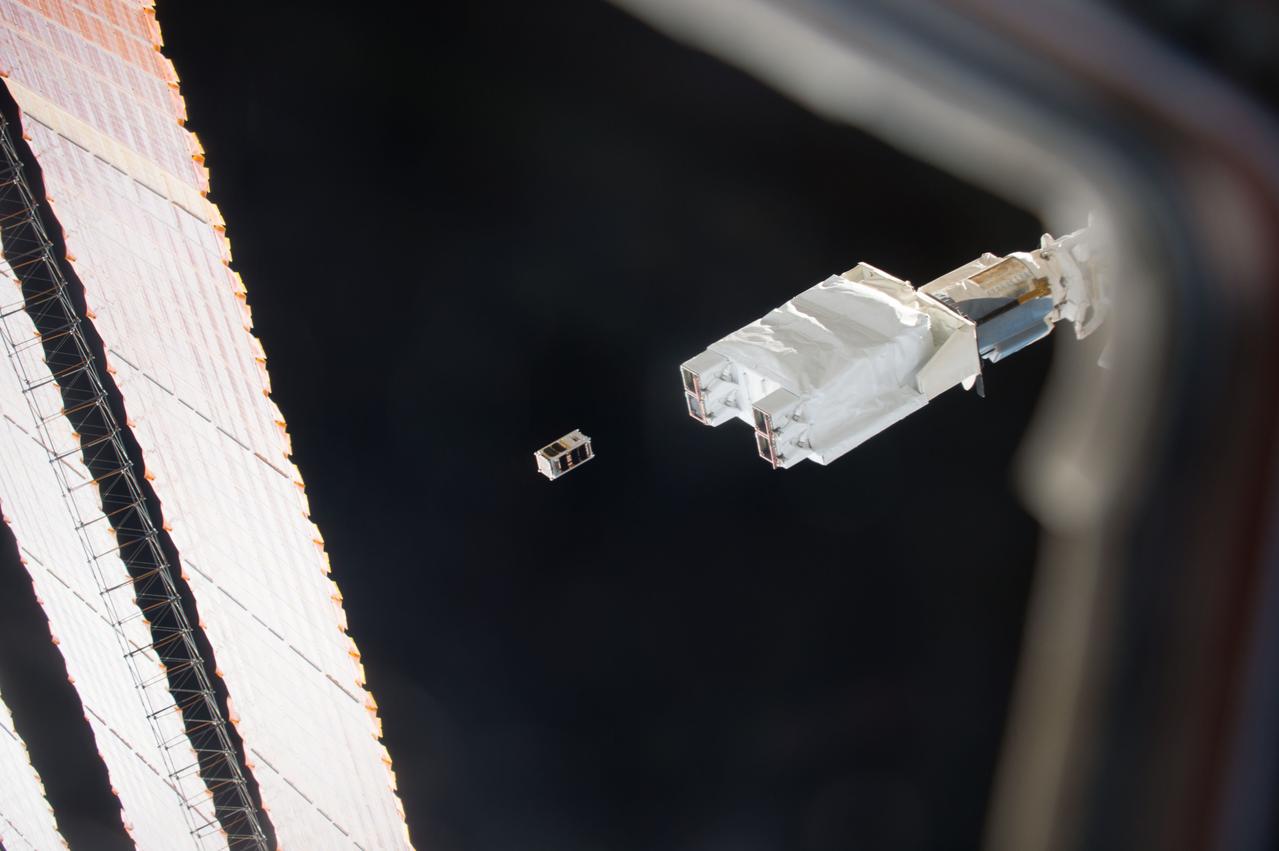
iss050e031525 (1/16/2017) --- Photo documentation of the Japanese-Small Satellite Orbital Deployer-6 (J-SSOD-6) deployment of the AOBA-Velox-3 Cubesat. The AOBA-Velox-3 mission is a joint mission between Nanyang Technological University (NTU), Singapore and the Kyushu Institute of Technology (Kyutech), Japan. This 2-Unit (2U) micro-satellite tests a micro-propulsion system, Pulse Plasma Thruster, PPT designed by NTU, that allows the spacecraft to remain in orbit up to six months.
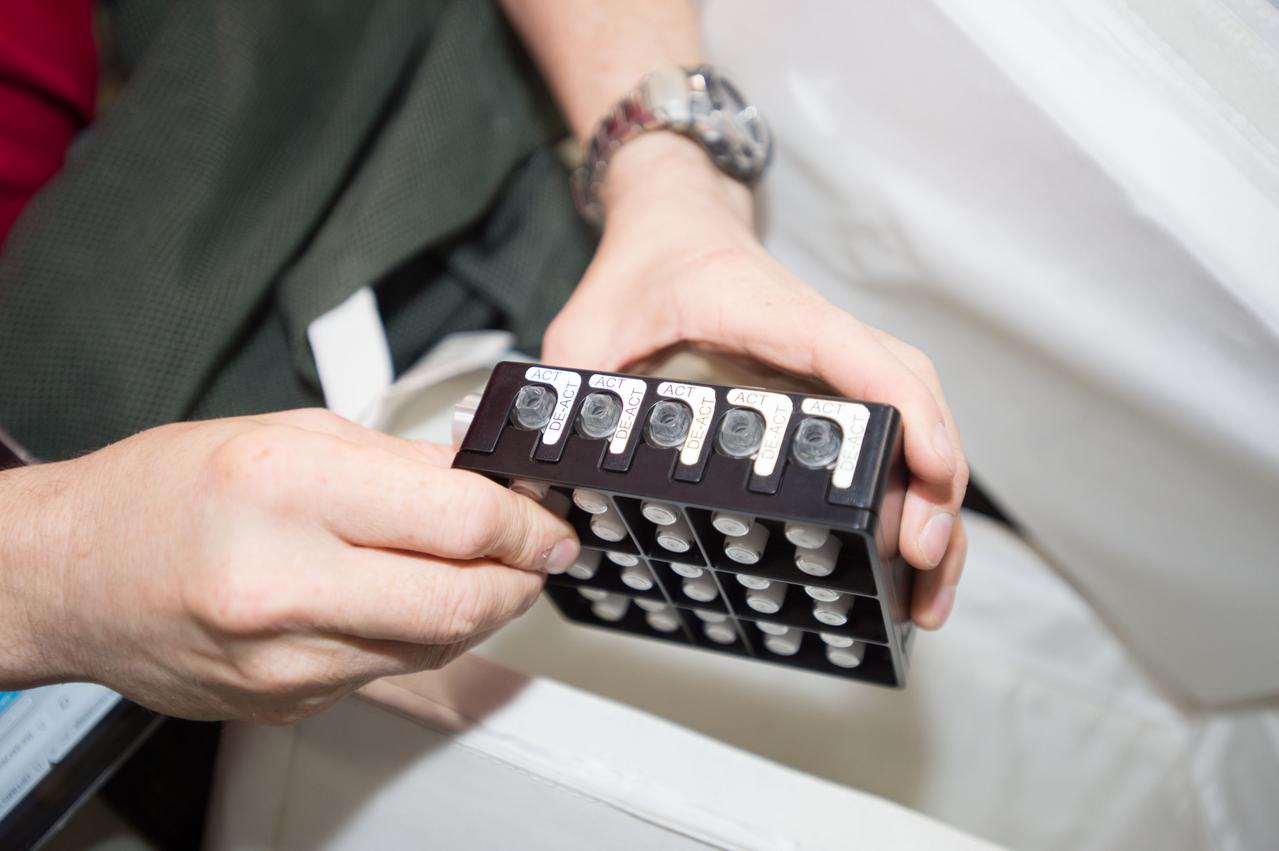
iss052e000504 (June 6, 2017) --- View of astronaut Jack Fischer working with the Neutron Crystallographic Studies of Human Acetylcholinesterase for the Design of Accelerated Reactivators (CASIS PCG 6) experiment in the Japanese Experiment Module.
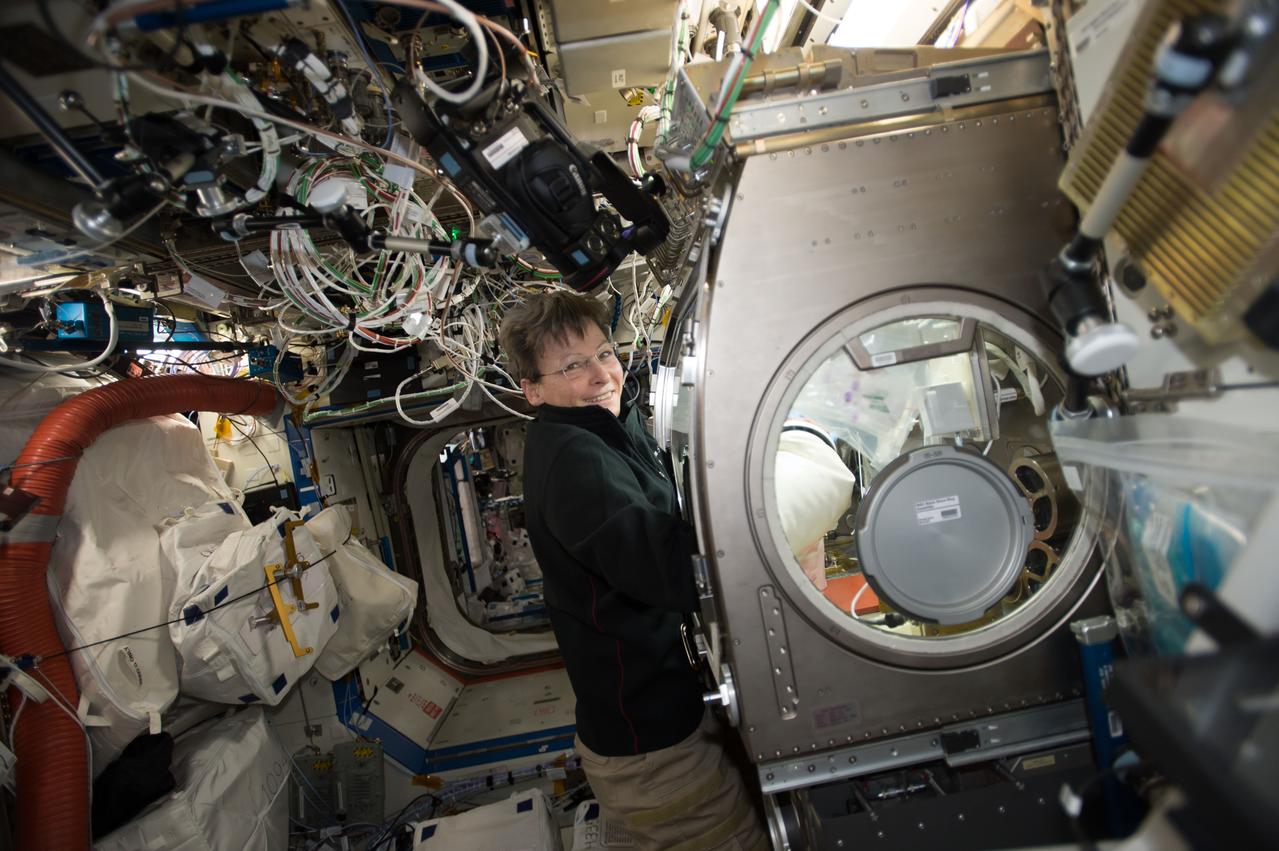
iss050e053302 (Feb. 28, 2017) --- Peggy Whitson, Expedition 50 Flight Engineer, works on an experiment inside the Microgravity Science Glovebox inside the U.S. Destiny laboratory module.
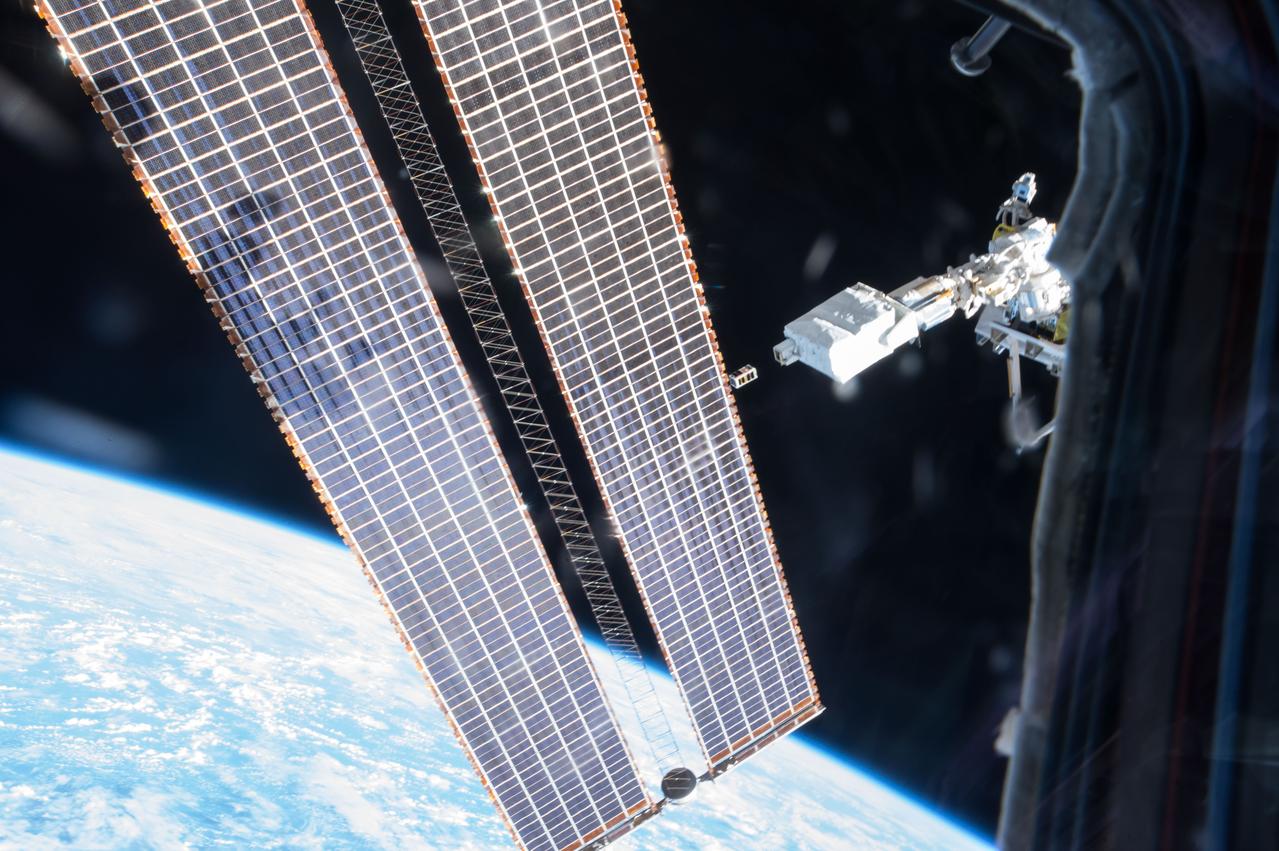
iss050e017076 (12/19/2016) --- A view after Japanese Experiment Module Remote Manipulator System (JEMRMS) Small Satellite Deployment called Space Tethered Autonomous Robotic satellite (STARS-C).
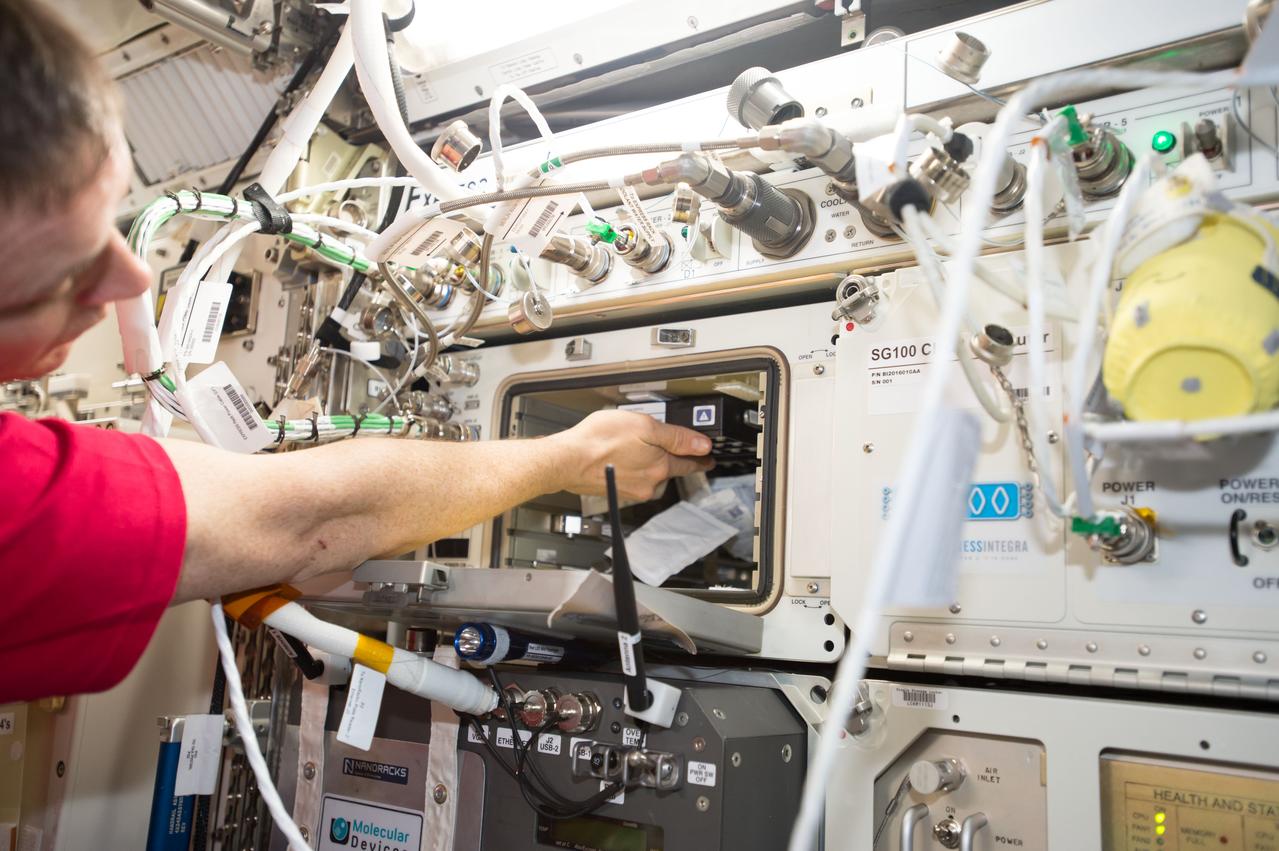
iss052e000515 (June 6, 2017) --- View of astronaut Jack Fischer working with the Neutron Crystallographic Studies of Human Acetylcholinesterase for the Design of Accelerated Reactivators (CASIS PCG 6) experiment in the Japanese Experiment Module.
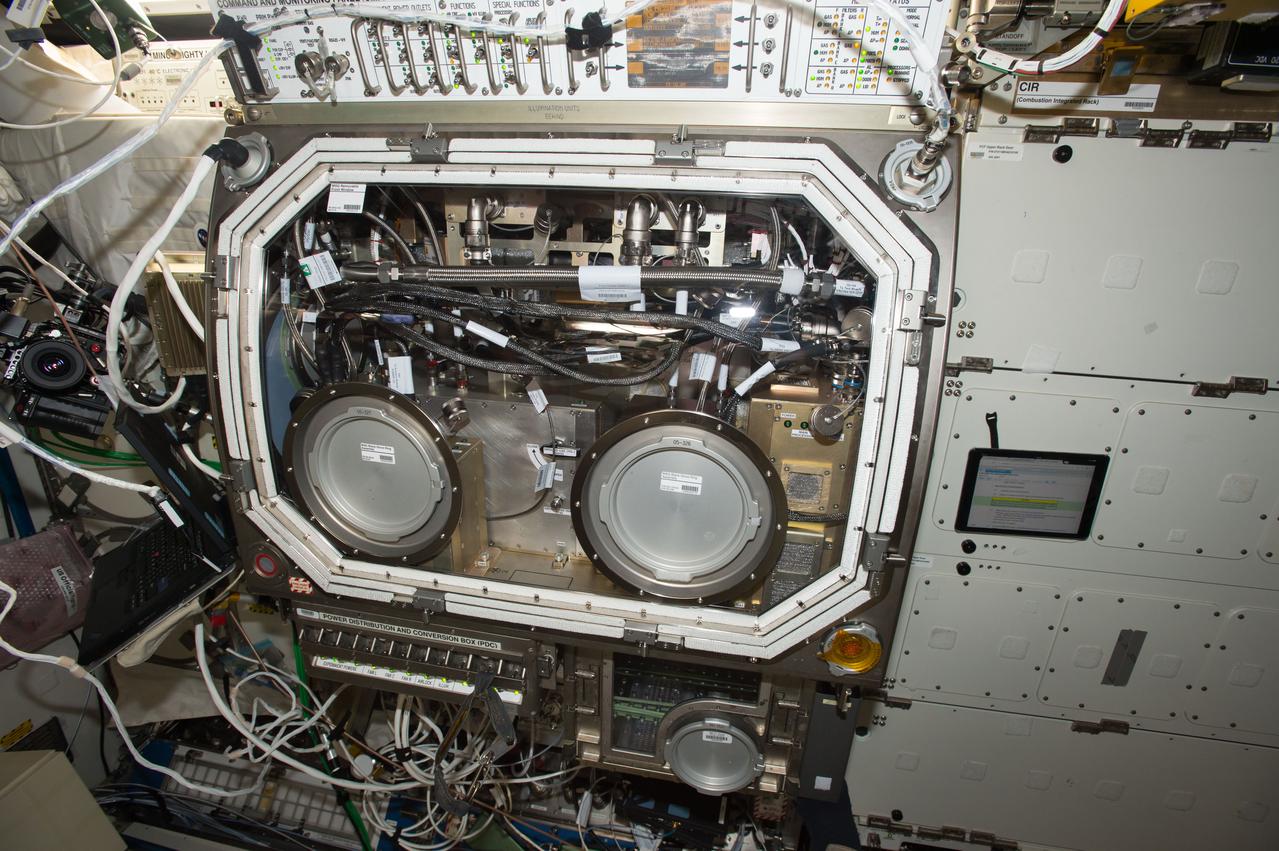
iss050e040296 (2/10/2017) --- View during the Packed Bed Reactor Experiment (PBRE) removal from the Microgravity Science Glovebox (MSG), in the U.S. Laboratory. Photo was taken during Expedition 50.
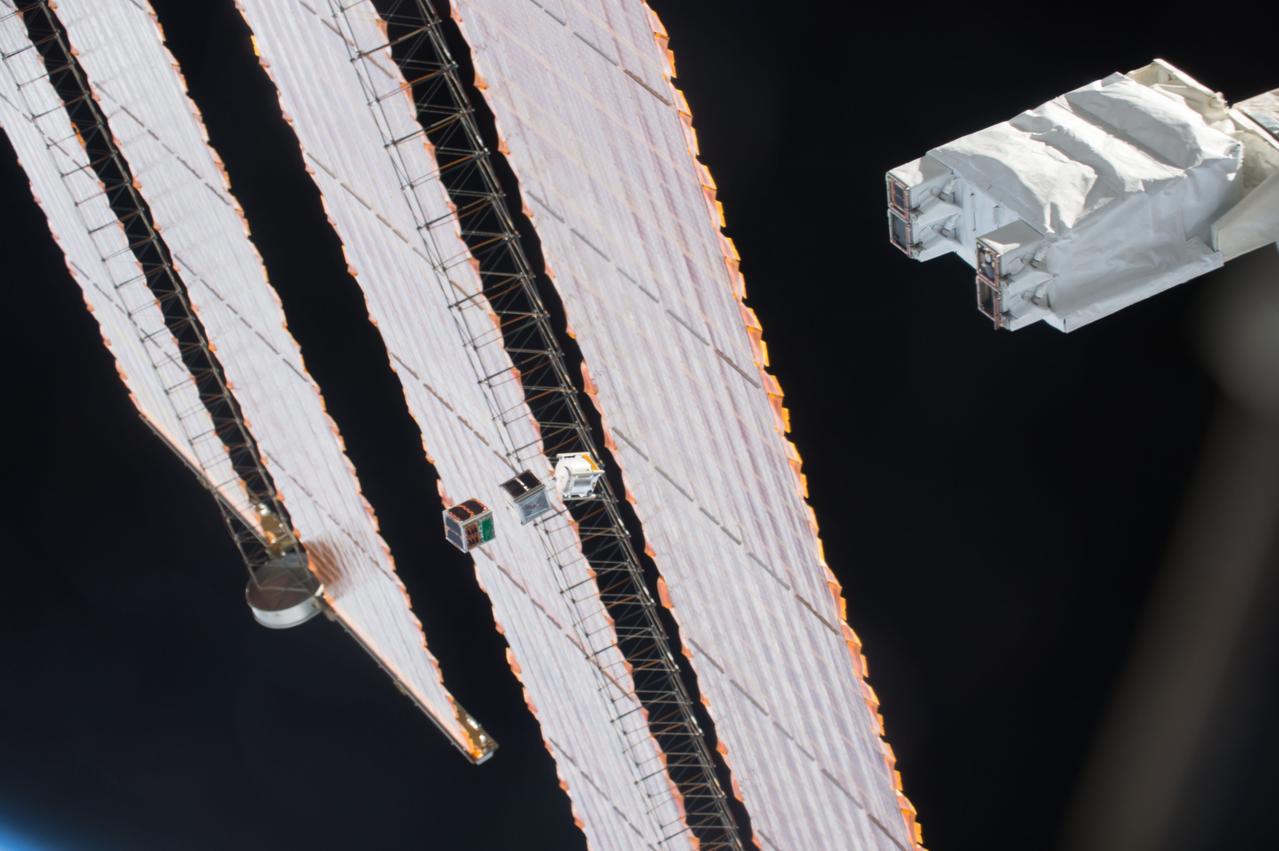
iss050e031207 (1/6/2017) --- A view during the Japanese-Small Satellite Orbital Deployer-6 (J-SSOD-6) deployment of the following satellites: Freedom (1U), Waseda-SAT3, ITF-2 (1U), Egg (3U), AOBA-Velox-III (U), TuPOD (3U). J-SSOD is a unique satellite launcher, handled by the Japanese Experiment Module Remote Manipulator System (JEMRMS), which provides containment and deployment mechanisms for several individual small satellites. Once the J-SSOD including satellite install cases with small satellites are installed on the Multi-Purpose Experiment Platform (MPEP) by crewmembers, it is passed through the JEM airlock for retrieval, positioning and deployment by the JEMRMS.
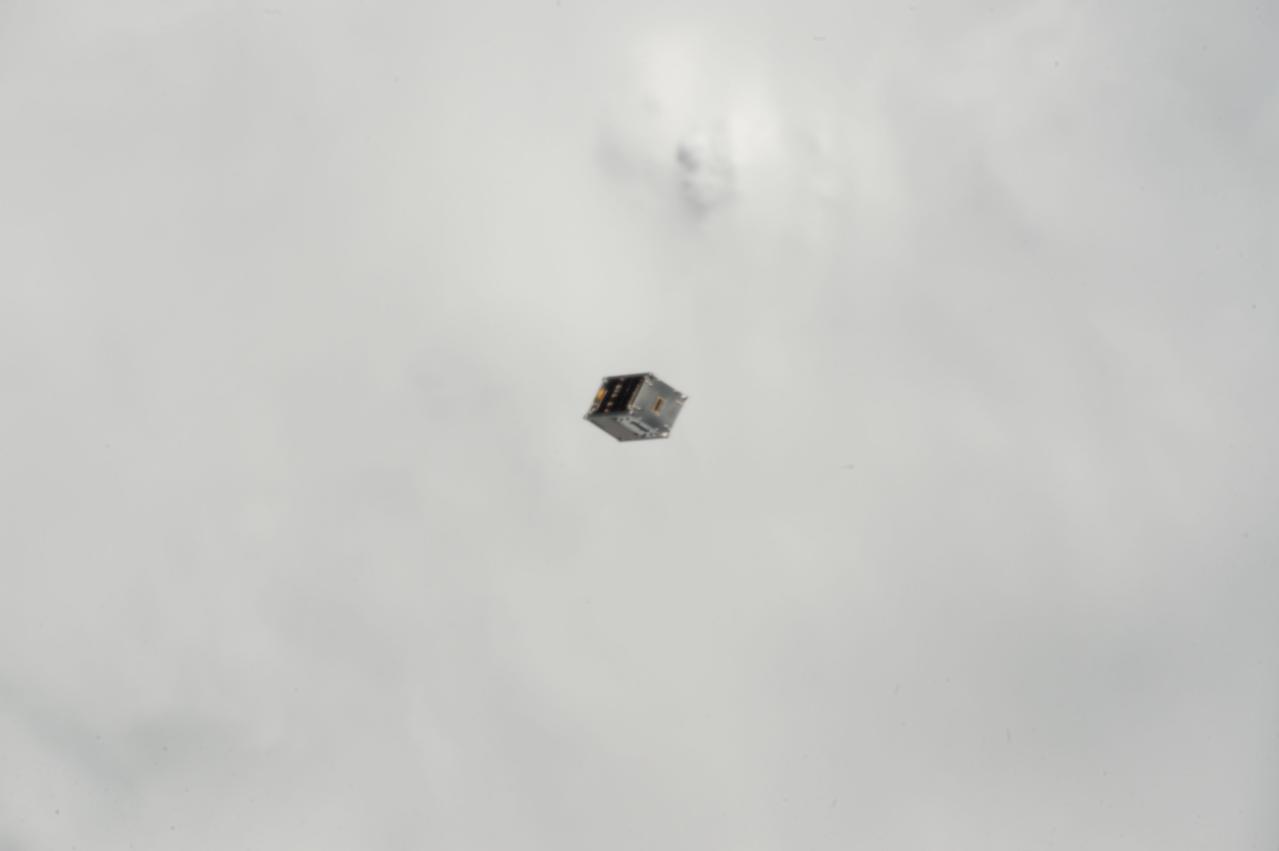
iss050e031566 (1/16/2017) --- Photo documentation of the Japanese-Small Satellite Orbital Deployer-6 (J-SSOD-6) deployment of the AOBA-Velox-3 Cubesat. The AOBA-Velox-3 mission is a joint mission between Nanyang Technological University (NTU), Singapore and the Kyushu Institute of Technology (Kyutech), Japan. This 2-Unit (2U) micro-satellite tests a micro-propulsion system, Pulse Plasma Thruster, PPT designed by NTU, that allows the spacecraft to remain in orbit up to six months.
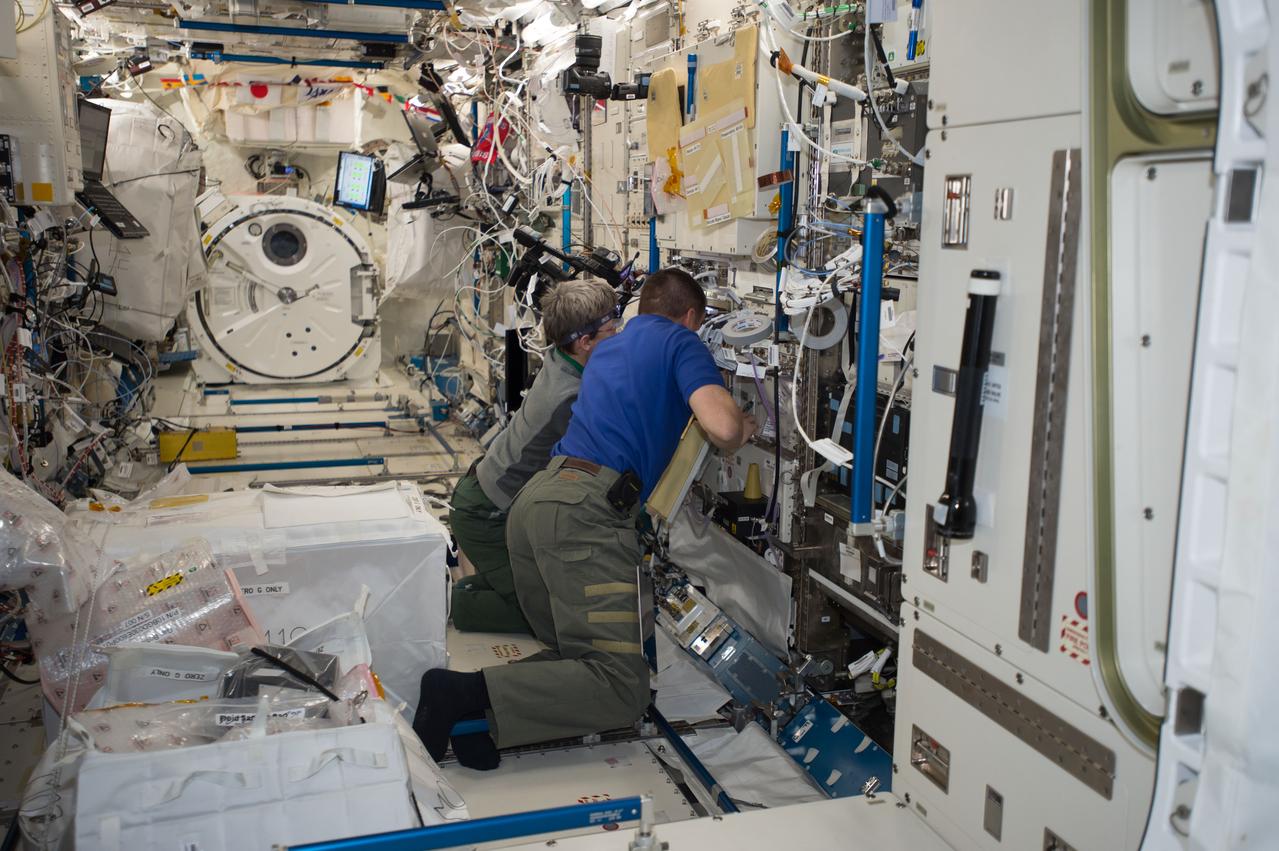
iss051e050849 (5/26/2017) --- NASA astronaut Peggy Whitson and Jack Fischer work to install a Gas Supply Hose Assembly and Gas Bottle Unit Air in the Electrostatic Levitation Furnace (ELF) in the Kibo Japanese Experiment Pressurized Module (JPM) aboard the International Space Station (ISS) in supprt of the Passive Thermal Flight Experiment.The Advanced Passive Thermal eXperiment (APTx) tests three advanced thermal management technologies. It demonstrates the in-space performance of each, an important step toward improving these technologies for use on future space exploration missions.
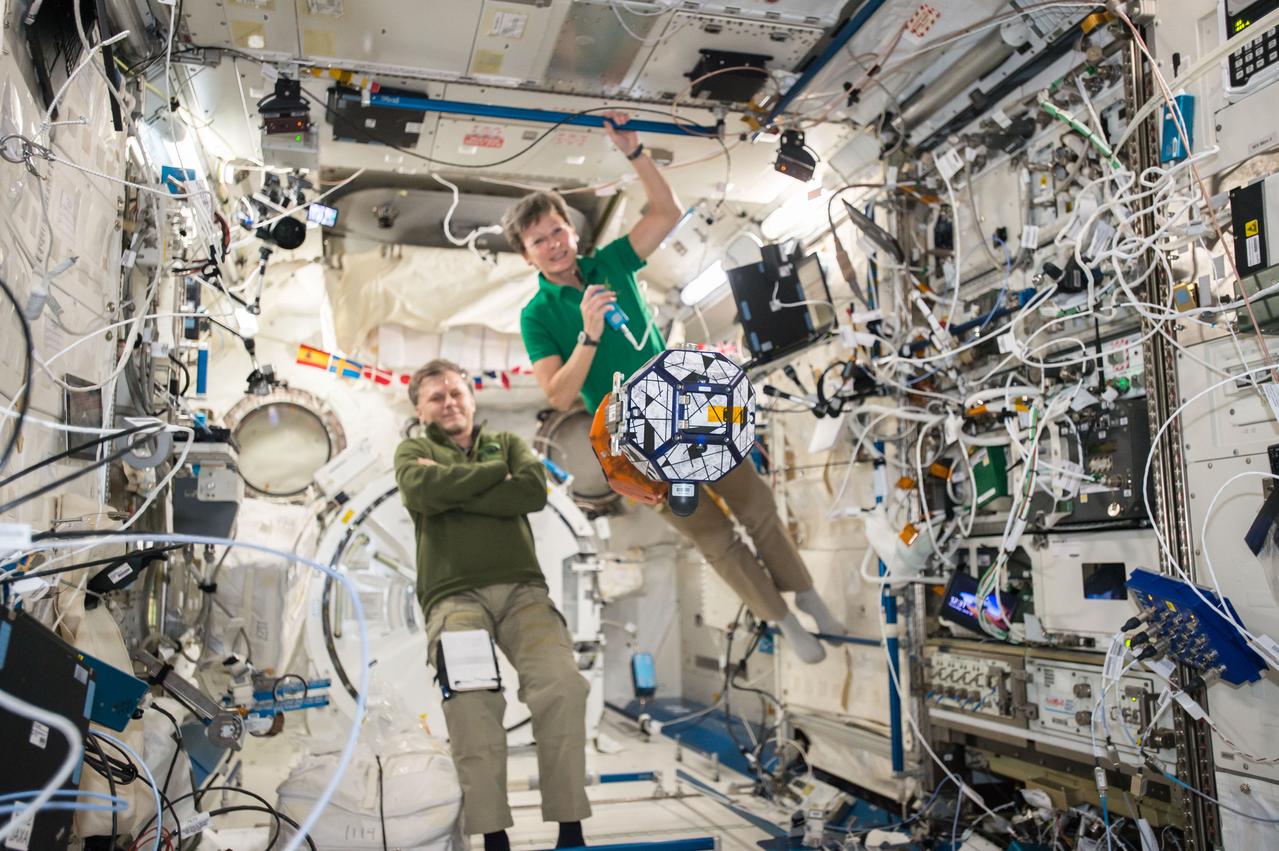
iss050e036008 (1/27/2017) --- NASA astronaut Peggy Whitson, and Cosmonaut Andrei Borisenko setting up cameras and performing Synchronized Position Hold, Engage, Reorient, Experimental Satellites (SPHERES) Zero Robotics tests, in the Japanese Experiment Module (JEM) Pressurized Module (JPM).
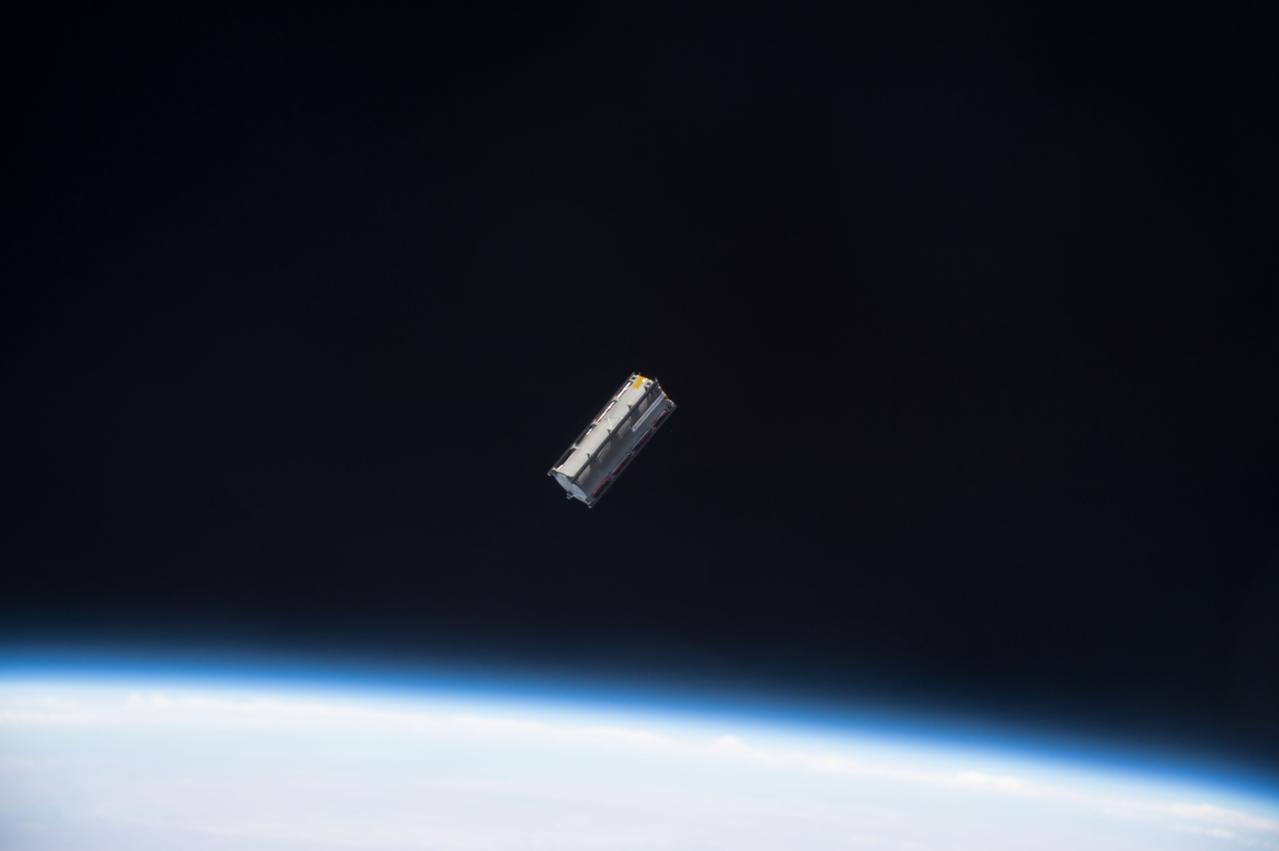
iss050e031664 (1/16/2017) --- Photo documentation of the Japanese-Small Satellite Orbital Deployer-6 (J-SSOD-6) deployment of the TuPOD Cubesat. TuPOD is a 3Unit micro-satellite that is entirely a 3D printed structure designed to launch the first Tubesats into space. The mission of TuPOD is to confirm that satellite deployment is feasible from CubeSat.
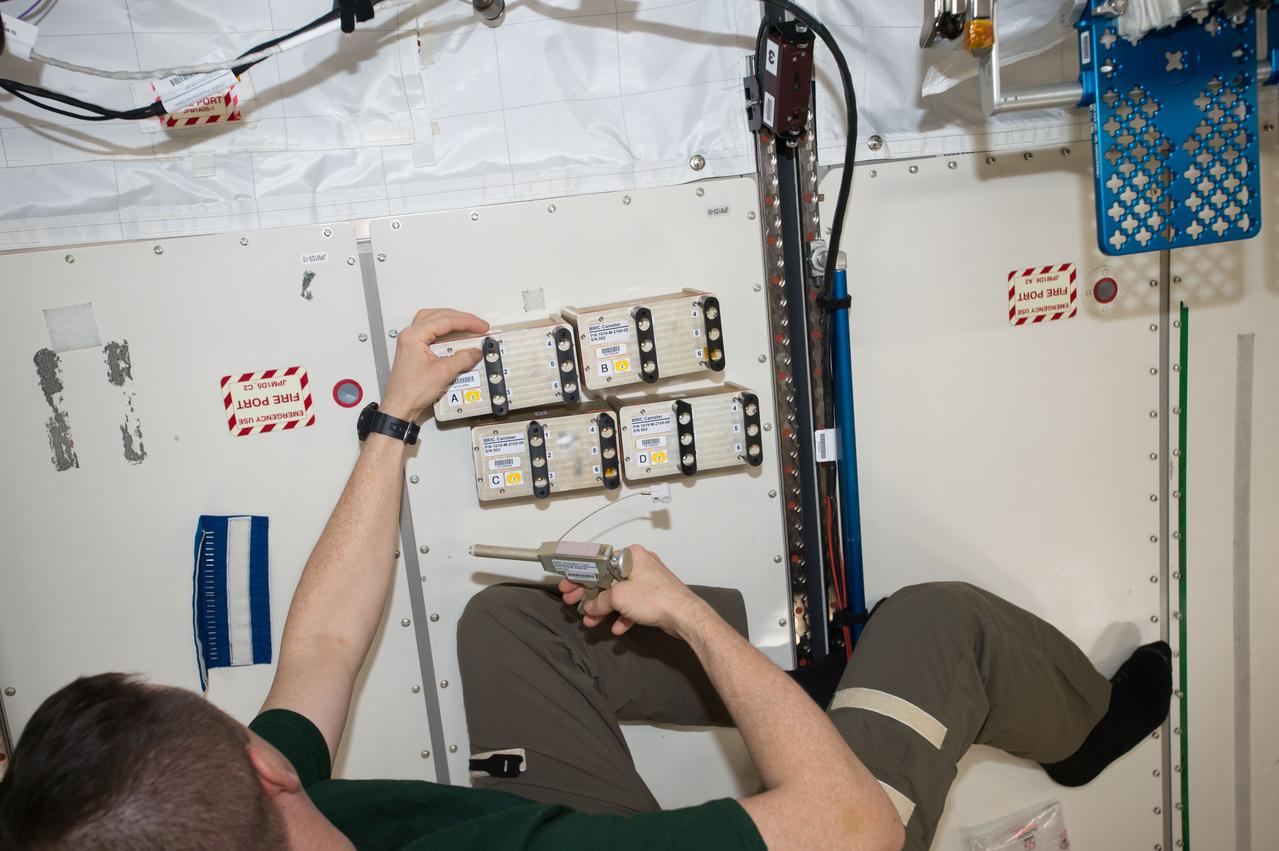
iss052e079049 (Aug. 31, 2017) --- NASA astronaut Jack Fischer with four cansiters of the Biological Research in Canisters-22 (BRIC-22) experiment in the Japanese Experiment Module (JEM) Pressurized Module (JPM). BRIC-22 studies the stress response in plants by comparing 8 different variants of thale cress (Arabidopsis thaliana) in the microgravity environment.
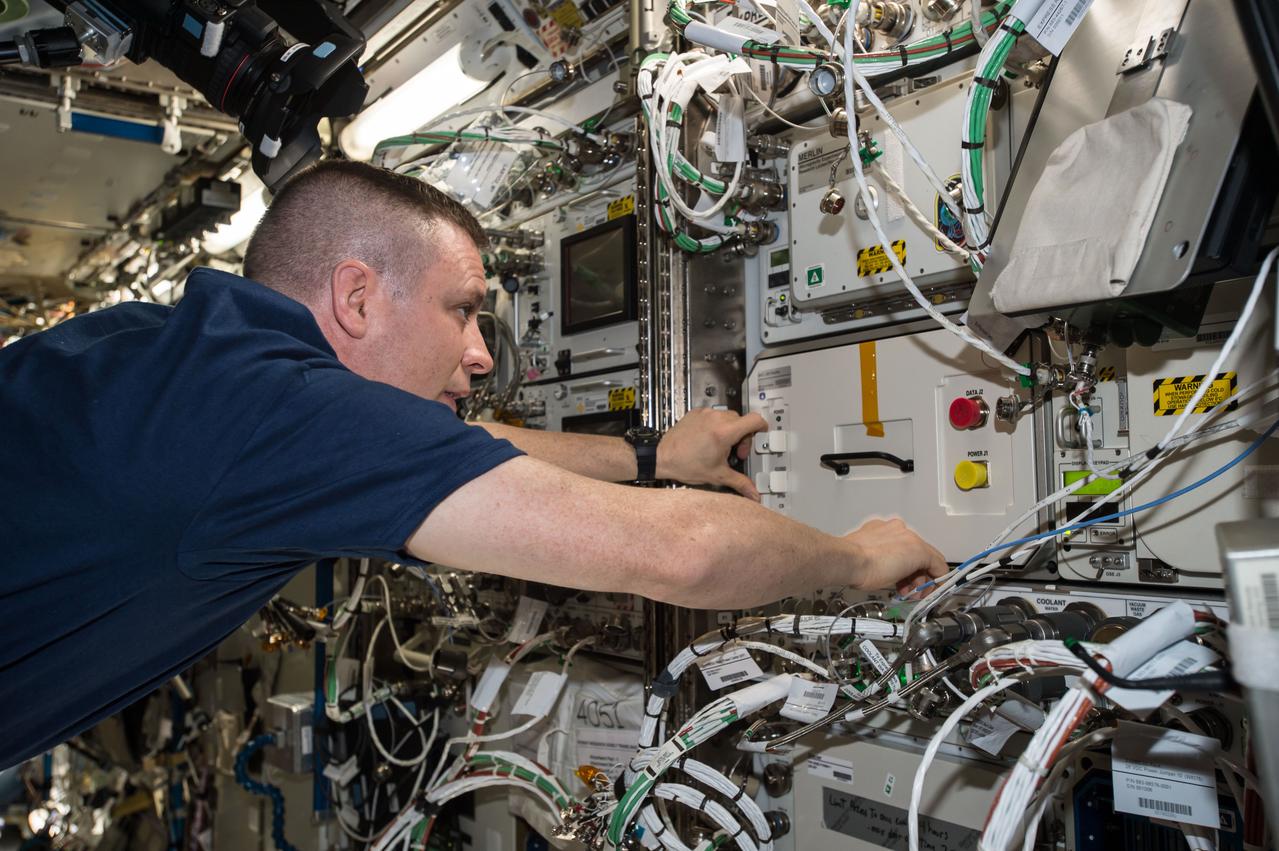
iss052e073850 (Aug. 25, 2017) --- NASA astronaut Jack Fischer installs hardware Biological Research In Canisters - Light Emitting Diode (BRIC-LED) for future experiments investigating seedling, microbial, or fungal growth.
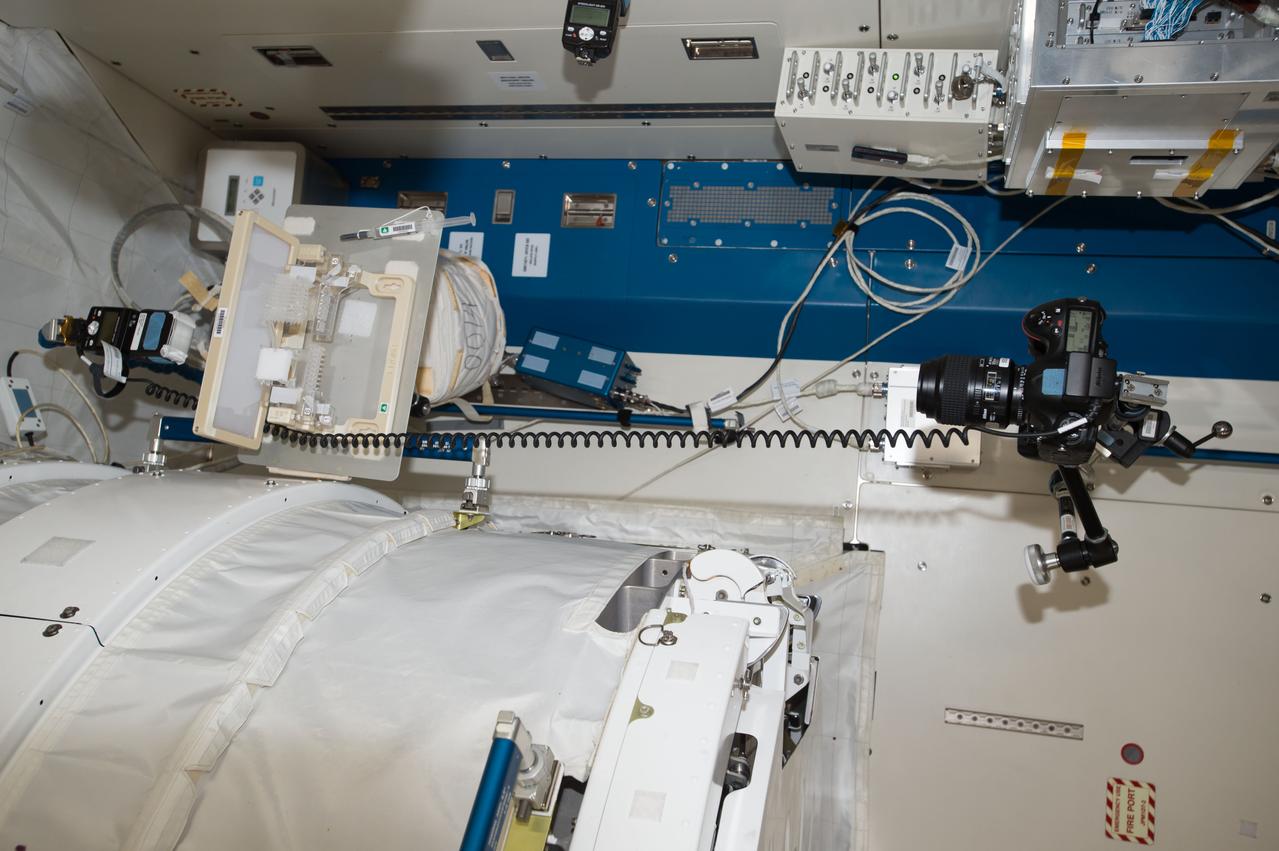
iss052e016460 (7/19/2017) --- A view taken of Capillary Structures setup in the Japanese Experiment Module (JEM) beside the internal airlock. This investigation studies a new method using structures of specific shapes to manage fluid and gas mixtures. It also studies water recycling and carbon dioxide removal, benefiting future efforts to design lightweight, more reliable life support systems for future space missions.
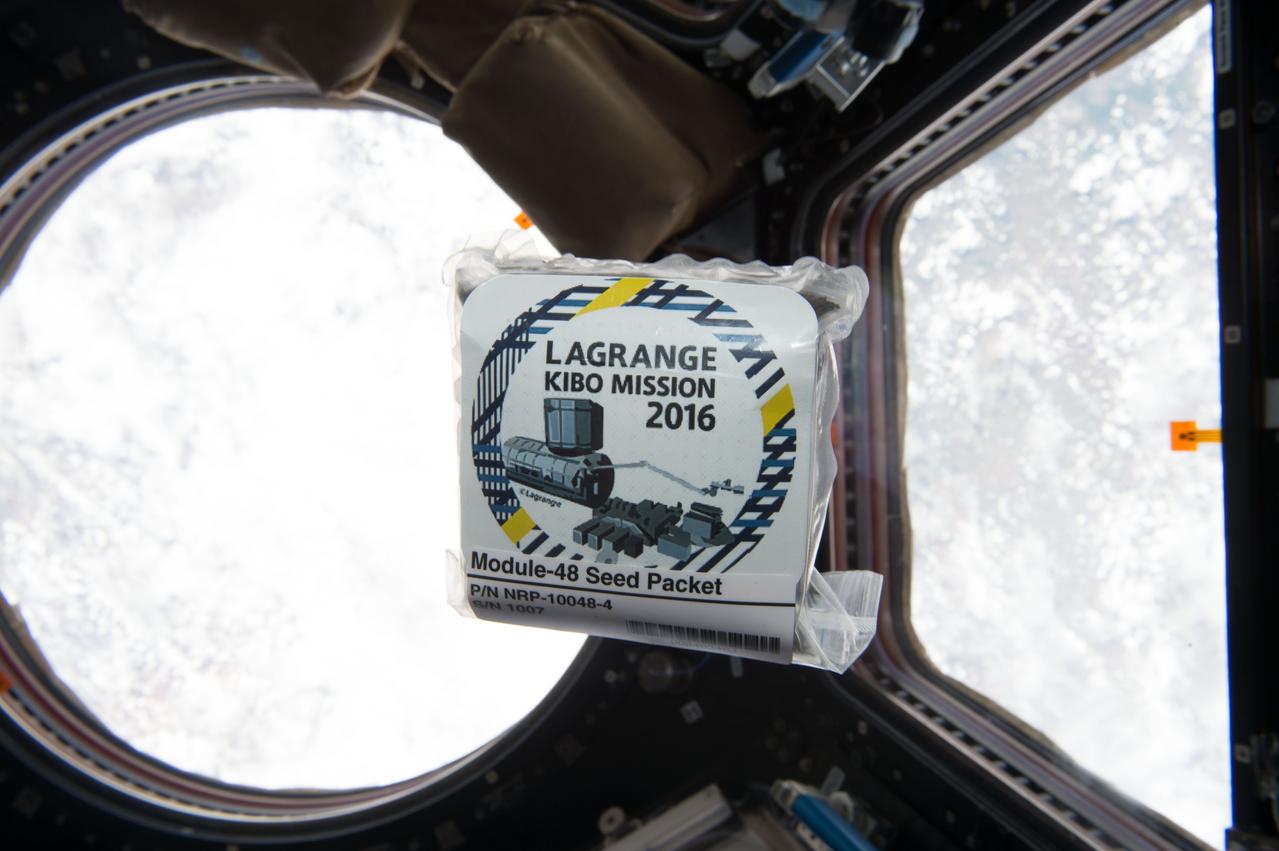
iss052e009465 (6/29/2017) --- A view of items from the NanoRacks-Lagrange investigation floating in front of the windows in the Cupola module aboard the International Space Station (ISS). NanoRacks-Lagrange seeks to increase interest in space. For this investigation, student photos and printed logos sheets are launched to the International Space Station (ISS) with a message card. Additionally, plant seeds are flown to the ISS. The students plant the seeds once they return to Earth and compare them to plants grown from regular seeds. Students are able to touch and feel close to space through this experiment.
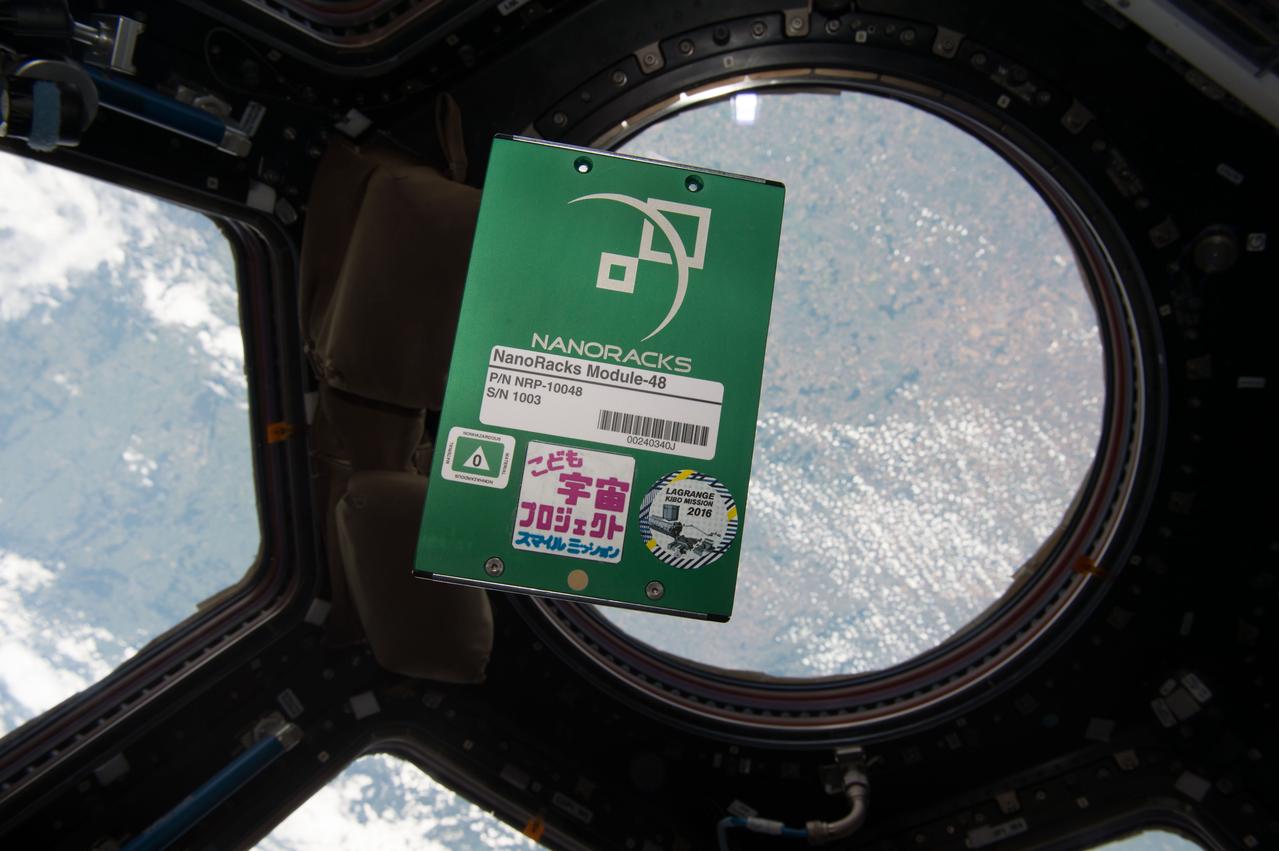
iss052e009450 (6/29/2017) --- A view of items from the NanoRacks-Lagrange investigation floating in front of the windows in the Cupola module aboard the International Space Station (ISS). NanoRacks-Lagrange seeks to increase interest in space. For this investigation, student photos and printed logos sheets are launched to the International Space Station (ISS) with a message card. Additionally, plant seeds are flown to the ISS. The students plant the seeds once they return to Earth and compare them to plants grown from regular seeds. Students are able to touch and feel close to space through this experiment.
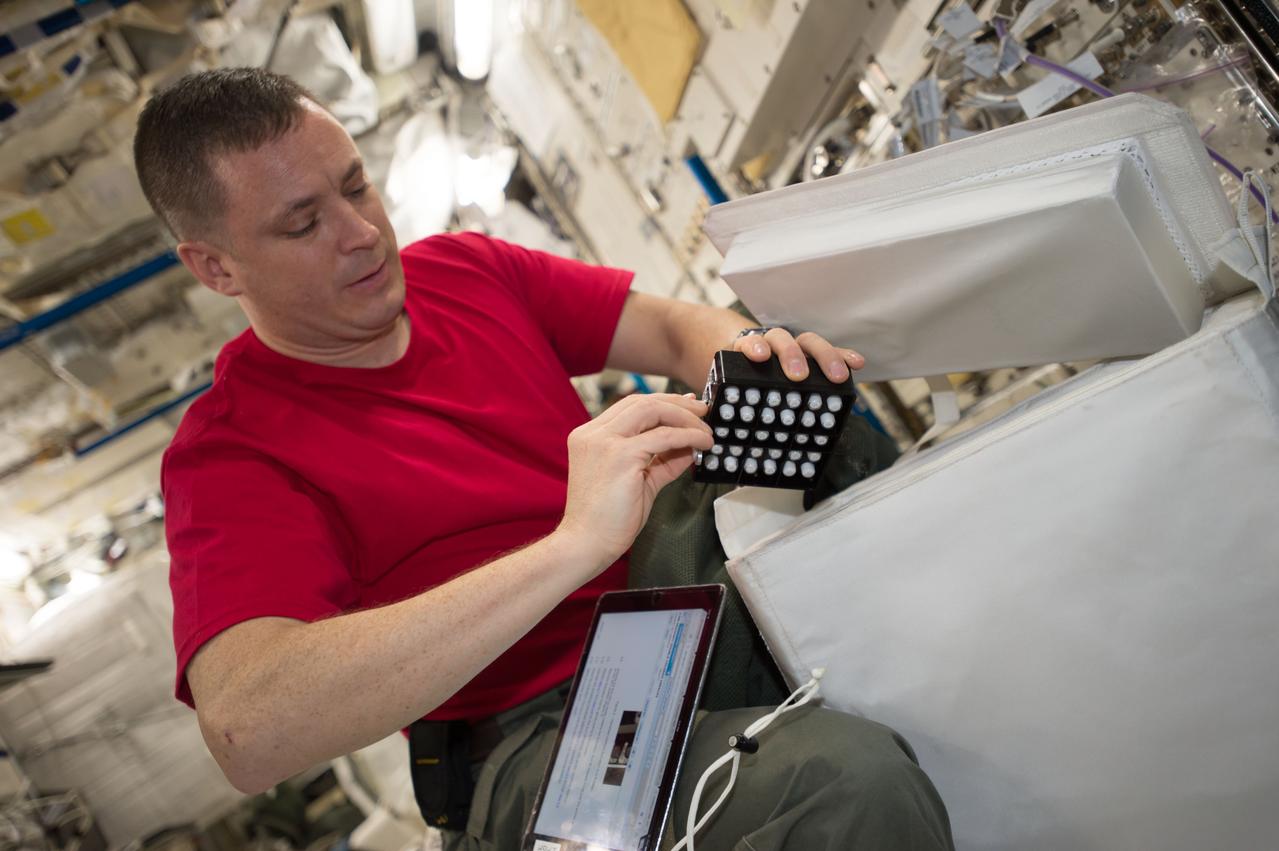
iss052e000508 (June 6, 2017) --- View of astronaut Jack Fischer working with the Neutron Crystallographic Studies of Human Acetylcholinesterase for the Design of Accelerated Reactivators (CASIS PCG 6) experiment in the Japanese Experiment Module
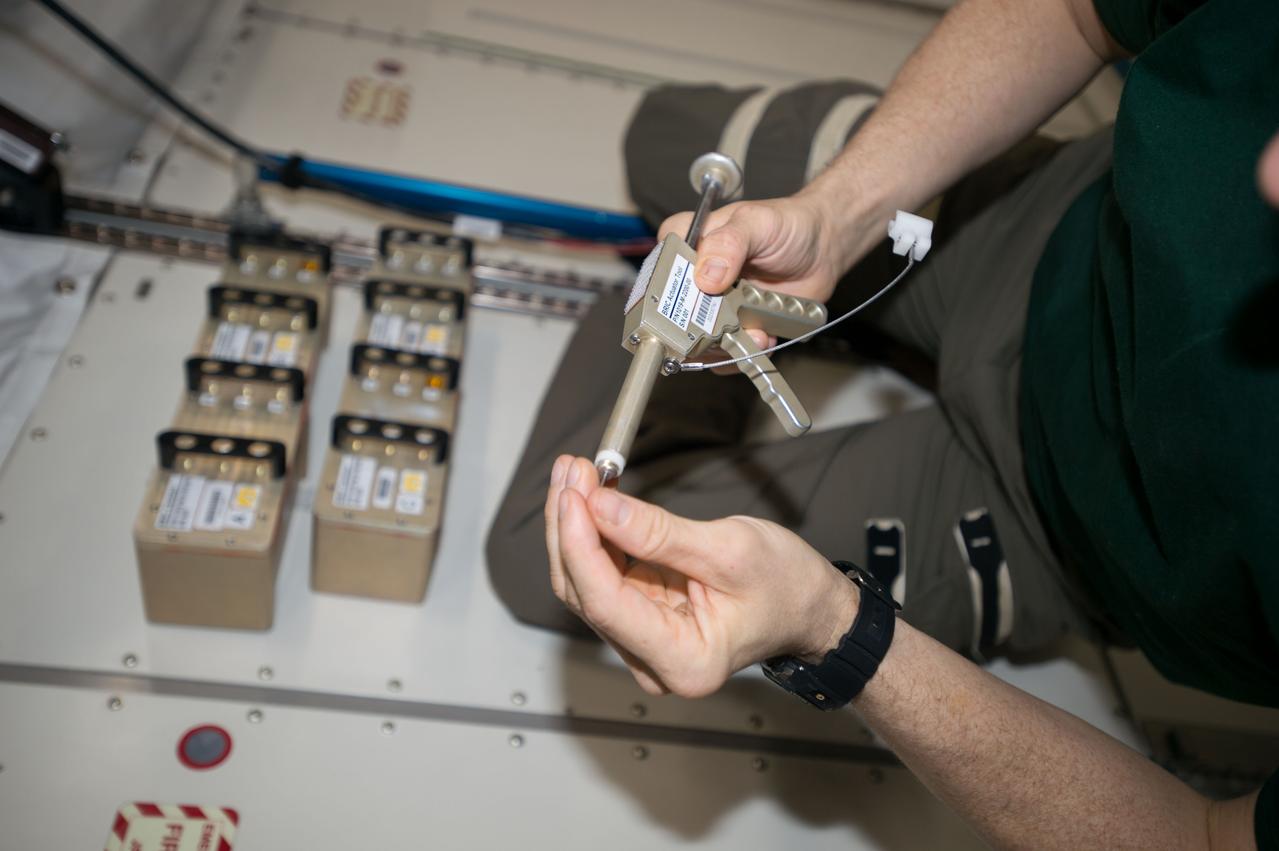
iss052e079043 (Aug. 31, 2017) --- NASA astronaut Jack Fischer actuating four cansiters of the Biological Research in Canisters-22 (BRIC-22) experiment in the Japanese Experiment Module (JEM) Pressurized Module (JPM). BRIC-22 studies the stress response in plants by comparing 8 different variants of thale cress (Arabidopsis thaliana) in the microgravity environment.
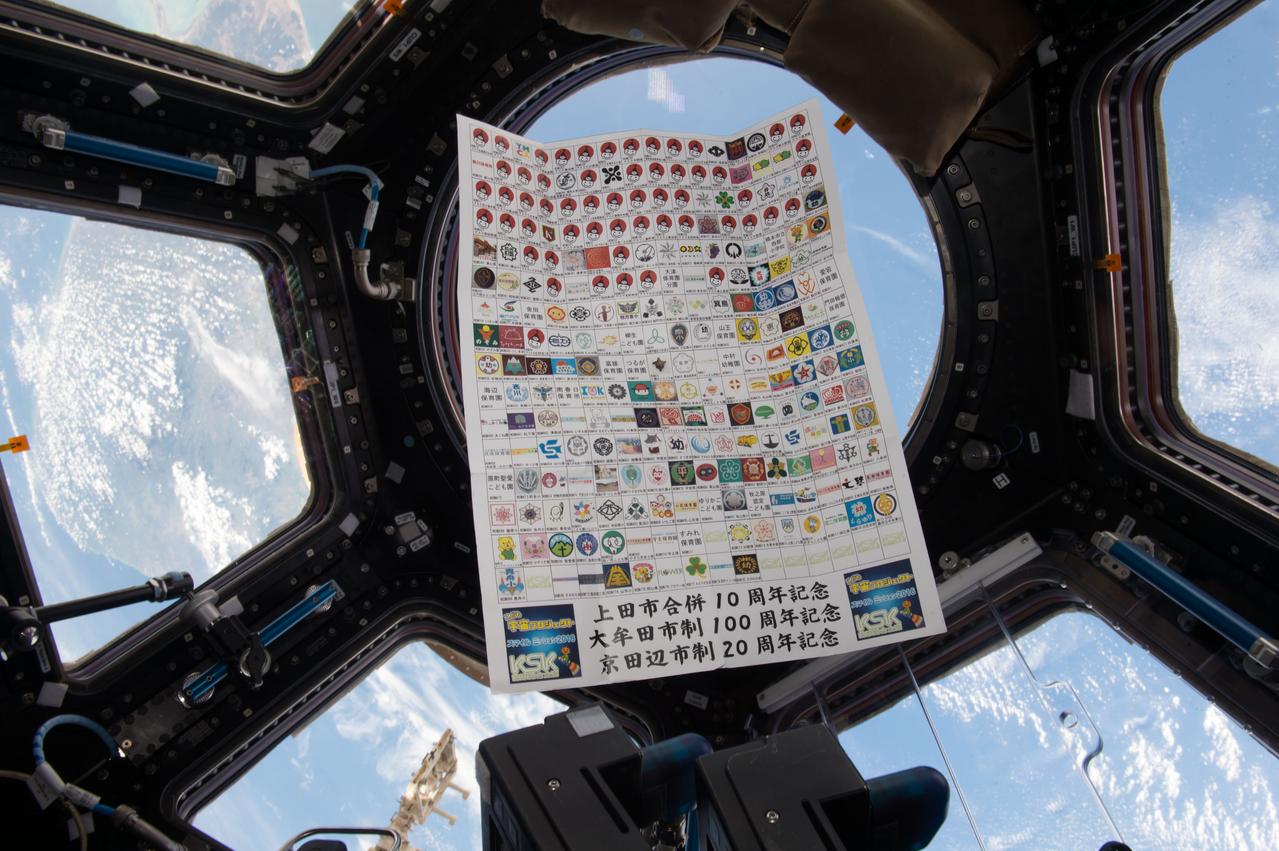
iss052e009477 (6/29/2017) --- A view of items from the NanoRacks-Lagrange investigation floating in front of the windows in the Cupola module aboard the International Space Station (ISS). NanoRacks-Lagrange seeks to increase interest in space. For this investigation, student photos and printed logos sheets are launched to the International Space Station (ISS) with a message card. Additionally, plant seeds are flown to the ISS. The students plant the seeds once they return to Earth and compare them to plants grown from regular seeds. Students are able to touch and feel close to space through this experiment.
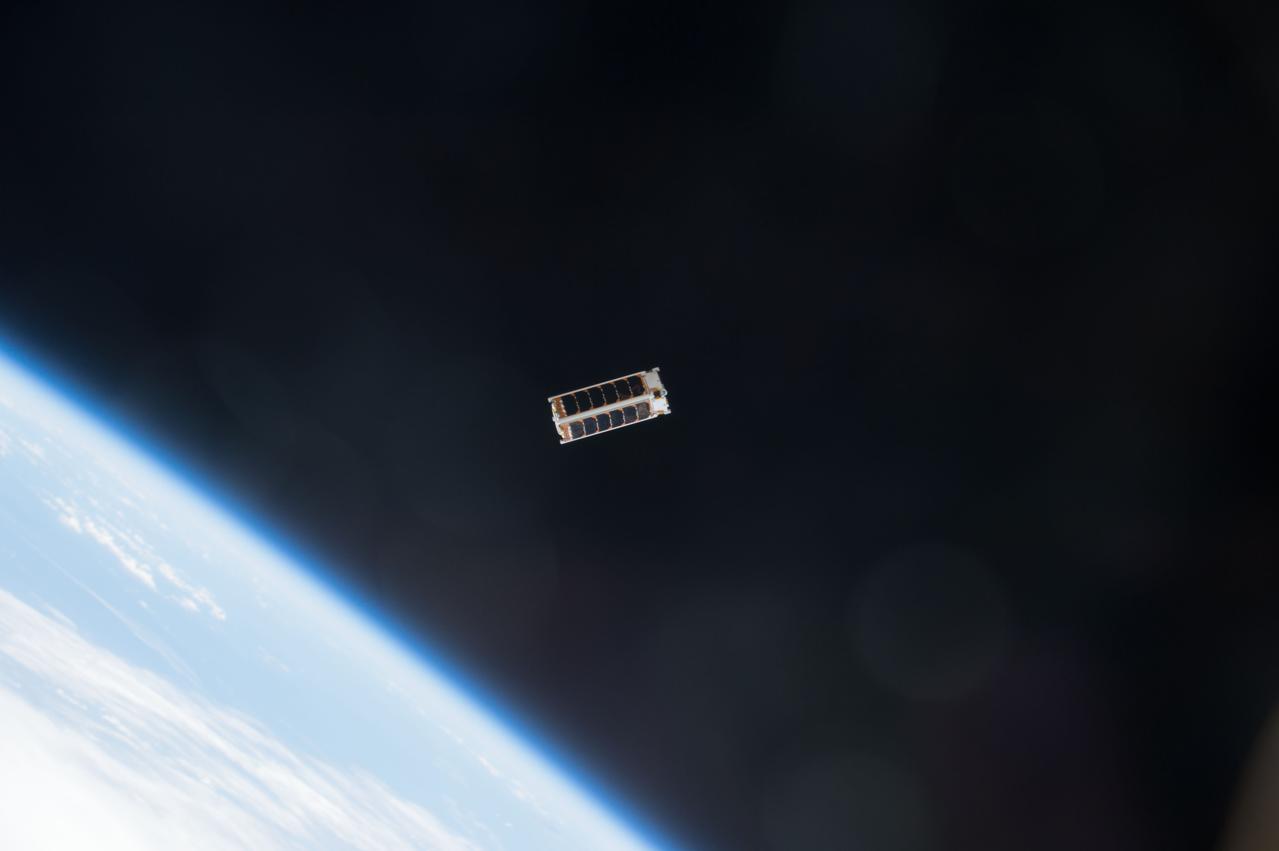
iss050e031340 (1/16/2017) --- Photo documentation of the Japanese-Small Satellite Orbital Deployer-6 (J-SSOD-6) deployment of the ECG Cubesat. The EGG Satellite (re-Entry satellite with Gossamer aeroshell and GPS/Iridium) developed at the University of Tokyo, demonstrates a deployable aeroshell to first act as a drag device and then protect the satellite during the initial stages of re-entry.
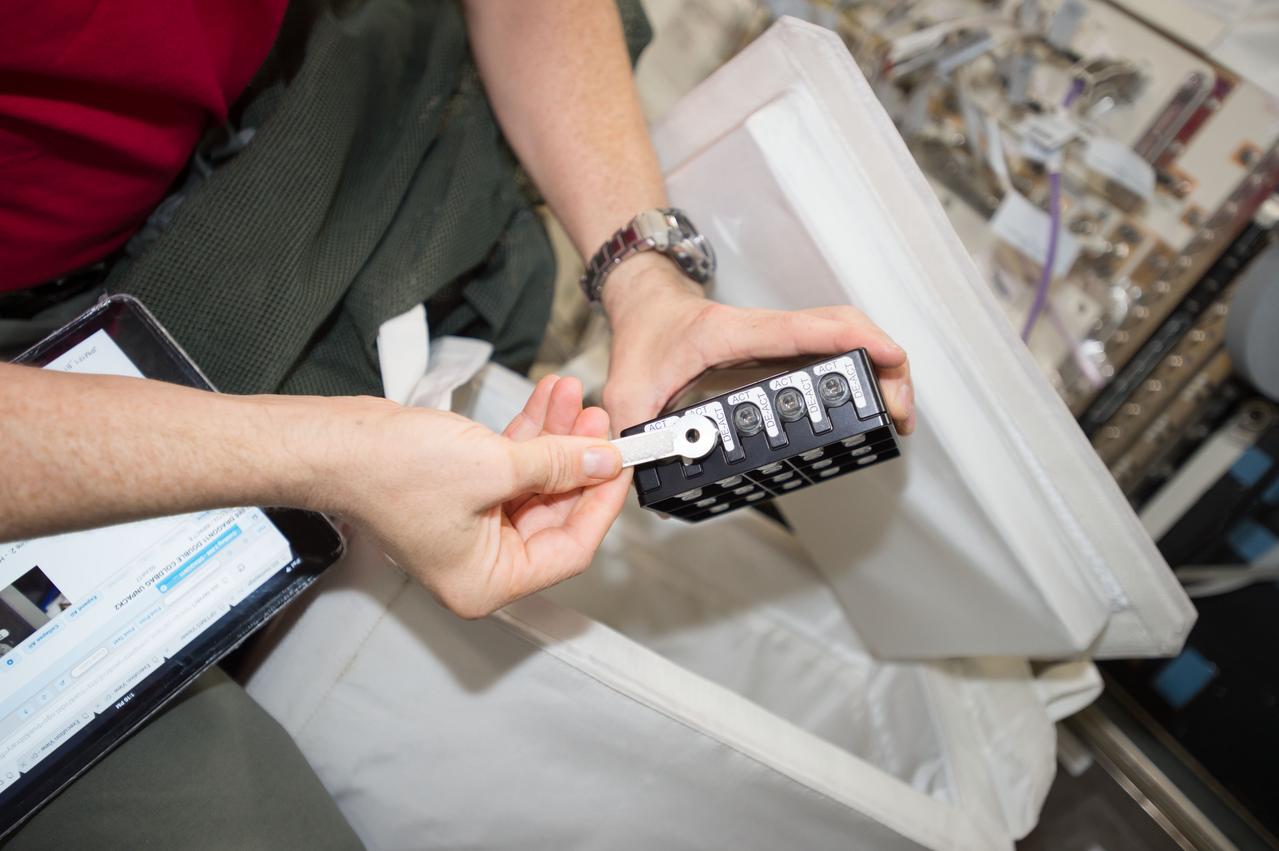
iss052e000503 (June 6, 2017) --- View of astronaut Jack Fischer working with the Neutron Crystallographic Studies of Human Acetylcholinesterase for the Design of Accelerated Reactivators (CASIS PCG 6) experiment in the Japanese Experiment Module.
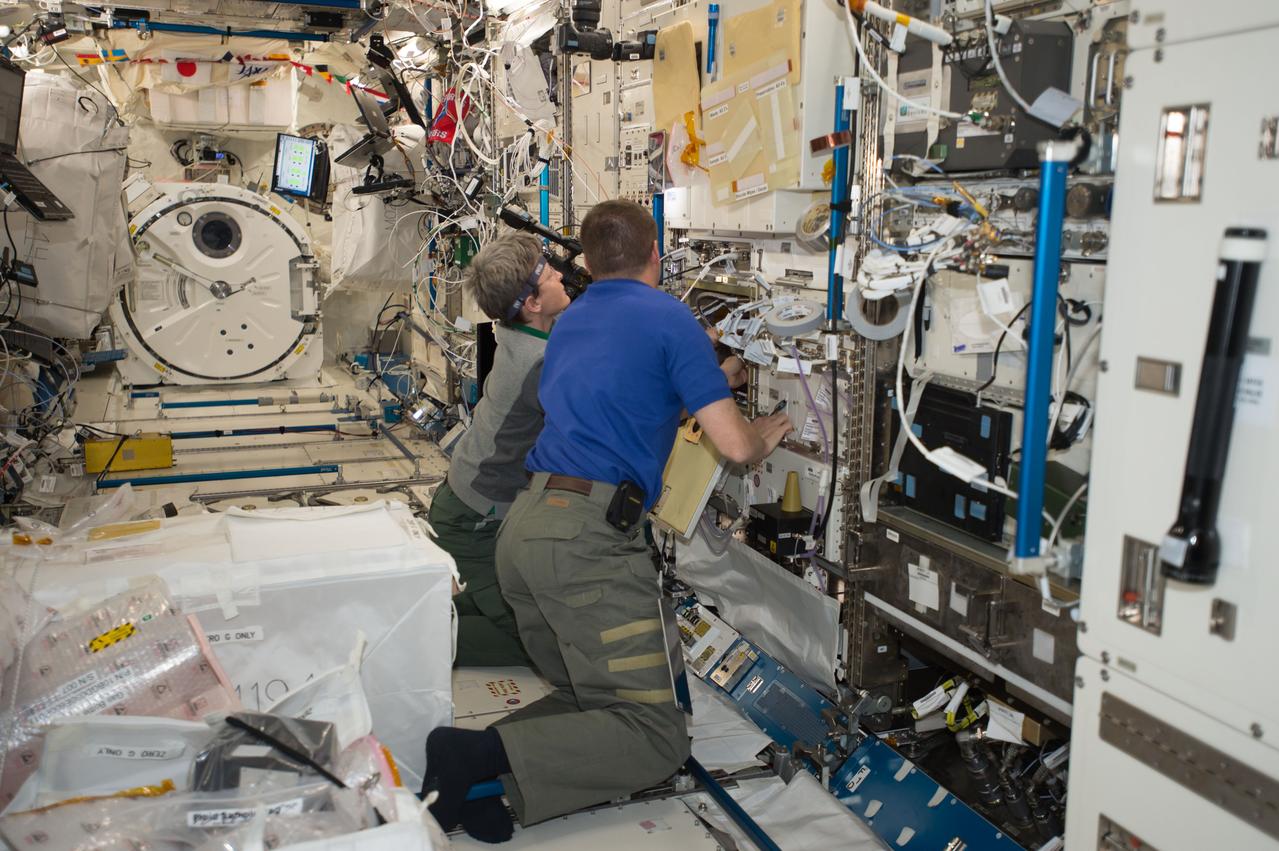
iss051e050850 (5/26/2017) --- NASA astronaut Peggy Whitson and Jack Fischer work to install a Gas Supply Hose Assembly and Gas Bottle Unit Air in the Electrostatic Levitation Furnace (ELF) in the Kibo Japanese Experiment Pressurized Module (JPM) aboard the International Space Station (ISS) in supprt of the Passive Thermal Flight Experiment.The Advanced Passive Thermal eXperiment (APTx) tests three advanced thermal management technologies. It demonstrates the in-space performance of each, an important step toward improving these technologies for use on future space exploration missions.
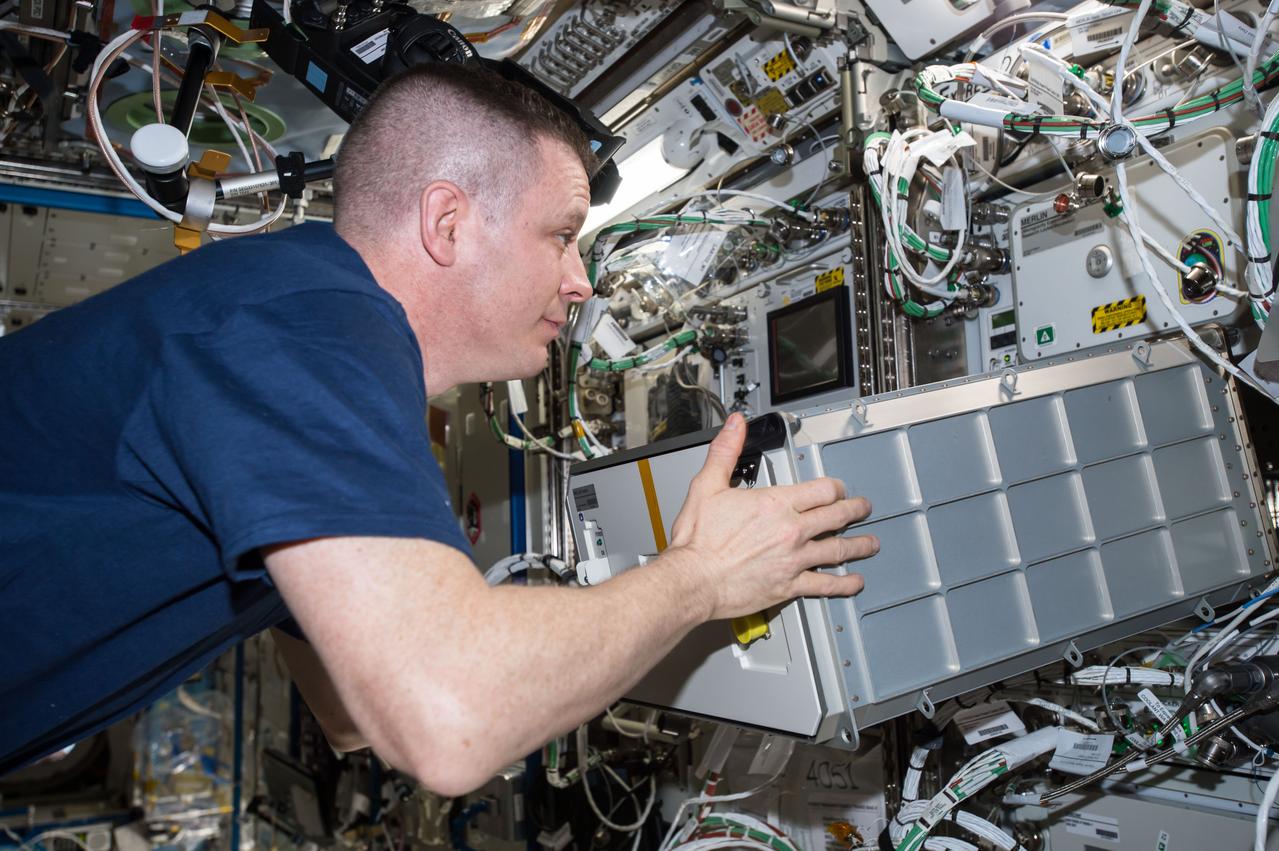
iss052e073846 (Aug. 25, 2017) --- NASA astronaut Jack Fischer installling the Biological Research In Canisters (BRIC) Light Emitting Diode (LED) for future BRIC-LED experiments.
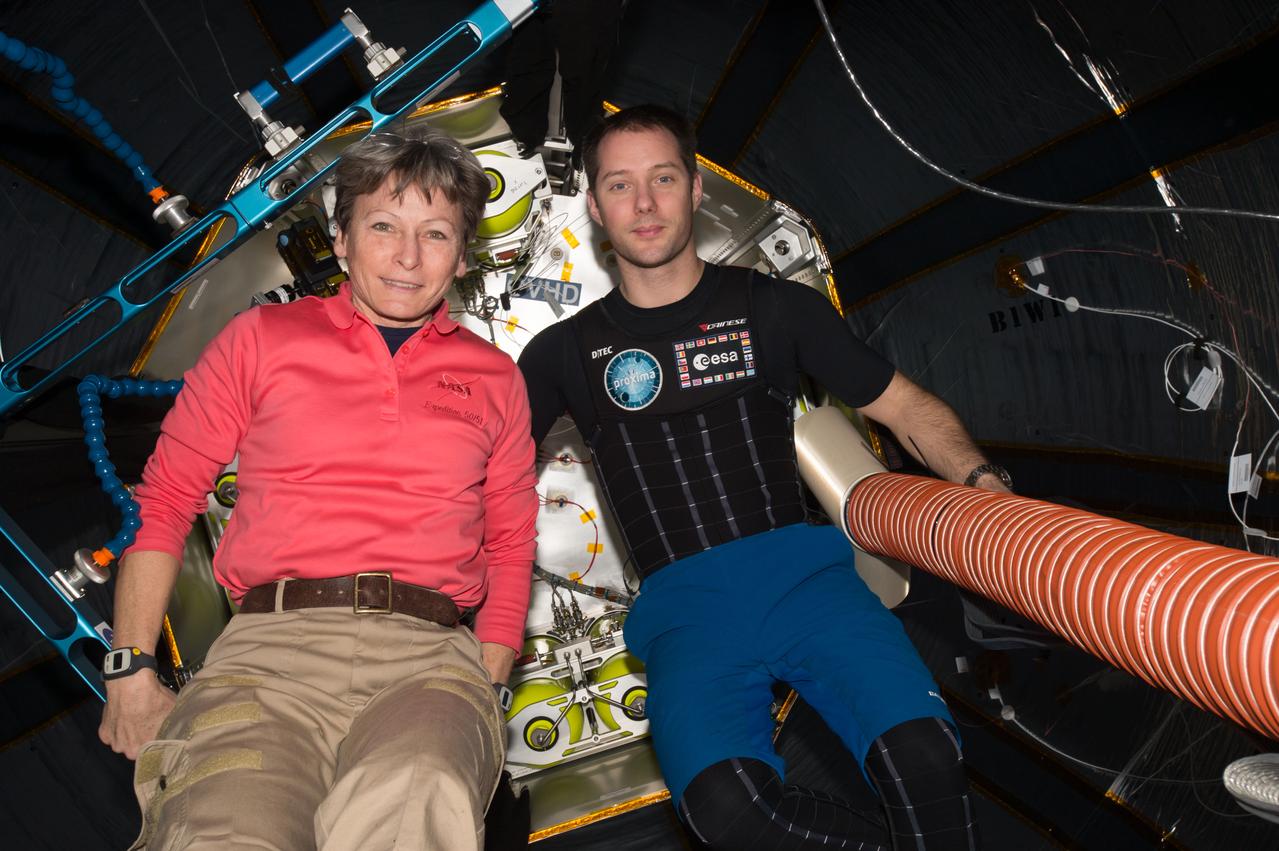
iss050e037908 (2/2/2017) --- NASA astronaut Peggy Whitson and European Space Agency (ESA) Thomas Pesquet in the Bigelow Expandable Aerospace Module (BEAM). The Bigelow Expandable Activity Module (BEAM) is an experimental expandable capsule that docks with the International Space Station (ISS). After docking, BEAM inflates to roughly 13 feet long and 10.5 feet in diameter to provide a habitable volume where a crew member can enter.
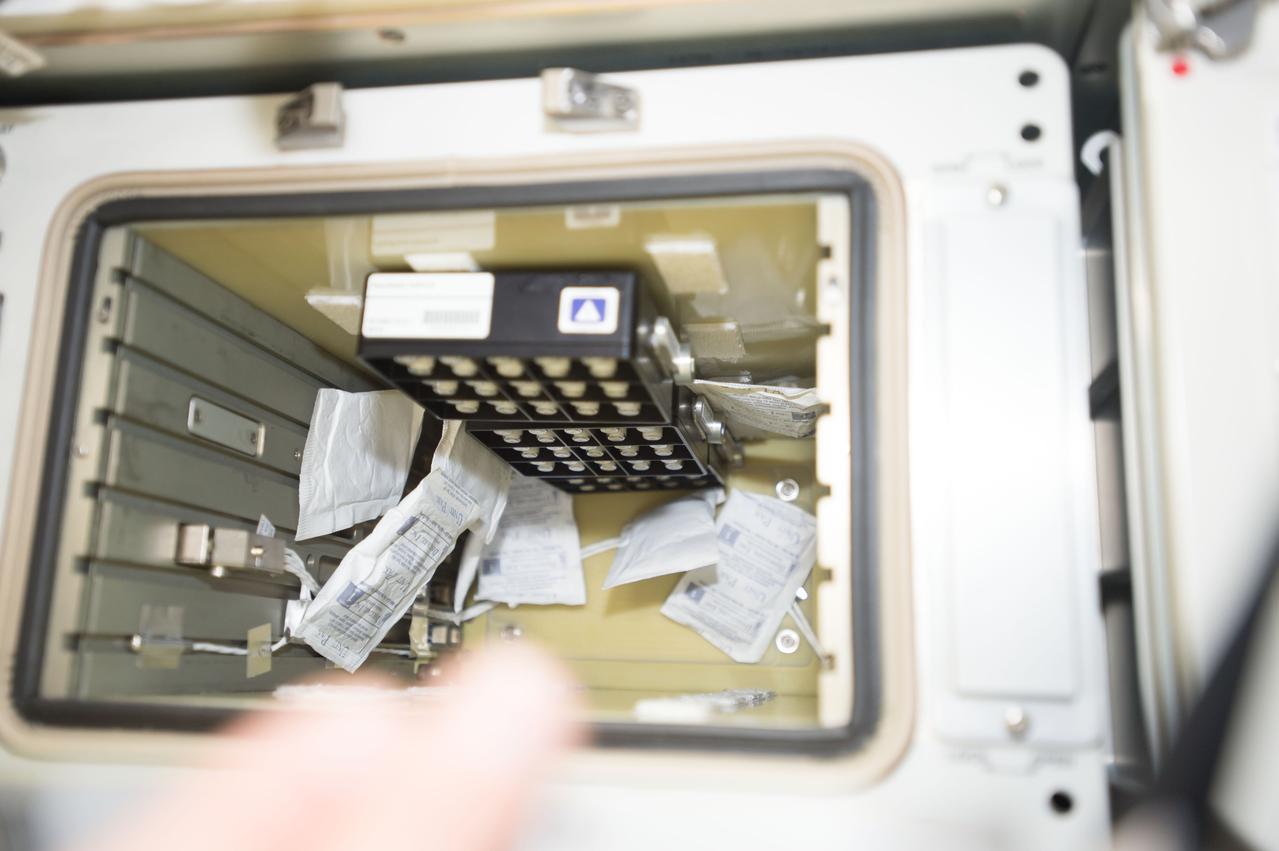
iss052e000516 (6/6/2017) --- View of the Neutron Crystallographic Studies of Human Acetylcholinesterase for the Design of Accelerated Reactivators (CASIS PCG 6) experiment in the Japanese Experiment Module (JEM).
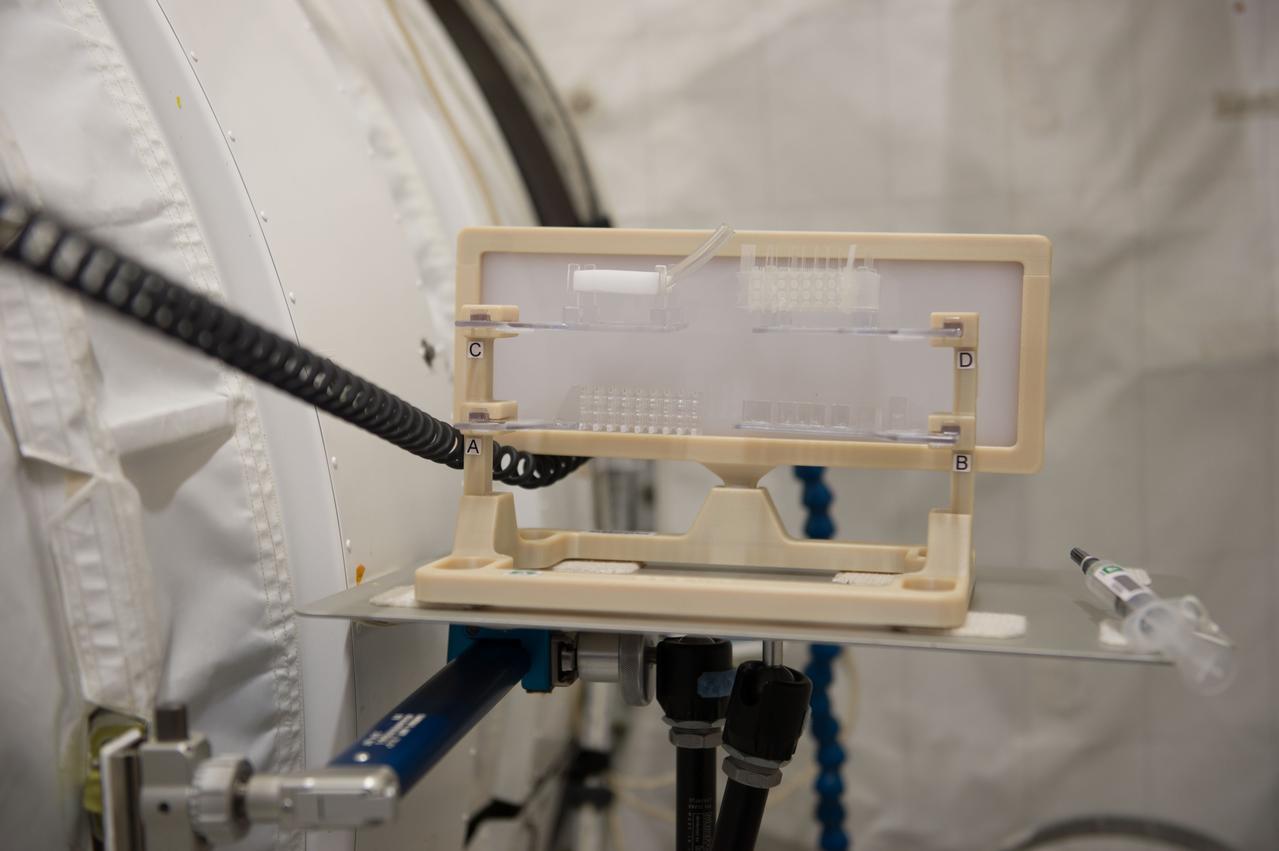
iss052e016481 (7/19/2017) --- A view taken of hardware for the Capillary Structures investigation in the Japanese Experiment Module (JEM). This investigation studies a new method using structures of specific shapes to manage fluid and gas mixtures. It also studies water recycling and carbon dioxide removal, benefiting future efforts to design lightweight, more reliable life support systems for future space missions.

iss050e031653 (1/16/2017) --- Photo documentation of the Japanese-Small Satellite Orbital Deployer-6 (J-SSOD-6) deployment of the TuPOD Cubesat. TuPOD is a 3Unit micro-satellite that is entirely a 3D printed structure designed to launch the first Tubesats into space. The mission of TuPOD is to confirm that satellite deployment is feasible from CubeSat.
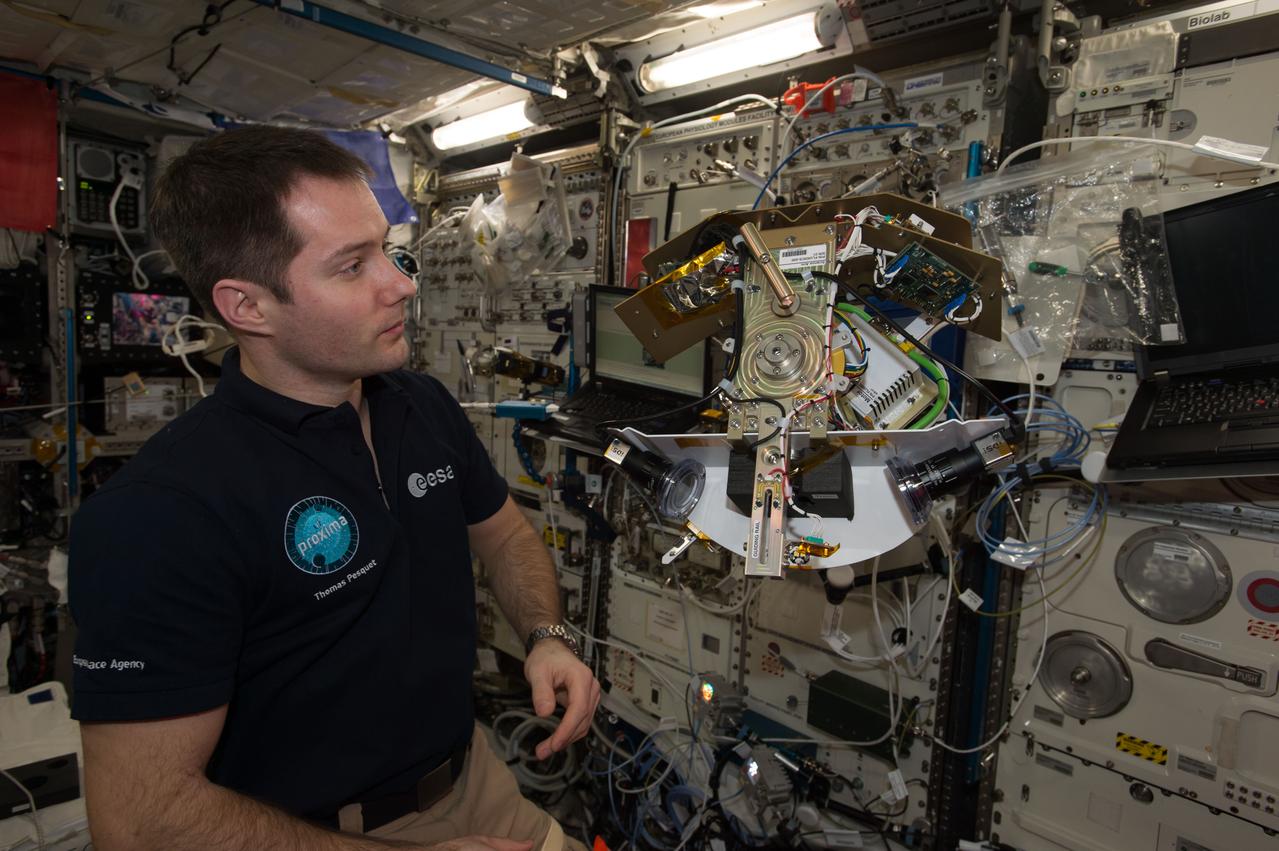
iss051e033986 (5/2/2016) --- European Space Agency (ESA) astronaut Thomas Pesquet is photographed with the assembled Science Arm and Motor for the Fluid Dynamics in Space (FLUIDICS) experiment. Image was taken in the Columbus European Laboratory during preparations for the first run of the experiment. The FLUIDICS investigation evaluates the Center of Mass (CoM) position regarding a temperature gradient on a representation of a fuel tank. The observation of capillary wave turbulence on the surface of a fluid layer in a low-gravity environment can provide insights into measuring the existing volume in a sphere.
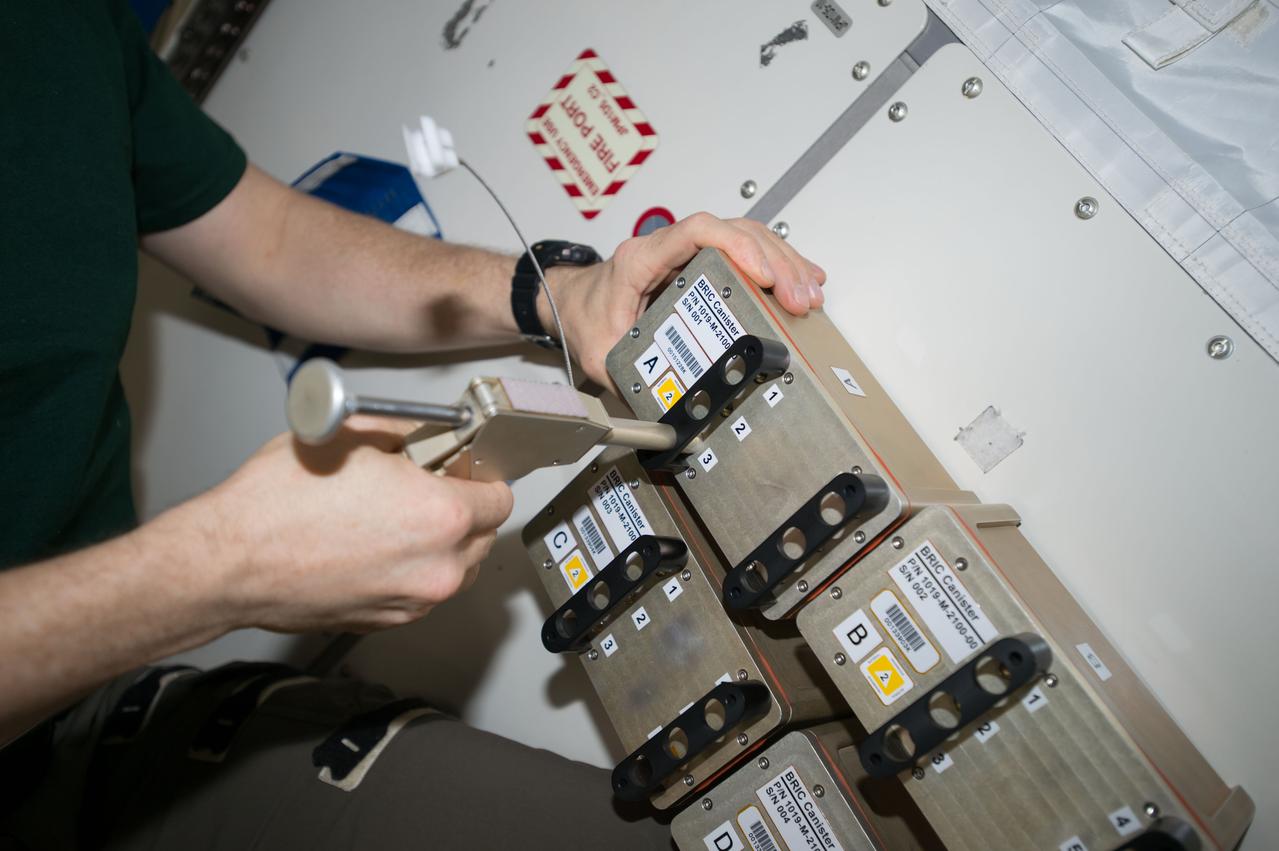
iss052e079058 (Aug. 31, 2017) --- NASA astronaut Jack Fischer actuating four cansiters of the Biological Research in Canisters-22 (BRIC-22) experiment in the Japanese Experiment Module (JEM) Pressurized Module (JPM). BRIC-22 studies the stress response in plants by comparing 8 different variants of thale cress (Arabidopsis thaliana) in the microgravity environment.

iss050e041989 (2/14/2017) --- Photo documentation of the Radio Frequency Identification (RFID) cable installation in the U.S. Laboratory aboard the International Space Station (ISS). The RFID-Enabled Autonomous Logistics Management (REALM) (RFID Logistics Awareness) investigation tests a radio-based inventory control system to keep track of everything inside the football-field-sized ISS. Some aspects of the technology are commonly used on Earth, but other aspects are experimental in nature.
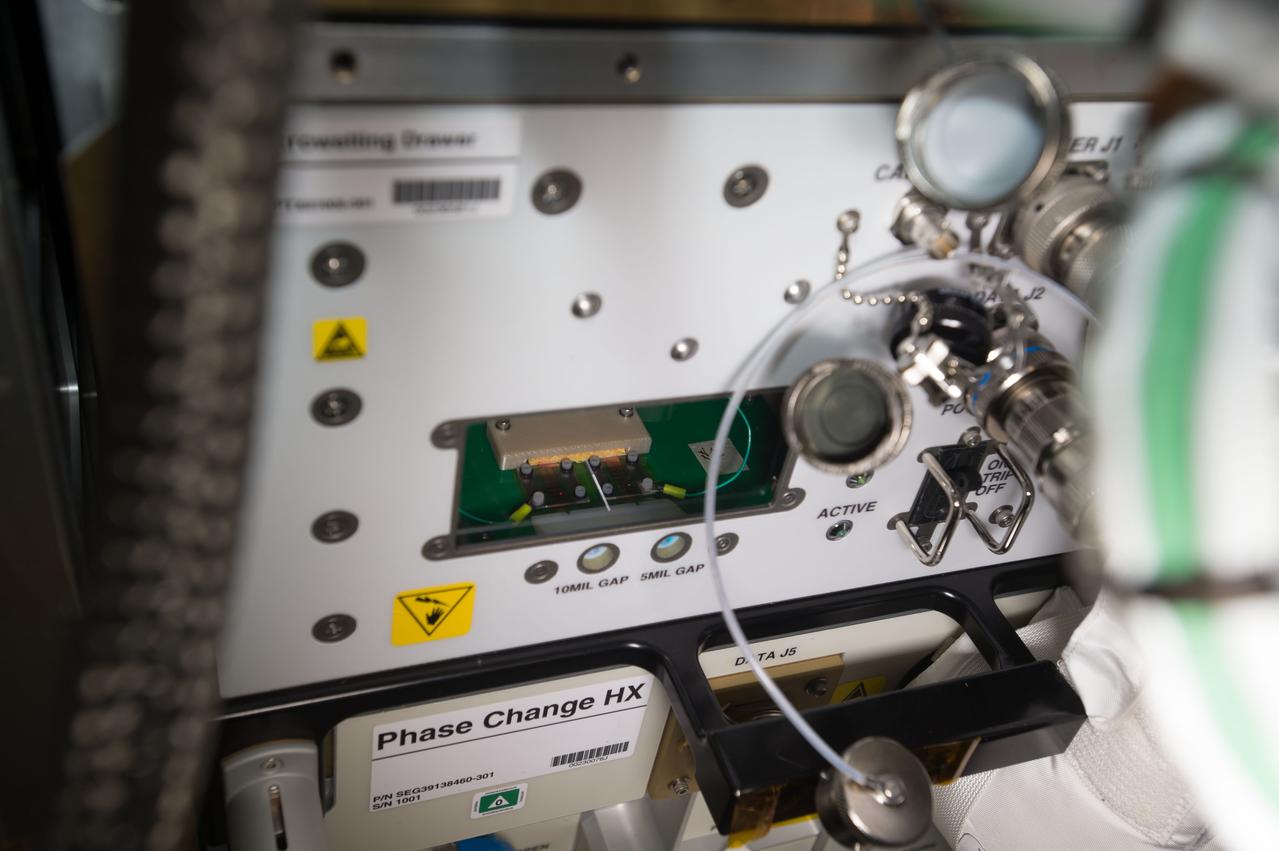
iss051e049793 (5/25/2017) --- A view of the Electrowetting Drawer taken during Passive Thermal Flight Experiment operations (OPS) in the Kibo Japanese Experiment Pressurized Module (JPM) aboard the International Space Station (ISS). The Advanced Passive Thermal eXperiment (APTx) tests three advanced thermal management technologies. It demonstrates the in-space performance of each, an important step toward improving these technologies for use on future space exploration missions.
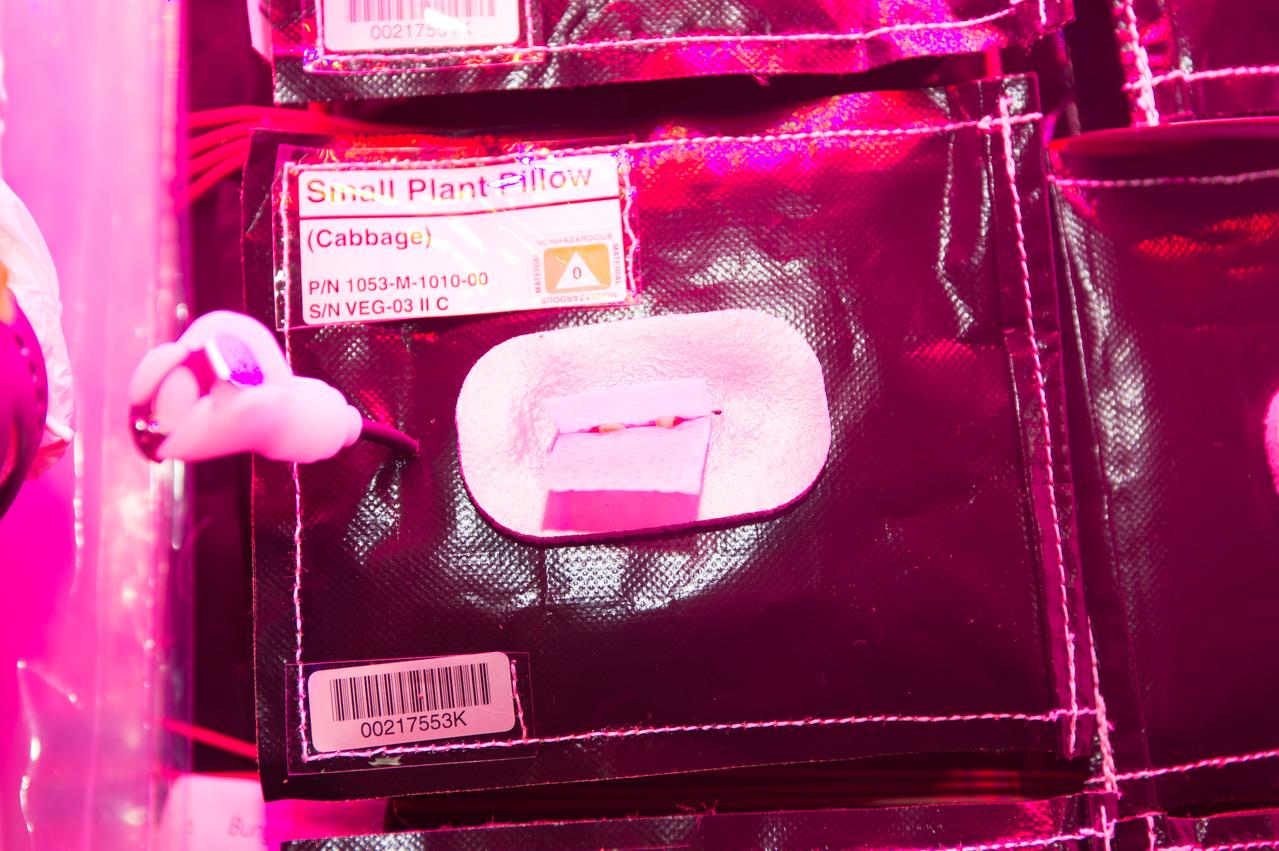
iss050e067347 (4/6/2017) --- A view during wick opening on each plant pillow, in the Columbus Module. Organisms grow differently in space, from single-celled bacteria to plants and humans. But future long-duration space missions will require crew members to grow their own food, so understanding how plants respond to microgravity is an important step toward that goal. Veg-03 uses the Veggie plant growth facility to cultivate a type of cabbage, which is harvested in orbit with samples returned to Earth for testing.
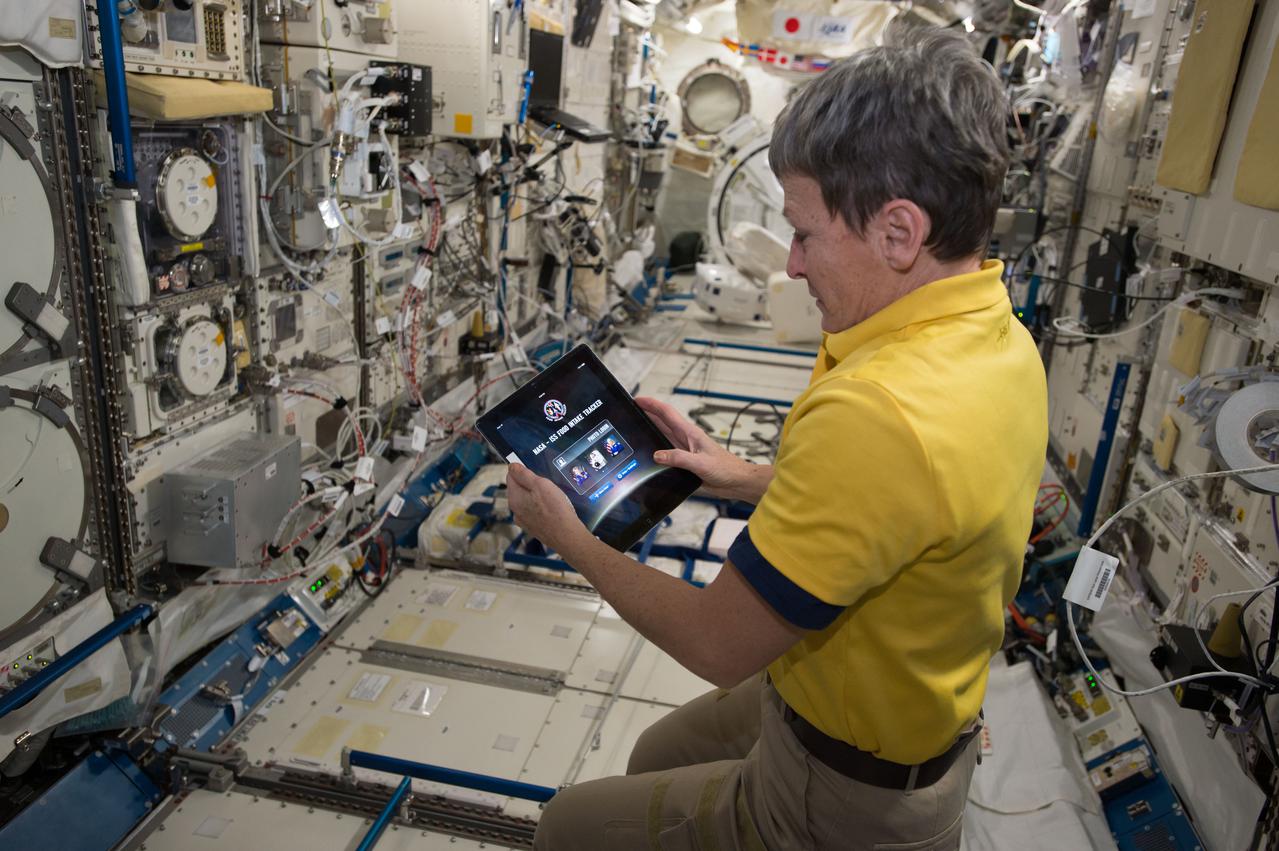
iss050e011454 (11/23/2016) --- A view of NASA astronaut Peggy Whitson using an iPAD containing the Dose Tracker application, in the Japanese Experiment Module (JEM) aboard the International Space Station (ISS). This study documents the medication usage of crew members before and during their missions by capturing previously unrecorded data regarding medication use during spaceflight, including side effect qualities, frequencies and severity. This research-oriented data is collected for research purposes, separate from medical records.
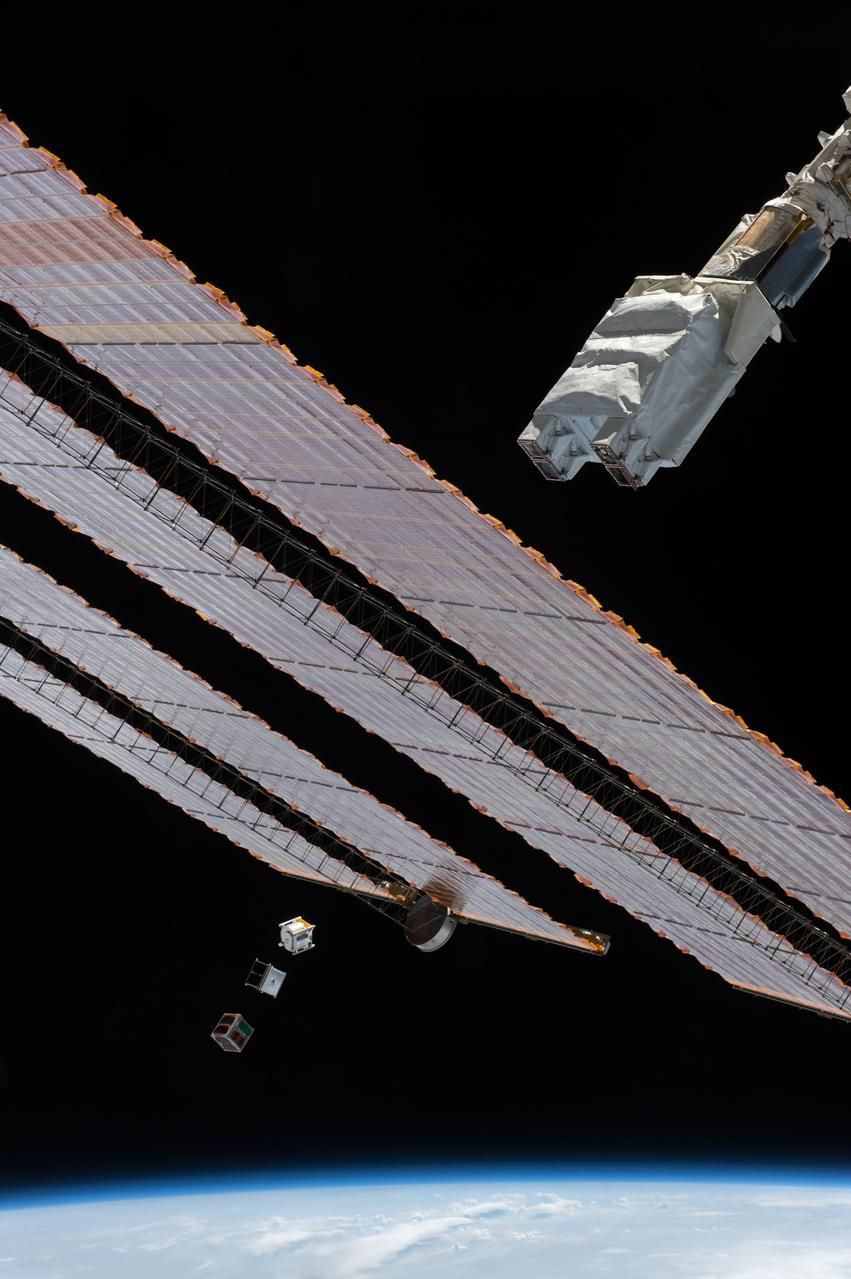
iss050e032565 (1/17/2017) --- Photo documentation of the Japanese-Small Satellite Orbital Deployer-6 (J-SSOD-6) deployment of the ITF-2, Waseda-SAT3 and Freedom CubeSats. The Imagine The Future-2 (ITF-2) CubeSat mission supports amateur radio networking by testing a micro engineered 1/20 wavelength small antenna. The WASEDA SAT-3 is a CubeSat developed by Waseda University aiming to test an ultra-light drag chute for accelerated deorbit. An LCD projector shows images on the chute with imagery sent back to Earth via an onboard camera. FREEDOM is a 1 Unit (1U) CubeSat developed by the Nakashimada Engineering Works and the Tohoku University to demonstrate a deployable deorbit device “DOM” for application in future missions for space debris mitigation.
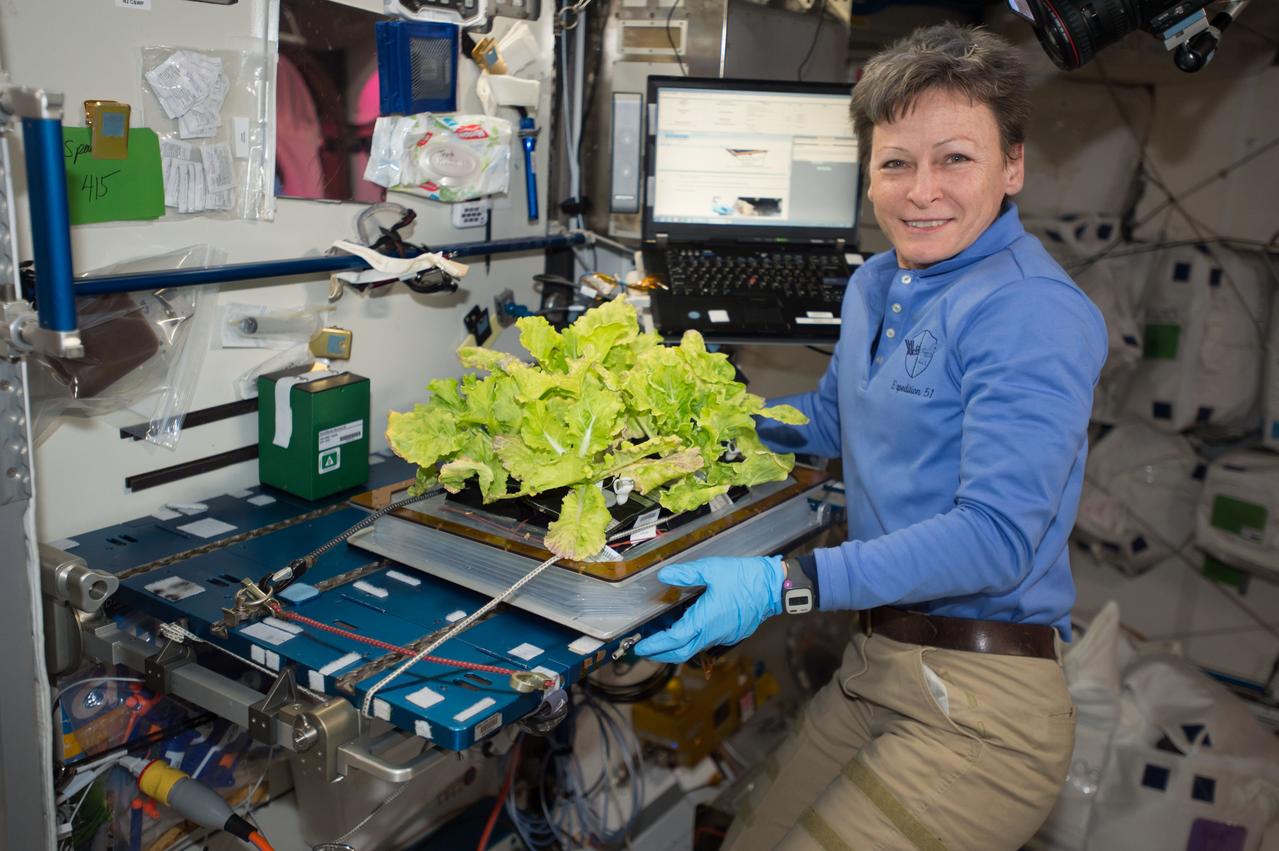
iss051e051923 (5/03/2017) --- NASA astronaut Peggy Whitson poses with cabbage plants in the Vegetable Production System (Veggie) bellows in the Harmony Node 2. Image was taken during final harvesting operations (OPS) for the Veg-03 experiment.
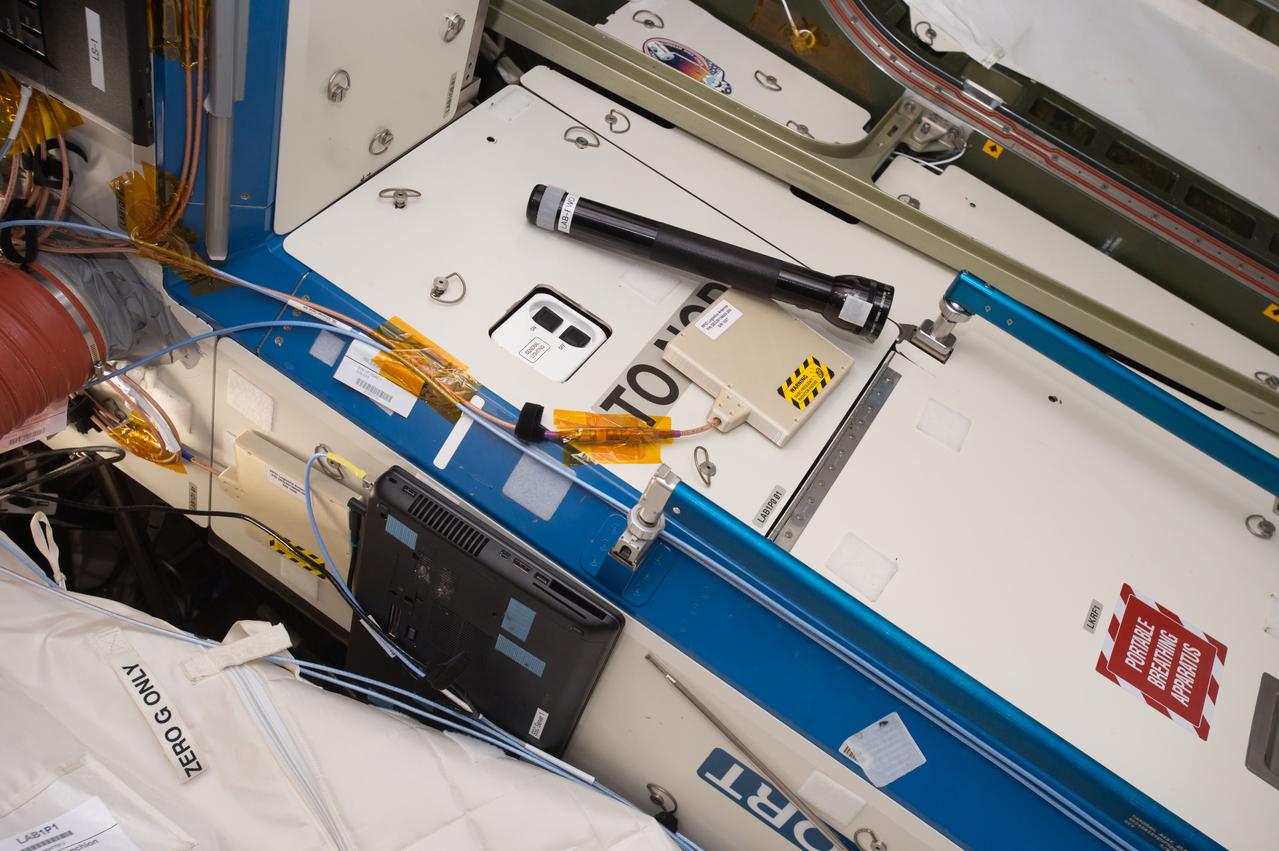
iss050e041985 (2/14/2017) --- Photo documentation of the Radio Frequency Identification (RFID) cable installation in the U.S. Laboratory aboard the International Space Station (ISS). The RFID-Enabled Autonomous Logistics Management (REALM) (RFID Logistics Awareness) investigation tests a radio-based inventory control system to keep track of everything inside the football-field-sized ISS. Some aspects of the technology are commonly used on Earth, but other aspects are experimental in nature.
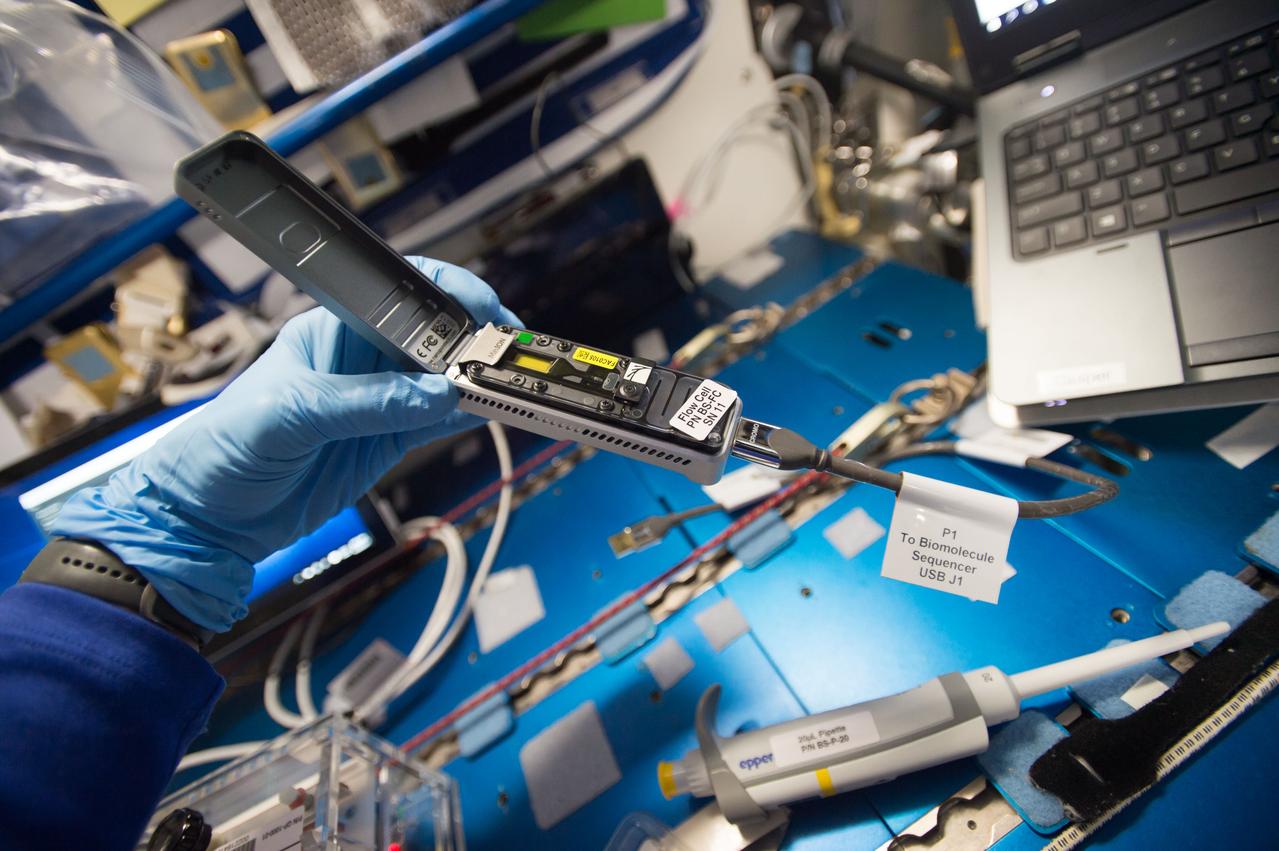
iss052e008880 (6/28/2017) --- View of Genes In Space-3 experiment in the Node 2 module. The Genes in Space-3 experiments demonstrate ways in which portable, real-time DNA sequencing can be used to assay microbial ecology, diagnose infectious diseases and monitor crew health aboard the ISS.