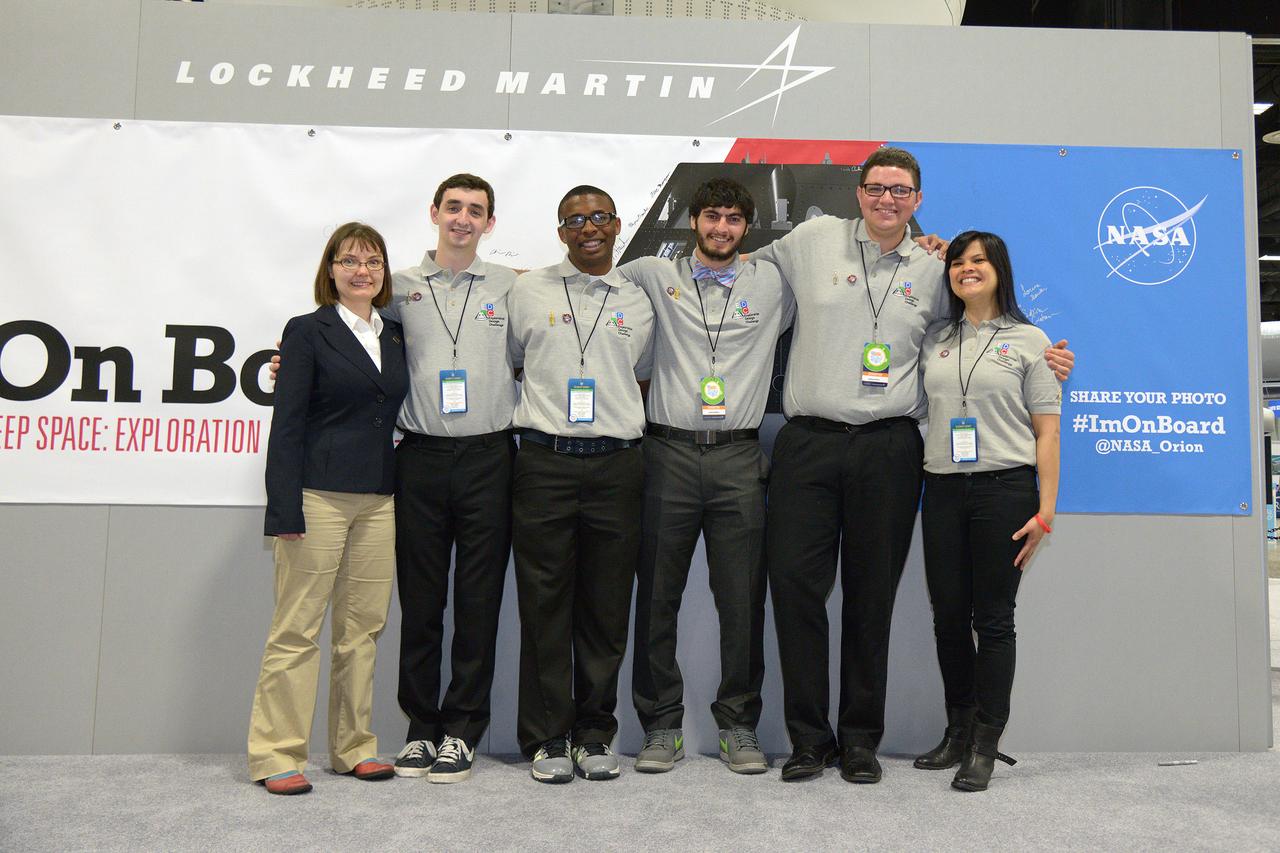
The winner of the high school portion of the Exploration Design Challenge is announced at the USA Science and Engineering Festival in Washington on April 25, 2014. Part of Batch image transfer from Flickr.
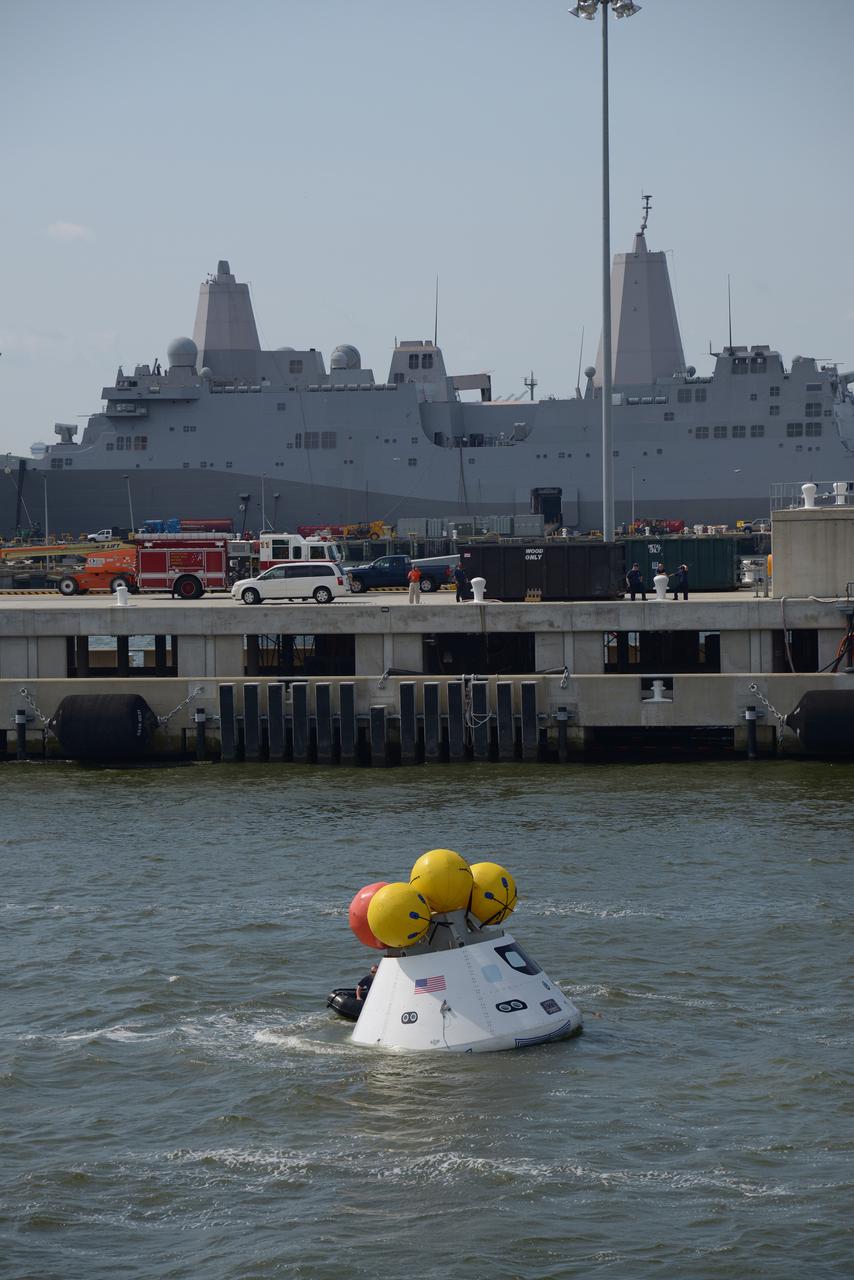
The Orion test capsule undergoes stationary recovery testing in Norfolk, VA on Aug. 13, 2013. NASA and the U.S Navy led the tests using the USS Arlington...The stationary recovery tests allow the teams to demonstrate and evaluate the recovery processes, the hardware and the test personnel in a controlled environment. ..During the test, the U.S Navy Dive Team checked the capsule for hazards while sailors from the USS Arlington approached the capsule in inflatable boats, and towed it back to the ship’s flooded well deck. Part of Batch image transfer from Flickr.
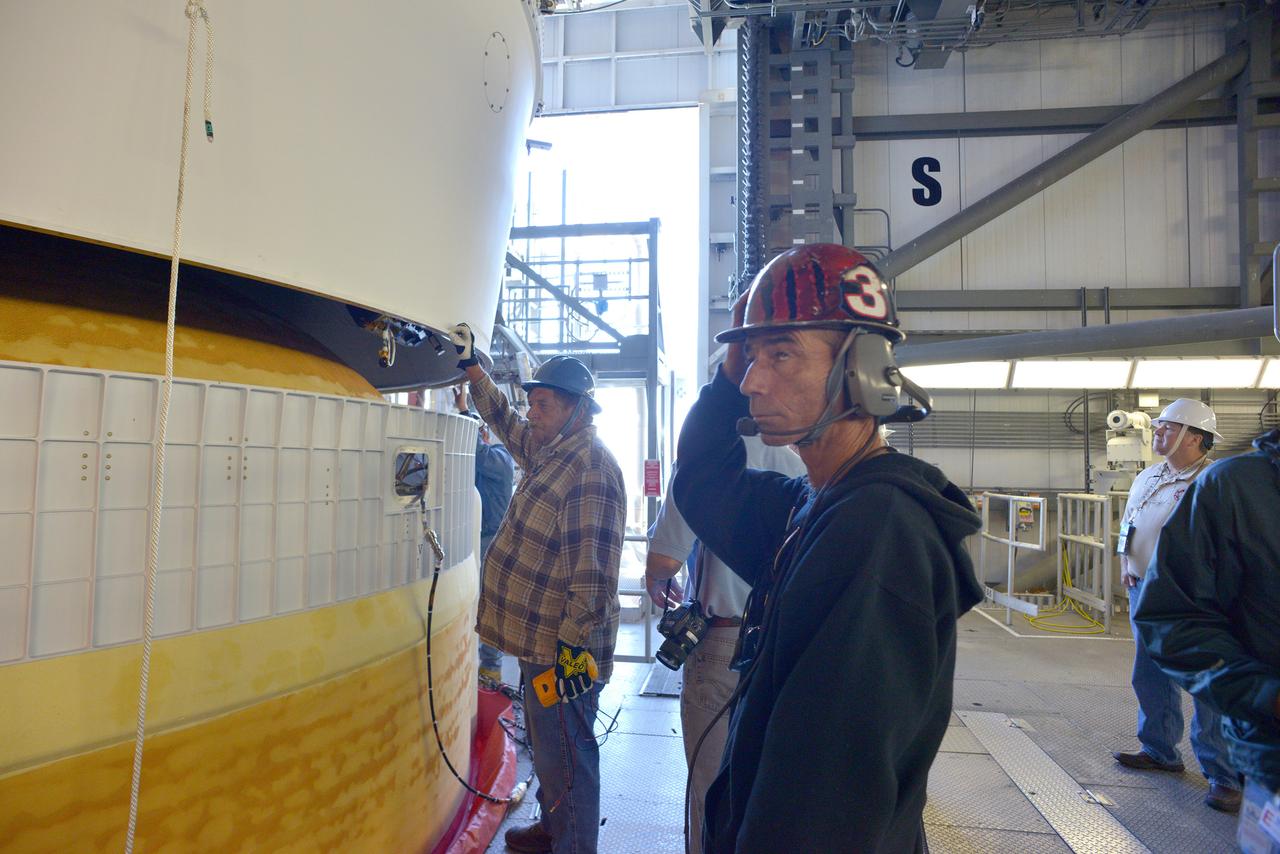
The Orion spacecraft was lifted on top of the Delta IV Heavy launch vehicle at ULA's Launch Complex 37 on Nov. 12, 2014. Over the next few days the Lockheed Martin/ULA team will work to complete the connections between Orion and the launch vehicle in preparation for Exploration Flight Test-1 (EFT-1). Part of Batch image transfer from Flickr.

Teams peform Orion Parachute Test Vehicle (PTV) loading operations on July 22, 2013 in preparation for the July 24 parachute drop test at the U.S. Army Yuma Proving Ground in Arizona. Part of Batch image transfer from Flickr.
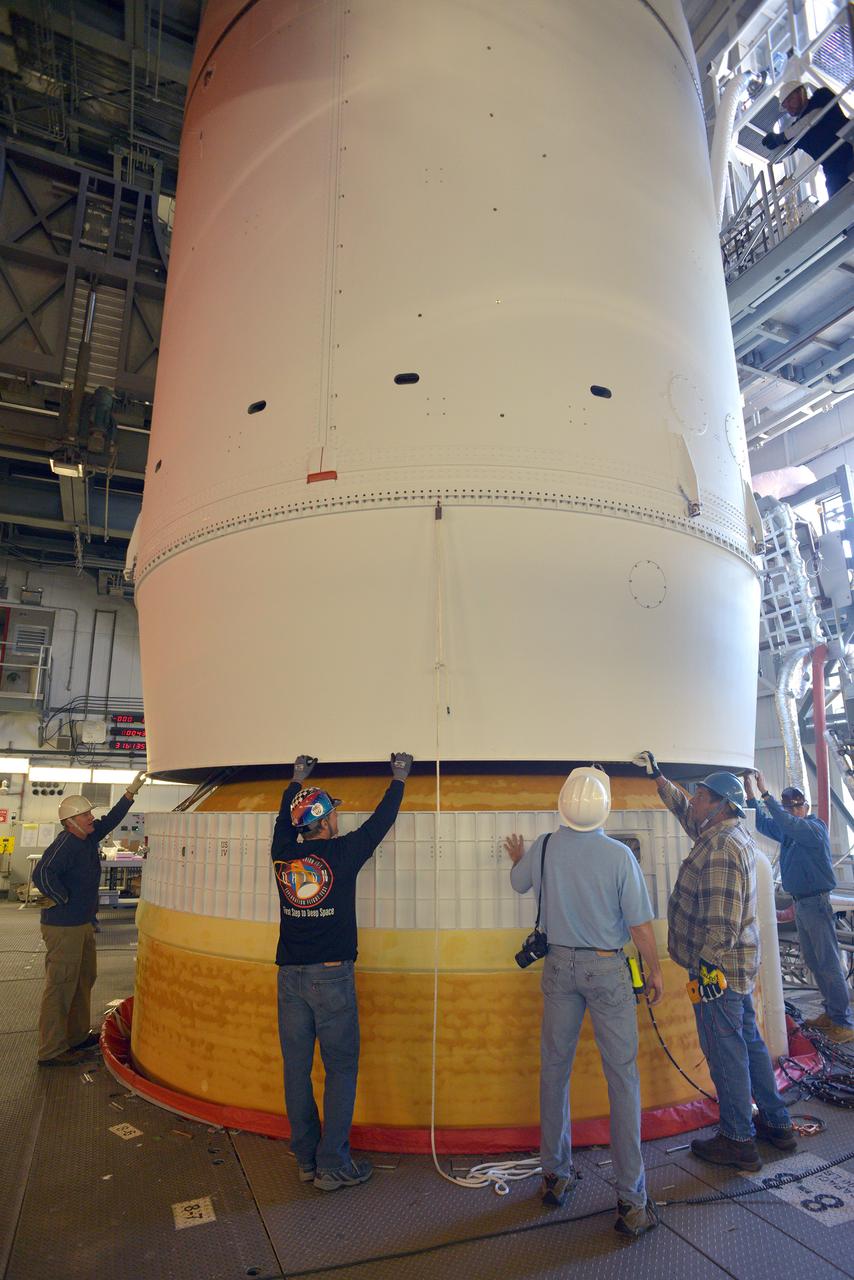
At Cape Canaveral Air Force Station's Launch Complex 37, United Launch Alliance engineers and technicians mate the agency's Orion spacecraft to its Delta IV Heavy rocket. Orion is the exploration spacecraft designed to carry astronauts to destinations not yet explored by humans, including an asteroid and Mars. It will have emergency abort capability, sustain the crew during space travel and provide safe re-entry from deep space return velocities. The first unpiloted flight test of Orion is scheduled to launch Dec. 4, 2014 atop a United Launch Alliance Delta IV Heavy rocket, and in 2018 on NASA’s Space Launch System rocket.
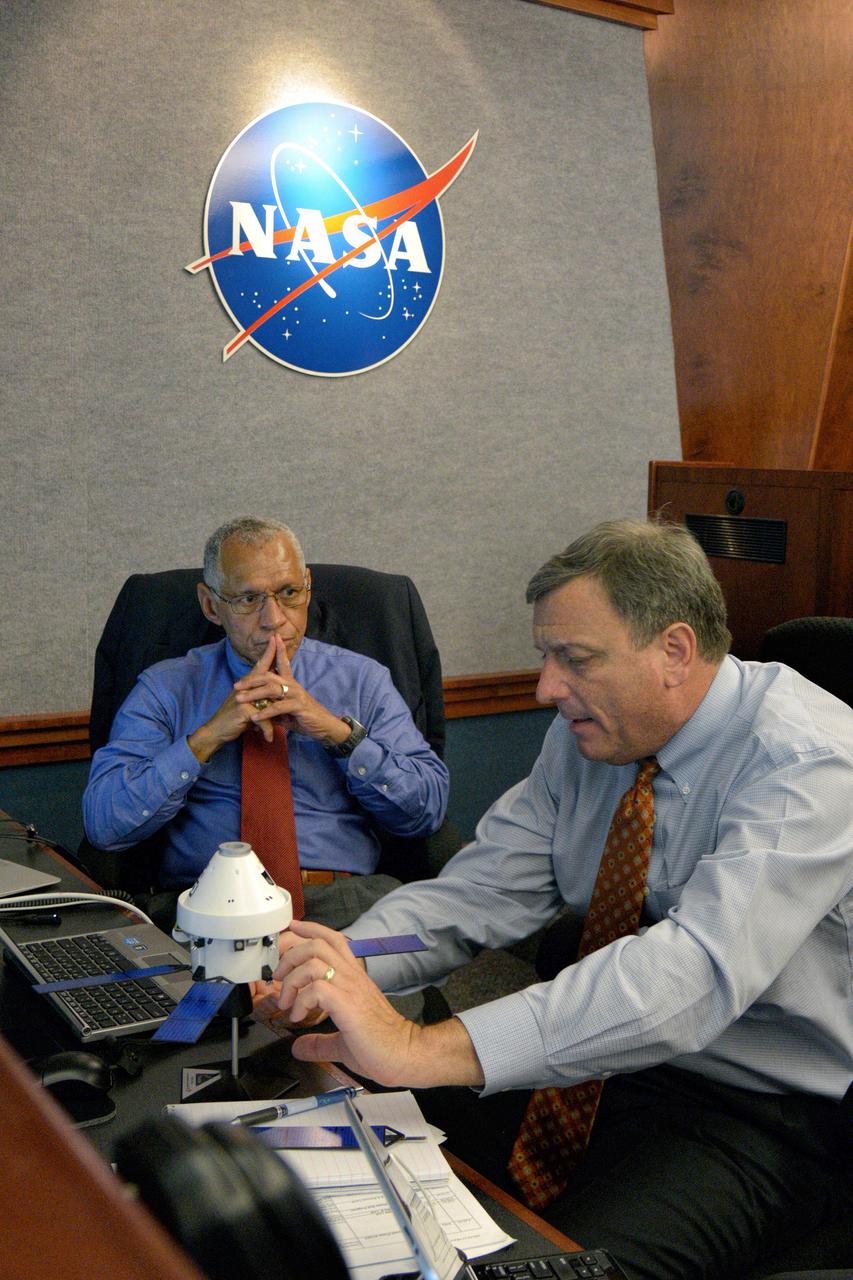
The Orion team discusses Orion operations in Building AE at Cape Canaveral Air Force Station during Exploration Flight Test-1 (EFT-1) on Dec. 5, 2014. Part of Batch image transfer from Flickr.

The Orion leadership (including Orion Program Manager Mark Geyer) visited Ames Research Center in California on March 2, 2015 to recognize the great work performed at the center in support of Orion's first flight, Exploration Flight Test-1 (EFT-1). Part of Batch image transfer from Flickr.
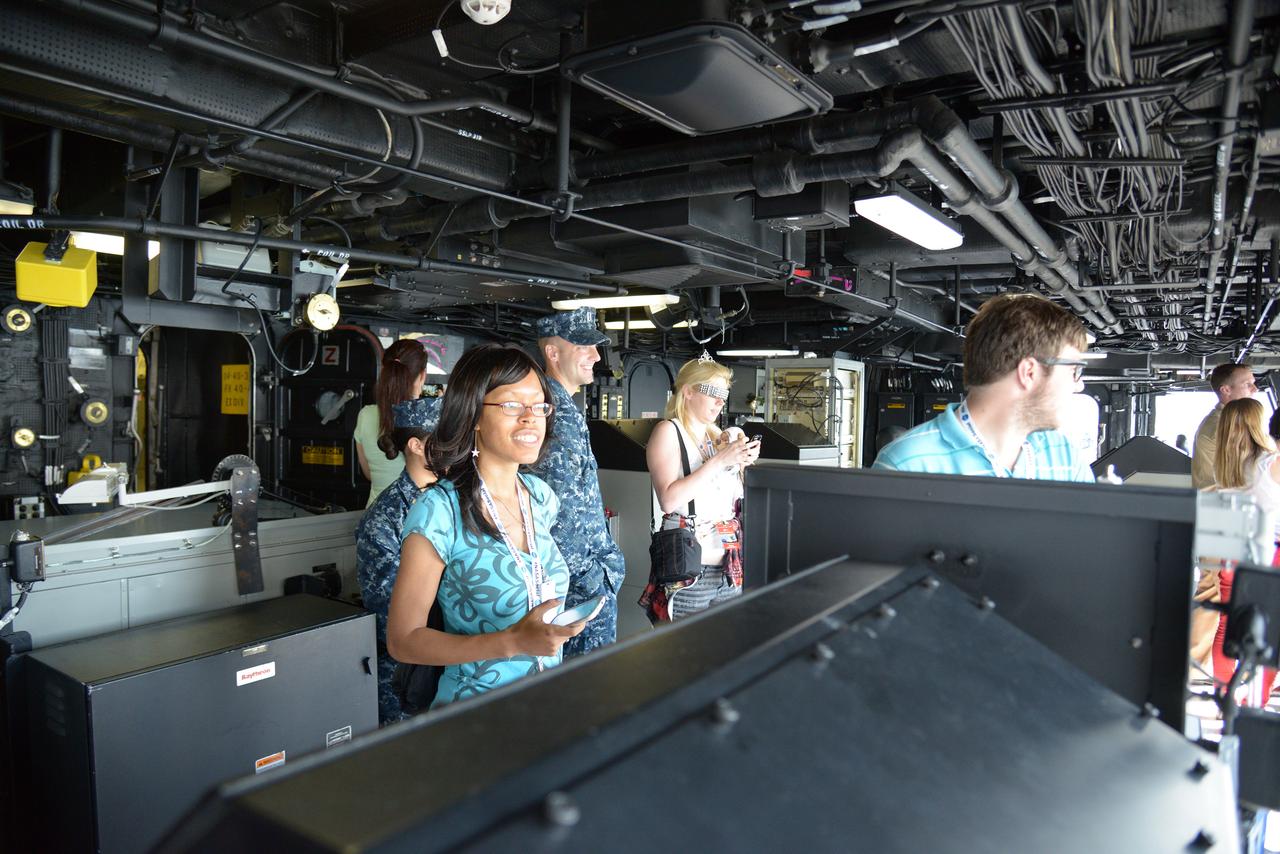
Media and NASA Social participants view Orion recovery operations and tour the USS Arlington at the Norfolk Naval base in Virginia on Aug. 15, 2013. Part of Batch image transfer from Flickr.

An Orion weight and center of gravity test with the Exploration Flight Test-1 (EFT-1) crew module takes place at the Operations and Checkout (O&C) Building at Kennedy Space Center on June 8, 2014. Part of Batch image transfer from Flickr.
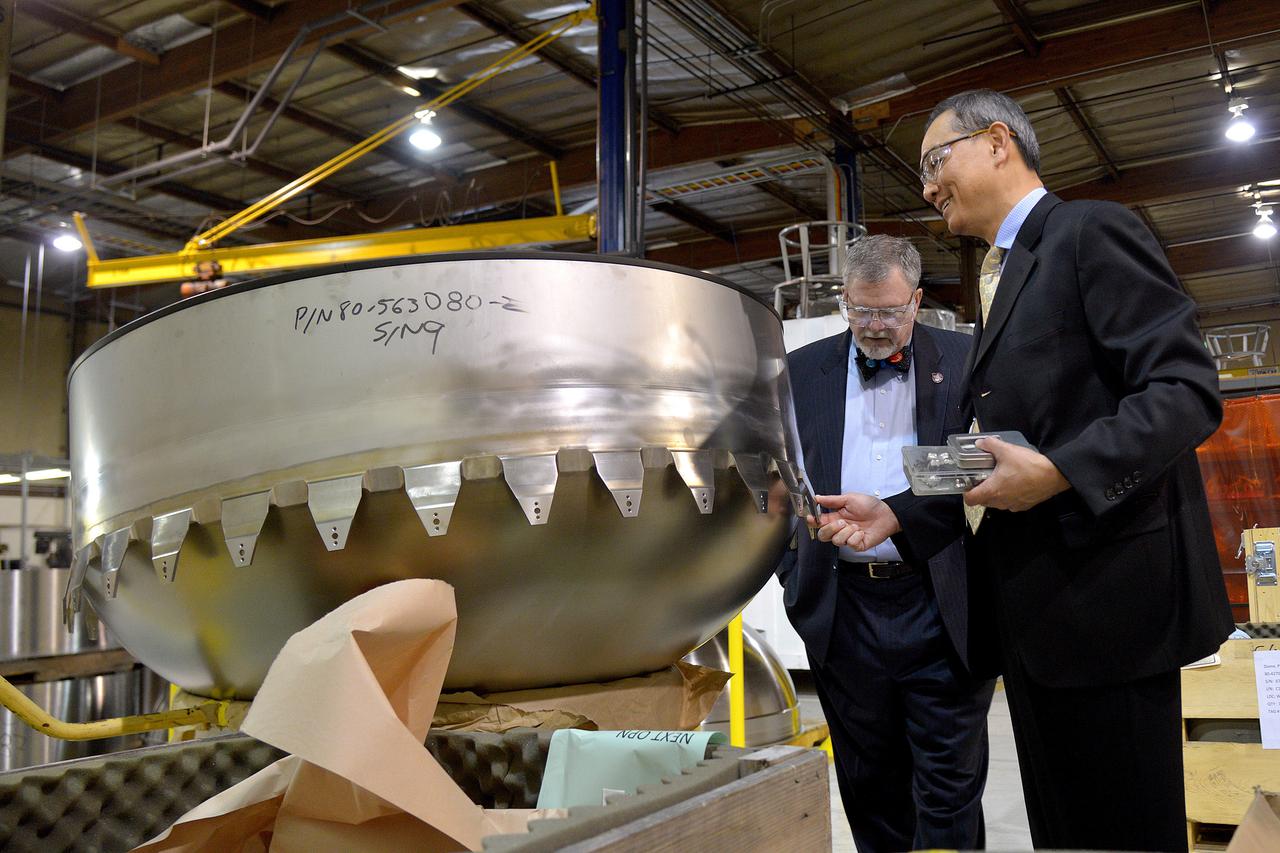
The team at Orbital ATK shows Lockheed Martin Orion Program Manager Mike Hawes the propellant tank manufacturing workshop in California on March 4, 2015. Part of Batch image transfer from Flickr.
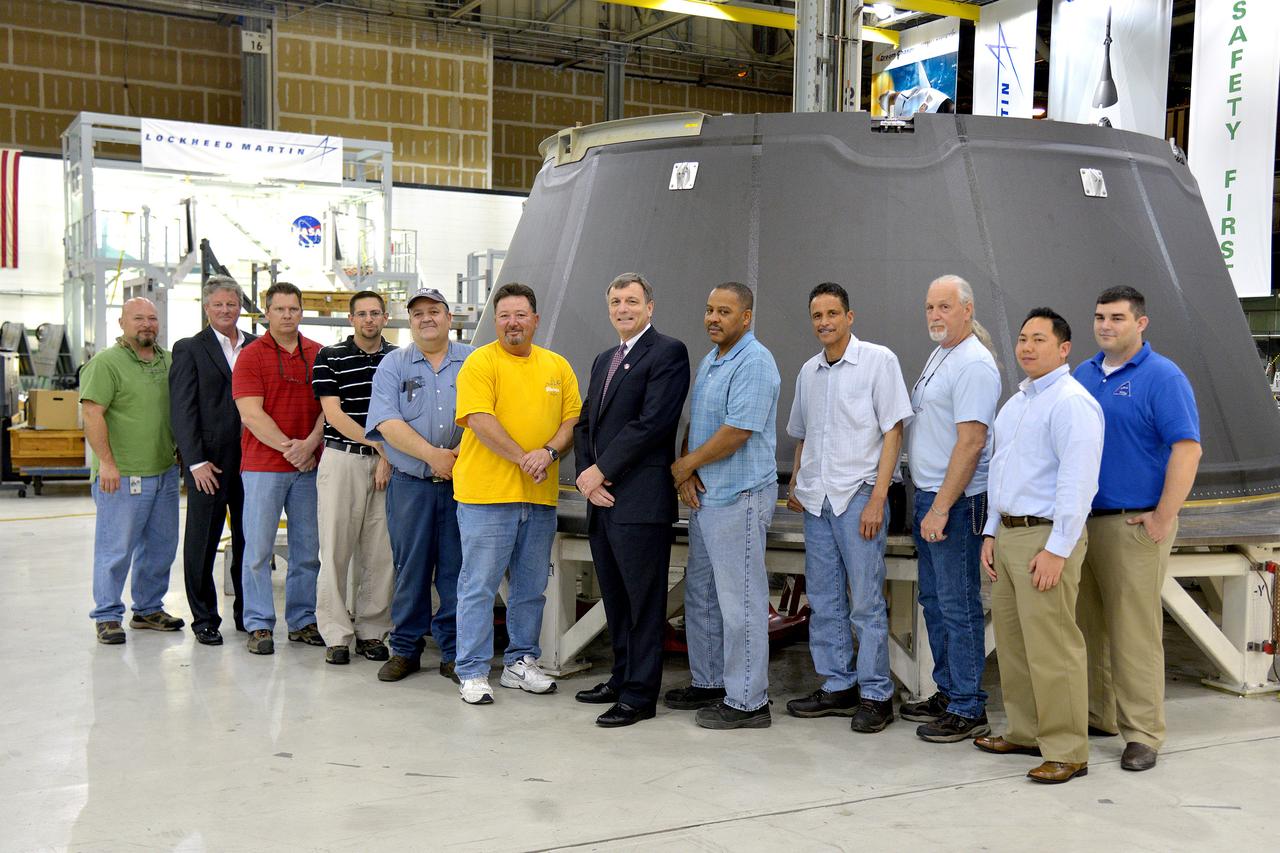
NASA and Lockheed Martin Orion leadership visits the team at Michoud Assembly Facility in New Orleans, Louisiana to thank them for their efforts in building the Orion spacecraft for Exploration Flight Test-1 (EFT-1) on March 16, 2015. Part of Batch image transfer from Flickr.
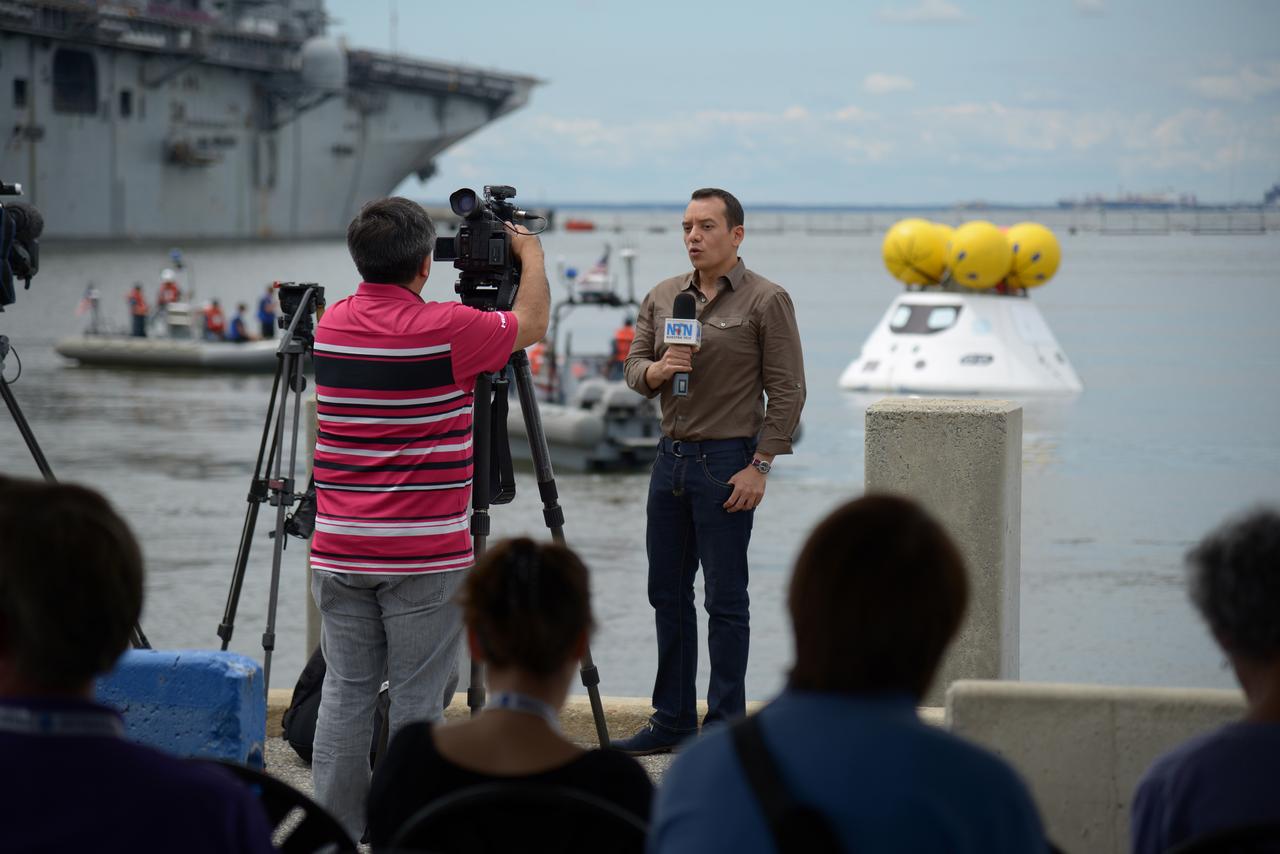
Media and NASA Social participants view Orion recovery operations and tour the USS Arlington at the Norfolk Naval base in Virginia on Aug. 15, 2013. Part of Batch image transfer from Flickr.
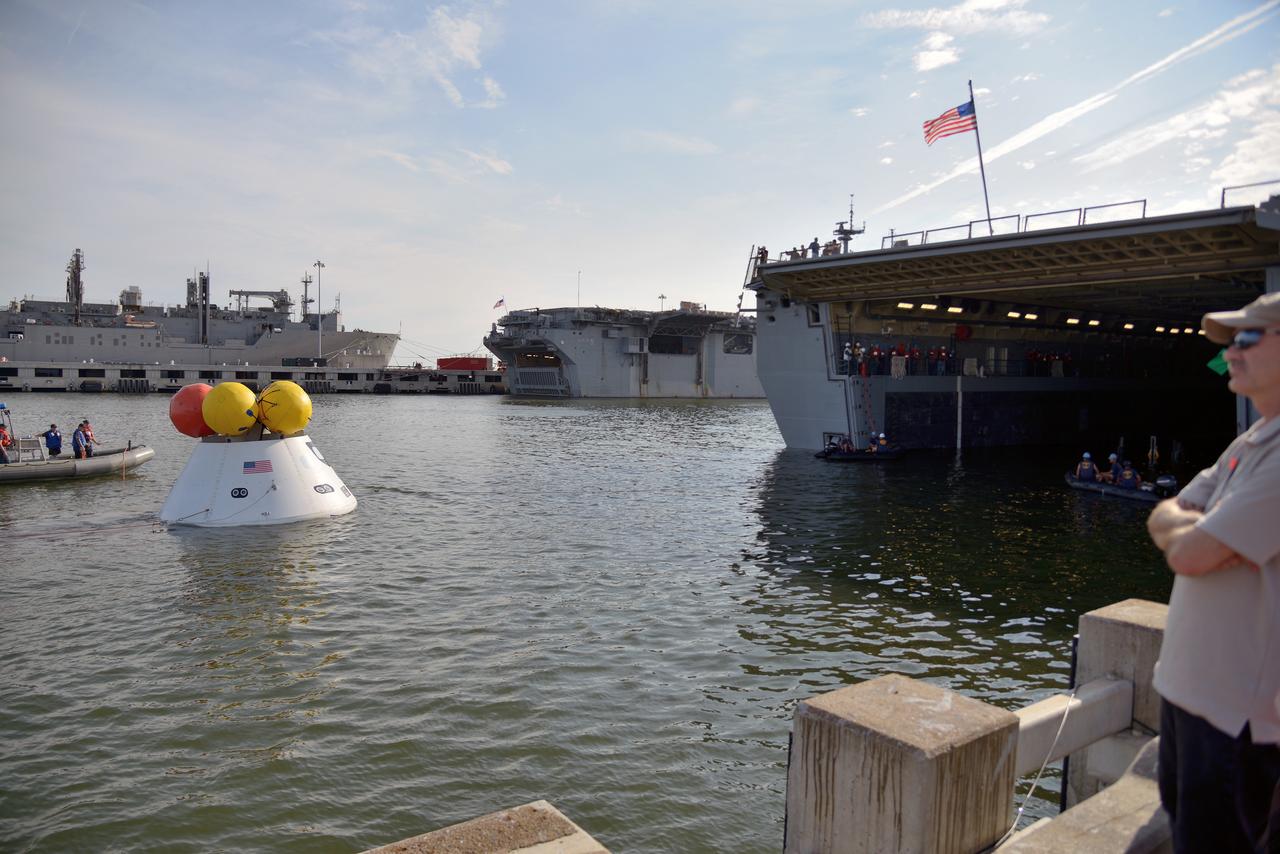
The Orion test capsule undergoes stationary recovery testing in Norfolk, VA on Aug. 13, 2013. NASA and the U.S Navy led the tests using the USS Arlington...The stationary recovery tests allow the teams to demonstrate and evaluate the recovery processes, the hardware and the test personnel in a controlled environment. ..During the test, the U.S Navy Dive Team checked the capsule for hazards while sailors from the USS Arlington approached the capsule in inflatable boats, and towed it back to the ship’s flooded well deck. Part of Batch image transfer from Flickr.
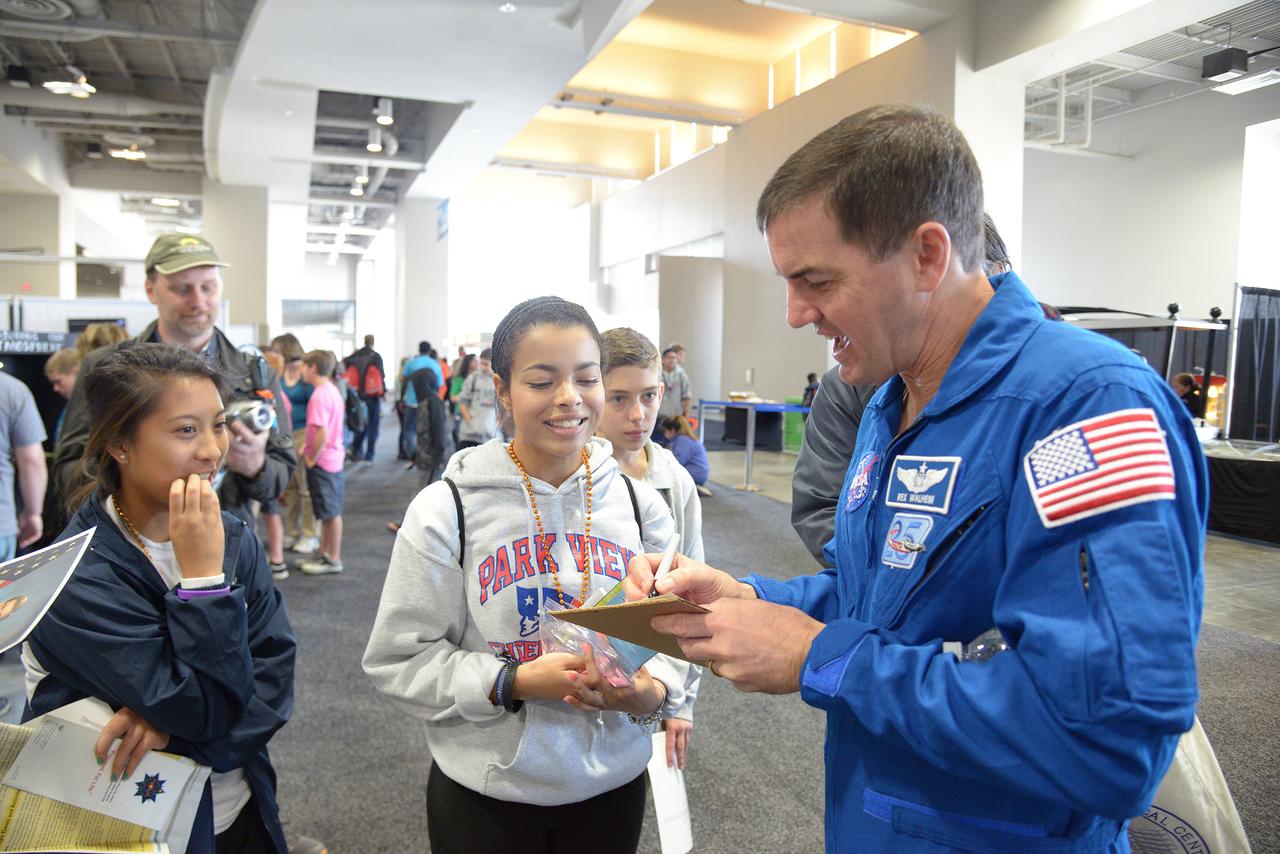
The winner of the high school portion of the Exploration Design Challenge is announced at the USA Science and Engineering Festival in Washington on April 25, 2014. Astronaut Rex Walheim signs autographs for students. Part of Batch image transfer from Flickr.

Teams peform Orion Parachute Test Vehicle (PTV) loading operations on July 22, 2013 in preparation for the July 24 parachute drop test at the U.S. Army Yuma Proving Ground in Arizona. Part of Batch image transfer from Flickr.
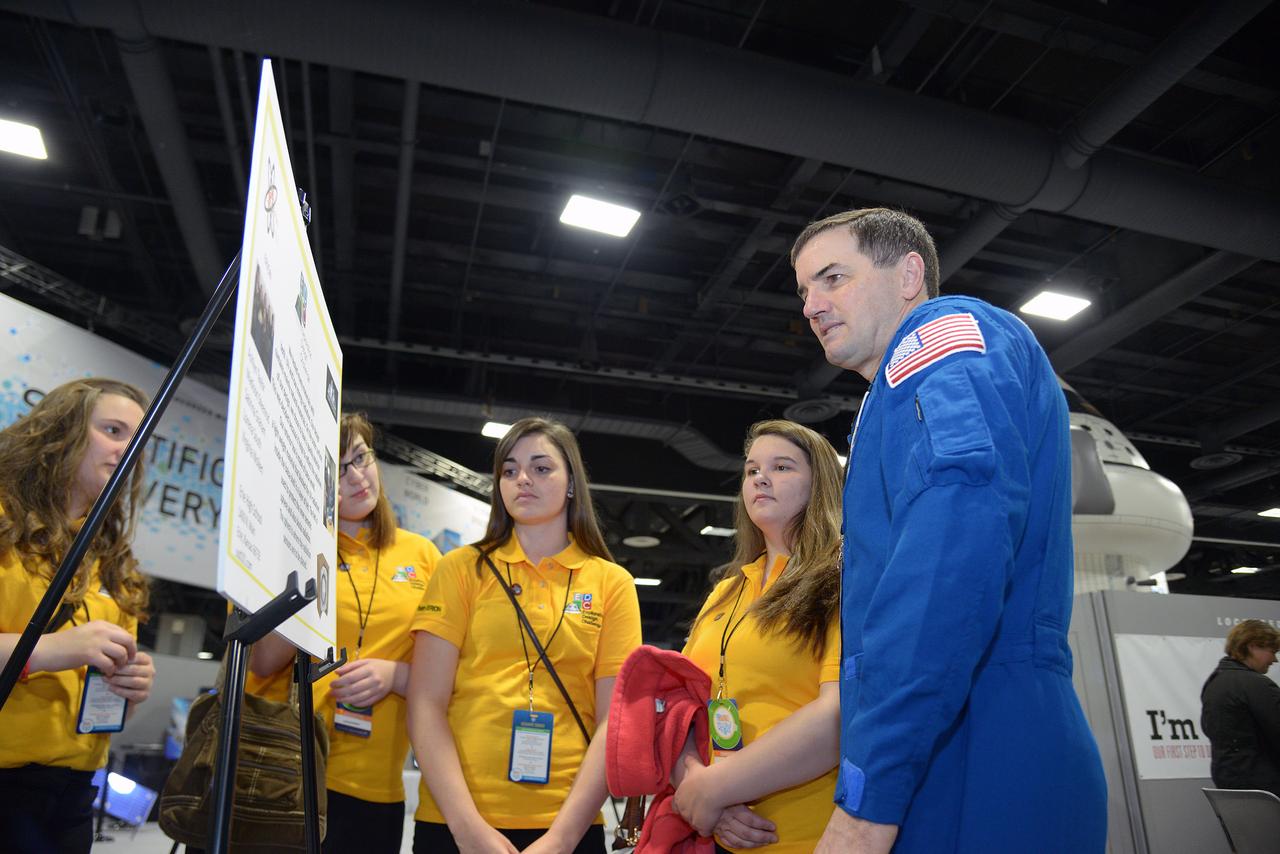
The winner of the high school portion of the Exploration Design Challenge is announced at the USA Science and Engineering Festival in Washington on April 25, 2014. Astronaut Rex Walheim is photographed with students. Part of Batch image transfer from Flickr.
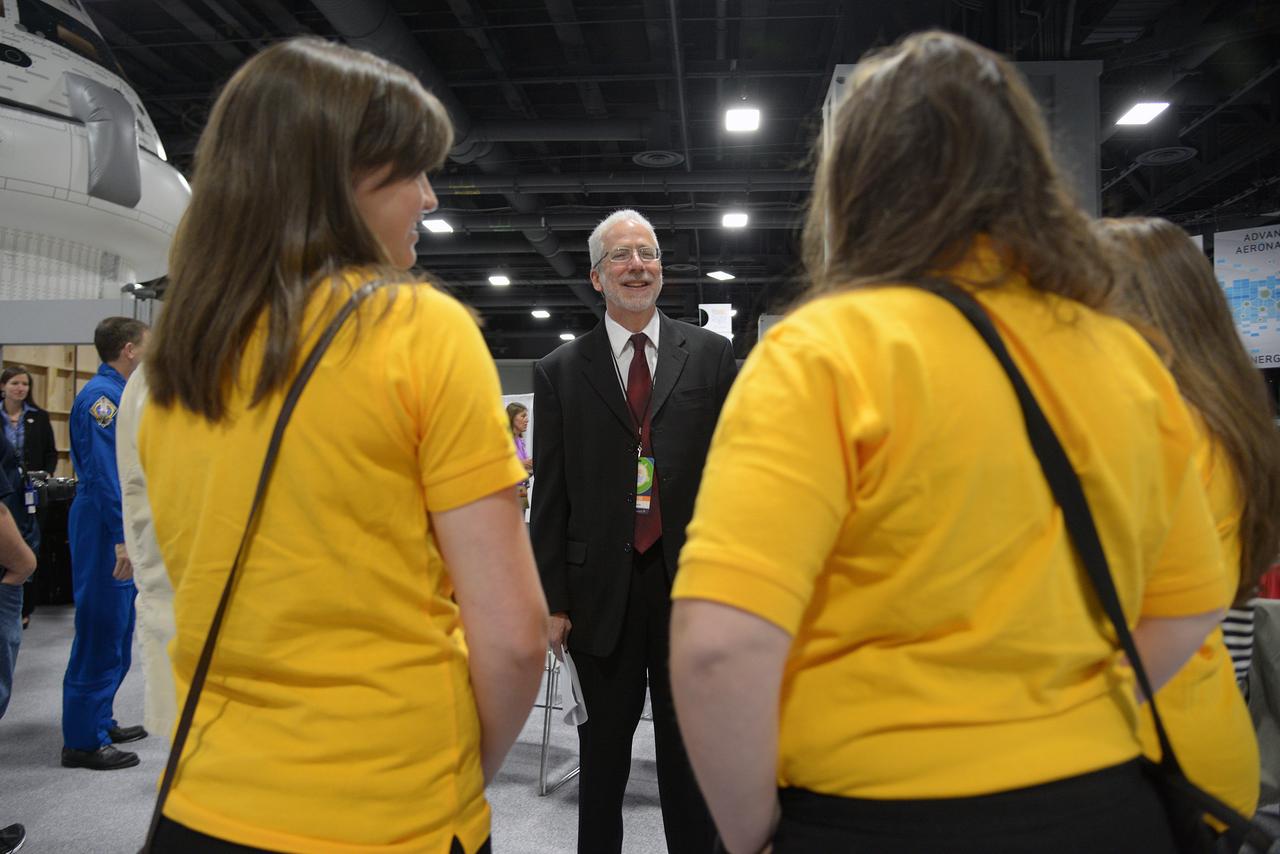
The winner of the high school portion of the Exploration Design Challenge is announced at the USA Science and Engineering Festival in Washington on April 25, 2014. Orion Program Manager Mark Geyer speaks to students. Part of Batch image transfer from Flickr.

Technicians and engineers put finishing touches on the Orion Exploration Flight Test-1 (EFT-1) crew module and service module stack in the Operations and Checkout (O&C) Building at Kennedy Space Center on Sept. 7, 2014. Part of Batch image transfer from Flickr.
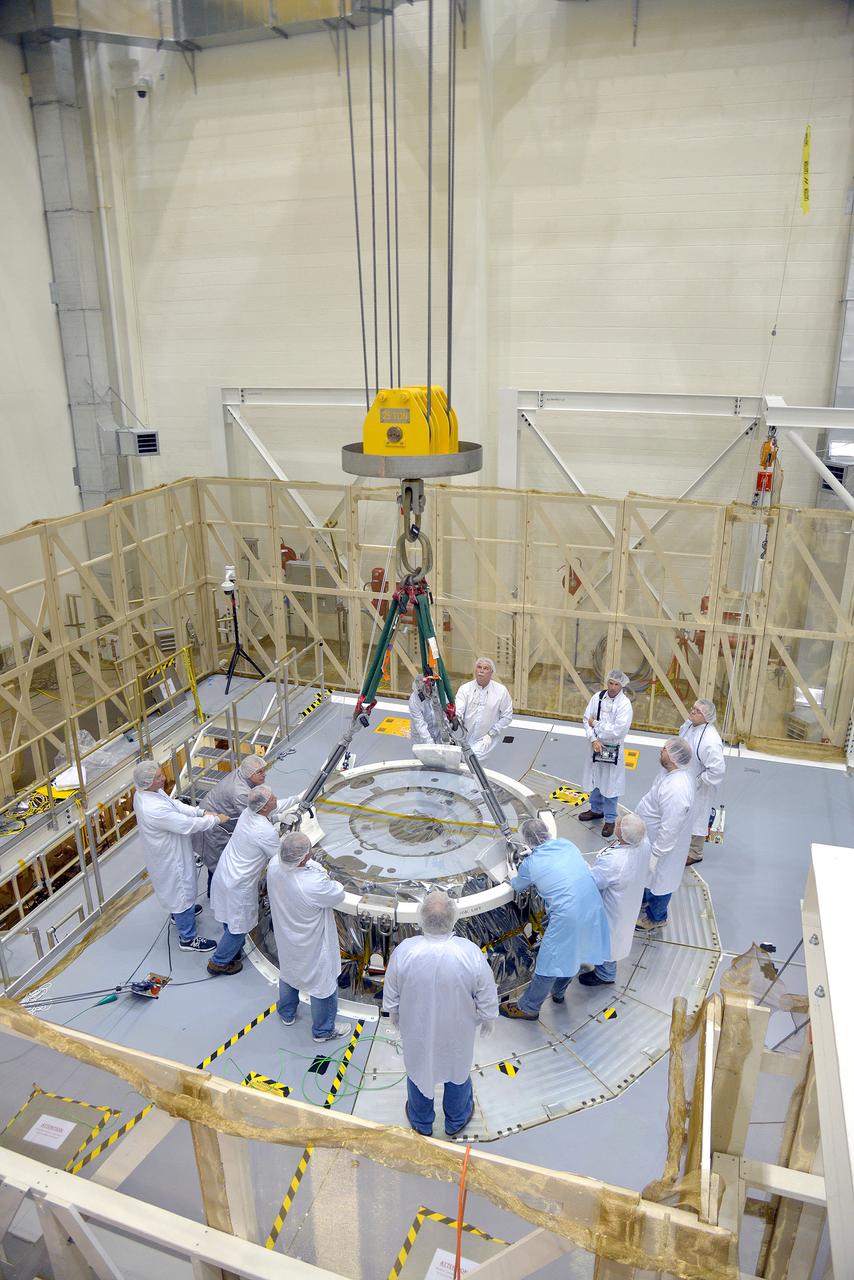
Technicians and engineers put finishing touches on the Orion Exploration Flight Test-1 (EFT-1) crew module and service module stack in the Operations and Checkout (O&C) Building at Kennedy Space Center on Sept. 7, 2014. Part of Batch image transfer from Flickr.
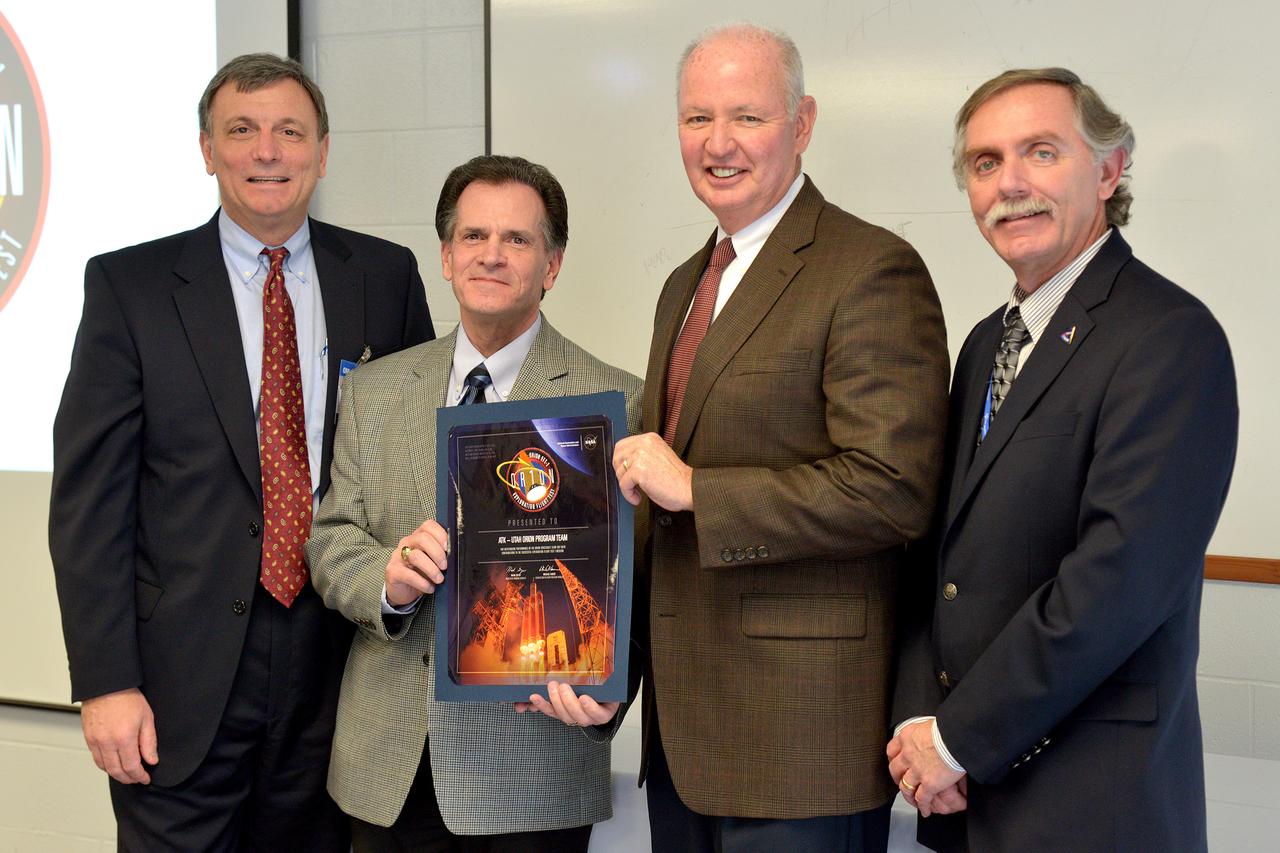
The Orion team congratulates the Orbital ATK team in Promontory, Utah on their efforts in making Exploration Flight Test-1 (EFT-1) a success on March 11, 2015. An award is presented to the ATK-Utah Orion Program Team. Part of Batch image transfer from Flickr.
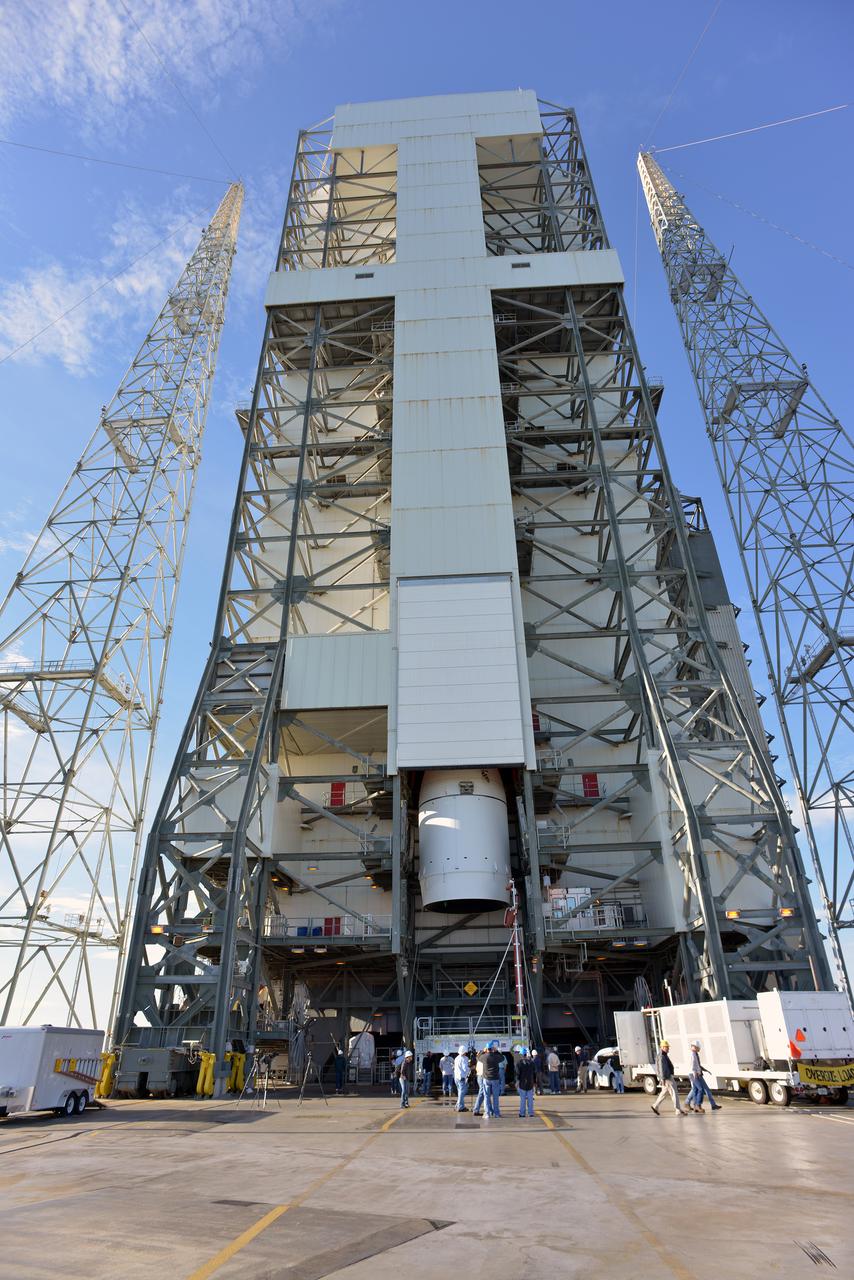
At Cape Canaveral Air Force Station's Launch Complex 37, United Launch Alliance engineers and technicians begin lifting the agency's Orion spacecraft for mounting atop its Delta IV Heavy rocket. Orion is the exploration spacecraft designed to carry astronauts to destinations not yet explored by humans, including an asteroid and Mars. It will have emergency abort capability, sustain the crew during space travel and provide safe re-entry from deep space return velocities. The first unpiloted flight test of Orion is scheduled to launch Dec. 4, 2014 atop a United Launch Alliance Delta IV Heavy rocket, and in 2018 on NASA’s Space Launch System rocket.
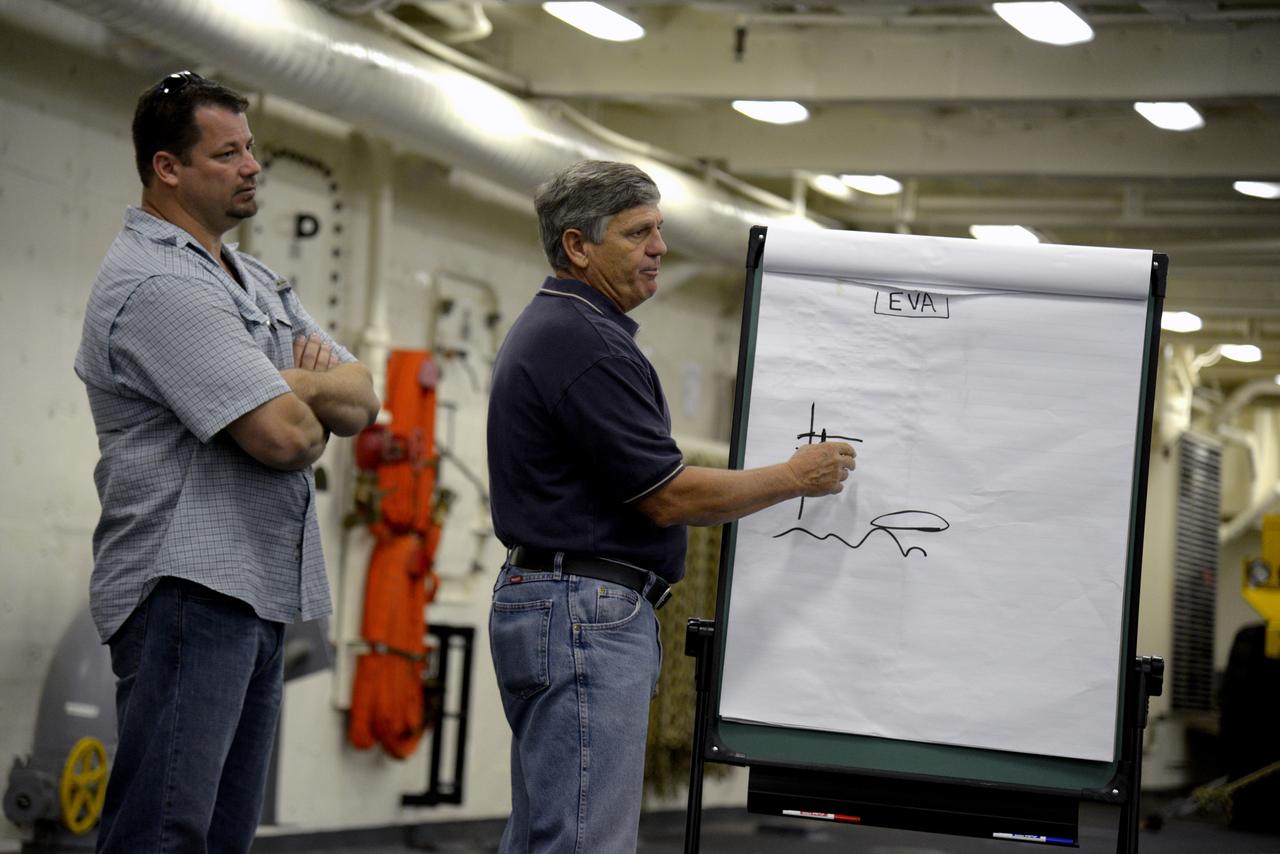
The Orion test capsule undergoes stationary recovery testing in Norfolk, VA on Aug. 13, 2013. NASA and the U.S Navy led the tests using the USS Arlington...The stationary recovery tests allow the teams to demonstrate and evaluate the recovery processes, the hardware and the test personnel in a controlled environment. ..During the test, the U.S Navy Dive Team checked the capsule for hazards while sailors from the USS Arlington approached the capsule in inflatable boats, and towed it back to the ship’s flooded well deck. Part of Batch image transfer from Flickr.
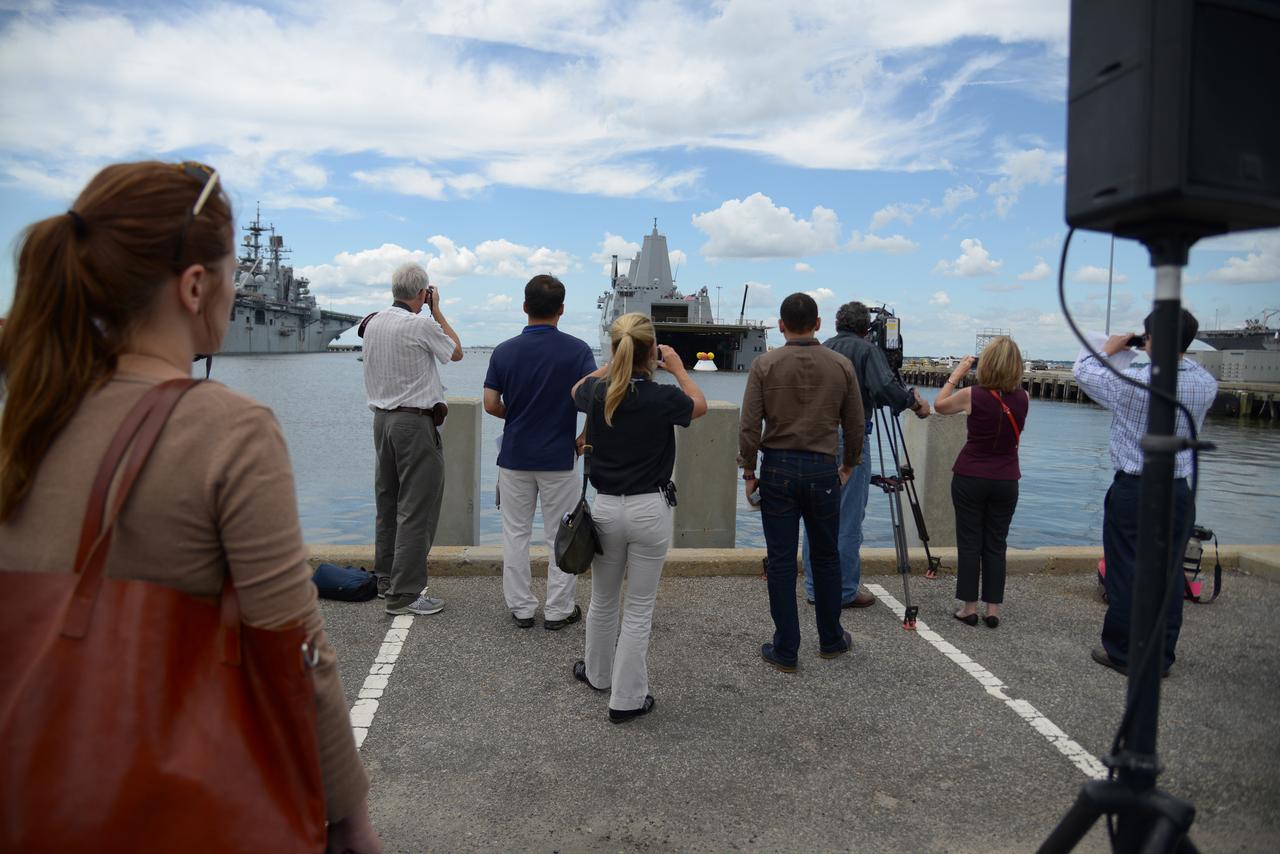
Media and NASA Social participants view Orion recovery operations and tour the USS Arlington at the Norfolk Naval base in Virginia on Aug. 15, 2013. Part of Batch image transfer from Flickr.
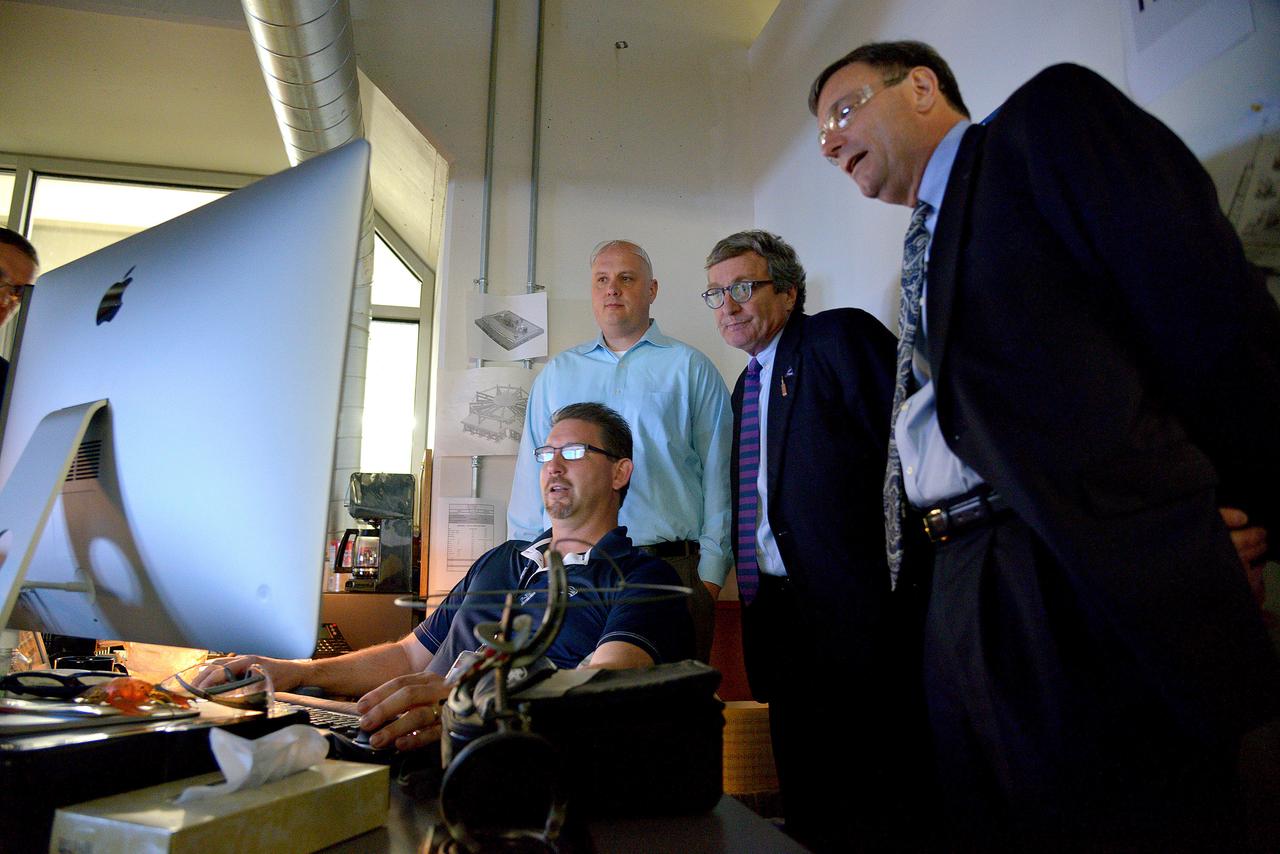
The Orion leadership team visits Janicki Industries in Sedro-Woolley, Washington on March 9, 2015 to thank them for their work in support of Exploration Flight Test-1 (EFT-1). Janicki is a small business that specializes in producing custom tooling fixtures and composite structures. Part of Batch image transfer from Flickr.
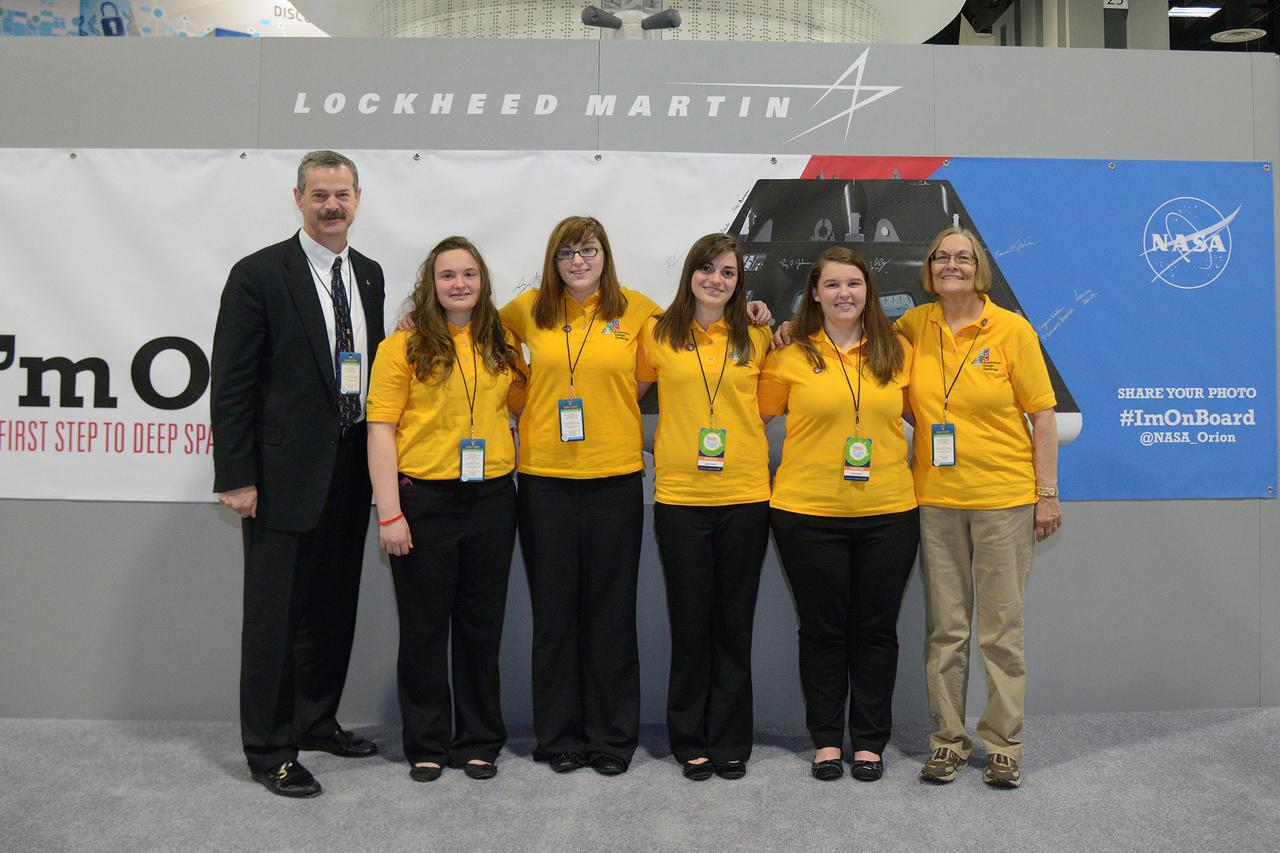
The winner of the high school portion of the Exploration Design Challenge is announced at the USA Science and Engineering Festival in Washington on April 25, 2014. Group photo of students. Part of Batch image transfer from Flickr.
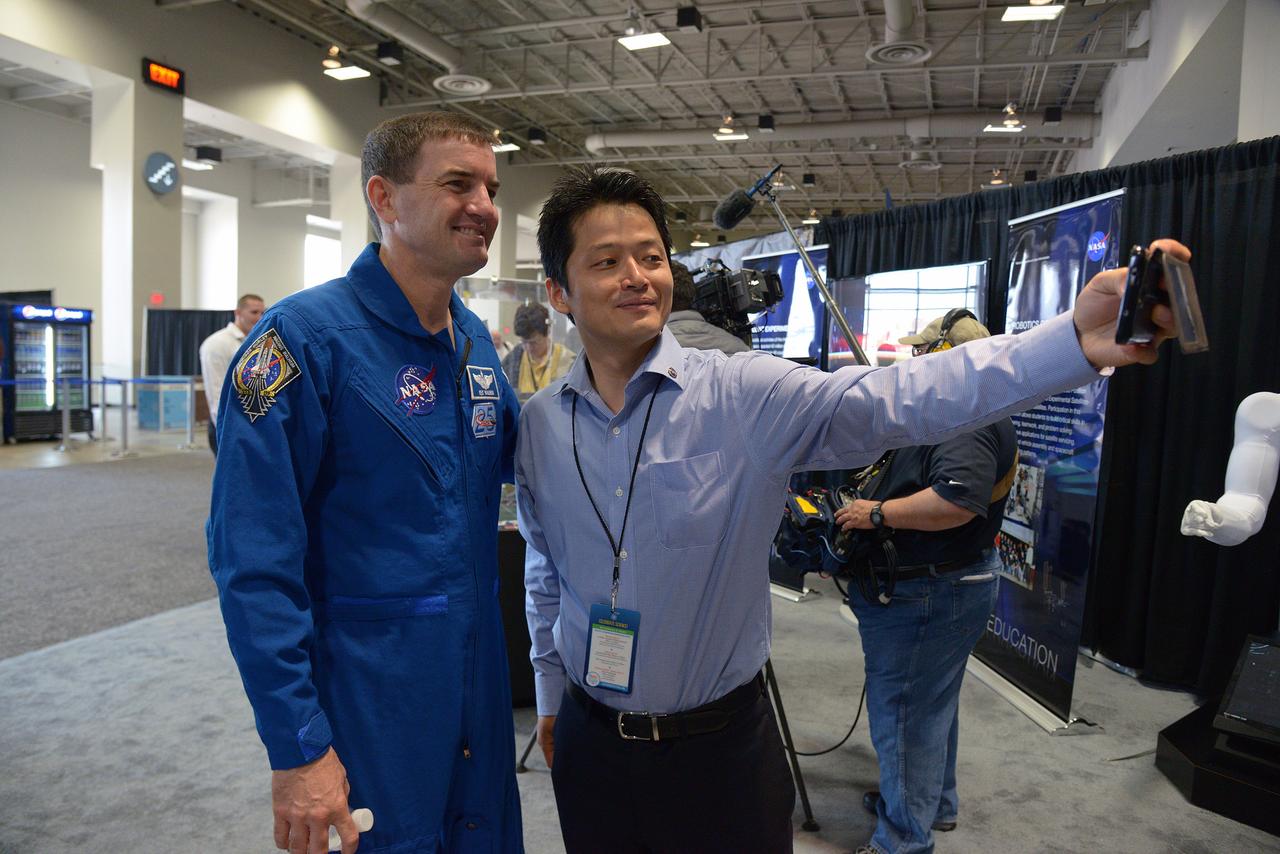
The winner of the high school portion of the Exploration Design Challenge is announced at the USA Science and Engineering Festival in Washington on April 25, 2014. Astronaut Rex Walheim is photographed with event participant. Part of Batch image transfer from Flickr.
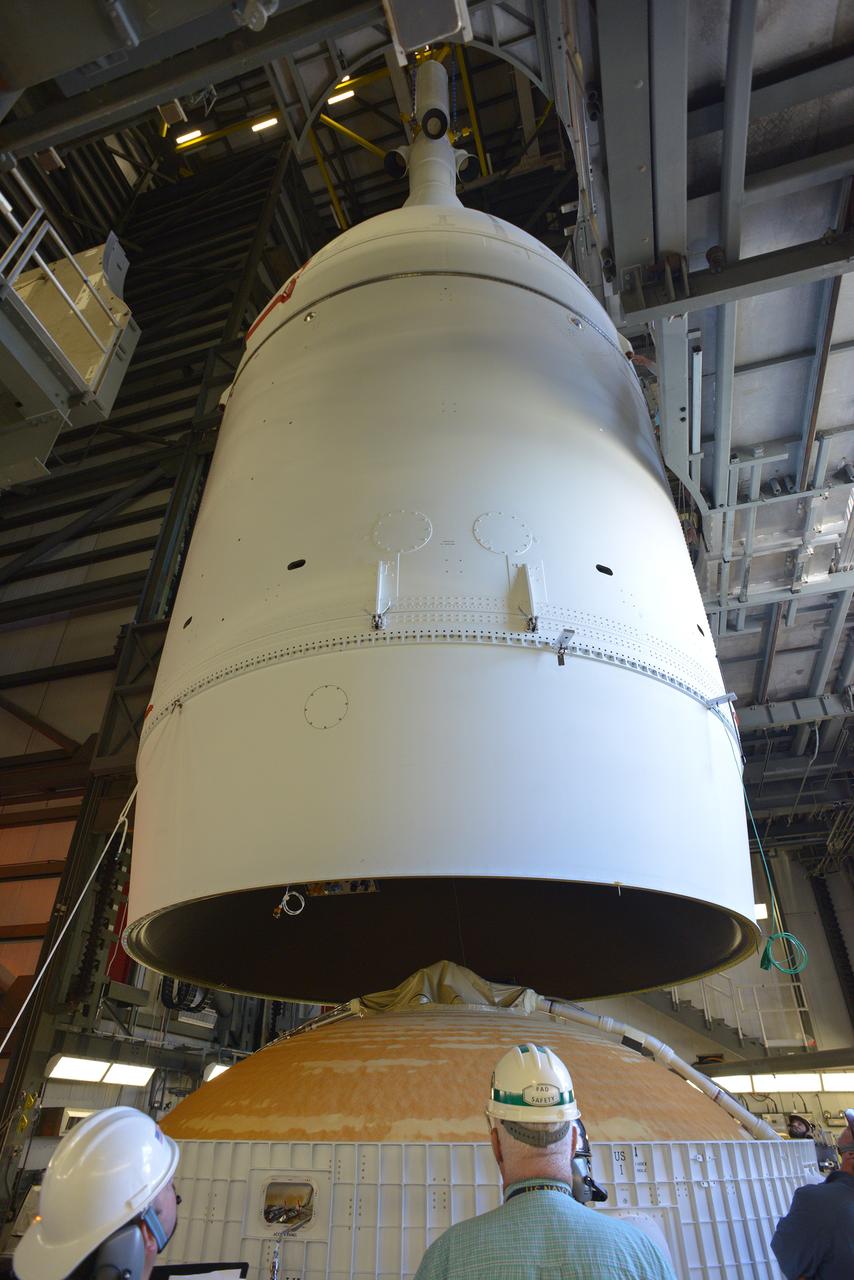
At Cape Canaveral Air Force Station's Launch Complex 37, United Launch Alliance engineers and technicians mate the agency's Orion spacecraft to its Delta IV Heavy rocket. Orion is the exploration spacecraft designed to carry astronauts to destinations not yet explored by humans, including an asteroid and Mars. It will have emergency abort capability, sustain the crew during space travel and provide safe re-entry from deep space return velocities. The first unpiloted flight test of Orion is scheduled to launch Dec. 4, 2014 atop a United Launch Alliance Delta IV Heavy rocket, and in 2018 on NASA’s Space Launch System rocket.
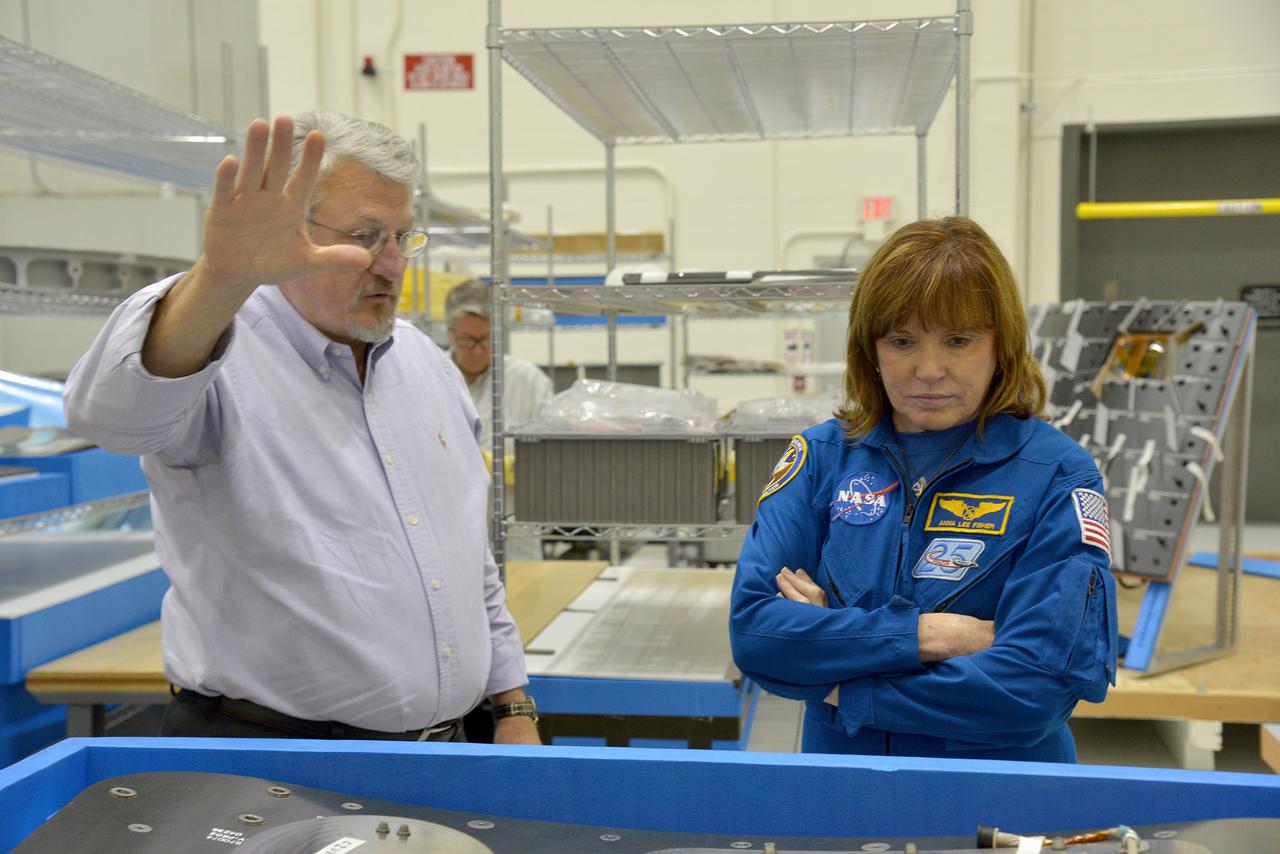
Astronaut Anna Fisher observes Orion Exploration Flight Test-1 (EFT-1) crew module and service module mating operations in Operations and Checkout (O&C) Building at Kennedy Space Center on June 9, 2014. Part of Batch image transfer from Flickr.
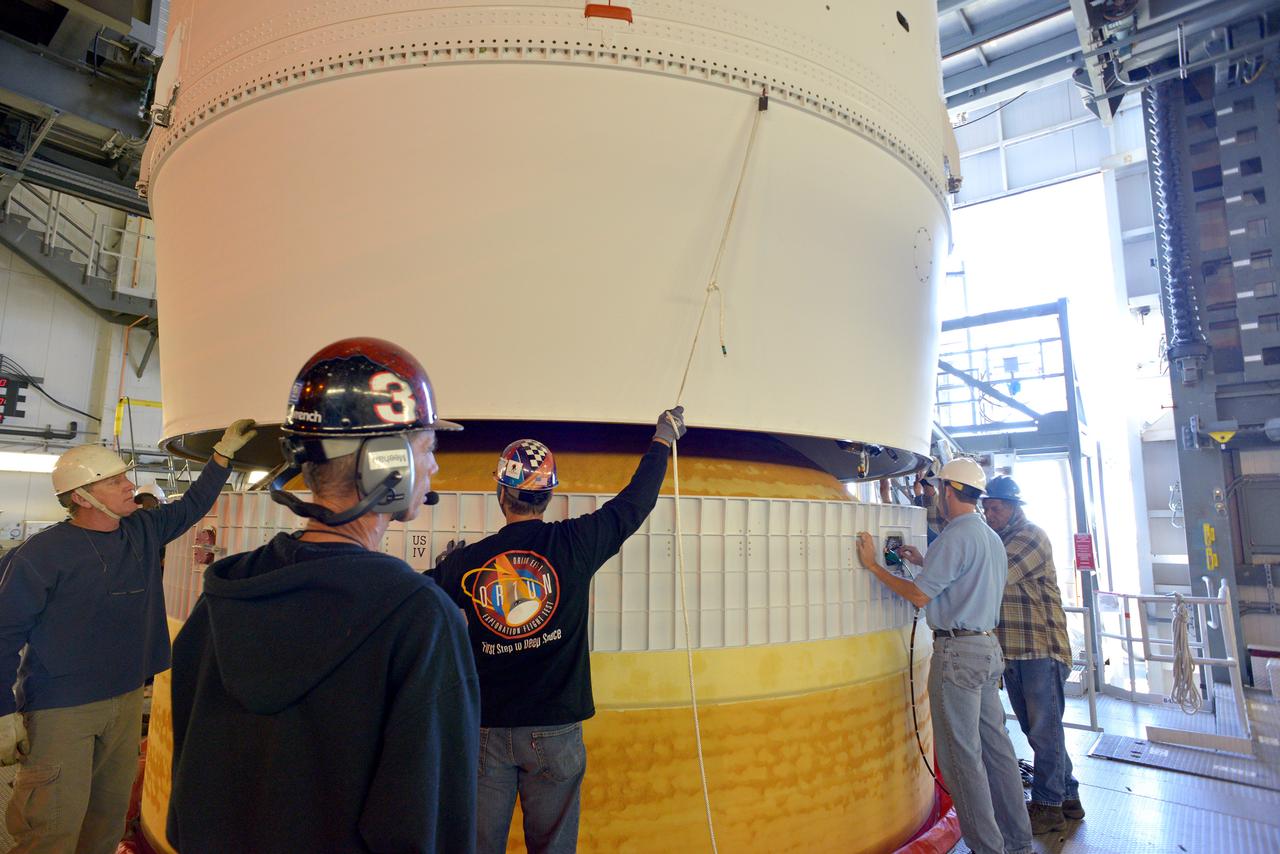
At Cape Canaveral Air Force Station's Launch Complex 37, United Launch Alliance engineers and technicians mate the agency's Orion spacecraft to its Delta IV Heavy rocket. Orion is the exploration spacecraft designed to carry astronauts to destinations not yet explored by humans, including an asteroid and Mars. It will have emergency abort capability, sustain the crew during space travel and provide safe re-entry from deep space return velocities. The first unpiloted flight test of Orion is scheduled to launch Dec. 4, 2014 atop a United Launch Alliance Delta IV Heavy rocket, and in 2018 on NASA’s Space Launch System rocket.
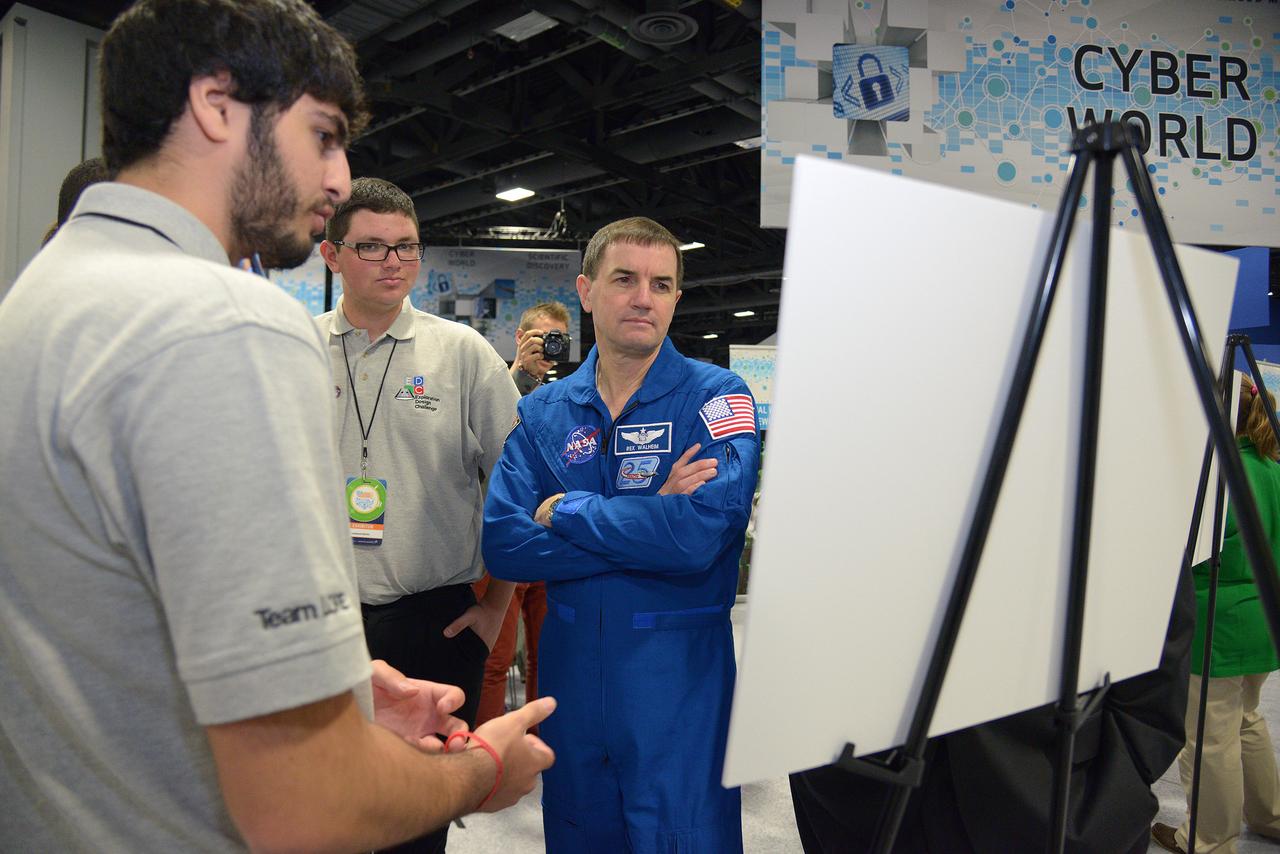
The winner of the high school portion of the Exploration Design Challenge is announced at the USA Science and Engineering Festival in Washington on April 25, 2014. Astronaut Rex Walheim speaks to students. Part of Batch image transfer from Flickr.
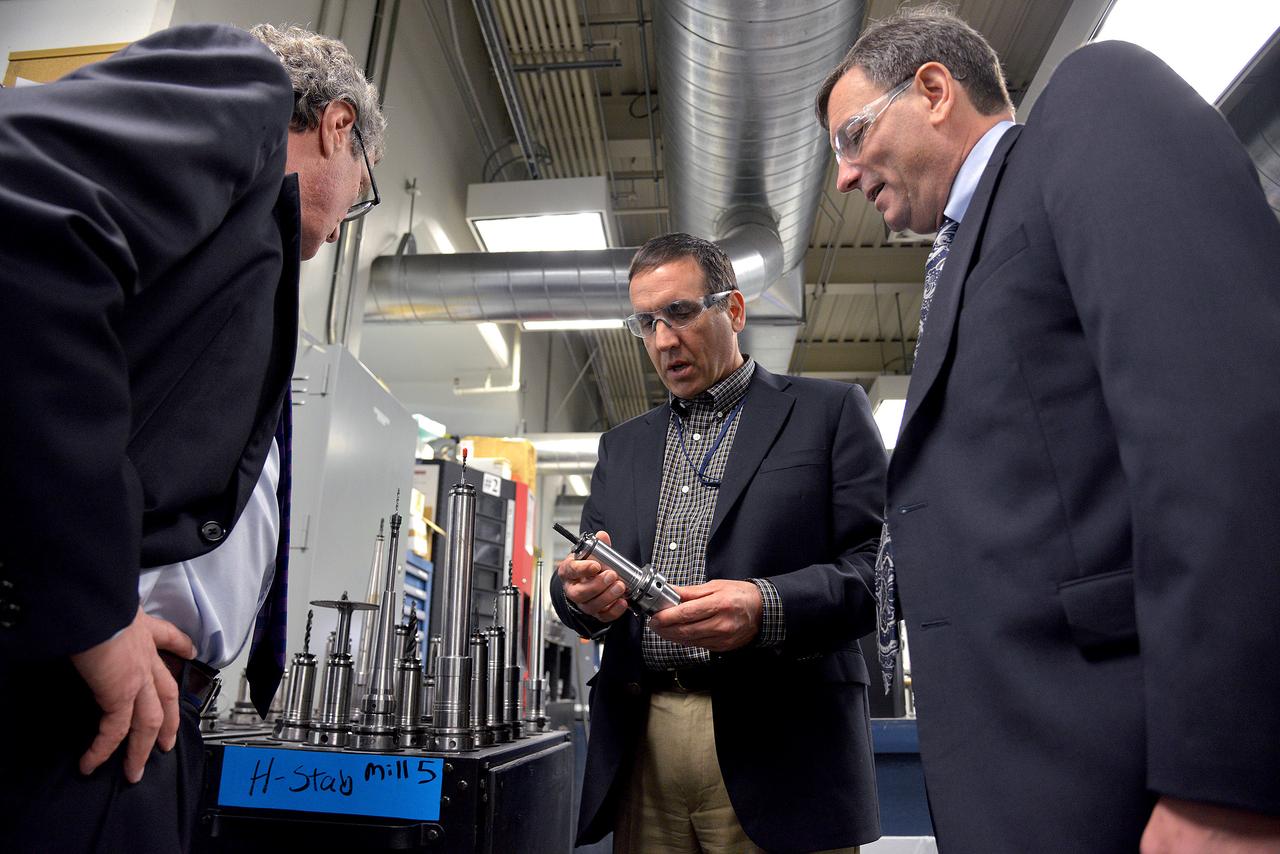
The Orion leadership team visits Janicki Industries in Sedro-Woolley, Washington on March 9, 2015 to thank them for their work in support of Exploration Flight Test-1 (EFT-1). Janicki is a small business that specializes in producing custom tooling fixtures and composite structures. Part of Batch image transfer from Flickr.
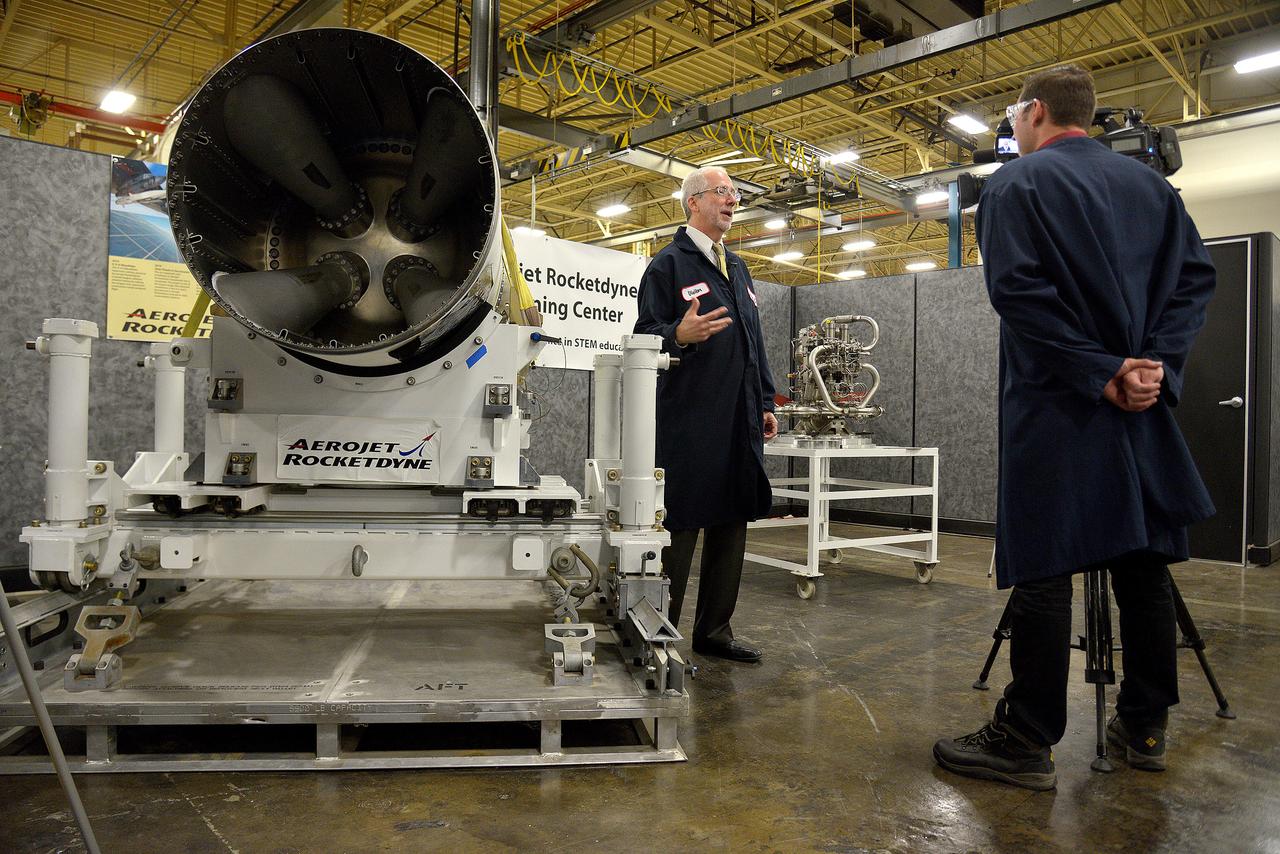
Orion leadership (including Orion Program Manager Mark Geyer) visits Aerojet Rocketdyne in Sacramento, CA on March 3, 2015 to recognize the great work performed in support of Orion's first flight, Exploration Flight Test-1 (EFT-1). Part of Batch image transfer from Flickr.
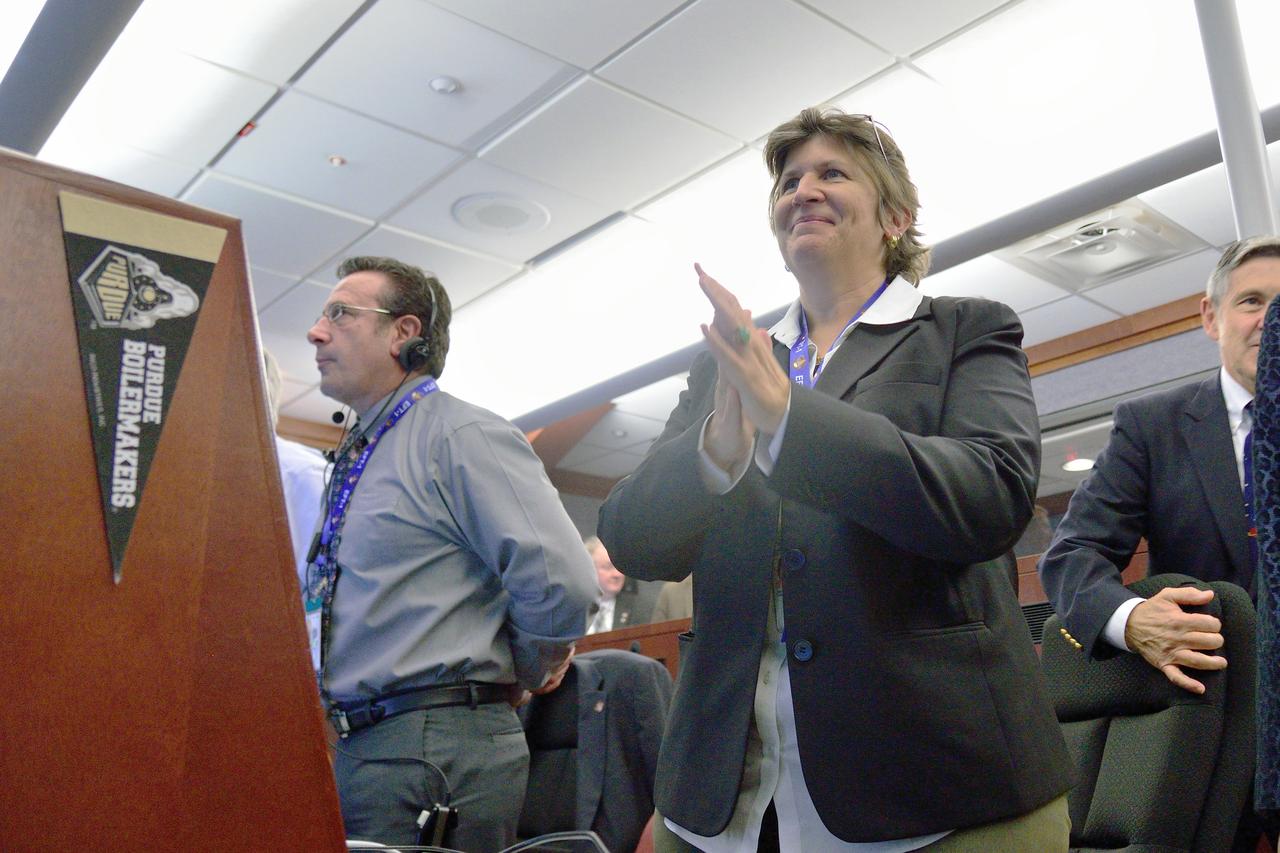
Orion Chief Engineer Julie Kramer celebrates Orion's successful splashdown in the Pacific Ocean after Exploration Flight Test-1 (EFT-1) in Building AE at Cape Canaveral Air Force Station on Dec. 5, 2014. The Orion spacecraft orbited Earth twice, reaching an altitude of approximately 3,600 miles above Earth before landing. No one was aboard Orion for this flight test, but the spacecraft is designed to allow us to journey to destinations never before visited by humans, including an asteroid and Mars. Part of Batch image transfer from Flickr.

NASA and Lockheed Martin Orion leadership visits the team at Michoud Assembly Facility in New Orleans, Louisiana to thank them for their efforts in building the Orion spacecraft for Exploration Flight Test-1 (EFT-1) on March 16, 2015. Part of Batch image transfer from Flickr.
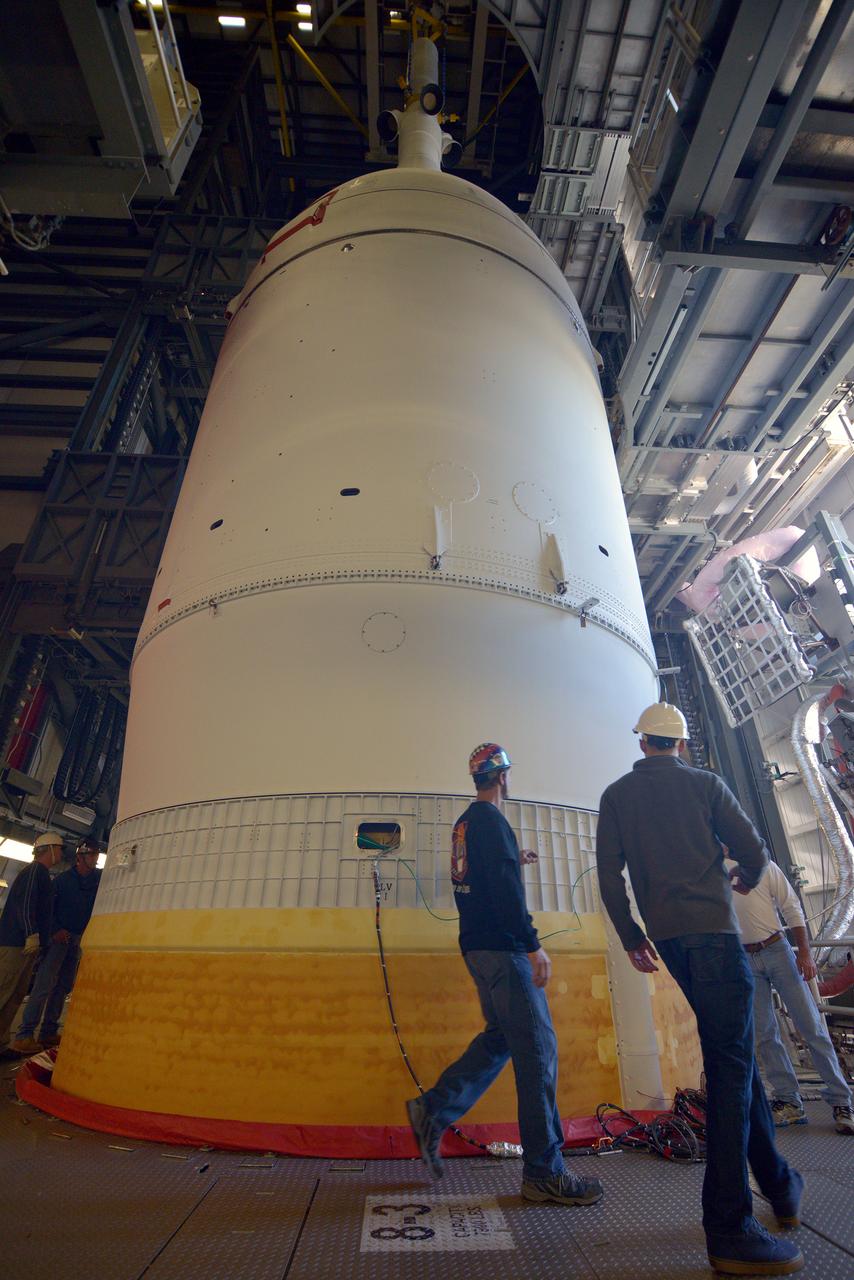
At Cape Canaveral Air Force Station's Launch Complex 37, United Launch Alliance engineers and technicians mate the agency's Orion spacecraft to its Delta IV Heavy rocket. Orion is the exploration spacecraft designed to carry astronauts to destinations not yet explored by humans, including an asteroid and Mars. It will have emergency abort capability, sustain the crew during space travel and provide safe re-entry from deep space return velocities. The first unpiloted flight test of Orion is scheduled to launch Dec. 4, 2014 atop a United Launch Alliance Delta IV Heavy rocket, and in 2018 on NASA’s Space Launch System rocket.
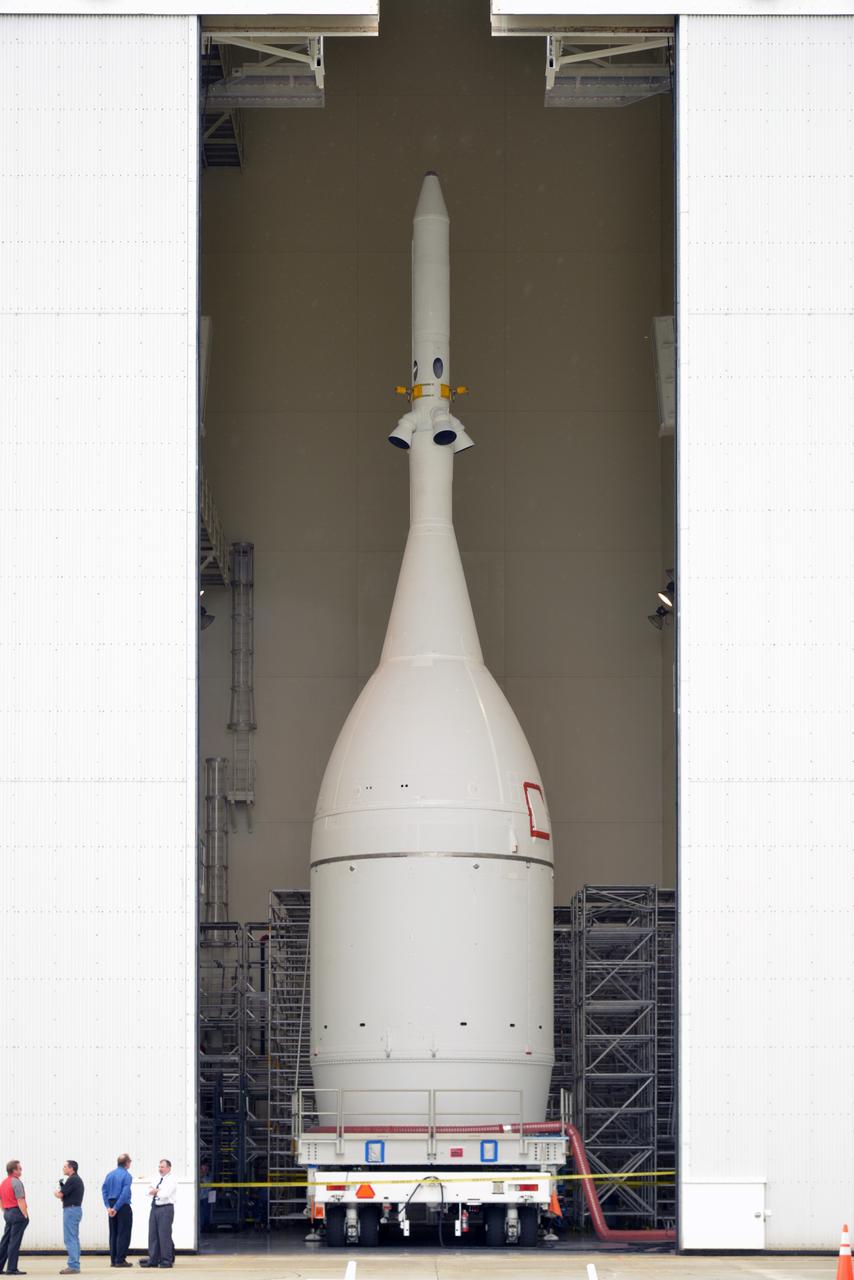
The Orion for Exploration Flight Test-1 (EFT-1) is stacked and ready to roll to the pad in the Launch Abort System Facility (LASF) at Kennedy Space Center on Nov. 10, 2014. The Orion stack, consisting of the launch abort system, the crew module, and the service module measures over 80 feet tall. Part of Batch image transfer from Flickr.
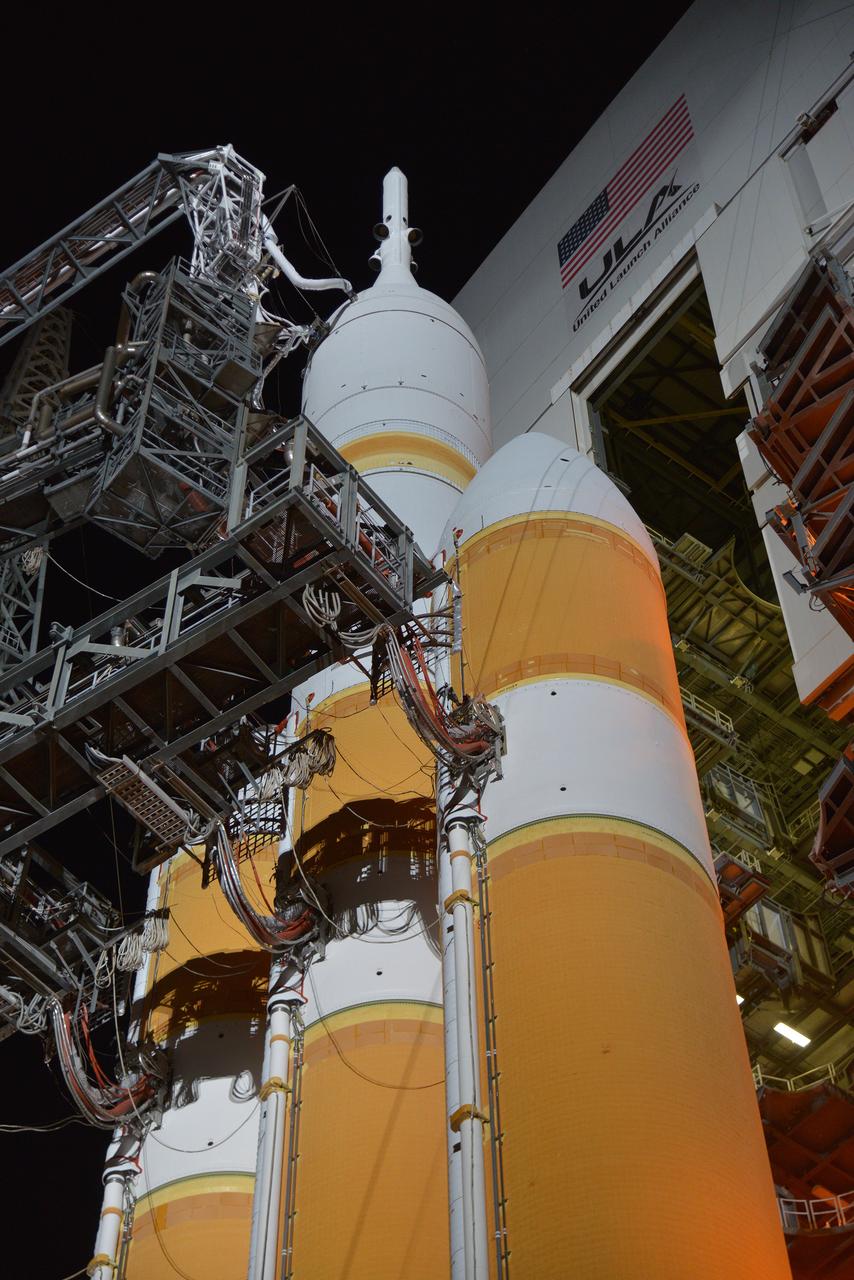
The full United Delta IV Heavy with Orion on top is revealed on Dec. 3, 2014 as the mobile service tower is rolled back in preparation for the 7:05 am Exploration Flight Test-1 (EFT-1) launch. Part of Batch image transfer from Flickr.
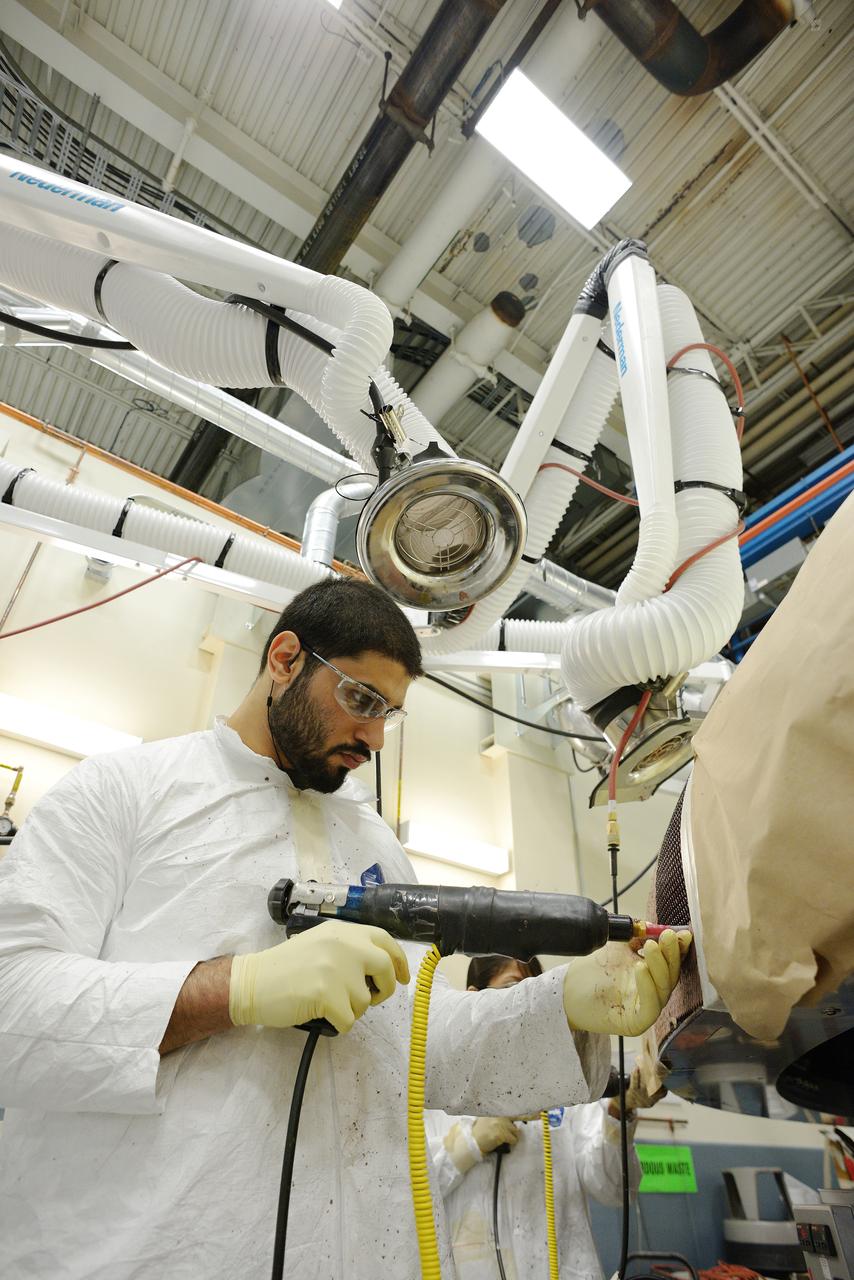
Technicians at Textron in Wimington, MA, apply Avcoat ablative material to the composite honeycomb structure attached to the Exploration Flight Test-1 (EFT-1) Orion heat shield carrier structure on May 22, 2013. Part of Batch image transfer from Flickr.
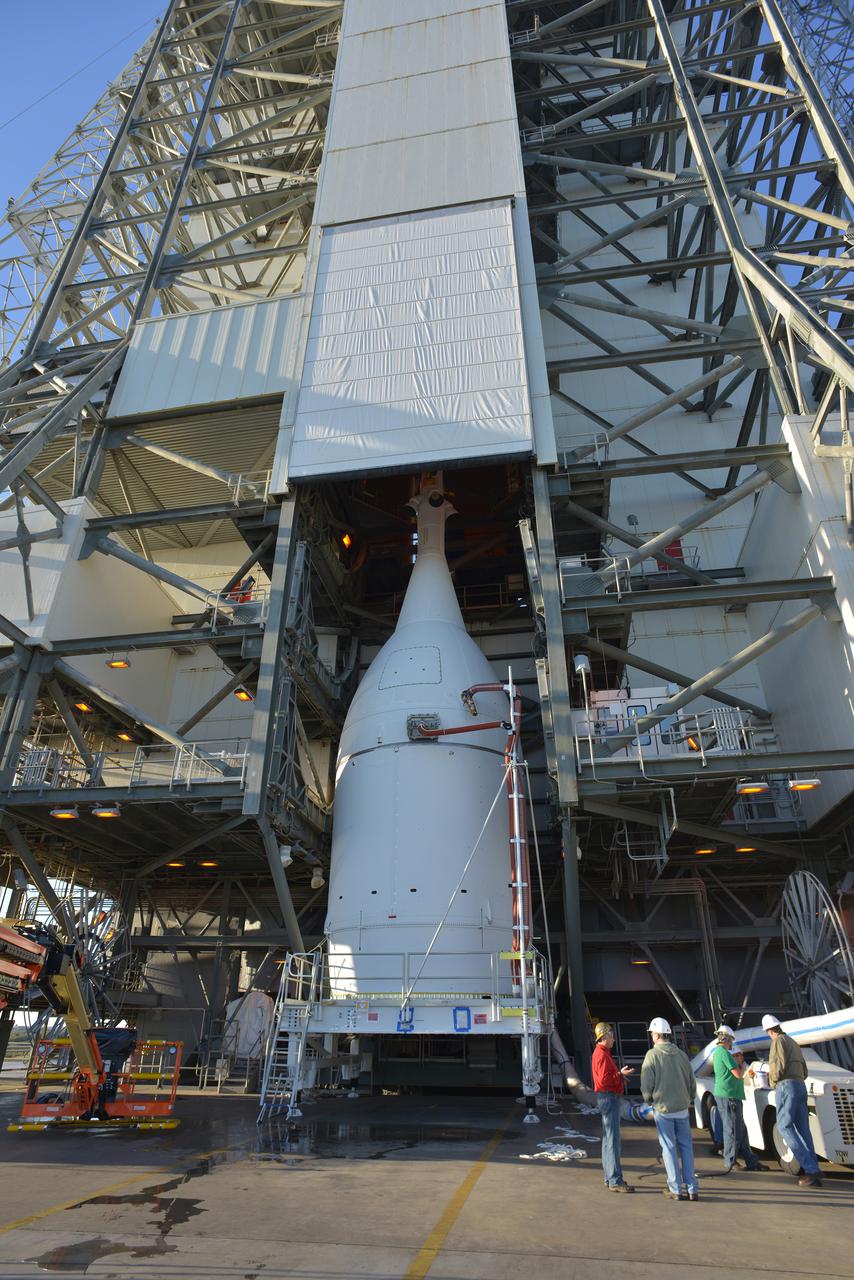
The Orion spacecraft was lifted on top of the Delta IV Heavy launch vehicle at ULA's Launch Complex 37 on Nov. 12, 2014. Over the next few days the Lockheed Martin/ULA team will work to complete the connections between Orion and the launch vehicle in preparation for Exploration Flight Test-1 (EFT-1). Part of Batch image transfer from Flickr.
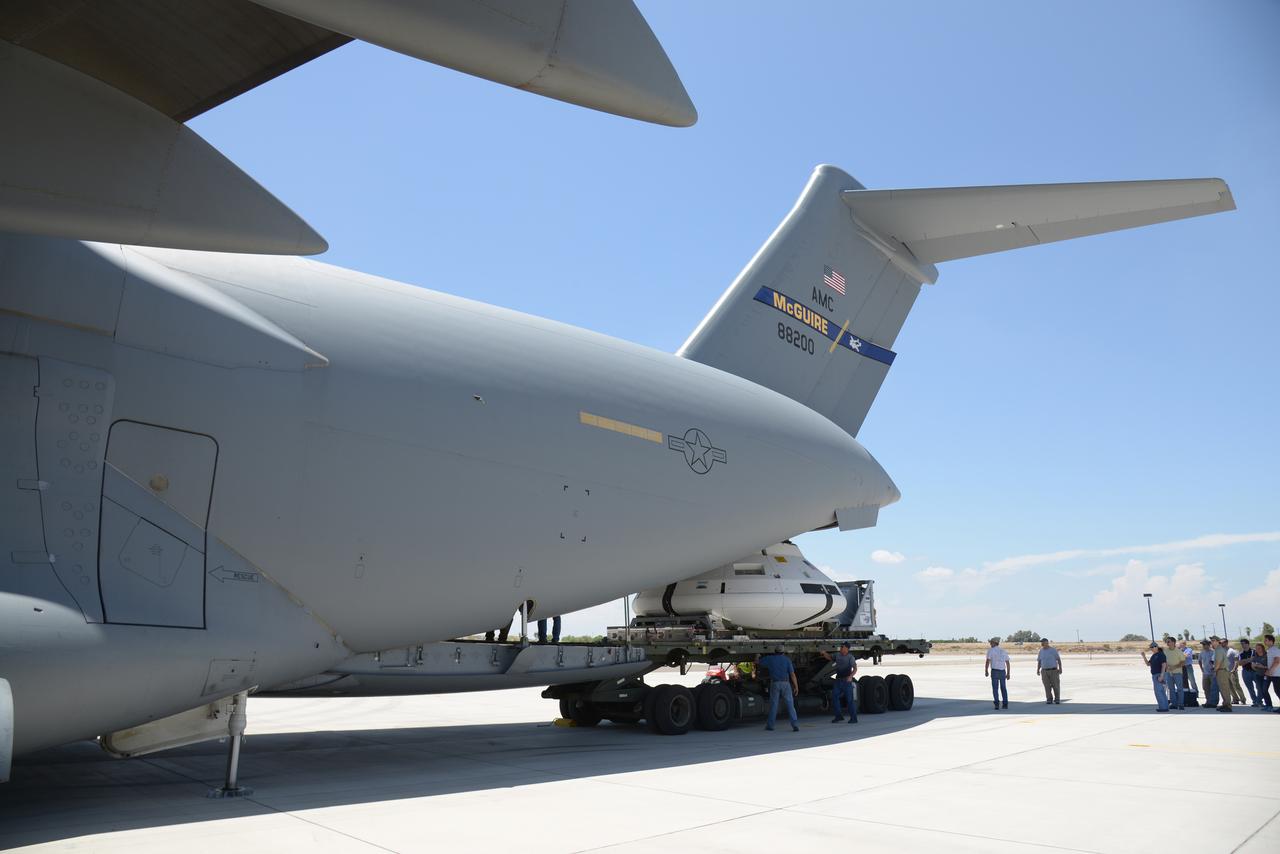
Teams peform Orion Parachute Test Vehicle (PTV) loading operations on July 22, 2013 in preparation for the July 24 parachute drop test at the U.S. Army Yuma Proving Ground in Arizona. Part of Batch image transfer from Flickr.
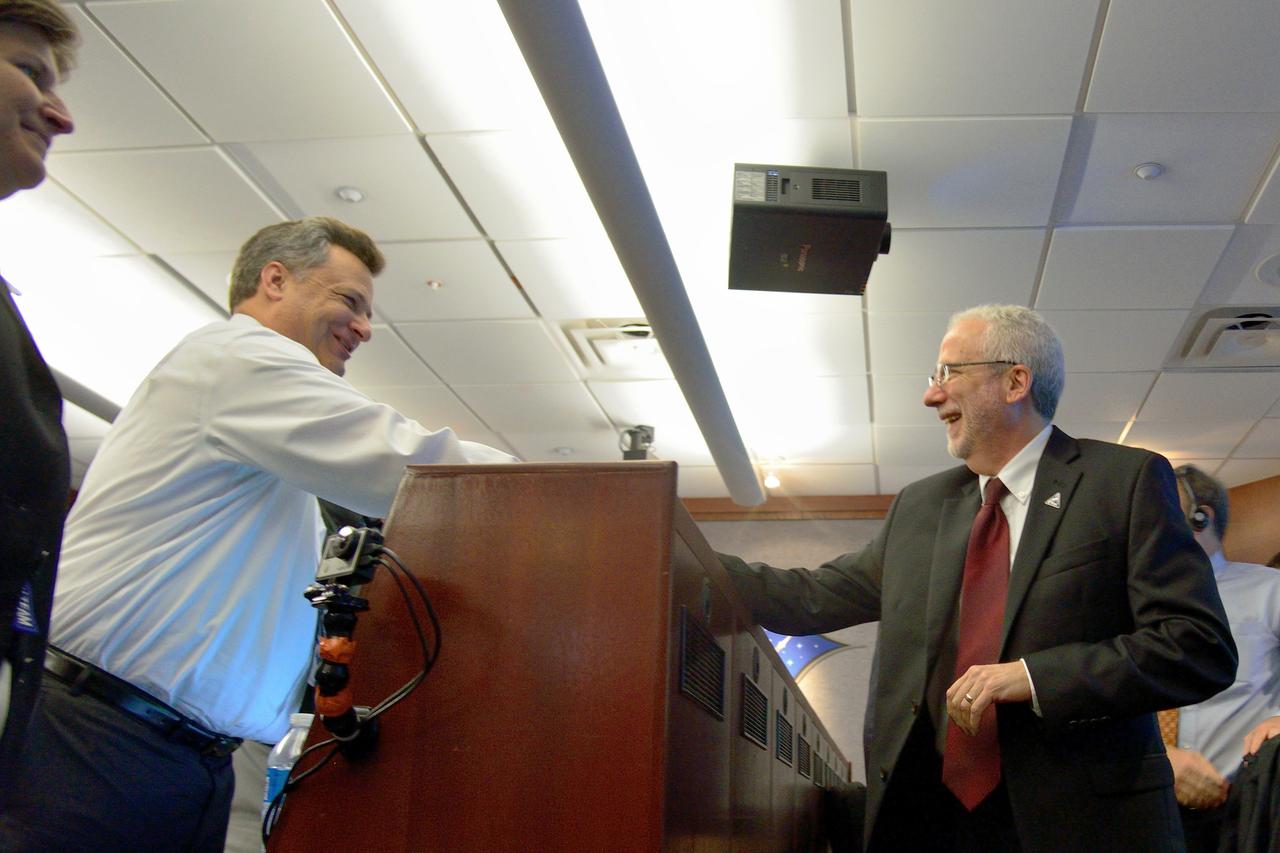
Orion Program Manager Mark Geyer congratulates the team after Orion's successful Exploration Flight Test-1 (EFT-1) mission in Building AE at Cape Canaveral Air Force Station on Dec. 5, 2014. The Orion spacecraft orbited Earth twice, reaching an altitude of approximately 3,600 miles above Earth before landing. No one was aboard Orion for this flight test, but the spacecraft is designed to allow us to journey to destinations never before visited by humans, including an asteroid and Mars. Part of Batch image transfer from Flickr.
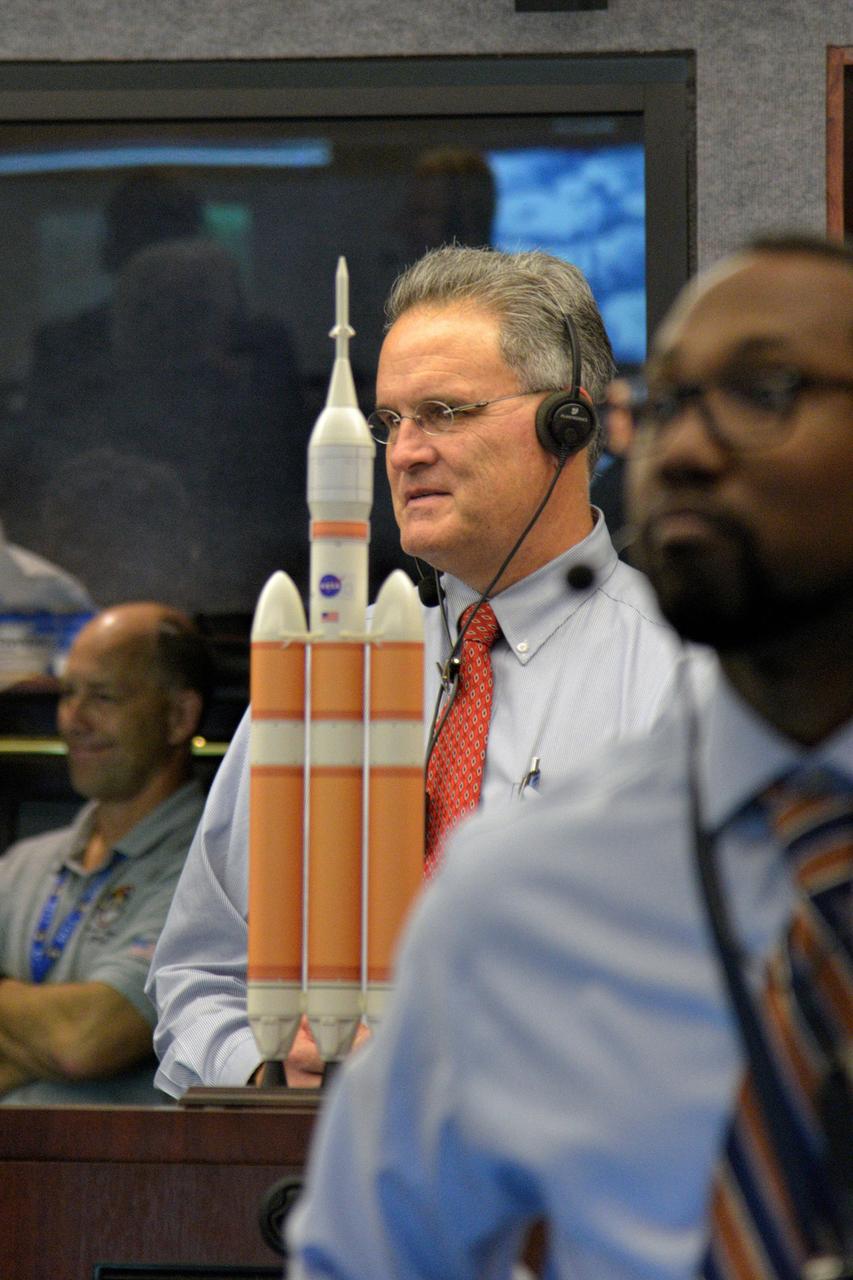
The Orion team watches the flight in Building AE at Cape Canaveral Air Force Station during Exploration Flight Test-1 (EFT-1) on Dec. 5, 2014. Part of Batch image transfer from Flickr.
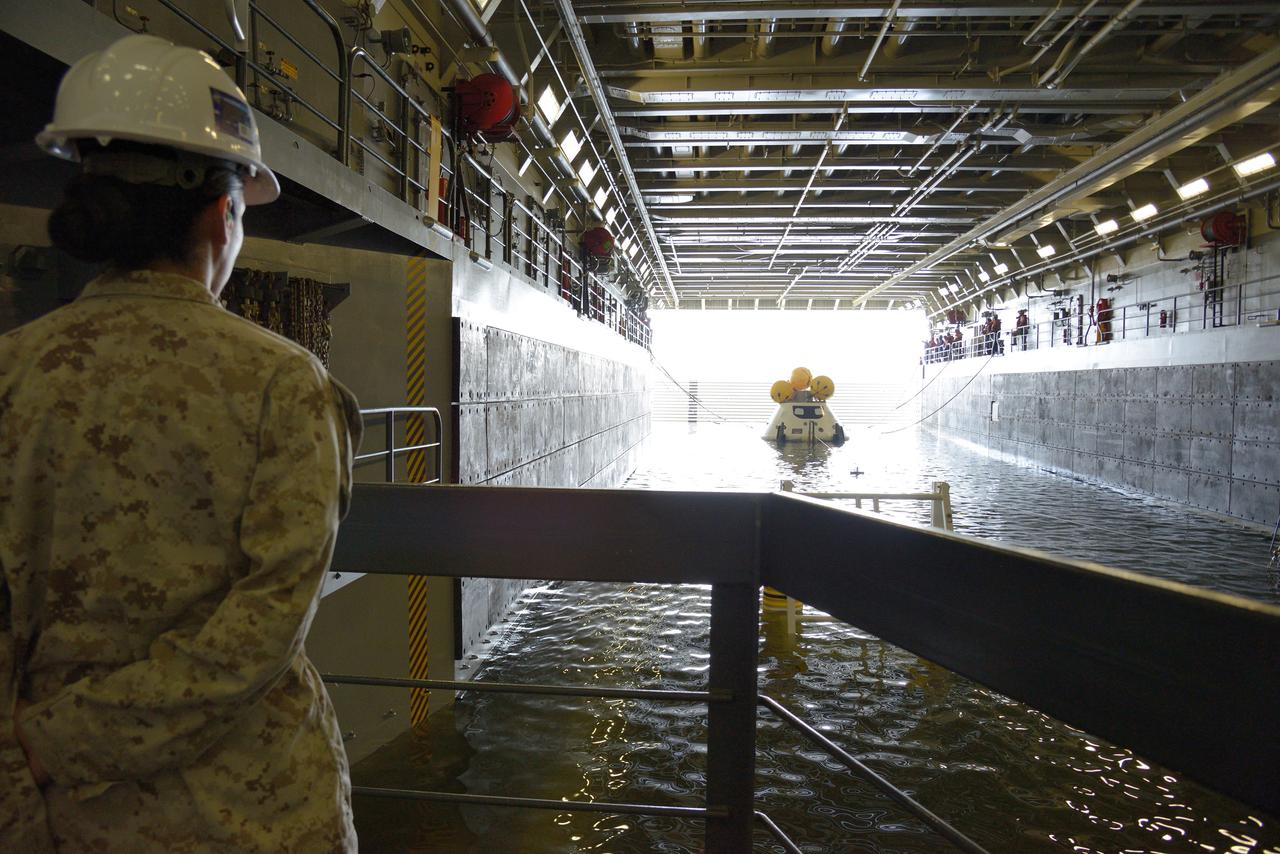
The Orion test capsule undergoes stationary recovery testing in Norfolk, VA on Aug. 13, 2013. NASA and the U.S Navy led the tests using the USS Arlington...The stationary recovery tests allow the teams to demonstrate and evaluate the recovery processes, the hardware and the test personnel in a controlled environment. ..During the test, the U.S Navy Dive Team checked the capsule for hazards while sailors from the USS Arlington approached the capsule in inflatable boats, and towed it back to the ship’s flooded well deck. Part of Batch image transfer from Flickr.
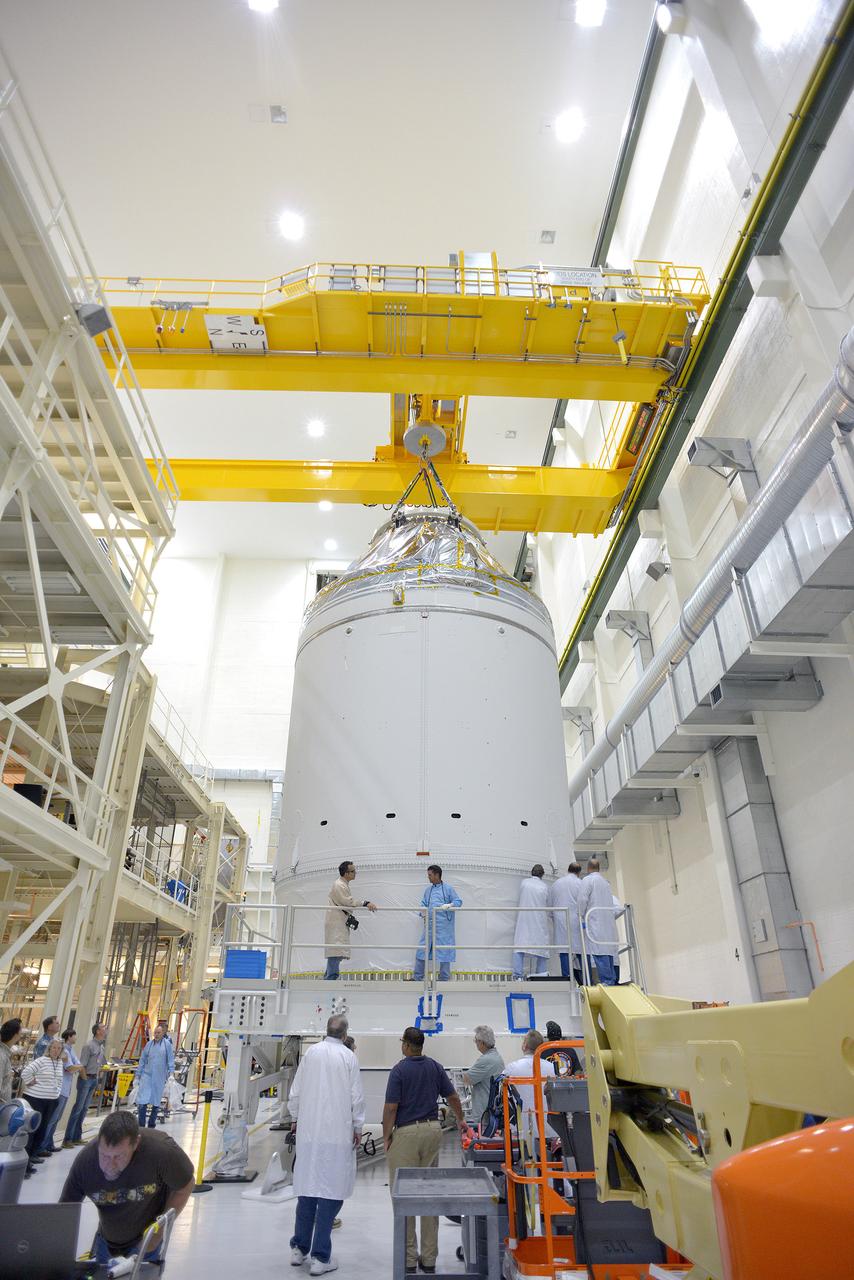
Technicians and engineers put finishing touches on the Orion Exploration Flight Test-1 (EFT-1) crew module and service module stack in the Operations and Checkout (O&C) Building at Kennedy Space Center on Sept. 7, 2014. Part of Batch image transfer from Flickr.
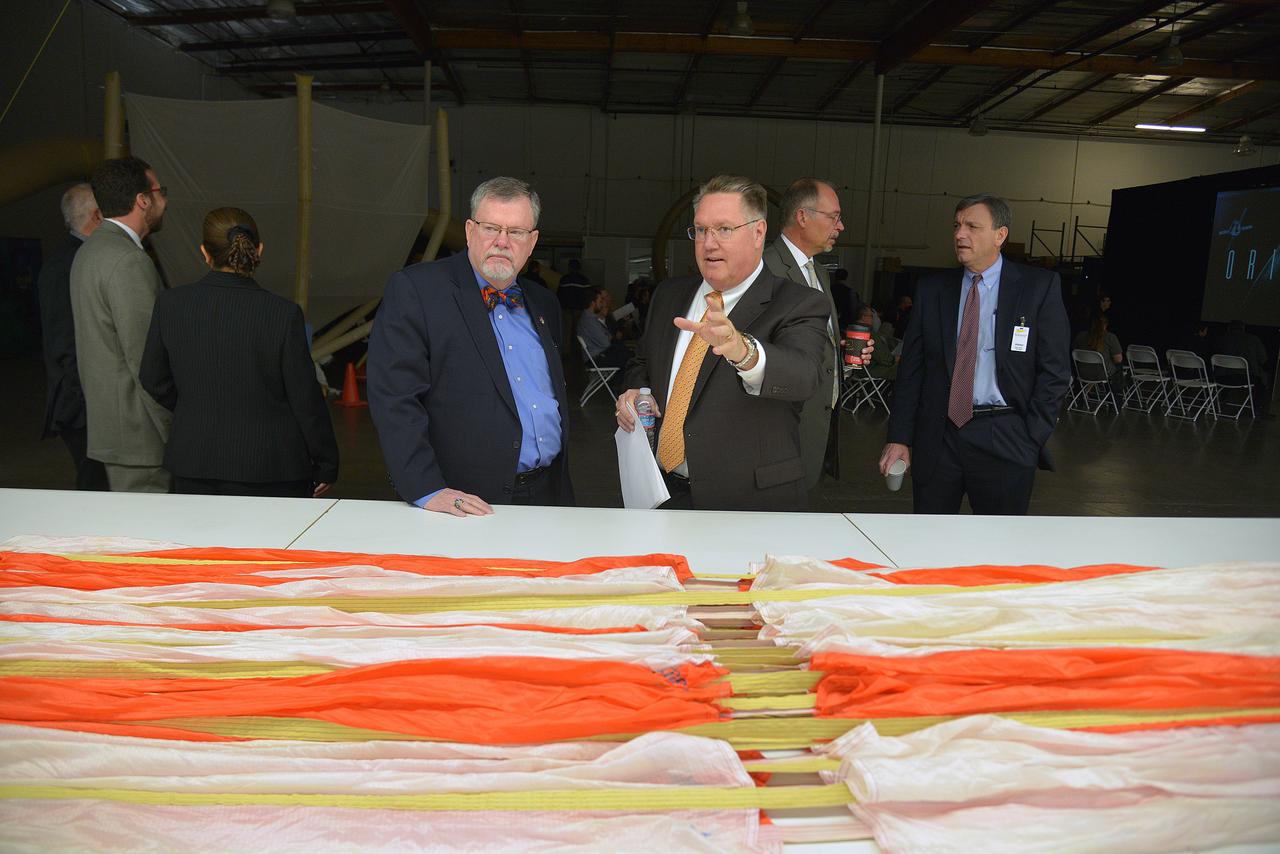
Orion leadership visited Airborne Systems in Santa Ana, California on March 5, 2015 to recognize the great work performed in support of Orion's first flight, Exploration Flight Test-1 (EFT-1). Part of Batch image transfer from Flickr.
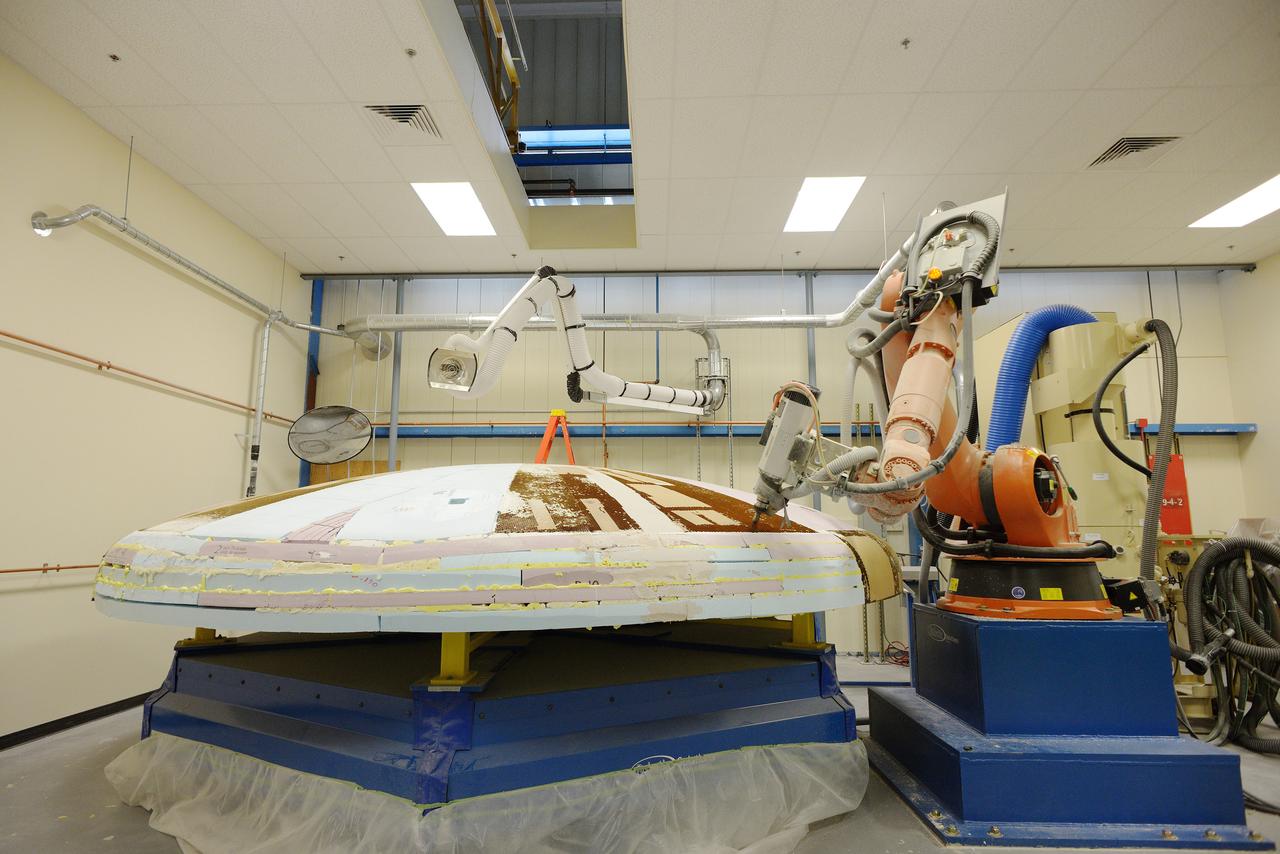
Technicians at Textron in Wimington, MA, apply Avcoat ablative material to the composite honeycomb structure attached to the Exploration Flight Test-1 (EFT-1) Orion heat shield carrier structure on May 22, 2013. Part of Batch image transfer from Flickr.
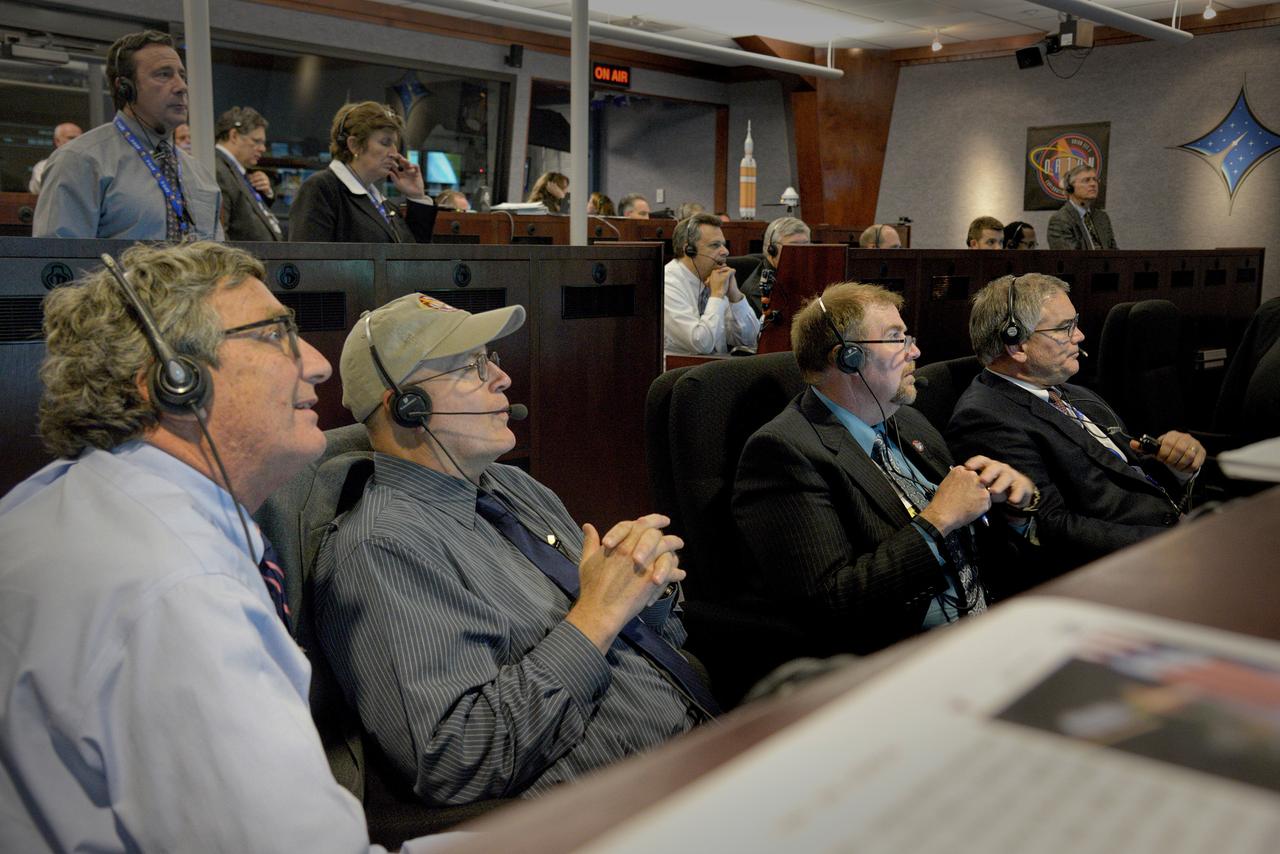
The Orion team watches the flight in Building AE at Cape Canaveral Air Force Station during Exploration Flight Test-1 (EFT-1) on Dec. 5, 2014. Part of Batch image transfer from Flickr.
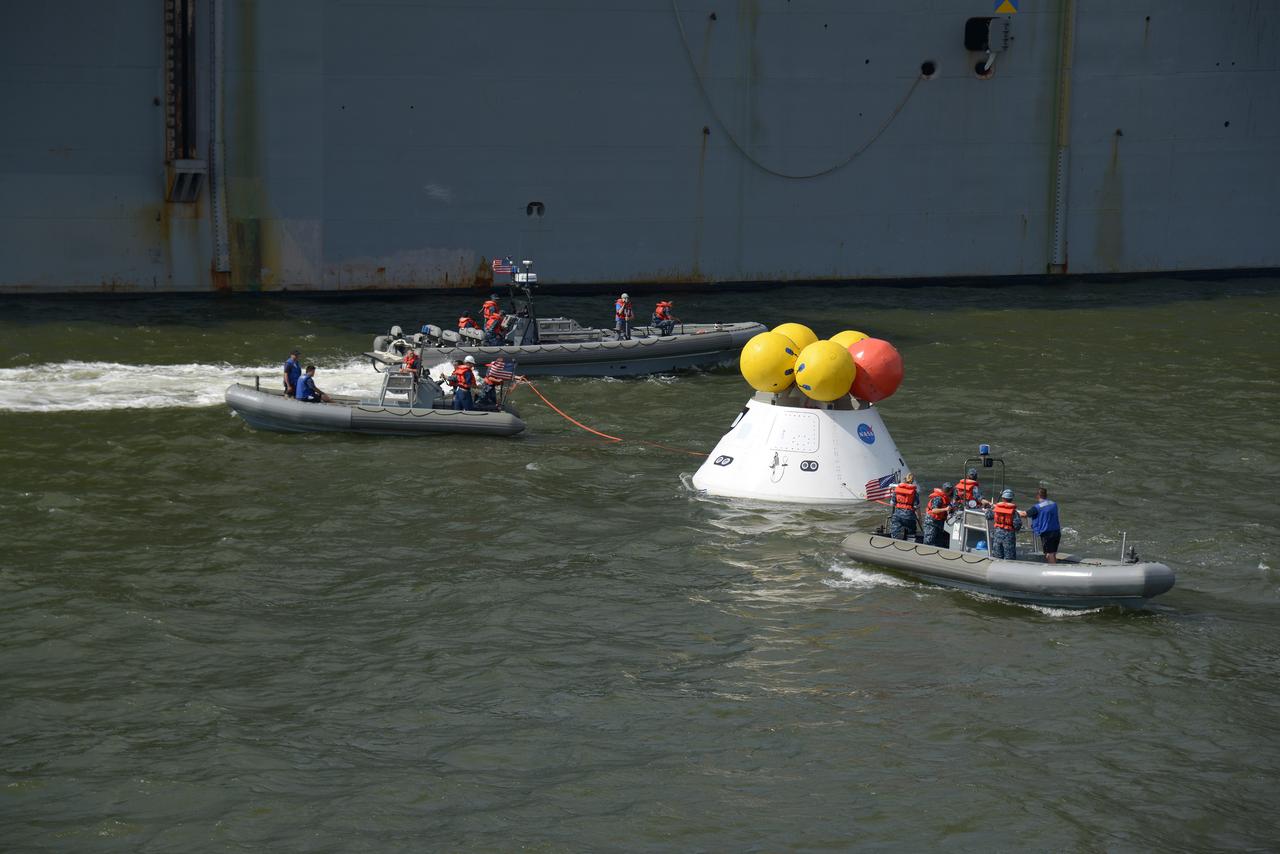
The Orion test capsule undergoes stationary recovery testing in Norfolk, VA on Aug. 13, 2013. NASA and the U.S Navy led the tests using the USS Arlington...The stationary recovery tests allow the teams to demonstrate and evaluate the recovery processes, the hardware and the test personnel in a controlled environment. ..During the test, the U.S Navy Dive Team checked the capsule for hazards while sailors from the USS Arlington approached the capsule in inflatable boats, and towed it back to the ship’s flooded well deck. Part of Batch image transfer from Flickr.
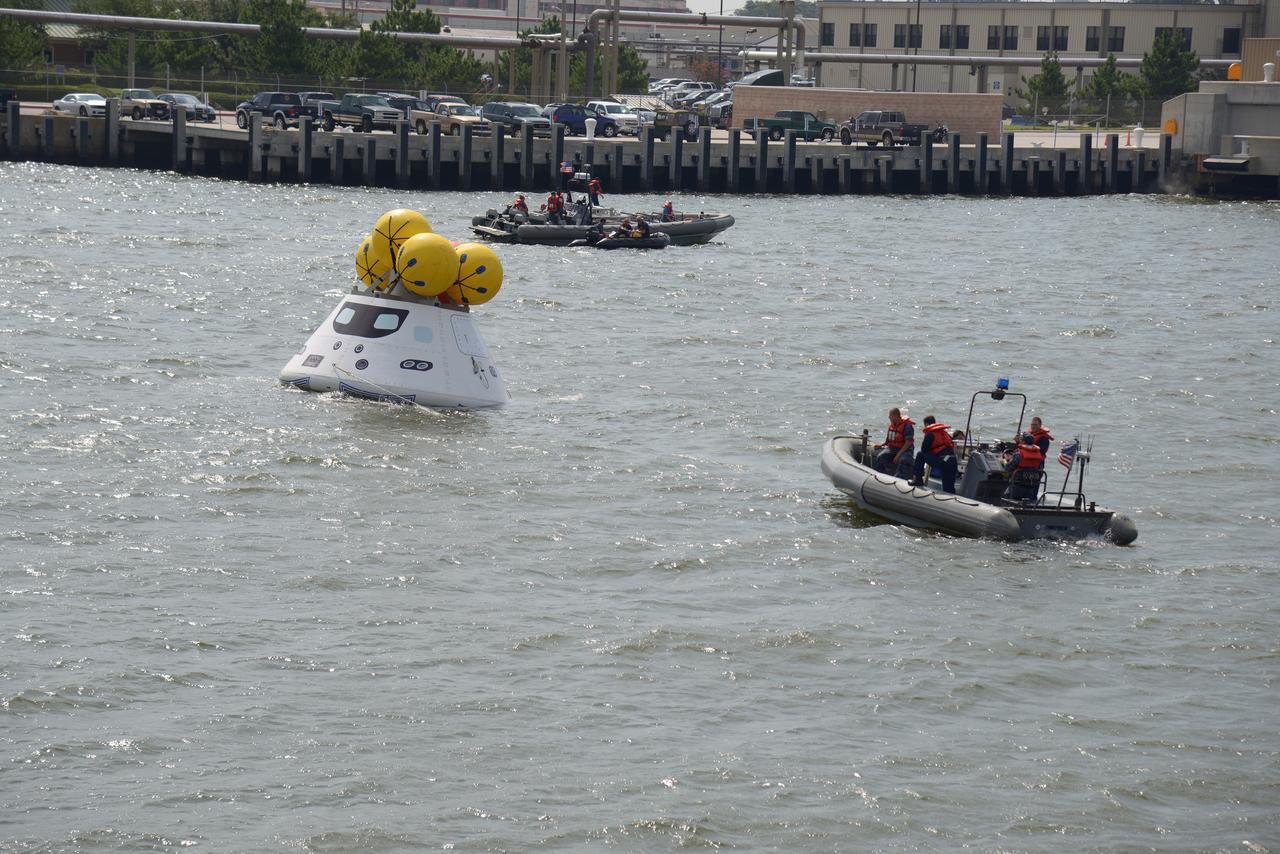
The Orion test capsule undergoes stationary recovery testing in Norfolk, VA on Aug. 13, 2013. NASA and the U.S Navy led the tests using the USS Arlington...The stationary recovery tests allow the teams to demonstrate and evaluate the recovery processes, the hardware and the test personnel in a controlled environment. ..During the test, the U.S Navy Dive Team checked the capsule for hazards while sailors from the USS Arlington approached the capsule in inflatable boats, and towed it back to the ship’s flooded well deck. Part of Batch image transfer from Flickr.
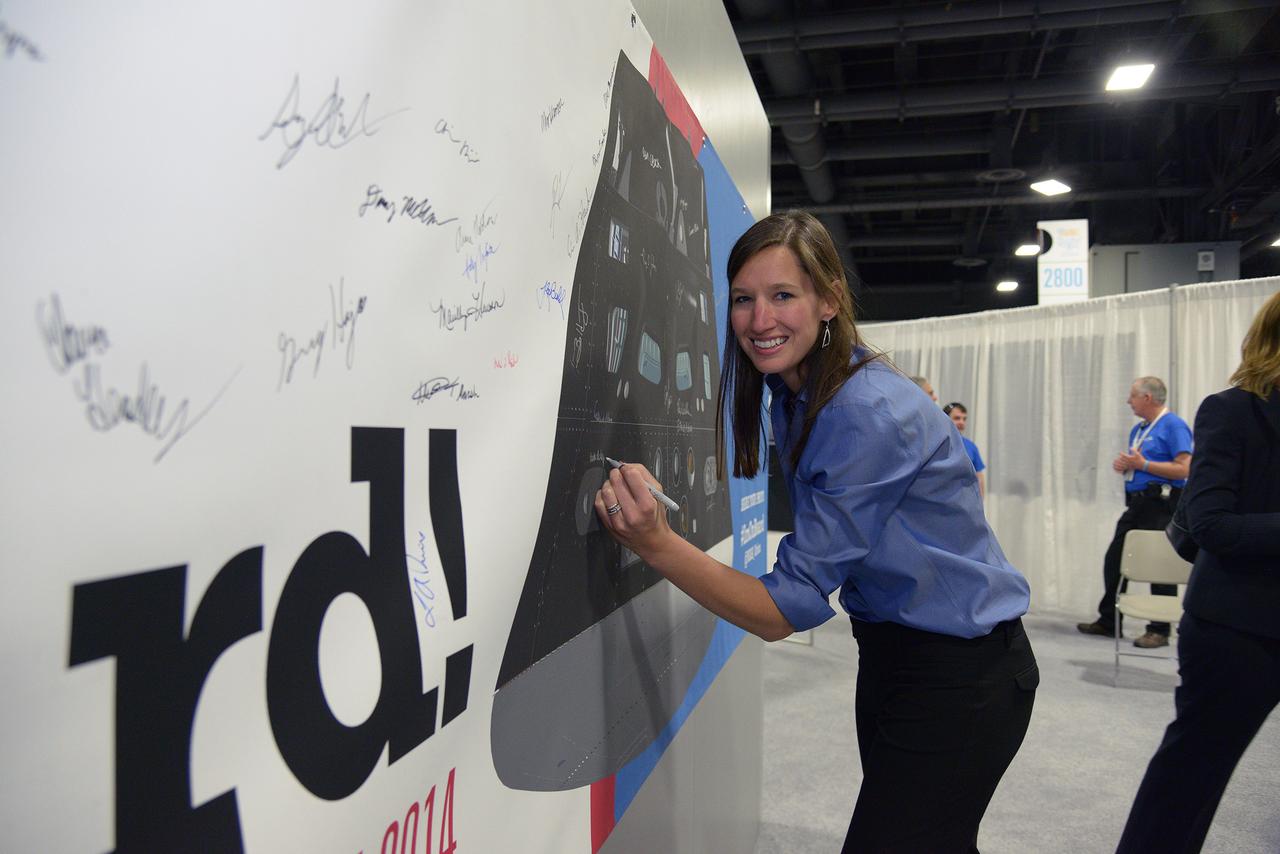
The winner of the high school portion of the Exploration Design Challenge is announced at the USA Science and Engineering Festival in Washington on April 25, 2014. Part of Batch image transfer from Flickr.
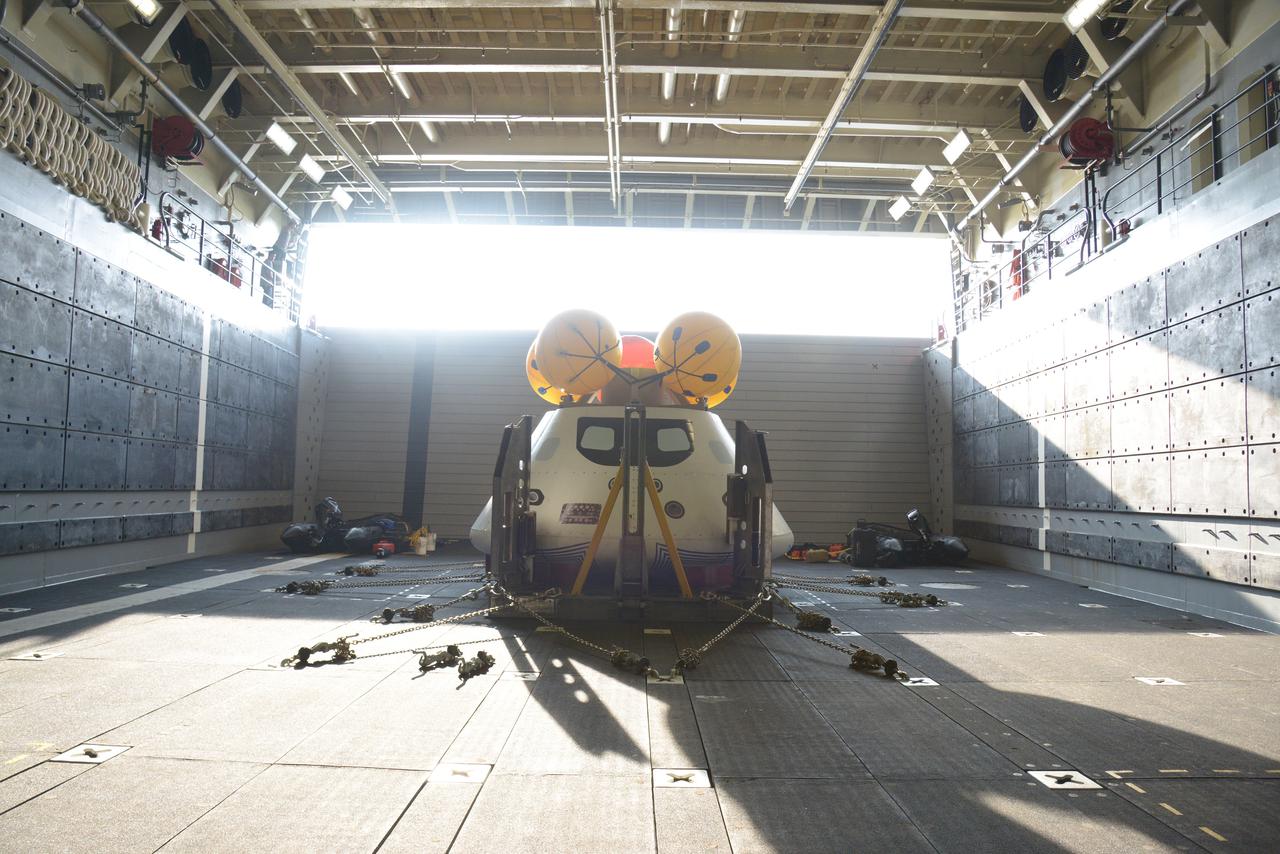
The Orion test capsule undergoes stationary recovery testing in Norfolk, VA on Aug. 13, 2013. NASA and the U.S Navy led the tests using the USS Arlington...The stationary recovery tests allow the teams to demonstrate and evaluate the recovery processes, the hardware and the test personnel in a controlled environment. ..During the test, the U.S Navy Dive Team checked the capsule for hazards while sailors from the USS Arlington approached the capsule in inflatable boats, and towed it back to the ship’s flooded well deck. Part of Batch image transfer from Flickr.
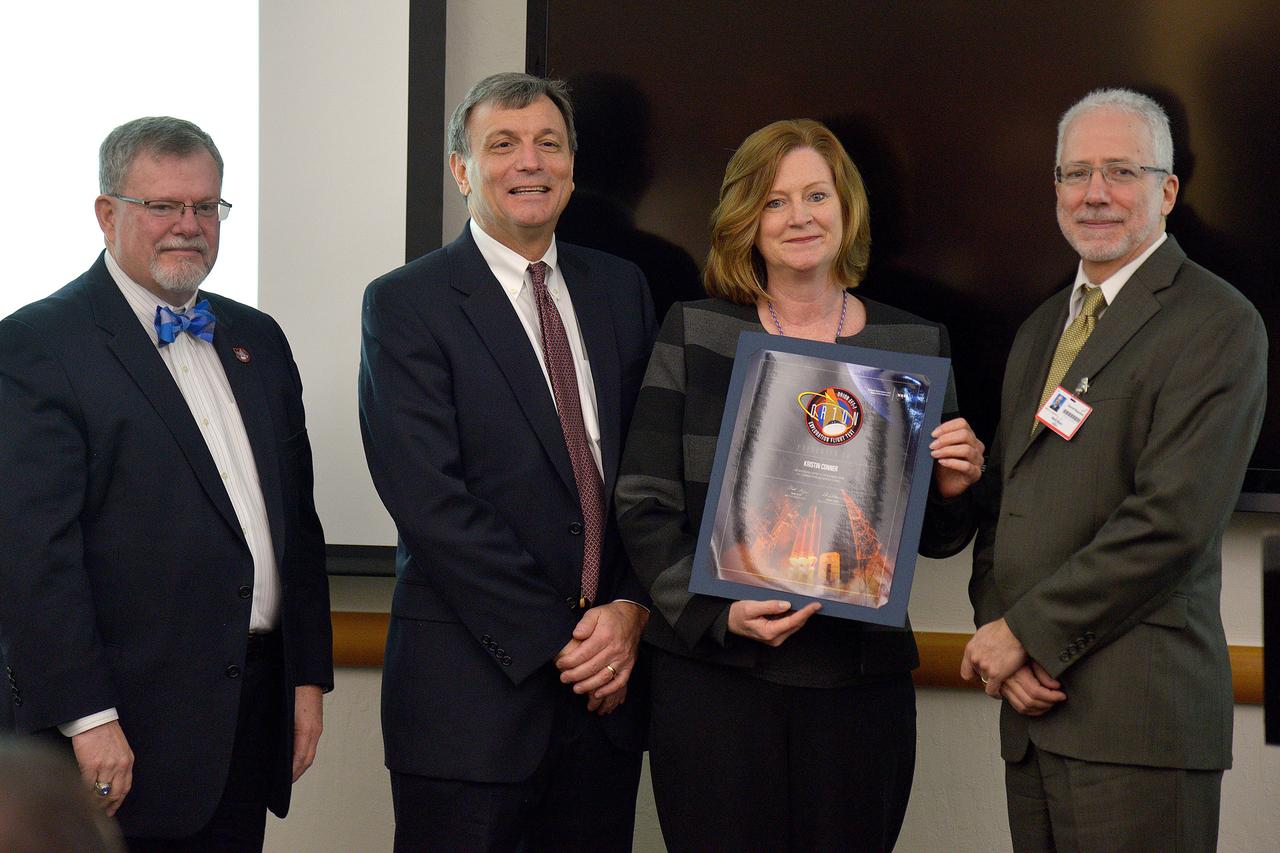
Orion leadership (including Orion Program Manager Mark Geyer) visits Aerojet Rocketdyne in Sacramento, CA on March 3, 2015 to recognize the great work performed in support of Orion's first flight, Exploration Flight Test-1 (EFT-1). Award presented to Kristin Conner. Part of Batch image transfer from Flickr.

Orion Chief Engineer Julie Kramer waits for the parachute sequence to start after Orion reentered the atmosphere in Building AE at Cape Canaveral Air Force Station during Exploration Flight Test-1 (EFT-1) on Dec. 5, 2014. The Orion spacecraft orbited Earth twice, reaching an altitude of approximately 3,600 miles above Earth before landing. No one was aboard Orion for this flight test, but the spacecraft is designed to allow us to journey to destinations never before visited by humans, including an asteroid and Mars. Part of Batch image transfer from Flickr.
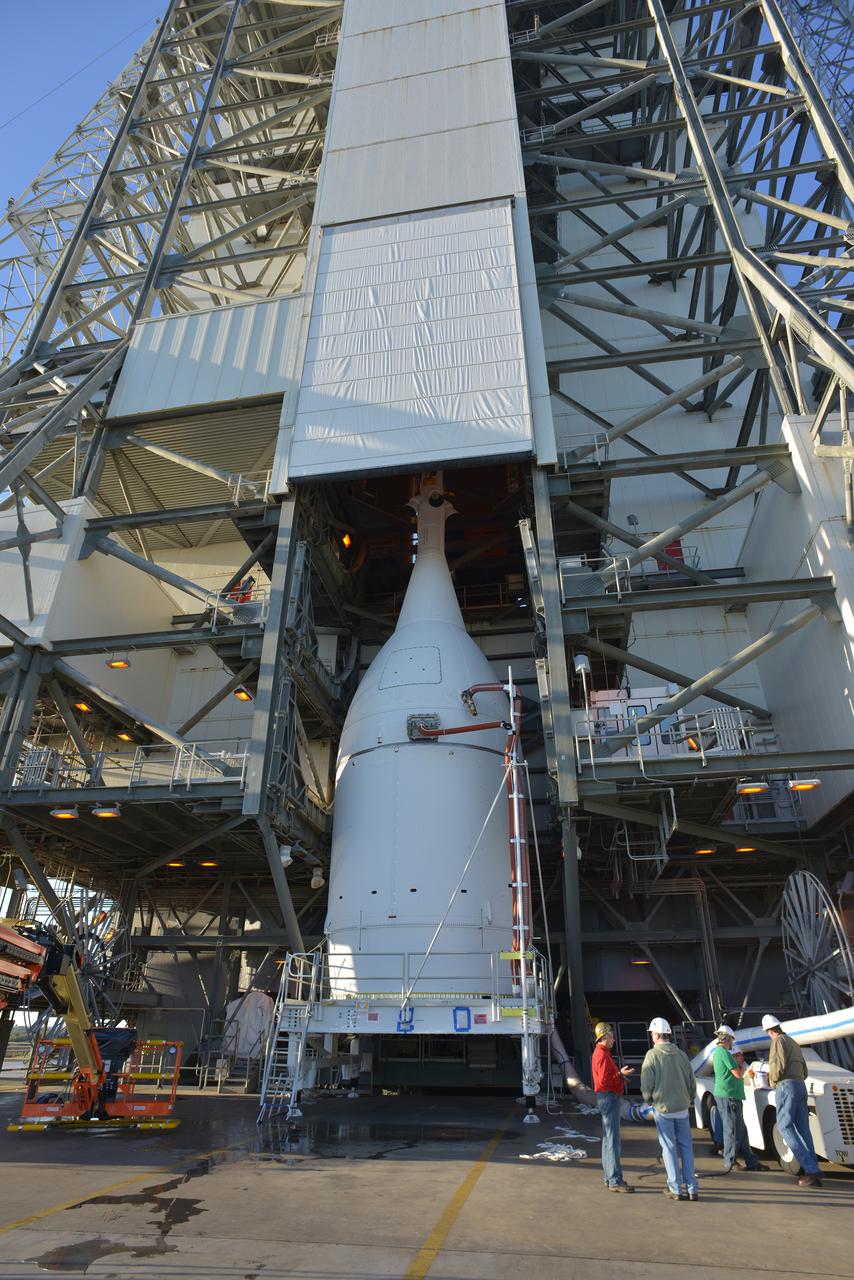
At Cape Canaveral Air Force Station's Launch Complex 37, United Launch Alliance engineers and technicians prepare to lift the agency's Orion spacecraft for mounting atop its Delta IV Heavy rocket. Orion is the exploration spacecraft designed to carry astronauts to destinations not yet explored by humans, including an asteroid and Mars. It will have emergency abort capability, sustain the crew during space travel and provide safe re-entry from deep space return velocities. The first unpiloted flight test of Orion is scheduled to launch Dec. 4, 2014 atop a United Launch Alliance Delta IV Heavy rocket, and in 2018 on NASA’s Space Launch System rocket.
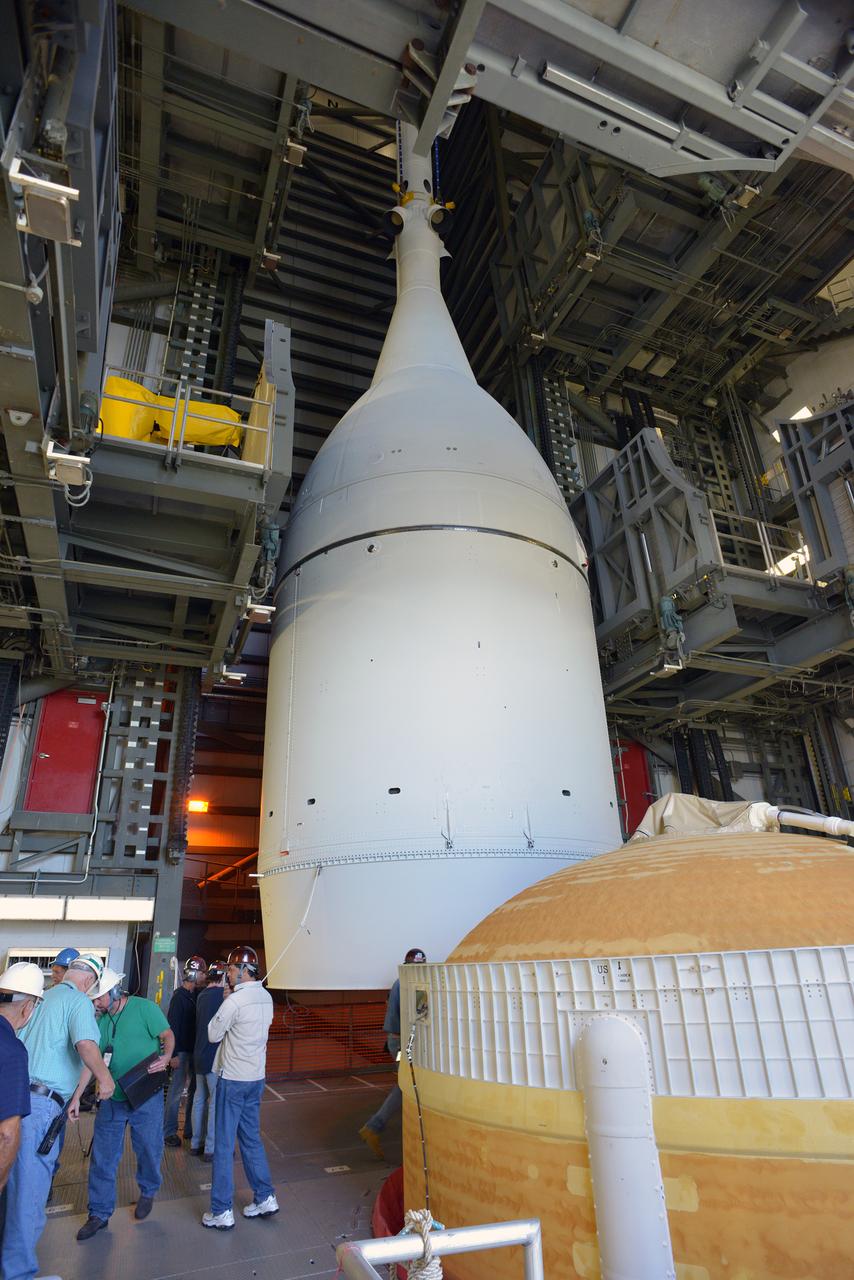
At Cape Canaveral Air Force Station's Launch Complex 37, United Launch Alliance engineers and technicians prepare to mate the agency's Orion spacecraft to its Delta IV Heavy rocket. Orion is the exploration spacecraft designed to carry astronauts to destinations not yet explored by humans, including an asteroid and Mars. It will have emergency abort capability, sustain the crew during space travel and provide safe re-entry from deep space return velocities. The first unpiloted flight test of Orion is scheduled to launch Dec. 4, 2014 atop a United Launch Alliance Delta IV Heavy rocket, and in 2018 on NASA’s Space Launch System rocket.
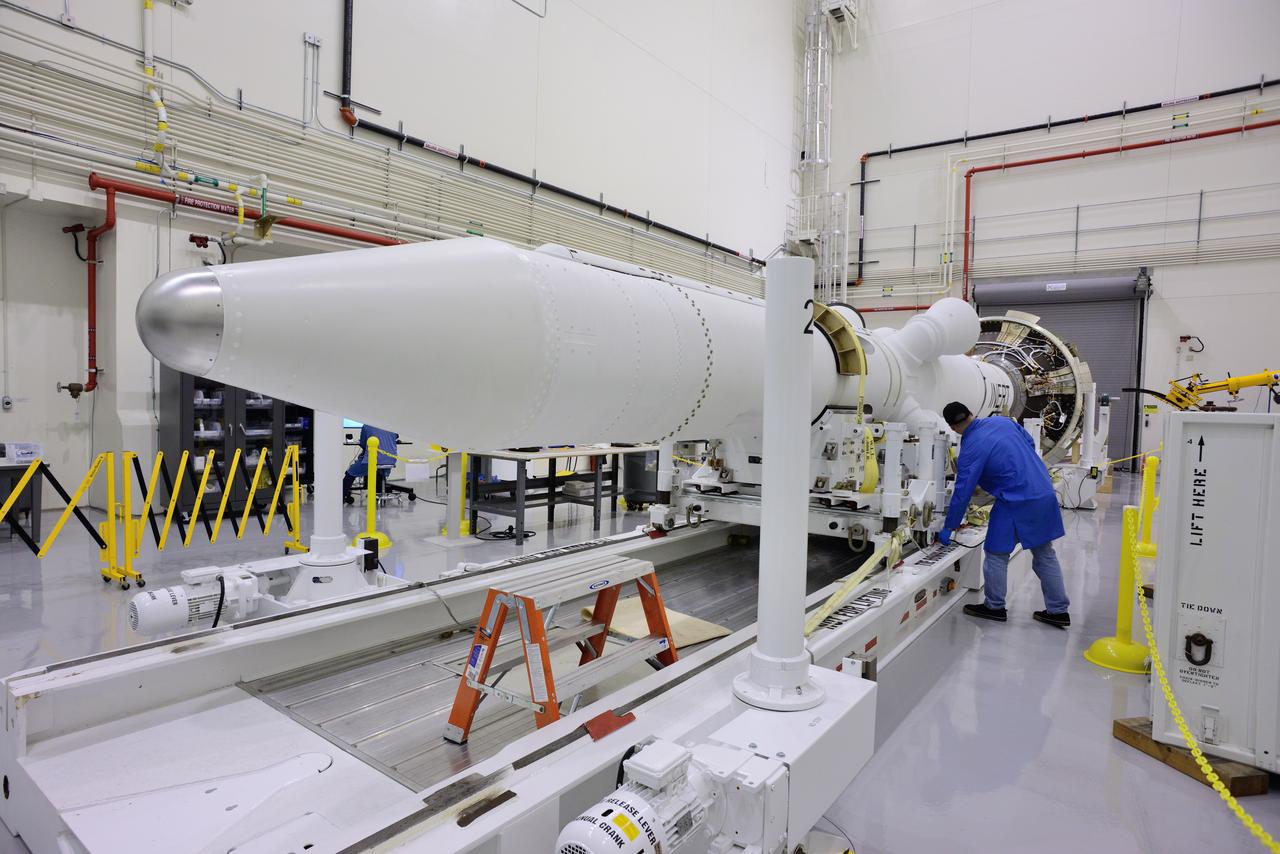
The Orion launch abort system for Exploration Flight Test-1 (EFT-1) is assembled in the Launch Abort System Facility (LASF) at Kennedy Space Center on March 20, 2014. Part of Batch image transfer from Flickr.
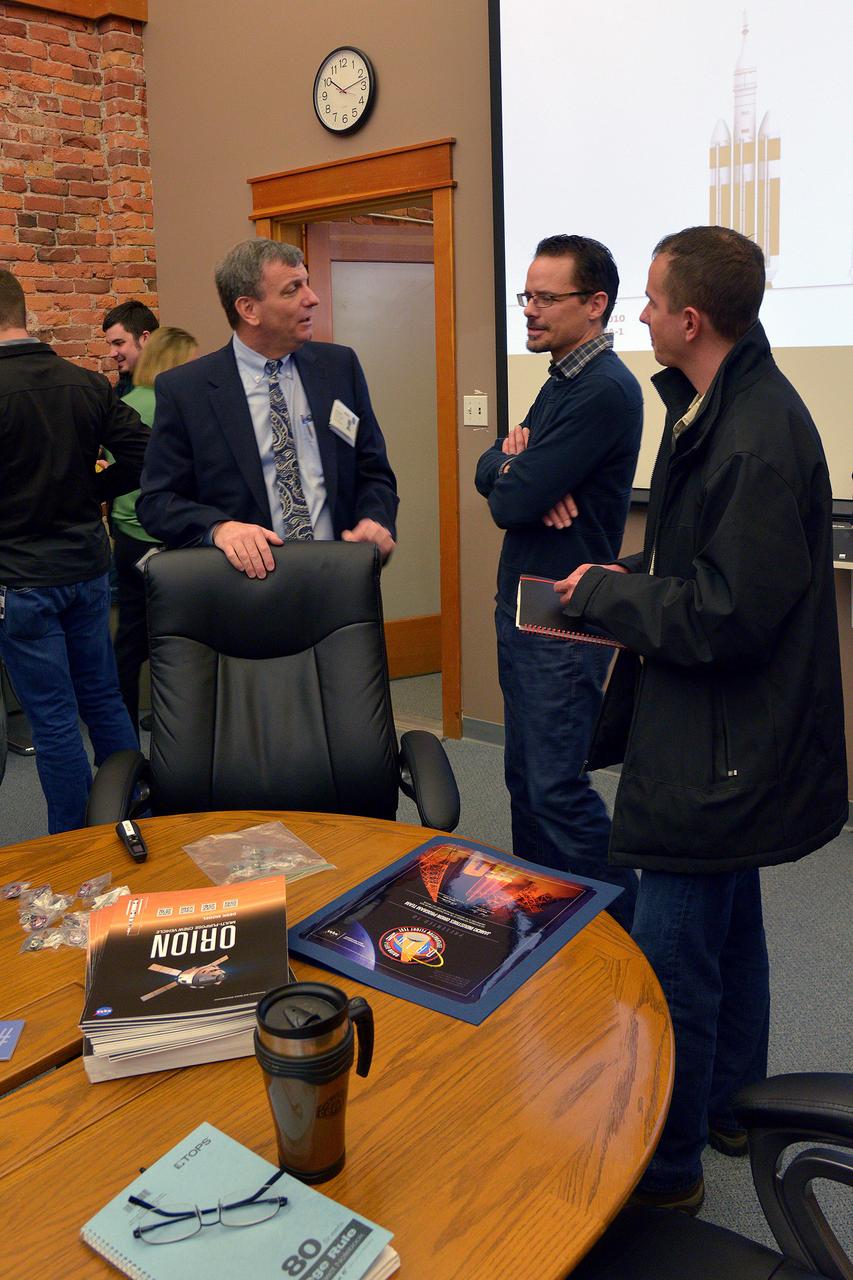
The Orion leadership team visits Janicki Industries in Sedro-Woolley, Washington on March 9, 2015 to thank them for their work in support of Exploration Flight Test-1 (EFT-1). Janicki is a small business that specializes in producing custom tooling fixtures and composite structures. Part of Batch image transfer from Flickr.
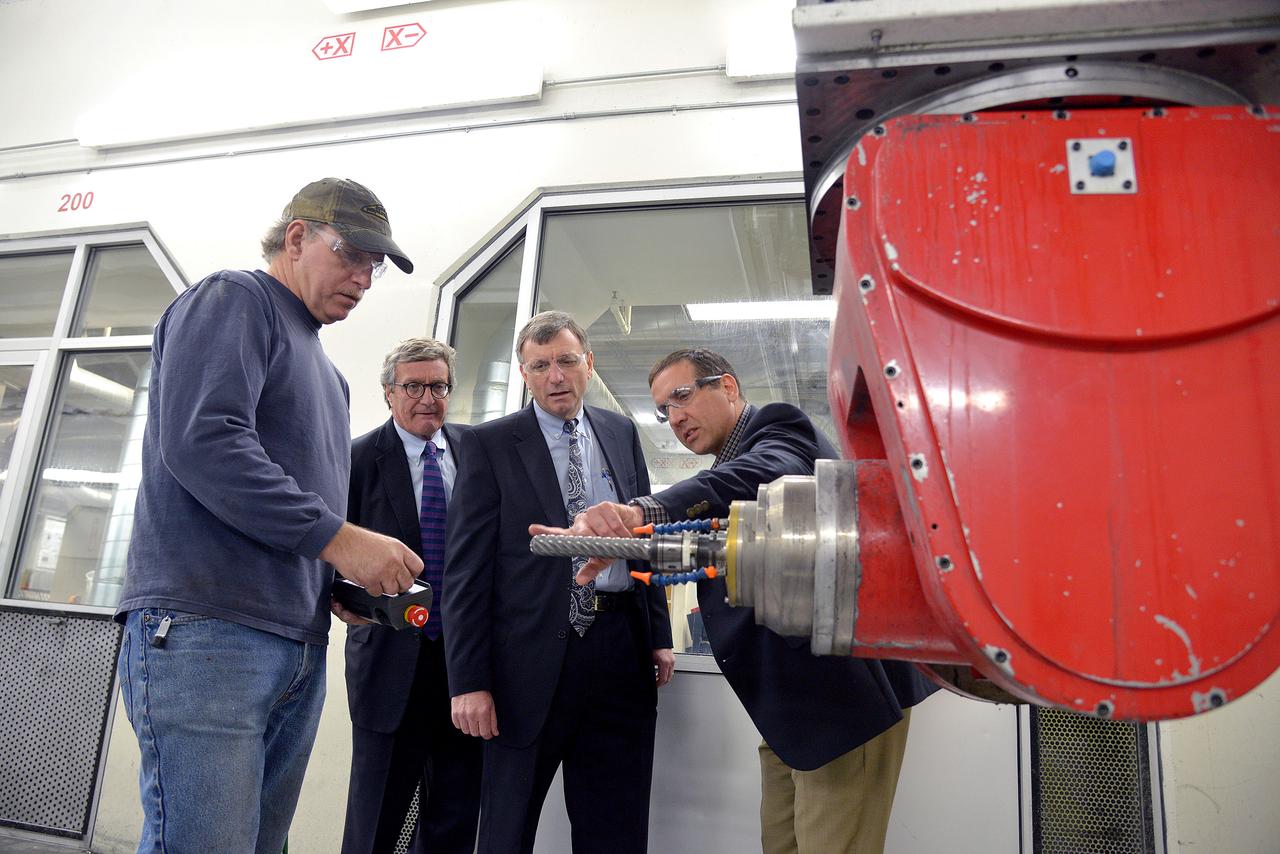
The Orion leadership team visits Janicki Industries in Sedro-Woolley, Washington on March 9, 2015 to thank them for their work in support of Exploration Flight Test-1 (EFT-1). Janicki is a small business that specializes in producing custom tooling fixtures and composite structures. Part of Batch image transfer from Flickr.
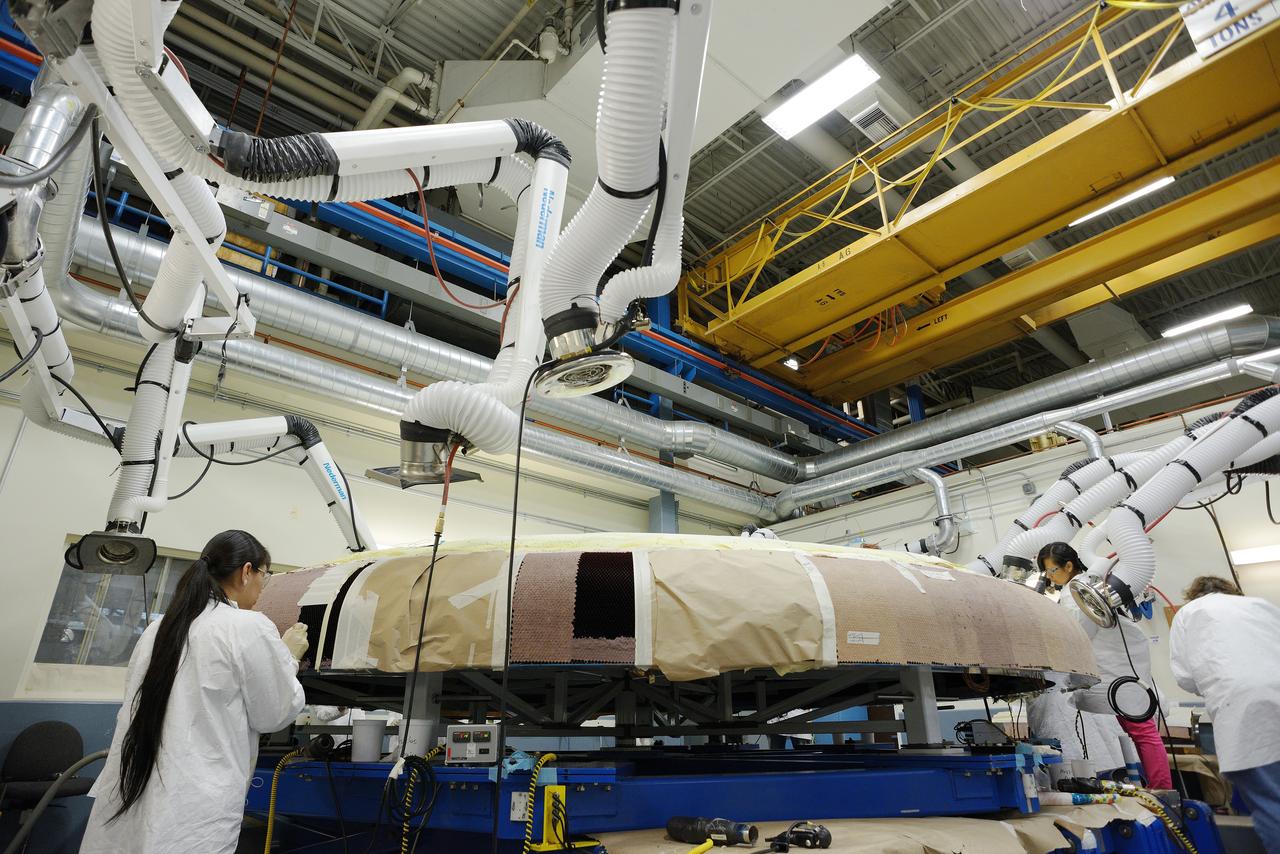
Technicians at Textron in Wimington, MA, apply Avcoat ablative material to the composite honeycomb structure attached to the Exploration Flight Test-1 (EFT-1) Orion heat shield carrier structure on May 22, 2013. Part of Batch image transfer from Flickr.
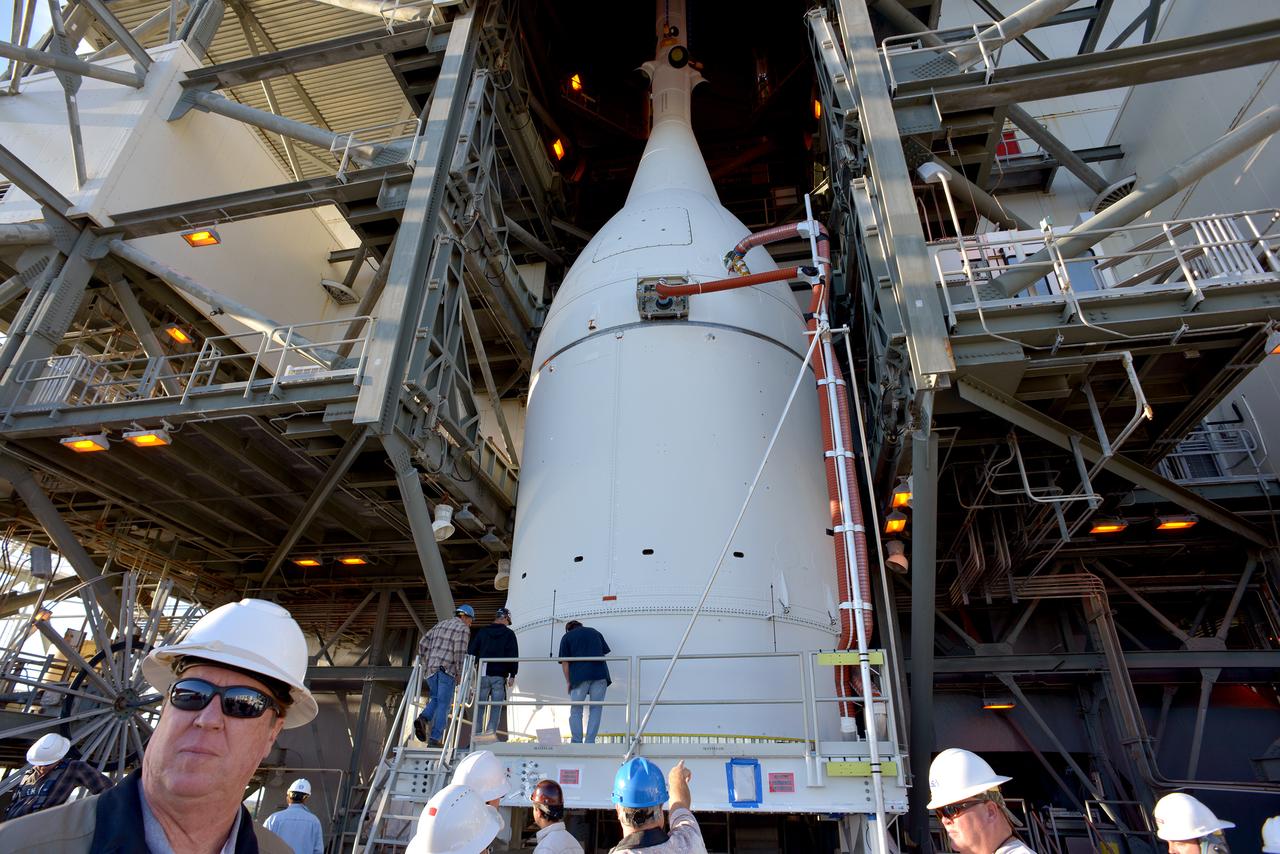
At Cape Canaveral Air Force Station's Launch Complex 37, United Launch Alliance engineers and technicians prepare to lift the agency's Orion spacecraft for mounting atop its Delta IV Heavy rocket. Orion is the exploration spacecraft designed to carry astronauts to destinations not yet explored by humans, including an asteroid and Mars. It will have emergency abort capability, sustain the crew during space travel and provide safe re-entry from deep space return velocities. The first unpiloted flight test of Orion is scheduled to launch Dec. 4, 2014 atop a United Launch Alliance Delta IV Heavy rocket, and in 2018 on NASA’s Space Launch System rocket.
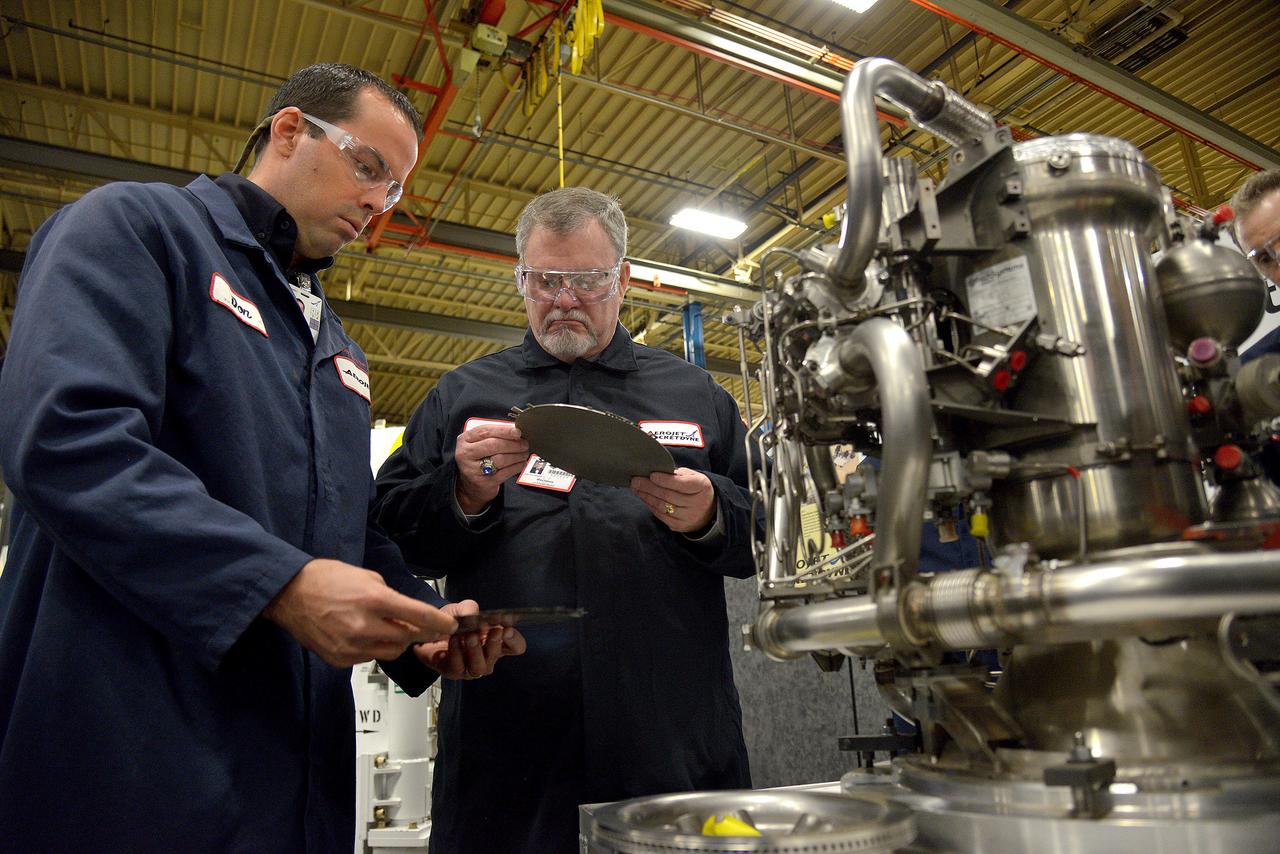
Orion leadership visits Aerojet Rocketdyne in Sacramento, CA on March 3, 2015 to recognize the great work performed in support of Orion's first flight, Exploration Flight Test-1 (EFT-1). Part of Batch image transfer from Flickr.
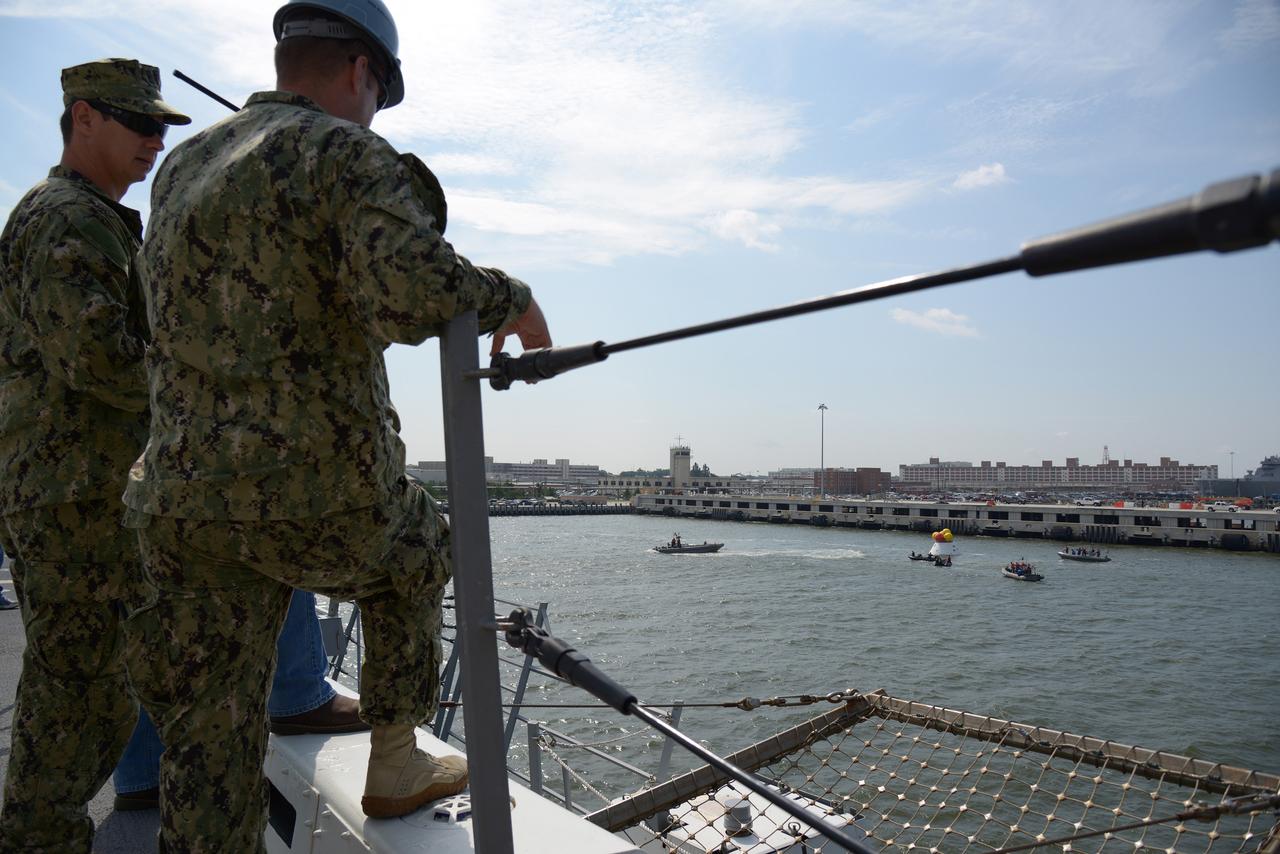
The Orion test capsule undergoes stationary recovery testing in Norfolk, VA on Aug. 13, 2013. NASA and the U.S Navy led the tests using the USS Arlington...The stationary recovery tests allow the teams to demonstrate and evaluate the recovery processes, the hardware and the test personnel in a controlled environment. ..During the test, the U.S Navy Dive Team checked the capsule for hazards while sailors from the USS Arlington approached the capsule in inflatable boats, and towed it back to the ship’s flooded well deck. Part of Batch image transfer from Flickr.
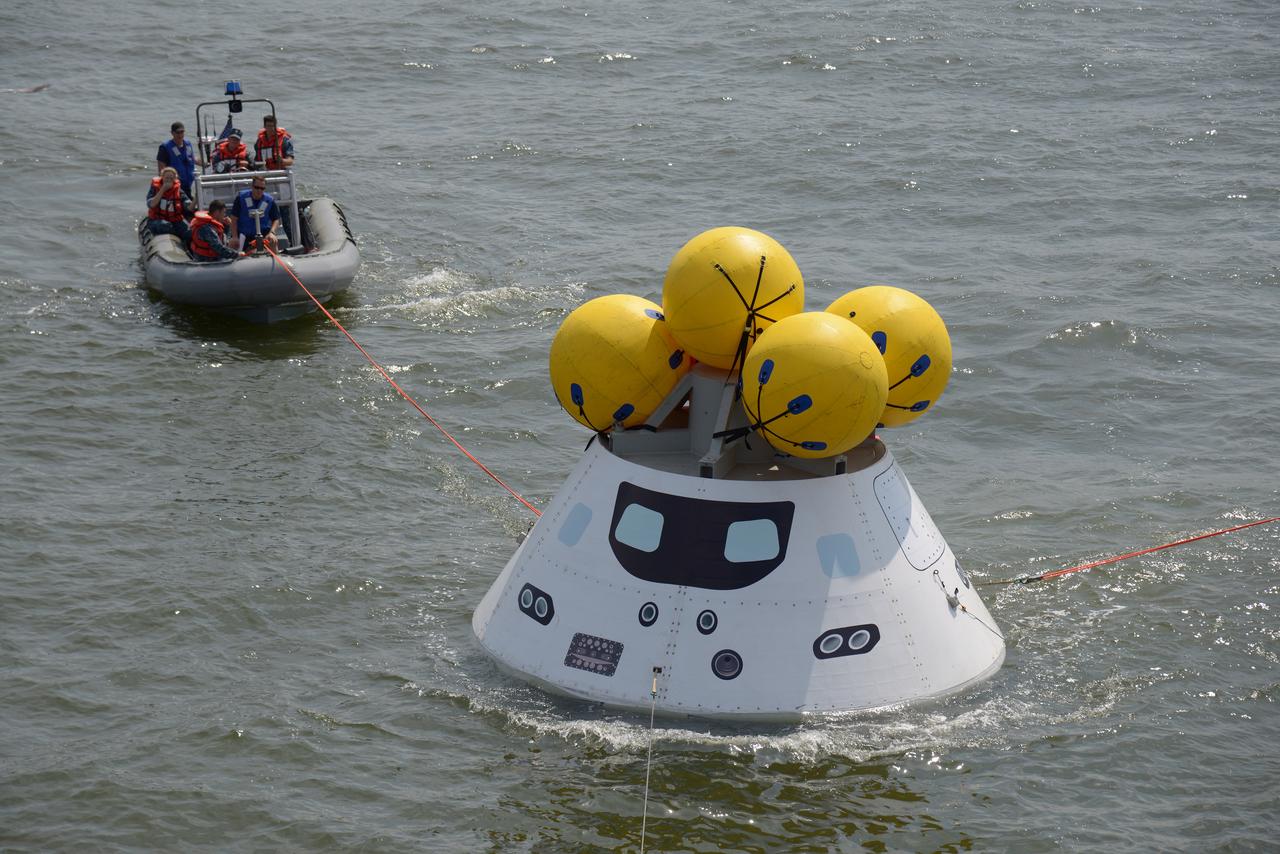
The Orion test capsule undergoes stationary recovery testing in Norfolk, VA on Aug. 13, 2013. NASA and the U.S Navy led the tests using the USS Arlington...The stationary recovery tests allow the teams to demonstrate and evaluate the recovery processes, the hardware and the test personnel in a controlled environment. ..During the test, the U.S Navy Dive Team checked the capsule for hazards while sailors from the USS Arlington approached the capsule in inflatable boats, and towed it back to the ship’s flooded well deck. Part of Batch image transfer from Flickr.
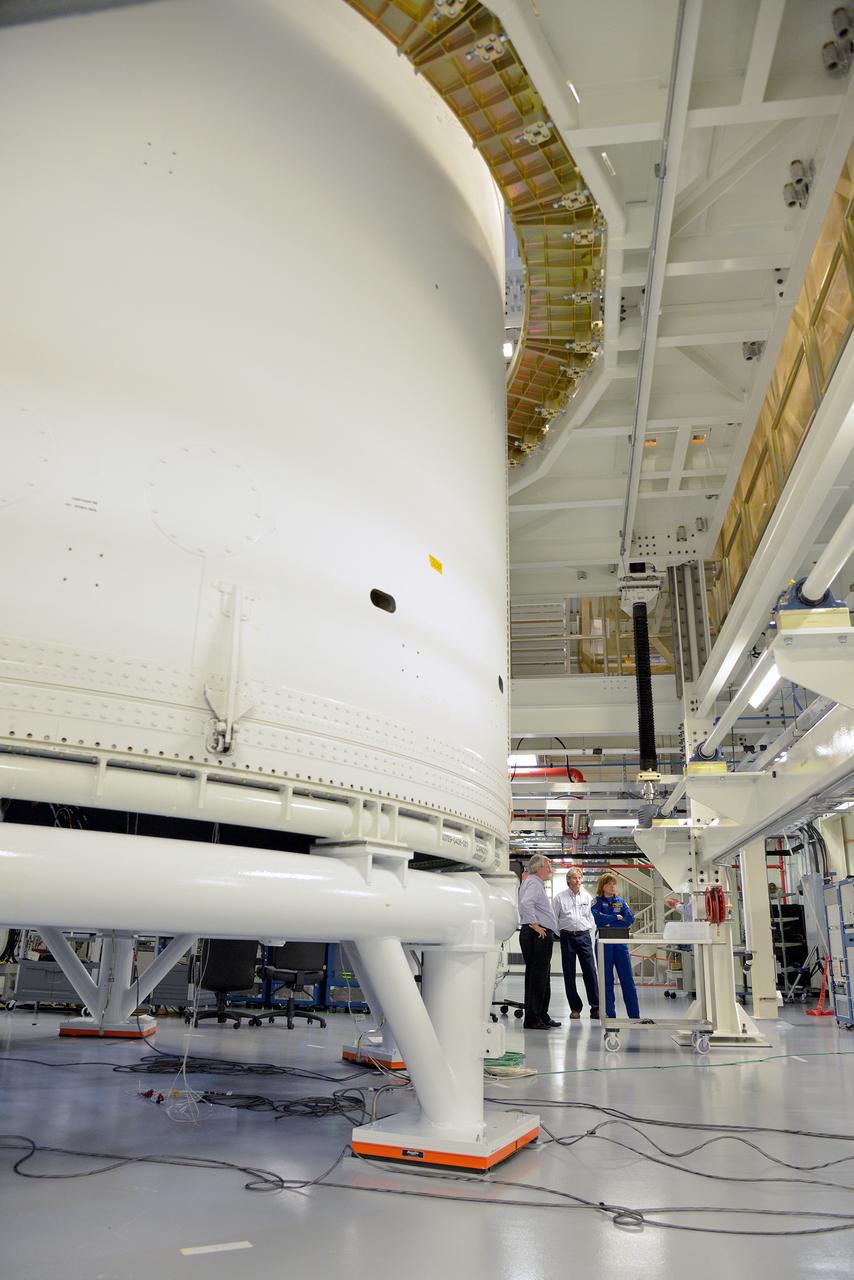
Astronaut Anna Fisher observes Orion Exploration Flight Test-1 (EFT-1) crew module and service module mating operations in Operations and Checkout (O&C) Building at Kennedy Space Center on June 9, 2014. Part of Batch image transfer from Flickr.
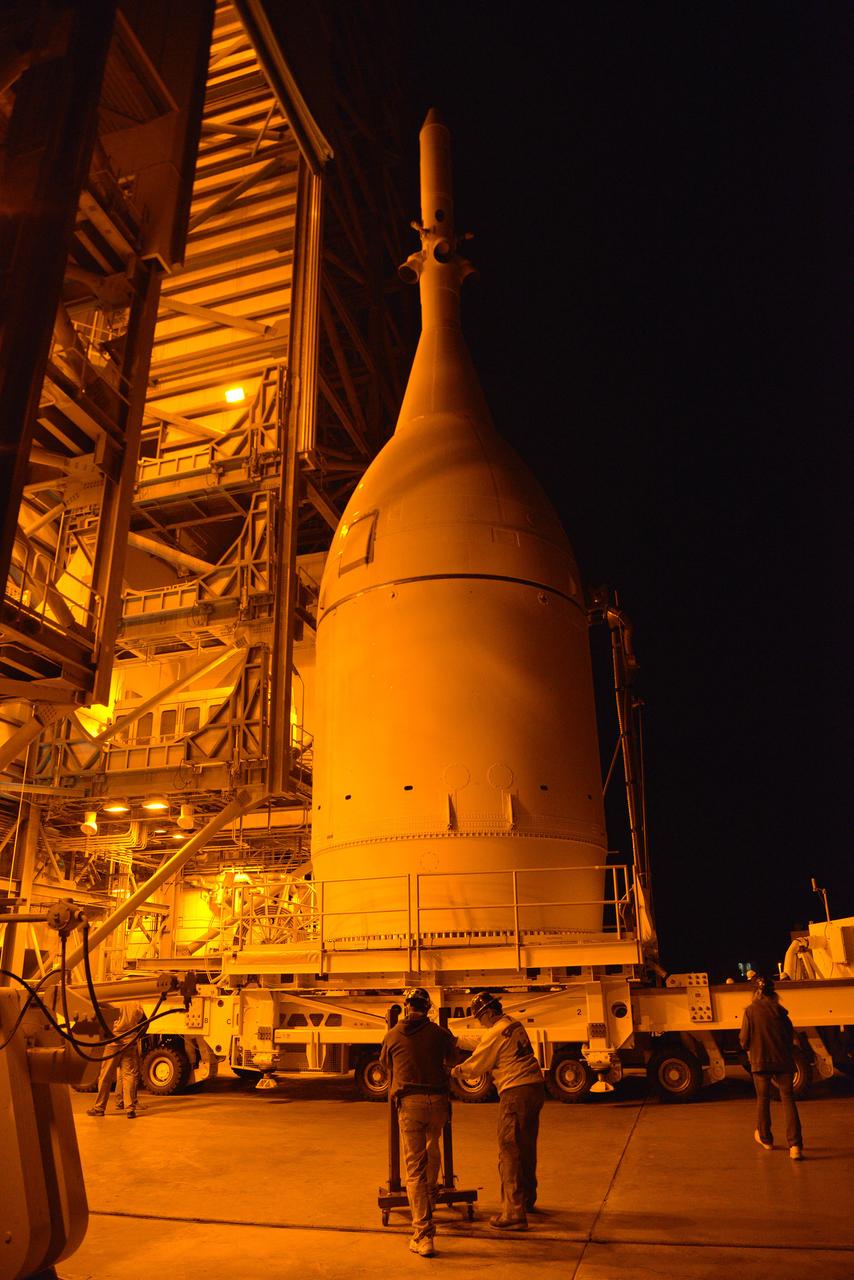
Engineers and technicians at Space Launch Complex 37 move Orion into place in the service structure so the spacecraft can be lifted and joined to the top of the Delta IV Heavy rocket on Nov. 12, 2014. Part of Batch image transfer from Flickr.
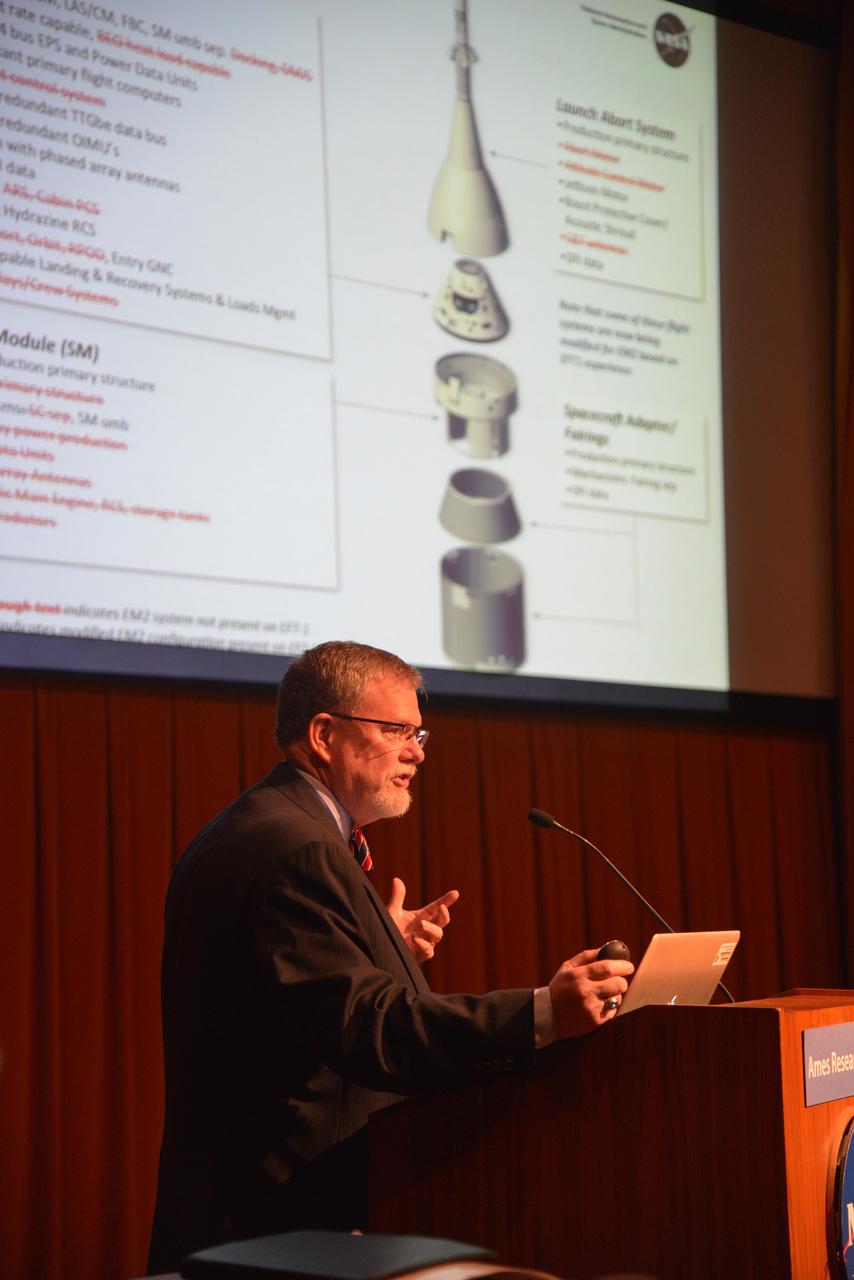
The Orion leadership (including Orion Program Manager Mark Geyer) visited Ames Research Center in California on March 2, 2015 to recognize the great work performed at the center in support of Orion's first flight, Exploration Flight Test-1 (EFT-1). Part of Batch image transfer from Flickr.
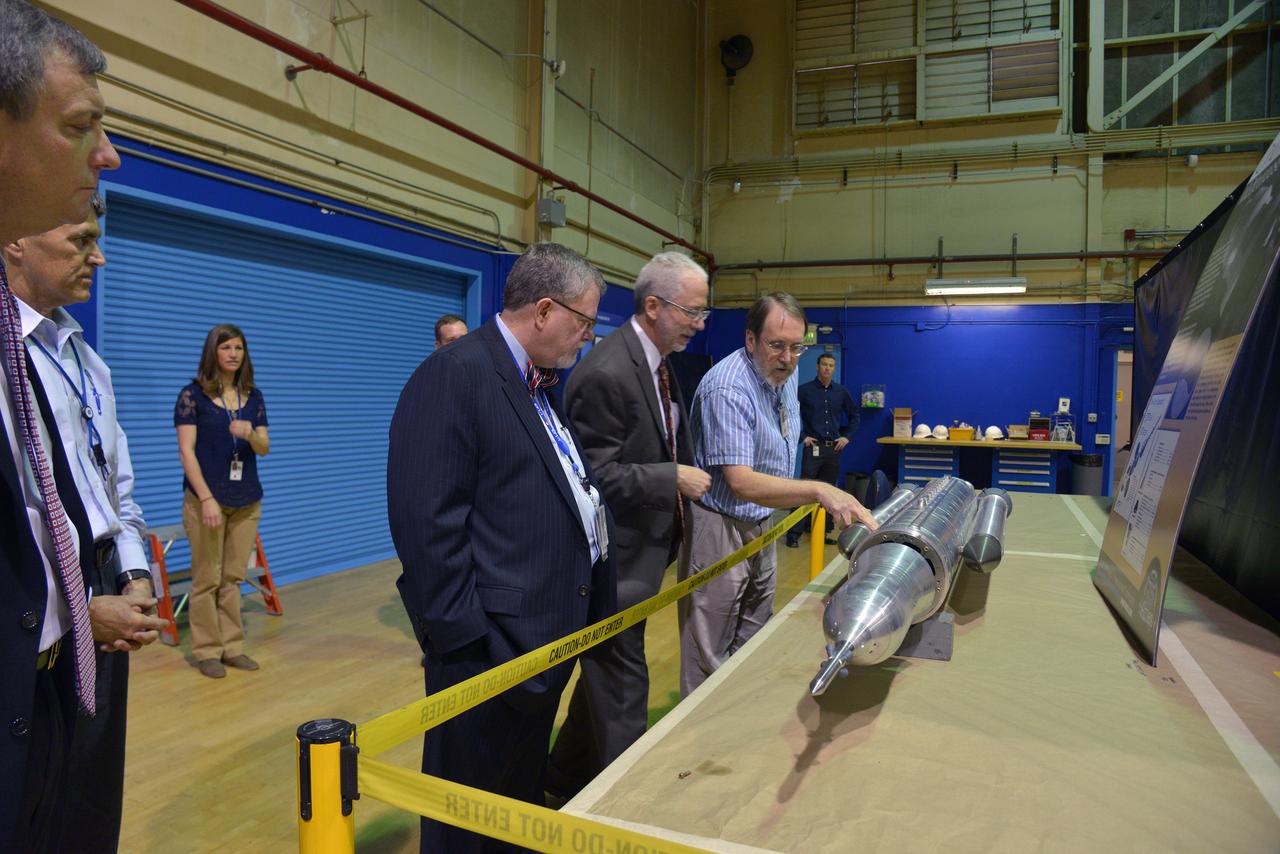
The Orion leadership visited Ames Research Center in California on March 2, 2015 to recognize the great work performed at the center in support of Orion's first flight, Exploration Flight Test-1 (EFT-1). Part of Batch image transfer from Flickr.
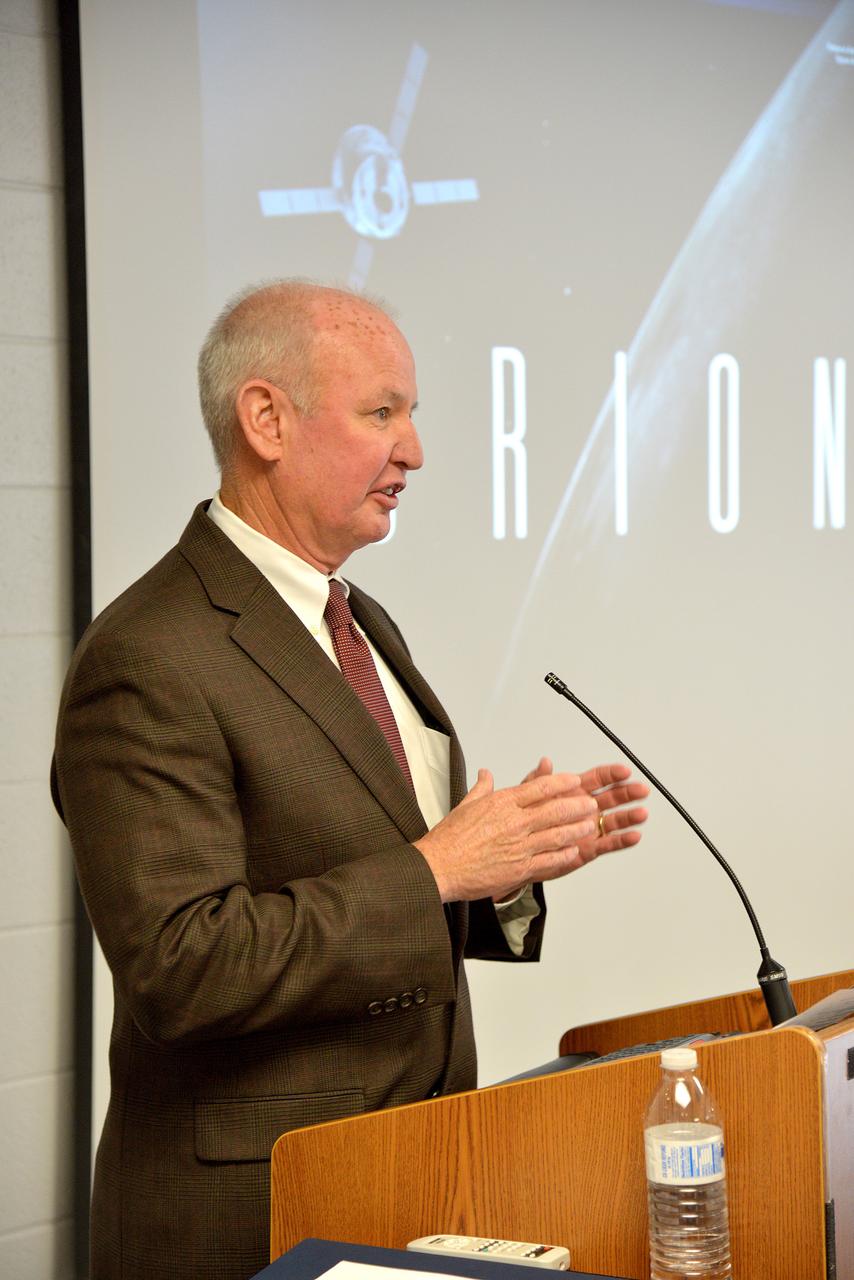
The Orion team (including Orion Program Manager Mark Geyer) congratulates the Orbital ATK team in Promontory, Utah on their efforts in making Exploration Flight Test-1 (EFT-1) a success on March 11, 2015. Part of Batch image transfer from Flickr.
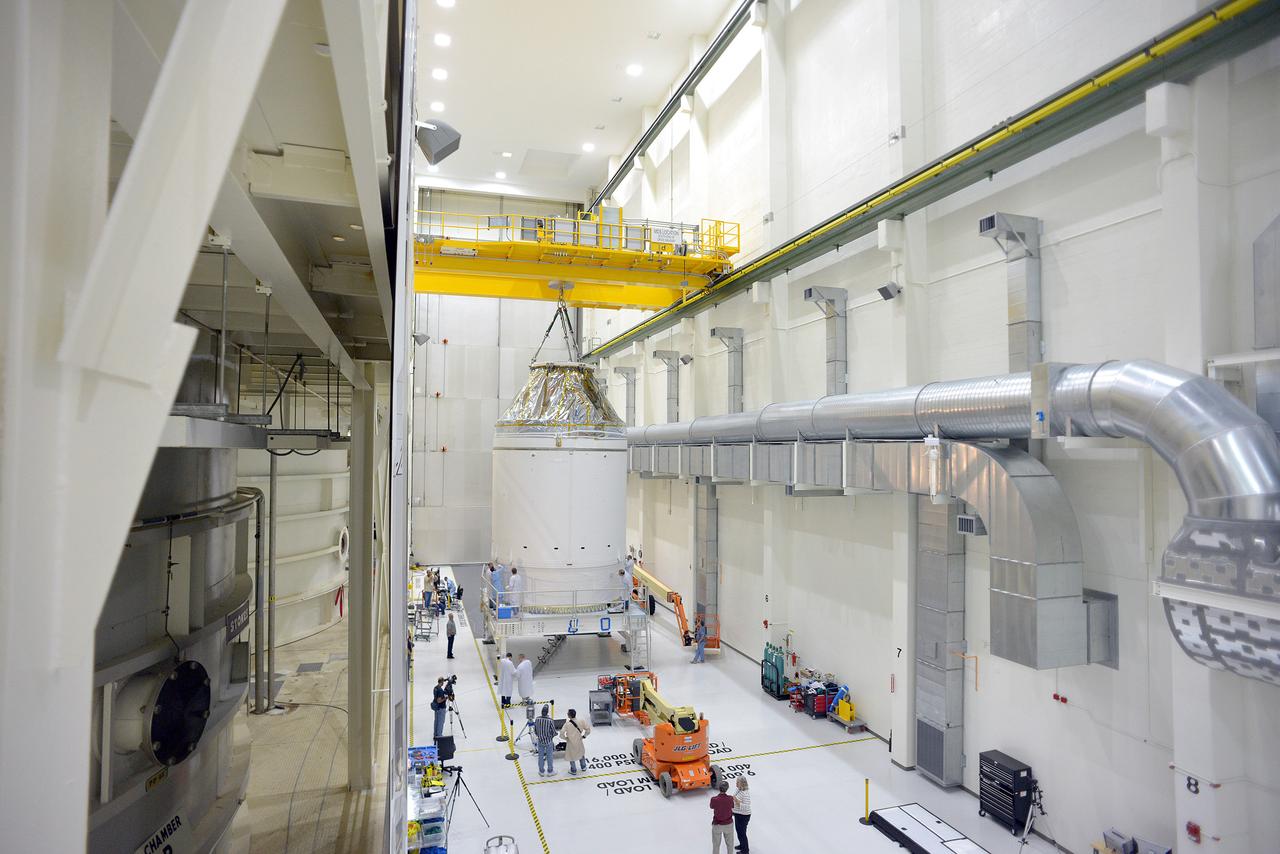
Technicians and engineers put finishing touches on the Orion Exploration Flight Test-1 (EFT-1) crew module and service module stack in the Operations and Checkout (O&C) Building at Kennedy Space Center on Sept. 7, 2014. The crew module is covered by protective foil as it and the service module are lifted for the installation of the Orion-to-stage adapter ring. Part of Batch image transfer from Flickr.
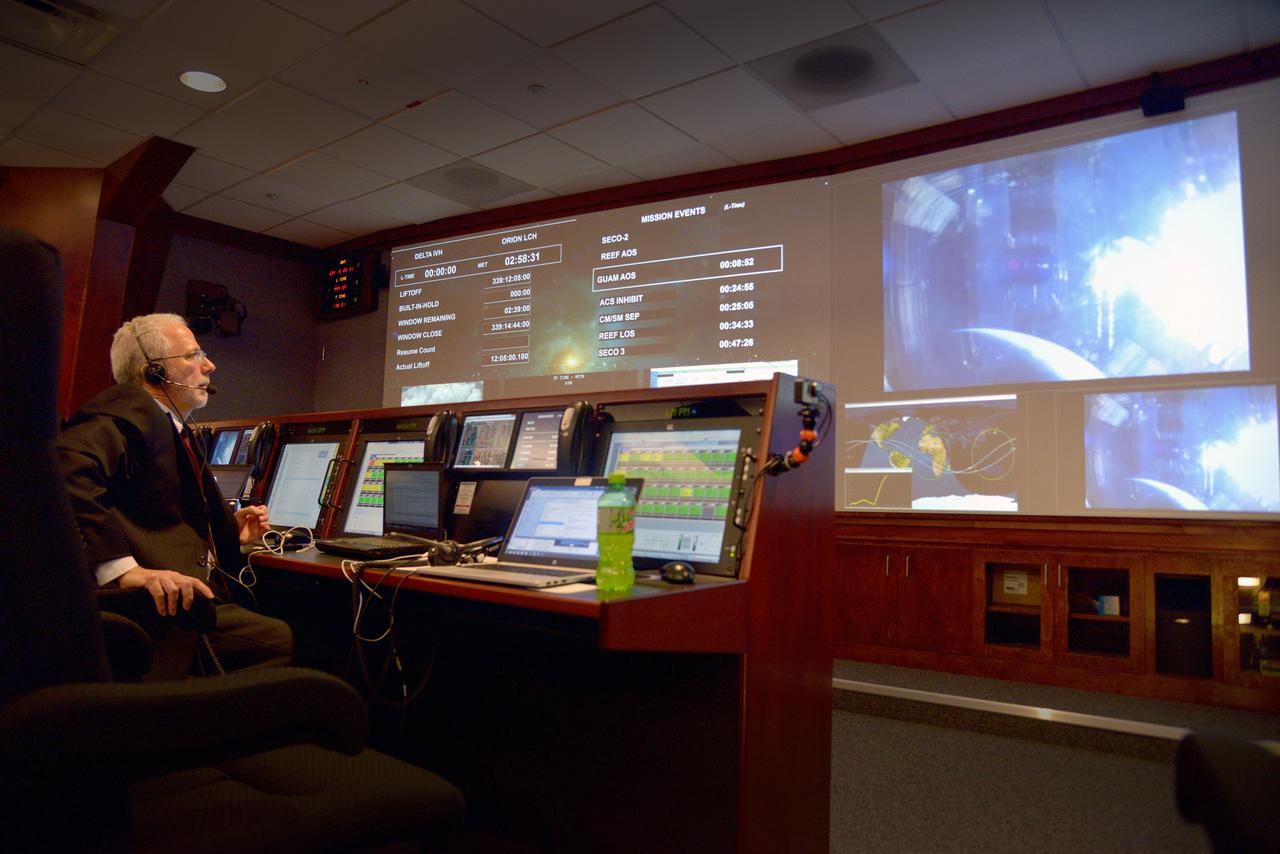
As Orion reaches an apogee of 3600 miles, Mark Geyer, Orion program manager, watches the view from Orion's windows in Building AE at Cape Canaveral Air Force Station on Dec. 5, 2014. Part of Batch image transfer from Flickr.
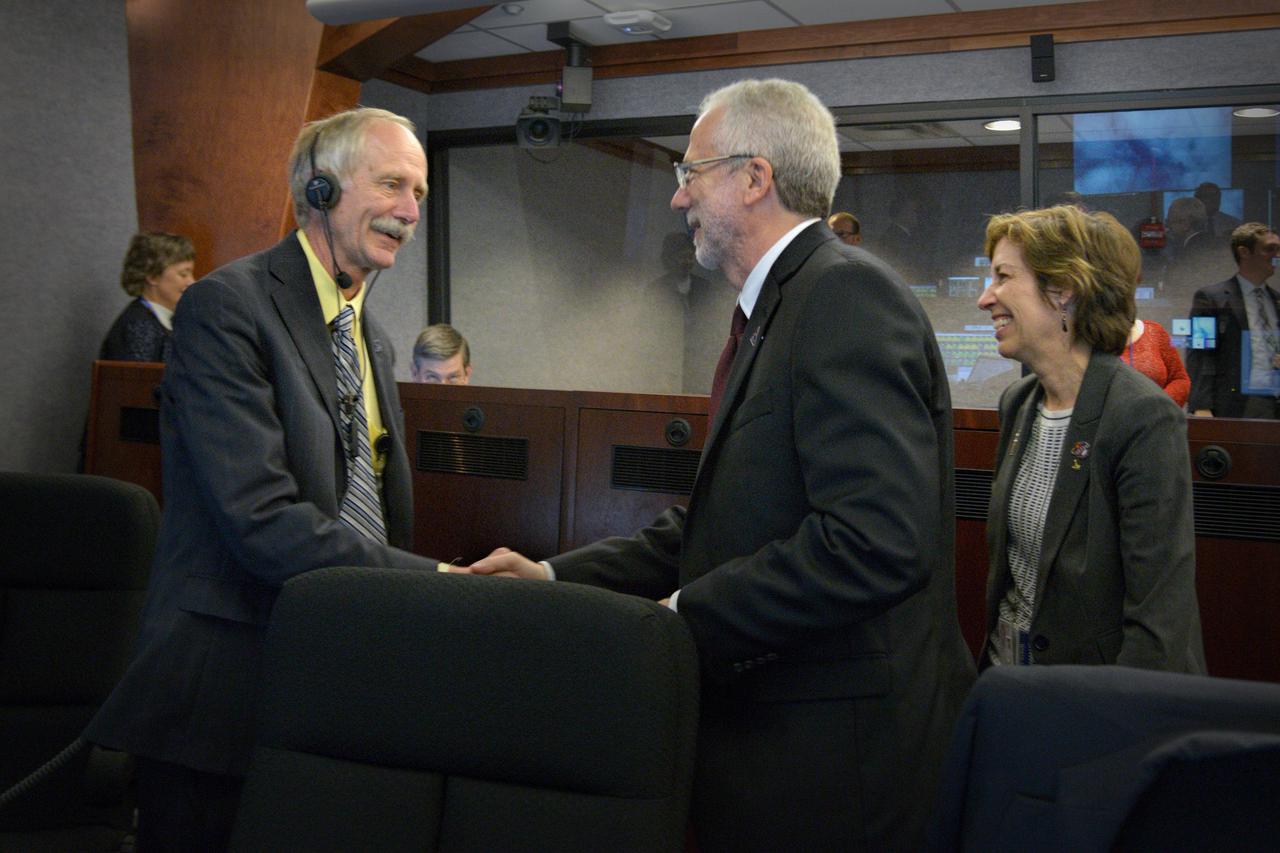
The Orion team celebrates Orion's successful Exploration Flight Test-1 (EFT-1) mission in Building AE at Cape Canaveral Air Force Station on Dec. 5, 2014. Orion Program Manager Mark Geyer, NASA Director Ellen Ochoa and NASA Associate Administrator for the Human Exploration and Operations Directorate William Gerstenmaier are in frame. The Orion spacecraft orbited Earth twice, reaching an altitude of approximately 3,600 miles above Earth before landing. No one was aboard Orion for this flight test, but the spacecraft is designed to allow us to journey to destinations never before visited by humans, including an asteroid and Mars. Part of Batch image transfer from Flickr.
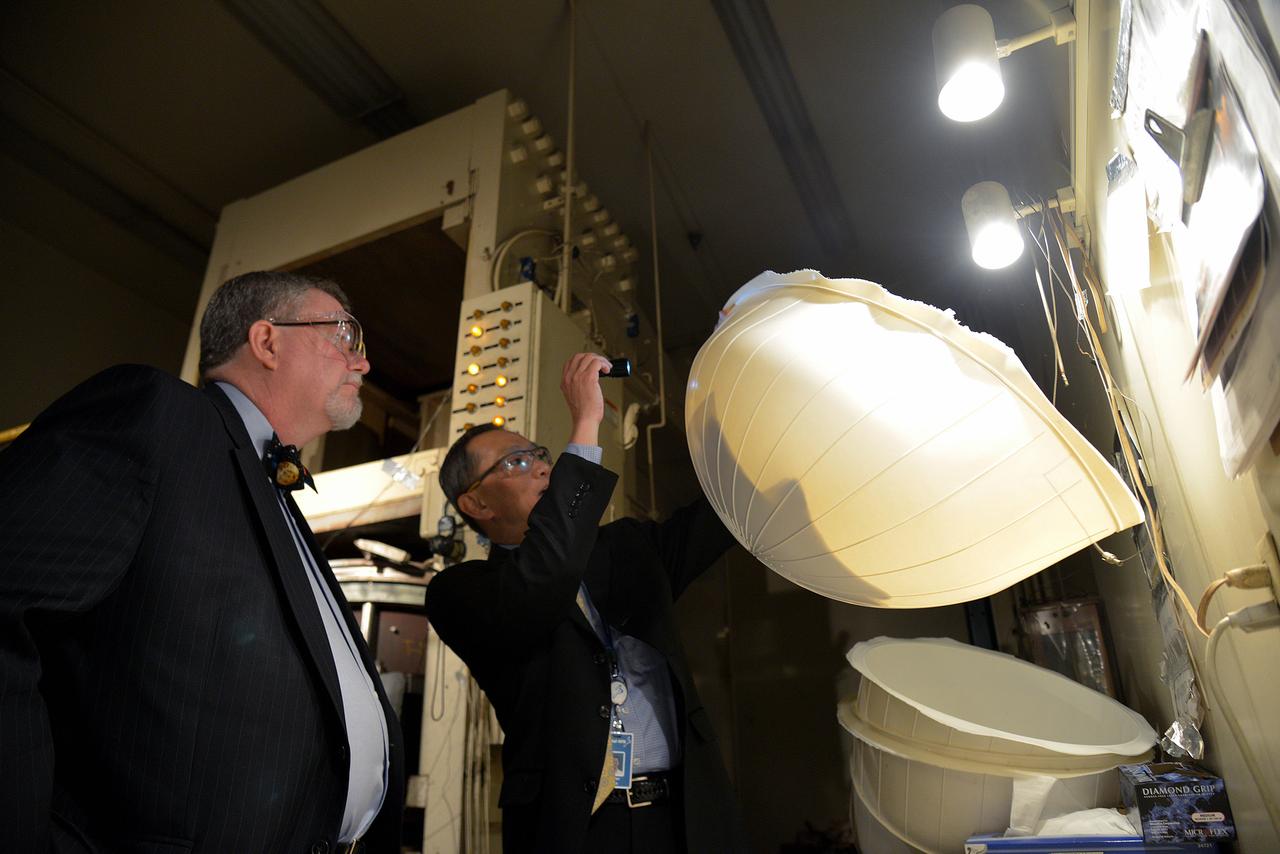
The team at Orbital ATK shows Lockheed Martin Orion Program Manager Mike Hawes the propellant tank manufacturing workshop in California on March 4, 2015. Part of Batch image transfer from Flickr.
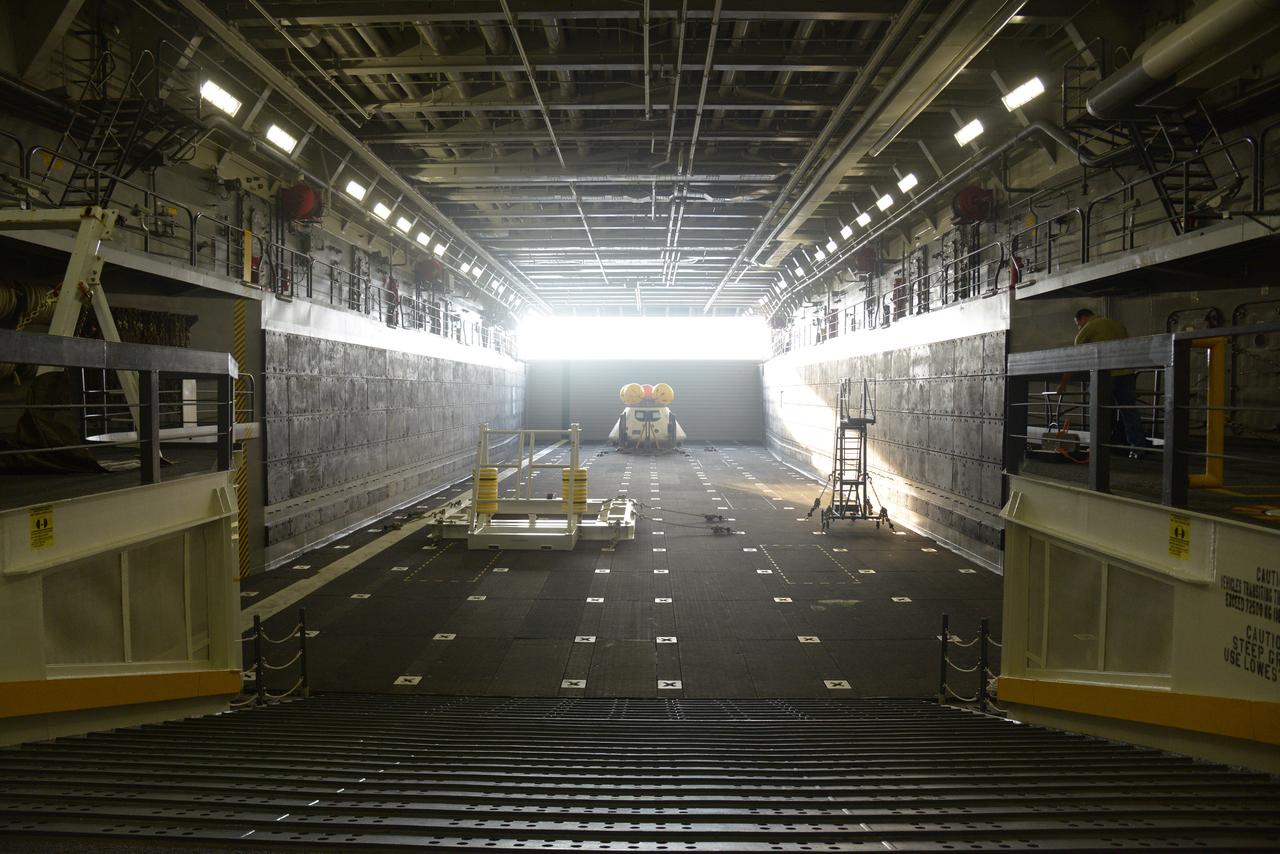
The Orion test capsule undergoes stationary recovery testing in Norfolk, VA on Aug. 13, 2013. NASA and the U.S Navy led the tests using the USS Arlington...The stationary recovery tests allow the teams to demonstrate and evaluate the recovery processes, the hardware and the test personnel in a controlled environment. ..During the test, the U.S Navy Dive Team checked the capsule for hazards while sailors from the USS Arlington approached the capsule in inflatable boats, and towed it back to the ship’s flooded well deck. Part of Batch image transfer from Flickr.
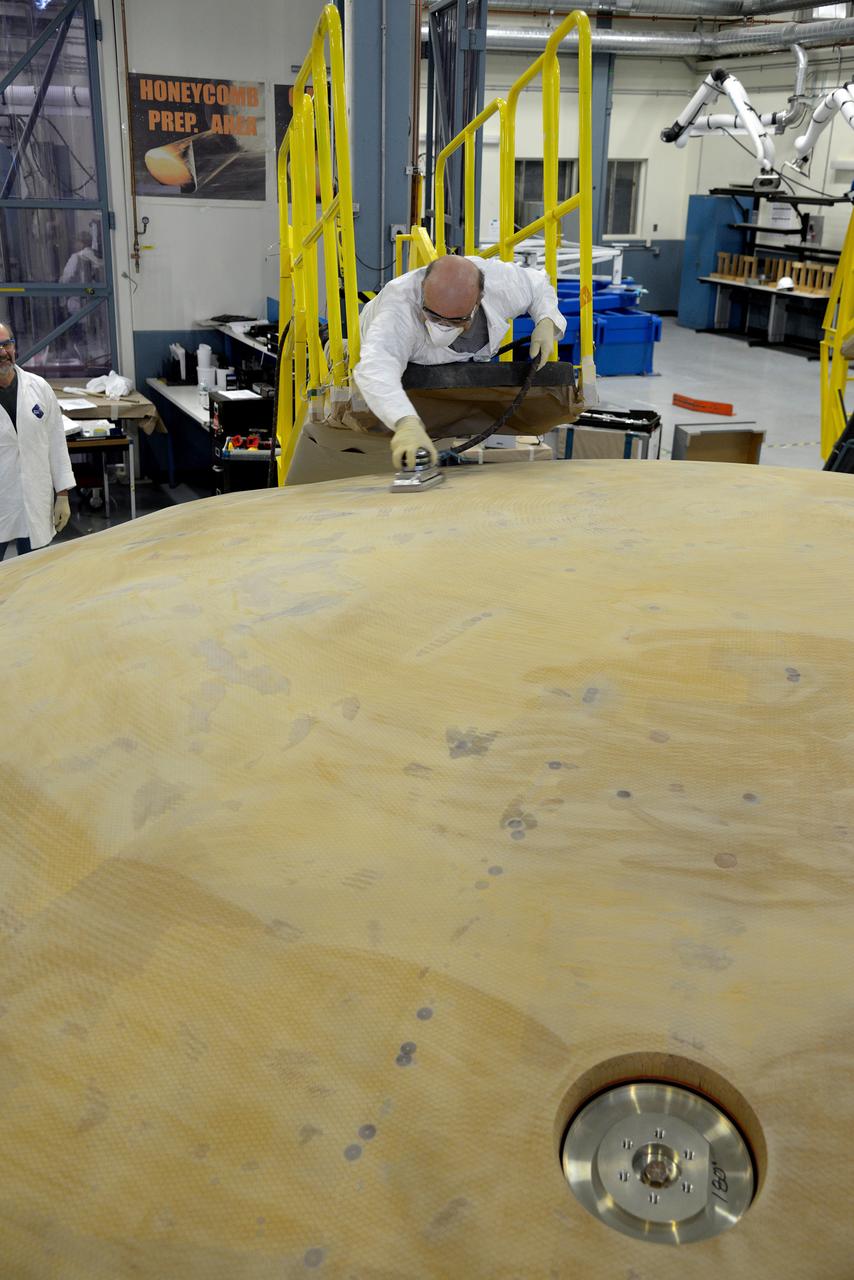
Technicians at Textron in Wimington, MA, perform final sanding on the Exploration Flight Test-1 (EFT-1) Orion heat shield on Nov. 25, 2013. Part of Batch image transfer from Flickr.
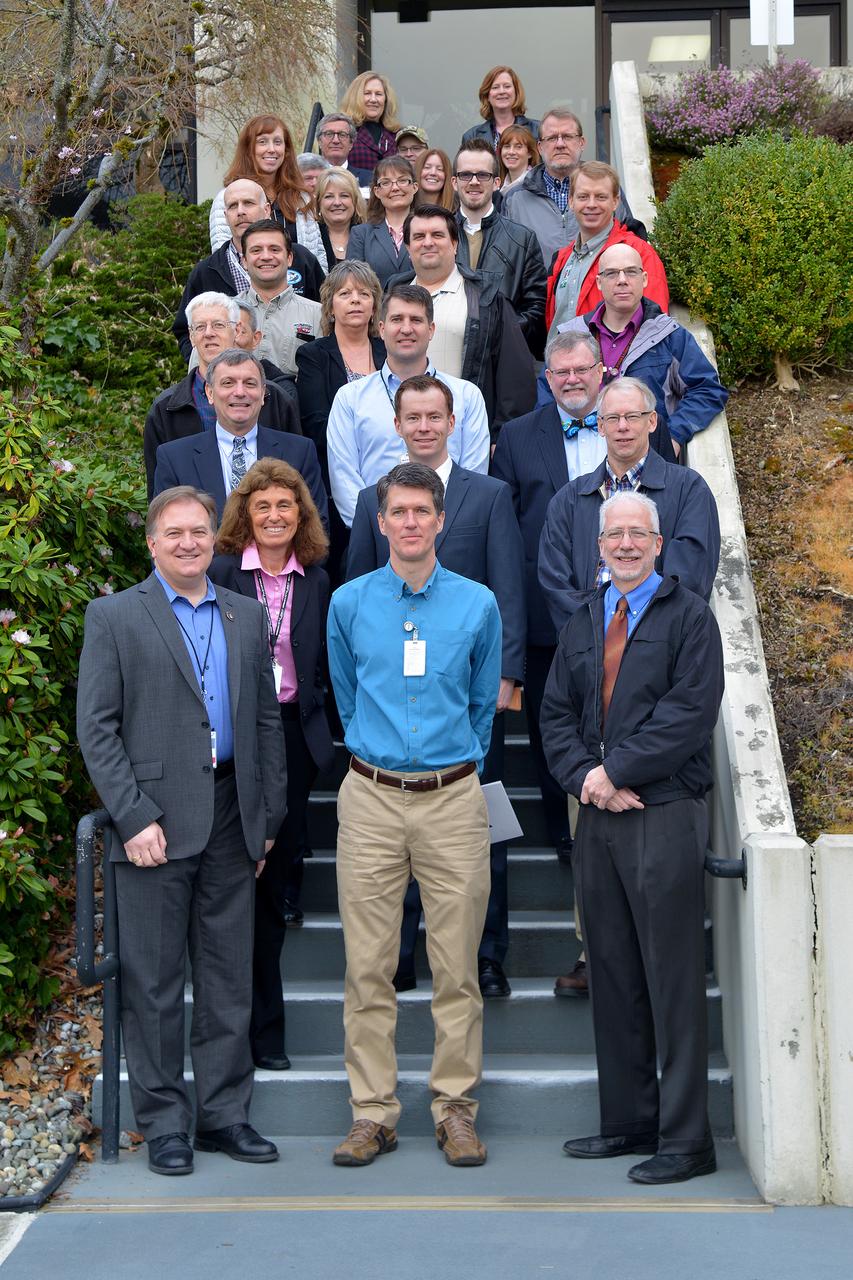
Orion leadership congratulates the Aerojet Rocketdyne team on their efforts in making Exploration Flight Test-1 (EFT-1) a success on March 10, 2015. Part of Batch image transfer from Flickr.
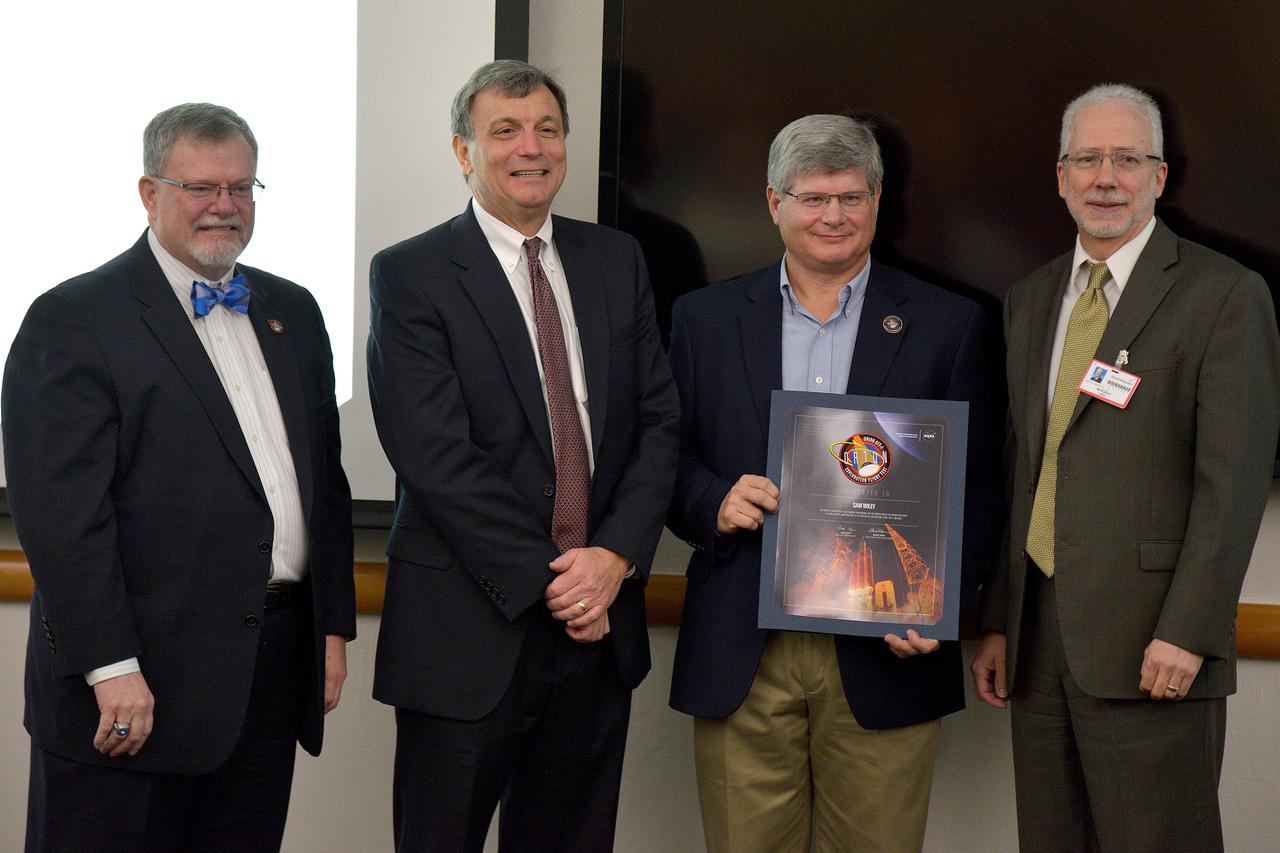
Orion leadership (including Orion Program Manager Mark Geyer) visits Aerojet Rocketdyne in Sacramento, CA on March 3, 2015 to recognize the great work performed in support of Orion's first flight, Exploration Flight Test-1 (EFT-1). Award presented to Sam Wiley. Part of Batch image transfer from Flickr.
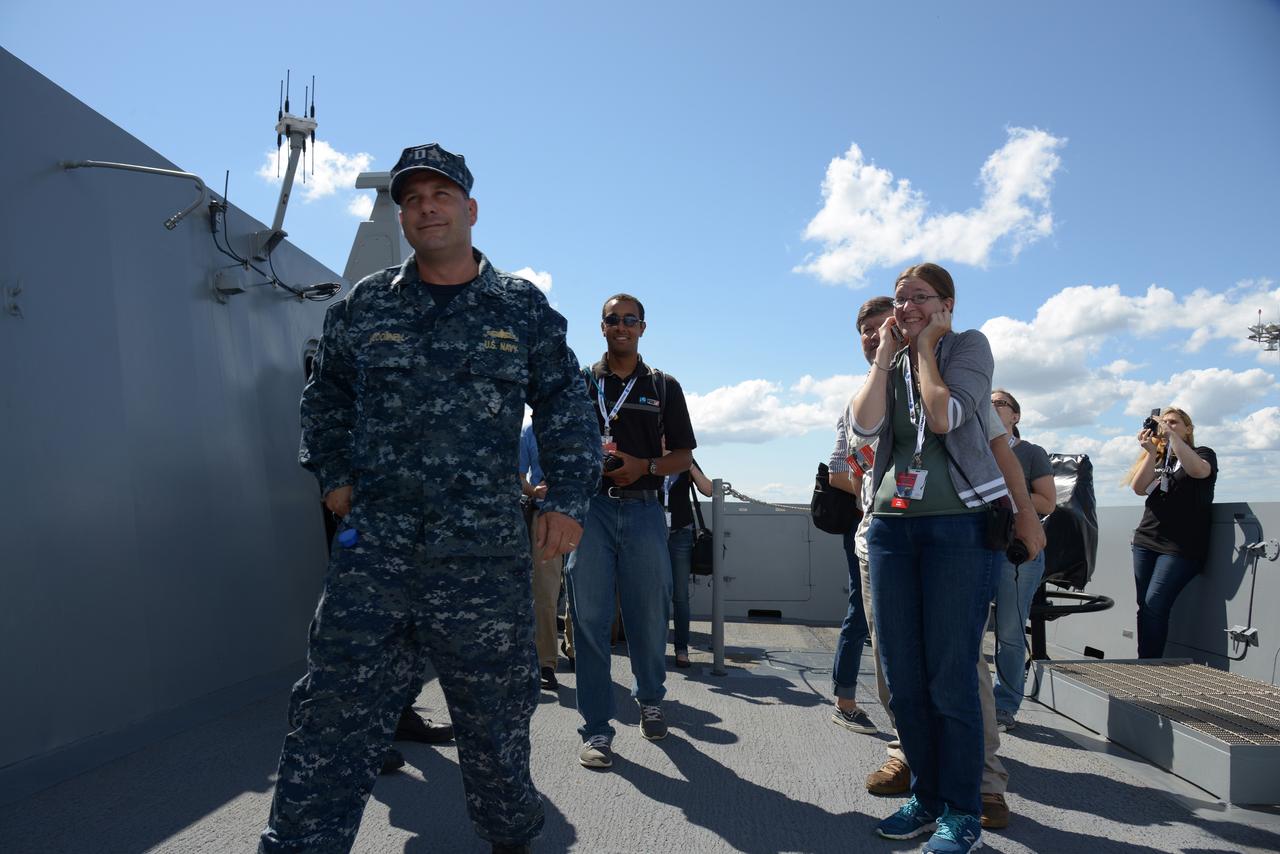
Media and NASA Social participants view Orion recovery operations and tour the USS Arlington at the Norfolk Naval base in Virginia on Aug. 15, 2013. Part of Batch image transfer from Flickr.
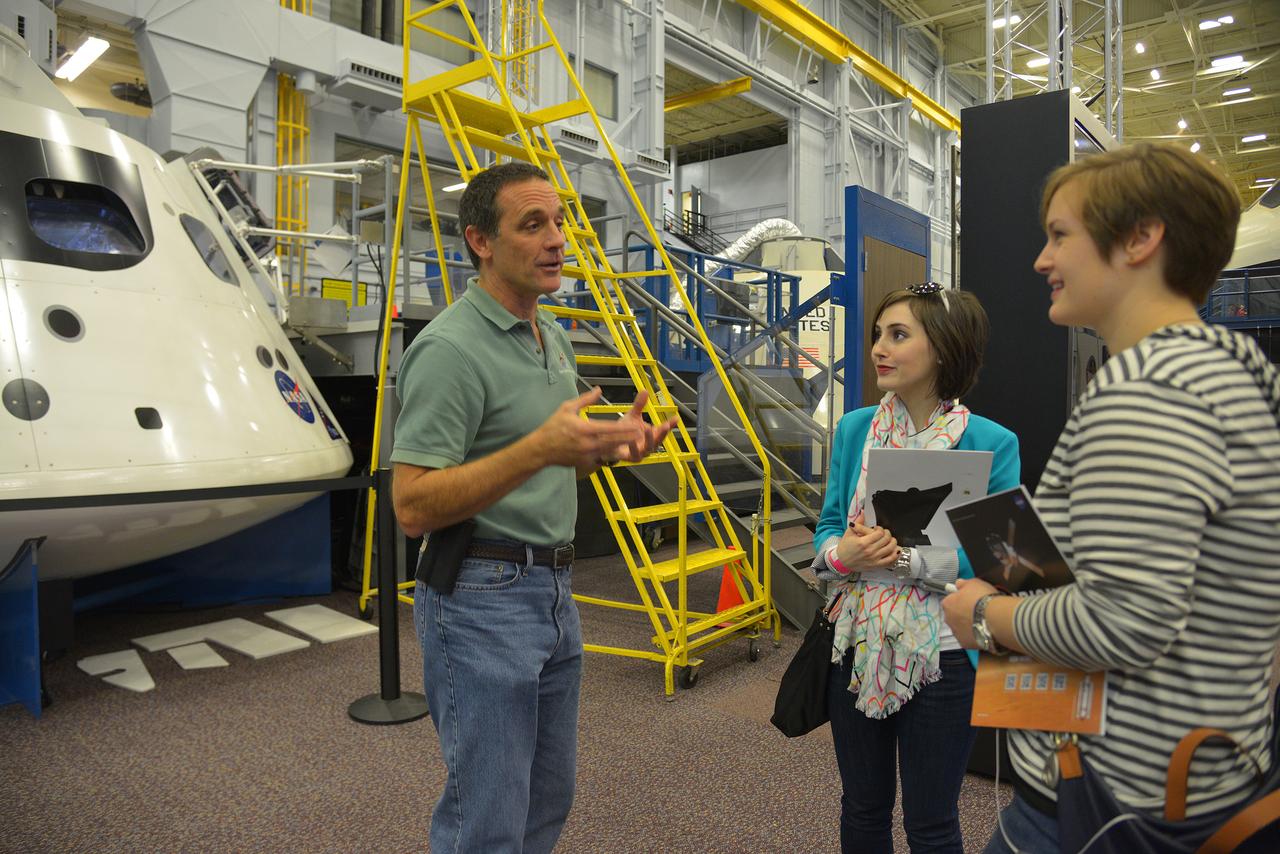
#Tweeunion social media participants talk with Orion engineer Stu McClung about Orion's first flight in the Space Vehicle Mockup Facility in Building 9 of Johnson Space Center in Houston on Jan. 30, 2015. Part of Batch image transfer from Flickr.
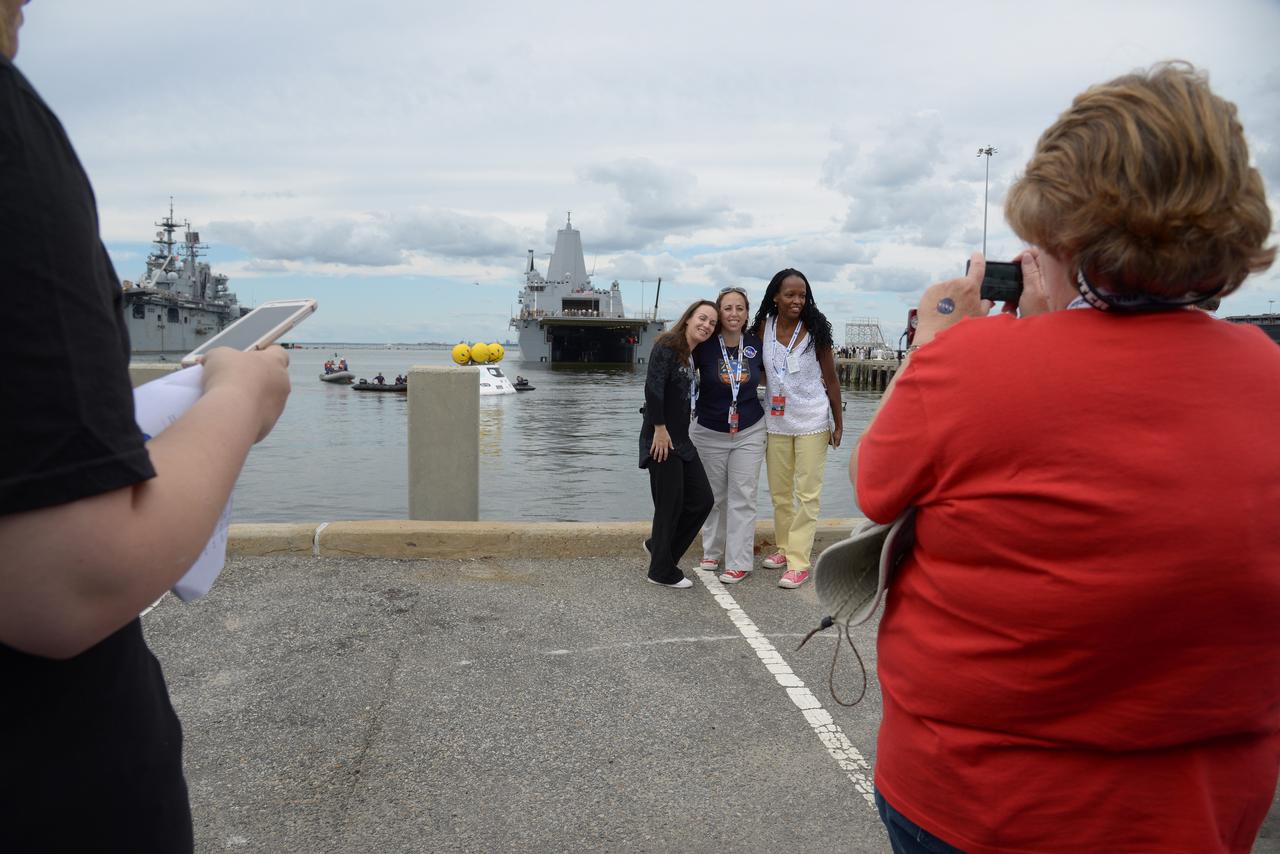
Media and NASA Social participants view Orion recovery operations and tour the USS Arlington at the Norfolk Naval base in Virginia on Aug. 15, 2013. Part of Batch image transfer from Flickr.
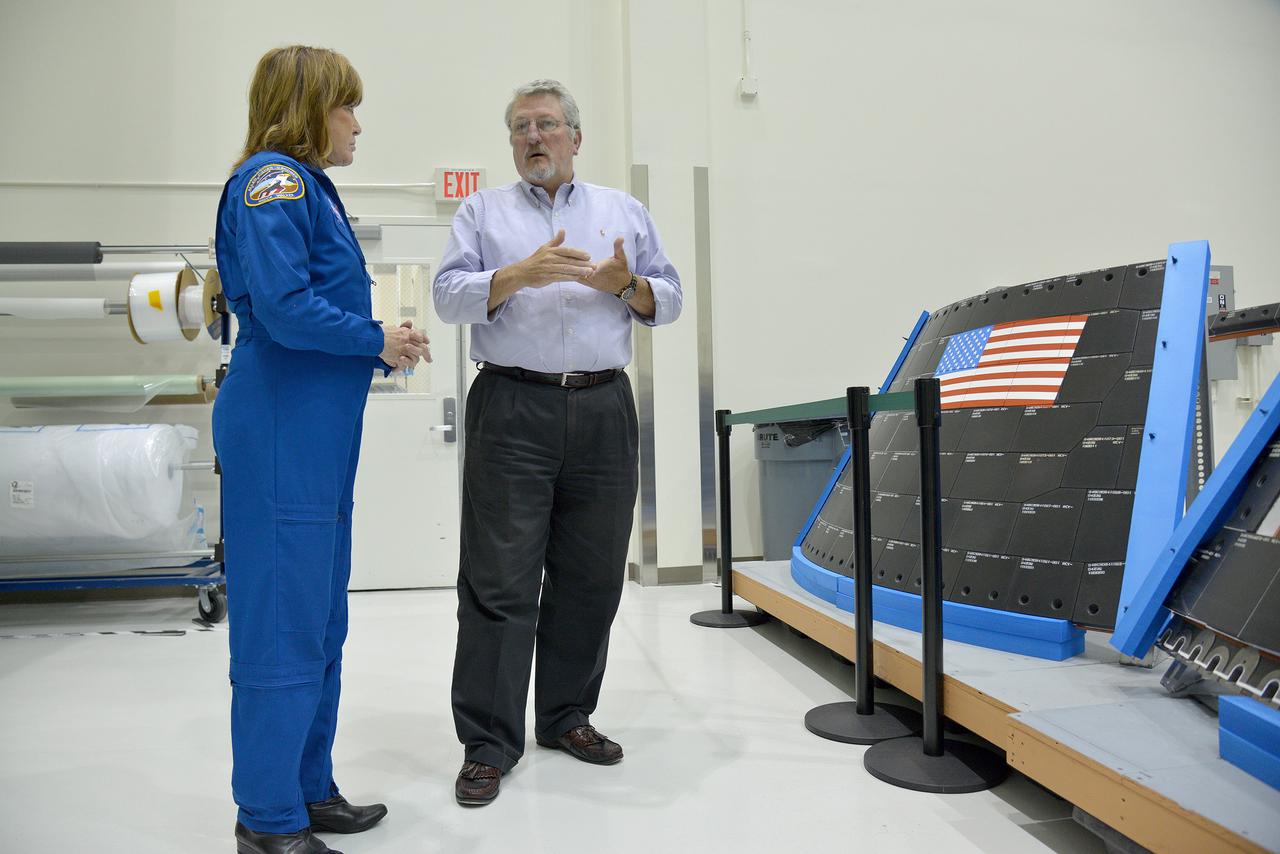
Astronaut Anna Fisher observes Orion Exploration Flight Test-1 (EFT-1) crew module and service module mating operations in Operations and Checkout (O&C) Building at Kennedy Space Center on June 9, 2014. Part of Batch image transfer from Flickr.
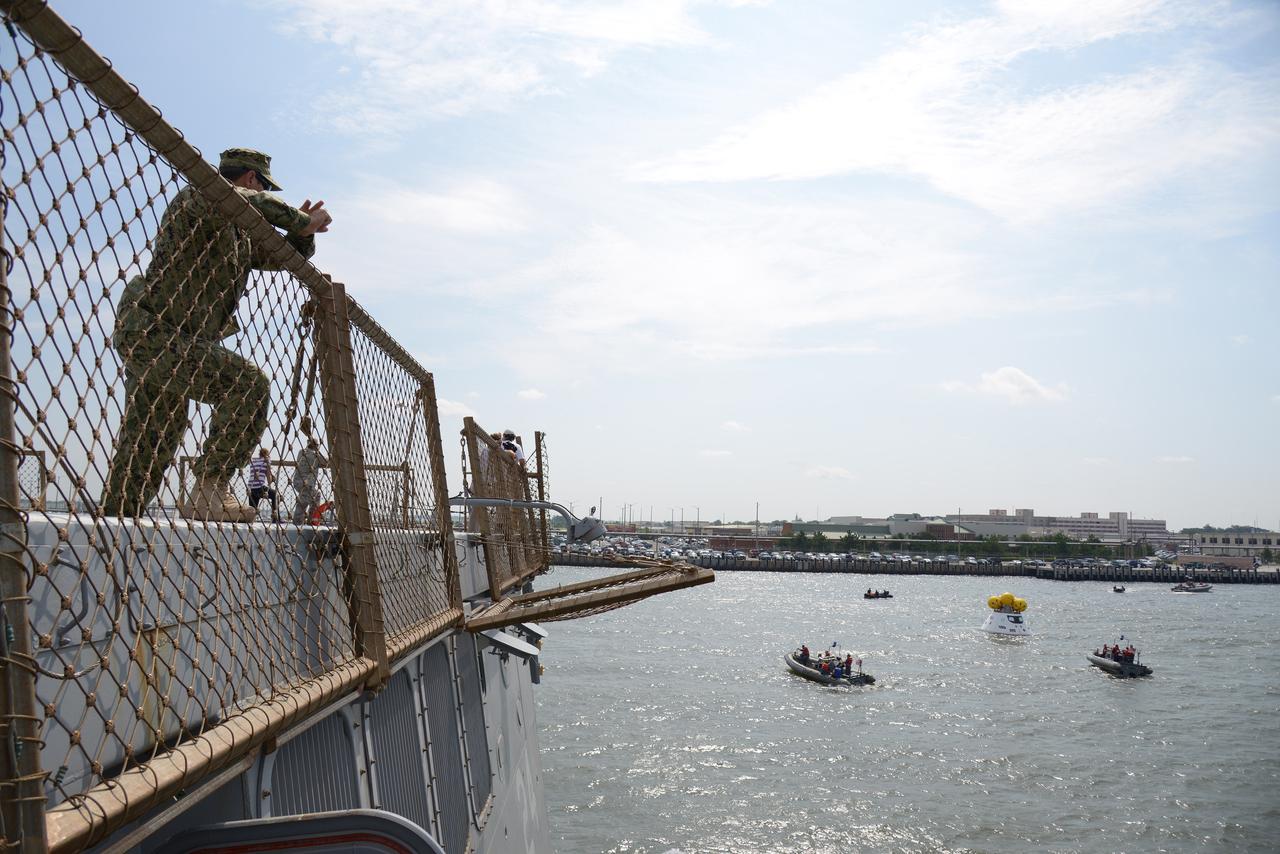
The Orion test capsule undergoes stationary recovery testing in Norfolk, VA on Aug. 13, 2013. NASA and the U.S Navy led the tests using the USS Arlington...The stationary recovery tests allow the teams to demonstrate and evaluate the recovery processes, the hardware and the test personnel in a controlled environment. ..During the test, the U.S Navy Dive Team checked the capsule for hazards while sailors from the USS Arlington approached the capsule in inflatable boats, and towed it back to the ship’s flooded well deck. Part of Batch image transfer from Flickr.
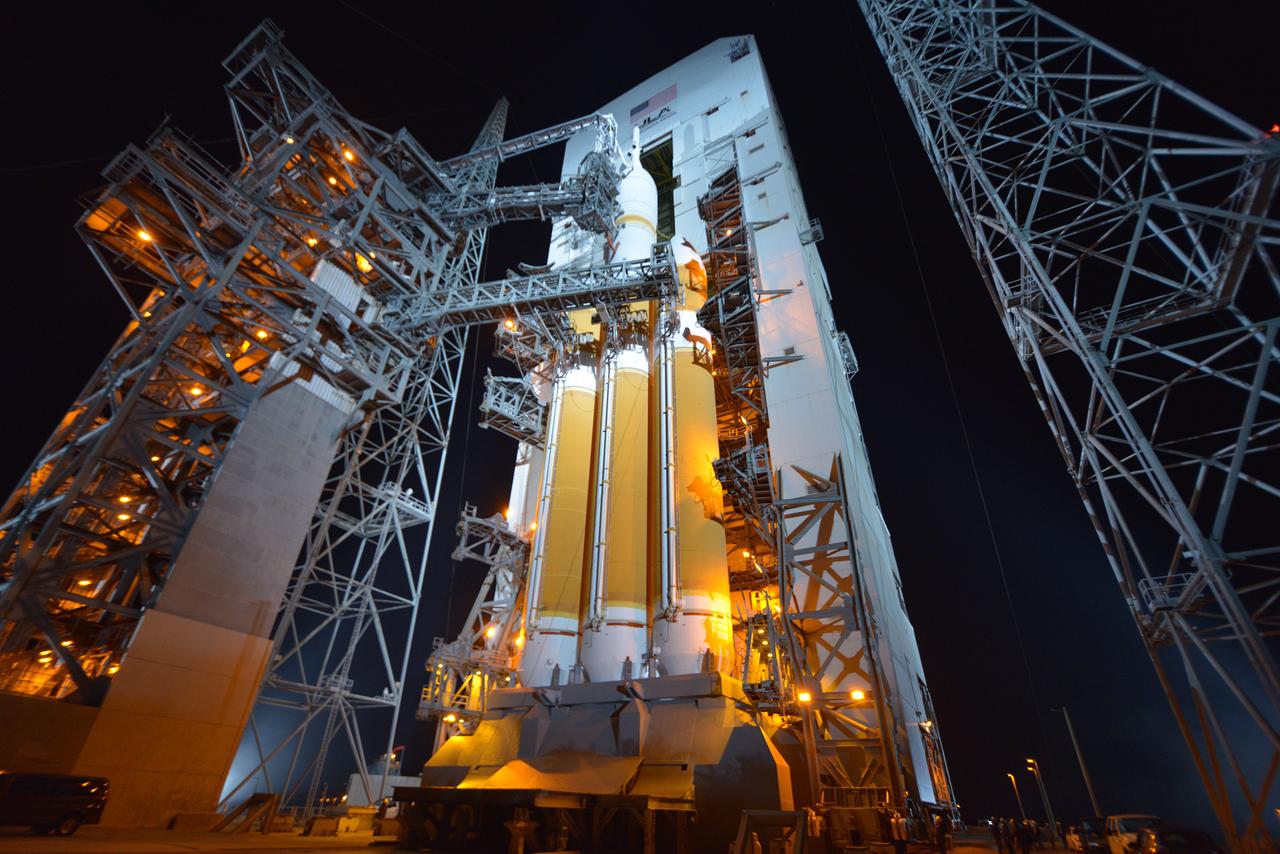
The full United Delta IV Heavy with Orion on top is revealed on Dec. 3, 2014 as the mobile service tower is rolled back in preparation for the 7:05 am Exploration Flight Test-1 (EFT-1) launch. Part of Batch image transfer from Flickr.
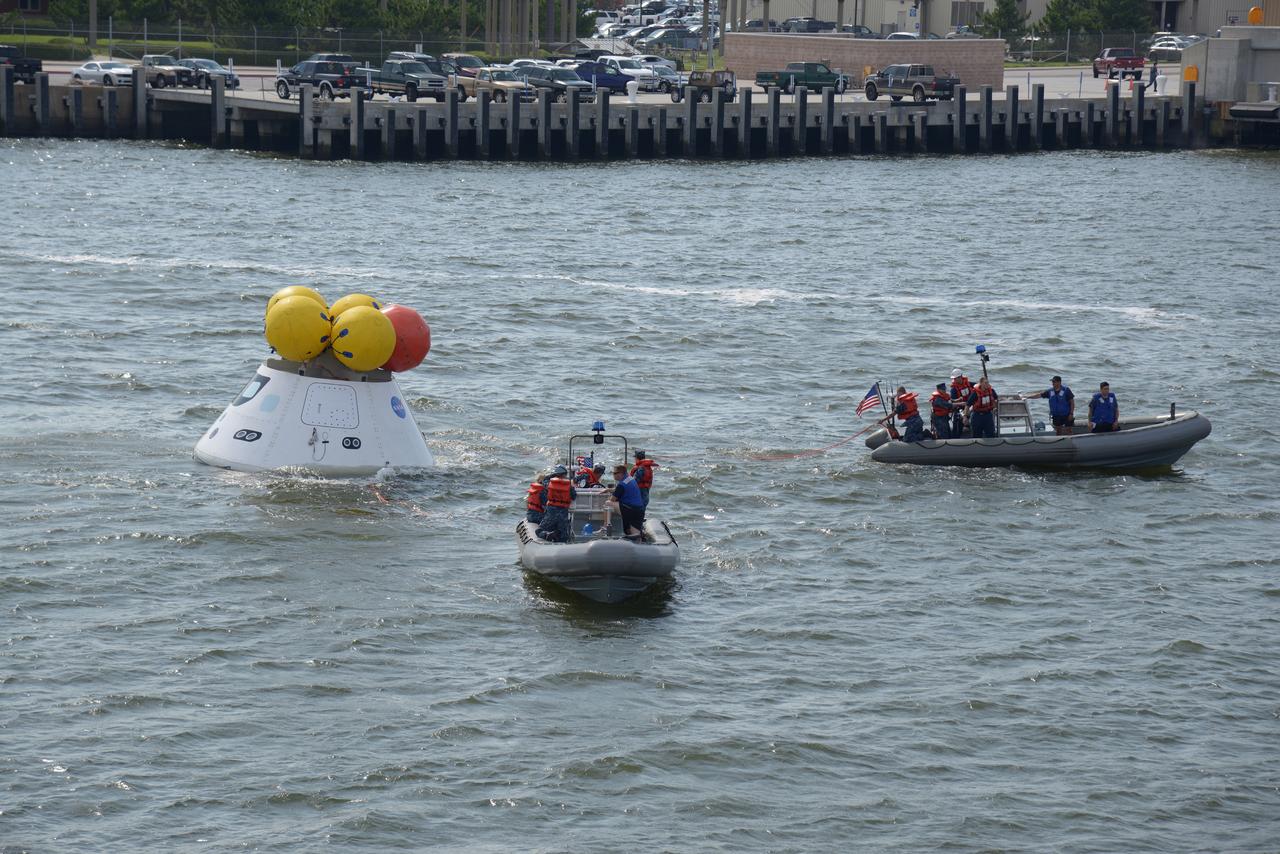
The Orion test capsule undergoes stationary recovery testing in Norfolk, VA on Aug. 13, 2013. NASA and the U.S Navy led the tests using the USS Arlington...The stationary recovery tests allow the teams to demonstrate and evaluate the recovery processes, the hardware and the test personnel in a controlled environment. ..During the test, the U.S Navy Dive Team checked the capsule for hazards while sailors from the USS Arlington approached the capsule in inflatable boats, and towed it back to the ship’s flooded well deck. Part of Batch image transfer from Flickr.
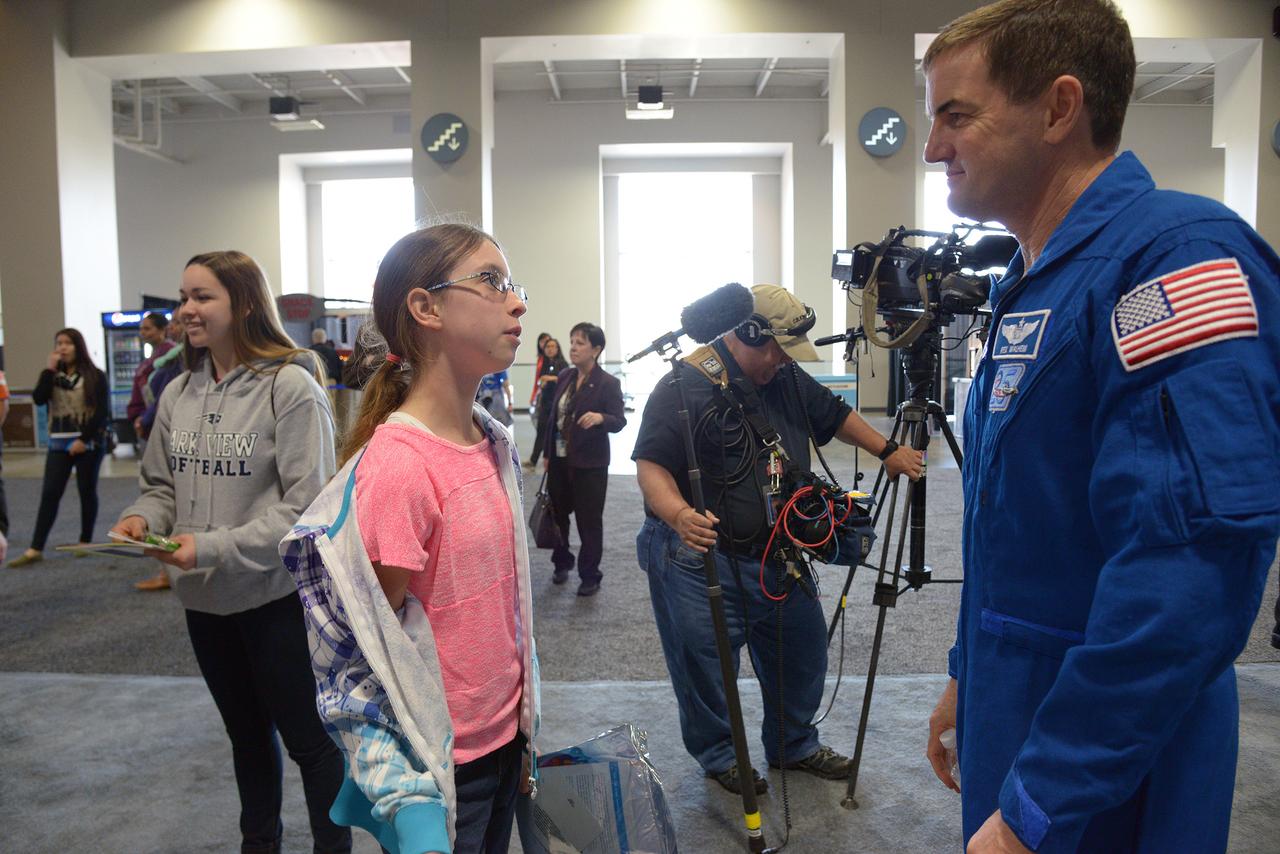
Astronaut Rex Walheim meets students at the USA Science and Engineering Festival in Washington on April 25, 2014. Part of Batch image transfer from Flickr.
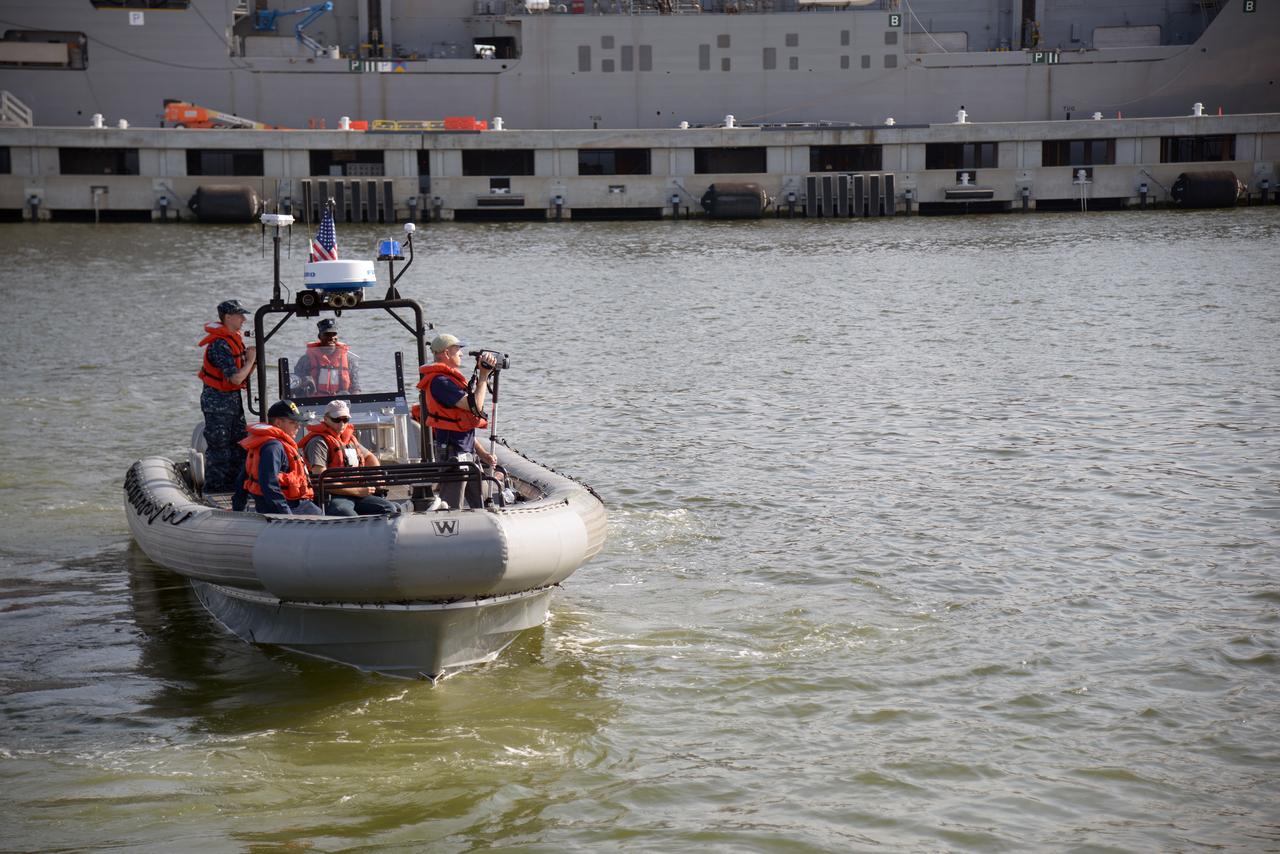
The Orion test capsule undergoes stationary recovery testing in Norfolk, VA on Aug. 13, 2013. NASA and the U.S Navy led the tests using the USS Arlington...The stationary recovery tests allow the teams to demonstrate and evaluate the recovery processes, the hardware and the test personnel in a controlled environment. ..During the test, the U.S Navy Dive Team checked the capsule for hazards while sailors from the USS Arlington approached the capsule in inflatable boats, and towed it back to the ship’s flooded well deck. Part of Batch image transfer from Flickr.
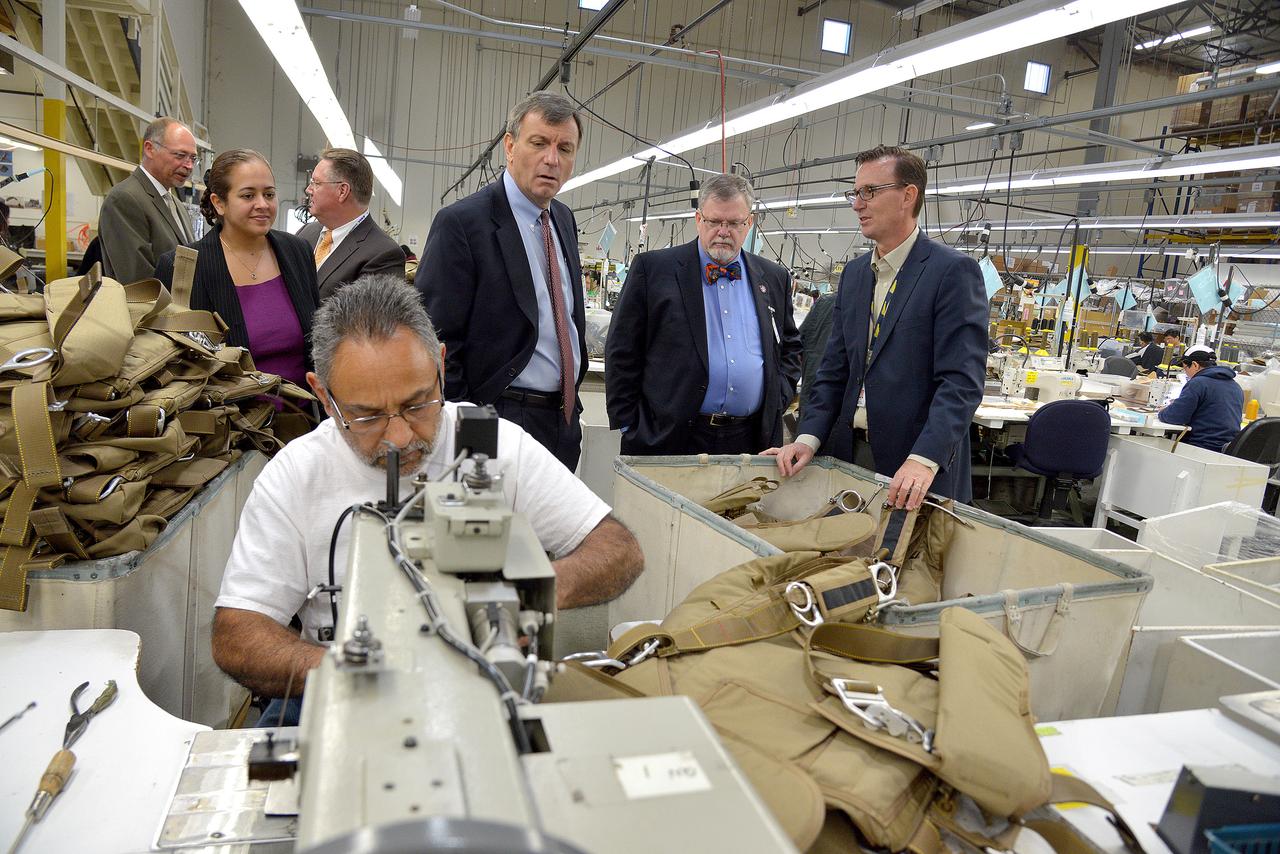
Orion leadership visited Airborne Systems in Santa Ana, California on March 5, 2015 to recognize the great work performed in support of Orion's first flight, Exploration Flight Test-1 (EFT-1). Part of Batch image transfer from Flickr.
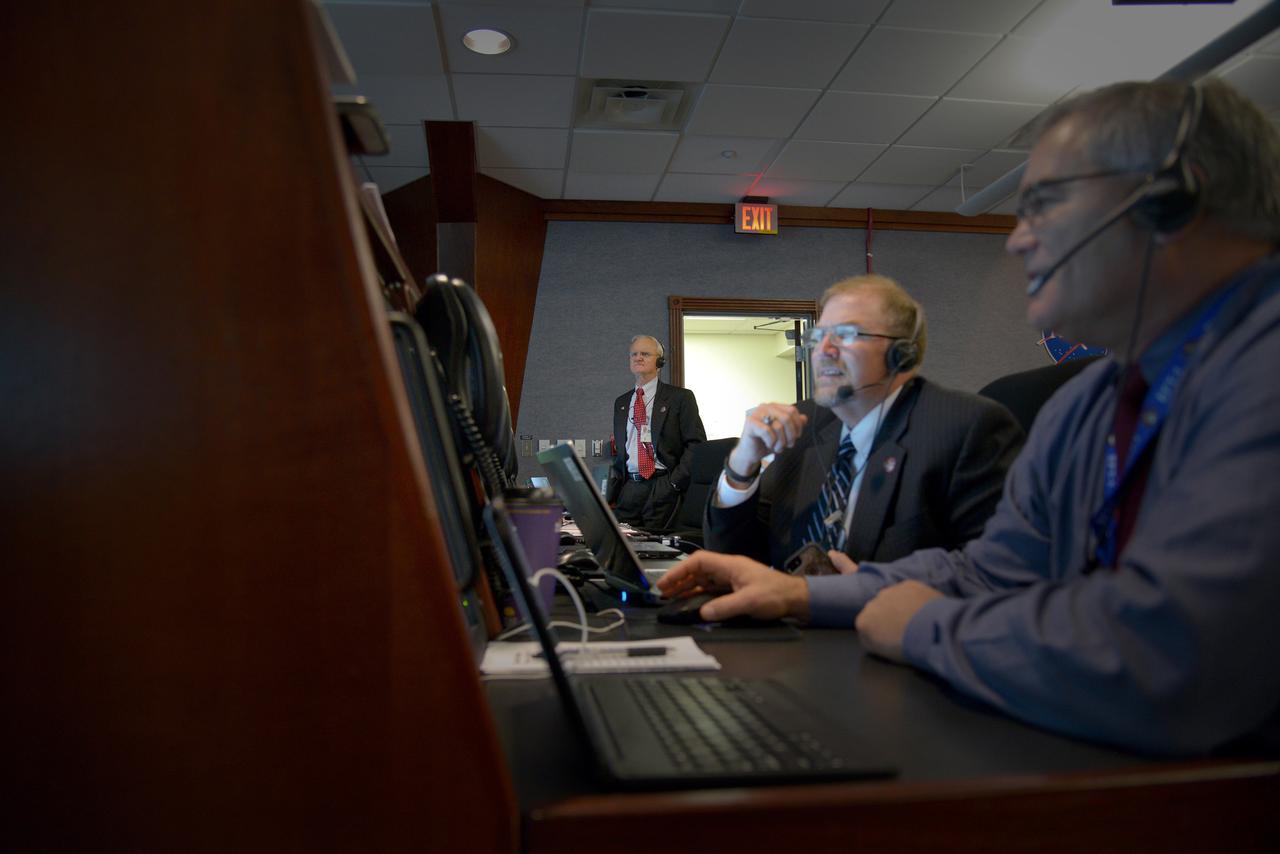
The Orion team reviews the launch procedure in Building AE at Cape Canaveral Air Force Station ahead of the launch of Orion on Exploration Flight Test-1 (EFT-1) on Dec. 4, 2014. Part of Batch image transfer from Flickr.
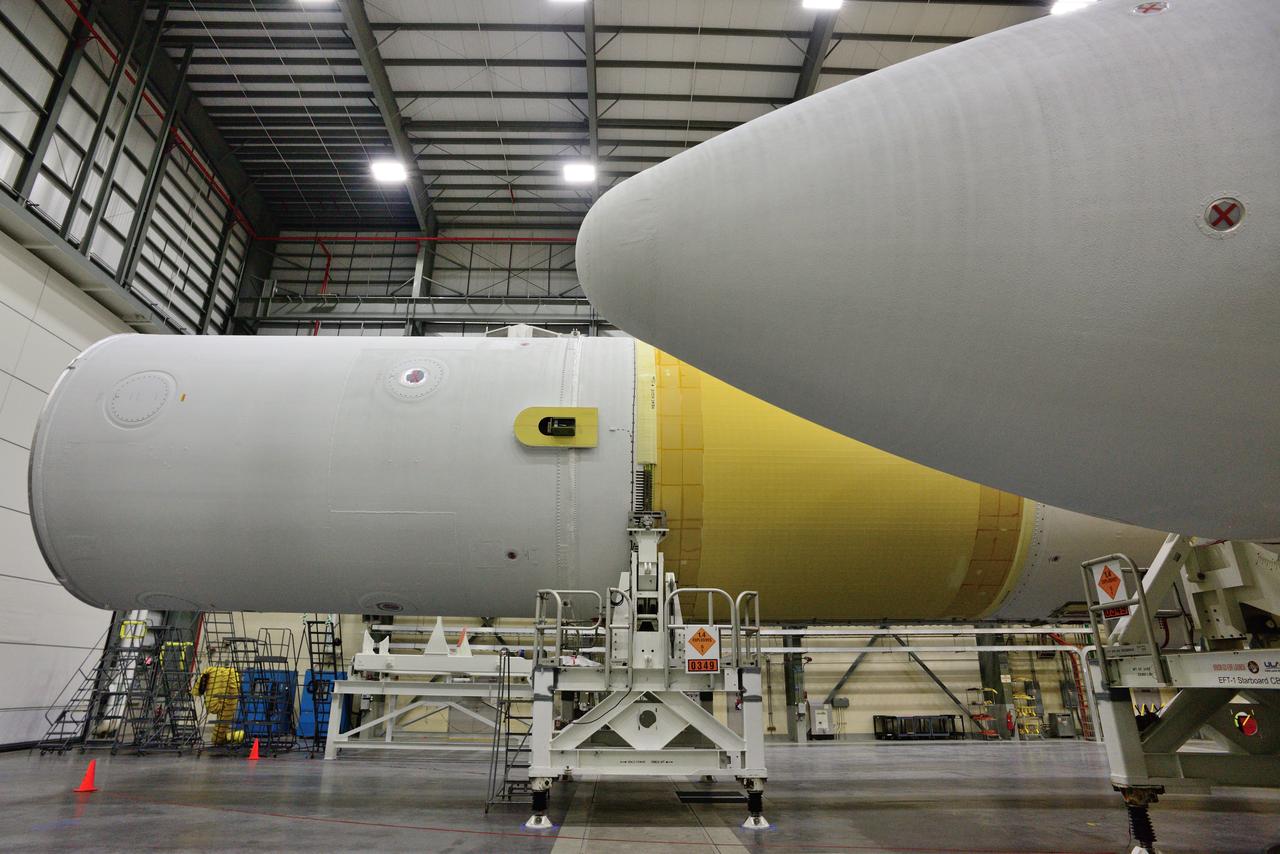
The boosters for the ULA Delta IV Heavy used to launch Orion on Exploration Flight Test-1 (EFT-1) undergo work at Kennedy Space Center in Florida on March 20, 2014. Part of Batch image transfer from Flickr.

The Orion test capsule undergoes stationary recovery testing in Norfolk, VA on Aug. 13, 2013. NASA and the U.S Navy led the tests using the USS Arlington...The stationary recovery tests allow the teams to demonstrate and evaluate the recovery processes, the hardware and the test personnel in a controlled environment. ..During the test, the U.S Navy Dive Team checked the capsule for hazards while sailors from the USS Arlington approached the capsule in inflatable boats, and towed it back to the ship’s flooded well deck. Part of Batch image transfer from Flickr.
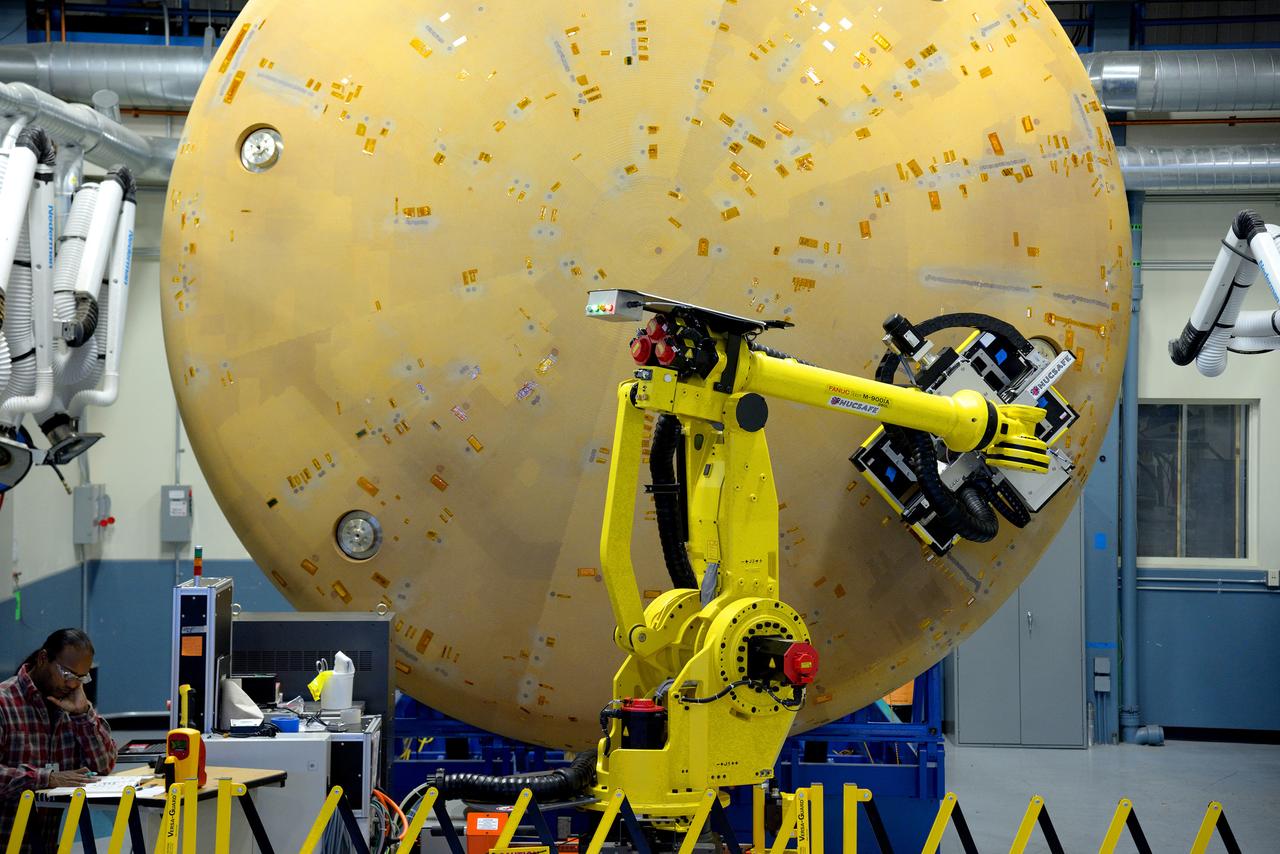
Technicians at Textron in Wimington, MA, perform X-ray testing on the Exploration Flight Test-1 (EFT-1) Orion heat shield on Nov. 23, 2013. Part of Batch image transfer from Flickr.
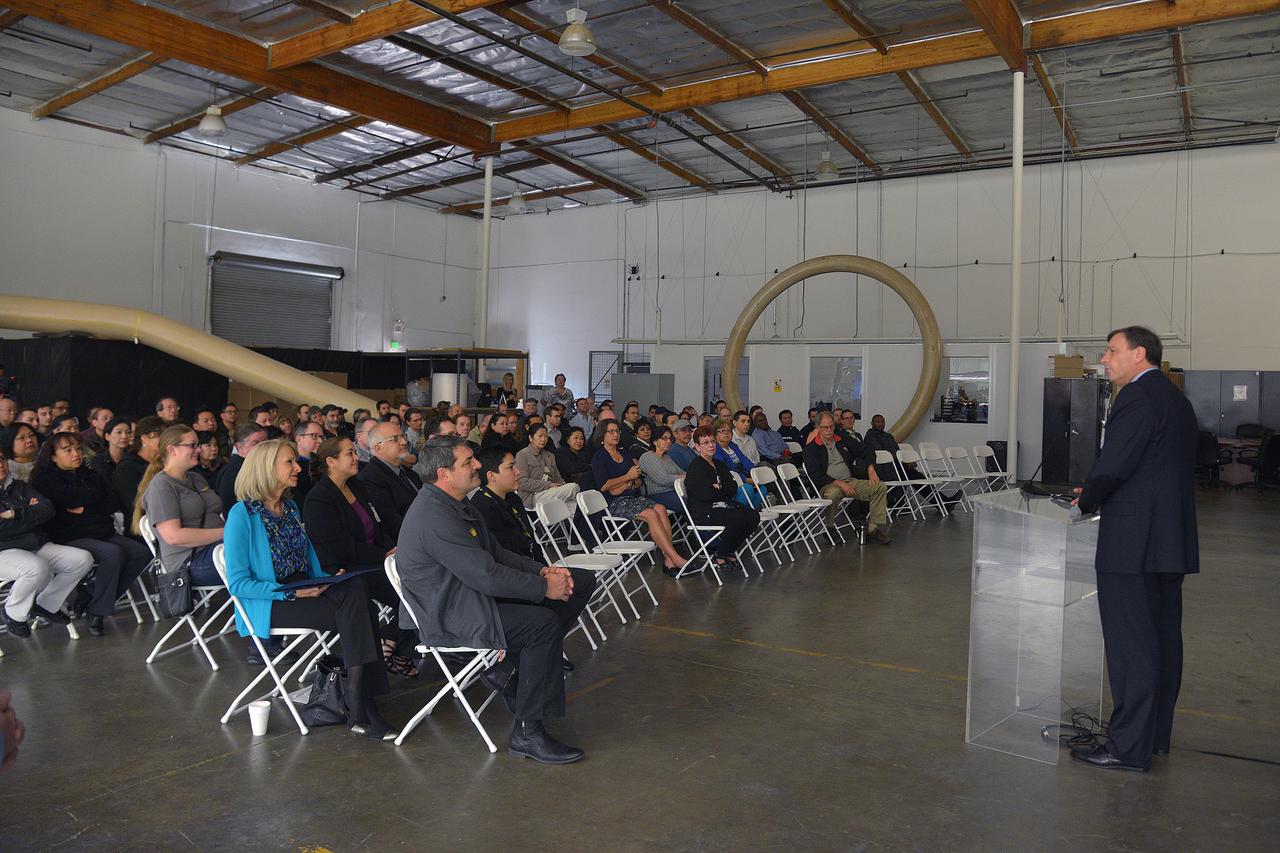
Orion leadership visited Airborne Systems in Santa Ana, California on March 5, 2015 to recognize the great work performed in support of Orion's first flight, Exploration Flight Test-1 (EFT-1). Part of Batch image transfer from Flickr.
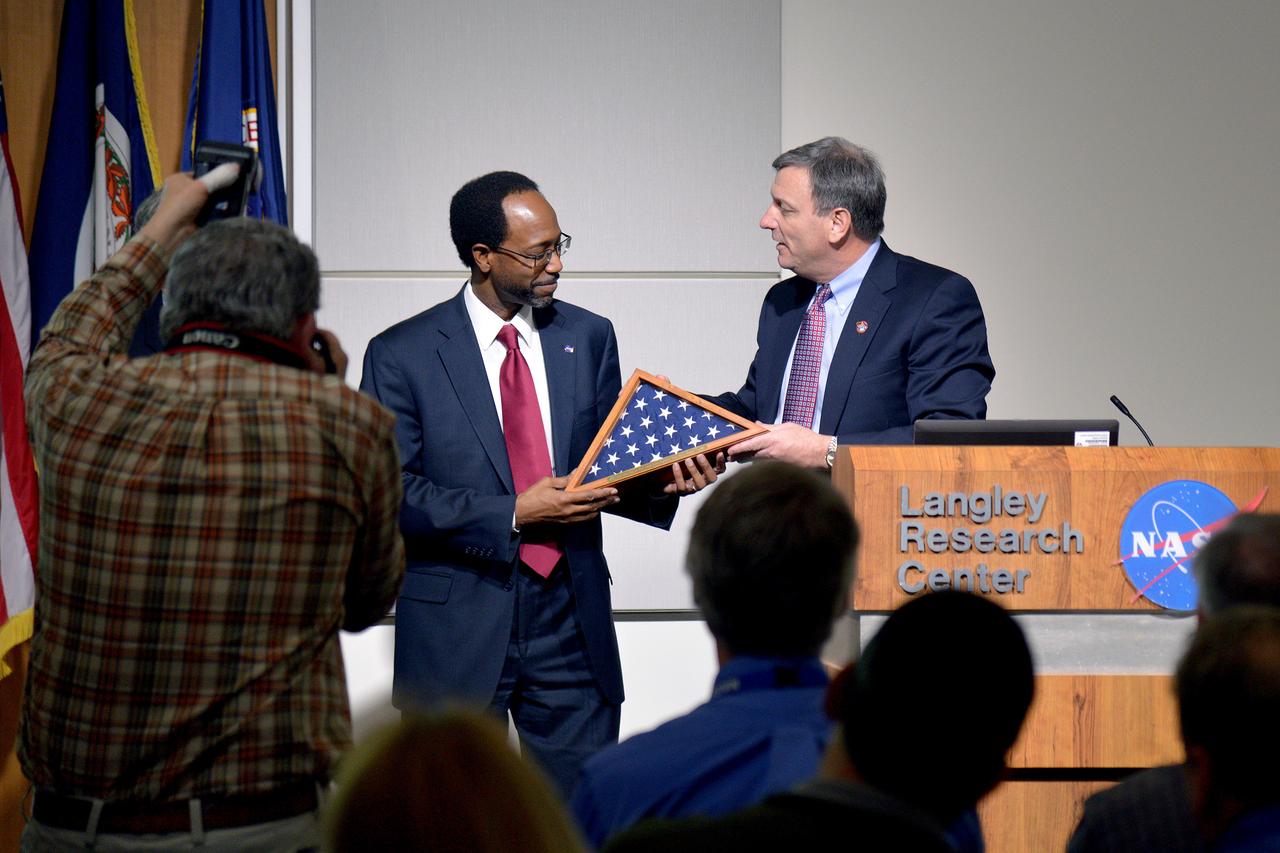
NASA and Lockheed Martin Orion leadership visit Langley Research Center in Hampton, VA on March 19, 2015 to celebrate the center's contribution to Orion's Exploration Flight Test-1 (EFT-1). Part of Batch image transfer from Flickr.

The Orion leadership team visits Janicki Industries in Sedro-Woolley, Washington on March 9, 2015 to thank them for their work in support of Exploration Flight Test-1 (EFT-1). Janicki is a small business that specializes in producing custom tooling fixtures and composite structures. Part of Batch image transfer from Flickr.
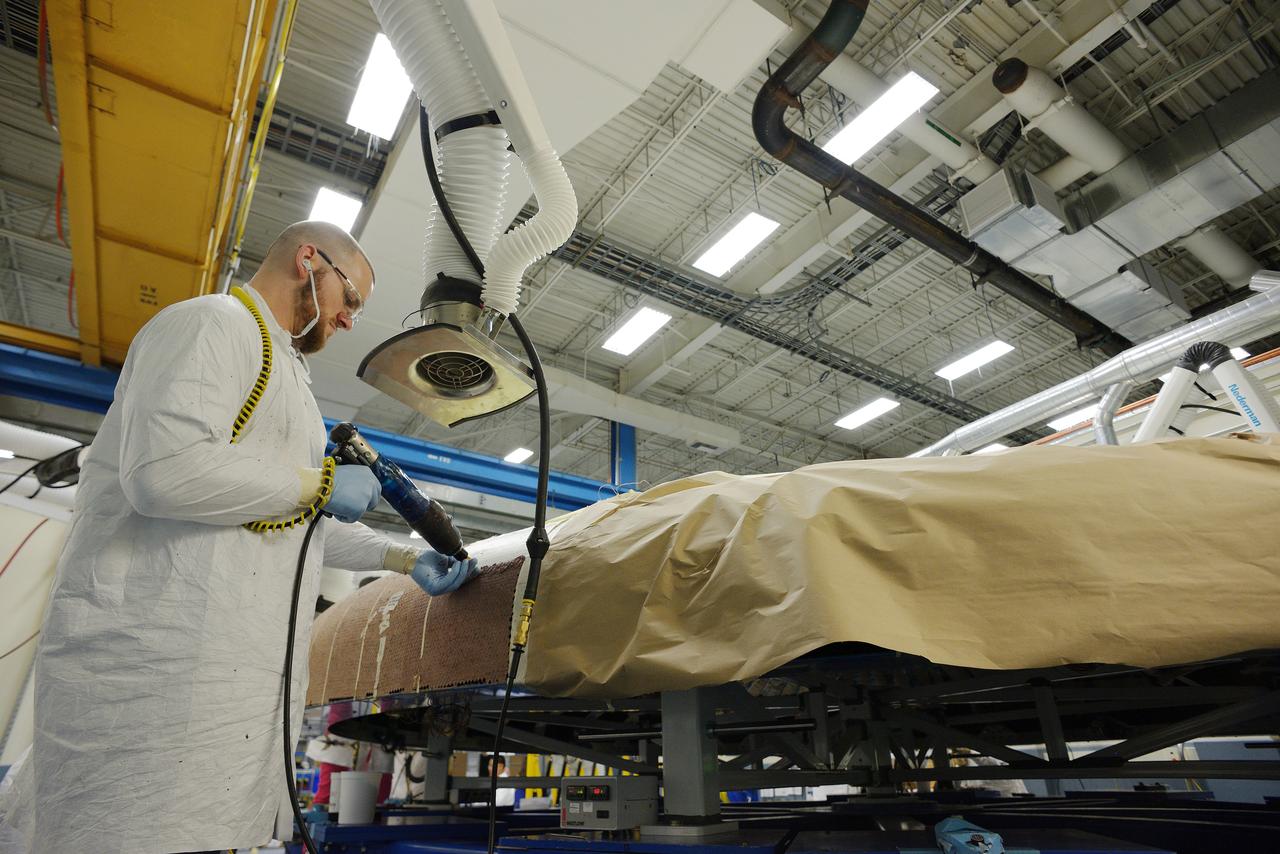
Technicians at Textron in Wimington, MA, apply Avcoat ablative material to the composite honeycomb structure attached to the Exploration Flight Test-1 (EFT-1) Orion heat shield carrier structure on May 22, 2013. Part of Batch image transfer from Flickr.
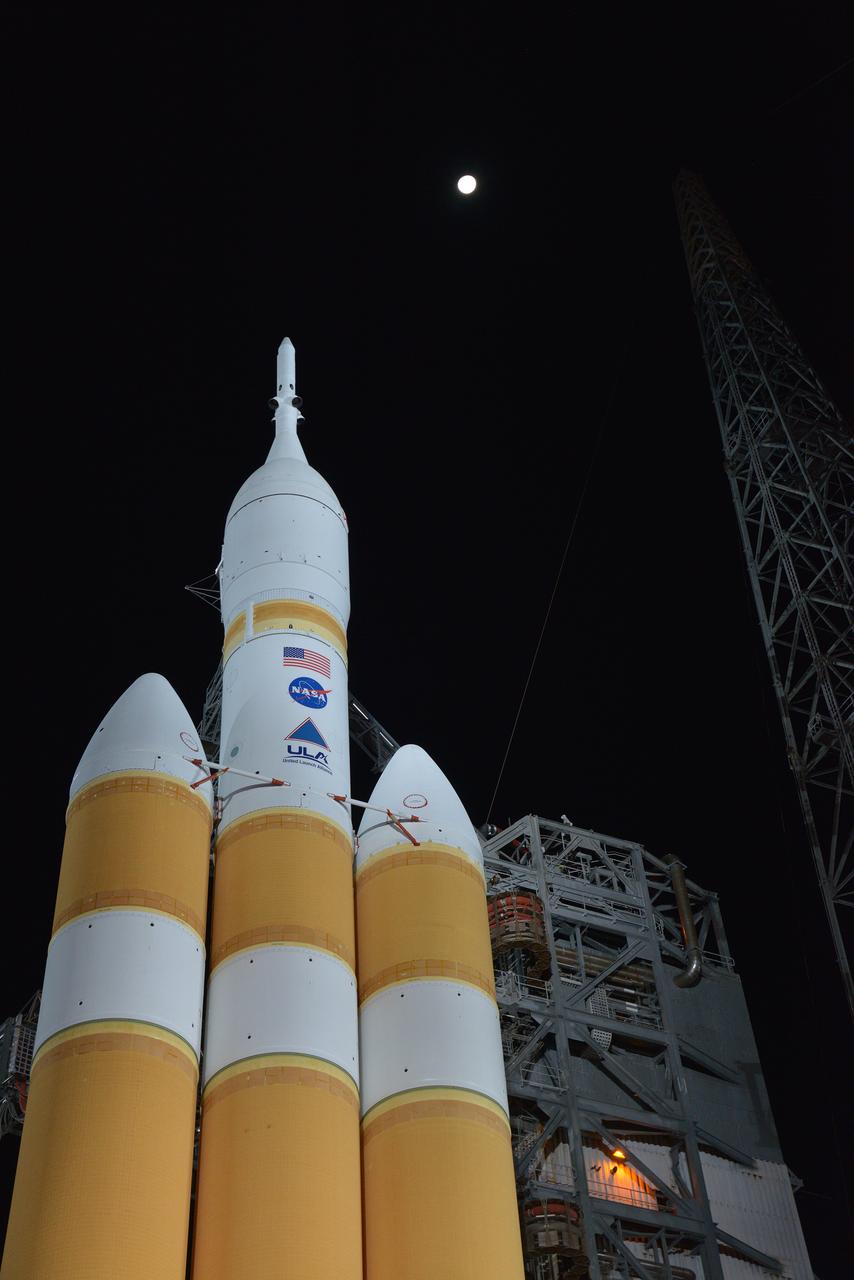
TThe full United Delta IV Heavy with Orion on top is revealed on Dec. 3, 2014 as the mobile service tower is rolled back in preparation for the 7:05 am Exploration Flight Test-1 (EFT-1) launch. Part of Batch image transfer from Flickr.

Media and NASA Social participants view Orion recovery operations and tour the USS Arlington at the Norfolk Naval base in Virginia on Aug. 15, 2013. Part of Batch image transfer from Flickr.
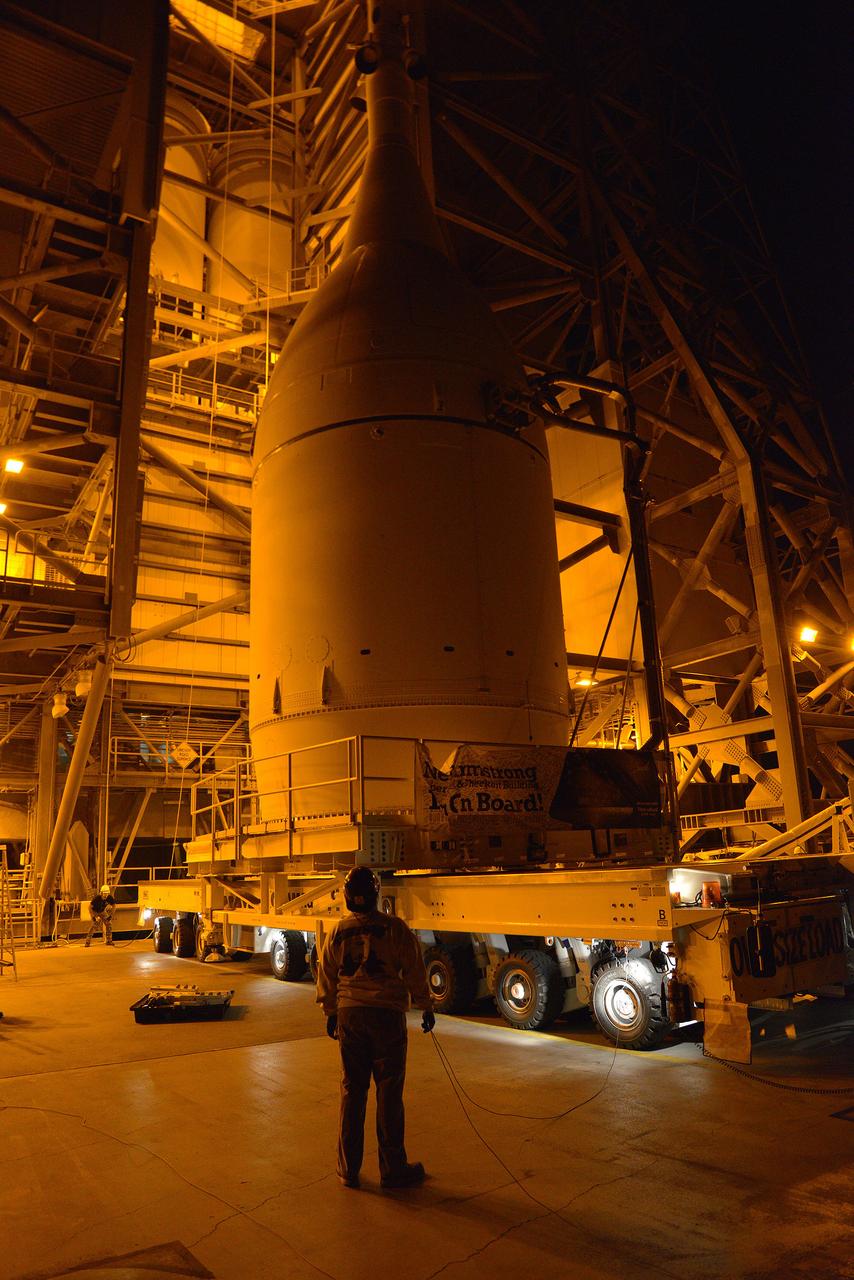
Engineers and technicians at Space Launch Complex 37 move Orion into place in the service structure so the spacecraft can be lifted and joined to the top of the Delta IV Heavy rocket on Nov. 12, 2014. Part of Batch image transfer from Flickr.
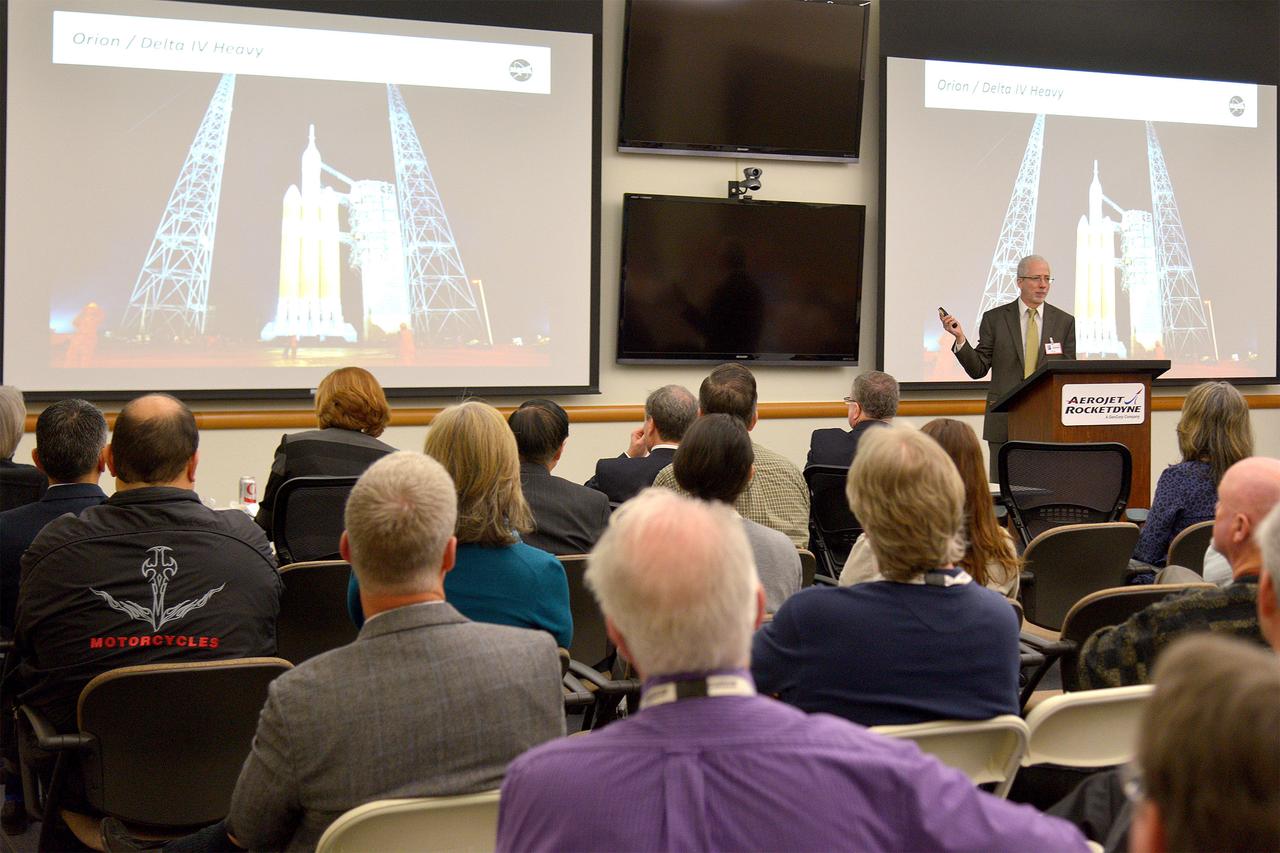
Orion leadership (including Orion Program Manager Mark Geyer) visits Aerojet Rocketdyne in Sacramento, CA on March 3, 2015 to recognize the great work performed in support of Orion's first flight, Exploration Flight Test-1 (EFT-1). Part of Batch image transfer from Flickr.
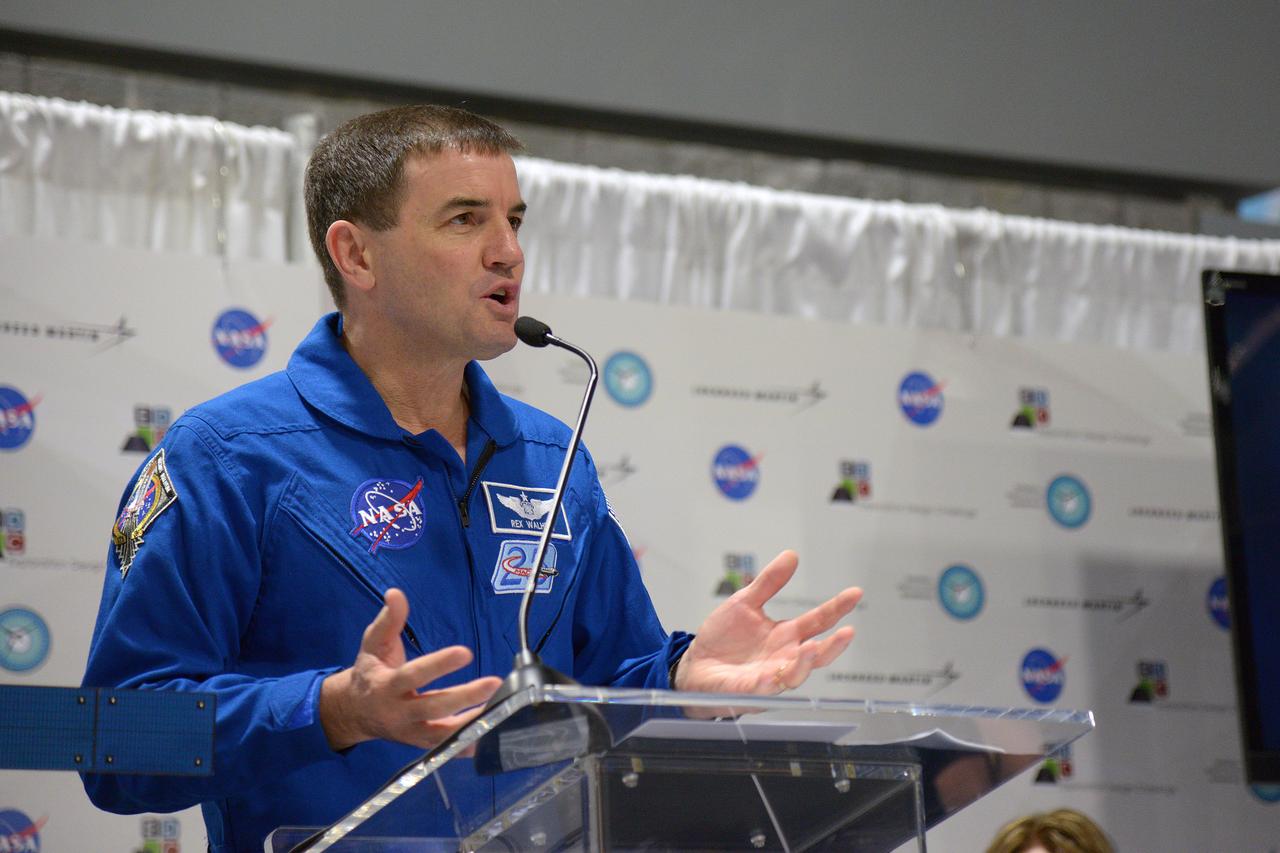
The winner of the high school portion of the Exploration Design Challenge is announced at the USA Science and Engineering Festival in Washington on April 25, 2014. Astronaut Rex Walheim speaks from podium. Part of Batch image transfer from Flickr.
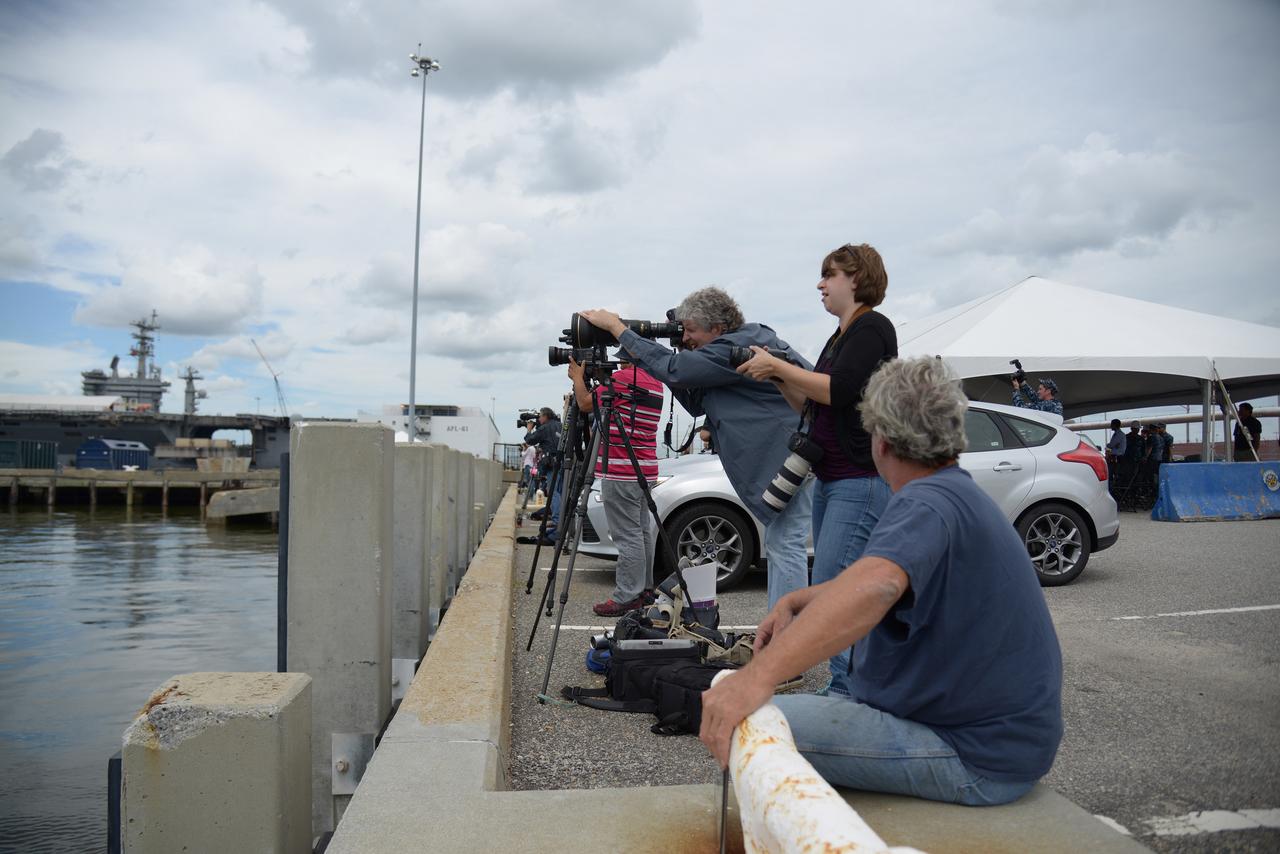
Media and NASA Social participants view Orion recovery operations and tour the USS Arlington at the Norfolk Naval base in Virginia on Aug. 15, 2013. Part of Batch image transfer from Flickr.