
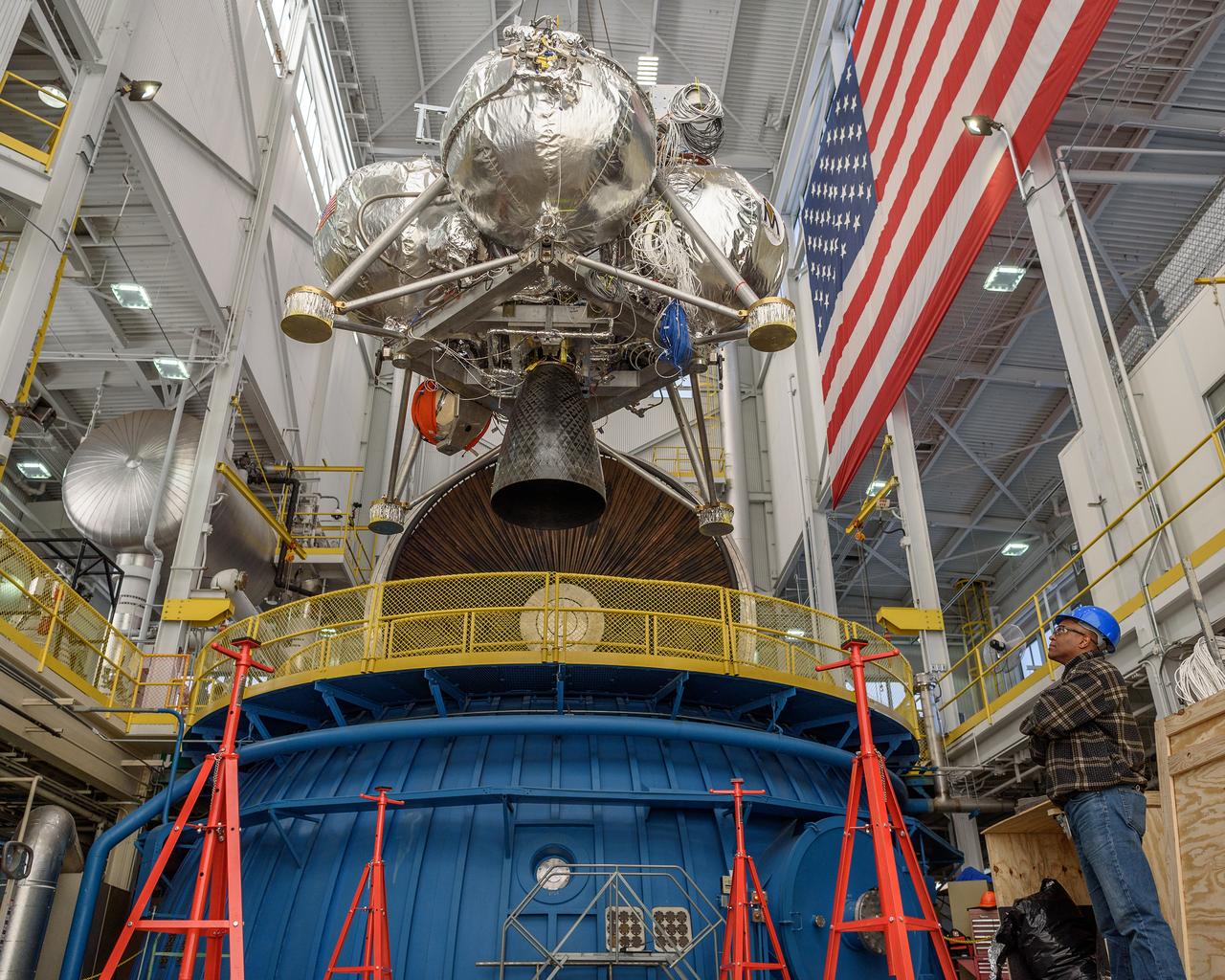
Engineers and technicians moved the Orion service module test article into the Reverberant Acoustic Test Facility at NASA Glenn Research Center’s Plum Brook Station in Sandusky, Ohio on April 8, 2016. Acoustic testing is scheduled to begin April 18. The blue structure sitting on top of the test article is a mass simulator that represents the Orion crew module...The test article will be blasted with at least 152 decibels and 20-10,000 hertz of sound pressure and vibration to simulate the intense sounds the Orion service module will be subjected to during launch and ascent into space atop the agency’s Space Launch System (SLS) rocket. This is part of a series of tests to verify the structural integrity of Orion’s service module for Exploration Mission-1, the spacecraft’s first flight atop SLS...Provided by ESA (European Space Agency) and built by Airbus Defence and Space, the service module will power, propel and cool the vehicle and also supply it with air and water.
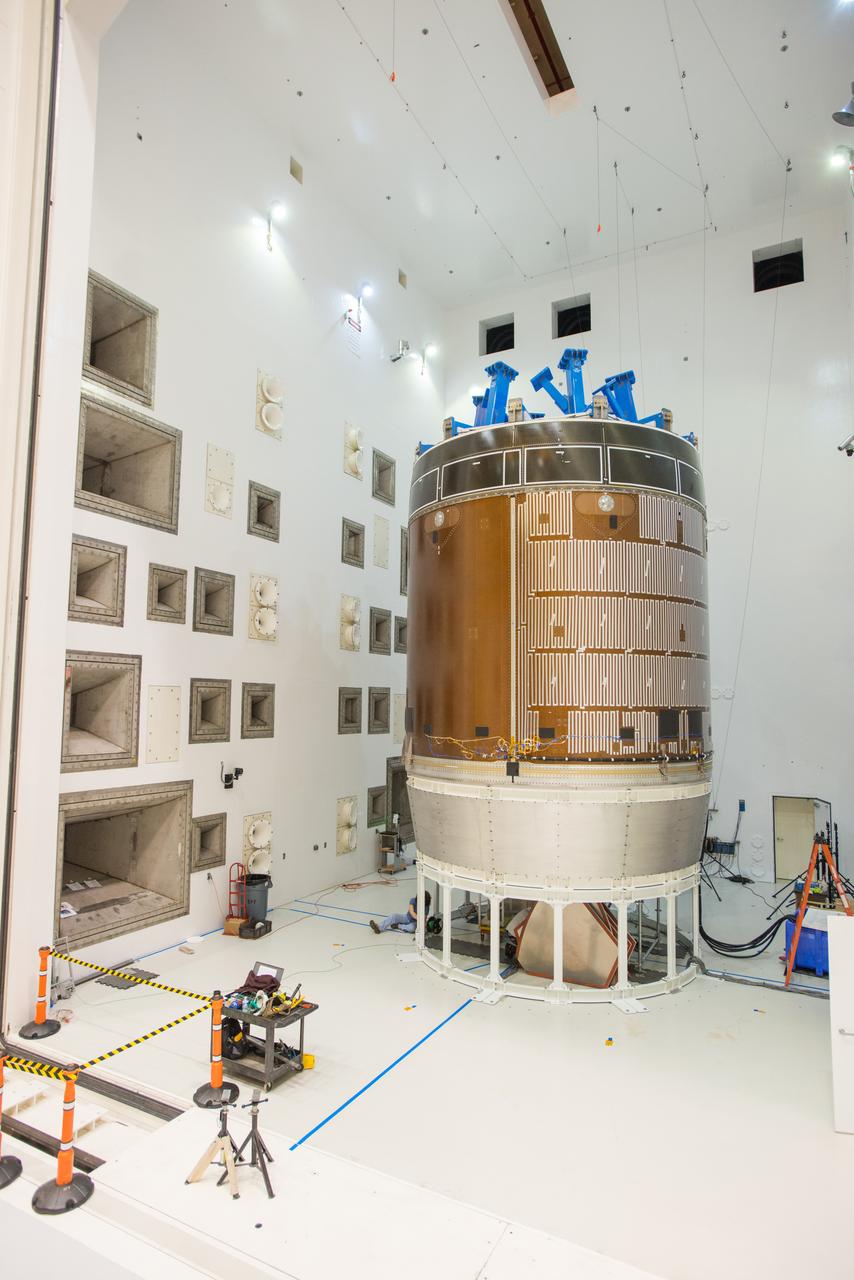
Engineers and technicians moved the Orion service module test article into the Reverberant Acoustic Test Facility at NASA Glenn Research Center’s Plum Brook Station in Sandusky, Ohio on April 8, 2016. Acoustic testing is scheduled to begin April 18. The blue structure sitting on top of the test article is a mass simulator that represents the Orion crew module...The test article will be blasted with at least 152 decibels and 20-10,000 hertz of sound pressure and vibration to simulate the intense sounds the Orion service module will be subjected to during launch and ascent into space atop the agency’s Space Launch System (SLS) rocket. This is part of a series of tests to verify the structural integrity of Orion’s service module for Exploration Mission-1, the spacecraft’s first flight atop SLS...Provided by ESA (European Space Agency) and built by Airbus Defence and Space, the service module will power, propel and cool the vehicle and also supply it with air and water.
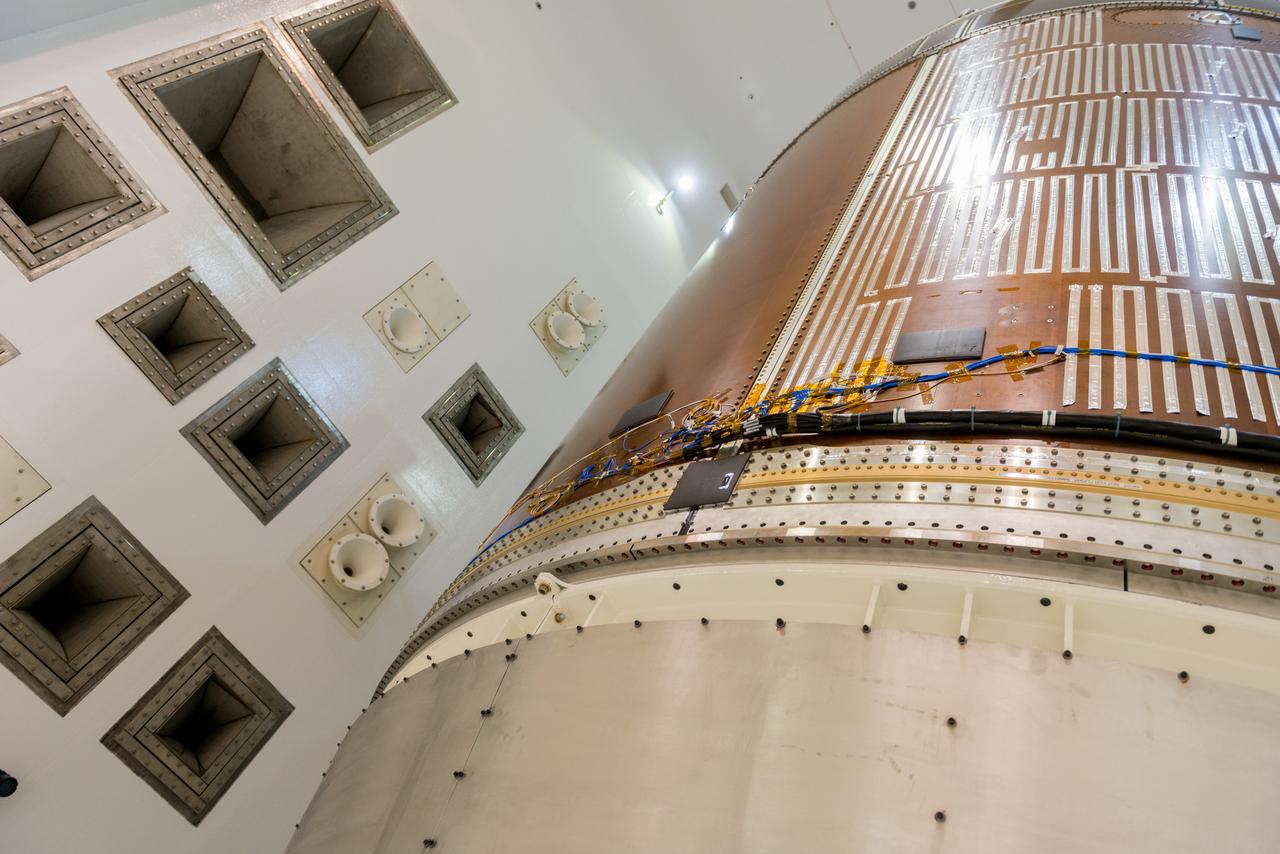
Engineers and technicians moved the Orion service module test article into the Reverberant Acoustic Test Facility at NASA Glenn Research Center’s Plum Brook Station in Sandusky, Ohio on April 8, 2016. Acoustic testing is scheduled to begin April 18. The blue structure sitting on top of the test article is a mass simulator that represents the Orion crew module...The test article will be blasted with at least 152 decibels and 20-10,000 hertz of sound pressure and vibration to simulate the intense sounds the Orion service module will be subjected to during launch and ascent into space atop the agency’s Space Launch System (SLS) rocket. This is part of a series of tests to verify the structural integrity of Orion’s service module for Exploration Mission-1, the spacecraft’s first flight atop SLS...Provided by ESA (European Space Agency) and built by Airbus Defence and Space, the service module will power, propel and cool the vehicle and also supply it with air and water.
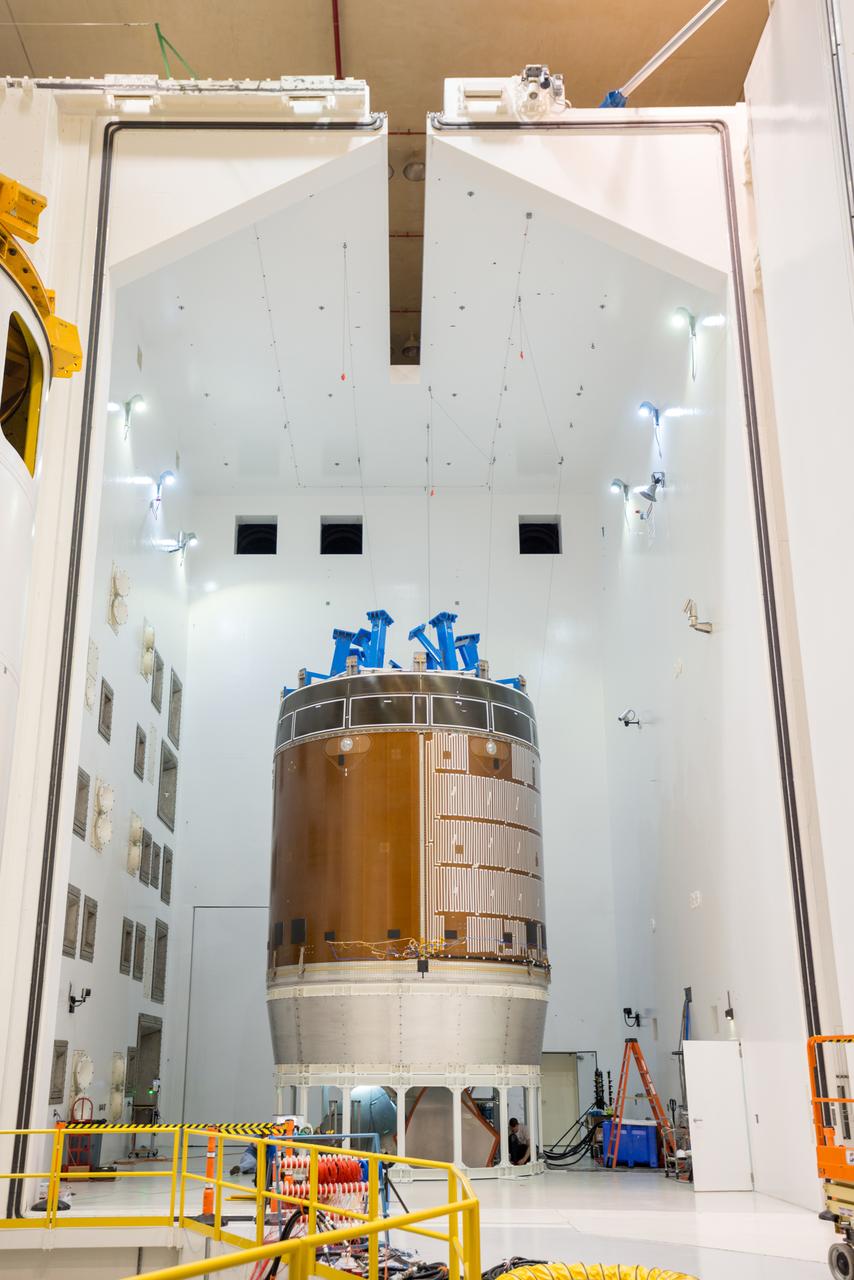
Engineers and technicians moved the Orion service module test article into the Reverberant Acoustic Test Facility at NASA Glenn Research Center’s Plum Brook Station in Sandusky, Ohio on April 8, 2016. Acoustic testing is scheduled to begin April 18. The blue structure sitting on top of the test article is a mass simulator that represents the Orion crew module...The test article will be blasted with at least 152 decibels and 20-10,000 hertz of sound pressure and vibration to simulate the intense sounds the Orion service module will be subjected to during launch and ascent into space atop the agency’s Space Launch System (SLS) rocket. This is part of a series of tests to verify the structural integrity of Orion’s service module for Exploration Mission-1, the spacecraft’s first flight atop SLS...Provided by ESA (European Space Agency) and built by Airbus Defence and Space, the service module will power, propel and cool the vehicle and also supply it with air and water.
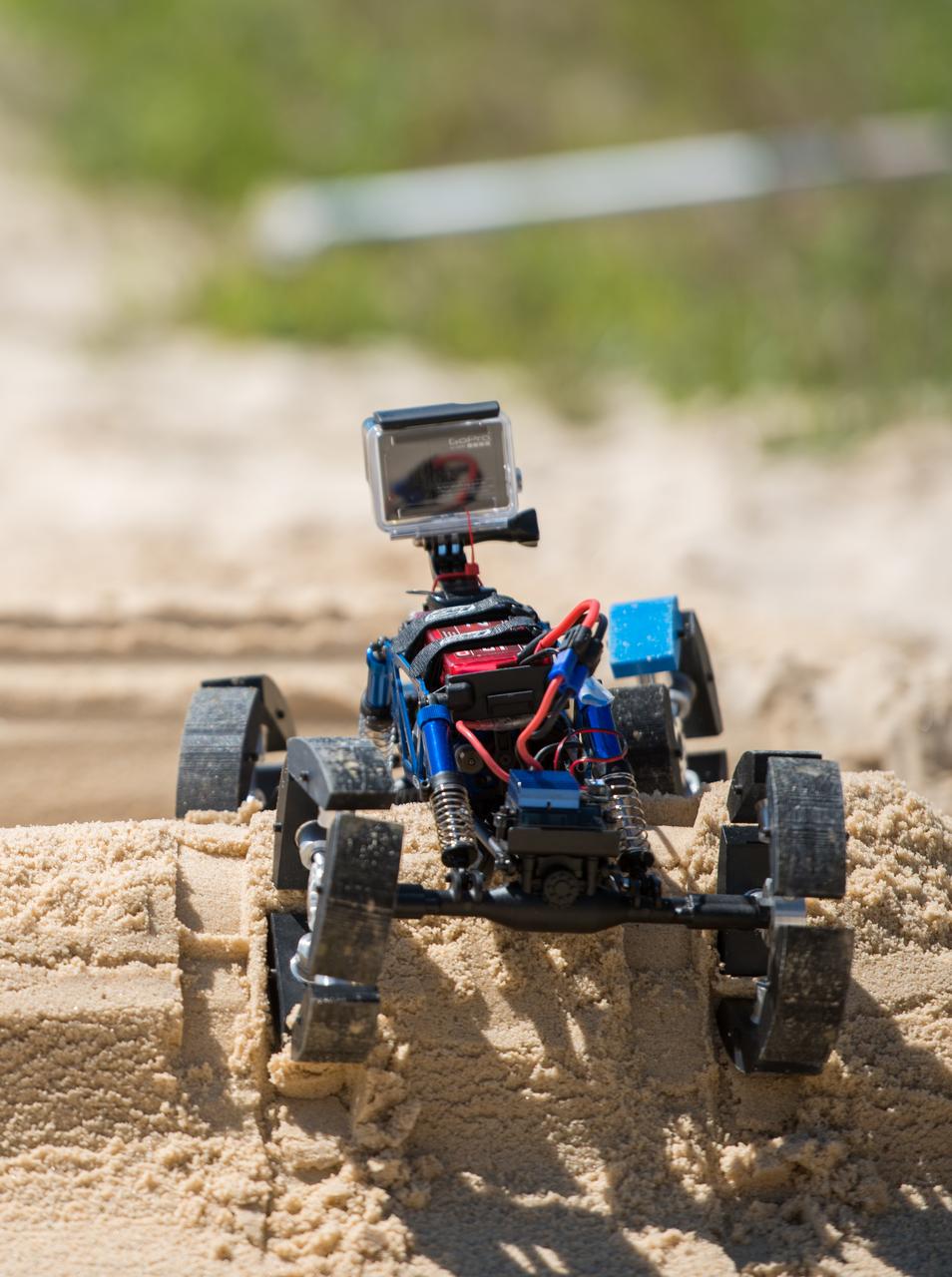
Toledo, Bowser and Scott High School Students, Mars and Moon Wheel, Engineering Design Project, Hardware Test on the Dunes
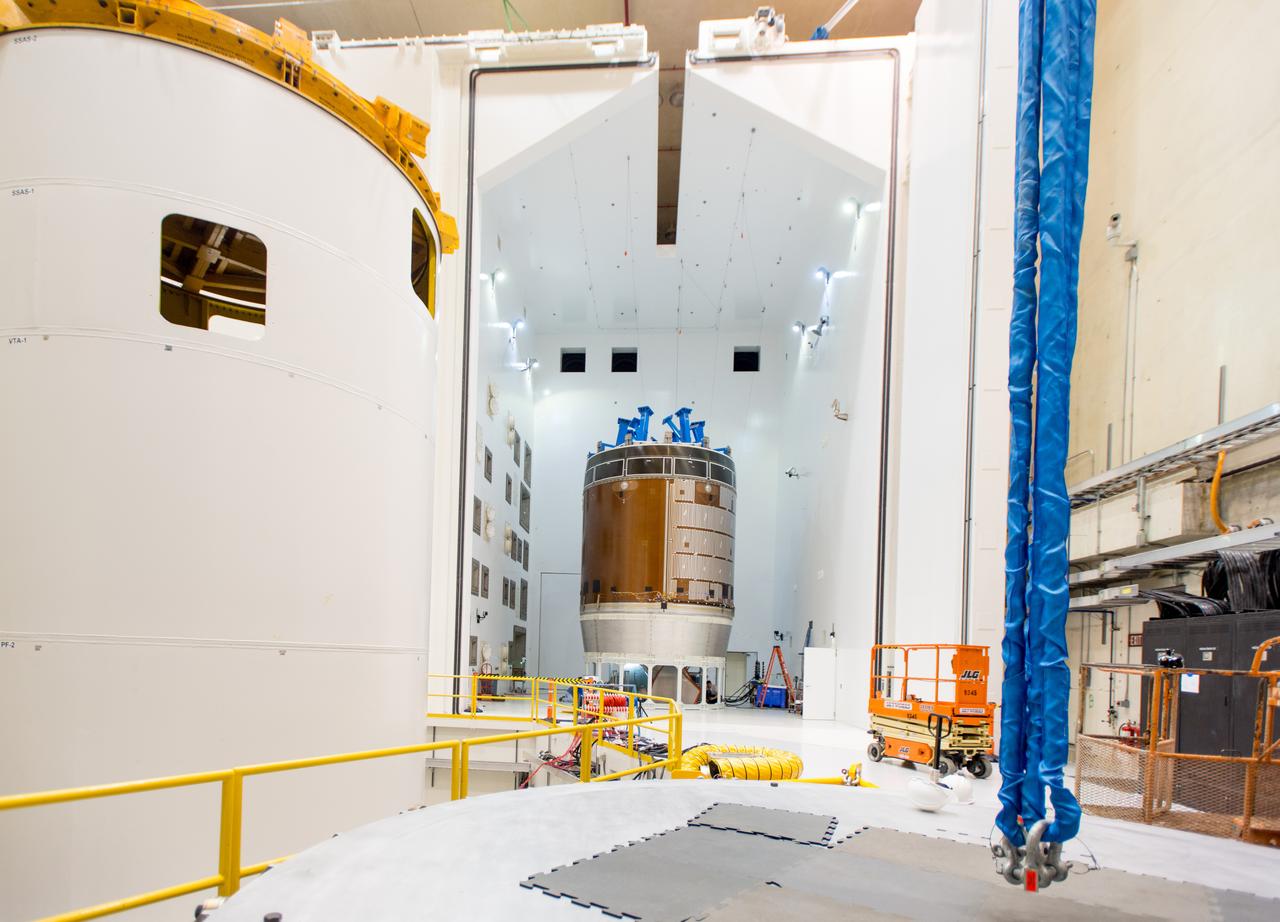
Engineers and technicians moved the Orion service module test article into the Reverberant Acoustic Test Facility at NASA Glenn Research Center’s Plum Brook Station in Sandusky, Ohio on April 8, 2016. Acoustic testing is scheduled to begin April 18. The blue structure sitting on top of the test article is a mass simulator that represents the Orion crew module...The test article will be blasted with at least 152 decibels and 20-10,000 hertz of sound pressure and vibration to simulate the intense sounds the Orion service module will be subjected to during launch and ascent into space atop the agency’s Space Launch System (SLS) rocket. This is part of a series of tests to verify the structural integrity of Orion’s service module for Exploration Mission-1, the spacecraft’s first flight atop SLS...Provided by ESA (European Space Agency) and built by Airbus Defence and Space, the service module will power, propel and cool the vehicle and also supply it with air and water.

Engineers and technicians moved the Orion service module test article into the Reverberant Acoustic Test Facility at NASA Glenn Research Center’s Plum Brook Station in Sandusky, Ohio on April 8, 2016. Acoustic testing is scheduled to begin April 18. The blue structure sitting on top of the test article is a mass simulator that represents the Orion crew module...The test article will be blasted with at least 152 decibels and 20-10,000 hertz of sound pressure and vibration to simulate the intense sounds the Orion service module will be subjected to during launch and ascent into space atop the agency’s Space Launch System (SLS) rocket. This is part of a series of tests to verify the structural integrity of Orion’s service module for Exploration Mission-1, the spacecraft’s first flight atop SLS...Provided by ESA (European Space Agency) and built by Airbus Defence and Space, the service module will power, propel and cool the vehicle and also supply it with air and water.
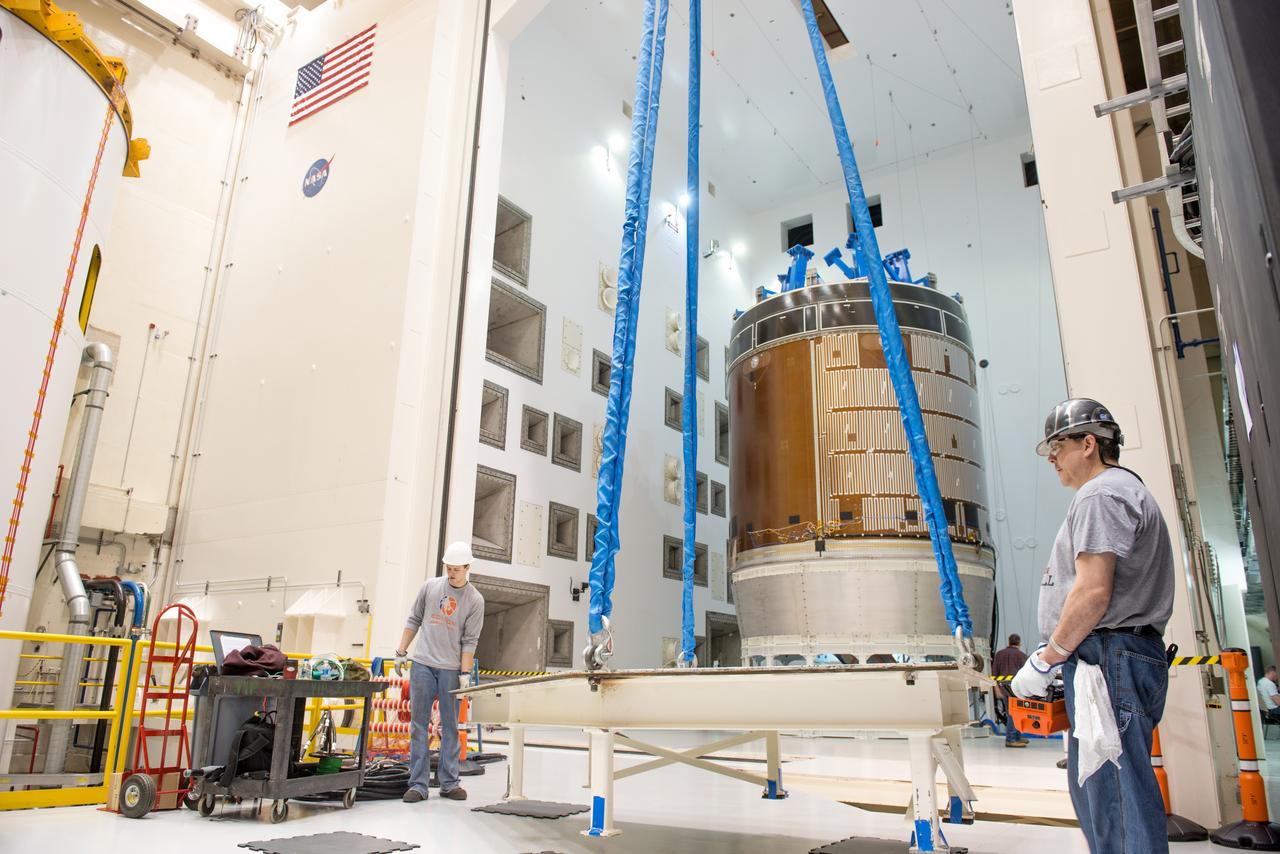
Engineers and technicians moved the Orion service module test article into the Reverberant Acoustic Test Facility at NASA Glenn Research Center’s Plum Brook Station in Sandusky, Ohio on April 8, 2016. Acoustic testing is scheduled to begin April 18. The blue structure sitting on top of the test article is a mass simulator that represents the Orion crew module...The test article will be blasted with at least 152 decibels and 20-10,000 hertz of sound pressure and vibration to simulate the intense sounds the Orion service module will be subjected to during launch and ascent into space atop the agency’s Space Launch System (SLS) rocket. This is part of a series of tests to verify the structural integrity of Orion’s service module for Exploration Mission-1, the spacecraft’s first flight atop SLS...Provided by ESA (European Space Agency) and built by Airbus Defence and Space, the service module will power, propel and cool the vehicle and also supply it with air and water.
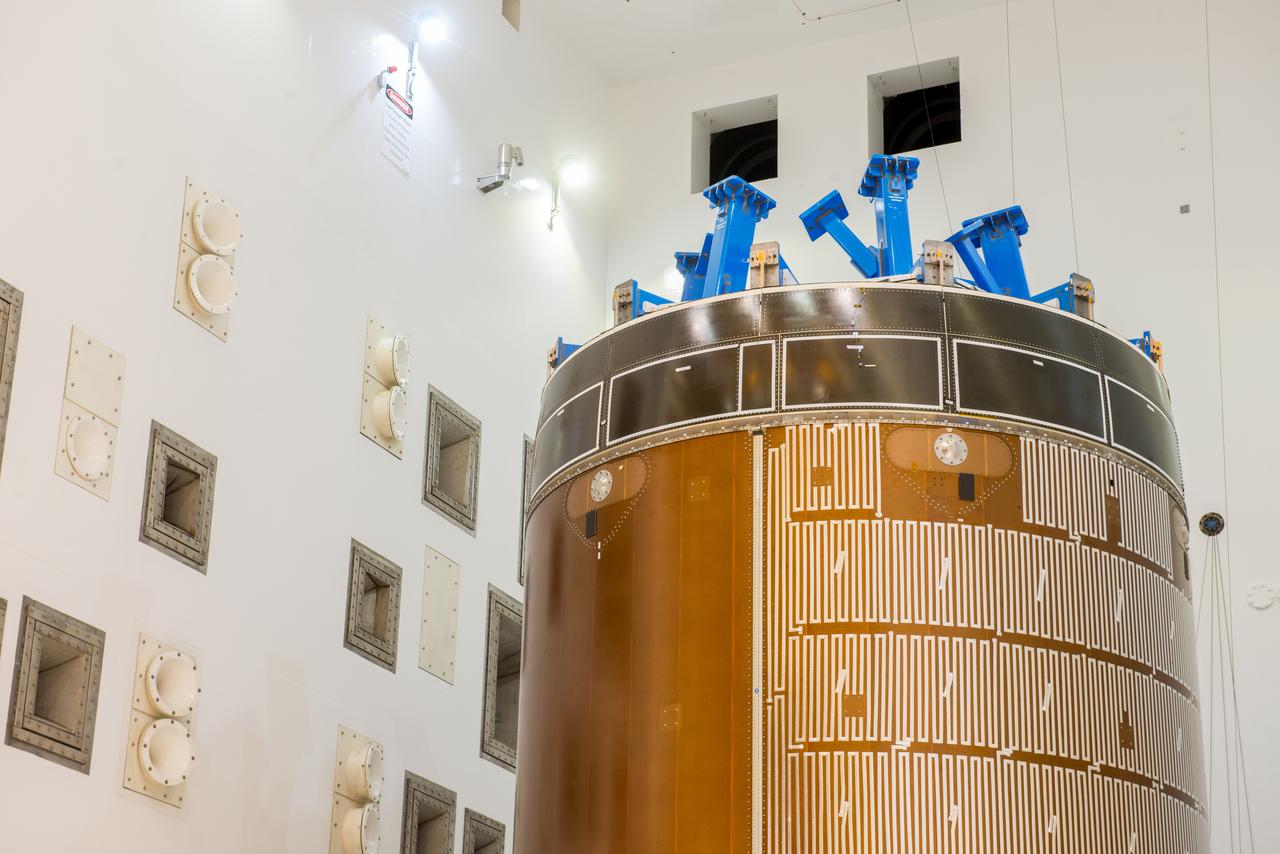
Engineers and technicians moved the Orion service module test article into the Reverberant Acoustic Test Facility at NASA Glenn Research Center’s Plum Brook Station in Sandusky, Ohio on April 8, 2016. Acoustic testing is scheduled to begin April 18. The blue structure sitting on top of the test article is a mass simulator that represents the Orion crew module...The test article will be blasted with at least 152 decibels and 20-10,000 hertz of sound pressure and vibration to simulate the intense sounds the Orion service module will be subjected to during launch and ascent into space atop the agency’s Space Launch System (SLS) rocket. This is part of a series of tests to verify the structural integrity of Orion’s service module for Exploration Mission-1, the spacecraft’s first flight atop SLS...Provided by ESA (European Space Agency) and built by Airbus Defence and Space, the service module will power, propel and cool the vehicle and also supply it with air and water.
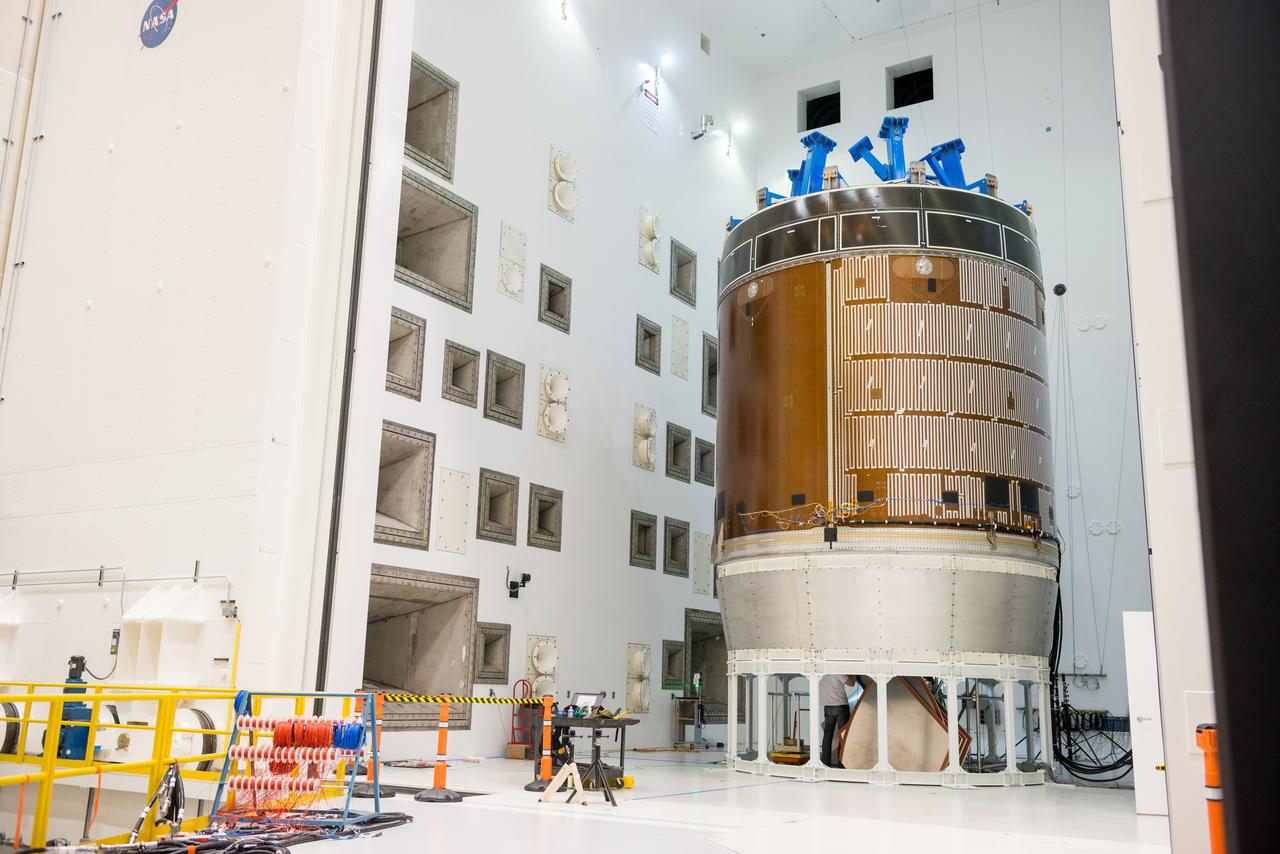
Engineers and technicians moved the Orion service module test article into the Reverberant Acoustic Test Facility at NASA Glenn Research Center’s Plum Brook Station in Sandusky, Ohio on April 8, 2016. Acoustic testing is scheduled to begin April 18. The blue structure sitting on top of the test article is a mass simulator that represents the Orion crew module...The test article will be blasted with at least 152 decibels and 20-10,000 hertz of sound pressure and vibration to simulate the intense sounds the Orion service module will be subjected to during launch and ascent into space atop the agency’s Space Launch System (SLS) rocket. This is part of a series of tests to verify the structural integrity of Orion’s service module for Exploration Mission-1, the spacecraft’s first flight atop SLS...Provided by ESA (European Space Agency) and built by Airbus Defence and Space, the service module will power, propel and cool the vehicle and also supply it with air and water.
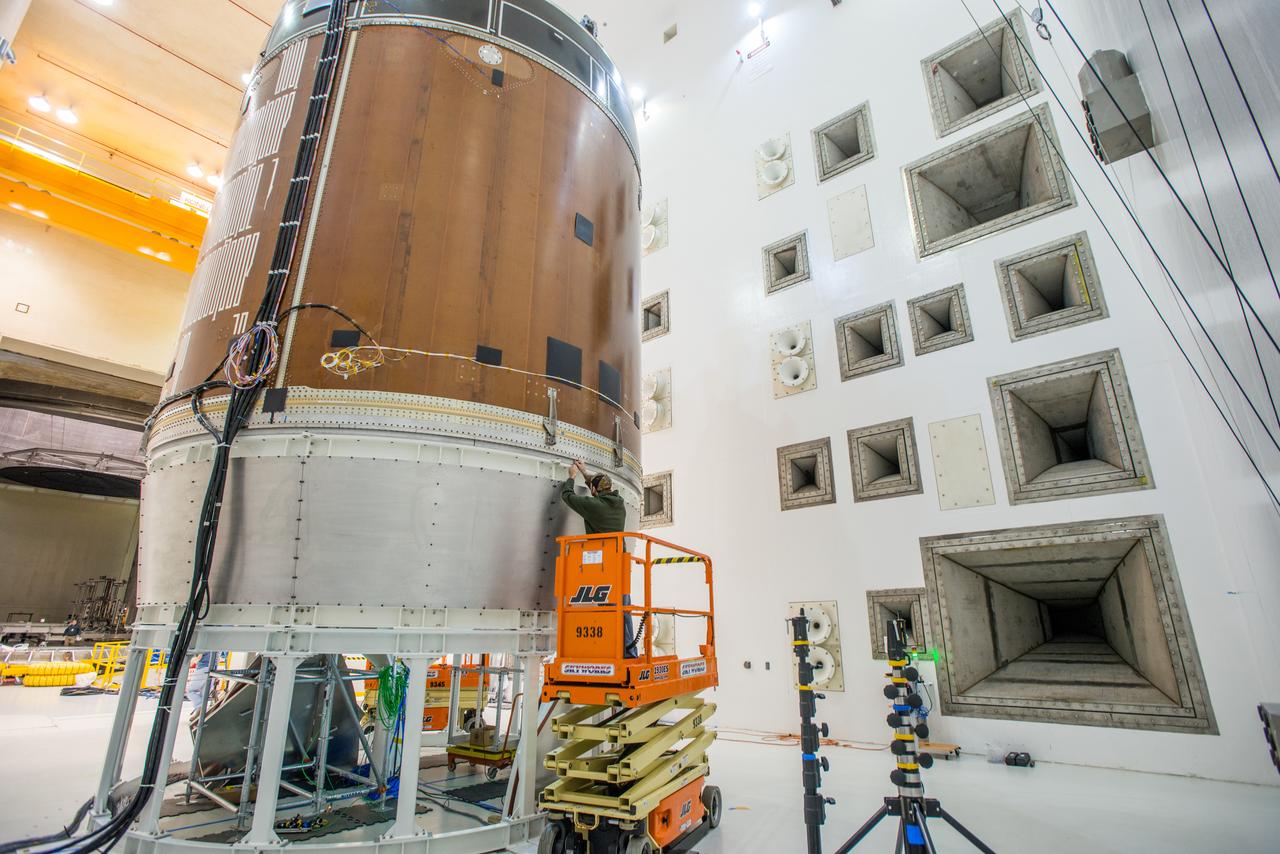
Engineers and technicians moved the Orion service module test article into the Reverberant Acoustic Test Facility at NASA Glenn Research Center’s Plum Brook Station in Sandusky, Ohio on April 8, 2016. Acoustic testing is scheduled to begin April 18. The blue structure sitting on top of the test article is a mass simulator that represents the Orion crew module...The test article will be blasted with at least 152 decibels and 20-10,000 hertz of sound pressure and vibration to simulate the intense sounds the Orion service module will be subjected to during launch and ascent into space atop the agency’s Space Launch System (SLS) rocket. This is part of a series of tests to verify the structural integrity of Orion’s service module for Exploration Mission-1, the spacecraft’s first flight atop SLS...Provided by ESA (European Space Agency) and built by Airbus Defence and Space, the service module will power, propel and cool the vehicle and also supply it with air and water.
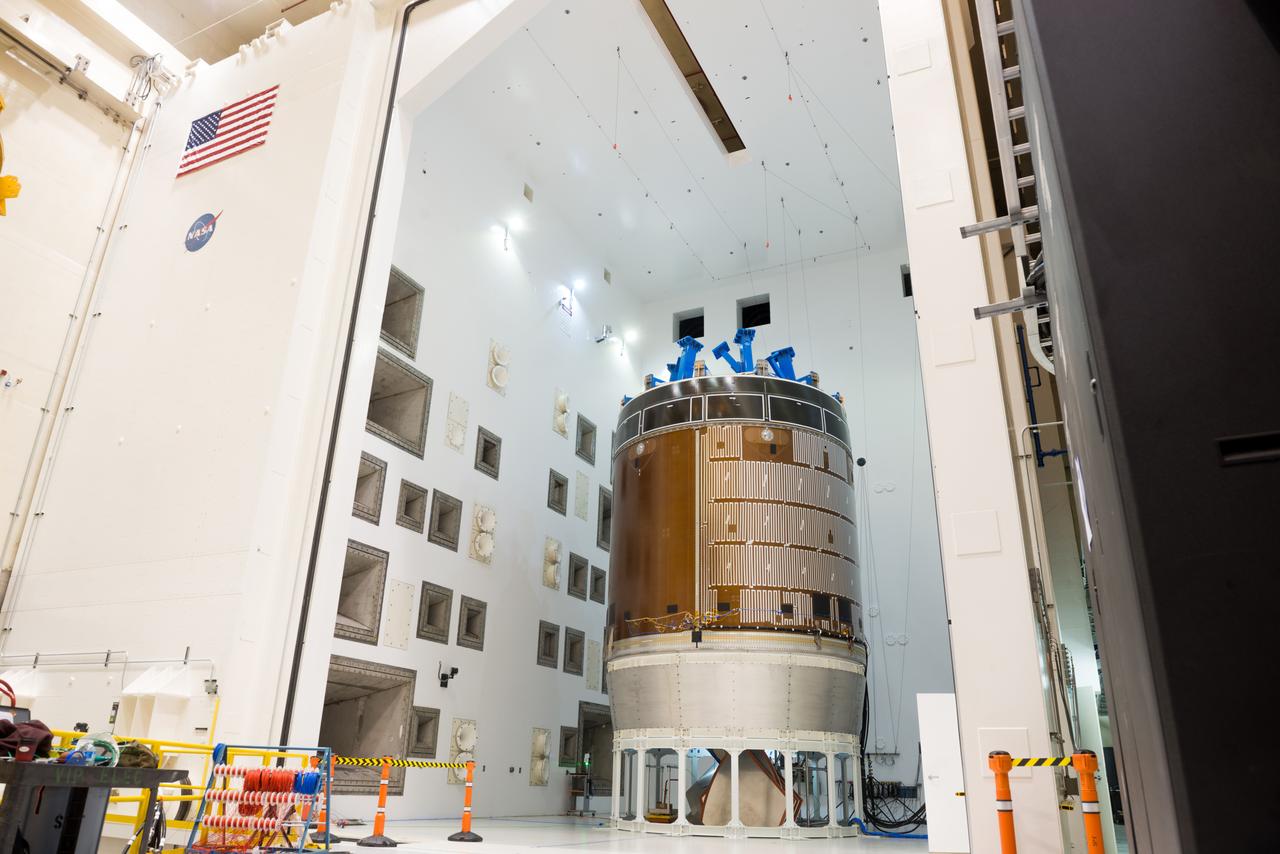
Engineers and technicians moved the Orion service module test article into the Reverberant Acoustic Test Facility at NASA Glenn Research Center’s Plum Brook Station in Sandusky, Ohio on April 8, 2016. Acoustic testing is scheduled to begin April 18. The blue structure sitting on top of the test article is a mass simulator that represents the Orion crew module...The test article will be blasted with at least 152 decibels and 20-10,000 hertz of sound pressure and vibration to simulate the intense sounds the Orion service module will be subjected to during launch and ascent into space atop the agency’s Space Launch System (SLS) rocket. This is part of a series of tests to verify the structural integrity of Orion’s service module for Exploration Mission-1, the spacecraft’s first flight atop SLS...Provided by ESA (European Space Agency) and built by Airbus Defence and Space, the service module will power, propel and cool the vehicle and also supply it with air and water.
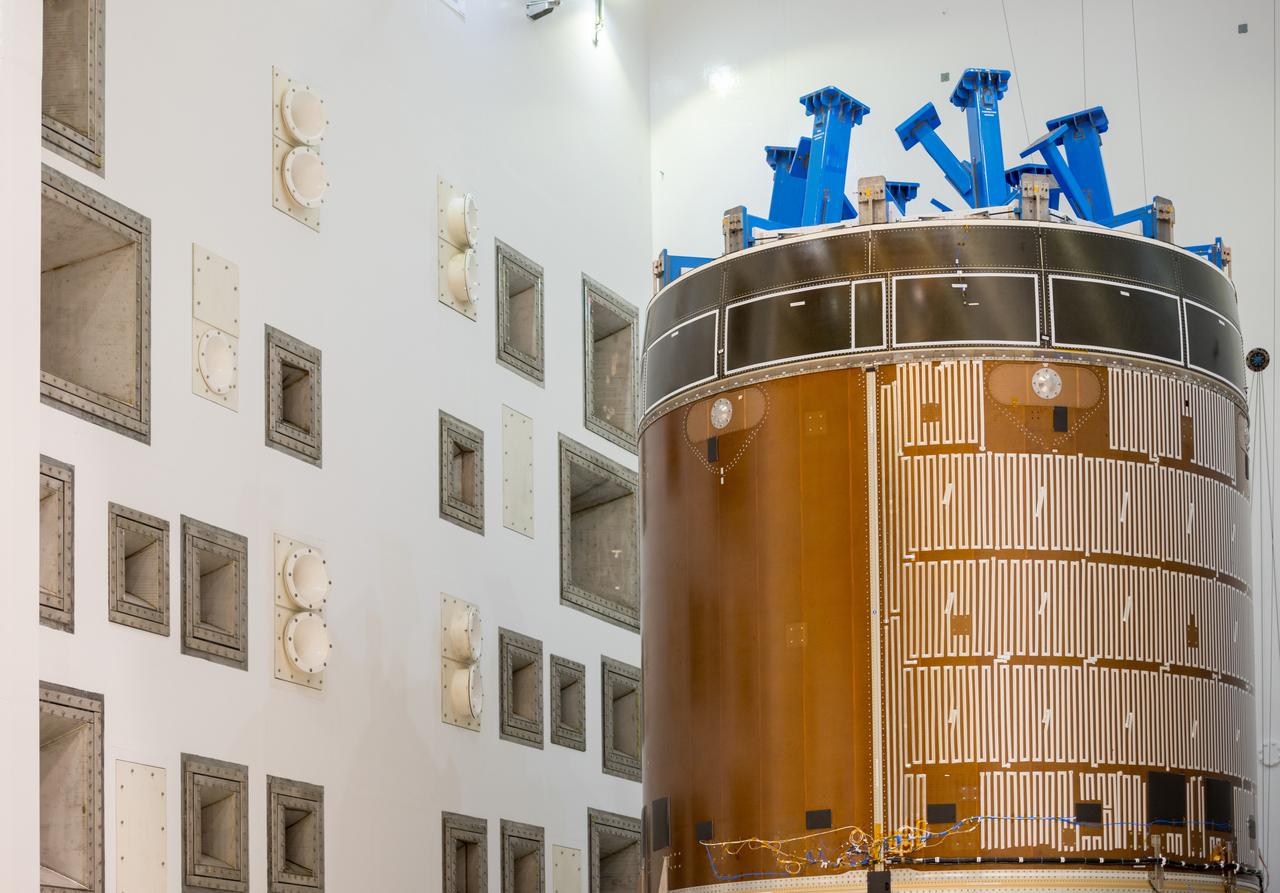
Engineers and technicians moved the Orion service module test article into the Reverberant Acoustic Test Facility at NASA Glenn Research Center’s Plum Brook Station in Sandusky, Ohio on April 8, 2016. Acoustic testing is scheduled to begin April 18. The blue structure sitting on top of the test article is a mass simulator that represents the Orion crew module...The test article will be blasted with at least 152 decibels and 20-10,000 hertz of sound pressure and vibration to simulate the intense sounds the Orion service module will be subjected to during launch and ascent into space atop the agency’s Space Launch System (SLS) rocket. This is part of a series of tests to verify the structural integrity of Orion’s service module for Exploration Mission-1, the spacecraft’s first flight atop SLS...Provided by ESA (European Space Agency) and built by Airbus Defence and Space, the service module will power, propel and cool the vehicle and also supply it with air and water.
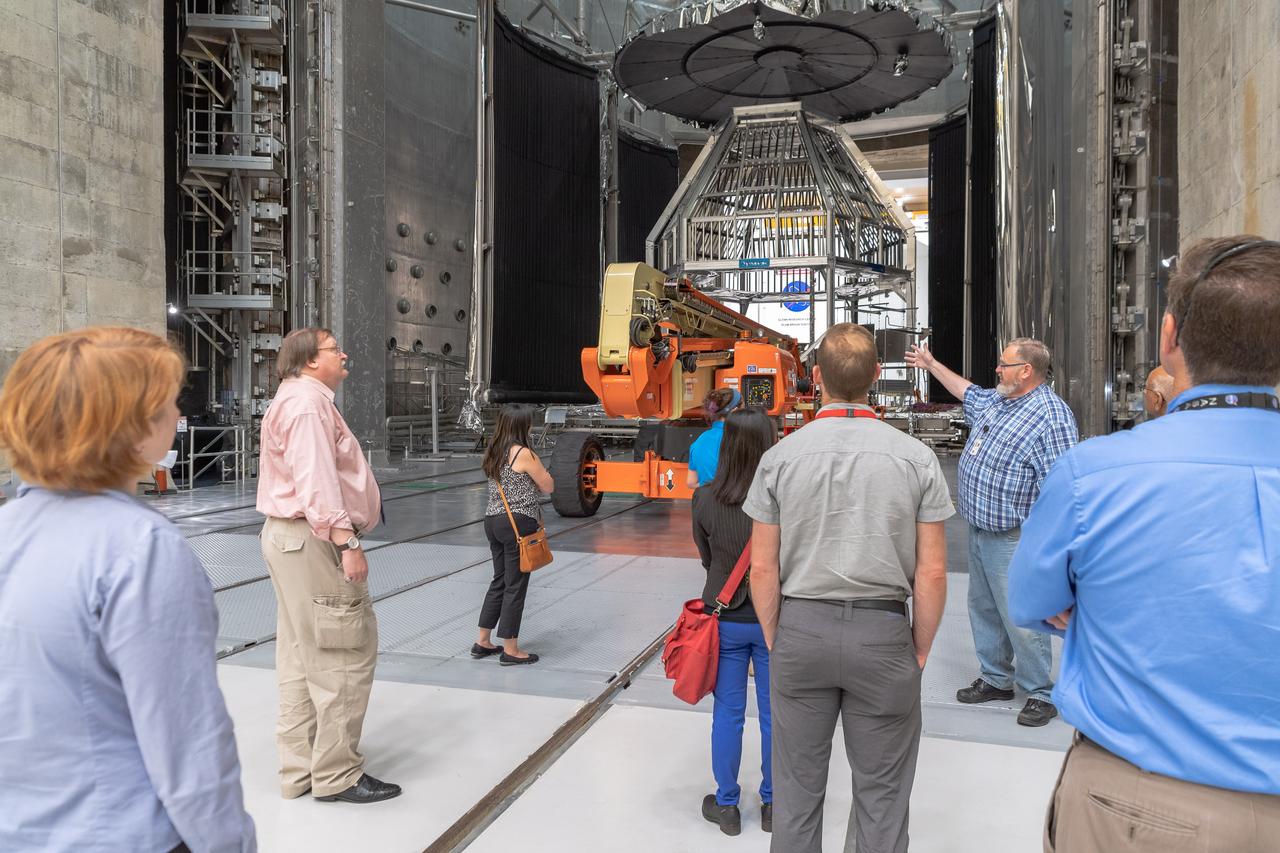
The inaugural Glenn Symposium focused on advancements in aerospace technology including power and propulsion, autonomy and communications, low boom supersonics, hypersonics, and more. Discussion also encompassed humans returning to the moon, including challenges associated with the 2024 mission.
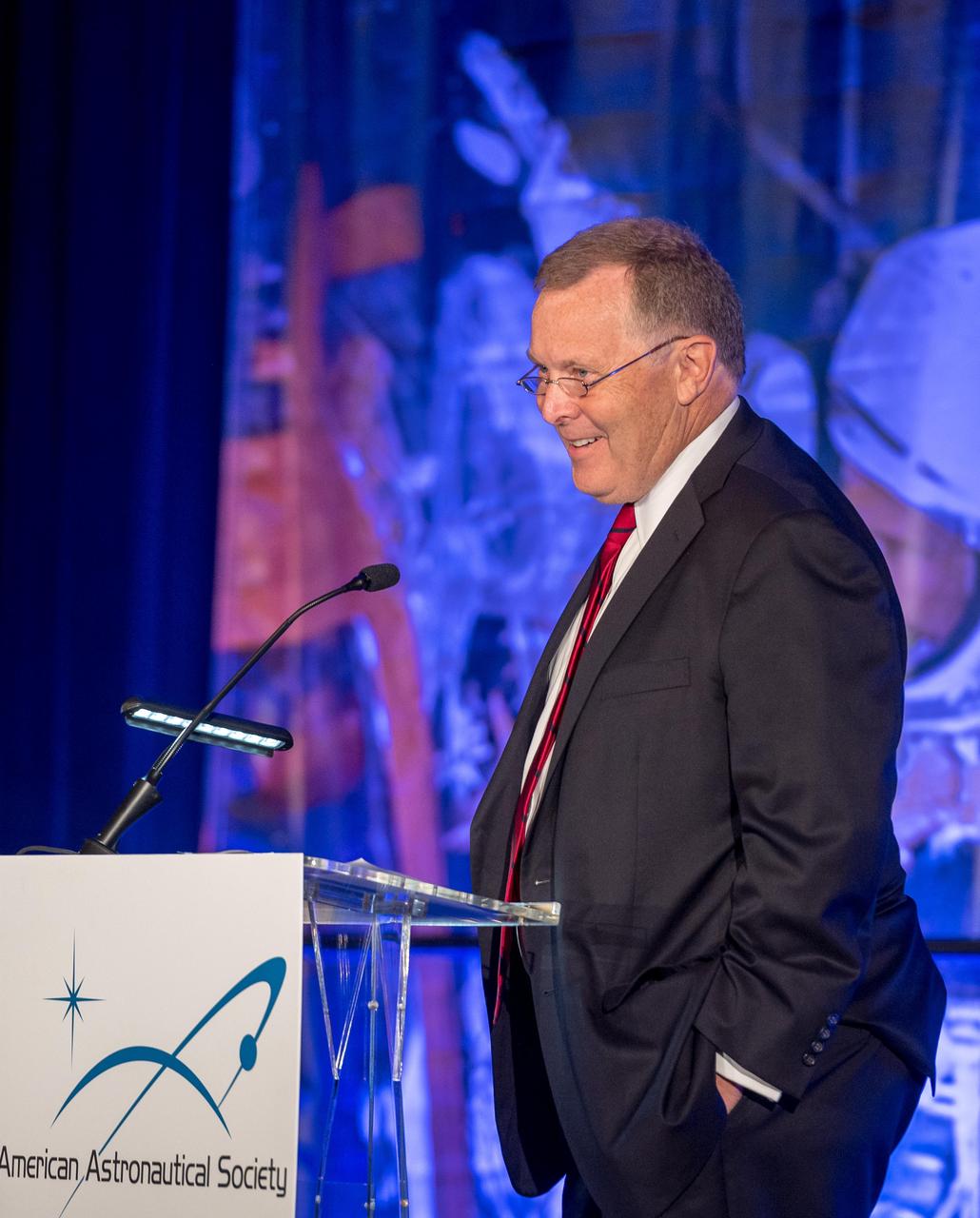
The inaugural Glenn Symposium focused on advancements in aerospace technology including power and propulsion, autonomy and communications, low boom supersonics, hypersonics, and more. Discussion also encompassed humans returning to the moon, including challenges associated with the 2024 mission.
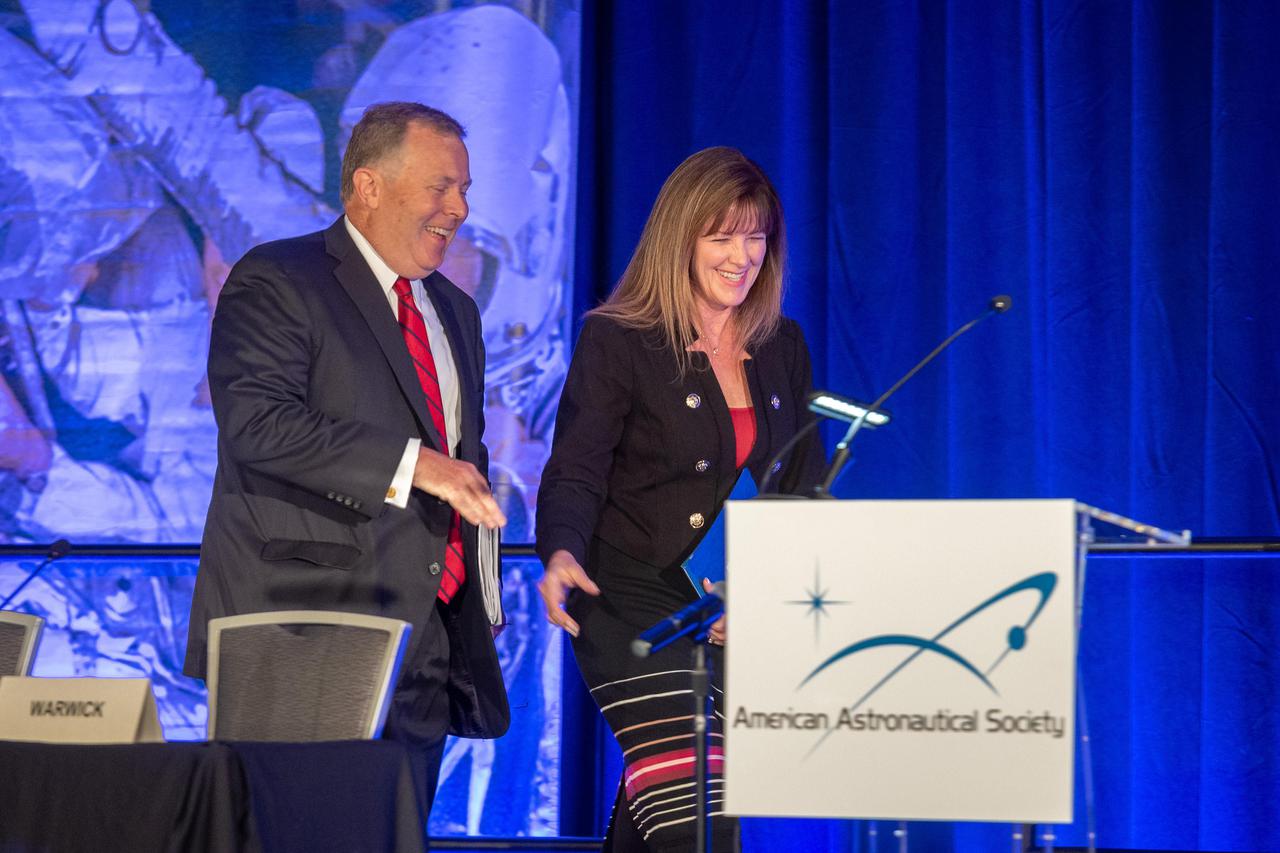
The inaugural Glenn Symposium focused on advancements in aerospace technology including power and propulsion, autonomy and communications, low boom supersonics, hypersonics, and more. Discussion also encompassed humans returning to the moon, including challenges associated with the 2024 mission.

The inaugural Glenn Symposium focused on advancements in aerospace technology including power and propulsion, autonomy and communications, low boom supersonics, hypersonics, and more. Discussion also encompassed humans returning to the moon, including challenges associated with the 2024 mission.

The inaugural Glenn Symposium focused on advancements in aerospace technology including power and propulsion, autonomy and communications, low boom supersonics, hypersonics, and more. Discussion also encompassed humans returning to the moon, including challenges associated with the 2024 mission.
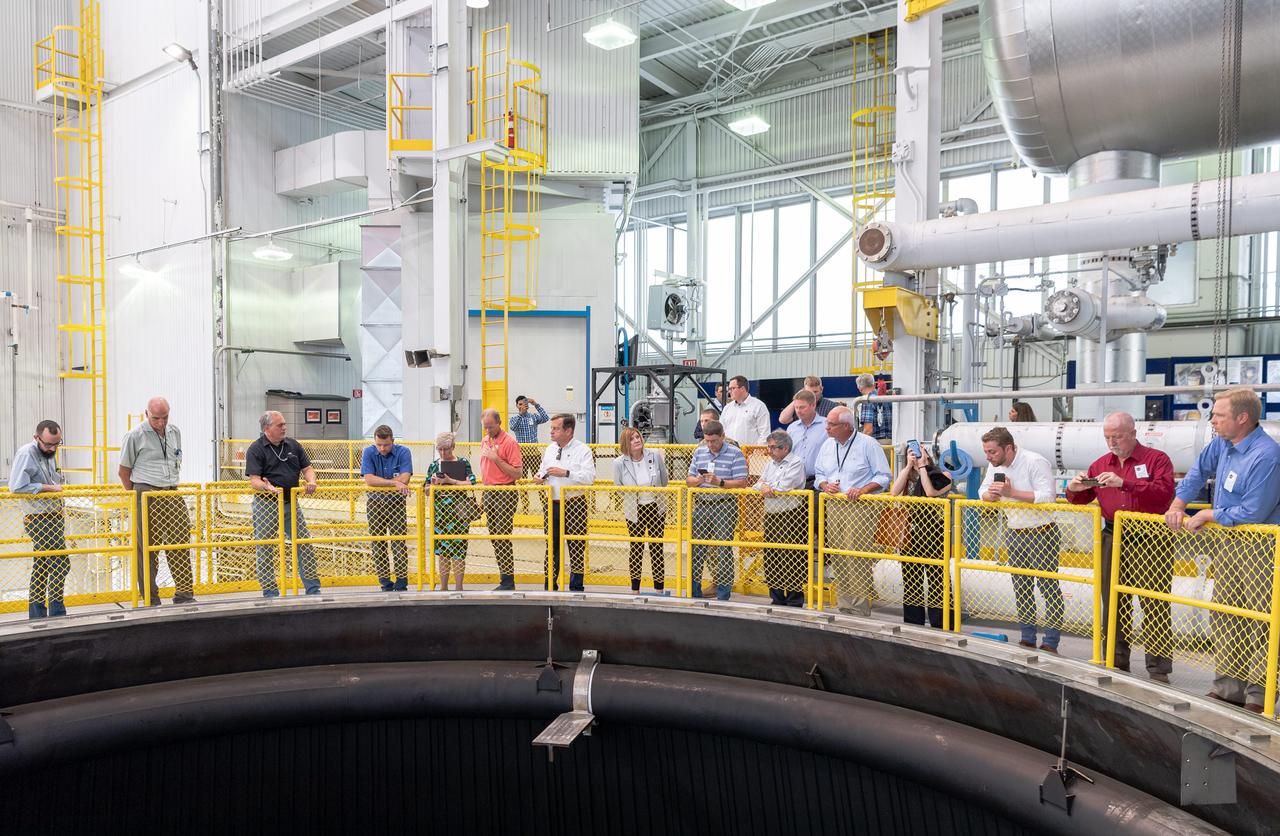
The inaugural Glenn Symposium focused on advancements in aerospace technology including power and propulsion, autonomy and communications, low boom supersonics, hypersonics, and more. Discussion also encompassed humans returning to the moon, including challenges associated with the 2024 mission.
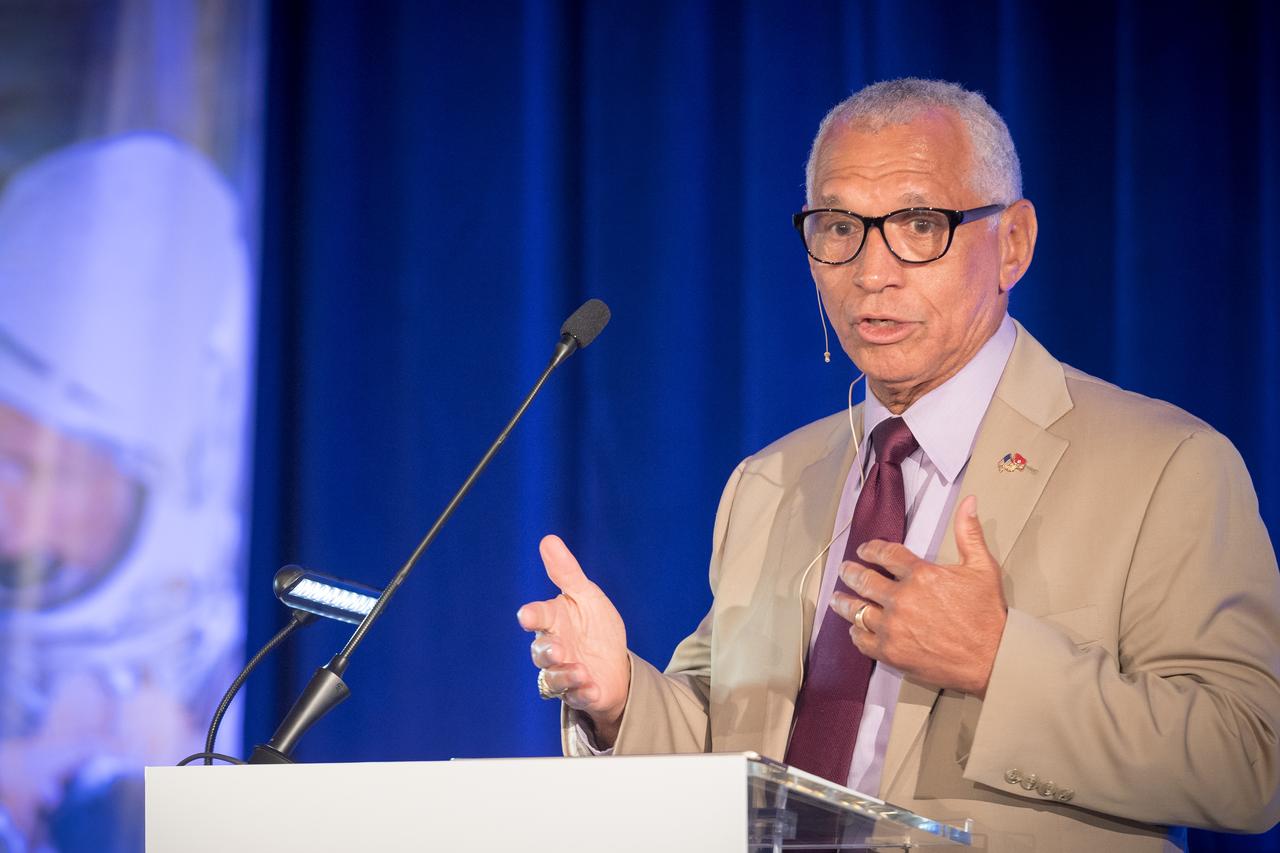
The inaugural Glenn Symposium focused on advancements in aerospace technology including power and propulsion, autonomy and communications, low boom supersonics, hypersonics, and more. Discussion also encompassed humans returning to the moon, including challenges associated with the 2024 mission.
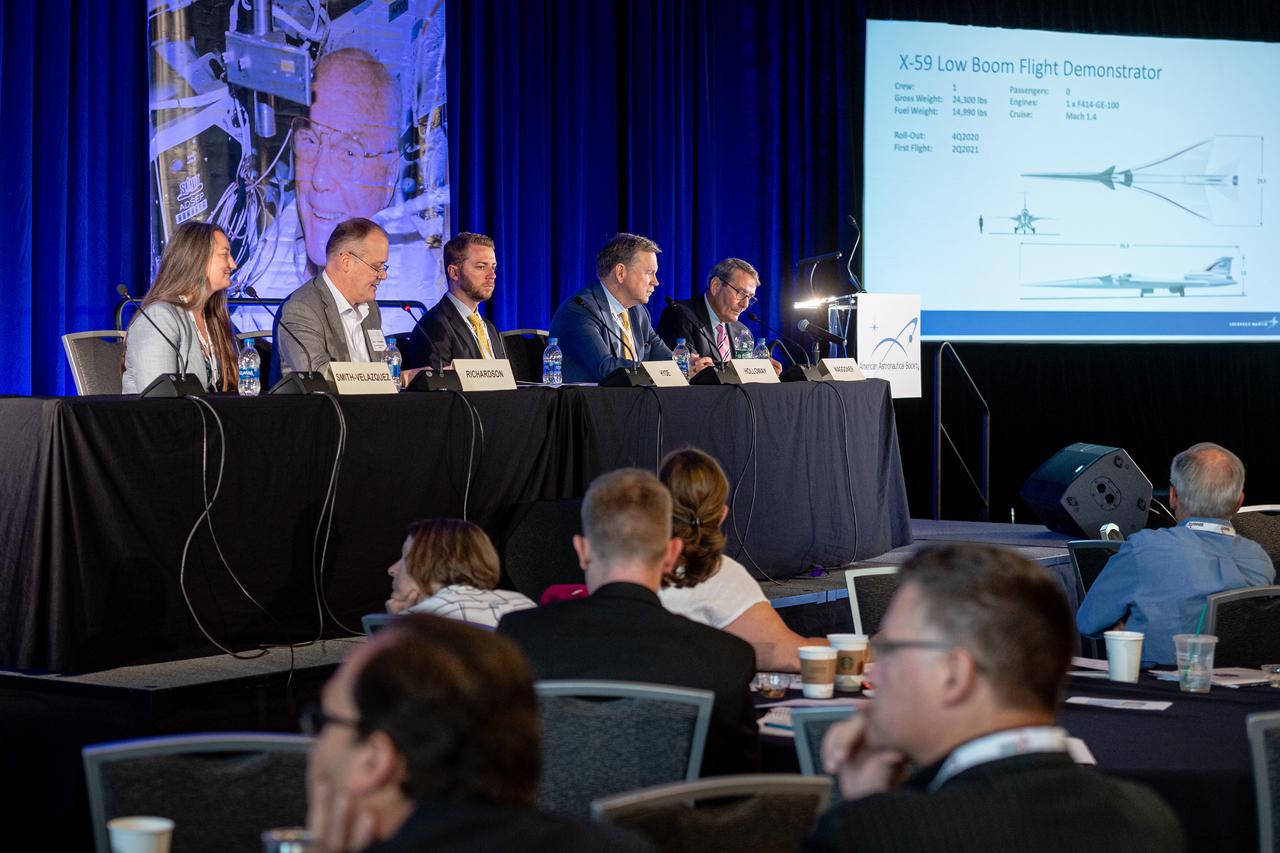
The inaugural Glenn Symposium focused on advancements in aerospace technology including power and propulsion, autonomy and communications, low boom supersonics, hypersonics, and more. Discussion also encompassed humans returning to the moon, including challenges associated with the 2024 mission.
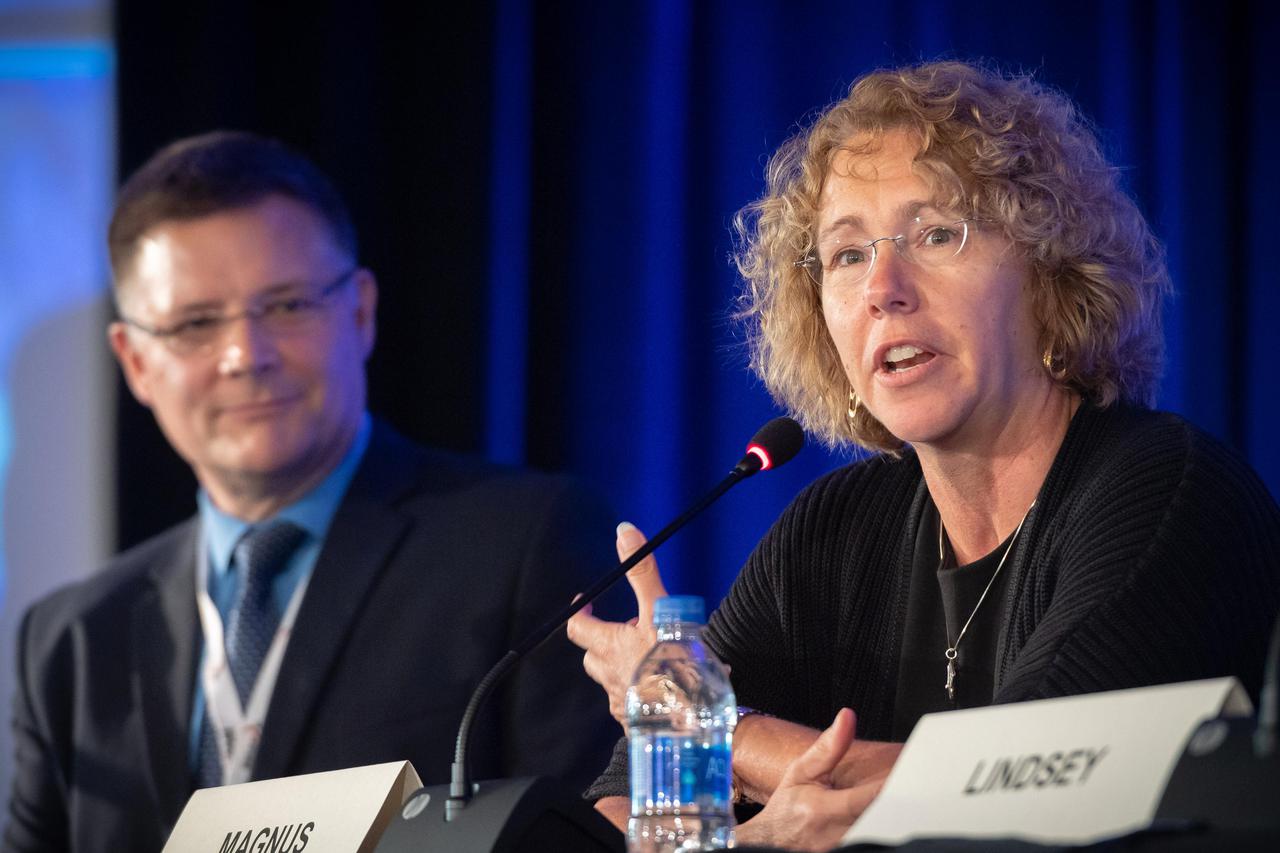
The inaugural Glenn Symposium focused on advancements in aerospace technology including power and propulsion, autonomy and communications, low boom supersonics, hypersonics, and more. Discussion also encompassed humans returning to the moon, including challenges associated with the 2024 mission.

The inaugural Glenn Symposium focused on advancements in aerospace technology including power and propulsion, autonomy and communications, low boom supersonics, hypersonics, and more. Discussion also encompassed humans returning to the moon, including challenges associated with the 2024 mission.
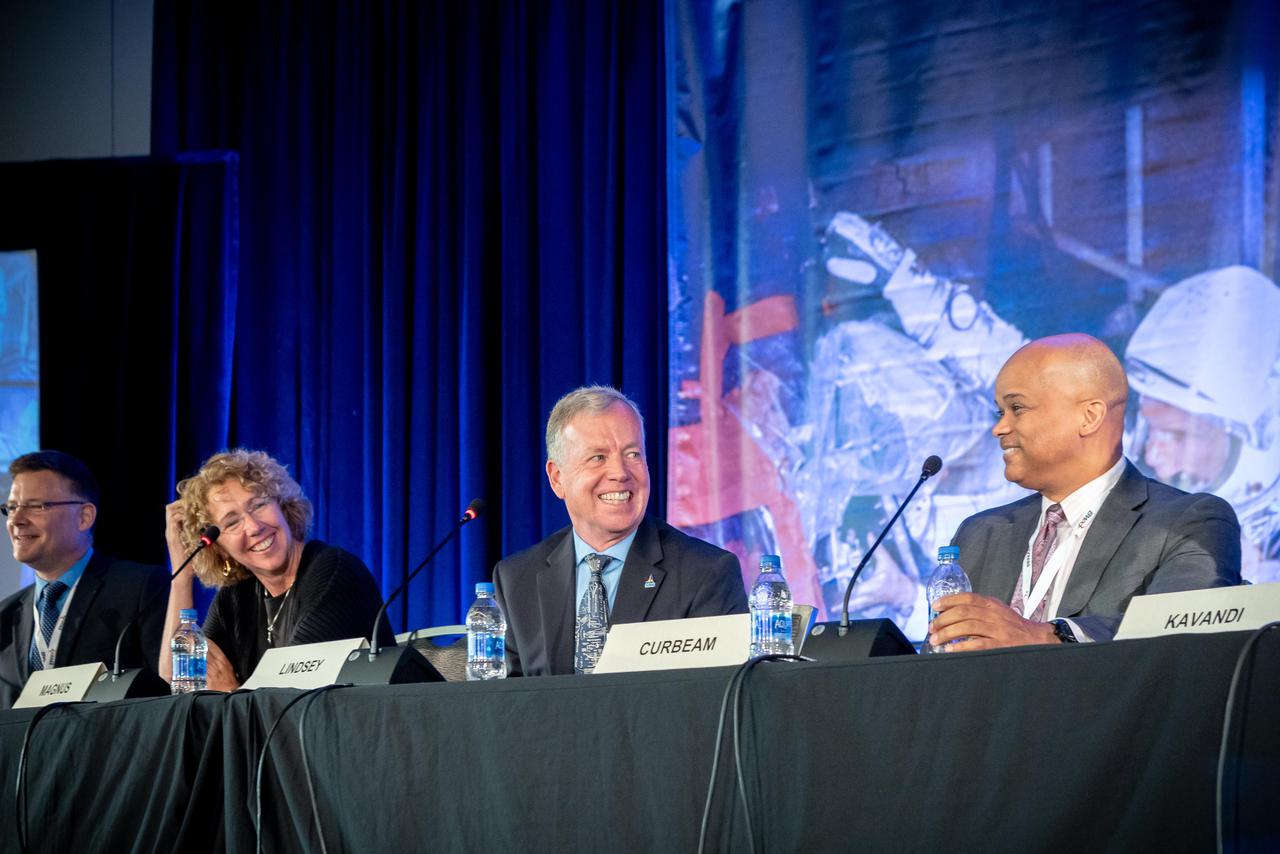
The inaugural Glenn Symposium focused on advancements in aerospace technology including power and propulsion, autonomy and communications, low boom supersonics, hypersonics, and more. Discussion also encompassed humans returning to the moon, including challenges associated with the 2024 mission.
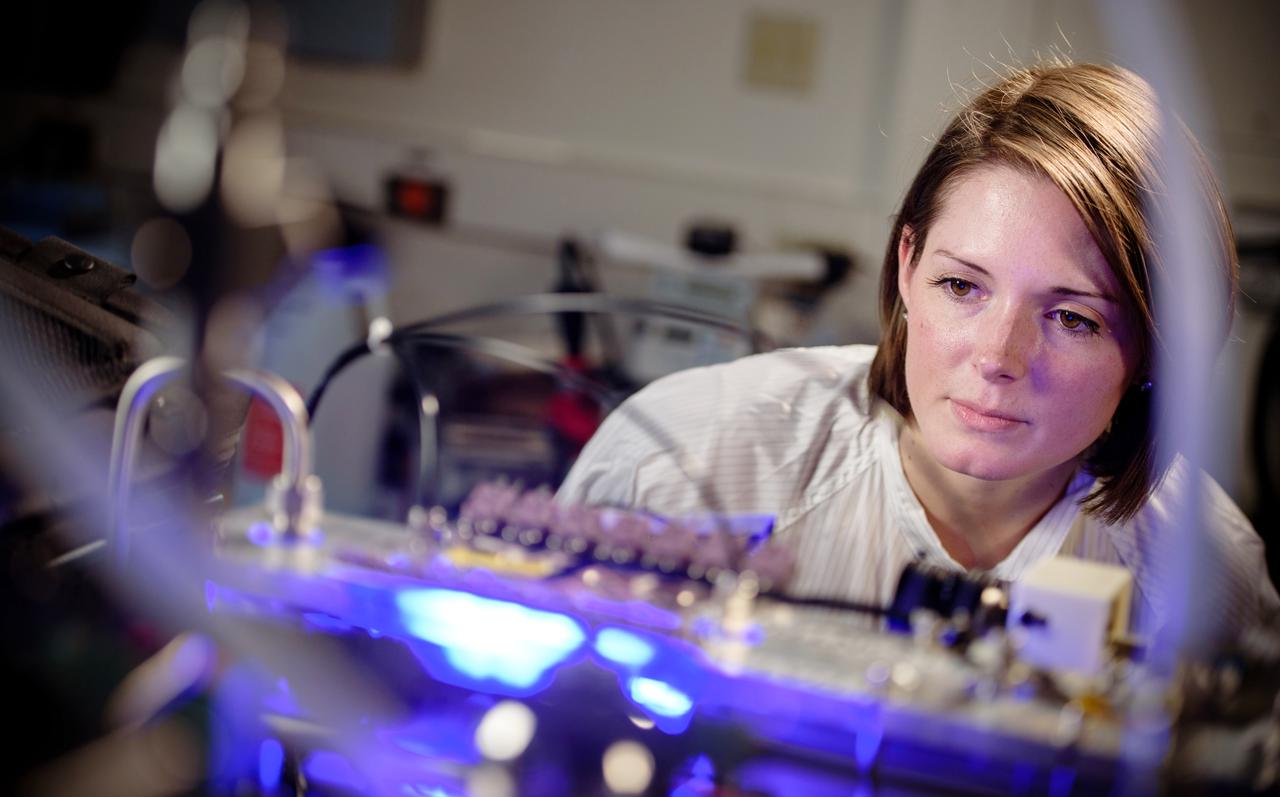
Grace Gaskin, an Aerospace Flight Systems Engineer Trainee, was sworn in as a civil servant in September 2017. After serving for 6 years in the U.S. Army she enrolled at Case Western Reserve University and will graduate in May 2018 with a degree in Chemical Engineering. As a Pathways Intern one of the many projects she has worked on is the Flow Boiling and Condensation Experiments (FBCE). The proposed research aims to develop an integrated two-phase flow boiling/condensation facility for the International Space Station (ISS) to serve as a primary platform for obtaining two-phase flow and heat transfer data in microgravity. By comparing the microgravity data against those obtained in Earth's gravity, it will be possible to ascertain the influence of body force on two-phase transport phenomena in pursuit of mechanistic models as well as correlations, and to help determine the minimum flow criteria to ensure gravity independent flow boiling and condensation.
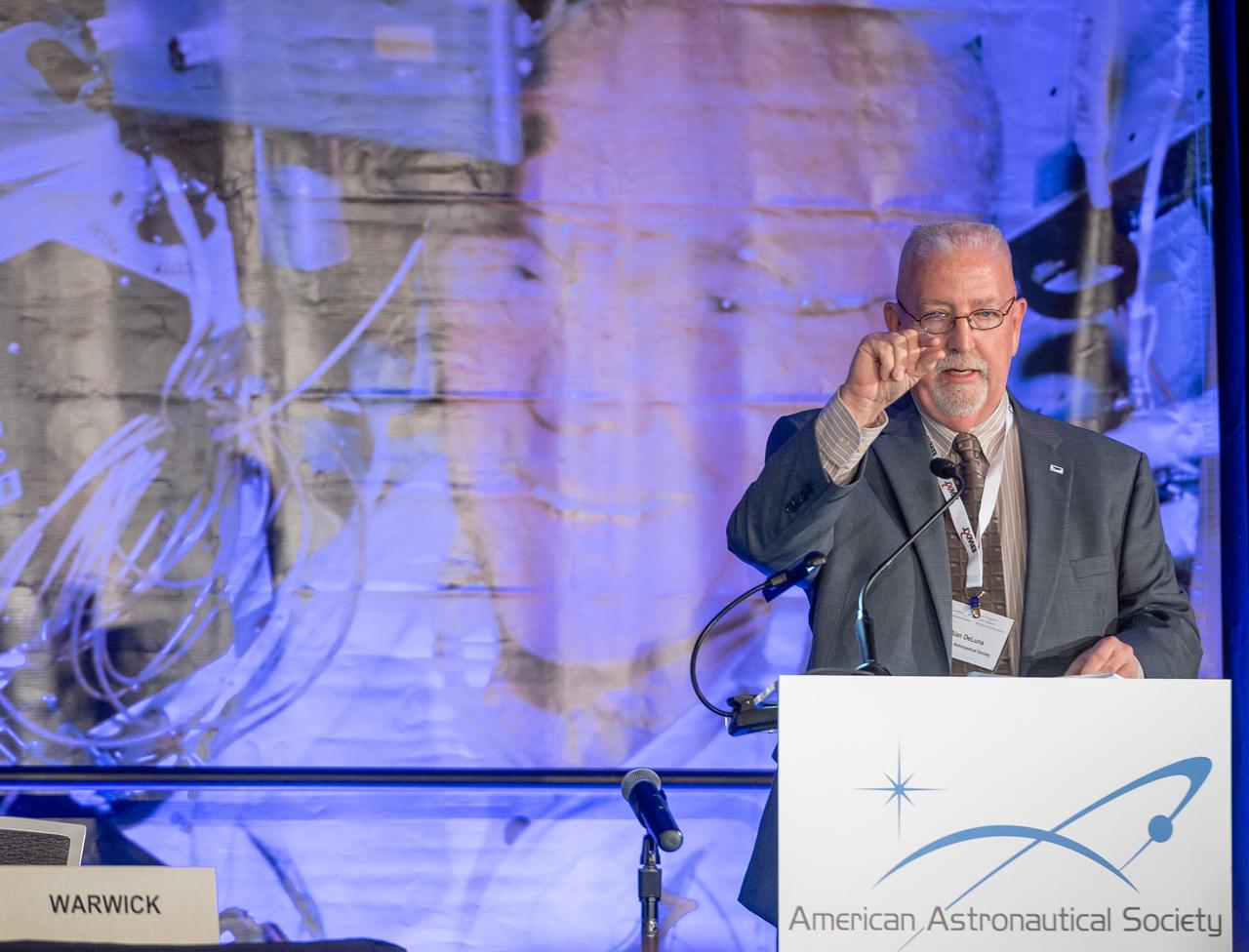
The inaugural Glenn Symposium focused on advancements in aerospace technology including power and propulsion, autonomy and communications, low boom supersonics, hypersonics, and more. Discussion also encompassed humans returning to the moon, including challenges associated with the 2024 mission.
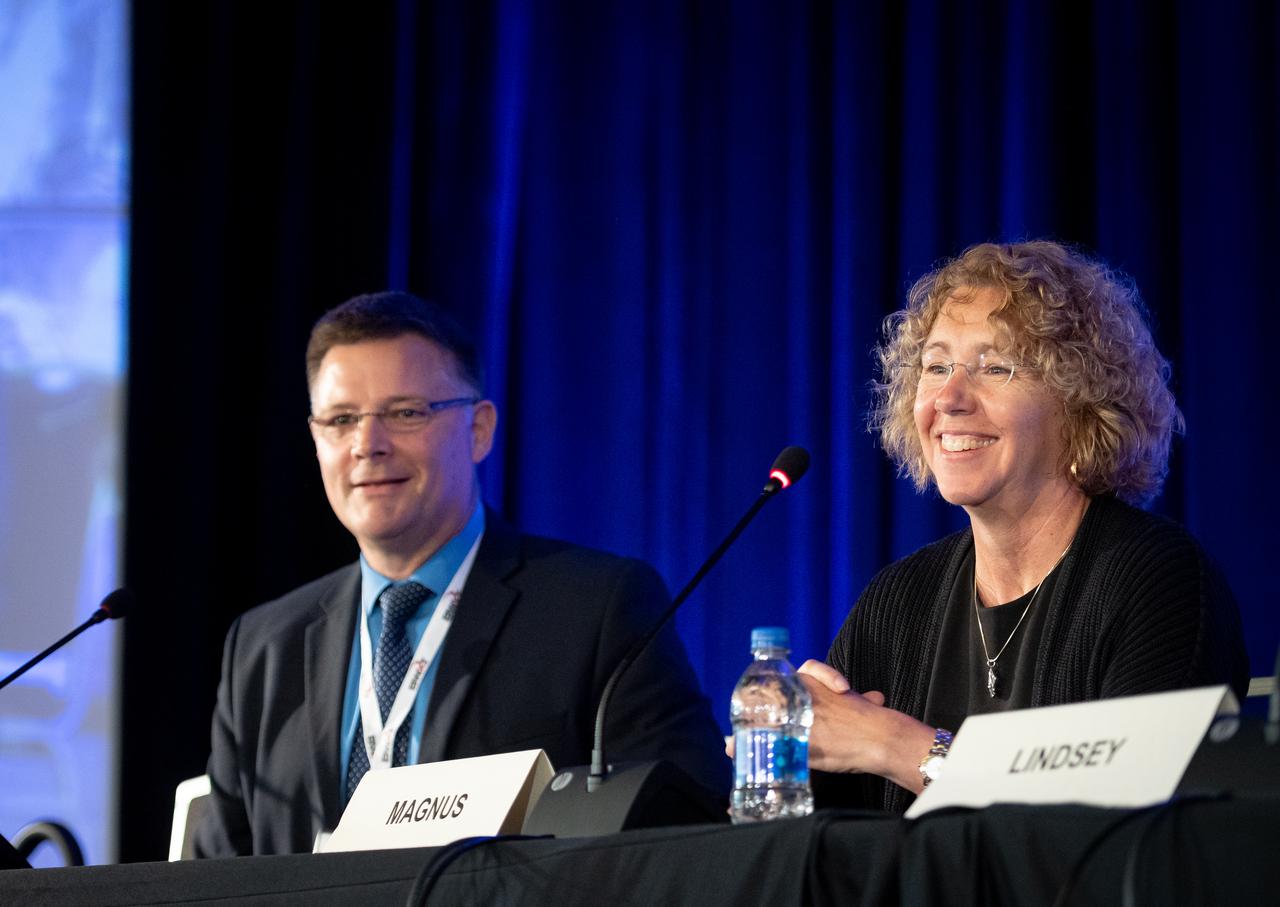
The inaugural Glenn Symposium focused on advancements in aerospace technology including power and propulsion, autonomy and communications, low boom supersonics, hypersonics, and more. Discussion also encompassed humans returning to the moon, including challenges associated with the 2024 mission.
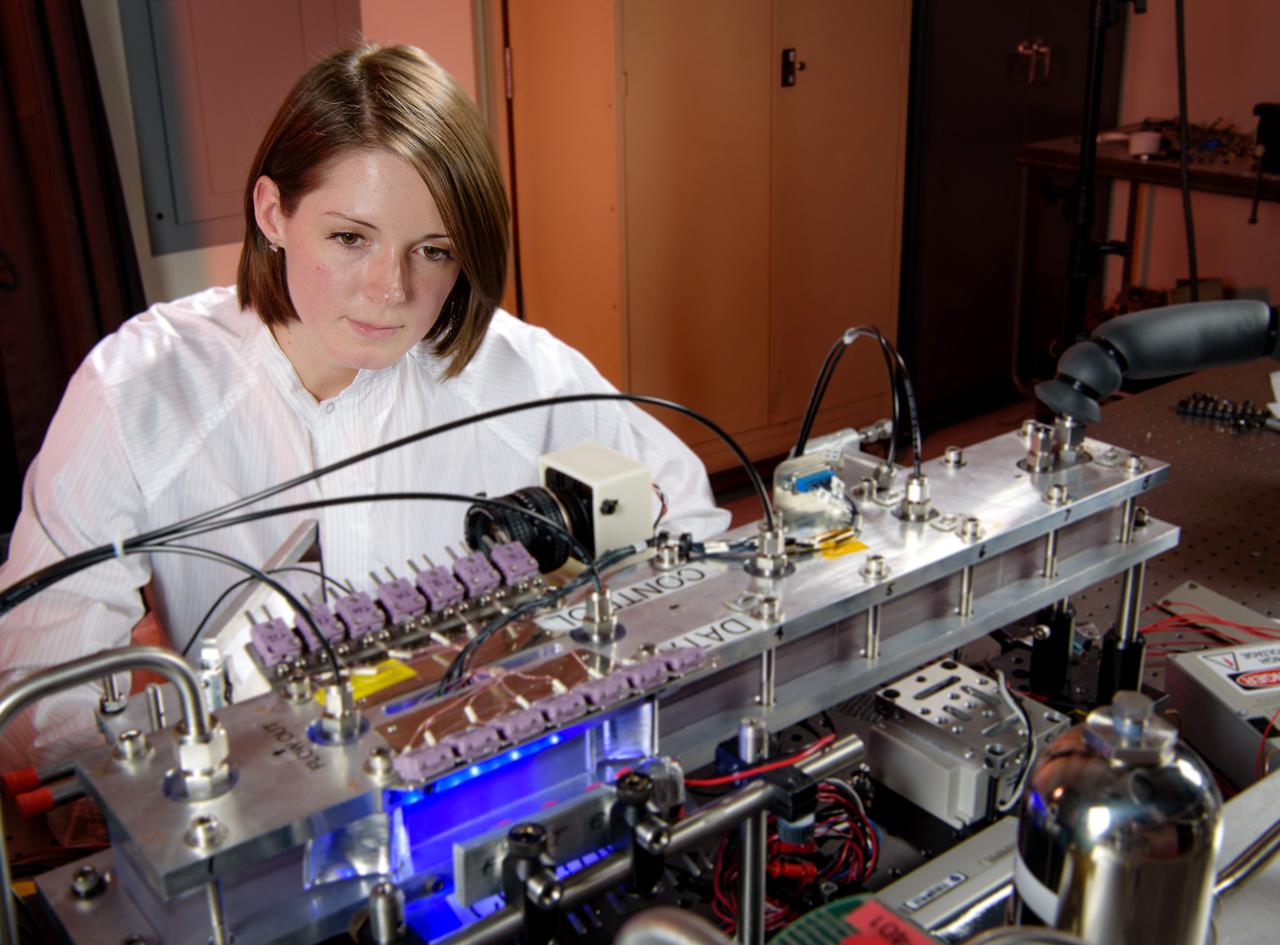
Grace Gaskin, an Aerospace Flight Systems Engineer Trainee, was sworn in as a civil servant in September 2017. After serving for 6 years in the U.S. Army she enrolled at Case Western Reserve University and will graduate in May 2018 with a degree in Chemical Engineering. As a Pathways Intern one of the many projects she has worked on is the Flow Boiling and Condensation Experiments (FBCE). The proposed research aims to develop an integrated two-phase flow boiling/condensation facility for the International Space Station (ISS) to serve as a primary platform for obtaining two-phase flow and heat transfer data in microgravity. By comparing the microgravity data against those obtained in Earth's gravity, it will be possible to ascertain the influence of body force on two-phase transport phenomena in pursuit of mechanistic models as well as correlations, and to help determine the minimum flow criteria to ensure gravity independent flow boiling and condensation.
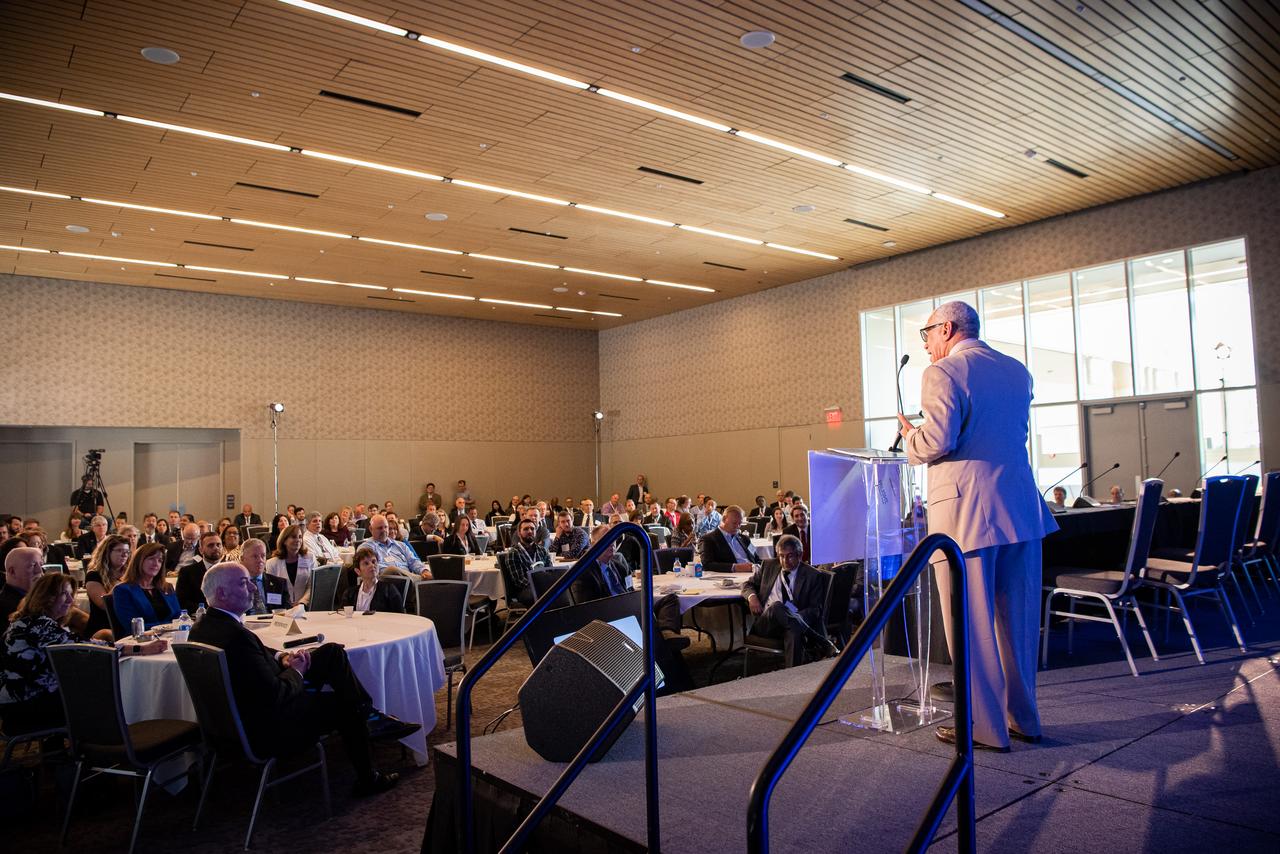
The inaugural Glenn Symposium focused on advancements in aerospace technology including power and propulsion, autonomy and communications, low boom supersonics, hypersonics, and more. Discussion also encompassed humans returning to the moon, including challenges associated with the 2024 mission.

The inaugural Glenn Symposium focused on advancements in aerospace technology including power and propulsion, autonomy and communications, low boom supersonics, hypersonics, and more. Discussion also encompassed humans returning to the moon, including challenges associated with the 2024 mission.
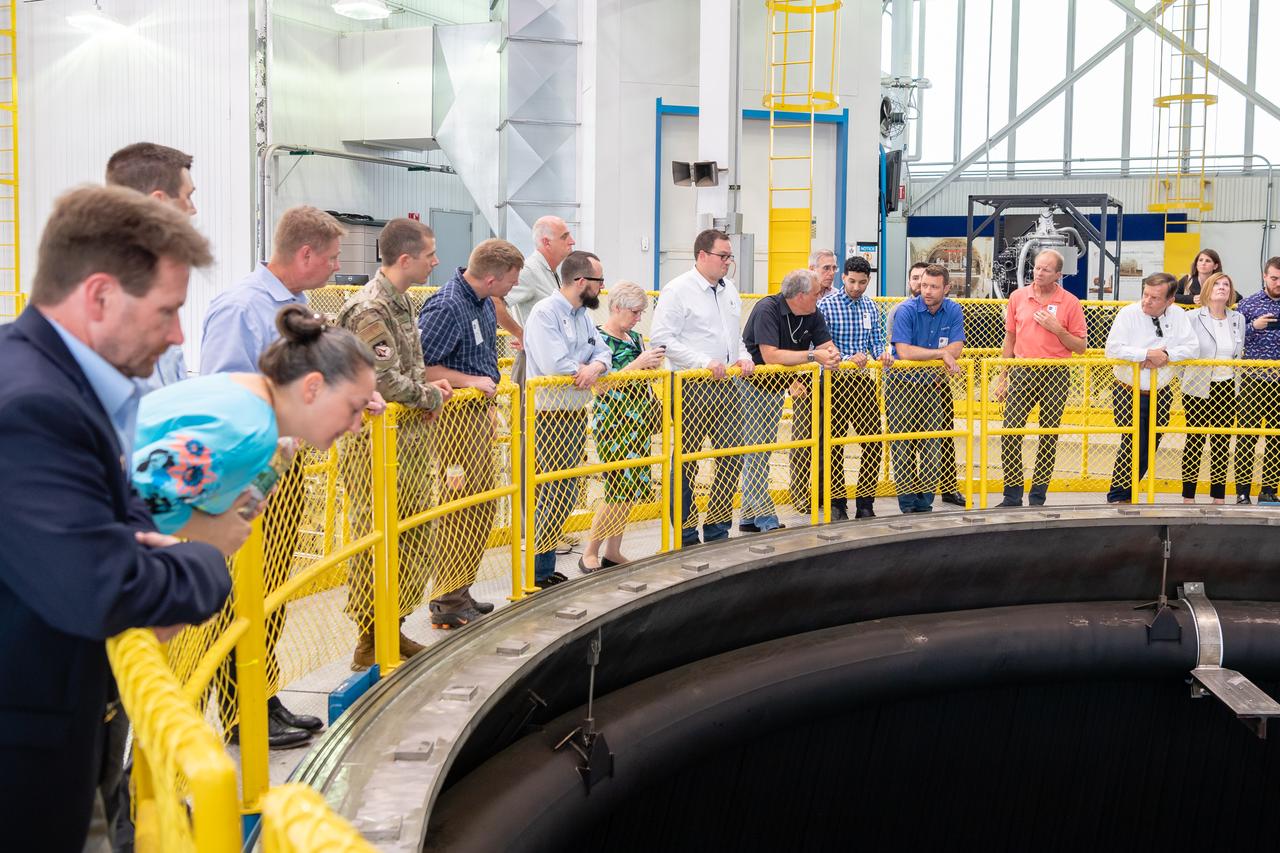
The inaugural Glenn Symposium focused on advancements in aerospace technology including power and propulsion, autonomy and communications, low boom supersonics, hypersonics, and more. Discussion also encompassed humans returning to the moon, including challenges associated with the 2024 mission.
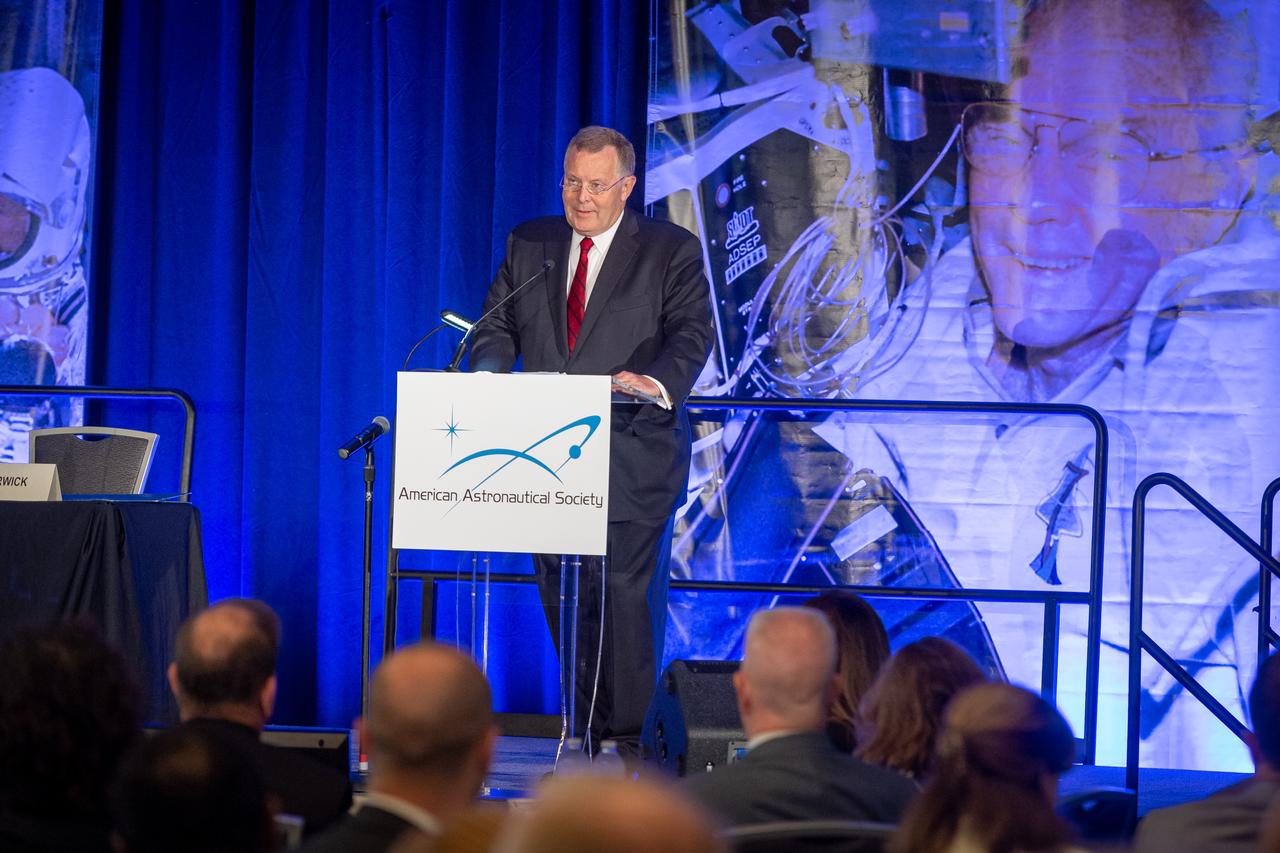
The inaugural Glenn Symposium focused on advancements in aerospace technology including power and propulsion, autonomy and communications, low boom supersonics, hypersonics, and more. Discussion also encompassed humans returning to the moon, including challenges associated with the 2024 mission.
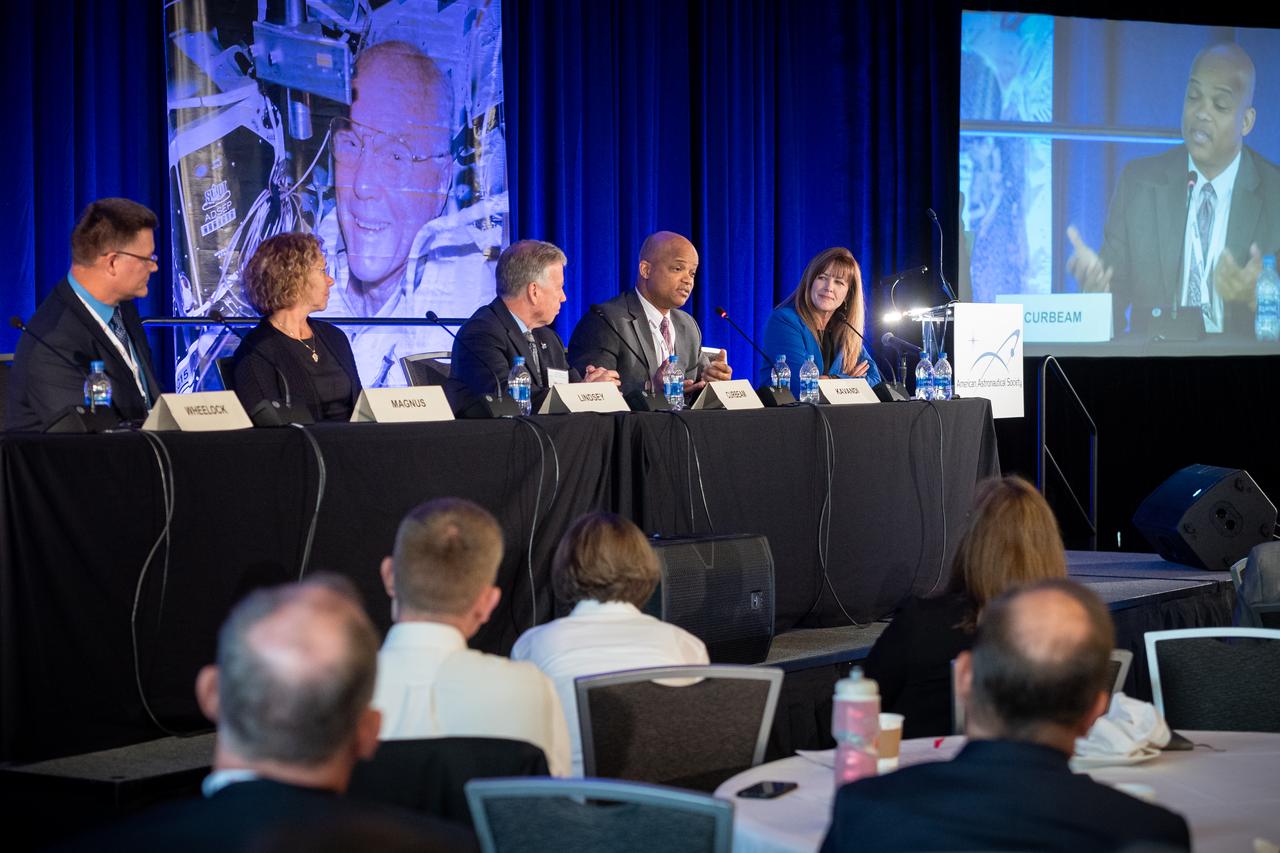
The inaugural Glenn Symposium focused on advancements in aerospace technology including power and propulsion, autonomy and communications, low boom supersonics, hypersonics, and more. Discussion also encompassed humans returning to the moon, including challenges associated with the 2024 mission.
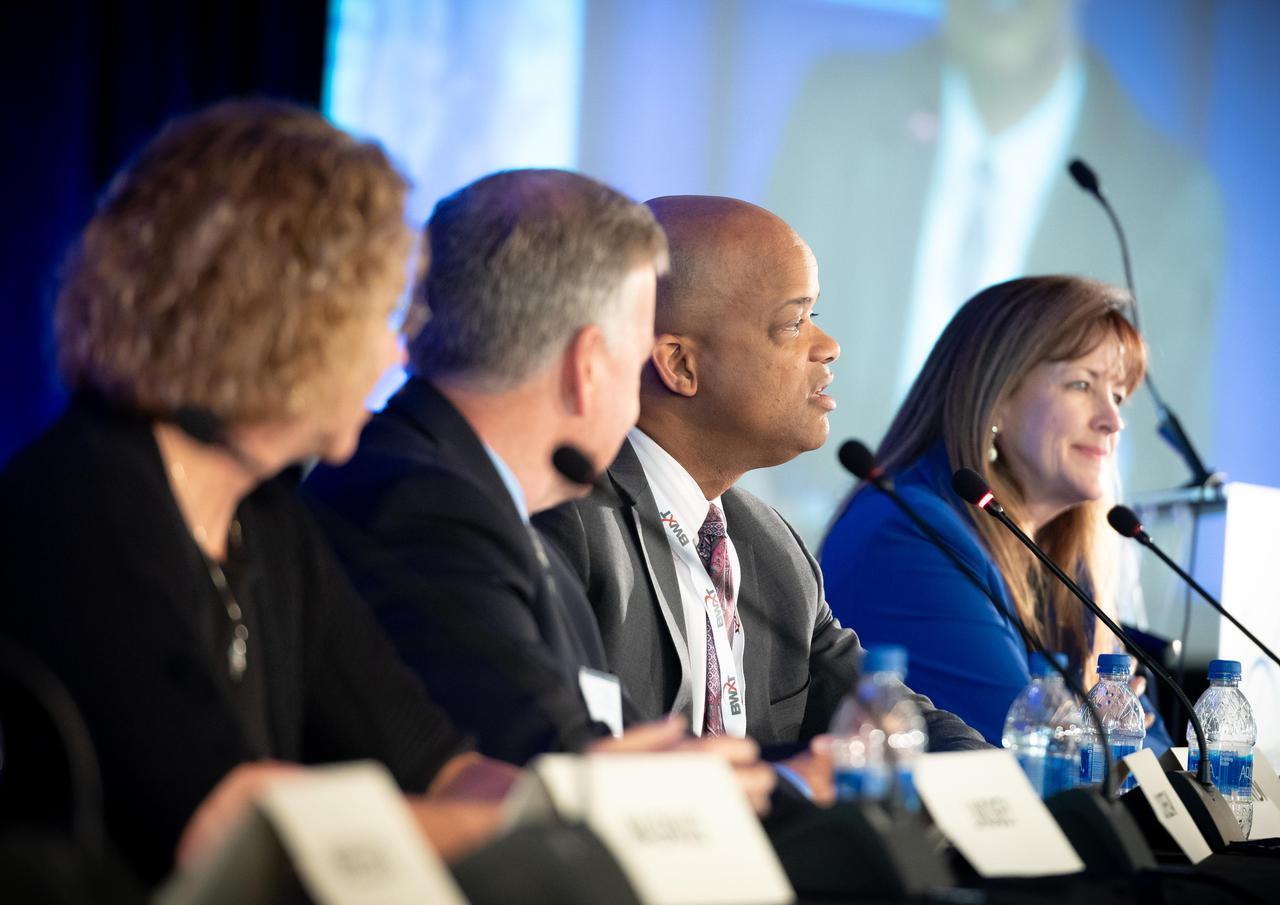
The inaugural Glenn Symposium focused on advancements in aerospace technology including power and propulsion, autonomy and communications, low boom supersonics, hypersonics, and more. Discussion also encompassed humans returning to the moon, including challenges associated with the 2024 mission.
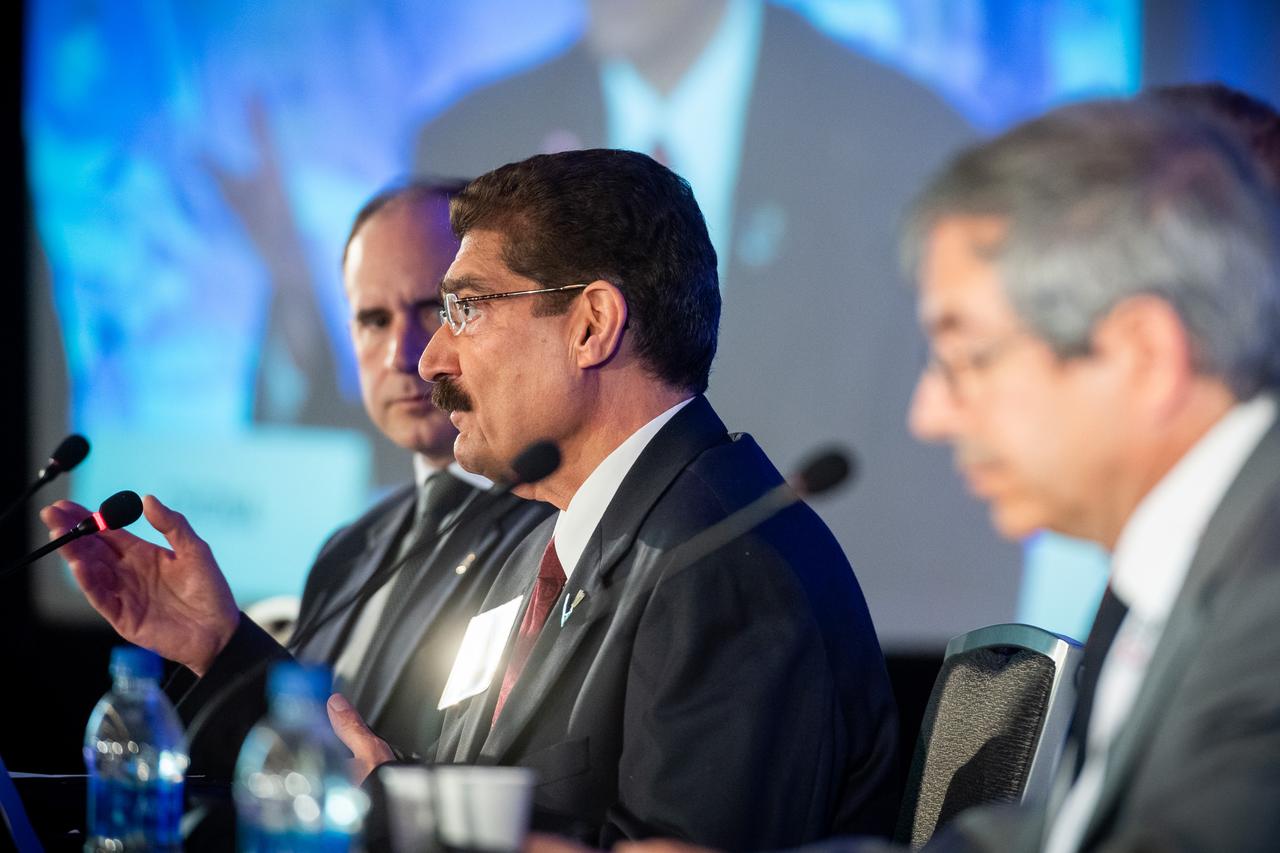
The inaugural Glenn Symposium focused on advancements in aerospace technology including power and propulsion, autonomy and communications, low boom supersonics, hypersonics, and more. Discussion also encompassed humans returning to the moon, including challenges associated with the 2024 mission.
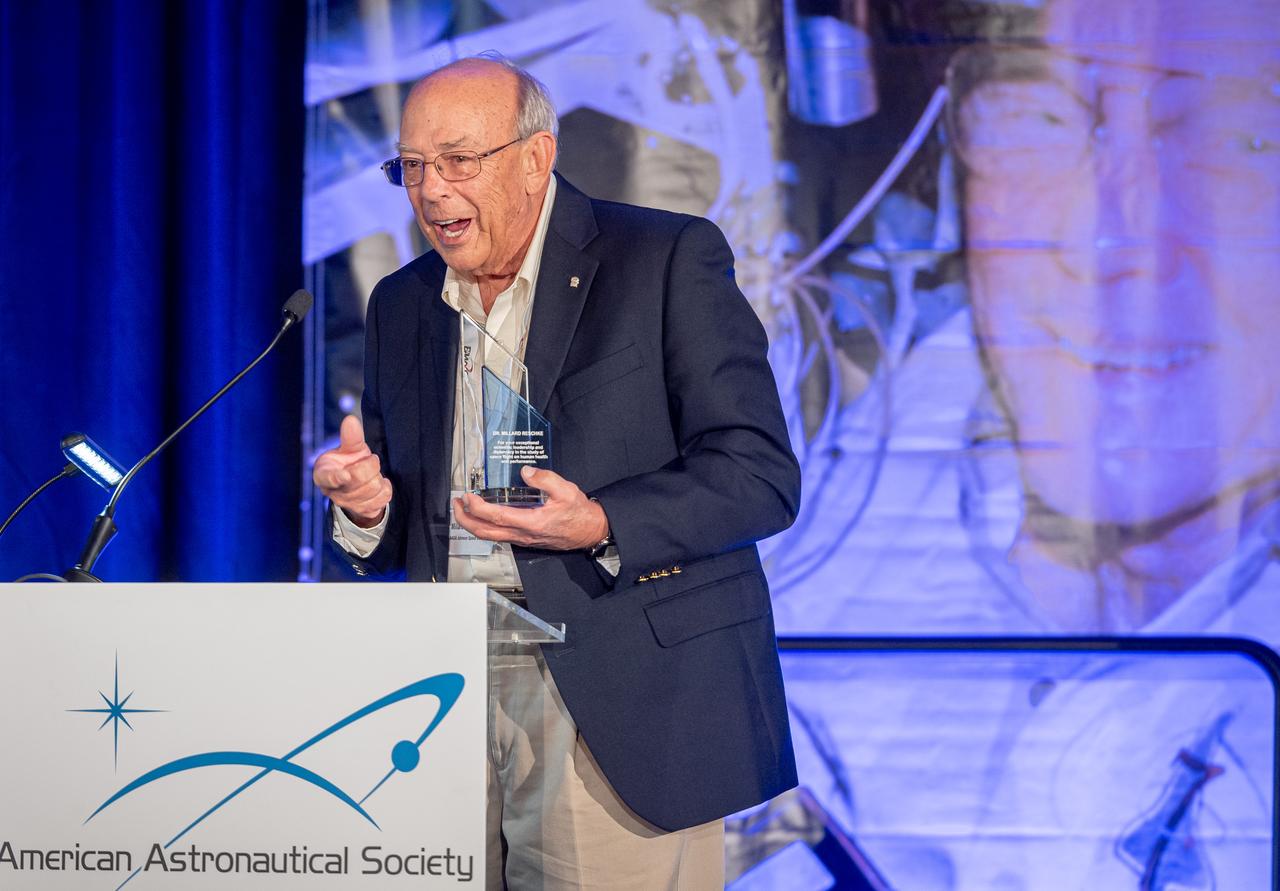
The inaugural Glenn Symposium focused on advancements in aerospace technology including power and propulsion, autonomy and communications, low boom supersonics, hypersonics, and more. Discussion also encompassed humans returning to the moon, including challenges associated with the 2024 mission.
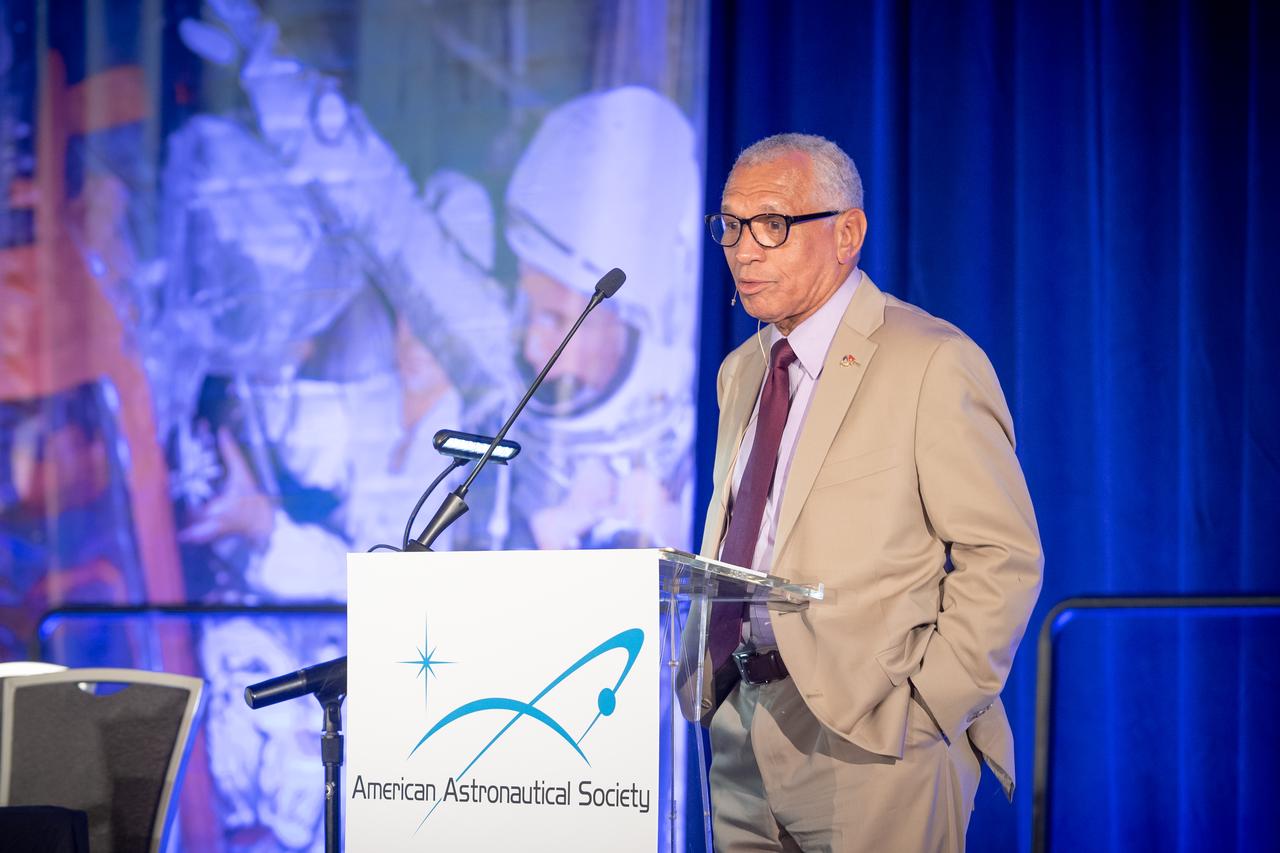
The inaugural Glenn Symposium focused on advancements in aerospace technology including power and propulsion, autonomy and communications, low boom supersonics, hypersonics, and more. Discussion also encompassed humans returning to the moon, including challenges associated with the 2024 mission.
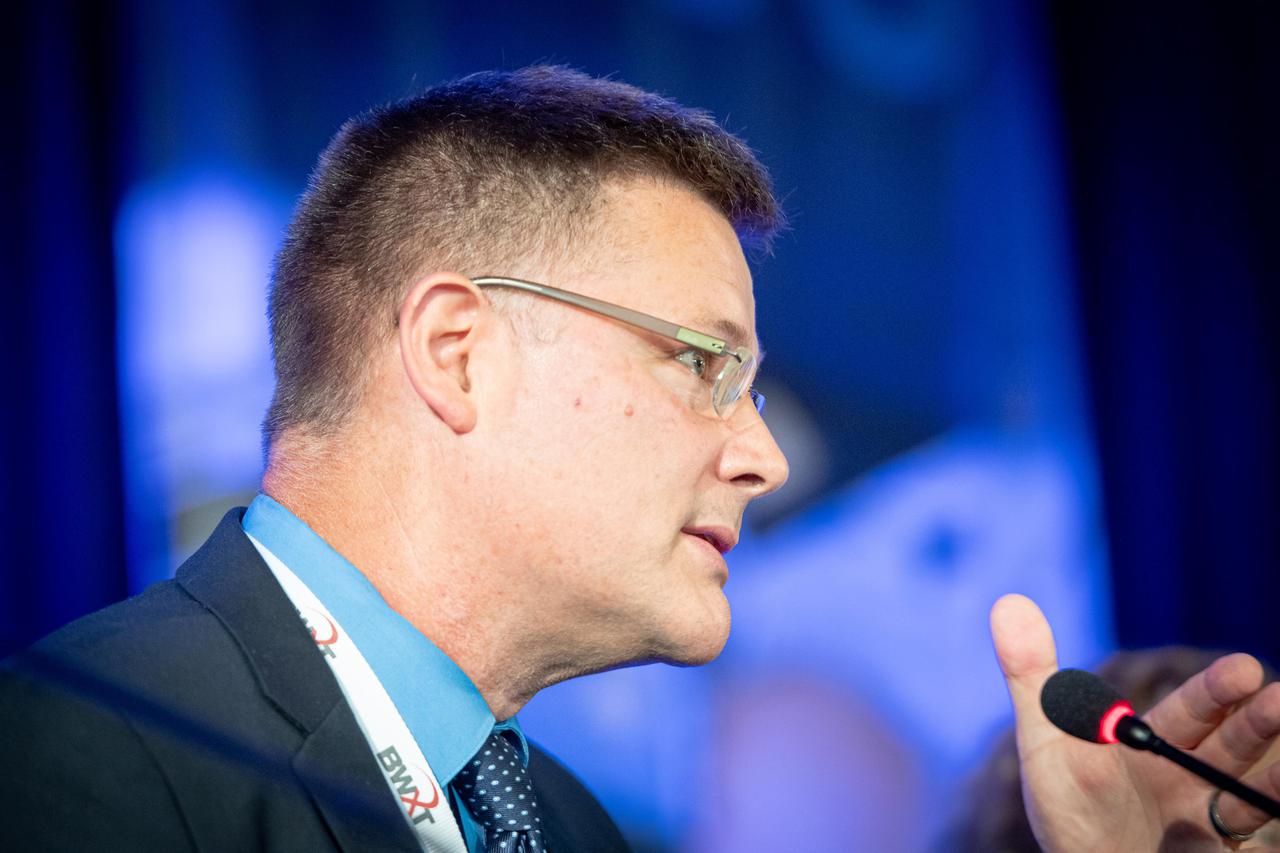
The inaugural Glenn Symposium focused on advancements in aerospace technology including power and propulsion, autonomy and communications, low boom supersonics, hypersonics, and more. Discussion also encompassed humans returning to the moon, including challenges associated with the 2024 mission.
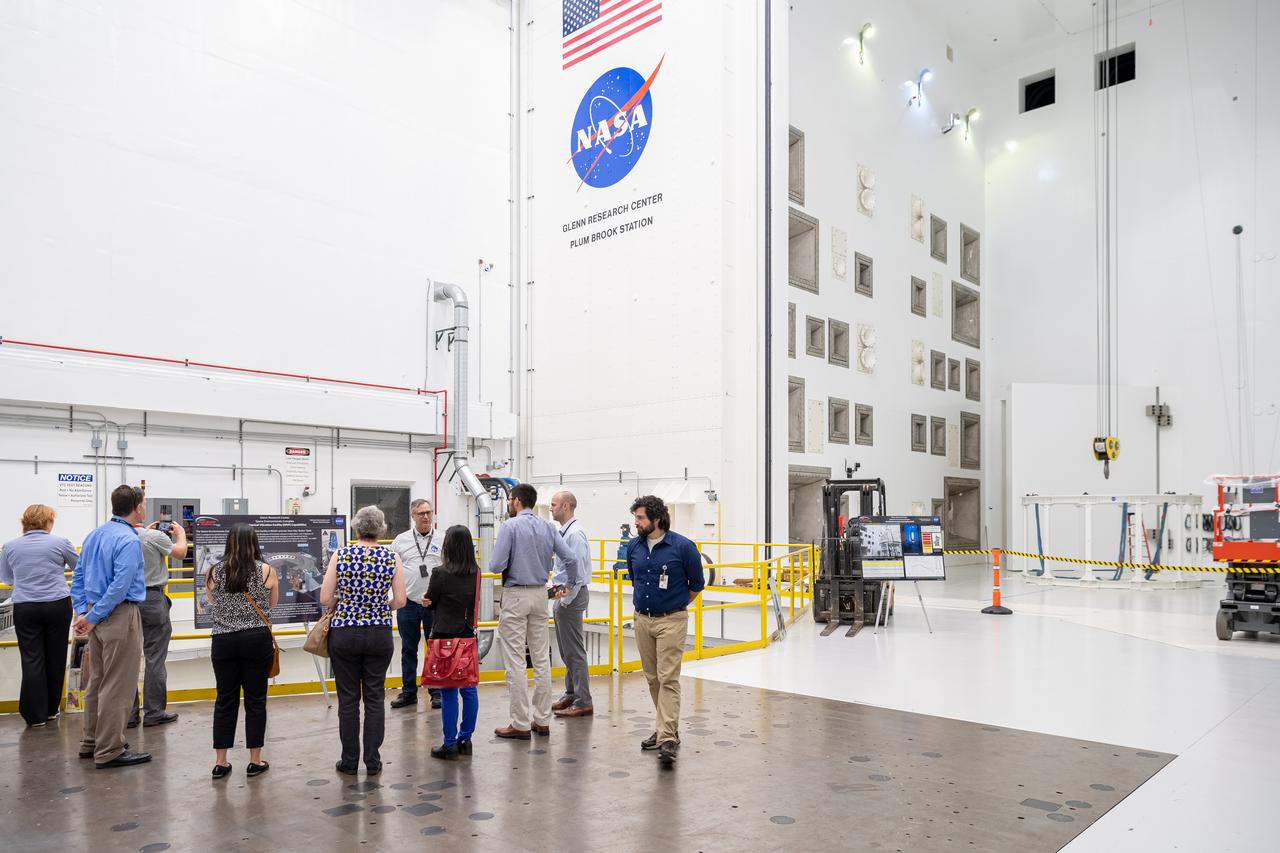
The inaugural Glenn Symposium focused on advancements in aerospace technology including power and propulsion, autonomy and communications, low boom supersonics, hypersonics, and more. Discussion also encompassed humans returning to the moon, including challenges associated with the 2024 mission.
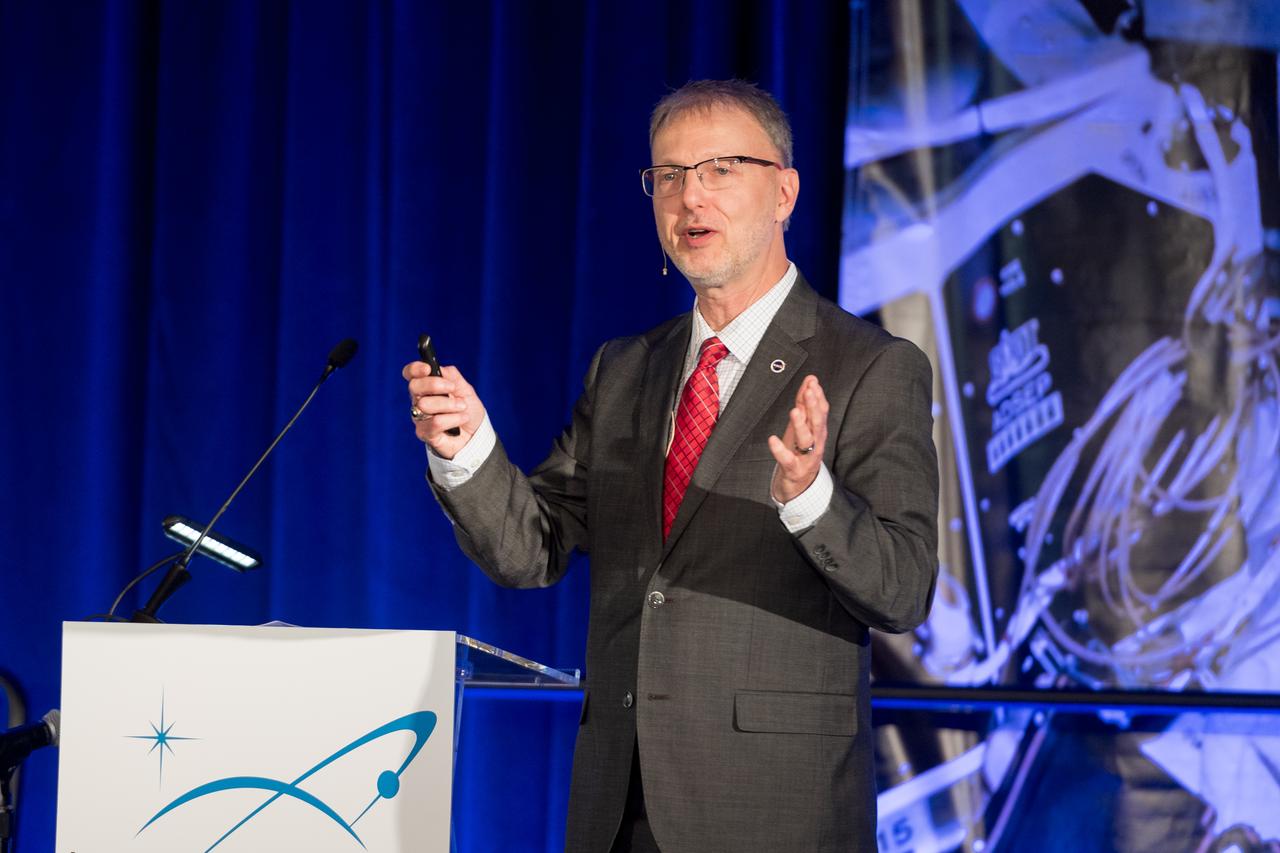
The inaugural Glenn Symposium focused on advancements in aerospace technology including power and propulsion, autonomy and communications, low boom supersonics, hypersonics, and more. Discussion also encompassed humans returning to the moon, including challenges associated with the 2024 mission.
The inaugural Glenn Symposium focused on advancements in aerospace technology including power and propulsion, autonomy and communications, low boom supersonics, hypersonics, and more. Discussion also encompassed humans returning to the moon, including challenges associated with the 2024 mission.

State of NASA Social Event
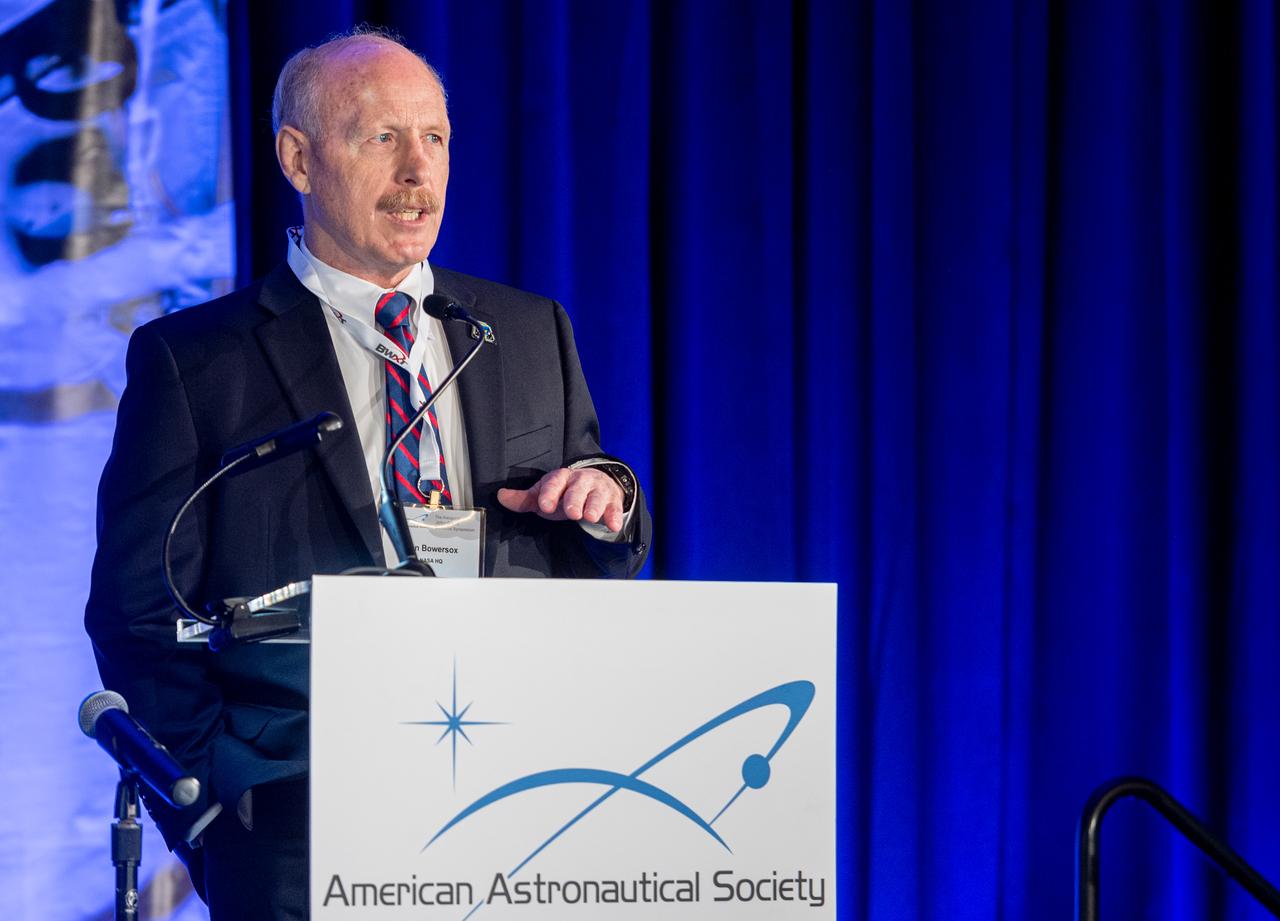
The inaugural Glenn Symposium focused on advancements in aerospace technology including power and propulsion, autonomy and communications, low boom supersonics, hypersonics, and more. Discussion also encompassed humans returning to the moon, including challenges associated with the 2024 mission.

The inaugural Glenn Symposium focused on advancements in aerospace technology including power and propulsion, autonomy and communications, low boom supersonics, hypersonics, and more. Discussion also encompassed humans returning to the moon, including challenges associated with the 2024 mission.
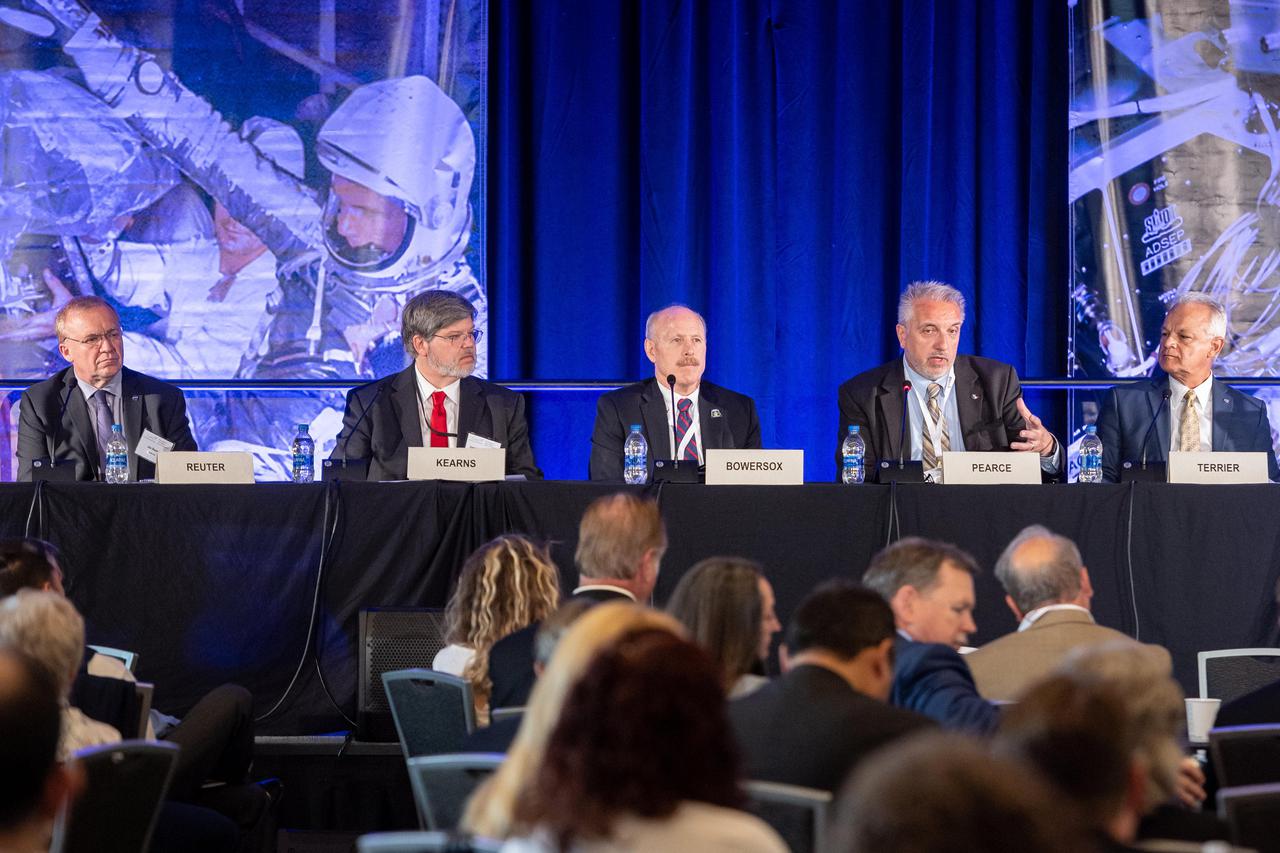
The inaugural Glenn Symposium focused on advancements in aerospace technology including power and propulsion, autonomy and communications, low boom supersonics, hypersonics, and more. Discussion also encompassed humans returning to the moon, including challenges associated with the 2024 mission.
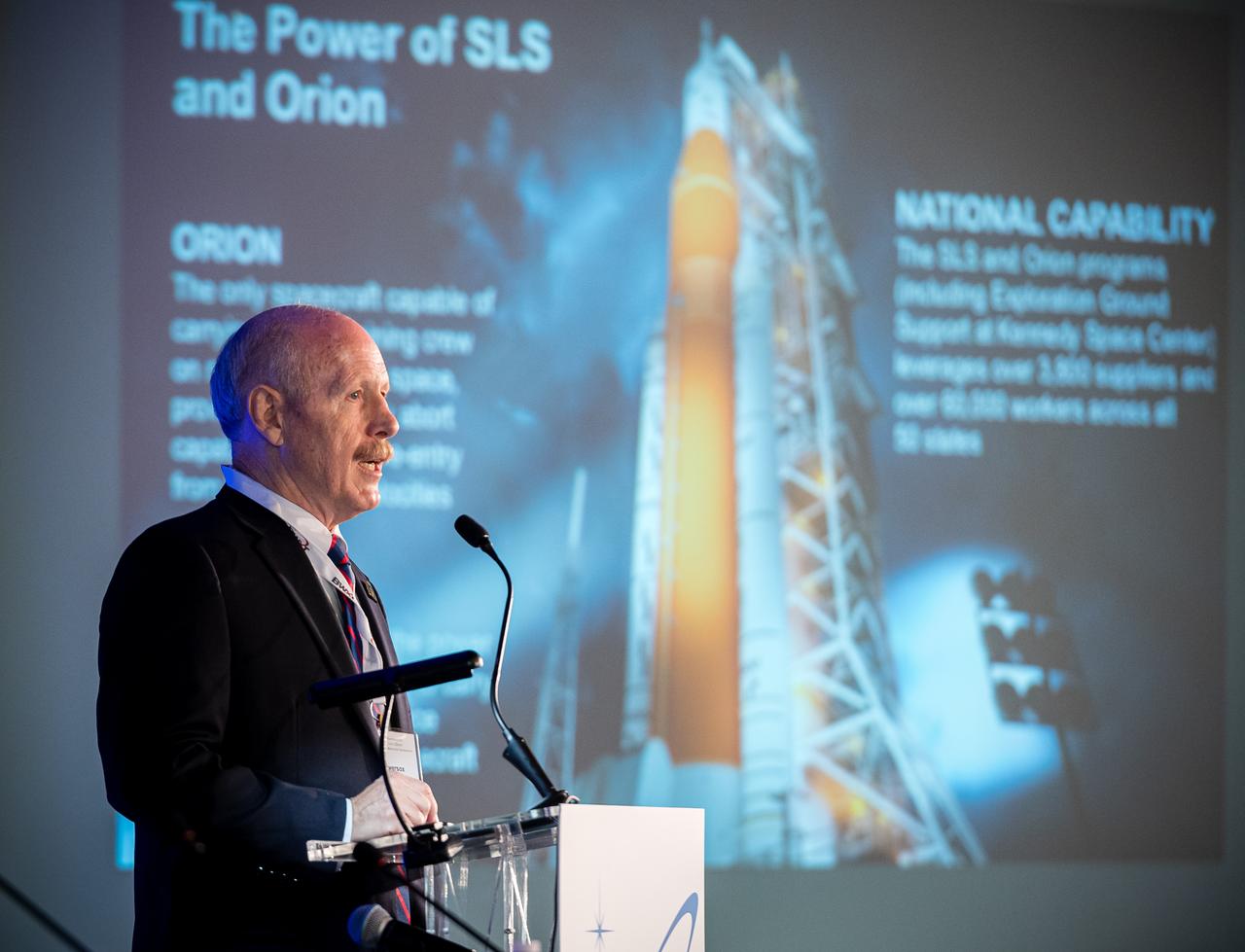
The inaugural Glenn Symposium focused on advancements in aerospace technology including power and propulsion, autonomy and communications, low boom supersonics, hypersonics, and more. Discussion also encompassed humans returning to the moon, including challenges associated with the 2024 mission.
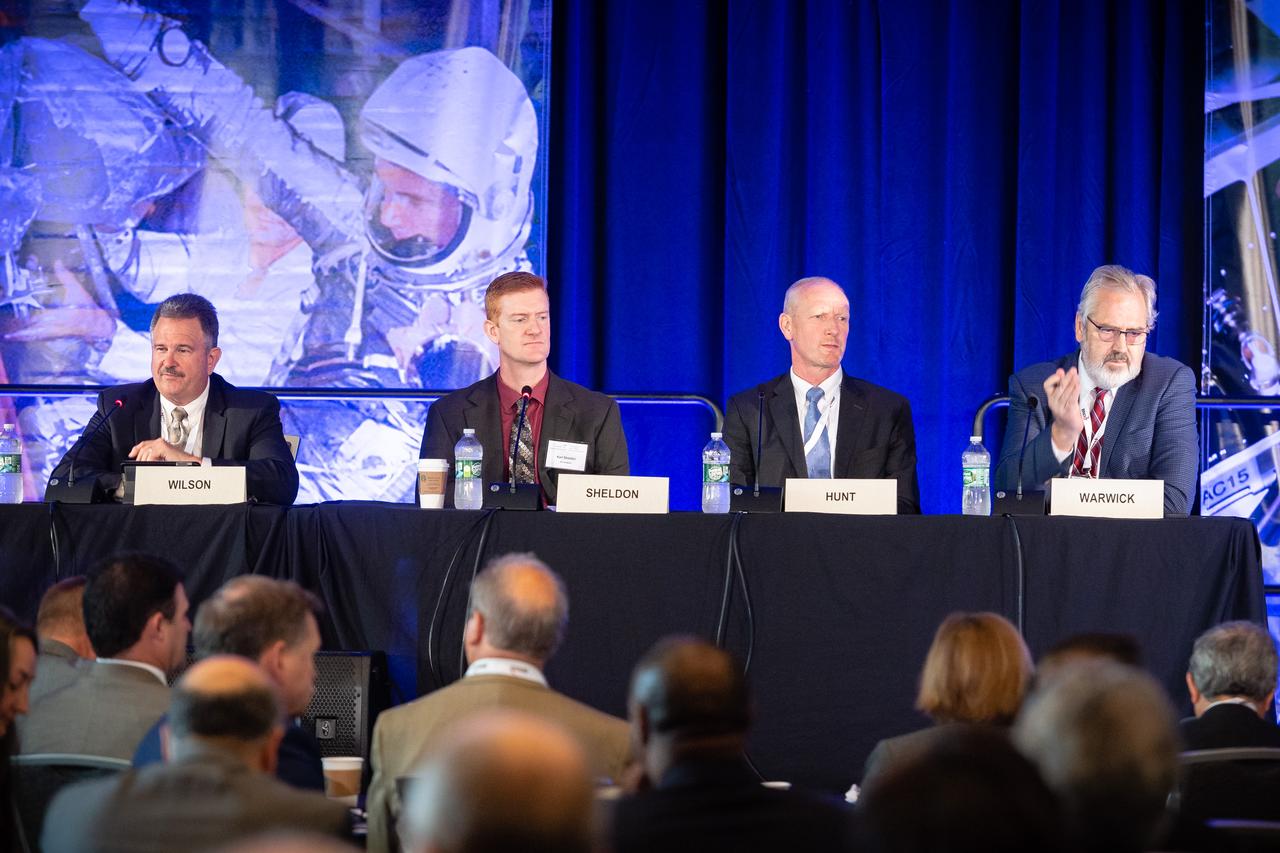
The inaugural Glenn Symposium focused on advancements in aerospace technology including power and propulsion, autonomy and communications, low boom supersonics, hypersonics, and more. Discussion also encompassed humans returning to the moon, including challenges associated with the 2024 mission.
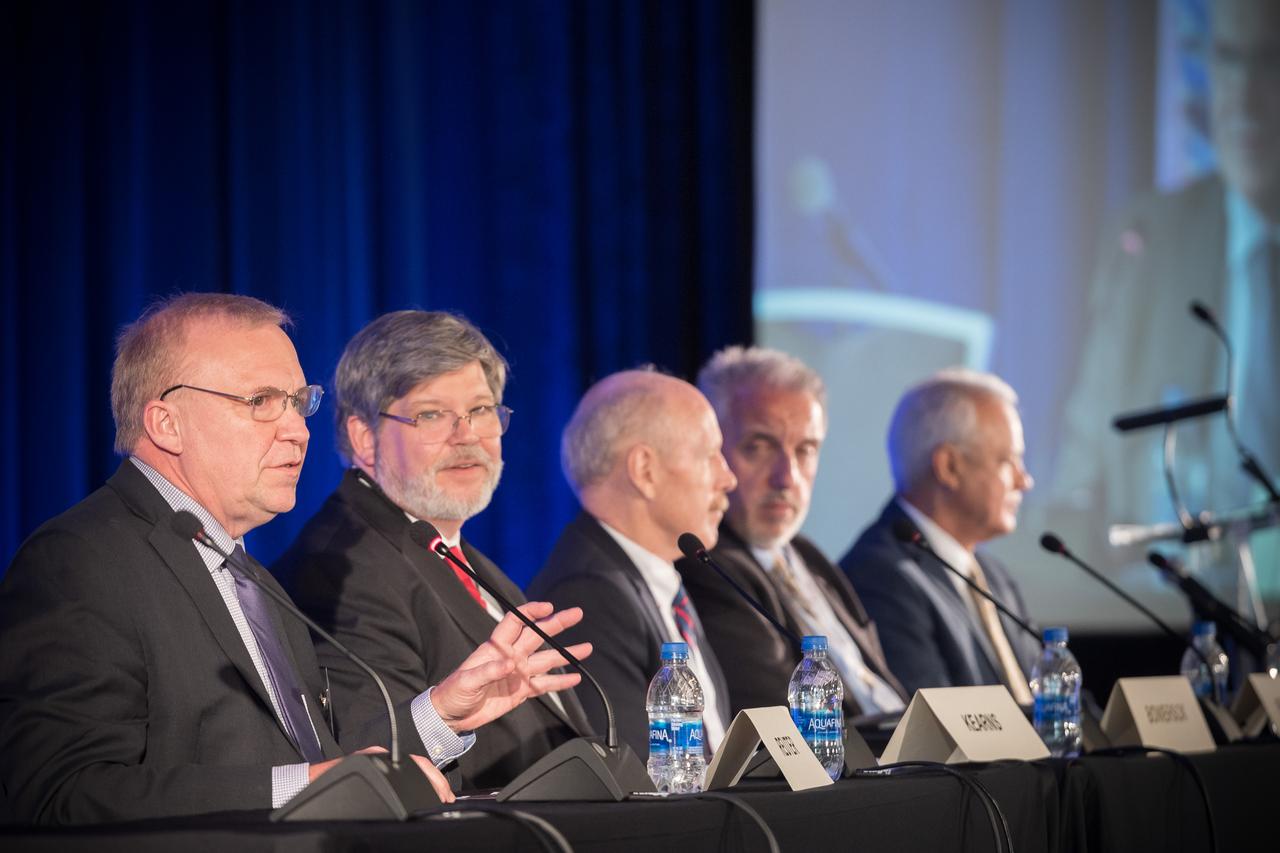
The inaugural Glenn Symposium focused on advancements in aerospace technology including power and propulsion, autonomy and communications, low boom supersonics, hypersonics, and more. Discussion also encompassed humans returning to the moon, including challenges associated with the 2024 mission.

The inaugural Glenn Symposium focused on advancements in aerospace technology including power and propulsion, autonomy and communications, low boom supersonics, hypersonics, and more. Discussion also encompassed humans returning to the moon, including challenges associated with the 2024 mission.

The inaugural Glenn Symposium focused on advancements in aerospace technology including power and propulsion, autonomy and communications, low boom supersonics, hypersonics, and more. Discussion also encompassed humans returning to the moon, including challenges associated with the 2024 mission.

The inaugural Glenn Symposium focused on advancements in aerospace technology including power and propulsion, autonomy and communications, low boom supersonics, hypersonics, and more. Discussion also encompassed humans returning to the moon, including challenges associated with the 2024 mission.
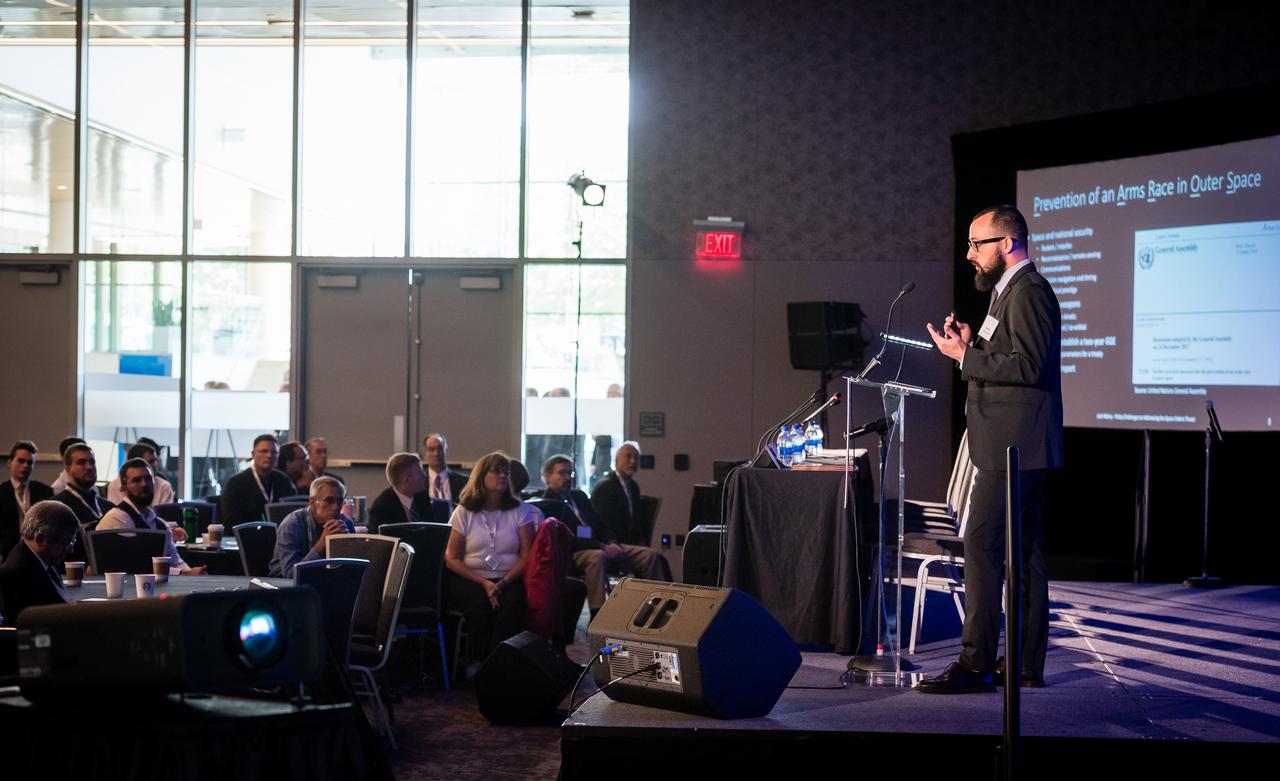
The inaugural Glenn Symposium focused on advancements in aerospace technology including power and propulsion, autonomy and communications, low boom supersonics, hypersonics, and more. Discussion also encompassed humans returning to the moon, including challenges associated with the 2024 mission.
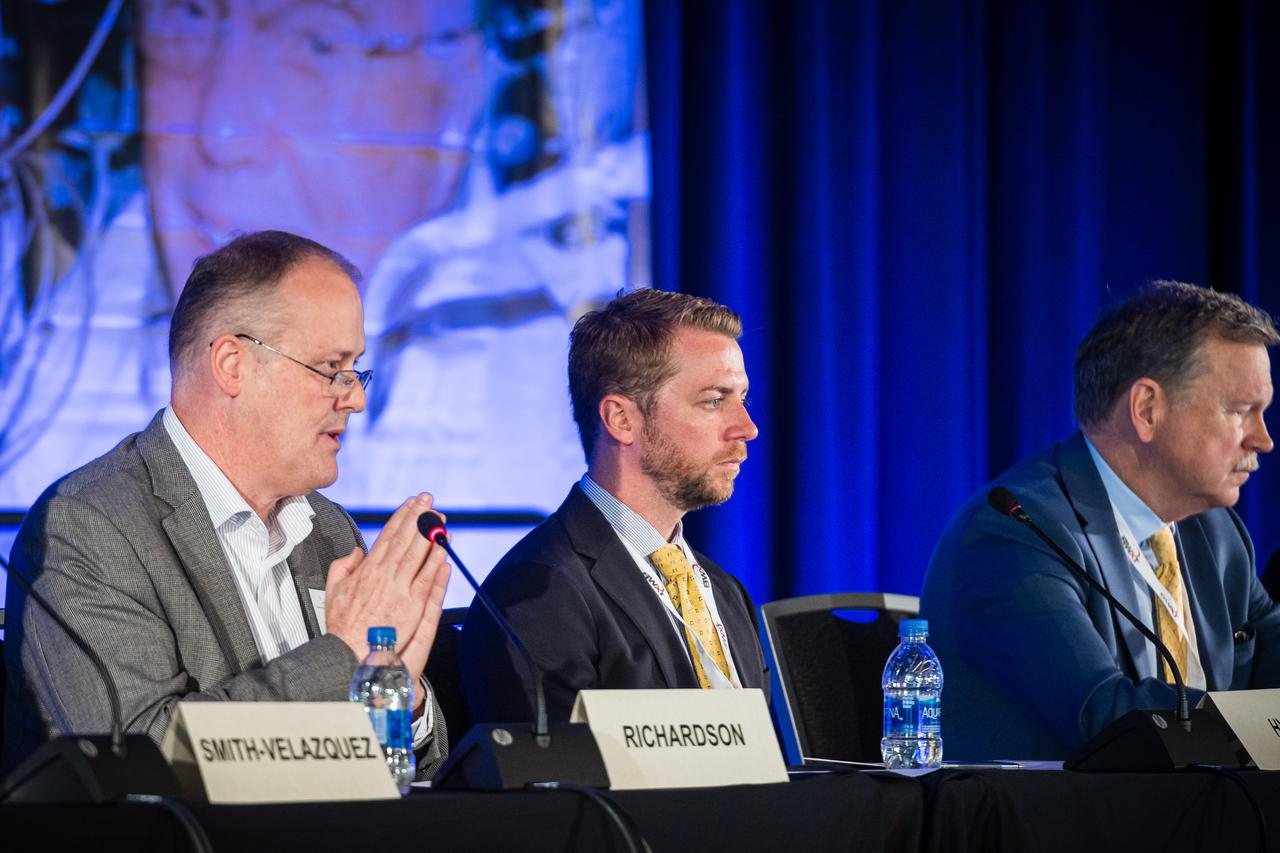
The inaugural Glenn Symposium focused on advancements in aerospace technology including power and propulsion, autonomy and communications, low boom supersonics, hypersonics, and more. Discussion also encompassed humans returning to the moon, including challenges associated with the 2024 mission.
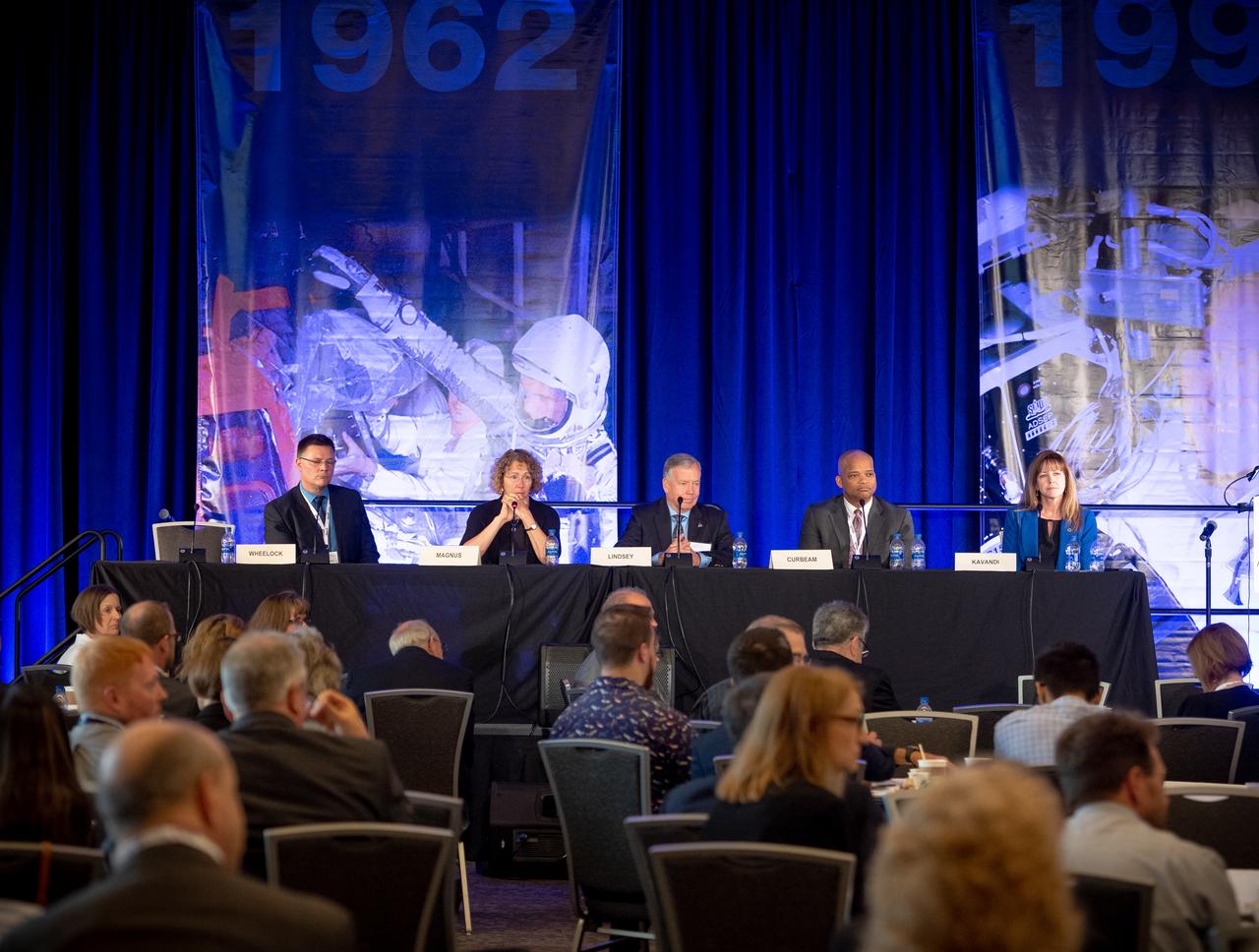
The inaugural Glenn Symposium focused on advancements in aerospace technology including power and propulsion, autonomy and communications, low boom supersonics, hypersonics, and more. Discussion also encompassed humans returning to the moon, including challenges associated with the 2024 mission.
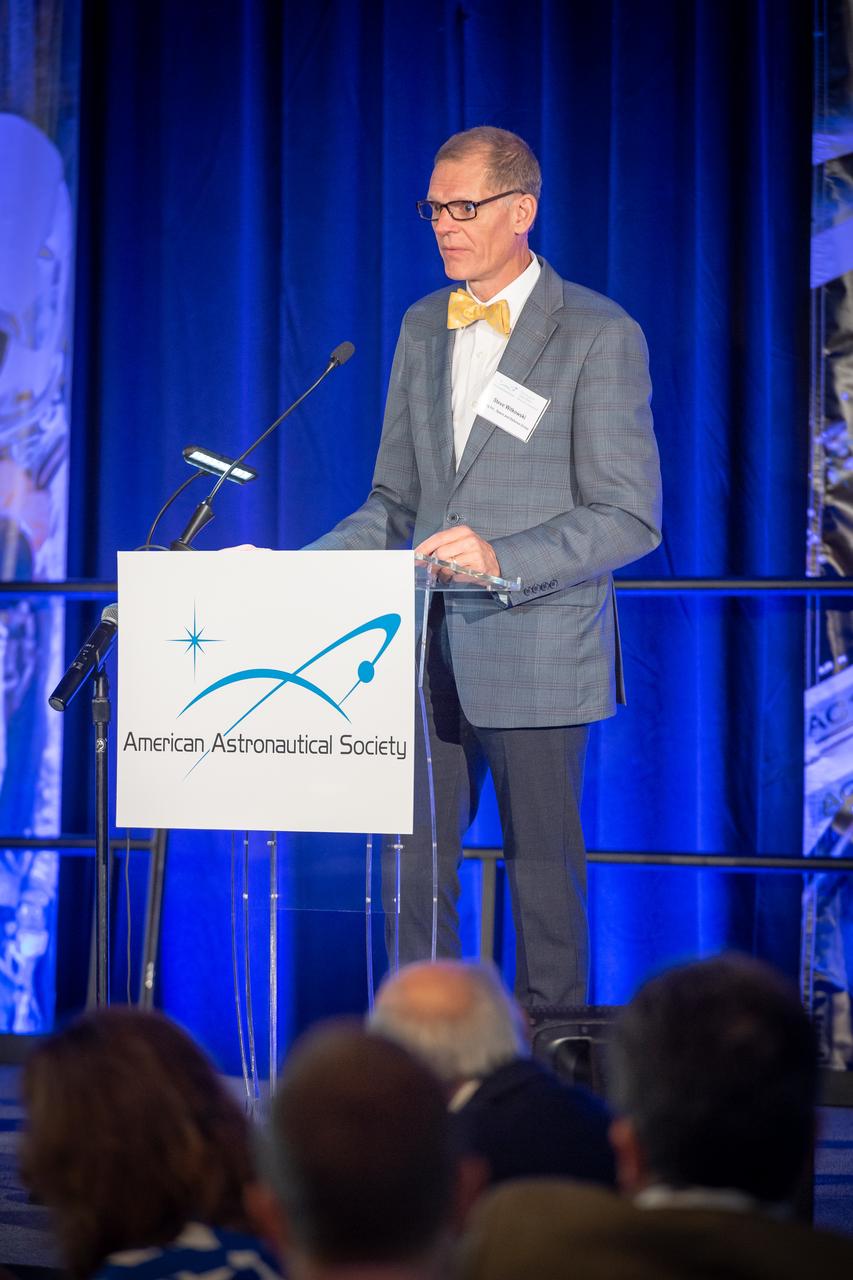
The inaugural Glenn Symposium focused on advancements in aerospace technology including power and propulsion, autonomy and communications, low boom supersonics, hypersonics, and more. Discussion also encompassed humans returning to the moon, including challenges associated with the 2024 mission.
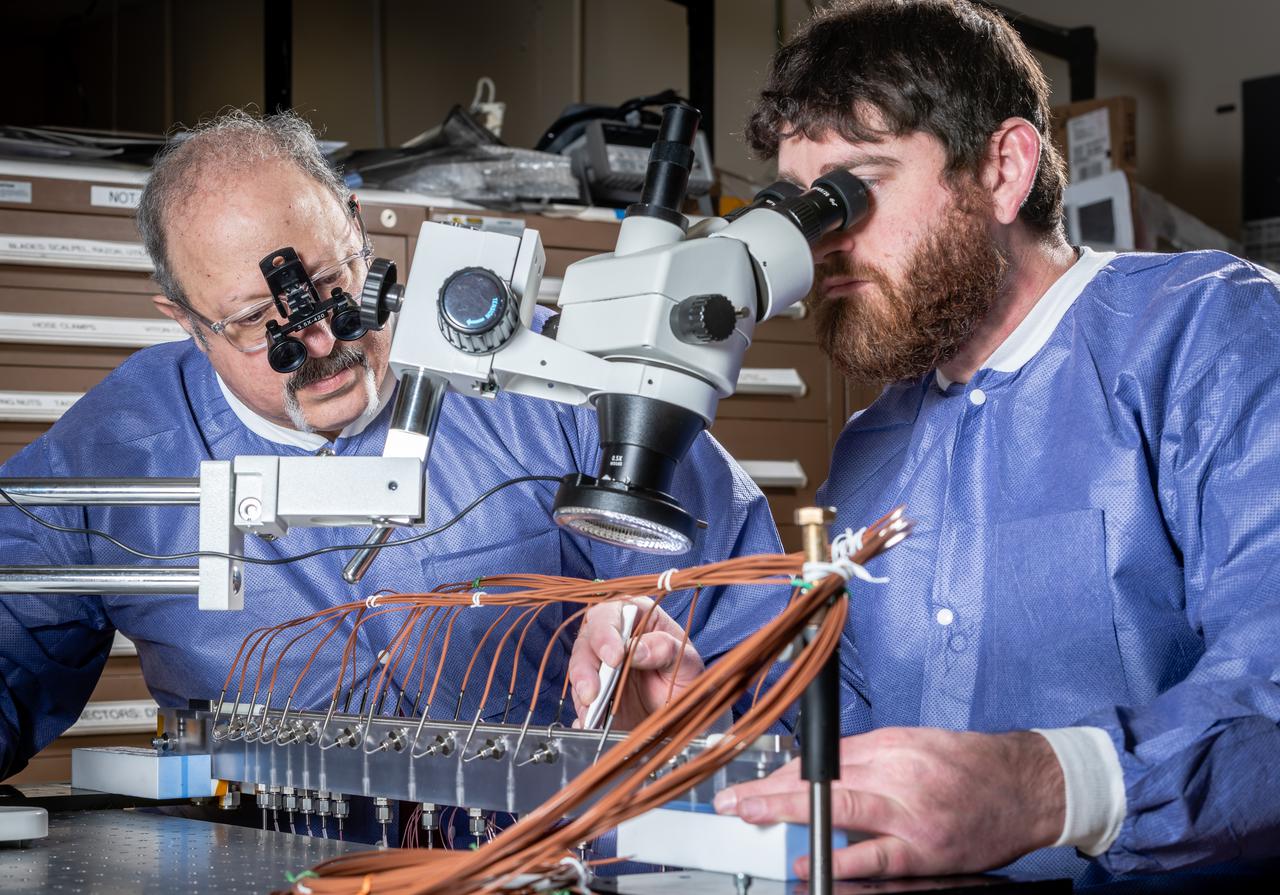
Flow Boiling Condensation Experiment, FBCE Micro Gravity Payload, Condensation Module – Heat Transfer (CM-HT) Test Section Hardware Fabrication
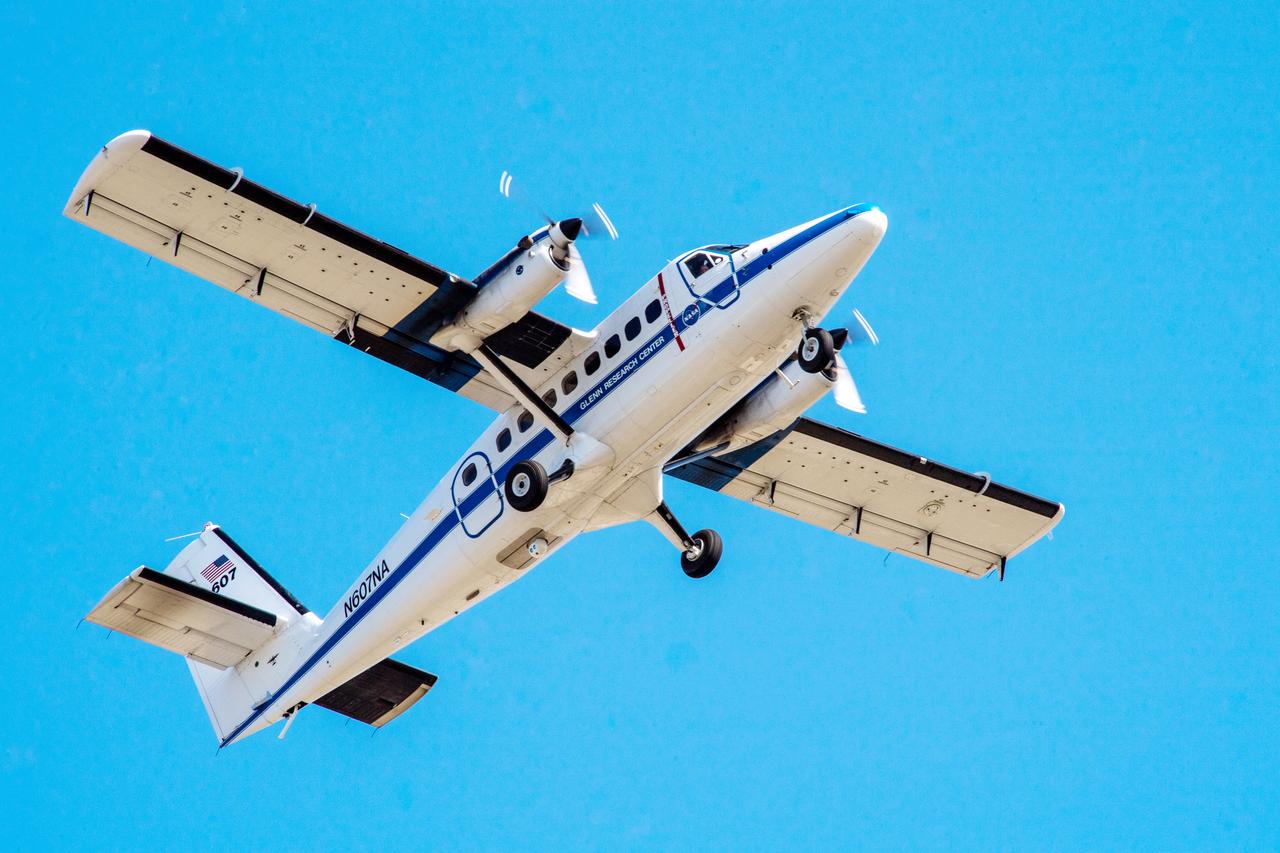
Twin Otter Aircraft, N607NA
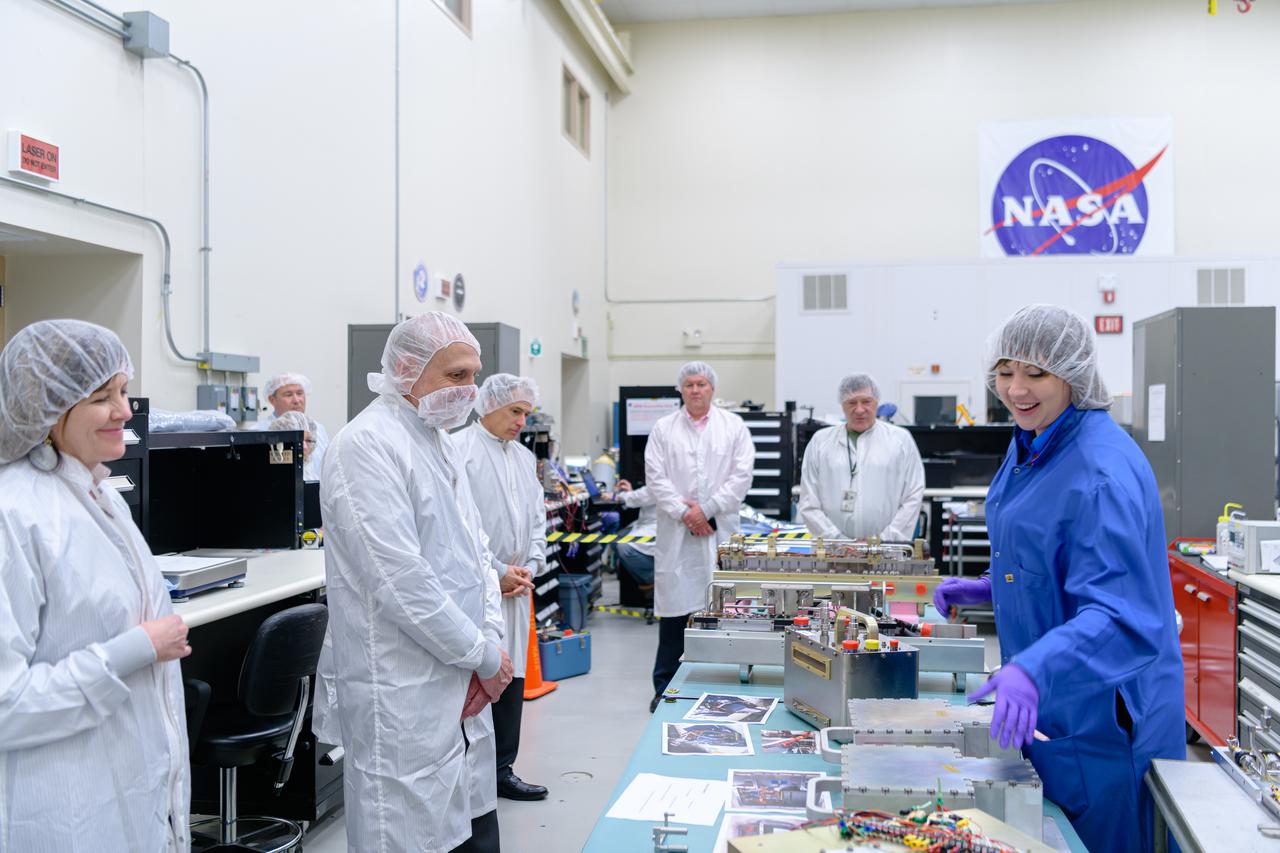
Visit to GRC Lewis Field by the Associate Administrator and Deputy Associate Administrator
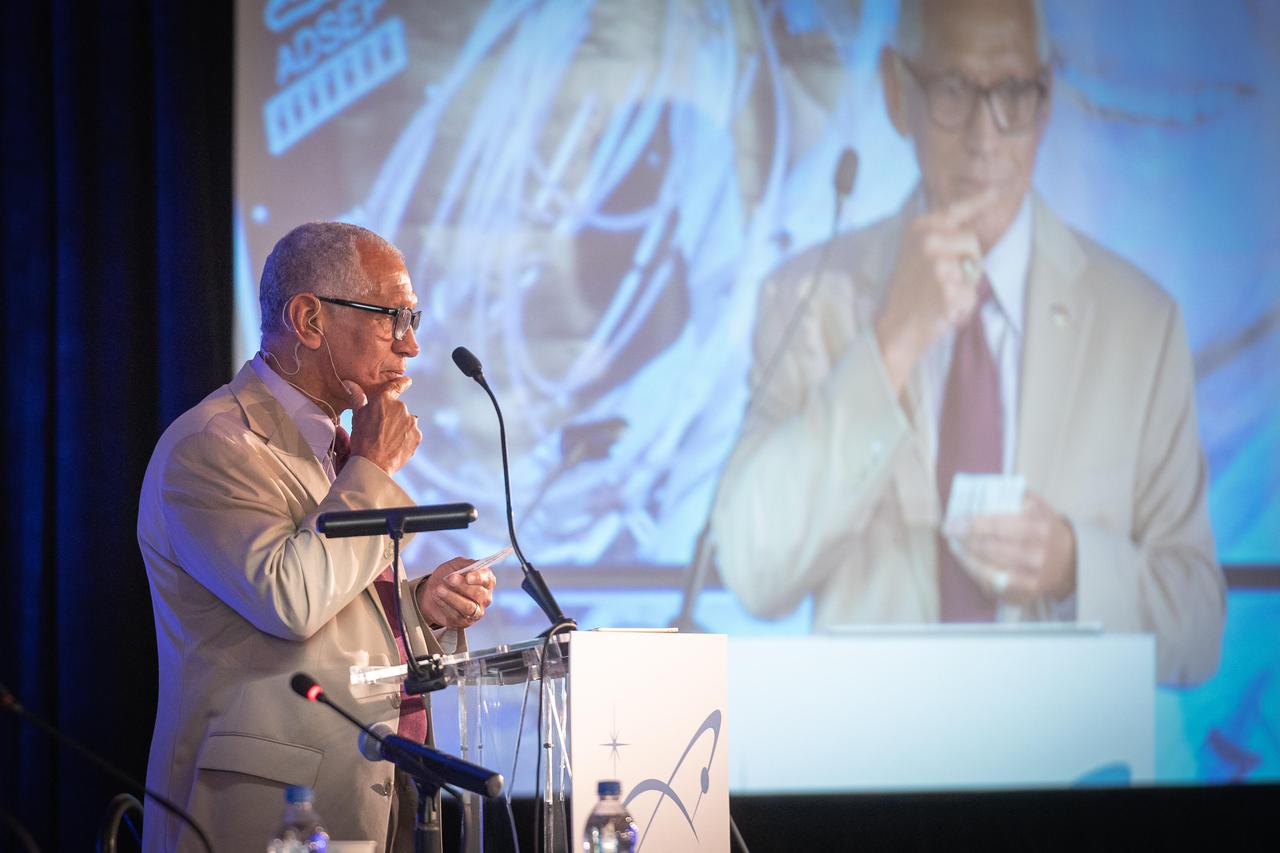
The inaugural Glenn Symposium focused on advancements in aerospace technology including power and propulsion, autonomy and communications, low boom supersonics, hypersonics, and more. Discussion also encompassed humans returning to the moon, including challenges associated with the 2024 mission.
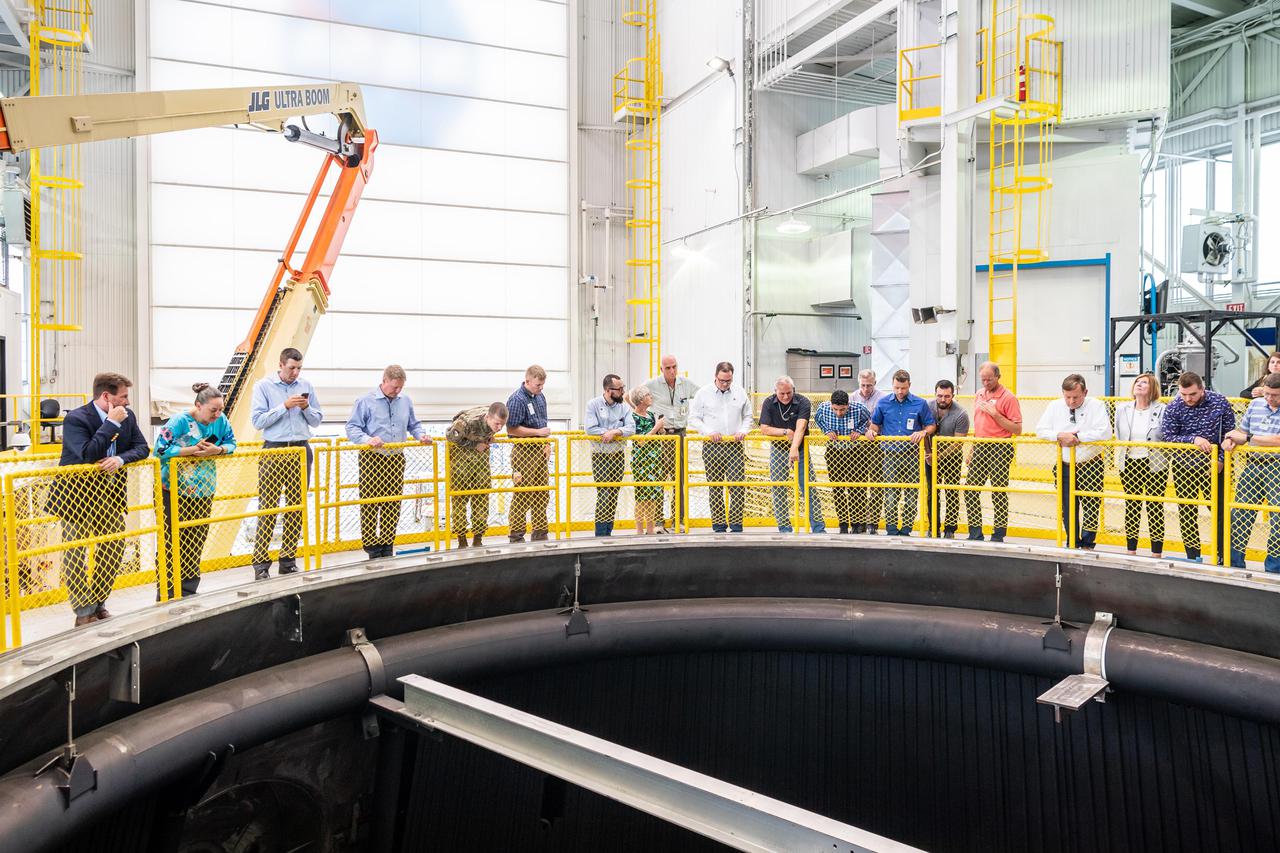
The inaugural Glenn Symposium focused on advancements in aerospace technology including power and propulsion, autonomy and communications, low boom supersonics, hypersonics, and more. Discussion also encompassed humans returning to the moon, including challenges associated with the 2024 mission.
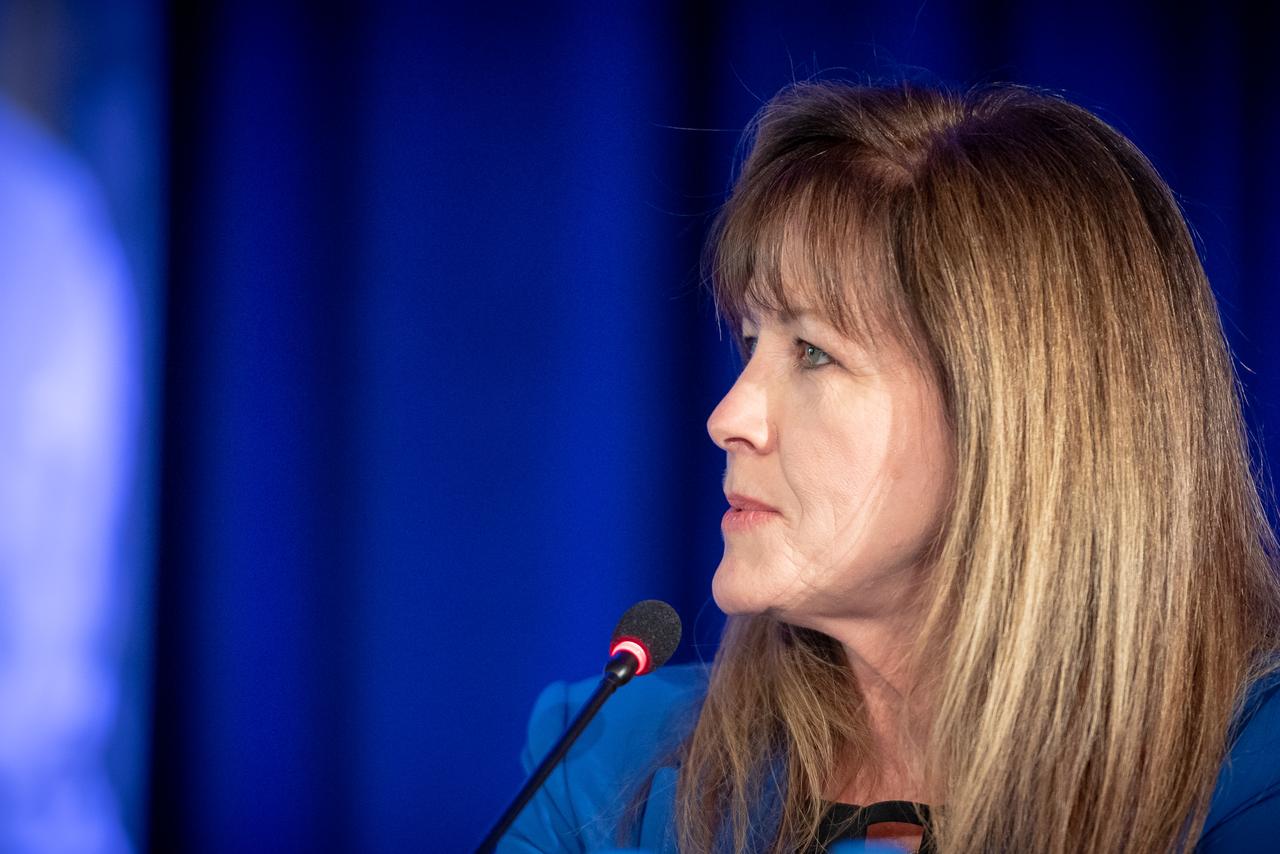
The inaugural Glenn Symposium focused on advancements in aerospace technology including power and propulsion, autonomy and communications, low boom supersonics, hypersonics, and more. Discussion also encompassed humans returning to the moon, including challenges associated with the 2024 mission.
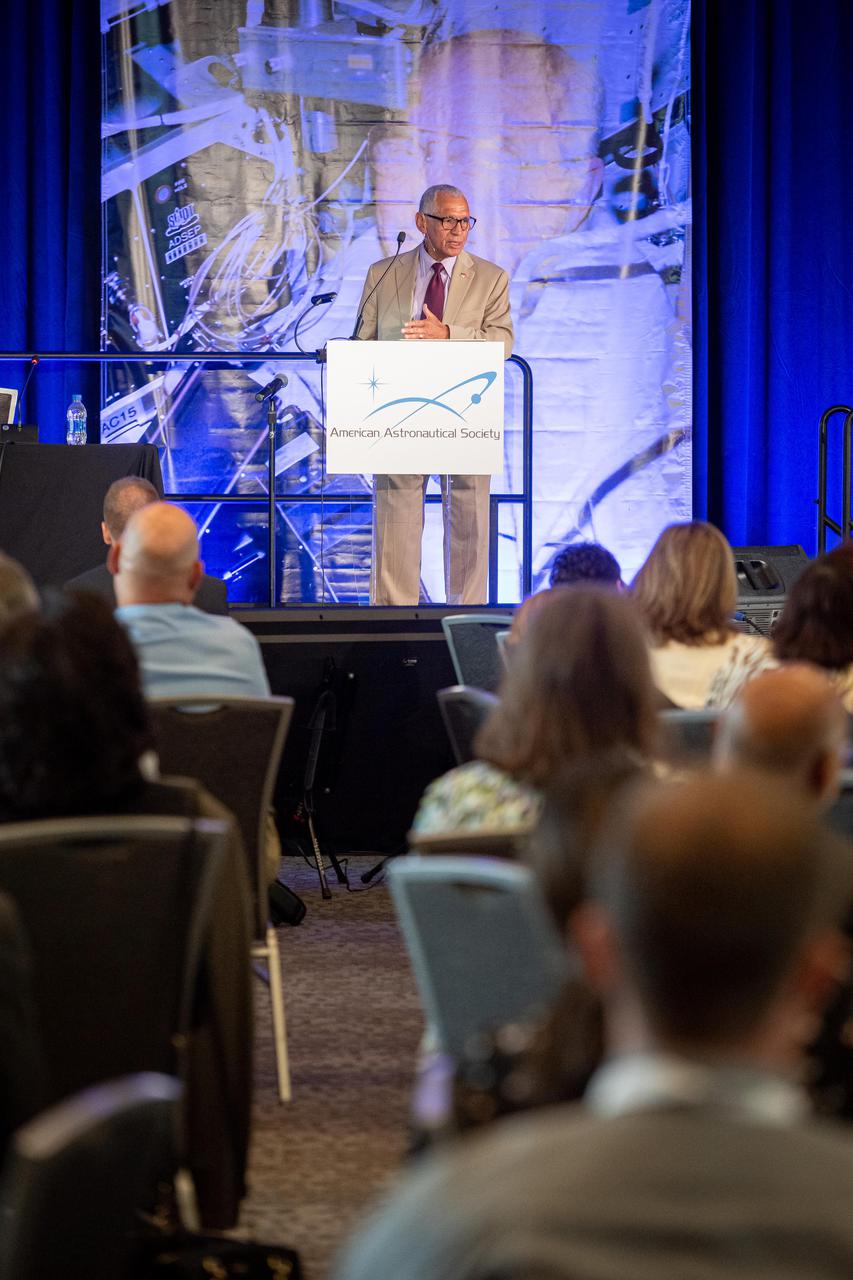
The inaugural Glenn Symposium focused on advancements in aerospace technology including power and propulsion, autonomy and communications, low boom supersonics, hypersonics, and more. Discussion also encompassed humans returning to the moon, including challenges associated with the 2024 mission.
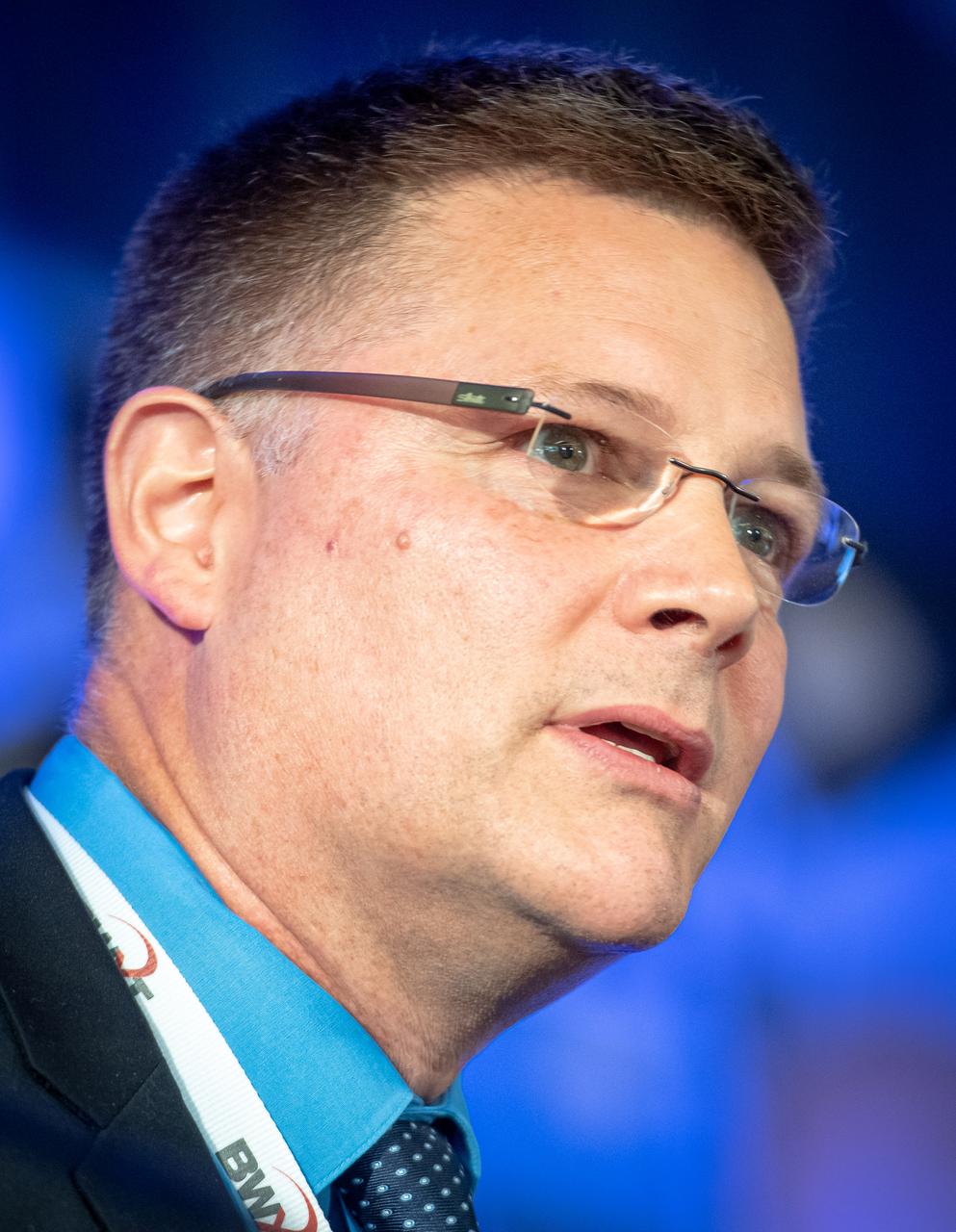
The inaugural Glenn Symposium focused on advancements in aerospace technology including power and propulsion, autonomy and communications, low boom supersonics, hypersonics, and more. Discussion also encompassed humans returning to the moon, including challenges associated with the 2024 mission.
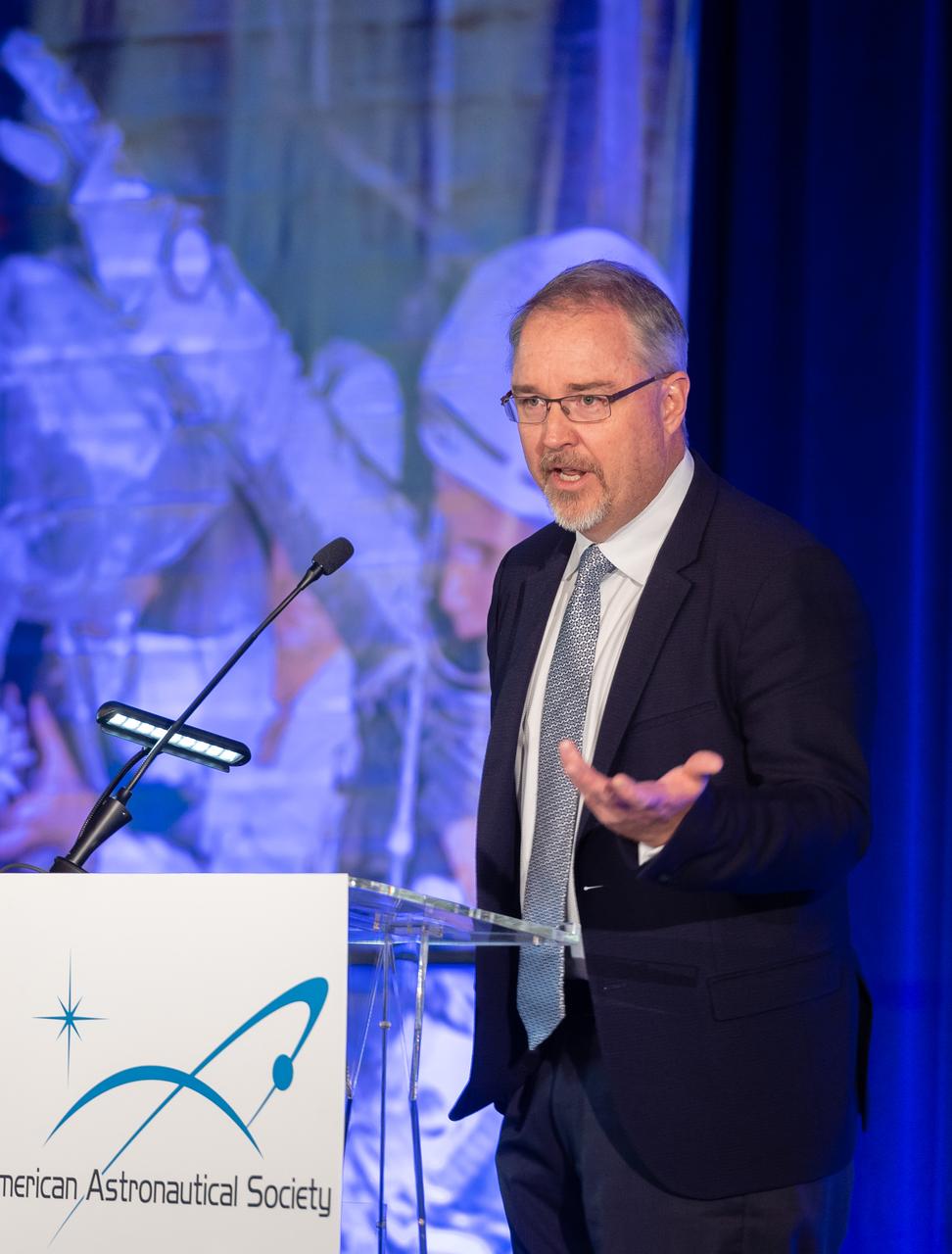
The inaugural Glenn Symposium focused on advancements in aerospace technology including power and propulsion, autonomy and communications, low boom supersonics, hypersonics, and more. Discussion also encompassed humans returning to the moon, including challenges associated with the 2024 mission.
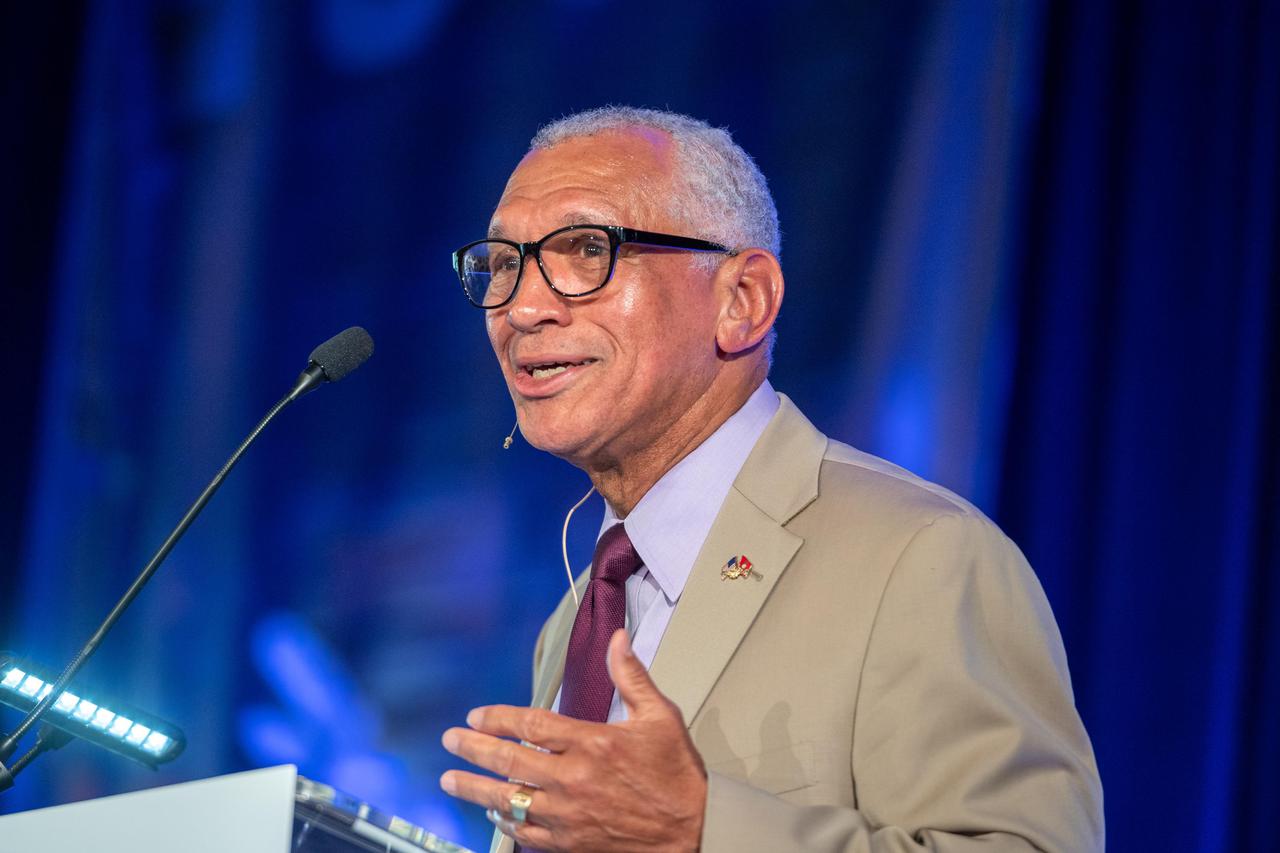
The inaugural Glenn Symposium focused on advancements in aerospace technology including power and propulsion, autonomy and communications, low boom supersonics, hypersonics, and more. Discussion also encompassed humans returning to the moon, including challenges associated with the 2024 mission.
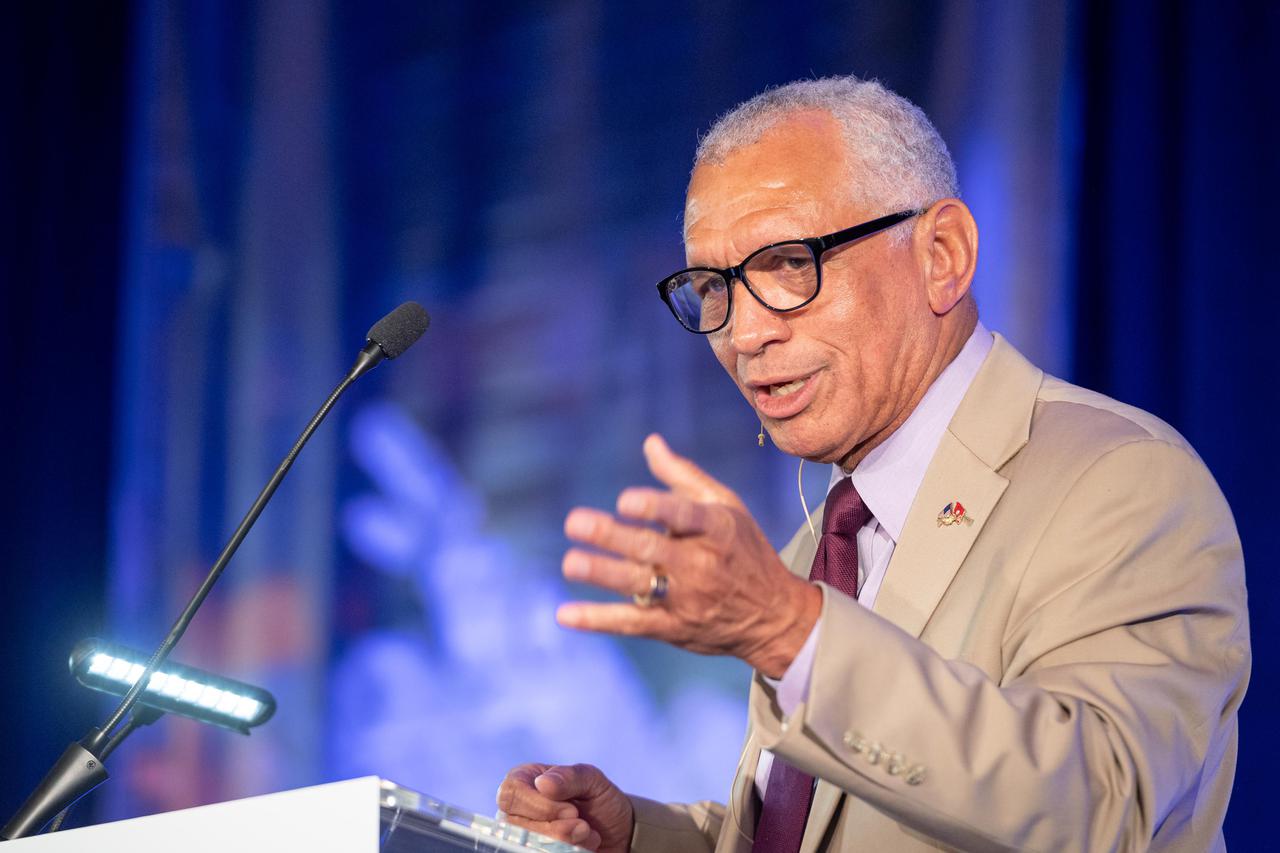
The inaugural Glenn Symposium focused on advancements in aerospace technology including power and propulsion, autonomy and communications, low boom supersonics, hypersonics, and more. Discussion also encompassed humans returning to the moon, including challenges associated with the 2024 mission.
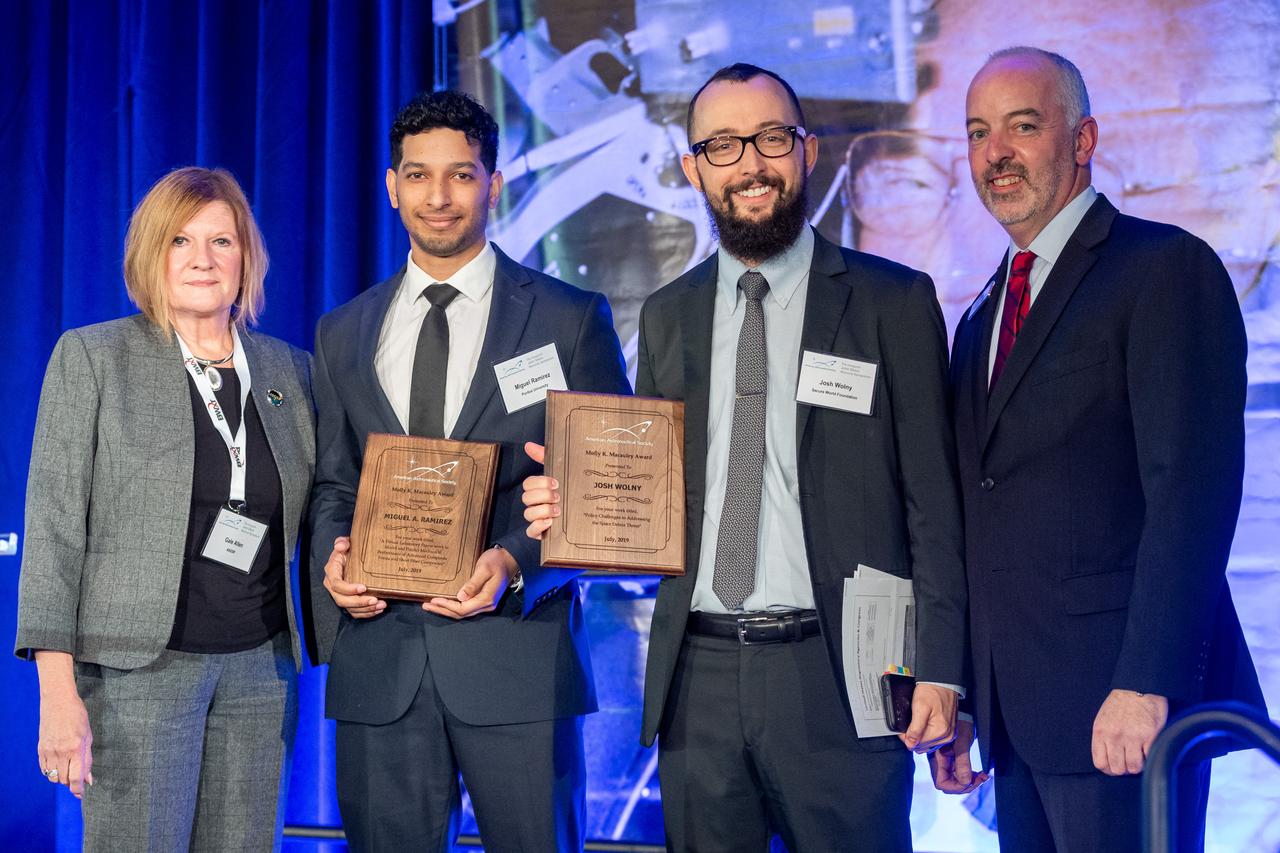
The inaugural Glenn Symposium focused on advancements in aerospace technology including power and propulsion, autonomy and communications, low boom supersonics, hypersonics, and more. Discussion also encompassed humans returning to the moon, including challenges associated with the 2024 mission.