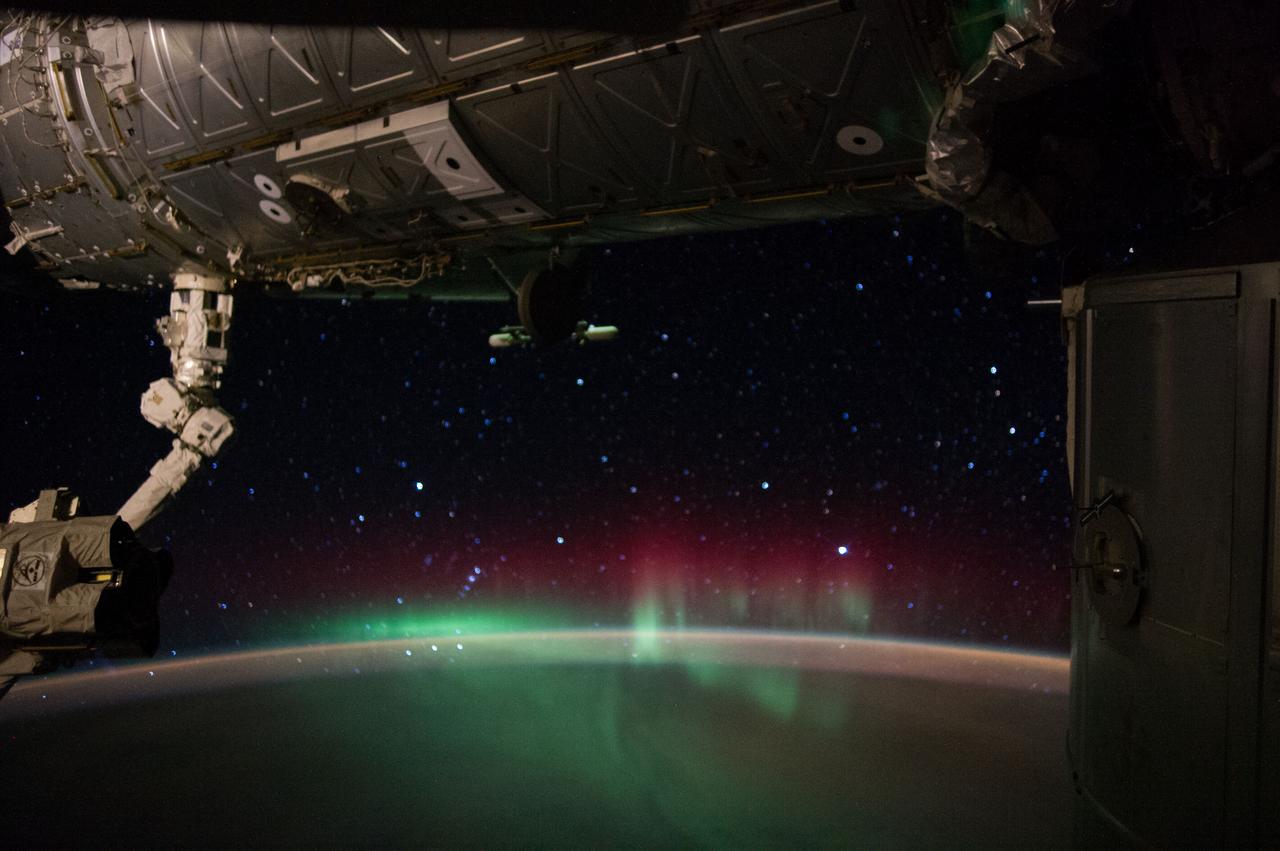
Earth Observation taken during a night pass by the Expedition 40 crew aboard the International Space Station (ISS). Folder lists this as: night, Auroras, long shutters. Part of the Space Station Remote Manipulator System (SSRMS) arm is visible.
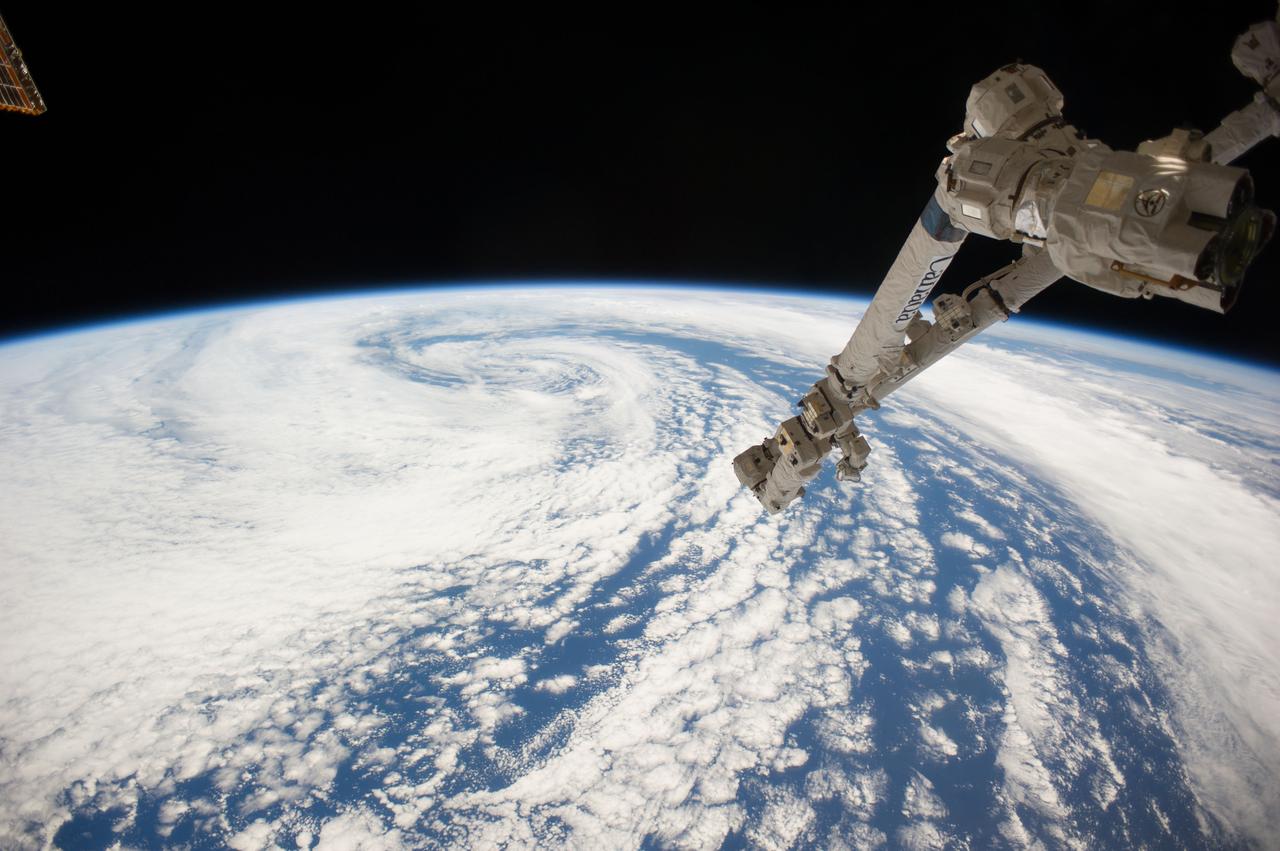
Earth Observation taken during a day pass by the Expedition 40 crew aboard the International Space Station (ISS).
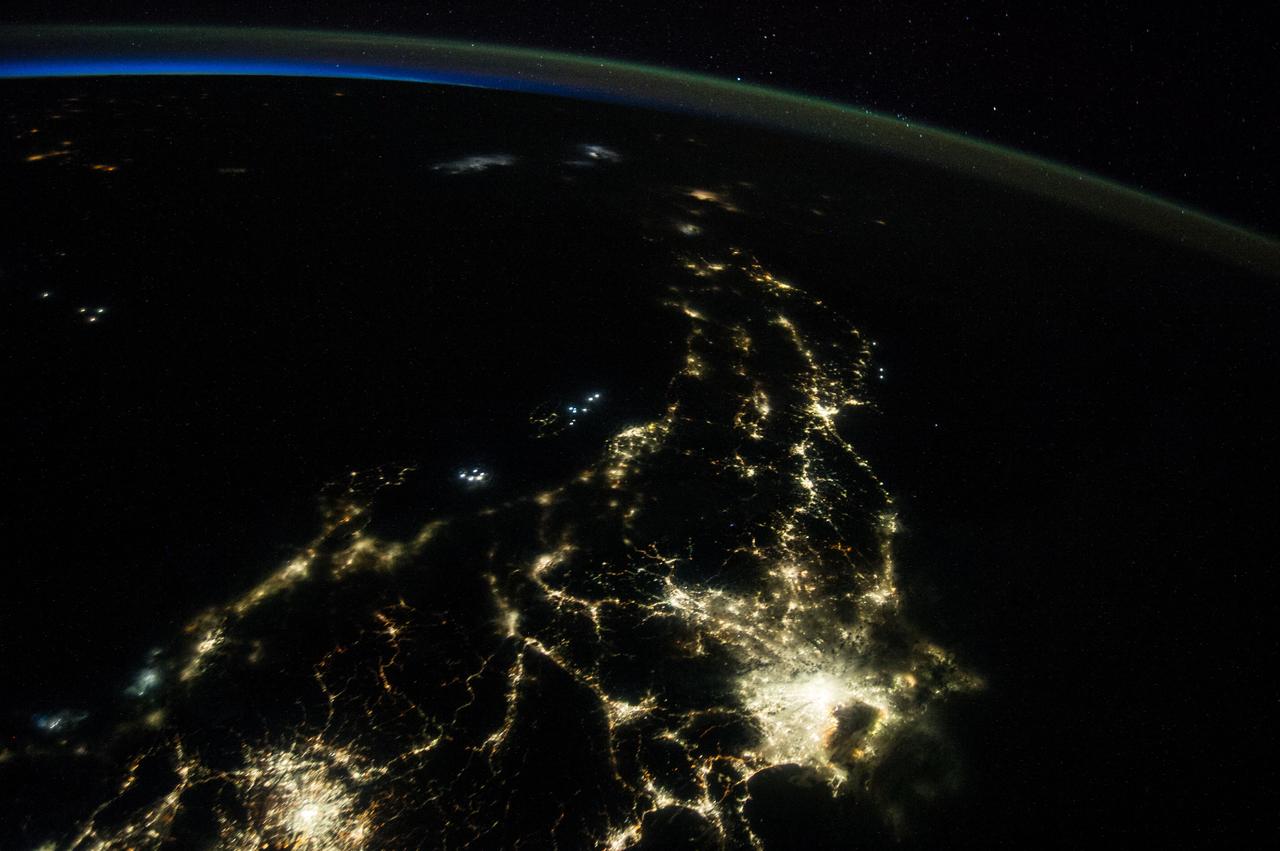
Earth observation taken during a night pass by the Expedition 40 crew aboard the International Space Station (ISS). Folder lists this as: Taiwan, Japan, and fishing boats at night.
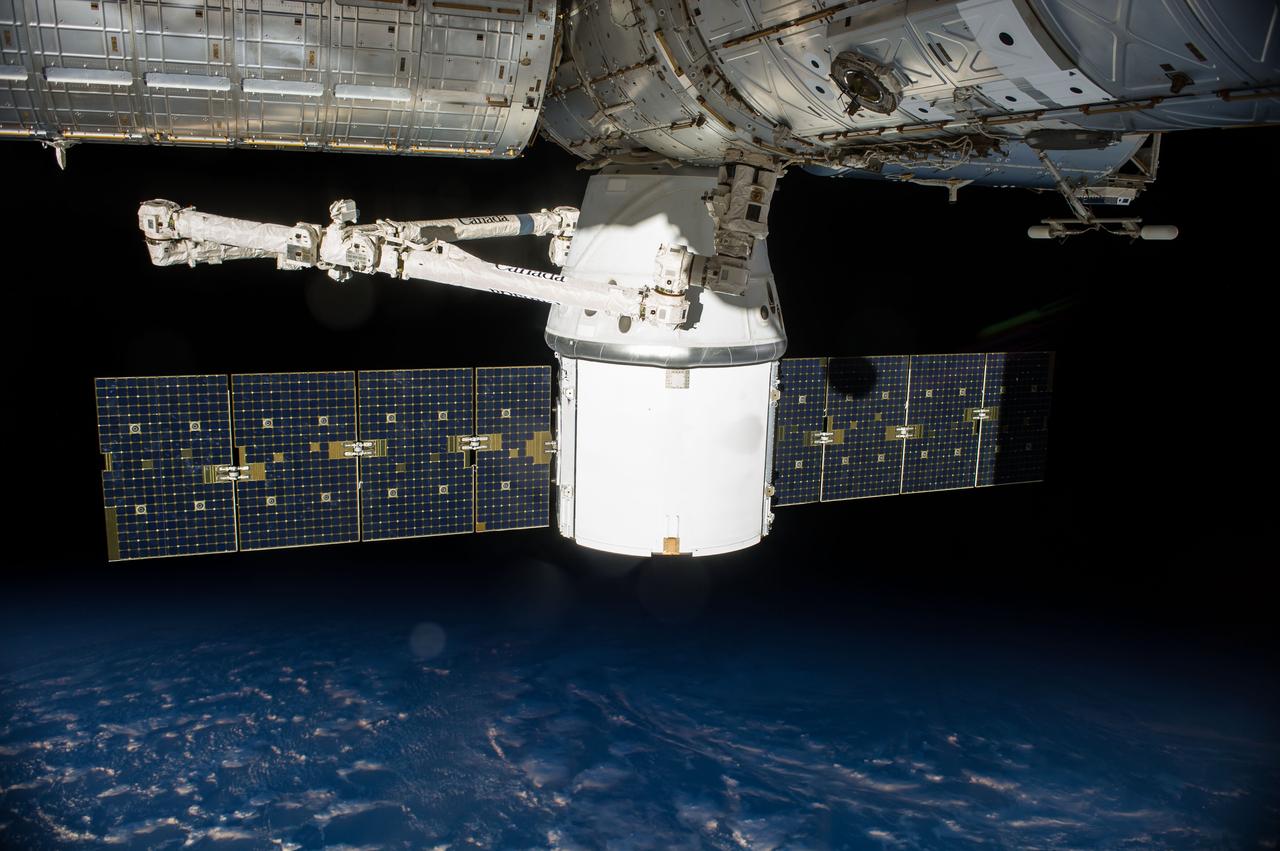
ISS041-E-033463 (24 Sept. 2014) --- SpaceX's uncrewed Dragon cargo spacecraft is docked to the International Space Station after arriving on Sept. 23 with a load of supplies and equipment for the three crew members currently onboard the orbital outpost and the three who will join them soon.
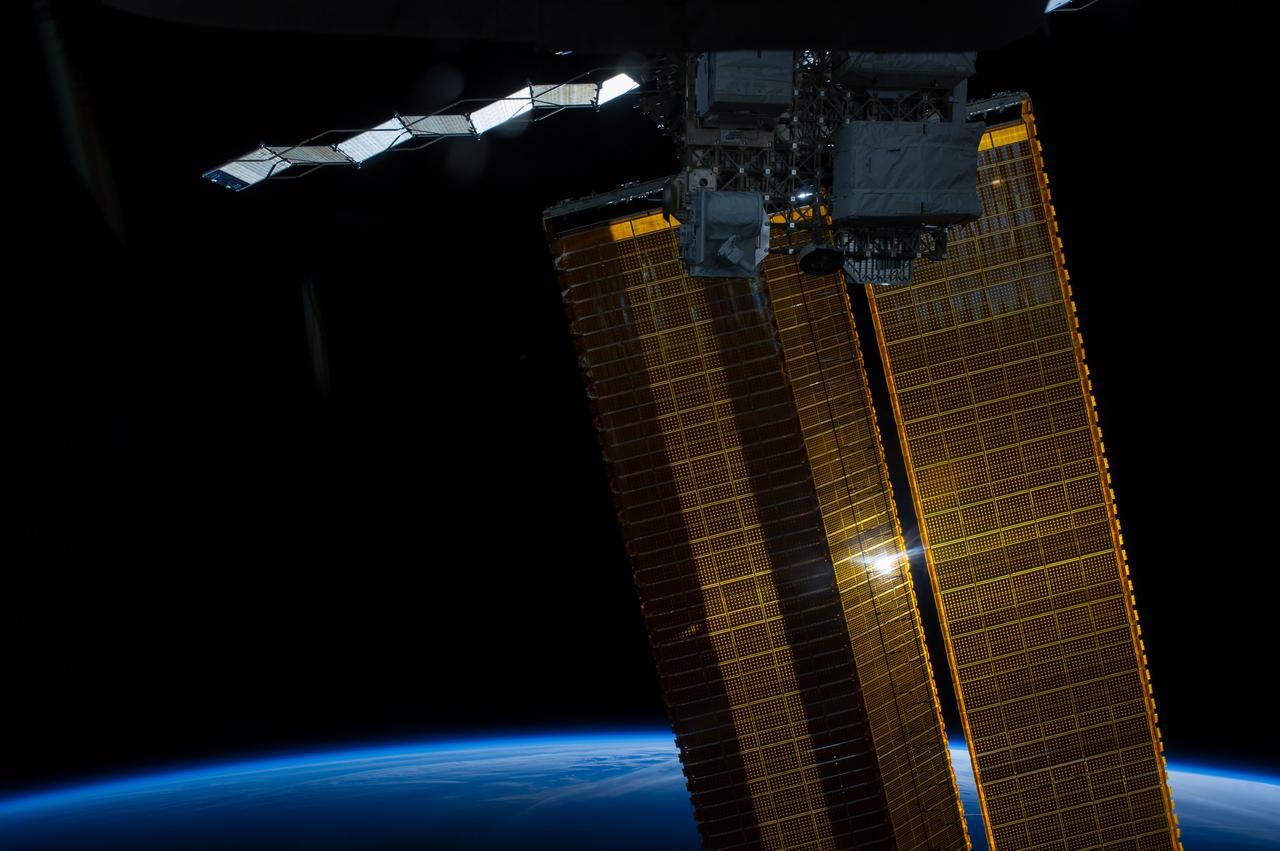
ISS040-E-007073 (3 June 2014) --- Some 228 nautical miles above the home planet, one of the Expedition 40 crew members aboard the International Space Station photographed this view of a sun-kissed solar array wing and a photovoltaic radiator (top) on the orbital outpost on June 3, 2014.
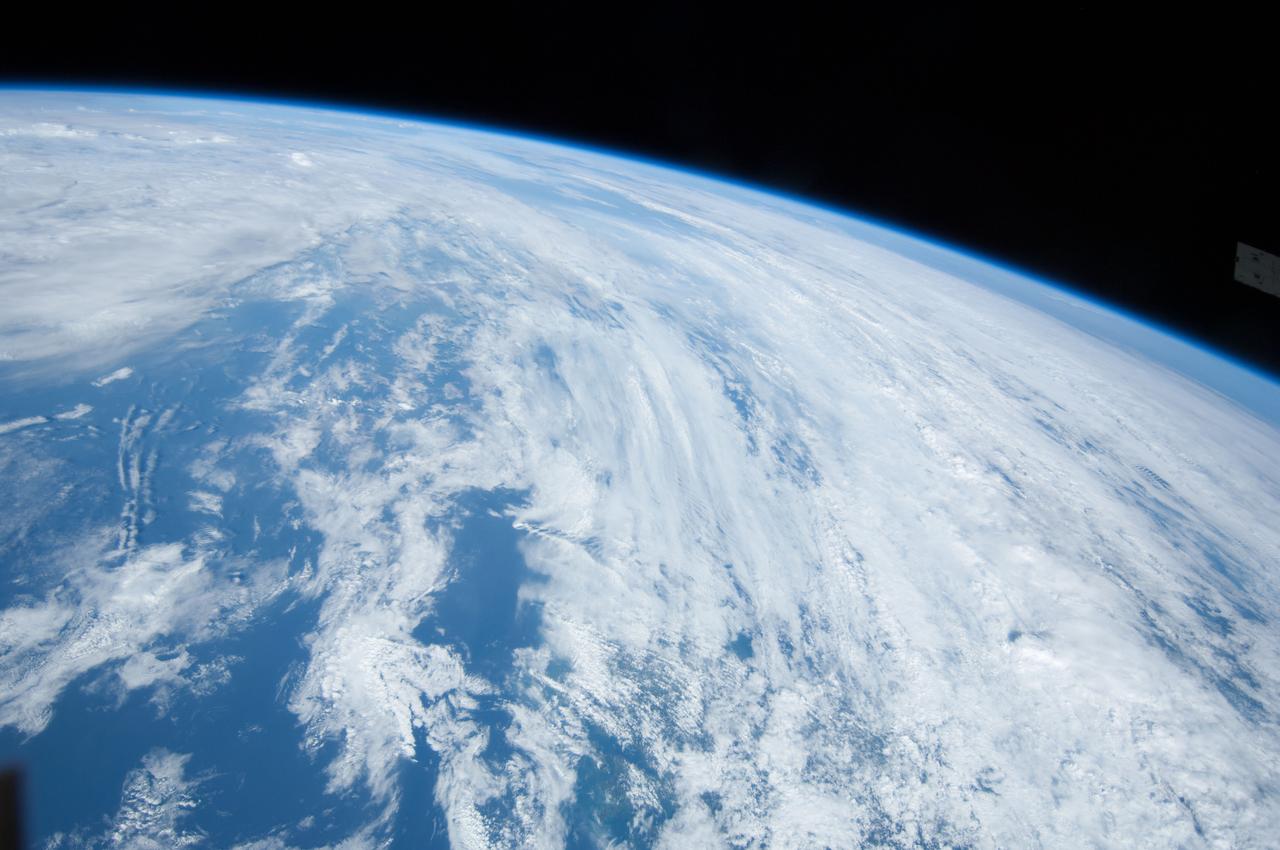
Earth Observation taken during a day pass by the Expedition 40 crew aboard the International Space Station (ISS).
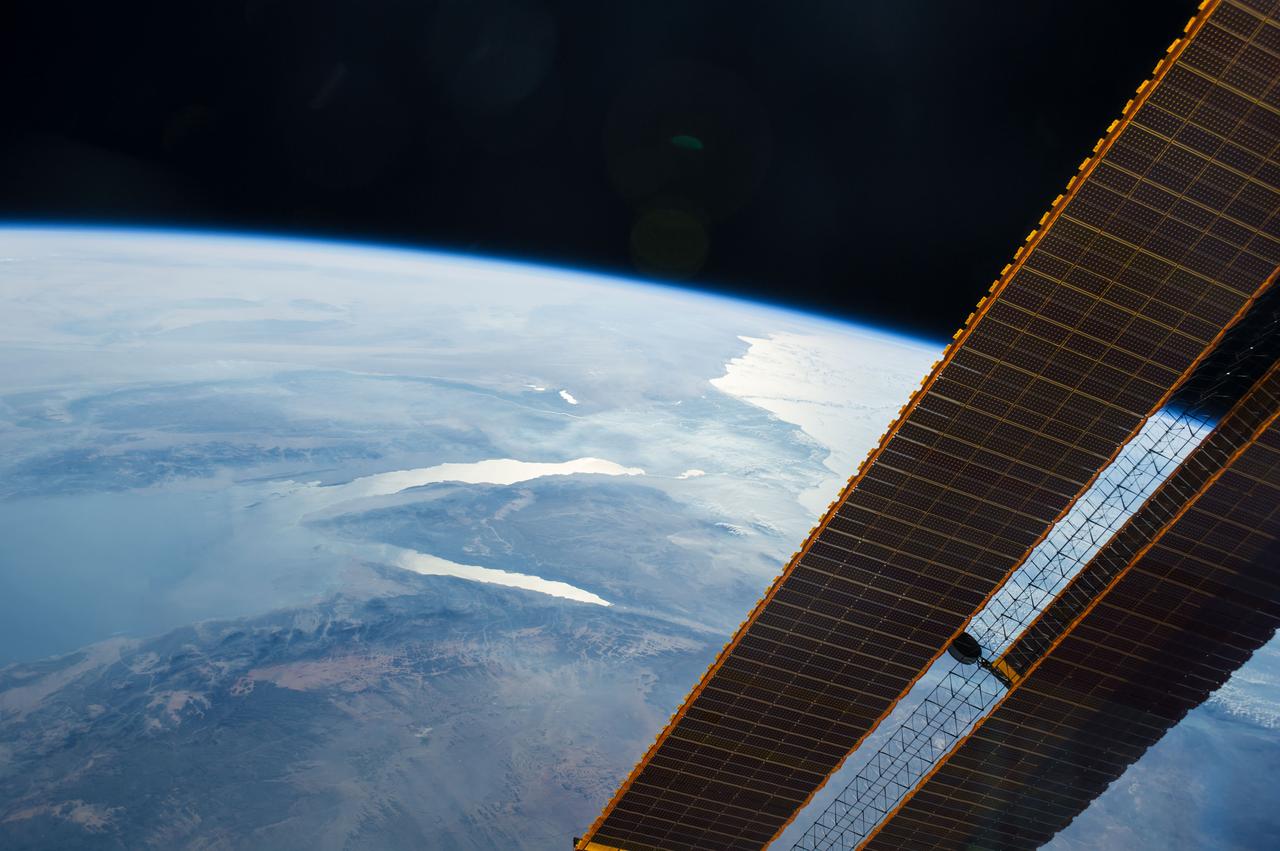
Earth Observation taken during a day pass by the Expedition 40 crew aboard the International Space Station (ISS).
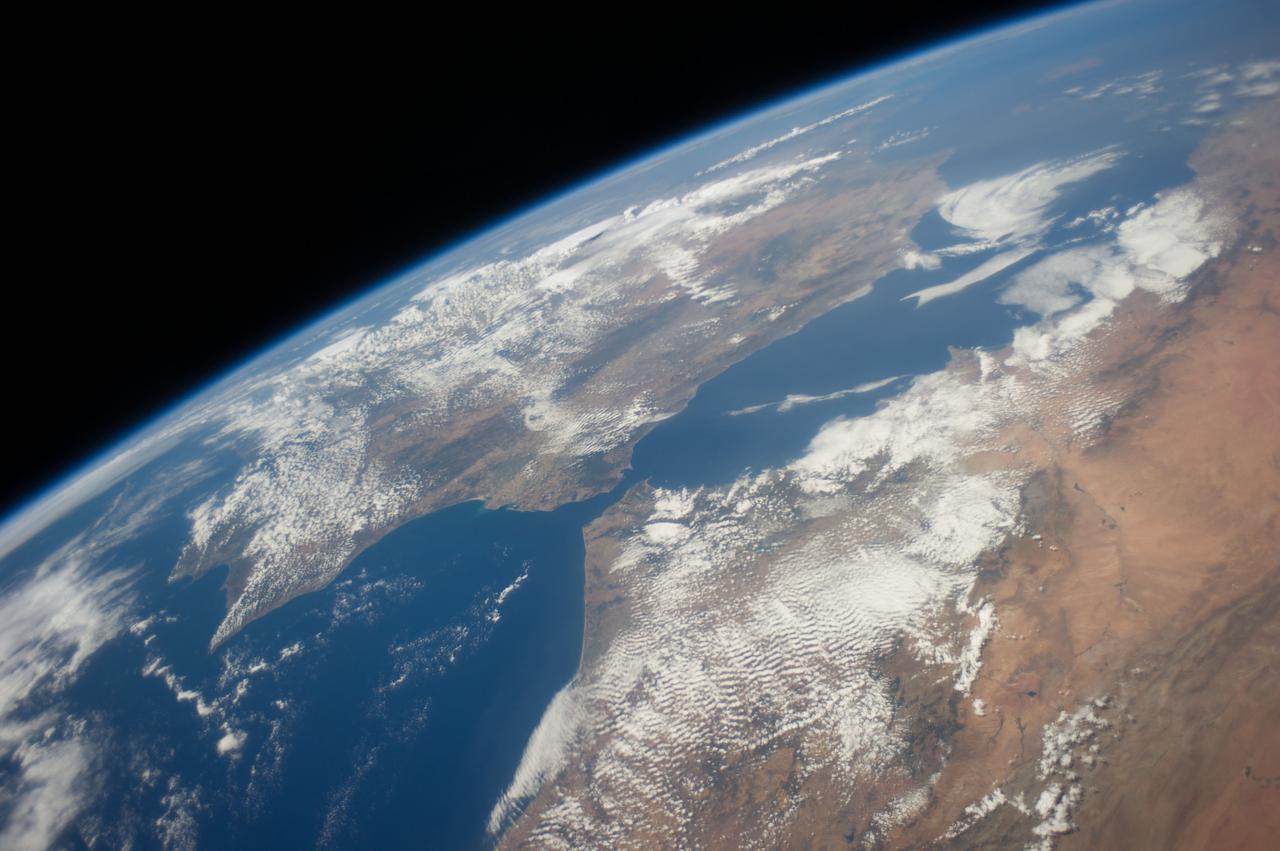
ISS040-E-016324 (20 June 2014) --- One of the Expedition 40 crew members aboard the Earth-orbiting International Space Station recorded this oblique panorama of the Strait of Gibraltar, showing parts of Morocco and Spain, on June 20, 2014.

ISS040-E-090540 (9 Aug. 2014) --- One of the Expedition 40 crew members aboard the International Space Station photographed this nighttime image showing city lights in at least half a dozen southern states from some 225 miles above the home planet. Lights from areas in the Gulf Coast states of Texas, Louisiana, Mississippi and Alabama, as well as some of the states that border them on the north, are visible.
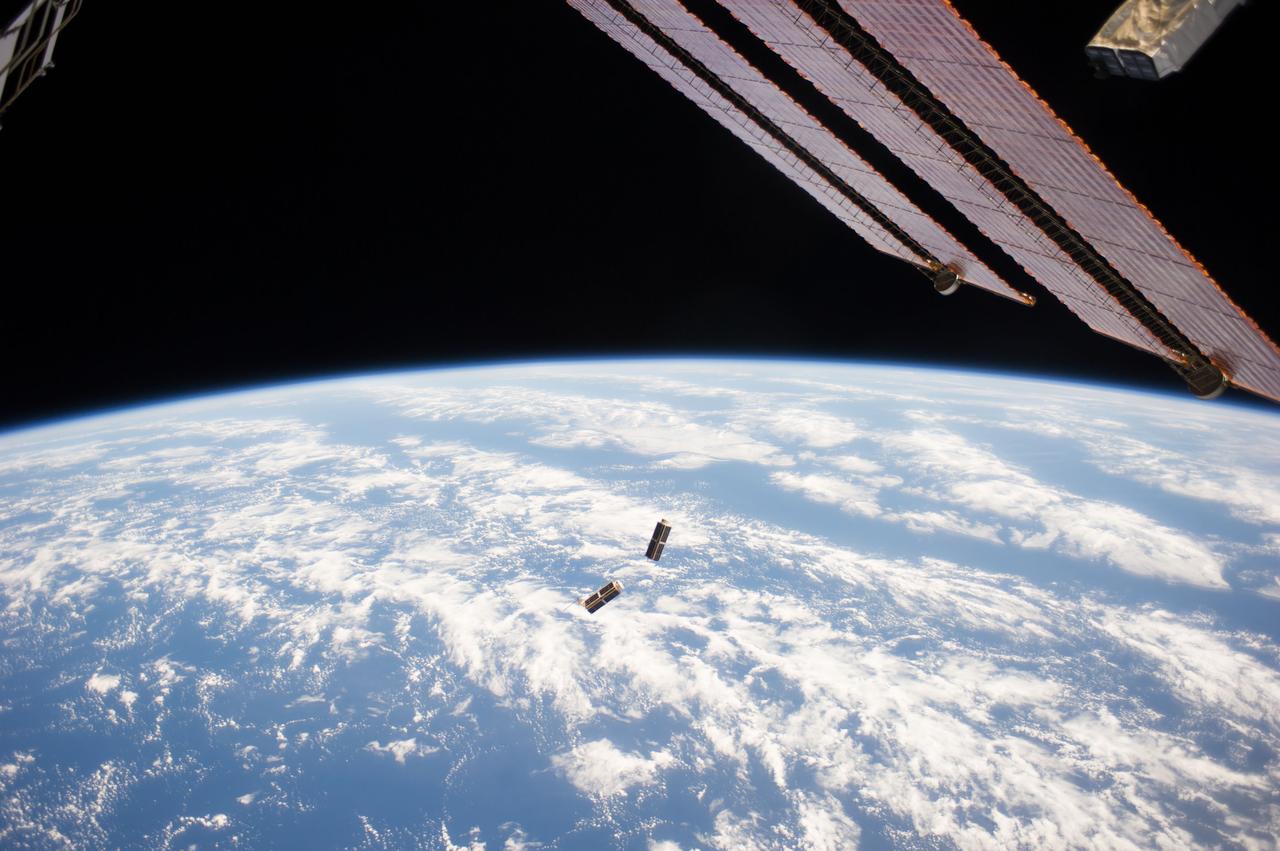
ISS040-E-103545 (19 Aug. 2014) --- In the grasp of the Japanese robotic arm, the CubeSat deployer (mostly out of frame, upper right) releases a pair of NanoRacks CubeSat miniature satellites (center). The Planet Labs Dove satellites that were carried to the International Space Station aboard the Orbital Sciences Cygnus commercial cargo craft are being deployed between Aug. 19 and Aug. 25. A section of the station solar array wings is at top right. A blue and white part of Earth and the blackness of space provide the backdrop for the scene.

ISS040-E-089058 (6 Aug. 2014) --- 08:53:17 GMT
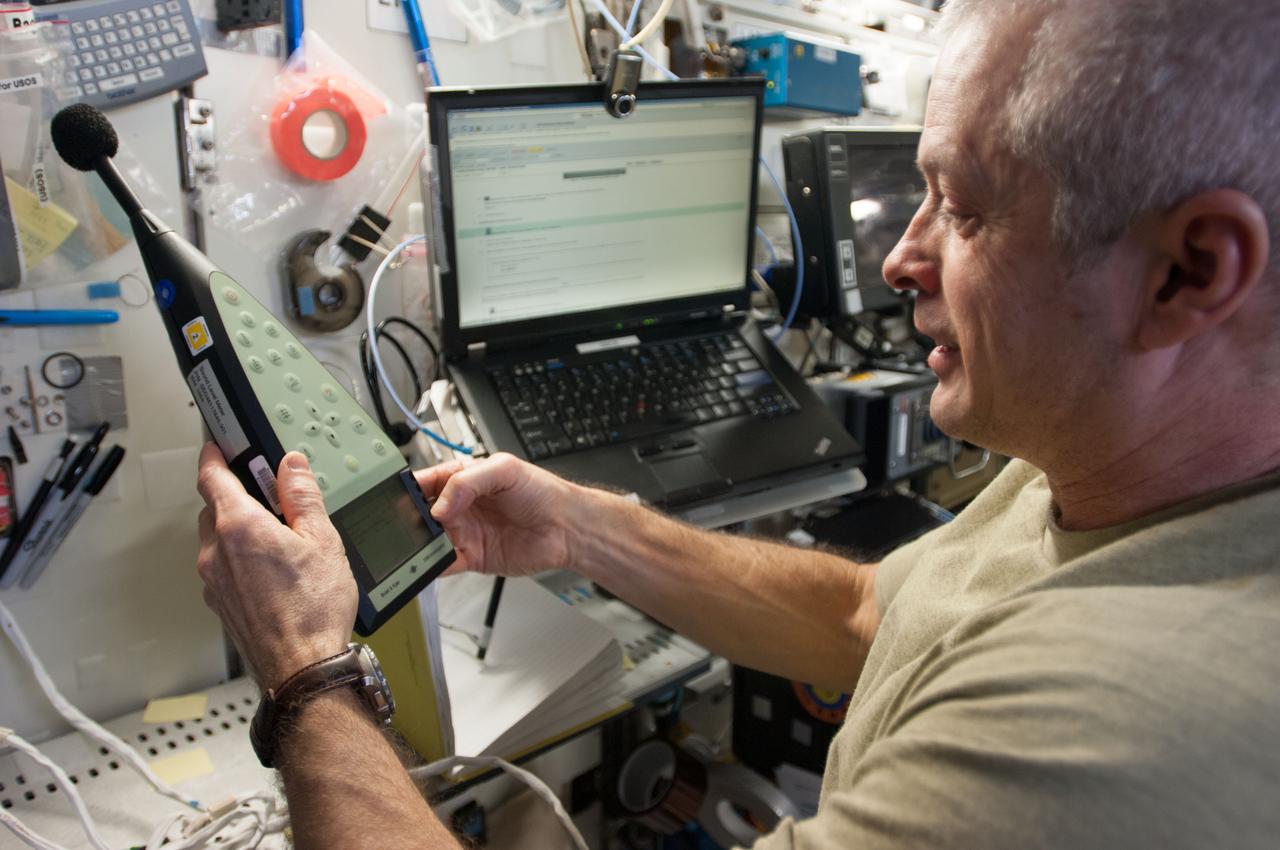
ISS040-E-086654 (1 Aug. 2014) --- NASA astronaut Steve Swanson, Expedition 40 commander, uses a sound level meter in the Destiny laboratory of the International Space Station.
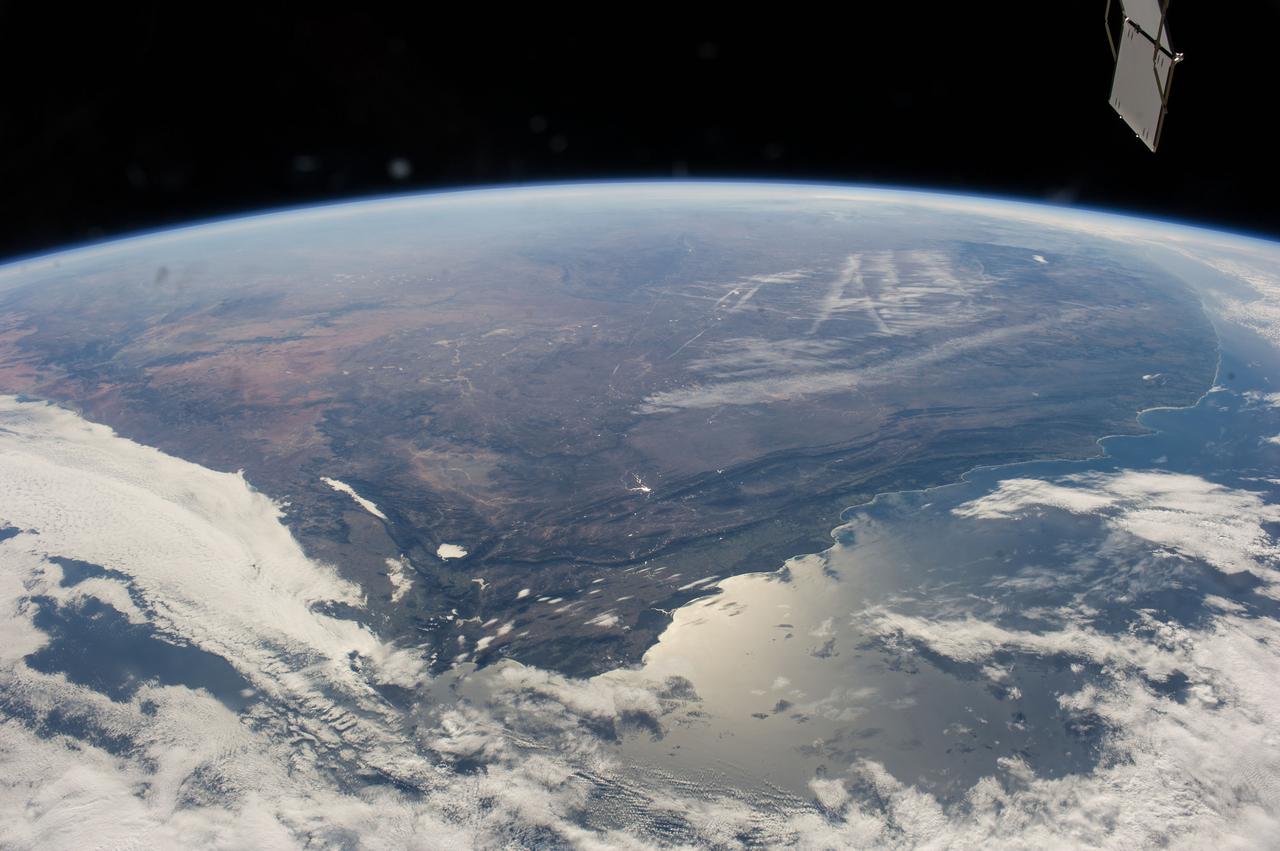
ISS040-E-006271 (31 May 2014) --- One of the Expedition 40 crew members aboard the Earth-orbiting International Space Station captured this panoramic image of South Africa on May 31, 2014. A combination of contrails and a bit of winter mist appears to have formed alphabetic and/or numeric characters in the upper right near the horizon. Sun glint off the south coast is slightly confusing as it is similar in brightness to the west-coast cloud cover, where an Atlantic storm rolls in. The Cape Fold Mountains cross the center of the view, going east from the Cape Town region (clouds obscure the Cape peninsula which normally serves as an icon for this part of Africa). A popular winegrowing region attributable to the Mediterranean climate is the area around Cape Town near lower left. Witwatersrand lies at the top of the picture obscured by the seemingly ever-present winter smoke and smog. The Orange River valley appears as a dark, nearly horizontal line at left.
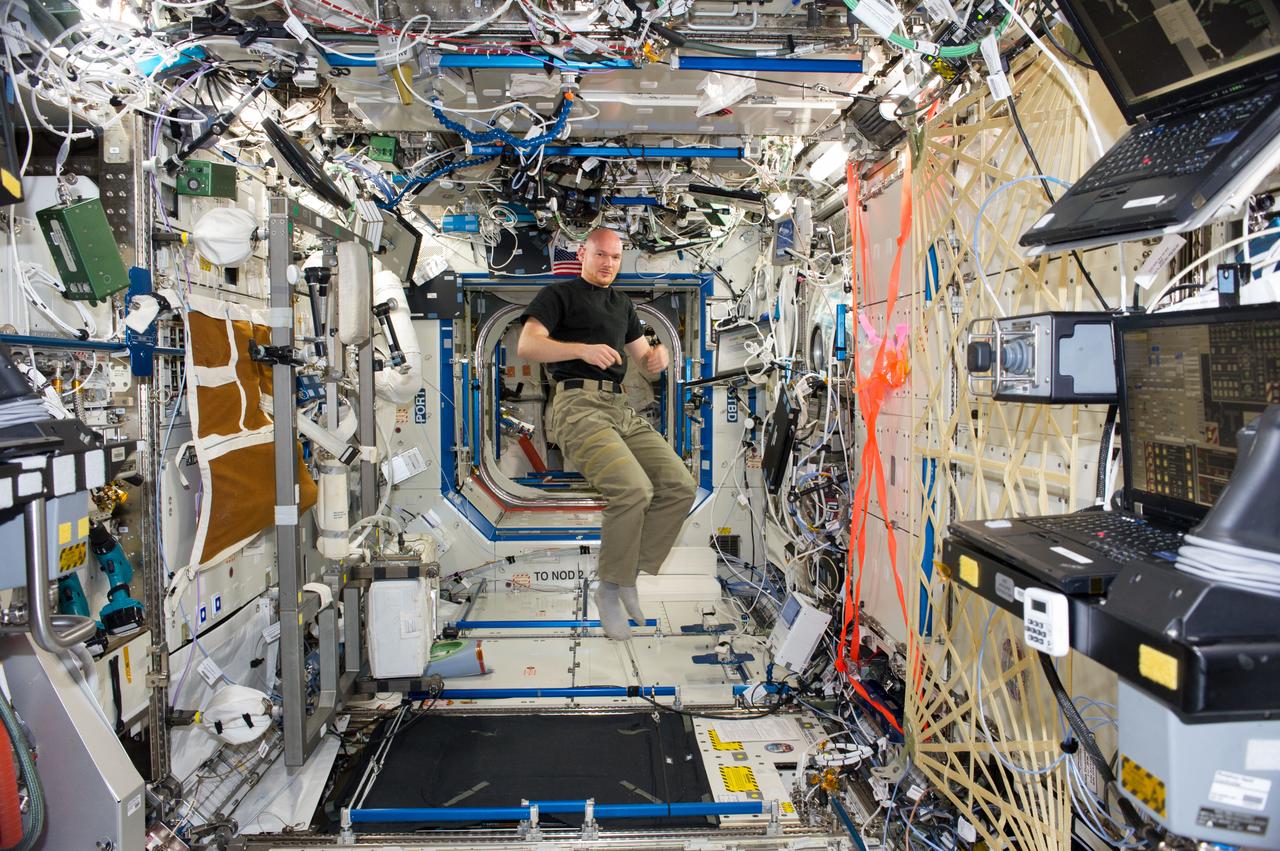
ISS040-E-083581 (30 July 2014) --- European Space Agency astronaut Alexander Gerst, Expedition 40 flight engineer, is pictured floating freely in the Destiny laboratory of the International Space Station.

ISS040-E-099251 (18 Aug. 2014) --- Russian cosmonaut Oleg Artemyev, Expedition 40 flight engineer, uses a digital still camera to expose a photo of his helmet visor during a session of extravehicular activity (EVA) as work continues outside the International Space Station. During the five-hour, 11-minute spacewalk, Artemyev and cosmonaut Alexander Skvortsov (out of frame), flight engineer, deployed a small science satellite, retrieved and installed experiment packages and inspected components on the exterior of the orbital laboratory.
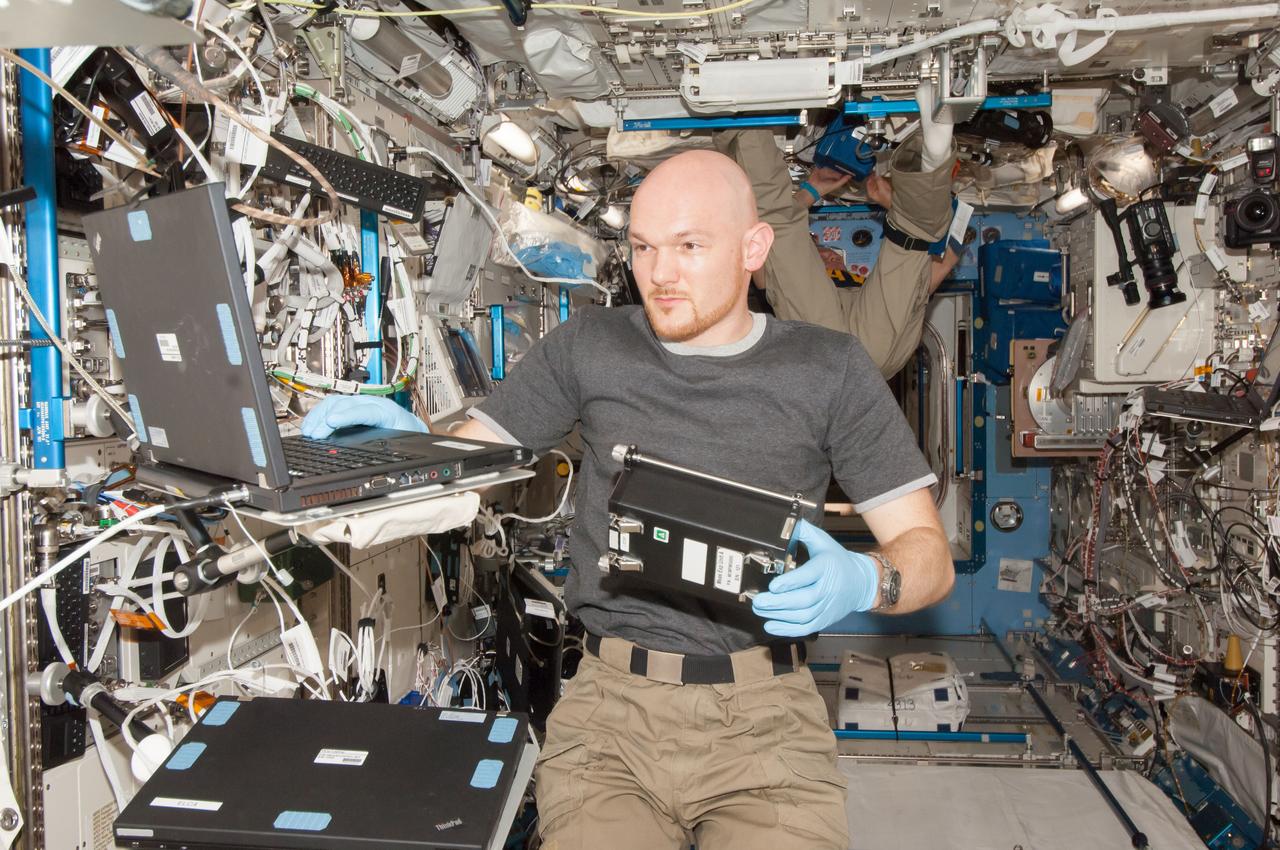
ISS041-E-045049 (27 Sept. 2014) --- European Space Agency astronaut Alexander Gerst, Expedition 41 flight engineer, works with a measurement experiment in the Kibo laboratory of the International Space Station.
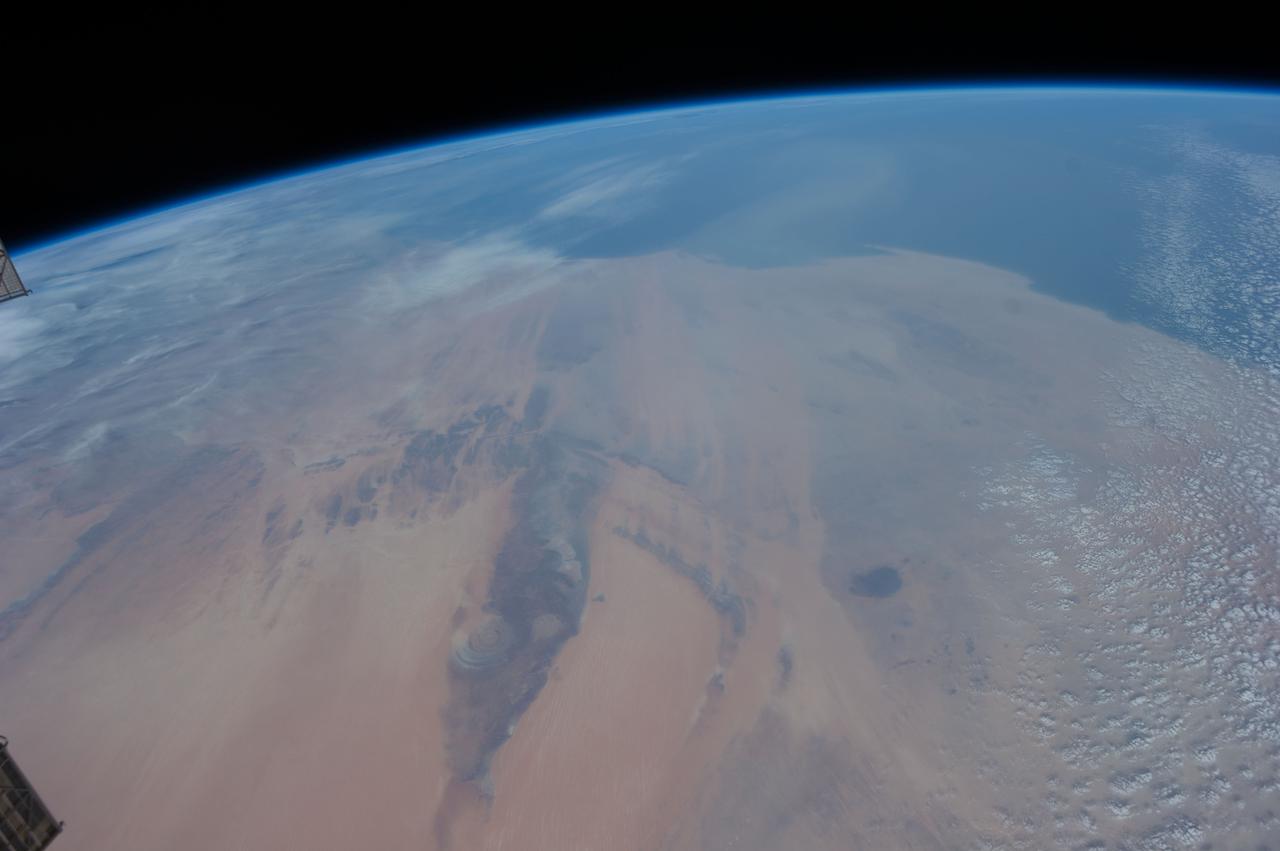
Earth Observation taken during a day pass by the Expedition 40 crew aboard the International Space Station (ISS). File lists this as:weird bullseye over Africa..
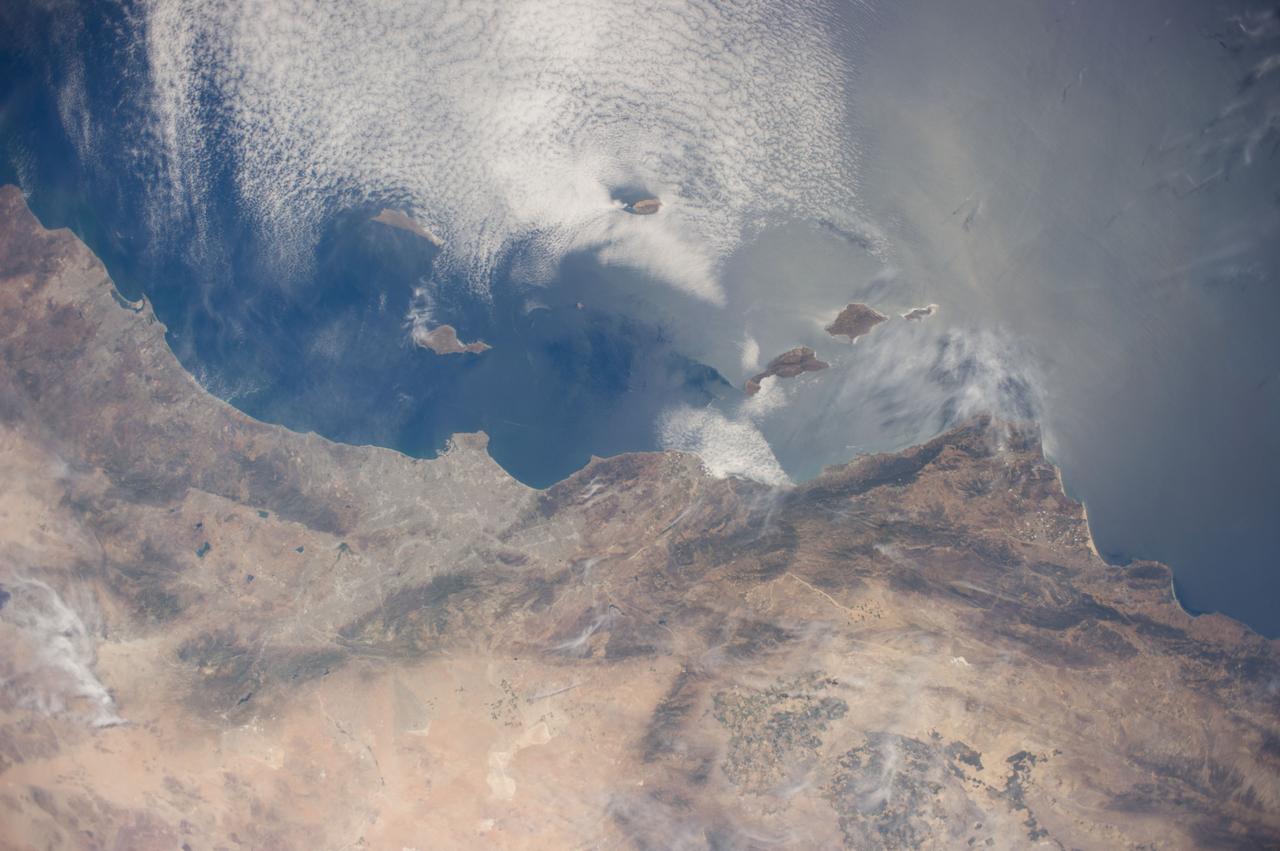
ISS040-E-016422 (20 June 2014) --- One of the Expedition 40 crew members aboard the International Space Station used a 28mm focal length to record this long stretch of California's Pacific Coast on June 20, 2014. Guadalupe Island and the surrounding von Karman cloud vortices over the Pacific can be seen just above frame center. San Diego is visible in upper left and the Los Angeles Basin is just to the left of center frame. Much of the Mojave Desert is visible in bottom frame.
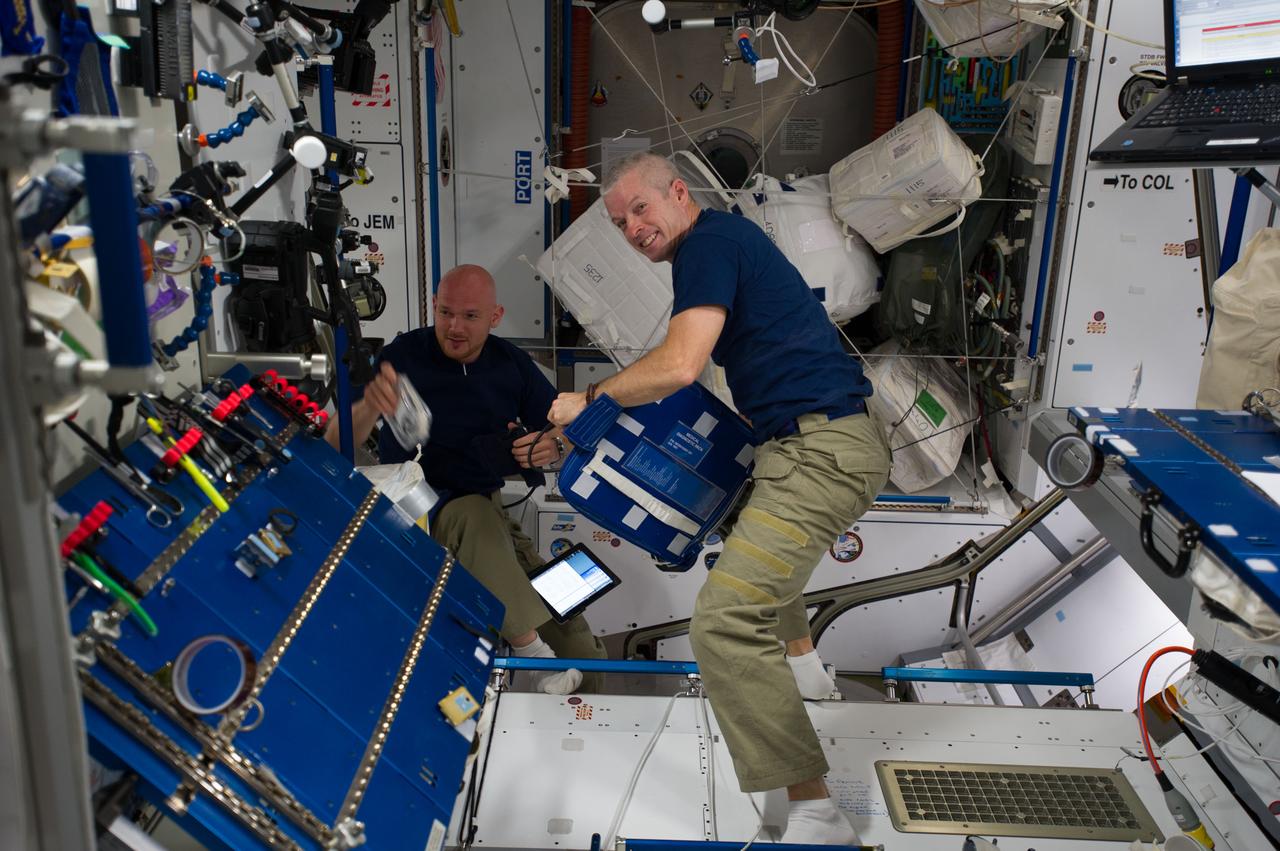
ISS040-E-006697 (2 June 2014) --- NASA astronaut Steve Swanson (right), Expedition 40 commander; and European Space Agency astronaut Alexander Gerst, flight engineer, retrieve items from a medical diagnostic pack in the Harmony node of the International Space Station.

Earth Observation taken during a night pass by the Expedition 40 crew aboard the International Space Station (ISS). Folder lists this as: Middle East night shots. Israel I think and Mecca.
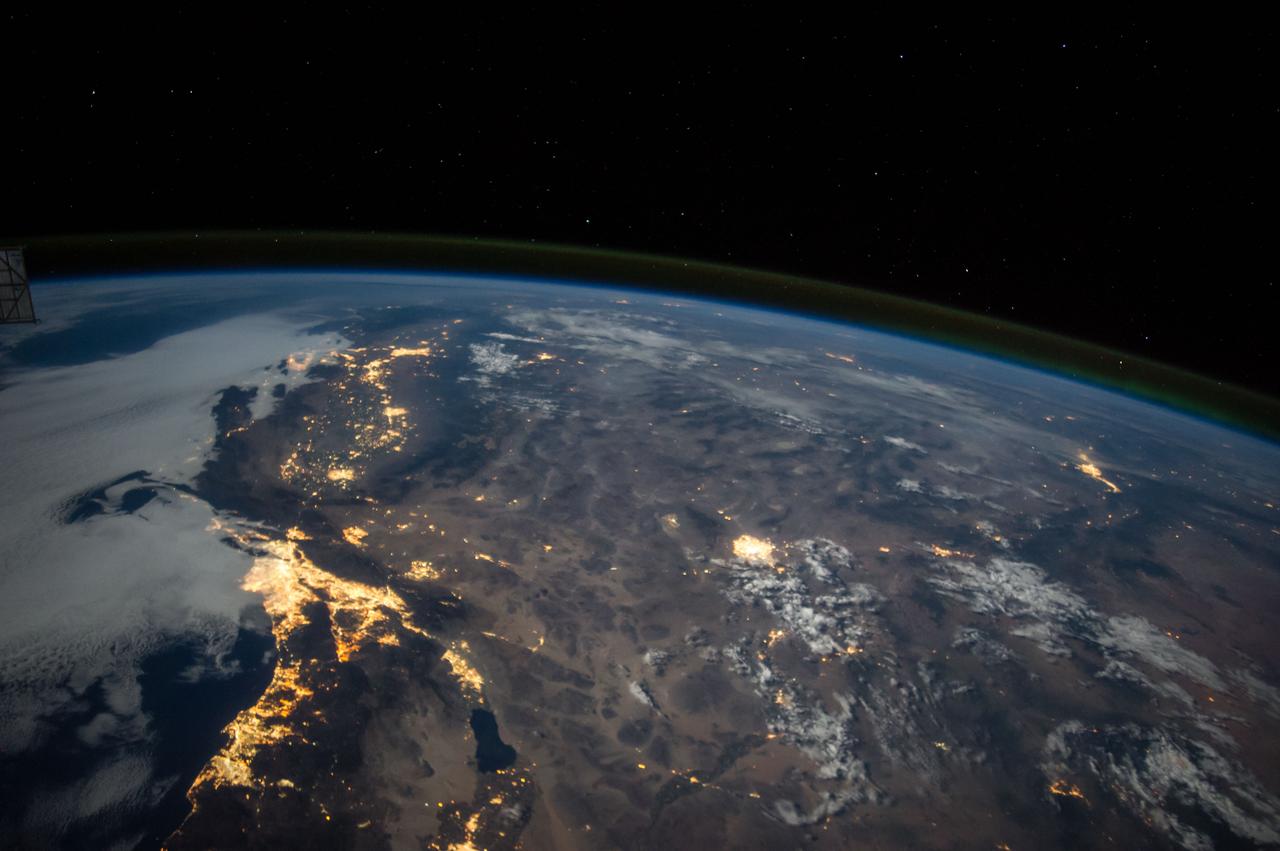
Earth Observation taken during a night pass by the Expedition 40 crew aboard the International Space Station (ISS). Folder lists this as: Approaching San Francisco at night.
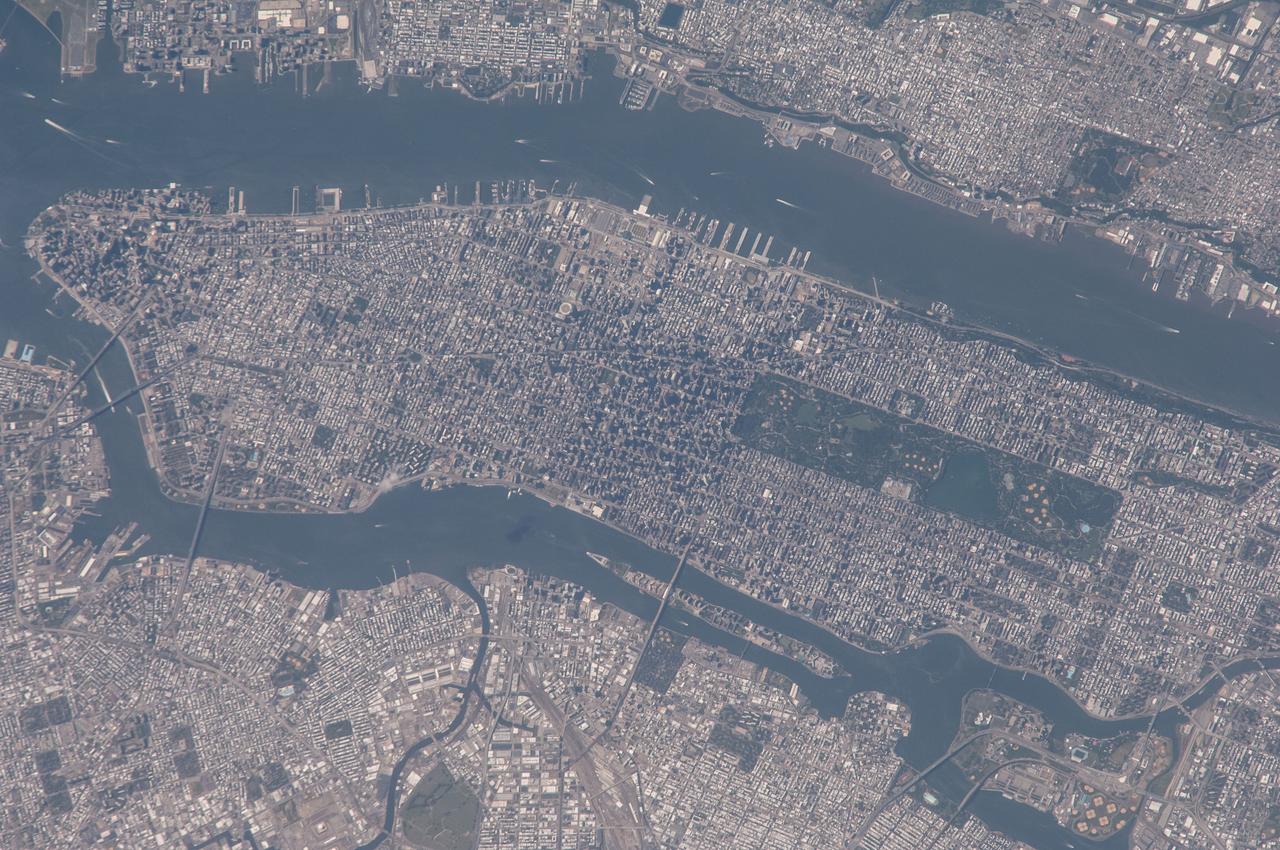
ISS040-E-108383 (25 Aug. 2014) --- One of the Expediton 40 crew members aboard the Earth-orbiting International Space Station photographed this image of a large part of New York City on Aug. 25, 2014. Manhattan Island and its Central Park are tell-tale points for recognition purposes for the six-person crew of the orbital outpost, flying 225 approximately nautical miles above the city.
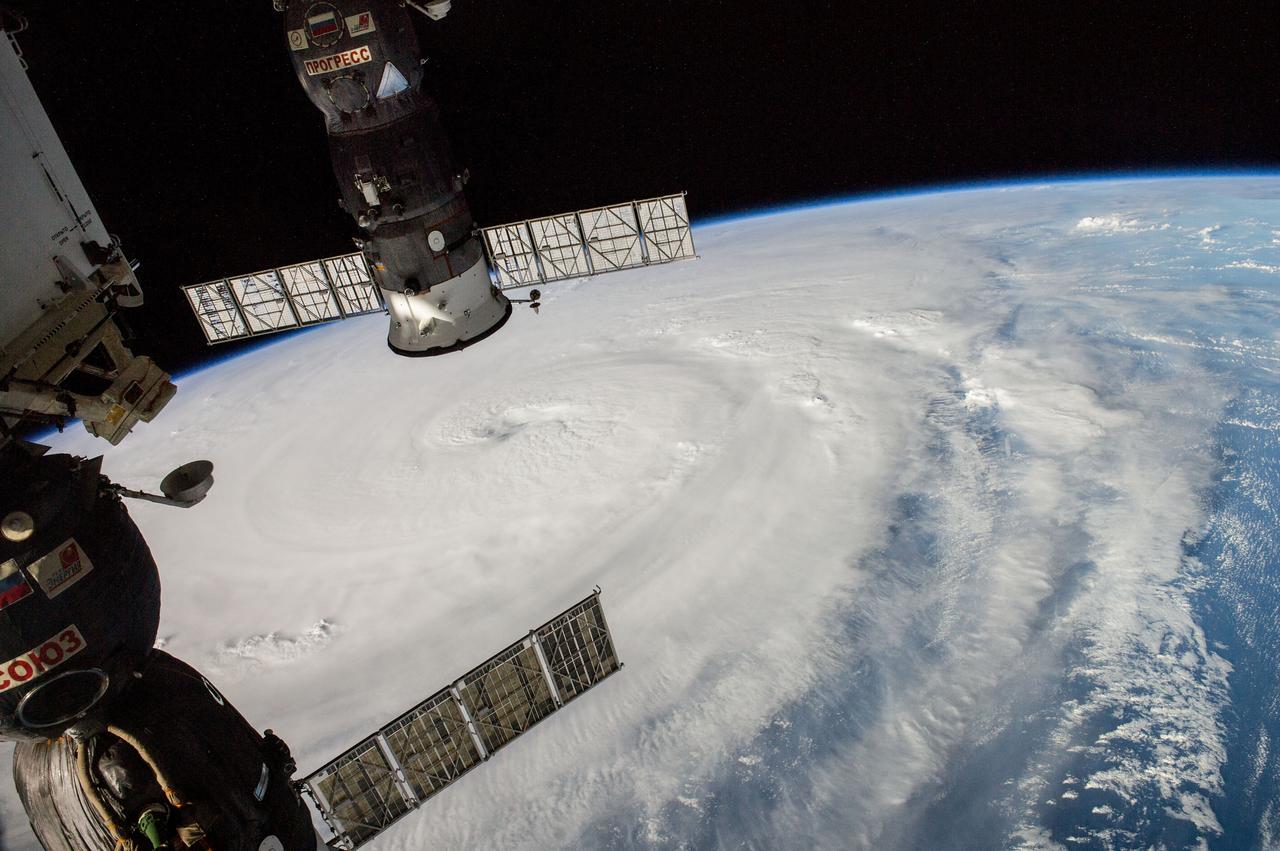
ISS040-E-038887 (5 July 2014) --- One of the Expedition 40 crew members onboard the International Space Station photographed this image of Super Typhoon Neoguri headed toward Japan at 21:56:56 GMT on July 5, 2014. A Russian Soyuz vehicle, docked to the orbital outpost, is partially visible in the foreground, and a docked Russian Progress is seen in upper left.
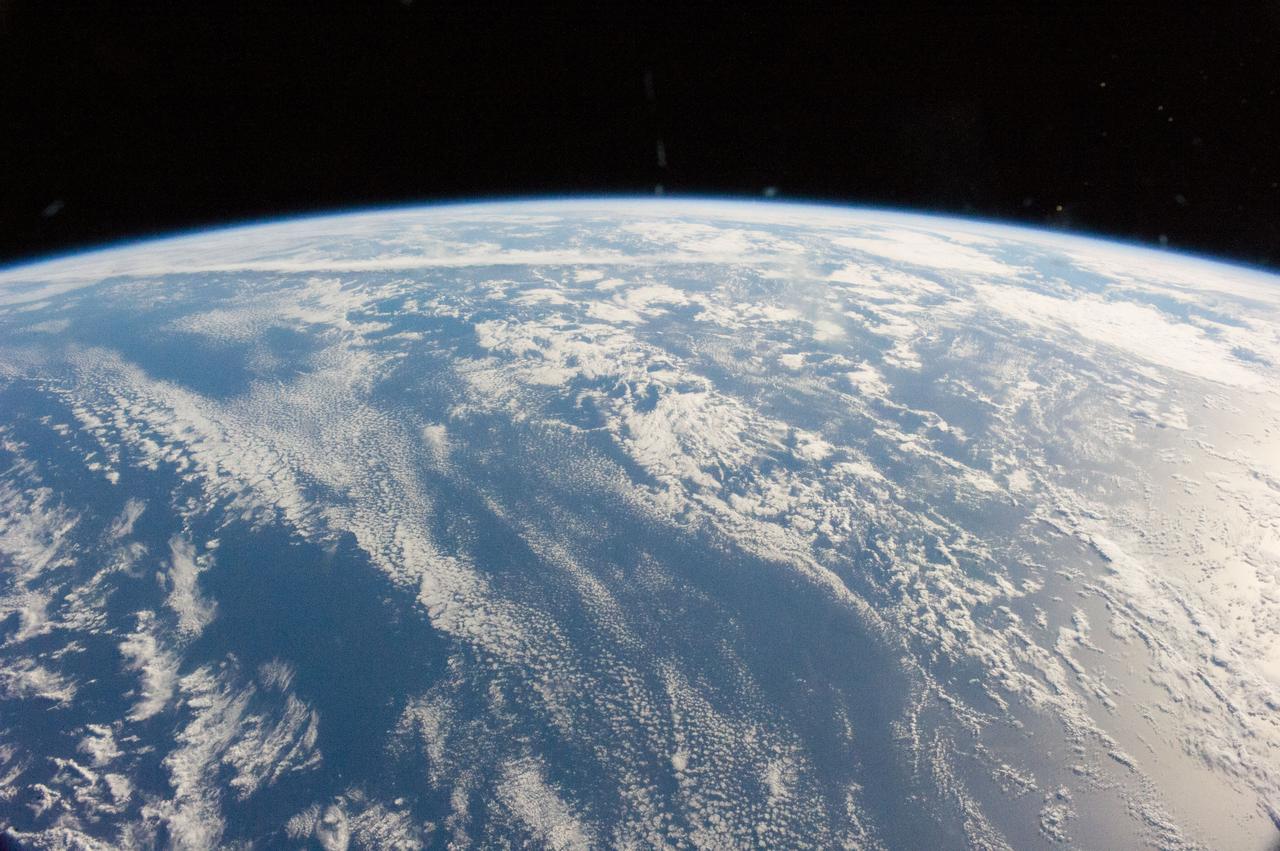
Earth observation taken by the Expedition 40 crew aboard the International Space Station (ISS). Folder lists this as: Near the straits of Magellan camera 2.
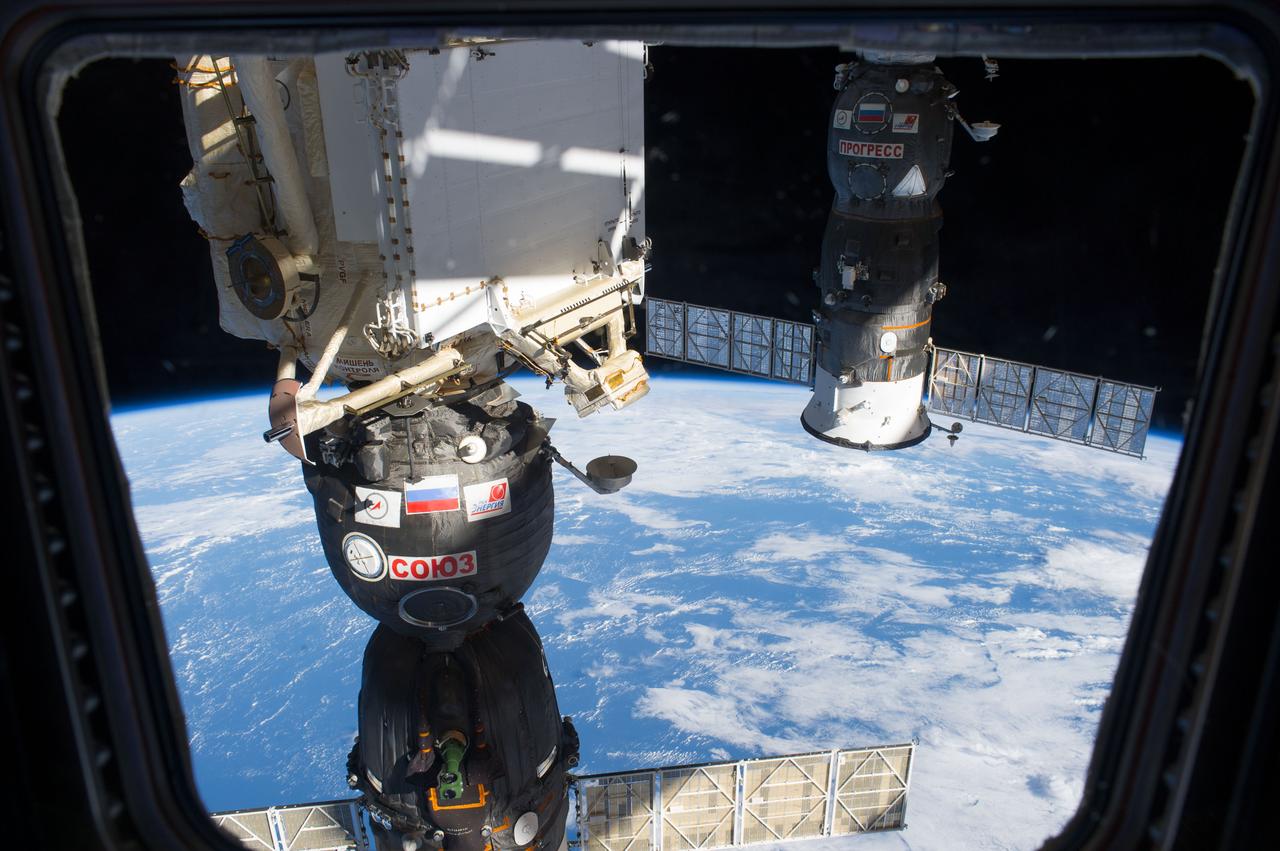
ISS040-E-005999 (29 May 2014) --- Two Russian spacecraft docked to the International Space Station are featured in this image photographed by an Expedition 40 crew member in the International Space Station’s Cupola. The Soyuz 39 (TMA-13M) spacecraft, docked to the Rassvet Mini-Research Module 1 (MRM1), is visible in the foreground. The Progress 55 resupply vehicle, docked to the Pirs Docking Compartment, is visible in the background. A blue and white part of Earth and the blackness of space provide the backdrop for the scene.
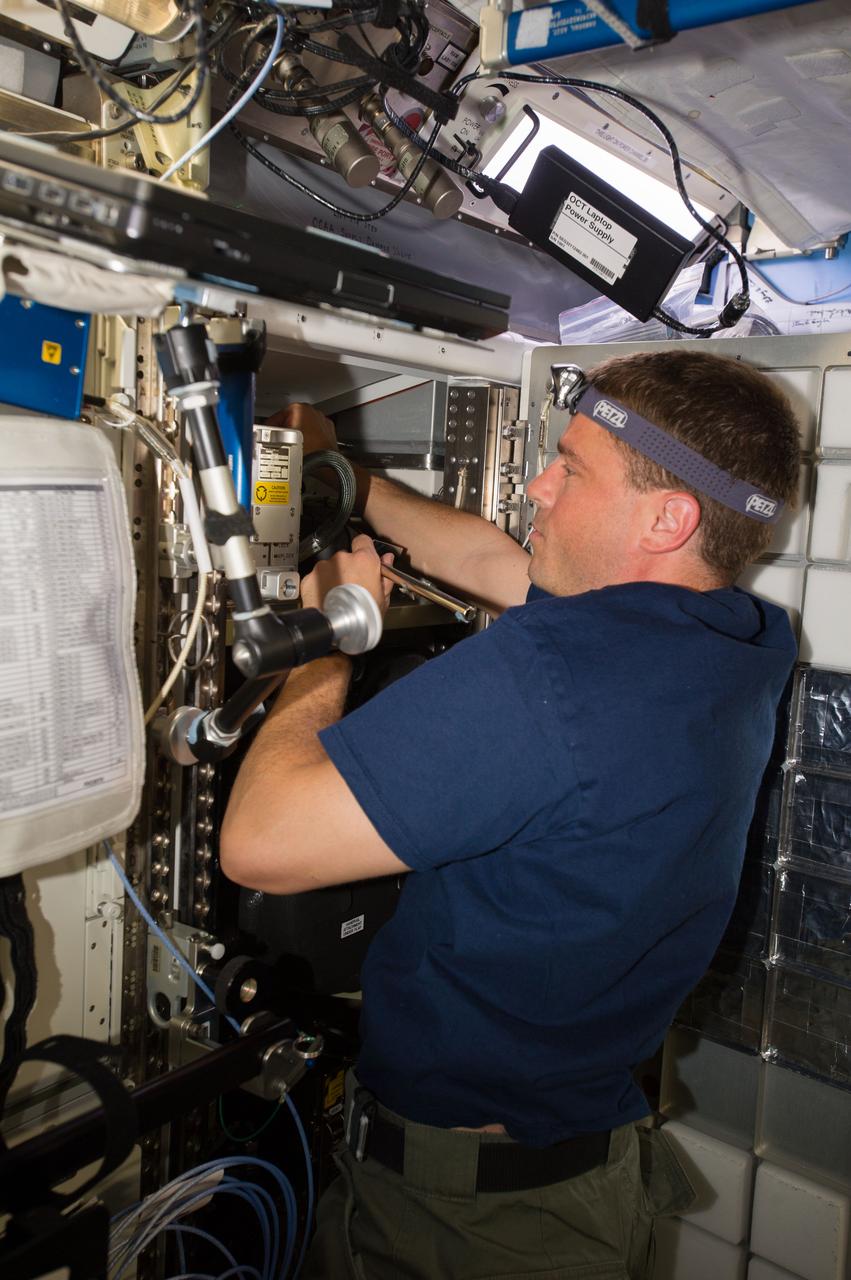
ISS040-E-007122 (4 June 2014) --- NASA astronaut Reid Wiseman, Expedition 40 flight engineer, works with the Common Cabin Air Assembly (CCAA) in the Destiny laboratory of the International Space Station.
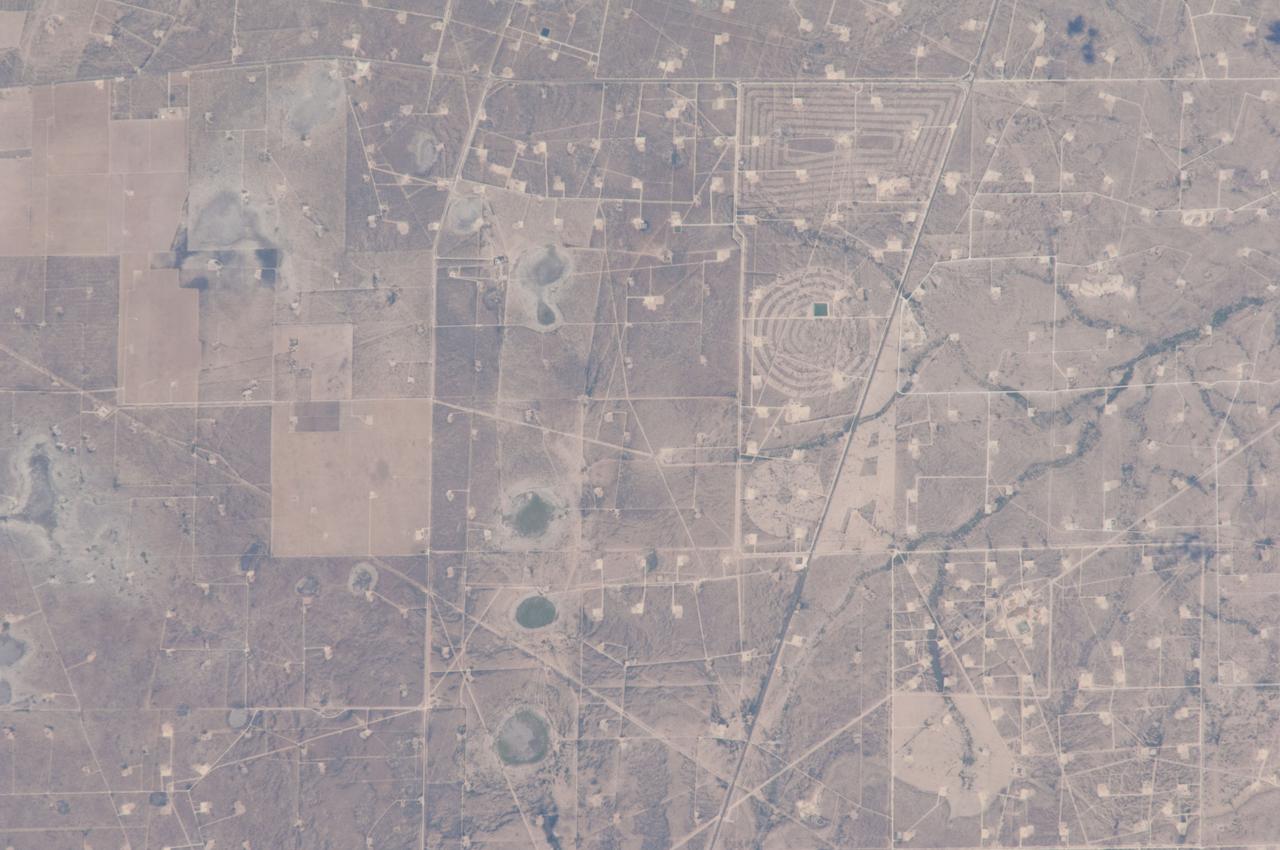
Earth Observation taken during a day pass by the Expedition 40 crew aboard the International Space Station (ISS). Folder lists this only as: South Texas.
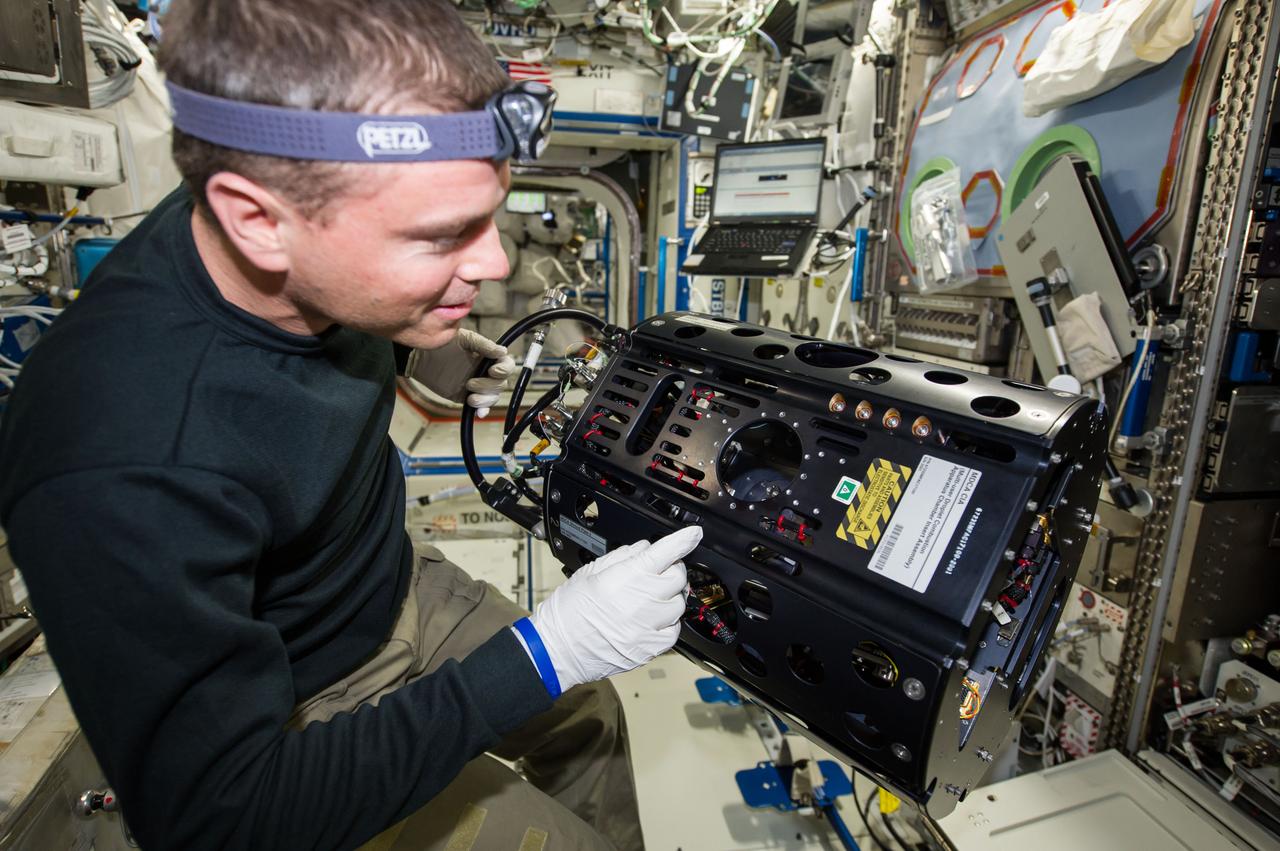
ISS041-E-016781 (18 Sept. 2014) --- NASA astronaut Reid Wiseman, Expedition 41 flight engineer, works with the Multi-user Drop Combustion Apparatus (MDCA) in the Destiny laboratory of the International Space Station. The MDCA contains hardware and software to conduct unique droplet combustion experiments in space.
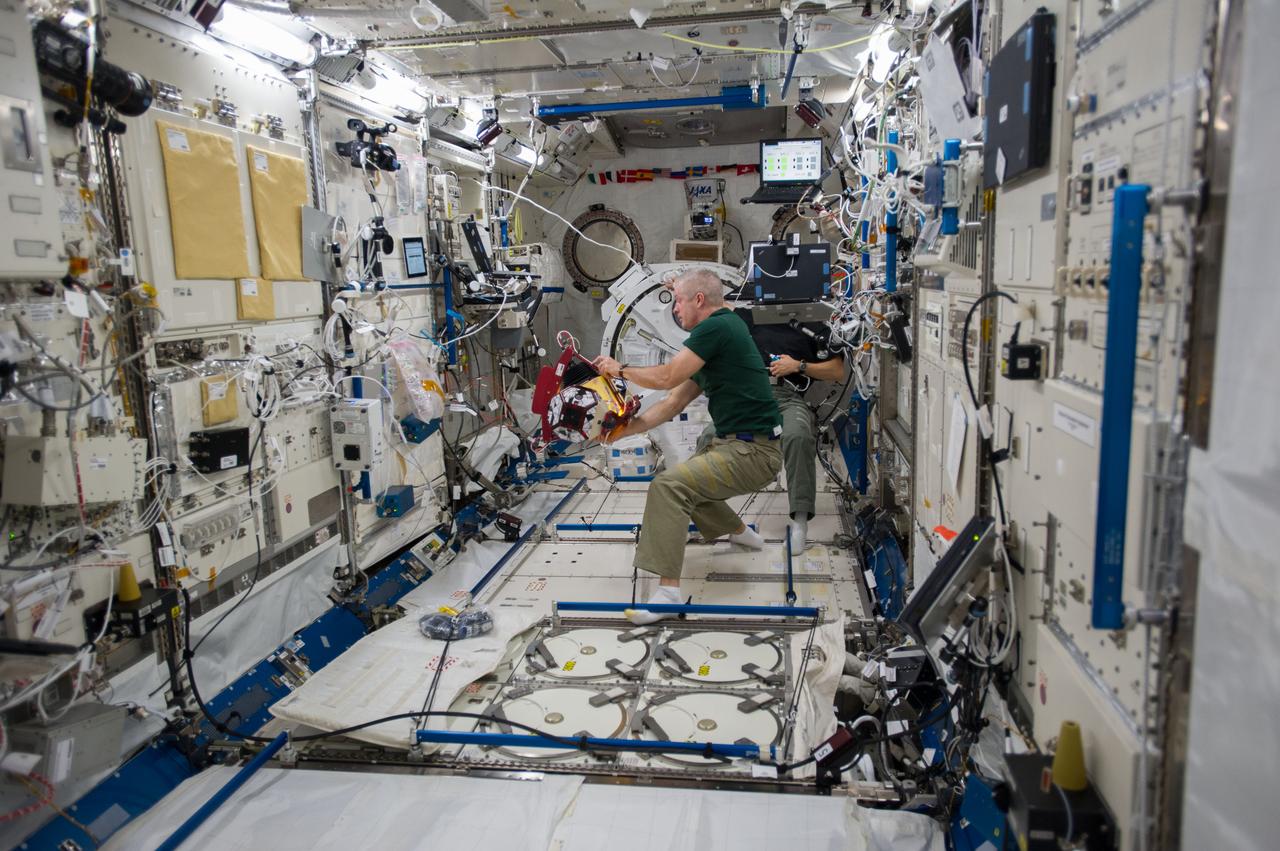
ISS040-E-015415 (18 June 2014) --- In the International Space Station's Kibo laboratory, NASA astronauts Steve Swanson, Expedition 40 commander; and Reid Wiseman (partially obscured), flight engineer, conduct test runs of the SPHERES-Slosh experiment, using the soccer-ball-sized, free-flying satellites known as Synchronized Position Hold, Engage, Reorient, Experimental Satellites, or SPHERES. The SPHERES-Slosh investigation uses small robotic satellites on the space station to examine how liquids move around inside containers in microgravity.
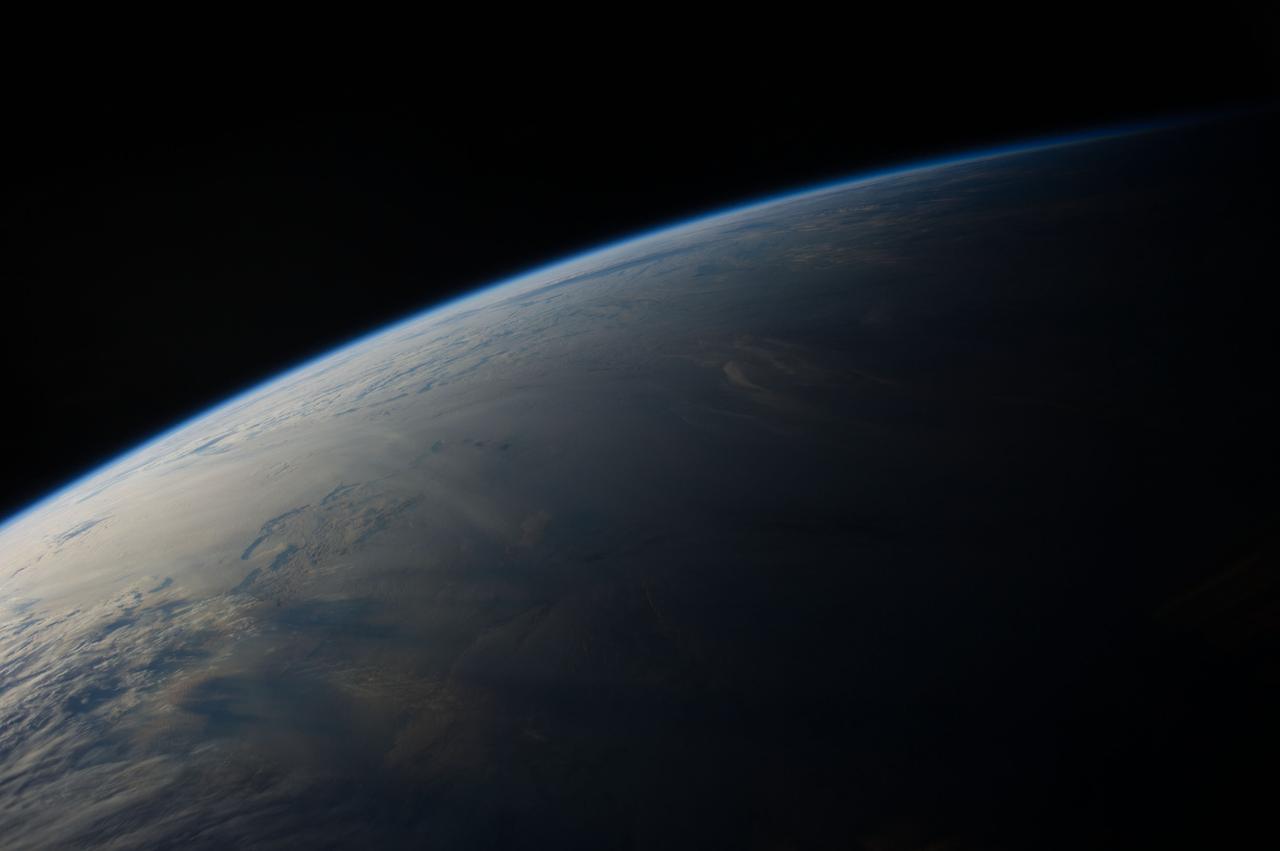
Earth Observation taken during a night pass by the Expedition 40 crew aboard the International Space Station (ISS). Folder lists this as: Sunrise photos.
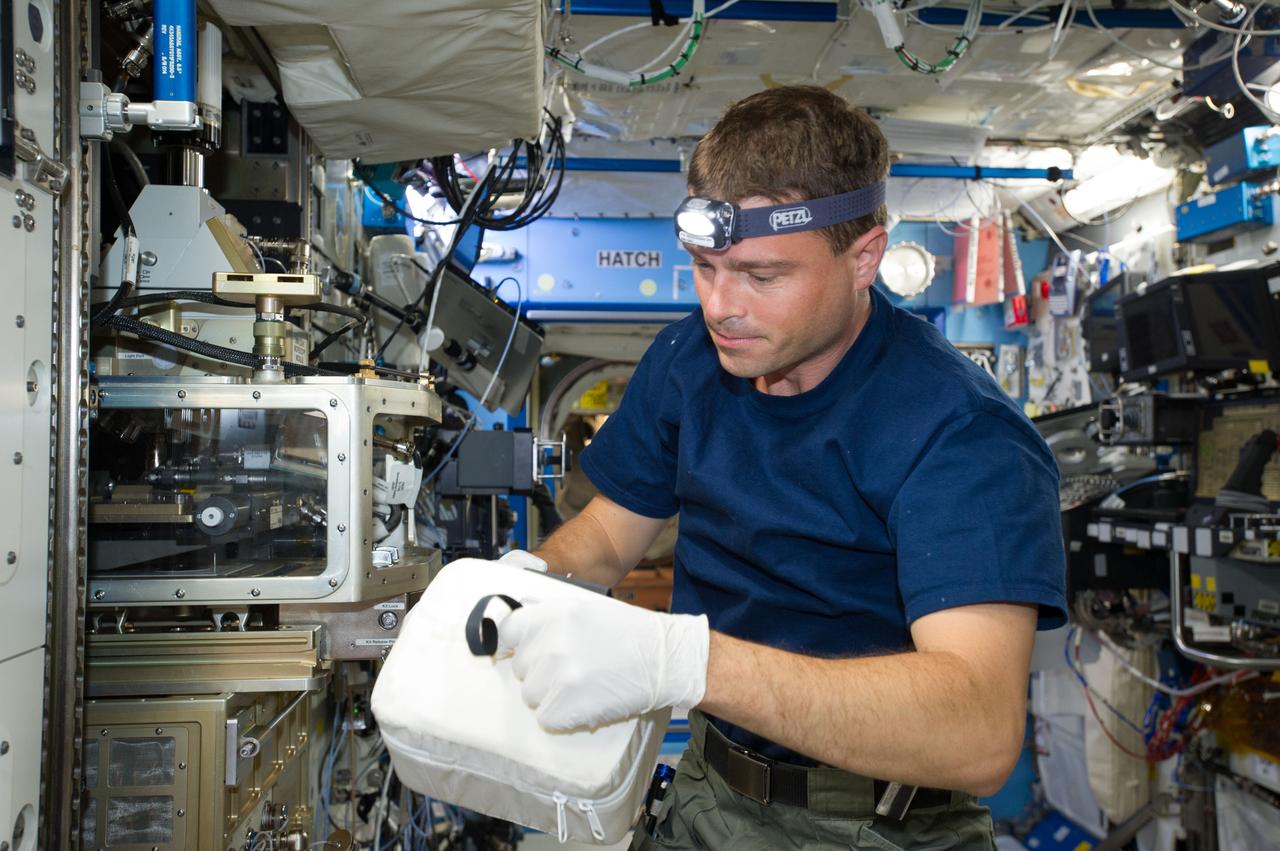
ISS040-E-007368 (5 June 2014) --- NASA astronaut Reid Wiseman, Expedition 40 flight engineer, works with Advanced Colloids Experiment (ACE) samples in the Destiny laboratory of the International Space Station.
ISS041-E-067002 (7 Oct. 2014) --- NASA astronaut Reid Wiseman, Expedition 41 flight engineer, participates in a session of extravehicular activity (EVA) as work continues on the International Space Station. During the six-hour, 13-minute spacewalk, Wiseman and European Space Agency astronaut Alexander Gerst (out of frame), flight engineer, worked outside the space station's Quest airlock relocating a failed cooling pump to external stowage and installing gear that provides back up power to external robotics equipment.

ISS040-E-045408 (8 July 2014) --- One of the Expedition 40 crew members aboard the International Space Station photographed a series of images of Typhoon Neoguri in the vicinity of Japan on July 7, 2014. This 70mm oblique image featuring the eye was photographed at 21:52:20 GMT.
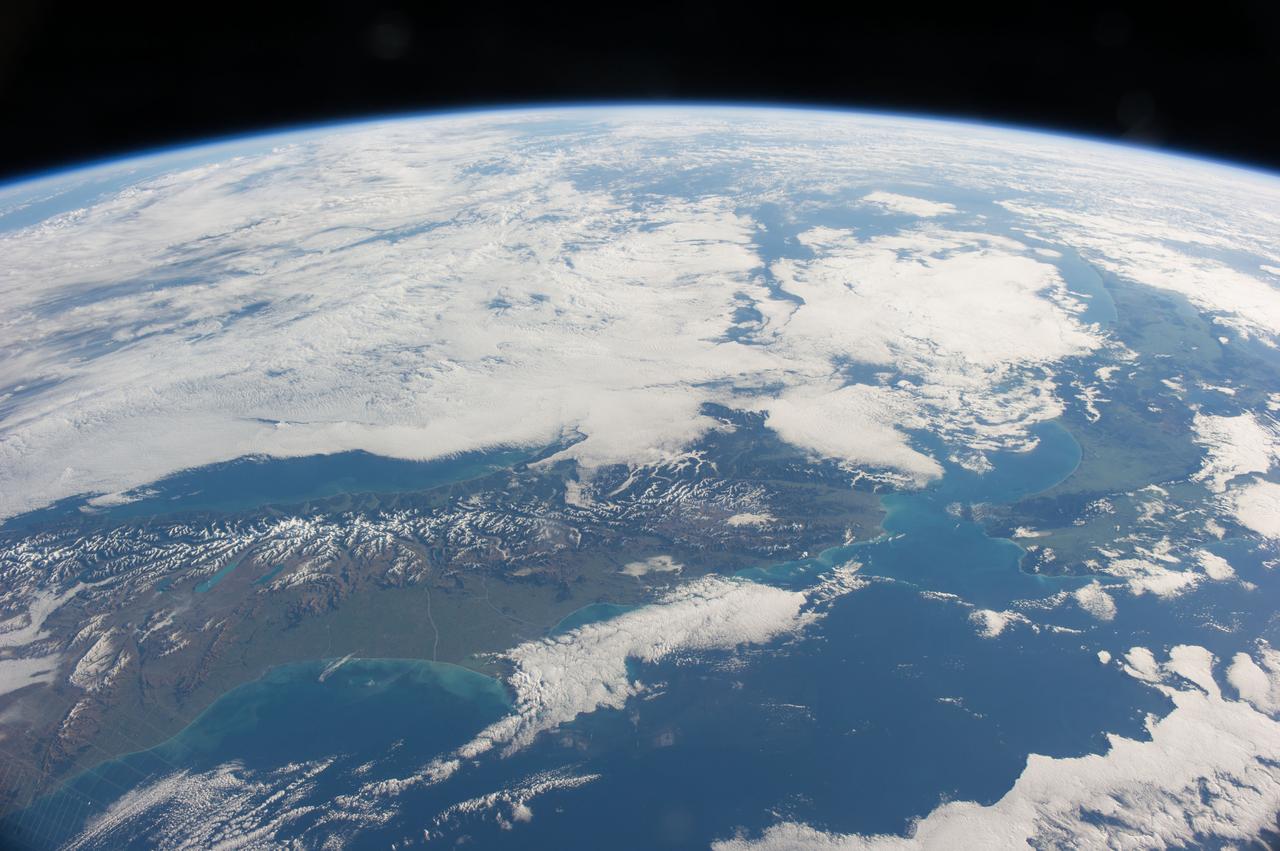
ISS040-E-007078 (3 June 2014) --- One of the Expedition 40 crew members aboard the International Space Station recorded this still image of much of New Zealand on June 3, 2014. Clouds cover the Tasman Sea at top. South Island is at left and North Island, at right. The orbital outpost was approximately 228 nautical miles above the South Pacific Ocean when the photograph was taken.
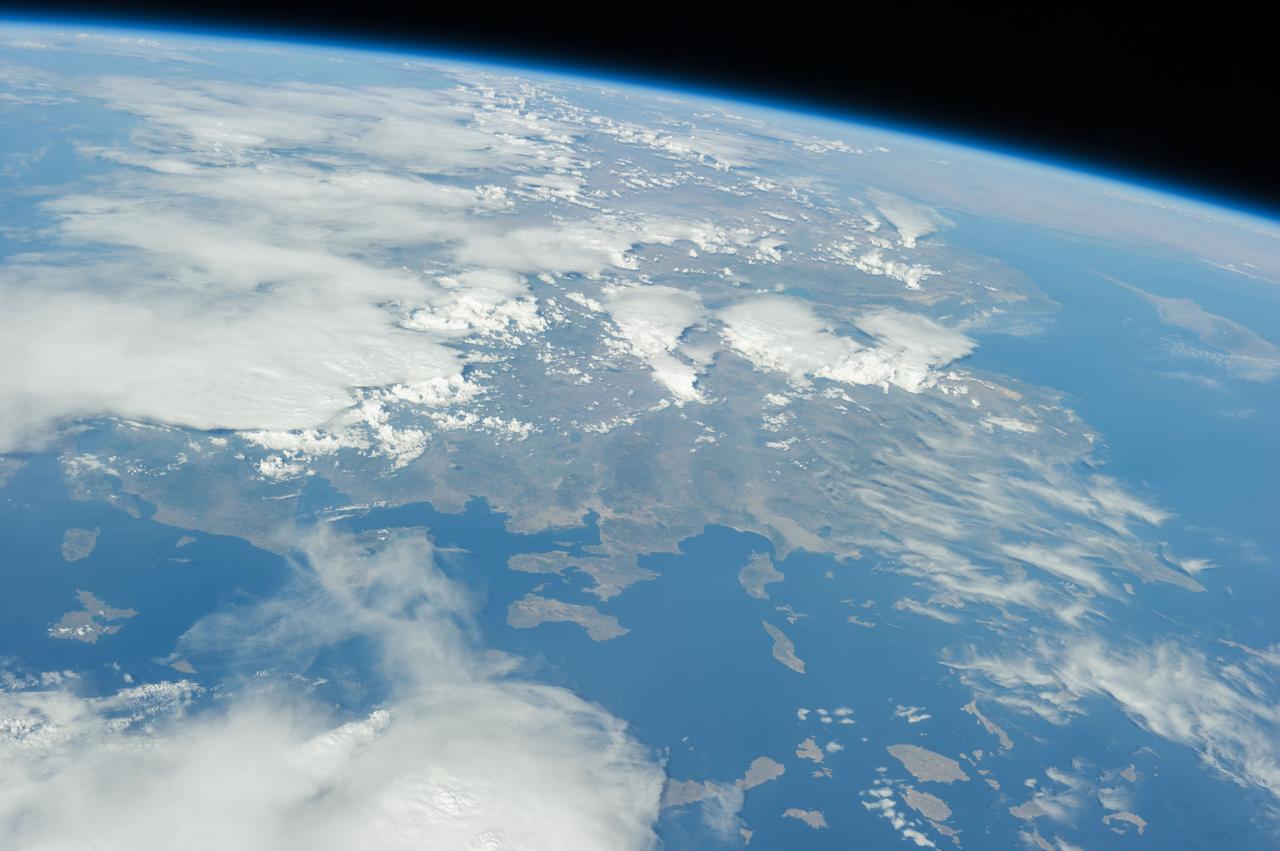
Earth Observation taken during a day pass by the Expedition 40 crew aboard the International Space Station (ISS). Folder lists this as: Tripoli then Athens.
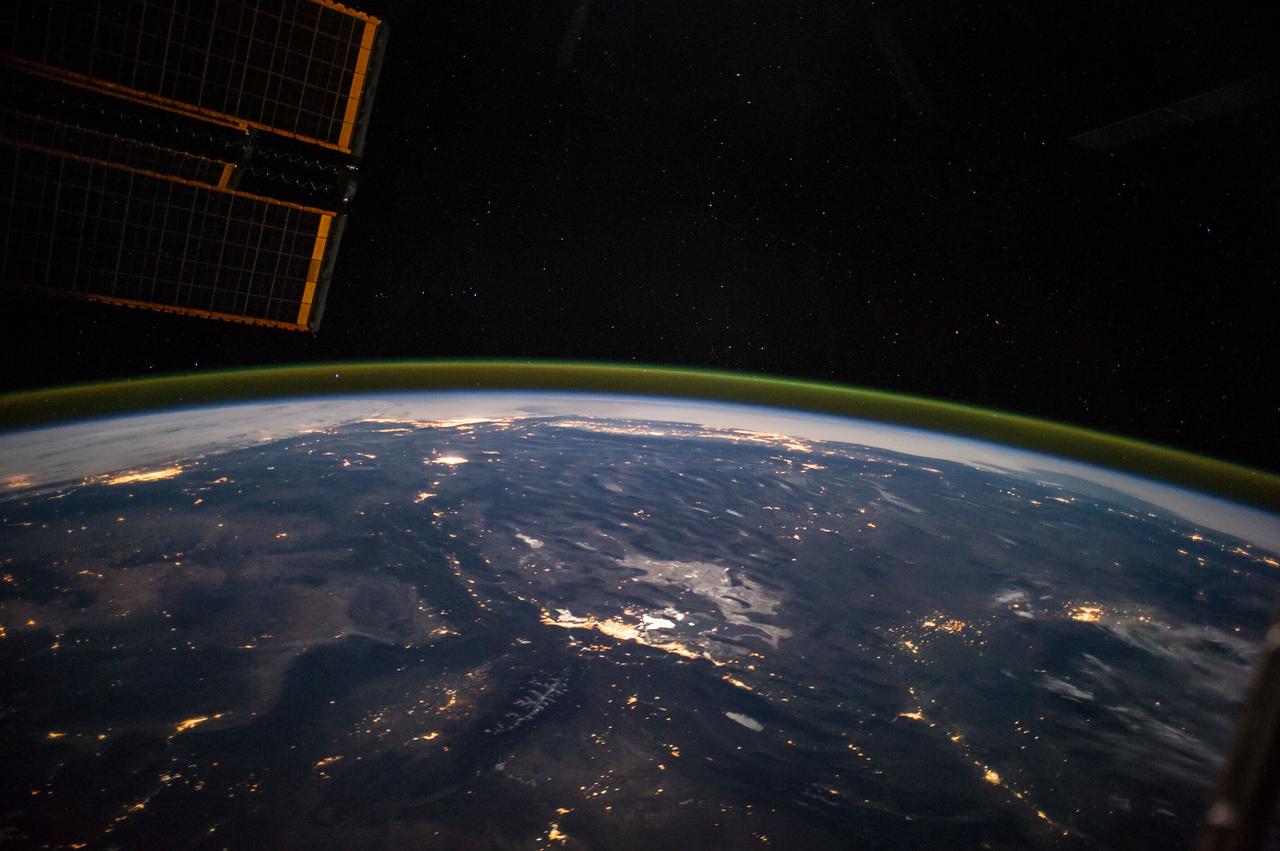
ISS041-E-067595 (6 Oct. 2014) --- This moonlit panorama was shot recently with a wide-angle lens by an Expedition 41 crew member aboard the International Space Station, as they looked southwest from a point over Nebraska. The wide-angle lens shows a huge swath of country that stretches from Portland, Oregon (right) to Phoenix, Arizona (left). The largest string of lights is the Ogden-Salt Lake City-Provo area (lower center) in Utah. The Los Angeles and San Francisco metropolitan regions, and the cities of the central valley of California (Bakersfield to Redding) stretch across the horizon. The green airglow layer always appears in night images. Moonlight shows the red tinge of the space station?s solar arrays top left. Moonlight emphasizes the broader-scale geological zones. Nevada?s short, dark, parallel mountain ranges of the basin and range geological province (center) contrast with the expanses of flat terrain of the Colorado Plateau (left) in Colorado, Arizona, Utah and New Mexico. The near-full moon even reveals the vast dry lake bed known as the Bonneville Salt Flats. The black line of the Sierra Nevada marks the edge of California?s well-lit central valley (directly below the San Francisco Bay area).
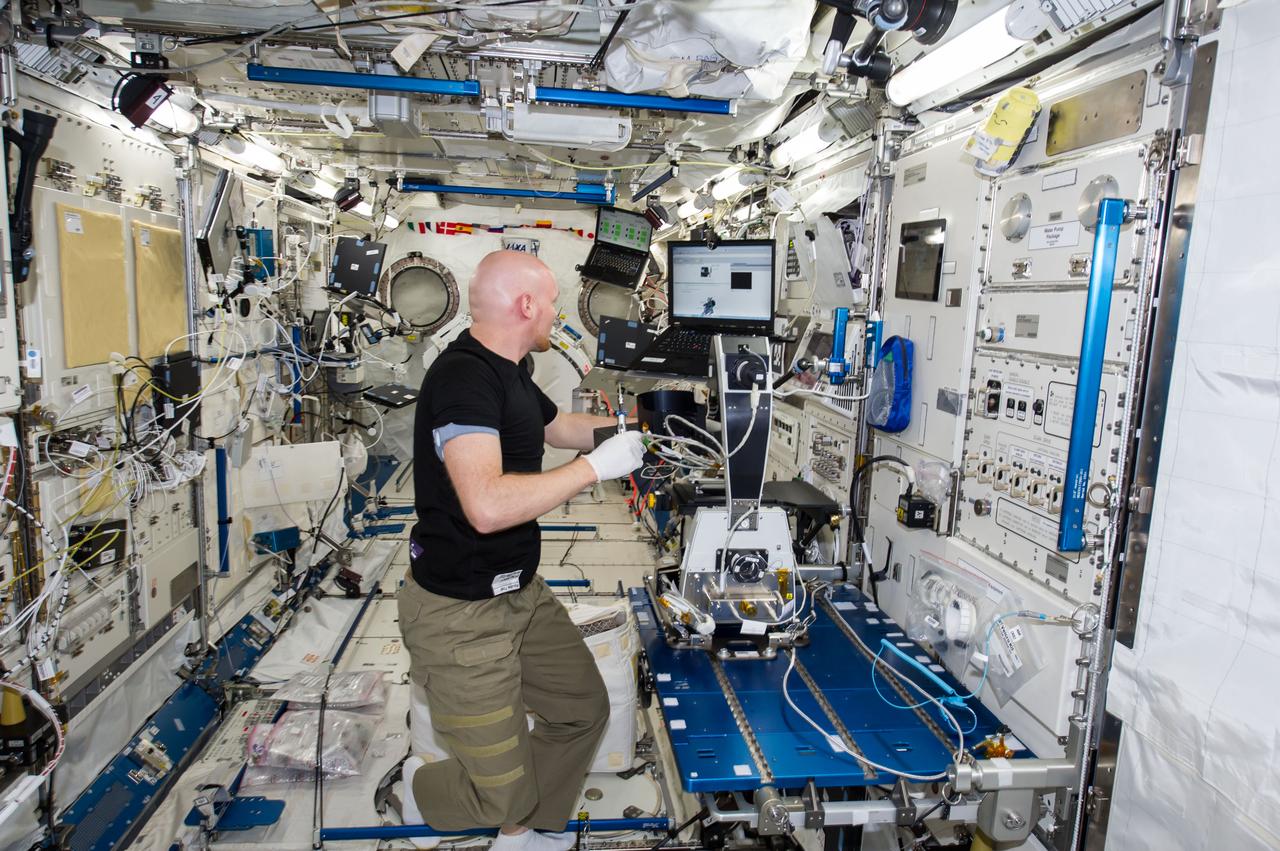
ISS040-E-130232 (9 Sept. 2014) --- European Space Agency astronaut Alexander Gerst, Expedition 40 flight engineer, installs a microscope for the Cell Mechanosensing-2 experiment in the Kibo laboratory of the International Space Station. The Japanese experiment, which is conducted in Kibo’s Kobairo rack, seeks to identify gravity sensors in cells that may change the expression of key proteins and genes and allowing muscles to atrophy in microgravity.
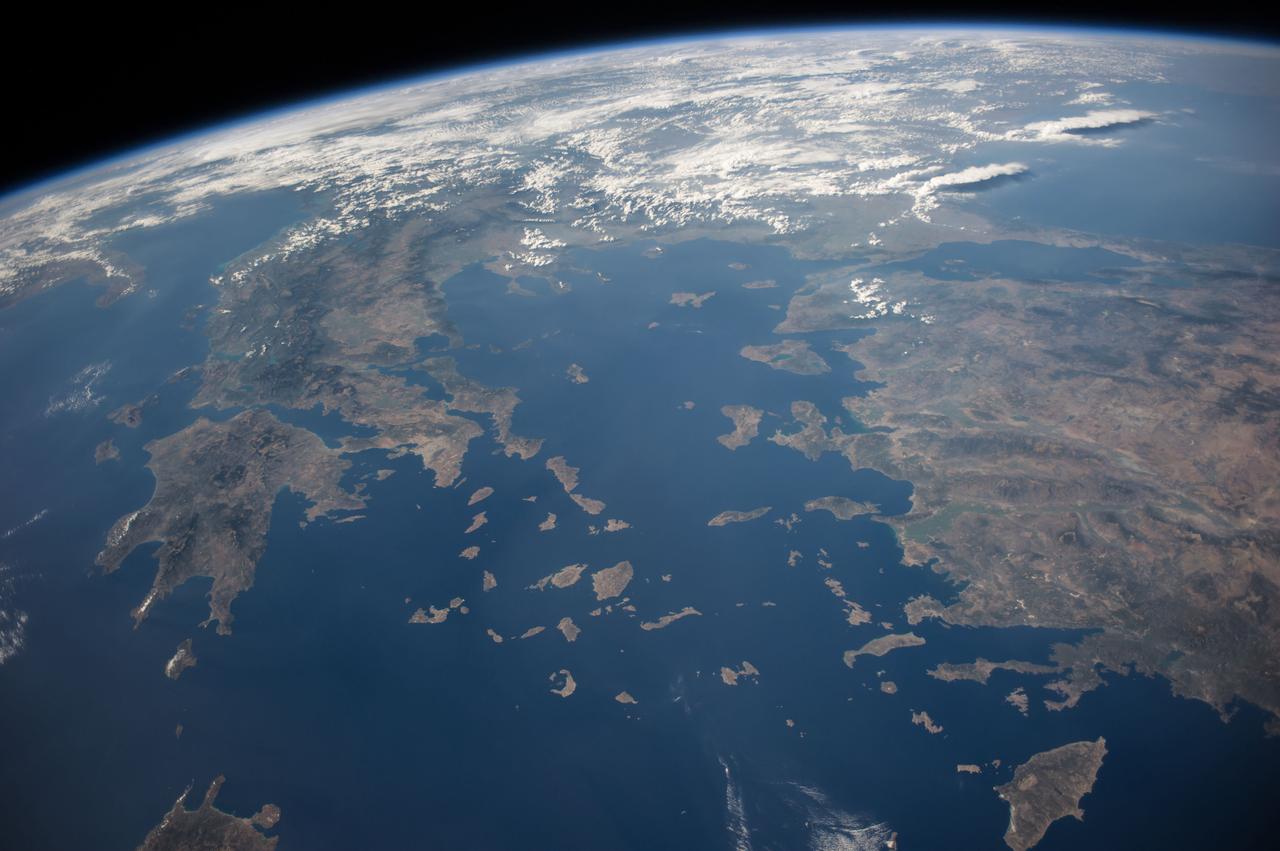
ISS040-E-098804 (16 Aug. 2014) --- One of the Expedition 40 crew members aboard the International Space Station, flying at an altitude of 221 nautical miles, photographed this oblique image showing parts of the continents of Europe and Asia. Much of Greece is visible on the left side of the frame and a large area of Turkey can be seen at right.
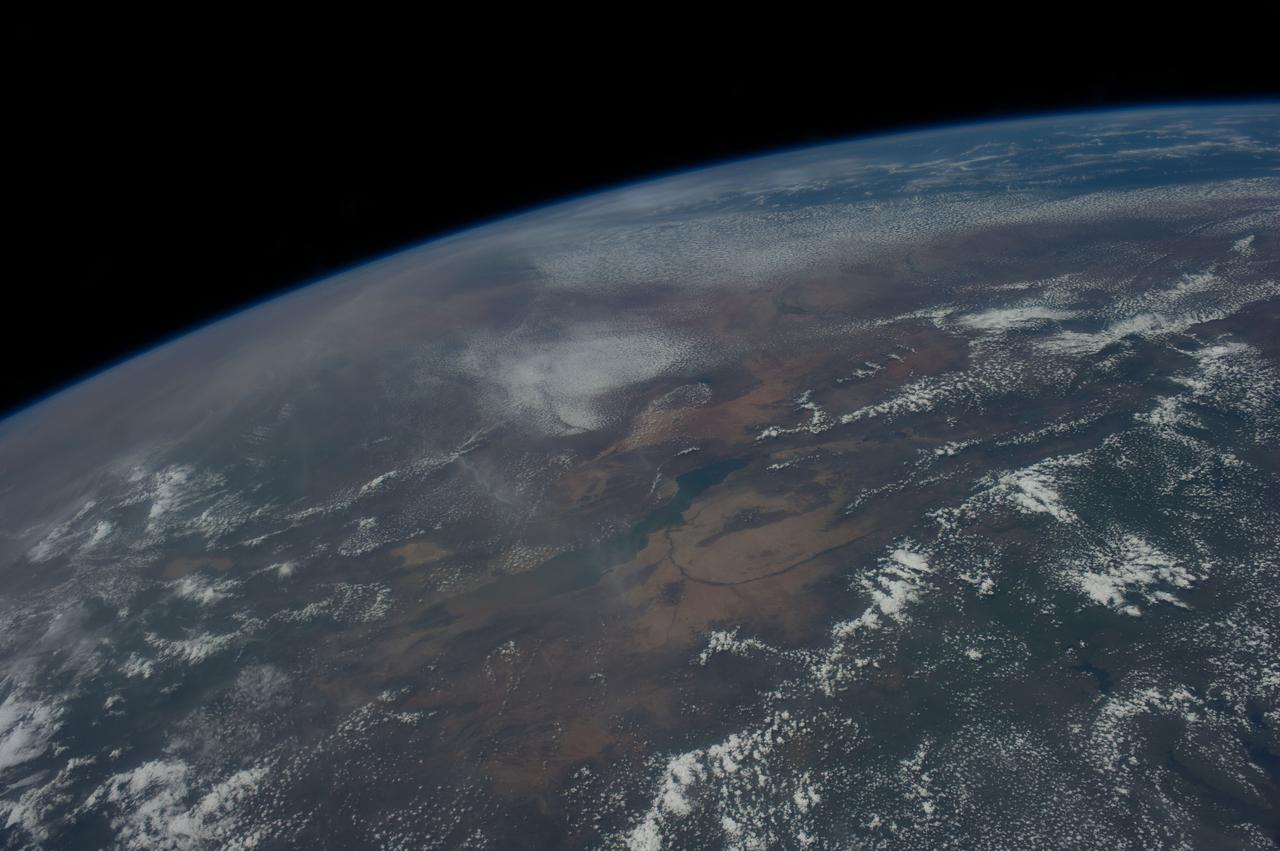
Earth observation taken during day pass by the Expedition 40 crew aboard the International Space Station (ISS). Folder lists this as: Africa.
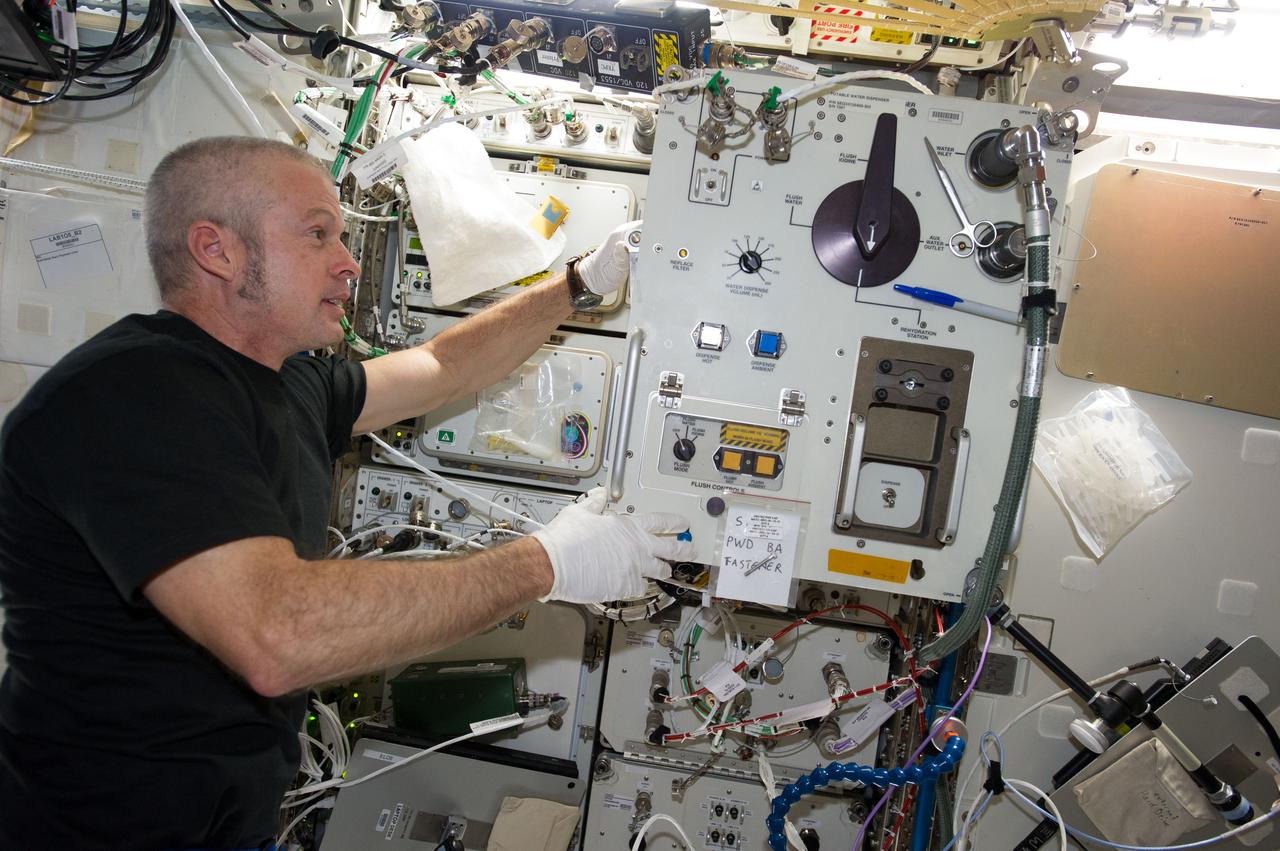
ISS040-E-064628 (15 July 2014) --- NASA astronaut Steve Swanson, Expedition 40 commander, replaces filters in the Potable Water Dispenser (PWD) in the Destiny laboratory of the International Space Station.
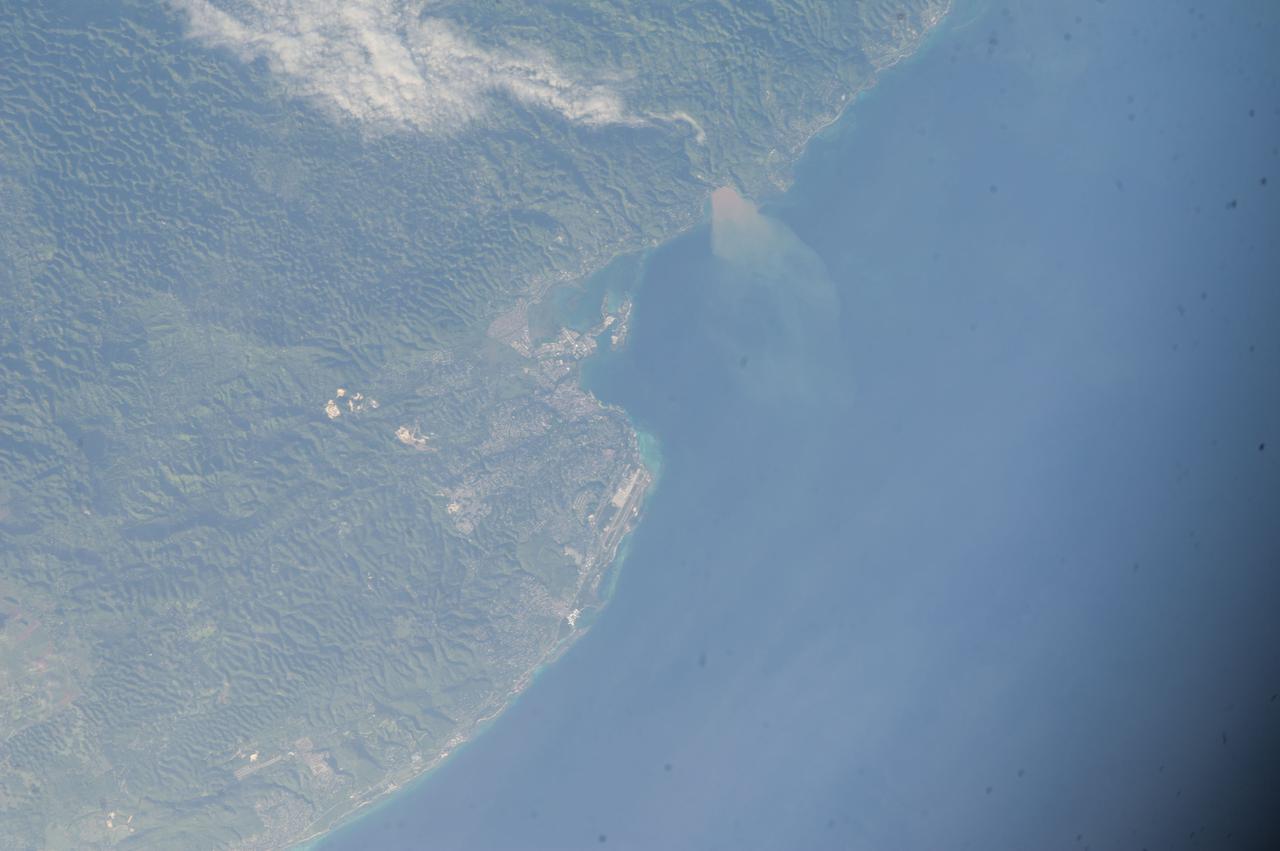
Earth Observation taken during a day pass by the Expedition 40 crew aboard the International Space Station (ISS). Folder lists this as: CEO - Arena de Sao Paolo.
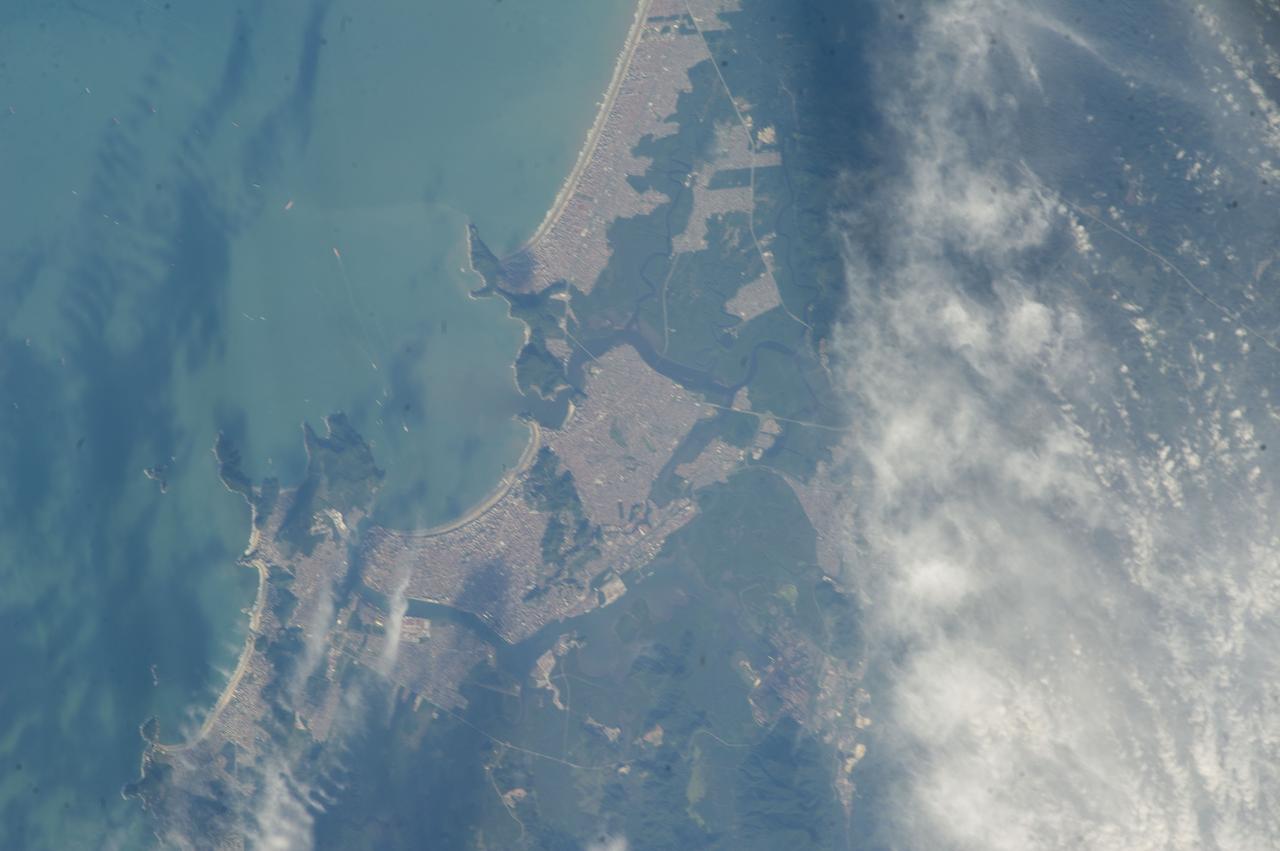
Earth Observation taken during a day pass by the Expedition 40 crew aboard the International Space Station (ISS). Folder lists this as: CEO - Arena de Sao Paolo. Santos, Brazil possibly visible.
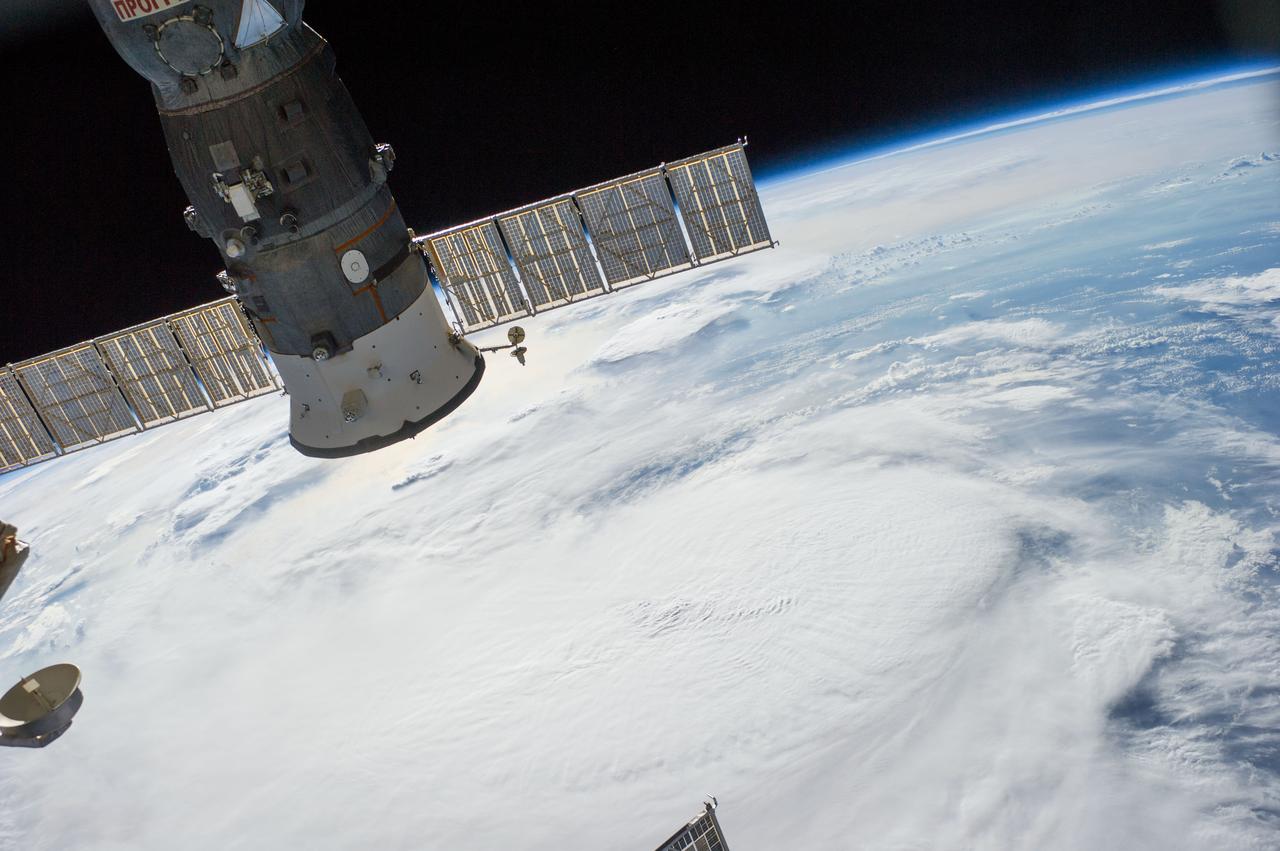
Earth Observation taken during a day pass by the Expedition 40 crew aboard the International Space Station (ISS). File lists this as: tropical storm over Atlantic. Docked Soyuz spacecraft is also visible.
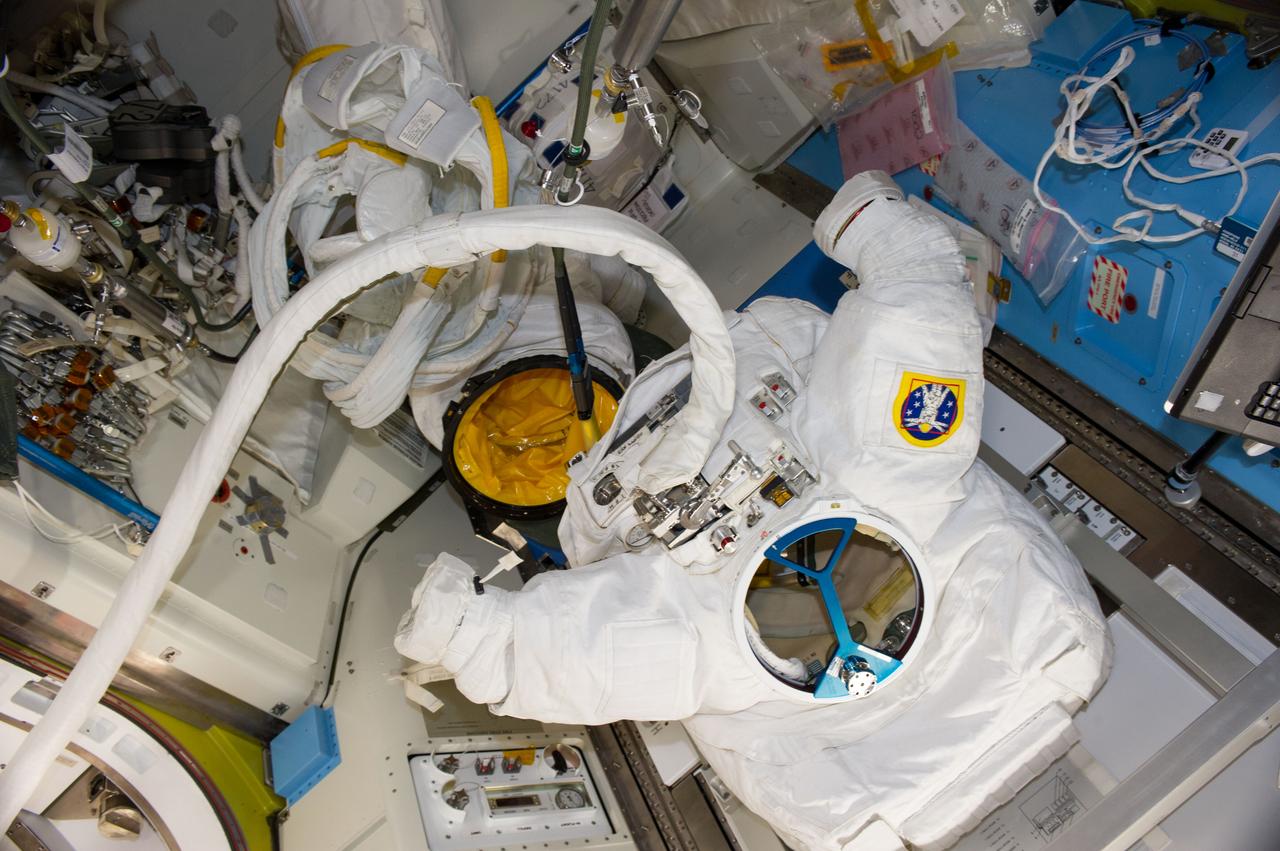
View of an Extravehicular Mobility Unit (EMU) stowed in the Quest airlock as seen by the Expedition 40 crew.
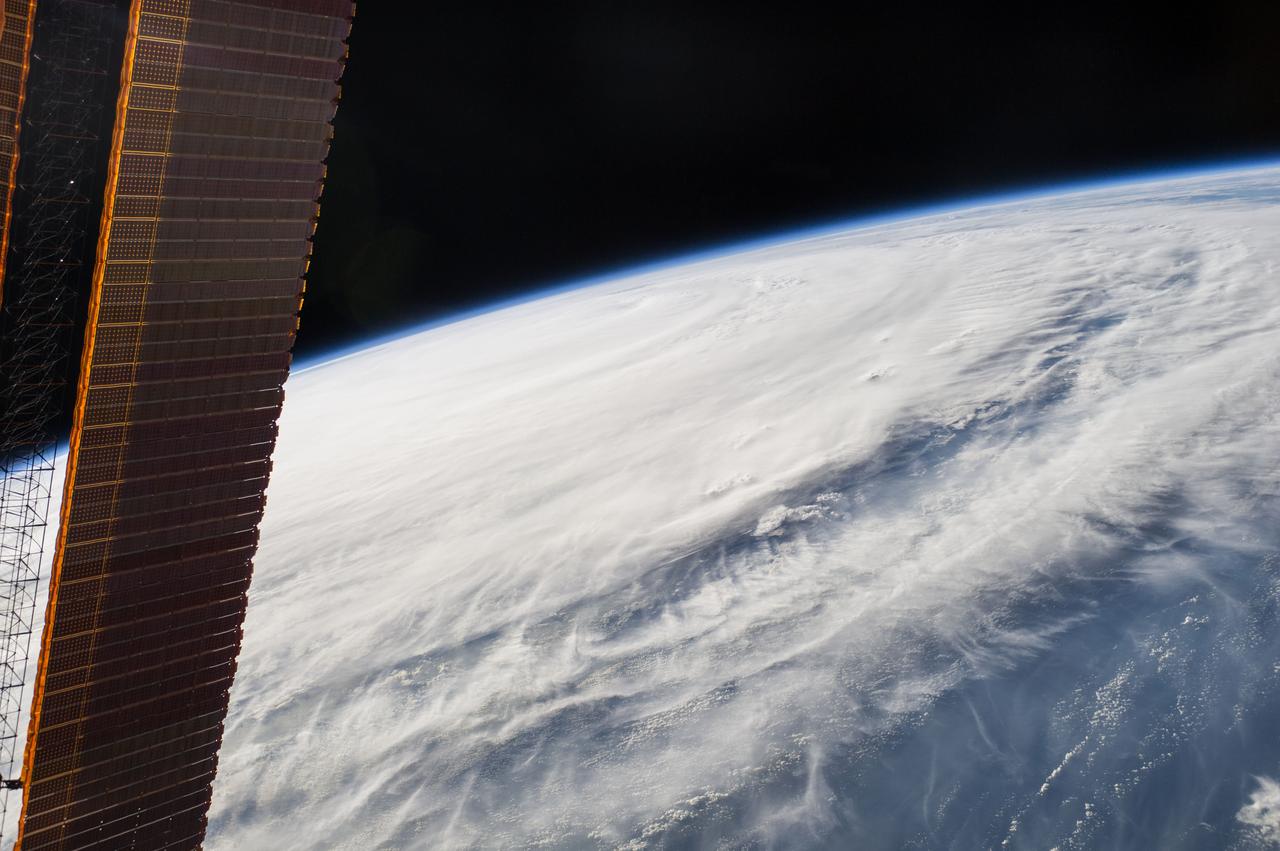
ISS040-E-089379 (7 Aug. 2014) --- One of the Expedition 40 crew members aboard the International Space Station, from an altitude of 221 nautical miles, photographed this image of Typhoon Halong at 08:02:41 GMT on Aug. 7, 2014. The orbital outpost was flying above a point on Earth located at 15.8 degrees north latitude and 142.4 degrees east longitude. One of the solar panels of the orbital outpost is seen on the left side of the scene.
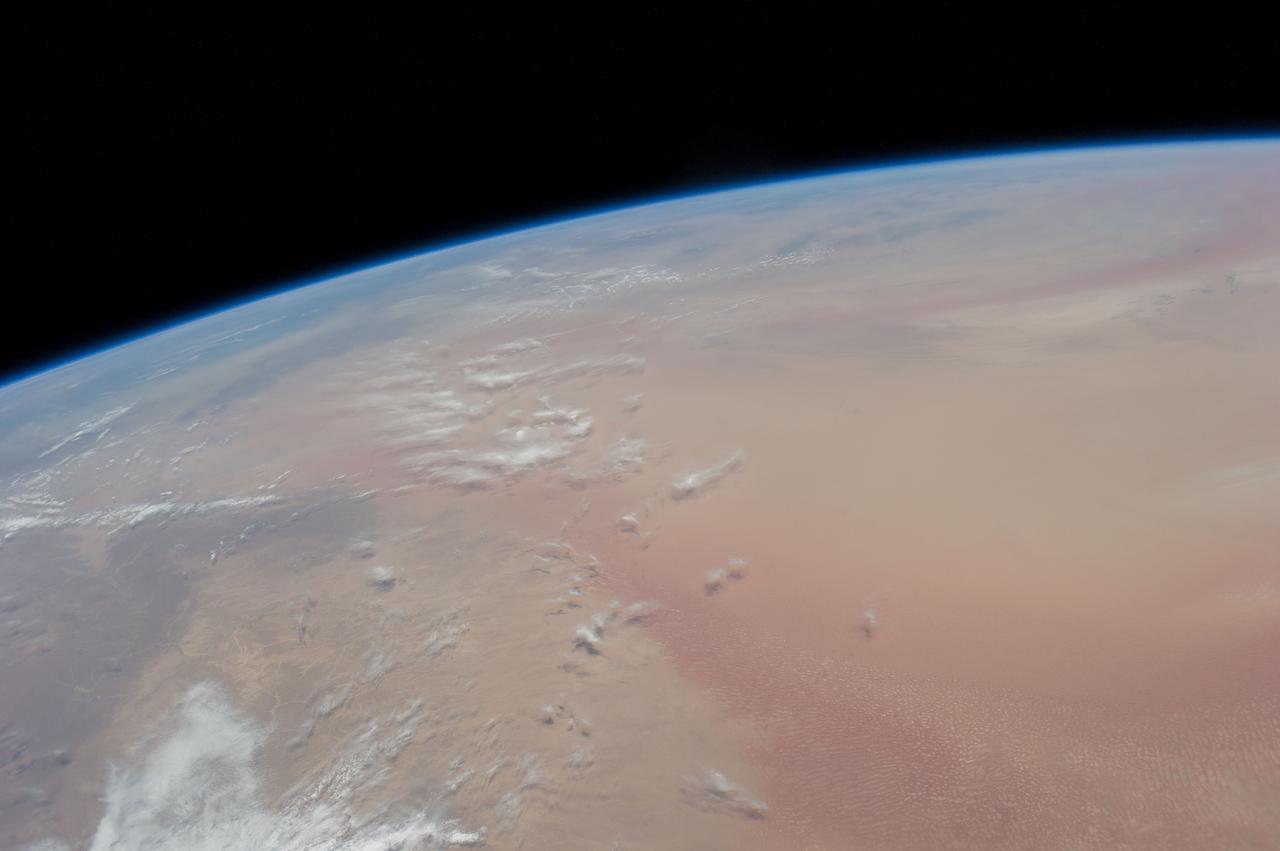
Earth Observation taken during a day pass by the Expedition 40 crew aboard the International Space Station (ISS). Folder lists this as: Middle East.

Earth Observation taken during a night pass by the Expedition 40 crew aboard the International Space Station (ISS). Folder lists this as: Long exposure night shots. Bangkok - image released by astronaut on Twitter.
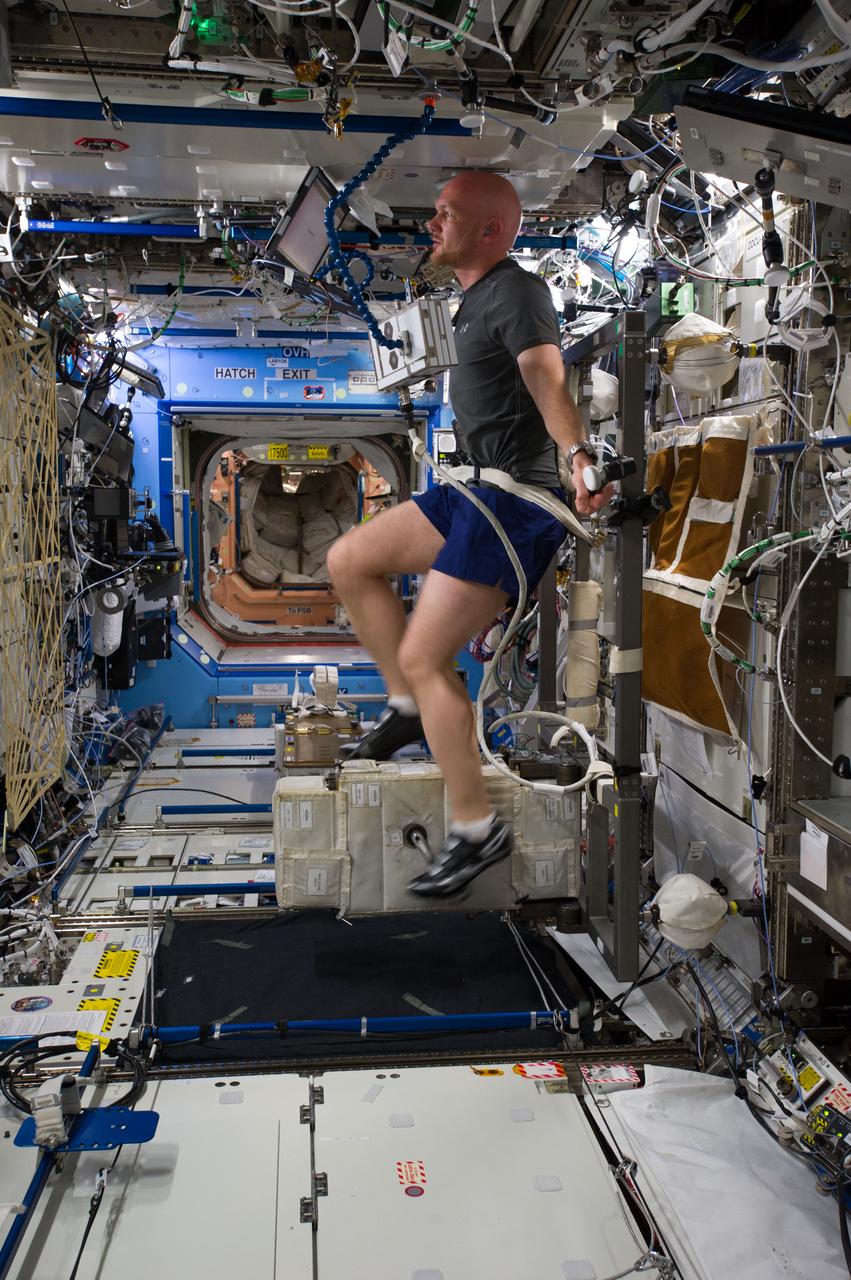
ISS040-E-006700 (2 June 2014) --- European Space Agency astronaut Alexander Gerst, Expedition 40 flight engineer, exercises on the Cycle Ergometer with Vibration Isolation System (CEVIS) in the Destiny laboratory of the International Space Station.
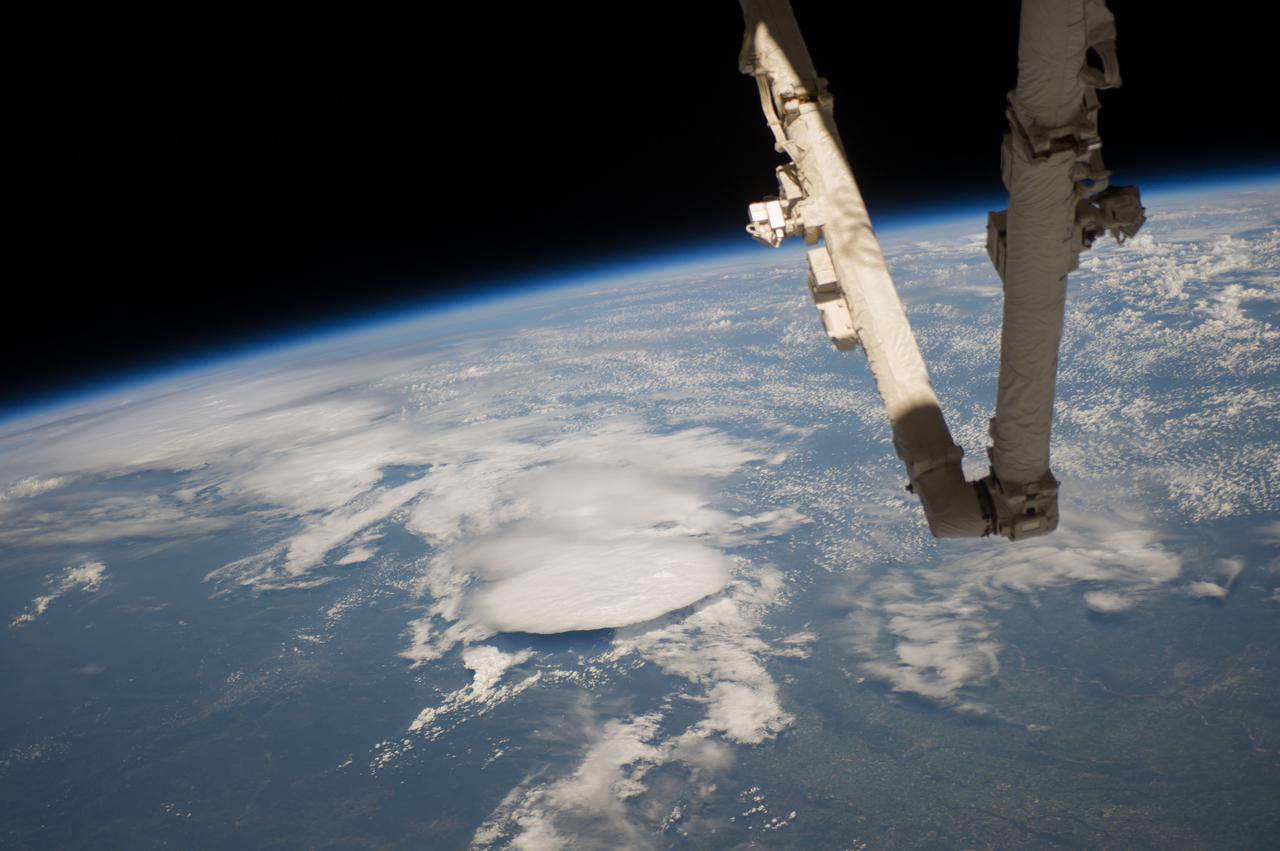
Earth Observation taken during a day pass by the Expedition 40 crew aboard the International Space Station (ISS).
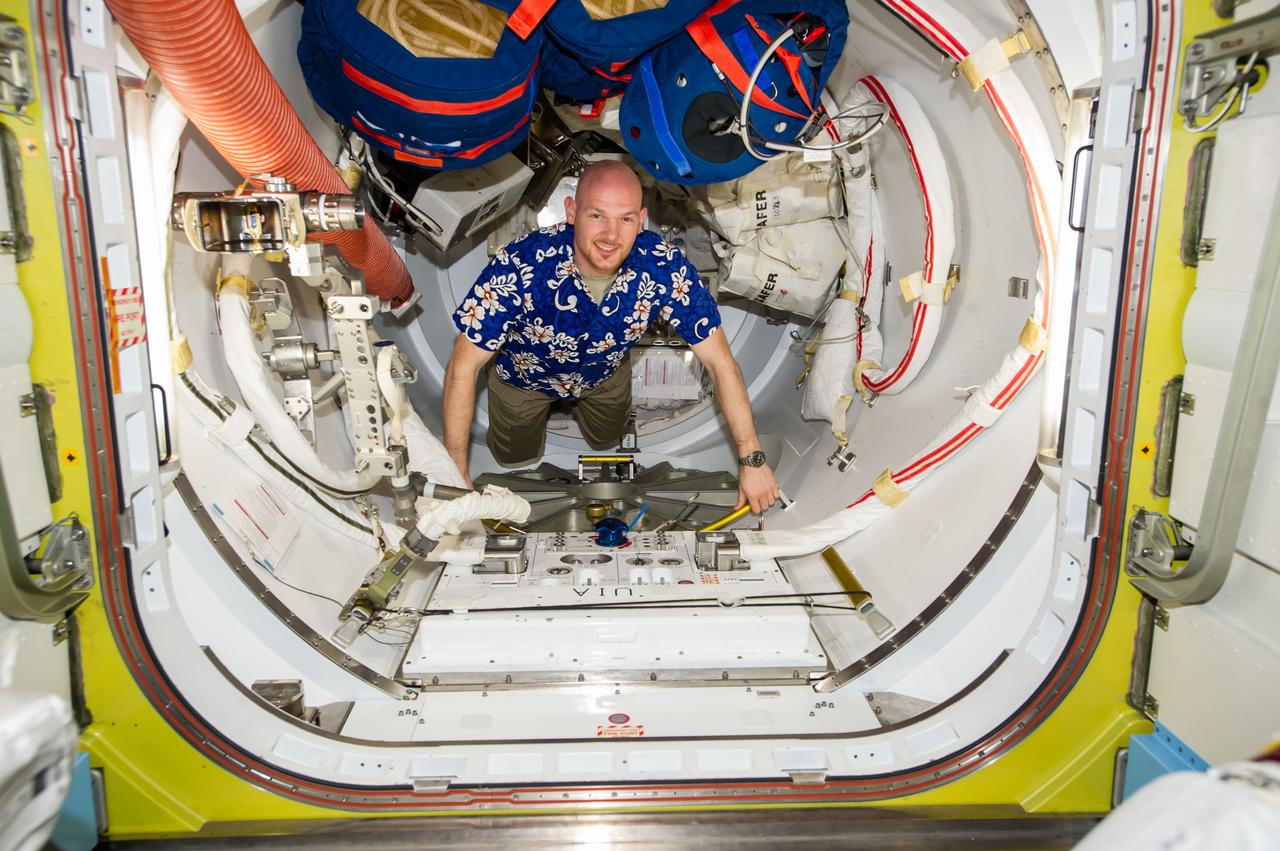
ISS041-E-017020 (19 Sept. 2014) --- European Space Agency astronaut Alexander Gerst, Expedition 41 flight engineer, is pictured in the Quest airlock of the International Space Station.
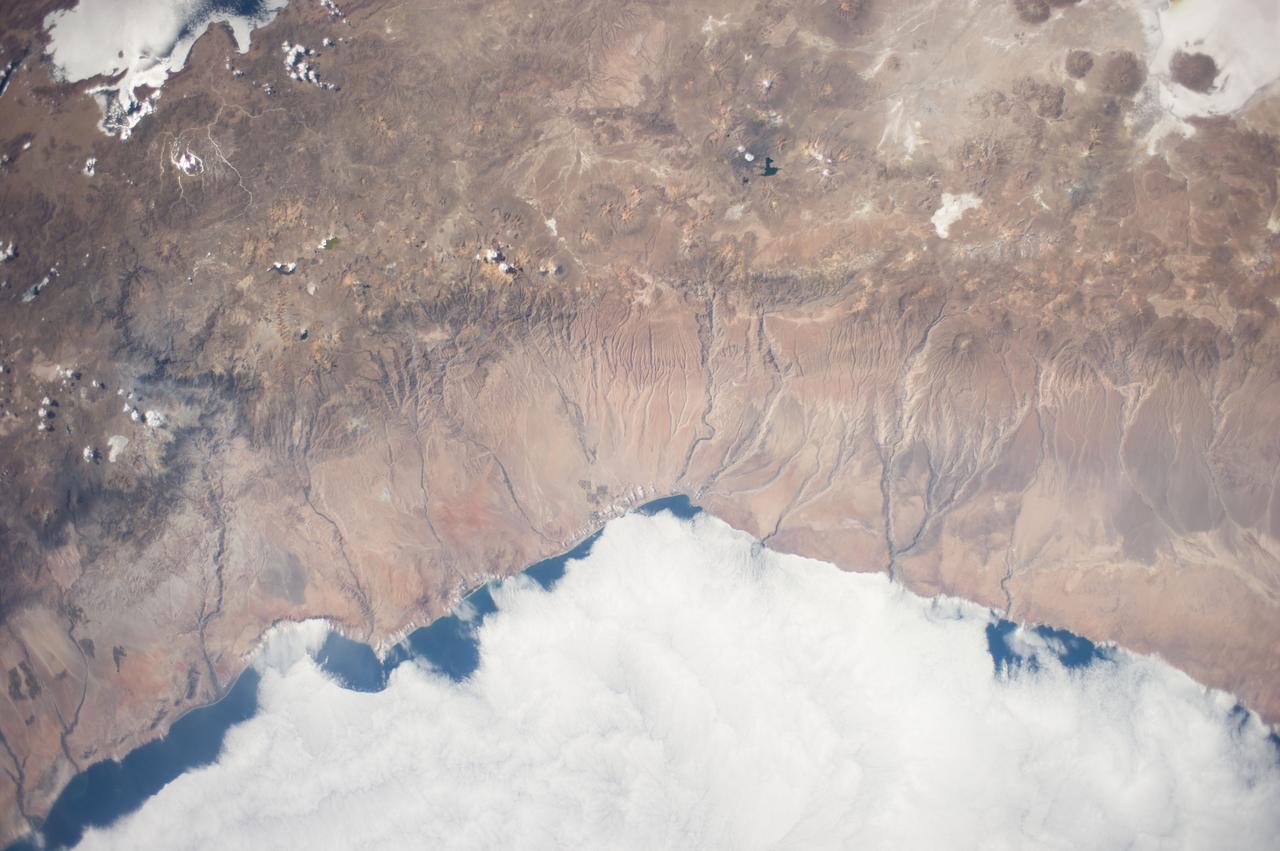
Earth Observation taken during a day pass by the Expedition 40 crew aboard the International Space Station (ISS). Folder lists this as: South America.
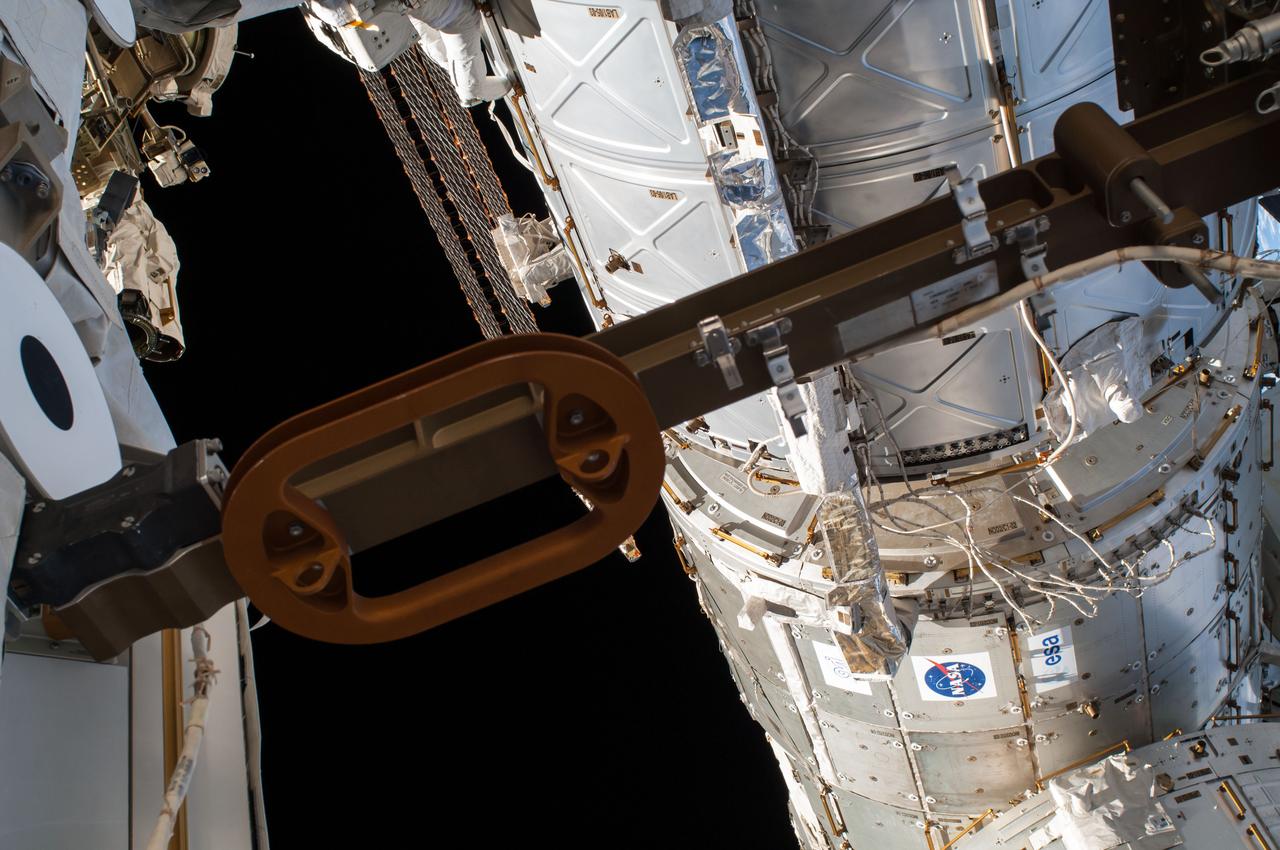
ISS041-E-067002 (7 Oct. 2014) --- NASA astronaut Reid Wiseman, Expedition 41 flight engineer, participates in a session of extravehicular activity (EVA) as work continues on the International Space Station. During the six-hour, 13-minute spacewalk, Wiseman and European Space Agency astronaut Alexander Gerst (out of frame), flight engineer, worked outside the space station's Quest airlock relocating a failed cooling pump to external stowage and installing gear that provides back up power to external robotics equipment.
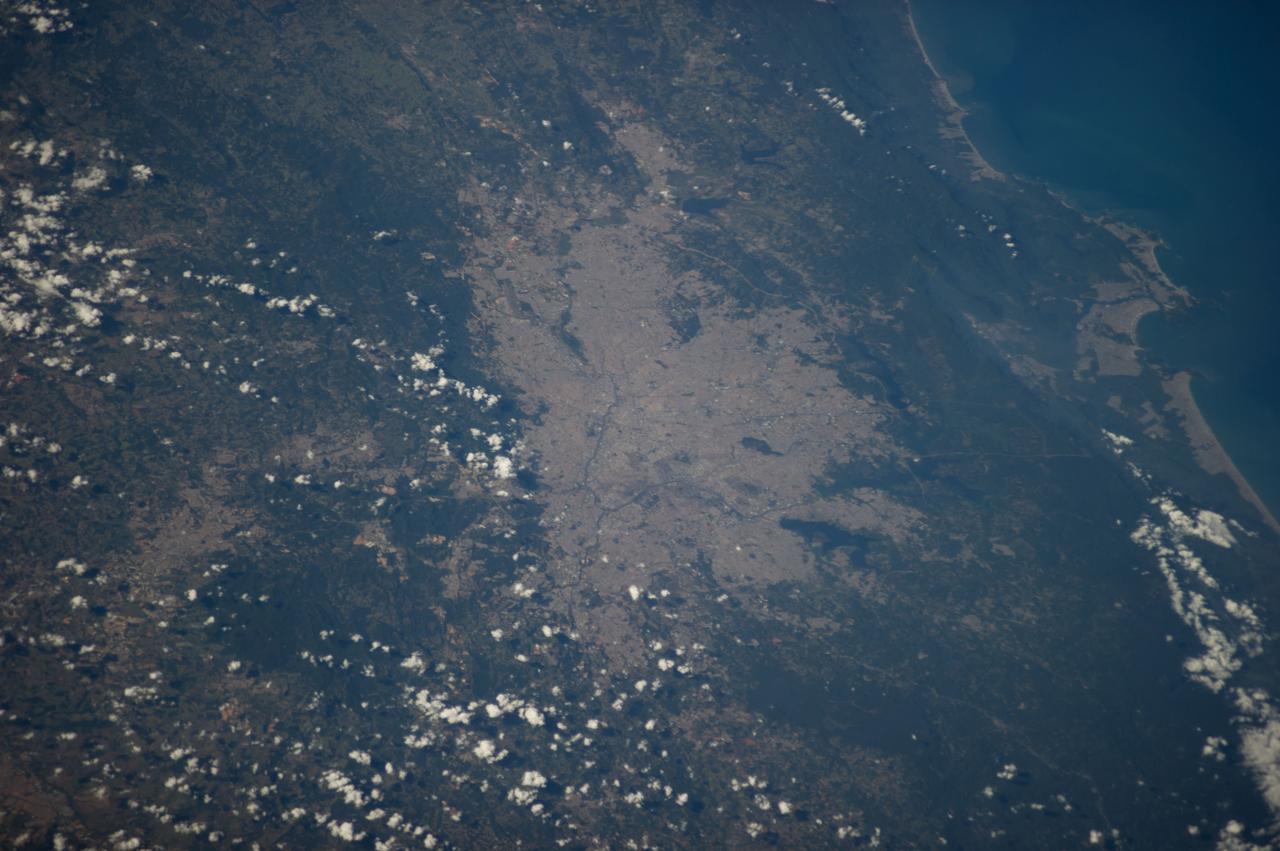
ISS040-E-010803 (12 June 2014) --- One of the Expedition 40 crew members aboard the International Space Station photographed this image featuring Sao Paulo, one of the host cities in Brazil for the 2014 World Cup. A 200mm focal length was used to record the photograph on June 12.
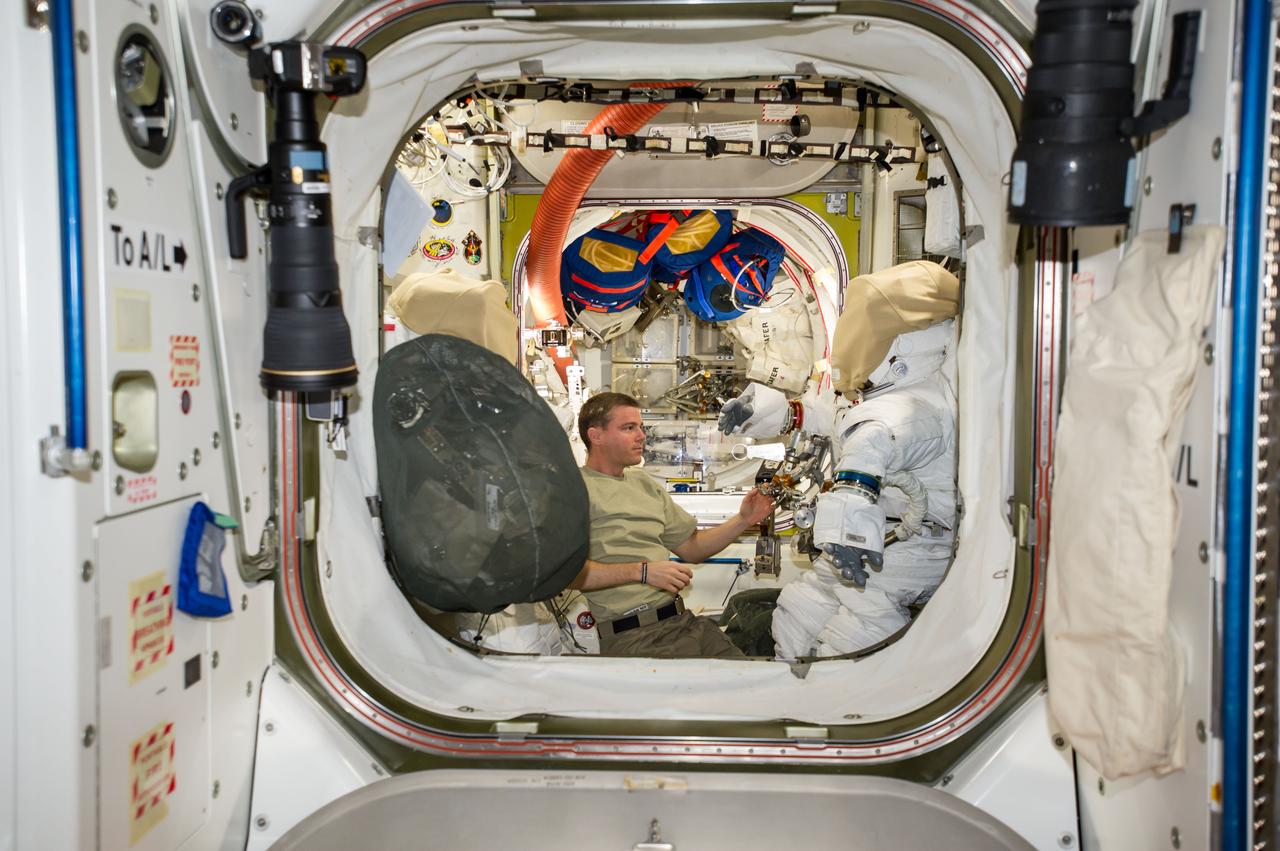
ISS041-E-017023 (19 Sept. 2014) --- NASA astronaut Reid Wiseman, Expedition 41 flight engineer, works with tools and equipment on an Extravehicular Mobility Unit (EMU) spacesuit in the Quest airlock of the International Space Station in preparation for two spacewalks scheduled in October 2014.
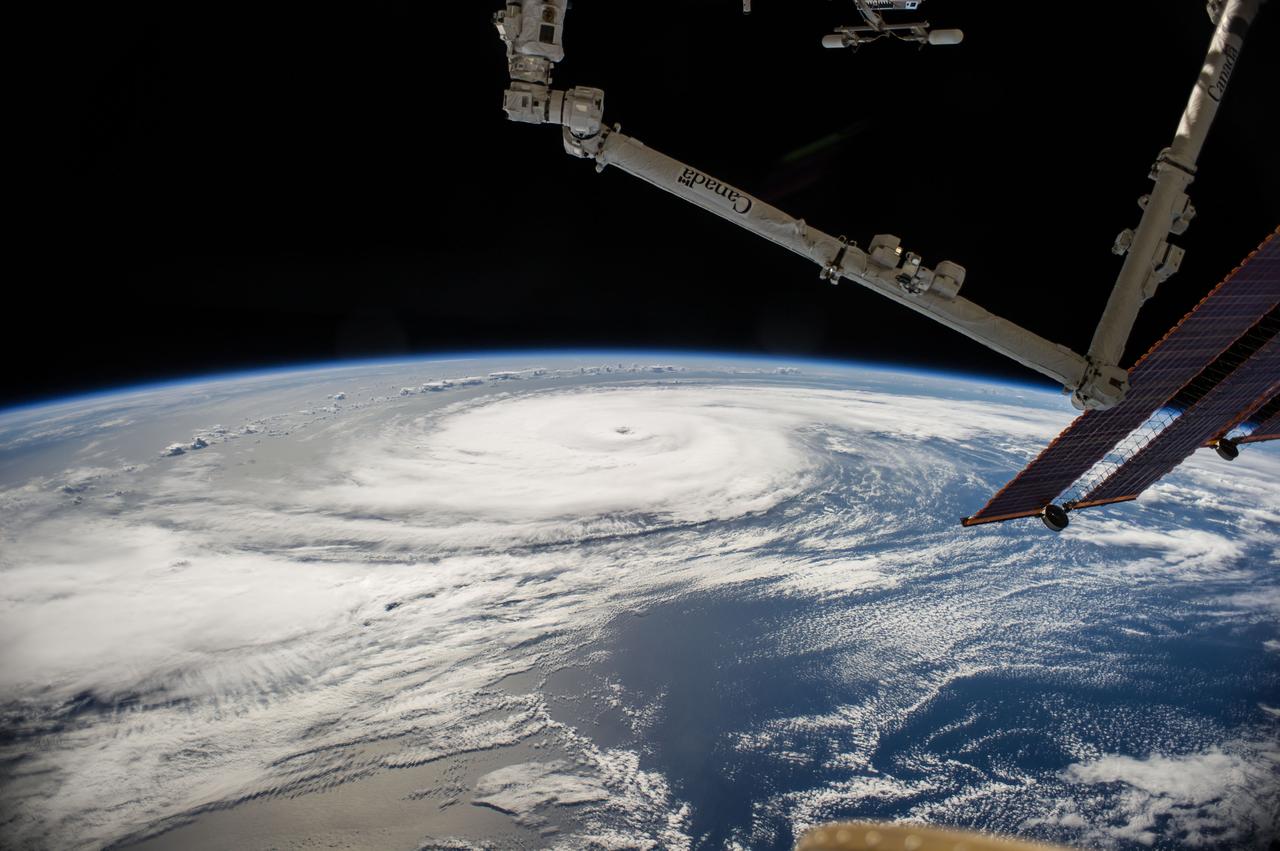
View of Hurricane Edouard. Photo was taken during Expedition 41.
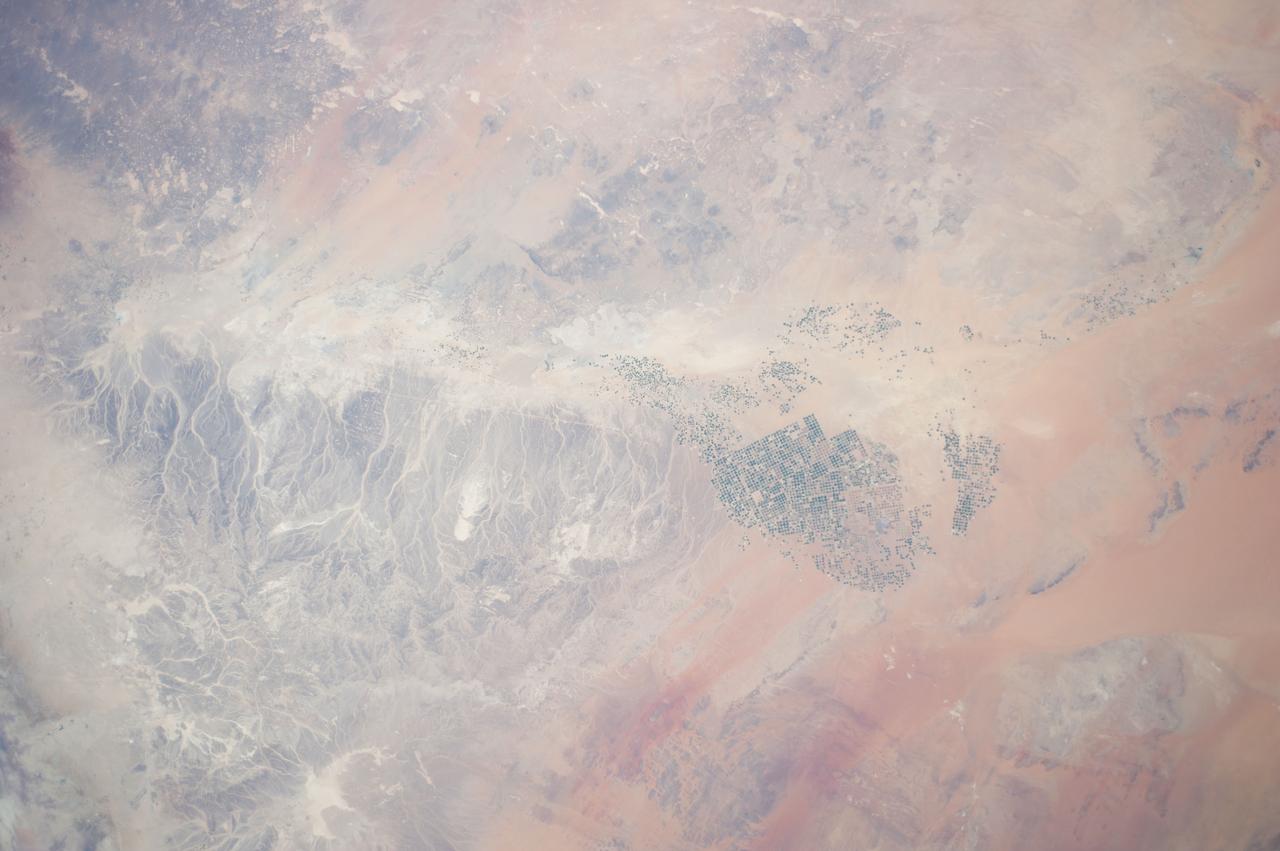
Earth Observation taken during a day pass by the Expedition 40 crew aboard the International Space Station (ISS). Folder lists this as: the Middle East, Israel.
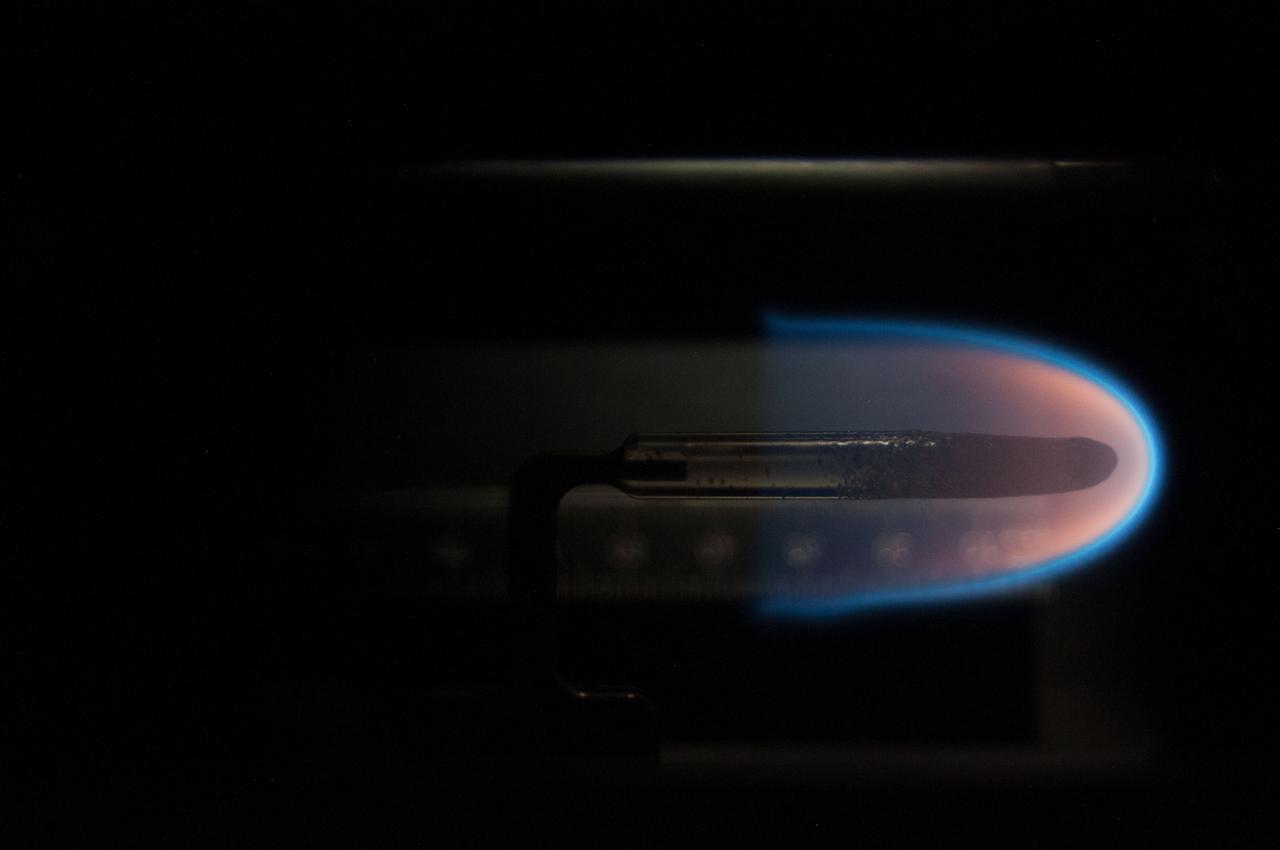
Image taken on card 15 during BASS-II flame test session with reduced O2 partial pressure. Session conducted on GMT 214. The Burning and Suppression of Solids - II (BASS-II) investigation examines the burning and extinction characteristics of a wide variety of fuel samples in microgravity. The BASS-II experiment will guide strategies for materials flammability screening for use in spacecraft as well as provide valuable data on solid fuel burning behavior in microgravity. BASS-II results contribute to the combustion computational models used in the design of fire detection and suppression systems in microgravity and on Earth.
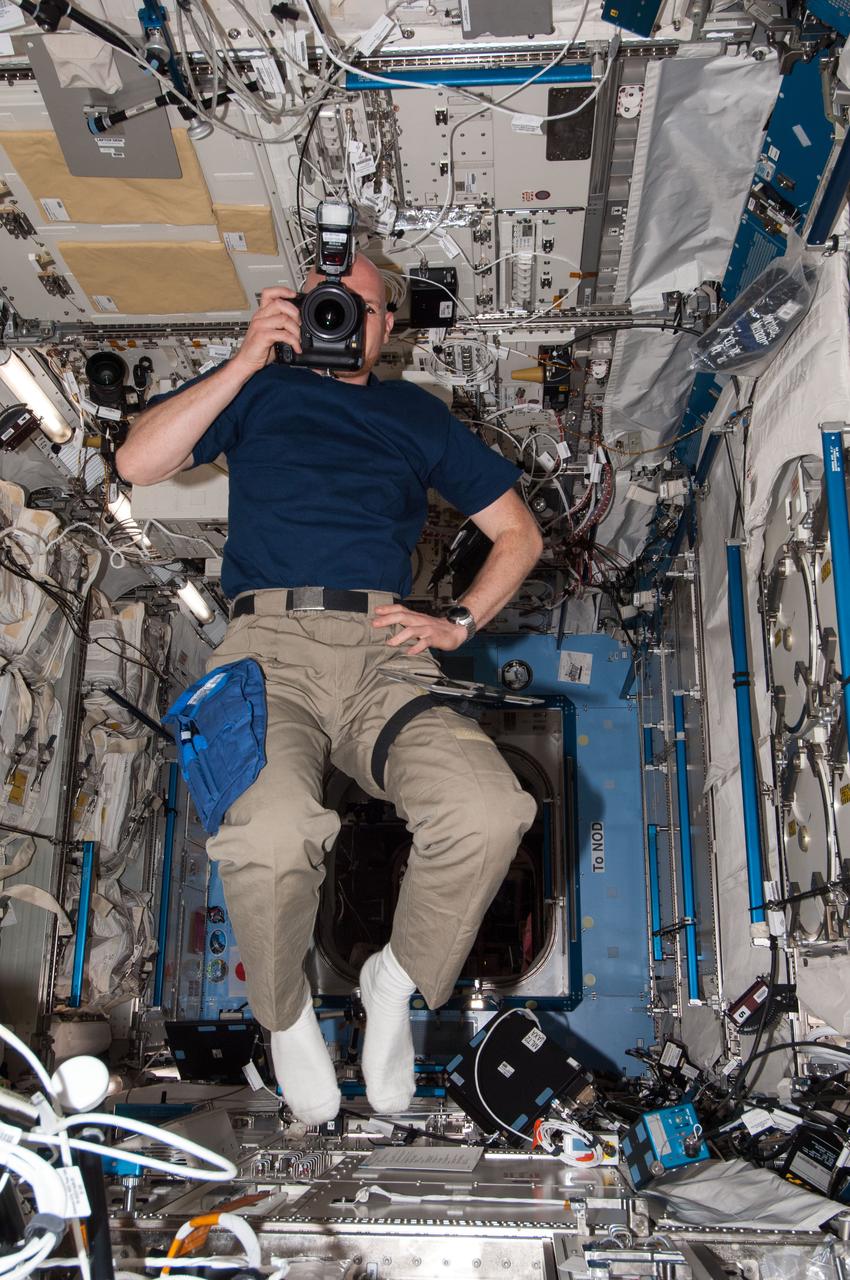
ISS040-E-006885 (3 June 2014) --- European Space Agency astronaut Alexander Gerst, Expedition 40 flight engineer, uses a still camera in the Kibo laboratory of the International Space Station.
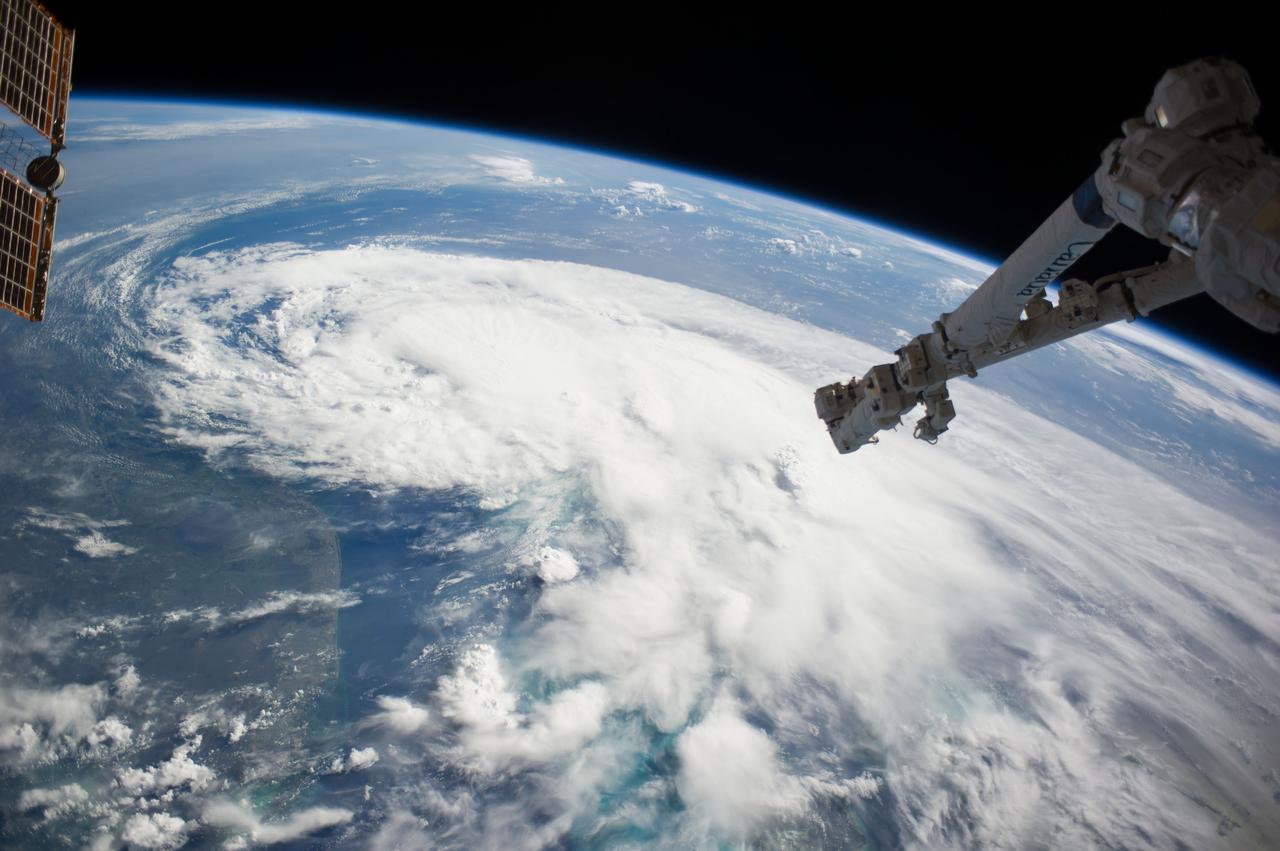
ISS040-E-030615 (2 July 2014) --- One of the Expedition 40 crew members aboard the Earth-orbiting International Space Station, some 227 nautical miles above Earth, photographed this image of Tropical Storm Arthur in the afternoon of July 2, 2014. Arthur was churning in Atlantic waters off the coast of Florida and slowly moving northward at the time the photo was taken. The robotic arm of the Space Station Remote Manipulator System or Canadarm2 is seen at upper right.
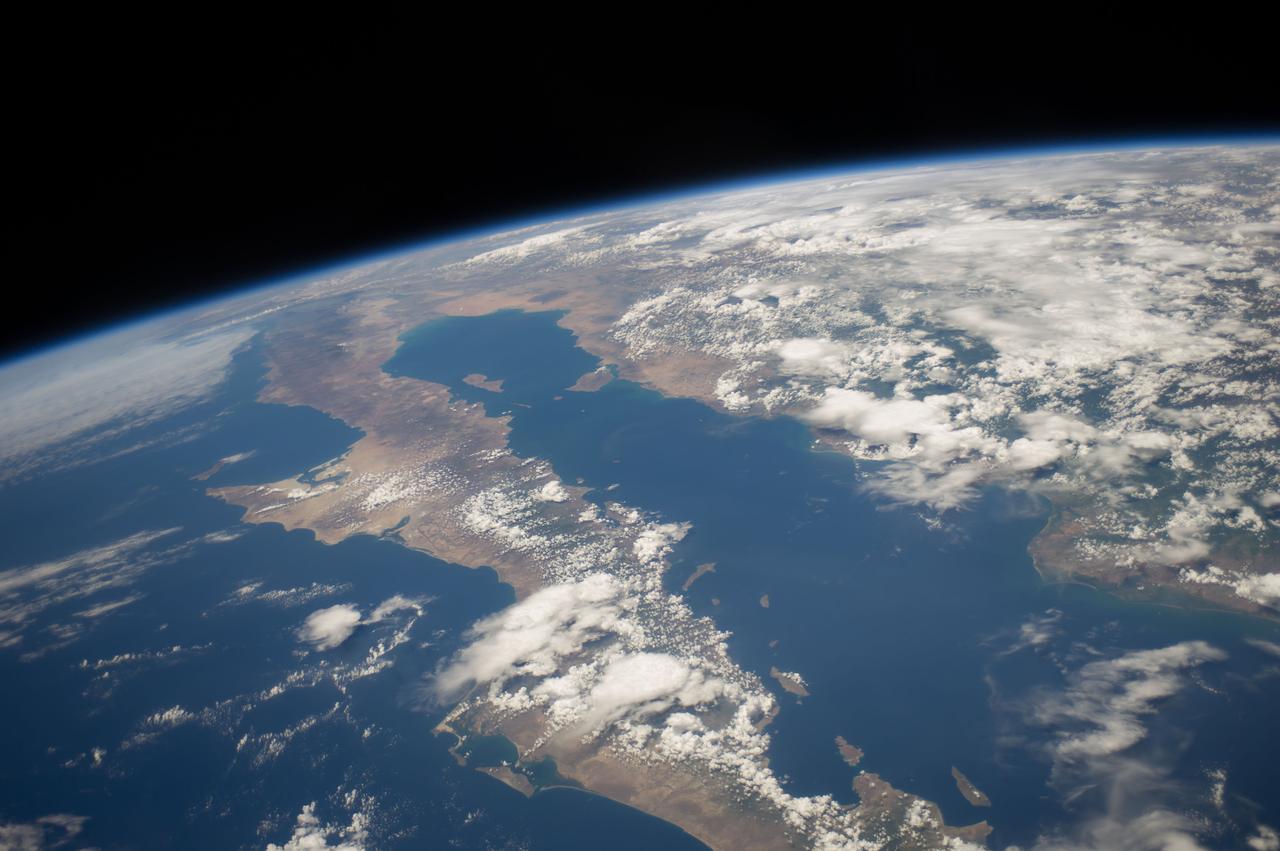
Earth Observation taken during a day pass by the Expedition 40 crew aboard the International Space Station (ISS).
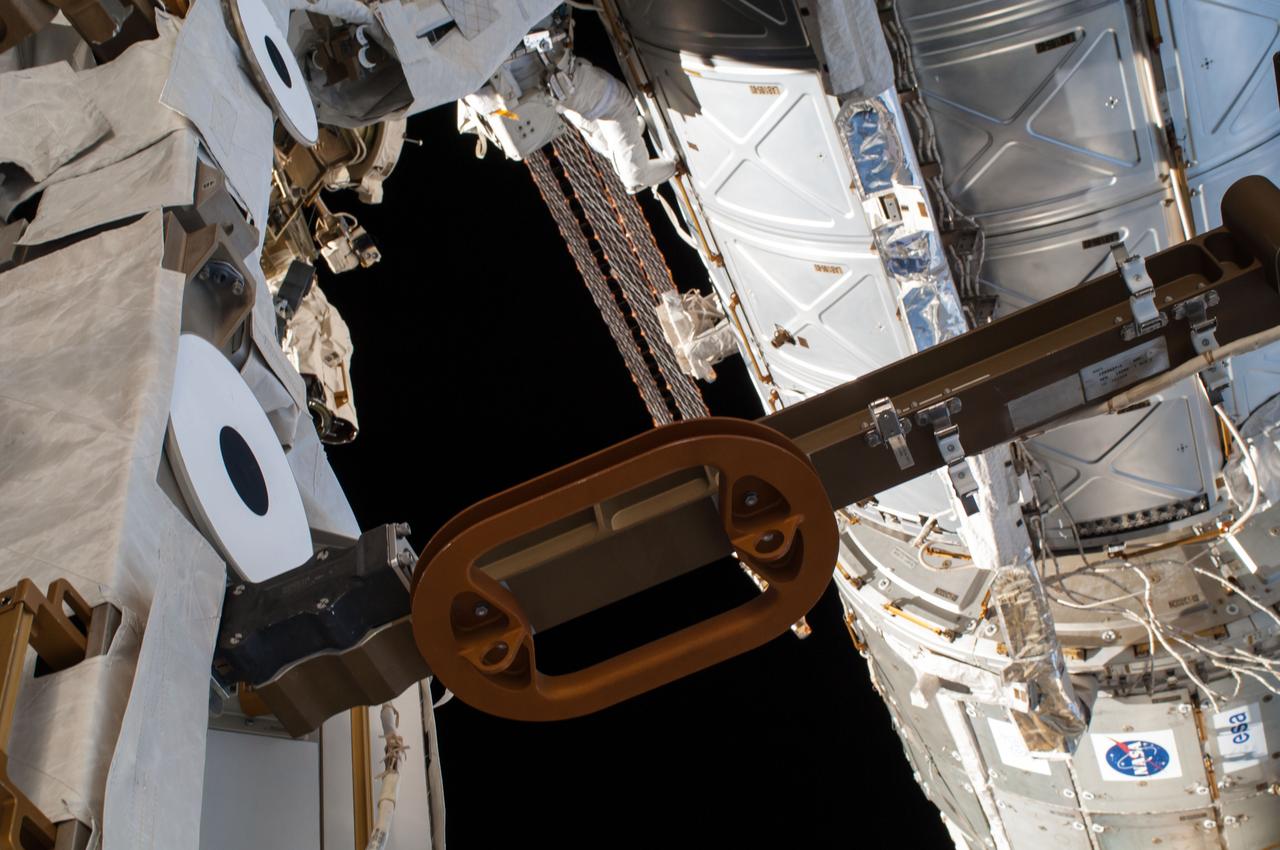
ISS041-E-067002 (7 Oct. 2014) --- NASA astronaut Reid Wiseman, Expedition 41 flight engineer, participates in a session of extravehicular activity (EVA) as work continues on the International Space Station. During the six-hour, 13-minute spacewalk, Wiseman and European Space Agency astronaut Alexander Gerst (out of frame), flight engineer, worked outside the space station's Quest airlock relocating a failed cooling pump to external stowage and installing gear that provides back up power to external robotics equipment.
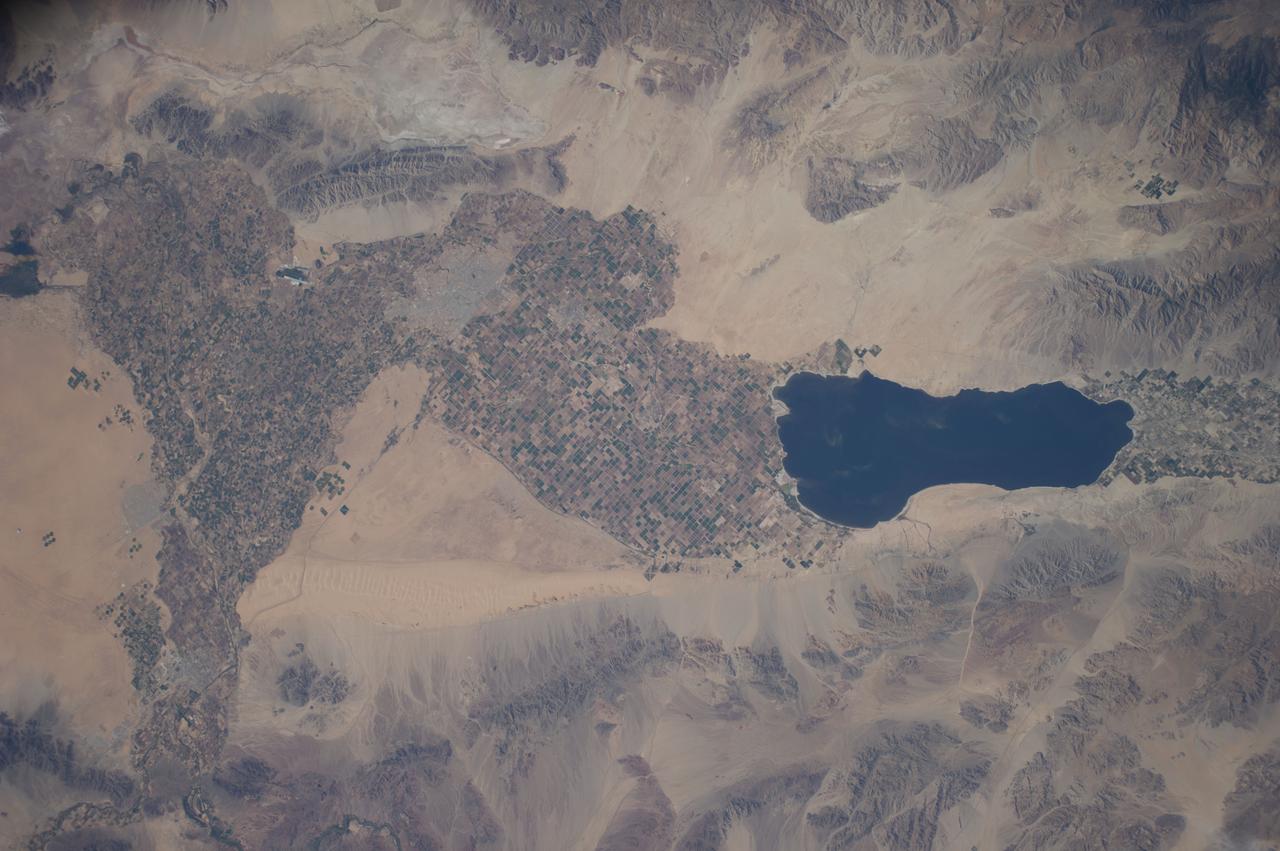
ISS040-E-114379 (31 Aug. 2014) --- One of the Expedition 40 crew members aboard the Earth-orbiting International Space Station, flying at an altitude of approximately 225 nautical miles, photographed this image of California's Salton Sea on Aug. 31, 2014. The body of water is actually a shallow, saline, endorheic rift lake located directly on the San Andreas Fault, predominantly in the Imperial and Coachella Valleys.
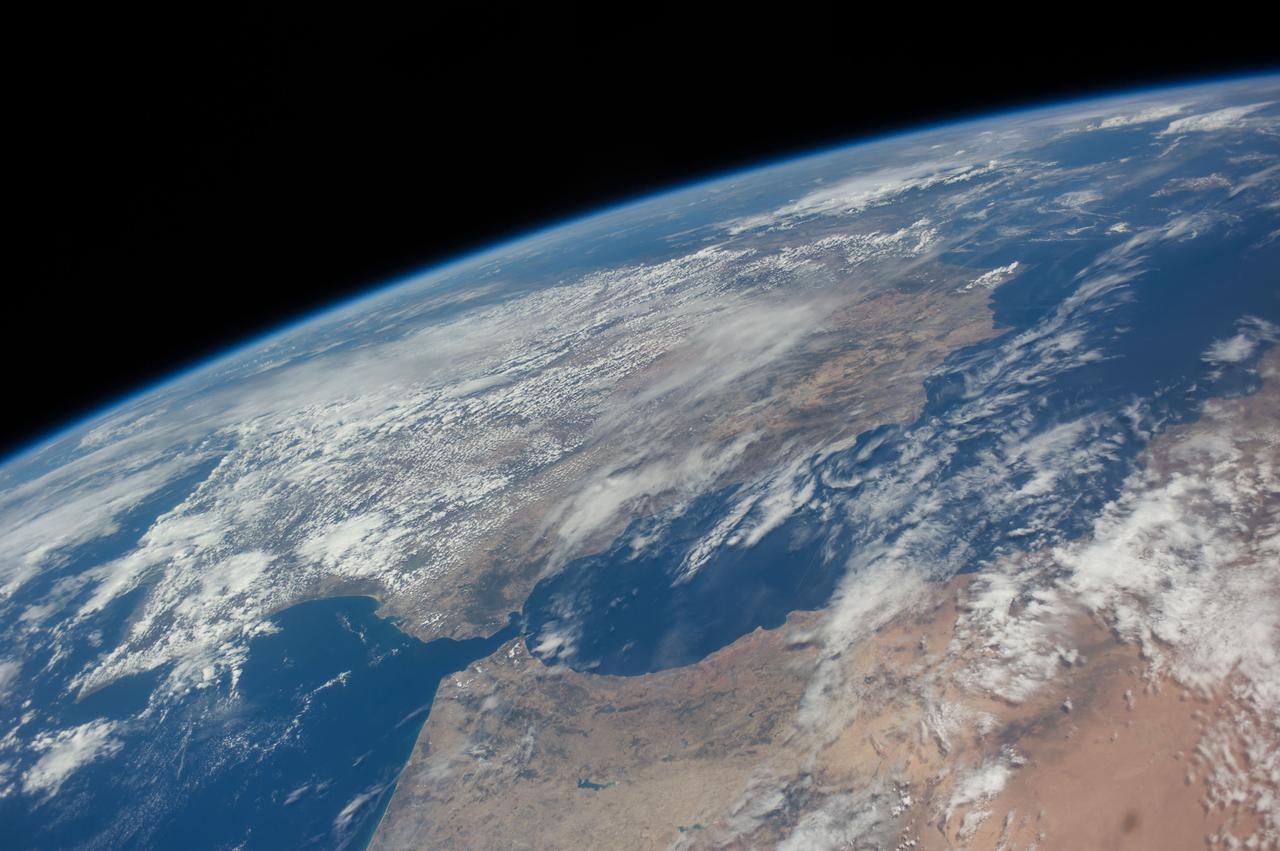
Earth Observations taken by Expedition 41 crewmember.
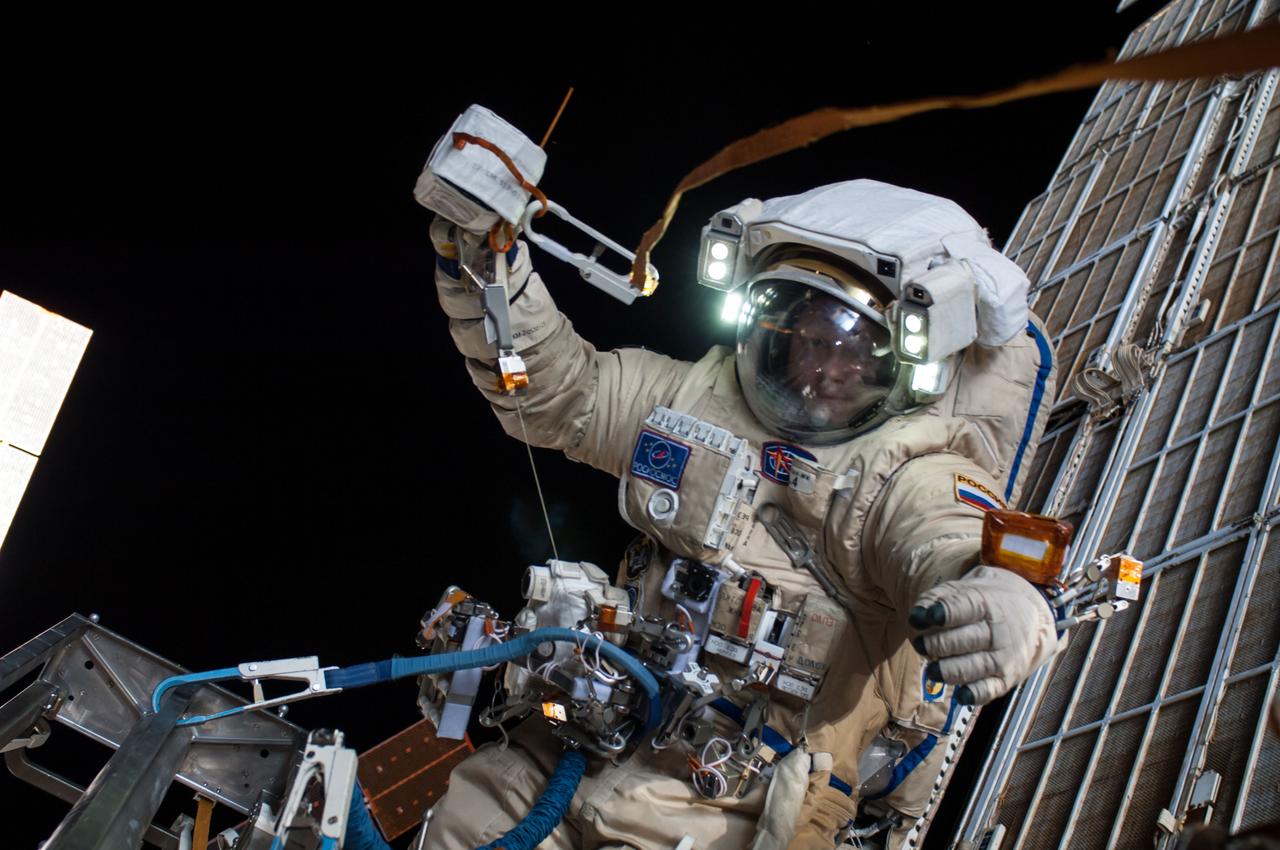
ISS040-E-099097 (18 Aug. 2014) --- Russian cosmonaut Oleg Artemyev, Expedition 40 flight engineer, attired in a Russian Orlan spacesuit, participates in a session of extravehicular activity (EVA) in support of science and maintenance on the International Space Station. During the five-hour, 11-minute spacewalk, Artemyev and Alexander Skvortsov (out of frame) deployed a small science satellite, retrieved and installed experiment packages and inspected components on the exterior of the orbital laboratory.
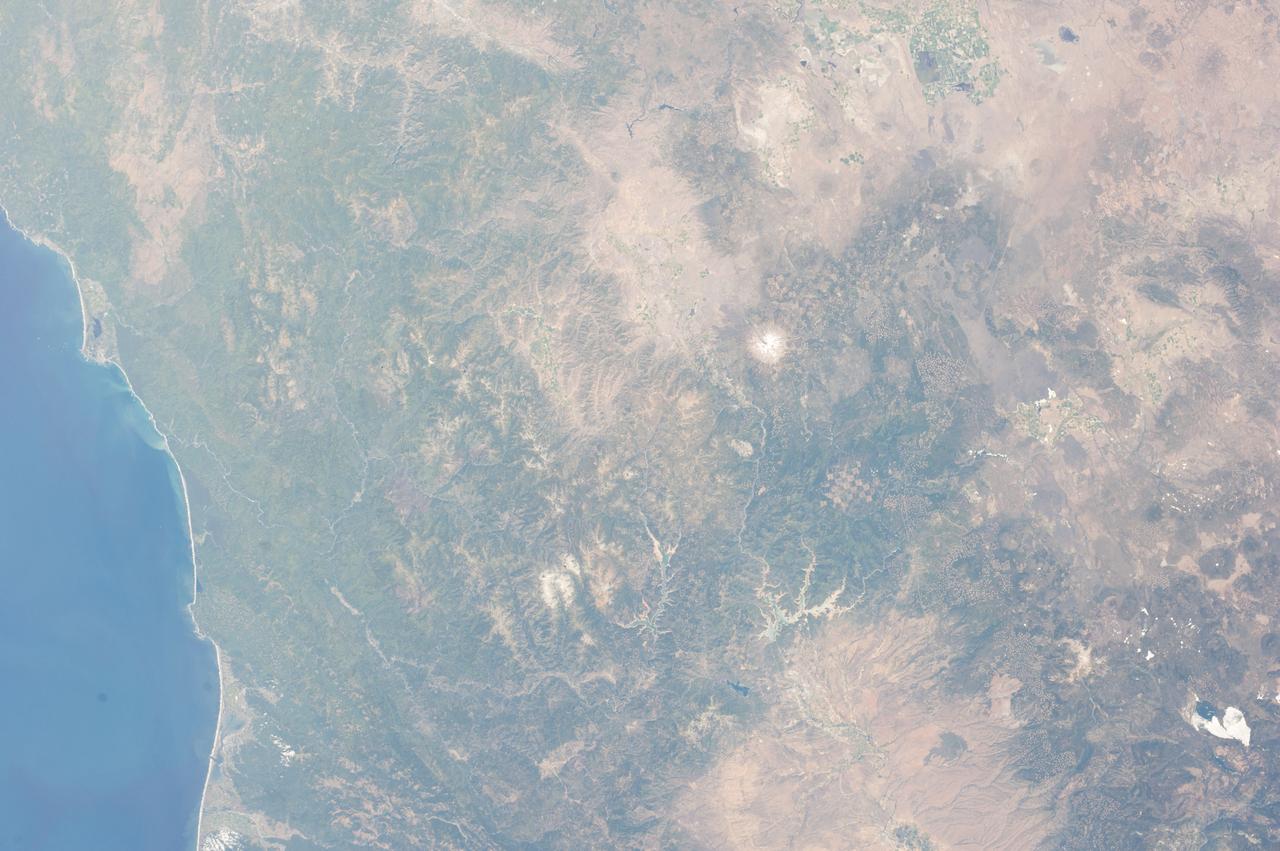
Earth observation taken during a day pass by the Expedition 40 crew aboard the International Space Station (ISS).
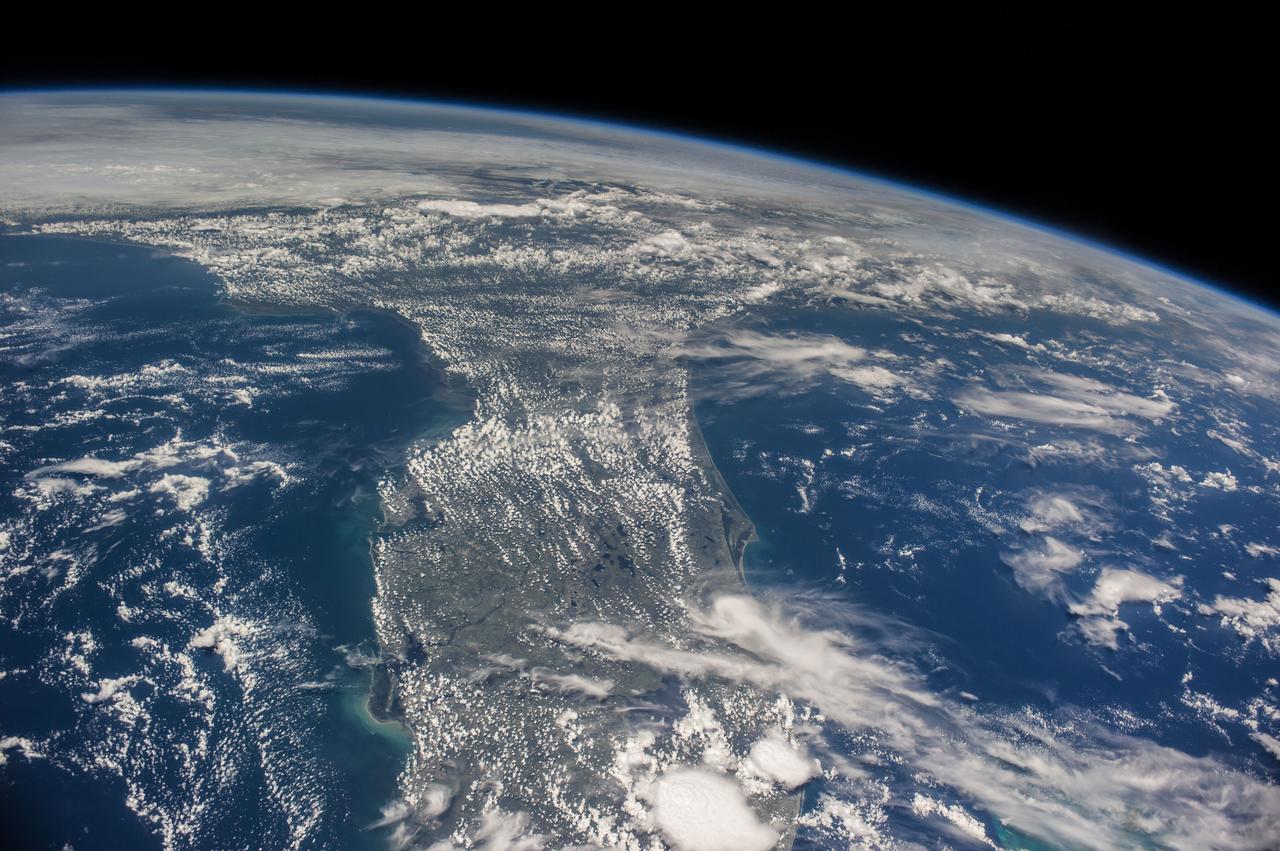
ISS041-E-003579 (13 Sept. 2014) --- Though clouds over Florida in this Expedition 41 picture from the International Space Station cover most of the state, their adherence to the outline of the peninsula give away the identity of the state. Also, the Cape Canaveral and Kennedy Space Center areas are cloud-free at frame center. Heavy clouds cover the bordering states. Russian cosmonaut Maxim Suraev, Expedition 41 commander, and two flight engineers -- NASA astronaut Reid Wiseman and European Space Agency astronaut Alexander Gerst -- continue their work aboard the orbital outpost as they await three more flight engineers to join them in a couple of weeks.
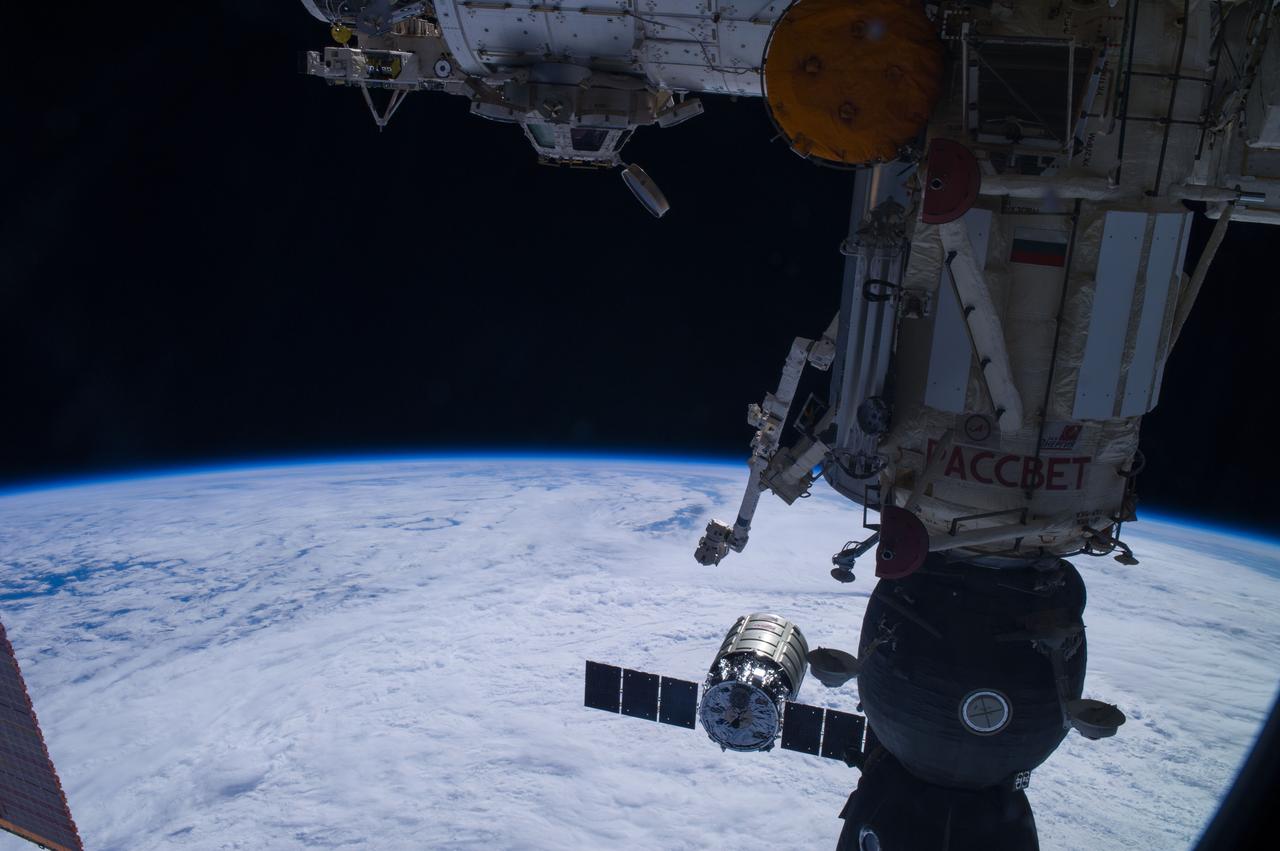
ISS040-E-068656 (16 July 2014) --- The Orbital Sciences? Cygnus cargo craft (bottom center) is photographed by an Expedition 40 crew member on the International Space Station during rendezvous and capture operations. The two spacecraft converged at 6:36 a.m. (EDT) on July 16, 2014. Also visible in this image are the station?s Cupola and the Tranquility node (top) and Canadarm2 (center) along with a Russian Soyuz spacecraft docked to the station. A cloud-covered part of Earth provides the backdrop for the scene.
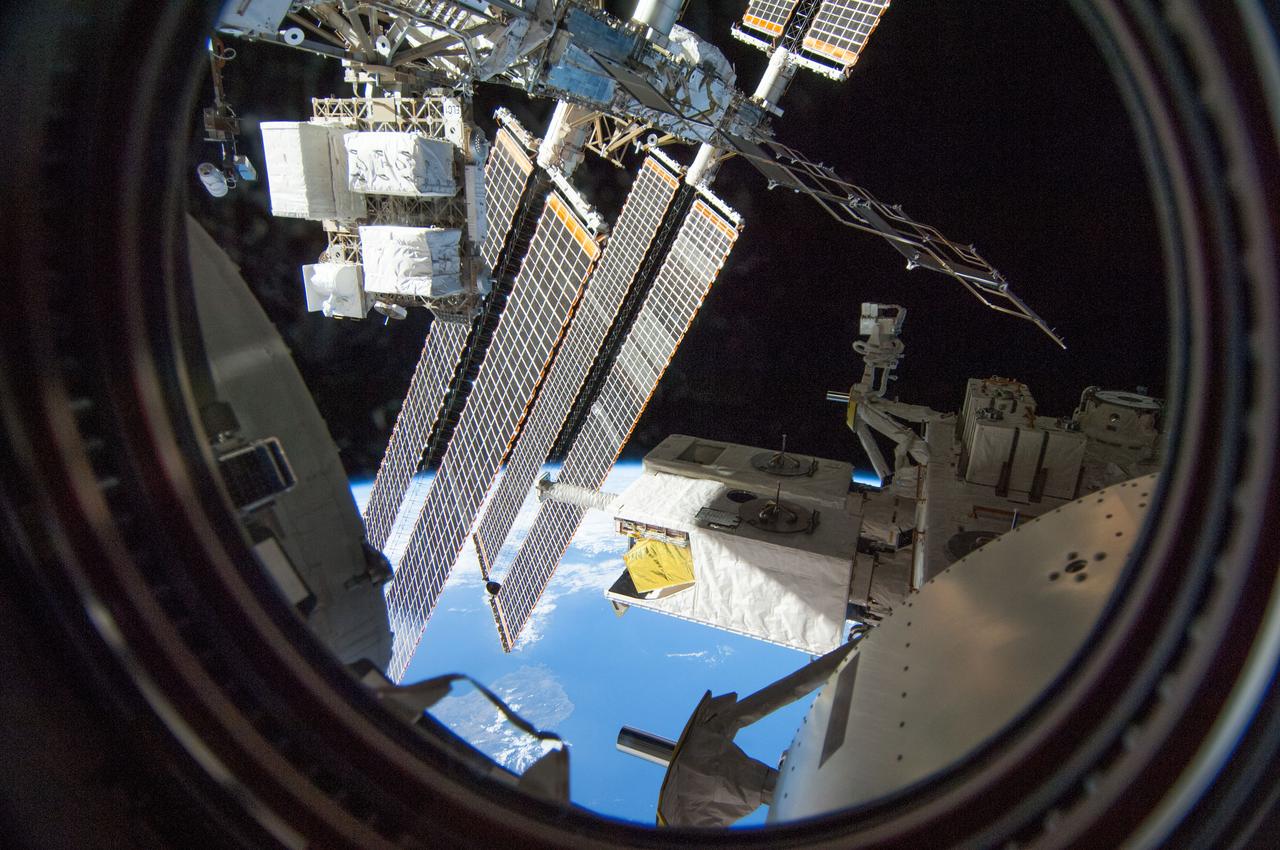
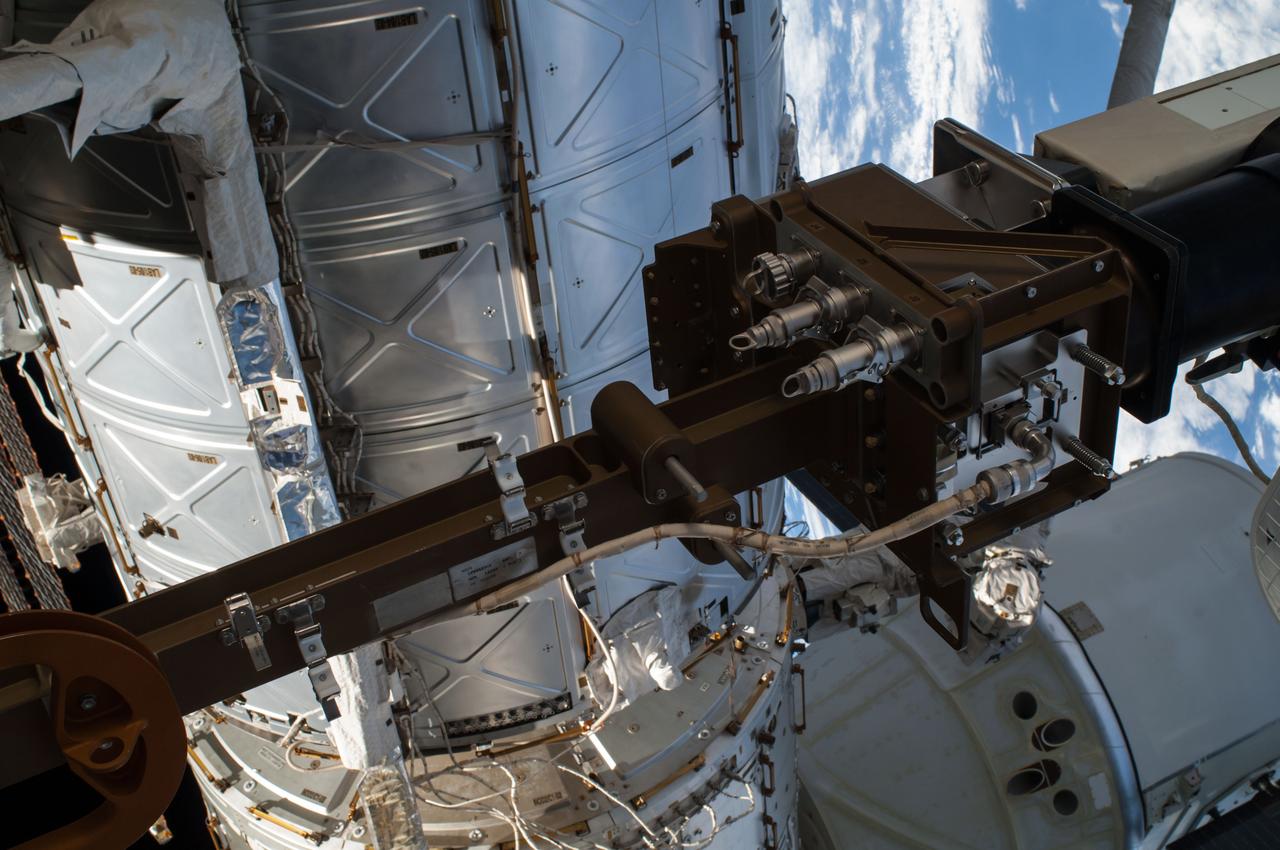
View of the Japanese Experiment Module (JEM) Exposed Facility (JEF), raidators and and part of the Express Logistics Carrier (ELC) on the P1 truss. Photo taken from the JEM window by the Expedition 40 crew.
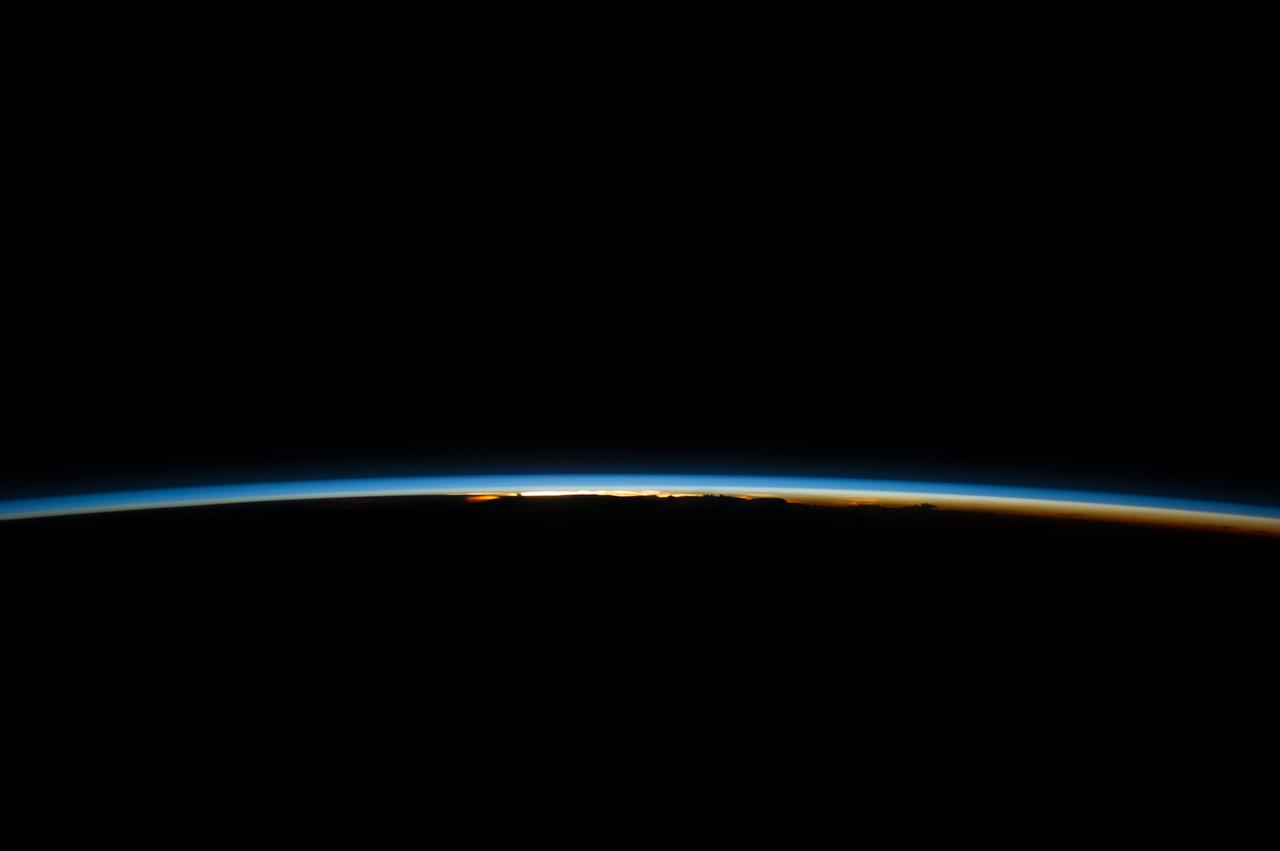
ISS040-E-008344 (8 June 2014) --- The thin line of Earth's atmosphere and the blackness of space are featured in this image photographed by an Expedition 40 crew member on the International Space Station.

ISS040-E-025597 (28 June 2014) --- This nighttime view of a portion of the International Space Station?s Russian segment is featured in this image photographed by an Expedition 40 crew member on the station. Progress 55 resupply spacecraft, docked to the Pirs Docking Compartment, is visible at left. A starry sky provides the backdrop for the scene.
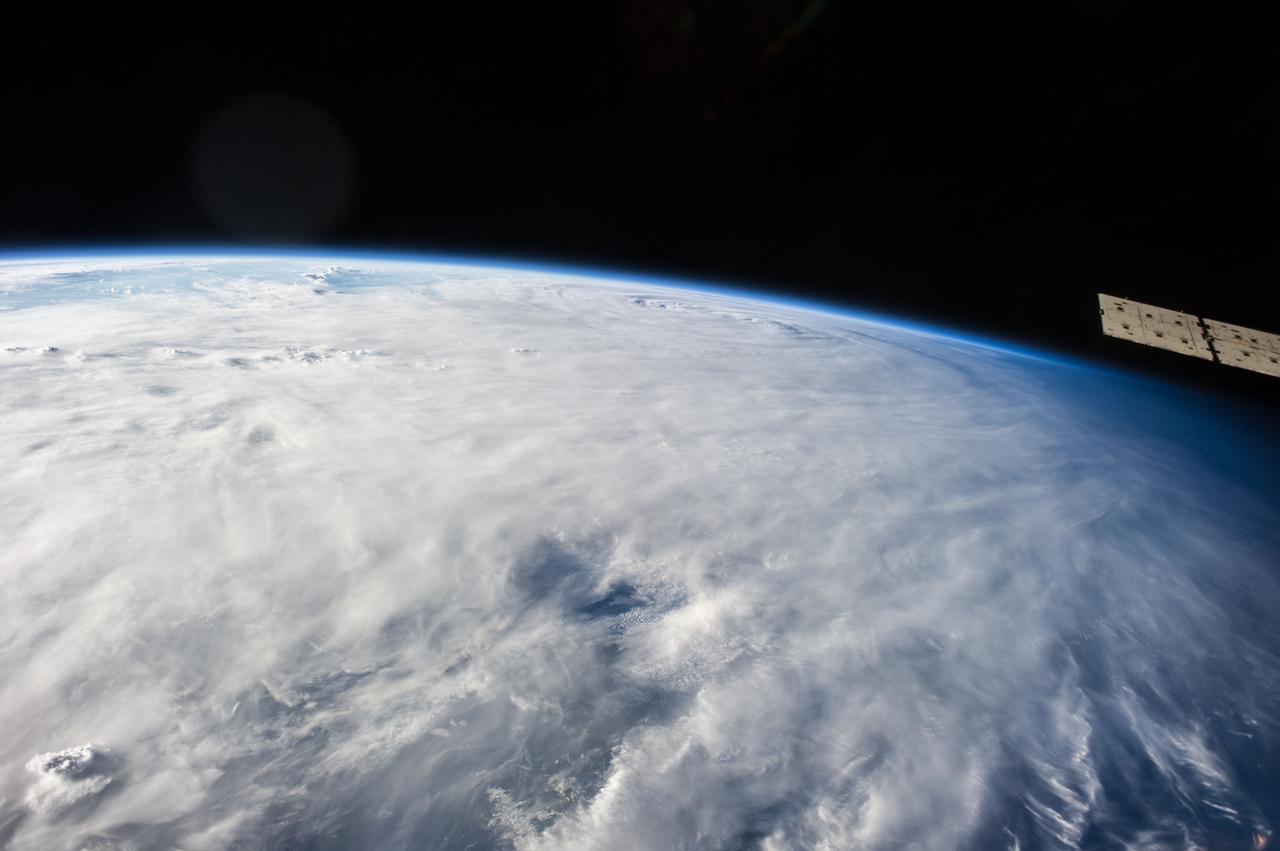
ISS040-E-088907 (5 Aug. 2014) --- From 225 miles above Earth, one of the Expedition 40 crew members aboard the International Space Station captured this image of Typhoon Halong with a 38mm lens at 09:35:41 GMT on Aug. 5, 2014.
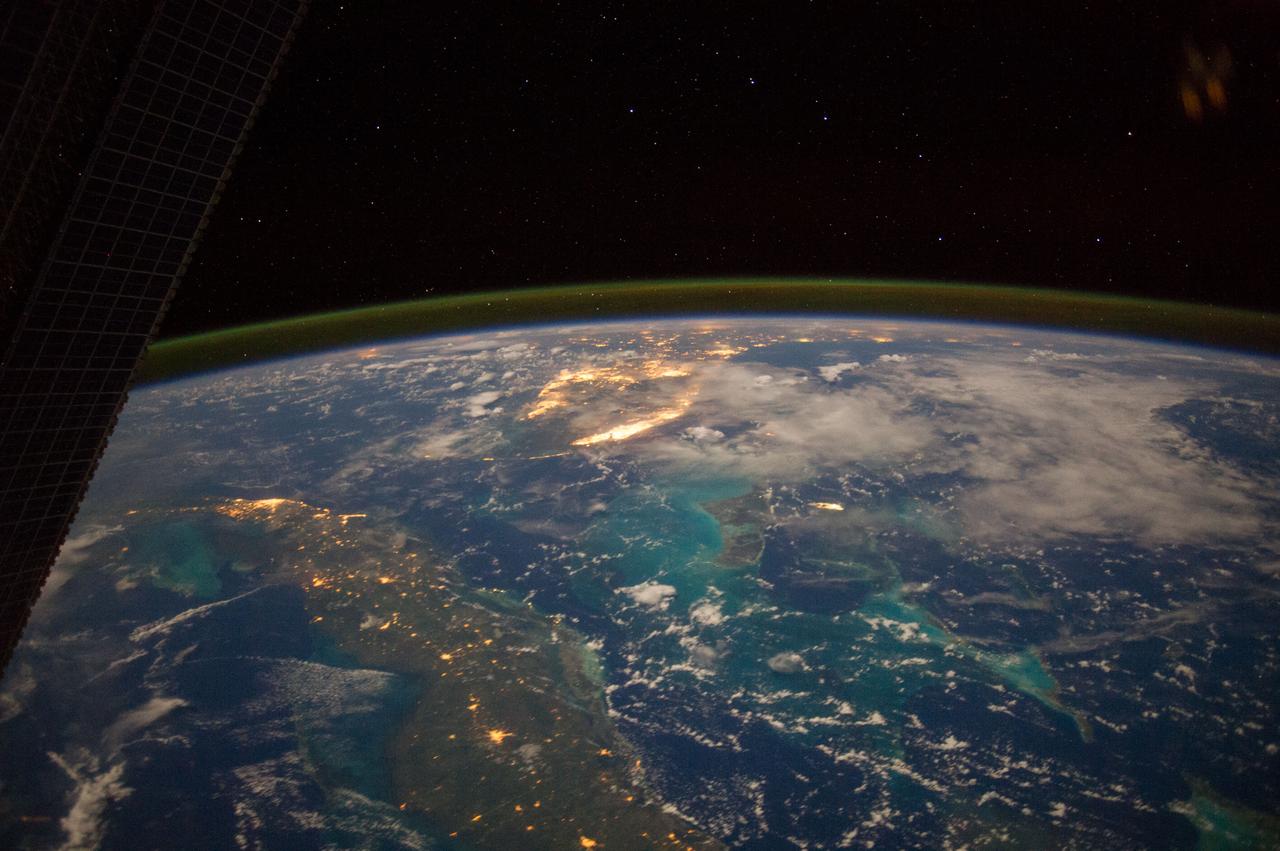
Earth Observation taken during a night pass by the Expedition 40 crew aboard the International Space Station (ISS). Folder lists this as: Couple night shots approaching Florida.

ISS040-E-129950 (4 Sept. 2014) --- In this photograph. taken by one of the Expedition 40 crew members aboard the Earth-orbiting International Space Station, the orange spot located in the very center is the sun, which appears to be sitting on Earth's limb. At far right, a small bright spot is believed to be a reflection from somewhere in the camera system or something on the orbital outpost. When the photographed was exposed, the orbital outpost was flying at an altutude of 226 nautical miles above a point near French Polynesia in the Pacific Ocean.
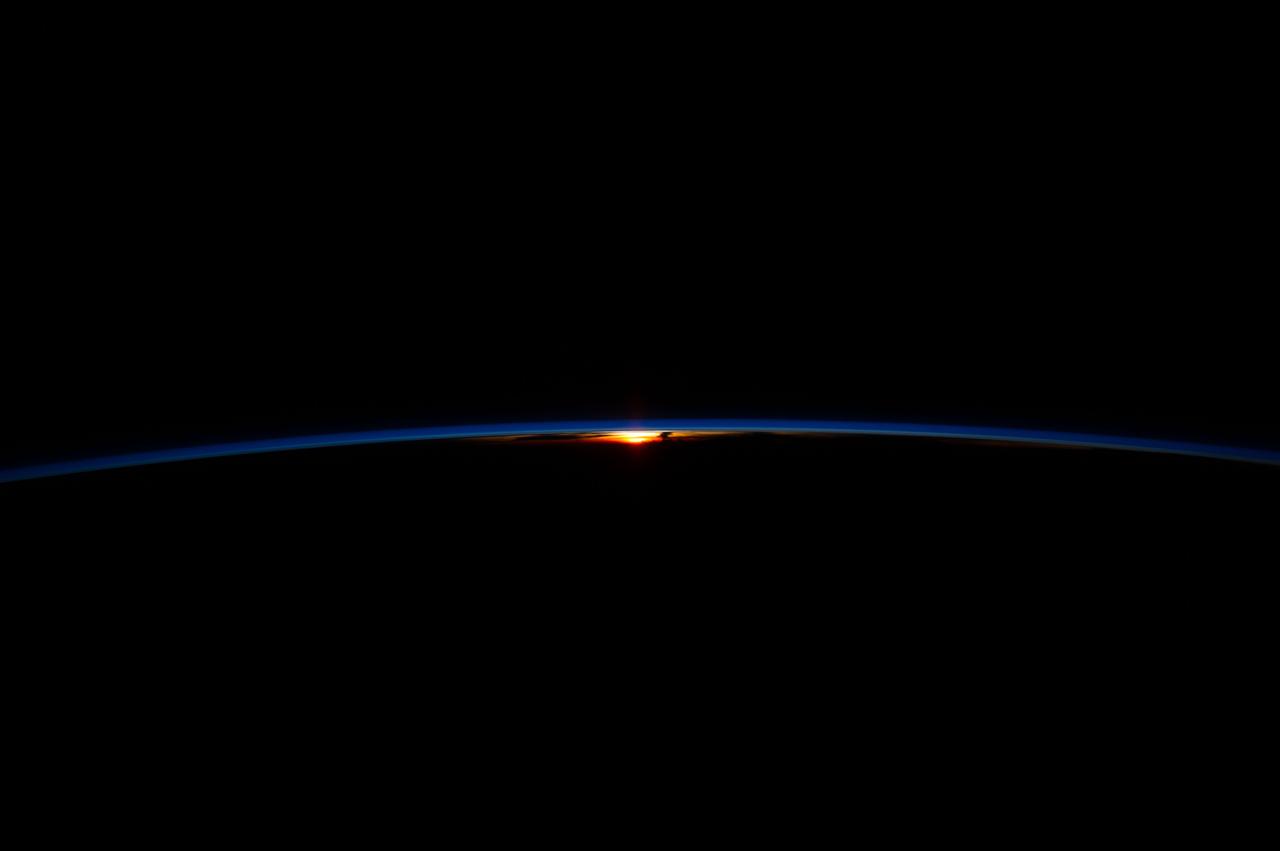
Earth Observation taken during a night pass by the Expedition 40 crew aboard the International Space Station (ISS). File lists this as possibly : Sunrise.
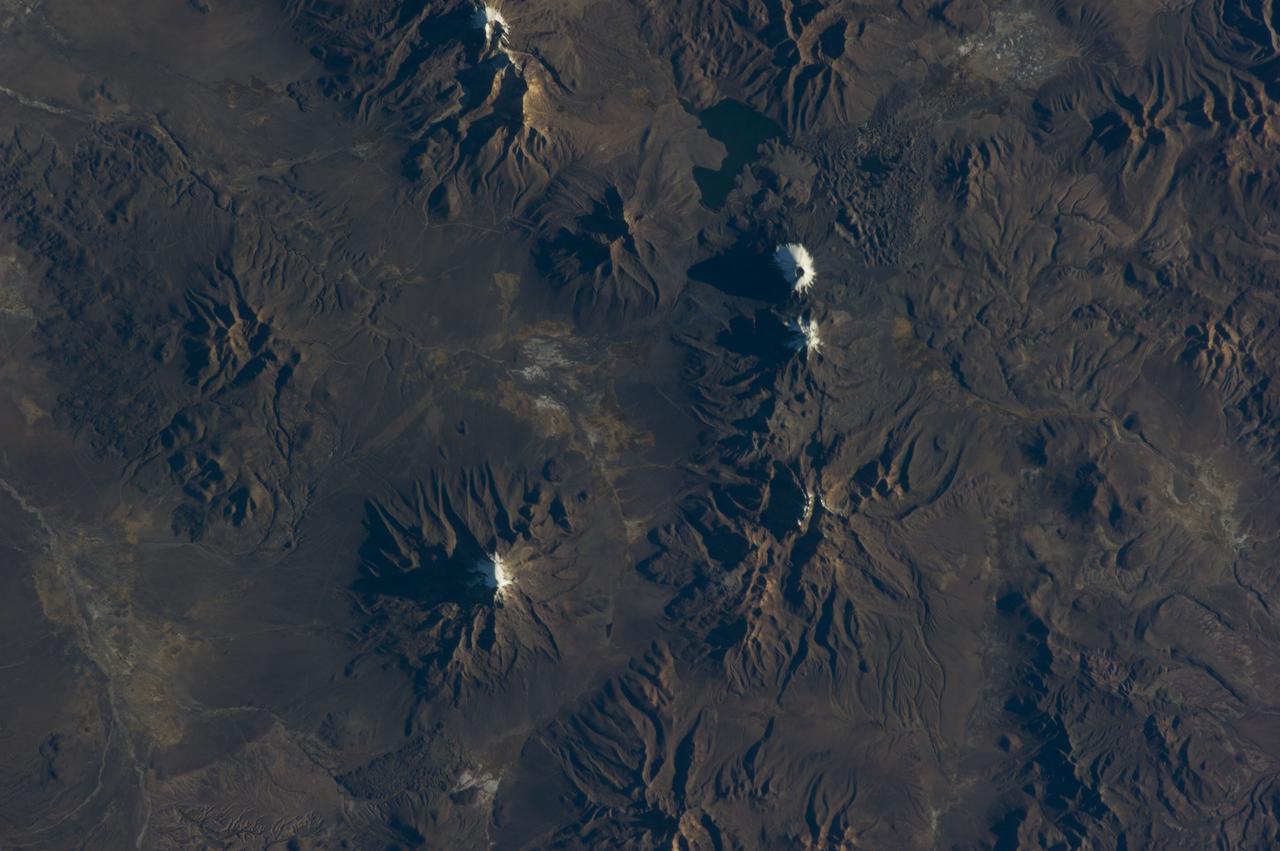
Earth Observation taken during a day pass by the Expedition 40 crew aboard the International Space Station (ISS). Folder lists this as: Chilean volcanos.
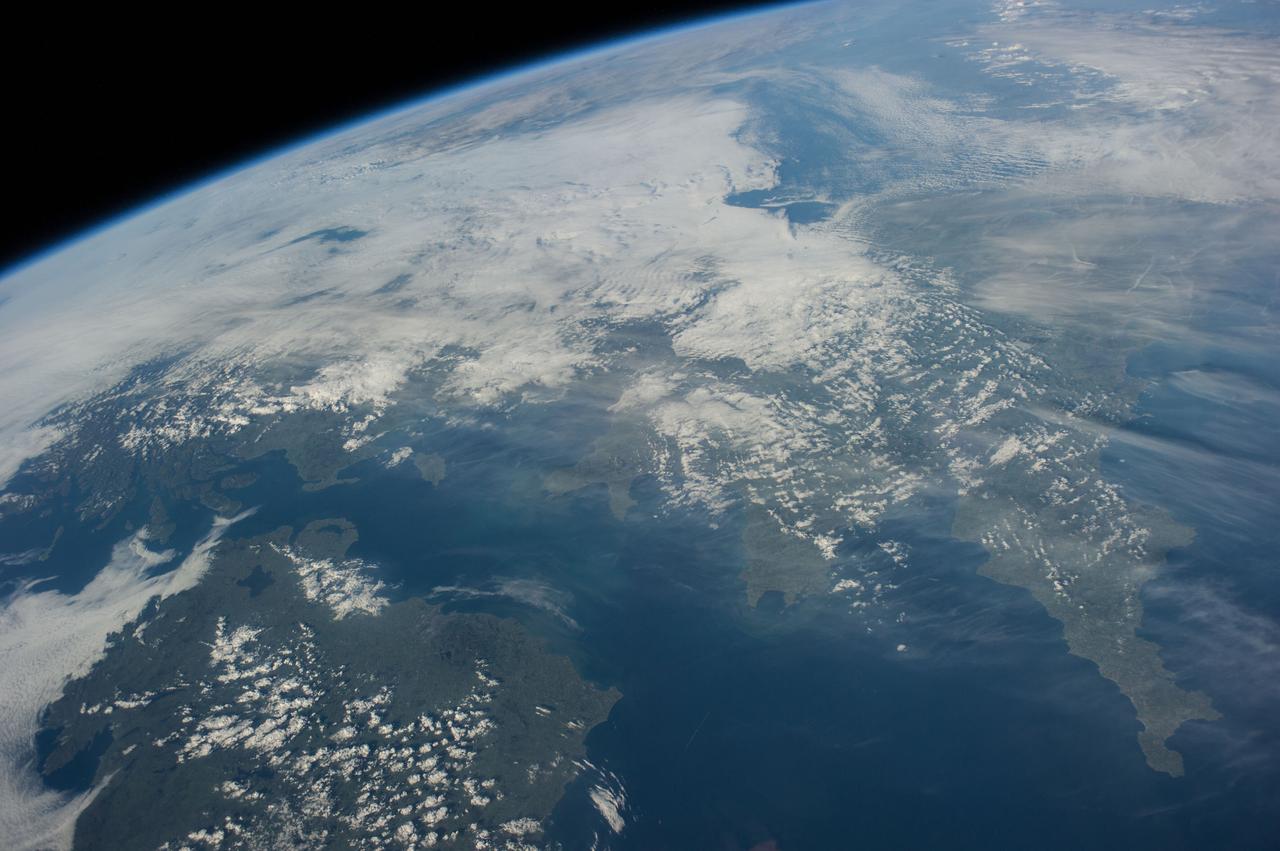
Earth Observation taken during a day pass by the Expedition 40 crew aboard the International Space Station (ISS). Folder lists this as: England.

ISS040-E-010258 (11 June 2014) --- NASA astronaut Steve Swanson, Expedition 40 commander, works with the Multi-user Drop Combustion Apparatus (MDCA) at a workstation in the Harmony node of the International Space Station. The MDCA contains hardware and software to conduct unique droplet combustion experiments in space.
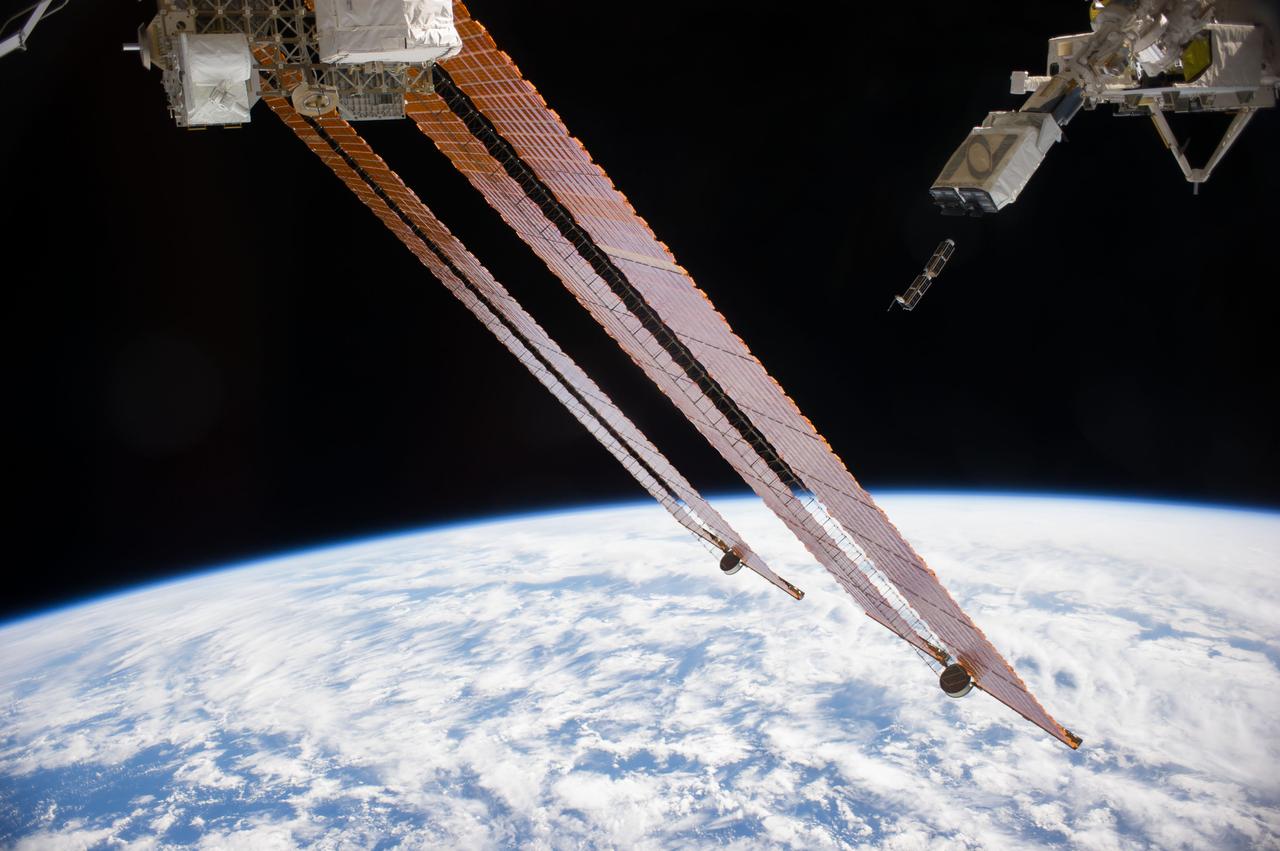
ISS040-E-103340 (20 Aug. 2014) --- In the grasp of the Japanese robotic arm, the CubeSat deployer (upper right) releases a pair of NanoRacks CubeSat miniature satellites. The Planet Labs Dove satellites that were carried to the International Space Station aboard the Orbital Sciences Cygnus commercial cargo craft are being deployed between Aug. 19 and Aug. 25. A section of the station solar array wings is at center. A blue and white part of Earth and the blackness of space provide the backdrop for the scene.
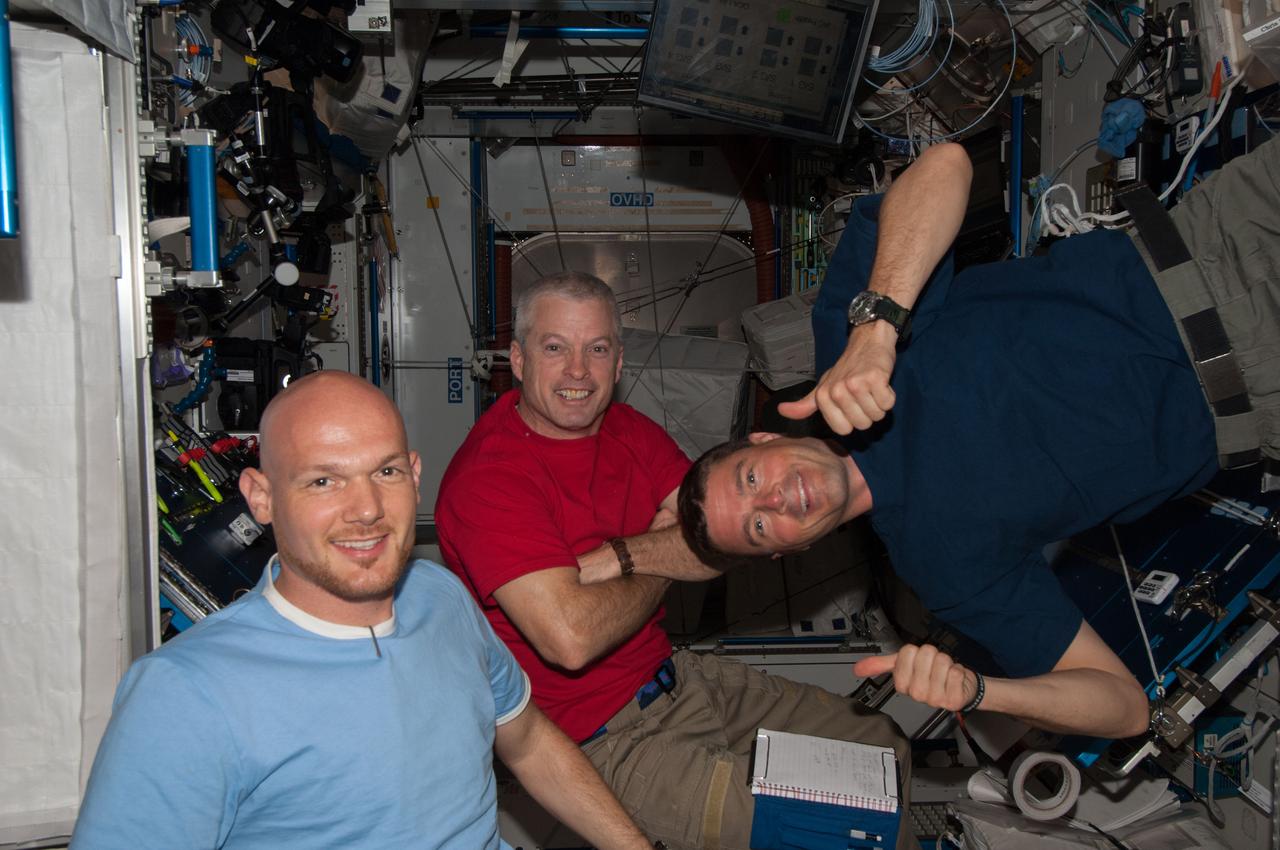
ISS040-E-006033 (29 May 2014) --- NASA astronaut Steve Swanson (center), Expedition 40 commander; along with European Space Agency astronaut Alexander Gerst (left) and NASA astronaut Reid Wiseman, both flight engineers, give a “thumbs up” signal in the Harmony node of the International Space Station.
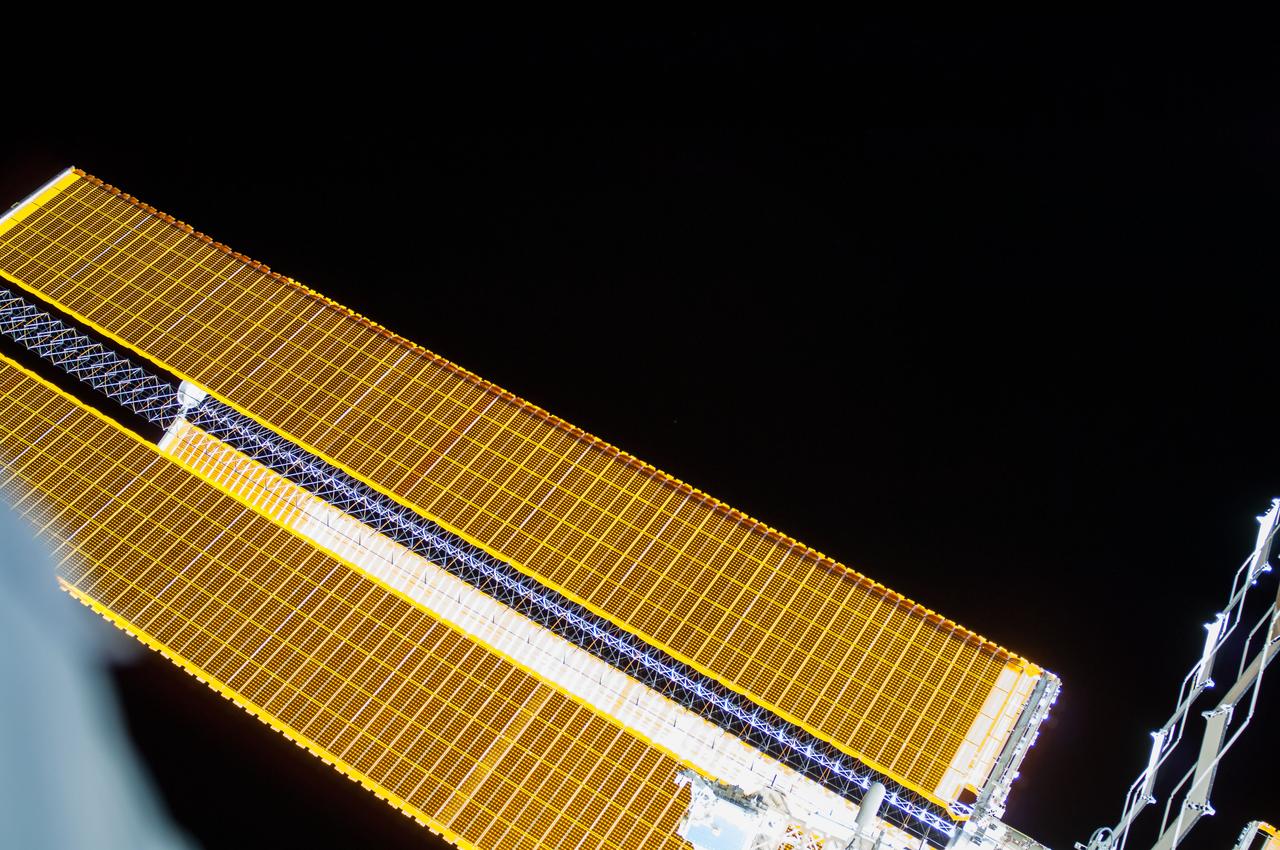
ISS041-E-067002 (7 Oct. 2014) --- NASA astronaut Reid Wiseman, Expedition 41 flight engineer, participates in a session of extravehicular activity (EVA) as work continues on the International Space Station. During the six-hour, 13-minute spacewalk, Wiseman and European Space Agency astronaut Alexander Gerst (out of frame), flight engineer, worked outside the space station's Quest airlock relocating a failed cooling pump to external stowage and installing gear that provides back up power to external robotics equipment.

ISS040-E-068619 (16 July 2014) --- European Space Agency astronaut Alexander Gerst, Expedition 40 flight engineer, waves from a window in the Cupola of the International Space Station in this nighttime image. The station?s Canadarm2 is visible at right. Earth?s horizon and a starry sky provide the backdrop for the scene.
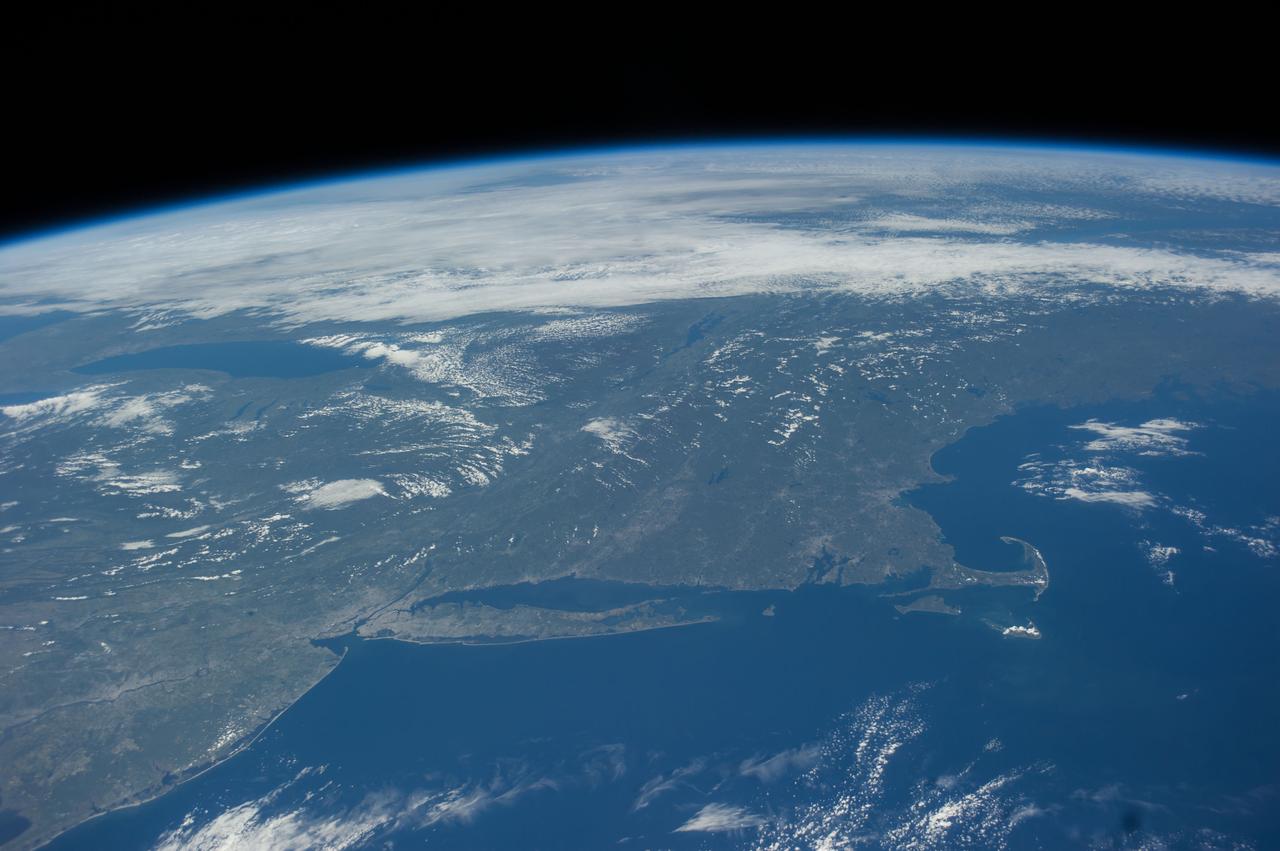
ISS041-E-016907 (17 Sept. 2014) --- Much of northeastern USA is visible in the bottom of this frame and a large portion of the Great Lakes area is visible near center and top in this oblique photographed taken by one of the Expedition 41 crew members aboard the International Space Station n Sept. 17. A 38mm focal length was used to record several pictures in this sequence as the orbital outpost was flying 221 miles above the Atlantic Ocean.
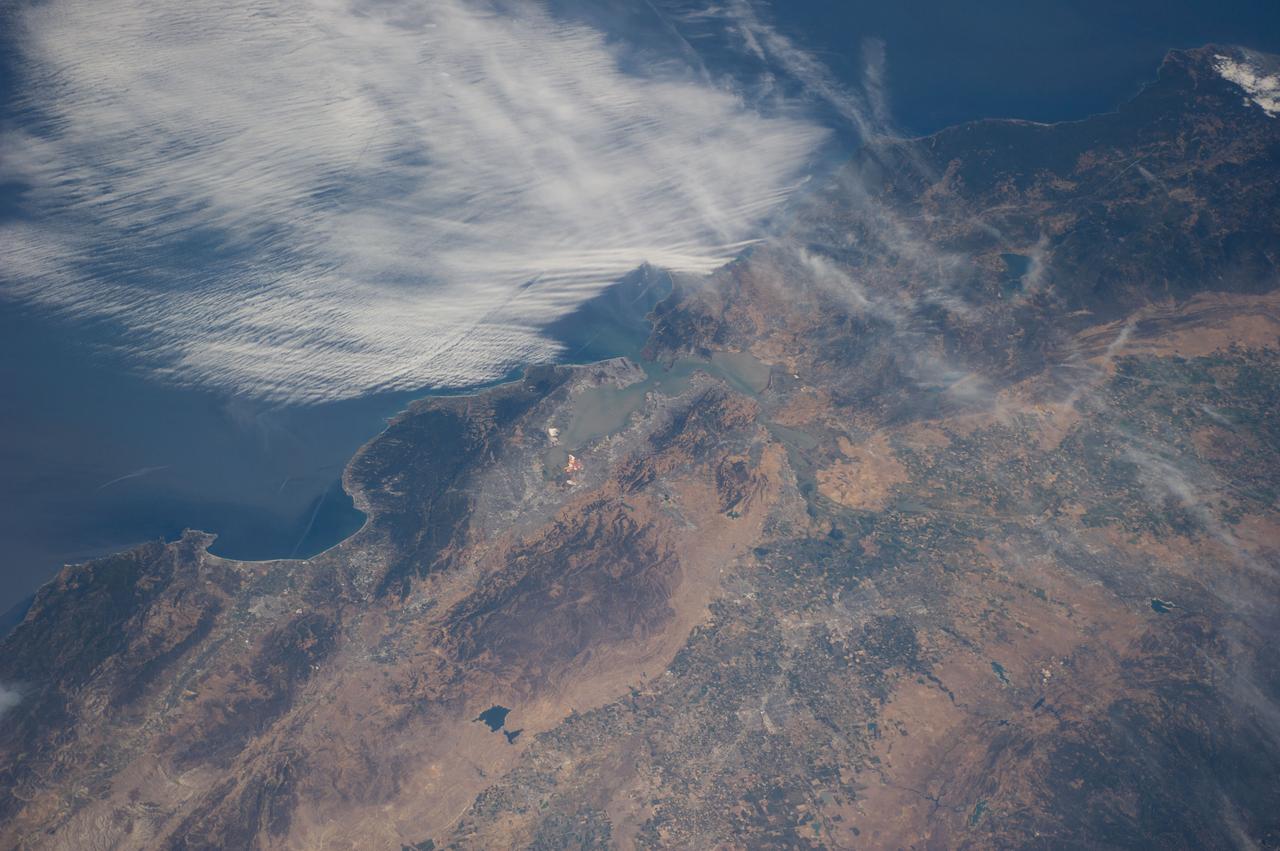
ISS040-E-016423 (20 June 2014) --- One of the Expedition 40 crew members aboard the International Space Station recorded this view of the central Pacific Coast area of California on June 20, 2014. Monterey and Monterey Bay and part of the Santa Lucia Mountains are in the lower left corner, and the San Francisco Bay area is near frame center, with part of the view of the area being obstructed by coast-hugging clouds.
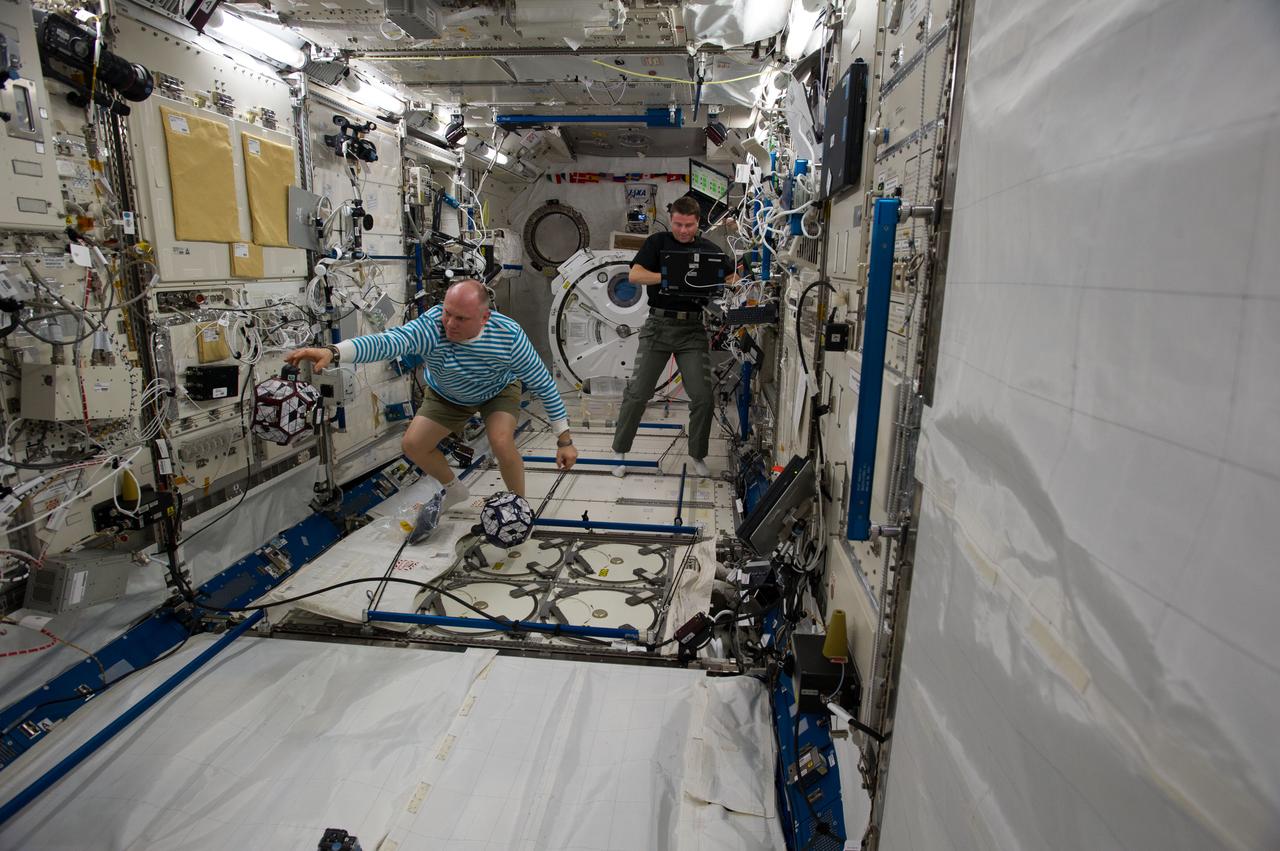
ISS040-E-018466 (24 June 2014) --- Russian cosmonaut Oleg Artemyev (left) and NASA astronaut Reid Wiseman, both Expedition 40 flight engineers, conduct a session of the Synchronized Position Hold, Engage, Reorient, Experimental Satellites Zero Robotics (SPHERES ZR) program in the Kibo laboratory of the International Space Station.
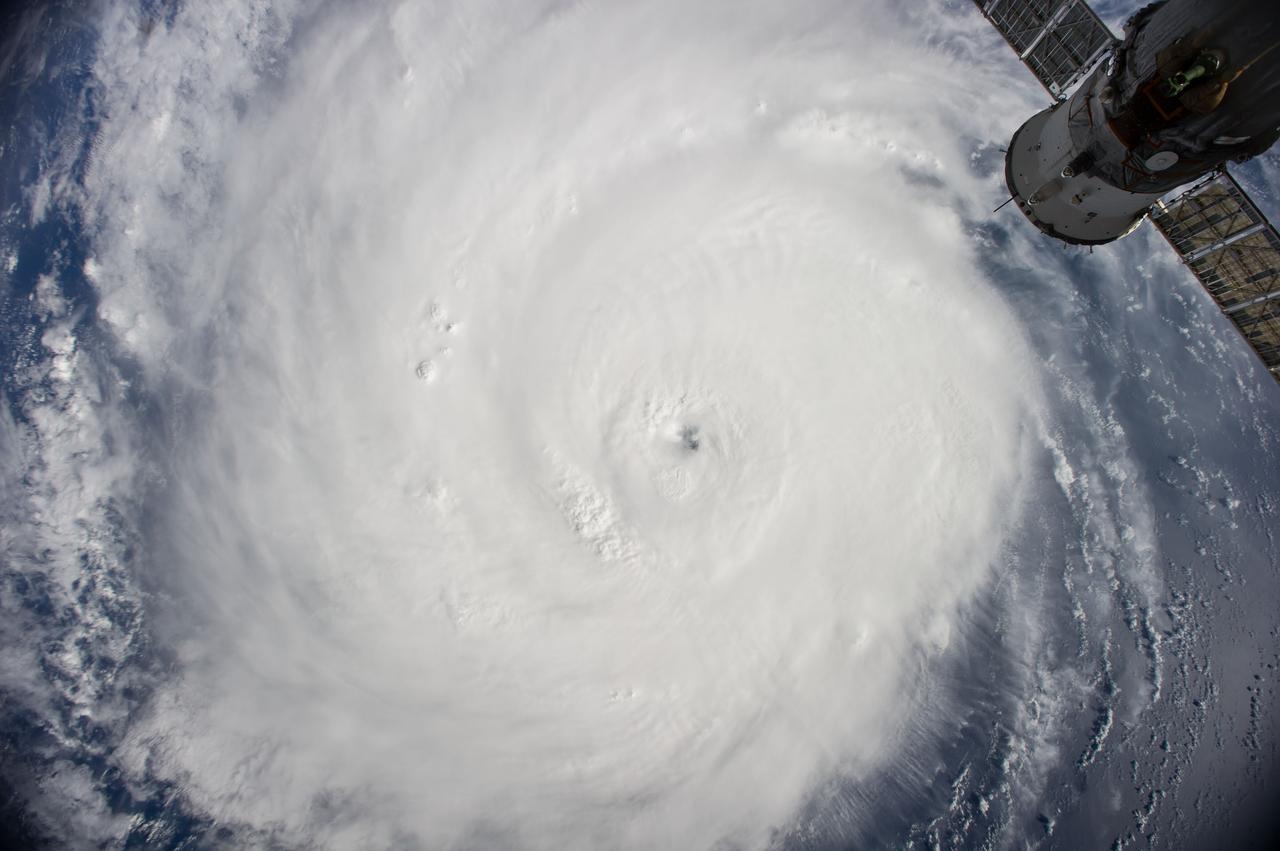
ISS041-E-078255 (16 Oct. 2014) --- One of the crew members aboard the International Space Station took this picture of Hurricane Gonzalo on Oct. 16, 2014. The storm's eye appears in the center of the frame. Gonzalo hit Bermuda on the following day, as a powerful Category 2 storm, with winds estimated at 110 miles per hour.
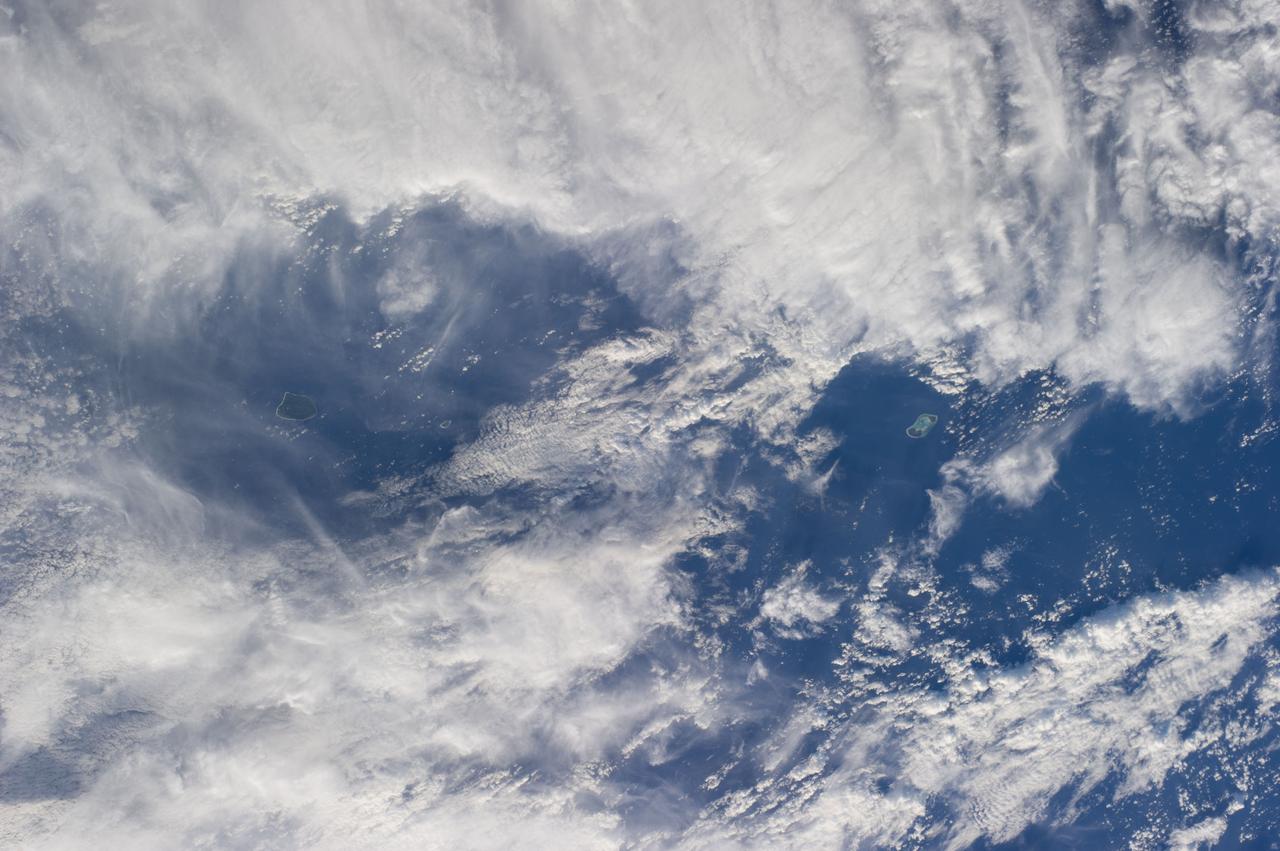
Earth Observation taken during a day pass by the Expedition 40 crew aboard the International Space Station (ISS). Folder lists this as: Near the Straits of Magellan - Glaciers.
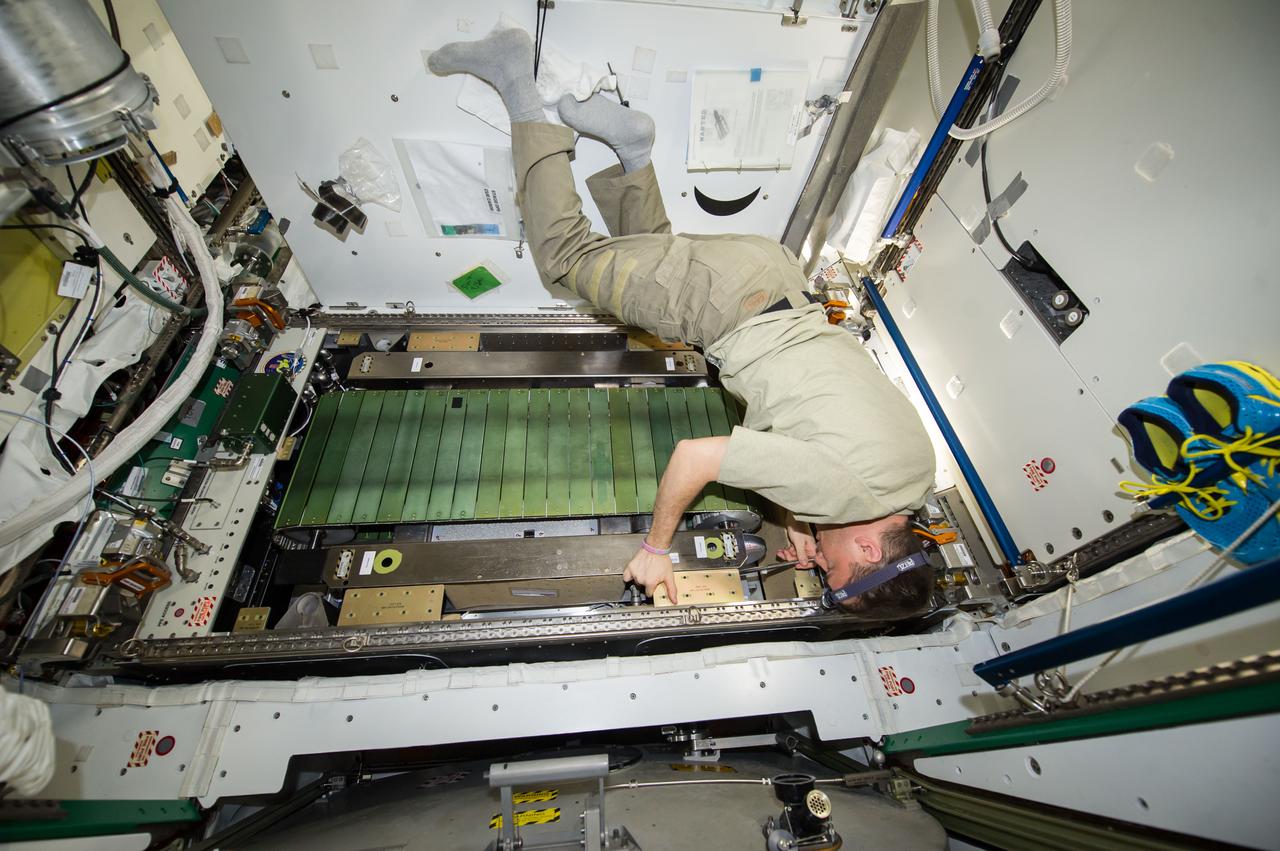
ISS041-E-011857 (15 Sept. 2014) --- NASA astronaut Reid Wiseman, Expedition 41 flight engineer, performs in-flight maintenance on the Combined Operational Load Bearing External Resistance Treadmill (COLBERT) in the Tranquility node of the International Space Station.
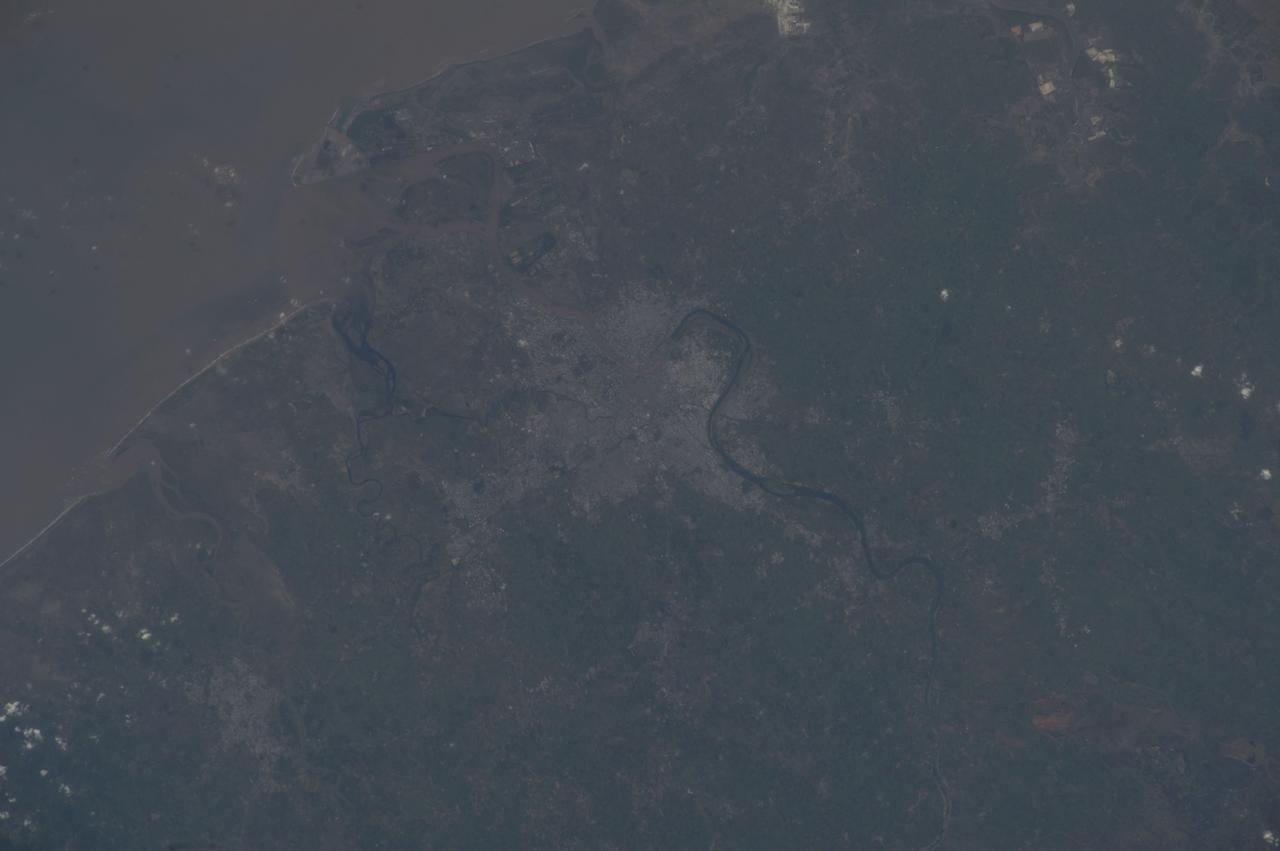
Earth Observation taken during a day pass by the Expedition 40 crew aboard the International Space Station (ISS). Folder lists this as: India.

ISS040-E-071607 (21 July 2014) --- Flying approximately 223 nautical miles above the eastern Pacific Ocean one of the Expedition 40 crew members aboard the International Space Station recorded this early morning image featuring southern California. Because of city lights, several points in the Los Angeles Basin and San Diego area can be delineated. The dark area at bottom occupying over half of the image's space is the waters of the eastern Pacific.
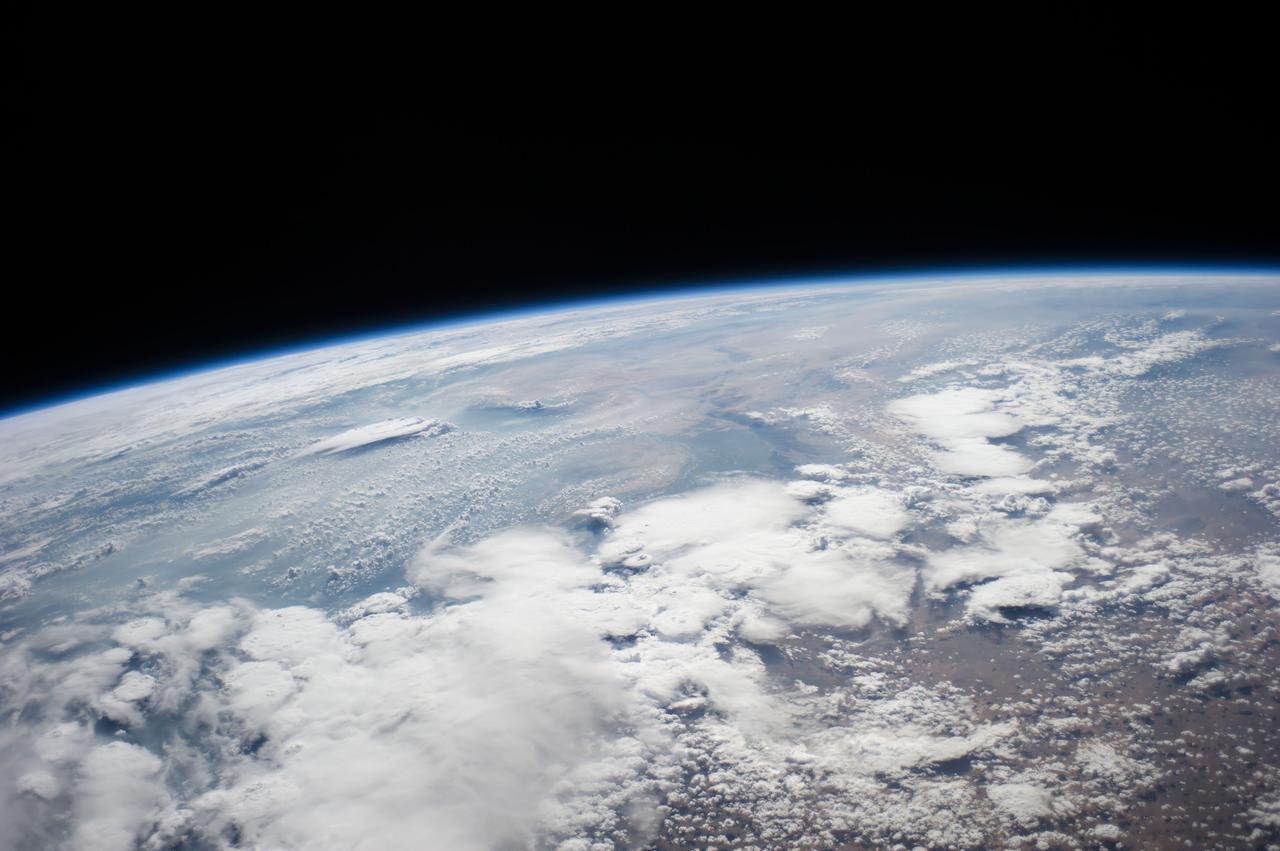
Earth Observation taken during a night pass by the Expedition 40 crew aboard the International Space Station (ISS).

ISS040-E-011006 (13 June 2014) --- European Space Agency astronaut Alexander Gerst, Expedition 40 flight engineer, works with samples and hardware for a combustion experiment known as the Burning and Suppression of Solids (BASS) in the Microgravity Science Glovebox (MSG) in the Destiny laboratory of the International Space Station.
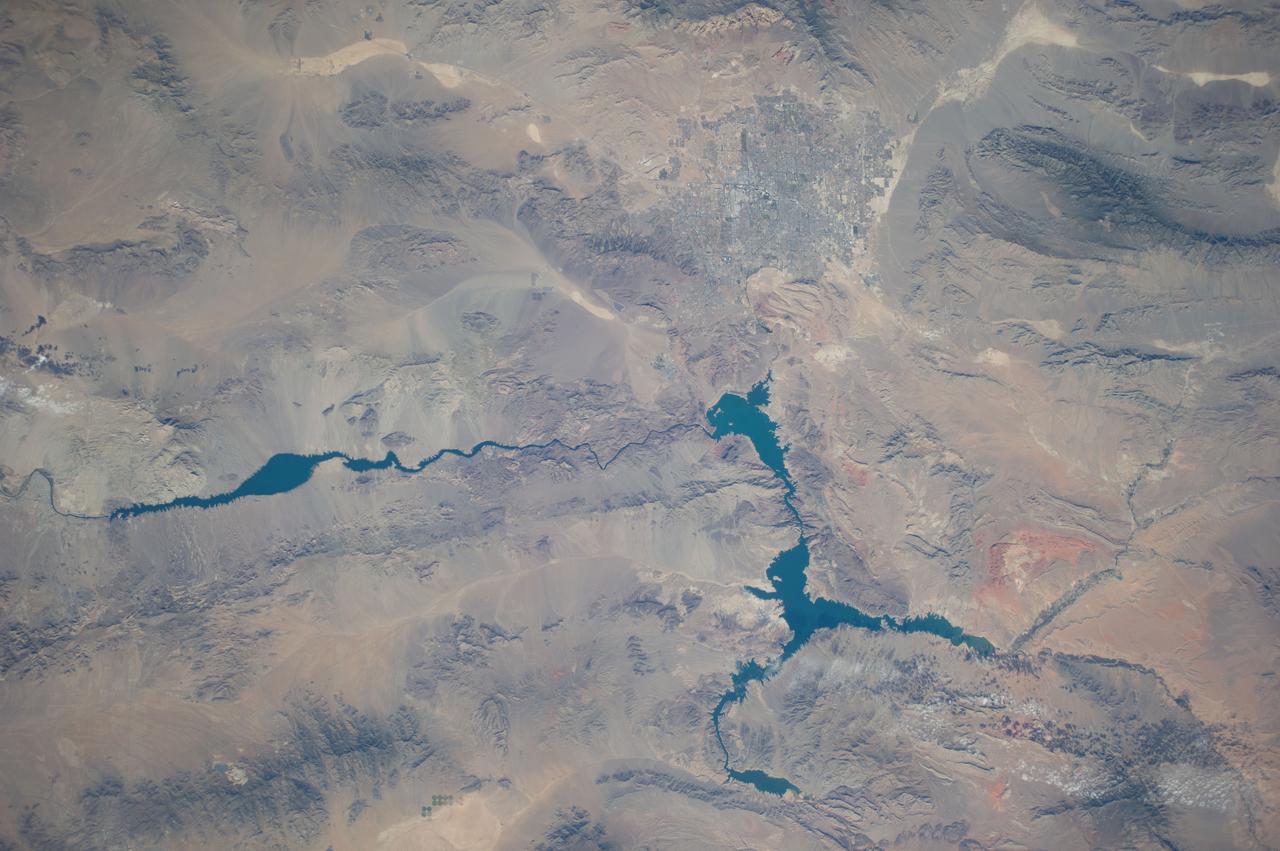
Earth Observation taken during a day pass by the Expedition 40 crew aboard the International Space Station (ISS).
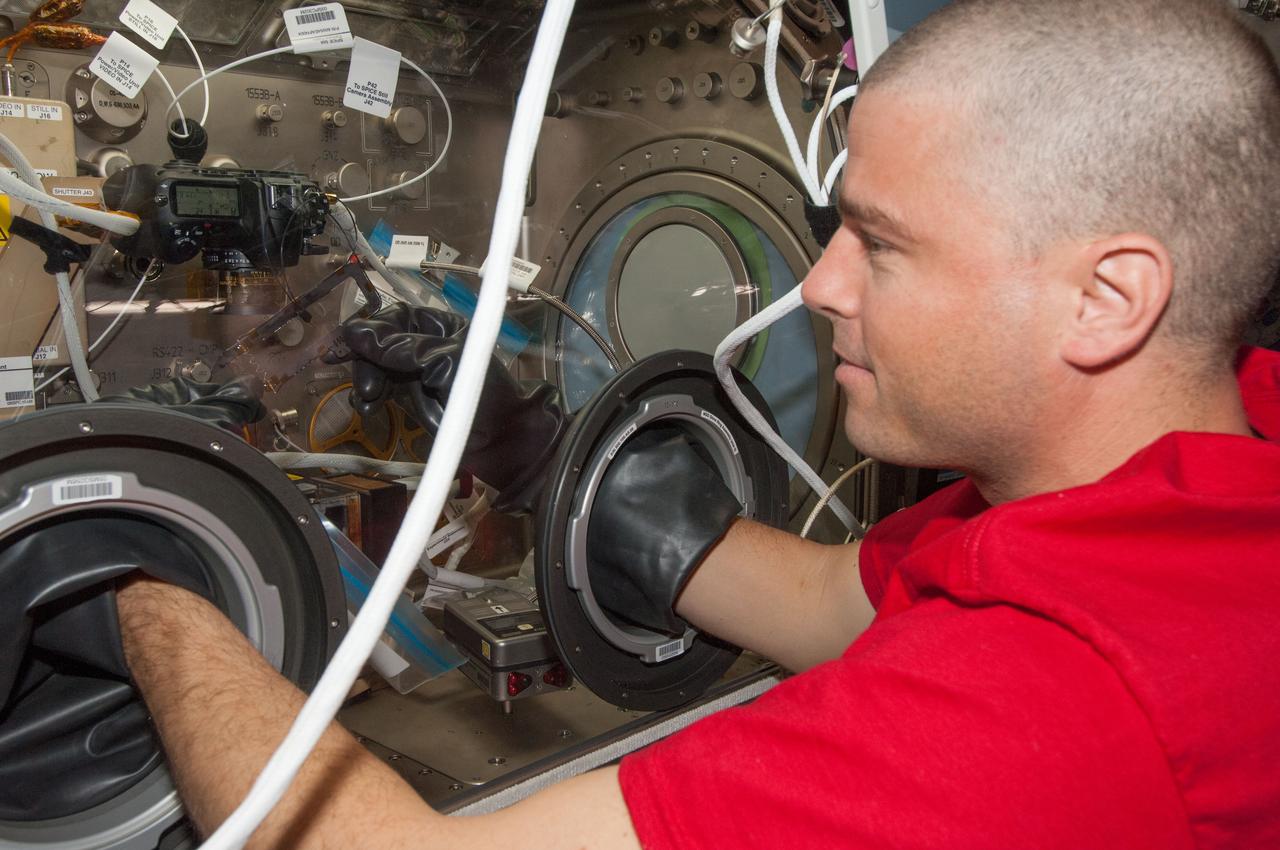
ISS040-E-031397 (2 July 2014) --- NASA astronaut Reid Wiseman, Expedition 40 flight engineer, works with a combustion experiment known as the Burning and Suppression of Solids (BASS) in the Microgravity Science Glovebox (MSG) in the Destiny laboratory of the International Space Station. The experiment seeks to provide insight on how flames burn in space compared to Earth which may provide fire safety benefits aboard future spacecraft.
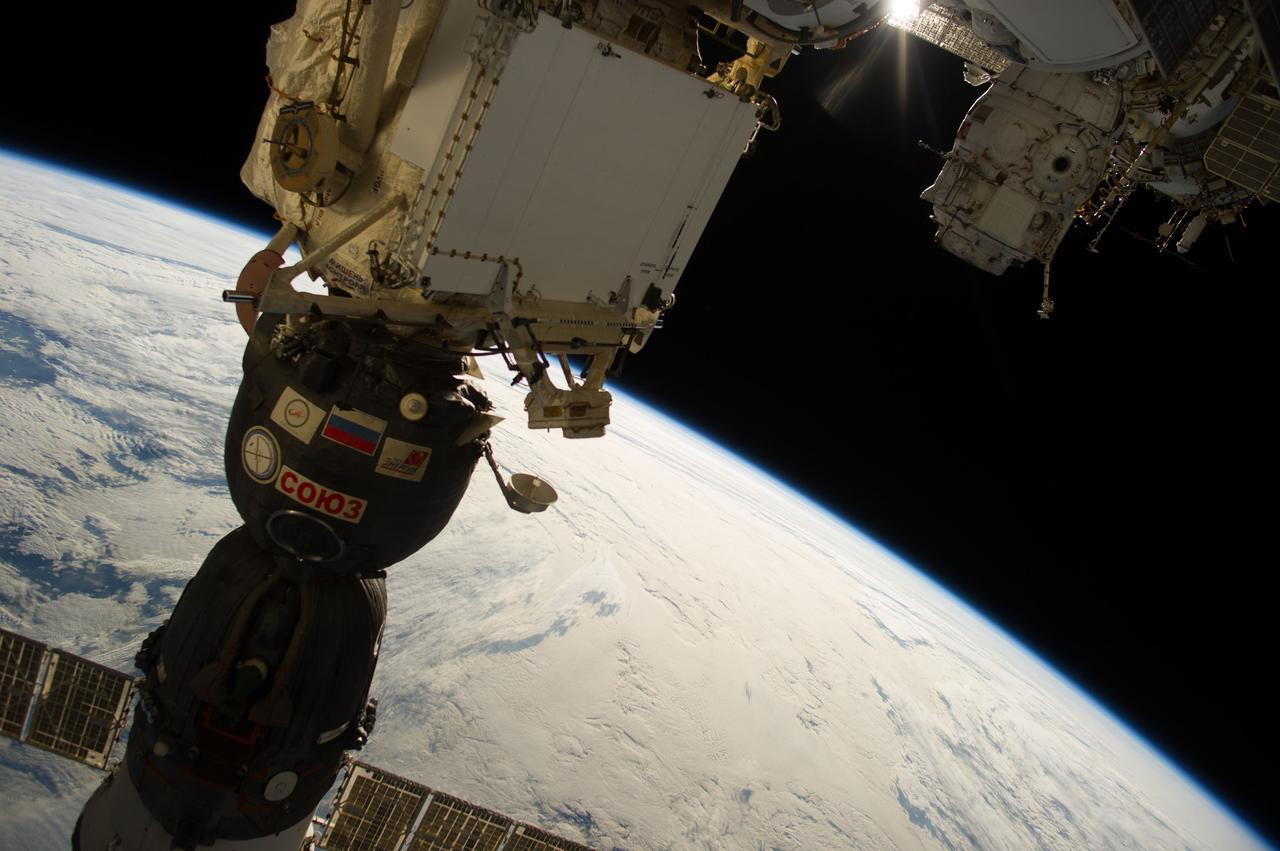
Earth Observation taken during a night pass by the Expedition 40 crew aboard the International Space Station (ISS). Folder lists this as: Sunrise photos. Part of ISS visible in the foreground.
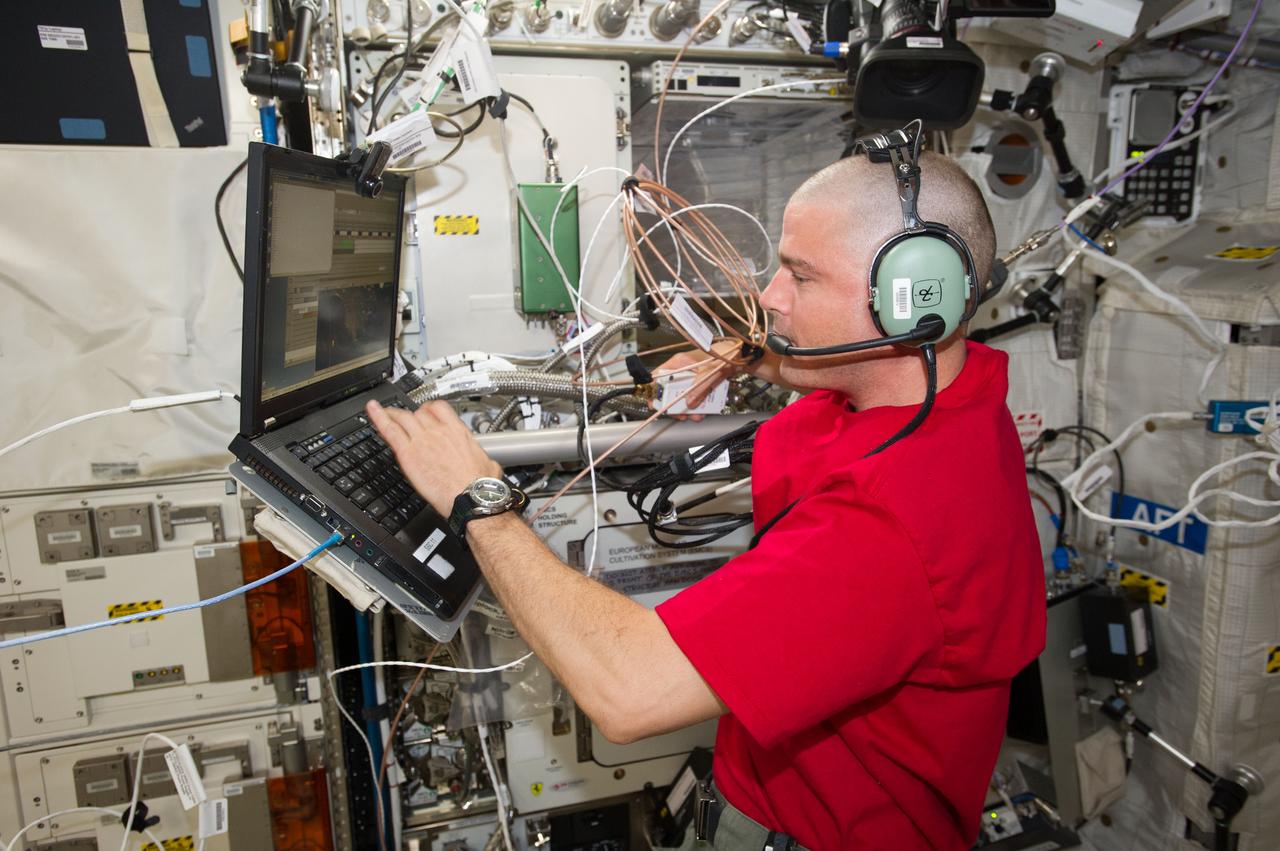
ISS040-E-024110 (28 June 2014) --- NASA astronaut Reid Wiseman, Expedition 40 flight engineer, wearing a communication headset, uses a computer in the Columbus laboratory of the International Space Station.

European Space Agency astronaut Alexander Gerst,Expedition 40 flight engineer,works with samples and hardware for a combustion experiment known as the Burning and Suppression of Solids (BASS) in the Microgravity Science Glovebox (MSG) in the Destiny laboratory of the International Space Station.
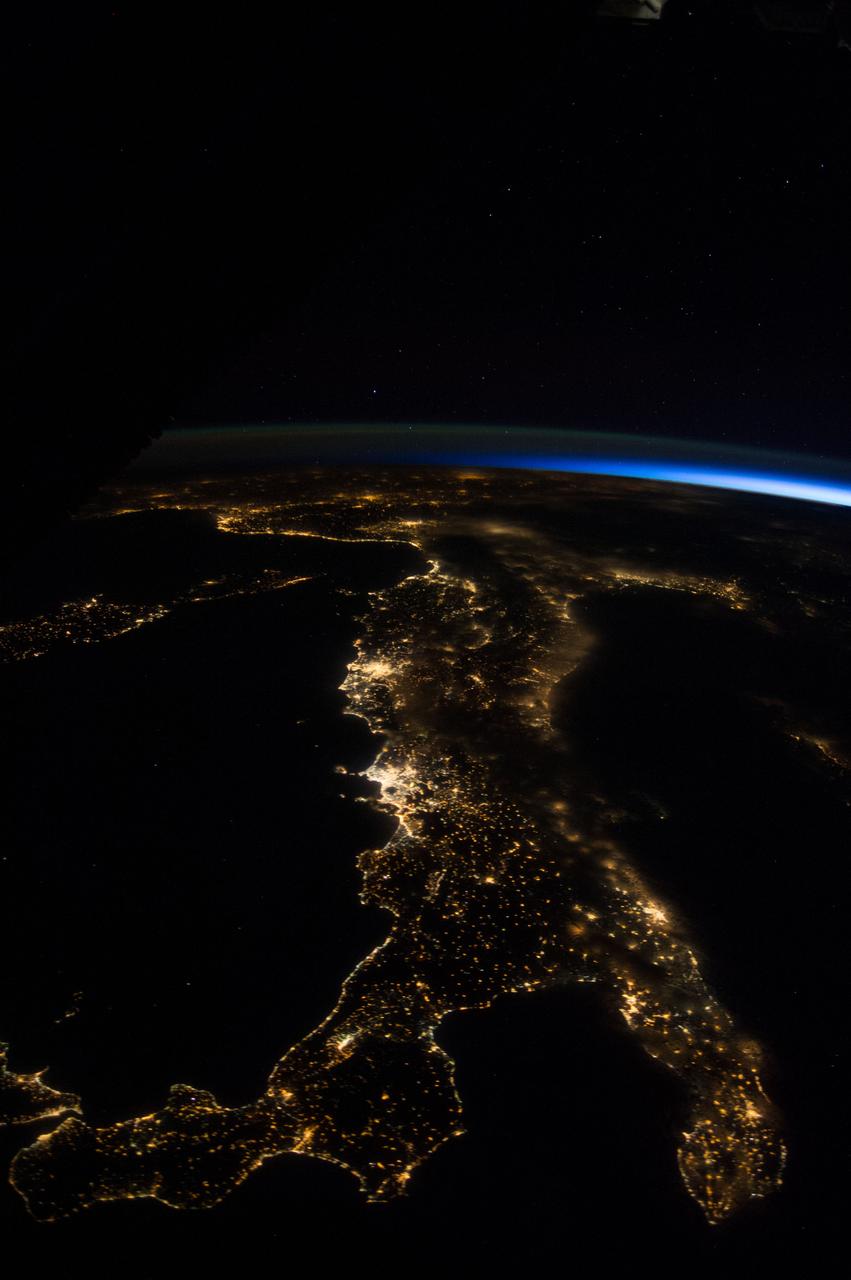
ISS040-E-080980 (26 July 2014) --- One of the Expedition 40 crew members aboard the International Space Station photographed this oblique night image of almost the entire country of Italy on July 26, 2014. A small part of Sicily is in the lower left corner.
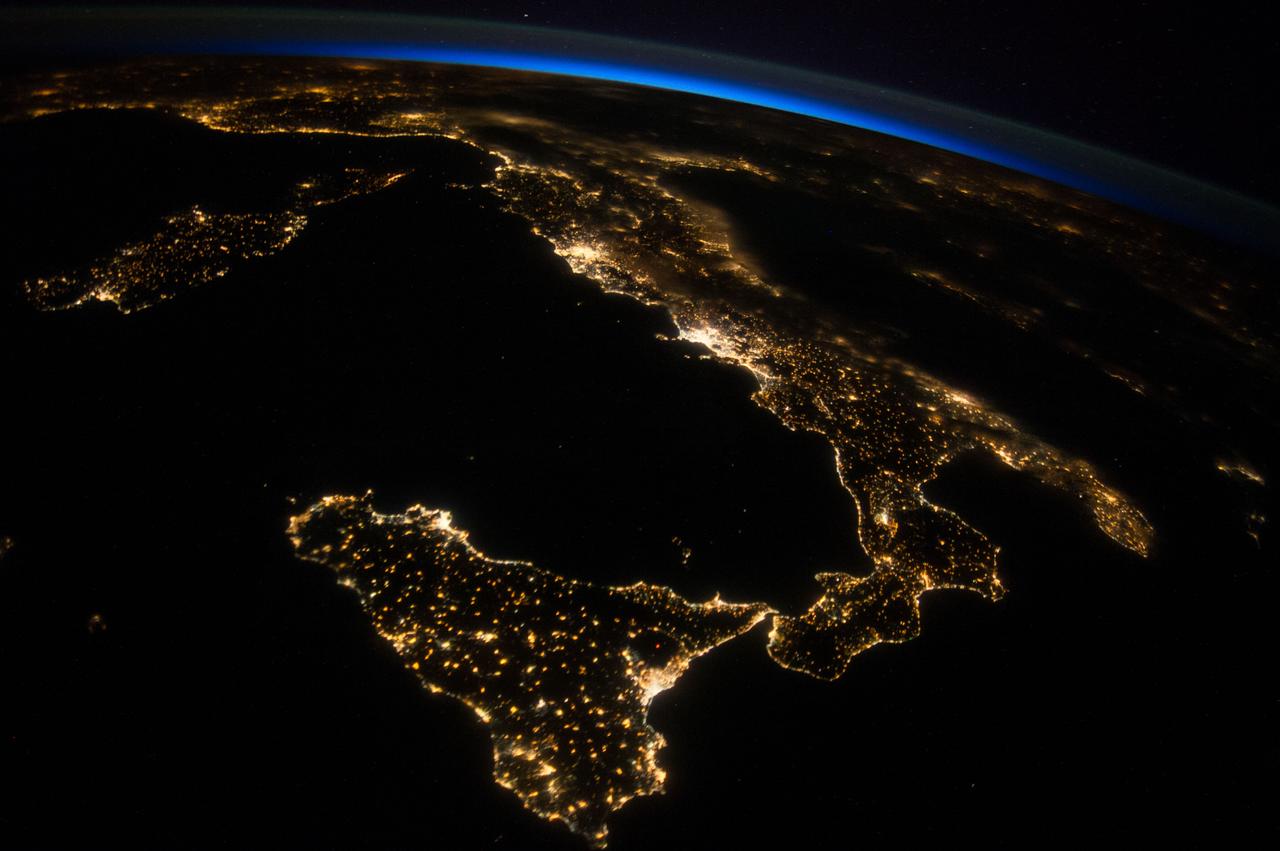
ISS040-E-080962 (26 July 2014) --- One of the Expedition 40 crew members aboard the International Space Station photographed this oblique night image of almost the entire countries of Italy and Sicily on July 26, 2014.
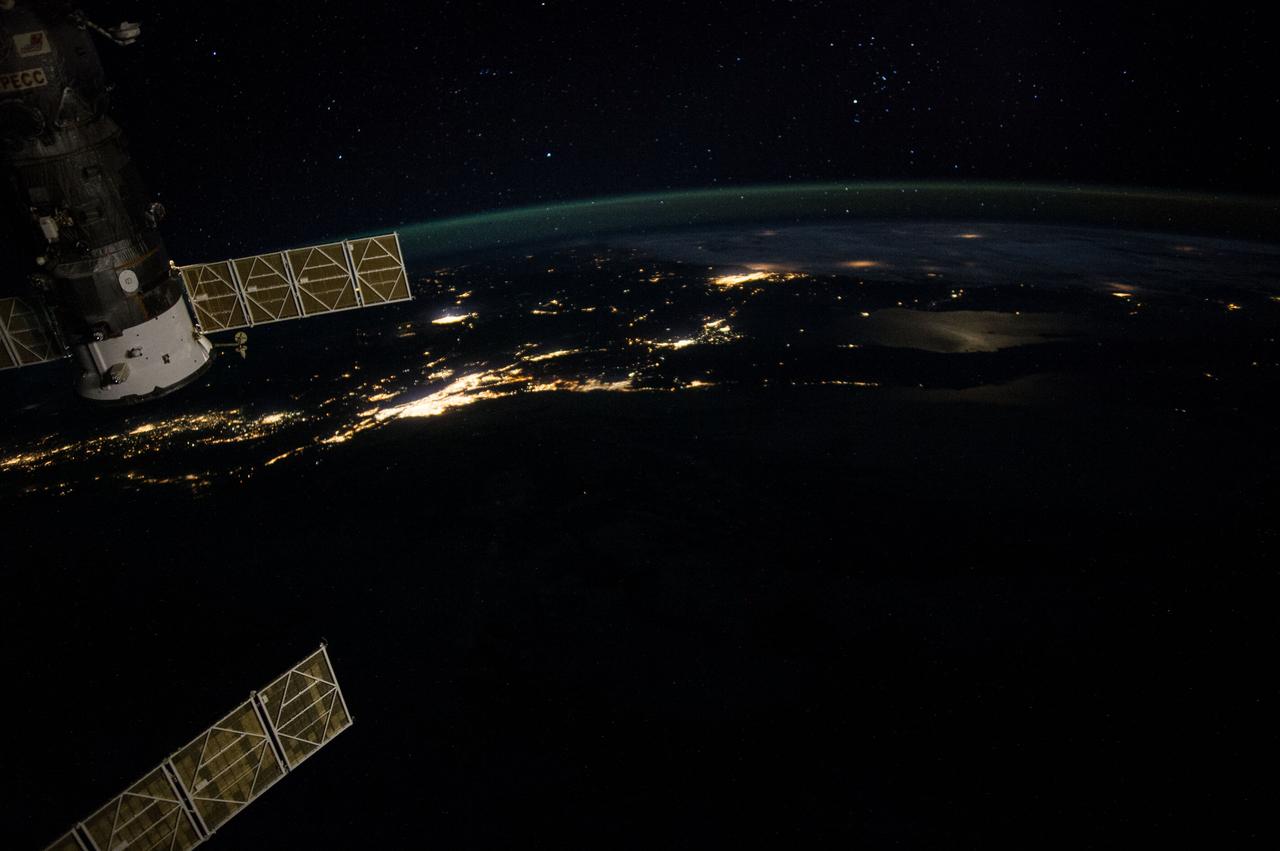
Earth Observation taken during a night pass by the Expedition 40 crew aboard the International Space Station (ISS). Folder lists this as: Los Angeles.

Earth observation taken during a day pass by the Expedition 40 crew aboard the International Space Station (ISS). Folder lists this as: Typhoon Neoguri.