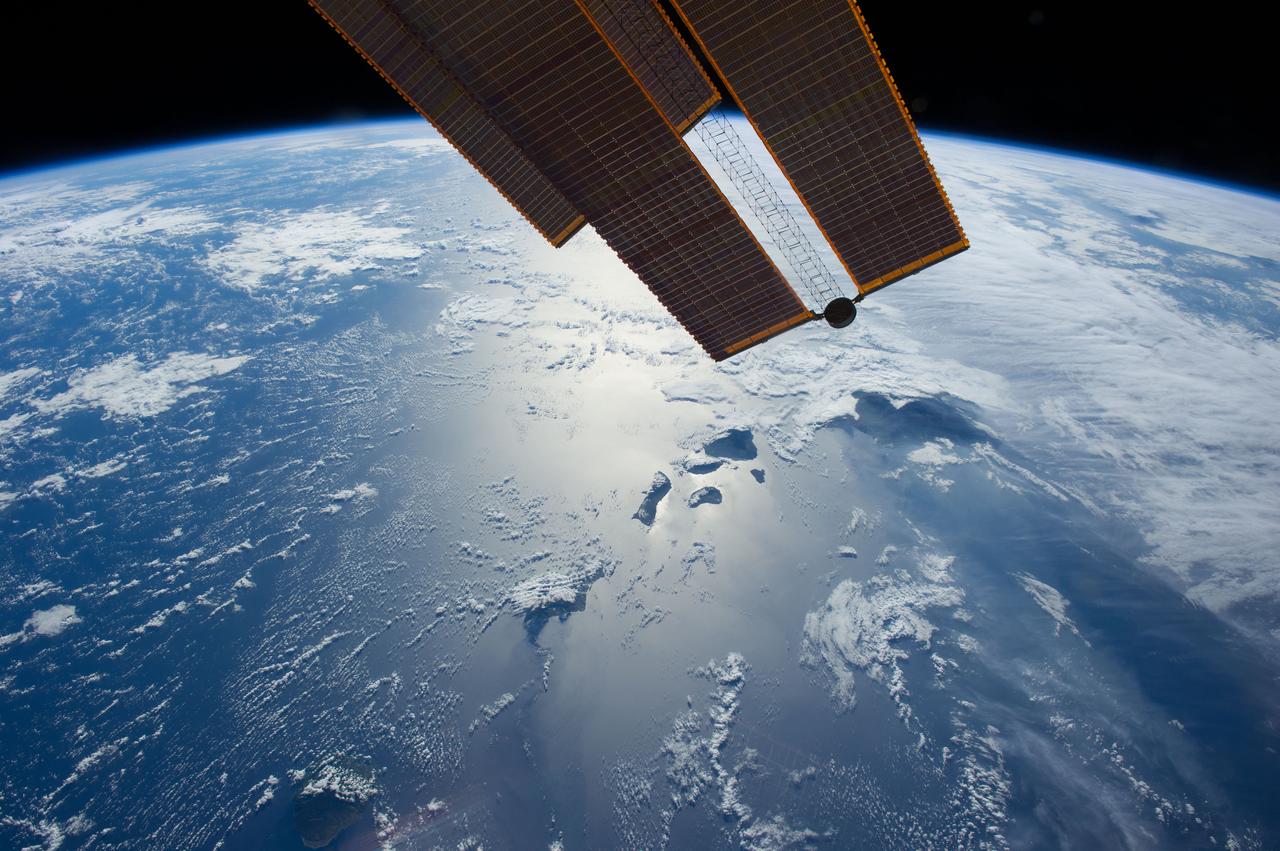
ISS040-E-083662 (28 July 2014) --- Flying 225 nautical miles above the Hawaiian Ridge in the North Pacific Ocean, one of the Expedition 40 crew members on the International Space Station photographed this oblique panorama showing many of the islands in the Hawaiian chain, some of them highlighted by sun glint. Hawaii or the "Big Island" is largely covered by clouds at right center. Maui, Kahoolawe, Lanai and Molokai are more easily spotted because of the sun glint near frame center. Oahu is almost totally hidden by clouds at bottom center, and Niihau and Kauai are out of the frame. Part of one of the orbital outpost's solar panels is obvious at top center.
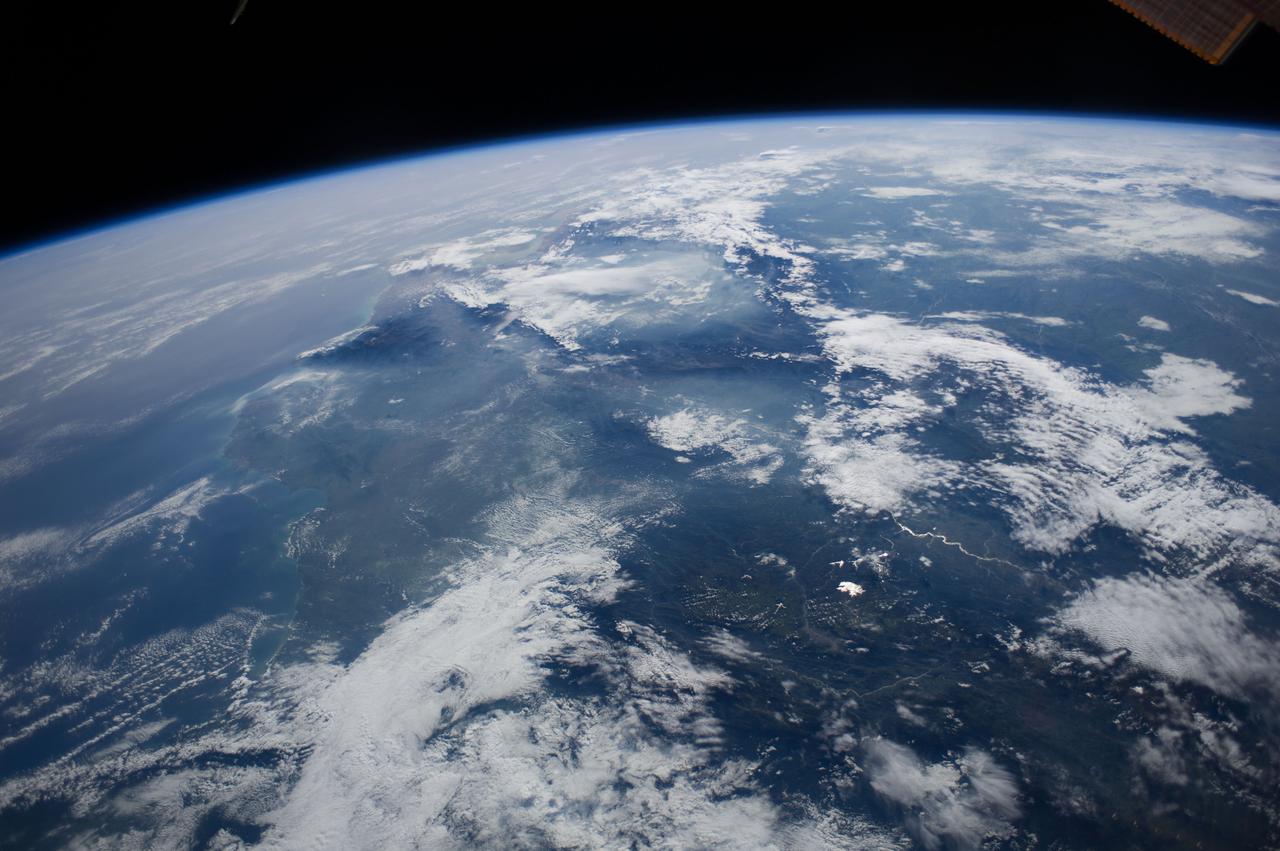
Earth Observation taken during a day pass by the Expedition 40 crew aboard the International Space Station (ISS). Folder lists this as: Panama and South America.

Earth Observation (sunrise over horizon) taken during a day pass by the Expedition 40 crew aboard the International Space Station (ISS). Docked Soyuz and Progress spacecraft are visible in foreground.
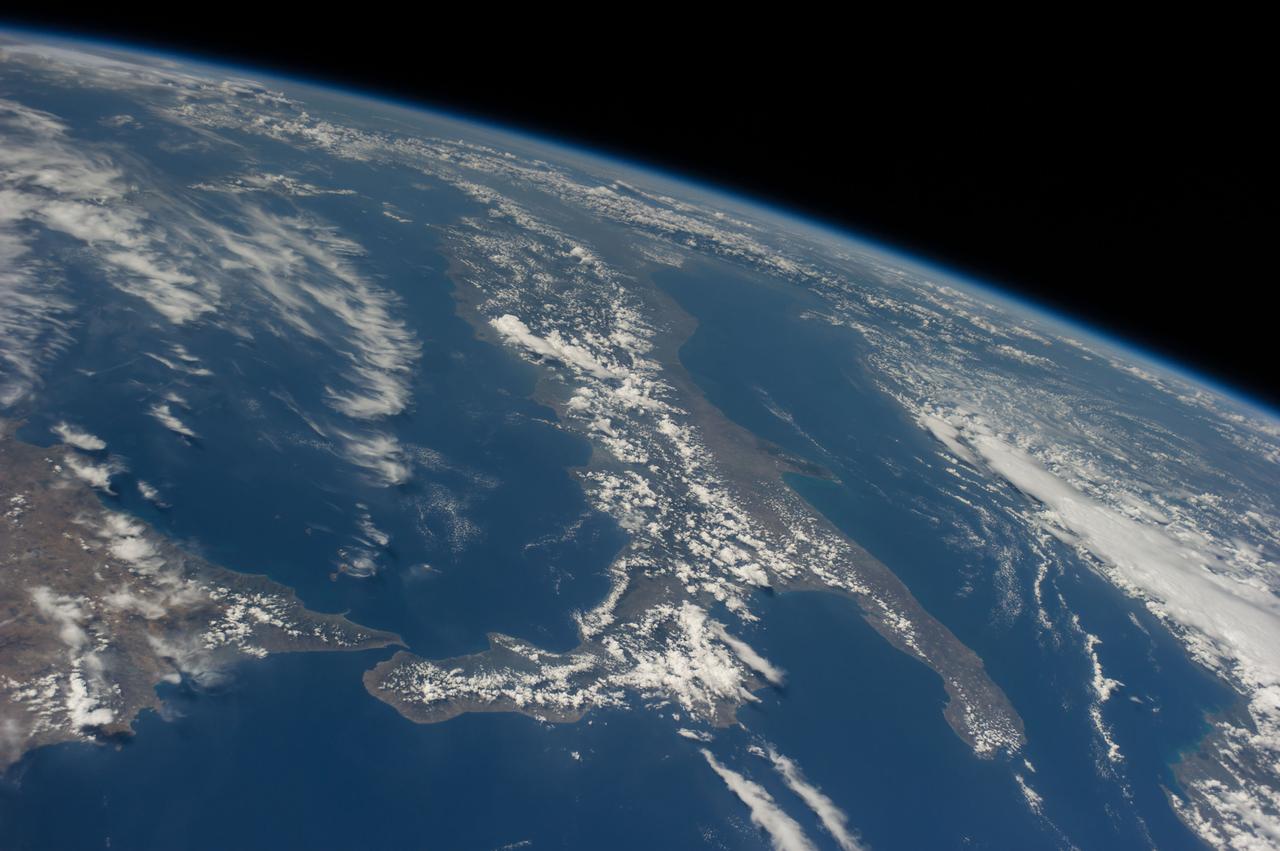
ISS040-E-131380 (8 Sept. 2014) --- Collections of clouds hug Sicily (lower left) and Italy, which runs vertically through the center of this oblique scene, exposed by one the Expedition 40 crew members aboard the International Space Station at an altitude of 221 nautical miles.
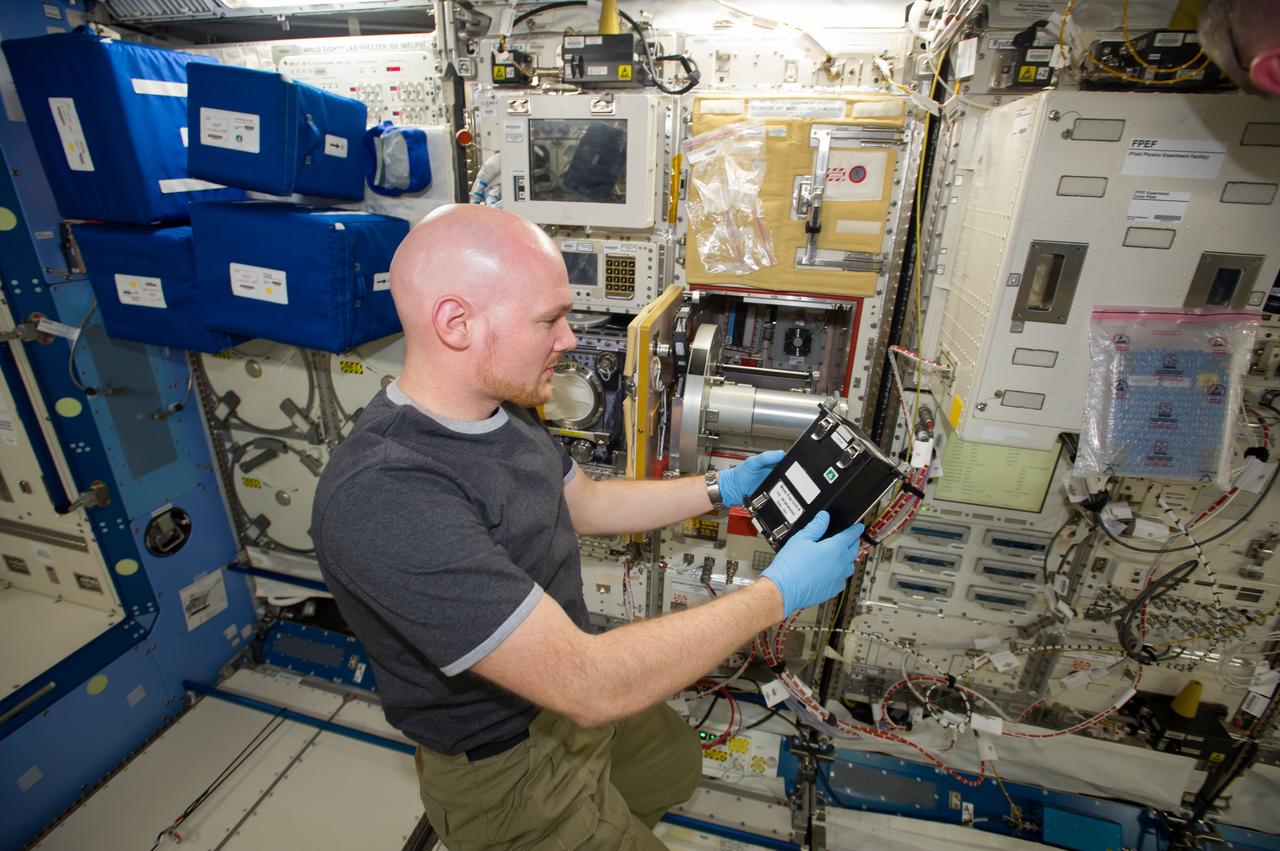
ISS041-E-045086 (27 Sept. 2014) --- European Space Agency astronaut Alexander Gerst, Expedition 41 flight engineer, works with a measurement experiment in the Kibo laboratory of the International Space Station.
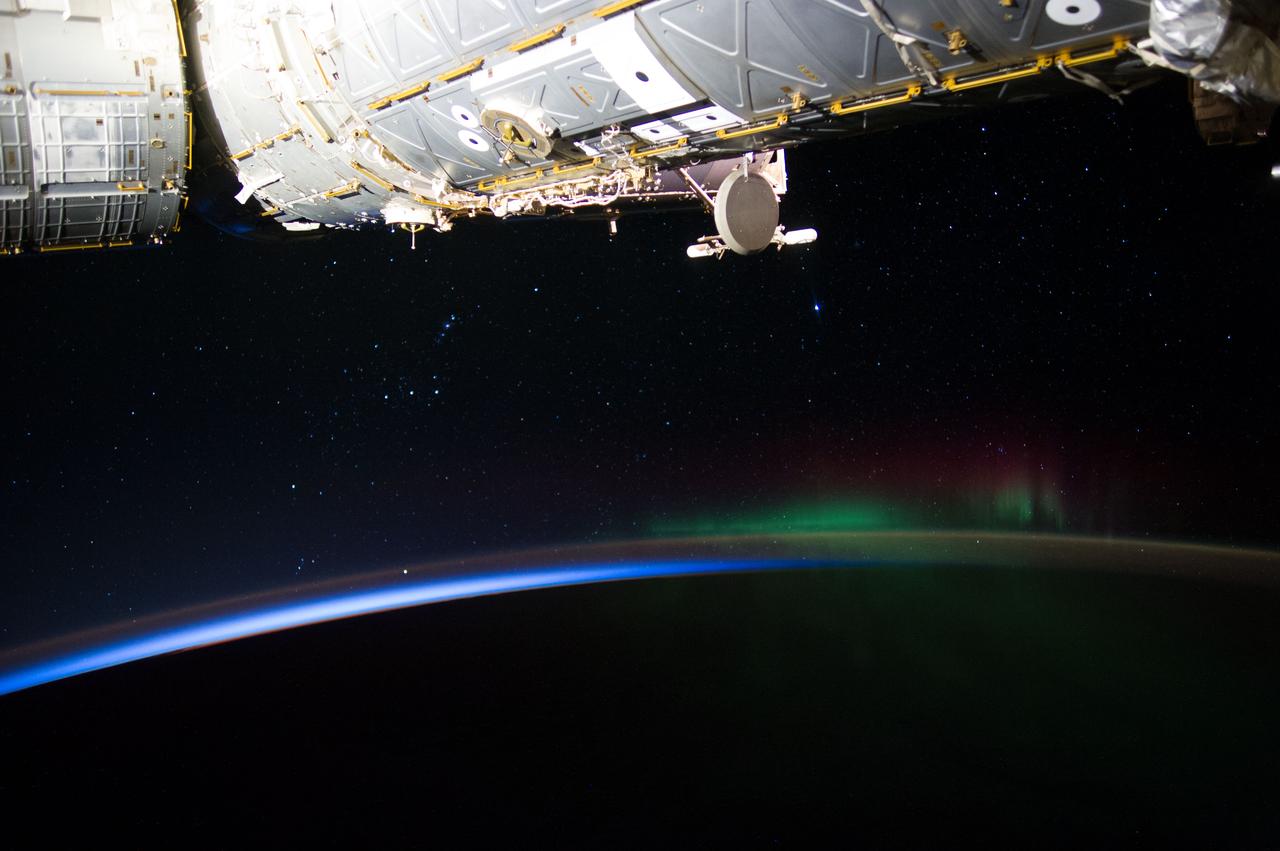
ISS040-E-020018 (25 June 2014) ---
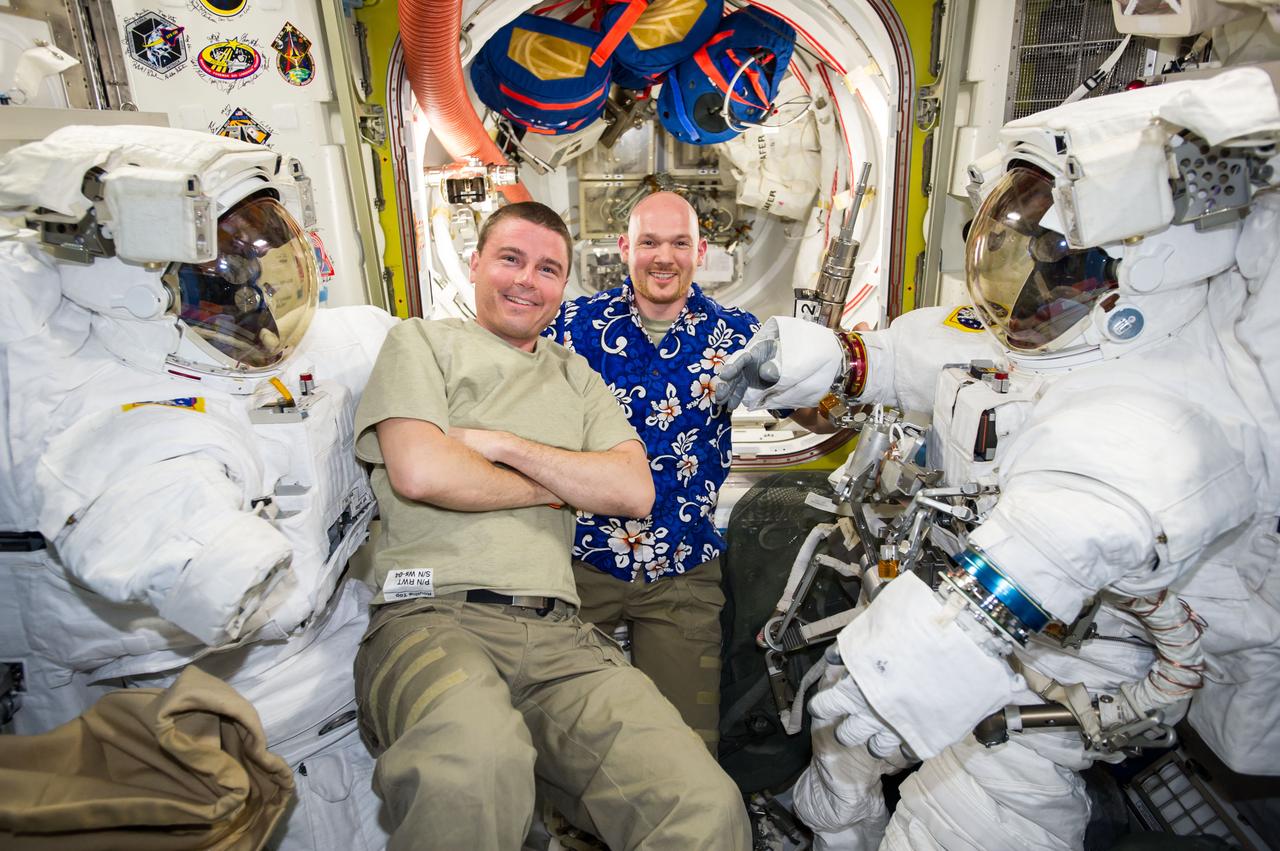
ISS041-E-017047 (19 Sept. 2014) --- NASA astronaut Reid Wiseman (left) and European Space Agency astronaut Alexander Gerst, both Expedition 41 flight engineers, take a moment to pose for a photo with two Extravehicular Mobility Unit (EMU) spacesuits in the Quest airlock of the International Space Station while preparing for two spacewalks scheduled in October 2014.
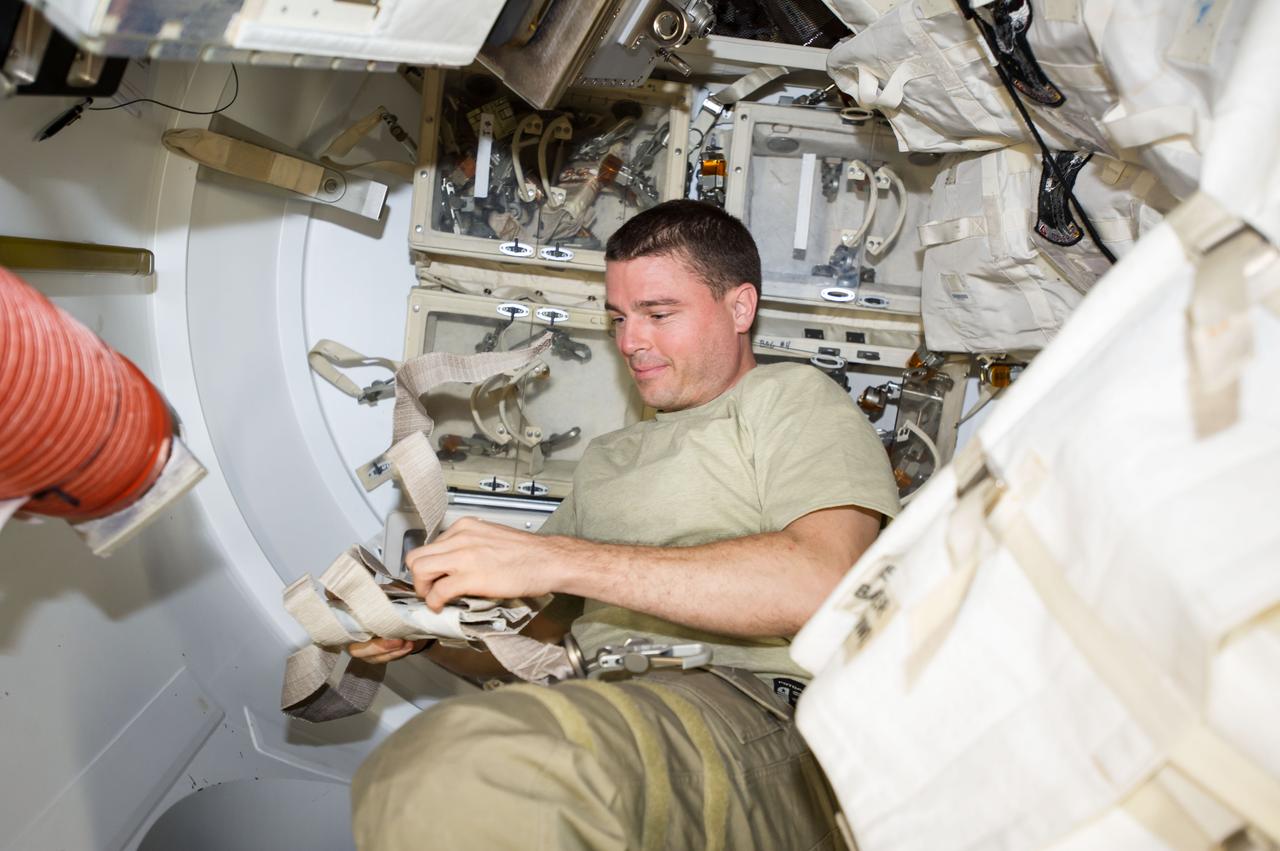
ISS041-E-017060 (19 Sept. 2014) --- NASA astronaut Reid Wiseman, Expedition 41 flight engineer, works with tools and equipment in the Quest airlock of the International Space Station in preparation for two spacewalks scheduled in October 2014.
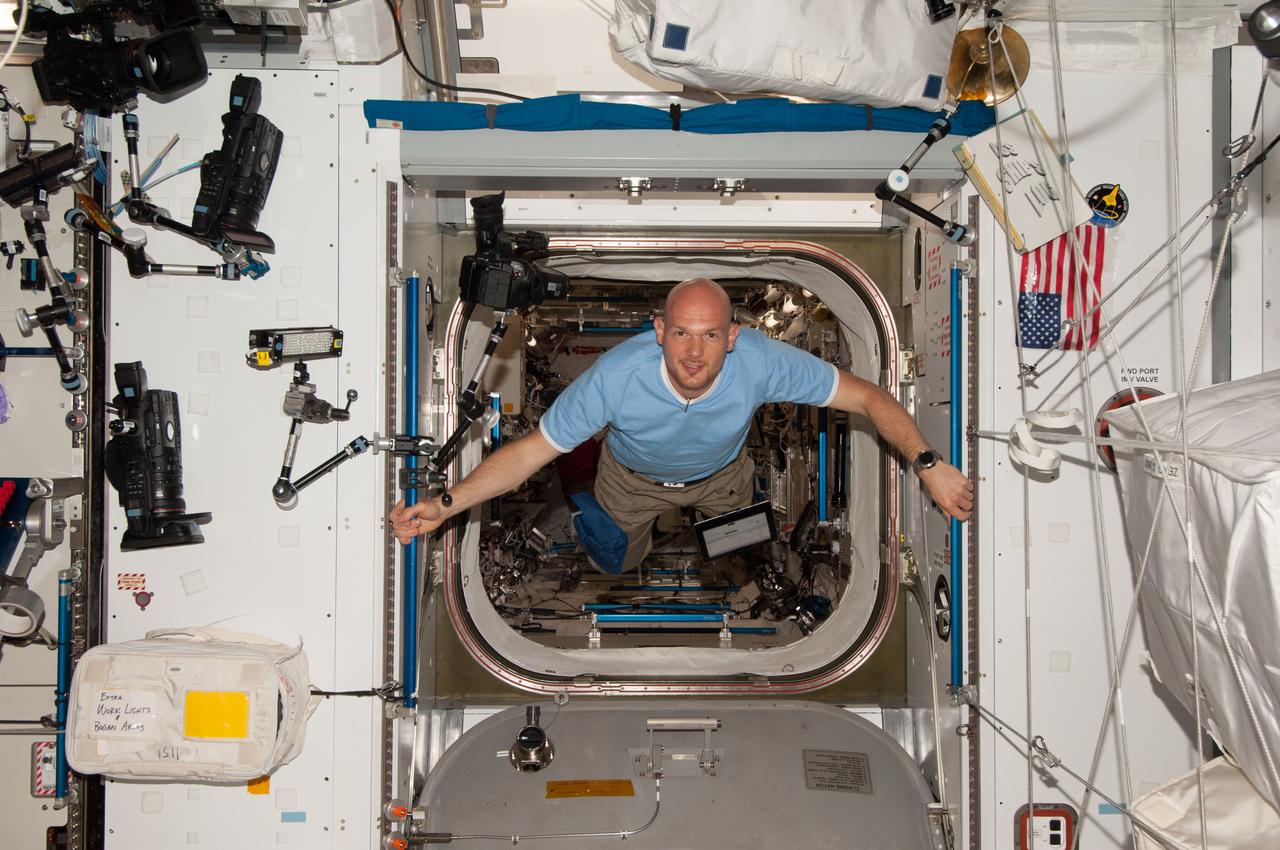
ISS040-E-006038 (30 May 2014) --- European Space Agency astronaut Alexander Gerst, Expedition 40 flight engineer, floats through the hatch between the Kibo laboratory and the Harmony node of the International Space Station.

Earth Observation taken during a day pass by the Expedition 40 crew aboard the International Space Station (ISS). Folder lists this as: India.

ISS041E074458 (10/15/2014) --- NASA Flight Engineers Reid Wiseman and Barry Wilmore ventured out to the starboard truss of the International Space Station to remove and replace a power regulator known as a sequential shunt unit, which failed back in mid-May. The two spacewalkers also moved TV and camera equipment in preparation for the relocation of the Leonardo Permanent Multipurpose Module to accommodate the installation of new docking adapters for future commercial crew vehicles.
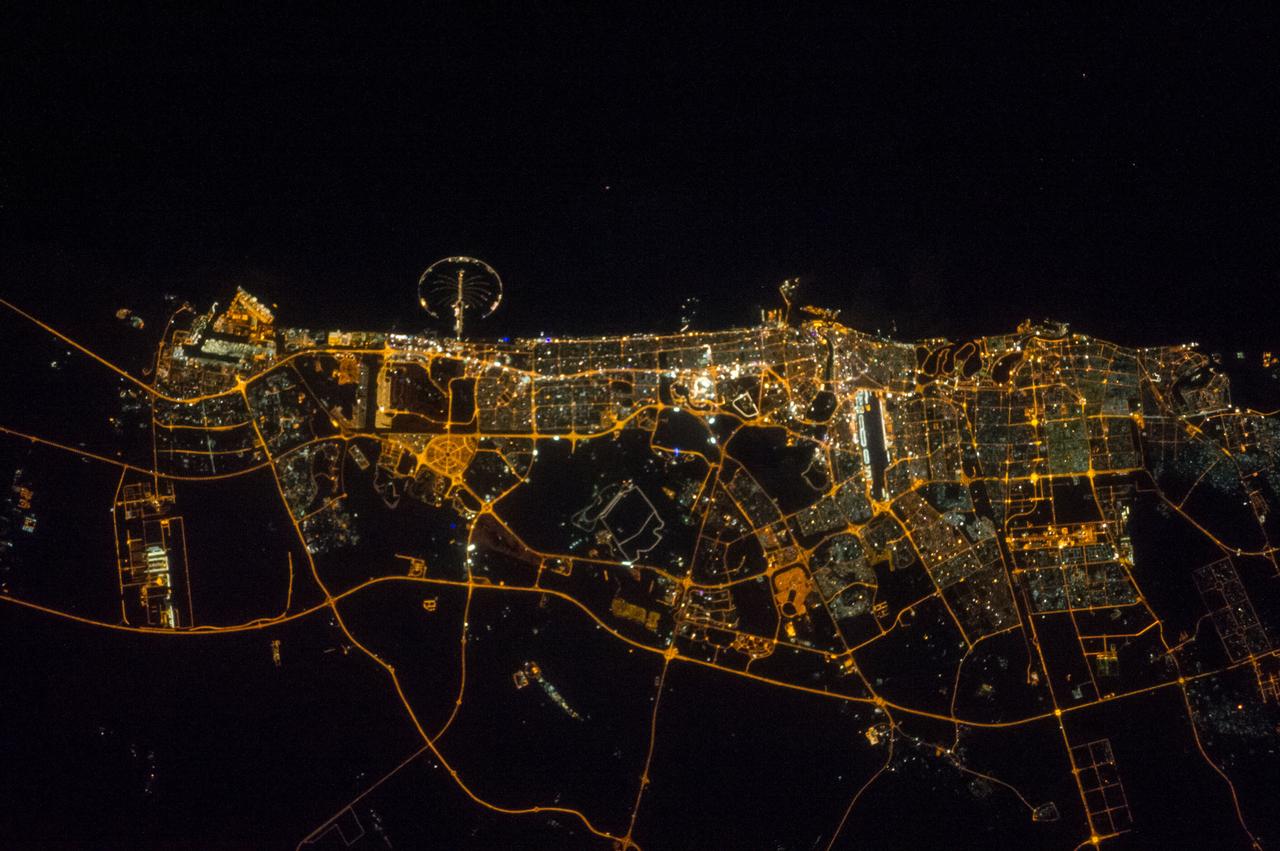
Earth Observation taken during a night pass by the Expedition 40 crew aboard the International Space Station (ISS). Folder lists this as: Middle East cities.
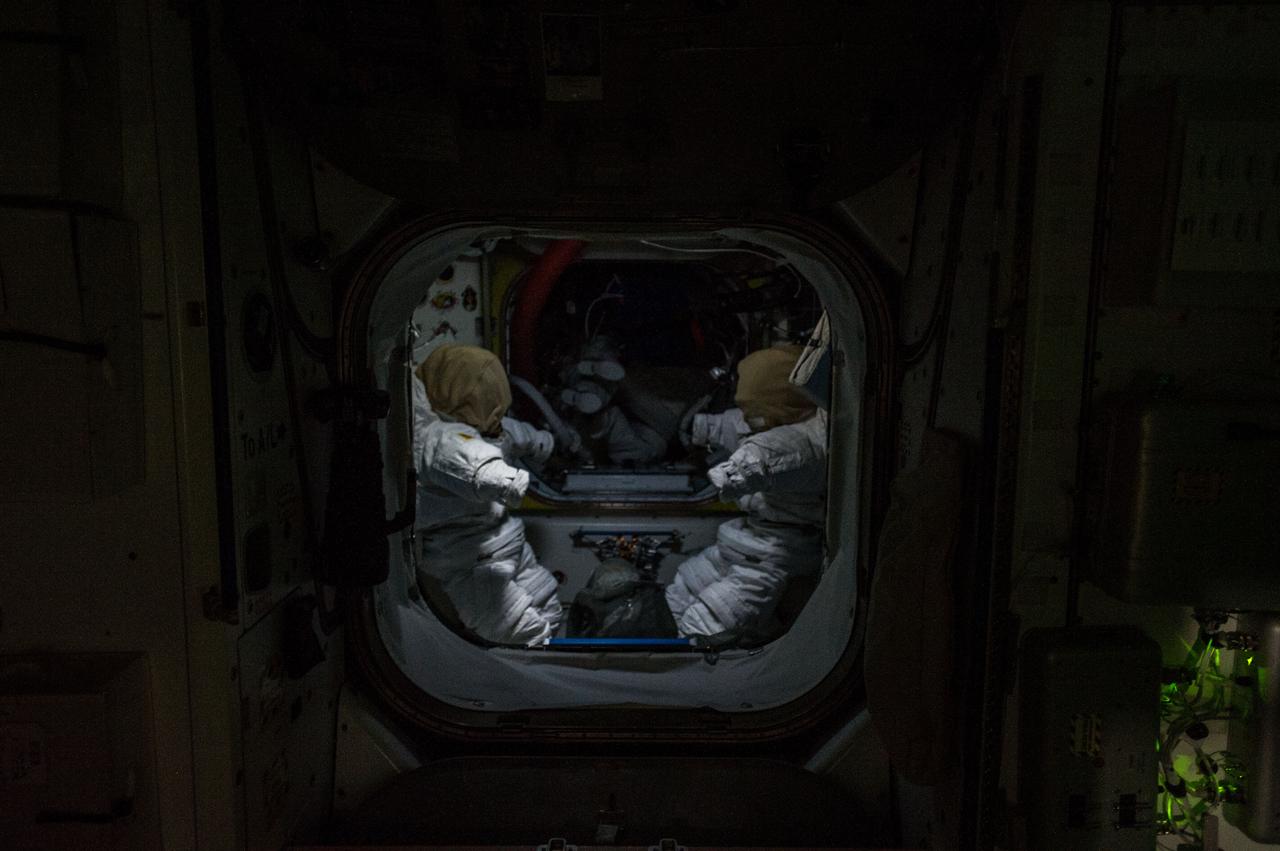
Dark view of two Extravehicular Mobility Units (EMUs) located in the Quest airlock. Photo taken by the Expedition 40 crew.
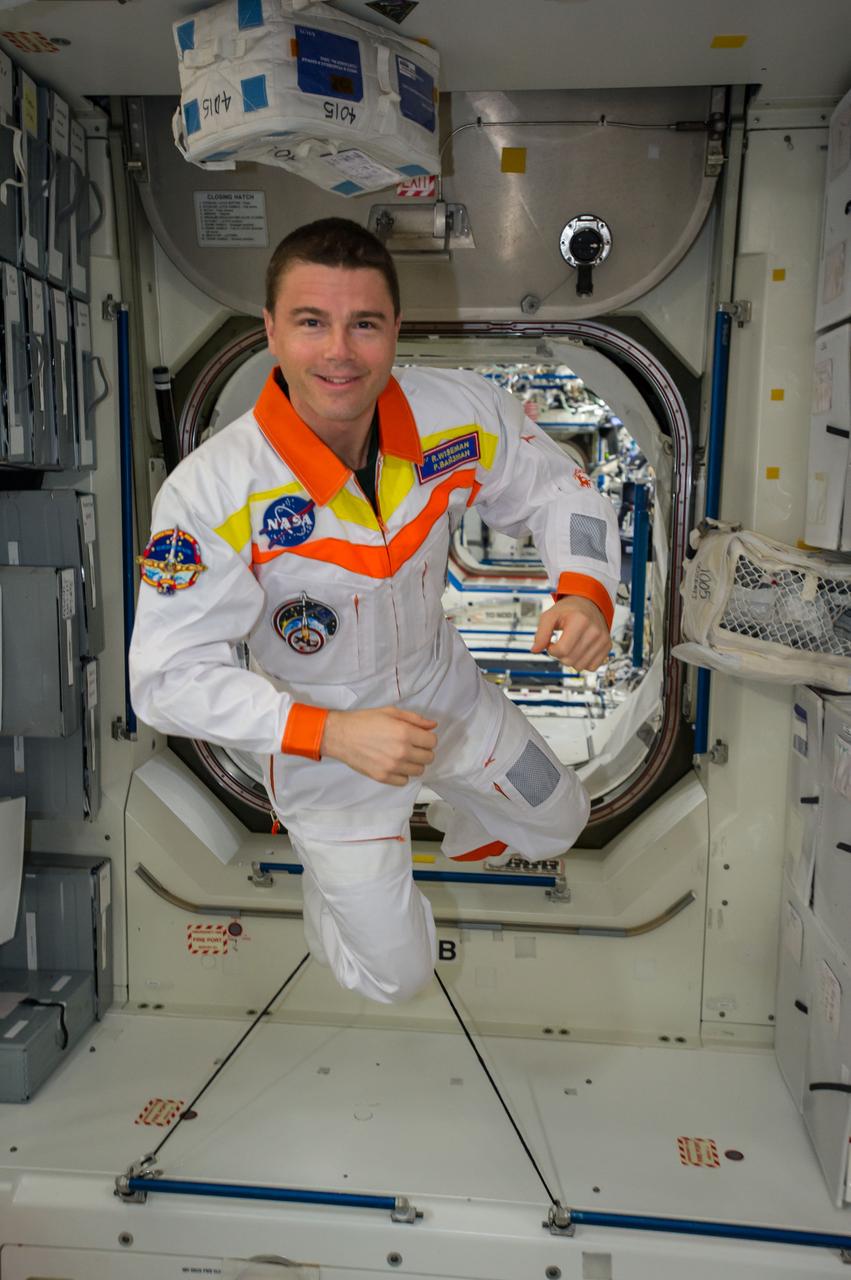
ISS040-E-105358 (24 Aug. 2014) --- NASA astronaut Reid Wiseman, Expedition 40 flight engineer, is pictured while floating freely in the Unity node of the International Space Station.
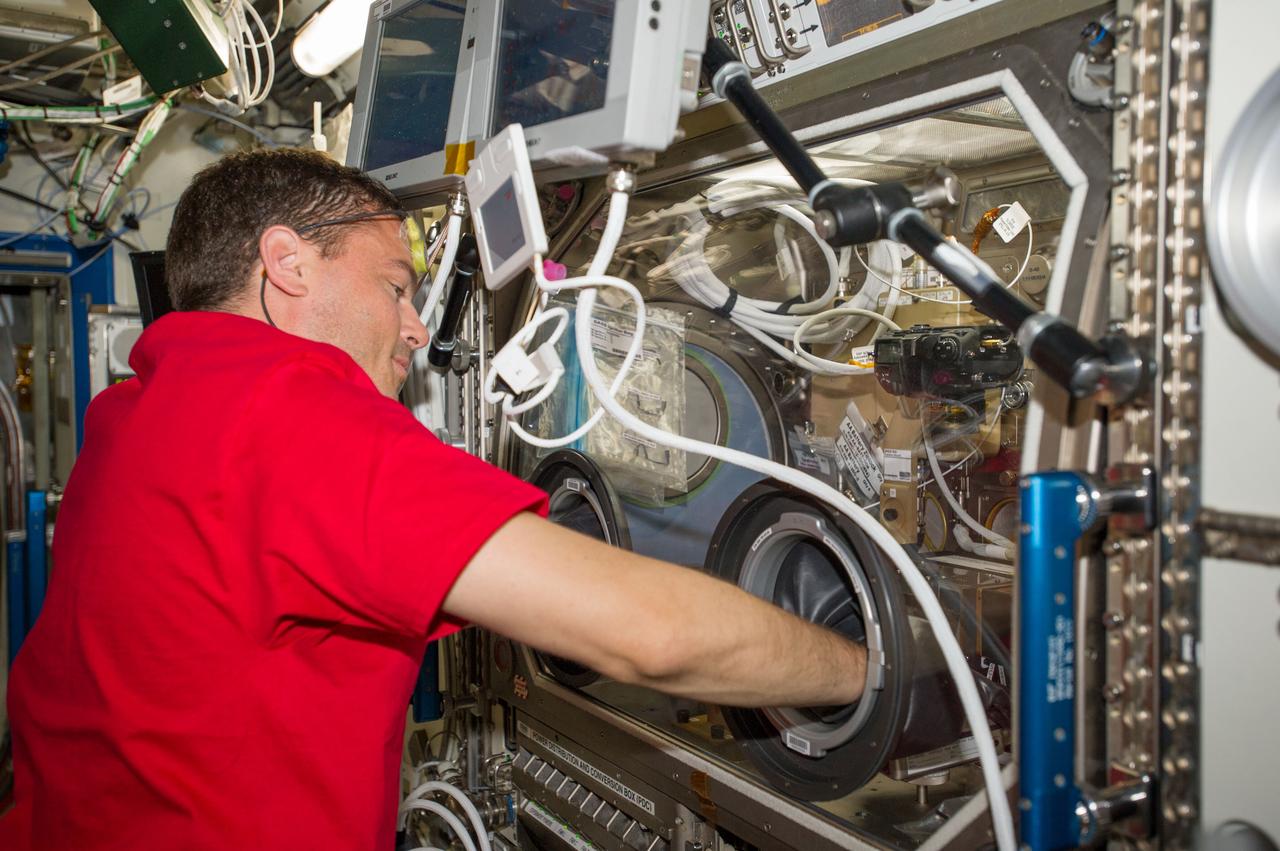
ISS040-E-021546 (26 June 2014) --- NASA astronaut Reid Wiseman, Expedition 40 flight engineer, conducts a combustion experiment known as the Burning and Suppression of Solids (BASS) inside the Microgravity Science Glovebox (MSG) located in the International Space Station?s Destiny laboratory. Without gravity, materials burn quite differently, with a spherical flame instead of the conical shape seen on Earth. BASS is studying the hypothesis that some materials may actually become more flammable in space. Results from BASS will help guide spacecraft materials selection and improve strategies for putting out accidental fires aboard spacecraft. The research also provides scientists with improved computational models that will aid in the design of fire detection and suppression systems here on Earth.
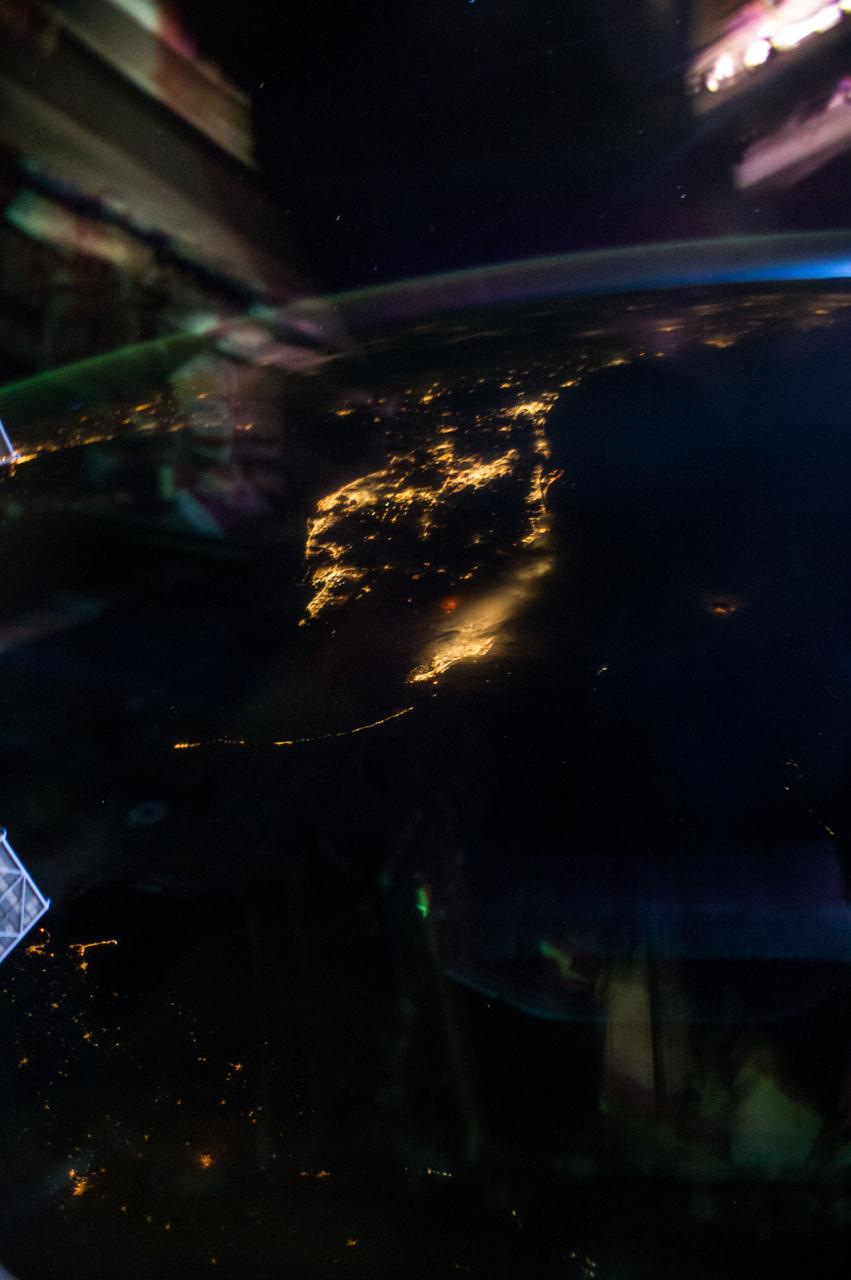
Earth Observation taken during a night pass by the Expedition 40 crew aboard the International Space Station (ISS). File lists this as possibly : Florida at night.
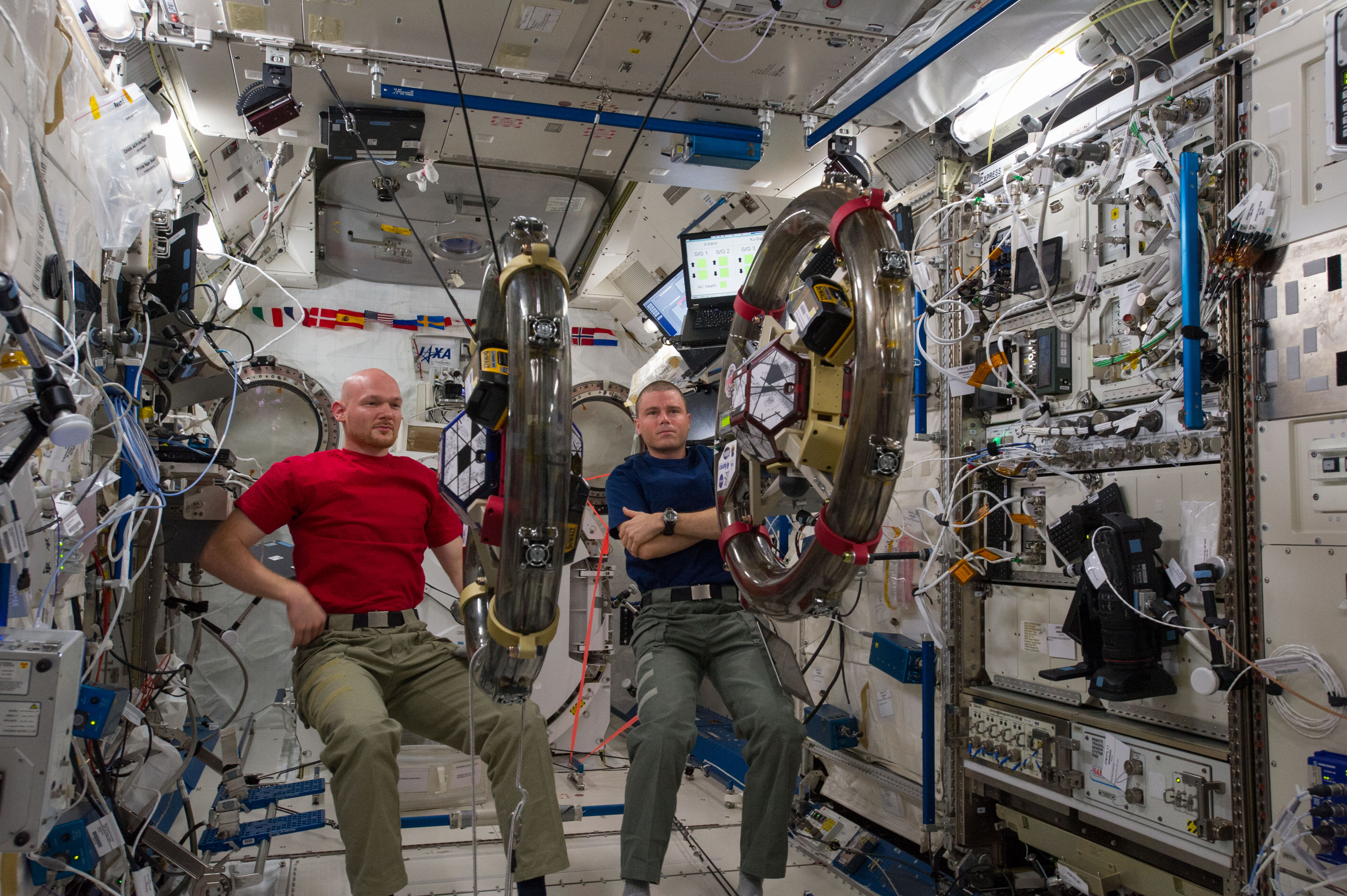
ISS040-E-059478 (10 July 2014) --- In the International Space Station's Kibo laboratory, European Space Agency astronaut Alexander Gerst (left) and NASA astronaut Reid Wiseman, both Expedition 40 flight engineers, conduct a session with a pair of bowling-ball-sized free-flying satellites known as Synchronized Position Hold, Engage, Reorient, Experimental Satellites, or SPHERES. Surrounding the two SPHERES mini-satellites is ring-shaped hardware known as the Resonant Inductive Near-field Generation System, or RINGS. SPHERES-RINGS seeks to demonstrate wireless power transfer between satellites at a distance for enhanced operations.
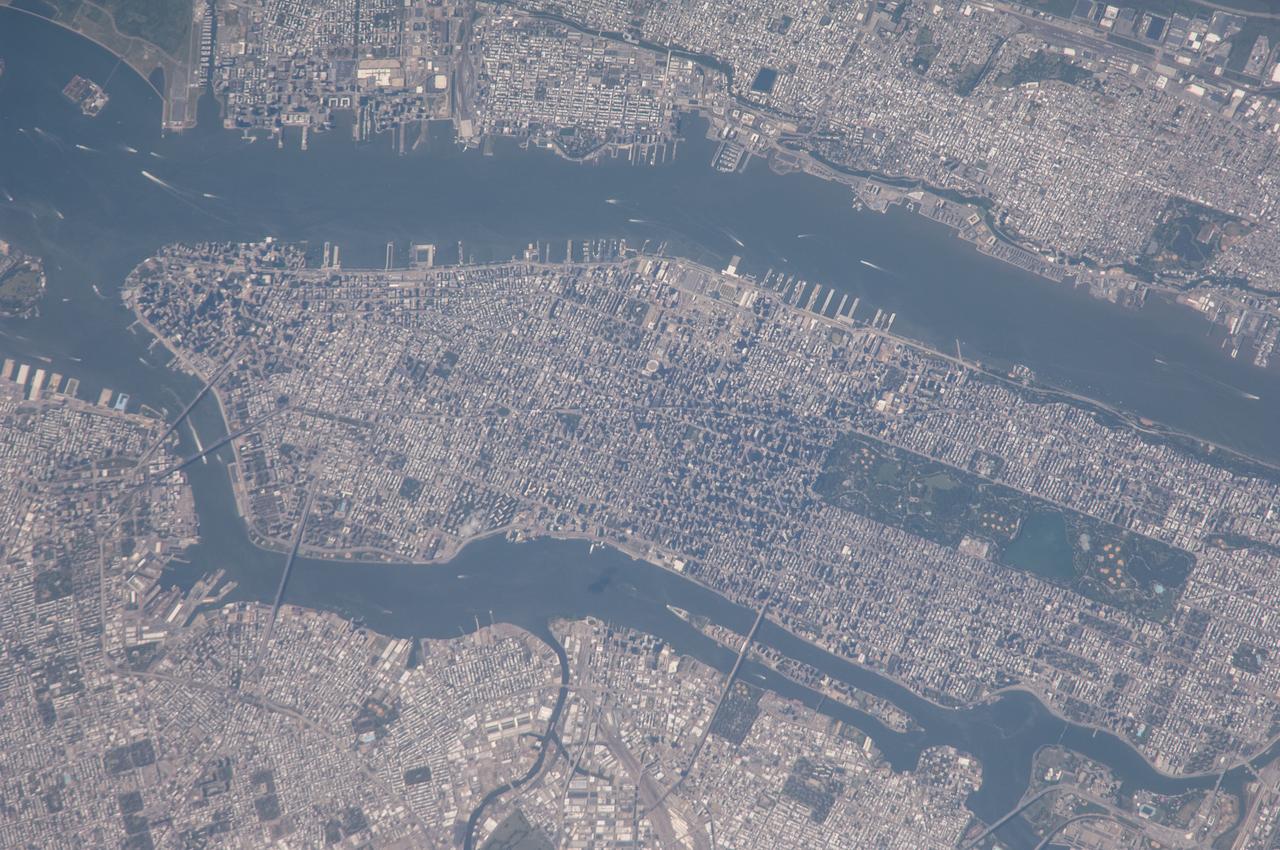
ISS040-E-108386 (25 Aug. 2014) --- One of the Expedition 40 crew members aboard the Earth-orbiting International Space Station photographed this image of a large part of New York City on Aug. 25, 2014. Manhattan Island and its Central Park are tell-tale points for recognition purposes for the six-person crew of the orbital outpost, flying approximately 225 nautical miles above the city. The 800mm focal length used by the crew member provides great detail in the scene.
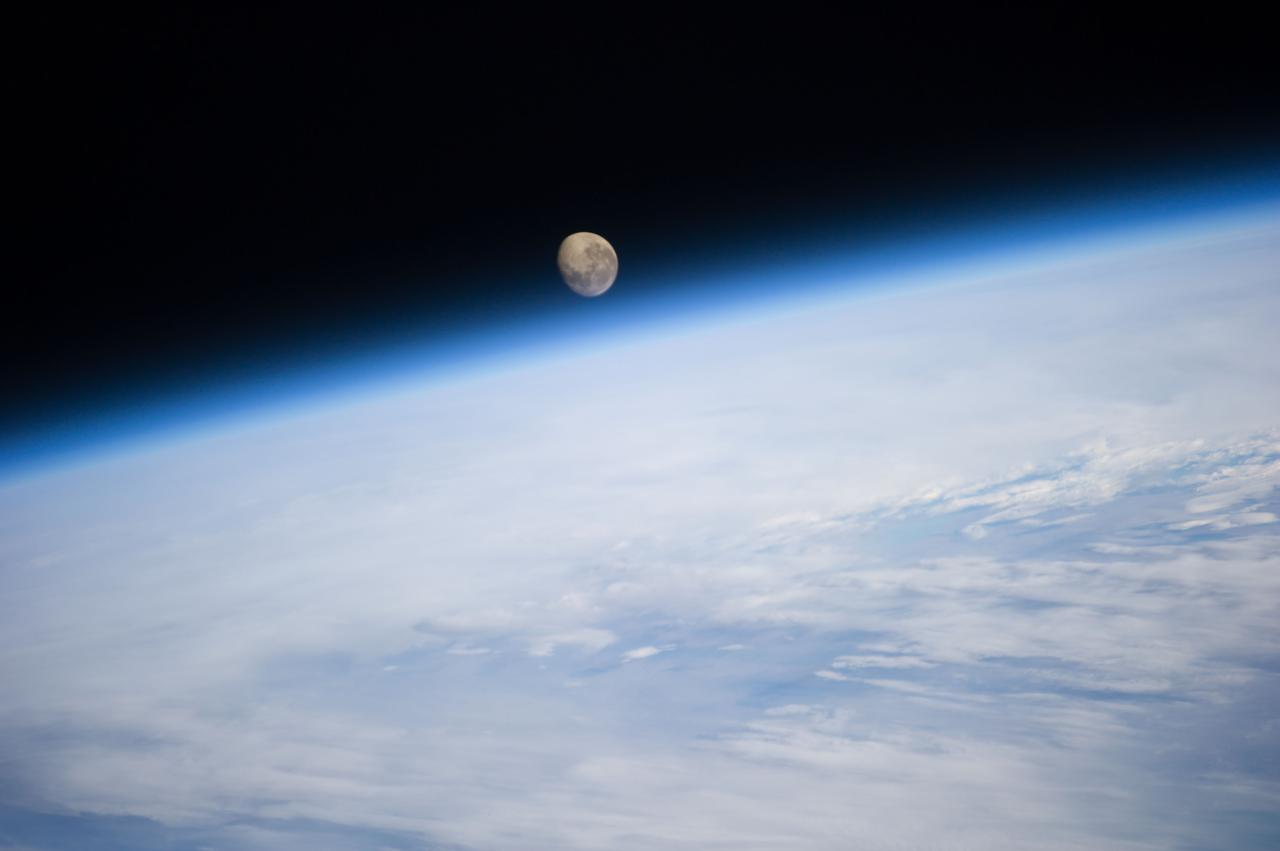
View of Moon setting over an Earth limb taken by the Expedition 40 crew aboard the International Space Station (ISS).
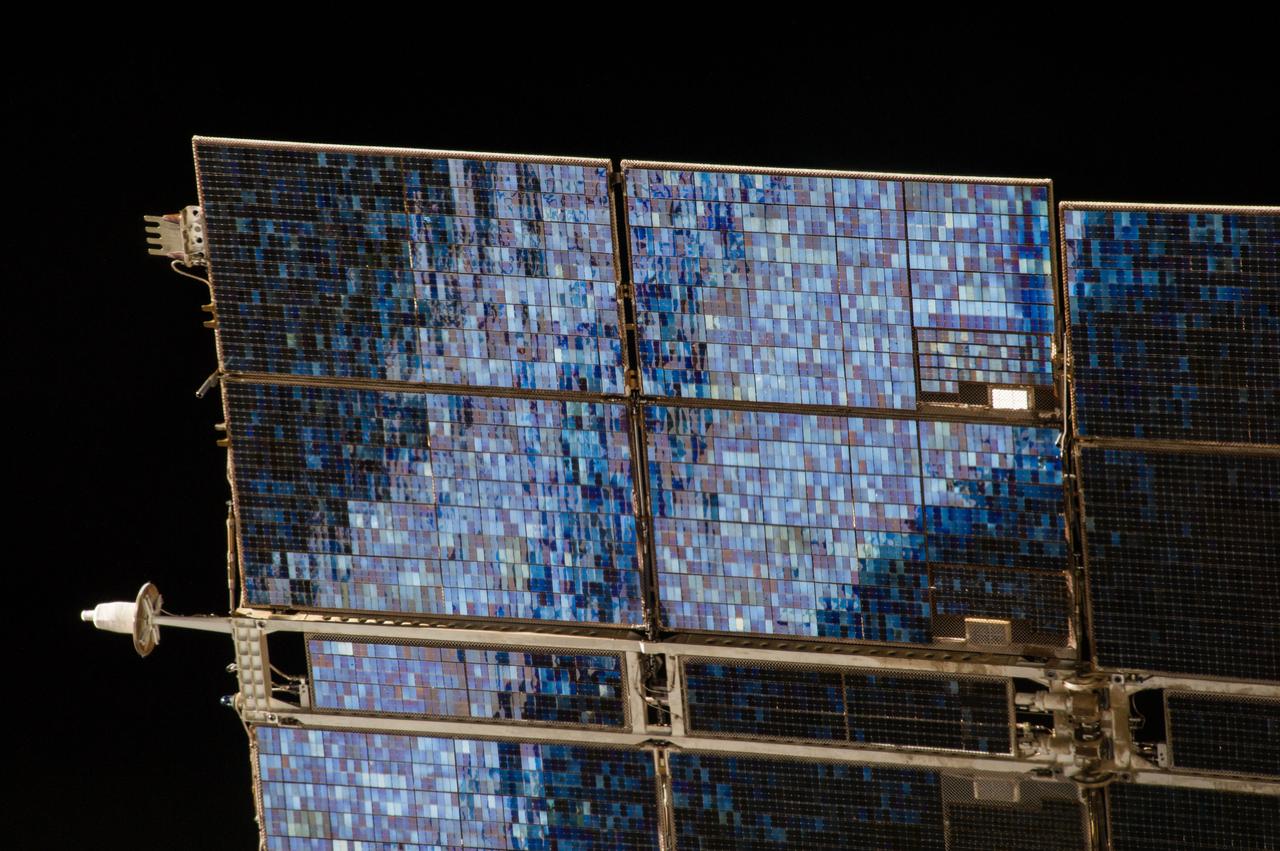
ISS040-E-008074 (6 June 2014) --- A portion of the solar array panels on the Zarya Functional Cargo Block (FGB) is featured in this image photographed by an Expedition 40 crew member aboard the International Space Station.
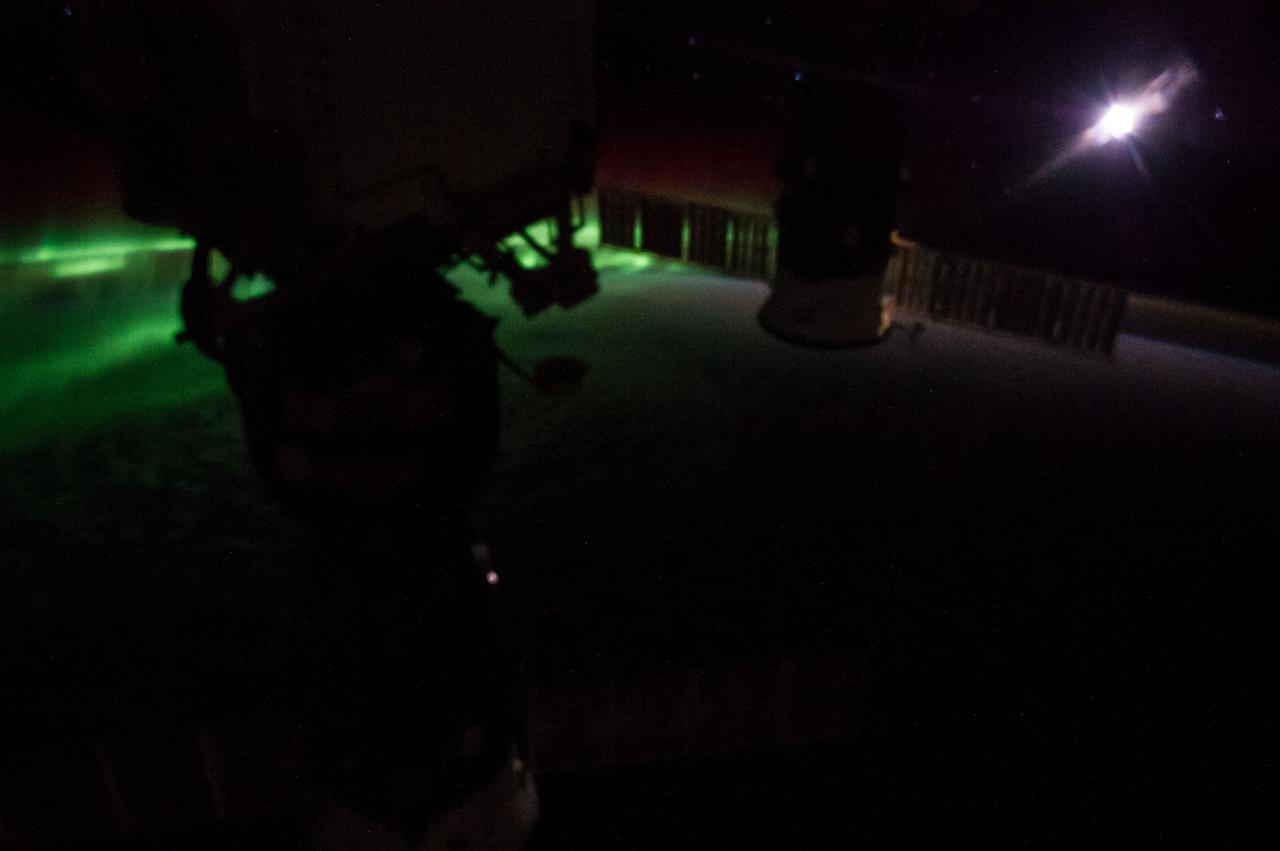
ISS040-E-125550 (2 Sept. 2014) --- One of the Expedition 40 crew members aboard the International Space Station captured this image of the Aurora Australis 228 nautical miles above a point in the Indian Ocean half way between southern Africa and southern Australia, near the Tropic of Capricorn on Sept. 2, 2014. The moon is in the upper right corner of the frame.
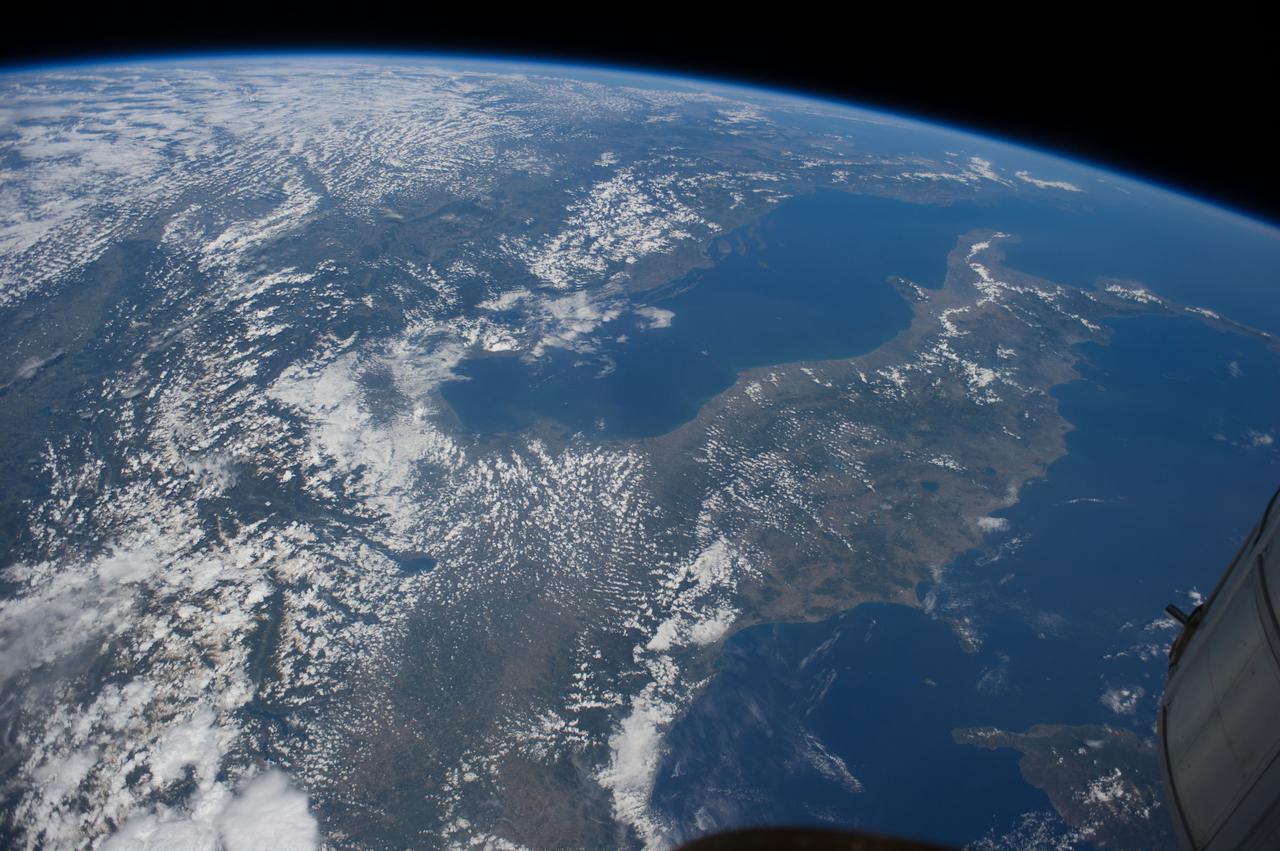
ISS040-E-016629 (22 June 2014) --- One of the Expedition 40 crew members aboard the Earth-orbiting International Space Station recorded this panorama of part of Europe on June 22, 2014. Italy's long coastlines (of the Adriatic and Tyrrhenian Seas) all the way down to the "Boot" dominate the scene. Parts of the Mediterranean and Ionian Seas are also visible.
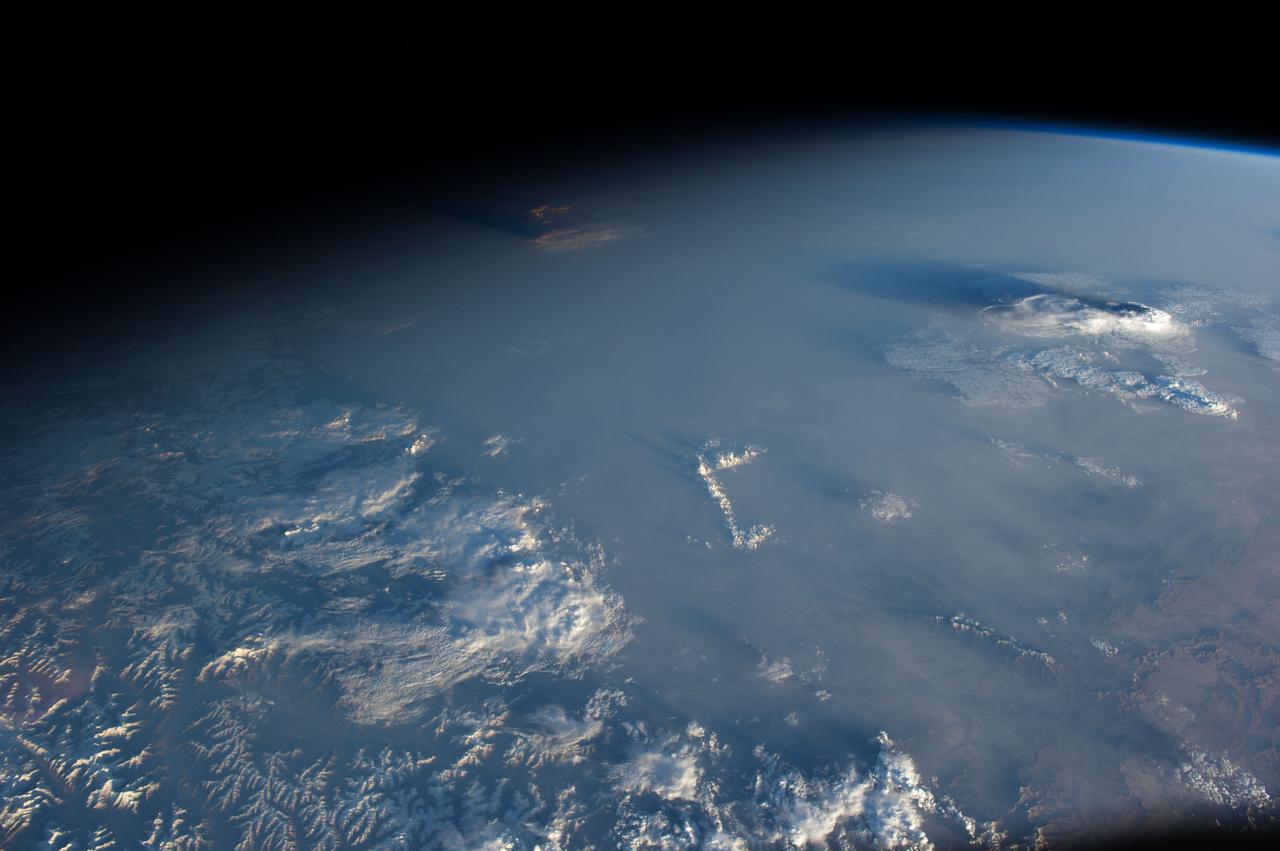
Earth Observation taken during a day pass by the Expedition 40 crew aboard the International Space Station (ISS). Folder lists this as: Sunsetting over the mountains of Kazakhstan.
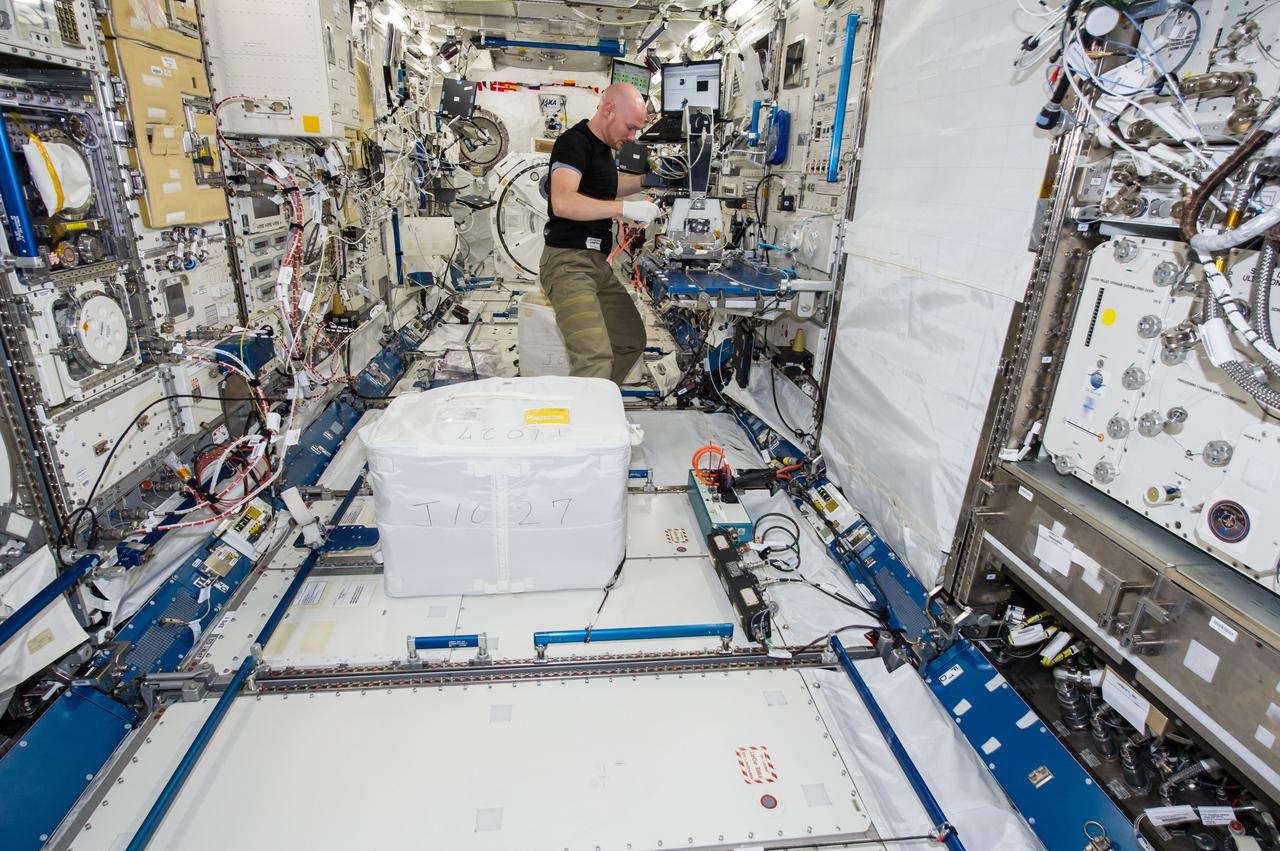
ISS040-E-130231 (9 Sept. 2014) --- European Space Agency astronaut Alexander Gerst, Expedition 40 flight engineer, installs a microscope for the Cell Mechanosensing-2 experiment in the Kibo laboratory of the International Space Station. The Japanese experiment, which is conducted in Kibo’s Kobairo rack, seeks to identify gravity sensors in cells that may change the expression of key proteins and genes and allowing muscles to atrophy in microgravity.

Earth Observation taken during a day pass by the Expedition 40 crew aboard the International Space Station (ISS).
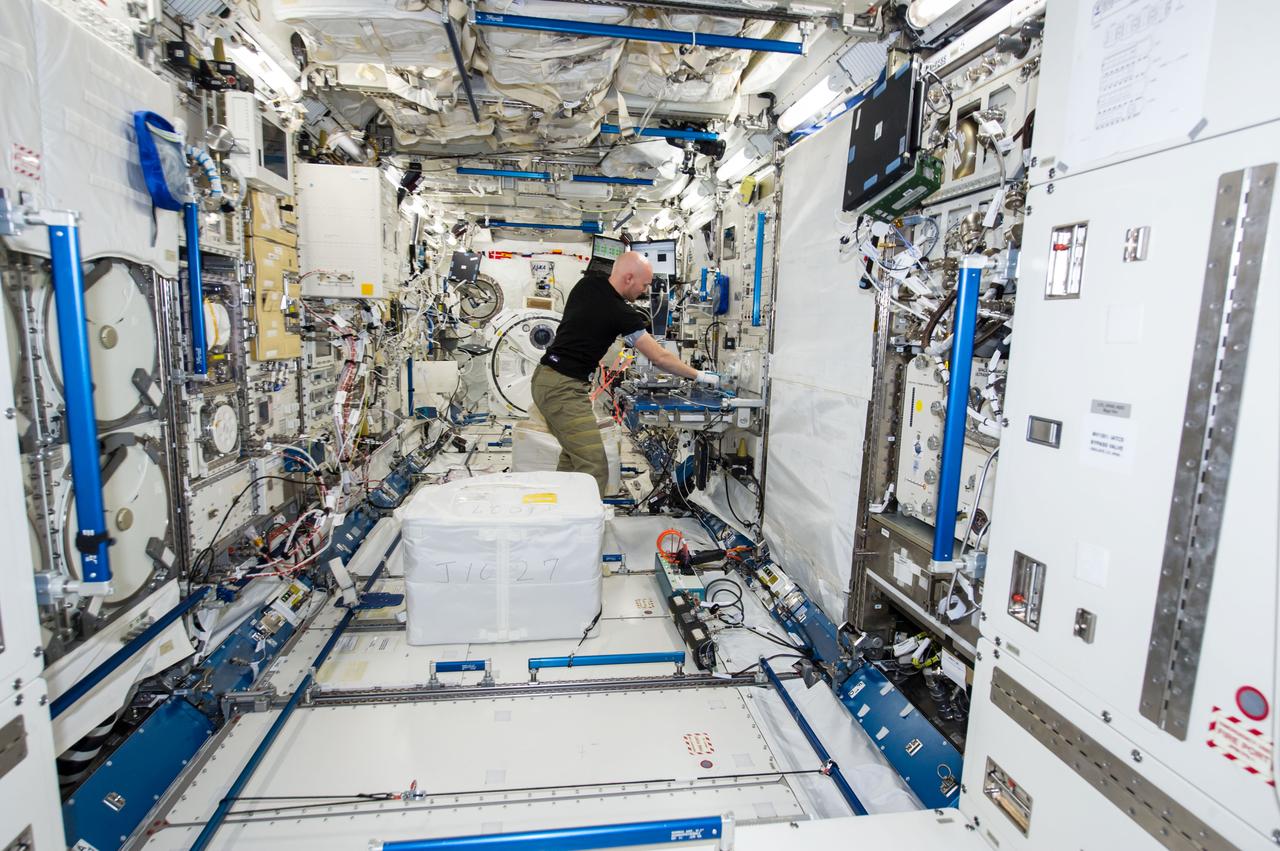
ISS040-E-130230 (9 Sept. 2014) --- European Space Agency astronaut Alexander Gerst, Expedition 40 flight engineer, installs a microscope for the Cell Mechanosensing-2 experiment in the Kibo laboratory of the International Space Station. The Japanese experiment, which is conducted in Kibo’s Kobairo rack, seeks to identify gravity sensors in cells that may change the expression of key proteins and genes and allowing muscles to atrophy in microgravity.
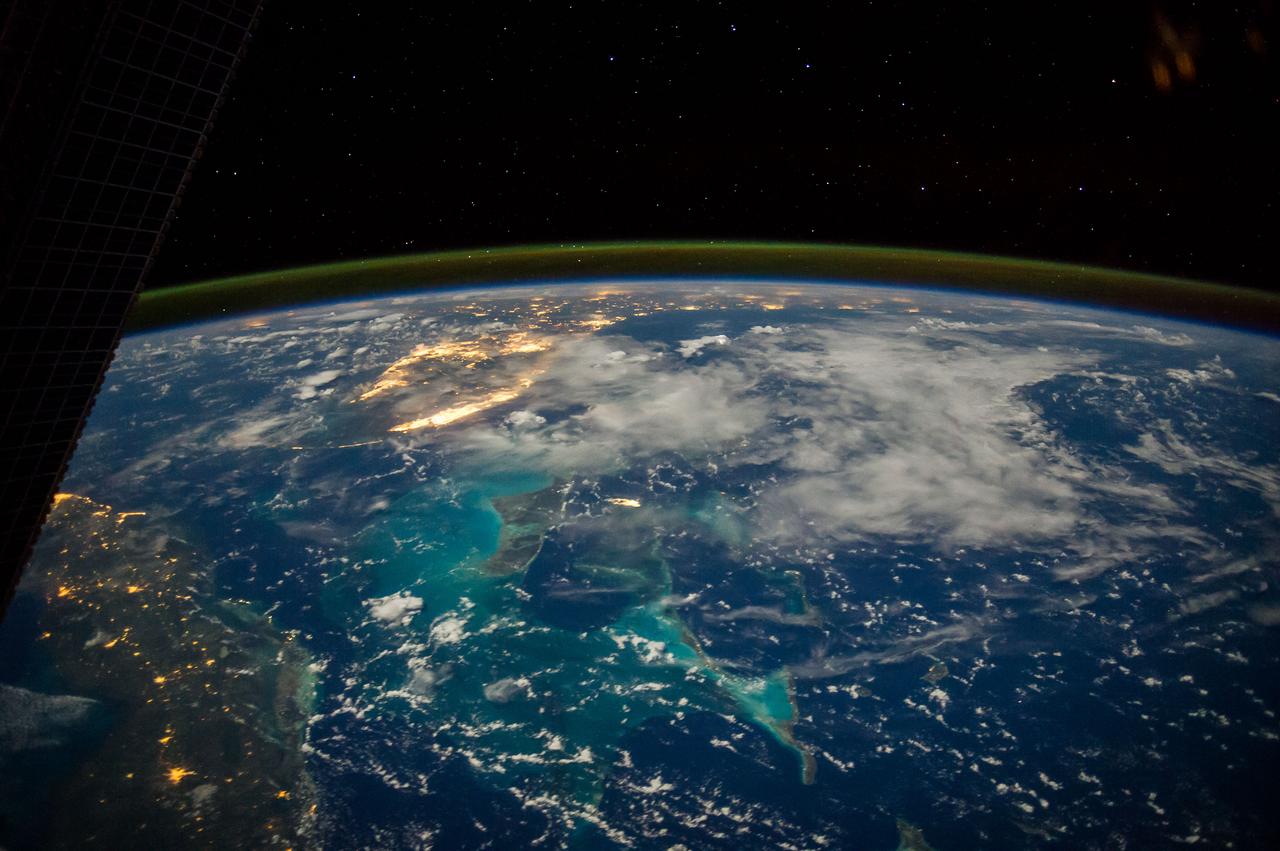
ISS040-E-063578 (15 July 2014) --- One of the Expedition 40 crew members aboard the Earth-orbiting International Space Station, flying some 225 nautical miles above the Caribbean Sea in the early morning hours of July 15, photographed this north-looking panorama that includes parts of Cuba, the Bahamas and Florida, and even runs into several other areas in the southeastern U.S. The long stretch of lights to the left of center frame gives the shape of Miami.
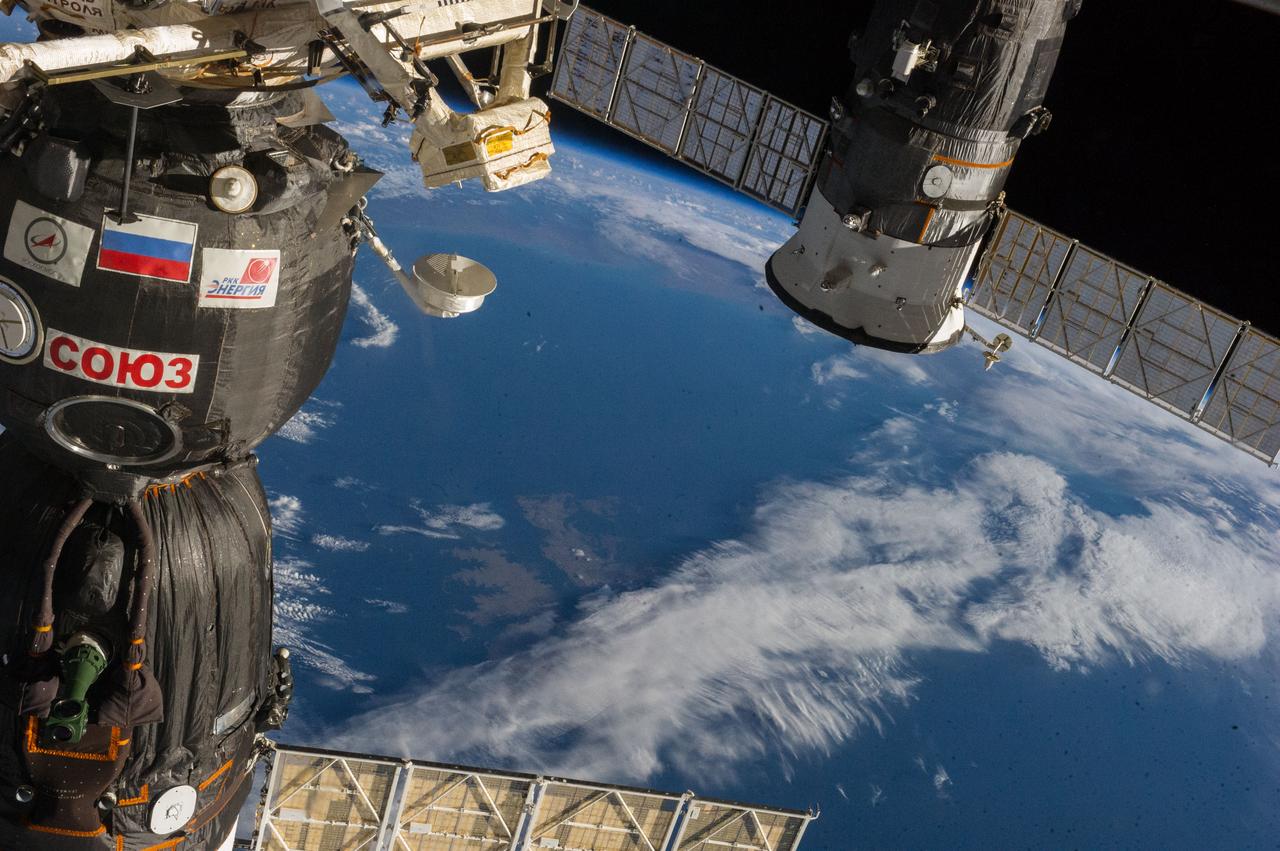
ISS040-E-006230 (30 May 2014) --- Two Russian spacecraft docked to the International Space Station are featured in this image photographed by an Expedition 40 crew member from inside the International Space Station?s Cupola. The Soyuz 39 (TMA-13M) spacecraft, docked to the Rassvet Mini-Research Module 1 (MRM1), is visible in the foreground. The Progress 55 resupply vehicle, docked to the Pirs Docking Compartment, is visible in the background. A blue and white part of Earth and the blackness of space provide the backdrop for the scene.
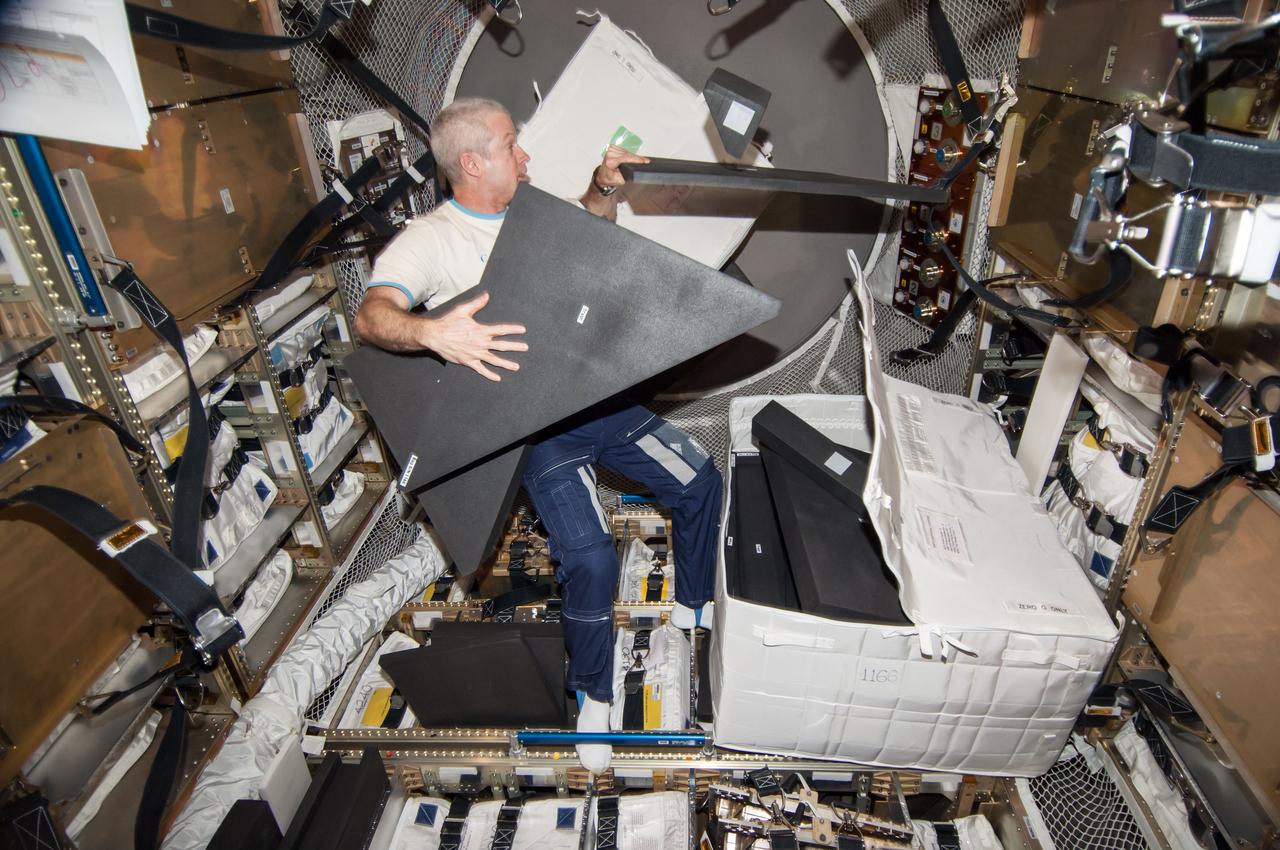
ISS040-E-103985 (21 Aug. 2014) --- NASA astronaut Steve Swanson, Expedition 40 commander, is pictured during cargo transfer operations in the "Georges Lemaitre" Automated Transfer Vehicle-5 (ATV-5) currently docked with the International Space Station.
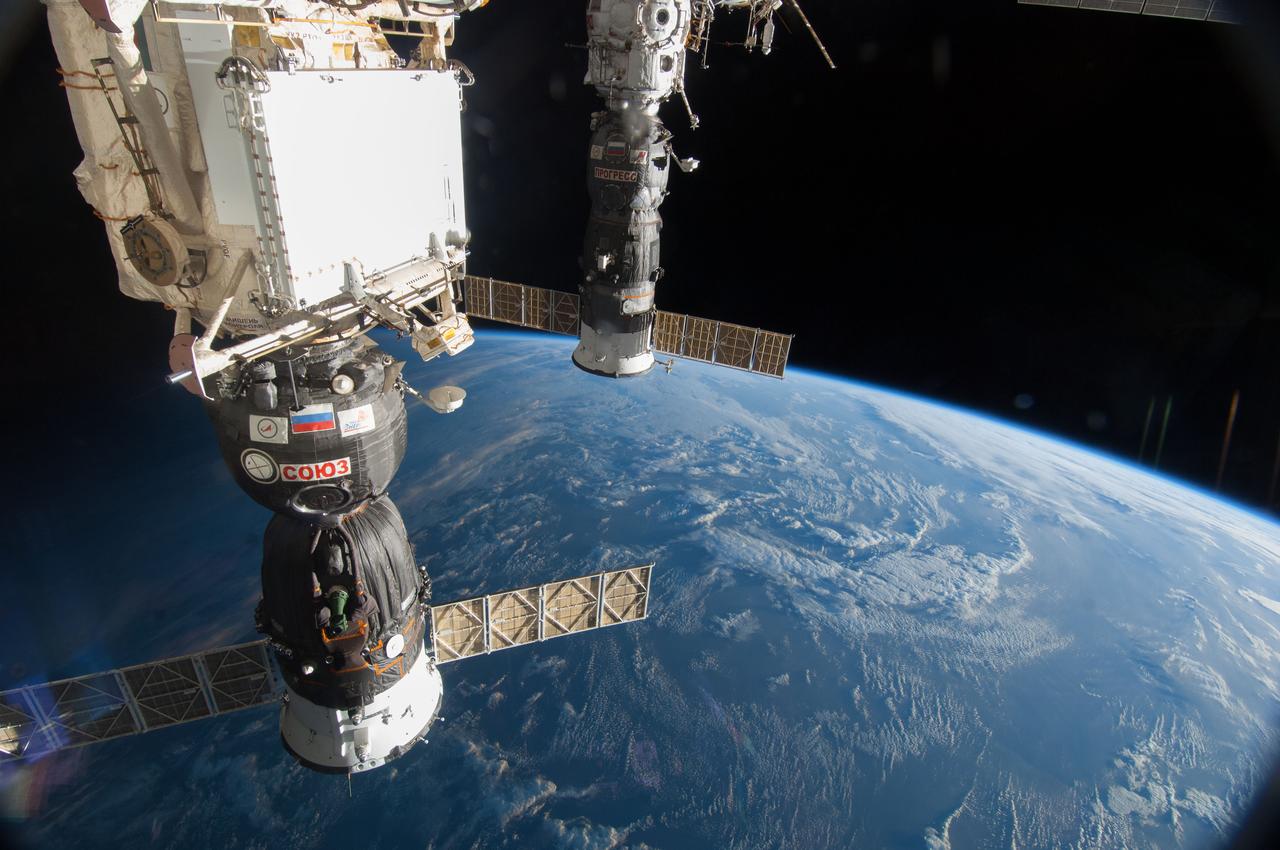
ISS040-E-006049 (30 May 2014) --- The Russian Soyuz 39 spacecraft (foreground) and Progress 55 spacecraft, docked to the International Space Station, are featured in this image photographed by an Expedition 40 crew member on the space station. A blue and white part of Earth and the blackness of space provide the backdrop for the scene.
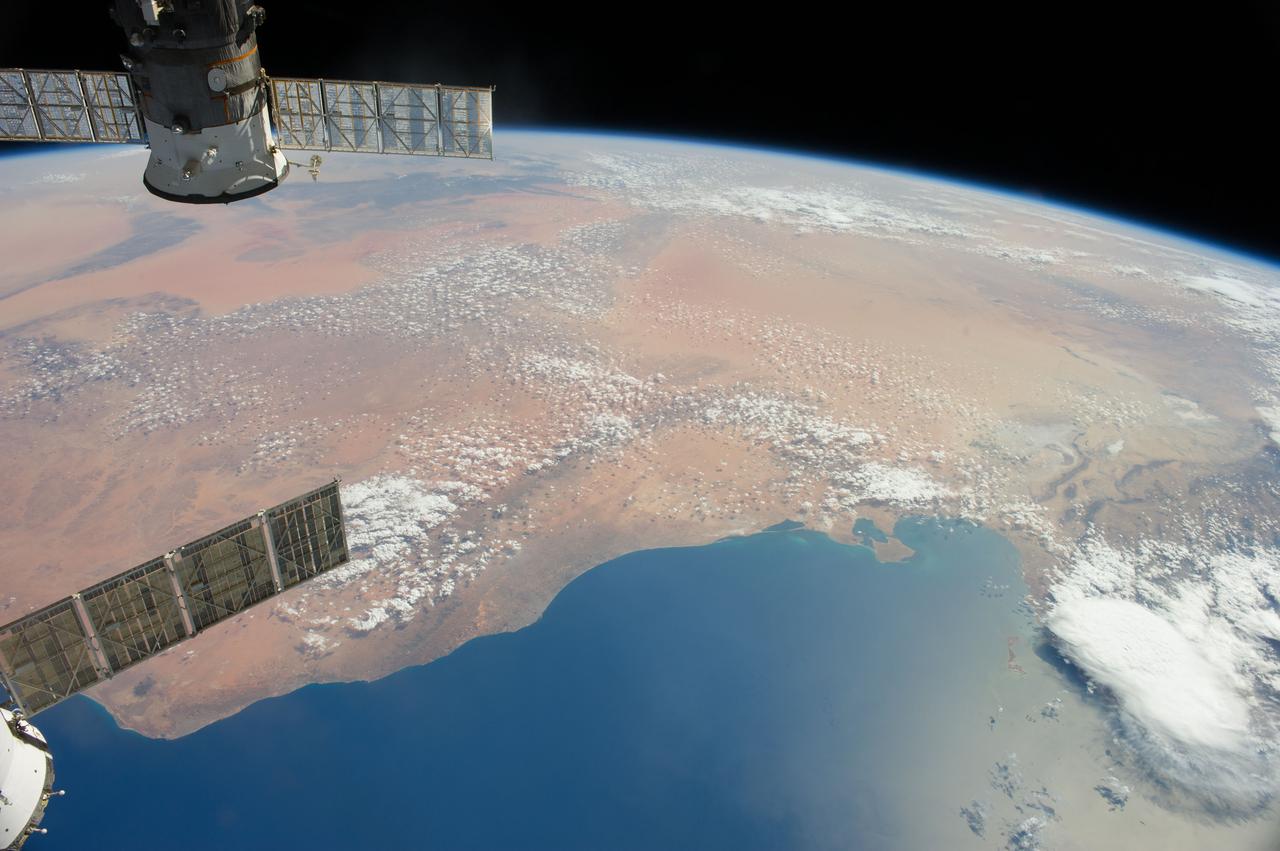
Earth Observation taken during a day pass by the Expedition 40 crew aboard the International Space Station (ISS). Folder lists this as: Tripoli then Athens.
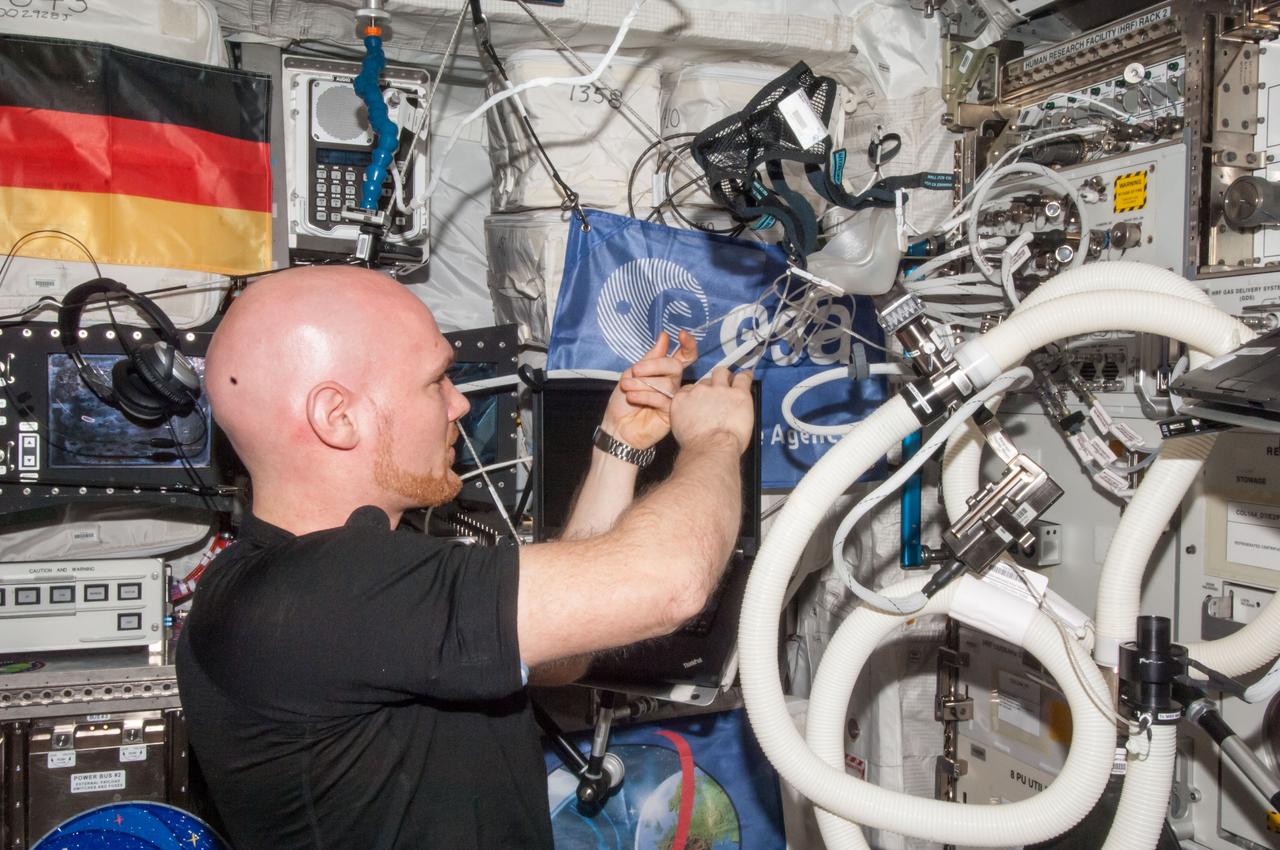
ISS040-E-123238 (3 Sept. 2014) --- European Space Agency astronaut Alexander Gerst, Expedition 40 flight engineer, prepares for a session of the Energy Requirements for Long-Term Spaceflight (ENERGY) experiment in the Columbus laboratory of the International Space Station.
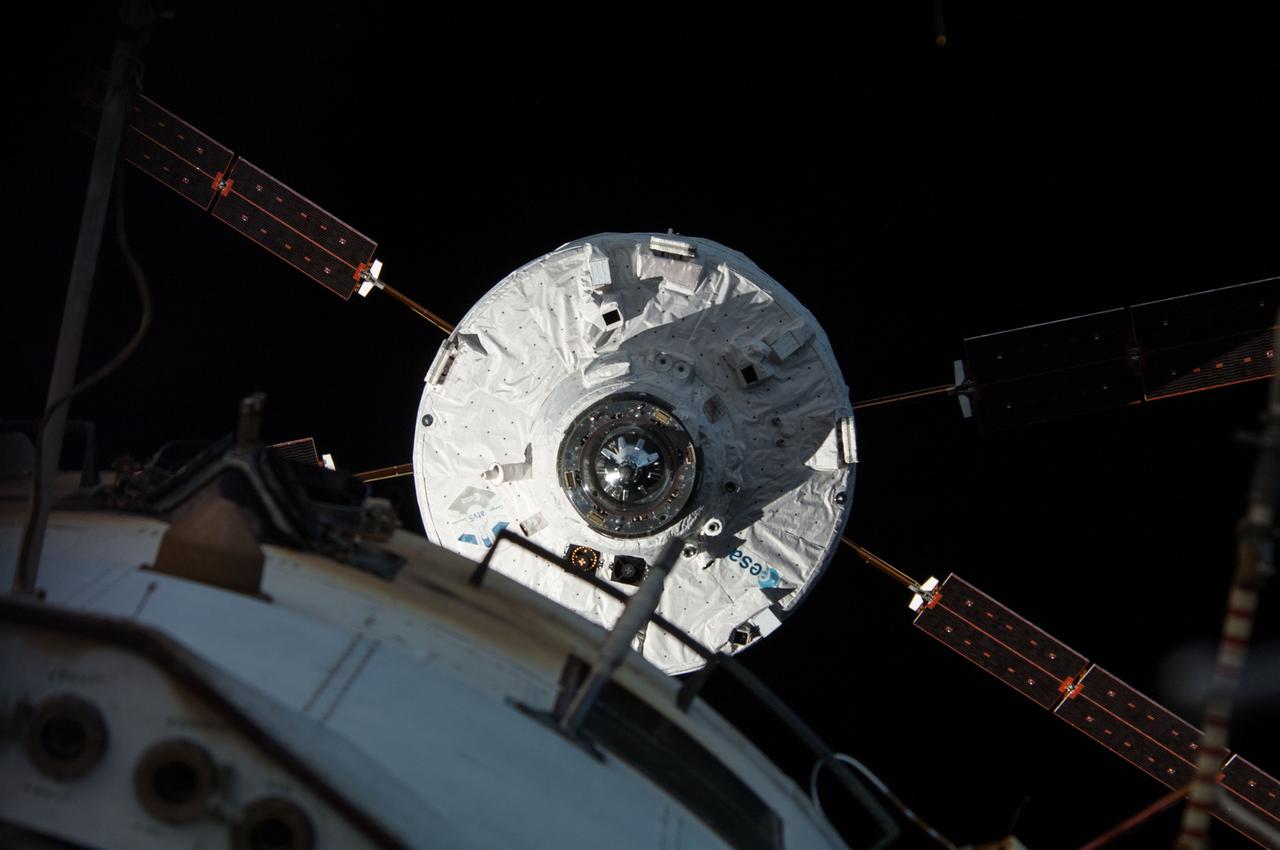
ISS040-E-091352 (12 Aug. 2014) --- The ?Georges Lemaitre? Automated Transfer Vehicle (ATV-5), photographed by an Expedition 40 crew member, is about to dock to the aft port of the International Space Station?s Zvezda Service Module. Docking occurred at 8:30 a.m. (CDT) as the ATV and the station flew 260 miles over southern Kazakhstan, following a two-week period of free-flight.
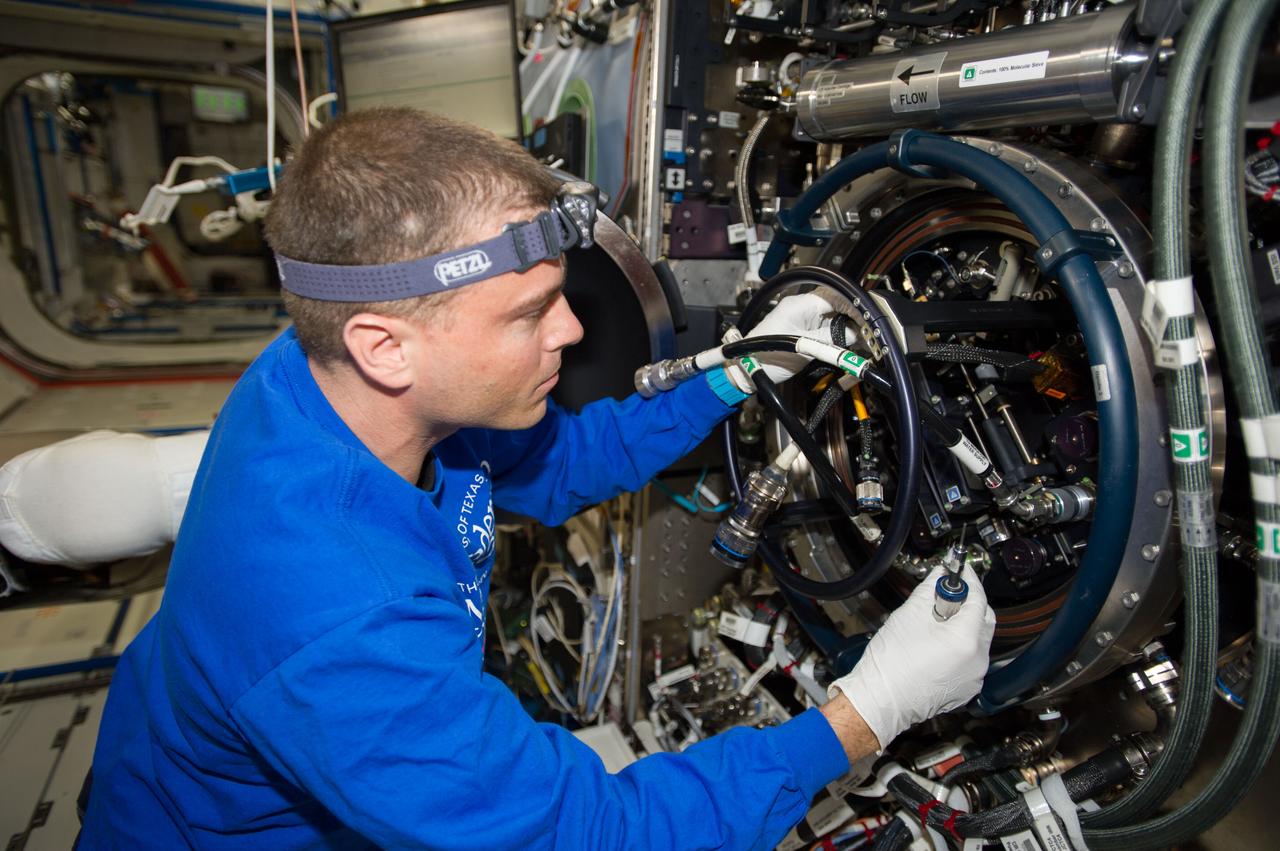
ISS040-E-090484 (11 Aug. 2014) --- NASA astronaut Reid Wiseman, Expedition 40 flight engineer, performs routine in-flight maintenance on the Multi-user Drop Combustion Apparatus (MDCA) inside the Combustion Integrated Rack (CIR) in the Destiny laboratory of the International Space Station. The MDCA contains hardware and software to conduct unique droplet combustion experiments in space.
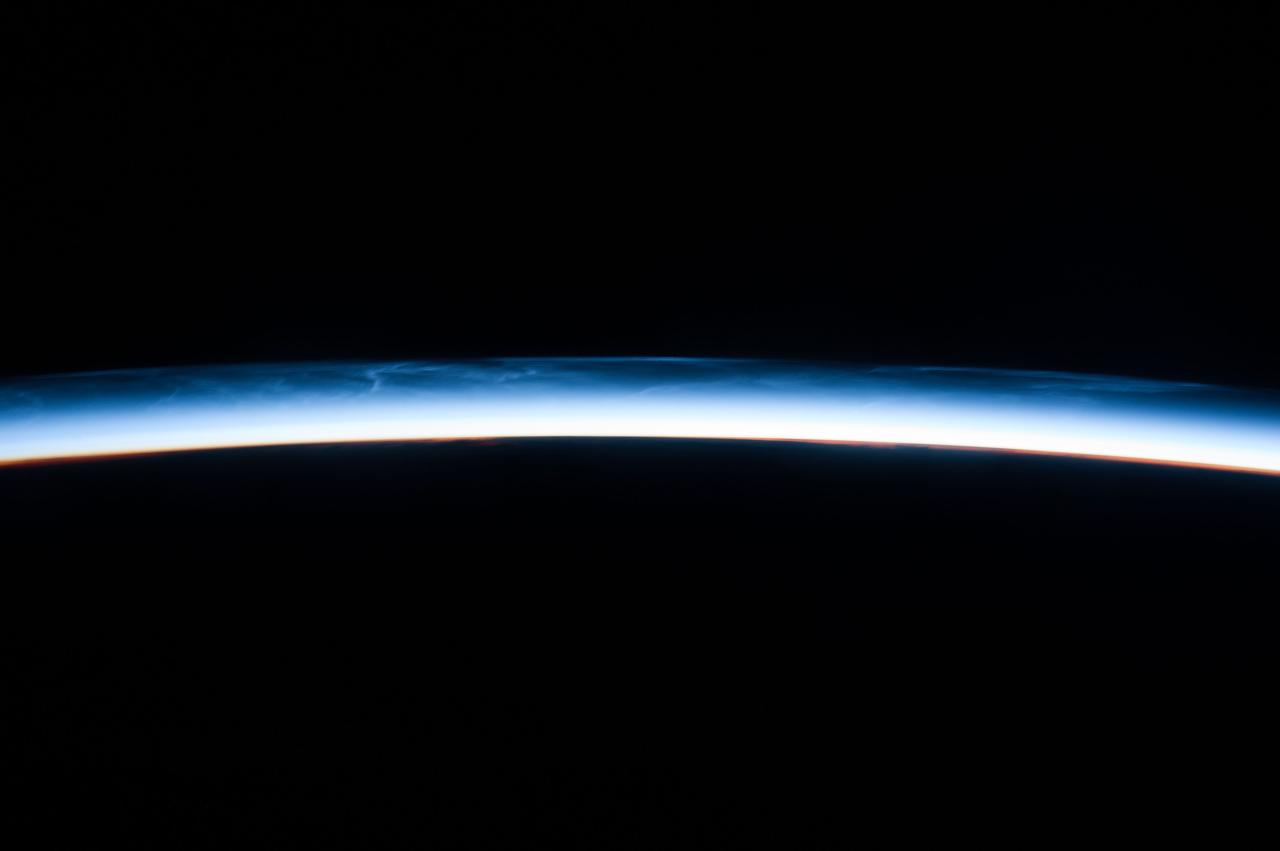
Earth observation taken during a night pass by the Expedition 40 crew aboard the International Space Station (ISS). Folder lists this as: Noctilucent clouds.
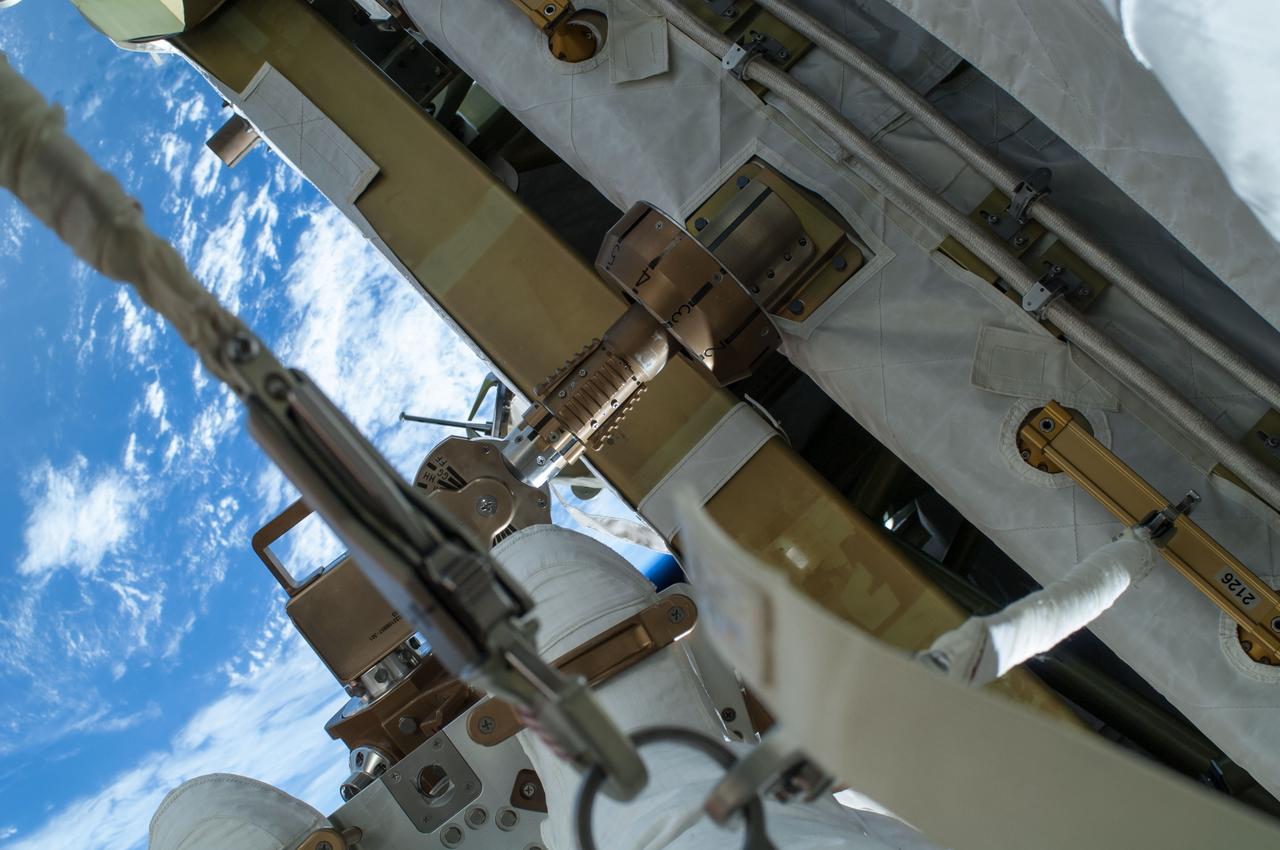
ISS041-E-067002 (7 Oct. 2014) --- NASA astronaut Reid Wiseman, Expedition 41 flight engineer, participates in a session of extravehicular activity (EVA) as work continues on the International Space Station. During the six-hour, 13-minute spacewalk, Wiseman and European Space Agency astronaut Alexander Gerst (out of frame), flight engineer, worked outside the space station's Quest airlock relocating a failed cooling pump to external stowage and installing gear that provides back up power to external robotics equipment.
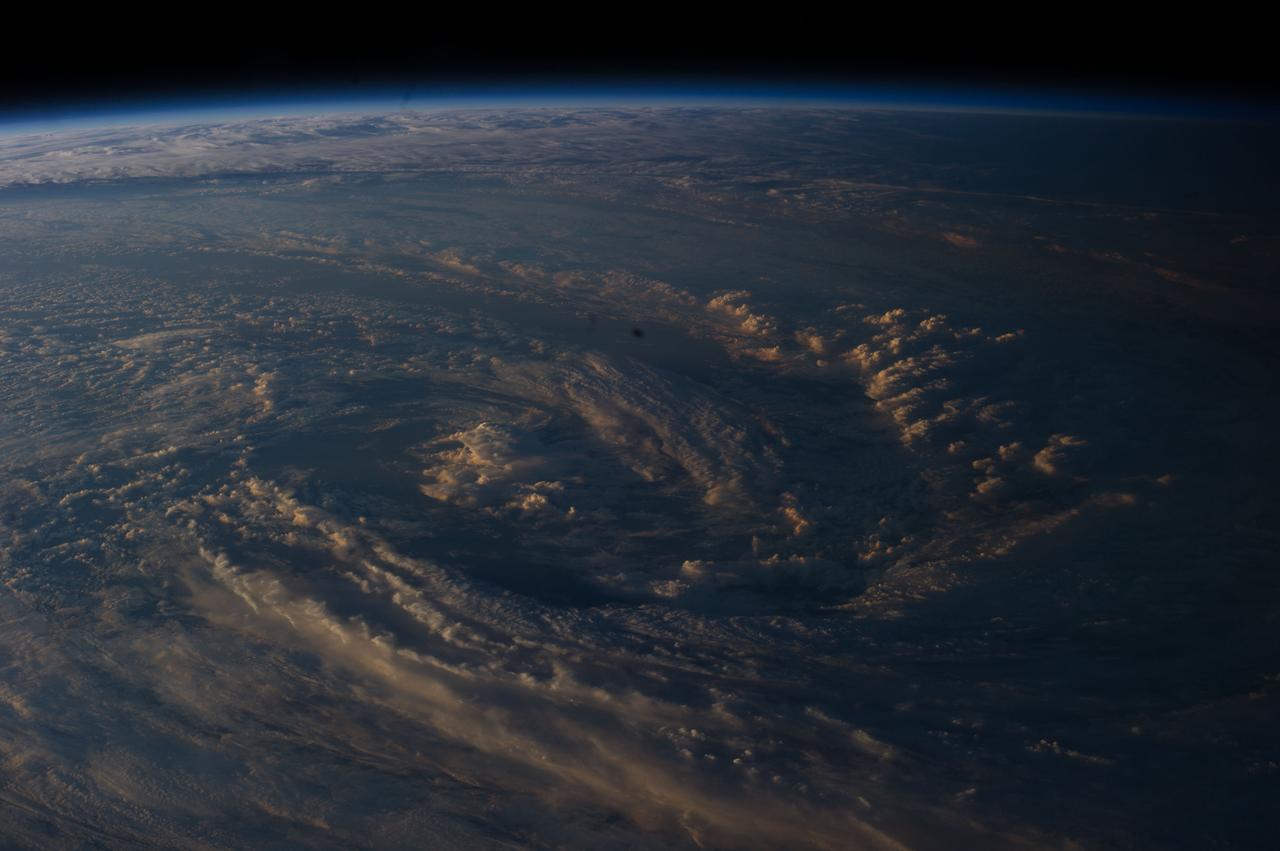
Earth Observation taken during a day pass by the Expedition 40 crew aboard the International Space Station (ISS). Folder lists this as: Sunsetting near Perth.
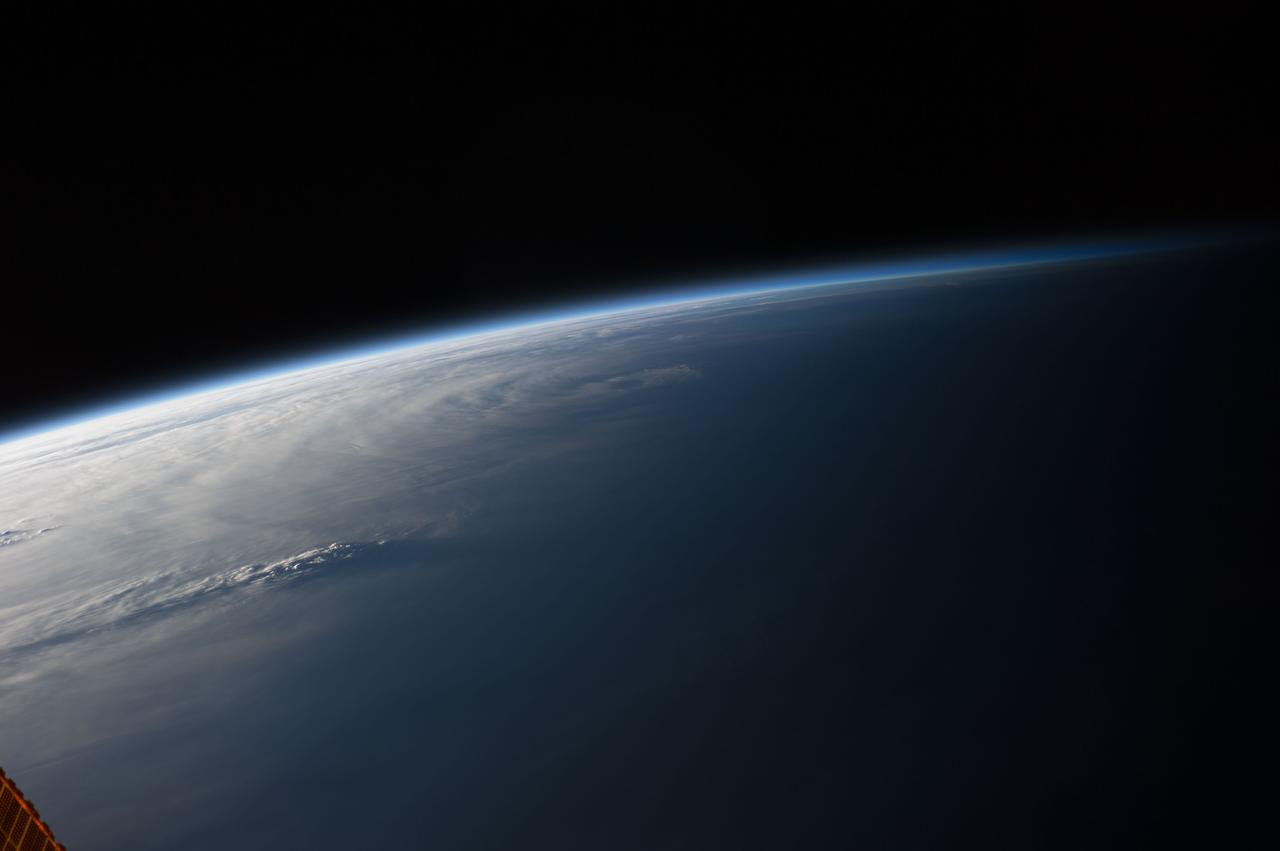
ISS040-E-087418 (3 Aug. 2014) --- 09:37:29 GMT
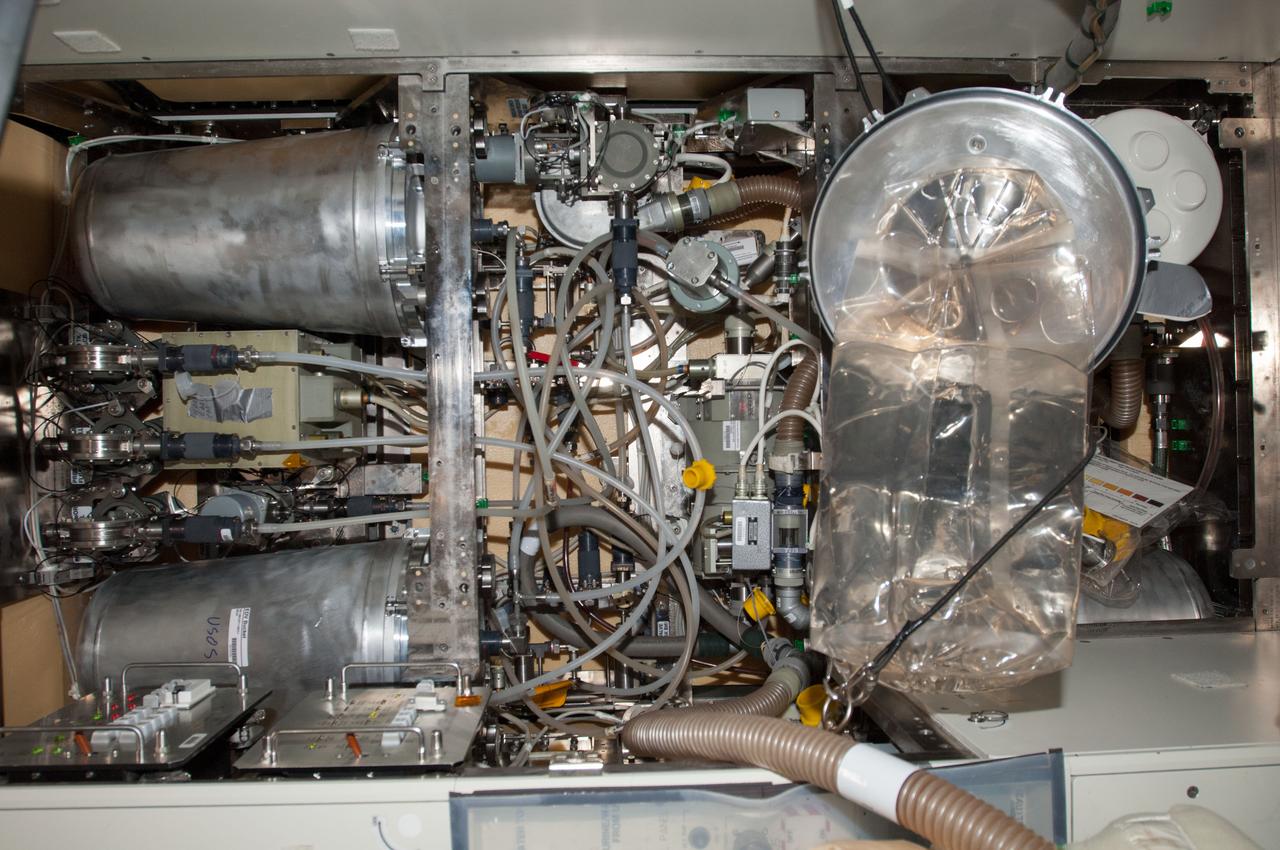
Internal view of Waste and Hygiene Compartment (WHC) taken during maintenance by the Expedition 40 crew.
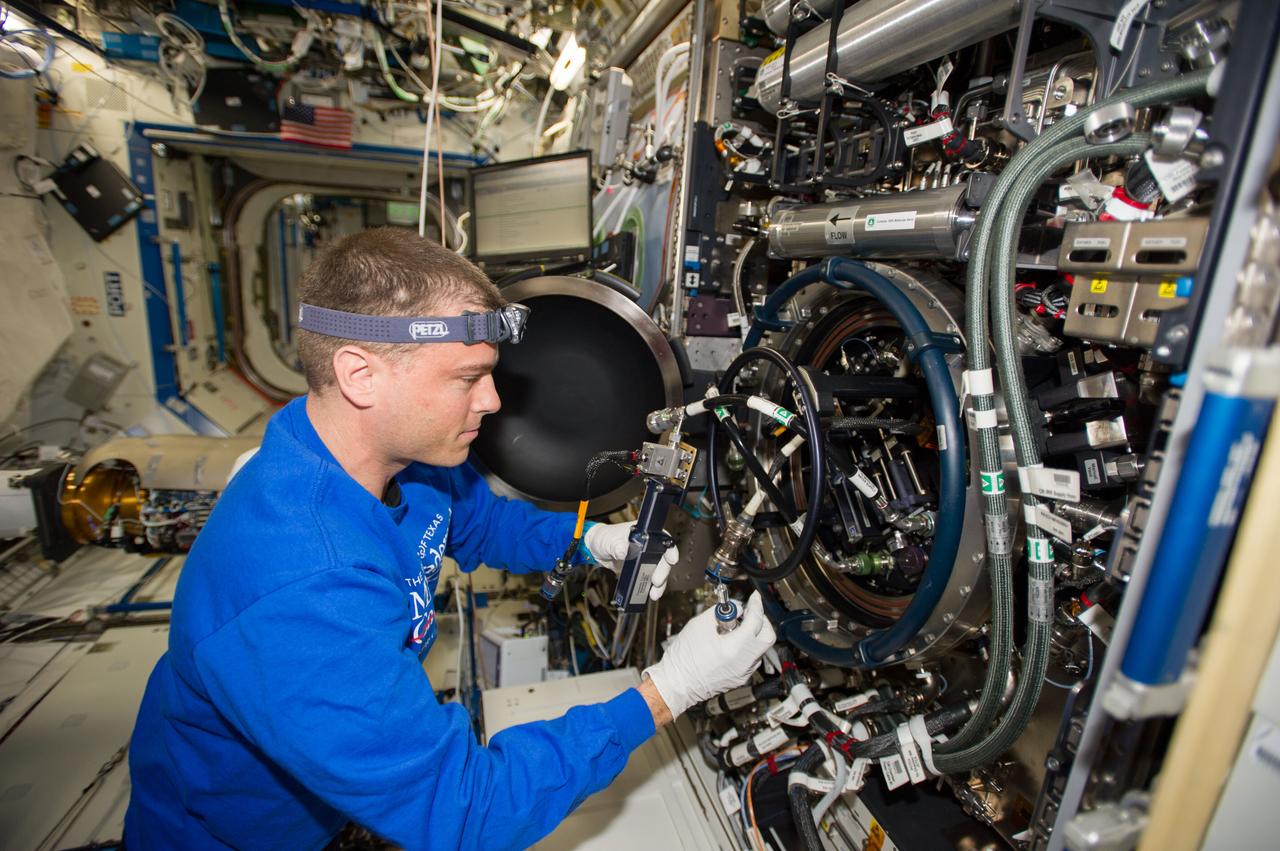
ISS040-E-090482 (11 Aug. 2014) --- NASA astronaut Reid Wiseman, Expedition 40 flight engineer, performs routine in-flight maintenance on the Multi-user Drop Combustion Apparatus (MDCA) inside the Combustion Integrated Rack (CIR) in the Destiny laboratory of the International Space Station. The MDCA contains hardware and software to conduct unique droplet combustion experiments in space.

Earth Observation taken during a day pass by the Expedition 40 crew aboard the International Space Station (ISS).
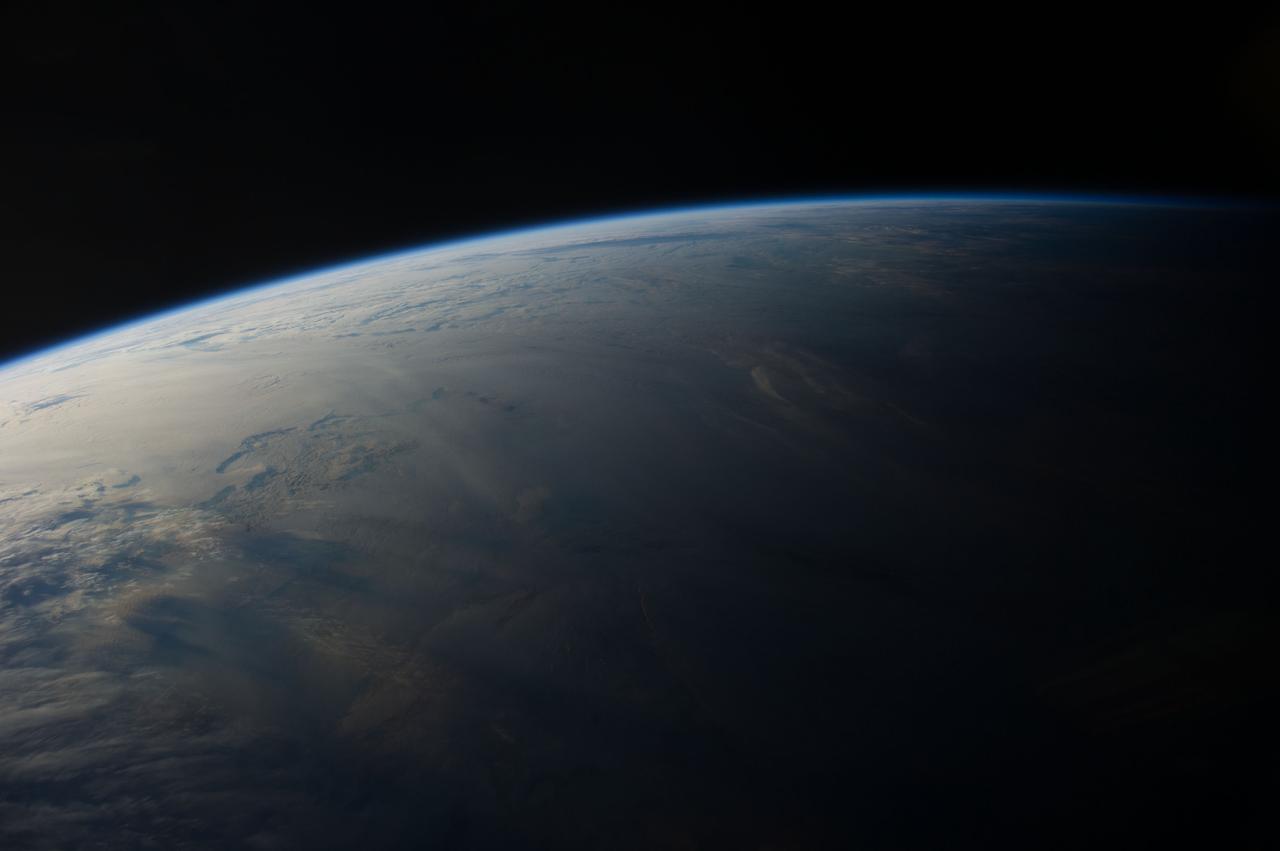
Earth Observation taken during a night pass by the Expedition 40 crew aboard the International Space Station (ISS). Folder lists this as: Sunrise photos.
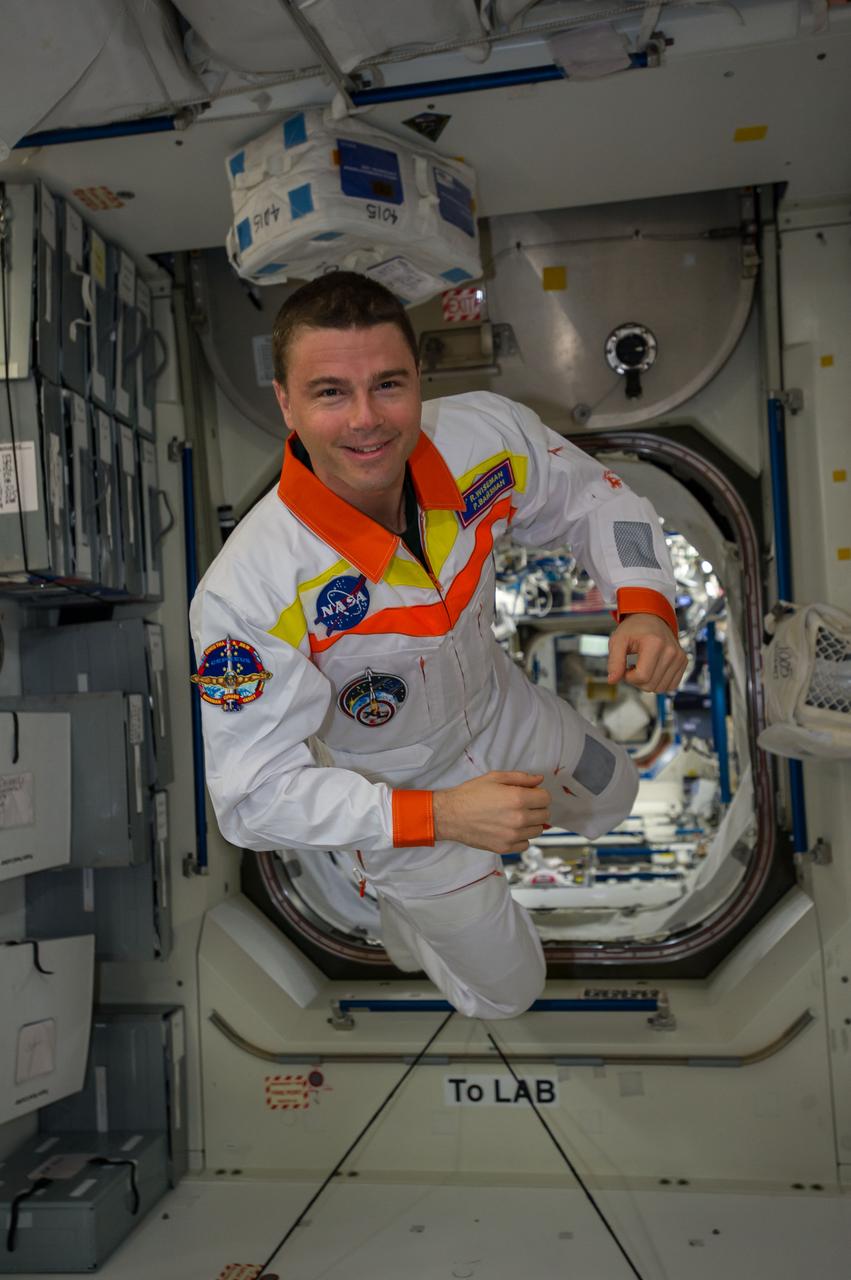
ISS040-E-105360 (24 Aug. 2014) --- NASA astronaut Reid Wiseman, Expedition 40 flight engineer, is pictured while floating freely in the Unity node of the International Space Station.

ISS040-E-008307 (7 June 2014) --- One of the members of the Expedition 40 crew aboard the International Space Station aimed a camera "around" the docked Russian Soyuz vehicle to record this night image of the United Arab Emirates. Dubai (center) and Abu Dhabi (left) are easily identified. The Straits of Hormuz are at right and the coast of Iran is barely visible in upper right.
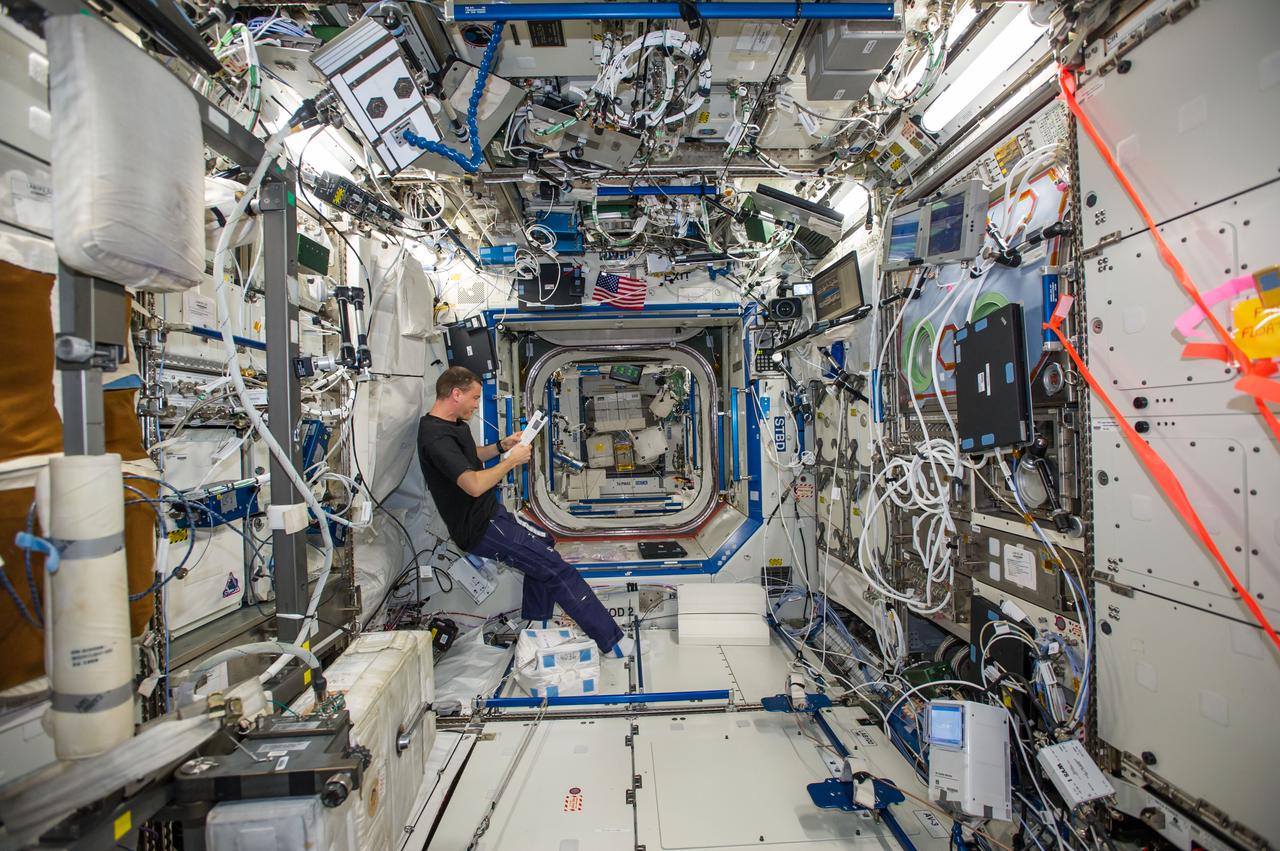
ISS040-E-104127 (21 Aug. 2014) --- NASA astronaut Reid Wiseman, Expedition 40 flight engineer, reads a procedures checklist in the Destiny laboratory of the International Space Station.

ISS040-E-021589 (26 June 2014) --- One of the Expedition 40 crew members aboard the International Space Station used a 70mm lens on a digital still camera to capture this photograph of an area in northern California from 227 miles above Earth on June 26, 2014. San Francisco Bay is largely out of frame at right but parts of Oakland and San Francisco are visible.

ISS040-E-006091 (31 May 2014) --- NASA astronaut Reid Wiseman, Expedition 40 flight engineer, equipped with a bungee harness, exercises on the Combined Operational Load Bearing External Resistance Treadmill (COLBERT) in the Tranquility node of the International Space Station.

ISS040-E-006918 (3 June 2014) --- This view in the International Space Station, photographed by an Expedition 40 crew member, shows how it looks inside the space station while the crew is asleep. The dots near the hatch point to a Soyuz spacecraft docked to the station in case the crew was to encounter an emergency. This view is looking into Destiny from Node 1 (Unity) with Node 2 (Harmony) in the background.

ISS040-E-088842 (5 Aug. 2014) --- NASA astronaut Reid Wiseman, Expedition 40 flight engineer, installs Capillary Channel Flow (CCF) experiment hardware in the Microgravity Science Glovebox (MSG) located in the Destiny laboratory of the International Space Station. CCF is a versatile experiment for studying a critical variety of inertial-capillary dominated flows key to spacecraft systems that cannot be studied on the ground.
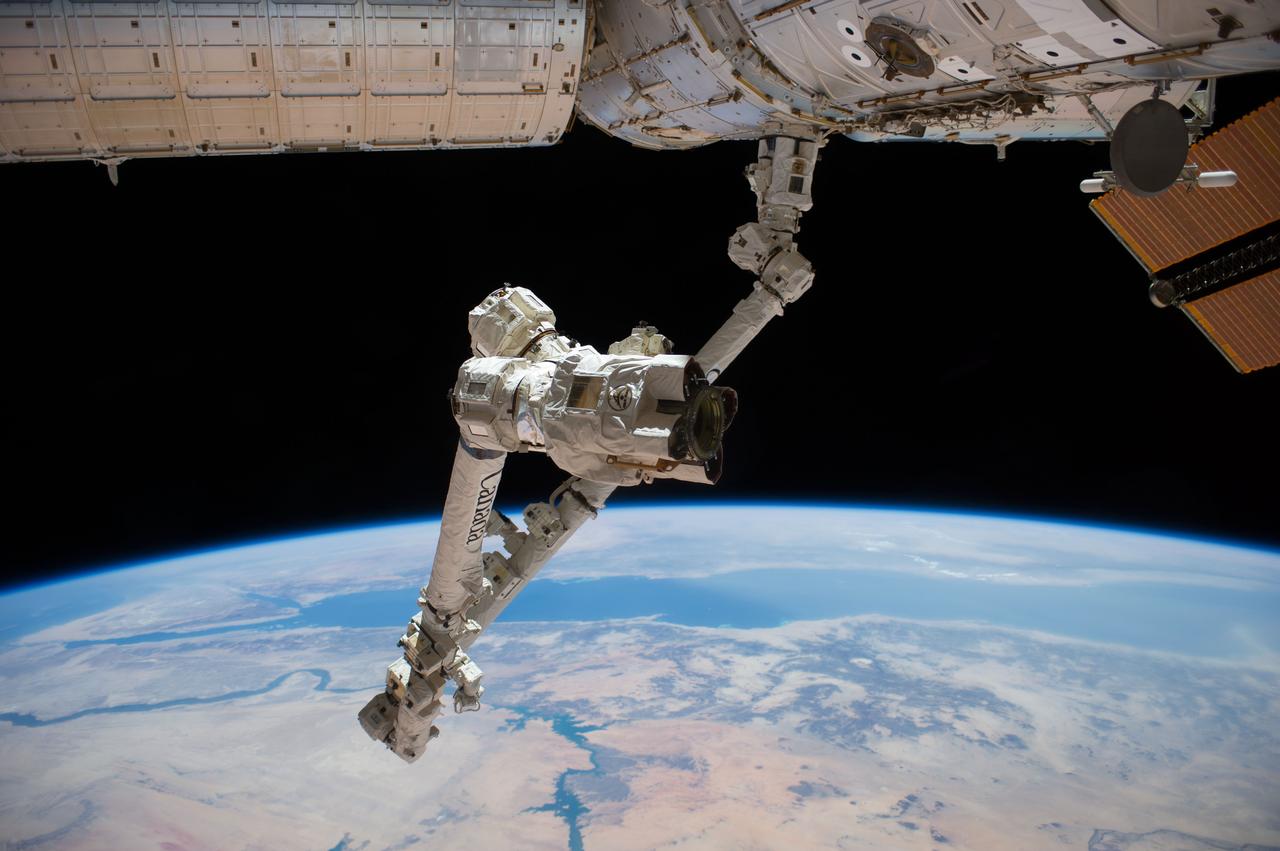
Earth Observation taken during a day pass by the Expedition 40 crew aboard the International Space Station (ISS). Part of Space Station Remote Manipulator System (SSRMS) is visible. Folder lists this as: the Middle East, Israel.
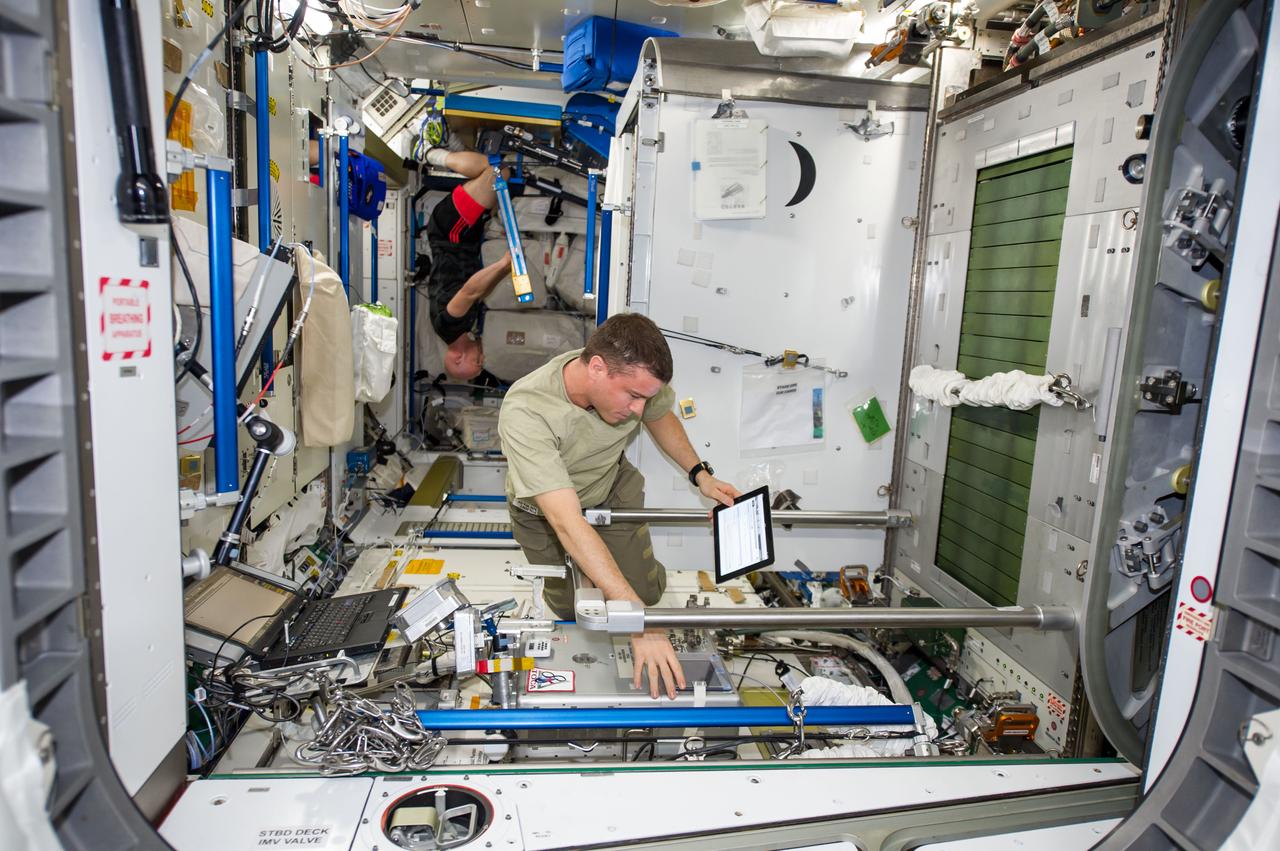
ISS040-E-139619 (10 Sept. 2014) --- In the International Space Station’s Tranquility node, NASA astronaut Reid Wiseman, Expedition 40 flight engineer, works with the Total Organic Carbon Analyzer (TOCA) while European Space Agency astronaut Alexander Gerst (background), flight engineer, gets a workout on the advanced Resistive Exercise Device (aRED).
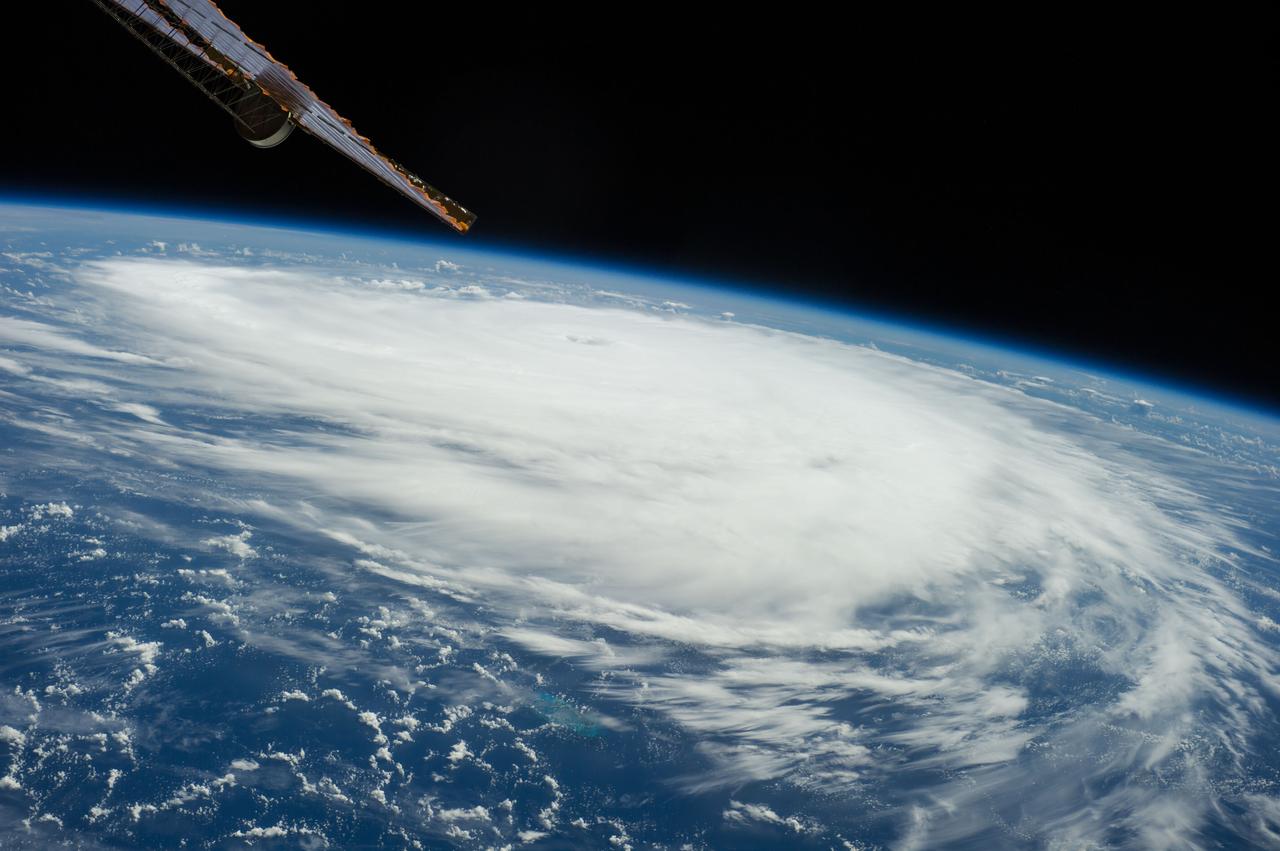
ISS041-E-011814 (16 Sept. 2014) --- Though having been upgraded from a tropical storm to a Category 2 hurricane, the Atlantic-borne Edouard thus far has avoided land interests as it reached maximum sustained winds of 105 miles per hout, churning in ocean waters several hundred miles southeast of Bermuda. The Expedition 41 crew members onboard the International Space Station photographed and distributed a series of images via station-to-ground downlinks and via social media. This photo was taken at 15:29:04 GMT on Sept. 16, 2014. Though it had well-defined eye at this juncture, the eye does not show clearly in this image, as it does in others.
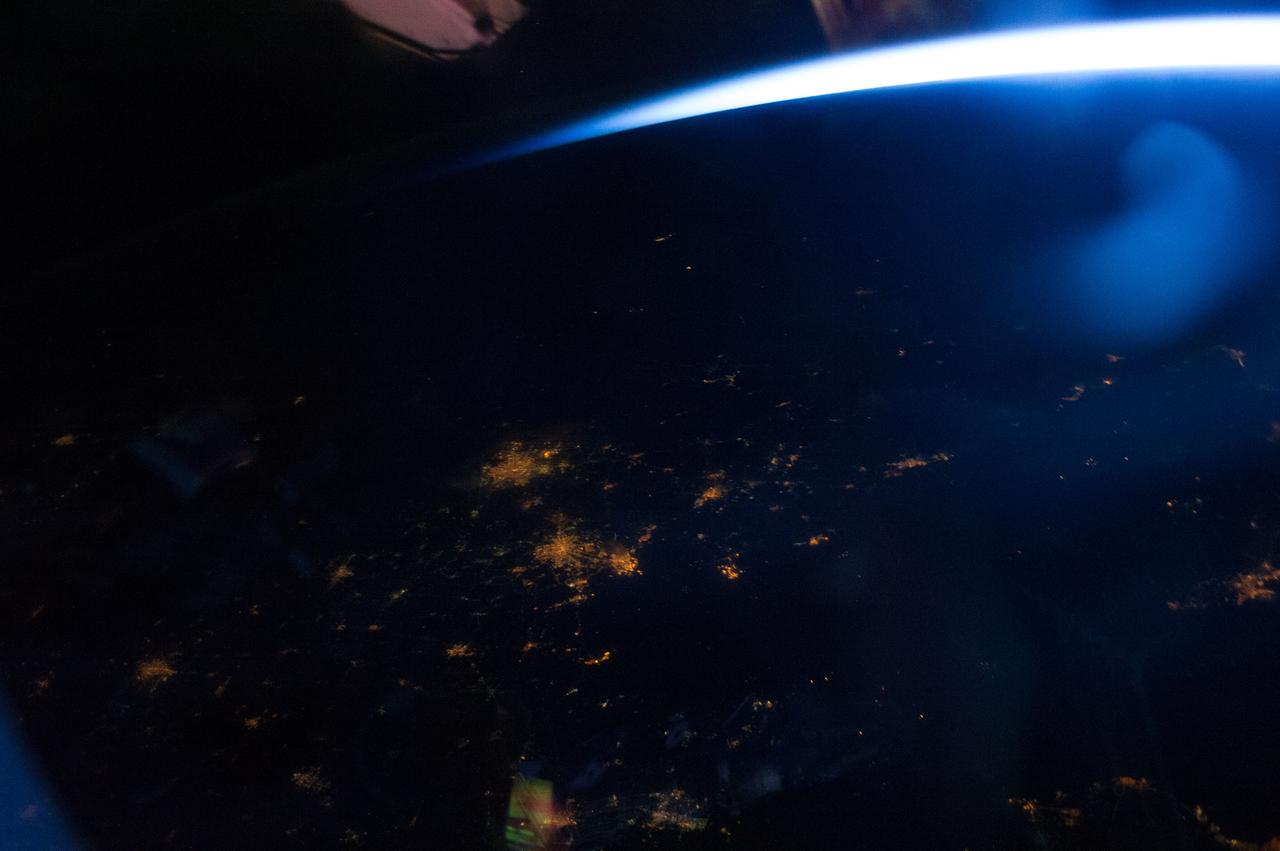
Earth Observation taken during a night pass by the Expedition 40 crew aboard the International Space Station (ISS). Folder lists this as: over China.
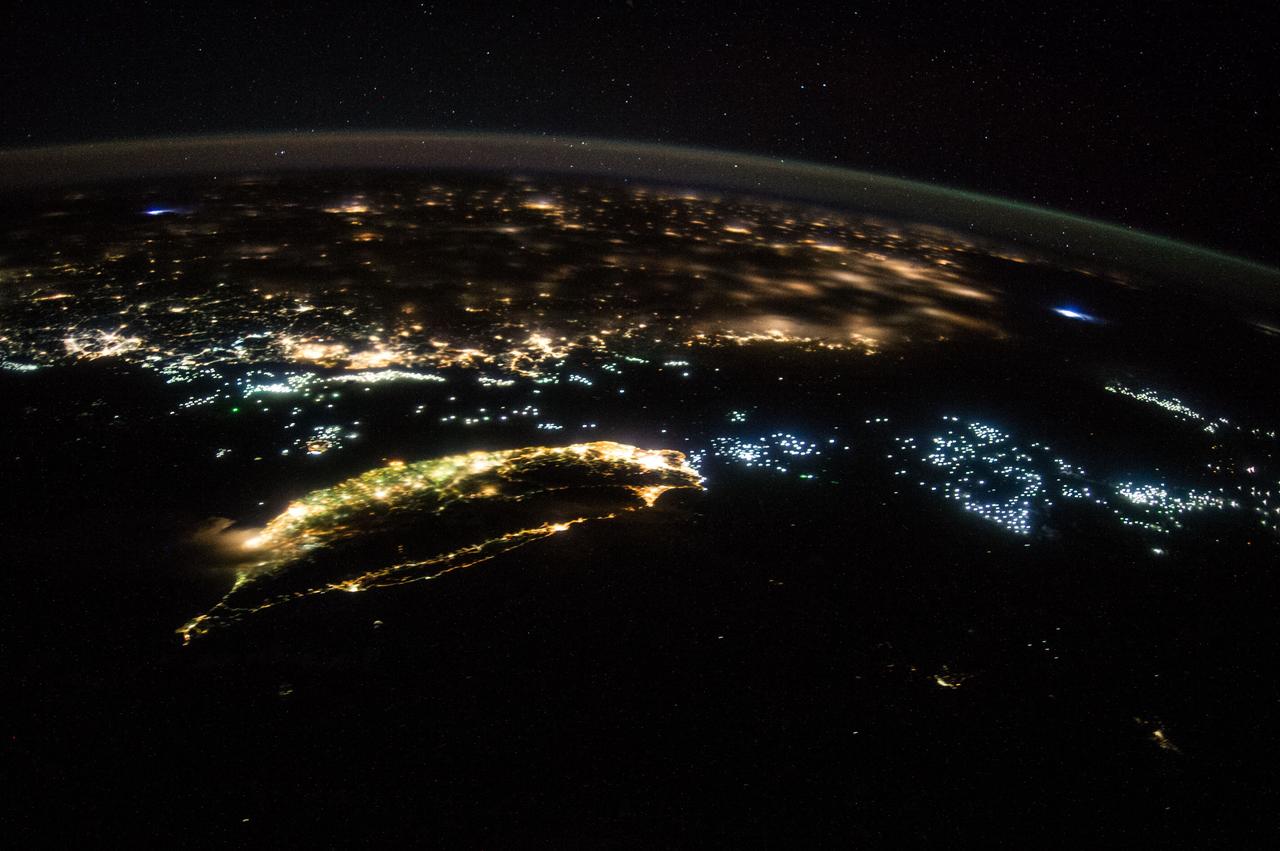
ISS040-E-081424 (27 July 2014) --- From an altitude of 223 nautical miles, one of the Expedition 40 crew members aboard the International Space Station on July 27, 2014 recorded this oblique night image of Taiwan (center foreground) and part of mainland China. Hundreds of fishing vessels, perhaps for harvesting both fish and squid as well as other forms of marine life, are seen in clusters throughout the panorama. Two lightning storms -- one on either side of the image -- are also visible.
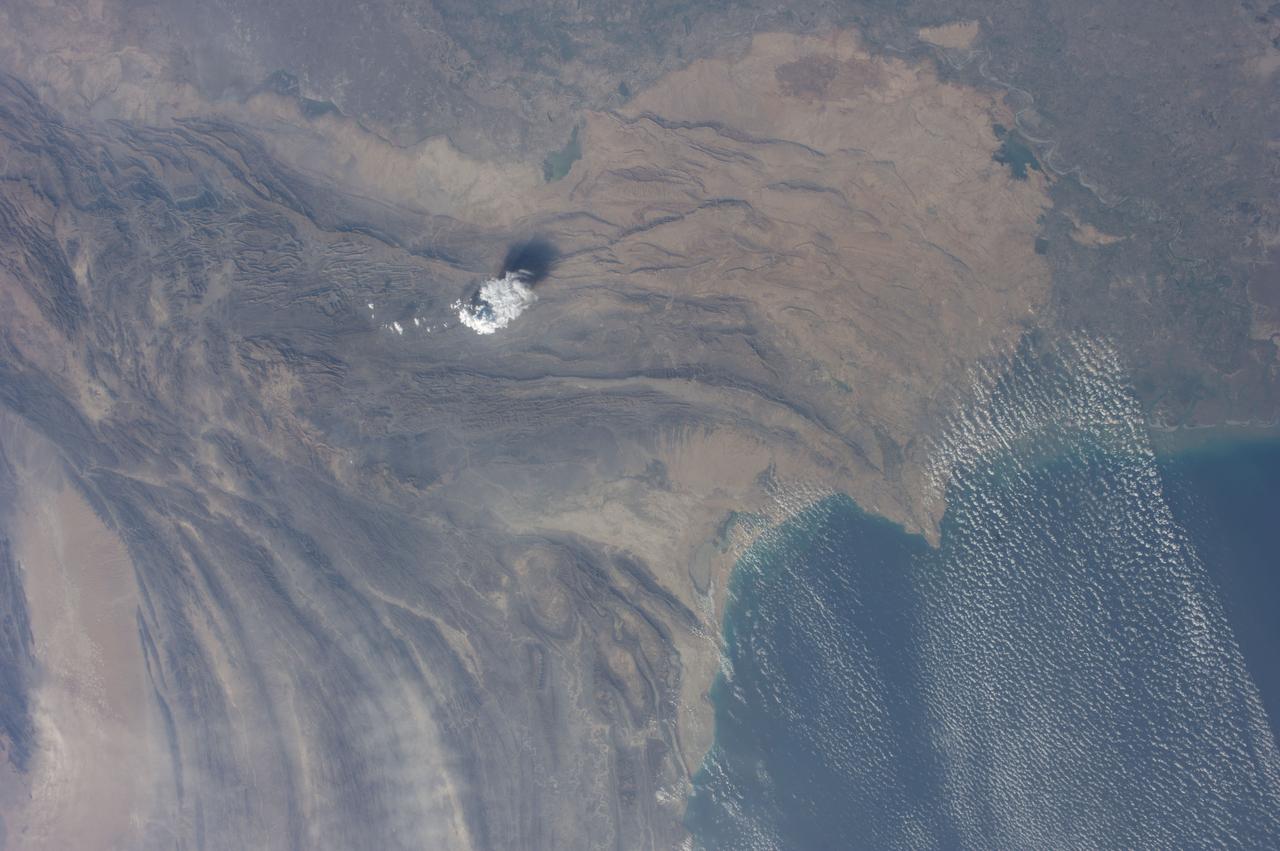
Earth observation taken during a day pass by the Expedition 40 crew aboard the International Space Station. File identifies it as: Straits of Hormuz through Pakistan into India.
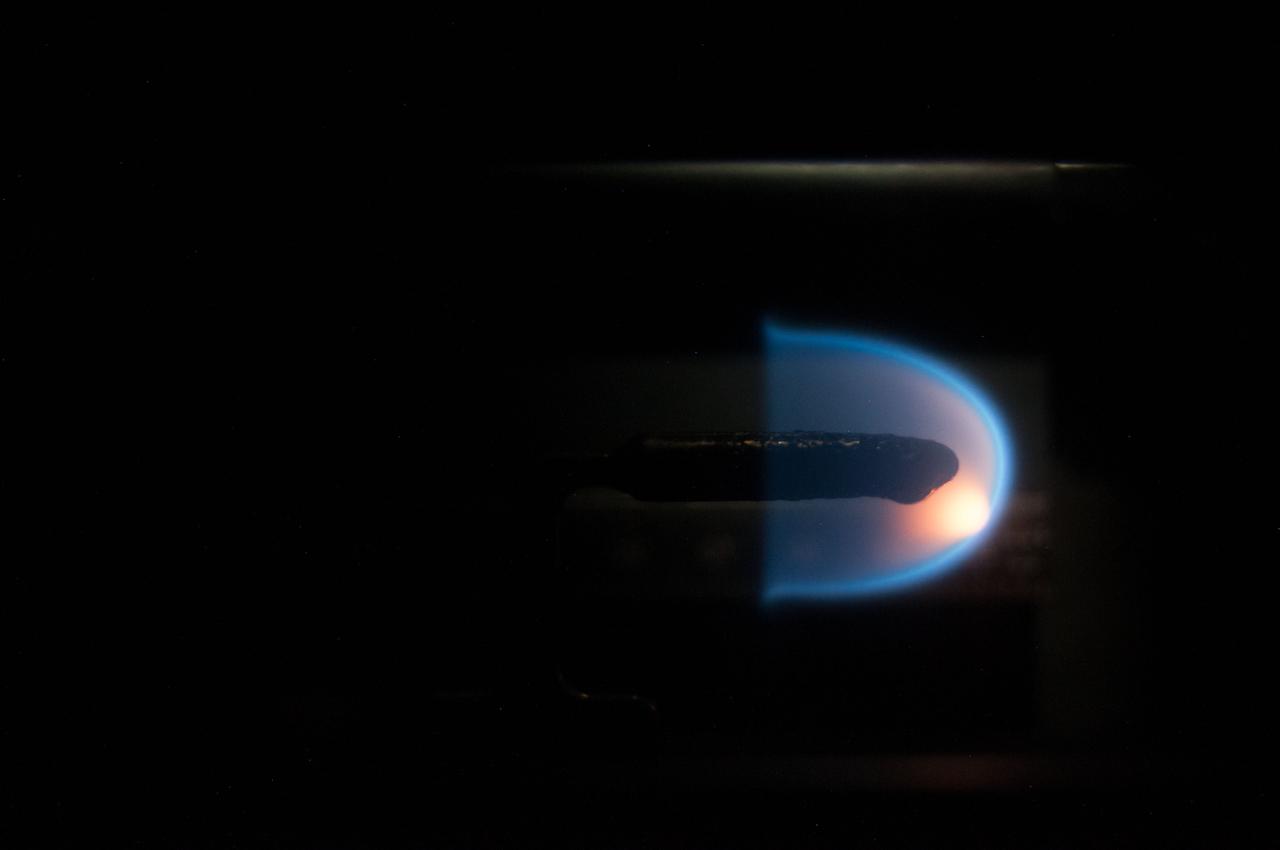
Image taken on card 8 during BASS-II flame test session with reduced O2 partial pressure. Session conducted on GMT 213. The Burning and Suppression of Solids - II (BASS-II) investigation examines the burning and extinction characteristics of a wide variety of fuel samples in microgravity. The BASS-II experiment will guide strategies for materials flammability screening for use in spacecraft as well as provide valuable data on solid fuel burning behavior in microgravity. BASS-II results contribute to the combustion computational models used in the design of fire detection and suppression systems in microgravity and on Earth.
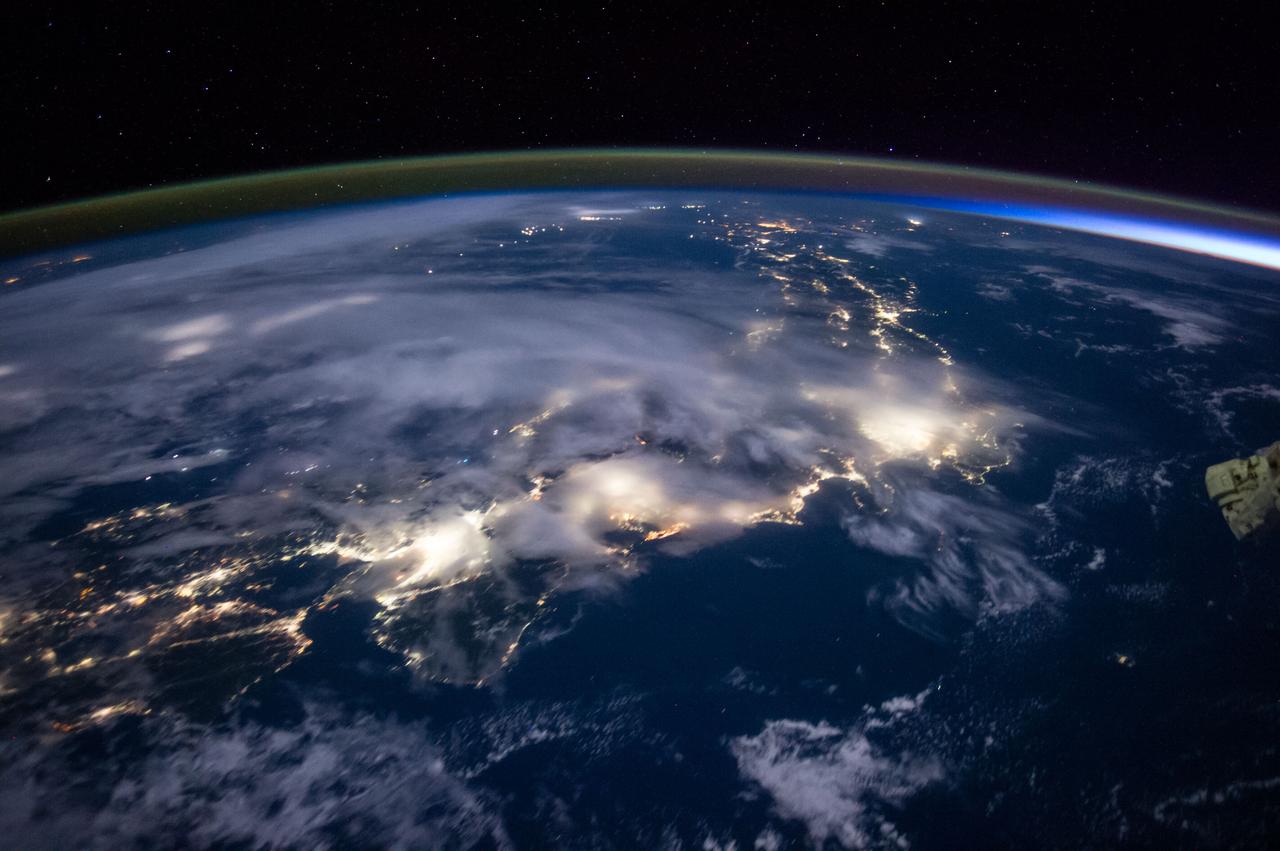
Night Earth Observations taken by Expedition 41 crewmember.
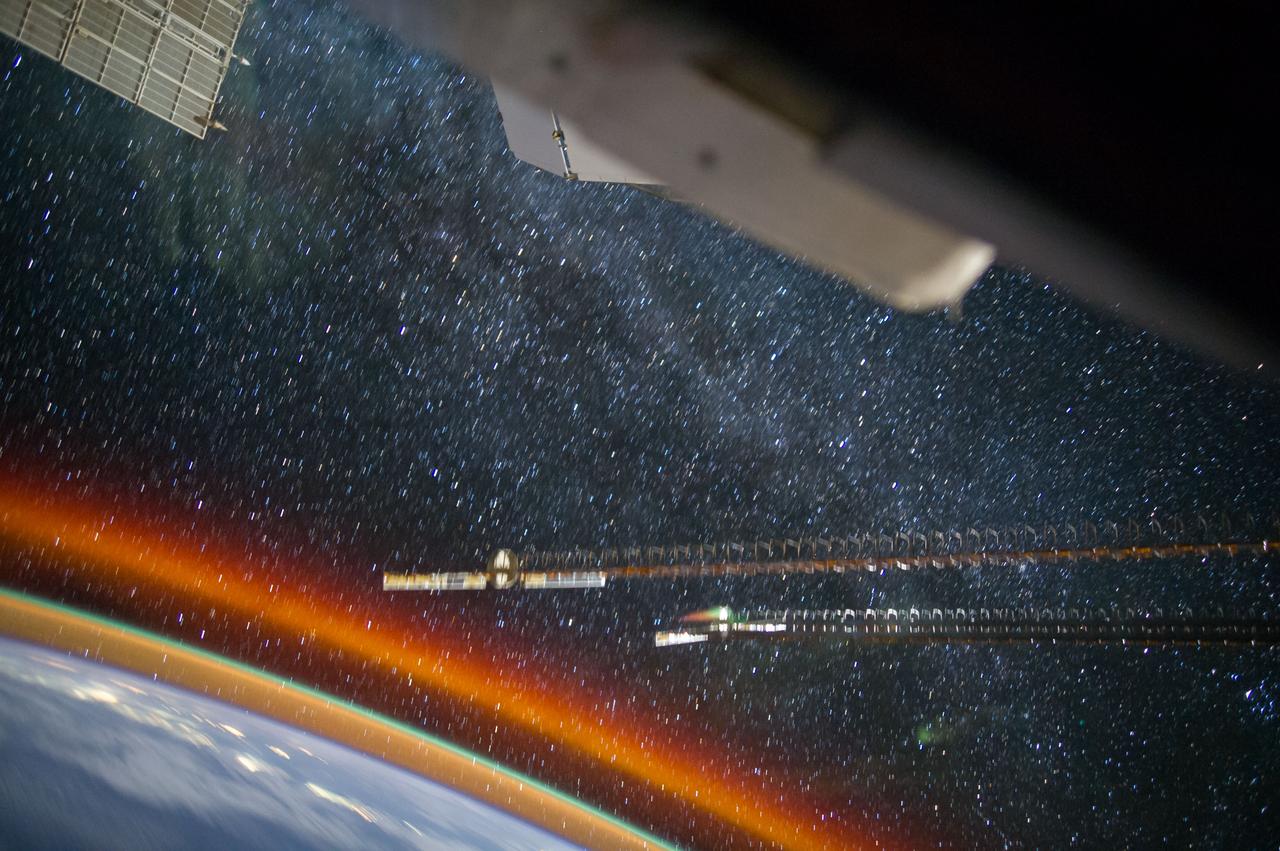
Earth Observation taken during a night pass by the Expedition 40 crew aboard the International Space Station (ISS). Folder lists this as: Long exposure night shots.
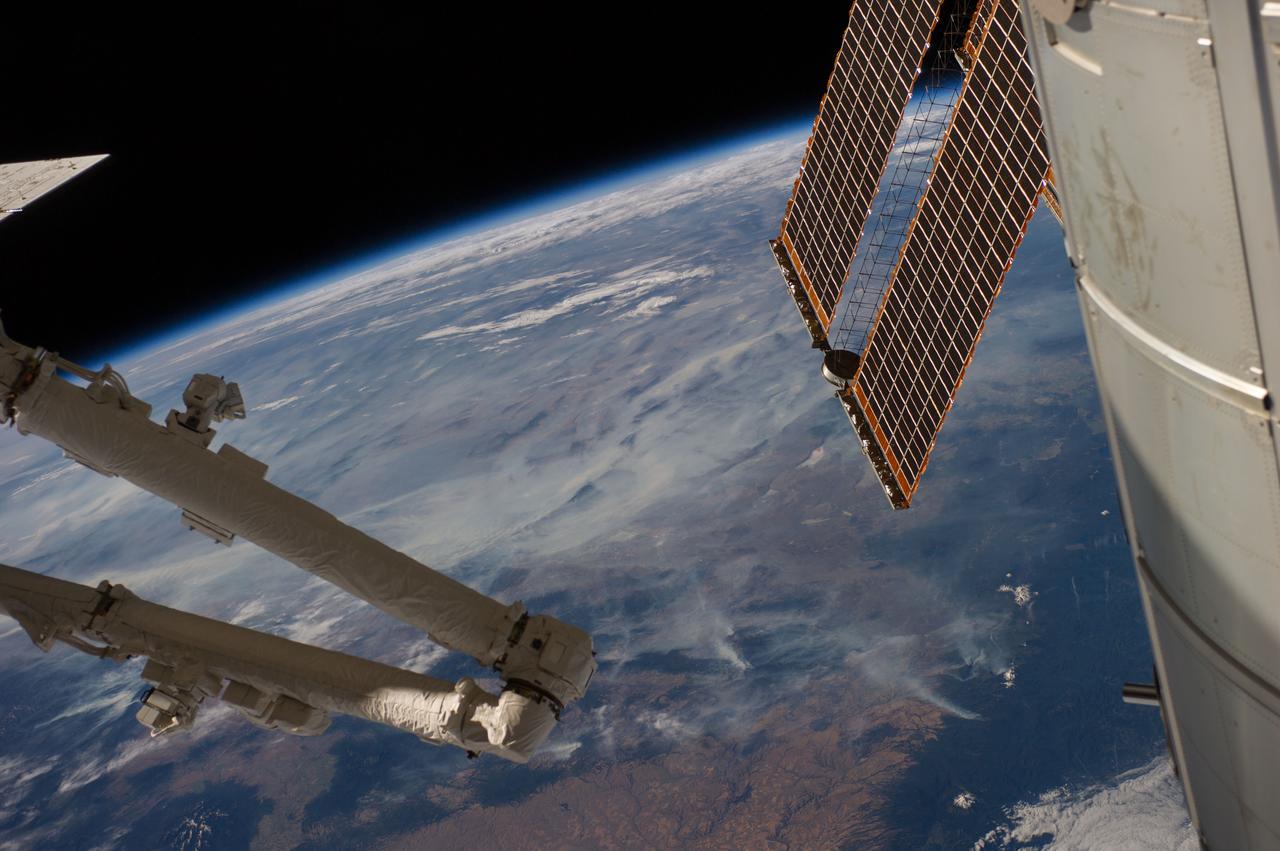
Earth observation taken during day pass by the Expedition 40 crew aboard the International Space Station (ISS). Folder lists this as: Pacific Northwest Wildfires.
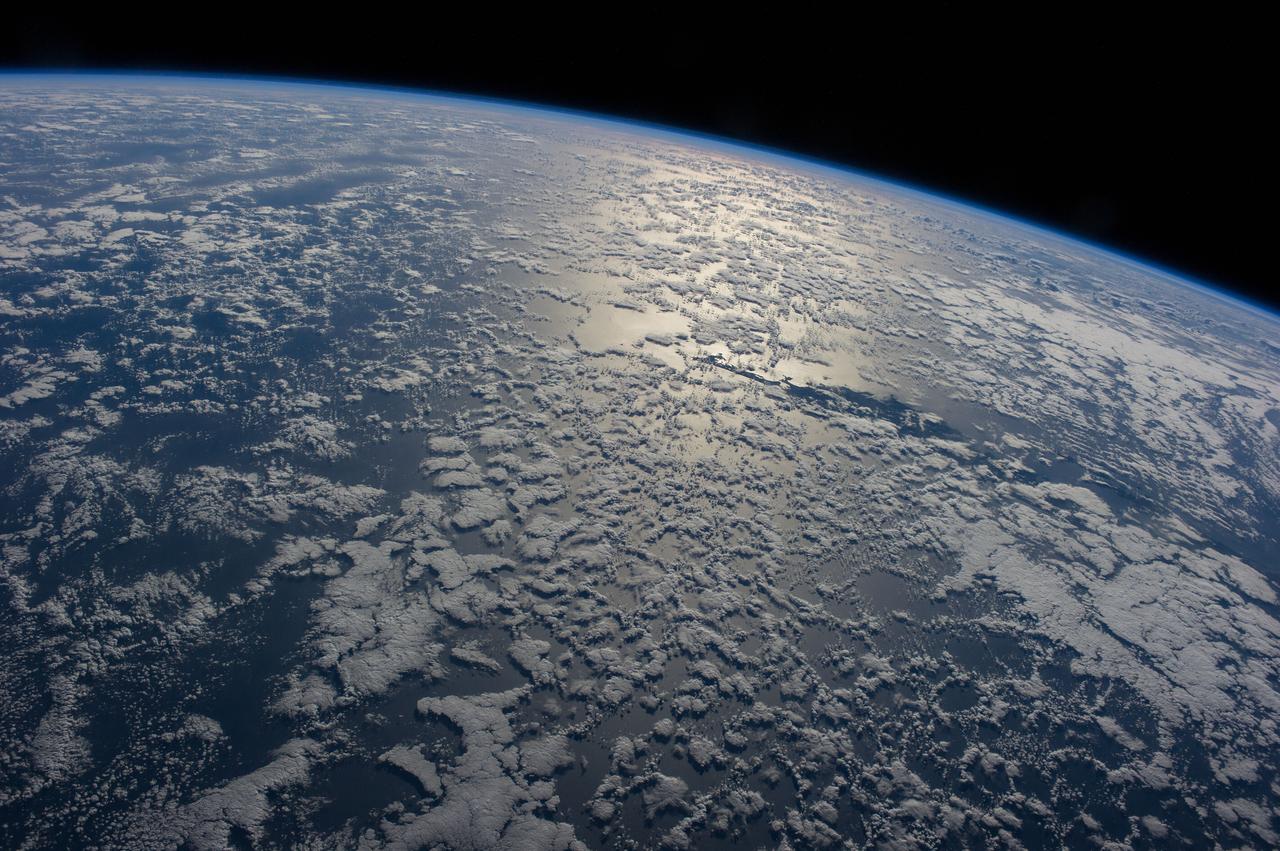
ISS040-E-015765 (19 June 2014) --- This image features a blue and white part of Earth photographed by an Expedition 40 crew member on the International Space Station on June 19, 2014.
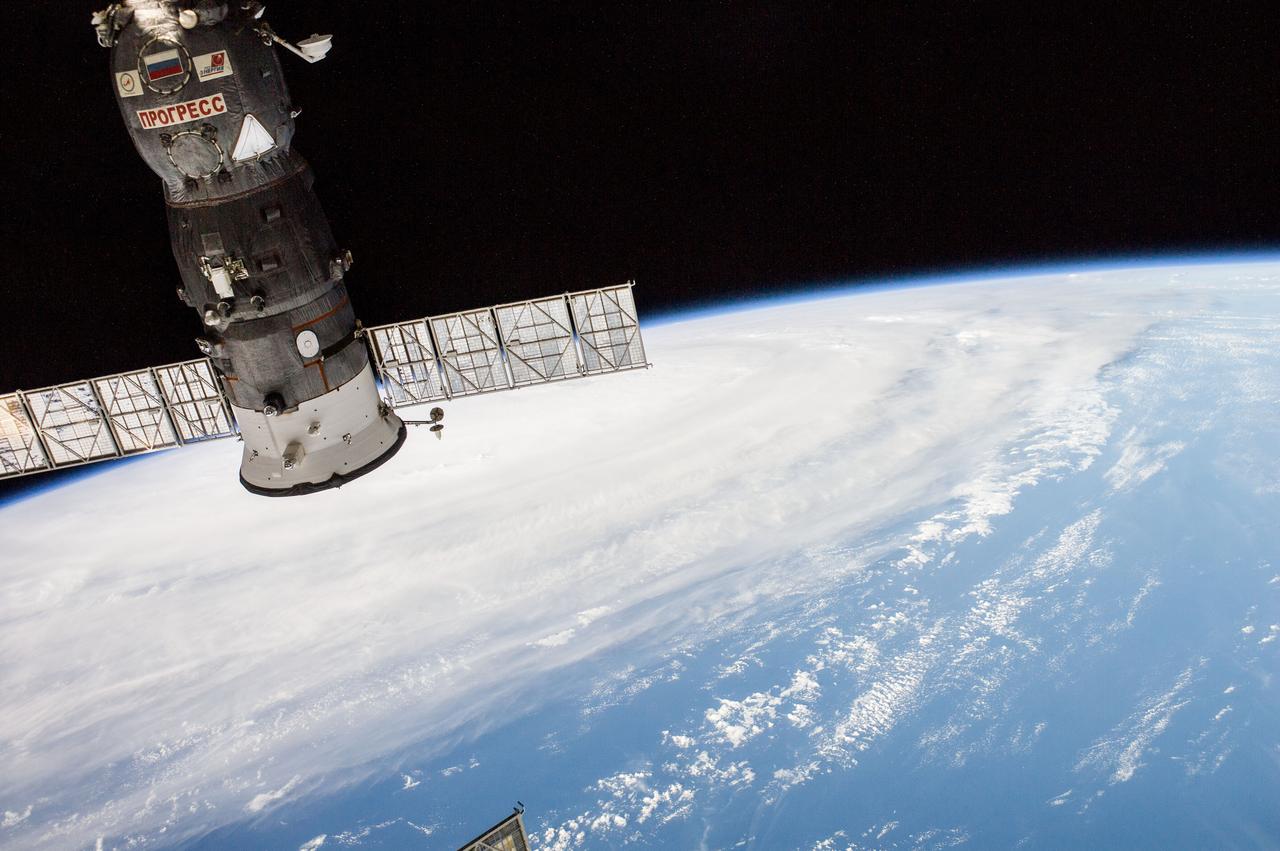
ISS040-E-038897 (5 July 2014) --- One of the Expedition 40 crew members onboard the International Space Station photographed this image of Super Typhoon Neoguri headed toward Japan at 21:58:27 GMT on July 5, 2014. A Russian Progress vehicle, docked to the orbital outpost, is in the foreground.

ISS041-E-067002 (7 Oct. 2014) --- NASA astronaut Reid Wiseman, Expedition 41 flight engineer, participates in a session of extravehicular activity (EVA) as work continues on the International Space Station. During the six-hour, 13-minute spacewalk, Wiseman and European Space Agency astronaut Alexander Gerst (out of frame), flight engineer, worked outside the space station's Quest airlock relocating a failed cooling pump to external stowage and installing gear that provides back up power to external robotics equipment.
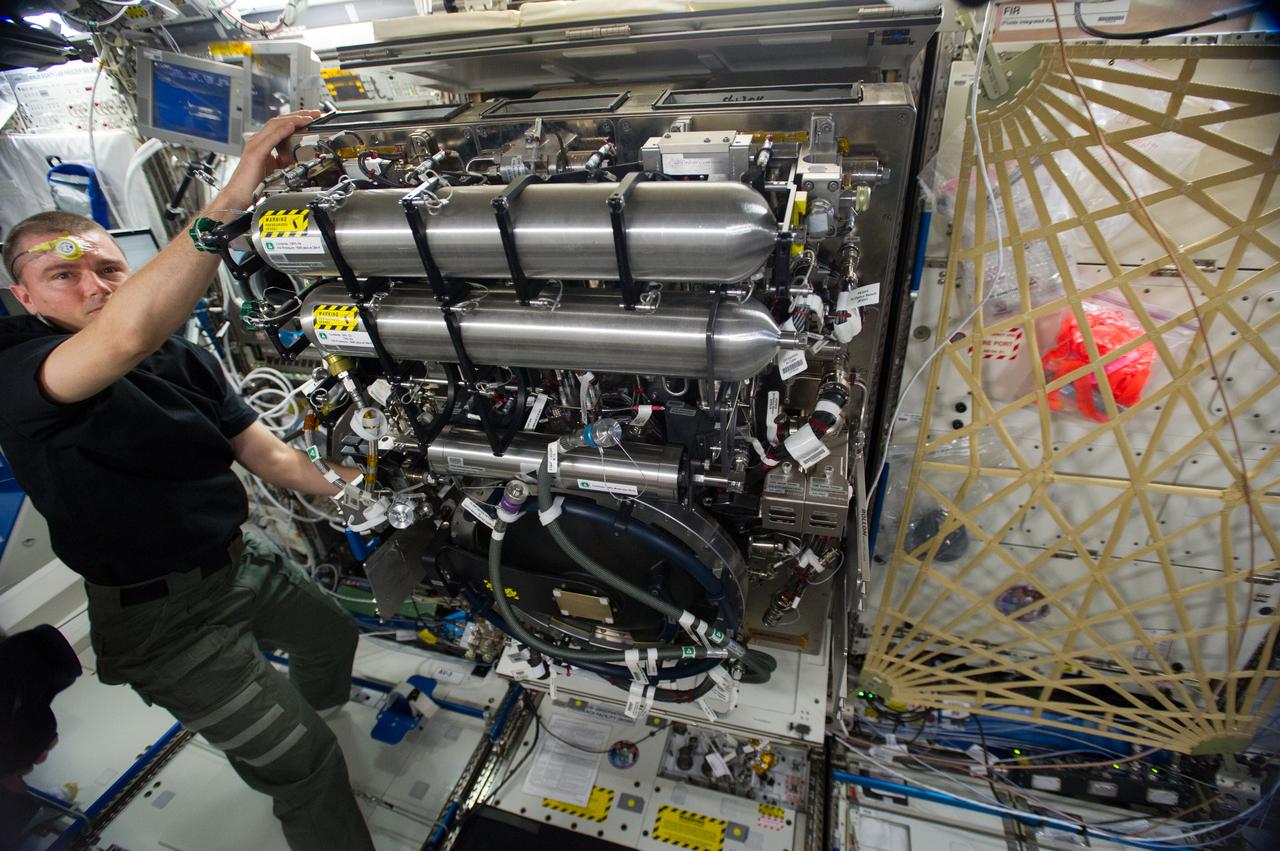
ISS040-E-072156 (21 July 2014) --- In the International Space Station’s Destiny laboratory, NASA astronaut Reid Wiseman, Expedition 40 flight engineer, sets up the Combustion Integrated Rack (CIR) for more ground-commanded tests. This facility, which includes an optics bench, combustion chamber, fuel and oxidizer control and five different cameras, allows a variety of combustion experiments to be performed safely aboard the station.
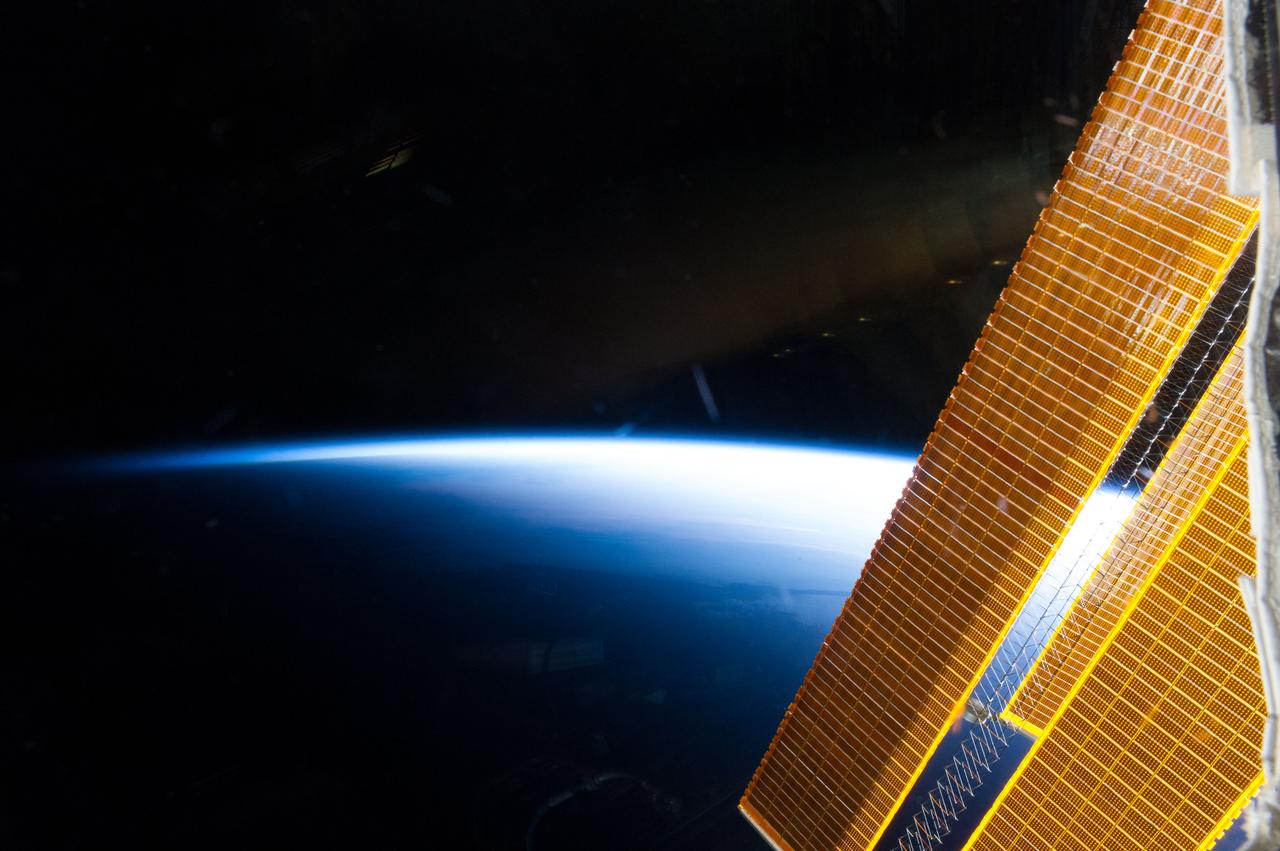
ISS040-E-006327 (1 June 2014) --- A portion of International Space Station solar array panels and Earth?s horizon are featured in this image photographed by an Expedition 40 crew member on the space station.
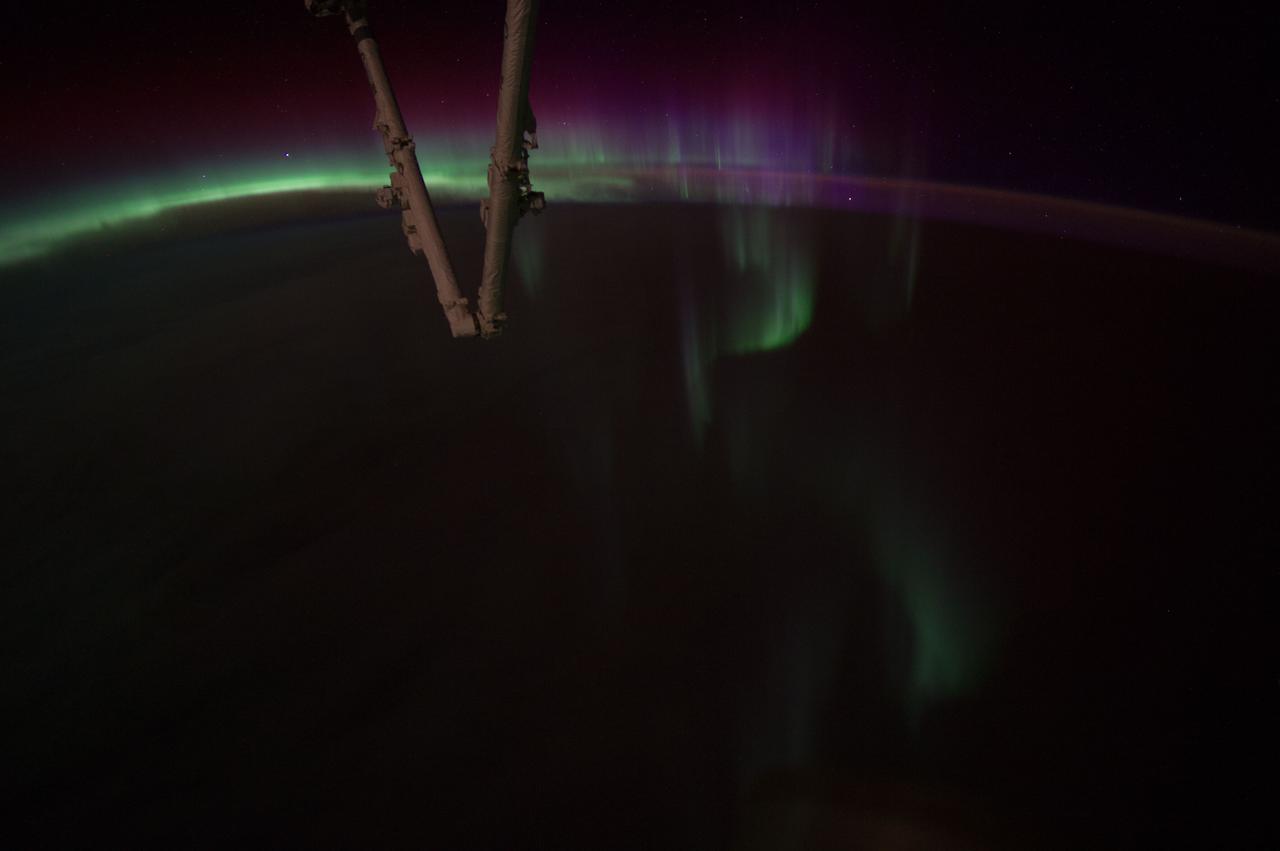
Earth Observation taken during a night pass by the Expedition 40 crew aboard the International Space Station (ISS). Folder lists this as: Phenomenal Aurora. Part of the Space Station Remote Manipulator System (SSRMS) arm is also visible.

ISS040-E-005997 (29 May 2014) --- Featured near the center of this night photograph, taken by one of the Expedition 40 crew members aboard the International Space Station, is Seoul, South Korea. A Russian Soyuz spacecraft, docked to the orbital outpost, takes up the top part of the frame.
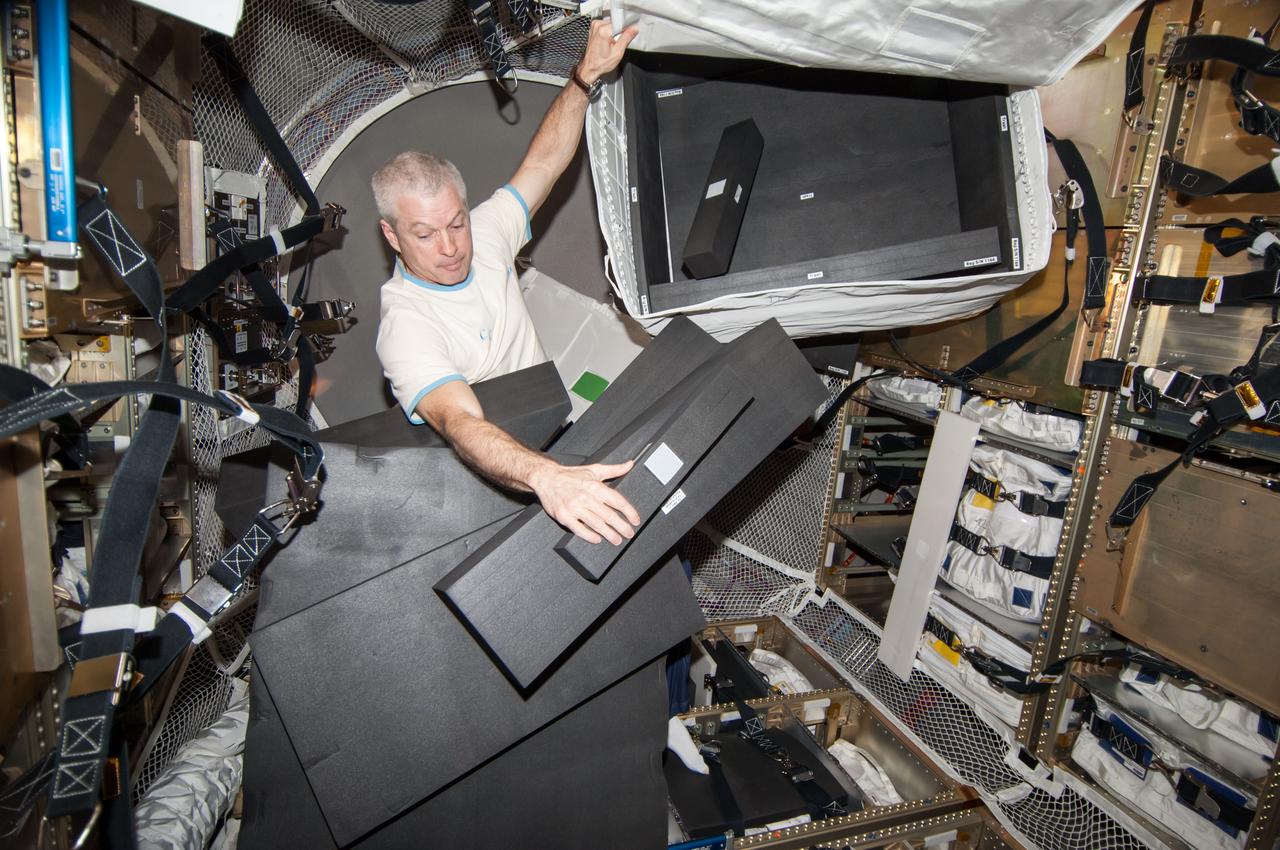
ISS040-E-103991 (21 Aug. 2014) --- NASA astronaut Steve Swanson, Expedition 40 commander, is pictured during cargo transfer operations in the "Georges Lemaitre" Automated Transfer Vehicle-5 (ATV-5) currently docked with the International Space Station.
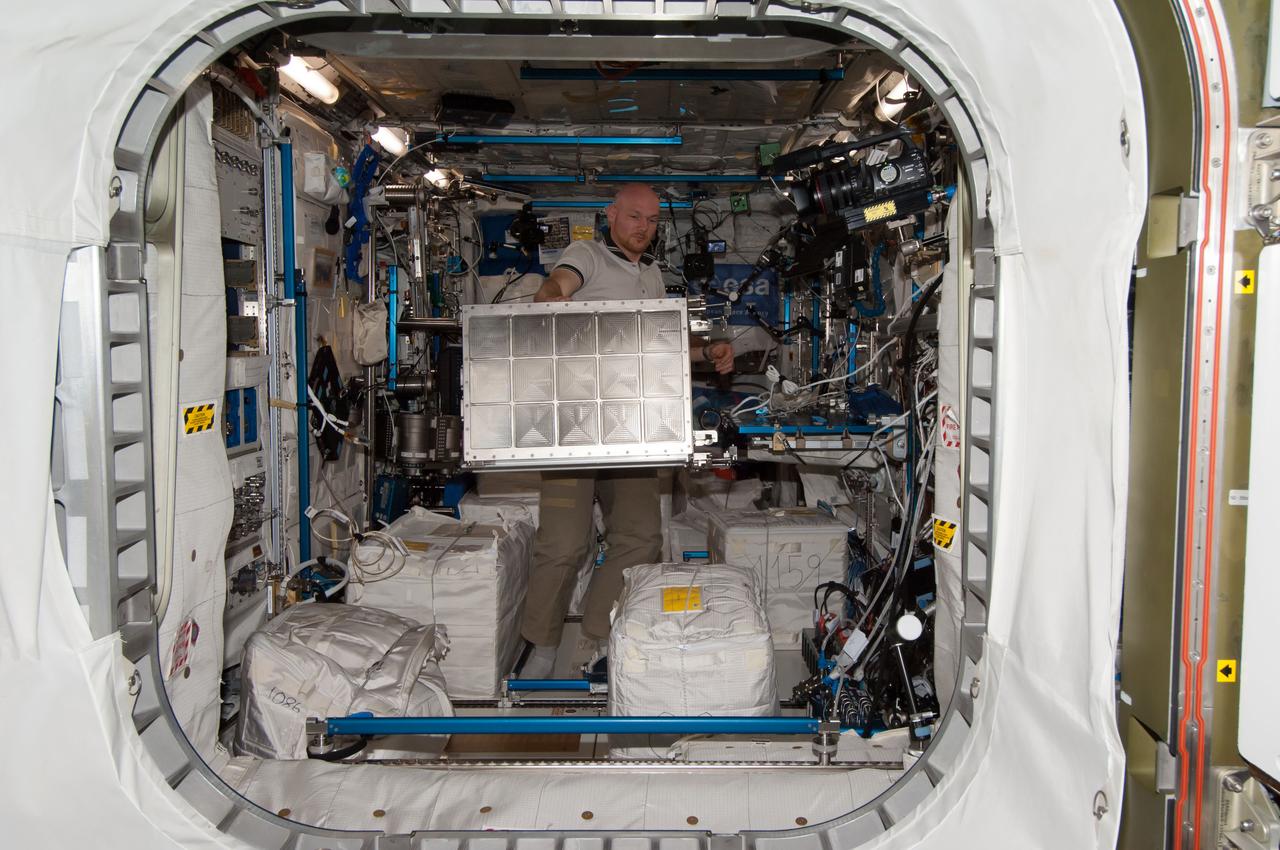
iss040e104595 (8/22/2014) --- European Space Agency (ESA) astronaut Alex Gerst is photographed removing the Facility for Absorption and Surface Tension (FASTER) hardware from the European Drawer Rack (EDR) and packing it for return on a future flight for refurbishment. The photo taken in the Columbus modulel aboard the International Space Station (ISS). The Facility for Adsorption and Surface Tension (FASTER) investigates the physical principles which determine the stability of different emulsions, and which compounds can influence this.
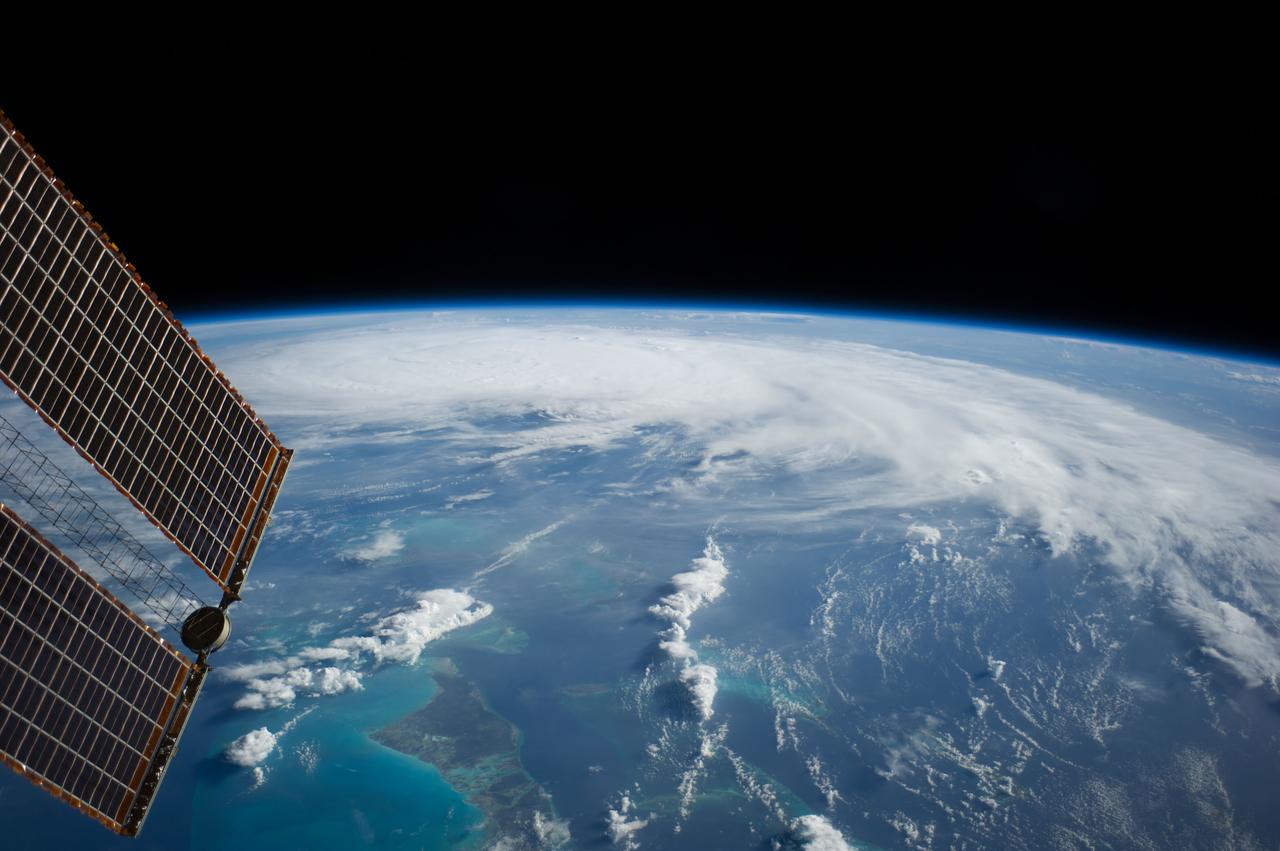
ISS040-E-031901 (3 July 2014) --- As the International Space Station was flying 227 nautical miles above the Bahama Islands, one of the Expedition 40 crew members photographed this image of Hurricane Arthur, moving northerly along the Atlantic coast line. Arthur's forecast at 11 a.m. (EDT) on July 3, 2014 projected it hitting the coast of North Carolina as a Category 2 hurricane, with winds over 100 mph, on the night of July 3 or the morning of July 4. A tip of one of the solar panels on the orbital outpost is in upper left.
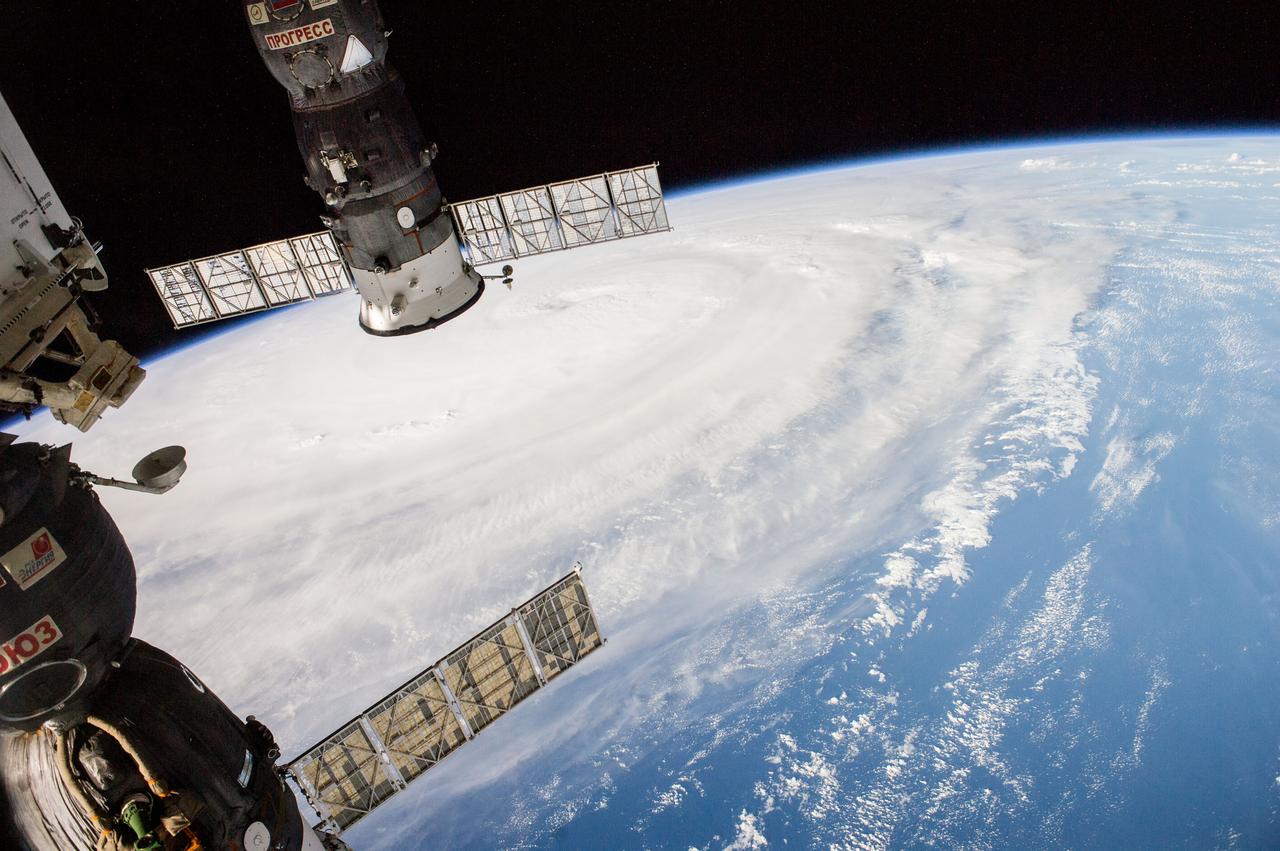
ISS040-E-038893 (5 July 2014) --- One of the Expedition 40 crew members onboard the International Space Station photographed this image of Super Typhoon Neoguri headed toward Japan at 21:57:39 GMT on July 5, 2014. A Russian Soyuz vehicle, docked to the orbital outpost, is partially visible in the foreground, and a docked Russian Progress is seen in upper left.
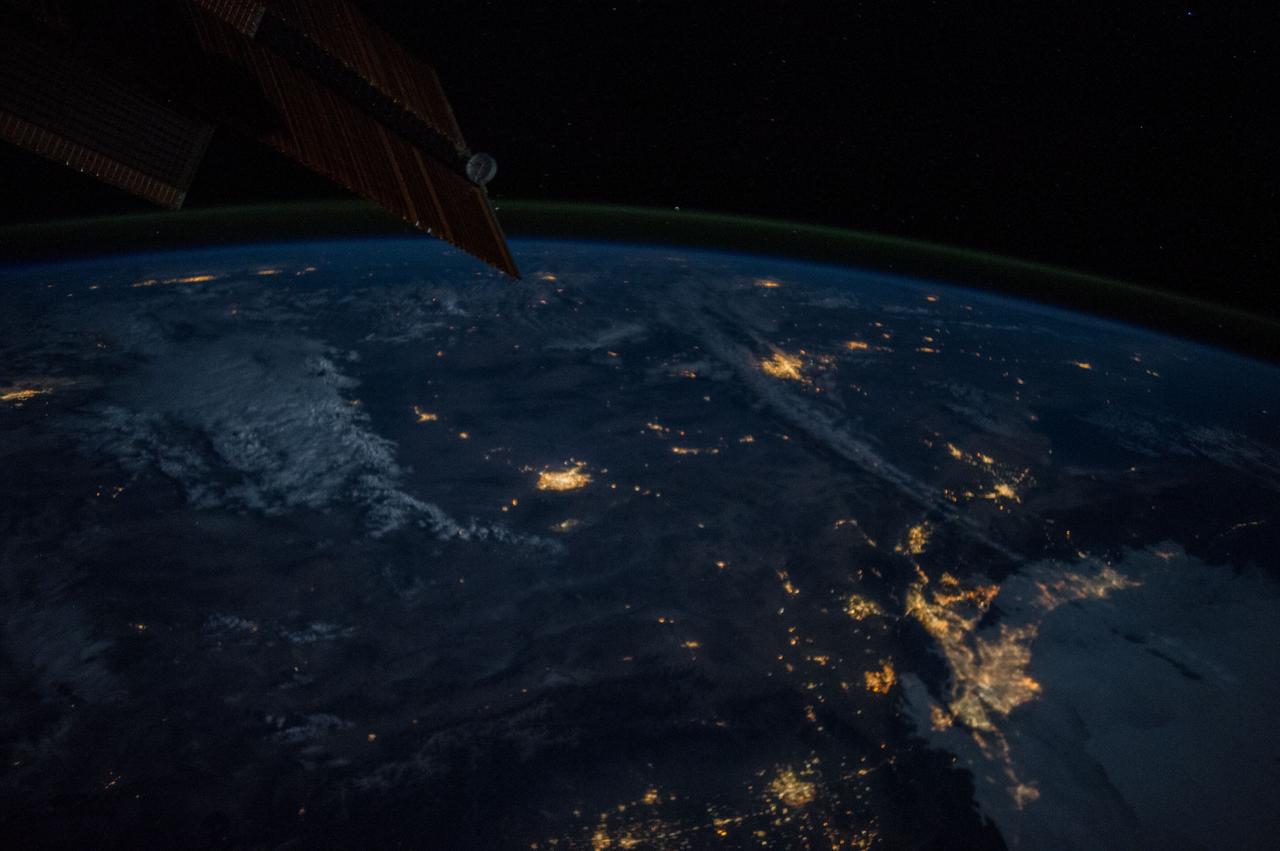
Earth Observation taken during a night pass by the Expedition 40 crew aboard the International Space Station (ISS). File lists this as: small timelapse of US west coast at night (ISS040E010215 thru ISS040E010257).
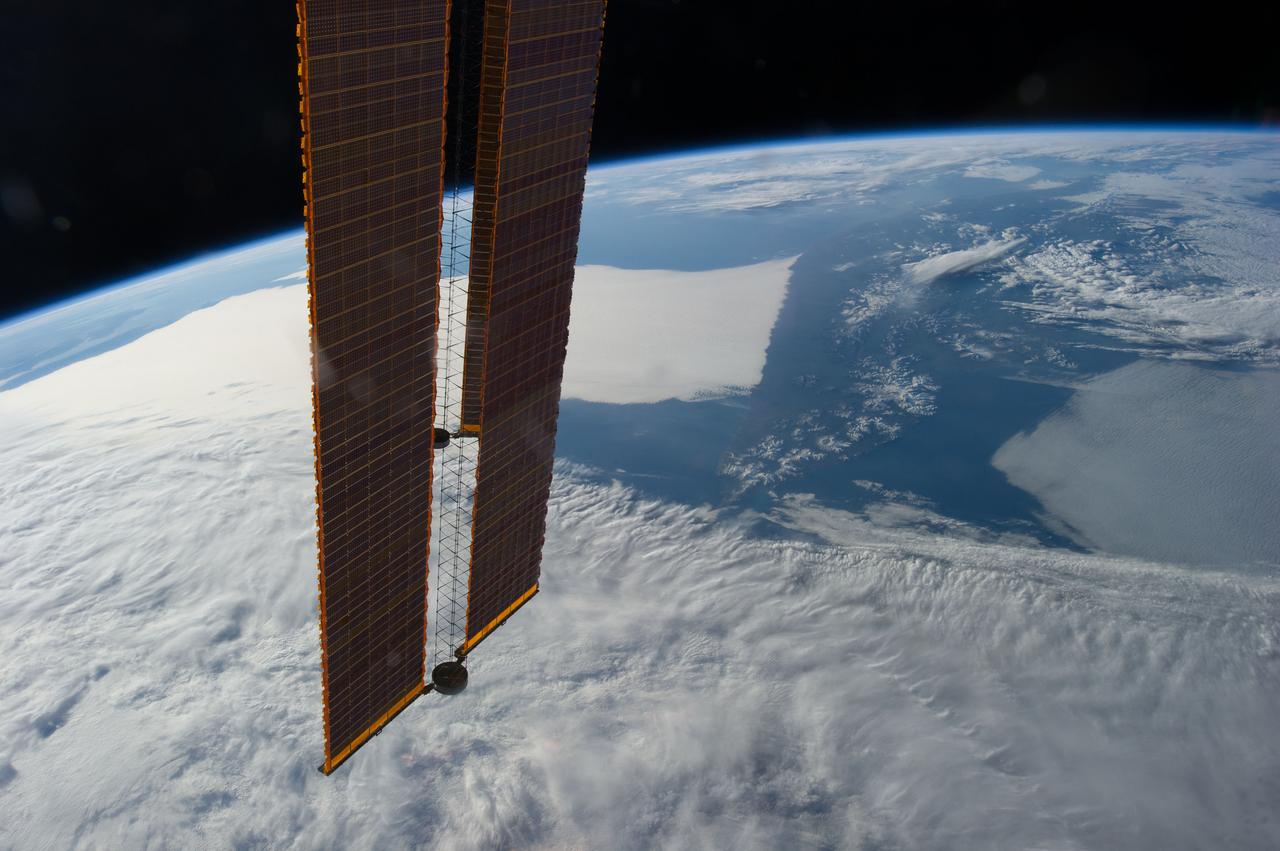
Earth Observation taken during a day pass by the Expedition 40 crew aboard the International Space Station (ISS). Folder lists this as: Moon, Japan, Kamchatka with a wild cloud. Part of a solar array is also visible.
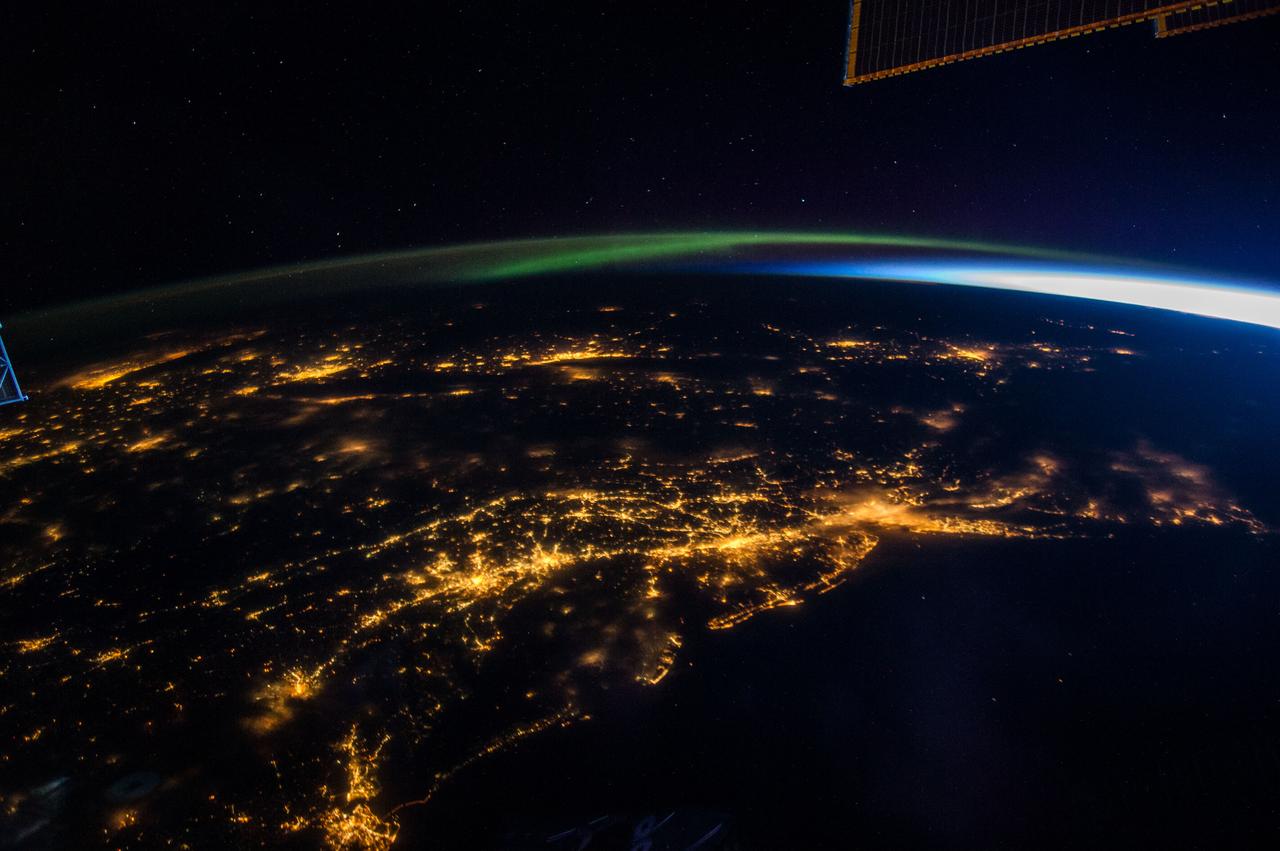
Earth observation taken during a night pass by the Expedition 40 crew aboard the International Space Station (ISS). Folder lists this as: US East Coast pre-dawn. City lights.
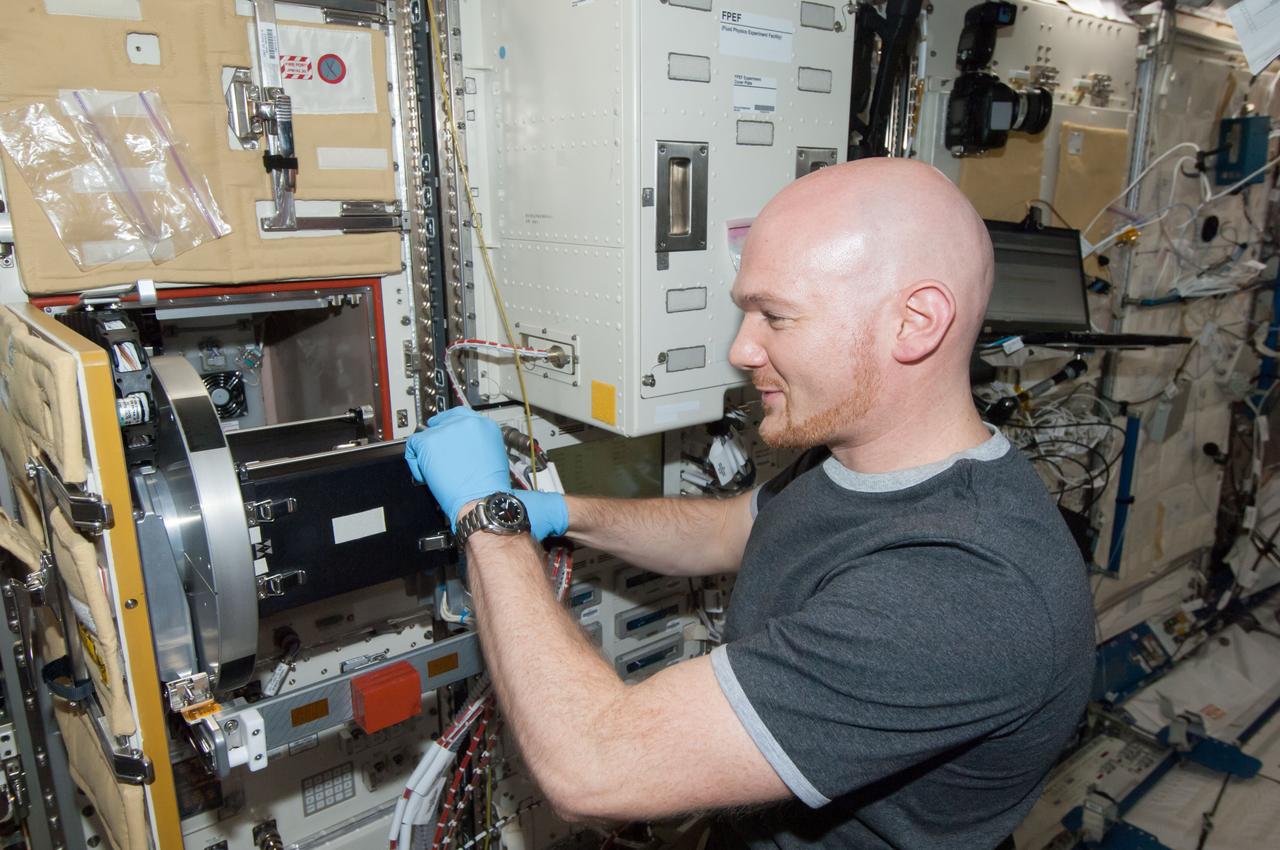
ISS041-E-045043 (27 Sept. 2014) --- European Space Agency astronaut Alexander Gerst, Expedition 41 flight engineer, works with a measurement experiment in the Kibo laboratory of the International Space Station.
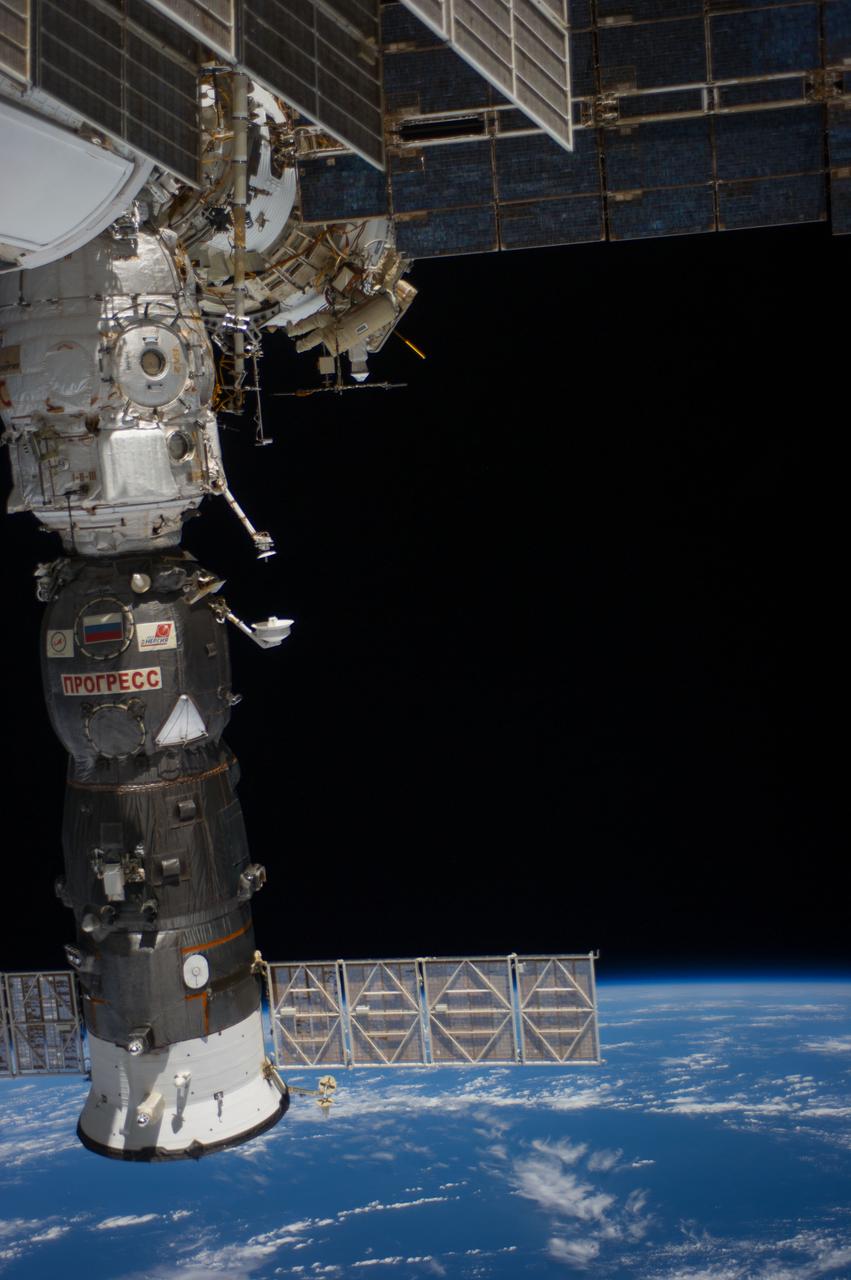
ISS040-E-015755 (19 June 2014) --- Russian cosmonauts Alexander Skvortsov (red stripes) and Oleg Artemyev, both Expedition 40 flight engineers, participate in a session of extravehicular activity (EVA) as work continues on the International Space Station. During the seven-hour, 23-minute spacewalk Skvortsov and Artemyev completed installation and experiment tasks outside the station’s Russian segment. The Progress 55 spacecraft, currently docked to the Pirs Docking Compartment, is at left.
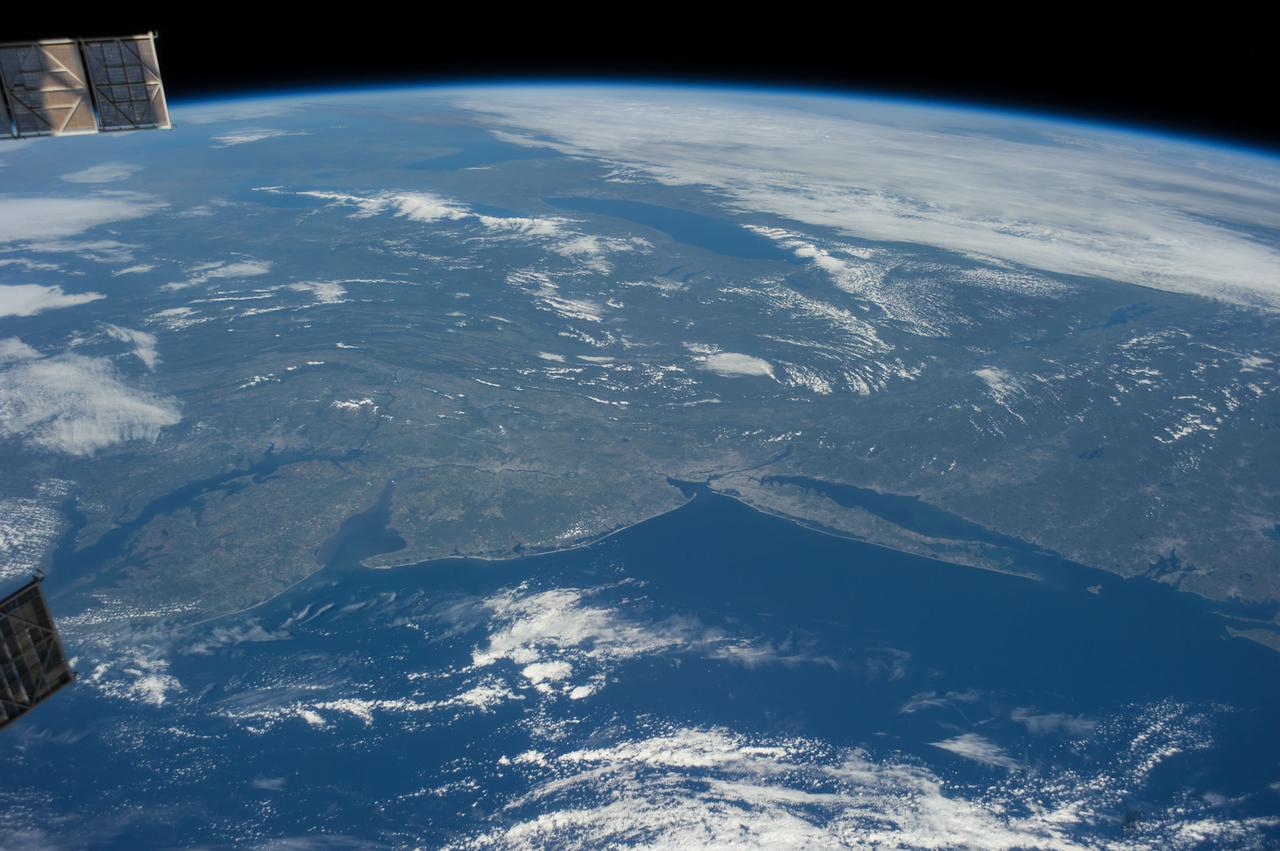
ISS041-E-016909 (17 Sept. 2014) --- Much of northeastern USA is visible in the lower land mass in this frame and a large portion of the Great Lakes area is visible near center and top in the oblique photograph taken by one of the Expedition 41 crew members aboard the International Space Station on Sept. 17. A 38mm focal length was used to record several pictures in this sequence as the orbital outpost was flying 221 miles above the Atlantic Ocean.
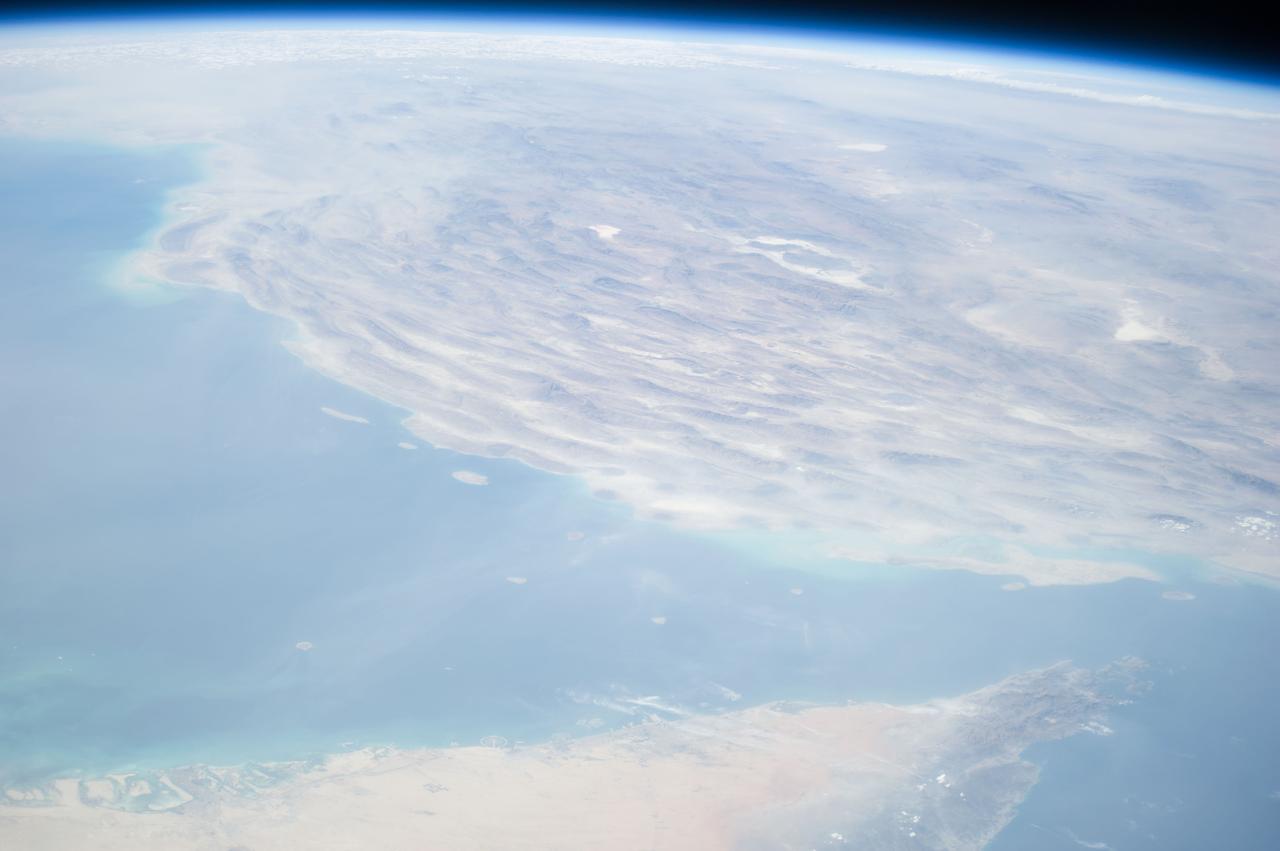
Earth Observation taken during a day pass by the Expedition 40 crew aboard the International Space Station (ISS). File lists this as: Africa, Middle East.
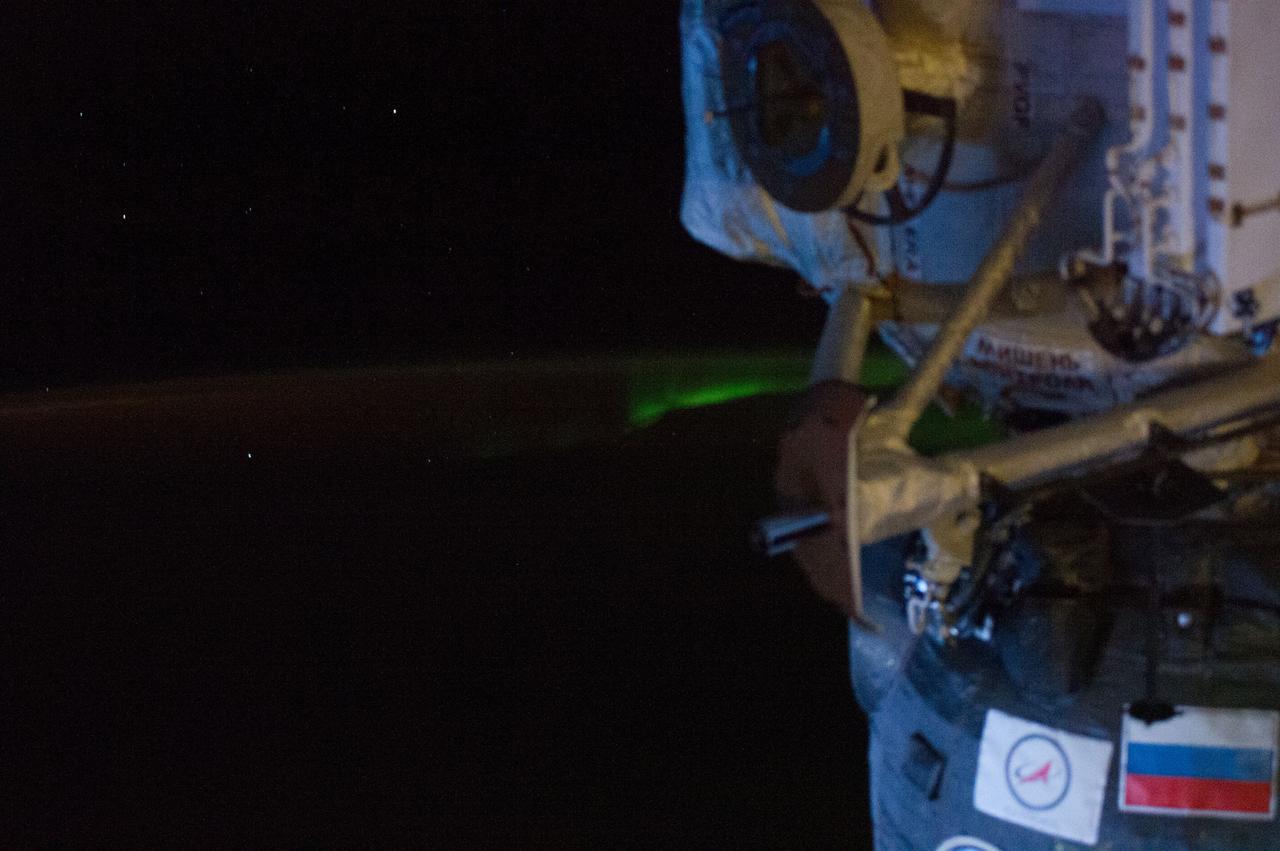
ISS040-E-016995 (22 June 2014) --- This nighttime view featuring portions of an aurora and a Russian spacecraft docked to the International Space Station was photographed by an Expedition 40 crew member on the station.
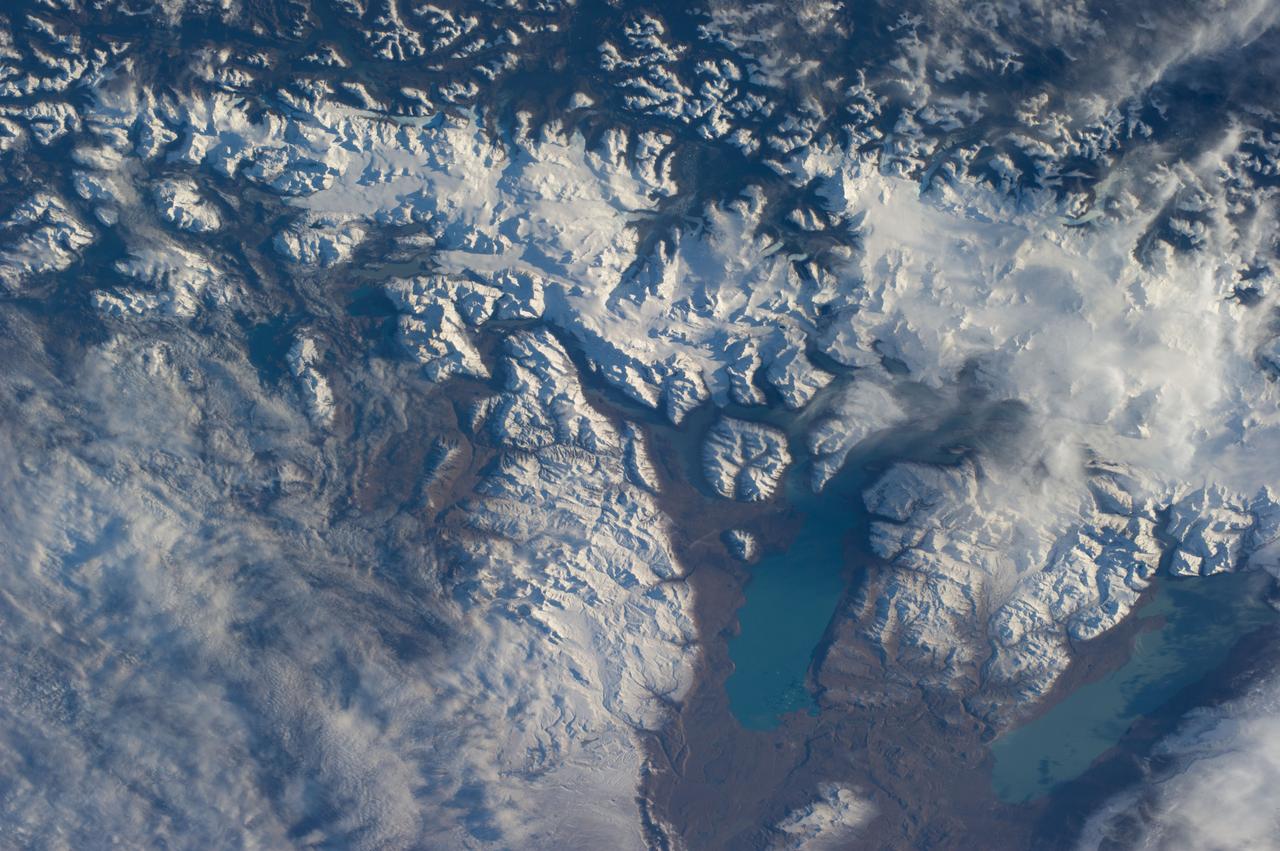
ISS040-E-006219 (1 June 2014) --- One of the Expedition 40 crew members aboard the International Space Station on June 1, 2014, photographed a series of images of the glacial lakes of Patagonia, a region located at the southern end of South America, shared by Argentina and Chile.
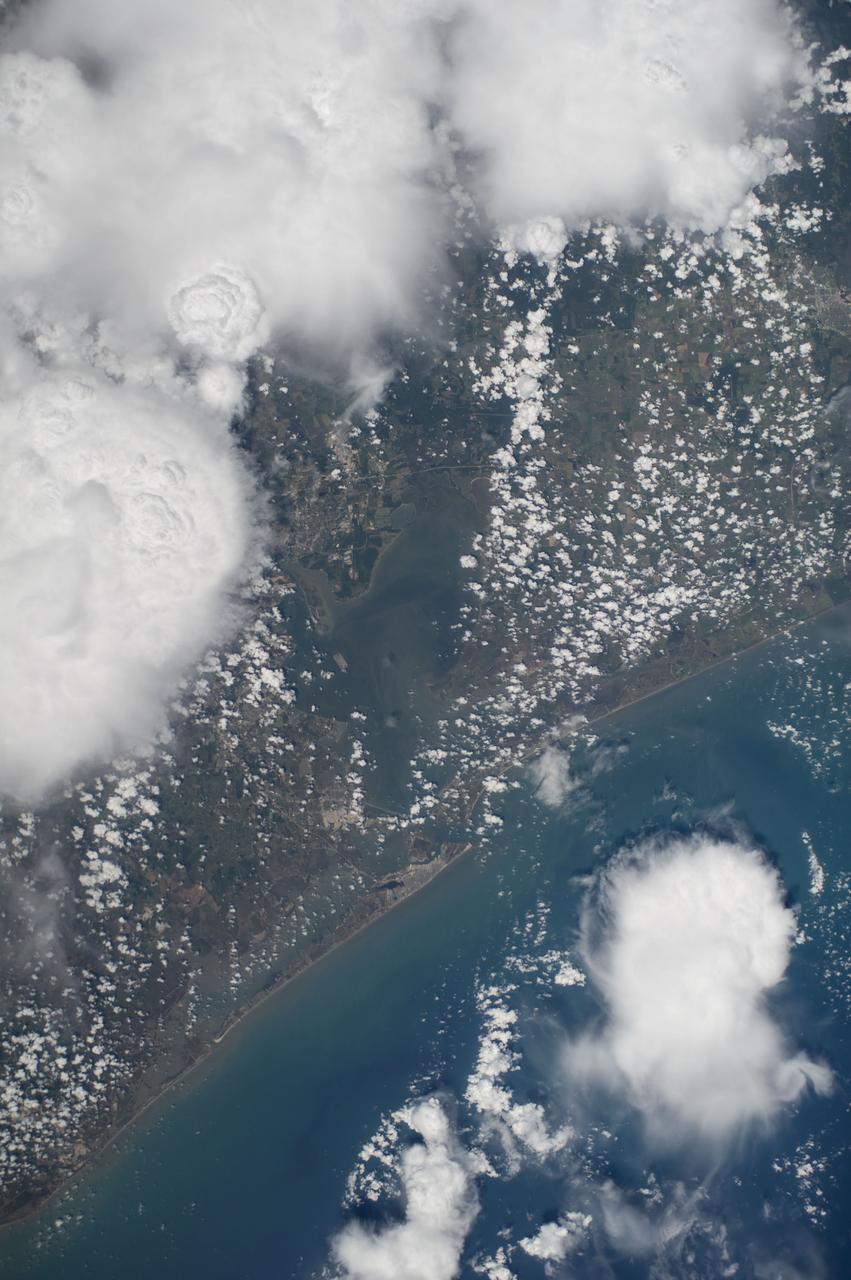
Earth Observation taken during a day pass by the Expedition 40 crew aboard the International Space Station (ISS).
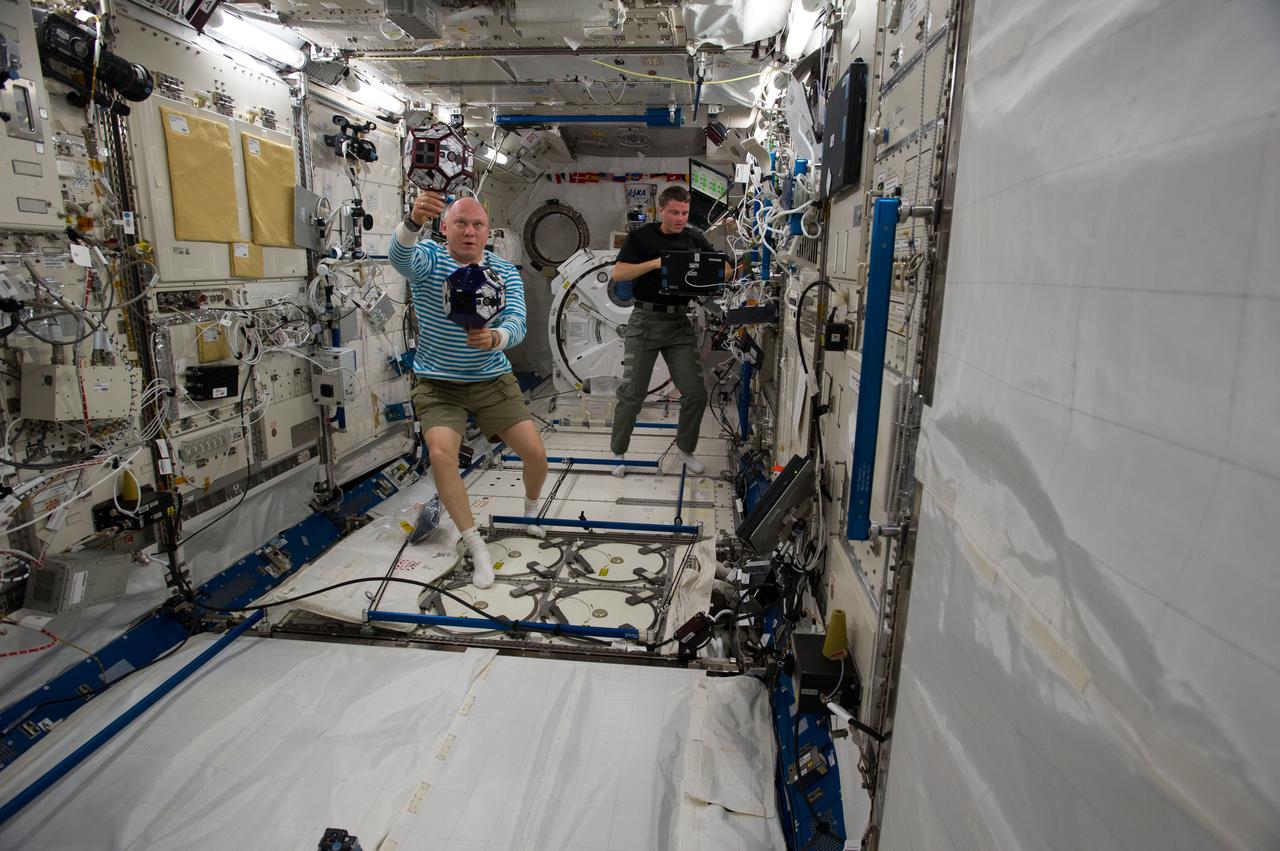
ISS040-E-018417 (24 June 2014) --- Russian cosmonaut Oleg Artemyev (left) and NASA astronaut Reid Wiseman, both Expedition 40 flight engineers, conduct a session of the Synchronized Position Hold, Engage, Reorient, Experimental Satellites Zero Robotics (SPHERES ZR) program in the Kibo laboratory of the International Space Station.
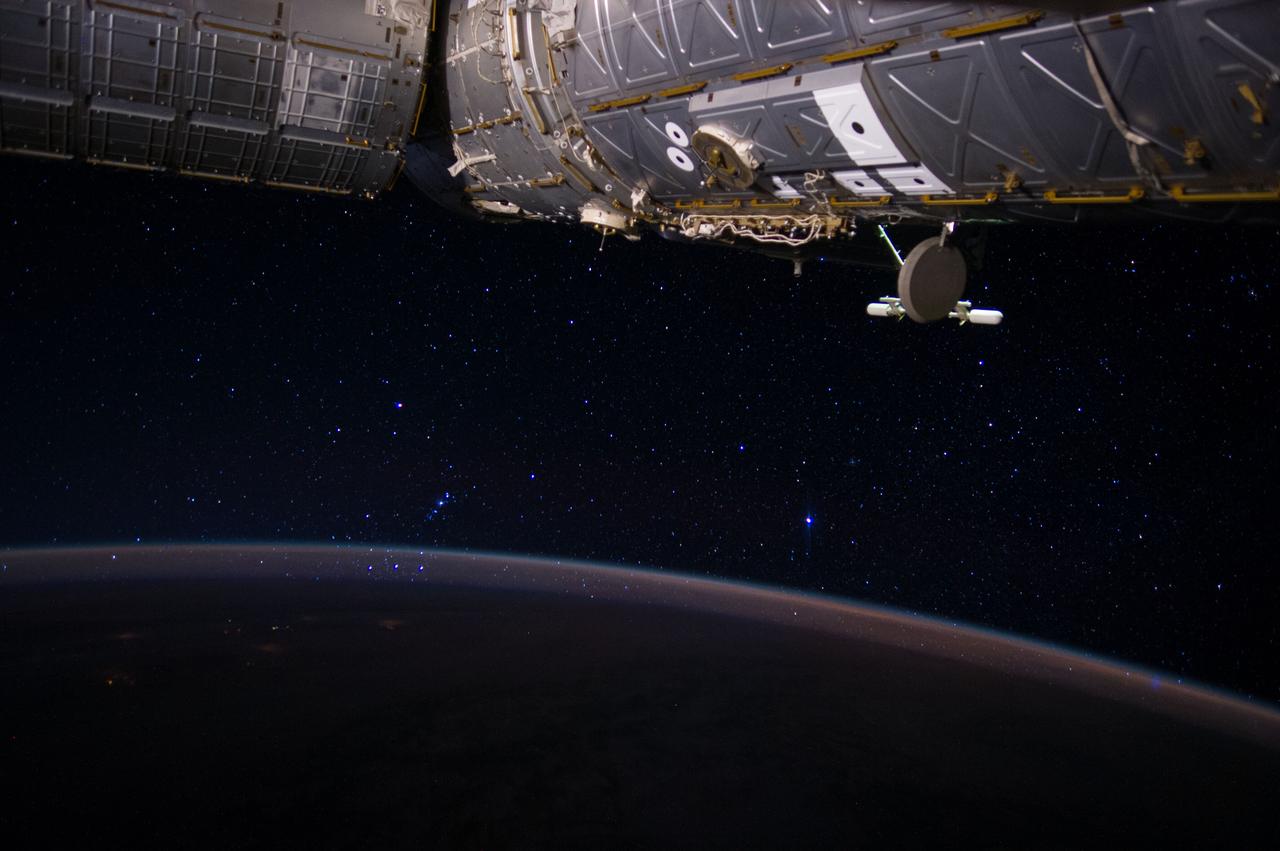
ISS040-E-017069 (23 June 2014) --- One of the Expedition 40 crew members aboard the International Space Station recorded this nocturnal scene, which connects Earth to the station and to the stars. Among the "stellar" scene is part of the constellation Orion, near the center of the frame. The U.S. lab or Destiny is seen in upper right, and JAXA's Kibo lab on the left, with the Harmony (node 2) connecting the two modules.
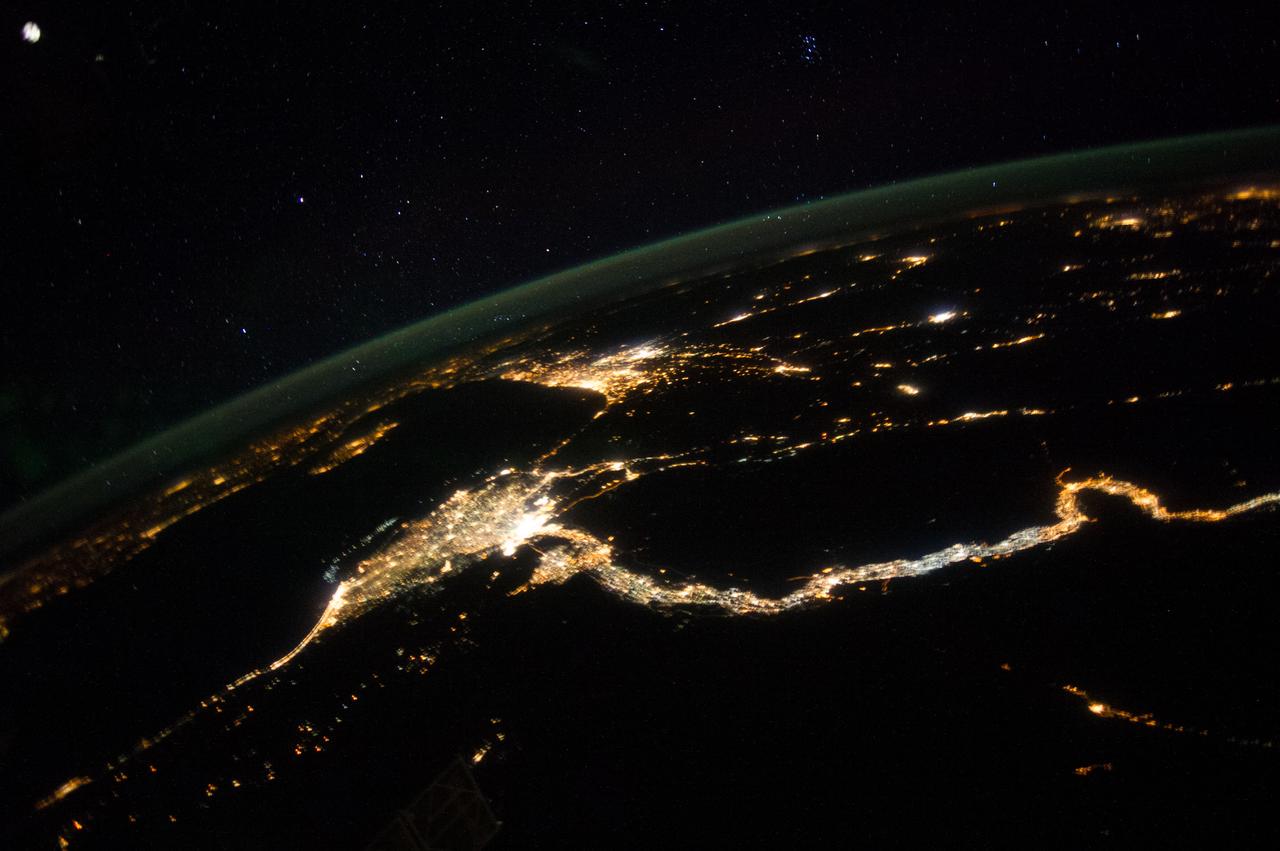
Earth Observation taken during a night pass by the Expedition 40 crew aboard the International Space Station (ISS). Folder lists this as: Cairo and Israel at night.
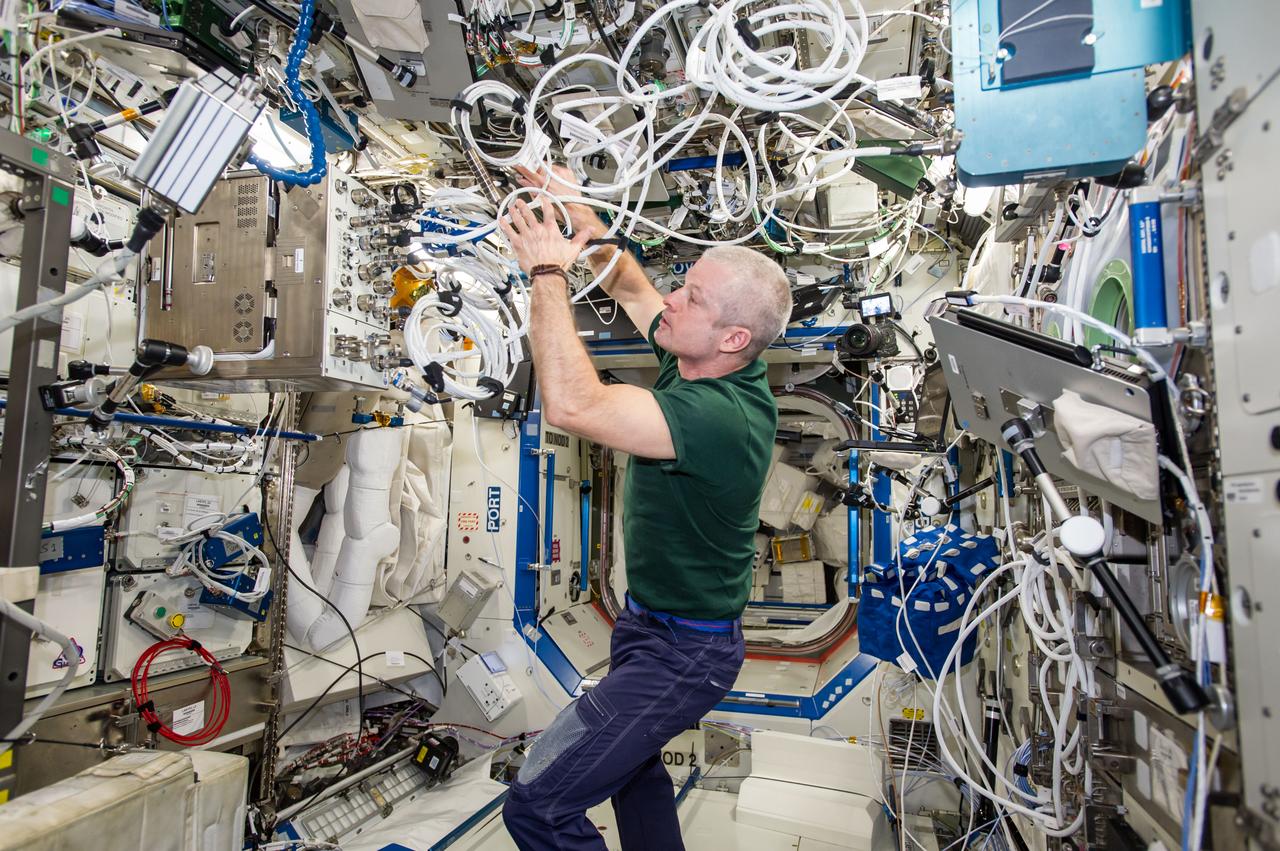
ISS040-E-123262 (2 Sept. 2014) --- NASA astronaut Steve Swanson, Expedition 40 commander, sets up the Portable Pulmonary Function System hardware for Sprint VO2max sessions in the Destiny laboratory of the International Space Station. The Sprint experiment measures the effectiveness of high-intensity, low-volume exercise training in minimizing the loss of muscle mass and bone density that occurs during spaceflight.
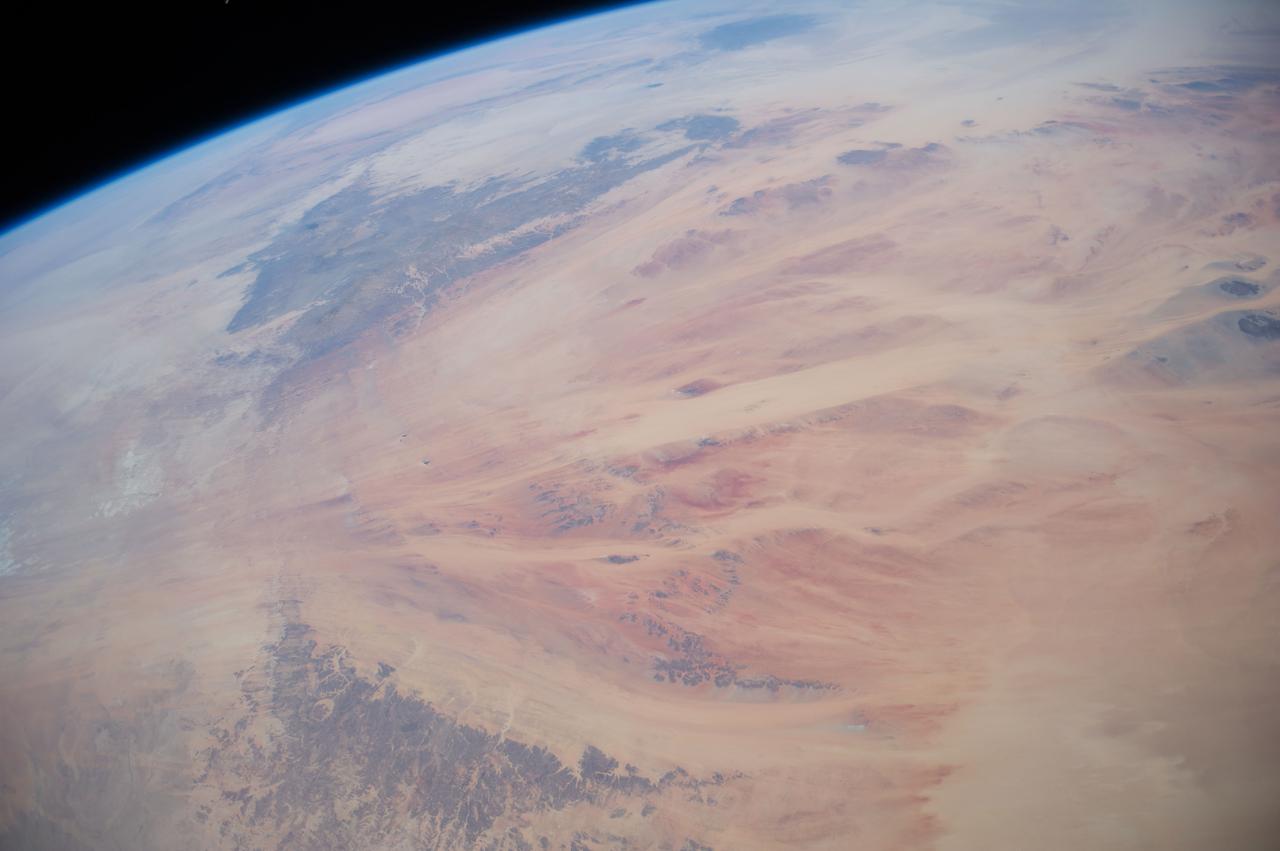
Earth Observation taken during a day pass by the Expedition 40 crew aboard the International Space Station (ISS). Folder lists this as: the Middle East, Israel.
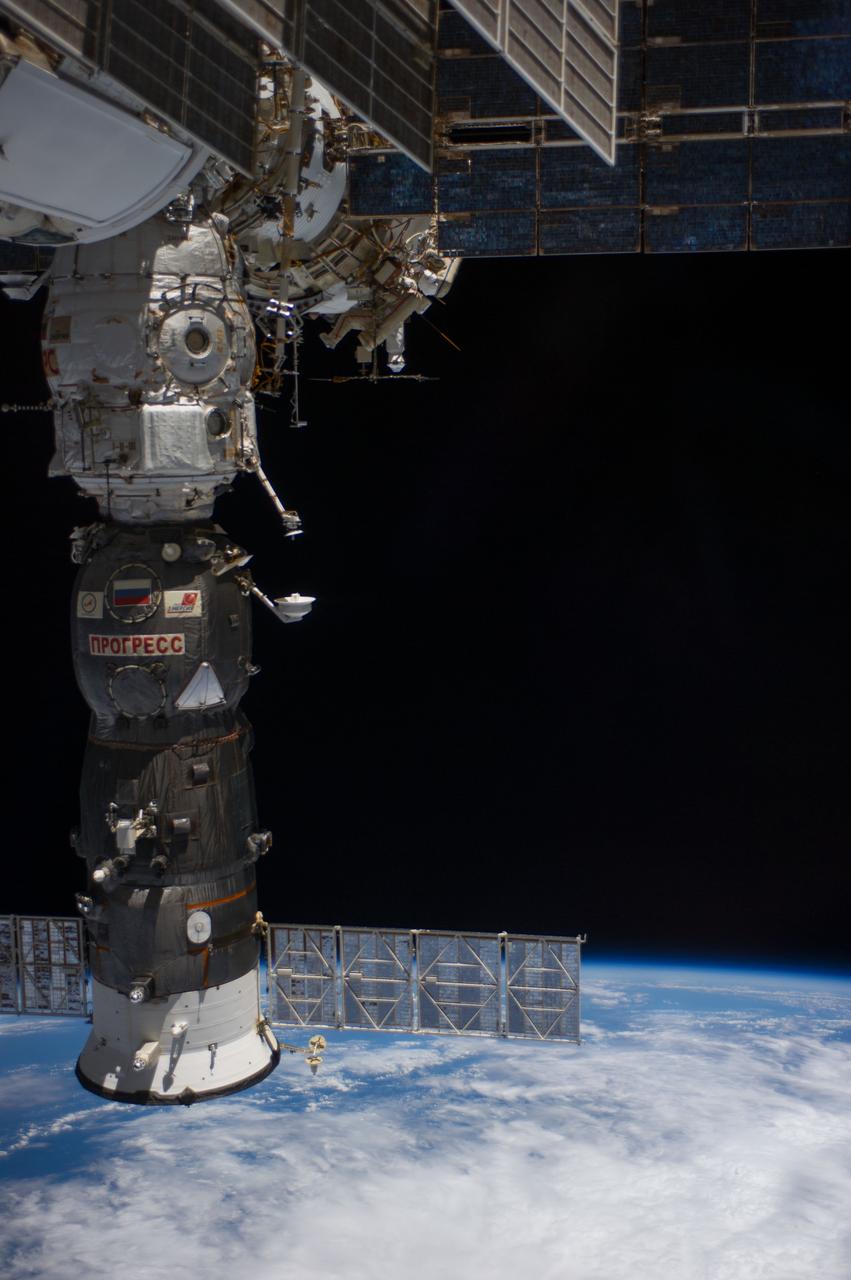
ISS040-E-015756 (19 June 2014) --- Russian cosmonauts Alexander Skvortsov (red stripes) and Oleg Artemyev, both Expedition 40 flight engineers, participate in a session of extravehicular activity (EVA) as work continues on the International Space Station. During the seven-hour, 23-minute spacewalk Skvortsov and Artemyev completed installation and experiment tasks outside the station's Russian segment. The Progress 55 spacecraft, currently docked to the Pirs Docking Compartment, is at left.

ISS040-E-006000 (29 May 2014) --- One of the six Expedition 40 crew members positioned himself in the Cupola of the Earth-orbiting International Space Station to capture this image of two Russian spacecraft docked to the orbital outpost. The recently-docked Soyuz 39 (TMA-13M) spacecraft, which brought up the Expedition 40/41 crew, can be seen in the foreground docked to MRM1 (Rassvet); while cargo carrier Progress 55 is attached to Pirs in the background.
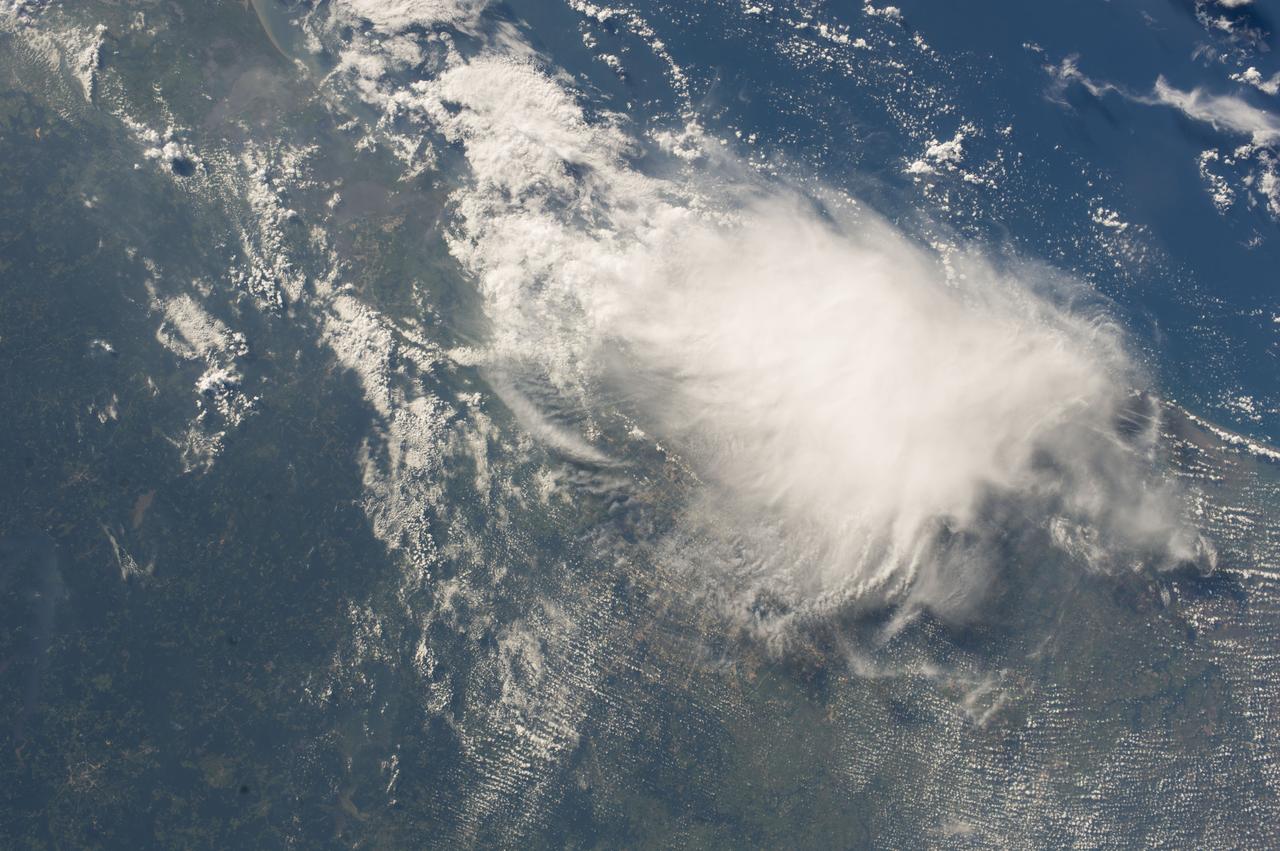
Earth Observation taken during a day pass by the Expedition 40 crew aboard the International Space Station (ISS). Folder lists this as: United States - possible poor camera settings.
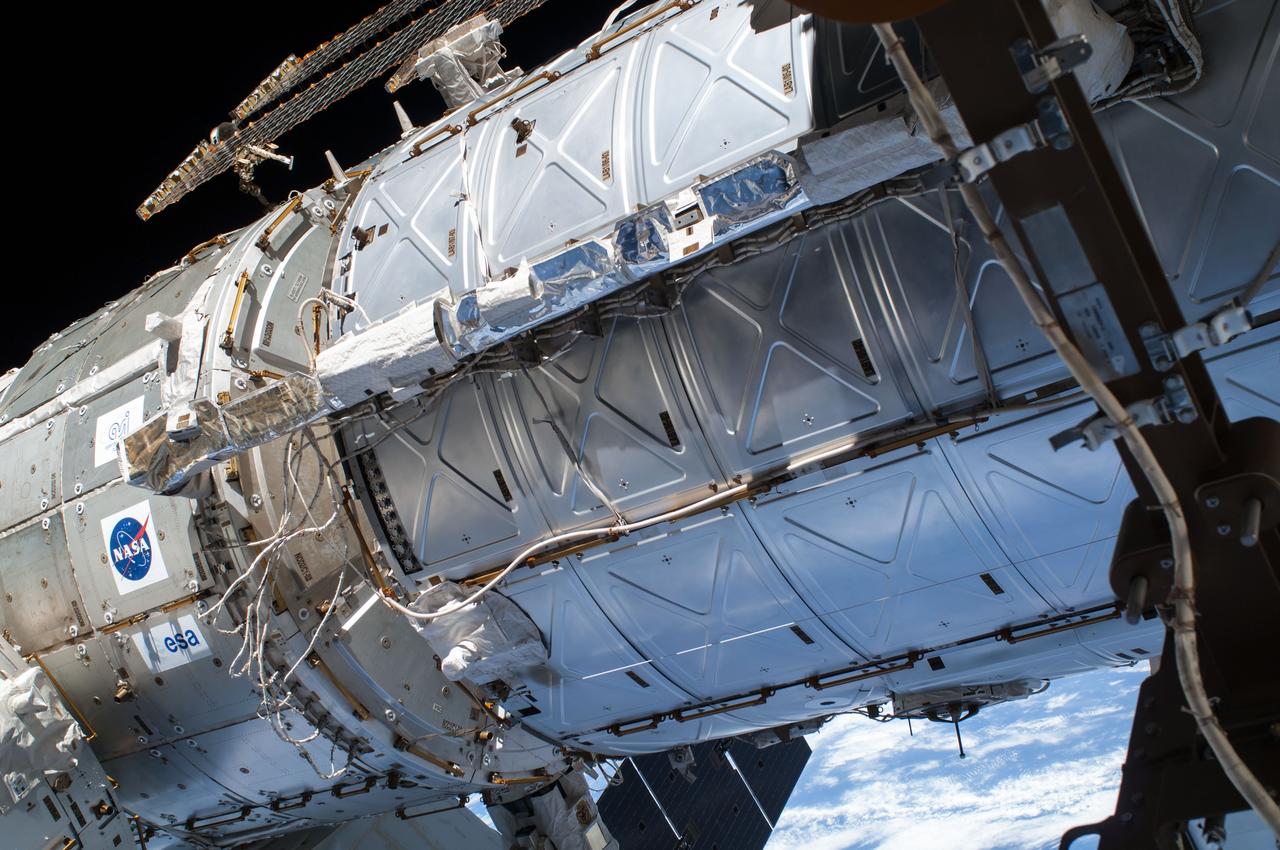
ISS041-E-067002 (7 Oct. 2014) --- NASA astronaut Reid Wiseman, Expedition 41 flight engineer, participates in a session of extravehicular activity (EVA) as work continues on the International Space Station. During the six-hour, 13-minute spacewalk, Wiseman and European Space Agency astronaut Alexander Gerst (out of frame), flight engineer, worked outside the space station's Quest airlock relocating a failed cooling pump to external stowage and installing gear that provides back up power to external robotics equipment.
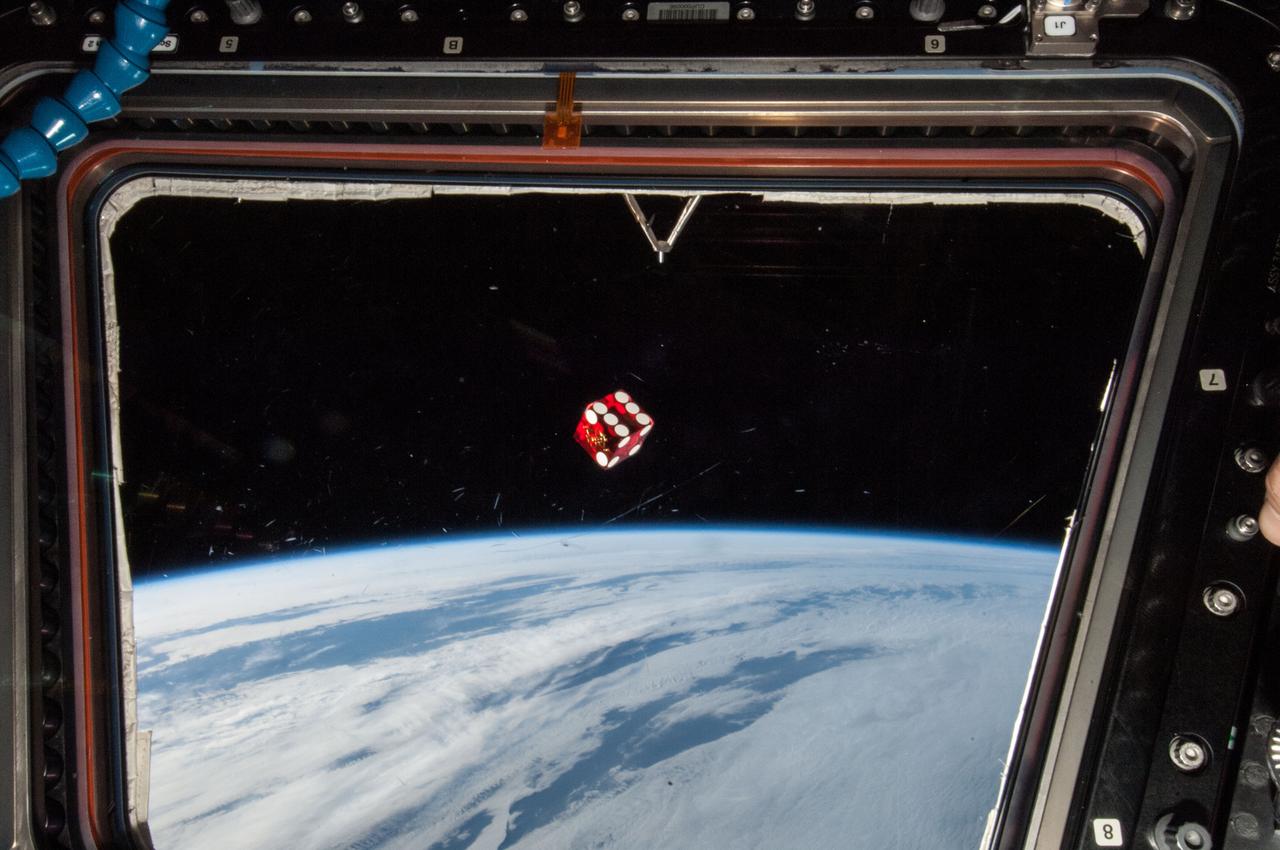
ISS040-E-006093 (31 May 2014) --- With a few explanatory words attached to a message to Earth, Expedition 40 Flight Engineer Reid Wiseman of NASA sent down this image of a single piece of dice floating in front of one of the windows in the Cupola of the Earth-orbiting International Space Station. Wiseman commented, "This one is just for us board game players, table top strategy gamers, (etc.) whose dice collection behaviour borders on hoarding."
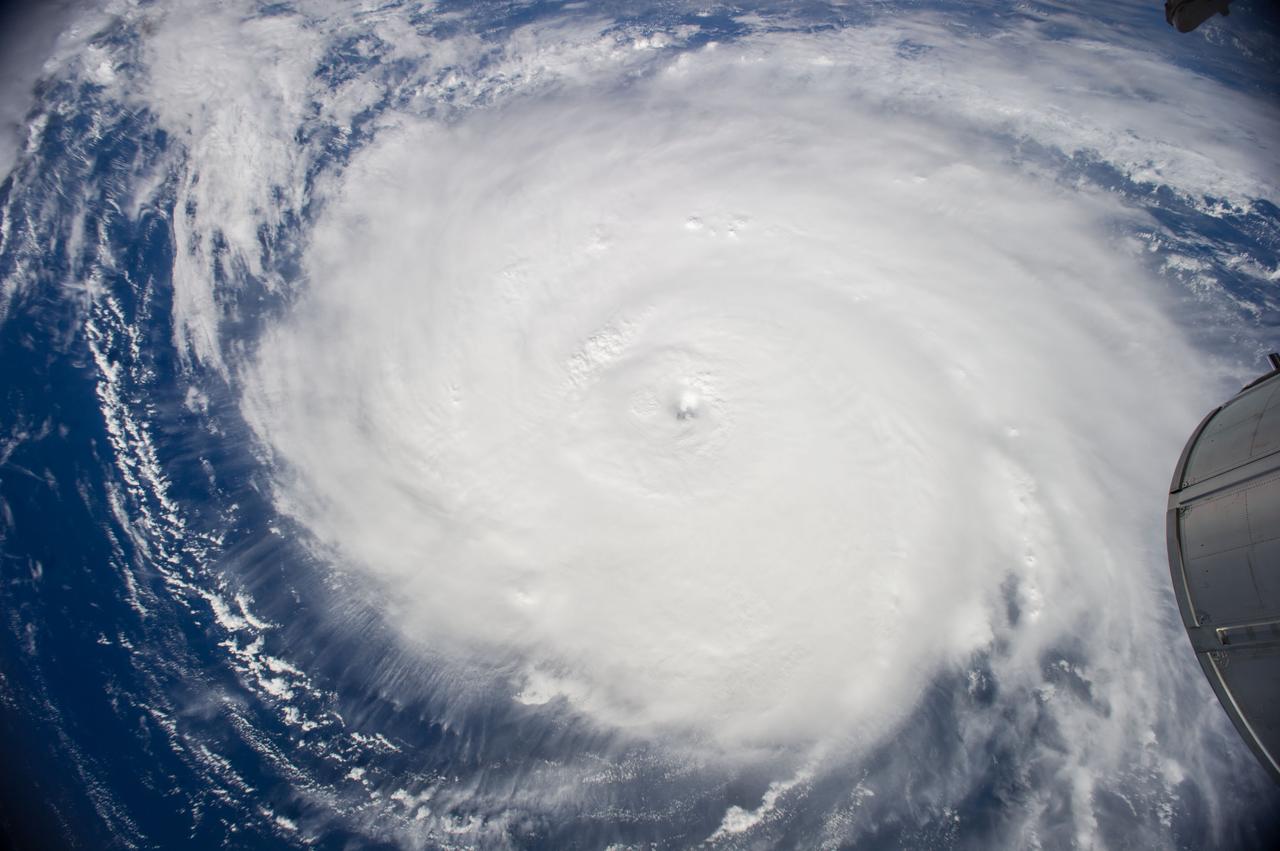
ISS041-E-078247 (16 Oct. 2014) --- One of the crew members aboard the International Space Station took this picture of Hurricane Gonzalo on Oct. 16, 2014. The storm's eye appears in the center of the frame. Gonzalo hit Bermuda on the following day, as a powerful Category 2 storm, with winds estimated at 110 miles per hour.
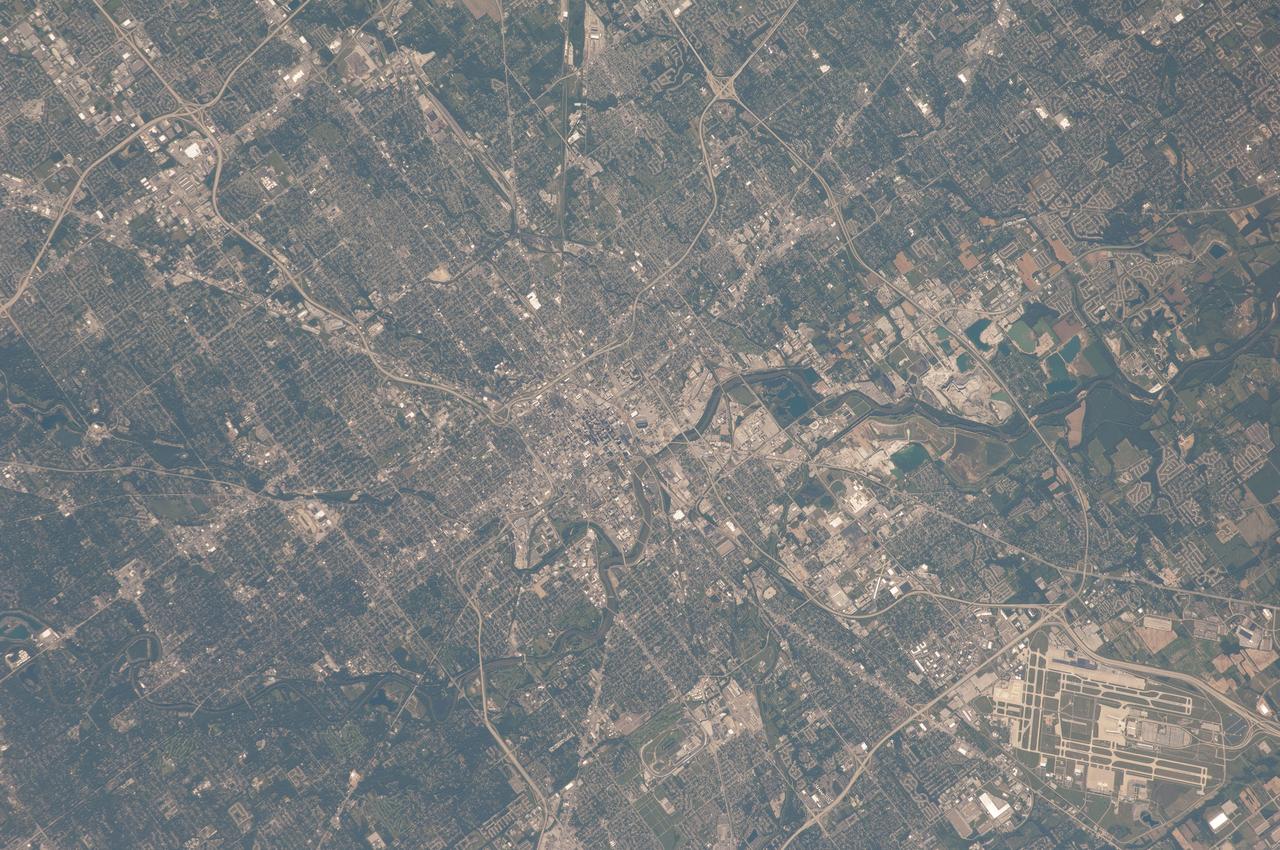
Earth Observation taken during a day pass by the Expedition 40 crew aboard the International Space Station (ISS).
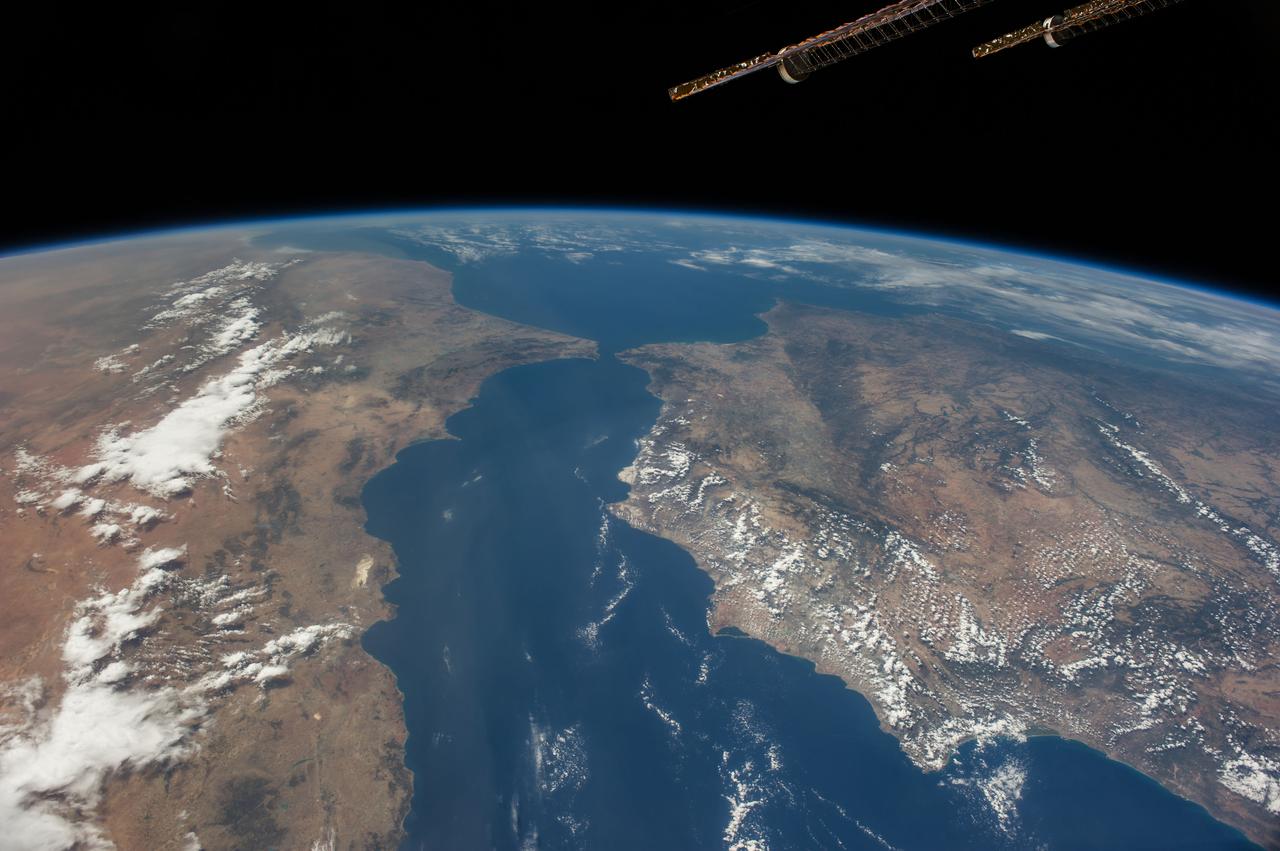
ISS040-E-105800 (23 Aug. 2014) --- One of the Expedition 40 crew members aboard the International Space Station, flying at an altitude of 220 nautical miles, recorded this oblique panorama showing almost the entire Iberian Peninsula (Spain and Portugal) at right, Morocco and other parts of Africa (left) and the Strait of Gibraltar (top center) on Aug. 23, 2014. A 28mm focal length was used.
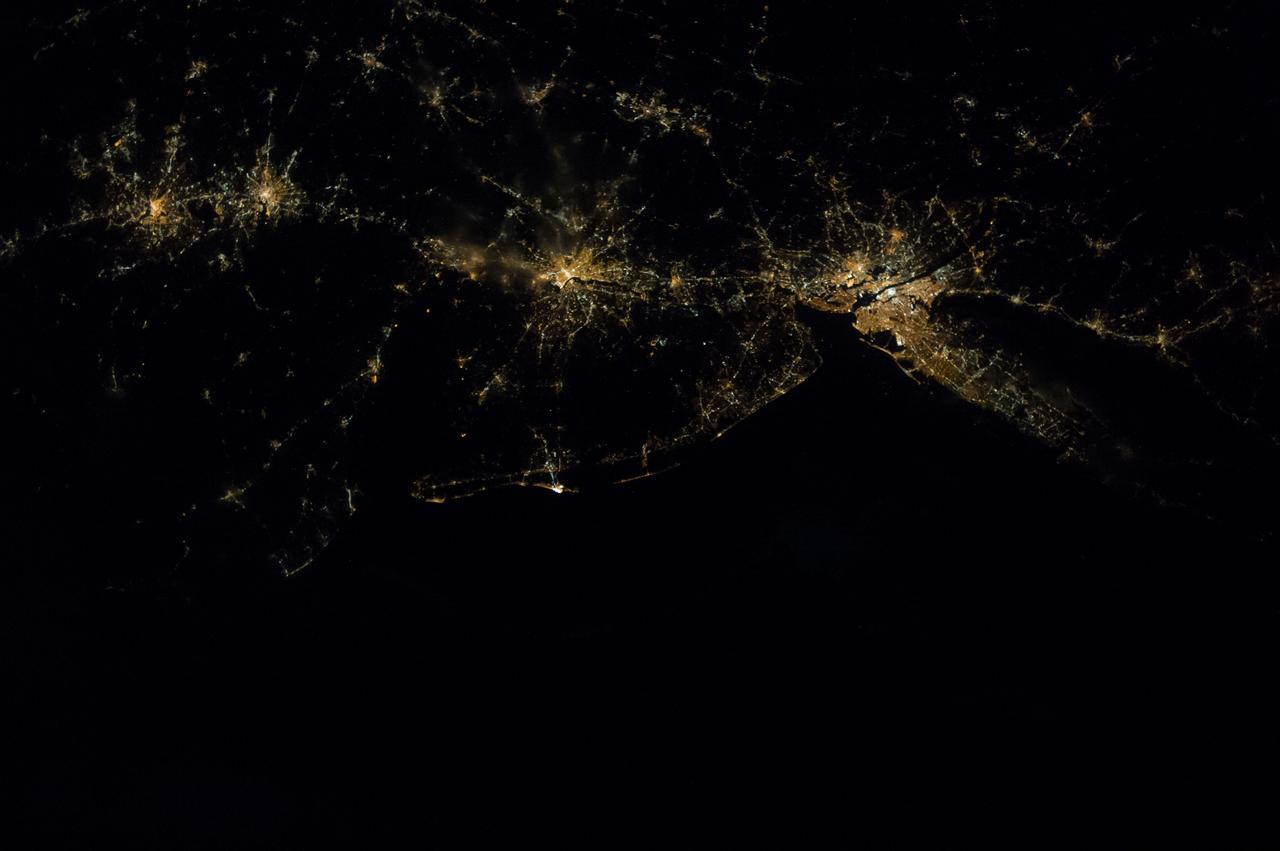
ISS041-E-016740 (17 Sept. 2014) --- One of the Expedition 41 crew members aboard the Earth-orbiting International Space Station exposed this Sept. 17 nocturnal scene featuring most of the largest cities on the central eastern seaboard. Even at 221 nautical miles above Earth, the 28mm focal length on the still camera was able to pick up detail in the image, for example, Central Park on Manhattan at right frame. The nation?s capital is very near frame center.

Earth Observation taken during a day pass by the Expedition 40 crew aboard the International Space Station (ISS). Folder lists this as: Typhoon Halong wide angle shots.
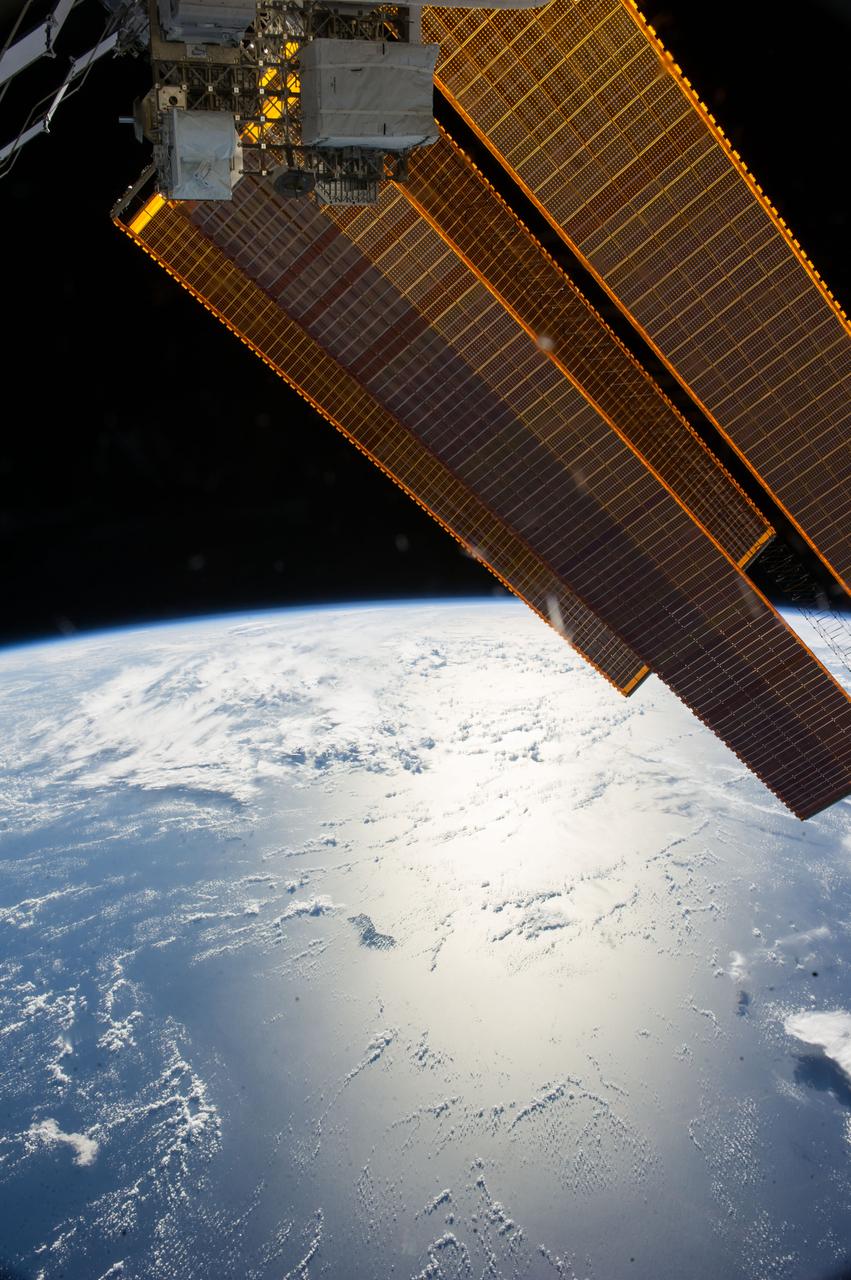
ISS040-E-006252 (30 May 2014) --- Solar array panels and Earth’s horizon are featured in this image photographed by an Expedition 40 crew member on the International Space Station.
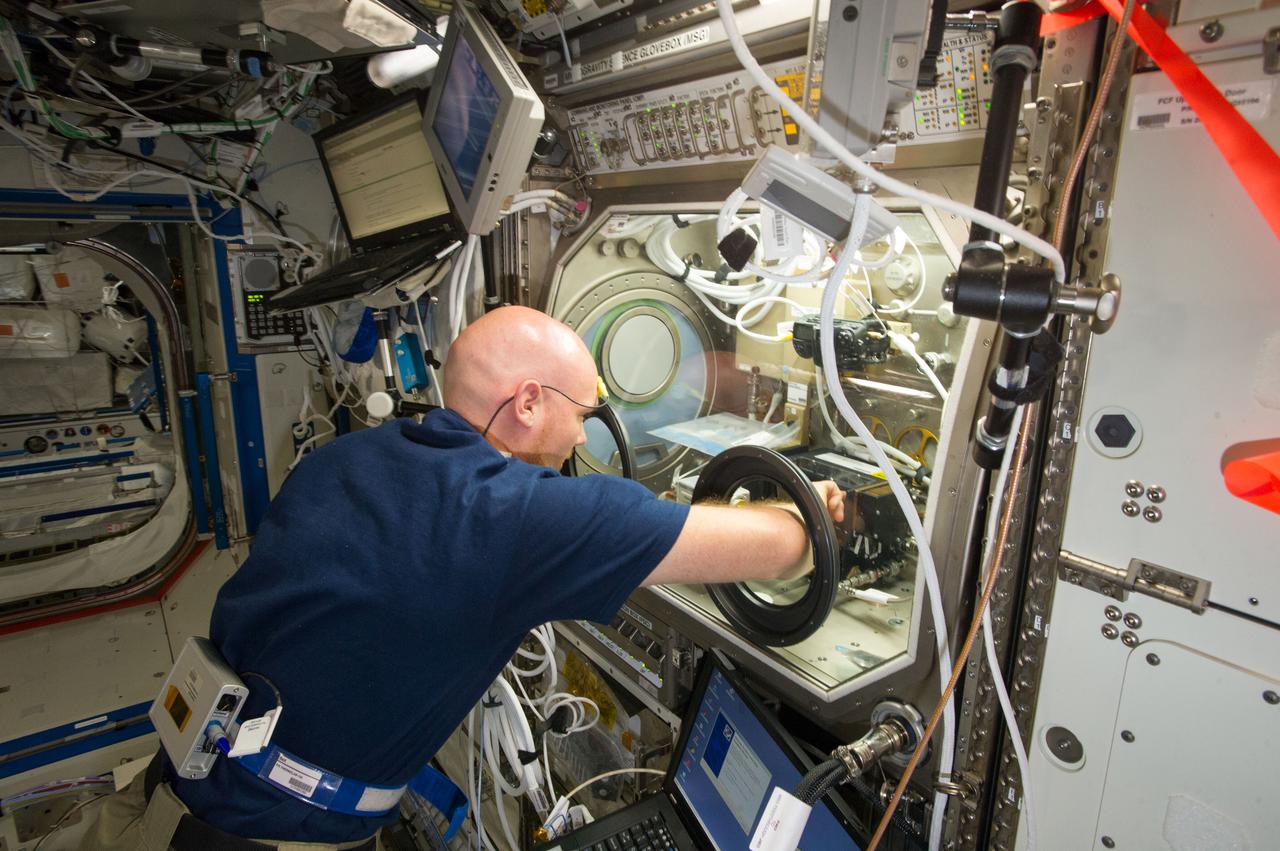
ISS040-E-011004 (13 June 2014) --- European Space Agency astronaut Alexander Gerst, Expedition 40 flight engineer, works with samples and hardware for a combustion experiment known as the Burning and Suppression of Solids (BASS) in the Microgravity Science Glovebox (MSG) in the Destiny laboratory of the International Space Station.
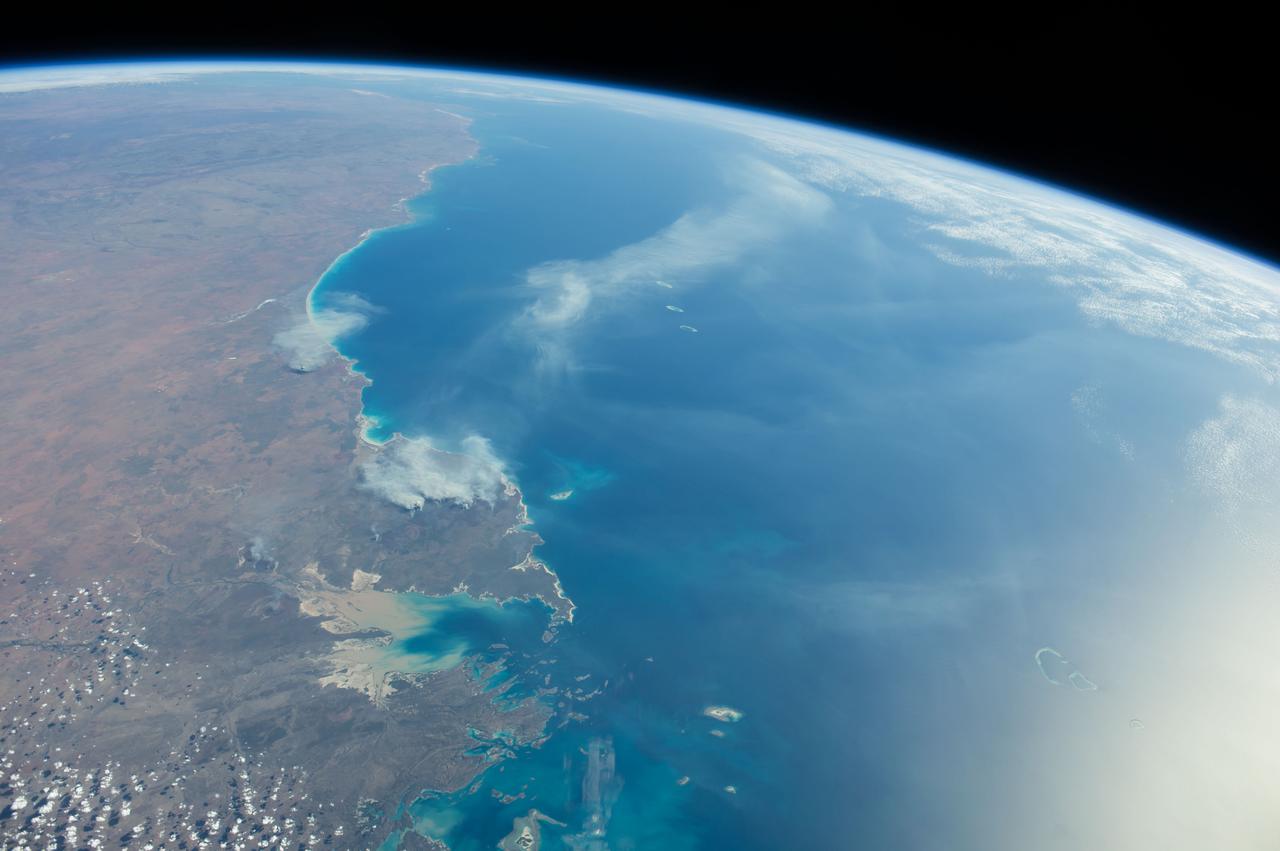
Earth Observation taken during a day pass by the Expedition 40 crew aboard the International Space Station (ISS). Folder lists this as: Australia.

Earth observation taken during a day pass by the Expedition 40 crew aboard the International Space Station (ISS). Folder lists this as: areas in Texas.
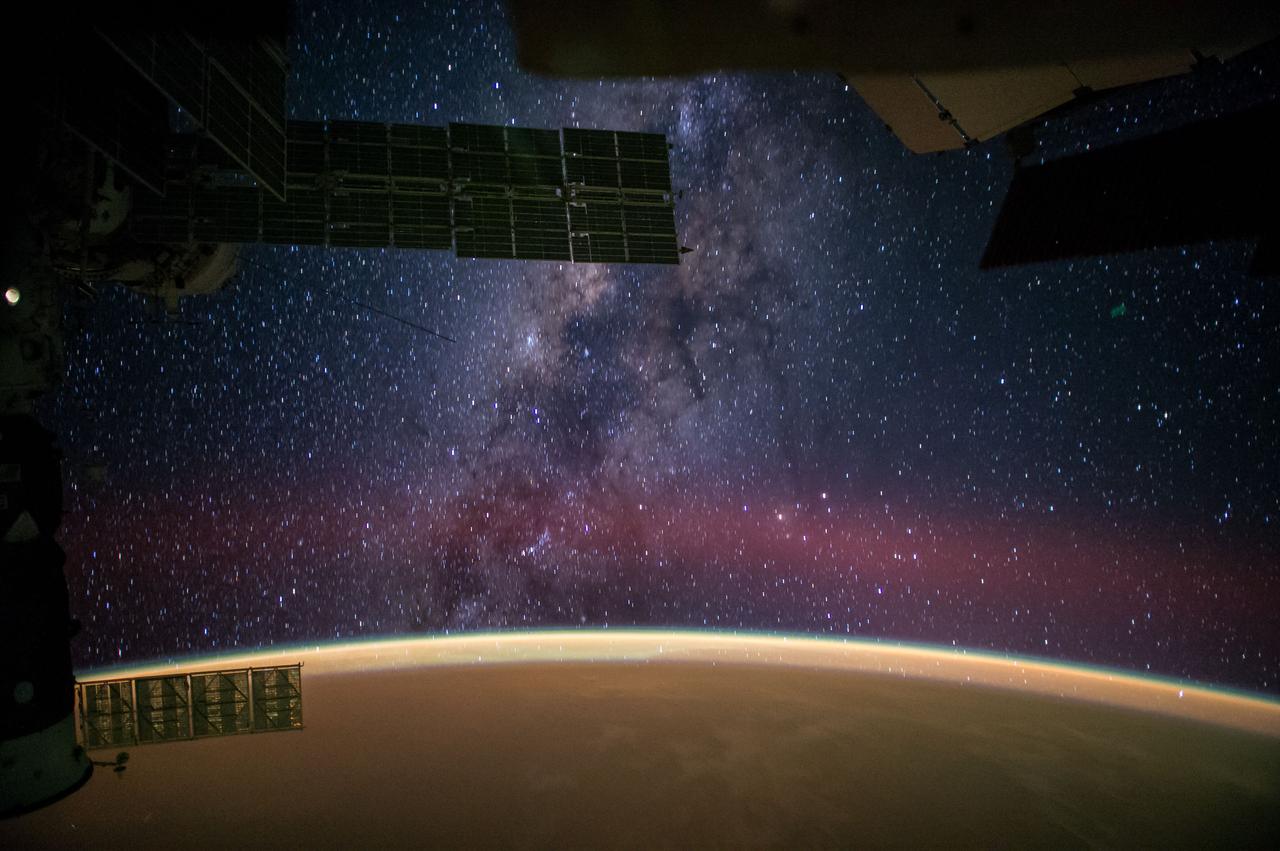
ISS041-E-045469 (27 Sept. 2014) --- One of the Expedition 41 crew members aboard the International Space Station, flying at an altitude of 222 nautical miles above a point in the Atlantic Ocean several hundred miles off the coast of Africa near the Tropic of Cancer, photographed this eye-catching panorama of the night sky on Sept. 27. NASA astronaut Reid Wiseman, flight engineer, tweeted the image, which was taken with an electronic still camera, set with a 24mm focal length. In his accompanying comments, Wiseman stated, "Sahara sands make the Earth glow orange."