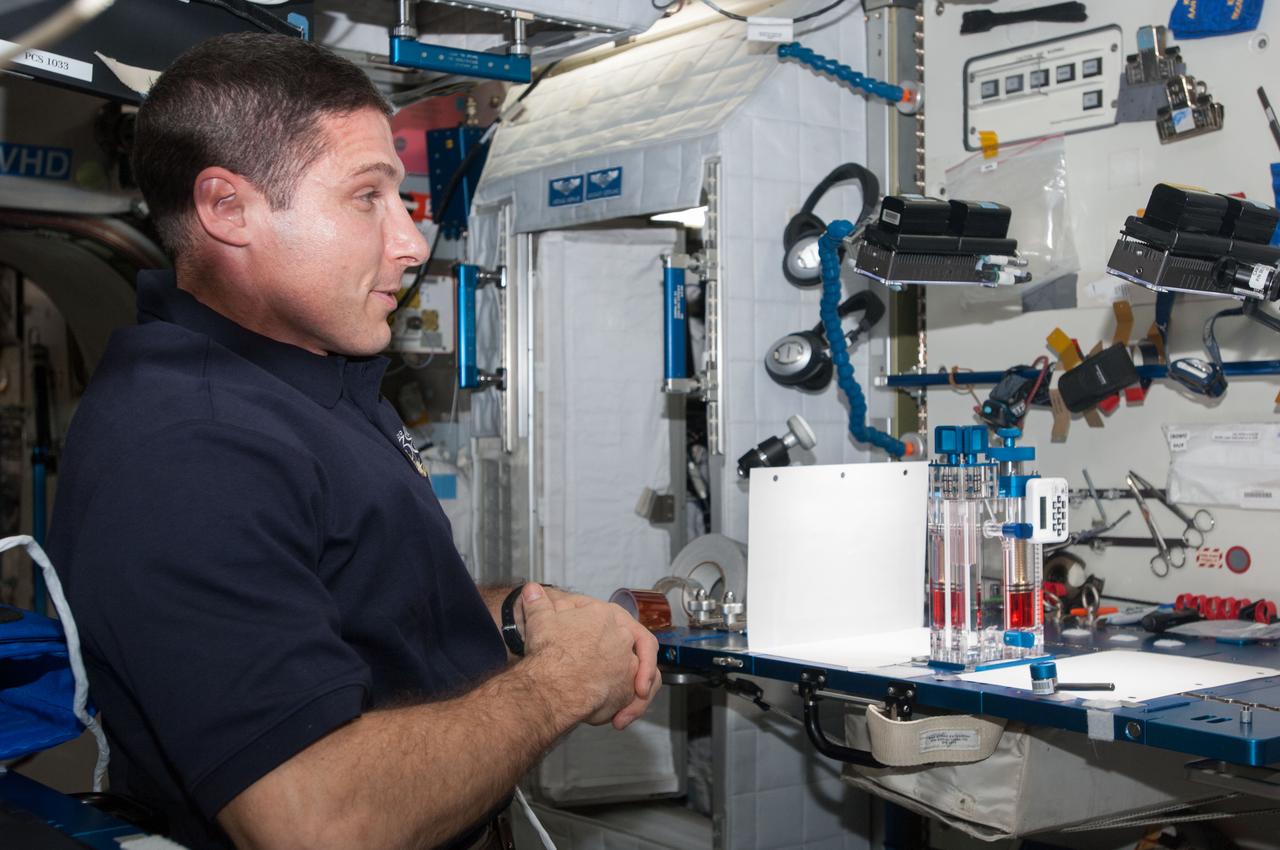
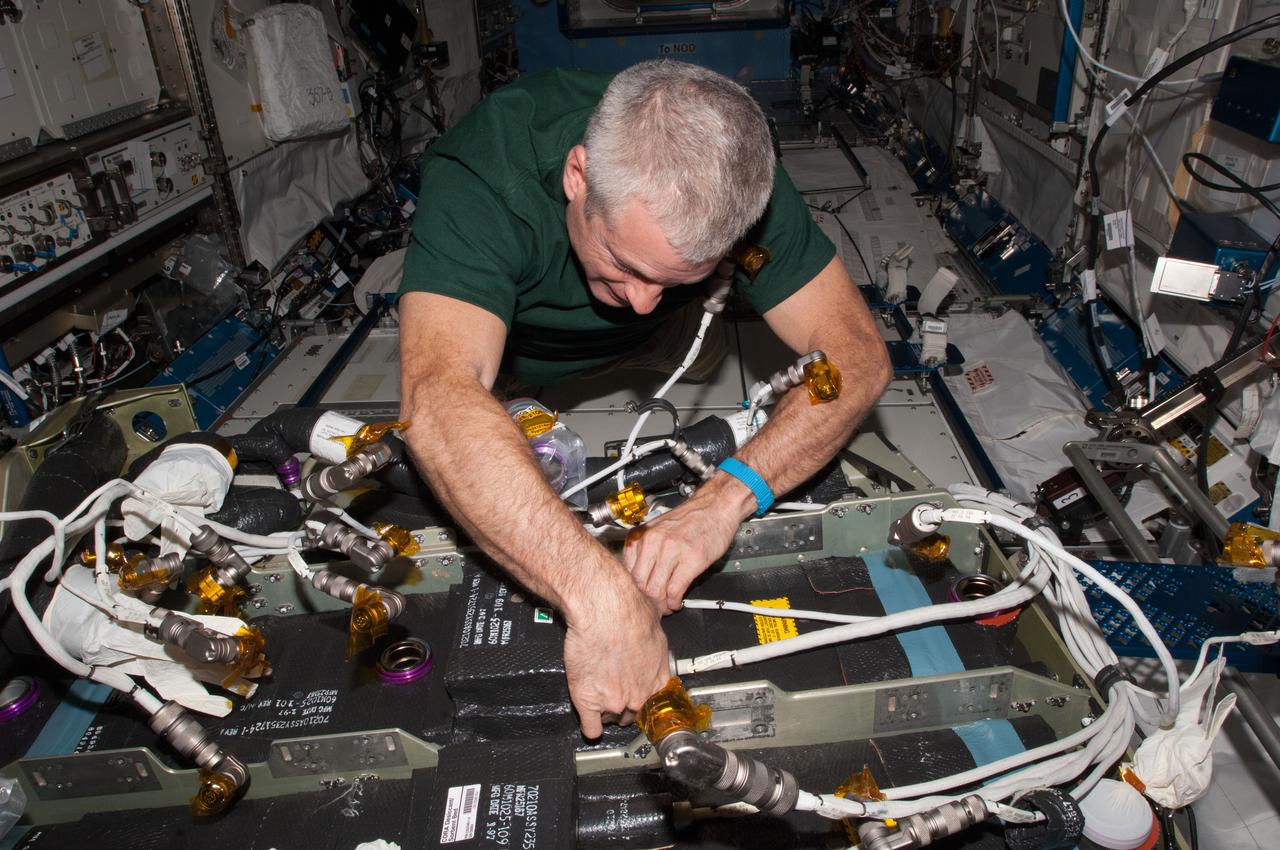
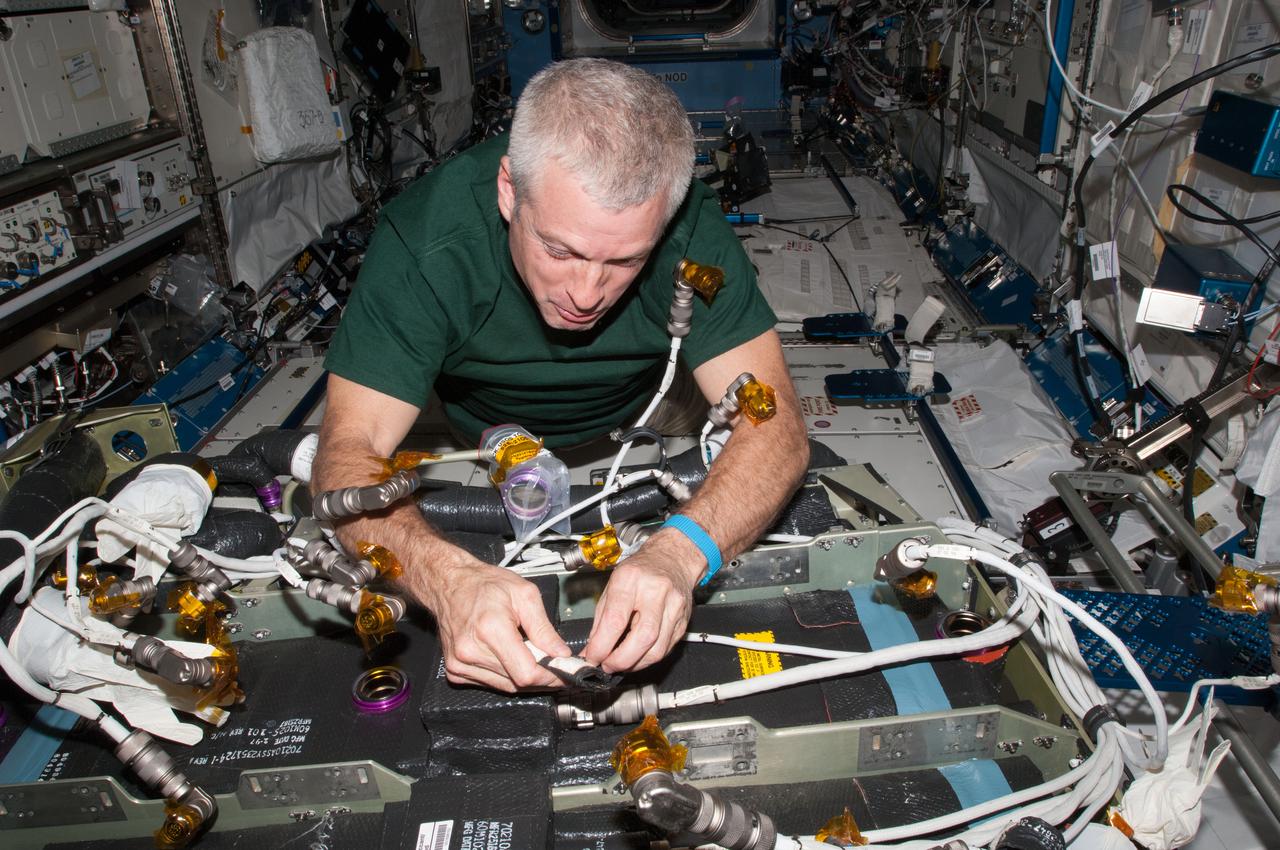
ISS038-E-000263 (11 Nov. 2013) --- NASA astronaut Michael Hopkins, Expedition 38 flight engineer, conducts a session with the Capillary Flow Experiment (CFE) in the Harmony node of the International Space Station. CFE is a suite of fluid physics experiments that investigate how fluids move up surfaces in microgravity. The results aim to improve current computer models that are used by designers of low gravity fluid systems and may improve fluid transfer systems for water on future spacecraft.
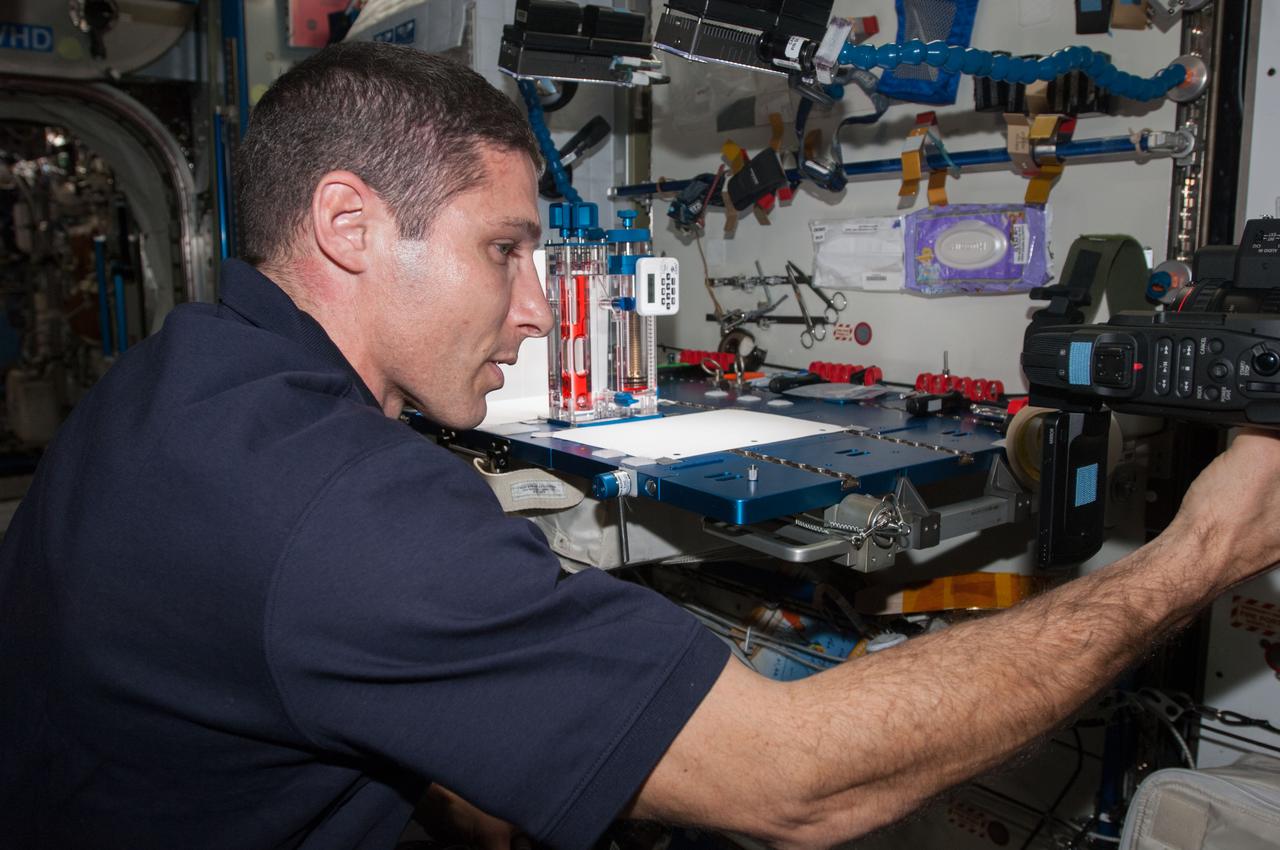
ISS038-E-000269 (11 Nov. 2013) --- NASA astronaut Michael Hopkins, Expedition 38 flight engineer, conducts a session with the Capillary Flow Experiment (CFE) in the Harmony node of the International Space Station. CFE is a suite of fluid physics experiments that investigate how fluids move up surfaces in microgravity. The results aim to improve current computer models that are used by designers of low gravity fluid systems and may improve fluid transfer systems for water on future spacecraft.
![Earth observation taken by the Expedition 39 crew aboard the ISS. Image was released by astronaut on Twitter and downlinked in folder: CT [Connecticut].](https://images-assets.nasa.gov/image/iss039e002996/iss039e002996~medium.jpg)
Earth observation taken by the Expedition 39 crew aboard the ISS. Image was released by astronaut on Twitter and downlinked in folder: CT [Connecticut].
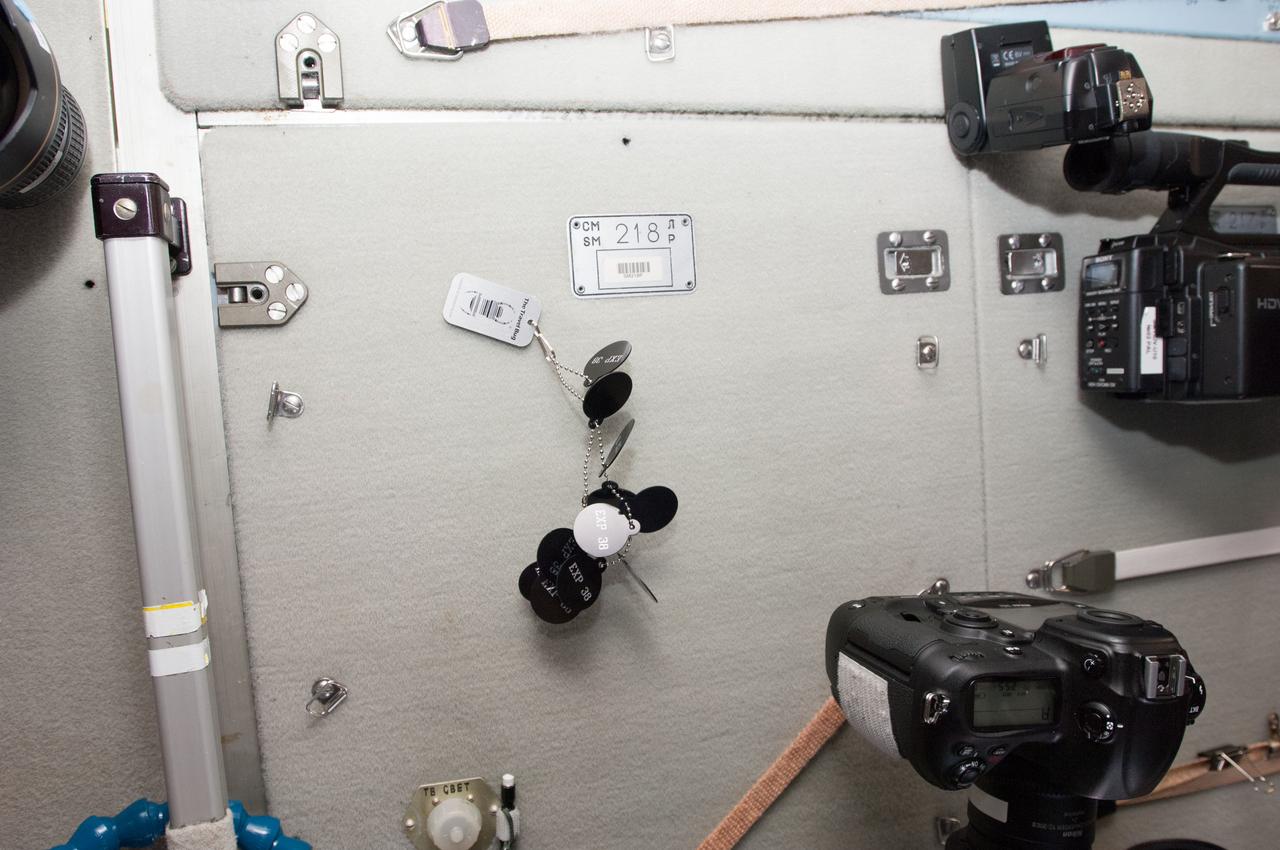
View of geocaching travel bug attached to chain,in the Service Module (SM) - (Panel 218). Photo was taken during Expedition 38. Image was released by astronaut on Twitter.
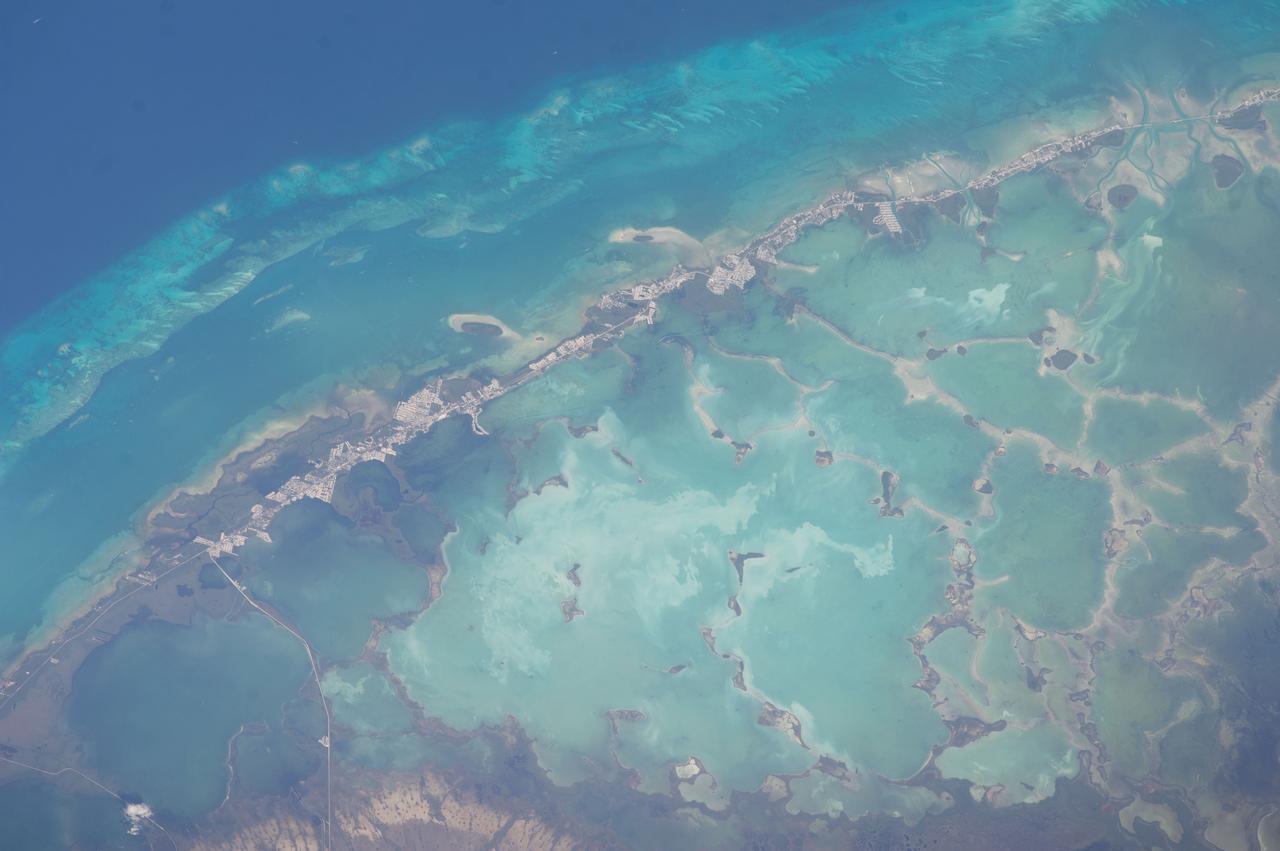
Earth observation taken by the Expedition 39 crew aboard the ISS. Image downlinked in folder: Seattle to Florida. and released by astronaut on Twitter.
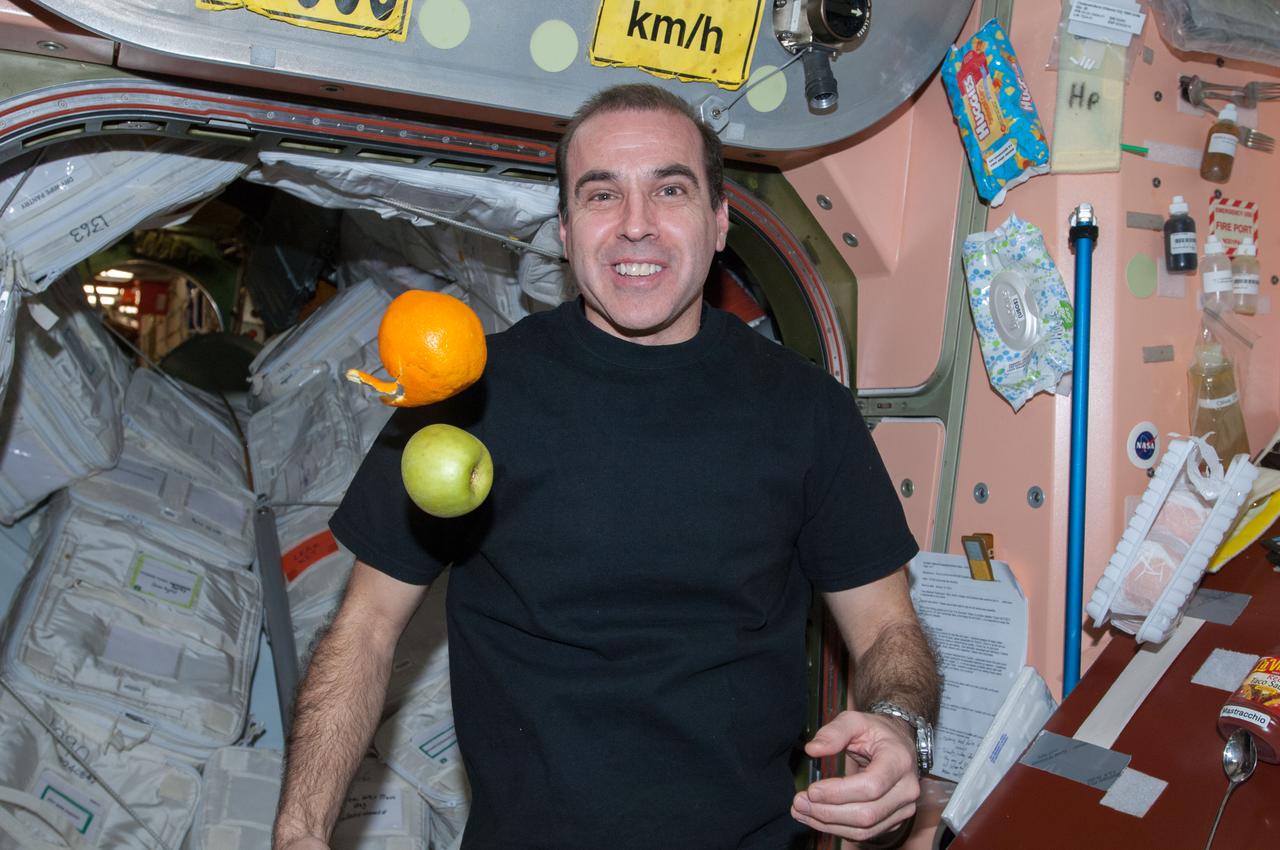
ISS038-E-043011 (6 Feb. 2014) --- NASA astronaut Rick Mastracchio, Expedition 38 flight engineer, is pictured near fresh fruit floating freely in the Unity node of the International Space Station. The fruit was brought to the station on the ISS Progress 54 cargo spacecraft, which docked Feb. 5, 2014.
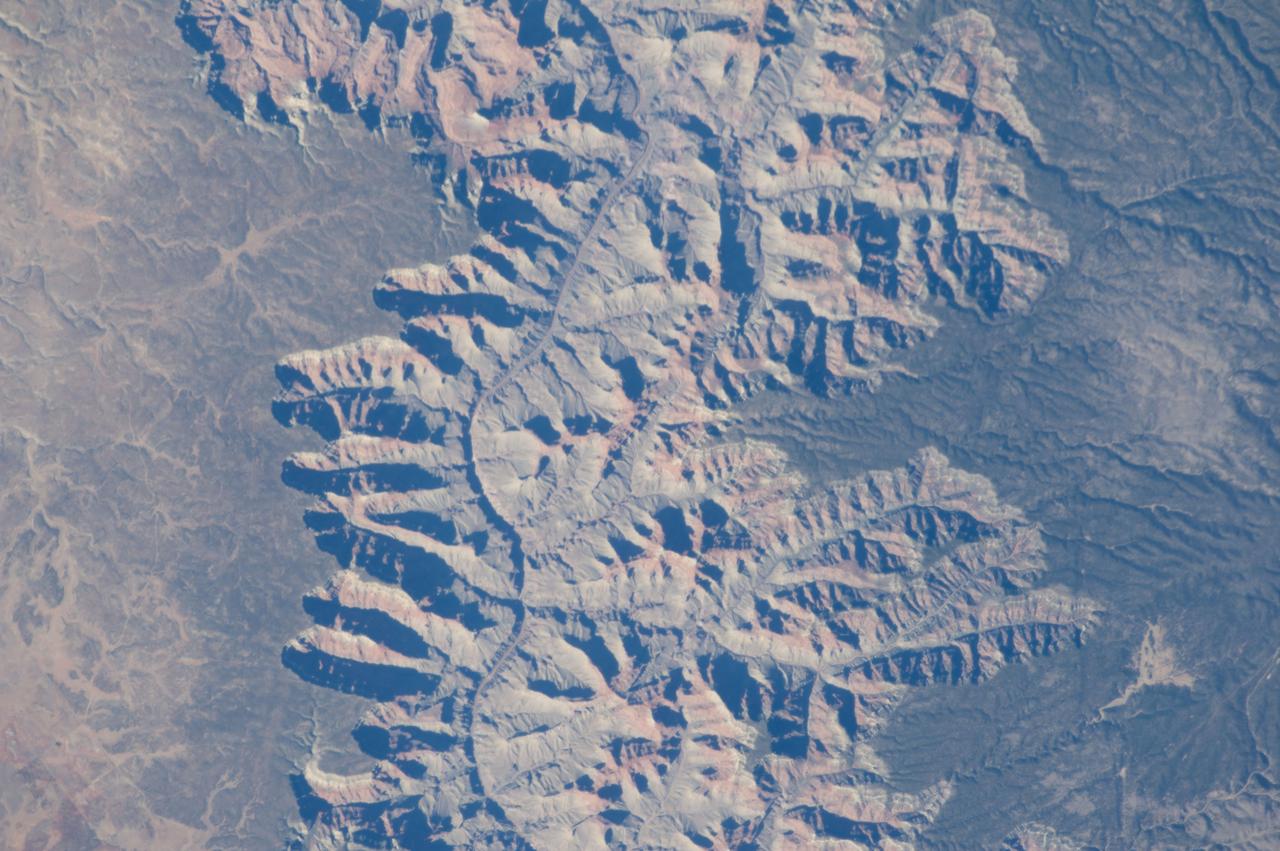
Earth Observations taken by Expedition 38 crewmember. Photographer indicates California and the Grand Canyon. Image was released by astronaut on Twitter.
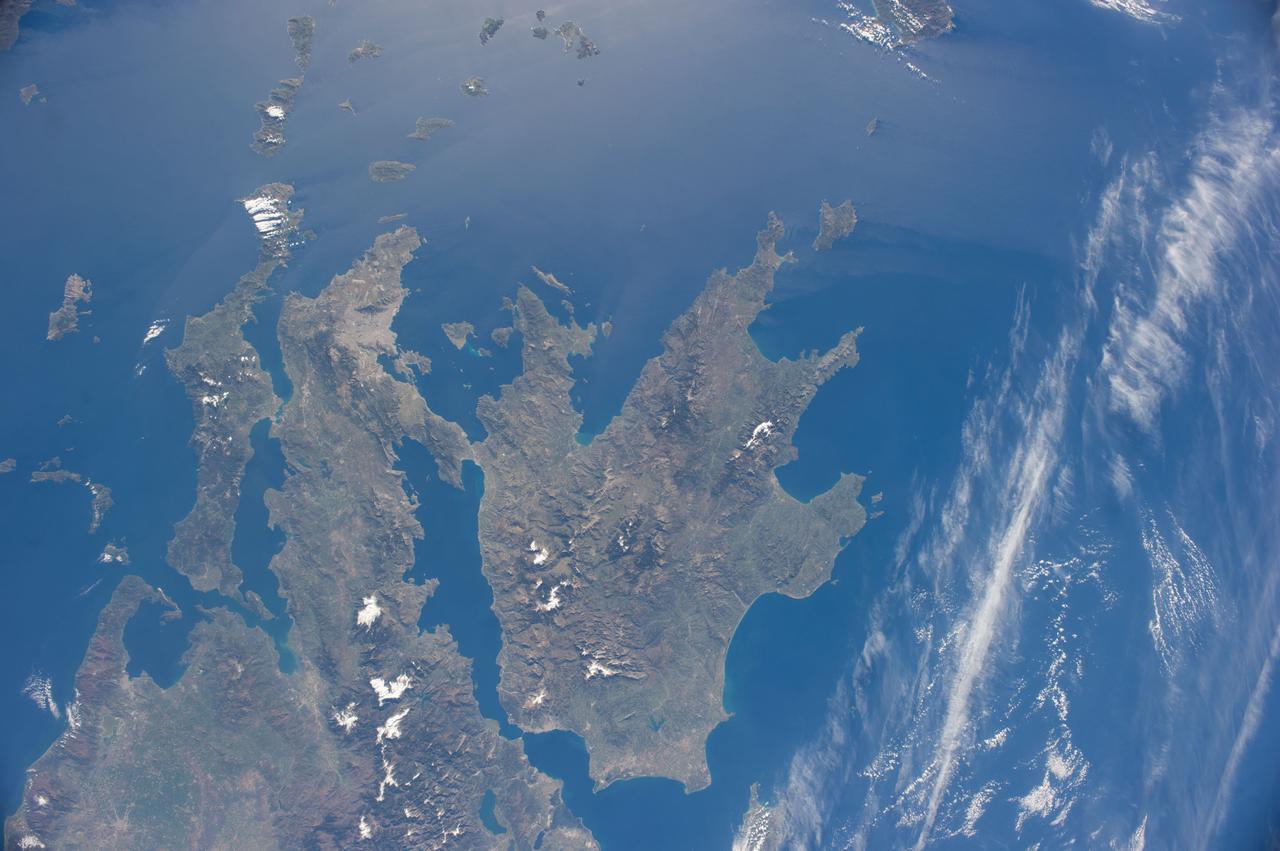
ISS039-E-003505 (21 March 2014) --- The Peloponnese, Greece is featured in this image photographed by an Expedition 39 crew member on the International Space Station. This view shows most of Greece. The urban region of Athens is readily recognizable due to its size and light tone compared to the surrounding landscape, although smaller Megara and Lamia also stand out. The dark-toned mountains with snow-covered peaks contrast with the warmer, greener valleys where agriculture takes place. The intense blue of the Mediterranean Sea fades near the sun?s reflection point, where numerous wind streaks in the lee of the island become visible along the right side of the image. The Peloponnese, ancient Sparta, is the great peninsula separated from the mainland by the narrow Isthmus of Corinth. Several times over the centuries the narrows have acted as a defensive point against attack from the mainland. More recently in 1893 the narrows provided a point of connection when a ship canal was excavated between the gulfs to the west and to the east.

Earth observation taken by the Expedition 39 crew aboard the ISS. Image was released by astronaut on Twitter and downlinked in folder: Turkey.
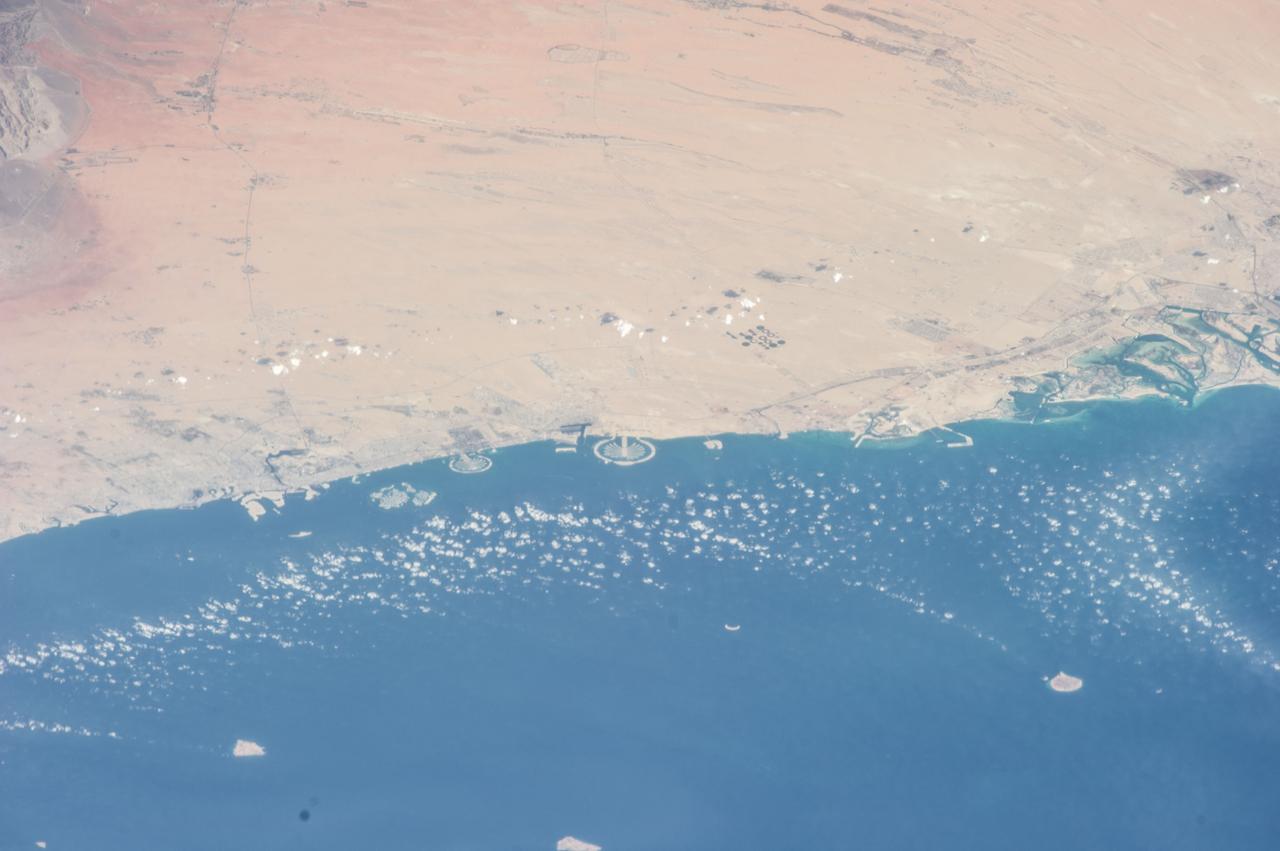
Earth Observations taken by Expedition 38 crewmember. Crewmember indicates Middle East man-made Islands. Image was released by astronaut on Twitter.
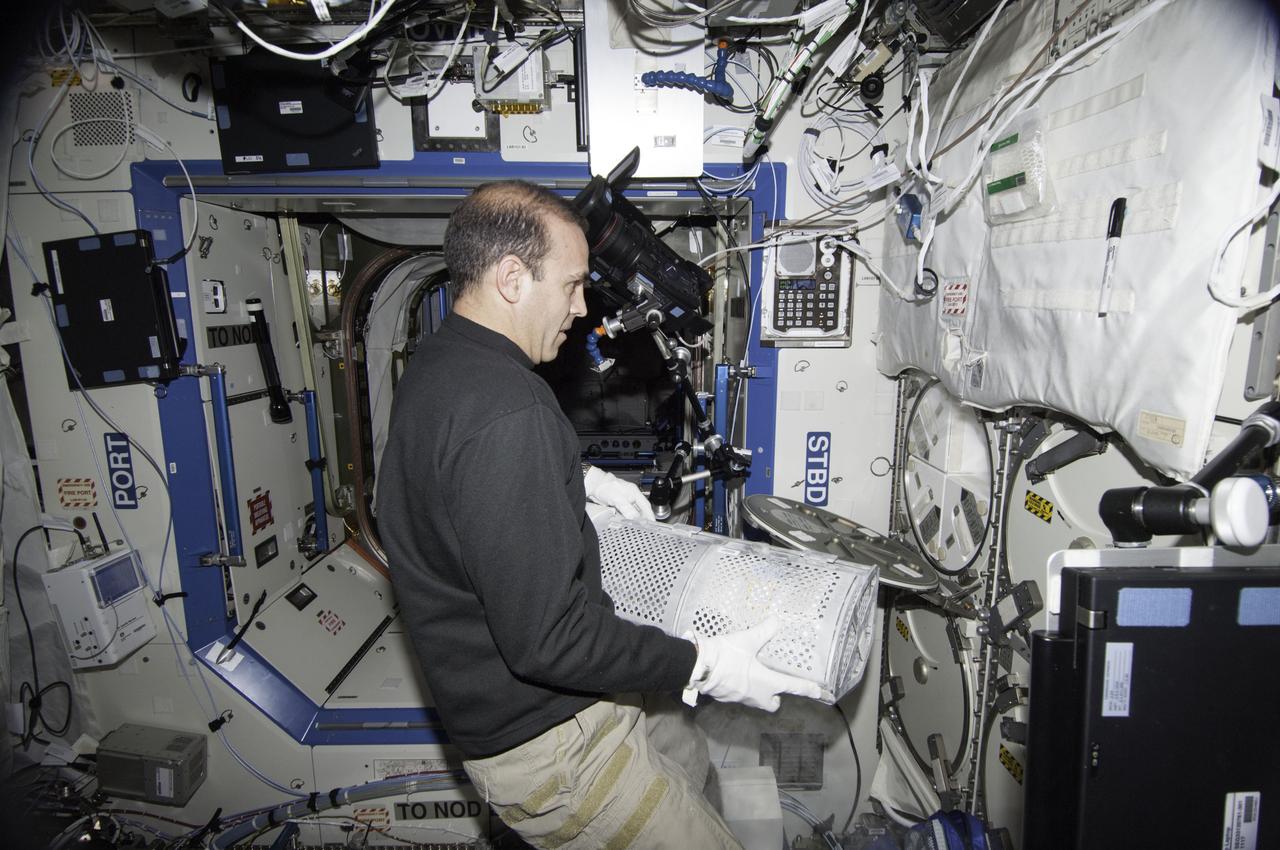
ISS038-E-006765 (21 Nov. 2013) --- In the International Space Station's Destiny laboratory, NASA astronaut Rick Mastracchio, Expedition 38 flight engineer, prepares to replace a dewar tray in the Minus Eighty Laboratory Freezer for ISS (MELFI) after inserting biological samples into the trays.
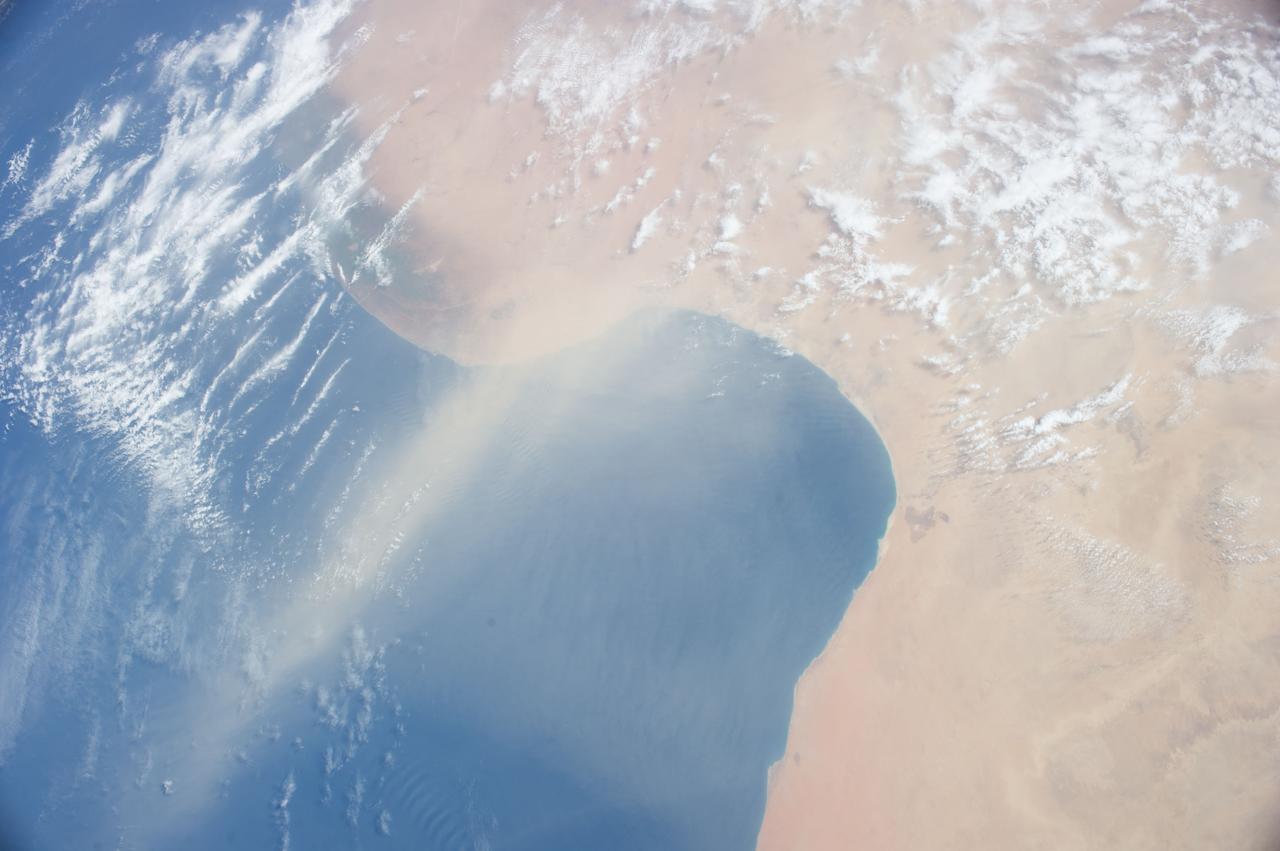
Earth observation taken by the Expedition 39 crew aboard the ISS. Image downlinked in folder: North Africa, and released by astronaut on Twitter.
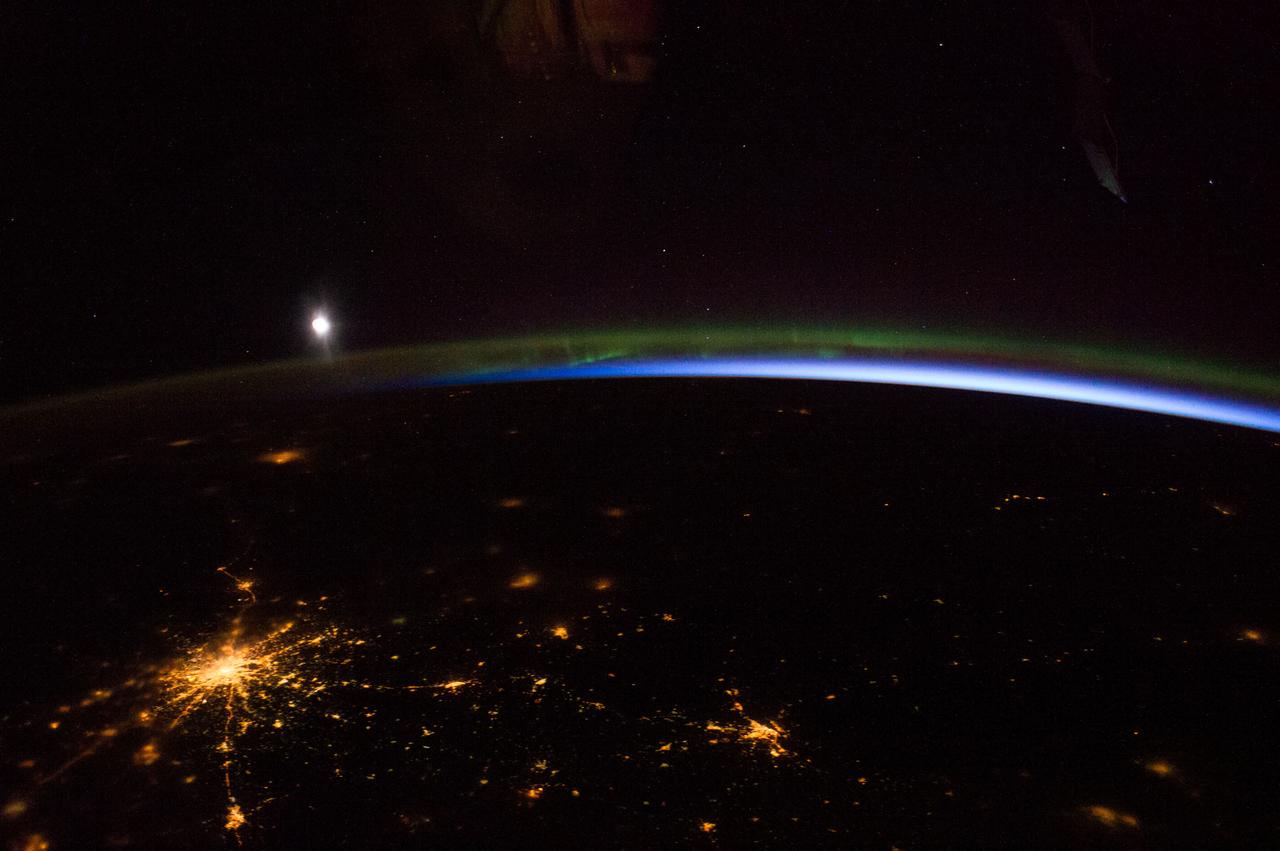
ISS039-E-009160 (2 April 2014) --- This nighttime view featuring the aurora borealis, the moon and Moscow was photographed by an Expedition 39 crew member on the International Space Station. A thin green line of the aurora borealis crosses the top of this image. The moon appears as a white disc just above the aurora. Airglow appears as a blue-white cusp on Earth's limb. Russia's capital city Moscow makes a splash of yellow (lower left), with its easily recognized radial pattern of highways. Other cities are Nizhni Novgorod (lower center) 400 kilometers from Moscow, St. Petersburg (left) 625 kilometers from Moscow, and Finland?s capital city Helsinki.
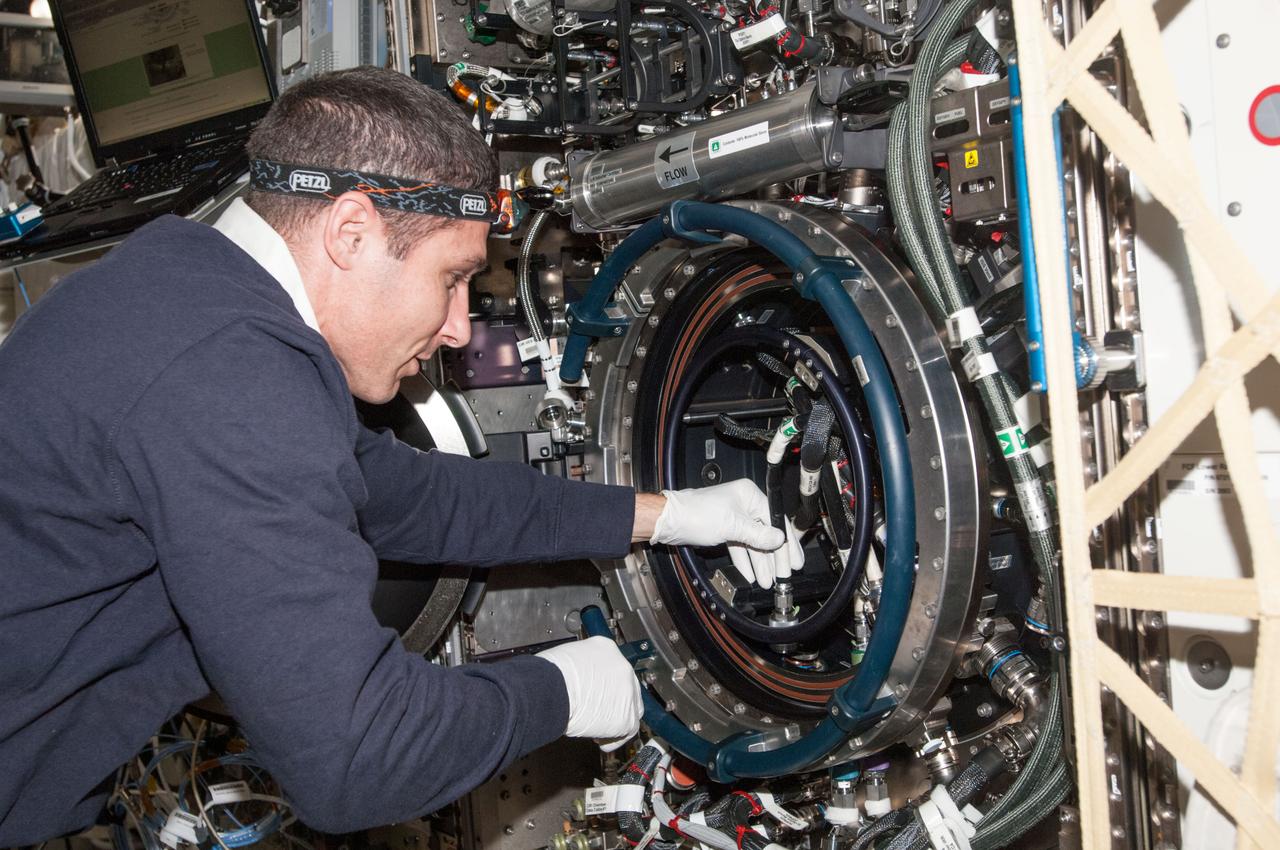
ISS038-E-001298 (12 Nov. 2013) --- NASA astronaut Michael Hopkins, Expedition 38 flight engineer, works with the Multi-user Drop Combustion Apparatus (MDCA) inside the Combustion Integrated Rack (CIR) in the Destiny laboratory of the International Space Station. The MDCA contains hardware and software to conduct unique droplet combustion experiments in space.
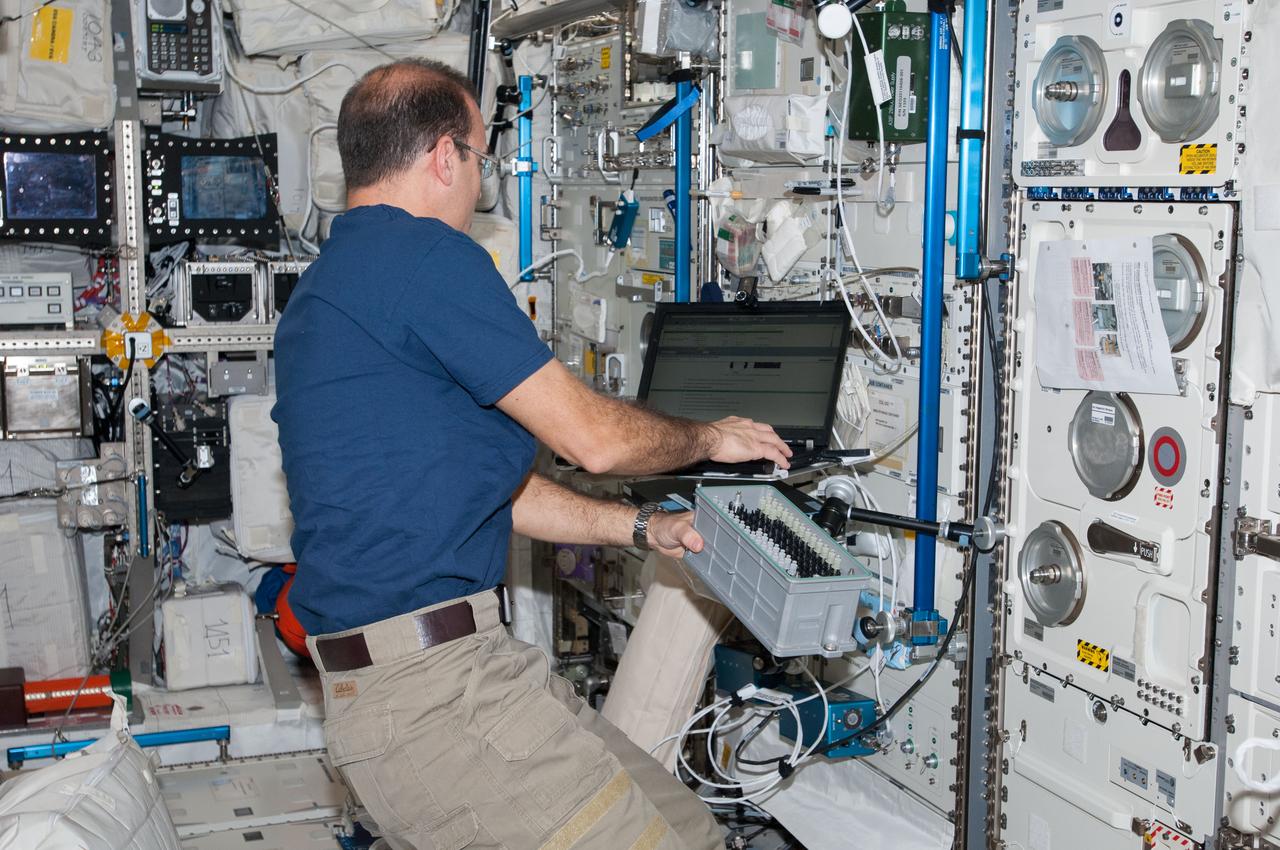
ISS038-E-008033 (25 Nov. 2013) --- NASA astronaut Rick Mastracchio, Expedition 38 flight engineer, works with Biolab hardware in the Columbus laboratory of the International Space Station. Biolab is used to perform space biology experiments on microorganisms, cells, tissue cultures, plants and small invertebrates.
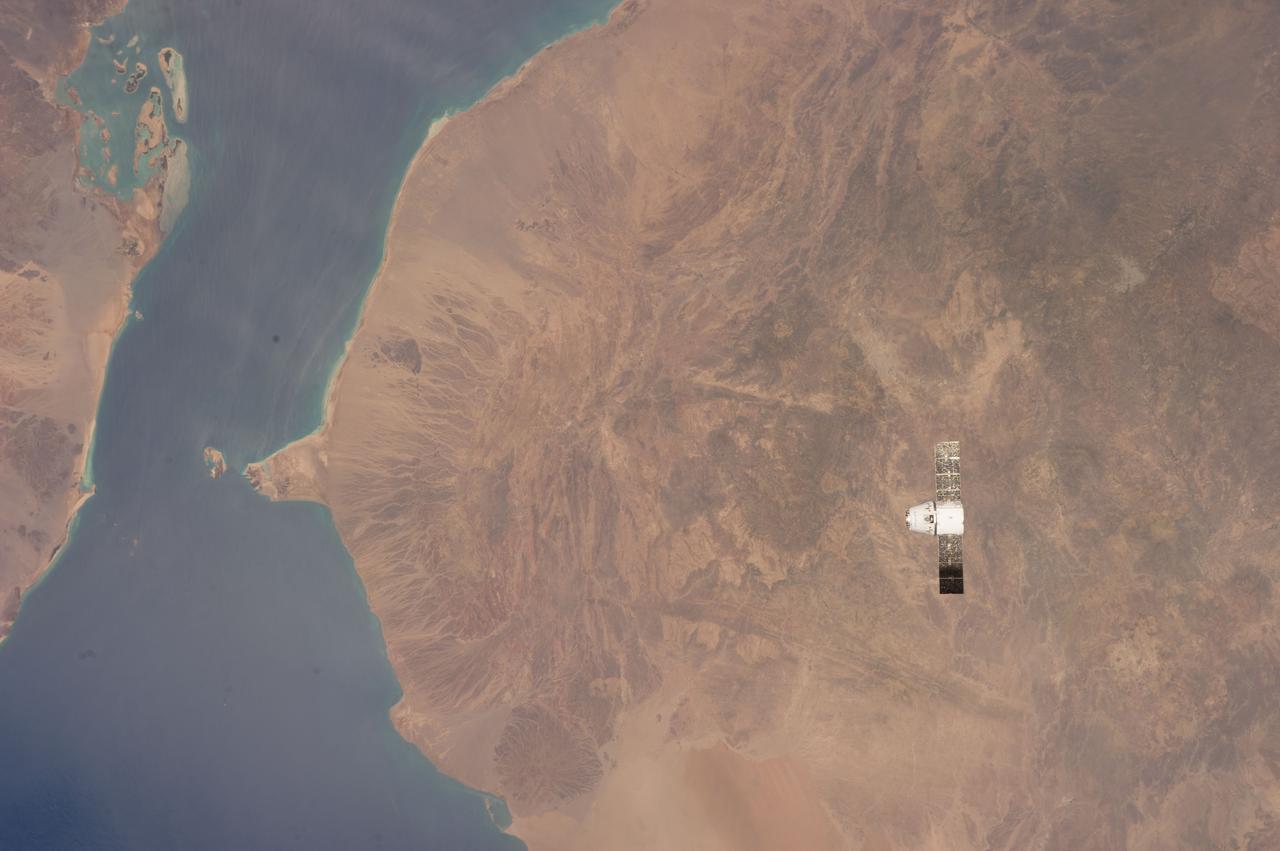
ISS039-E-013569 (20 April 2014) --- This is one of an extensive series of still photos documenting the April 20 arrival and ultimate capture and berthing of the SpaceX Dragon at the International Space Station, as photographed by the Expedition 39 crew members onboard the orbital outpost. In this photo, the two orbiting spacecraft were above a point in Yemen. Part of the Gulf of Aden and the Red Sea, can be seen at left. The Dragon spacecraft was captured by the space station and successfully berthed using the Canadian-built space station remote manipulator system or Canadarm2.
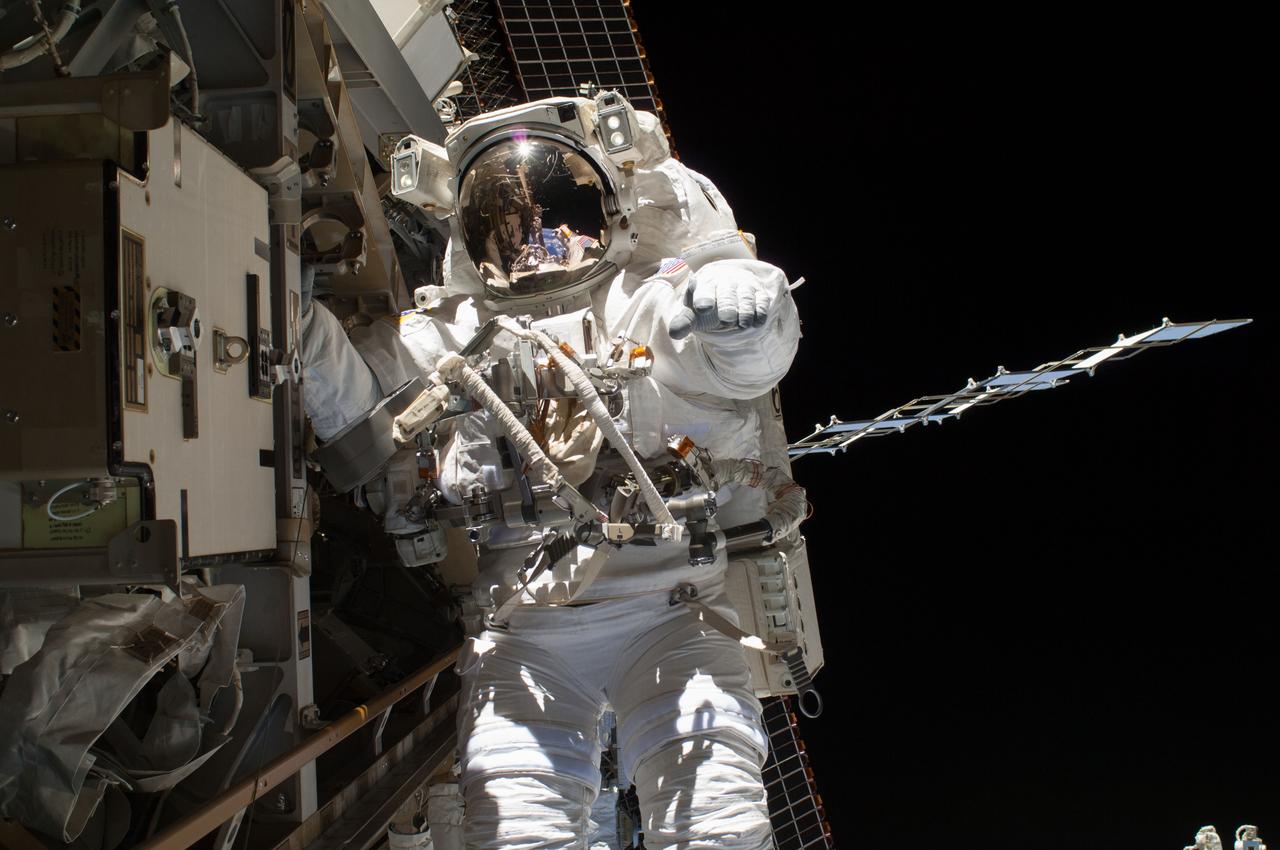
ISS039-E-014893 (22 April 2014) --- NASA astronaut Steve Swanson is pictured during a spacewalk to replace a failed backup computer relay box in the S0 truss of the International Space Station on April 22, 2014. He was accompanied on the spacewalk by fellow Flight Engineer Rick Mastracchio of NASA, who can be seen as a tiny figure anchored several yards away reflected in Swanson's helmet visor.

ISS039-E-013567 (20 April 2014) --- This is one of an extensive series of still photos documenting the April 20 arrival and ultimate capture and berthing of the SpaceX Dragon at the International Space Station, as photographed by the Expedition 39 crew members onboard the orbital outpost. In this photo, the two orbiting spacecraft were above a point in Yemen. Part of the Gulf of Aden and the Red Sea, can be seen at left. The Dragon spacecraft was captured by the space station and successfully berthed using the Canadian-built space station remote manipulator system or Canadarm2.
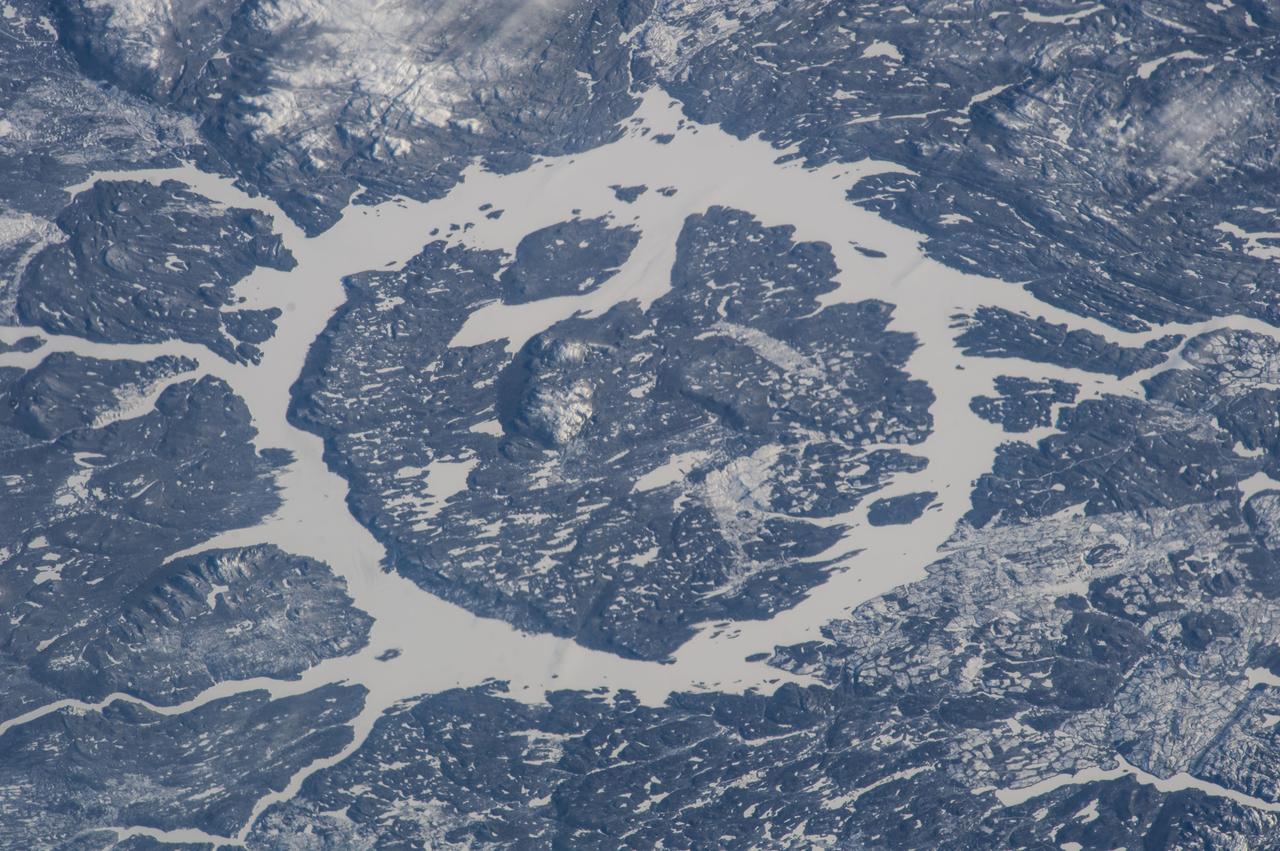
ISS038-E-025350 (2 Jan. 2014) --- One of the Expedition 38 crew members aboard the Earth-orbiting International Space Station recorded this image which features the Manicouagan Crater and reservoir located primarily in Manicouagan Regional County Municipality in the Cote-Nord region of Quebec, Canada. Scientists believe the crater was caused by the impact of a 5 kilometer (3 mile) diameter asteroid about 215.5 million years ago (Triassic Period). The crater is a multiple-ring structure about 100 kilometers (60 miles) across, with its 70 kilometer (40 mile) diameter inner ring as its most prominent feature; it contains a 70 kilometer (40 mile) diameter annular lake, the Manicouagan Reservoir, surrounding an inner island plateau, Rene-Levasseur Island. Because it is so unique and easily recognizable from the sky and space, the crater has been the subject of hundreds of images from astronauts for 45-plus years.
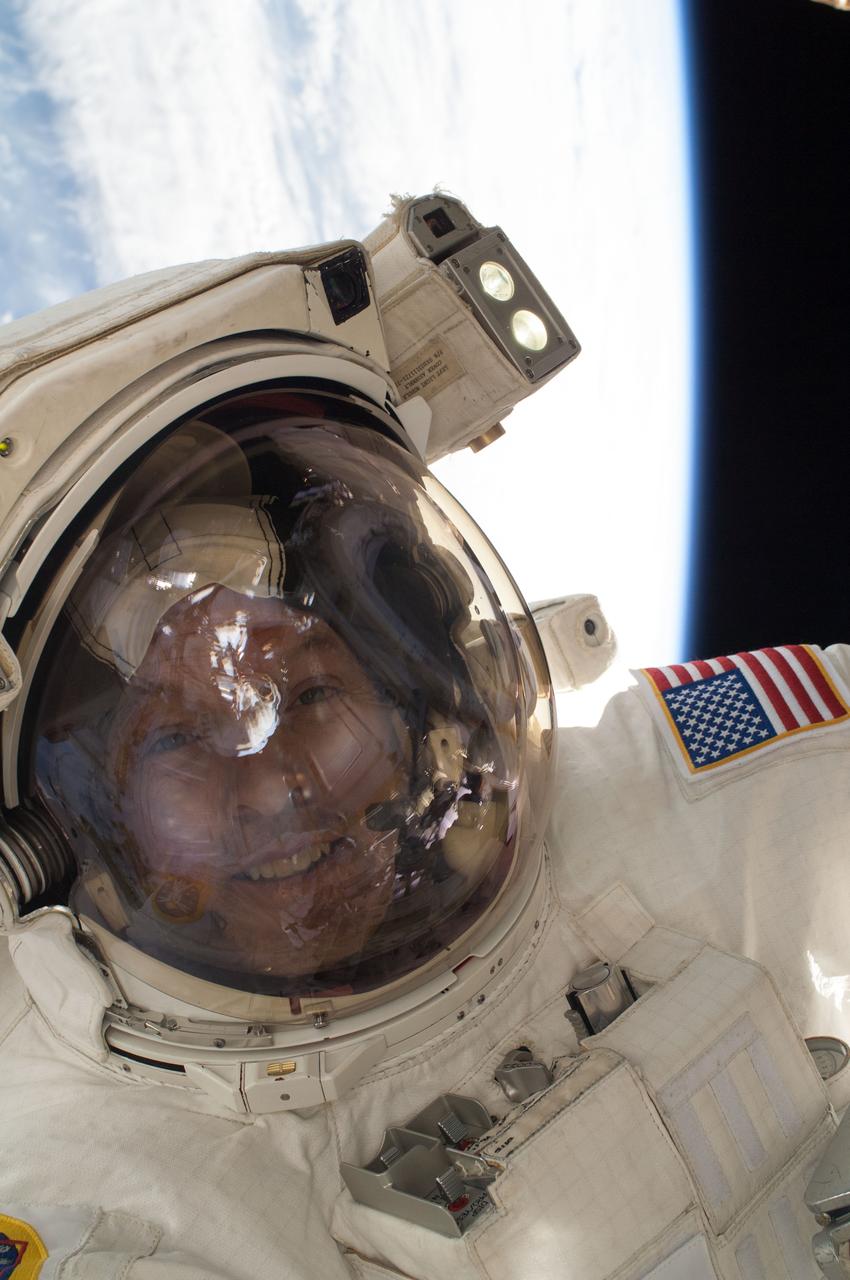
Close-up view of Expedition 39 flight engineer Steve Swanson backdropped by Earth and space at the end of Extravehicular Activity 26 (EVA 26).
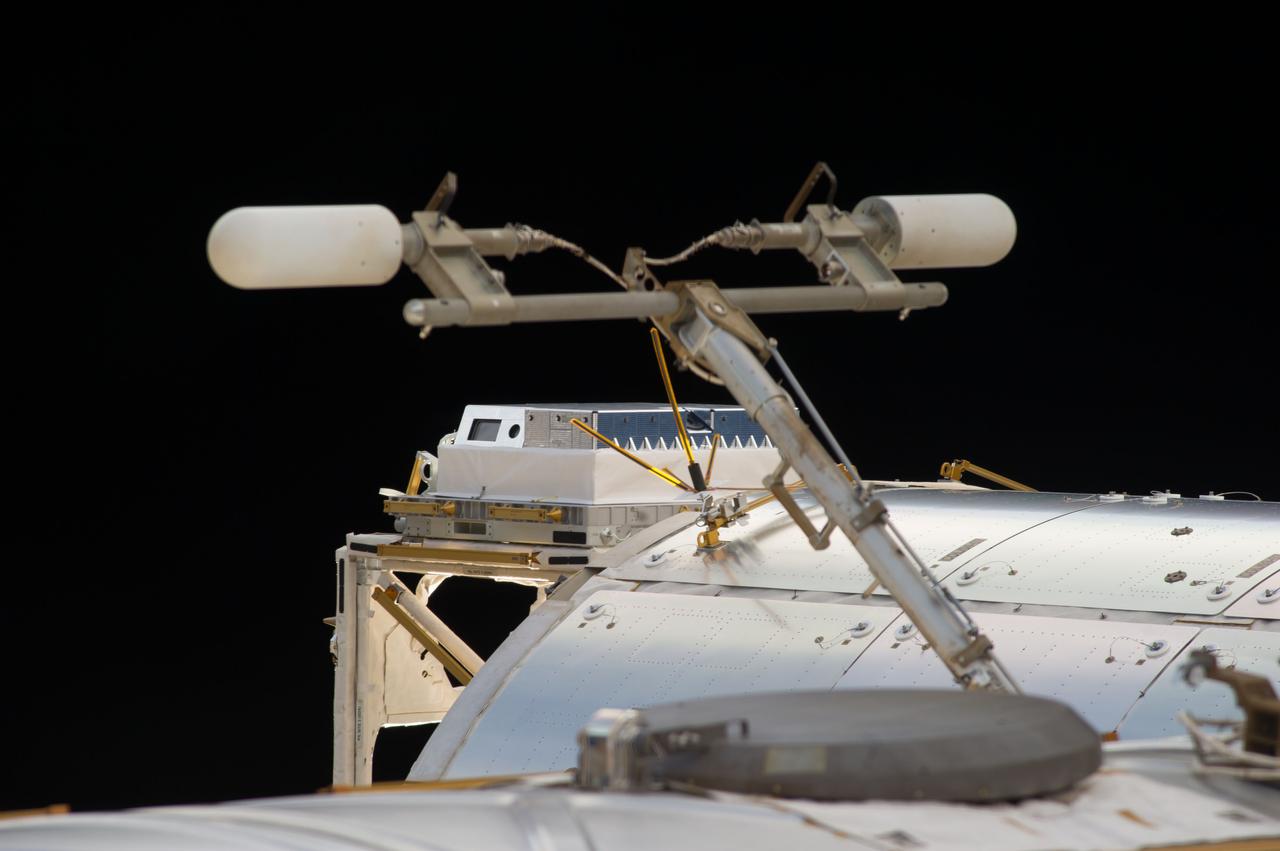
iss039e019134 (5/7/2014) - View of the High Definition Earth Viewing (HDEV) flight assembly installed on the exterior of the Columbus European Laboratory module. The High Definition Earth Viewing (HDEV) experiment places four commercially available HD cameras on the exterior of the space station and uses them to stream live video of Earth for viewing online. The cameras are enclosed in a temperature specific housing and are exposed to the harsh radiation of space. Analysis of the effect of space on the video quality, over the time HDEV is operational, may help engineers decide which cameras are the best types to use on future missions. High school students helped design some of the cameras' components, through the High Schools United with NASA to Create Hardware (HUNCH) program, and student teams operate the experiment.
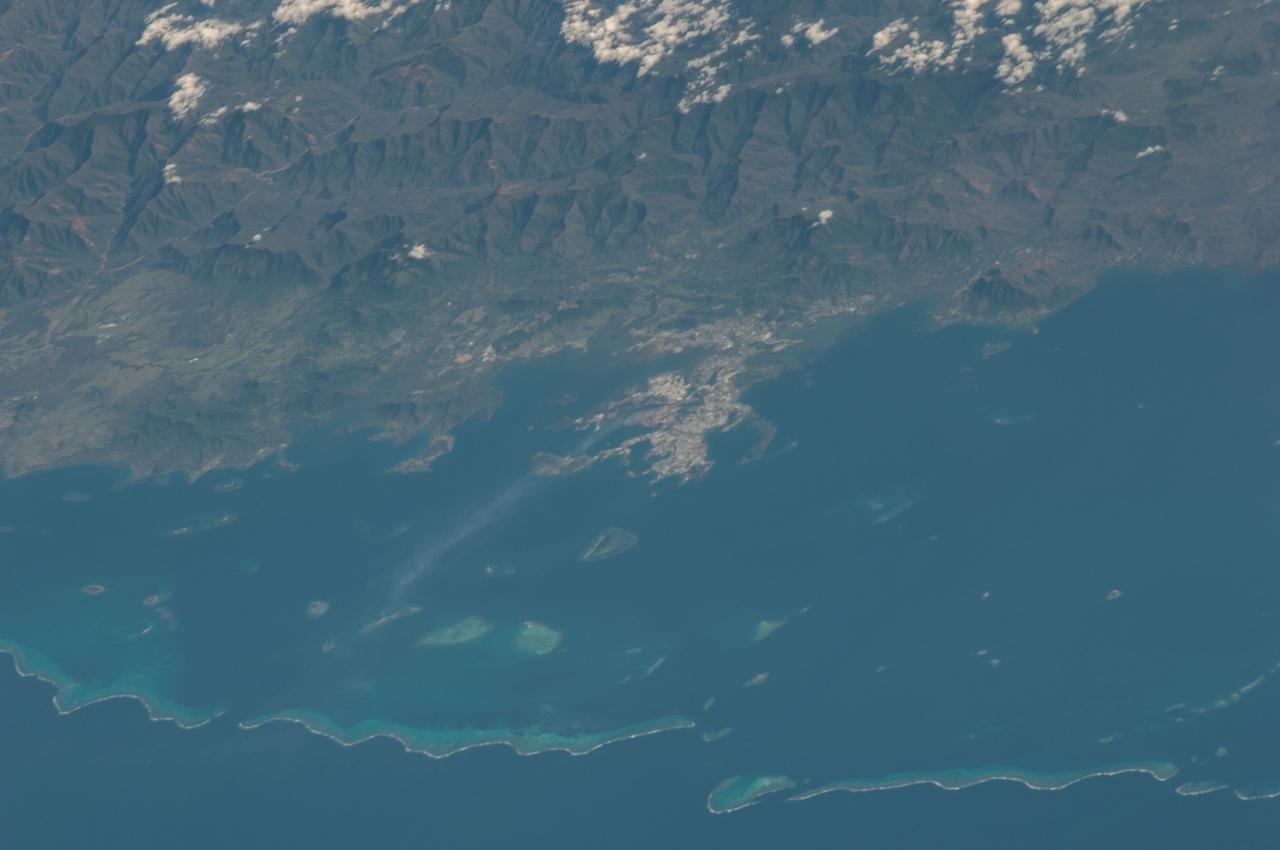
Earth Observations taken by Expedition 38 crewmember. Image was released by astronaut on Twitter.
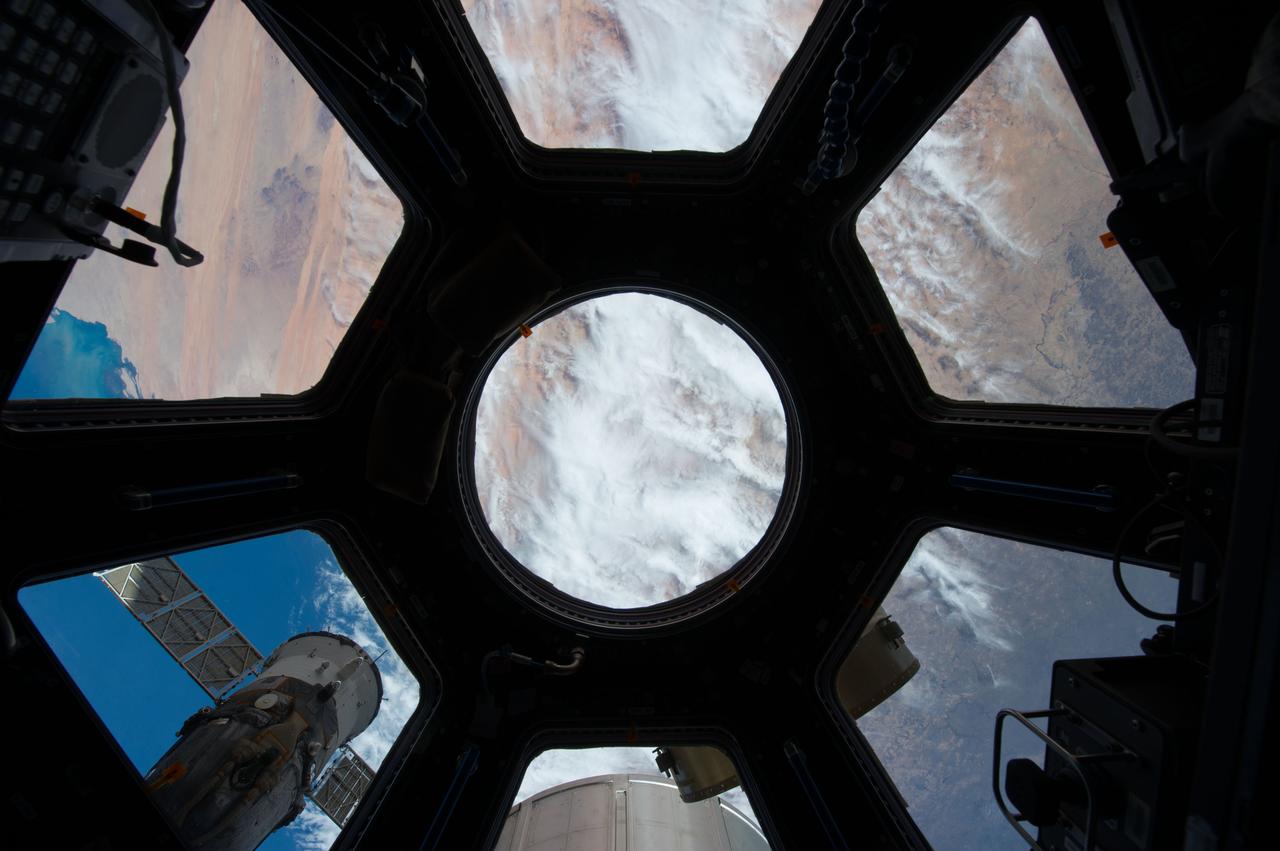
Earth observation taken through Cupola windows by the Expedition 39 crew. Portions of the ISS are in view. Image was released by astronaut on Twitter.
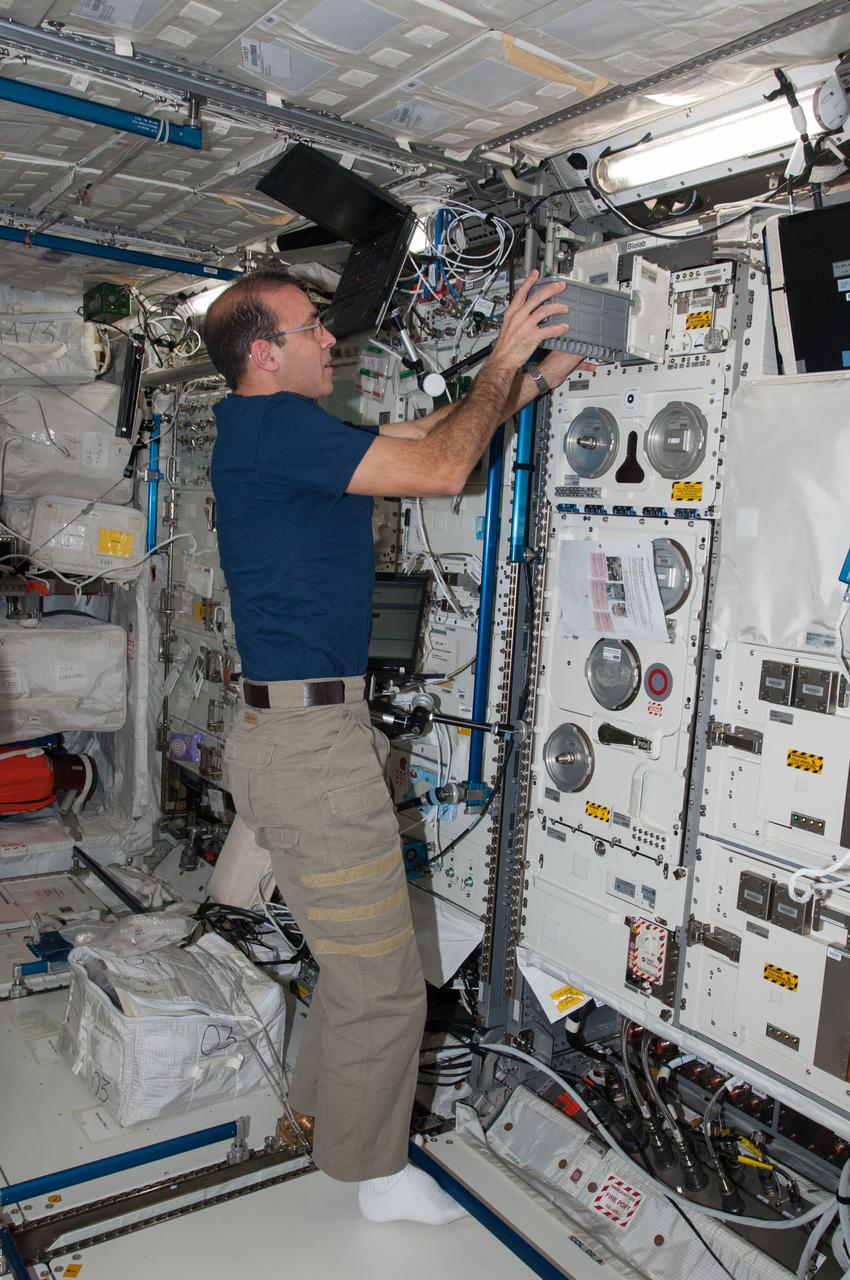
ISS038-E-008037 (25 Nov. 2013) --- NASA astronaut Rick Mastracchio, Expedition 38 flight engineer, works with Biolab hardware in the Columbus laboratory of the International Space Station. Biolab is used to perform space biology experiments on microorganisms, cells, tissue cultures, plants and small invertebrates.
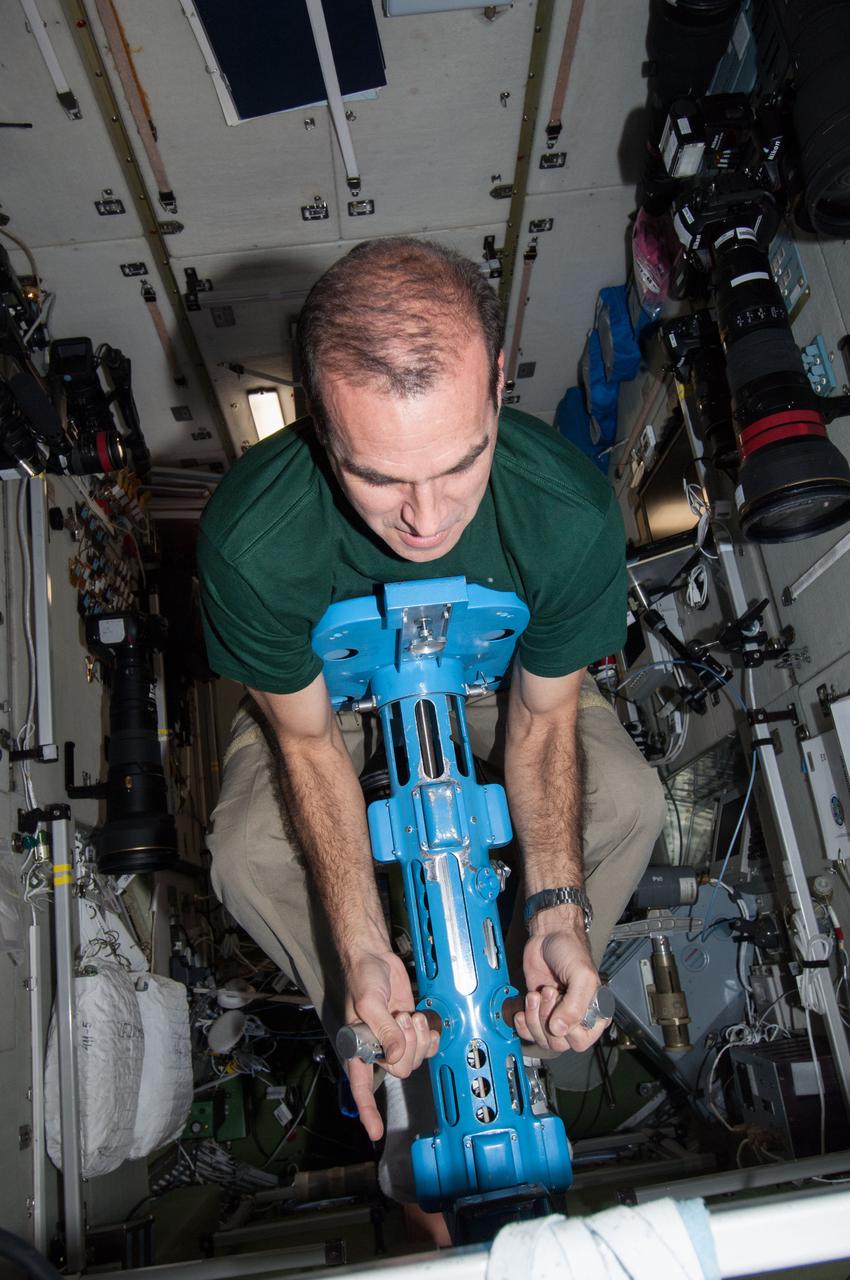
ISS038-E-008293 (25 Nov. 2013) --- NASA astronaut Rick Mastracchio, Expedition 38 flight engineer, uses a body mass measurement device (BMMD) in the Zvezda Service Module of the International Space Station.
![Earth observation taken by the Expedition 39 crew aboard the ISS. Image downlinked in folder: SW US [and] Mexico, and released by astronaut on Twitter.](https://images-assets.nasa.gov/image/iss039e000909/iss039e000909~medium.jpg)
Earth observation taken by the Expedition 39 crew aboard the ISS. Image downlinked in folder: SW US [and] Mexico, and released by astronaut on Twitter.
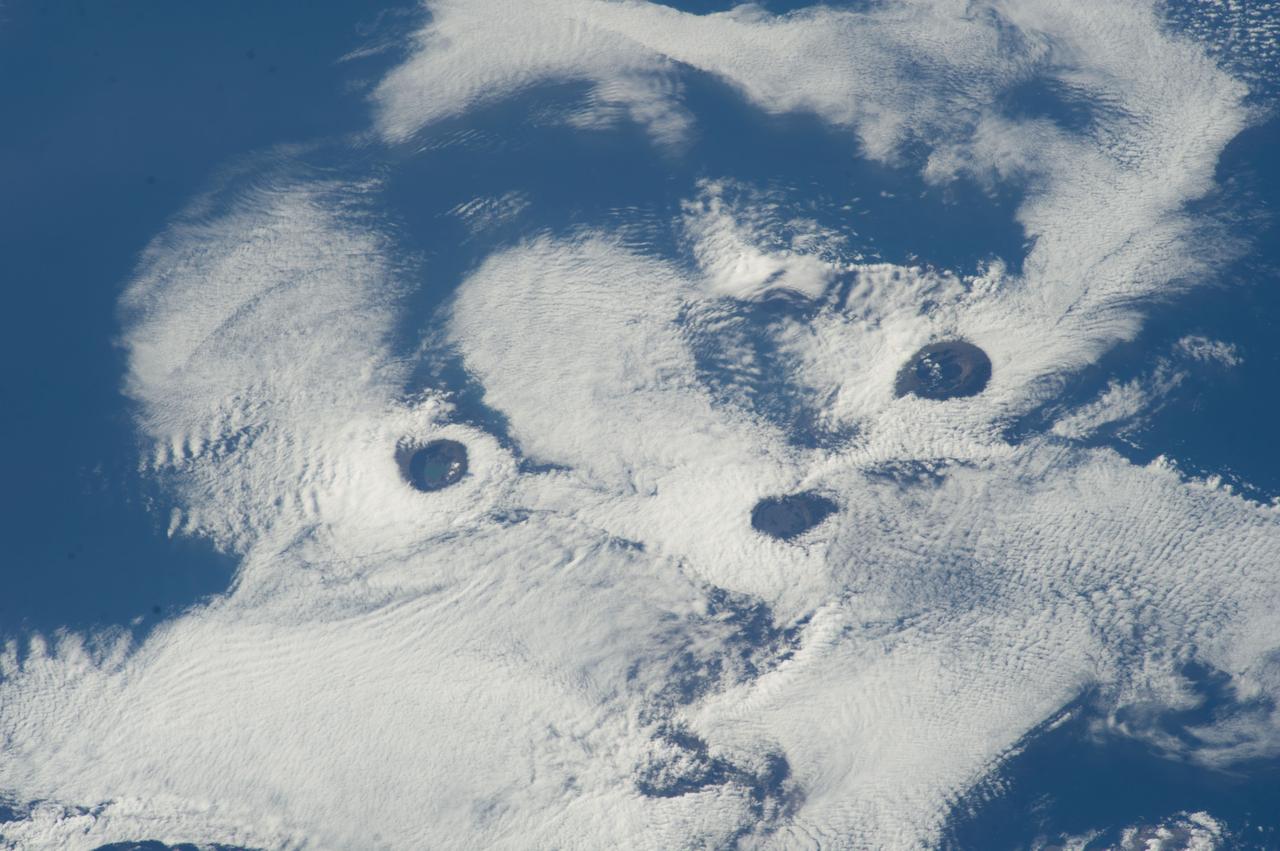
Earth Observations taken by Expedition 38 crewmember. Image was released by astronaut on Twitter.
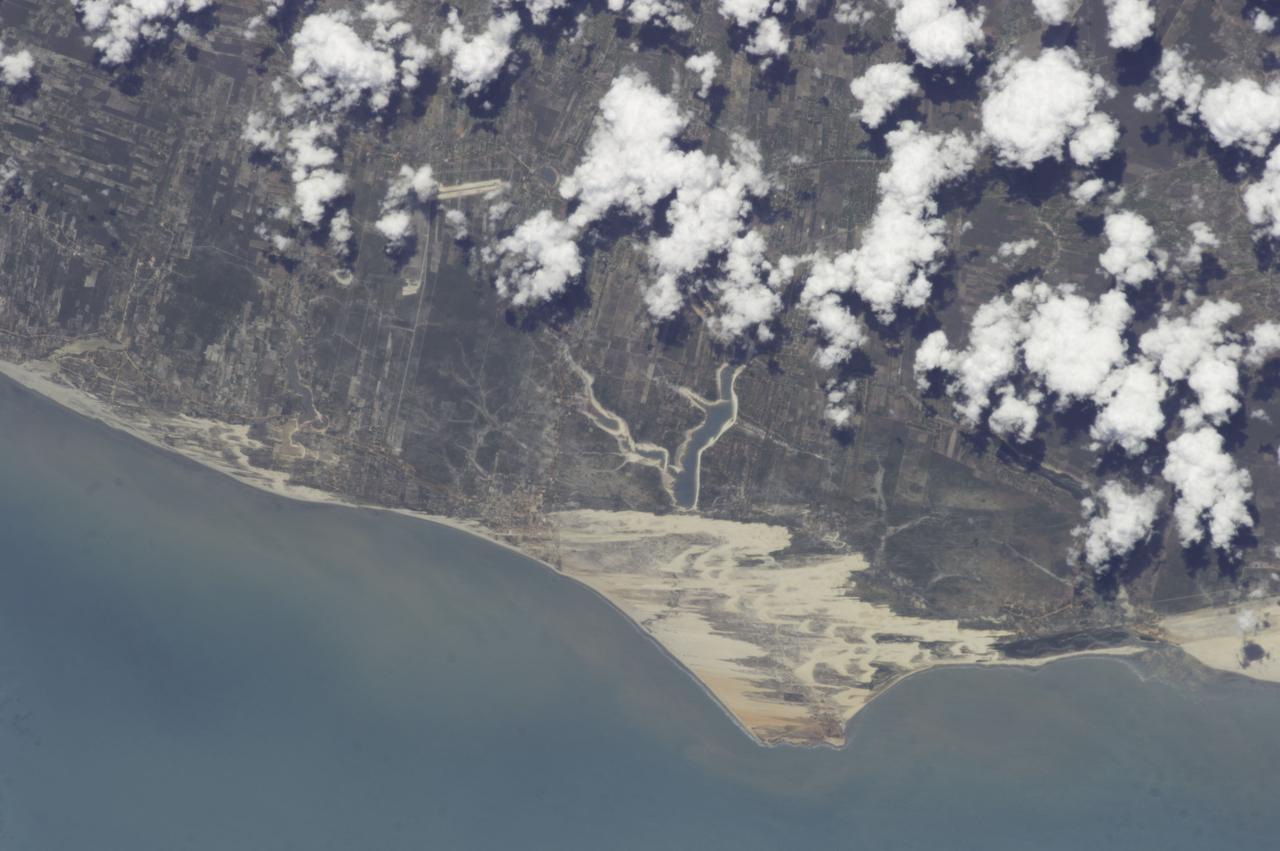
Earth observations taken by Expedition 38 crewmember. Crewmember indicates South America. Image was released by astronaut on Twitter.
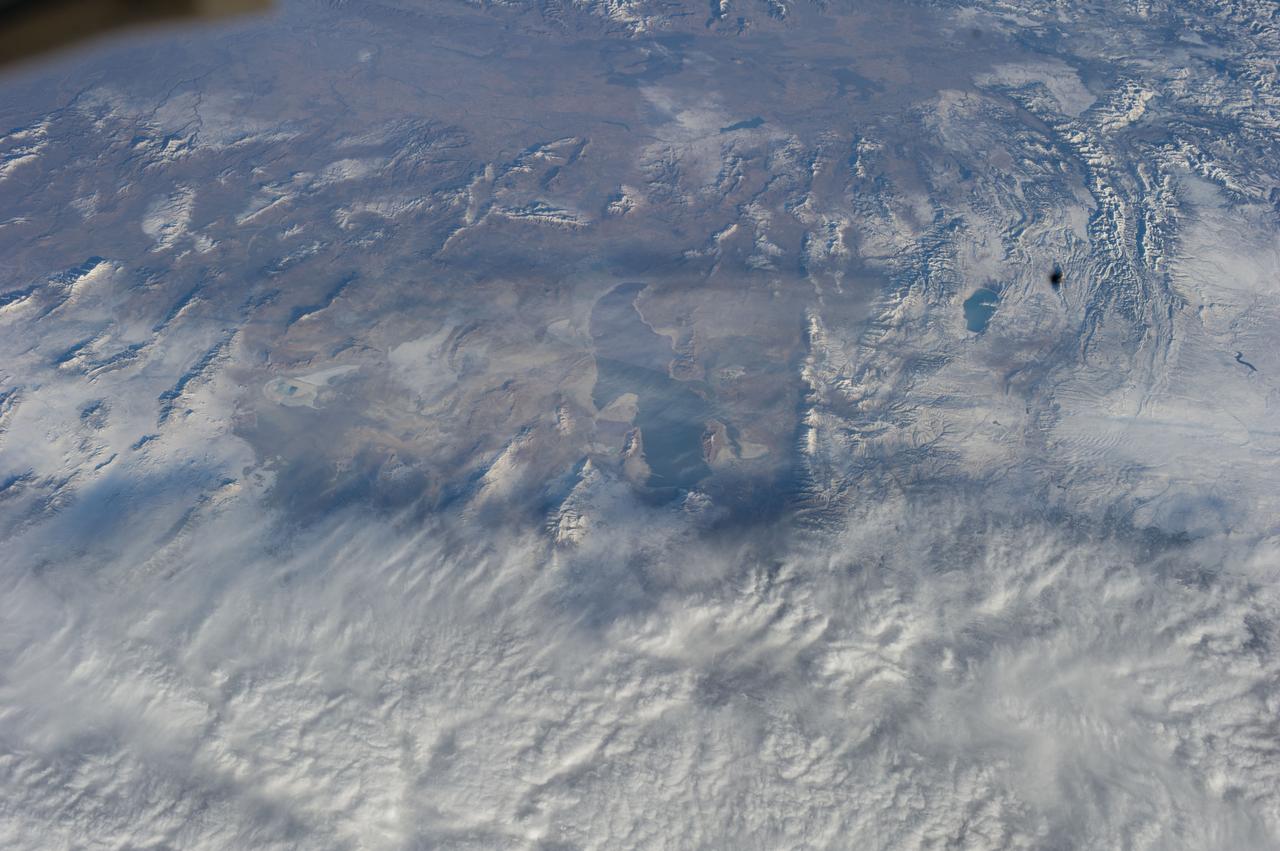
Earth Observations taken by Expedition 38 crewmember. Crewmember indicates Salt Lake City,Utah. Image was released by astronaut on Twitter.
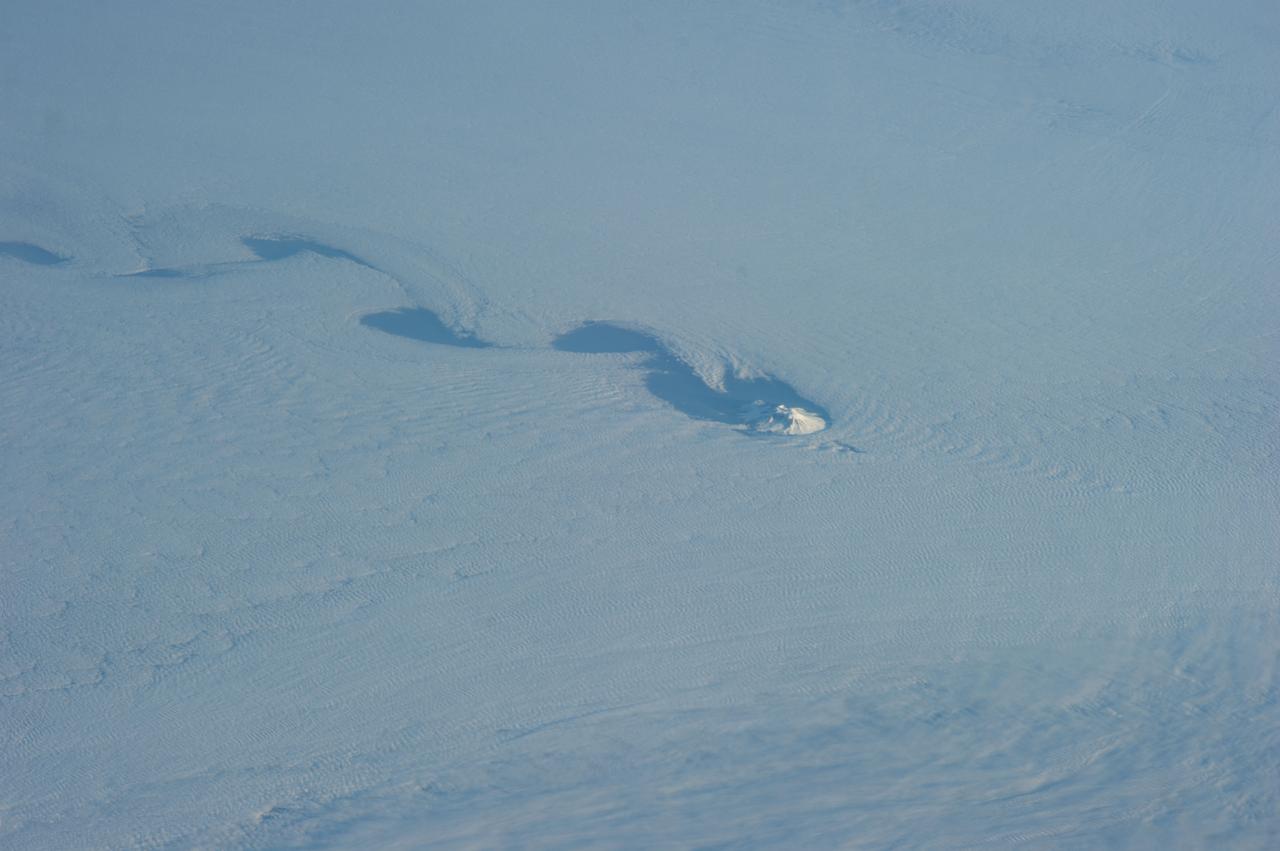
Earth observation taken by the Expedition 39 crew aboard the ISS. Image was released by astronaut on Twitter and downlinked in folder: south islands.
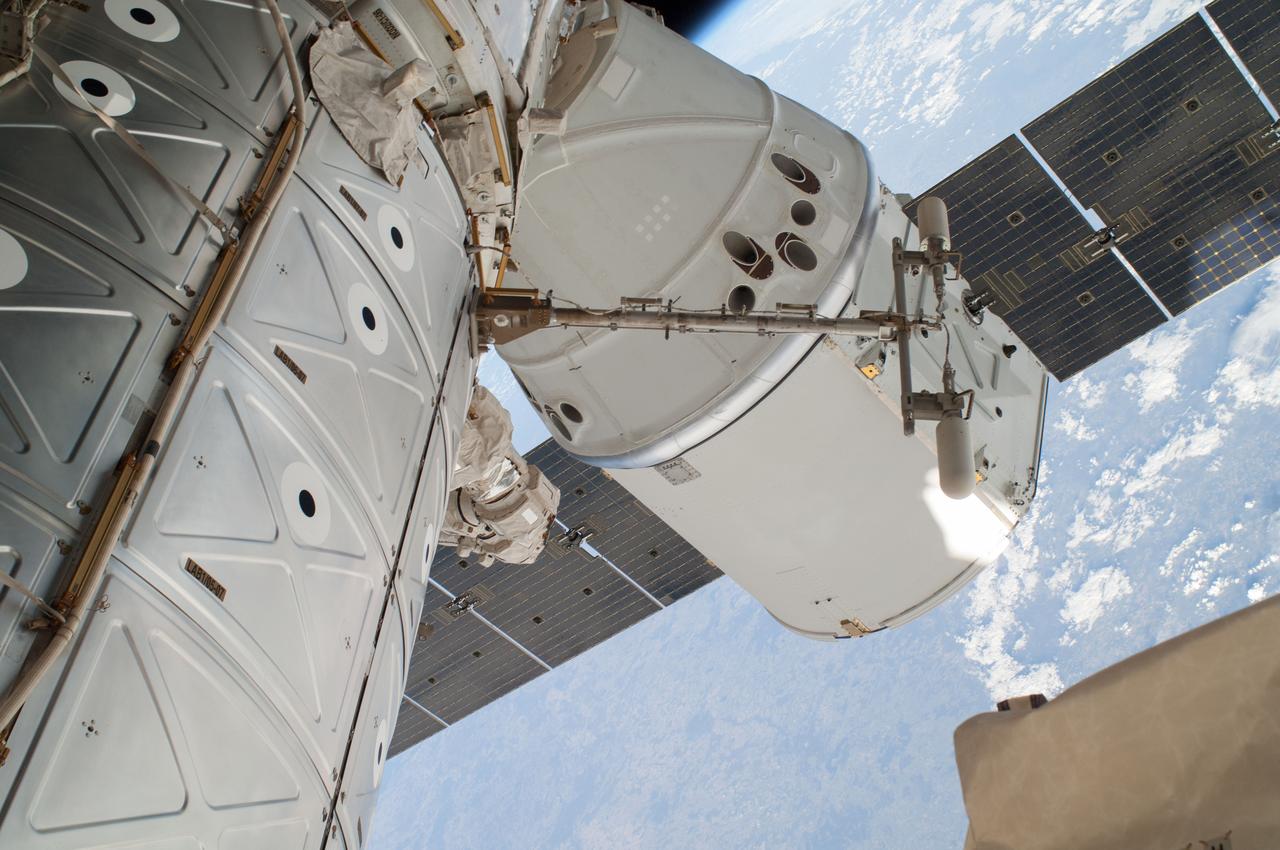
ISS039-E-014968 (22 April 2014) --- This snapshot of the SpaceX Dragon spacecraft docked to the International Space Station was photographed by one of two spacewalking astronauts on April 22, 2014. NASA astronauts Rick Mastracchio and Steve Swanson, Expediton 39 flight engineers, replaced a failed backup computer relay box in the S0 truss on the orbital outpost.
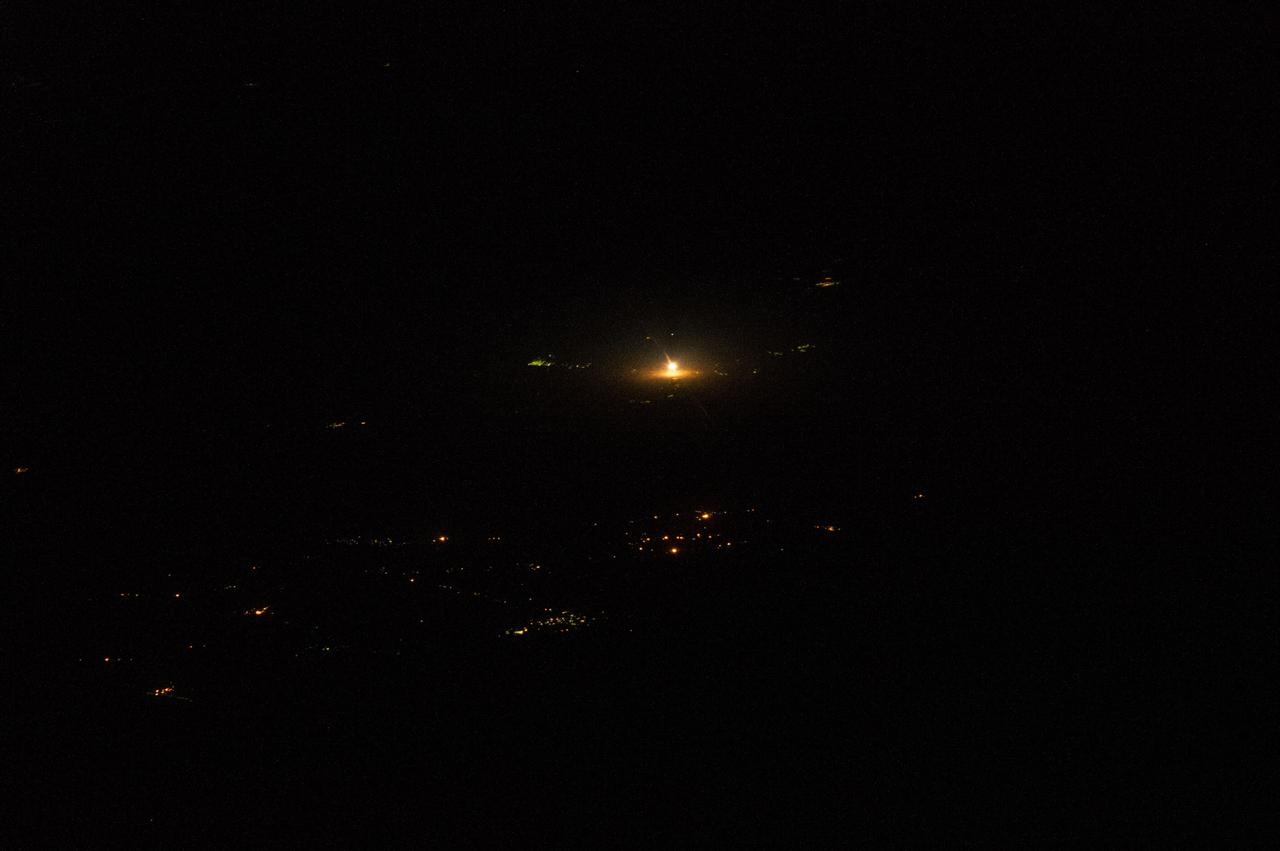
ISS039-E-005434 (25 March 2014) --- One of the three Expedition 39 crew members currently onboard the International Space Station photographed this image of the departure from Baikonur Cosmodrome in Kazakhstan at 21:18:03 GMT, March 25 (March 26, Kazakh time) of two Russian cosmonauts and a NASA astronaut in the Soyuz TMA12M. Inside the space station were Expediton 39 Commander Koichi Wakata of the Japan Aerospace Exploration Agency (JAXA) and Cosmonaut Mikhail Tyurin and NASA astronaut Rick Mastracchio, both flight engineers. Inside the Soyuz on route to meet the present inhabitants was another Expedition 39 trio -- Soyuz Commander Alexander Skvortsov of Rosmosmos and Flight Engineers Steve Swanson of NASA and Oleg Artemyev of Roscosmos.
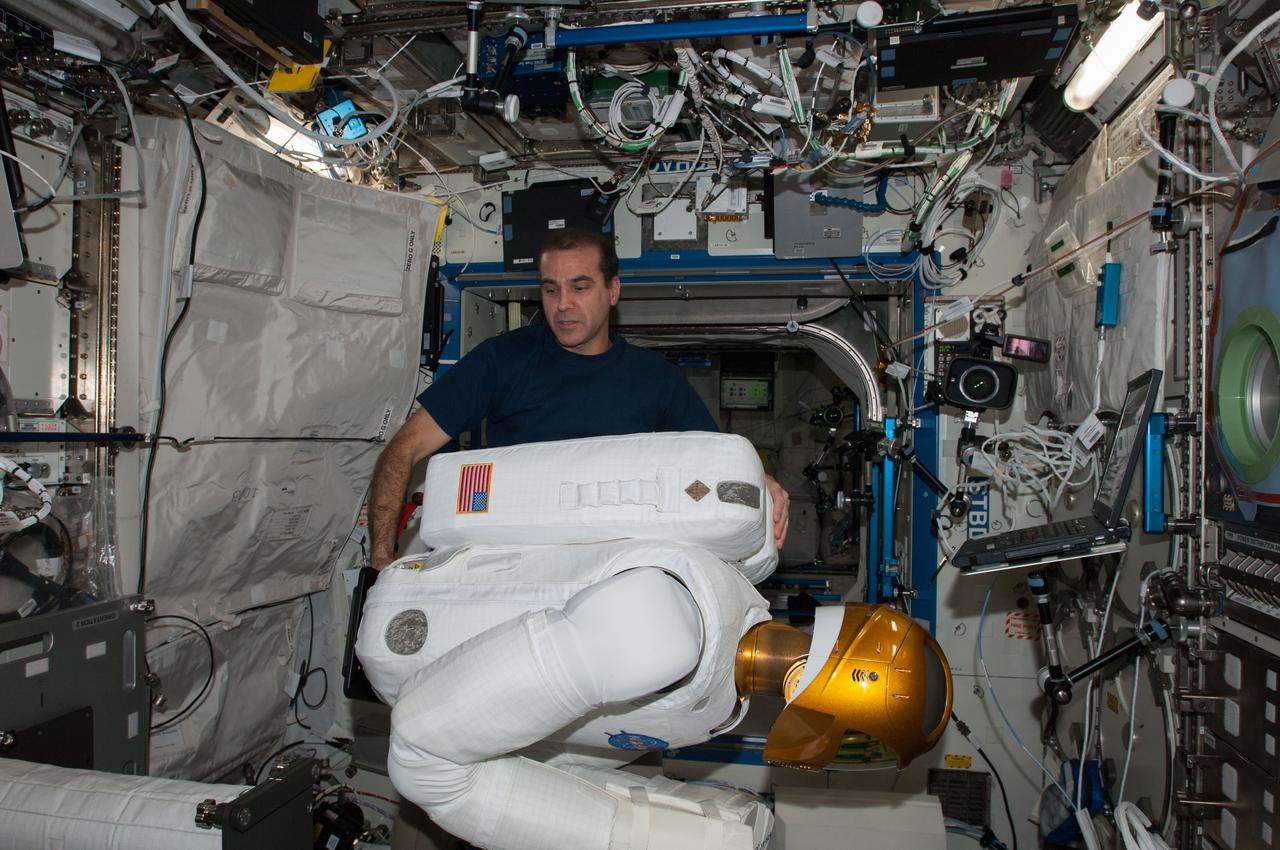
ISS038-E-013710 (9 Dec. 2013) --- In the International Space Station's Destiny laboratory, NASA astronaut Rick Mastracchio, Expedition 38 flight engineer, prepares Robonaut 2 for an upcoming ground-commanded firmware update that will support the installation of a pair of legs for the humanoid robot. R2 was designed to test out the capability of a robot to perform tasks deemed too dangerous or mundane for astronauts. Robonaut's legs are scheduled to arrive to the station aboard the SpaceX-3 commercial cargo mission in February 2014.
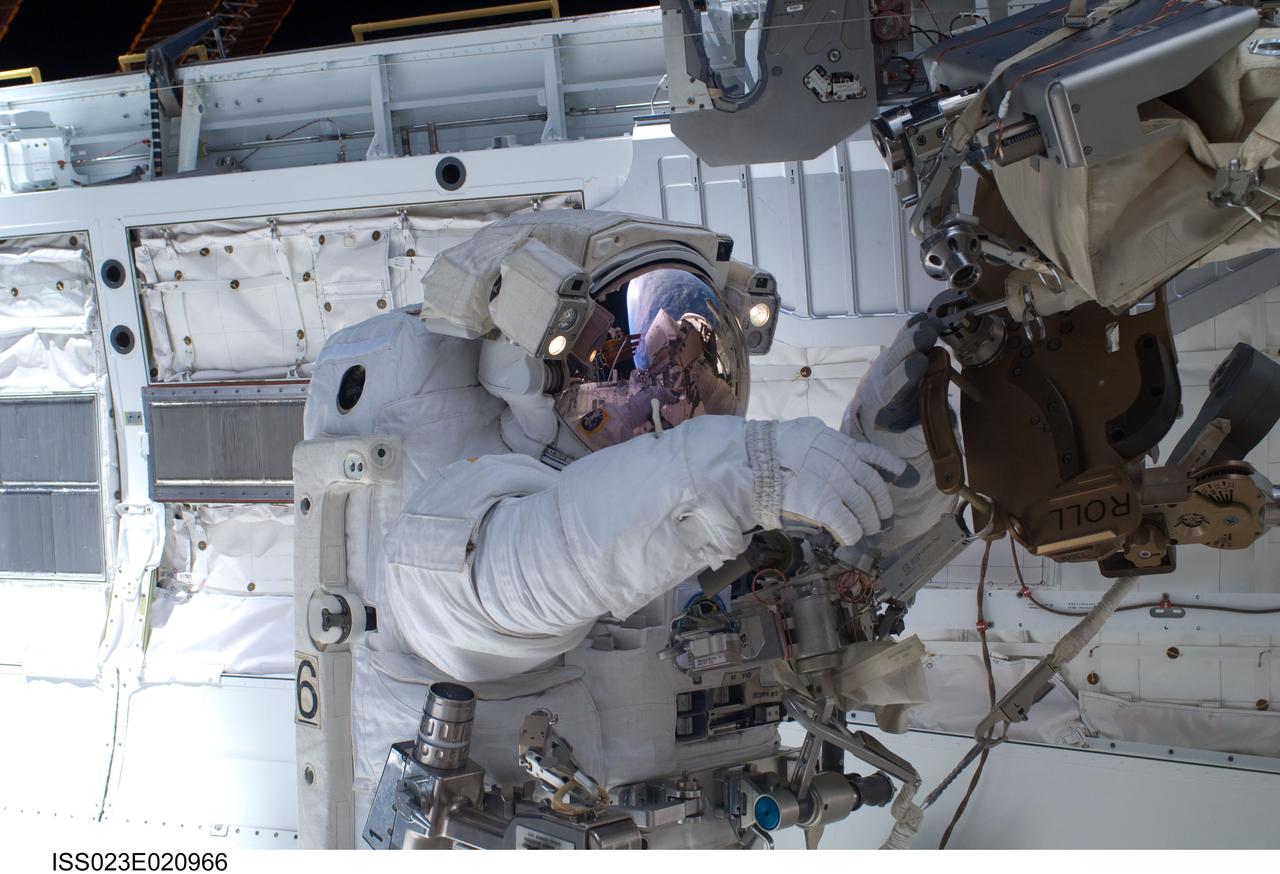
ISS023-E-020966 (9 April 2010) --- NASA astronaut Clayton Anderson, STS-131 mission specialist, participates in the mission's first session of extravehicular activity (EVA) as construction and maintenance continue on the International Space Station. During the six-hour, 27-minute spacewalk, Anderson and Rick Mastracchio (out of frame), mission specialist, helped move a new 1,700-pound ammonia tank from space shuttle Discovery’s cargo bay to a temporary parking place on the station, retrieved an experiment from the Japanese Kibo Laboratory exposed facility and replaced a Rate Gyro Assembly on one of the truss segments.
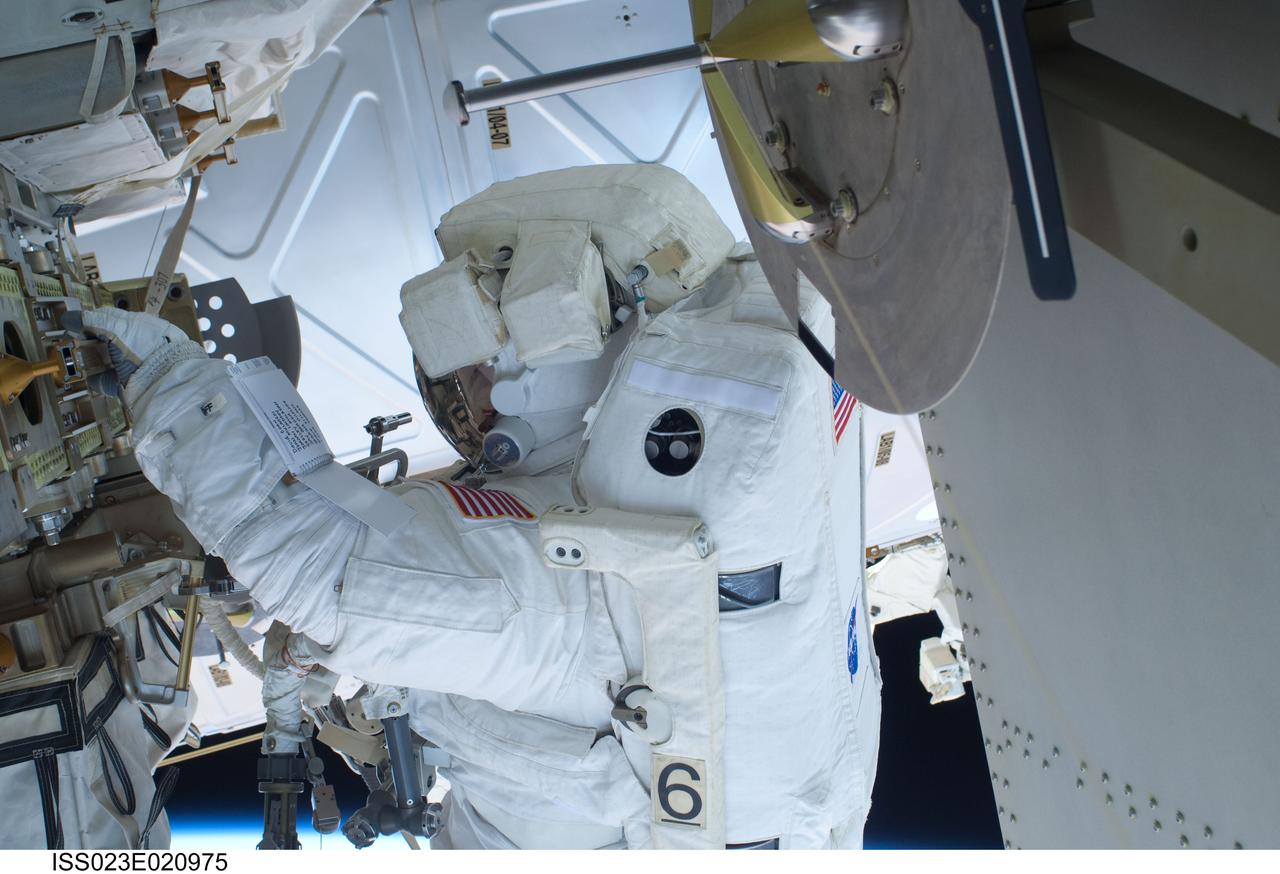
ISS023-E-020975 (9 April 2010) --- NASA astronaut Clayton Anderson, STS-131 mission specialist, participates in the mission's first session of extravehicular activity (EVA) as construction and maintenance continue on the International Space Station. During the six-hour, 27-minute spacewalk, Anderson and astronaut Rick Mastracchio (out of frame), mission specialist, helped move a new 1,700-pound ammonia tank from space shuttle Discovery’s cargo bay to a temporary parking place on the station, retrieved an experiment from the Japanese Kibo Laboratory exposed facility and replaced a Rate Gyro Assembly on one of the truss segments.
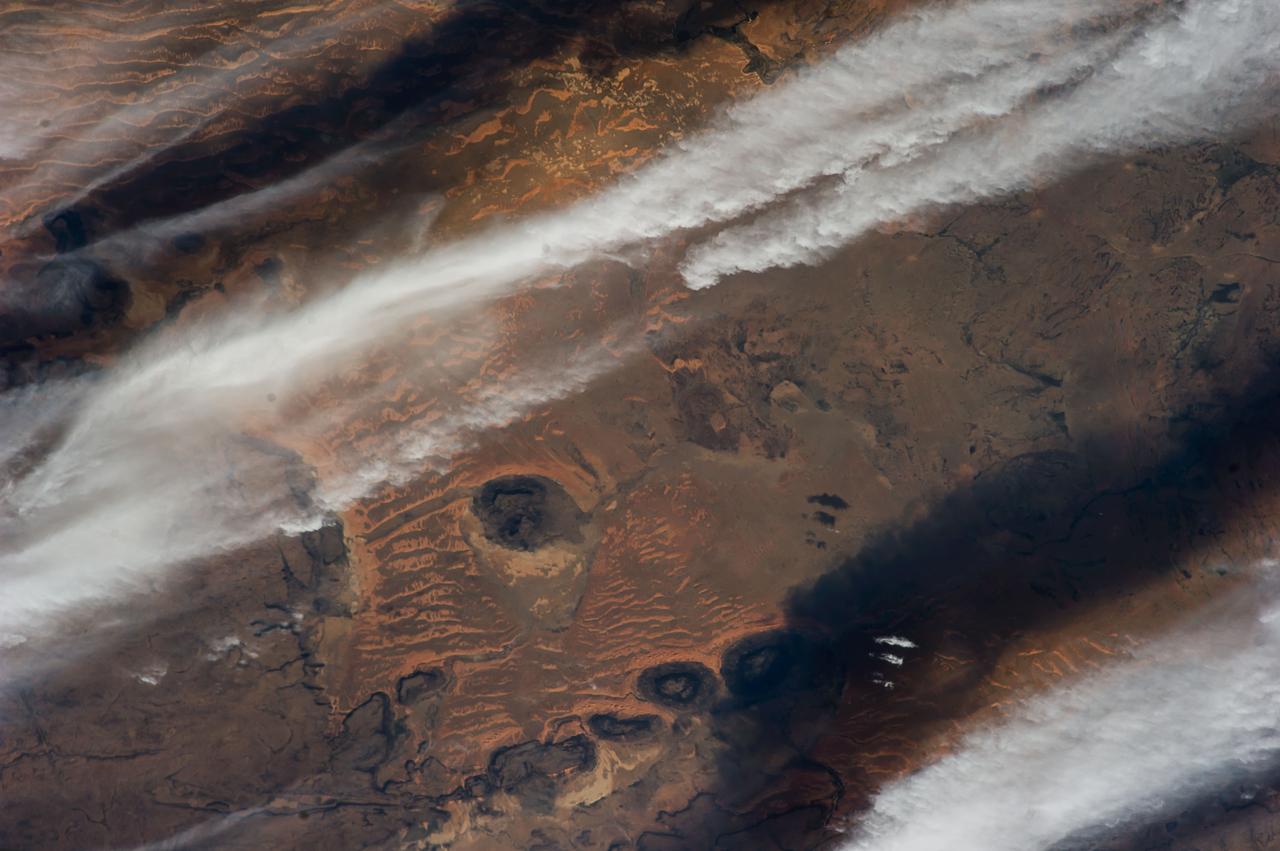
ISS038-E-026862 (8 Jan. 2014) --- The Western Sahara Desert is featured in this image photographed by an Expedition 38 crew member on the International Space Station. The infrequent cloud bands over southern Mauritania were photographed with an oblique look angle so that the dark cloud shadows are also a prominent part of the view. Beneath the cloud the Aouker plateau of dark sedimentary rocks appears as a ragged, near-vertical escarpment at top right. Isolated remnants of the plateau appear as dark mesas (flat-topped hills) across the top and near the center of the image. The escarpment is about 250 meters high, with a field of orange-colored dunes at the base (upper right). Prevailing winds in this part of the Sahara Desert blow from the northeast. The wavy dunes are aligned transverse to these winds. The sand that makes the dunes is blown in from a zone immediately upwind (just out of the bottom of the image) where dry river beds and dry lakes provide large quantities of mobile sand for the wind to transport. This pattern is typical in the western Sahara Desert, where plateau surfaces are mostly dune free and dune fields are located in the surrounding lowlands where the larger rivers deposit quantities of sandy sediment on the few occasions when they flow-sometimes only once in decades.
ISS039-E-010369 (9 April 2014) --- Expedition 39 Flight Engineer Steve Swanson of NASA works with the Carbon Dioxide Removal Assembly (CDRA) in the Kibo Laboratory aboard the International Space Station. For several days, the Expedition 39 crew members have been working with CDRA.
ISS039-E-010367 (9 April 2014) --- In the Kibo laboratory aboard the International Space Station, Expedition 39 Flight Engineer Steve Swanson works during in-flight maintenance to mate electrical connectors in Tranquility's Carbon Dioxide Removal Assembly (CDRA). The image was taken during the second day of CDRA in-flight maintenance.
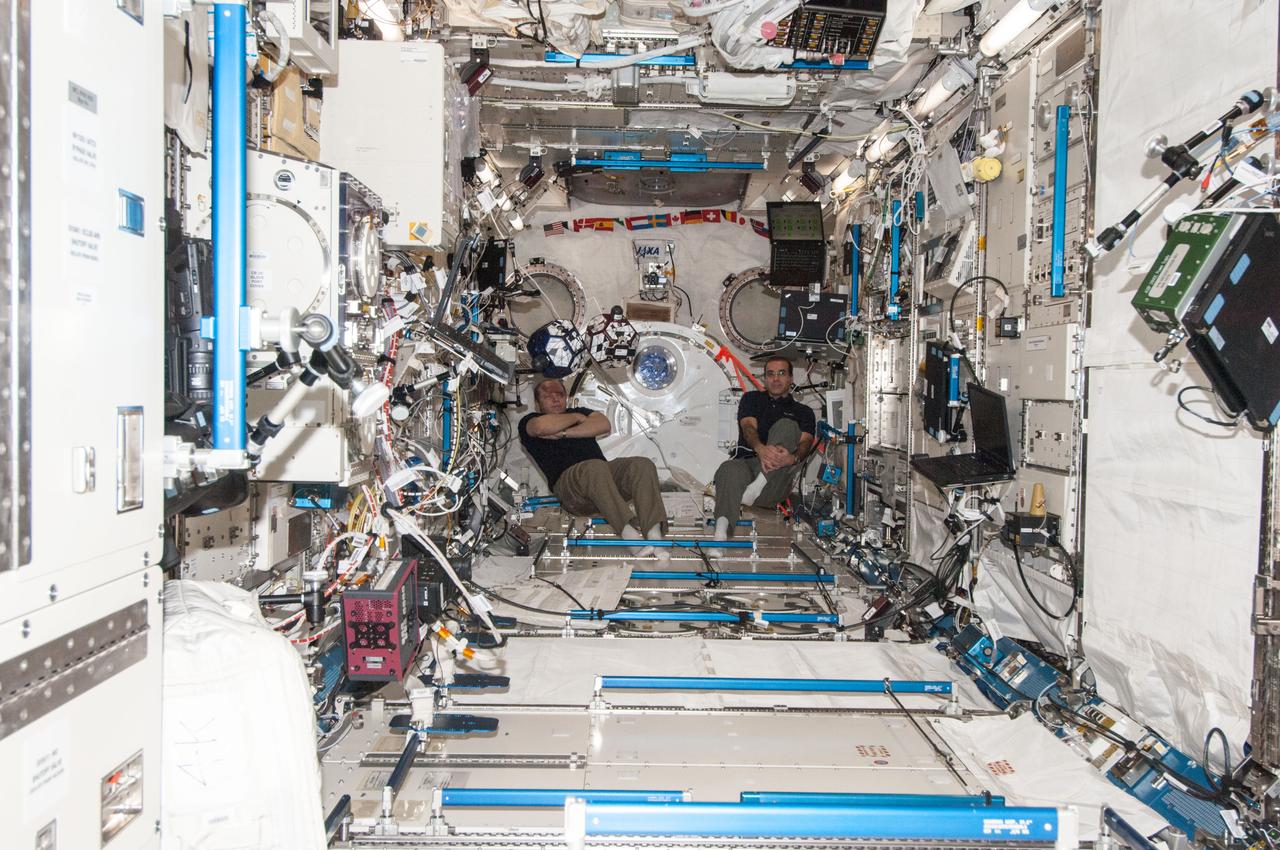
ISS038-E-031405 (15 Jan. 2014) --- In the International Space Station's Kibo laboratory, Russian cosmonaut Oleg Kotov (left), Expedition 38 commander; and NASA astronaut Rick Mastracchio, flight engineer, conduct a session with a pair of bowling-ball-sized free-flying satellites known as Synchronized Position Hold, Engage, Reorient, Experimental Satellites, or SPHERES. The experiment uses student written algorithms that operate the small satellites to demonstrate critical mission tasks such as formation flying and vehicle dockings.
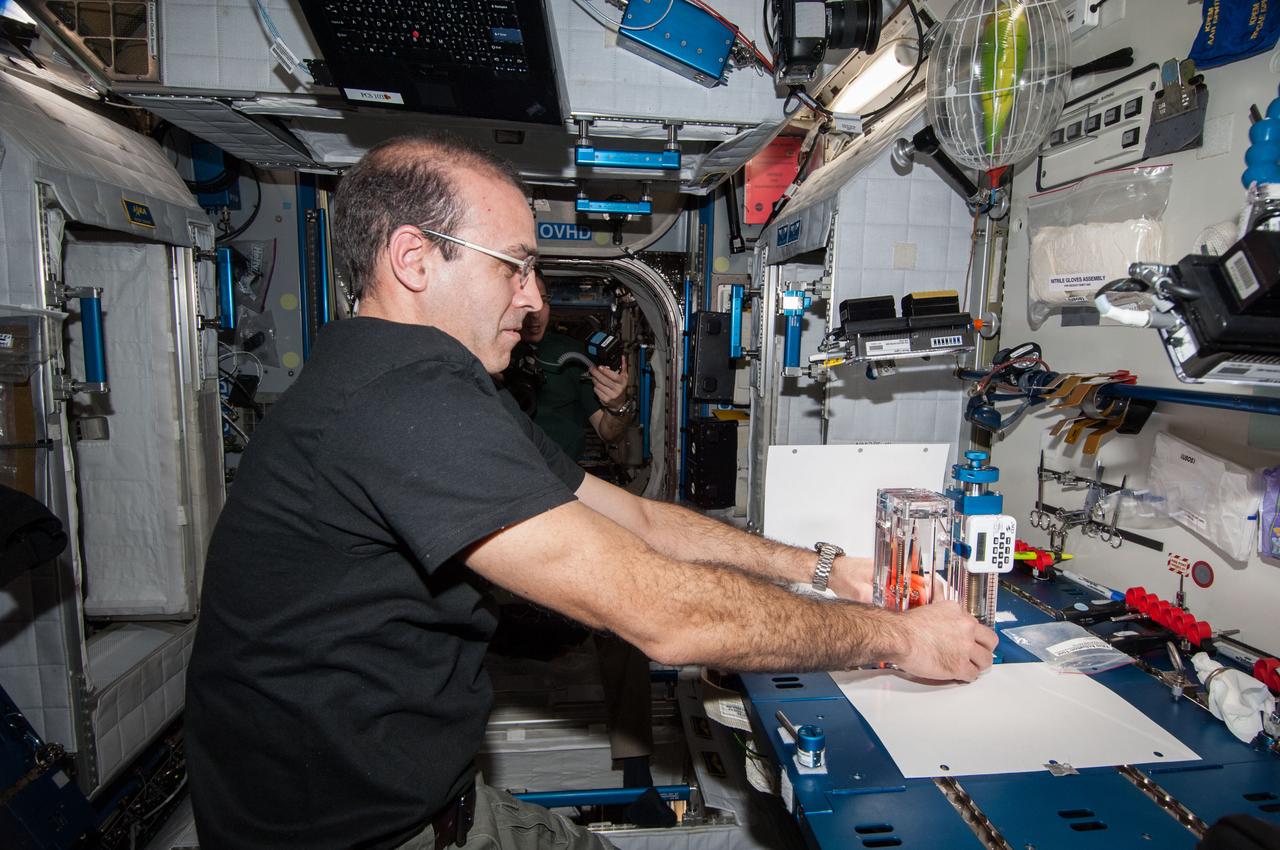
ISS038-E-025002 (3 Jan. 2014) --- NASA astronaut Rick Mastracchio, Expedition 38 flight engineer, conducts a session with the Capillary Flow Experiment (CFE-2) in the Harmony node of the International Space Station. CFE is a suite of fluid physics experiments that investigate how fluids behave in microgravity which could benefit water and fuel delivery systems on future spacecraft. Scientists designed the CFE-2 to study properties of fluids and bubbles inside containers with a specific 3-D geometry. NASA astronaut Mike Hopkins (mostly obscured in the background), flight engineer, uses a still camera to photograph the session.
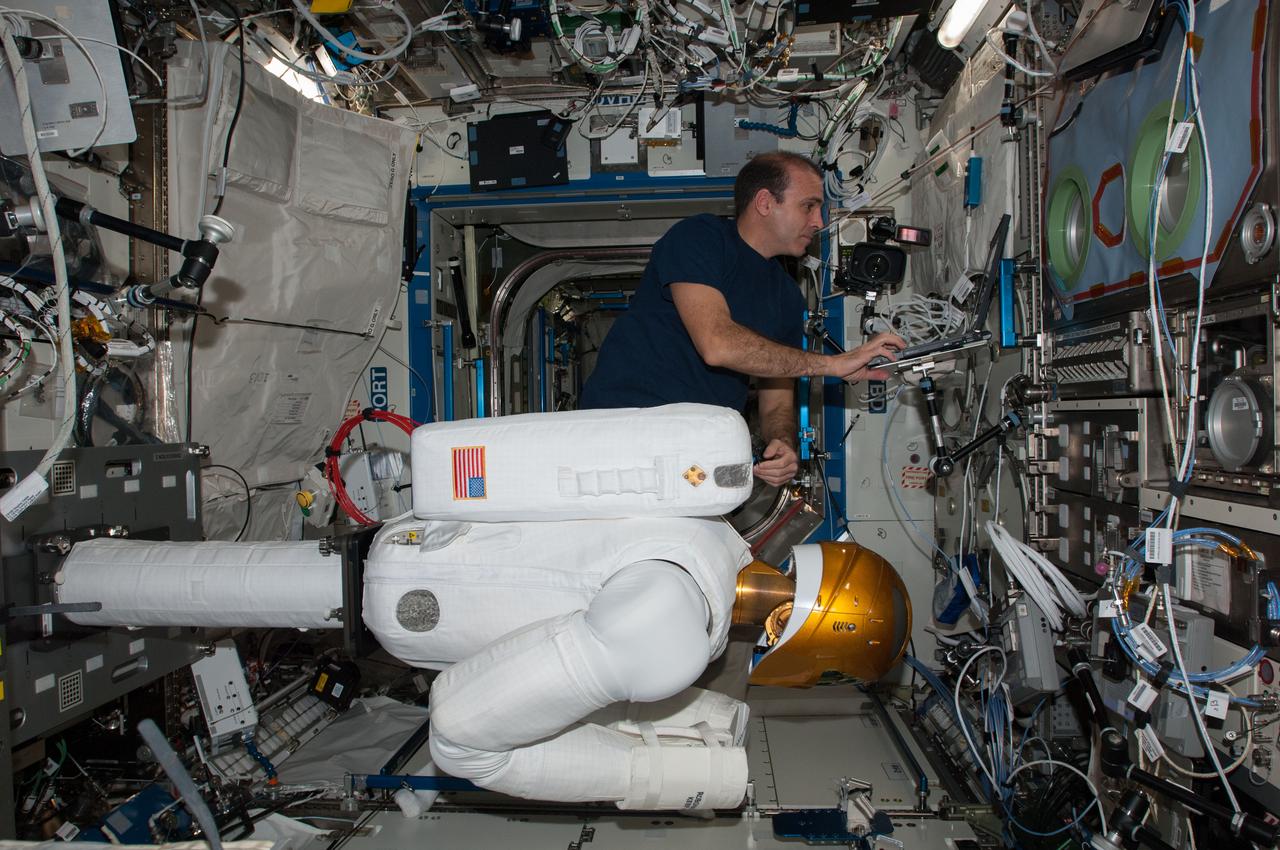
ISS038-E-013714 (9 Dec. 2013) --- In the International Space Station's Destiny laboratory, NASA astronaut Rick Mastracchio, Expedition 38 flight engineer, prepares Robonaut 2 for an upcoming ground-commanded firmware update that will support the installation of a pair of legs for the humanoid robot. R2 was designed to test out the capability of a robot to perform tasks deemed too dangerous or mundane for astronauts. Robonaut's legs are scheduled to arrive to the station aboard the SpaceX-3 commercial cargo mission in February 2014.
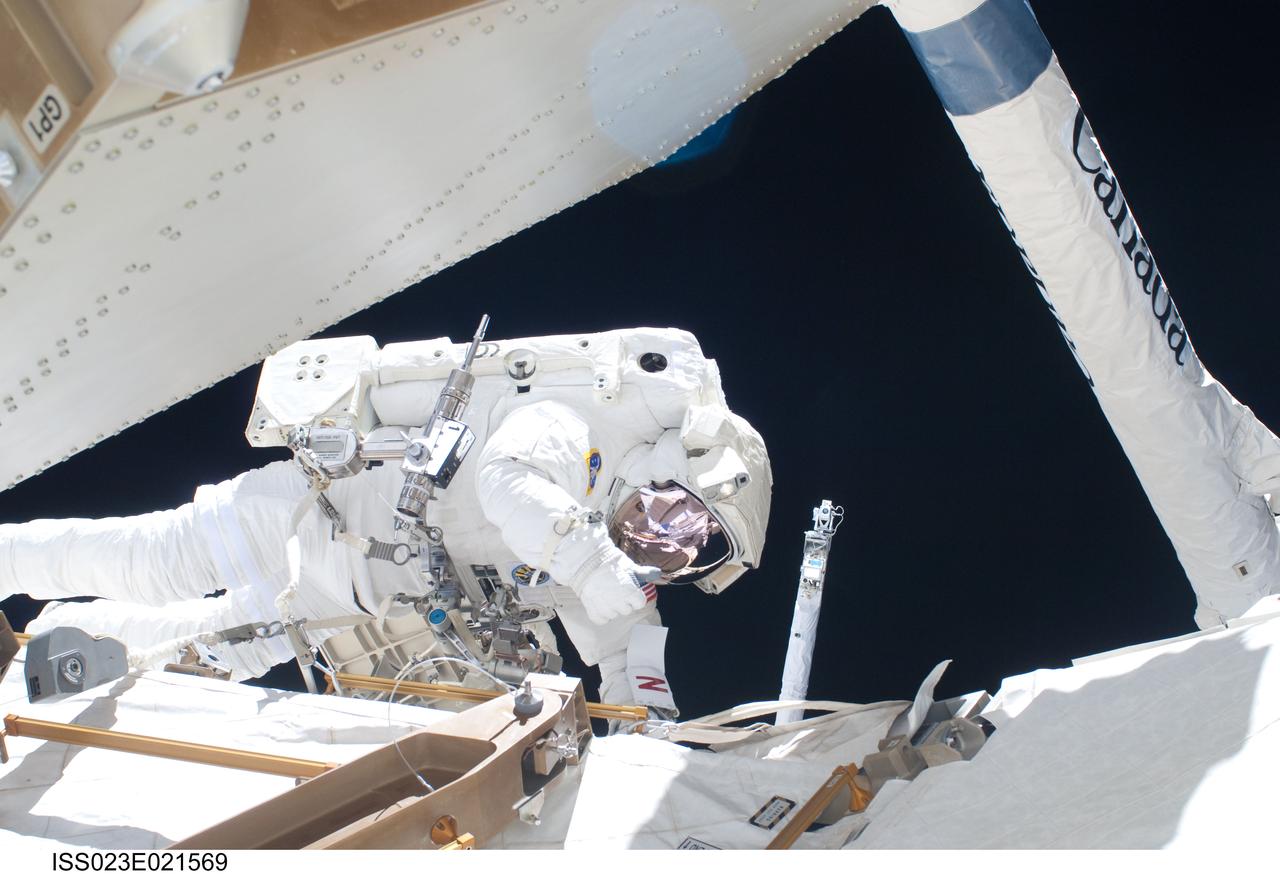
ISS023-E-021569 (11 April 2010) --- NASA astronaut Clayton Anderson, STS-131 mission specialist, participates in the mission's second session of extravehicular activity (EVA) as construction and maintenance continue on the International Space Station. During the seven-hour, 26-minute spacewalk, Anderson and Rick Mastracchio (out of frame), mission specialist, unhooked and removed the depleted ammonia tank and installed a 1,700-pound ammonia tank on the station’s Starboard 1 truss, completing the second of a three-spacewalk coolant tank replacement process.
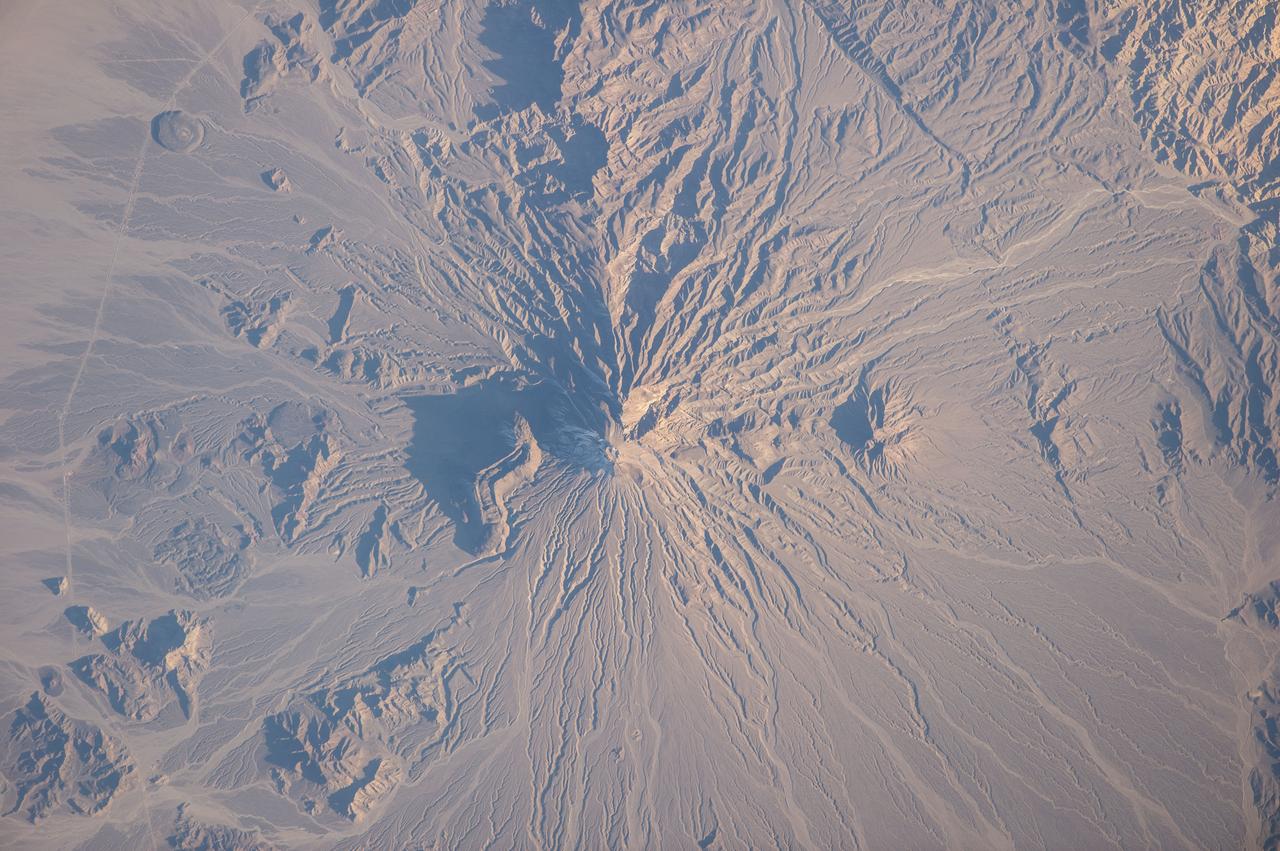
ISS038-E-025895 (5 Jan. 2014) --- Bazman volcano in Iran is featured in this image photographed by an Expedition 38 crew member on the International Space Station. Bazman volcano is located in a remote southern region within the Bazman Protected Area of Sistan and Baluchestan Provinces. While the volcano has the classic cone shape associated with stratovolcanoes, it is also heavily dissected by channels that extend downwards from the 3,490-meter-above-sea-level summit. This radial drainage pattern - looking similar to the spokes of a bicycle wheel - is readily observed in this photograph. Such patterns can form around high, symmetric peaks when water runoff and erosion is not constrained by the resistance of geologic materials or barriers to flow, leading to essentially even distribution of water runoff channels around the central peak. While there is no historical record of volcanism at Bazman, and no geologic record of eruptive activity within the past 10,000 years, some fumarolic activity - gas and steam emissions - have been reported, according to the Smithsonian Institution National Museum of Natural History's Global Volcanism Program. The summit of the volcano is marked by a well-formed explosion crater, and lava cones formed on the flanks of the main volcano are associated with well-preserved lava flows-a particularly striking example is visible on the north flank of Bazman at center. Together, these observations and features are suggestive that Bazman may be a dormant, rather than extinct, volcano.
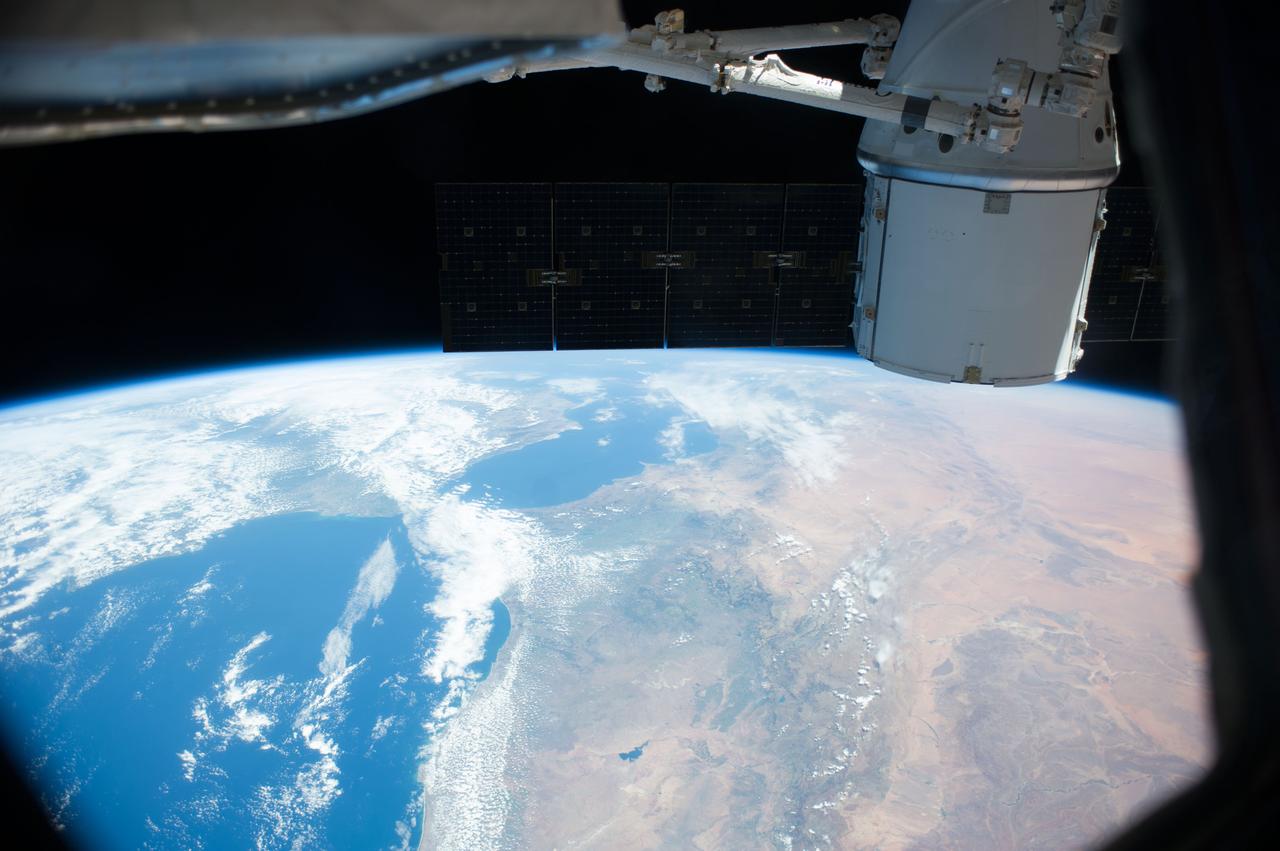
Earth observation taken by the Expedition 39 crew aboard the ISS. A portion of the SpaceX Dragon Commercial Resupply Services-3 (CRS-3) spacecraft is in view. Image was released by astronaut on Twitter and downlinked in folder: Europe.
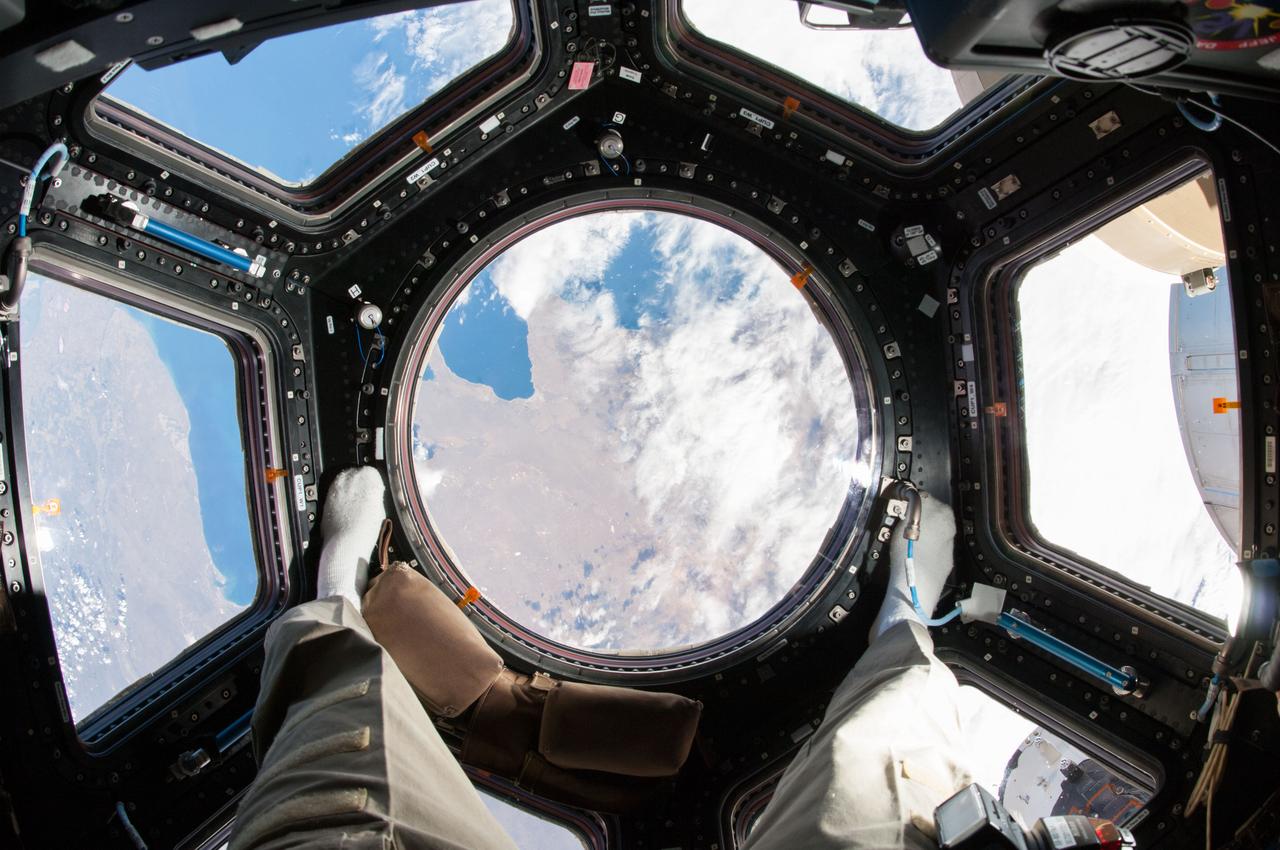
Overall view of the Cupola Module. Photo was taken during Expedition 38. Image was released by astronaut on Twitter.
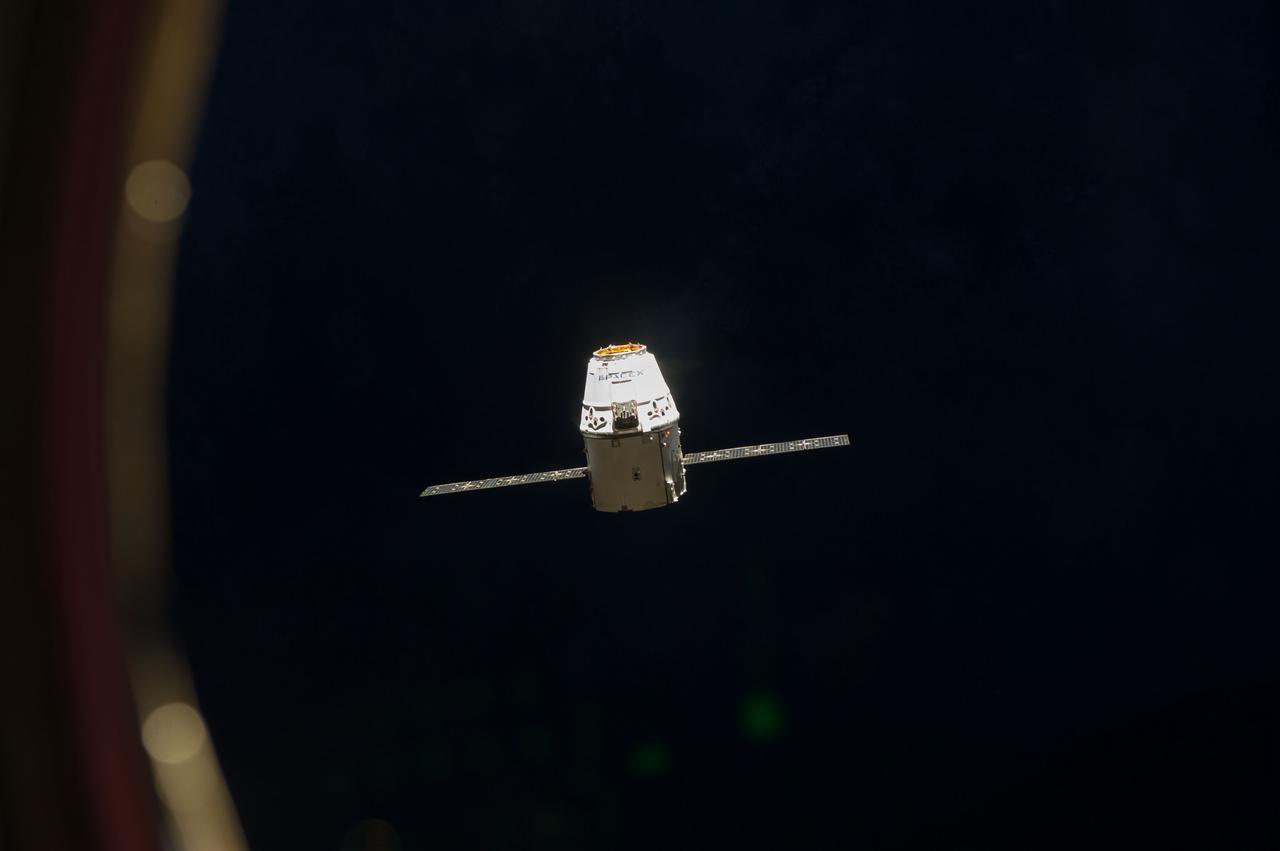
ISS039-E-013584 (20 April 2014) --- This is one of an extensive series of still photos documenting the arrival and ultimate capture and berthing of the SpaceX Dragon at the International Space Station, as photographed by the Expedition 39 crew members onboard the orbital outpost. The spacecraft was captured by the space station and successfully berthed, following the April 20 arrival.
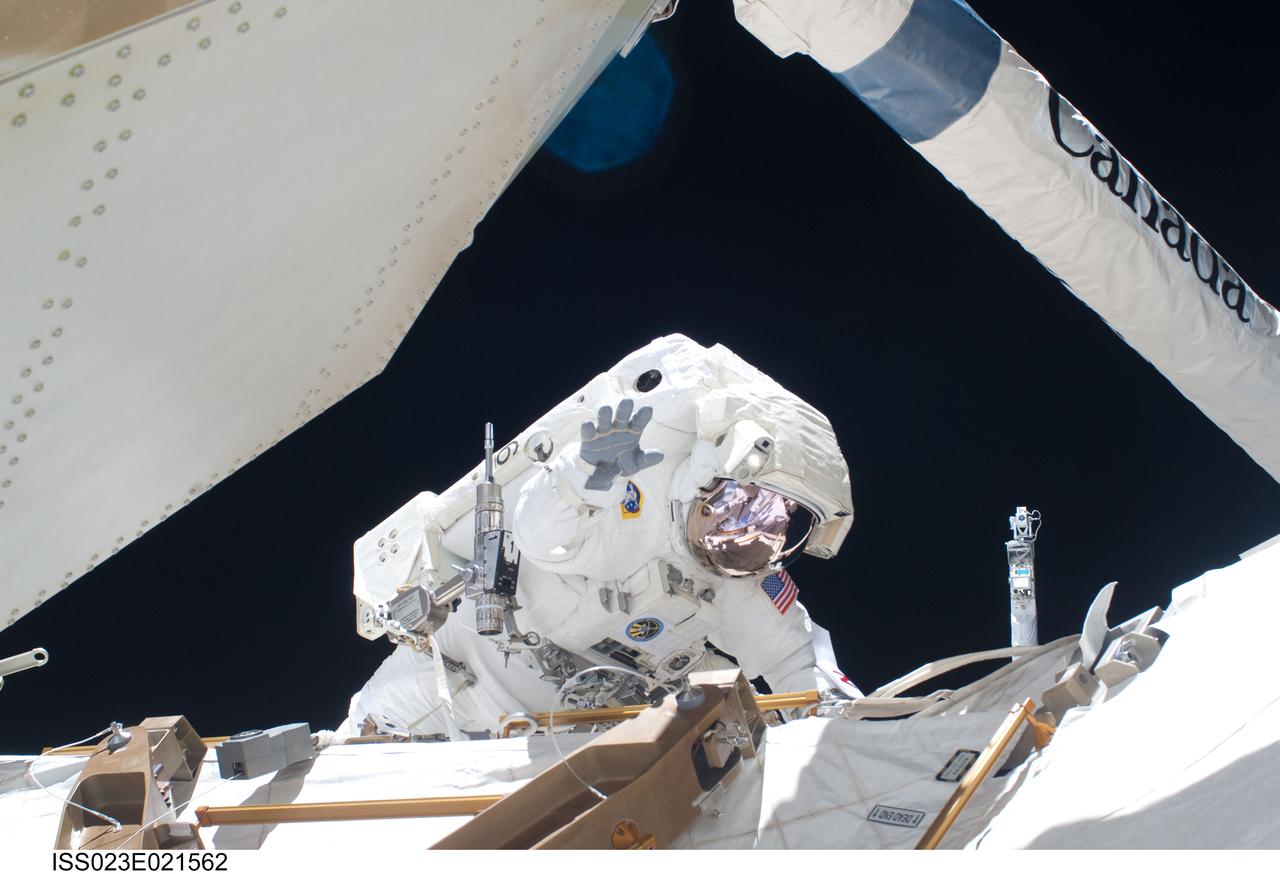
ISS023-E-021562 (11 April 2010) --- NASA astronaut Clayton Anderson, STS-131 mission specialist, participates in the mission's second session of extravehicular activity (EVA) as construction and maintenance continue on the International Space Station. During the seven-hour, 26-minute spacewalk, Anderson and Rick Mastracchio (out of frame), mission specialist, unhooked and removed the depleted ammonia tank and installed a 1,700-pound ammonia tank on the station’s Starboard 1 truss, completing the second of a three-spacewalk coolant tank replacement process.
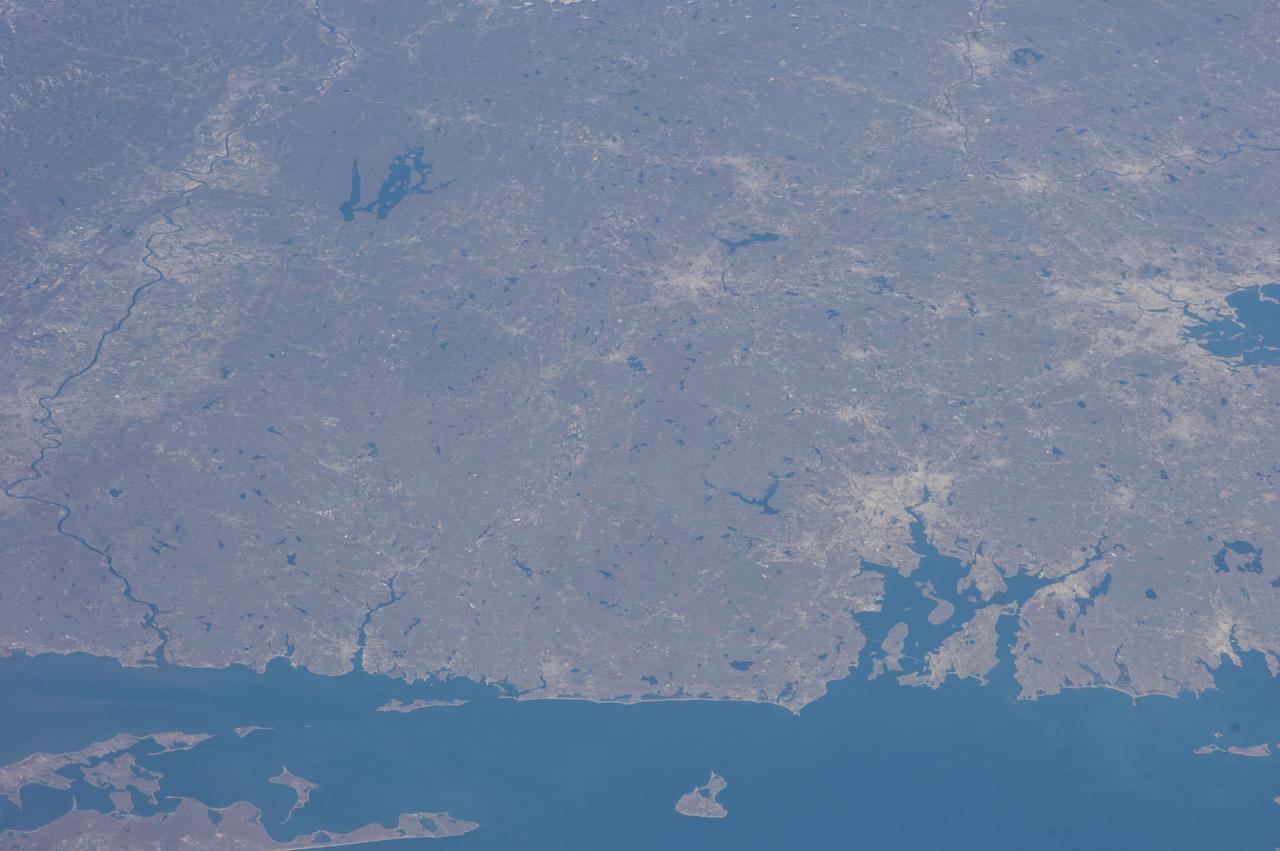
Earth Observations taken by Expedition 38 crewmember. Image was released by astronaut on Twitter.
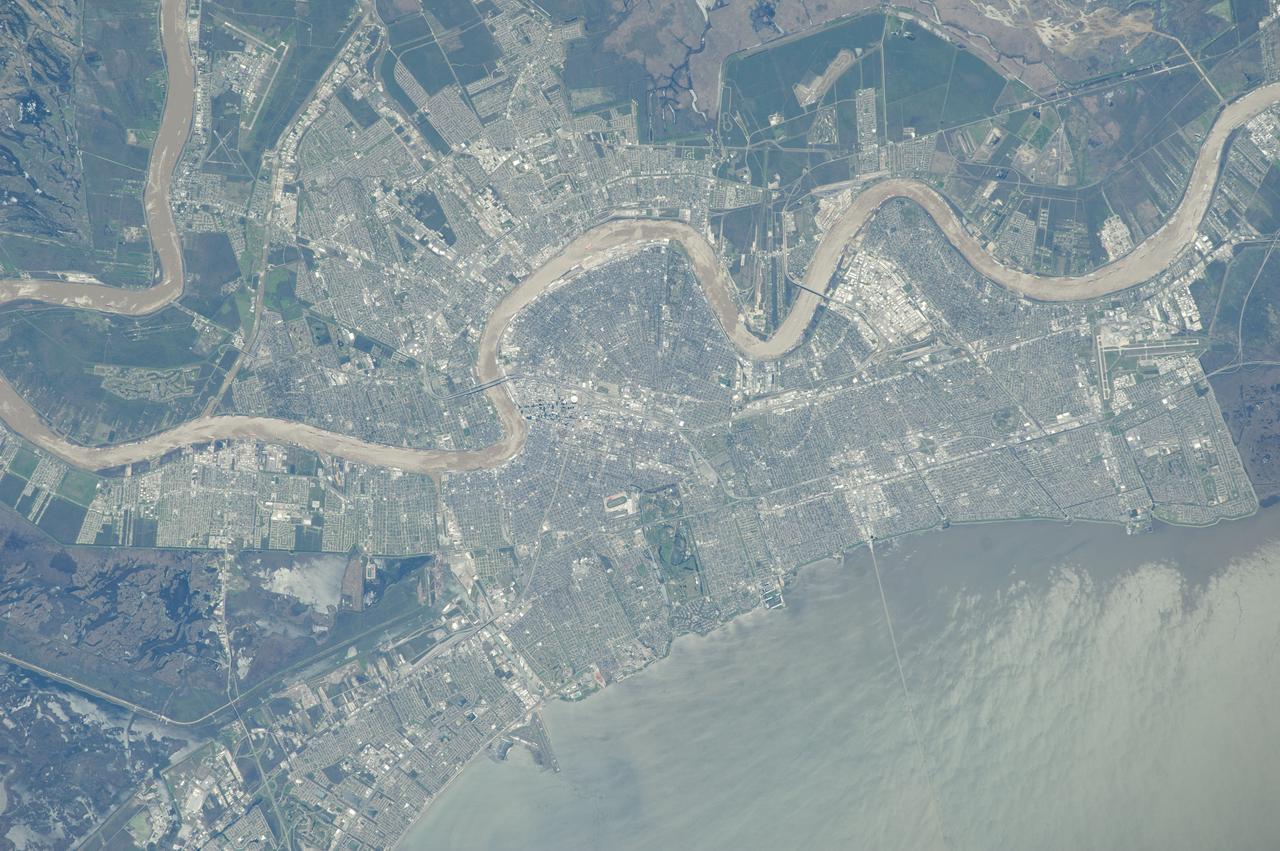
ISS039-E-001640 (13 March 2014) --- From an astronaut's point of view in Earth orbit, it would be difficult to miss the Mississippi River as it meanders through the city of New Orleans. Sunglint on Lake Pontchartrain is visible at lower right in the 400mm image, photographed by one of the Expedition 39 crew members aboard the International Space Station on March 13, 2014.
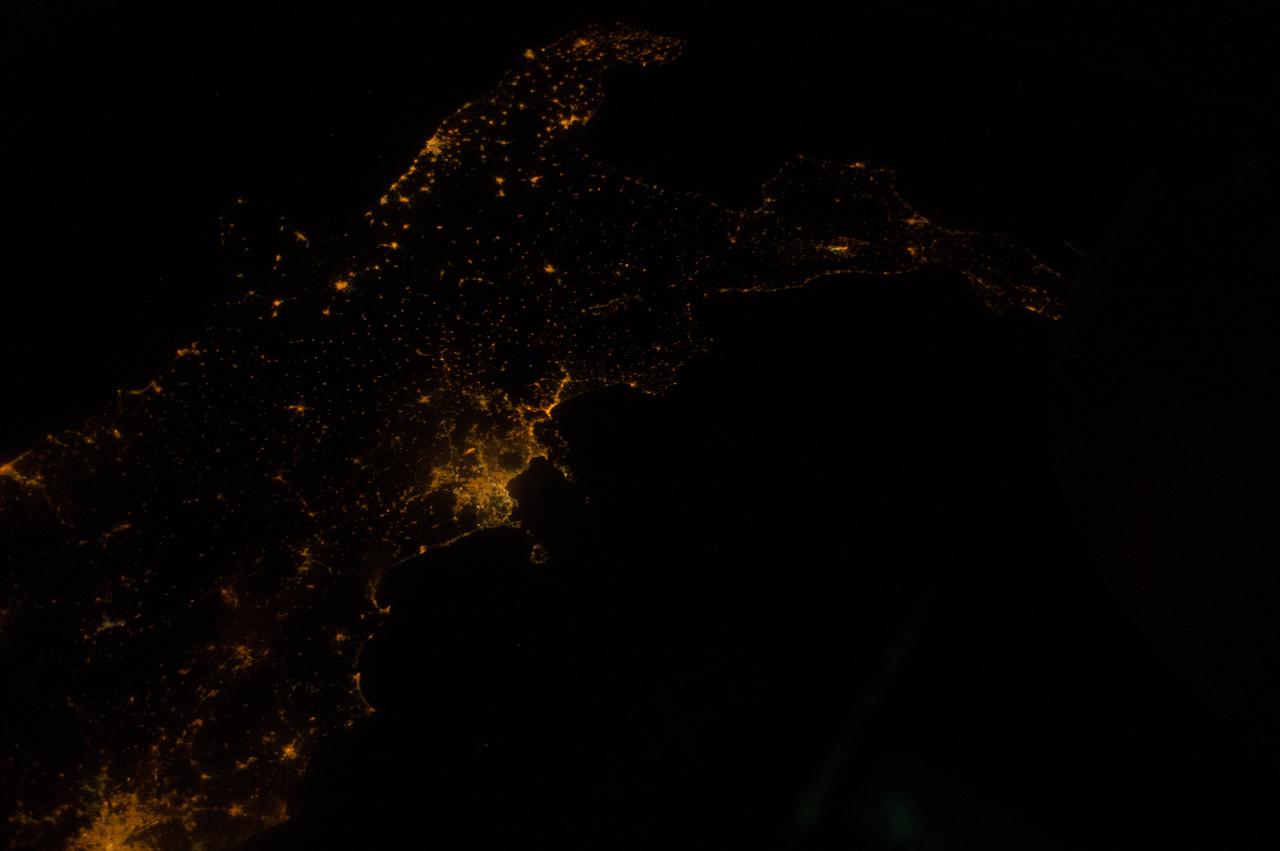
Earth observation taken by the Expedition 39 crew aboard the ISS. Night view of city lights. Image was released by astronaut on Twitter and downlinked in folder: north lights.
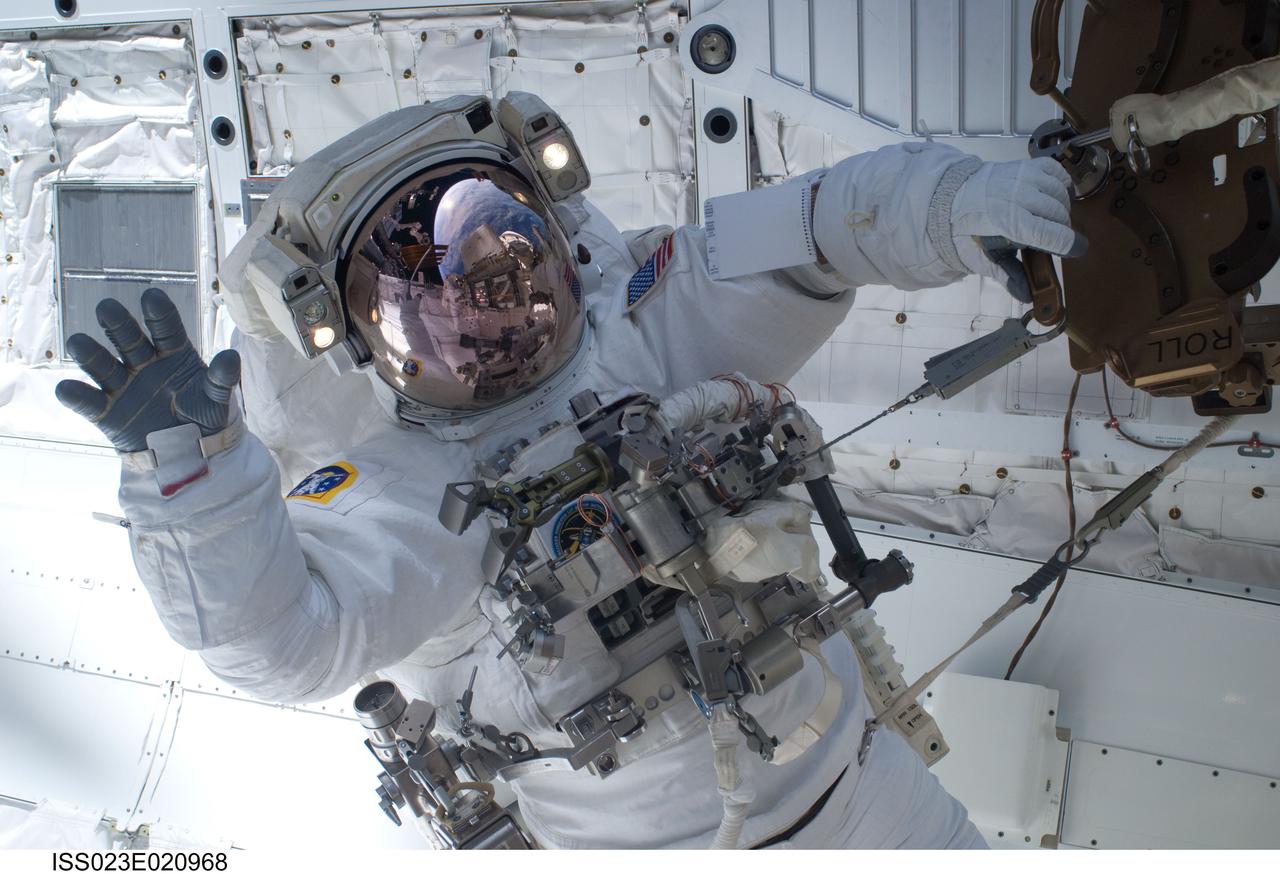
ISS023-E-020968 (9 April 2010) --- NASA astronaut Clayton Anderson, STS-131 mission specialist, participates in the mission's first session of extravehicular activity (EVA) as construction and maintenance continue on the International Space Station. During the six-hour, 27-minute spacewalk, Anderson and Rick Mastracchio (visible in the reflection of Anderson’s helmet visor), mission specialist, helped move a new 1,700-pound ammonia tank from space shuttle Discovery’s cargo bay to a temporary parking place on the station, retrieved an experiment from the Japanese Kibo Laboratory exposed facility and replaced a Rate Gyro Assembly on one of the truss segments.
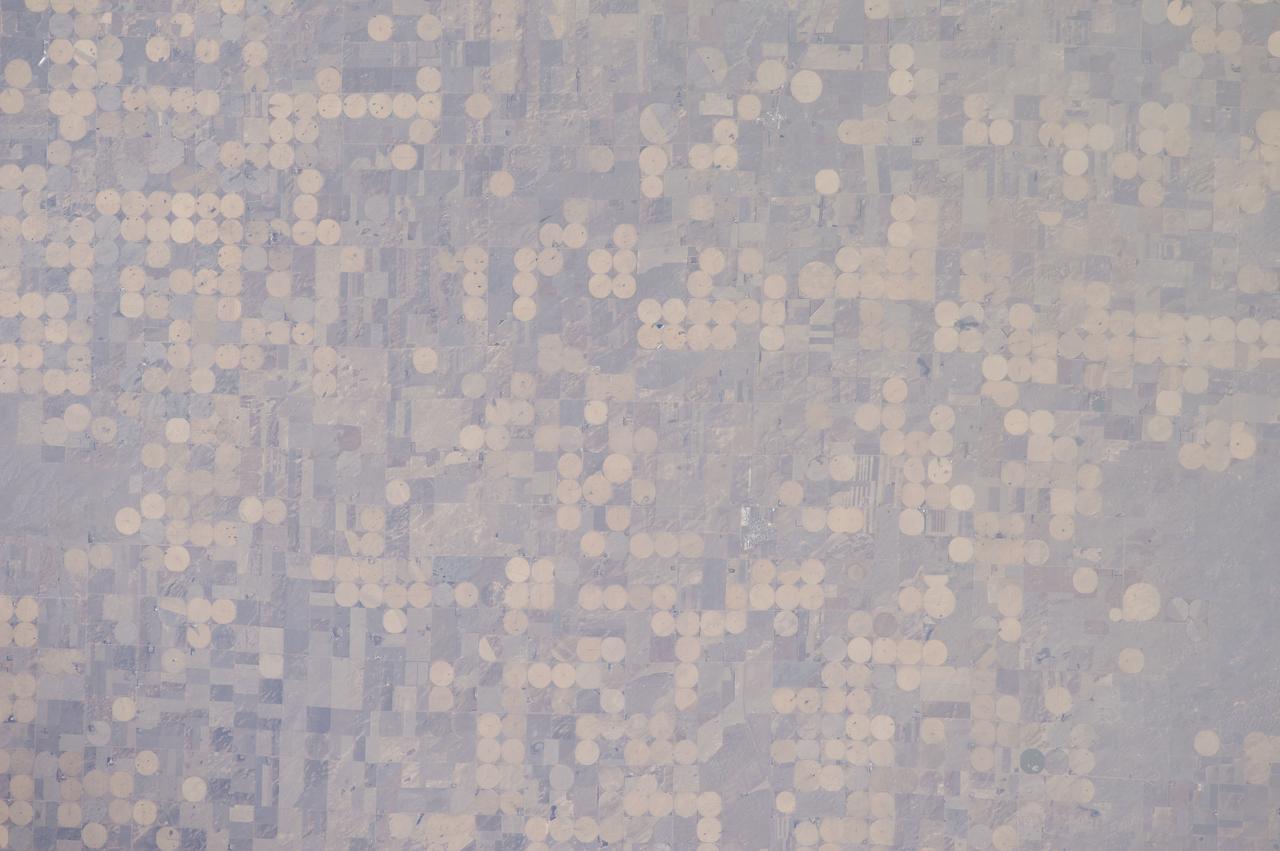
Earth observation taken by the Expedition 39 crew aboard the ISS. Image downlinked in folder: Seattle to Florida, and released by astronaut on Twitter.
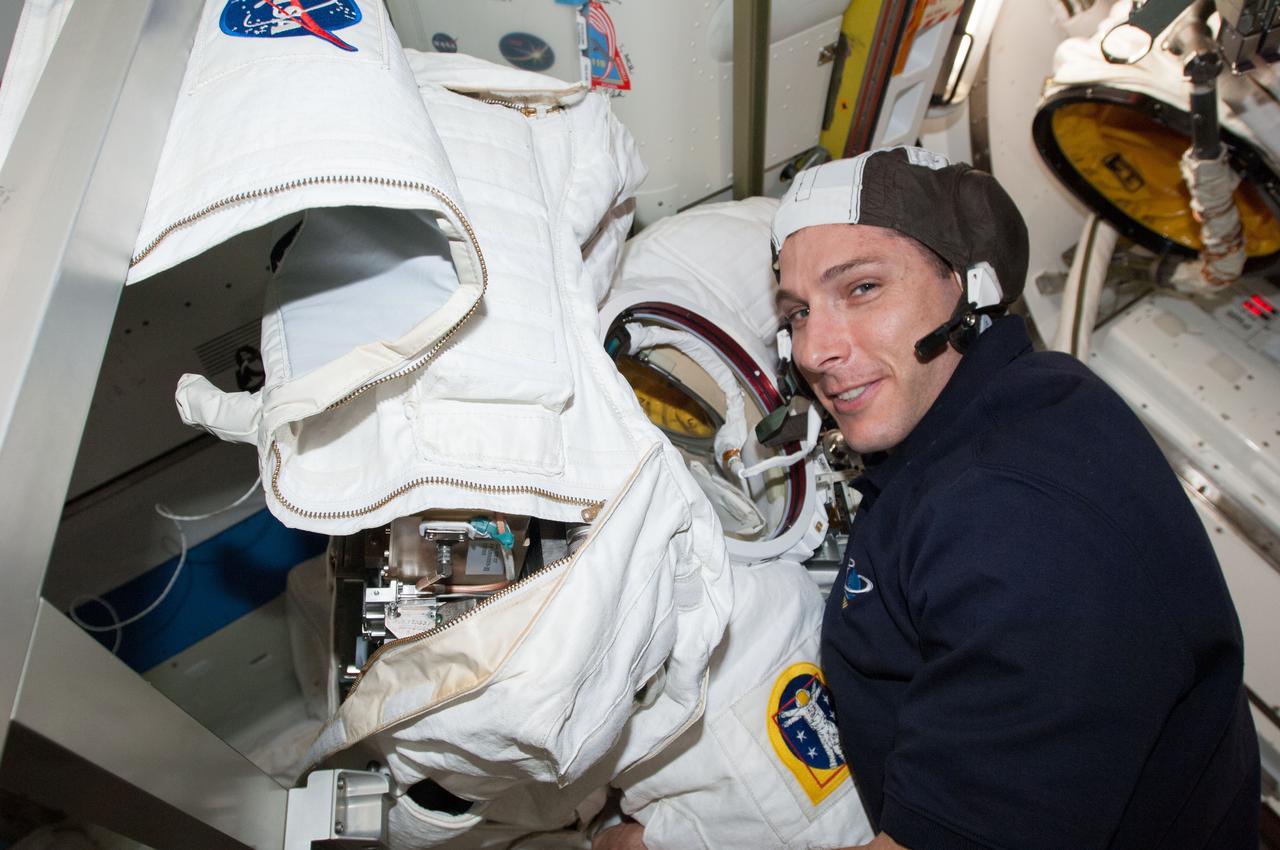
ISS038-E-004128 (18 Nov. 2013) --- NASA astronaut Michael Hopkins, Expedition 38 flight engineer, participates in Extravehicular Mobility Unit (EMU) spacesuit tests and repairs in the Quest airlock of the International Space Station.
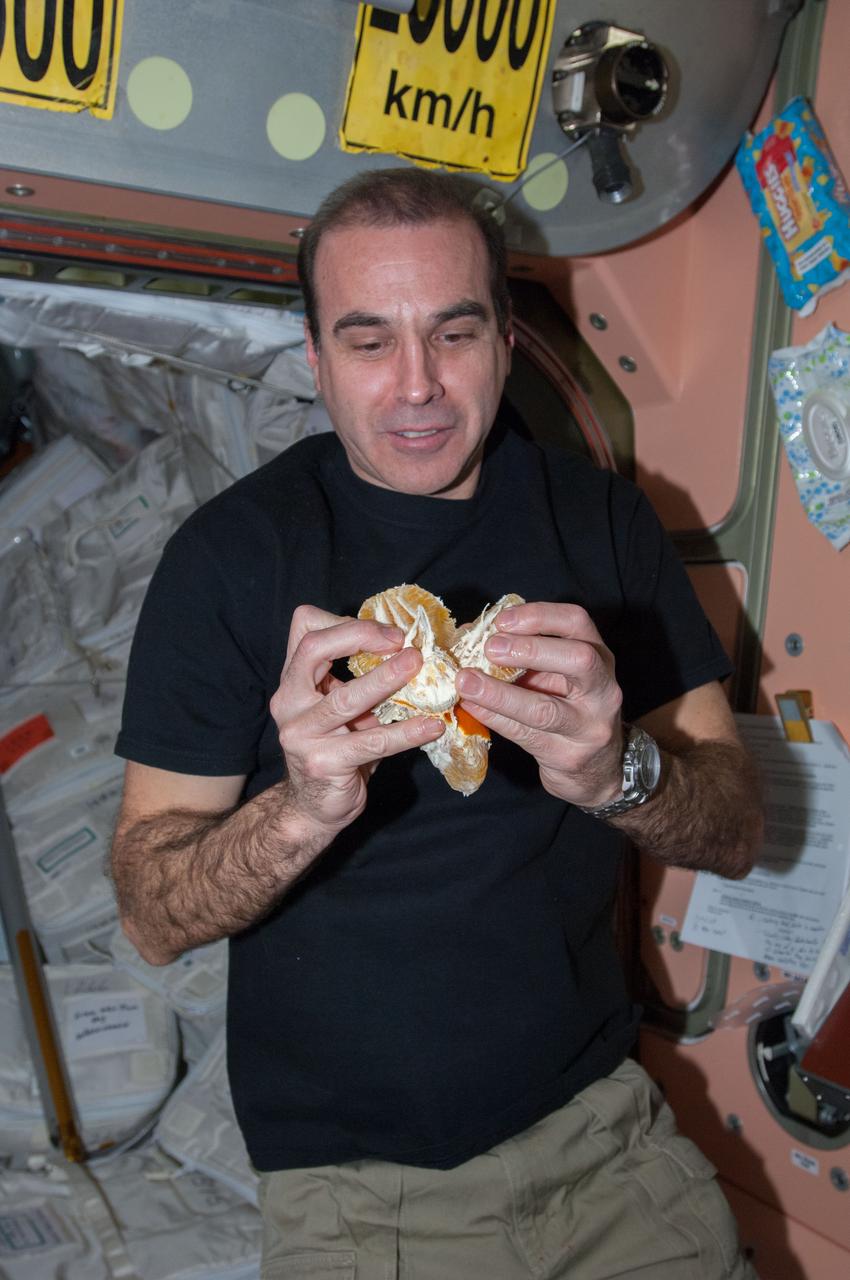
ISS038-E-043027 (6 Feb. 2014) --- NASA astronaut Rick Mastracchio, Expedition 38 flight engineer, prepares to eat a fresh orange in the Unity node of the International Space Station. The fruit was brought to the station on the ISS Progress 54 cargo spacecraft, which docked Feb. 5, 2014.
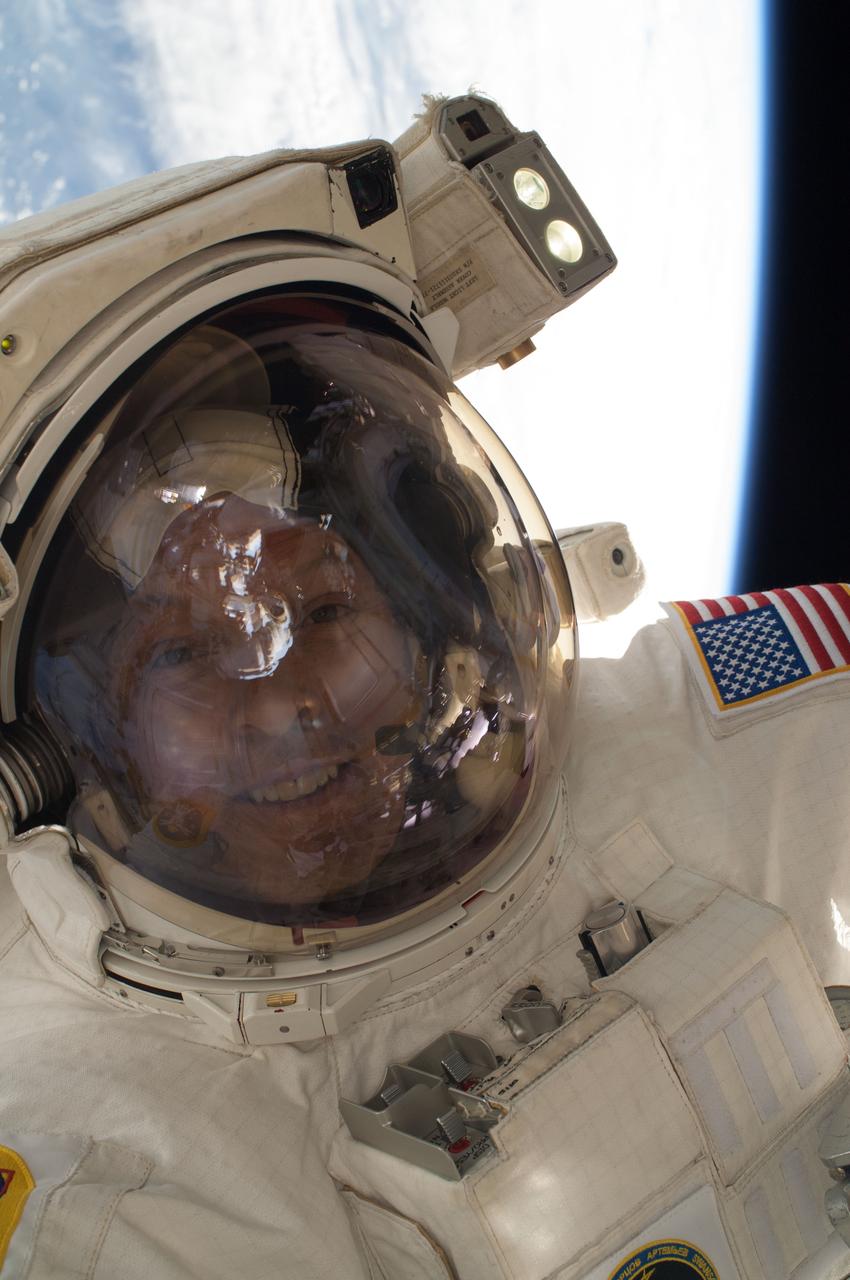
ISS039-E-014976 (22 April 2014) --- With a blue and white portion of Earth below him, NASA astronaut Steve Swanson, Expedition 39 flight engineer, is pictured during a spacewalk to replace a failed backup computer relay box in the S0 truss of the International Space Station on April 22, 2014. He was accompanied on the spacewalk by fellow Flight Engineer Rick Mastracchio of NASA.
![Earth observation taken by the Expedition 39 crew aboard the ISS. View of Cape Cod, Massachusetts downlinked in folder: CT [Connecticut]. Image was released by astronaut on Twitter.](https://images-assets.nasa.gov/image/iss039e001739/iss039e001739~medium.jpg)
Earth observation taken by the Expedition 39 crew aboard the ISS. View of Cape Cod, Massachusetts downlinked in folder: CT [Connecticut]. Image was released by astronaut on Twitter.

ISS038-E-044829 (10 Feb. 2014) --- NASA astronaut Rick Mastracchio, Expedition 38 flight engineer, prepares to use an ultraviolet light to decontaminate hardware used for life science experiments inside the Microgravity Science Glovebox (MSG) in the Destiny laboratory of the International Space Station.
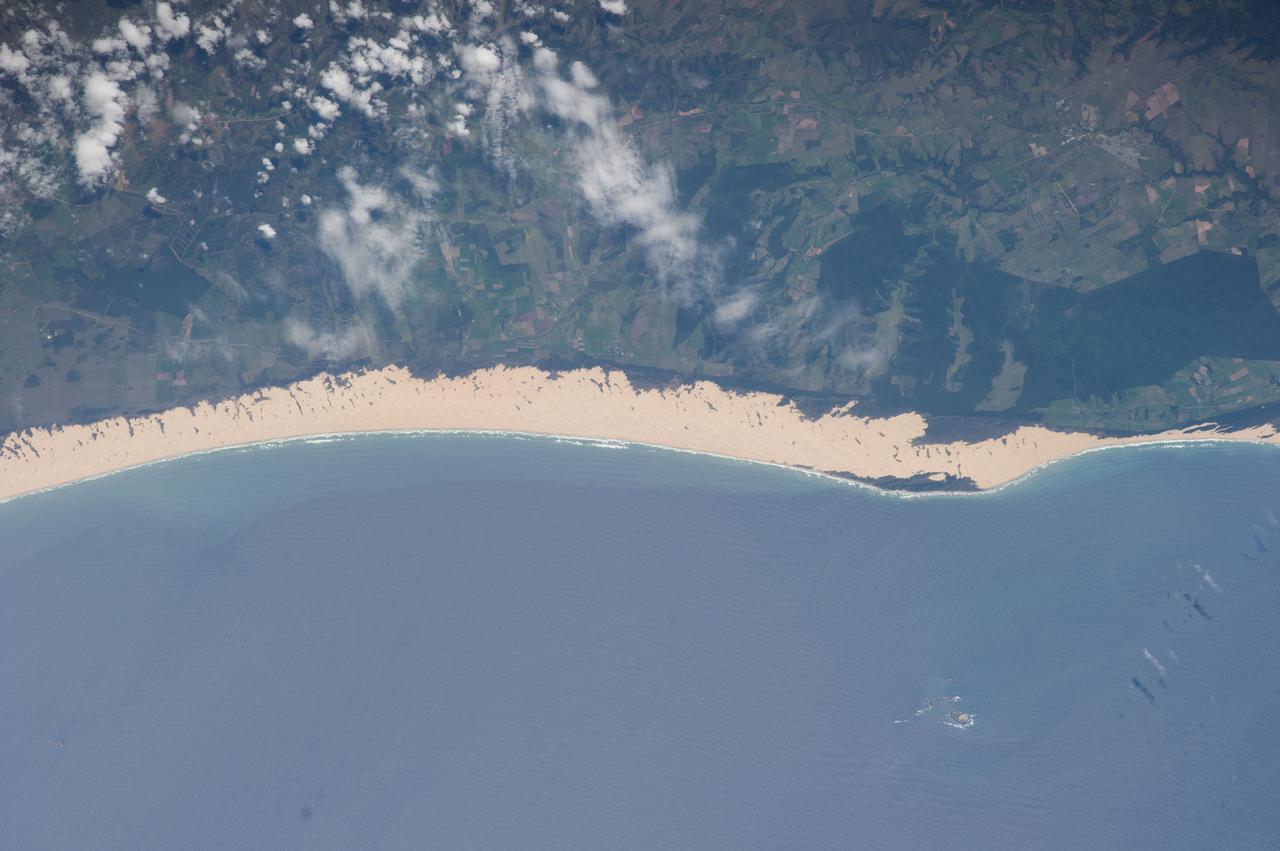
Earth observations taken by Expedition 38 crewmember. Image was released by astronaut on Twitter.
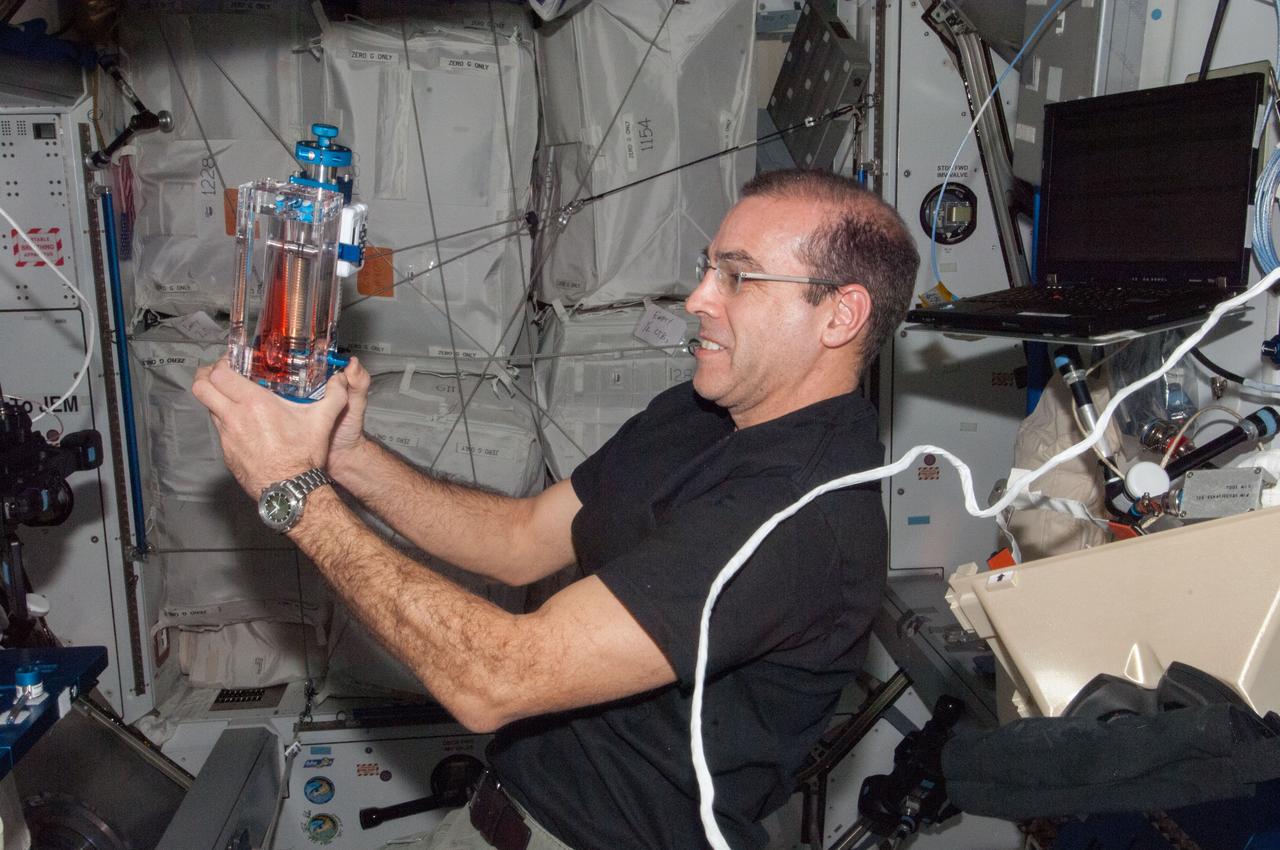
ISS038-E-025016 (3 Jan. 2014) --- NASA astronaut Rick Mastracchio, Expedition 38 flight engineer, conducts a session with the Capillary Flow Experiment (CFE-2) in the Harmony node of the International Space Station. CFE is a suite of fluid physics experiments that investigate how fluids behave in microgravity which could benefit water and fuel delivery systems on future spacecraft. Scientists designed the CFE-2 to study properties of fluids and bubbles inside containers with a specific 3-D geometry.
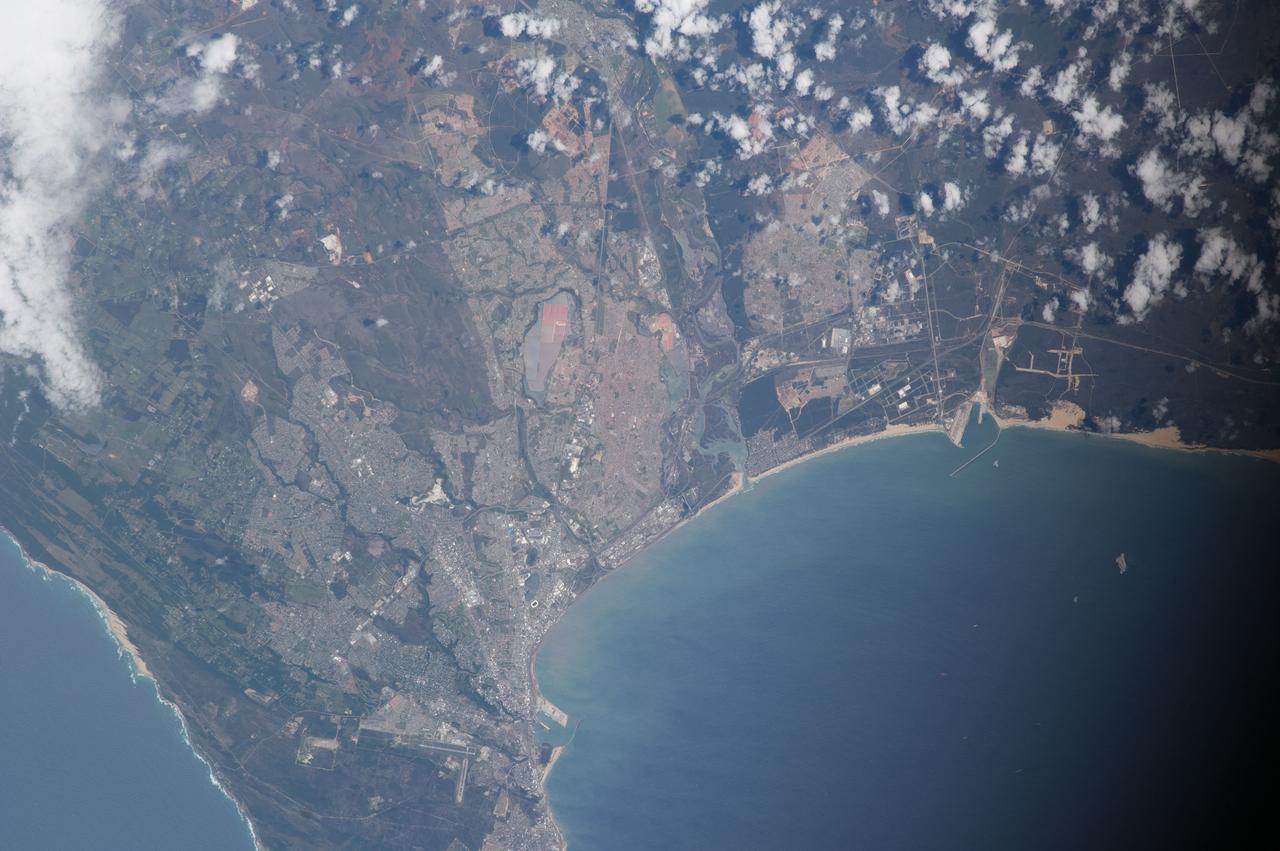
ISS038-E-008471 (26 Nov. 2013) --- One of the Expedition 38 crew members aboard the International Space Station took this photograph showing a part of South Africa's Atlantic Coast. South Africa is the only African nation bordered by both the Indian and Atlantic Oceans.
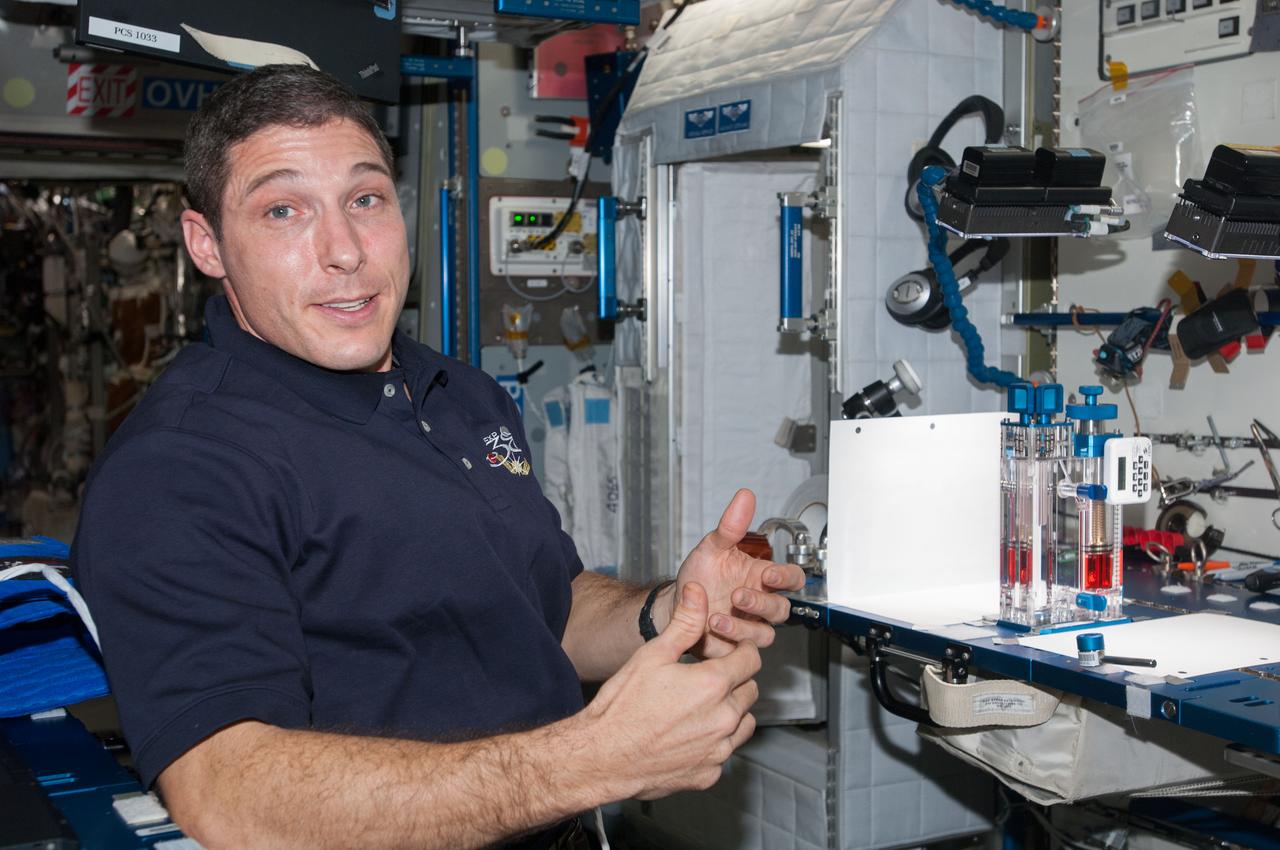
View of Flight Engineer (FE) Mike Hopkins initiating a CFE-2 (Capillary Flow Experiment - 2) Interior Corner Flow - 5 (ICF-5) test run. Liquids behave differently in space than they do on Earth, so containers that can process, hold or transport them must be designed carefully to work in microgravity. The Capillary Flow Experiment-2 furthers research on wetting, which is a liquid's ability to spread across a surface, and its impact over large length scales in strange container shapes in microgravity environments. This work will improve our capabilities to quickly and accurately predict how related processes occur, and allow us to design better systems to process liquids aboard spacecraft (i.e., liquid fuel tanks, thermals fluids, and water processing for life support). Image was released by astronaut on Twitter.
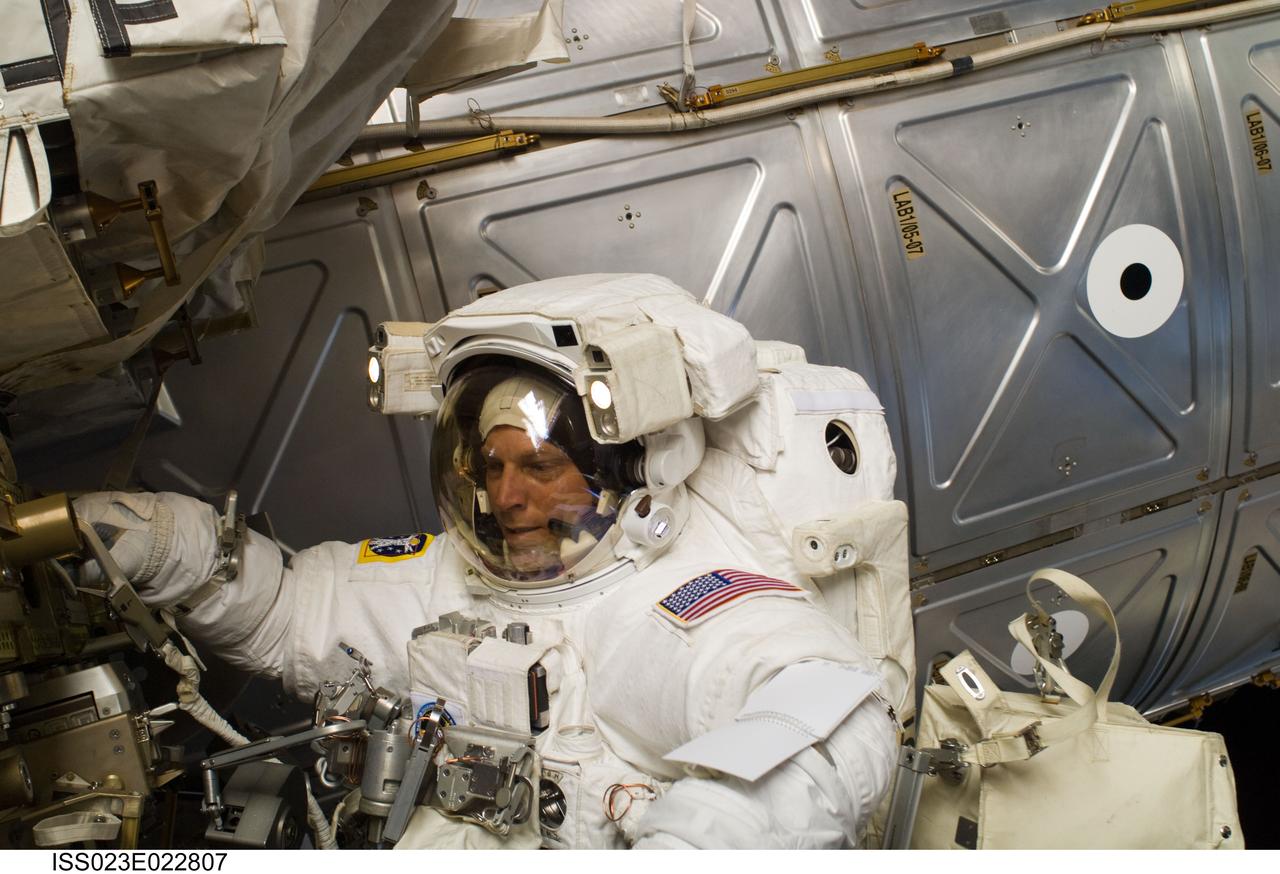
ISS023-E-022807 (13 April 2010) --- NASA astronaut Clayton Anderson, STS-131 mission specialist, participates in the mission's third and final session of extravehicular activity (EVA) as construction and maintenance continue on the International Space Station. During the six-hour, 24-minute spacewalk, Anderson and astronaut Rick Mastracchio (out of frame), mission specialist, hooked up fluid lines of the new 1,700-pound tank, retrieved some micrometeoroid shields from the Quest airlock’s exterior, relocated a portable foot restraint and prepared cables on the Zenith 1 truss for a spare Space to Ground Ku-Band antenna, two chores required before space shuttle Atlantis' STS-132/ULF-4 mission in May.
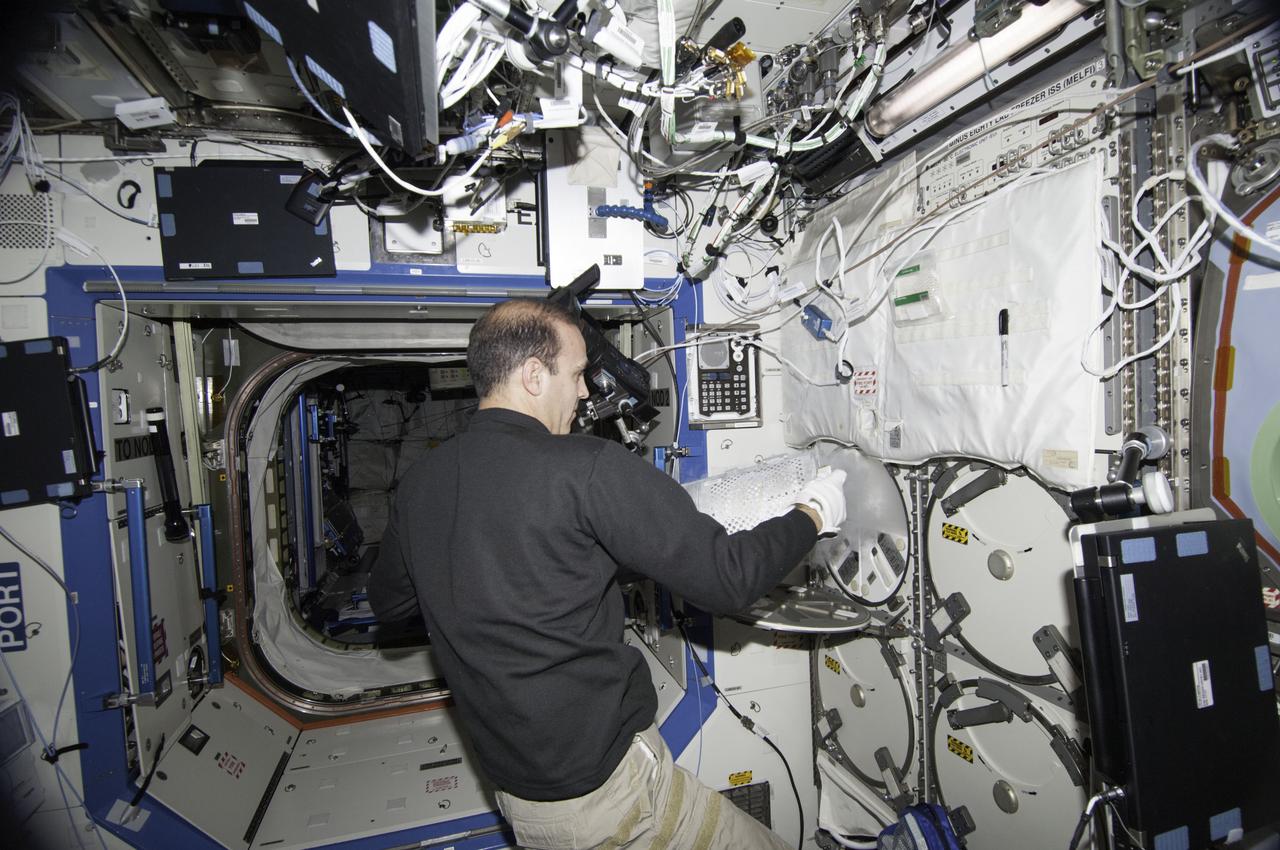
ISS038-E-006757 (21 Nov. 2013) --- In the International Space Station's Destiny laboratory, NASA astronaut Rick Mastracchio, Expedition 38 flight engineer, removes a dewar tray from the Minus Eighty Laboratory Freezer for ISS (MELFI) in order to insert biological samples into the trays.
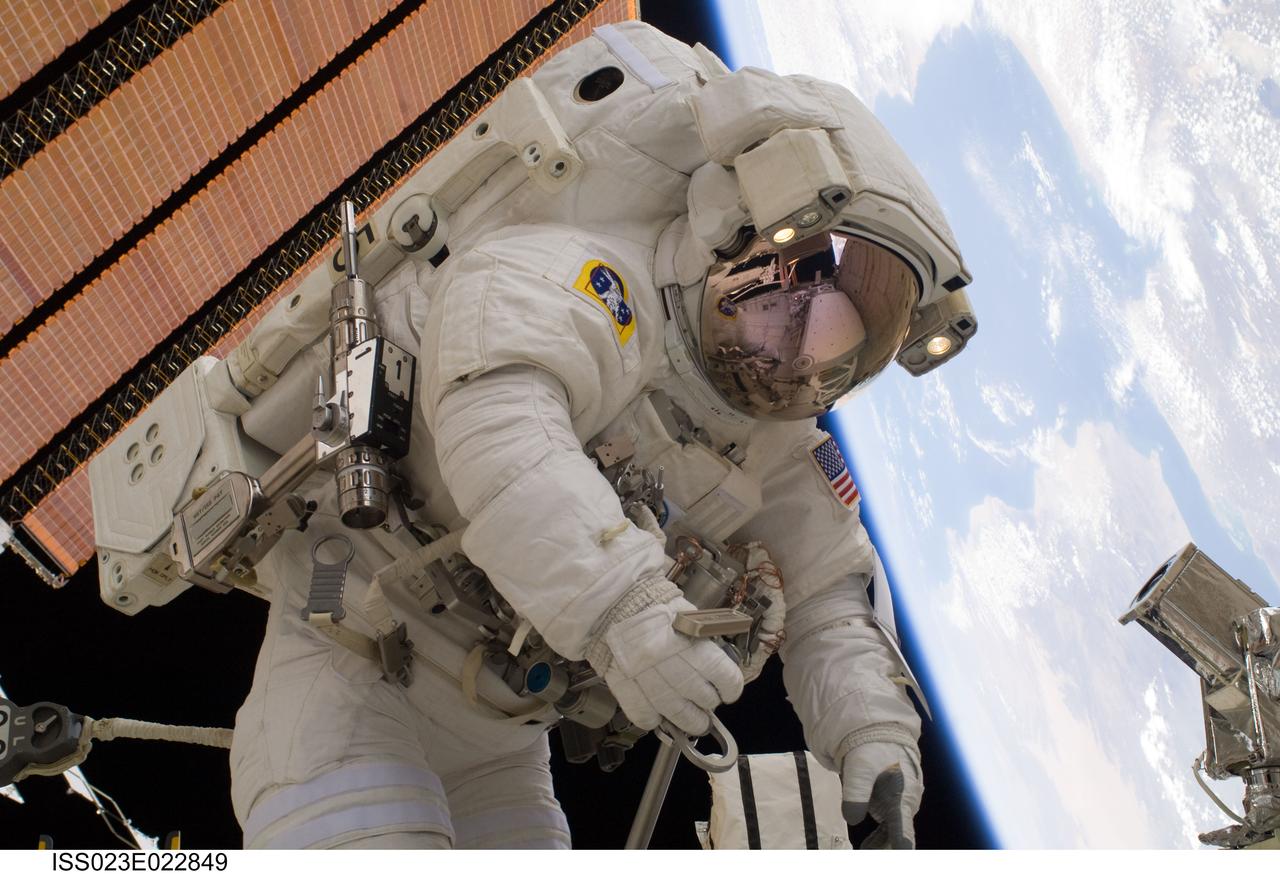
ISS023-E-022849 (13 April 2010) --- NASA astronaut Clayton Anderson, STS-131 mission specialist, participates in the mission's third and final session of extravehicular activity (EVA) as construction and maintenance continue on the International Space Station. During the six-hour, 24-minute spacewalk, Anderson and astronaut Rick Mastracchio (out of frame), mission specialist, hooked up fluid lines of the new 1,700-pound tank, retrieved some micrometeoroid shields from the Quest airlock’s exterior, relocated a portable foot restraint and prepared cables on the Zenith 1 truss for a spare Space to Ground Ku-Band antenna, two chores required before space shuttle Atlantis' STS-132/ULF-4 mission in May.
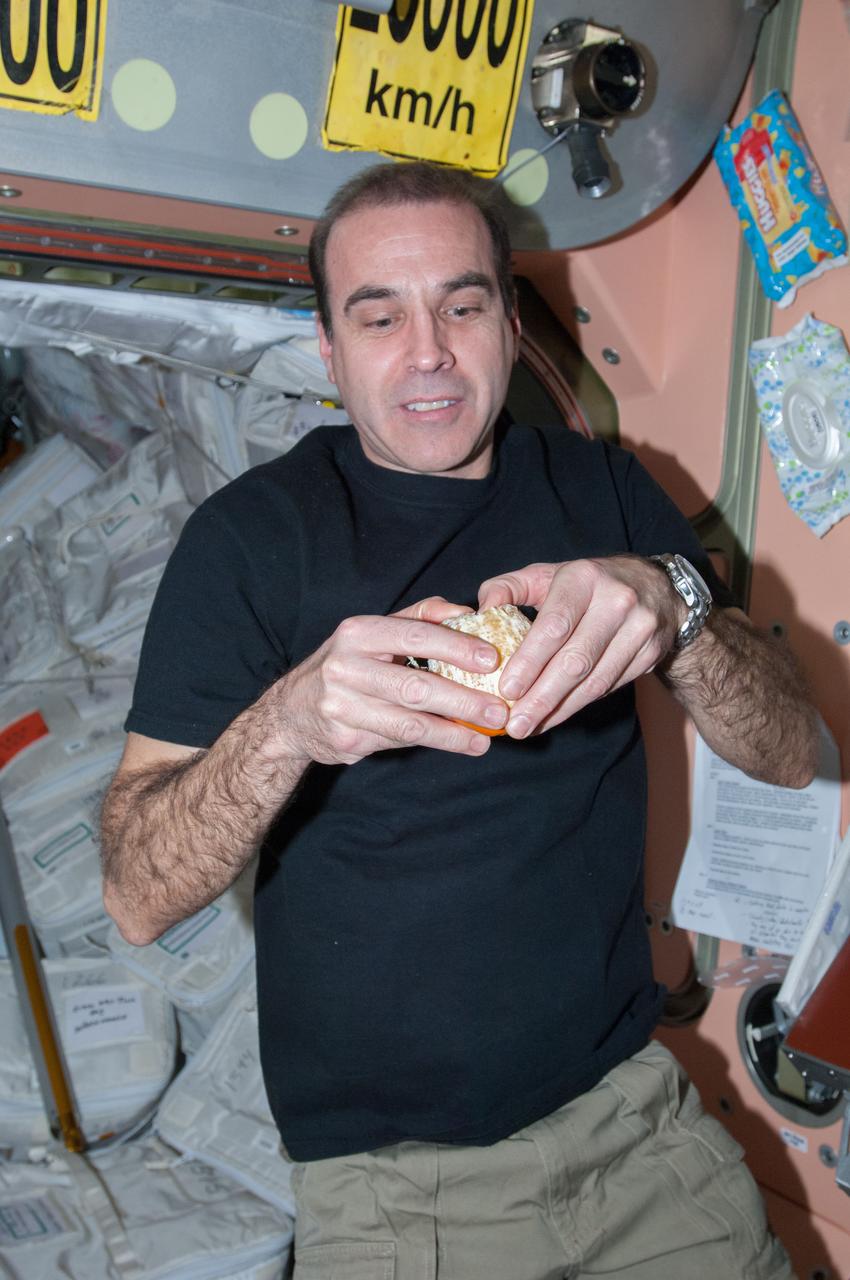
ISS038-E-043015 (6 Feb. 2014) --- NASA astronaut Rick Mastracchio, Expedition 38 flight engineer, prepares to eat a fresh orange in the Unity node of the International Space Station. The fruit was brought to the station on the ISS Progress 54 cargo spacecraft, which docked Feb. 5, 2014.
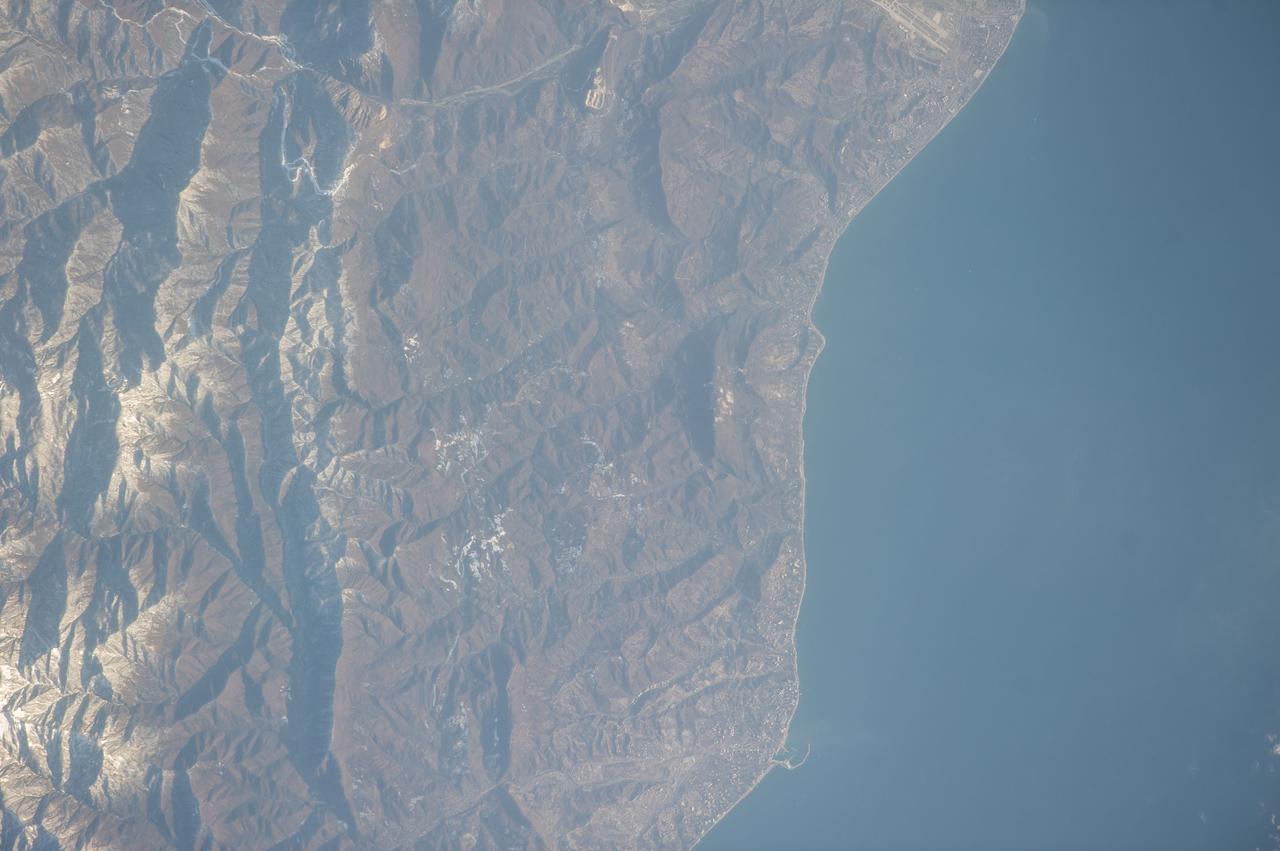
ISS038-E-025812 (5 Feb. 2014) --- One of the Expedition 38 crew members aboard the International Space Station used a 400mm lens to expose this vertical view of the general area of the 2014 Winter Olympics. Sochi is a city in Krasnodar Krai, Russia, located on the Black Sea coast near the border between Georgia/Abkhazia and Russia. It has an area of 1,353 square miles or 3,505 square kilometers.
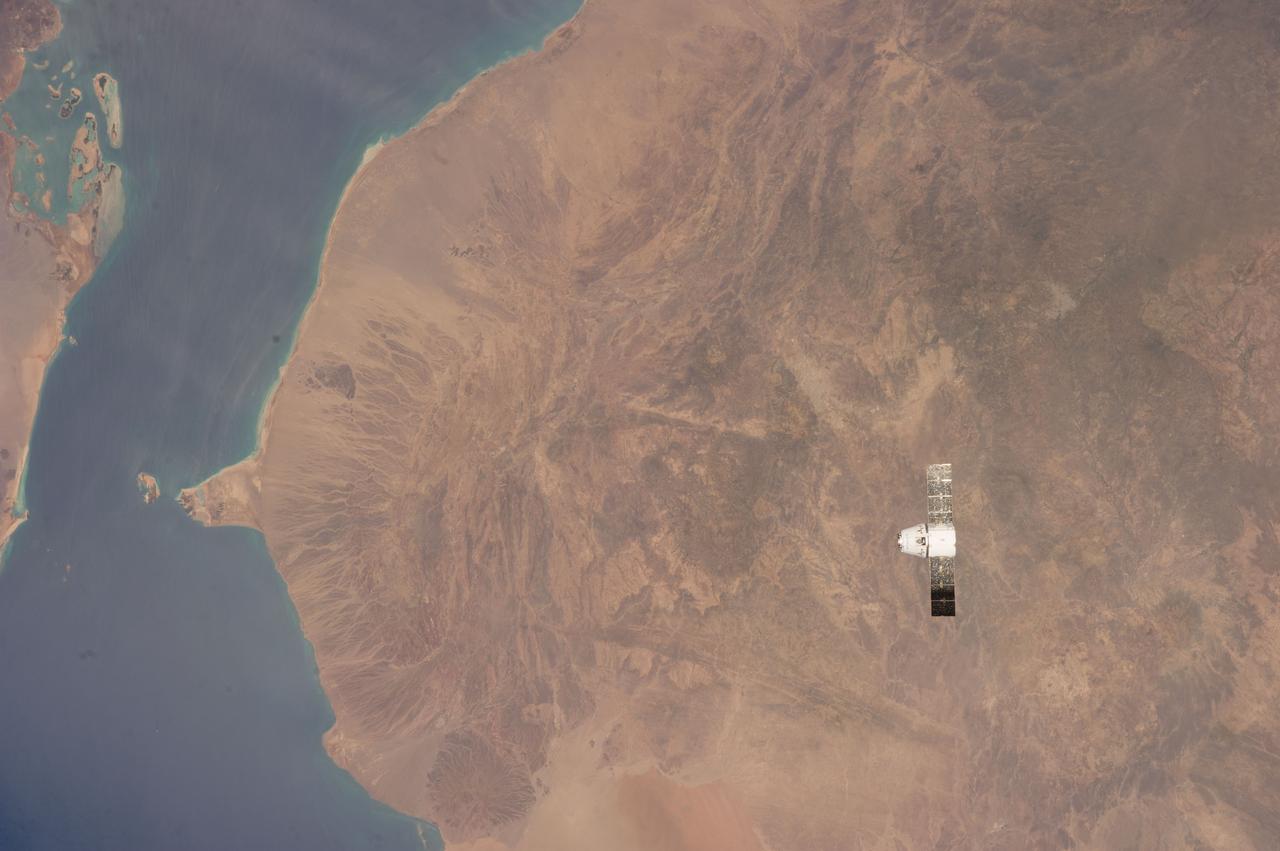
ISS039-E-013570 (20 April 2014) --- This is one of an extensive series of still photos documenting the April 20 arrival and ultimate capture and berthing of the SpaceX Dragon at the International Space Station, as photographed by the Expedition 39 crew members onboard the orbital outpost. In this photo, the two orbiting spacecraft were above a point in Yemen. Part of the Gulf of Aden and the Red Sea, can be seen at left. The Dragon spacecraft was captured by the space station and successfully berthed using the Canadian-built space station remote manipulator system or Canadarm2.
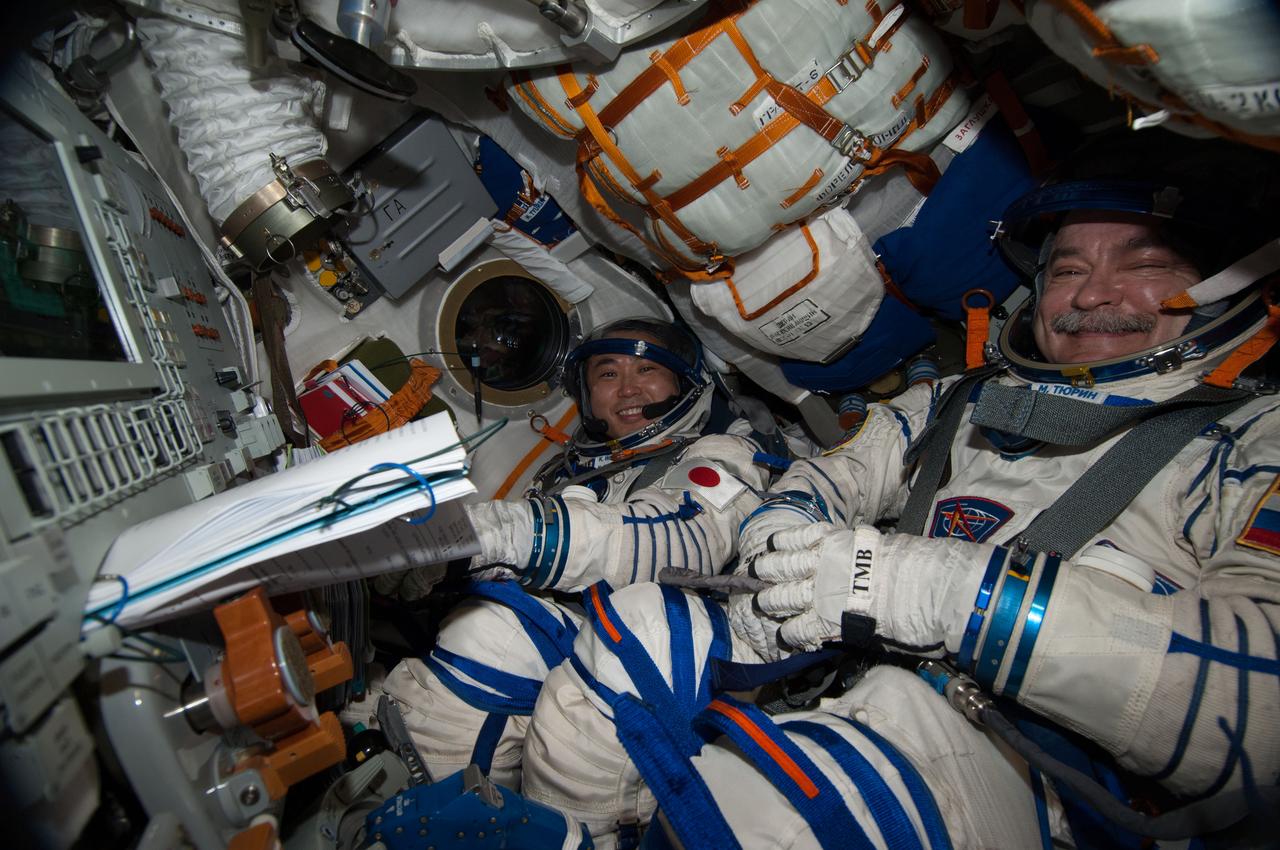
Expedition 39 commander Koichi Wakata and flight engineer Mikhail Tyurin, wearing Sokol pressure suits, are photographed in the Soyuz TMA-11M spacecraft during a Sokol leak check. Wakata is a Japan Aerospace Exploration Agency astronaut; Tyurin is a Roscosmos cosmonaut. Image was released by the commander on Twitter.
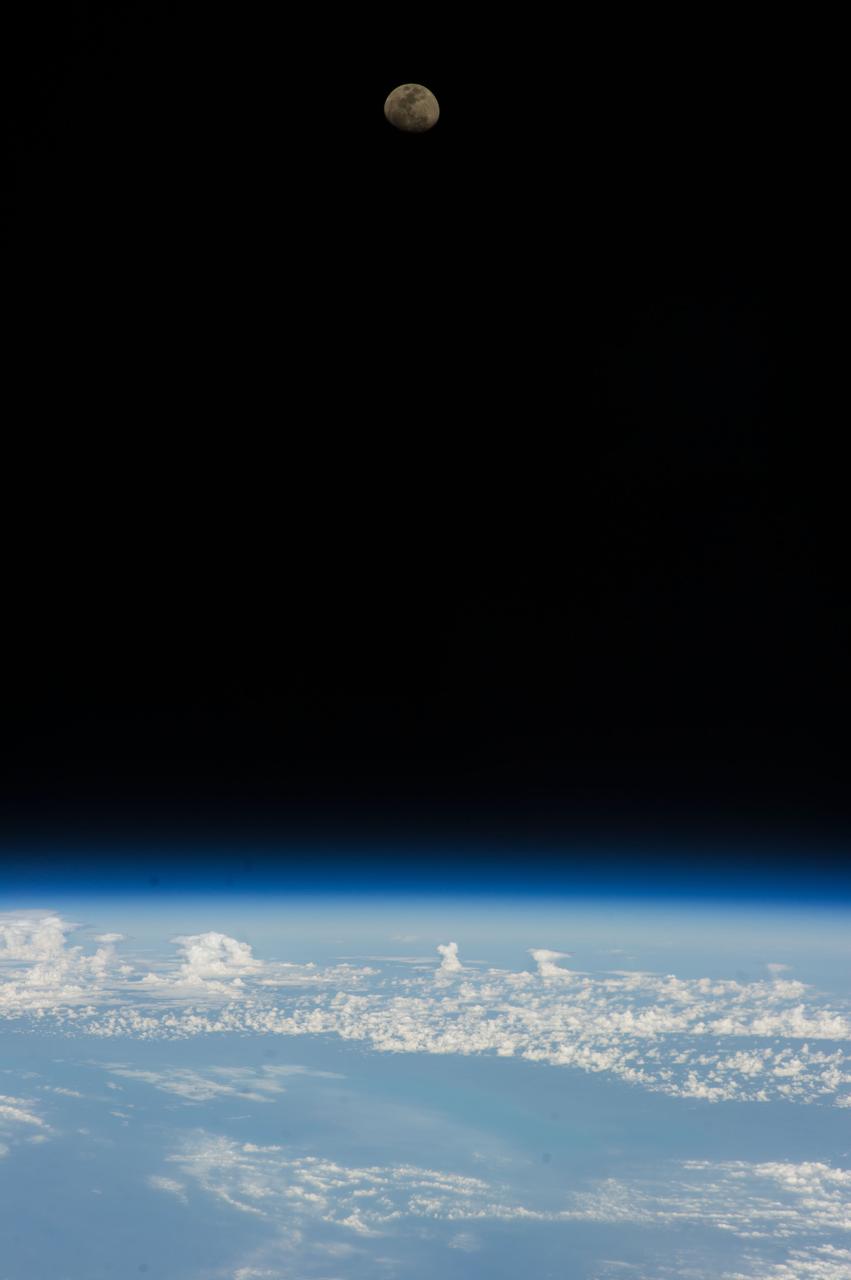
Lunar observation taken by the Expedition 39 crew aboard the ISS. An Earth limb and airglow are in view. Image was released by astronaut on Twitter.
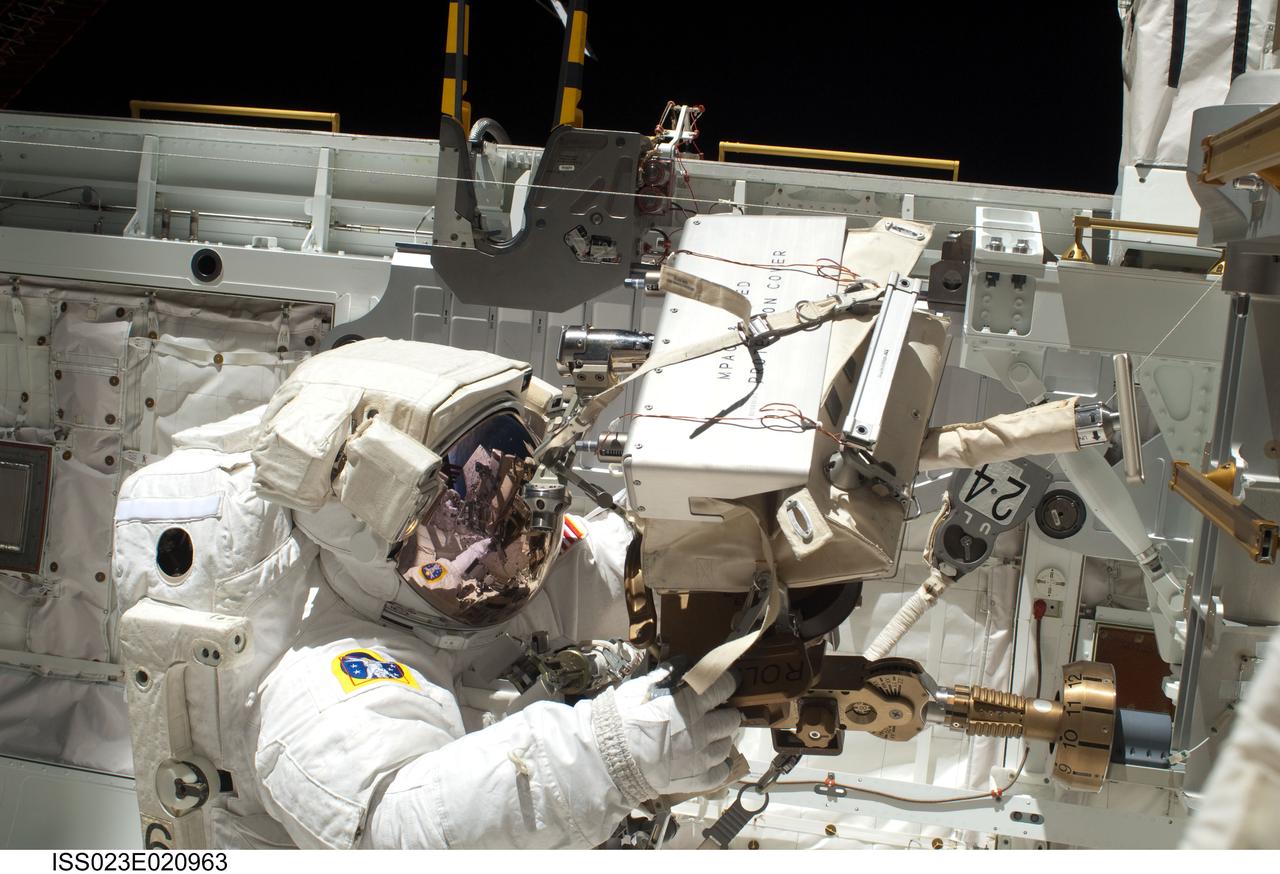
ISS023-E-020963 (9 April 2010) --- NASA astronaut Clayton Anderson, STS-131 mission specialist, participates in the mission's first session of extravehicular activity (EVA) as construction and maintenance continue on the International Space Station. During the six-hour, 27-minute spacewalk, Anderson and Rick Mastracchio (out of frame), mission specialist, helped move a new 1,700-pound ammonia tank from space shuttle Discovery’s cargo bay to a temporary parking place on the station, retrieved an experiment from the Japanese Kibo Laboratory exposed facility and replaced a Rate Gyro Assembly on one of the truss segments.
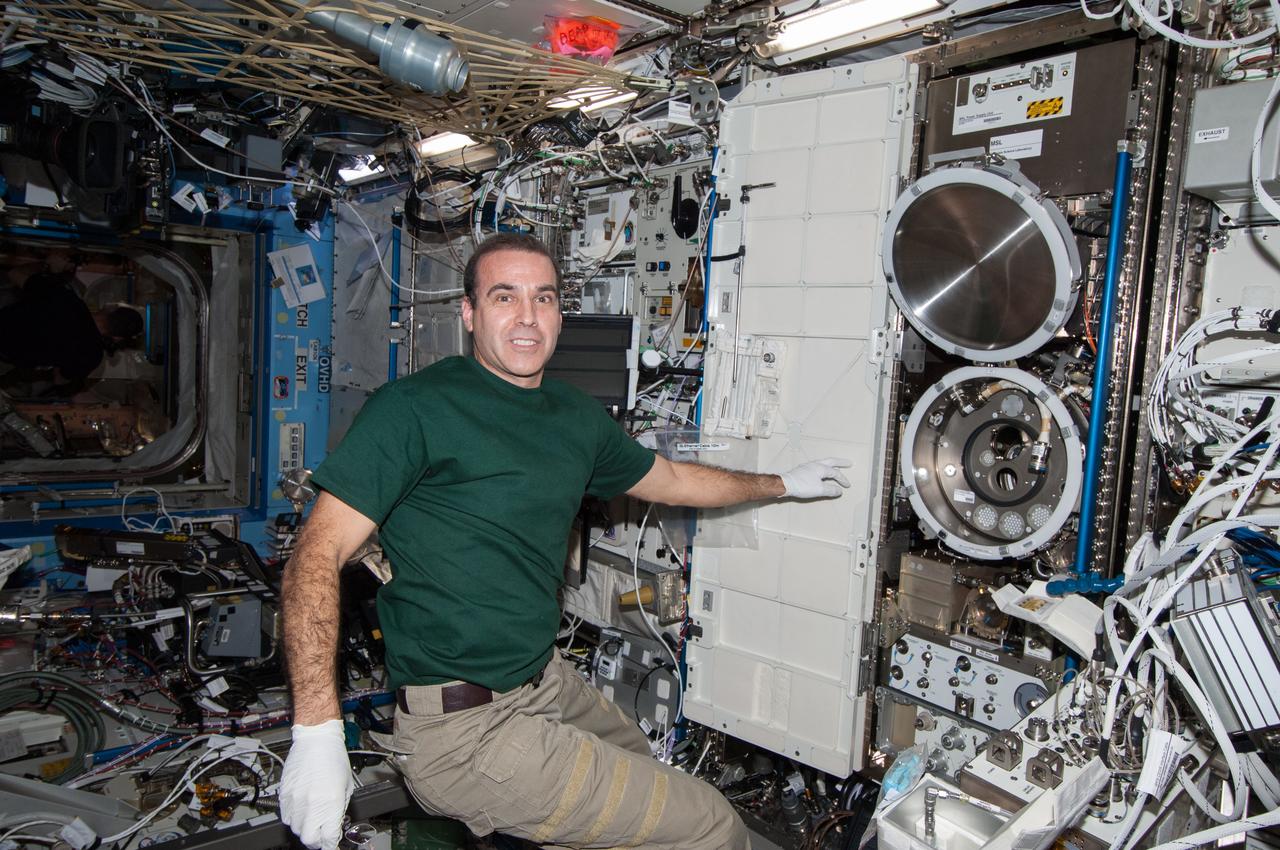
ss038e008298 (11/26/2013) --- A view of NASA astronaut Rick Mastracchio, during the Material Science Laboratory (MSL) Solidification and Quench Furnace (SQF) Sample Cartridge Exchange aboard the International Space Station (ISS). The Materials Science Laboratory (MSL) is used for basic materials research in the microgravity environment of the ISS. The MSL can accommodate and support diverse Experiment Modules. In this way many material types, such as metals, alloys, polymers, semiconductors, ceramics, crystals, and glasses, can be studied to discover new applications for existing materials and new or improved materials.
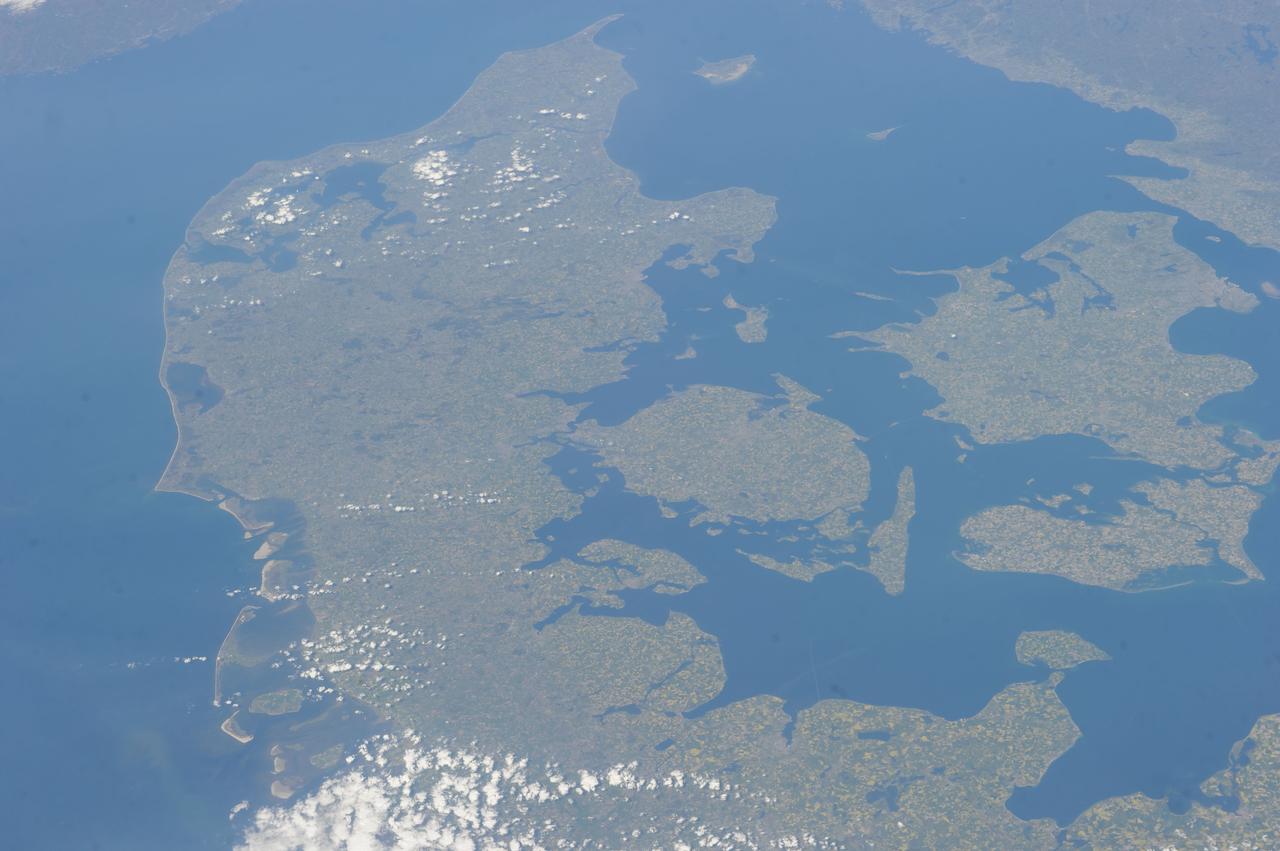
Earth observation taken by the Expedition 39 crew aboard the ISS. Image was downlinked in folder: Denmark.
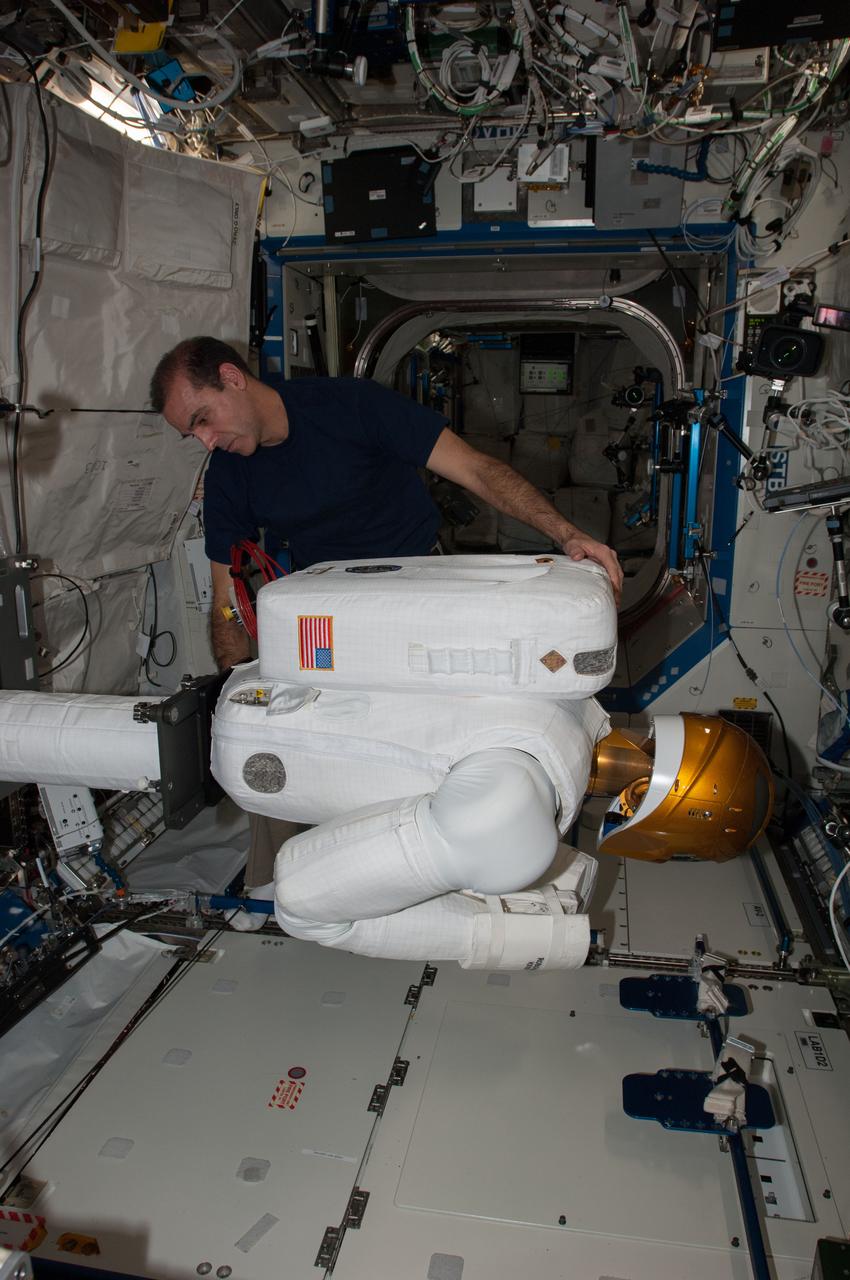
ISS038-E-013712 (9 Dec. 2013) --- In the International Space Station's Destiny laboratory, NASA astronaut Rick Mastracchio, Expedition 38 flight engineer, prepares Robonaut 2 for an upcoming ground-commanded firmware update that will support the installation of a pair of legs for the humanoid robot. R2 was designed to test out the capability of a robot to perform tasks deemed too dangerous or mundane for astronauts. Robonaut's legs are scheduled to arrive to the station aboard the SpaceX-3 commercial cargo mission in February 2014.
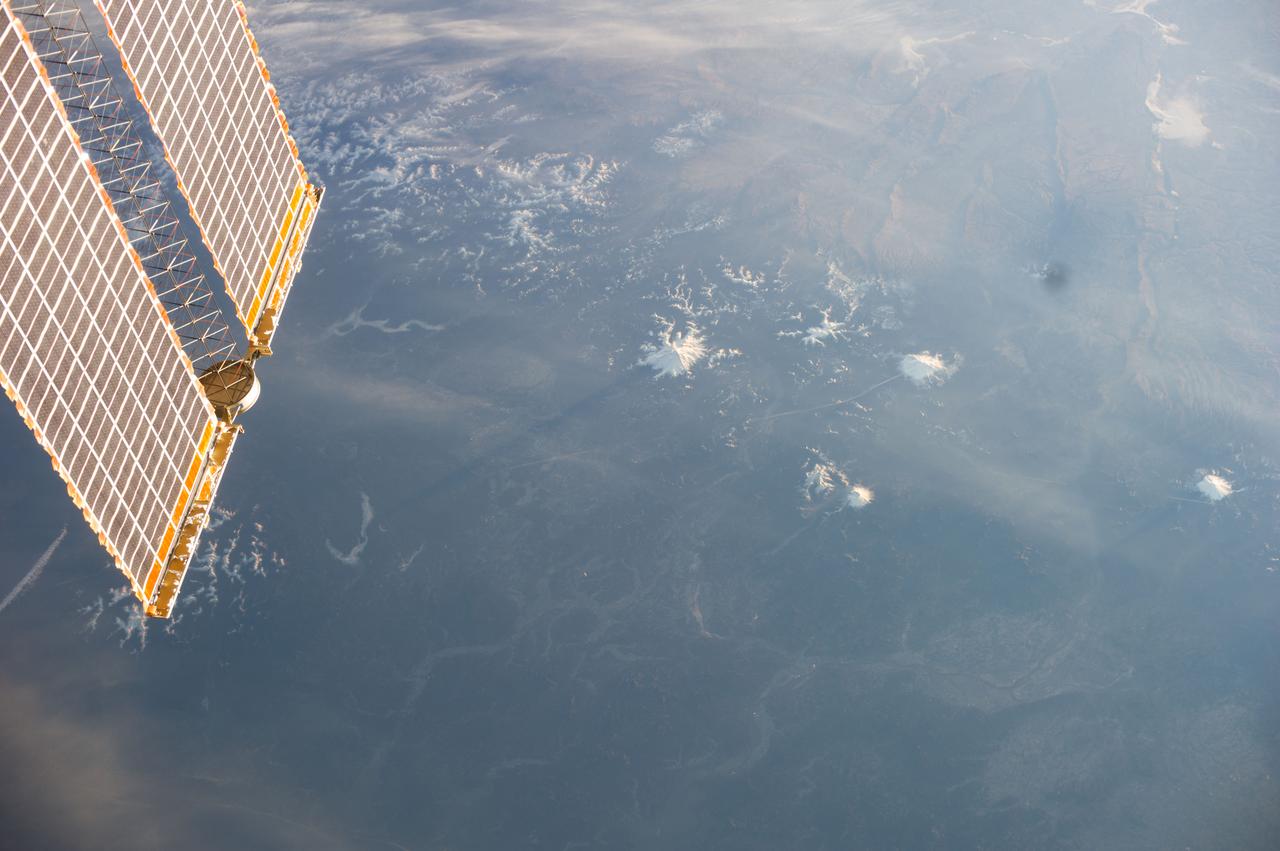
Earth Observations taken by Expedition 38 crewmember. Image was released by astronaut on Twitter.
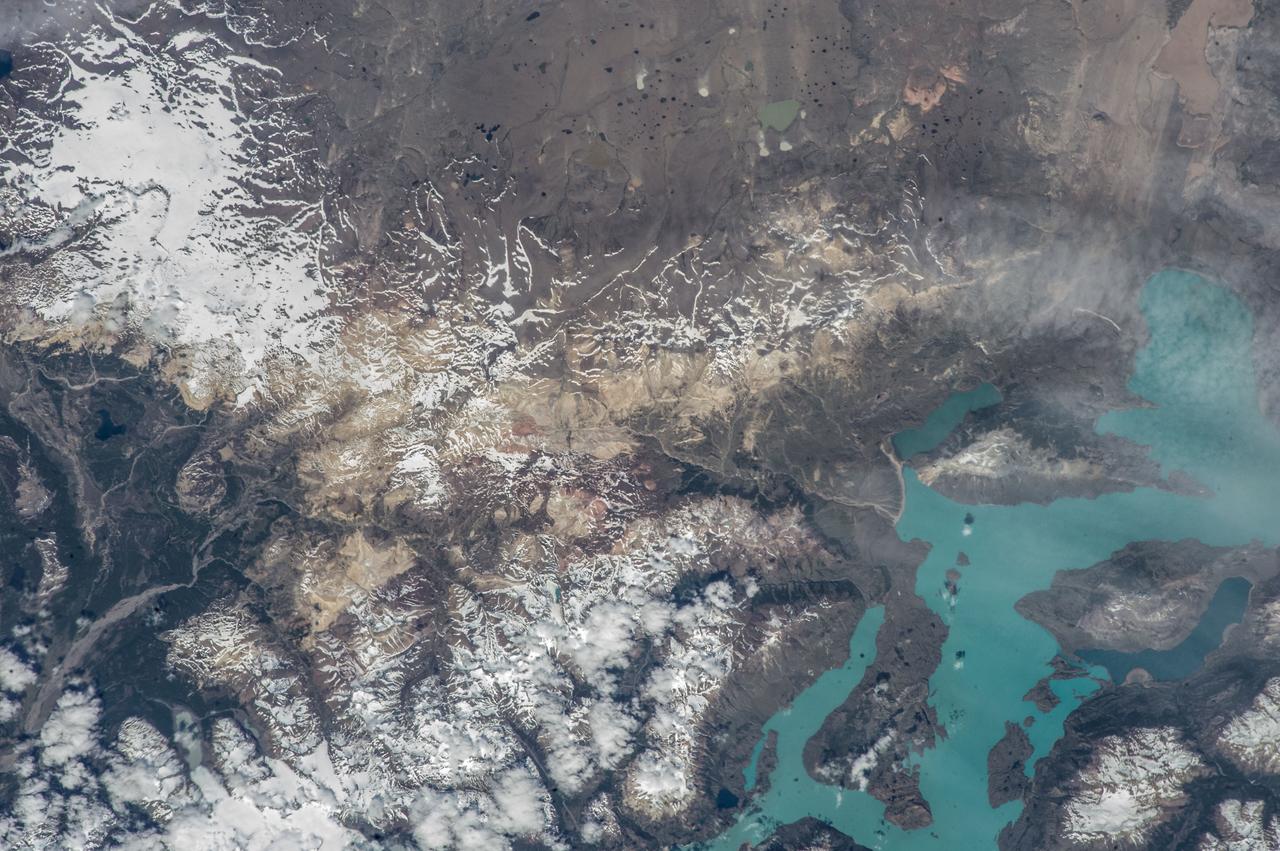
Earth Observations taken by Expedition 38 crewmember. Crewmember indicates South America. Image was released by astronaut on Twitter.
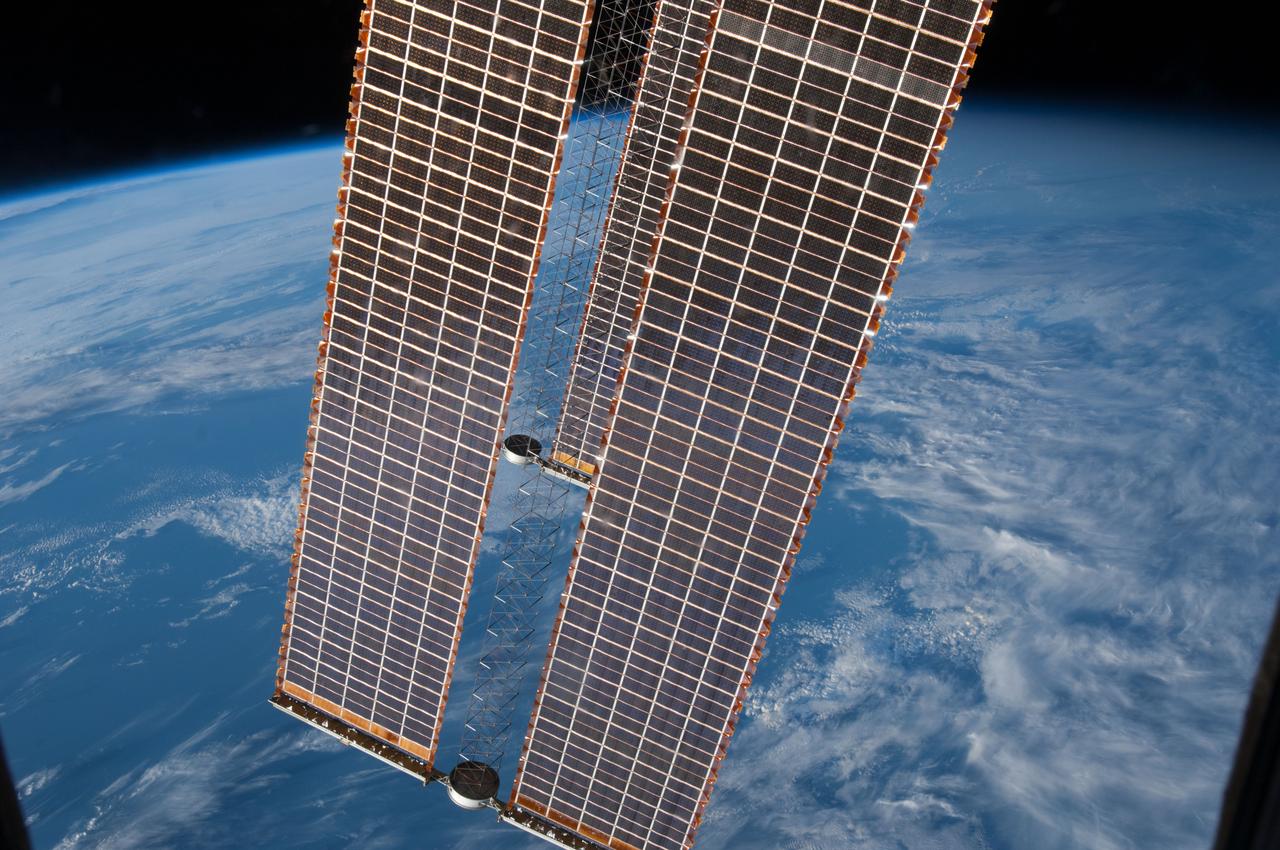
Earth Observations taken by Expedition 38 crewmember. Solar Array is visible.
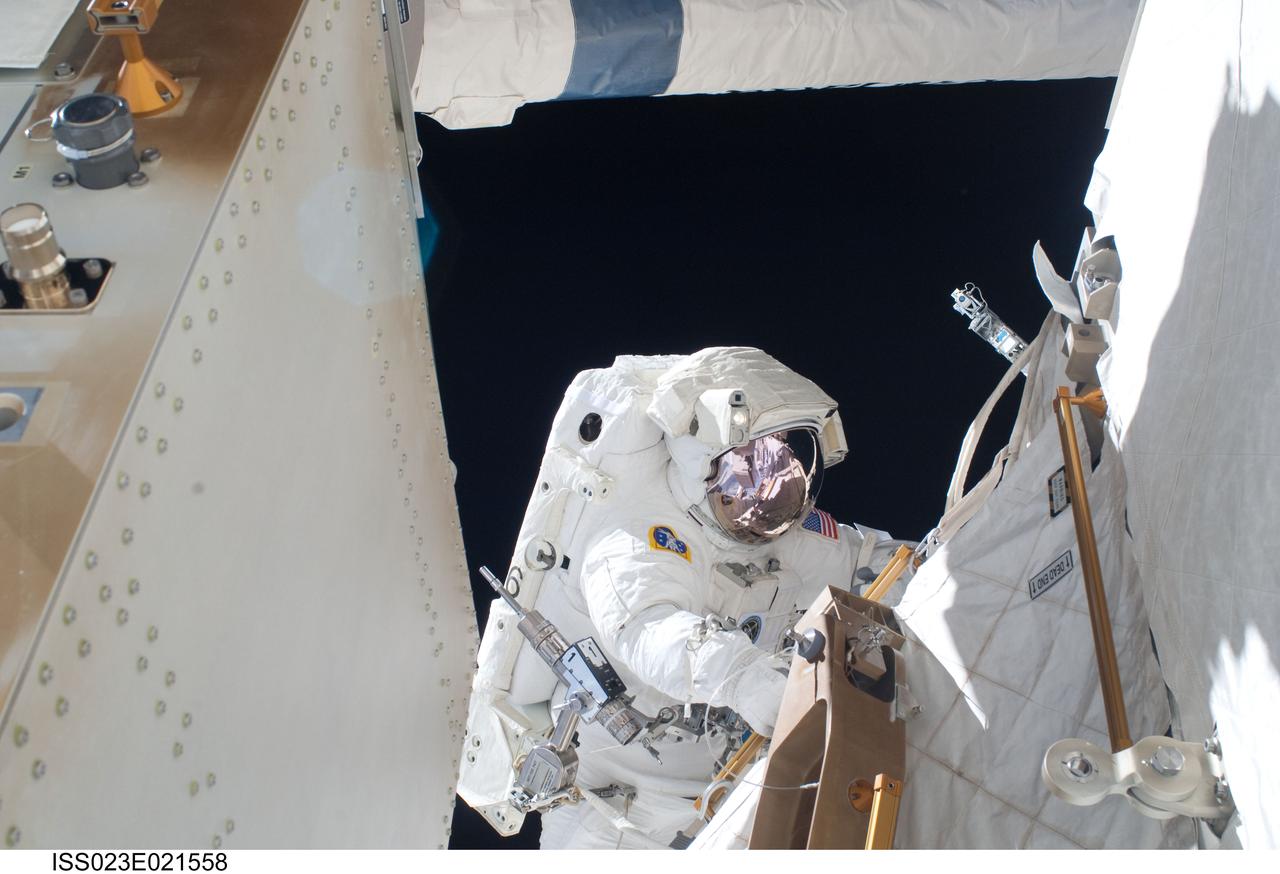
ISS023-E-021558 (11 April 2010) --- NASA astronaut Clayton Anderson, STS-131 mission specialist, participates in the mission's second session of extravehicular activity (EVA) as construction and maintenance continue on the International Space Station. During the seven-hour, 26-minute spacewalk, Anderson and Rick Mastracchio (out of frame), mission specialist, unhooked and removed the depleted ammonia tank and installed a 1,700-pound ammonia tank on the station’s Starboard 1 truss, completing the second of a three-spacewalk coolant tank replacement process.
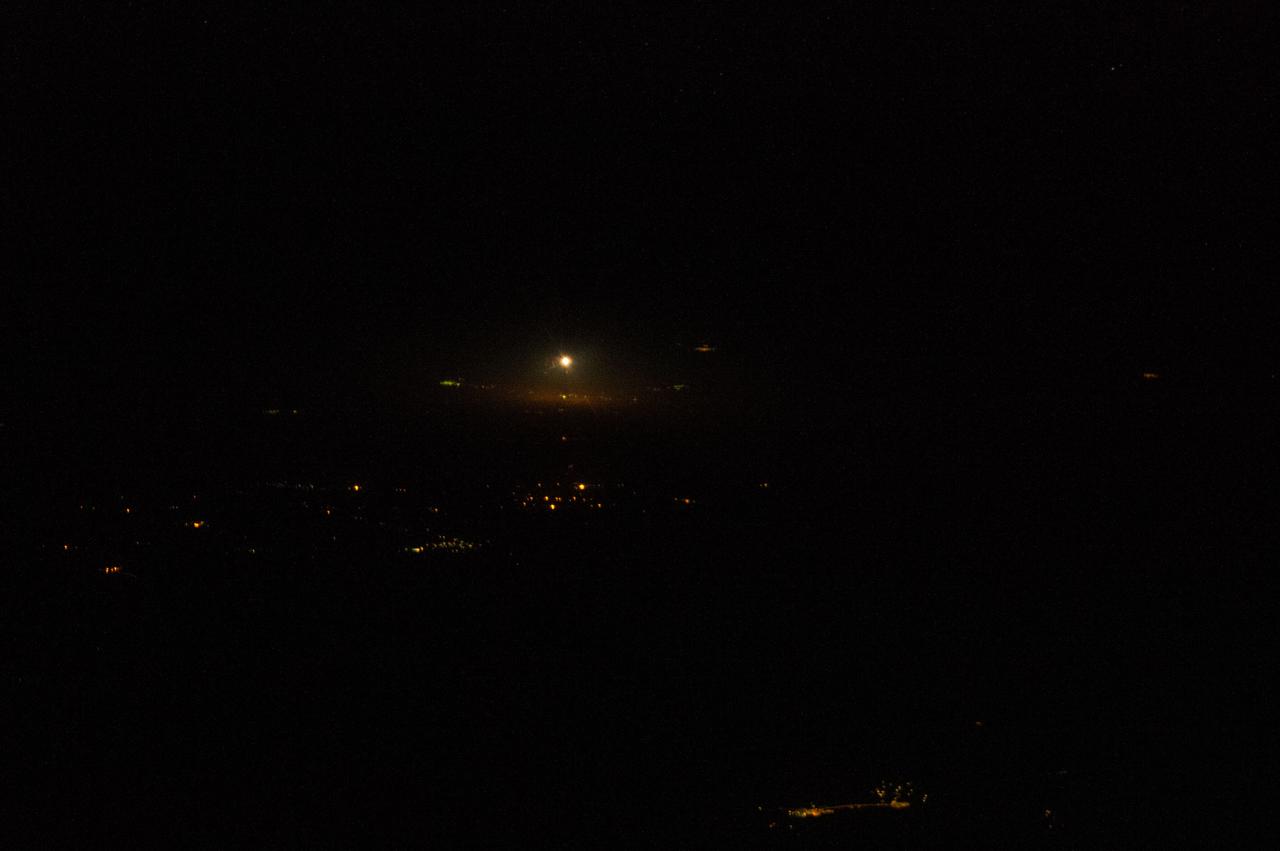
Nighttime view of the launch of the Soyuz TMA-12M spacecraft as seen by Expedition 39 crewmembers aboard the ISS.
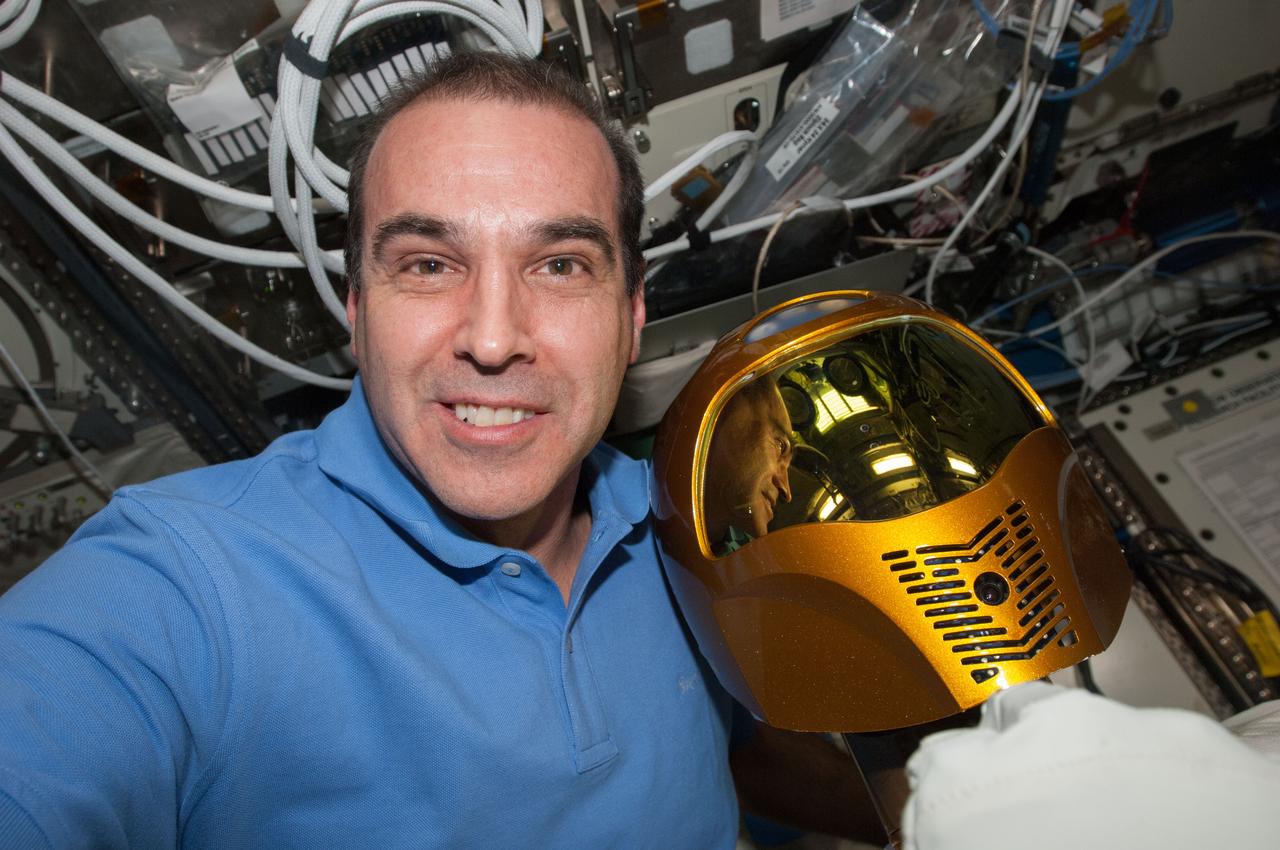
ISS039-E-003797 (15 March 2014) --- Expedition 39 flight engineer Rick Mastracchio poses for a self-portrait with Robonaut 2 in the U.S. Laboratory (Destiny) during a televised public event. (Note: The event was shown live on March 14 in U.S. time zones).
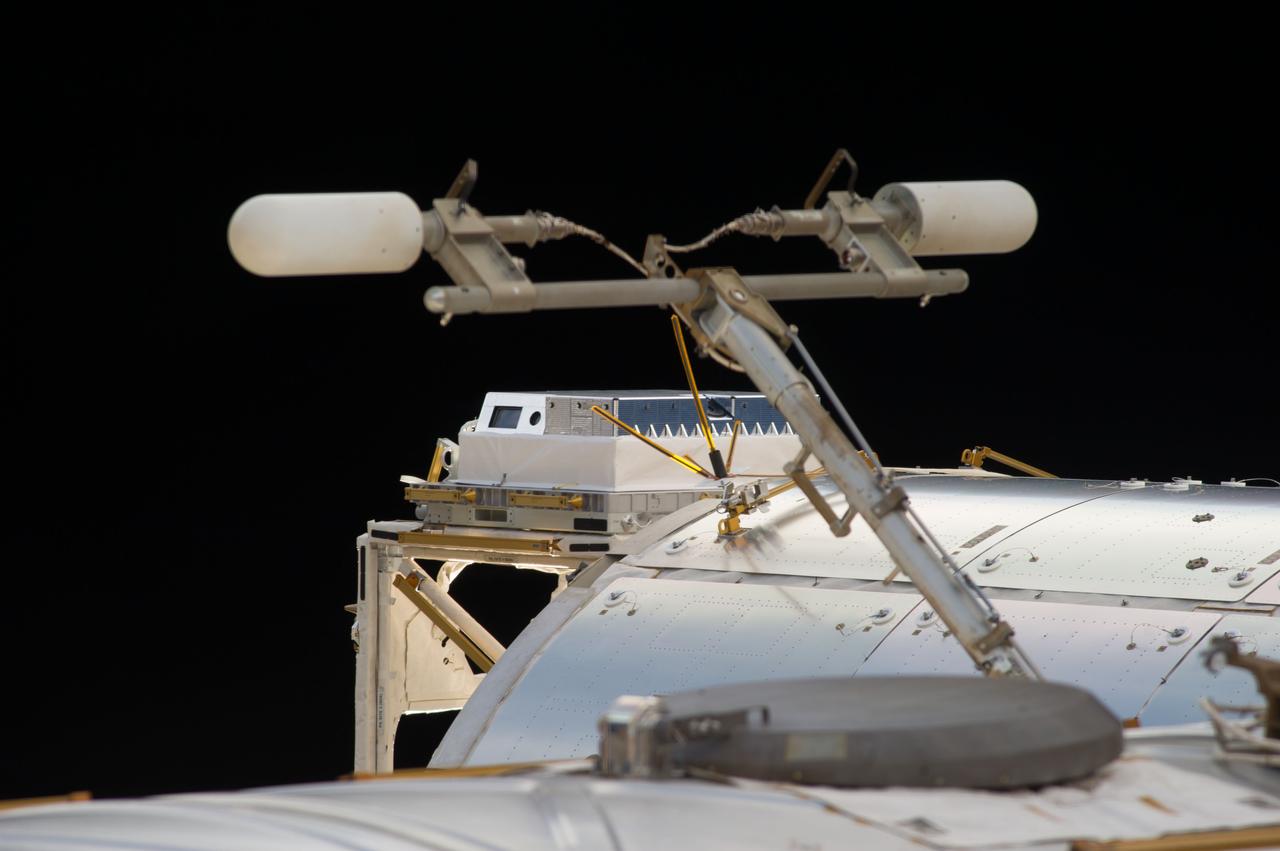
View of the High Definition Earth Viewing (HDEV) flight assembly installed on the exterior of the Columbus European Laboratory module. Image was released by astronaut on Twitter. The High Definition Earth Viewing (HDEV) experiment places four commercially available HD cameras on the exterior of the space station and uses them to stream live video of Earth for viewing online. The cameras are enclosed in a temperature specific housing and are exposed to the harsh radiation of space. Analysis of the effect of space on the video quality, over the time HDEV is operational, may help engineers decide which cameras are the best types to use on future missions. High school students helped design some of the cameras' components, through the High Schools United with NASA to Create Hardware (HUNCH) program, and student teams operate the experiment.
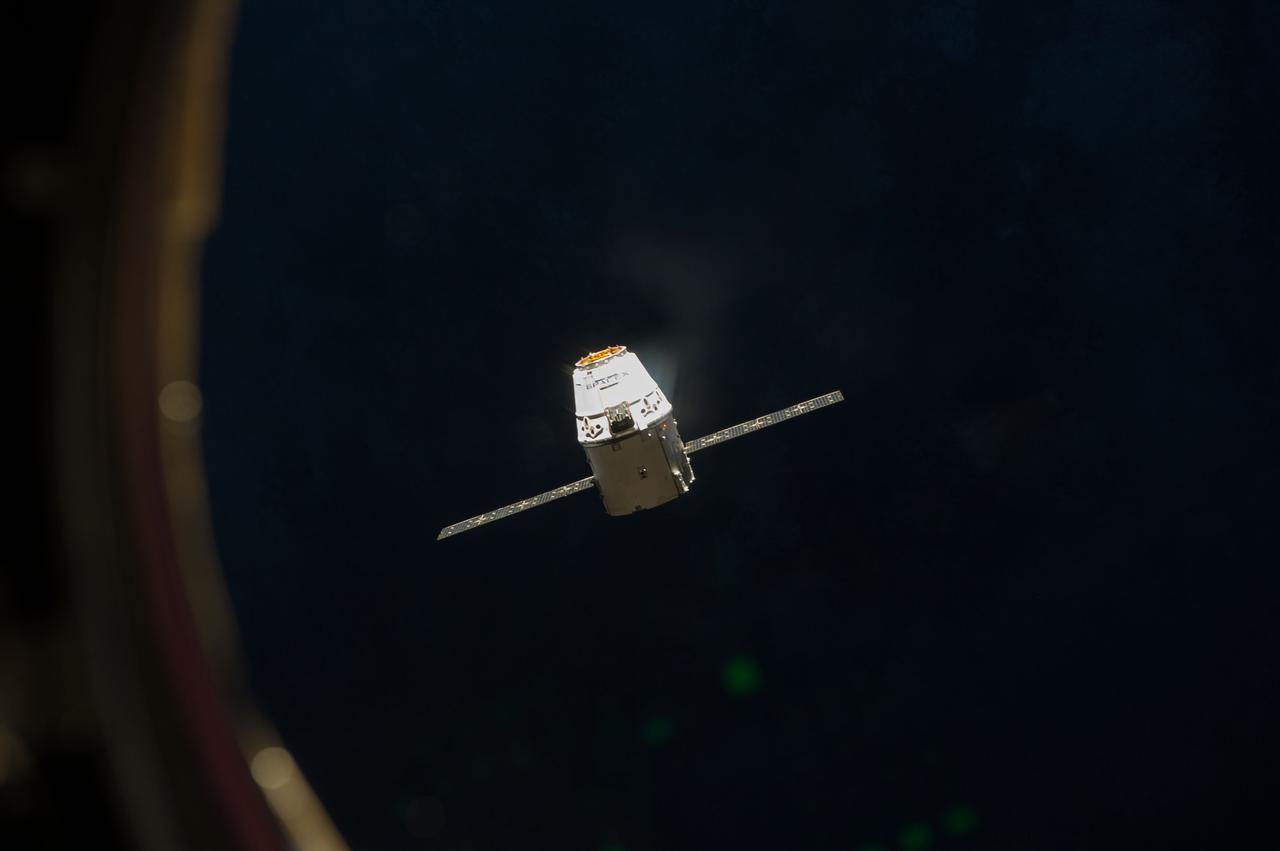
ISS039-E-013581 (20 April 2014) --- This is one of an extensive series of still photos documenting the arrival and ultimate capture and berthing of the SpaceX CRS-3 Dragon at the International Space Station, as photographed by the Expedition 39 crew members onboard the orbital outpost. The spacecraft was captured by the space station and successfully berthed, following the April 20 arrival.
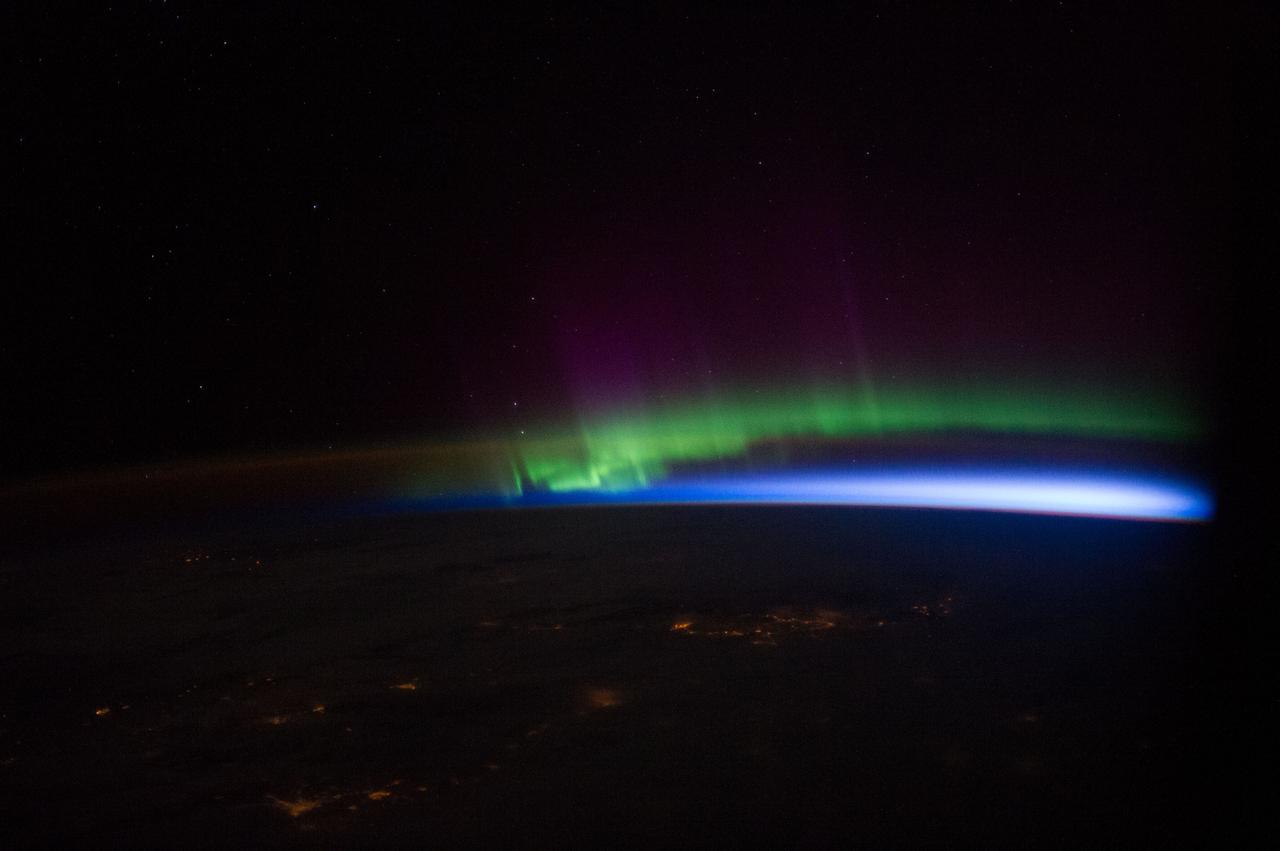
Earth observation taken by the Expedition 39 crew aboard the ISS. Night view of airglow, aurora, and city lights. Image was downlinked in folder: north lights, and released by flight engineer 3 (FE3) on Instagram.
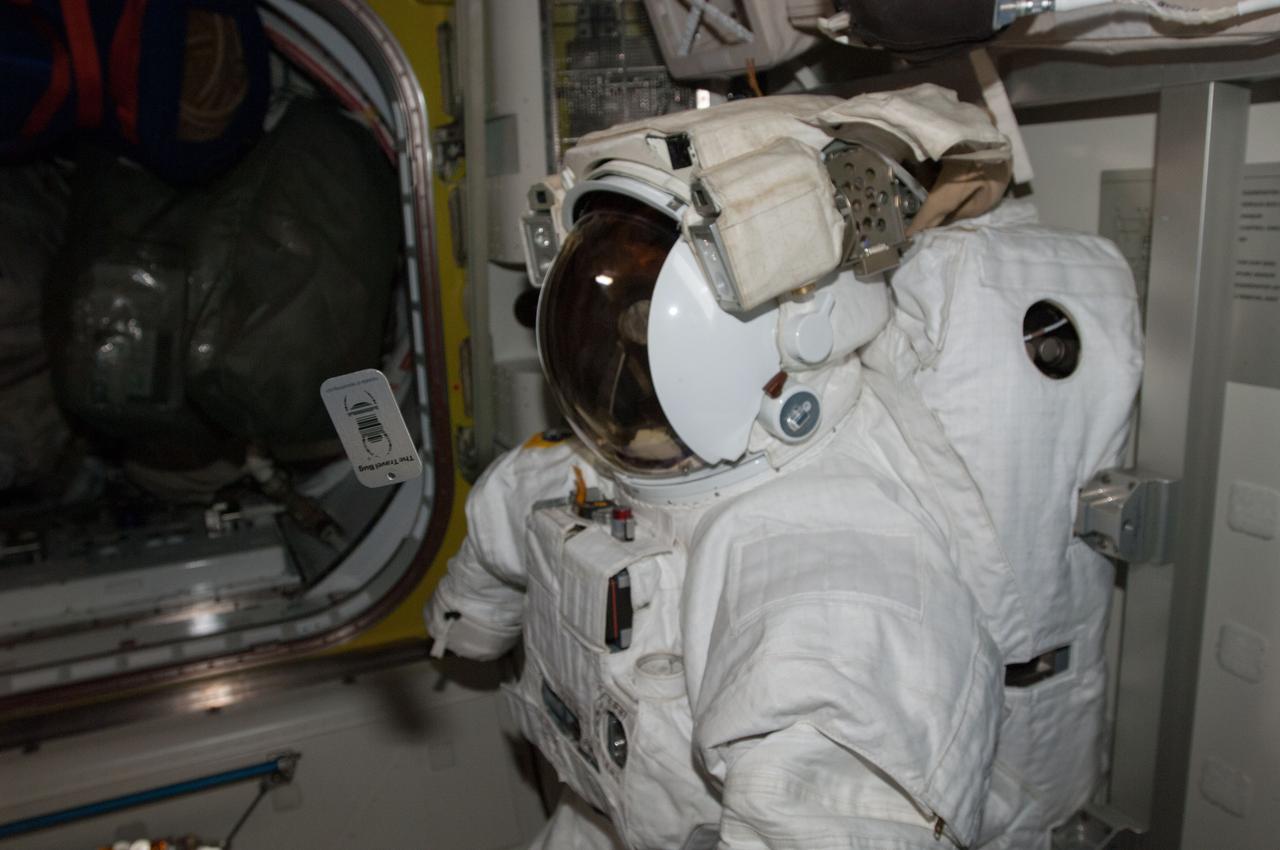
View of Extravehicular Mobility Unit (EMU) with geocaching travel bug,in the airlock (A/L). Photo was taken during Expedition 38. Image was released by astronaut on Twitter.
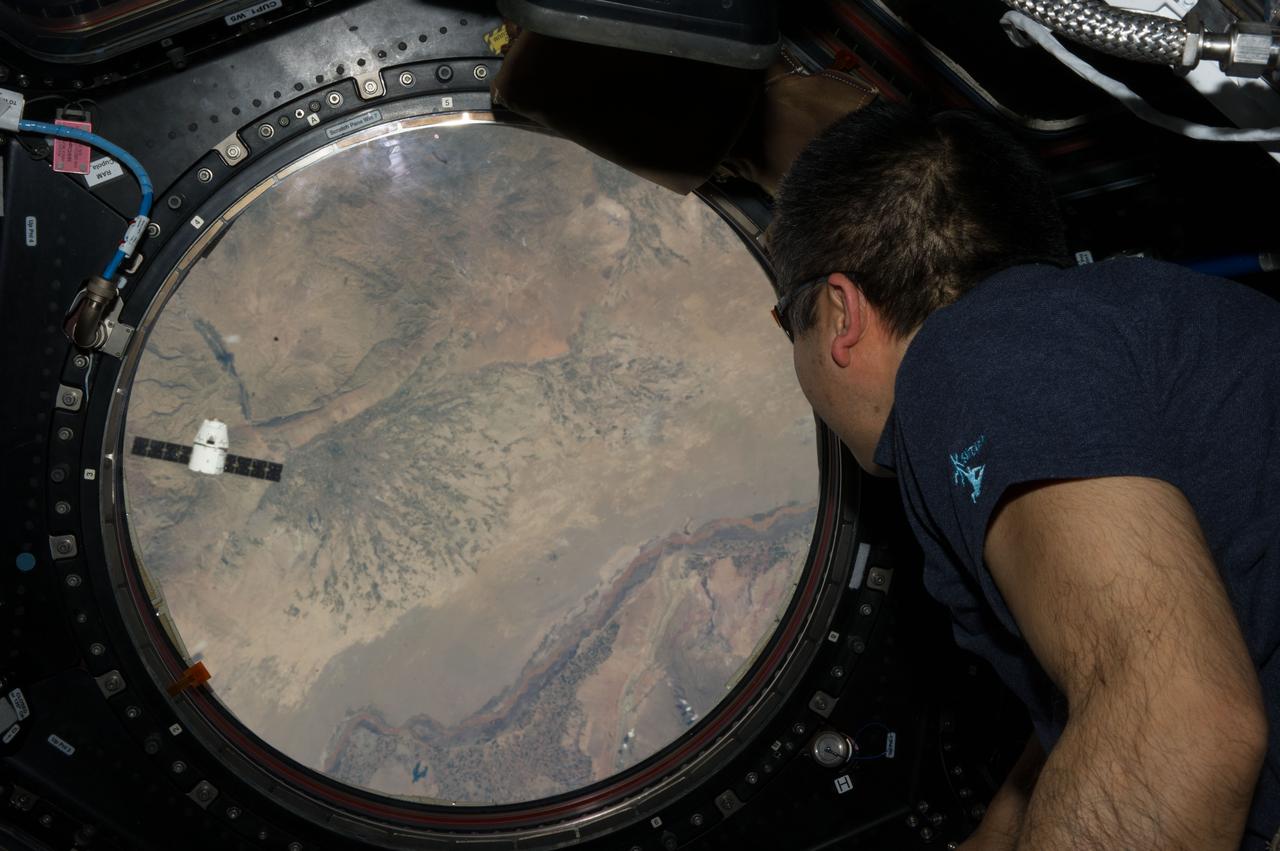
ISS039-E-013576 (20 April 2014) --- Expedition 39 Commander Koichi Wakata of the Japan Aerospace Exploration Agency watches the April 20 approach of the SpaceX Dragon to the International Space Station, as photographed by one of the Expedition 39 crew members onboard the orbital outpost.
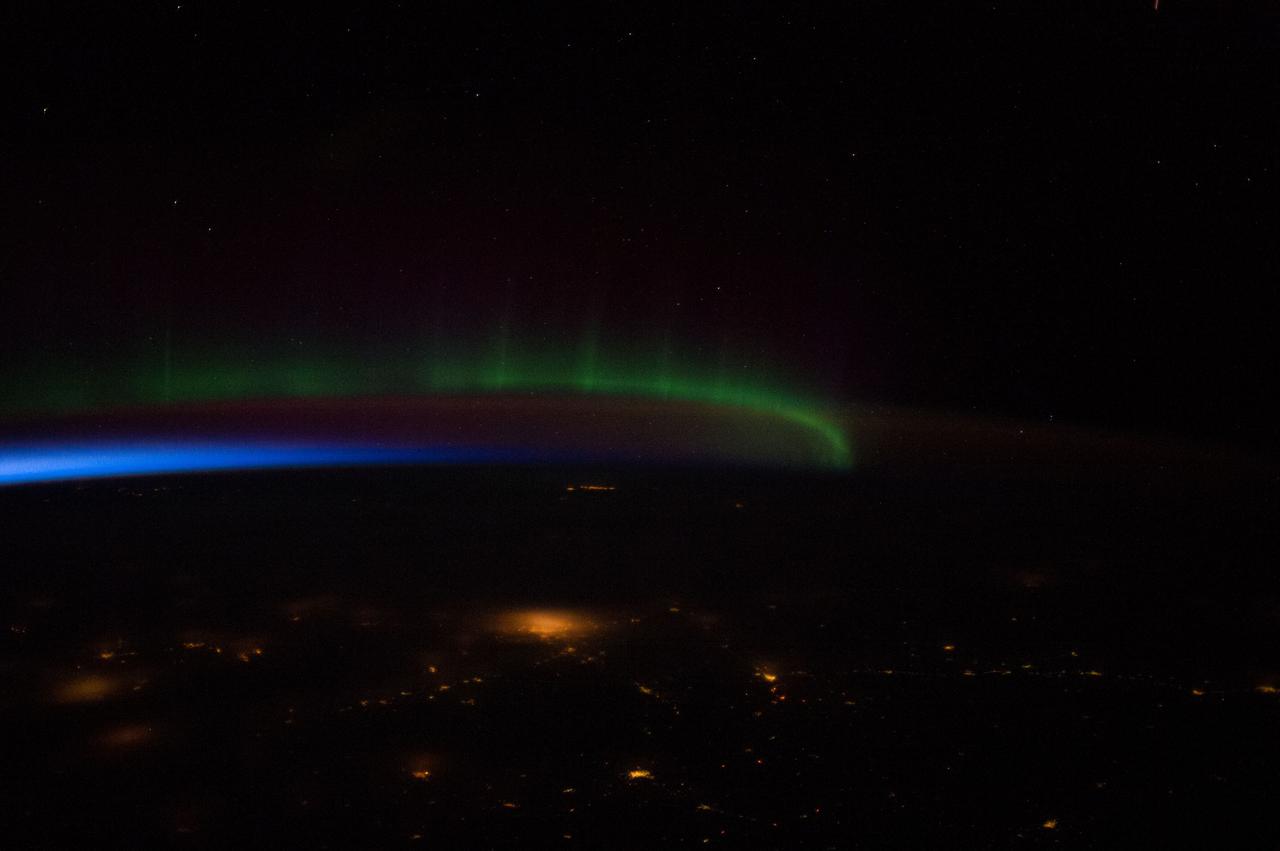
Earth observation taken by the Expedition 39 crew aboard the ISS. Night view of airglow, aurora, and city lights. Image was released by astronaut on Twitter and downlinked in folder: north lights.
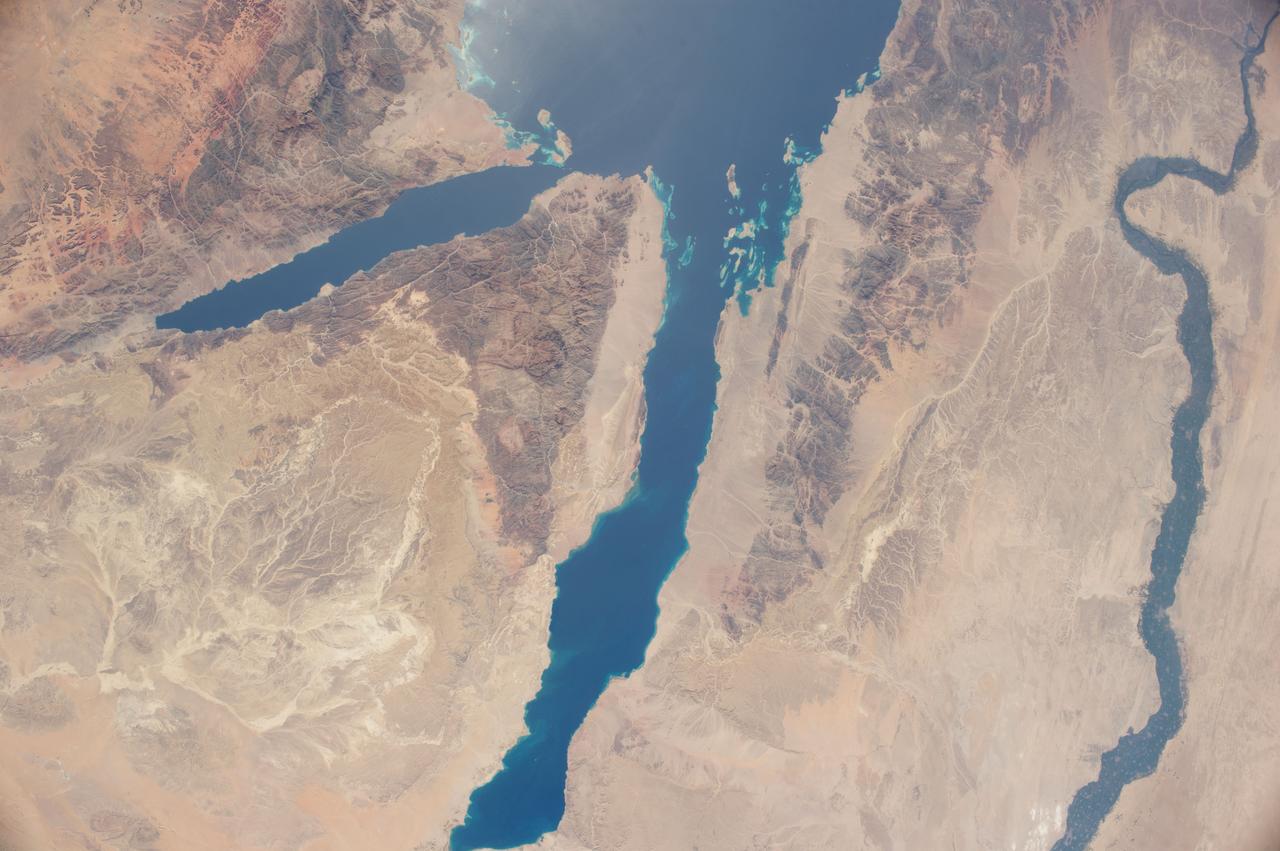
Earth observation taken by the Expedition 39 crew aboard the ISS. Image was released by astronaut on Twitter and downlinked in folder: Euro pass.
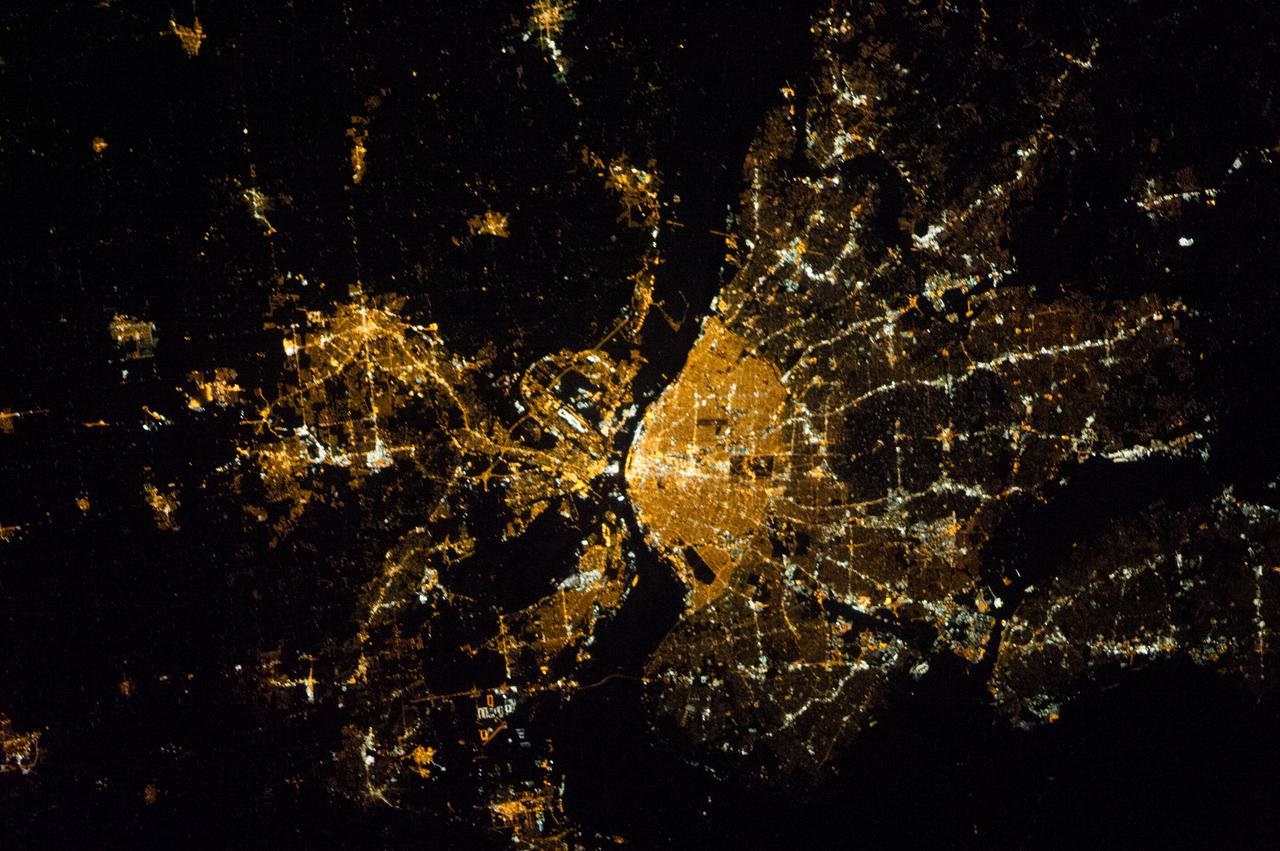
ISS038-E-024442 (7 Dec. 2013) --- One of the Expedition 38 crew members aboard the Earth-orbiting International Space Station photographed this night image of St. Louis, Missouri and East St. Louis, Illinois and surrounding area on Dec. 7, 2013. North is at the bottom of the picture, with the Mississippi River separating Missouri on the right (west) and Illinois on the east (left). Belleville, Illinois is also visible.
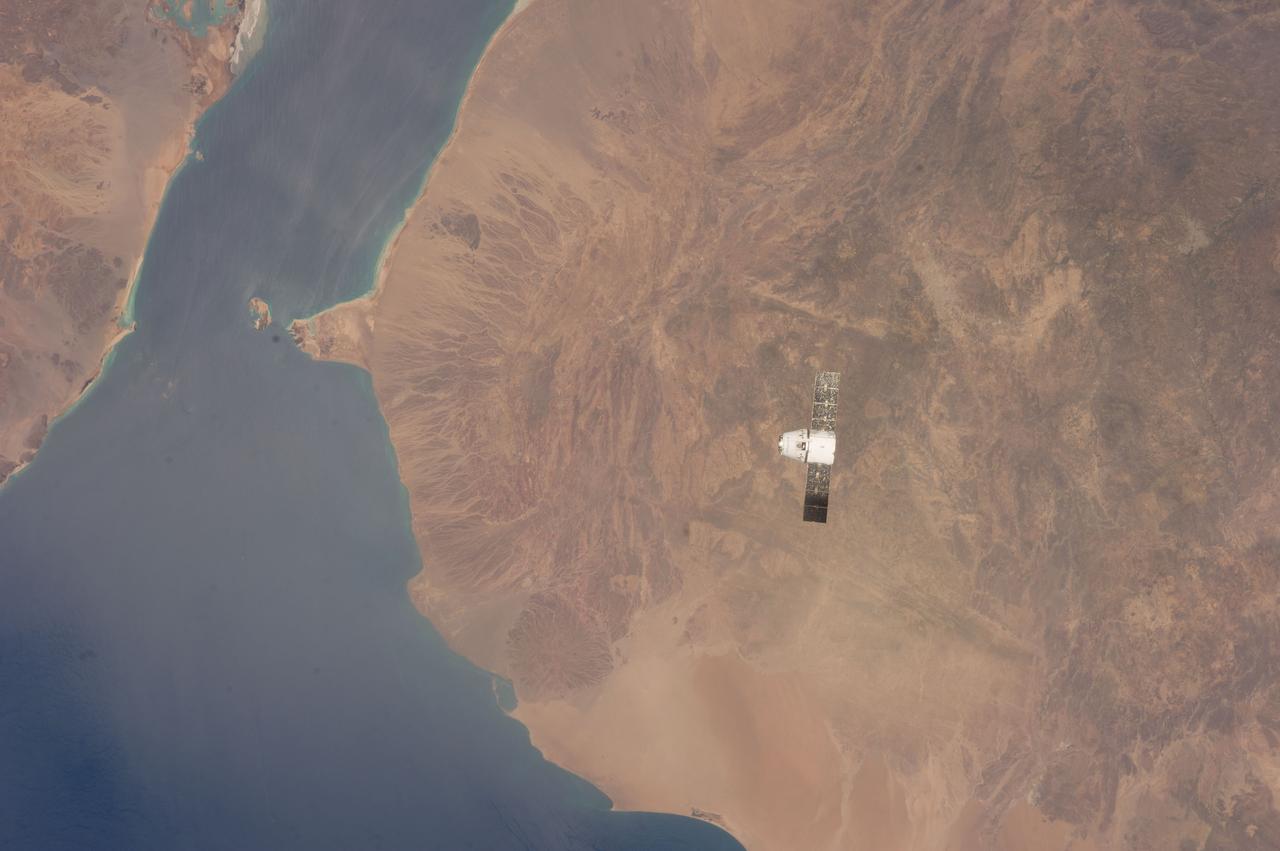
ISS039-E-013566 (20 April 2014) --- This is one of an extensive series of still photos documenting the April 20 arrival and ultimate capture and berthing of the SpaceX Dragon at the International Space Station, as photographed by the Expedition 39 crew members onboard the orbital outpost. In this photo, the two orbiting spacecraft were above a point in Yemen. Part of the Gulf of Aden and the Red Sea can be seen at left. The Dragon spacecraft was captured by the space station and successfully berthed using the Canadian-built space station remote manipulator system or Canadarm2.
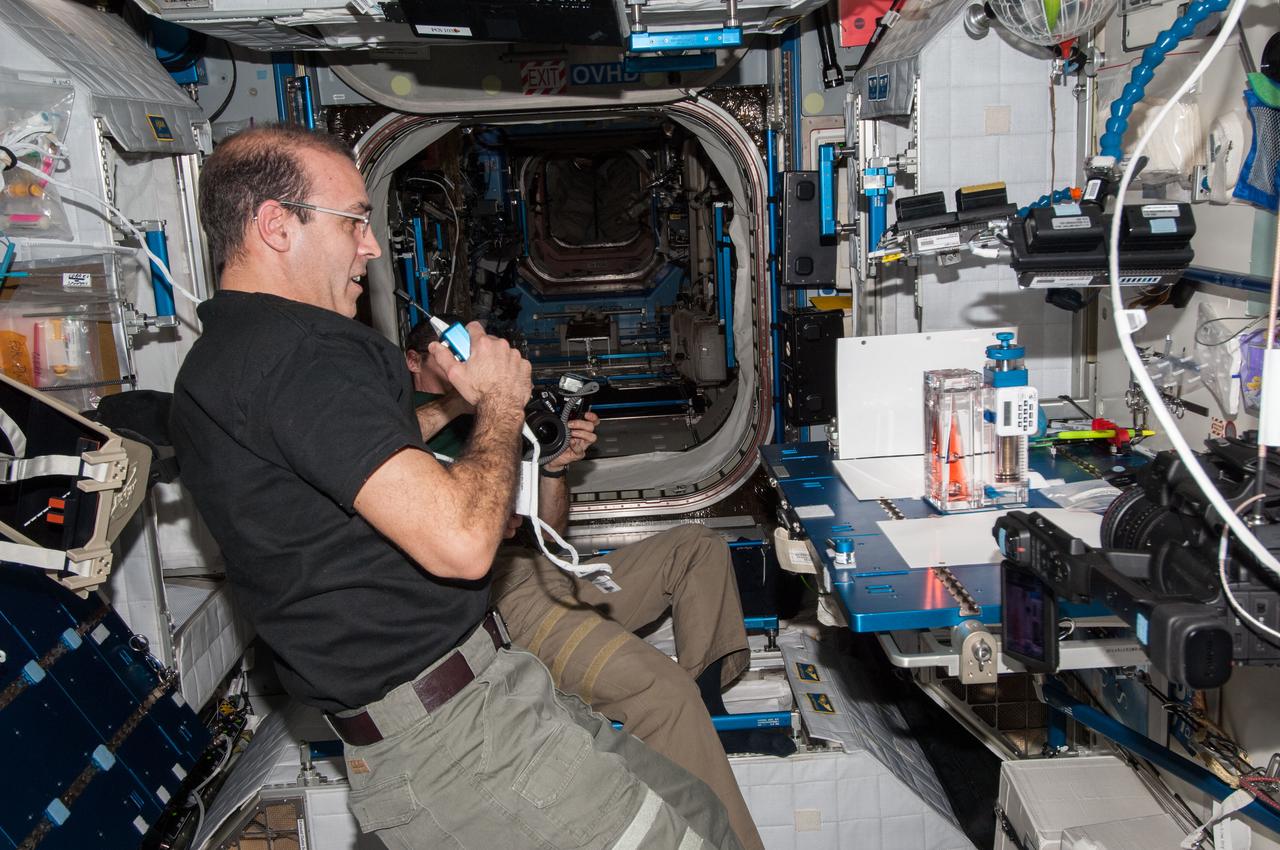
ISS038-E-025000 (3 Jan. 2014) --- NASA astronaut Rick Mastracchio, Expedition 38 flight engineer, speaks in a microphone while conducting a session with the Capillary Flow Experiment (CFE-2) in the Harmony node of the International Space Station. CFE is a suite of fluid physics experiments that investigate how fluids behave in microgravity which could benefit water and fuel delivery systems on future spacecraft. Scientists designed the CFE-2 to study properties of fluids and bubbles inside containers with a specific 3-D geometry.
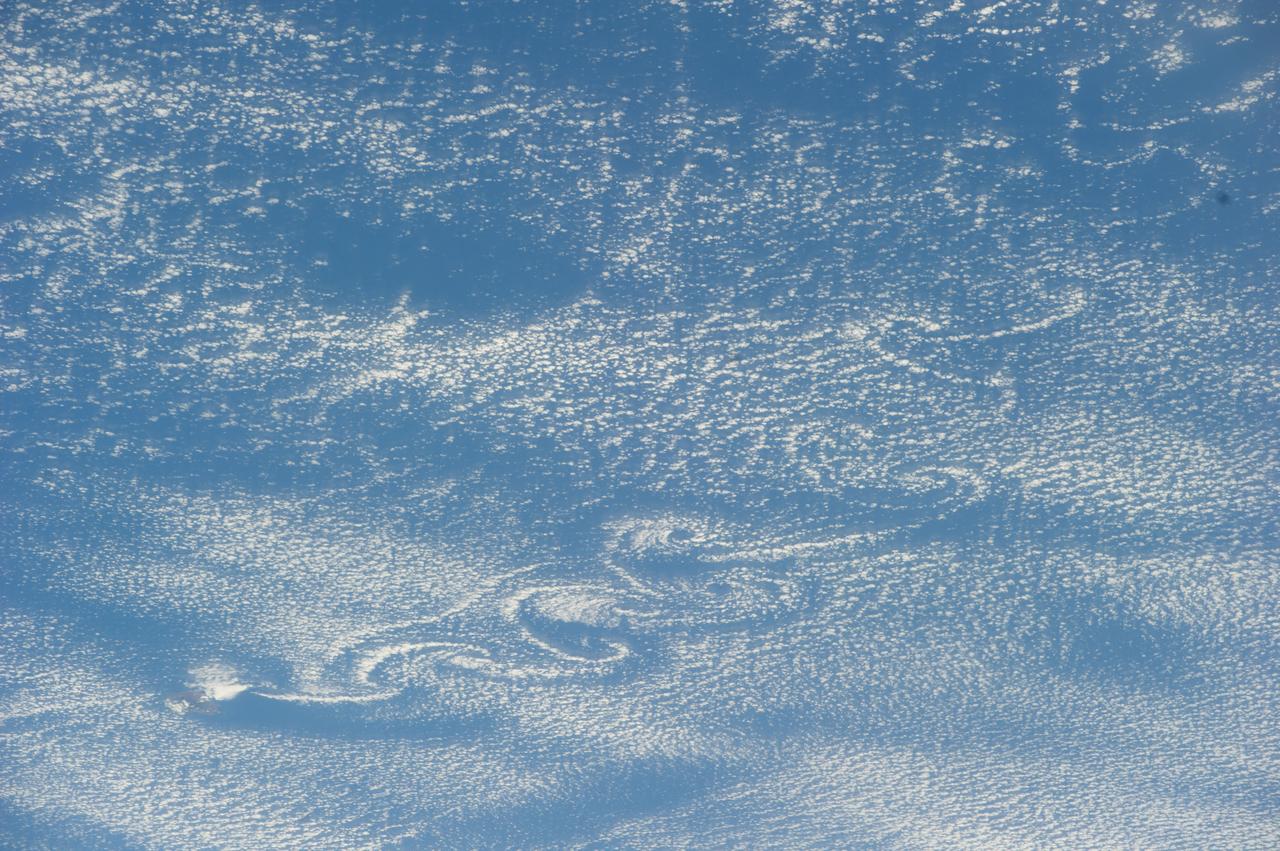
Earth observation taken by the Expedition 39 crew aboard the ISS. Image was released by astronaut on Twitter and downlinked in folder: Houston.
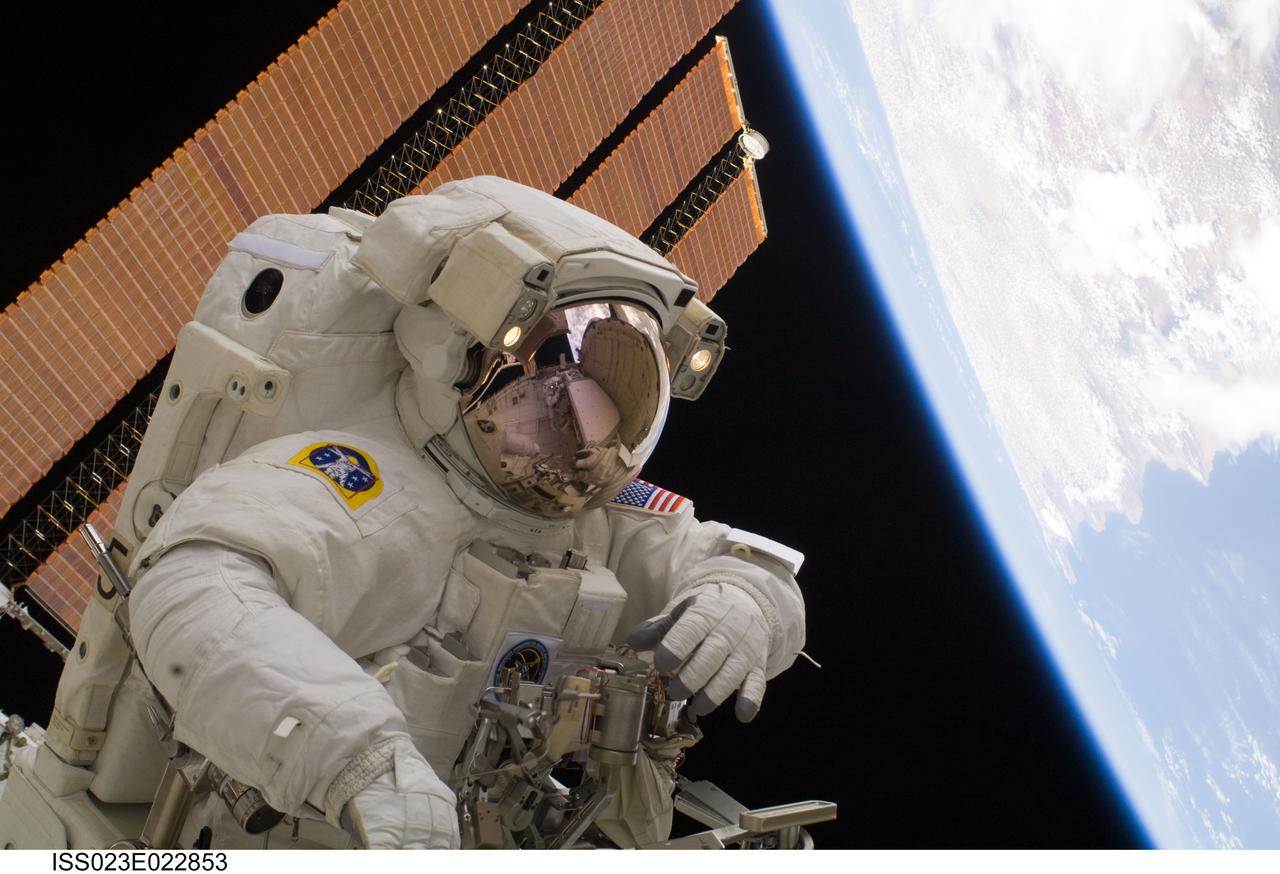
ISS023-E-022853 (13 April 2010) --- NASA astronaut Clayton Anderson, STS-131 mission specialist, participates in the mission's third and final session of extravehicular activity (EVA) as construction and maintenance continue on the International Space Station. During the six-hour, 24-minute spacewalk, Anderson and astronaut Rick Mastracchio (out of frame), mission specialist, hooked up fluid lines of the new 1,700-pound tank, retrieved some micrometeoroid shields from the Quest airlock’s exterior, relocated a portable foot restraint and prepared cables on the Zenith 1 truss for a spare Space to Ground Ku-Band antenna, two chores required before space shuttle Atlantis' STS-132/ULF-4 mission in May.
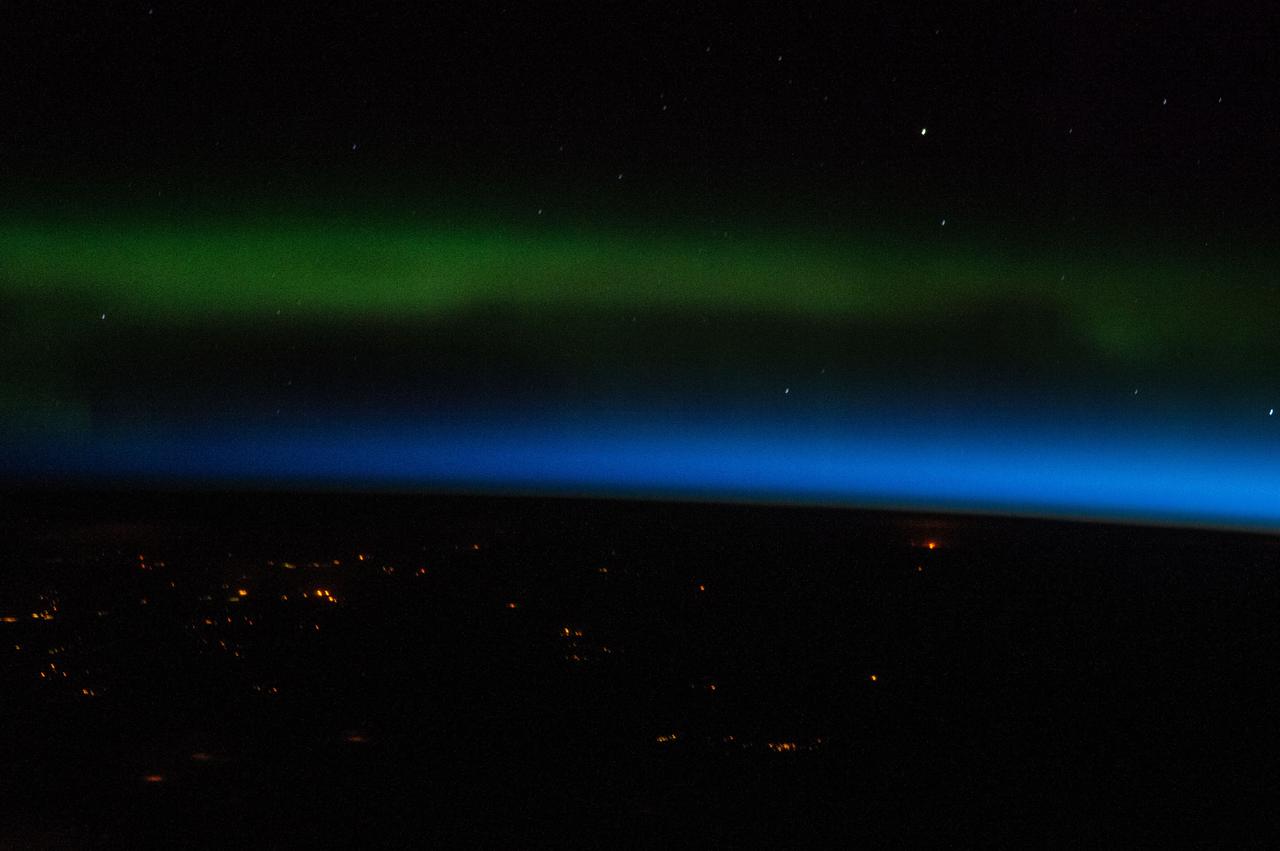
ISS039-E-005427 (25 March 2014) --- One of the Expedition 39 crew members aboard the International Space Station photographed this image while the outpost was over northeastern Kazakhstan. The crew member aimed the camera due north or toward Russia, capturing the Aurora Borealis, which appears above the blue atmosphere.
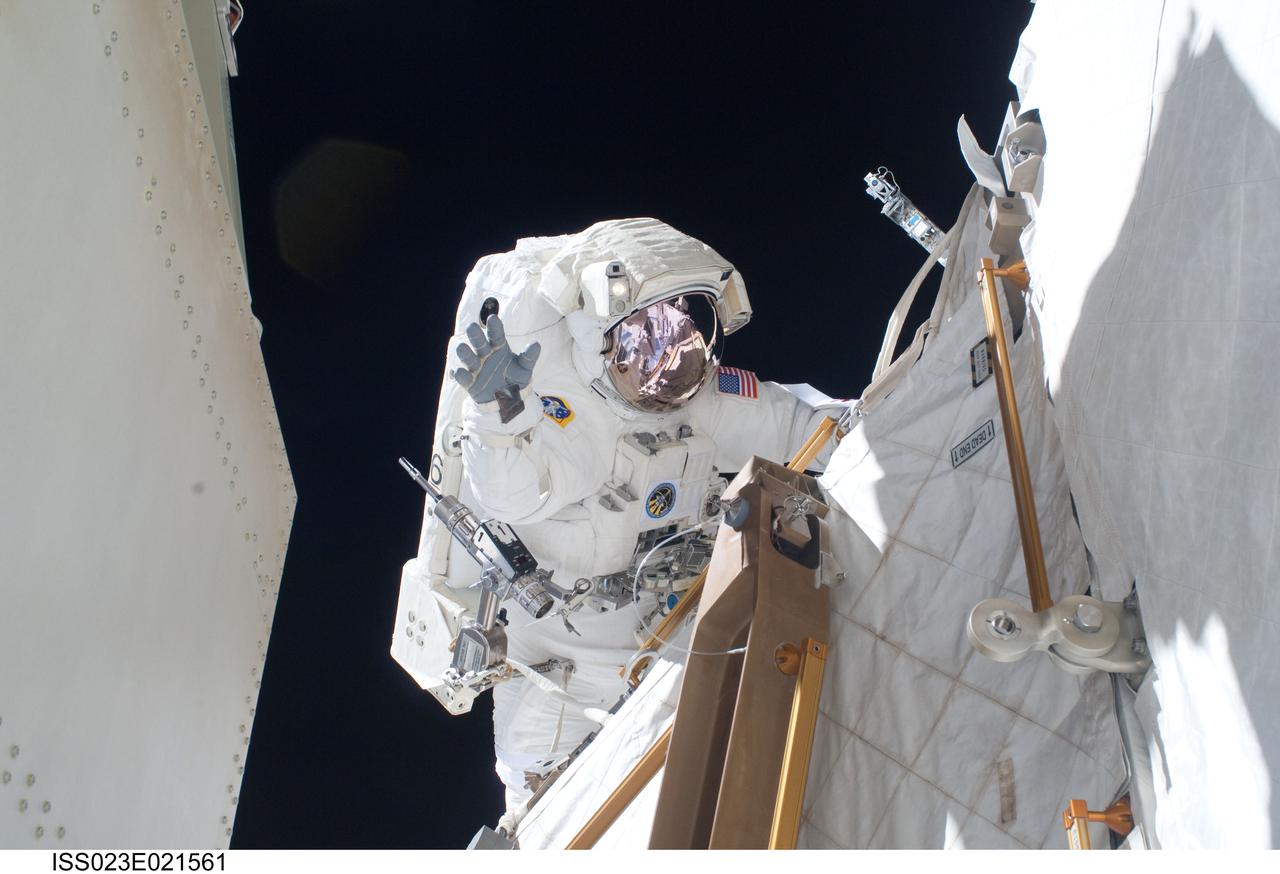
ISS023-E-021561 (11 April 2010) --- NASA astronaut Clayton Anderson, STS-131 mission specialist, participates in the mission's second session of extravehicular activity (EVA) as construction and maintenance continue on the International Space Station. During the seven-hour, 26-minute spacewalk, Anderson and Rick Mastracchio (out of frame), mission specialist, unhooked and removed the depleted ammonia tank and installed a 1,700-pound ammonia tank on the station’s Starboard 1 truss, completing the second of a three-spacewalk coolant tank replacement process.
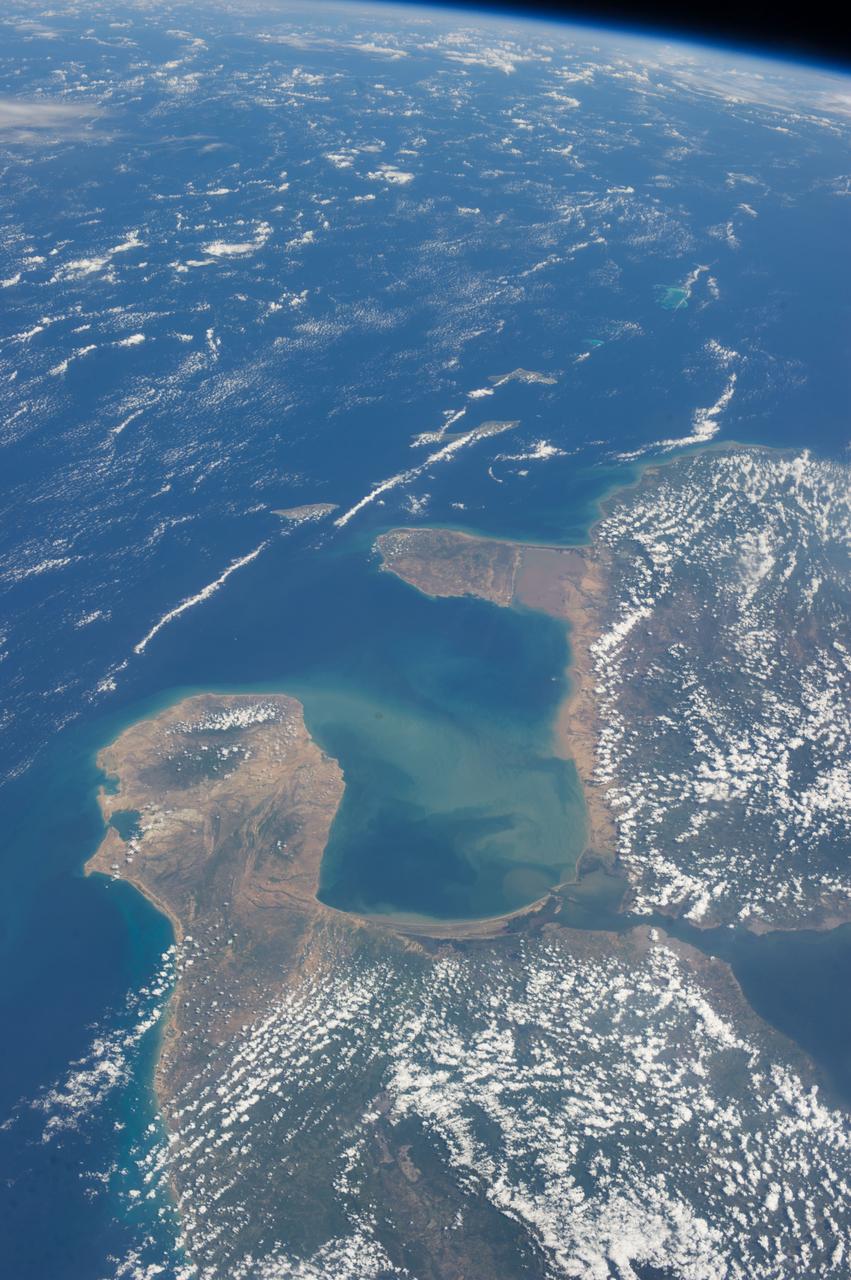
Earth Observations taken by Expedition 38 crewmember. Photographer indicates Venezuela and Aruba. Image was released by astronaut on Twitter.
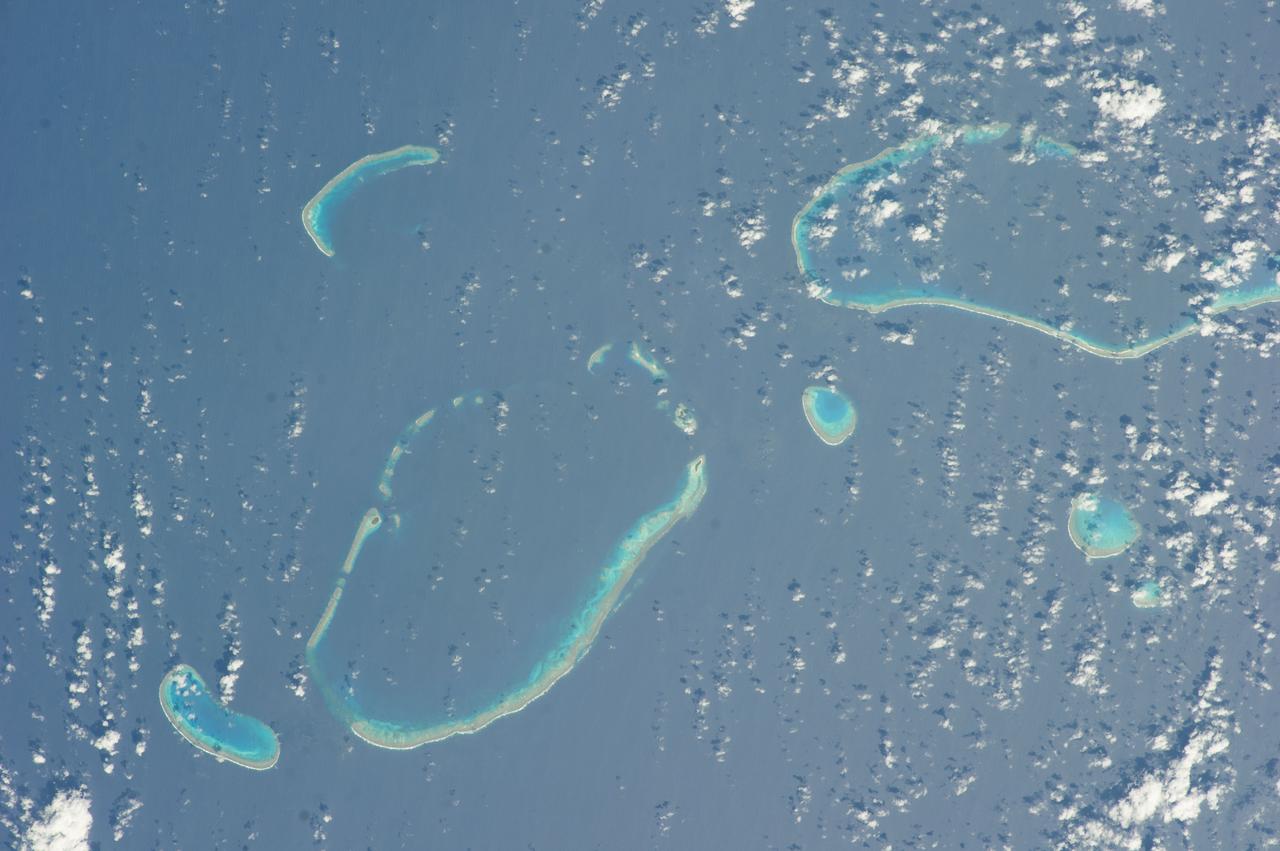
Earth observation taken by the Expedition 39 crew aboard the ISS. Image was released by astronaut on Twitter and downlinked in folder: South Pacific.
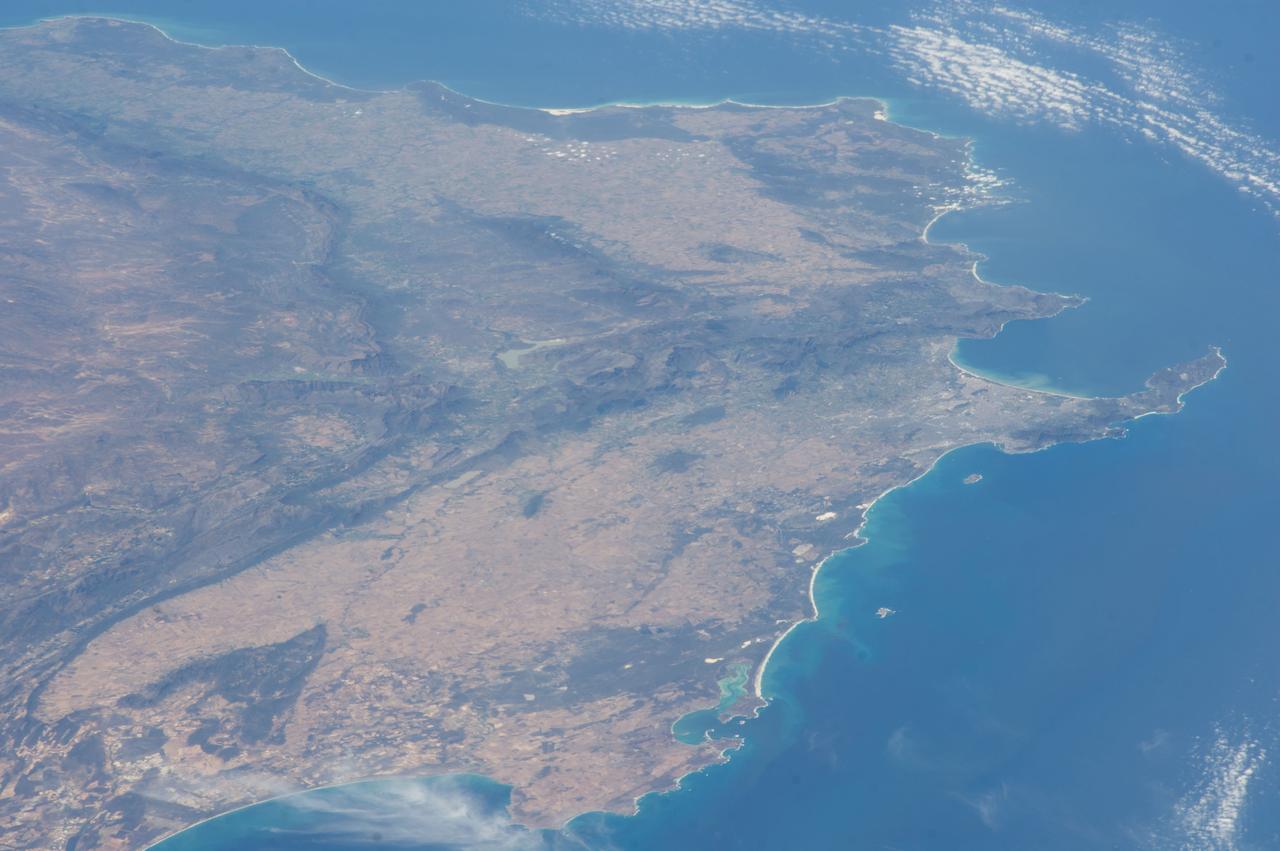
Earth Observations taken by Expedition 38 crewmember. Image was released by astronaut on Twitter.
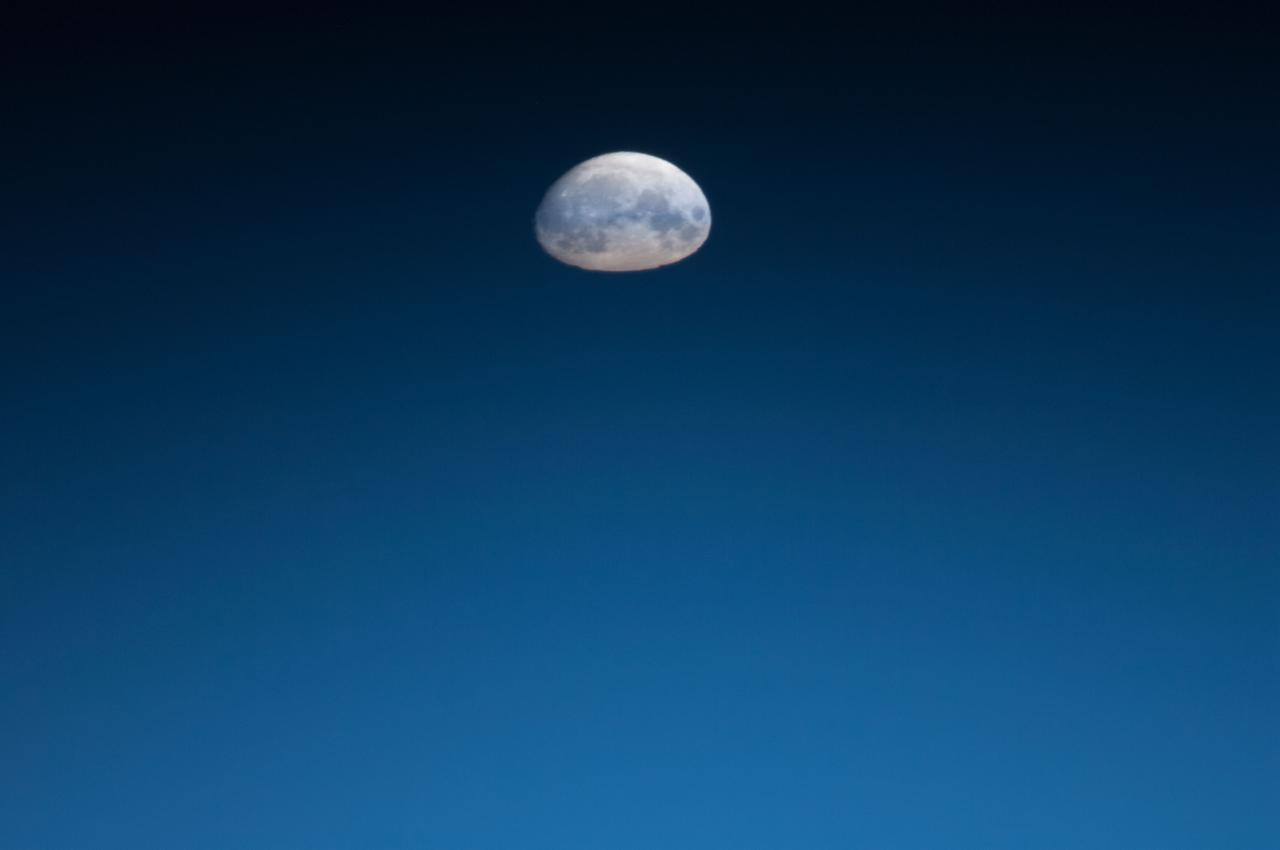
Lunar observation taken during moonset by the Expedition 39 crew aboard the ISS. Earth airglow is in view. Image was released by astronaut on Twitter.
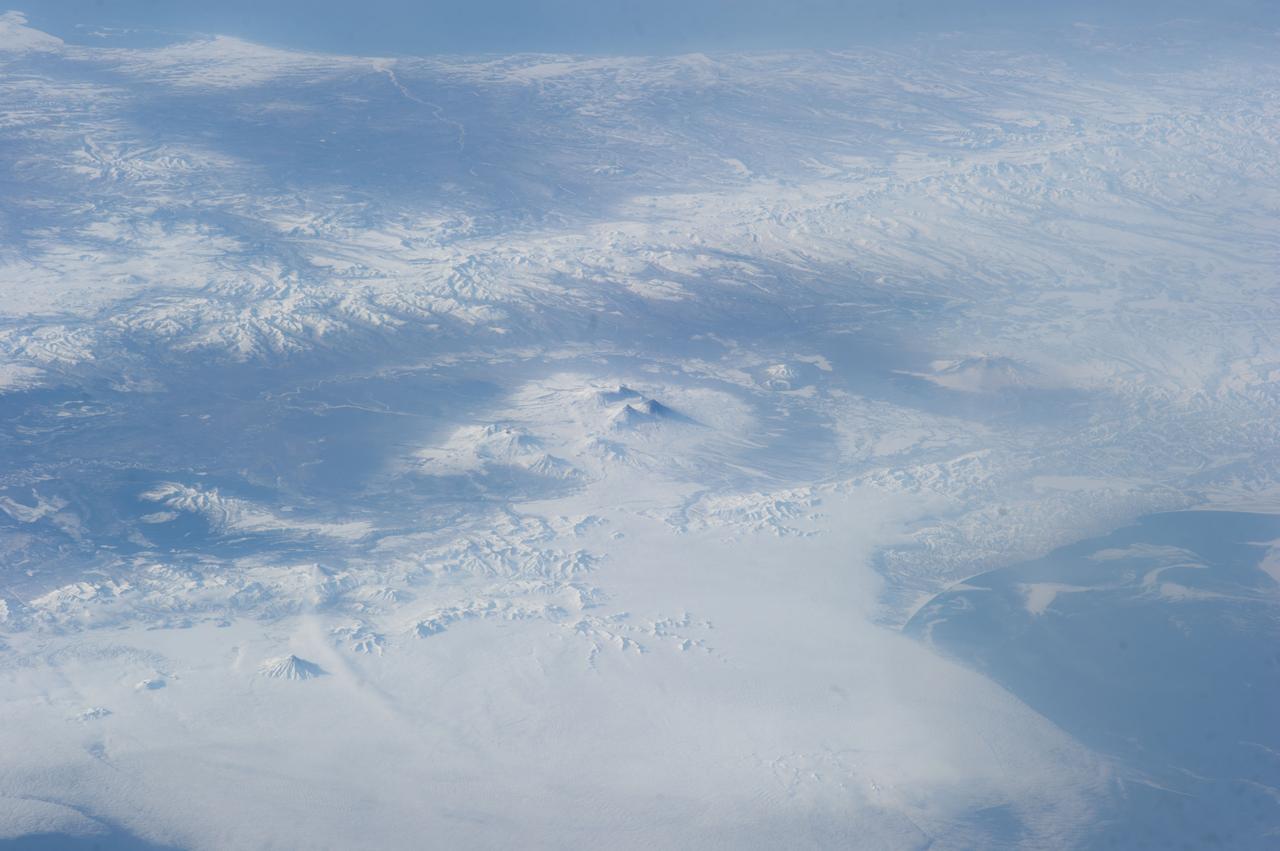
Earth observation taken by the Expedition 39 crew aboard the ISS. Image was released by astronaut on Twitter and downlinked in folder: Kamchatka.
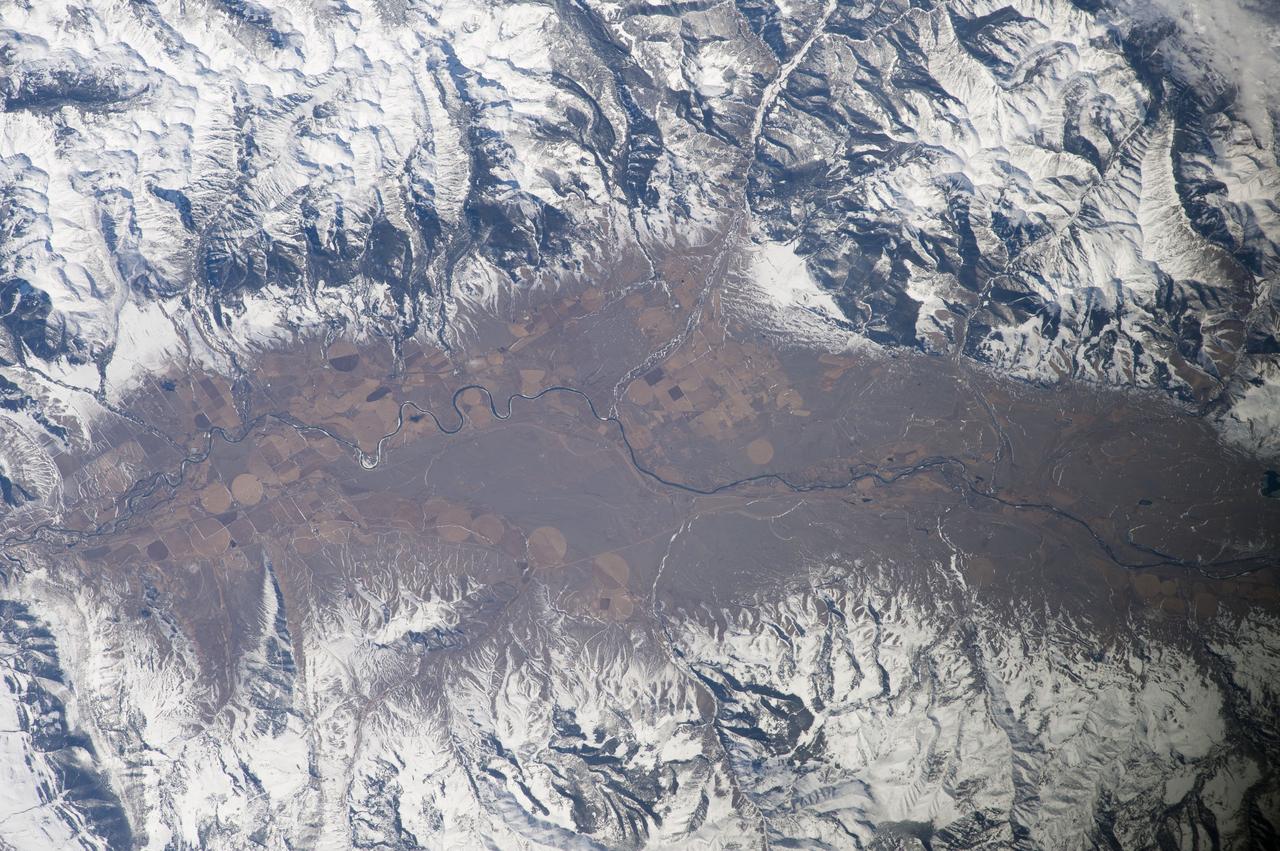
Earth observation taken by the Expedition 39 crew aboard the ISS. Image downlinked in folder: Seattle to Florida, and released by astronaut on Twitter.
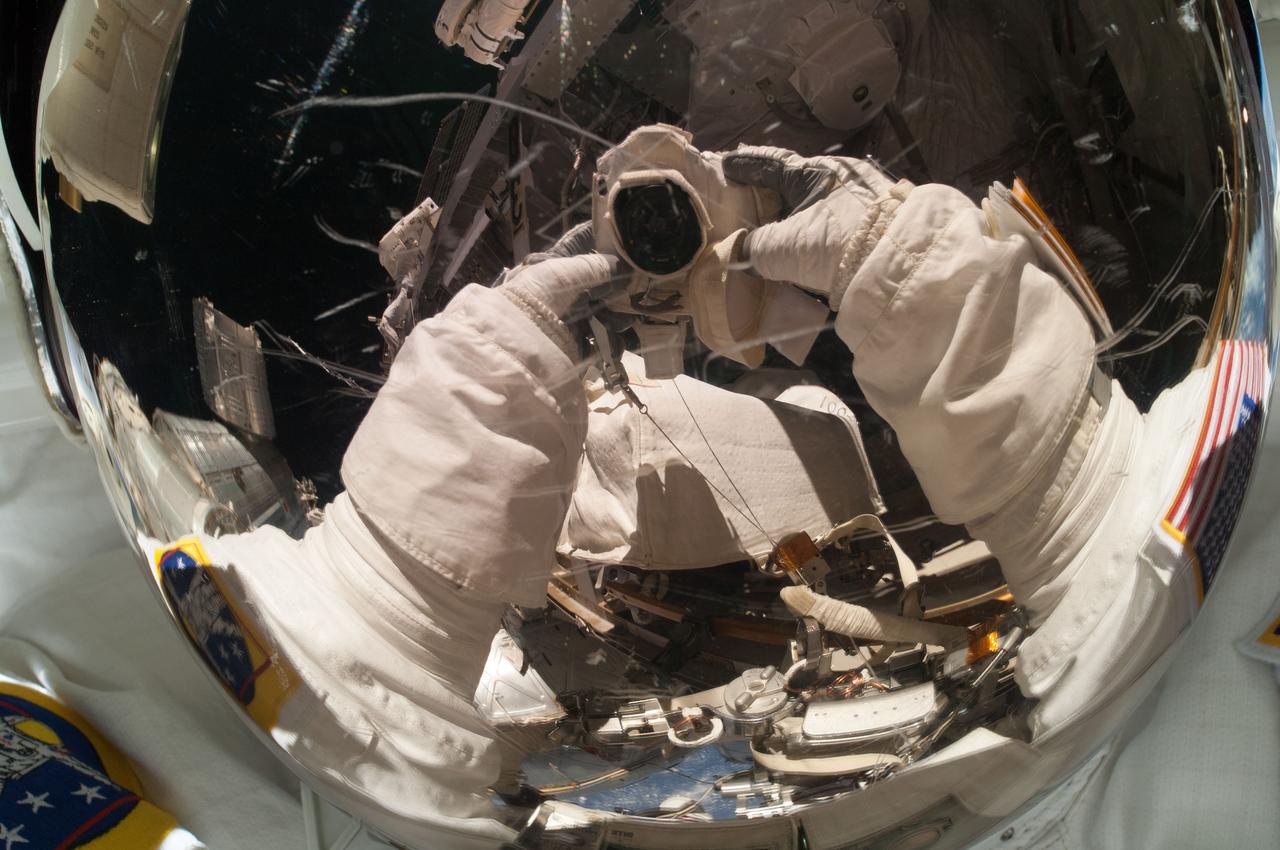
ISS039-E-014878 (22 April 2014) --- Part of the upper body of NASA astronaut Rick Mastracchio is pictured in a "selfie" or self-portrait during a spacewalk to replace a failed backup computer relay box in the S0 truss of the International Space Station on April 22, 2014. He was accompanied on the spacewalk by fellow Flight Engineer Steve Swanson of NASA.