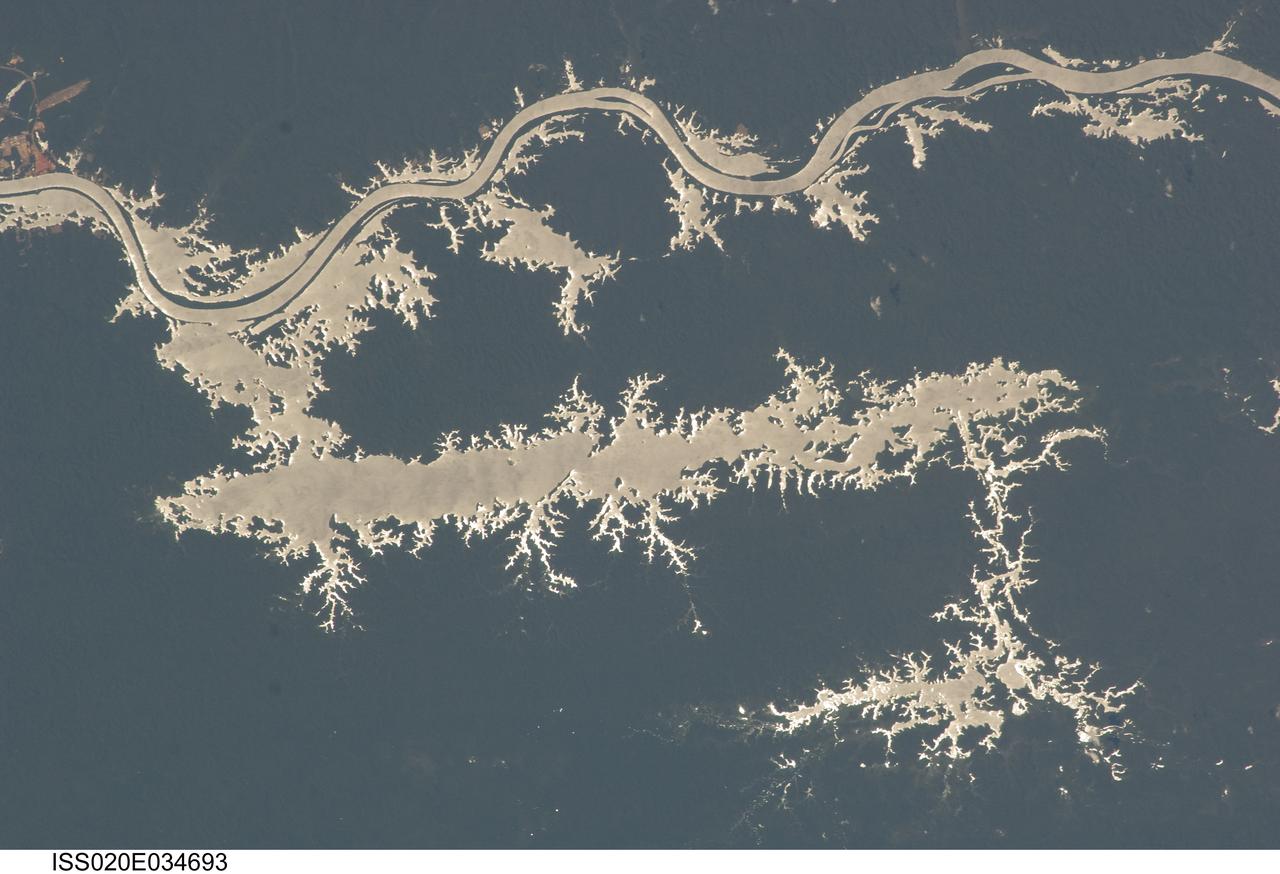
ISS020-E-034693 (25 Aug. 2009) --- Lake Erepecu and Rio Trombetas in Brazil are featured in this sun glint image photographed by an Expedition 20 crew member on the International Space Station. The 38 kilometers long Lake Erepecu runs parallel to the lower Rio (river) Trombetas which snakes along the lower half of this photograph. Waterbodies in the Amazon rainforest are often so dark they can be difficult to distinguish. In this image, however, the lake and river stand out from the uniform green of the forest in great detail as a result of sun glint on the water surface. Sun glint is light reflected off of a surface directly back towards the viewer, in this case a crew member onboard the space station. Soil color beneath the forest is red, as shown by airfield clearings near Porto Trombetas (upper left), a river port on the south side of the Trombetas River. The Trombetas flows into the Amazon River from the north about 800 kilometers from the Amazon mouth. Despite being so far from the sea, seagoing ore ships export most of Brazil?s bauxite from Porto Trombetas. Bauxite is the raw material formed in these tropical soils for the production of aluminum (the Trombetas bauxite mine is outside the upper margin of the image). Central Amazonia has many lakes like Erepecu?relatively straight, large waterbodies located just off the main axis of the large rivers. These lakes, as distinct from smaller floodplain lakes next to the large rivers, were created as rivers cut down during the repeated low global sea levels of the recent geological past (according to scientists, related to the ice ages of the last 1.7 million years). River water filled the valleys to form lakes during intervening periods of high sea level. Many larger rivers like the Trombetas and Amazon carried enough sediment to fill their immediate valleys?rivers flowing in unconsolidated sediment produce sinuous courses like those along the upper part of the image?but not enough to fill tributary valleys further from the axis of flow, so that lakes like Erepecu are formed.
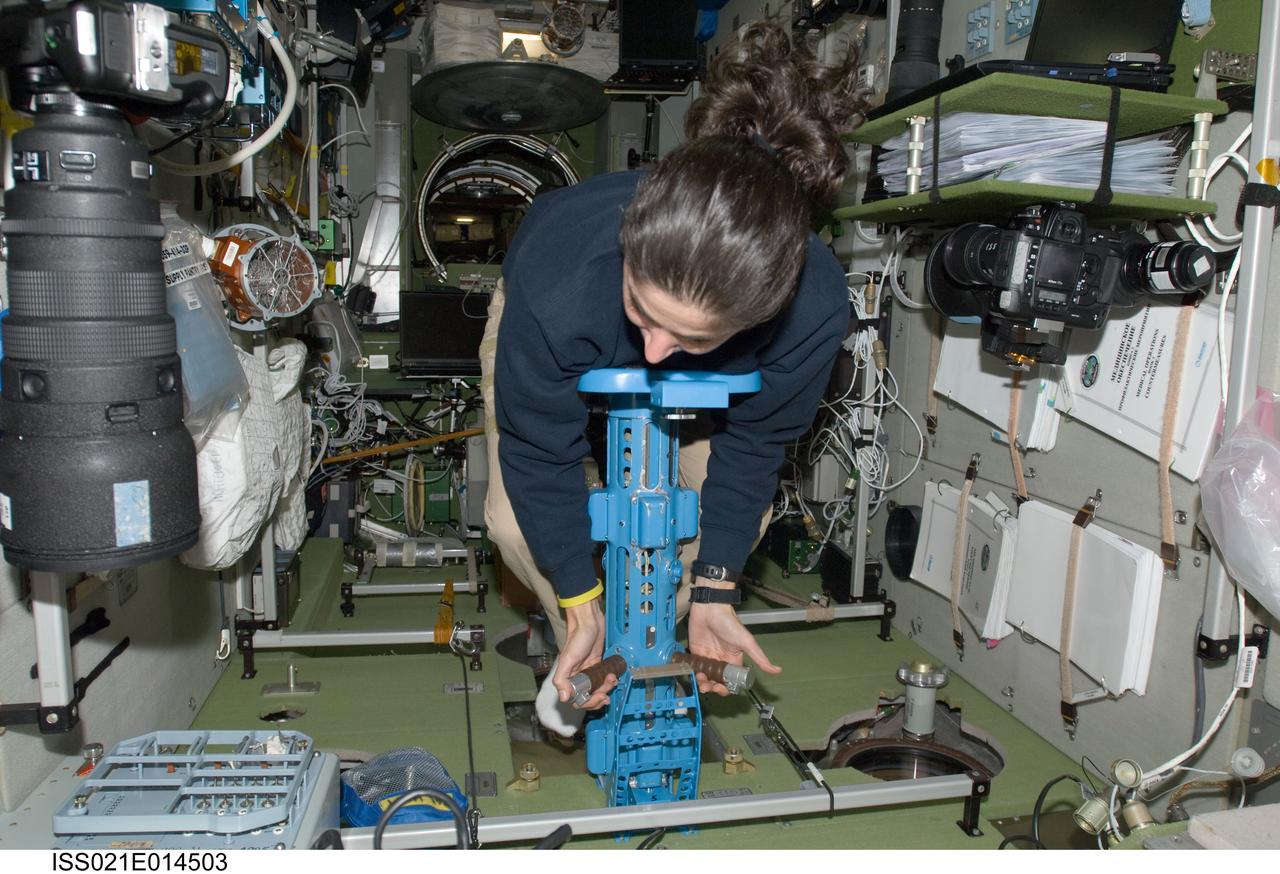
ISS021-E-014503 (12 Oct. 2009) --- NASA astronaut Nicole Stott, Expedition 21 flight engineer, uses the IM mass measurement device to perform the PZEh-MO-8/Body Mass Measurement Russian biomedical routine assessments in the Zvezda Service Module of the International Space Station.
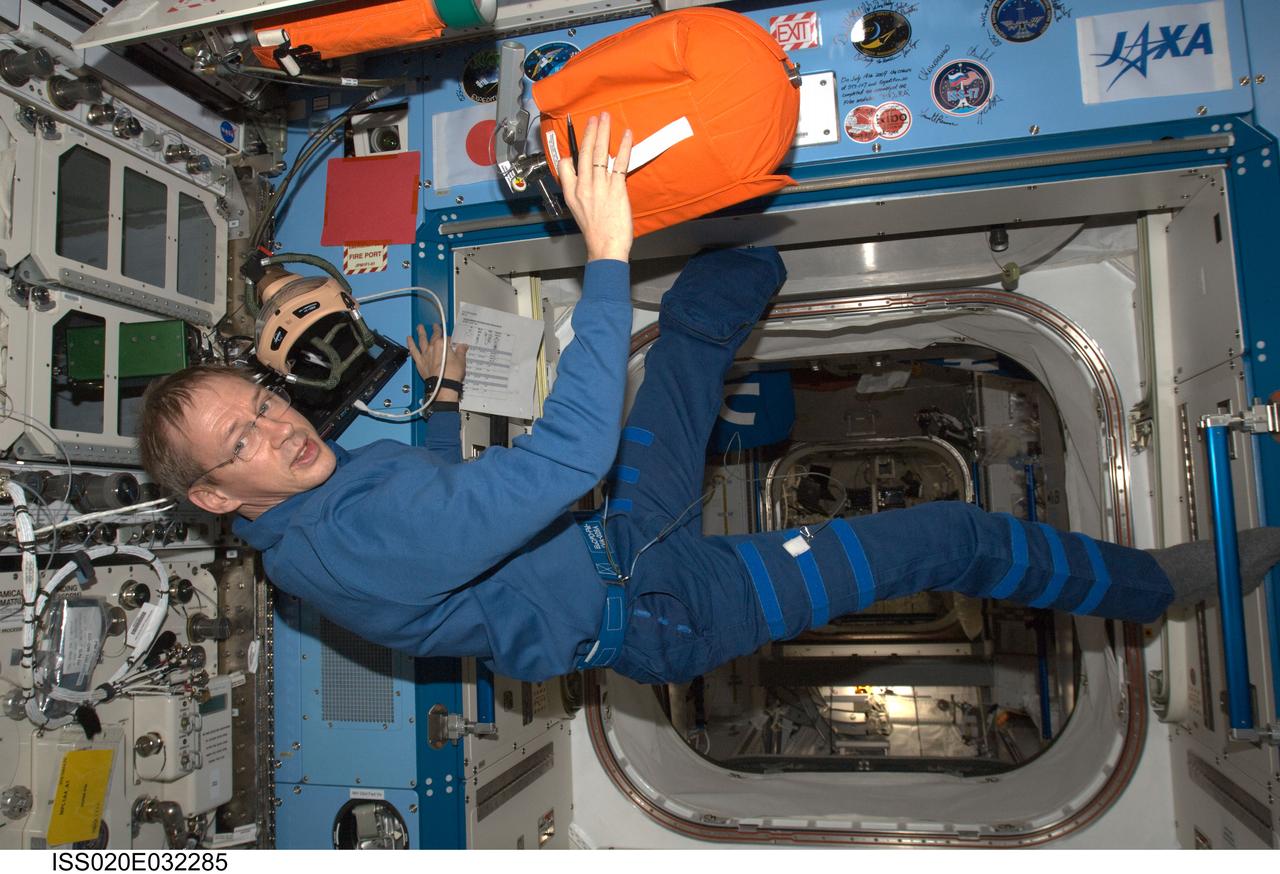
ISS020-E-032285 (19 Aug. 2009) --- European Space Agency astronaut Frank De Winne, Expedition 20 flight engineer, conducts the monthly inspection/audit on Portable Fire Extinguisher (PFE) and Portable Breathing Apparatus (PBA) equipment in the Kibo laboratory of the International Space Station.
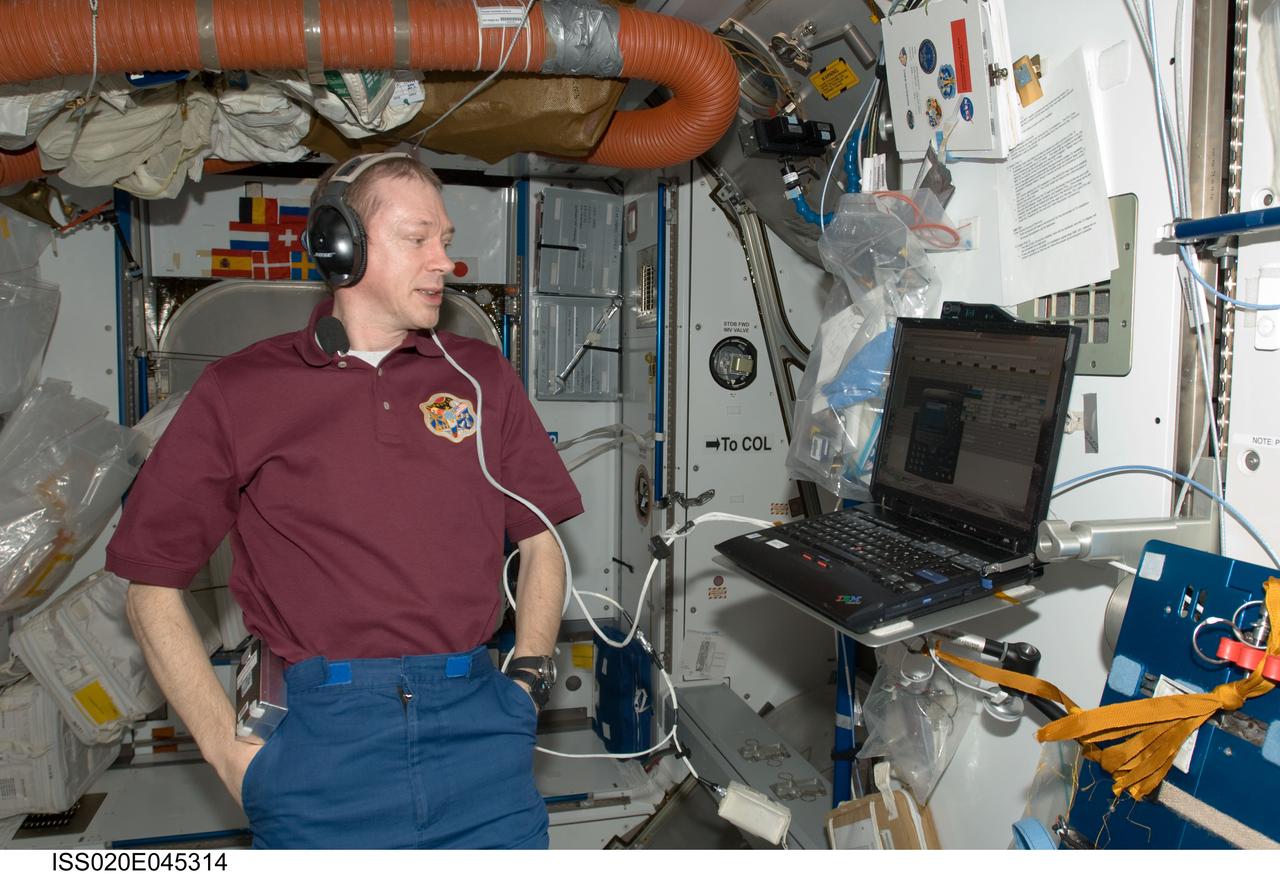
ISS020-E-045314 (5 Oct. 2009) --- European Space Agency astronaut Frank De Winne, Expedition 20 flight engineer and Expedition 21 commander, uses a communication system near a computer in the Harmony node of the International Space Station.
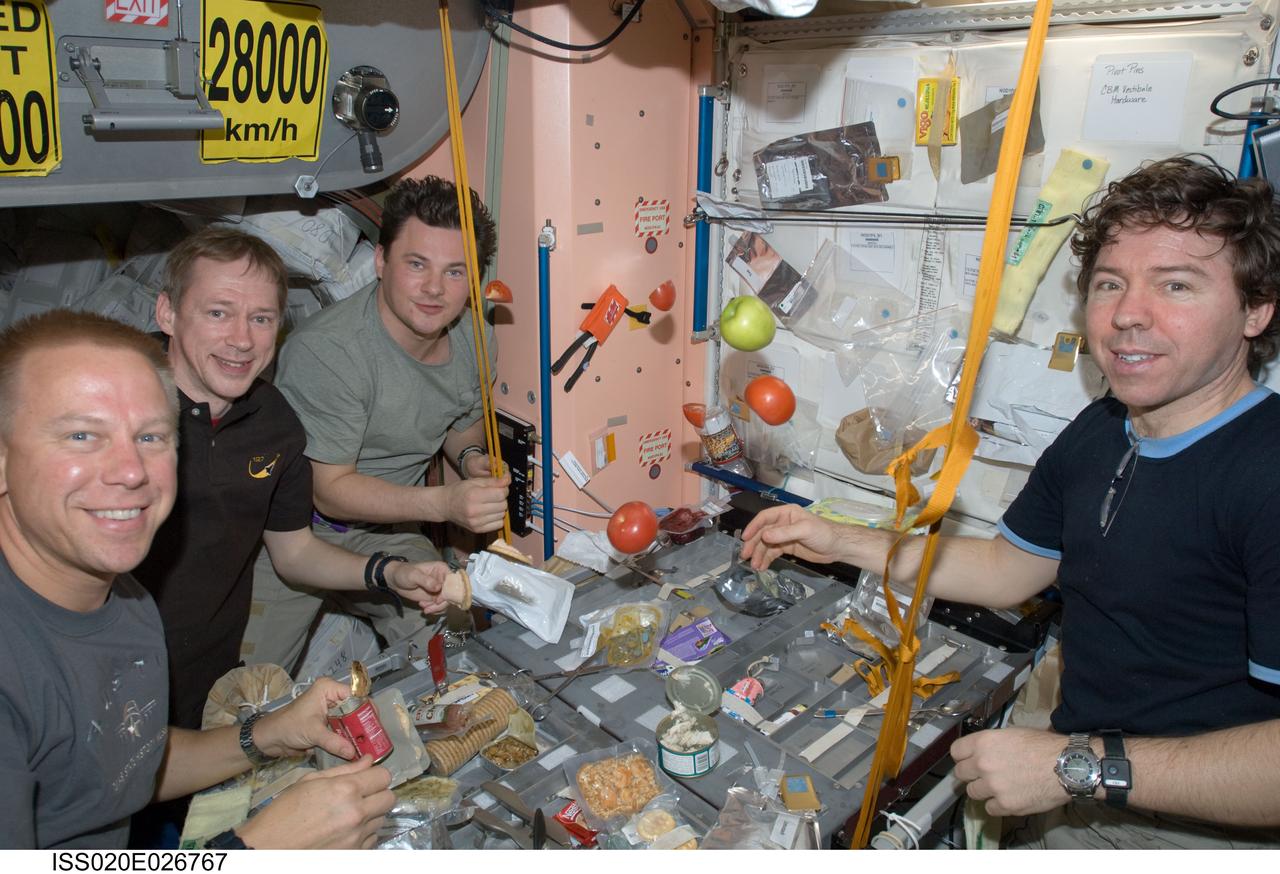
ISS020-E-026767 (31 July 2009) --- NASA astronaut Tim Kopra (left), European Space Agency astronaut Frank De Winne, cosmonaut Roman Romanenko and NASA astronaut Michael Barratt, all Expedition 20 flight engineers, share a meal at a galley in the Unity node of the International Space Station.
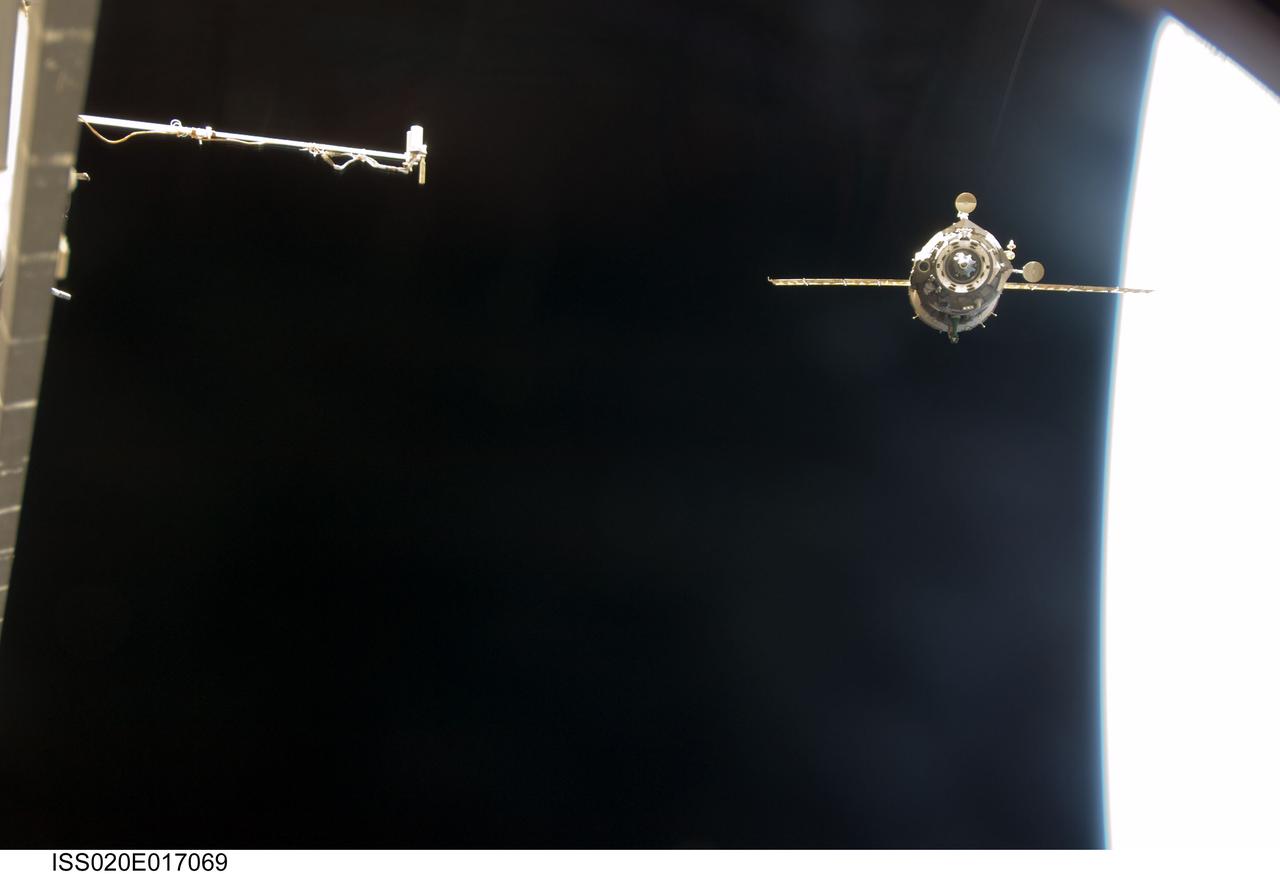
ISS020-E-017069 (2 July 2009) --- The Soyuz TMA-14 spacecraft is featured in this image photographed by an Expedition 20 crew member on the International Space Station during the relocation of the Soyuz from the Zvezda Service Module?s aft port to the Pirs Docking Compartment. Cosmonaut Gennady Padalka, commander; along with NASA astronaut Michael Barratt and Japan Aerospace Exploration Agency (JAXA) astronaut Koichi Wakata, both flight engineers, undocked the Soyuz spacecraft at 4:26 p.m. (CDT) and docked to the Pirs Docking Compartment at 4:54 p.m. on July 2, 2009.
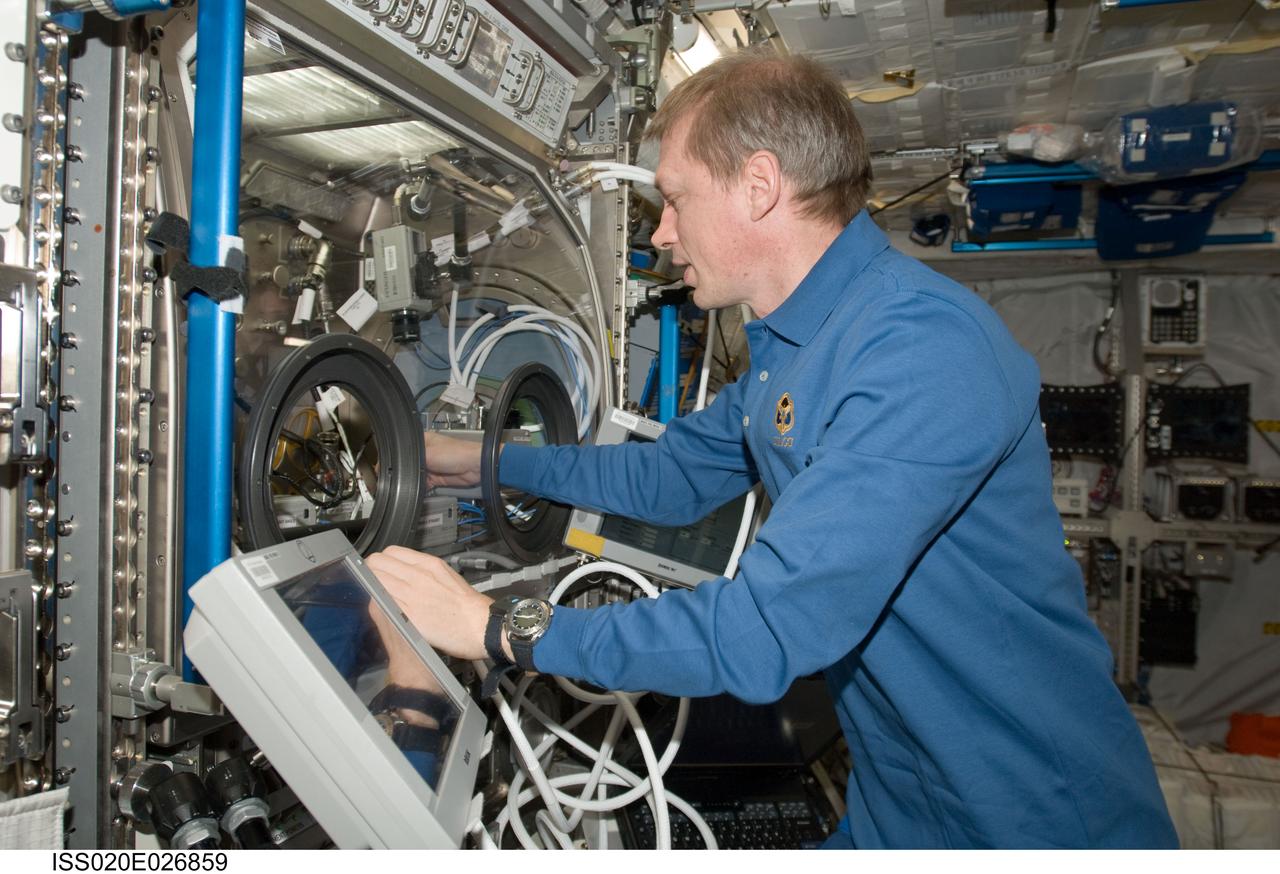
ISS020-E-026859 (1 Aug. 2009) --- European Space Agency astronaut Frank De Winne, Expedition 20 flight engineer, works with the Investigating the Structure of Paramagnetic Aggregates from Colloidal Emulsions (InSPACE) experiment in the Microgravity Science Glovebox (MSG) in the Columbus laboratory of the International Space Station.
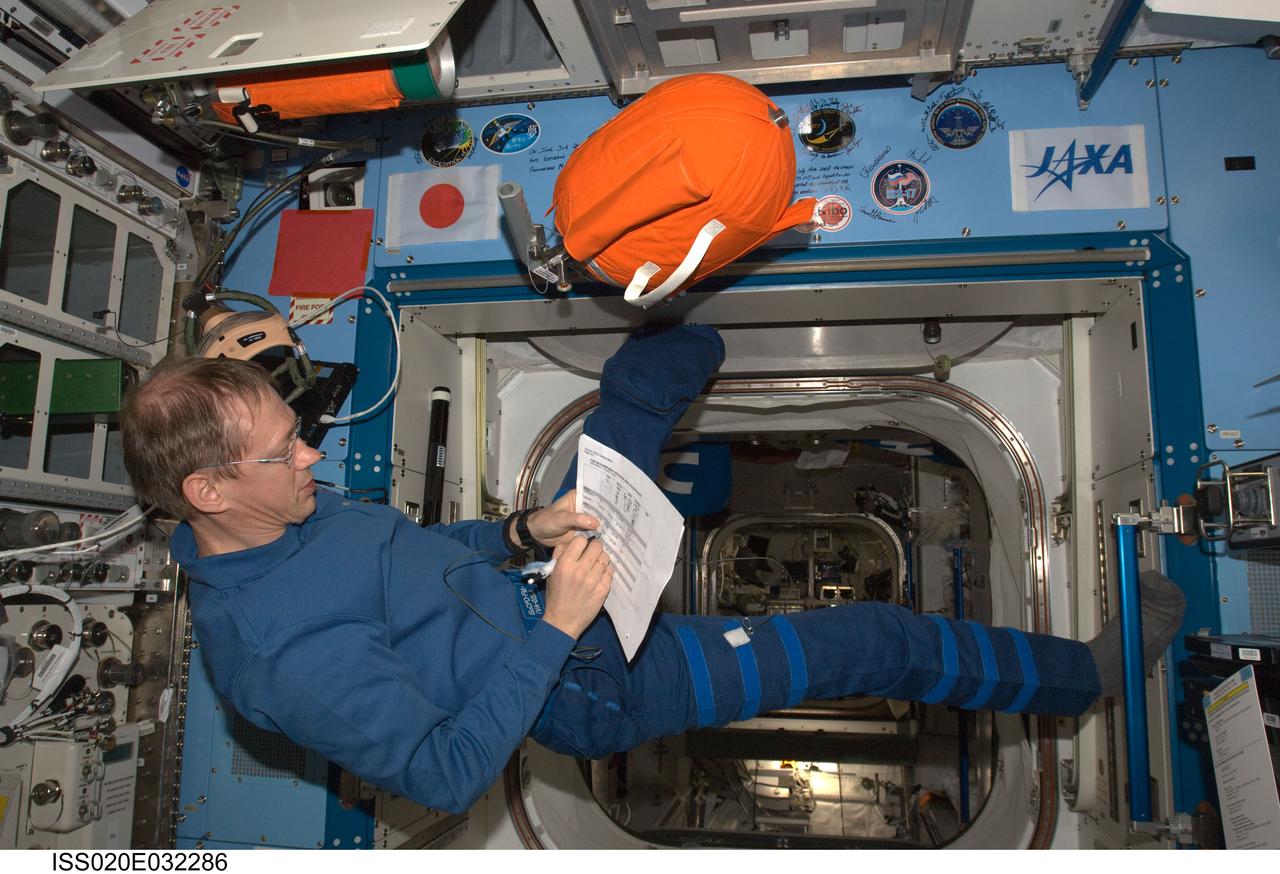
ISS020-E-032286 (19 Aug. 2009) --- European Space Agency astronaut Frank De Winne, Expedition 20 flight engineer, conducts the monthly inspection/audit on Portable Fire Extinguisher (PFE) and Portable Breathing Apparatus (PBA) equipment in the Kibo laboratory of the International Space Station.
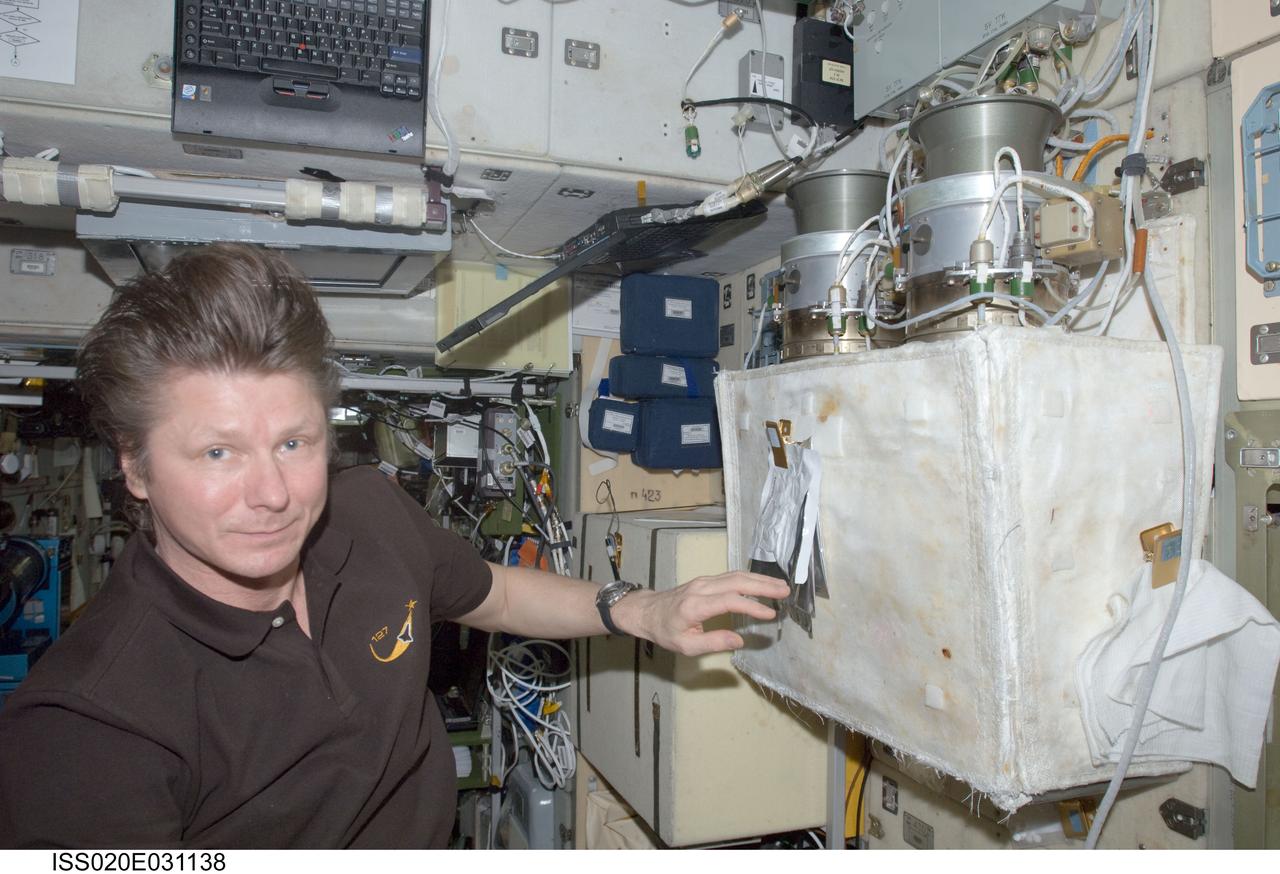
ISS020-E-031138 (16 Aug. 2009) --- Cosmonaut Gennady Padalka, Expedition 20 commander, performs a check on the Russian POTOK-150MK (150 micron) air filter unit of the Zvezda Service Module’s SOGS air revitalization subsystem on the International Space Station.
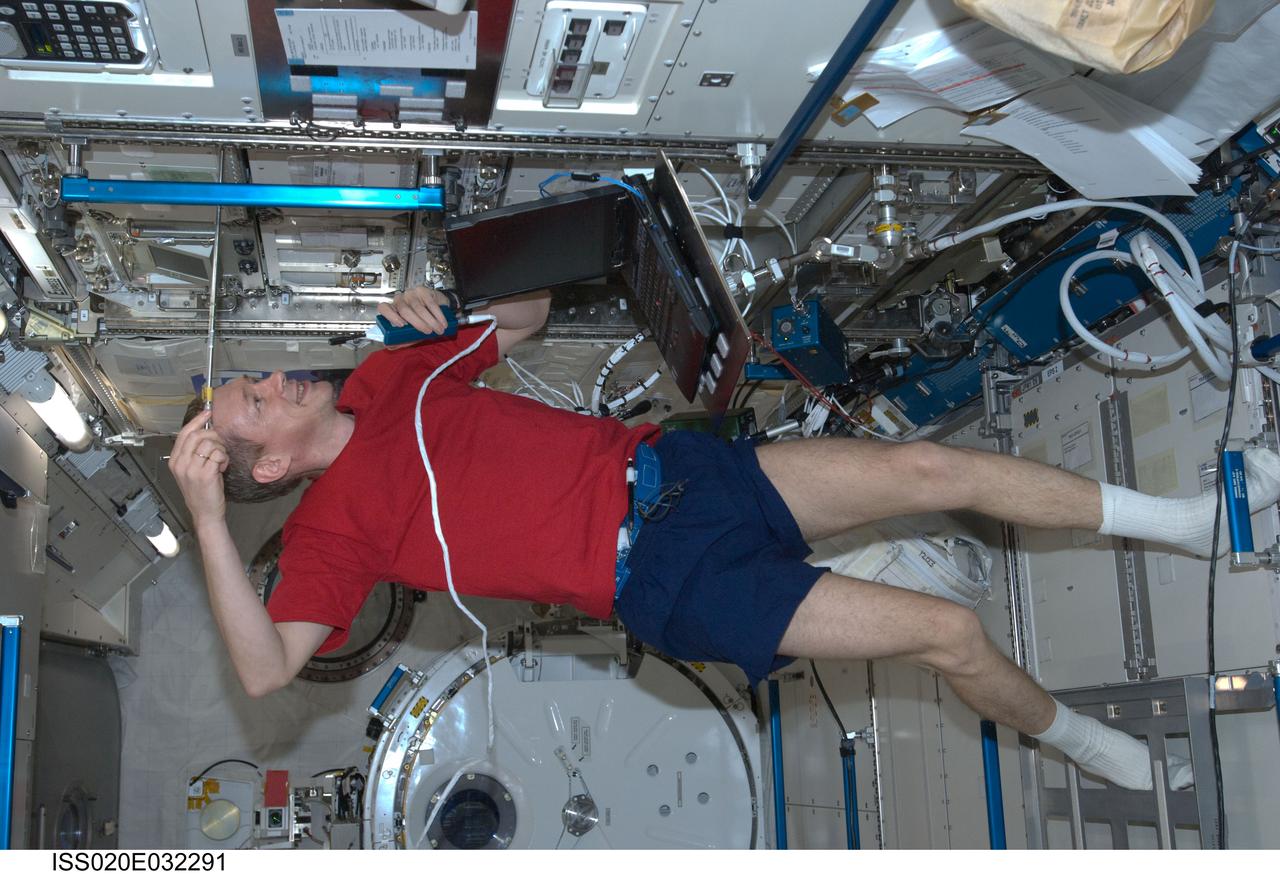
ISS020-E-032291 (19 Aug. 2009) --- European Space Agency astronaut Frank De Winne, Expedition 20 flight engineer, works in the Kibo laboratory of the International Space Station.
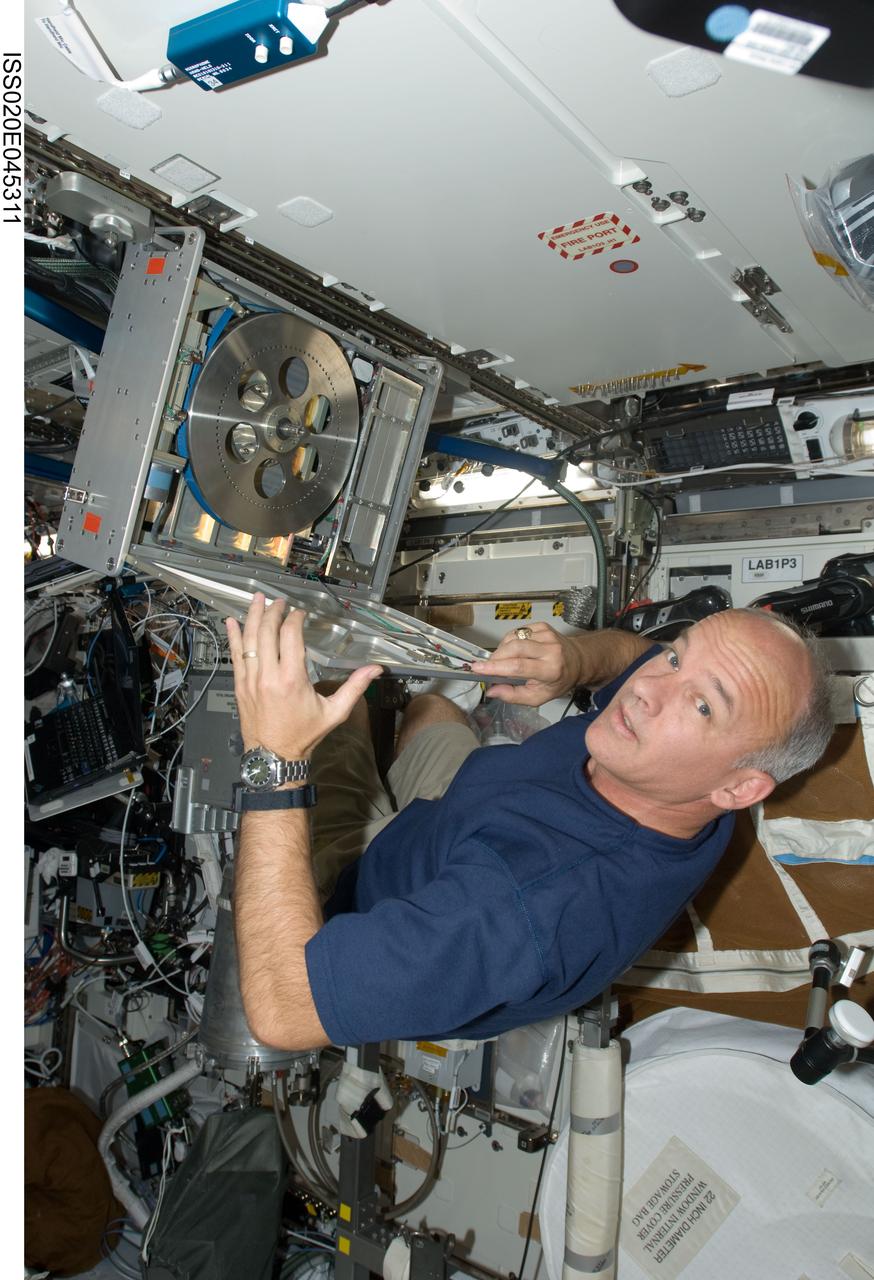
ISS020-E-045311 (5 Oct. 2009) --- NASA astronaut Jeffrey Williams, Expedition 21 flight engineer, performs in-flight maintenance (IFM) on the Cycle Ergometer with Vibration Isolation (CEVIS) braking band in the Destiny laboratory of the International Space Station.
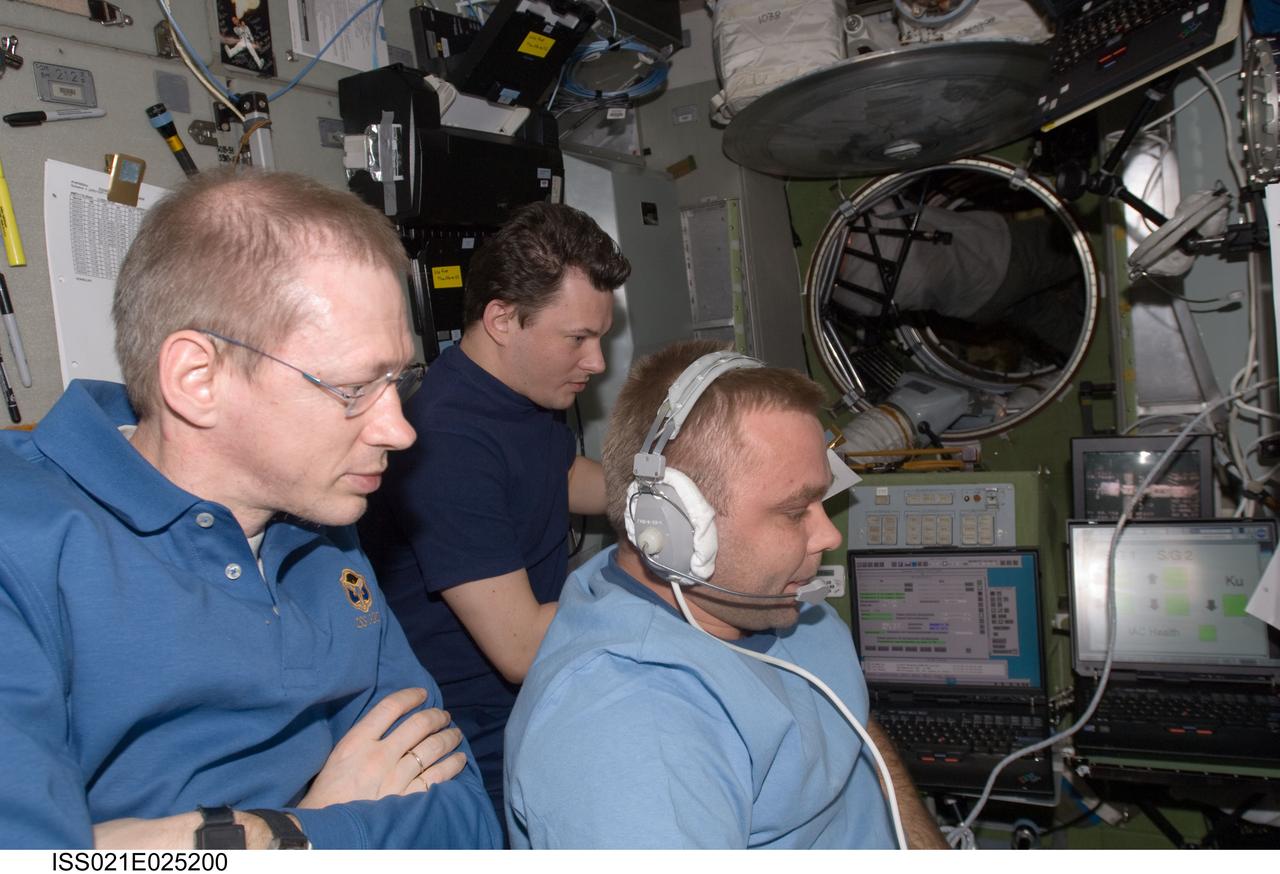
ISS021-E-025200 (12 Nov. 2009) --- European Space Agency astronaut Frank De Winne (left foreground), Expedition 21 commander; along with Russian cosmonauts Maxim Suraev (right) and Roman Romanenko, both flight engineers, are pictured in the Zvezda Service Module of the International Space Station during docking operations of the unpiloted Russian Mini-Research Module 2 (MRM2), also known as Poisk. The MRM2 docked to Zvezda’s space-facing port at 9:41 a.m. (CST) on Nov. 12, 2009.
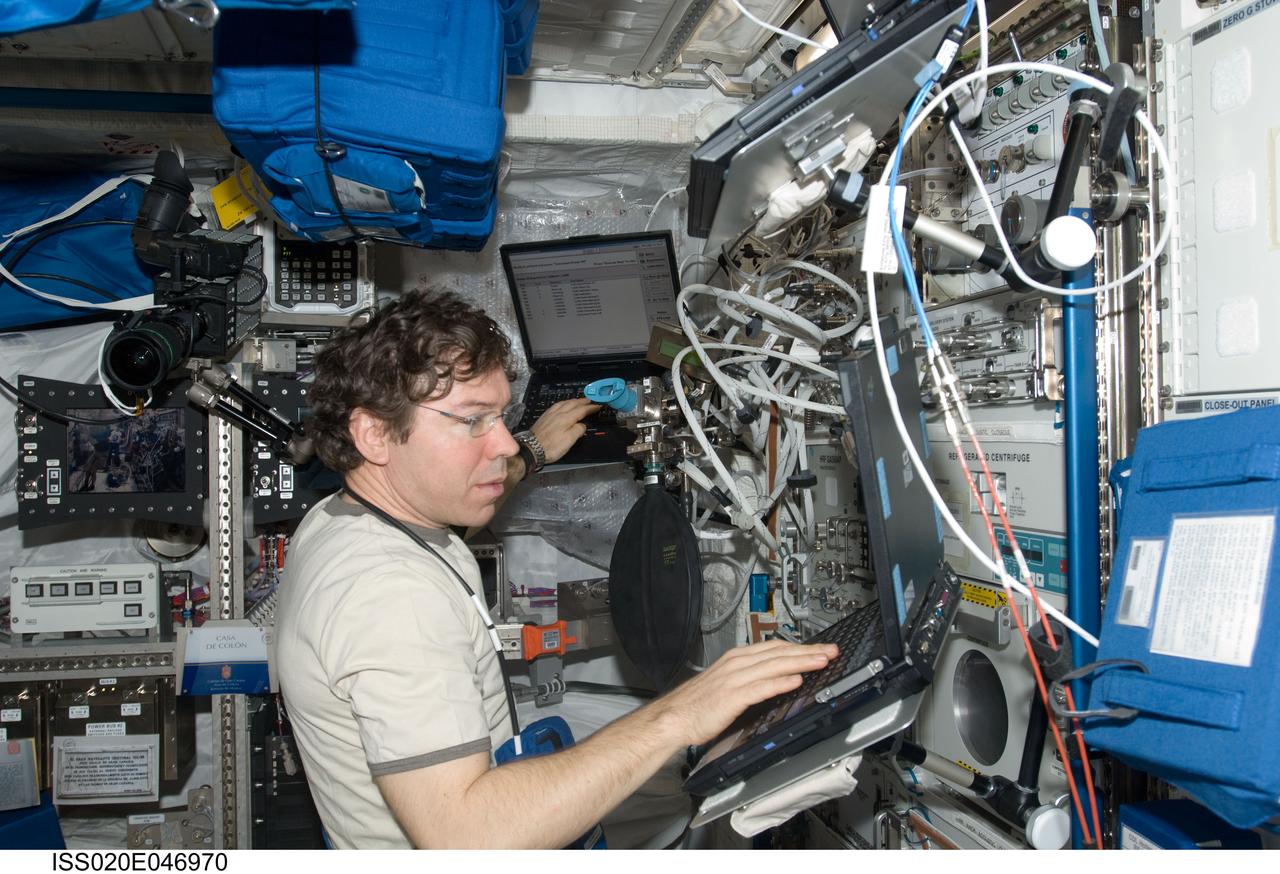
ISS020-E-046970 (6 Oct. 2009) --- NASA astronaut Michael Barratt, Expedition 20 flight engineer, enters data into computers in the Columbus laboratory of the International Space Station.
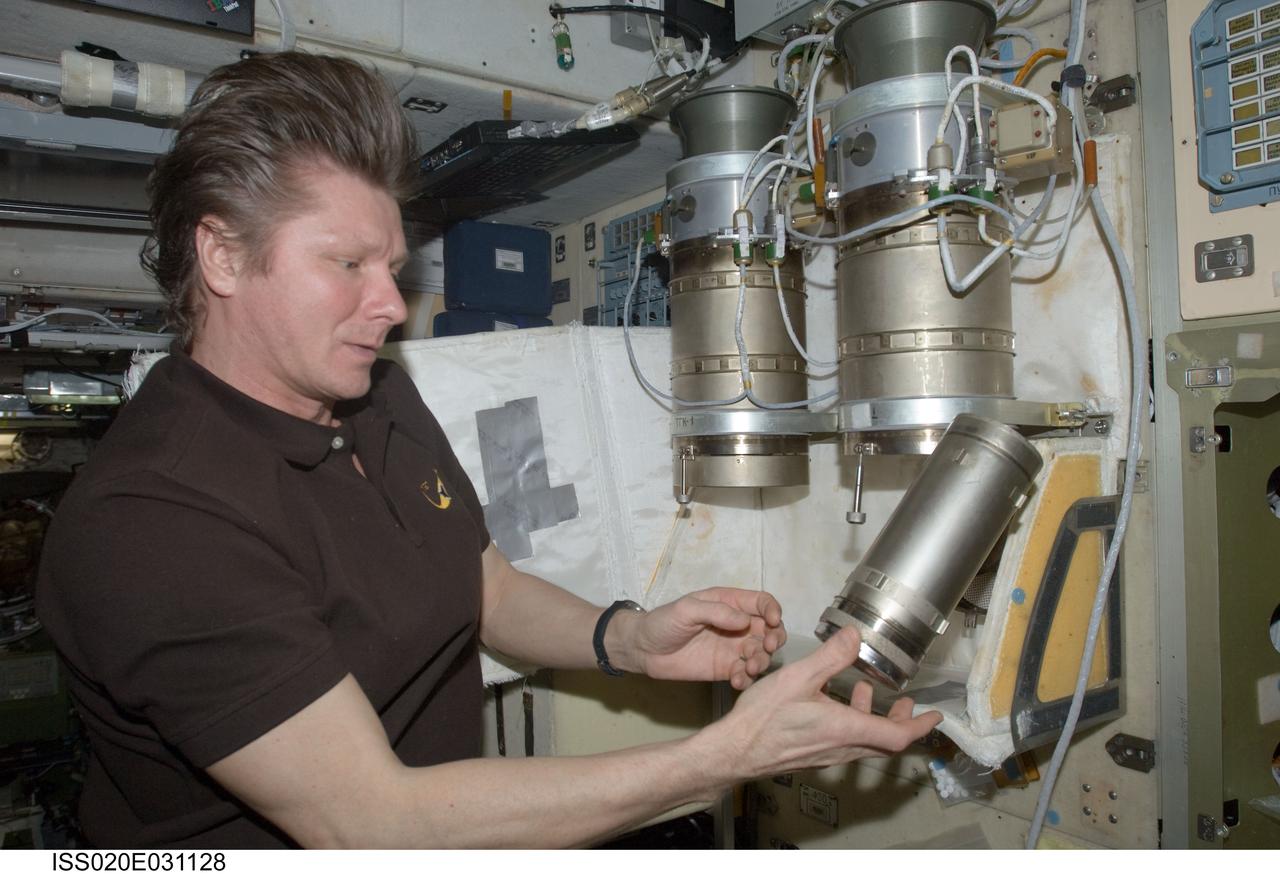
ISS020-E-031128 (16 Aug. 2009) --- Cosmonaut Gennady Padalka, Expedition 20 commander, performs a check on the Russian POTOK-150MK (150 micron) air filter unit of the Zvezda Service Module’s SOGS air revitalization subsystem on the International Space Station.
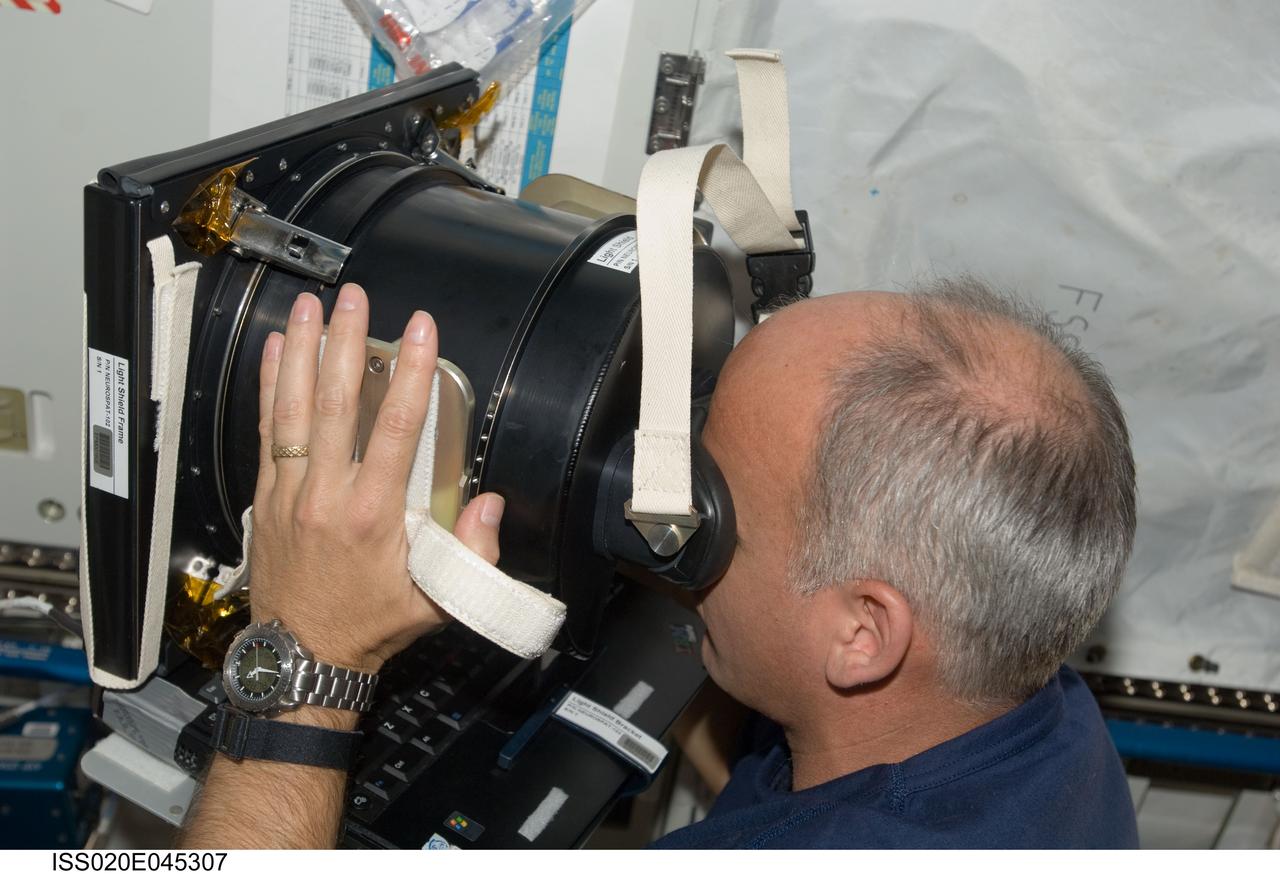
ISS020-E-045307 (5 Oct. 2009) --- NASA astronaut Jeffrey Williams, Expedition 21 flight engineer, uses Neurospat hardware to perform the Bodies in the Space Environment (BISE) experiment in the Destiny laboratory of the International Space Station. The Canadian Space Agency-sponsored BISE experiment studies how astronauts perceive up and down in microgravity.
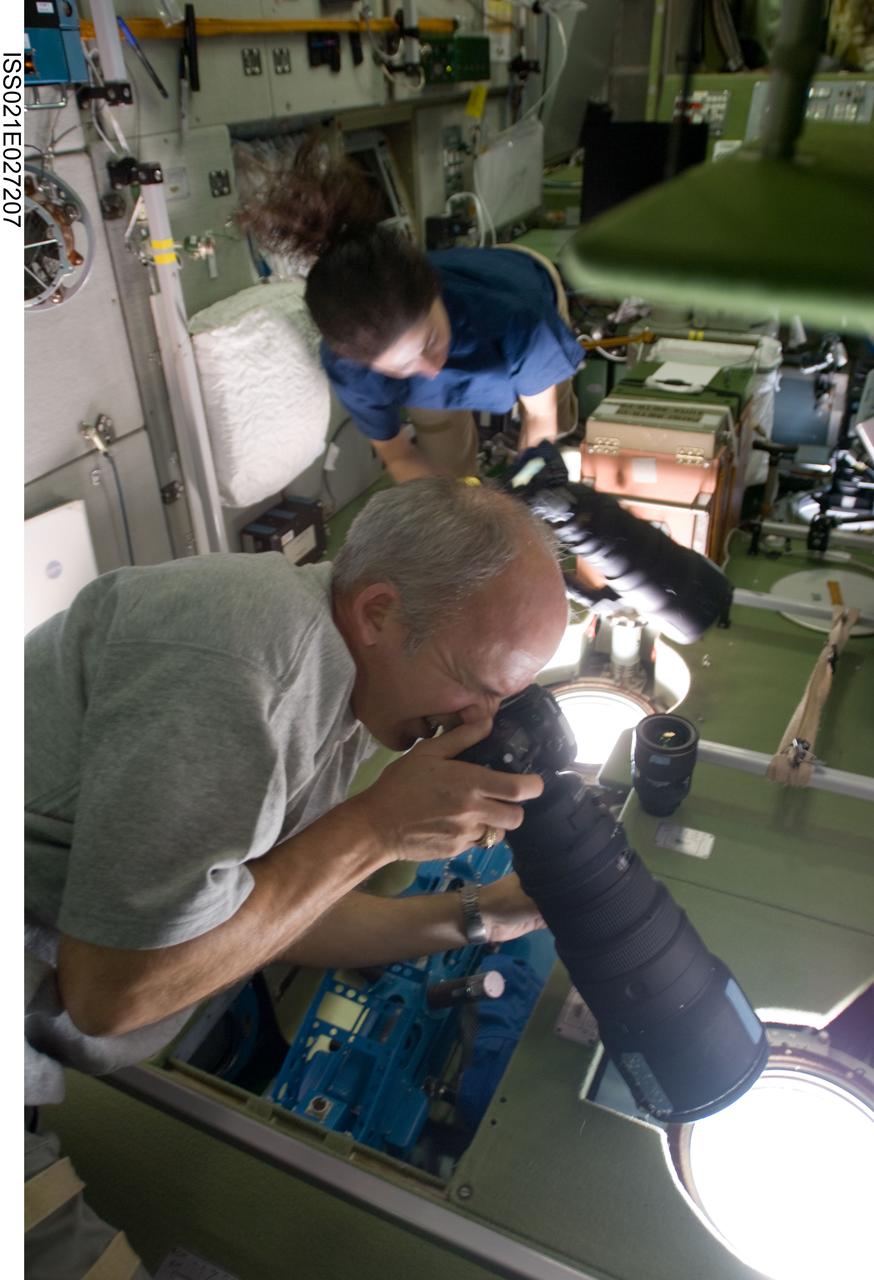
ISS021-E-027207 (15 Nov. 2009) --- NASA astronauts Jeffrey Williams and Nicole Stott, both Expedition 21 flight engineers, use still cameras at windows in the Zvezda Service Module of the International Space Station.
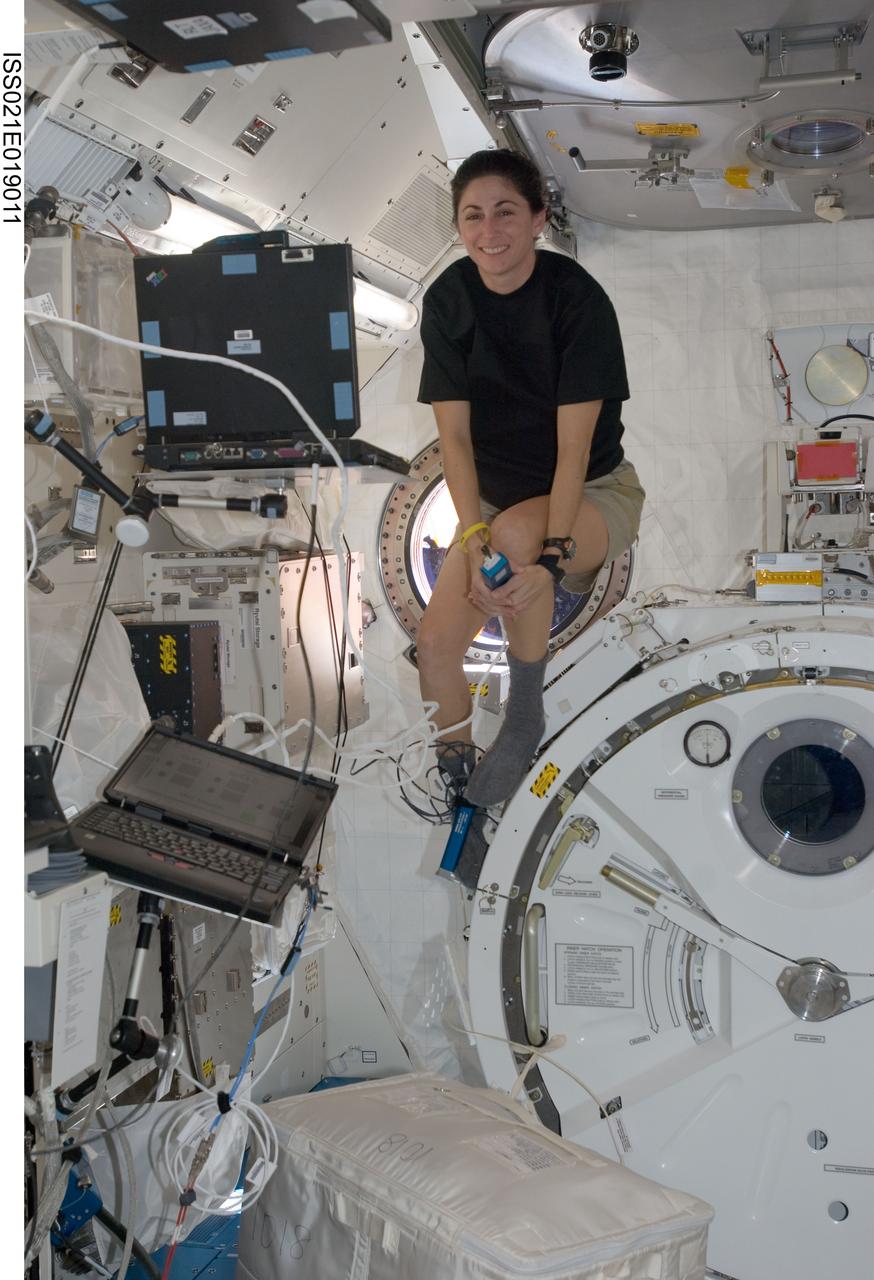
ISS021-E-019011 (1 Nov. 2009) --- NASA astronaut Nicole Stott, Expedition 21 flight engineer, is pictured in the Kibo laboratory of the International Space Station.