
ISS043E078169 (03/31/2015) --- This close up of the huge Typhoon Maysak "eye" of the category 5 (hurricane status on the Saffir-Simpson Wind Scale) was captured by astronauts on board the International Space Station Mar. 31, 2015. The massive Typhoon is headed toward the Philippines and expected to land on the upcoming Easter weekend. The Tropical Rainfall Measuring Mission (TRMM) and Global Precipitation Measurement (GPM) satellites, both co-managed by NASA and the Japan Aerospace Exploration Agency, captured rainfall and cloud data that revealed very heavy rainfall and high thunderstorms in the still strengthening storm.
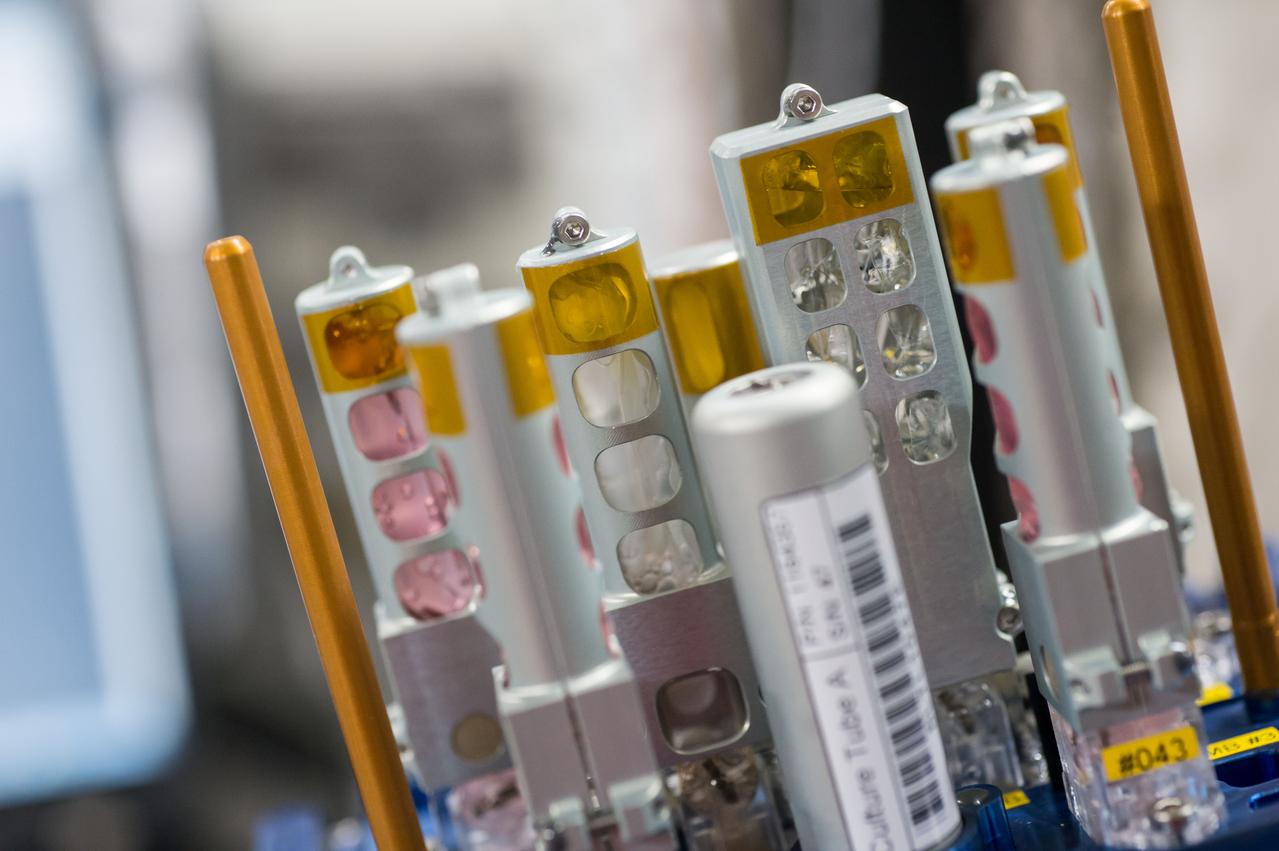
iss043e181153 (May 8, 2015) --- Experiment Container (EC) for the TripleLux-A experiment during removal from Incubator. The TripleLux-A experiment studies the effects of the spaceflight conditions on immune suppression in mice, which will help scientists understand the effects of radiation and microgravity on the human immune system in space.
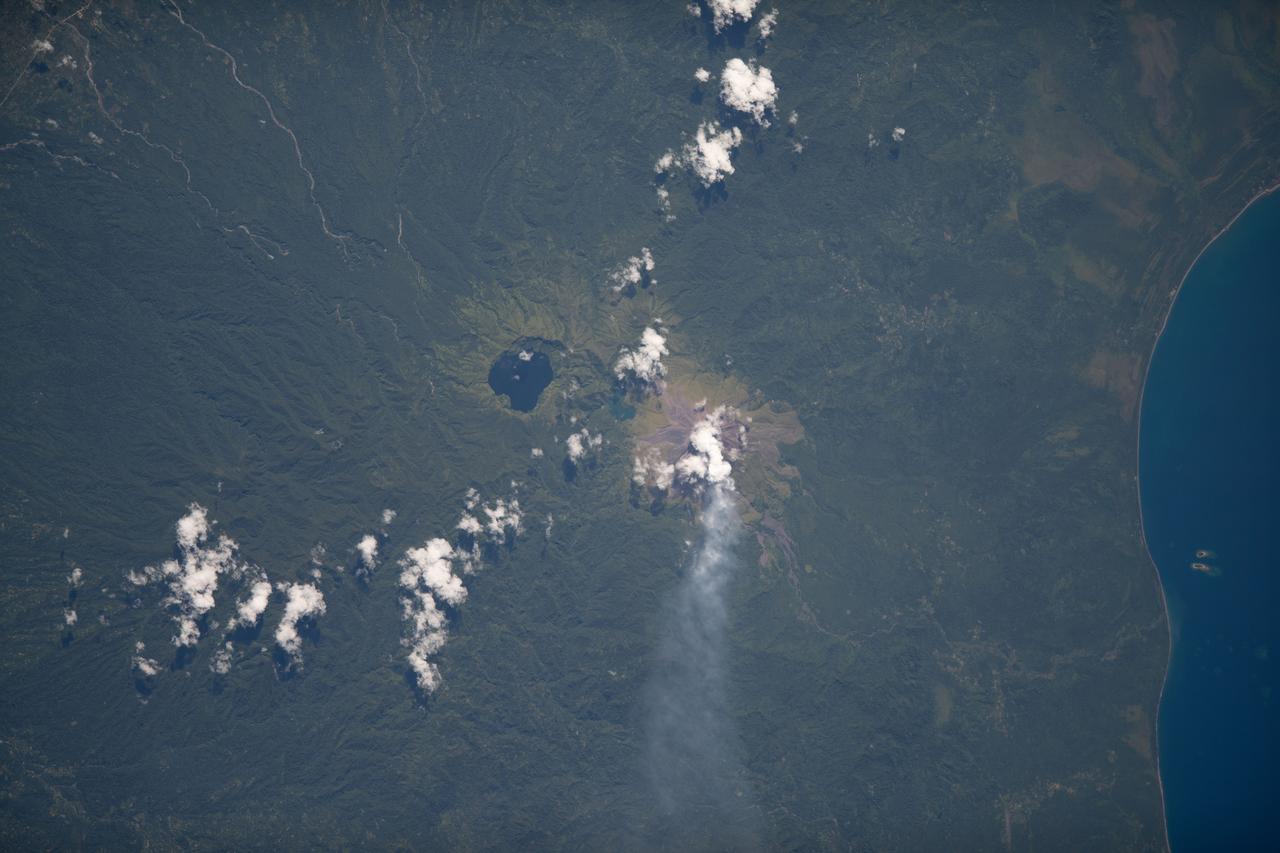
iss068e007429 (Oct. 2, 2022) --- Billy Mitchell Crater Lake and the active volcano Bagana on Papua New Guinea's Bougainville Island are pictured from the International Space Station as it orbited 260 miles above the southwestern Pacific Ocean. Credit: ESA/Samantha Cristoforetti
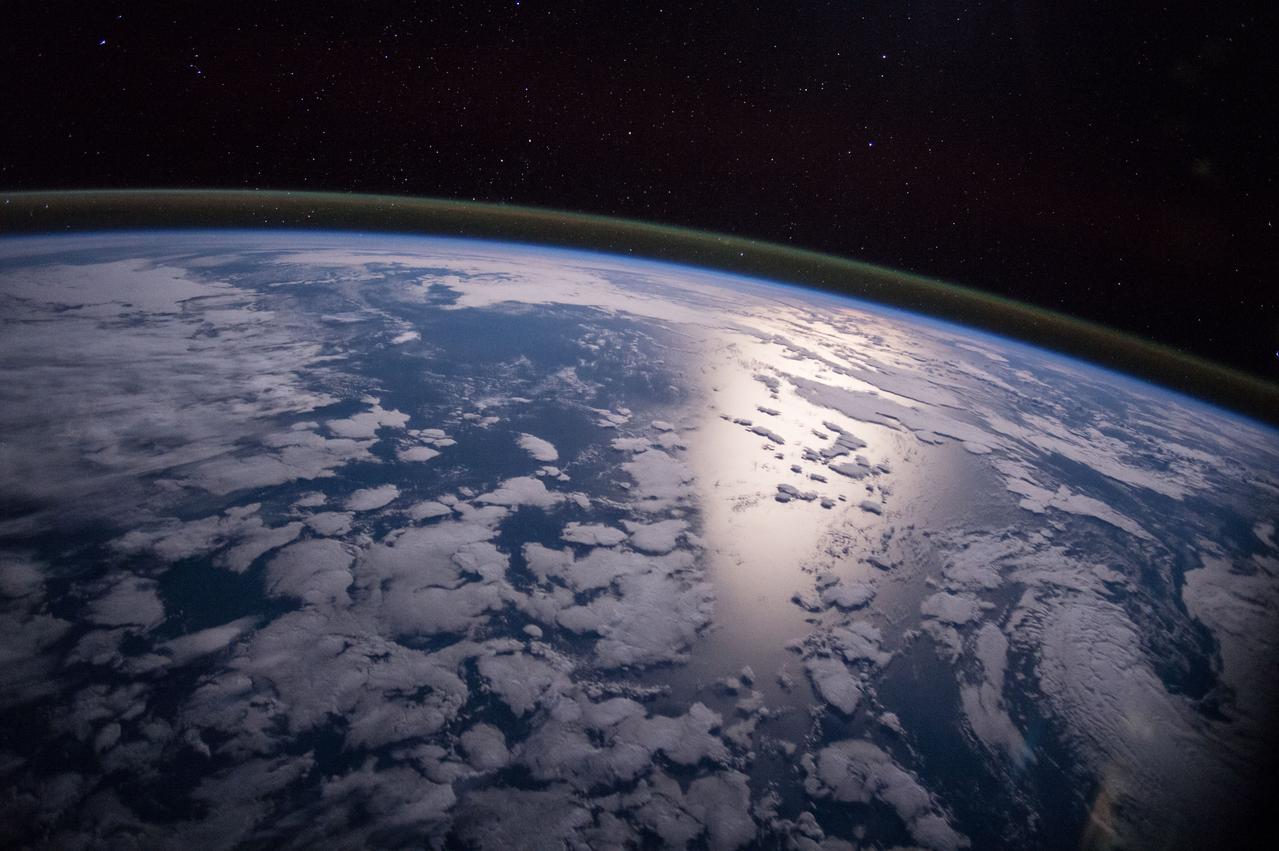
ISS042E311037 (03/02/2015) --- A waning sun, splayed its light across the planet and created this serene scene. US astronauts aboard the International Space Station snapped this Earth Observation on Mar 2, 2015.
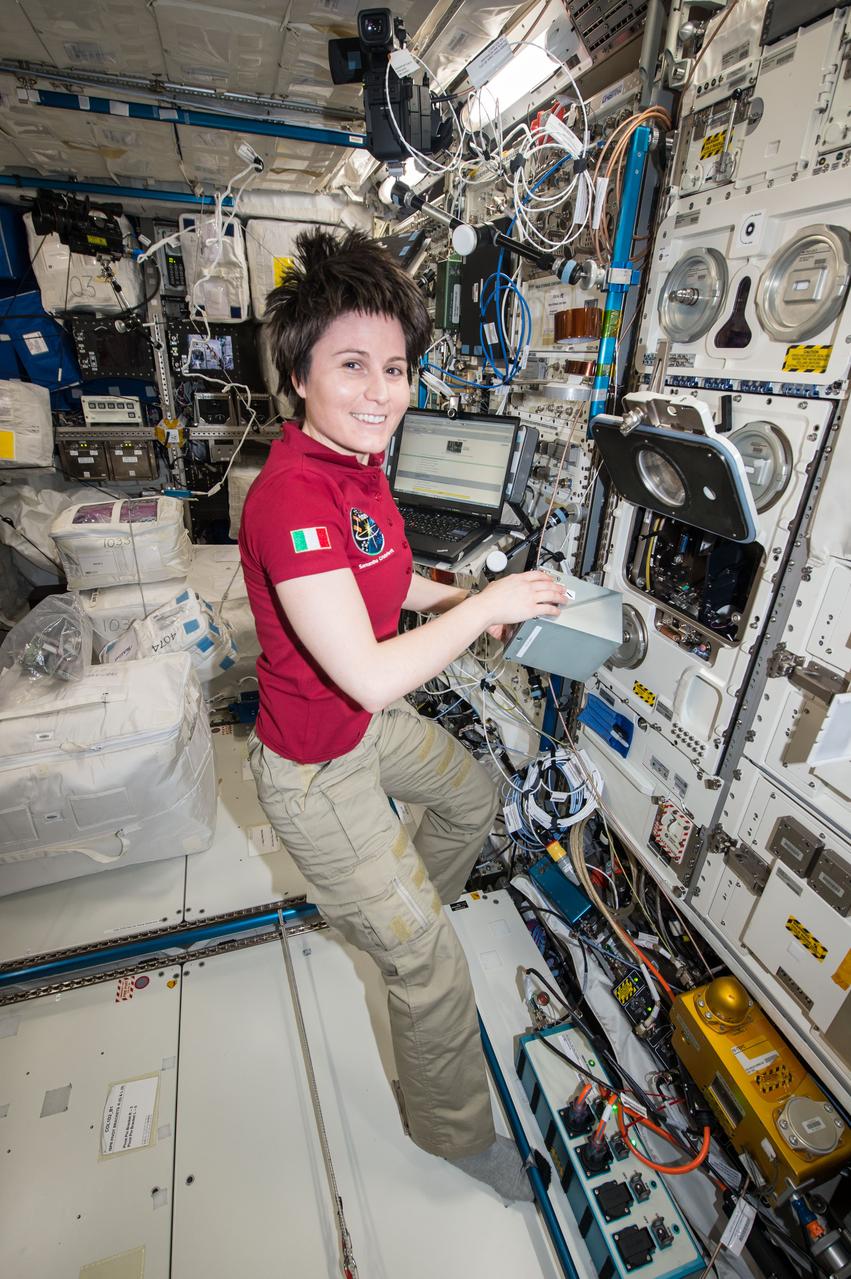
ISS043E181043 (05/08/2015) --- ESA (European Space Agency) astronaut Samantha Cristoforetti prepares the TripleLux-A experiment for return on SpaceX’s Dragon cargo craft. TripleLux-A is investigating immune suppression in space as understanding such risks is essential in maintaining the health and performance of crew members during long-duration missions.
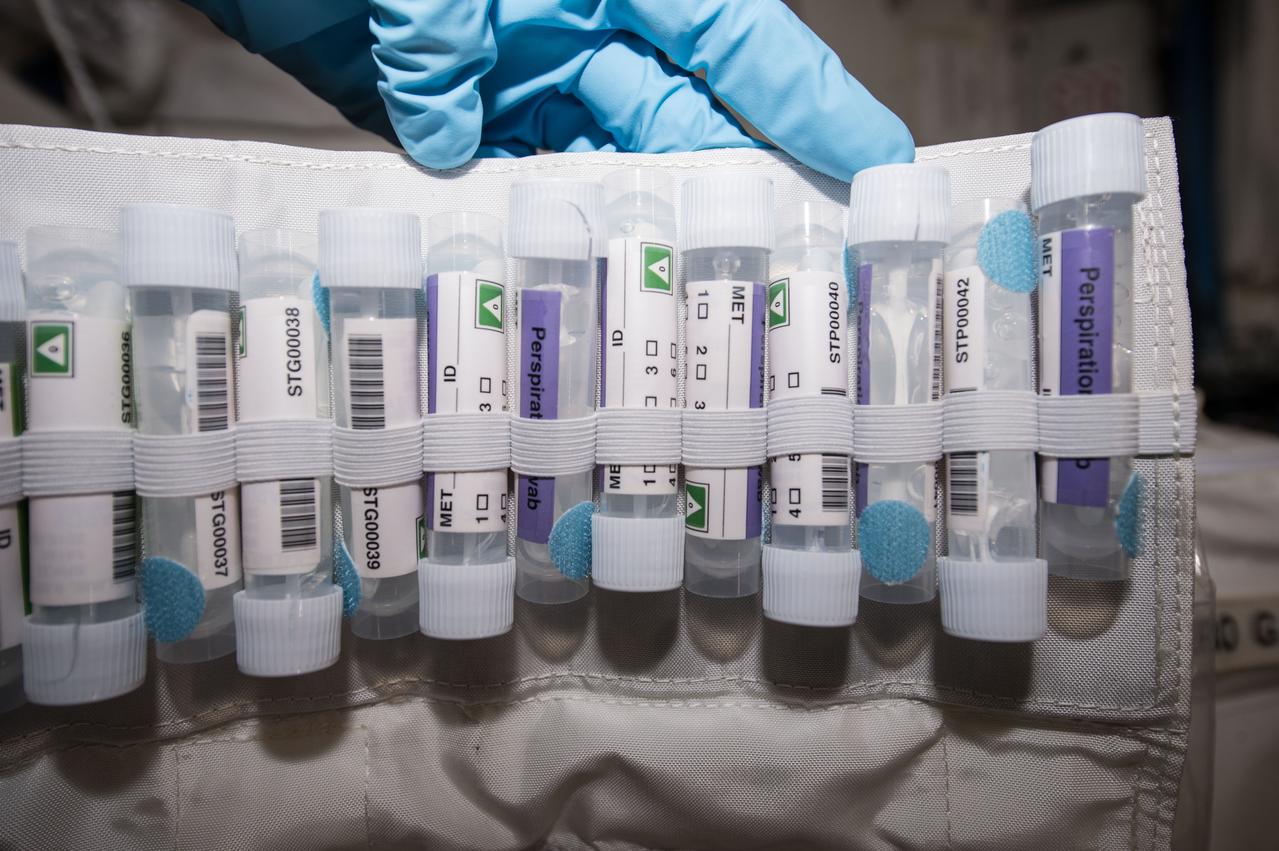
iss042e021398 (12/5/2014) --- A view of Microbiome swab kit containing Microbiome samples from various physical surfaces prior to being stowed in MELFI or GLACIER. The Study of the Impact of Long-Term Space Travel on the Astronauts' Microbiome (Microbiome) experiment investigates the impact of space travel on both the human immune system and an individual’s microbiome (the collection of microbes that live in and on the human body at any given time).
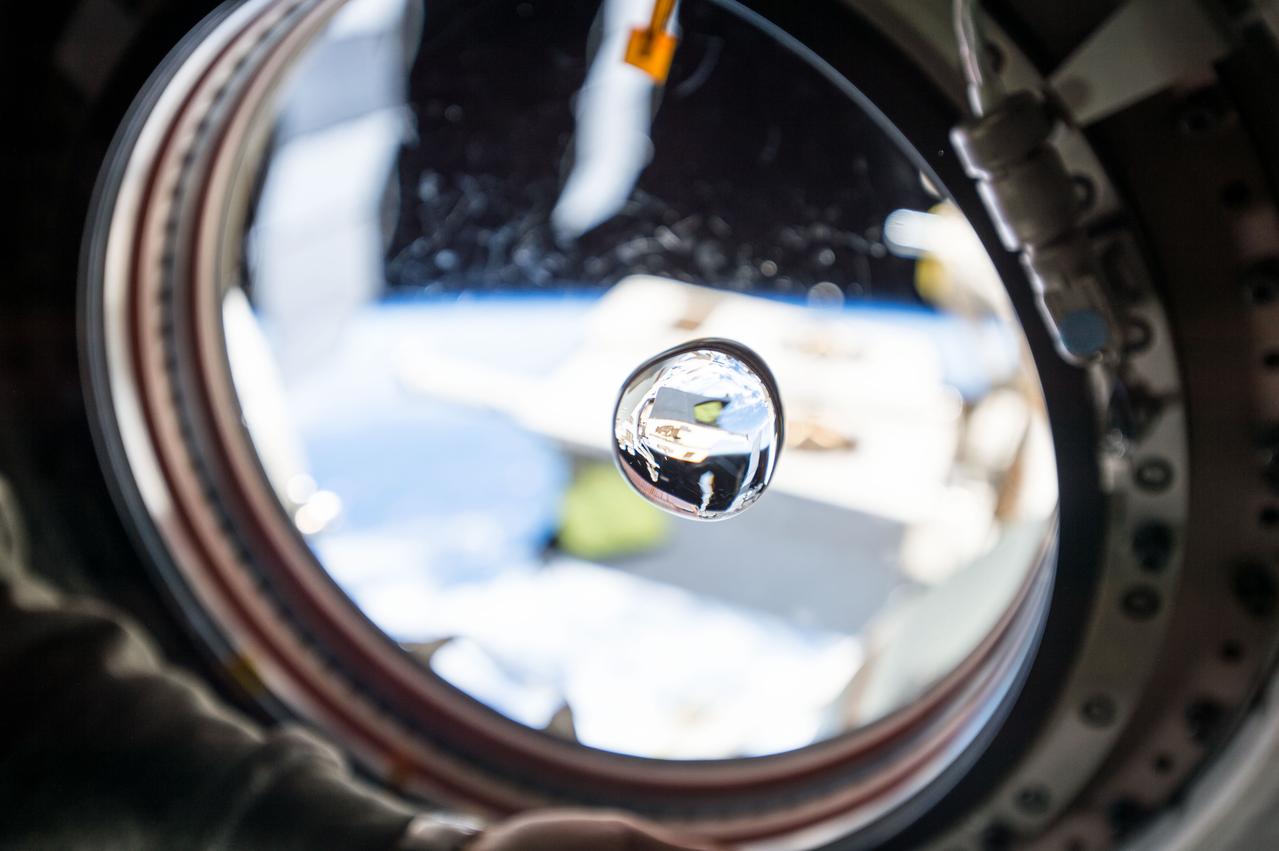
View of water bubble formed in front of the Japanese Experiment Module (JEM) window. The JEM Exposed Facility (JEF) is visible in the background through the window and reflected in the water. Scratches visible on the window.
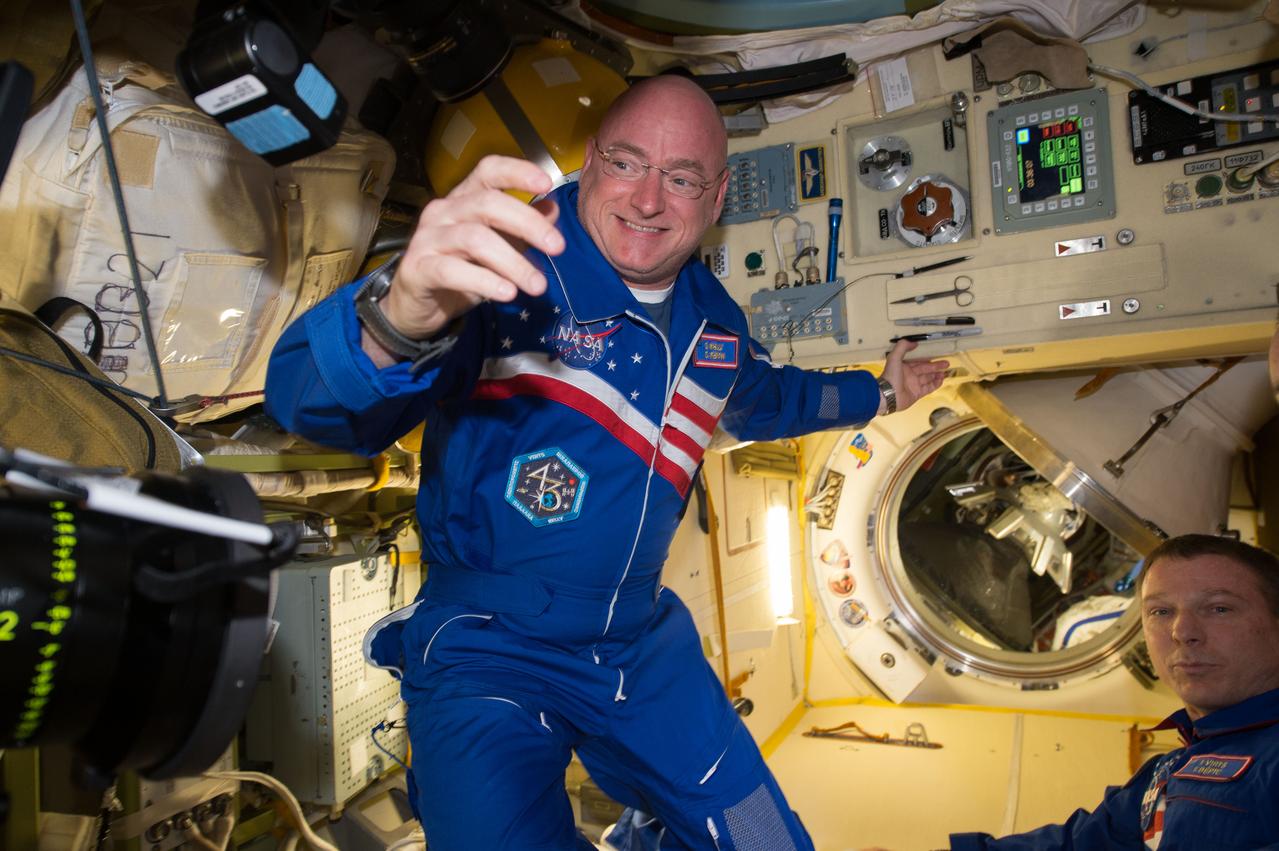
ISS043E059259 (03/28/2015) --- NASA astronaut Scott Kelly (left) is happy to be aboard the International Space Station after the hatch opening of the Soyuz spacecraft Mar. 28, 2015. Kelly traveled with Expedition 43 Russian cosmonauts Mikhail Kornienko and Gennady Padalka of the Russian Federal Space Agency (Roscosmos) on the Soyuz TMA-16M that launched Friday, March 27, 2015 from Baikonur, Kazakhstan. Kelly and Kornienko will spend a year in space and return to Earth on Soyuz TMA-18M in March 2016. Most expeditions to the space station last four to six months. By doubling the length of this mission, researchers hope to better understand how the human body reacts and adapts to long-duration spaceflight. This knowledge is critical as NASA looks toward human journeys deeper into the solar system, including to and from Mars.
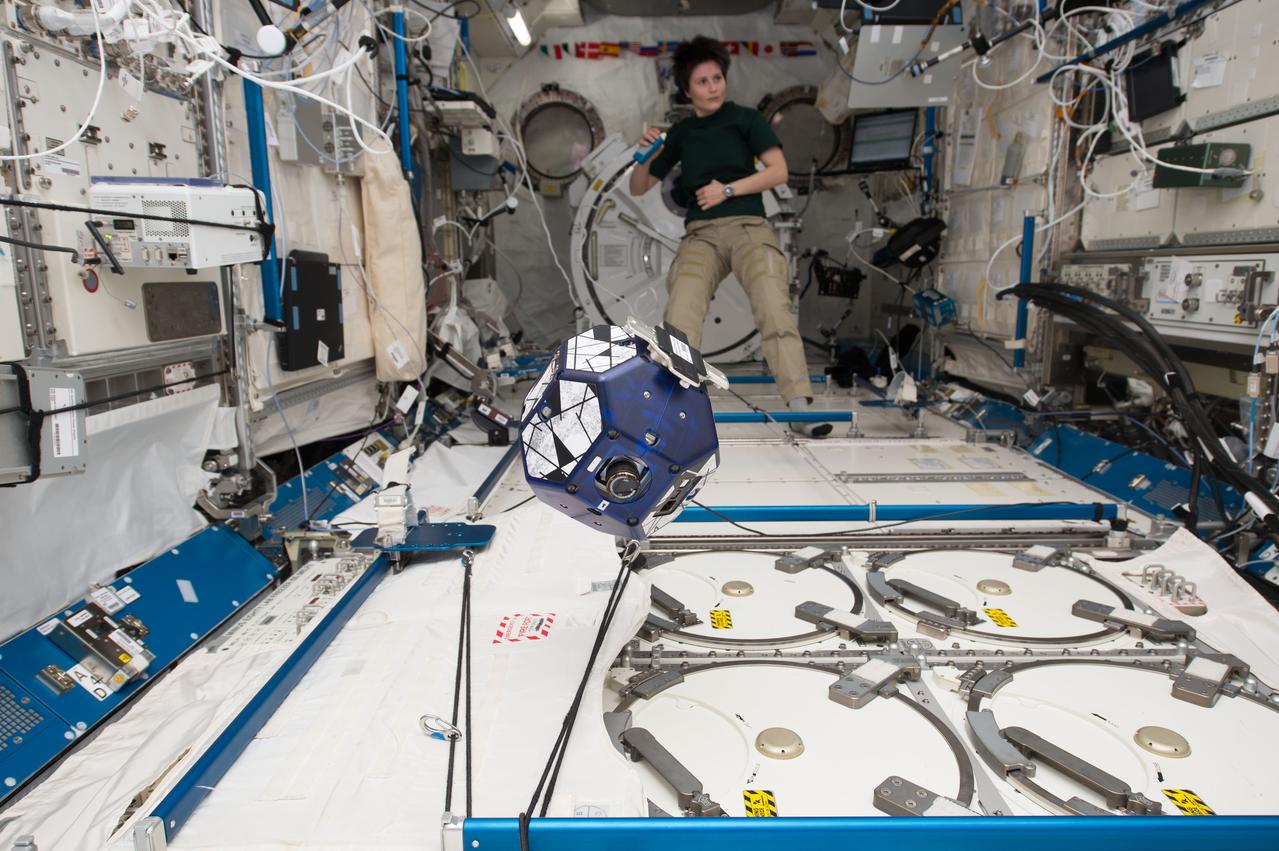
iss042e046171 (12/16/2018) --- Photographic documentation taken during the Synchronized Position Hold Engage and Reorient Experimental Satellites (SPHERES) test run in the Japanese Experiment Module (JEM). European Space Agency (ESA) astronaut Samantha Cristoforetti is visible conducting the test.
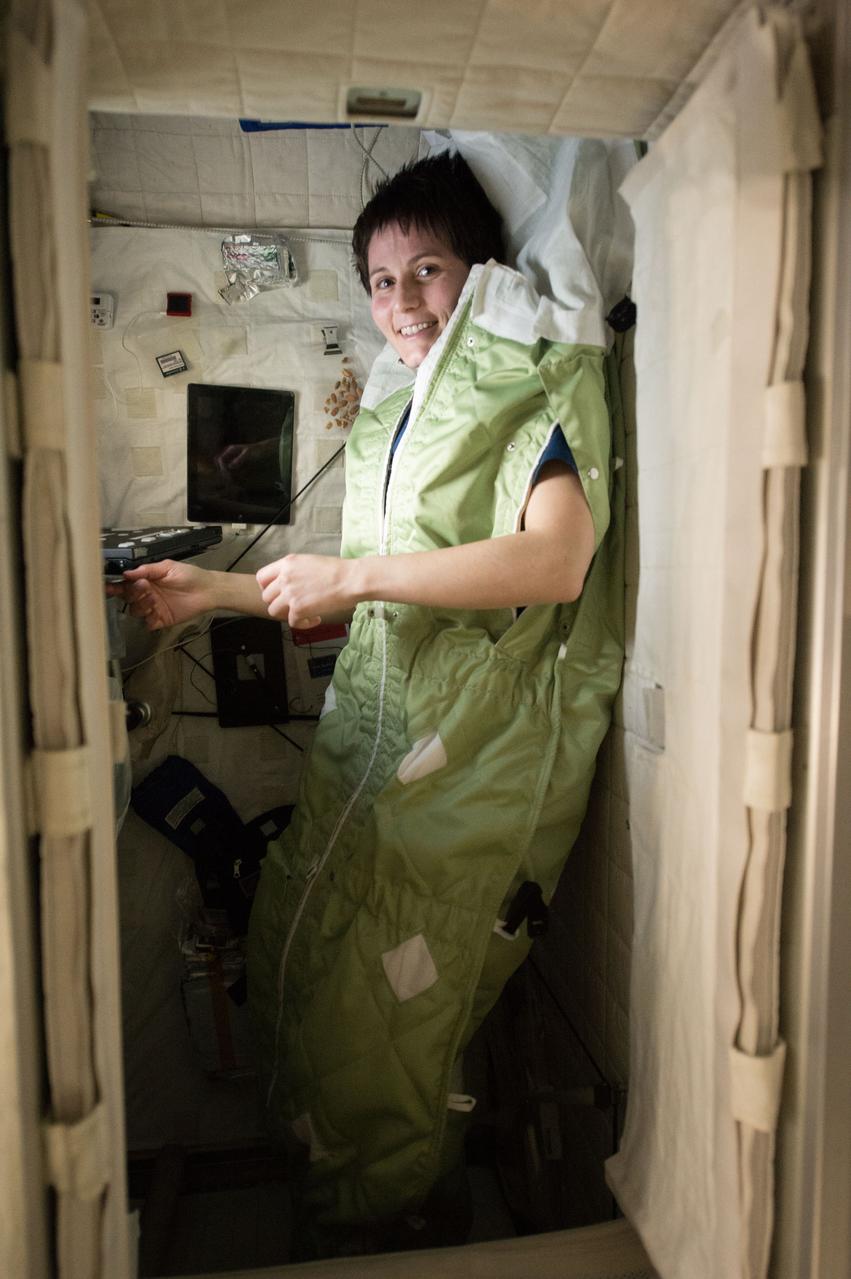
iss042e023422 (12/6/14) --- Expedition 42 Flight Engineer Samantha Cristoforetti of the European Space Agency (ESA) on 6 December 2014 is seen inside of a sleeping bag in her personal crew quarters on the International Space Station. Astronauts will strap the bag to the wall to prevent from free floating and potentially bumping into equipment while sleeping.
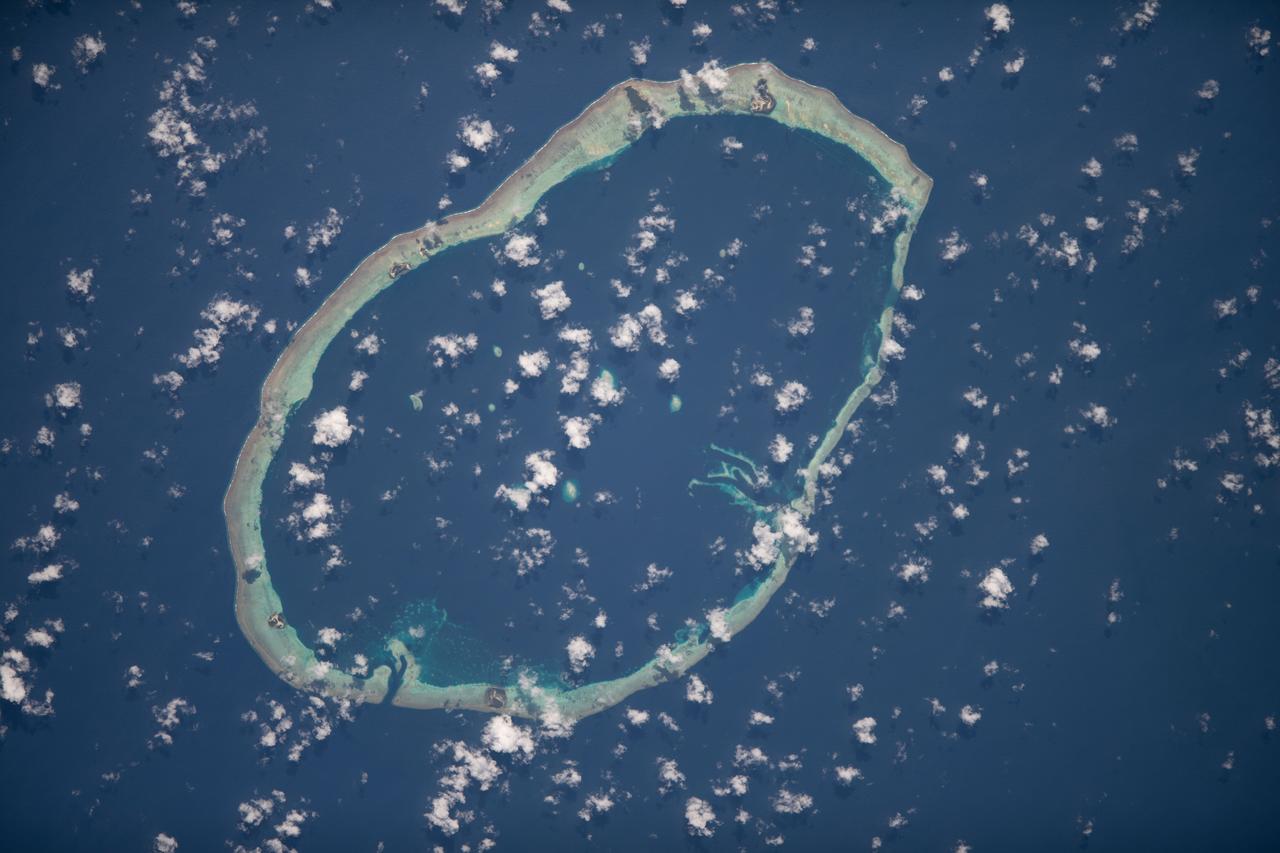
iss068e007434 (Oct. 2, 2022) --- Carteret Atoll, part of the independent nation of Papua New Guinea, is pictured from the International Space Station as it orbited 260 miles above the southwestern Pacific Ocean. Credit: ESA/Samantha Cristoforetti
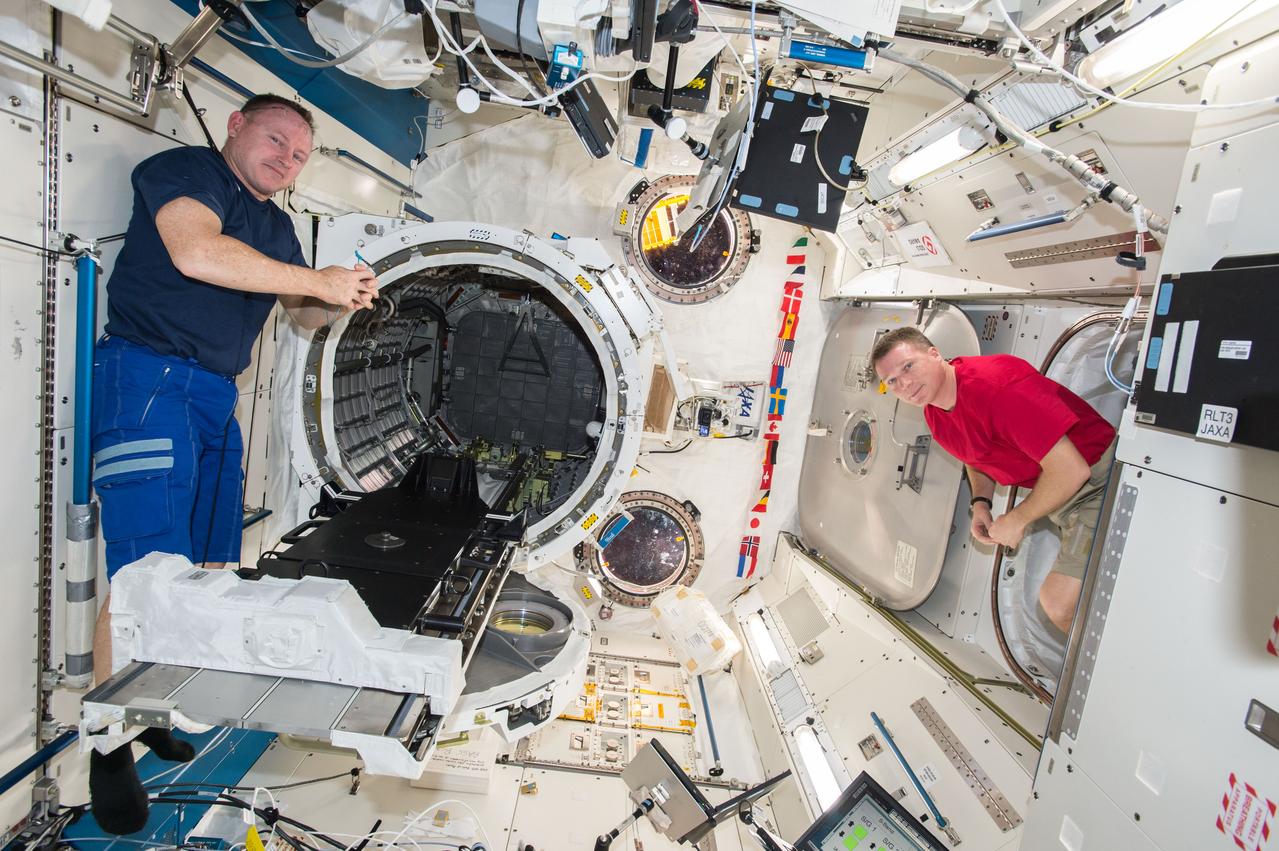
iss042e015971 (11/26/2011) --- NASA astronauts Barry Wilmore and Terry Virts are photographed during operations to install the Cyclops launch platform on the Japanese Experiment Module Airlock (JEMAL) slide table. The Cyclops platform, also known as the Space Station Integrated Kinetic Launcher for Orbital Payload Systems (SSIKLOPS), holds and ejects nanosatellites from outside the ISS.
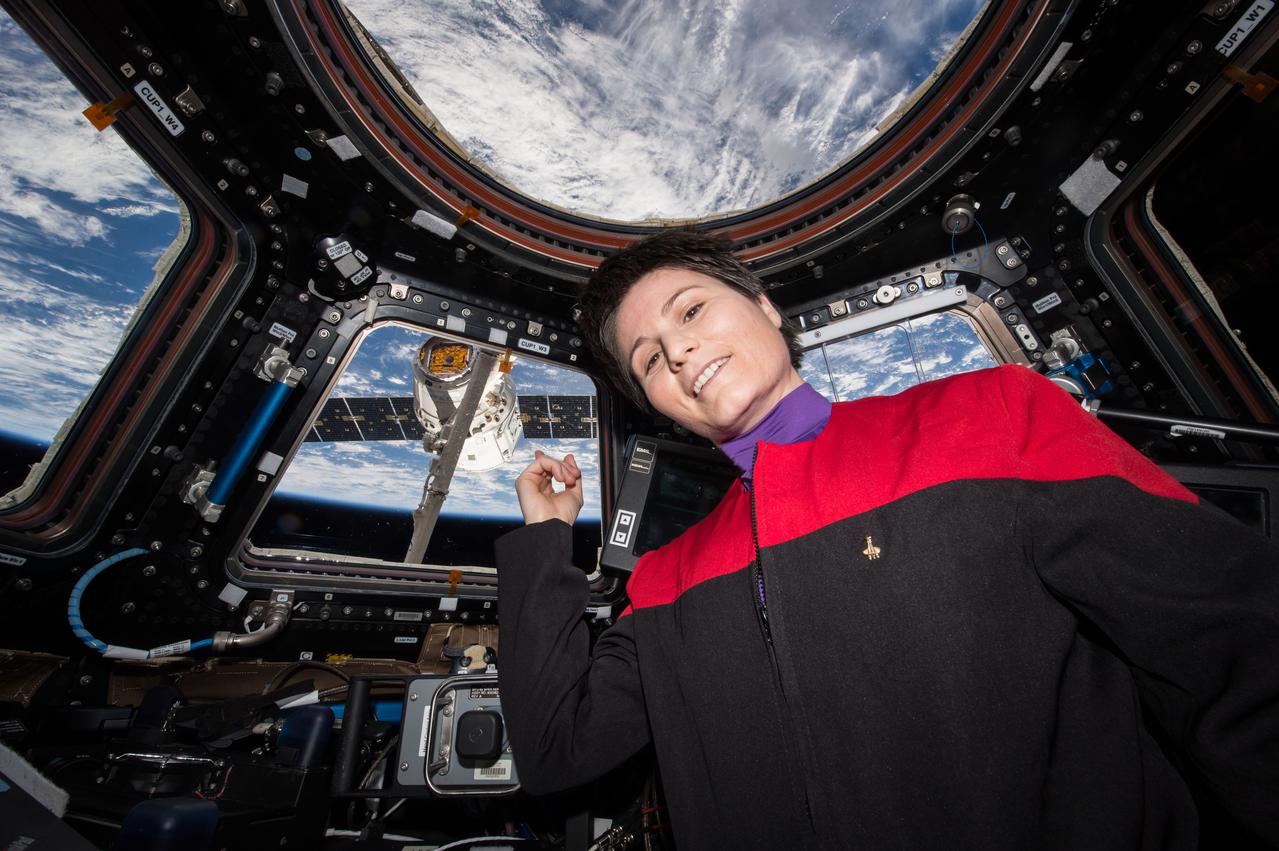
ISS043E122274 (04/17/2015) --- ESA (European Space Agency) astronaut Samantha Cristoforetti seen here in the Cupola of the International Space Station. Cristoforetti captured the SpaceX Dragon cargo craft using the Canadarm2 robotic arm before handing off to robotics officers at Mission Control, Houston, Texas who worked to maneuver Dragon to its installation position at the Earth-facing port of the Harmony module where it will reside for five weeks. Cristoforetti points to the Dragon in this image taken on Apr. 17, 2015 shortly after grappling. The Dragon carried more than 2 tons of equipment, experiments and supplies for the Expedition 43 crew aboard the station.
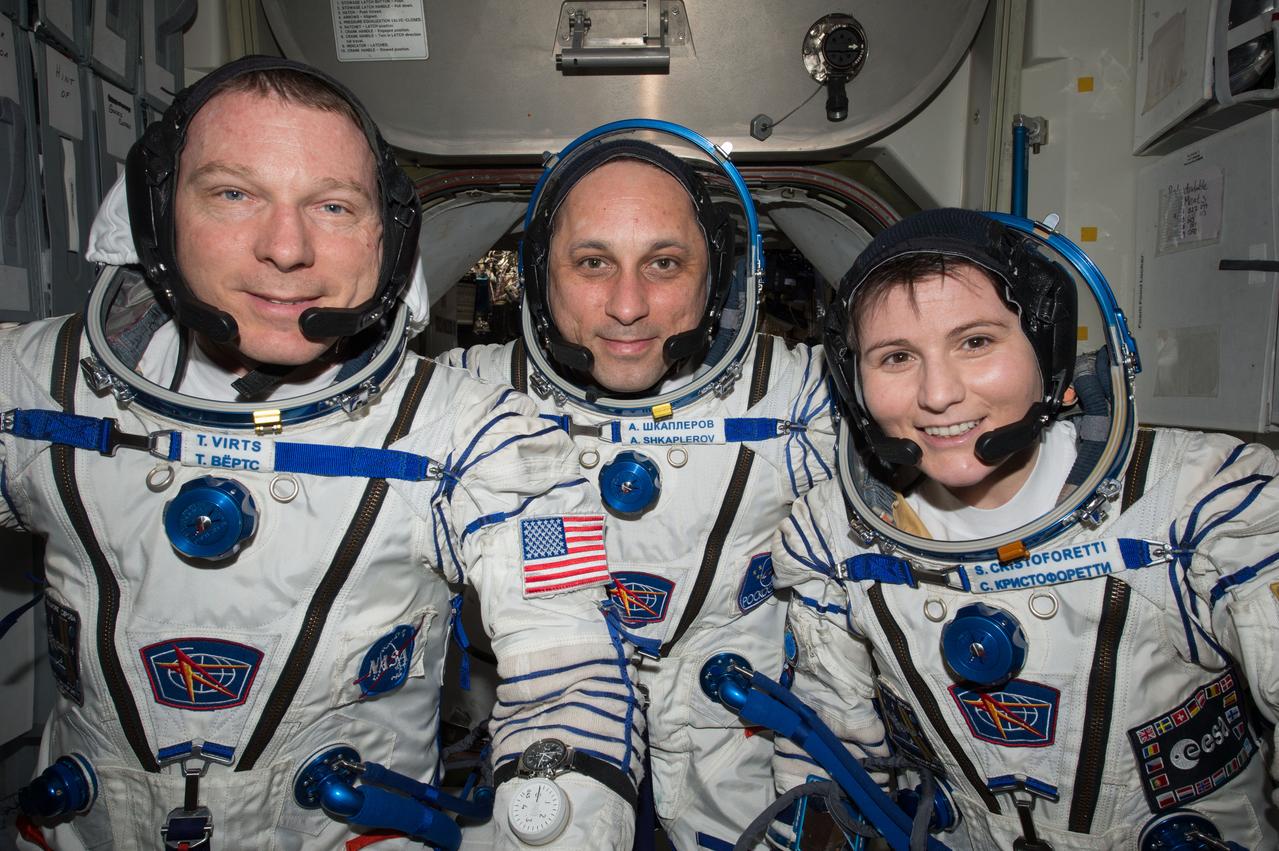
ISS043E174185 (05/06/2015) --- NASA astronaut Terry Virts (left) Commander of Expedition 43 on the International Space Station along with crewmates Russian cosmonaut Anton Shkaplerov (center) and ESA (European Space Agency) astronaut Samantha Cristoforetti on May 6, 2015 perform a checkout of their Russian Soyuz spacesuits in preparation for the journey back to Earth.
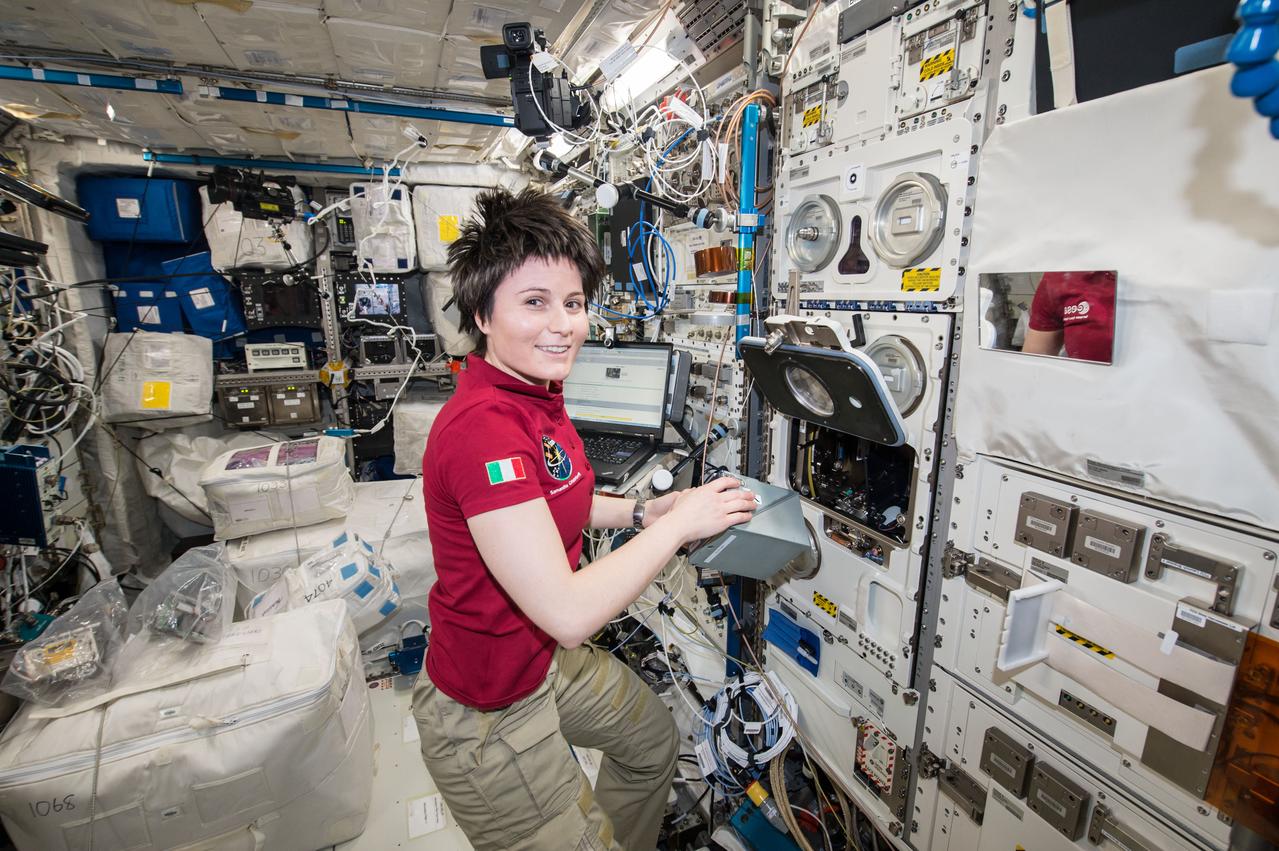
iss043e181042 (May 8, 2015) --- European Space Agency (ESA) astronaut Samantha Christoforetti prepares the TripleLux-A experiment for return on SpaceX's Dragon cargo craft. The TripleLux-A experiment studies the effects of the spaceflight conditions on immune suppresion in mice, which will help scientists understand the effects of radiation and microgravity on the human immune system in space.
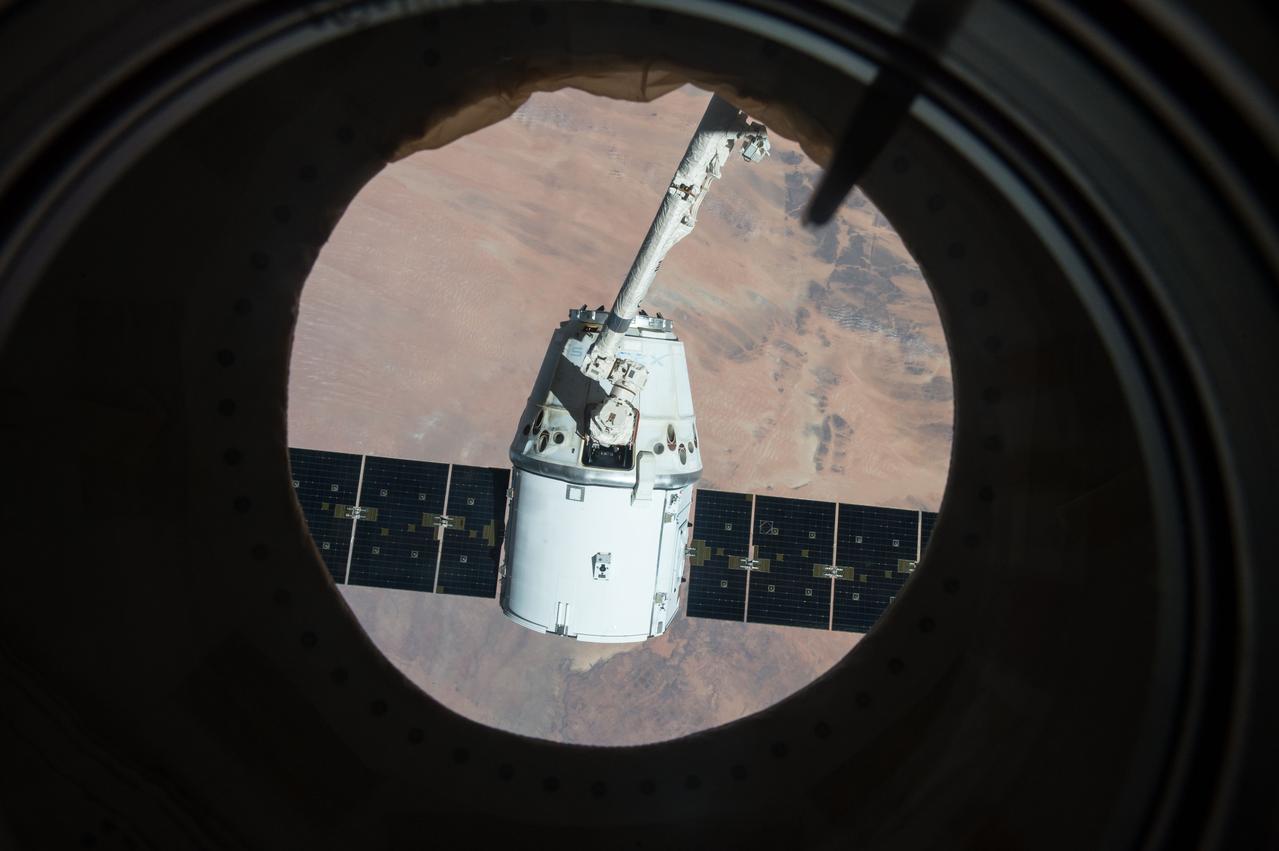
ISS043E228727 (05/21/2015) --- The SpaceX Dragon craft is poised and ready to be released from the International Space Station on May 21, 2015. This was SpaceX’s sixth resupply mission to the space station and returned about 3,100 pounds of experiment samples and equipment back down to Earth.
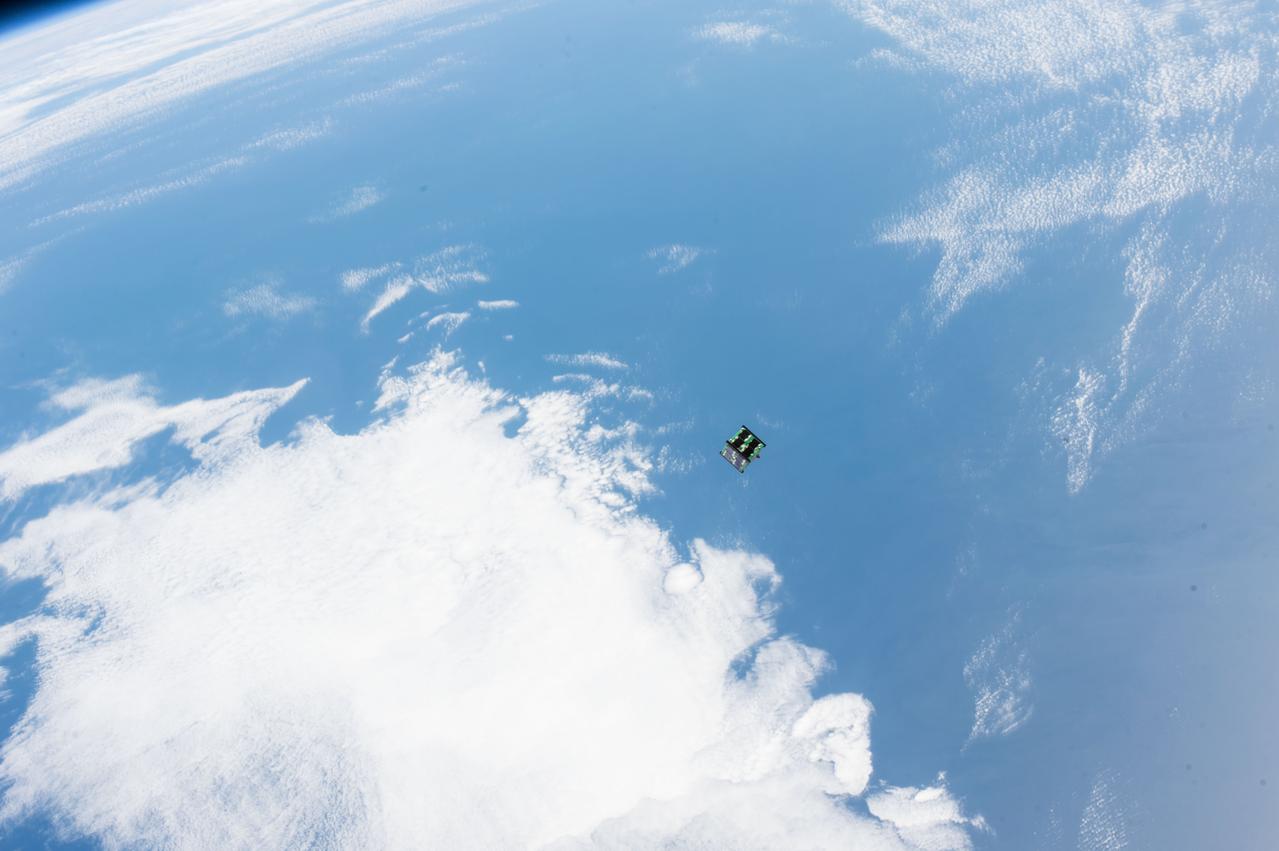
iss042e222241 (2/5/2015) --- Photographic documentation of the JEM Small Satellite Orbital Deployer-3 (J-SSOD-3) mission deploy of the CubeSat AESP-14 from Kibo. The satellite was developed by the Technological Institute of Aeronautics (ITA), with support from the Brazilian Space Agency (AEB), and the National Institute for Space Research (INPE).
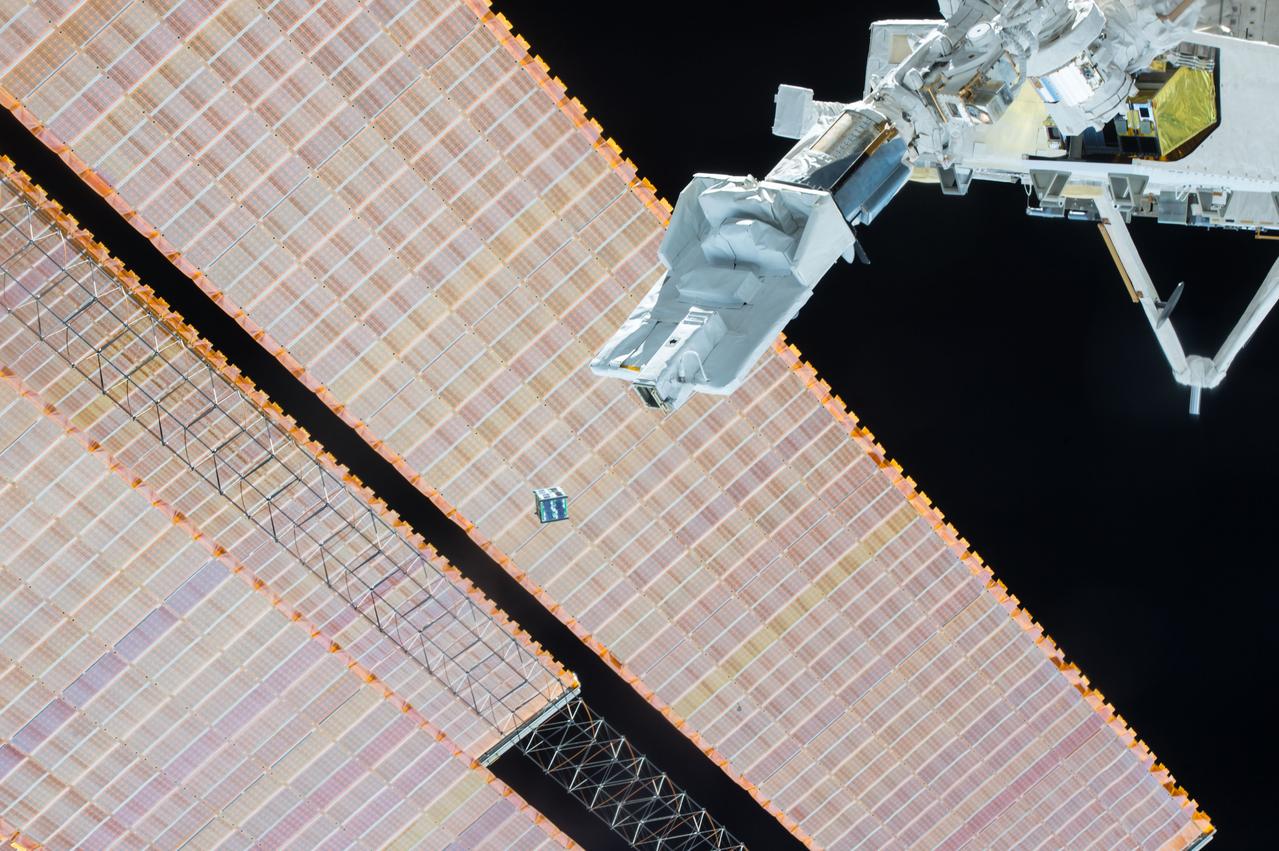
iss042e222236 (2/5/2015) --- Photographic documentation of the JEM Small Satellite Orbital Deployer-3 (J-SSOD-3) mission deploy of the CubeSat AESP-14 from Kibo. The satellite was developed by the Technological Institute of Aeronautics (ITA), with support from the Brazilian Space Agency (AEB), and the National Institute for Space Research (INPE).
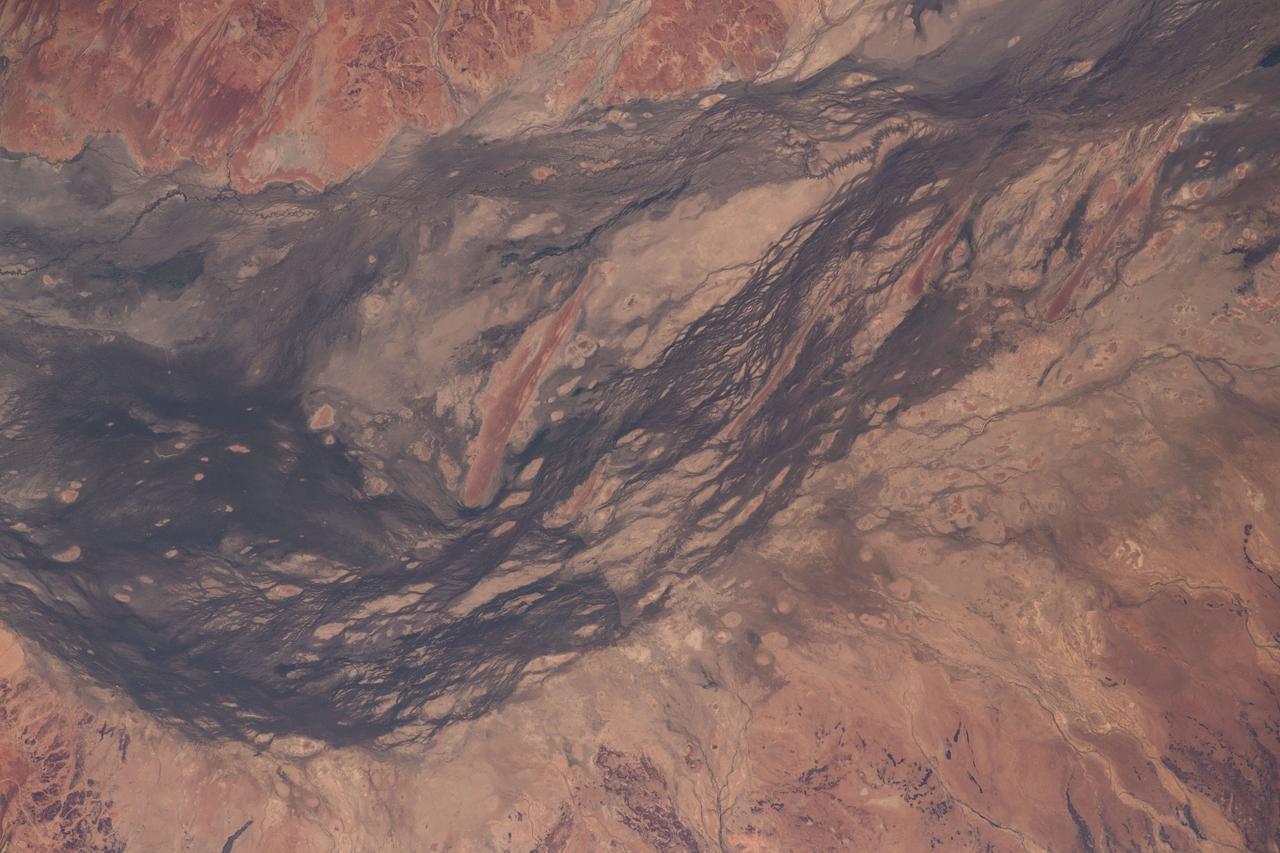
iss068e000353 (Sept. 29, 2022) --- A portion of the Lake Eyre Basin in central western Queensland, Australia, is pictured from the International Space Station as it orbited 261 miles above the island continent.
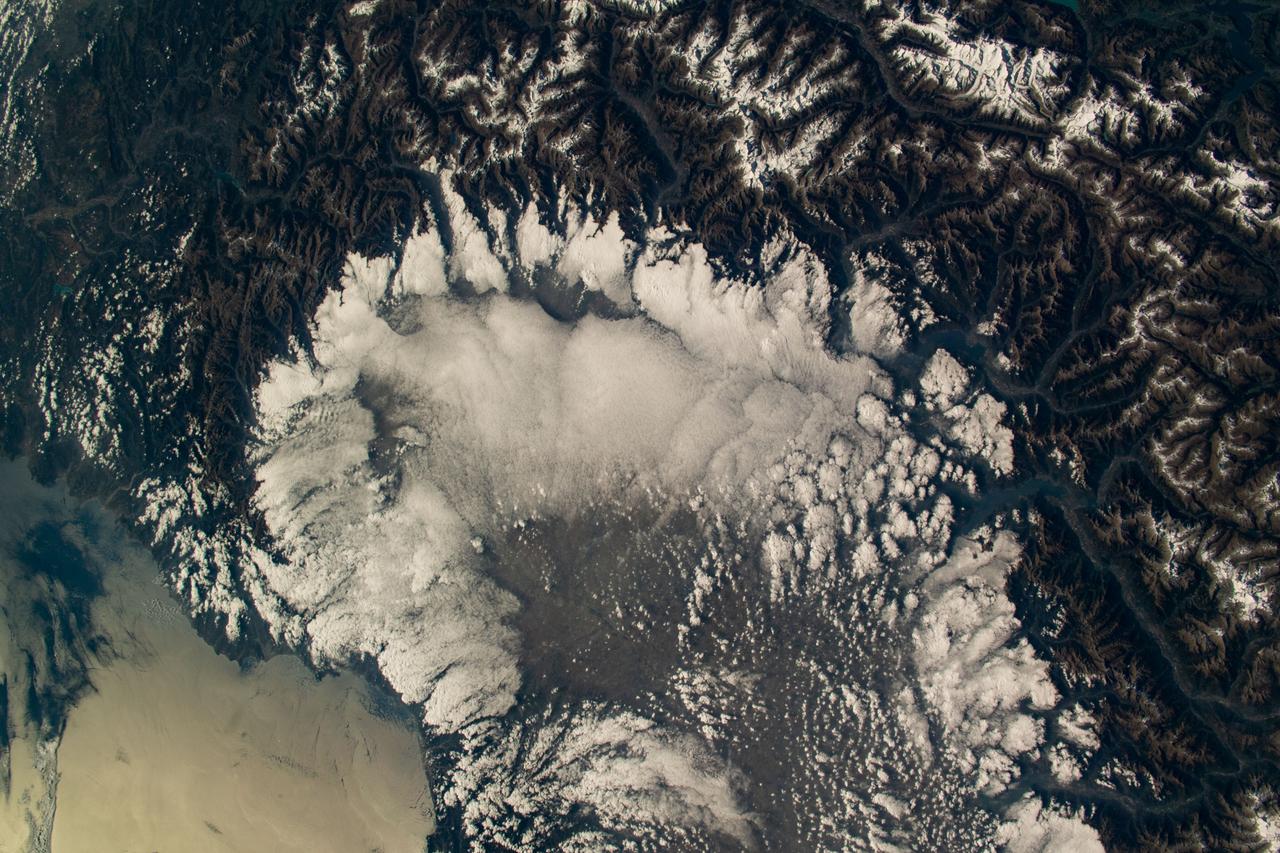
iss068e012218 (Oct. 5, 2022) --- The Swiss Alps surround Northern Italy's cloud-covered Po Valley region in this photograph taken from the International Space Station as it orbited 264 miles above. Credit: ESA/Samantha Cristoforetti
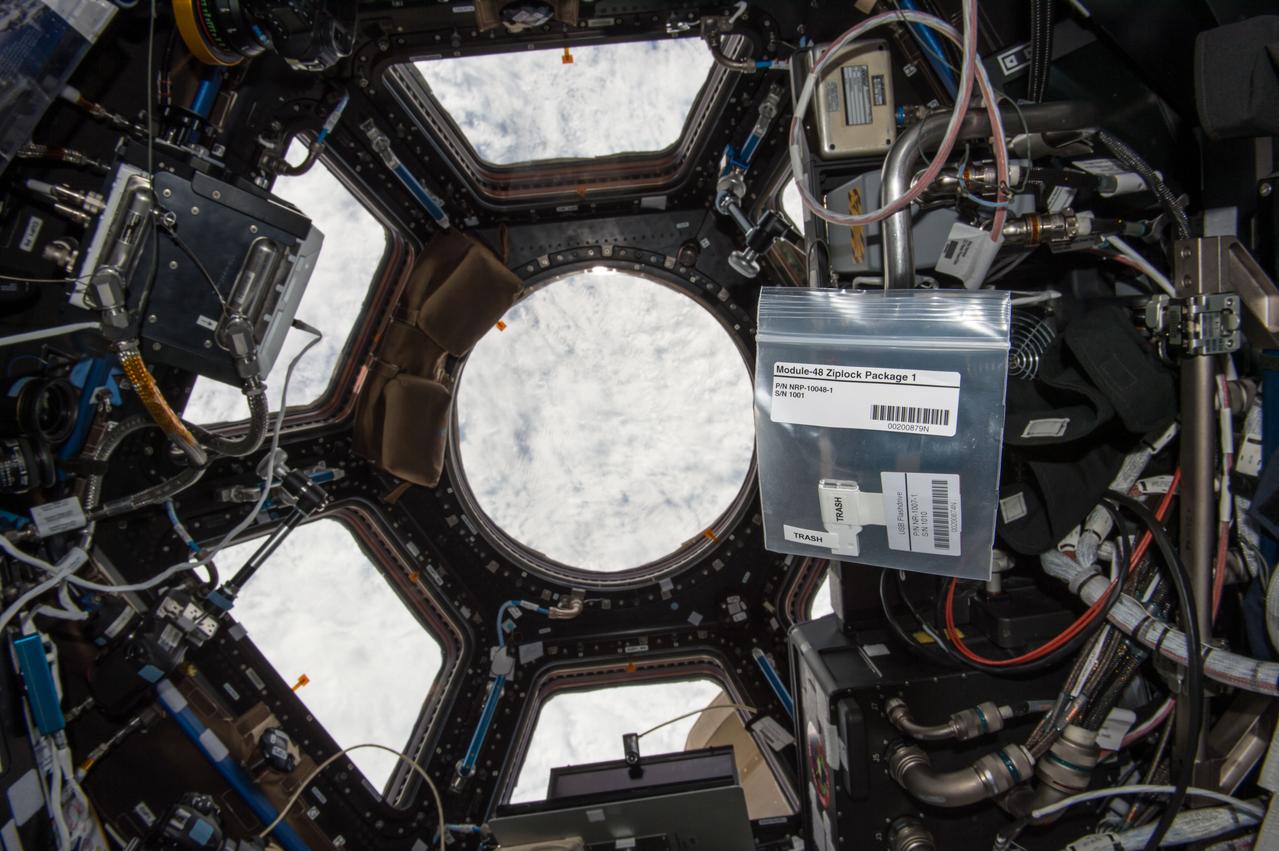
iss042e182203 (1/27/2017) --- A view of items from the NanoRacks-Lagrange investigation floating in front of the windows in the Cupola module aboard the International Space Station (ISS). NanoRacks-Lagrange seeks to increase interest in space. For this investigation, student photos and printed logos sheets are launched to the International Space Station (ISS) with a message card. Additionally, plant seeds are flown to the ISS. The students plant the seeds once they return to Earth and compare them to plants grown from regular seeds. Students are able to touch and feel close to space through this experiment.
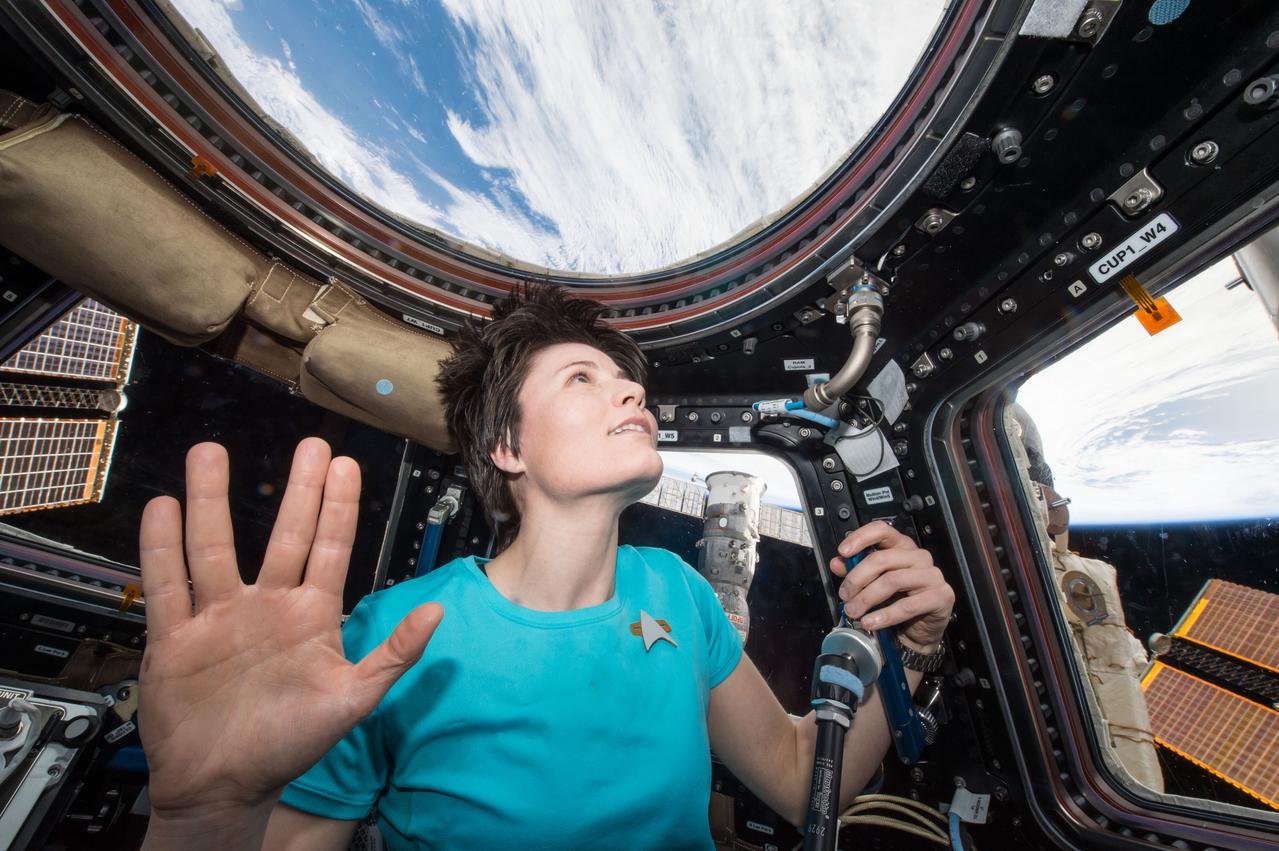
ISS042e291952 (02/28/2015) --- ESA (European Space Agency) astronaut Samantha Cristoforetti on Feb. 28, 2015 tweeted this photo and gives a final salute to Star Treks' Leonard Nimoy who passed away recently. Cristoforetti is a flight engineer on the International Space Station. She commented in the Tweet ""Of all the souls I have encountered.. his was the most human." Thx @TheRealNimoy for bringing Spock to life for us"
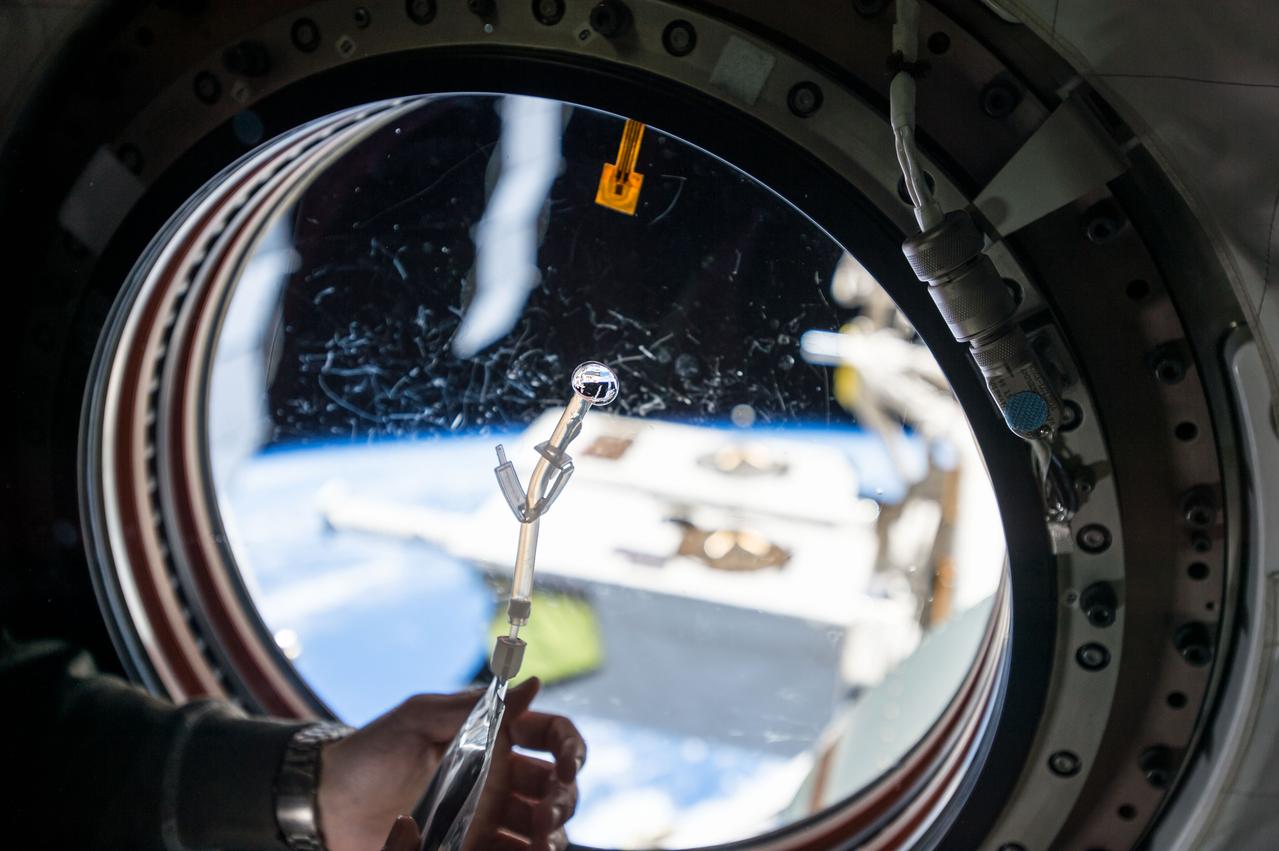
View of water bubble formed in front of the Japanese Experiment Module (JEM) window. The JEM Exposed Facility (JEF) is visible in the background through the window and reflected in the water. Scratches visible on the window.

Earth observation taken during a day pass by the Expedition 43 crew aboard the International Space Station (ISS). Folder lists this as Persian Gulf.
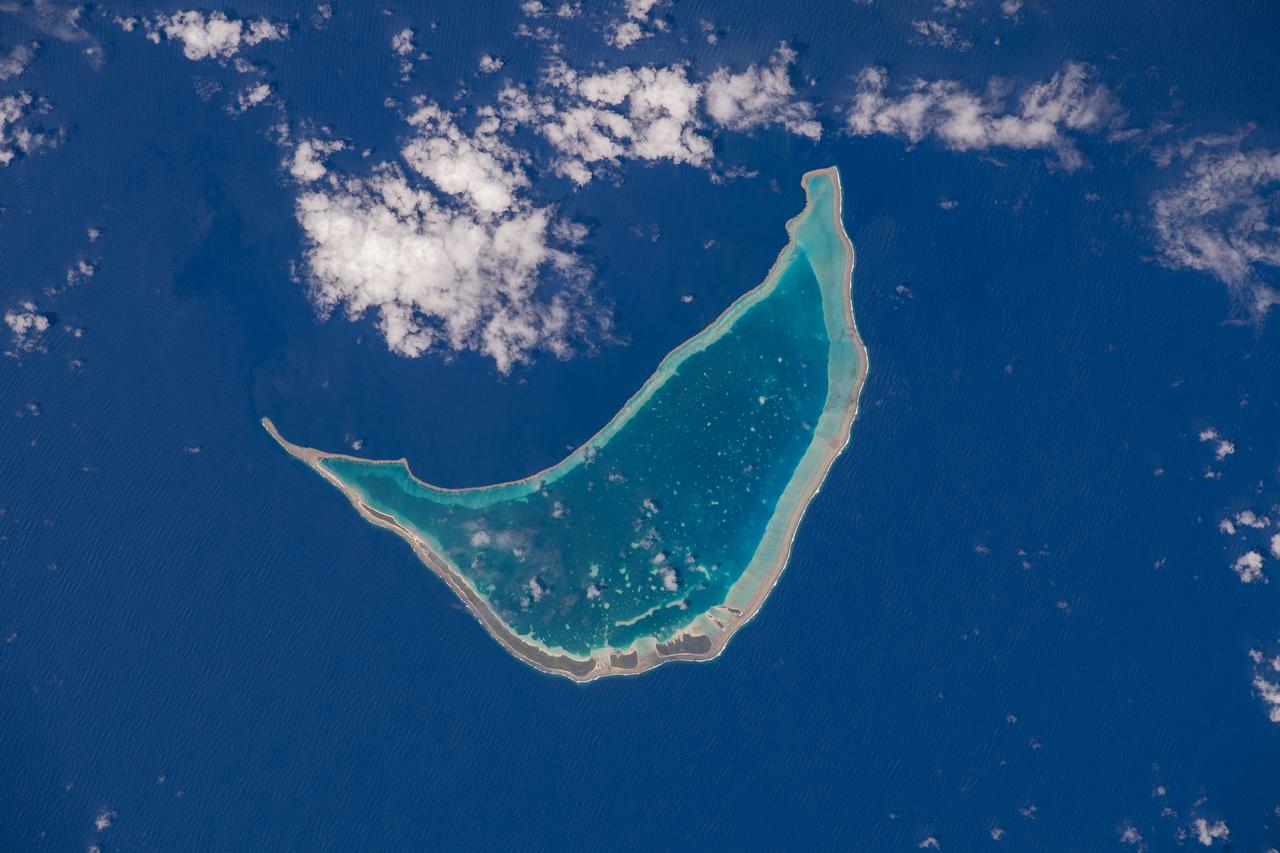
iss068e000304 (Sept. 29, 2022) --- Taongi Atoll, in the independent country of the Marshall Islands, is pictured from the International Space Station as it orbited 258 miles above the Pacific Ocean.
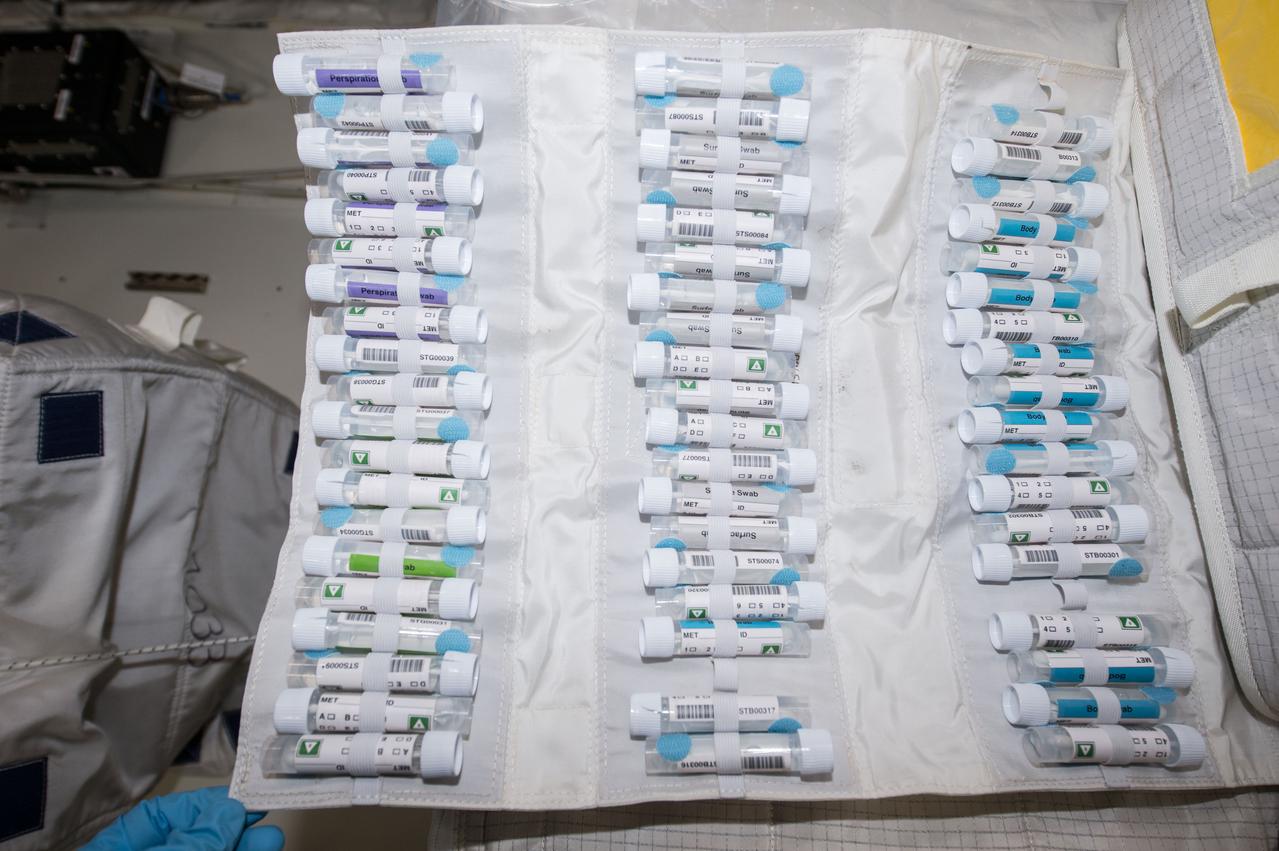
iss042e021395 (12/5/2014) --- A view of Microbiome swab kit containing Microbiome samples from various physical surfaces prior to being stowed in MELFI or GLACIER. The Study of the Impact of Long-Term Space Travel on the Astronauts' Microbiome (Microbiome) experiment investigates the impact of space travel on both the human immune system and an individual’s microbiome (the collection of microbes that live in and on the human body at any given time).
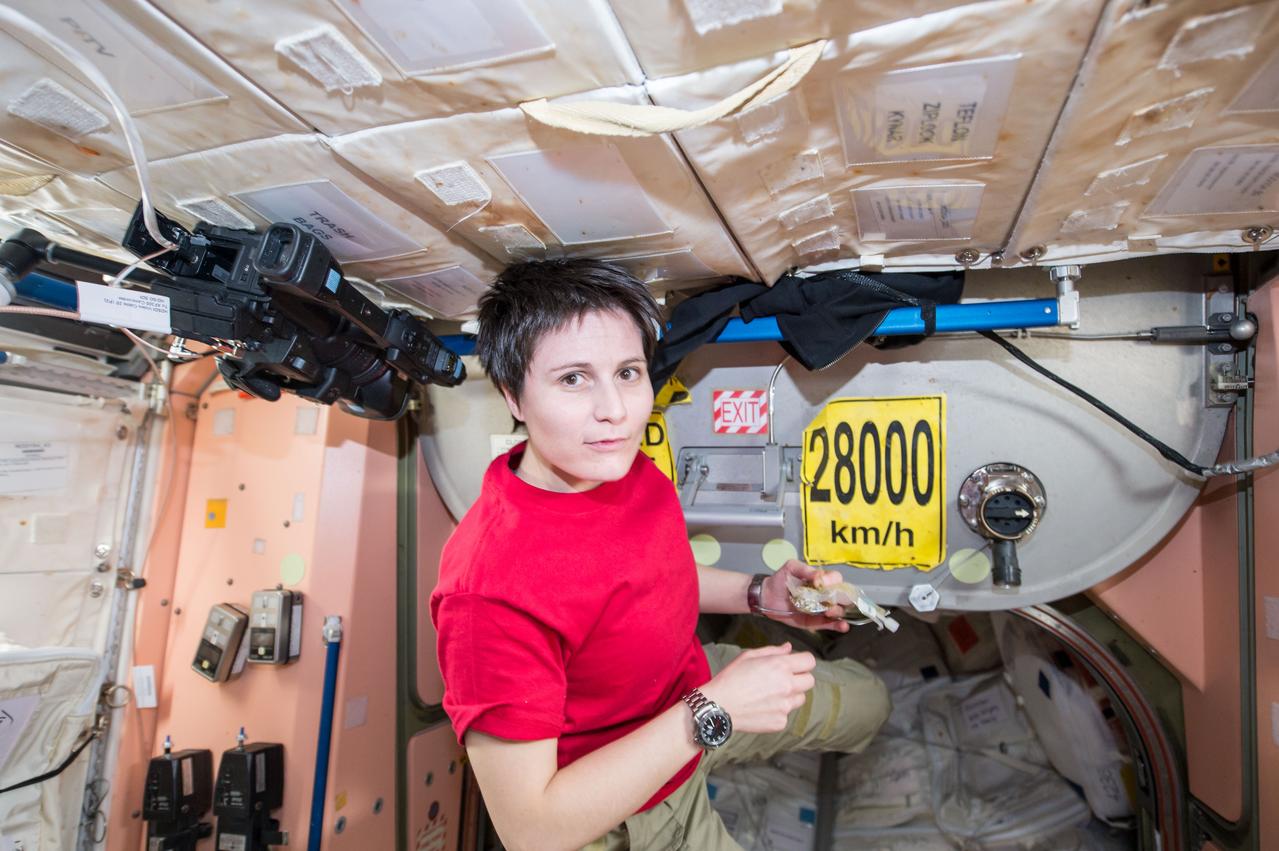
iss042e017276 (11/28/2014) --- European Space Agency Astronaut Samantha Cristoforetti prepares to place her lunch in the rehydration unit at mealtime aboard the International Space Station. The Johnson Space Centers Space Food Laboratory creates healthy and tasty menu's for the Astronauts.
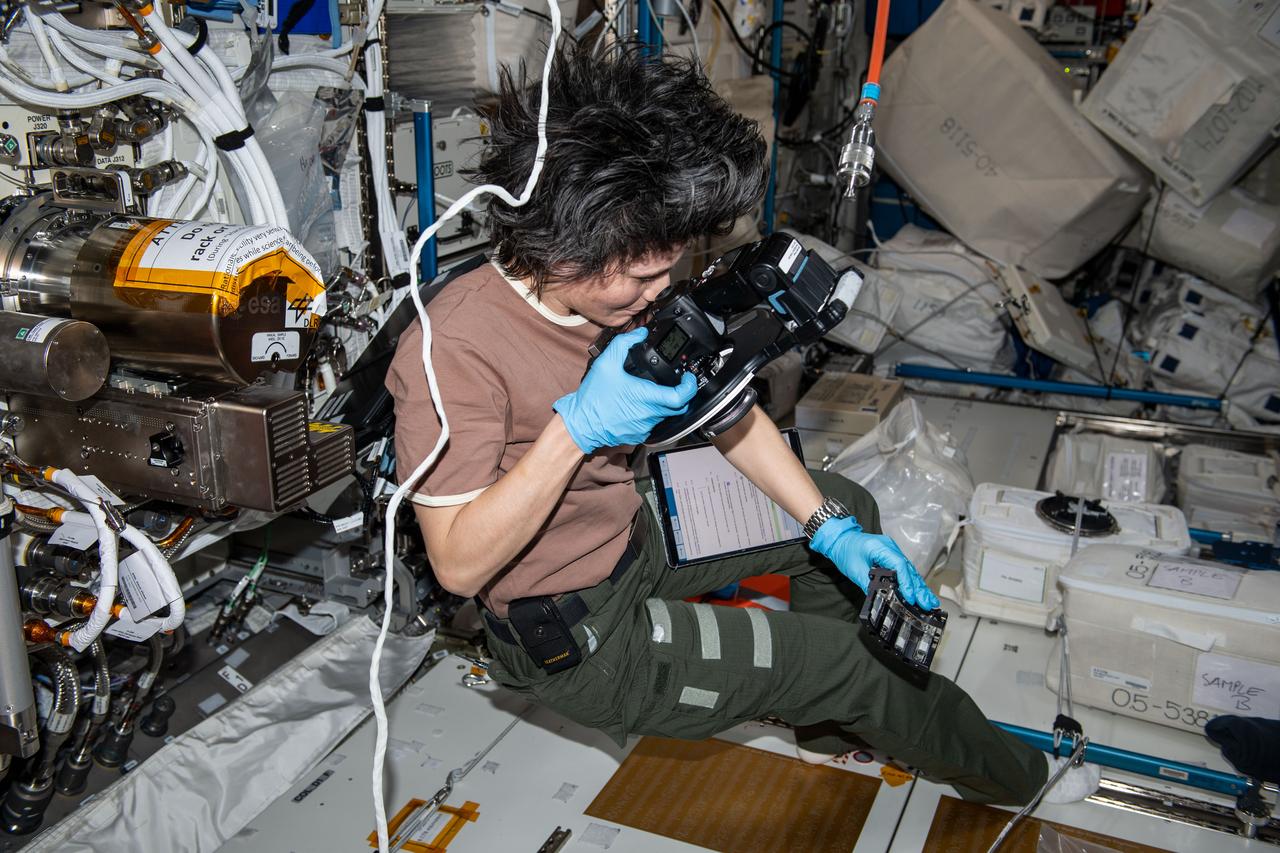
iss067e253397 (Dec. 2, 2024) --- ESA (European Space Agency) astronaut and Expedition 67 Flight Engineer Samantha Cristoforetti photographs and exchanges samples for the Fluids Science Laboratory Soft Matter Dynamics space physics experiment aboard the Intenational Space Station's Columbus laboratory module. The microgravity environment enables the observation of "wet" foams and the study of rearrangement phenomena, such as coarsening and coalescence, disentangled from drainage issues caused by Earth's gravity. Results may benefit Earth and space industries.
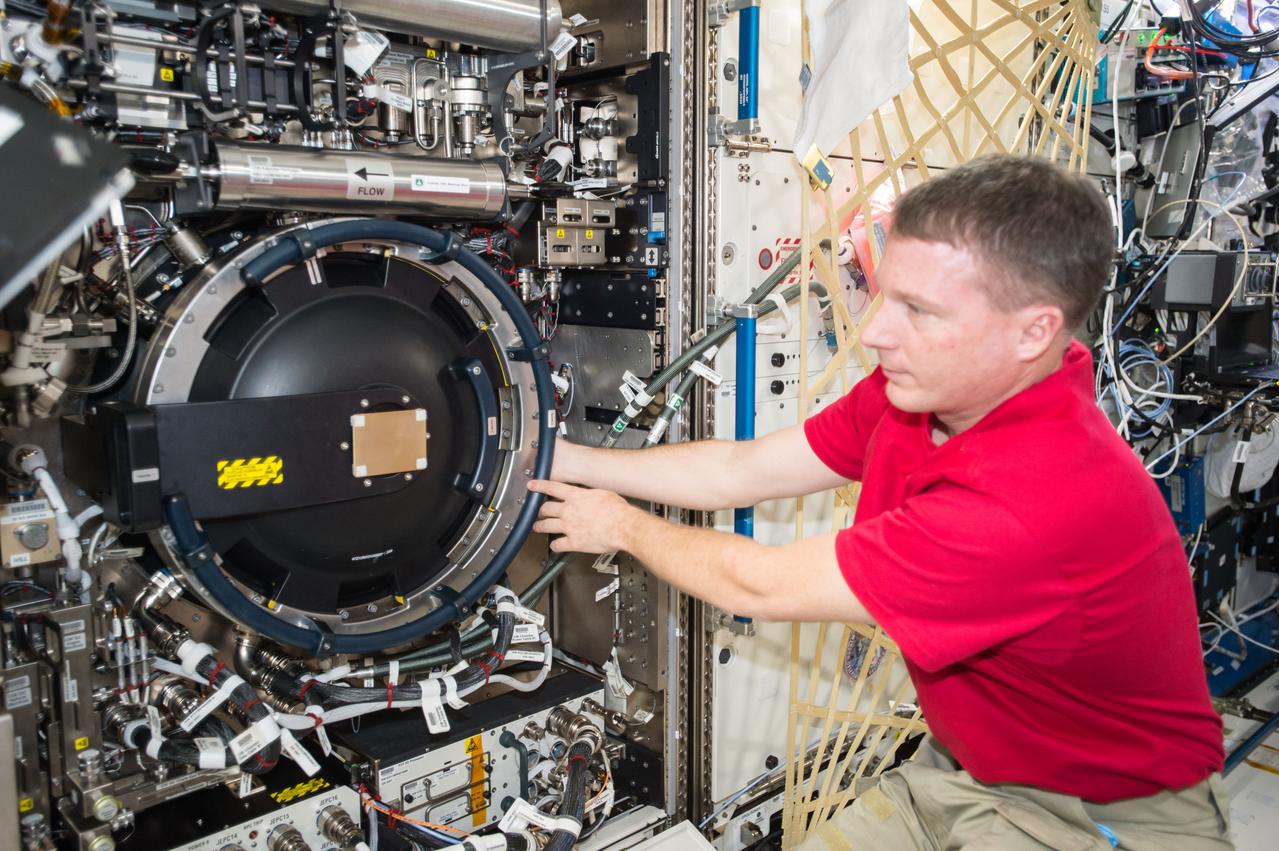
ISS042E017804 (11/28/2014) --- US Astronaut Terry Virts works to rotate out the Optics Bench during Combustion Integrated Rack (CIR) Imaging Package reconfiguration in the Destiny U.S. Laboratory of the International Space Station.
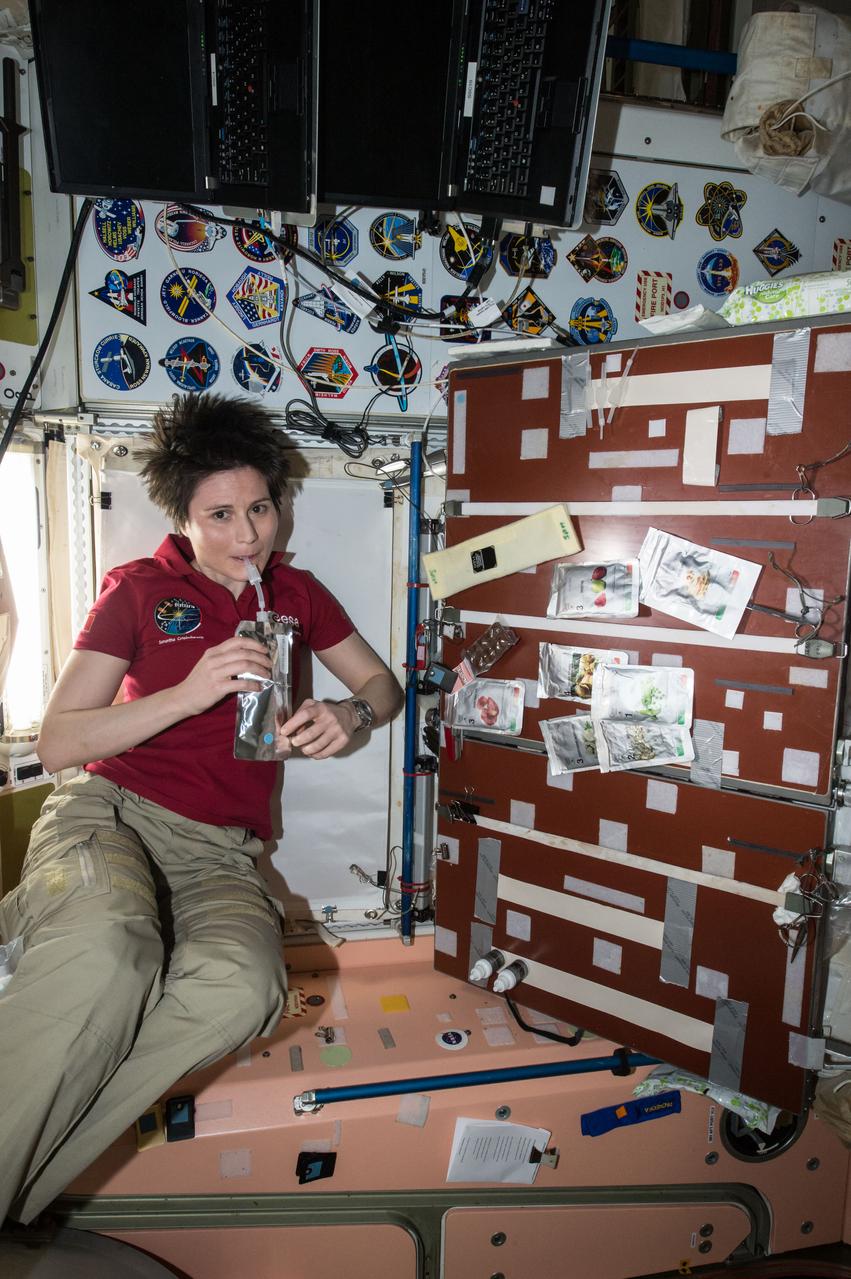
ISS043E162881 (04/27/2015) --- ESA (European Space Agency) astronaut Samantha Cristoforetti seen taking a drink in the Unity module aboard the International Space Station Apr. 27. 2015. The crew’s food galley is located in Unity and there are several food packets visible to the right.
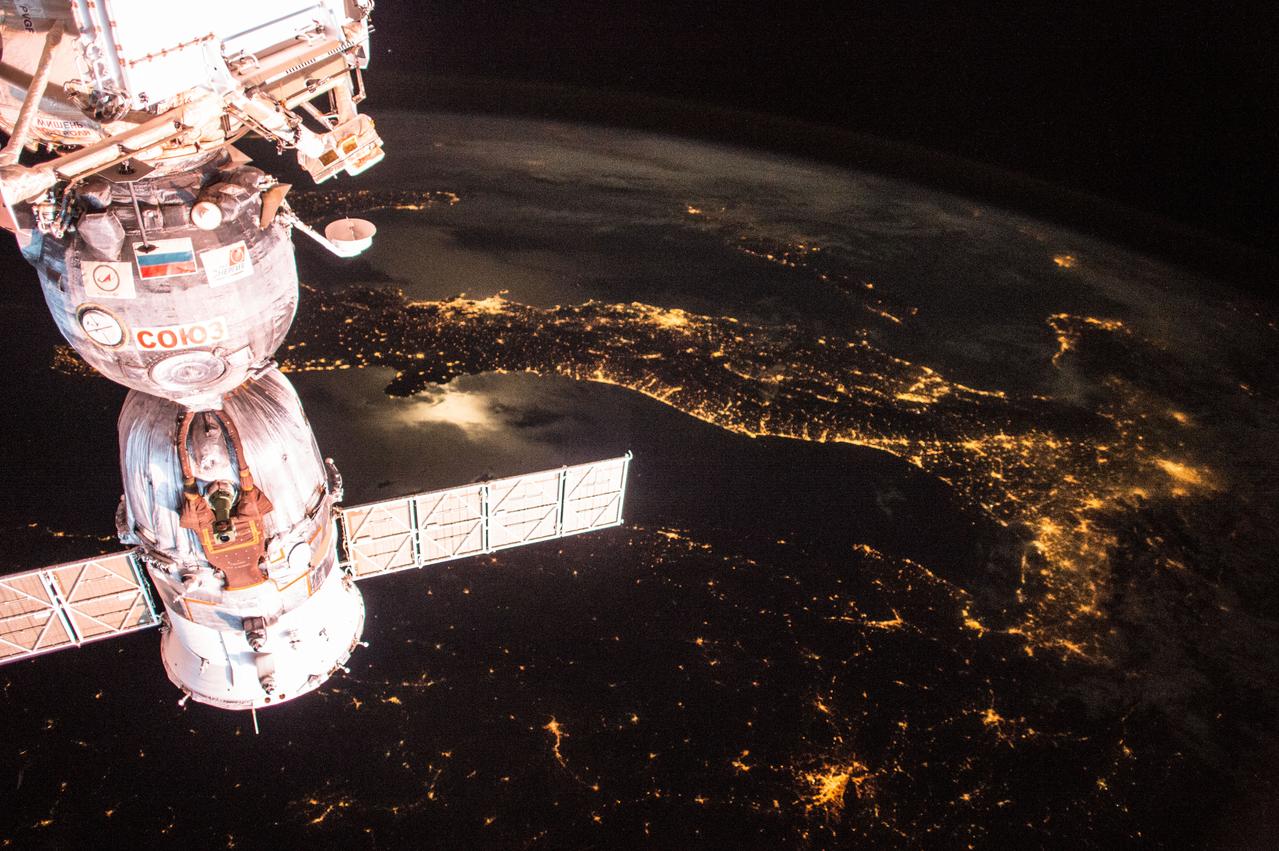
ISS043E271162 (05/29/2015) --- This nighttime image from the International Space Station shows the Soyuz TMA-15M which carried NASA astronaut Terry Virts, Russian cosmonaut Anton Shkaplerov and ESA astronaut Samantha Cristoforetti to the station and will return them in early June.
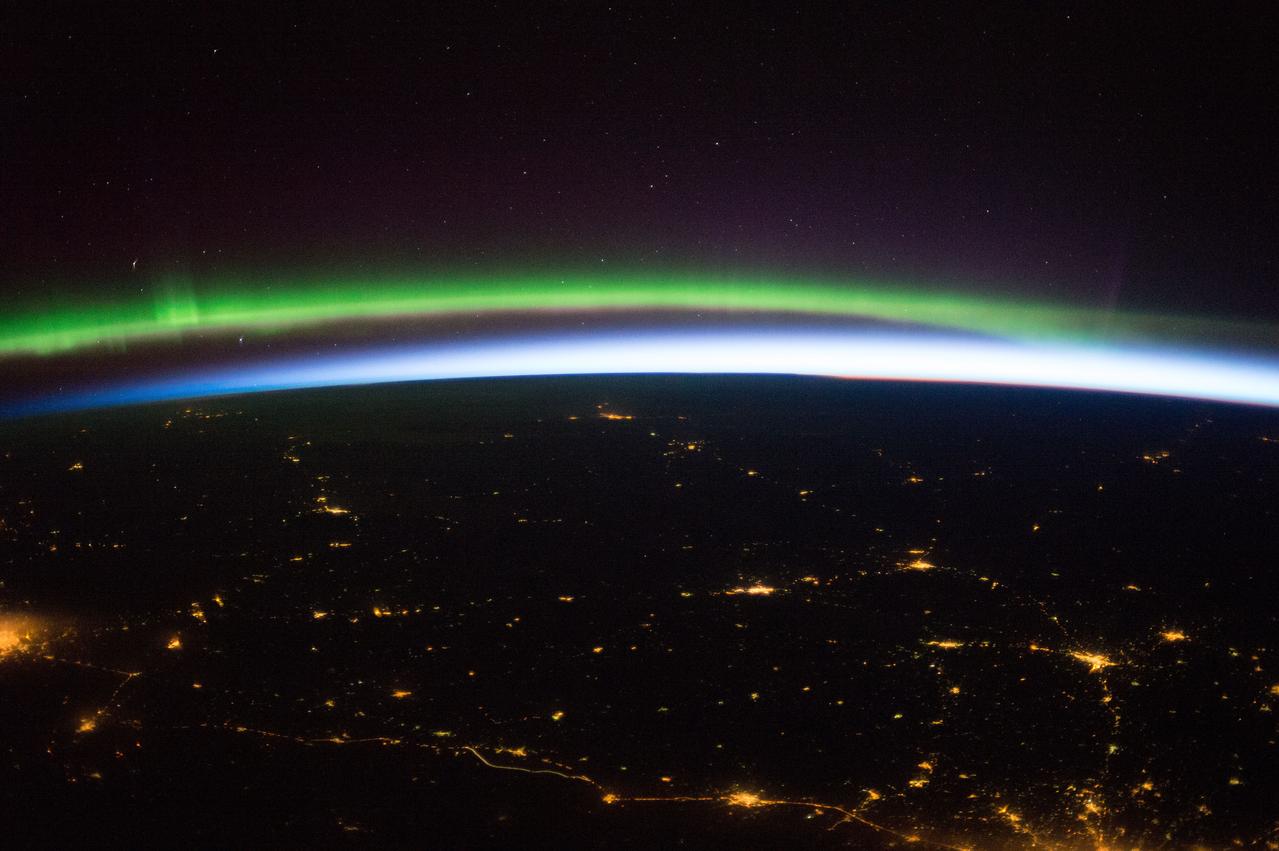
ISS043e059141 (03/26/2015) --- Members of Expedition 43 on the International Space Station captured this contrasting image of Earth sunrise, aurora and sparling cities in northern Europe.
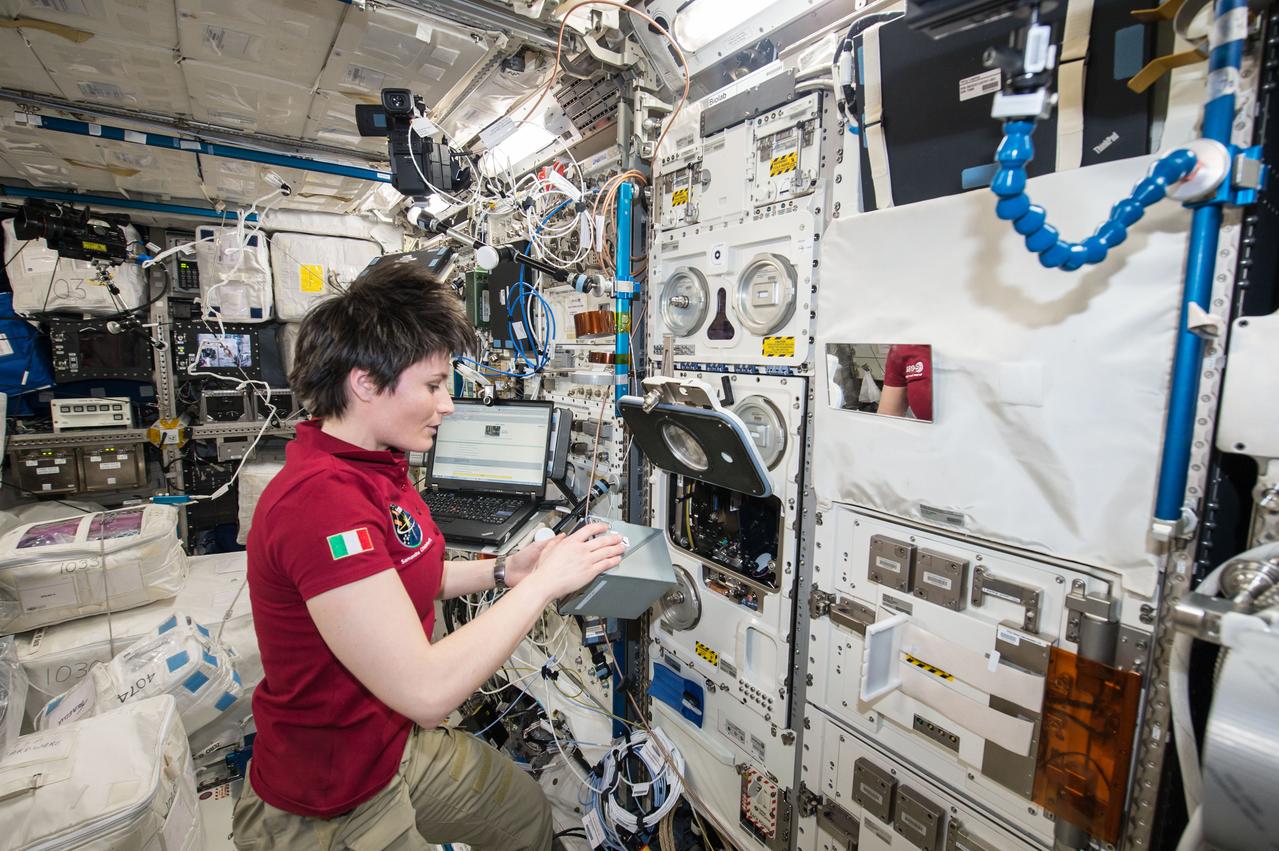
iss043e181041 (May 8, 2015) --- European Space Agency (ESA) astronaut Samantha Christoforetti prepares the TripleLux-A experiment for return on SpaceX's Dragon cargo craft. The TripleLux-A experiment studies the effects of the spaceflight conditions on immune suppresion in mice, which will help scientists understand the effects of radiation and microgravity on the human immune system in space.
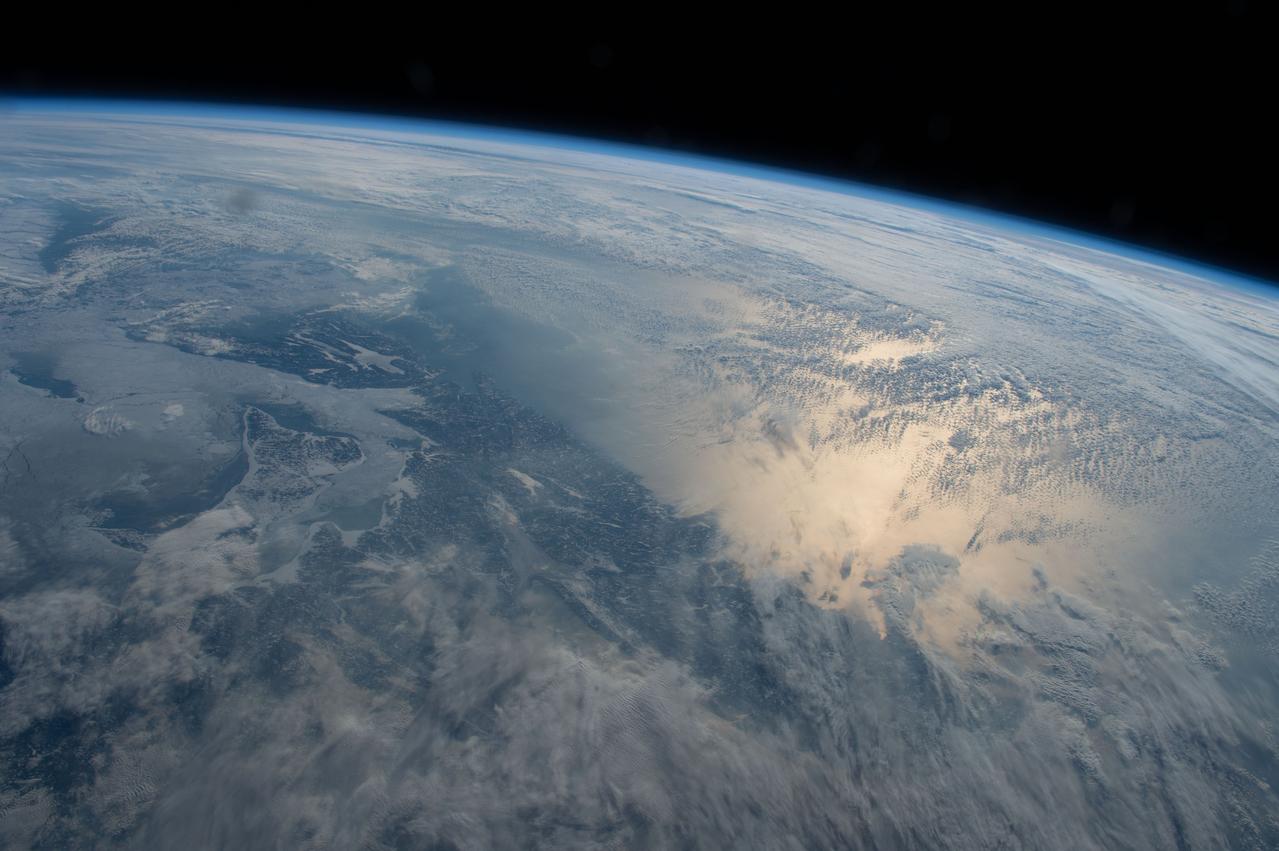
ISS042E340851 (03/09/2015) --- Crewmembers on the International Space Station are treated to Earth views that are constantly changing. NASA Astronaut Terry Virts Commander of Expedition 43, ESA (European Space Agency) astronaut Samantha Cristoforetti and Russian cosmonaut Mikhail Kornienko both flight engineers enjoy the wonder of Earths changing vista's from the stations cupola, a series of special windows that allow 360 degree views. This image is from Mar. 9, 2015.
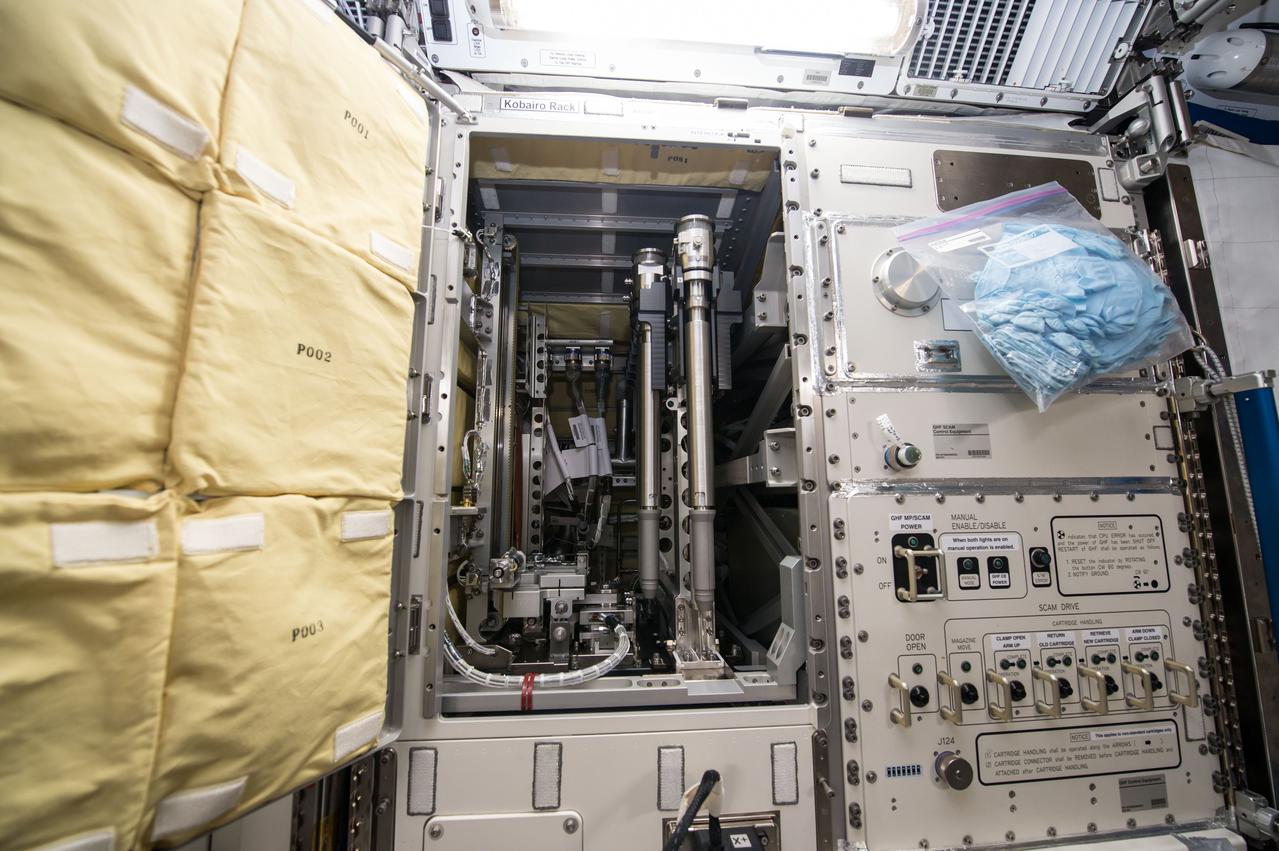
iss042e049014 (12/18/2014) --- A view of the interior of the Kobairo rack of the Japanese Experiment Module (JEM) aboard the International Space station (ISS).The KOBAIRO Rack houses the Gradient Heating Furnace (GHF), an experiment facility for investigating crystal growth of semiconductors. This furnace has the capability of directional solidification of samples.
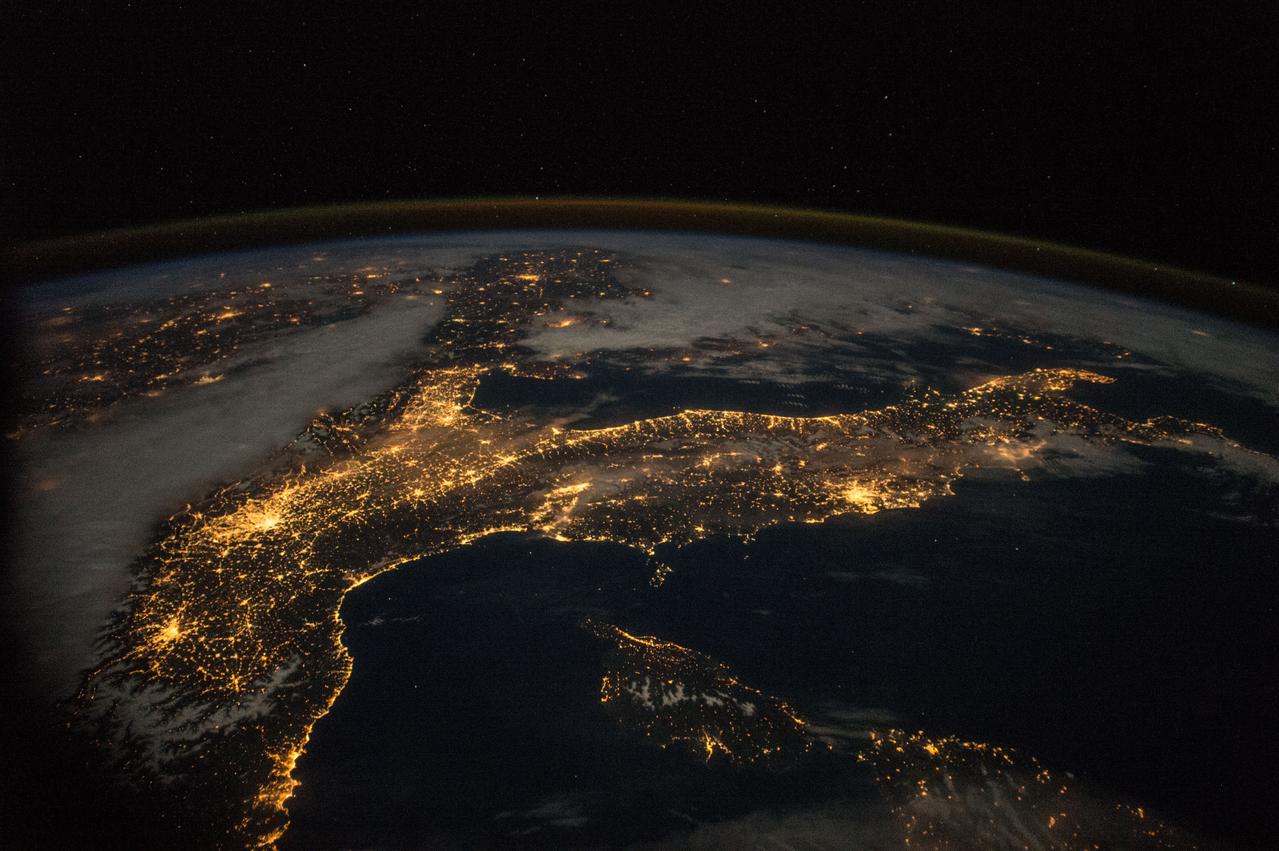
Earth observation taken during a night pass by the Expedition 43 crew aboard the International Space Station (ISS). Folder lists this as time lapse From Gibraltar NE-bound.
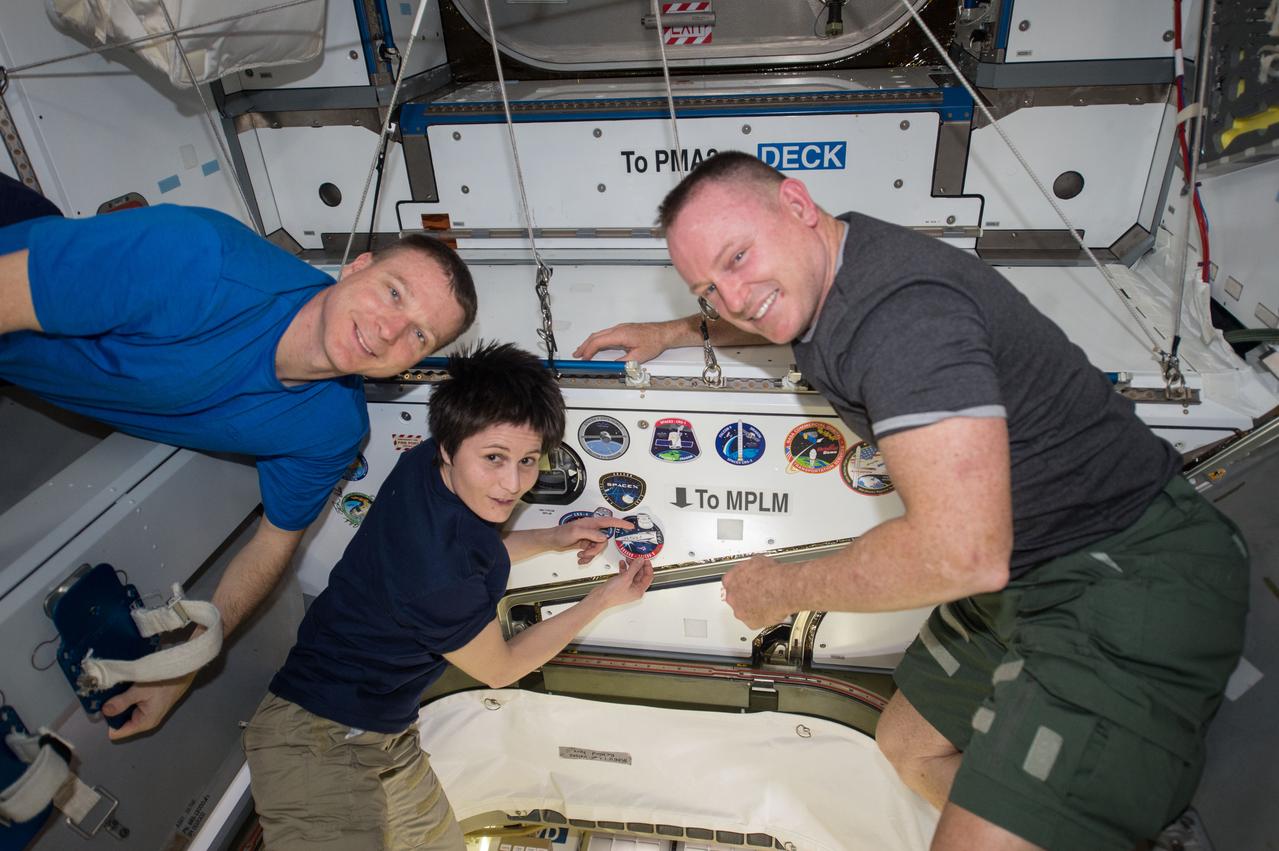
ISS042E262032 (02/10/2015) --- Expedition 42 Commander Barry Wilmore of NASA (right to left), Flight Engineer Samantha Cristoforetti of the European Space Agency (ESA) and Flight Engineer Terry Virts of NASA on the International Space Station are preparing for the departure of the Dragon supply spacecraft on Feb. 10, 2015. In this picture Astronaut Cristoforetti points to the SpaceX CRS-5 Dragon patch.

ISS043E078143 (03/31/2015) --- Astronauts on board the International Space Station captured this image on Mar. 31, 2015 of the category 5 super Typhoon Maysak which is headed toward the Philippines. The Tropical Rainfall Measuring Mission (TRMM) and Global Precipitation Measurement (GPM) satellites, both co-managed by NASA and the Japan Aerospace Exploration Agency, captured rainfall and cloud data that revealed heavy rainfall and high thunderstorms in the strengthening storm.
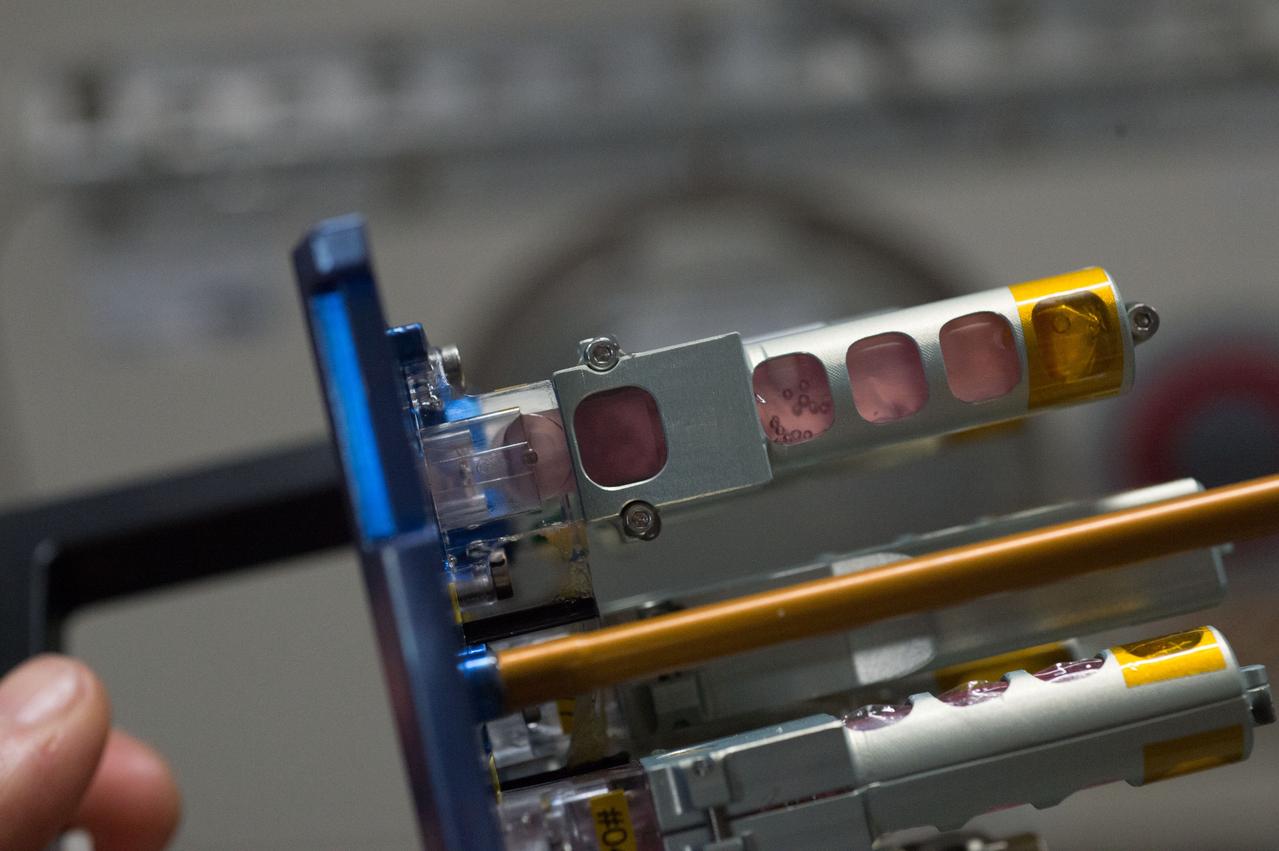
iss043e167915 (May 2, 2015) --- Experiment Container (EC) for the TripleLux-A experiment during remobal from Incubator. The TripleLux-A experiment studies the effects of the spaceflight conditions on immune suppresion in mice, which will help scientists understand the effects of radiation and microgravity on the human immune system in space.
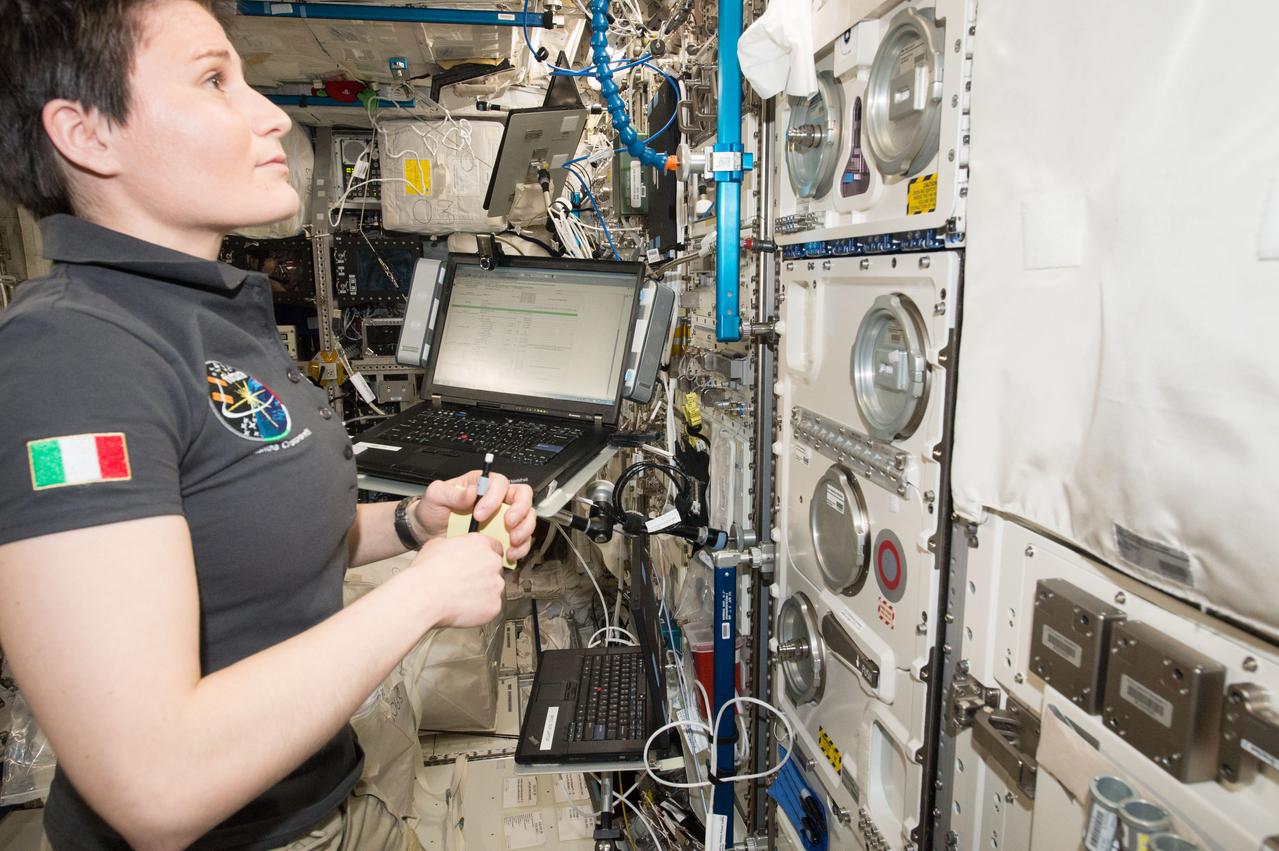
ISS043E070945 (03/31/2015) --- ESA (European Space Agency) astronaut Samantha Cristoforetti, Expedition 43 flight engineer aboard the International Space Station, is seen working on a science experiment that includes photographic documentation of Cellular Responses to Single and Combined Space Flight Conditions. Some effects of the space environment level appear to act at the cellular level and it is important to understand the underlying mechanisms of these effects. This science project uses invertebrate hemocytes to focus on two aspects of cellular function which may have medical importance. The synergy between the effects of the space radiation environment and microgravity on cellular function is the goal of this experiment along with studying the impairment of immune functions under spaceflight conditions.

iss042e016150 (11/26/2014) --- A view of the ELITE-S2 Trajectory Video Camera (TVC) aboard the International Space Station (ISS). The ELaboratore Immagini TElevisive - Space 2 (ELITE-S2) facility provides the experiment hardware to investigate the connection between brain, visualization and motion in the absence of gravity.
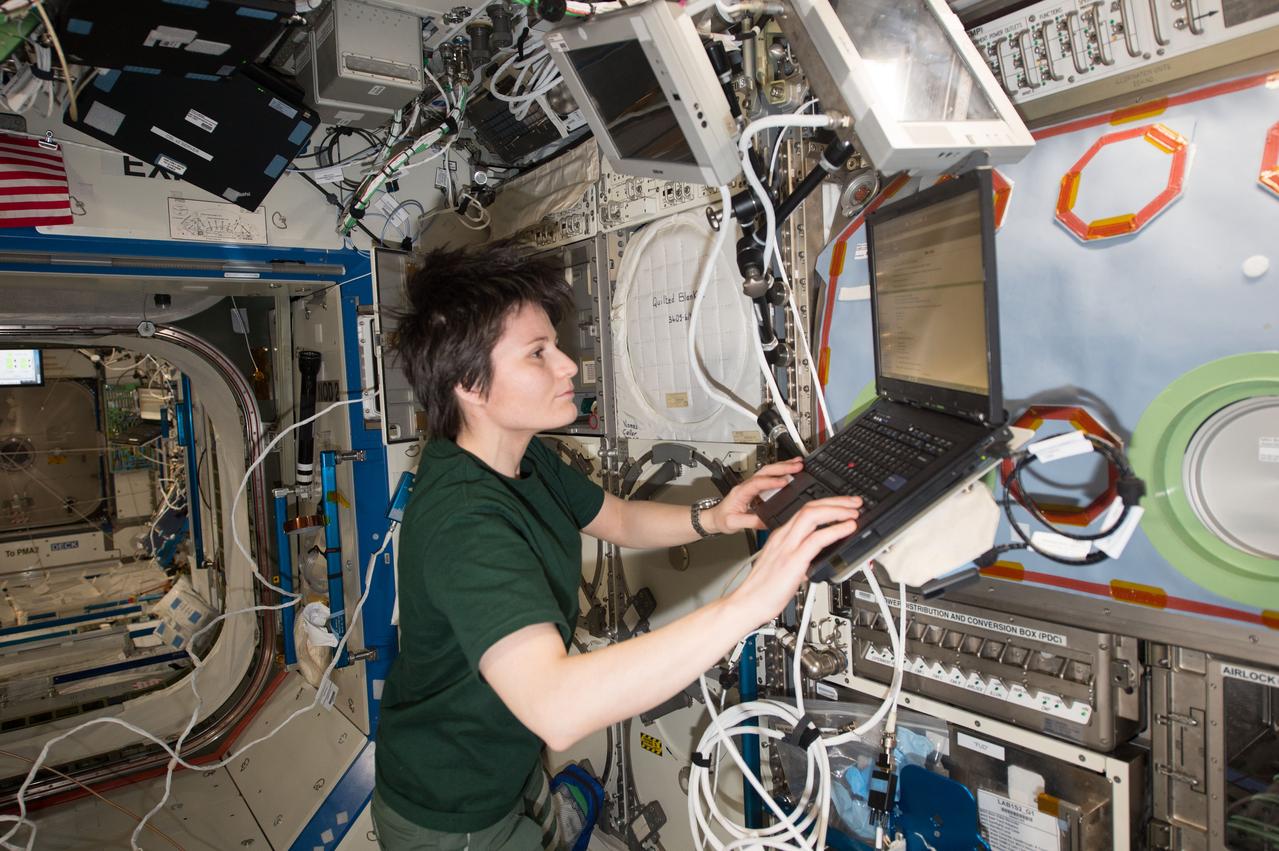
ISS043e000724 (03/13/2015) --- ESA (European Space Agency) astronaut Samantha Cristoforetti, Expedition 43 flight engineer works daily on science and maintenance duties on board the International Space Station. She is inspecting the Minus Eighty-degree Laboratory Freezer called by the shorter title "MELFI-3 Cold Box inspection". Astronauts are trained for long periods at the Johnson Space Center and in Russia before their missions in space begin so that they are fully trained for these complex duties.
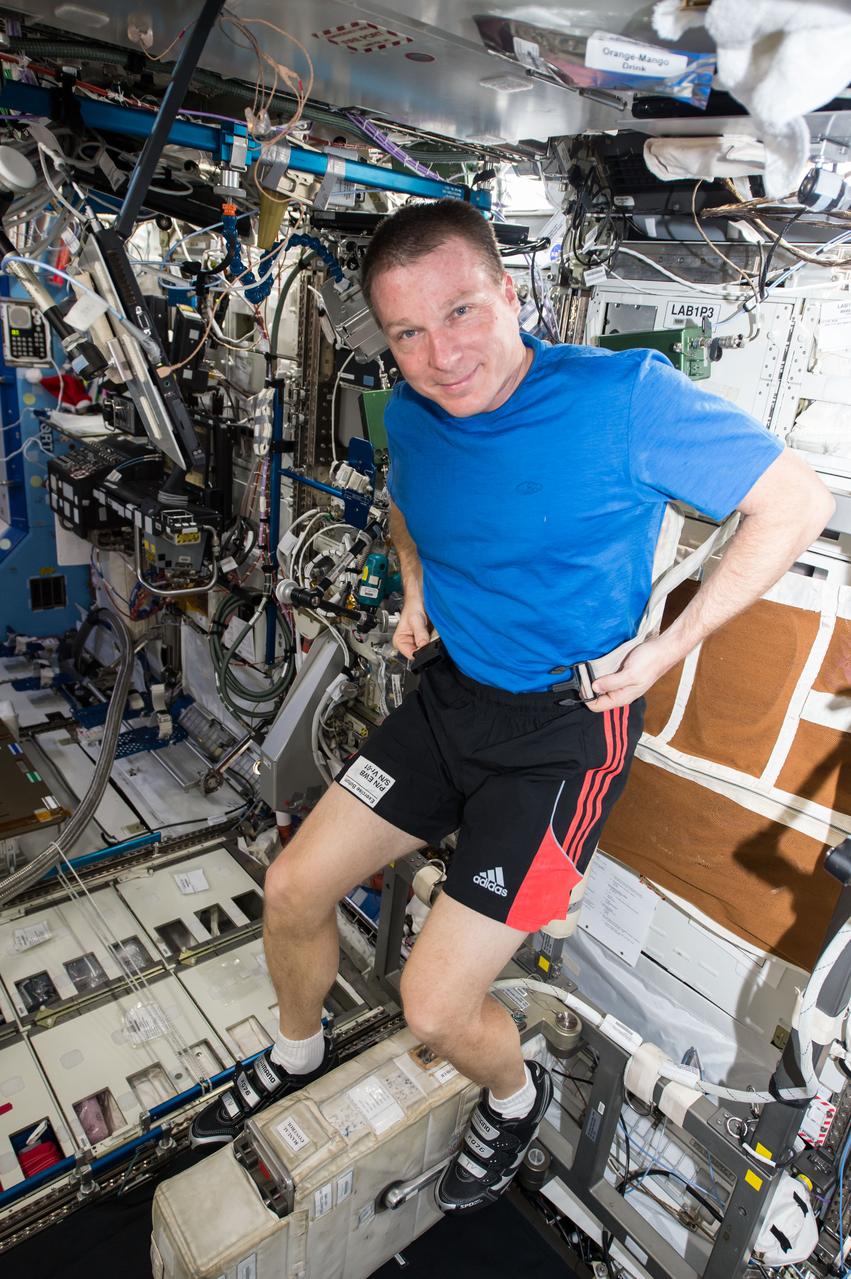
ISS042E082884 (12/27/2014) --- Expedition 42 Flight Engineer Terry Virts of NASA straps into the station’s stationary exercise bicycle known as the Cycle Ergometer with Vibration Isolation System (CEVIS). Each crew member spends an average of 2.5 hours a day exercising to combat the negative effects of prolonged weightlessness by maintaining bone and muscle mass and cardiovascular health.
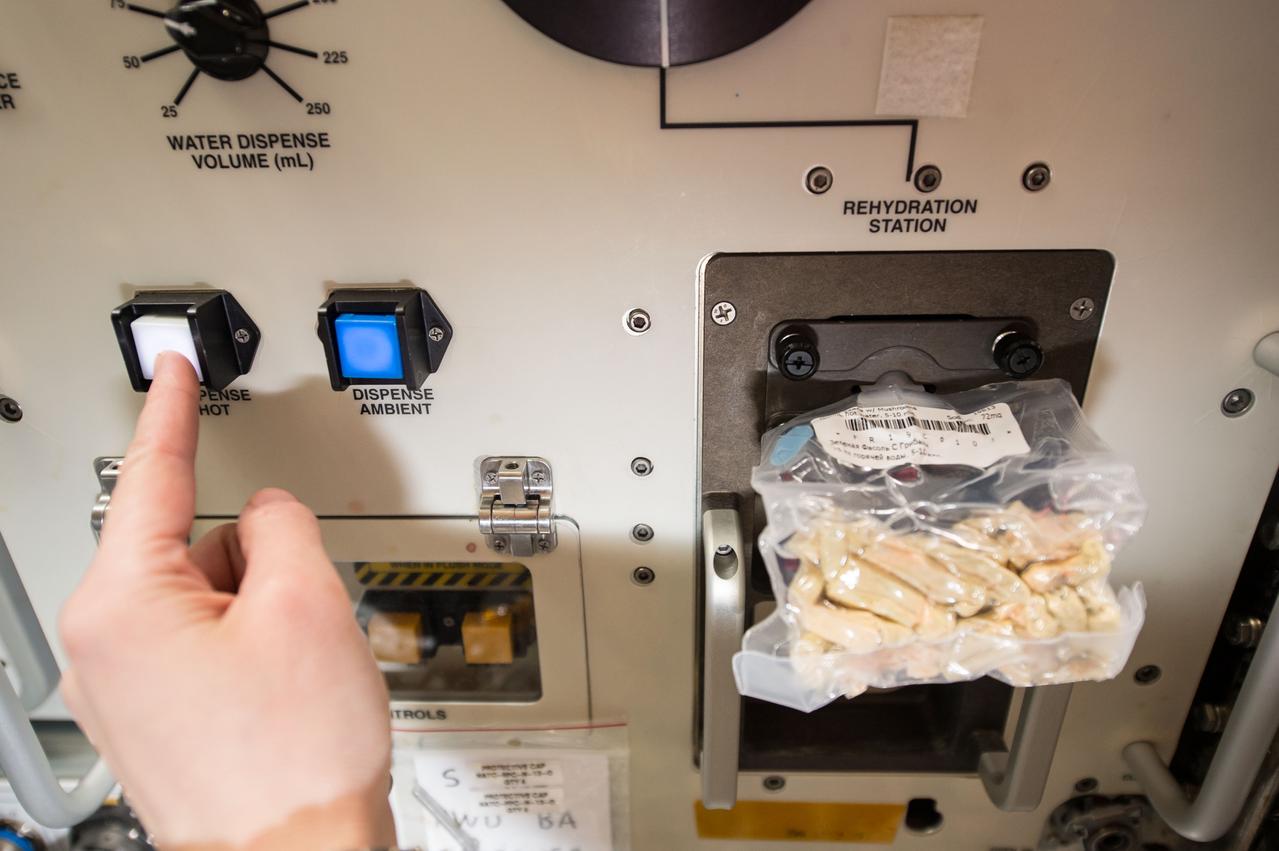
iss042e017210(12/01/2014) --- European Space Agency Astronaut Samantha Cristoforetti prepares her lunch using the space food rehydrator aboard the International Space Station.
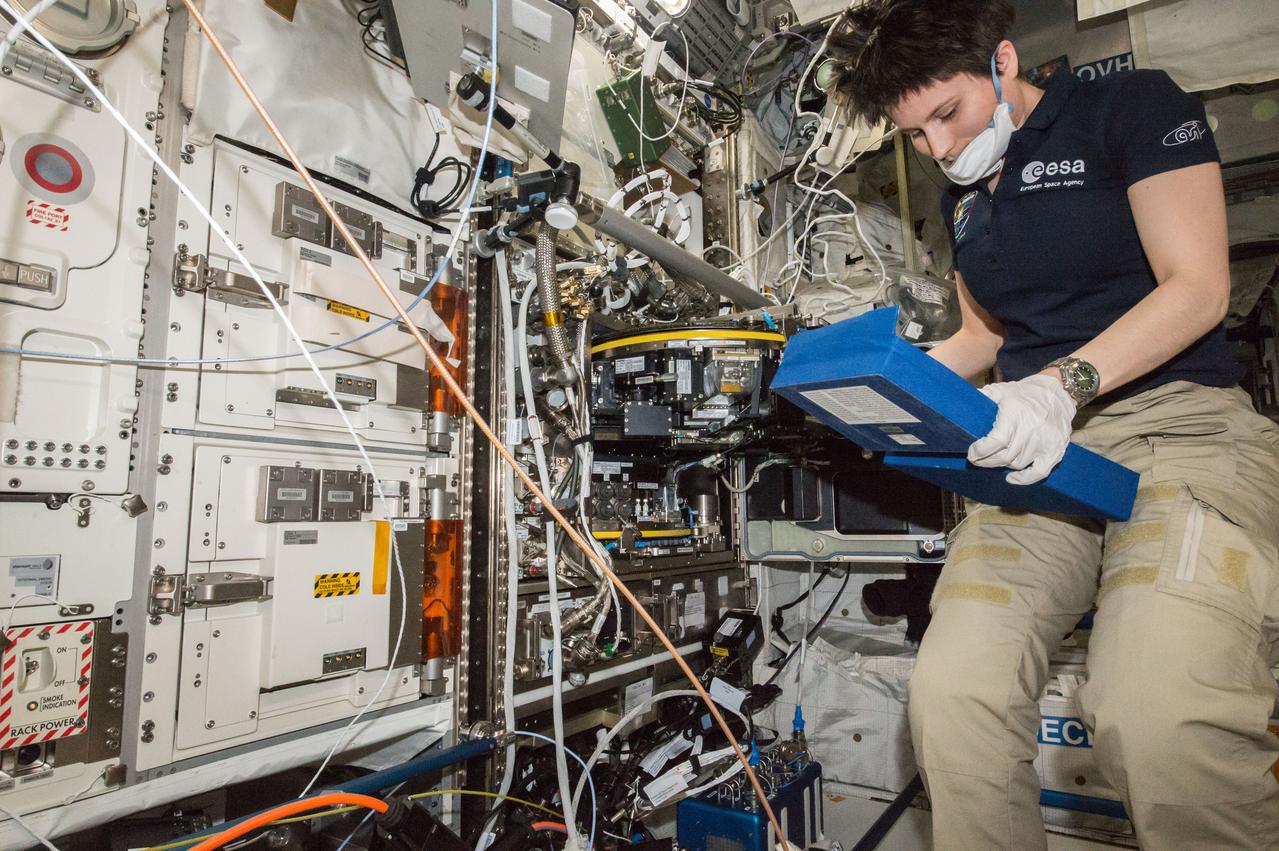
ISS043E127770 (04/14/2015) --- ESA (European Space Agency) astronaut Samantha Cristoforetti of Expedition 43 on the International Space Station works to remove a water removal reservoir on Apr.14, 2015. She and her crewmates also were removing all four European Modular Cultivation System rotor based life support systems to pack for their return to Earth on the upcoming SpaceX-6 spacecraft.
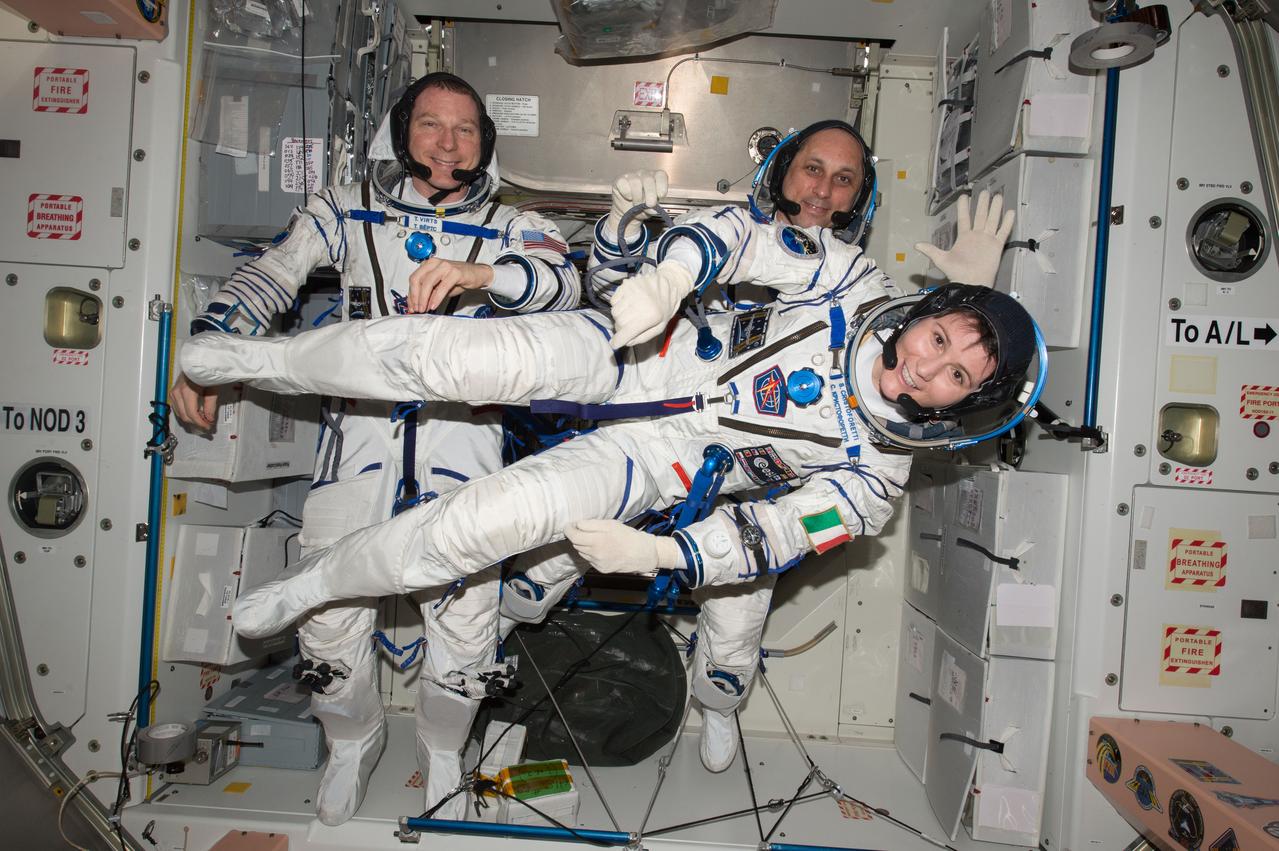
ISS043E174193 (05/06/2015) --- NASA astronaut Terry Virts (left) Commander of Expedition 43 on the International Space Station along with crewmates Russian cosmonaut Anton Shkaplerov (center) and ESA (European Space Agency) astronaut Samantha Cristoforetti on May 6, 2015 perform a checkout of their Russian Soyuz spacesuits in preparation for the journey back to Earth.
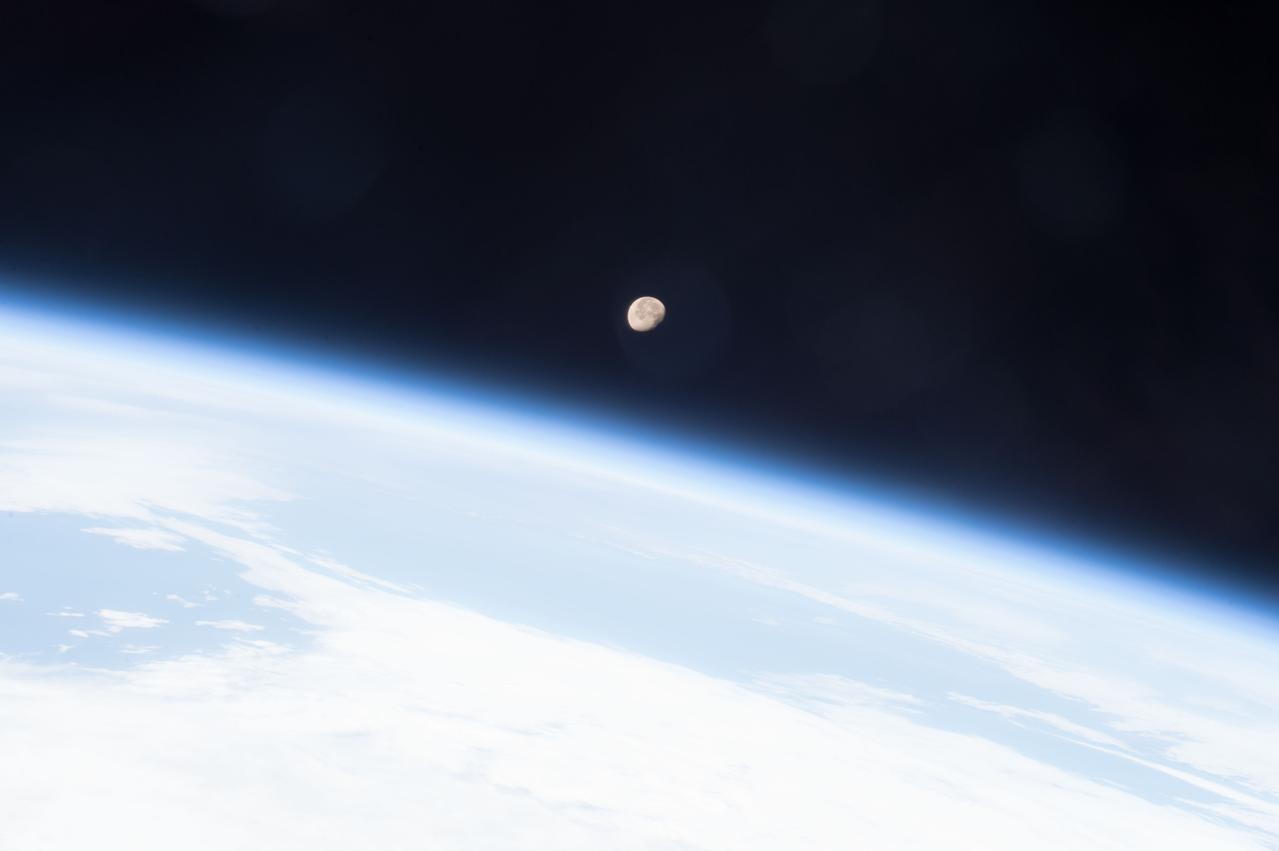
ISS043E200058 (05/07/2015) --- The Moon shines brightly on planet Earth's horizon in this image snapped from the International Space Station May 7, 2015 by the crew of Expedition 43 led by Commander Terry Virts, NASA astronaut.
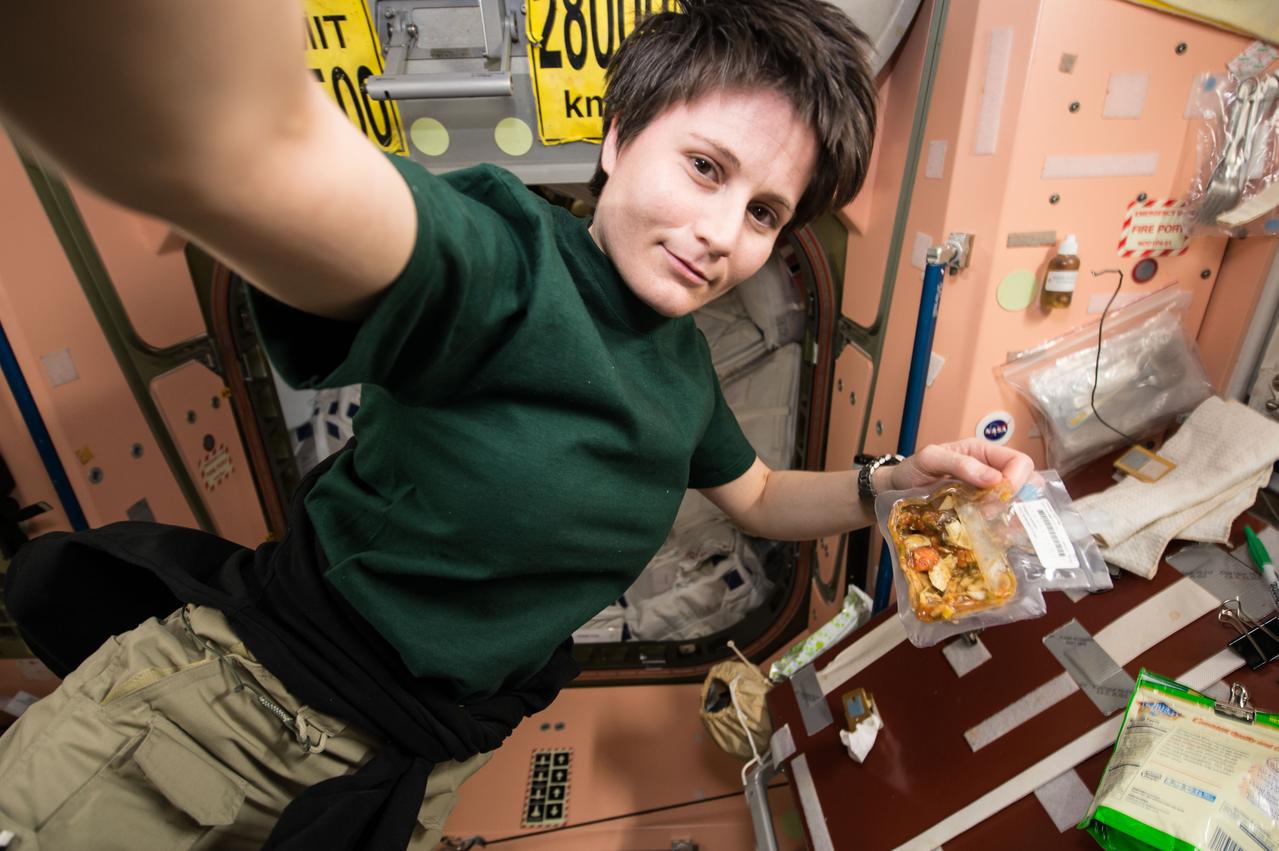
iss042e034821 (12/08/2014) --- Its dinner time on board the International Space Station (ISS) for Expedition 42 Flight Engineer Samantha Cristoforetti of the European Space Agency (ESA) on 8 December 2014. She is in the process of preparing a tasty specially designed food packet. The food on board the ISS is developed by food scientists at the Johnson Space Center in Houston Texas.

iss043e167919 (May 2, 2015) --- Experiment Container (EC) for the TripleLux-A experiment during removal from Incubator. The TripleLux-A experiment studies the effects of the spaceflight conditions on immune suppression in mice, which will help scientists understand the effects of radiation and microgravity on the human immune system in space.
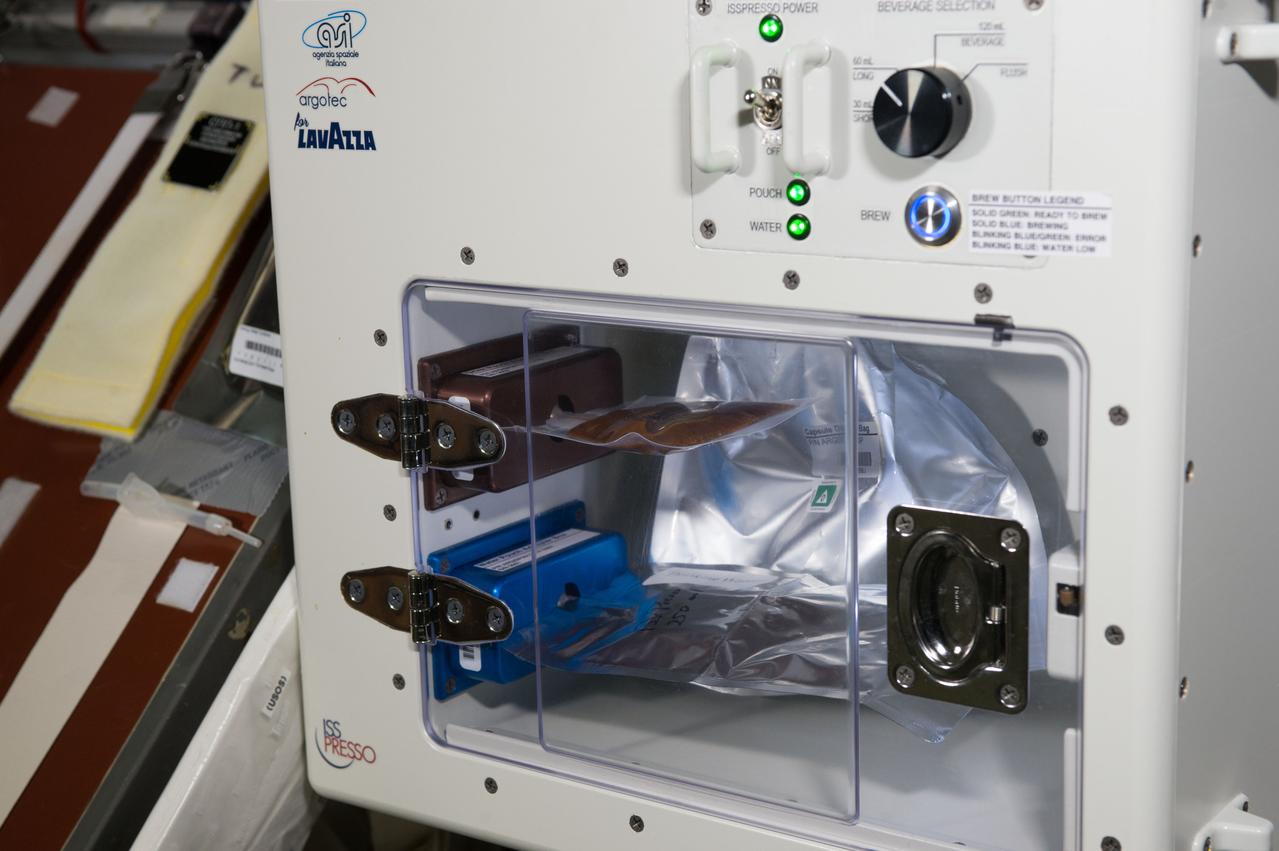
ISS043E160227 (05/03/2015) --- The new ISSpresso machine was recently installed on the International Space Station. In order to utilize the ISSpresso, a NASA standard drink bag is installed, along with a capsule containing the beverage item that the crew member wishes to drink. After the item has been brewed, the used capsule and the drink bag are removed.
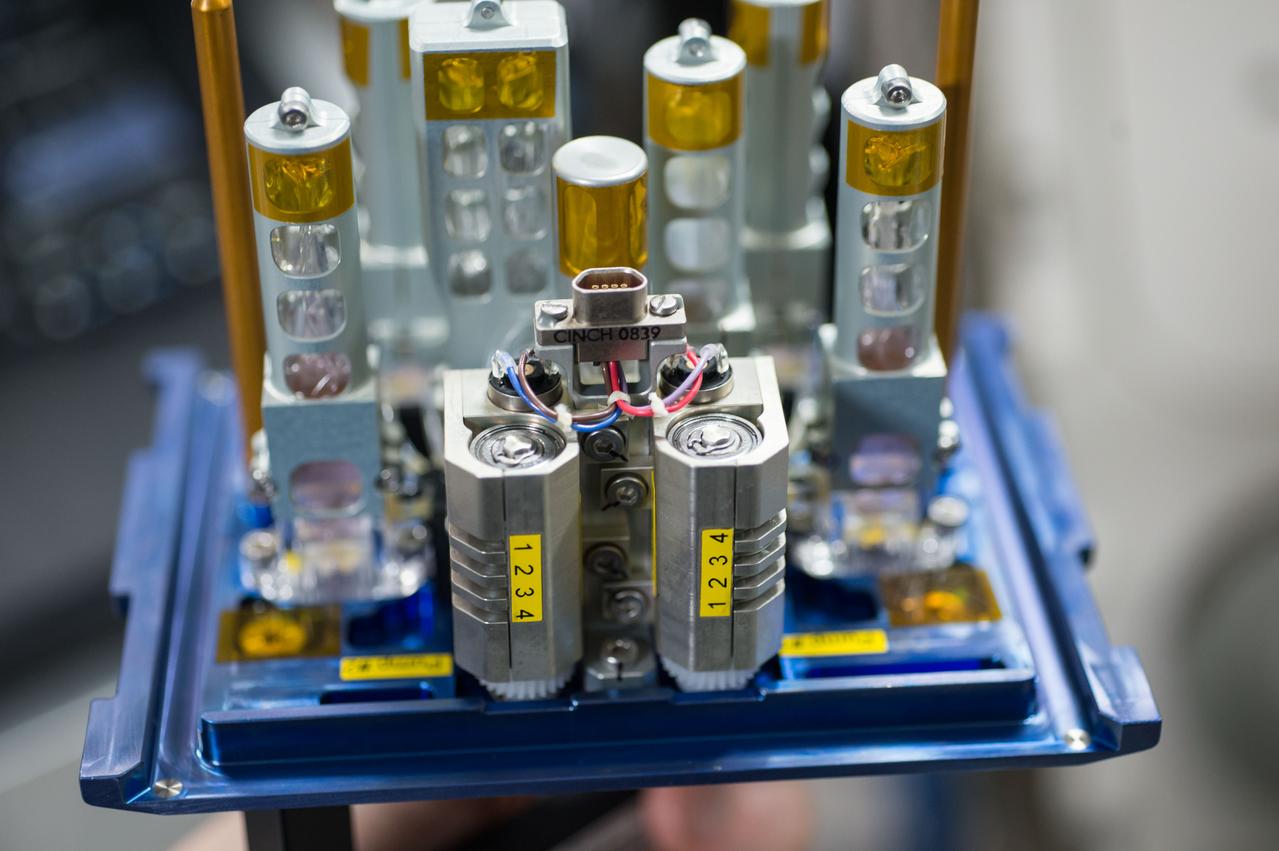
iss043e152043 (April 29, 2015) --- Experiment Container (EC) for the TripleLux-A experiment during removal from Incubator. The TripleLux-A experiment studies the effects of the spaceflight conditions on immune suppression in mice, which will help scientists understand the effects of radiation and microgravity on the human immune system in space.
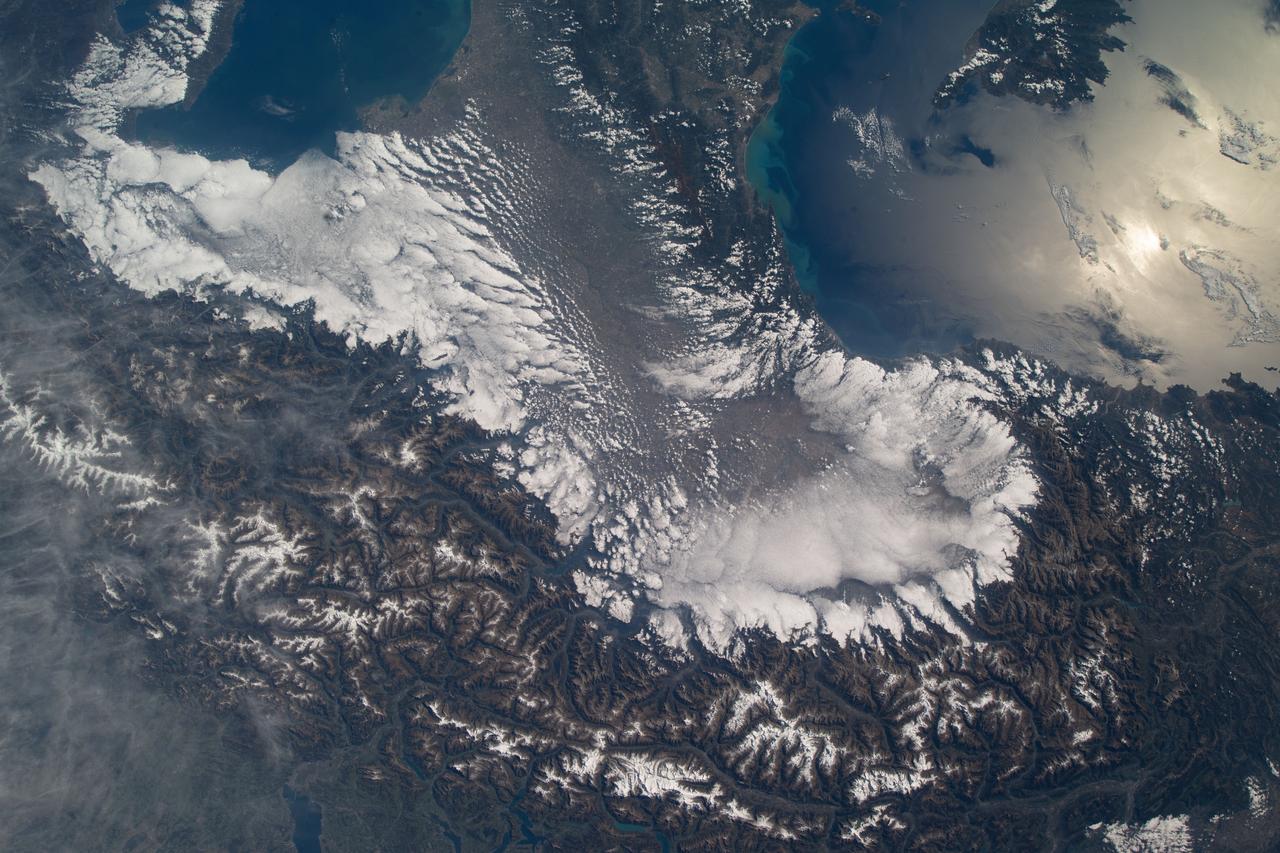
iss068e008924 (Oct. 5, 2022) --- The Swiss Alps surround Northern Italy's cloud-covered Po Valley region in this photograph taken from the International Space Station as it orbited 264 miles above. Credit: ESA/Samantha Cristoforetti
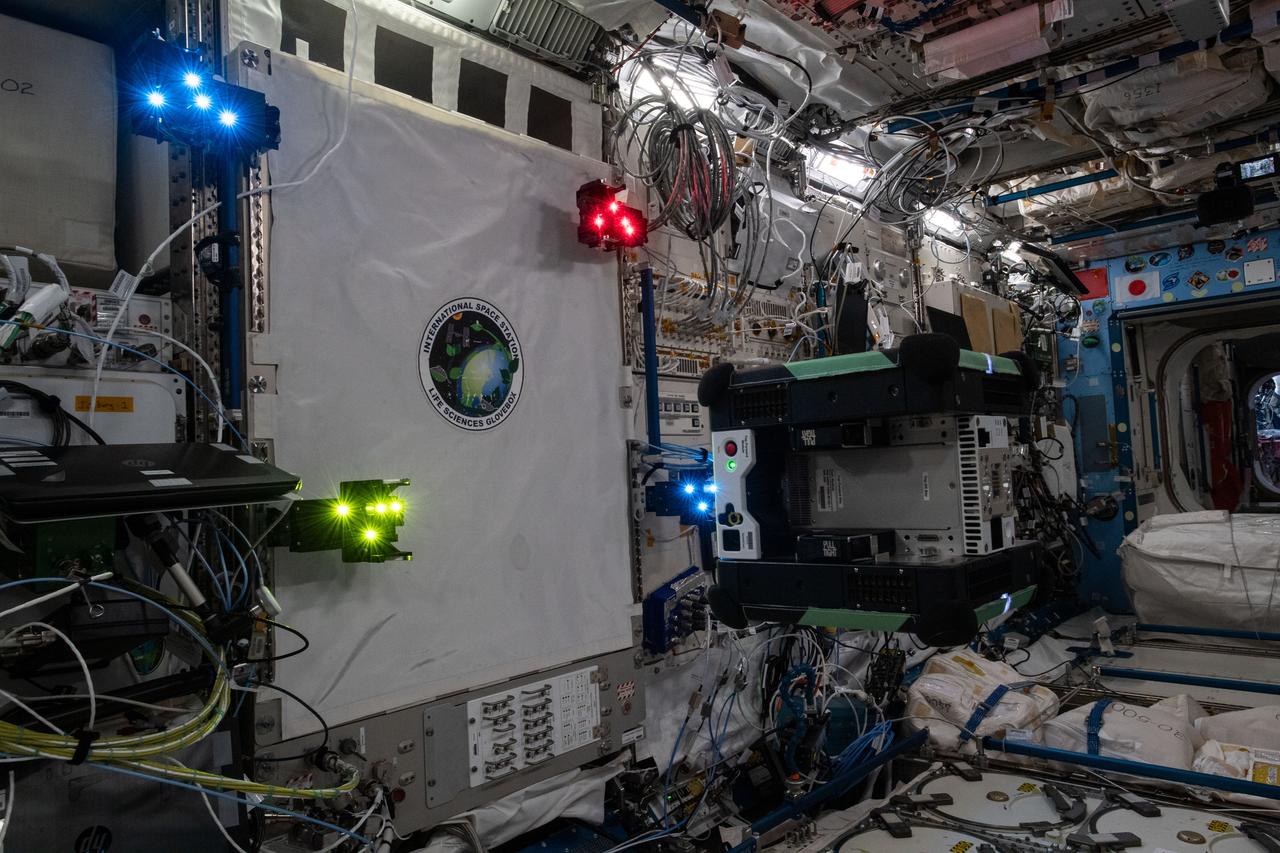
Documentation of a free-flying Astrobee robot (Queen), equipped with an LED Target for the Smartphone Video Guidance Sensor (SVGS) experiment, during SVGS science 3 session. Four SVGS LED Targets are attached to the Life Sciences Glovebox (LSG) rack, JPM1F5 in the Kibo Japanese Experiment Module (JEM).
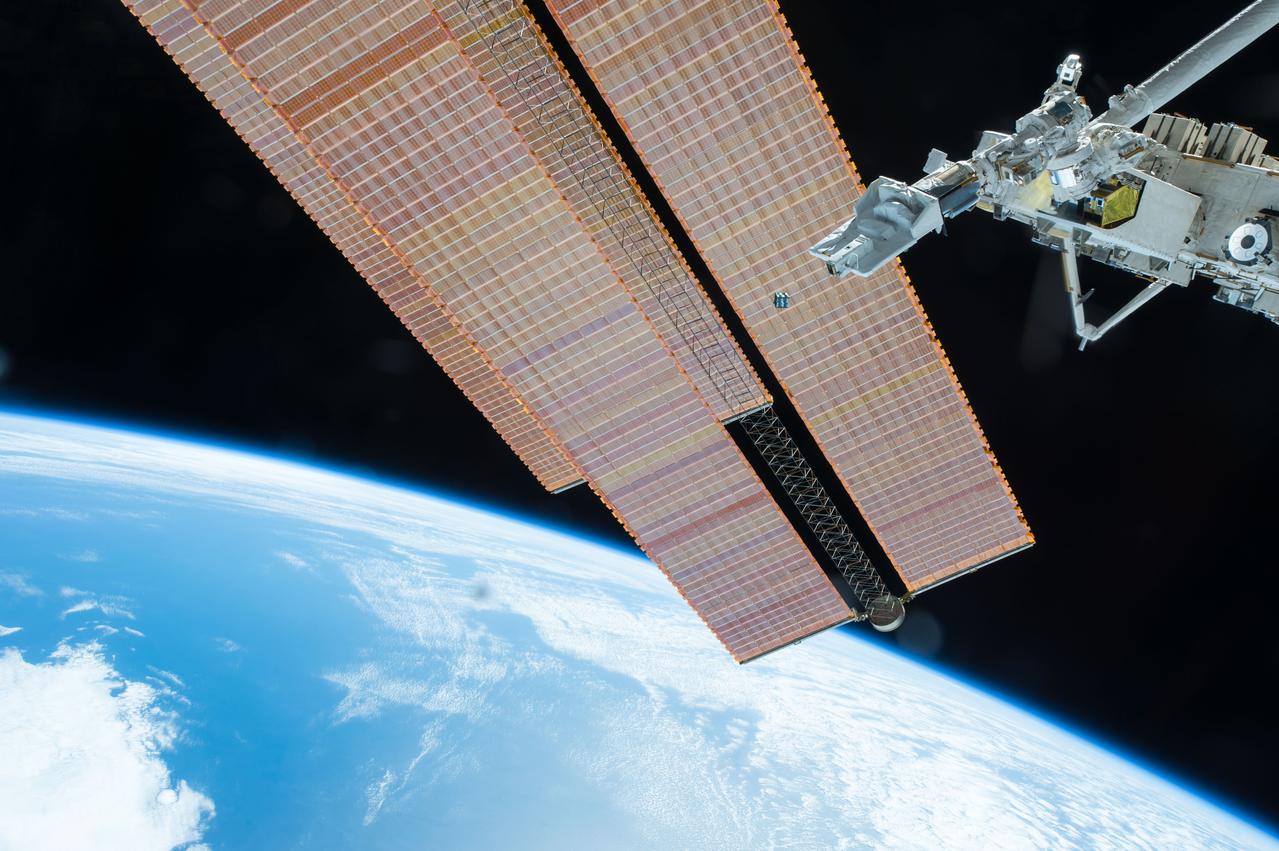
iss042e224107 (2/5/2015) --- Photographic documentation of the JEM Small Satellite Orbital Deployer-3 (J-SSOD-3) mission deploy of the CubeSat AESP-14 from Kibo. The satellite was developed by the Technological Institute of Aeronautics (ITA), with support from the Brazilian Space Agency (AEB), and the National Institute for Space Research (INPE).
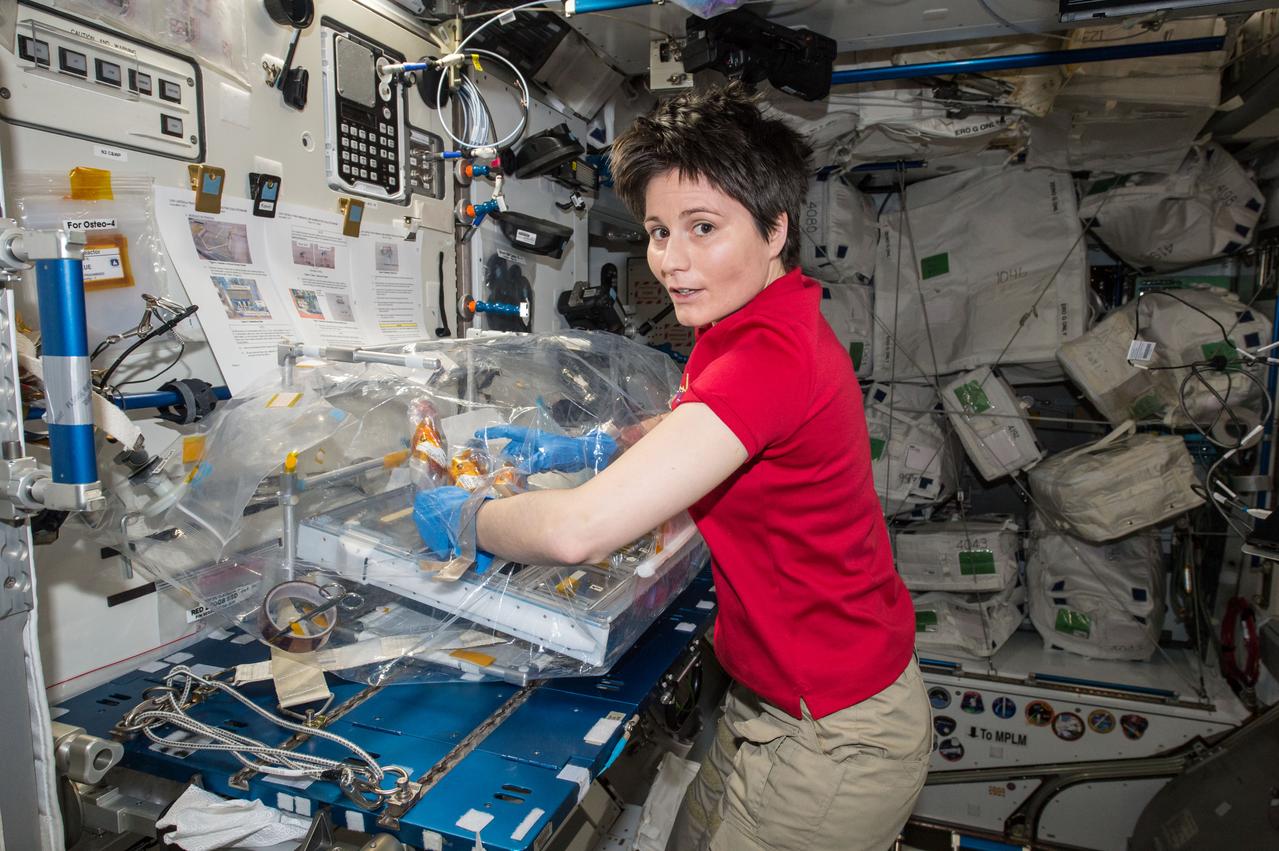
ISS043E122574 (04/19/2015) --- ESA (European Space Station) astronaut Samantha Cristoforetti, a flight engineer on the International Space Station, is seen here unpacking the recently arrived Osteo-4 experiment which was carried up on Spacex’s sixth Dragon resupply mission. Osteo-4 is performing research on how microgravity effects changes in the most common cell found in human bones to protect the health of future astronauts. This research could also have implications for patients on Earth in the treatment of bone disorders related to disuse or immobilization, as well as metabolic diseases such as osteoporosis.
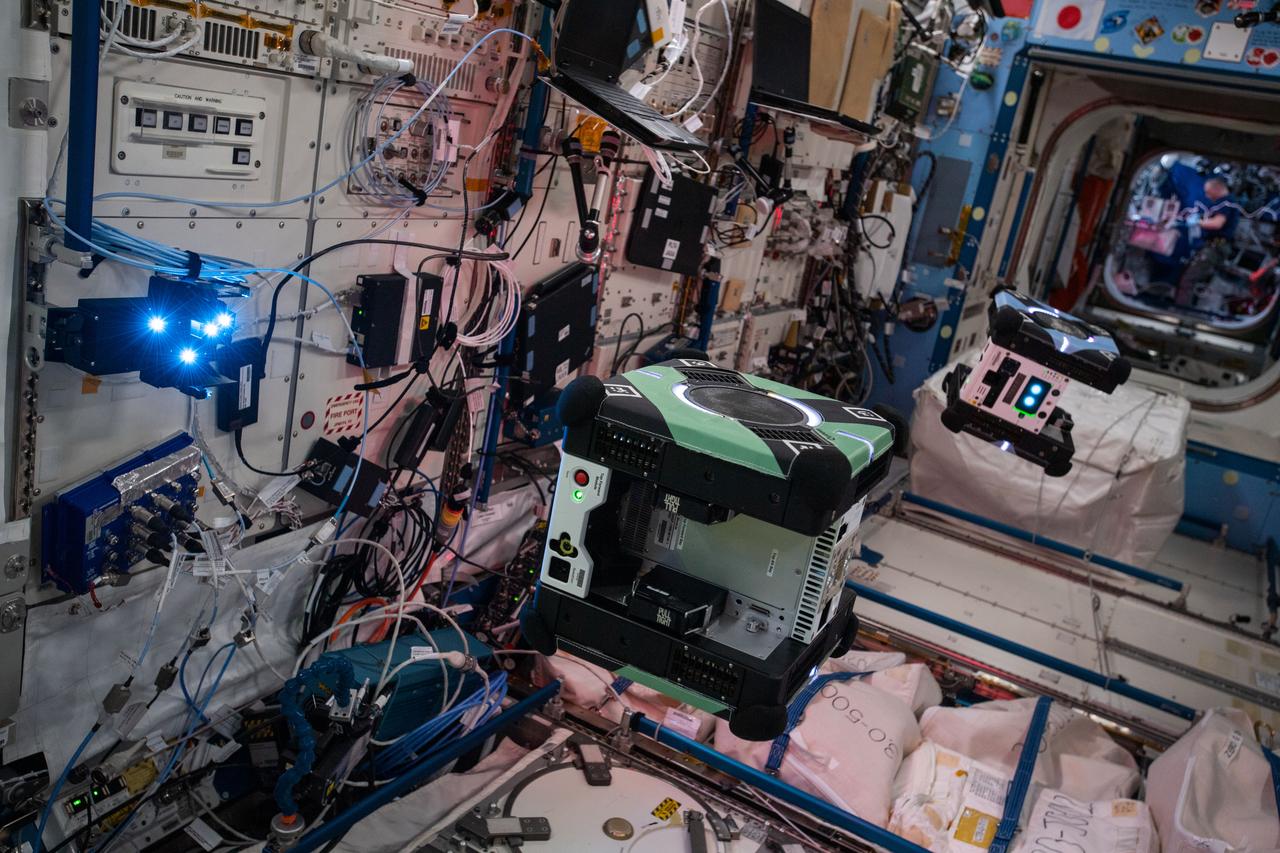
Documentation of two free-flying Astrobee robots (Queen and Bumble), equipped with LED Targets for the Smartphone Video Guidance Sensor (SVGS) experiment, during SVGS science 3 session. An SVGS LED Target is attached to the Life Sciences Glovebox (LSG) rack, JPM1F5 in the Kibo Japanese Experiment Module (JEM).
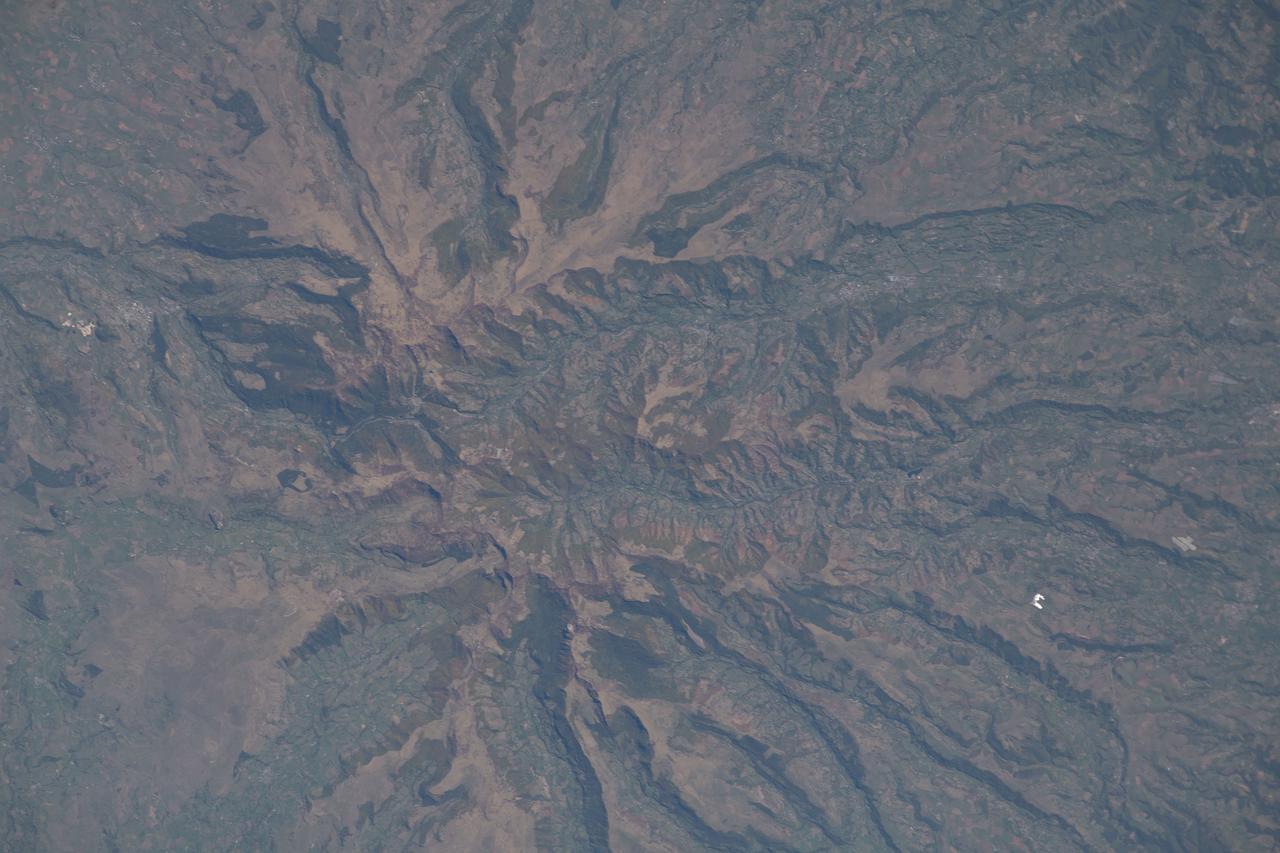
iss068e008954 (Oct. 5, 2022) --- The Mounts of Cantal, the remnants of Europe's largest stratovolcano made up of several summits in southern France, is pictured from the International Space Station as it orbited 263 miles above. Credit: NASA/Kjell Lindgren
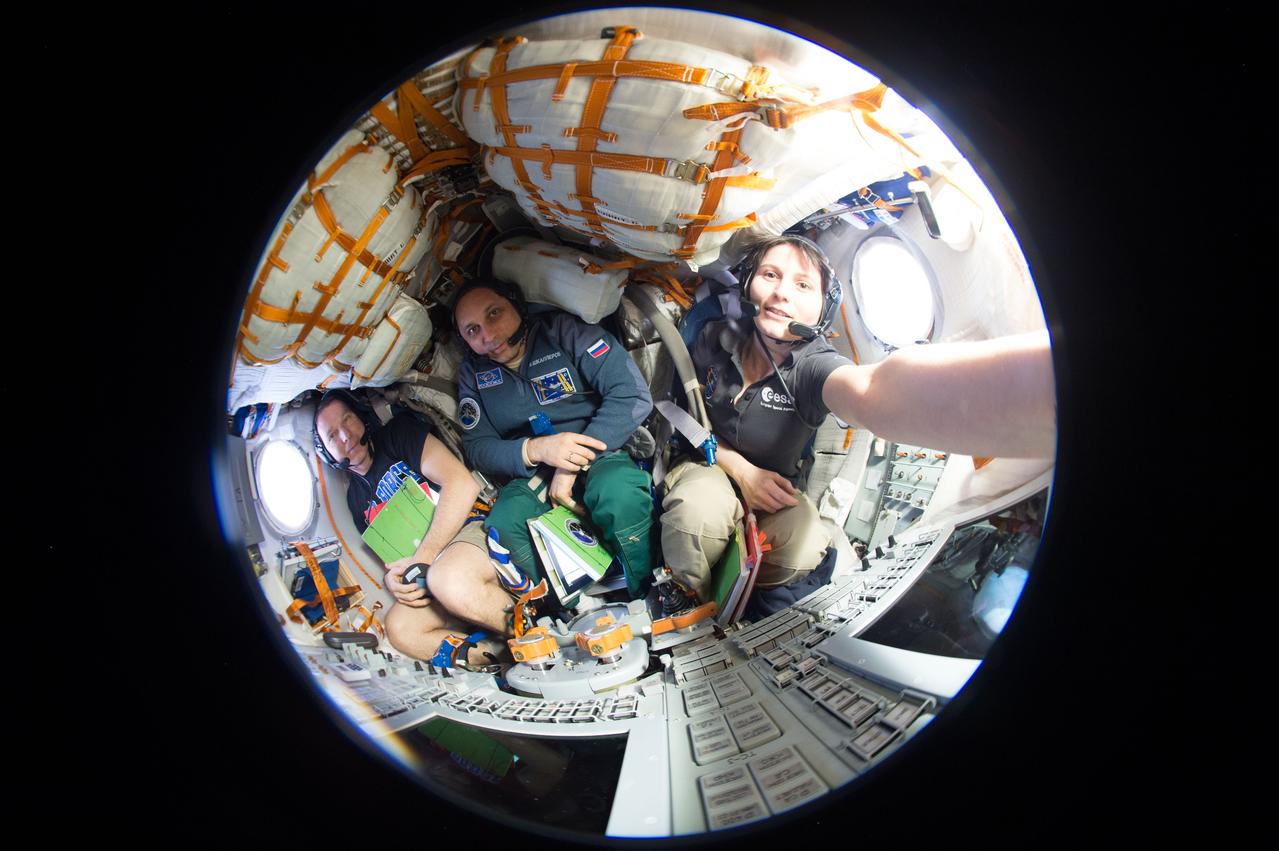
ISS043E298194 (06/08/2015) ---
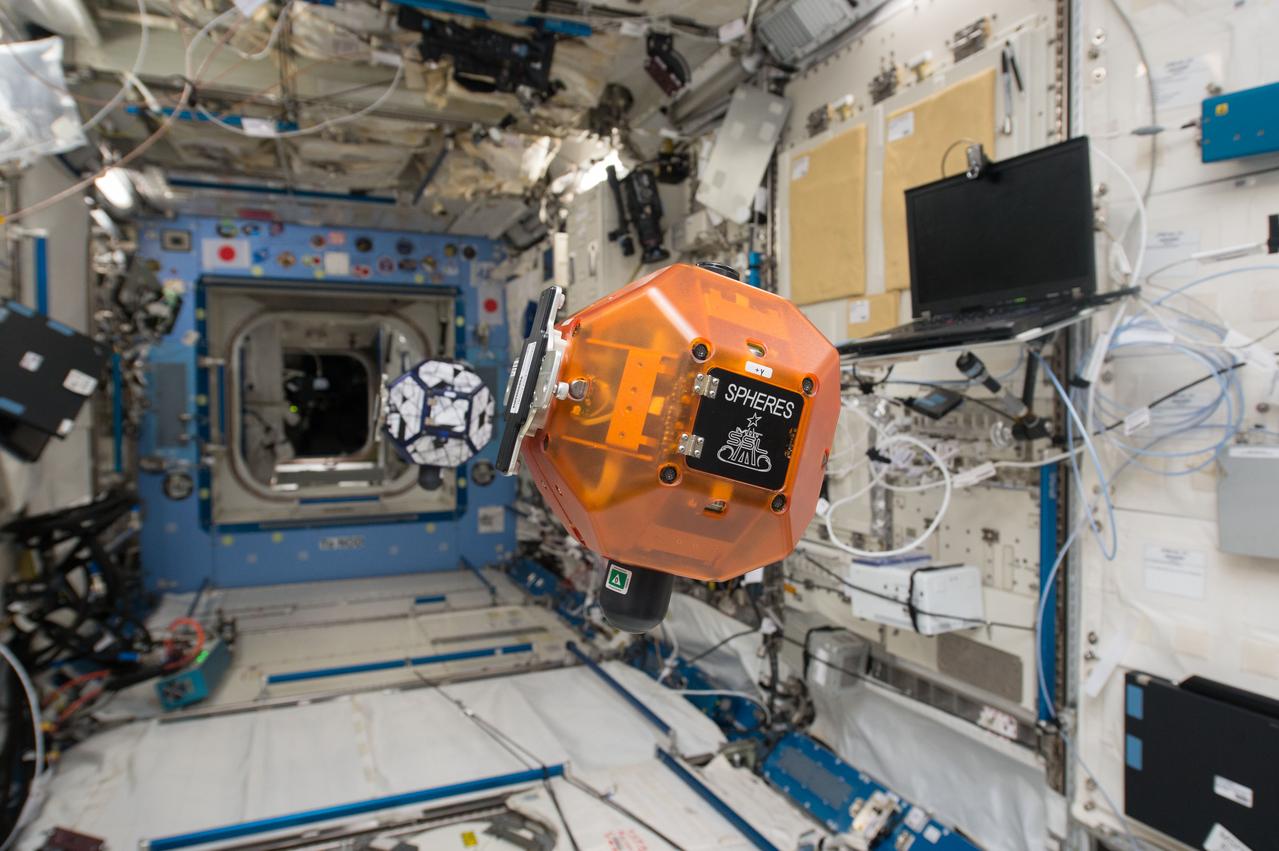
iss042e046207 (12/16/2018) --- Photographic documentation taken during the Synchronized Position Hold Engage and Reorient Experimental Satellites (SPHERES) test run in the Japanese Experiment Module (JEM).
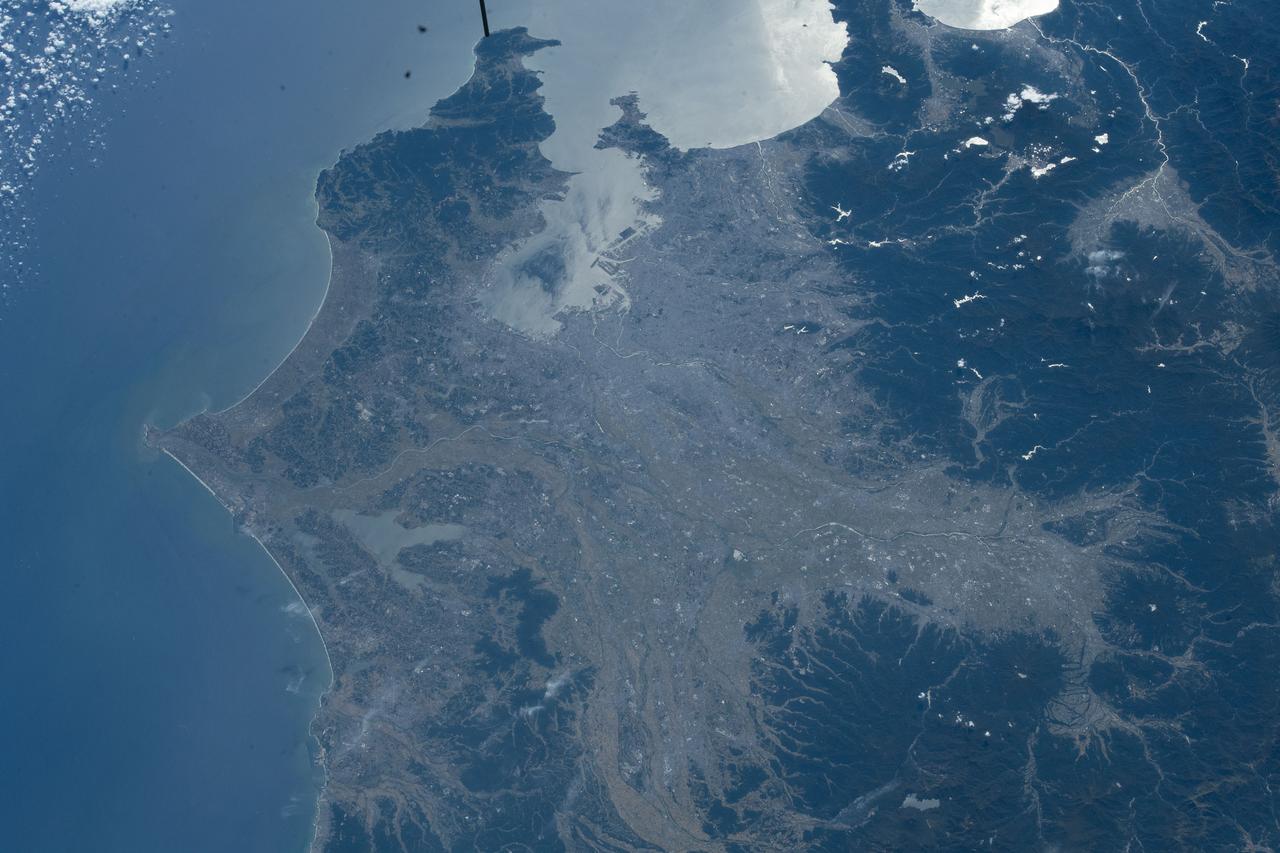
iss068e006998 (Oct. 2, 2022) --- Tokyo, Japan, on the coast of the Pacific Ocean, is pictured from the International Space Station as it orbited 260 miles above the island nation.