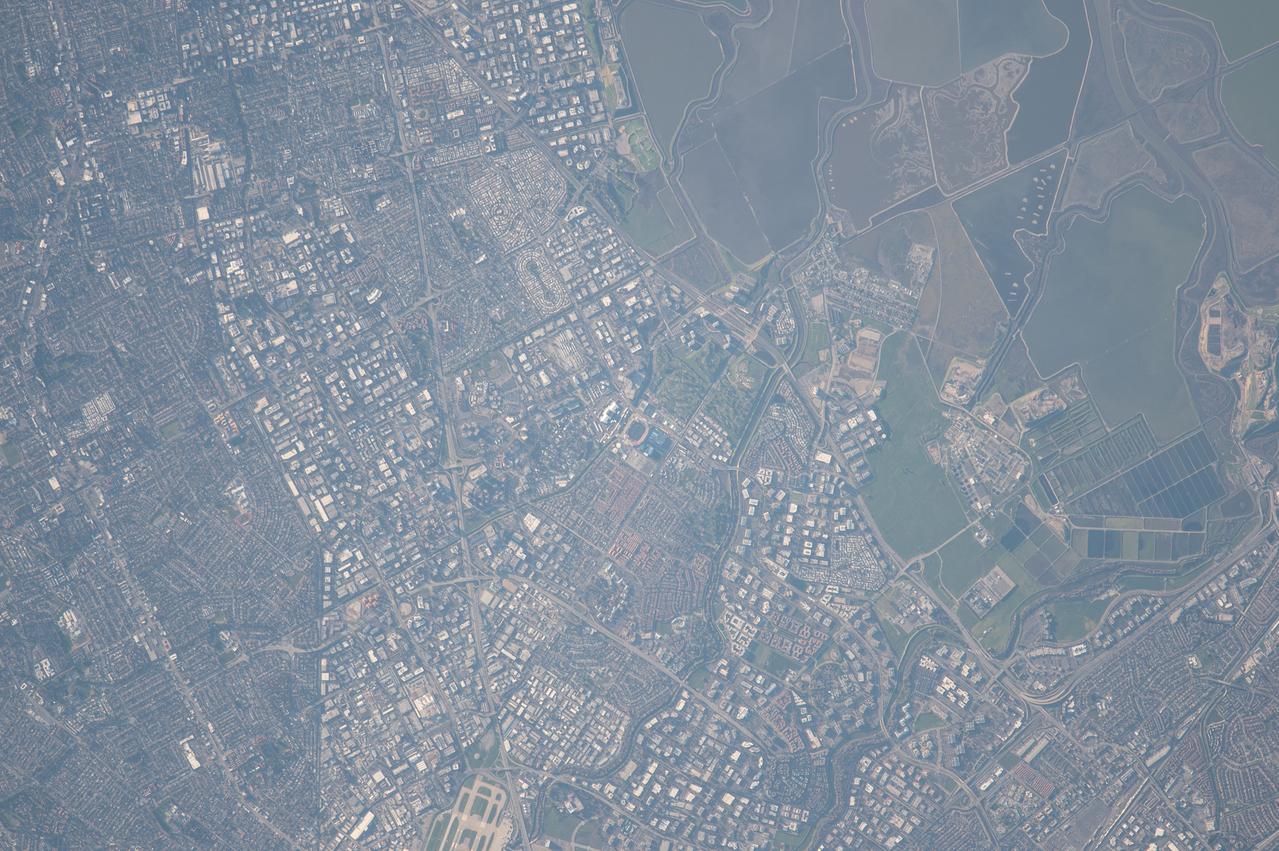
ISS046e035715 (02/08/2016) --- NASA astronaut Scott Kelly acquired this image of Santa Clara, California on Feb. 8, 2016. He tweeted: "Got to see the #SuperBowl in person after all! But at 17,500MPH, it didn't last long. #YearInSpace
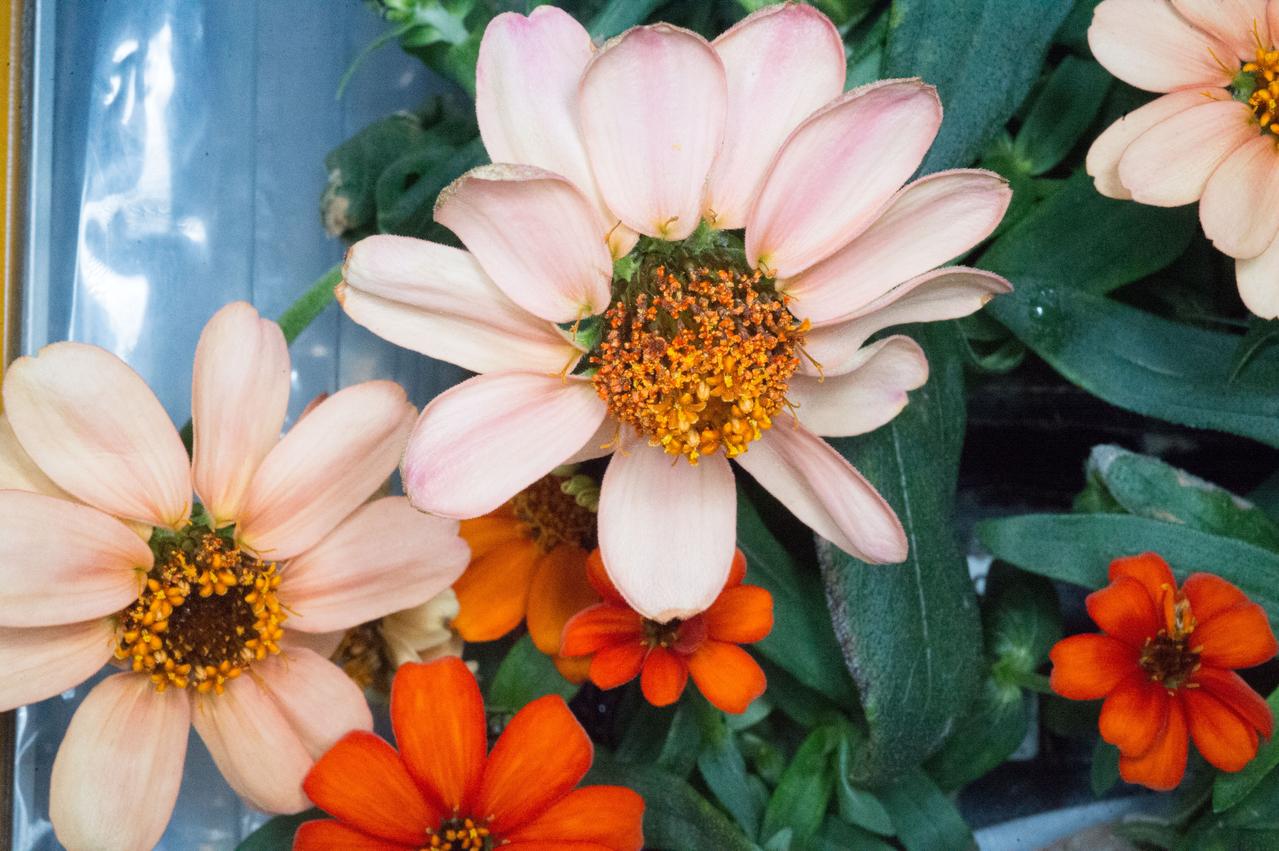
Photographic documentation of VEG-01 flowers taken by the Expedition 46 crew. The Veg-01 investigation is used to assess on-orbit function and performance of the Veggie facility, focusing on the growth and development of seedlings in the spaceflight environment and the composition of microbial flora on the plants and the facility. For this run, Zinnias will be grown for 60 days and are expected to produce flowers.
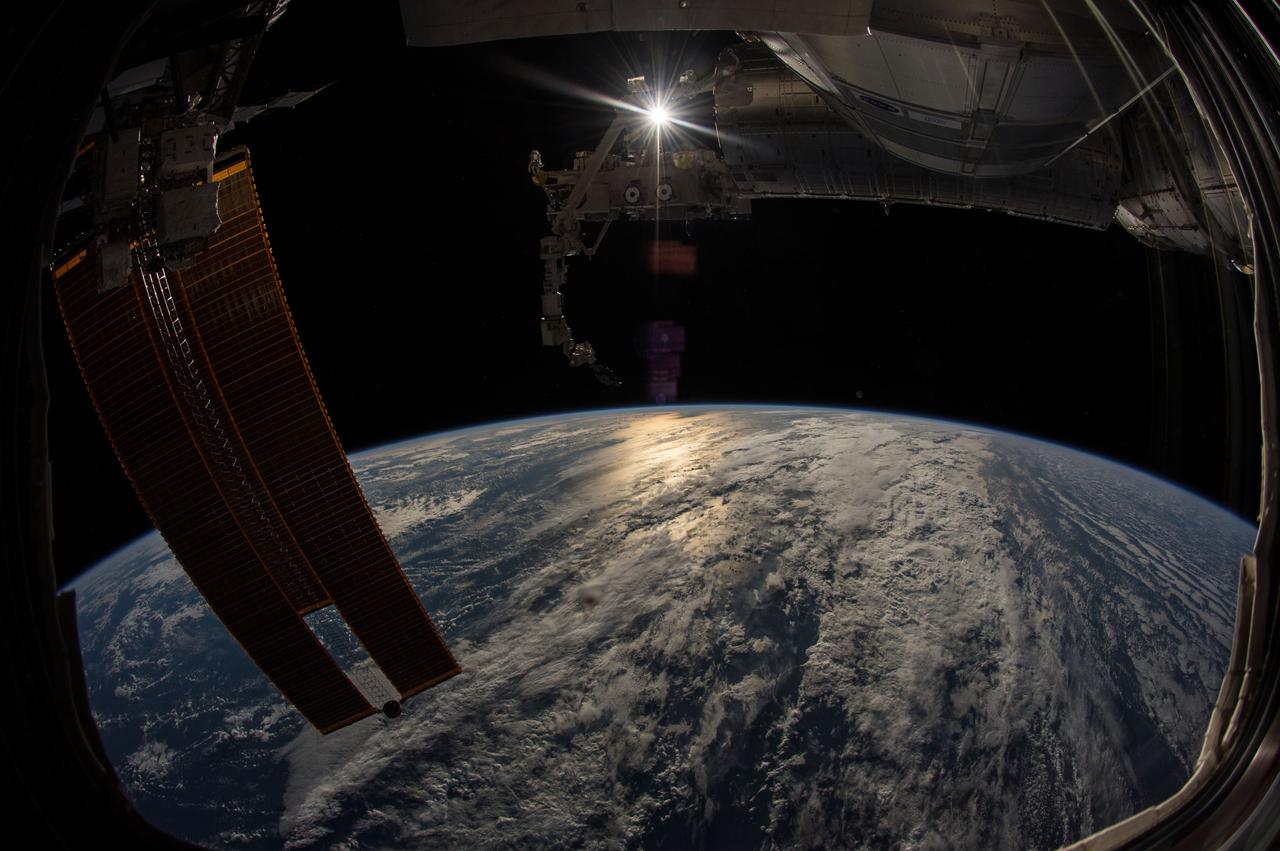
ISS046e030155 (01/31/2016) --- Elements of the International Space Station frame this image of the Earth taken Jan. 31, 2016 by the Expedition 46 crew
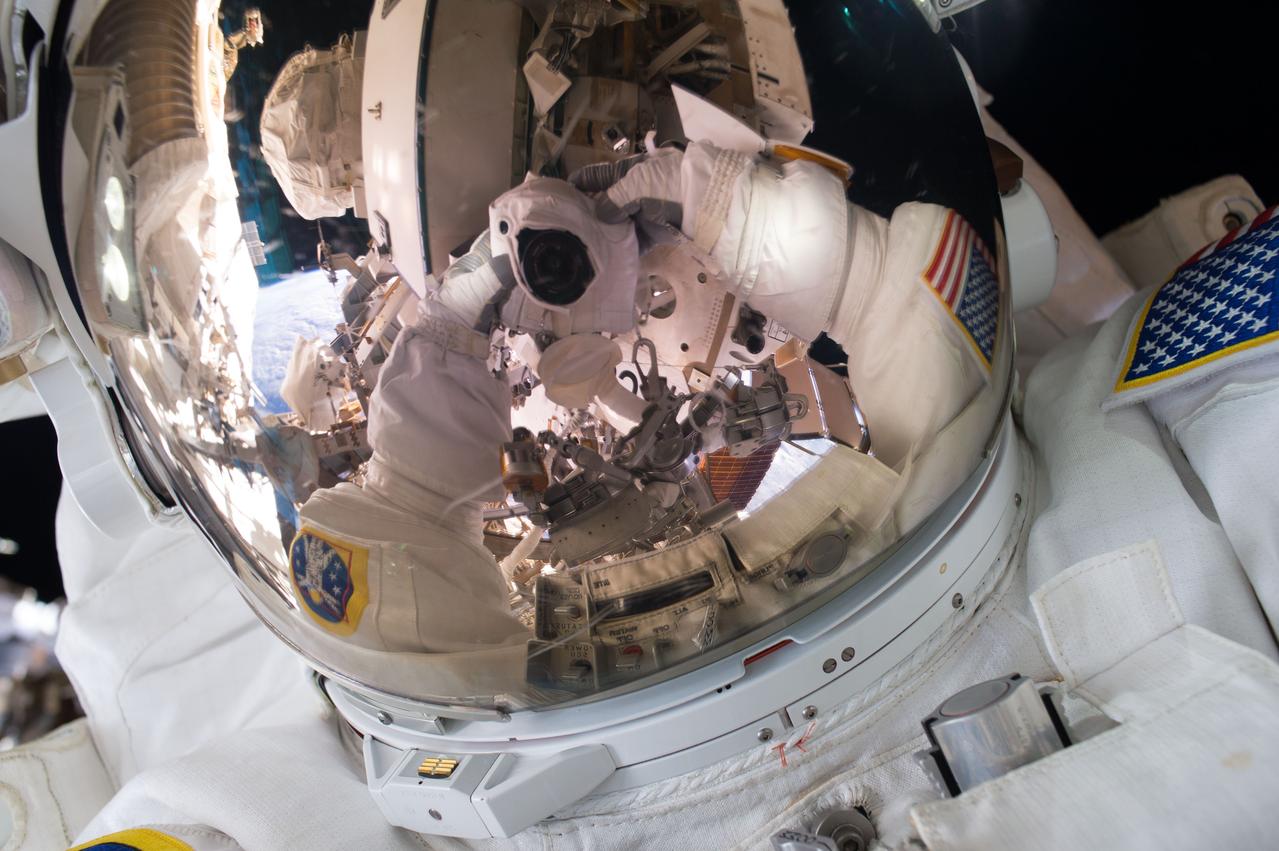
ISS045E082998 (10/28/2015) --- NASA astronaut Scott Kelly snaps a quick space selfie during his first ever spacewalk on Oct 28, 2015. Kelly and NASA astronaut Kjell Lindgren worked outside for seven hours and 16 minutes on a series of tasks to service and upgrade the International Space Station. They wrapped a dark matter detection experiment in a thermal blanket, lubricated the tip of the Canadarm2 robotic arm and then routed power and data cables for a future docking port.
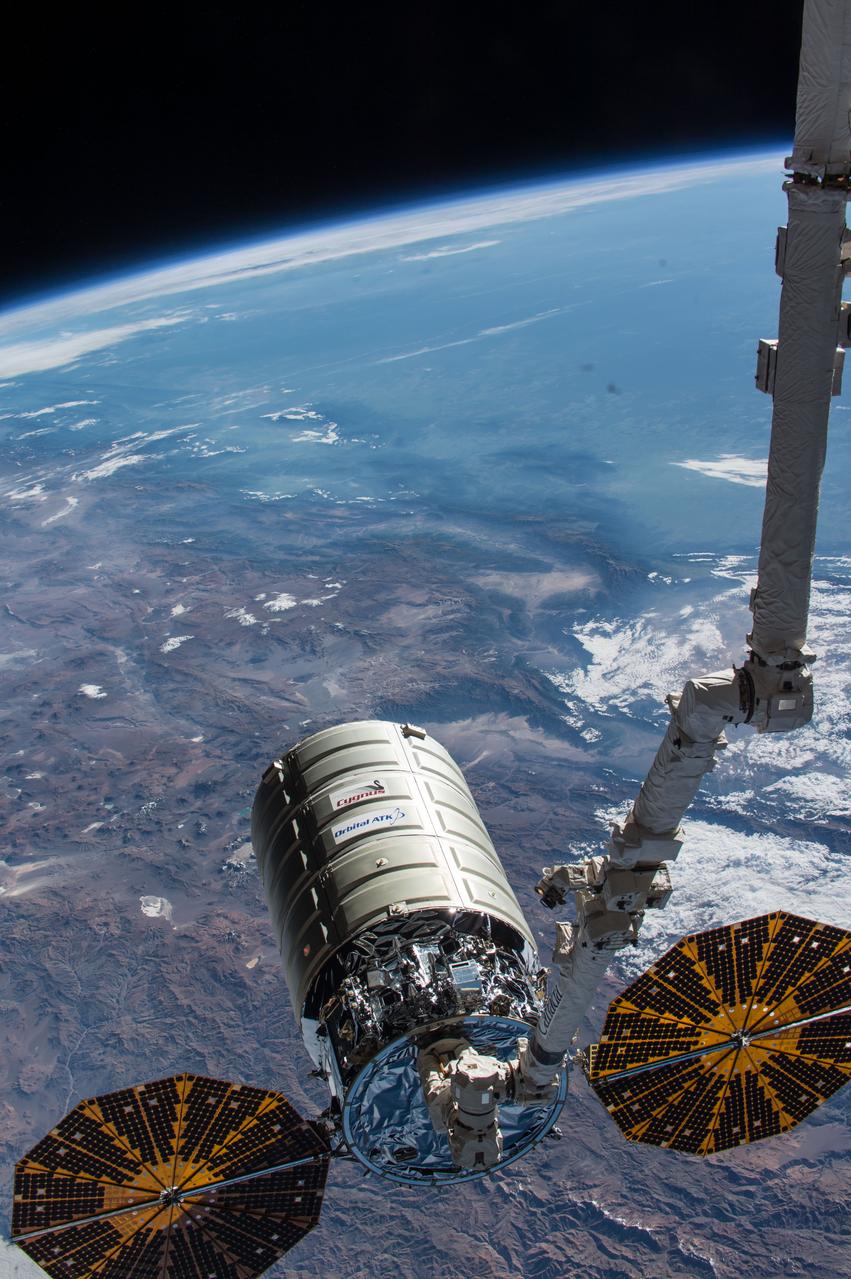
ISS046e043433 (02/19/2016) --- The Expedition 46 crew took out the trash recently when it released the Orbital ATK Cygnus spacecraft from the grips of the International Space Station’s Canadarm2 robotic arm. Cygnus was filled with roughly 1.5 tons of trash and discarded gear before the hatches were closed. Ground controllers then remotely guided the Canadarm2 to grapple Cygnus and detach it from the Unity module. NASA astronauts Scott Kelly and Tim Kopra commanded the Canadarm2 to release Cygnus Feb 19, at 7:26 a.m. EST when it began gracefully departing the vicinity of the station. Cygnus ultimately burned up during reentry through the Earth’s atmosphere on Saturday, Feb 20. This was Orbital ATK’s fourth commercial resupply mission.
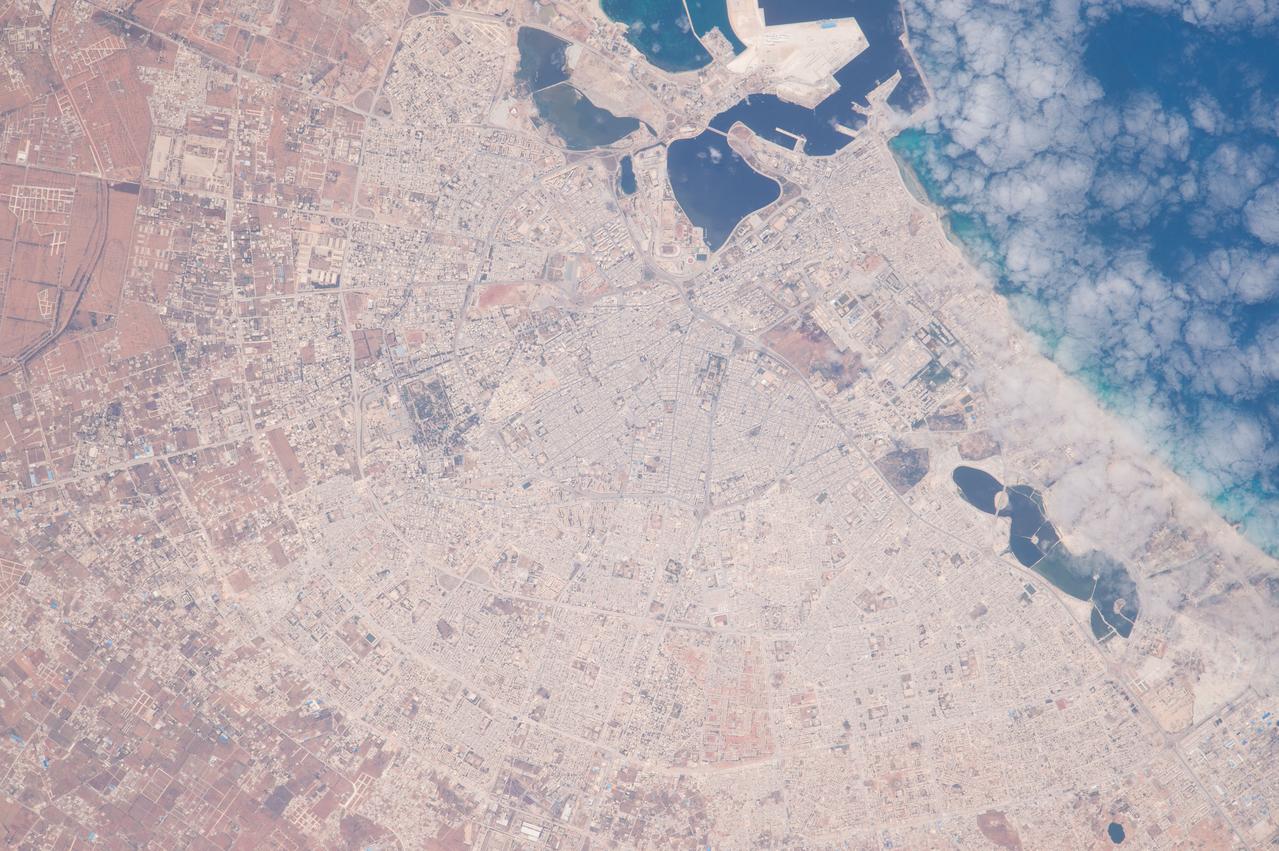
ISS043E182364 (05/08/2015) --- The Libyan city of Benghazi is shown in this image taken from the International Space Station by NASA astronaut Scott Kelly on May 8th, 2015.
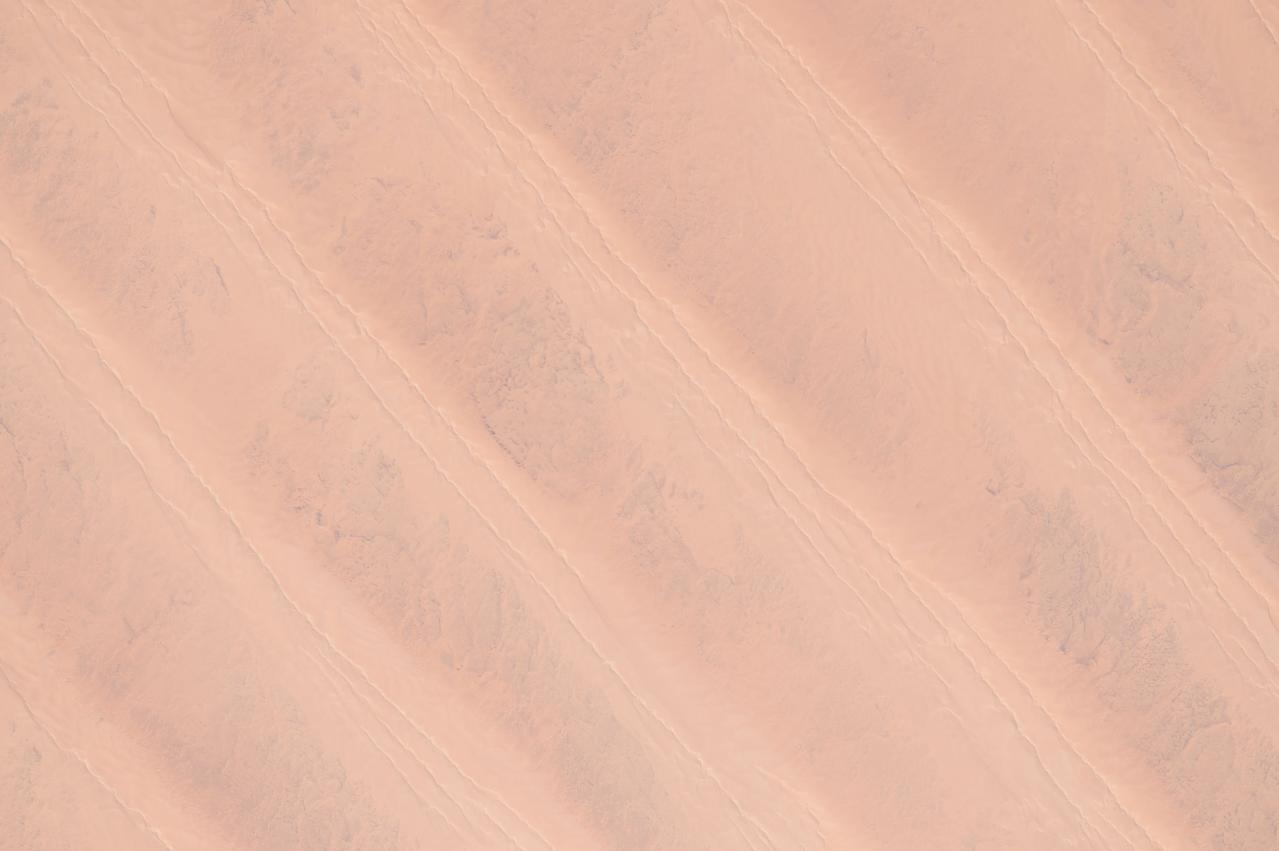
ISS043182398 (05/08/2015) --- Another view of the northern African Great Sand Sea, Libyan Desert and western Egypt with orange parallel dunes taken on May 8th 2015 by NASA astronaut Scott Kelly on the International Space Station.
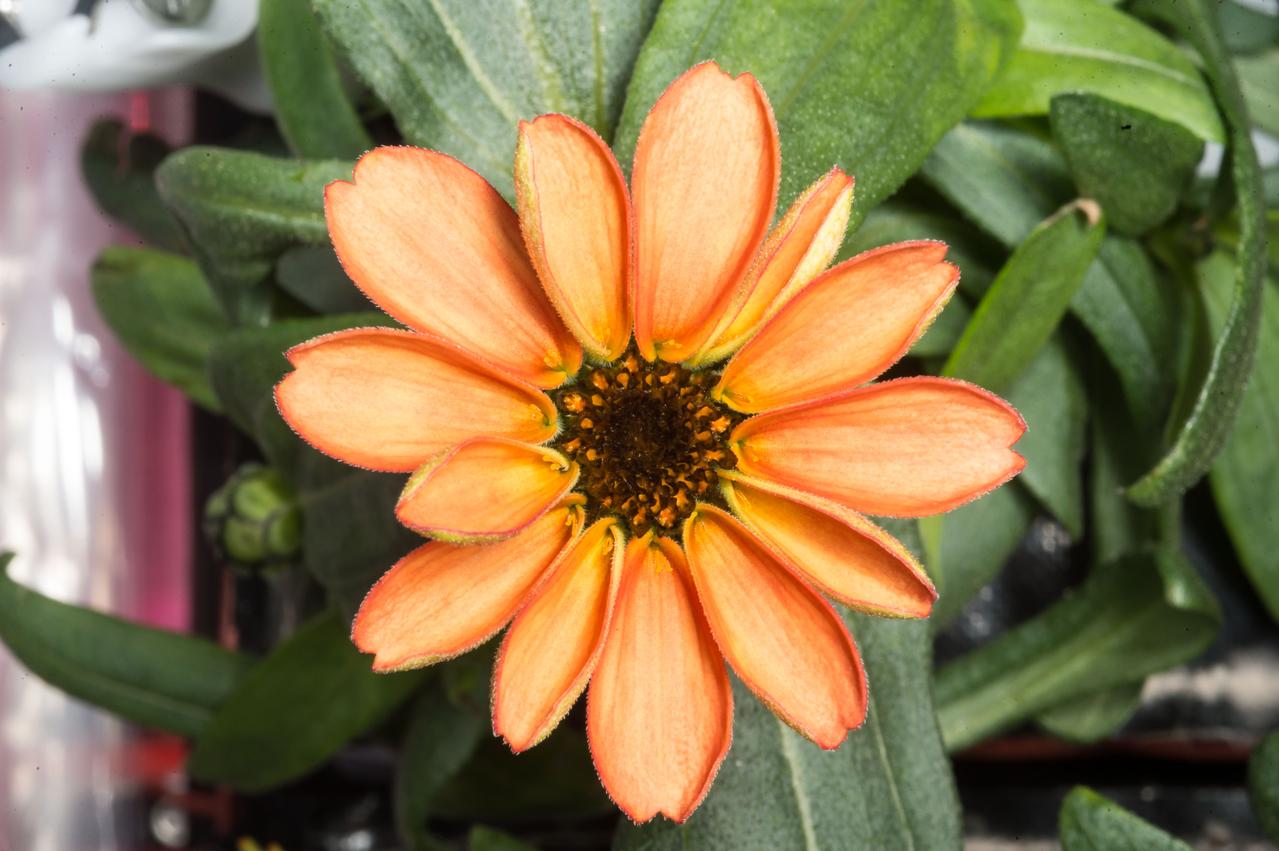
Photographic documentation of VEG-01 taken by the Expedition 46 crew. The Veg-01 investigation is used to assess on-orbit function and performance of the Veggie facility, focusing on the growth and development of seedlings in the spaceflight environment and the composition of microbial flora on the plants and the facility. For this run, Zinnias were grown for 60 days and produced these flowers.
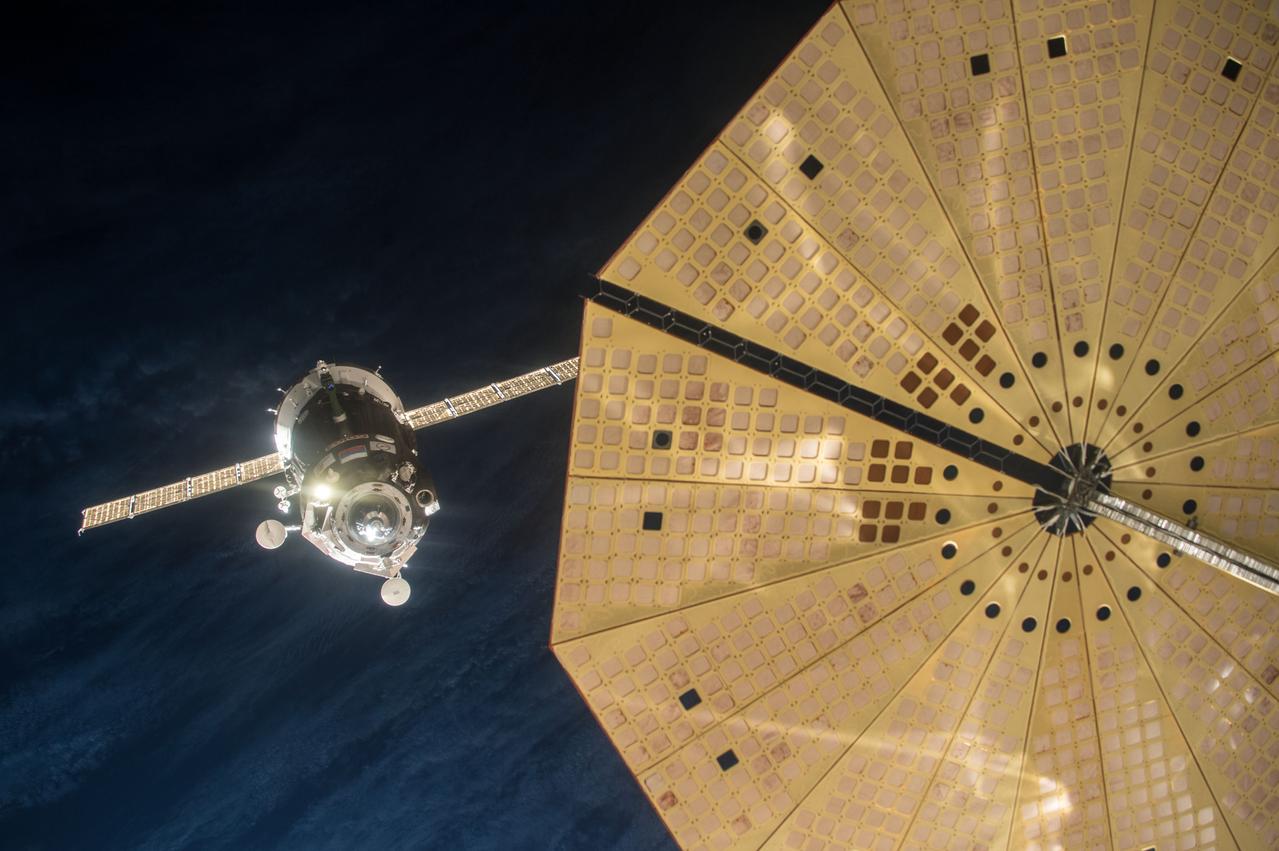
ISS046e001535 (12/15/2015) --- Russian cosmonaut Yuri Malenchenko manually docked the Soyuz TMA-19M spacecraft on Dec. 15, 2015 to the International Space Station’s Rassvet module after an initial automated attempt was aborted. Malenchenko took control of the Soyuz, backed it away from the station to assess the Soyuz’ systems, then re-approached the complex for the manual docking. Flight Engineer Tim Kopra of NASA and Flight Engineer Tim Peake of ESA (European Space Agency) flanked Malenchenko as he brought the Soyuz to the Rassvet port for the start of a six-month mission. After leak checks were conducted on both sides of the docking interface, hatches were opened and Malenchenko, Kopra and Peake were greeted by Expedition 46 Commander Scott Kelly of NASA and Flight Engineers Mikhail Kornienko and Sergey Volkov of the Russian Federal Space Agency (Roscosmos). The solar array from the docked Orbital ATK's Cygnus cargo vehicle is also in view.
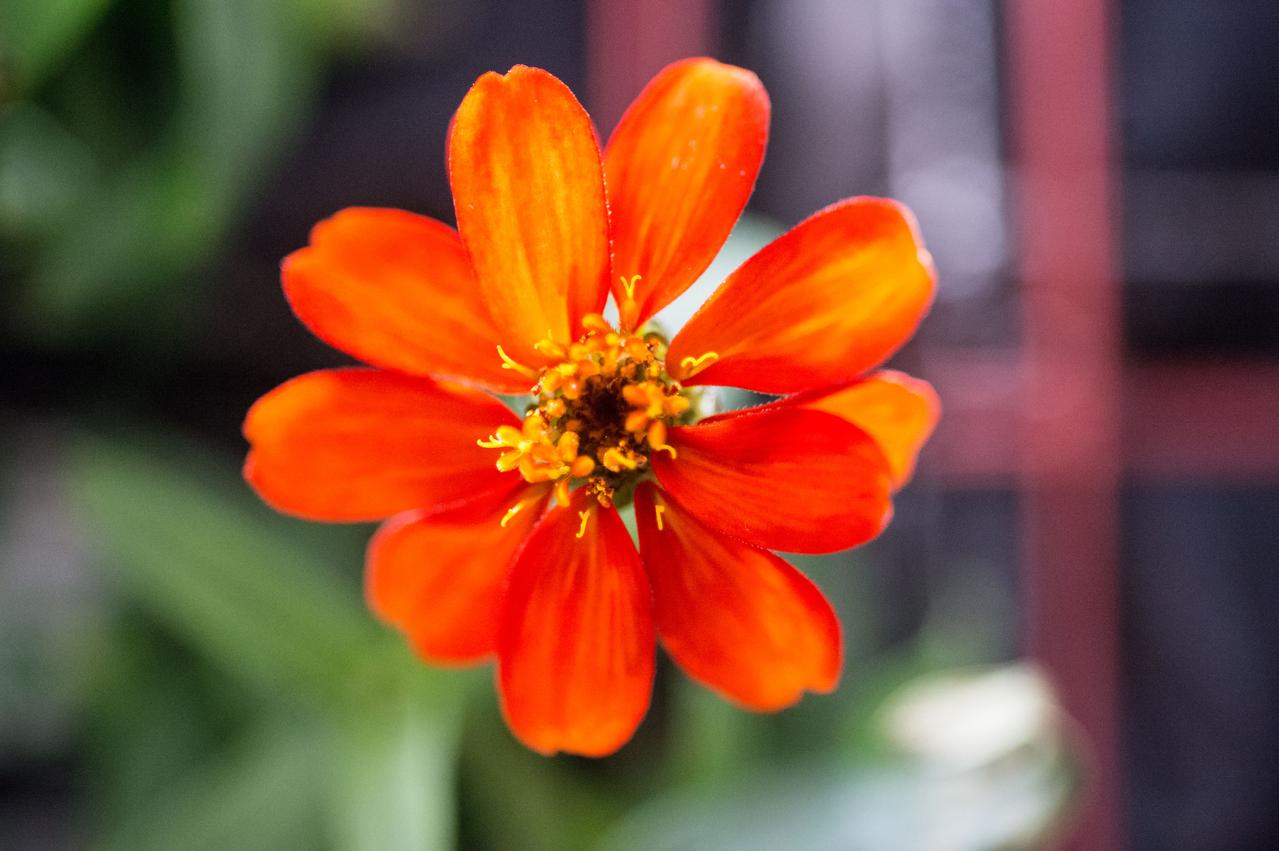
iss046e017204 (1/22/2016) --- Close-up view of Zinnia grown as part of VEG-01 experiment in the Columbus module aboard the International Space Station (ISS). The Veg-01 investigation is used to assess on-orbit function and performance of the Veggie facility, focusing on the growth and development of seedlings in the spaceflight environment and the composition of microbial flora on the plants and the facility. For this run, Zinnias were grown for 60 days and produced flowers.
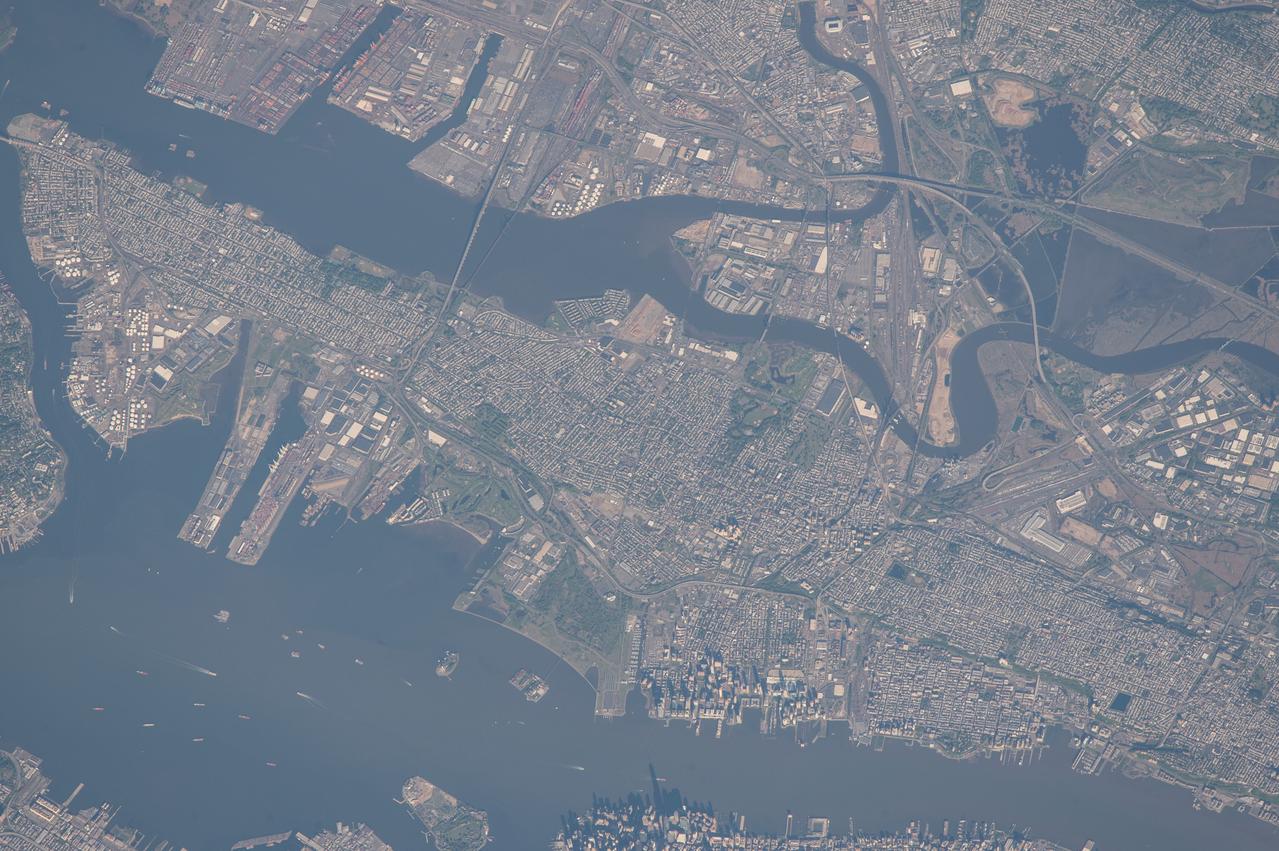
ISS043E241982 (05/23/2015) --- This Earth observation image of the Eastern coast of the United States from May 23, 2015 was tweeted out from the International Space Station by NASA astronaut Scott Kelly with the added comment: "To end #EMSWeek #JerseyCity where I worked as an EMT more than 30 years ago".
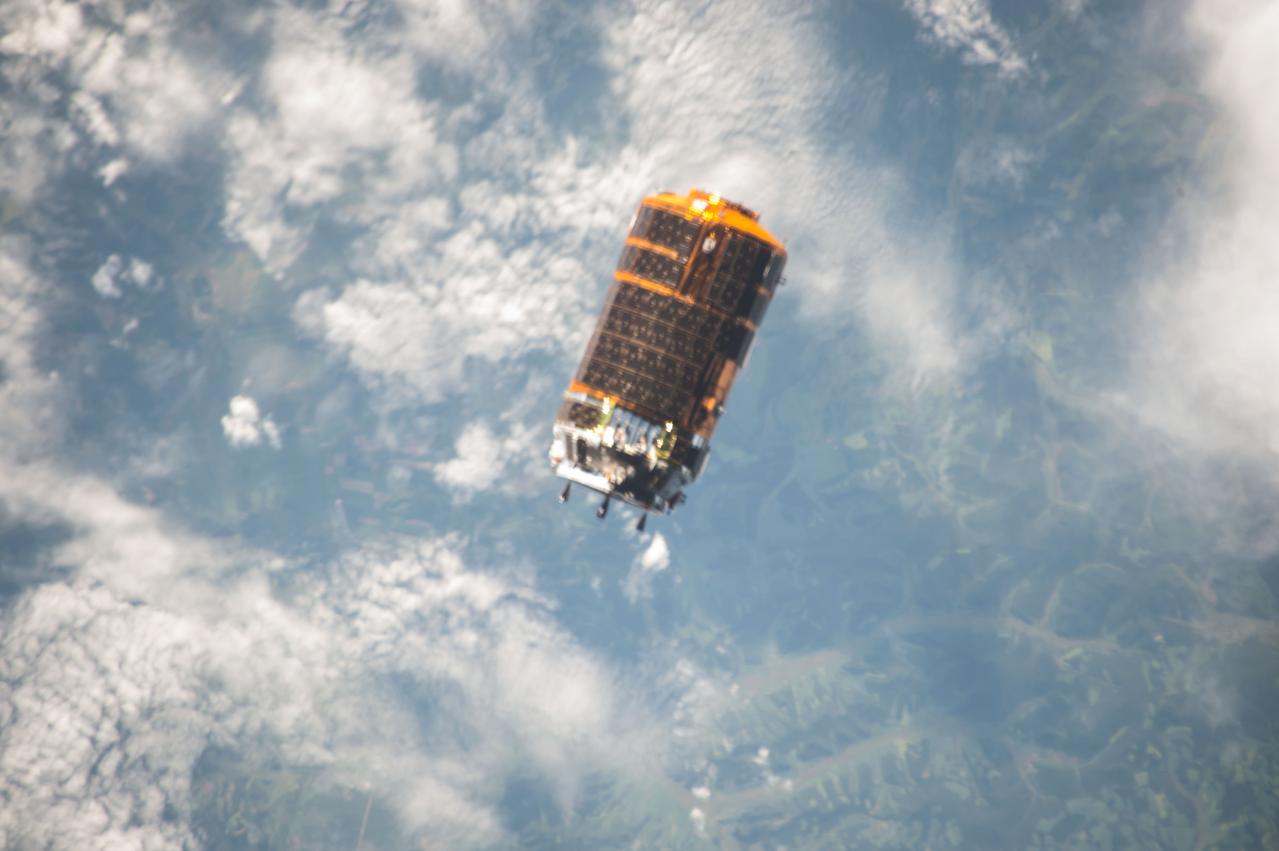
ISS044E060990 (08/24/2015) --- The Japan Aerospace Exploration Agency (JAXA) Kounotori 5 H-II Transfer Vehicle (HTV-5) is seen during final approach towards the International Space Station. The unpiloted cargo craft, named “Kounotori,” which is Japanese for “white stork,” is loaded with more than four-and-a-half tons of research and supplies, including water, spare parts and experiment hardware
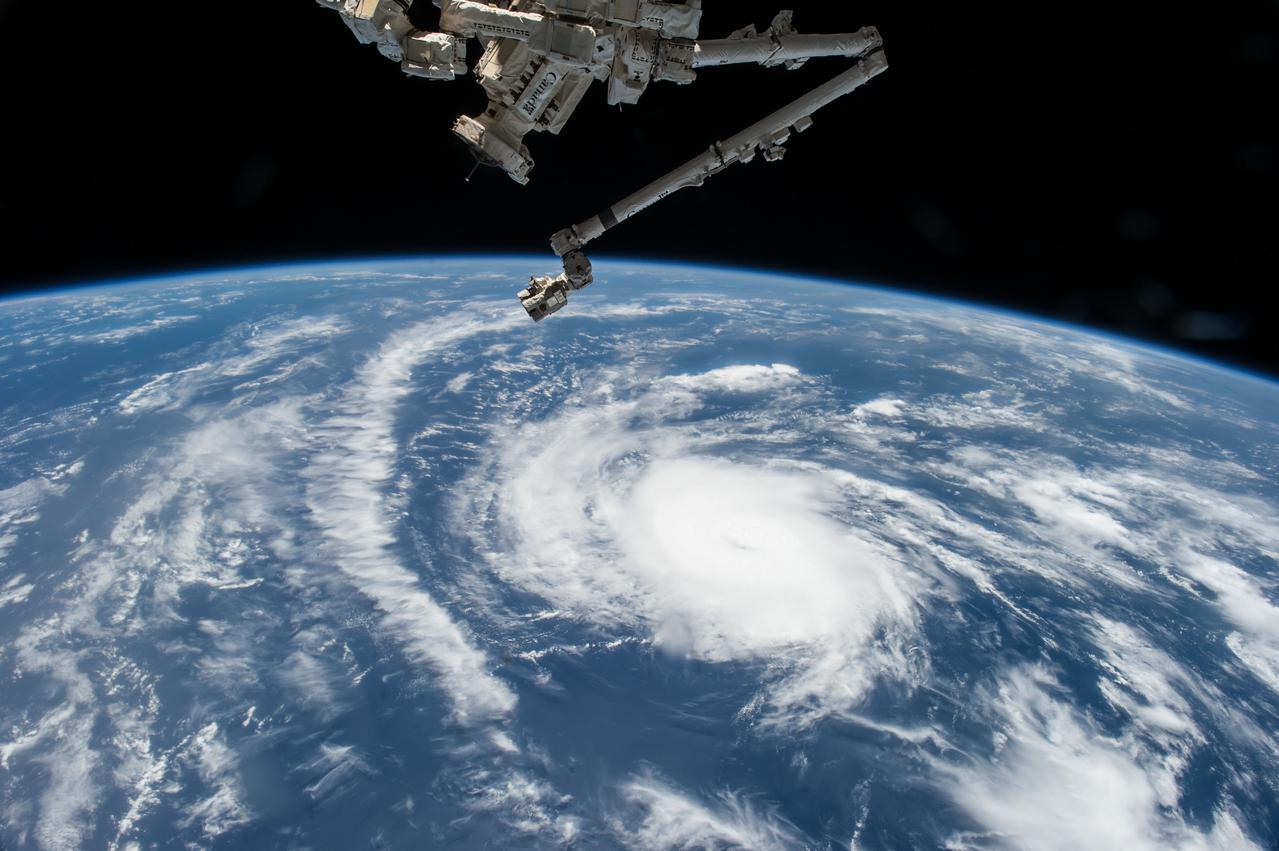
ISS044E059041 (08/21/2015) --- Hurricane Danny as seen from the International Space Station as it traversed the Caribbean Sea headed for Puerto Rico, the Dominican Republic and Cuba.
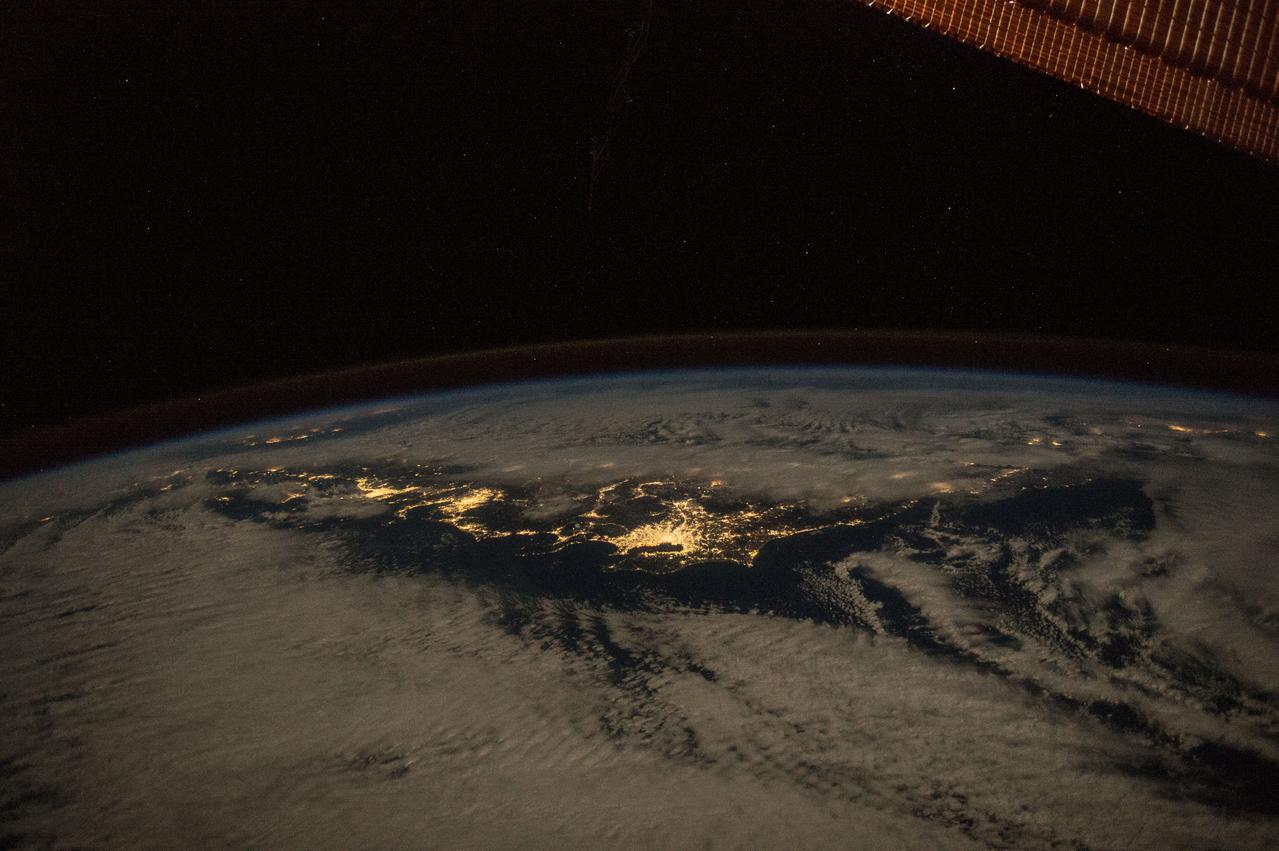
ISS046e022896 (01/24/2016) --- NASA astronaut Scott Kelly took this image of Japan at night on Jan. 24, 2016. In his tweet Scott said: " GoodEvening #Japan! I look forward to meeting you again someday. #YearInSpace"
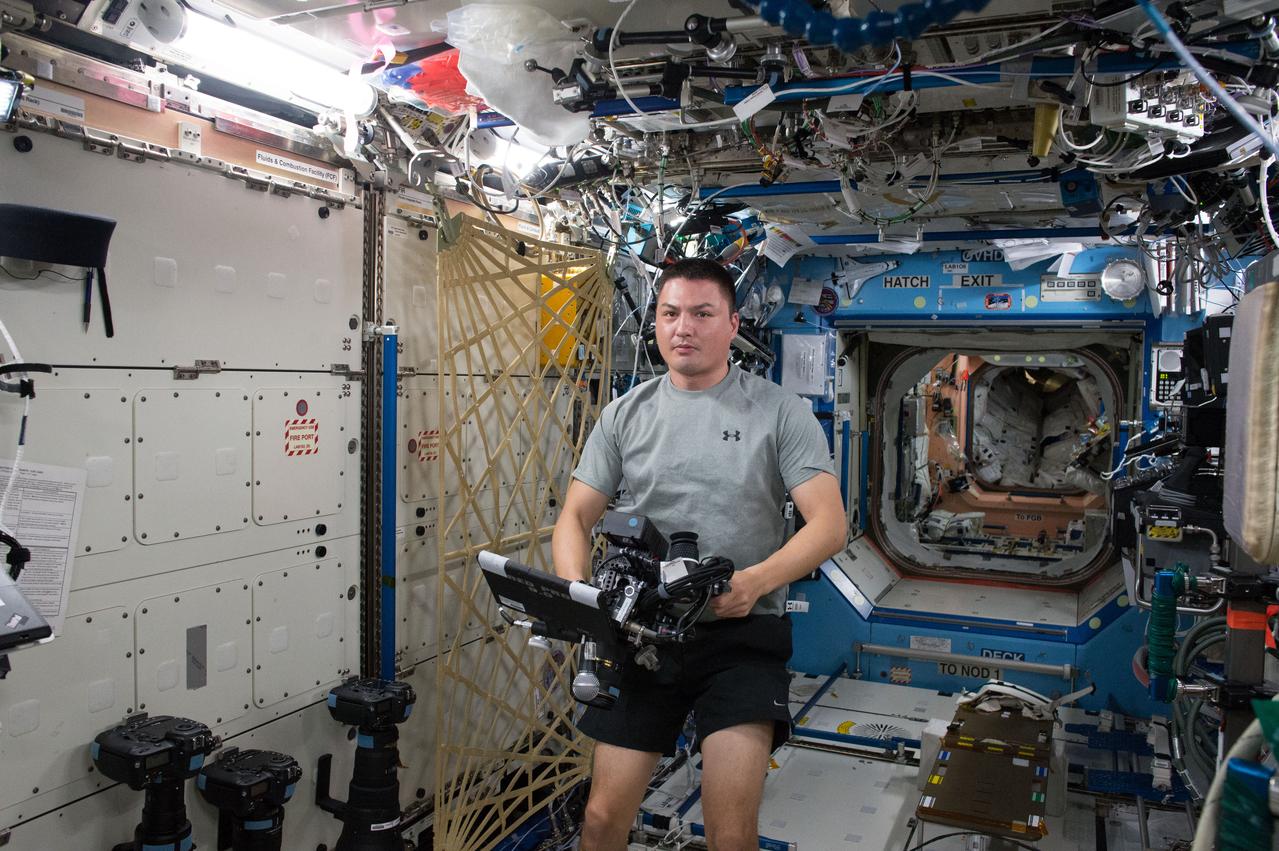
ISS045E028189 (09/24/2015 --- NASA astronaut Kjell Lindgren prepares to film with a RED Dragon camera, capable of capturing Ultra High-Definition (UHD) video. This new capability will allow researchers to acquire high resolution - high frame rate video to provide new insight into the vast array of experiments taking place every day. It will also bestow the most breathtaking views of planet Earth and space station activities ever acquired for consumption by those still dreaming of making the trip to outer space.
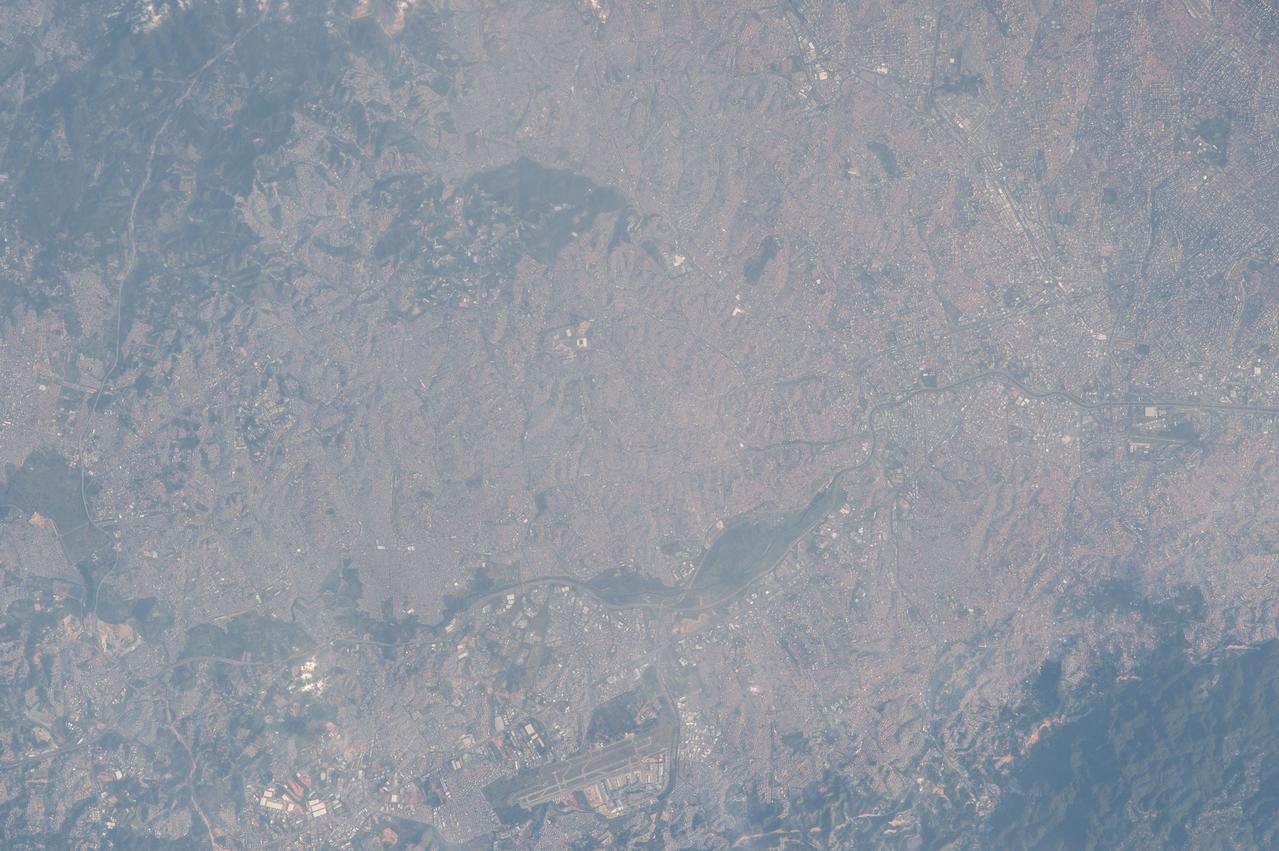
ISS043E182745 (05/09/2015) --- NASA astronaut Scott Kelly and his crewmates on Expedition 43 capture Earth observation images as part of their duties on board the International Space Station and during their off time for interest and appreciation. This picture taken May 9th, 2015 of north eastern Brazil in South America showcases Sao Polo, and even displays the Guarulhos International Airport.

Night Earth observations taken by Expedition 44 crewmember.
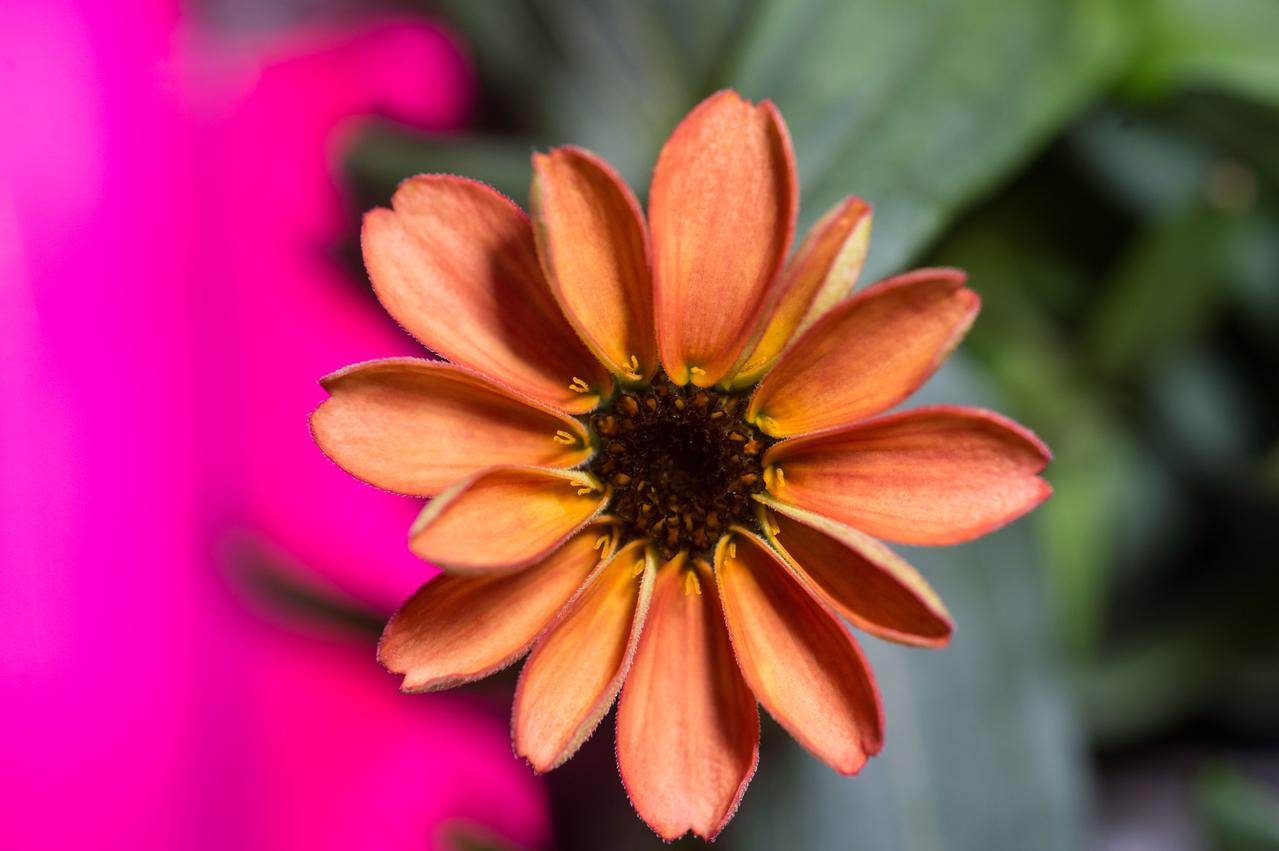
Photographic documentation of VEG-01 taken by the Expedition 46 crew. The Veg-01 investigation is used to assess on-orbit function and performance of the Veggie facility, focusing on the growth and development of seedlings in the spaceflight environment and the composition of microbial flora on the plants and the facility. For this run, Zinnias were grown for 60 days and produced these flowers.
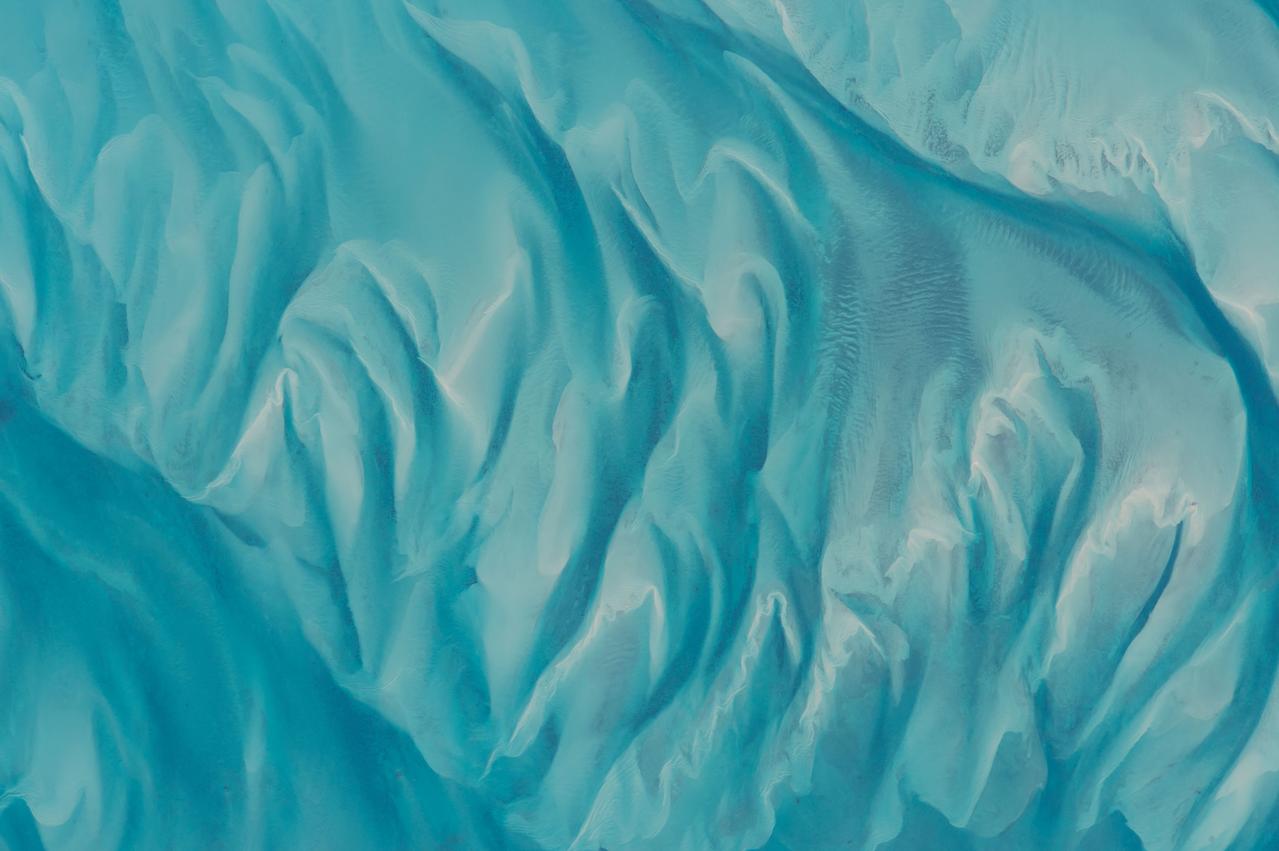
ISS046e009103 (01/16/2016) --- In orbit around the Earth on board the International Space Station NASA astronaut Scott Kelly captured this blue water image in his "Earth Art" series and tweeted it out with this message: " A splash of #EarthArt over the #Bahamas! #YearInSpace ".
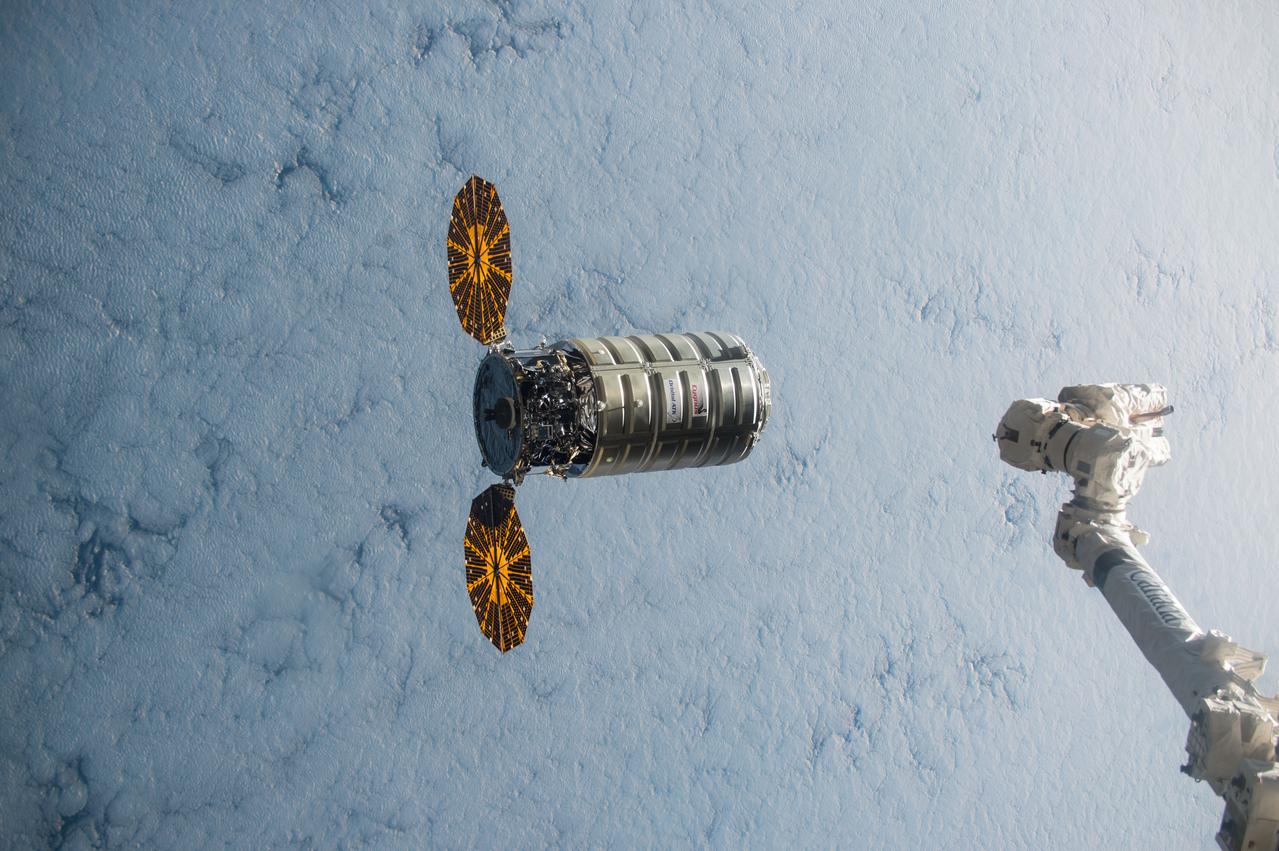
ISS045e176110 (12/09/2015) --- Using the International Space Station’s robotic arm, Canadarm2 (right) NASA Flight Engineer Kjell Lindgren prepares to capture Orbital ATK’s Cygnus cargo vehicle Dec. 09, 2015. The space station crew and the robotics officer in mission control in Houston will position Cygnus for installation to the orbiting laboratory’s Earth-facing port of the Unity module. Among the more than 7,000 pounds of supplies aboard Cygnus are numerous science and research investigations and technology demonstrations, including a new life science facility that will support studies on cell cultures, bacteria and other microorganisms; a microsatellite deployer and the first microsatellite that will be deployed from the space station; several other educational and technology demonstration CubeSats; and experiments that will study the behavior of gases and liquids, clarify the thermo-physical properties of molten steel, and evaluate flame-resistant textiles.
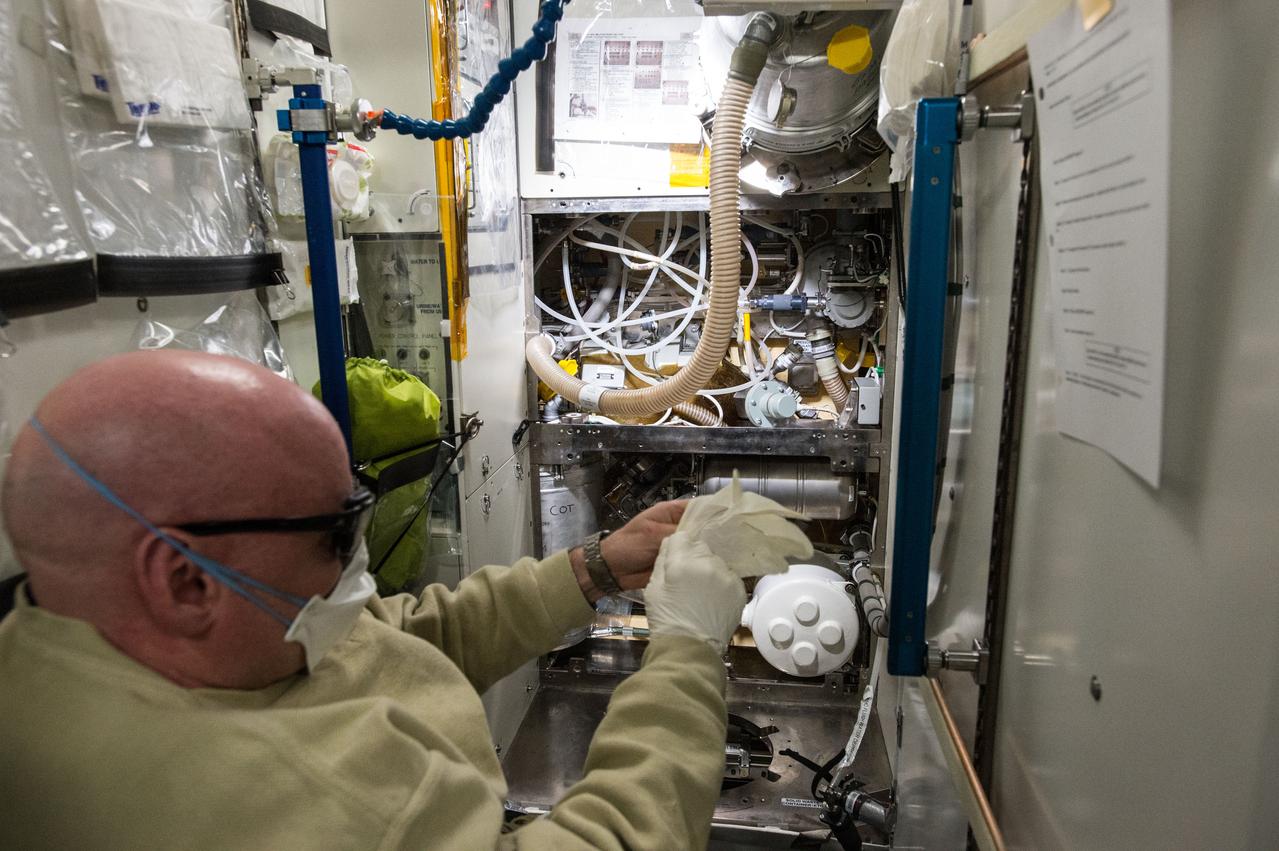
ISS046e005831 (01/07/2016) --- Expedition 46 Commander and NASA astronaut Scott Kelly works to clean up a leak in the Waste and Hygiene Compartment aboard the International Space Station. Crew members are routinely called on for maintenance efforts across the orbiting laboratory as they work to keep their various life support systems in working order.
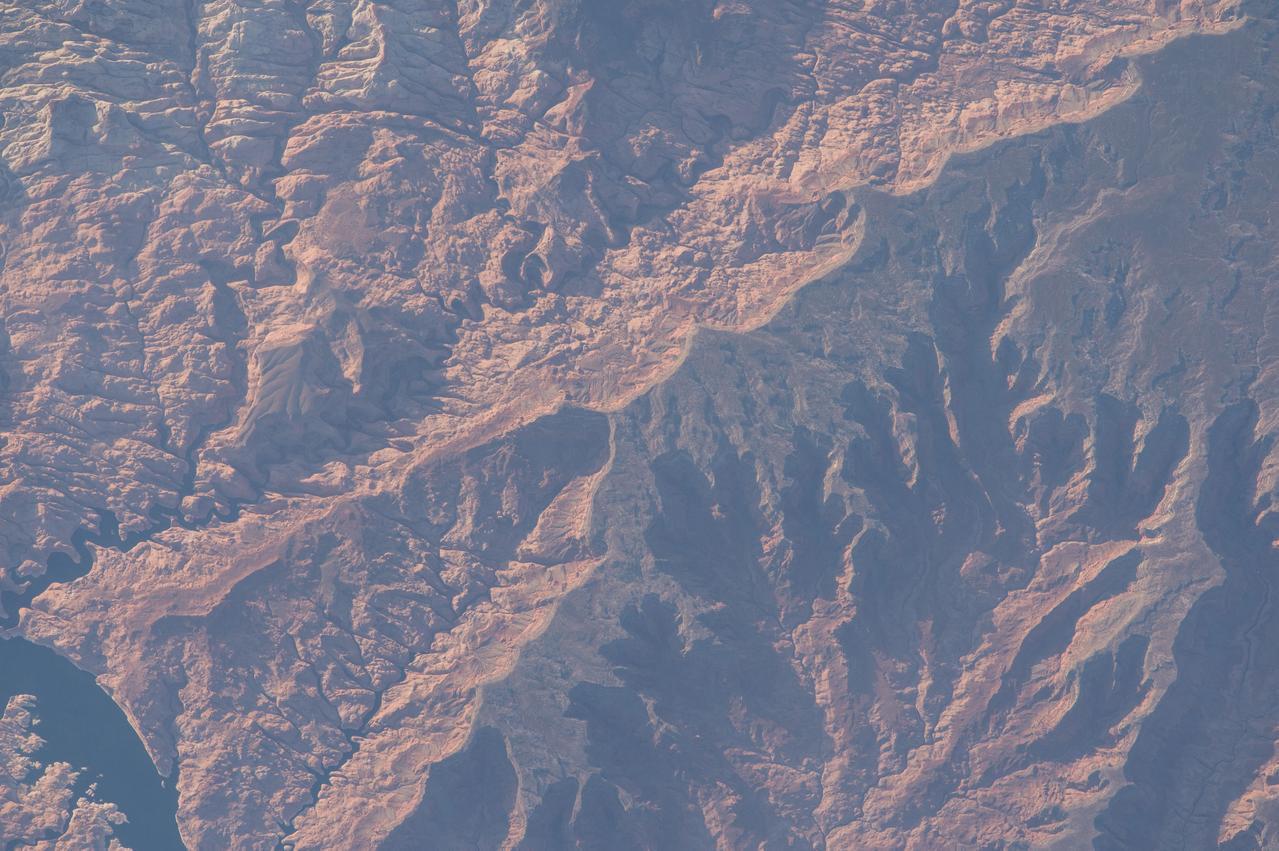
ISS043E182476 (05/08/2015) ---The US rugged southern Utah area is highlighted in this image captured by NASA astronaut Scott Kelly from the International Space Station May, 8th, 2015. The area shown is the Forbidden Canyon, Rainbow Plateau and San Juan River.
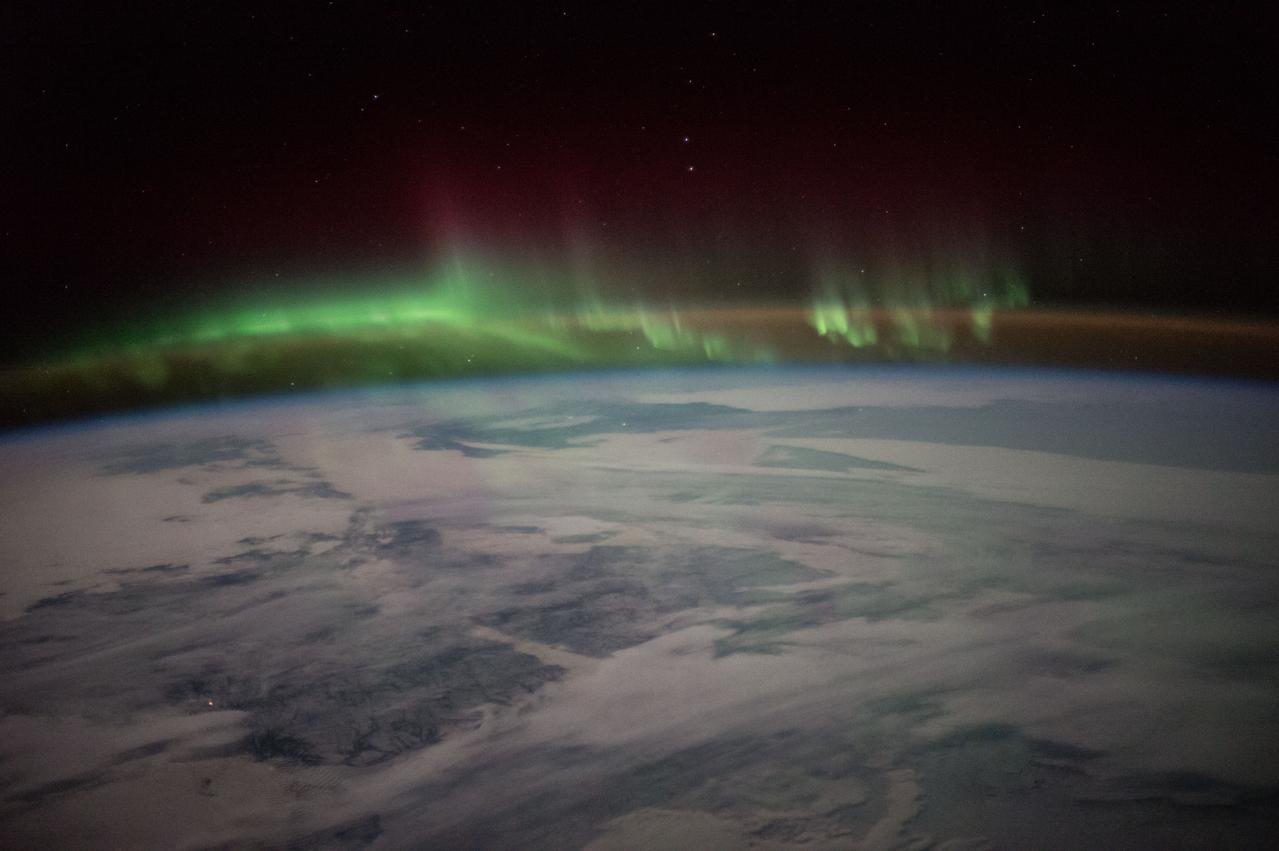
ISS046e016803 (01/21/2016) --- NASA astronaut Scott Kelly tweeted this aurora image over Canada on Jan. 21, 2016 with the message: ""O Canada! Beneath thy shining skies. You were beautiful this morning! #YearInSpace”
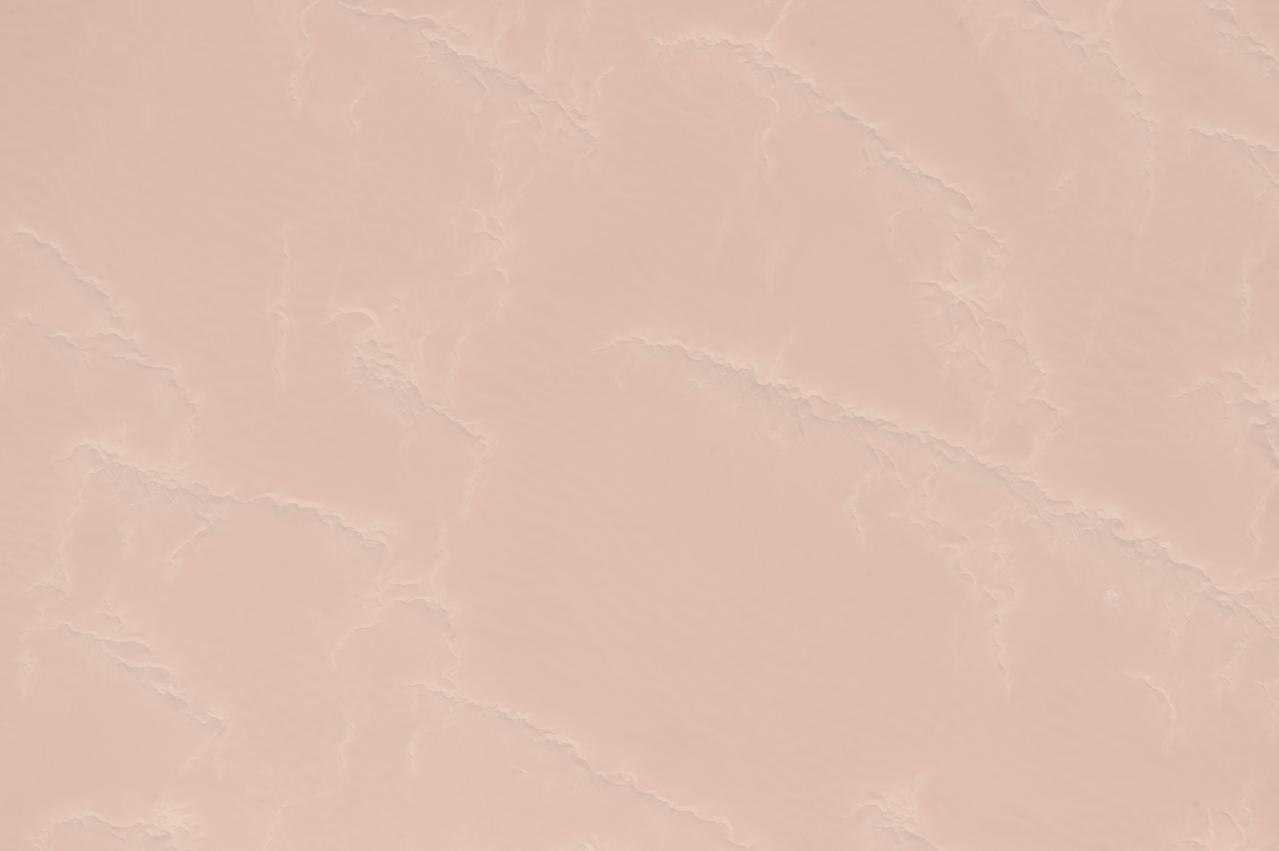
ISS043E182380 (05/08/2015) --- NASA astronaut Scott Kelly aboard the International Space Station captured this desert scene in northern Africa on May 8th, 2015. The area shown is the Calanscio Sand Sea, in northeastern Libya.
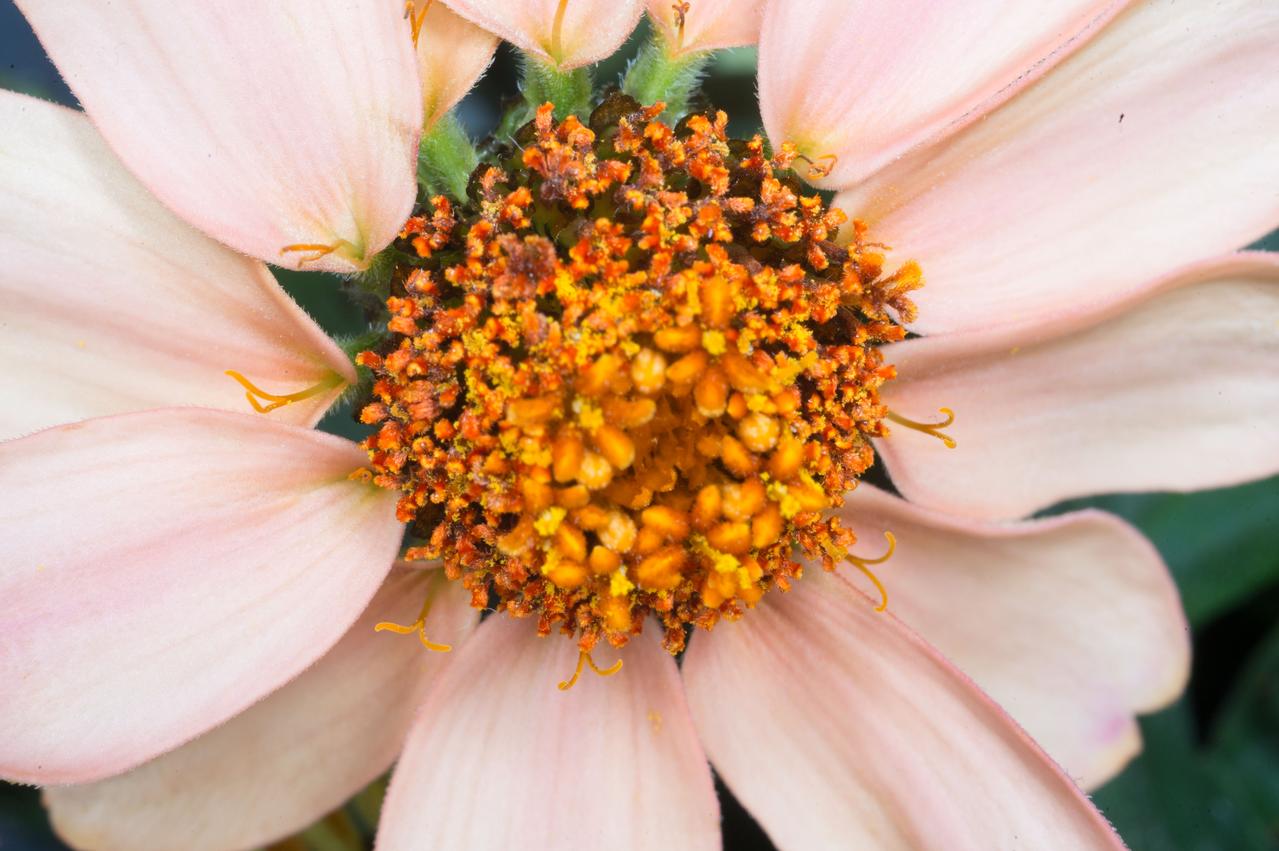
Photographic documentation of VEG-01 flowers taken by the Expedition 46 crew. The Veg-01 investigation is used to assess on-orbit function and performance of the Veggie facility, focusing on the growth and development of seedlings in the spaceflight environment and the composition of microbial flora on the plants and the facility. For this run, Zinnias will be grown for 60 days and are expected to produce flowers.
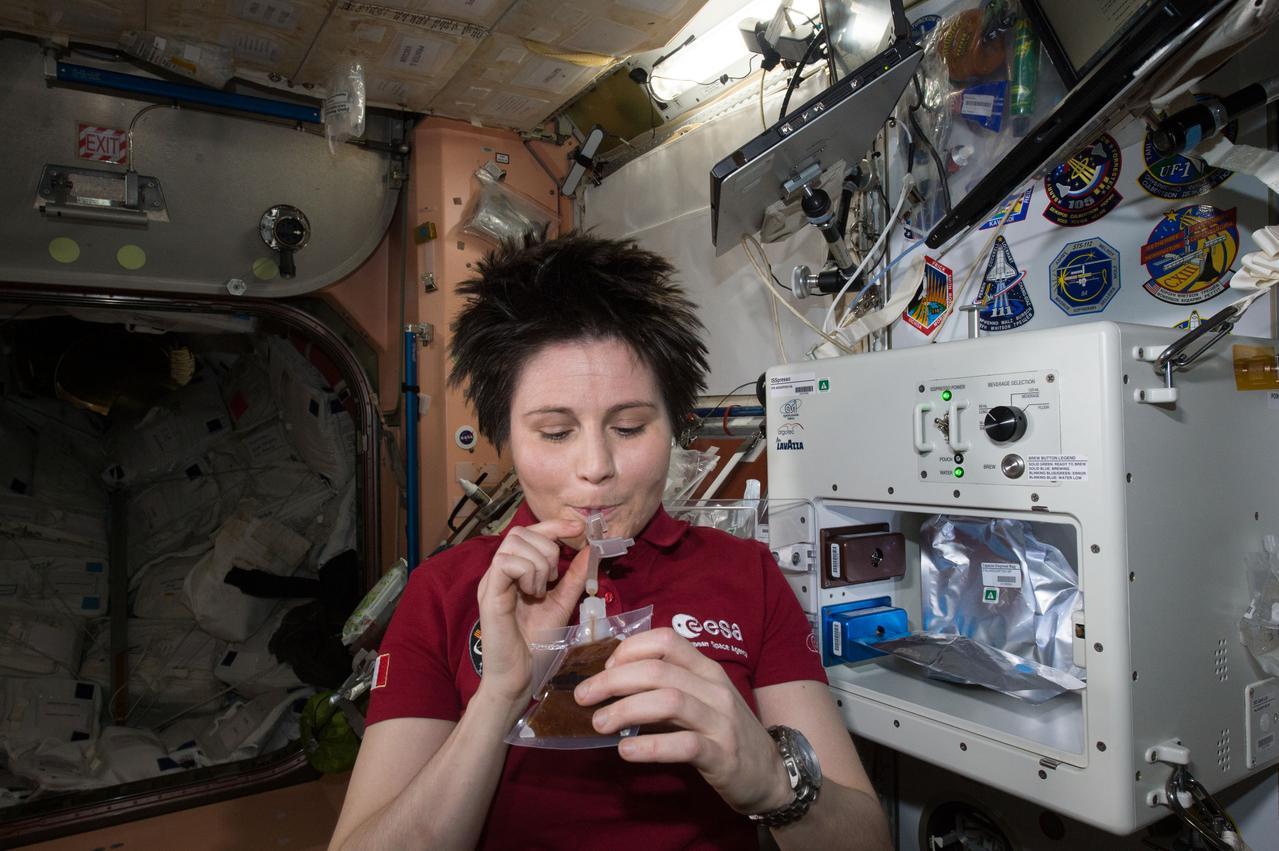
ISS043E160082 (05/03/2015) --- ESA (European Space Agency) astronaut Samantha Cristoforetti enjoys her first drink from the new ISSpresso machine. The espresso device allows crews to make tea, coffee, broth, or other hot beverages they might enjoy.
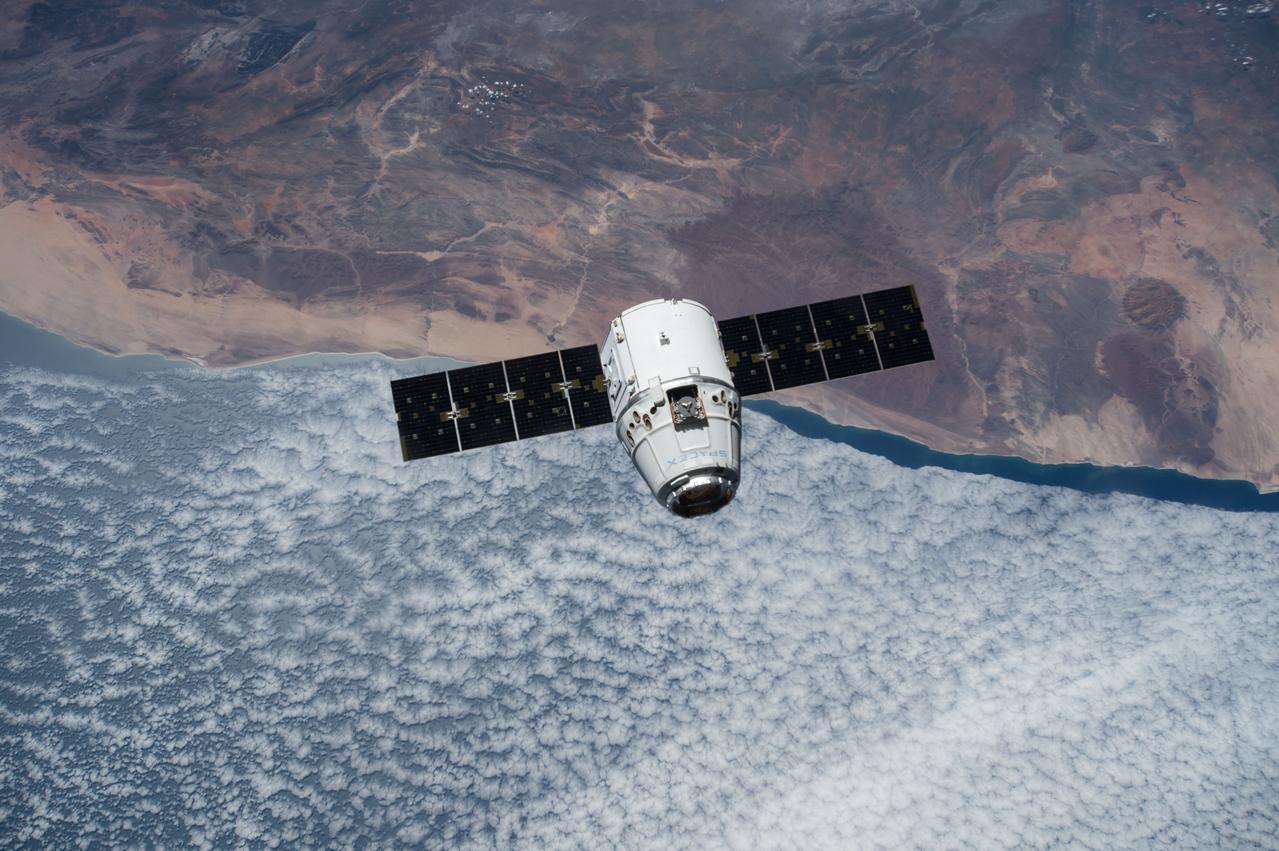
ISS043E122200 (04/17/2015) --- The SpaceX Dragon cargo spacecraft approaches the International Space Station Apr. 17th, 2015 after launching three days earlier from Cape Canaveral Air Station, Florida. It carries some 2 tons of science experiments, equipment, and supplies for the Expedition 43 team onboard the station.
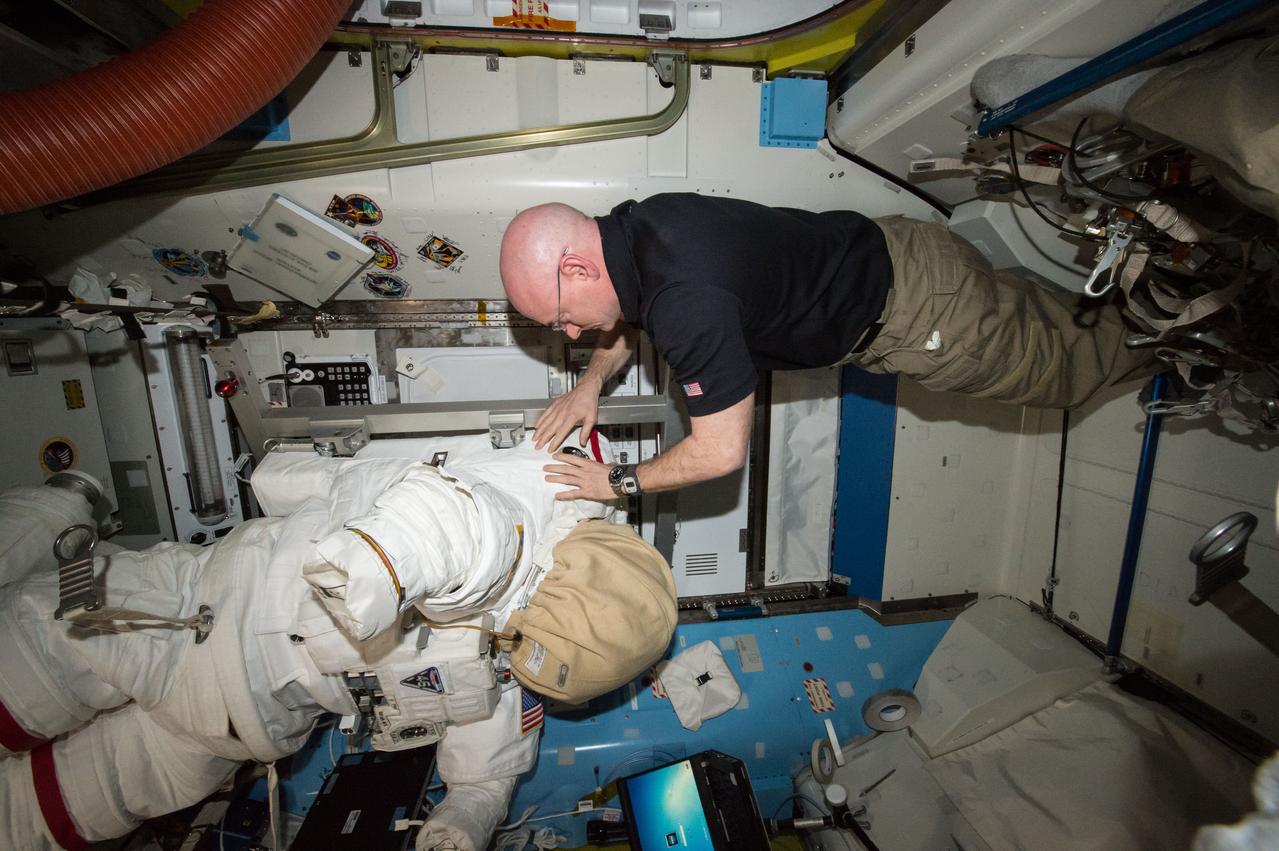
ISS046e025801 (01/27/2016) --- NASA astronaut Scott Kelly relocates spacewalk hardware and suits inside the Quest airlock on Jan. 27, 2016.
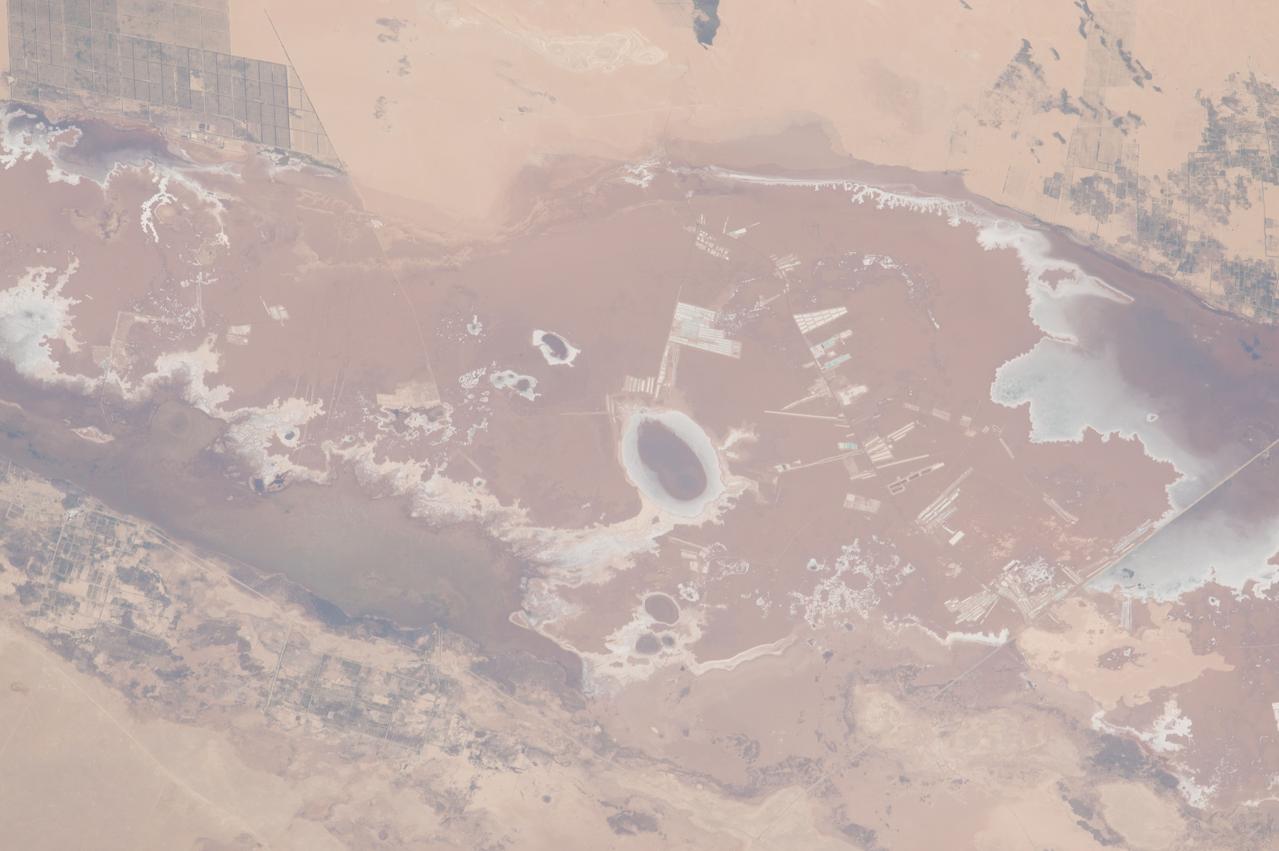
ISS043E182395 (05/08/2015) --- NASA astronaut Scott Kelly took this picture of the water filled Siwa Oasis in the northwestern Egyptian desert. Water is also treasured within the International Space Station where recycling plays an important role in conserving and reusing the precious life giving liquid.
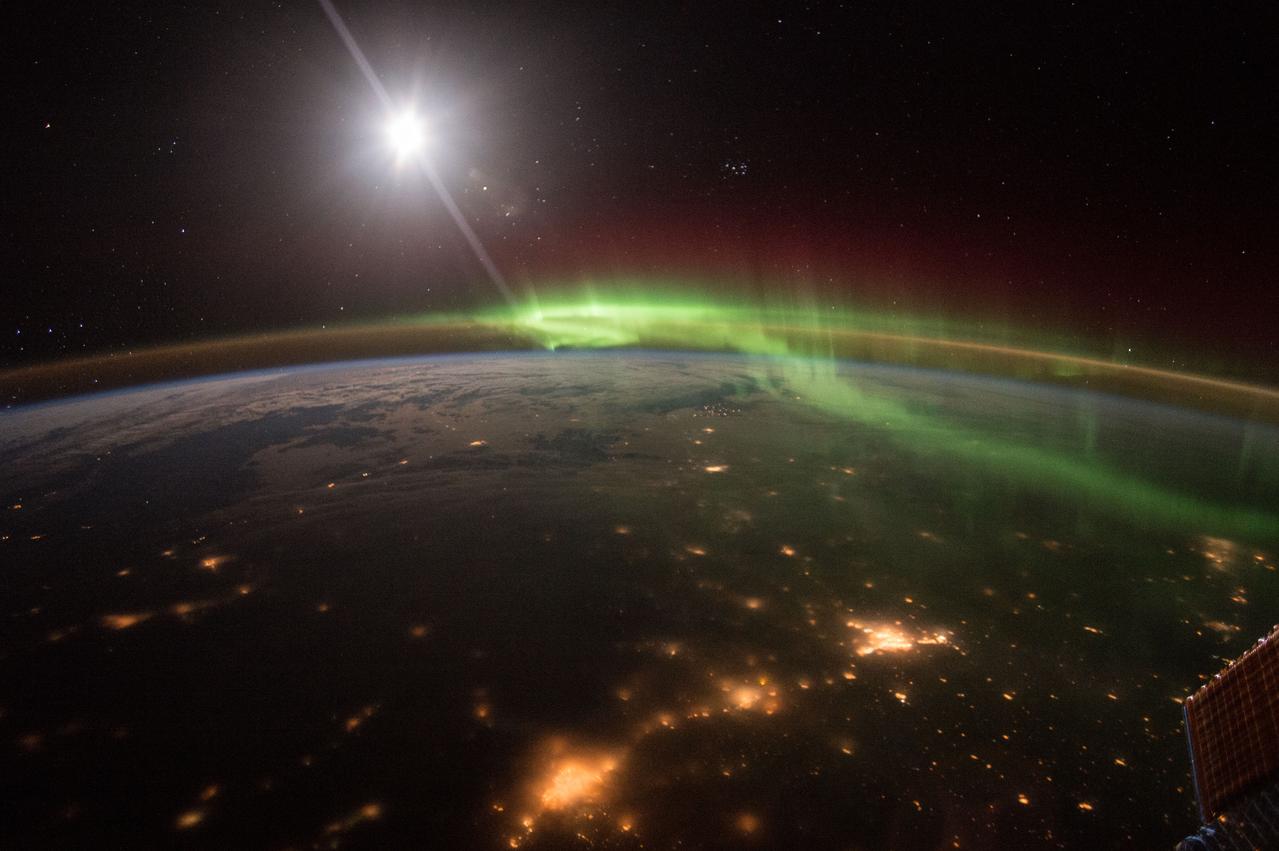
ISS046e015697 (01/20/2016) --- NASA astronaut Scott Kelly took this majestic image of the Earth at night highlighting the green and red hues of an Aurora. He tweeted this message along with the image: “The dance of #aurora. #YearInSpace"
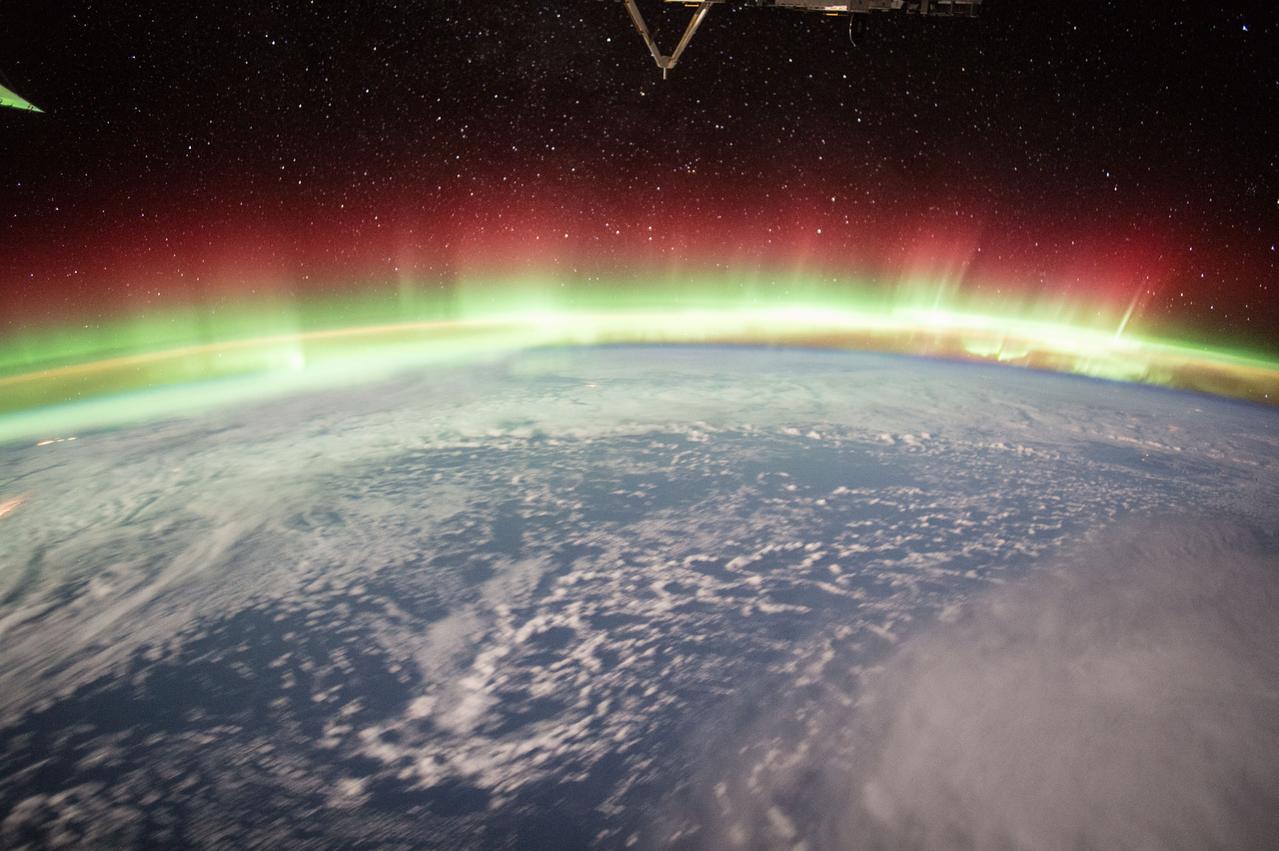
ISS046e015599 (01/20/2016) --- A brilliant and vivid Aurora Borealis illuminates the Earth’s northern hemisphere on Jan 20, 2016, providing a spectacular view for members of Expedition 46 aboard the International Space Station.
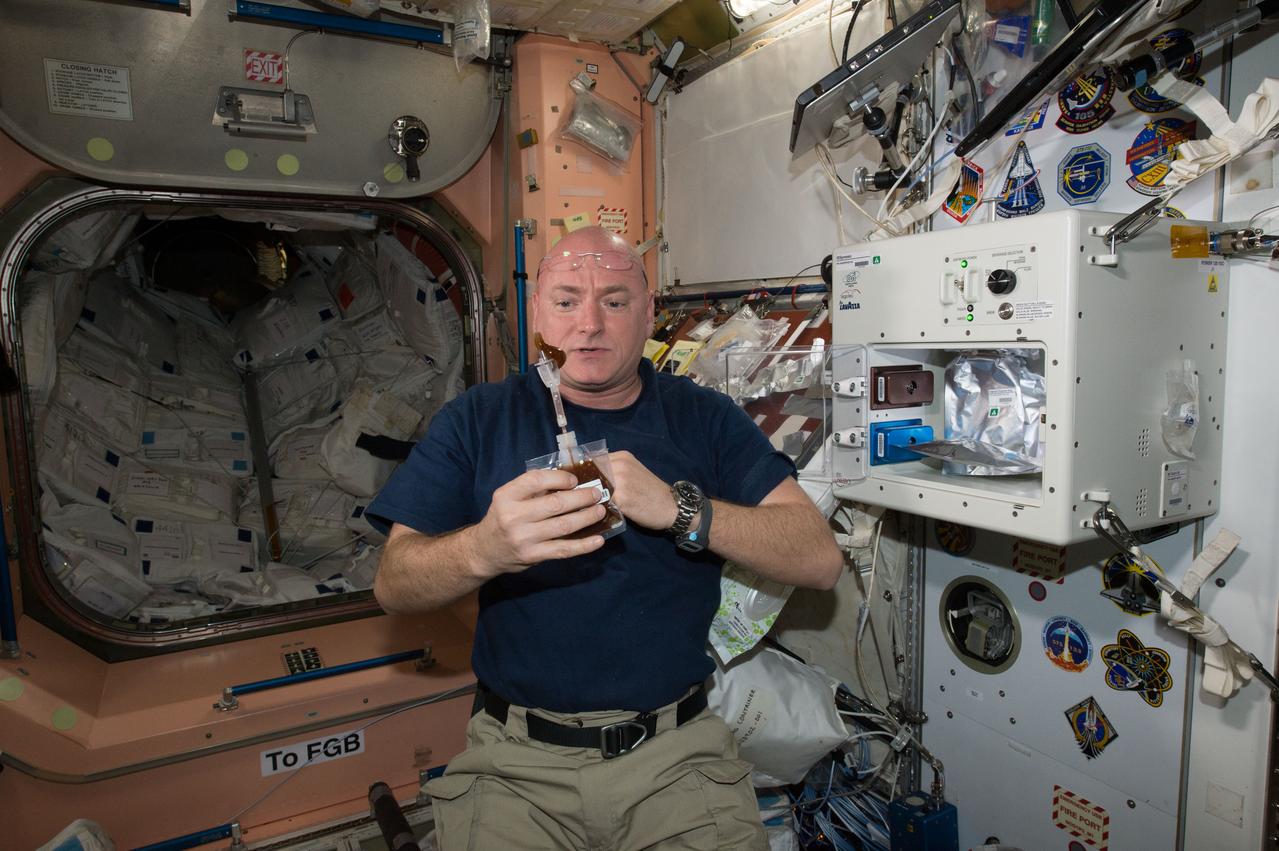
ISS043E160084 (05/03/2015) --- NASA astronaut Scott Kelly enjoys his first drink from the new ISSpresso machine. The espresso device allows crews to make tea, coffee, broth, or other hot beverages they might enjoy.

ISS043E122264 (04/17/2015) --- The Canadarm 2 reaches out to grapple the SpaceX Dragon cargo spacecraft and prepare it to be pulled into its port on the International Space Station. Robotics officers at Mission Control, in the Johnson Space Center Houston Texas will command the Canadarm2 robotic arm to maneuver Dragon to its installation position at the Earth-facing port of the Harmony module where it will reside for the next five weeks.
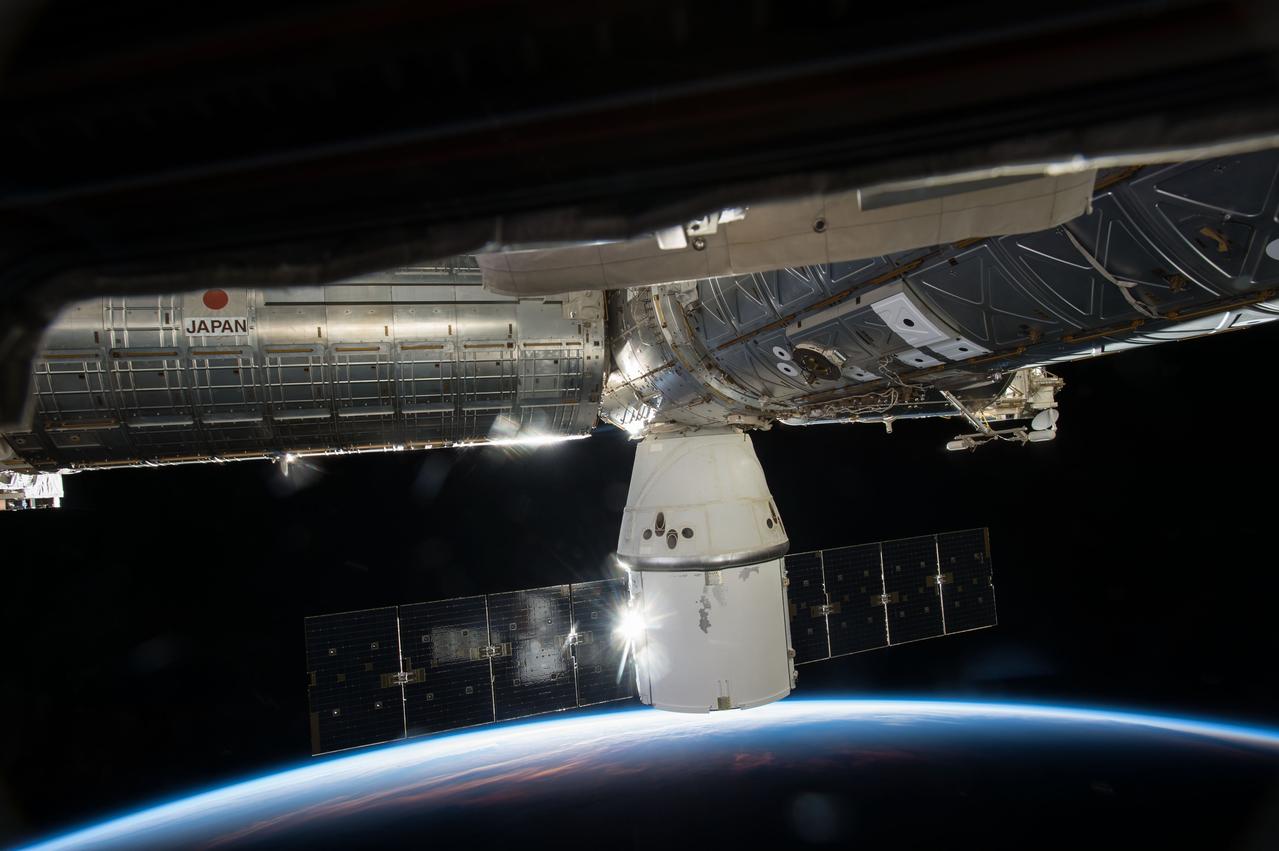
ISS043E190604 (05/13/2015) --- SpaceX’s Dragon cargo capsule is seen here docked to the Earth facing port of the Harmony module. SpaceX’s sixth commercial resupply flight to the International Space Station launched on April 14th and arrived three days later. It will depart with over 3,100 pounds of research samples and equipment and splashdown in the Pacific Ocean on May 21.
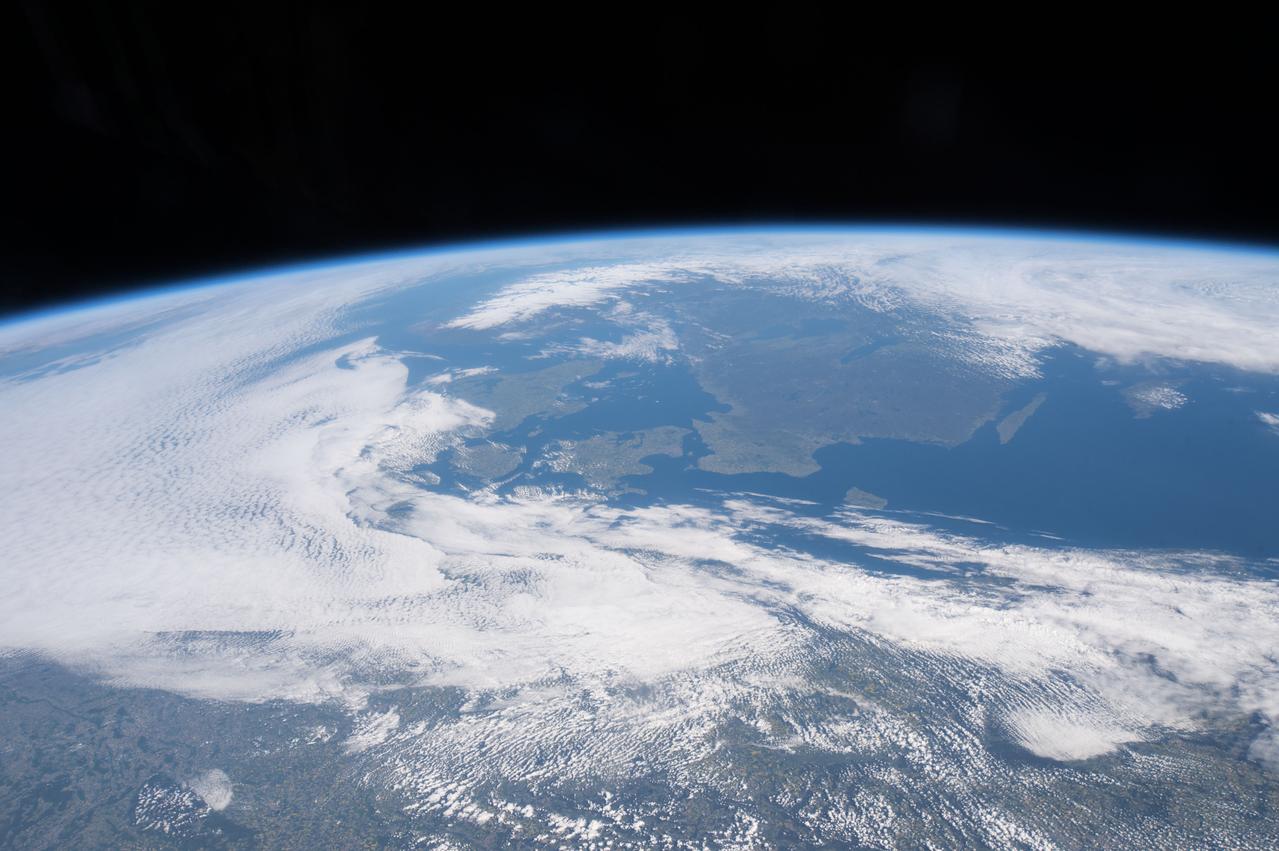
ISS043E194350 (05/15/2015) --- NASA astronaut Scott Kelly on the International Space Station tweeted this image out of an Earth observation image as part of his Space Geo trivia contest. Scott tweeted this comment and clue: "#SpaceGeo Four international borders in one photo from the International @Space_Station. Name them"! Two winners! Congrats to @TeacherWithTuba & @PC101!. The correct answer is :#SpaceGeo A: #Denmark #Norway #Sweden #Germany & #Poland. The winners will receive an autographed copy of this image when Scott returns to Earth in March 2016. Learn more about #SpaceGeo and play along every Wednesday for your chance to win: <a href="http://www.nasa.gov/feature/where-over-the-world-is-astronaut-scott-kelly/" rel="nofollow">www.nasa.gov/feature/where-over-the-world-is-astronaut-sc...</a>
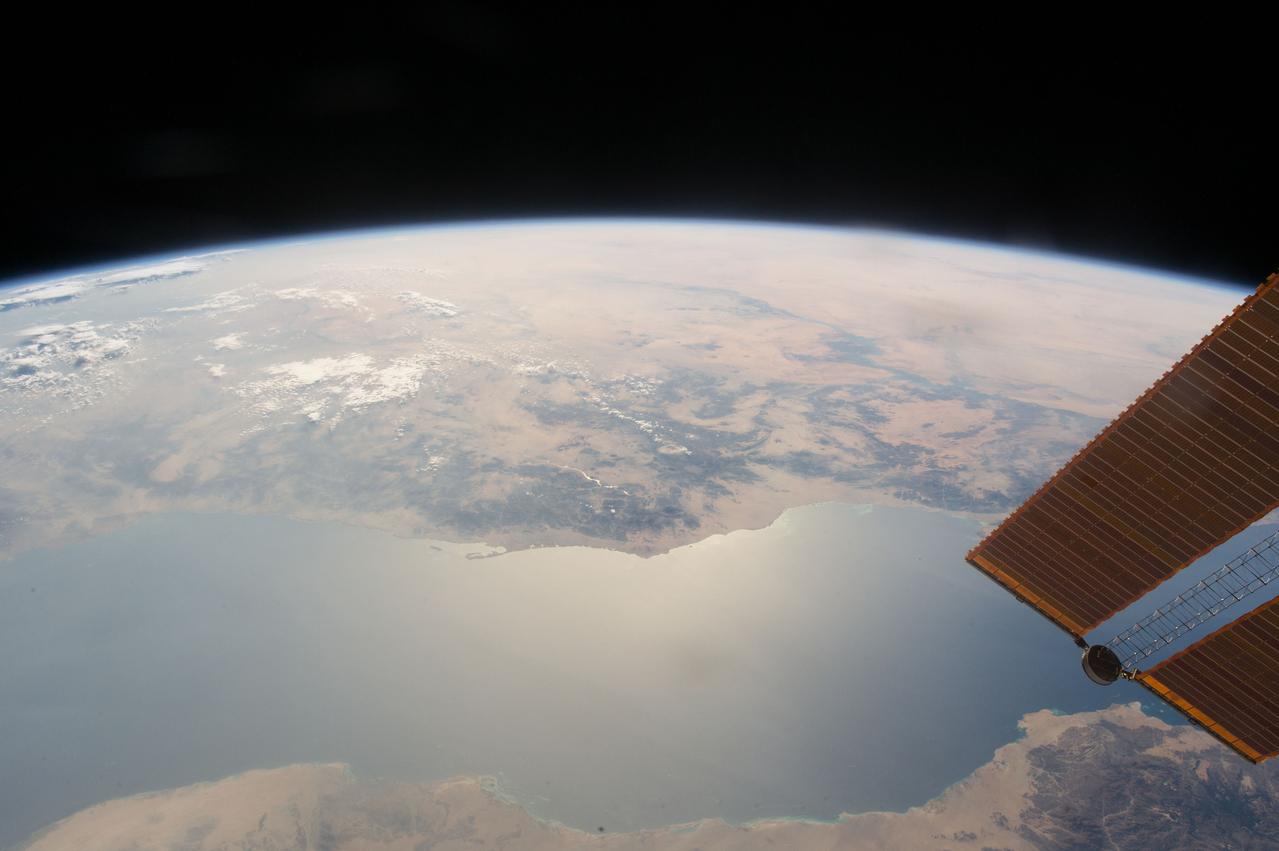
ISS045E053479 (10/09/2015) --- From 250 miles up the International Space Station crew gets a front row seat to the beauty of our planet as it orbits our Earth every 90 minutes. This image is framed on the right side by a portion of the massive solar panels that keep power flowing to the many station science experiments, life support hardware and more.
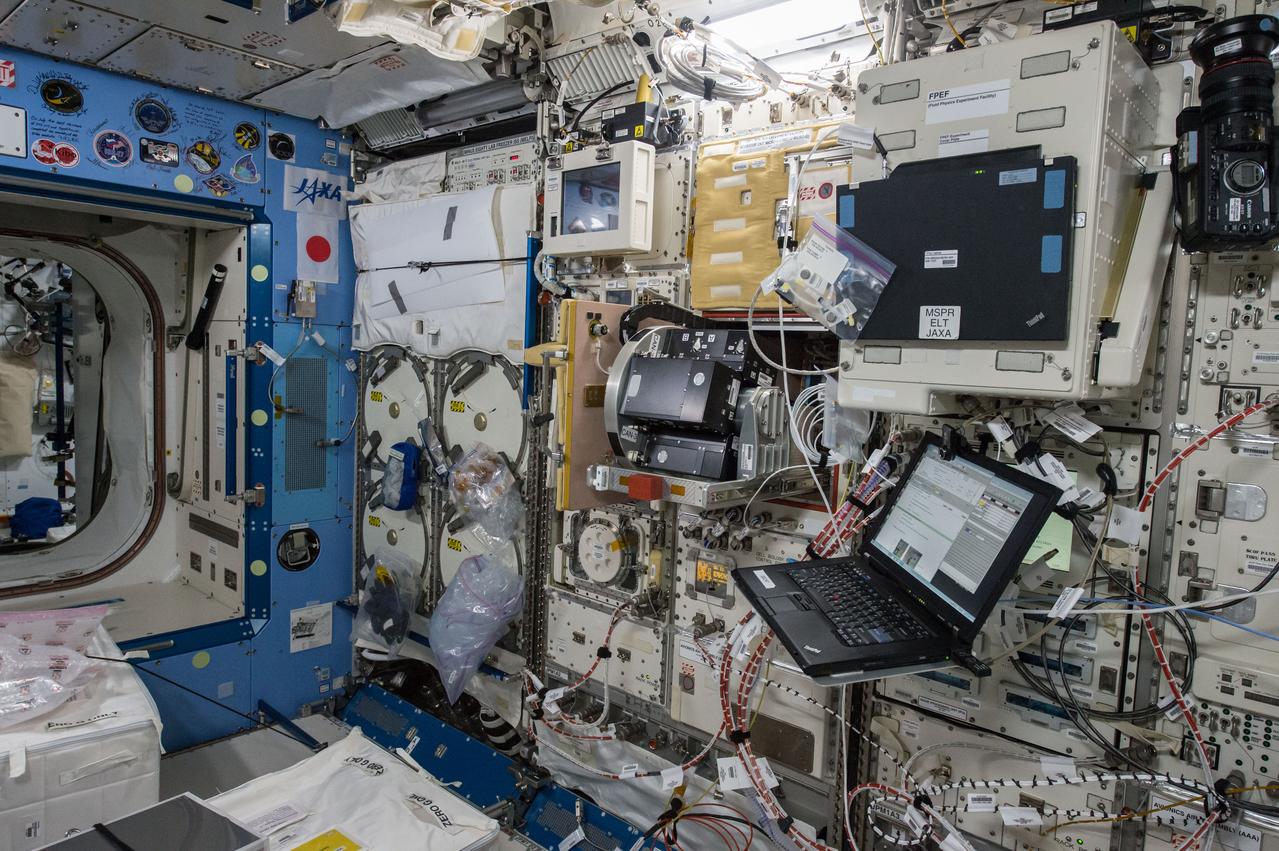
iss043e124204 (4/18/2015) --- A view of the Cell Biology Experiment Facility (CBEF) rack in the Japanese Experiment Module (JEM) aboard the International Space Station (ISS) in preparation for the Space Aging investigation. The purpose of the experiment is to study the effects of weightlessness in space flight on the aging of the C. elegans roundworm, a model organism for a range of biological studies. Microgravity causes a number of physiological changes, like heart and bone deconditioning, involving mechanisms that are poorly understood and may affect the rate at which organisms and astronauts age. The Space Aging experiment will grow millimeter-long C. elegans roundworms in microgravity and compare their health and longevity with controlled specimens on Earth.
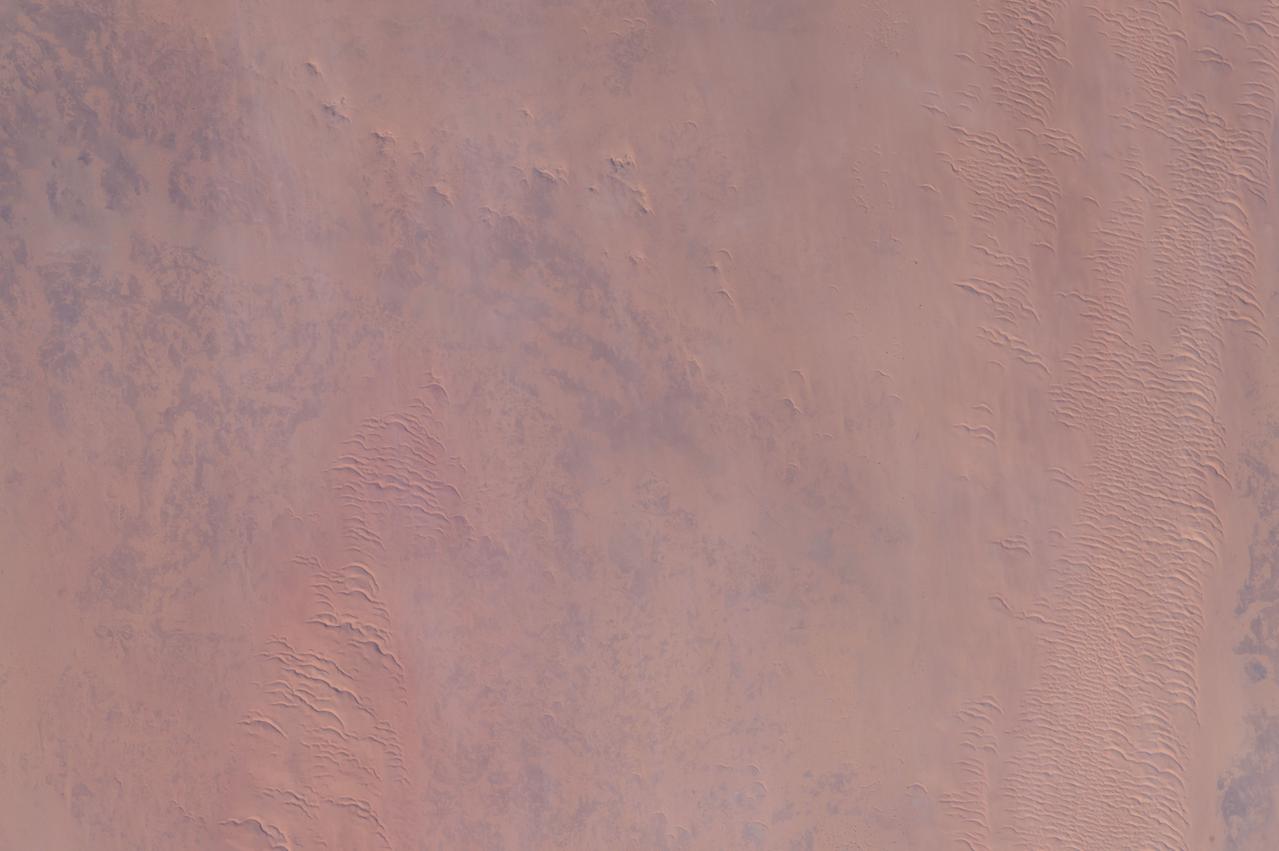
ISS046e004756 (01/04/2016) --- NASA astronaut Scott Kelly captured this beige desert image as the International Space Station passed over Africa. He tweeted out this message: " I can always count on #Africa for colorful #EarthArt. #YearInSpace".
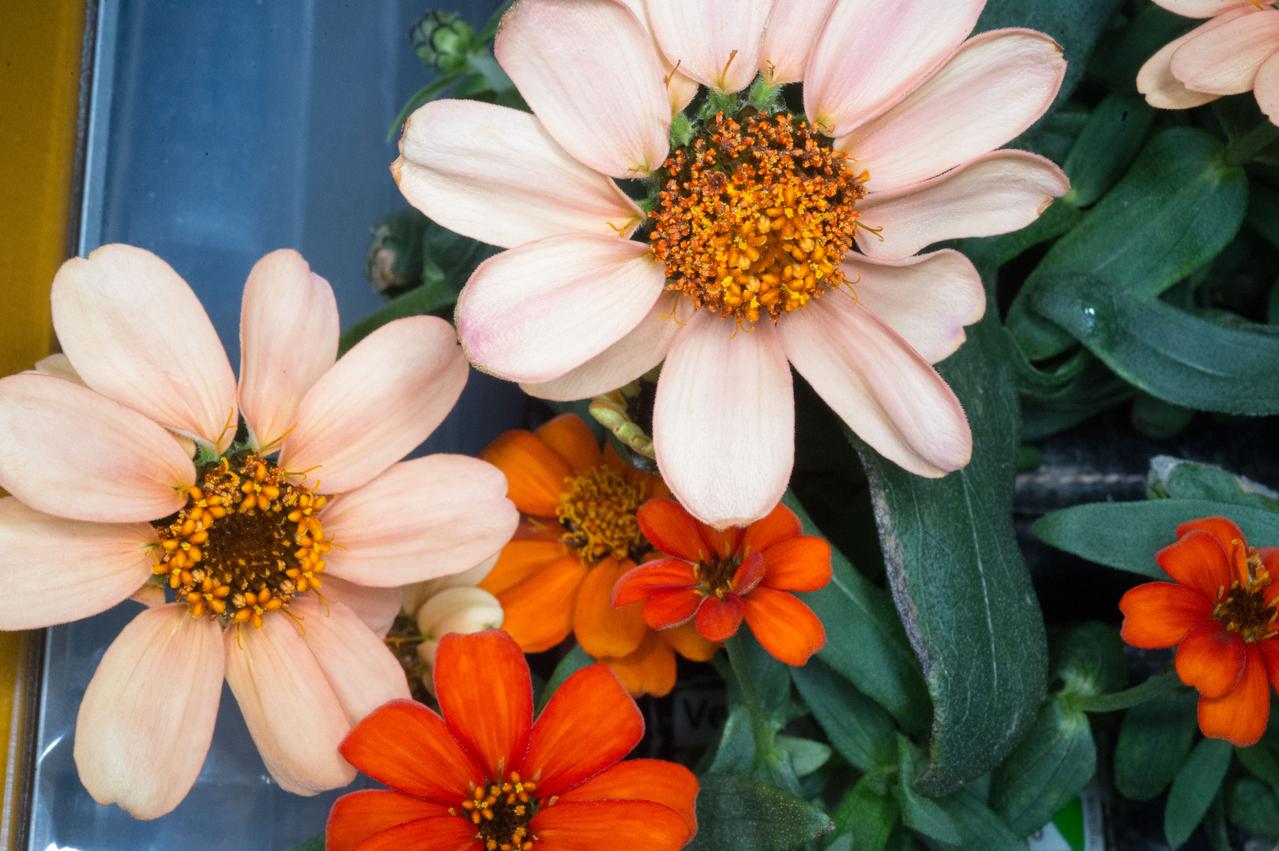
Photographic documentation of VEG-01 flowers taken by the Expedition 46 crew. The Veg-01 investigation is used to assess on-orbit function and performance of the Veggie facility, focusing on the growth and development of seedlings in the spaceflight environment and the composition of microbial flora on the plants and the facility. For this run, Zinnias will be grown for 60 days and are expected to produce flowers.
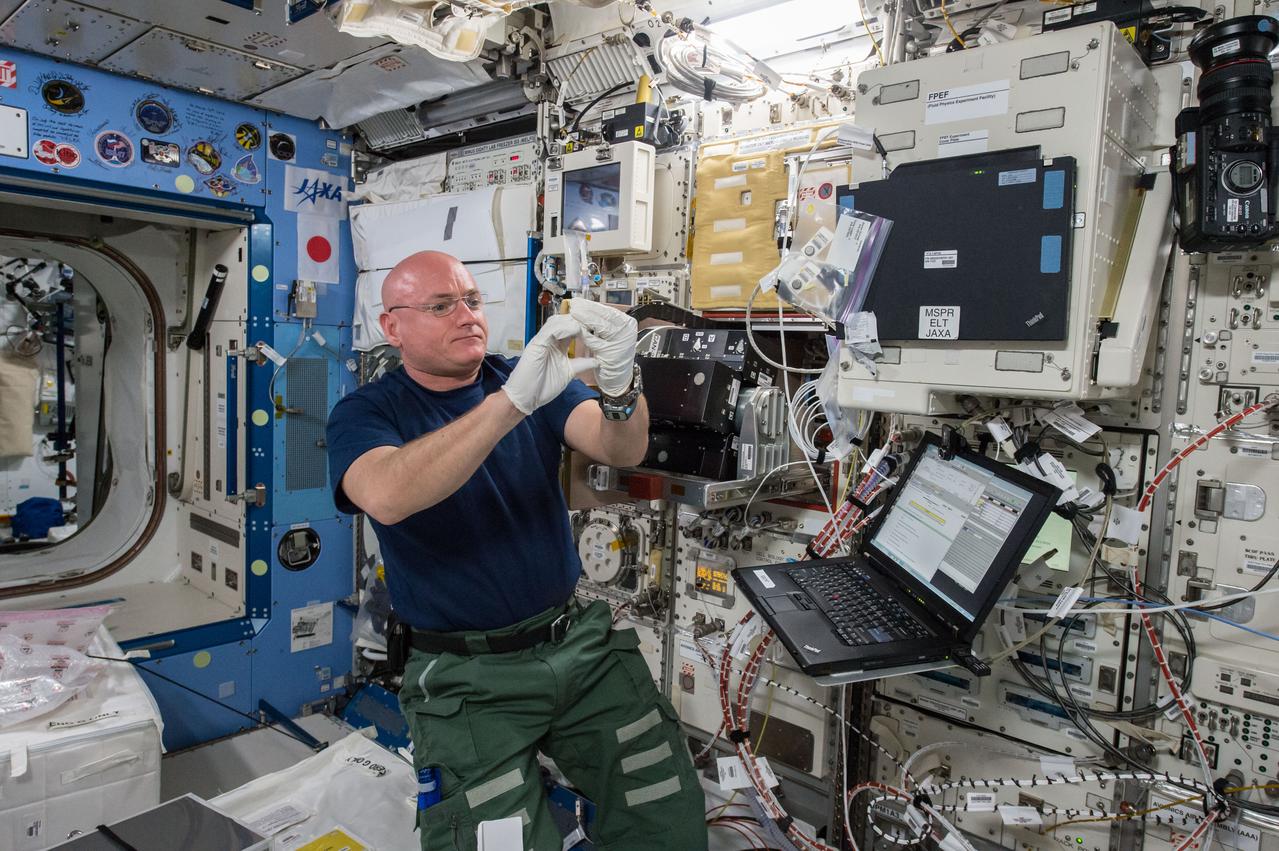
iss043e124213 (4/18/2015) --- NASA astronaut Scott Kelly is seen performing the Space Aging experiment using the Cell Biology Experiment Facility (CBEF) rack in the Japanese Experiment Module (JEM) aboard the International Space Station (ISS). The purpose of the experiment is to study the effects of weightlessness in space flight on the aging of the C. elegans roundworm, a model organism for a range of biological studies. Microgravity causes a number of physiological changes, like heart and bone deconditioning, involving mechanisms that are poorly understood and may affect the rate at which organisms and astronauts age. The Space Aging experiment will grow millimeter-long C. elegans roundworms in microgravity and compare their health and longevity with controlled specimens on Earth.
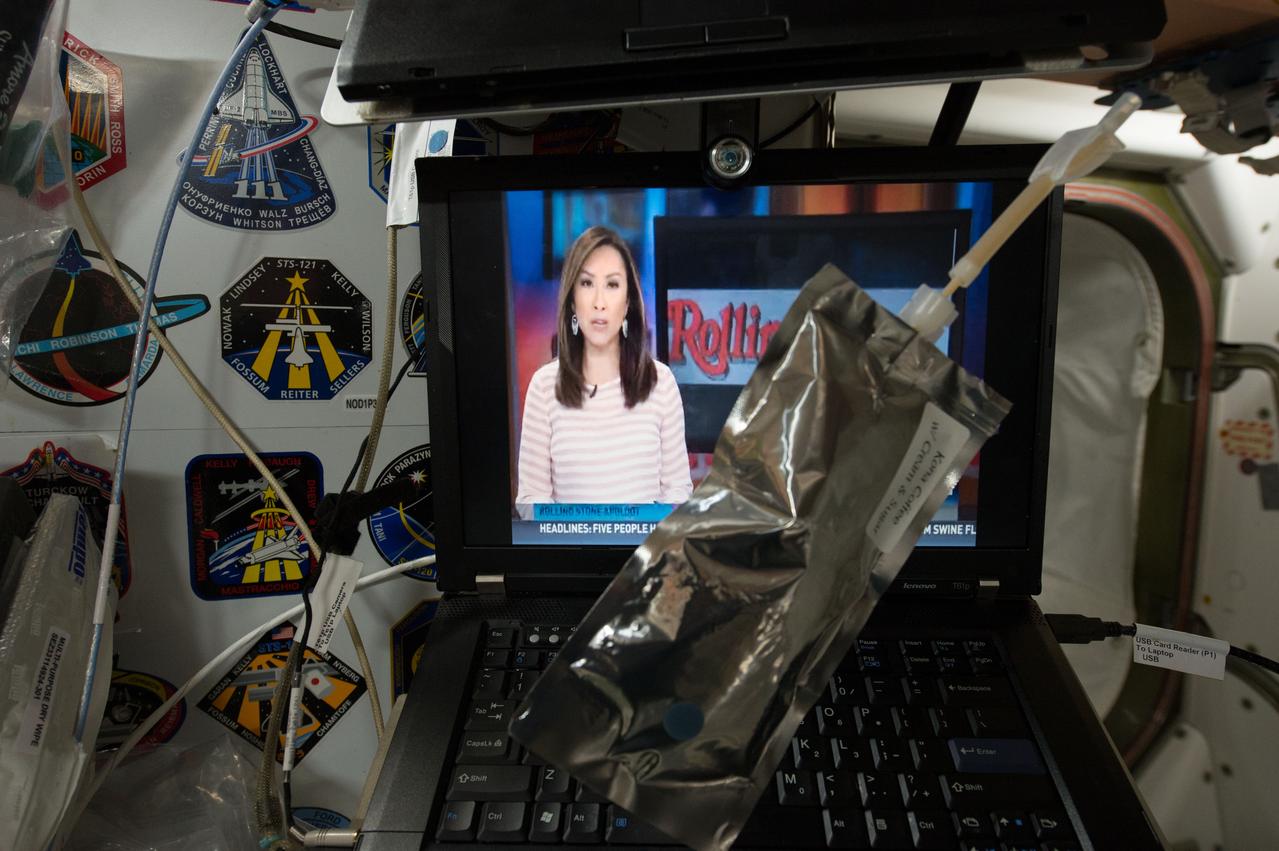
ISS043E089469 (04/06/2015) --- NASA astronaut Scott Kelly, one of two One-Year crew members on the International Space Station, has his morning coffee and TV news from the Houston area on Apr. 6, 2015. His tweeted comment with this image: " Morning @space_station with my coffee and news from Earth with @KHOU News Houston and @KHOU Lily Jang".
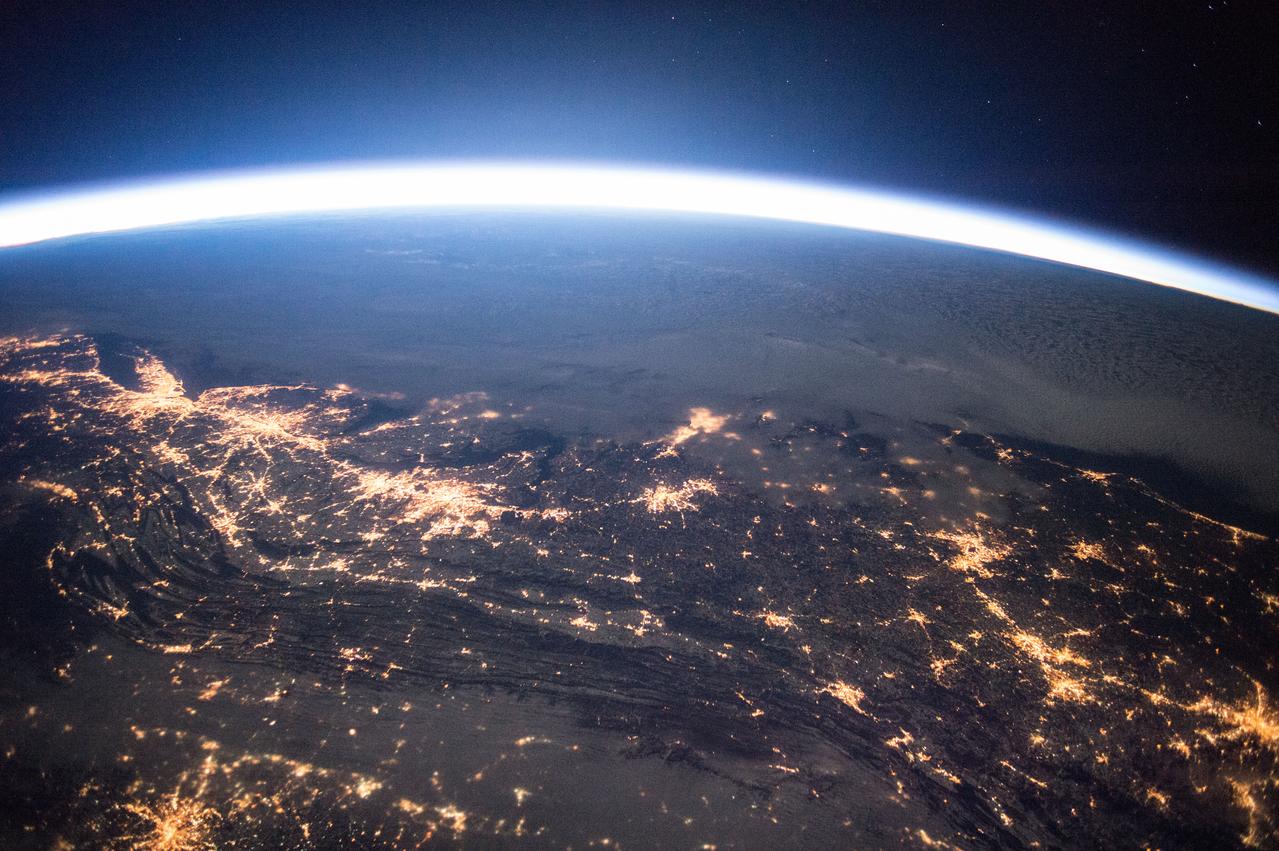
ISS046e022766 (01/24/2016) --- NASA astronaut Scott Kelly captured this sunrise over Earth and tweeted this message: " blizzard2016 clearly seen off the #EastCoast as the sun begins to rise. Hope all OK! #BlizzardJonas #YearInSpace".
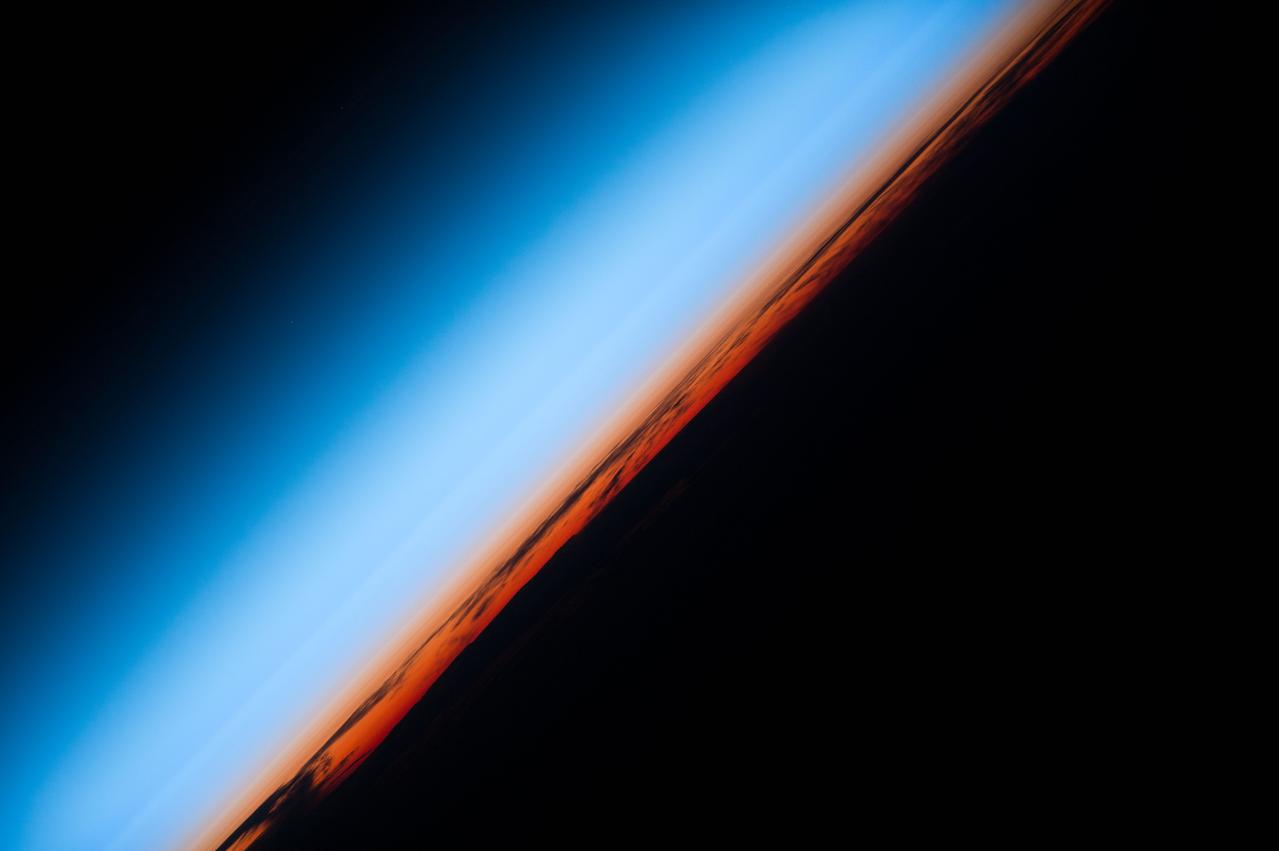
iss046e044605 (02/20/2016) --- Night falls for the Expedition 46 crew of the International Space Station. NASA astronaut Scott Kelly captured this image and tweeted it out to his followers with this remark: " Day 330 (in space). Tried to only count up. 10 days left tmrw I started #countdown! #GoodNight from @space_station! #YearInSpace
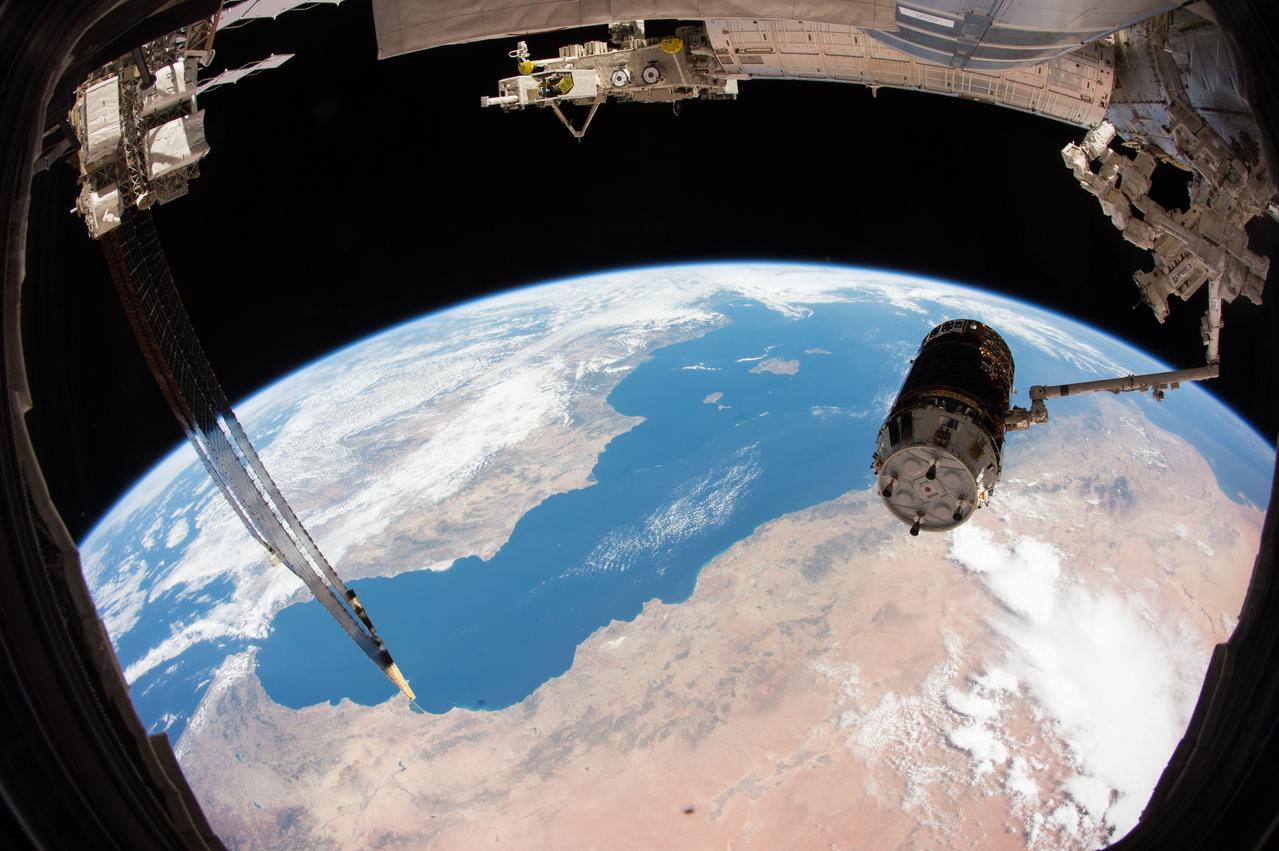
iss044e065321 (Aug. 24, 2015) --- JAXA's (Japan Aerospace Exploration Agency) H-II Transfer Vehicle-5, also known as the "Kounotori," is pictured during Expedition 44 in the grips of the International Space Station's Canadarm2 robotic arm as the orbital complex orbited above north Africa and across the Mediterranean Sea.

ISS044E086857 (09/05/2015) --- Cosmonaut Gennady Padalka (center in red shirt) handed command of the International Space Station to NASA astronaut Scott Kelly (front left with microphone) on Sept. 5, 2015. In the background the rest of the space station crew was on hand (from left to right): ESA(European Space Agency) astronaut Andreas Mogensen (back), Russian cosmonauts Mikhail Kornienko, Sergey Volkov and Oleg Kononenko, Kazakh cosmonaut Aidyn Aimbetov, Japan Aerospace Exploration Agency (JAXA) astronaut Kimiya Yui and NASA astronaut Kjell Lindgren.
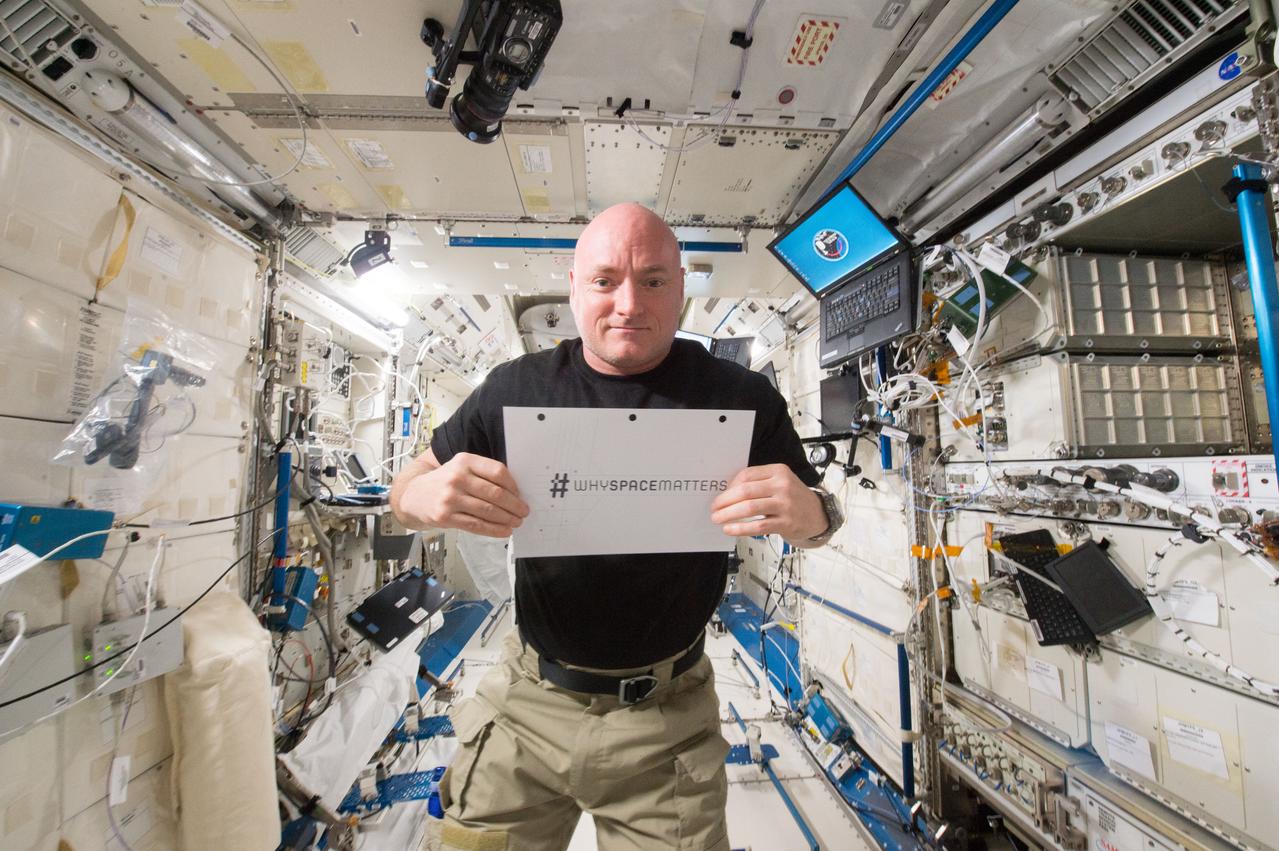
ISS043E294202 (06/10/2015) --- NASA astronaut Scott Kelly is photographed in the Japanese Experiment Module (JEM) holding a sign with the hashtag #whyspacematters. NASA and the United Nations Office for Outer Space Affairs (UNOOSA) have launched a global photography competition to highlight how the vantage point of space helps us better understand our home planet, improve lives, and safeguard our future by aiding sustainable development on Earth.
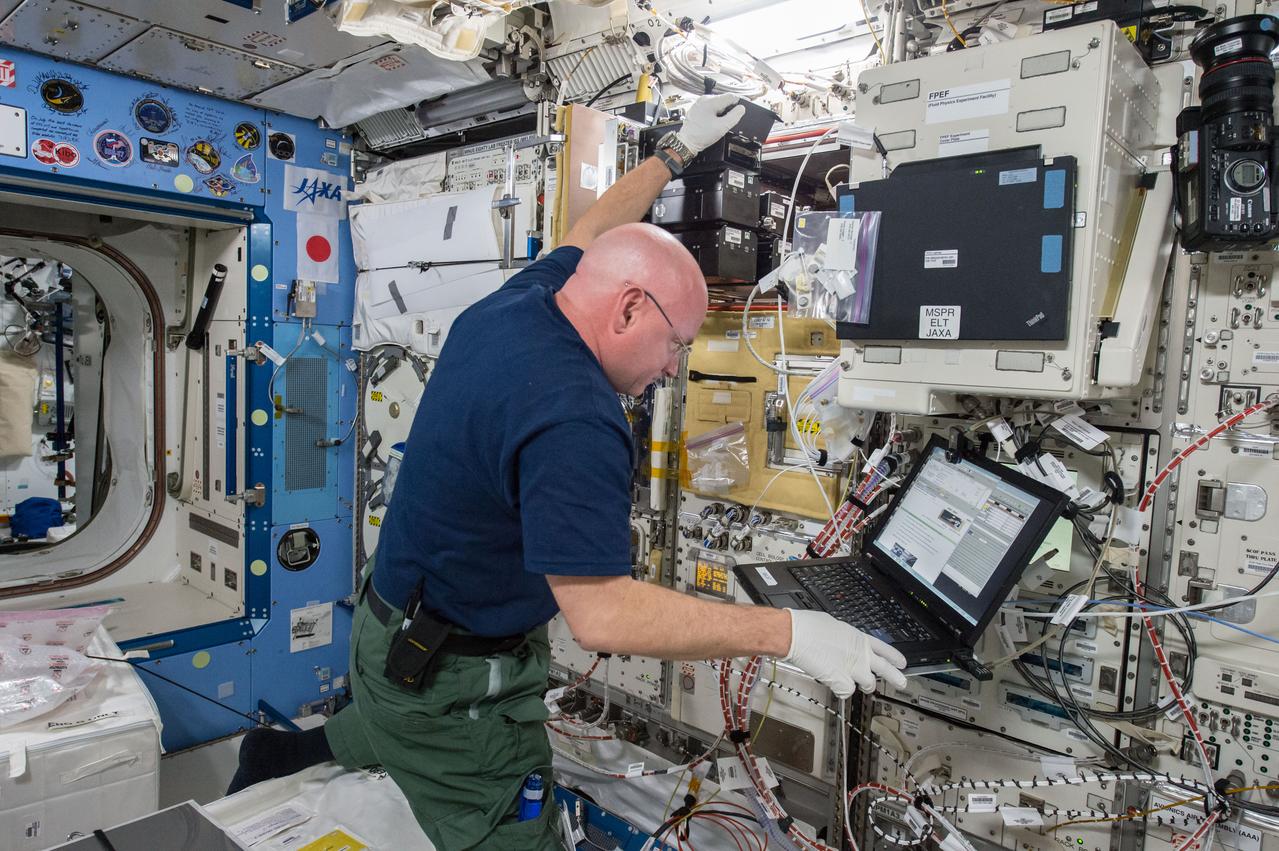
iss043e124225 (4/18/2015) --- NASA astronaut Scott Kelly is seen performing the Space Aging experiment using the Cell Biology Experiment Facility (CBEF) rack in the Japanese Experiment Module (JEM) aboard the International Space Station (ISS). The purpose of the experiment is to study the effects of weightlessness in space flight on the aging of the C. elegans roundworm, a model organism for a range of biological studies. Microgravity causes a number of physiological changes, like heart and bone deconditioning, involving mechanisms that are poorly understood and may affect the rate at which organisms and astronauts age. The Space Aging experiment will grow millimeter-long C. elegans roundworms in microgravity and compare their health and longevity with controlled specimens on Earth.
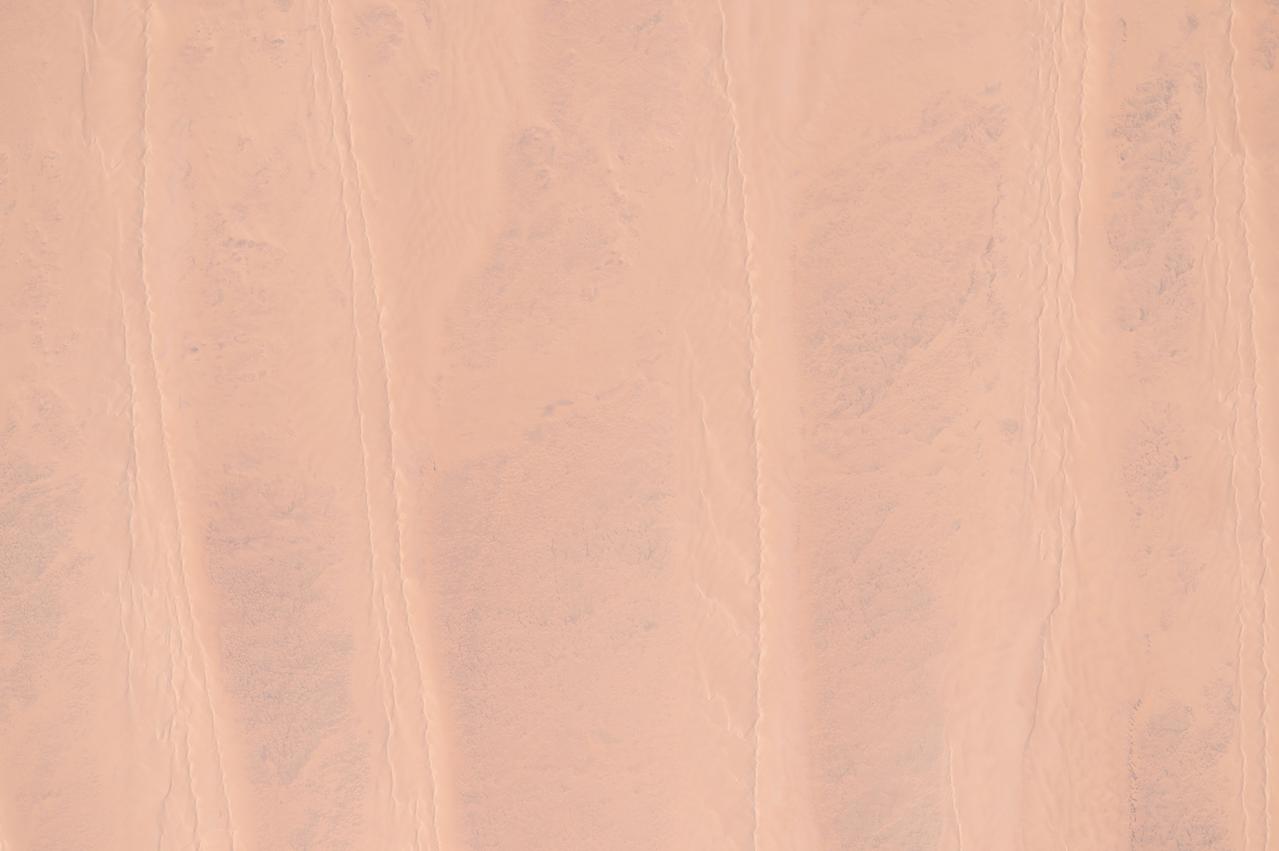
ISS043E182401 (05/08/2015) --- A large portion of northern Africa is covered in desert sand as this image from the International Space Station by NASA astronaut Scott Kelly demonstrates. This nearly waterless area is located in the Great Sand Sea of the Libyan Desert and part of western Egypt.
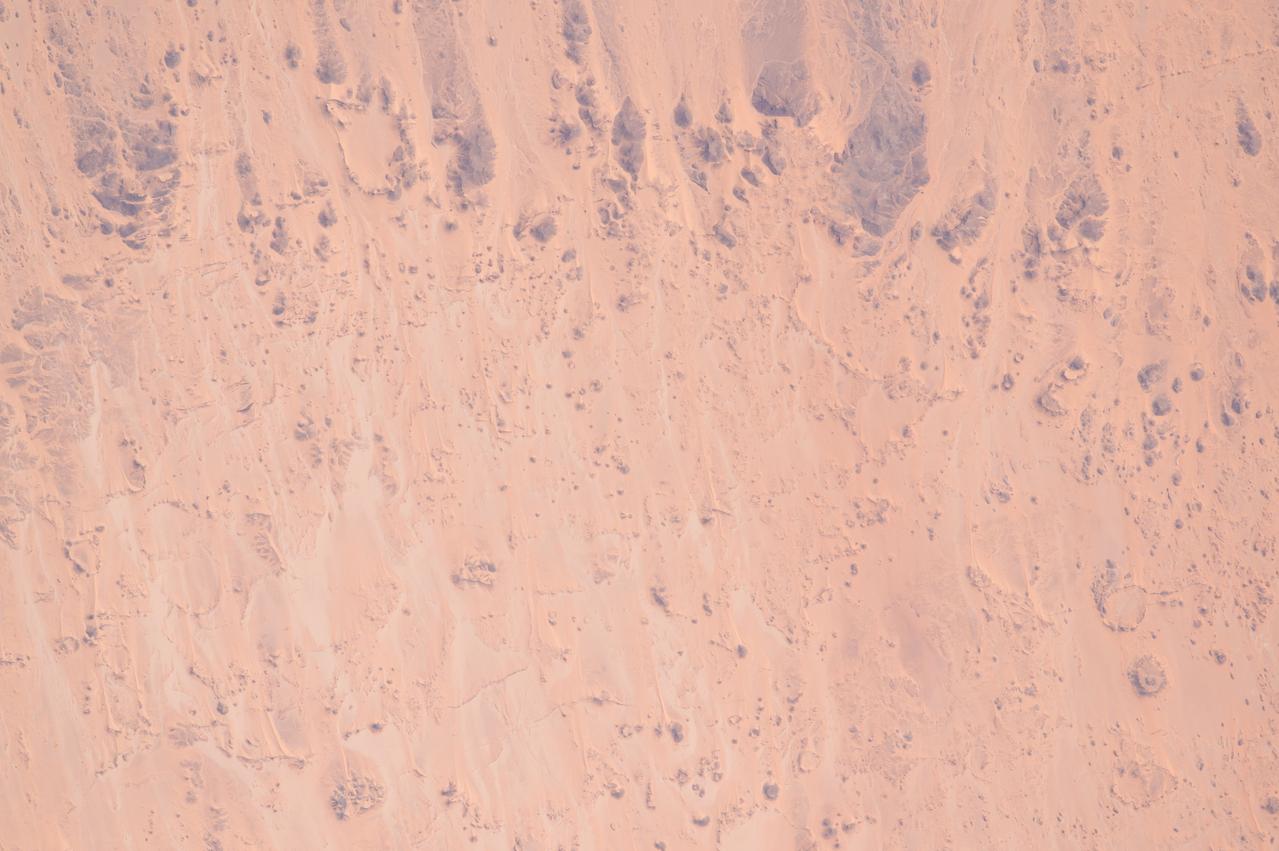
ISS043E182407 (05/08/2015) --- Shades of beige dominate this image of the Libyan Desert and southwestern Egypt scene captured by NASA astronaut Scott Kelly aboard the international Space Station on May, 8th, 2015.
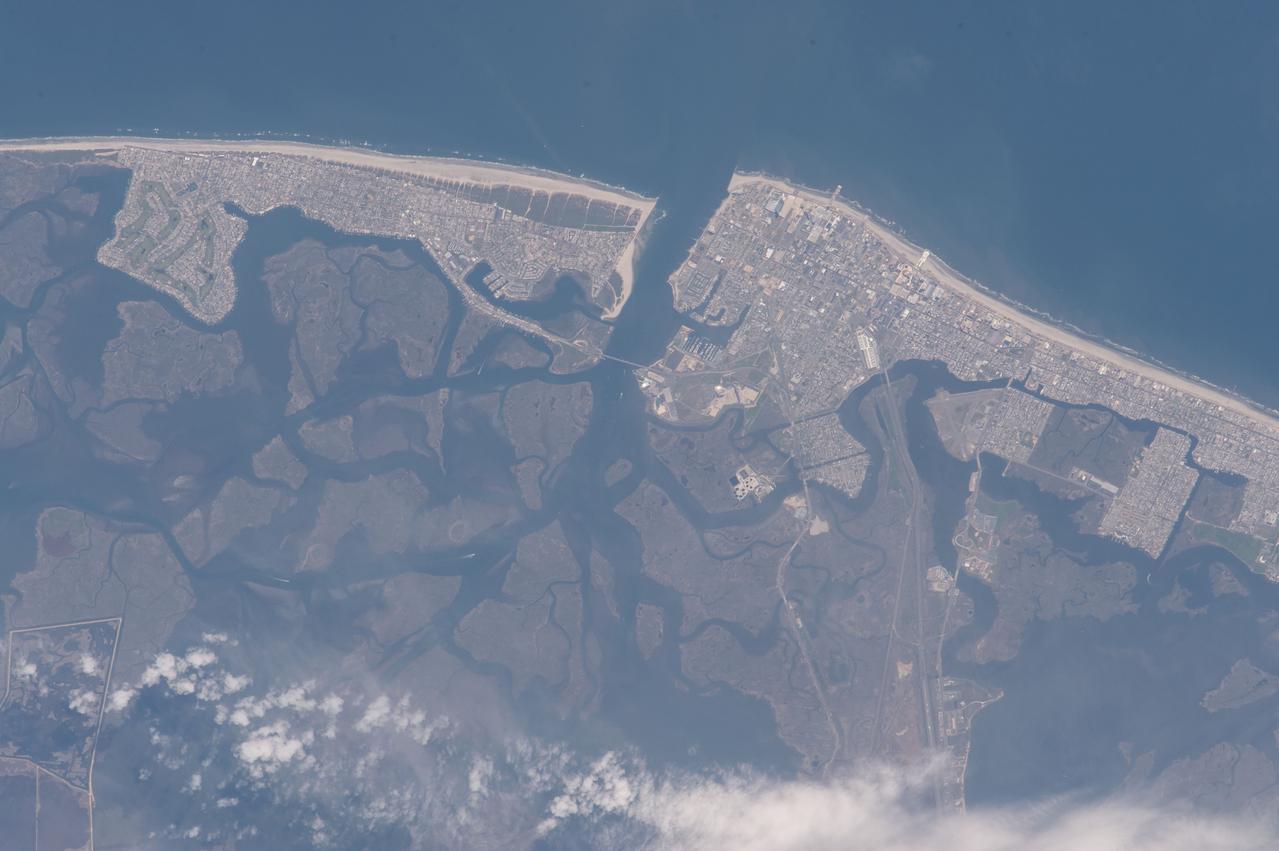
ISS043E196718 (05/16/2015) ---
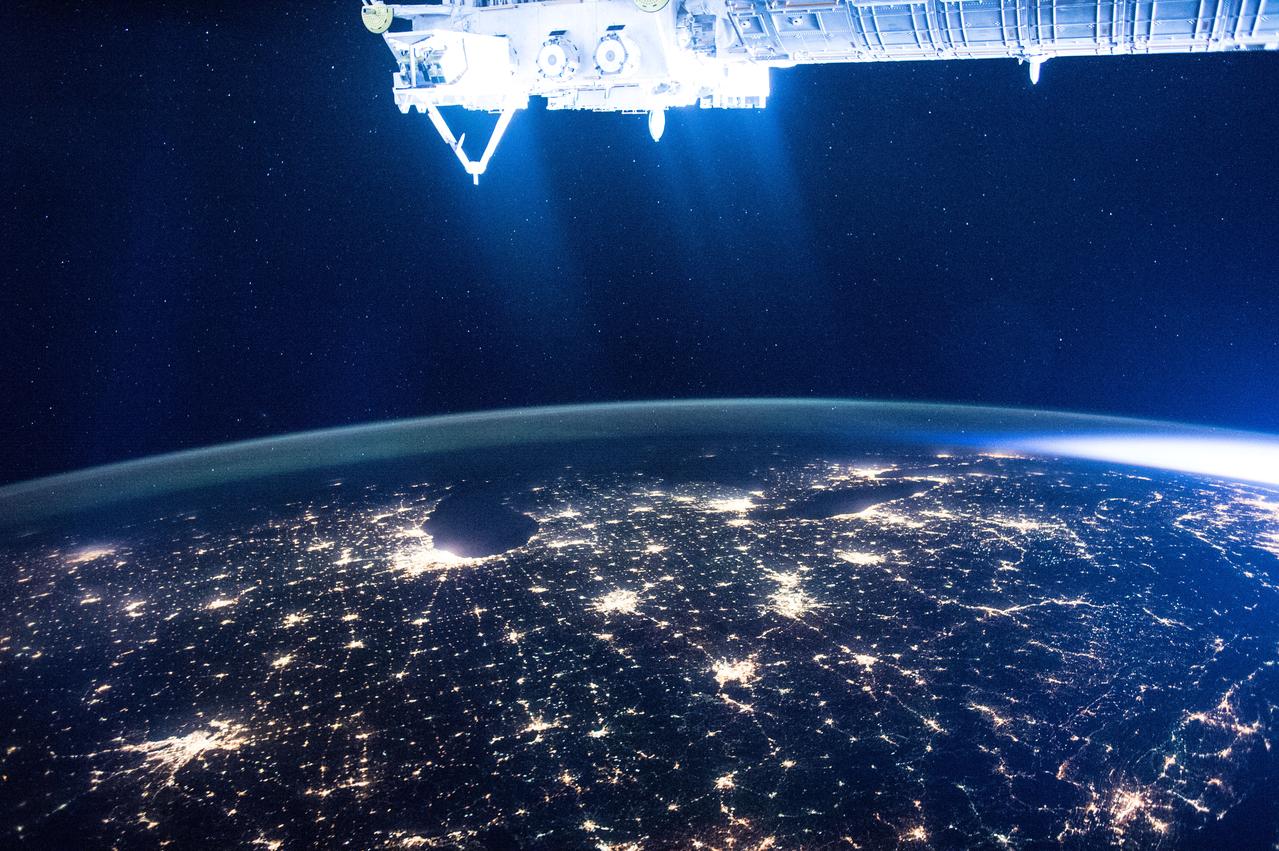
ISS046e005404 (01/05/2016) --- The glittering lights of the American Midwest illuminate the Earth in this captivating image taken by the International Space Station Expedition 46 crew on Jan. 5, 2016. The picture, which was taken while the station was flying above Alabama, shows numerous major cities, including the major city of Chicago (middle-left) situated on the Lake Michigan coastline. Also in view are three of the American Great Lakes, including Lake Michigan (left), Lake Huron (middle) and Lake Erie (right).

iss45e034643 (Sept. 28, 2015) --- JAXA's (Japan Aerospace Exploration Agency) H-II Transfer Vehicle-5, also known as the "Kounotori," is pictured after it was released from the International Space Station during Expedition 45. Both spacecraft at the time were orbiting above the southern tip of South America.
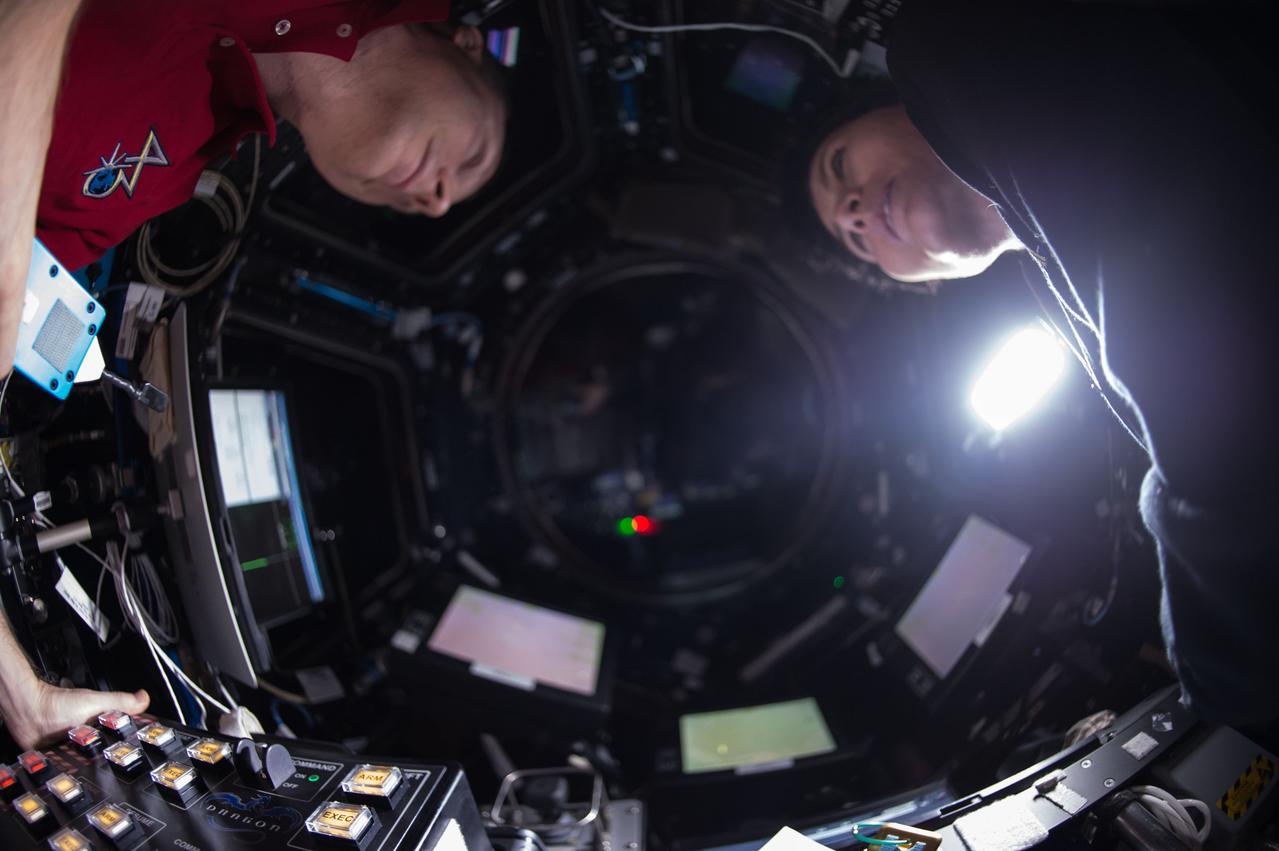
ISS043E122143 (04/17/2015) --- Expedition 43 Commander NASA astronaut Terry Virts (left) and ESA (European Space Agency) astronaut Samantha Cristoforetti work together in the International Space Station’s Cupola module to monitor the final approach of SpaceX’s sixth Dragon resupply craft. The vehicle arrived on April 17, 2015 and delivered more than two tons of research equipment and supplies to the station.
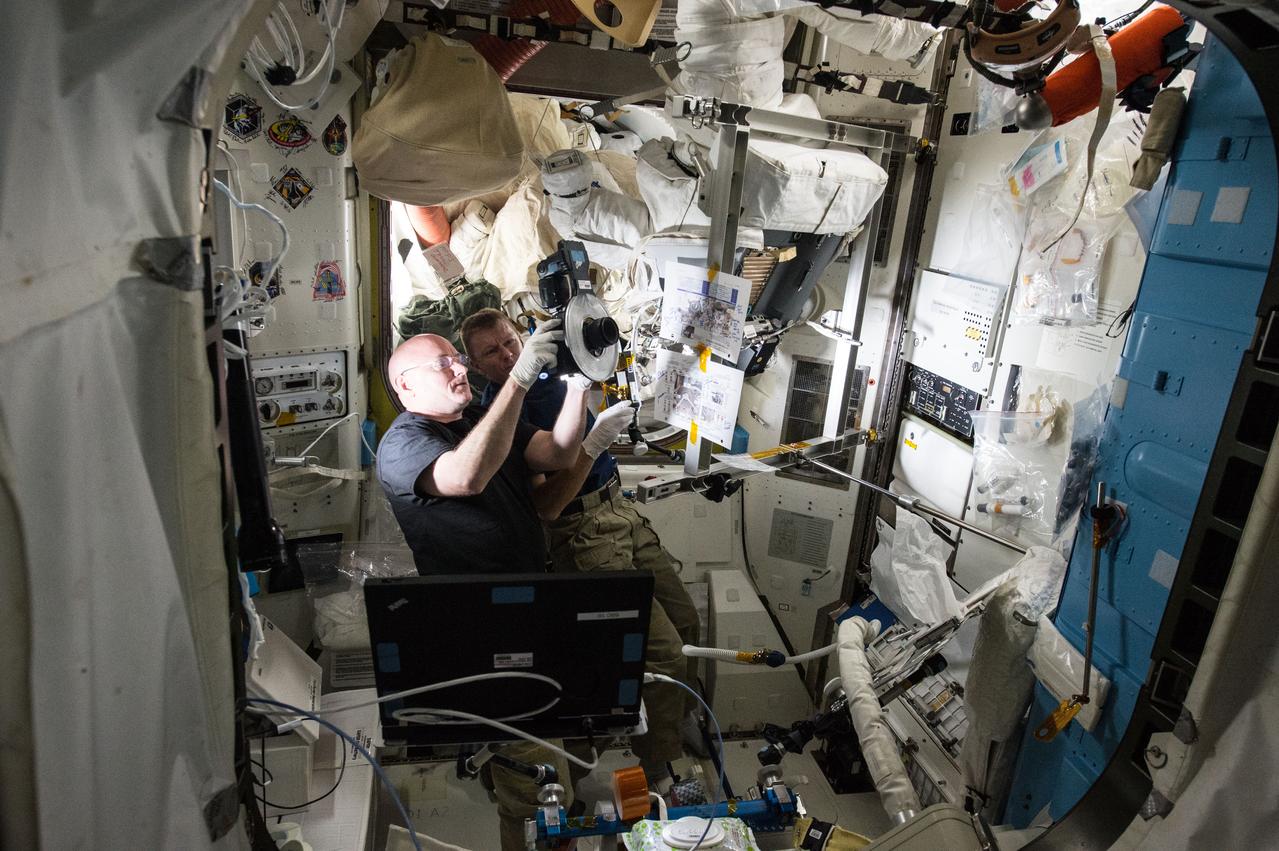
ISS046e038911 (01/10/2016) --- NASA astronaut Scott Kelly (left) and ESA (European Space Agency) astronaut Timothy Peake (right) review images during a procedure to replace a fan pump separator inside one of the U.S. spacesuits aboard the International Space Station. The activity took place inside the Quest airlock where all U.S. based spacewalks begin and end.
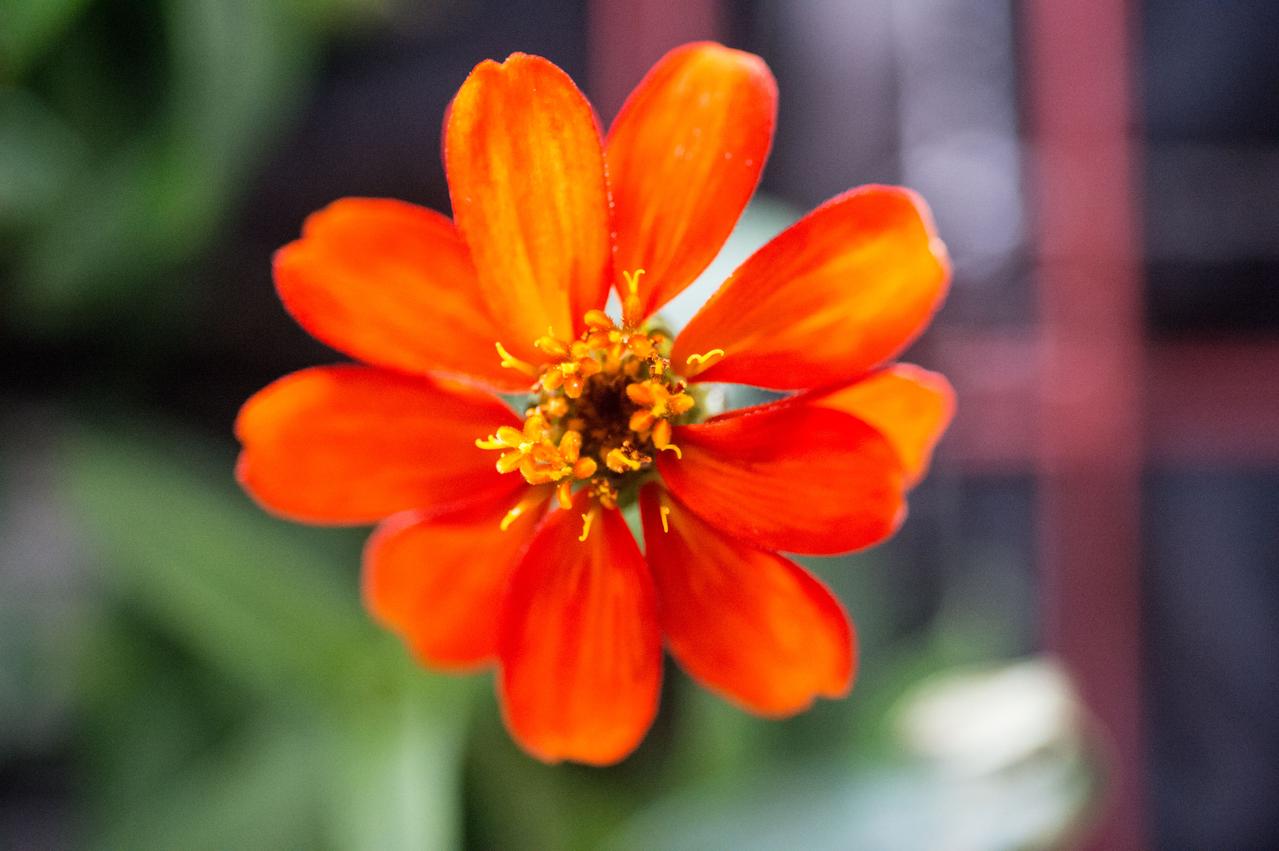
Close-up view of Zinnia grown as part of VEG-01 experiment floating Columbus module. The Veg-01 investigation is used to assess on-orbit function and performance of the Veggie facility, focusing on the growth and development of seedlings in the spaceflight environment and the composition of microbial flora on the plants and the facility. For this run, Zinnias will be grown for 60 days and are expected to produce flowers.
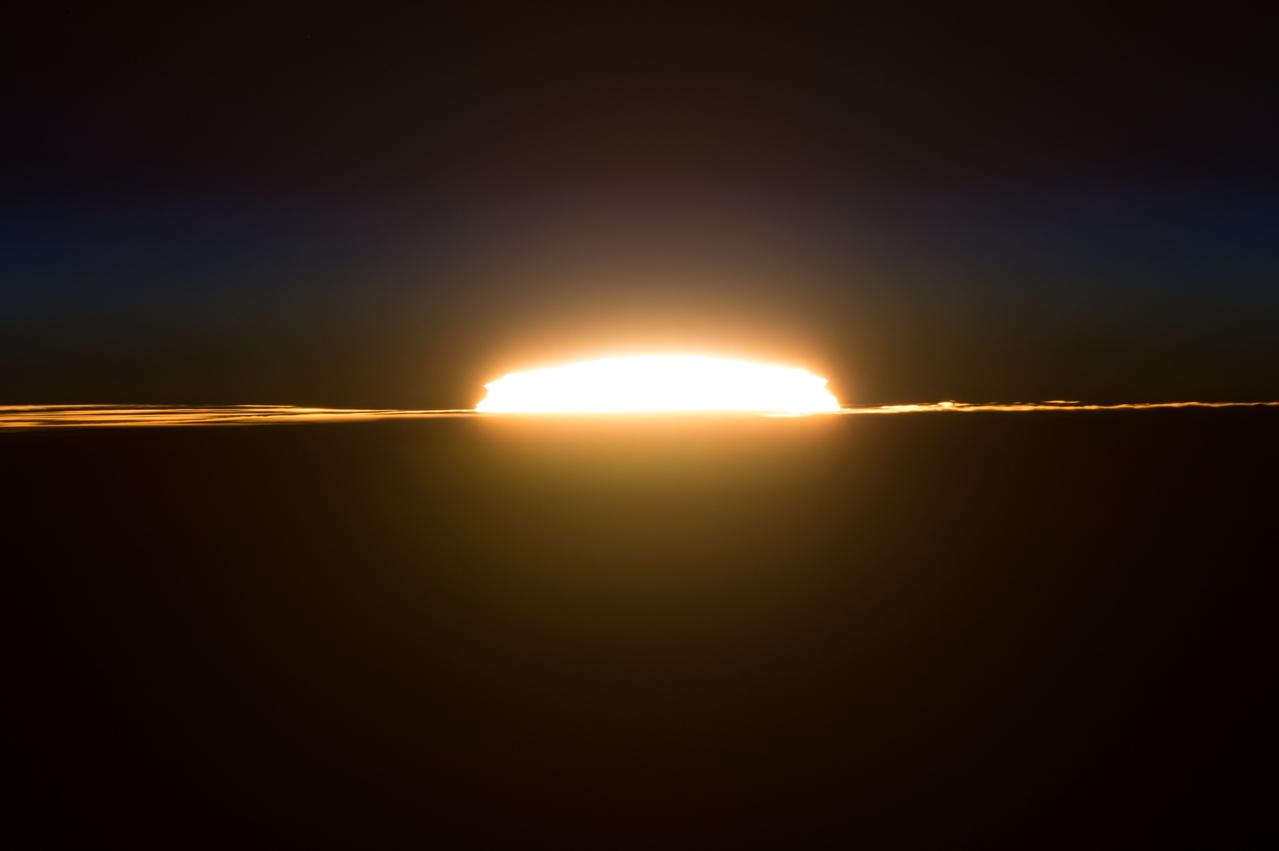
iss046e050011 (02/27/2016) --- The sun rises slowly on Feb 27, 2016 as the International Space Station continues its course around the Earth. Expedition 46 crew members snapped this image.
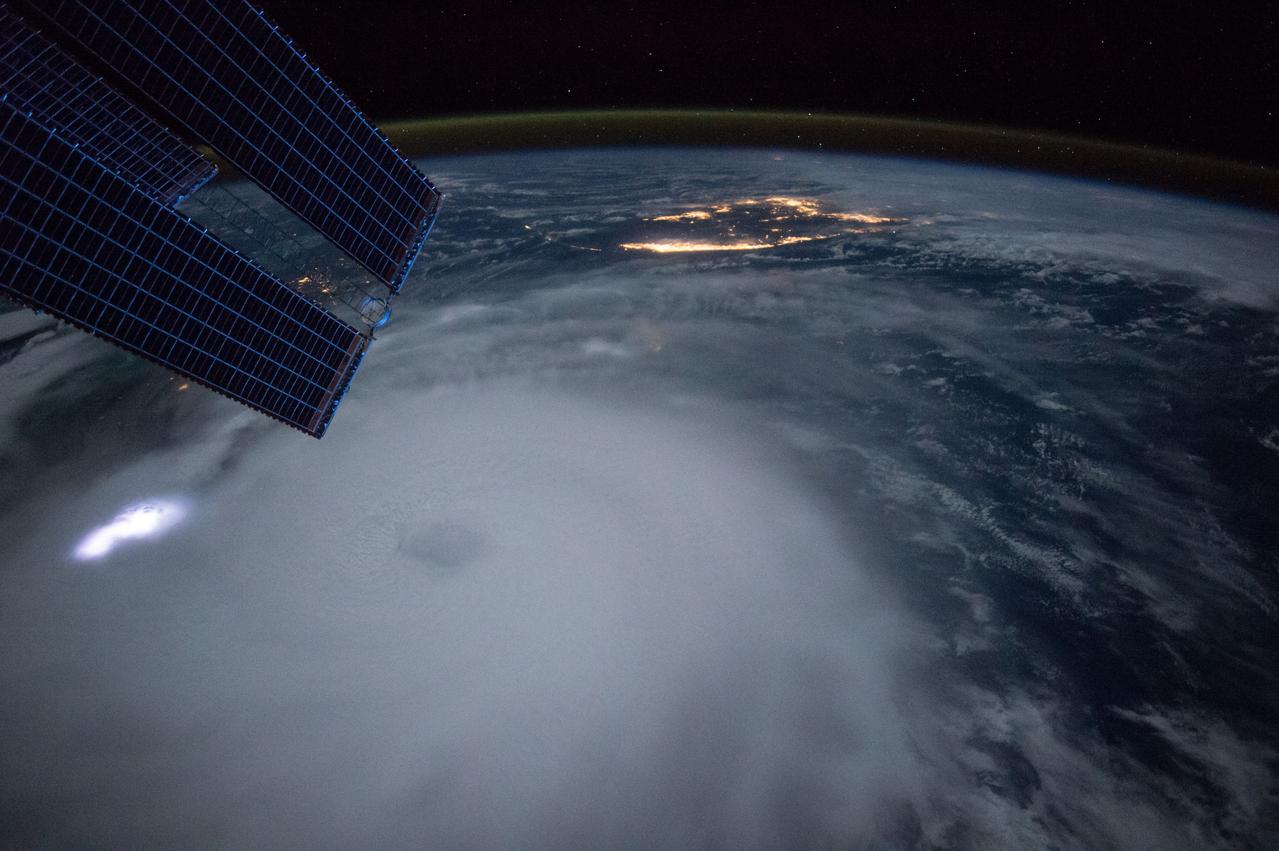
ISS045E037250 (10/02/2015) --- Hurricane Joaquin as seen from the International Space Station as it approached the Bahamas on Oct. 2, 2015. The intense storm was at Category 4 strength at the time the photo was taken.
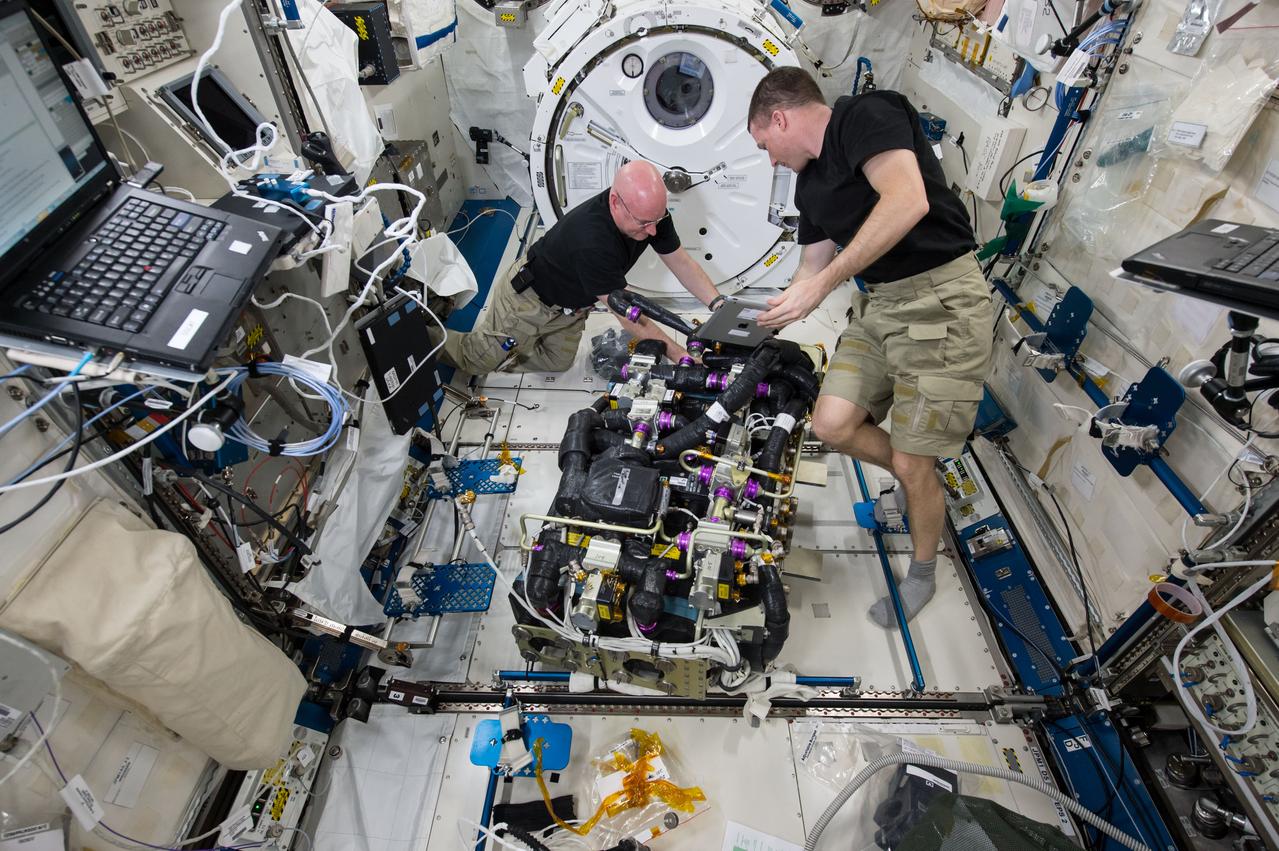
ISS043E181459 (05/07/2015) – NASA astronauts Scott Kelly (left) and Terry Virts (right) work on a Carbon Dioxide Removal Assembly (CDRA) inside the station’s Japanese Experiment Module. The CDRA system works to remove carbon dioxide from the cabin air, allowing for an environmentally safe crew cabin.
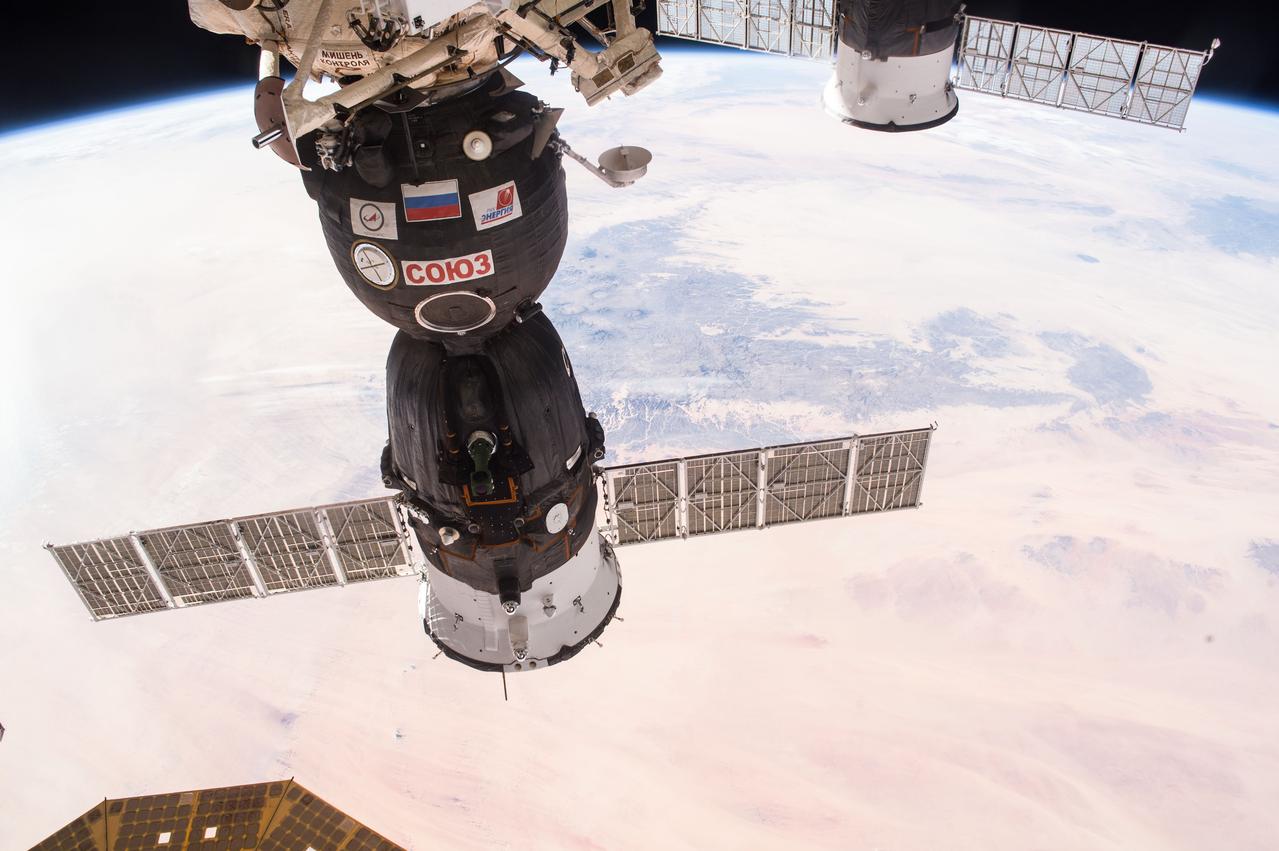
ISS046e004535 (01/03/2016) --- Earth observation taken during a day pass by NASA astronaut Scott Kelly aboard the International Space Station. A Russian Soyuz spacecraft dominates the center of the view as it sits docked to the station. Kelly tweeted this image with the message: "Day 282. Soyuz silhouette and #sunset colors of our magnificent #Earth. #GoodNight from @space_station! #YearInSpace".
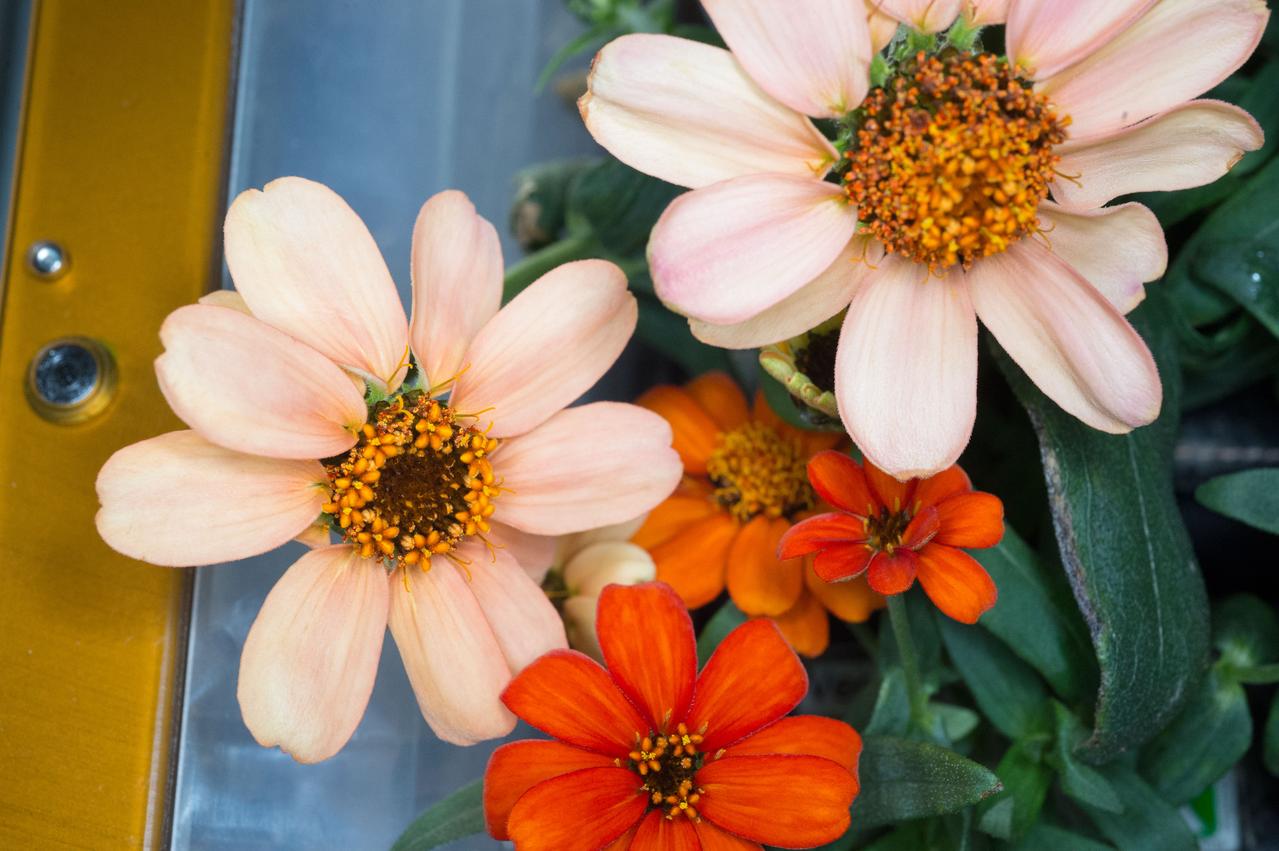
Photographic documentation of VEG-01 flowers taken by the Expedition 46 crew. The Veg-01 investigation is used to assess on-orbit function and performance of the Veggie facility, focusing on the growth and development of seedlings in the spaceflight environment and the composition of microbial flora on the plants and the facility. For this run, Zinnias will be grown for 60 days and are expected to produce flowers.
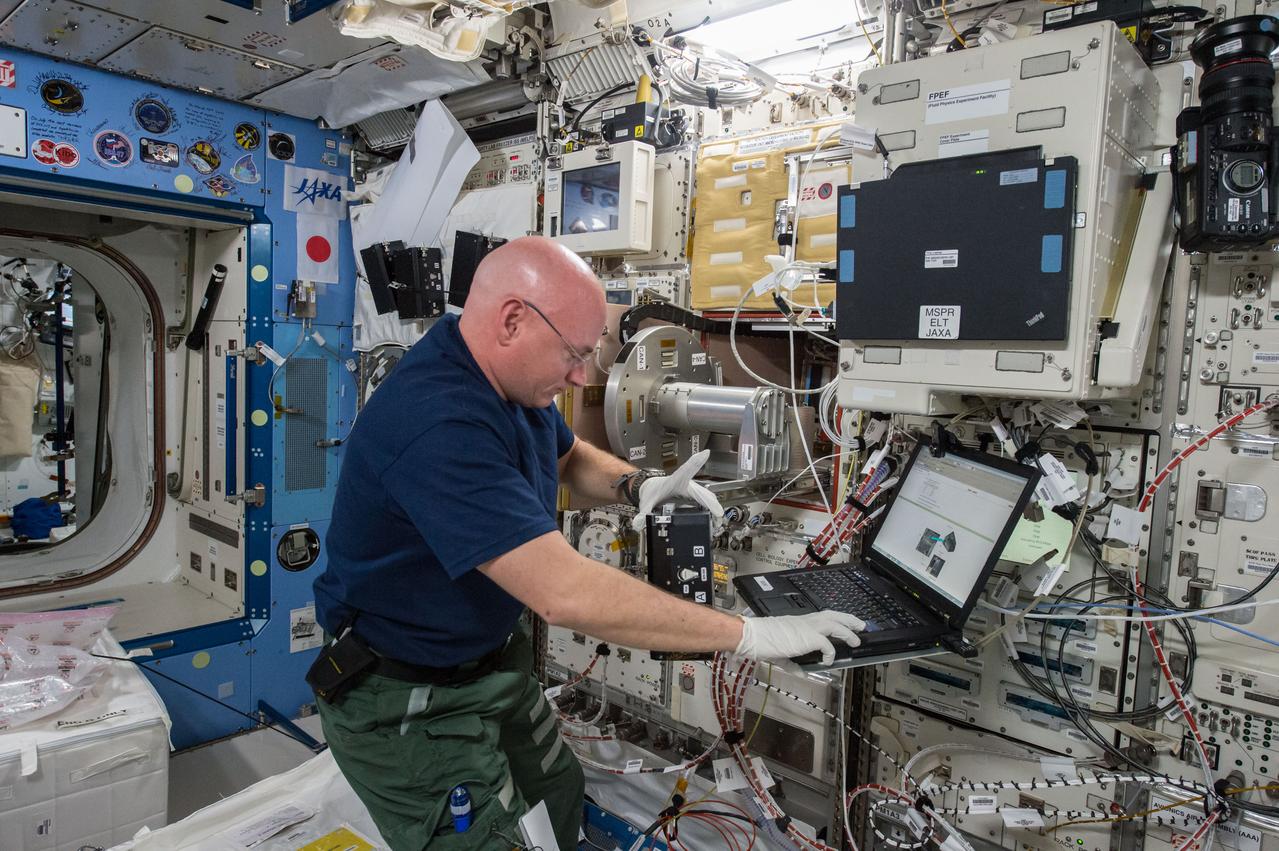
iss043e124063 (4/18/2015) --- NASA astronaut Scott Kelly is seen performing the Space Aging experiment using the Cell Biology Experiment Facility (CBEF) rack in the Japanese Experiment Module (JEM) aboard the International Space Station (ISS). The purpose of the experiment is to study the effects of weightlessness in space flight on the aging of the C. elegans roundworm, a model organism for a range of biological studies. Microgravity causes a number of physiological changes, like heart and bone deconditioning, involving mechanisms that are poorly understood and may affect the rate at which organisms and astronauts age. The Space Aging experiment will grow millimeter-long C. elegans roundworms in microgravity and compare their health and longevity with controlled specimens on Earth.
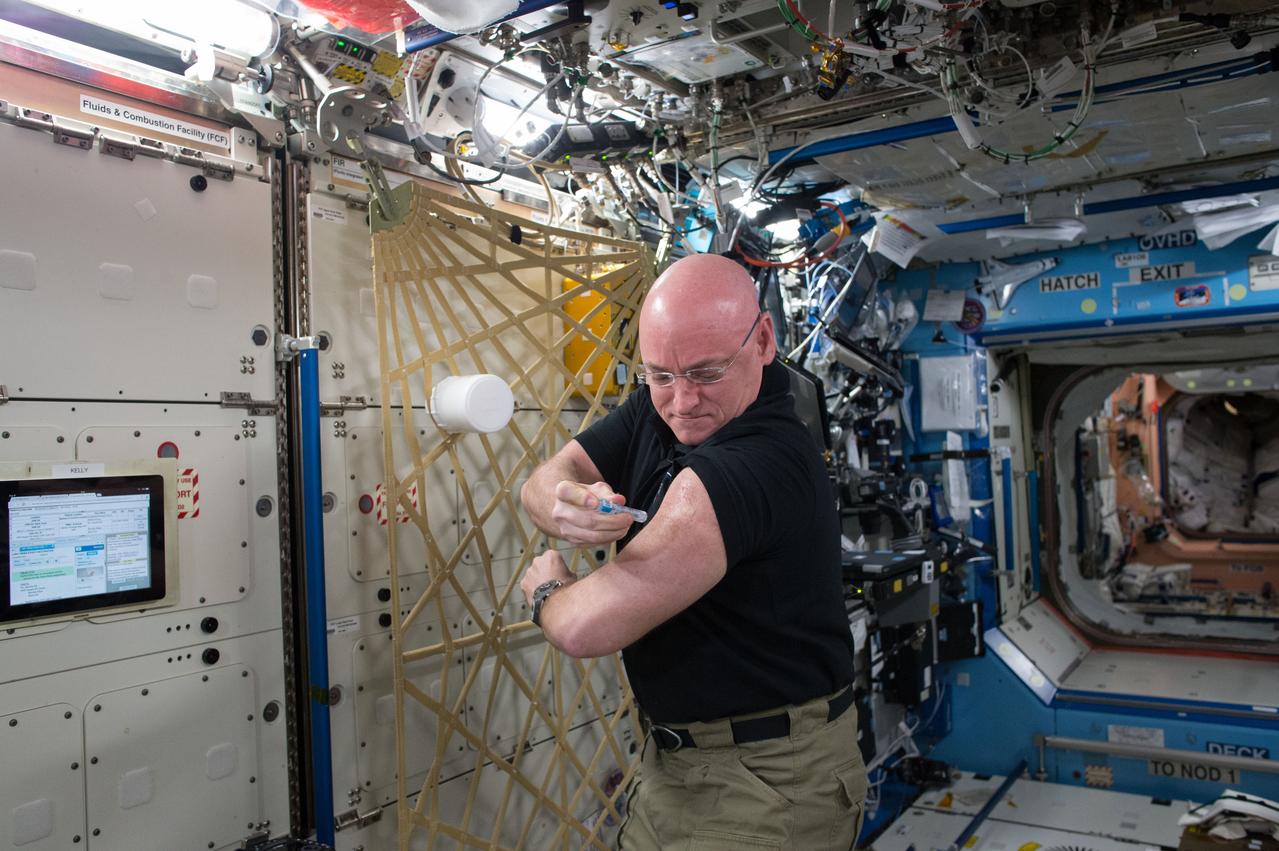
ISS045E028258 (09/24/2015) --- NASA astronaut Scott Kelly gives himself a flu shot for an ongoing study on the human immune system. The vaccination is part of NASA’s Twins Study, a compilation of multiple investigations that take advantage of a unique opportunity to study identical twin astronauts Scott and Mark Kelly, while Scott spends a year aboard the International Space Station and Mark remains on Earth.
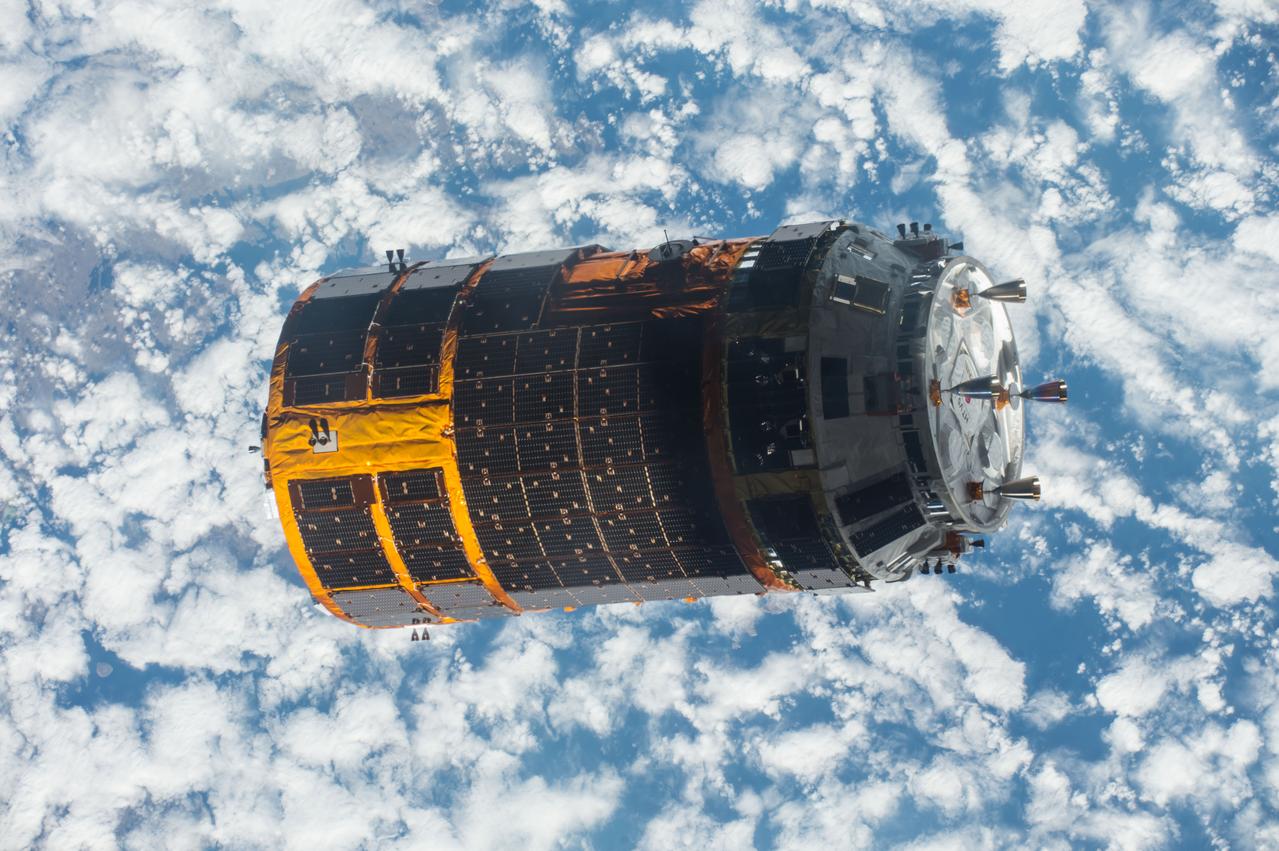
ISS045E034659 (09/28/2015) --- The Japan Aerospace Exploration Agency (JAXA) Kounotori 5 H-II Transfer Vehicle (HTV-5) is seen departing from the International Space Station. The cargo vehicle was berthed to the orbiting laboratory for five weeks until it was released on Sept. 28, 2015. HTV-5 delivered almost five tons of hardware and supplies.
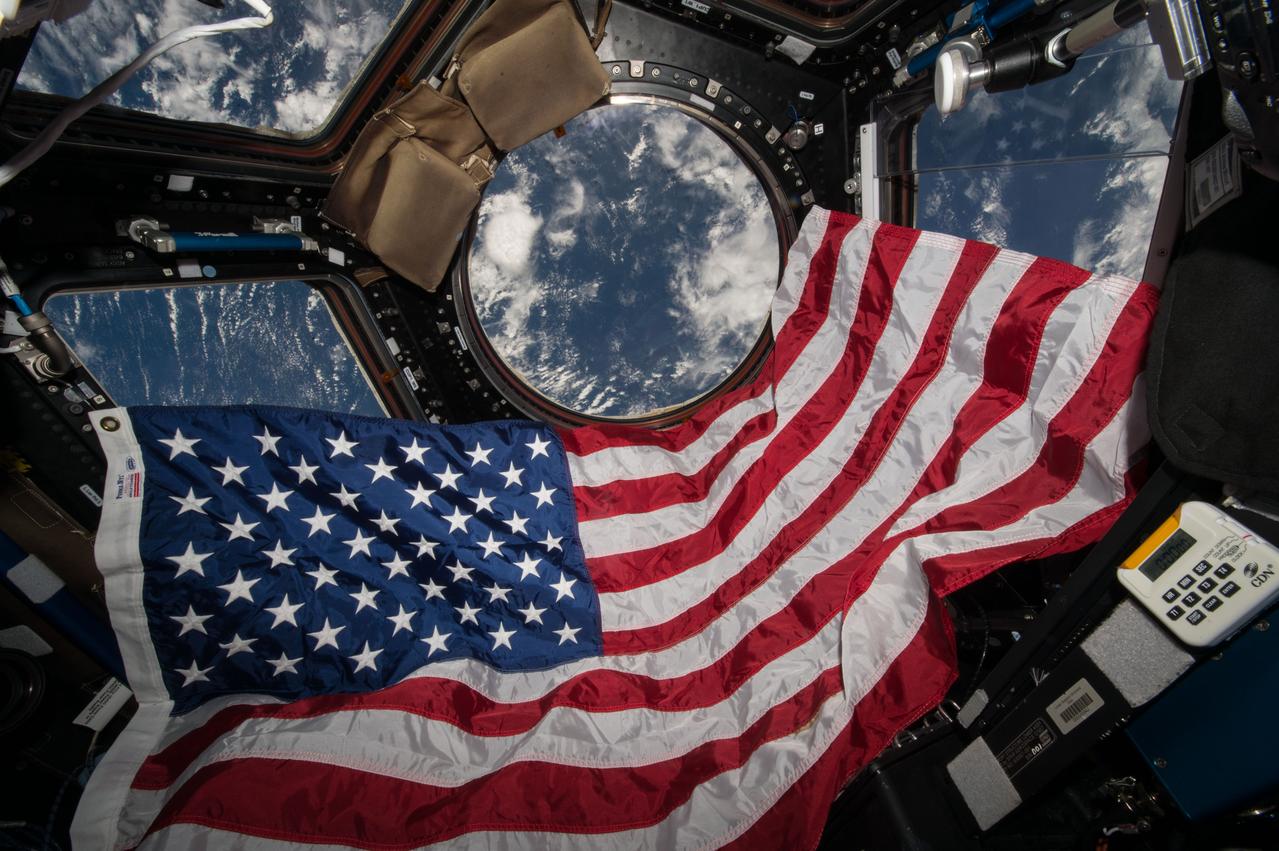
View of flag celebrating Flag Day in the Cupola Module. Photo was taken during Expedition 44.
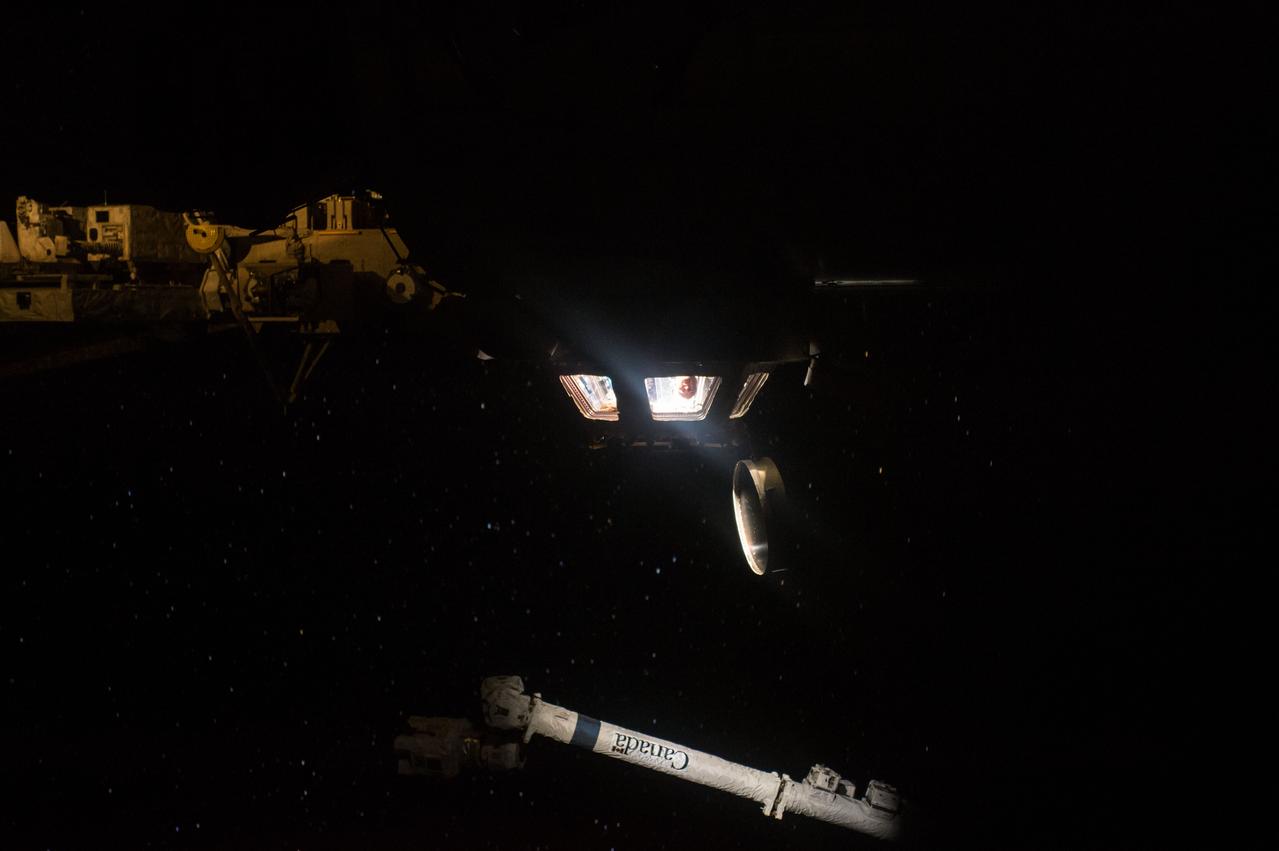
ISS045E002596 (09/14/2015) --- Expedition 45 commander Scott Kelly is seen peeking out of the space station’s Cupola module which provides a 360-degree view of the Earth below. The module is also used for robotics operations, including controlling the station’s main robotic device Canadarm2, seen below the Cupola.
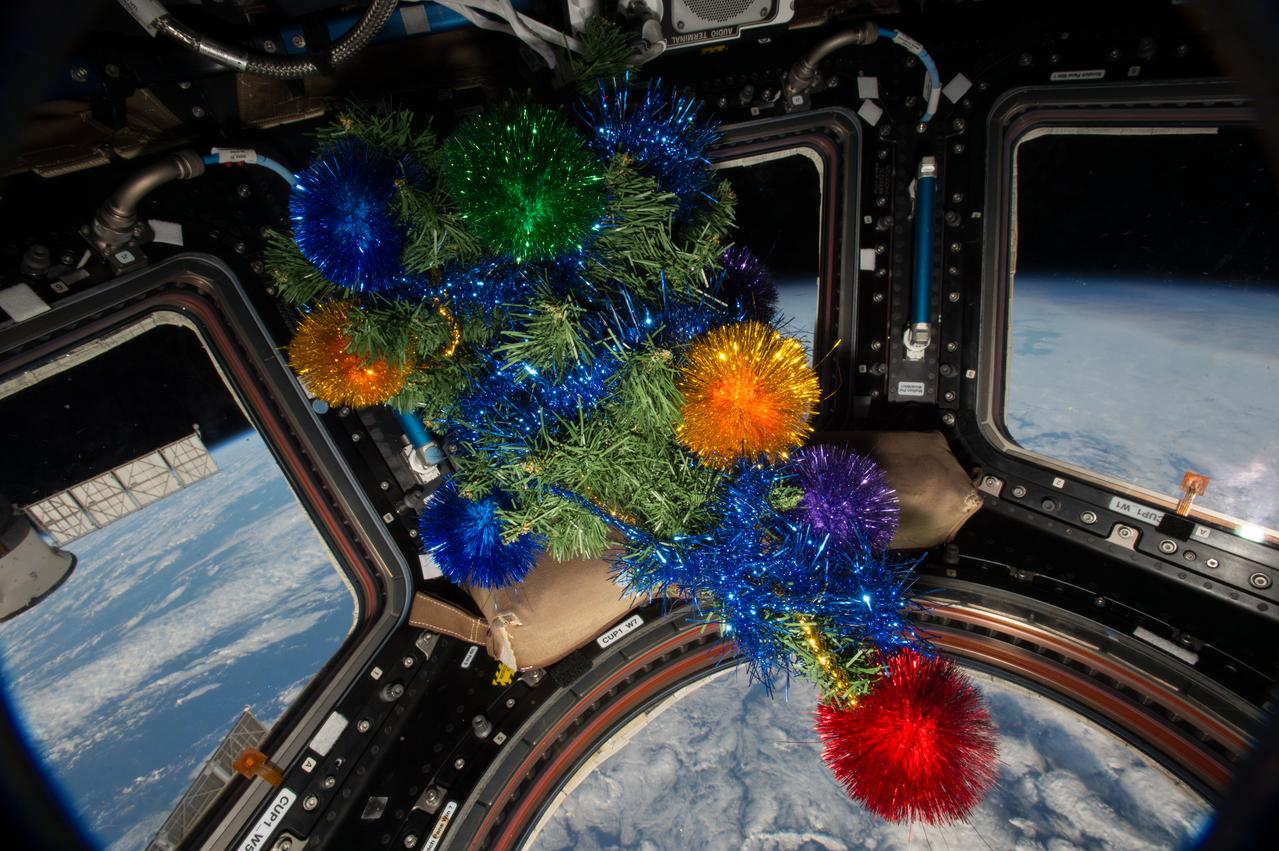
ISS046e002700 (12/25/2015) --- Happy Holiday in space. The crew of Expedition 46 decorated the International Space Station’s Cupola module, a 360-degree series of windows that provides a stunning view of Earth for observations, while also containing the primary controls for the Canadarm2 robotic arm.
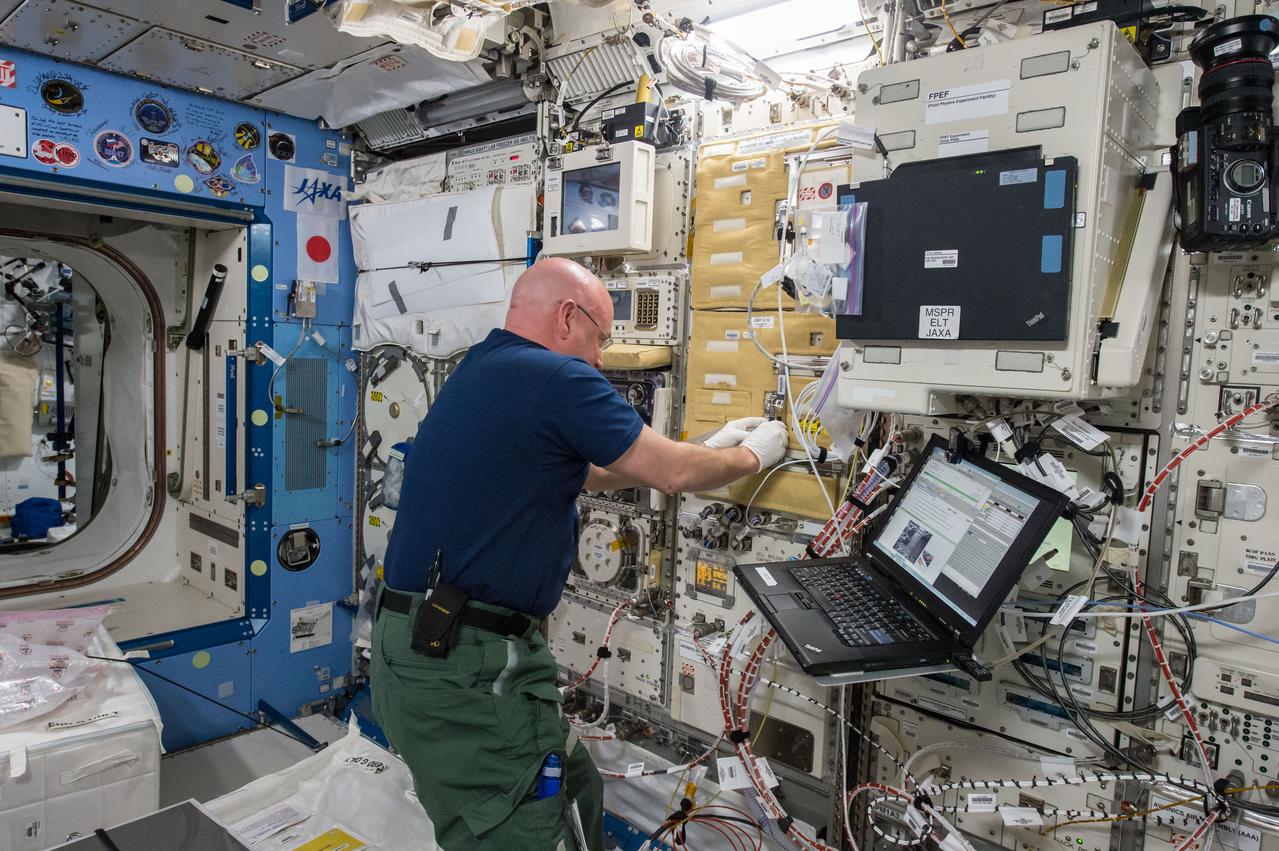
iss043e124238 (4/18/2015) --- NASA astronaut Scott Kelly is seen performing the Space Aging experiment using the Cell Biology Experiment Facility (CBEF) rack in the Japanese Experiment Module (JEM) aboard the International Space Station (ISS). The purpose of the experiment is to study the effects of weightlessness in space flight on the aging of the C. elegans roundworm, a model organism for a range of biological studies. Microgravity causes a number of physiological changes, like heart and bone deconditioning, involving mechanisms that are poorly understood and may affect the rate at which organisms and astronauts age. The Space Aging experiment will grow millimeter-long C. elegans roundworms in microgravity and compare their health and longevity with controlled specimens on Earth.
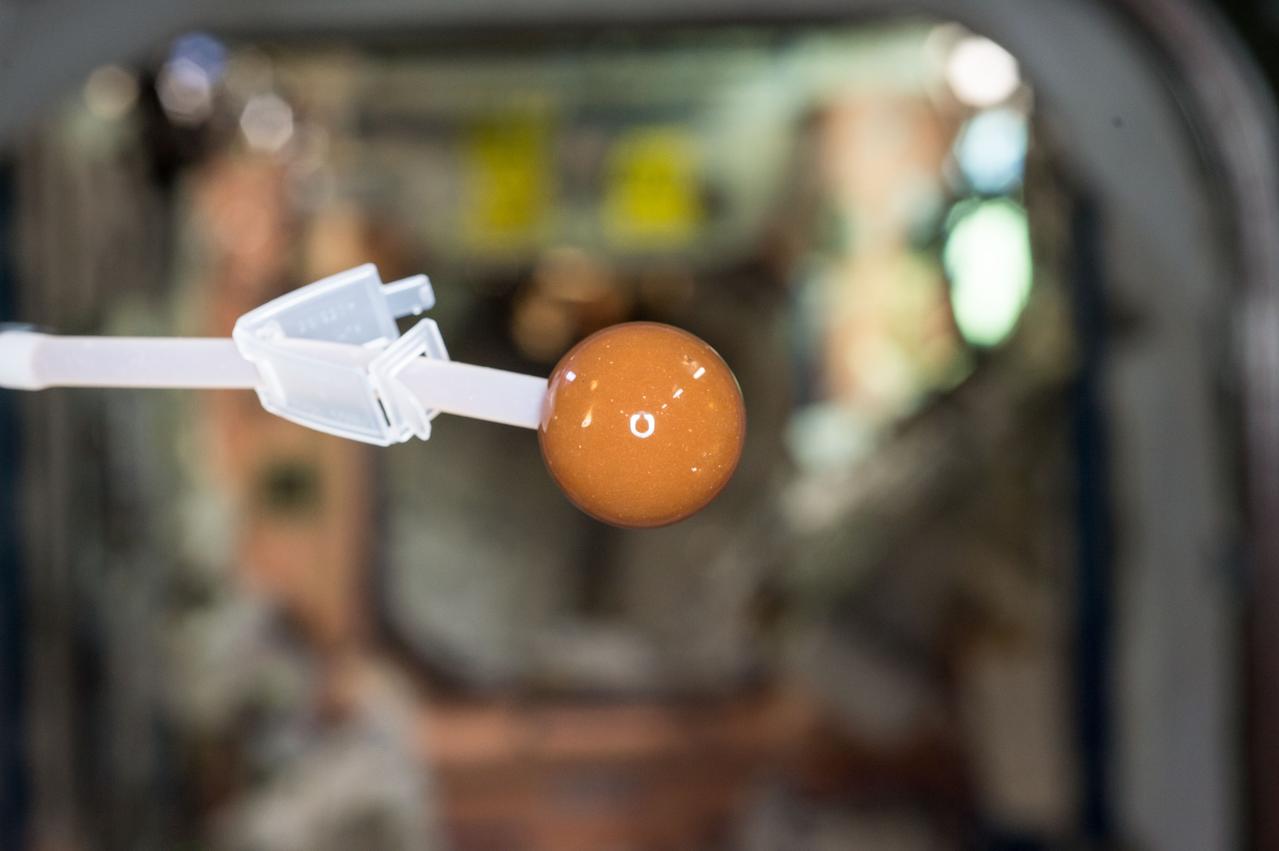
ISS043E128431 (04/22/2015) --- The International Space Station employs one of the most complex water recycling systems ever designed, reclaiming waste water from astronauts and the environment and turning it into potable water. NASA astronaut Scott Kelly tweeted out this image of part of the innovative device with this remark: " Recycle Good to the last drop! Making pee potable and turning it into coffee on @space station. #NoPlaceLikeHome"

ISS044E045542 (08/10/2015) --- Good Morning From the International Space Station! NASA astronaut Scott Kelly took this photograph of a sunrise over the western United States and posted it to social media on Aug. 10, 2015. Kelly wrote, "#Good Morning to those in the western #USA. Looks like there's a lot going on down there. #YearInSpace"
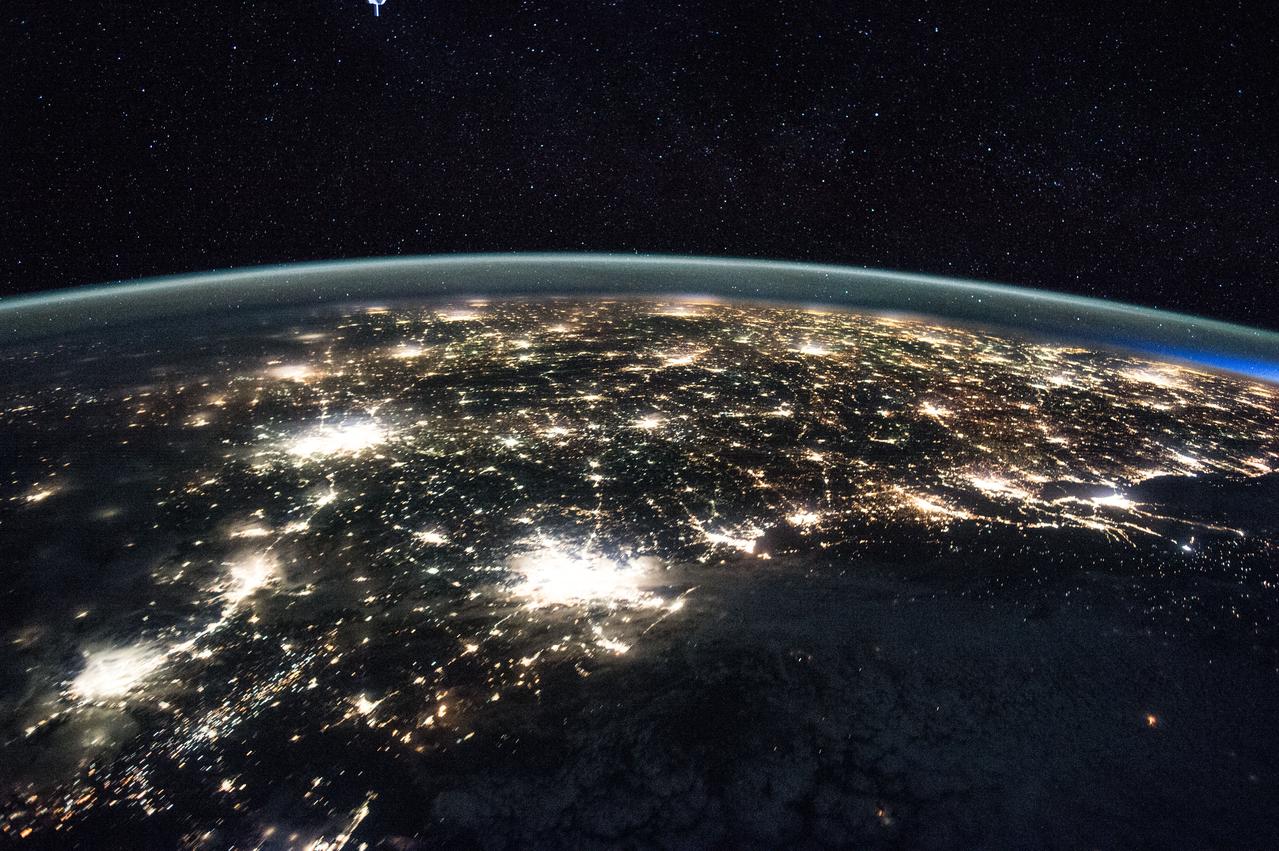
iss046e005351 (1/5/2016) --- The Expedition 46 crew photographed an Earth observation night pass over the Gulf of Mexico. The view looks toward the northeast and includes Texas and Louisiana gulf coasts, as well as major cities in Texas, Louisiana, Mississippi, Alabama, Oklahoma, Arkansas, Tennessee and more.
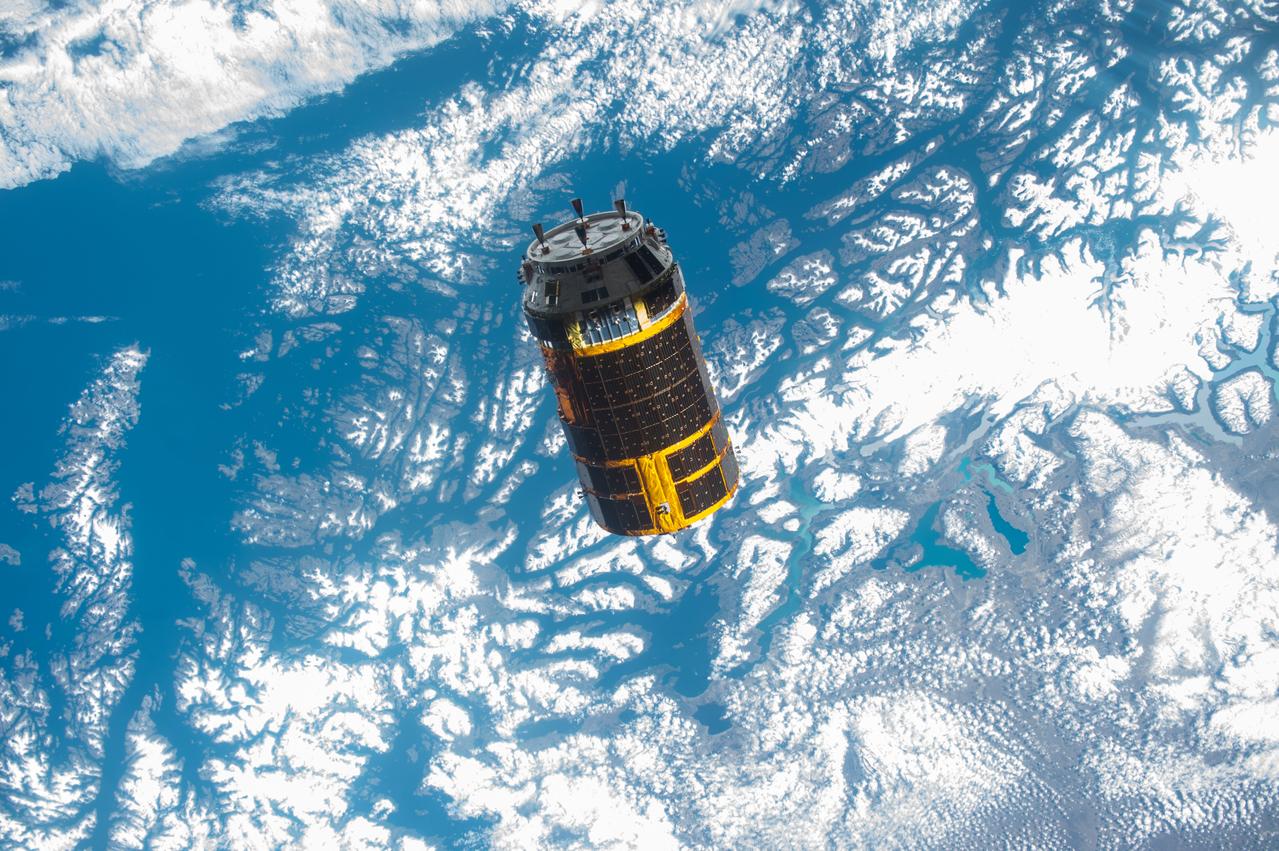
ISS045E034631 (09/28/2015) --- The Japan Aerospace Exploration Agency (JAXA) Kounotori 5 H-II Transfer Vehicle (HTV-5) is seen departing from the International Space Station. The cargo vehicle was berthed to the orbiting laboratory for five weeks until it was released on Sept. 28, 2015. HTV-5 delivered almost five tons of hardware and supplies.
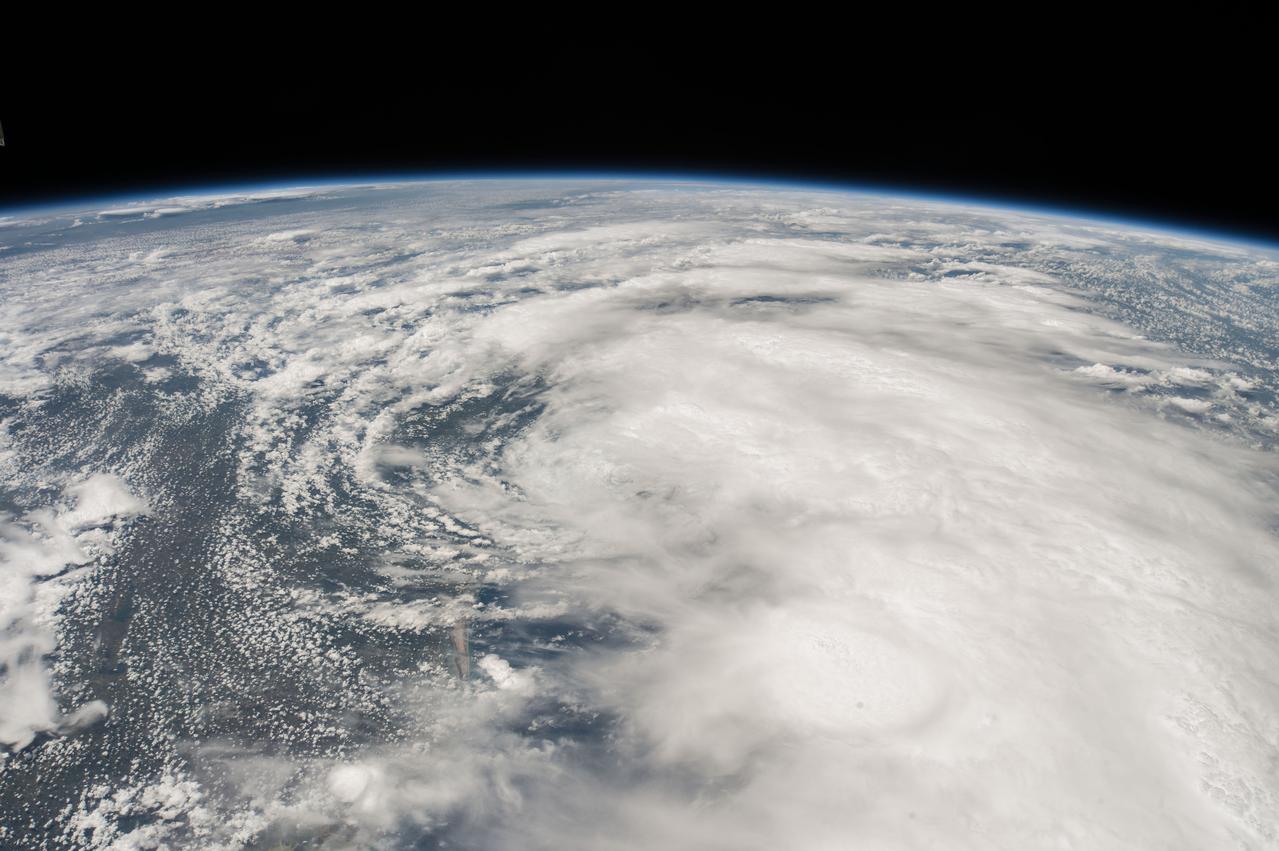
ISS044E001463 (06/16/2015) --- Tropical Storm Bill image coming ashore in Texas taken by the International Space Station on June 16, 2015.
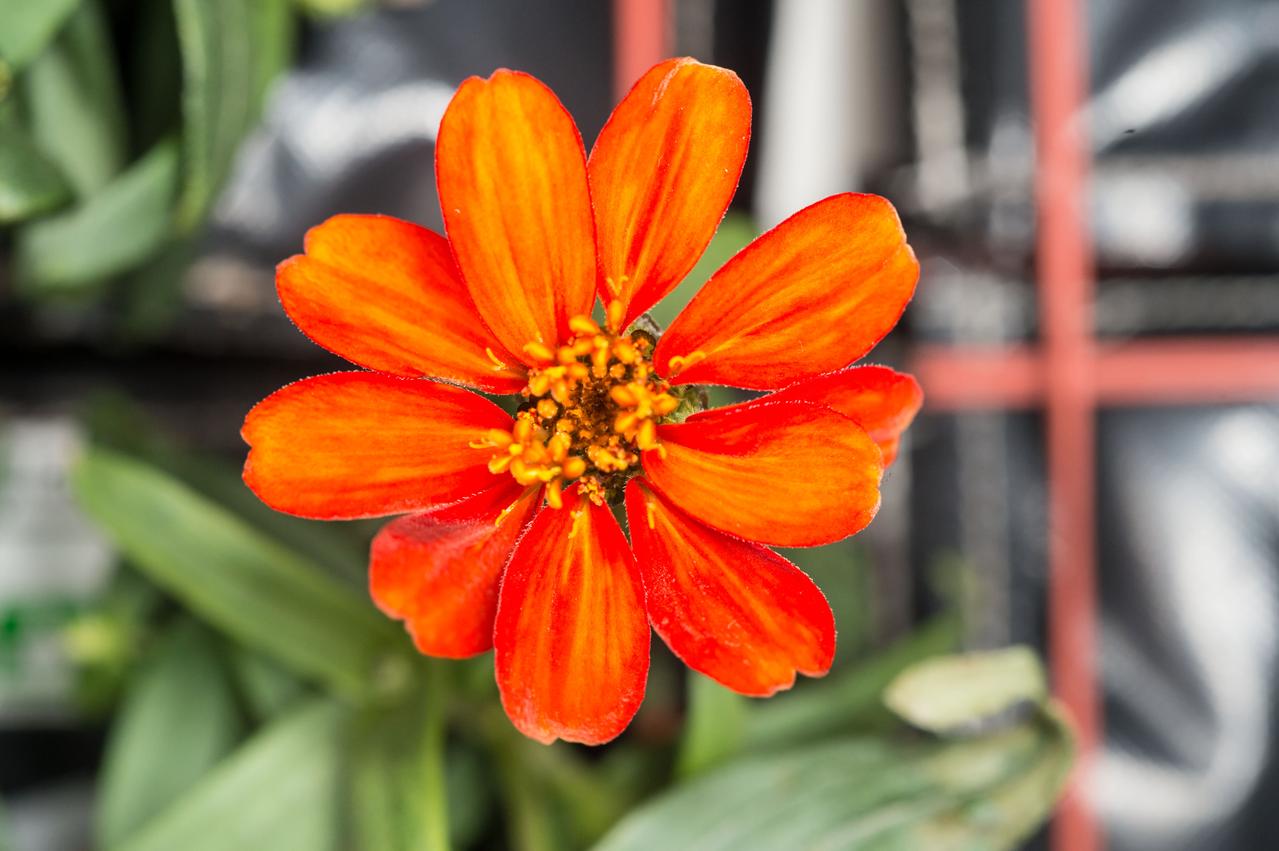
iss046e017198 (1/22/2016) --- Close-up view of Zinnia grown as part of VEG-01 experiment in the Columbus module aboard the International Space Station (ISS). The Veg-01 investigation is used to assess on-orbit function and performance of the Veggie facility, focusing on the growth and development of seedlings in the spaceflight environment and the composition of microbial flora on the plants and the facility. For this run, Zinnias were grown for 60 days and produced flowers.
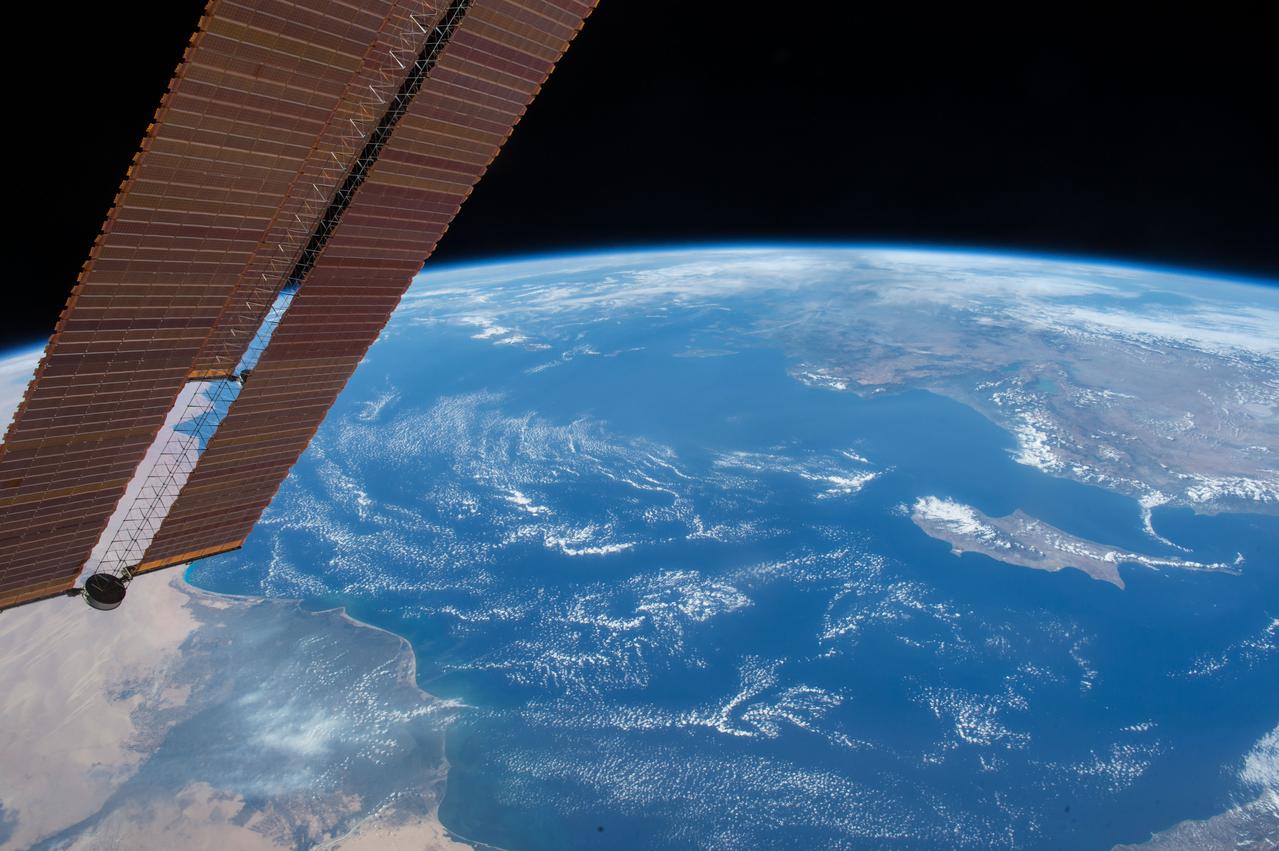
Earth observation (Mediterranean Sea) taken by the Expedition 45 crew. ISS solar array wings (SAWs) are in view. Image was released by astronaut on social media.