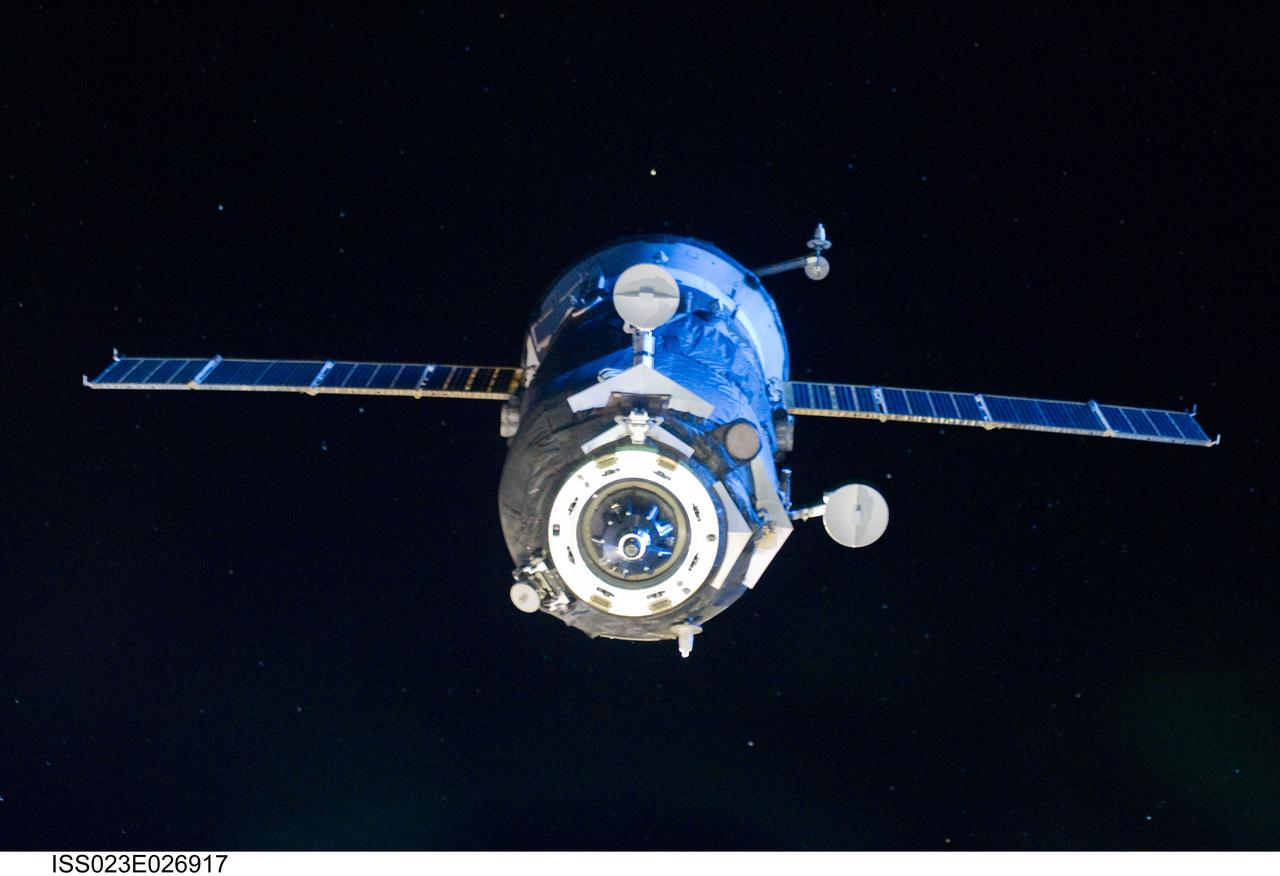
ISS023-E-026917 (22 April 2010) --- The unpiloted ISS Progress 35 supply vehicle departs from the International Space Station's Pirs Docking Compartment on April 22, 2010. Filled with trash and discarded items, the Progress will be used for scientific experiments until it is deorbited and burned up in Earth's atmosphere. Its departure clears the way for the ISS Progress 37 cargo ship that is scheduled to launch to the station April 28.
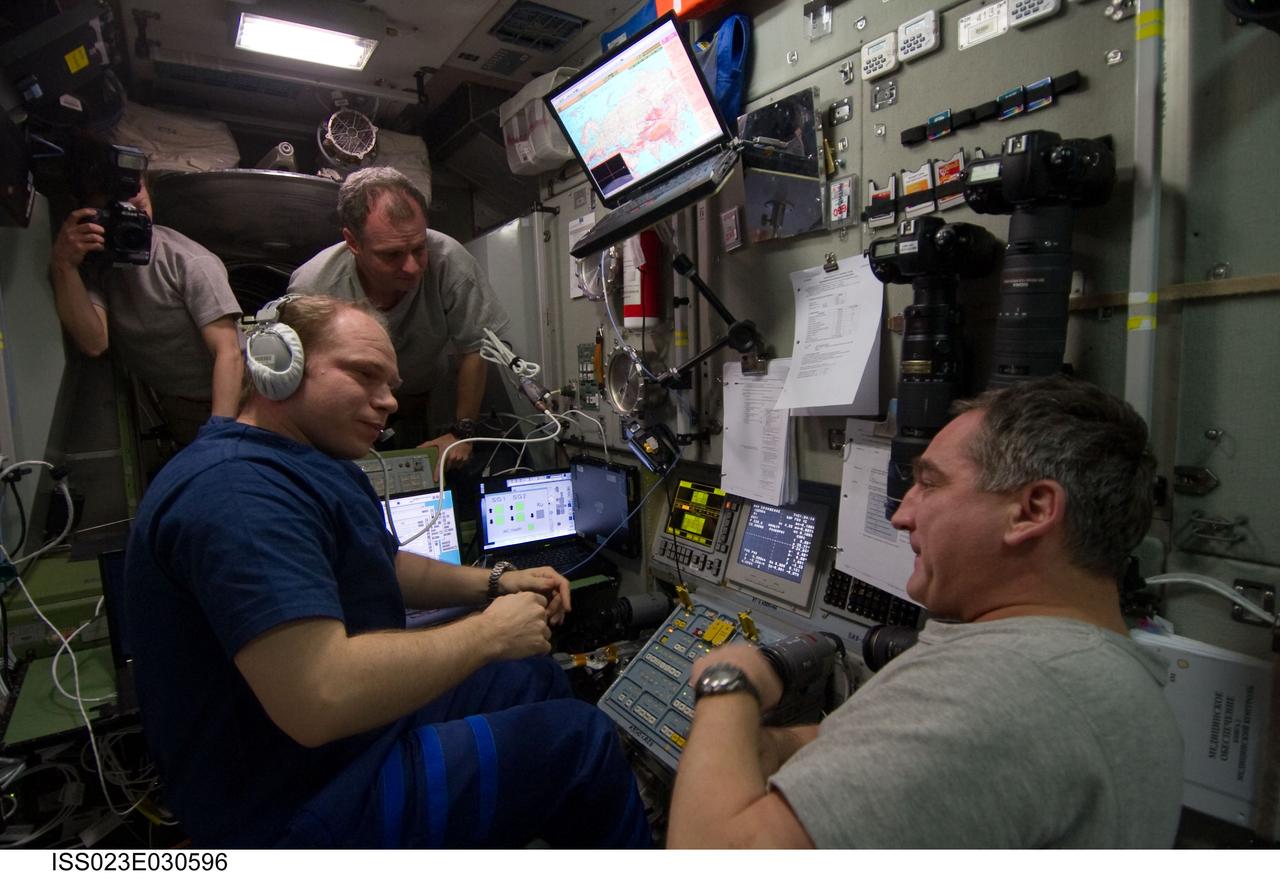
ISS023-E-030596 (1 May 2010) --- Russian cosmonaut Oleg Kotov (left foreground), Expedition 23 commander, is pictured at the manual TORU docking system controls in the Zvezda Service Module of the International Space Station shortly after conducting a manual control docking of the Progress 37 due to a jet failure on the Progress that forced a shutdown of the Kurs automated rendezvous system. Progress 37 docked to the Pirs Docking Compartment at 2:30 p.m. (EDT) on May 1, 2010, after a three-day flight from the Baikonur Cosmodrome in Kazakhstan. Also pictured are NASA astronauts Tracy Caldwell Dyson (left background) and T.J. Creamer; along with Russian cosmonaut Alexander Skvortsov (right foreground), all flight engineers.
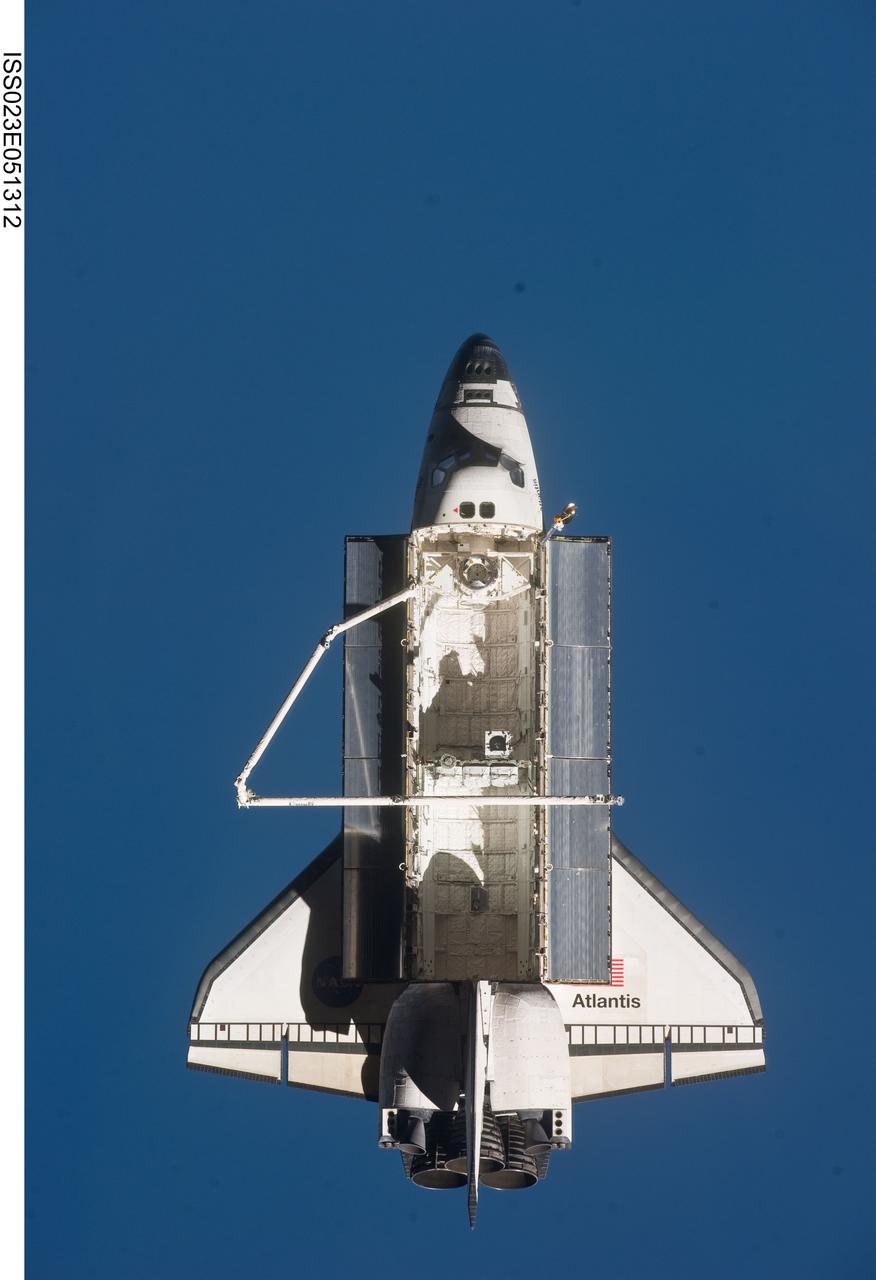
ISS023-E-051312 (23 May 2010) --- Space shuttle Atlantis is featured in this image photographed by an Expedition 23 crew member on the International Space Station soon after the shuttle and station began their post-undocking relative separation. Undocking of the two spacecraft occurred at 10:22 a.m. (CDT) on May 23, 2010, ending a seven-day stay that saw the addition of a new station module, replacement of batteries and resupply of the orbiting outpost. A blue part of Earth provides the backdrop for the scene.
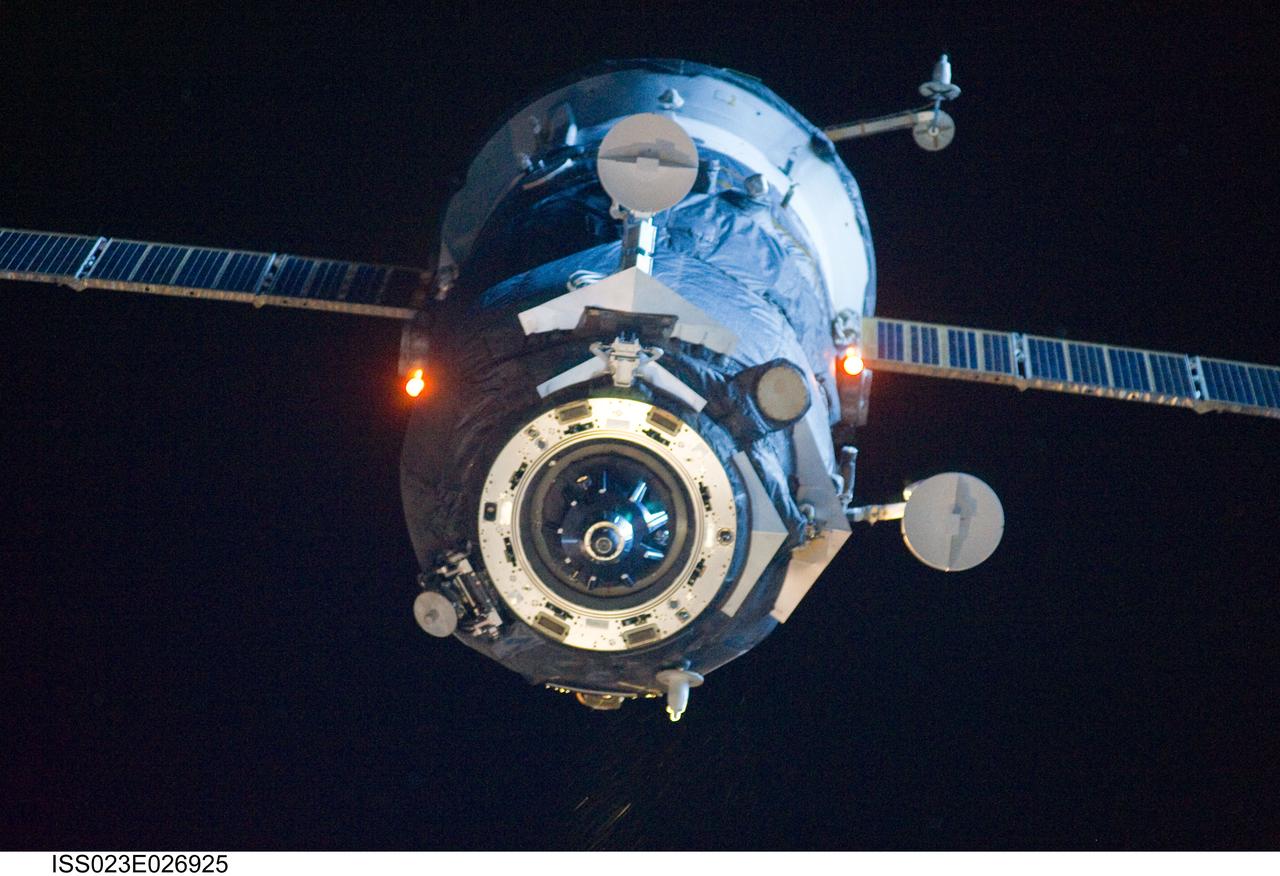
ISS023-E-026925 (22 April 2010) --- The unpiloted ISS Progress 35 supply vehicle departs from the International Space Station's Pirs Docking Compartment on April 22, 2010. Filled with trash and discarded items, the Progress will be used for scientific experiments until it is deorbited and burned up in Earth's atmosphere. Its departure clears the way for the ISS Progress 37 cargo ship that is scheduled to launch to the station April 28.
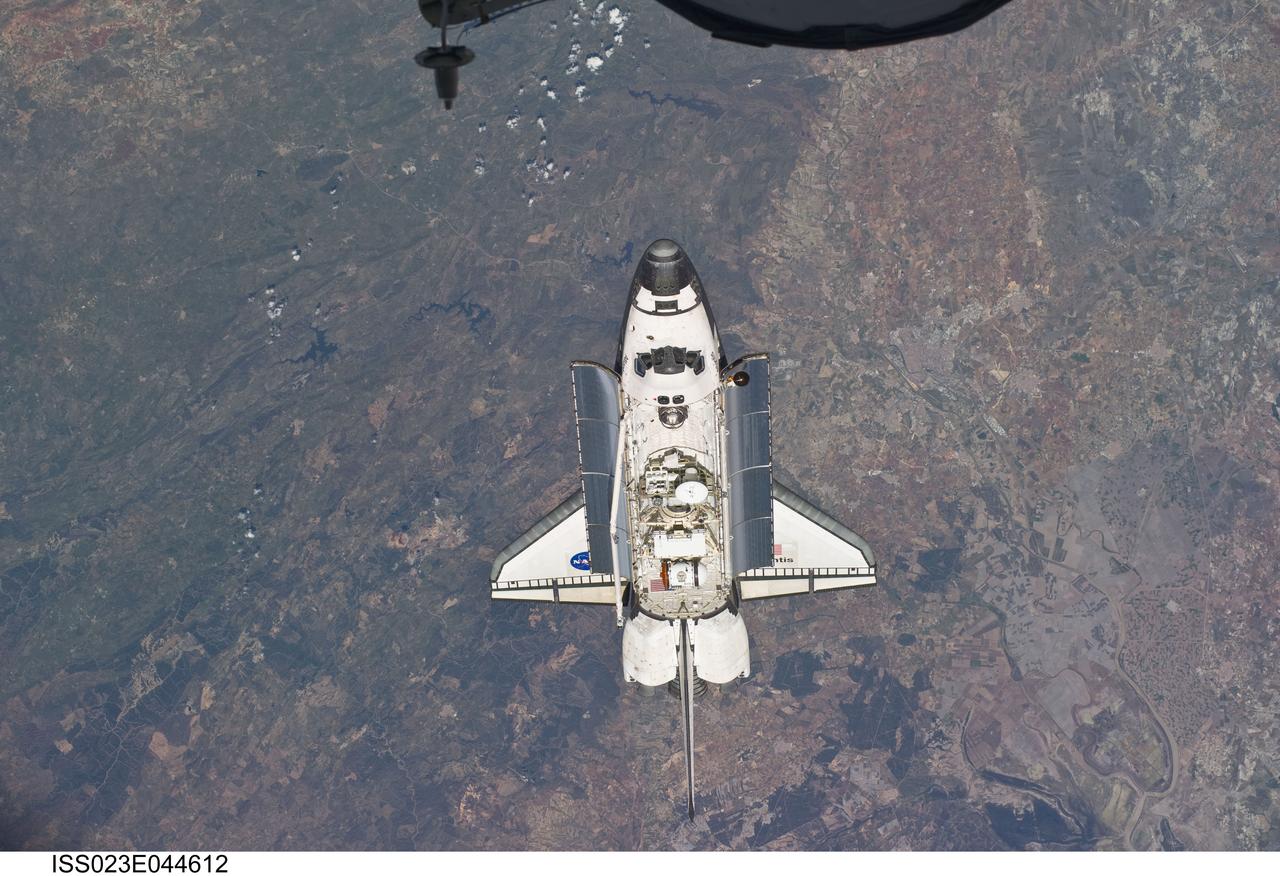
ISS023-E-044612 (16 May 2010) --- Backdropped by a colorful Earth, space shuttle Atlantis is featured in this image photographed by an Expedition 23 crew member as the shuttle approaches the International Space Station during STS-132 rendezvous and docking operations. Docking occurred at 9:28 a.m. (CDT) on May 16, 2010.
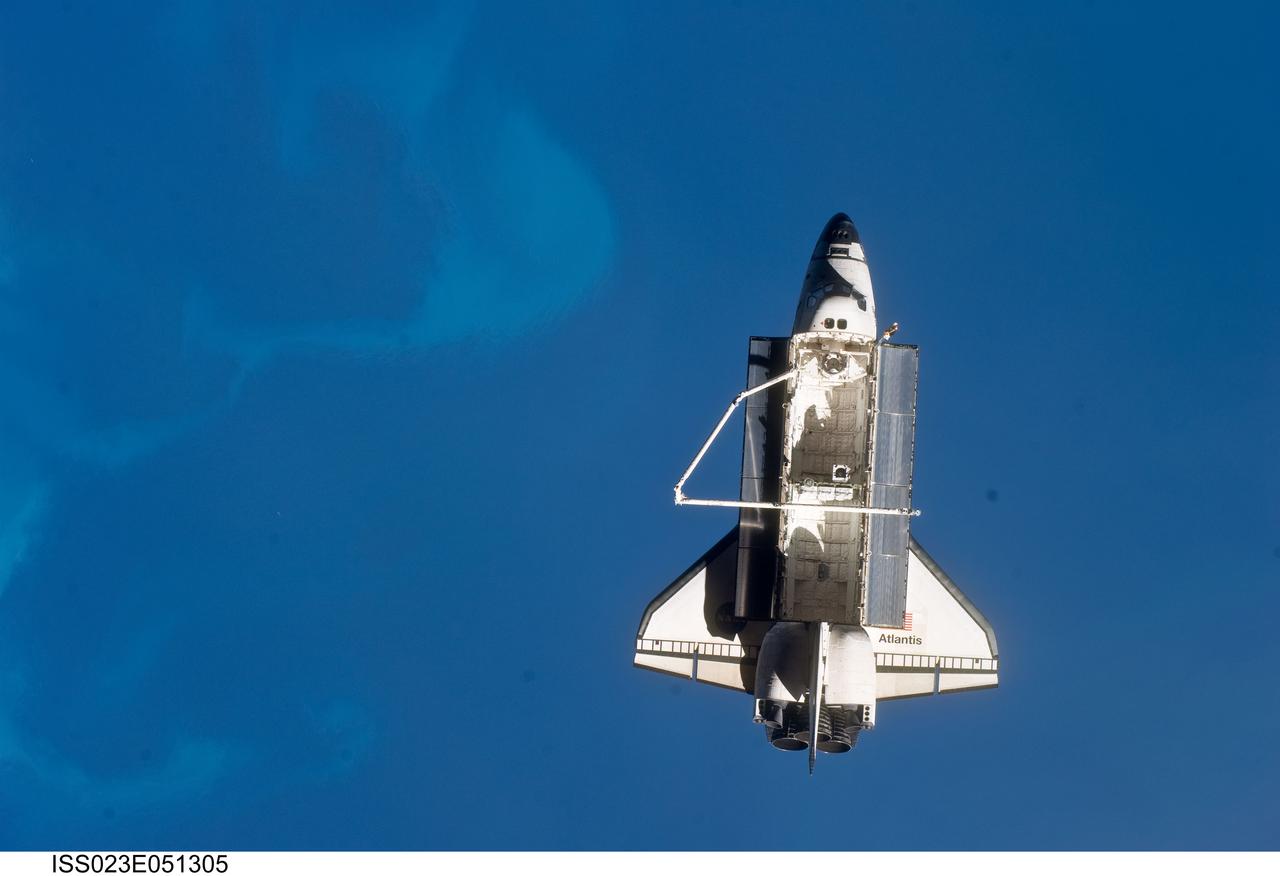
ISS023-E-051305 (23 May 2010) --- Space shuttle Atlantis is featured in this image photographed by an Expedition 23 crew member on the International Space Station soon after the shuttle and station began their post-undocking relative separation. Undocking of the two spacecraft occurred at 10:22 a.m. (CDT) on May 23, 2010, ending a seven-day stay that saw the addition of a new station module, replacement of batteries and resupply of the orbiting outpost. A blue part of Earth provides the backdrop for the scene.
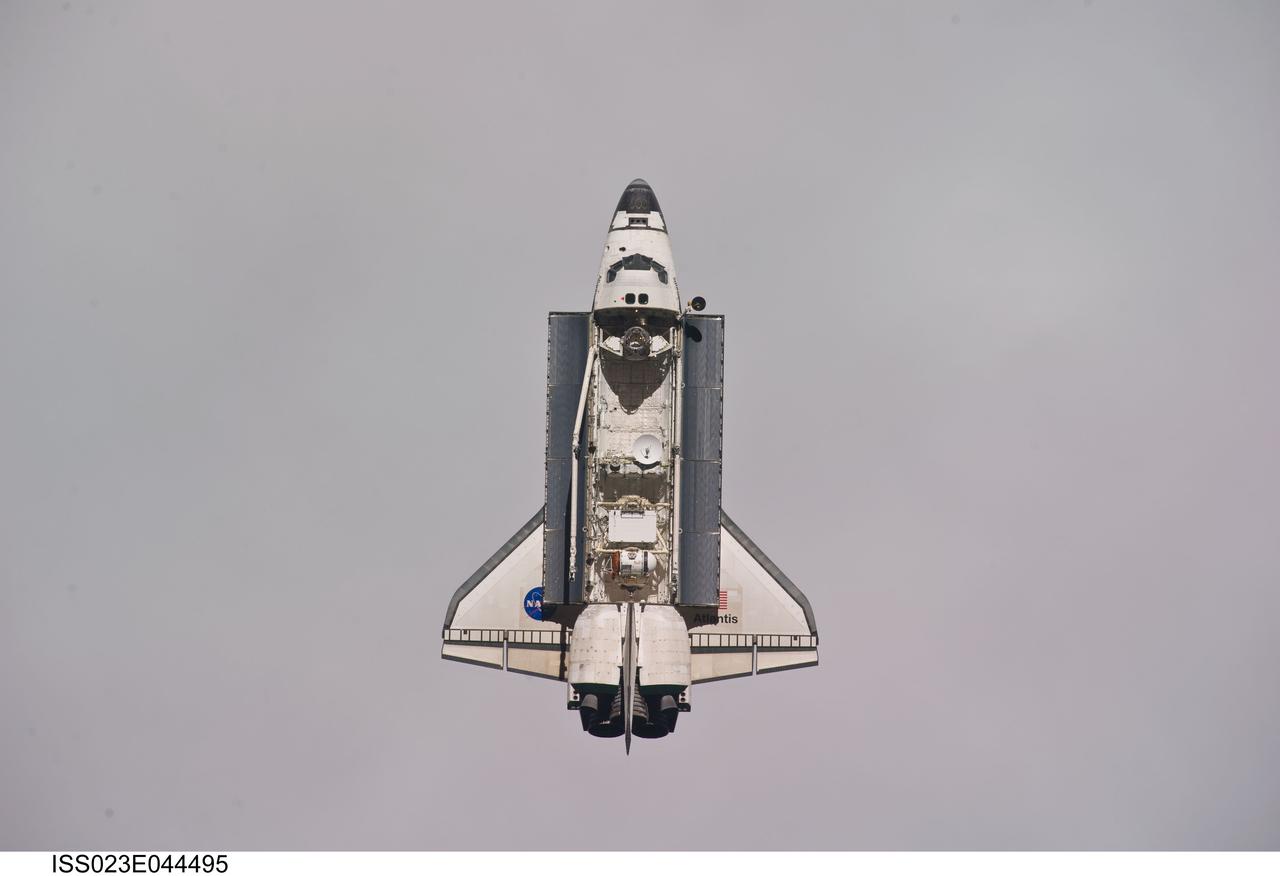
ISS023-E-044495 (16 May 2010) --- Space shuttle Atlantis is featured in this image photographed by an Expedition 23 crew member as the shuttle approaches the International Space Station during STS-132 rendezvous and docking operations. Docking occurred at 9:28 a.m. (CDT) on May 16, 2010.
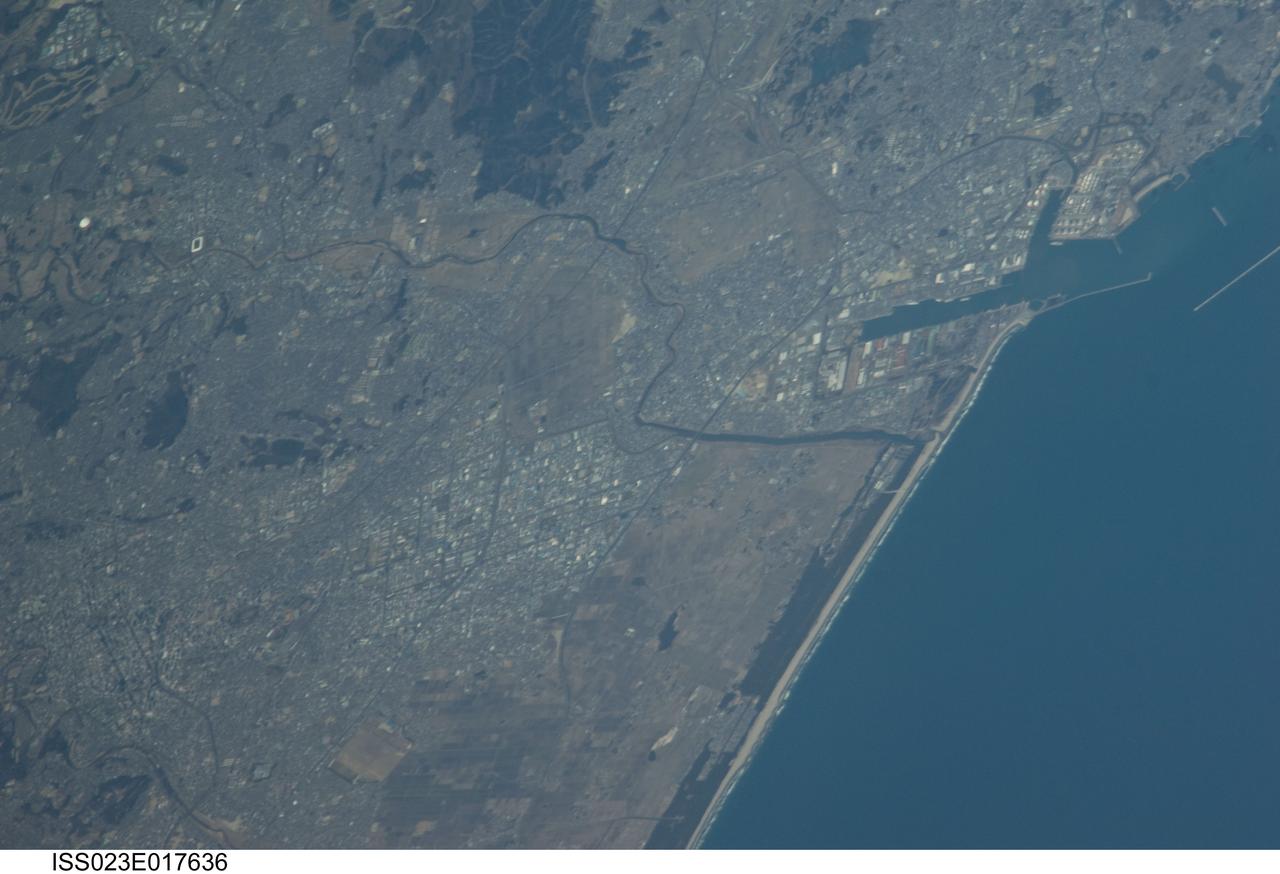
094 japan east 248
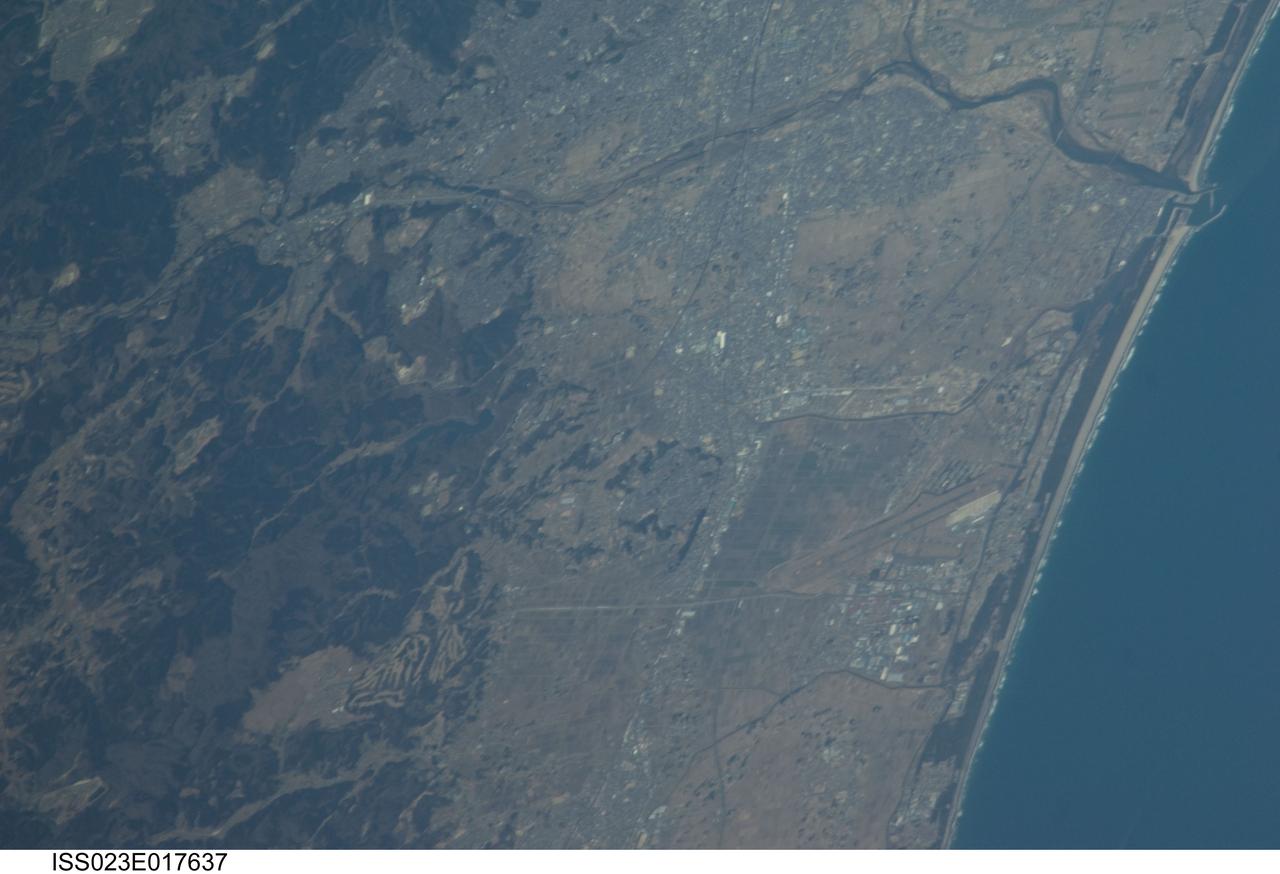
094 japan east 248
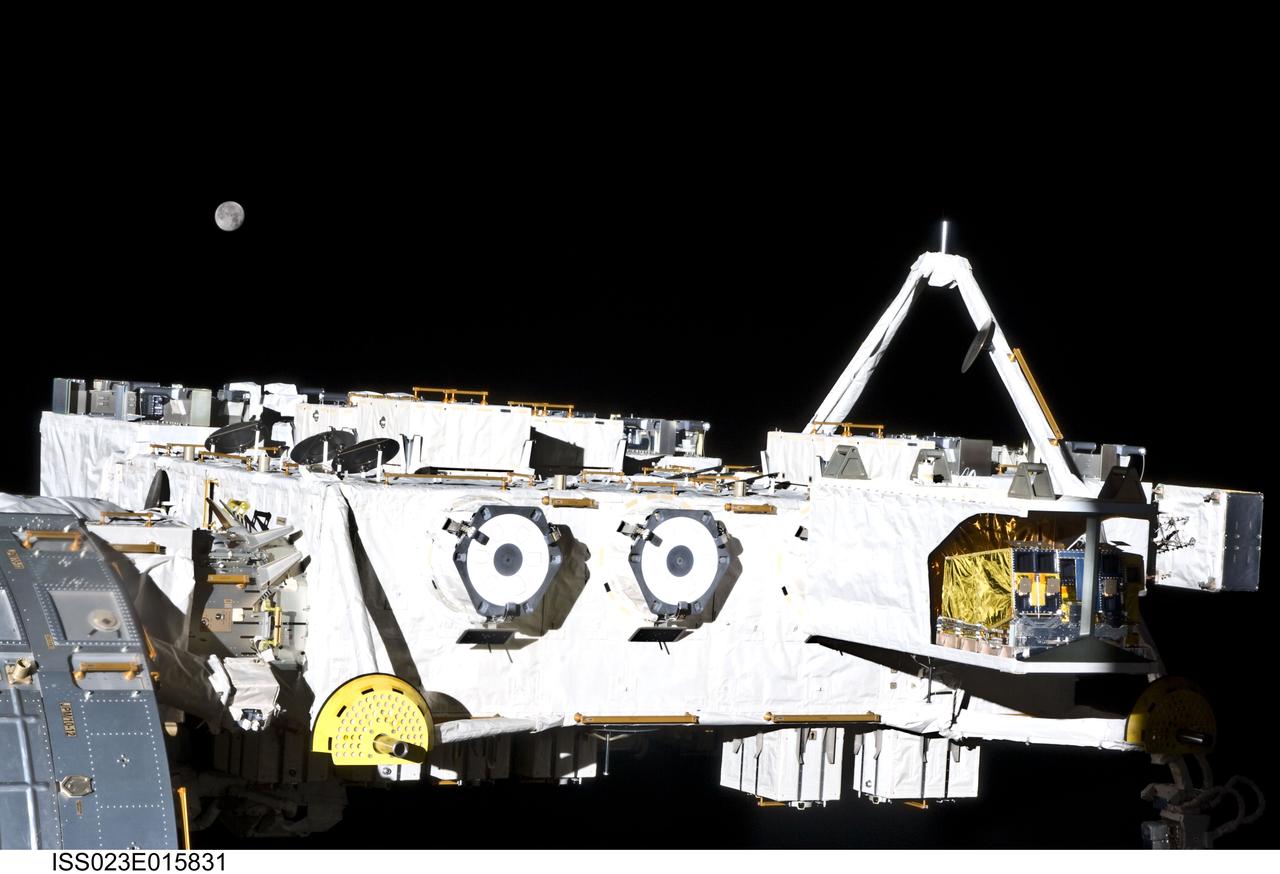
091 nature moon 16thmoon specialshots 254
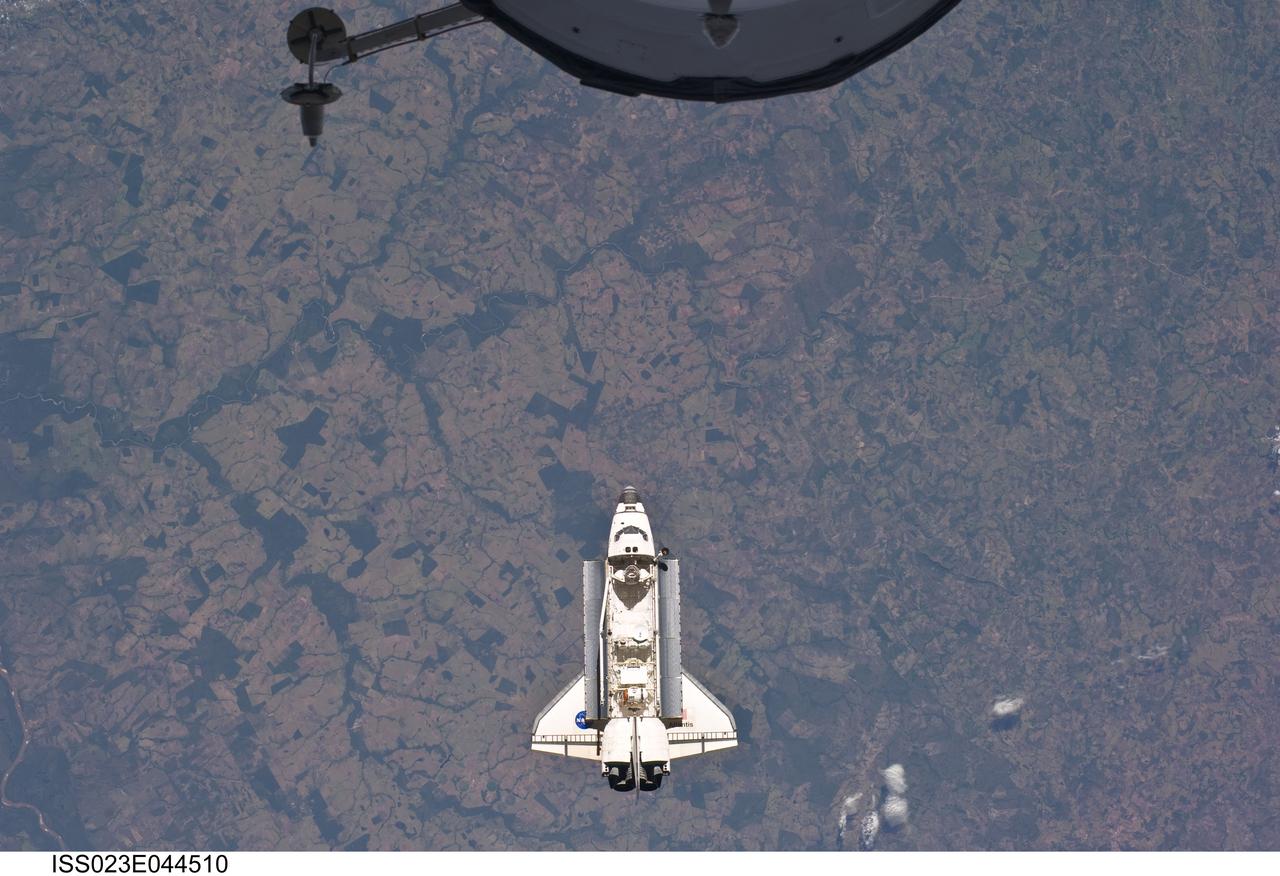
ISS023-E-044510 (16 May 2010) --- Backdropped by a colorful Earth, space shuttle Atlantis is featured in this image photographed by an Expedition 23 crew member as the shuttle approaches the International Space Station during STS-132 rendezvous and docking operations. Docking occurred at 9:28 a.m. (CDT) on May 16, 2010. A portion of a docked Russian spacecraft is visible at top.
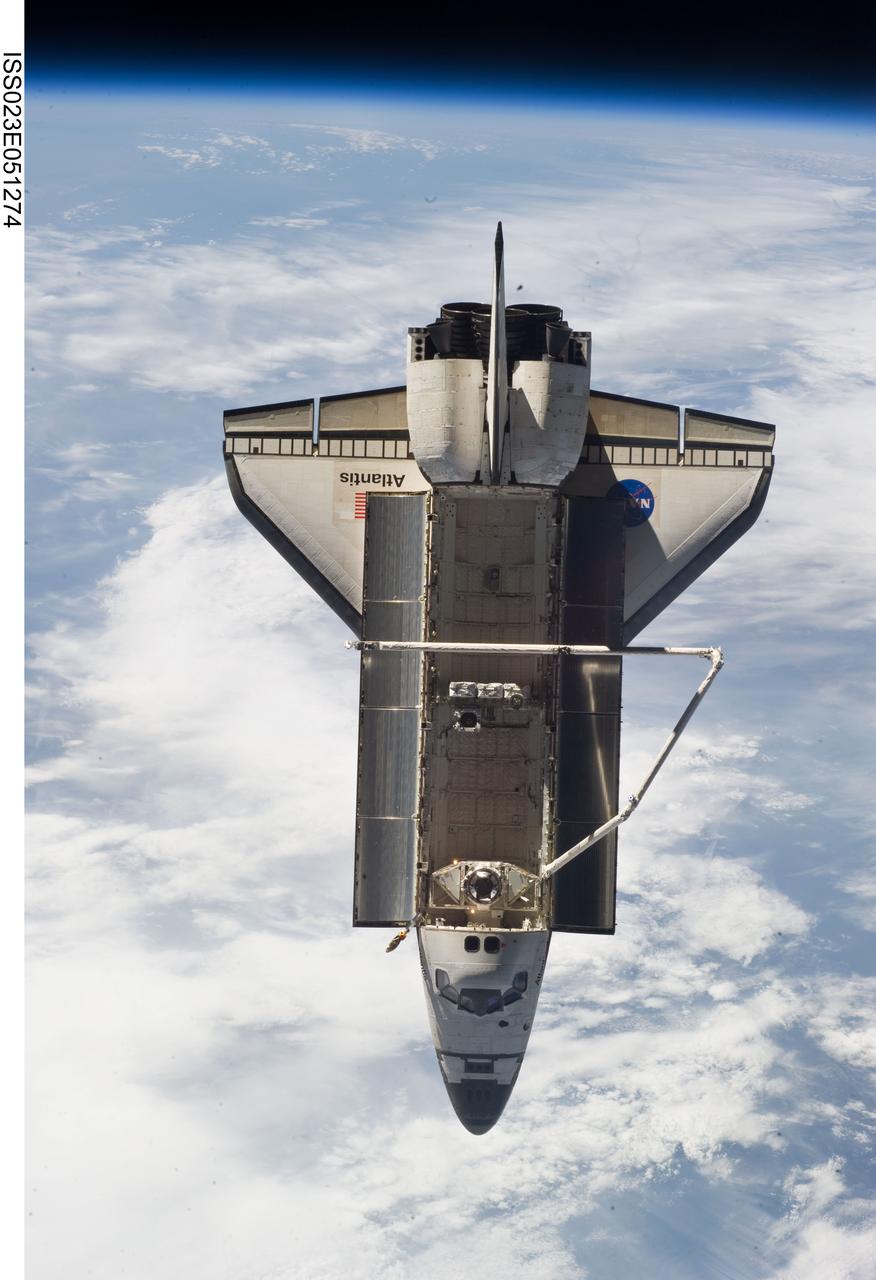
ISS023-E-051274 (23 May 2010) --- Space shuttle Atlantis is featured in this image photographed by an Expedition 23 crew member on the International Space Station soon after the shuttle and station began their post-undocking relative separation. Undocking of the two spacecraft occurred at 10:22 a.m. (CDT) on May 23, 2010, ending a seven-day stay that saw the addition of a new station module, replacement of batteries and resupply of the orbiting outpost. A blue and white part of Earth provides the backdrop for the scene.
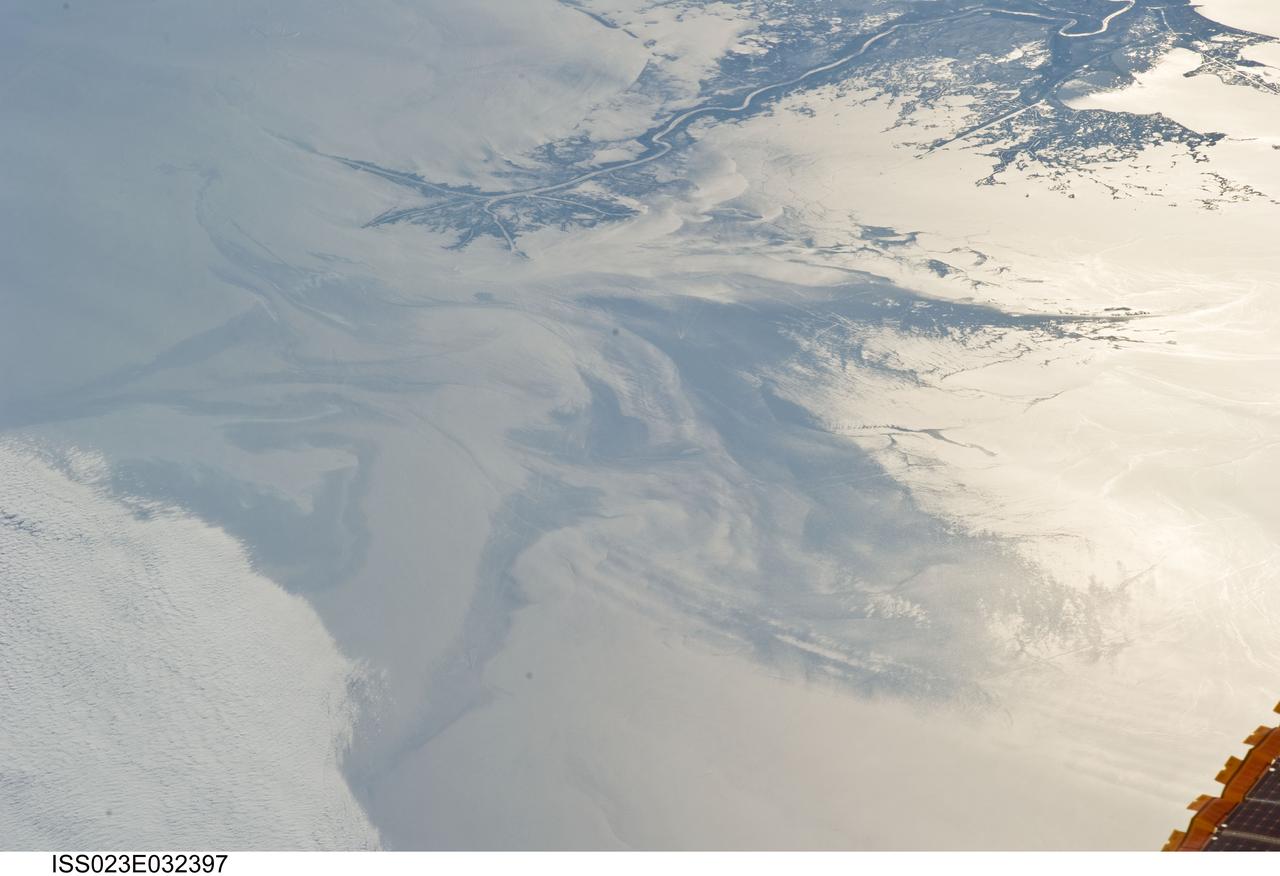
ISS023-E-032397 (4 May 2010) --- The Gulf of Mexico oil spill is featured in this image photographed by an Expedition 23 crew member on the International Space Station. On April 20, 2010 the oil rig Deepwater Horizon suffered an explosion and sank two days later. Shortly thereafter oil began leaking into the Gulf of Mexico from ruptured pipes as safety cutoff mechanisms failed to operate. Automated nadir-viewing orbital NASA sensors have been tracking the growth of the oil spill as it has spread towards the northern Gulf Coast. This detailed photograph provides a different viewing perspective on the ongoing event. The image is oblique, meaning that it was taken with a sideways viewing angle from the space station, rather than the ?straight down? or nadir view typical of automated satellite sensors. The view is towards the west; the ISS was located over the eastern edge of the Gulf of Mexico when the image was taken. The Mississippi River Delta and nearby Louisiana coast (top) appear dark in the sunglint that illuminates most of the image. This phenomenon is caused by sunlight reflecting off the water surface ? much like a mirror ? directly back towards the astronaut observer onboard the orbital complex. The sunglint improves the identification of the oil spill (colored dark to light gray) which is creating a different water texture, and therefore a contrast, between the smooth and rougher water of the reflective ocean surface (colored silver to white). Wind and water current patterns have modified the oil spill?s original shape into streamers and elongated masses. Efforts are ongoing to contain the spill and protect fragile coastal ecosystems and habitats such as the Chandeleur Islands (right center). Other features visible in the image include a solid field of low cloud cover at the lower left corner of the image. A part of one of the ISS solar arrays is visible at lower right. Wave patterns at lower right are most likely caused by tidal effects.
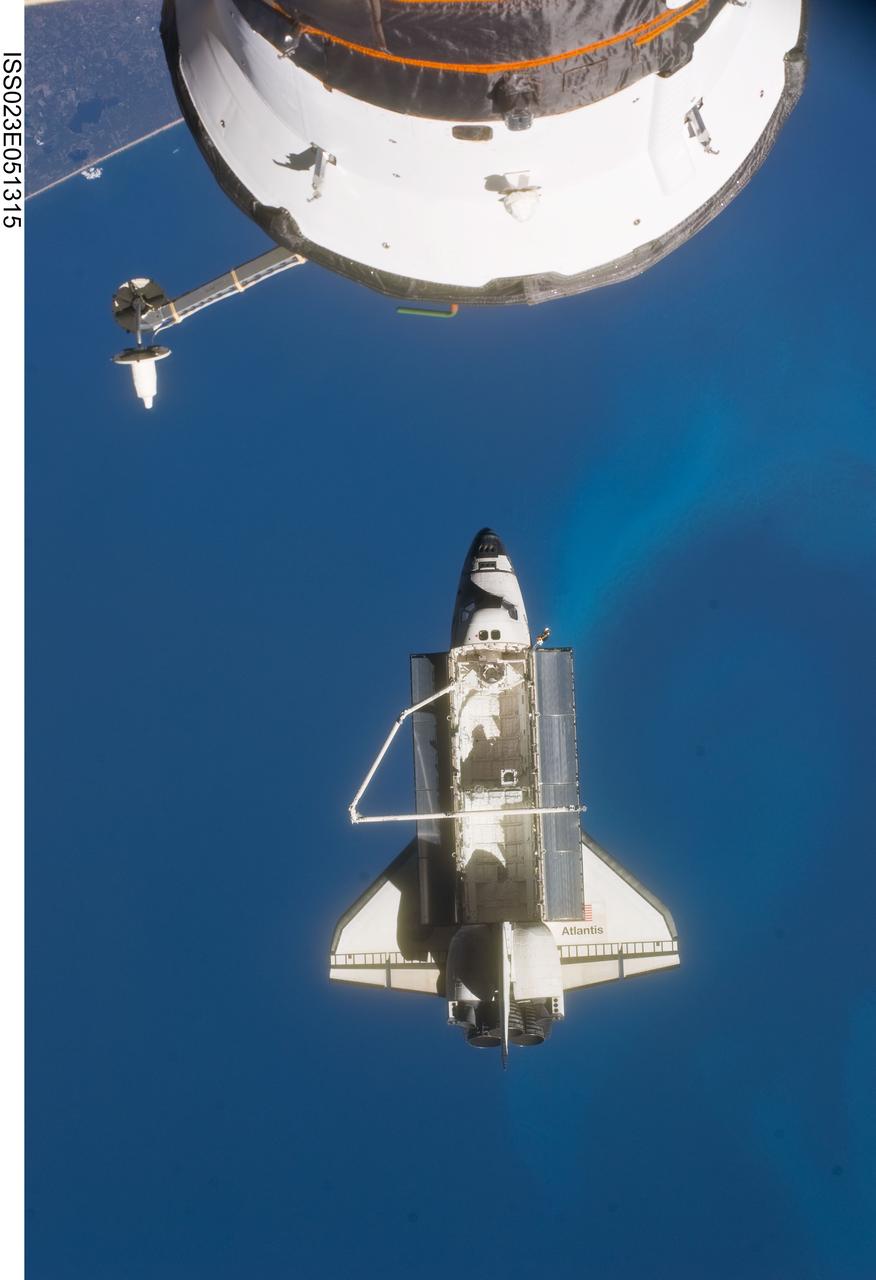
ISS023-E-051315 (23 May 2010) --- Space shuttle Atlantis is featured in this image photographed by an Expedition 23 crew member on the International Space Station soon after the shuttle and station began their post-undocking relative separation. Undocking of the two spacecraft occurred at 10:22 a.m. (CDT) on May 23, 2010, ending a seven-day stay that saw the addition of a new station module, replacement of batteries and resupply of the orbiting outpost. A portion of a Russian spacecraft docked to the station is at top. A blue part of Earth provides the backdrop for the scene.
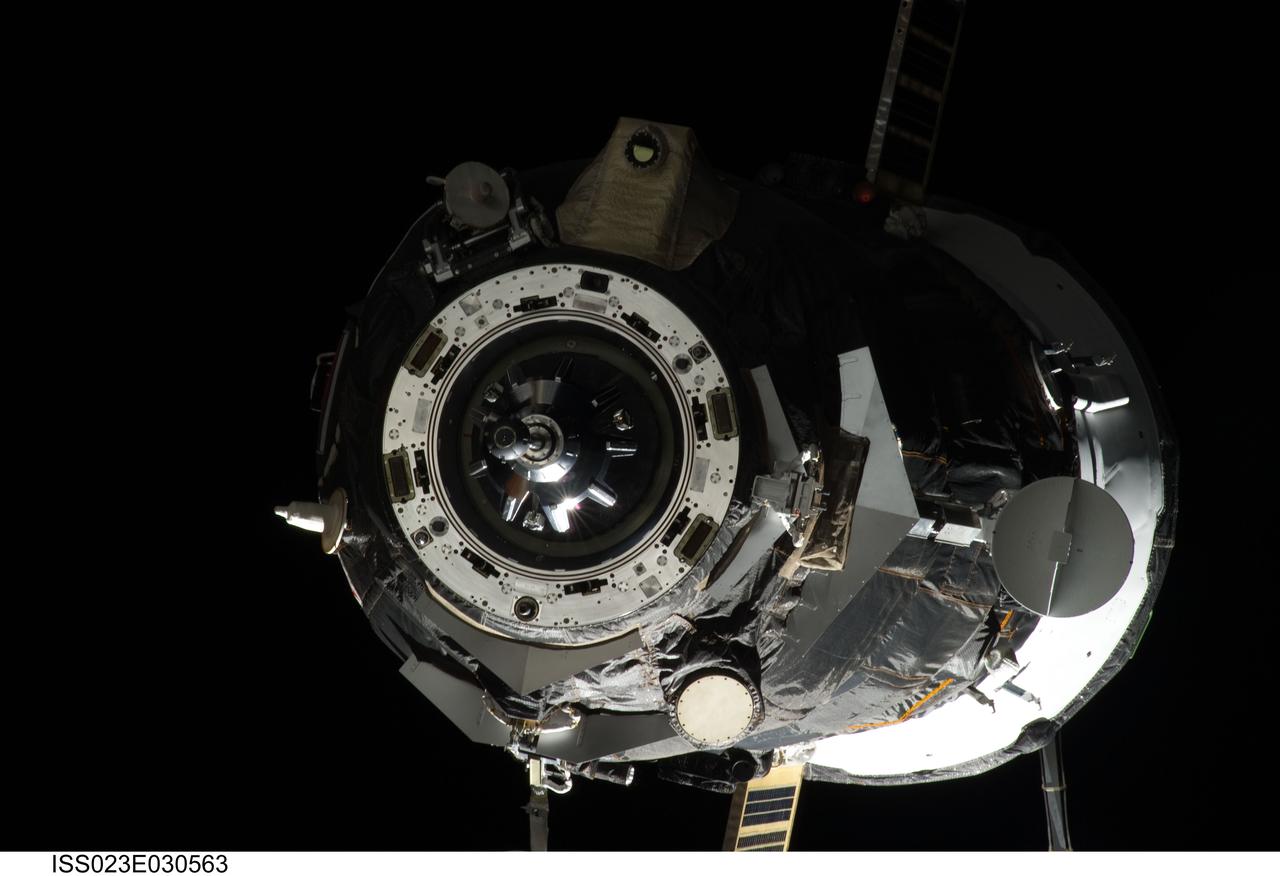
ISS023-E-030563 (1 May 2010) --- An unpiloted ISS Progress resupply vehicle approaches the International Space Station, bringing 2.6 tons of food, fuel, oxygen, propellant and supplies for the Expedition 23 crew members aboard the station. Progress 37 docked to the Pirs Docking Compartment at 2:30 p.m. (EDT) on May 1, 2010, after a three-day flight from the Baikonur Cosmodrome in Kazakhstan. The docking was conducted by Russian cosmonaut Oleg Kotov, commander, in manual control through the TORU (telerobotically operated) rendezvous system due to a jet failure on the Progress that forced a shutdown of the Kurs automated rendezvous system.
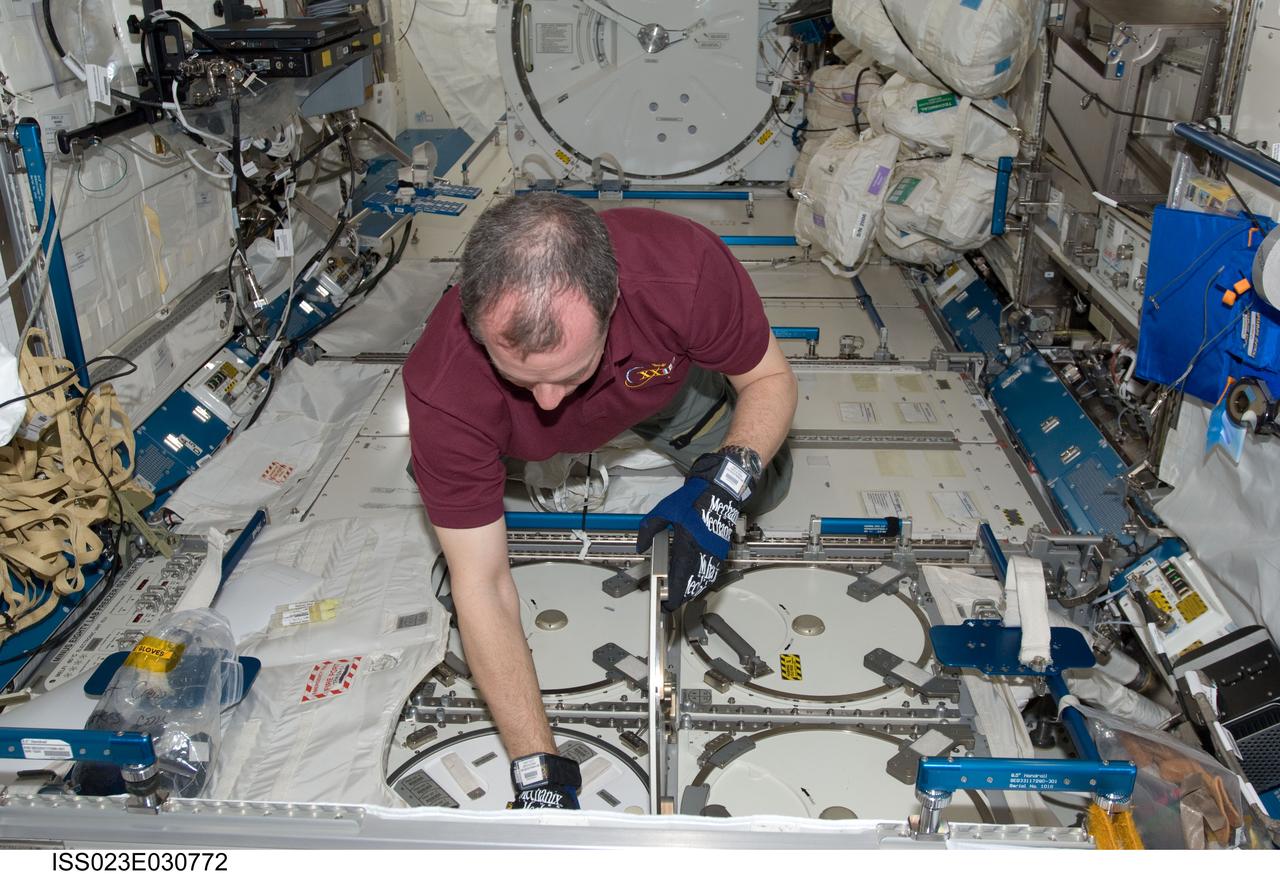
ISS023-E-030772 (2 May 2010) --- NASA astronaut T.J. Creamer, Expedition 23 flight engineer, services the Minus Eighty Laboratory Freezer for ISS (MELFI-1) in the Kibo laboratory of the International Space Station.
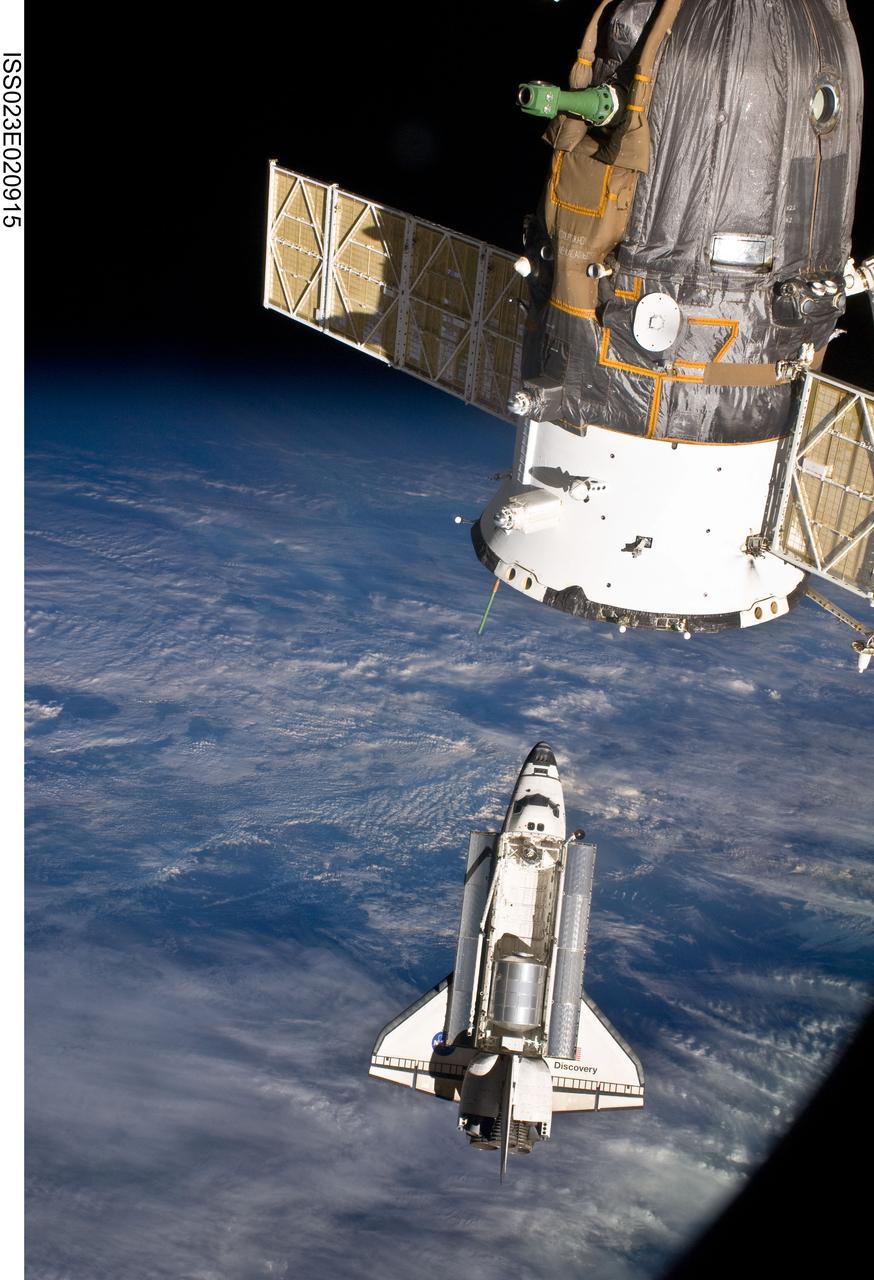
ISS023-E-020915 (7 April 2010) --- The space shuttle Discovery and the International Space Station are in the midst of their rendezvous and docking activities in this image photographed by an Expedition 23 crew member aboard the orbital outpost. Part of a docked Russian spacecraft can be seen in the foreground.
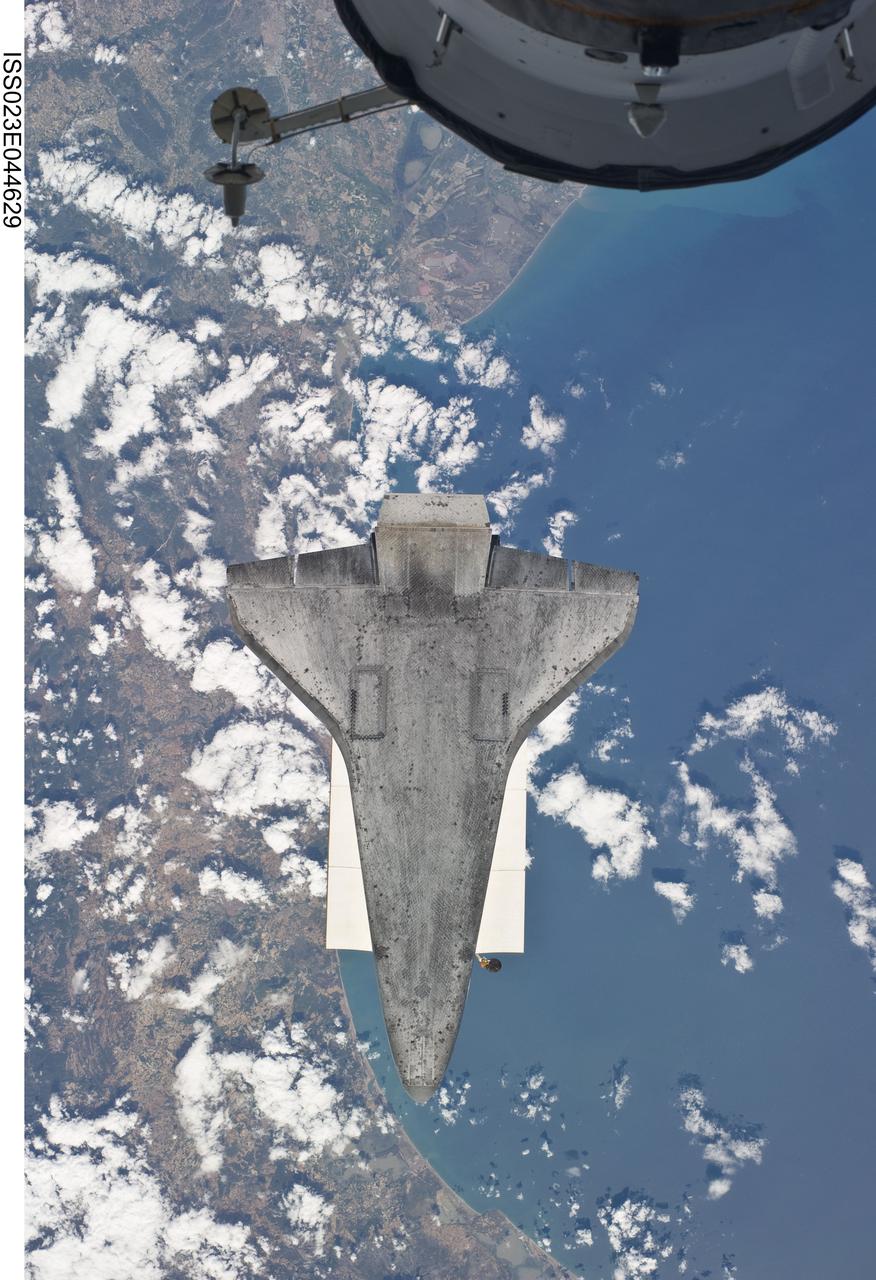
ISS023-E-044629 (16 May 2010) --- Backdropped by a colorful Earth, space shuttle Atlantis is featured in this image photographed by an Expedition 23 crew member as the shuttle approaches the International Space Station during STS-132 rendezvous and docking operations. Docking occurred at 9:28 a.m. (CDT) on May 16, 2010. A portion of a docked Russian spacecraft is visible at top.
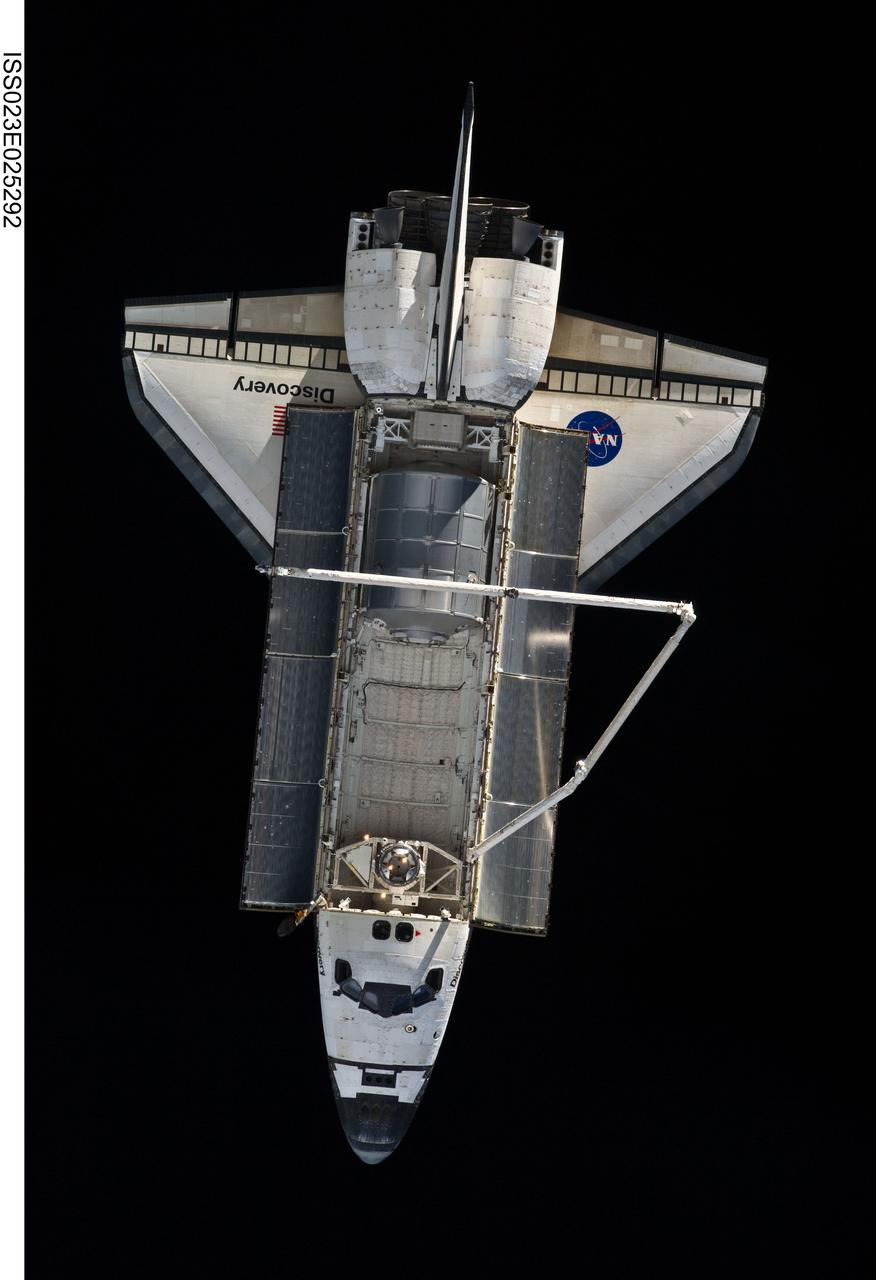
ISS023-E-025292 (17 April 2010) --- Space shuttle Discovery is featured in this image photographed by an Expedition 23 crew member on the International Space Station soon after the shuttle and station began their post-undocking relative separation. Undocking of the two spacecraft occurred at 7:52 a.m. (CDT) on April 17, 2010, ending a stay of 10 days, 5 hours and 8 minutes. The visit included three spacewalks and delivery of more than seven tons of equipment and supplies.
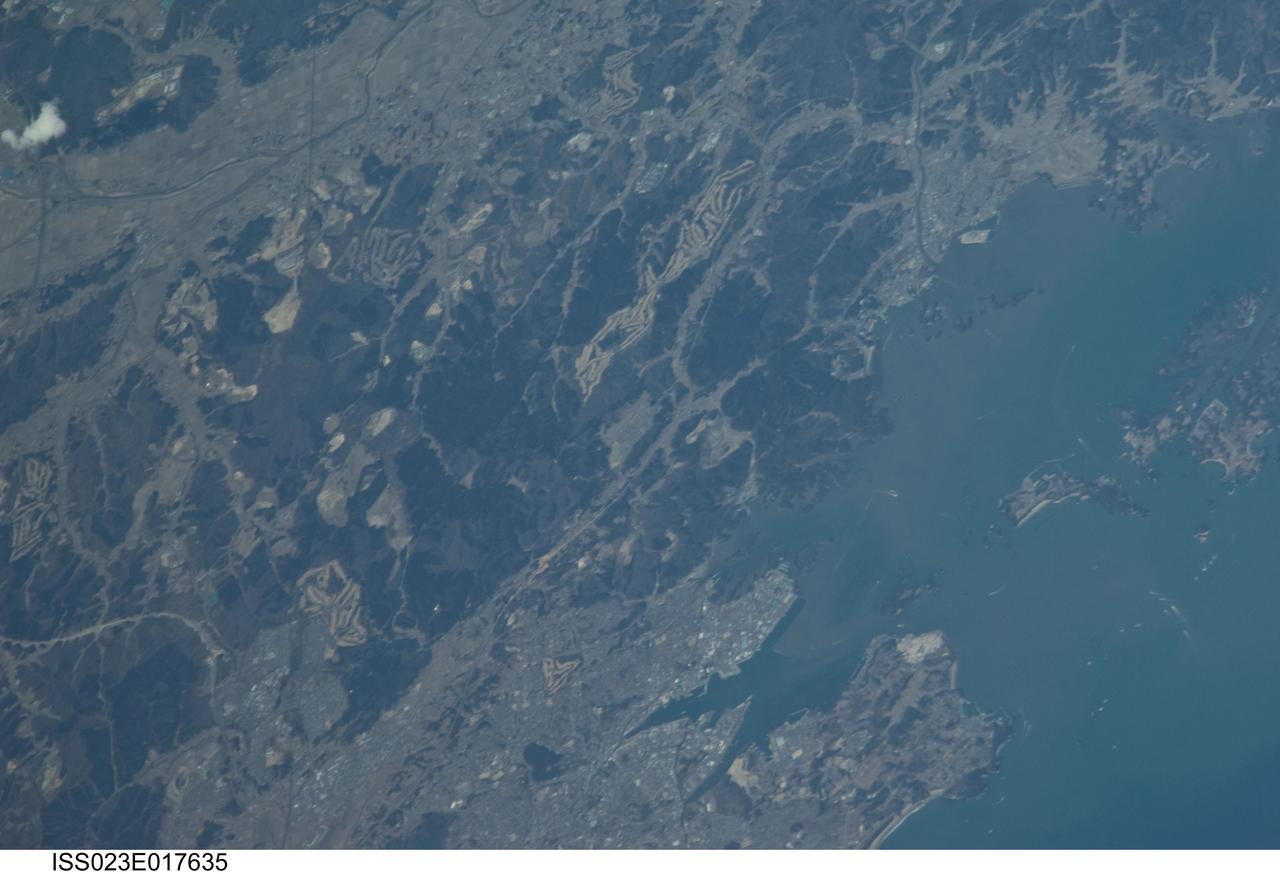
094 japan east 248
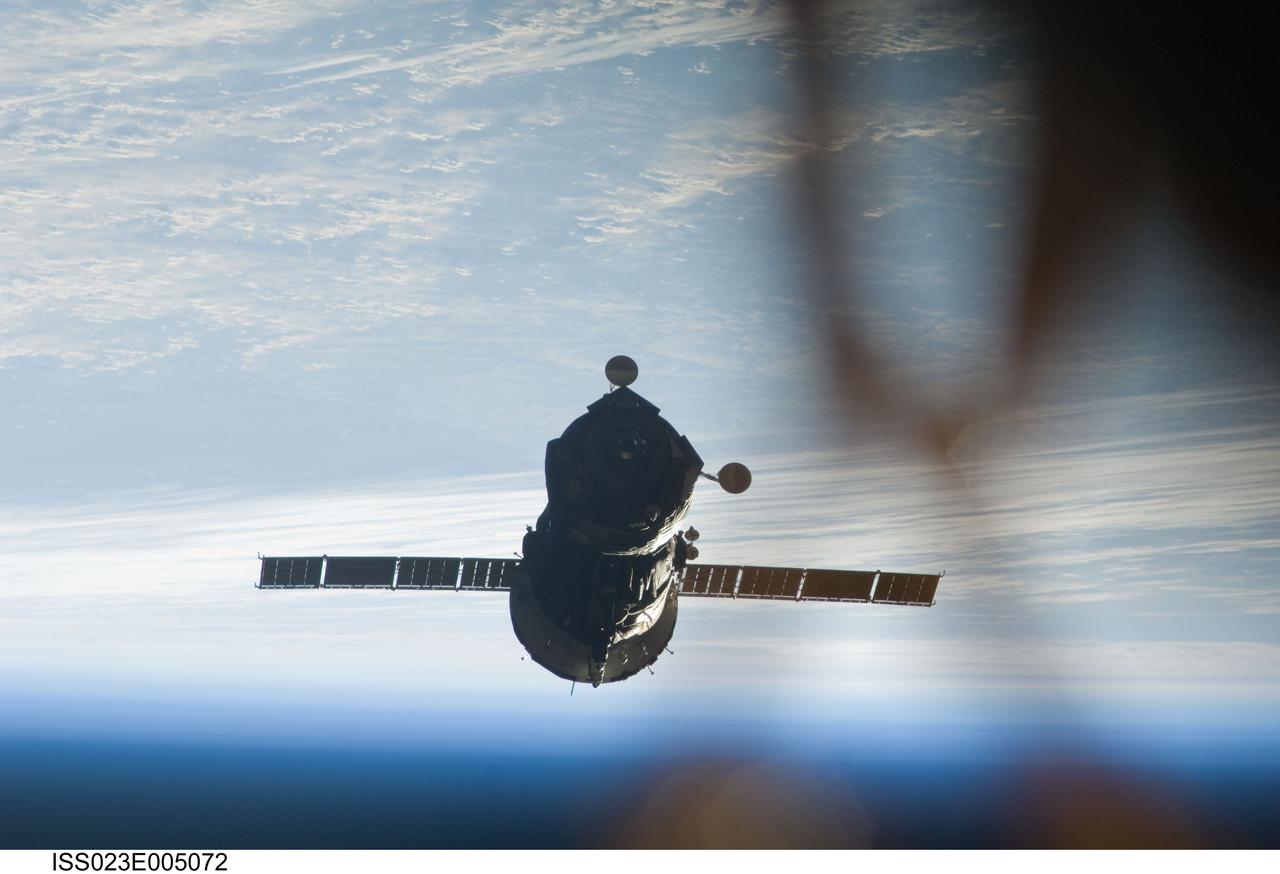
ISS023-E-005072 (18 March 2010) --- The Soyuz TMA-16 spacecraft departs from the International Space Station carrying NASA astronaut Jeffrey Williams, Expedition 22 commander; and Russian cosmonaut Maxim Suraev, Soyuz commander and flight engineer. Undocking occurred at 4:03 a.m. (EDT) on March 18, 2010. Suraev guided the spacecraft to a parachute-assisted landing at 7:24 a.m. near the town of Arkalyk, Kazakhstan, wrapping up a five-and-a-half-month stay aboard the space station.
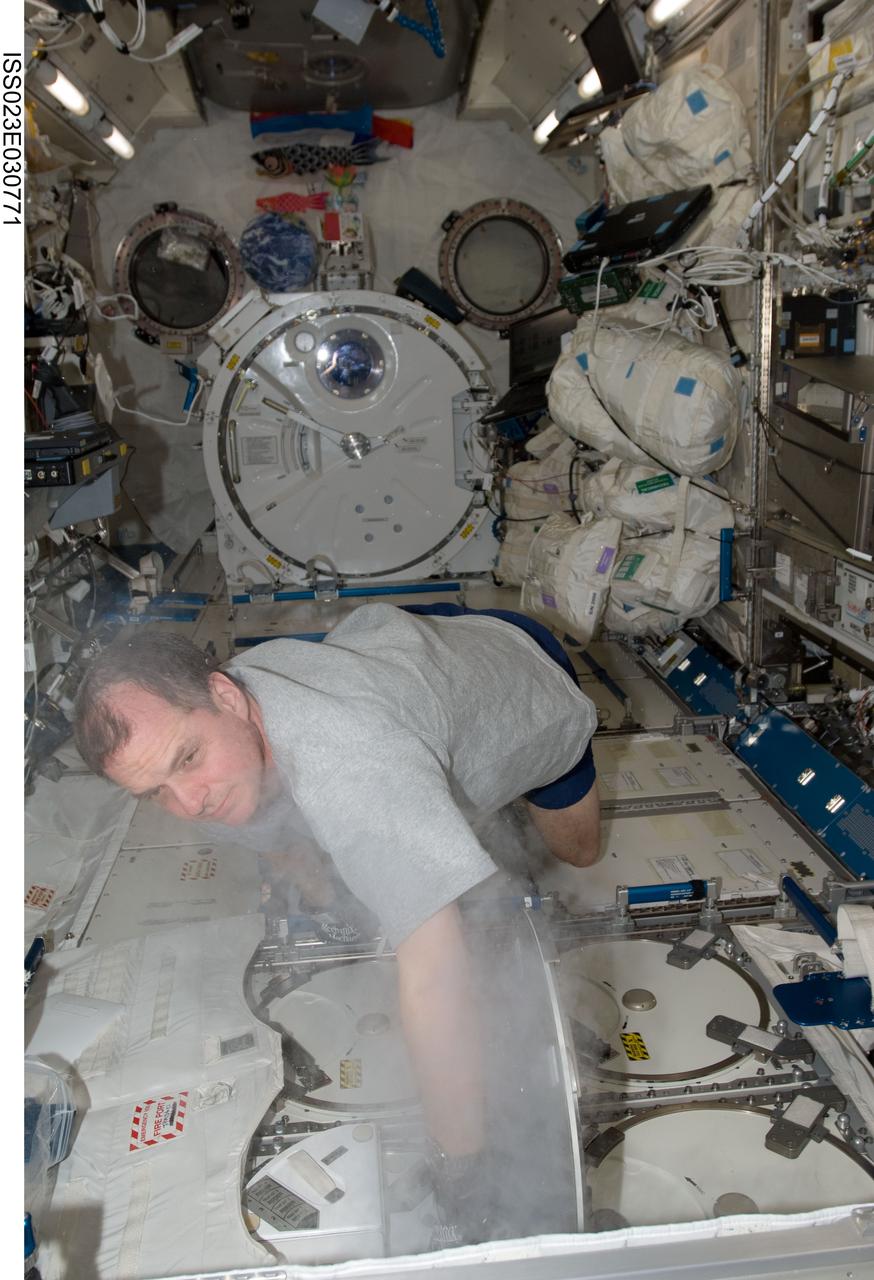
ISS023-E-030771 (2 May 2010) --- NASA astronaut T.J. Creamer, Expedition 23 flight engineer, services the Minus Eighty Laboratory Freezer for ISS (MELFI-1) in the Kibo laboratory of the International Space Station.
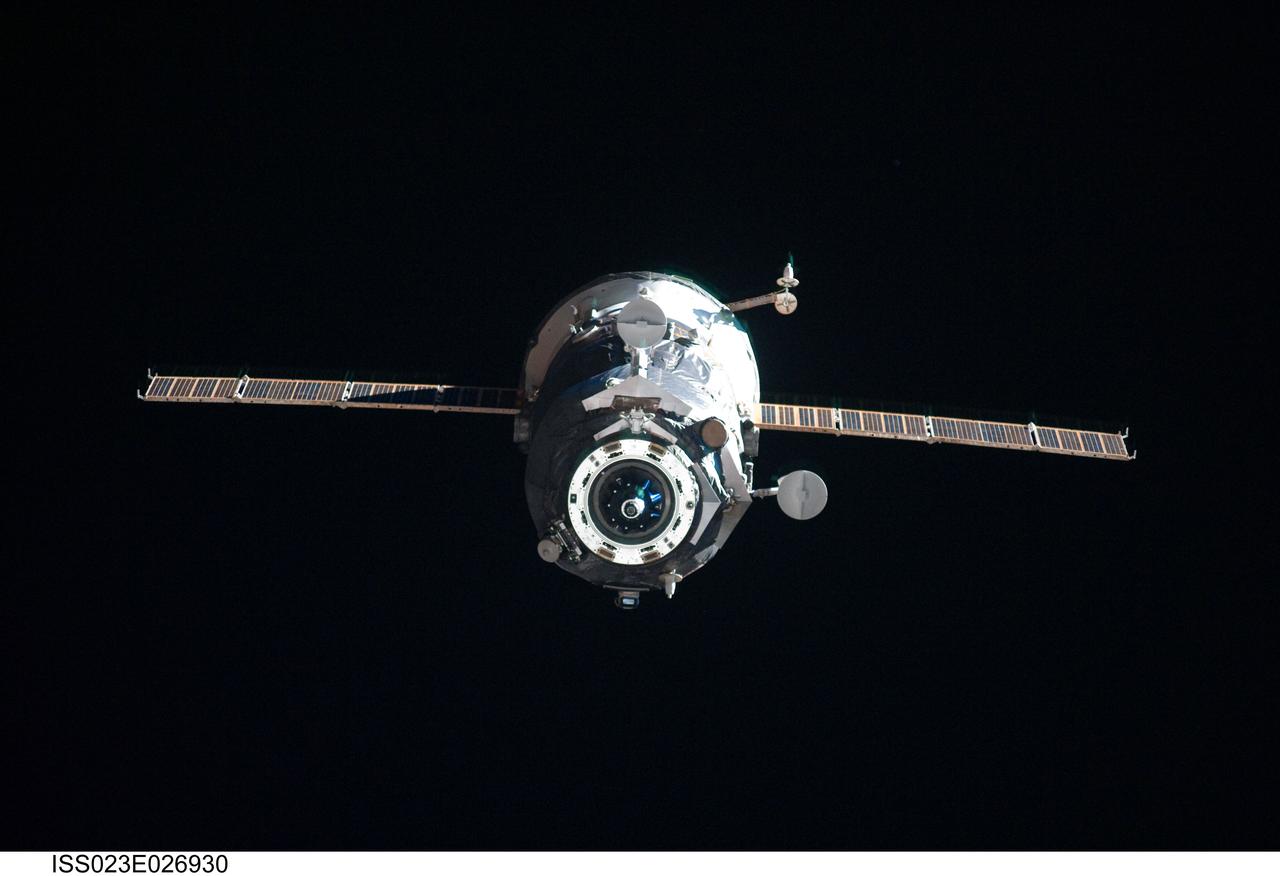
ISS023-E-026930 (22 April 2010) --- The unpiloted ISS Progress 35 supply vehicle departs from the International Space Station's Pirs Docking Compartment on April 22, 2010. Filled with trash and discarded items, the Progress will be used for scientific experiments until it is deorbited and burned up in Earth's atmosphere. Its departure clears the way for the ISS Progress 37 cargo ship that is scheduled to launch to the station April 28.
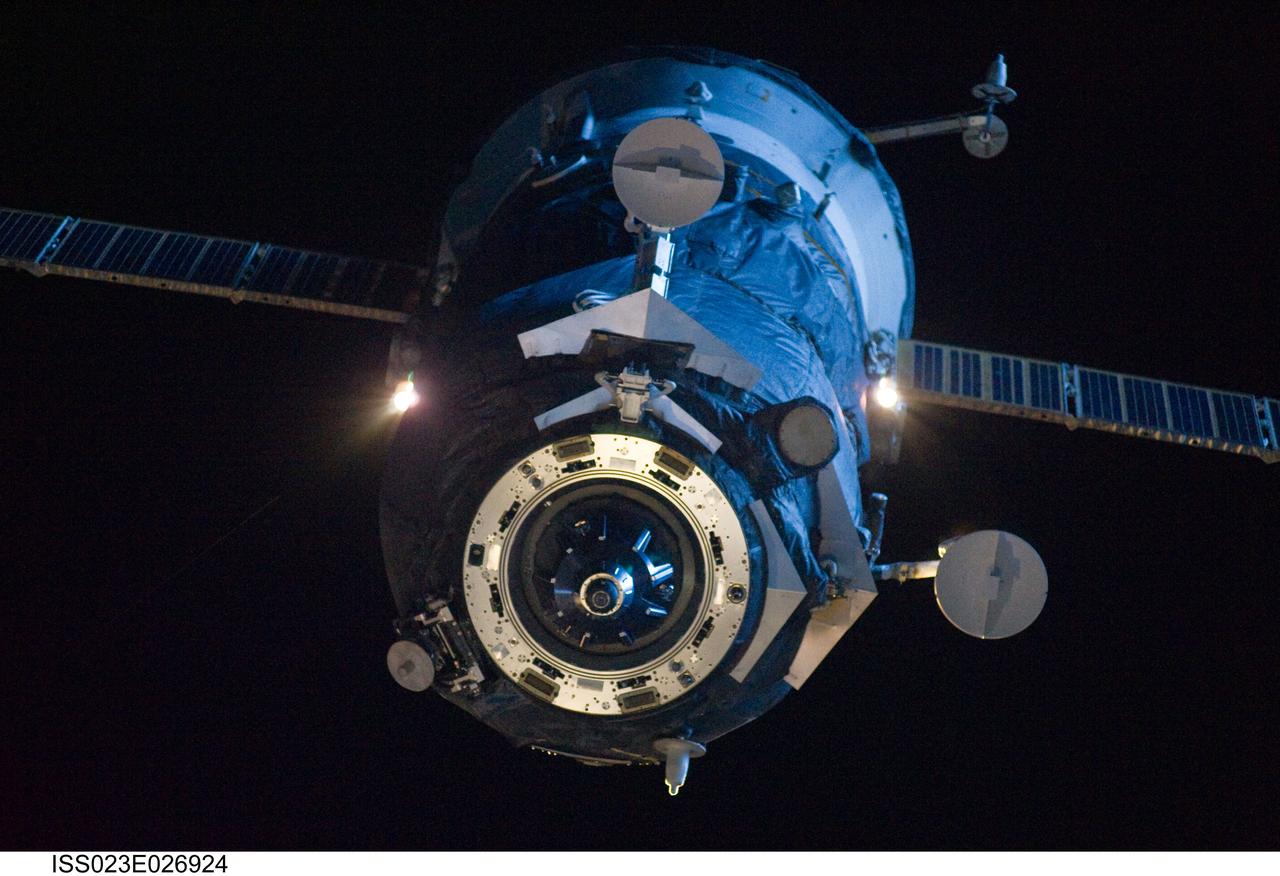
ISS023-E-026924 (22 April 2010) --- The unpiloted ISS Progress 35 supply vehicle departs from the International Space Station's Pirs Docking Compartment on April 22, 2010. Filled with trash and discarded items, the Progress will be used for scientific experiments until it is deorbited and burned up in Earth's atmosphere. Its departure clears the way for the ISS Progress 37 cargo ship that is scheduled to launch to the station April 28.
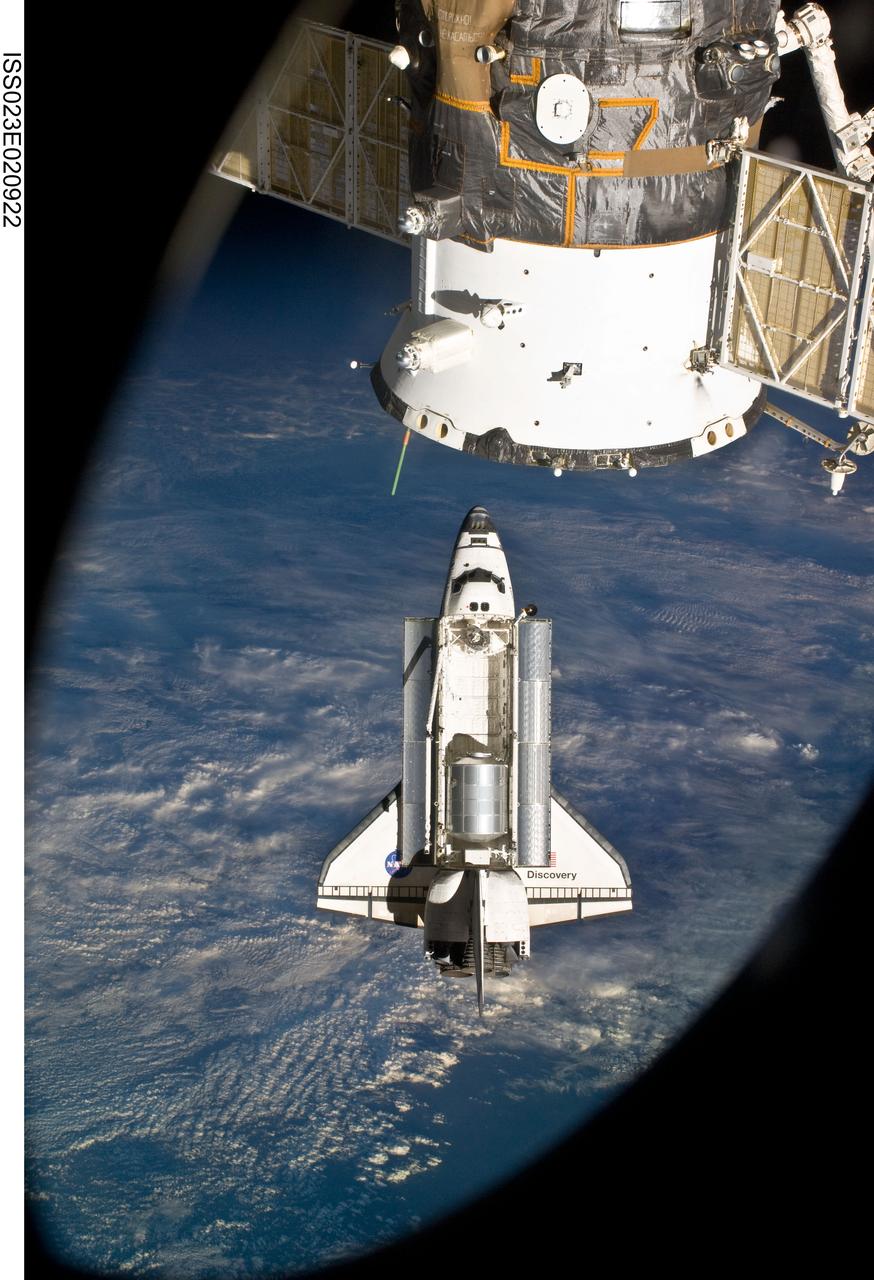
ISS023-E-020922 (7 April 2010) --- The space shuttle Discovery and the International Space Station are in the midst of their rendezvous and docking activities in this image photographed by an Expedition 23 crew member aboard the orbital outpost. Part of a docked Russian spacecraft can be seen in the foreground.
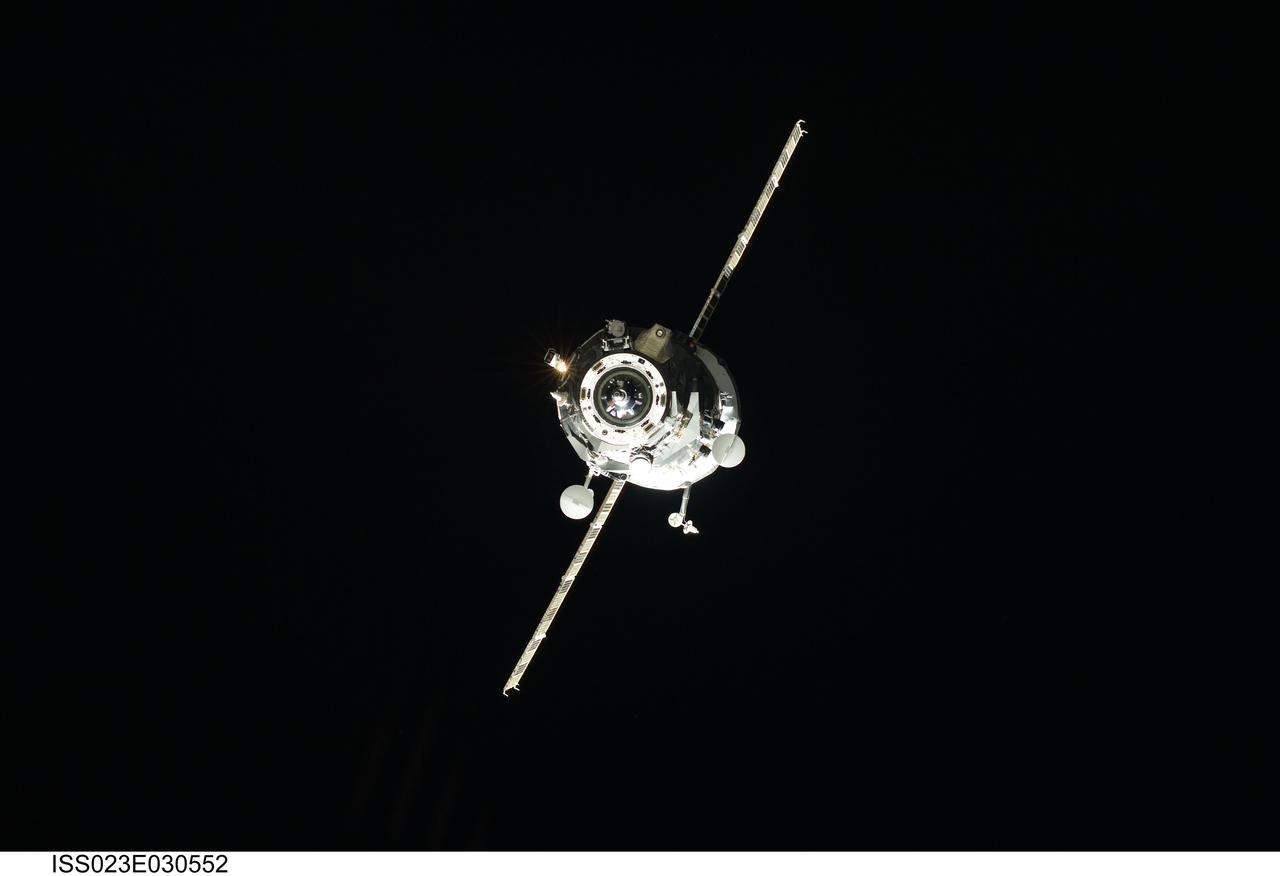
ISS023-E-030552 (1 May 2010) --- An unpiloted ISS Progress resupply vehicle approaches the International Space Station, bringing 2.6 tons of food, fuel, oxygen, propellant and supplies for the Expedition 23 crew members aboard the station. Progress 37 docked to the Pirs Docking Compartment at 2:30 p.m. (EDT) on May 1, 2010, after a three-day flight from the Baikonur Cosmodrome in Kazakhstan. The docking was conducted by Russian cosmonaut Oleg Kotov, commander, in manual control through the TORU (telerobotically operated) rendezvous system due to a jet failure on the Progress that forced a shutdown of the Kurs automated rendezvous system.
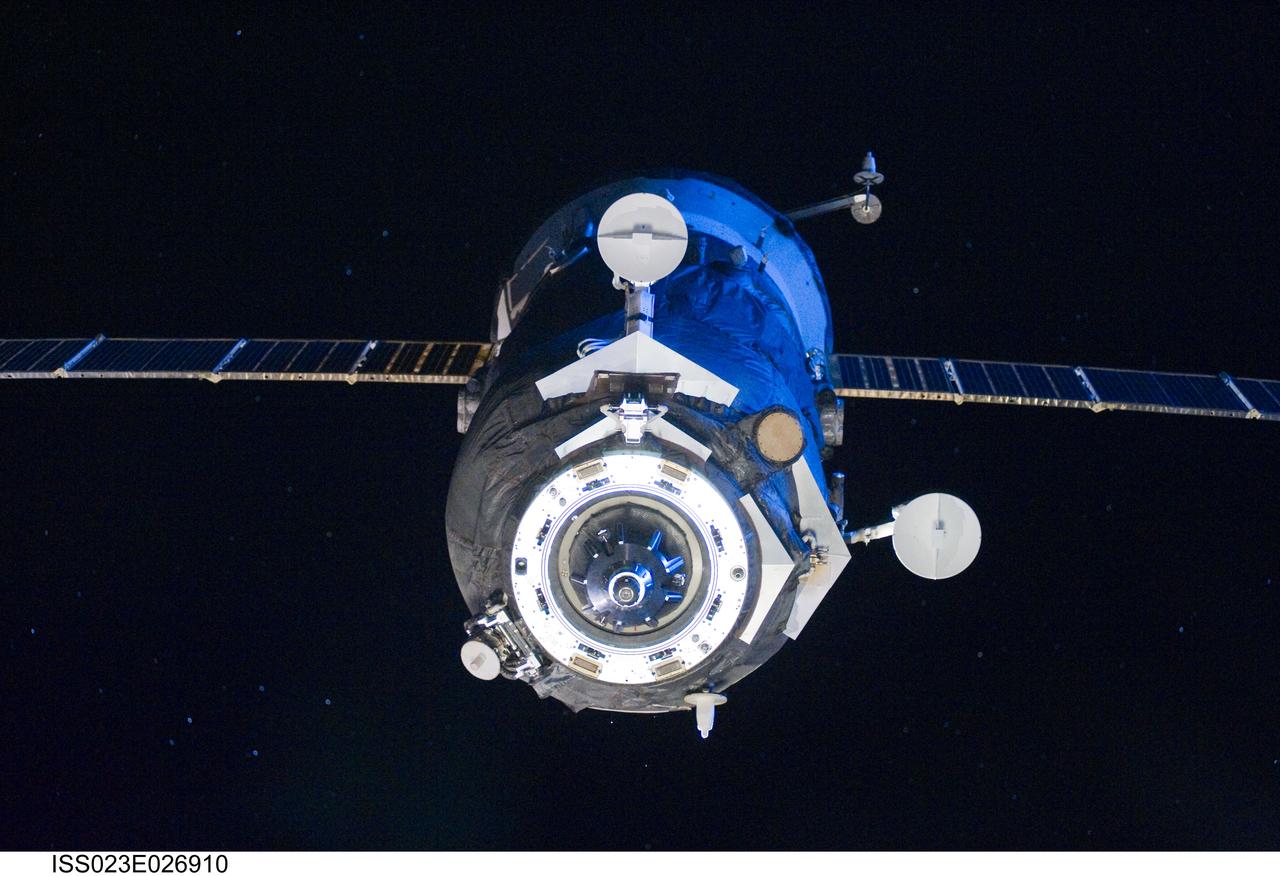
ISS023-E-026910 (22 April 2010) --- The unpiloted ISS Progress 35 supply vehicle departs from the International Space Station's Pirs Docking Compartment on April 22, 2010. Filled with trash and discarded items, the Progress will be used for scientific experiments until it is deorbited and burned up in Earth's atmosphere. Its departure clears the way for the ISS Progress 37 cargo ship that is scheduled to launch to the station April 28.
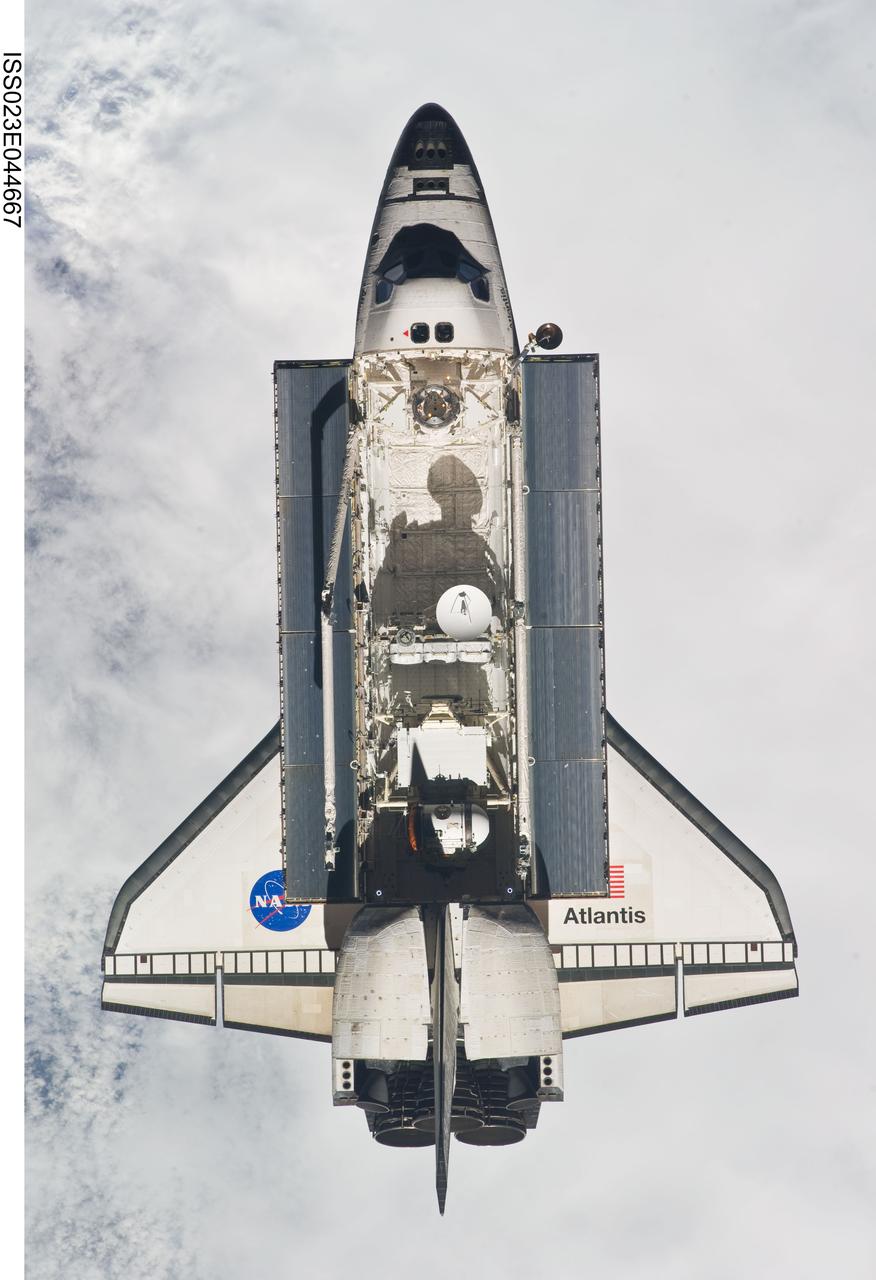
ISS023-E-044667 (16 May 2010) --- Backdropped by a blanket of clouds, space shuttle Atlantis is featured in this image photographed by an Expedition 23 crew member as the shuttle approaches the International Space Station during STS-132 rendezvous and docking operations. Docking occurred at 9:28 a.m. (CDT) on May 16, 2010.
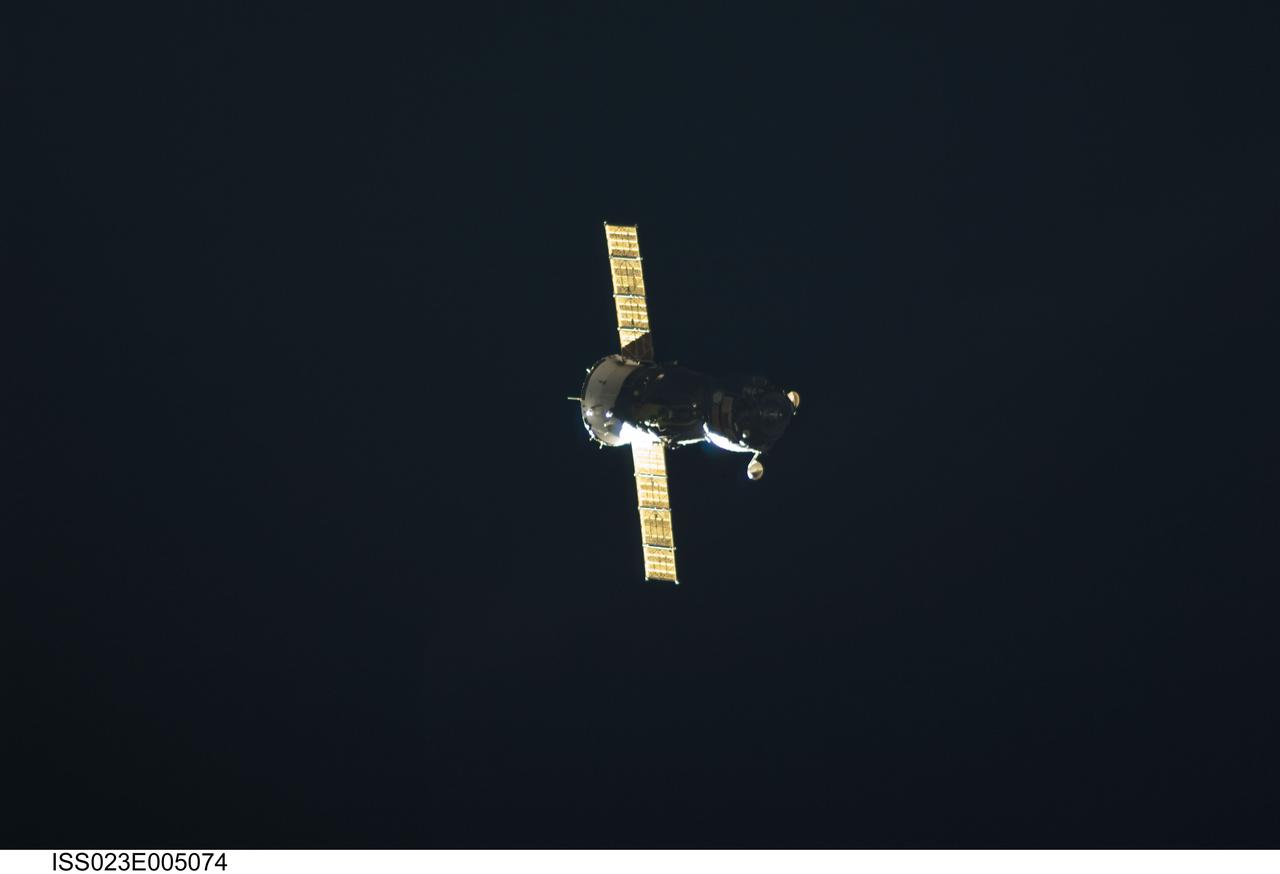
ISS023-E-005074 (18 March 2010) --- The Soyuz TMA-16 spacecraft departs from the International Space Station carrying NASA astronaut Jeffrey Williams, Expedition 22 commander; and Russian cosmonaut Maxim Suraev, Soyuz commander and flight engineer. Undocking occurred at 4:03 a.m. (EDT) on March 18, 2010. Suraev guided the spacecraft to a parachute-assisted landing at 7:24 a.m. near the town of Arkalyk, Kazakhstan, wrapping up a five-and-a-half-month stay aboard the space station.
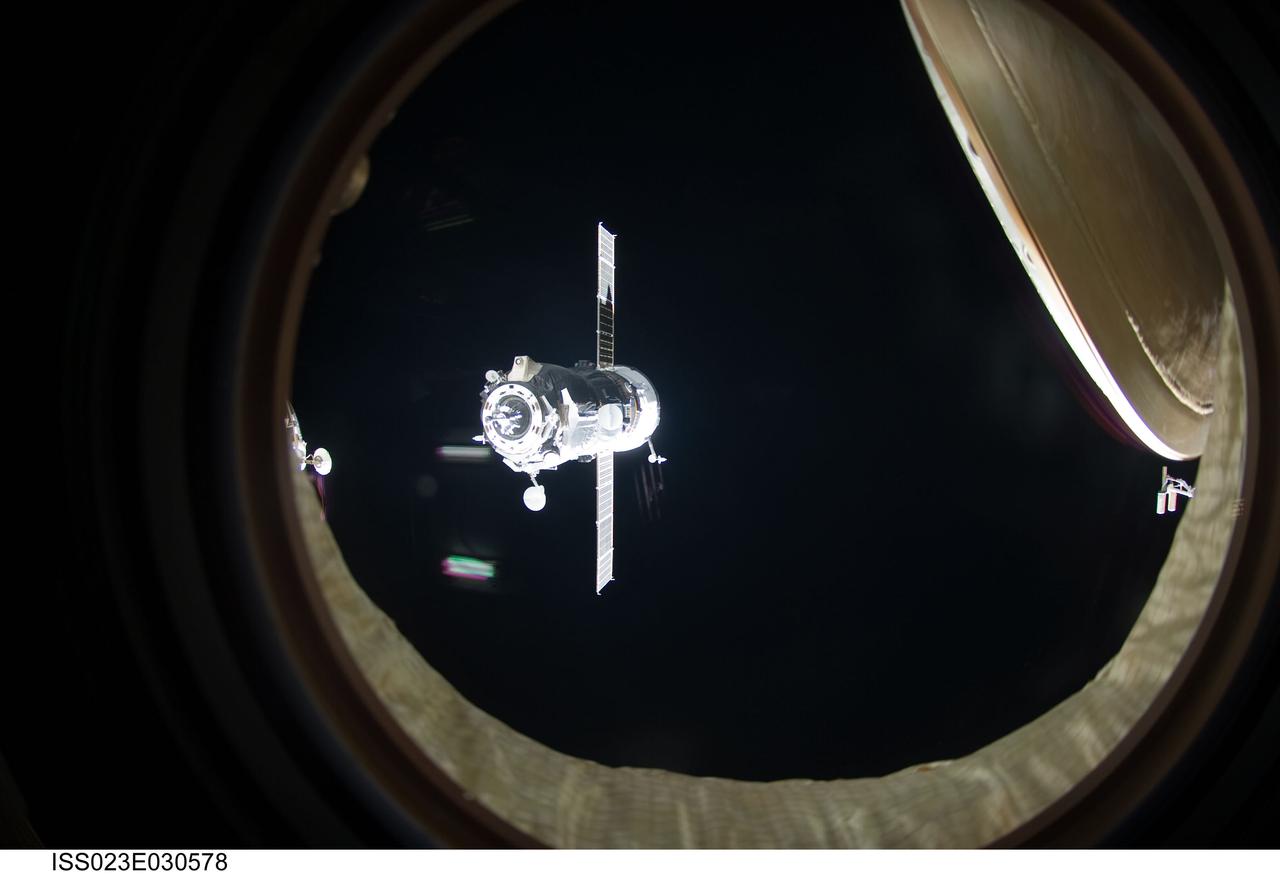
ISS023-E-030578 (1 May 2010) --- An unpiloted ISS Progress resupply vehicle approaches the International Space Station, bringing 2.6 tons of food, fuel, oxygen, propellant and supplies for the Expedition 23 crew members aboard the station. Progress 37 docked to the Pirs Docking Compartment at 2:30 p.m. (EDT) on May 1, 2010, after a three-day flight from the Baikonur Cosmodrome in Kazakhstan. The docking was conducted by Russian cosmonaut Oleg Kotov, commander, in manual control through the TORU (telerobotically operated) rendezvous system due to a jet failure on the Progress that forced a shutdown of the Kurs automated rendezvous system.
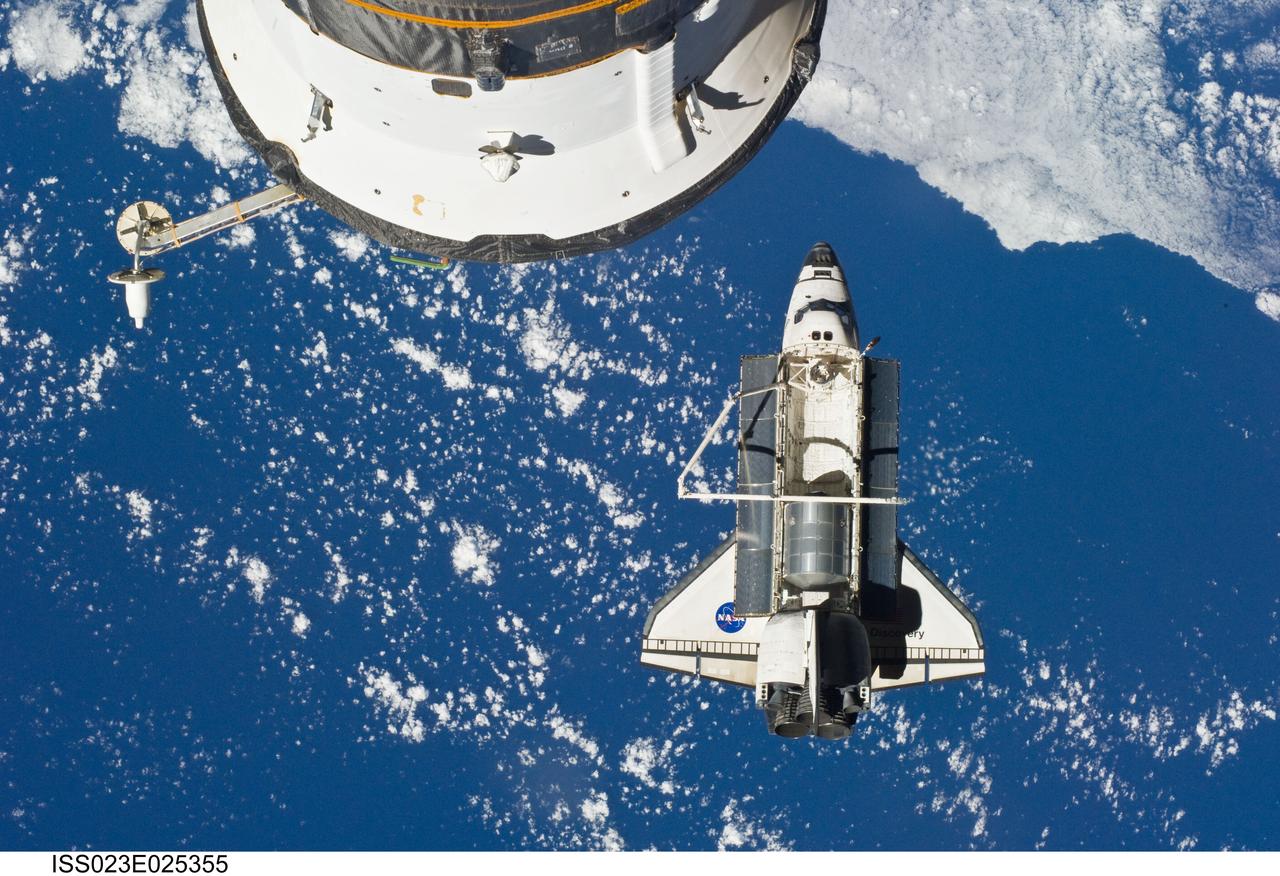
ISS023-E-025355 (17 April 2010) --- Space shuttle Discovery is featured in this image photographed by an Expedition 23 crew member on the International Space Station soon after the shuttle and station began their post-undocking relative separation. Undocking of the two spacecraft occurred at 7:52 a.m. (CDT) on April 17, 2010, ending a stay of 10 days, 5 hours and 8 minutes. The visit included three spacewalks and delivery of more than seven tons of equipment and supplies. A blue and white part of Earth provides the backdrop for the scene. A small portion of a Russian spacecraft, docked with the station, is visible at top.
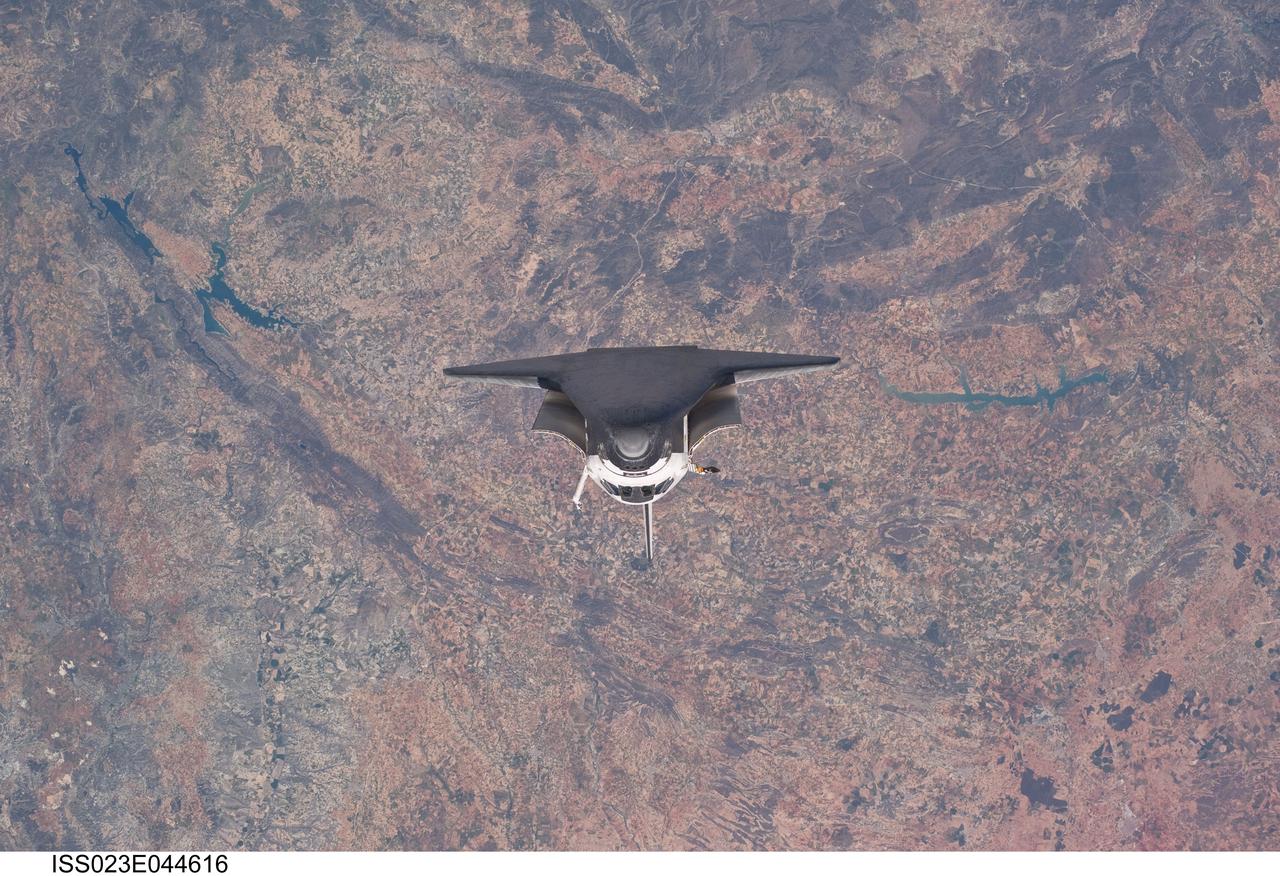
ISS023-E-044616 (16 May 2010) --- Backdropped by a colorful Earth, space shuttle Atlantis is featured in this image photographed by an Expedition 23 crew member as the shuttle approaches the International Space Station during STS-132 rendezvous and docking operations. Docking occurred at 9:28 a.m. (CDT) on May 16, 2010.
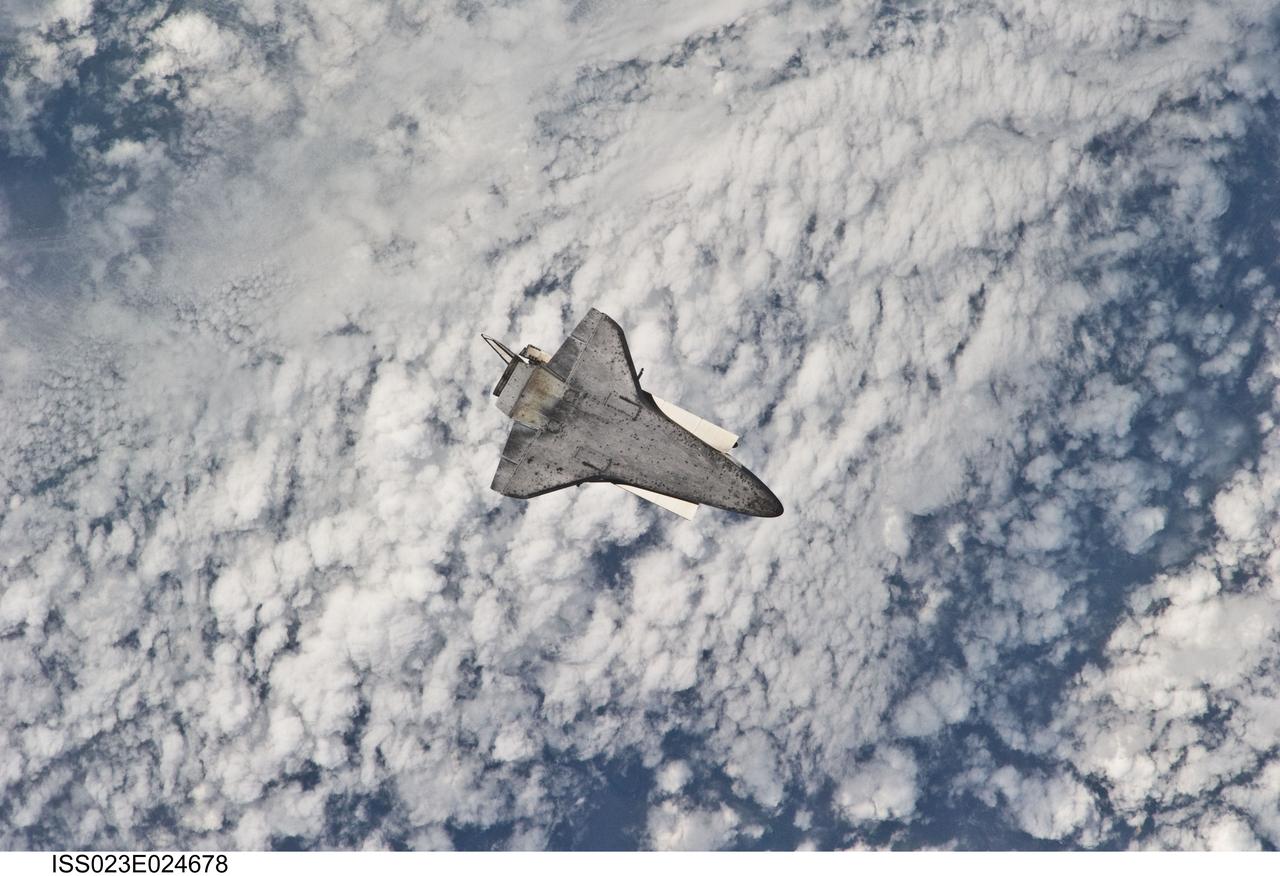
ISS023-E-024678 (17 April 2010) --- The space shuttle Discovery flies with its payload bay facing Earth so that the astronauts and cosmonauts onboard the International Space Station could survey and photograph it following the relative separation of the two spacecraft on April 17.
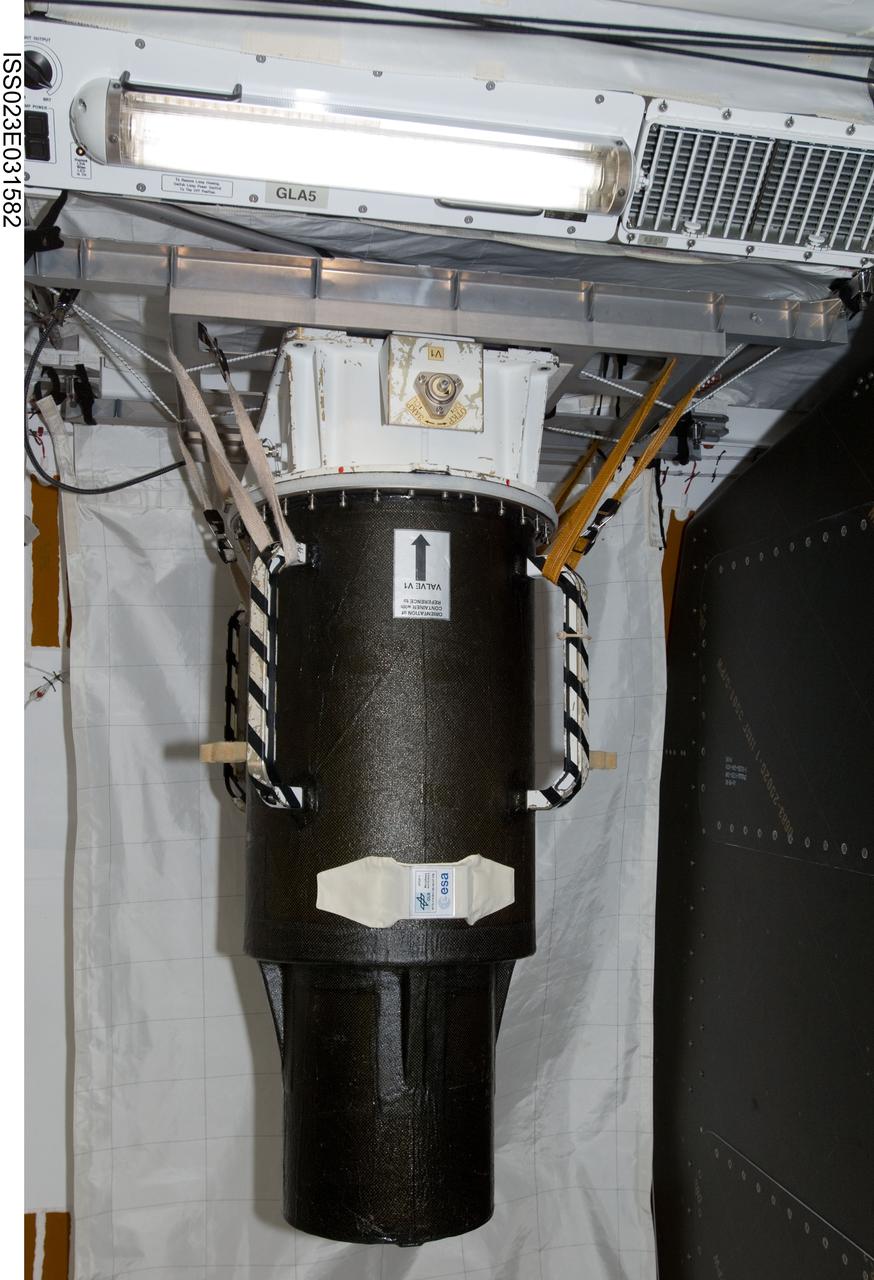
iss023e031582 (5/4/2010) --- A view of the anthropomorphic Phantom for the Matroshka-2 Kibo experiment installed at location JPM1F2 in the Kibo Japanese Experiment Pressurized Module (JPM) aboard the International Space Station (ISS).
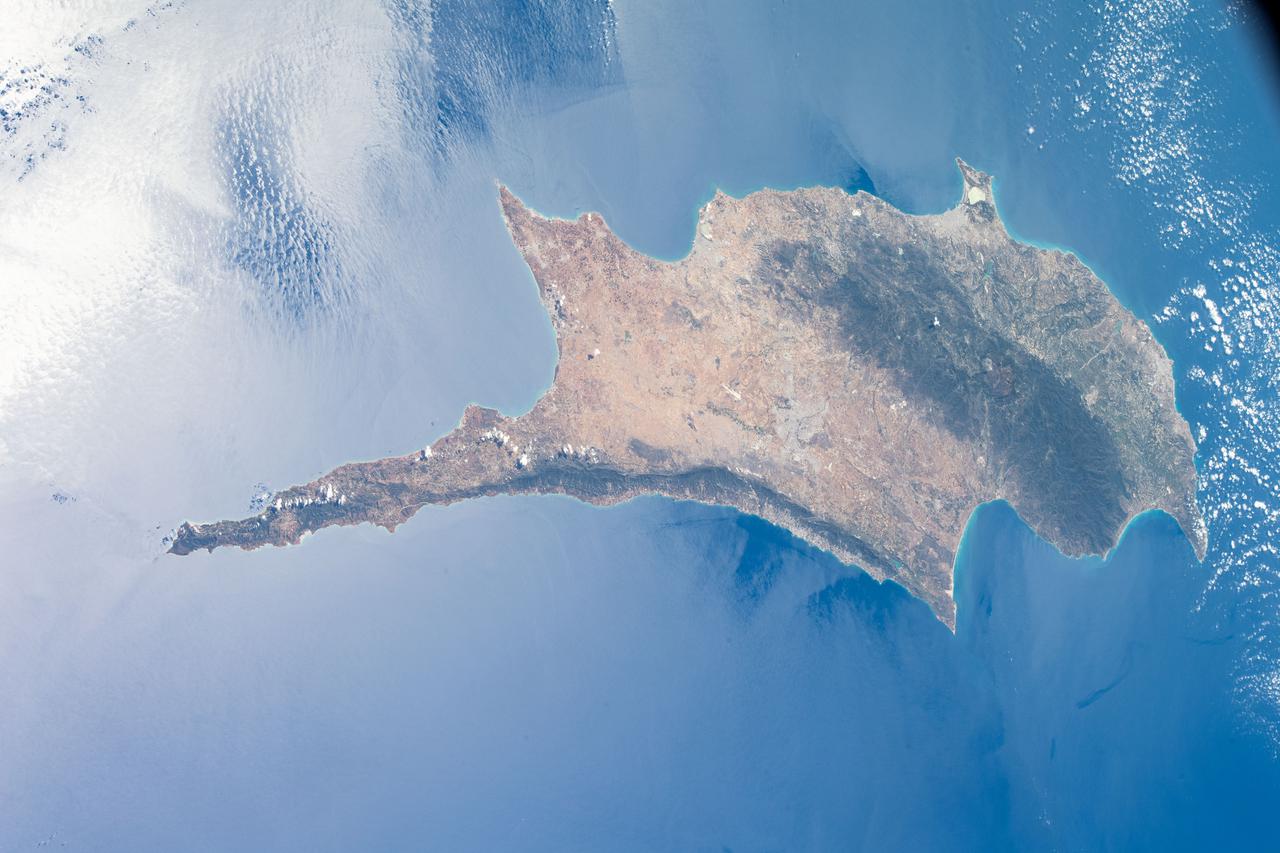
iss065e002119 (April 22, 2021) --- The island of Cyprus in the eastern Mediterranean Sea is pictured from the International Space Station as it orbited 263 above Aleppo, Syria.
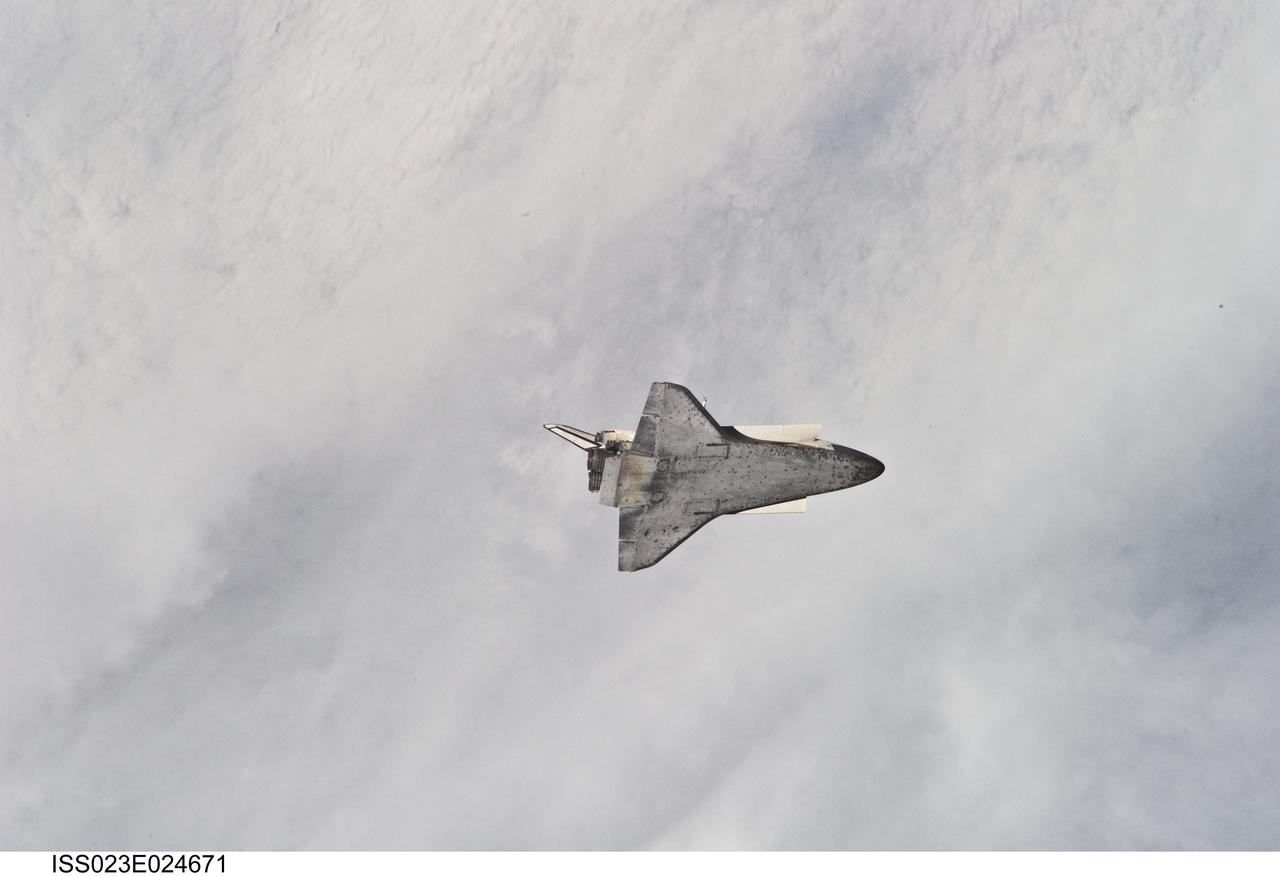
ISS023-E-024671 (17 April 2010) --- The space shuttle Discovery flies with its payload bay facing Earth so that the astronauts and cosmonauts onboard the International Space Station could survey and photograph it following the relative separation of the two spacecraft on April 17.
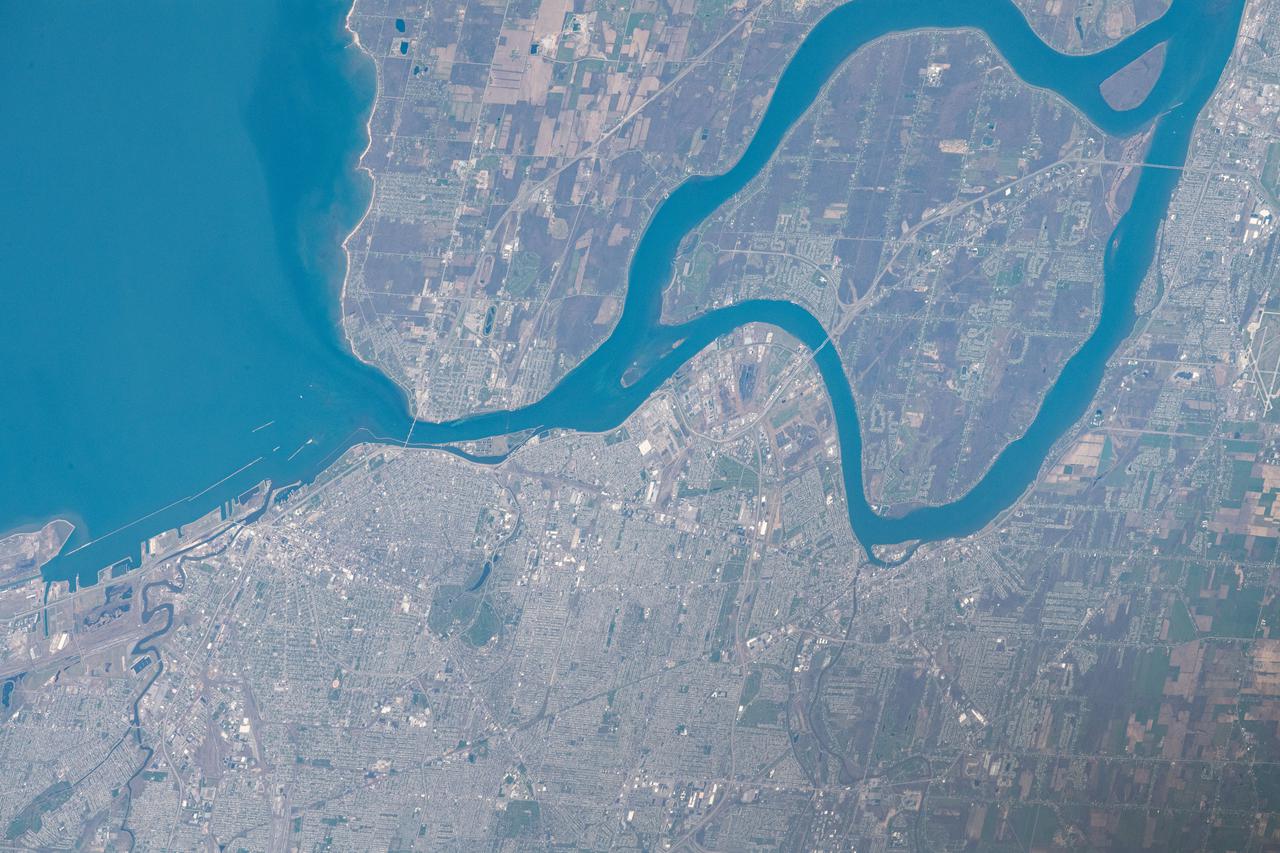
iss065e000865 (April 19, 2021) --- Grand Island splits the Niagara River which runs past Buffalo, New York, and into Lake Erie. The International Space Station was orbiting 264 miles above southern Pennsylvania when this photograph was taken.
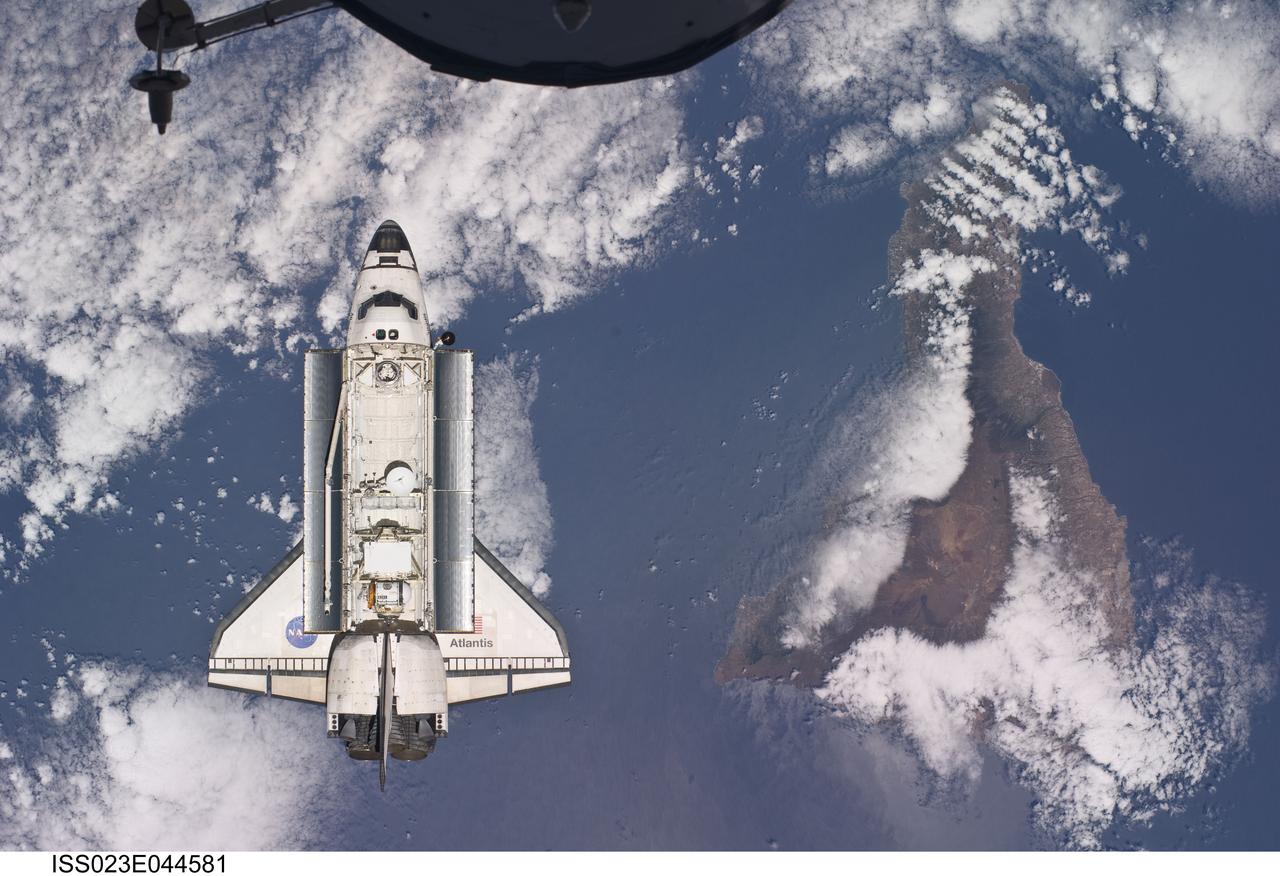
ISS023-E-044581 (16 May 2010) --- Backdropped by a colorful Earth, space shuttle Atlantis is featured in this image photographed by an Expedition 23 crew member as the shuttle approaches the International Space Station during STS-132 rendezvous and docking operations. Docking occurred at 9:28 a.m. (CDT) on May 16, 2010. A portion of a docked Russian spacecraft is visible at top. Tenerife in the Canary Island chain is visible below.
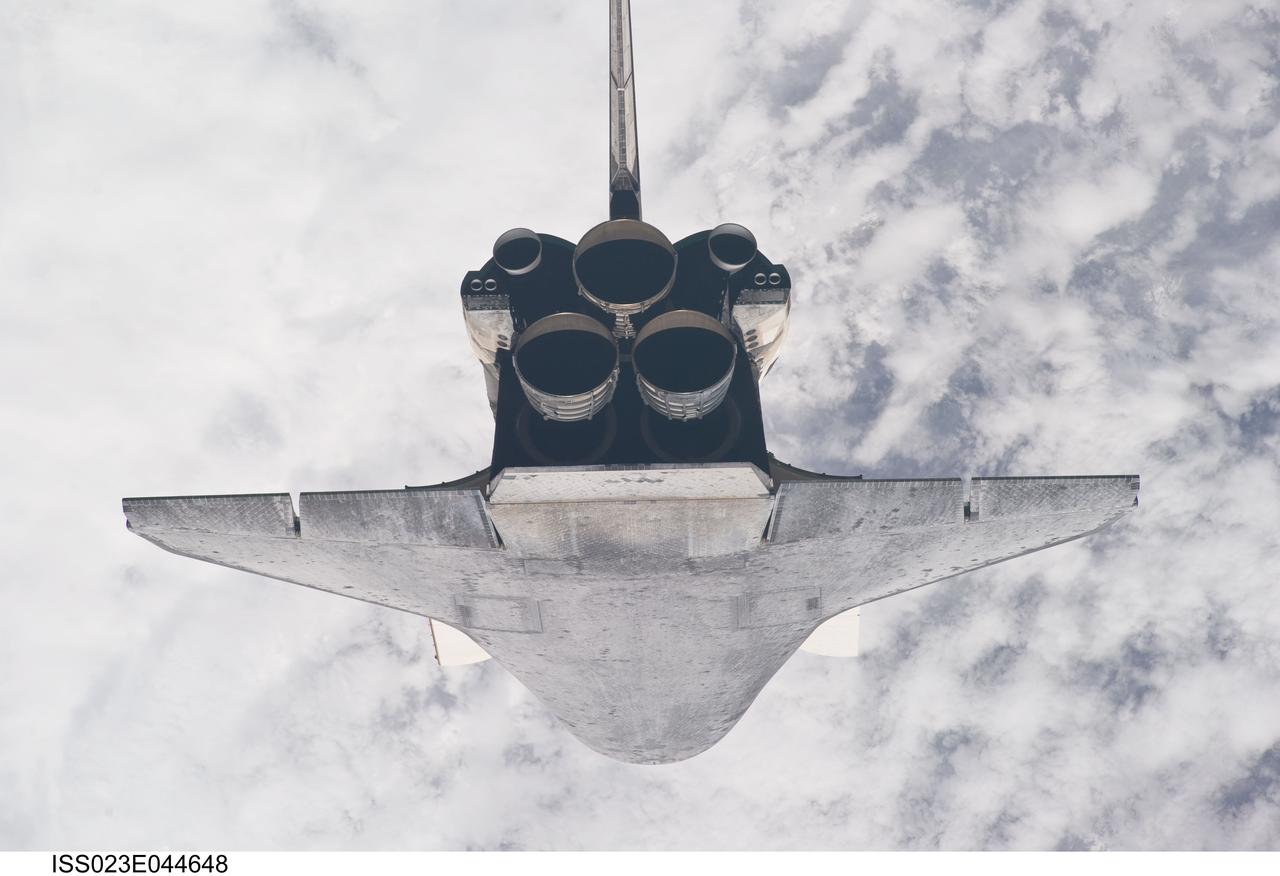
ISS023-E-044648 (16 May 2010) --- Backdropped by a blanket of clouds, space shuttle Atlantis is featured in this image photographed by an Expedition 23 crew member as the shuttle approaches the International Space Station during STS-132 rendezvous and docking operations. Docking occurred at 9:28 a.m. (CDT) on May 16, 2010.
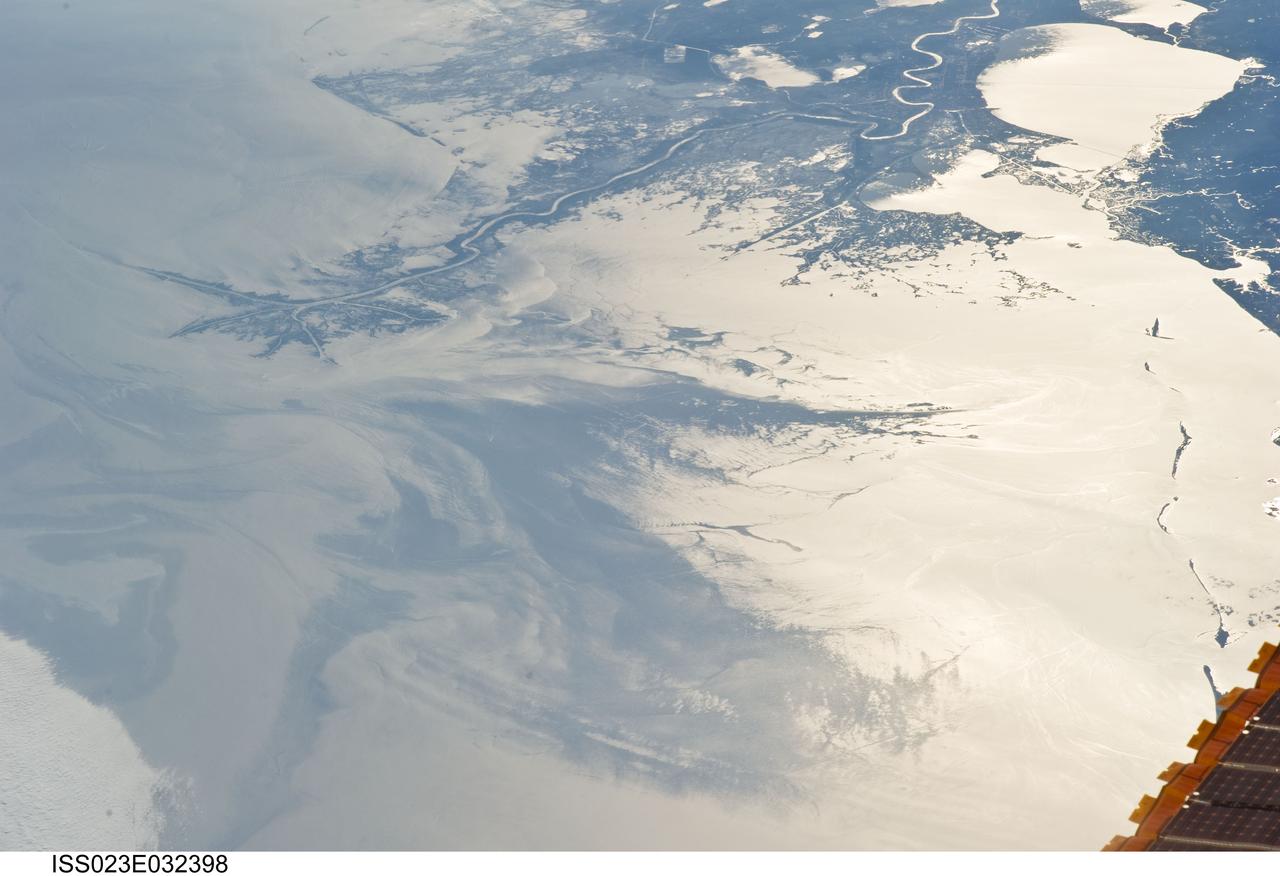
ISS023-E-032398 (4 May 2010) --- Japan Aerospace Exploration Agency (JAXA) astronaut Soichi Noguchi, Expedition 23 flight engineer, photographed the Mississippi Delta showing the oil slick in the Gulf of Mexico on May 4, 2010. Part of the river delta and nearby Louisiana coast appear dark in the sunglint. This phenomenon is caused by sunlight reflecting off the water surface, in a mirror-like manner, directly back towards the astronaut observer onboard the International Space Station (ISS). The sunglint improves the identification of the oil spill which is creating a different water texture (and therefore a contrast) between the smooth and rougher water of the reflective ocean surface. Other features which cause a change in surface roughness that can be seen in sunglint are wind gusts, naturally occurring oils that will be gathered by and take the form of water currents or wave patterns, and less windy areas behind islands.
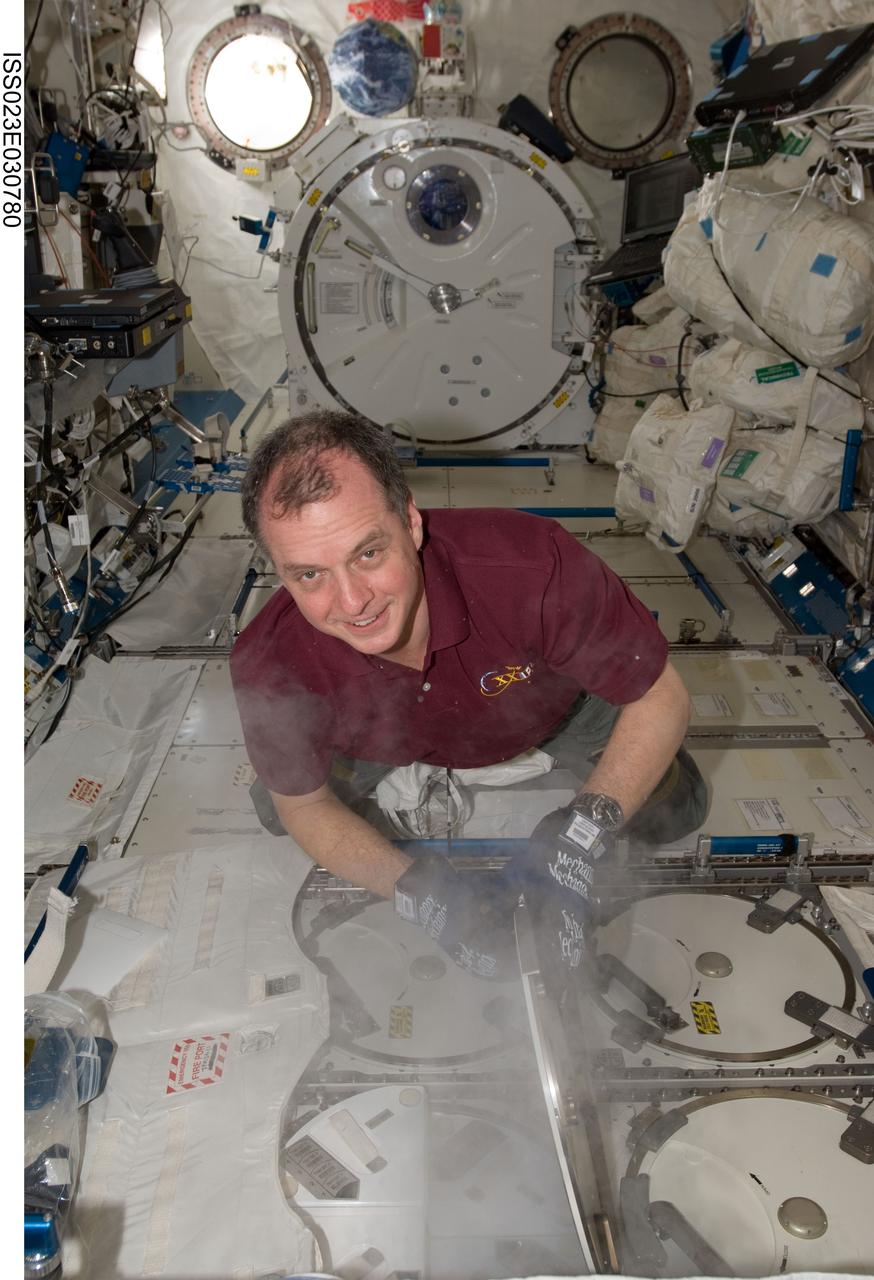
ISS023-E-030780 (2 May 2010) --- NASA astronaut T.J. Creamer, Expedition 23 flight engineer, services the Minus Eighty Laboratory Freezer for ISS (MELFI-1) in the Kibo laboratory of the International Space Station.
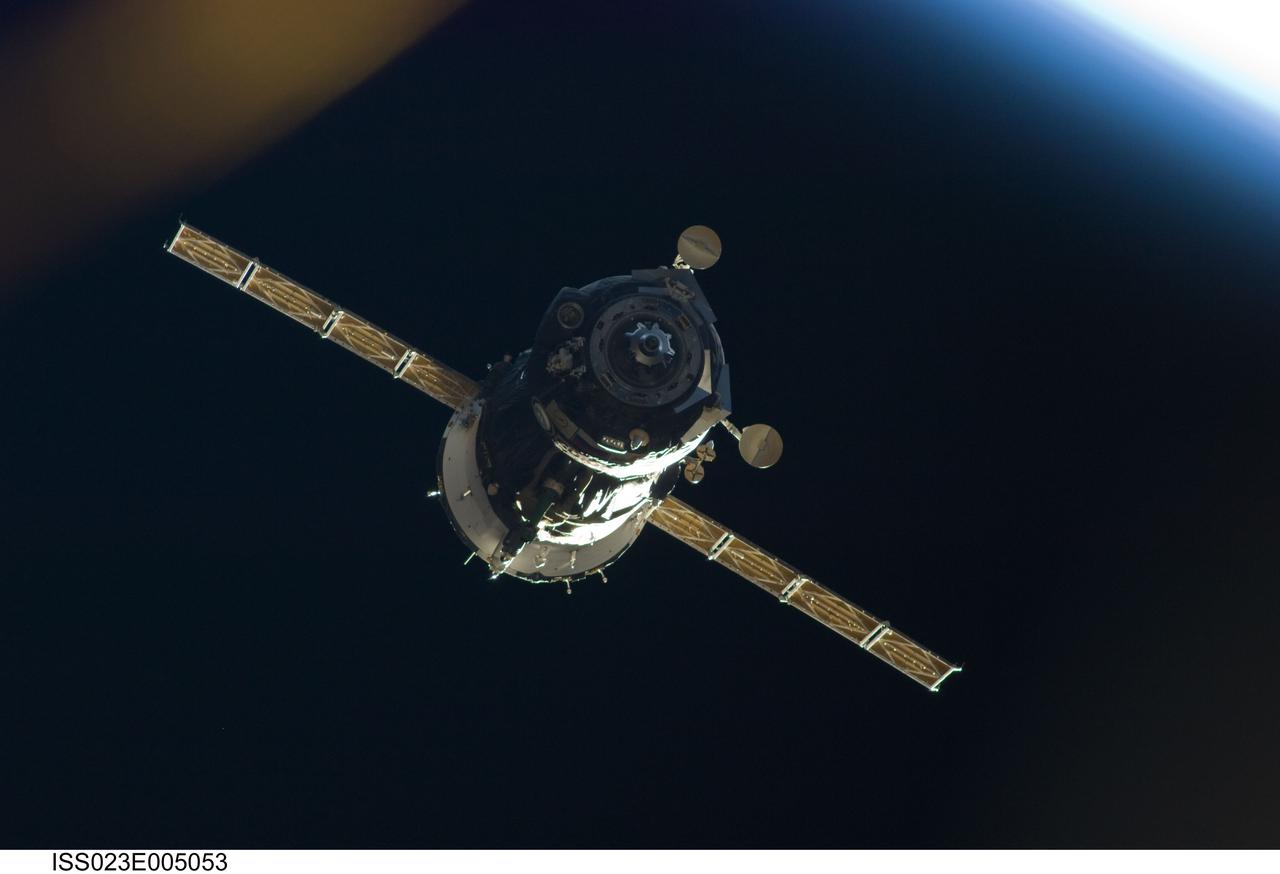
ISS023-E-005053 (18 March 2010) --- The Soyuz TMA-16 spacecraft departs from the International Space Station carrying NASA astronaut Jeffrey Williams, Expedition 22 commander; and Russian cosmonaut Maxim Suraev, Soyuz commander and flight engineer. Undocking occurred at 4:03 a.m. (EDT) on March 18, 2010. Suraev guided the spacecraft to a parachute-assisted landing at 7:24 a.m. near the town of Arkalyk, Kazakhstan, wrapping up a five-and-a-half-month stay aboard the space station.
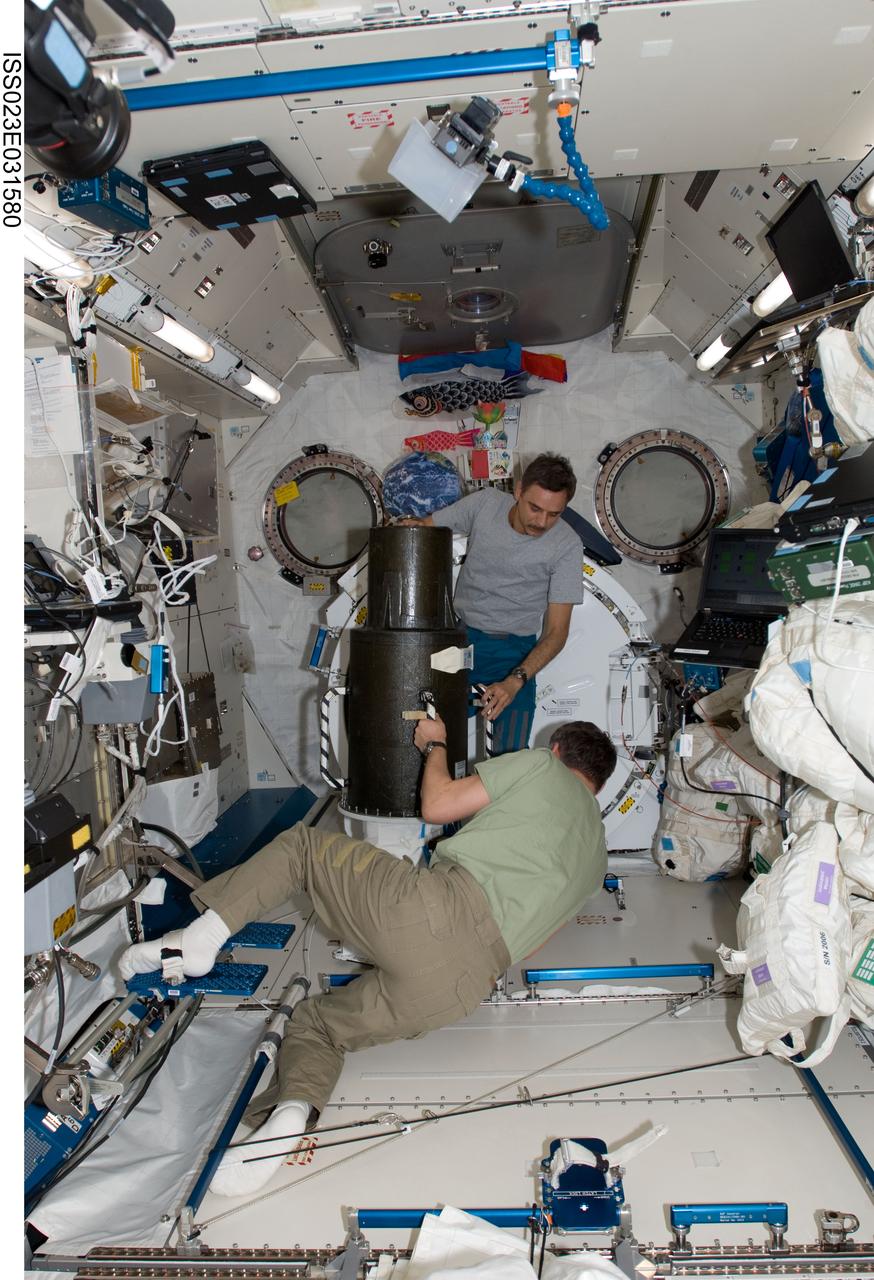
ISS023-E-031580 (4 May 2010) --- Russian cosmonauts Alexander Skvortsov (foreground) and Mikhail Kornienko, both Expedition 23 flight engineers, work with the European Matroshka-R Phantom experiment in the Kibo laboratory of the International Space Station. Matroshka, the name for the traditional Russian set of nestling dolls, is an antroph-amorphous model of a human torso designed for radiation studies.
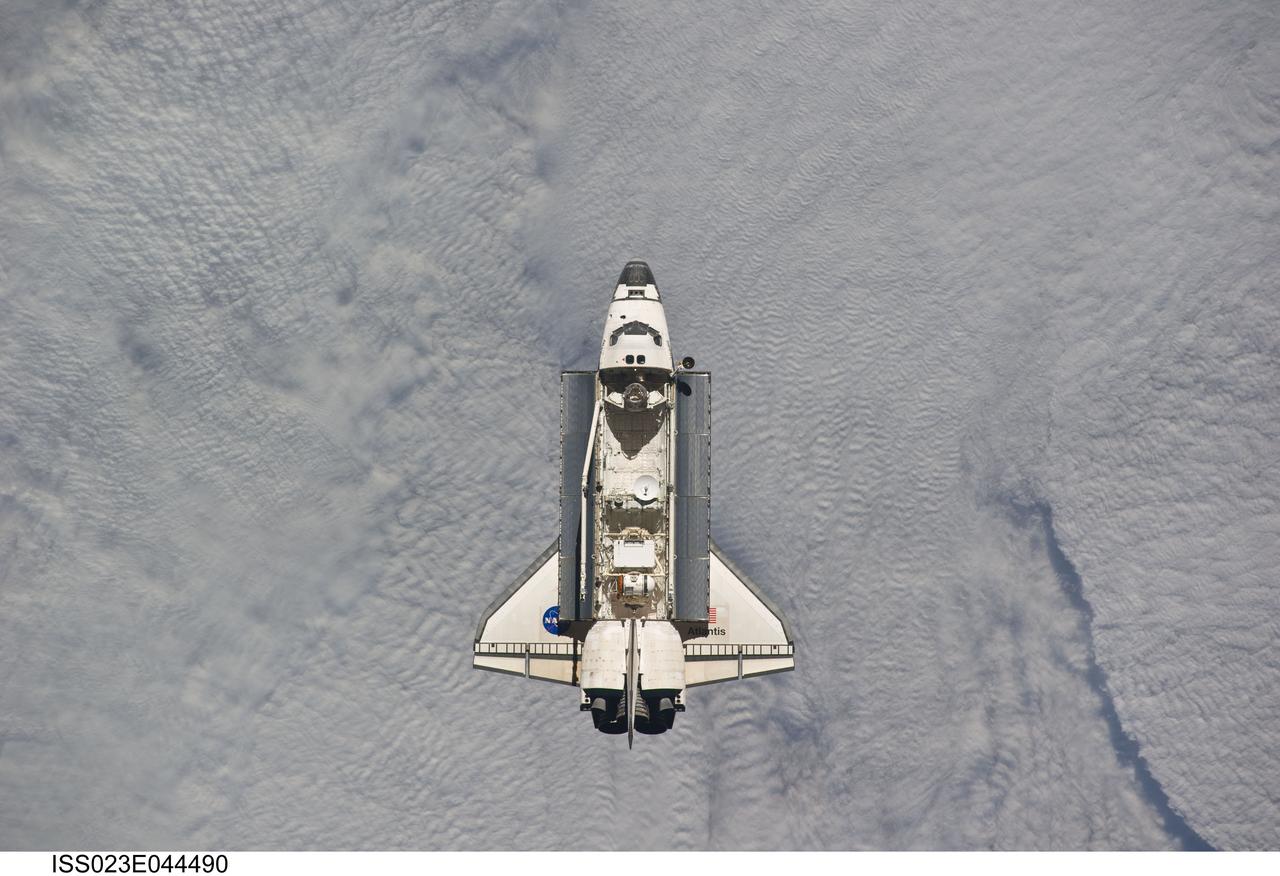
ISS023-E-044490 (16 May 2010) --- Backdropped by a blanket of clouds, space shuttle Atlantis is featured in this image photographed by an Expedition 23 crew member as the shuttle approaches the International Space Station during STS-132 rendezvous and docking operations. Docking occurred at 9:28 a.m. (CDT) on May 16, 2010.
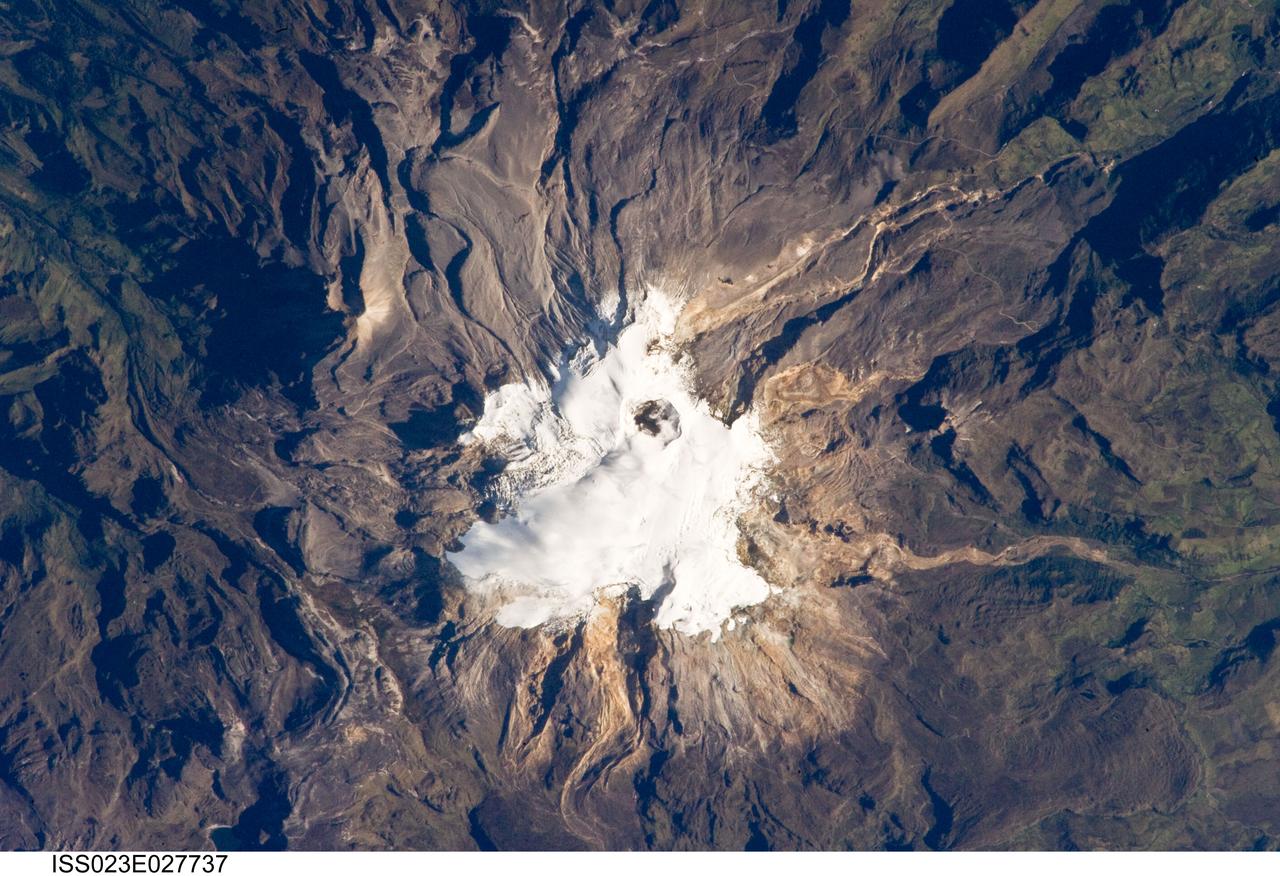
ISS023-E-027737 (23 April 2010) --- Nevado del Ruiz volcano in Colombia is featured in this image photographed by an Expedition 23 crew member on the International Space Station. The large Nevado del Ruiz volcano (center) is located approximately 140 kilometers to the northwest of the capital city of Bogota and covers an area of over 200 square kilometers. Nevado del Ruiz is a stratovolcano – a type of volcano built from successive layers of lava, ash, and pyroclastic flow deposits – formed by magma generated above the boundary between the subducting Nazca and overriding South American tectonic plates. The historical record of eruptions extends back to 1570, but the most damaging eruption in recent times took place in 1985. On Nov. 13, 1985, an explosive eruption at the Arenas Crater (center) melted ice and snow at the summit of the volcano. This lead to the formation of mudflows (or lahars) that swept tens of kilometers down river valleys along the volcano’s flanks, resulting in the deaths of at least 23,000 people. Most of the fatalities occurred in the town of Armero which was completely inundated by lahars. Eruptive activity at Nevado del Ruiz may have occurred in 1994, but this is not confirmed. The volcano’s summit and upper flanks are covered by several glaciers that appear as a white mass surrounding the one-kilometer-wide Arenas Crater; meltwater from these glaciers has incised the gray to tan ash and pyroclastic flow deposits mantling the lower slopes. A well-defined lava flow is visible at lower right. This photograph was taken at approximately 7:45 a.m. local time when the sun was still fairly low above the horizon, leading to shadowing to the west of topographic high points.
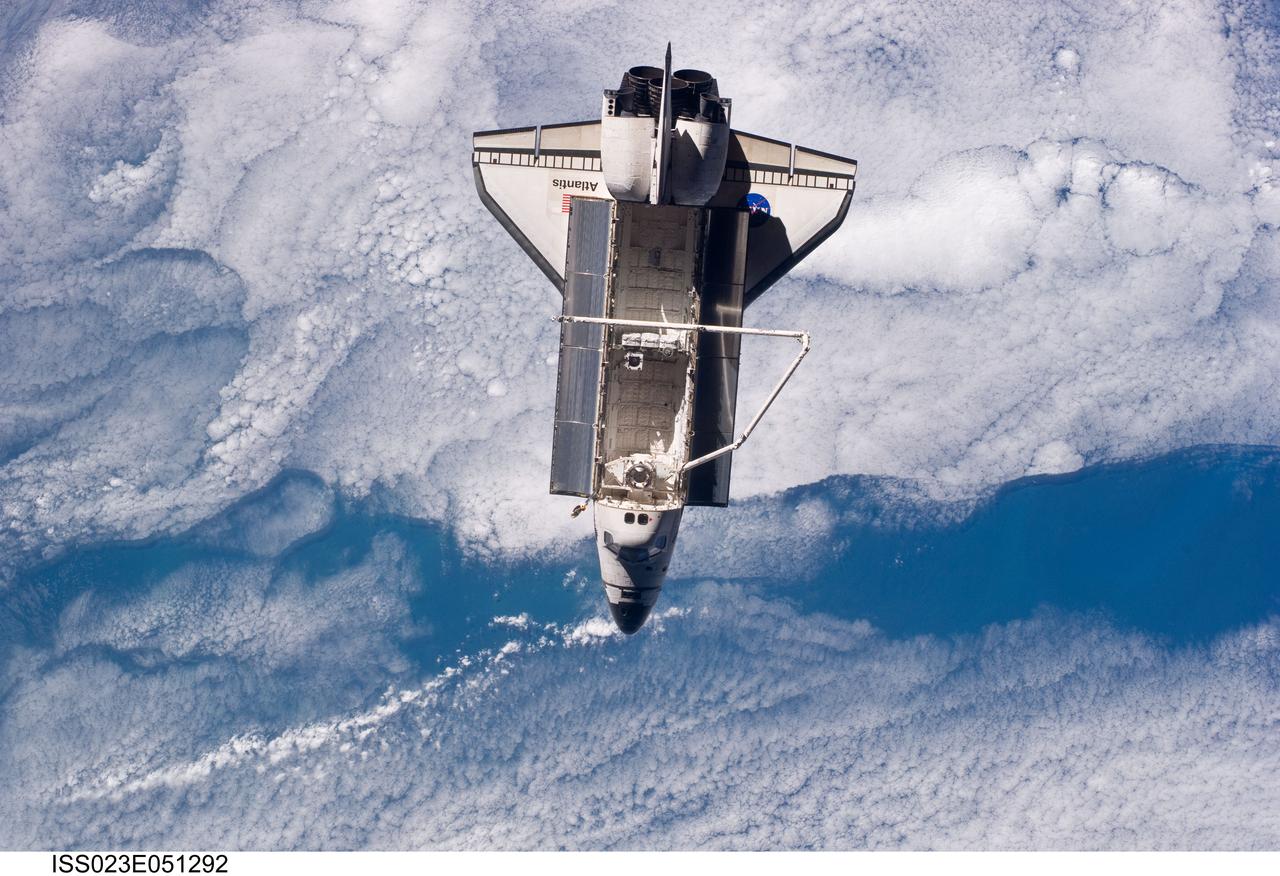
ISS023-E-051292 (23 May 2010) --- Space shuttle Atlantis is featured in this image photographed by an Expedition 23 crew member on the International Space Station soon after the shuttle and station began their post-undocking relative separation. Undocking of the two spacecraft occurred at 10:22 a.m. (CDT) on May 23, 2010, ending a seven-day stay that saw the addition of a new station module, replacement of batteries and resupply of the orbiting outpost. A blue and white part of Earth provides the backdrop for the scene.
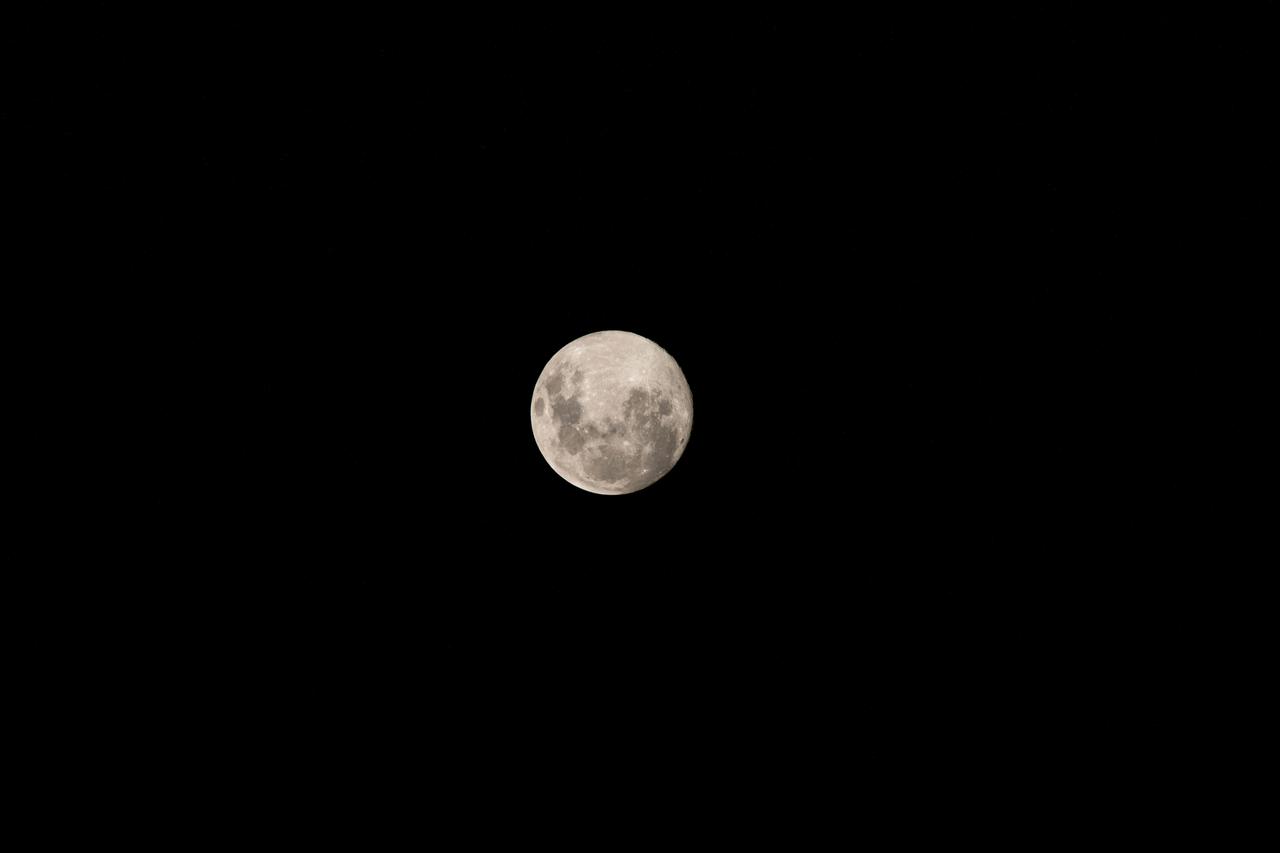
iss065e005949 (April 26, 2021) --- A waxing gibbous Moon, or near Full Moon, is pictured from the International Space Station as it orbited 267 miles above the southern Indian Ocean.
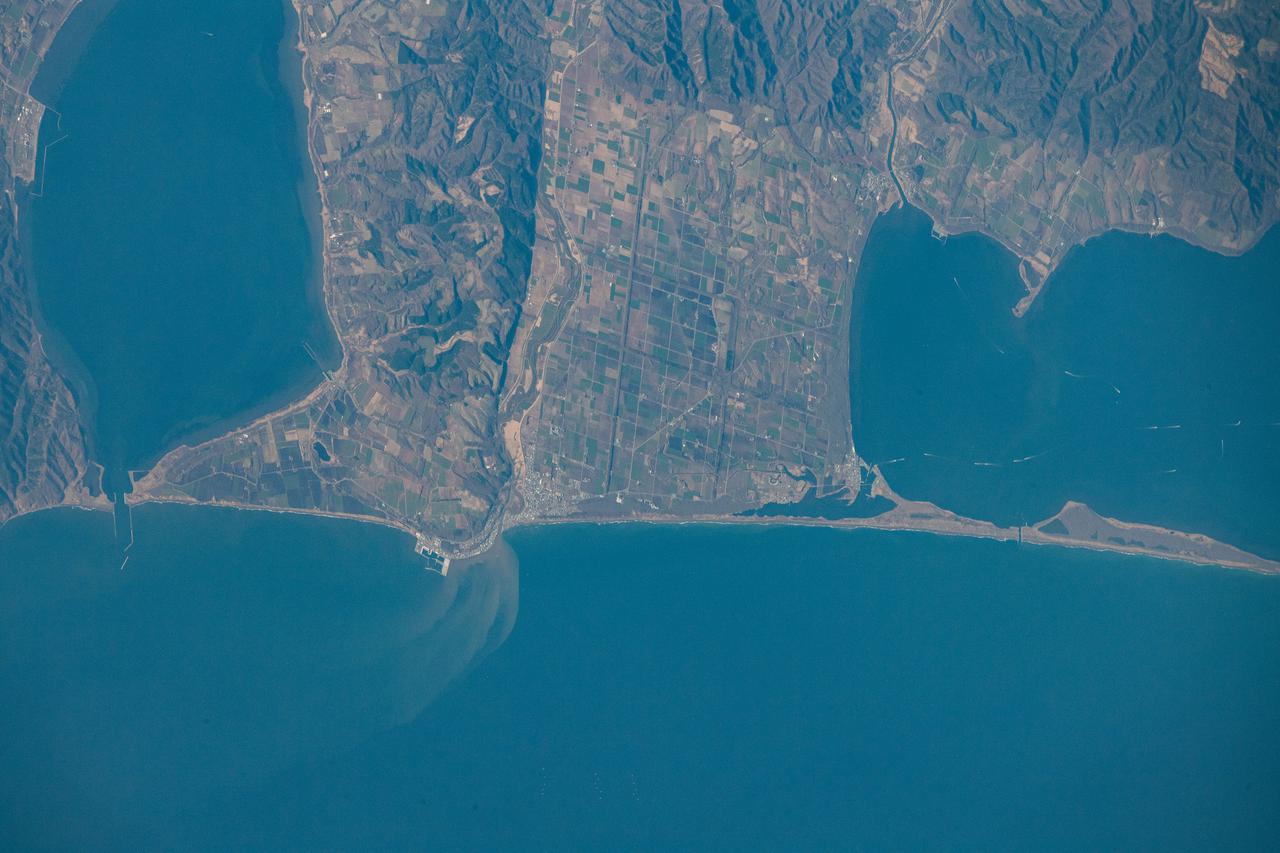
iss065e001029 (April 19, 2021) --- The coast of Kitami on Japan's island of Hokkaido is pictured from the International Space Station as it orbited 265 miles above the North Pacific.
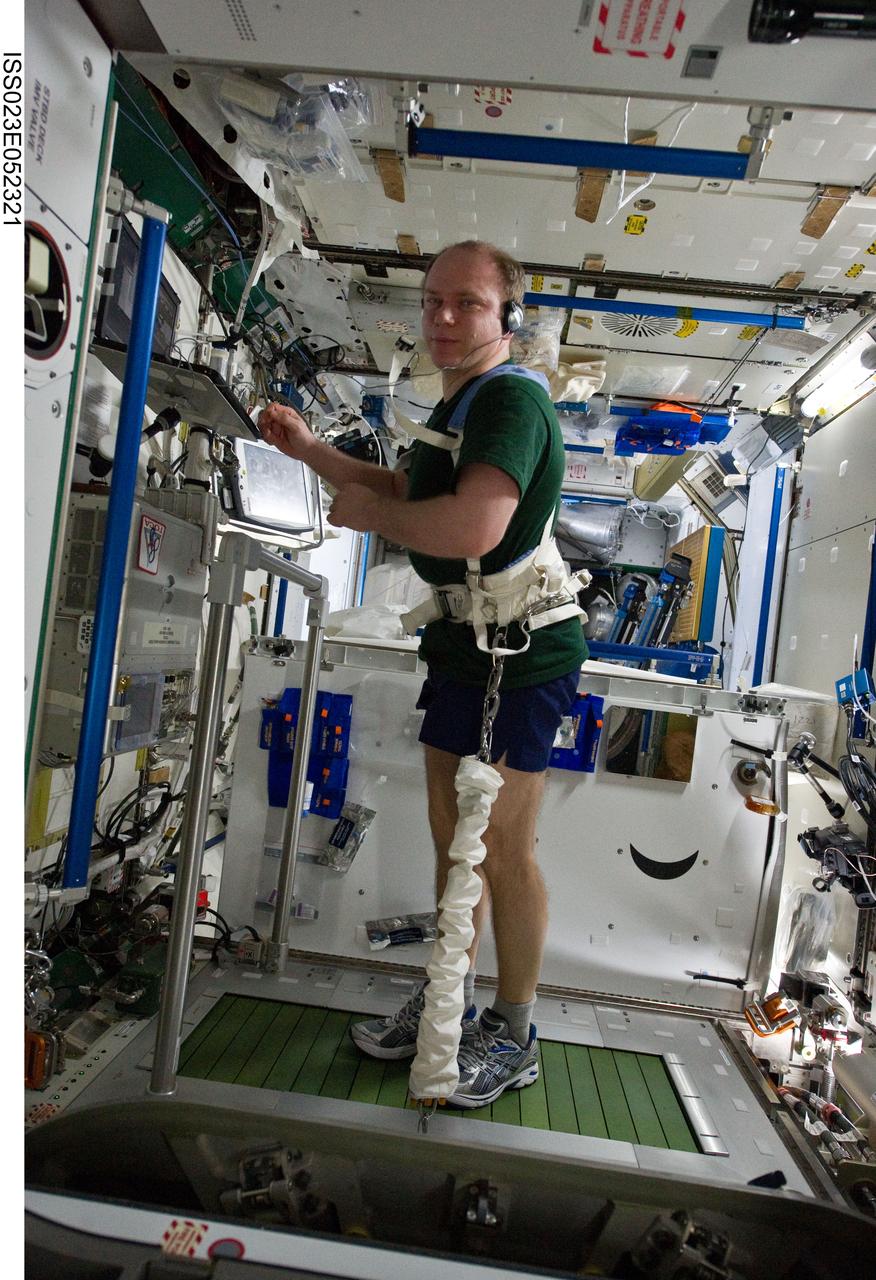
ISS023-E-052321 (26 May 2010) --- Russian cosmonaut Oleg Kotov, Expedition 23 commander, equipped with a bungee harness, prepares to exercise on the Combined Operational Load Bearing External Resistance Treadmill (COLBERT) in the Tranquility node of the International Space Station.
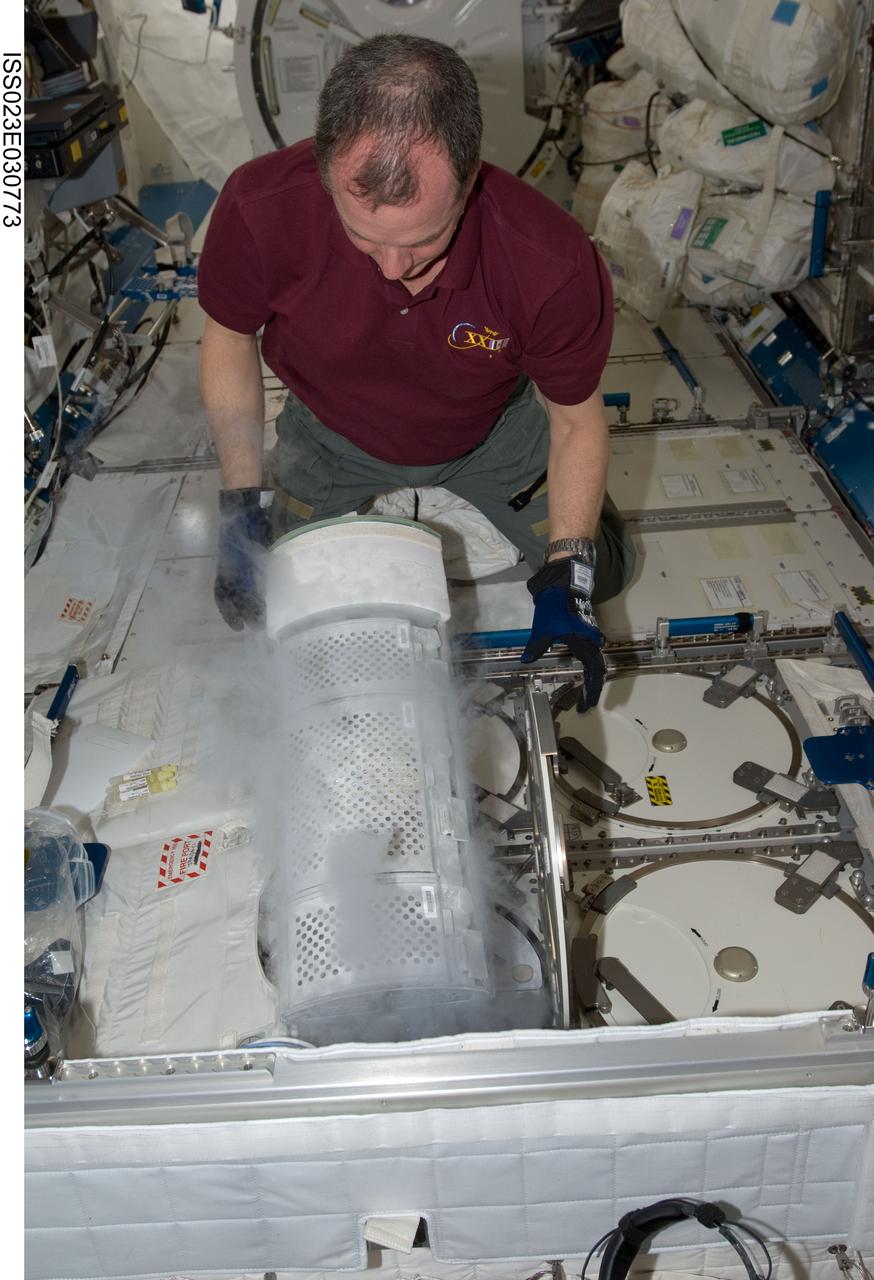
ISS023-E-030773 (2 May 2010) --- NASA astronaut T.J. Creamer, Expedition 23 flight engineer, services the Minus Eighty Laboratory Freezer for ISS (MELFI-1) in the Kibo laboratory of the International Space Station.
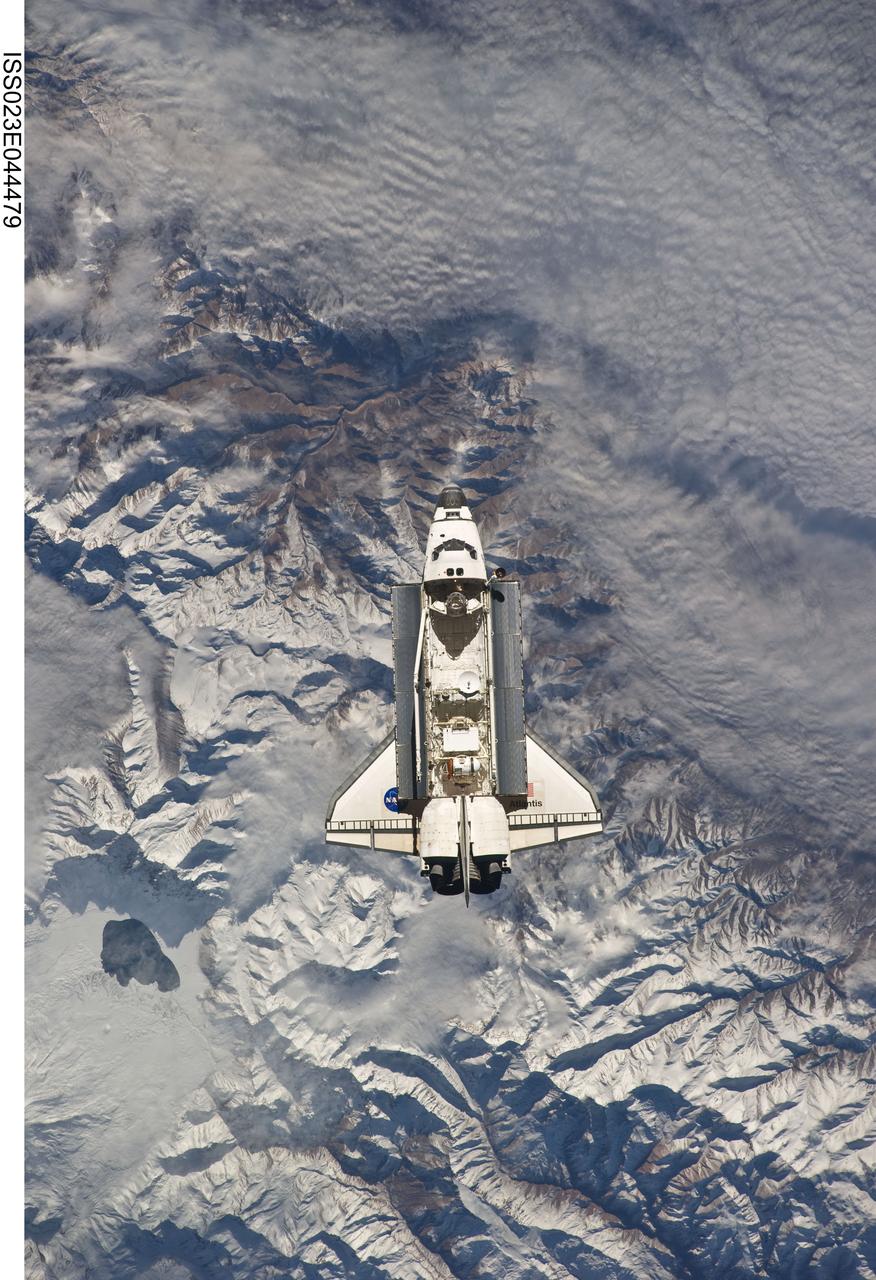
ISS023-E-044479 (16 May 2010) ?-- Backdropped against the Andes Mountains near the border of Argentina and Chile, the space shuttle Atlantis is shown making its relative approach to the International Space Station, from which this photo was taken. Center point coordinates are 34.2 south latitude and 69.5 degrees west longitude. Laguna del Diamante is the lagoon seen in the lower left of the photo. Photo credit: NASA or National Aeronautics and Space Administration
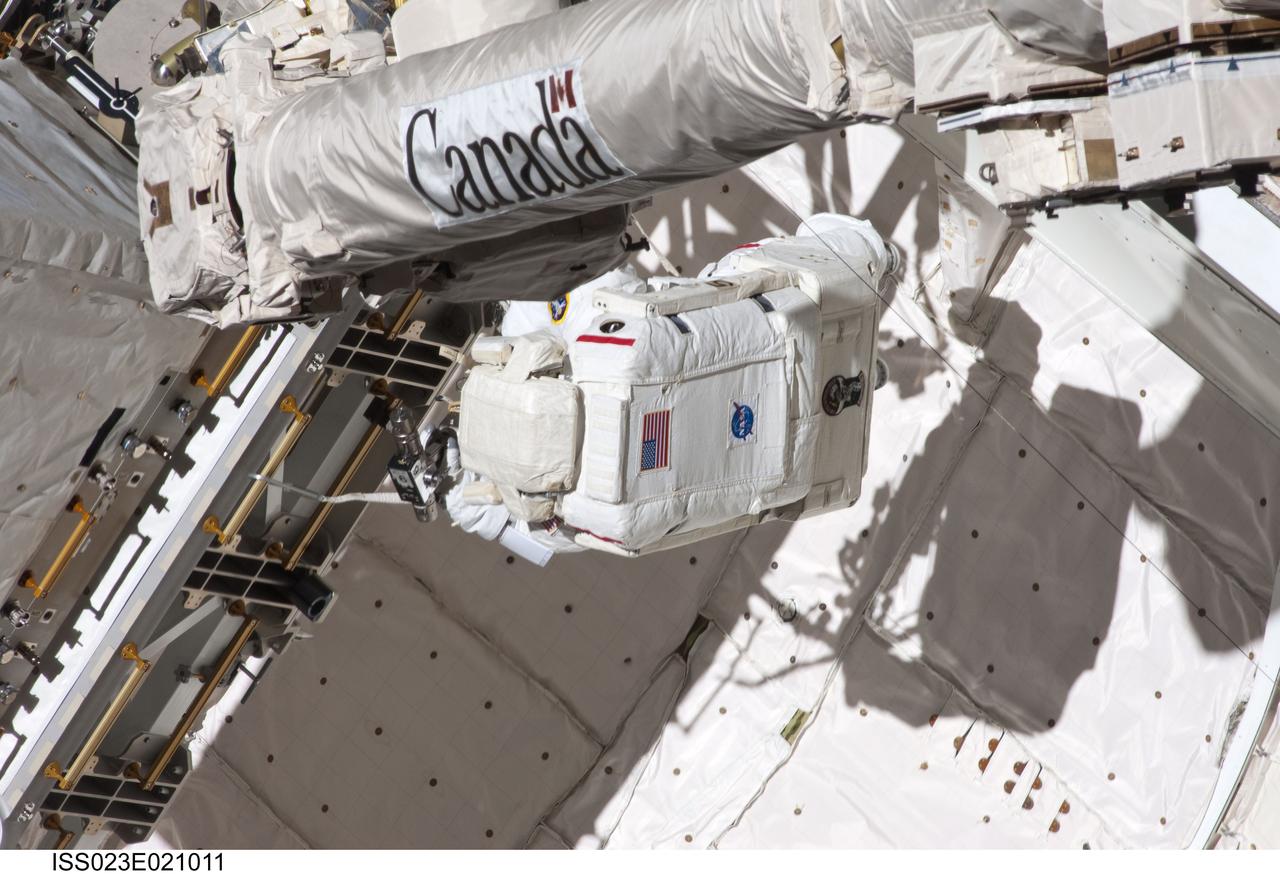
ISS023-E-021011 (9 April 2010) --- NASA astronaut Rick Mastracchio, STS-131 mission specialist, participates in the mission's first session of extravehicular activity (EVA) as construction and maintenance continue on the International Space Station. During the six-hour, 27-minute spacewalk, Mastracchio and astronaut Clayton Anderson (out of frame), mission specialist, helped move a new 1,700-pound ammonia tank from space shuttle Discovery’s cargo bay to a temporary parking place on the station, retrieved an experiment from the Japanese Kibo Laboratory exposed facility and replaced a Rate Gyro Assembly on one of the truss segments.
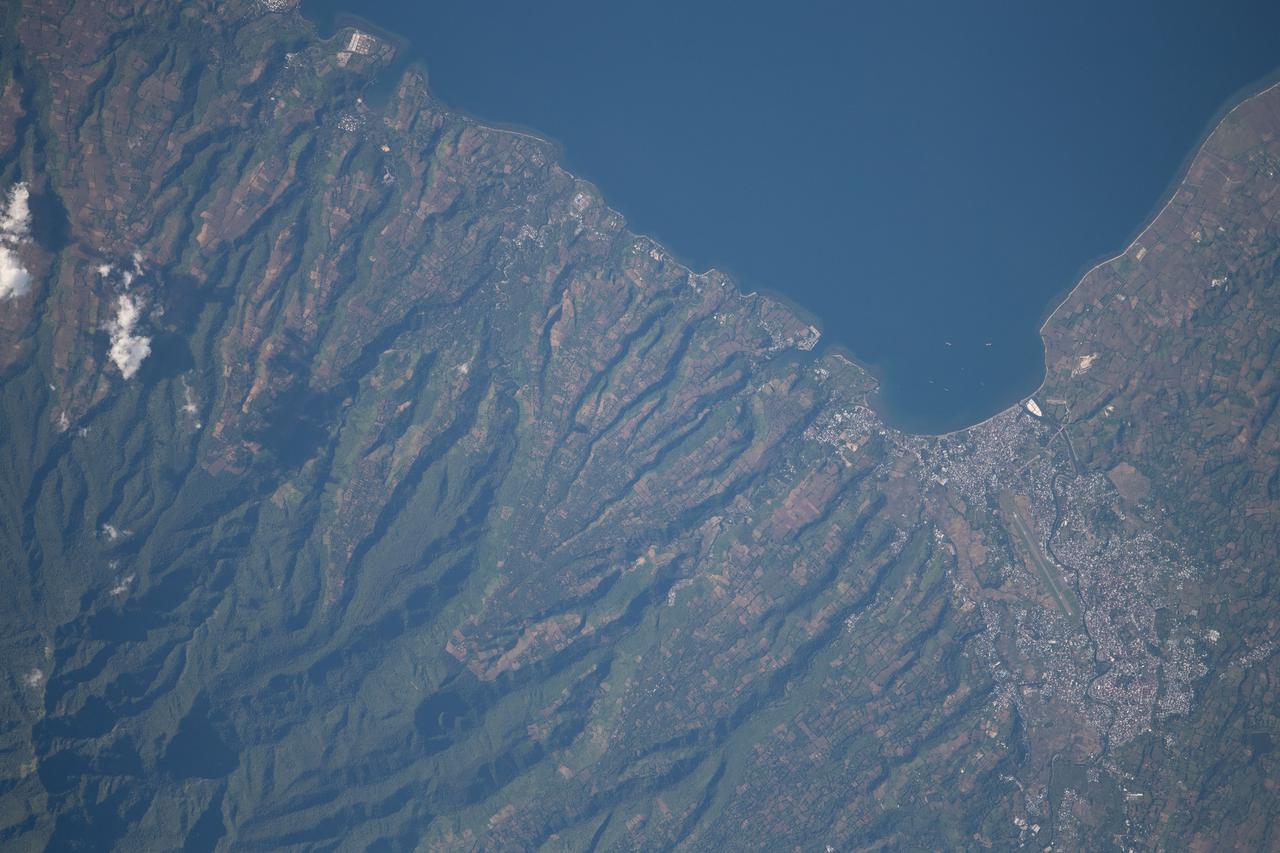
iss065e001270 (April 21, 2021) --- The north coast of West Nusa Tenggara, a province of Indonesia, on the Flores Sea is pictured from the International Space Station as it orbited 262 miles above.
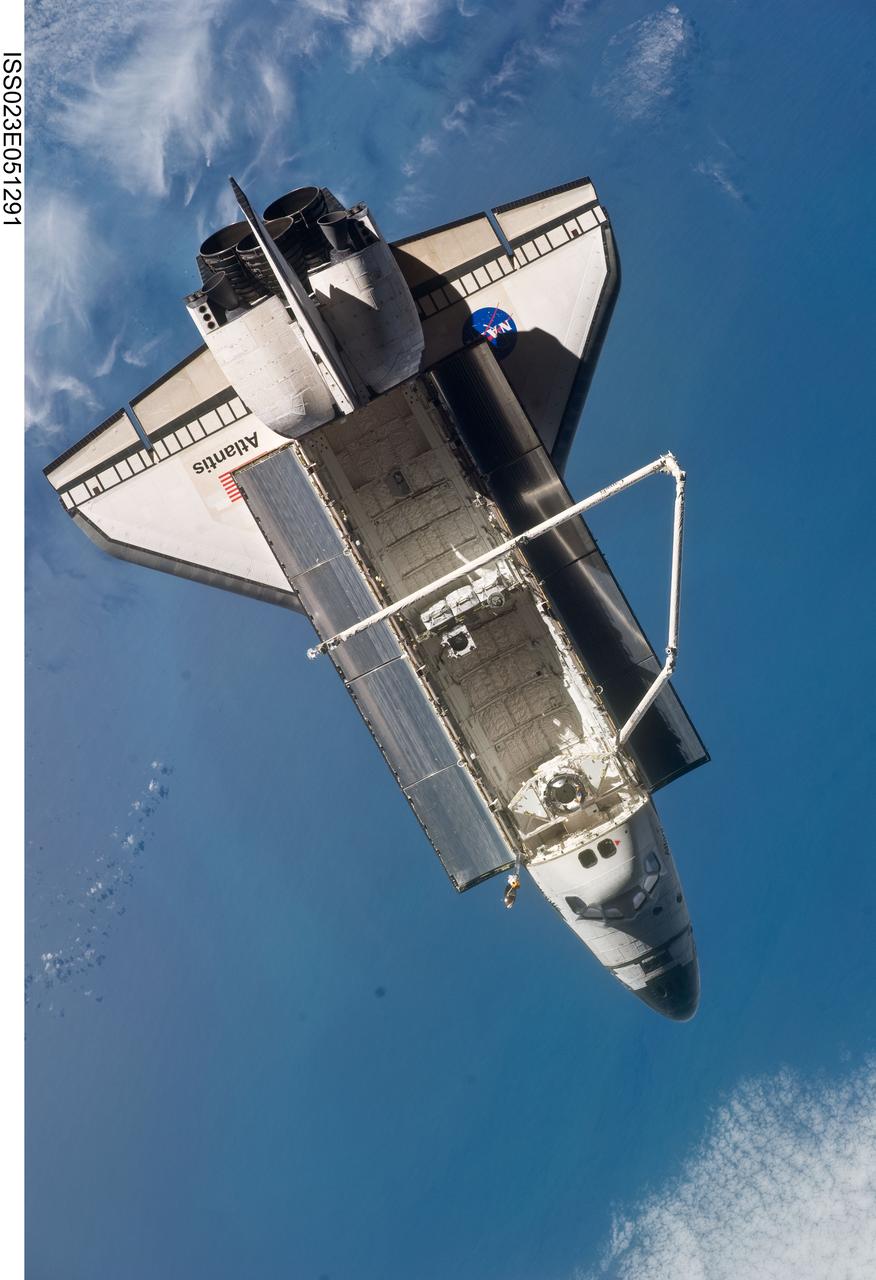
ISS023-E-051291 (23 May 2010) --- Space shuttle Atlantis is featured in this image photographed by an Expedition 23 crew member on the International Space Station soon after the shuttle and station began their post-undocking relative separation. Undocking of the two spacecraft occurred at 10:22 a.m. (CDT) on May 23, 2010, ending a seven-day stay that saw the addition of a new station module, replacement of batteries and resupply of the orbiting outpost. A blue and white part of Earth provides the backdrop for the scene.
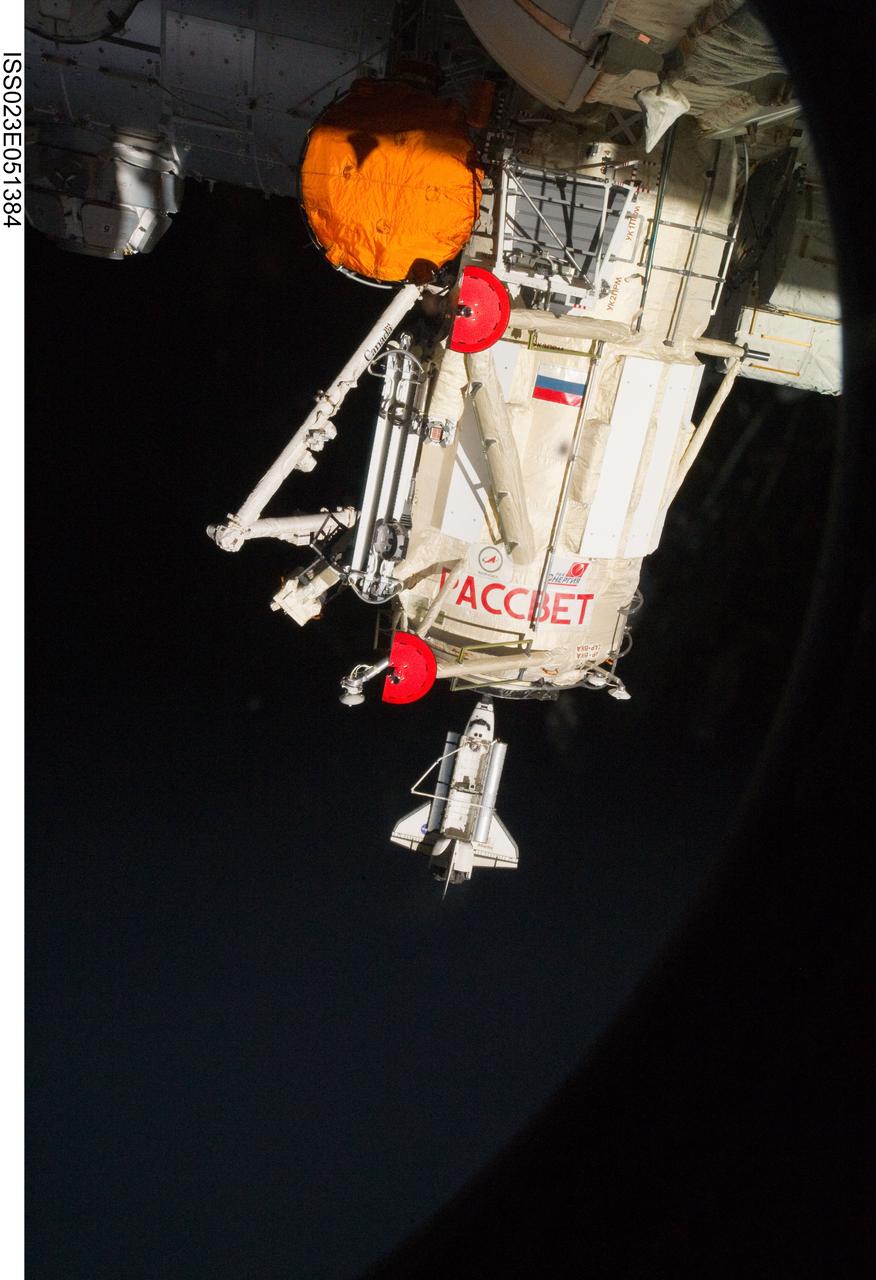
ISS023-E-051384 (23 May 2010) --- Space shuttle Atlantis and the newly-attached Rassvet Mini-Research Module 1 (MRM1) are featured in this image photographed by an Expedition 23 crew member on the International Space Station soon after the shuttle and station began their post-undocking relative separation. Undocking of the two spacecraft occurred at 10:22 a.m. (CDT) on May 23, 2010, ending a seven-day stay that saw the addition of a new station module, replacement of batteries and resupply of the orbiting outpost.
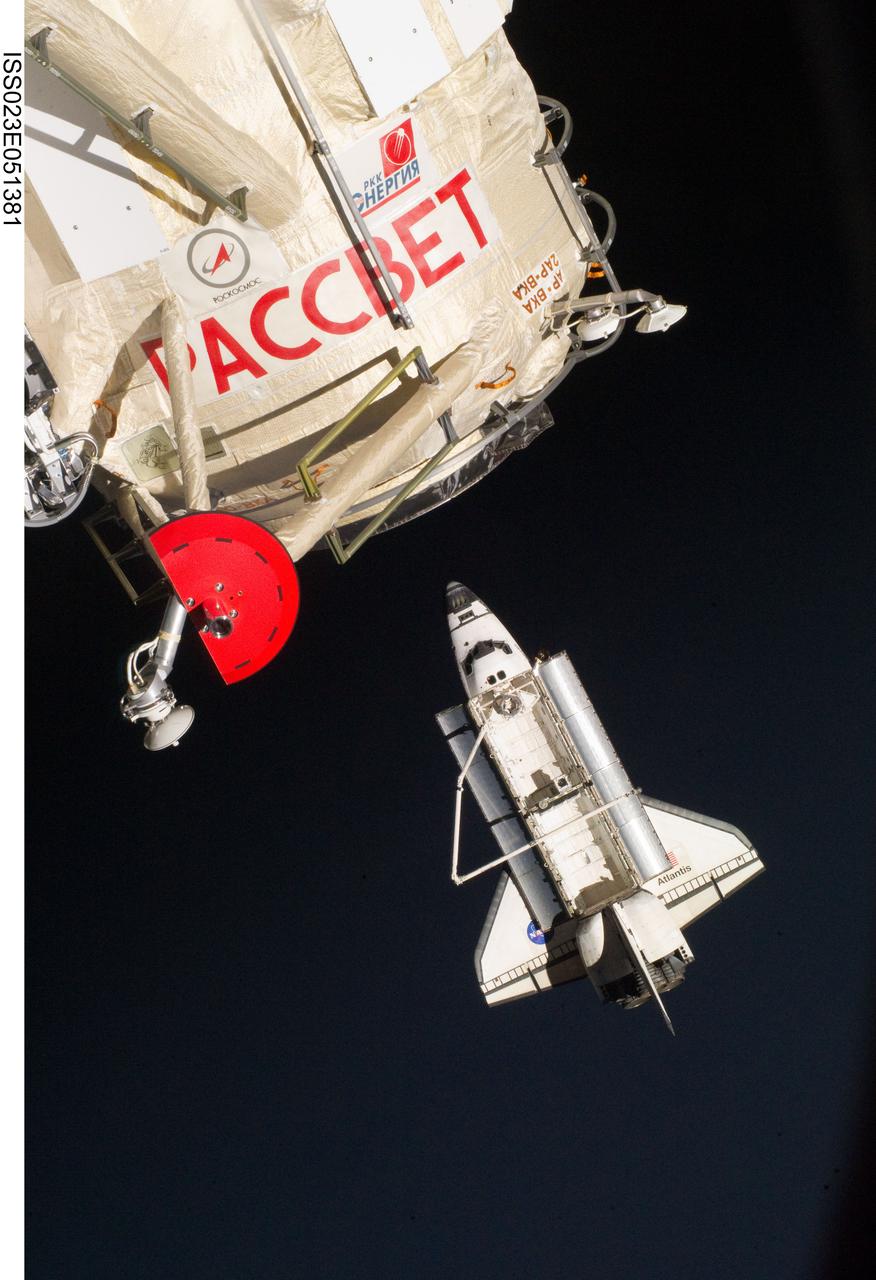
ISS023-E-051381 (23 May 2010) --- Space shuttle Atlantis is featured in this image photographed by an Expedition 23 crew member on the International Space Station soon after the shuttle and station began their post-undocking relative separation. Undocking of the two spacecraft occurred at 10:22 a.m. (CDT) on May 23, 2010, ending a seven-day stay that saw the addition of a new station module, replacement of batteries and resupply of the orbiting outpost. A portion of the newly-attached Rassvet Mini-Research Module 1 (MRM1) is at top.
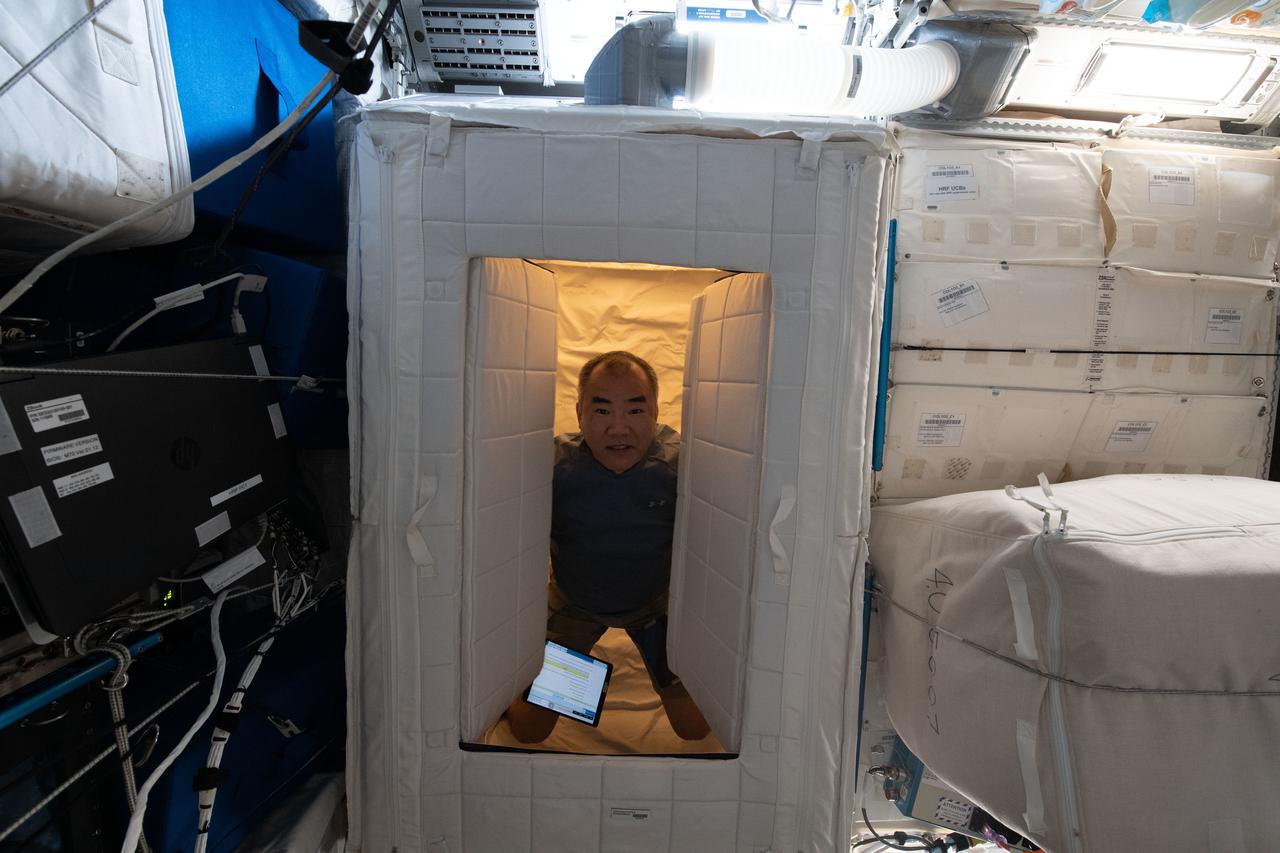
iss065e002499 (April 24, 2021) --- Expedition 64 Flight Engineer Soichi Noguchi of the Japan Aerospace Exploration Agency is pictured inside a sleep station aboard the International Space Station.
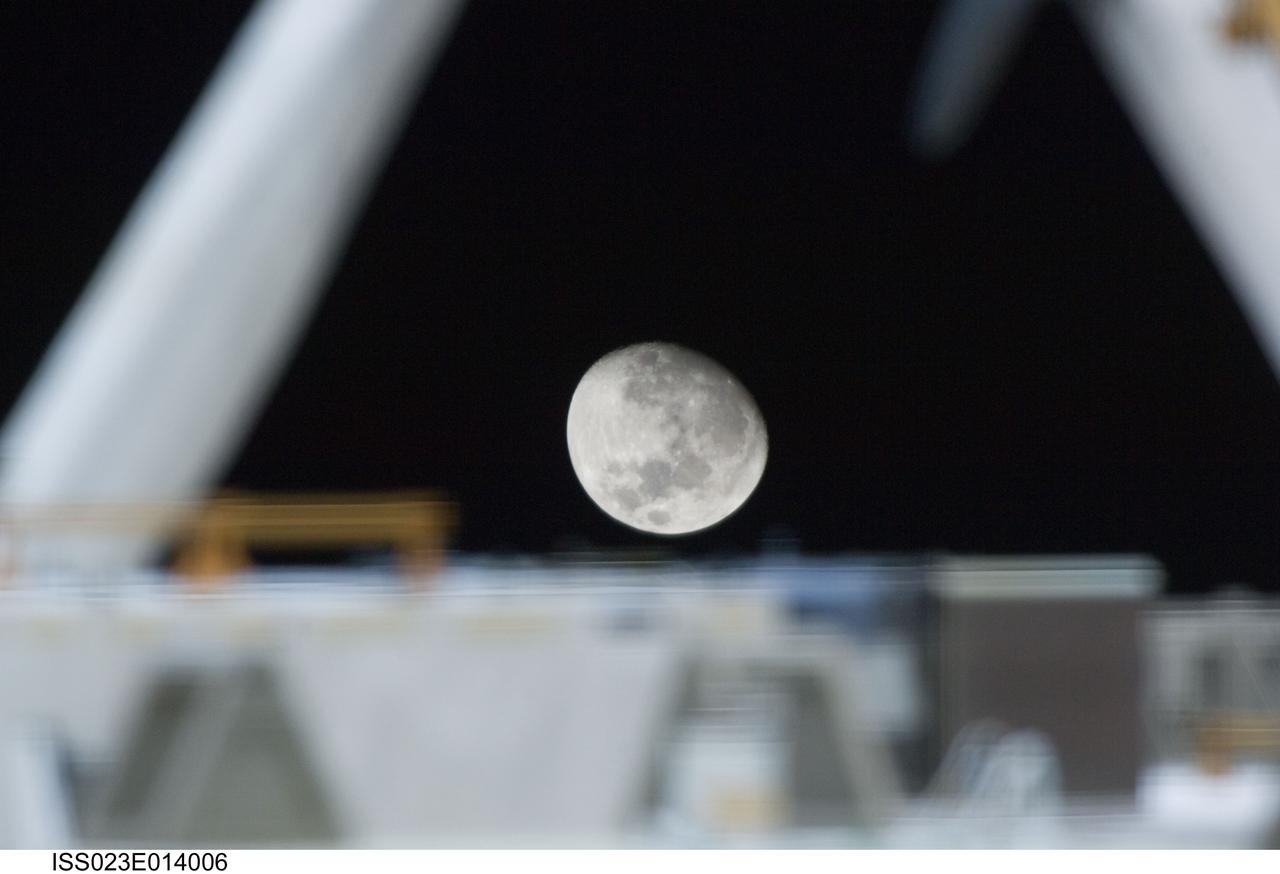
089 nature moon 237
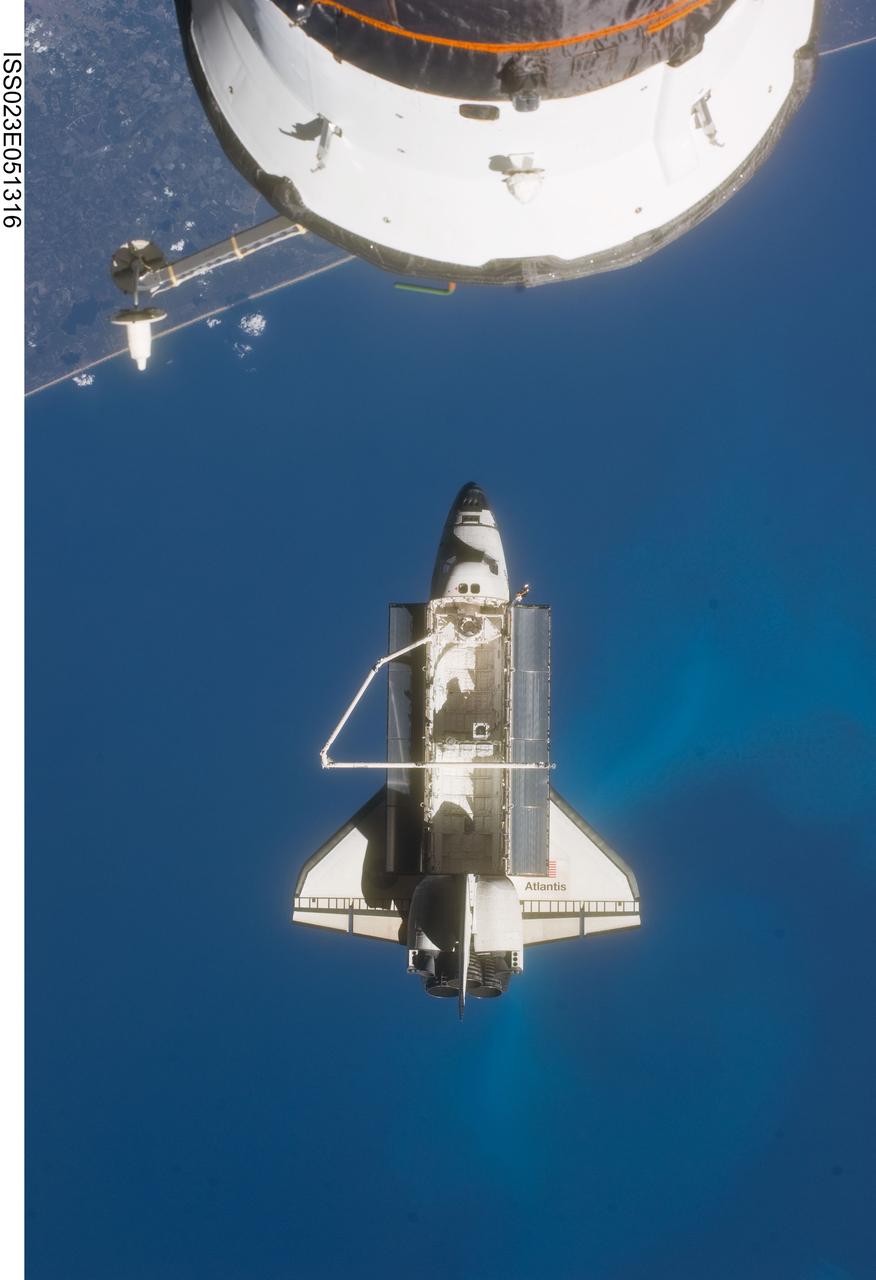
ISS023-E-051316 (23 May 2010) --- Space shuttle Atlantis is featured in this image photographed by an Expedition 23 crew member on the International Space Station soon after the shuttle and station began their post-undocking relative separation. Undocking of the two spacecraft occurred at 10:22 a.m. (CDT) on May 23, 2010, ending a seven-day stay that saw the addition of a new station module, replacement of batteries and resupply of the orbiting outpost. A portion of a Russian spacecraft docked to the station is at top. A blue part of Earth provides the backdrop for the scene.
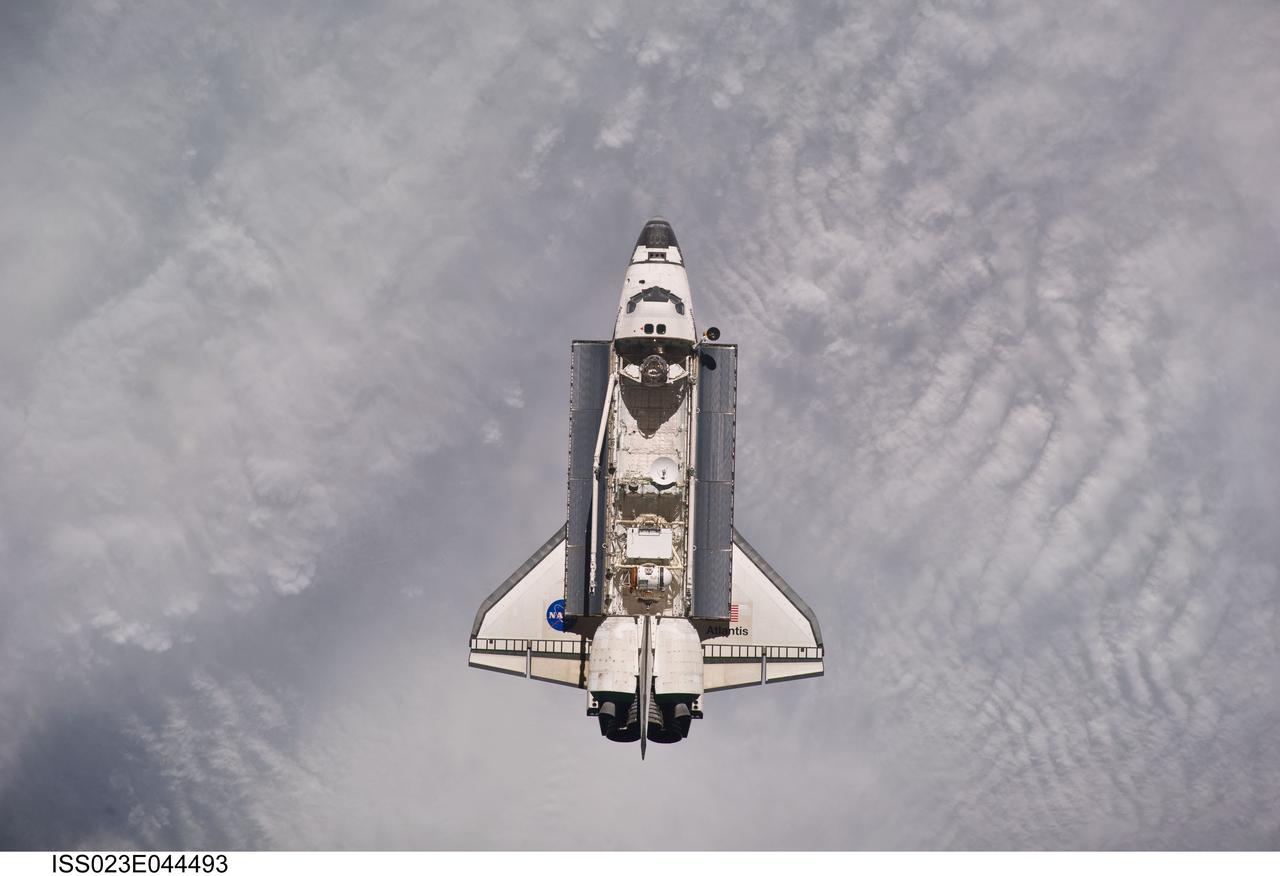
ISS023-E-044493 (16 May 2010) --- Backdropped by a blanket of clouds, space shuttle Atlantis is featured in this image photographed by an Expedition 23 crew member as the shuttle approaches the International Space Station during STS-132 rendezvous and docking operations. Docking occurred at 9:28 a.m. (CDT) on May 16, 2010.
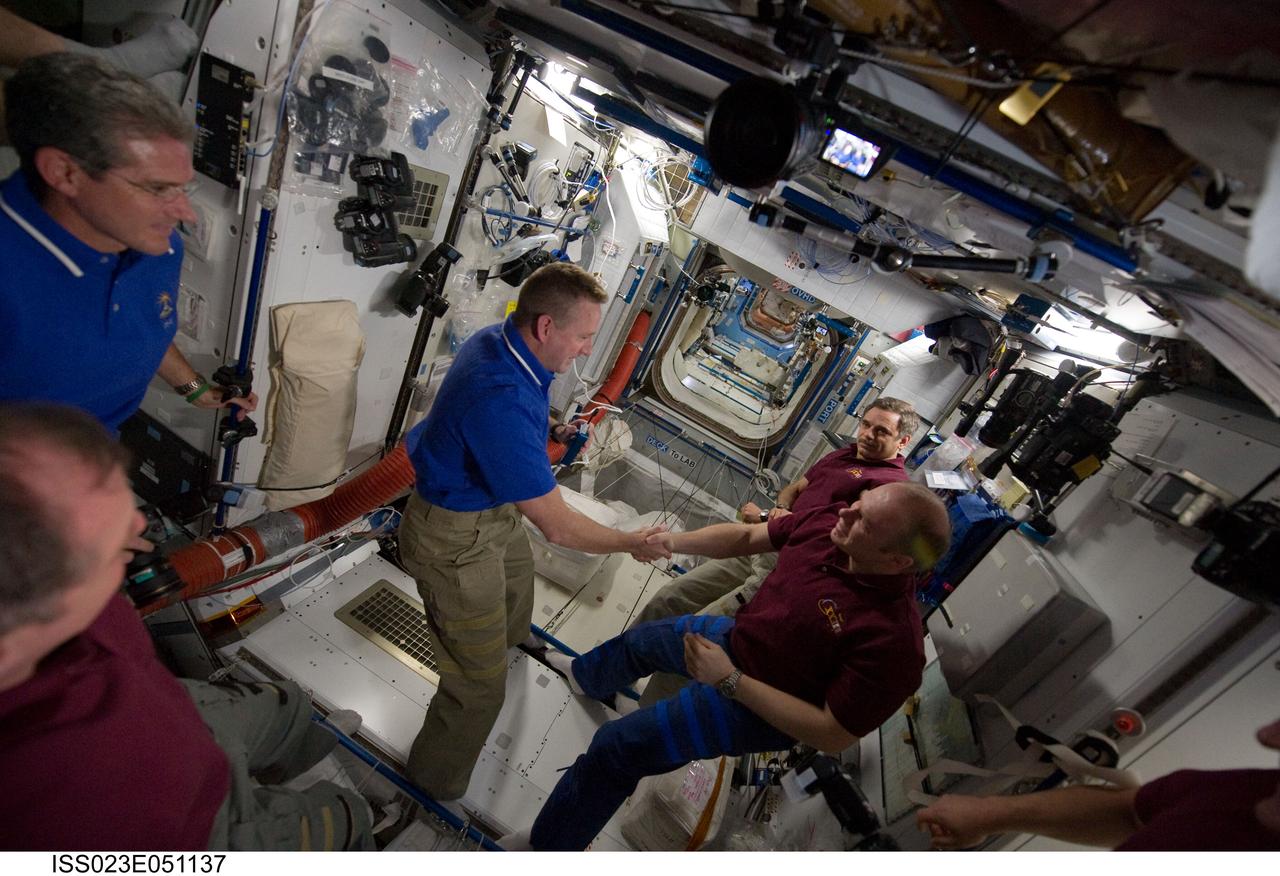
ISS023-E-051137 (23 May 2010) --- NASA astronaut Ken Ham (left), STS-132 commander; and Russian cosmonaut Oleg Kotov, Expedition 23 commander, shake hands during a farewell ceremony in the Harmony node of the International Space Station while space shuttle Atlantis remains docked with the station.
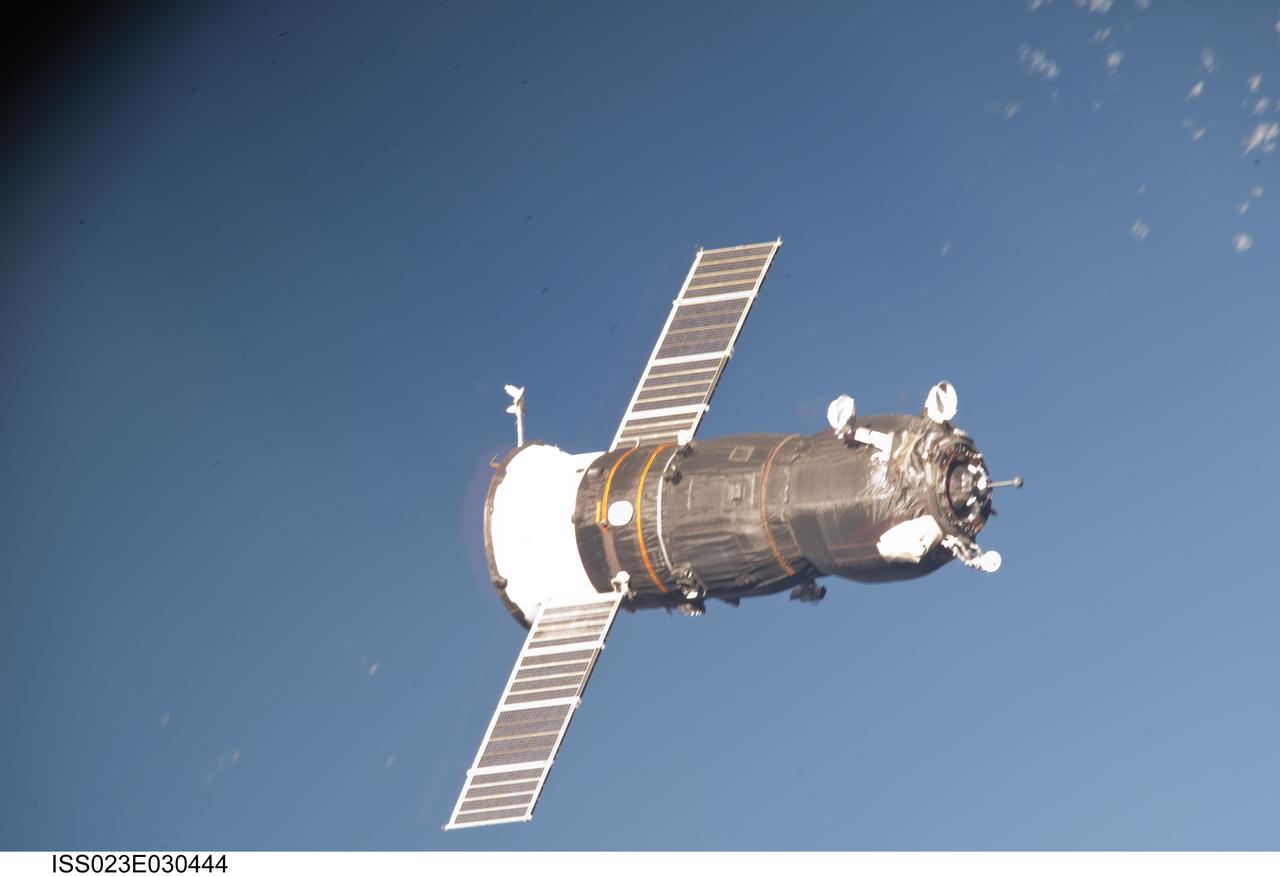
ISS023-E-030444 (1 May 2010) --- An unpiloted ISS Progress resupply vehicle approaches the International Space Station, bringing 2.6 tons of food, fuel, oxygen, propellant and supplies for the Expedition 23 crew members aboard the station. Progress 37 docked to the Pirs Docking Compartment at 2:30 p.m. (EDT) on May 1, 2010, after a three-day flight from the Baikonur Cosmodrome in Kazakhstan. The docking was conducted by Russian cosmonaut Oleg Kotov, commander, in manual control through the TORU (telerobotically operated) rendezvous system due to a jet failure on the Progress that forced a shutdown of the Kurs automated rendezvous system.
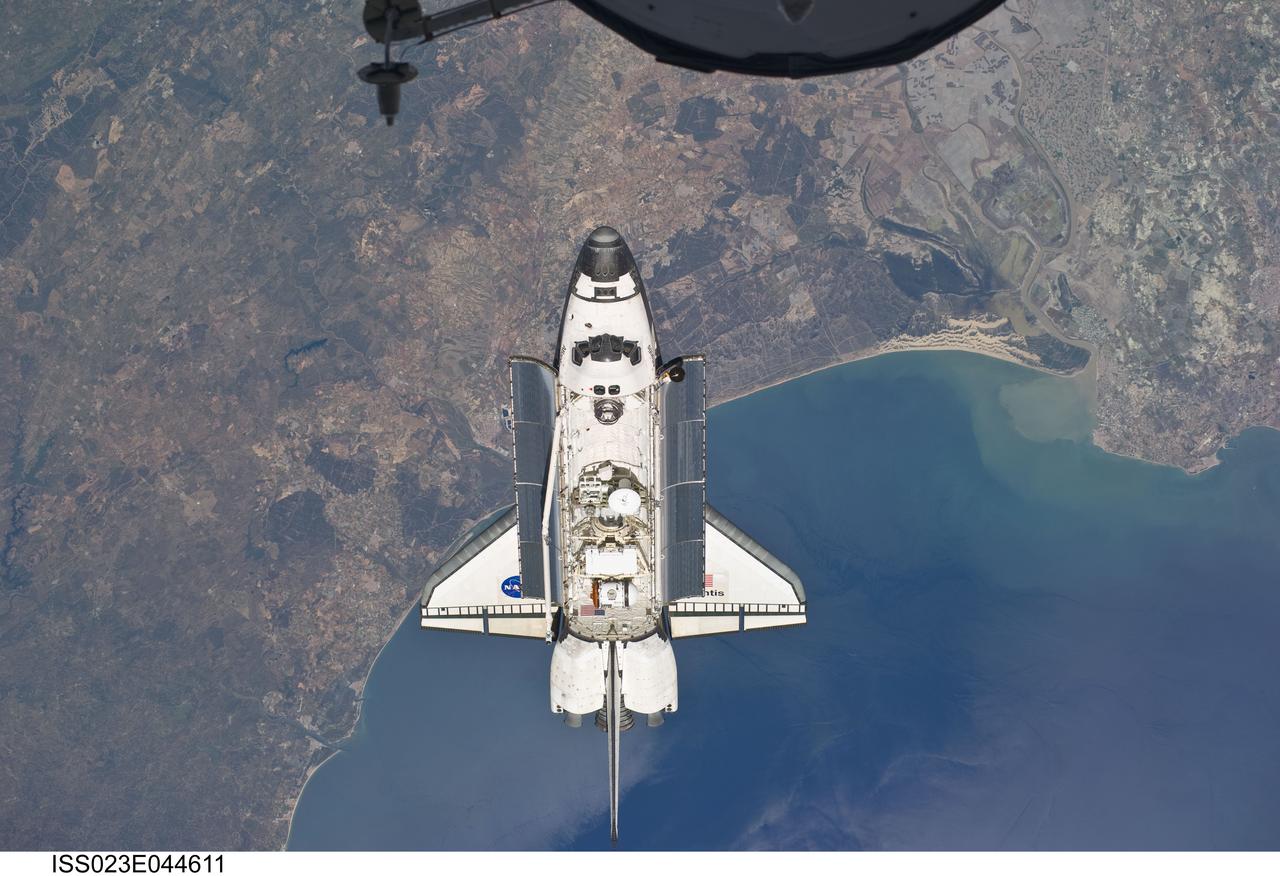
ISS023-E-044611 (16 May 2010) --- Flying above the Atlantic coast of Spain and the Gulf of Cadiz, the space shuttle Atlantis is shown making its relative approach to the International Space Station, from which this photo was taken. The tip of a Russian spacecraft, temporarily docked to the orbital outpost can be seen at top center. The coast includes the city of Ayamonte (left of image as photographed), past Huelva (under Atlantis), past the sand dunes, the Rio Guadalquivir, to the city of Rota. Center point coordinates of the area pictured in the image are 37.3 degrees north latitude and 6.7 degrees west longitude. Photo credit: NASA or National Aeronautics and Space Administration
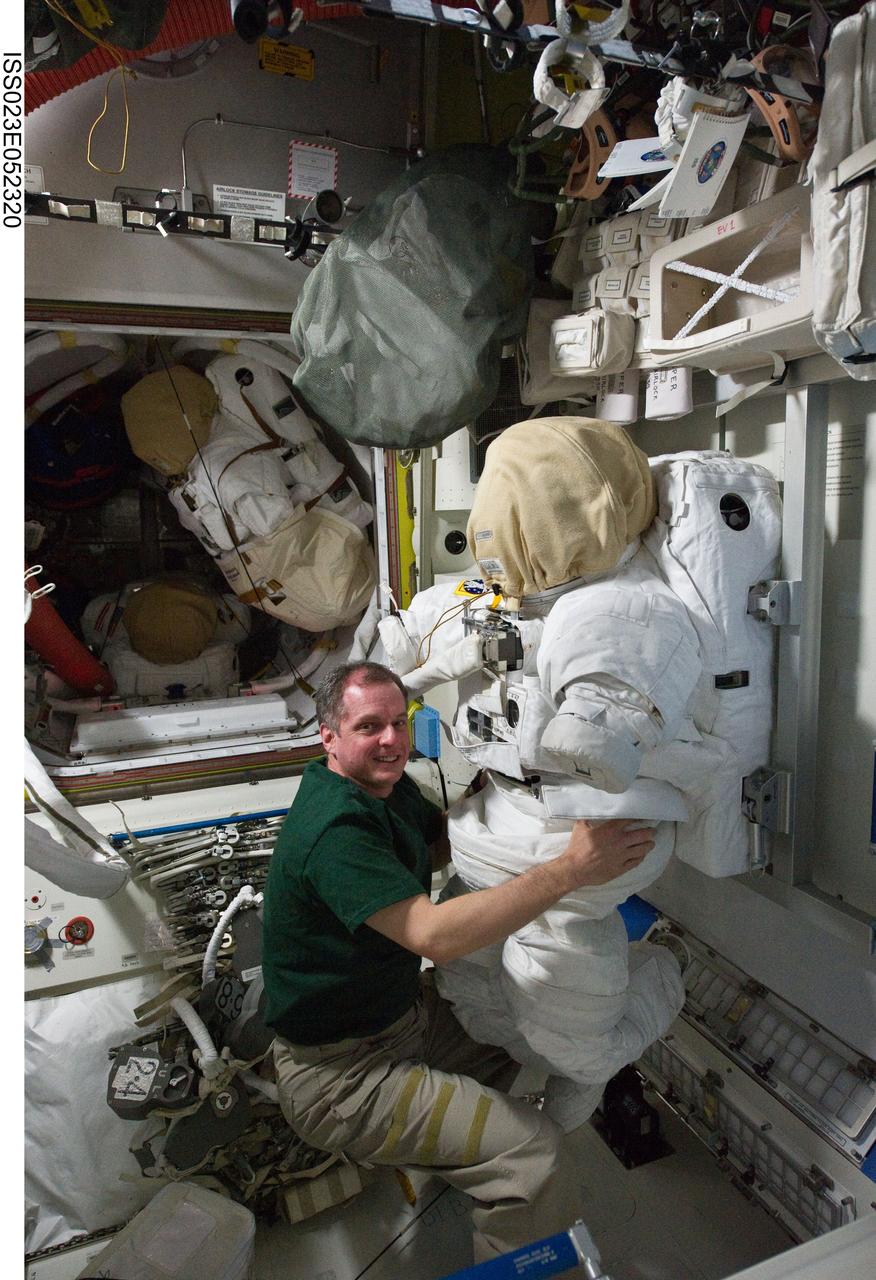
ISS023-E-052320 (26 May 2010) --- NASA astronaut T.J. Creamer, Expedition 23 flight engineer, works with an Extravehicular Mobility Unit (EMU) spacesuit in the Quest airlock of the International Space Station.
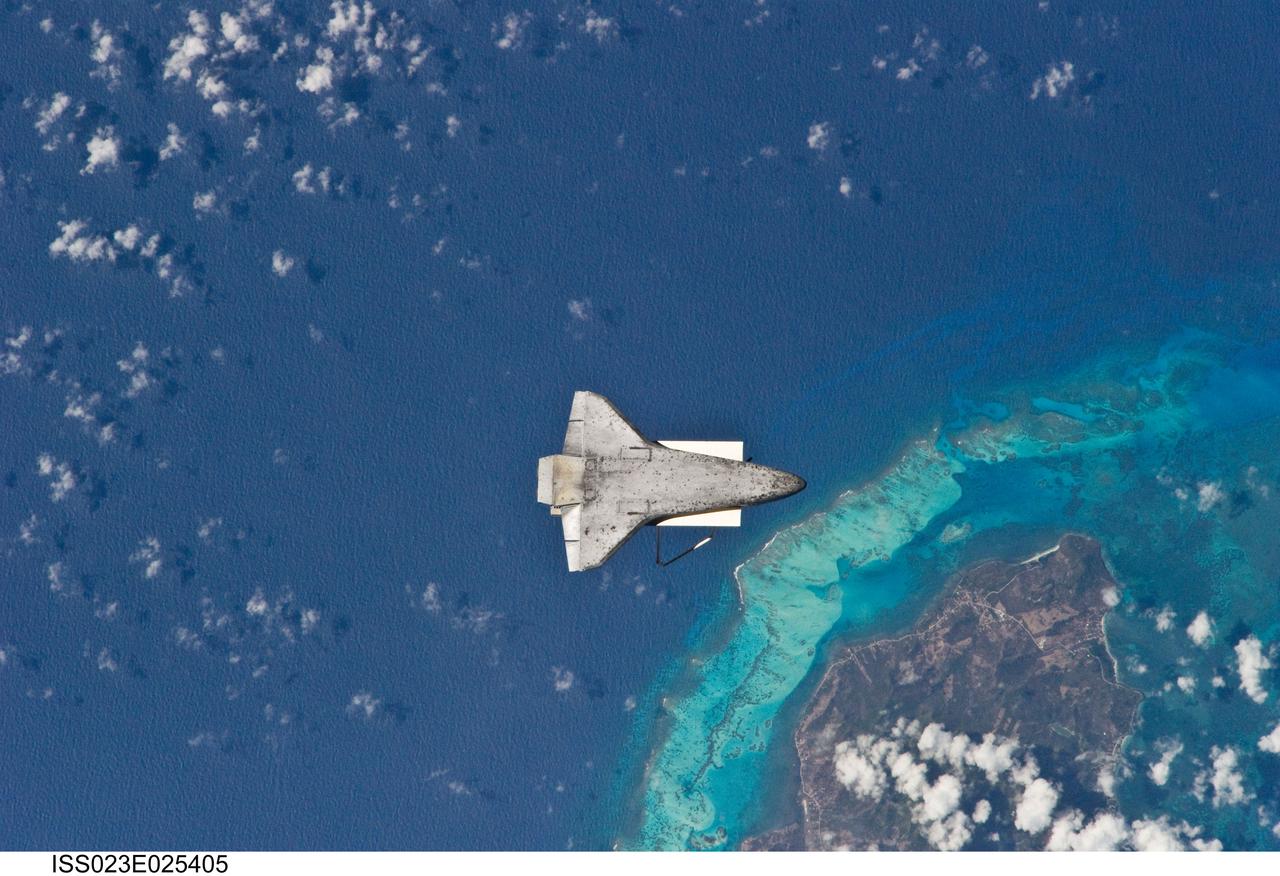
ISS023-E-025405 (17 April 2010) --- The underside of space shuttle Discovery is visible in this image photographed by an Expedition 23 crew member on the International Space Station soon after the shuttle and station began their post-undocking relative separation. Undocking of the two spacecraft occurred at 7:52 a.m. (CDT) on April 17, 2010, ending a stay of 10 days, 5 hours and 8 minutes. The visit included three spacewalks and delivery of more than seven tons of equipment and supplies. The recognizable feature on Earth below is the south end of Isla de Providencia, about 150 miles off the coast of Nicaragua near 13.3 degrees north latitude 81.4 degrees west longitude. The island belongs to Colombia.
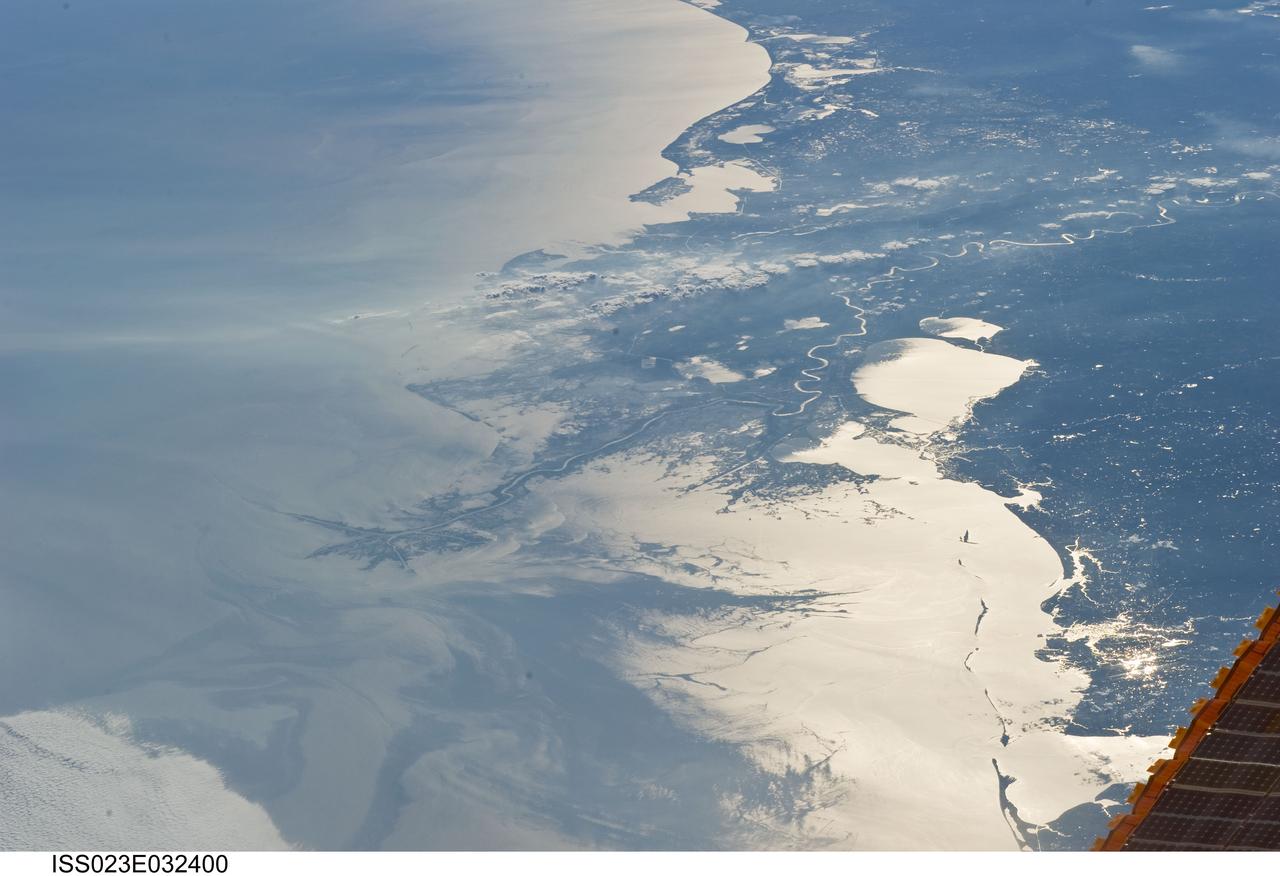
ISS023-E-032400 (4 May 2010) --- Japan Aerospace Exploration Agency (JAXA) astronaut Soichi Noguchi, Expedition 23 flight engineer, photographed the Mississippi Delta showing the oil slick in the Gulf of Mexico on May 4, 2010. Part of the river delta and nearby Louisiana coast appear dark in the sunglint. This phenomenon is caused by sunlight reflecting off the water surface, in a mirror-like manner, directly back towards the astronaut observer onboard the International Space Station (ISS). The sunglint improves the identification of the oil spill which is creating a different water texture (and therefore a contrast) between the smooth and rougher water of the reflective ocean surface. Other features which cause a change in surface roughness that can be seen in sunglint are wind gusts, naturally occurring oils that will be gathered by and take the form of water currents or wave patterns, and less windy areas behind islands.
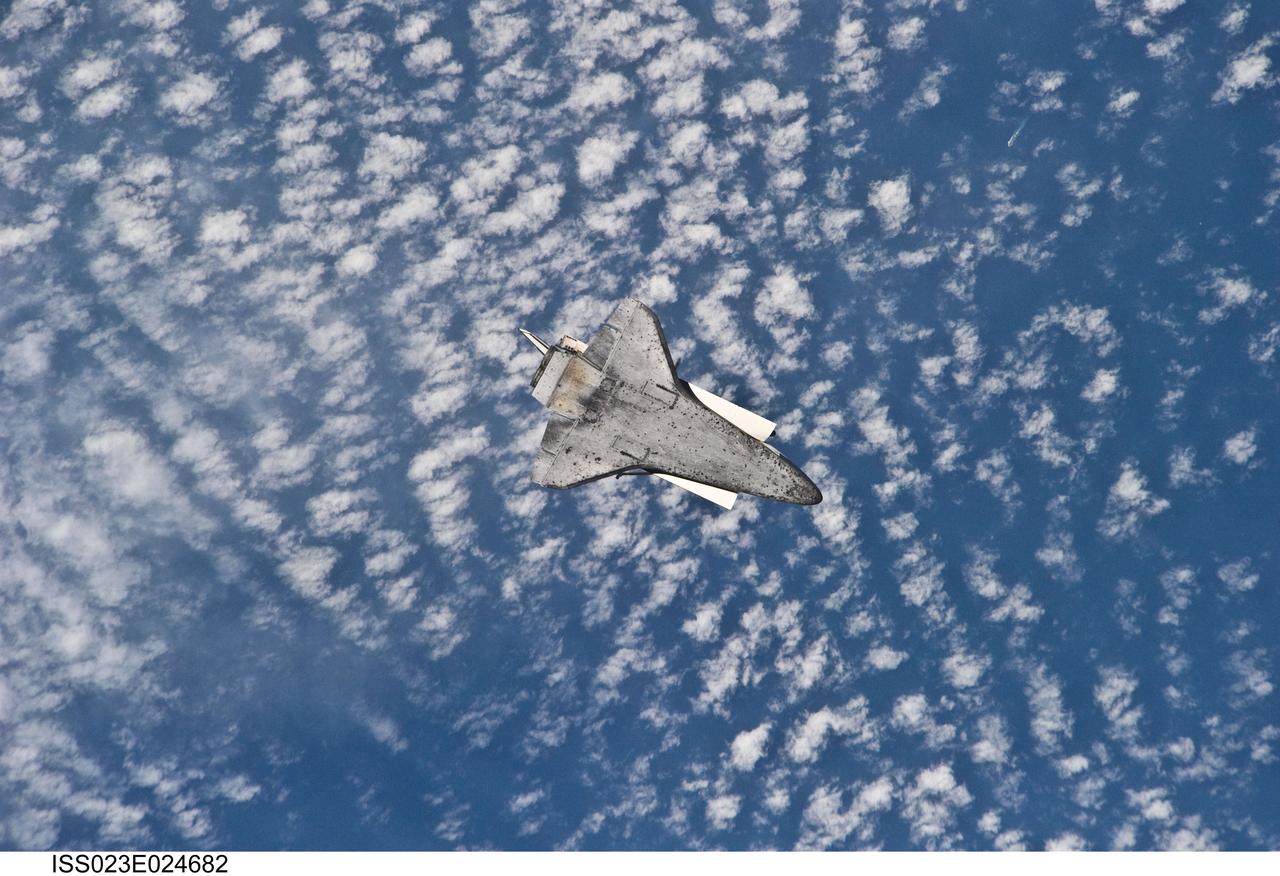
ISS023-E-024682 (17 April 2010) --- The space shuttle Discovery flies with its payload bay facing Earth so that the astronauts and cosmonauts onboard the International Space Station could survey and photograph it following the relative separation of the two spacecraft on April 17.
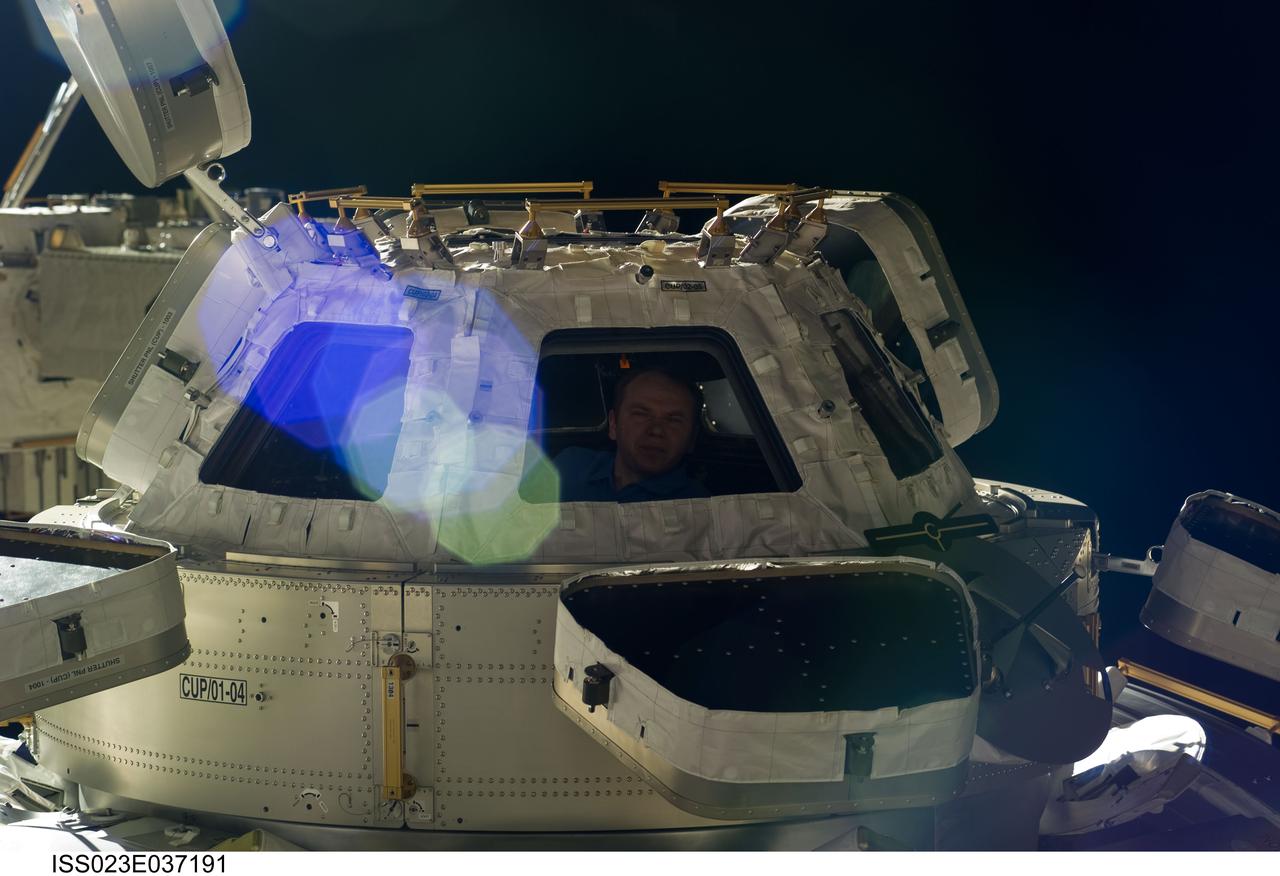
ISS023-E-037191 (9 May 2010) --- Russian cosmonaut Oleg Kotov, Expedition 23 commander, is pictured in a window of the Cupola of the International Space Station.
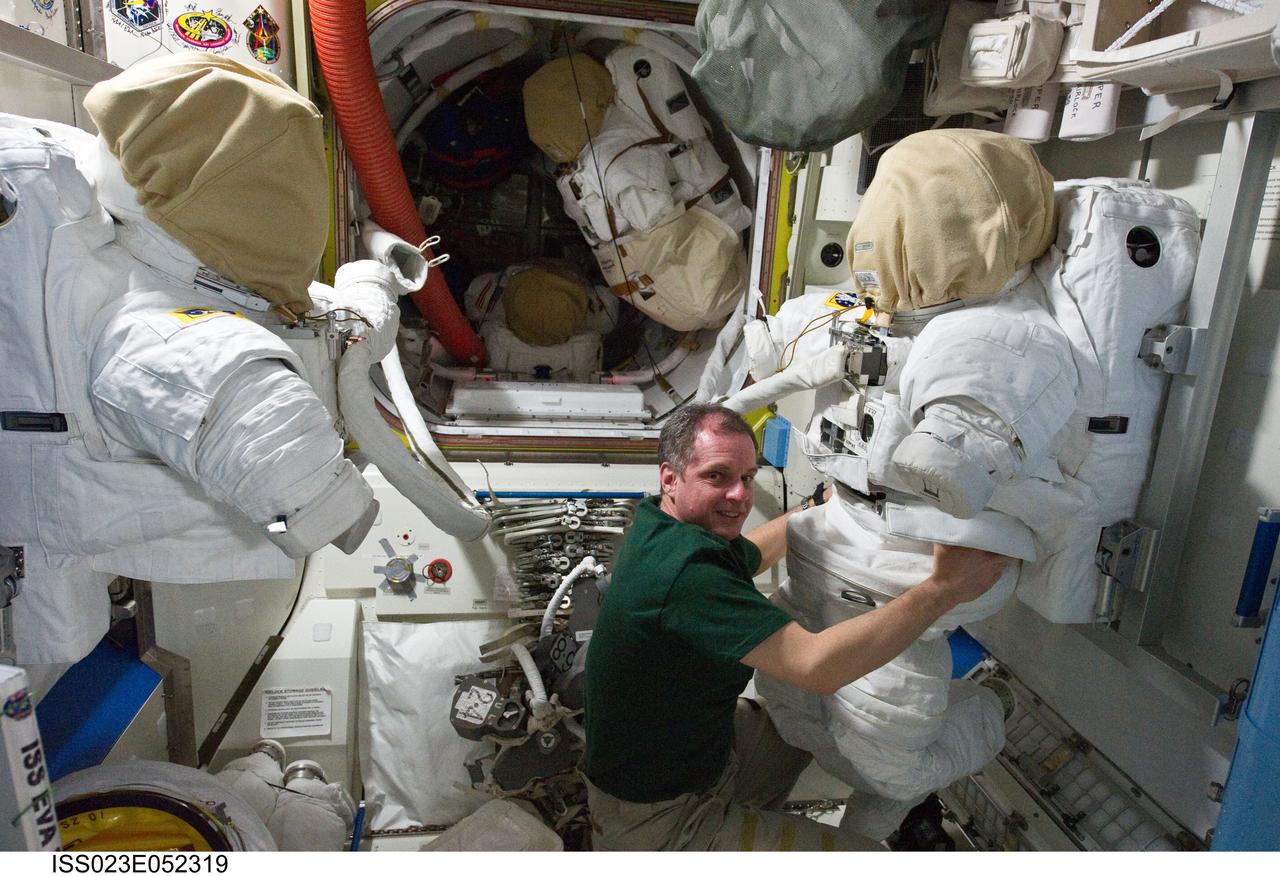
ISS023-E-052319 (26 May 2010) --- NASA astronaut T.J. Creamer, Expedition 23 flight engineer, works with an Extravehicular Mobility Unit (EMU) spacesuit in the Quest airlock of the International Space Station.
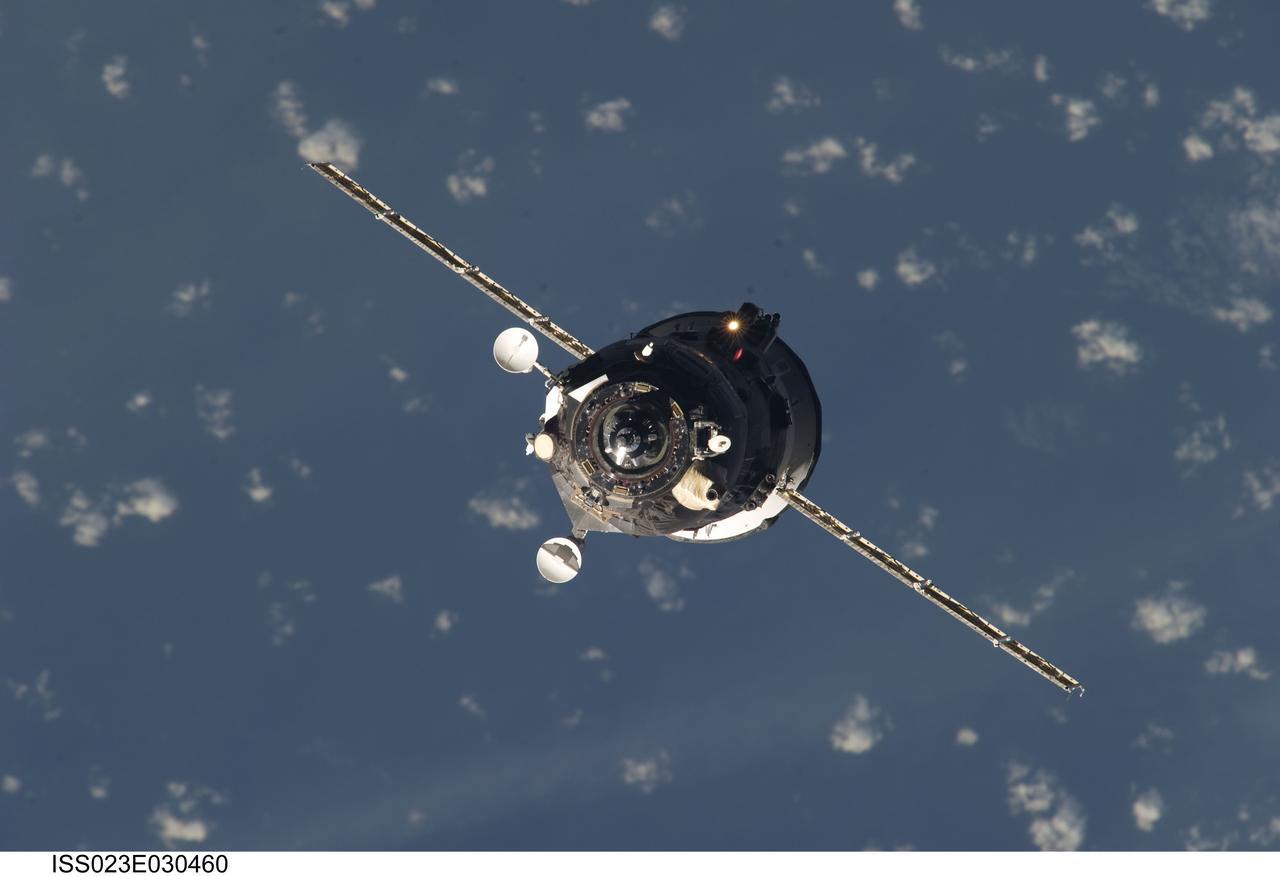
ISS023-E-030460 (1 May 2010) --- An unpiloted ISS Progress resupply vehicle approaches the International Space Station, bringing 2.6 tons of food, fuel, oxygen, propellant and supplies for the Expedition 23 crew members aboard the station. Progress 37 docked to the Pirs Docking Compartment at 2:30 p.m. (EDT) on May 1, 2010, after a three-day flight from the Baikonur Cosmodrome in Kazakhstan. The docking was conducted by Russian cosmonaut Oleg Kotov, commander, in manual control through the TORU (telerobotically operated) rendezvous system due to a jet failure on the Progress that forced a shutdown of the Kurs automated rendezvous system.
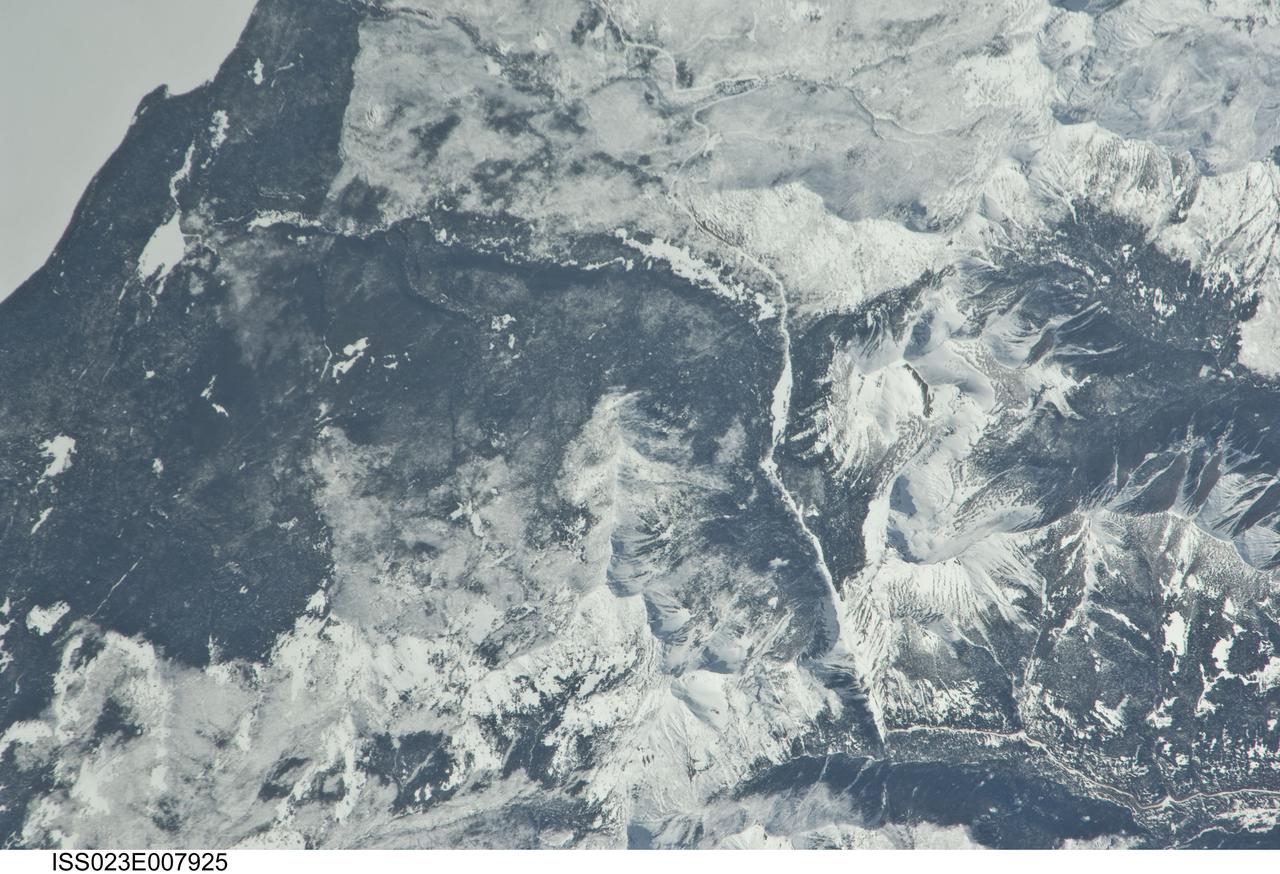
iss023e007925 (March 21, 2010) --- Yellowstone National Park in Wyoming is pictured from the International Space Station as it orbited about 250 miles above.
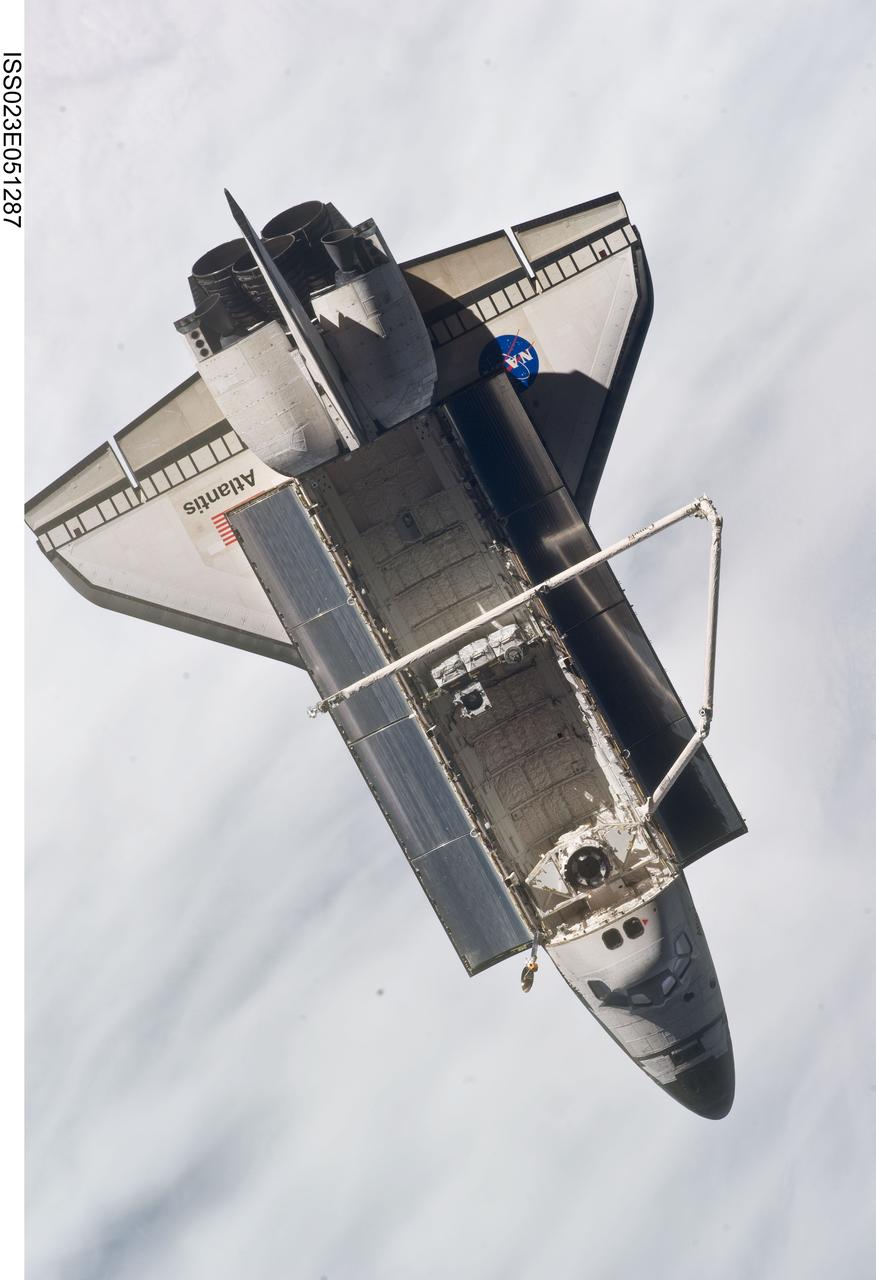
ISS023-E-051287 (23 May 2010) --- Space shuttle Atlantis is featured in this image photographed by an Expedition 23 crew member on the International Space Station soon after the shuttle and station began their post-undocking relative separation. Undocking of the two spacecraft occurred at 10:22 a.m. (CDT) on May 23, 2010, ending a seven-day stay that saw the addition of a new station module, replacement of batteries and resupply of the orbiting outpost. A blanket of clouds provides the backdrop for the scene.
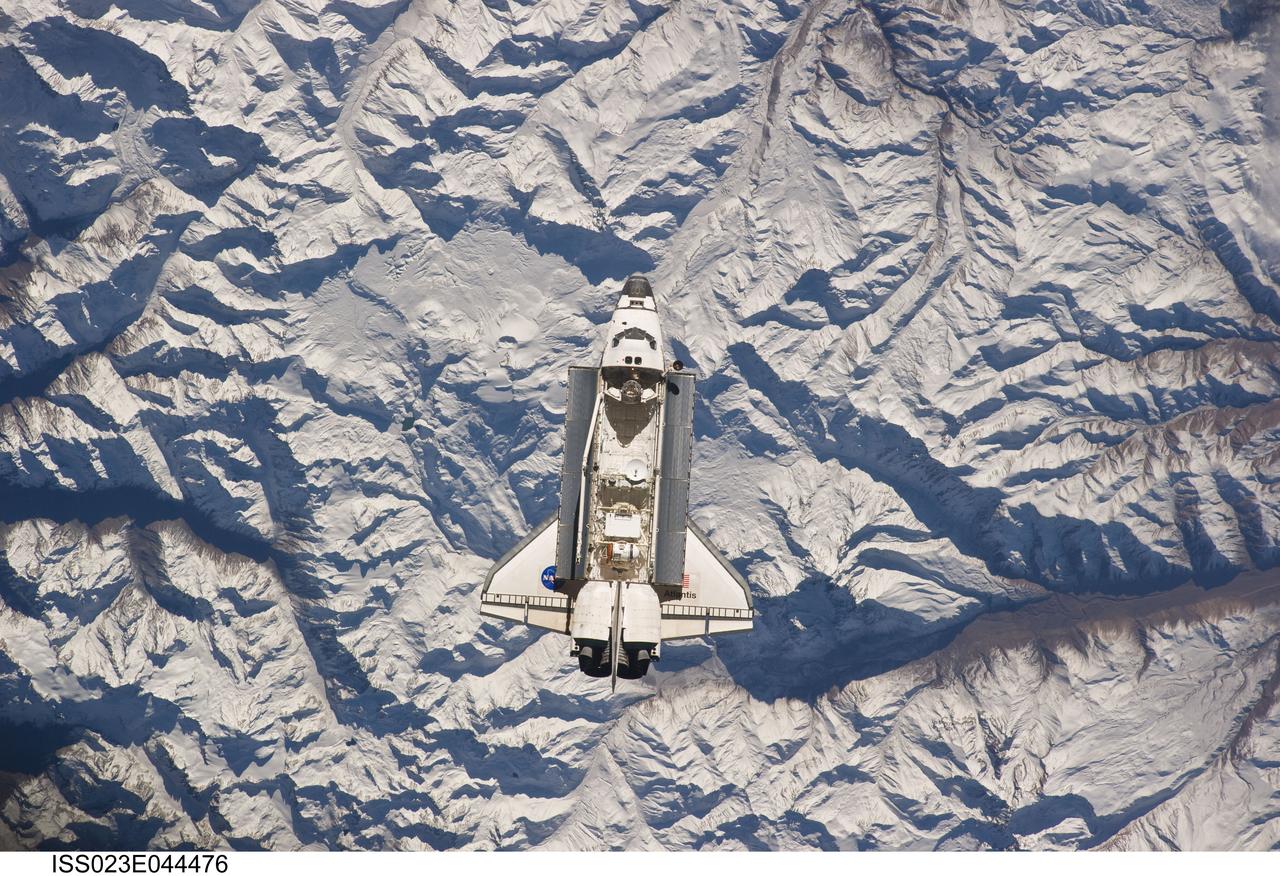
ISS023-E-044476 (16 May 2010) --- Backdropped against the Andes Mountains near the border of Argentina and Chile, the space shuttle Atlantis is shown making its relative approach to the International Space Station, from which this photo was taken. Center point coordinates of the pictured area are 34.6 degrees south latitude and 69.9 degrees west longitude. Rio Atuel is in the river valley in the lower right of the photo and the Atuel Caldera is near the center of the image by the port payload bay door. Photo credit: NASA or National Aeronautics and Space Administration
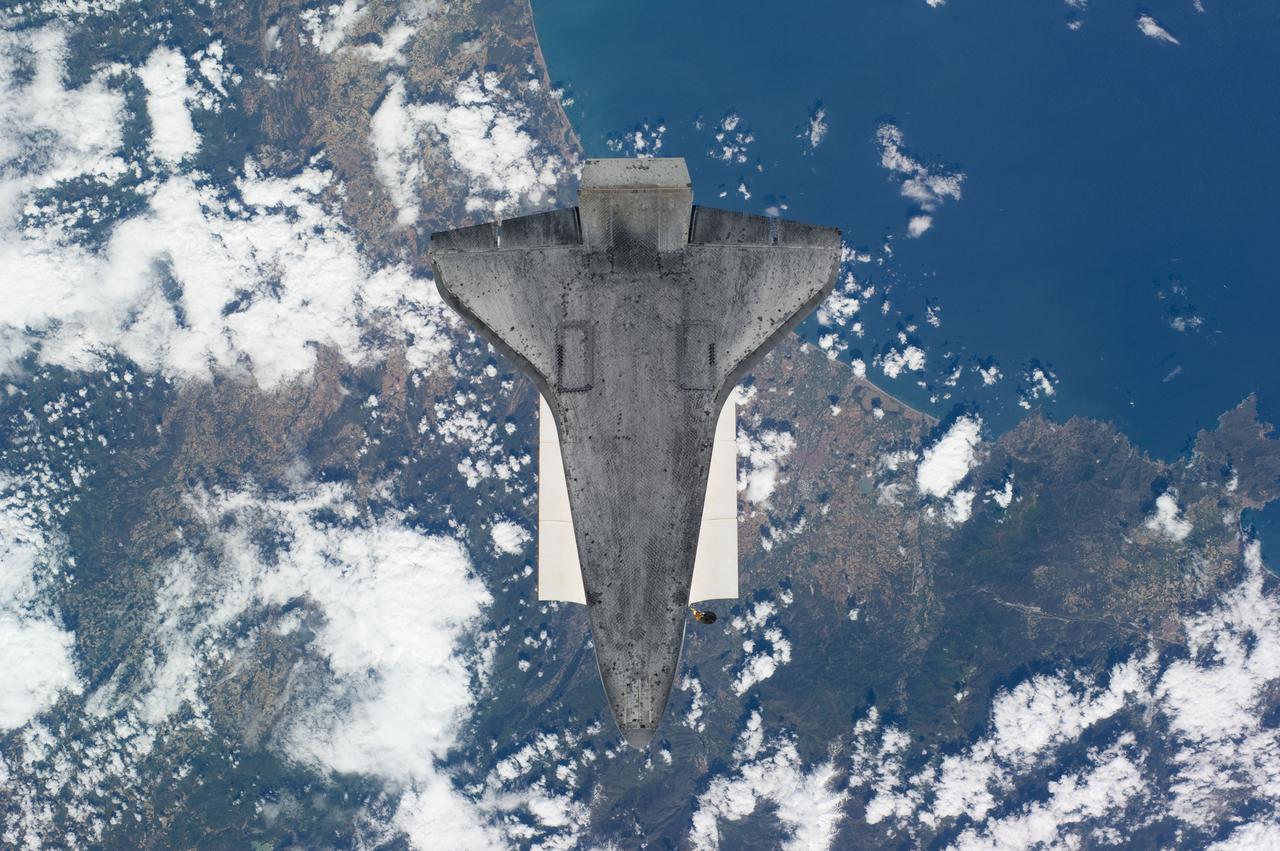
ISS023-E-044624 (16 May 2010) --- Backdropped by a colorful Earth, space shuttle Atlantis is featured in this image photographed by an Expedition 23 crew member as the shuttle approaches the International Space Station during STS-132 rendezvous and docking operations. Docking occurred at 9:28 a.m. (CDT) on May 16, 2010.
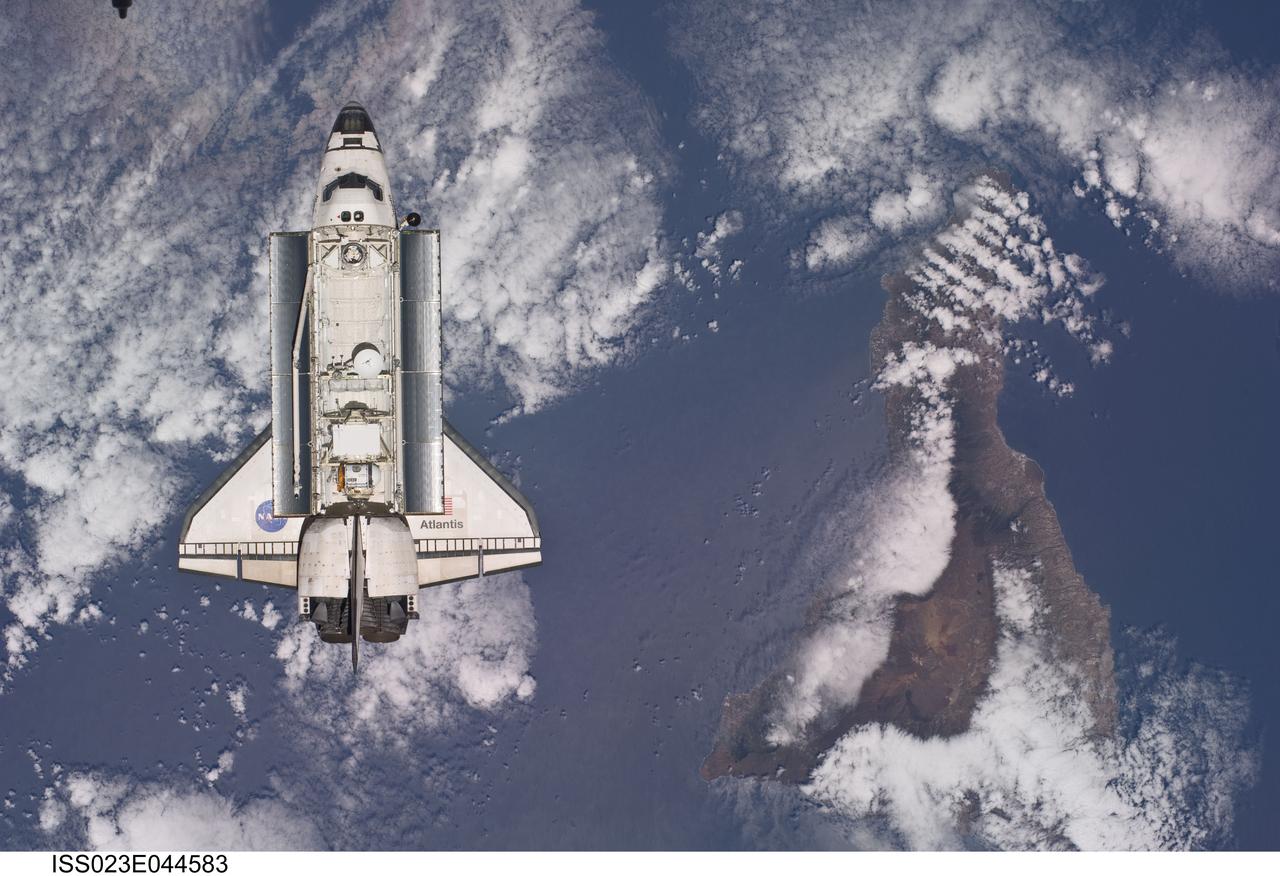
ISS023-E-044583 (16 May 2010) --- Backdropped by a colorful Earth, space shuttle Atlantis is featured in this image photographed by an Expedition 23 crew member as the shuttle approaches the International Space Station during STS-132 rendezvous and docking operations. Docking occurred at 9:28 a.m. (CDT) on May 16, 2010. Tenerife in the Canary Island chain is visible below.
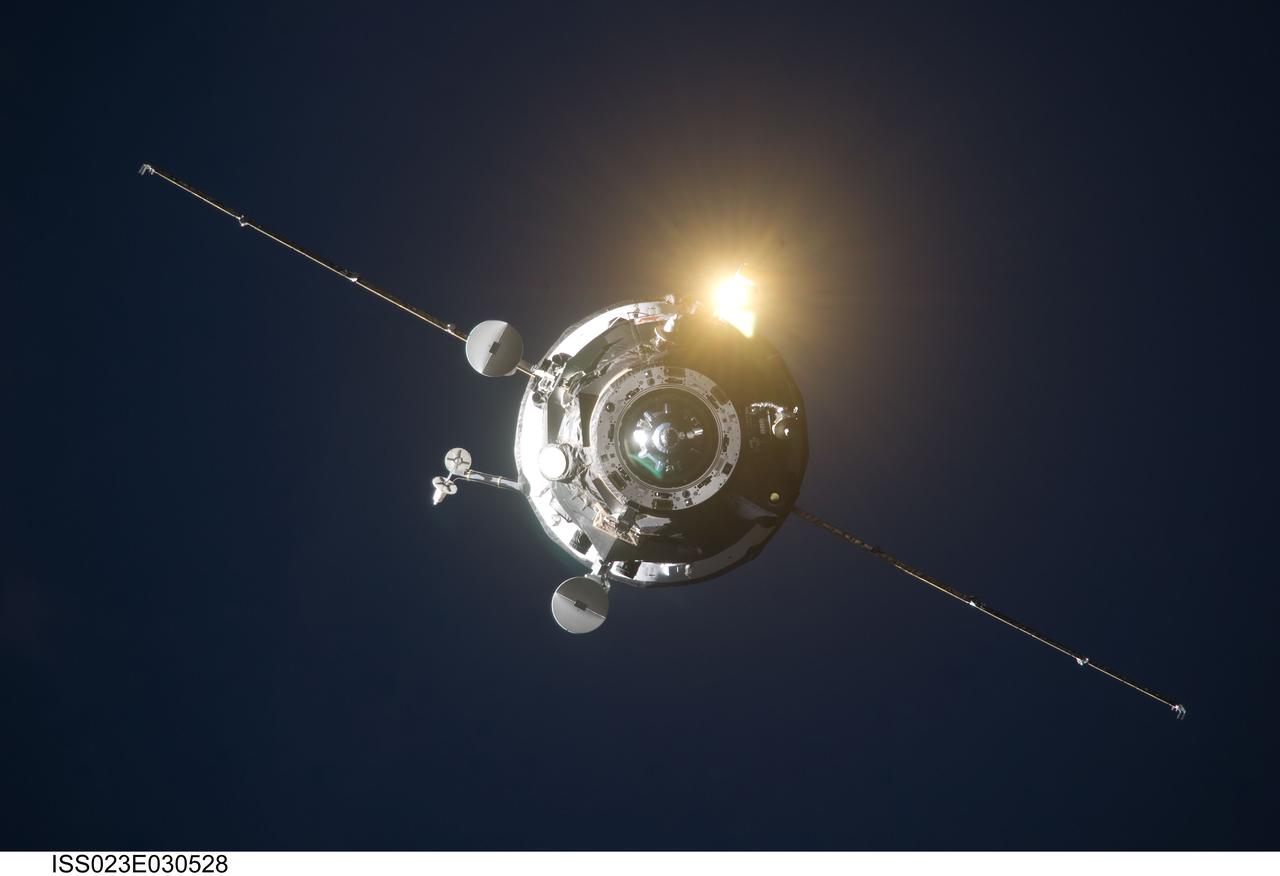
ISS023-E-030528 (1 May 2010) --- An unpiloted ISS Progress resupply vehicle approaches the International Space Station, bringing 2.6 tons of food, fuel, oxygen, propellant and supplies for the Expedition 23 crew members aboard the station. Progress 37 docked to the Pirs Docking Compartment at 2:30 p.m. (EDT) on May 1, 2010, after a three-day flight from the Baikonur Cosmodrome in Kazakhstan. The docking was conducted by Russian cosmonaut Oleg Kotov, commander, in manual control through the TORU (telerobotically operated) rendezvous system due to a jet failure on the Progress that forced a shutdown of the Kurs automated rendezvous system.
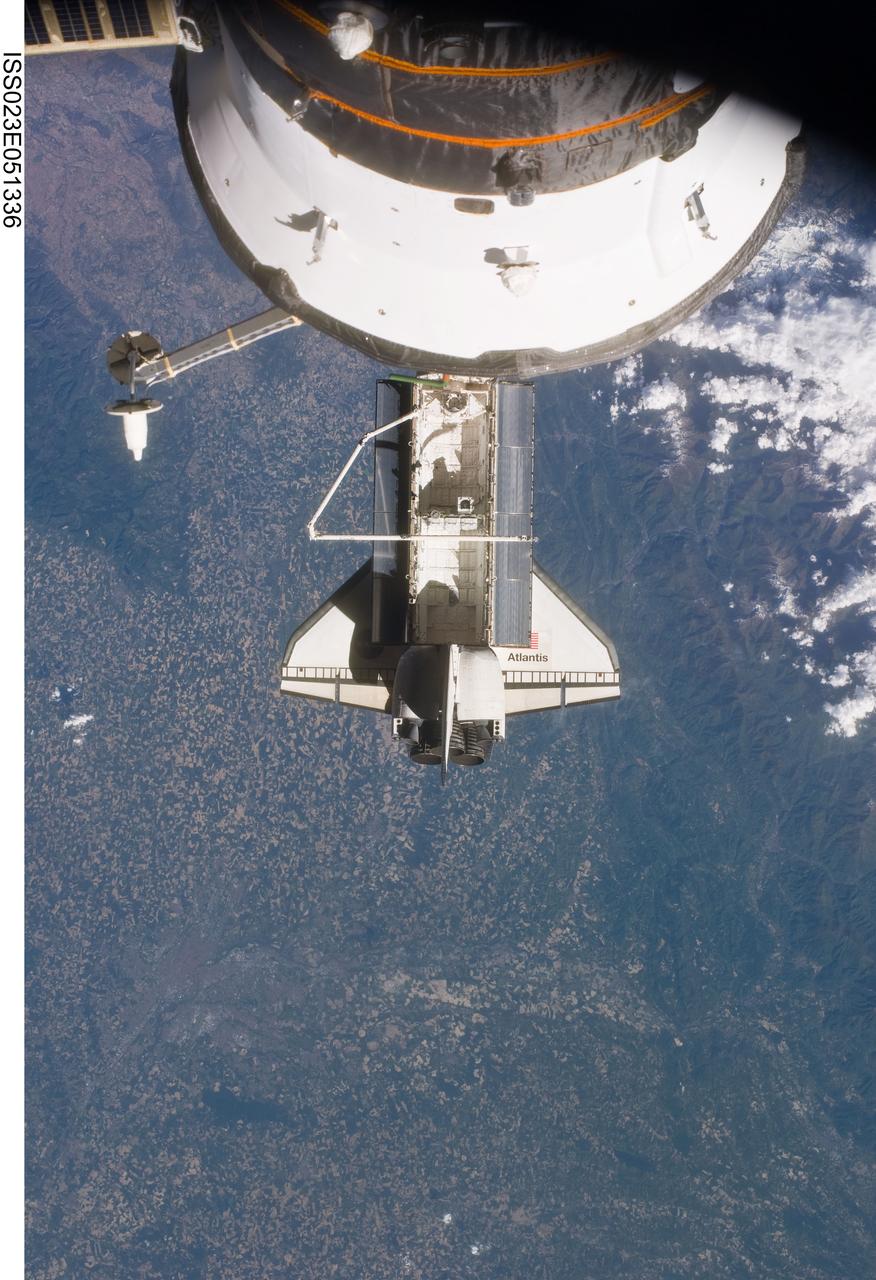
ISS023-E-051336 (23 May 2010) --- Space shuttle Atlantis is featured in this image photographed by an Expedition 23 crew member on the International Space Station soon after the shuttle and station began their post-undocking relative separation. Undocking of the two spacecraft occurred at 10:22 a.m. (CDT) on May 23, 2010, ending a seven-day stay that saw the addition of a new station module, replacement of batteries and resupply of the orbiting outpost. A portion of a Russian spacecraft docked to the station is at top.
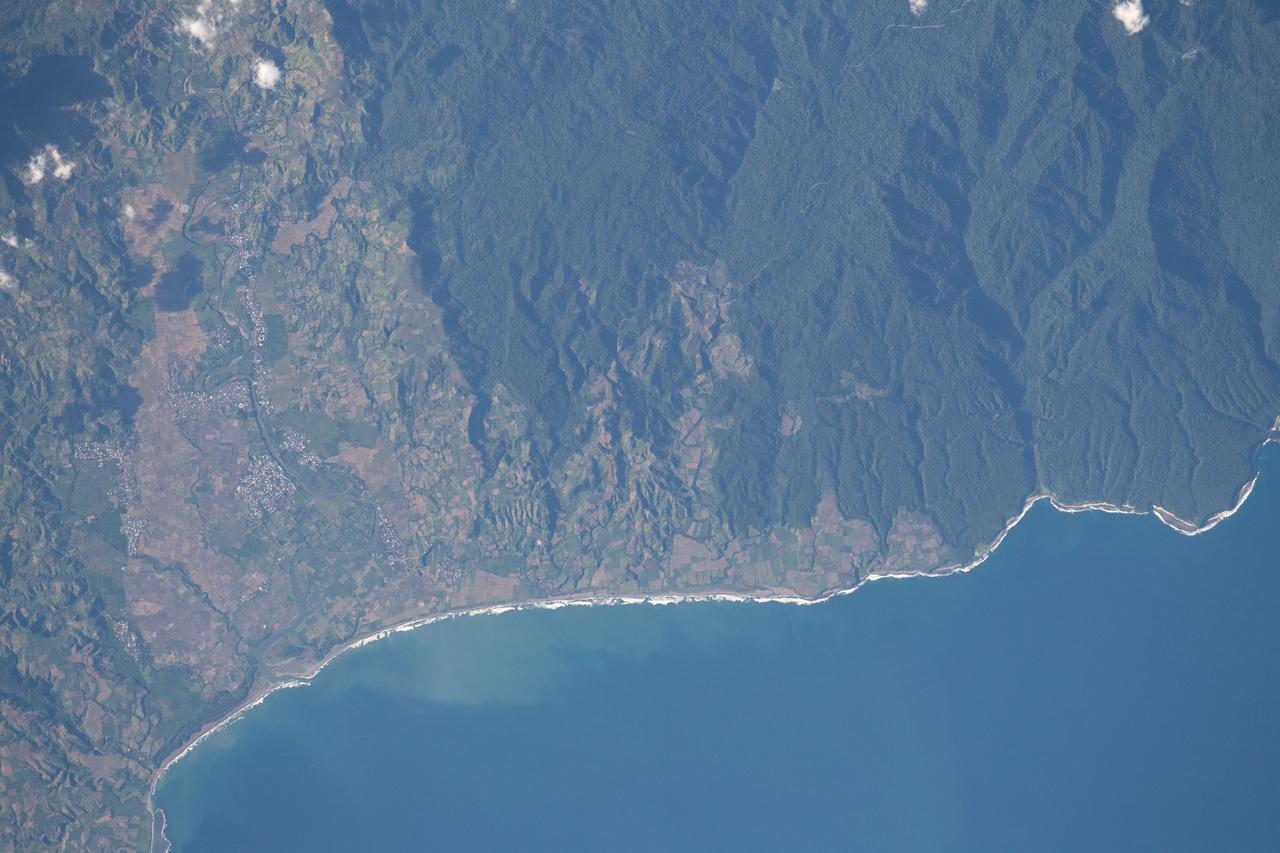
iss065e001304 (April 21, 2021) --- The south coast of West Nusa Tenggara, a province of Indonesia, is pictured from the International Space Station as it orbited 262 miles above the Indian Ocean.
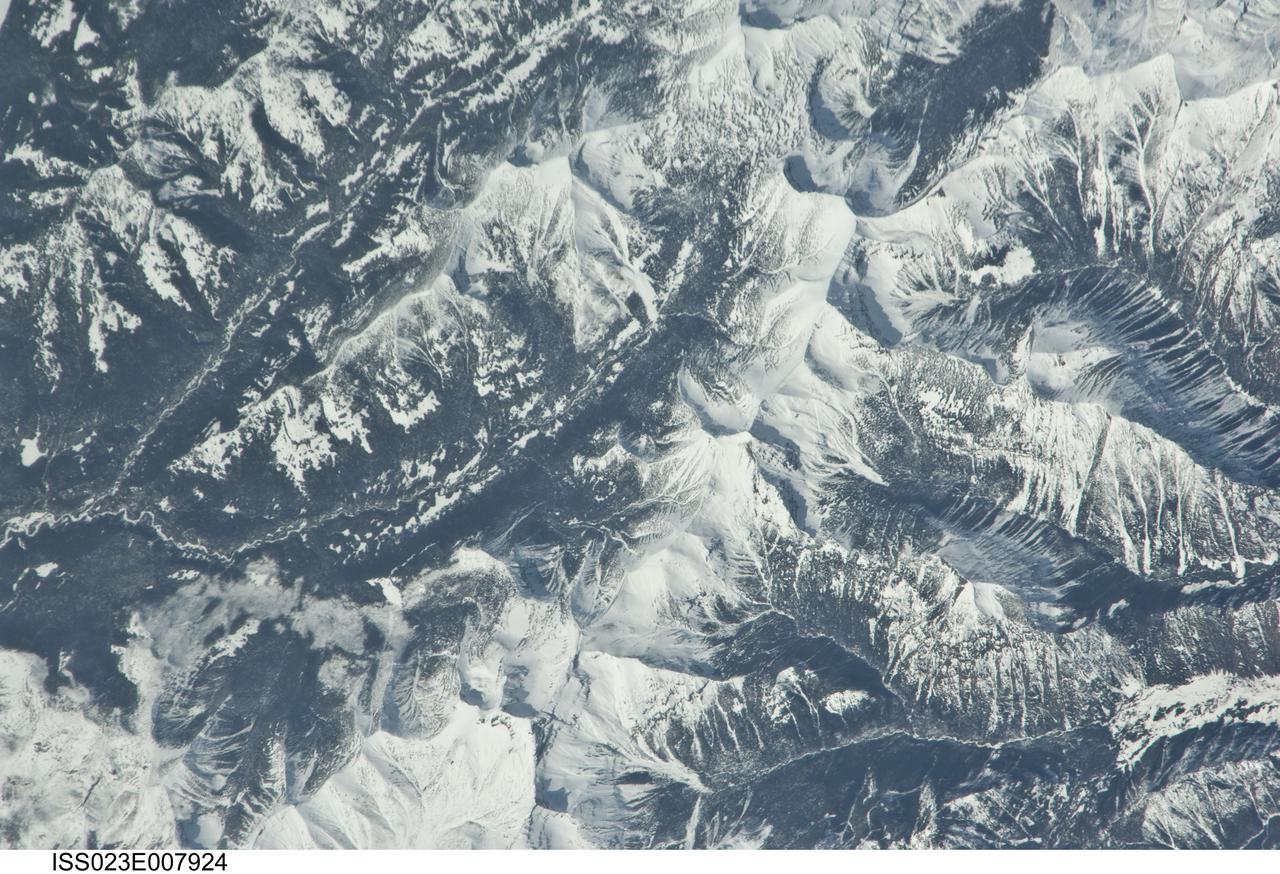
iss023e007924 (March 21, 2010) --- Yellowstone National Park in Wyoming is pictured from the International Space Station as it orbited about 250 miles above.
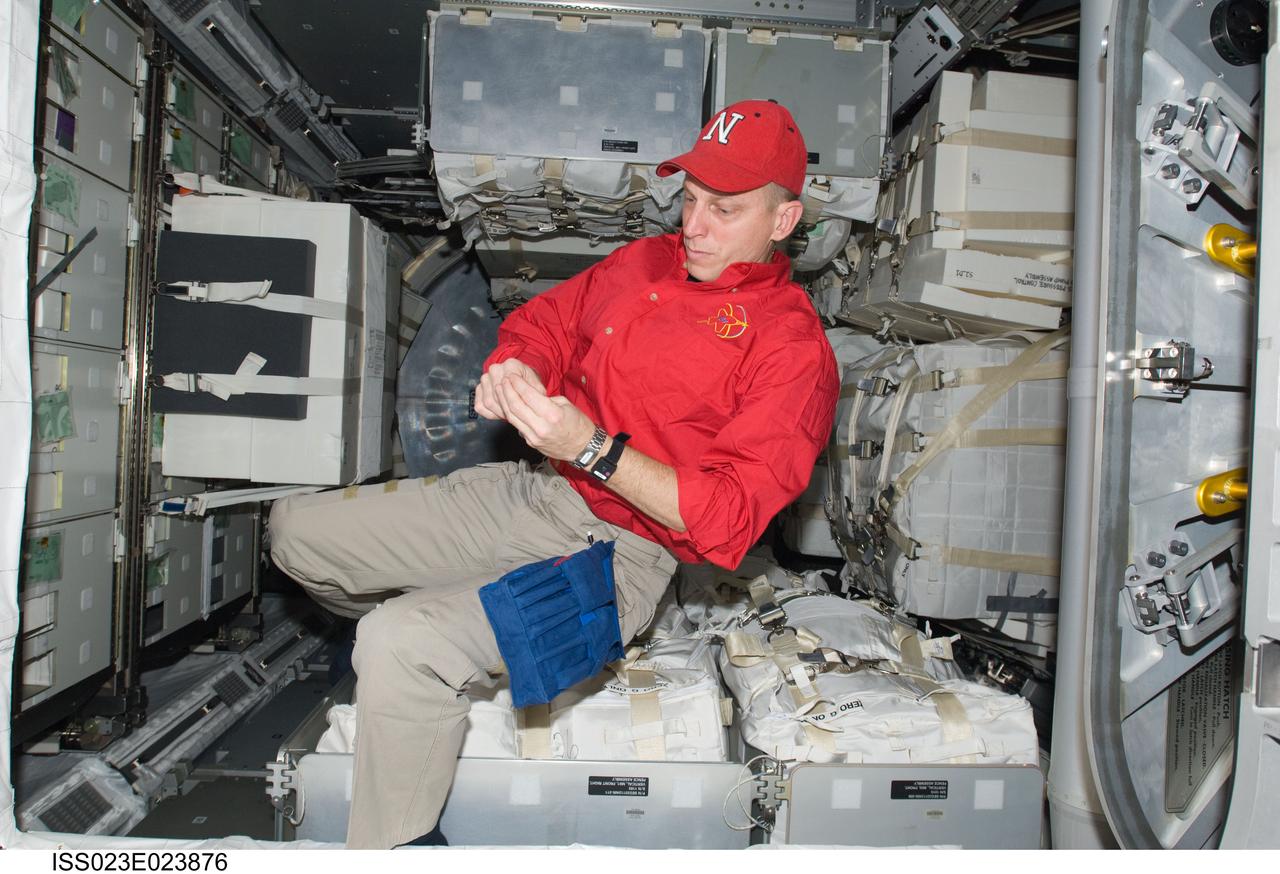
ISS023-E-023876 (15 April 2010) --- NASA astronaut Clayton Anderson, STS-131 mission specialist, works in the Leonardo Multi-purpose Logistics Module (MPLM) linked to the International Space Station while space shuttle Discovery remains docked with the station.
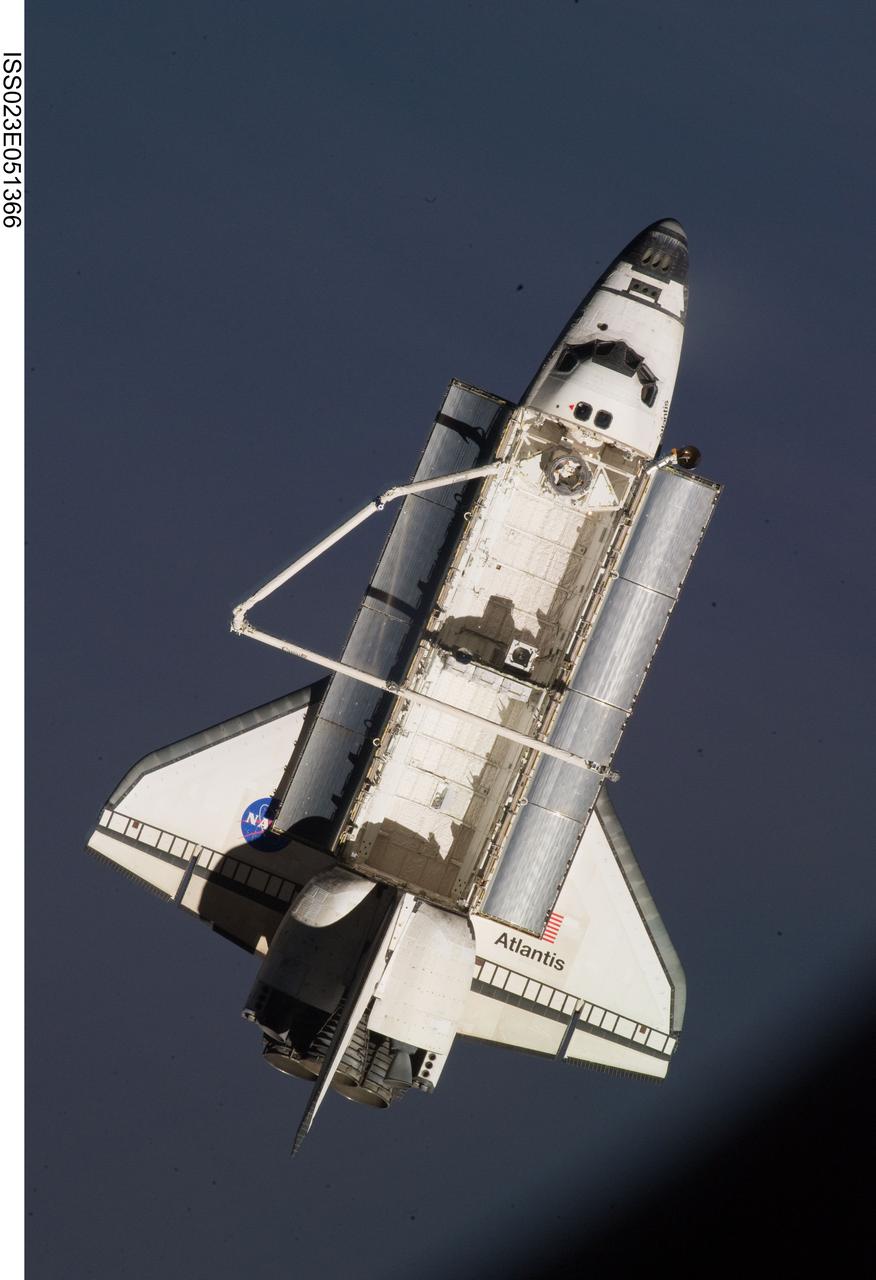
ISS023-E-051366 (23 May 2010) --- Space shuttle Atlantis is featured in this image photographed by an Expedition 23 crew member on the International Space Station soon after the shuttle and station began their post-undocking relative separation. Undocking of the two spacecraft occurred at 10:22 a.m. (CDT) on May 23, 2010, ending a seven-day stay that saw the addition of a new station module, replacement of batteries and resupply of the orbiting outpost.
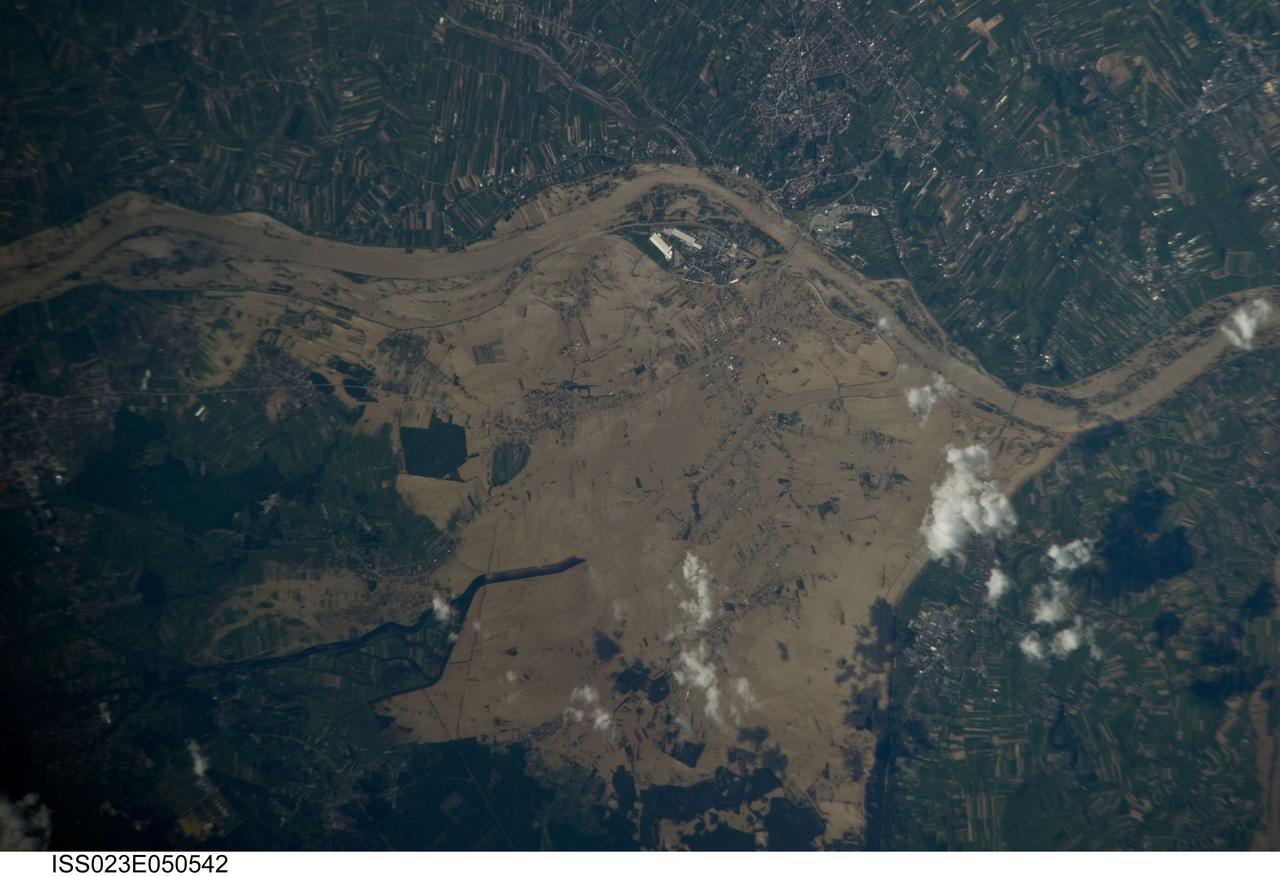
ISS023-E-050542 (22 May 2010) --- Widespread flooding along the Vistula River in southeastern Poland is featured in this image photographed by an Expedition 23 crew member on the International Space Station. The Vistula River is a major river in Poland that originates in the western part of the Carpathian Mountains (specifically the western slopes of the mountain Barania Gora) in southern Poland. The river winds its way northward for 1,047 kilometers, through major cities such as Krakow and Warsaw, to Gdansk Bay on the Baltic Sea. Several towns have been completely or partially inundated including Gorzyce, Sokolniki and Trzesn in addition to large numbers of agricultural fields (normally green as visible at top and bottom right). While the flooding illustrated here is extensive, it represents but a small “snapshot” of conditions that have developed in Eastern Europe over the past two weeks. Spring flooding of rivers is not an uncommon occurrence in Poland but this event is being called the most serious flood in several decades. Severe floods were recorded in 1570, 1584, 1719, 1891, and 1997, with the first records of local embankments for flood control dating from the thirteenth century. By 1985, 370 rivers in Poland (including the Vistula) had been completely or partly embanked along a total length of 9,028 kilometers for some degree of flood mitigation. Heavy rains caused high waters in the Vistula River first in southern Poland. Hundreds of thousands of people were evacuated as the river level rose and broke through water-logged dikes and embankments. The flood surge then moved northward through Warsaw and continues towards the Baltic Sea.
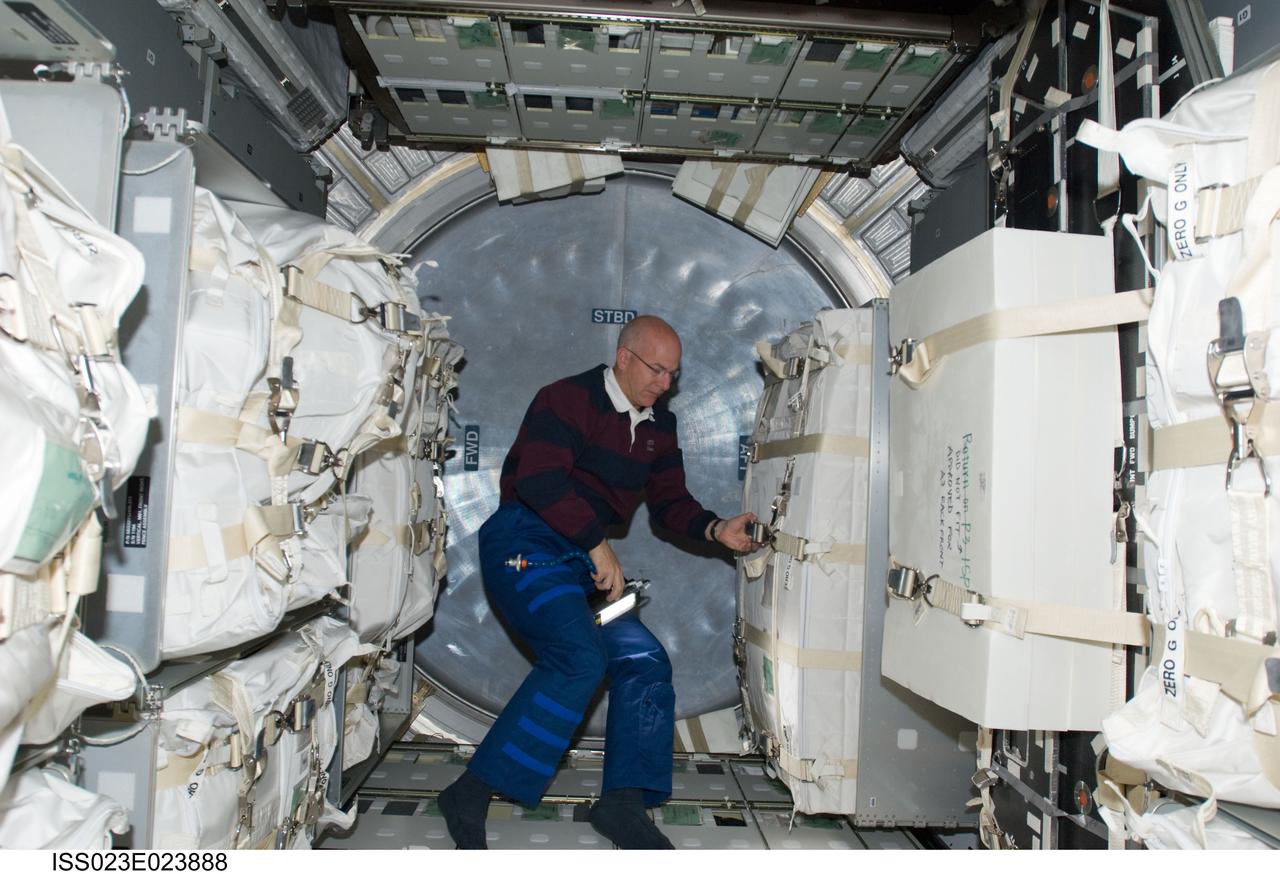
ISS023-E-023888 (15 April 2010) --- NASA astronaut Alan Poindexter, STS-131 commander, works in the Leonardo Multi-purpose Logistics Module (MPLM) linked to the International Space Station while space shuttle Discovery remains docked with the station.
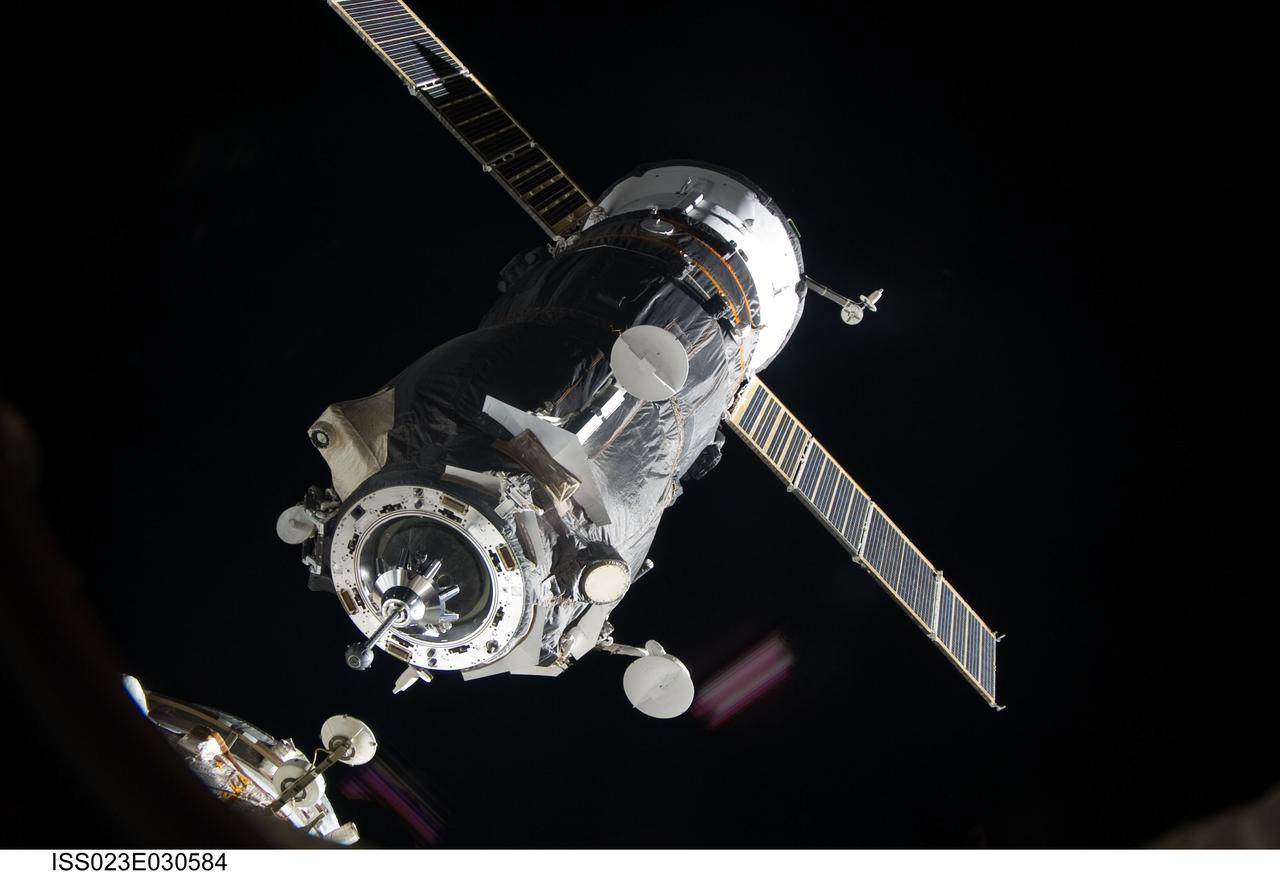
ISS023-E-030584 (1 May 2010) --- An unpiloted ISS Progress resupply vehicle approaches the International Space Station, bringing 2.6 tons of food, fuel, oxygen, propellant and supplies for the Expedition 23 crew members aboard the station. Progress 37 docked to the Pirs Docking Compartment at 2:30 p.m. (EDT) on May 1, 2010, after a three-day flight from the Baikonur Cosmodrome in Kazakhstan. The docking was conducted by Russian cosmonaut Oleg Kotov, commander, in manual control through the TORU (telerobotically operated) rendezvous system due to a jet failure on the Progress that forced a shutdown of the Kurs automated rendezvous system.
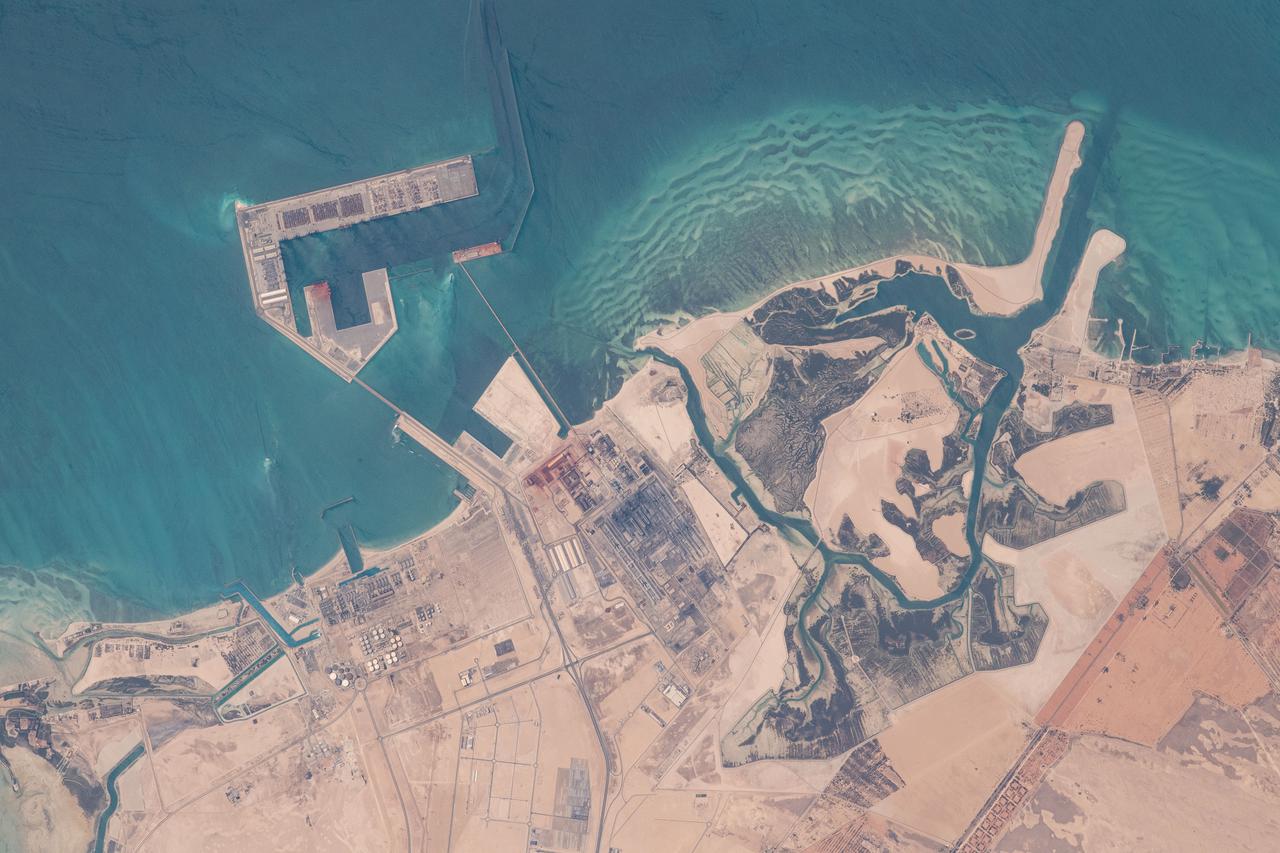
iss065e000773 (April 19, 2021) --- A manufacturing site on the Persian Gulf coast of the United Arab Emirates near Abu Dhabi is pictured from the International Space Station as it orbited 262 miles above.
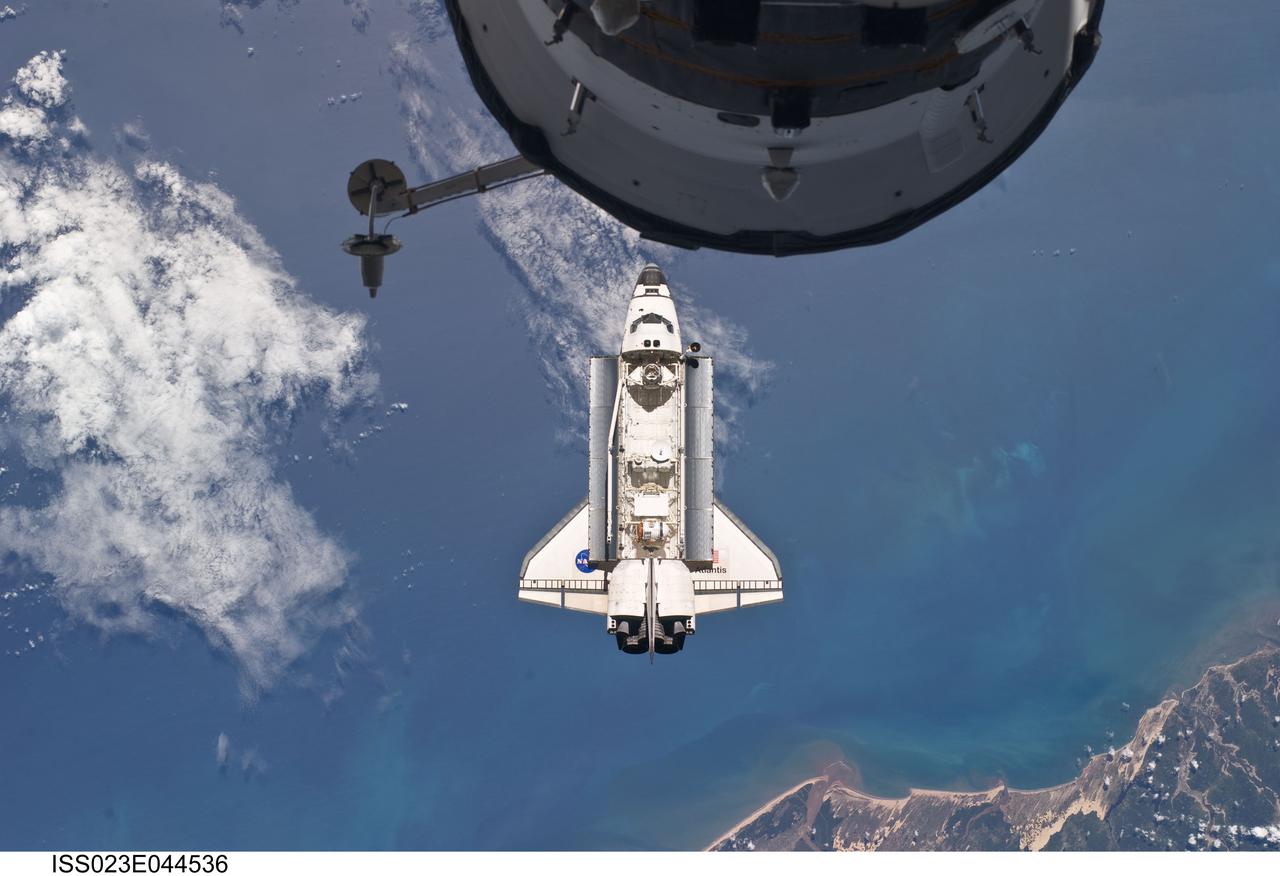
ISS023-E-044536 (16 May 2010) --- Backdropped by a colorful Earth, space shuttle Atlantis is featured in this image photographed by an Expedition 23 crew member as the shuttle approaches the International Space Station during STS-132 rendezvous and docking operations. Docking occurred at 9:28 a.m. (CDT) on May 16, 2010. A portion of a docked Russian spacecraft is visible at top.
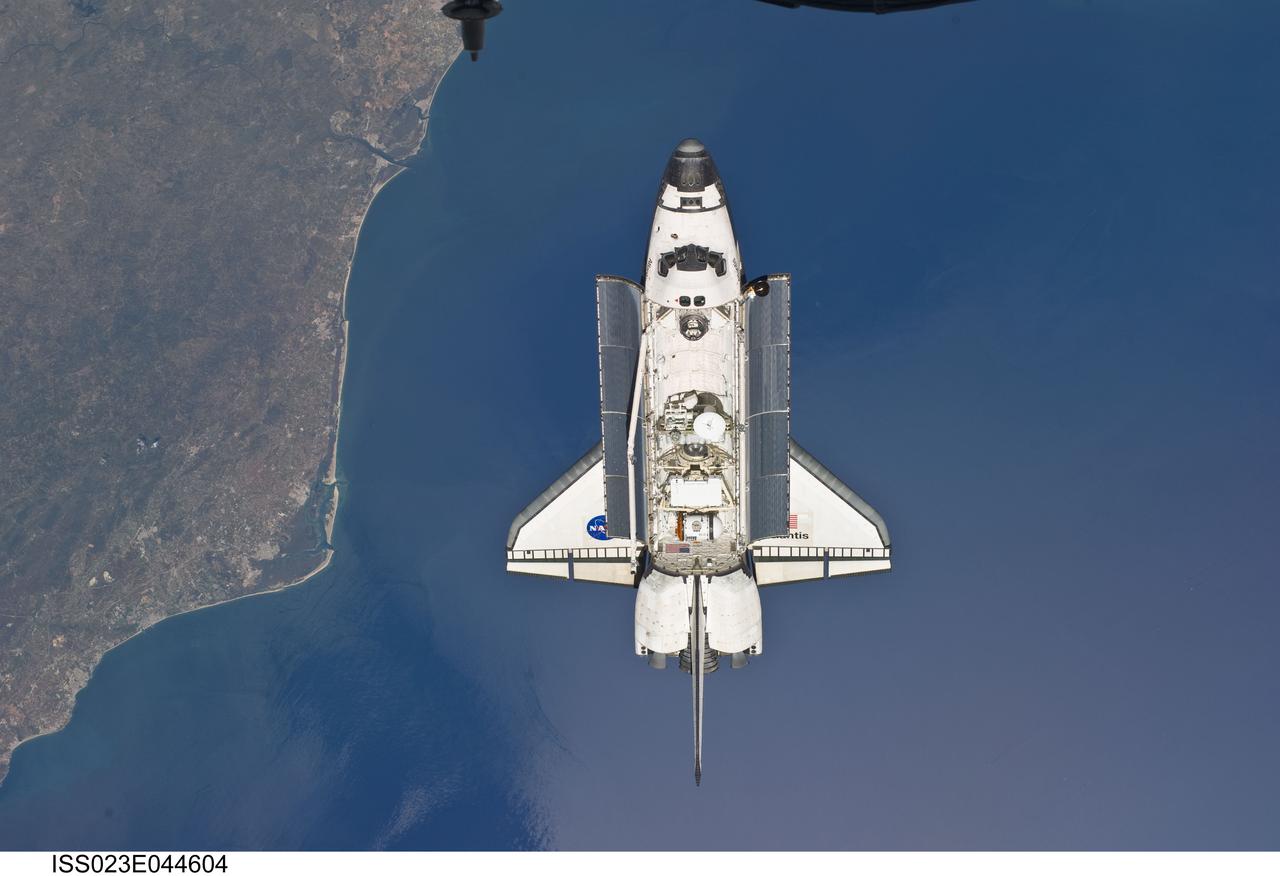
ISS023-E-044604 (16 May 2010) --- Backdropped by a colorful Earth, space shuttle Atlantis is featured in this image photographed by an Expedition 23 crew member as the shuttle approaches the International Space Station during STS-132 rendezvous and docking operations. Docking occurred at 9:28 a.m. (CDT) on May 16, 2010.
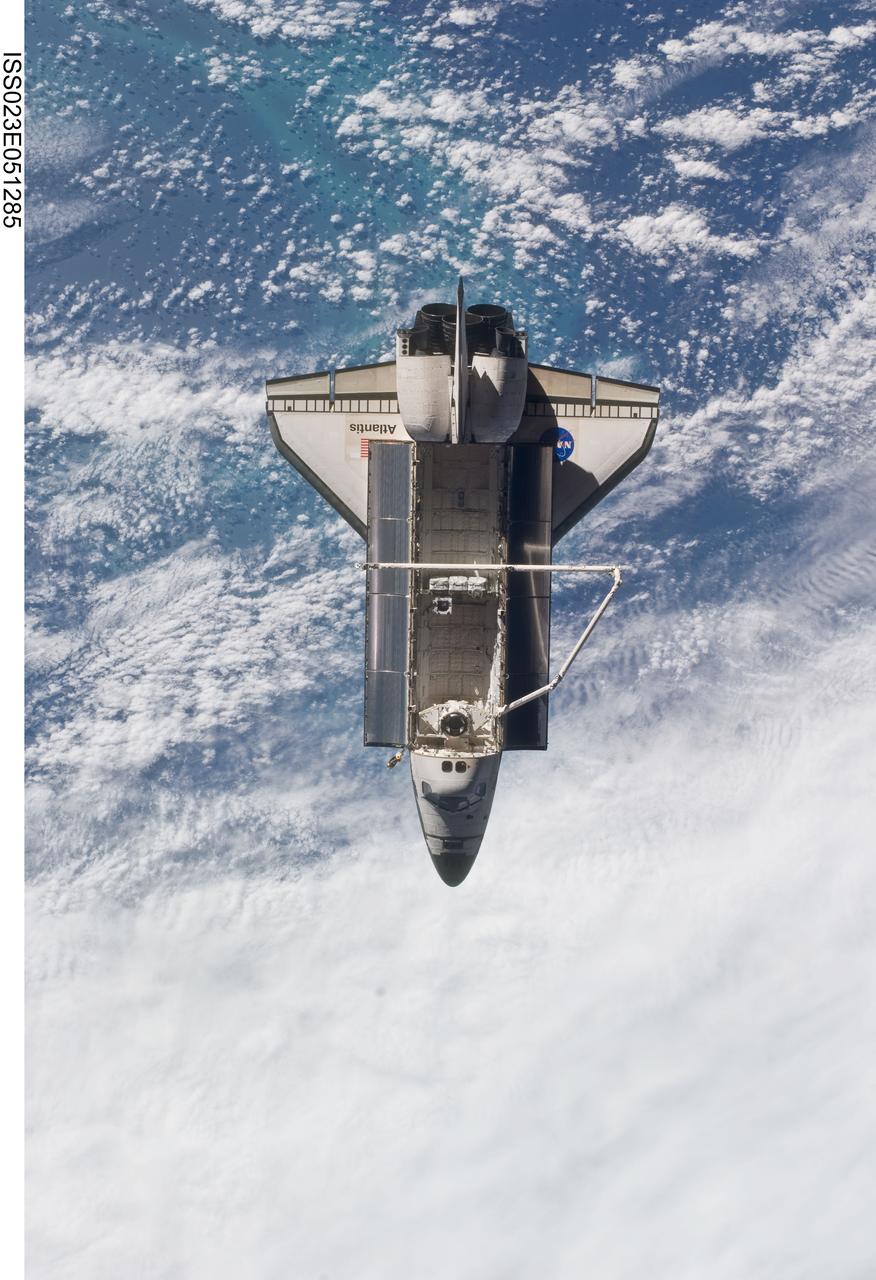
ISS023-E-051285 (23 May 2010) --- Space shuttle Atlantis is featured in this image photographed by an Expedition 23 crew member on the International Space Station soon after the shuttle and station began their post-undocking relative separation. Undocking of the two spacecraft occurred at 10:22 a.m. (CDT) on May 23, 2010, ending a seven-day stay that saw the addition of a new station module, replacement of batteries and resupply of the orbiting outpost. A blue and white part of Earth provides the backdrop for the scene.
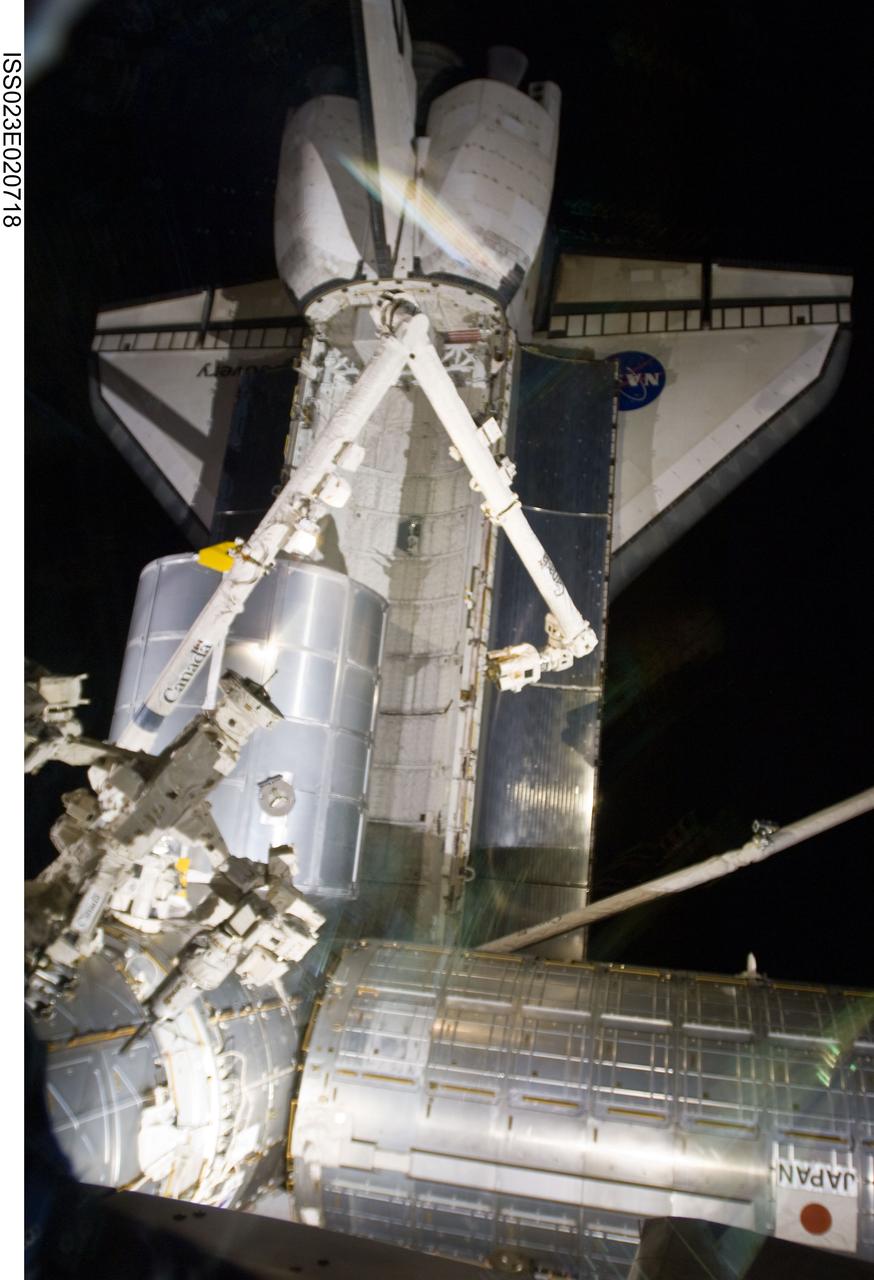
ISS023-E-020718 (8 April 2010) --- The station’s robotic Canadarm2 relocates the Leonardo Multi-purpose Logistics Module (MPLM) from space shuttle Discovery’s payload bay to a port on the Harmony node of the International Space Station.
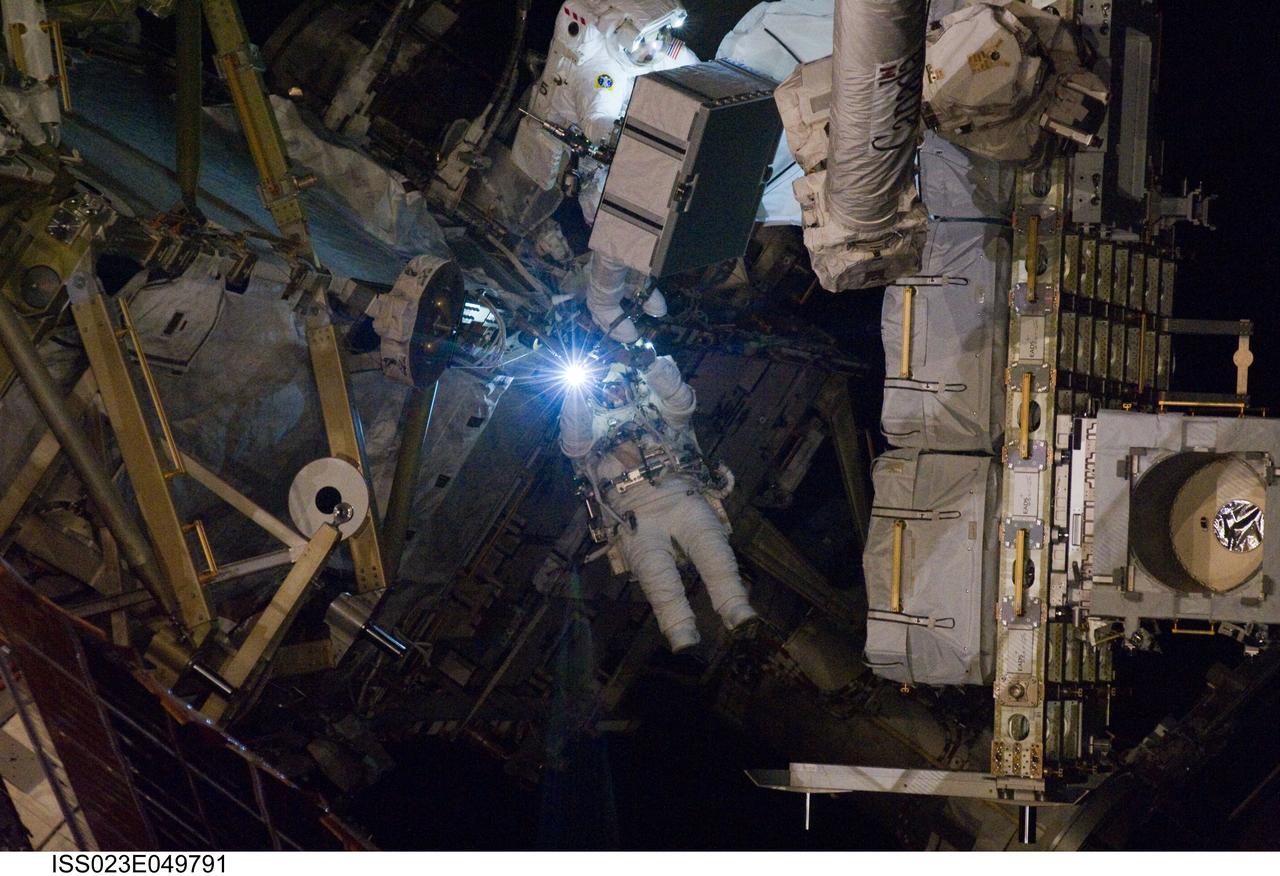
ISS023-E-049791 (21 May 2010) --- NASA astronauts Garrett Reisman (bottom) and Michael Good, both STS-132 mission specialists, participate in the mission?s third and final session of extravehicular activity (EVA) as construction and maintenance continue on the International Space Station. During the six-hour, 46-minute spacewalk, Reisman and Good completed the installation of the final two of the six new batteries for the B side of the port 6 solar array. In addition, the astronauts installed a backup ammonia jumper cable between the port 4 and 5 trusses of the station, transferred a Power and Data Grapple Fixture from the shuttle to the station, and reconfigured some tools.
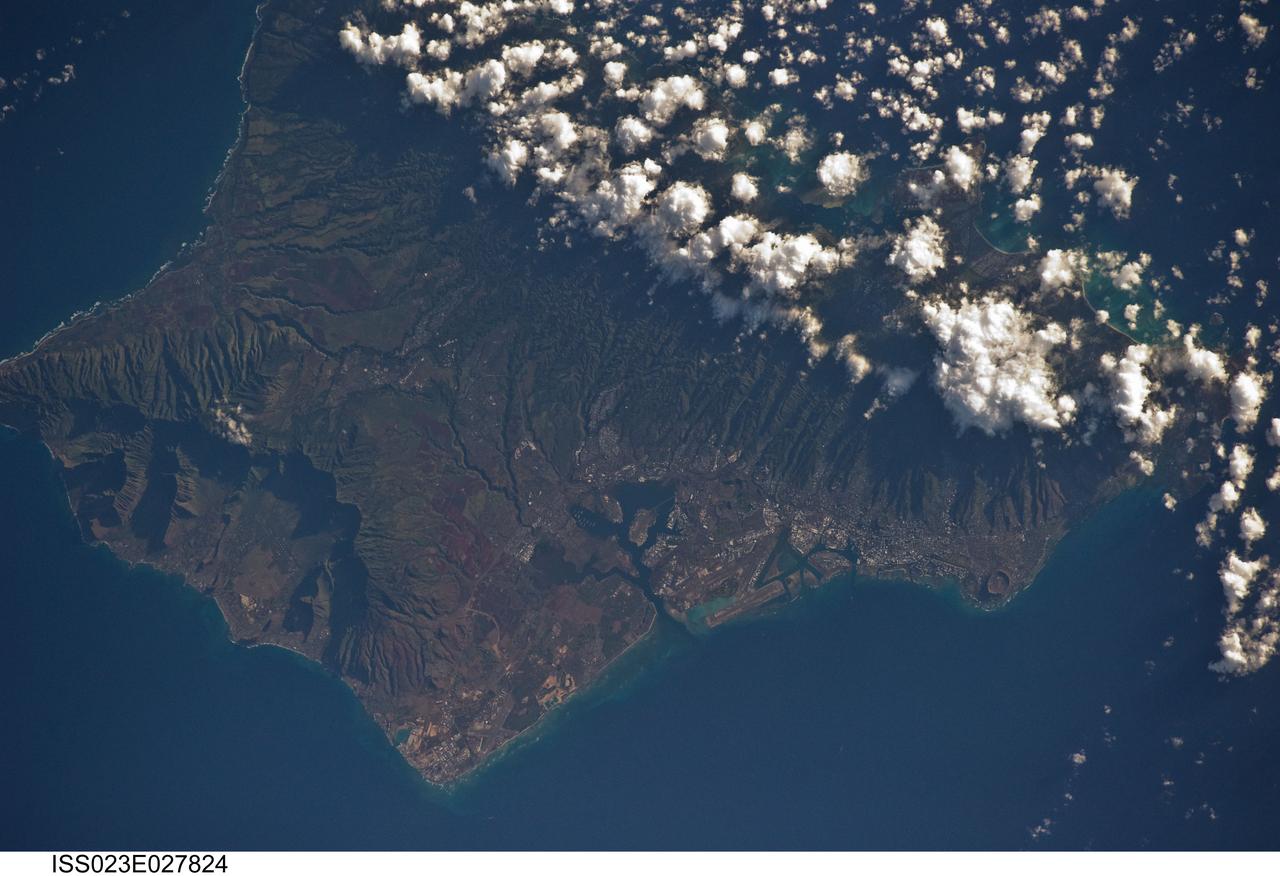
ISS023-E-027824 (23 April 2010) --- A member of the Expedition 23 crew onboard the Earth-orbiting International Space Station took this picture of Hawaii’s third largest island with an electronic still camera on April 23, 2010. Oahu is the commercial center of Hawaii, and tourism is the largest contributor to the economy. Among the many popular beaches is the renowned Waikiki Beach, backed by the famous Diamond Head, an extinct volcano. The largest community, Honolulu, is the state capital. Hickam Air Force Base is located on the island.
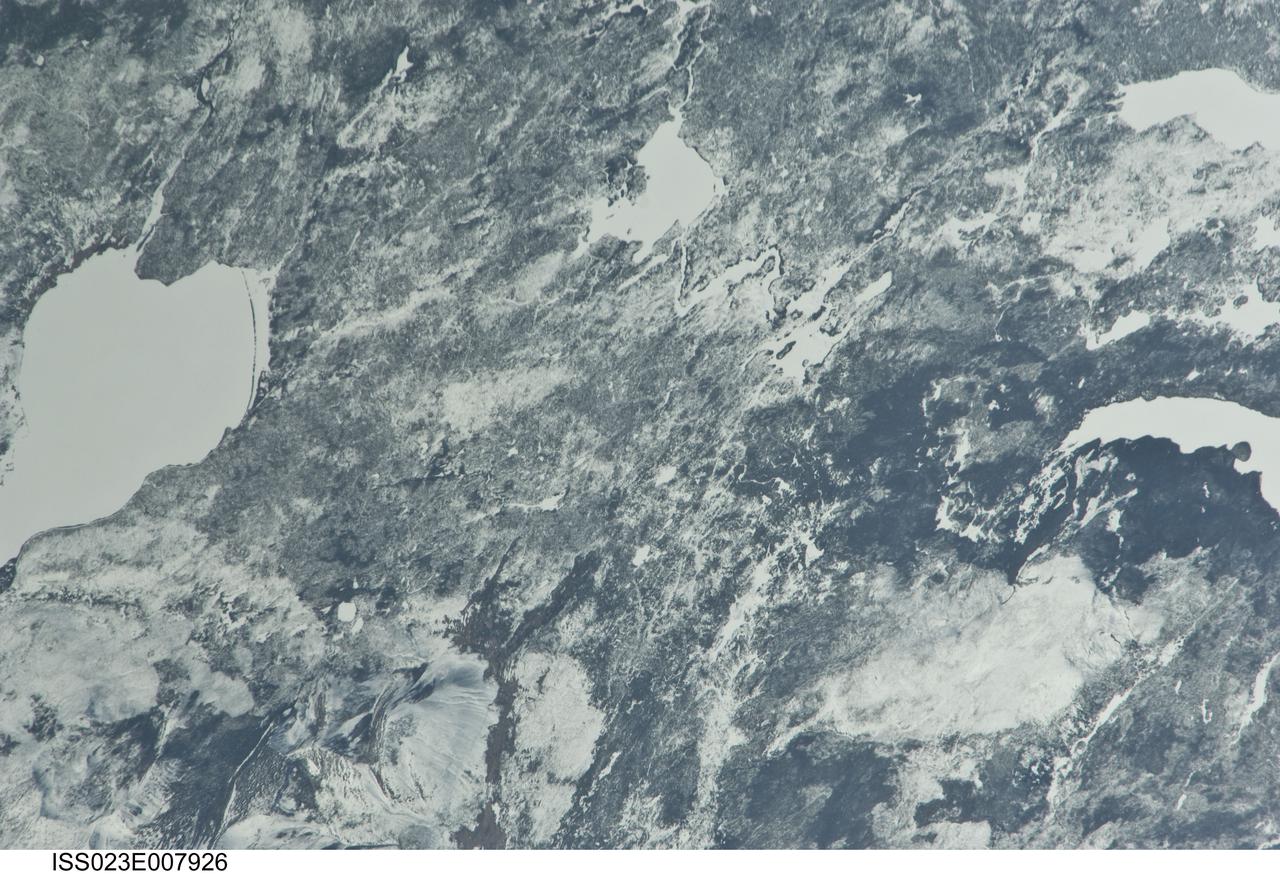
iss023e007926 (March 21, 2010) --- Yellowstone National Park in Wyoming is pictured from the International Space Station as it orbited about 250 miles above.

ISS023-E-032396 (4 May 2010) --- Japan Aerospace Exploration Agency (JAXA) astronaut Soichi Noguchi, Expedition 23 flight engineer, photographed the tail end of the Mississippi Delta showing the oil slick in the Gulf of Mexico on May 4, 2010. Part of the river delta and nearby Louisiana coast appear dark in the sunglint. This phenomenon is caused by sunlight reflecting off the water surface, in a mirror-like manner, directly back towards the astronaut observer onboard the International Space Station (ISS). The sunglint improves the identification of the oil spill which is creating a different water texture (and therefore a contrast) between the smooth and rougher water of the reflective ocean surface. Other features which cause a change in surface roughness that can be seen in sunglint are wind gusts, naturally occurring oils that will be gathered by and take the form of water currents or wave patterns, and less windy areas behind islands.
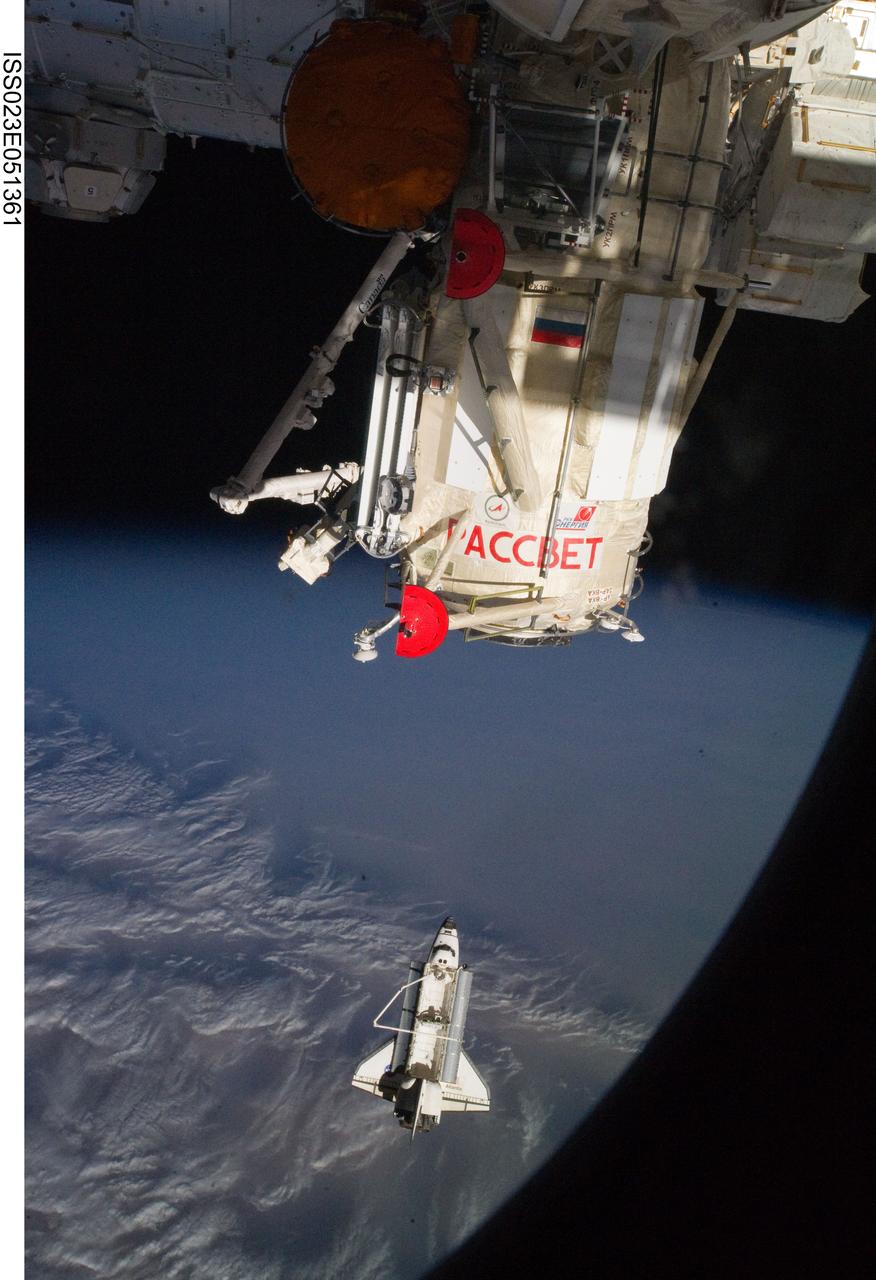
ISS023-E-051361 (23 May 2010) --- Space shuttle Atlantis and the newly-attached Rassvet Mini-Research Module 1 (MRM1) are featured in this image photographed by an Expedition 23 crew member on the International Space Station soon after the shuttle and station began their post-undocking relative separation. Undocking of the two spacecraft occurred at 10:22 a.m. (CDT) on May 23, 2010, ending a seven-day stay that saw the addition of a new station module, replacement of batteries and resupply of the orbiting outpost.
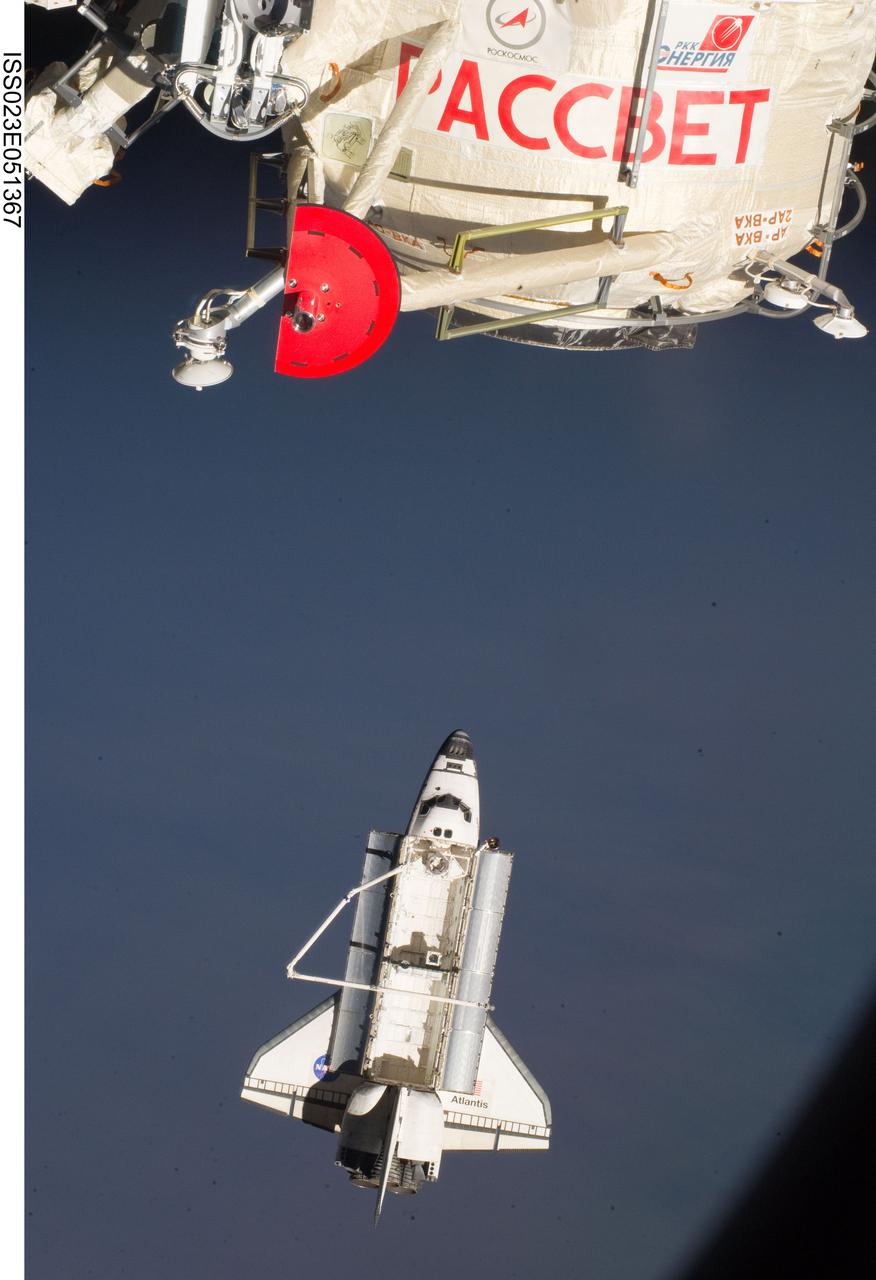
ISS023-E-051367 (23 May 2010) --- Space shuttle Atlantis is featured in this image photographed by an Expedition 23 crew member on the International Space Station soon after the shuttle and station began their post-undocking relative separation. Undocking of the two spacecraft occurred at 10:22 a.m. (CDT) on May 23, 2010, ending a seven-day stay that saw the addition of a new station module, replacement of batteries and resupply of the orbiting outpost. A portion of the newly-attached Rassvet Mini-Research Module 1 (MRM1) is at top.
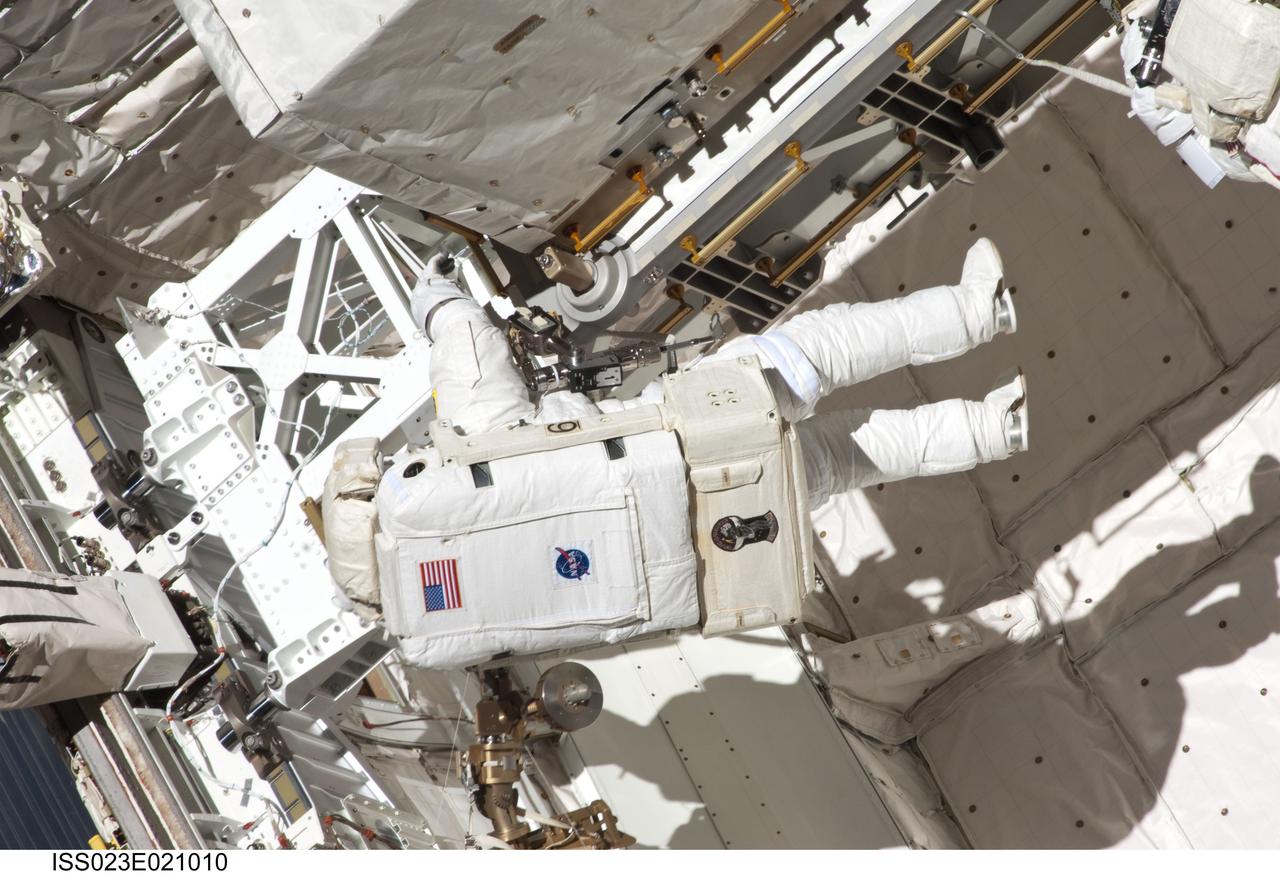
ISS023-E-021010 (9 April 2010) --- NASA astronaut Clayton Anderson, STS-131 mission specialist, participates in the mission's first session of extravehicular activity (EVA) as construction and maintenance continue on the International Space Station. During the six-hour, 27-minute spacewalk, Anderson and astronaut Rick Mastracchio (out of frame), mission specialist, helped move a new 1,700-pound ammonia tank from space shuttle Discovery’s cargo bay to a temporary parking place on the station, retrieved an experiment from the Japanese Kibo Laboratory exposed facility and replaced a Rate Gyro Assembly on one of the truss segments.
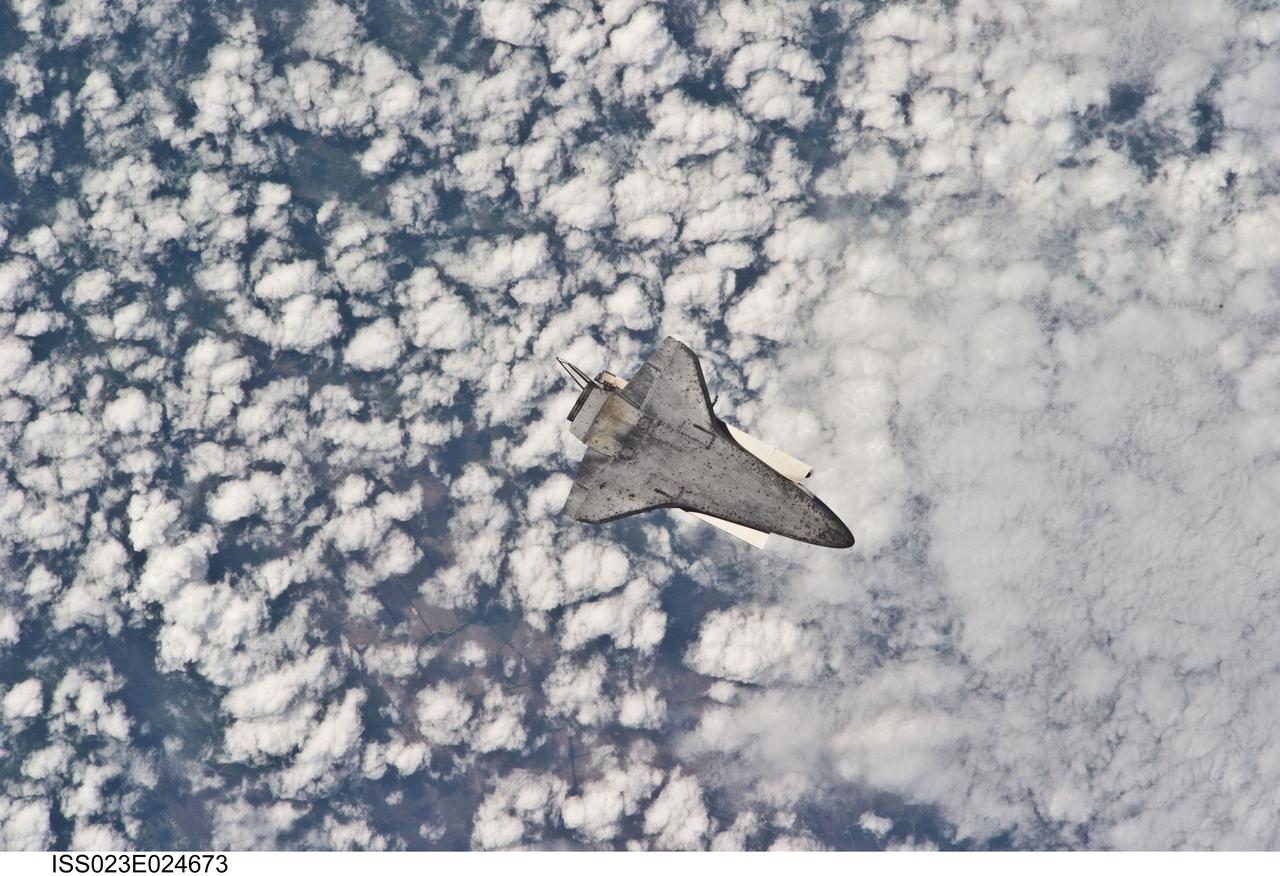
ISS023-E-024673 (17 April 2010) --- The space shuttle Discovery flies with its payload bay facing Earth so that the astronauts and cosmonauts onboard the International Space Station could survey and photograph it following the relative separation of the two spacecraft on April 17.
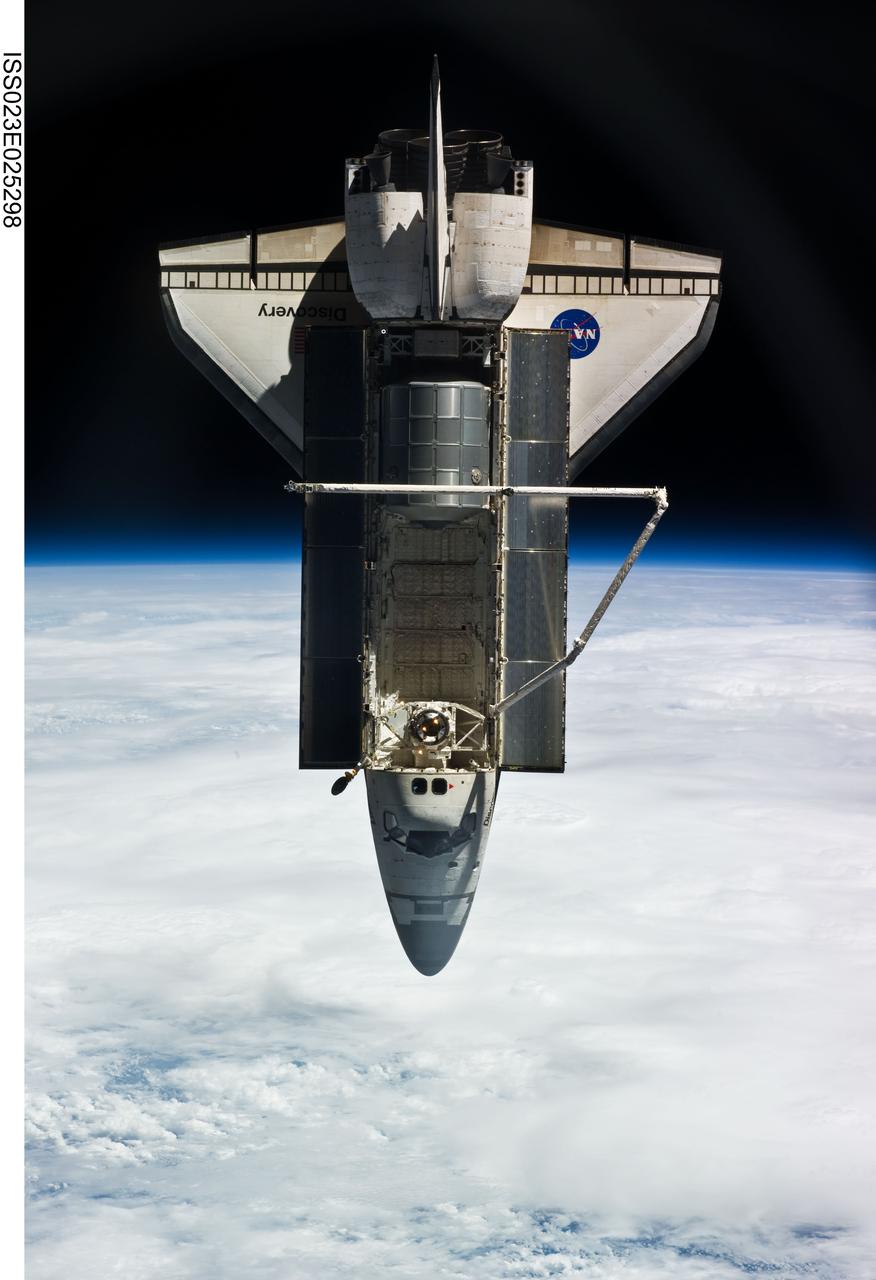
ISS023-E-025298 (17 April 2010) --- Space shuttle Discovery is featured in this image photographed by an Expedition 23 crew member on the International Space Station soon after the shuttle and station began their post-undocking relative separation. Undocking of the two spacecraft occurred at 7:52 a.m. (CDT) on April 17, 2010, ending a stay of 10 days, 5 hours and 8 minutes. The visit included three spacewalks and delivery of more than seven tons of equipment and supplies. Earth’s horizon and the blackness of space provide the backdrop for the scene.
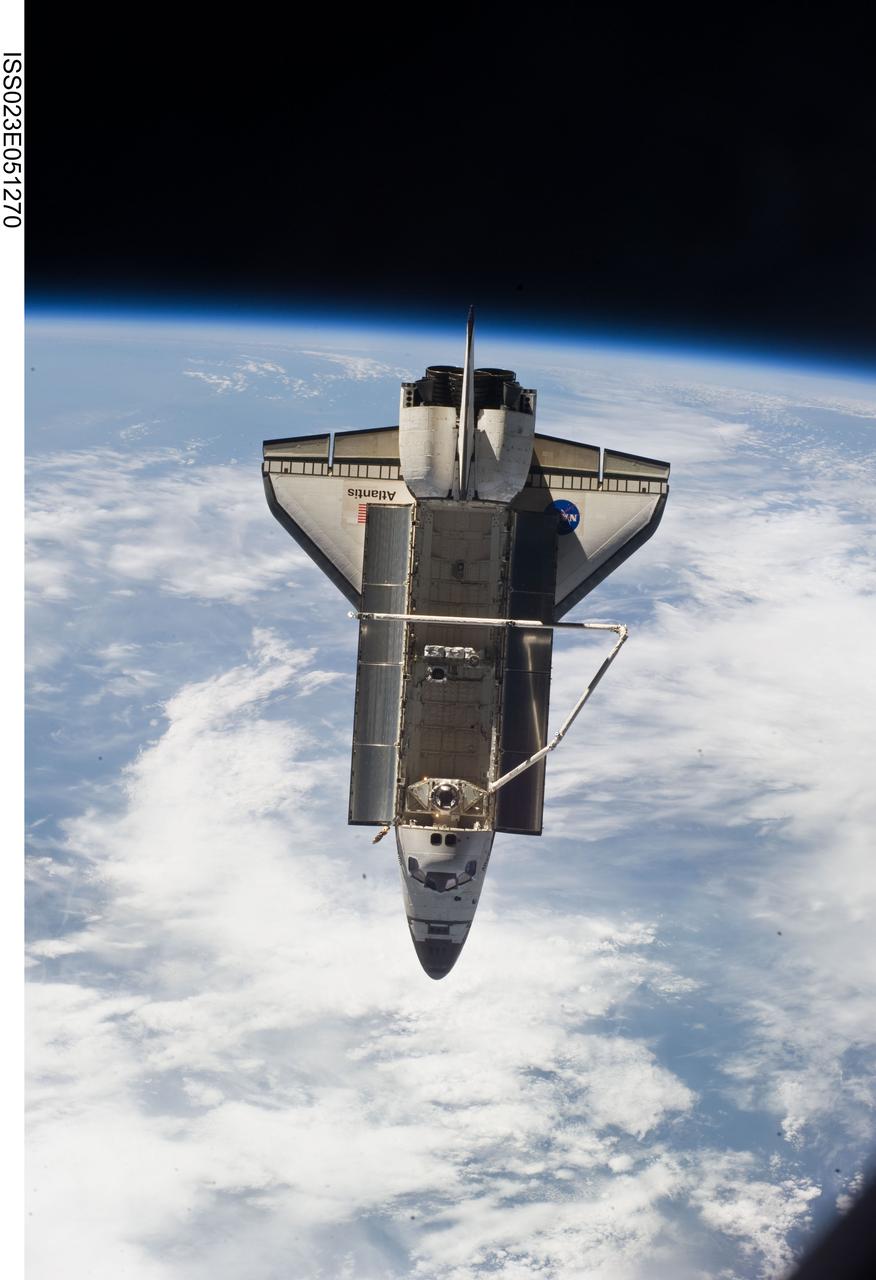
ISS023-E-051270 (23 May 2010) --- Space shuttle Atlantis is featured in this image photographed by an Expedition 23 crew member on the International Space Station soon after the shuttle and station began their post-undocking relative separation. Undocking of the two spacecraft occurred at 10:22 a.m. (CDT) on May 23, 2010, ending a seven-day stay that saw the addition of a new station module, replacement of batteries and resupply of the orbiting outpost. Earth?s horizon and the blackness of space provide the backdrop for the scene.
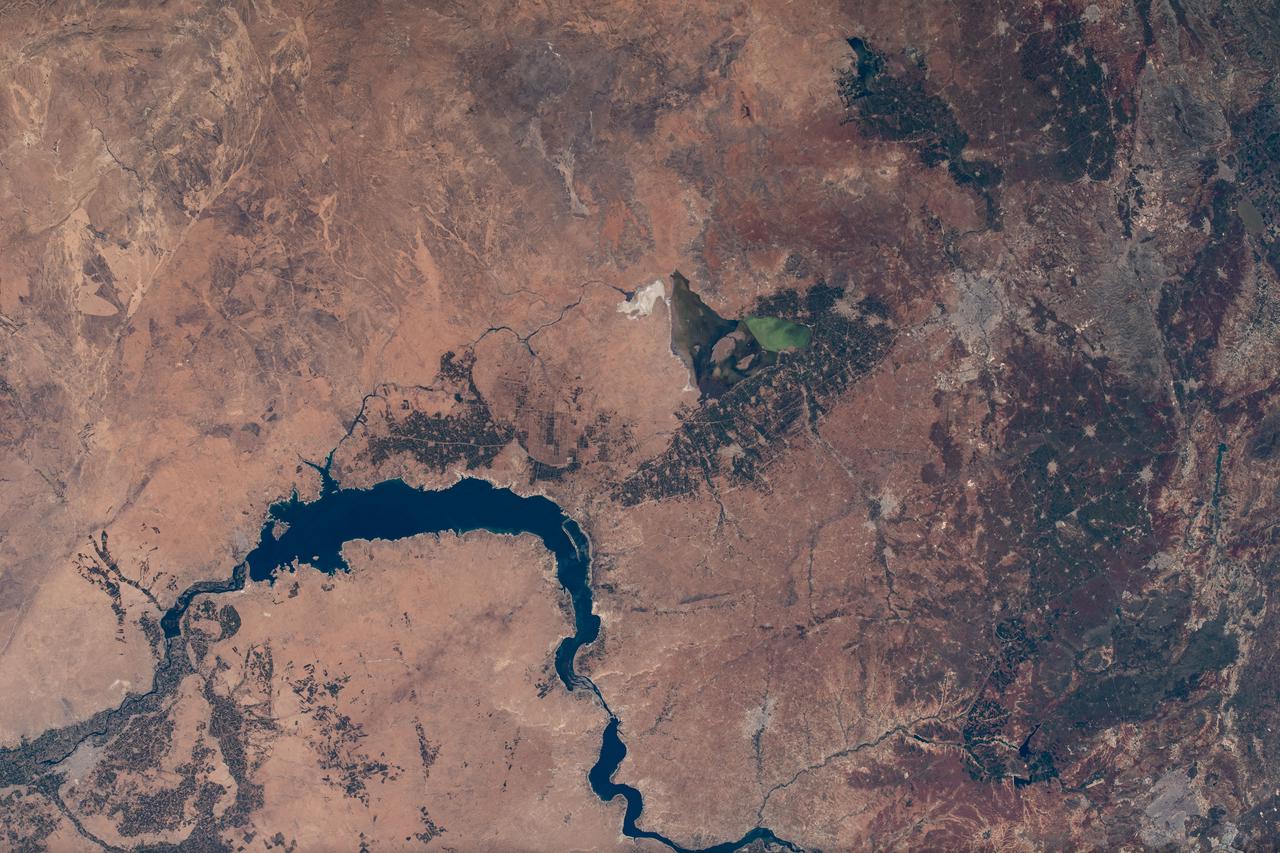
iss065e002136 (April 22, 2021) --- The Euphrates River flows through Lake Assad in Syria in this photograph from the International Space Station as it orbited 263 miles above.