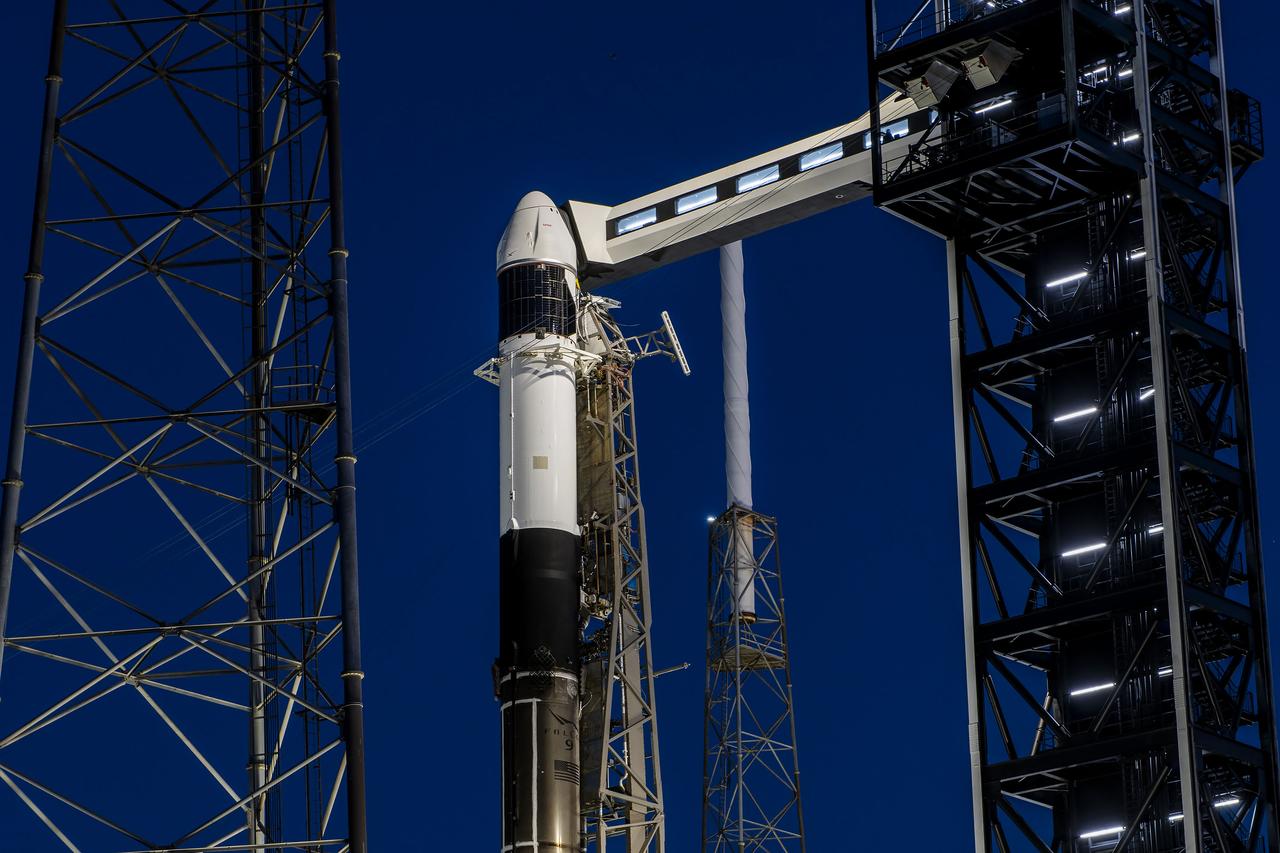
A SpaceX Falcon 9 rocket, with the company’s Dragon spacecraft atop, stands in a vertical position at Space Launch Complex 40 at Cape Canaveral Space Force Station in Florida on Tuesday, March 19, 2024, in preparation for the 30th commercial resupply services launch to the International Space Station. NASA and partner research flying aboard the mission includes a look at plant metabolism in space and a set of new sensors for free-flying Astrobee robots to provide 3D mapping capabilities. Other studies include a fluid physics study that could benefit solar cell technology and a university project from CSA (Canadian Space Agency) that will monitor sea ice and ocean conditions. Liftoff is scheduled for 4:55 p.m. EDT on Thursday, March 21, 2024.
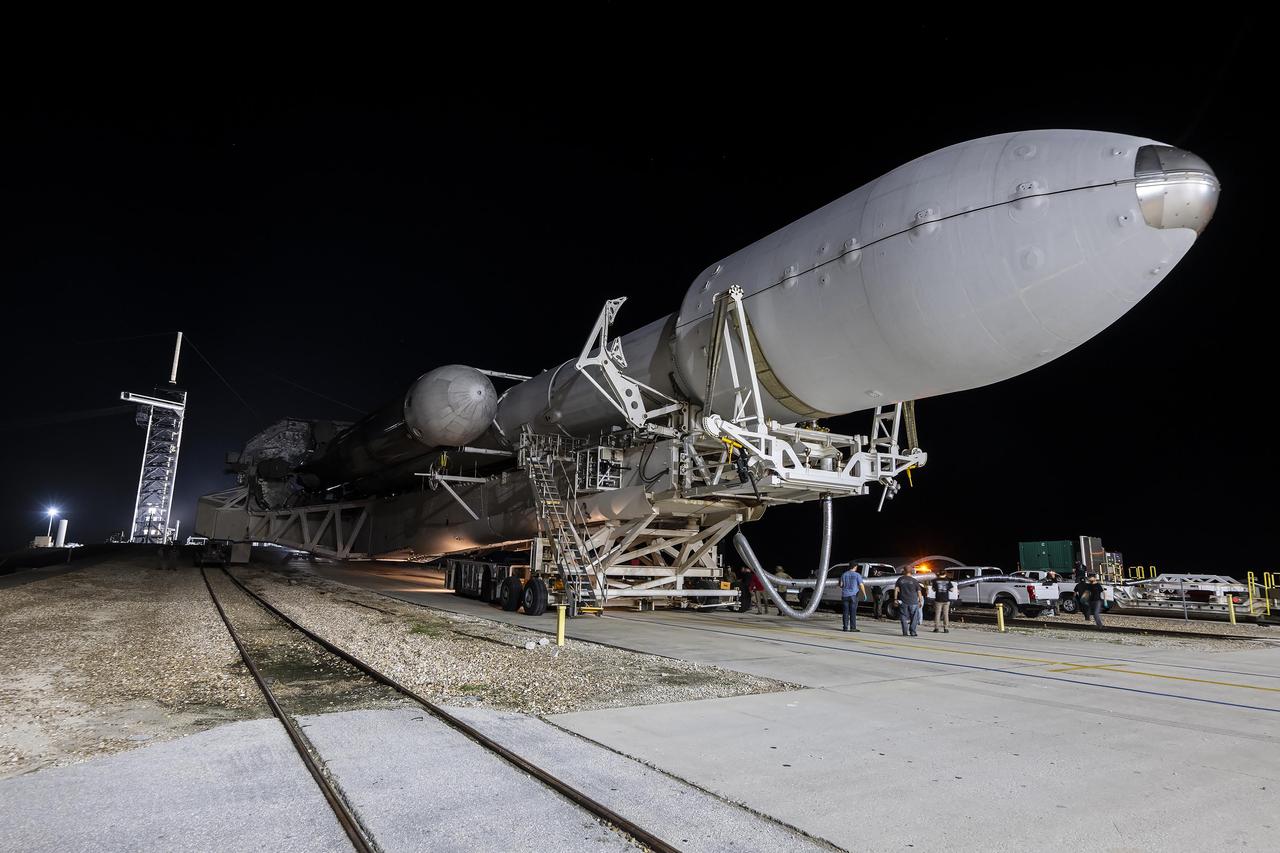
NASA’s Europa Clipper spacecraft attached to SpaceX’s Falcon Heavy rocket, rolls to Launch Pad 39A on Saturday, Oct. 12, 2024, at NASA’s Kennedy Space Center in Florida ahead of launch to Jupiter’s icy moon, Europa. The spacecraft will complete nearly 50 flybys of Europa to determine if there are conditions suitable for life beyond Earth. NASA and SpaceX are targeting launch for Europa Clipper at 12:06 p.m. EDT on Monday, Oct. 14, from Launch Complex 39A at Kennedy Space Center in Florida.

Jenny Lyons, deputy program manager for NASA’s Launch Services Program, participates in rehearsal launch operations for the National Oceanic and Atmospheric Administration (NOAA) GOES-U (Geostationary Operational Environmental Satellite U) mission inside Hangar X at NASA’s Kennedy Space Center in Florida on Monday, June 17, 2024. The GOES-U satellite, the final addition to GOES-R series, serves a critical role in providing continuous coverage of the Western Hemisphere, including monitoring tropical systems in the eastern Pacific and Atlantic oceans.
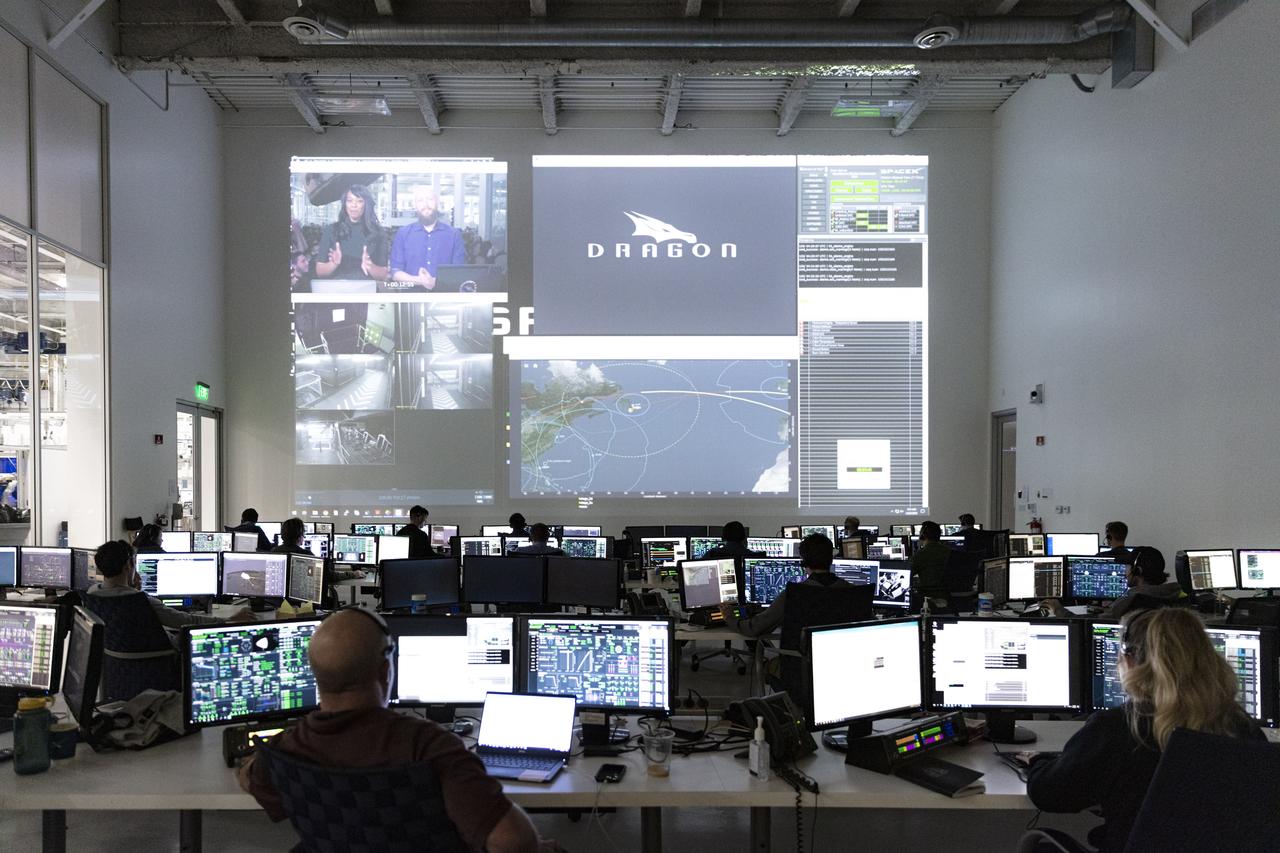
On Thursday, March 19 and Friday, March 20, SpaceX teams in Firing Room 4 at NASA's Kennedy Space Center in Florida and the company's Mission Control in Hawthorne, California, along with NASA flight controllers in Mission Control Houston, executed a full simulation of launch and docking of the Crew Dragon spacecraft, with NASA astronauts Bob Behnken and Doug Hurley participating in SpaceX's flight simulator.
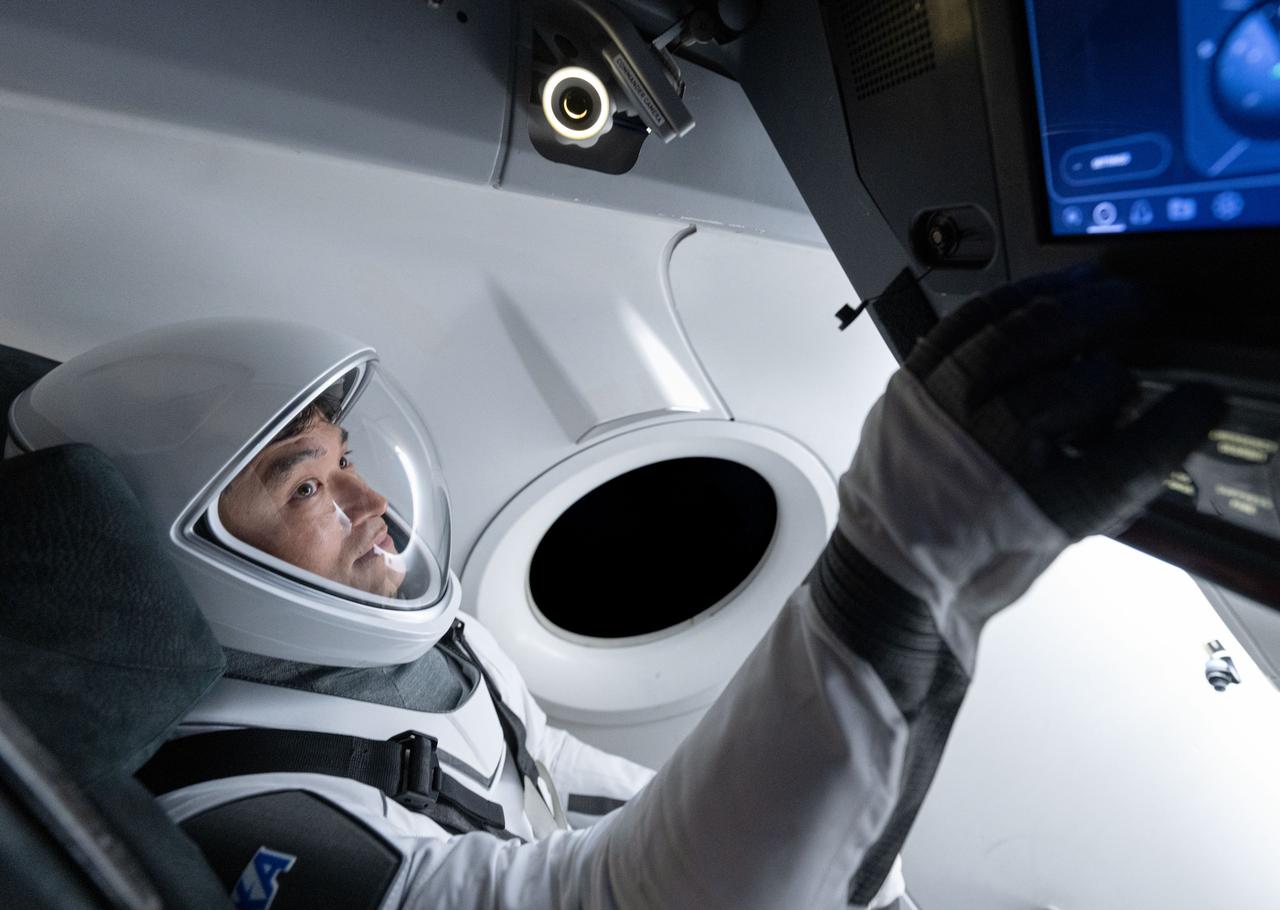
jsc2024e079793 (Nov. 20, 2024) --- NASA’s SpaceX Crew-10 Mission Specialist Takuya Onishi of JAXA (Japan Aerospace Exploration Agency) is pictured training inside a mockup of a Dragon cockpit at the company's facilities in Hawthorne, California. Credit: SpaceX
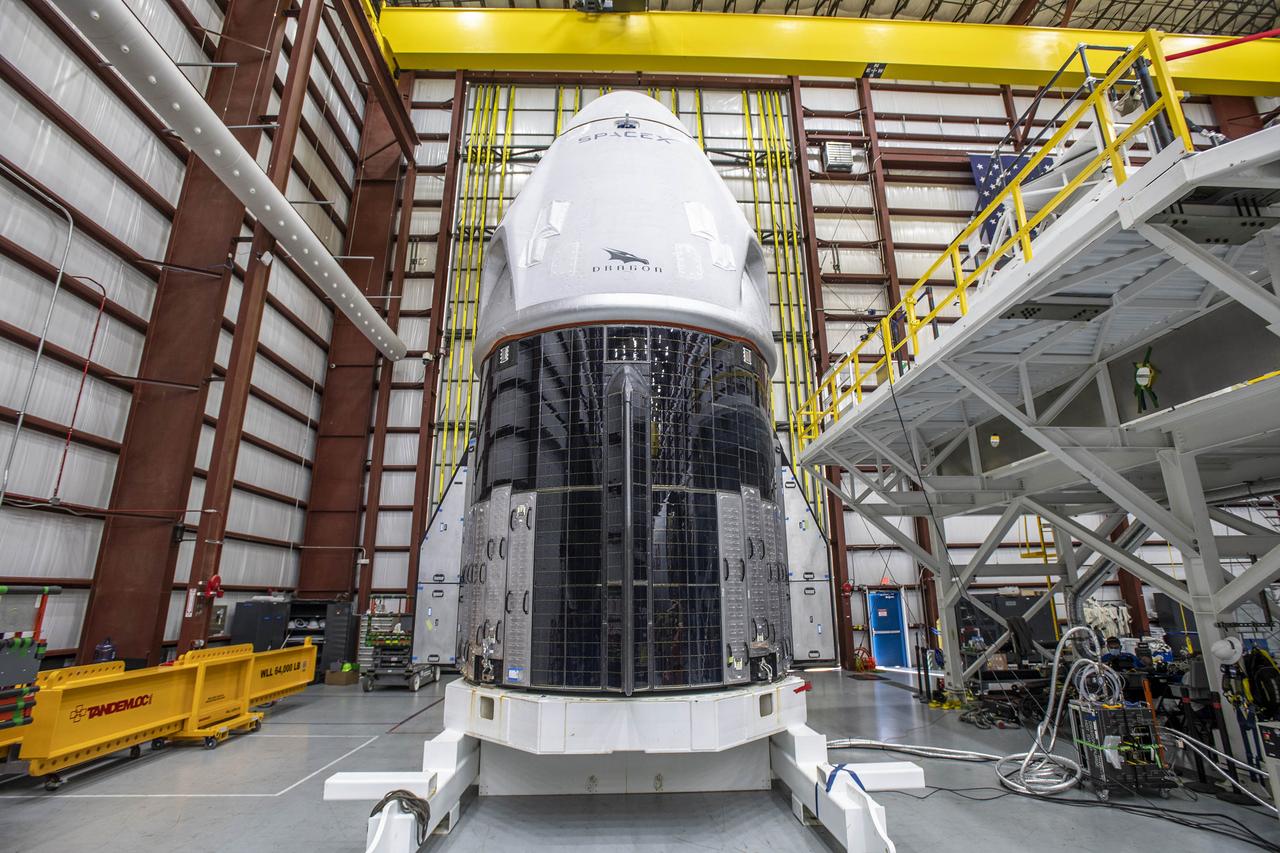
The SpaceX Crew Dragon spacecraft for NASA’s SpaceX Crew-1 mission arrived at Kennedy Space Center’s Launch Complex 39A on Thursday, Nov. 5, after making the trek from its processing facility at nearby Cape Canaveral Air Force Station in Florida. Crew Dragon will launch atop a SpaceX Falcon 9 rocket. The Crew-1 flight will carry Crew Dragon Commander Michael Hopkins, Pilot Victor Glover, and Mission Specialist Shannon Walker, all of NASA, along with Japan Aerospace Exploration Agency (JAXA) Mission Specialist Soichi Noguchi to the space station for a six-month science mission.
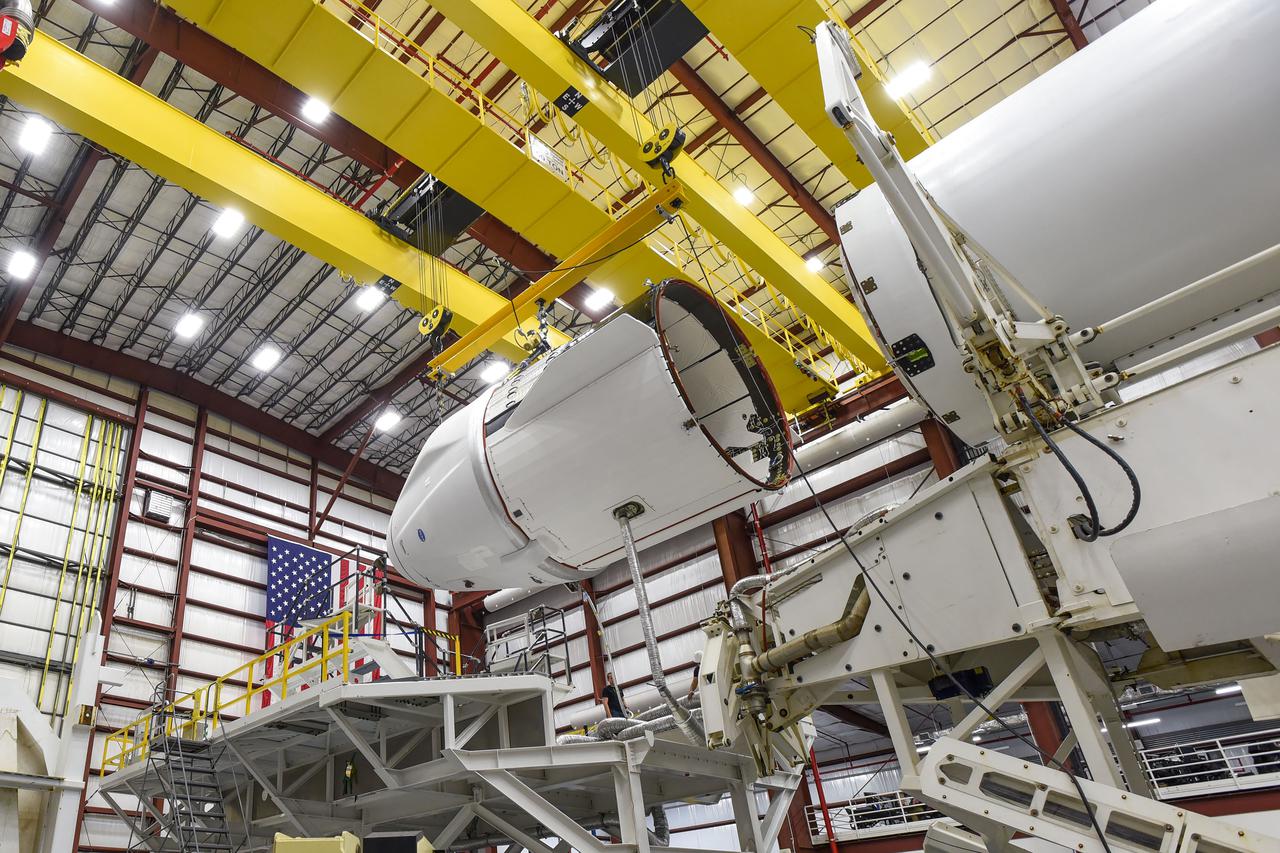
The SpaceX Dragon spacecraft that will fly on the company’s 22nd commercial resupply services mission to the International Space Station is now ready for its journey to space. On Thursday, May 27, teams transported the spacecraft from SpaceX’s processing facility at Cape Canaveral Space Force Station into the hangar at nearby Kennedy Space Center’s Launch Complex 39A, where it was attached to the Falcon 9 rocket. Liftoff of the Falcon 9 is scheduled for 1:29 p.m. EDT on Thursday, June 3.
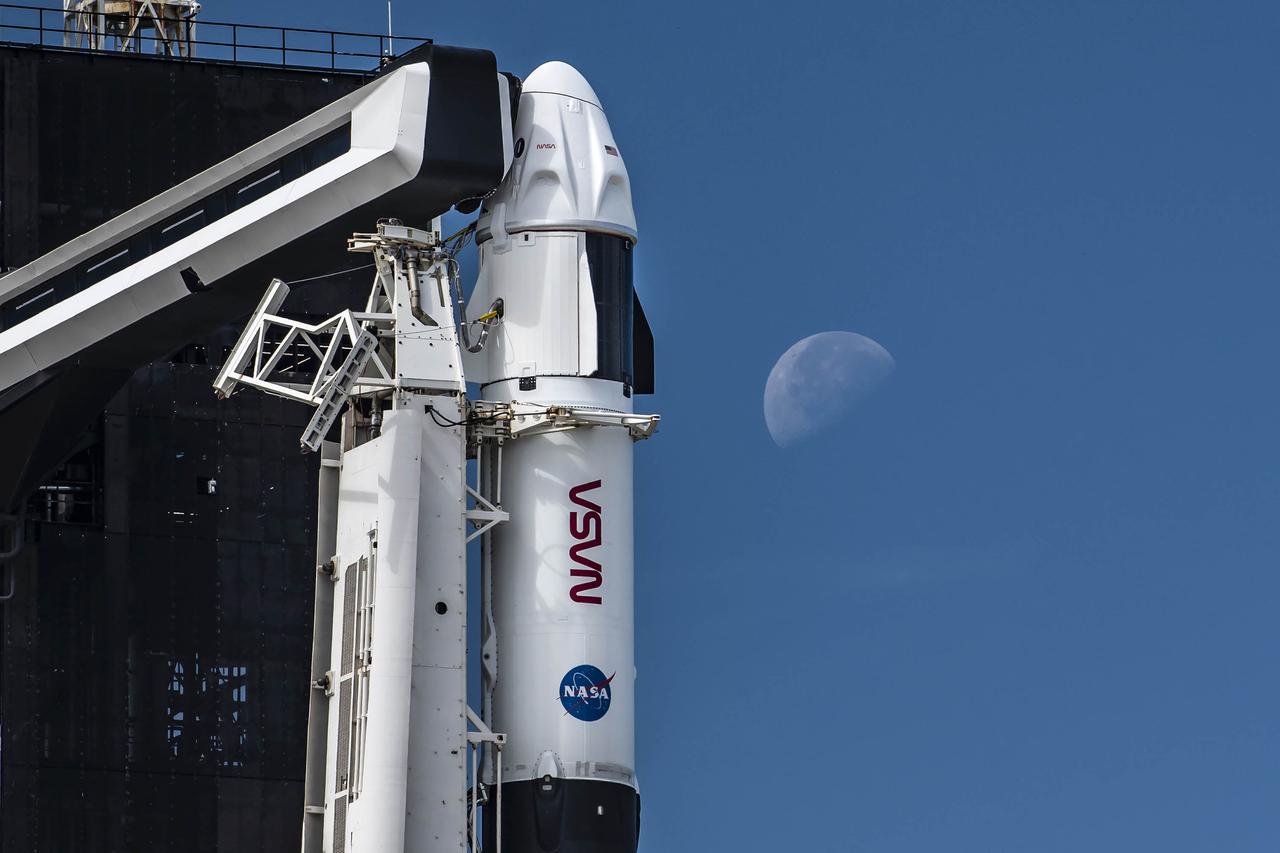
The SpaceX Falcon 9 rocket is vertical with the Crew Dragon atop for the Crew-3 mission at Launch Pad 39A at NASA’s Kennedy Space Center in Florida on Oct. 27, 2021. In view is the crew access arm. A four-person crew will launch aboard the Crew Dragon atop the Falcon 9 on Oct. 31 to the International Space Station. Launch is targeted for 2:21 a.m. EDT from Pad 39A. Crew 3 is the third crew rotation flight to the space station for NASA’s Commercial Crew Program, and the first flight of a new Crew Dragon spacecraft.
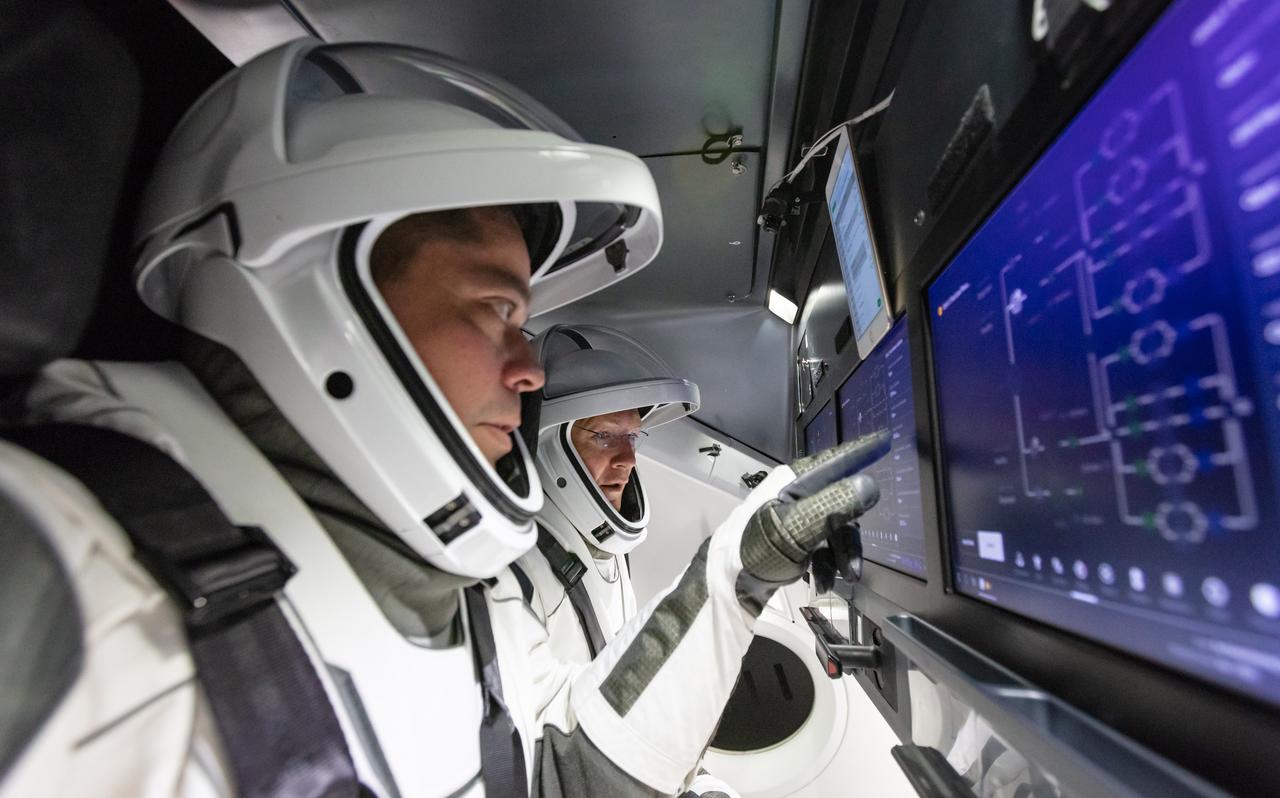
NASA astronauts Doug Hurley and Bob Behnken familiarize themselves with SpaceX’s Crew Dragon, the spacecraft that will transport them to the International Space Station as part of NASA’s Commercial Crew Program. Their upcoming flight test is known as Demo-2, short for Demonstration Mission 2. The Crew Dragon will launch on SpaceX’s Falcon 9 rocket from Launch Complex 39A at NASA’s Kennedy Space Center in Florida. In March 2019, SpaceX completed an uncrewed flight test of Crew Dragon known as Demo-1, which was designed to validate end-to-end systems and capabilities, bringing NASA closer to certification of SpaceX systems to fly a crew.
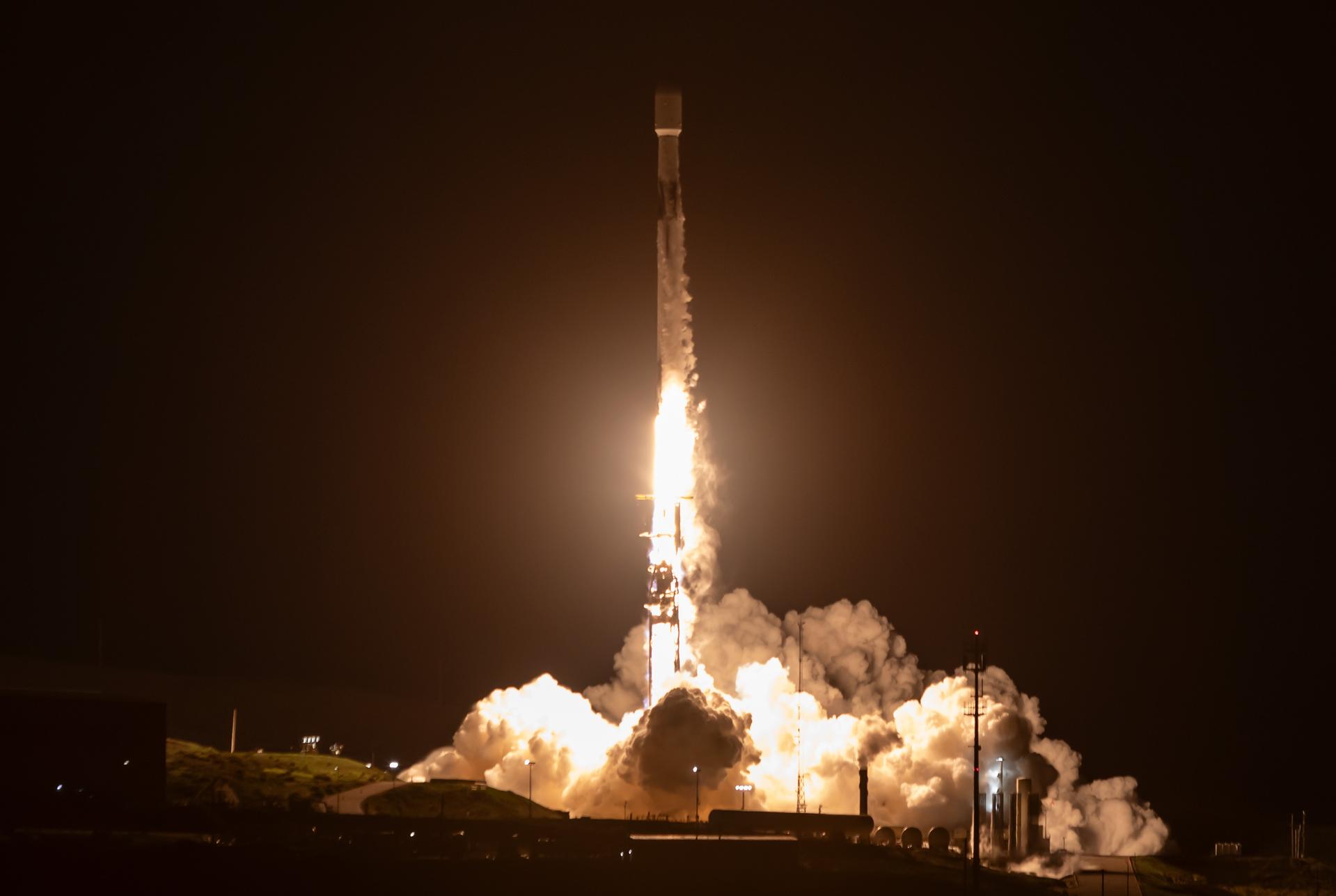
A SpaceX Falcon 9 rocket carrying the international Sentinel-6B spacecraft lifts off from Space Launch Complex 4 East at Vandenberg Space Force Base in California at 9:21 p.m. PST Sunday, Nov. 16, 2025. A collaboration between NASA, ESA (European Space Agency), EUMETSAT (European Organisation for the Exploitation of Meteorological Satellites), and the National Oceanic and Atmospheric Administration (NOAA), Sentinel-6B is designed to measure sea levels down to roughly an inch for about 90% of the world’s oceans.
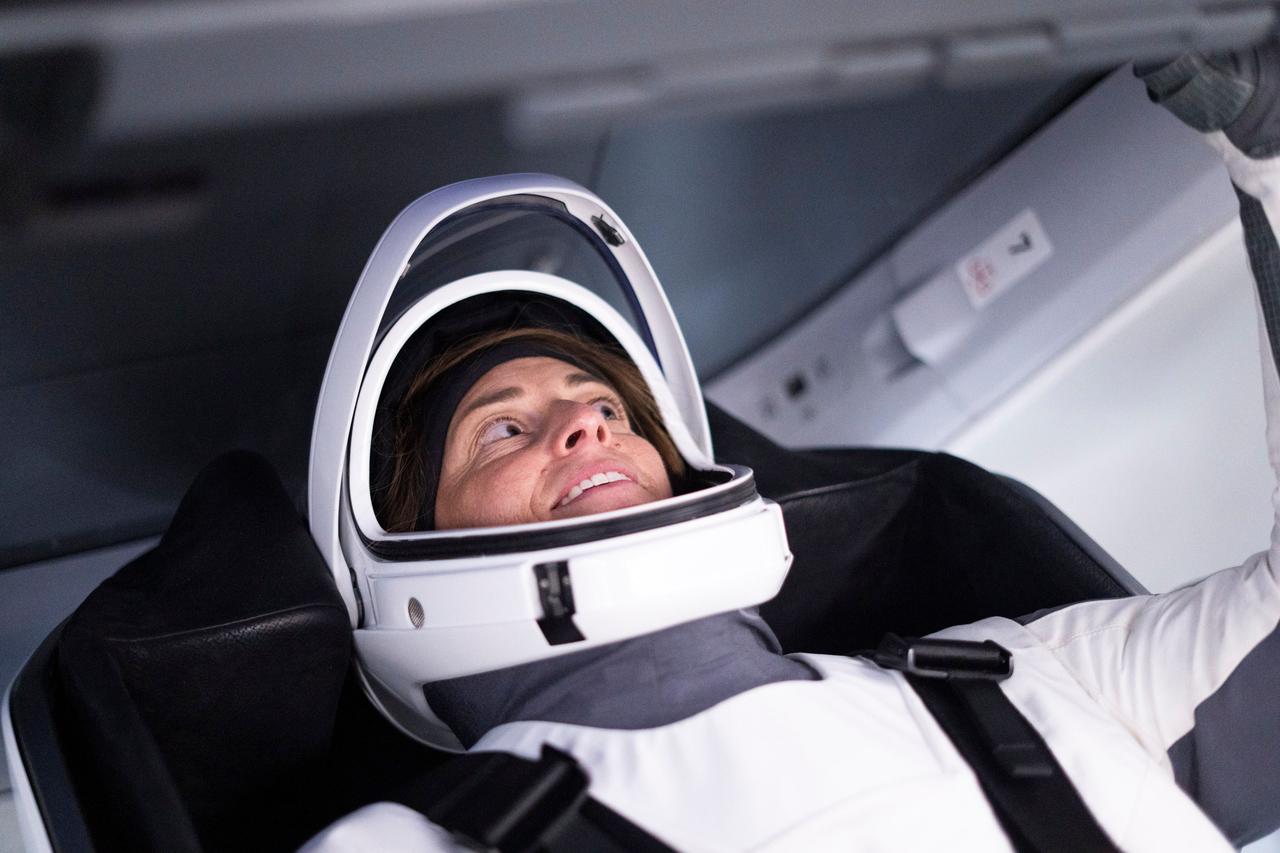
jsc2022e068660 (April 3, 2022) --- SpaceX Crew-5 Commander Nicole Aunapu Mann of NASA is pictured during a Crew Dragon cockpit training session at SpaceX headquarters in Hawthorne, California. Credit: SpaceX
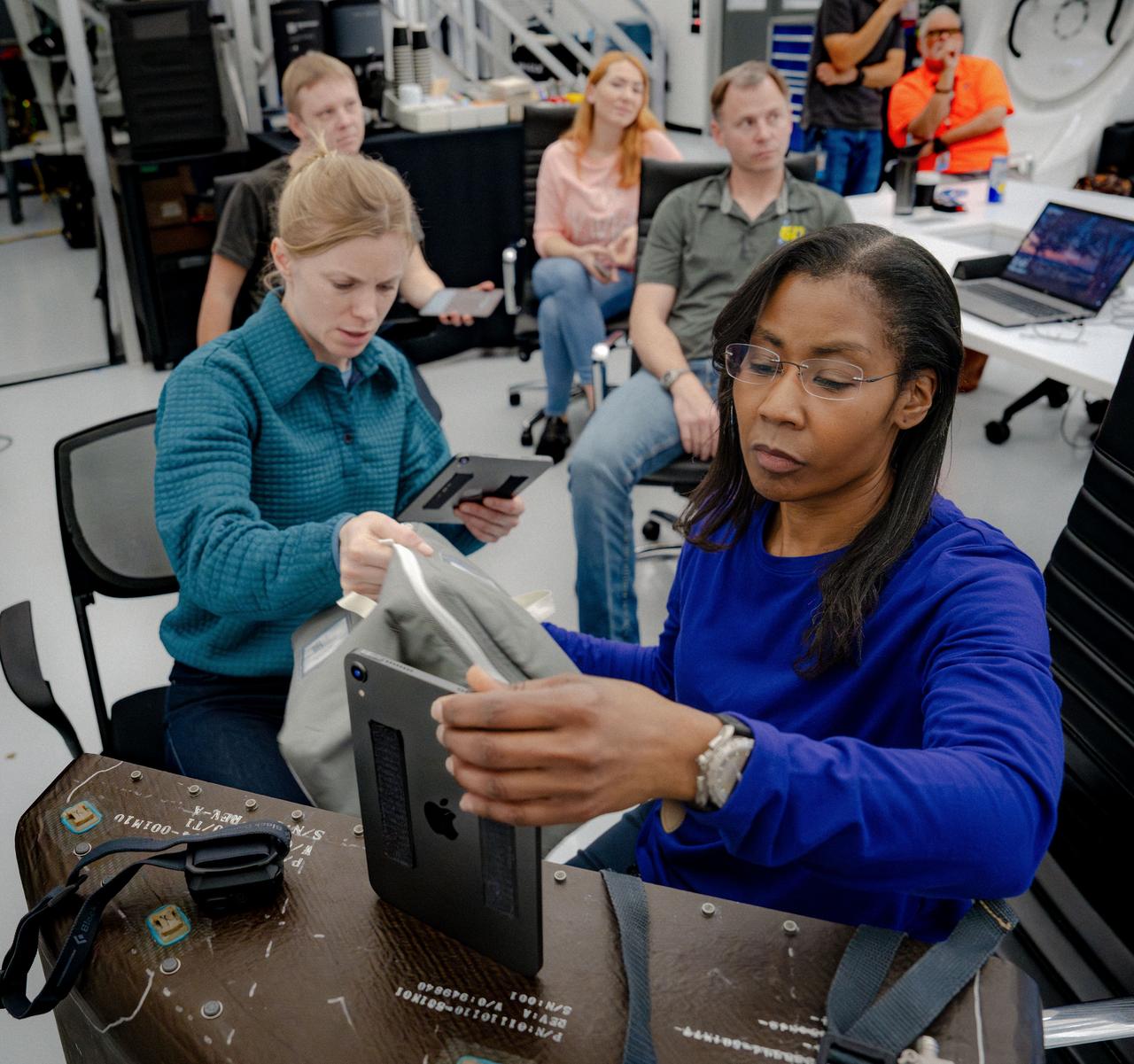
jsc2024e024940 (March 1, 2024) --- NASA’s SpaceX Crew-9 members Commander Zena Cardman and Mission Specialist Stephanie Wilson use a breakout trainer to better understand how to correctly pack the Dragon spacecraft at SpaceX headquarters in Hawthorne, California. Credit: SpaceX
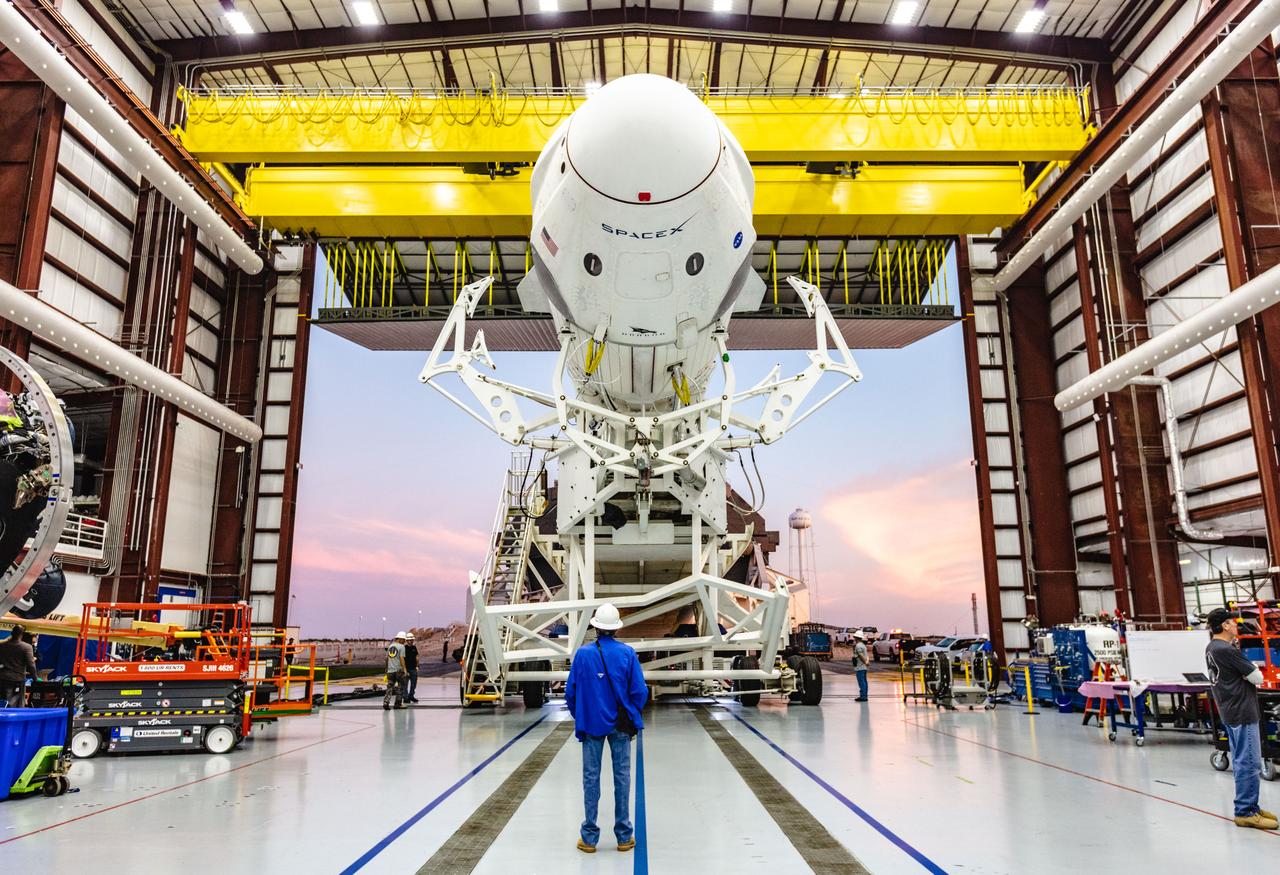
A SpaceX Falcon 9 rocket with the company’s Crew Dragon attached, rolls out of the company’s hangar at NASA Kennedy Space Center’s Launch Complex 39A on Jan. 3, 2019. The rocket will undergo checkouts prior to the liftoff of Demo-1, the inaugural flight of one of the spacecraft designed to take NASA astronauts to and from the International Space Station. NASA has worked with SpaceX and Boeing in developing Commercial Crew Program spacecraft to facilitate new human spaceflight systems launching from U.S. soil with the goal of safe, reliable and cost-effective access to low-Earth orbit destinations such as the space station.
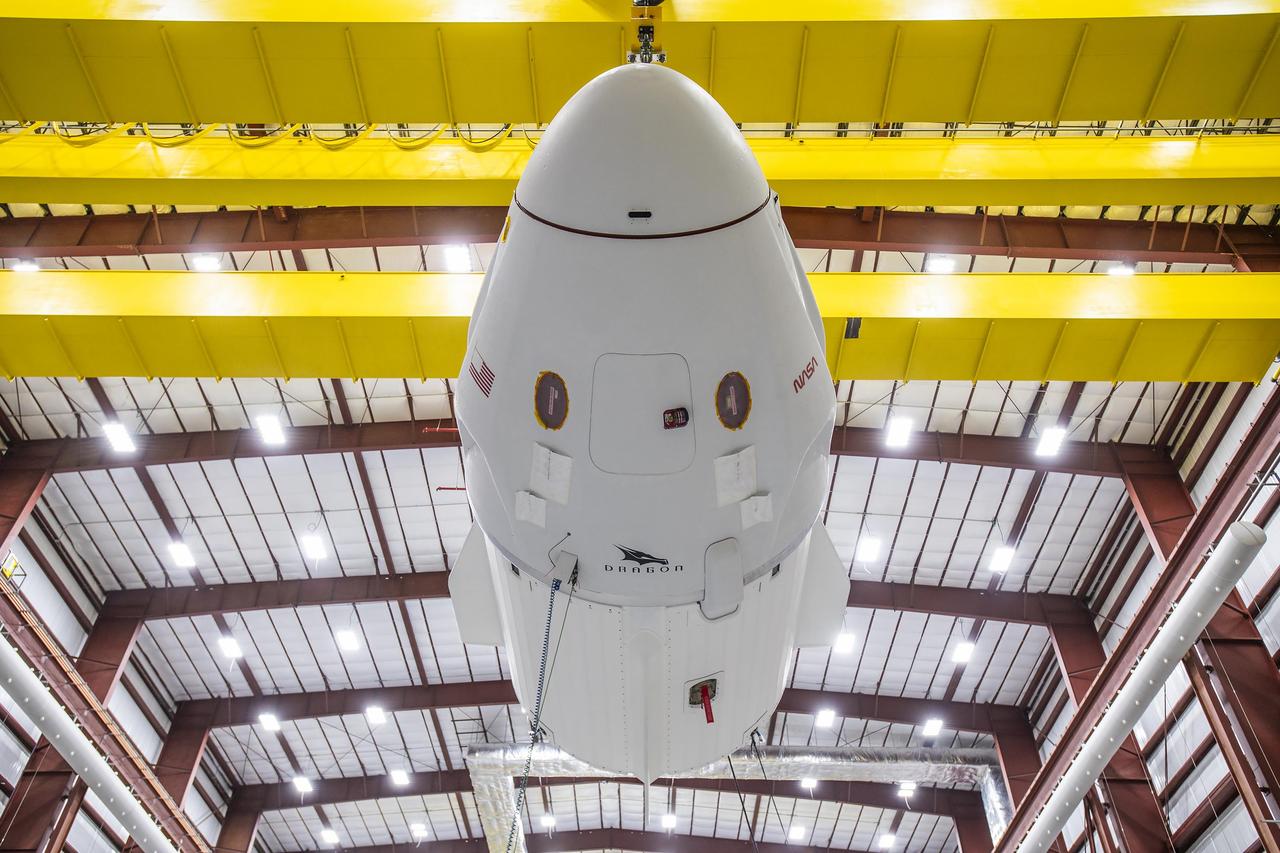
SpaceX’s Dragon spacecraft for NASA’s SpaceX Crew-8 mission is mated to the company's Falcon 9 rocket at SpaceX’s hangar at Kennedy Space Center’s Launch Complex 39A in Florida on Friday, Feb. 23, 2024, at Cape Canaveral Space Force Station. NASA astronauts Matthew Dominick, Michael Barratt, and Jeanette Epps, and Roscosmos cosmonaut Alexander Grebenkin are slated to launch to the International Space Station no earlier than 12:04 a.m. EST on March 1, 2024.
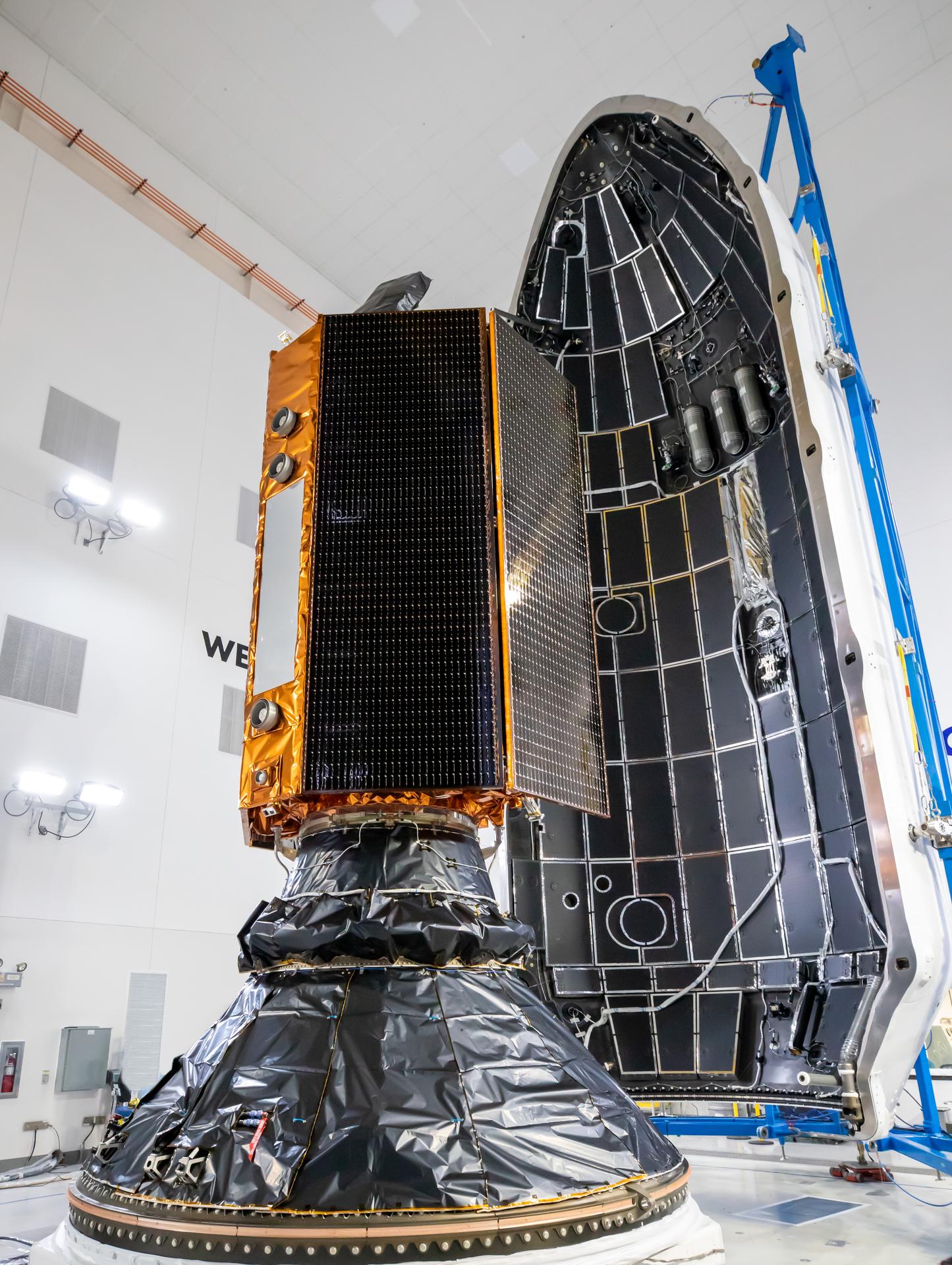
Technicians and engineers encapsulate the Sentinel-6B spacecraft within a protective payload fairing inside the Astrotech Space Operations facility at Vandenberg Space Force Base in California, on Monday, Nov. 10, 2025. A collaboration between NASA, ESA (European Space Agency), EUMETSAT (European Organisation for the Exploitation of Meteorological Satellites), and the National Oceanic and Atmospheric Administration (NOAA), Sentinel-6B is designed to measure sea levels down to roughly an inch for about 90% of the world’s oceans. NASA is targeting launch no earlier than Sunday, Nov. 16, on a SpaceX Falcon 9 rocket from Space Launch Complex 4 East at Vandenberg.
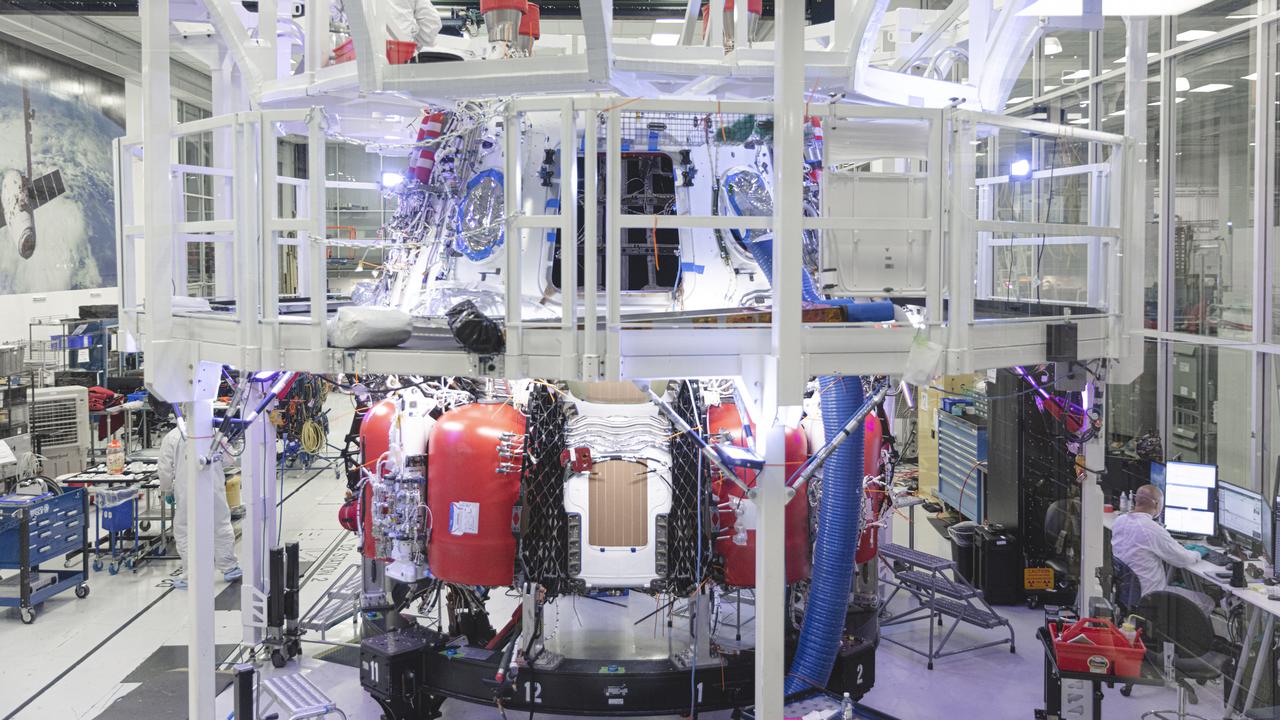
The Crew Dragon spacecraft that will be used for the Crew-1 mission for NASA’s Commercial Crew Program undergoes processing inside the clean room at SpaceX headquarters in Hawthorne, California. The Crew-1 mission to the International Space Station is targeted for later in 2020 with NASA Astronauts Victor Glover, Mike Hopkins, Shannon Walker and JAXA astronaut Soichi Noguchi.
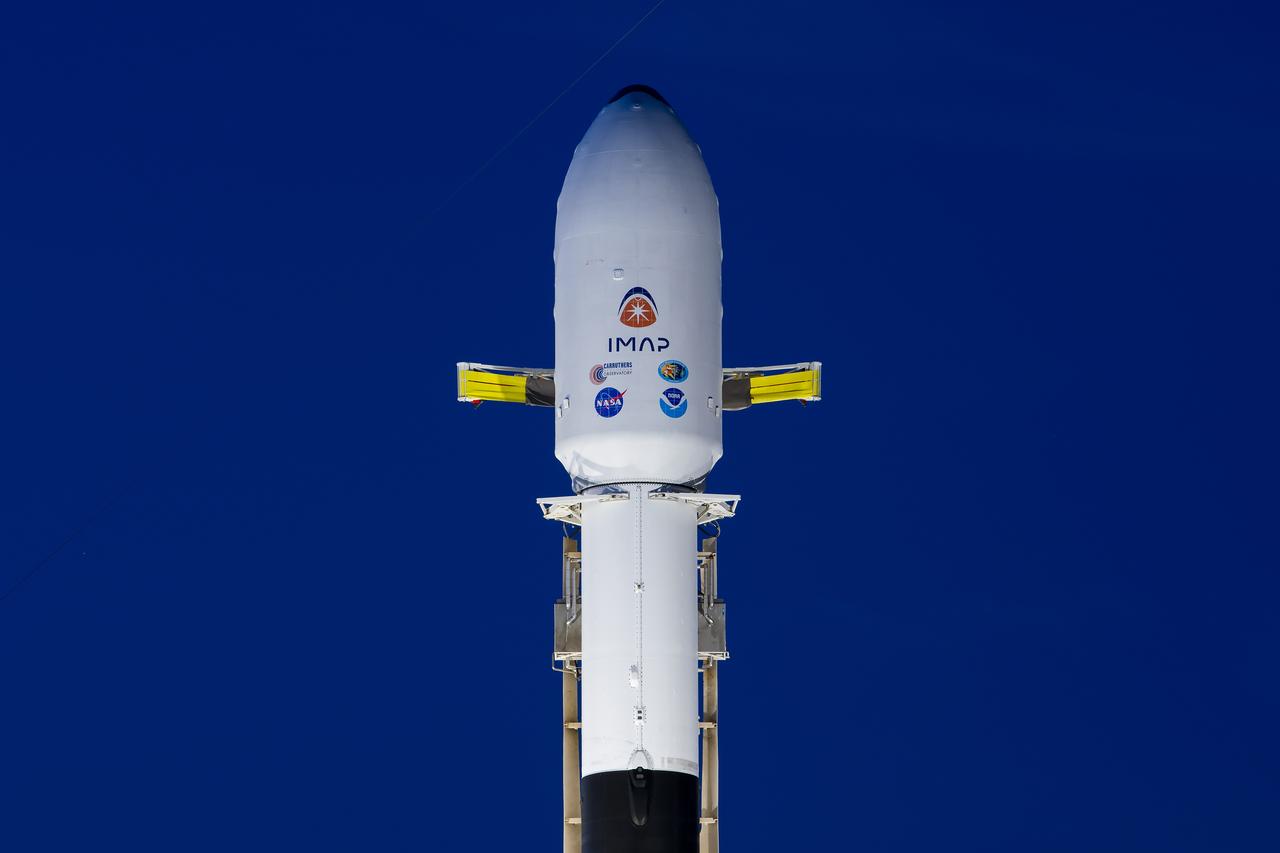
A SpaceX Falcon 9 rocket with NASA’s IMAP (Interstellar Mapping and Acceleration Probe), the agency’s Carruthers Geocorona Observatory, and National Oceanic and Atmospheric Administration’s (NOAA) Space Weather Follow On–Lagrange 1 (SWFO-L1) spacecraft stands vertical at Launch Complex 39A during early morning on Monday, Sept. 22, 2025, at the agency’s Kennedy Space Center in Florida. NASA’s IMAP will use 10 science instruments to study and map the heliosphere, a vast magnetic bubble surrounding the Sun protecting our solar system from radiation incoming from interstellar space. NASA’s IMAP will scan the heliosphere, analyze the composition of charged particles, and investigate how those particles move through the solar system.
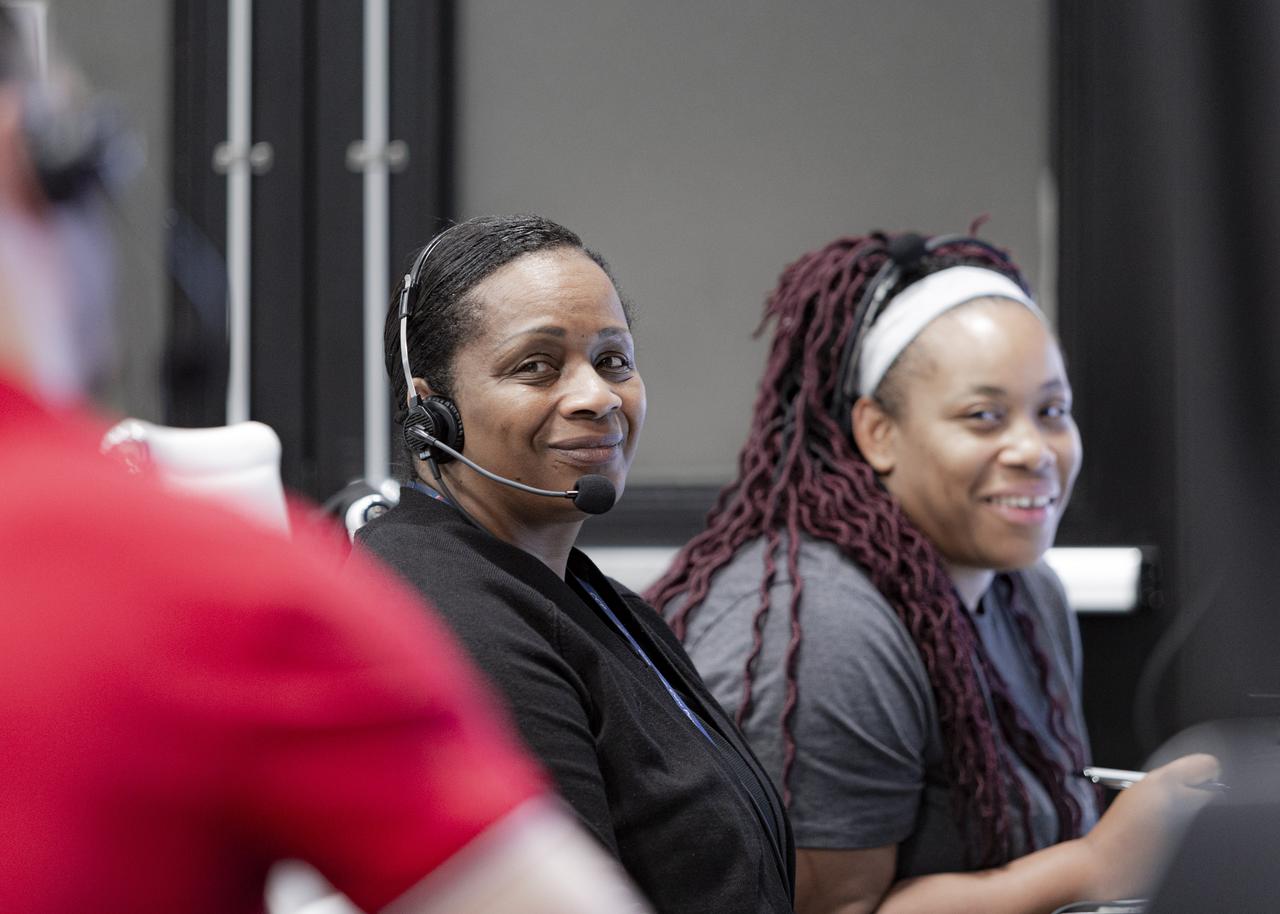
On Thursday, March 19 and Friday, March 20, SpaceX teams in Firing Room 4 at NASA's Kennedy Space Center in Florida and the company's Mission Control in Hawthorne, California, along with NASA flight controllers in Mission Control Houston, executed a full simulation of launch and docking of the Crew Dragon spacecraft, with NASA astronauts Bob Behnken and Doug Hurley participating in SpaceX's flight simulator.

jsc2024e079794 (Nov. 20, 2024) --- NASA’s SpaceX Crew-10 Mission Specialist Takuya Onishi of JAXA (Japan Aerospace Exploration Agency) is pictured inside a mockup of a Dragon cockpit at the company's facilities in Hawthorne, California. Credit: SpaceX
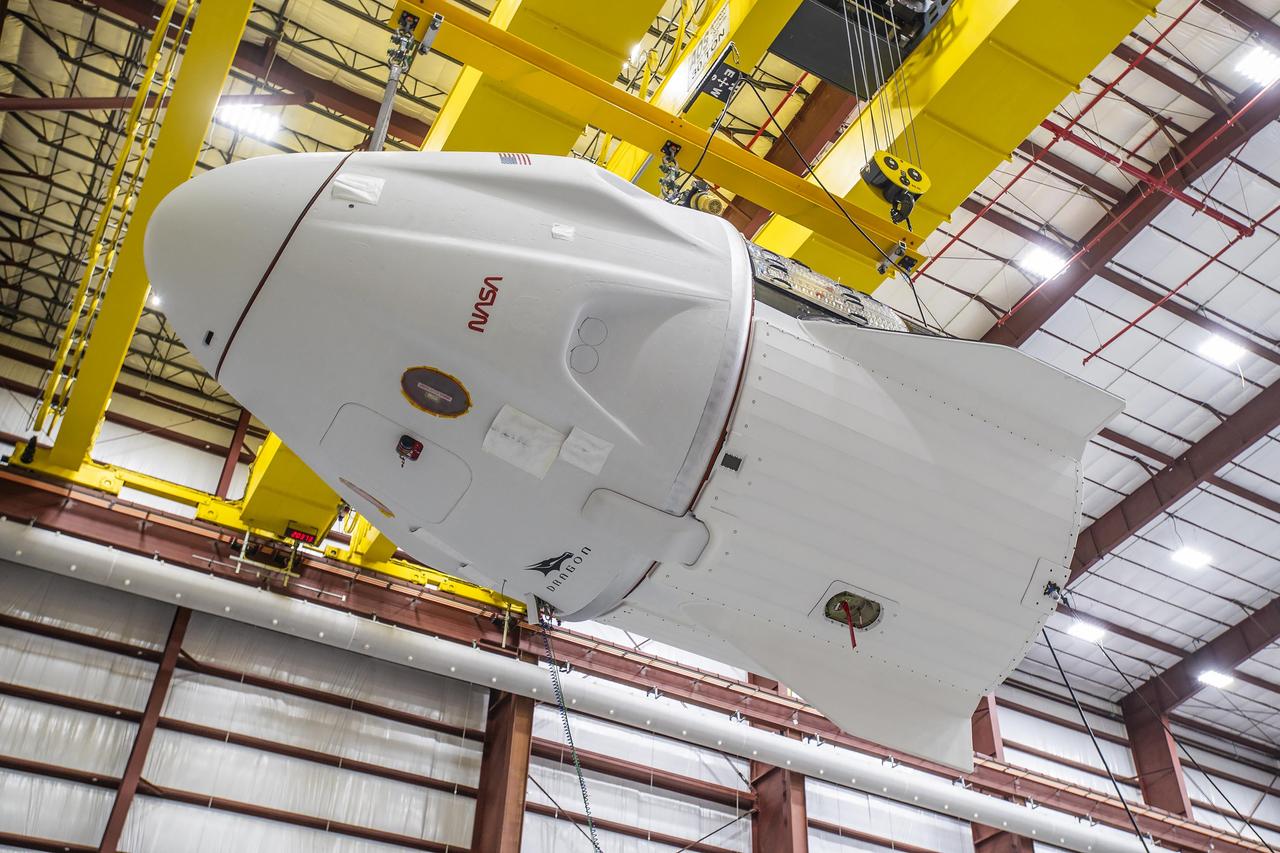
SpaceX’s Dragon spacecraft for NASA’s SpaceX Crew-8 mission is mated to the company's Falcon 9 rocket at SpaceX’s hangar at Kennedy Space Center’s Launch Complex 39A in Florida on Friday, Feb. 23, 2024, at Cape Canaveral Space Force Station. NASA astronauts Matthew Dominick, Michael Barratt, and Jeanette Epps, and Roscosmos cosmonaut Alexander Grebenkin are slated to launch to the International Space Station no earlier than 12:04 a.m. EST on March 1, 2024.
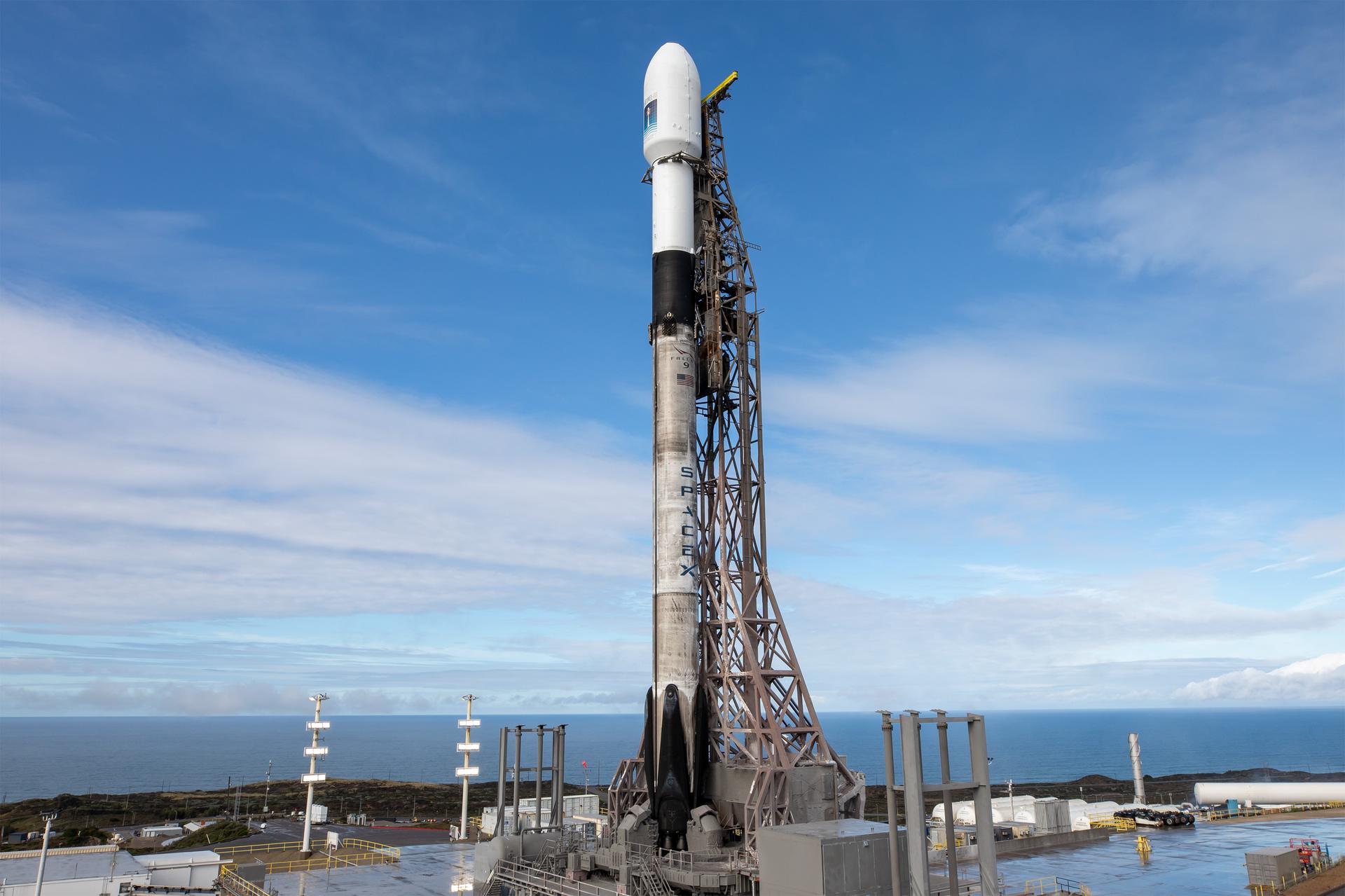
A SpaceX rocket carrying the Sentinel-6B satellite stands vertical on the launch pad at Space Launch Complex 4 East at Vandenberg Space Force Base in California on Sunday, Nov. 16, 2025, ahead of launch targeted for no earlier than 9:21 p.m. PST. A collaboration between NASA, ESA (European Space Agency), EUMETSAT (European Organisation for the Exploitation of Meteorological Satellites), and the National Oceanic and Atmospheric Administration (NOAA), Sentinel-6B is designed to measure sea levels down to roughly an inch for about 90% of the world’s oceans.

The SpaceX Falcon 9 rocket carrying the Dragon spacecraft lifts off from Launch Complex 39A at NASA’s Kennedy Space Center in Florida on Thursday, Nov. 9, 2023, on the company’s 29th commercial resupply services mission for the agency to the International Space Station. Liftoff was at 8:28 p.m. EST. Dragon will deliver scientific research, technology demonstrations, crew supplies, and hardware to the space station to support its Expedition 70 crew, including NASA’s Integrated Laser Communications Relay Demonstration Low Earth Orbit User Modem and Amplifier Terminal (ILLUMA-T) and Atmospheric Waves Experiment (AWE). The spacecraft is expected to spend about a month attached to the orbiting outpost before it returns to Earth with research and return cargo, splashing down off the coast of Florida.
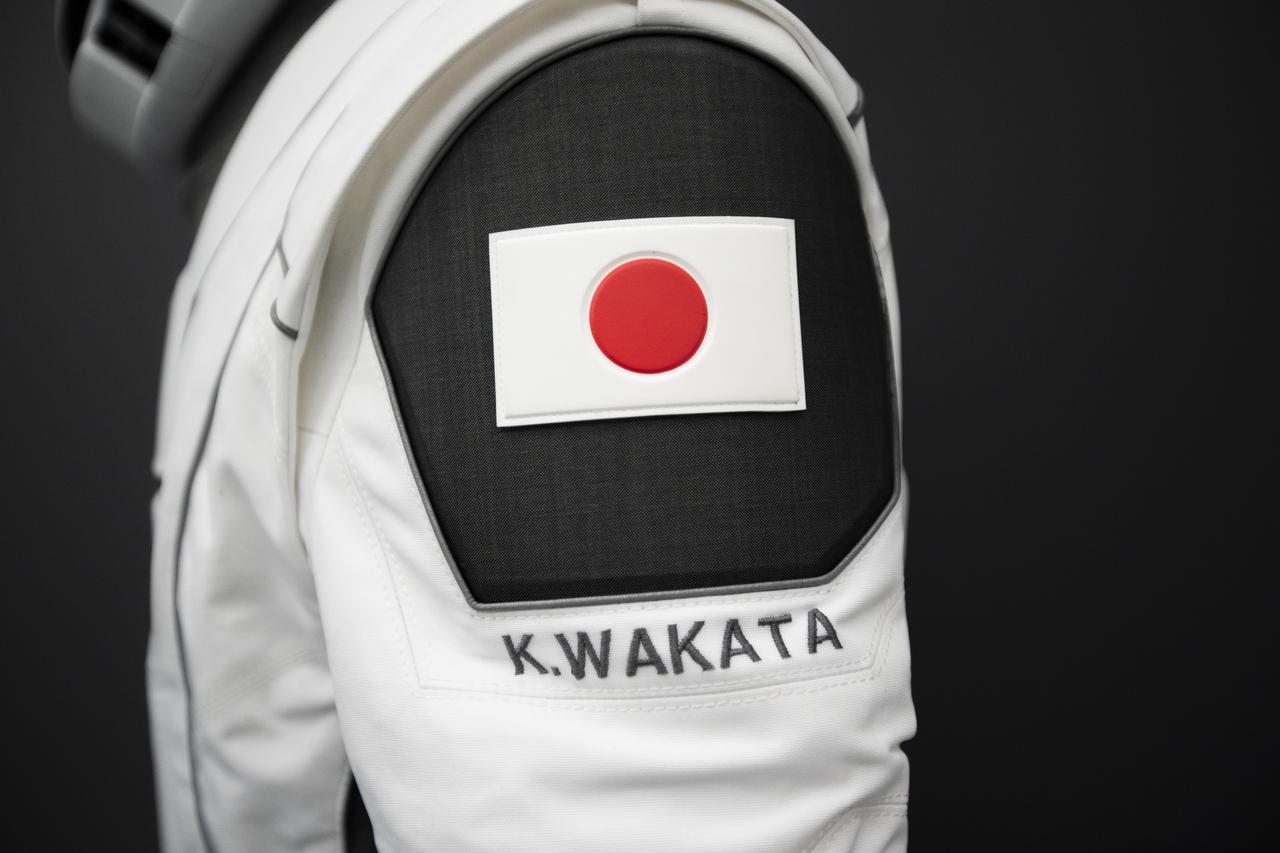
A SpaceX launch and entry suit bears a Japanese flag, and the name of JAXA astronaut Koichi Wakata – a crewmember of NASA's SpaceX Crew-5 mission to the International Space Station.
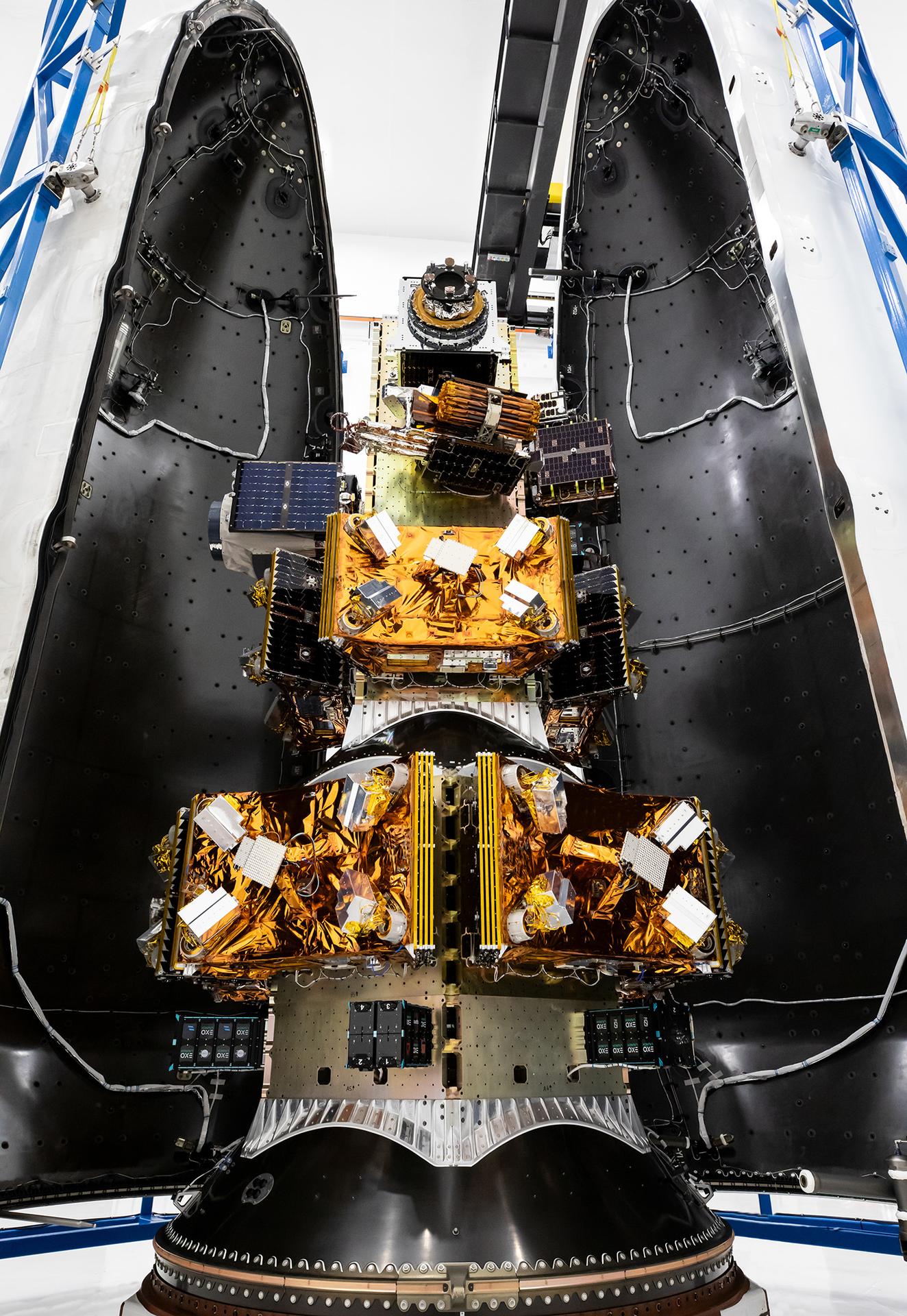
Teams prepare to encapsulate in early January 2026 NASA’s Pandora small satellite, and NASA-sponsored Star-Planet Activity Research CubeSat (SPARCS), and Black Hole Coded Aperture Telescope (BlackCAT) CubeSat, inside a SpaceX Falcon 9 payload fairing along with several other satellites at Vandenberg Space Force Base in California, as part of the company’s Twilight mission. Pandora will provide an in-depth study of at least 20 known planets orbiting distant stars to determine the composition of their atmospheres — especially the presence of hazes, clouds, and water.
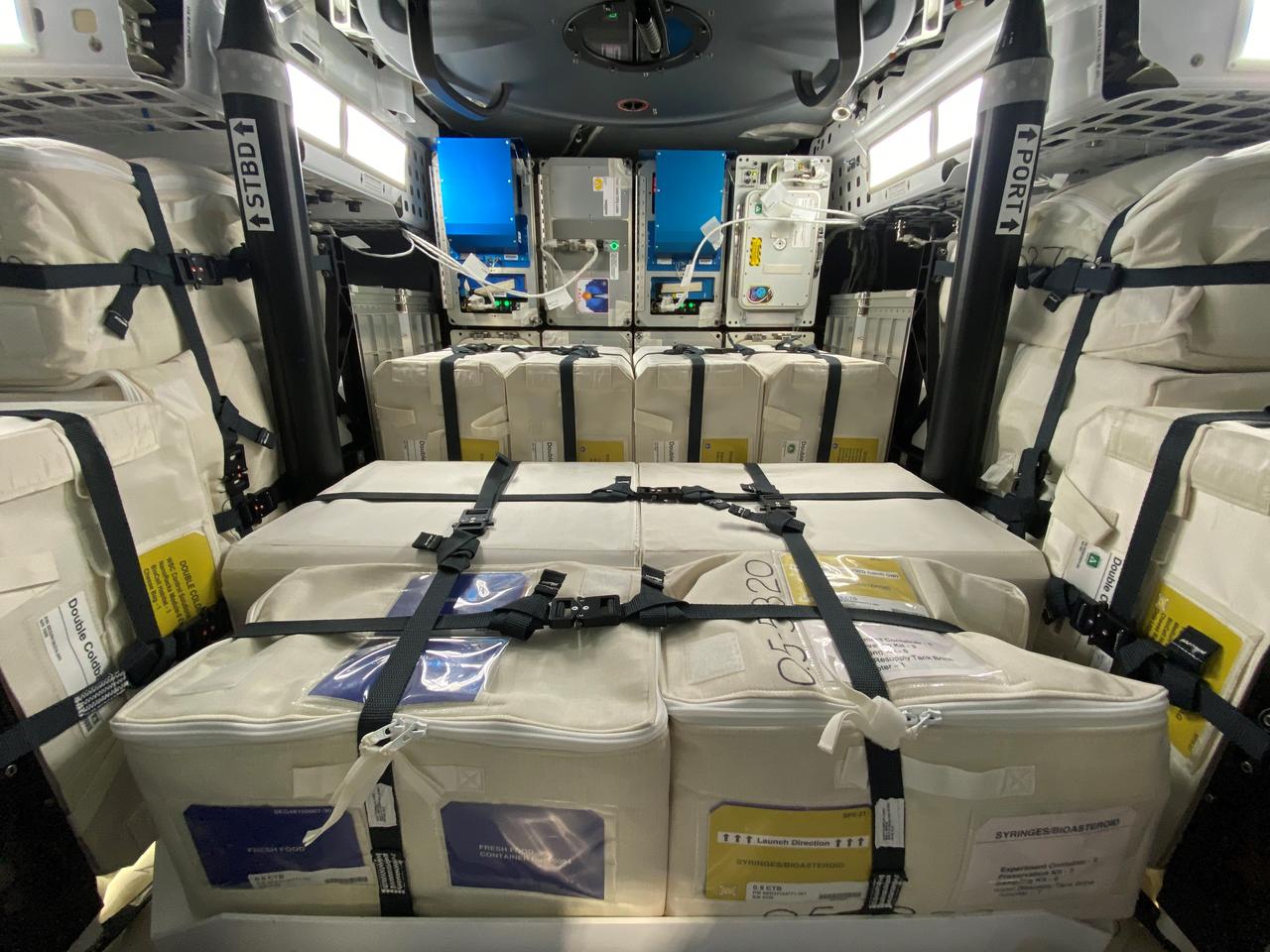
The remaining time-sensitive payloads bound for the International Space Station on SpaceX’s 21st Commercial Resupply Services (CRS-21) mission are loaded into the Cargo Dragon spacecraft on Friday, Dec. 4, 2020. A SpaceX Falcon 9 rocket, carrying the Cargo Dragon, lifted off from Launch Complex 39A at Kennedy Space Center in Florida at 11:17 a.m. EST on Dec. 6, 2020. The spacecraft is delivering more than 6,400 pounds of science investigations and cargo to the orbiting laboratory.
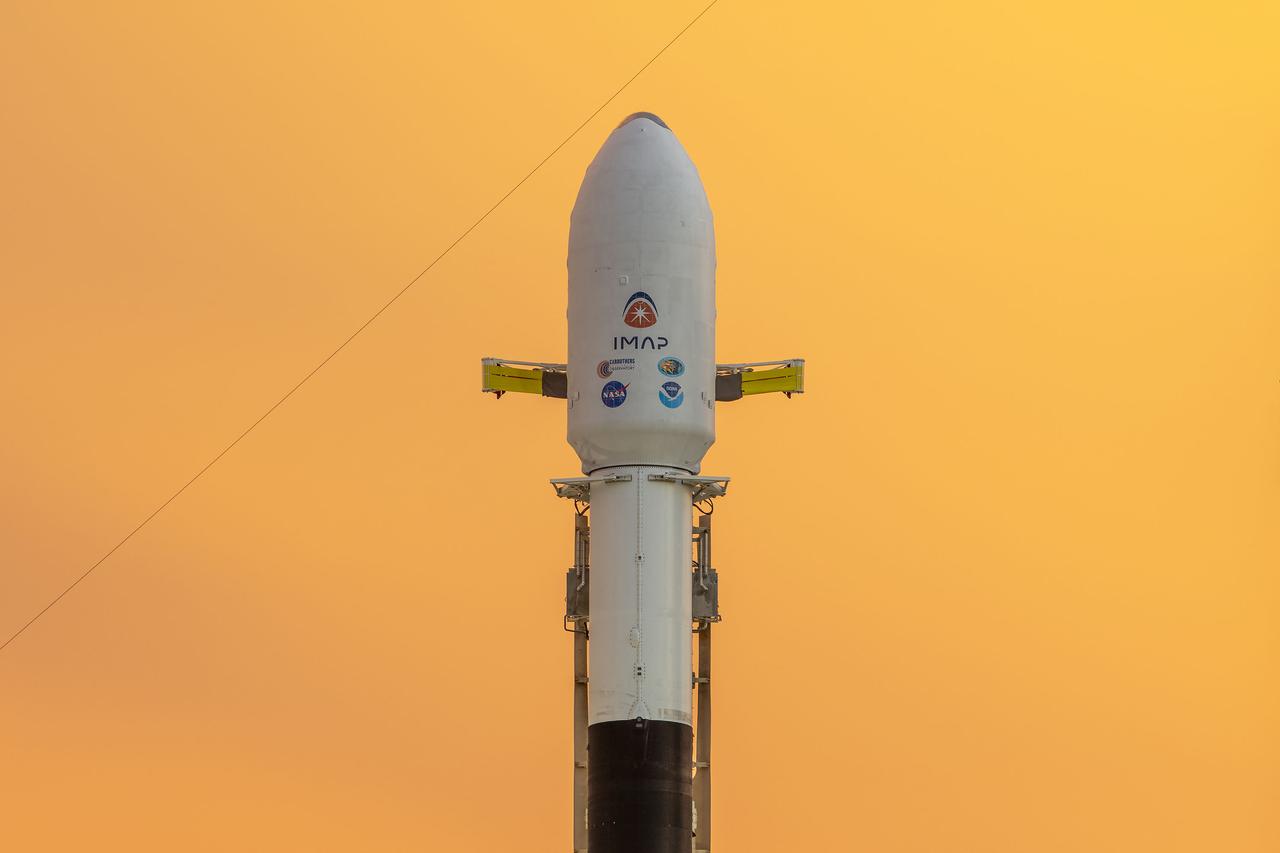
A SpaceX Falcon 9 rocket with NASA’s IMAP (Interstellar Mapping and Acceleration Probe), the agency’s Carruthers Geocorona Observatory, and National Oceanic and Atmospheric Administration’s (NOAA) Space Weather Follow On–Lagrange 1 (SWFO-L1) spacecraft atop stands vertical at Launch Complex 39A as the sun sets on Monday, Sept. 22, 2025, at the agency’s Kennedy Space Center in Florida. The missions will each focus on different effects of the solar wind — the continuous stream of particles emitted by the Sun — and space weather — the changing conditions in space driven by the Sun — from their origins at the Sun to their farthest reaches billions of miles away at the edge of our solar system.
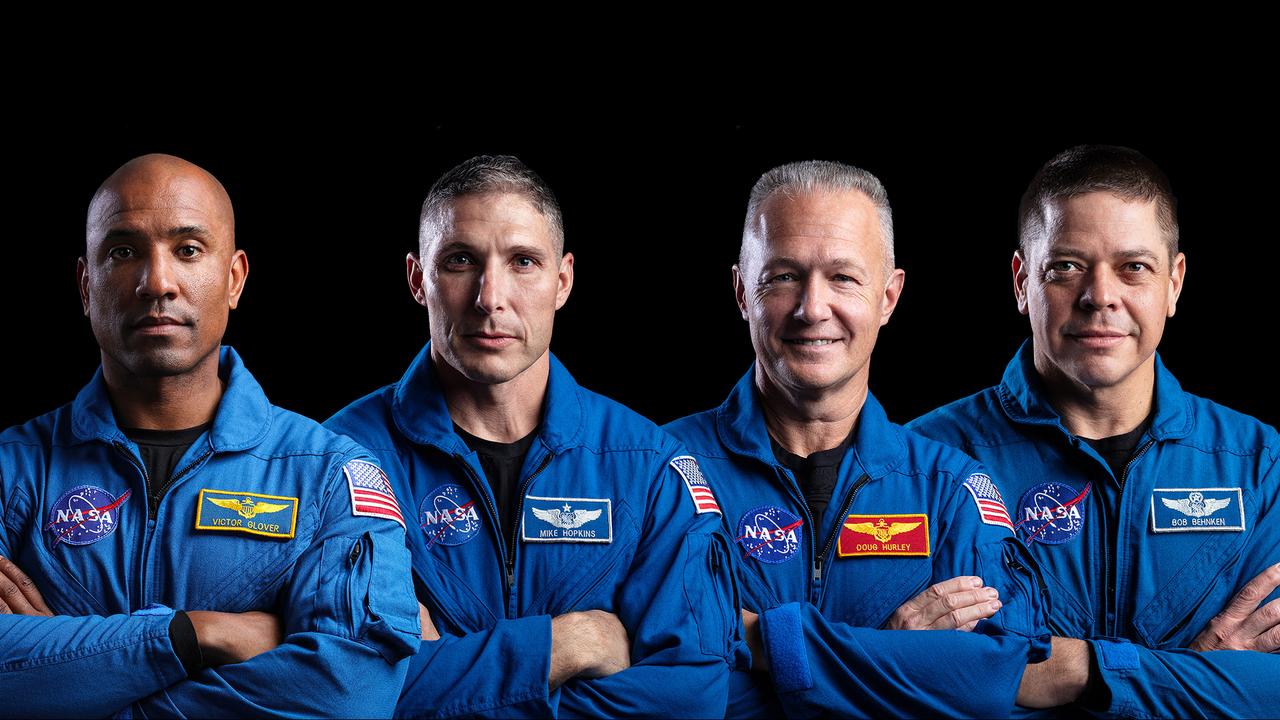
Group portrait photos of SpaceX Crew Flight Test (Demo-2) crew & backup crews - From left to right: Victor Glover, Mike Hopkins, Doug Hurley and Bob Behnken.
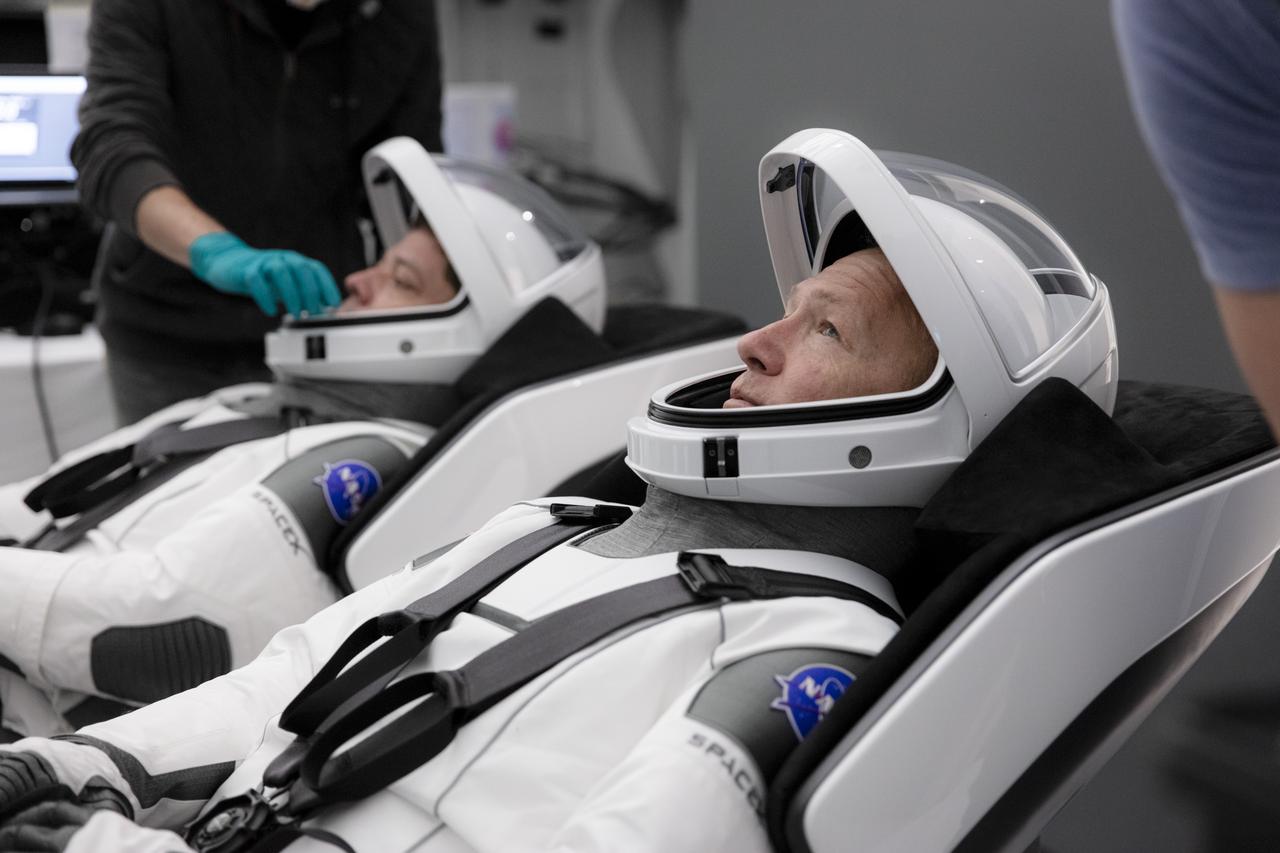
On Thursday, March 19 and Friday, March 20, SpaceX teams in Firing Room 4 at NASA's Kennedy Space Center in Florida and the company's Mission Control in Hawthorne, California, along with NASA flight controllers in Mission Control Houston, executed a full simulation of launch and docking of the Crew Dragon spacecraft, with NASA astronauts Bob Behnken and Doug Hurley participating in SpaceX's flight simulator.
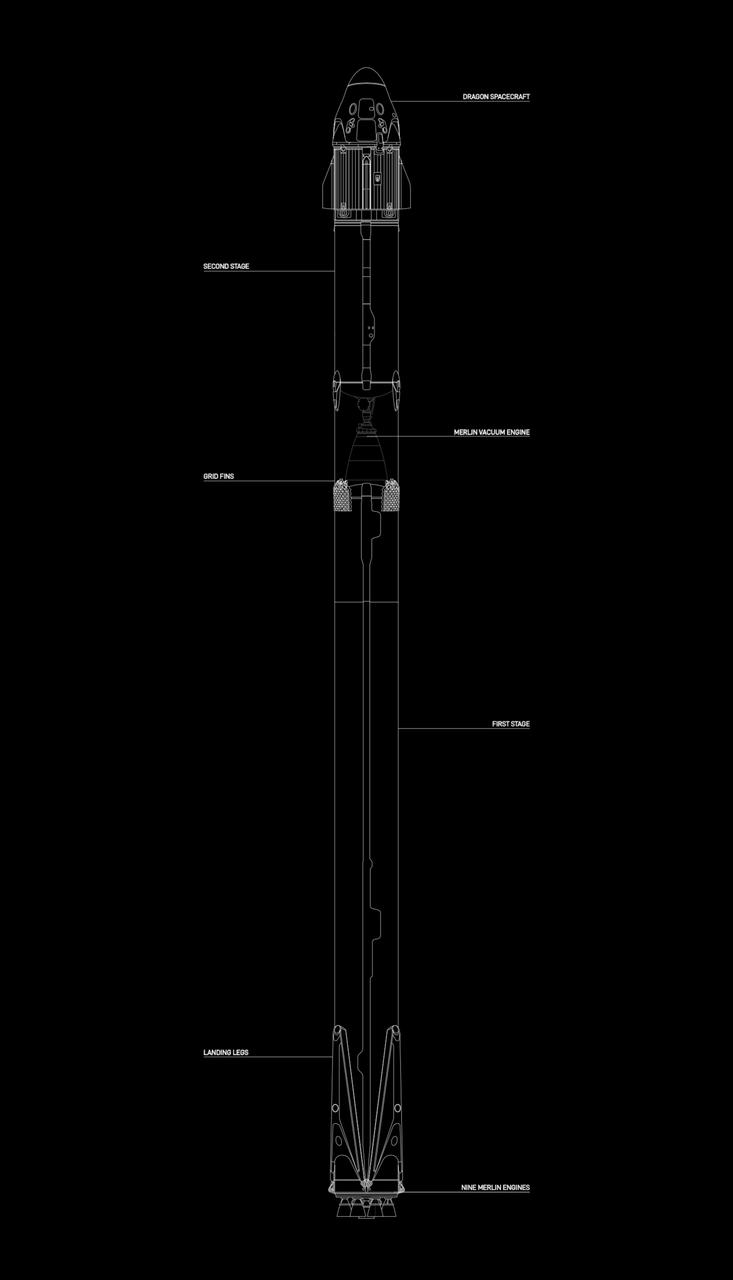
This graphic details the makeup of SpaceX’s Falcon 9 rocket. Falcon 9 is the launch vehicle SpaceX uses for all crewed missions to the International Space Station as part of NASA’s Commercial Crew Program.

NASA astronauts who will be the first humans to fly aboard SpaceX's Crew Dragon spacecraft recently toured the company's Rocket Development Test Facility in McGregor, Texas, on Oct. 16, 2018. Astronauts Bob Behnken and Doug Hurley are set to crew SpaceX's Demo-2 flight test in June 2019, which will be the first flight of Crew Dragon with people onboard. Astronauts Victor Glover, pictured, and Mike Hopkins will crew SpaceX's first regular mission to the International Space Station, following Demo-2 and NASA's certification of SpaceX commercial crew systems.
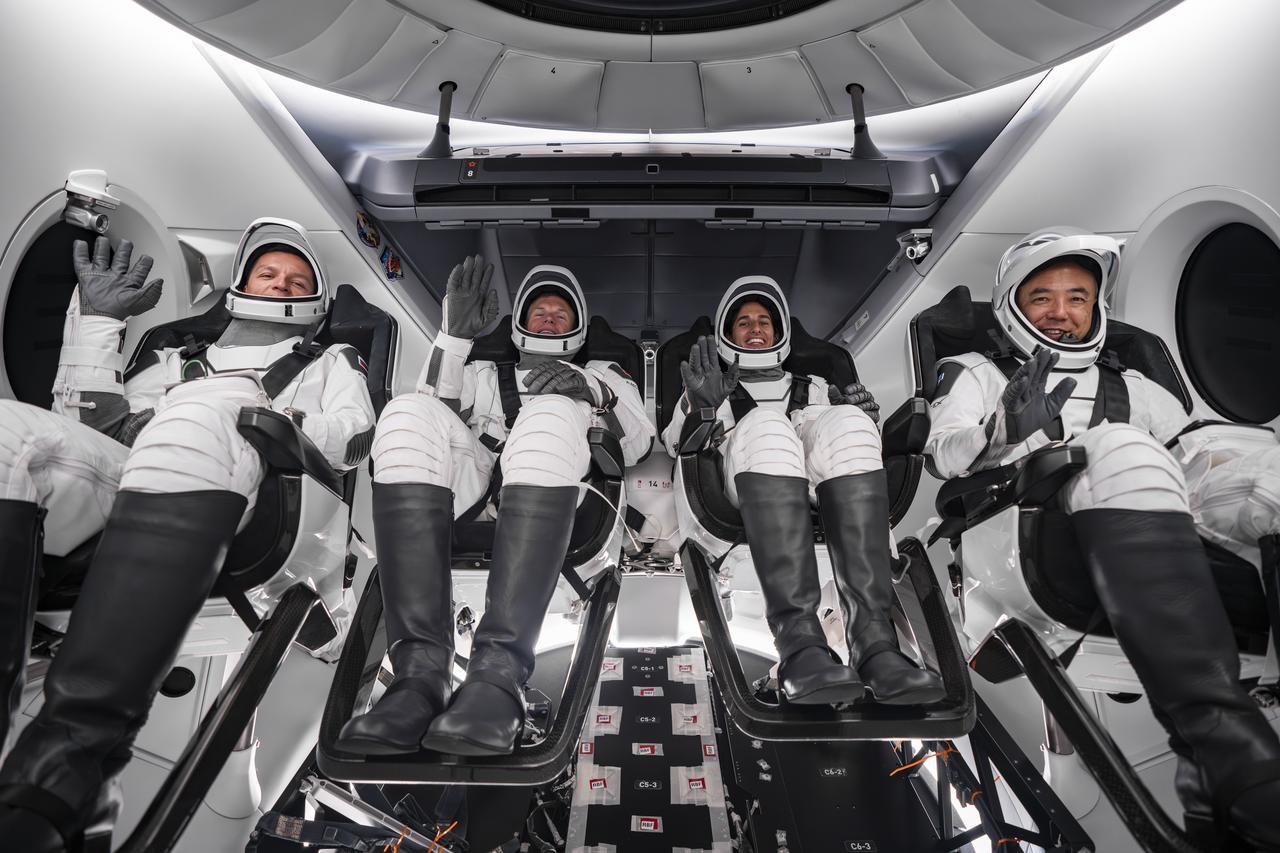
From left, Roscosmos cosmonaut Konstantin Borisov, ESA (European Space Agency) astronaut Andreas Mogensen, NASA astronaut Jasmin Moghbeli, and JAXA (Japan Aerospace Exploration Agency) astronaut Satoshi Furukawa sit inside SpaceX’s Dragon spacecraft, named Endurance, as part of a countdown dress rehearsal for NASA’s SpaceX Crew-7 mission at the agency’s Kennedy Space Center in Florida on Tuesday, Aug. 22, 2023. The four crewmates will fly to the International Space Station for a six-month rotation, conducting research and science experiments. Liftoff is targeted for 3:50 a.m. EDT Friday, Aug. 25, 2023.
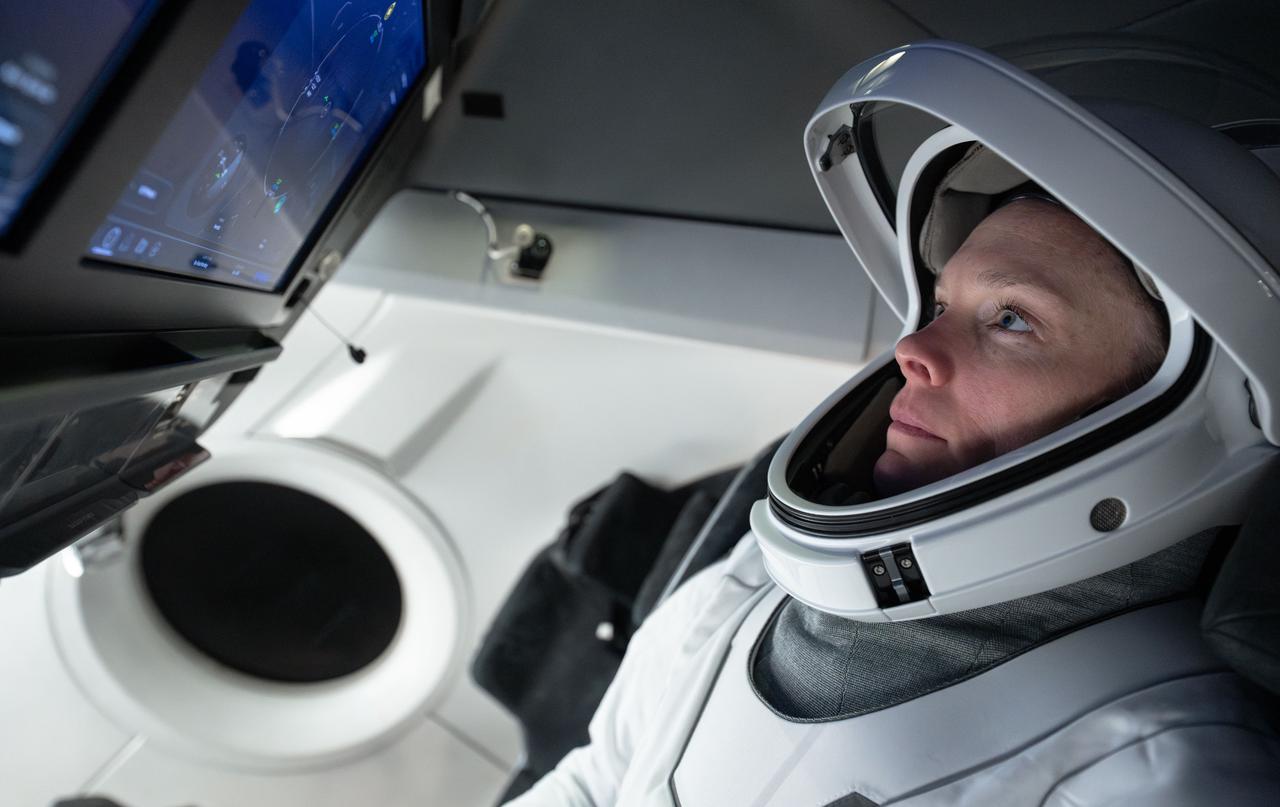
jsc2024e079789 (Nov. 20, 2024) --- NASA astronaut and Pilot for NASA’s SpaceX Crew-10 mission Nichole Ayers is pictured training inside a mockup of a Dragon cockpit at the company's facilities in Hawthorne, California. Credit: SpaceX
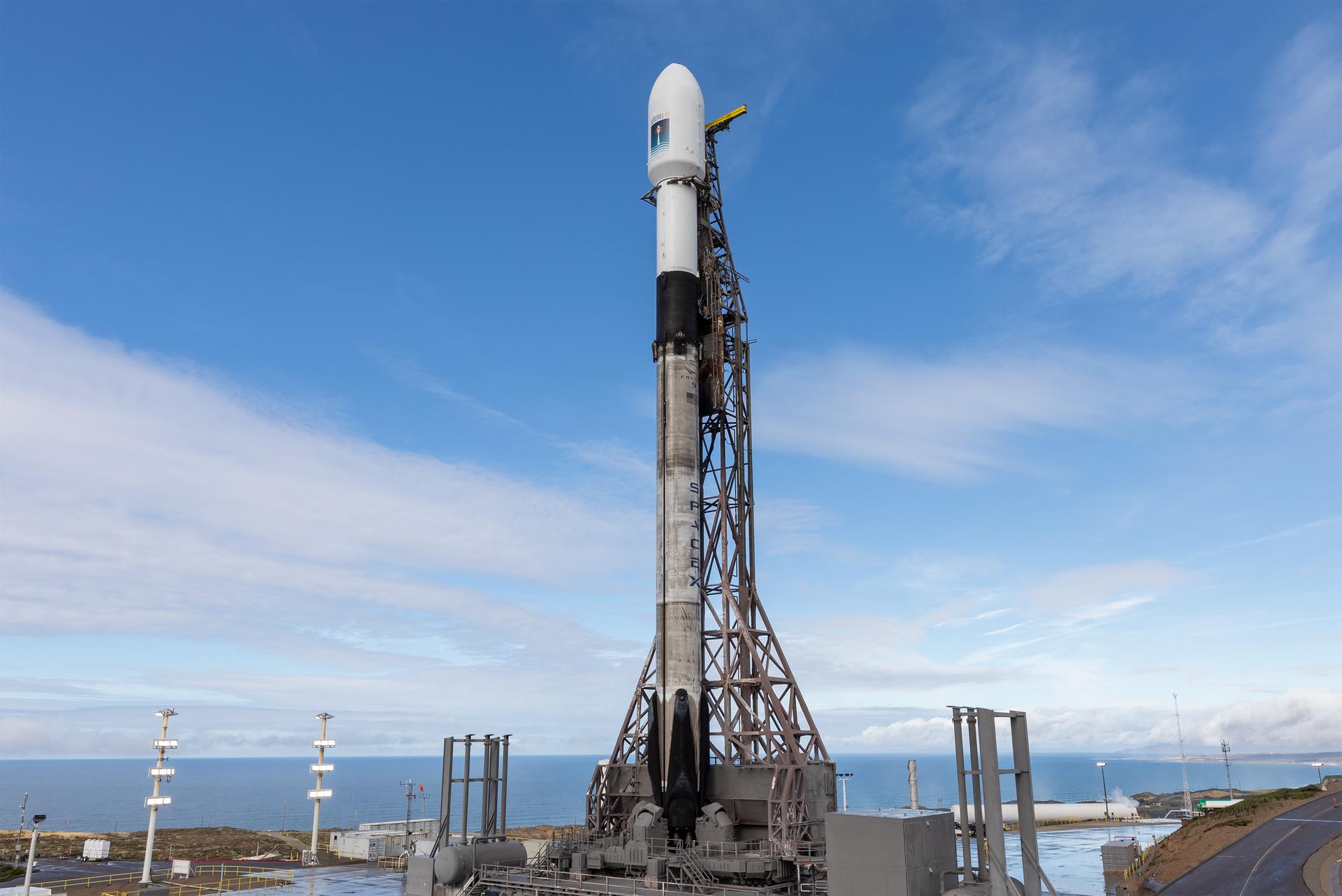
A SpaceX rocket carrying the Sentinel-6B satellite stands vertical on the launch pad at Space Launch Complex 4 East at Vandenberg Space Force Base in California on Sunday, Nov. 16, 2025, ahead of launch targeted for no earlier than 9:21 p.m. PST. A collaboration between NASA, ESA (European Space Agency), EUMETSAT (European Organisation for the Exploitation of Meteorological Satellites), and the National Oceanic and Atmospheric Administration (NOAA), Sentinel-6B is designed to measure sea levels down to roughly an inch for about 90% of the world’s oceans.
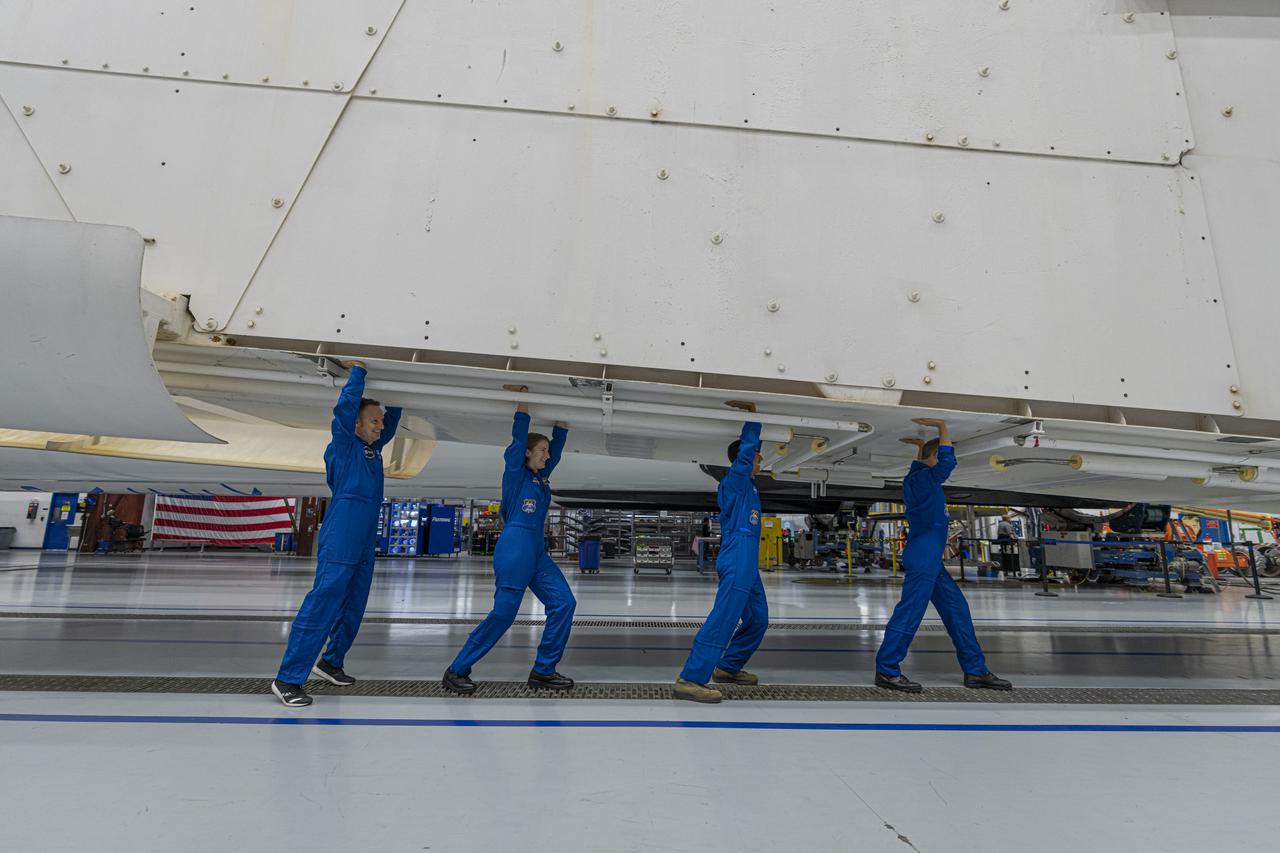
NASA’s SpaceX Crew-3 astronauts are inside the SpaceX horizontal processing facility near Launch Complex 39A at Kennedy Space Center in Florida on Oct. 26, 2021. In this view, they simulate holding up the Falcon 9 rocket on its transporter before rollout to Launch Complex 39A, which occurred on Oct. 27. From left are Matthias Maurer, with the European Space Agency, and NASA astronauts Kayla Barron, Raja Chari, and Tom Marshburn. The four-person crew will launch aboard the Crew Dragon atop the Falcon 9 on Oct. 31 to the International Space Station. Launch is targeted for 2:21 a.m. EDT from Pad 39A. Crew-3 is the third crew rotation flight to the space station for NASA’s Commercial Crew Program, and the first flight of a new Crew Dragon spacecraft.

jsc2022e003322 (Dec. 14, 2021) --- NASA’s SpaceX Crew-4 astronauts participate in a training session at SpaceX headquarters in Hawthorne, CA. From left to right: NASA astronaut and Crew-4 pilot Bob Hines, and NASA astronaut and Crew-4 commander Kjell Lindgren.
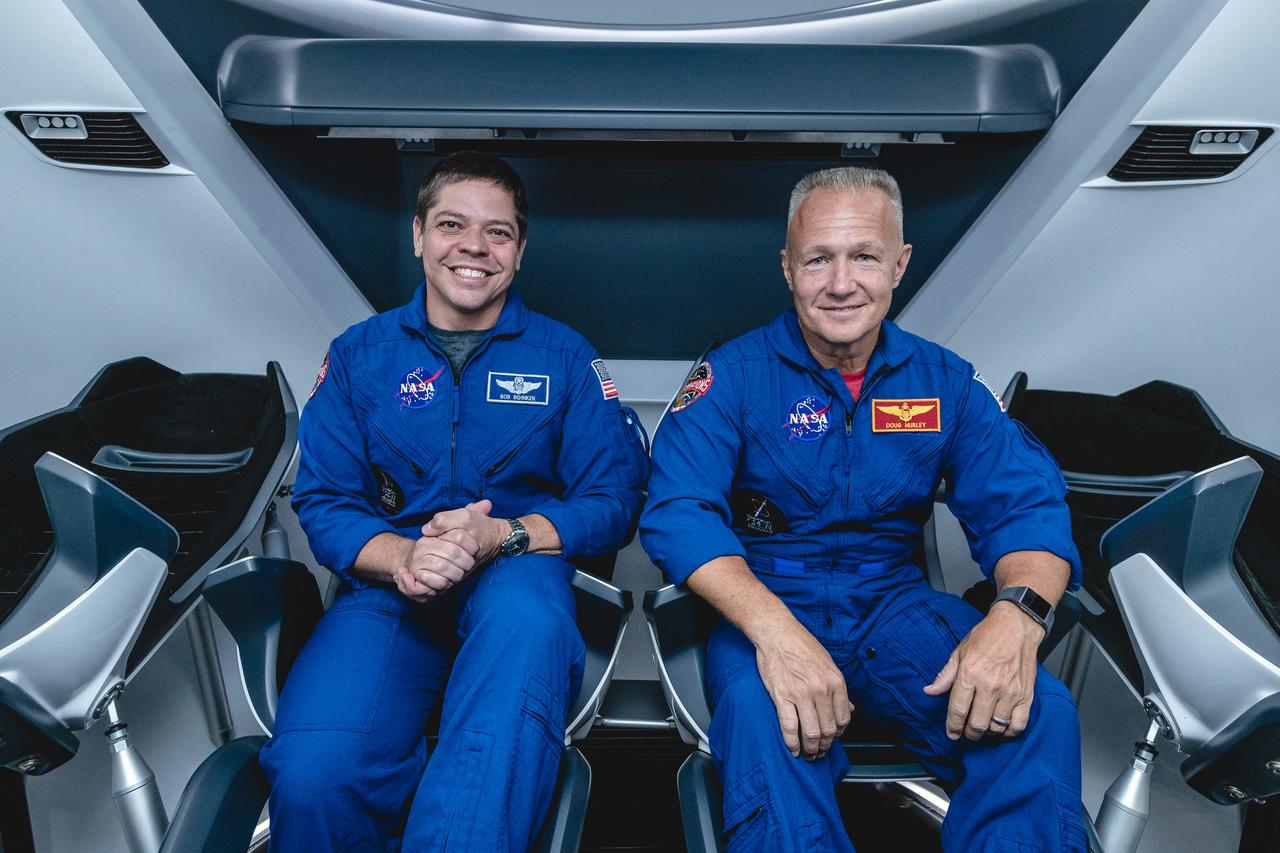
NASA astronauts, from left, Bob Behnken and Doug Hurley, assigned to fly on SpaceX's Demo-2 test flight of its Crew Dragon, are inside a mockup of the spacecraft at NASA's Johnson Space Center in Houston on Aug. 2, 2018, ahead of the agency's announcement of their commercial crew assignment Aug. 3. Nine U.S. astronauts were selected for commercial crew flight assignments on the first test flights and operational missions for SpaceX's Crew Dragon and Boeing's CST-100 Starliner.
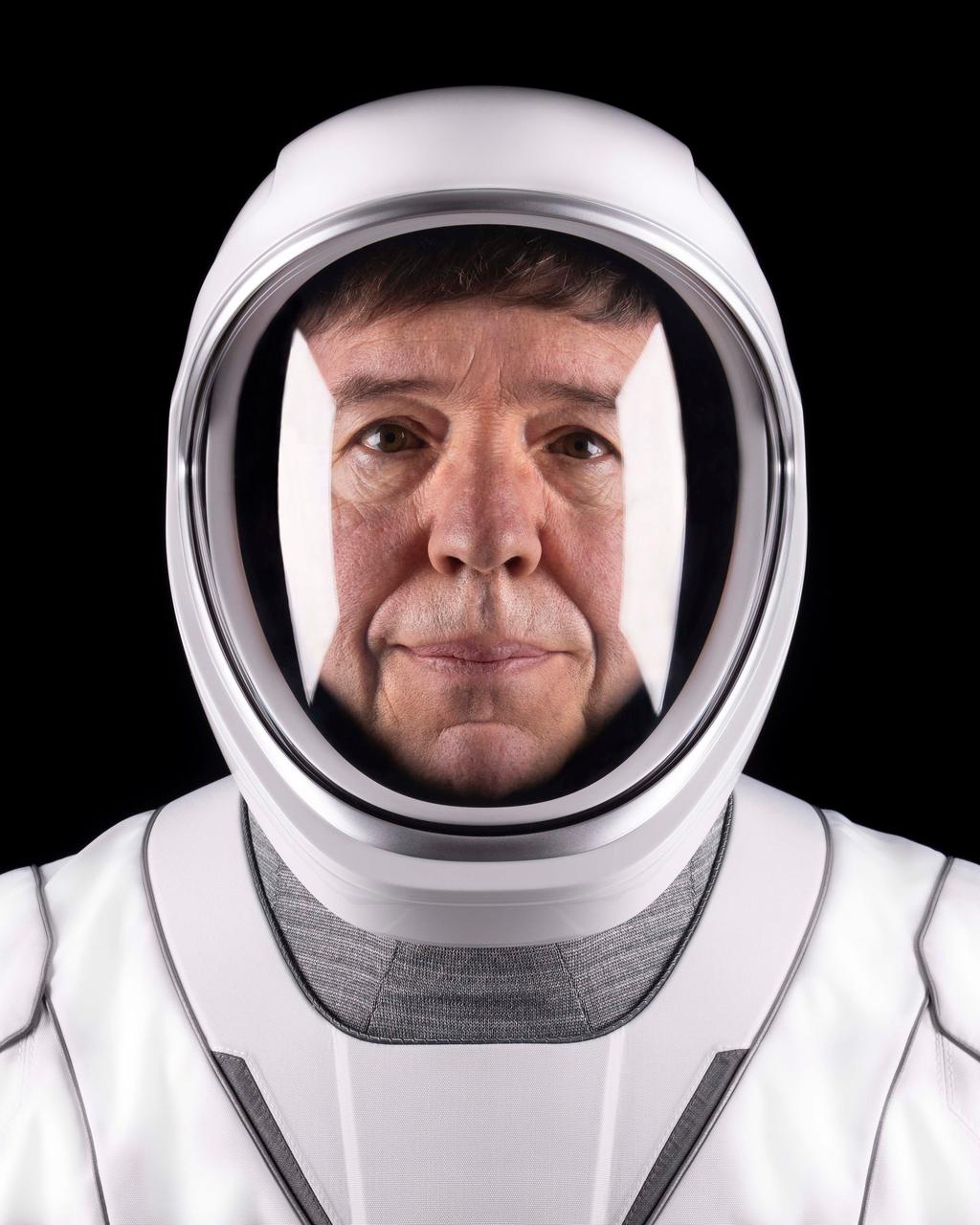
jsc2024e01170 (Dec. 3, 2023) --- SpaceX Crew-8 Pilot Michael Barratt of NASA's Commercial Crew Program poses for a portrait in his pressure suit at SpaceX headquarters in Hawthorne, California. Credit: SpaceX
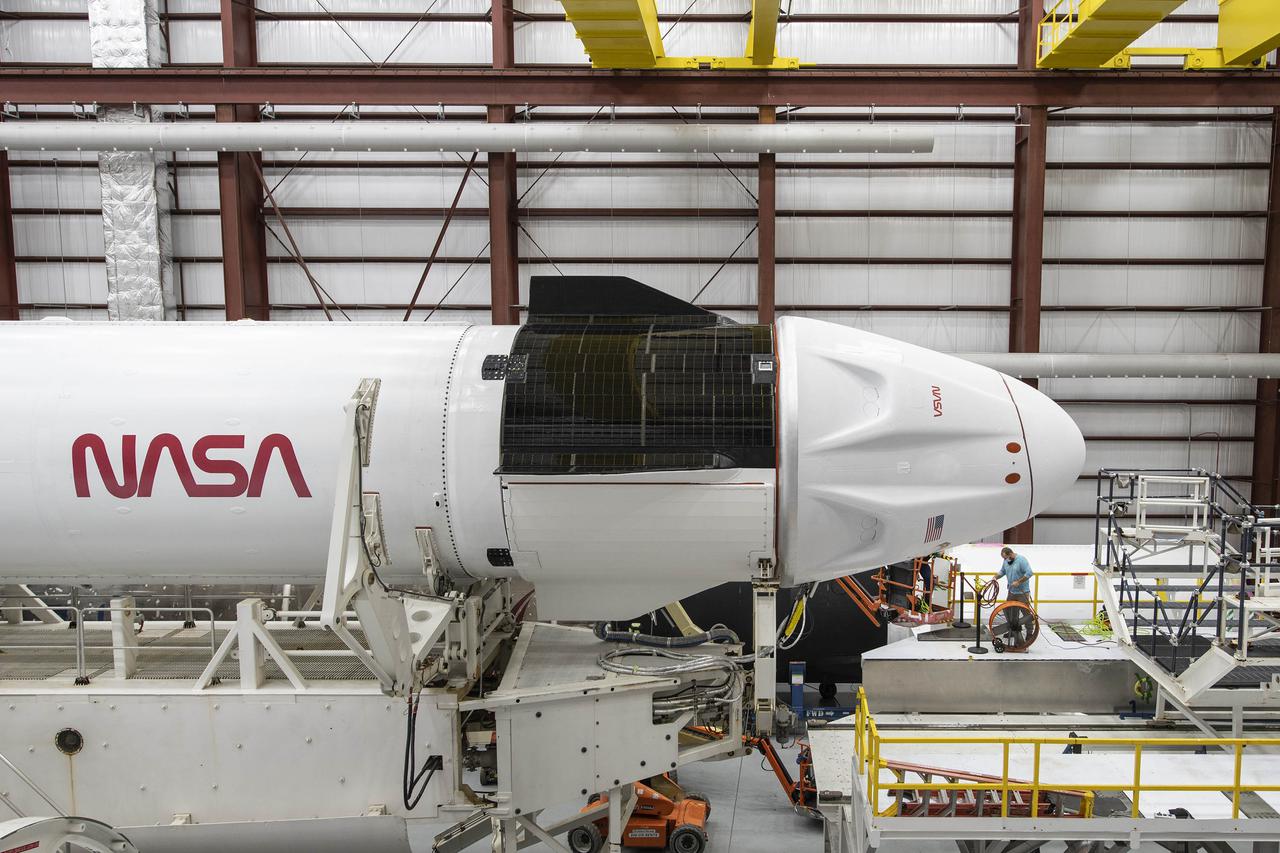
Inside the SpaceX horizontal processing facility at NASA’s Kennedy Space Center in Florida, preparations are underway to roll the SpaceX Falcon 9 rocket with Crew Dragon attached to Launch Complex 39A on Oct. 27, 2021 for NASA’s Space X Crew-3 mission. NASA astronauts Raja Chari, Tom Marshburn and Kayla Barron, along with Matthias Maurer, European Space Agency astronaut, will launch aboard the Crew Dragon on the Falcon 9 rocket on Oct. 31. Launch is targeted for 2:21 a.m. from Pad 39A. Crew-3 is the third crew rotation flight for the agency’s Commercial Crew Program, and the first flight of a new Crew Dragon spacecraft.

A SpaceX Falcon 9 rocket carrying NASA’s IMAP (Interstellar Mapping and Acceleration Probe), the agency’s Carruthers Geocorona Observatory, and National Oceanic and Atmospheric Administration’s (NOAA) Space Weather Follow On–Lagrange 1 (SWFO-L1) spacecraft lifts off from Launch Complex 39A at NASA’s Kennedy Space Center in Florida at 7:30 a.m. EDT Wednesday, Sept. 24, 2025. The missions will each focus on different effects of the solar wind — the continuous stream of particles emitted by the Sun — and space weather — the changing conditions in space driven by the Sun — from their origins at the Sun to their farthest reaches billions of miles away at the edge of our solar system.
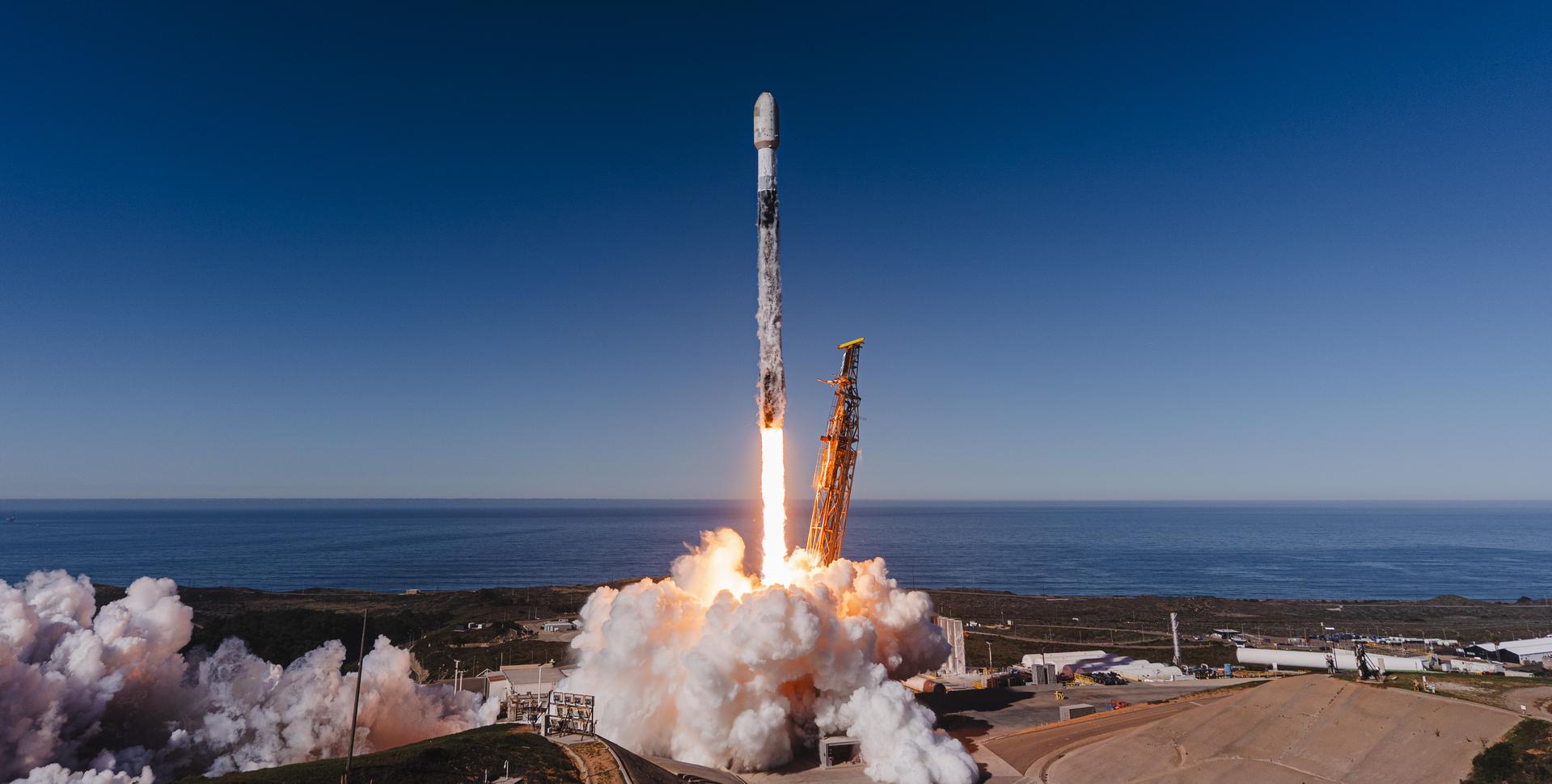
A SpaceX Falcon 9 rocket carrying NASA’s R5-S7 (Realizing Rapid, Reduced-cost high-Risk Research project Spacecraft 7) CubeSat along with several other satellites as part of the company’s Transporter-15 mission lifts off from Space Launch Complex 4 East at Vandenberg Space Force Base in California at 10:44 a.m. PST Friday, Nov. 28, 2025. The latest in a series of spacecraft, R5-S7 will explore ways to get multiple technology prototypes into low Earth orbit rapidly and at a low cost, accelerating the demonstration of these technologies in orbit and allowing engineers and scientists to more quickly prove them and make them available to NASA missions and other users.
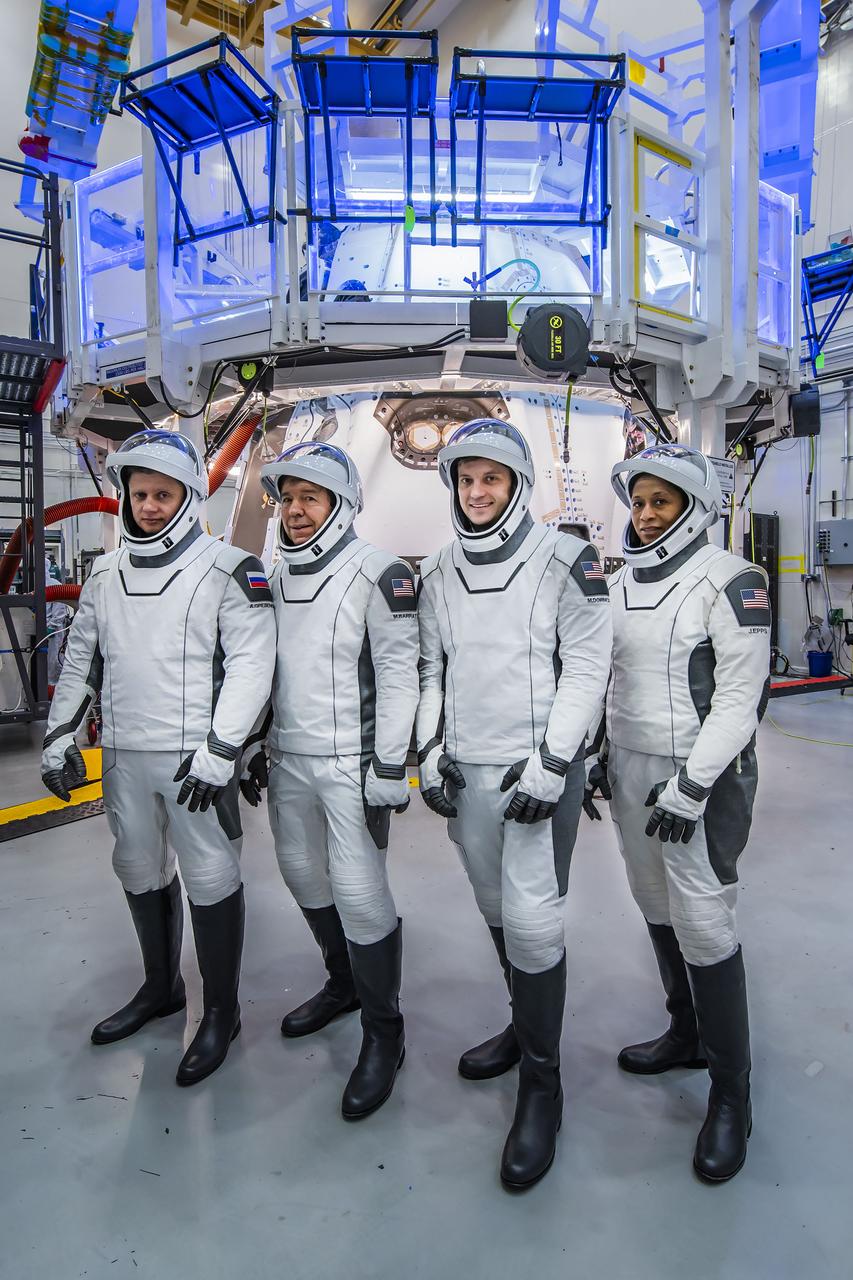
Members of NASA’s SpaceX Crew-8 from right to left, NASA astronauts Jeanette Epps, mission specialist; Matthew Dominick, commander; Michael Barratt, pilot; and Roscosmos cosmonaut Alexander Grebenkin, mission specialist; participate in the Crew Equipment Interface Test at Cape Canaveral Space Force Station in Florida on Friday, Jan. 12, 2024. As part of the agency’s Commercial Crew Program, Crew-8 marks the ninth human spaceflight mission supported by a SpaceX Dragon spacecraft and the eighth crew rotation mission to International Space Station. Crew-8 will launch on a SpaceX Falcon 9 rocket from Launch Complex 39A at NASA’s Kennedy Space Center in Florida no earlier than mid-February 2024.

A SpaceX Falcon Heavy rocket carrying NASA’s Europa Clipper spacecraft lifts off from Launch Complex 39A at NASA’s Kennedy Space Center in Florida at 12:06 p.m. EDT on Monday, Oct. 14, 2024. After launch, the spacecraft plans to fly by Mars in February 2025, then back by Earth in December 2026, using the gravity of each planet to increase its momentum. With help of these “gravity assists,” Europa Clipper will achieve the velocity needed to reach Jupiter in April 2030.
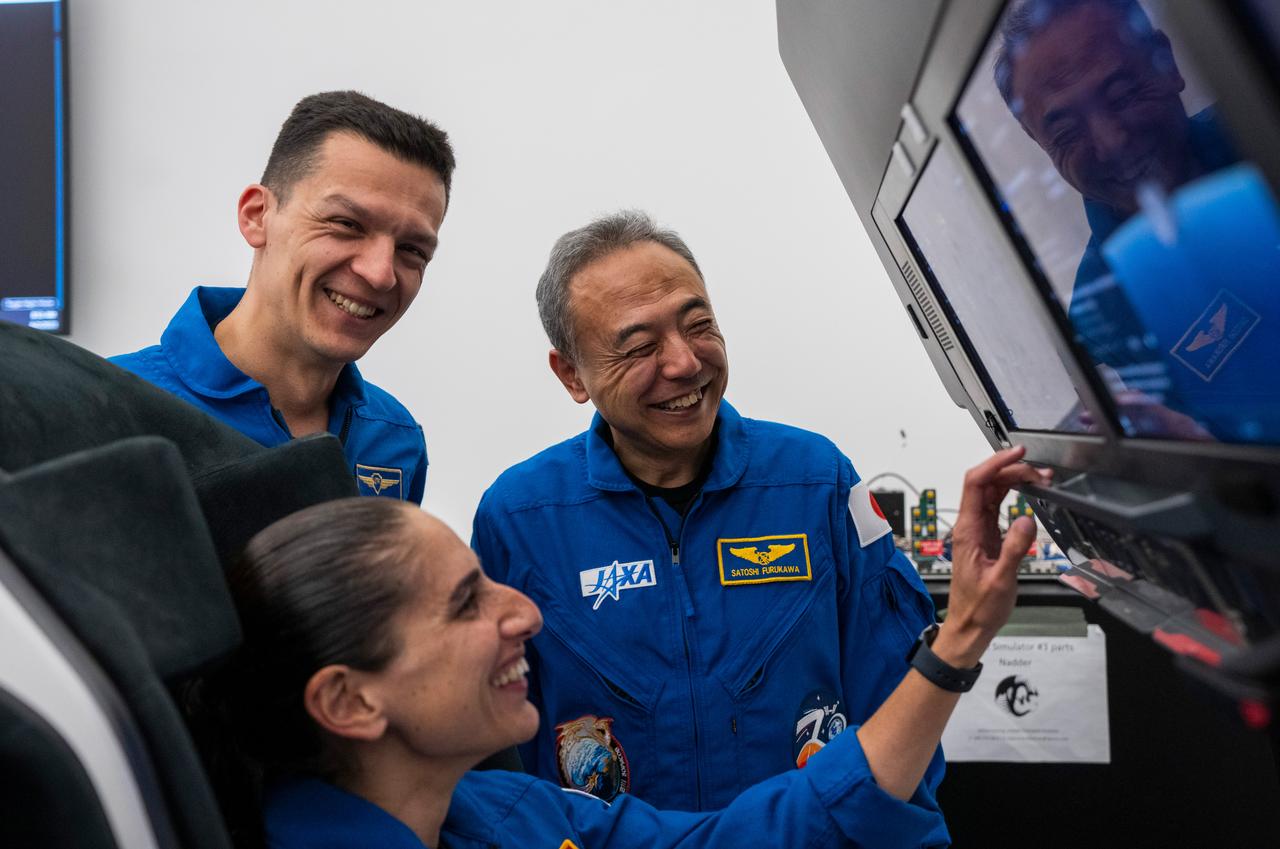
NASA's SpaceX Crew-7 is photographed at SpaceX in Hawthorne, California during a training session Imagery provided by SpaceX.
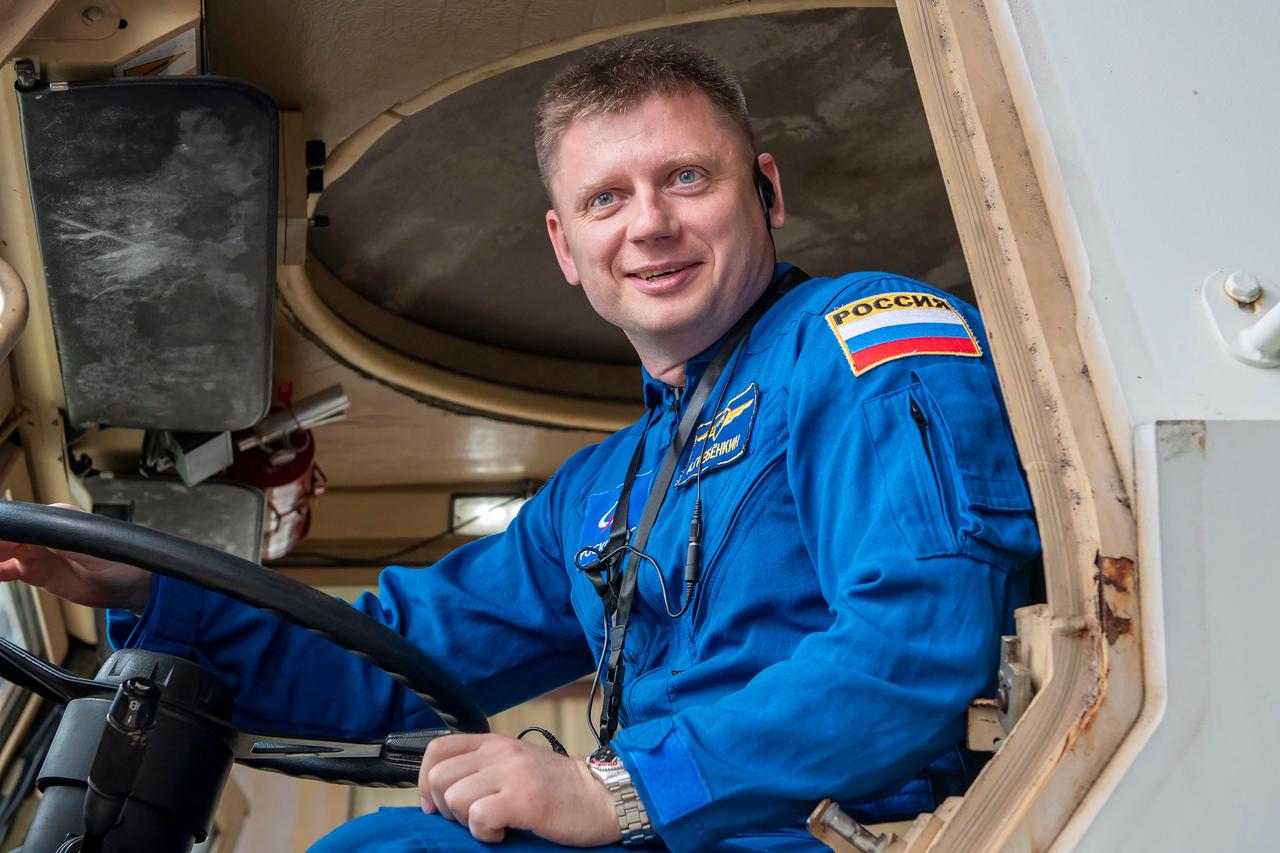
jsc2024e011750 (Oct. 12, 2023) --- SpaceX Crew-8 Mission Specialist Alexander Grebenkin poses for a photo inside an emergency egress vehicle at NASA's Kennedy Space Center's Launch Pad 39A in Florida. Crews would use the emergency egress vehicle to quickly leave the launch area in case of an emergency. Credit: SpaceX
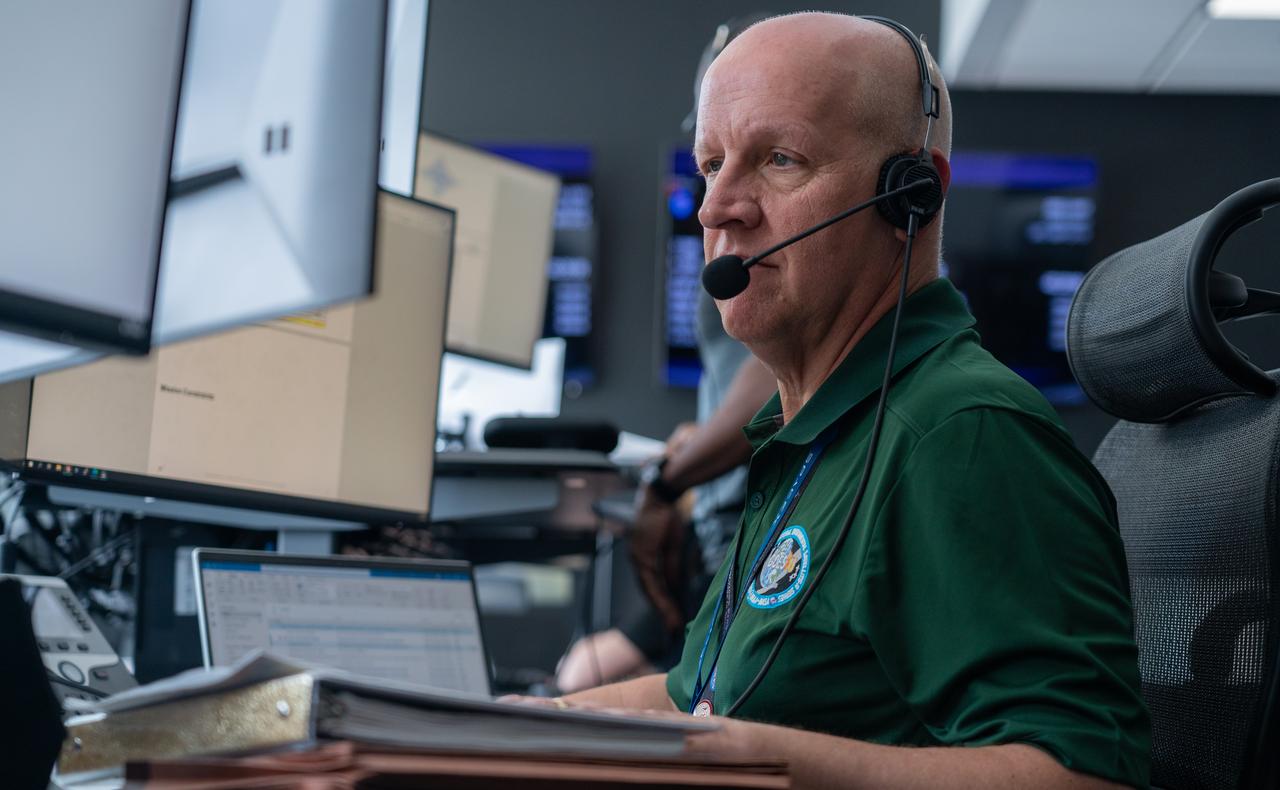
Tim Dunn, senior launch director for NASA’s Launch Services Program, participates in rehearsal launch operations for the National Oceanic and Atmospheric Administration (NOAA) GOES-U (Geostationary Operational Environmental Satellite U) mission inside Hangar X at NASA’s Kennedy Space Center in Florida on Monday, June 17, 2024. The GOES-U satellite, the final addition to GOES-R series, serves a critical role in providing continuous coverage of the Western Hemisphere, including monitoring tropical systems in the eastern Pacific and Atlantic oceans.

jsc2022e068635 (June 27, 2022) --- SpaceX Crew-5 Mission Specialist Koichi Wakata from the Japan Aerospace Exploration Agency (JAXA) is pictured during a Crew Dragon cockpit training session at SpaceX headquarters in Hawthorne, California. Credit: SpaceX
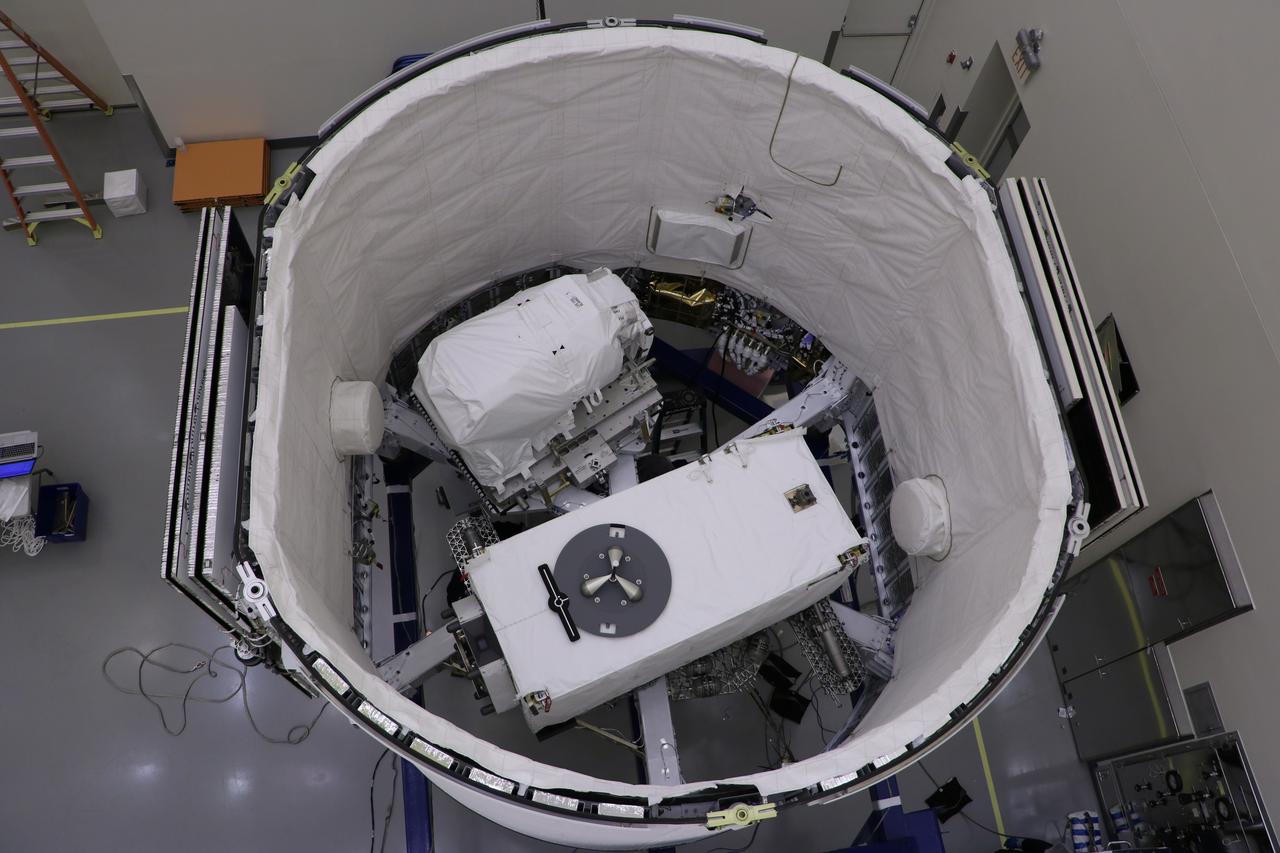
The ECOsystem Spaceborne Thermal Radiometer Experiment on Space Station (ECOSTRESS), pictured at the bottom, and the Latching End Effector (LEE), pictured at the top, are integrated into the unpressurized SpaceX Dragon truck June 2, 2018, at the SpaceX facility on Cape Canaveral Air Force Station in Florida. The payloads will be carried to the International Space Station on SpaceX's 15th Commercial Resupply Services mission. ECOSTRESS will measure the temperature of plants and use that information to better understand how much water plants need and how they respond to stress. The Canadian Space Agency is supplying LEE for the Canadarm2 as a spare to replace a failed unit removed by astronauts during a spacewalk in 2017. Each end of the Canadarm2 robotic arm has an identical LEE, which acts like a "hand" to grapple payloads and visiting cargo spaceships.
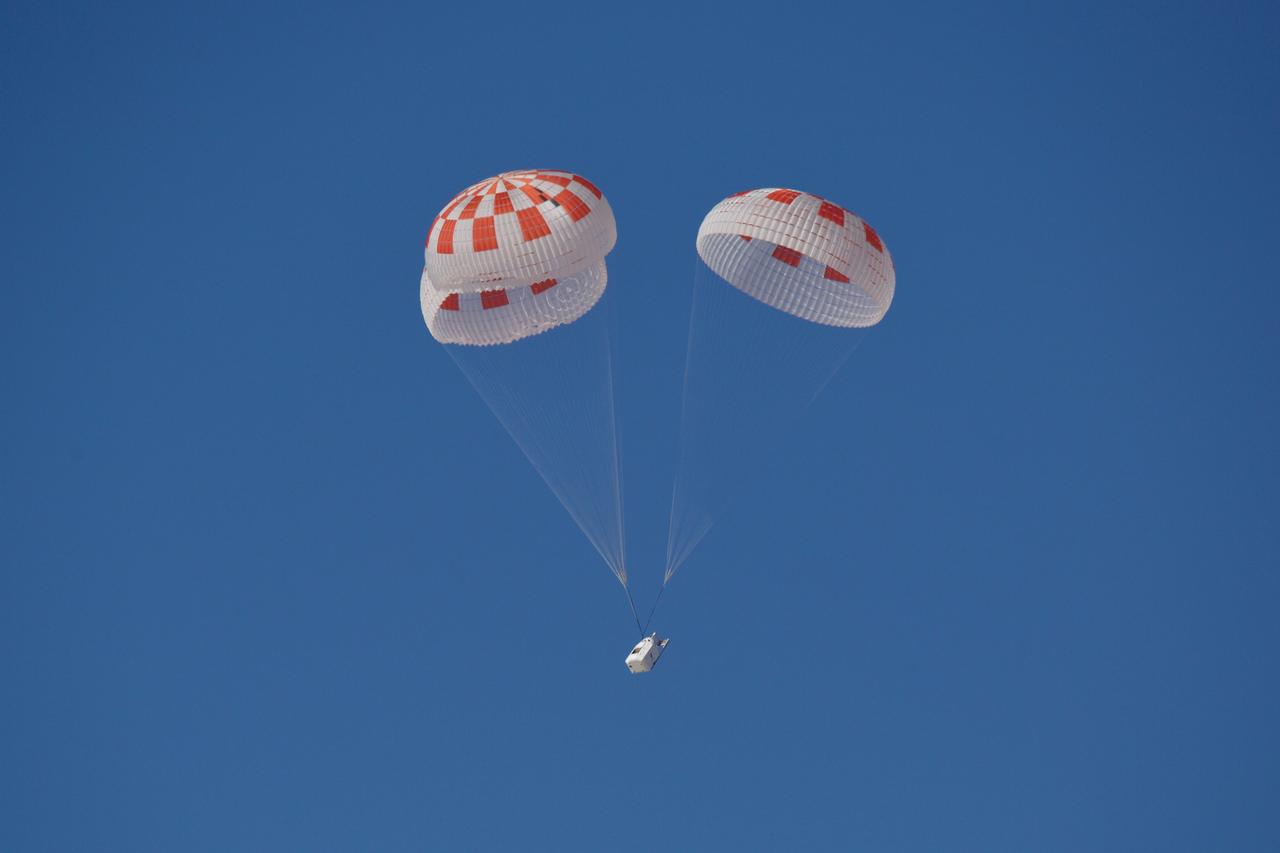
SpaceX performed its fourteenth overall parachute test supporting Crew Dragon development. This most recent exercise was the first of several planned parachute system qualification tests ahead of the spacecraft’s first crewed flight and resulted in the successful touchdown of Crew Dragon’s parachute system. During this test, a C-130 aircraft transported the parachute test vehicle, designed to achieve the maximum speeds that Crew Dragon could experience on re-entry, over the Mojave Desert in Southern California and dropped the vehicle from an altitude of 25,000 feet. The test demonstrated an off-nominal situation, deploying only one of the two drogue chutes and intentionally skipping a reefing stage on one of the four main parachutes, proving a safe landing in such a contingency scenario.
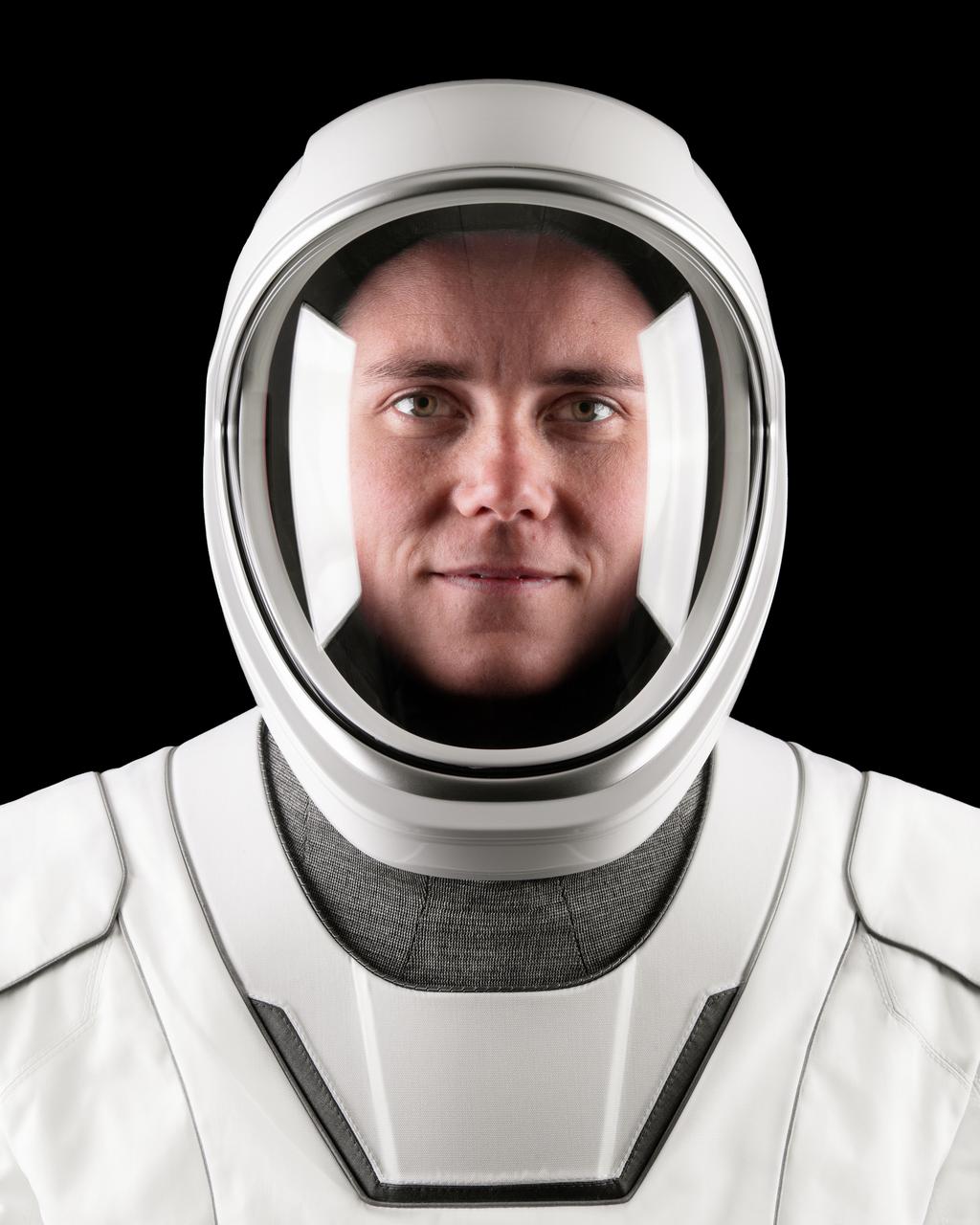
jsc2022e068600 (Aug. 19, 2022) --- Cosmonaut Anna Kikina of Roscosmos, SpaceX Crew-5 Mission Specialist, poses for a portrait in her pressure suit at SpaceX headquarters in Hawthorne, California. Credit: SpaceX
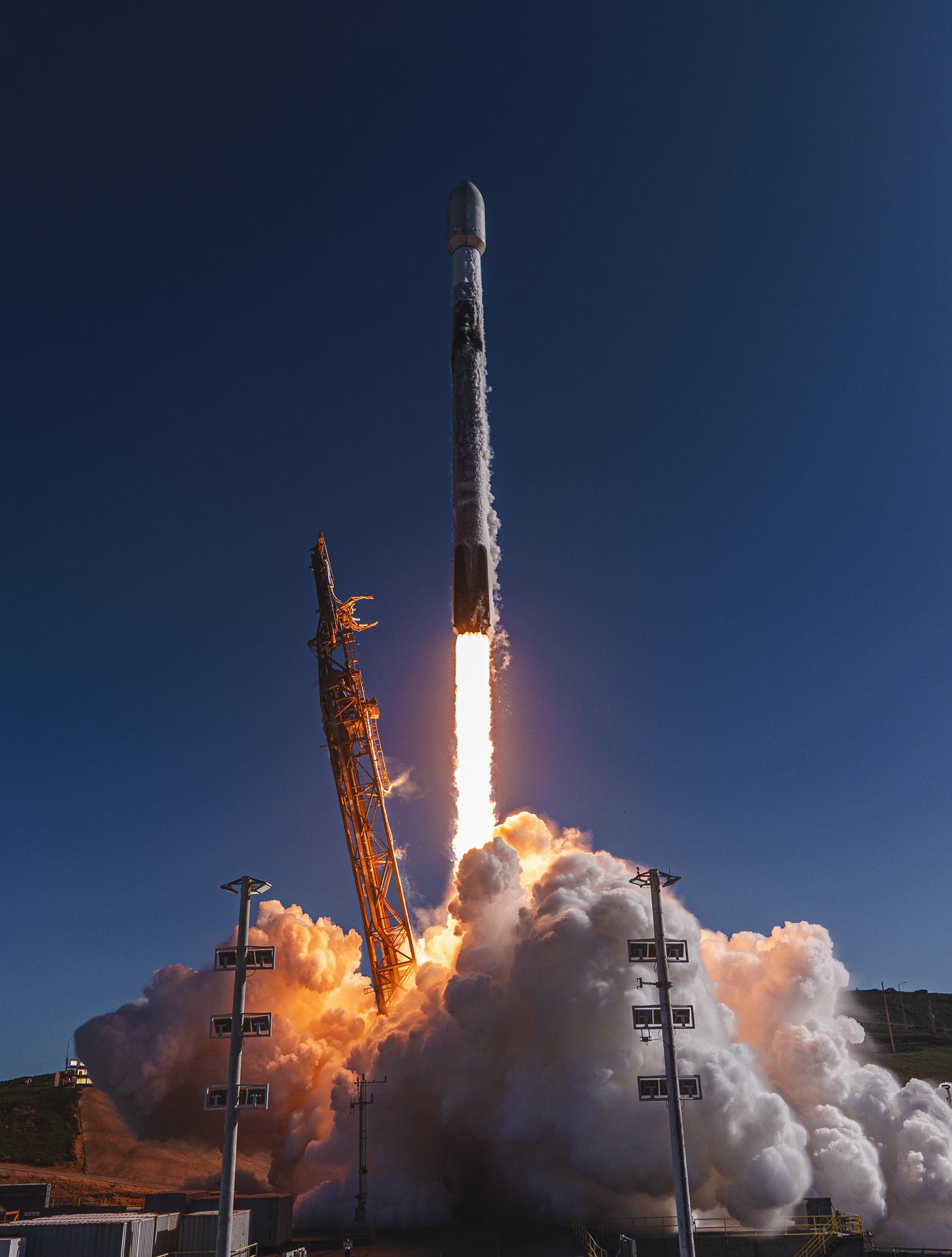
A SpaceX Falcon 9 rocket carrying NASA’s R5-S7 (Realizing Rapid, Reduced-cost high-Risk Research project Spacecraft 7) CubeSat along with several other satellites as part of the company’s Transporter-15 mission lifts off from Space Launch Complex 4 East at Vandenberg Space Force Base in California at 10:44 a.m. PST Friday, Nov. 28, 2025. The latest in a series of spacecraft, R5-S7 will explore ways to get multiple technology prototypes into low Earth orbit rapidly and at a low cost, accelerating the demonstration of these technologies in orbit and allowing engineers and scientists to more quickly prove them and make them available to NASA missions and other users.
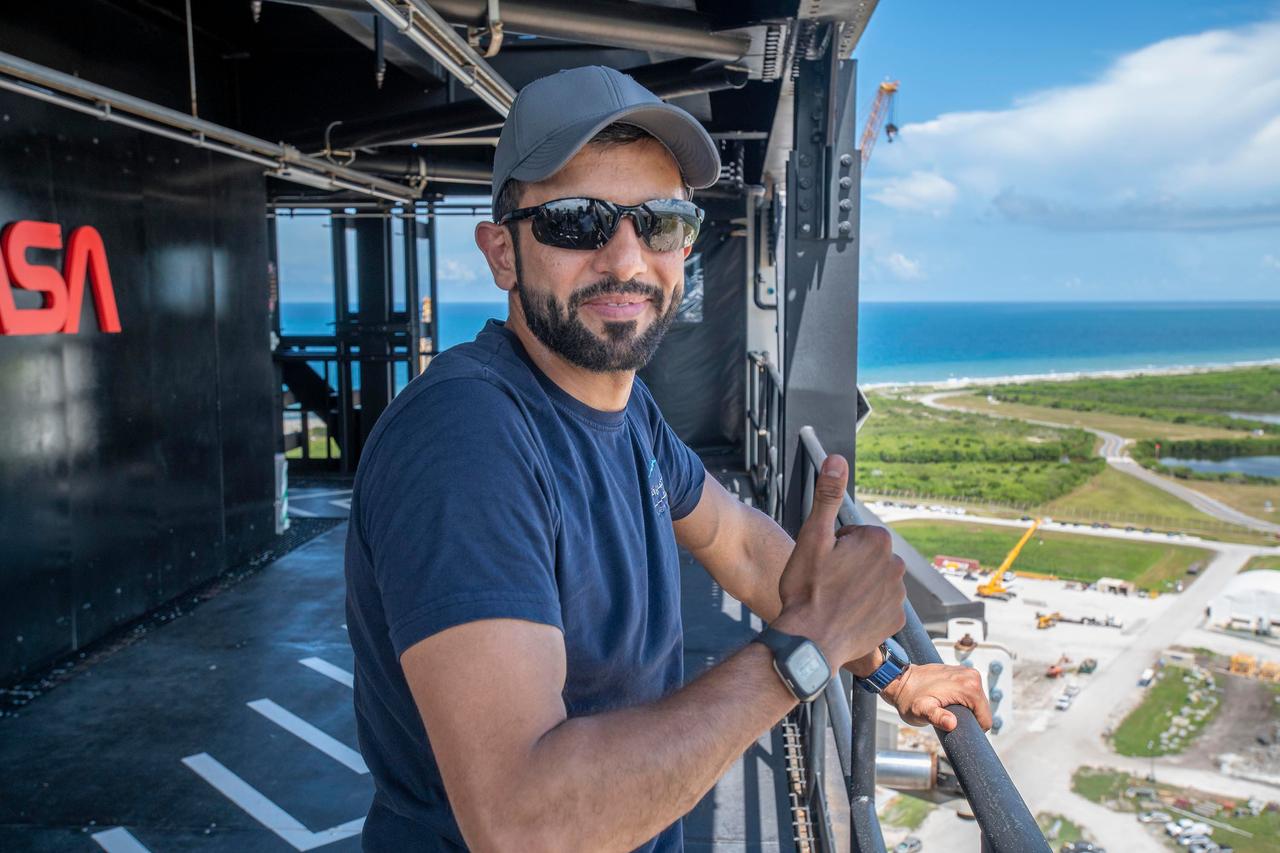
jsc2022e065084 (Aug. 8, 2022) --- Mission Specialist Sultan Alneyadi from the Mohammed bin Rashid Space Centre of the SpaceX Crew-6 mission is pictured during a training session at the Kennedy Space Center's Launch Pad 39A in Florida. Credit: SpaceX
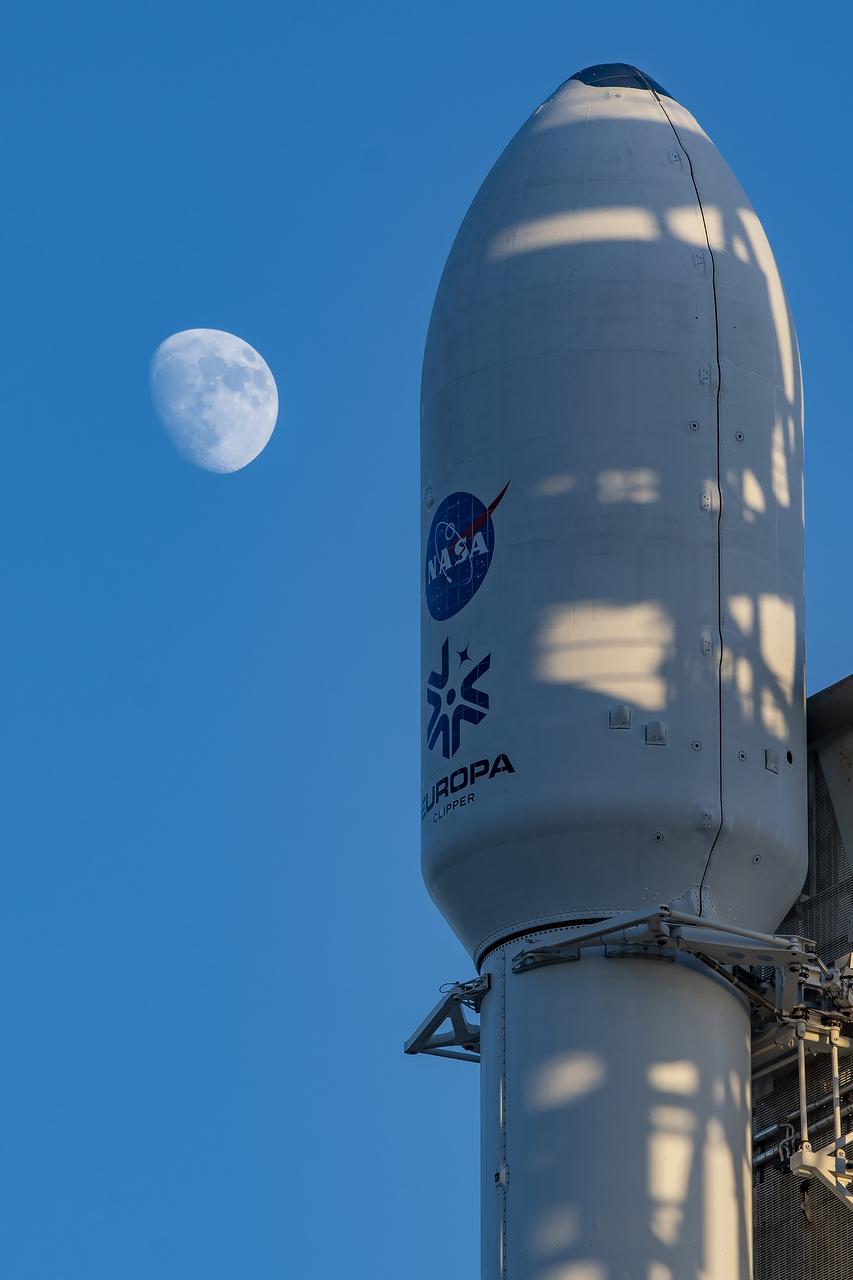
The Earth’s Moon appears with NASA’s Europa Clipper spacecraft encapsulated in a payload fairing atop SpaceX’s Heavy rocket at Launch Complex 39A on Sunday, Oct. 13, 2024, at the agency’s Kennedy Space Center in Florida. The Europa Clipper spacecraft will travel to Jupiter’s icy moon Europa to determine if there are conditions suitable for life beyond Earth.
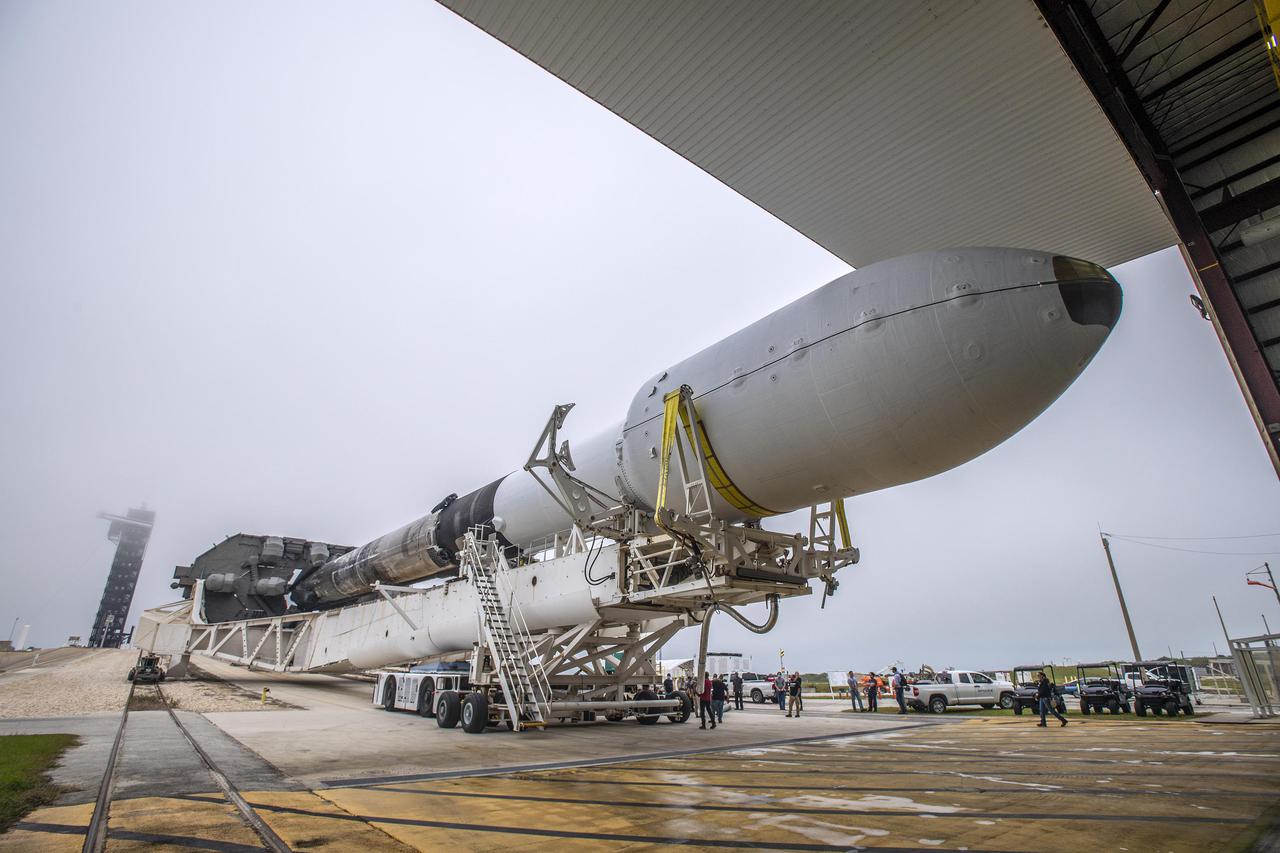
A SpaceX Falcon 9 rocket with NASA’s Imaging X-ray Polarimetry Explorer (IXPE) spacecraft, rolls out to Launch Complex 39A at NASA’s Kennedy Space Center in Florida on Dec. 7, 2021. IXPE is scheduled to launch no earlier than 1 a.m. EST Thursday, Dec. 9. NASA’s Launch Services Program is managing this launch. NASA’s Marshall Space Flight Center in Huntsville, Alabama, manages the IXPE mission. Ball Aerospace, headquartered in Broomfield, Colorado, manages spacecraft operations with support from the University of Colorado at Boulder. NASA’s Goddard Space Flight Center in Greenbelt, Maryland, manages the Explorers Program for the agency’s Science Mission Directorate in Washington. The U.S. Space Force’s Space Launch Delta 45 provides range support for this launch. SpaceX is providing the launch vehicle for this mission. The IXPE spacecraft includes three space telescopes with sensitive detectors capable of measuring the polarization of cosmic X-rays, allowing scientists to answer fundamental questions about extremely complex environments in space where gravitational, electric, and magnetic fields are at their limits. The project is a collaboration between NASA and the Italian Space Agency.

jsc2022e003349 (Dec. 1, 2021) --- NASA astronaut and SpaceX Crew-4 commander Kjell Lindgren participates in a training session at Kennedy Space Center in Florida.
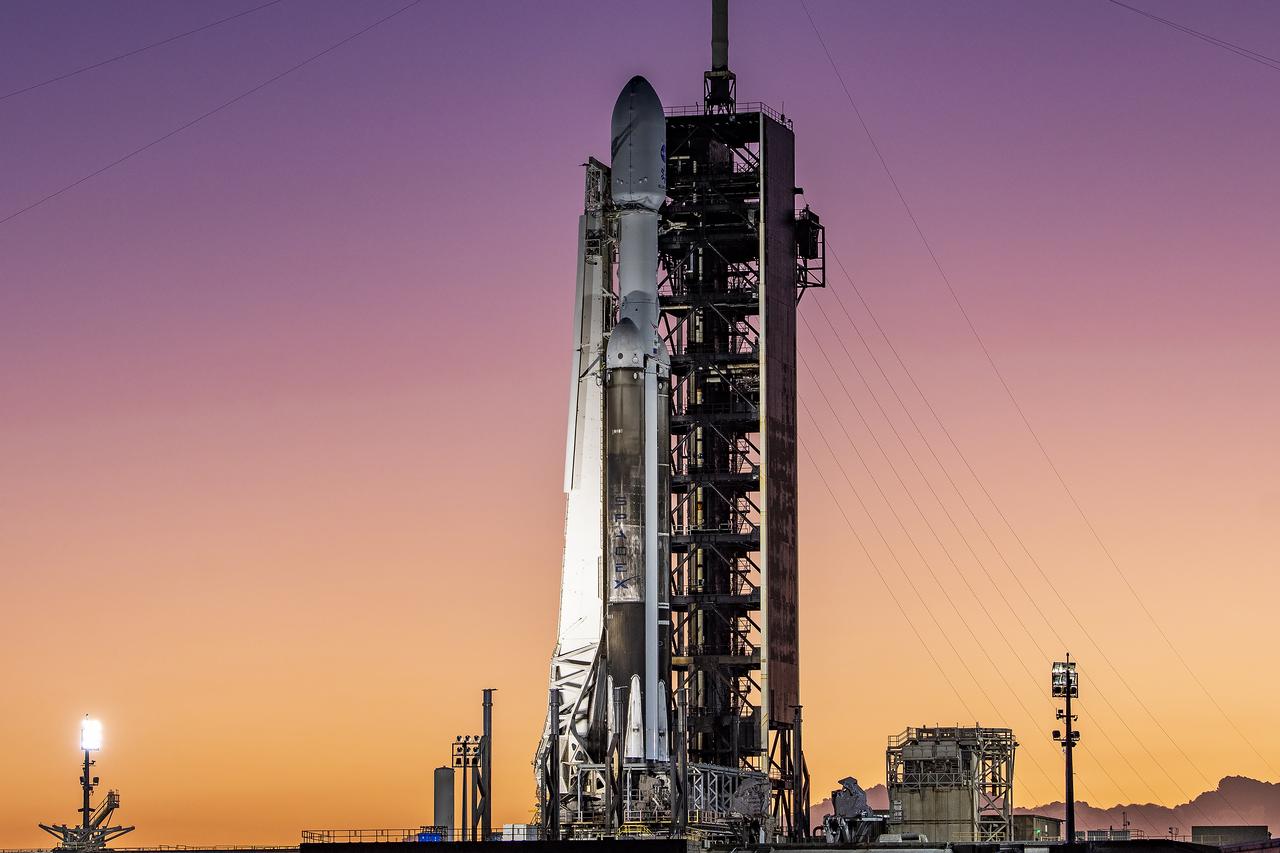
Europa Clipper spacecraft sits atop SpaceX’s Falcon Heavy rocket at Launch Complex 39A on Sunday, Oct. 13, 2024, at the agency’s Kennedy Space Center in Florida ahead of launch to Jupiter’s icy moon, Europa. The spacecraft will complete nearly 50 flybys of Europa to determine if there are conditions suitable for life beyond Earth.
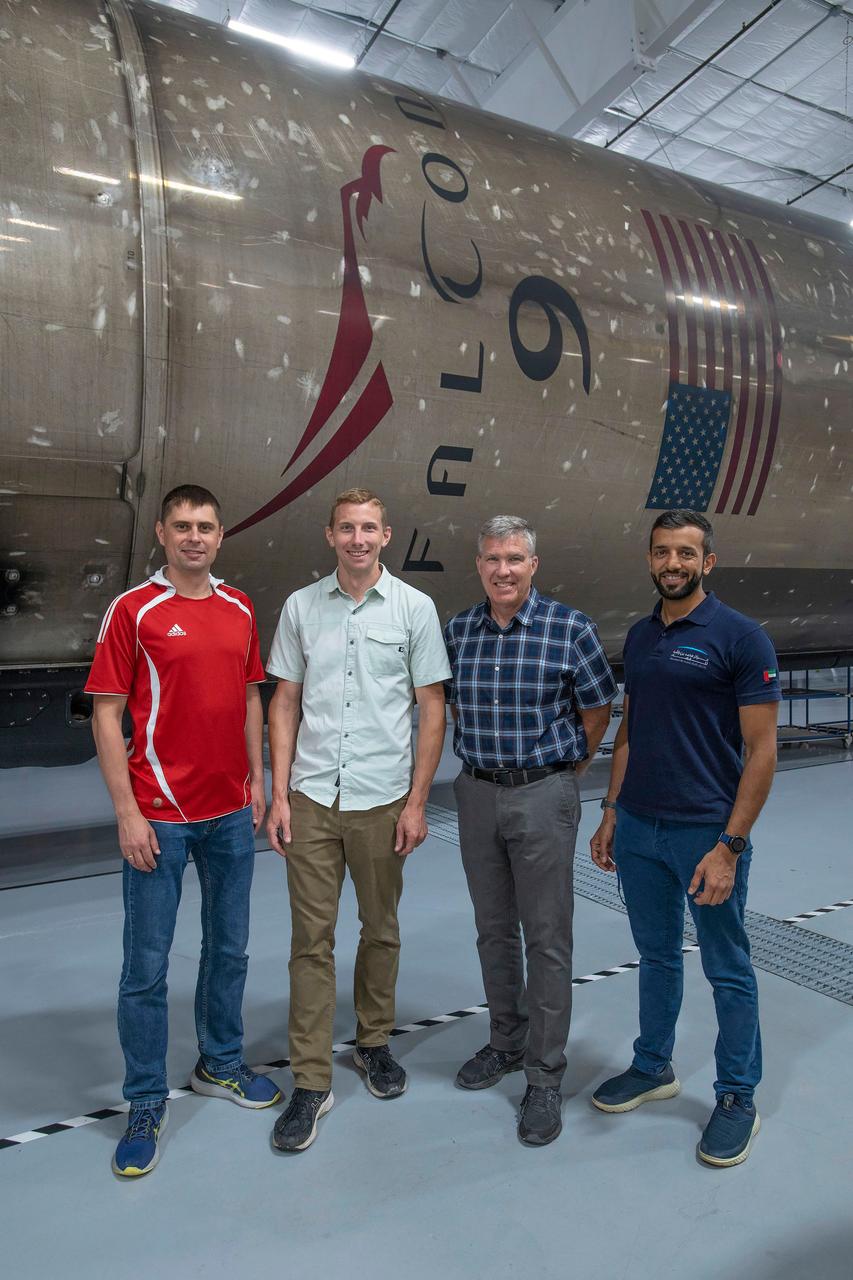
jsc2022e065073 (Aug. 9, 2022) --- The four crew members that comprise the SpaceX Crew-6 mission pose for a photo inside SpaceX Hangar X at the Kennedy Space Center in Florida. Hangar X supports Falcon 9 rocket refurbishment and houses administration offices. From left are, Mission Specialist Andrey Fedyaev, Pilot Warren "Woody" Hoburg, Commander Stephen Bowen, and Mission Specialist Sultan Alneyadi. Credit: SpaceX
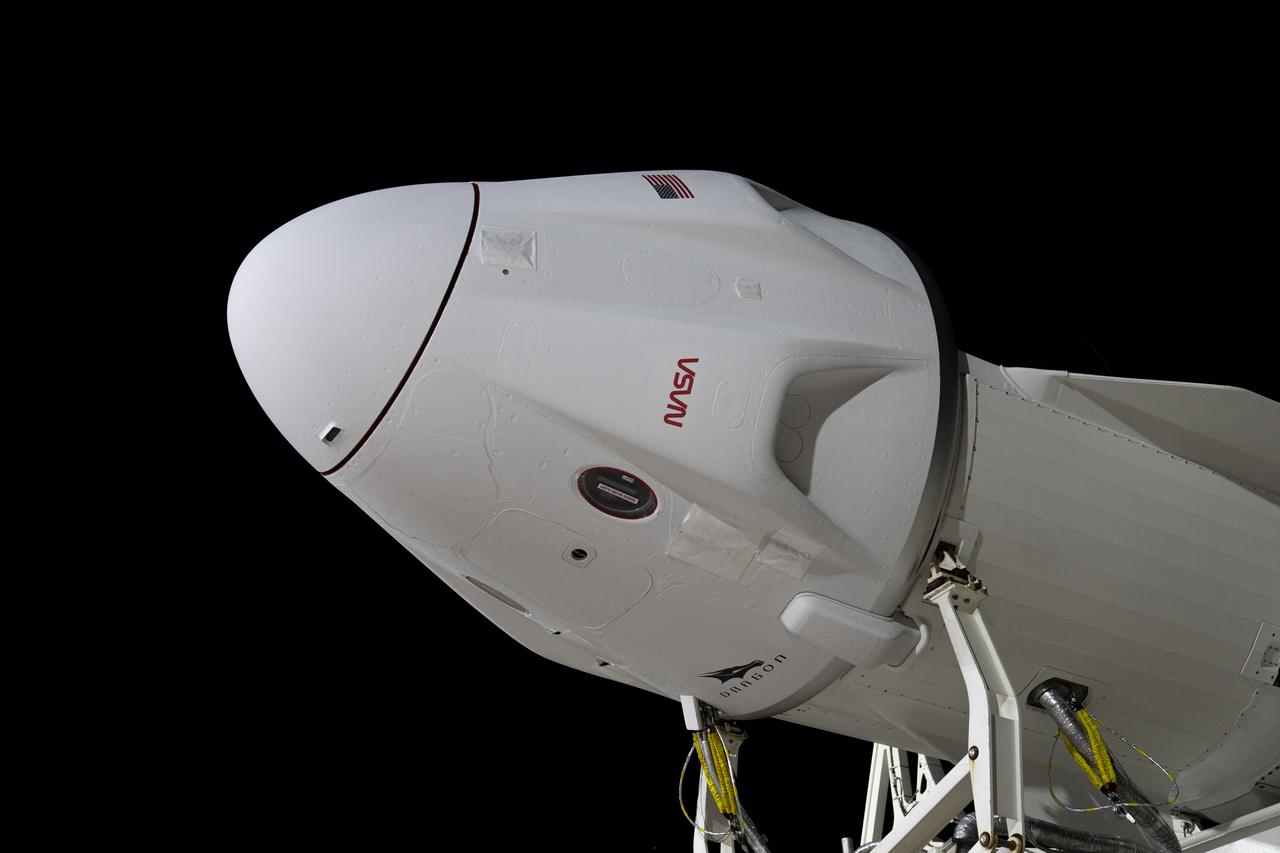
Seen here is a close-up view of SpaceX’s Dragon Endurance spacecraft as it rolls to Kennedy Space Center’s Launch Complex 39A in Florida atop the company’s Falcon 9 rocket on Oct. 1, 2022, in preparation for the agency’s SpaceX Crew-5 launch. Endurance will carry NASA astronauts Nicole Mann, commander; Josh Cassada, pilot; and Mission Specialists Koichi Wakata, of JAXA (Japan Aerospace Exploration Agency), and Roscosmos cosmonaut Anna Kikina to the International Space Station for a science expedition mission as part of NASA’s Commercial Crew Program. Liftoff is targeted for noon EDT on Oct. 5, 2022.
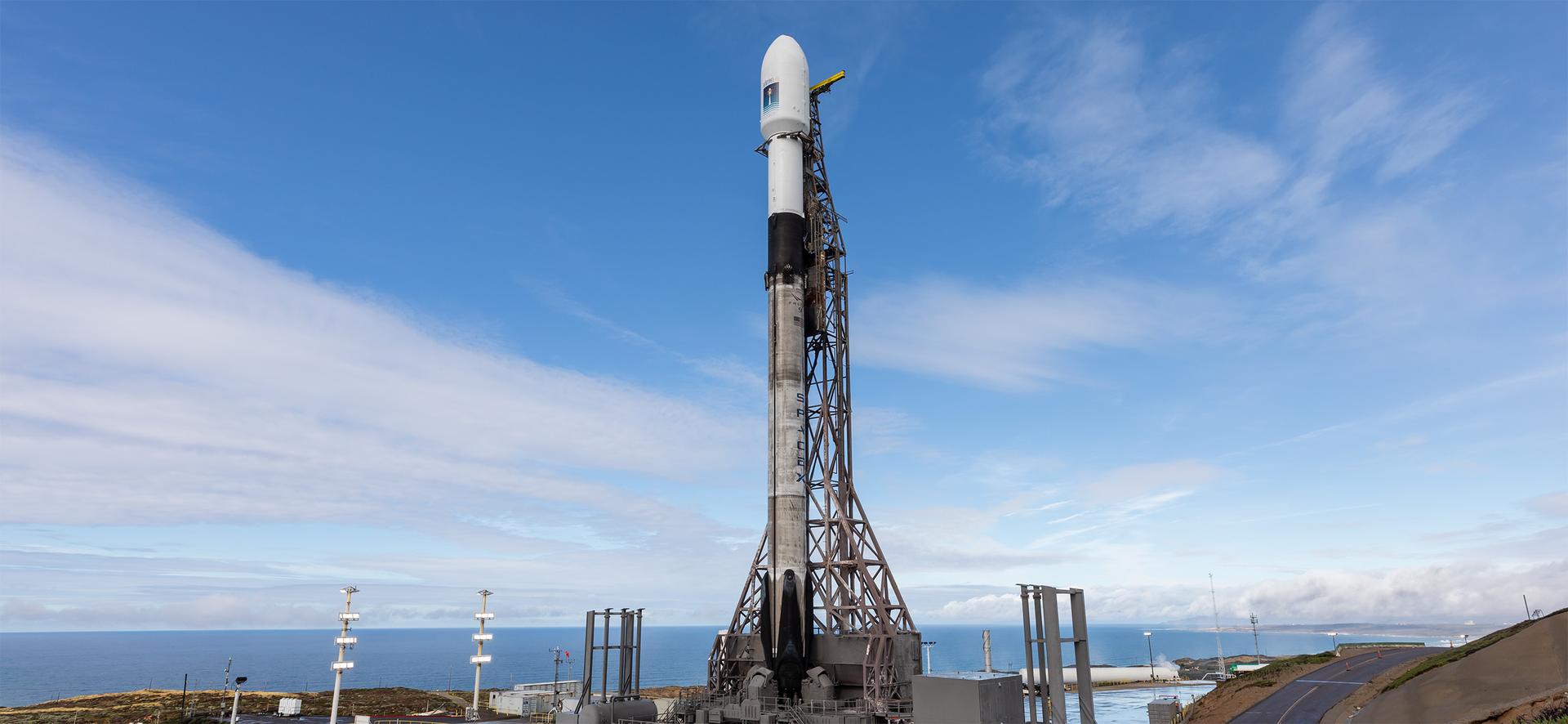
A SpaceX rocket carrying the Sentinel-6B satellite stands vertical on the launch pad at Space Launch Complex 4 East at Vandenberg Space Force Base in California on Sunday, Nov. 16, 2025, ahead of launch targeted for no earlier than 9:21 p.m. PST. A collaboration between NASA, ESA (European Space Agency), EUMETSAT (European Organisation for the Exploitation of Meteorological Satellites), and the National Oceanic and Atmospheric Administration (NOAA), Sentinel-6B is designed to measure sea levels down to roughly an inch for about 90% of the world’s oceans.
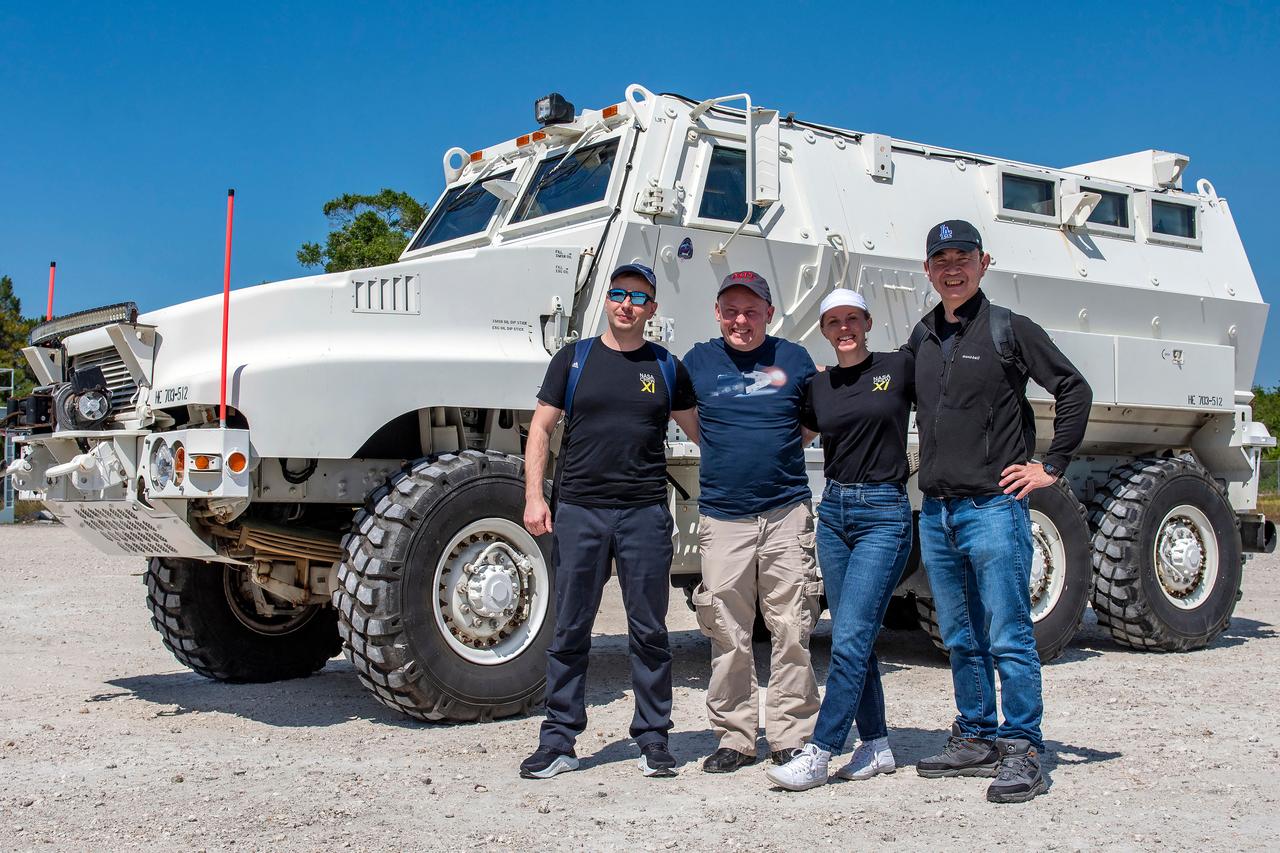
jsc2025e041098 (April 11, 2025) --- NASA’s SpaceX Crew-11 crew pose for a photo by an emergency egress vehicle at NASA’s Kennedy Space Center in Florida. Astronauts would use the emergency egress vehicle to quickly leave the launch area in the unlikely event of an emergency. From left to right: Roscosmos cosmonaut Oleg Platonov, NASA astronauts Mike Fincke and Zena Cardman, and JAXA astronaut Kimiya Yui.
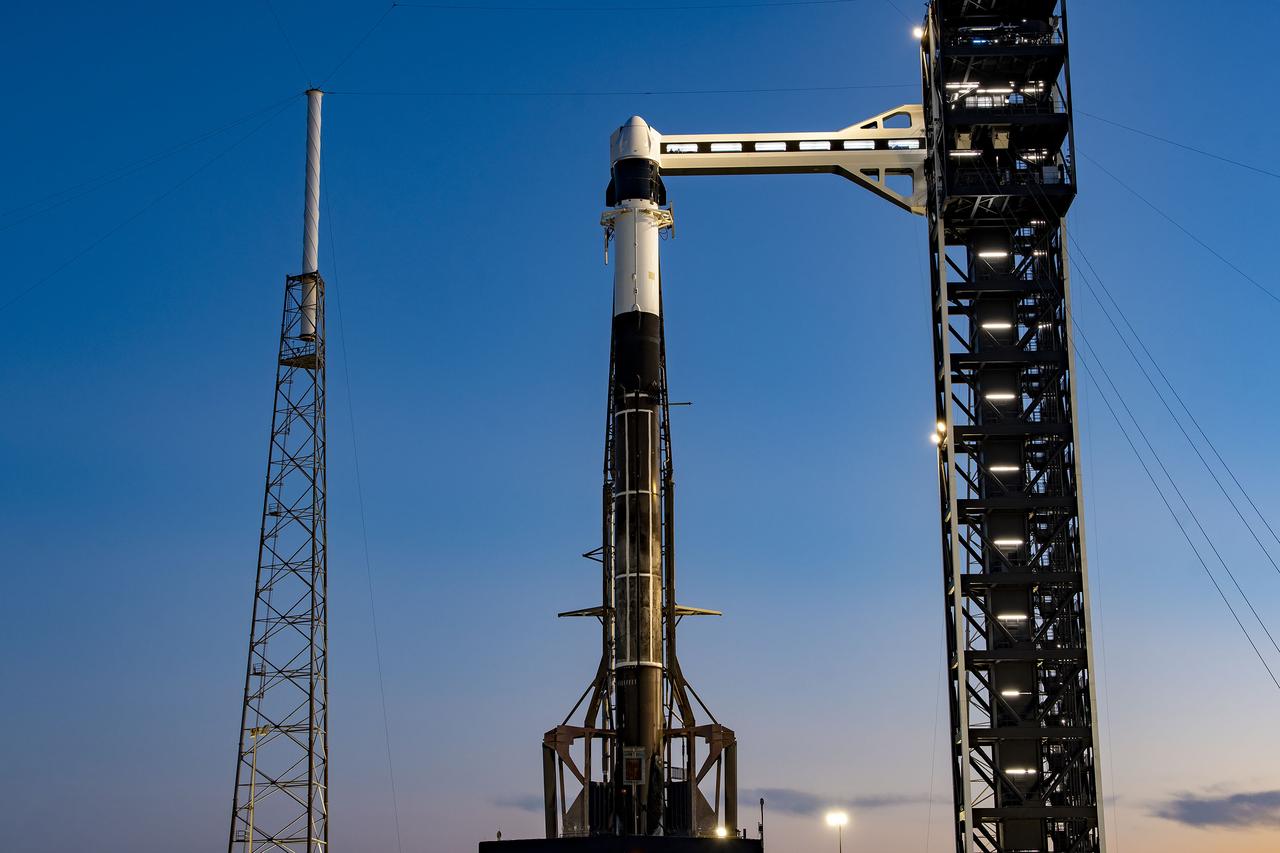
A SpaceX Falcon 9 rocket, with the company’s Dragon spacecraft atop, stands in a vertical position at Space Launch Complex 40 at Cape Canaveral Space Force Station in Florida on Tuesday, March 19, 2024, in preparation for the 30th commercial resupply services launch to the International Space Station. NASA and partner research flying aboard the mission includes a look at plant metabolism in space and a set of new sensors for free-flying Astrobee robots to provide 3D mapping capabilities. Other studies include a fluid physics study that could benefit solar cell technology and a university project from CSA (Canadian Space Agency) that will monitor sea ice and ocean conditions. Liftoff is scheduled for 4:55 p.m. EDT on Thursday, March 21, 2024.
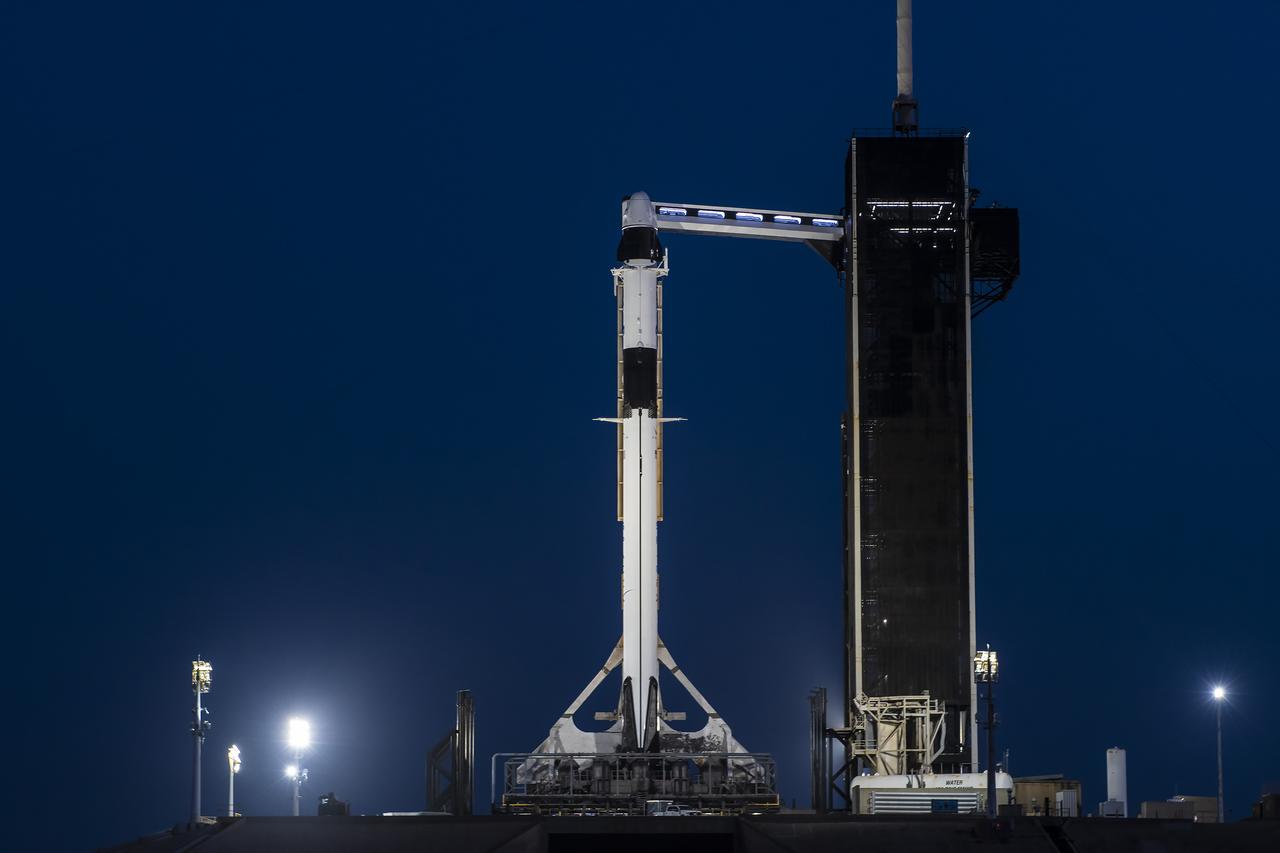
SpaceX’s Dragon spacecraft, named Endurance, atop the company’s Falcon 9 rocket, stands tall at the pad at Launch Complex 39A at NASA’s Kennedy Space Center in Florida on Monday, Aug. 21, 2023. NASA astronaut Jasmin Moghbeli, ESA (European Space Agency) astronaut Andreas Mogensen, JAXA (Japan Aerospace Exploration Agency) astronaut Satoshi Furukawa, and Roscosmos cosmonaut Konstantin Borisov, who arrived at Kennedy on Sunday, Aug. 20, 2023, will fly to the International Space Station on NASA’s SpaceX Crew-7 mission. Liftoff is targeted for 3:50 a.m. EDT Friday, Aug. 25, 2023.
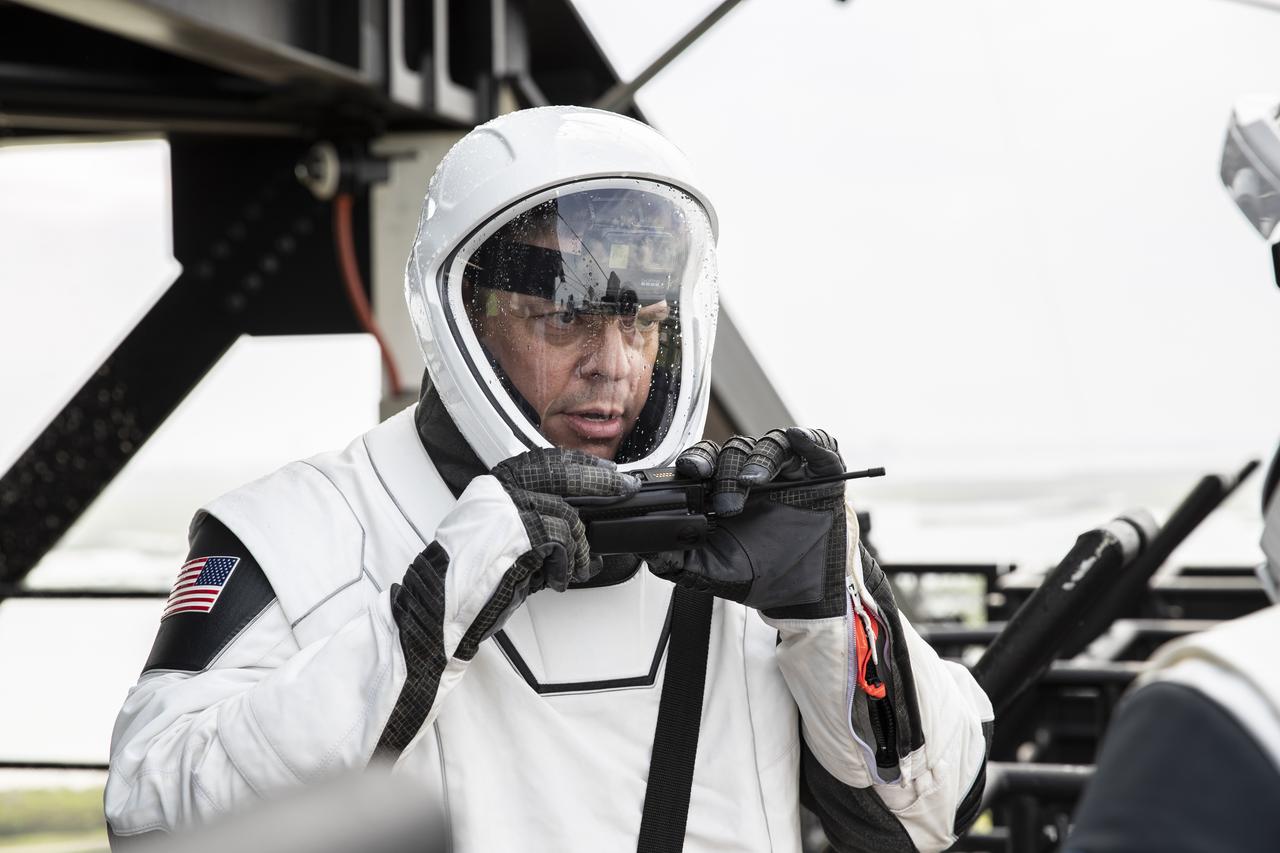
NASA and SpaceX conducted a formal verification of the company’s emergency escape system on Sept. 18, 2019, at Kennedy Space Center’s Launch Complex 39A in Florida. NASA astronaut Bob Behnken participated in the exercise to verify the crew can safely and quickly evacuate from the launch pad in the unlikely event of an emergency before liftoff of SpaceX’s first crewed flight test, called Demo-2. As Boeing and SpaceX begin to make regular flights to the International Space Station for NASA’s Commercial Crew Program, the agency will continue to advance its mission to go beyond low-Earth orbit and establish a human presence on the Moon with the ultimate goal of sending astronauts to Mars.
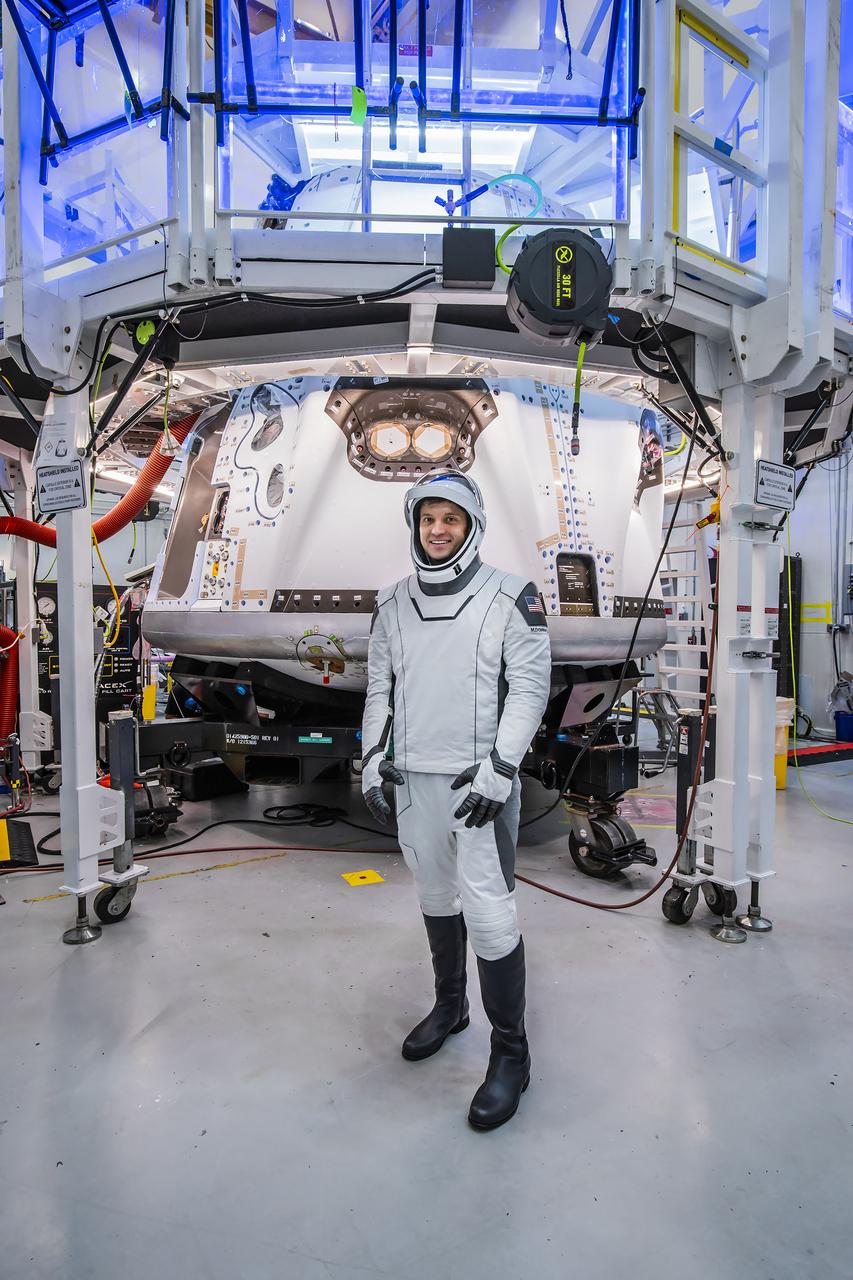
NASA astronaut Matthew Dominick, commander of NASA’s SpaceX Crew-8 mission, is suited up to participate in a Crew Equipment Interface Test (CEIT) at Cape Canaveral Space Force Station in Florida on Friday, Jan. 12, 2024. During the CEIT, the astronauts practice launch and docking in a high-fidelity simulator and getting into position inside SpaceX’s Dragon capsule. As part of the agency’s Commercial Crew Program, Crew-8 marks the ninth human spaceflight mission supported by a SpaceX Dragon spacecraft and the eighth crew rotation mission to International Space Station. Crew-8 will launch on a SpaceX Falcon 9 rocket from Launch Complex 39A at NASA’s Kennedy Space Center in Florida no earlier than mid-February 2024.

jsc2022e003345 (Dec. 1, 2021) --- NASA’s SpaceX Crew-4 astronauts participate in a training session at Kennedy Space Center in Florida. From left to right: NASA astronaut and SpaceX Crew-4 pilot Robert “Bob” Hines; ESA (European Space Agency) astronaut and Crew-4 mission specialist Samantha Cristoforetti of Italy; NASA astronaut and SpaceX Crew-4 mission specialist Jessica Watkins; and NASA astronaut and SpaceX Crew-4 commander Kjell Lindgren.
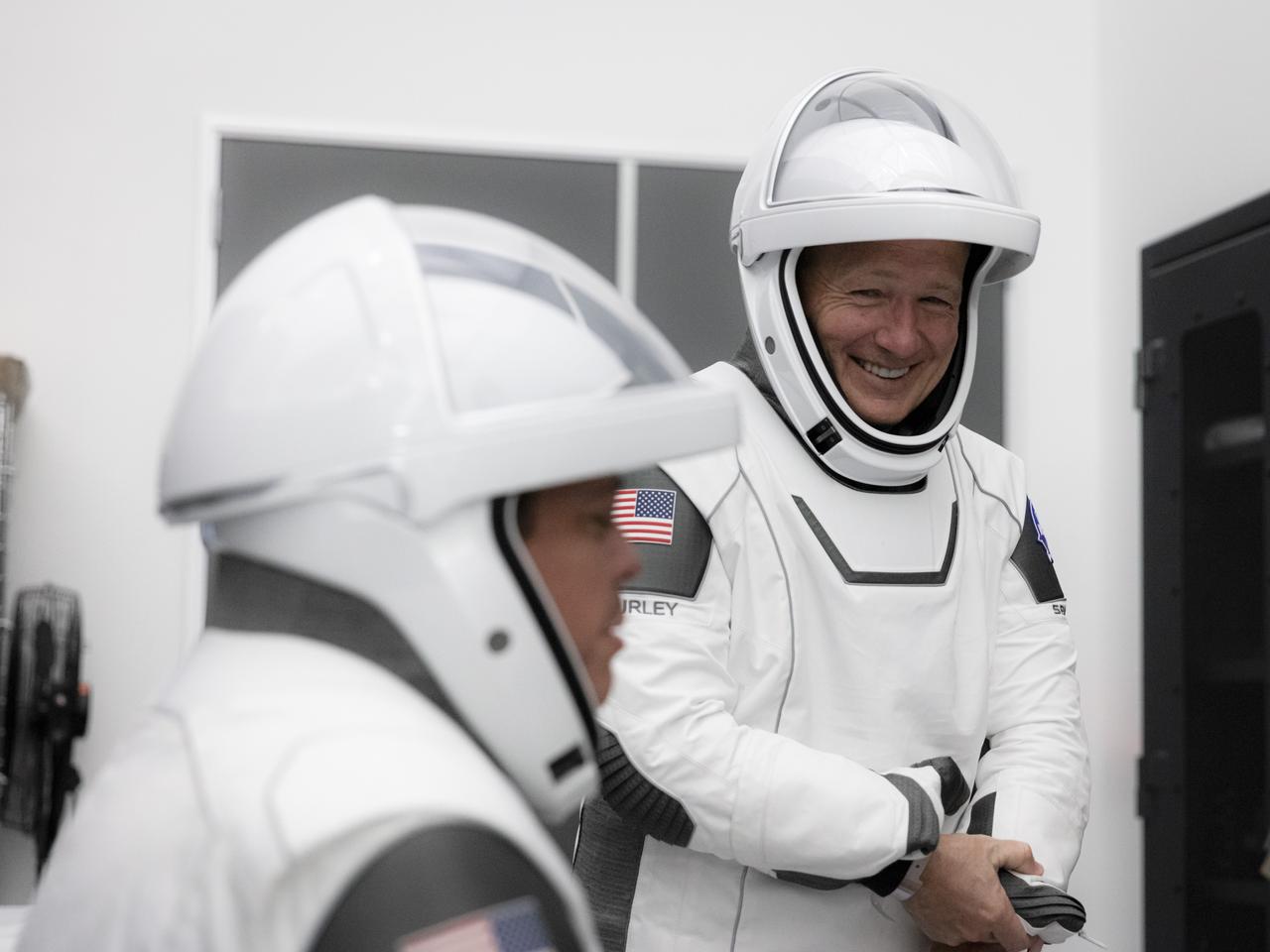
On Thursday, March 19 and Friday, March 20, SpaceX teams in Firing Room 4 at NASA's Kennedy Space Center in Florida and the company's Mission Control in Hawthorne, California, along with NASA flight controllers in Mission Control Houston, executed a full simulation of launch and docking of the Crew Dragon spacecraft, with NASA astronauts Bob Behnken and Doug Hurley participating in SpaceX's flight simulator.
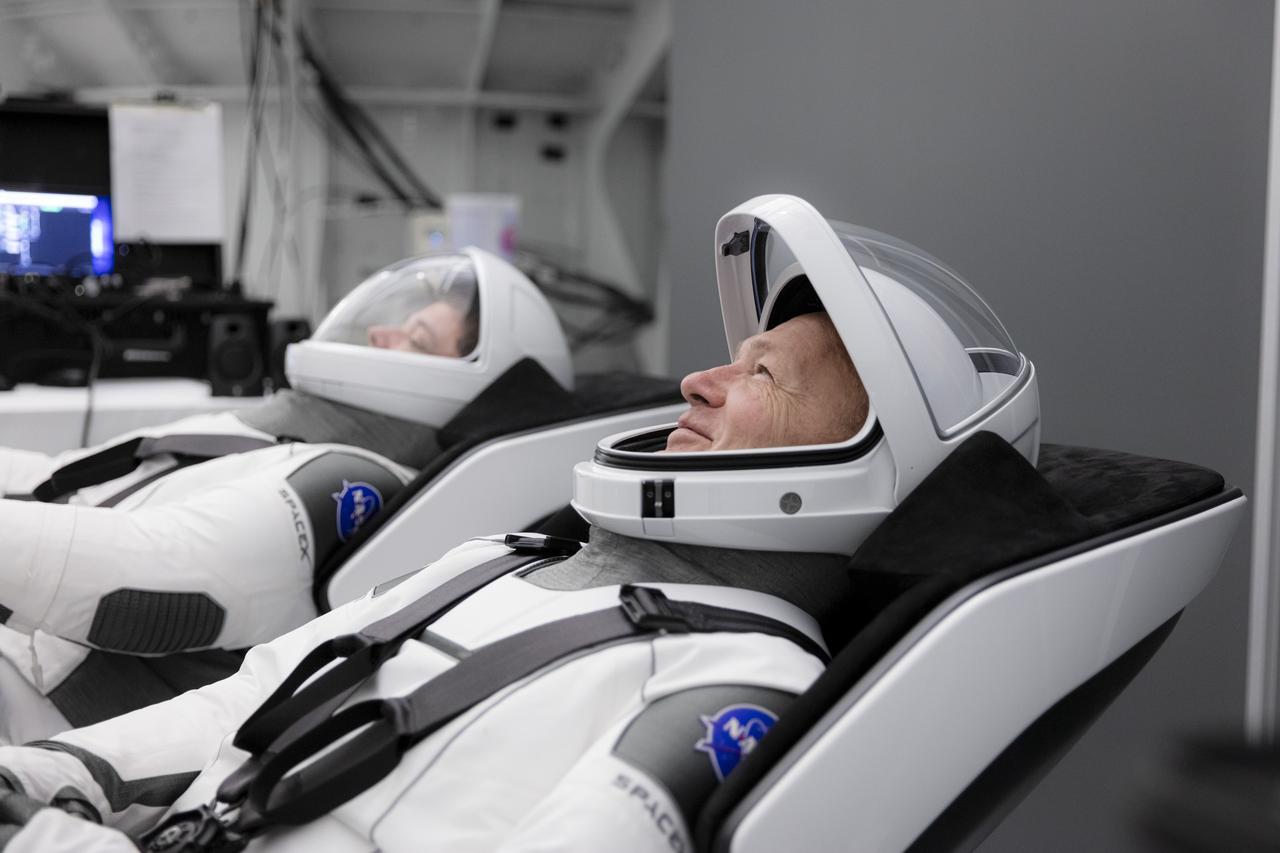
On Thursday, March 19 and Friday, March 20, SpaceX teams in Firing Room 4 at NASA's Kennedy Space Center in Florida and the company's Mission Control in Hawthorne, California, along with NASA flight controllers in Mission Control Houston, executed a full simulation of launch and docking of the Crew Dragon spacecraft, with NASA astronauts Bob Behnken and Doug Hurley participating in SpaceX's flight simulator.
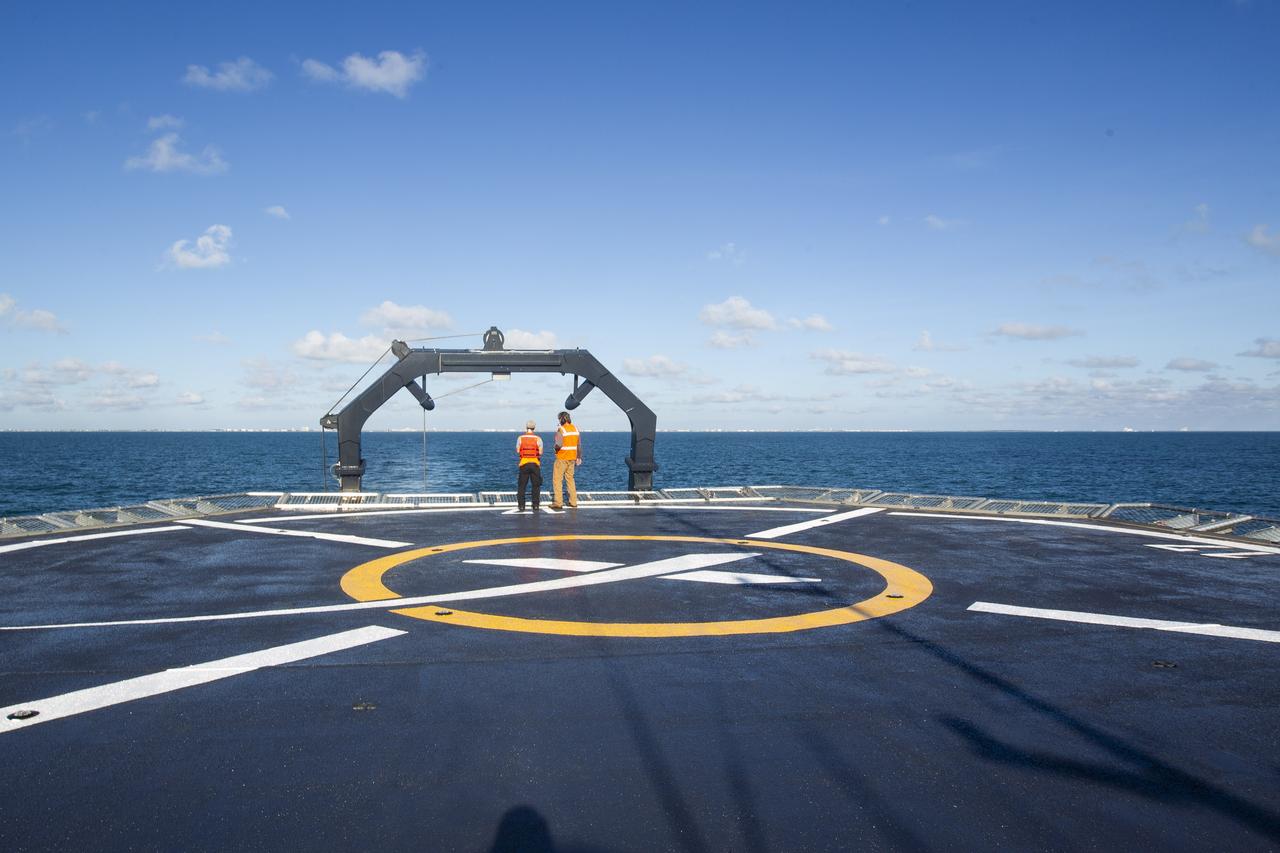
SpaceX rehearses helicopter landing and patient loading on its recovery ship, GO Searcher, practicing how the aircraft will pick up astronauts and fly them to a nearby hospital in the unlikely event of a medical emergency. The company outfitted the ship with a medical treatment facility and a helipad in the center of the vessel. When astronauts splash down into the ocean after their journey to the International Space Station on SpaceX’s Crew Dragon spacecraft, NASA and SpaceX doctors will work together to evaluate the crew onboard the vessel. Should astronauts need to be airlifted to a hospital, the helicopter also will pick up paramedics and doctors from the ship who will care for the astronauts in-flight.
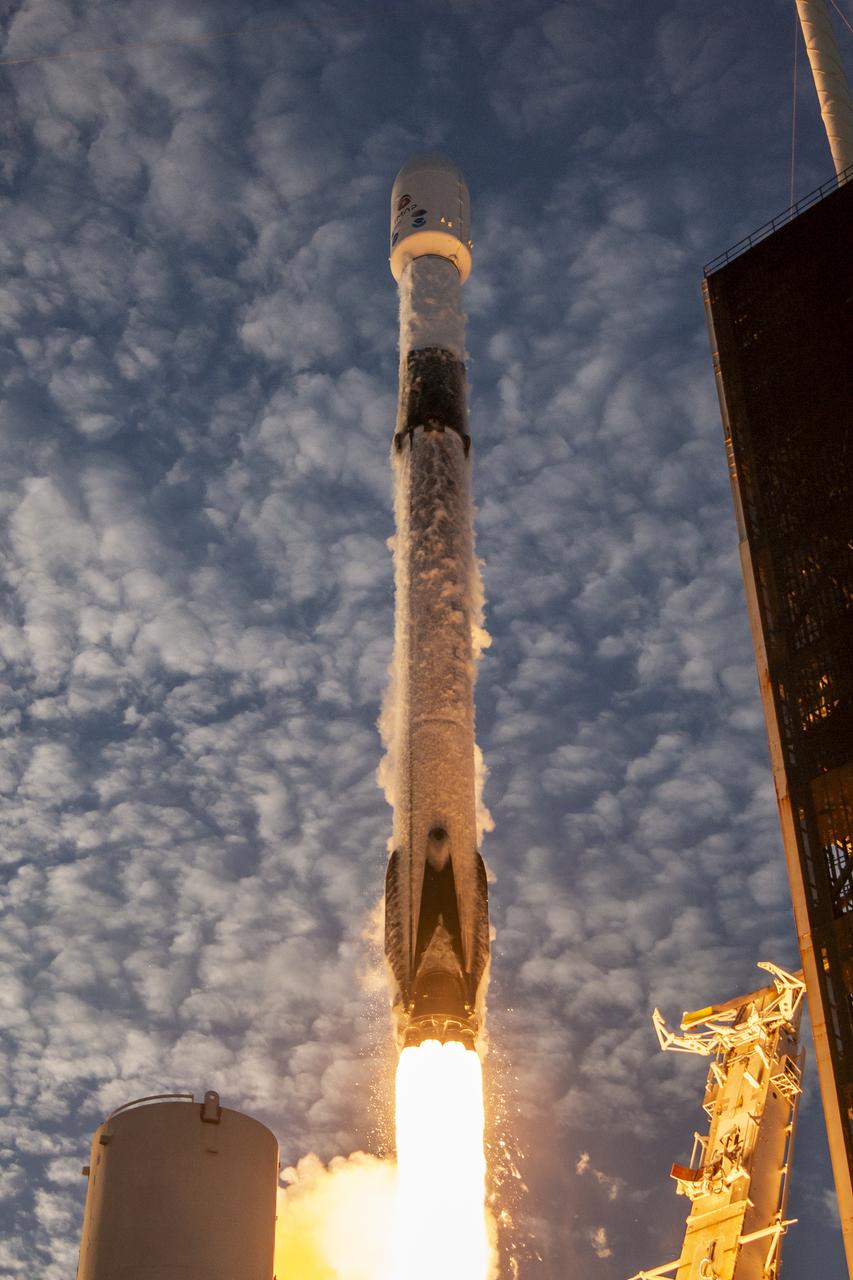
A SpaceX Falcon 9 rocket carrying NASA’s IMAP (Interstellar Mapping and Acceleration Probe), the agency’s Carruthers Geocorona Observatory, and National Oceanic and Atmospheric Administration’s (NOAA) Space Weather Follow On–Lagrange 1 (SWFO-L1) spacecraft lifts off from Launch Complex 39A at NASA’s Kennedy Space Center in Florida at 7:30 a.m. EDT Wednesday, Sept. 24, 2025. The missions will each focus on different effects of the solar wind — the continuous stream of particles emitted by the Sun — and space weather — the changing conditions in space driven by the Sun — from their origins at the Sun to their farthest reaches billions of miles away at the edge of our solar system.
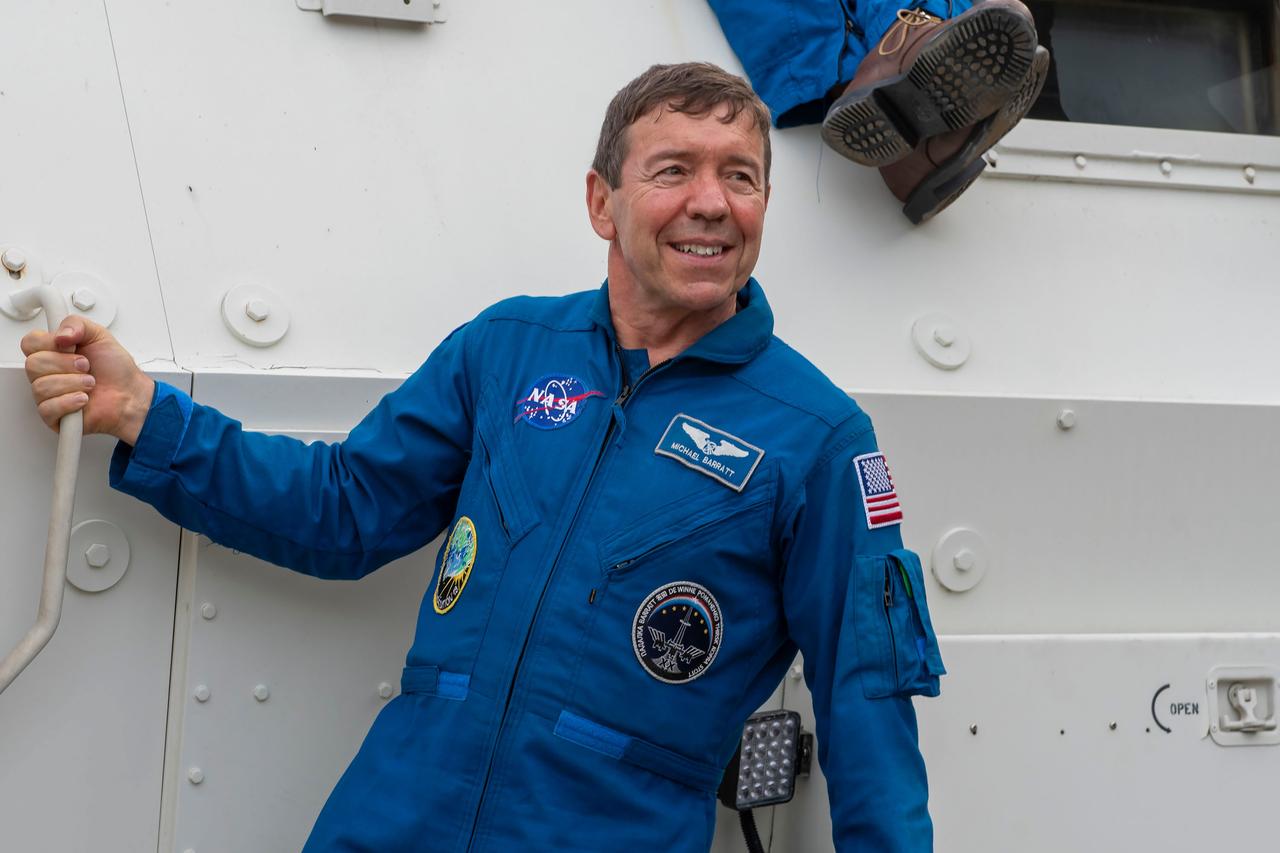
jsc2024e011752 (Oct. 12, 2023) --- NASA's SpaceX Crew-8 Pilot Michael Barratt poses for a photo outside the emergency egress vehicle at NASA's Kennedy Space Center's Launch Pad 39A in Florida. Astronauts would use the emergency egress vehicle to quickly leave the launch area in the unlikely event of an emergency. Credit: SpaceX
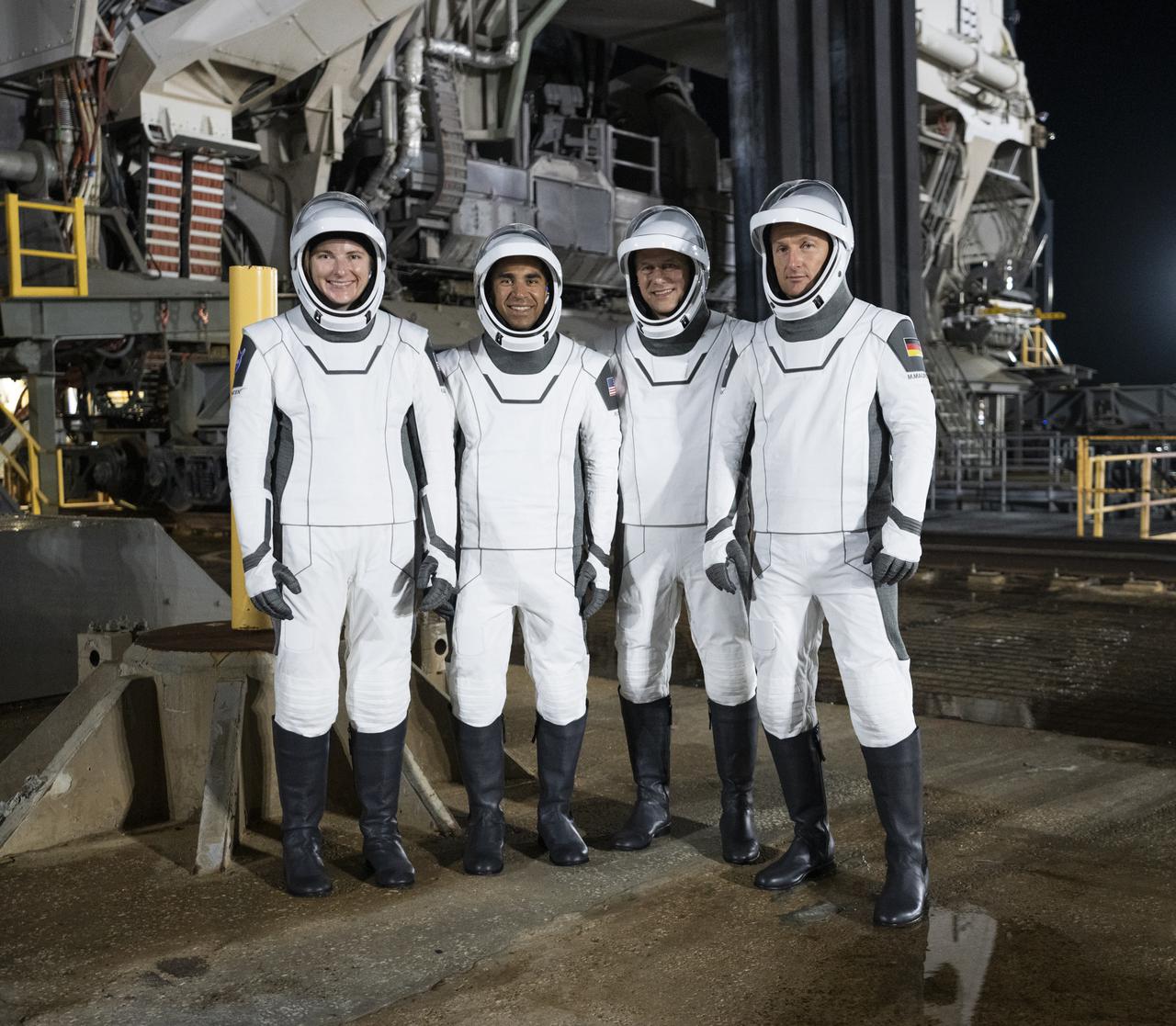
NASA’s SpaceX Crew-3 astronauts participate in a countdown dress rehearsal at the agency’s Kennedy Space Center in Florida on Oct. 28, 2021, to prepare for the upcoming Crew-3 launch. The astronauts are at Launch Pad 39A with the Falcon 9 and Crew Dragon behind them during the rehearsal. From left are NASA astronauts Kayla Barron, Raja Chari, Crew-3 commander, and Tom Marshburn, and European Space Agency astronaut Matthias Maurer. The four-person crew will launch aboard the Crew Dragon atop the Falcon 9 on Oct. 31 to the International Space Station. Launch is targeted for 2:21 a.m. EDT from Pad 39A. Crew-3 is the third crew rotation flight to the space station for NASA’s Commercial Crew Program, and the first flight of a new Crew Dragon spacecraft.
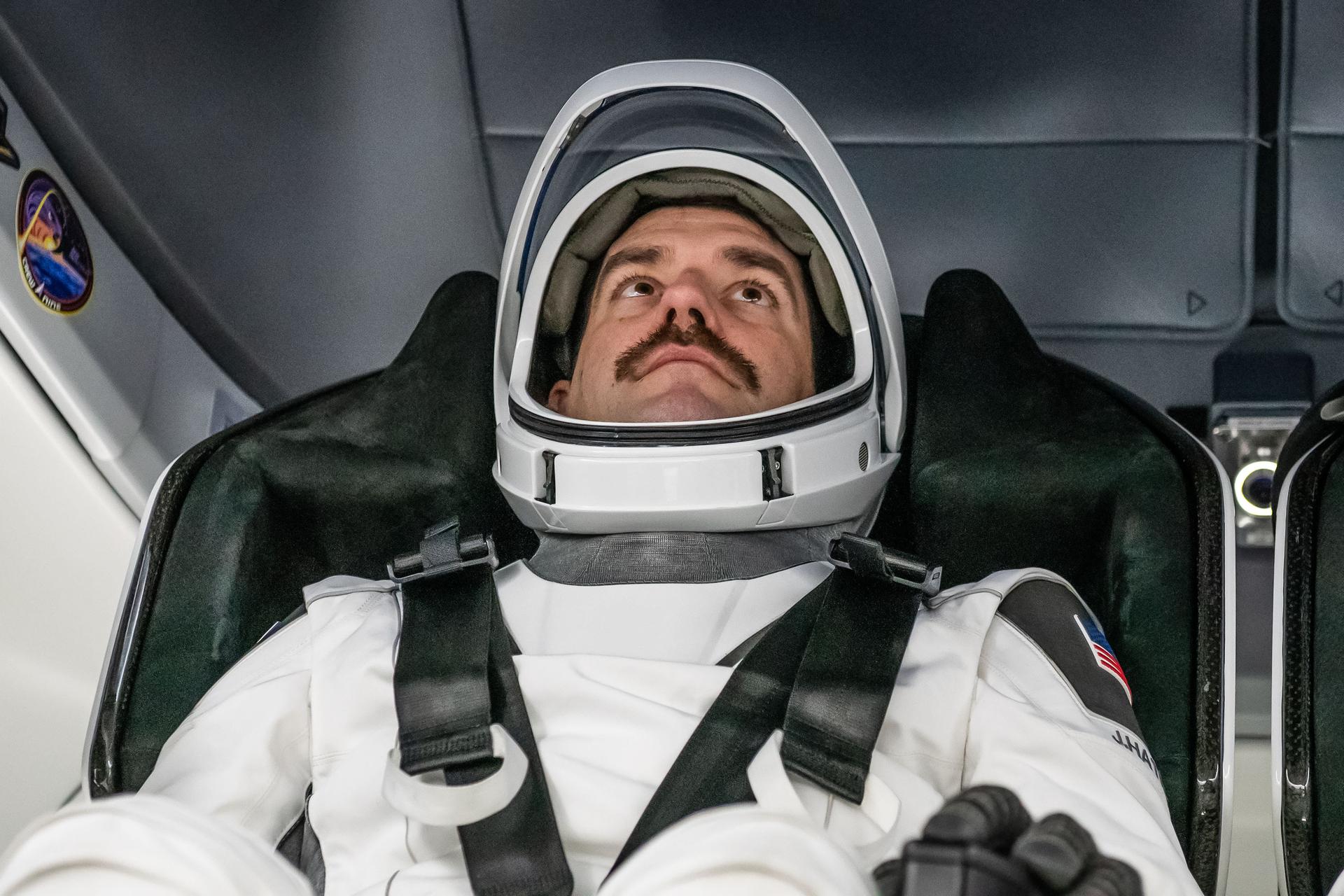
jsc2026e002974 (Jan. 12, 2026) --- NASA astronaut and SpaceX Crew-12 Pilot Jack Hathaway is photographed in his pressure suit and inside the Dragon spacecraft during the Crew Equipment Interface Test at NASA’s Kennedy Space Center in Florida. The goal of the training is to rehearse launch day activities and get a close look at the spacecraft that will take them to the International Space Station. Credit: SpaceX
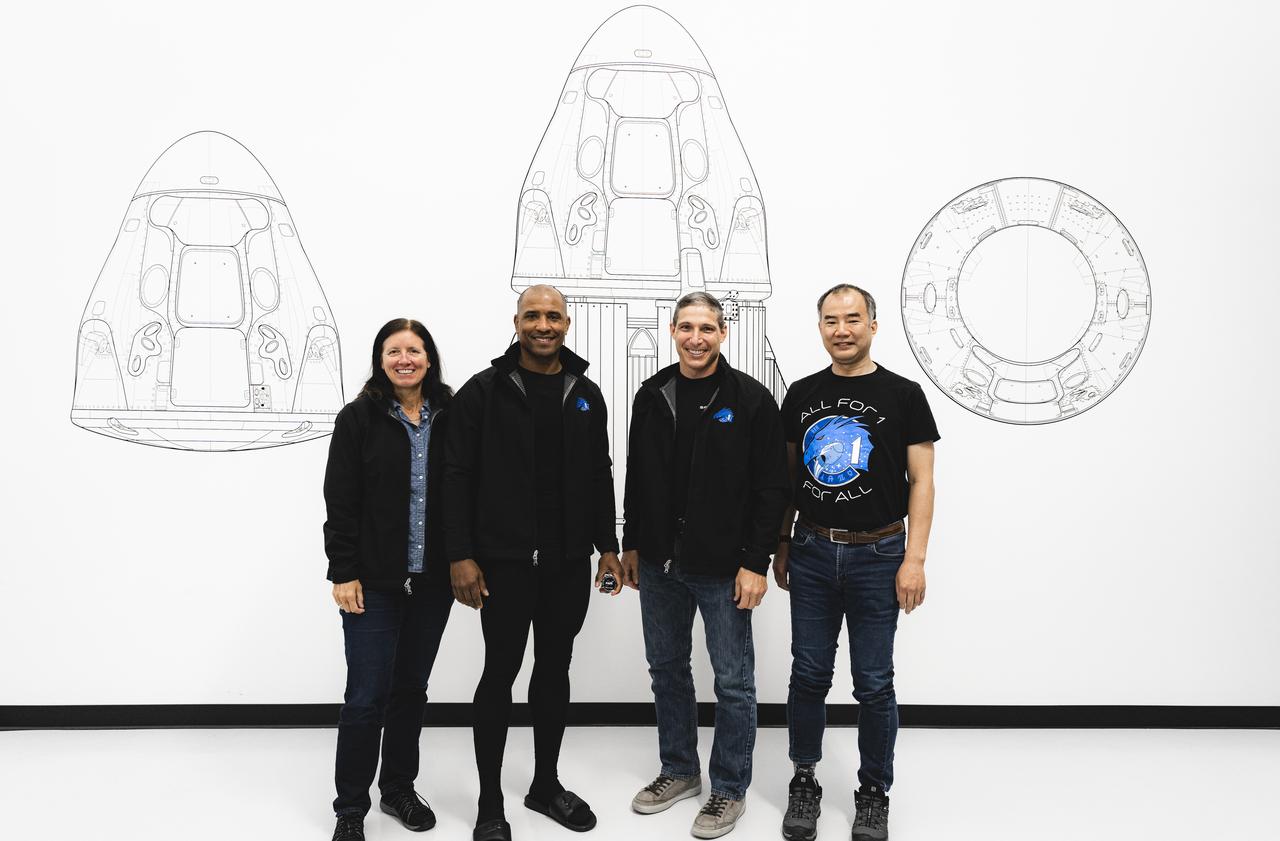
NASA’s SpaceX Crew-1 astronauts participate in crew equipment interface testing at SpaceX headquarters in Hawthorne, California, on Sept. 24, 2020. From left are mission specialist Shannon Walker, pilot Victor Glover, and Crew Dragon commander Michael Hopkins, all NASA astronauts, and mission specialist Soichi Noguchi, Japan Aerospace Exploration Agency (JAXA) astronaut. NASA’s SpaceX Crew-1 mission is the first crew rotational flight of a U.S. commercial spacecraft with astronauts to the International Space Station. The Crew-1 mission will launch from Launch Complex 39A at Kennedy Space Center in Florida. Crew-1 is part of NASA's Commercial Crew Program, which has returned human spaceflight capabilities to the U.S.

NASA astronauts who will be the first humans to fly aboard SpaceX's Crew Dragon spacecraft recently toured the company's Rocket Development Test Facility in McGregor, Texas, on Oct. 16, 2018. Astronauts Bob Behnken, at right, and Doug Hurley are set to crew SpaceX's Demo-2 flight test in June 2019, which will be the first flight of Crew Dragon with people onboard. Astronauts Victor Glover, behind Behnken, and Mike Hopkins, at left, will crew SpaceX's first regular mission to the International Space Station, following Demo-2 and NASA's certification of SpaceX commercial crew systems.

jsc2024e052323 (July 22, 2024) --- NASA’s SpaceX Crew-9 Commander Zena Cardman smiles as she gets better acquainted with the Dragon spacecraft, which will take them to the International Space Station no earlier than mid-August. Credit: SpaceX

jsc2023e066247 (Oct. 15, 2023) --- The four SpaceX Crew-8 crew members (from left) Jeanette Epps, Michael Barratt, and Matthew Dominick, all NASA astronauts, and Alexander Grebenkin from Roscosmos, are pictured during a training session at SpaceX headquarters in Hawthorne, California. Credit: SpaceX
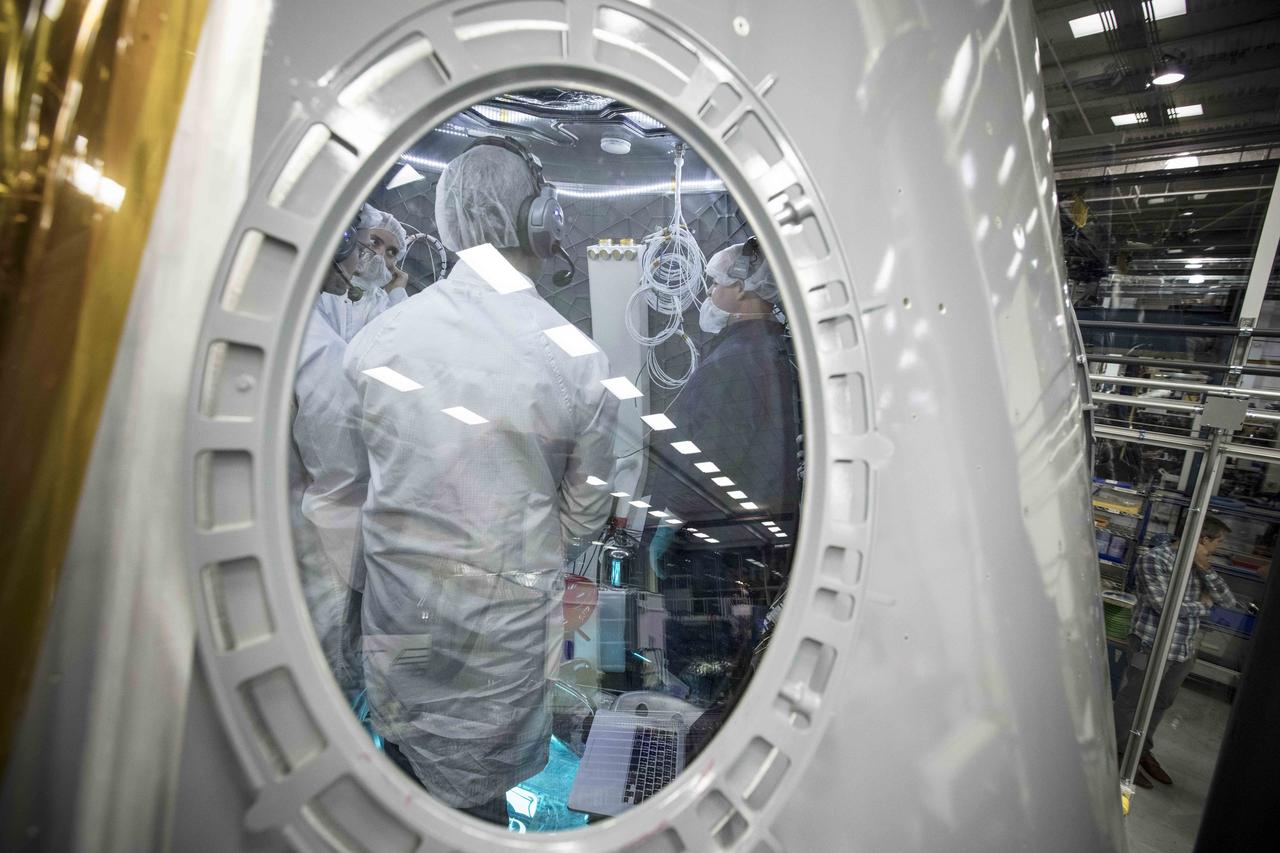
Engineers work inside the ECLSS module at SpaceX’s headquarters and factory in Hawthorne, California. The module is the same size as the company’s Crew Dragon spacecraft and is built to test the Environmental Control and Life Support System, or ECLSS, that is being built for missions aboard the Crew Dragon including those by astronauts flying to the International Space Station on flights for NASA’s Commercial Crew Program. Photo credit: SpaceX
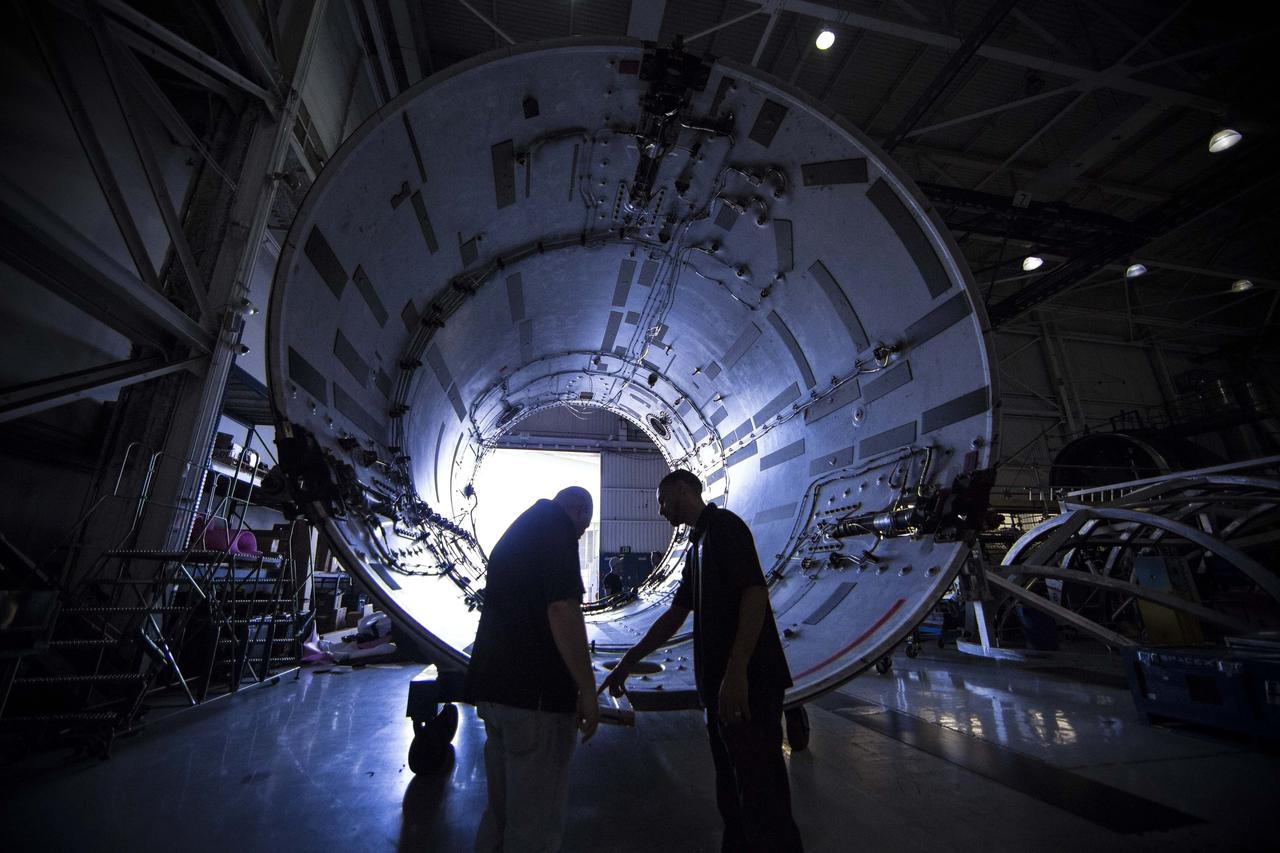
The inter-stage of a SpaceX Falcon 9 rocket inside the company's manufacturing facility. SpaceX is developing its Crew Dragon spacecraft and Falcon 9 rocket in partnership with NASA's Commercial Crew Program to carry astronauts to and from the International Space Station.
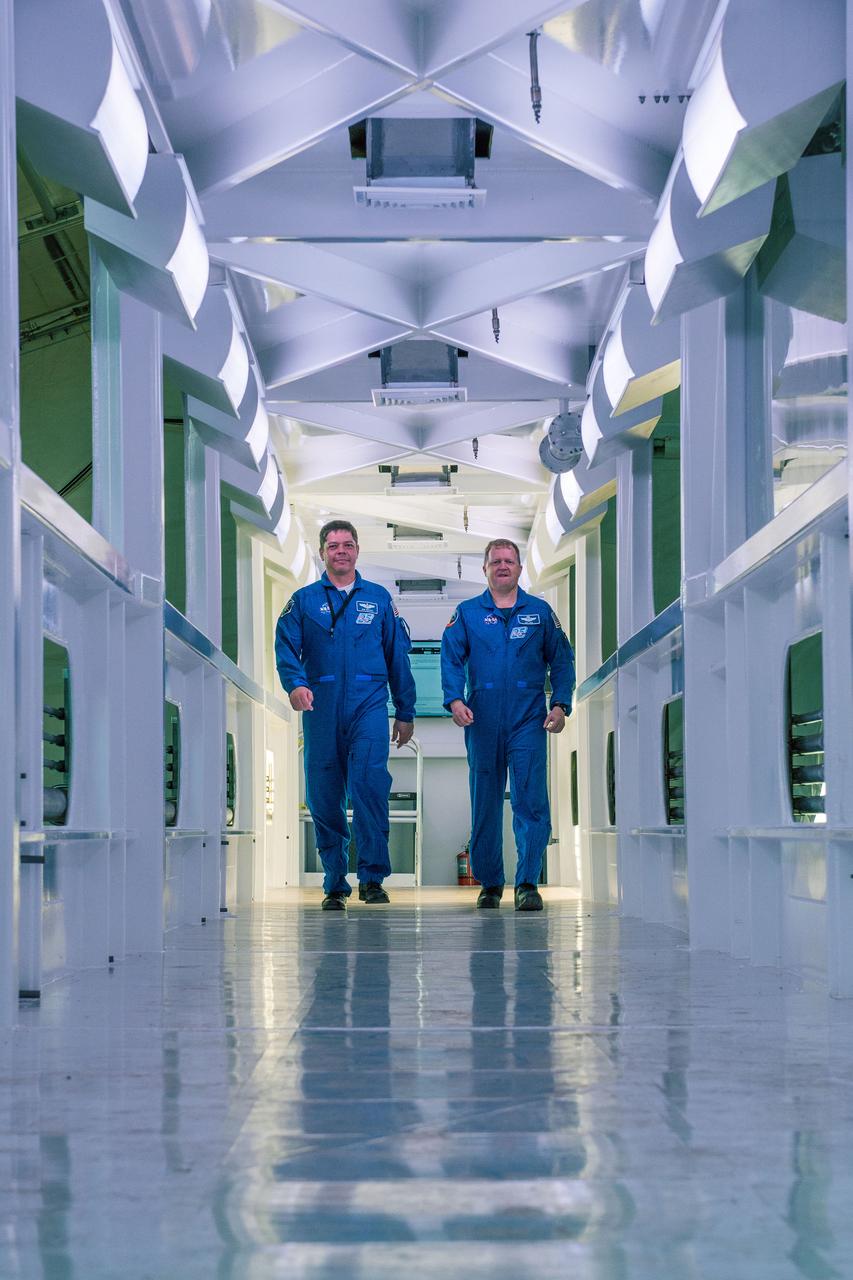
Astronauts Bob Behnken, left, and Eric Boe walk down the Crew Access Arm being built by SpaceX for Launch Complex 39A at NASA’s Kennedy Space Center in Florida. The access arm will be installed on the launch pad, providing a bridge between the launch tower it’s the Fixed Service Structure, as noted below, and SpaceX’s Dragon 2 spacecraft for astronauts flying to the International Space Station on the company’s Falcon 9 rocket as part of NASA’s Commercial Crew Program. The access arm is being readied for installation in early 2018. It will be installed 70 feet higher than the former space shuttle access arm on the launch pad’s Fixed Service Structure. SpaceX continues to modify the historic launch site from its former space shuttle days, removing more than 500,000 pounds of steel from the pad structure, including the Rotating Service Structure that was once used for accessing the payload bay of the shuttle. SpaceX also is using the modernized site to launch commercial payloads, as well as cargo resupply missions to and from the International Space Station for NASA. The first SpaceX launch from the historic Apollo and space shuttle site was this past February. NASA’s Commercial Crew Program is working with private companies, Boeing and SpaceX, with a goal of once again flying people to and from the International Space Station, launching from the United States.
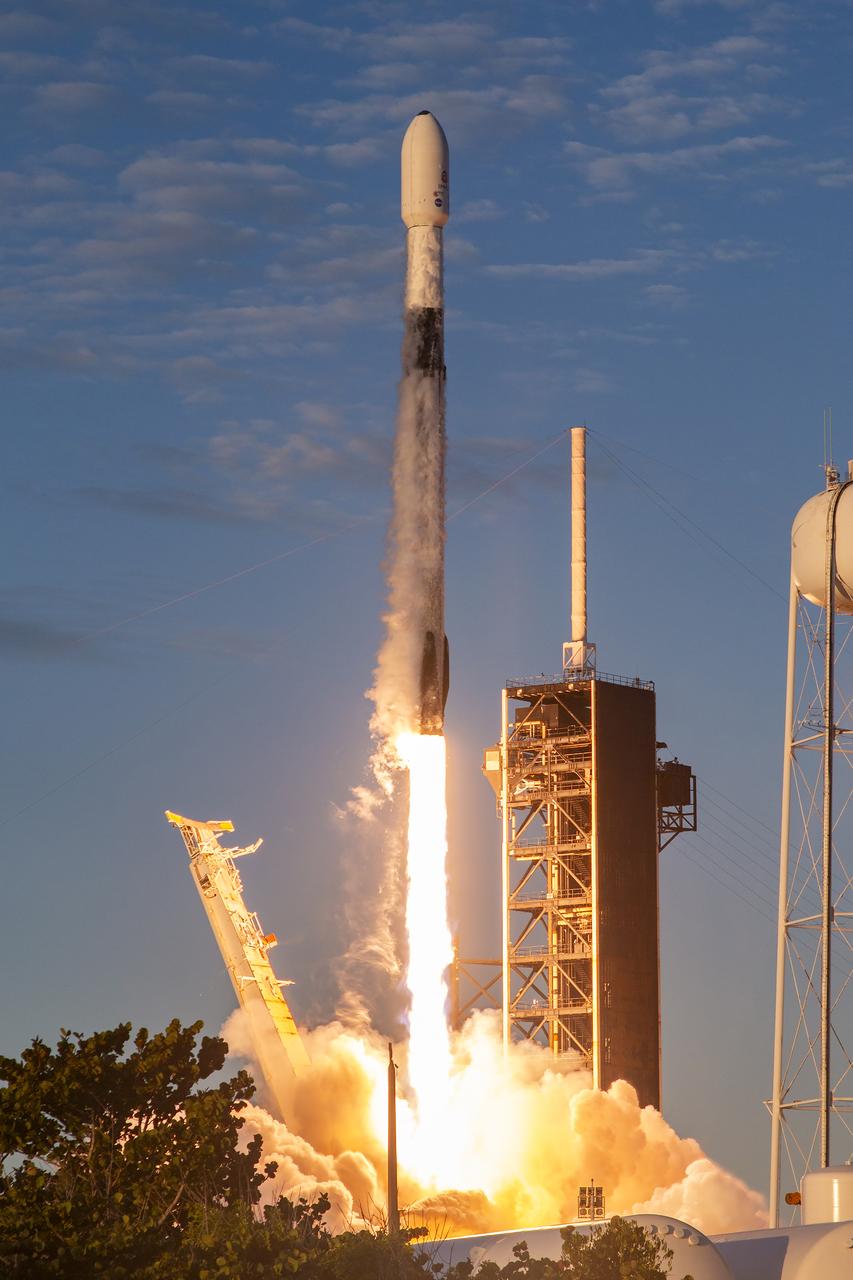
A SpaceX Falcon 9 rocket carrying NASA’s IMAP (Interstellar Mapping and Acceleration Probe), the agency’s Carruthers Geocorona Observatory, and National Oceanic and Atmospheric Administration’s (NOAA) Space Weather Follow On–Lagrange 1 (SWFO-L1) spacecraft lifts off from Launch Complex 39A at NASA’s Kennedy Space Center in Florida at 7:30 a.m. EDT Wednesday, Sept. 24, 2025. The missions will each focus on different effects of the solar wind — the continuous stream of particles emitted by the Sun — and space weather — the changing conditions in space driven by the Sun — from their origins at the Sun to their farthest reaches billions of miles away at the edge of our solar system.
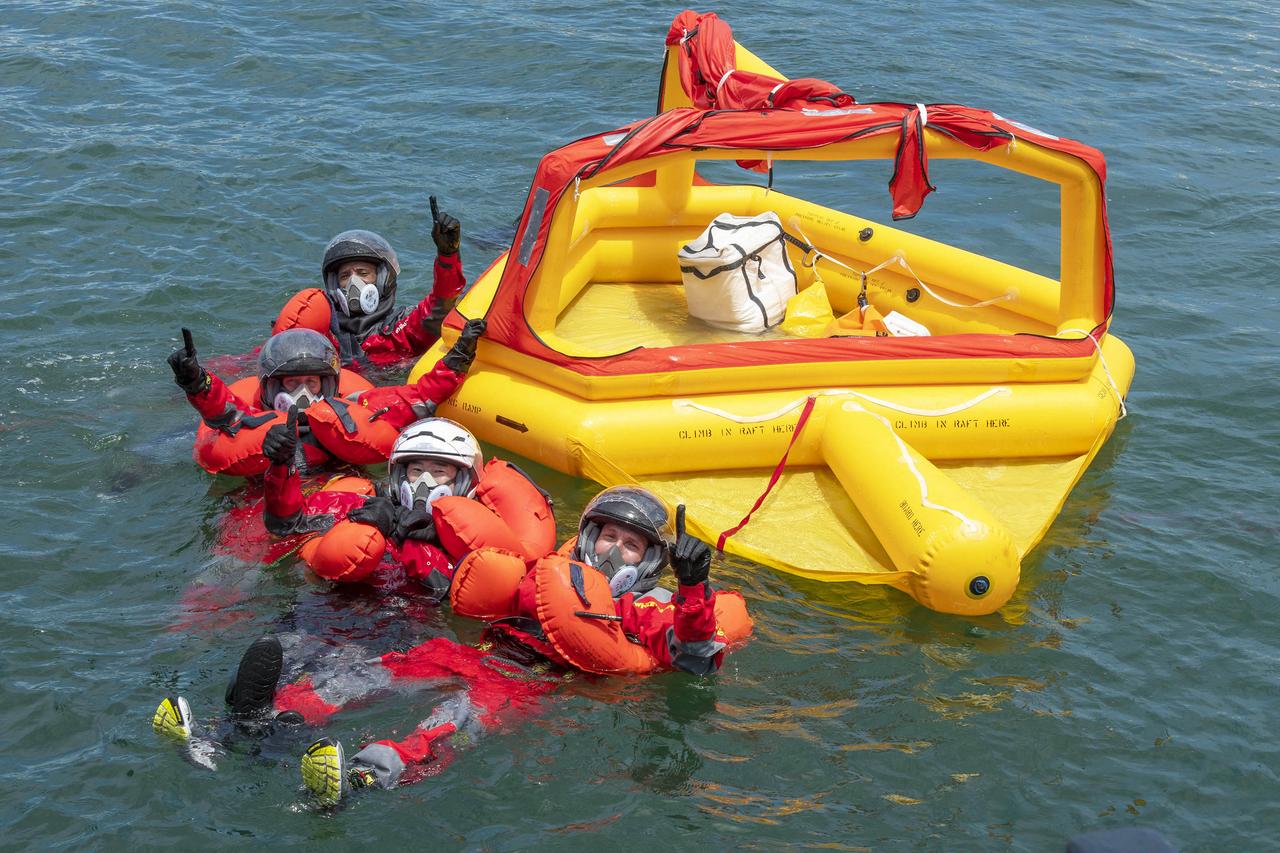
From back to front, pilot Victor Glover, mission specialist Shannon Walker, mission specialist Soichi Noguchi, and spacecraft commander Michael Hopkins participate in an egress training exercise on July 21, 2020, in preparation for NASA’s SpaceX Crew-1 mission. Glover, Walker, and Hopkins are all NASA astronauts; Noguchi is a Japan Aerospace Exploration Agency (JAXA) astronaut. The exercise involved simulating an emergency situation after splashdown of the Crew Dragon spacecraft. Hopkins, Glover, Walker, and Noguchi will launch to the International Space Station from Launch Complex 39A at the agency’s Kennedy Space Center in Florida. Crew-1 will be the first operational mission to the orbiting laboratory under NASA’s Commercial Crew Program, following the agency’s certification of SpaceX’s crew transportation system.
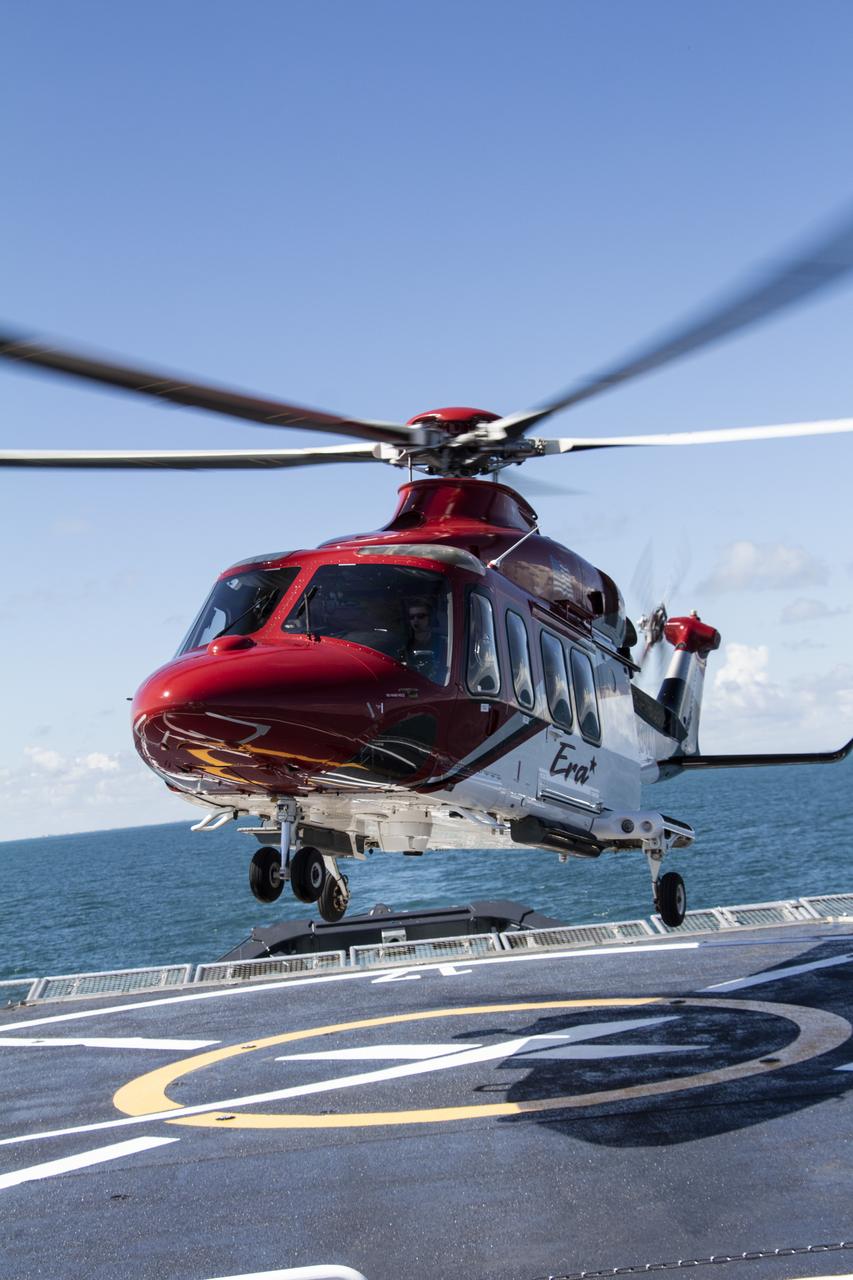
SpaceX rehearses helicopter landing and patient loading on its recovery ship, GO Searcher, practicing how the aircraft will pick up astronauts and fly them to a nearby hospital in the unlikely event of a medical emergency. The company outfitted the ship with a medical treatment facility and a helipad in the center of the vessel. When astronauts splash down into the ocean after their journey to the International Space Station on SpaceX’s Crew Dragon spacecraft, NASA and SpaceX doctors will work together to evaluate the crew onboard the vessel. Should astronauts need to be airlifted to a hospital, the helicopter also will pick up paramedics and doctors from the ship who will care for the astronauts in-flight.
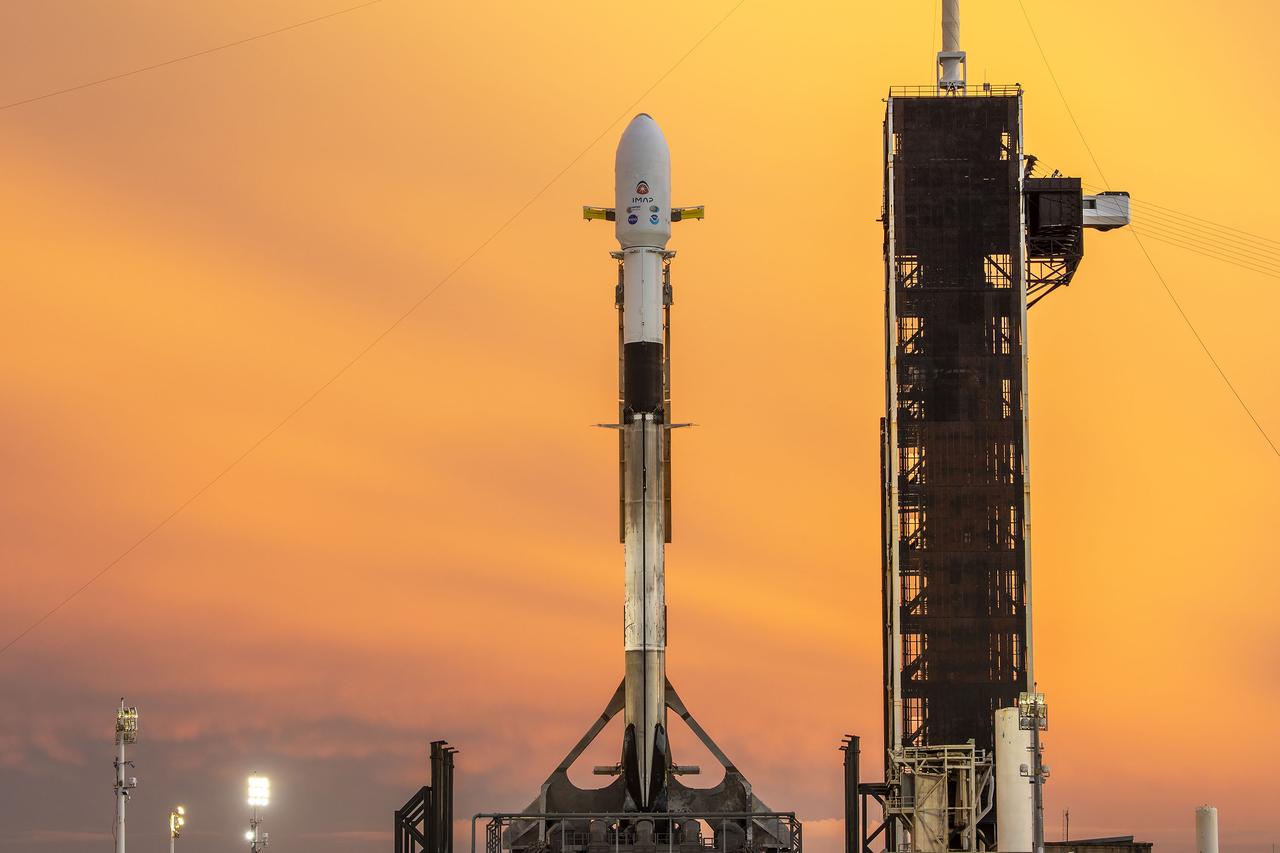
A SpaceX Falcon 9 rocket with NASA’s IMAP (Interstellar Mapping and Acceleration Probe), the agency’s Carruthers Geocorona Observatory, and National Oceanic and Atmospheric Administration’s (NOAA) Space Weather Follow On–Lagrange 1 (SWFO-L1) spacecraft atop stands vertical at Launch Complex 39A as the sun sets on Monday, Sept. 22, 2025, at the agency’s Kennedy Space Center in Florida. The missions will each focus on different effects of the solar wind — the continuous stream of particles emitted by the Sun — and space weather — the changing conditions in space driven by the Sun — from their origins at the Sun to their farthest reaches billions of miles away at the edge of our solar system.
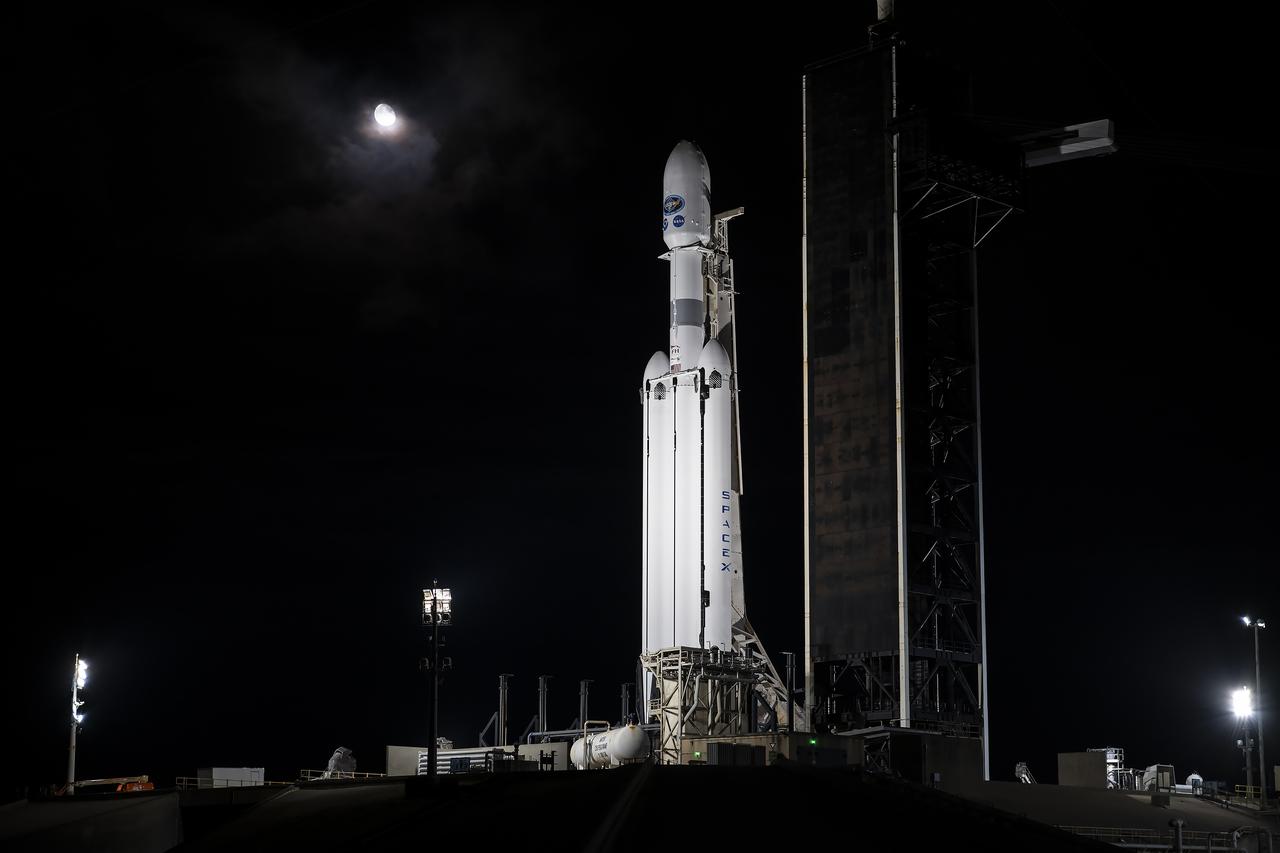
A SpaceX Falcon Heavy rocket carrying the National Oceanic and Atmospheric Administration (NOAA) GOES-U (Geostationary Operational Environmental Satellite U) stands vertical at Launch Complex 39A at NASA’s Kennedy Space Center in Florida on Monday, June 24, 2024. The GOES-U satellite is the final satellite in the GOES-R series, which serves a critical role in providing continuous coverage of the Western Hemisphere, including monitoring tropical systems in the eastern Pacific and Atlantic oceans. The two-hour launch window opens at 5:16 p.m. EDT. on Tuesday, June 25, 2024.

A SpaceX Falcon 9 rocket with NASA’s PACE (Plankton, Aerosol, Cloud, ocean Ecosystem) spacecraft encapsulated atop is raised to a vertical position at Space Launch Complex 40 at Cape Canaveral Space Force Station in Florida on Monday, Feb. 5, 2024. PACE is NASA’s newest earth-observing satellite that will help increase our understanding of Earth’s oceans, atmosphere, and climate by delivering hyperspectral observations of microscopic marine organisms called phytoplankton as well new data on clouds and aerosols. Liftoff of the PACE mission is set for no earlier than 1:33 a.m. EST on Tuesday, Feb. 6, 2024.

jsc2022e076183 (Oct. 5, 2022) --- The SpaceX Crew-5 members are seated inside the Dragon Endurance crew ship atop the Falcon 9 rocket before launching to the International Space Station from the Kennedy Space Center's Launch Pad 39A in Florida. From left are, Mission Specialist Anna Kikina from Roscosmos; Pilot Josh Cassada and Commander Nicole Mann, both NASA astronauts; and Mission Specialist Koichi Wakata from the Japan Aerospace Exploration Agency (JAXA).

In preparation for SpaceX’s 29th commercial resupply services launch to the International Space Station for NASA, the company’s Falcon 9 rocket, with the Dragon spacecraft atop, is raised to a vertical position at Kennedy Space Center’s Launch Complex 39A in Florida on Wednesday, Nov. 8, 2023. The mission will carry scientific research, technology demonstrations, crew supplies, and hardware to the space station to support its Expedition 70 crew, including NASA’s Integrated Laser Communications Relay Demonstration Low Earth Orbit User Modem and Amplifier Terminal (ILLUMA-T) and Atmospheric Waves Experiment (AWE). Liftoff is scheduled for 8:28 p.m. EST Thursday, Nov. 9, from Kennedy’s Launch Complex 39A.
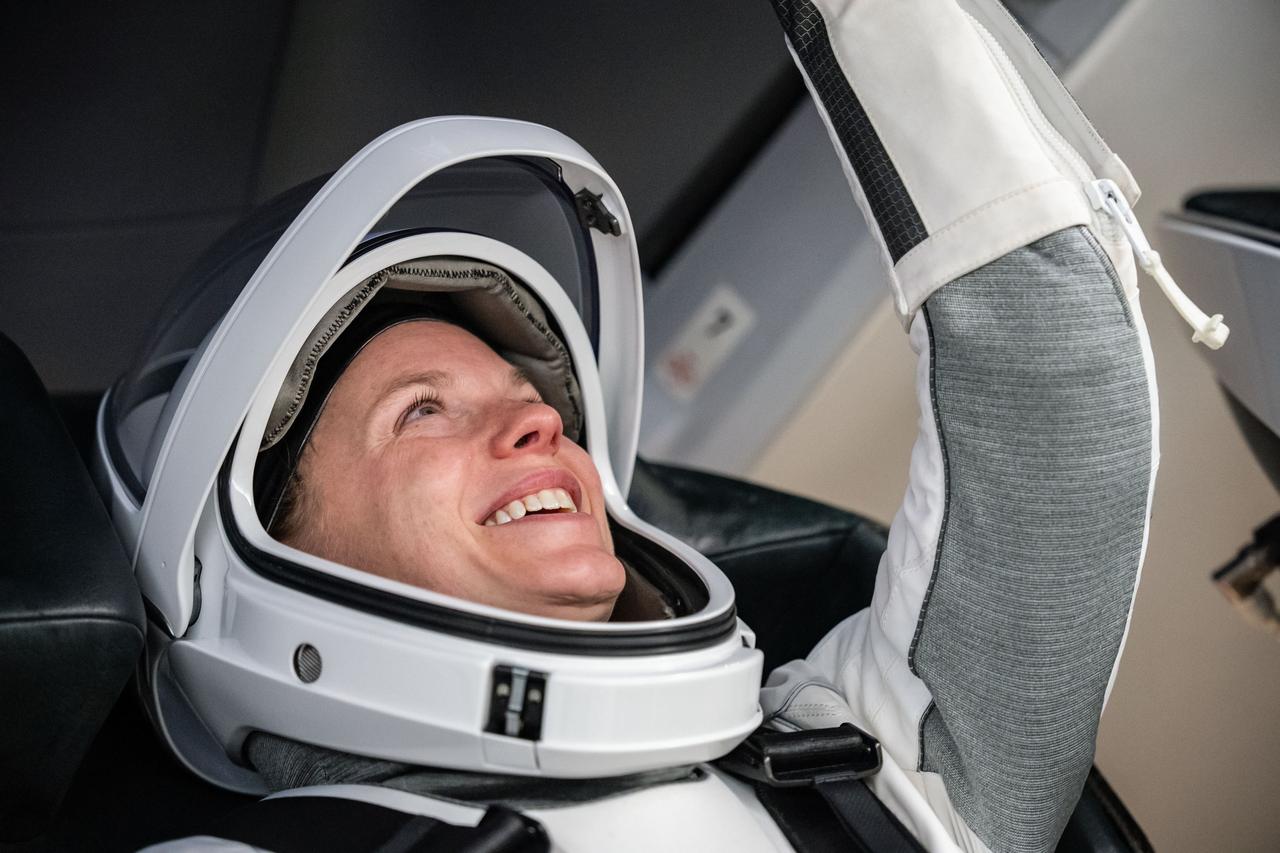
jsc2025e034083 (Dec. 4, 2024) --- NASA astronaut Zena Cardman, commander of NASA’s SpaceX Crew-11 mission, trains inside a SpaceX Dragon mockup at a SpaceX facility in Hawthorne, California, ahead of her flight to the International Space Station.
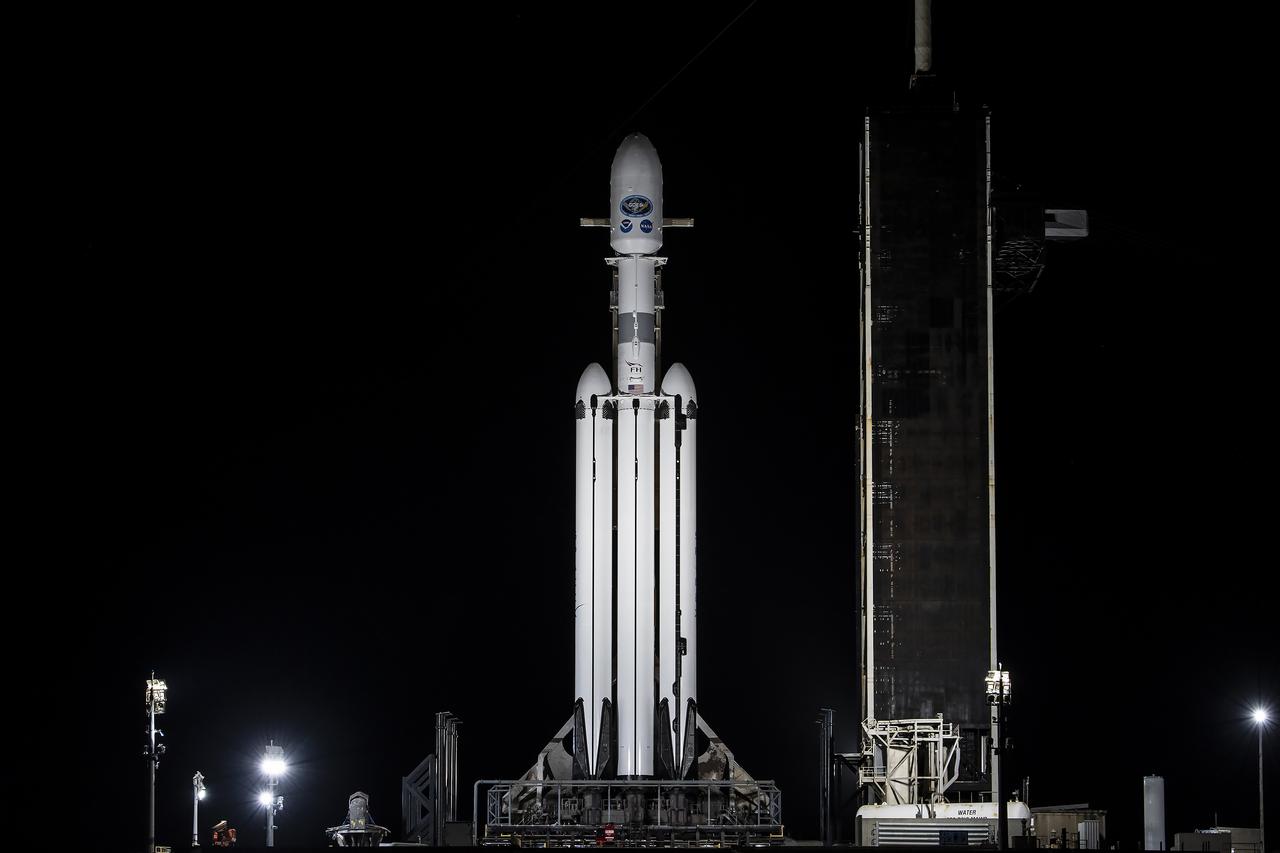
A SpaceX Falcon Heavy rocket carrying the National Oceanic and Atmospheric Administration (NOAA) GOES-U (Geostationary Operational Environmental Satellite U) stands vertical at Launch Complex 39A at NASA’s Kennedy Space Center in Florida on Monday, June 24, 2024. The GOES-U satellite is the final satellite in the GOES-R series, which serves a critical role in providing continuous coverage of the Western Hemisphere, including monitoring tropical systems in the eastern Pacific and Atlantic oceans. The two-hour launch window opens at 5:16 p.m. EDT. on Tuesday, June 25, 2024.
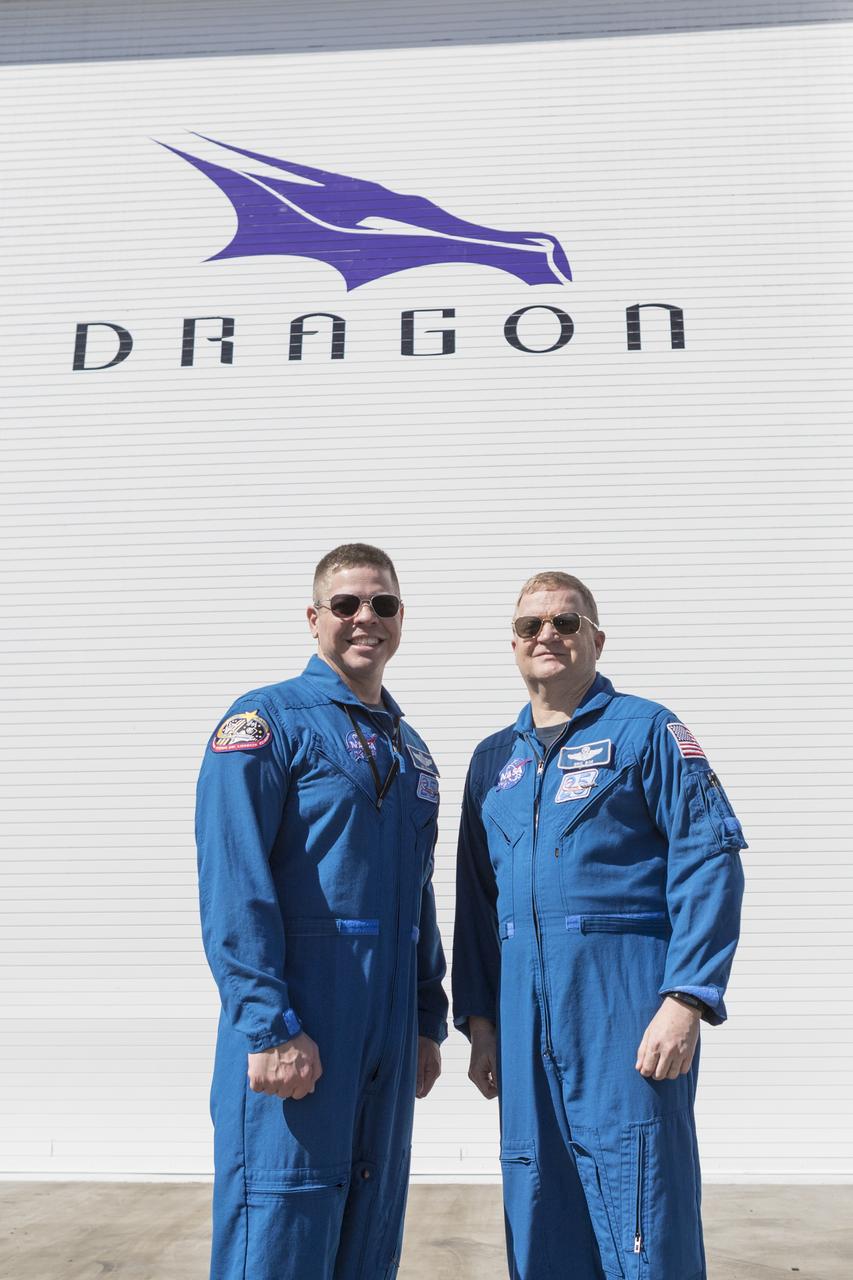
Astronauts Bob Behnken, left, and Eric Boe are outside the SpaceX facility in Hawthorne, California. SpaceX is developing its Crew Dragon spacecraft and Falcon 9 rocket in partnership with NASA’s Commercial Crew Program to carry astronauts to and from the International Space Station.
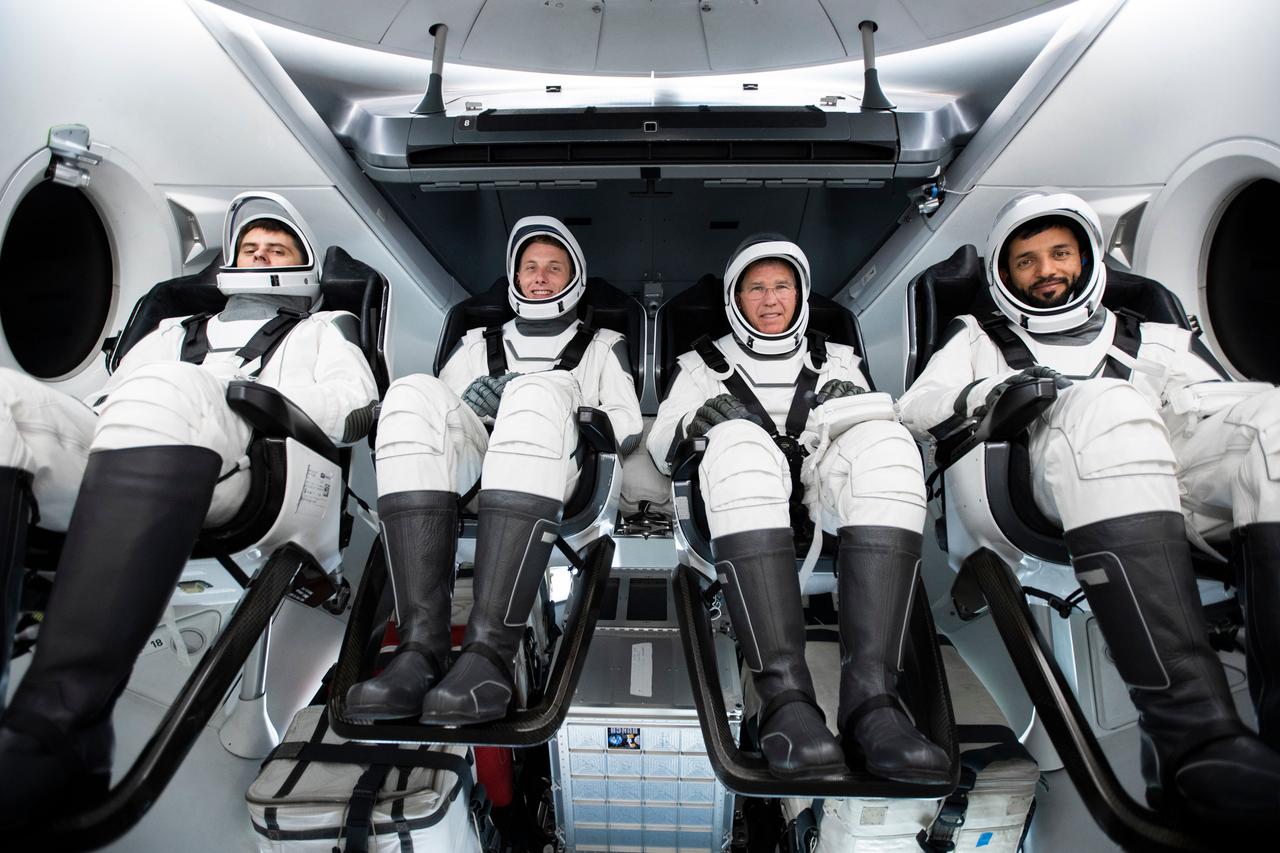
jsc2022e065066 (March 24, 2022) --- The four crew members that comprise the SpaceX Crew-6 mission are seated inside the SpaceX Dragon crew ship during a training session at the company's headquarters in Hawthorne, California. Seated from left in their spacesuits are, Mission Specialist Andrey Fedyaev, Pilot Warren "Woody" Hoburg, Commander Stephen Bowen, and Mission Specialist Sultan Alnedayi. Credit: SpaceX
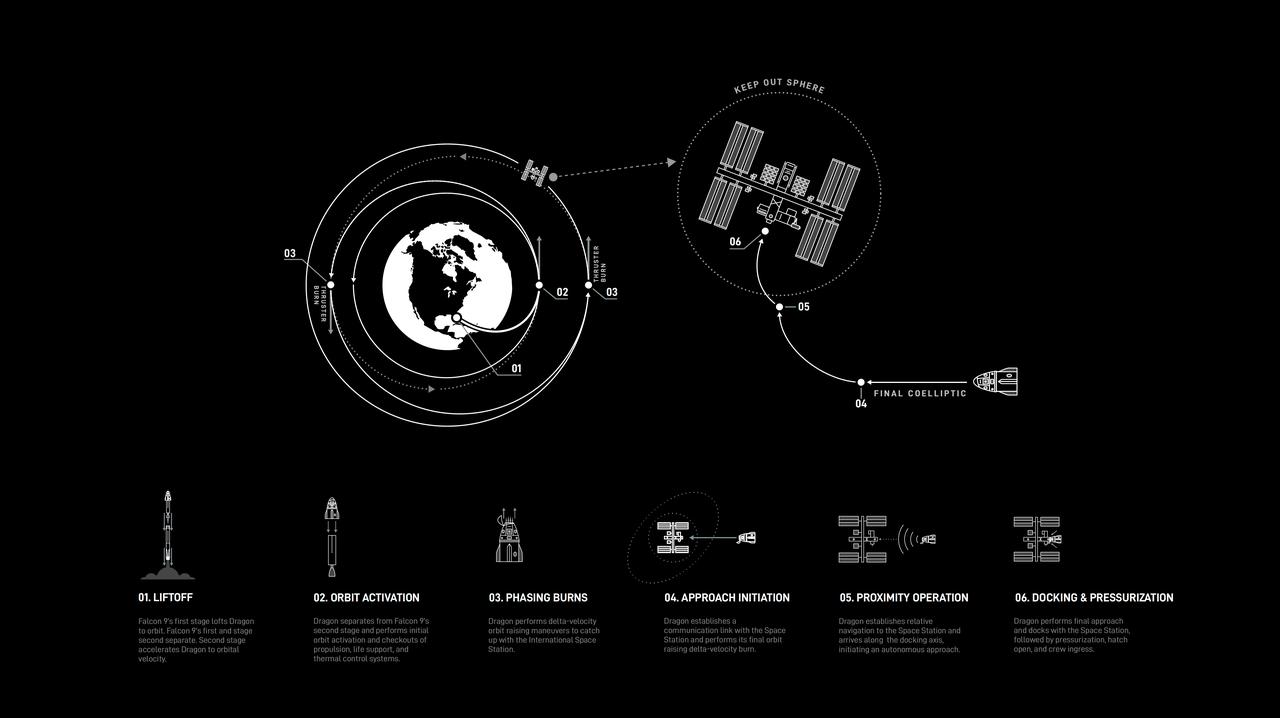
This graphic provides an overview of SpaceX mission operations. SpaceX is one of two commercial partners providing transportation to and from the International Space Station as part of NASA’s Commercial Crew Program.
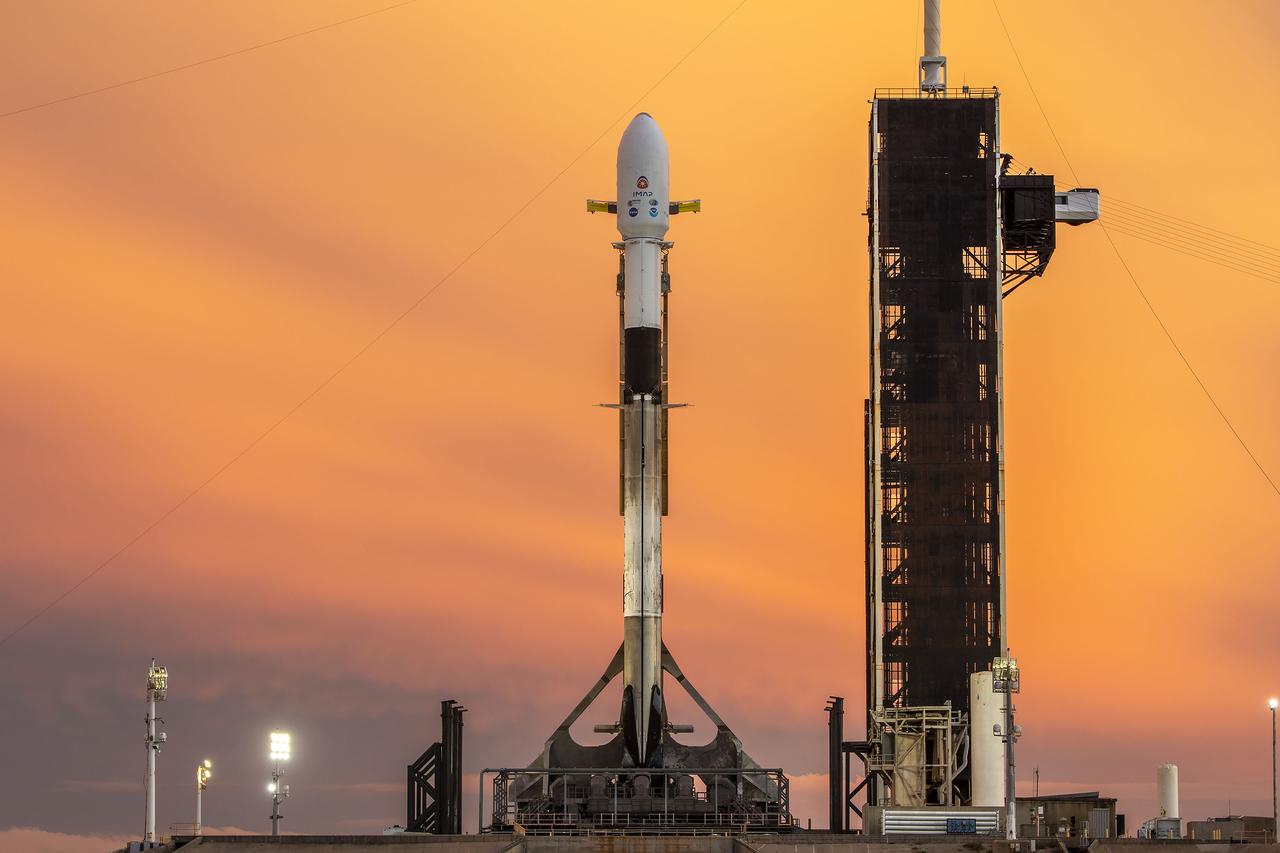
A SpaceX Falcon 9 rocket with NASA’s IMAP (Interstellar Mapping and Acceleration Probe), the agency’s Carruthers Geocorona Observatory, and National Oceanic and Atmospheric Administration’s (NOAA) Space Weather Follow On–Lagrange 1 (SWFO-L1) spacecraft atop stands vertical at Launch Complex 39A as the sun sets on Monday, Sept. 22, 2025, at the agency’s Kennedy Space Center in Florida. The missions will each focus on different effects of the solar wind — the continuous stream of particles emitted by the Sun — and space weather — the changing conditions in space driven by the Sun — from their origins at the Sun to their farthest reaches billions of miles away at the edge of our solar system.

The upgraded version of SpaceX’s Cargo Dragon spacecraft, Dragon 2, is seen atop a Falcon 9 rocket on Dec. 2, 2020, as they prepare to be rolled out to Launch Complex 39A at NASA’s Kennedy Space Center in Florida for the company’s 21st Commercial Resupply Services (CRS-21) launch. The first launch for SpaceX under NASA’s second Commercial Resupply Services contract, CRS-21 will deliver critical supplies, equipment, and material to support a variety of science and research investigations that will take place aboard the International Space Station. Liftoff is scheduled for 11:39 a.m. EST on Saturday, Dec. 5.
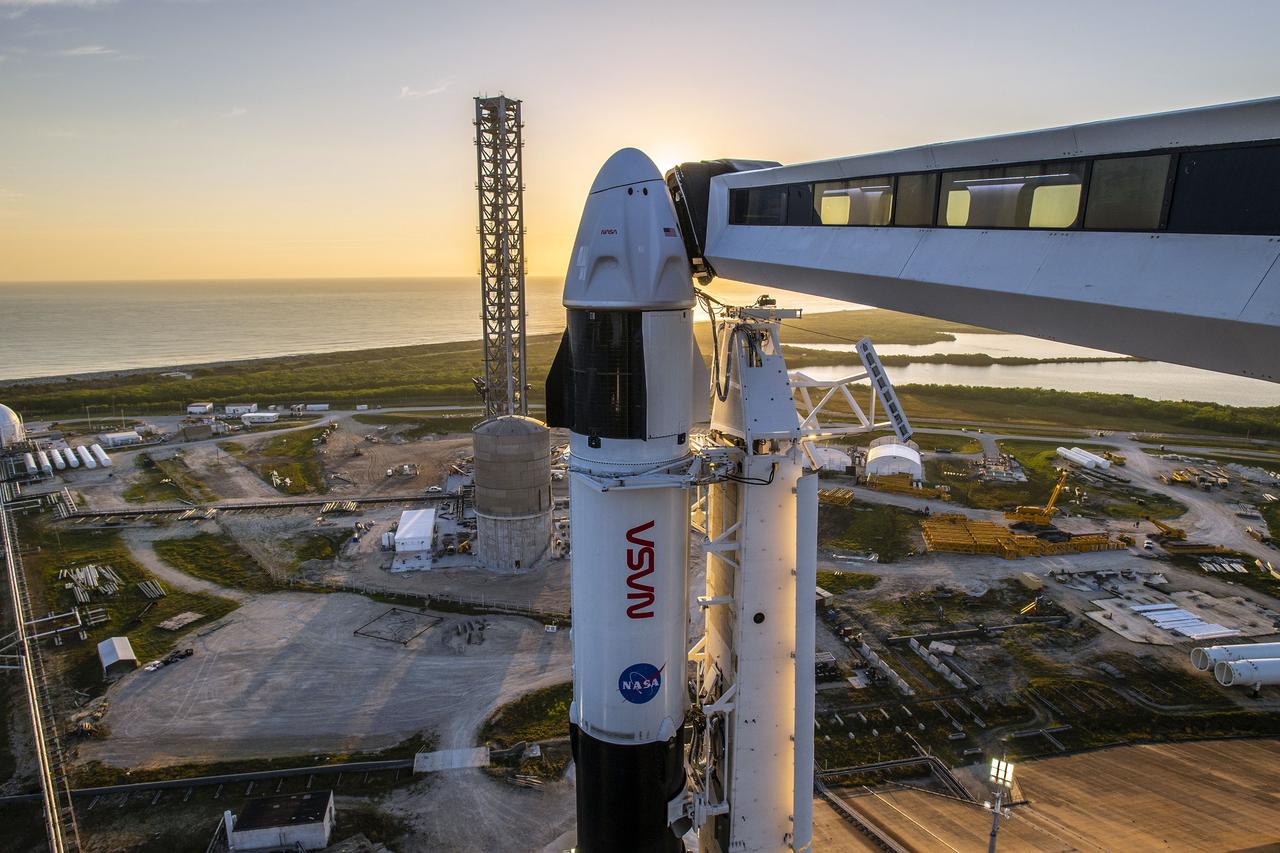
The SpaceX Falcon 9 rocket with Dragon spacecraft Endeavour is secured on the pad at Launch Complex 39A at Kennedy Space Center in Florida on Feb. 22, 2023, for NASA’s SpaceX Crew-6 mission. The crew access arm has been moved into position at the Dragon spacecraft. NASA astronauts Stephen Bowen, spacecraft commander, and Warren “Woody” Hoburg, pilot, along with mission specialists Sultan Alneyadi, UAE (United Arab Emirates) astronaut, and Andrey Fedyaev, Roscosmos cosmonaut, are slated to launch to the International Space Station at 1:45 a.m. EST on Feb. 27 from Launch Complex 39A. Crew-6 is the sixth crew rotation mission with SpaceX to the station, and the seventh flight of Dragon with people as part of the agency’s Commercial Crew Program.
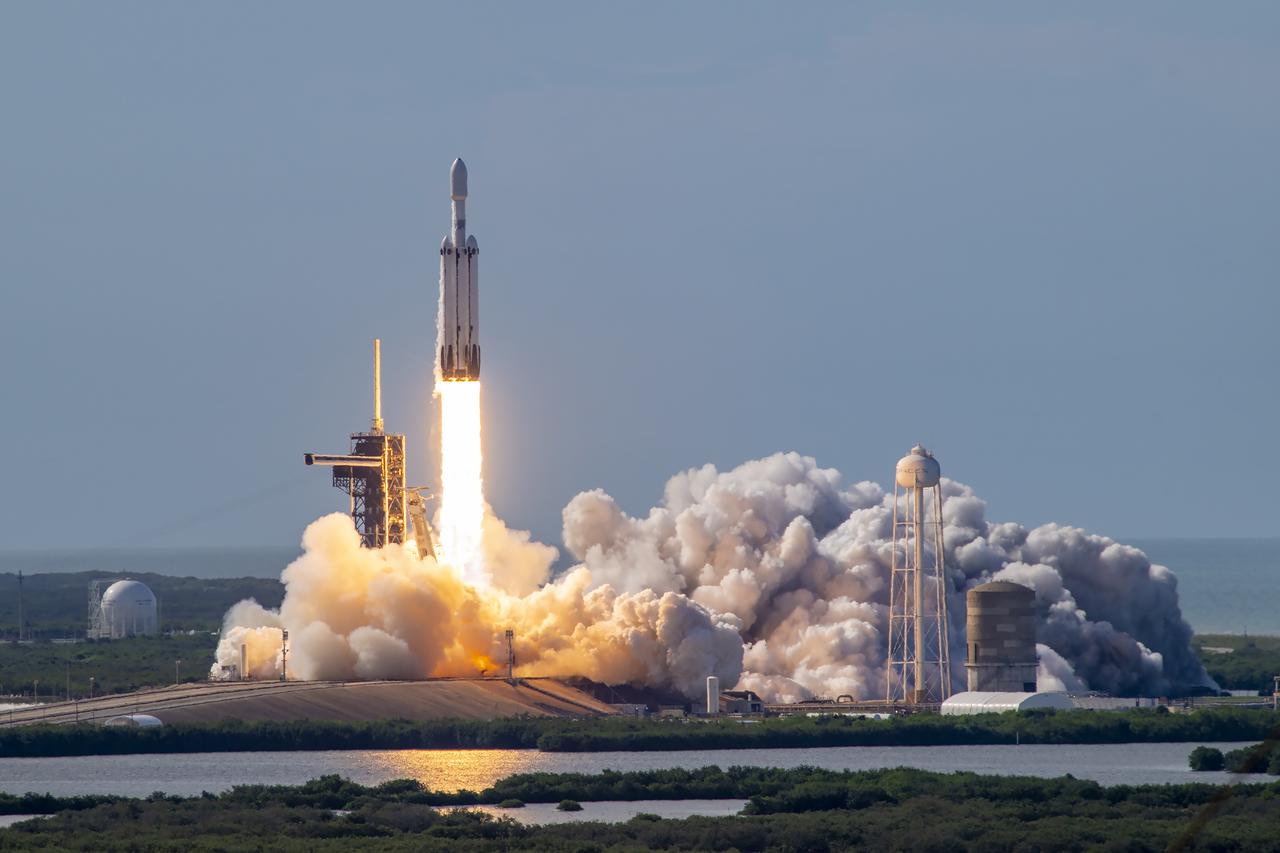
A SpaceX Falcon Heavy rocket carrying the National Oceanic and Atmospheric Administration (NOAA) GOES-U (Geostationary Operational Environmental Satellite U) lifts off from Launch Complex 39A at NASA’s Kennedy Space Center in Florida on Tuesday, June 25, 2024. The GOES-U satellite is the final satellite in the GOES-R series, which serves a critical role in providing continuous coverage of the Western Hemisphere, including monitoring tropical systems in the eastern Pacific and Atlantic oceans.
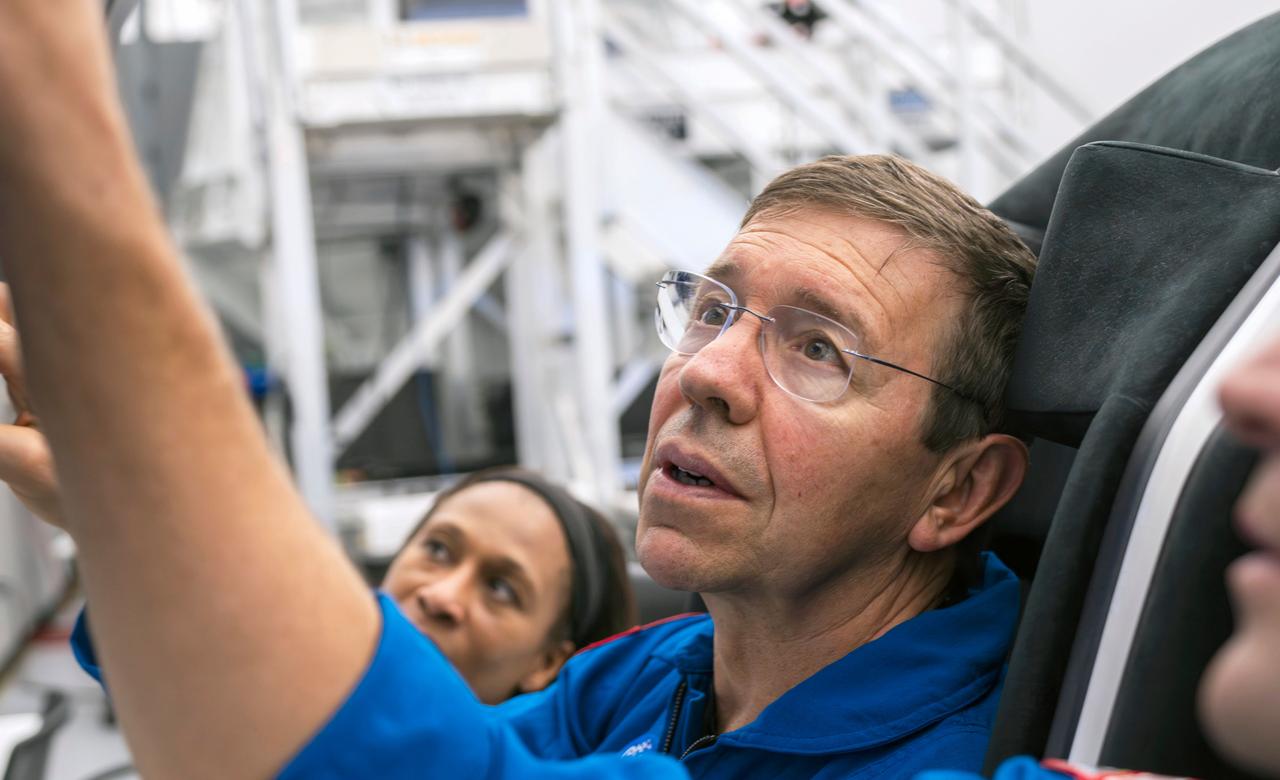
jsc2023e066251 (Oct. 15, 2023) --- NASA astronauts Jeanette Epps and Michael Barratt, SpaceX Crew-8 Mission Specialist and Pilot respectively, participate in preflight mission training at SpaceX headquarters in Hawthorne, California. Credit: SpaceX
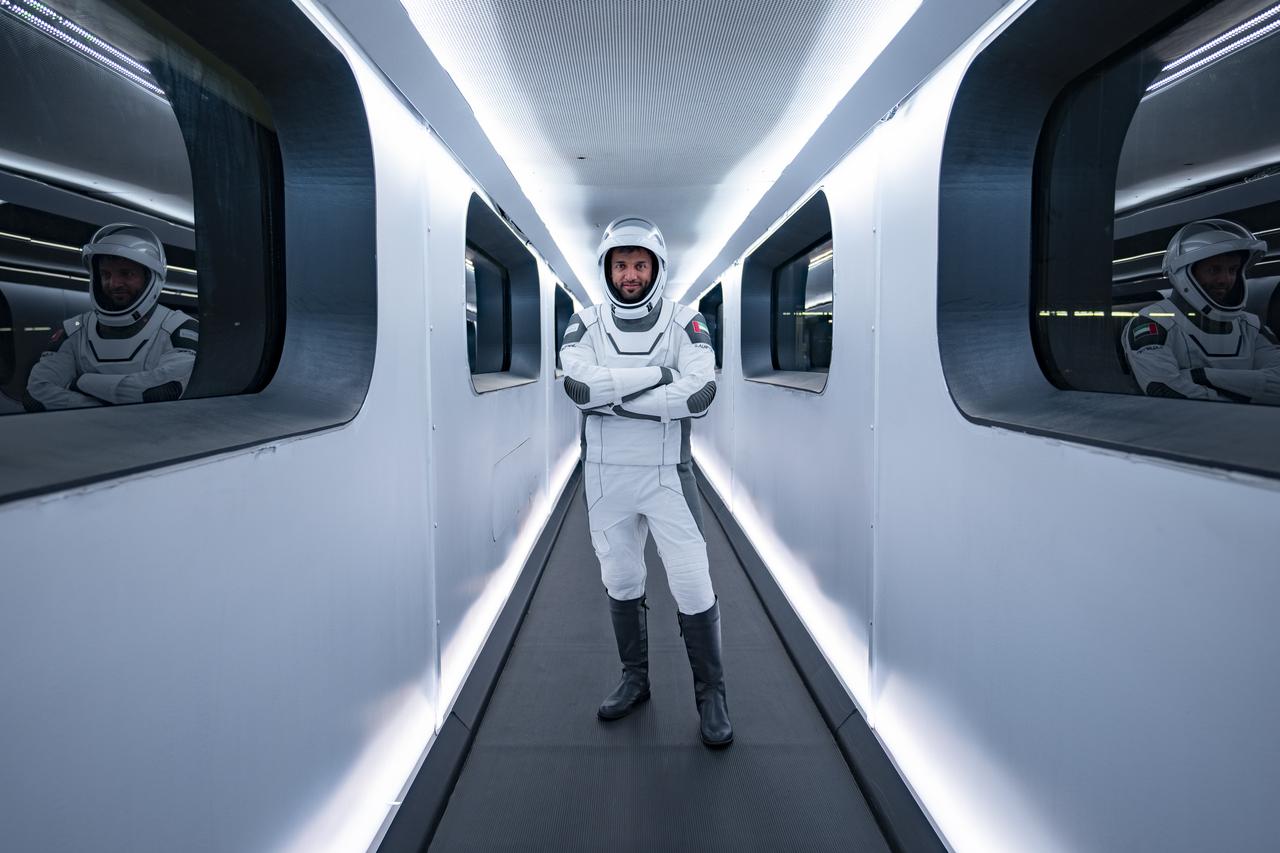
NASA SpaceX Crew-6 astronaut and mission specialist Sultan Alneyadi, UAE (United Arab Emirates), stands inside the crew access arm leading to the SpaceX Dragon spacecraft Endeavour during a countdown dress rehearsal at NASA’s Kennedy Space Center in Florida on Feb. 23, 2023. Alnayadi, along with NASA astronaut Warren “Woody” Hoburg, pilot; NASA astronaut Stephen Bowen, spacecraft commander; and ndrei Fedyaev, Roscosmos cosmonaut and mission specialist will launch to the International Space Station aboard the Crew Dragon Endeavour on a SpaceX Falcon 9. Launch is targeted for 1:45 a.m. EST on Feb. 27 from Launch Complex 39A. Crew-6 is the sixth crew rotation mission with SpaceX to the station, and the seventh flight of Dragon with people as part of the agency’s Commercial Crew Program.
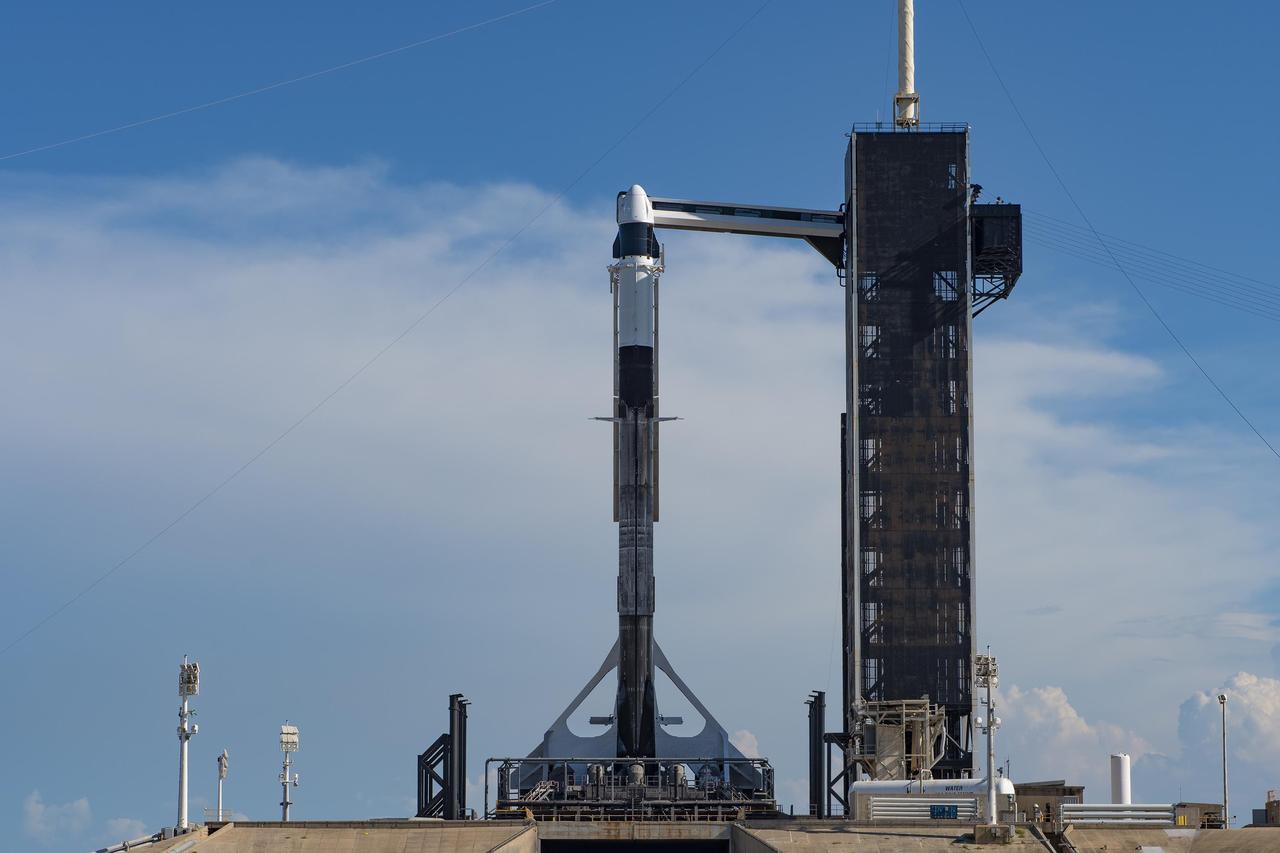
A SpaceX Falcon 9 rocket, with the company’s Cargo Dragon spacecraft atop, is raised to a vertical position at NASA Kennedy Space Center’s Launch Complex 39A on July 12, 2022, in preparation for the 25th commercial resupply services launch to the International Space Station. The mission will deliver new science investigations, supplies, and equipment to the crew aboard the orbiting laboratory. Liftoff is scheduled for 8:44 p.m. EDT on Thursday, July 14, from Kennedy’s Launch Complex 39A.
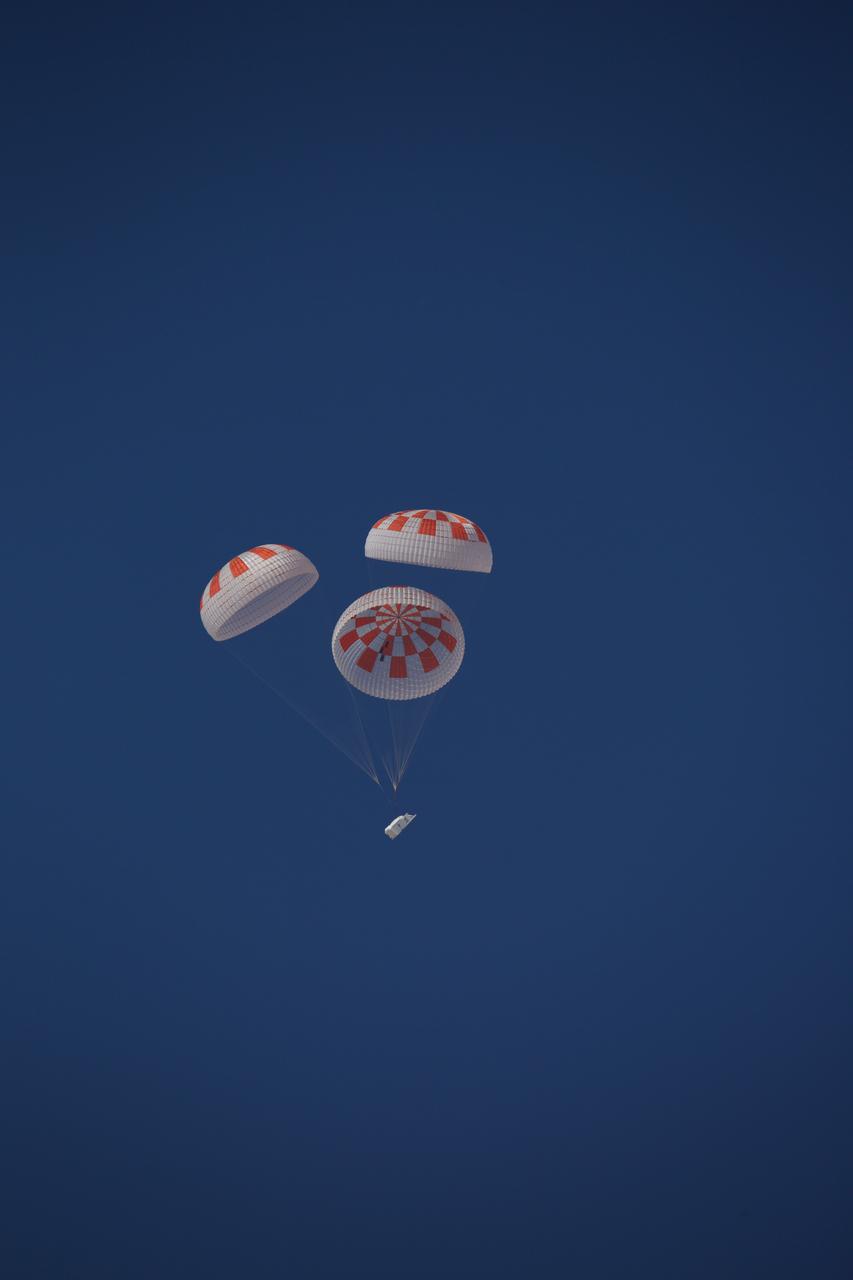
SpaceX performed its fourteenth overall parachute test supporting Crew Dragon development. This most recent exercise was the first of several planned parachute system qualification tests ahead of the spacecraft’s first crewed flight and resulted in the successful touchdown of Crew Dragon’s parachute system. During this test, a C-130 aircraft transported the parachute test vehicle, designed to achieve the maximum speeds that Crew Dragon could experience on re-entry, over the Mojave Desert in Southern California and dropped the vehicle from an altitude of 25,000 feet. The test demonstrated an off-nominal situation, deploying only one of the two drogue chutes and intentionally skipping a reefing stage on one of the four main parachutes, proving a safe landing in such a contingency scenario.
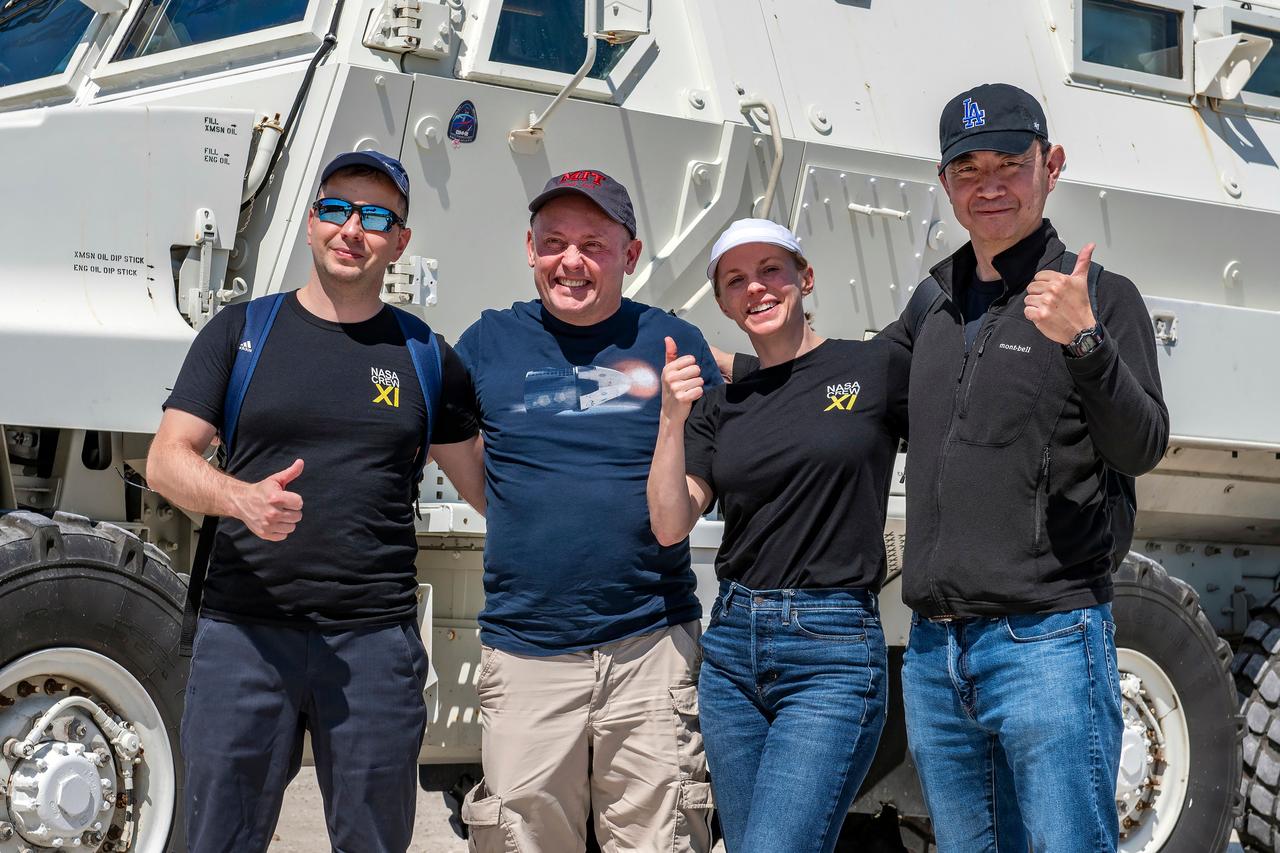
jsc2025e041100 (April 11, 2025) --- NASA’s SpaceX Crew-11 crew pose for a photo by an emergency egress vehicle at NASA’s Kennedy Space Center in Florida. Astronauts would use the emergency egress vehicle to quickly leave the launch area in the unlikely event of an emergency. From left to right: Roscosmos cosmonaut Oleg Platonov, NASA astronauts Mike Fincke and Zena Cardman, and JAXA astronaut Kimiya Yui.