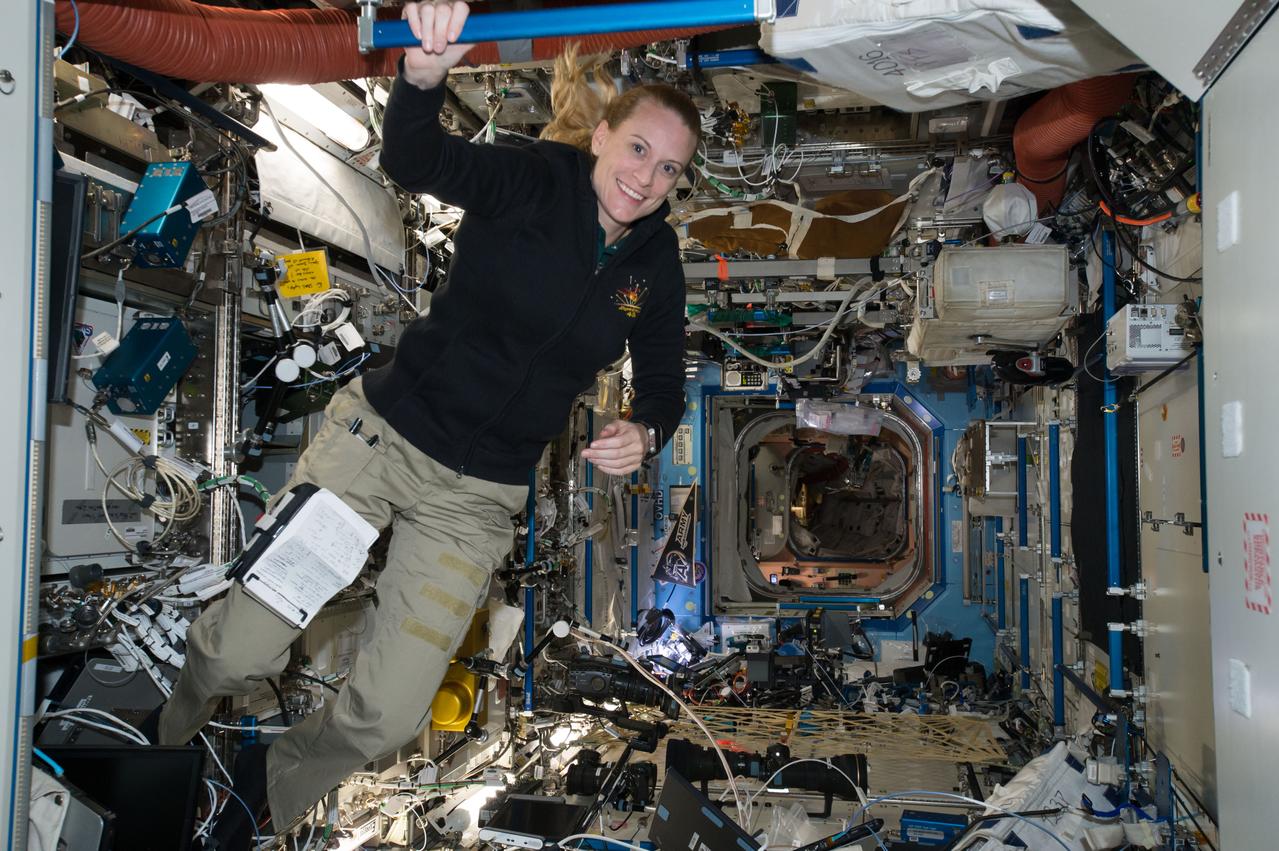
ISS048e025433 (07/12/2016) --- NASA astronaut Kate Rubins floats in front of a hatch of the U.S. Destiny laboratory aboard the International Space Station. Rubins launched to the station on July 6, 2016 and arrived two days later. She will serve as a flight engineer for Expeditions 48/49 and is currently scheduled to return home at the end of October.
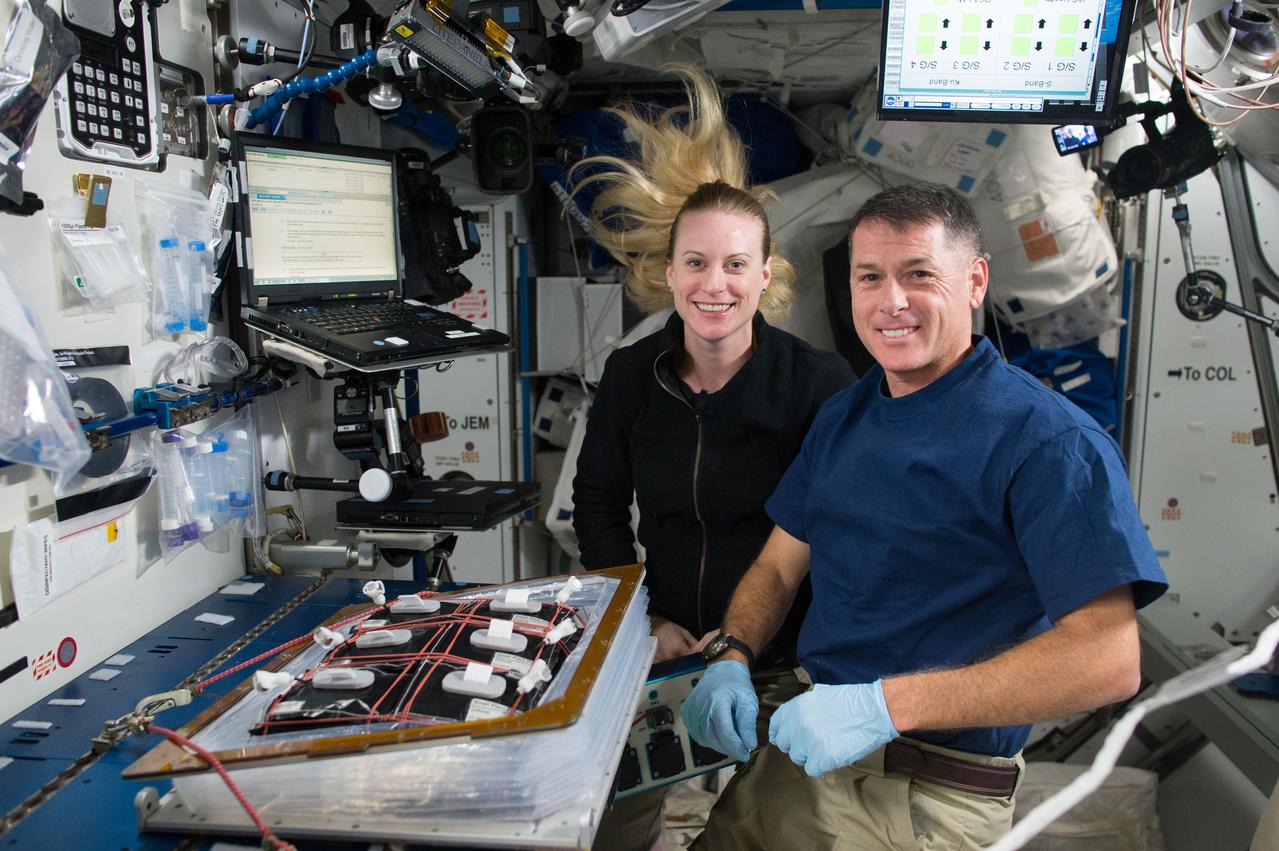
iss049e046023 (10/25/2016) --- NASA astronauts Shane and Kate Rubins are photographed during VEG-03 initiation in the Node 2 module. Organisms grow differently in space, from single-celled bacteria to plants and humans. But future long-duration space missions will require crew members to grow their own food, so understanding how plants respond to microgravity is an important step toward that goal. Veg-03 uses the Veggie plant growth facility to cultivate a type of cabbage, which is harvested in orbit with samples returned to Earth for testing.
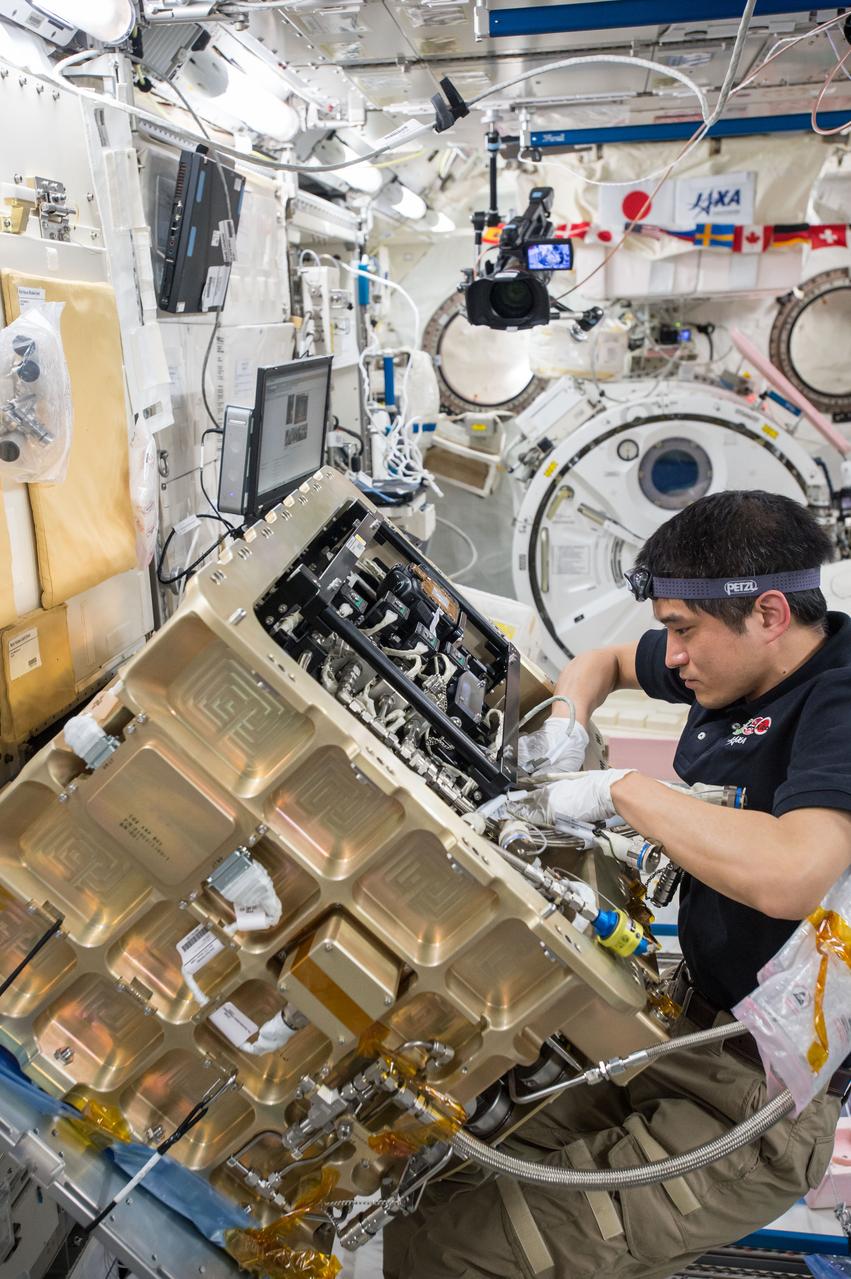
iss049e011944 (9/27/2016) --- Japan Aerospace Exploration Agency (JAXA) astronaut Takuya Onishi is photographed as he starts the first of two days of installation and preparation for the Group Combustion Module (GCM) Installation. The GCM will be installed into the Combustion Chamber.
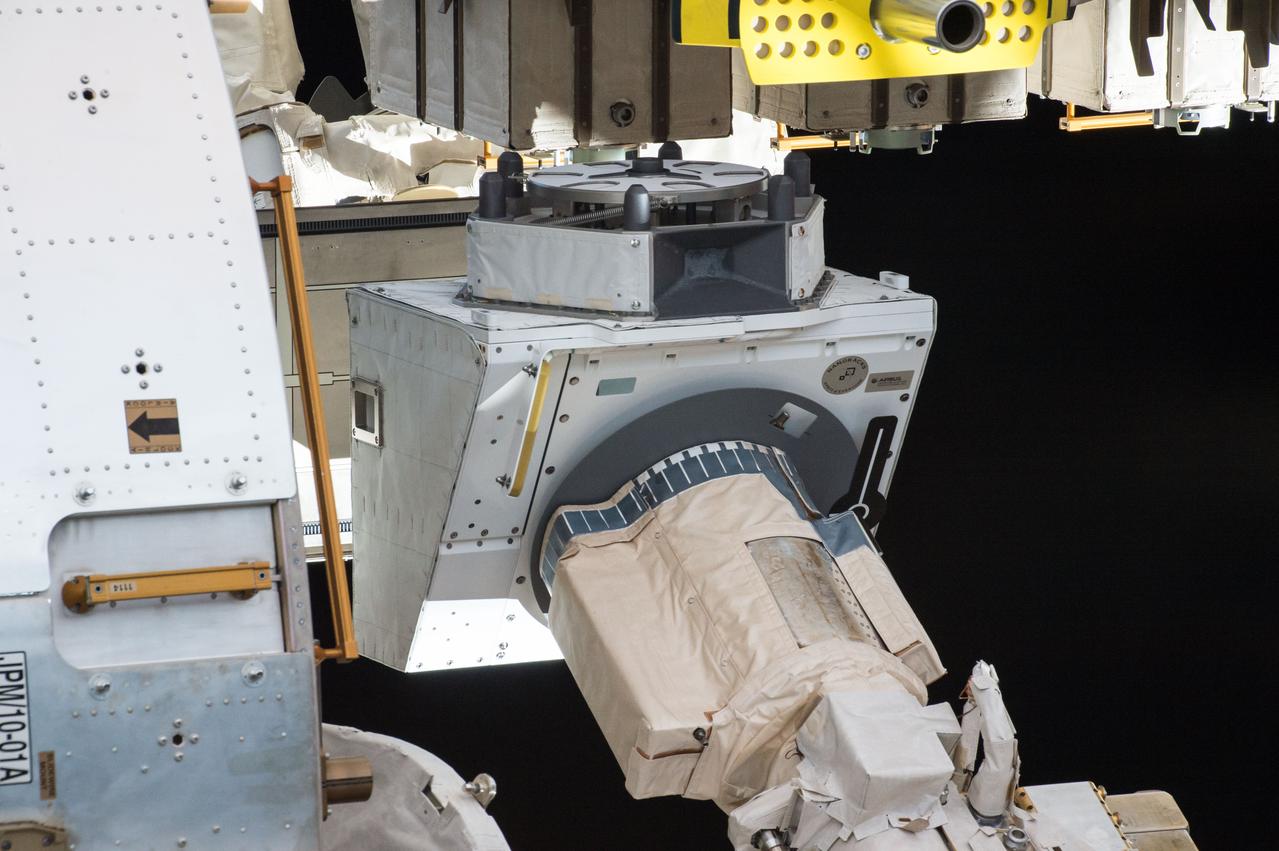
iss048e049789 (8/5/2016) --- A view of the NanoRacks External Platform (NREP) grappled by the Japanese Experiment Module Remote Manipulator System (JEMRMS) during operations to transfer the NREP to the JEM (Japanese Experiment Module) Exposed Facility (JEF). The NREP contains the NanoRacks-Gumstix and NanoRacks NanoTube Solar Cell payloads. The NanoRacks External Platform is a compact research platform fitted for versatile use on the exterior of the International Space Station (ISS).

iss048e049803 (8/5/2016) --- The Japanese Experiment Module Remote Manipulator System (JEMRMS) moves to install the NanoRacks External Platform (NREP) on the JEM (Japanese Experiment Module) Exposed Facility (JEF). The NREP contains the NanoRacks-Gumstix and NanoRacks NanoTube Solar Cell payloads. The NanoRacks External Platform is a compact research platform fitted for versatile use on the exterior of the International Space Station (ISS).
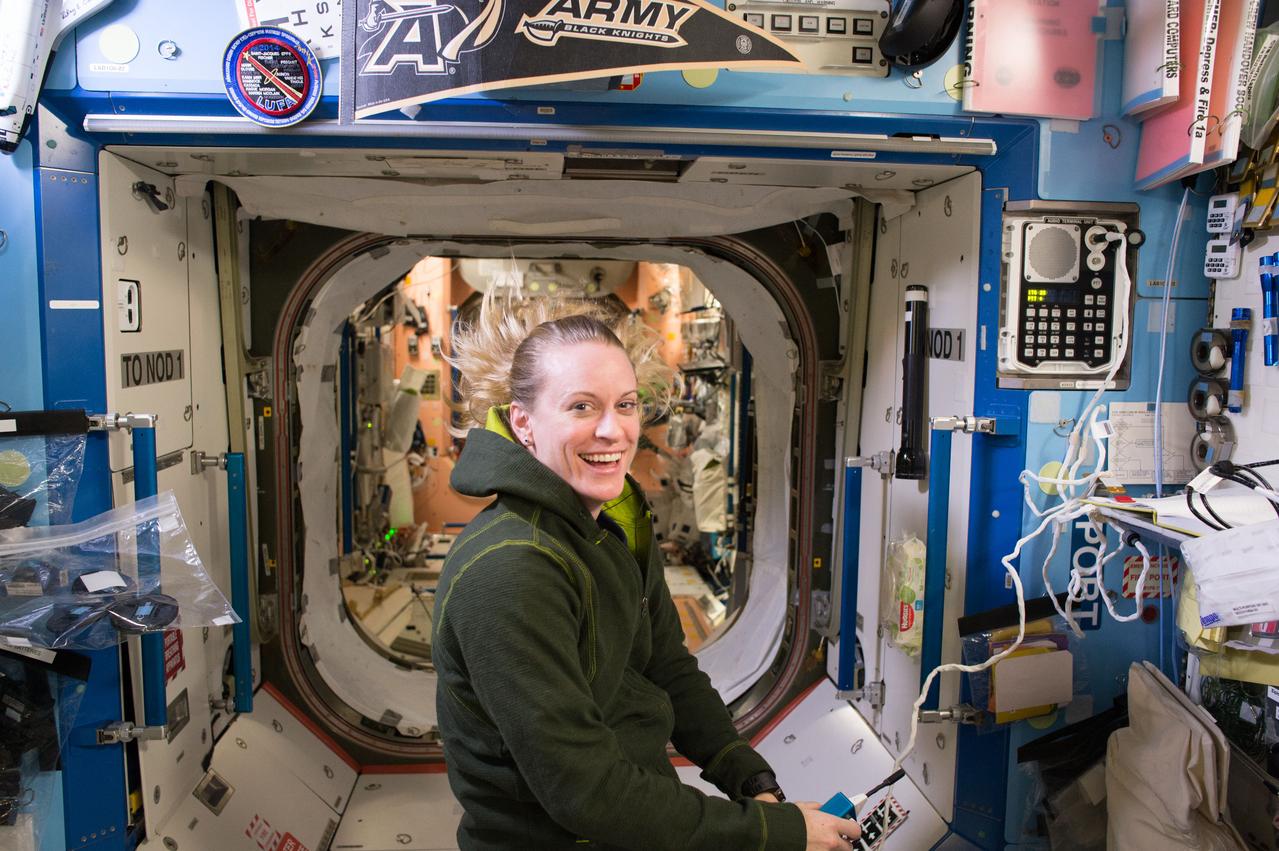
ISS049e038794 (10/14/2016 --- NASA astronaut Kate Rubins holds a communication microphone while floating in the U.S. Destiny Laboratory aboard the International Space Station. Rubins, a first time flier with a degree in molecular biology, is scheduled to return to Earth on Oct. 29, 2016, U.S. time
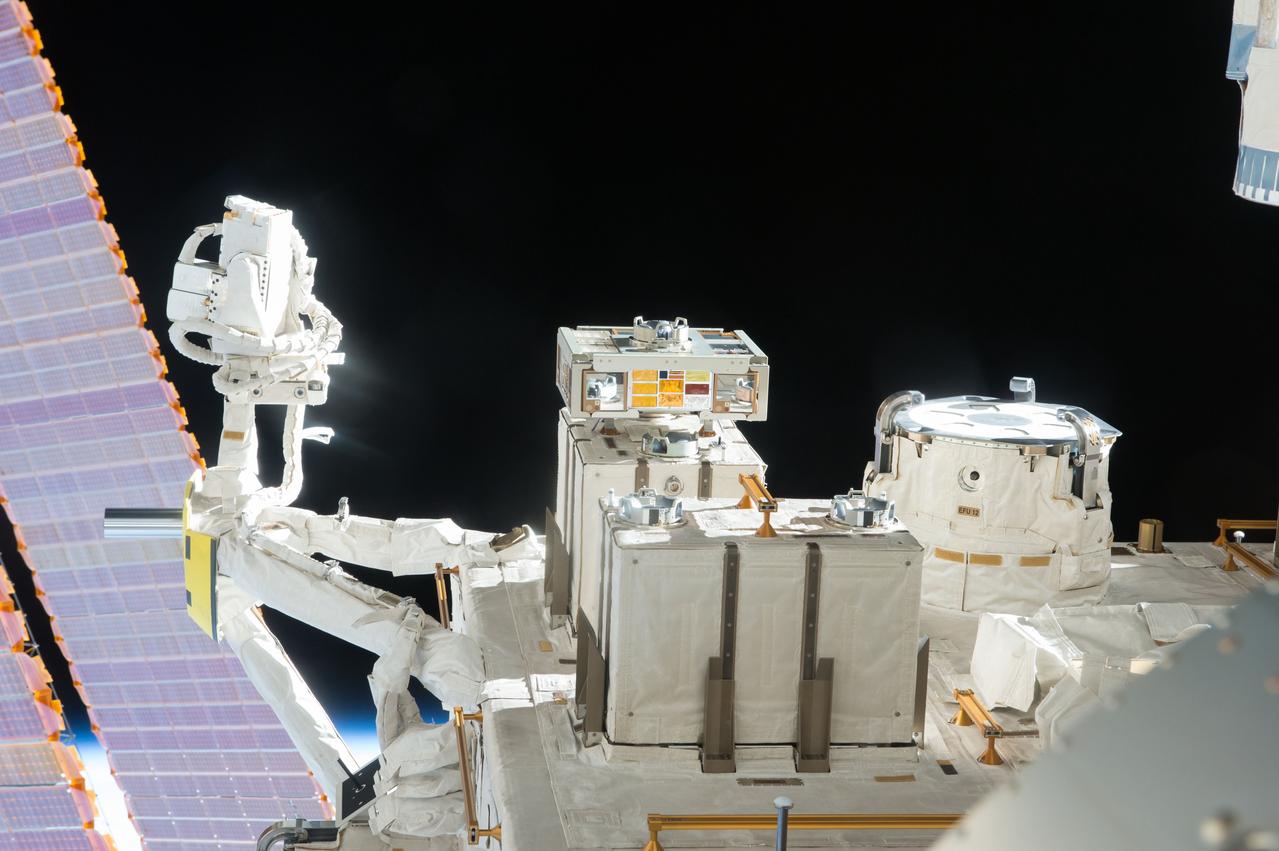
iss048e025920 (7/13/2016) --- View of the JEM (Japanese Experiment Module) Exposed Facility (JEF) taken through a window in the Kibo Japanese Experiment Pressurized Module (JPM). An Exposed Experiment Handrail Attachment Mechanism (ExHAM) and a Exposed Facility Unit (EFU) is in view.
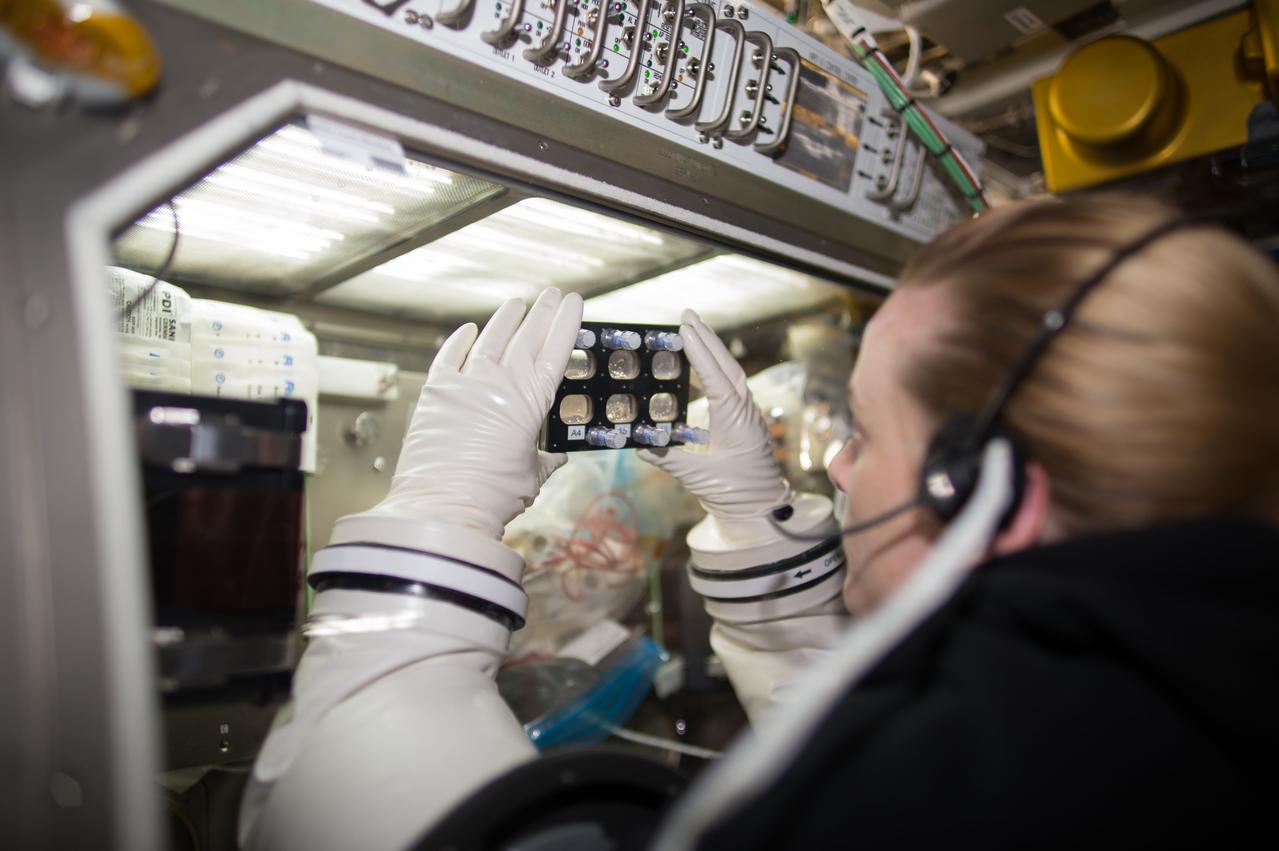
iss048e045908 (7/29/2016) --- NASA astronaut Kate Rubins is photographed at the Microgravity Science Glovebox (MSG) as she works to change the media in the Multiwell BioCells for the Heart Cells experiment. Effects of Microgravity on Stem Cell-Derived Cardiomyocytes (Heart Cells) studies the human heart, specifically how heart muscle tissue, contracts, grows and changes (gene expression) in microgravity and how those changes vary between subjects
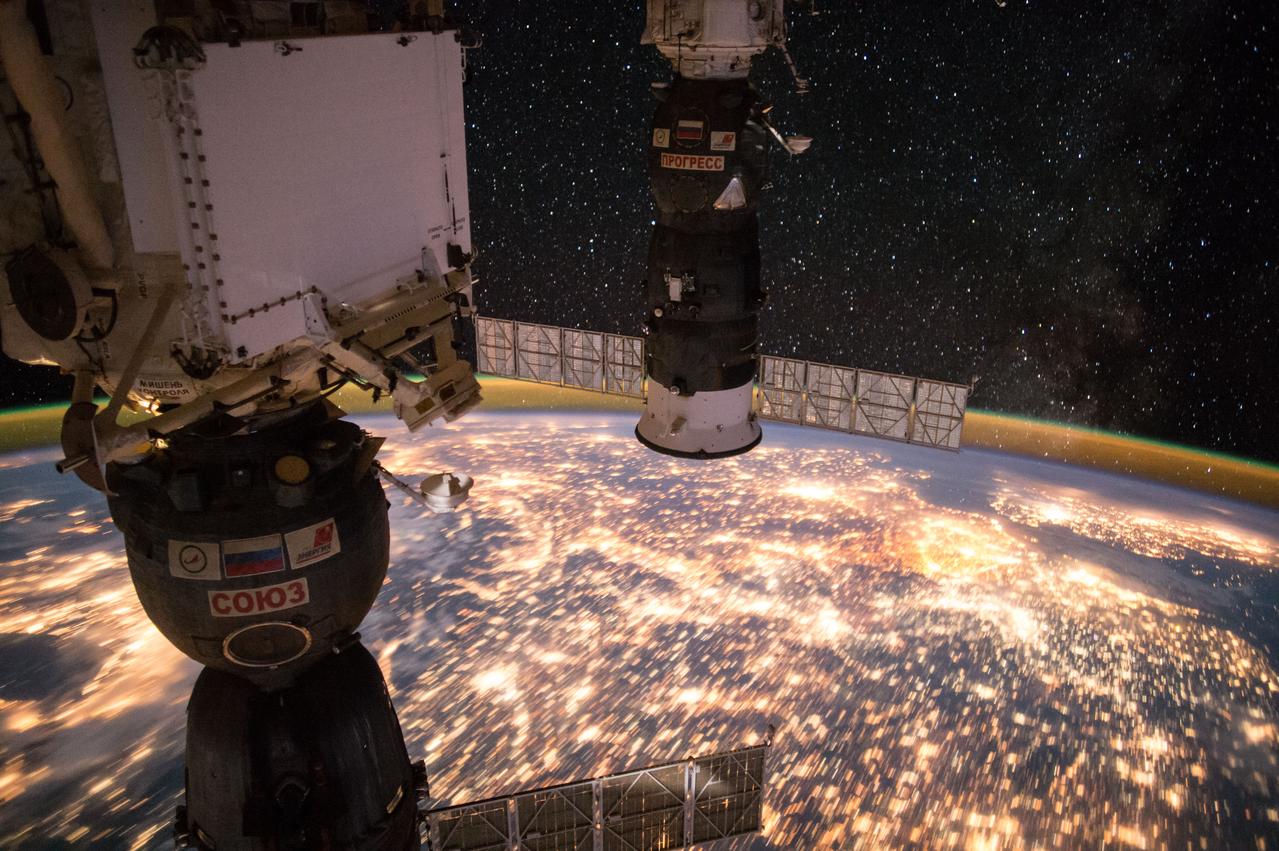
Earth observation taken during a night pass by the Expedition 49 crew aboard the International Space Station (ISS). Docked Soyuz and Progress spacecraft visible.
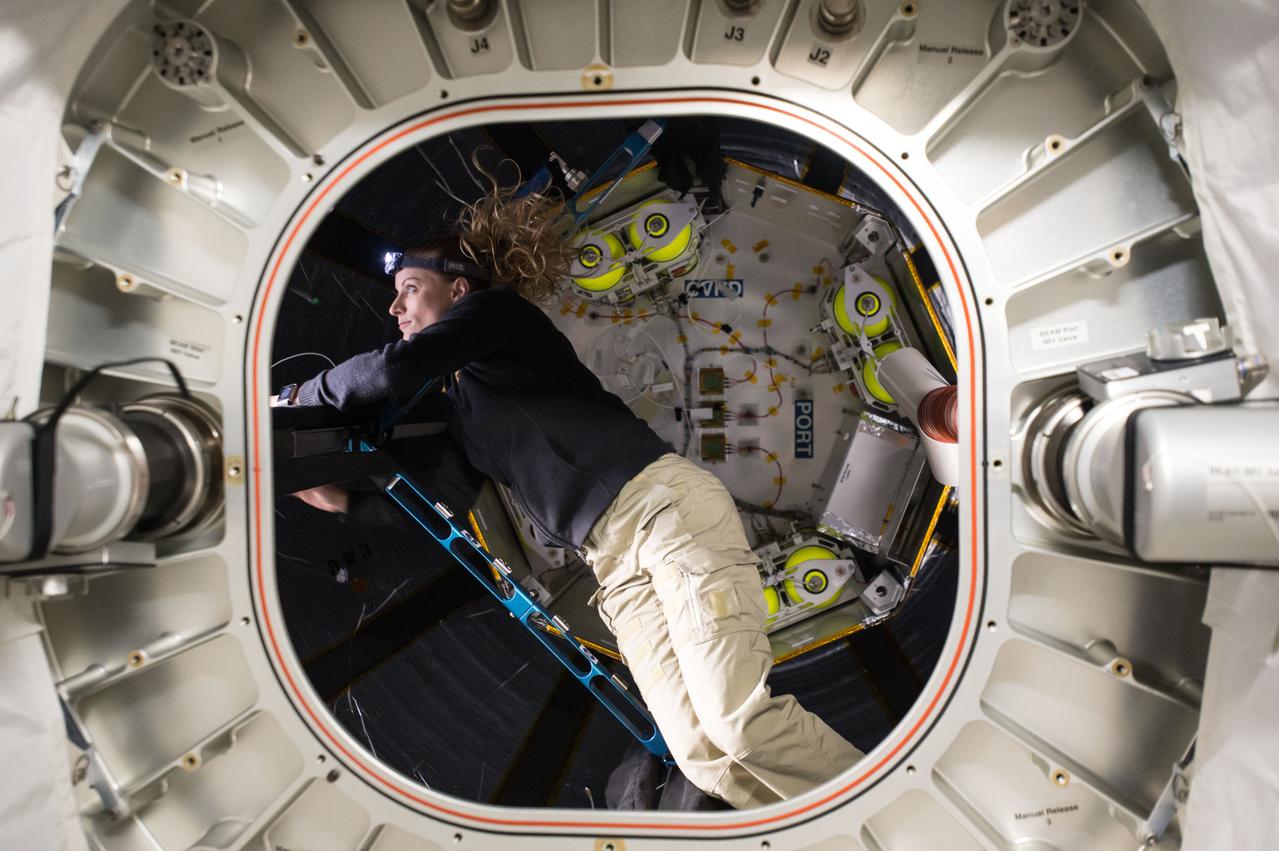
iss048e069952 (9/6/2016) --- NASA astronaut Kate Rubins is photographed inside the Bigelow Expandable Activity Module (BEAM) during BEAM ingress operations (OPS). The Bigelow Expandable Activity Module (BEAM) is an experimental expandable capsule that docks with the International Space Station (ISS). After docking, BEAM inflates to roughly 13 feet long and 10.5 feet in diameter to provide a habitable volume where a crew member can enter.
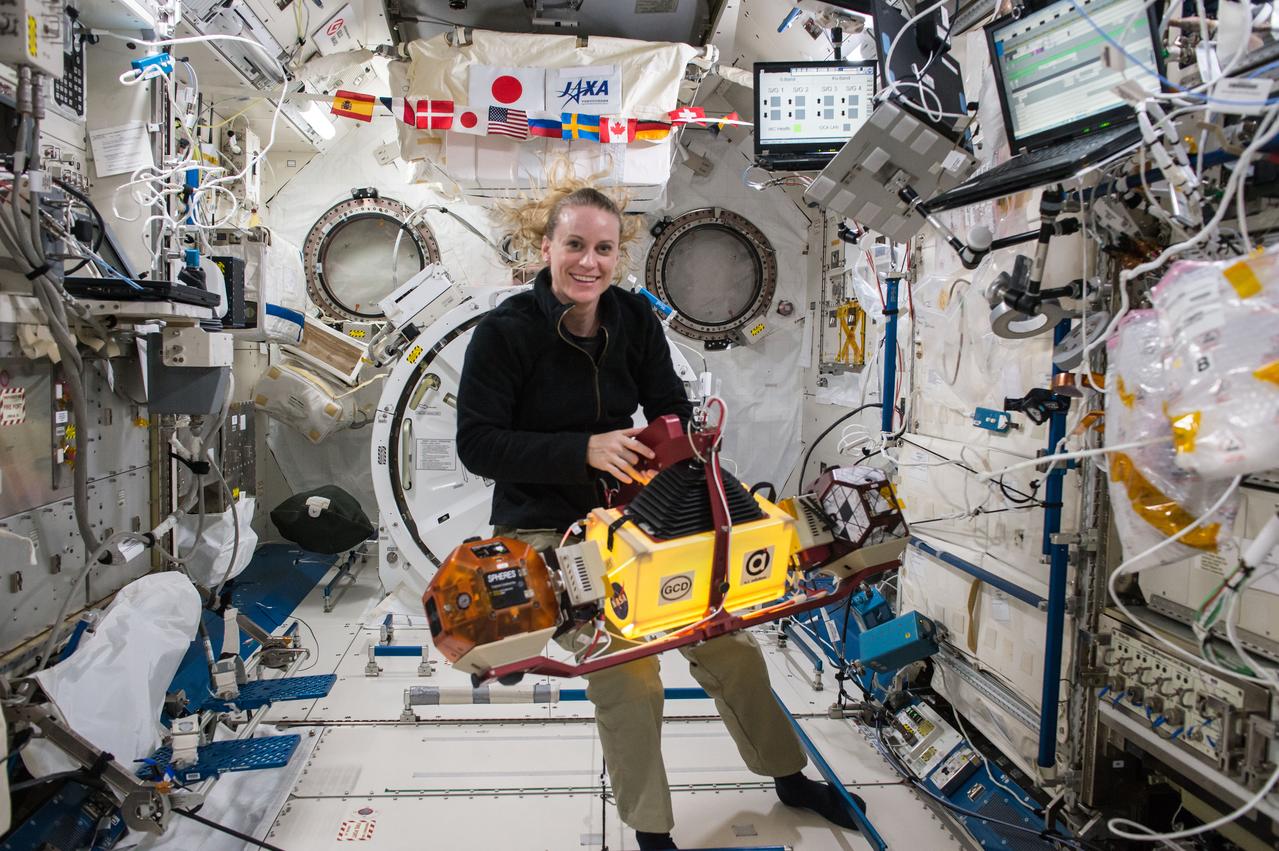
iss049e033811 (10/7/2016) --- NASA sstronaut Kate Rubins is photographed configuring the SPHERES-Slosh experiment setup using two SPHEREs satellites and the slosh assembly. The SPHERES-Slosh investigation examines the way liquids move inside containers in a microgravity environment.
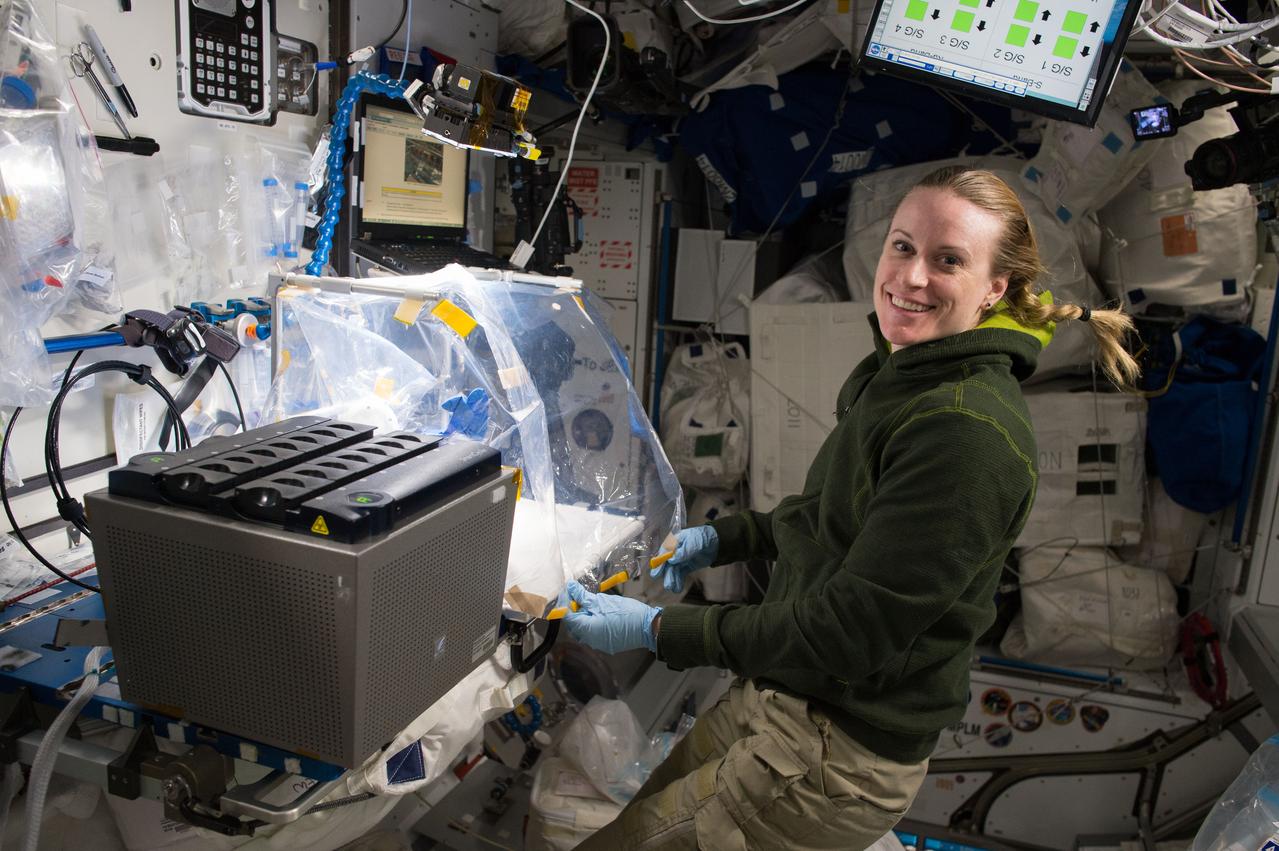
iss049e040145 (10/19/2016) --- NASA astronaut Kate Rubins working with WetLab-2 Ribonucleic Acid (RNA) SmartCycler tubes for Session 3. Wetlab RNA SmartCycler is a research platform for conducting real-time quantitative gene expression analysis aboard the International Space Station (ISS). The system enables spaceflight genomic studies involving a wide variety of biospecimen types in the unique microgravity environment of space.
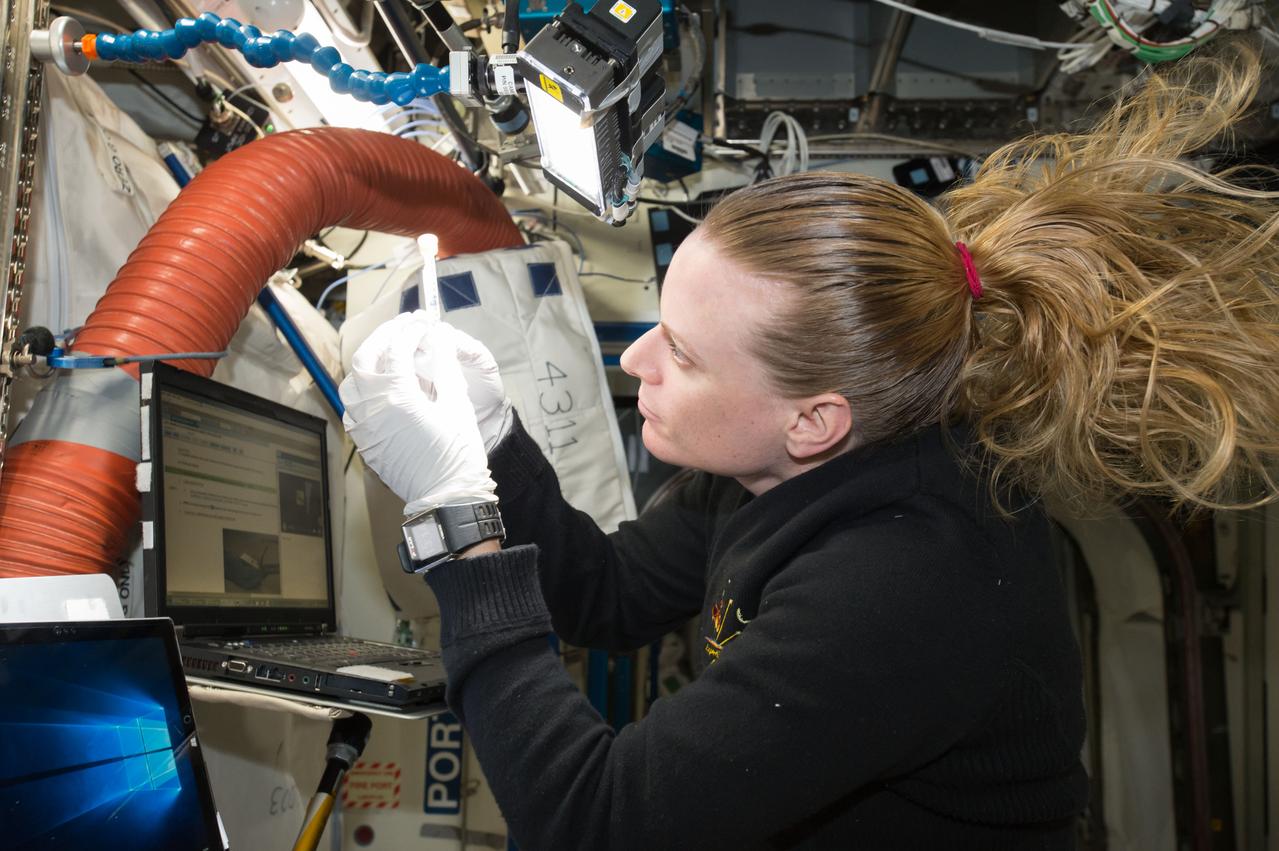
iss048e069880 (9/3/2016) --- NASA Astronaut Kate Rubins makes preparations for the Run 2 sample initialization of the Biomolecule Sequencer experiment. The Biomolecule Sequencer seeks to demonstrate, for the first time, that DNA sequencing is feasible in an orbiting spacecraft. A space-based DNA sequencer could identify microbes, diagnose diseases and understand crew member health, and potentially help detect DNA-based life elsewhere in the solar system.
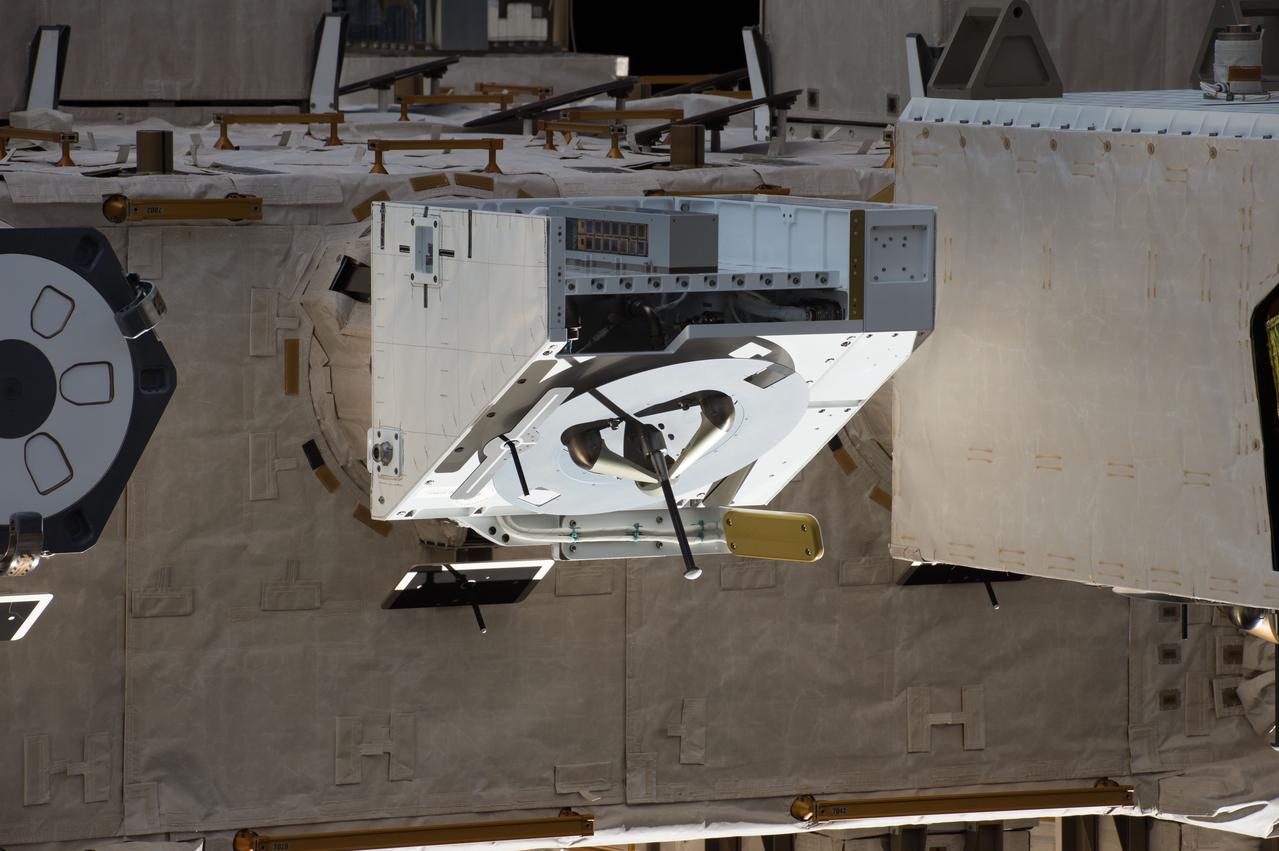
iss048e050816 (8/5/2016) --- A view of the NanoRacks External Platform (NREP), containing the NanoRacks-Gumstix and NanoRacks NanoTube Solar Cell payloads, installed on the JEM (Japanese Experiment Module) Exposed Facility (JEF). The NanoRacks External Platform is a compact research platform fitted for versatile use on the exterior of the International Space Station (ISS).
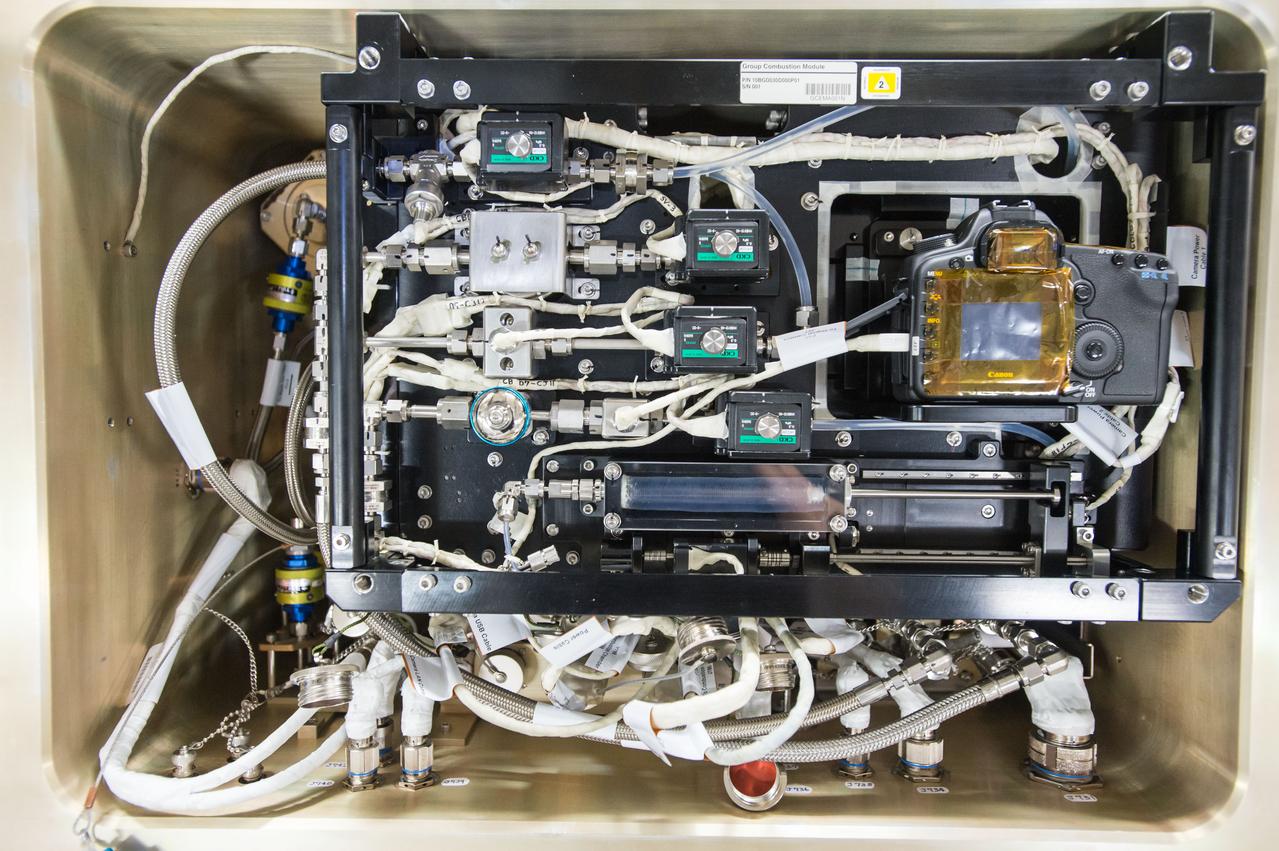
iss049e012007 (9/27/2016) --- Photographic documentation taken during the installation and preparation for the Group Combustion Module (GCM) Installation.
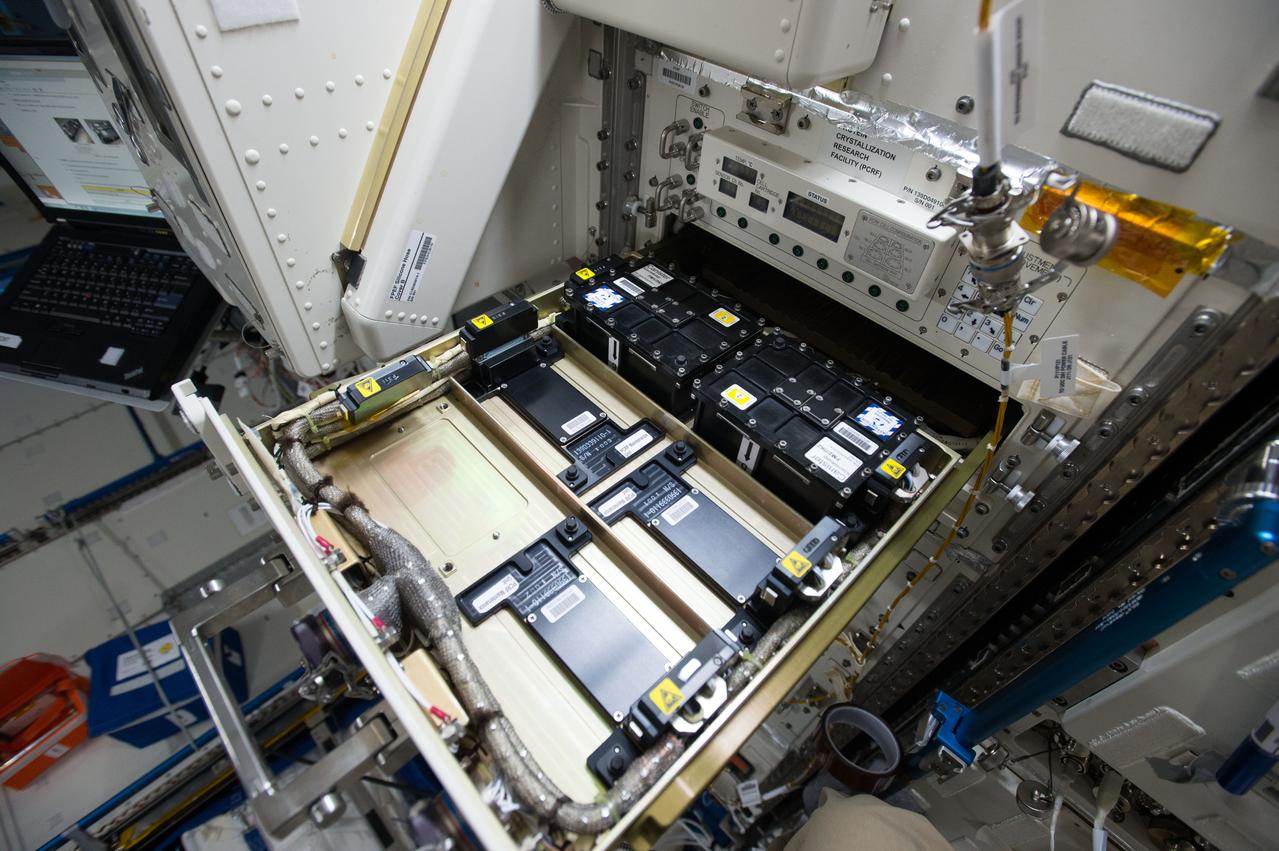
iss049e045287 (10/21/2016) --- Photographic documentation taken during JAXA Protein Crystal Growth (PCG) Installation into the Protein Crystallization Research Facility (PCRF) of the Ryutai Rack.
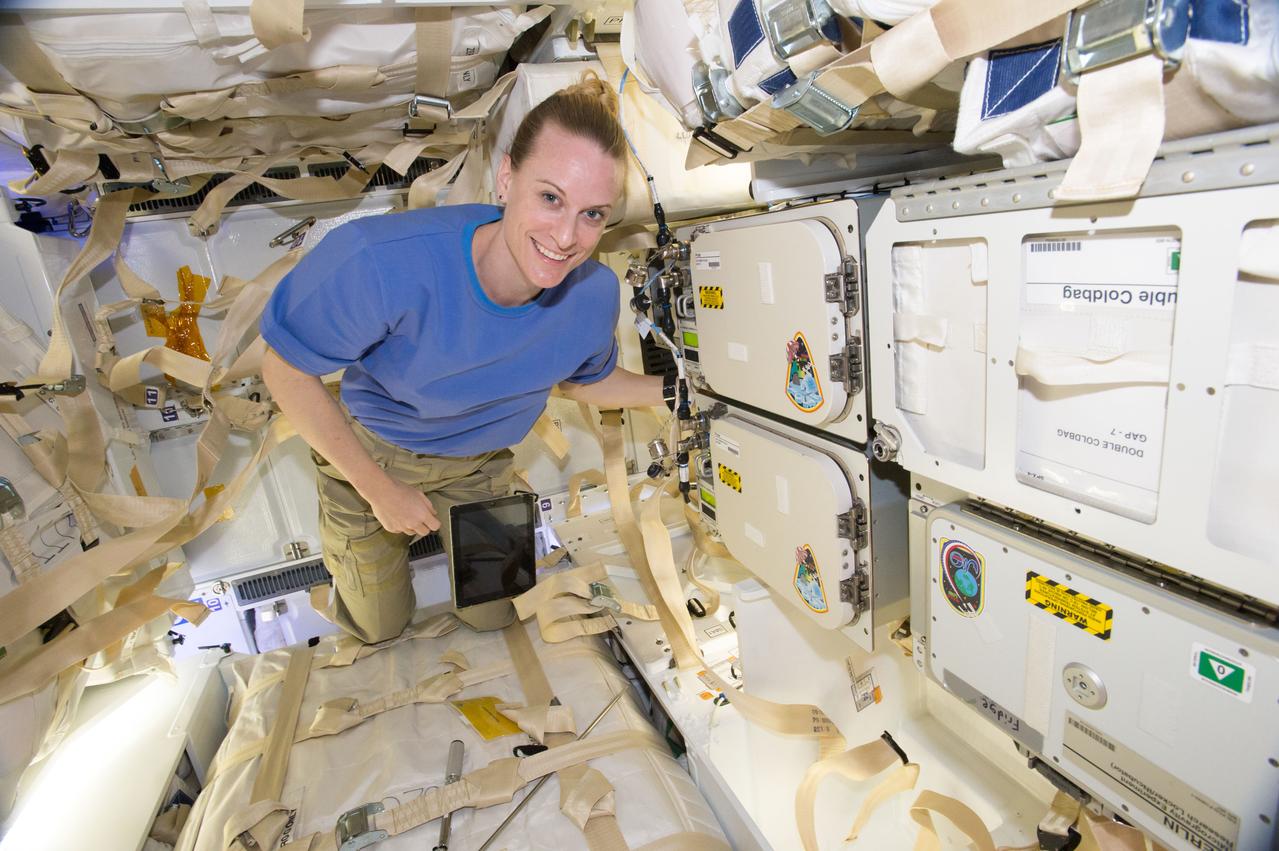
iss048e065818 (8/24/2016) --- NASA astonaut Kate Rubins poses for a photo next to Polar Facilities 2 and 4 installed in the SpaceX Dragon Commercial Resupply Services-9 (CRS-9) spacecraft for return to Earth. Polar is a Cold Stowage managed facility that provides transport and storage of science samples at cryogenic temperatures (-80ºC) to and from the International Space Station (ISS).
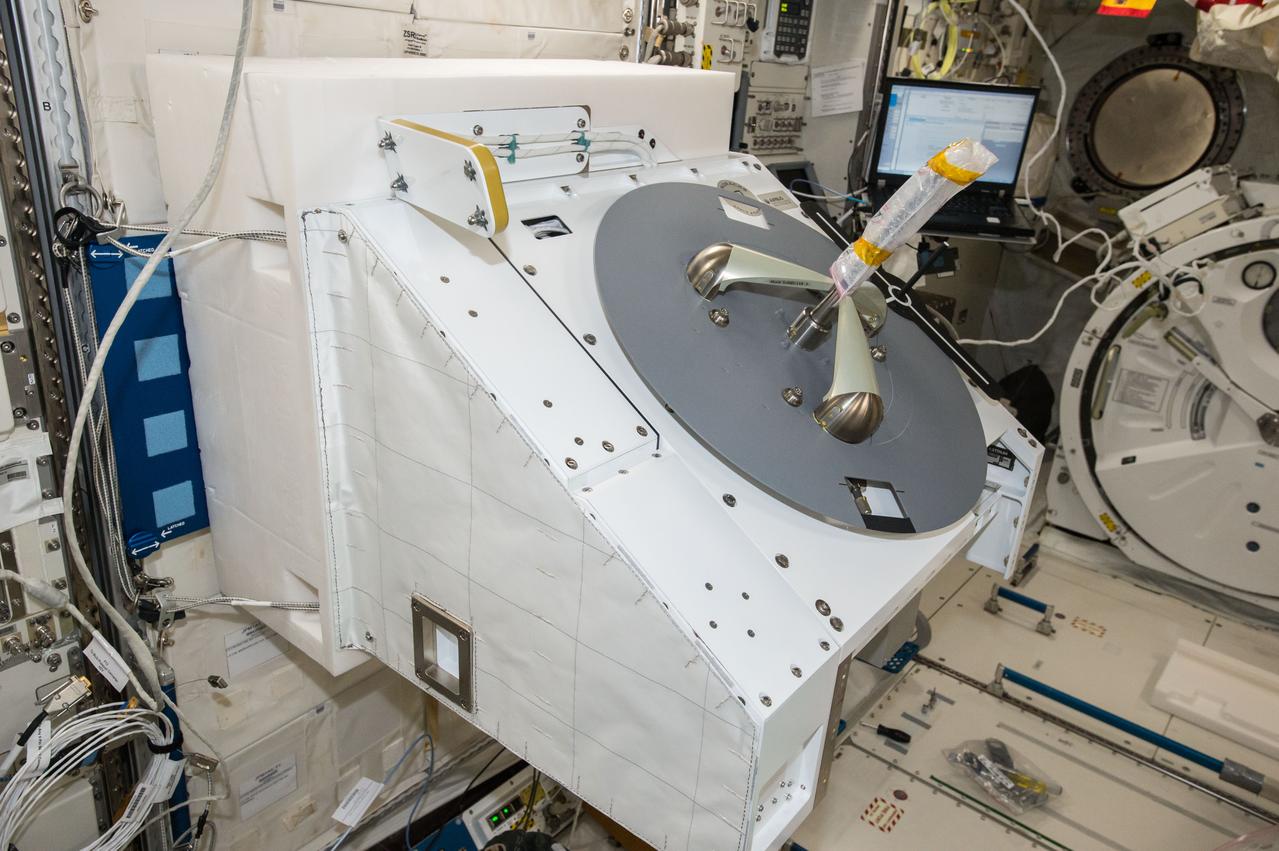
iss048e049168 (8/4/2016) --- A view of the assembled NanoRacks External Platform (NREP) on the Platform Cover attached to JPM1A5 in the Kibo Japanese Experiment Pressurized Module (JPM). The NanoRacks External Platform is a compact research platform fitted for versatile use on the exterior of the International Space Station (ISS).
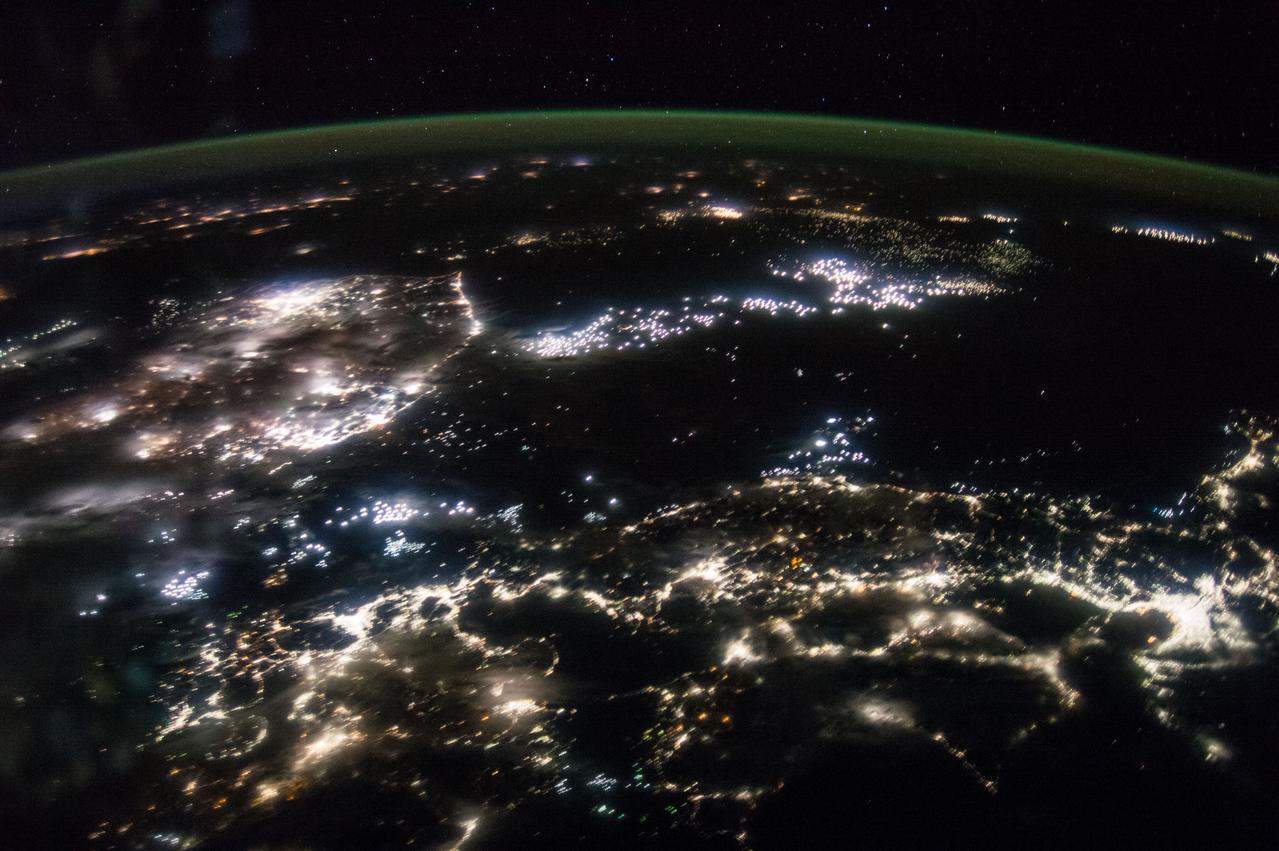
ISS049e008889 (09/23/2016) --- Night view of the Earth from the International Space Station by the crew of Expedition 49. The land mass northwest is South Korea and south of Korea is Japan. The small dotted lights east of South Korea and north of Japan are fishing boats in the Sea of Japan.
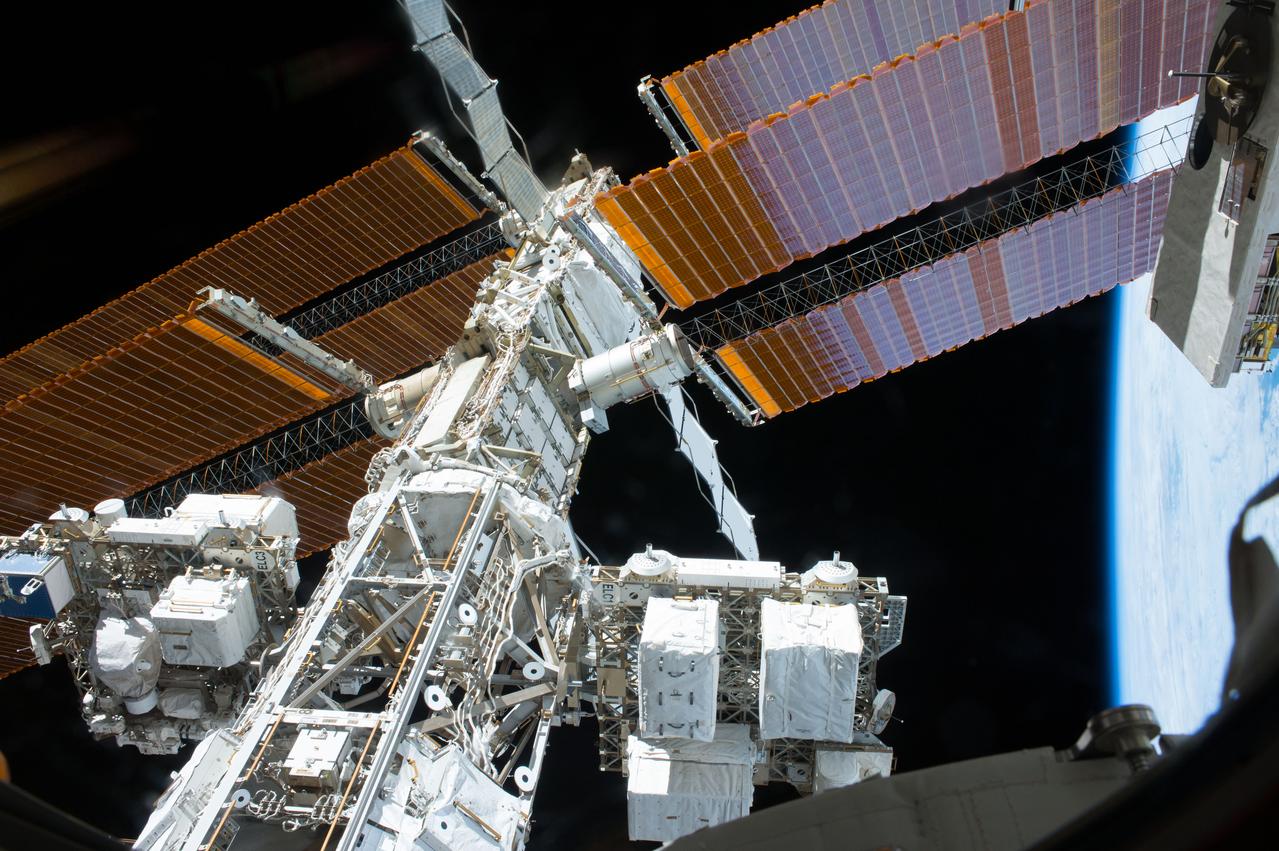
View of the ISS port Truss segments taken through a window in the Kibo Japanese Experiment Pressurized Module (JPM). ExPRESS (Expedite the Processing of Experiments to Space Station) Logistics Carrier-3 (ELC-3) and ELC-1 are in view.
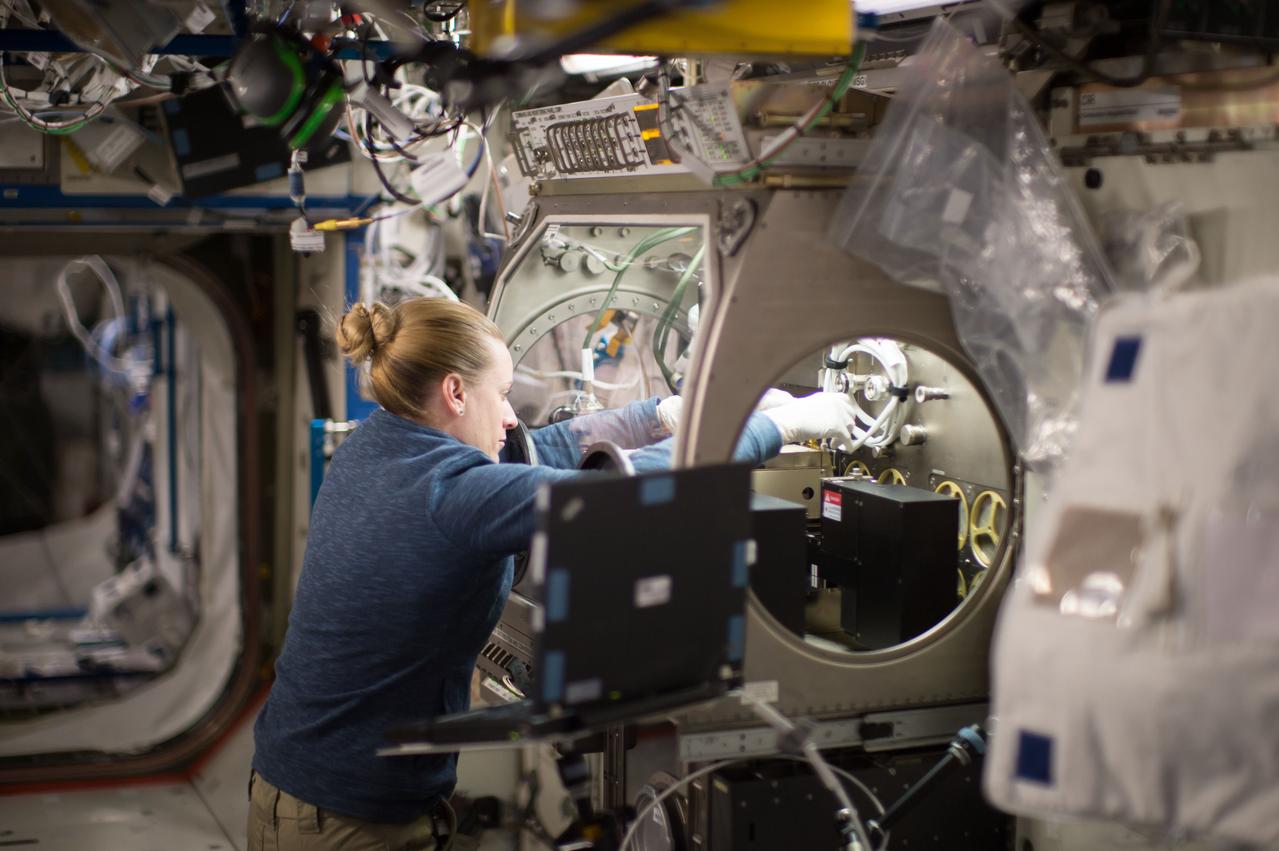
NASA astronaut Kate Rubins works on Selectable Optical Diagnostics Instrument Experiment Diffusion Coefficient Mixture-3 (SODI) DCMix-3 Installation inside the station’s Microgravity Science Glovebox. The glovebox is one of the major dedicated science facilities inside the Destiny laboratory and provides a sealed environment for conducting science and technology experiments. The glovebox is particularly suited for handling hazardous materials when the crew is present.
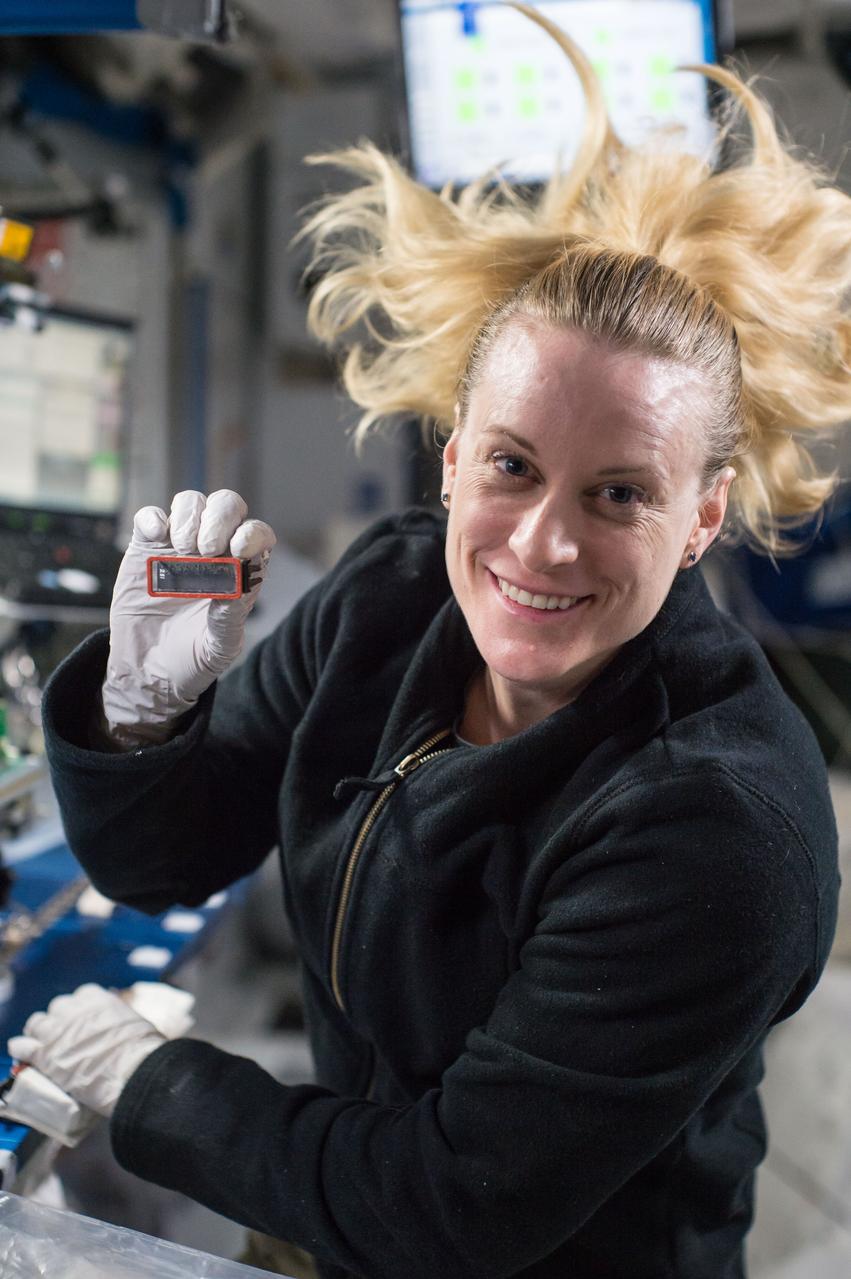
iss049e008853 (9/23/2016) --- NASA astronaut Kate Rubins is photographed performing the second harvest of the Plant RNA Regulation experiment by removing the European Modular Cultivation System (EMCS) Seed Cassettes from EMCS Rotors A and B stowing them in an EMCS Cold Stowage Pouch. The Plant RNA Regulation investigation studies the first steps of gene expression involved in development of roots and shoots. Scientists expect to find new molecules that play a role in how plants adapt and respond to the microgravity environment of space, which provides new insight into growing plants for food and oxygen supplies on long-duration missions.
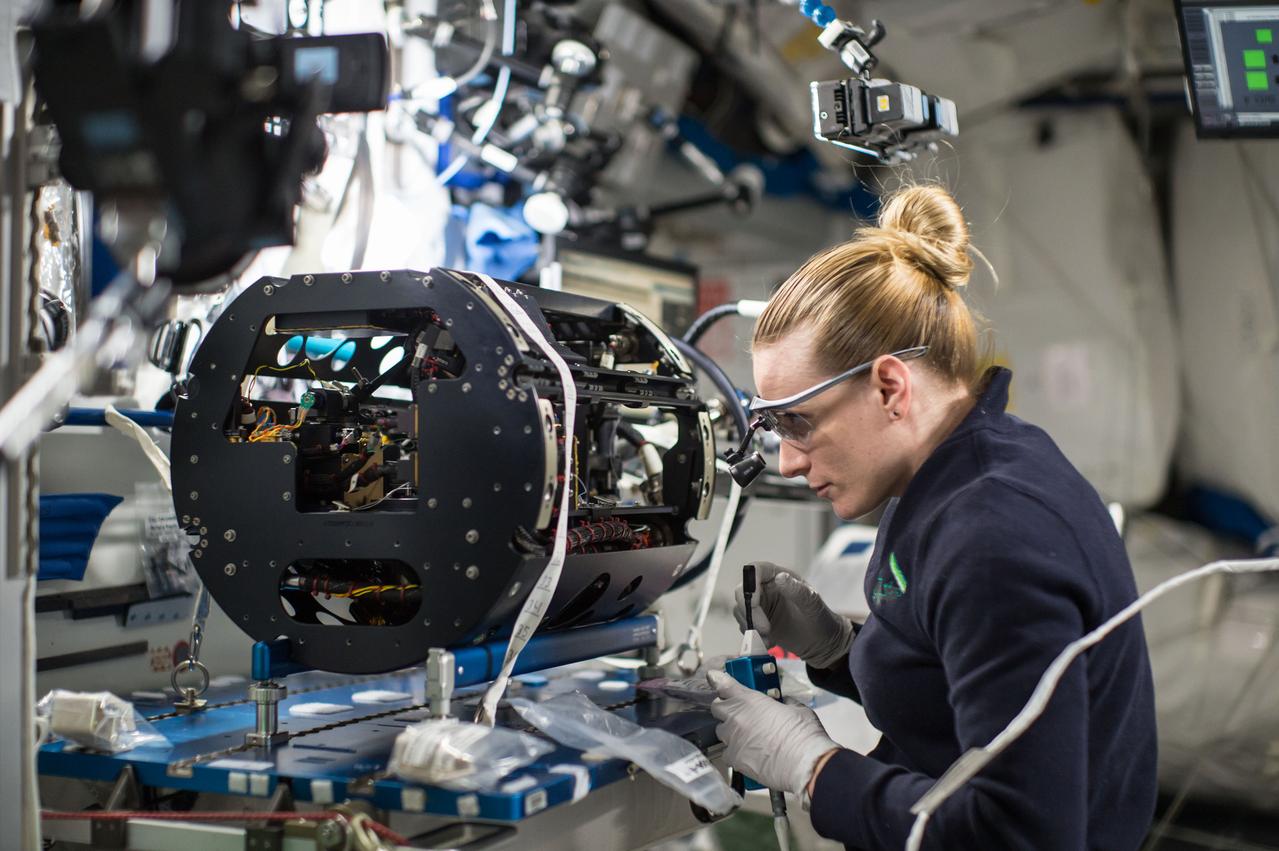
iss049e003808 (9/15/2016) --- NASA astronaut Kate Rubins is photographed replacing two Multi-user Droplet Combustion Apparatus (MDCA) Igniter Tips as part of the Combustion Integration Rack (CIR) Igniter Replacement operations. The CIR is used to perform combustion experiments in microgravity. The CIR can be reconfigured easily on orbit to accommodate a variety of combustion experiments. It consists of an optics bench, a combustion chamber, a fuel and oxidizer management system, environmental management systems, and interfaces for science diagnostics and experiment specific equipment.
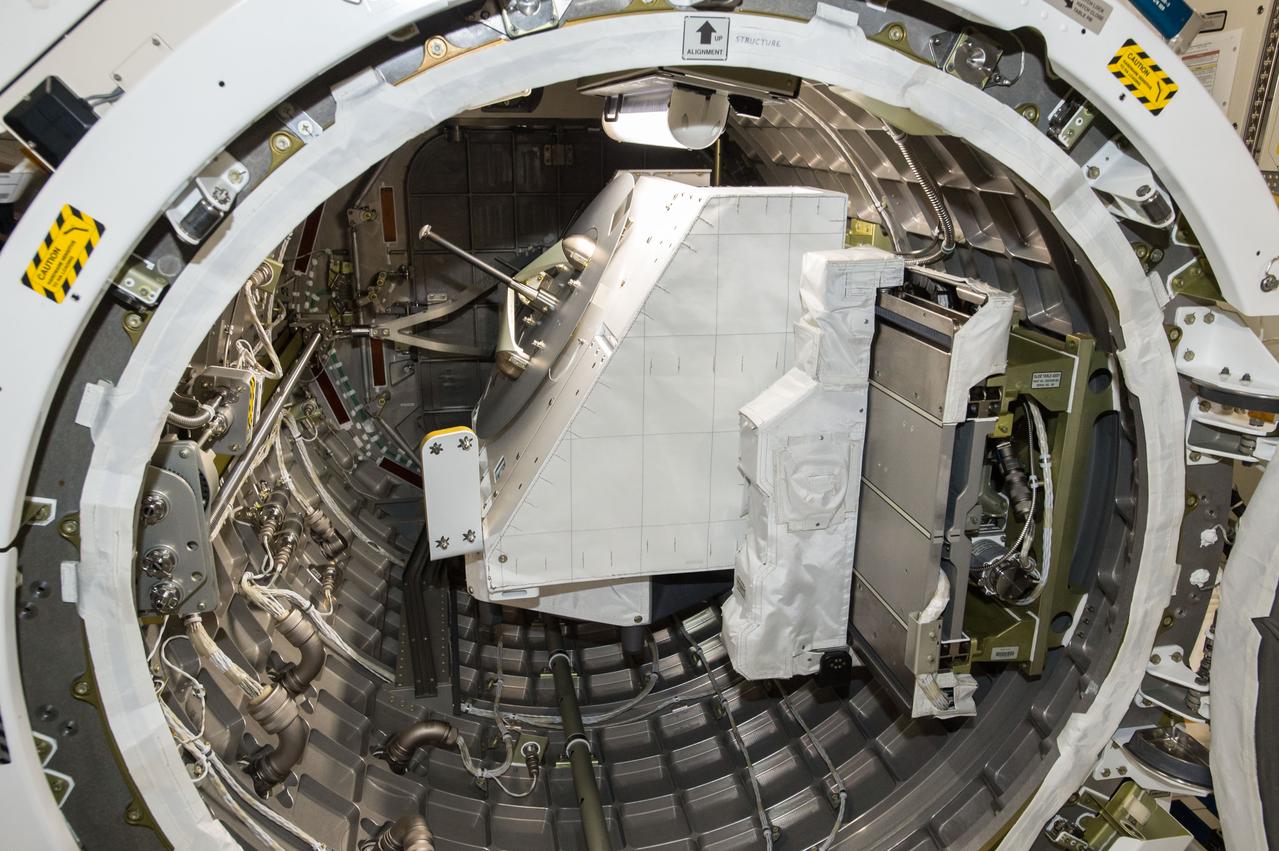
iss048e049218 (8/4/2016) --- Documentation of the NanoRacks External Platform (NREP) installed on the JEM (Japanese Experiment Module) Airlock (JEMAL) Slide Table (retracted into the JEMAL). Image was taken in the Kibo Japanese Experiment Pressurized Module (JPM). The NanoRacks External Platform is a compact research platform fitted for versatile use on the exterior of the International Space Station (ISS).

iss049e035512 (10/14/2016) --- NASA astronaut Kate Rubins during Microbe IV Sampling Sheet and White Tube Collection in the Japanese Experiment Module (JEM) Pressurized Module (JPM). The JAXA KIBO Utilization scenario, studies the relationship between humans and microbes in space habitation environments, which are critical for success in long-duration missions. Credit: JAXA/Takuya Onishi

iss049e042415 (Oct. 23, 2016) --- The Cygnus resupply ship from Orbital ATK is in its capture position as the Canadarm2 robotic arm slowly reaches out to grapple it in October of 2016 during Expedition 49.
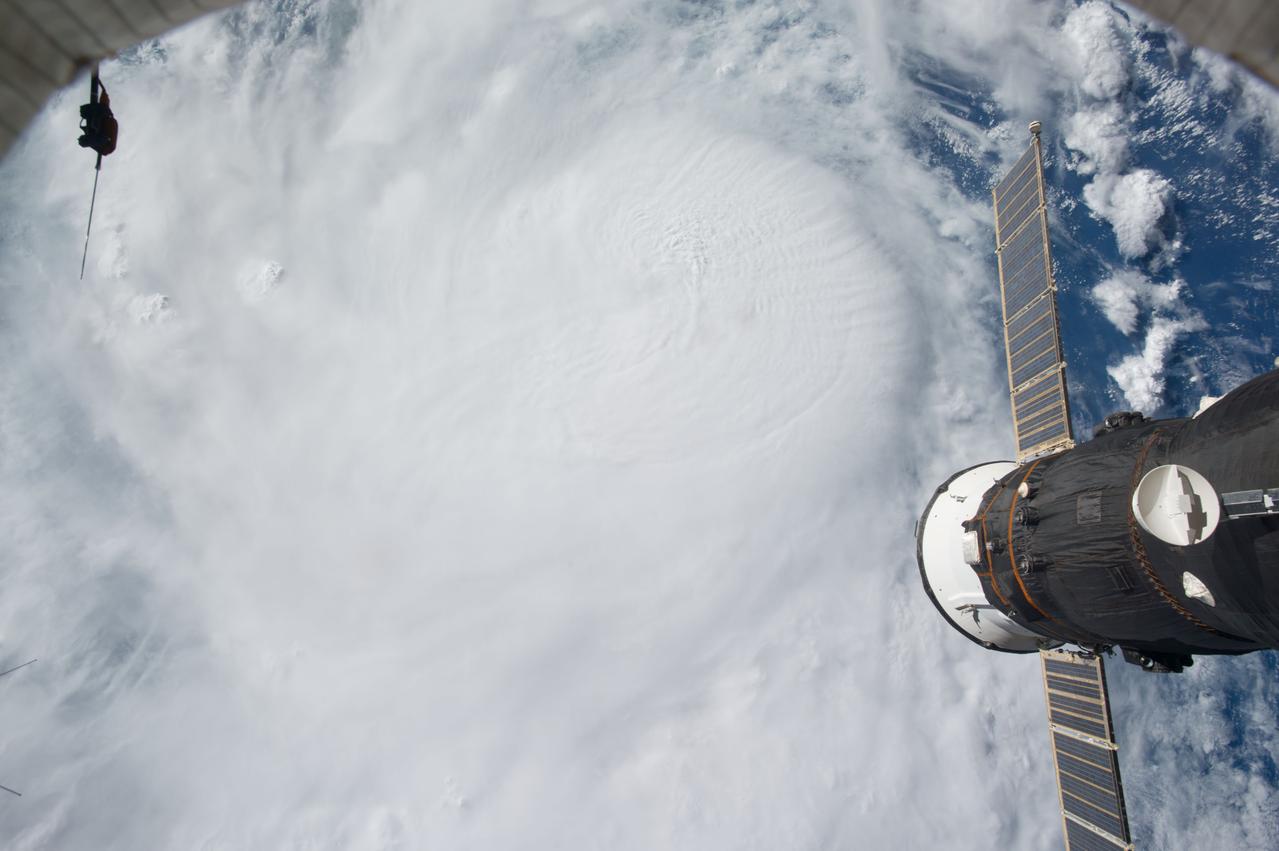
ISS049e029154 (10/05/2016) --- Hurricane Matthew, a category 4 storm as seen from the International Space Station Expedition 49 crew, approaches the southern Florida coast with 140 mile an hour winds.
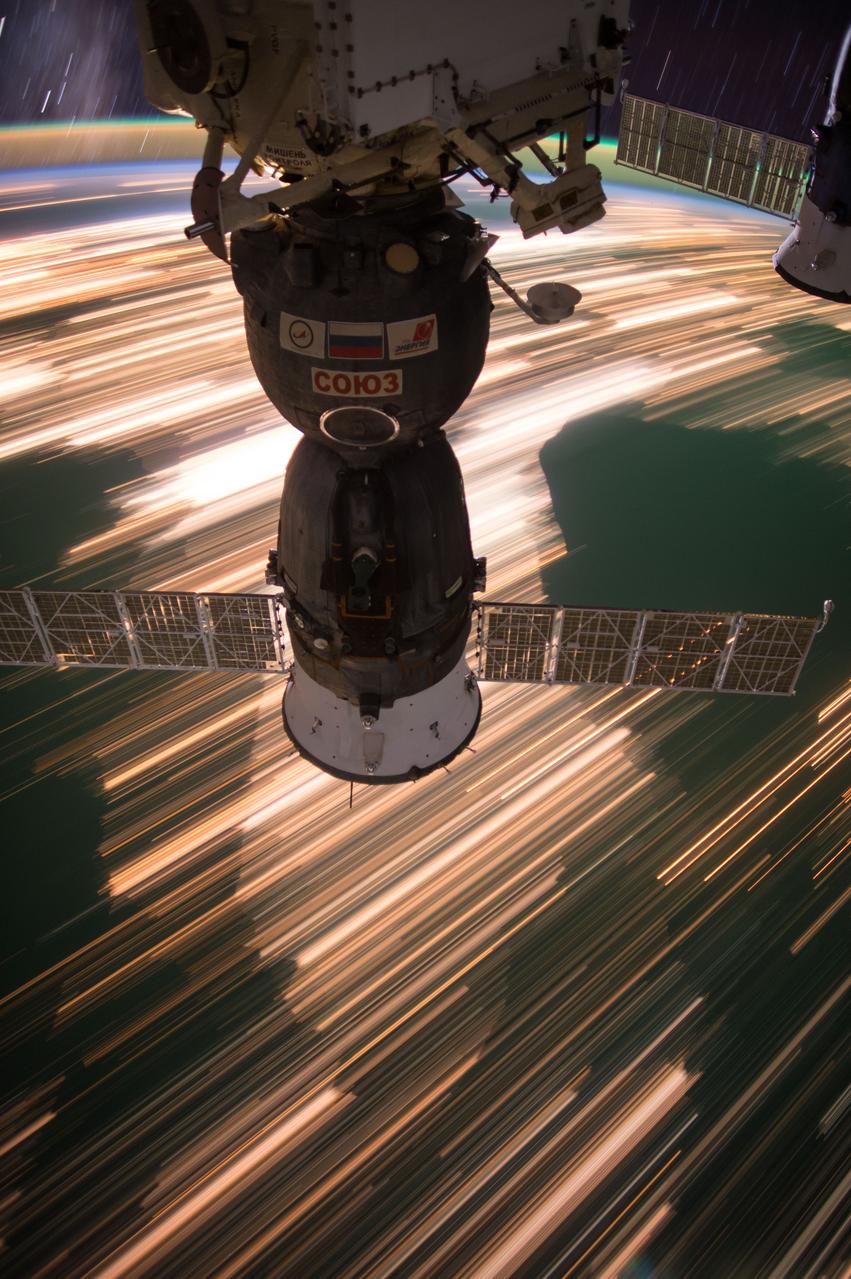
Long exposure Earth observation taken during a night pass by the Expedition 49 crew aboard the International Space Station (ISS). Stars are visible in the background. Docked Soyuz spacecraft is also visible.
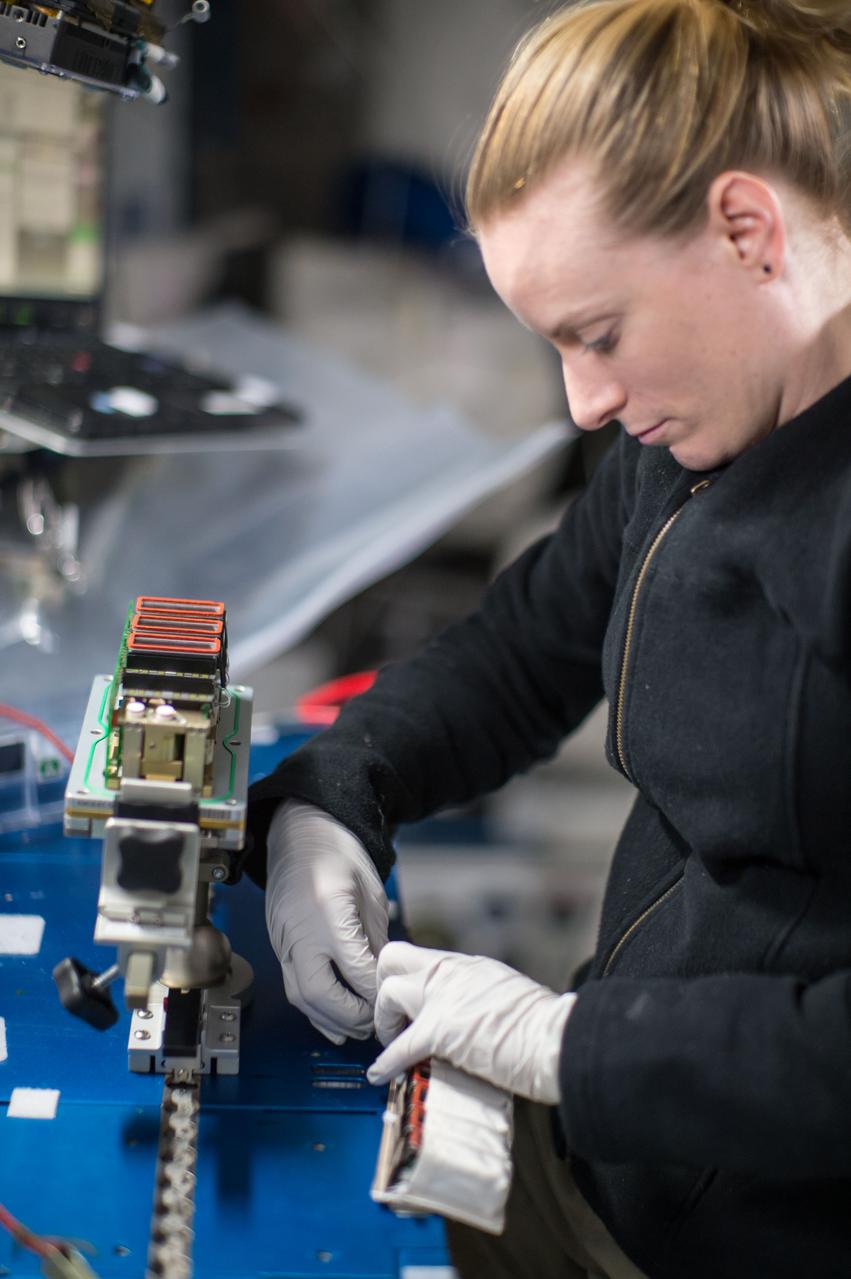
iss049e008866 (9/23/2016) --- NASA astronaut Kate Rubins is photographed performing the second harvest of the Plant RNA Regulation experiment by removing the European Modular Cultivation System (EMCS) Seed Cassettes from EMCS Rotors A and B stowing them in an EMCS Cold Stowage Pouch. The Plant RNA Regulation investigation studies the first steps of gene expression involved in development of roots and shoots. Scientists expect to find new molecules that play a role in how plants adapt and respond to the microgravity environment of space, which provides new insight into growing plants for food and oxygen supplies on long-duration missions.
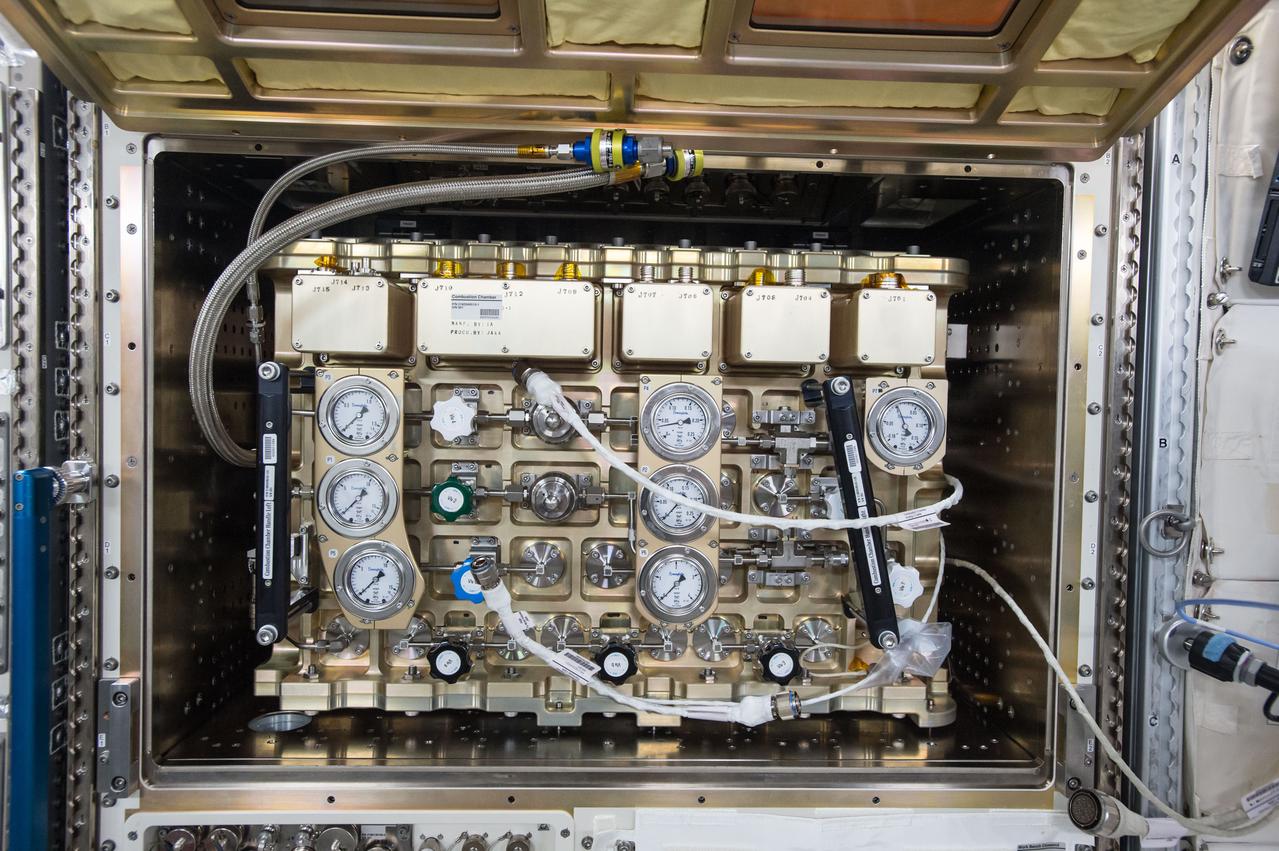
iss049e025077 (9/28/2016) --- View taken during Multi-Purpose Small Payload Rack (MSPR) Combustion Chamber (CC) installed in the Japanese Experiment Module (JEM).
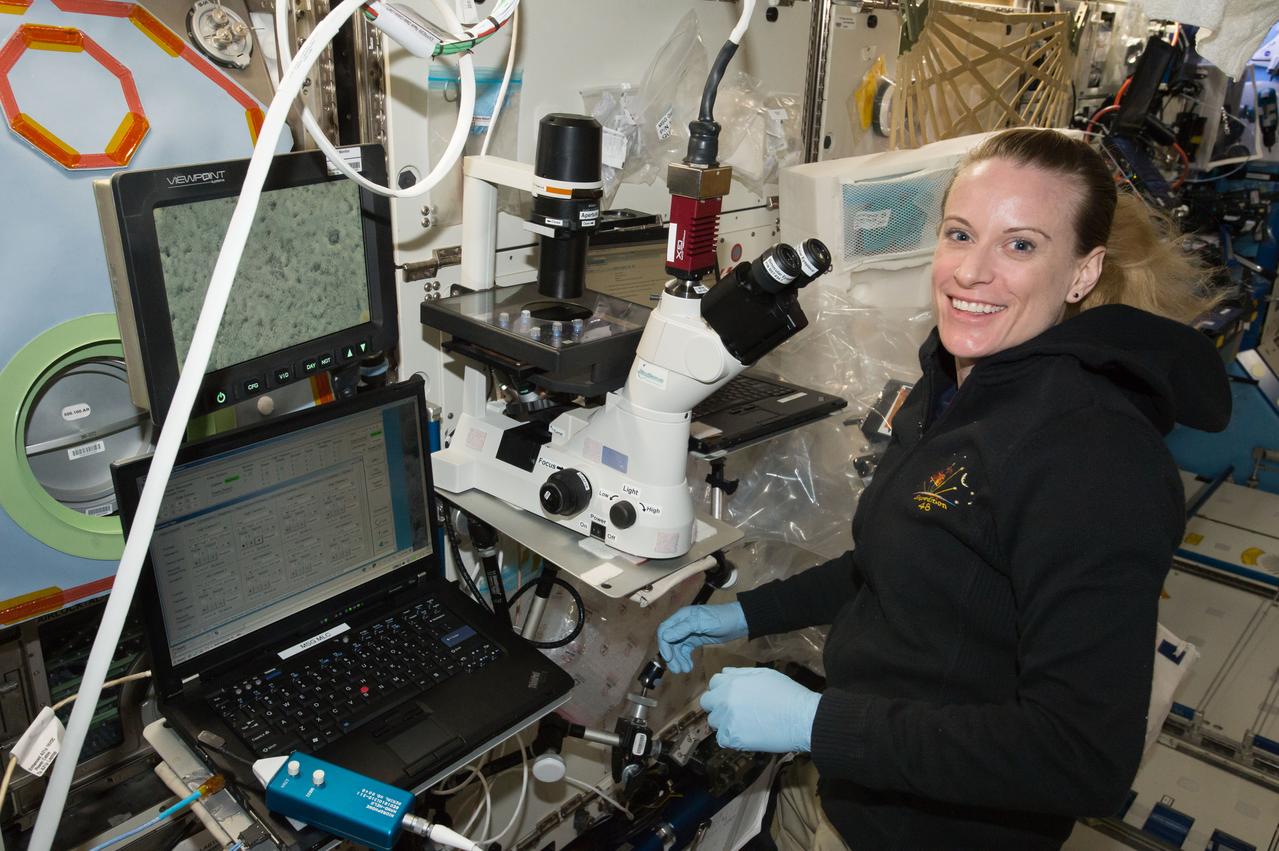
iss048e045065 (7/27/2016) --- NASA astronaut Kate Rubins pauses for a photo while using the Microscope to conduct Heart Cells experiment operations. Effects of Microgravity on Stem Cell-Derived Cardiomyocytes (Heart Cells) studies the human heart, specifically how heart muscle tissue, contracts, grows and changes (gene expression) in microgravity and how those changes vary between subjects.
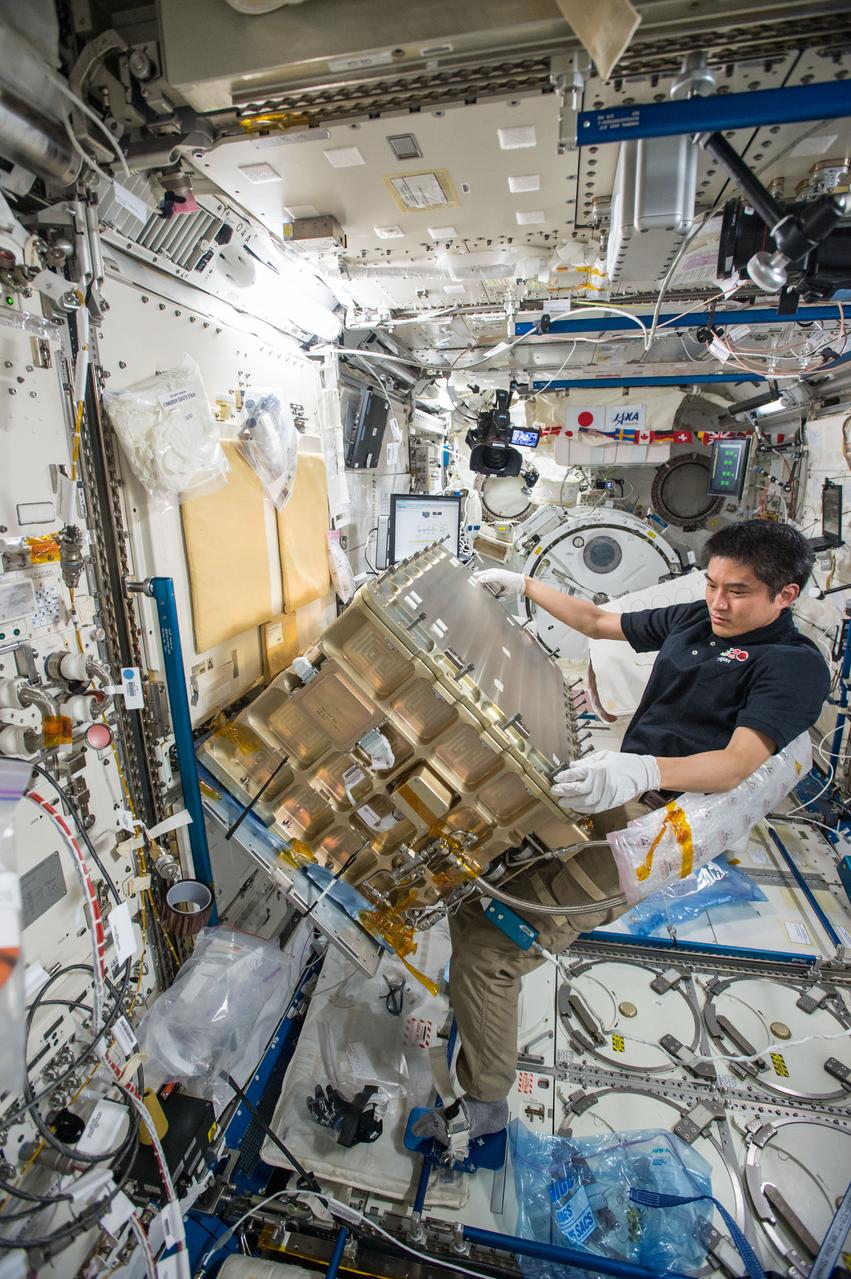
iss049e011873 (9/27/2016) --- Japan Aerospace Exploration Agency (JAXA) astronaut Takuya Onishi is photographed as he starts the first of two days of installation and preparation for the Group Combustion Module (GCM) Installation. The GCM will be installed into the Combustion Chamber.
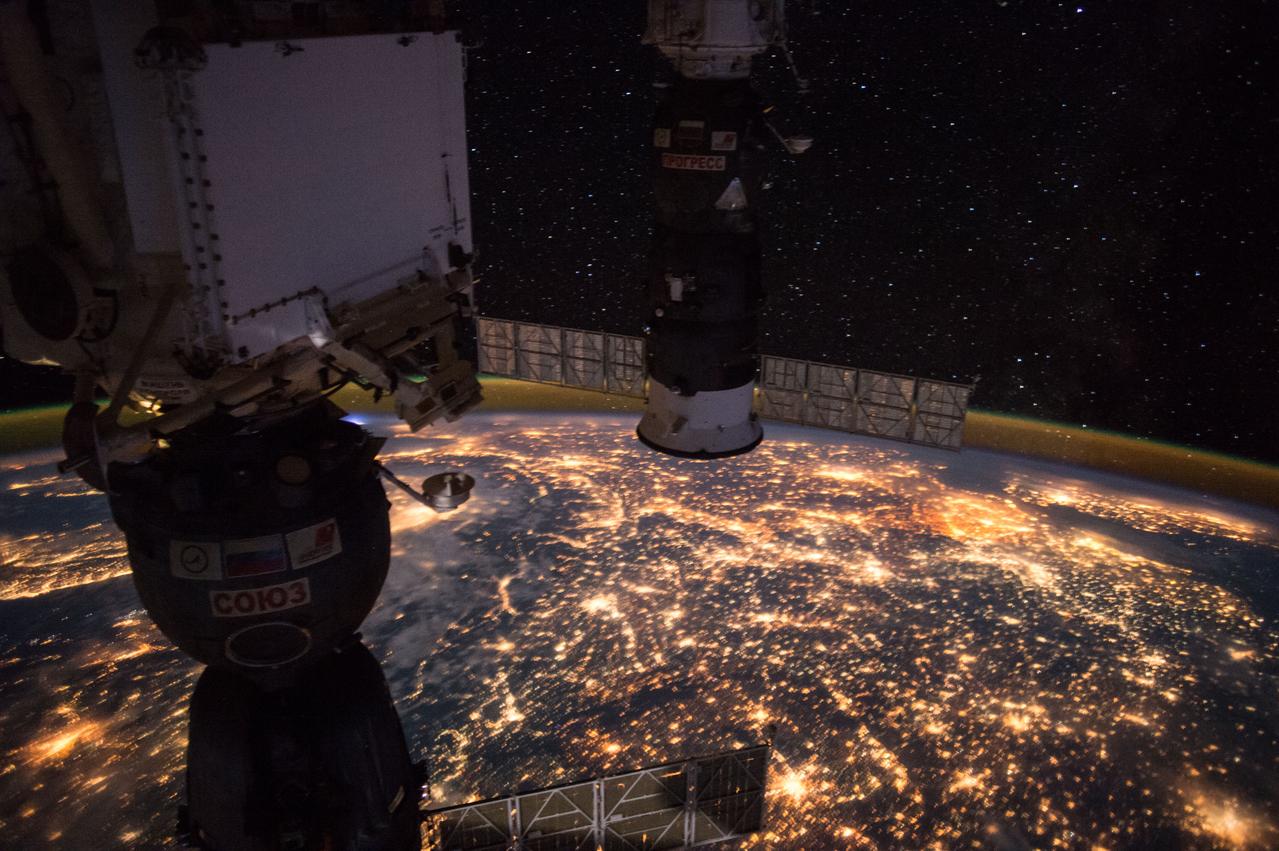
ISS049e009356 (09/24/2016) --- Earth observation taken during a night pass by the Expedition 49 crew aboard the International Space Station. Framed by the docked Soyuz and Progress spacecraft is Western Europe. The bright, dense lights in the East are the Netherlands, Belgium. The dark strip is the Alps
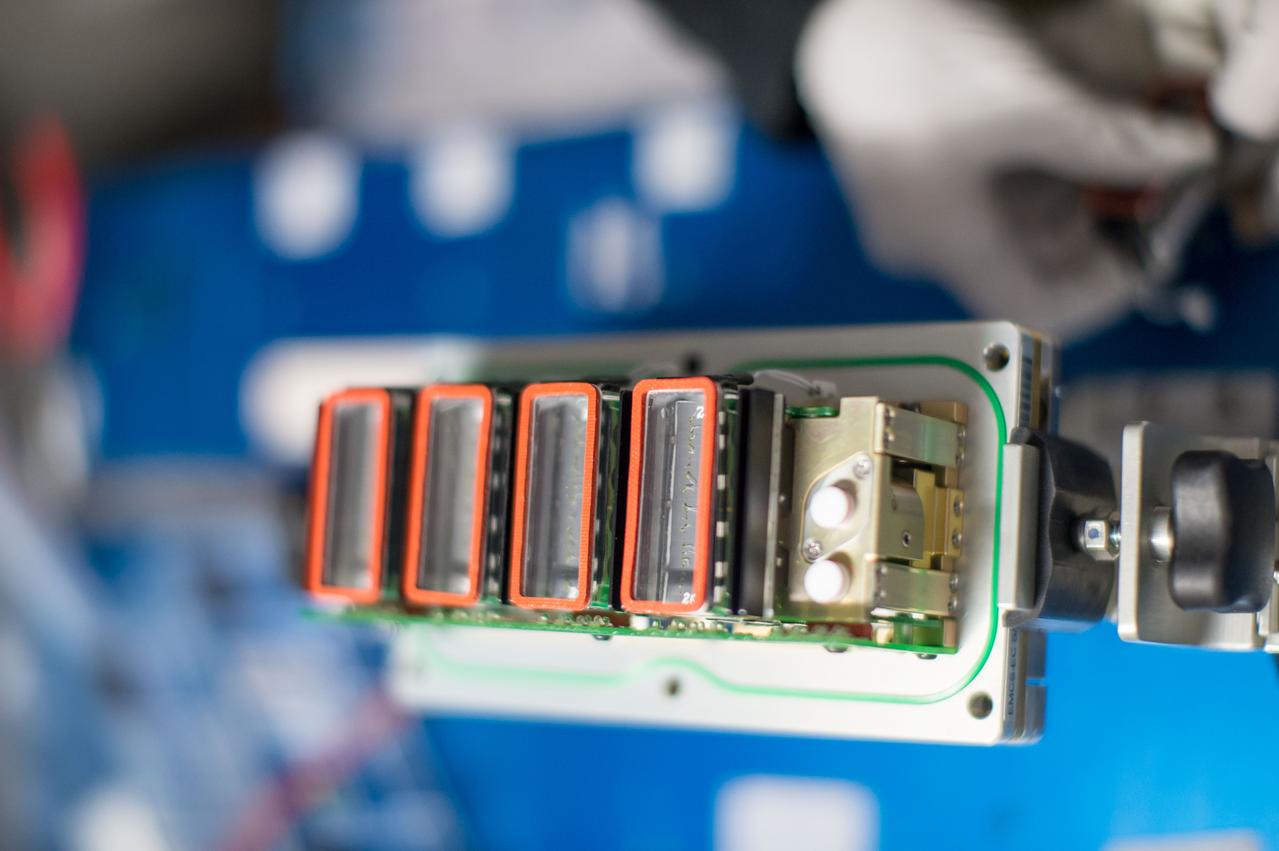
iss049e008864 (9/23/2016) --- Photo taken aboard the International Space Station (ISS) during the second harvest of the Plant RNA Regulation experiment performed by removing the European Modular Cultivation System (EMCS) Seed Cassettes from EMCS Rotors A and B. The Plant RNA Regulation investigation studies the first steps of gene expression involved in development of roots and shoots. Scientists expect to find new molecules that play a role in how plants adapt and respond to the microgravity environment of space, which provides new insight into growing plants for food and oxygen supplies on long-duration missions.

iss049e052550 (10/29/20160 --- NASA astronaut Kate Rubins is photographed removing samples from the Minus Eighty-Degree Laboratory Freezer for ISS 2 (MELFI2) as part of handover to the Russian crew for packing. The Minus Eighty-degree Laboratory Freezer for ISS (MELFI) is a cold storage unit that maintains experiment samples at ultra-cold temperatures throughout a mission.
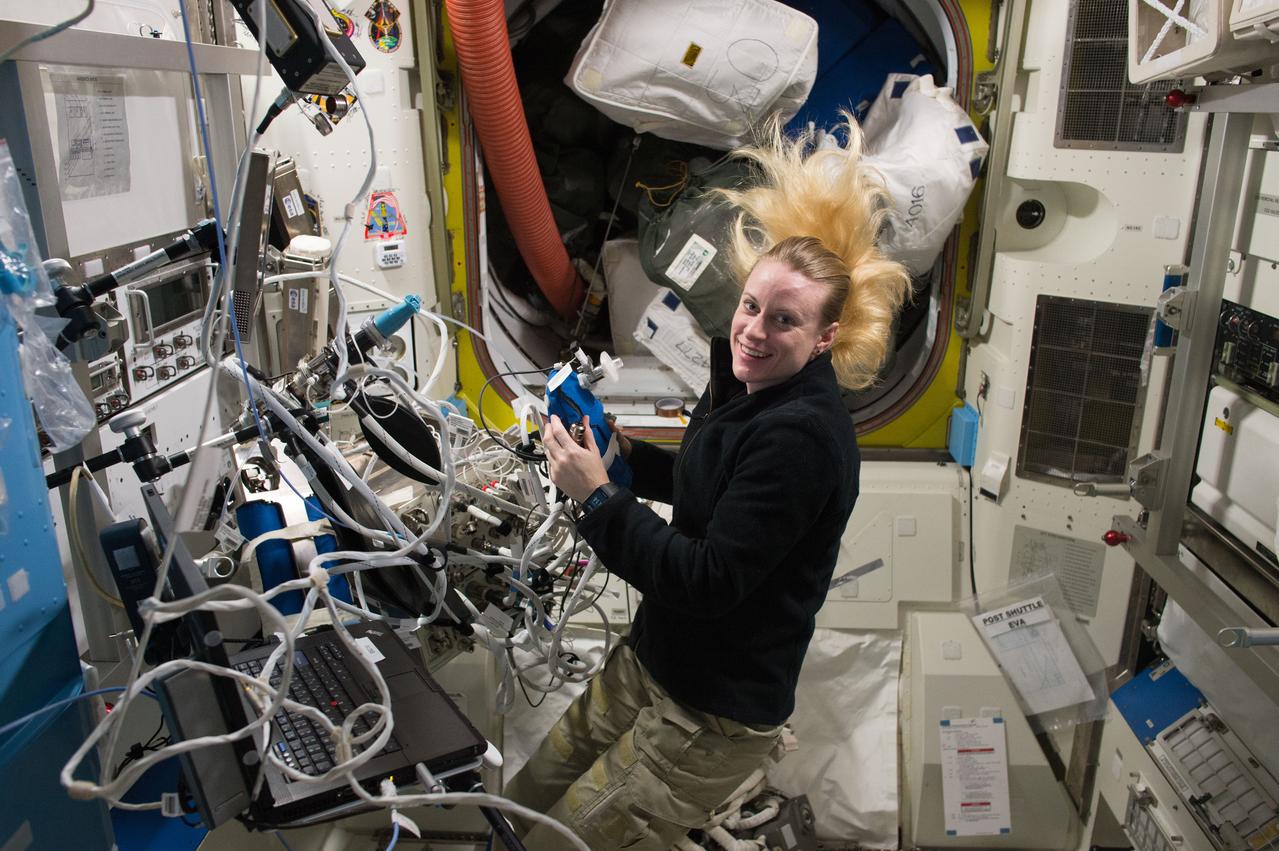
iss049e045997 (10/25/2016) --- NASA Astronaut Kate Rubins as she begans the measurement of the European Space Agency (ESA) Airway Monitoring experiment in the Quest airlock. The investigation studies the occurrence and indicators of airway inflammation in crew members to help flight surgeons plan safer, long-term missions to the moon, Mars and beyond. Results may also help doctors treat patients on Earth with asthma or other airway inflammatory diseases.