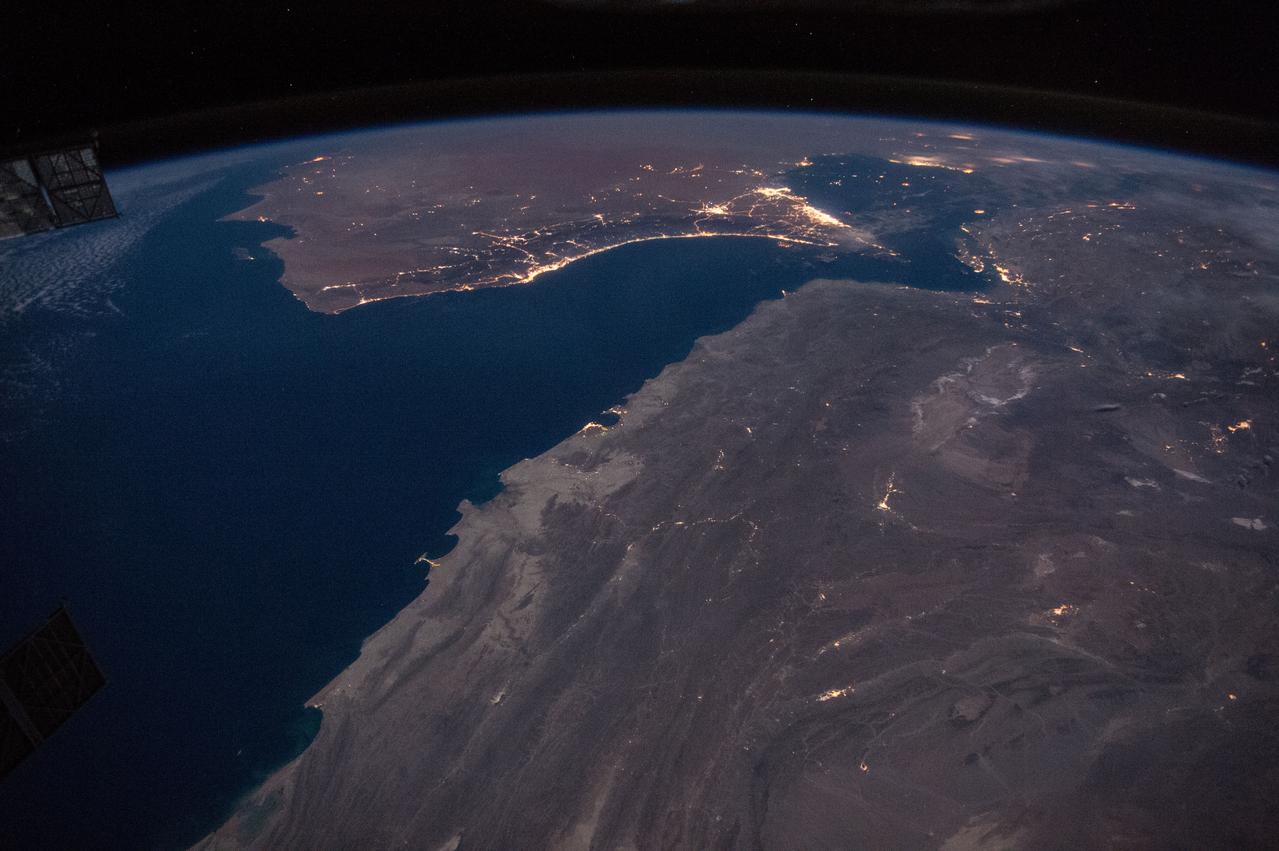
ISS046e021993 (01/23/2016) --- Earth observation of the coast of Oman taken during a night pass by the Expedition 46 crew aboard the International Space Station. NASA astronaut Tim Kopra tweeted this image out with this message: "Passing over the Gulf of #Oman at night -- city lights of #Muscat #Dubai #AbuDhabi and #Doha in the distance".
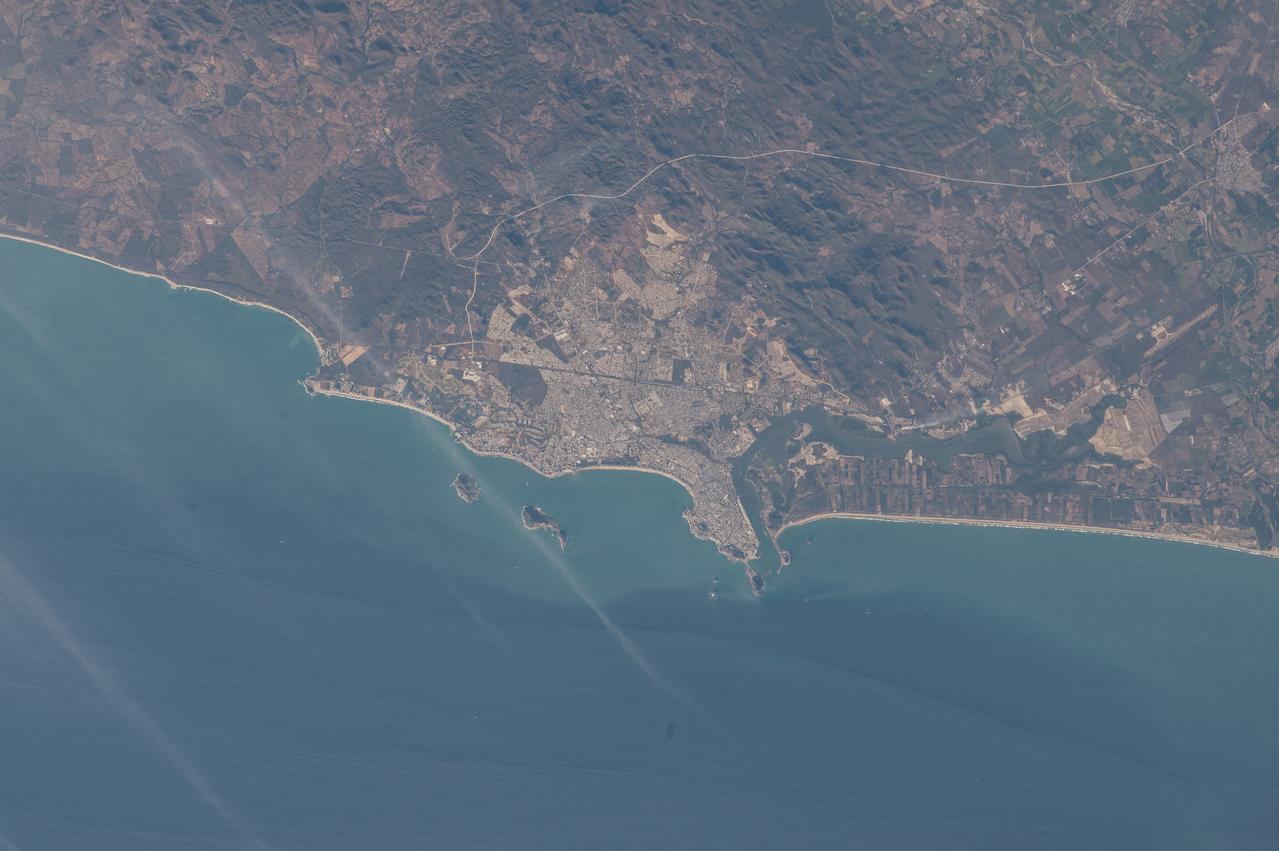
ISS046e034177 (02/05/2016) --- This image of a portion of the Mexican coastal area was taken by crew members aboard the International Space Station. NASA astronaut Tim Kopra tweeted out this comment with the image " Nice #beach town! #Mazatlan on the west coast of @Mexico - 21 km boardwalk. #Explore ".
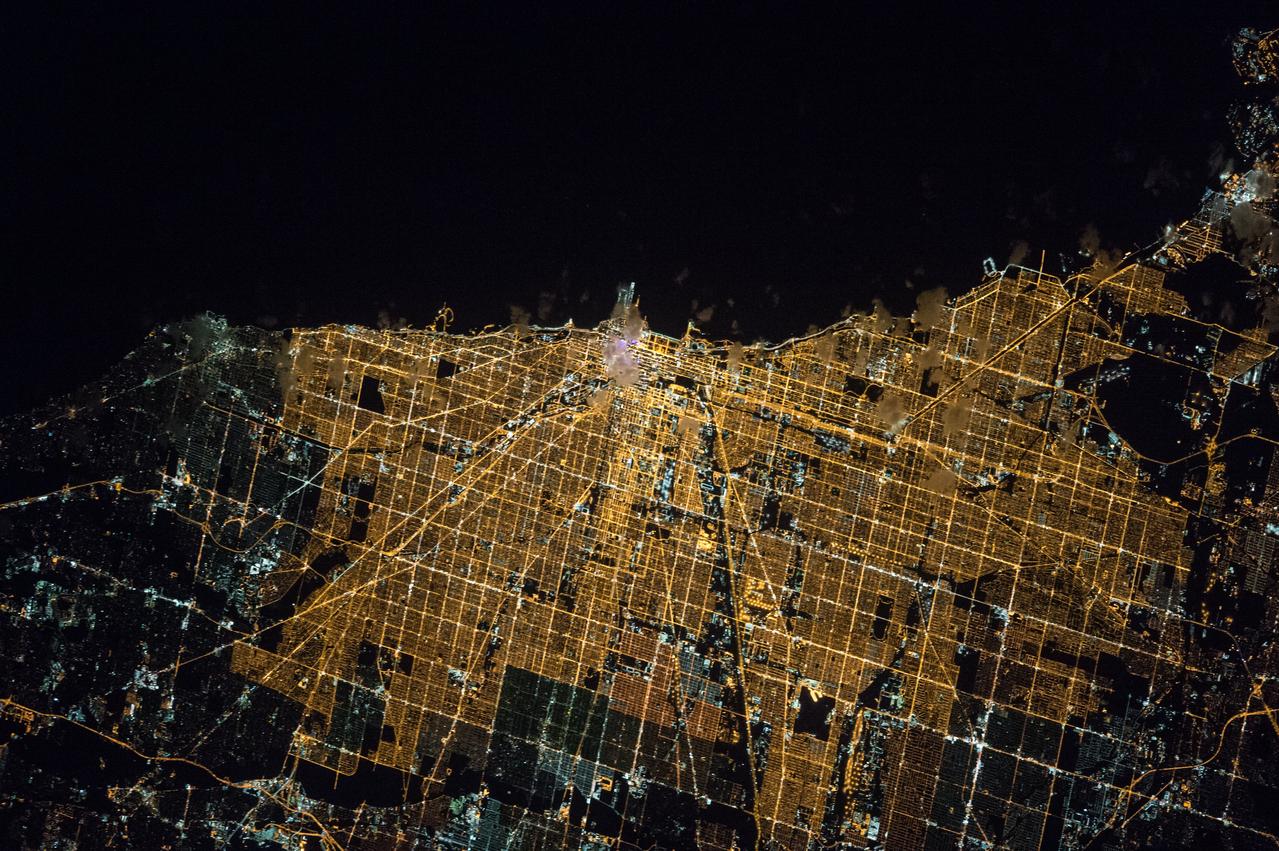
ISS047e043884 (04/05/2016) --- Expedition 47 crewmembers on board the International Space Station captured this brightly lit night image of the largest city along Lake Michigan in the US Midwest state of Illinois: Chicago.
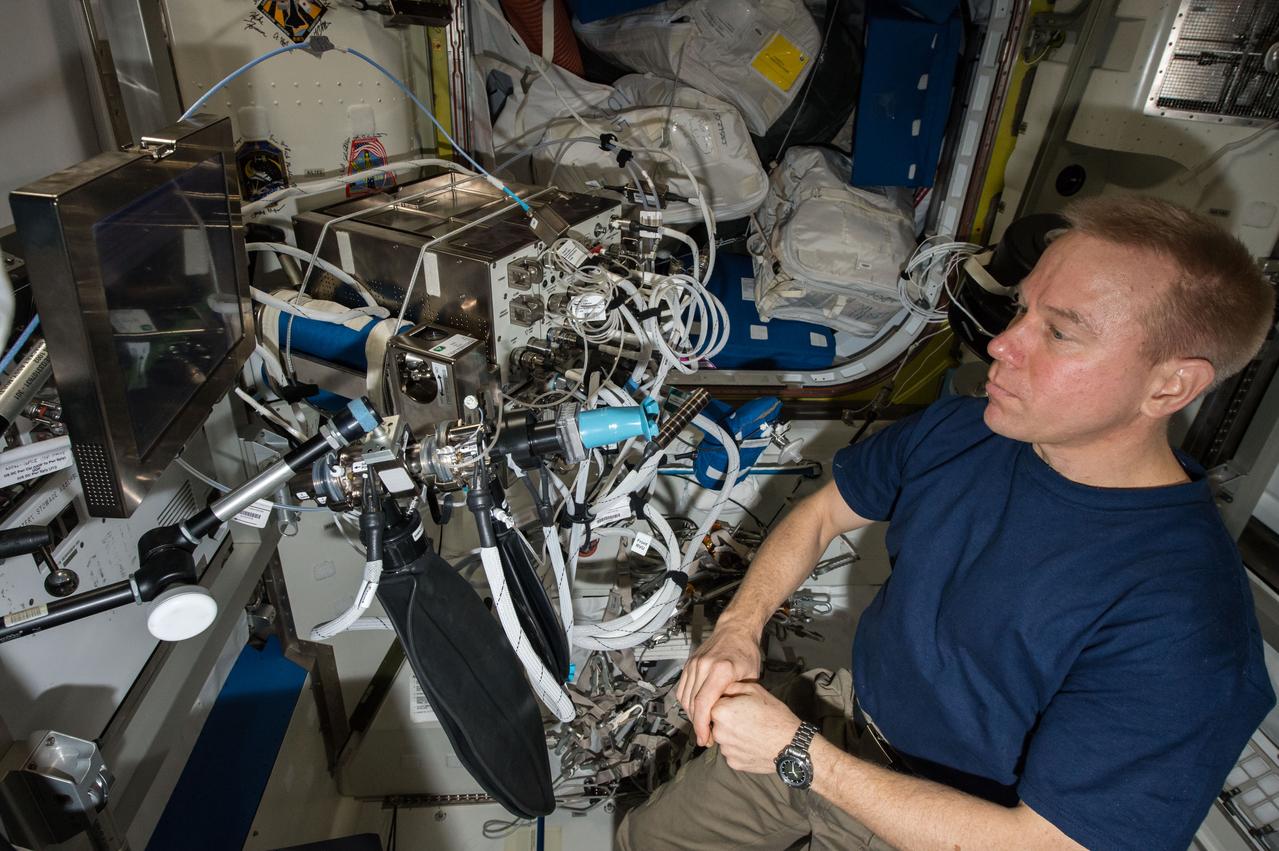
ISS046e048360 (02/25/2016) --- NASA astronaut Tim Kopra prepares to participate in the Airway Monitoring experiment. With dust particles present in the International Space Station atmosphere, Airway Monitoring studies the occurrence and indicators of airway inflammation in crewmembers, using ultra-sensitive gas analyzers to analyze exhaled air. This helps to highlight any health impacts and to maintain crewmember well-being on future human spaceflight missions, especially longer-duration missions to the Moon and Mars for example, where crewmembers will have to be more self-sufficient in highlighting and avoiding such conditions.
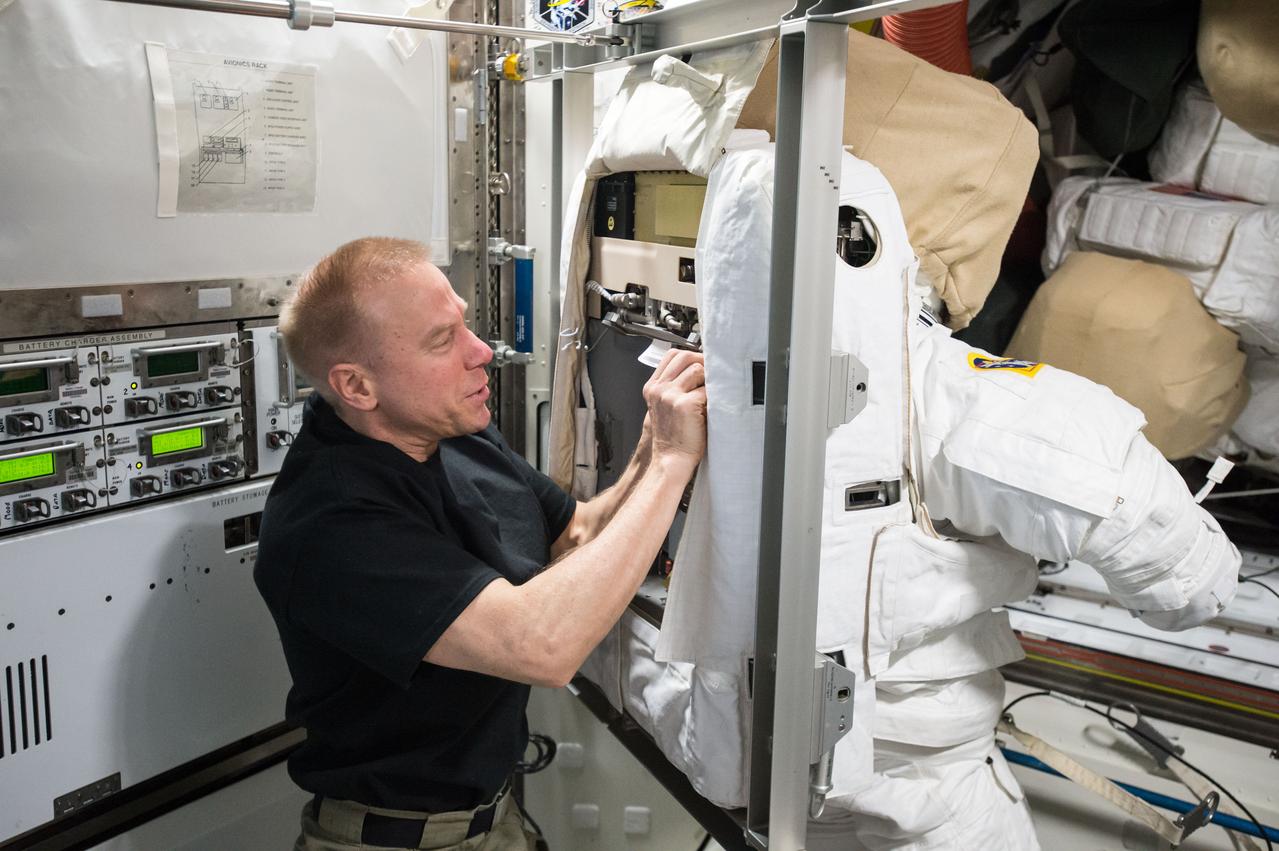
ISS047e048133 (04/01/2016) --- NASA astronaut Tim Kopra prepares a U.S. Extravehicular Mobility Unit (EMU) spacesuit for cooling loop maintenance. Spacesuits on-board the International Space Station get routine maintenance between spacewalks.
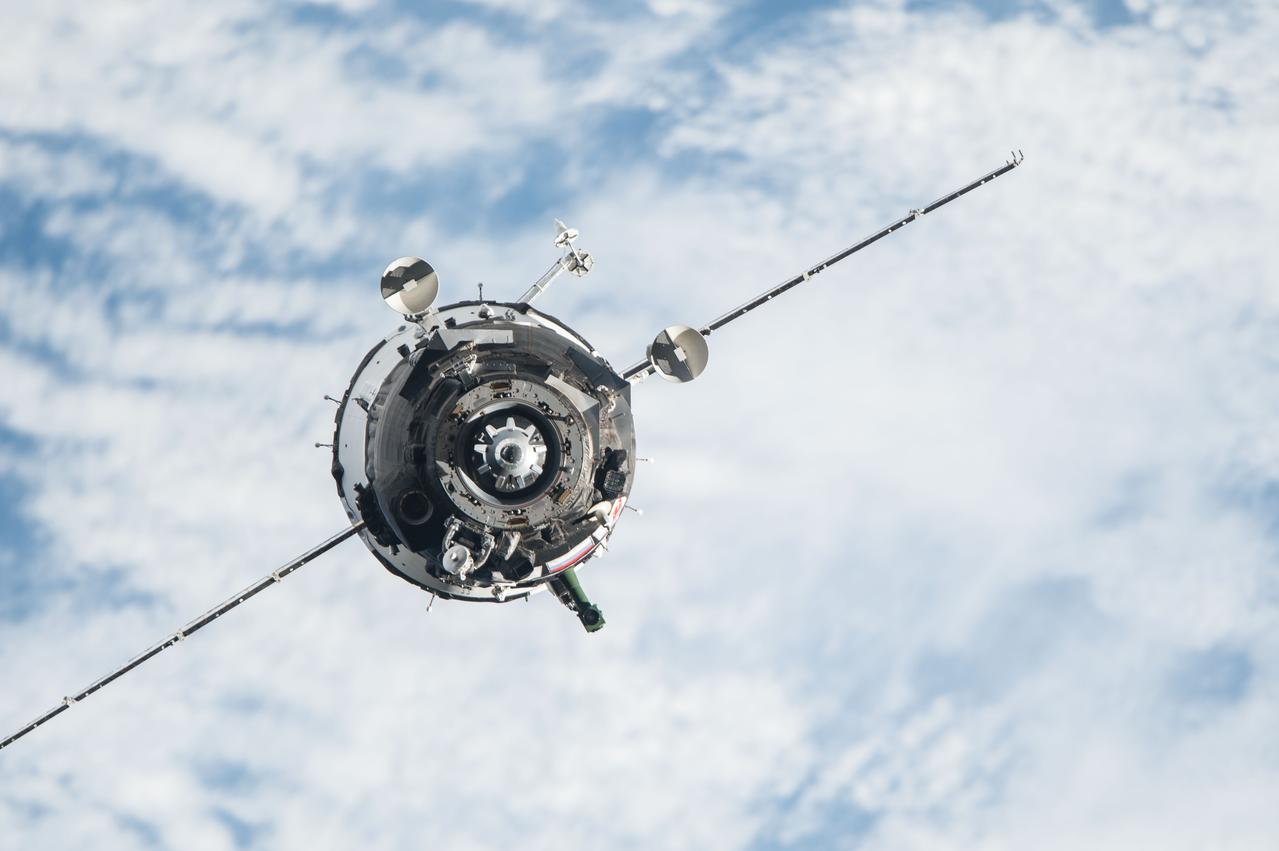
ISS047e011906 (03/19/2016) --- NASA and Russian cosmonauts arrive at the international space station Mar 19, 2016. NASA astronaut Jeff Williams and Russian cosmonauts Alexey Ovchinin and Oleg Skripochka docked to the International Space Station in their Soyuz TMA-20M spacecraft. They will spend 6 months onboard the station carrying out scientific experiments, performing maintenance and other duties.

iss047e001114 (March 2, 2016) --- An Expedition 47 crewmember photographed the Earth’s limb during a starry night pass. One of the International Space Station’s solar arrays is seen in the right foreground as the orbital complex flew 258 miles above the Indian Ocean in between Indonesia and Australia.
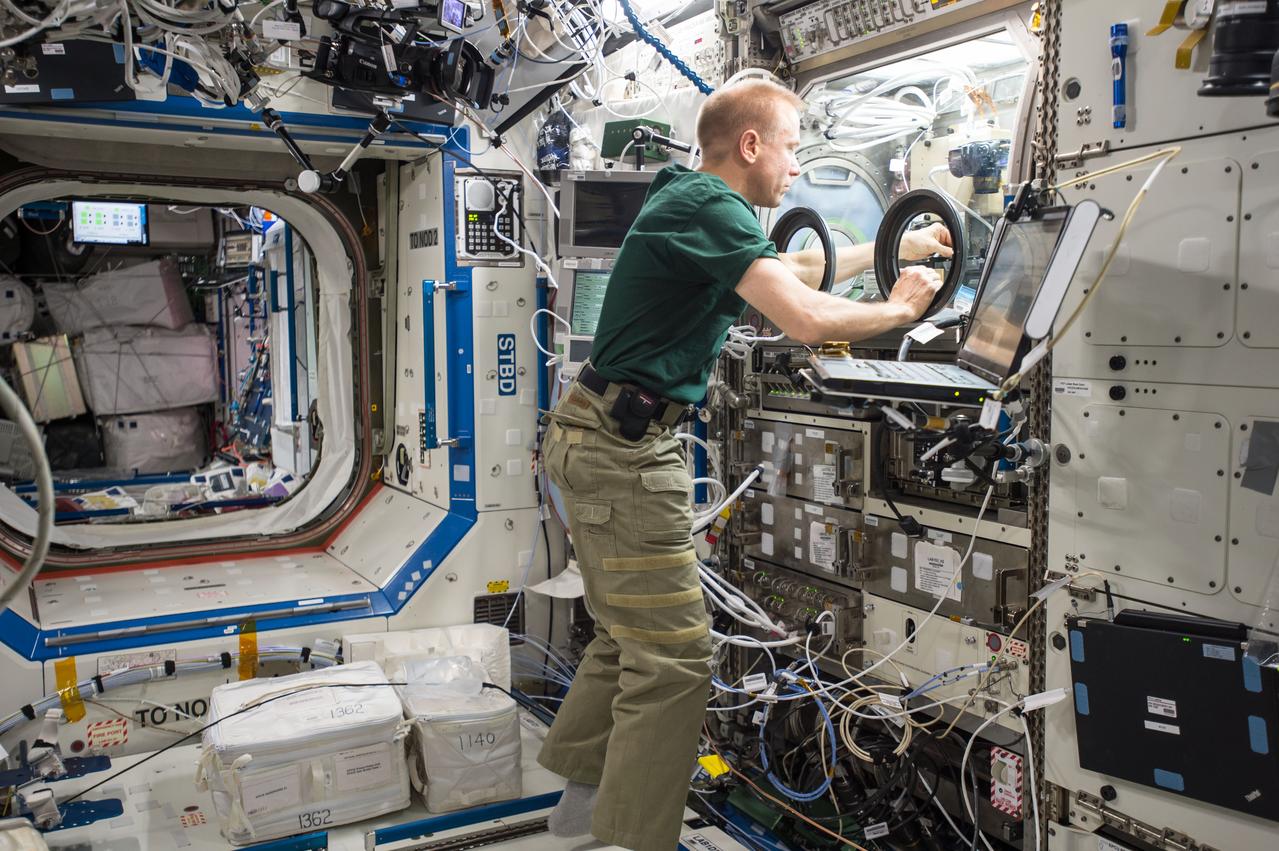
ISS046e025945 (01/27/2016) --- NASA astronaut Tim Kopra sets up hardware for the Burning and Suppression of Solids – Milliken, or BASS-M, experiment. The BASS-M investigation tests flame-retardant cotton fabrics to determine how well they resist burning in microgravity. Results benefit research on flame-retardant textiles that can be used on Earth and in space
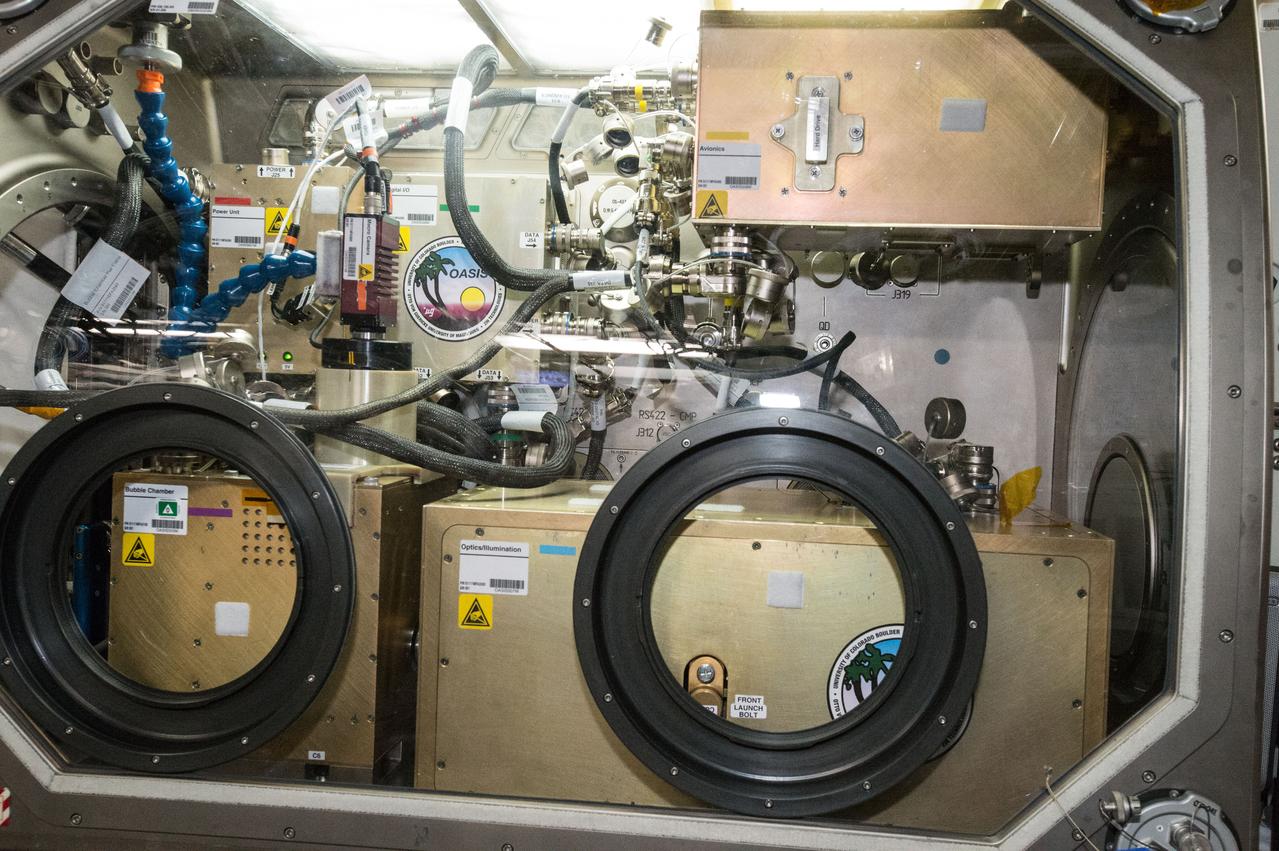
iss047e004376 (3/11/2016) --- A view during the installation and configuration of the Observation and Analysis of Smectic Islands in Space (OASIS) hardware into the Microgravity, in the U.S. Laboratory. OASIS studies the unique behavior of liquid crystals in microgravity, including their overall motion and the merging of crystal layers known as smectic islands. Liquid crystals are used for display screens in televisions and clocks and they also occur in soaps and in cell membranes. The experiment allows detailed studies of the behavior of these structures and how microgravity affects their unique ability to act like both a liquid and a solid crystal.
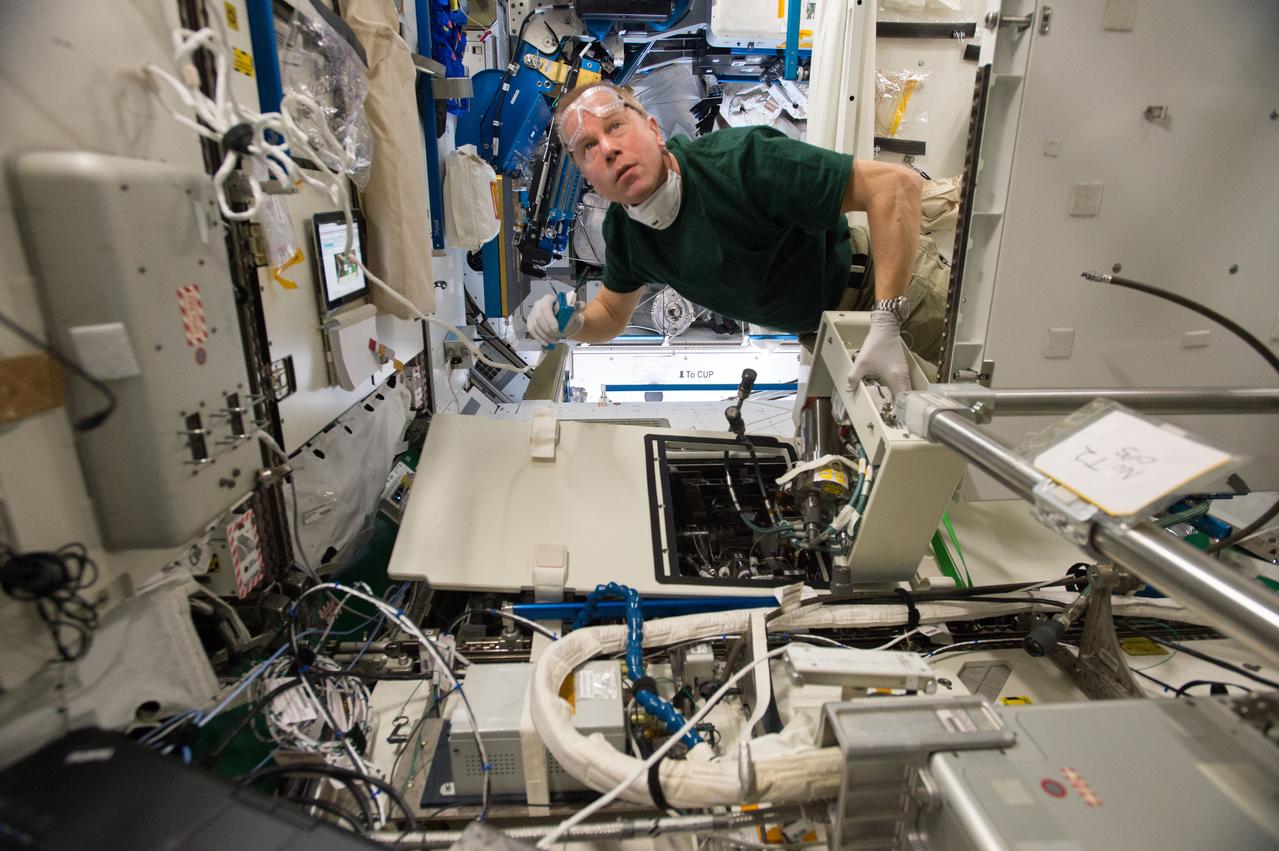
ISS046e023885 (01/25/2016) --- NASA astronaut Tim Kopra performs regular maintenance on the Urine Processing Assembly (UPA) aboard the International Space Station. The UPA is used by the crew to recycle water for use on the station. The image shows Tim replacing the brine filter from the UPA Fill Drain Valve enclosure.
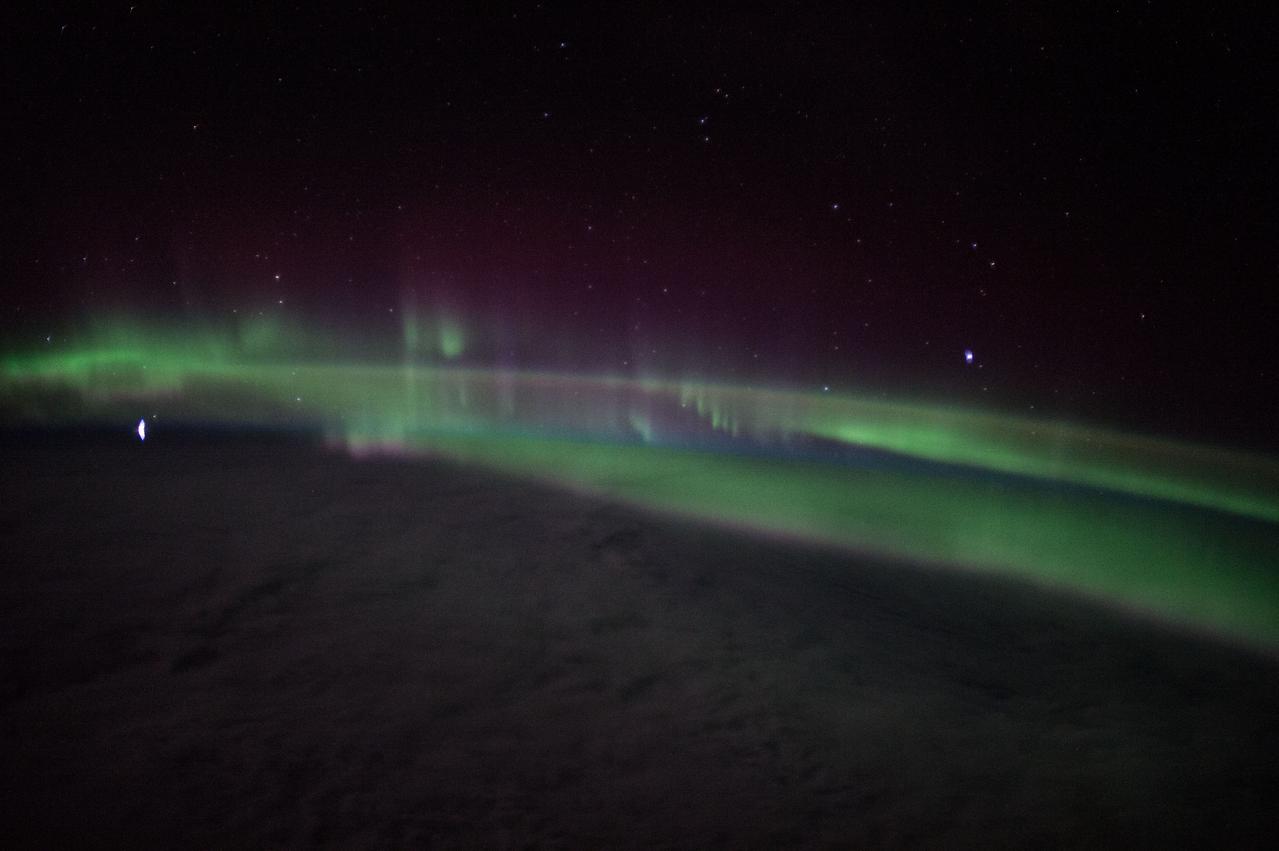
ISS047e000320 (02/17/2016) --- Aurora flashing over the Earth as the International Space Station orbits around the planet. NASA astronaut Tim Kopra sent this mesmerizing image out with the comment " "Stunning #aurora tonight- felt like we were enveloped in green light when we passed through this band @Space_Station". "
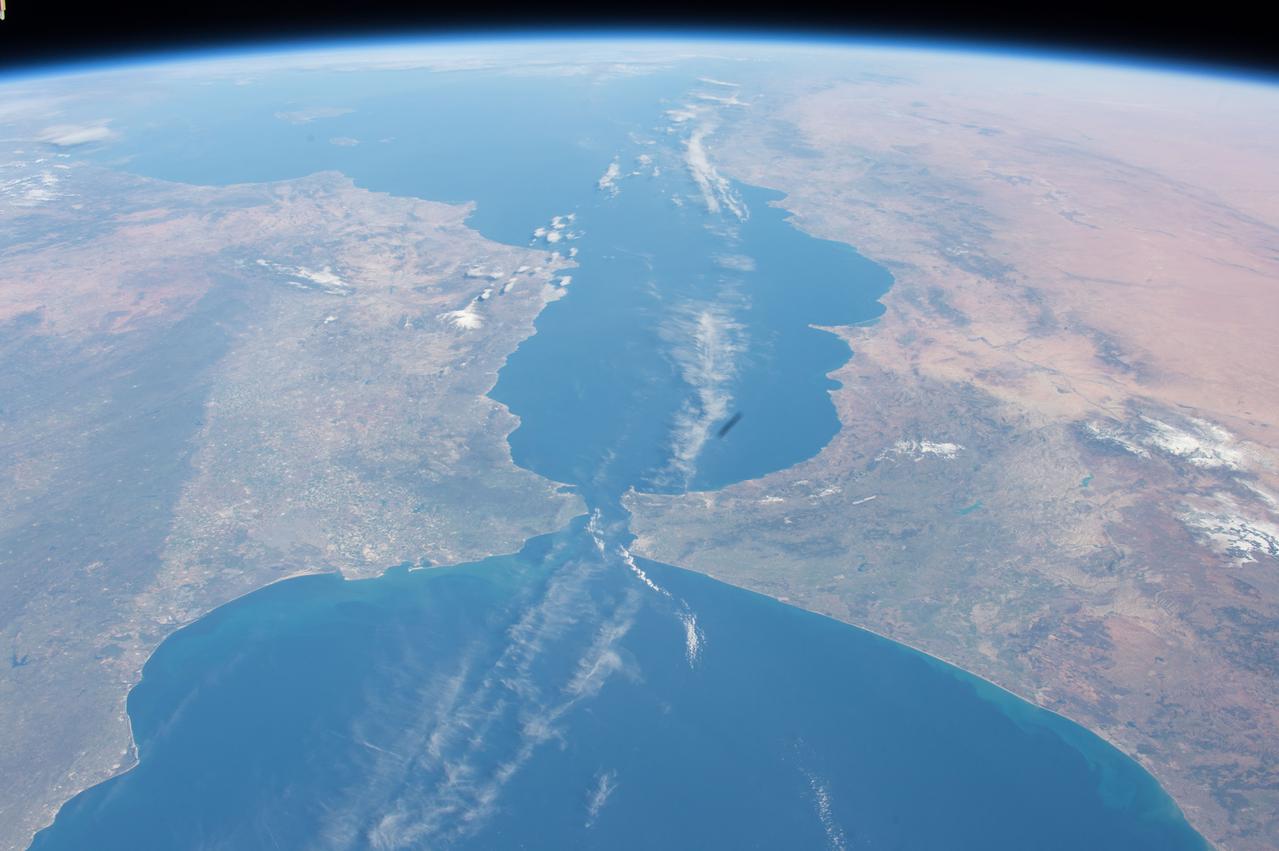
ISS047e001308 (03/02/2016) --- Europe meets Africa in this Earth Observation image captured by NASA astronaut Tim Peake. He tweeted this message out with the photo " Strait of Gibraltar - 9 miles separating #Europe and #Africa . @Space_Station #Explore ".
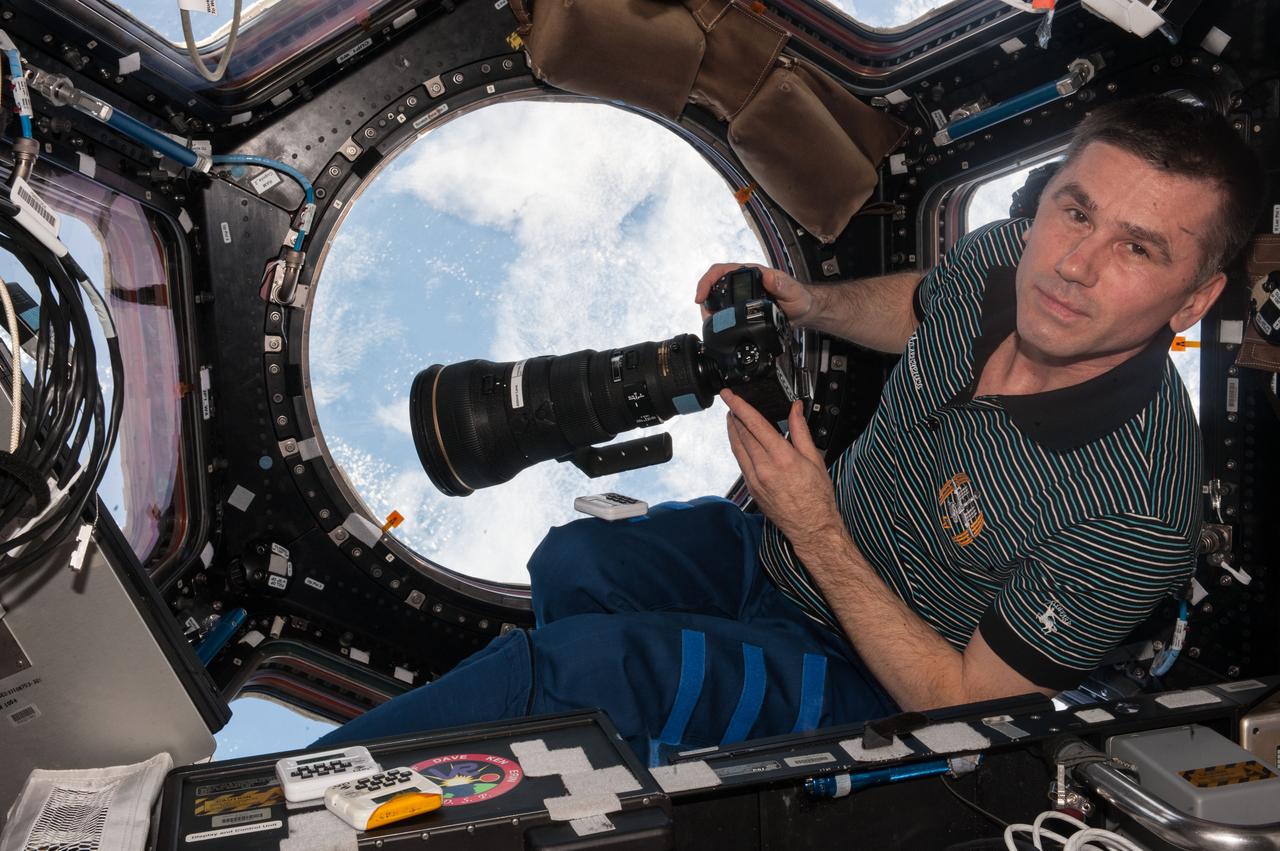
ISS047e001484 (03/05/2016) --- Expedition 47 flight engineer Yuri Malenchenko from Roscosmos is photographed in the International Space Station’s Cupola module preparing to take Earth pictures using a 400 mm lens. The Cupola's 360 degree viewing platform provides optimal views of the Earth below and also contains the control mechanisms for the station’s Canadarm2 robotic arm.
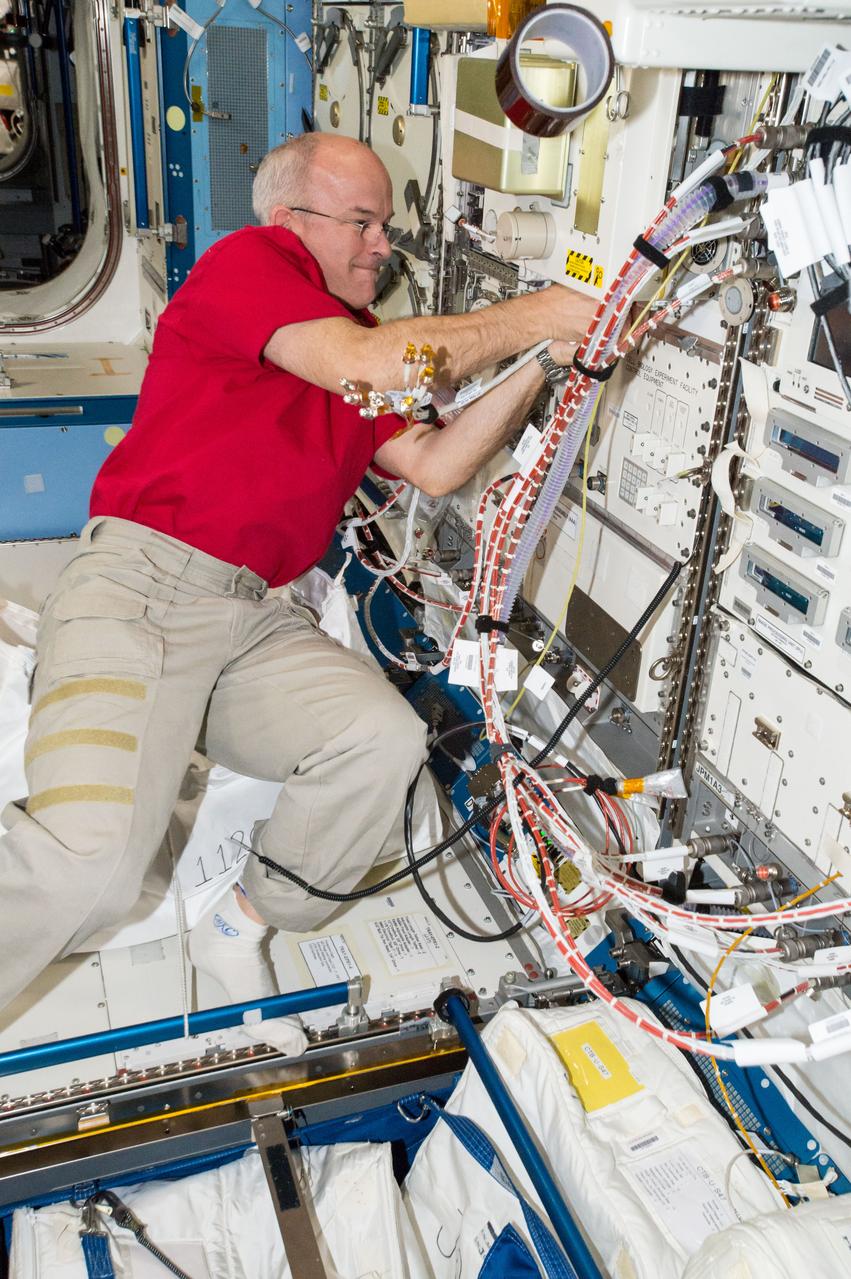
ISS047e032018 (04/01/2016) --- NASA astronaut Jeff Williams works to install the Cell Biology Experiment Facility (CBEF) Cell Mechanosensing Humidifier. Cell Mechanosensing is a Japan Aerospace Exploration Agency (JAXA) investigation that identifies gravity sensors in skeletal muscle cells to develop countermeasures to muscle atrophy, a key space health issue. Scientists believe that the lack of mechanical stress from gravity causes tension fluctuations in the plasma membrane of skeletal muscle cells which changes the expression of key proteins and genes, and allows muscles to atrophy.
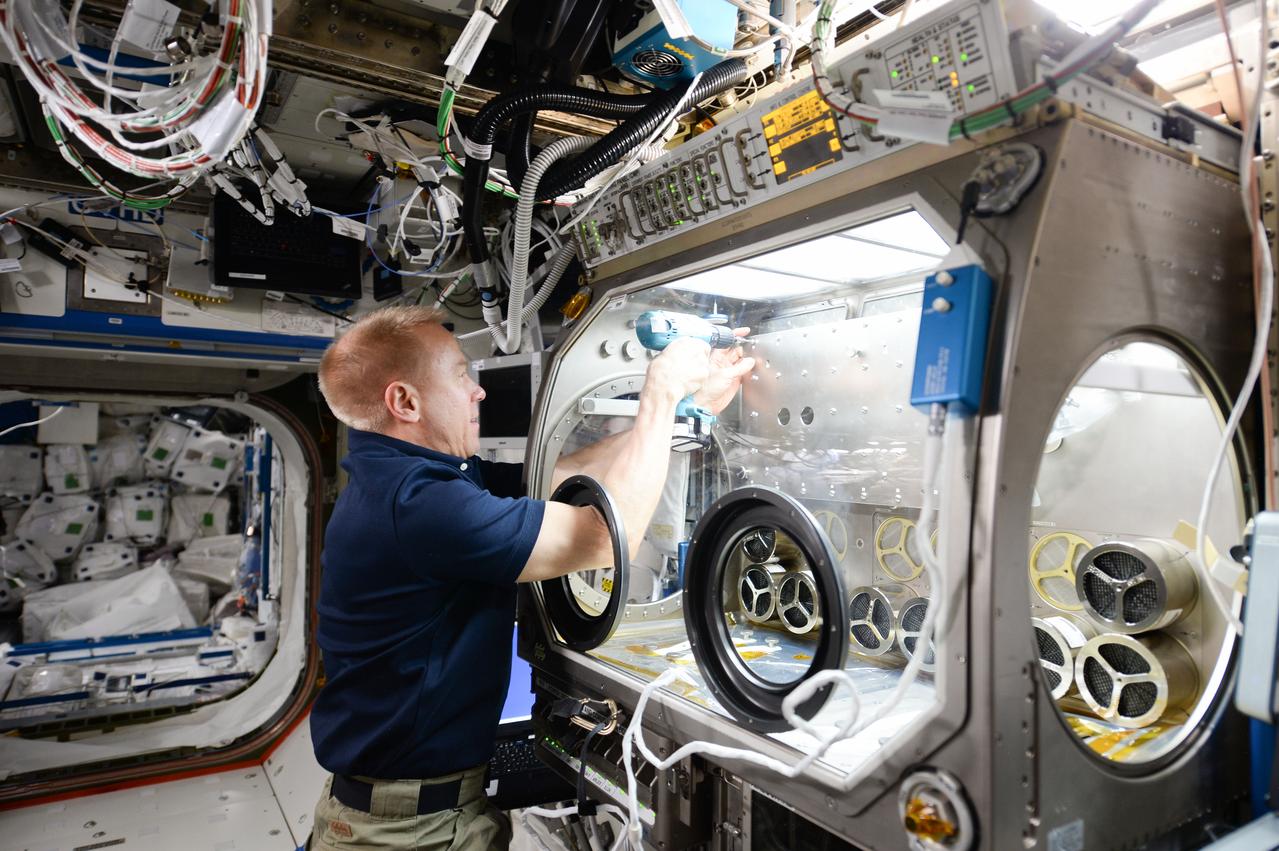
ISS047e050514 (04/07/2016) --- Expedition 47 Commander Tim Kopra configures the station’s Microgravity Science Glovebox for upcoming research operations. The glovebox is one of the major dedicated science facilities inside Destiny. It has a large front window and built-in gloves to provide a sealed environment for conducting science and technology experiments. The Glovebox is particularly suited for handling hazardous materials when the crew is present.
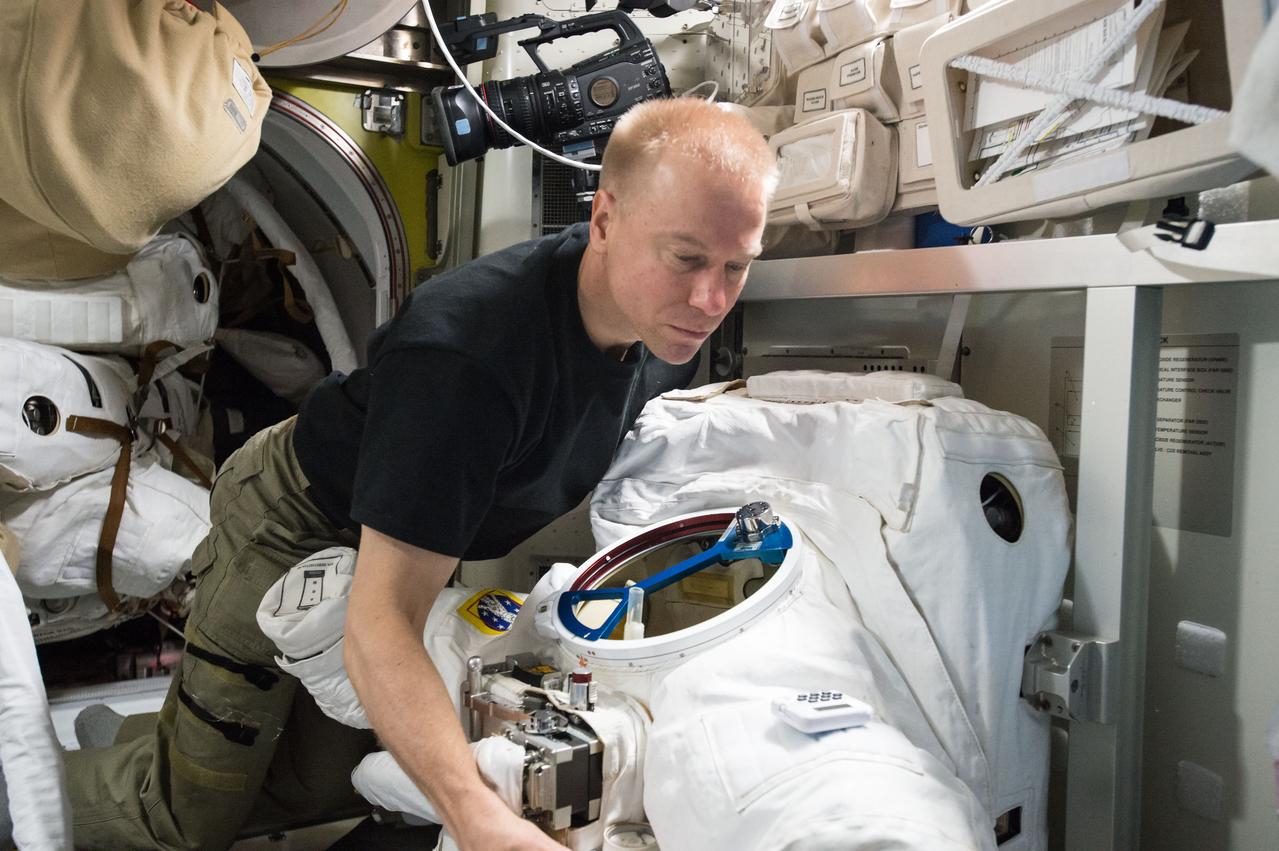
ISS047e032108 (04/01/2016) --- NASA astronaut and Expedition 47 commander Tim Kopra conducts a loop scrub on two U.S. spacesuits inside the Quest airlock. Periodic cleaning and sampling of the spacesuit cooling loops is conducted to ensure the suits are in working order and ready to support future spacewalks.
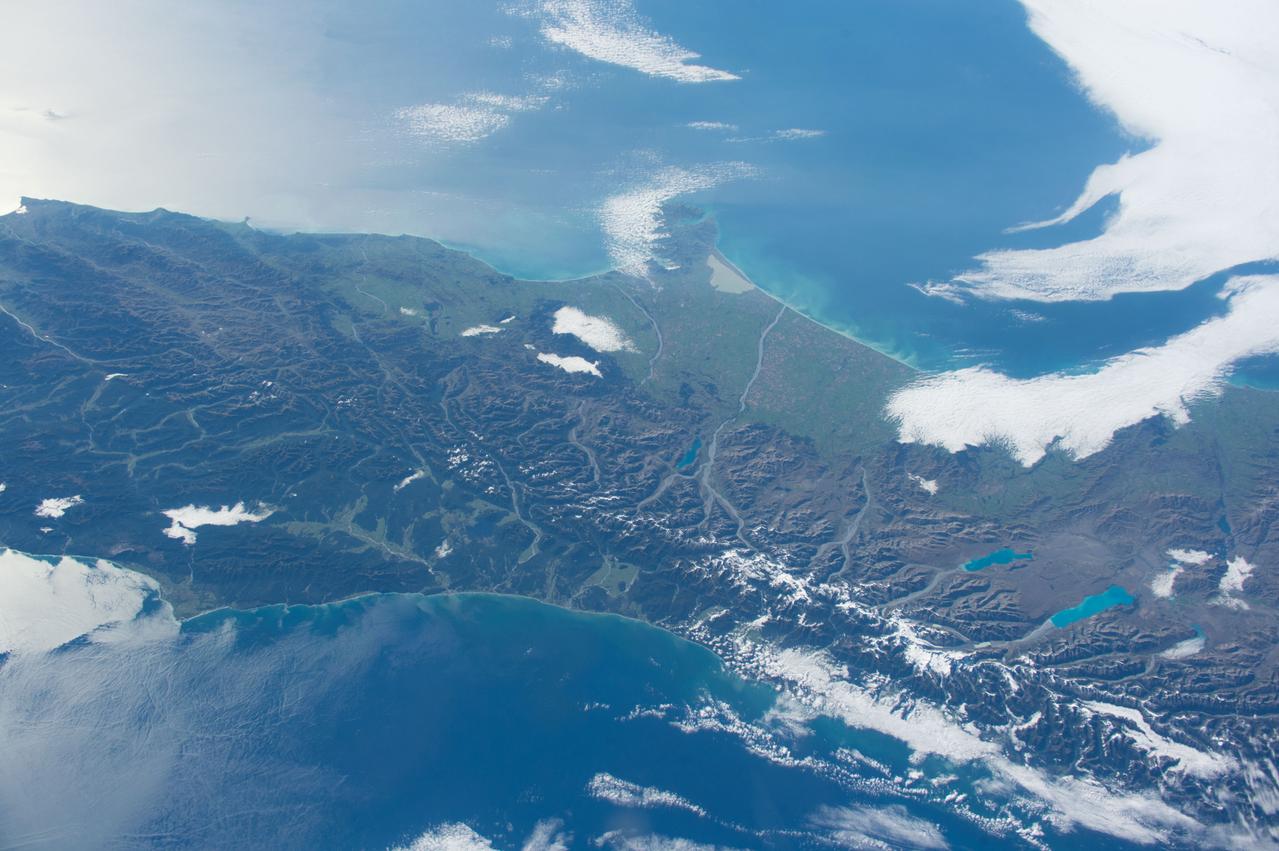
ISS046e030629 (01/31/2016) --- Another awesome Earth observation by the crew of the International Space Station. NASA astronaut Tim Kopra tweeted this image out with the comment: "Flying over @NewZealand -- beautiful #islands . #Explore ".
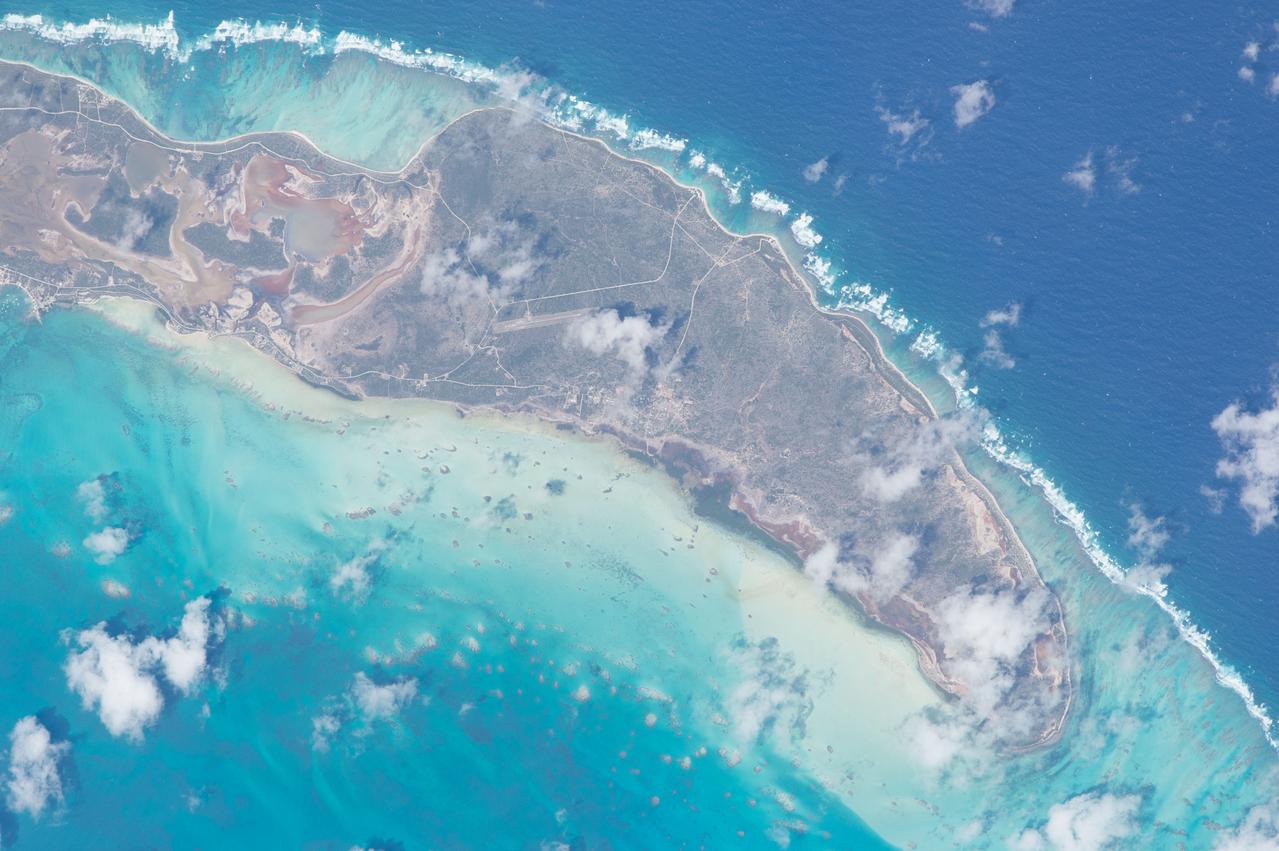
ISS047e005148 (03/10/2016) --- This image was taken by members of Expedition 47 on board the International Space Station as studies of the Earth continue using the perfect vantage point presented by the station.

ISS047e010211 (03/17/2016) --- NASA astronaut Tim Kopra sent this interesting image out via Twitter with the comment " Lake in #Brazil - looks like something from #MiddleEarth. @Space_Station #TheShire #Explore".
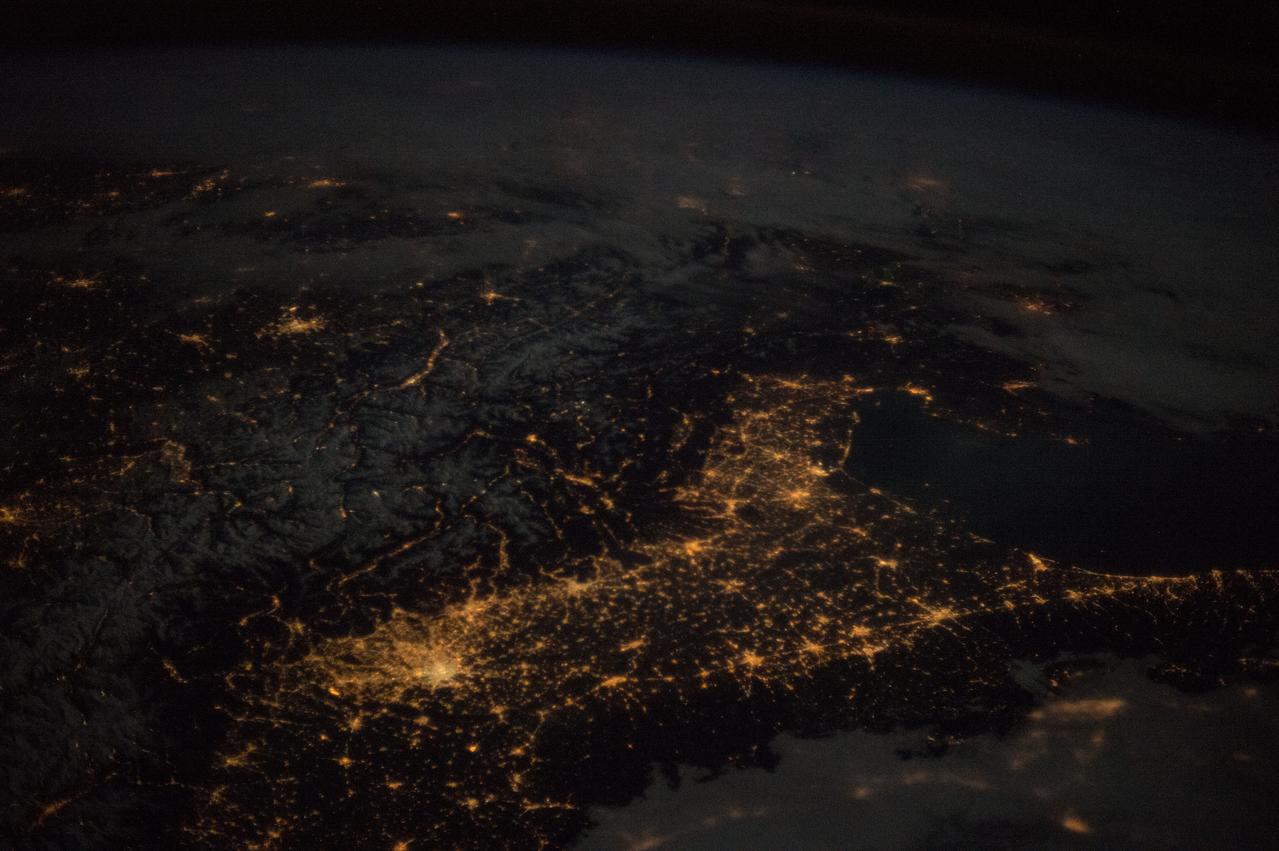
ISS046e024208 (01/25/2016) --- Expedition 46 flight engineer Tim Kopra of NASA shared this stunning nighttime photograph with his social media followers on Jan. 25, 2016, writing, "Beautiful night pass over Italy, Alps and Mediterranean."
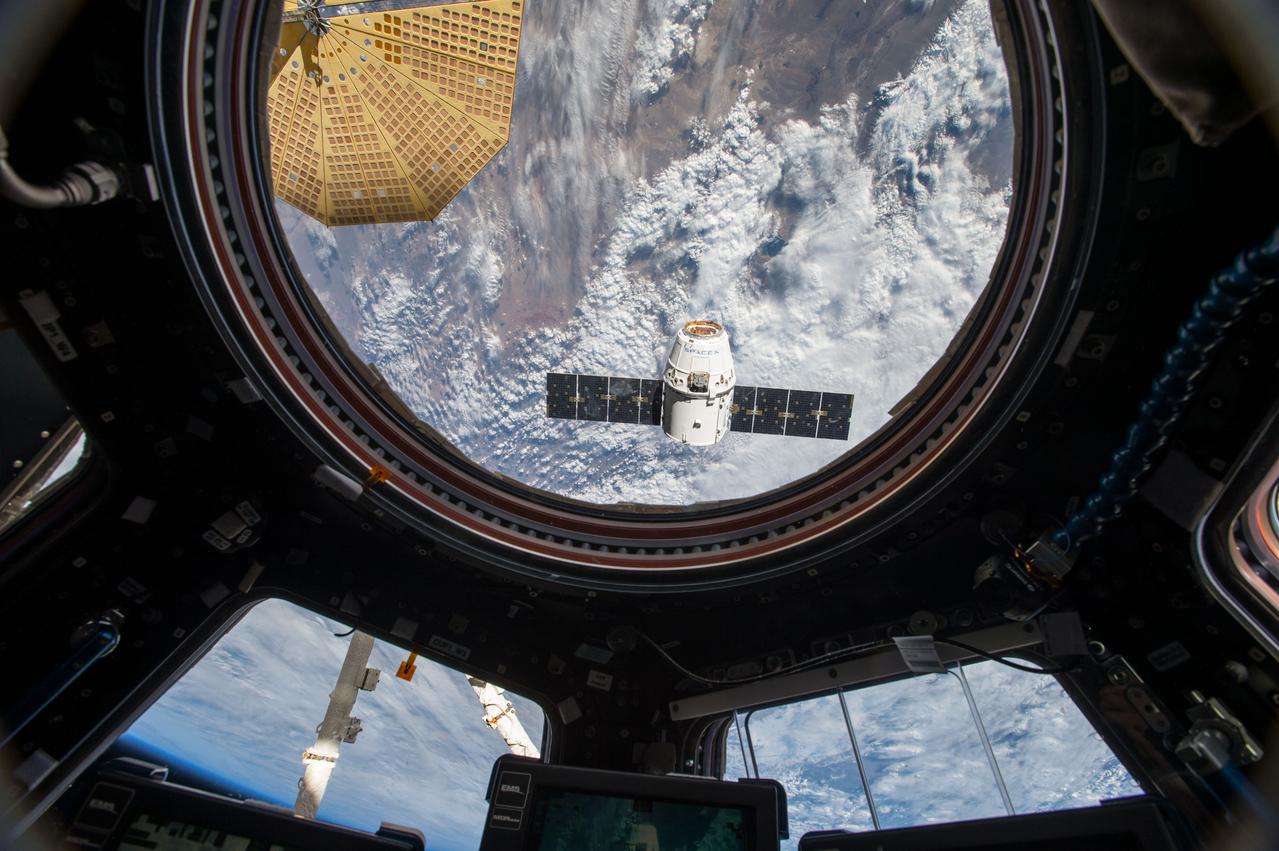
ISS047e050792 (04/10/2016) --- The SpaceX Dragon cargo craft approaches to be grappled by the International Space Station Expedition 47 crew. This view is from the Cupola where the primary controls of the Canadarm 2 are located. Crewmembers use the robotic arm to grapple the spaceship before berthing it to the Earth-facing port on the Harmony module. The spacecraft delivered about 7,000 pounds of science and research investigations, including the Bigelow Expandable Activity Module, known as BEAM.
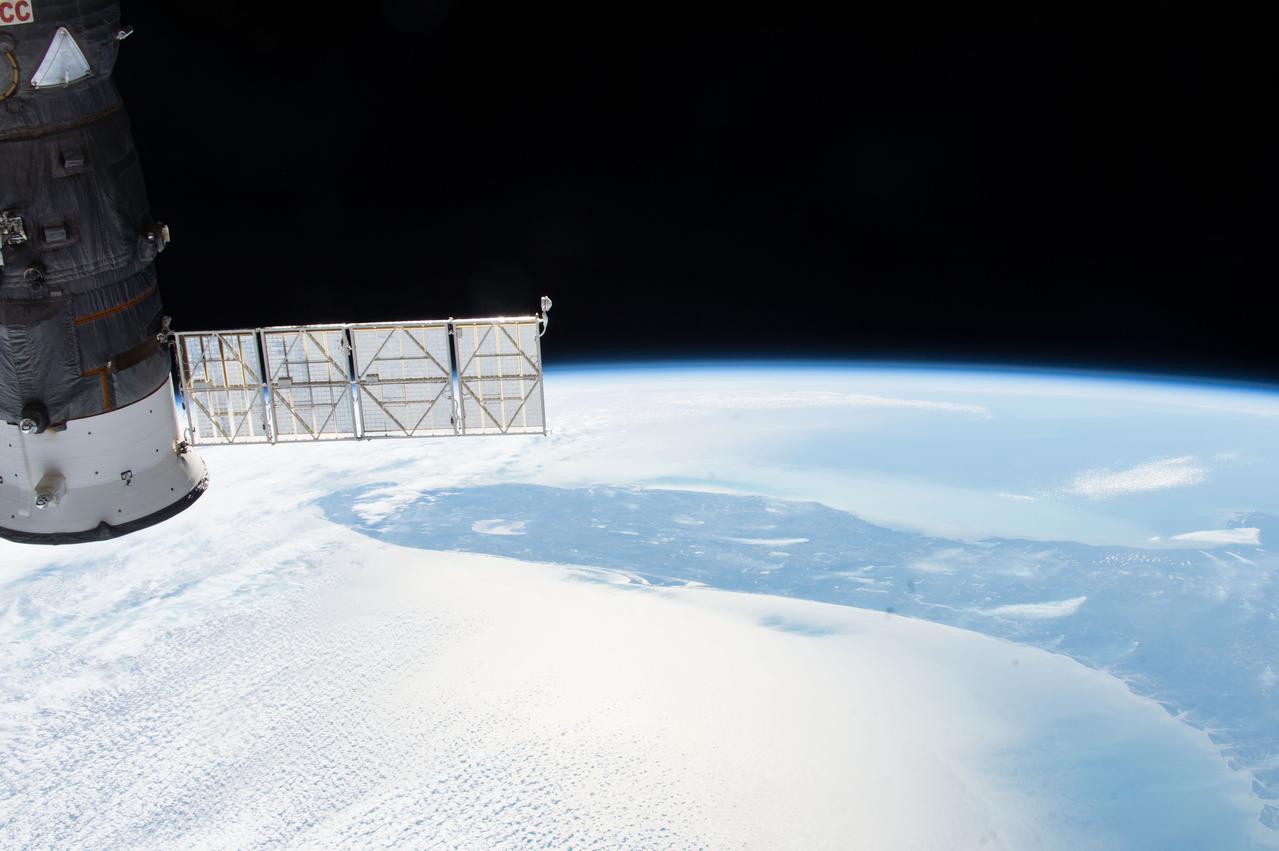
ISS046e040049 (02/12/2016) --- NASA astronaut Tim Kopra captured this image of the US state of Florida aboard the International Space Station. He made this comment while sending this picture out via Twitter "Flying over #Florida reminded me of the Space Shuttle flights that helped build this amazing #ISS -- thanks, #KSC ! (Kennedy Space Center Florida).
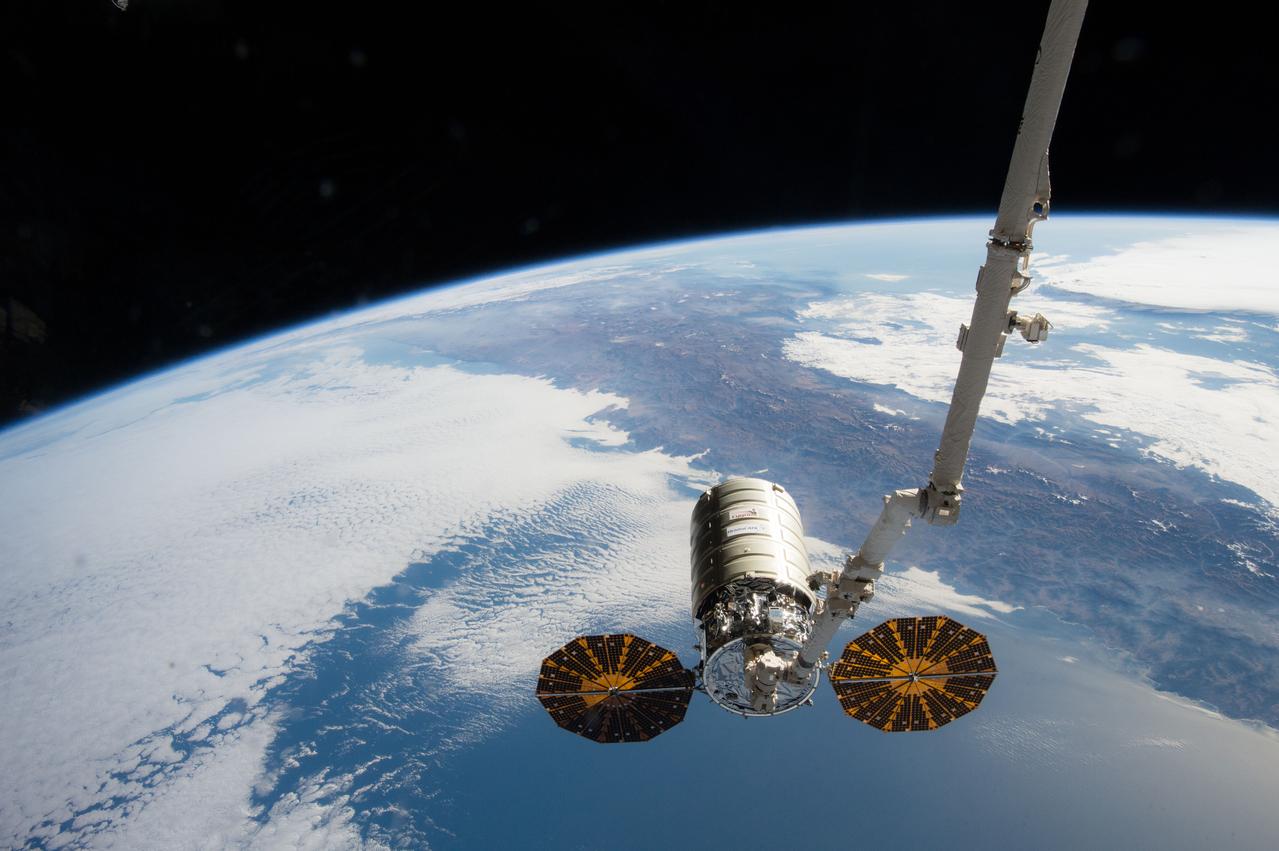
iss046e044208 (Feb. 19, 2016) --- The Orbital ATK Cygnus spacecraft is grappled by the Canadarm2 after being unberthed from the Unity module Earth-facing port. The International Space Station was orbiting 258 miles above the Pacific coast of Chile.
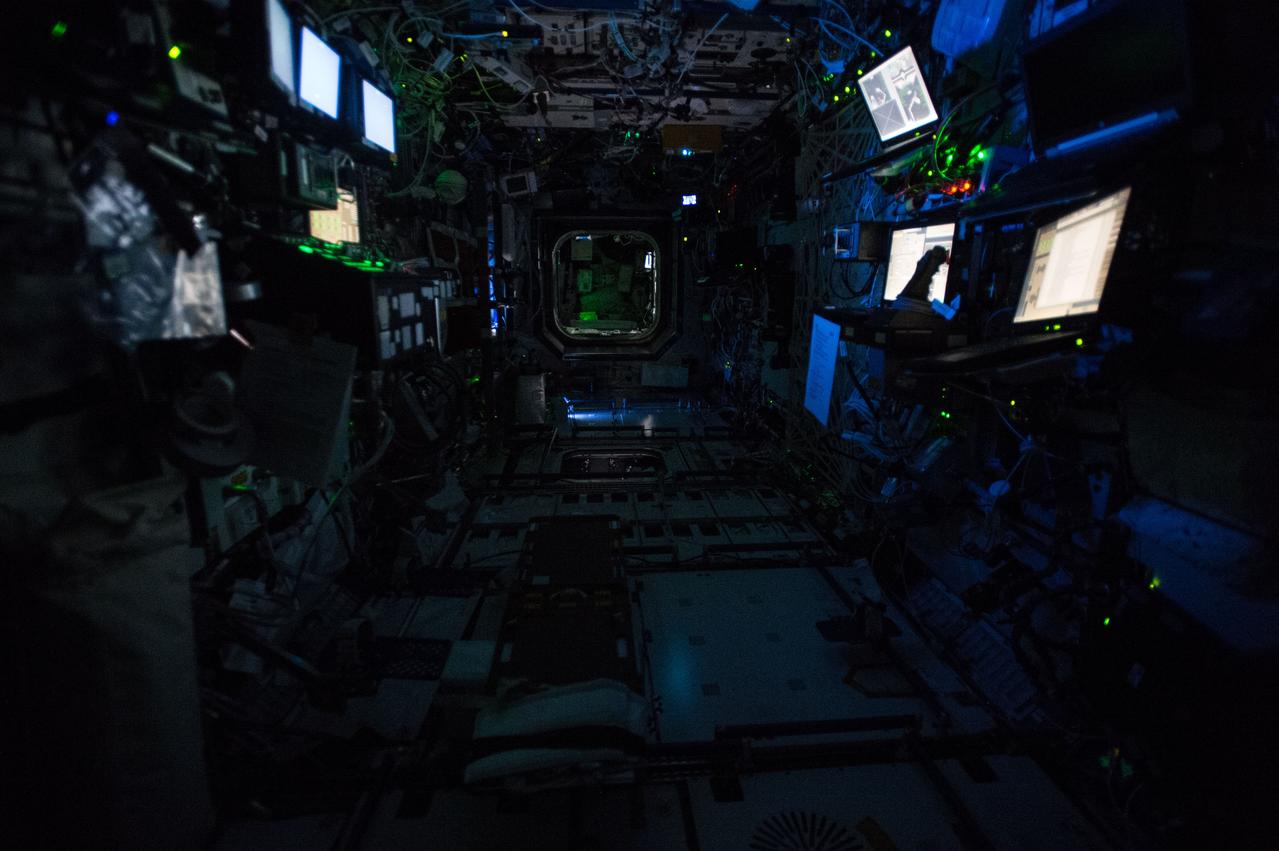
ISS047e016355 (03/23/2016) --- The International Space Station's Destiny Laboratory at “night” shortly before the Expedition 47 crew entered its scheduled sleep period. The space station experiences 16 sunrises and sunsets every day which can alter the crew’s circadian rhythm and disrupt sleep patterns. Lights are turned off and windows are covered to give the interior of the station a nighttime environment during sleep cycles.
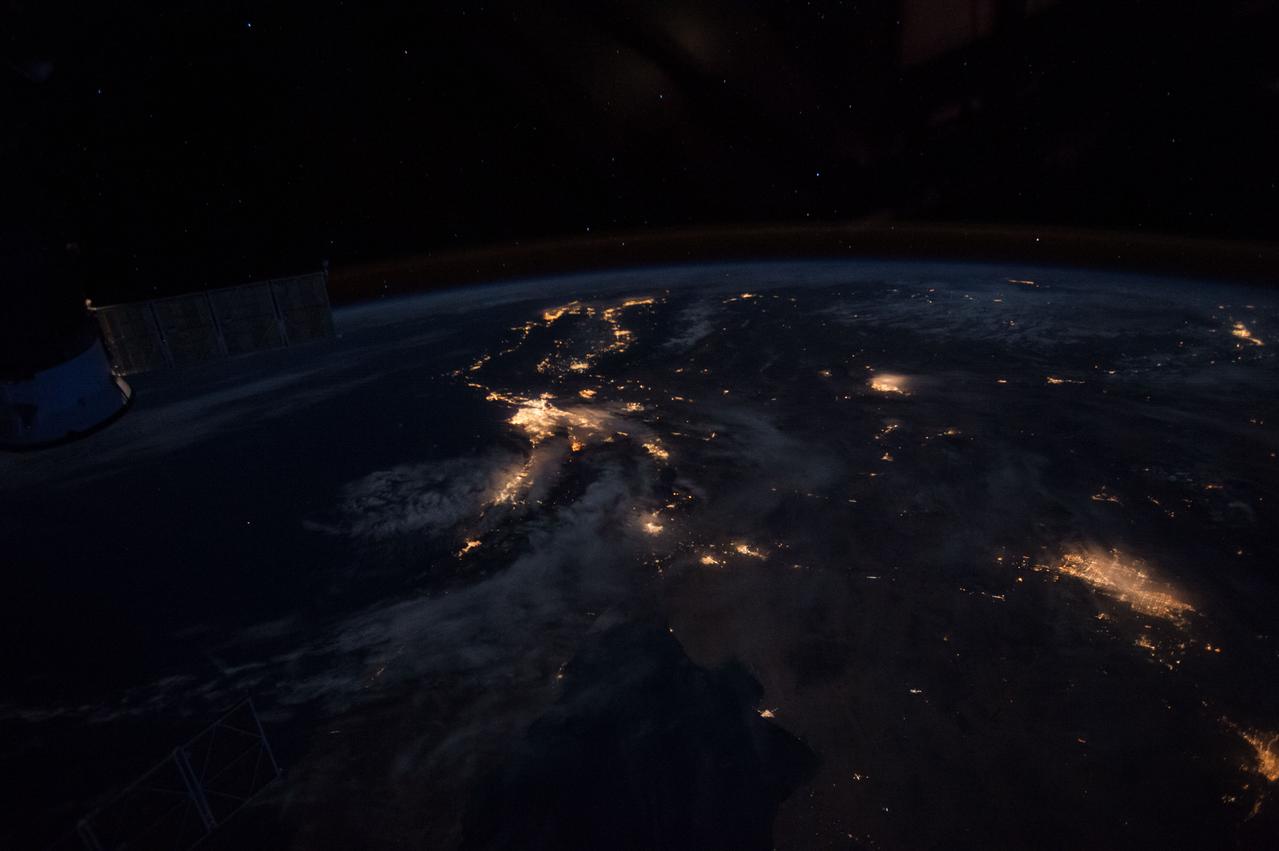
ISS046e026252 (01/28/2016) --- NASA astronaut Tim Kopra aboard the International Space Station tweeted this night image of the west coast of America with the message: " Looking back at the west coast of #California before dawn.".
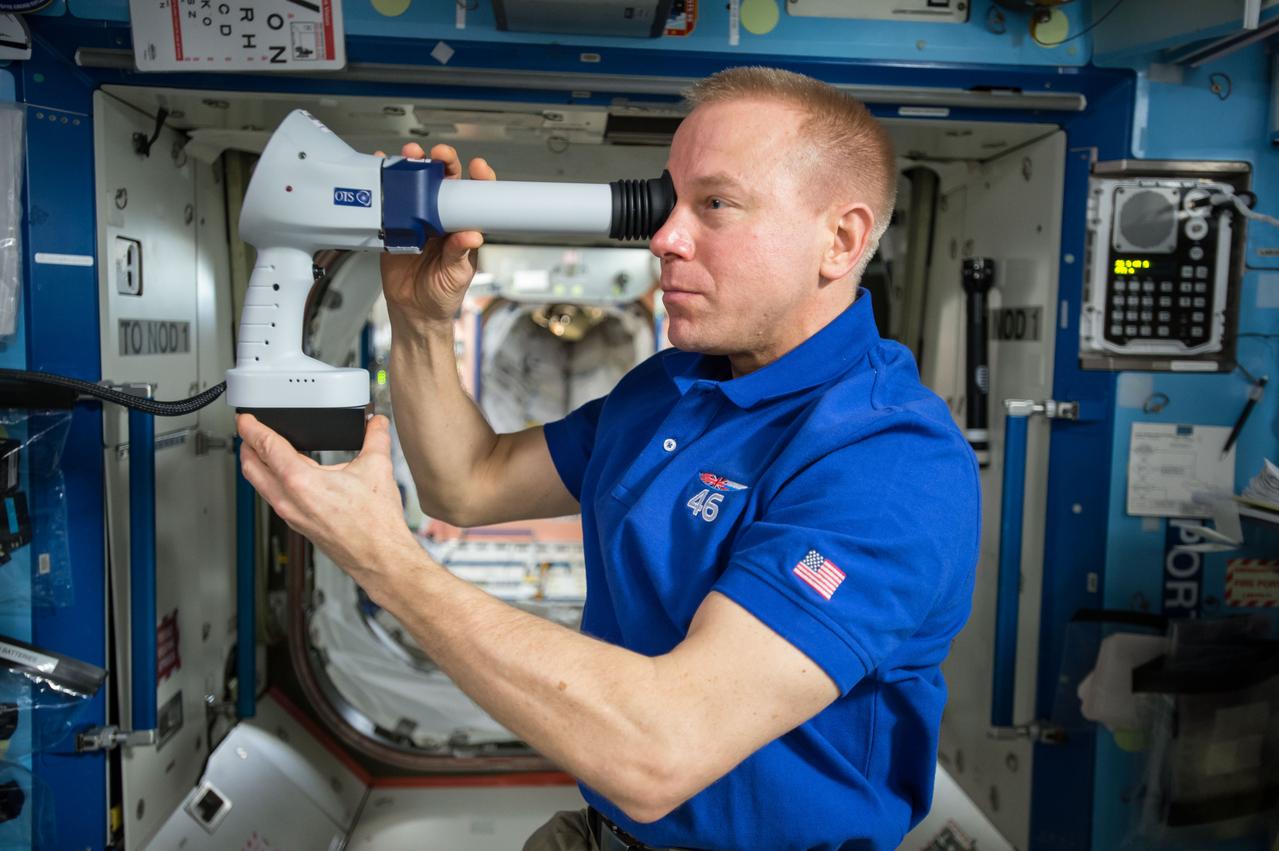
ISS047e010094 (03/16/2016) --- Expedition 47 Commander Tim Kopra of NASA participates in the Ocular Health investigation aboard the International Space Station. The study seeks to help researchers better understand microgravity-induced visual impairment and changes believed to arise from elevated intracranial pressure. These tests will help characterize how living in microgravity can affect the visual, vascular and central nervous system. The investigation will also measure how long it takes for astronauts to return to normal after they return to Earth.
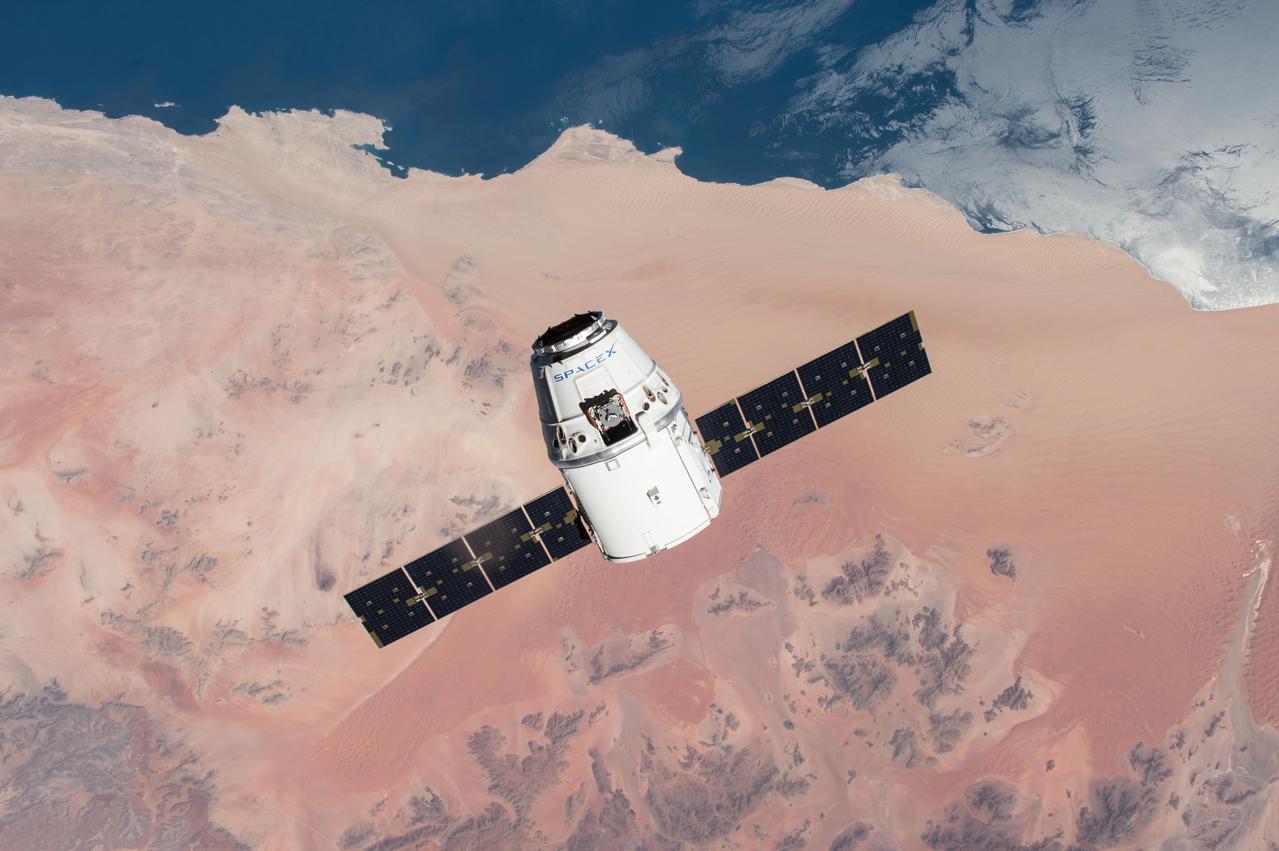
ISS047e052707 (04/10/2016) --- The SpaceX Dragon cargo spaceship begins the final approach to the International Space Station. The spacecraft is delivering about 7,000 pounds of science and research investigations, including the Bigelow Expandable Activity Module, known as BEAM. Dragon’s arrival marked the first time two commercial cargo vehicles have been docked simultaneously at the space station. Orbital ATK’s Cygnus spacecraft arrived to the station just over two weeks ago. With the arrival of Dragon, the space station ties the record for most vehicles on station at one time – six.
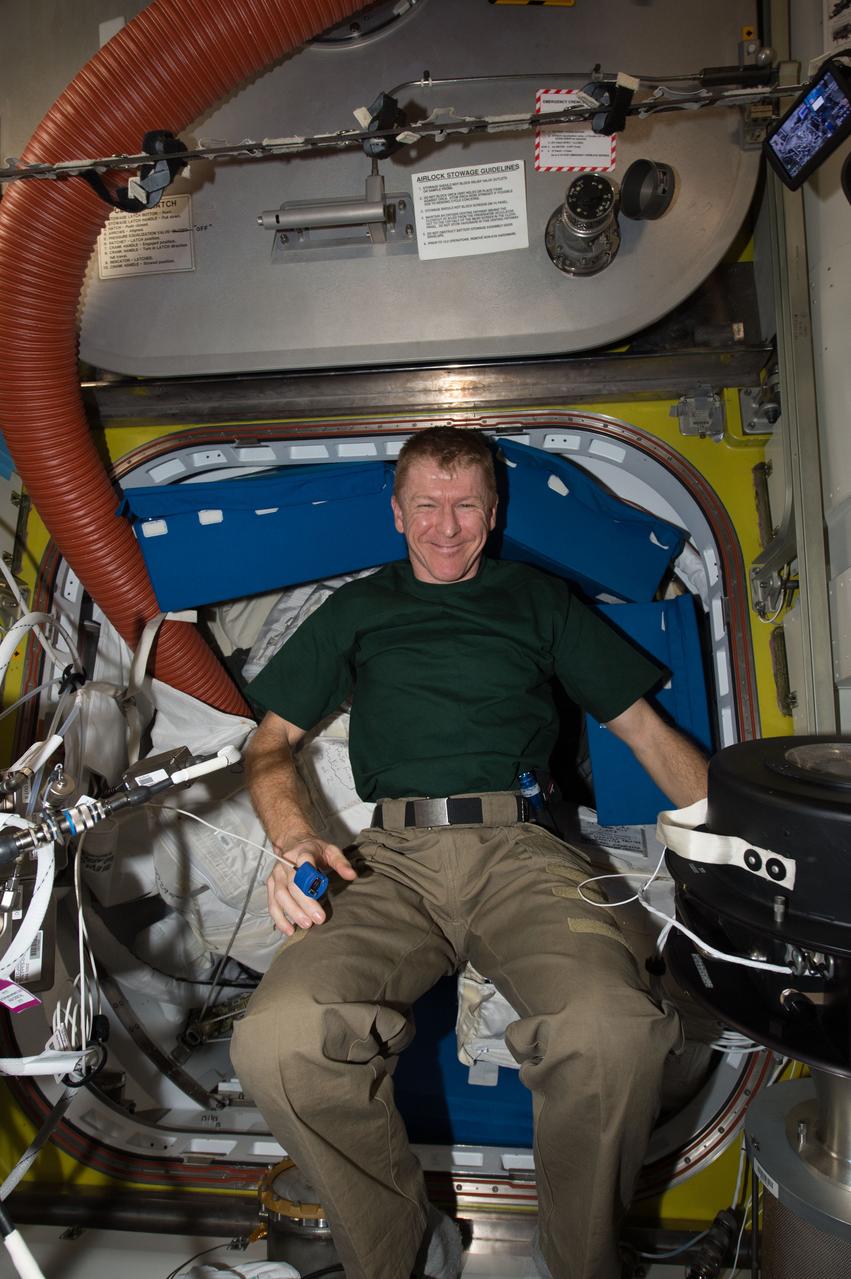
ISS046e047972 (02/25/2016) --- ESA (European Space Agency) astronaut Timothy Peake participates in the Airway Monitoring experiment. With dust particles present in the International Space Station atmosphere, Airway Monitoring studies the occurrence and indicators of airway inflammation in crewmembers, using ultra-sensitive gas analyzers to analyze exhaled air. This helps to highlight any health impacts and to maintain crewmember well-being on future human spaceflight missions, especially longer-duration missions to the Moon and Mars for example, where crewmembers will have to be more self-sufficient in highlighting and avoiding such conditions.
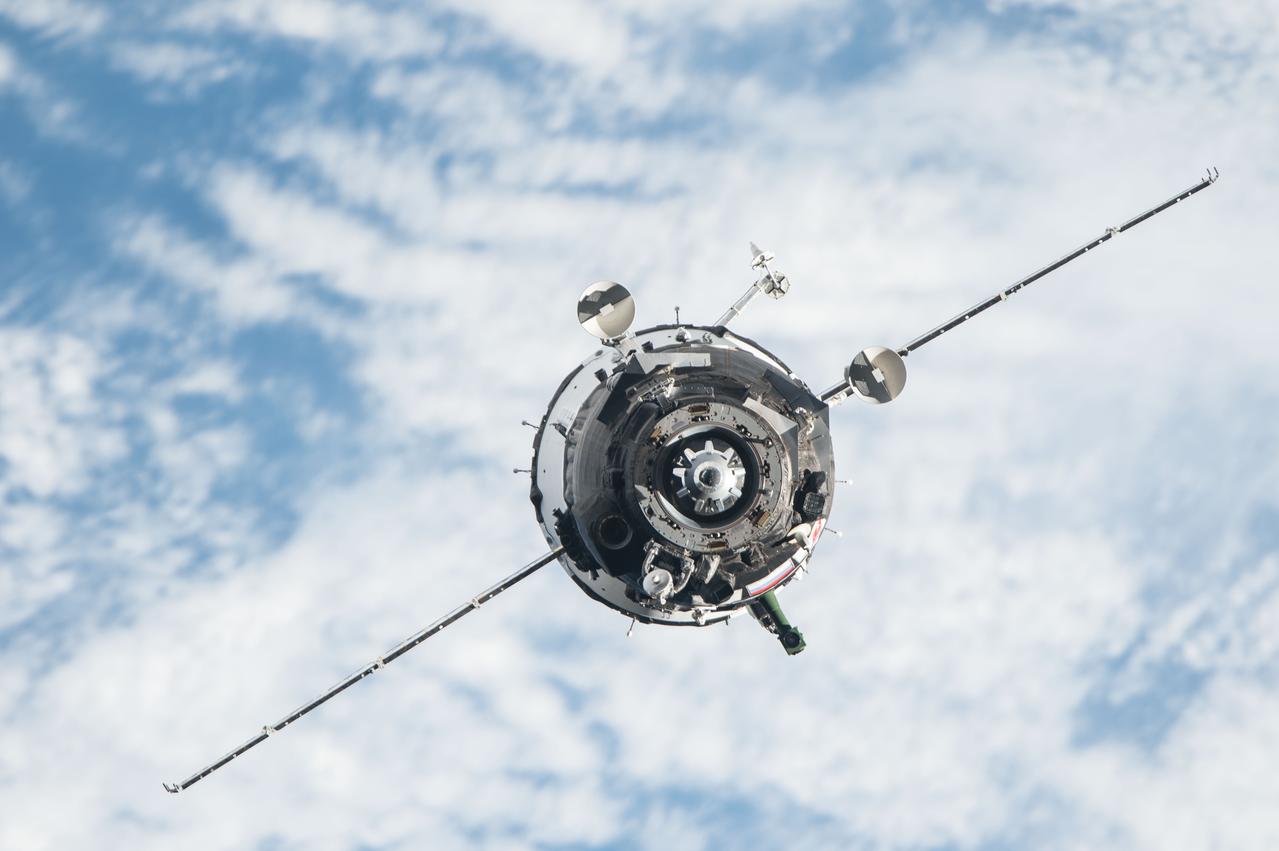
View during the Soyuz 46S approach to the International Space Station (ISS). Photo was taken during Expedition 47.

iss047e154247 (6/16/2016) --- View of Commander Tim Kopra exercising on the Cycle Ergometer with Vibration Isolation and Stabilization (CEVIS) in the U.S. Laboratory. Photo was taken during Expedition 47.
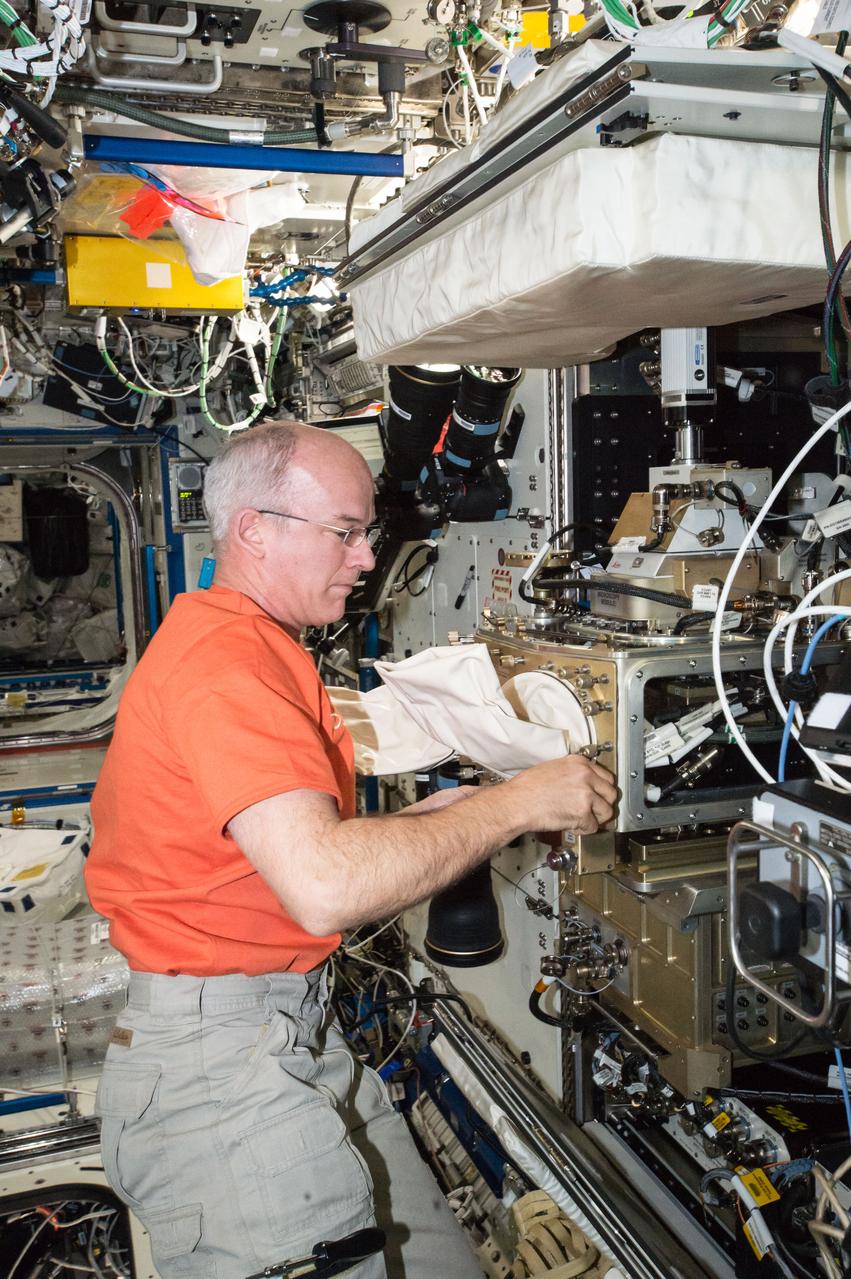
ISS047e066551 (04/18/2016) --- NASA astronaut Jeff Williams configures the station’s Light Microscopy Module (LMM), a modified commercial, highly flexible, state-of-the-art light imaging microscope facility that provides researchers with powerful diagnostic hardware and software. The LMM enables novel research of microscopic phenomena in microgravity, with the capability of remotely acquiring and downloading digital images and videos across many levels of magnification.
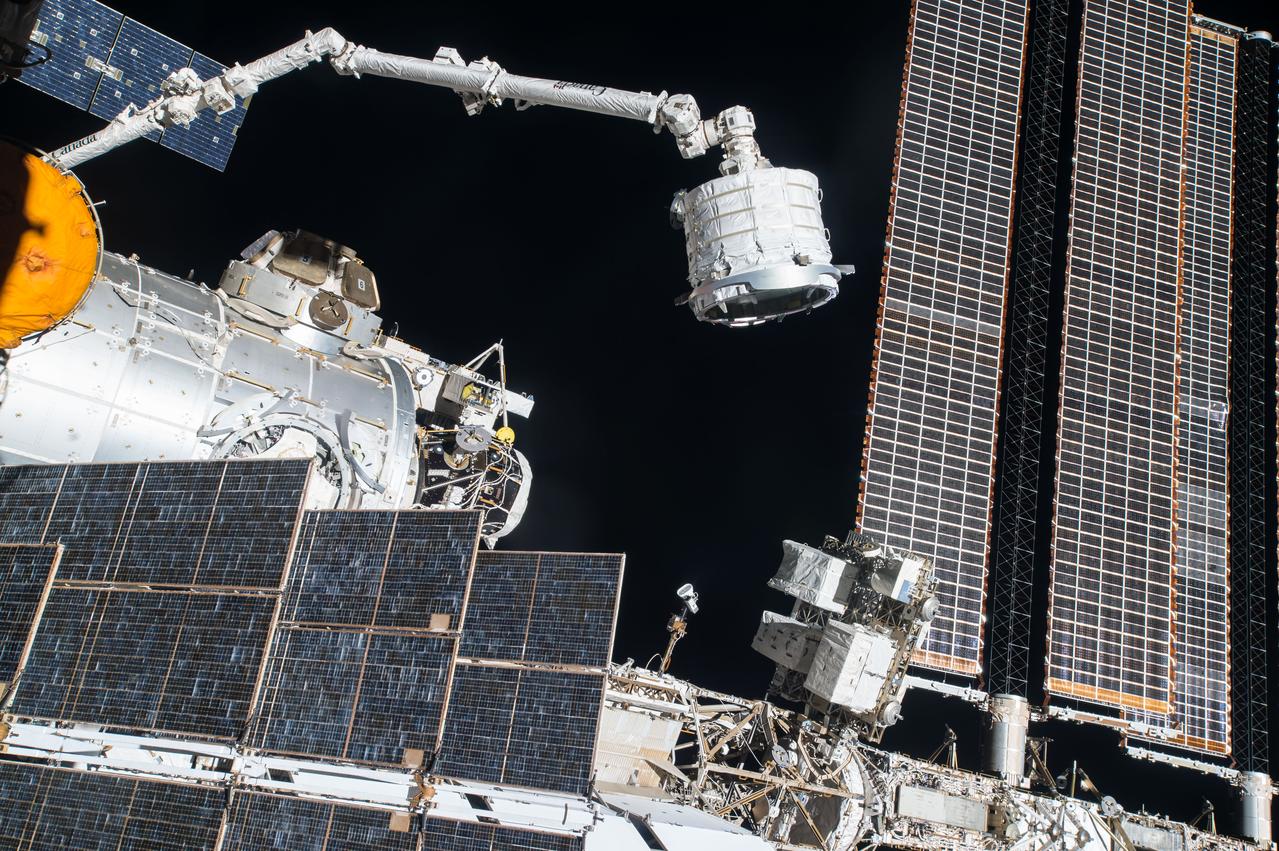
iss047e061107 (4/16/2016) --- View of Bigelow Expandable Activity Module (BEAM) attached to Canadarm2 Robotic Arm. The Bigelow Expandable Activity Module (BEAM) is an experimental expandable capsule that docks with the International Space Station (ISS). After docking, BEAM inflates to roughly 13 feet long and 10.5 feet in diameter to provide a habitable volume where a crew member can enter.
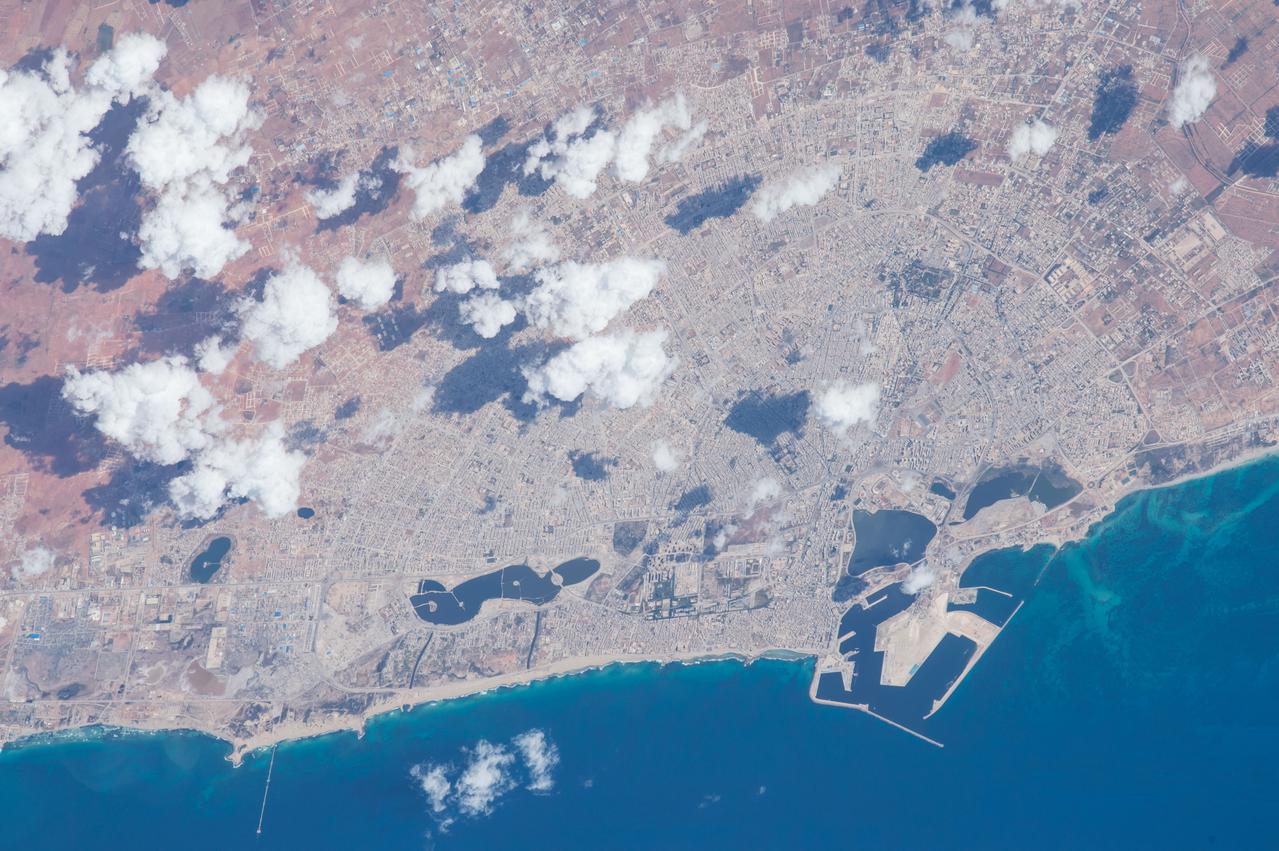
ISS047e005350 (03/10/2016) --- This image of the Earth is one of many that Expedition 47 crew members take on a minute by minute basis as the International Space Station orbits the Earth.