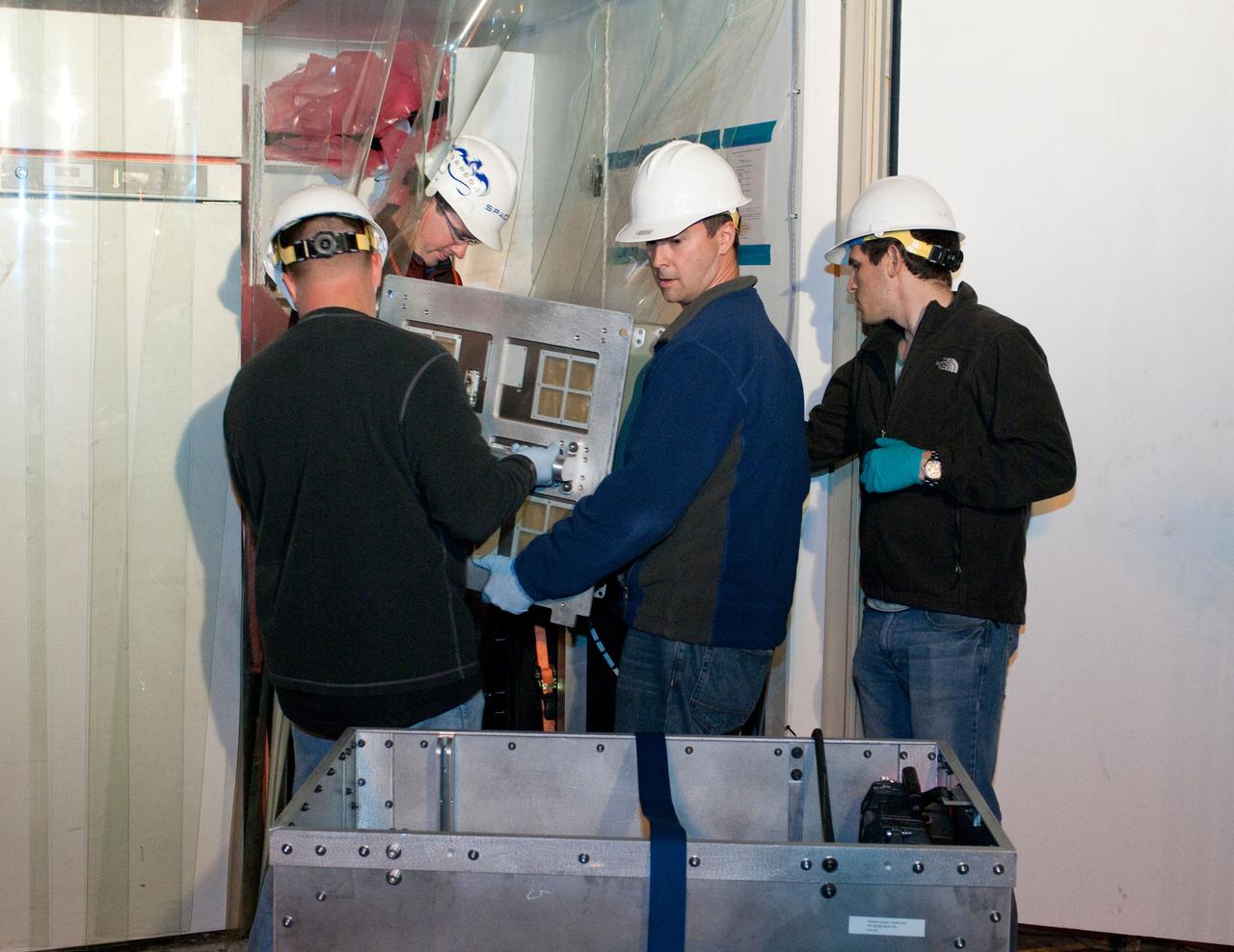
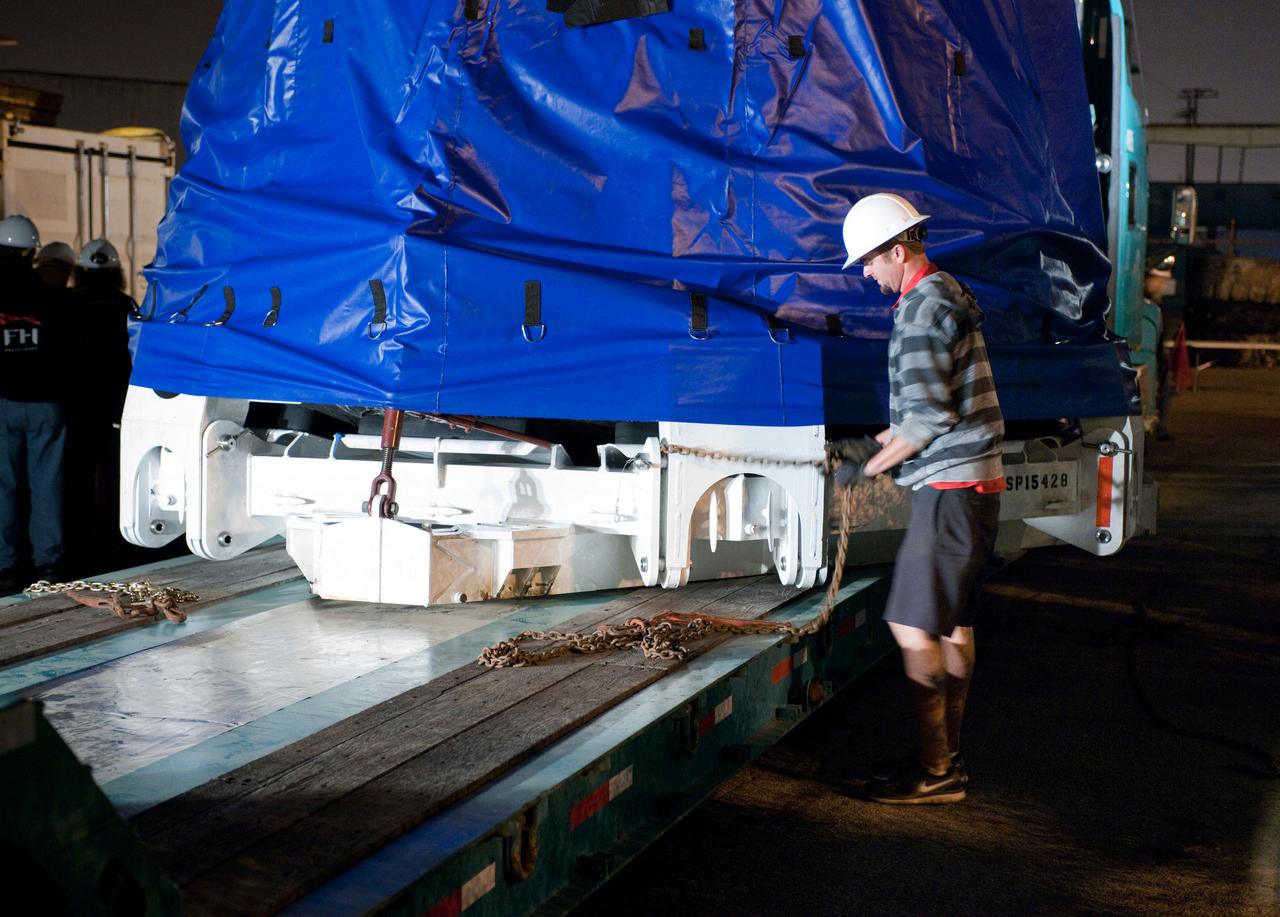
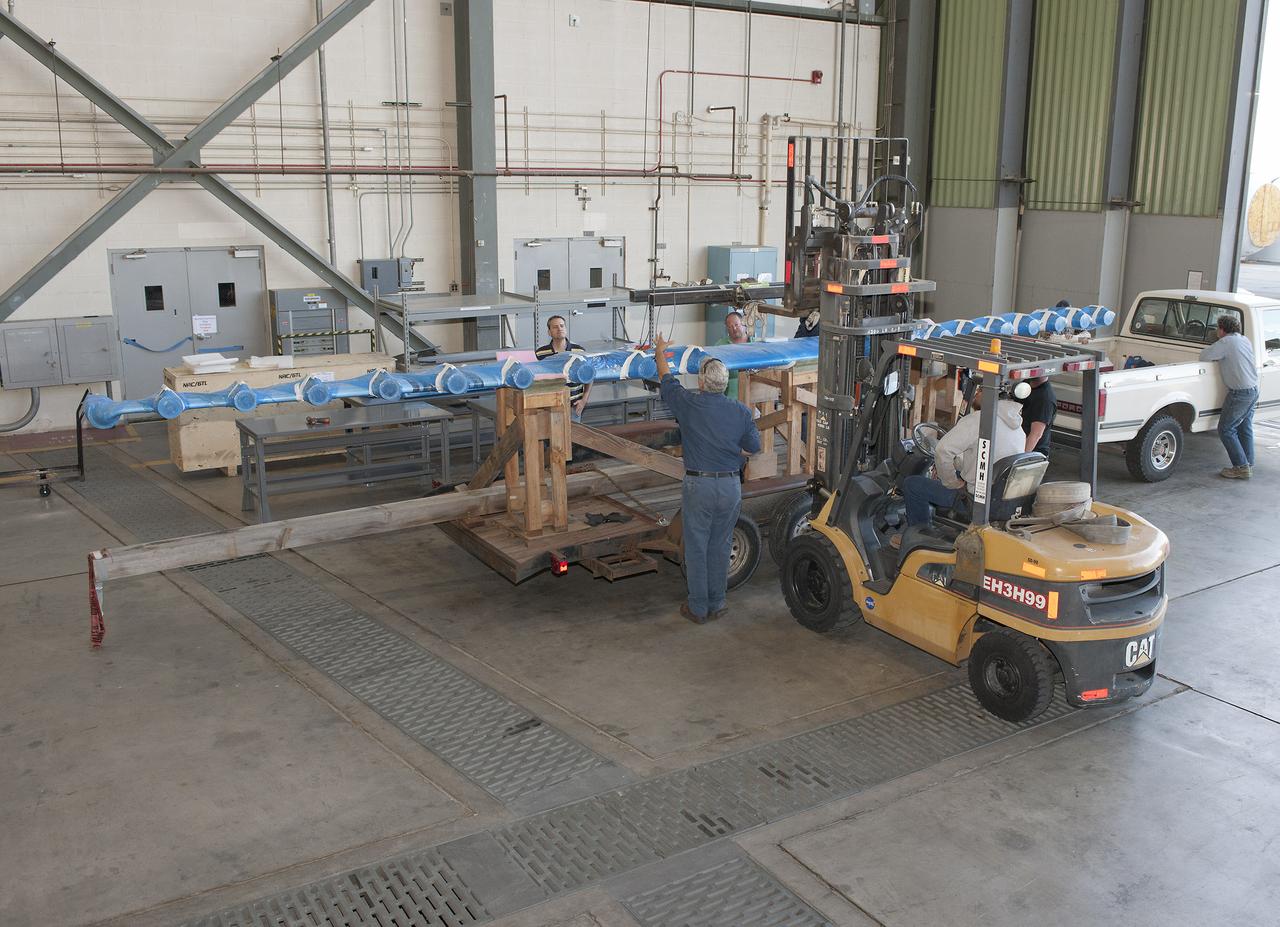
Technicians unload the LEAPTech experimental wing upon its arrival at NASA Armstrong Flight Research Center. Ground testing will begin after the wing is mounted on a specially modified truck.
LEAPTech to Demonstrate Electric Propulsion Technologies
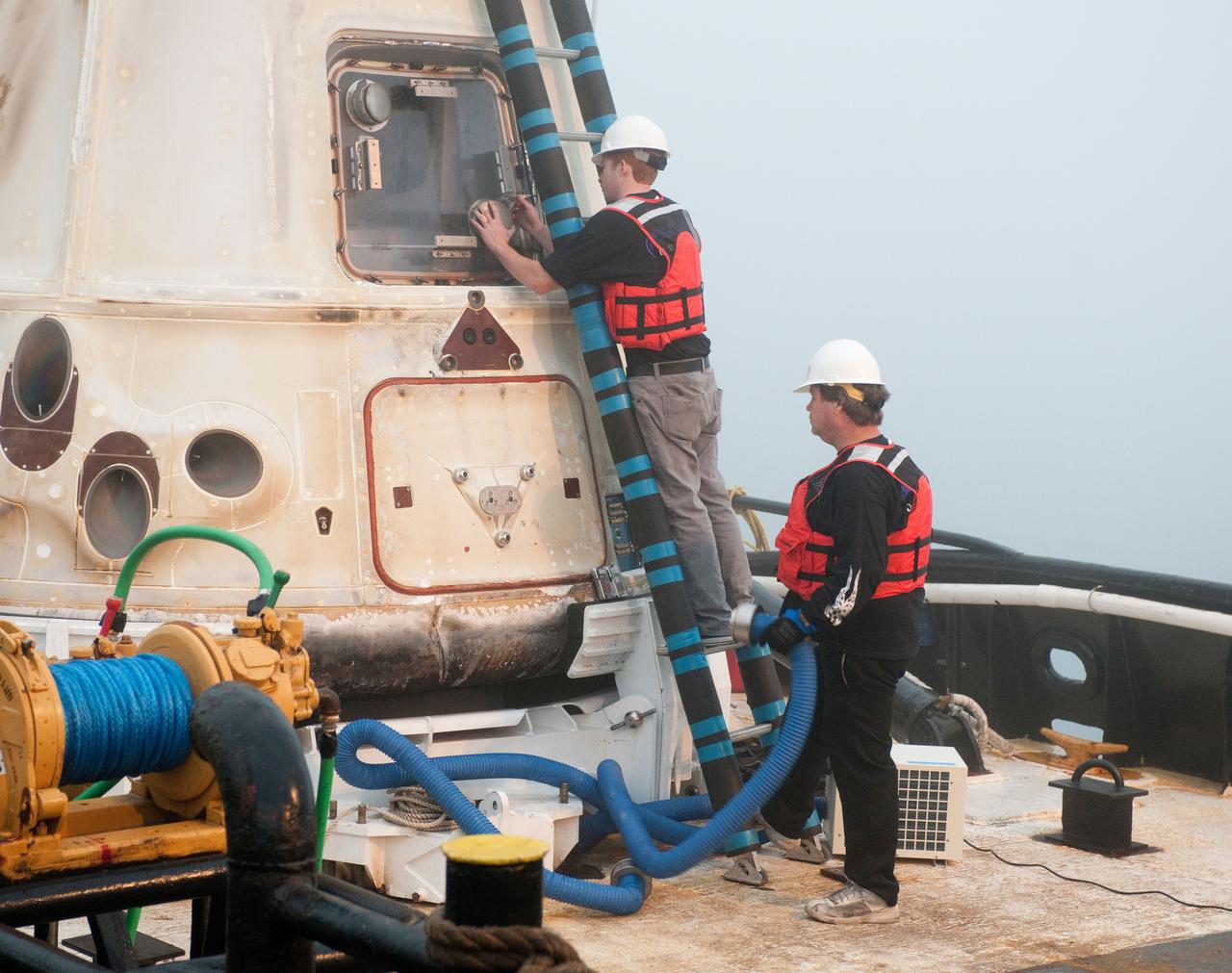
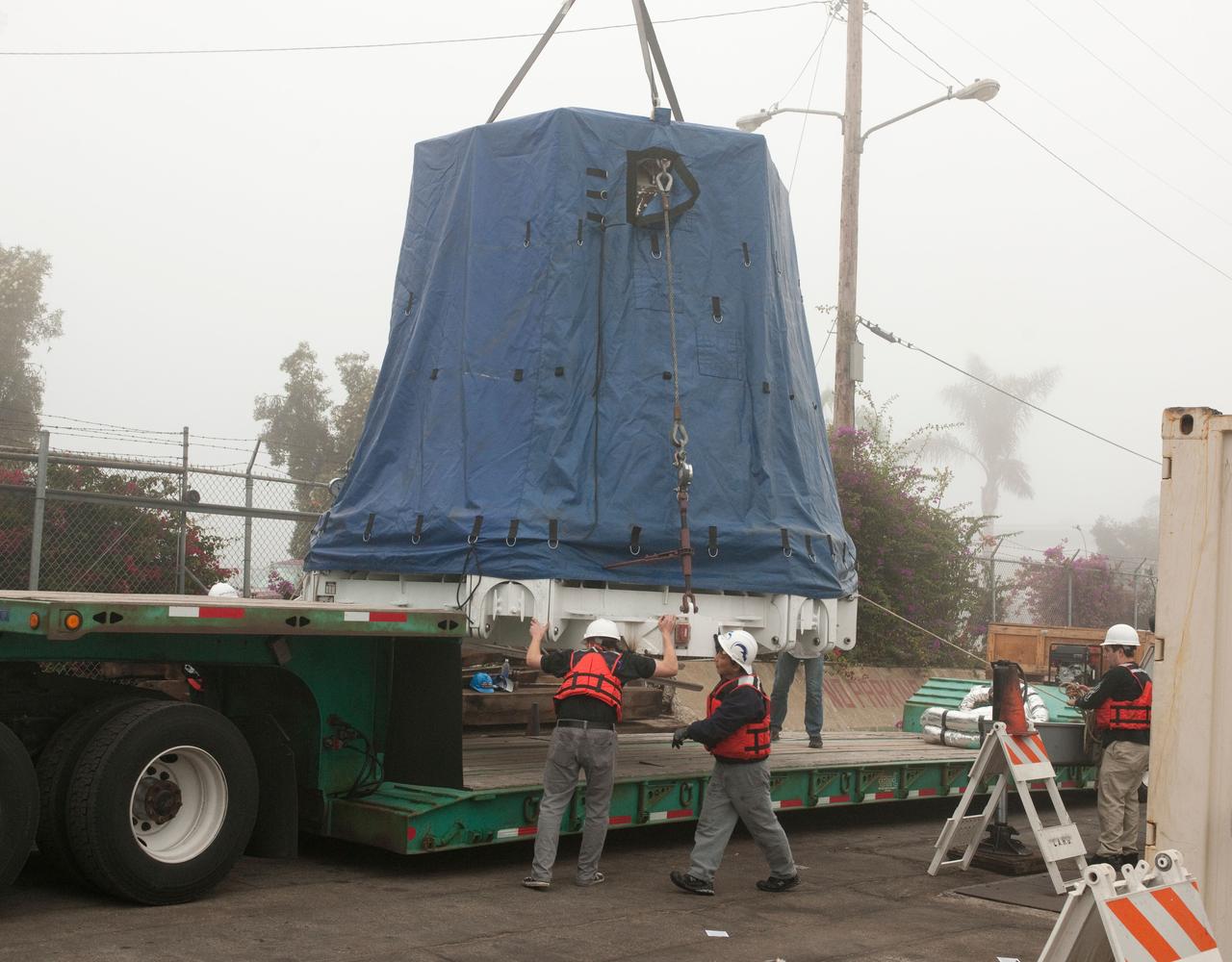
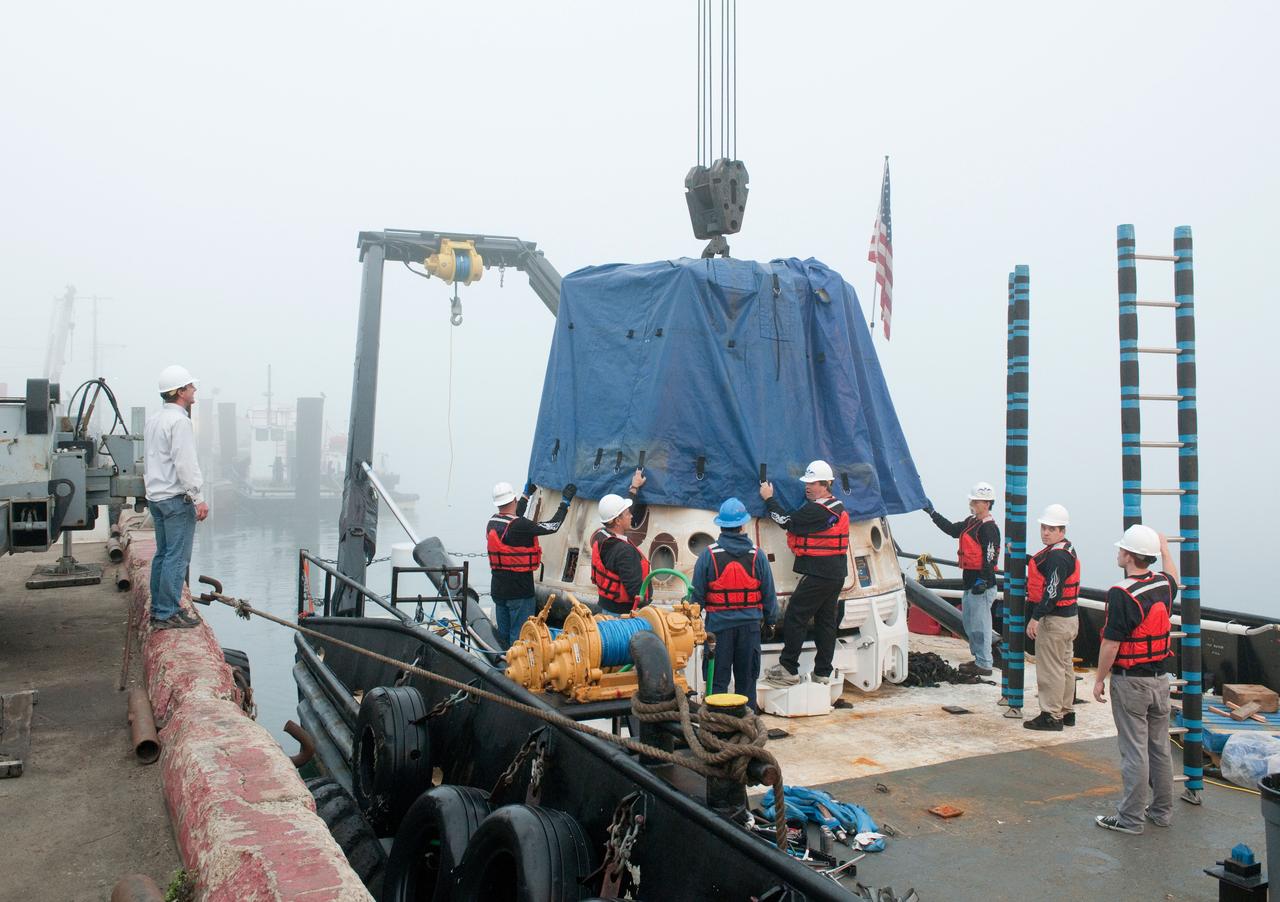
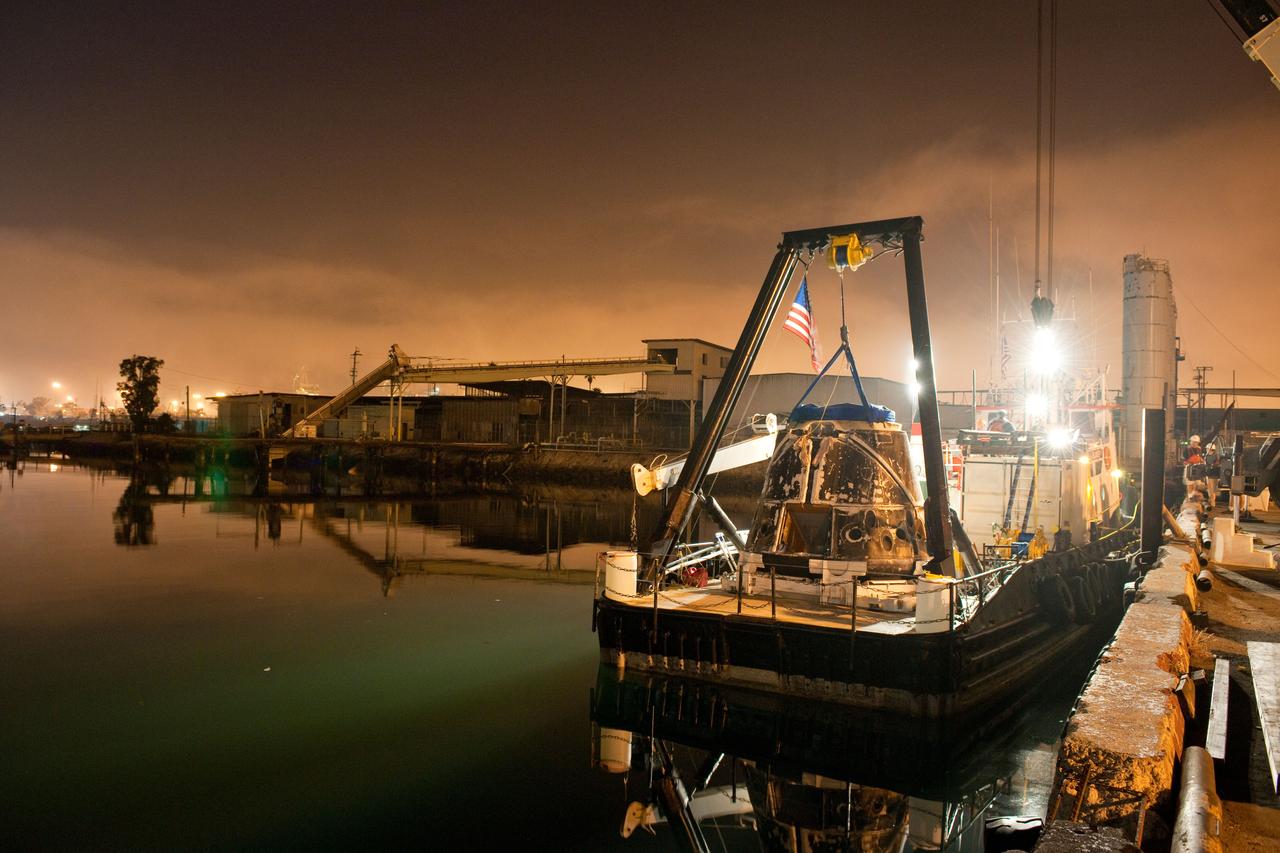
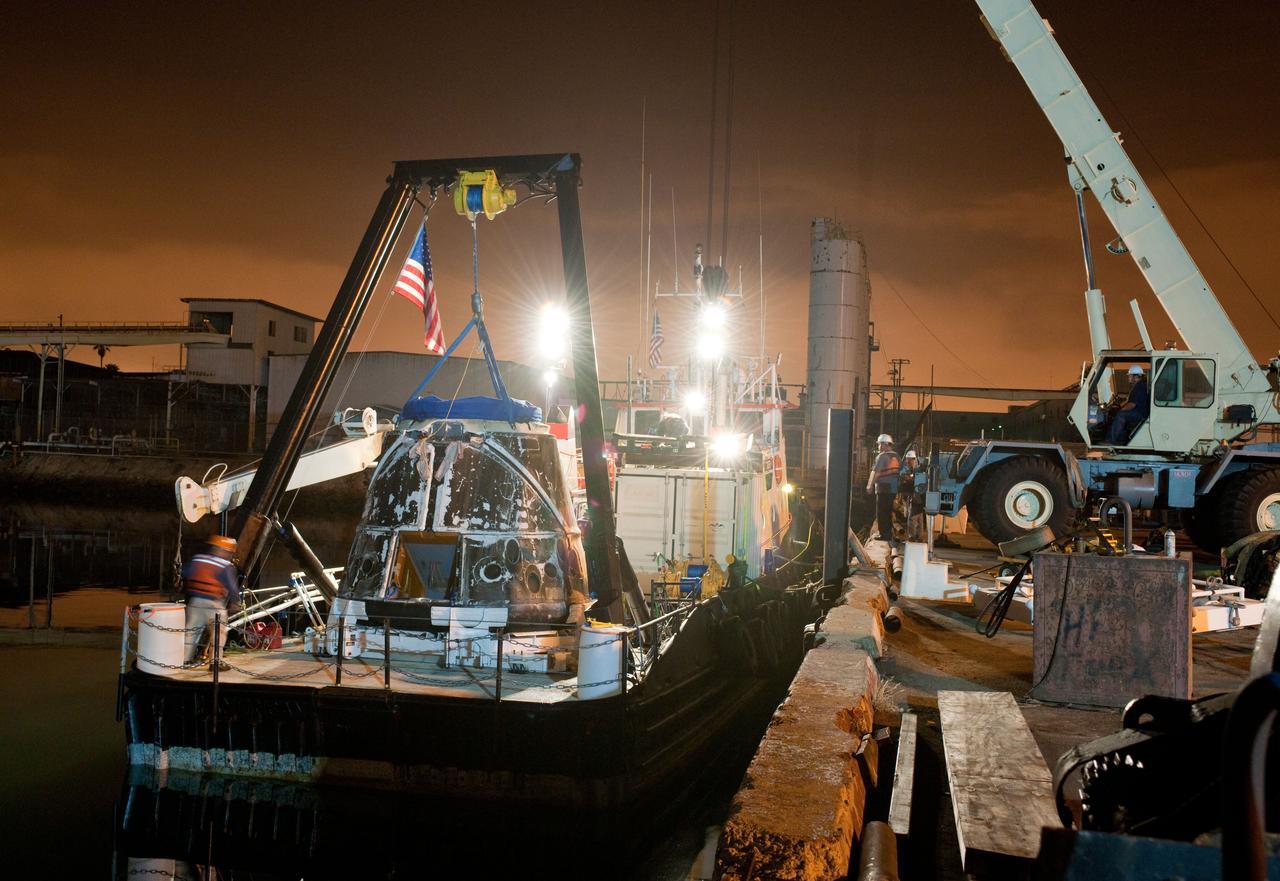
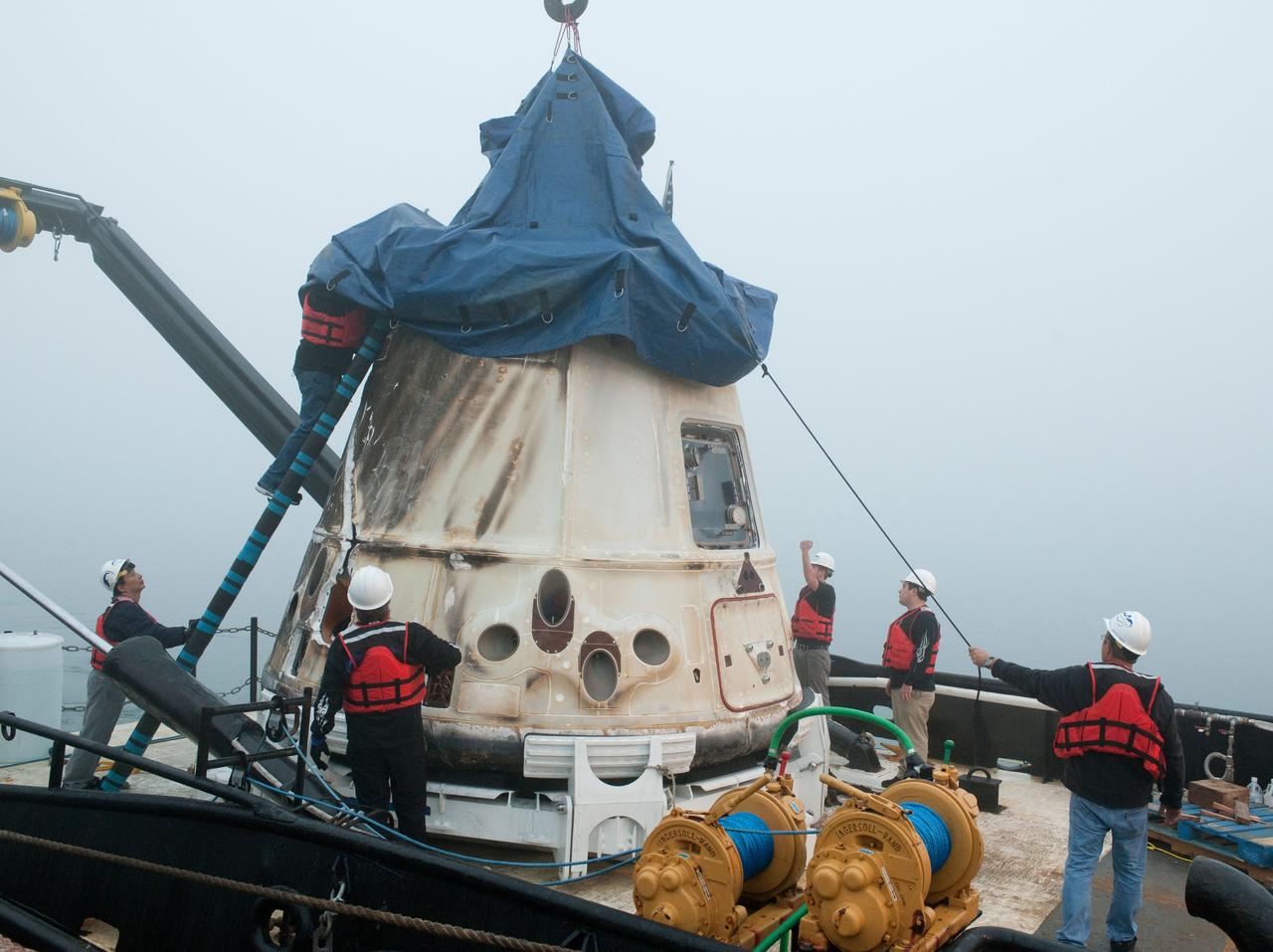
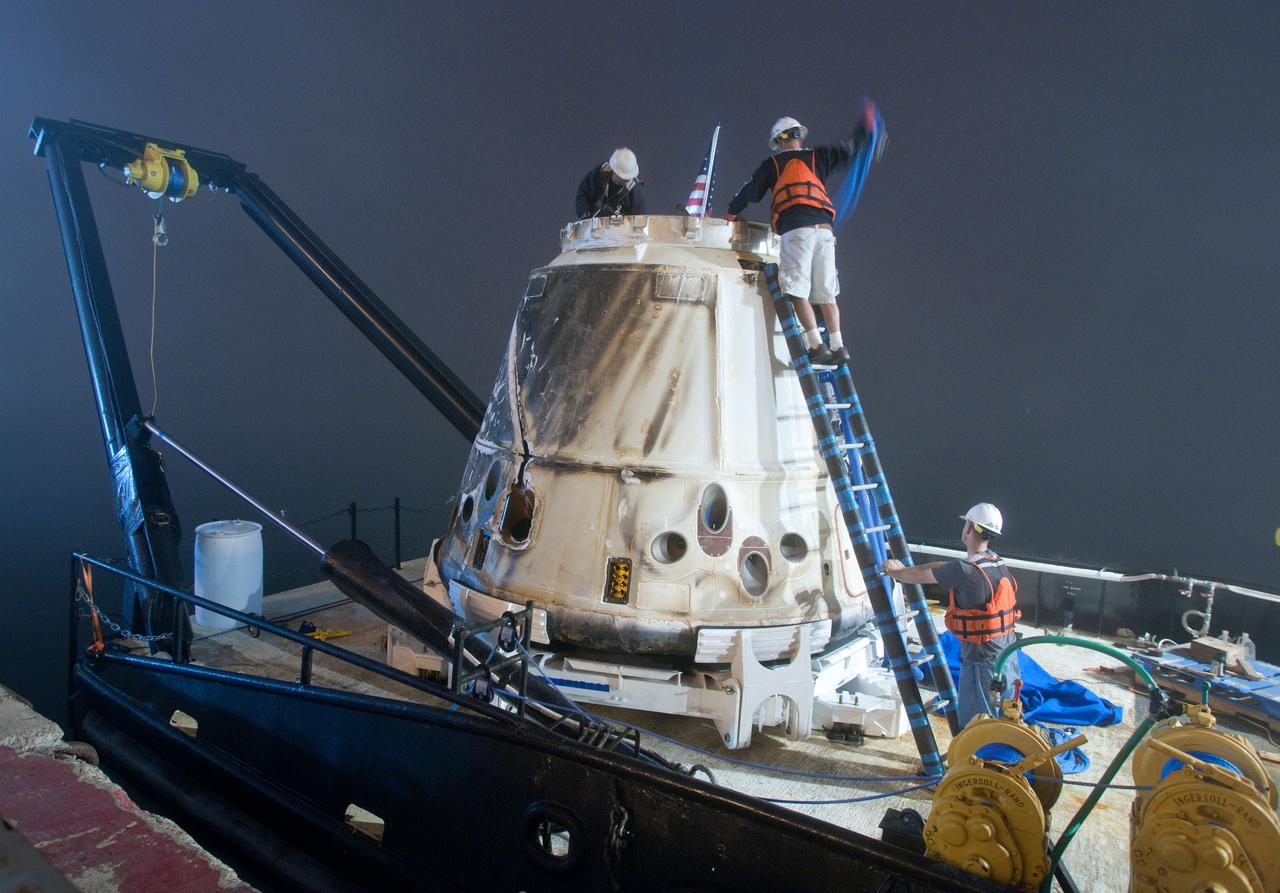
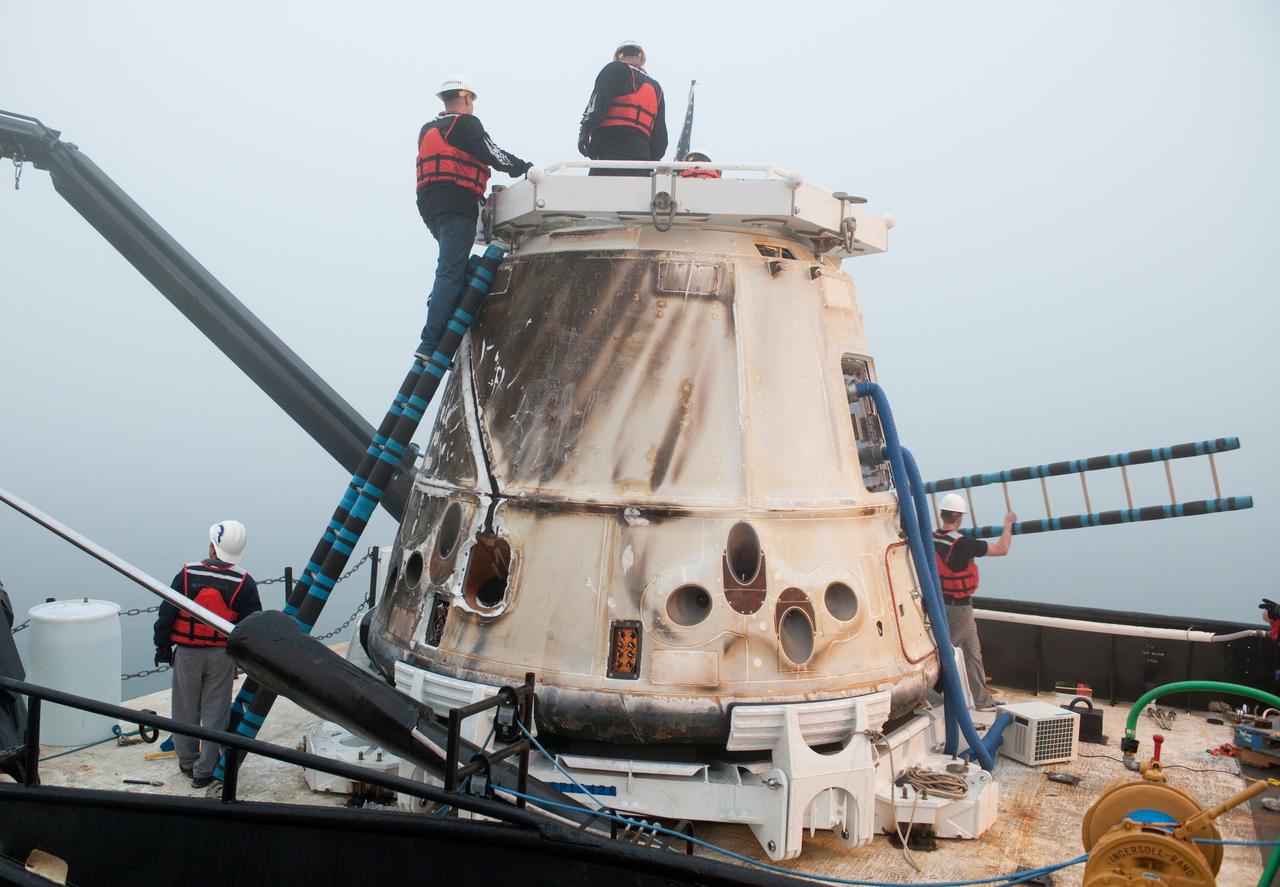
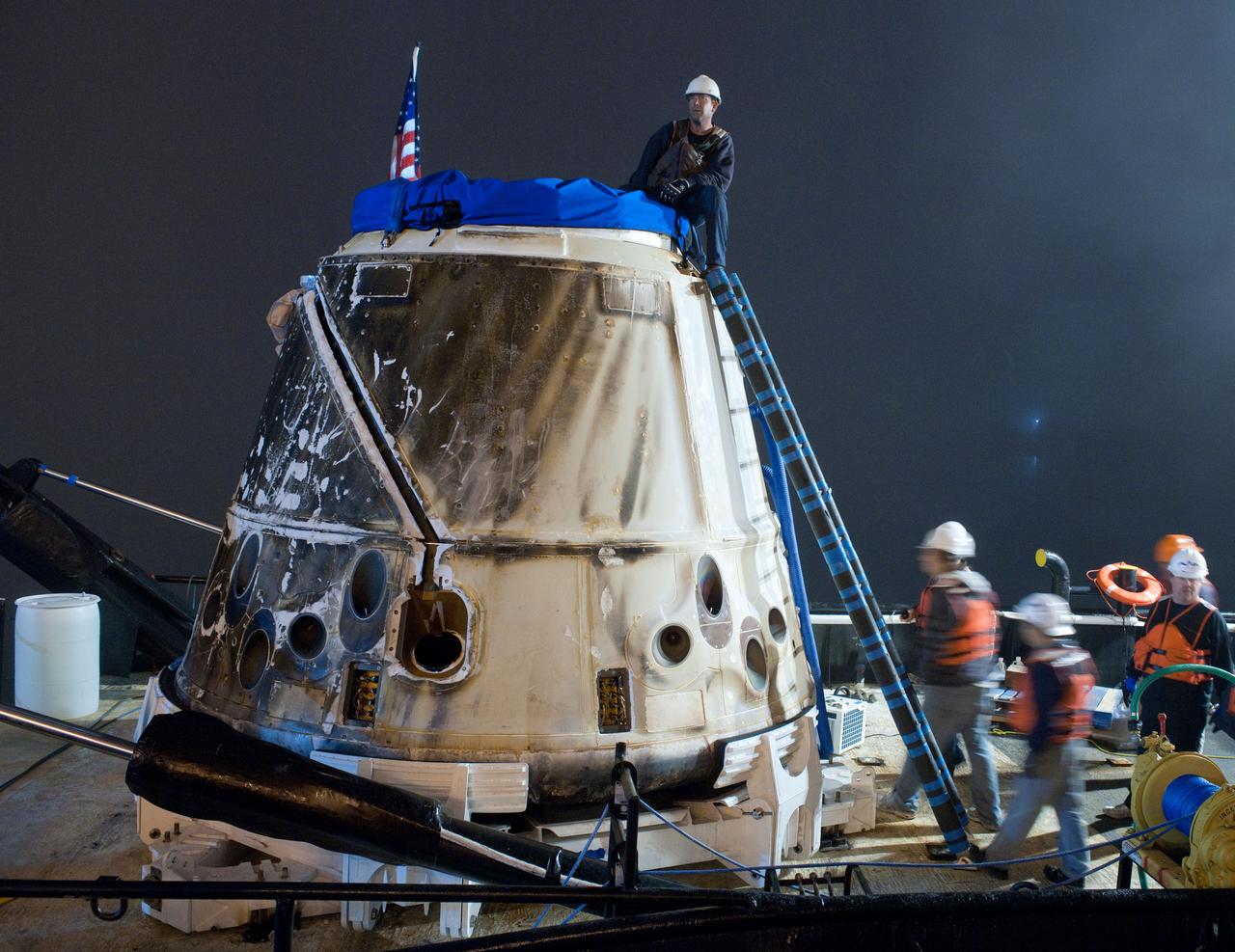
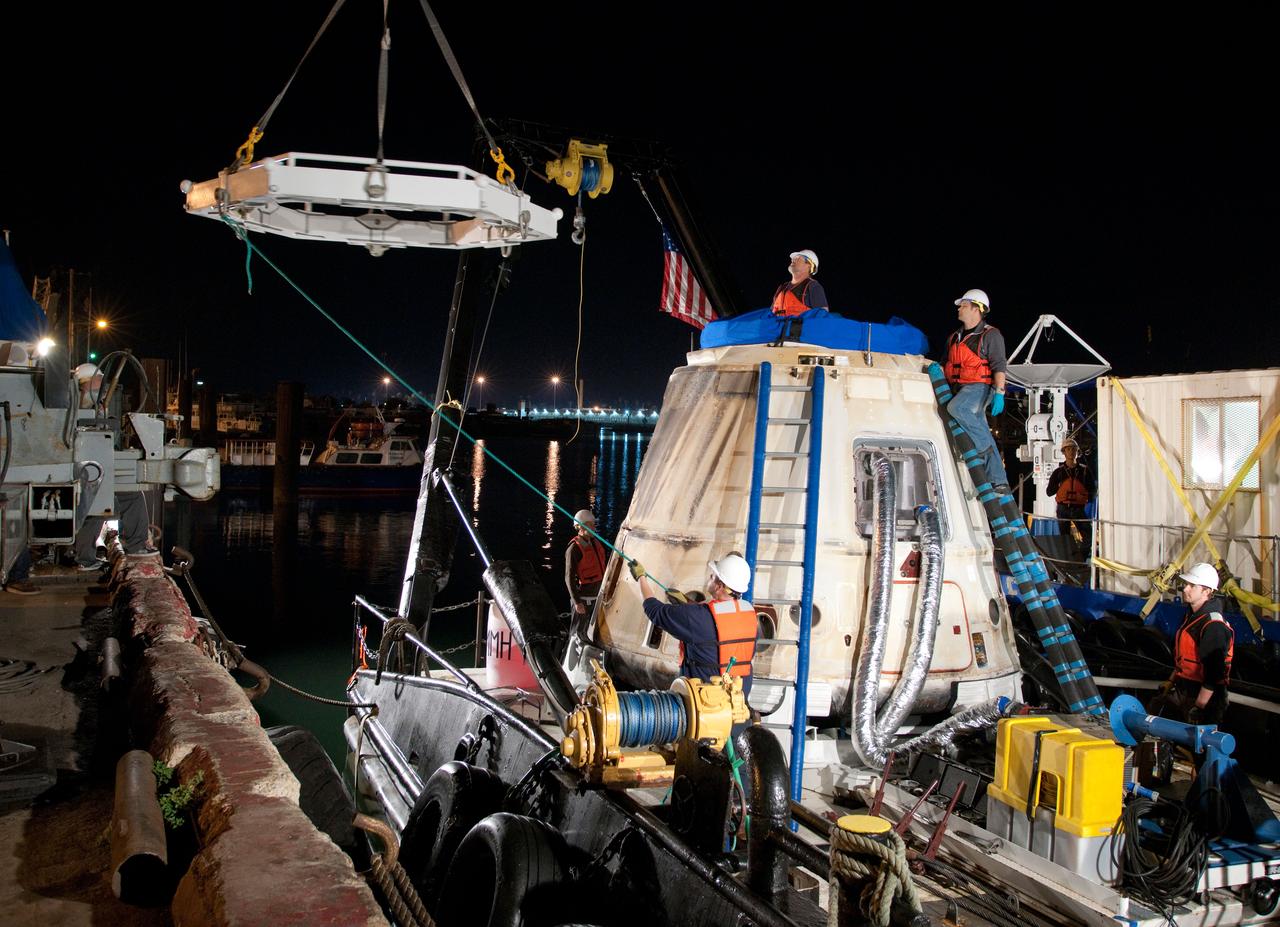
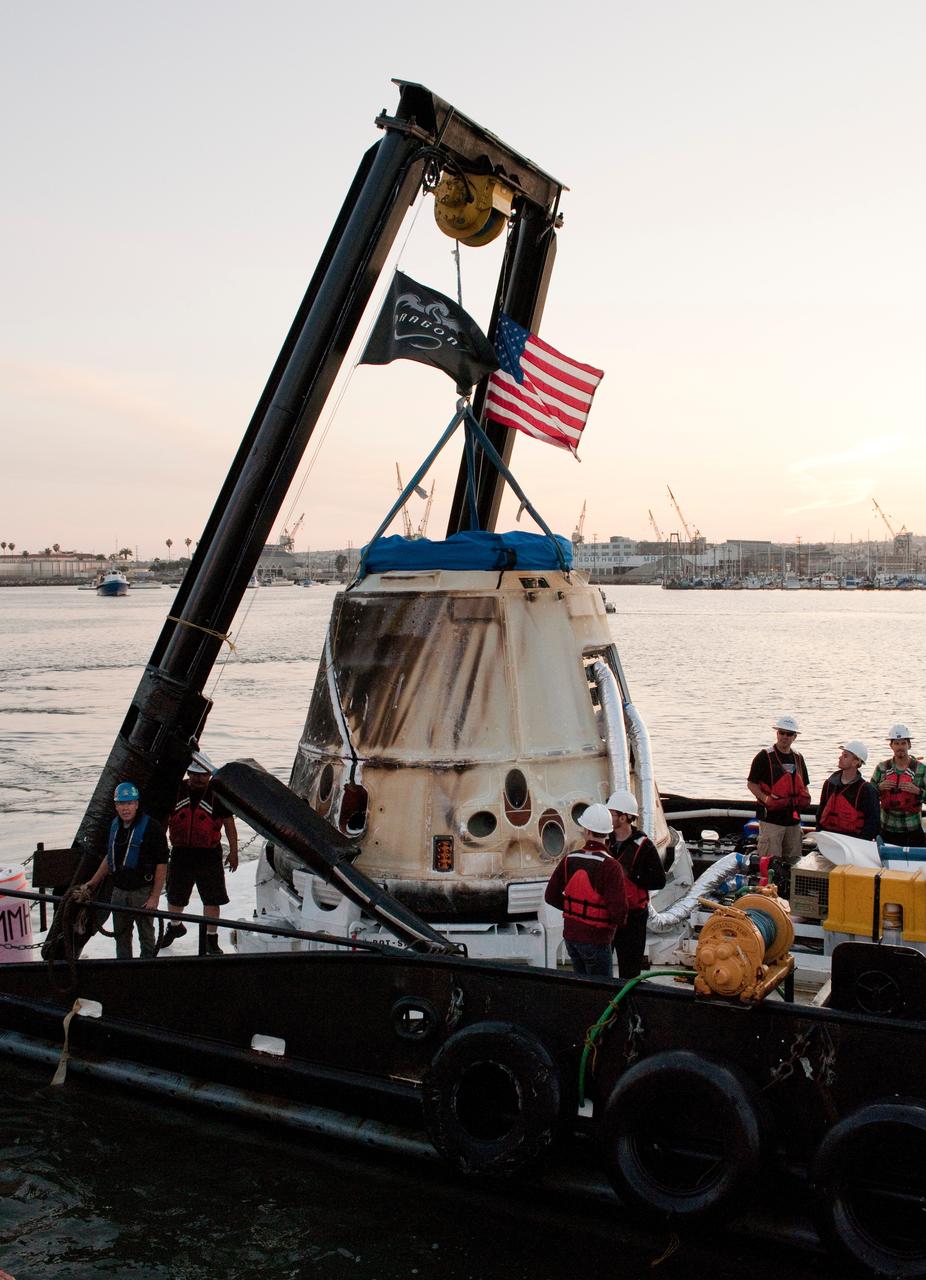
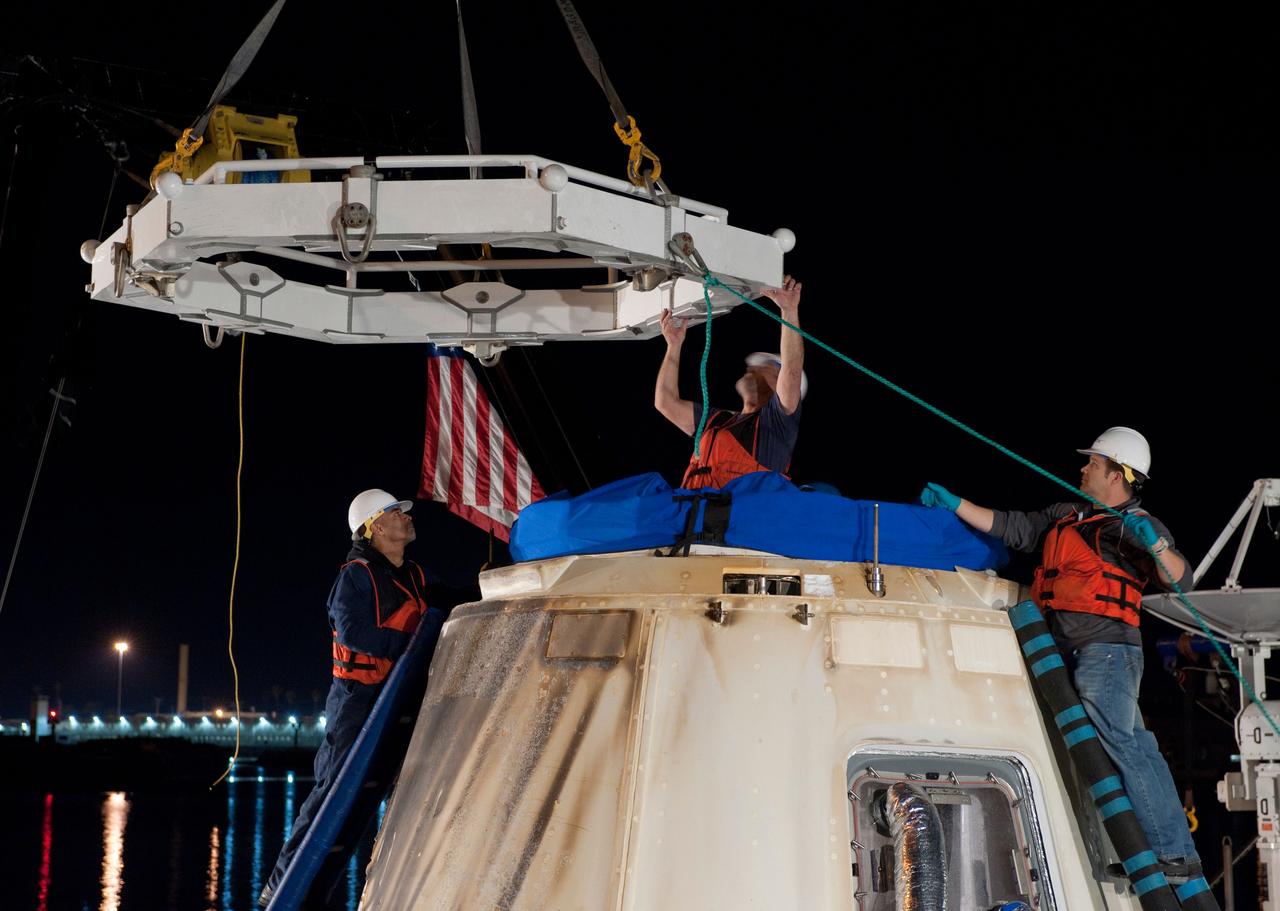
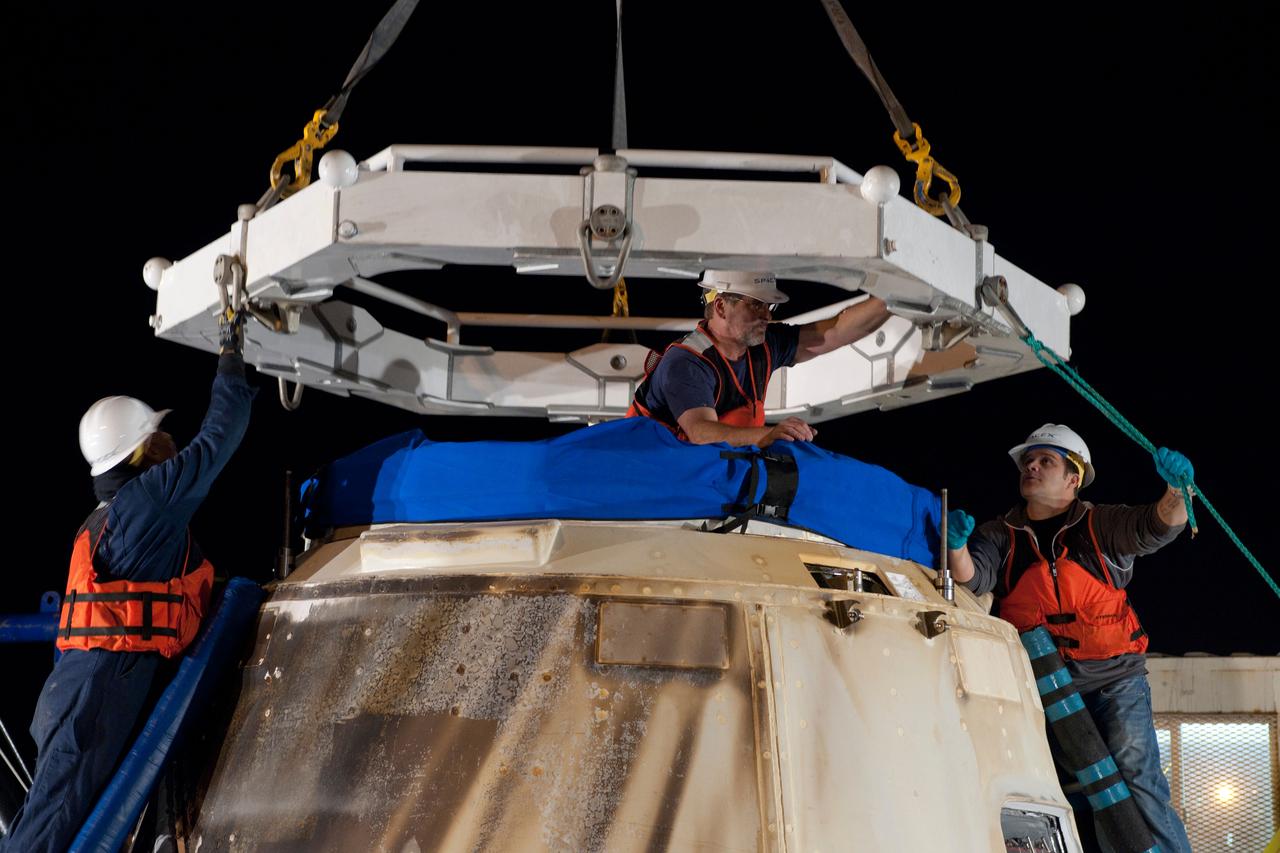
SpaceX’s Dragon capsule is seen shortly after arriving at a port near Los Angeles, Calif on Tuesday, Oct. 30, 2012. Dragon had just completed its first commercial resupply mission to the International Space Station and returned 1,673 pounds of science and supplies back to Earth.   Photo credit: NASA
ed12-0346-28
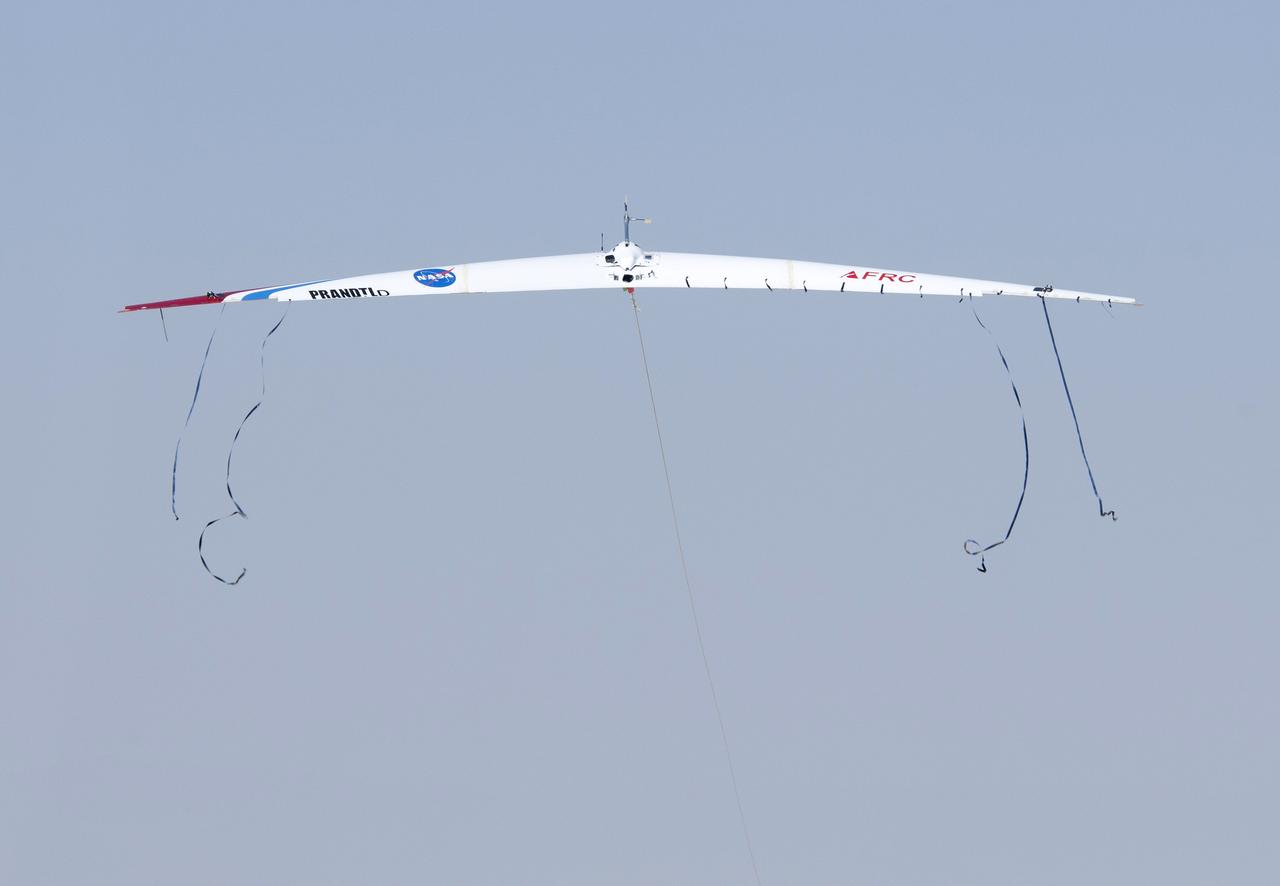
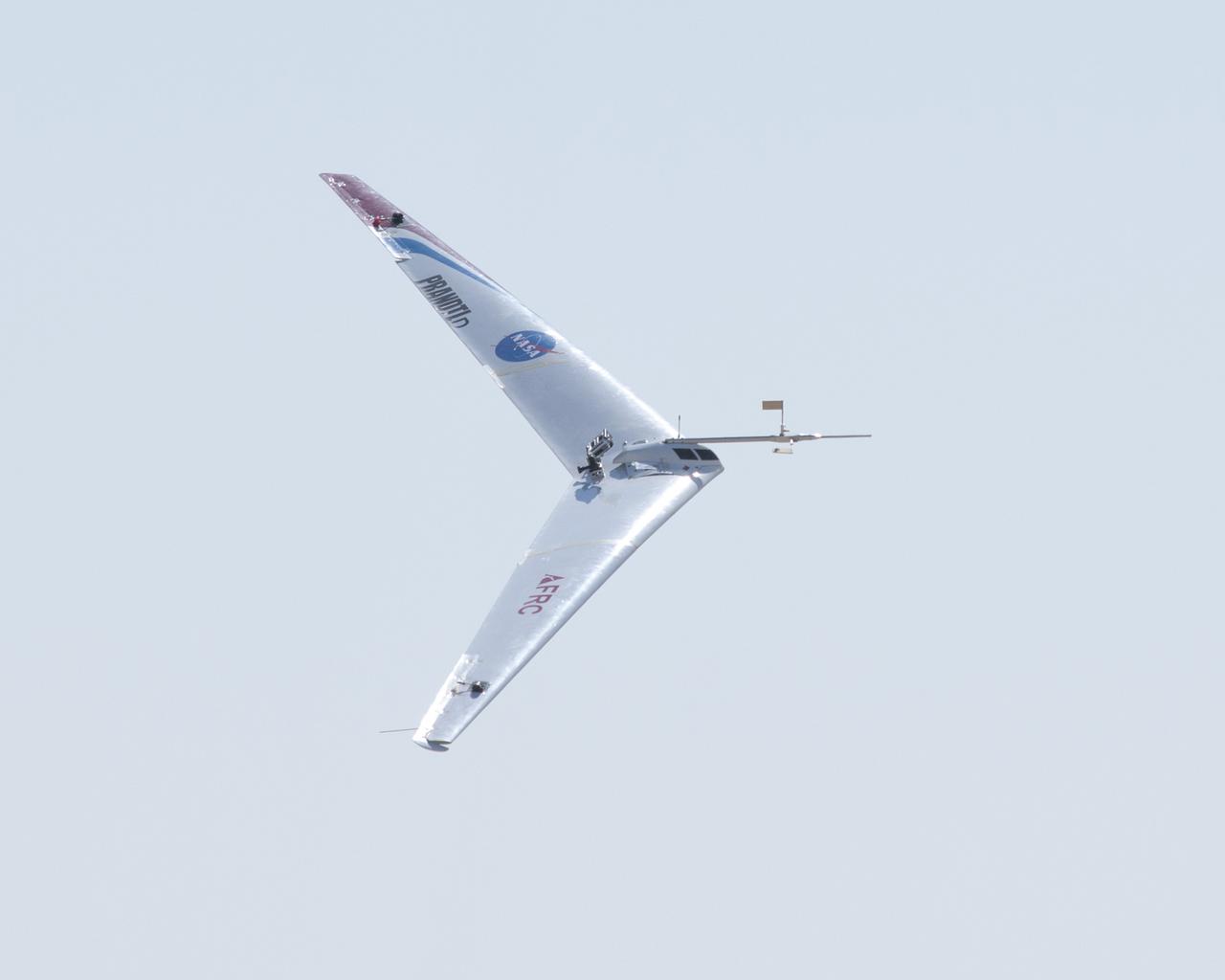
The streamers on the Prandtl-D No. 2 as it is launched illustrate how aerodynamic forces are maximized as birds overlap wingtips when flying in formation.
ED14-0222-088
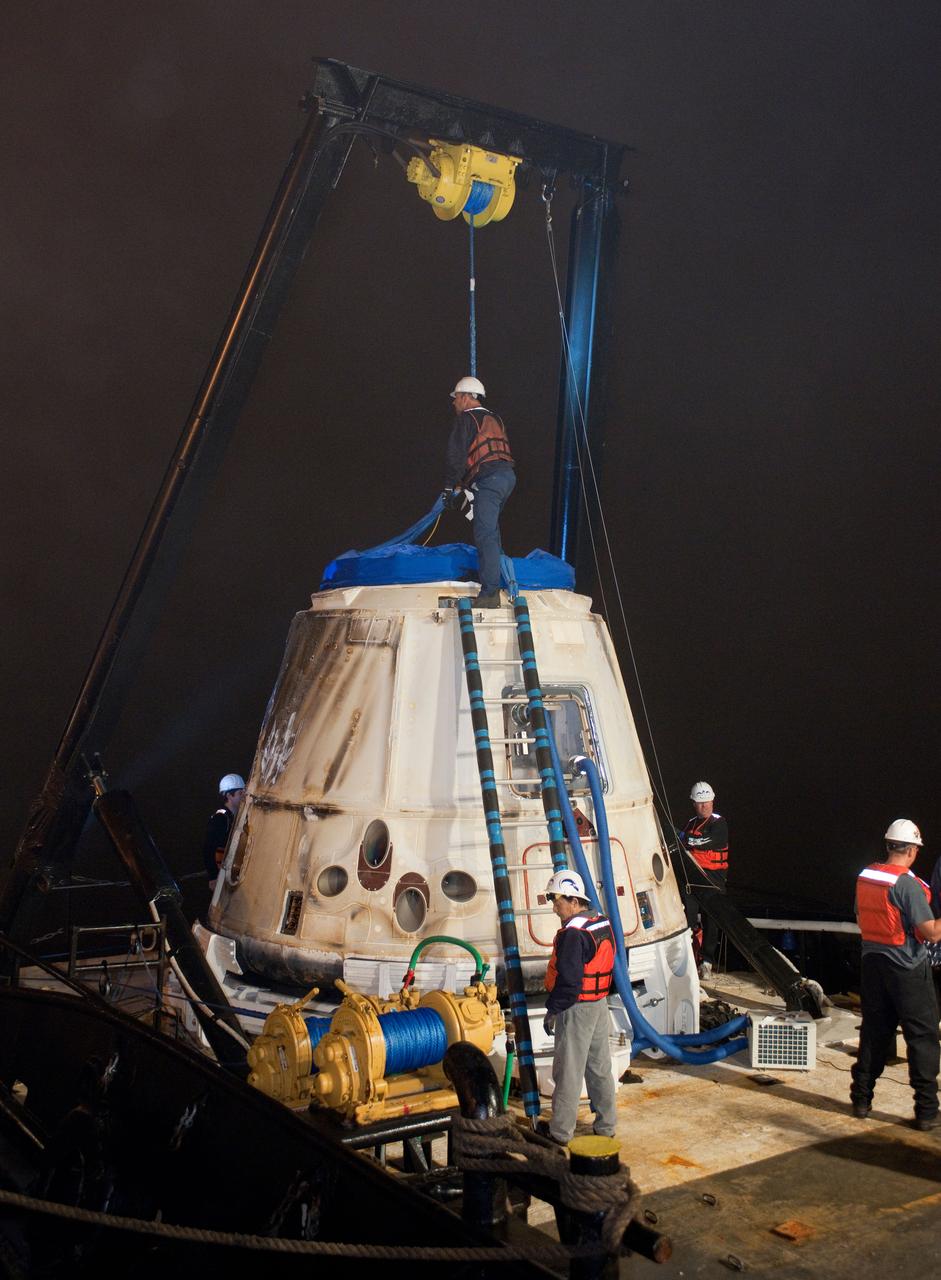
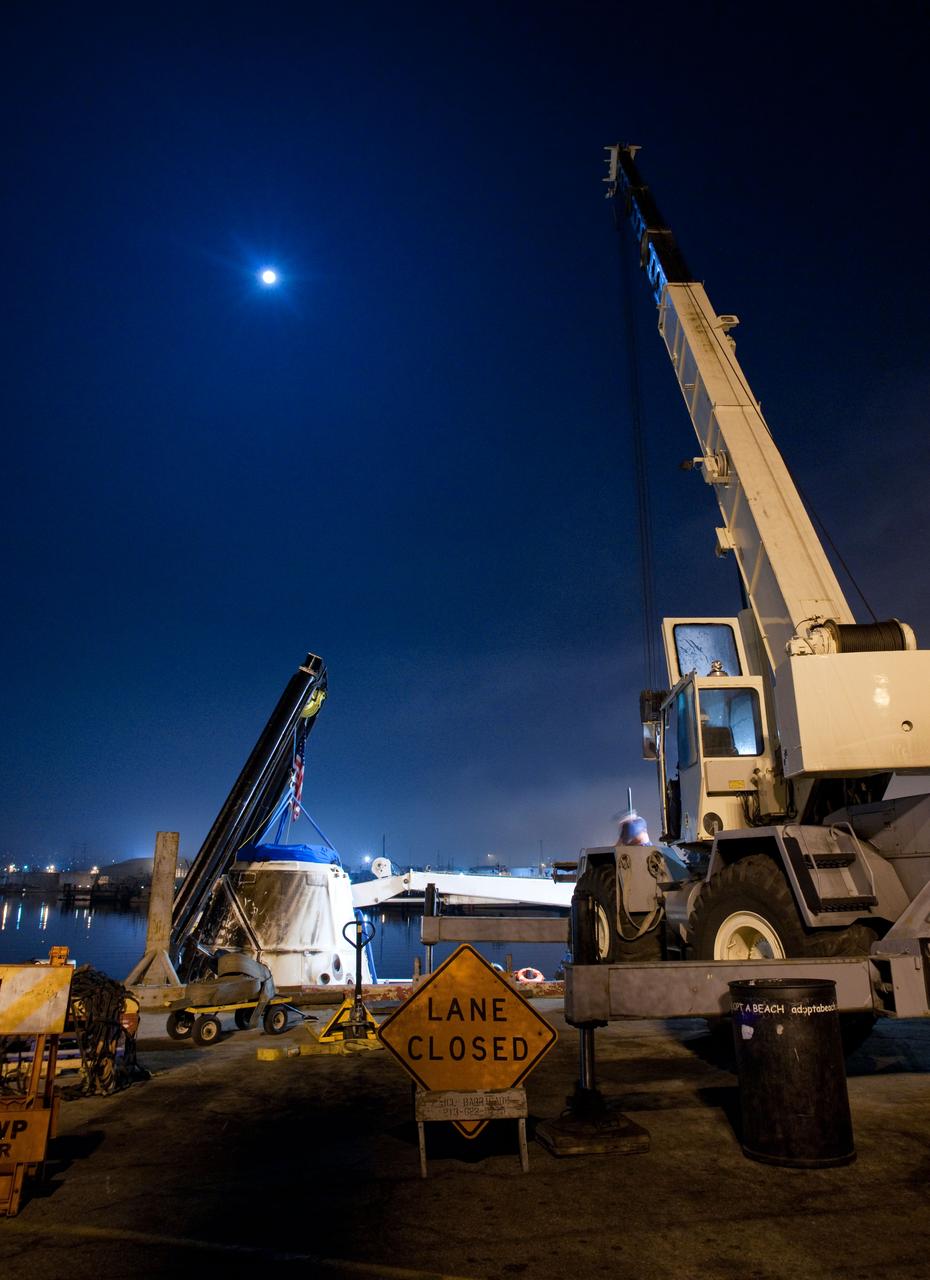
SpaceX’s Dragon capsule is seen shortly after arriving at a port near Los Angeles, Calif on Tuesday, Oct. 30, 2012. Dragon had just completed its first commercial resupply mission to the International Space Station and returned 1,673 pounds of science and supplies back to Earth.   Photo credit: NASA
ed12-0346-42
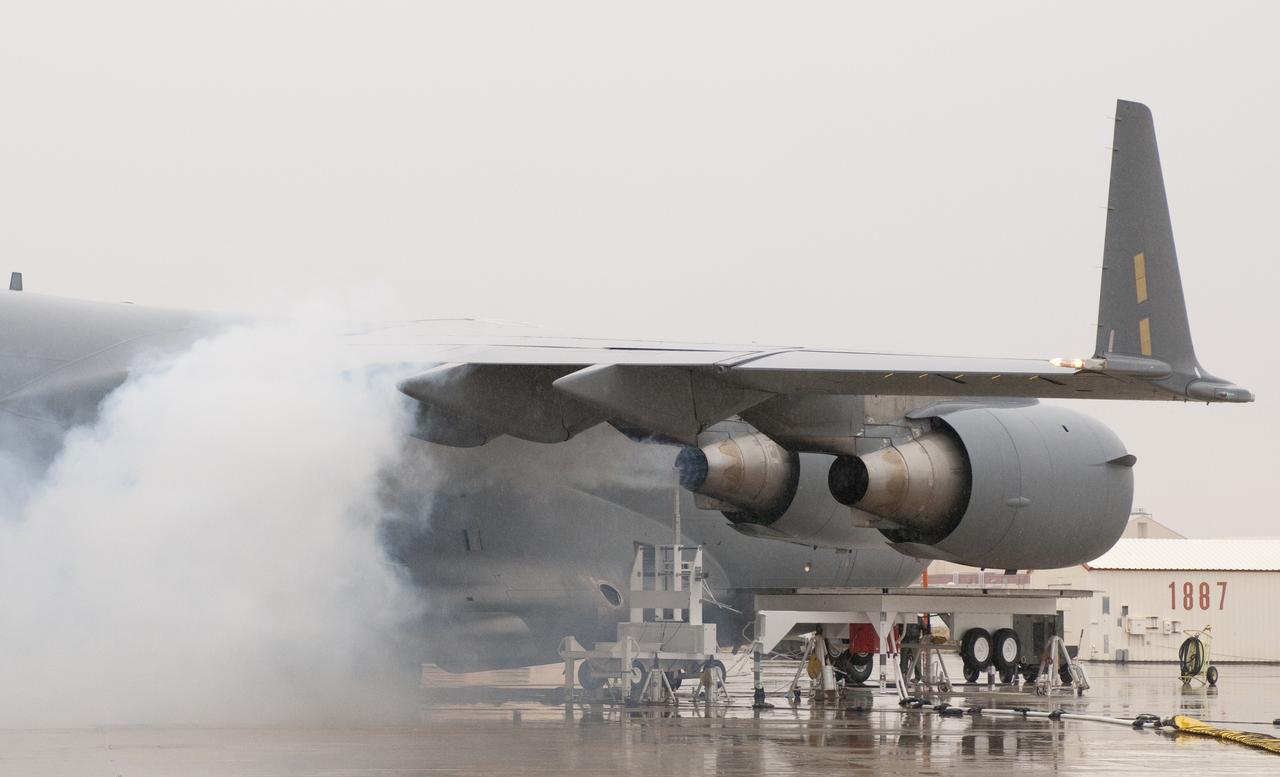
Oil smoke billows from the right inboard engine of the C-17 while a probe collects emissions data during 2011 VIPR engine health monitoring tests.
ED11-0372-011
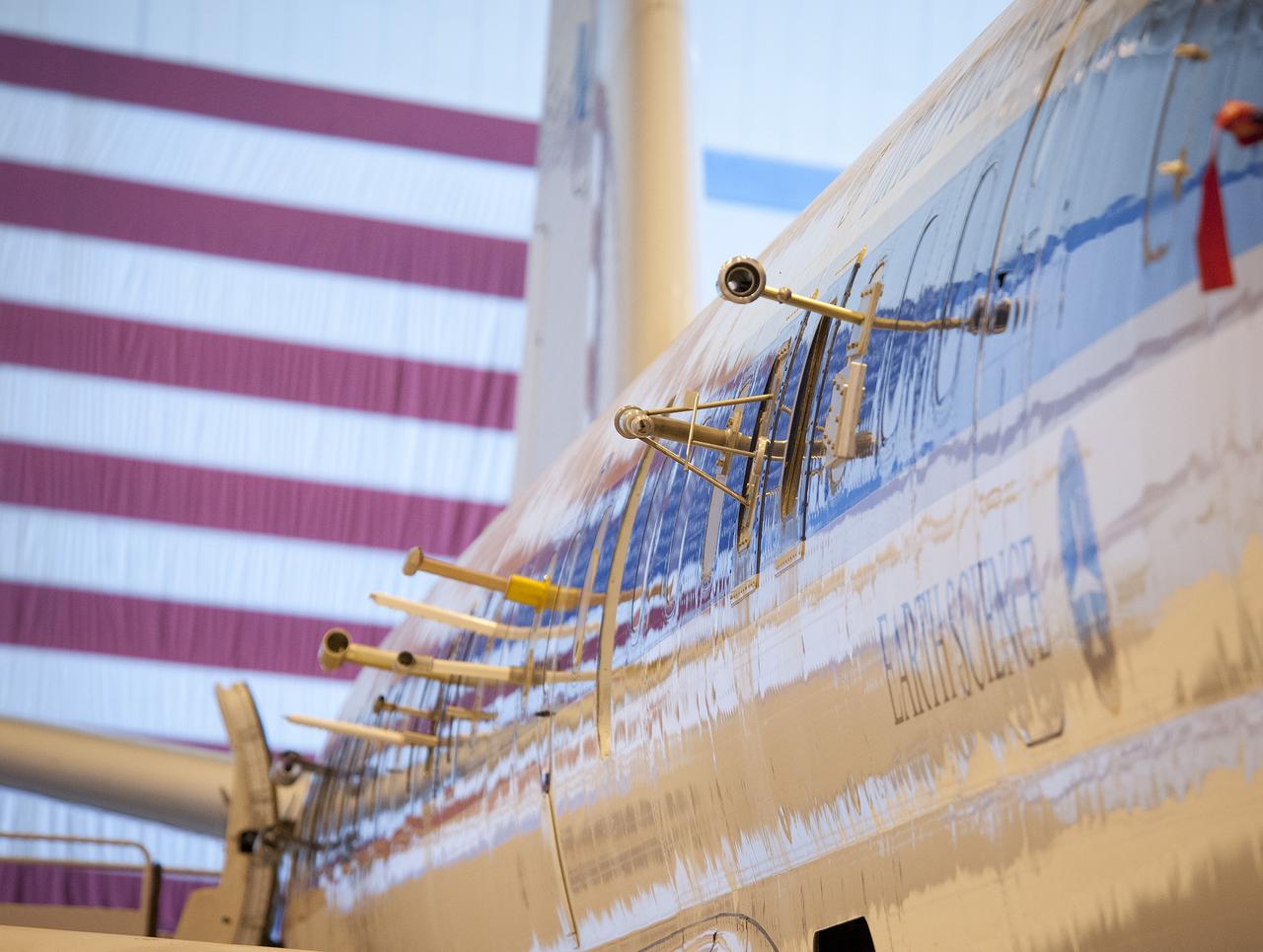
A number of atmospheric probes are installed along the fuselage of NASA's DC-8 in preparation for the SEAC4RS study to learn more about how air pollution and natural emissions affect climate change.
ED13-0225-050
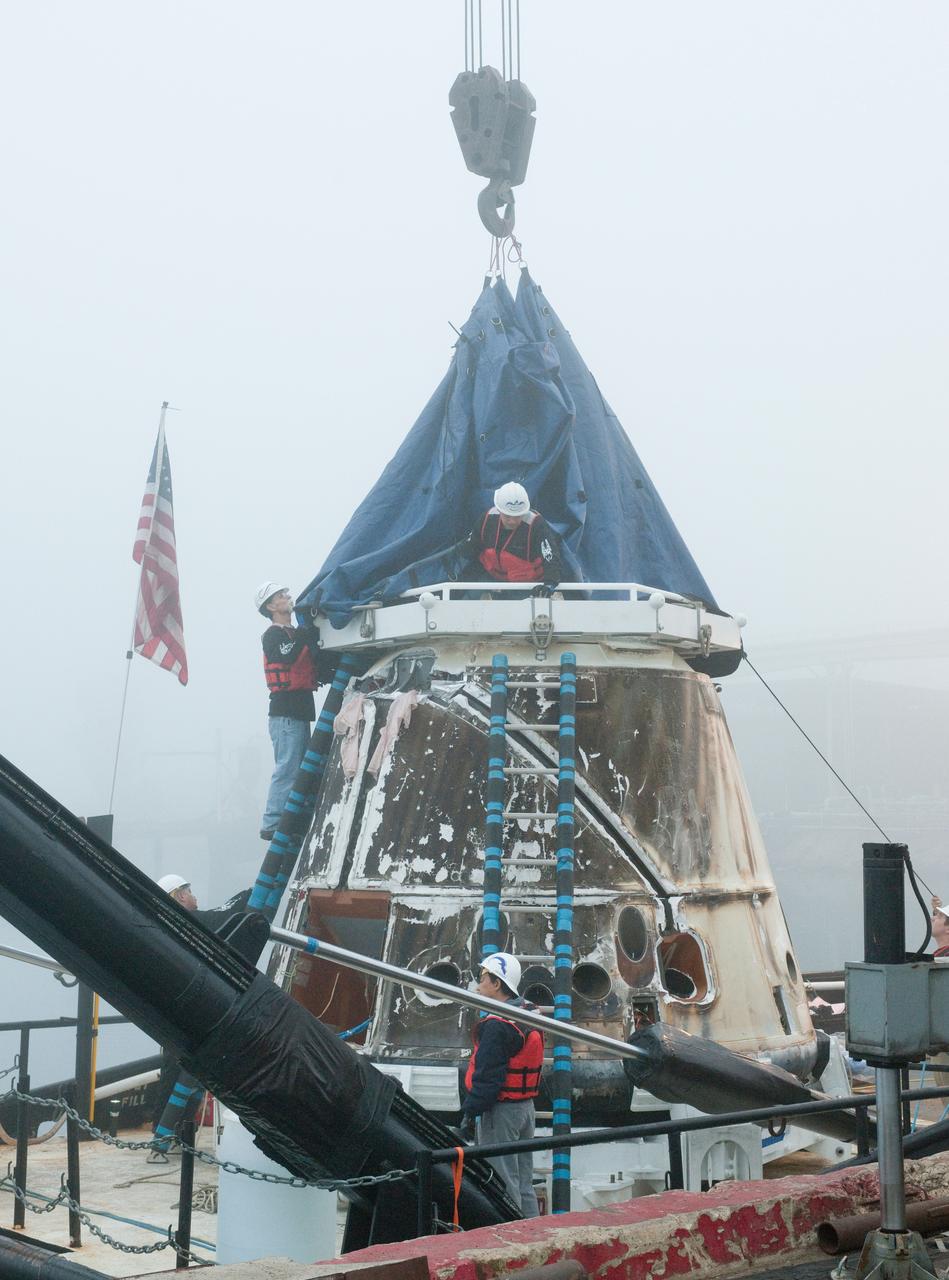
SpaceX’s Dragon capsule is seen shortly after arriving at a port near Los Angeles, Calif on Tuesday, Oct. 30, 2012. Dragon had just completed its first commercial resupply mission to the International Space Station and returned 1,673 pounds of science and supplies back to Earth.   Photo credit: NASA
ed12-0346-34
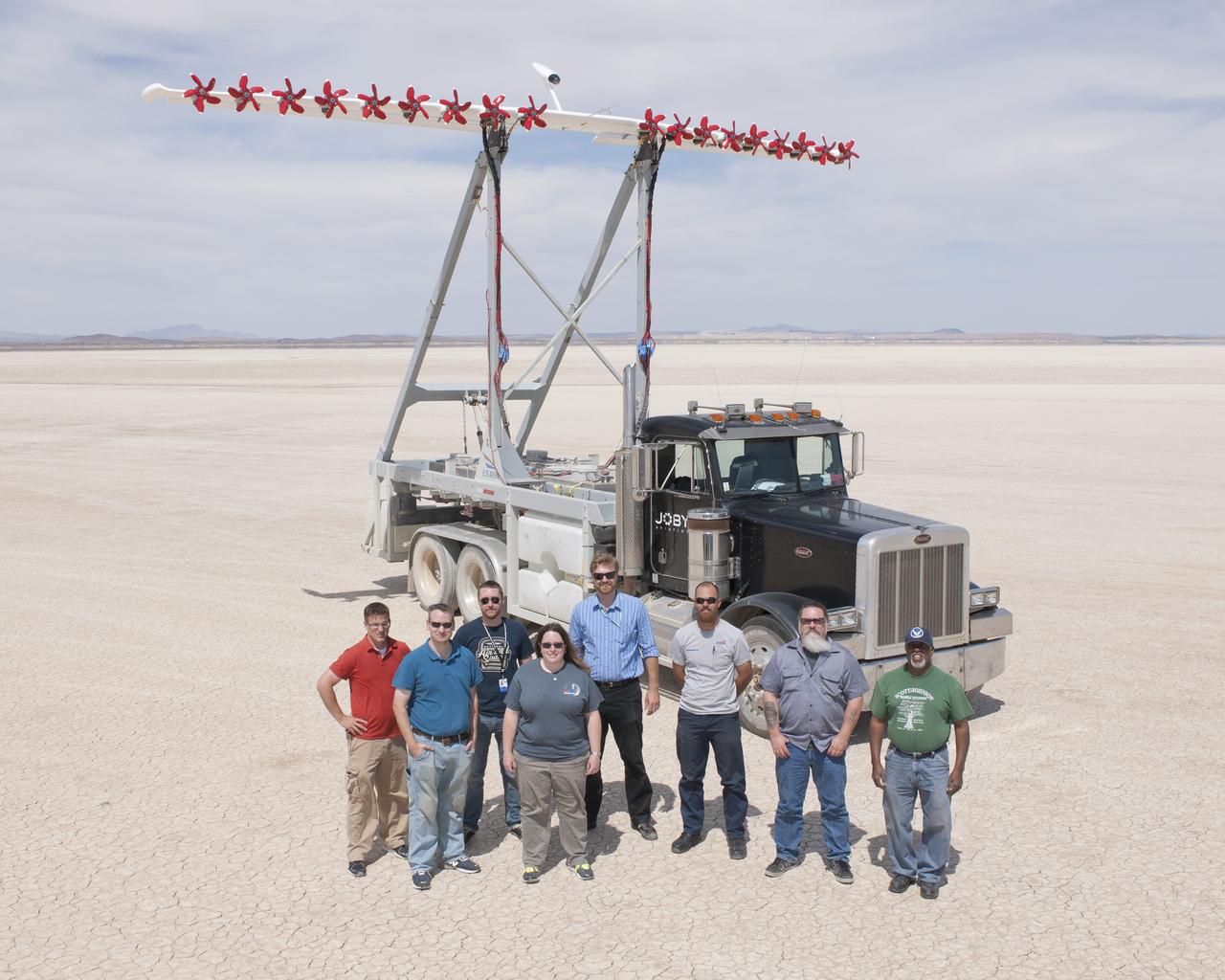
Team members of the Leading Edge Asynchronous Propeller Technology Ground Test team include from left Brian Soukup, Sean Clarke, Douglas Howe, Dena Gruca, Kurt Papathakis, Jason Denman, Vincent Bayne and Freddie Graham.
Piloted, Electric Propulsion-Powered Experimental Aircraft Underway
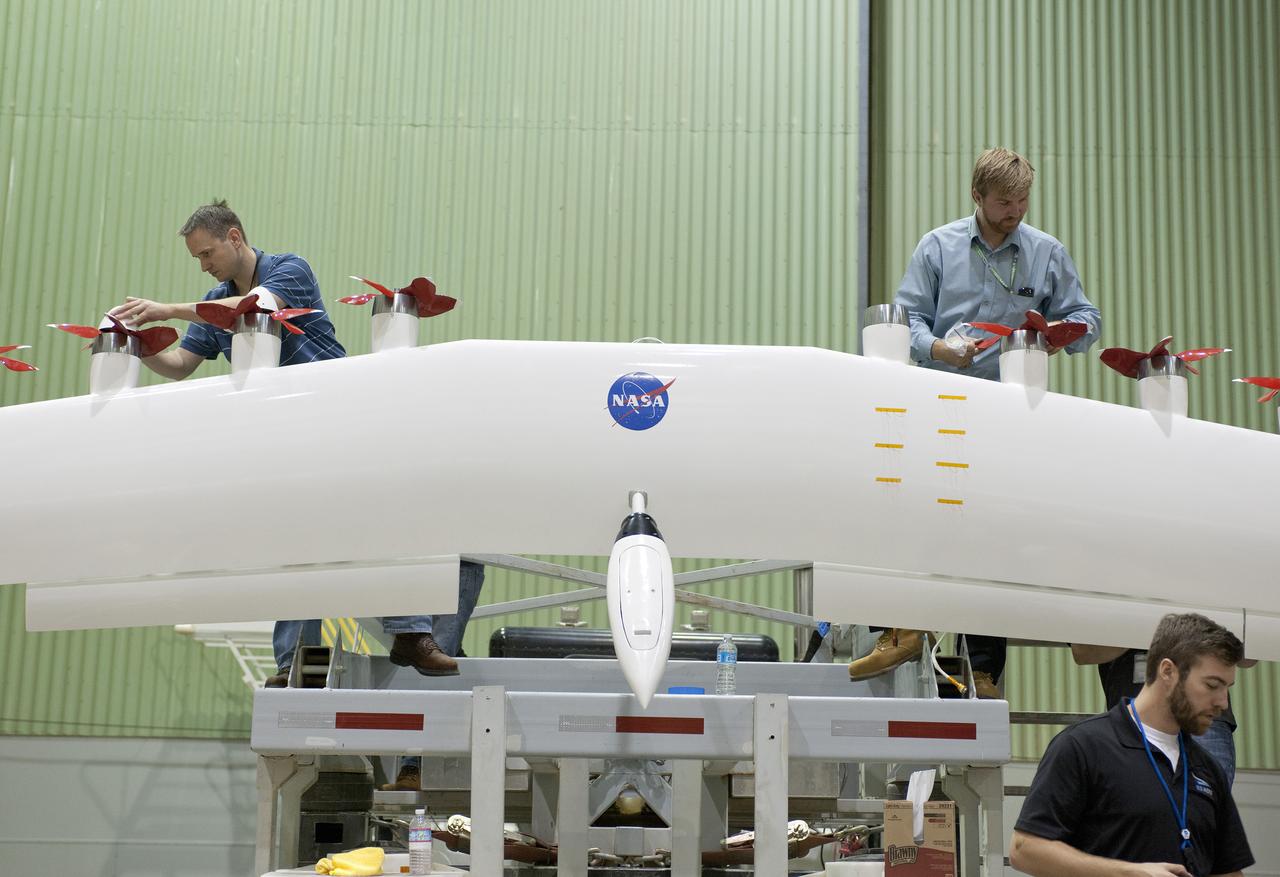
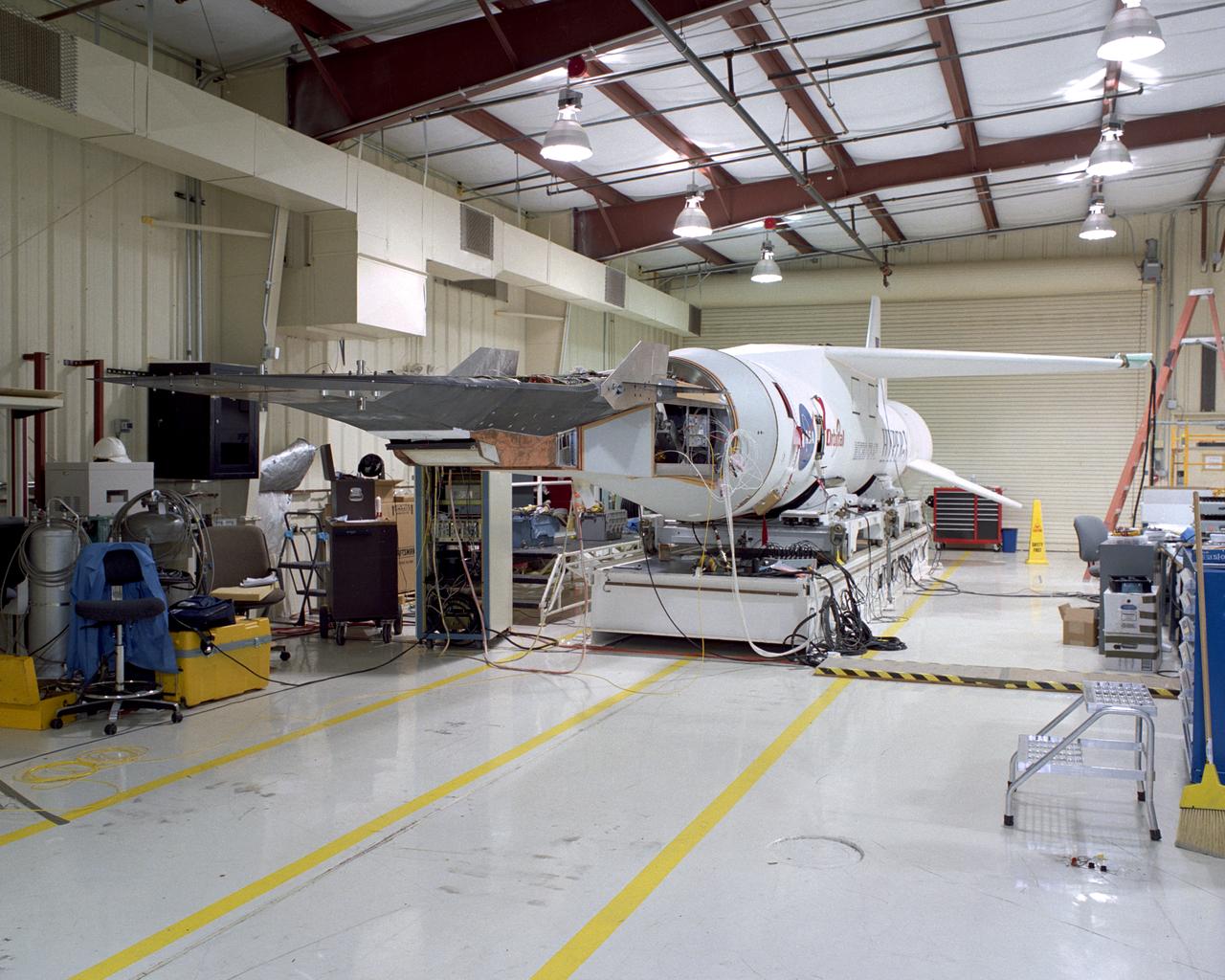
Engineers work on a wing with electric motors that is part of an integrated experimental testbed. From left are Sean Clarke, left, Kurt Papathakis at upper right and Anthony Cash in the foreground.
Piloted, Electric Propulsion-Powered Experimental Aircraft Underway
SpaceX’s Dragon capsule is seen shortly after arriving at a port near Los Angeles, Calif on Tuesday, Oct. 30, 2012. Dragon had just completed its first commercial resupply mission to the International Space Station and returned 1,673 pounds of science and supplies back to Earth.   Photo credit: NASA
ed12-0346-04
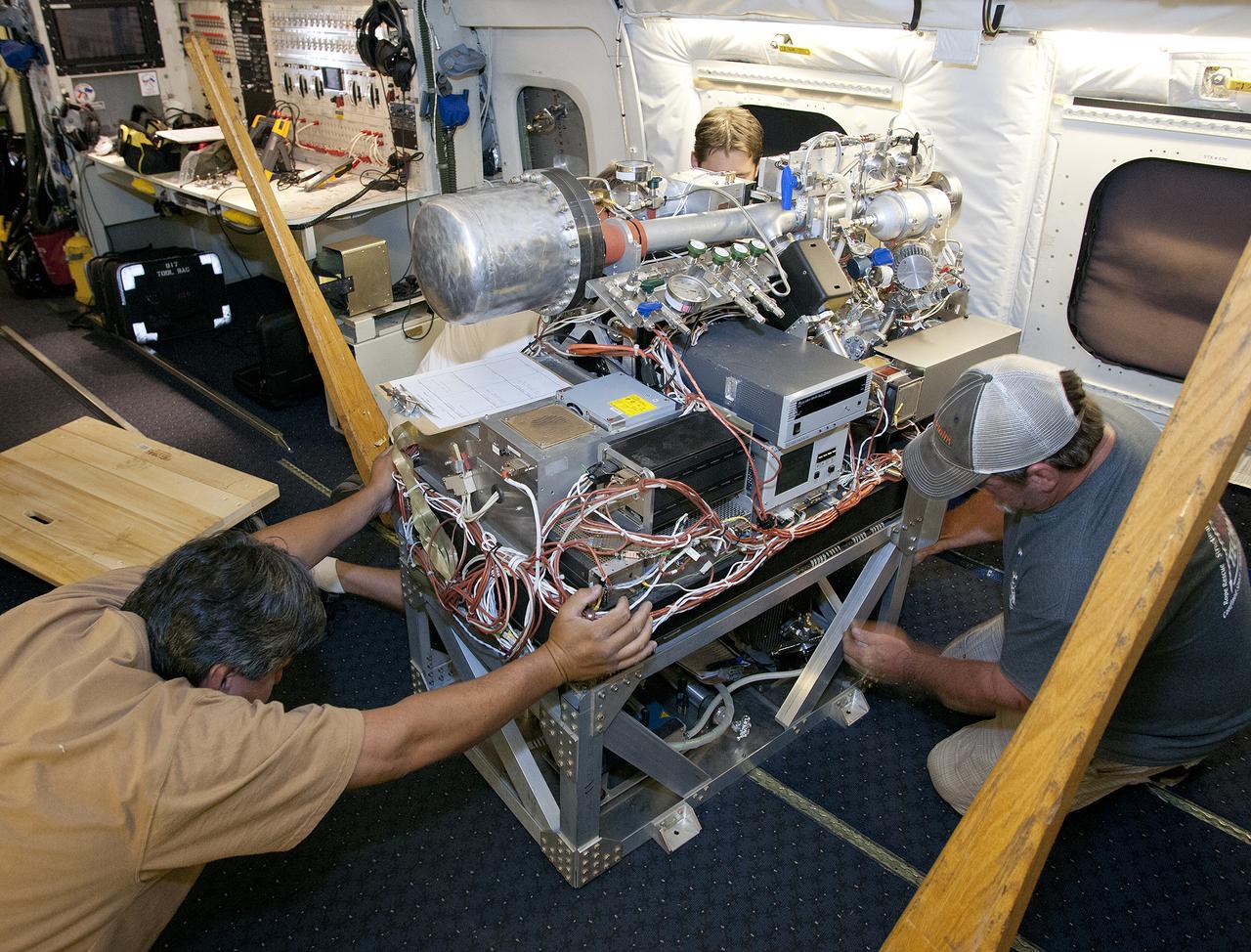
Scientists and technicians ready an instrument rack for mounting in NASA's DC-8 flying laboratory in preparation for a complex mission to study how air pollution and natural emissions affect climate change
ED13-0225-023
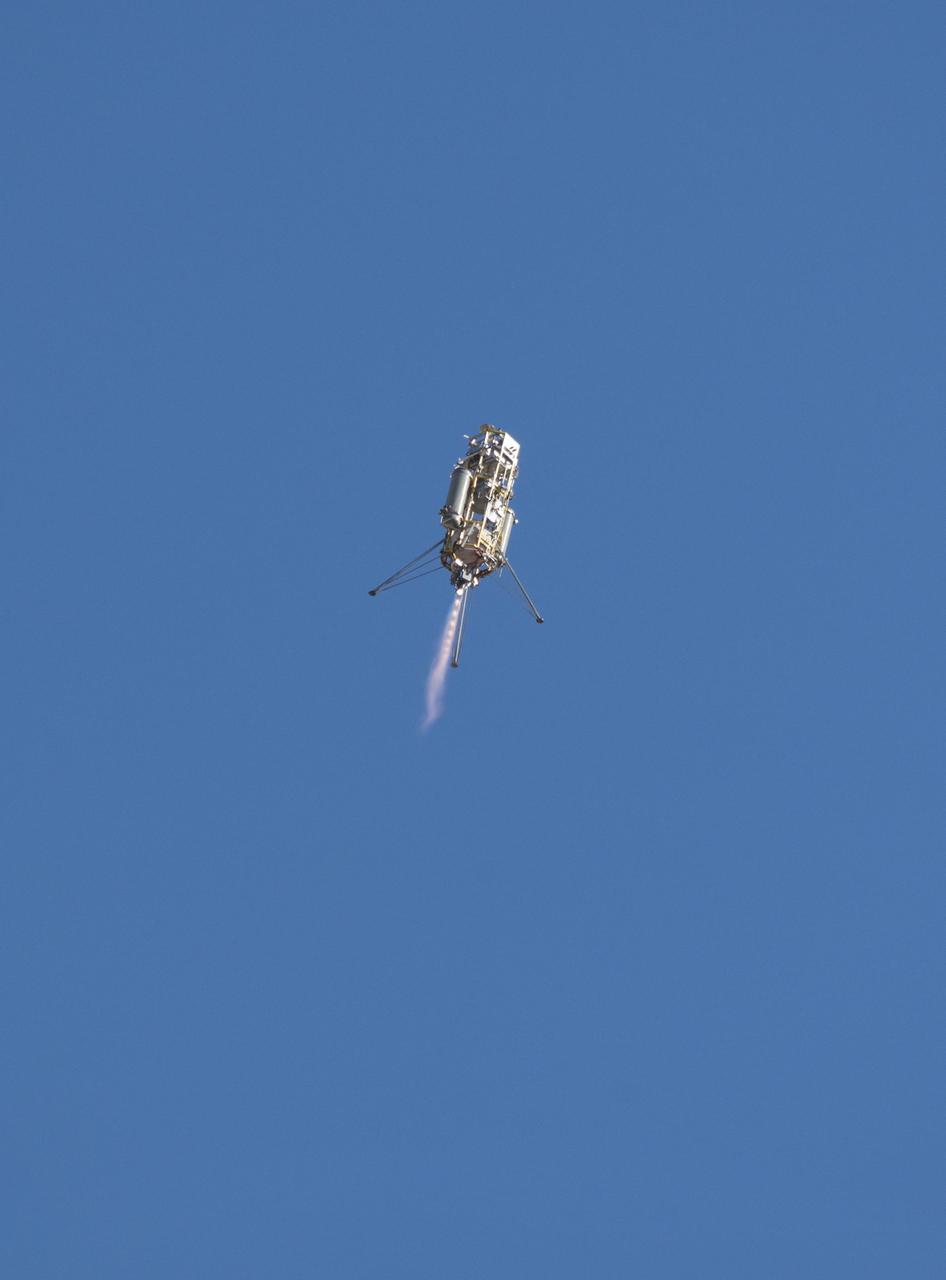
A prototype of the Lander Vision System for NASA Mars 2020 mission was tested in this Dec. 9, 2014, flight of a Masten Space Systems Xombie vehicle at Mojave Air and Space Port in California.  http://photojournal.jpl.nasa.gov/catalog/PIA20848
Test of Lander Vision System for Mars 2020
SpaceX’s Dragon capsule is seen shortly after arriving at a port near Los Angeles, Calif on Tuesday, Oct. 30, 2012. Dragon had just completed its first commercial resupply mission to the International Space Station and returned 1,673 pounds of science and supplies back to Earth.   Photo credit: NASA
ed12-0346-08
SpaceX’s Dragon capsule is seen shortly after arriving at a port near Los Angeles, Calif on Tuesday, Oct. 30, 2012. Dragon had just completed its first commercial resupply mission to the International Space Station and returned 1,673 pounds of science and supplies back to Earth.   Photo credit: NASA
ed12-0346-03
SpaceX’s Dragon capsule is seen shortly after arriving at a port near Los Angeles, Calif on Tuesday, Oct. 30, 2012. Dragon had just completed its first commercial resupply mission to the International Space Station and returned 1,673 pounds of science and supplies back to Earth.   Photo credit: NASA
ed12-0346-16
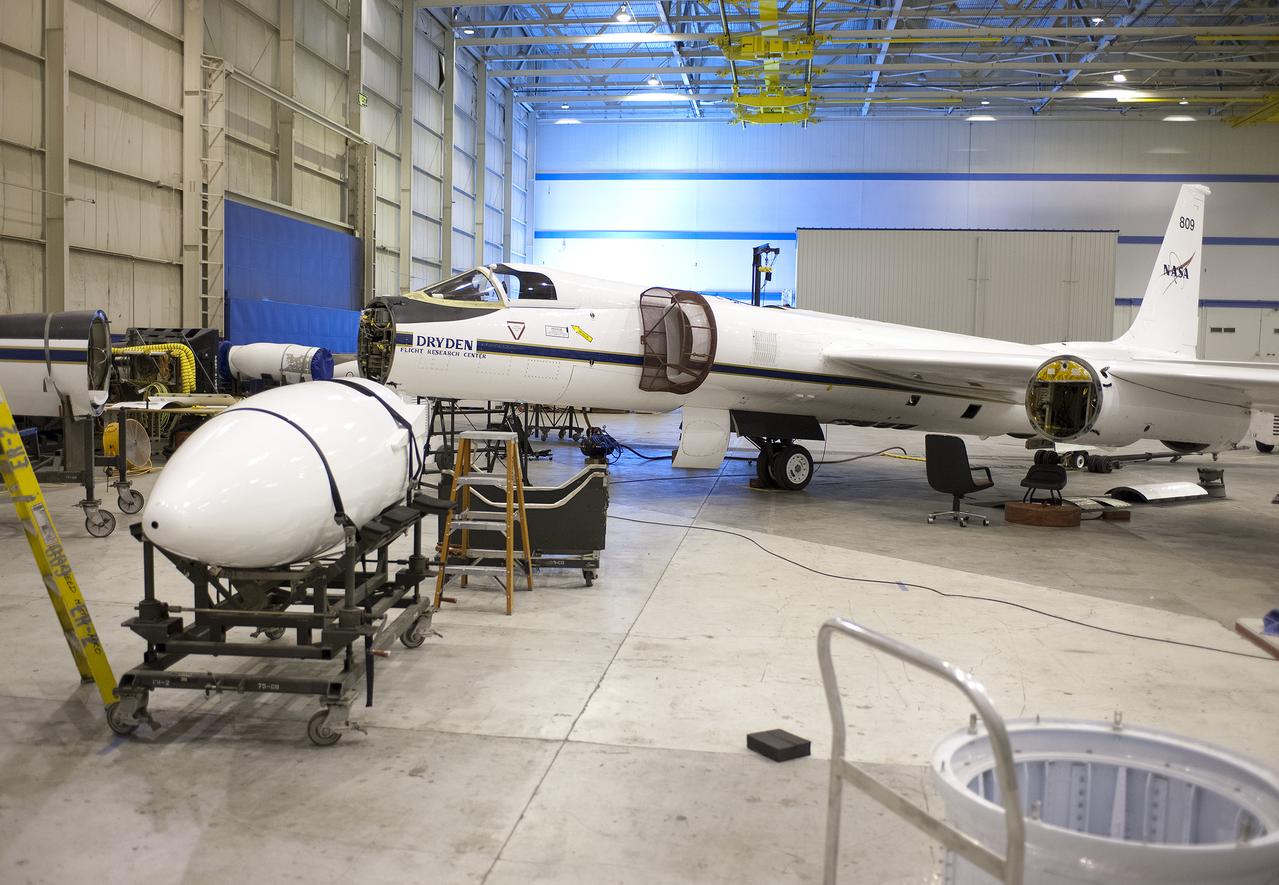
The equipment bays and wing pods of NASA's high-altitude ER-2 will carry 15 specialized instruments to study how the vertical convection of air pollution and natural emissions affect climate change.
ED13-0225-048
SpaceX’s Dragon capsule is seen shortly after arriving at a port near Los Angeles, Calif on Tuesday, Oct. 30, 2012. Dragon had just completed its first commercial resupply mission to the International Space Station and returned 1,673 pounds of science and supplies back to Earth.   Photo credit: NASA
ed12-0346-31
SpaceX’s Dragon capsule is seen shortly after arriving at a port near Los Angeles, Calif on Tuesday, Oct. 30, 2012. Dragon had just completed its first commercial resupply mission to the International Space Station and returned 1,673 pounds of science and supplies back to Earth.   Photo credit: NASA
ed12-0346-32
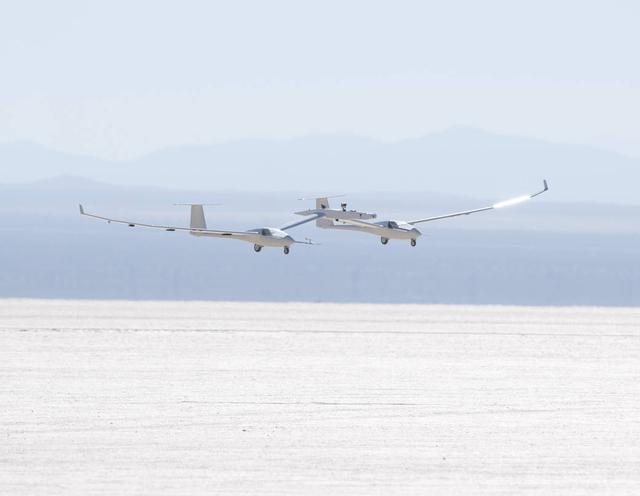
The one-third scale twin-fuselage towed glider glides in for landing on Rogers Dry Lake after its successful first test flight.
Towed Twin-Fuselage Glider Launch System First Test Flight
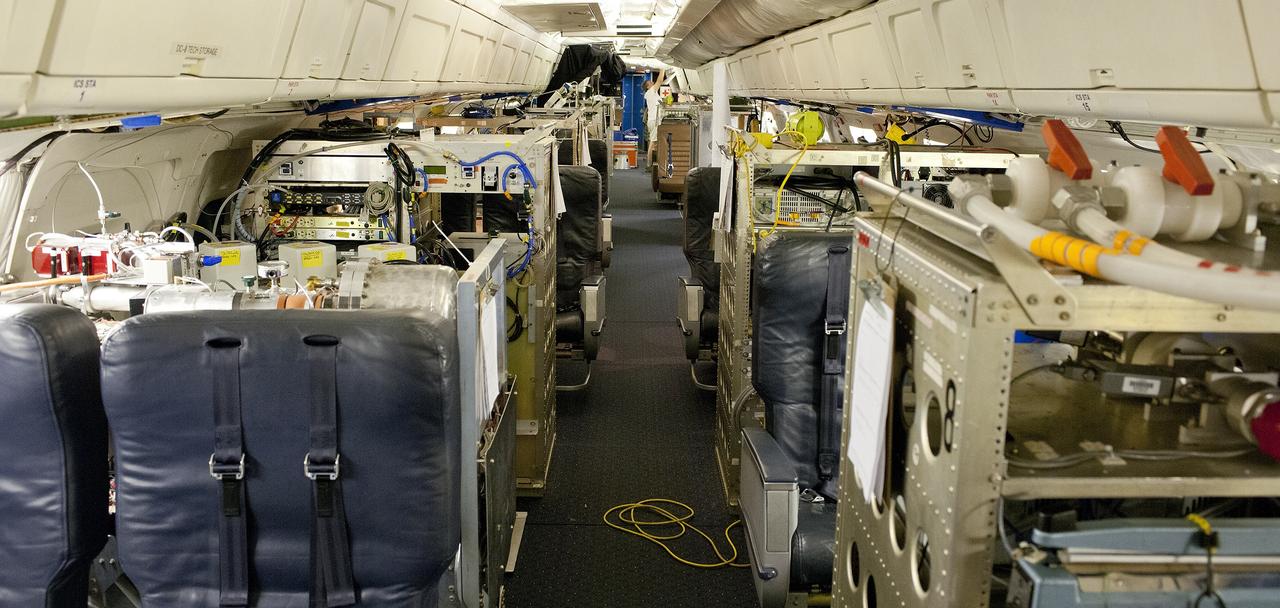
NASA's DC-8 flying laboratory is fully loaded with seats and instrument racks in preparation for NASA's 2013 SEAC4RS climate science mission.
ED13-0225-033
SpaceX’s Dragon capsule is seen shortly after arriving at a port near Los Angeles, Calif on Tuesday, Oct. 30, 2012. Dragon had just completed its first commercial resupply mission to the International Space Station and returned 1,673 pounds of science and supplies back to Earth.   Photo credit: NASA
ed12-0346-20
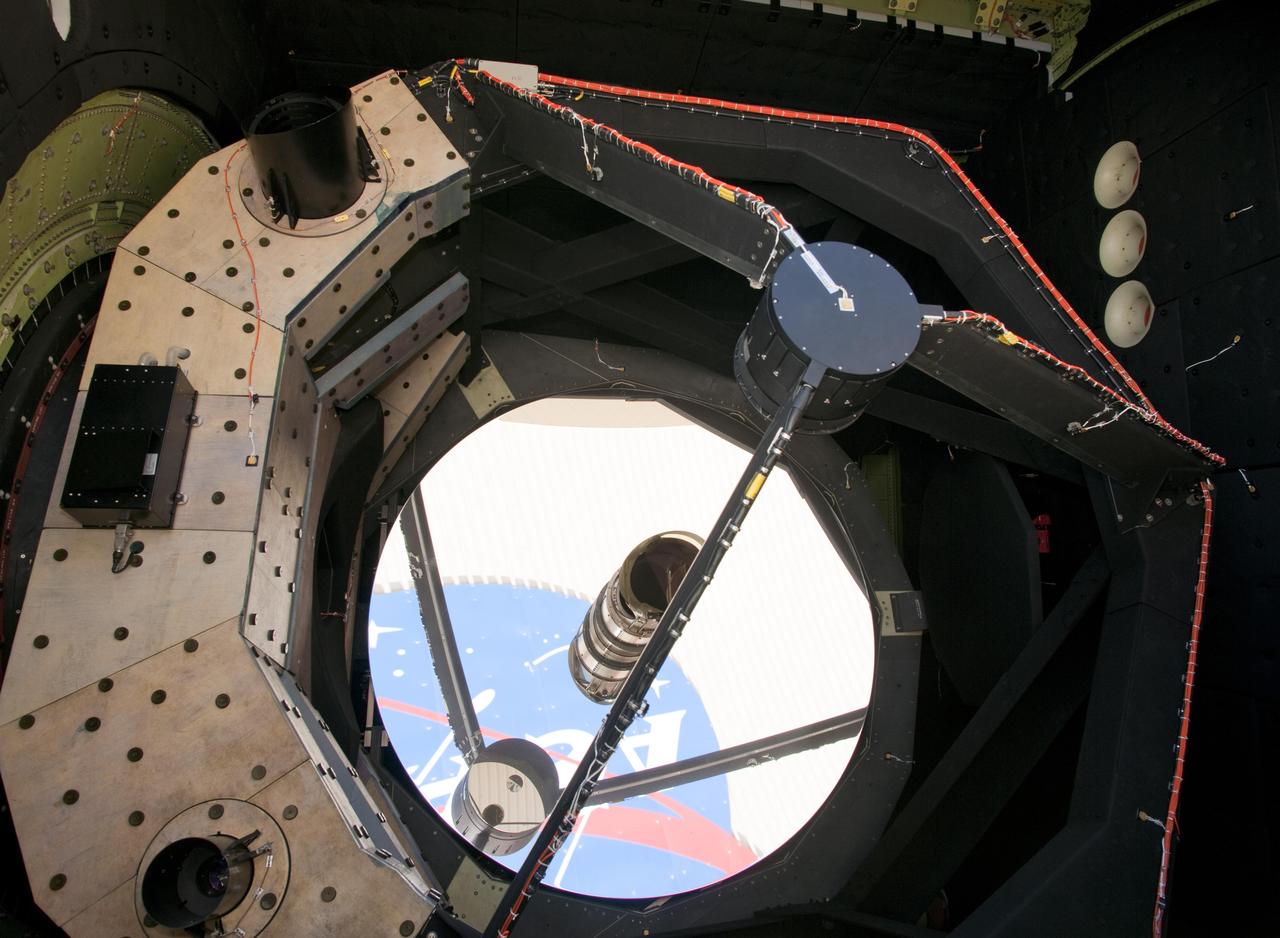
The NASA logo on Bldg. 703 at Armstrong Flight Research Center in Palmdale, Calif., is reflected in the telescope's 2.5-meter primary mirror.
ED11-0173-076
SpaceX’s Dragon capsule is seen shortly after arriving at a port near Los Angeles, Calif on Tuesday, Oct. 30, 2012. Dragon had just completed its first commercial resupply mission to the International Space Station and returned 1,673 pounds of science and supplies back to Earth.   Photo credit: NASA
ed12-0346-02
The Prandtl-D makes a test flight in 2014.
New Wing Shape Tested in Wind Tunnel
SpaceX’s Dragon capsule is seen shortly after arriving at a port near Los Angeles, Calif on Tuesday, Oct. 30, 2012. Dragon had just completed its first commercial resupply mission to the International Space Station and returned 1,673 pounds of science and supplies back to Earth.   Photo credit: NASA
ed12-0346-27
SpaceX’s Dragon capsule is seen shortly after arriving at a port near Los Angeles, Calif on Tuesday, Oct. 30, 2012. Dragon had just completed its first commercial resupply mission to the International Space Station and returned 1,673 pounds of science and supplies back to Earth.   Photo credit: NASA
ed12-0346-05
SpaceX’s Dragon capsule is seen shortly after arriving at a port near Los Angeles, Calif on Tuesday, Oct. 30, 2012. Dragon had just completed its first commercial resupply mission to the International Space Station and returned 1,673 pounds of science and supplies back to Earth.   Photo credit: NASA
ed12-0346-18
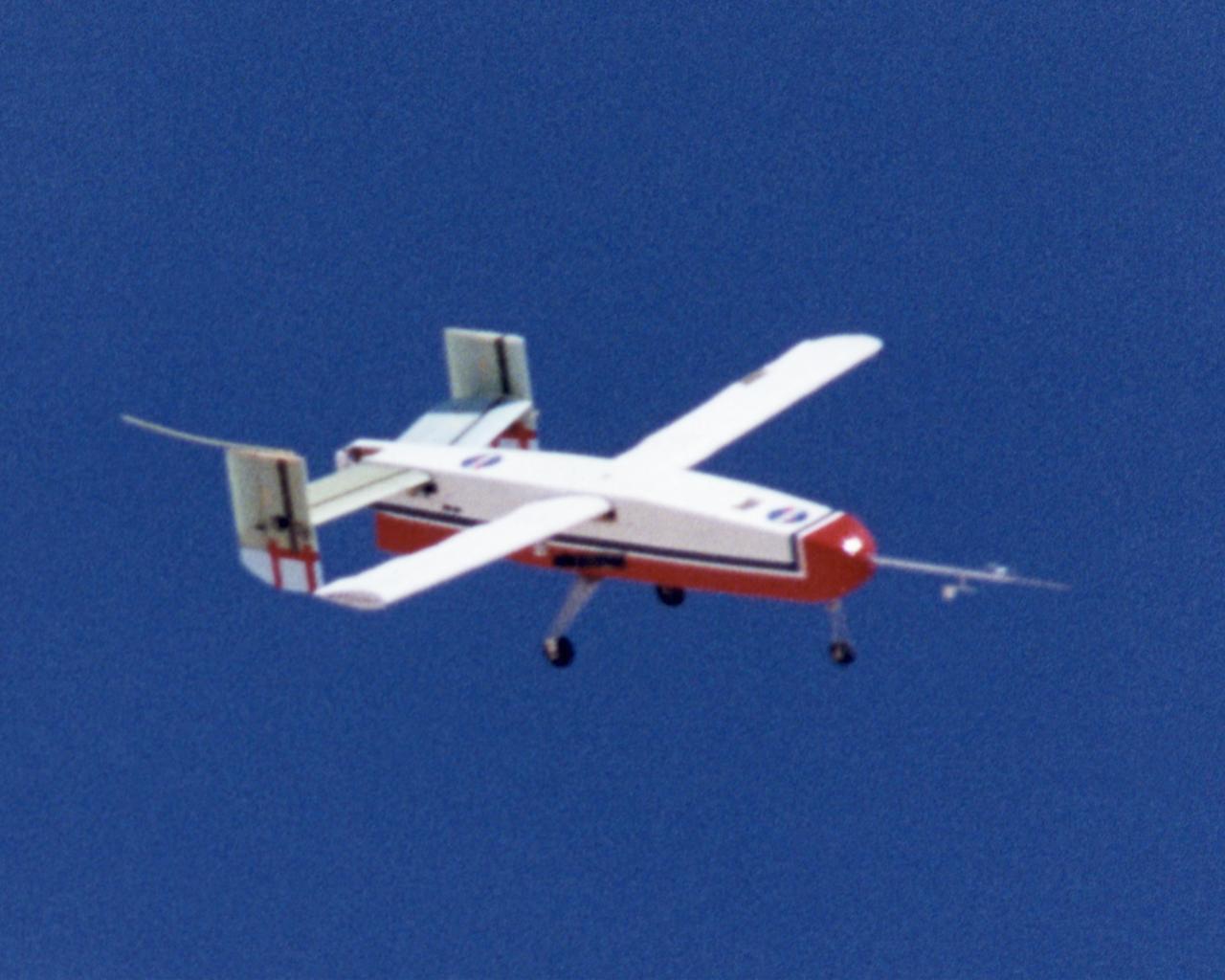
Wing Deployment Sequence #3: The deployable, inflatable wing technology demonstrator experiment aircraft's wings fully deployed during flight following separation from its carrier aircraft during a flight conducted by the NASA Dryden Flight Research Center, Edwards, Californiaornia. The inflatable wing project represented a basic flight research effort by Dryden personnel. Three successful flights of the I2000 inflatable wing aircraft occurred. During the flights, the team air-launched the radio-controlled (R/C) I2000 from an R/C utility airplane at an altitude of 800-1000 feet.  As the I2000 separated from the carrier aircraft, its inflatable wings "popped-out," deploying rapidly via an on-board nitrogen bottle. The aircraft remained stable as it transitioned from wingless to winged flight. The unpowered I2000 glided down to a smooth landing under complete control.
EC01-0136-17
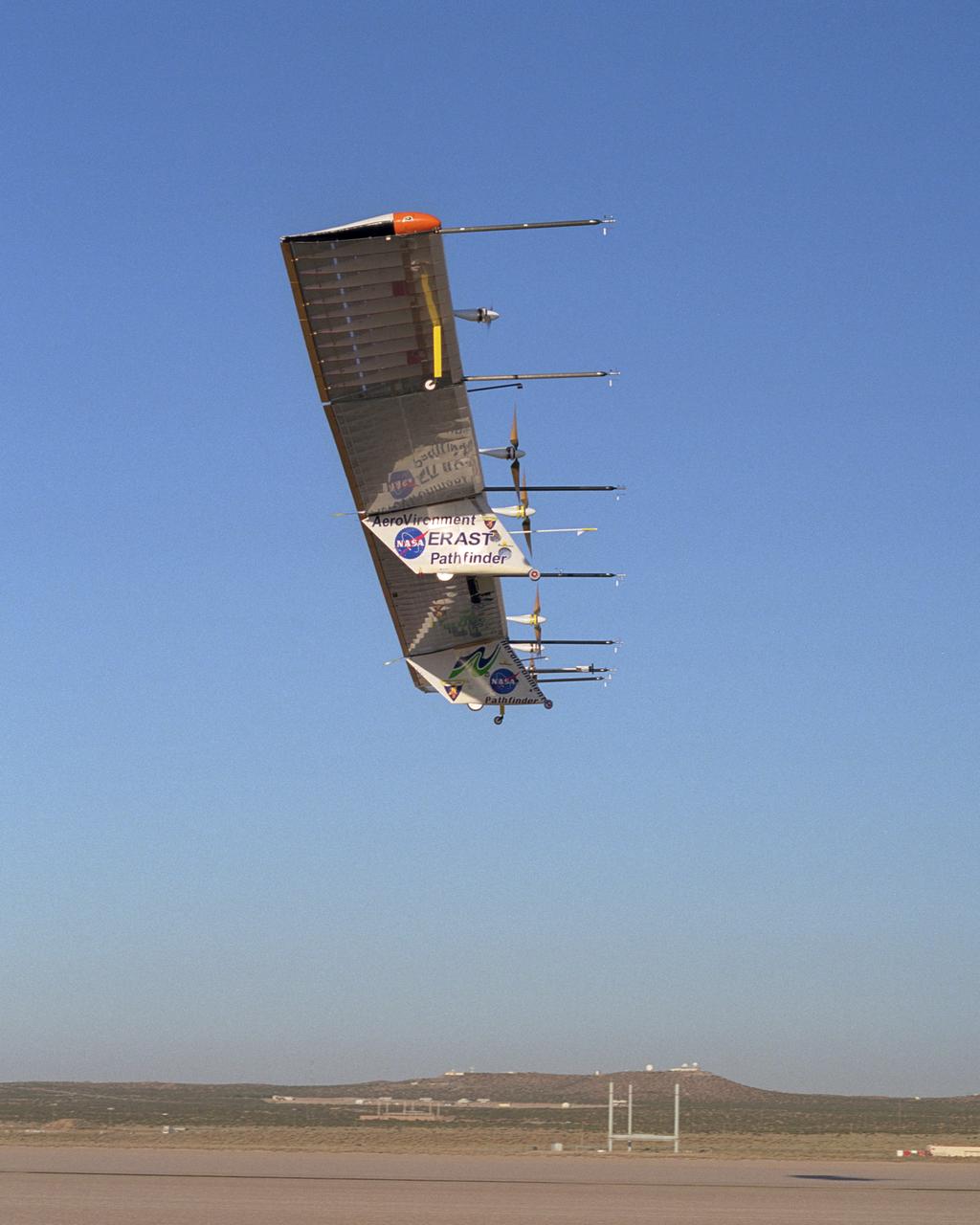
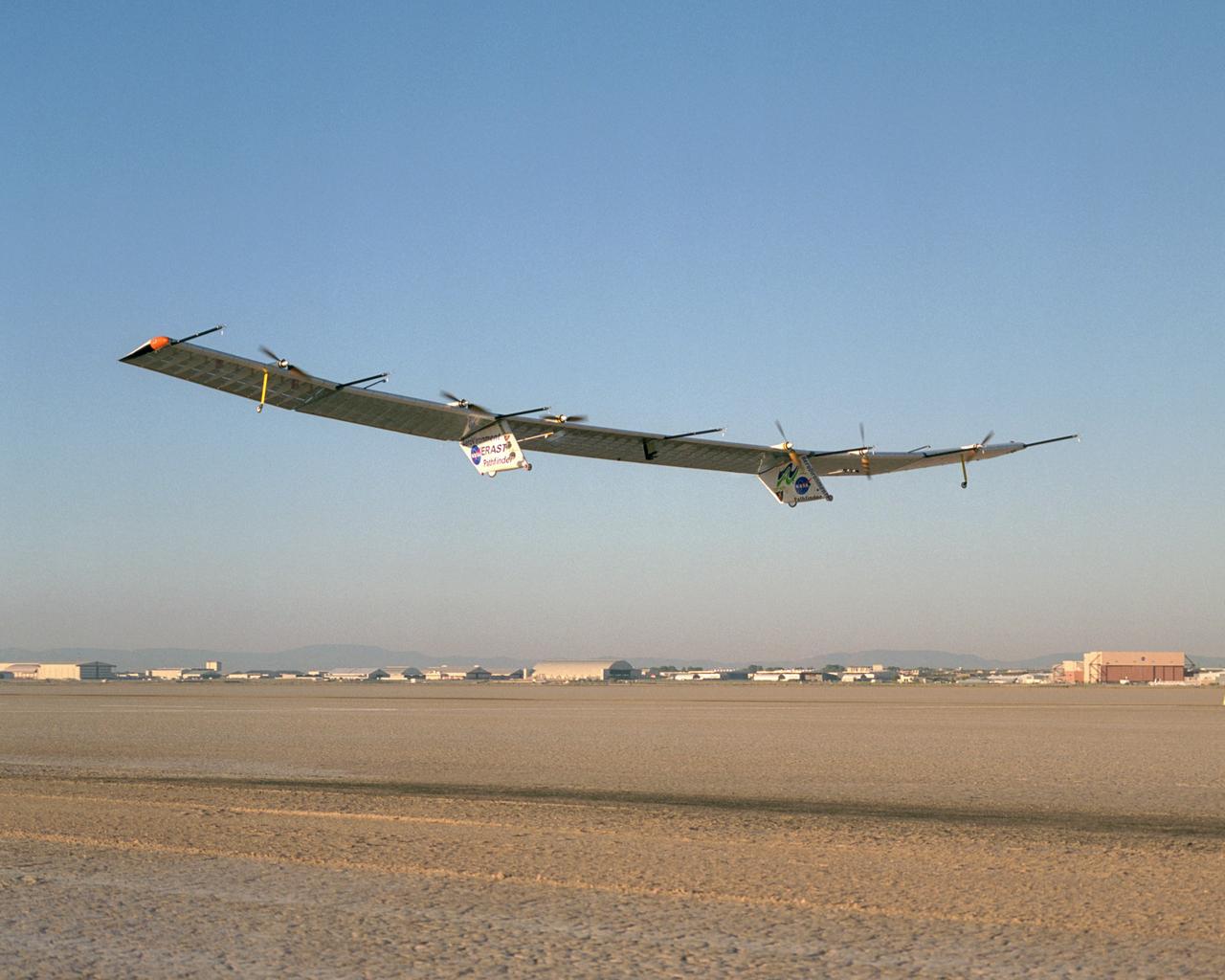
The Atmospheric Turbulence Measurement System booms are clearly evident in this view of the Pathfinder-Plus solar aircraft as it flies over Rogers Dry Lake.
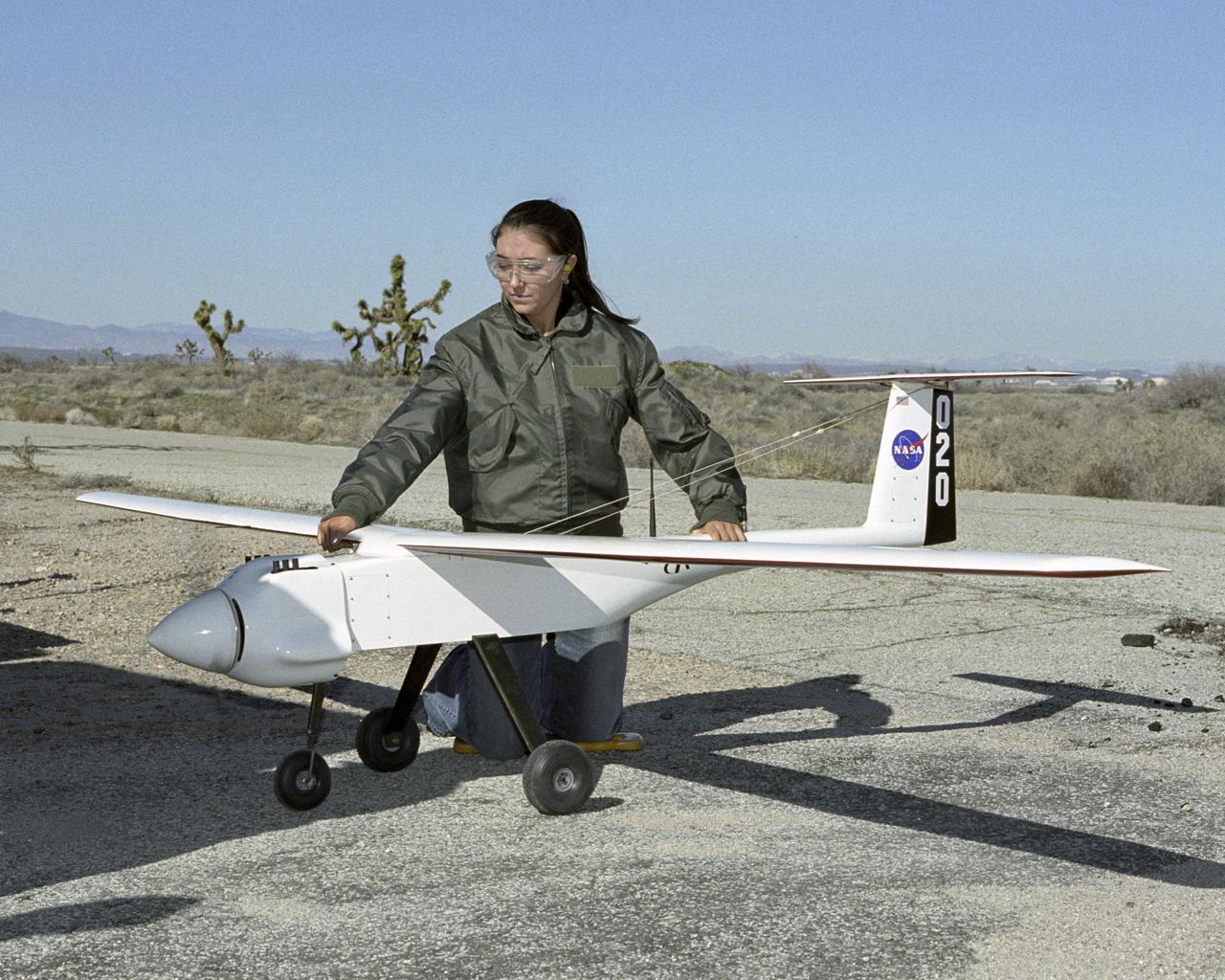
NASA Dryden Operations co-op student Shannon Kolensky holds one of the APV-3 UAVs flown in the Networked UAV Teaming Experiment steady during an engine runup.
EC05-0043-09
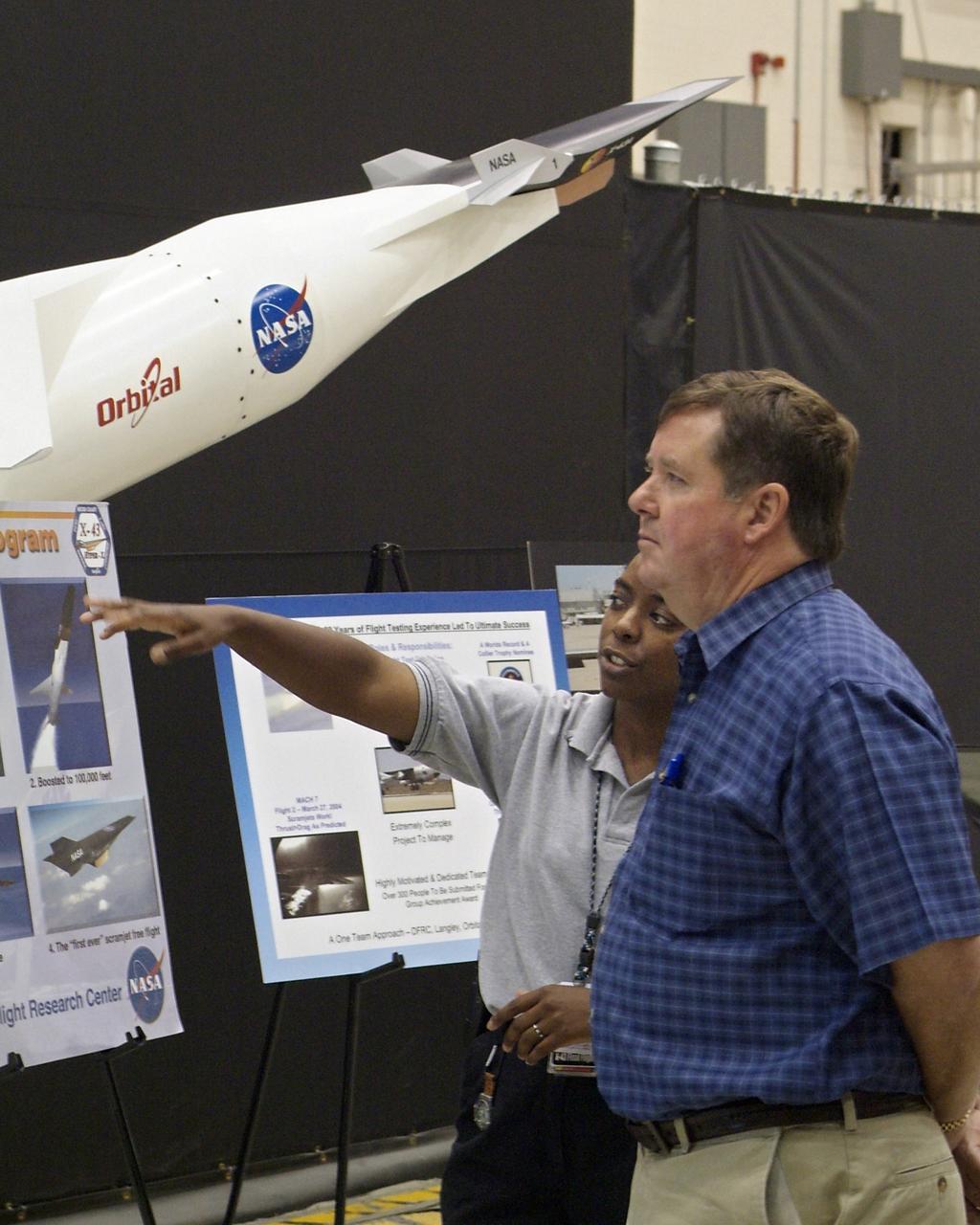
Rep. Ken Calvert, (R-Calif.), chairman of the House Subcommittee on Space and Aeronautics, received an update on the mission of NASA's Dryden Flight Research Center during a visit on June 2, 2005. Rep. Calvert, accompanied by several staff members, was briefed by center management on the Dryden's role as a flight research institution, and then reviewed some of the center's recent, current and upcoming flight research projects during a tour of the facility. During the afternoon, Rep. Calvert received similar briefings on a variety of projects at several aerospace development firms at the Civilian Flight Test Center in Mojave. Rep. Calvert's tour of NASA Dryden was the second in a series of visits to all 10 NASA field centers to better acquaint him with the roles and responsibilities of each center.
Rep. Ken Calvert, R-Calif., chairman of the House Subcommittee on Space and Aeronautics, was briefed by X-43A engineer Laurie Grindle during his tour of Dryden
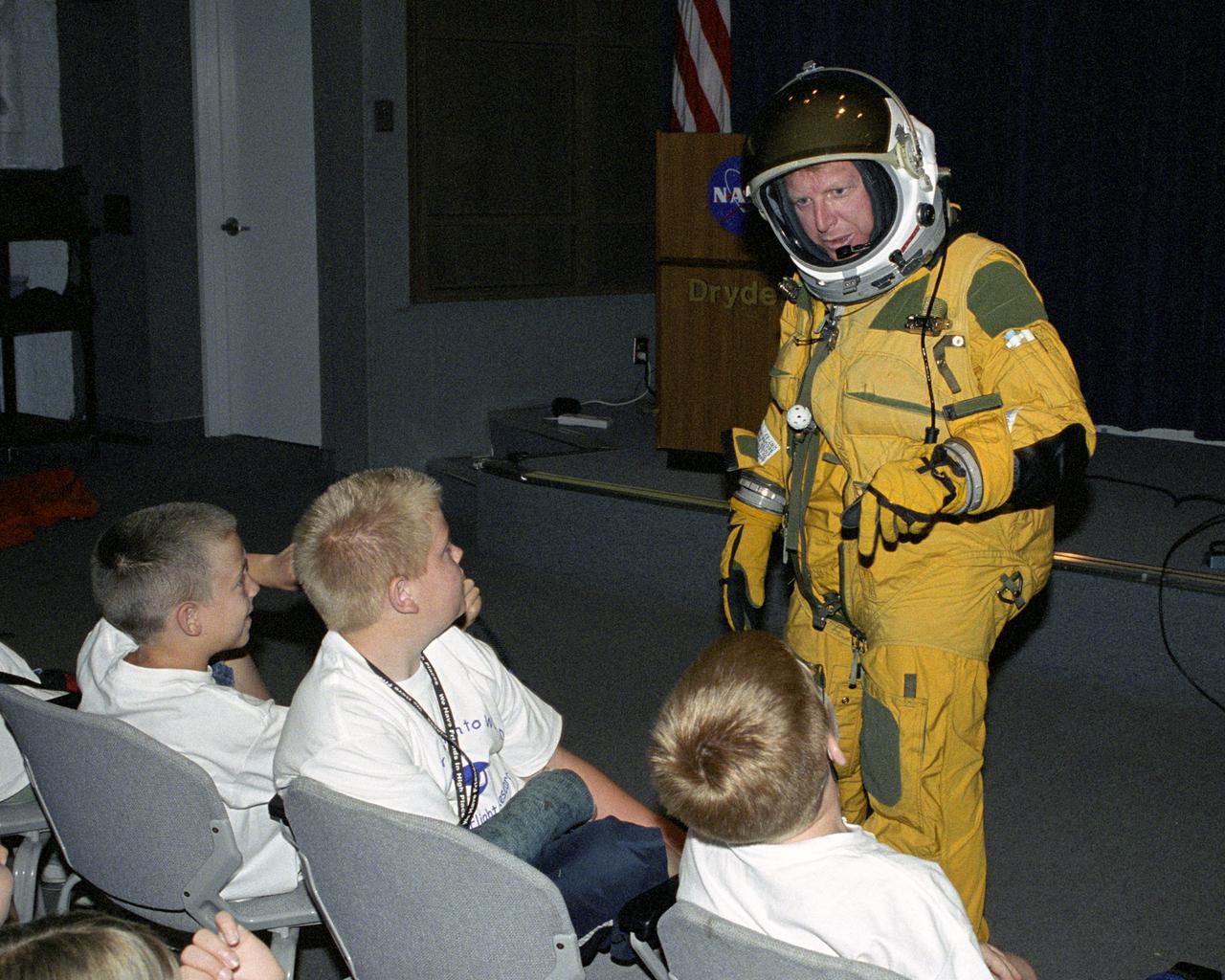
NASA Dryden historian Christian Gelzer explains functions of the high-altitude pressure suit he is wearing to (left to right) Brandon Blankenship and Garrett Clay of Lancaster and Eddie Patterson of Tehachapi during Take Your Children to Work Day activities at NASA Dryden Flight Research Center June 22.
Dryden historian Christian Gelzer explains functions of a high-altitude pressure suit to (left to right) Brandon Blankenship, Garrett Clay and Eddie Patterson
Technicians at General Atomics Aeronautical Systems, Inc., (GA-ASI) facility at Adelanto, Calif., carefully install a turboprop engine to the rear fuselage of NASA's Altair aircraft during final assembly operations.
EC02-0188-18
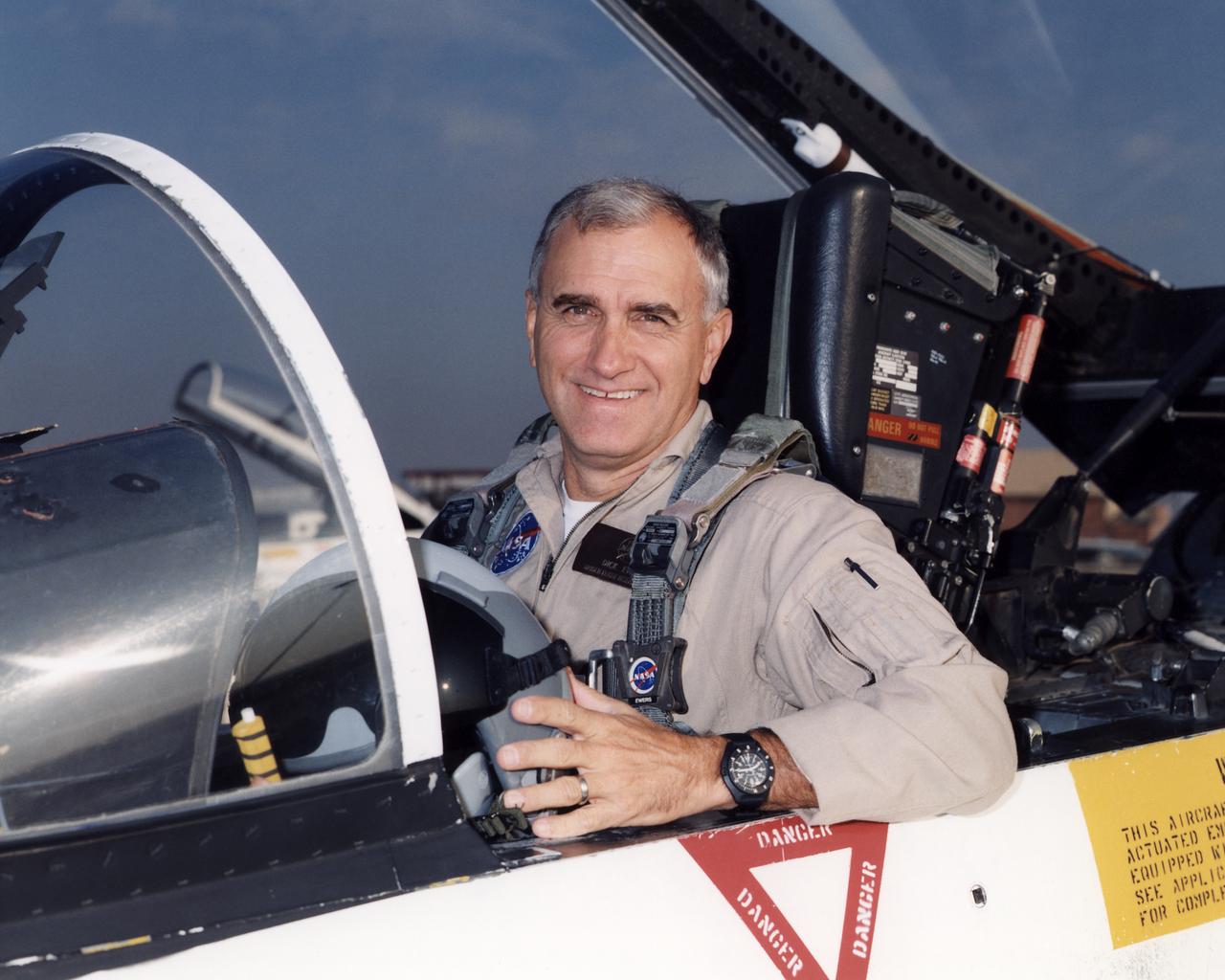
Richard G. (Dick) Ewers became a pilot in the Flight Crew Branch of NASA's Dryden Flight Research Center, Edwards, California, in May 1998. His flying duties focus on operation of the Airborne Science DC-8 and Systems Research F/A-18 aircraft, but he also maintains qualifications in the King Air and T-34C. He has more than 32 years and nearly 9,000 hours of military and civilian flight experience in all types of aircraft from jet fighters to blimps.  Ewers came to NASA Dryden from a position as an engineering test pilot with Northrop Grumman's Electronic Sensors and Systems Division (formerly Westinghouse's Electronic Systems Group). He spent eight and a half years with Westinghouse flight testing radar and forward looking infrared systems under development for military and civilian use.  Before going to work for Westinghouse, Ewers served for more than 21 years as a U.S. Marine Corps fighter and test pilot, flying F-4, A-4, and F/A-18 aircraft. He underwent flight training at Naval Air Station Pensacola, Fla., in 1969-70. He was subsequently assigned to both fighter/attack and reconnaissance squadrons before ultimately commanding an F-4S squadron for two years. Additionally, his flying included combat service in Vietnam and operational exchange tours with both U.S. Navy and U.S. Air Force squadrons flying F-4s around the world, including off aircraft carriers.  Ewers graduated from the U.S. Naval Test Pilot School in 1981 and subsequently served two tours as a test pilot at the Naval Air Test Center, Patuxent River, Md. Most of his flight test experience was with the F/A-18 Hornet. He retired from the Marine Corps in 1989 with the rank of lieutenant colonel.  Ewers graduated from the U.S. Air Force Academy in 1968 with a bachelor of science degree in engineering mechanics. He earned a master of science degree in aeronautical systems from the University of West Florida in 1970.
Richard G. Ewers
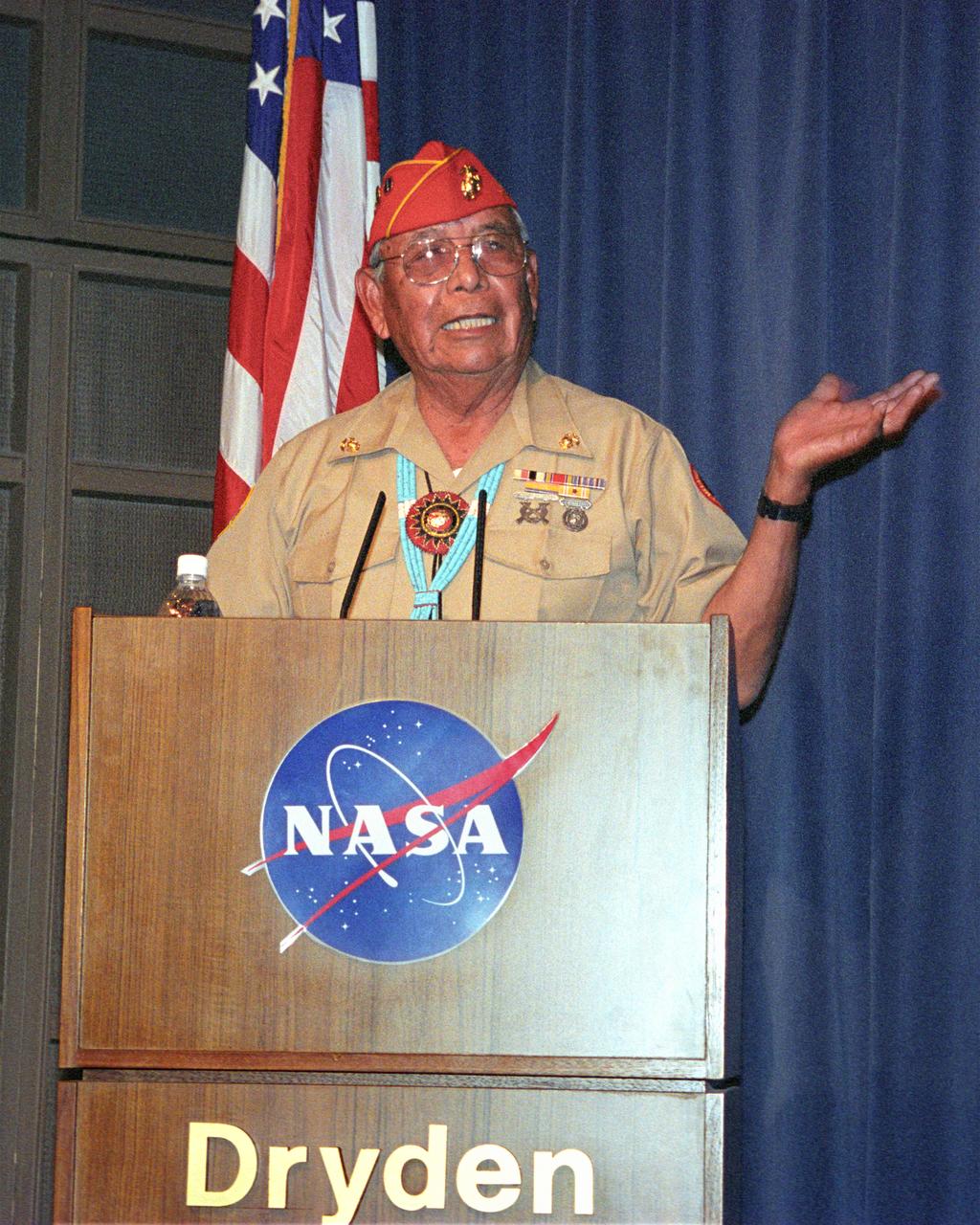
Navajo Code Talker Joe Morris, Sr. shared insights from his time as a secret World War Two messenger with his audience at NASA's Dryden Flight Research Center on Nov. 26, 2002. NASA Dryden is located on Edwards Air Force Base in California's Mojave Desert.
Navajo Code Talker Joe Morris, Sr. shared insights from his time as a secret World War Two messenger with his audience at NASA's Dryden Flight Research Center
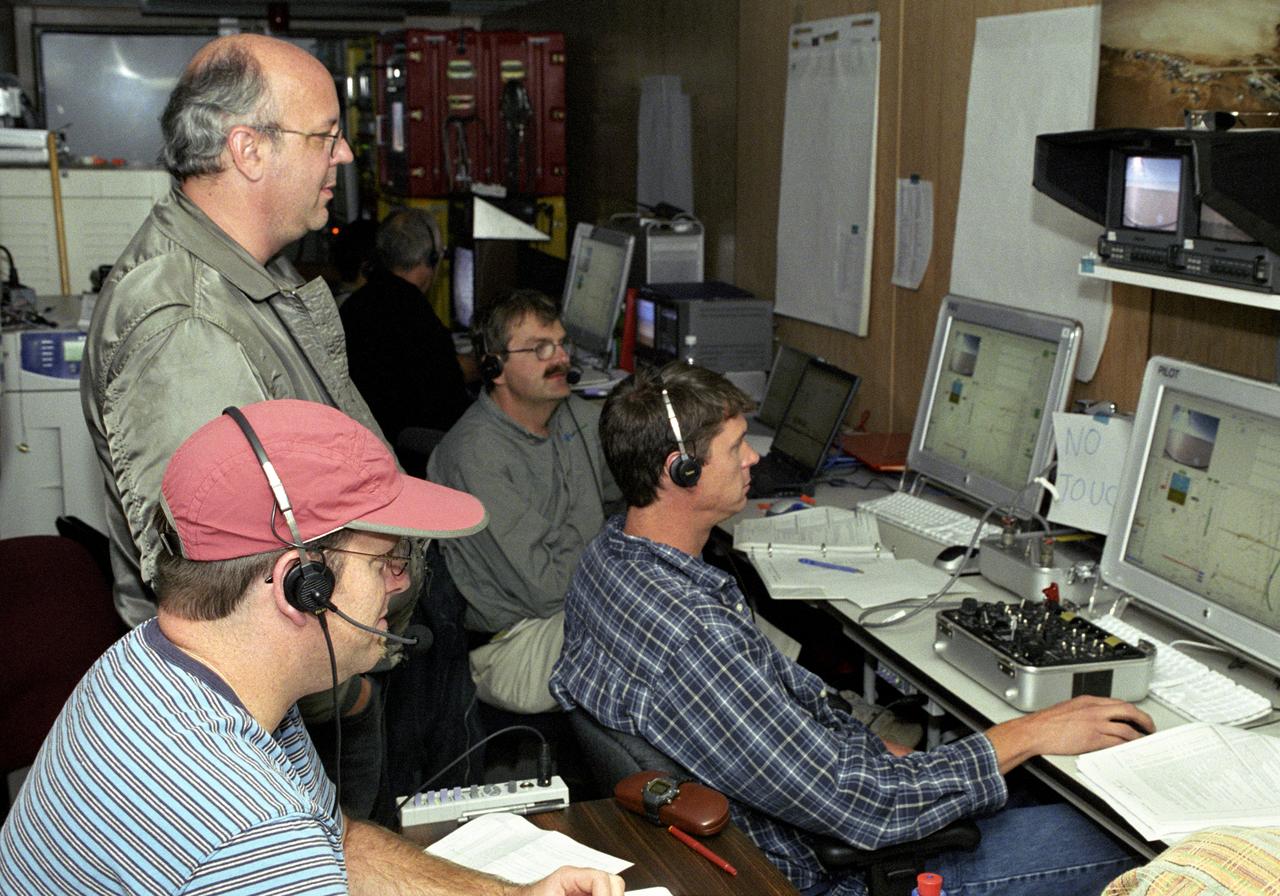
AeroVironment's test director Jim Daley, backup pilot Rik Meininger, stability and controls engineer Derek Lisoski and pilot Wyatt Sadler (clockwise from bottom left) closely monitor systems testing of the Pathfinder-Plus solar aircraft from the control station.
AeroVironment's Jim Daley, Rik Meininger, Derek Lisoski and Wyatt Sadler (clockwise from bottom left) closely monitor systems testing of the Pathfinder-Plus.
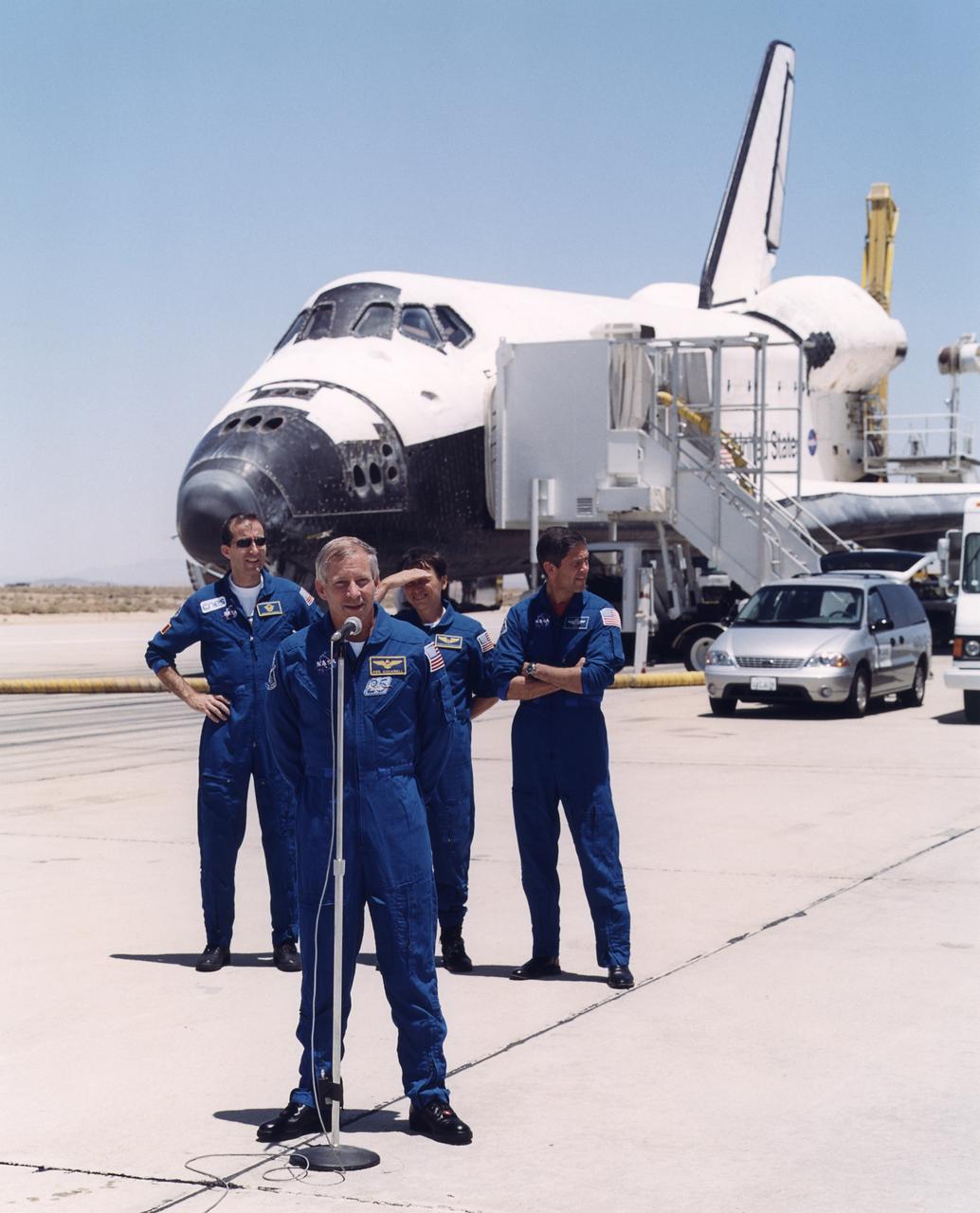
STS-111 commander Ken Cockrell greets dignitaries and recovery technicians on the runway at Edwards Air Force Base following the landing of the space shuttle Endeavour on June 19, 2002. Behind Cockrell are (from left) mission specialists Philippe Perrin and Franklin Chang-Diaz and Shuttle pilot Paul Lockhart.
STS-111 commander Ken Cockrell greets dignitaries and recovery technicians on the runway at Edwards Air Force Base following the landing of the space shuttle Endeavour on June 19, 2002. Behind Cockrell are (from left) mission specialists Philippe Perrin a
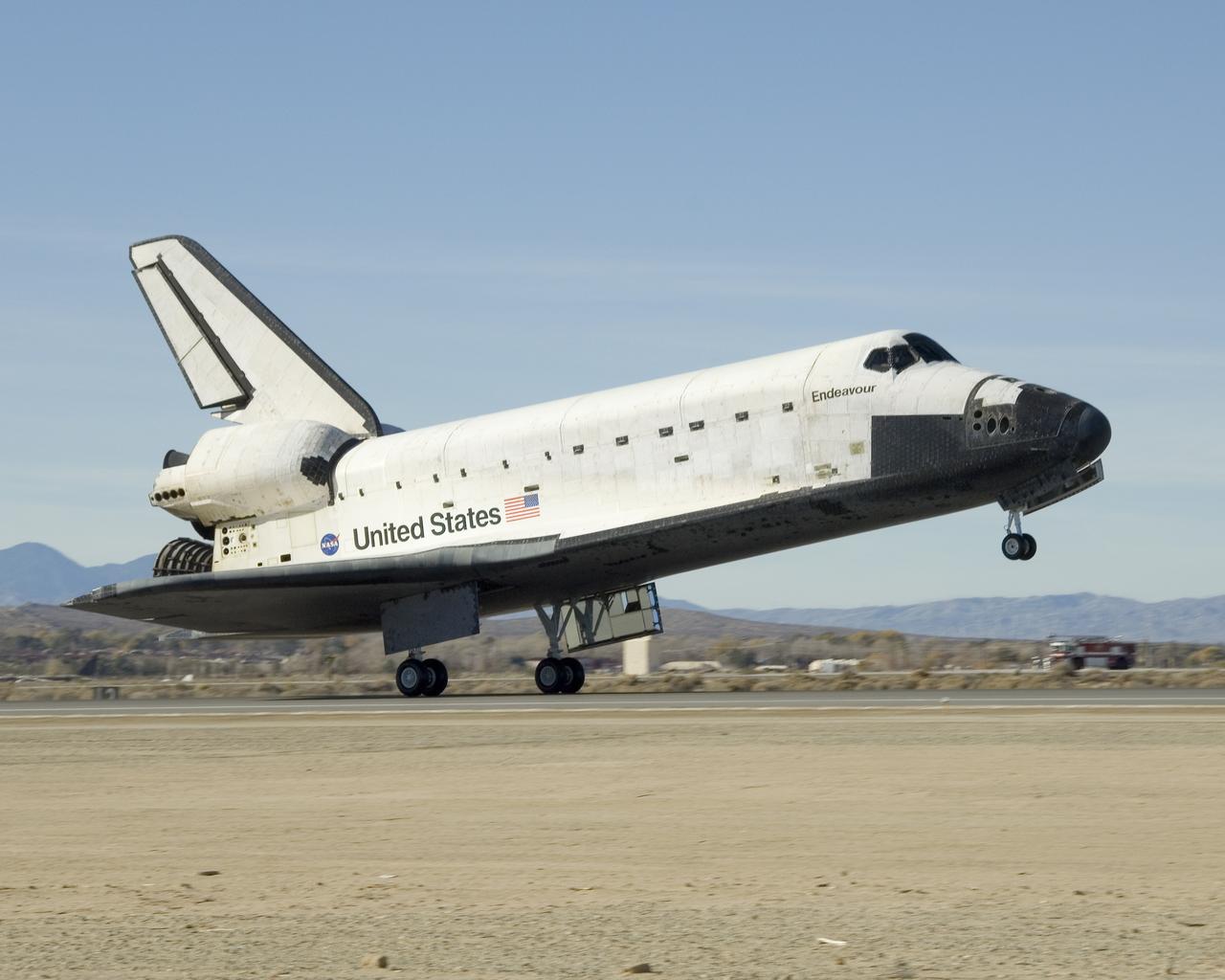
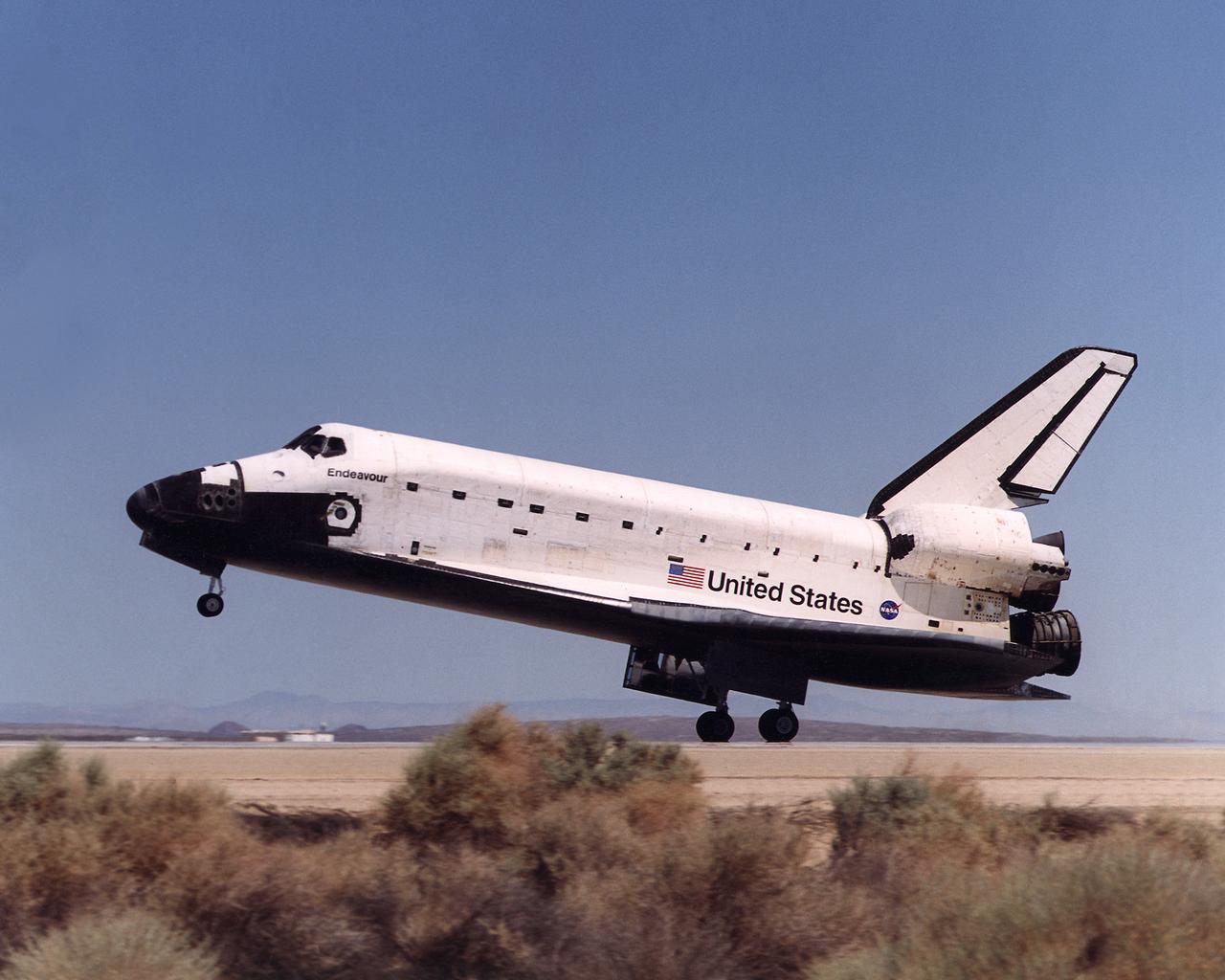
Space Shuttle Endeavour touches down on the runway at Edwards Air Force Base, California to conclude International Space Station construction and supply mission STS-111.
Space Shuttle Endeavour touches down on the runway at Edwards Air Force Base, California to conclude International Space Station construction and supply mission STS-111
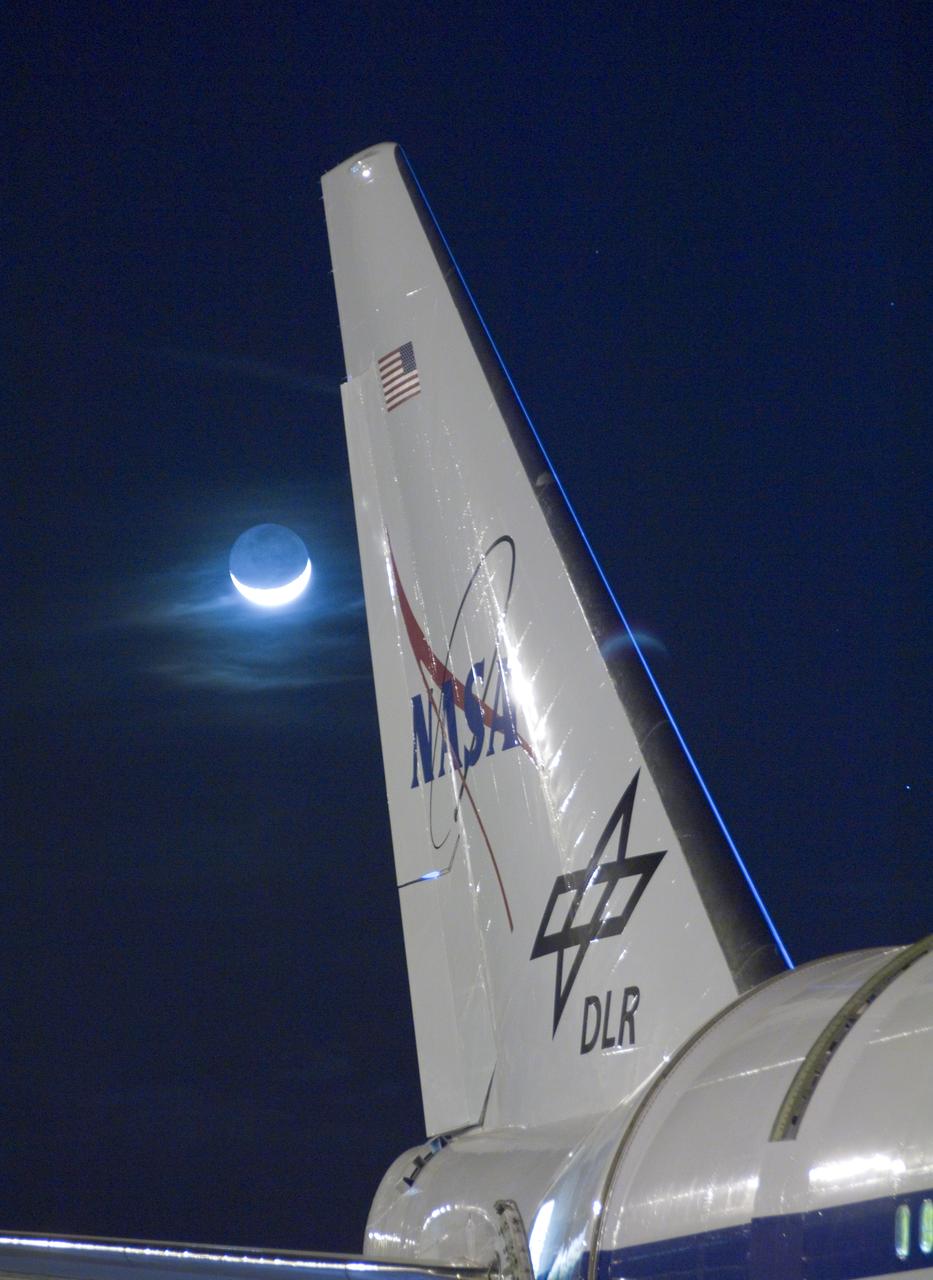
The SOFIA telescope team collected baseline operational measurements during several nights of characterization testing in March 2008 while the SOFIA 747SP aircraft that houses the German-built infrared telescope was parked on an unlit ramp next to its hangar at the NASA Dryden Flight Operations Facility in Palmdale, Calif. The primary celestial target was Polaris, the North Star. The activity provided the team with a working knowledge of how telescope operating systems interact and the experience of tracking celestial targets from the ground.
Wispy clouds are illuminated by a bright quarter moon behind the tail of NASA's SOFIA flying observatory during telescope characterization testing in 2008
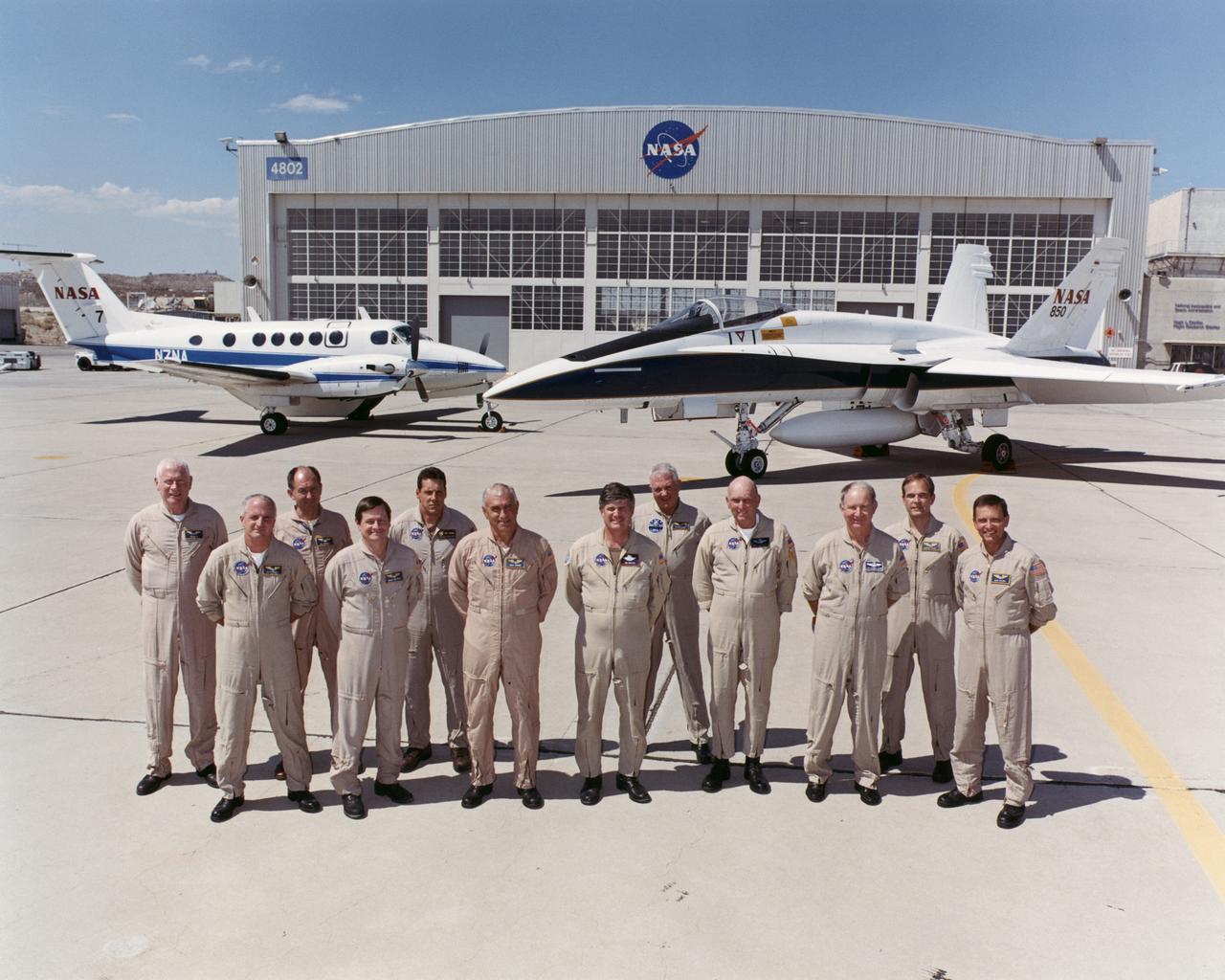
2004 NASA Dryden Research Pilots. Left to Right: Edwin W. Lewis, Jr., David A. Wright (Director of Flight Operations), William Frederick Brockett, Frank Batteas, Craig R. Bomben, Richard G. Ewers, James W. Smolka, Douglas H. Baker, C. Gordon Fullerton (Chief Pilot), James Barrilleaux, Martin J. Trout, and Mark Pestana. (not pictured: Dana Purifoy)
2004 NASA Dryden Research Pilots
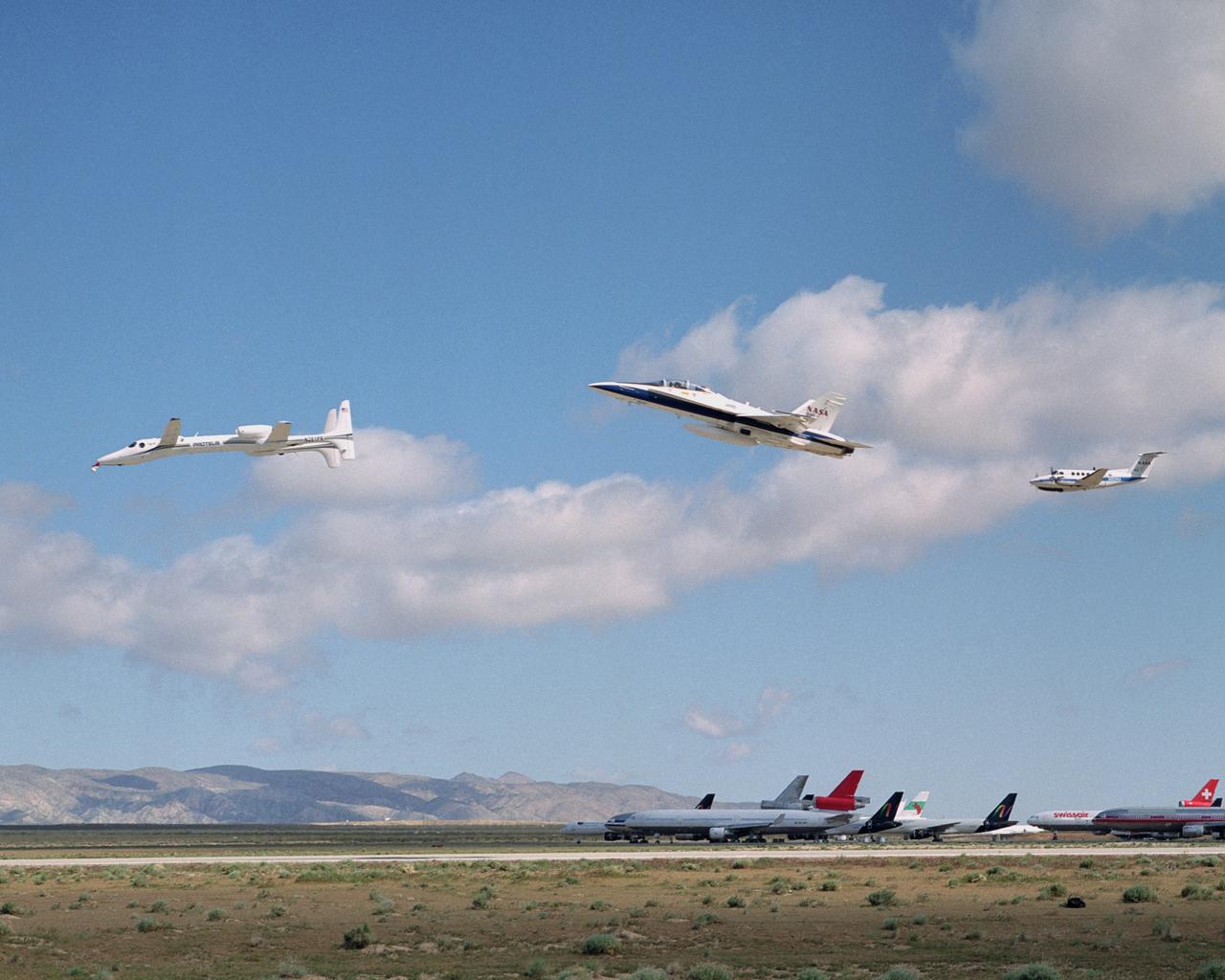
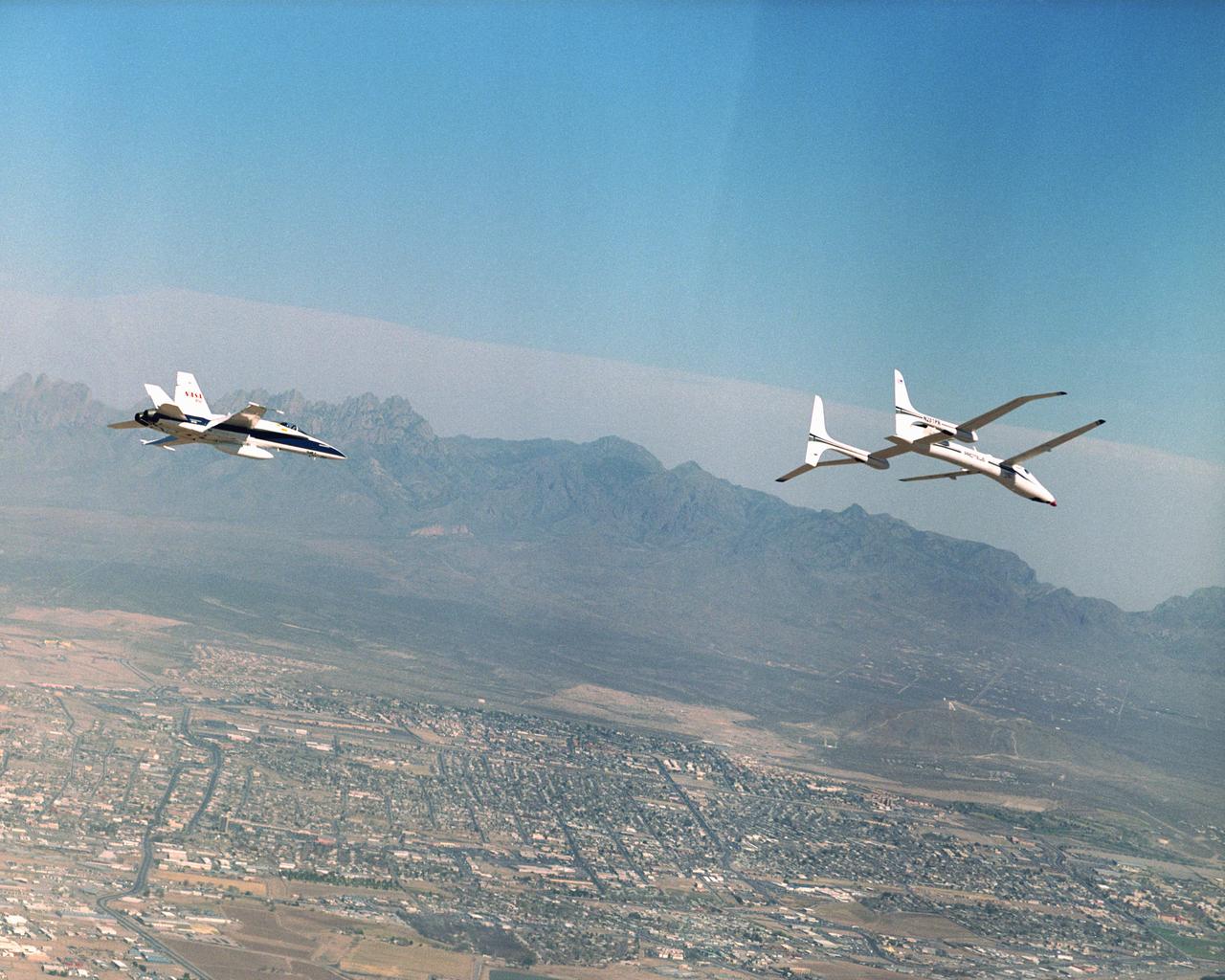
Scaled Composites' Proteus aircraft with an F/A-18 Hornet and a Beechcraft KingAir from NASA's Dryden Flight Research Center during a low-level flyby at Mojave Airport in Southern California.  The unique tandem-wing Proteus was the testbed for a series of UAV collision-avoidance flight demonstrations. An Amphitech 35GHz radar unit installed below Proteus' nose was the primary sensor for the Detect, See and Avoid tests.
Scaled Composites' Proteus aircraft with an F/A-18 Hornet and a Beechcraft KingAir from NASA's Dryden Flight Research Center during a low-level flyby at Mojave Airport in Southern California.
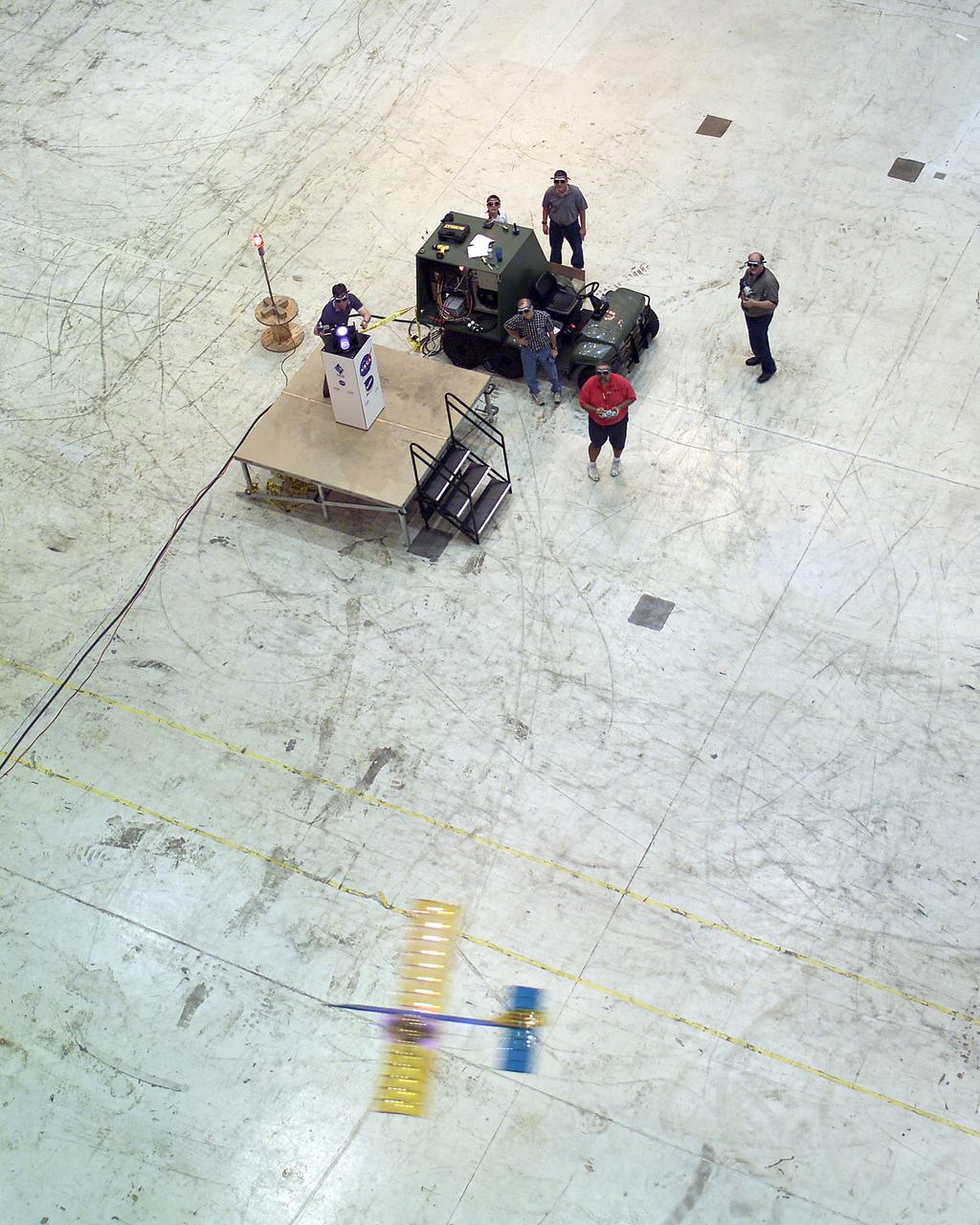
Powered by a laser beam directed at it from a center pedestal, a lightweight model plane makes the first flight of an aircraft powered by laser energy inside a building at NASA's Marshall Space Flight Center.
Powered by a laser beam directed at it from a pedestal, a model plane makes the first flight of an aircraft powered by laser energy inside a building at NASA Marshall.
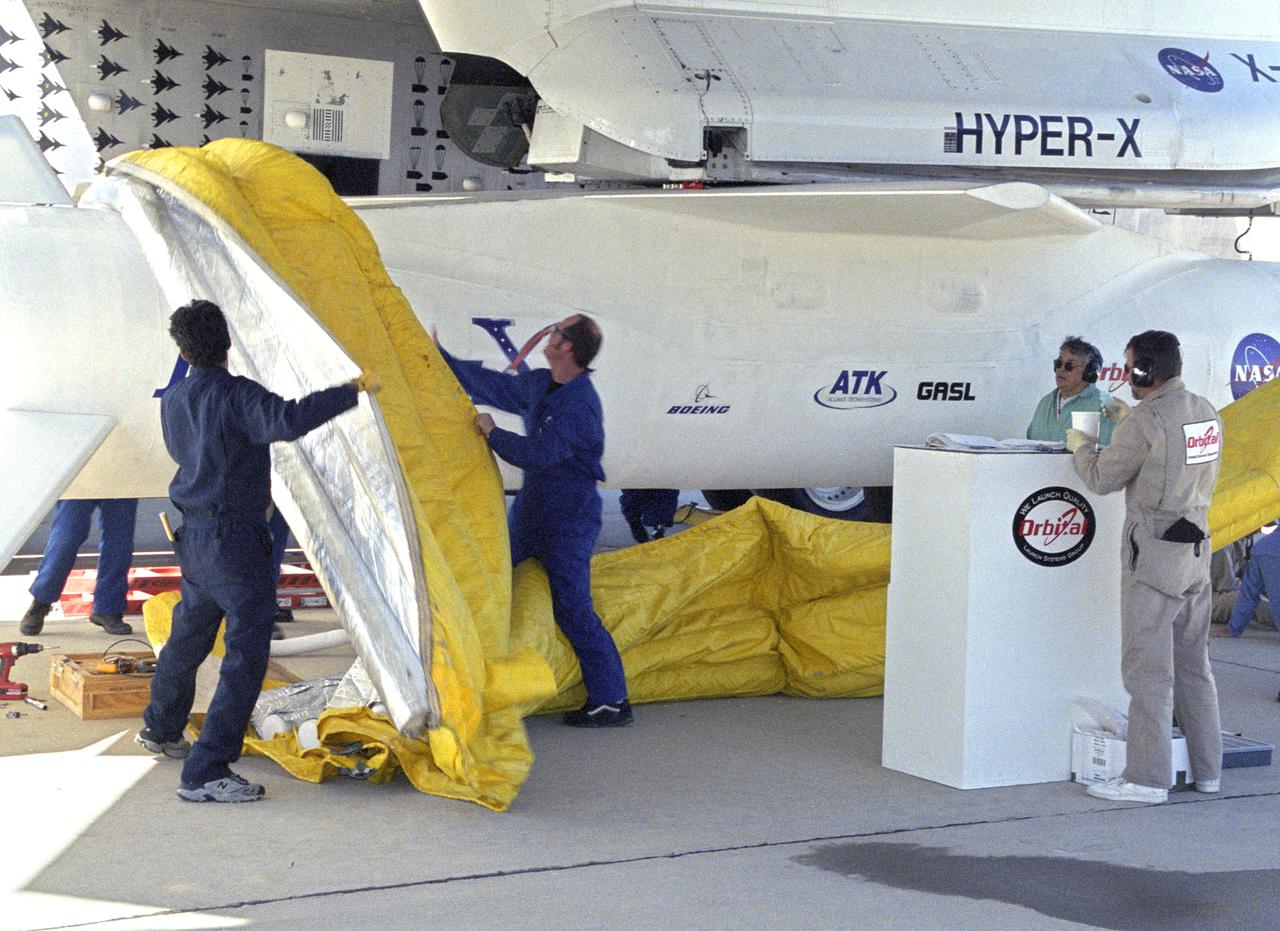
Orbital Sciences Corp. technicians remove protective shrouds from the modified Pegasus booster before takeoff on the X-43A's Mach 9.6 record scramjet flight.
Orbital Sciences Corp. technicians remove protective shrouds from the modified Pegasus booster before takeoff on the X-43A's Mach 9.6 record scramjet flight
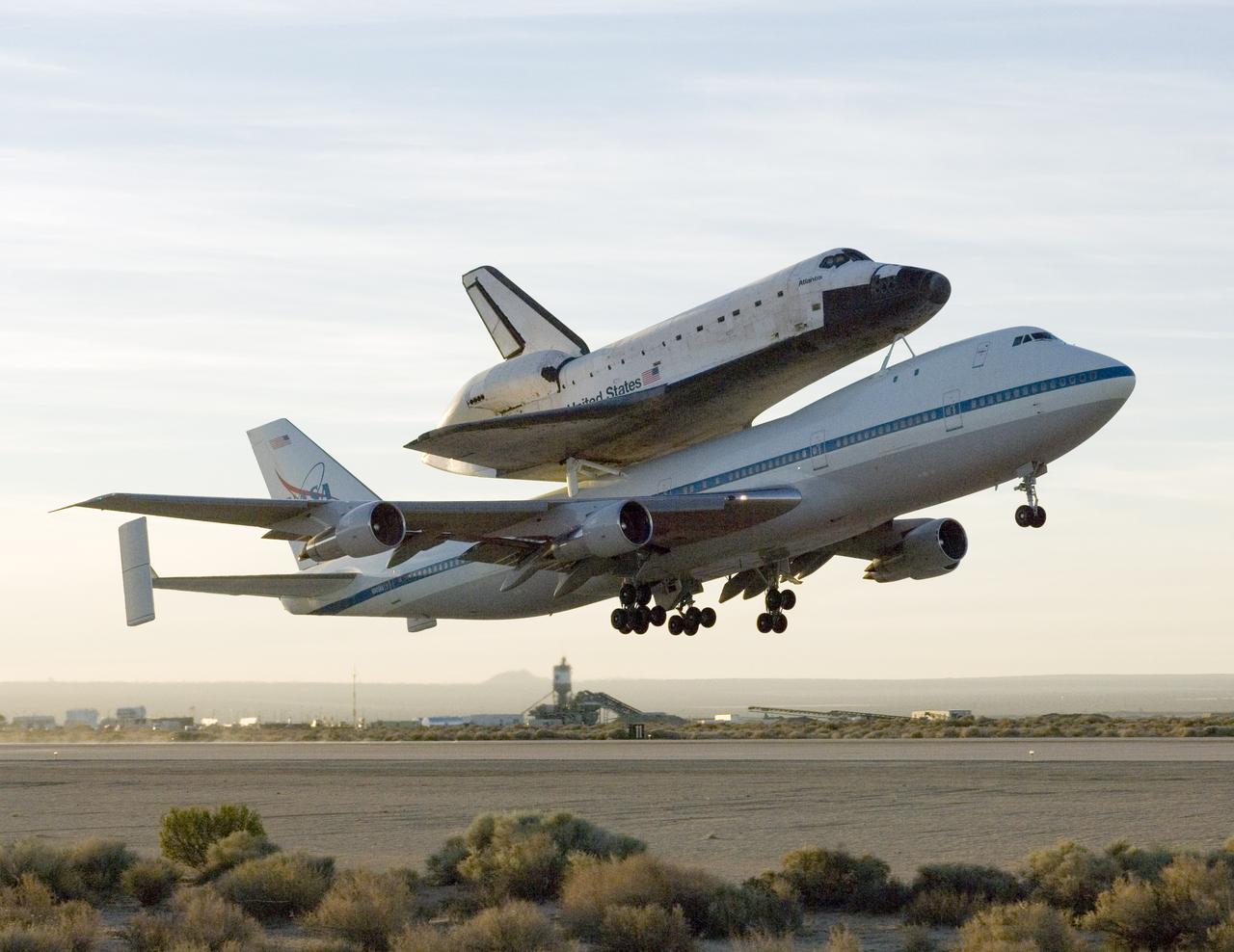
NASA's modified Boeing 747 Shuttle Carrier Aircraft with the Space Shuttle Atlantis on top lifts off from Edwards Air Force Base to begin its ferry flight back to the Kennedy Space Center in Florida. The cross-country journey will take approximately two days, with stops at several intermediate points for refueling.
NASA's 747 Shuttle Carrier Aircraft with the Space Shuttle Atlantis on top lifts off to begin its ferry flight back to the Kennedy Space Center in Florida
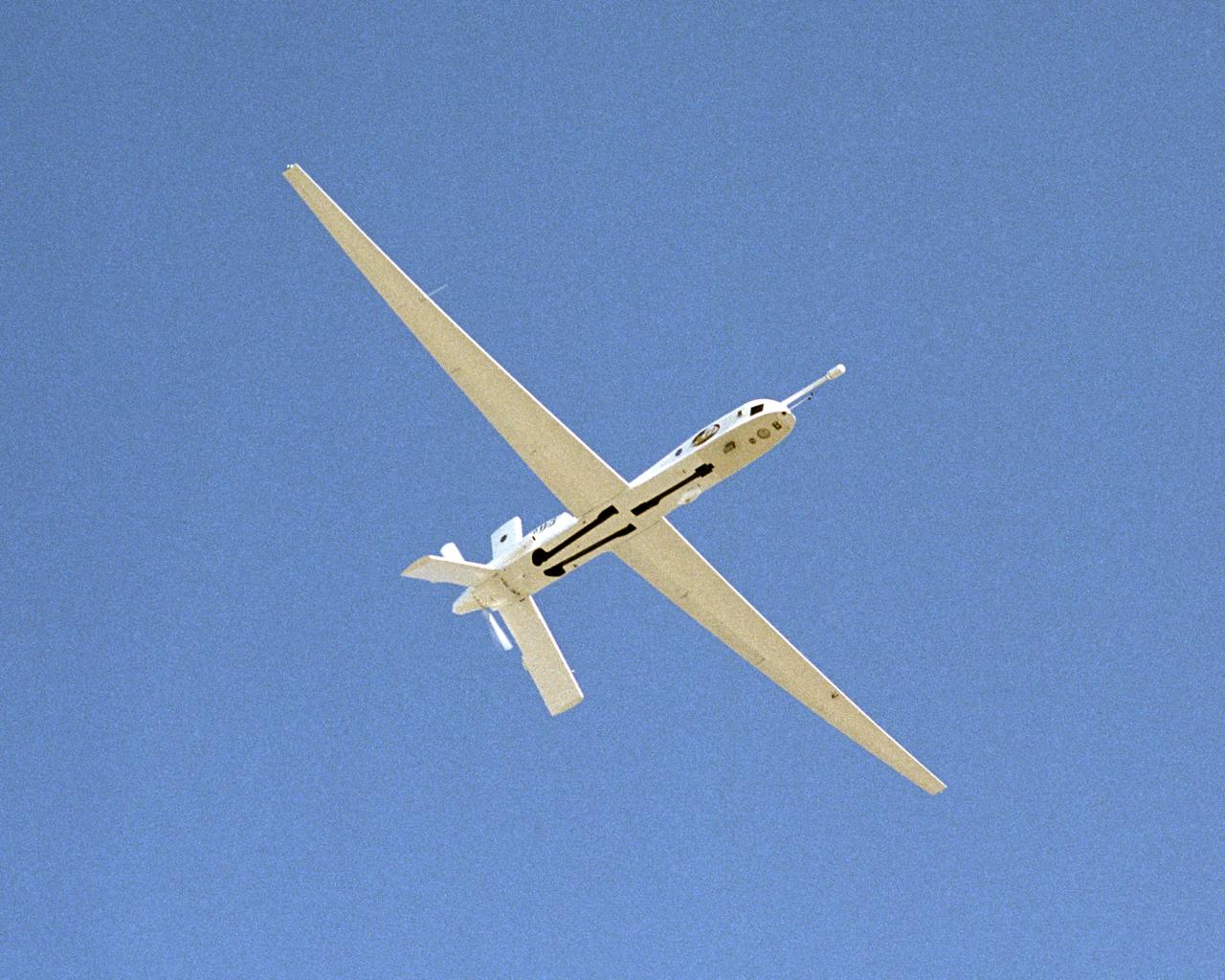
The Altus II remotely piloted aircraft carried a variety of specialized instruments and cameras during a lightning study over Florida during the summer of 2002.
EC02-0162-54
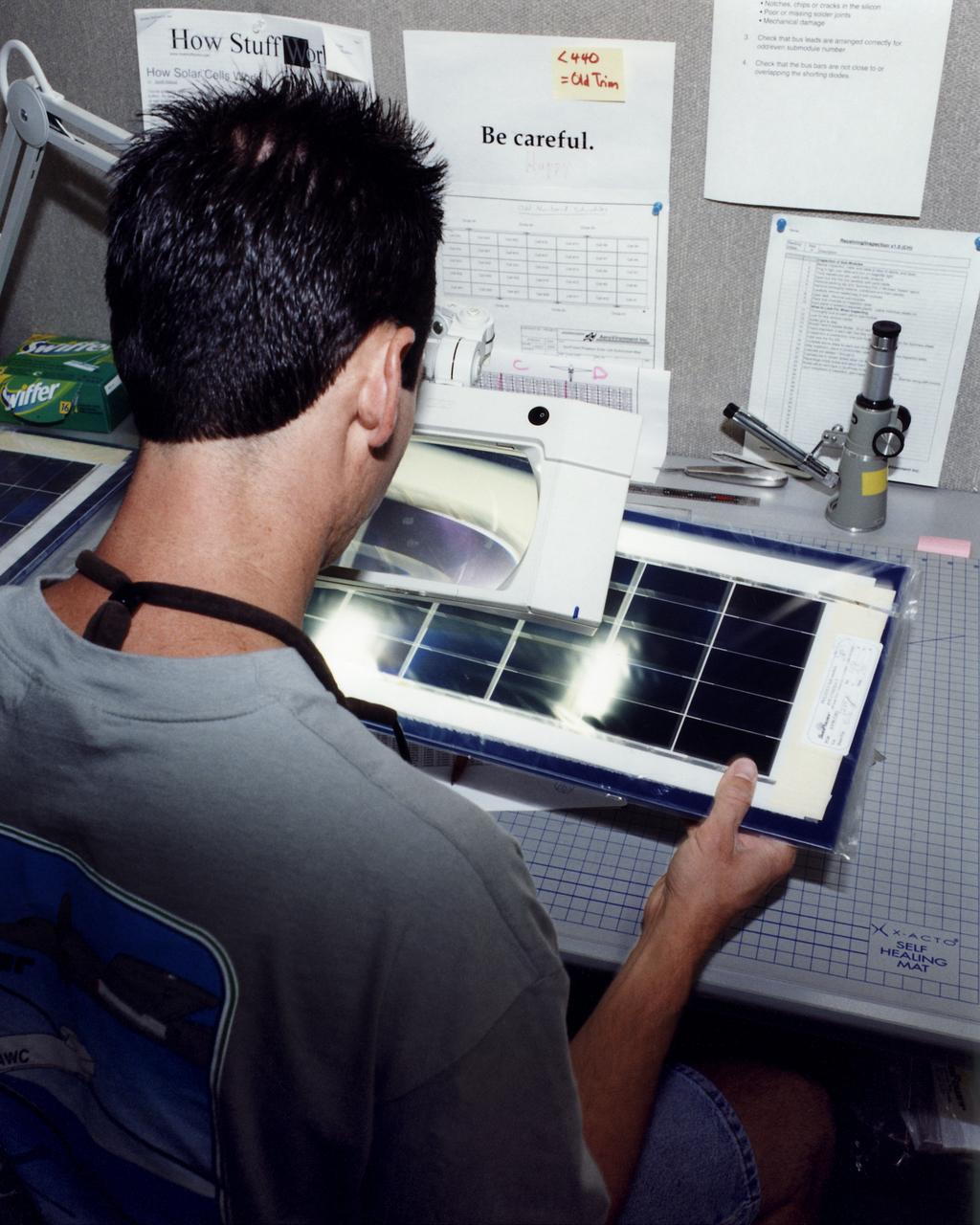
An engineer at AeroVironment's Design Development Center in Simi Valley, California, closely inspects a set of silicon solar cells for potential defects. The cells, fabricated by SunPower, Inc., of Sunnyvale, California, are among 64,000 solar cells which have been installed on the Helios Prototype solar-powered aircraft to provide power to its 14 electric motors and operating systems.
EC00-0283-3
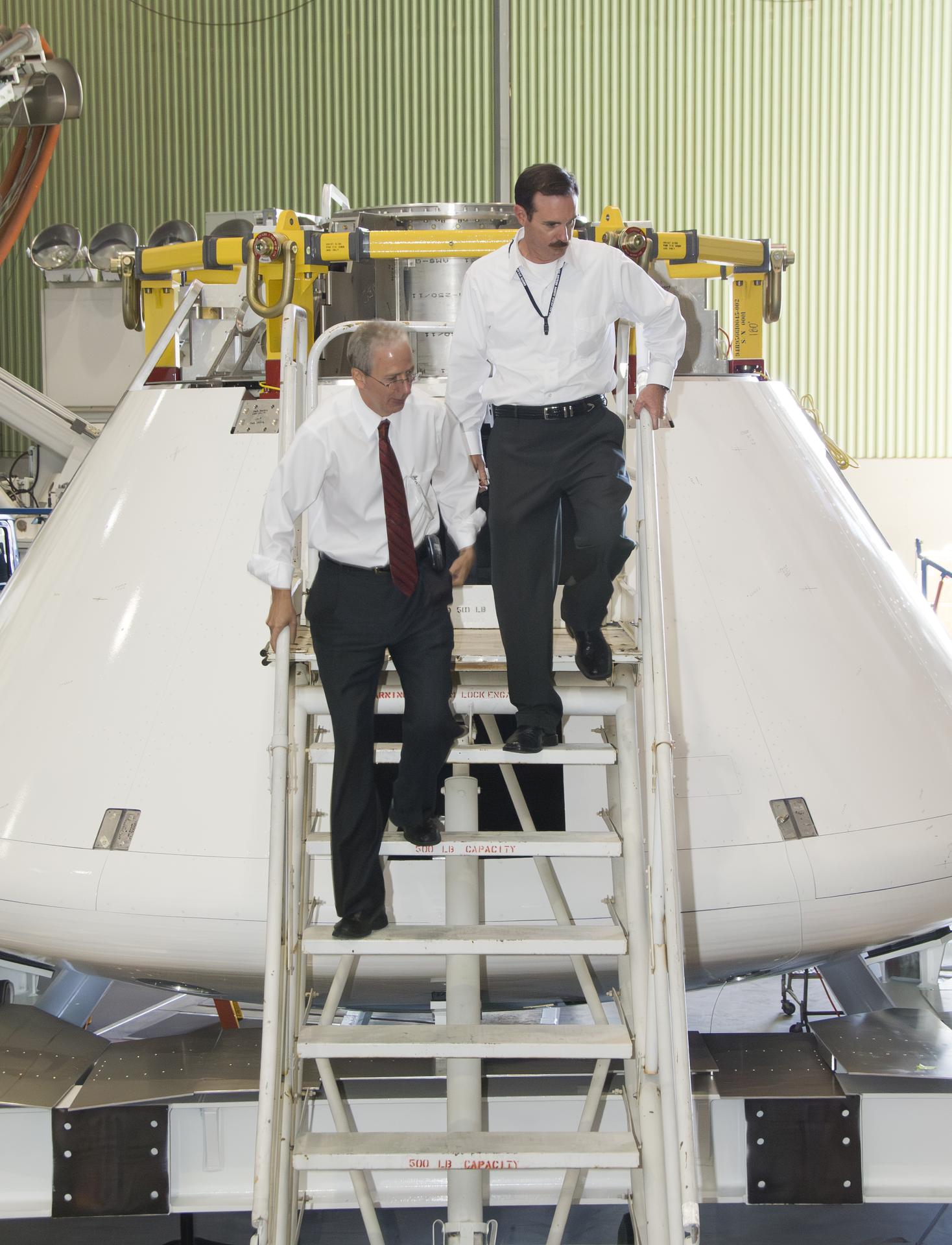
Mark Geyer, NASA’s Orion manager, visited NASA’s Armstrong Flight Research Center in Edwards, California, on April 9, 2008, to see the Pad Abort-1 test article, developed to demonstrate the Orion capsule’s emergency escape system during launch. Dave McAllister, NASA Armstrong Abort Flight Test operations lead, right, shows Geyer the Orion capsule mockup. Pad Abort-1 was later tested at the U.S. Army’s White Sands Missile Range in New Mexico, on May 6, 2010.
NASA Armstrong Prepares Orion for Pad Abort-1 Safety Test
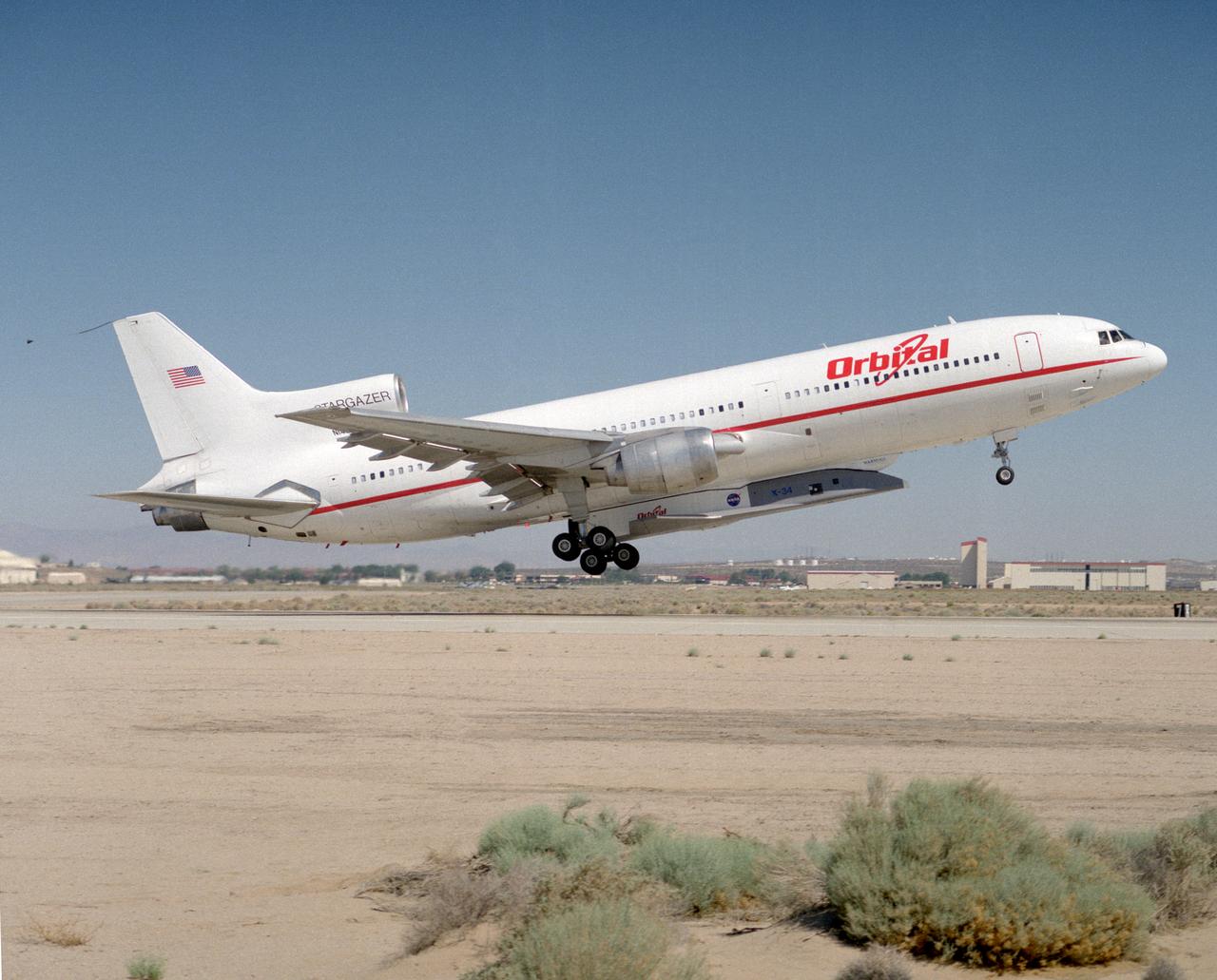
X-34 mated to modified L-1011 during takeoff on first captive carry flight
ED13-0079-08 (26 March 2013) ---- SpaceX Dragon's second operational mission ended  on March 26 after three weeks attached to the International Space Station. The unmanned spacecraft splashed down  in the Pacific Ocean about 214 miles off the coast of Baja California to successfully return about 2,670 pounds of science materials from the orbital outpost.  Photo credit:  NASA
ed13-0079-08
ED13-0079-02 (26 March 2013) ---- SpaceX Dragon's second operational mission ended  on March 26 after three weeks attached to the International Space Station. The unmanned spacecraft splashed down  in the Pacific Ocean about 214 miles off the coast of Baja California to successfully return about 2,670 pounds of science materials from the orbital outpost.  Photo credit:  NASA
ed13-0079-02
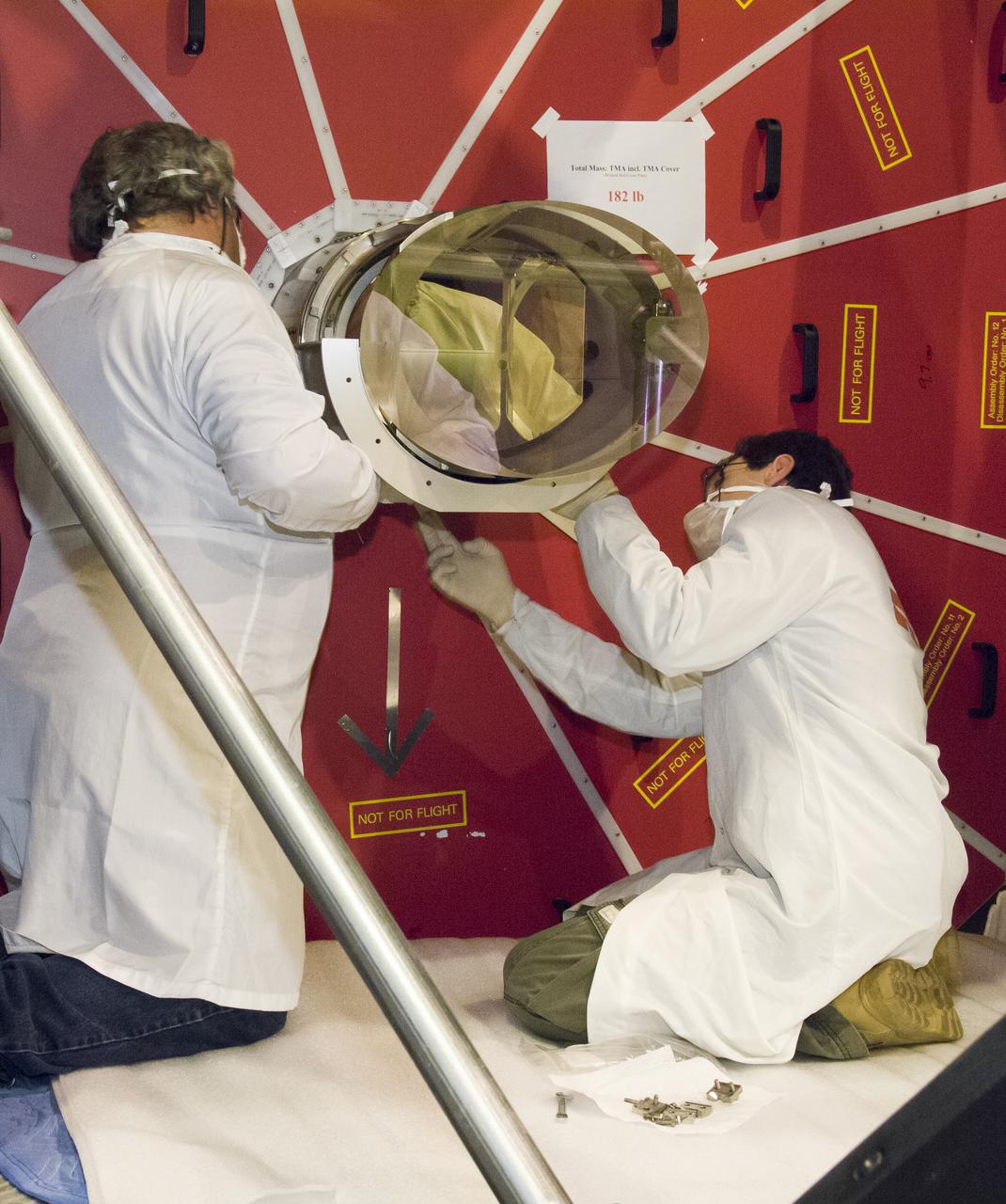
Technicians installing the tertiary mirror onto the SOFIA telescope.
Piecing Together SOFIA’s Telescope
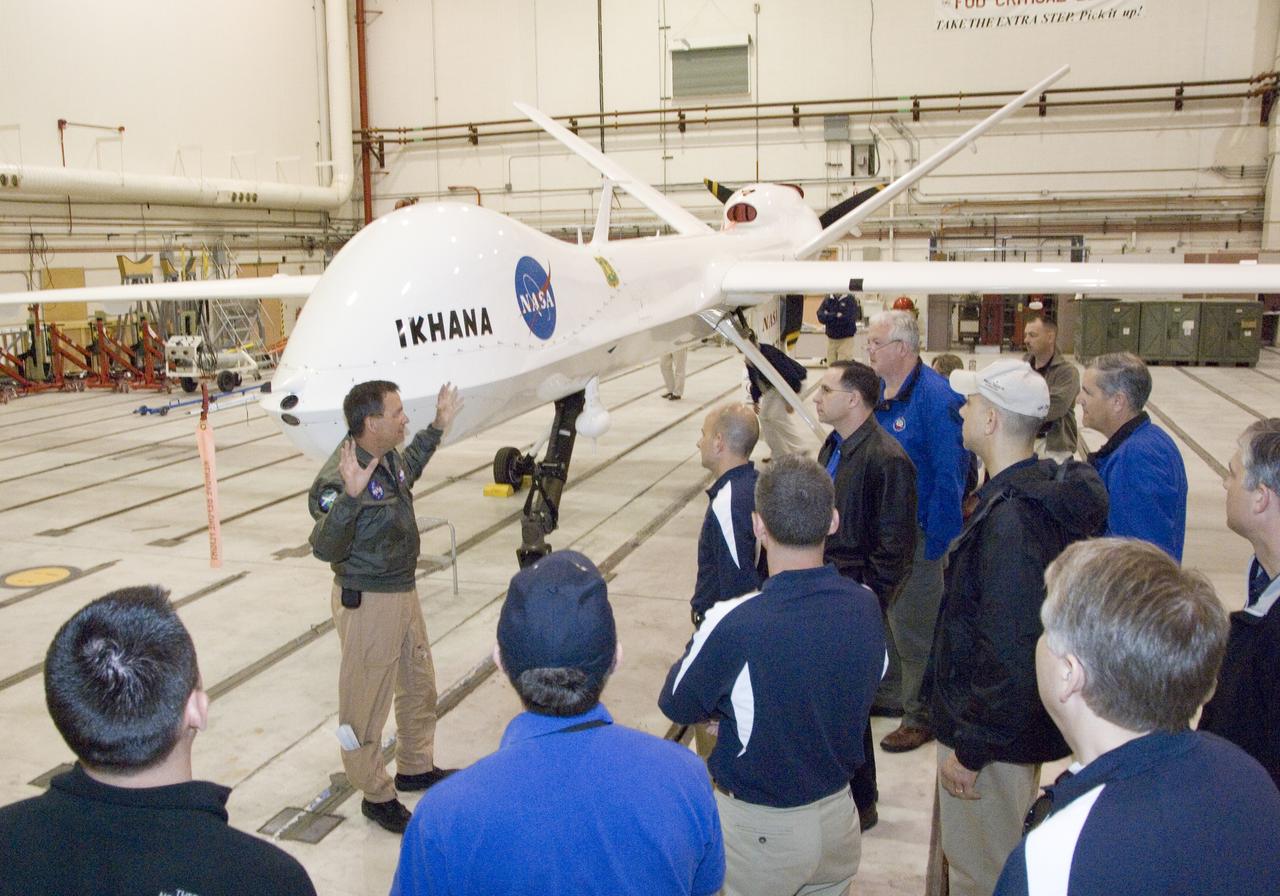
Industrial College of the Armed Forces students on a VIP tour receive a briefing on the Ikhana unmanned air vehicle from NASA Dryden pilot Mark Pestana.
Industrial College of the Armed Forces students on a VIP tour receive a briefing on the Ikhana unmanned air vehicle from NASA Dryden pilot Mark Pestana
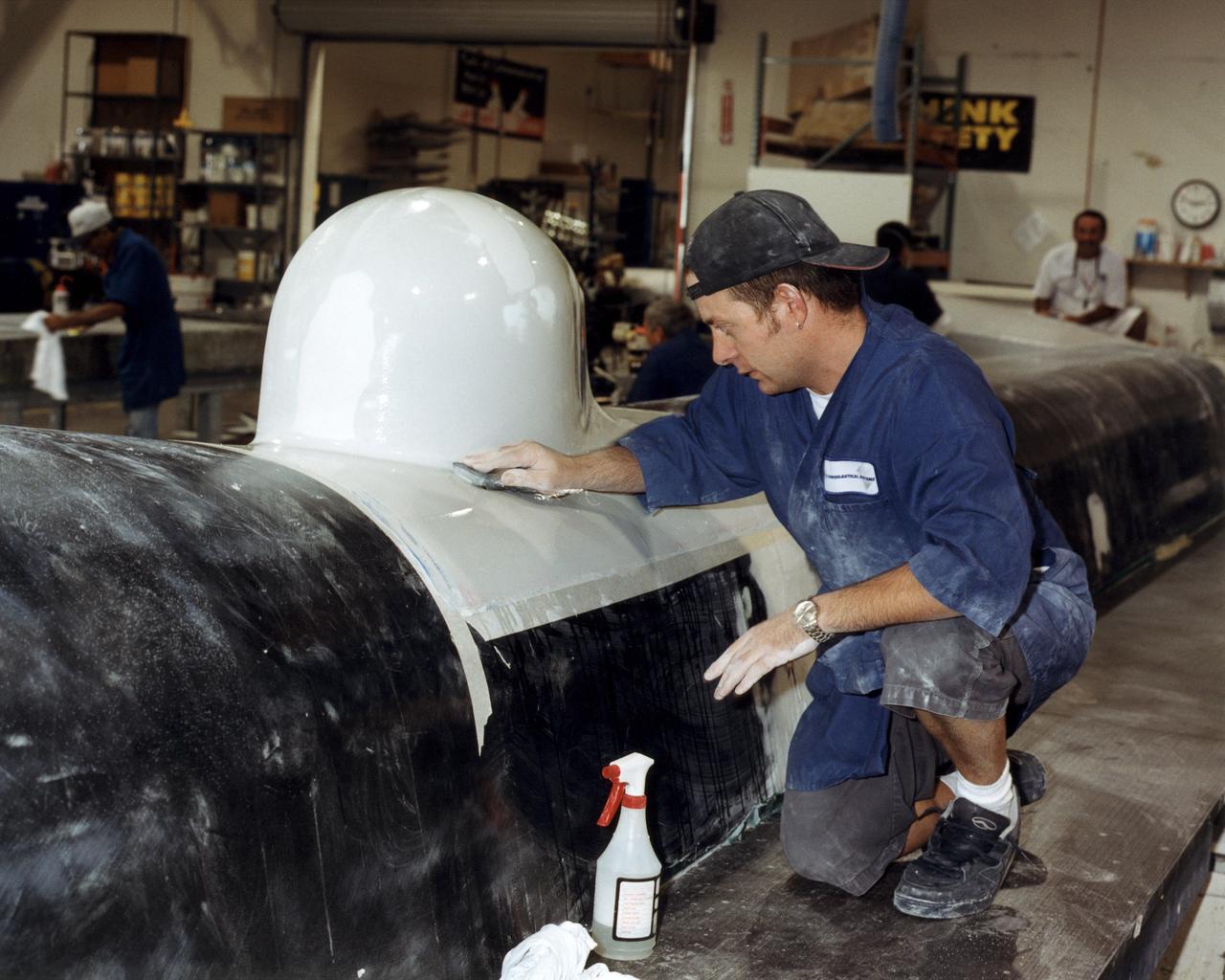
Technician Shawn Warren carefully smoothes out the composite skin of an instrument fairing<br>atop the upper fuselage of the Altair unmanned aerial vehicle (UAV) at General Atomics Aeronautical Systems, Inc., facility at Adelanto, Calif.
EC02-0188-3
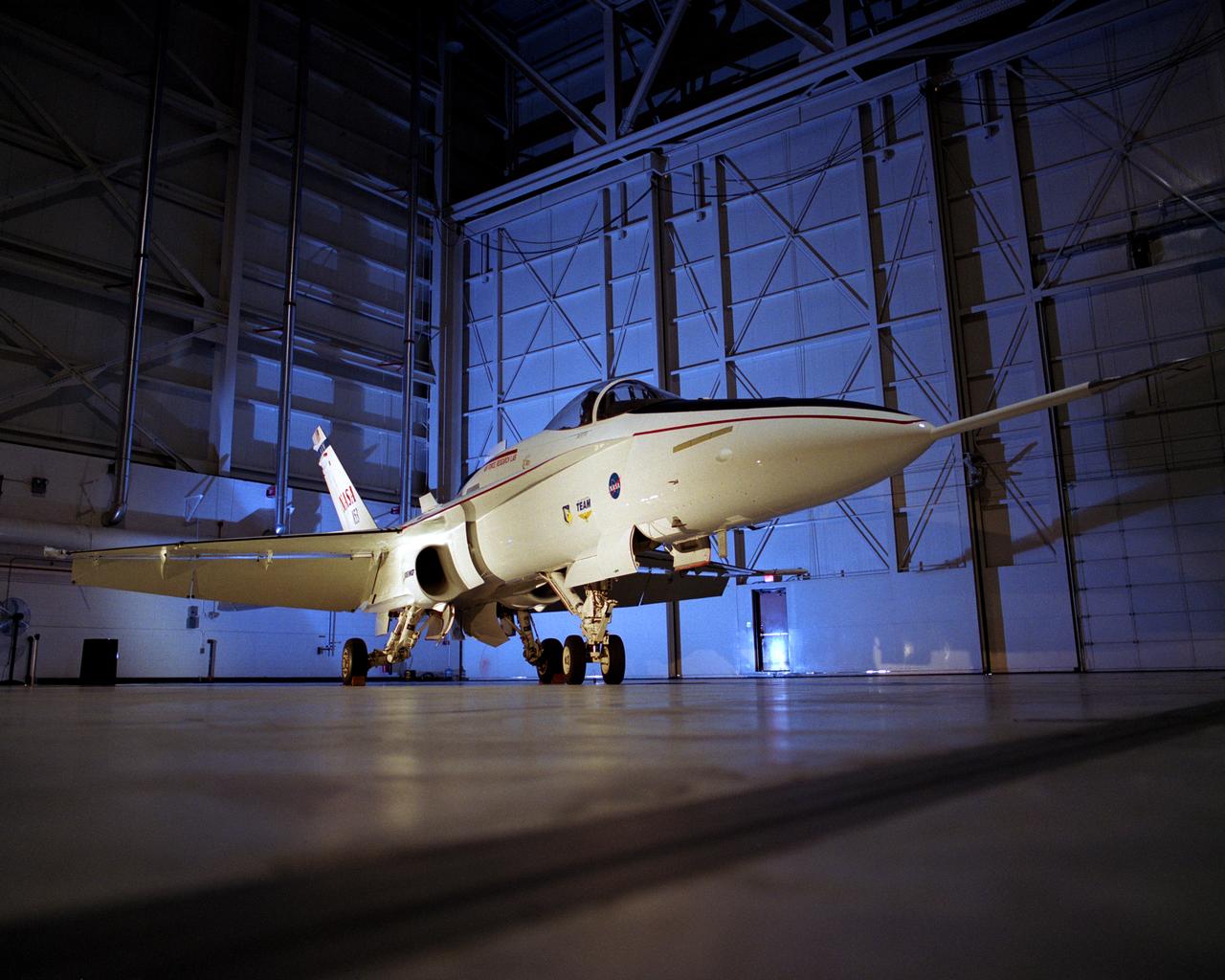
A modified F/A-18 in a distinctive red, white and blue paint scheme was showcased during formal rollout ceremonies for the Active Aeroelastic Wing flight research program.
EC02-0065-40
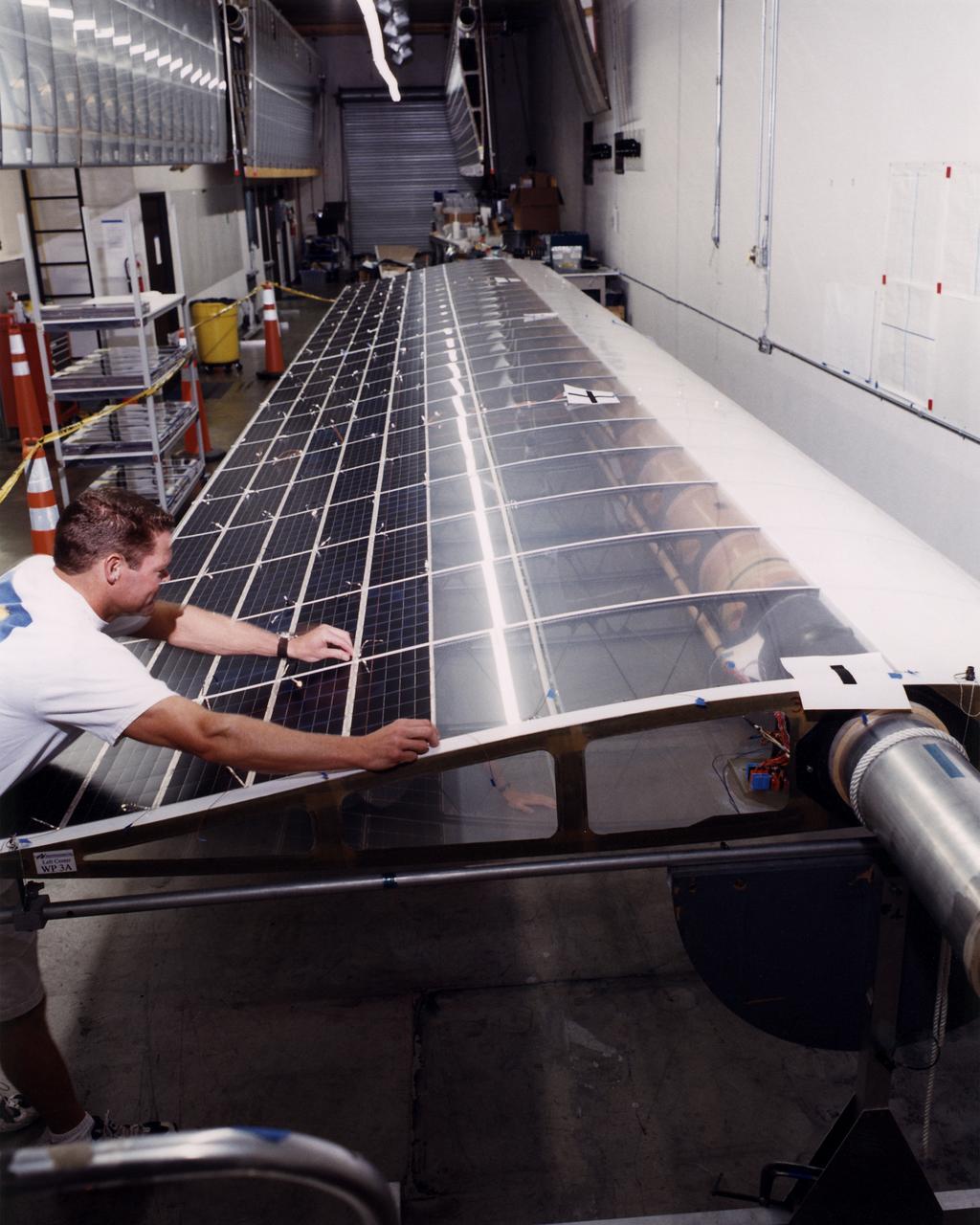
Technician Marshall MacCready carefully lays a panel of solar cells into place on a wing section of the Helios Prototype flying wing at AeroVironment's Design Development Center in Simi Valley, California. The bi-facial cells, manufactured by SunPower, Inc., of Sunnyvale, California, are among 64,000 solar cells which have been installed on the solar-powered aircraft to provide electricity to its 14 motors and operating systems.
EC00-0283-4
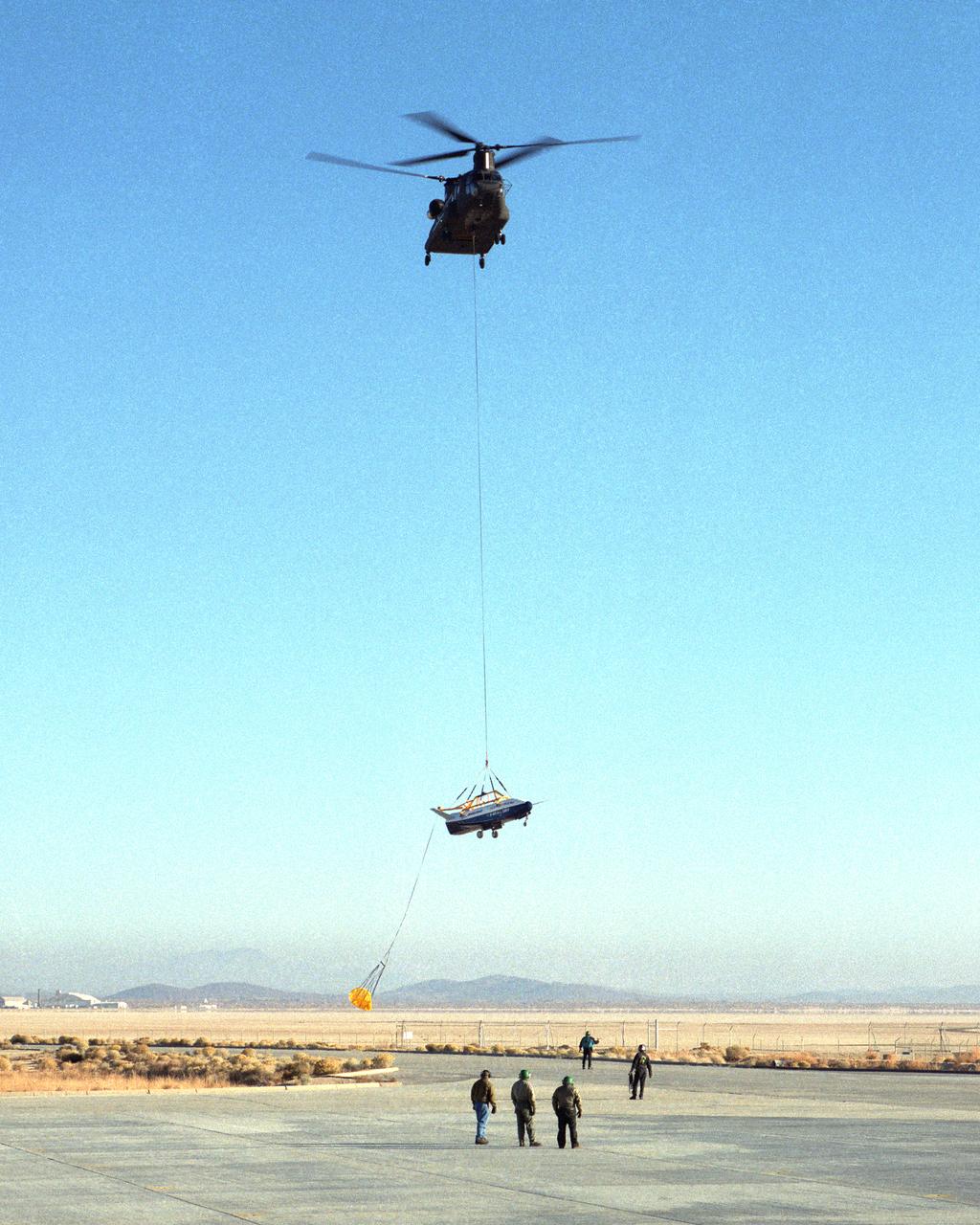
A U.S. Army CH-47 Chinook helicopter slowly lowers the X-40 sub-scale technology demonstrator to the ground under the watchful eyes of ground crew at the conclusion of a captive-carry test flight at NASA's Dryden Flight Research Center, Edwards, California. Several captive-carry flights were conducted to check out all operating systems and procedures before the X-40 made its first free flight at Edwards, gliding to a fully-autonomous approach and landing on the Edwards runway. The X-40 is an unpowered 82 percent scale version of the X-37, a Boeing-developed spaceplane designed to demonstrate various advanced technologies for development of future lower-cost access to space vehicles. Flight tests of the X-40 are designed to reduce the risks associated with research flights of the larger, more complex X-37.
A U.S. Army CH-47 Chinook helicopter slowly lowers the X-40 sub-scale technology demonstrator to the ground under the watchful eyes of ground crew at the conclusion of a captive-carry test flight
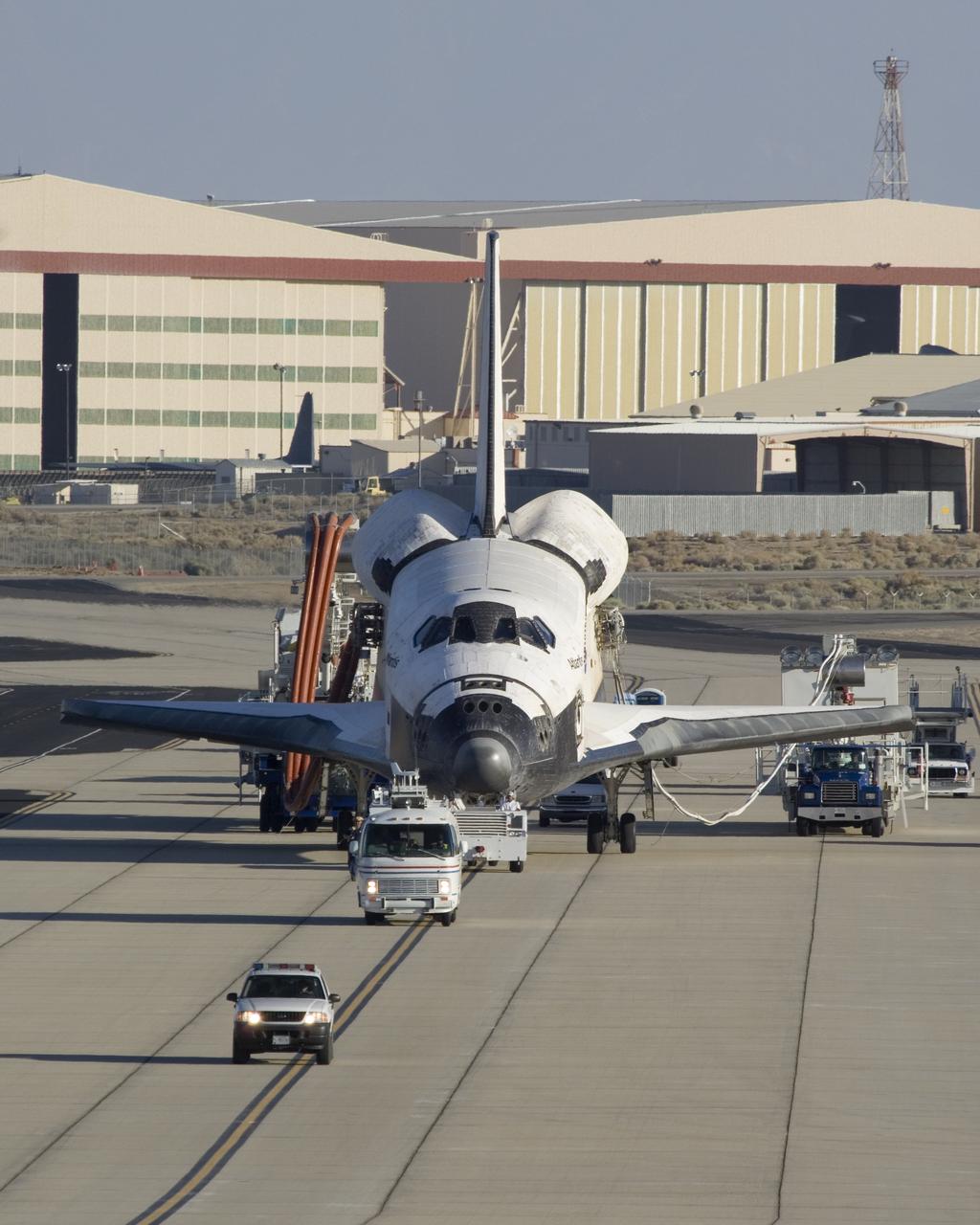
Space Shuttle Atlantis descended to a smooth landing at Edwards Air Force Base, Calif., concluding a successful assembly mission to the International Space Station. With Commander Rick Sturckow and Pilot Lee Archambault at the controls, Atlantis landed at 12:49 p.m. PDT on June 22, 2007. Atlantis launched June 8, 2007, and arrived at the International Space Station on June 10. While at the orbital outpost, the crew installed the Starboard 3 and 4 truss segment and conducted four spacewalks to activate it. During the third spacewalk, the crew repaired an out of position thermal blanket on the left orbital maneuvering system pod.  Atlantis also delivered a new station crew member, Flight Engineer Clayton Anderson. He replaced astronaut Suni Williams, who is the new record holder for a long-duration single spaceflight for a woman. She arrived at the station in December of 2006 with STS-116.  STS-117 is the 118th shuttle mission and 21st mission to visit the space station.
Accompanied by a convoy of recovery vehicles, the Space Shuttle Atlantis is towed up the taxiway at NASA Dryden following its landing on June 22, 2007
The SOFIA telescope team collected baseline operational measurements during several nights of characterization testing in March 2008 while the SOFIA 747SP aircraft that houses the German-built infrared telescope was parked on an unlit ramp next to its hangar at the NASA Dryden Flight Operations Facility in Palmdale, Calif. The primary celestial target was Polaris, the North Star. The activity provided the team with a working knowledge of how telescope operating systems interact and the experience of tracking celestial targets from the ground.
NASA's SOFIA flying observatory was captured in striking relief during nighttime telescope characterization tests in Palmdale, Calif., in March 2008
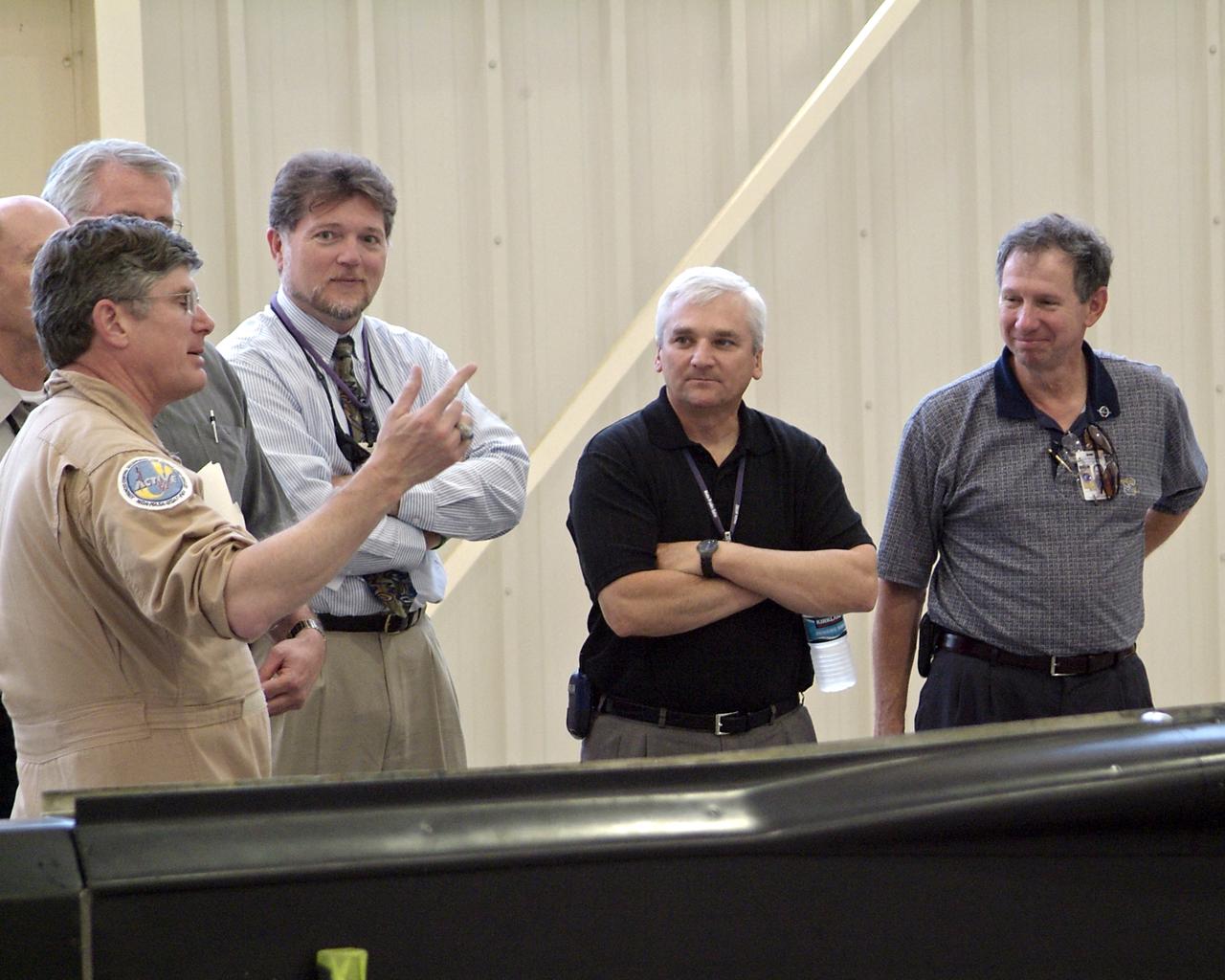
NASA Dryden research pilot Jim Smolka (left) details a recent flight experiment on a modified F-15B research aircraft to test range program manager Jerry McKee, center director Kevin Petersen and NASA Administrator Michael Griffin (right) during Griffin's initial visit to NASA's Dryden Flight Research Center on Tuesday, May 24.
Jim Smolka (left) details a flight experiment to Jerry McKee, Kevin Petersen and NASA Administrator Mike Griffin (right) during Griffin's initial visit to DFRC
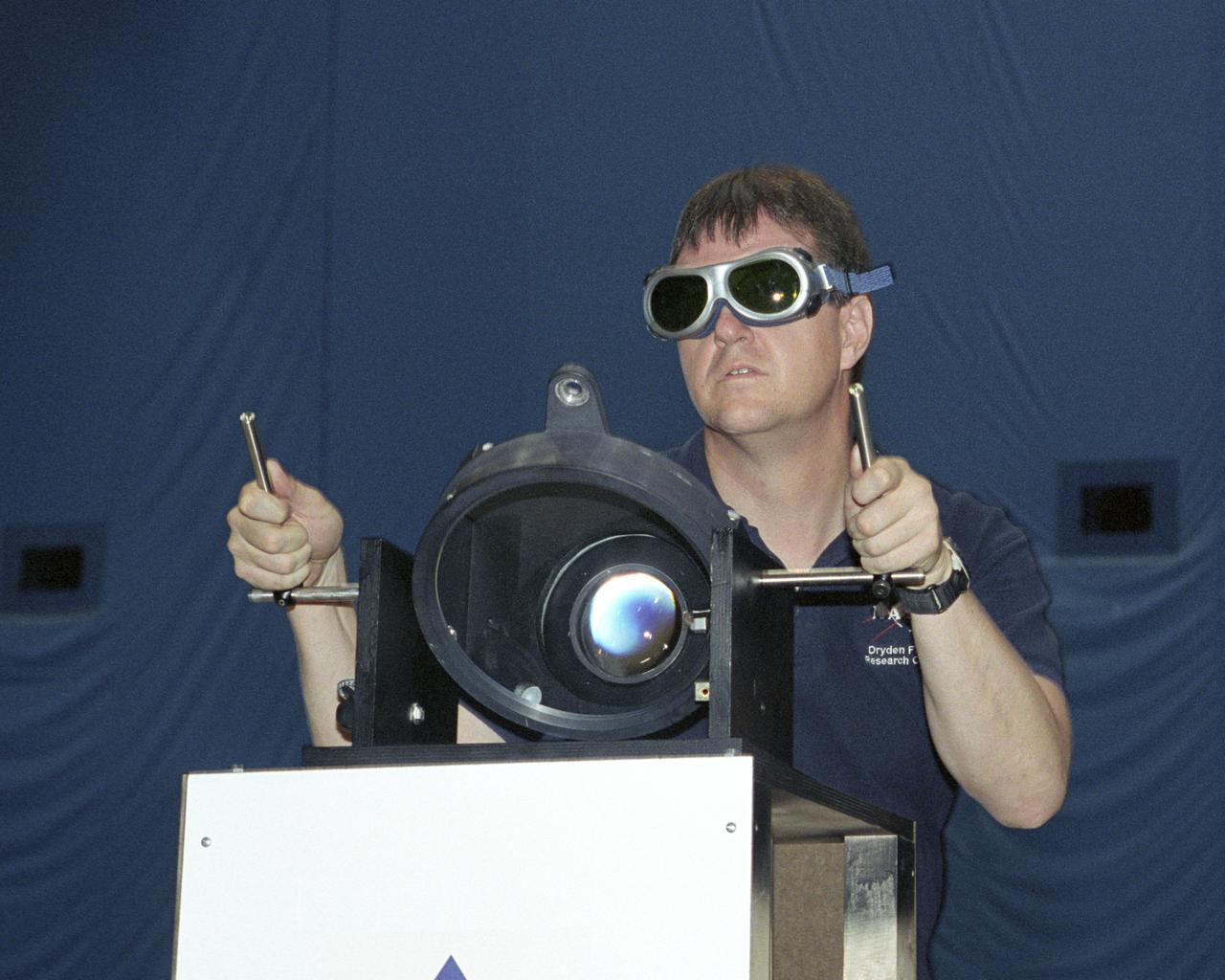
NASA Dryden project engineer Dave Bushman carefully aims the optics of a laser device at a solar cell panel on a model aircraft during the first flight demonstration of an aircraft powered by laser light.
NASA Dryden's Dave Bushman aims the optics of a laser device at a panel on a model aircraft during the first flight demonstration of an aircraft powered by laser light.
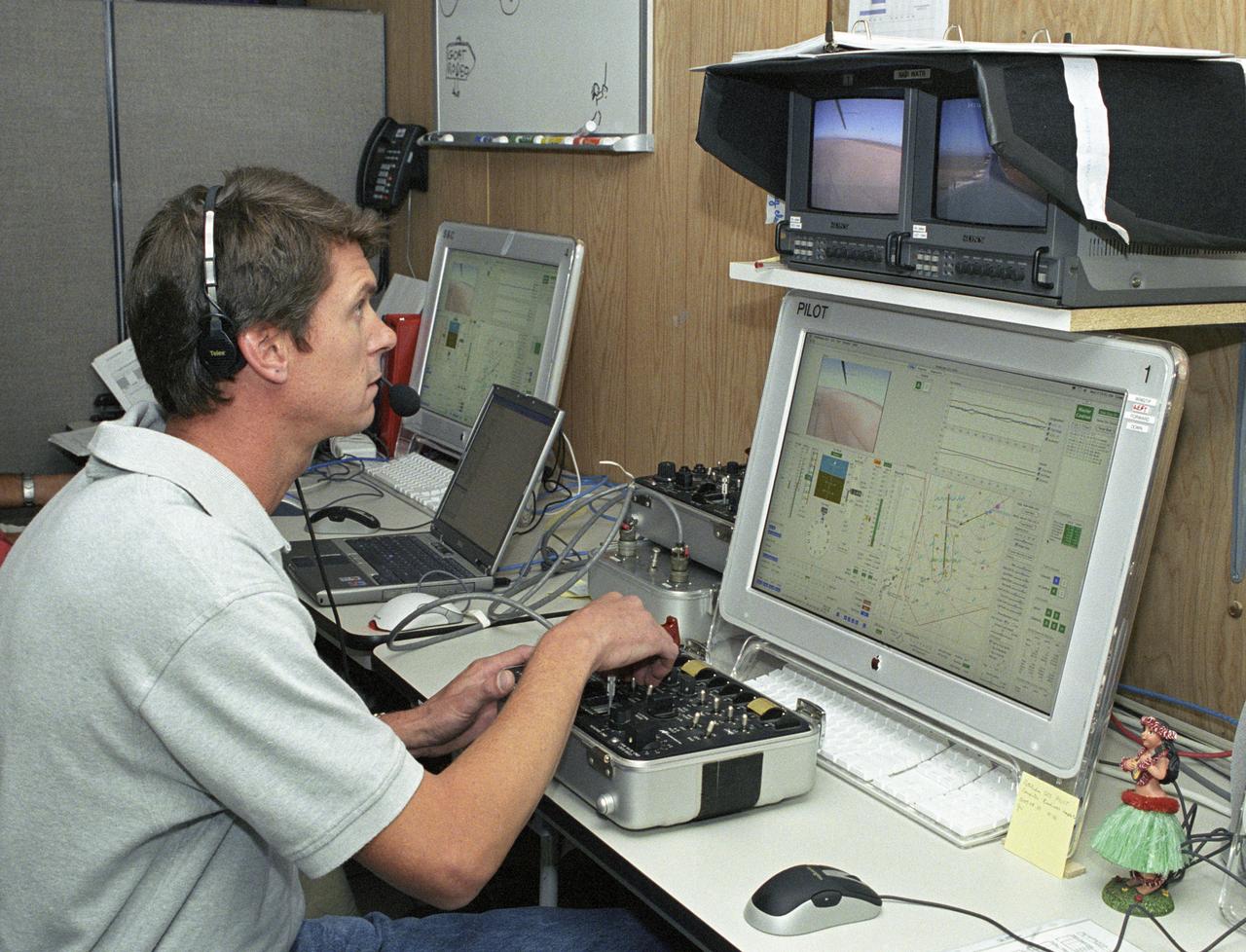
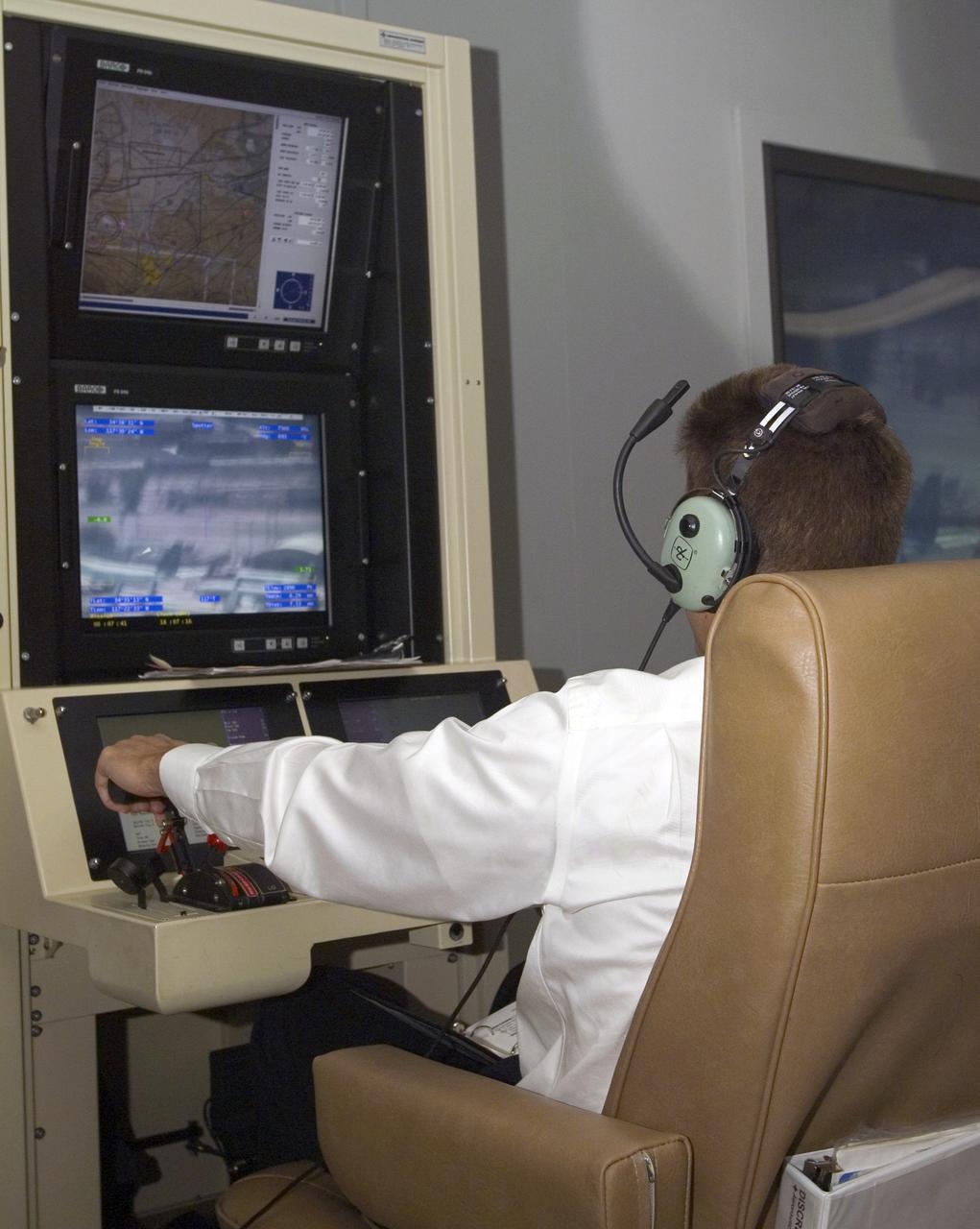
AeroVironment pilot Wyatt Sadler controls the Pathfinder-Plus flying wing from a small console, video and computer monitors in the ground station.
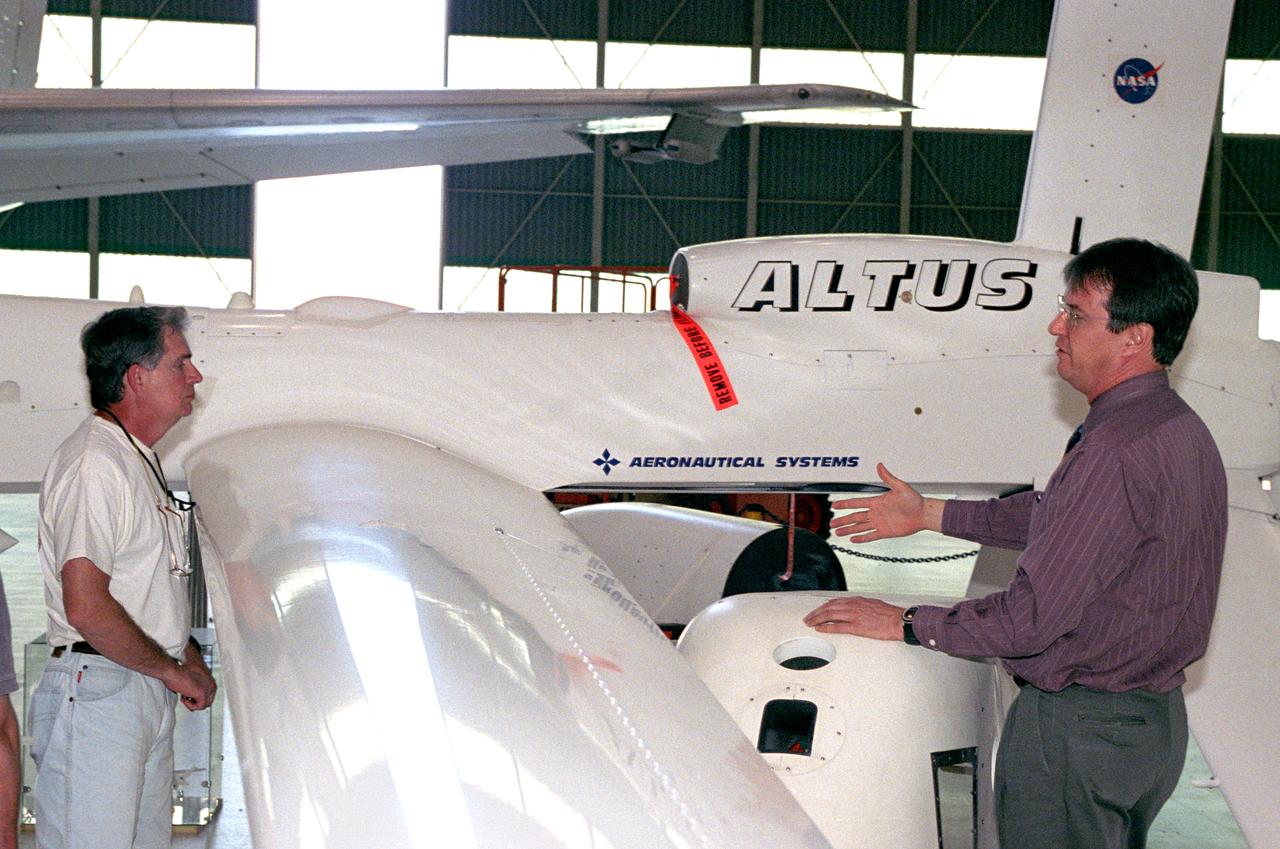
David Bushman, unmanned aerial vehicle (UAV) mission manager in NASA Dryden's Airborne Science Program, explains the capabilities of the Altus UAV to Charles Hudgins of NASA Langley's Chemistry and Dynamics Branch.
Dryden's David Bushman explains the capabilities of the Altus UAV to NASA Langley's Charles Hudgins
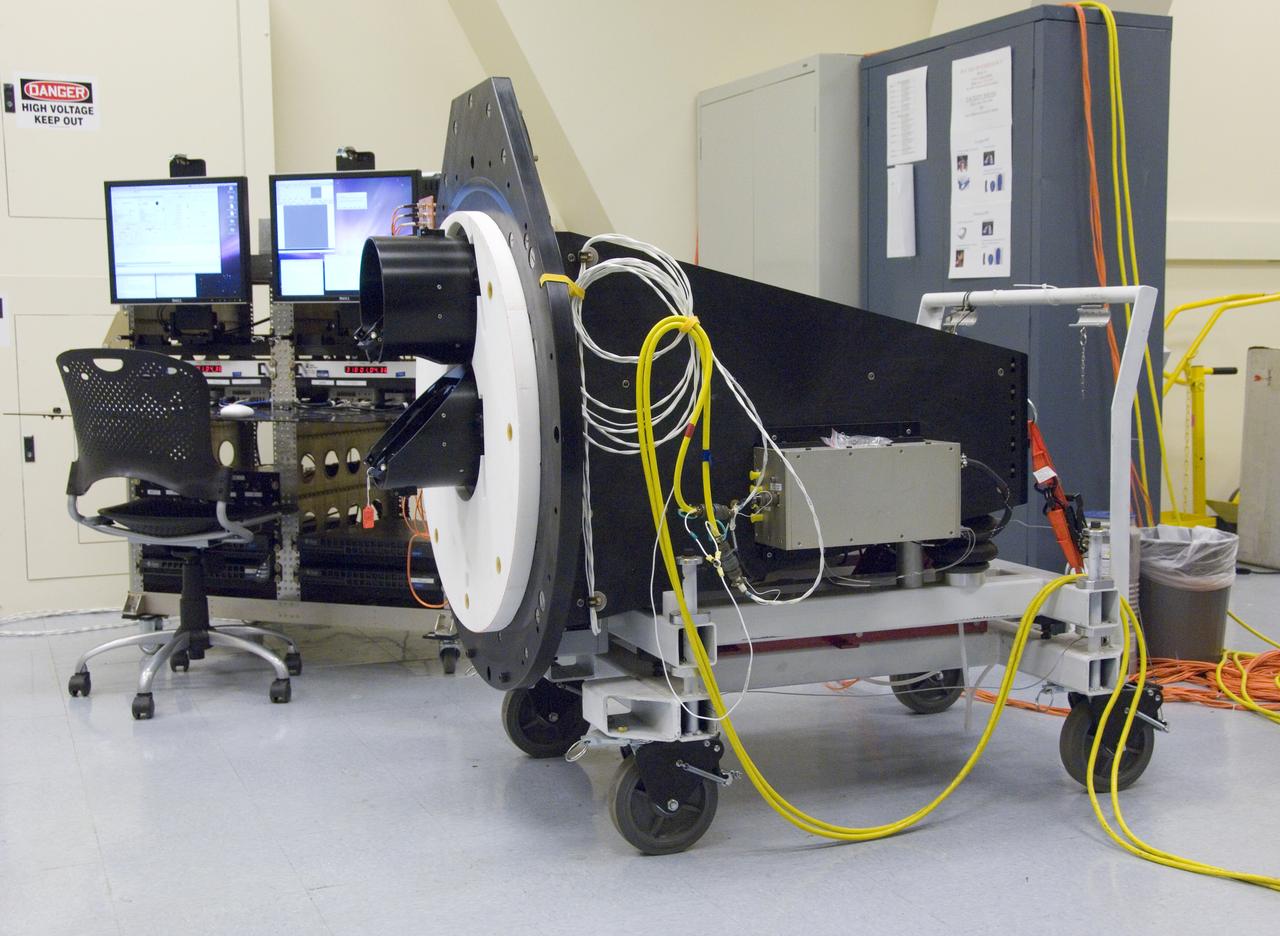
The Lowell Observatory's High-speed Imaging Photometer for Occultation rests on its dolly in the lab prior to installation on the SOFIA airborne observatory.
The Lowell Observatory's High-speed Imaging Photometer for Occultation rests on its dolly in the lab prior to installation on the SOFIA airborne observatory
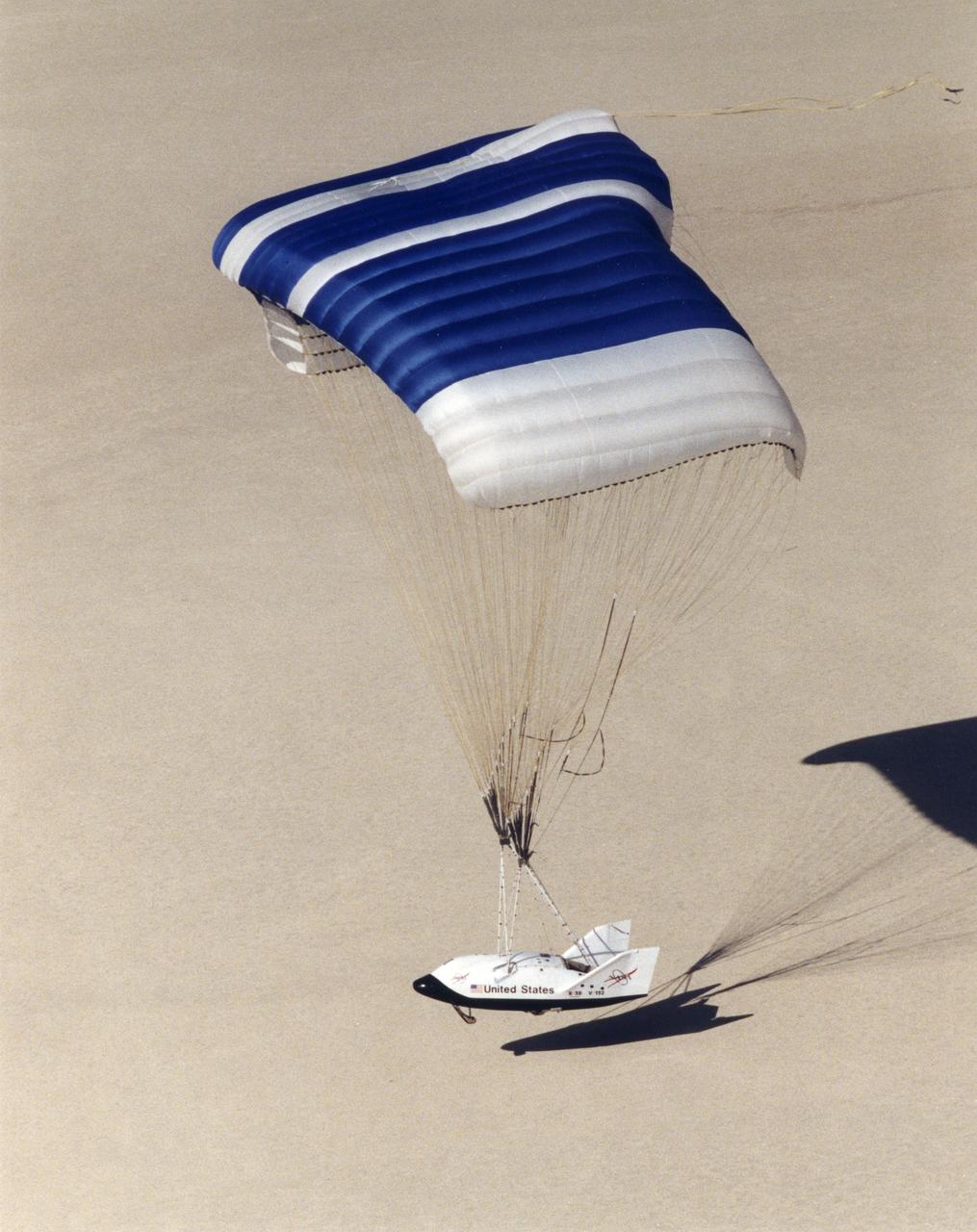
The X-38, a research vehicle built to help develop technology for an emergency Crew Return Vehicle from the International Space Station, is seen just before touchdown on a lakebed near the Dryden Flight Research Center, Edwards California, at the end of a March 2000 test flight.
The X-38 Second Prototype Flares to a Landing over the Lakebed at the End of Its Fifth Flight at Edwards Air Force Base
ED13-0079-09 (26 March 2013) ---- SpaceX Dragon's second operational mission ended  on March 26 after three weeks attached to the International Space Station. The unmanned spacecraft splashed down  in the Pacific Ocean about 214 miles off the coast of Baja California to successfully return about 2,670 pounds of science materials from the orbital outpost.  Photo credit:  NASA
ed13-0079-09
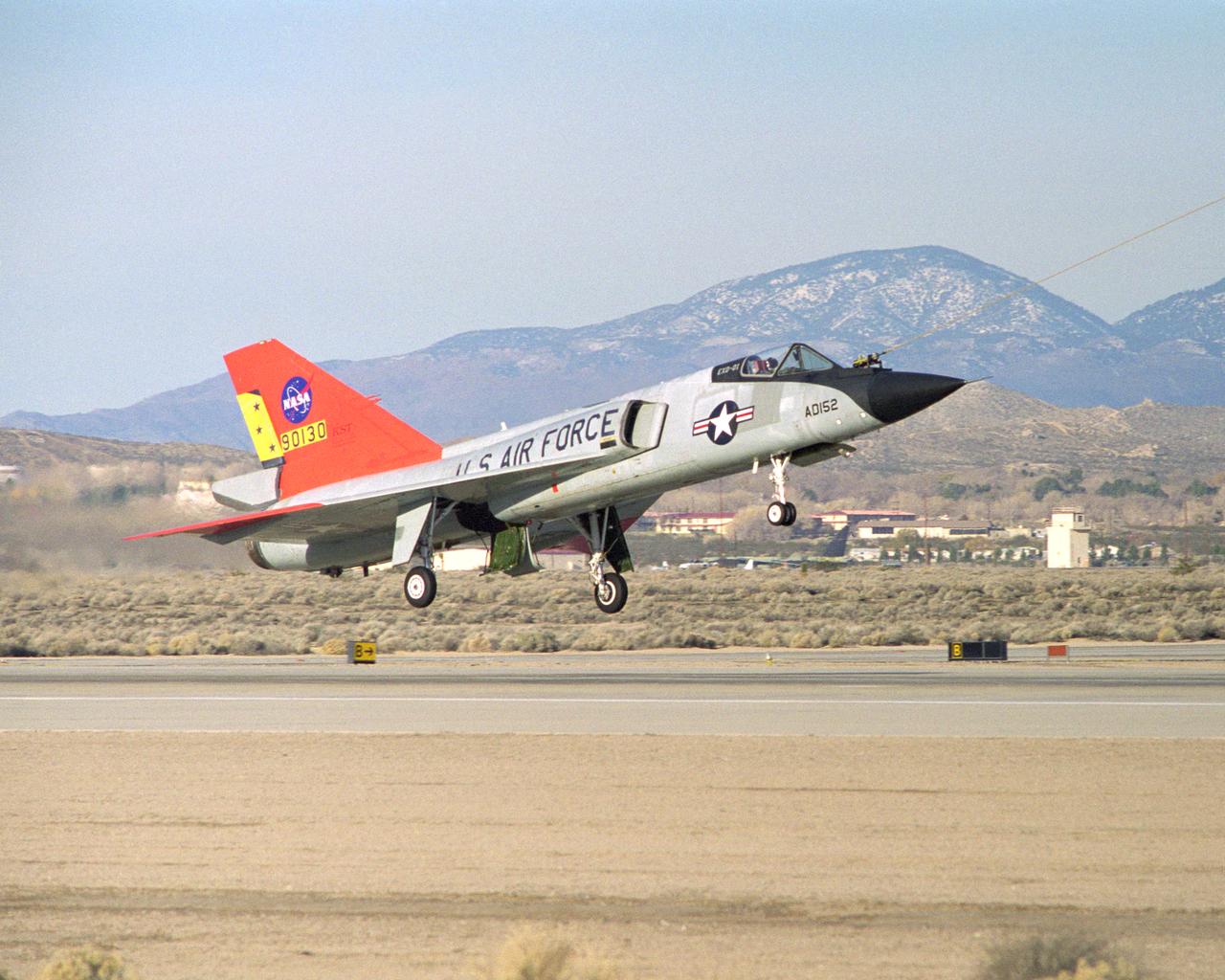
Eclipse project closeup of QF-106 under tow on takeoff on first flight December 20, 1997
EC97-44357-9
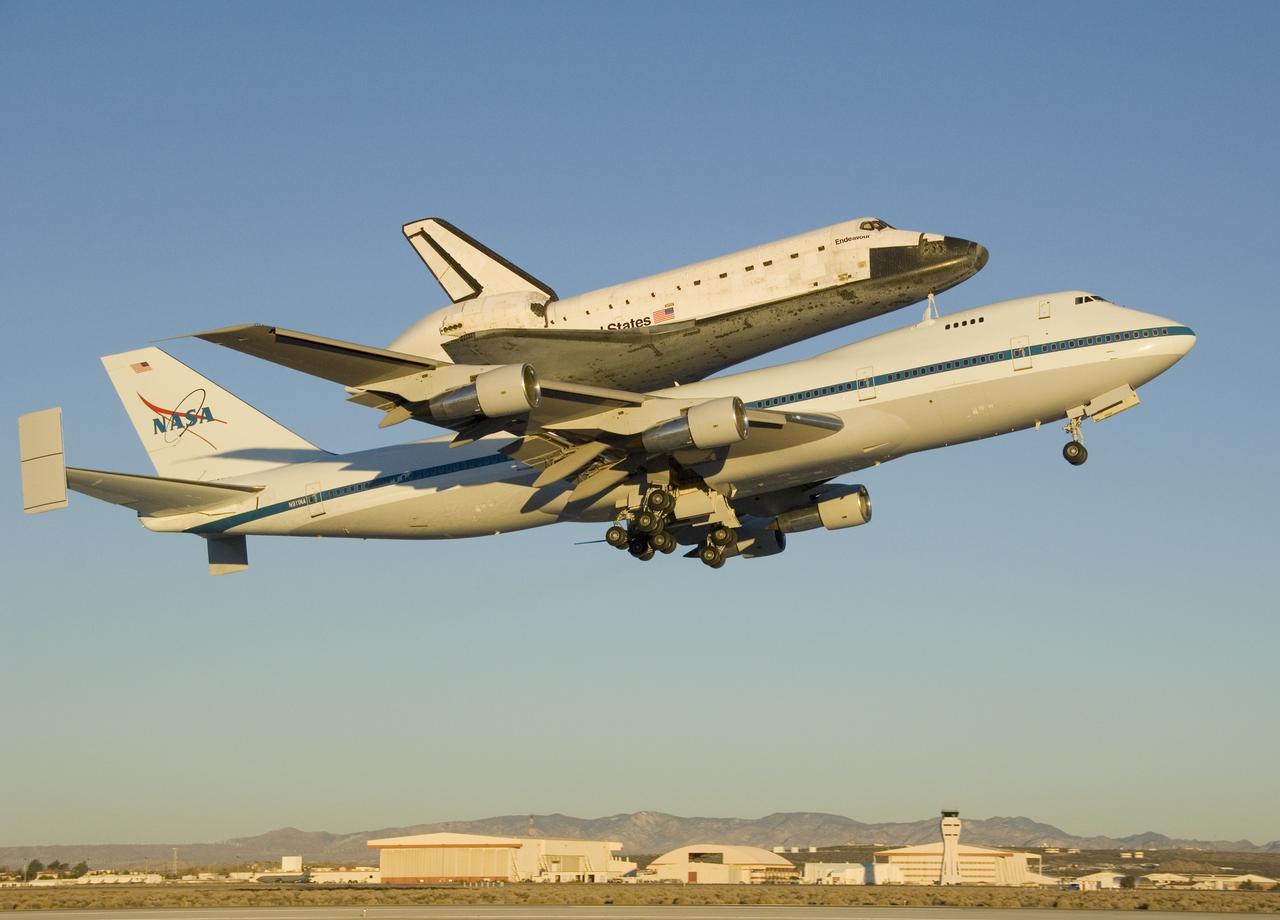
The Space Shuttle Endeavour atop its modified Boeing 747 carrier aircraft lifts off from Edwards Air Force Base on the first leg of its ferry flight back to the Kennedy Space Center just after sunrise on Dec. 10, 2008.
The modified 747 carrier aircraft carrying the Space Shuttle Endeavour soars aloft from Edwards AFB on the first leg of its ferry flight back to Florida
With turbulence-measurement booms projecting ahead of the wing, Pathfinder-Plus soars aloft over Rogers Dry Lake on its final research flight from NASA Dryden.
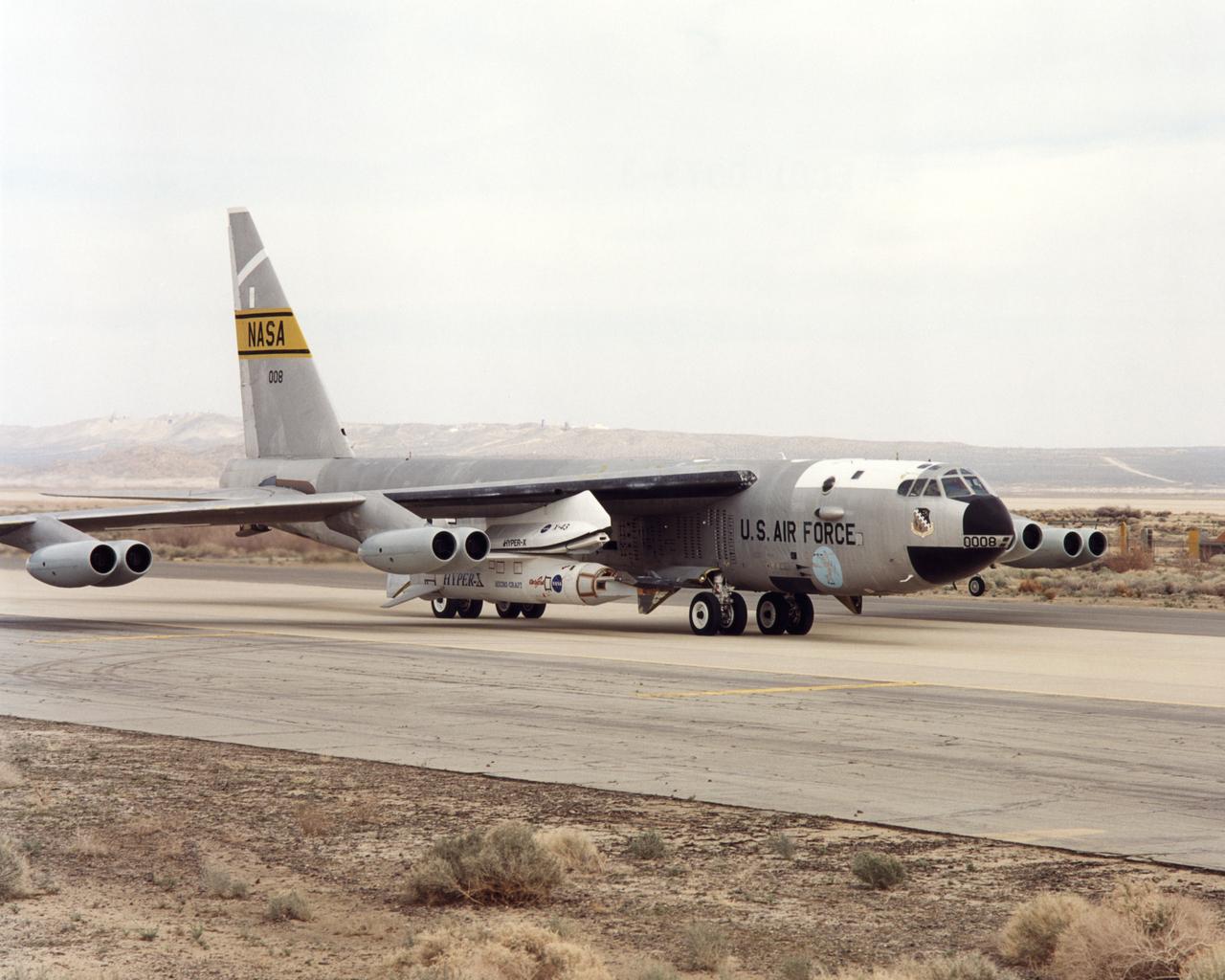
The first of three X-43A hypersonic research aircraft and its modified Pegasus® booster rocket recently underwent combined systems testing while mounted to NASA's NB-52B carrier aircraft at the Dryden Flight Research Center, Edwards, Calif. The combined systems test was one of the last major milestones in the Hyper-X research program before the first X-43A flight. The X-43A flights will be the first actual flight tests of an aircraft powered by a revolutionary supersonic-combustion ramjet ("scramjet") engine capable of operating at hypersonic speeds (above Mach 5, or five times the speed of sound). The 12-foot, unpiloted research vehicle was developed and built by MicroCraft Inc., Tullahoma, Tenn., under NASA contract. The booster was built by Orbital Sciences Corp., Dulles, Va.,After being air-launched from NASA's venerable NB-52 mothership, the booster will accelerate the X-43A to test speed and altitude. The X-43A will then separate from the rocket and fly a pre-programmed trajectory, conducting aerodynamic and propulsion experiments until it descends into the Pacific Ocean. Three research flights are planned, two at Mach 7 and one at Mach 10.
The X-43A hypersonic research aircraft and its modified Pegasus® booster rocket recently underwent combined systems testing while mounted to NASA's NB-52B carrier aircraft
A pilot for General Atomics guides the Altair remotely operated aircraft from a ground control station using both visual and telemetered data.
ED05-0082-04
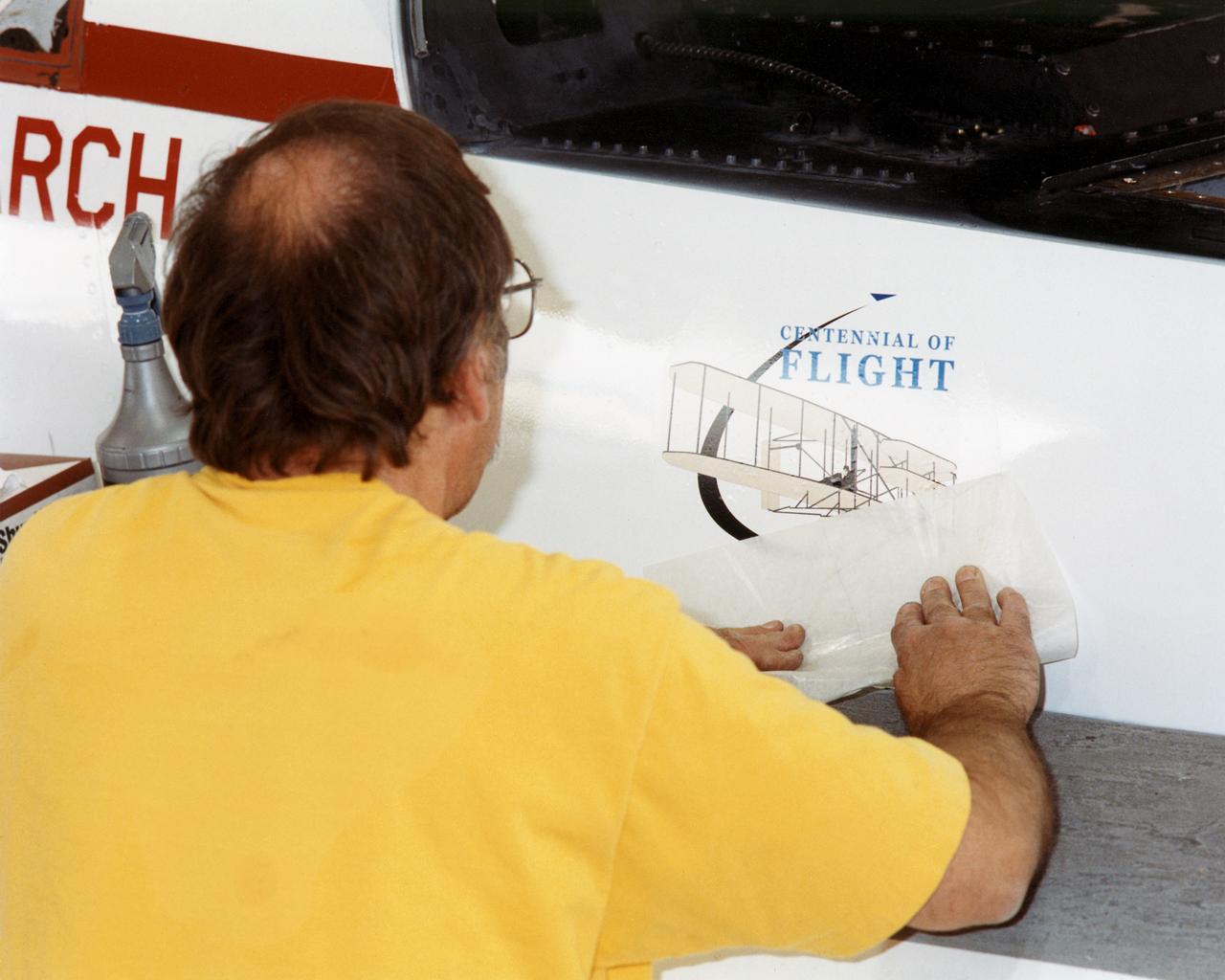
NASA aircraft technician Don Herman completes placement of the first official U.S. Centennial of Flight Commission logo on an aircraft, Dryden's Active Aeroelastic Wing (AAW) F/A-18.
EC02-0061-1
ED13-0079-04 (26 March 2013) ---- SpaceX Dragon's second operational mission ended  on March 26 after three weeks attached to the International Space Station. The unmanned spacecraft splashed down  in the Pacific Ocean about 214 miles off the coast of Baja California to successfully return about 2,670 pounds of science materials from the orbital outpost.  Photo credit:  NASA
ed13-0079-04
The SOFIA telescope team collected baseline operational measurements during several nights of characterization testing in March 2008 while the SOFIA 747SP aircraft that houses the German-built infrared telescope was parked on an unlit ramp next to its hangar at the NASA Dryden Flight Operations Facility in Palmdale, Calif. The primary celestial target was Polaris, the North Star. The activity provided the team with a working knowledge of how telescope operating systems interact and the experience of tracking celestial targets from the ground.
This backlit photo of SOFIA's infrared telescope during characterization testing shows the cell-like construction of the telescope's 2.5-meter primary mirror
The first of three X-43A hypersonic research aircraft was mated to its modified Pegasus® booster rocket in late January at NASA's Dryden Flight Research Center, Edwards, Calif.
X-43A hypersonic research aircraft mated to its modified Pegasus® booster rocket.
The NASA Dryden 747 Shuttle Carrier Aircraft crew poses in an engine inlet; Standing L to R - aircraft mechanic John Goleno and SCA Team Leader Pete Seidl; Kneeling L to R - aircraft mechanics Todd Weston and Arvid Knutson, and avionics technician Jim Bedard NASA uses two modified Boeing 747 jetliners, originally manufactured for commercial use, as Space Shuttle Carrier Aircraft (SCA). One is a 747-100 model, while the other is designated a 747-100SR (short range). The two aircraft are identical in appearance and in their performance as Shuttle Carrier Aircraft.  The 747 series of aircraft are four-engine intercontinental-range swept-wing "jumbo jets" that entered commercial service in 1969.  The SCAs are used to ferry space shuttle orbiters from landing sites back to the launch complex at the Kennedy Space Center, and also to and from other locations too distant for the orbiters to be delivered by ground transportation.  The orbiters are placed atop the SCAs by Mate-Demate Devices, large gantry-like structures which hoist the orbiters off the ground for post-flight servicing, and then mate them with the SCAs for ferry flights.
The NASA Dryden 747 Shuttle Carrier Aircraft crew poses in an engine inlet
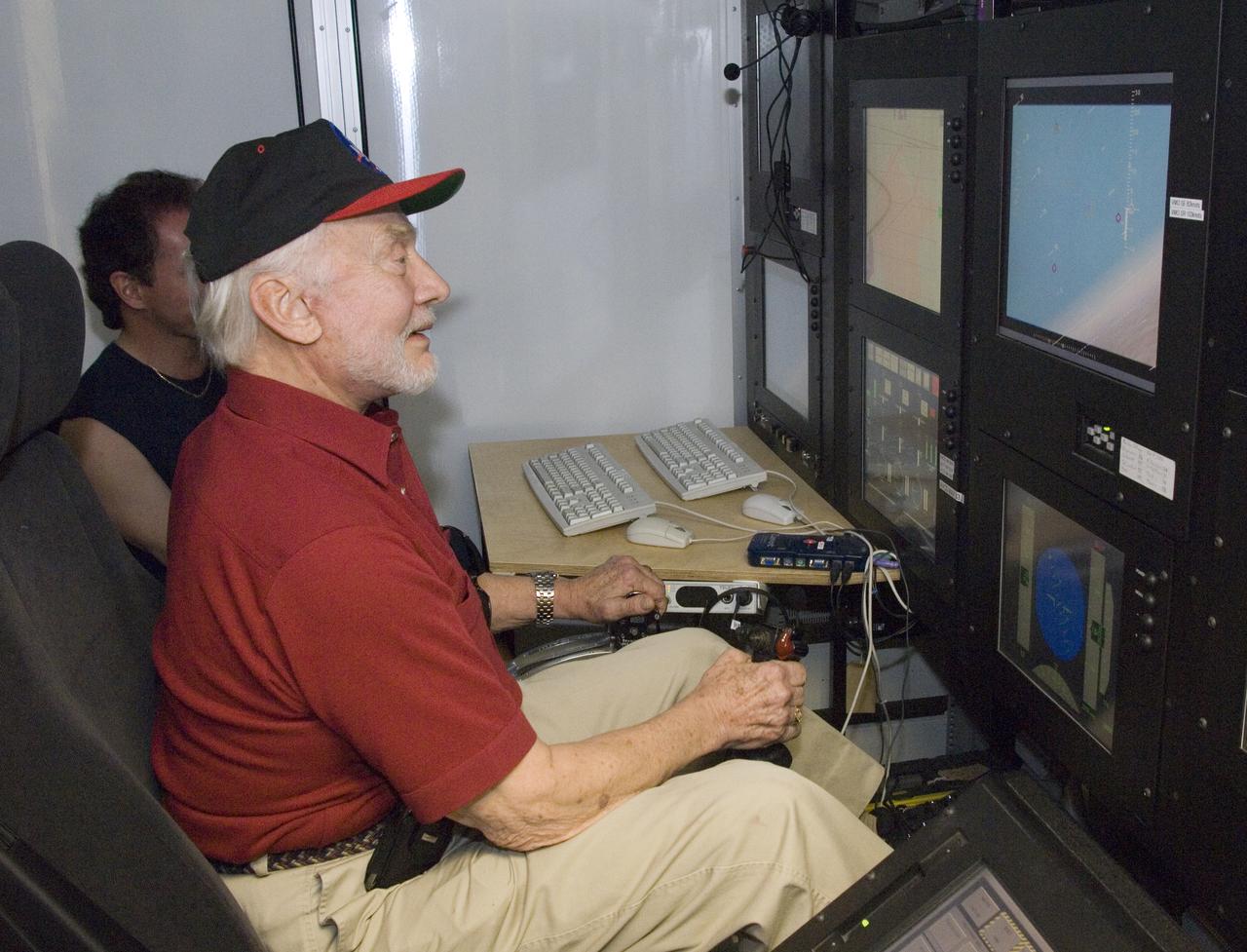
Apollo 11 astronaut Buzz Aldrin tries out the control station for the X-48B Blended Wing Body unmanned subscale demonstrator during a tour of NASA Dryden.
Apollo 11 astronaut Buzz Aldrin tries out the control station for the X-48B Blended Wing Body unmanned subscale demonstrator during a tour of NASA Dryden
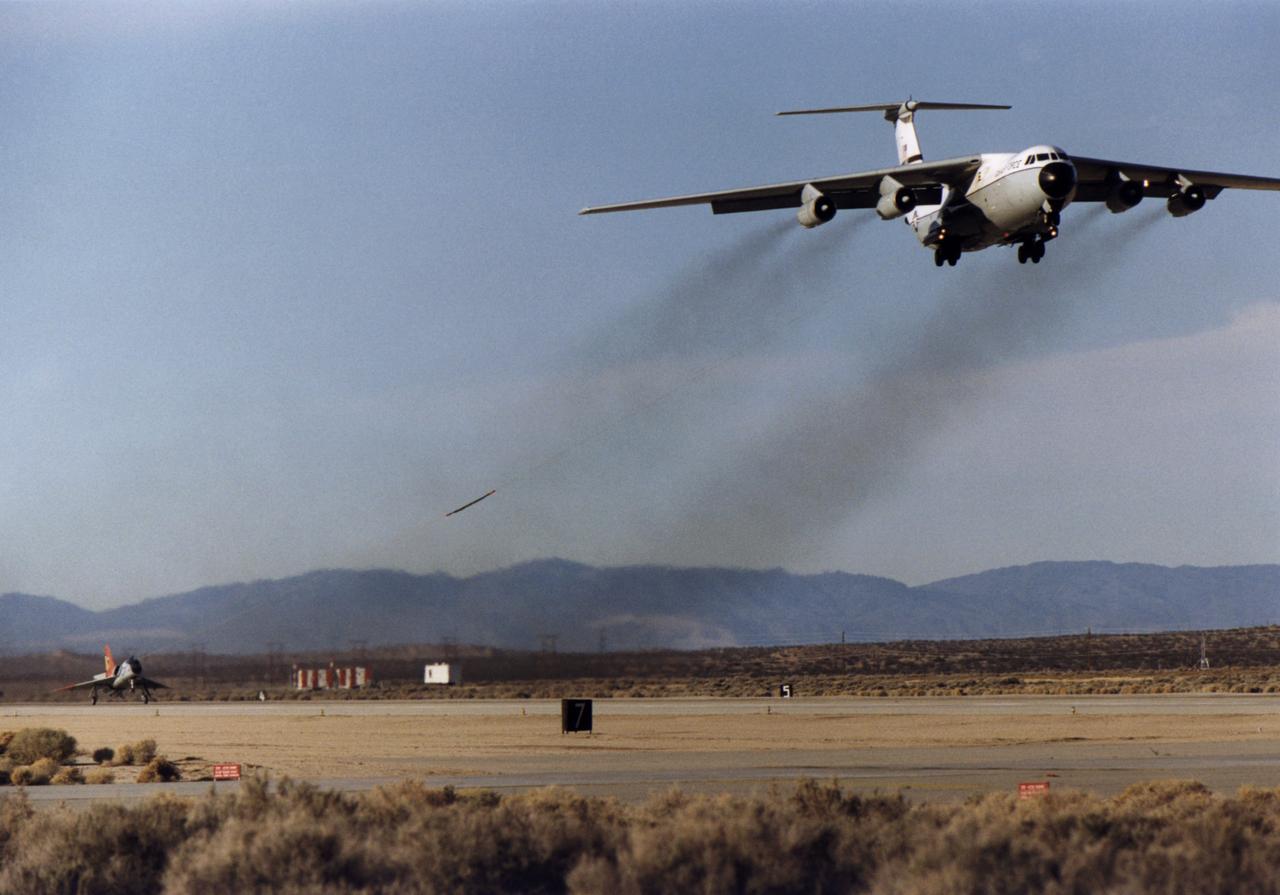
Eclipse project QF-106 and C-141A takeoff on first tethered flight December 20, 1997
EC97-44357-8
NASA's NB-52B carrier aircraft rolls down a taxiway at Edwards Air Force Base with the X-43A hypersonic research aircraft and its modified Pegasus® booster rocket slung from a pylon under its right wing. Part of a combined systems test conducted by NASA's Dryden Flight Research Center at Edwards, the taxi test was one of the last major milestones in the Hyper-X research program before the first X-43A flight. The X-43A flights will be the first actual flight tests of an aircraft powered by a revolutionary supersonic-combustion ramjet ("scramjet") engine capable of operating at hypersonic speeds (above Mach 5, or five times the speed of sound). The 12-foot, unpiloted research vehicle was developed and built by MicroCraft Inc., Tullahoma, Tenn., under NASA contract. The booster was built by Orbital Sciences Corp., Dulles, Va.,After being air-launched from NASA's venerable NB-52 mothership, the booster will accelerate the X-43A to test speed and altitude. The X-43A will then separate from the rocket and fly a pre-programmed trajectory, conducting aerodynamic and propulsion experiments until it descends into the Pacific Ocean. Three research flights are planned, two at Mach 7 and one at Mach 10, with the first tentatively scheduled for late spring to early summer, 2001.
NASA's NB-52B carrier aircraft rolls down a taxiway with the X-43A hypersonic research aircraft and its modified Pegasus® booster rocket slung from a pylon under its right wing
In support of NASA's 50th Anniversary, hundreds of NASA government and contractor employees dressed in red, white, and blue gathered to form a giant "50" on the back ramp at NASA's Dryden Flight Research Center.
Dryden People
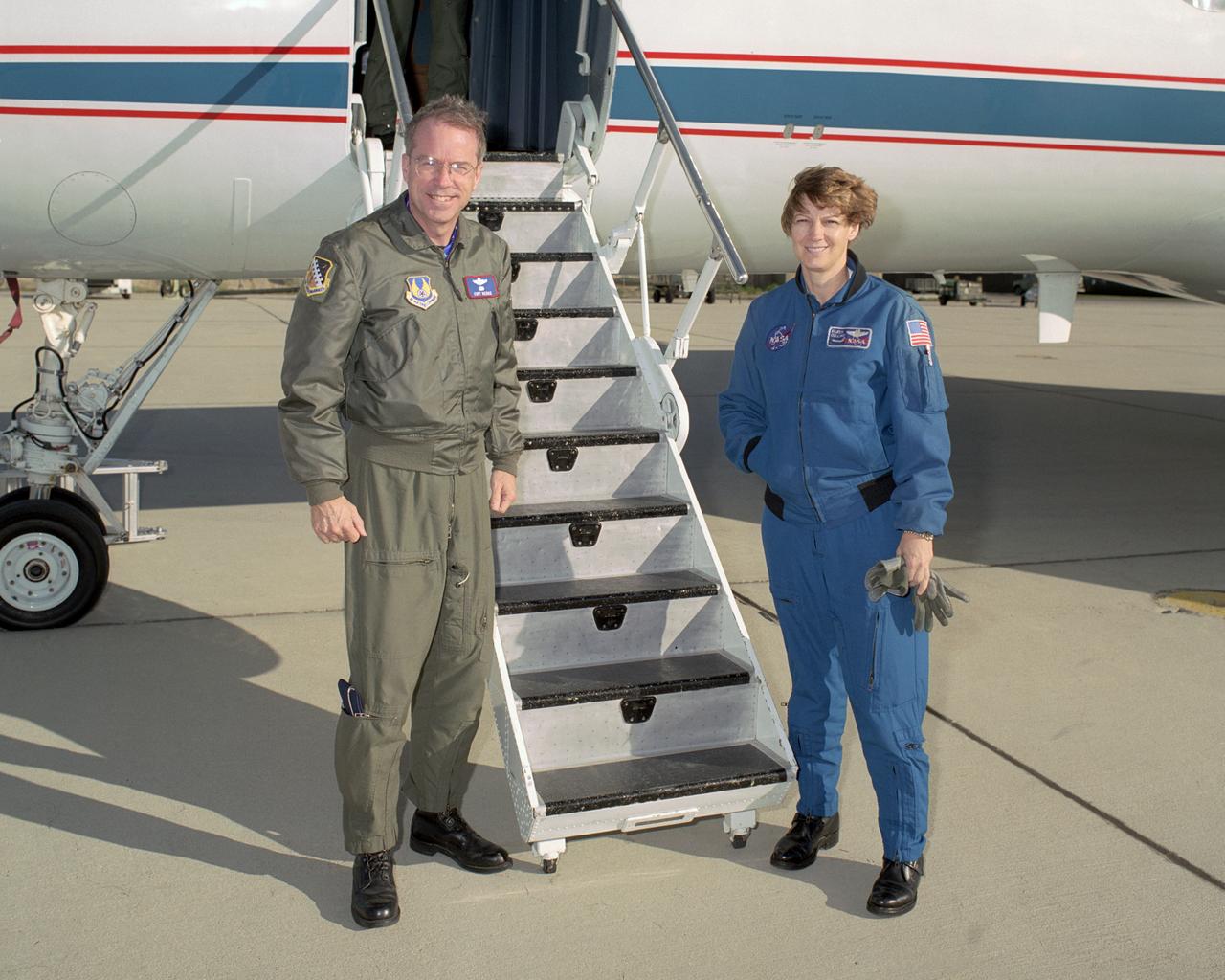
Brig. Gen. Curtis Bedke, commander of the Air Force Flight Test Center at Edwards Air Force Base, received some first-hand insight on how to fly a Space Shuttle approach and landing, courtesy of NASA astronaut and STS-114 mission commander Eileen Collins. The series of proficiency flights in NASA's modified Grumman Gulfstream-II Shuttle Training Aircraft were in preparation for the STS-114 mission with the shuttle Discovery. Although NASA's Kennedy Space Center in Florida is the primary landing site for Space Shuttle missions, flight crews also practice the shuttle's steep approach and landing at Edwards in case weather or other situations preclude a landing at the Florida site and force a diversion to Edwards AFB.
AFFTC commander Brig. Gen. Curtis Bedke experienced a Shuttle approach and landing in NASA's Shuttle Training Aircraft from STS-114 commander Eileen Collins
NASA Dryden Millennium All-Hands photo
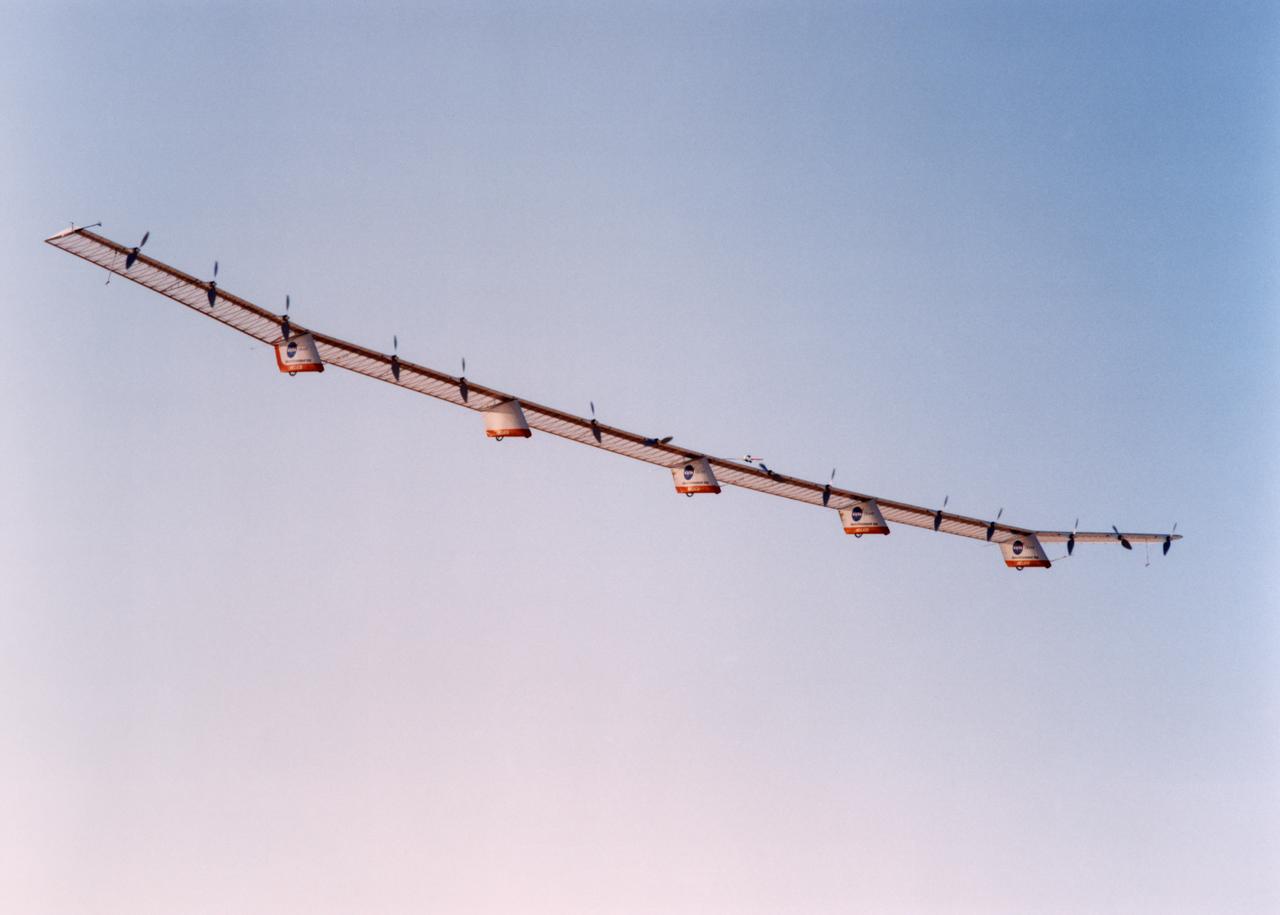
The Helios Prototype is an enlarged version of the Centurion flying wing, which flew a series of test flights at Dryden in late 1998. The craft has a wingspan of 247 feet, 41 feet greater than the Centurion, 2 1/2 times that of its solar-powered Pathfinder flying wing, and longer than either the Boeing 747 jetliner or Lockheed C-5 transport aircraft.
EC99-45161-10
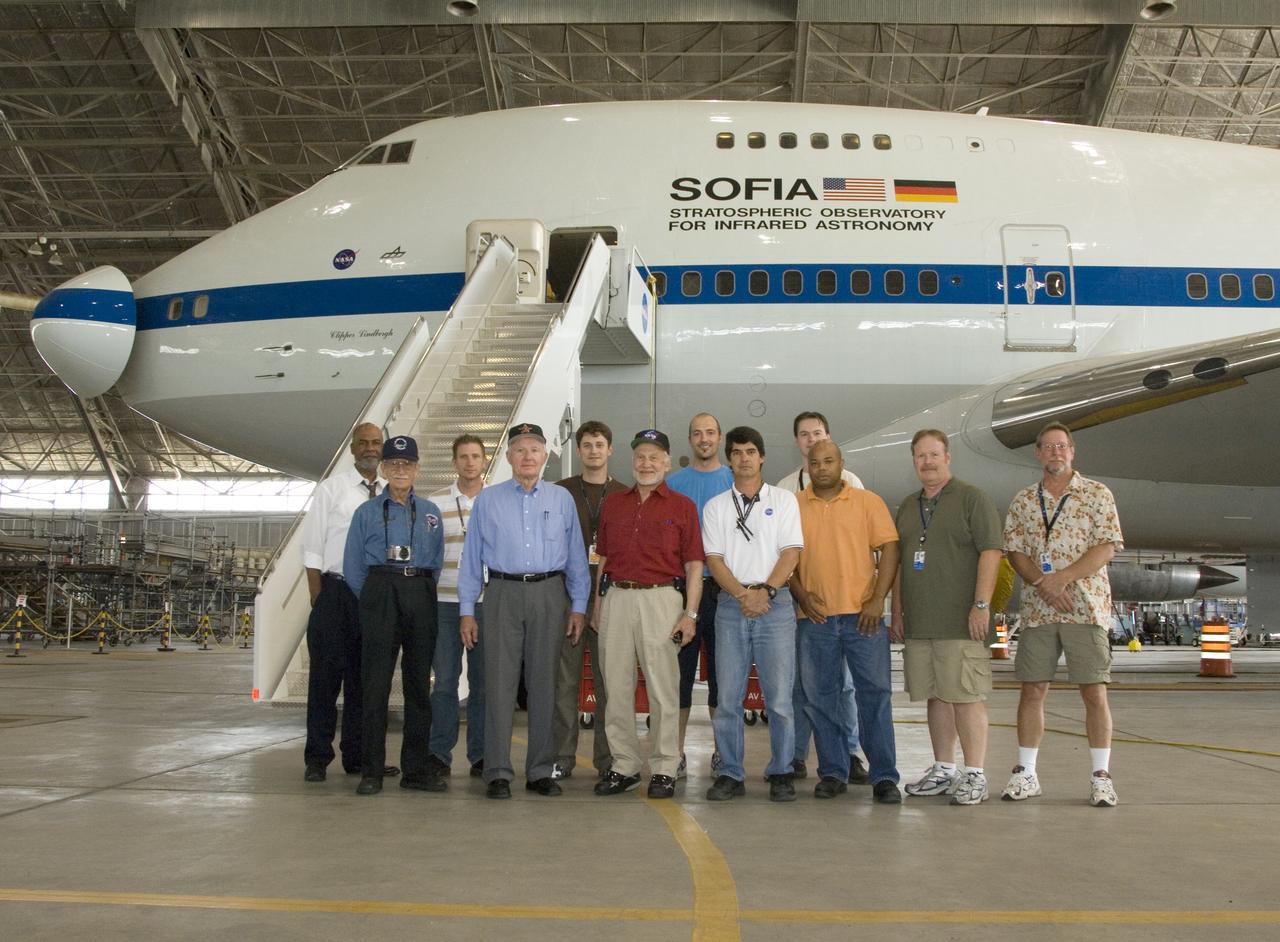
Members of the SOFIA infrared observatory support team gather around Apollo 11 astronaut Buzz Aldrin (in red shirt) during Aldrin's tour of NASA Dryden.
Members of the SOFIA infrared observatory support team gather around Apollo 11 astronaut Buzz Aldrin (in red shirt) during Aldrin's tour of NASA Dryden
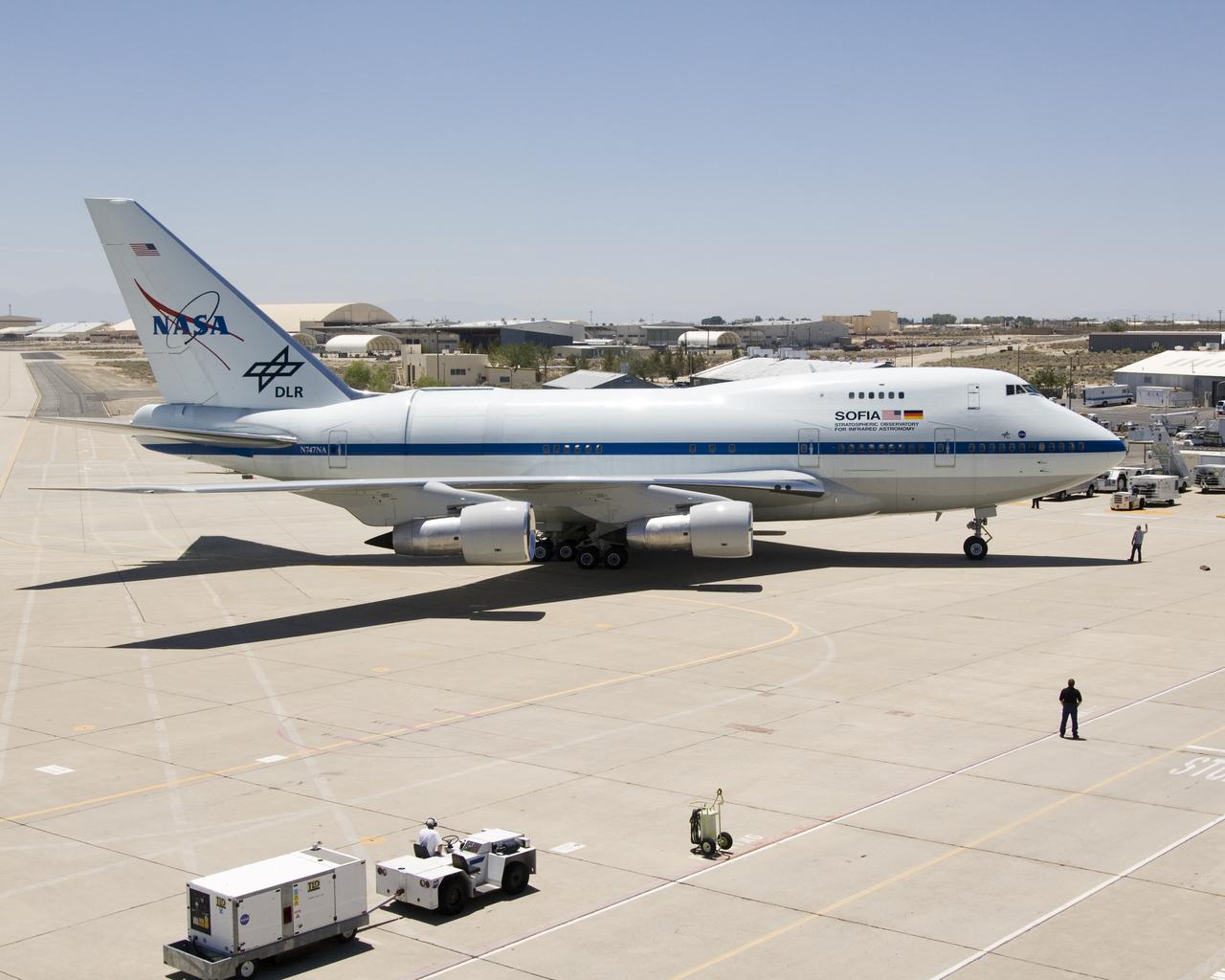
NASA's SOFIA 747SP bearing a German-built 2.5-meter infrared telescope in its rear fuselage taxis up to NASA Dryden's ramp after a ferry flight from Waco, Texas. NASA's Stratospheric Observatory for Infrared Astronomy, or SOFIA, arrived at NASA's Dryden Flight Research Center at Edwards Air Force Base, Calif. on May 31, 2007. The heavily modified Boeing 747SP was ferried to Dryden from Waco, Texas, where L-3 Communications Integrated Systems installed a German-built 2.5-meter infrared telescope and made other major modifications over the past several years. SOFIA is scheduled to undergo installation and integration of mission systems and a multi-phase flight test program at Dryden over the next three years that is expected to lead to a full operational capability to conduct astronomy missions in about 2010. During its expected 20-year lifetime, SOFIA will be capable of "Great Observatory" class astronomical science, providing astronomers with access to the visible, infrared and sub-millimeter spectrum with optimized performance in the mid-infrared to sub-millimeter range.
NASA's SOFIA 747SP bearing a German-built 2.5-meter infrared telescope in its rear fuselage taxis up to NASA Dryden's ramp after a ferry flight from Waco, TX
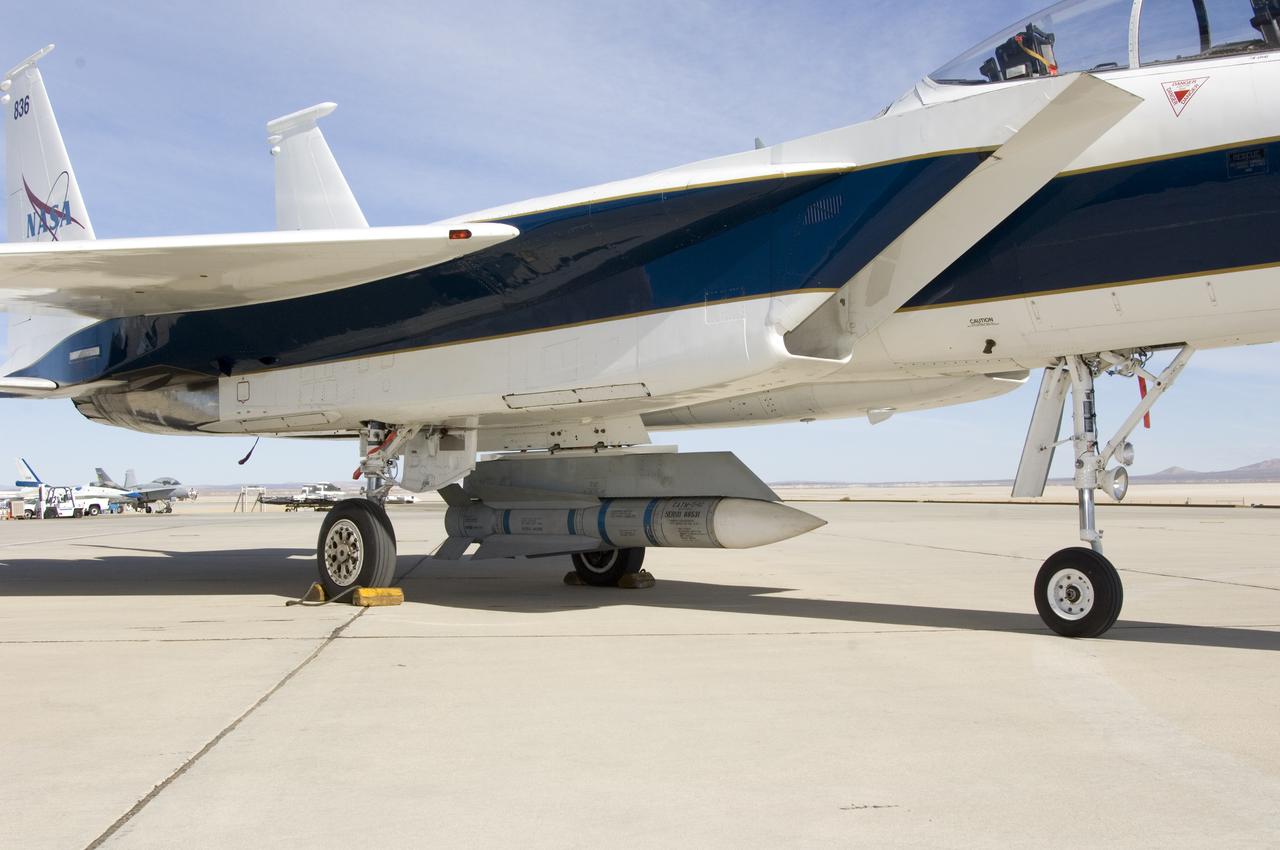
An inert AIM-54 Phoenix missile nestled under the fuselage of NASA Dryden's F-15B aircraft is being studied as a possible test vehicle to obtain hypersonic data.
An inert Phoenix missile nestled under the fuselage of NASA Dryden's F-15B aircraft is being studied as a possible test vehicle to obtain hypersonic data.
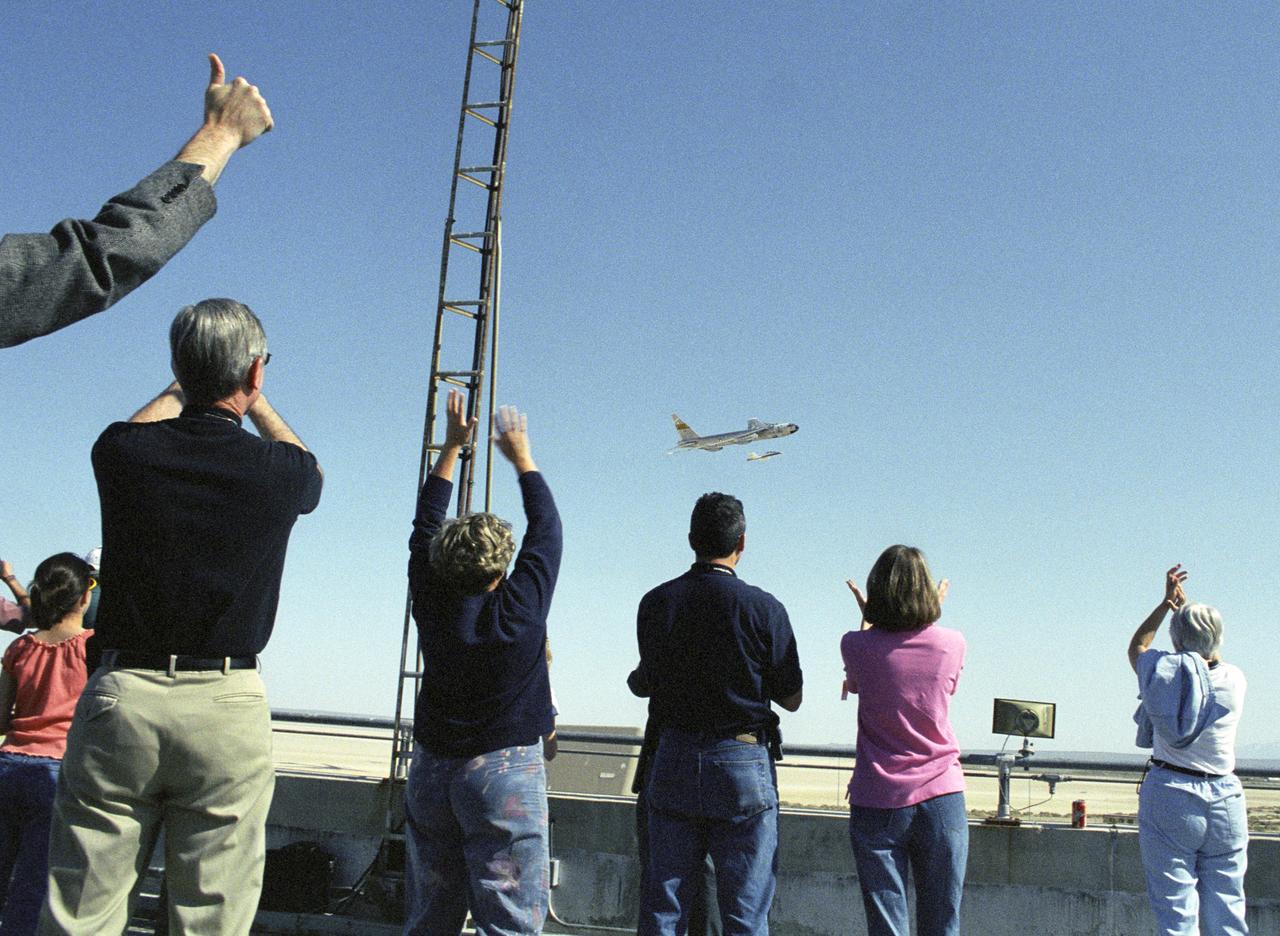
Employees atop NASA Dryden's main building celebrate the return flyby of the B-52B aircraft after it launched the second X-43A aircraft on its successful flight.
Employees atop DFRC's main building celebrate the return flyby of the B-52B aircraft after it launched the second X-43A aircraft on its successful flight
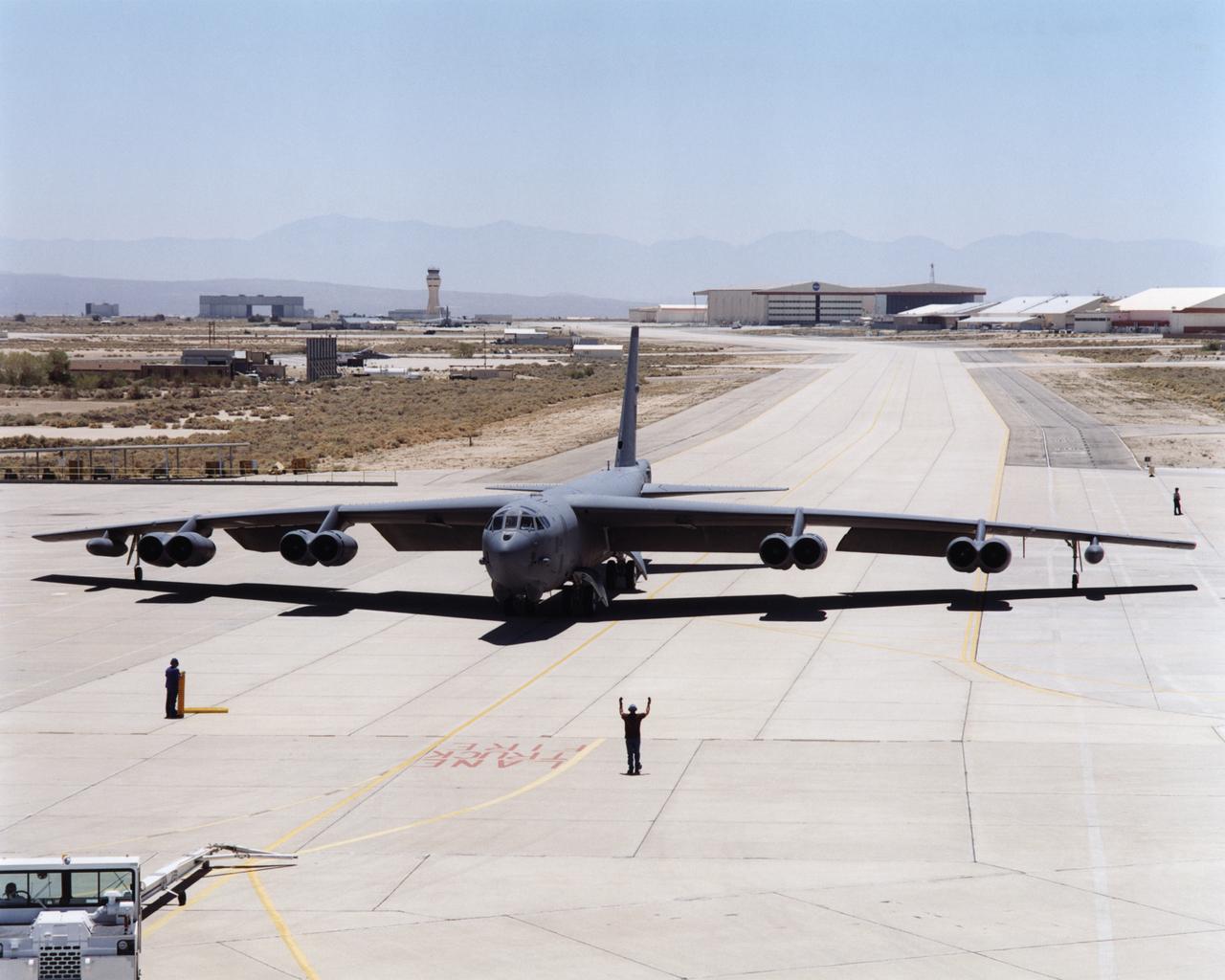
A B-52H, tail number 61-0025, arrives at NASA's Dryden Flight Research Center after landing July 30, 2001.
EC01-0220-6
Space Shuttle Endeavour rolls out after landing on runway 04-L at Edwards Air Force Base, ending mission STS-126 to the International Space Station Nov. 30, 2008.
Space Shuttle Endeavour rolls out after landing on runway 04-L at Edwards AFB, ending mission STS-126 to the International Space Station Nov. 30, 2008
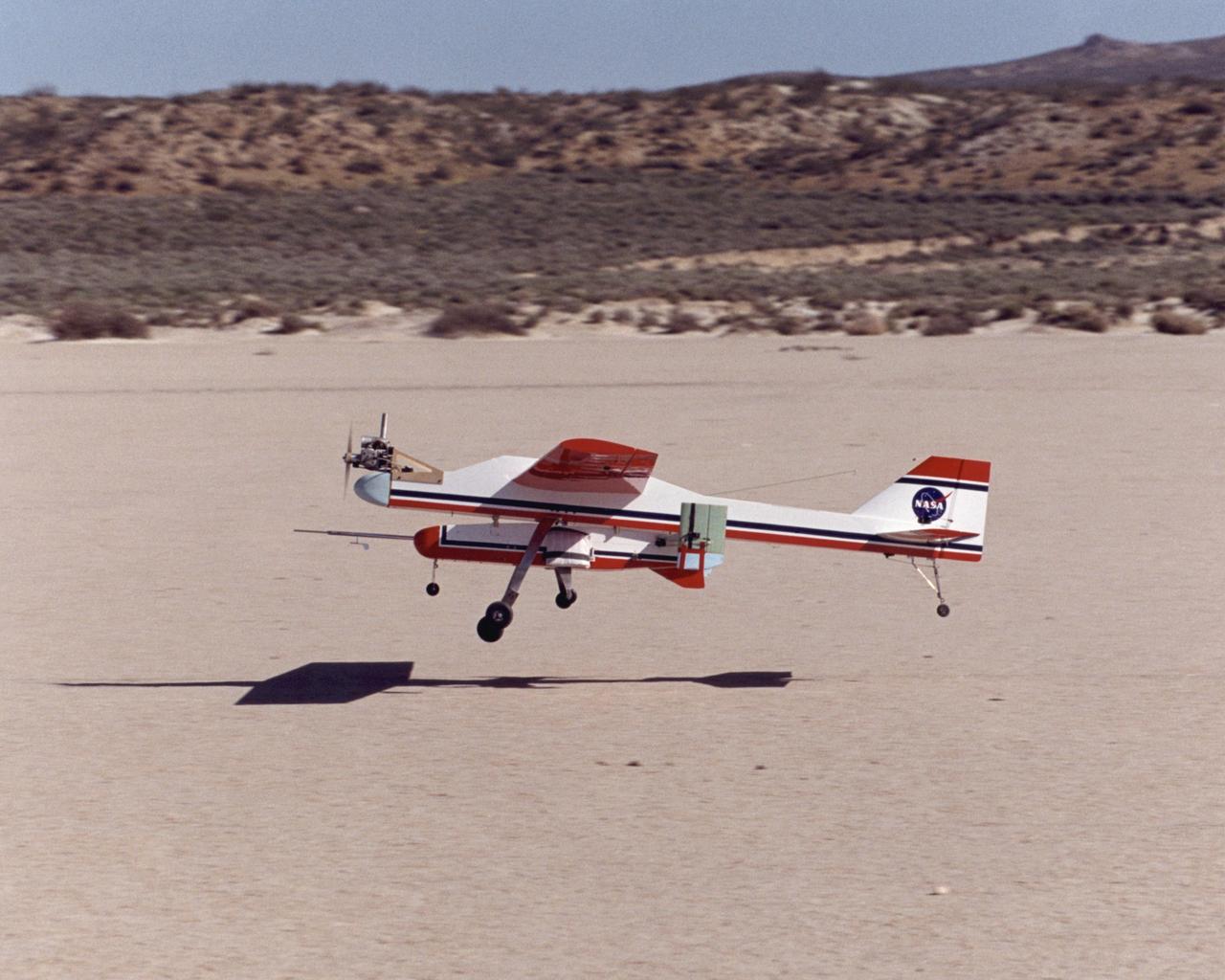
The I2000, a deployable, inflatable wing technology demonstrator experiment aircraft, leaves the ground during a flight conducted by the NASA Dryden Flight Research Center, Edwards, California.
EC01-0136-8
ED13-0079-16 (26 March 2013) ---- SpaceX Dragon's second operational mission ended  on March 26 after three weeks attached to the International Space Station. The unmanned spacecraft splashed down  in the Pacific Ocean about 214 miles off the coast of Baja California to successfully return about 2,670 pounds of science materials from the orbital outpost.  Photo credit:  NASA
ed13-0079-16
Proteus and an F/A-18 Hornet from NASA's Dryden Flight Research Center are seen here in flight over Las Cruces, New Mexico.
Scaled Composites' Proteus and an F/A-18 Hornet from NASA's Dryden Flight Research Center are seen here in flight over Las Cruces, New Mexico.
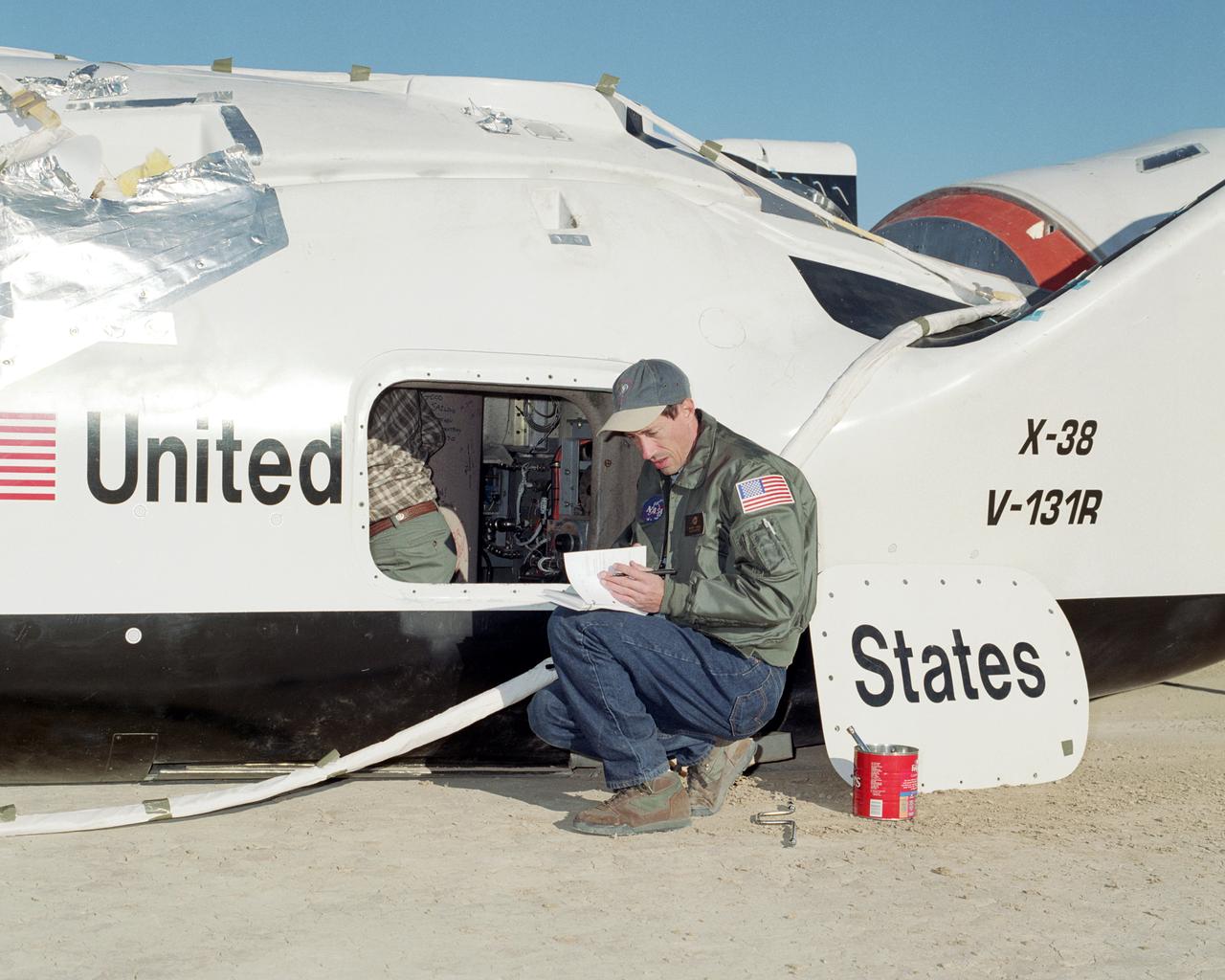
NASA engineer Wayne Peterson from the Johnson Space Center reviews postflight checklists following a spectacular flight of the X-38 prototype for a crew recovery vehicle that may be built for the International Space Station. The X-38 tested atmospheric flight characteristics on December 13, 2001, in a descent from 45,000 feet to Rogers Dry Lake at the NASA Dryden Flight Research Center/Edwards Air Force Base complex in California.
NASA engineer Wayne Peterson from the Johnson Space Center reviews postflight checklists following a spectacular flight of the X-38 Vehicle 131R
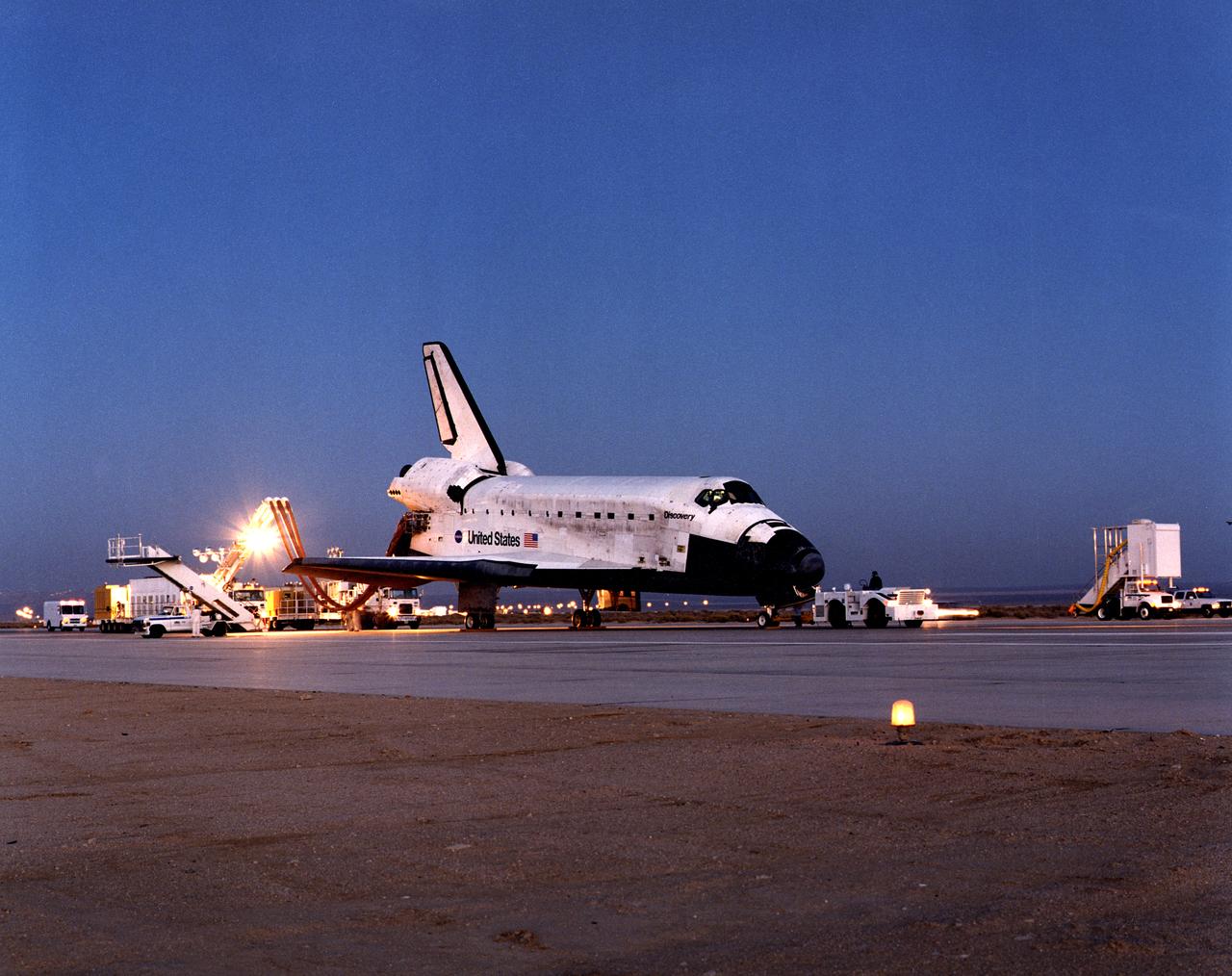
Ground crews worked into the evening to prepare the Space Shuttle Discovery for towing back to NASA’s Dryden Flight Research Center after its landing at Edwards Air Force Base on October 24, 2000. The landing marked the end of the STS-92 mission.
STS-92 - Towing operation
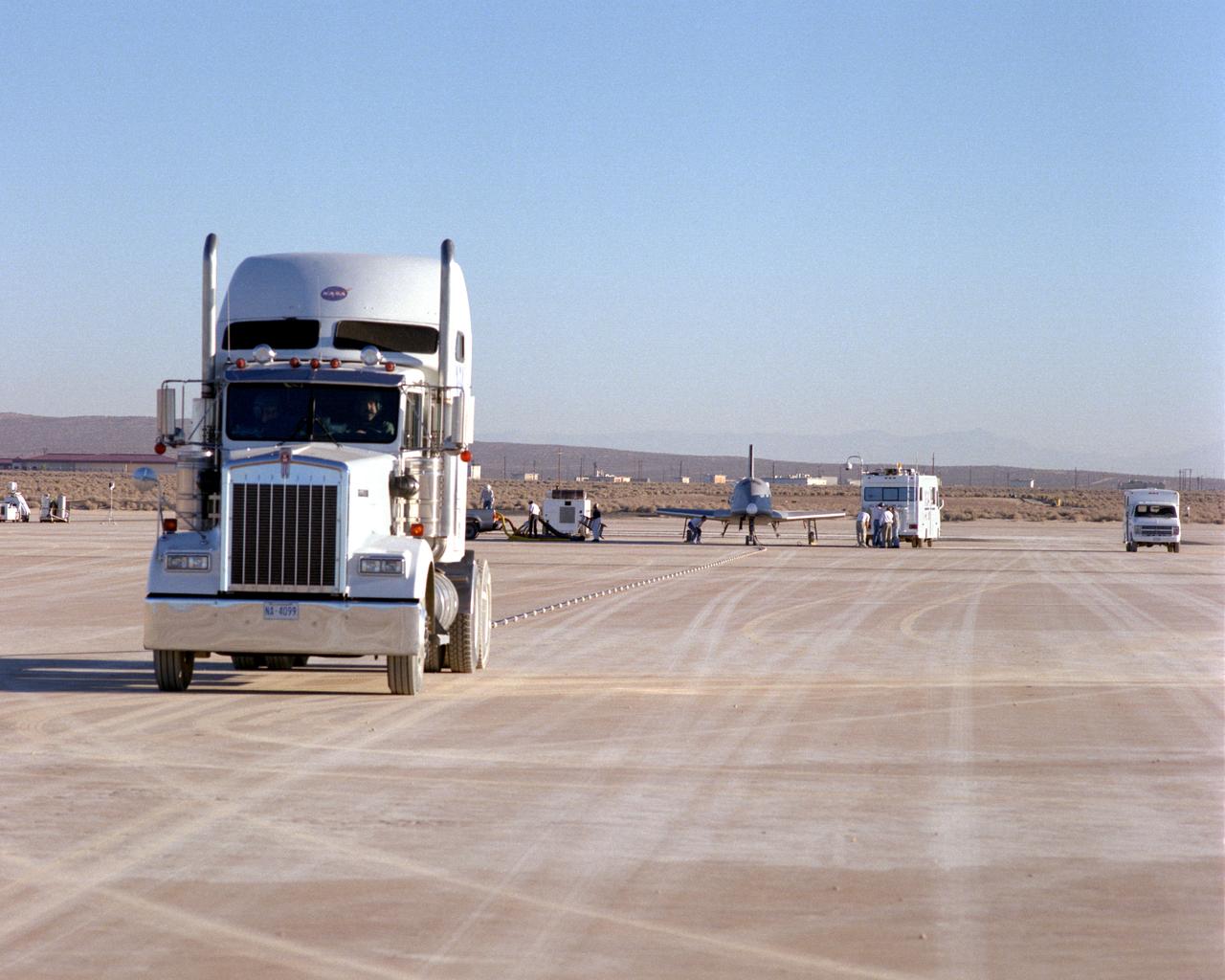
Following initial captive flight tests last year at NASA's Dryden Flight Research Center, Edwards Air Force Base, California, the X-34 technology demonstrator began a new series of tests last week in which it is being towed behind a semi-truck and released to coast on the Edwards dry lakebed.  On July 20, 2000, it was towed and released twice at speeds of five and 10 miles per hour. On July 24, 2000, it was towed and released twice at 10 and 30 miles per hour.  Twelve tests are planned during which the X-34 will be towed for distances up to 10,000 feet and released at speeds up to 80 miles per hour. The test series is expected to last at least six weeks.
X-34 and HSTV tow vehicle on lakebed prior to tow test
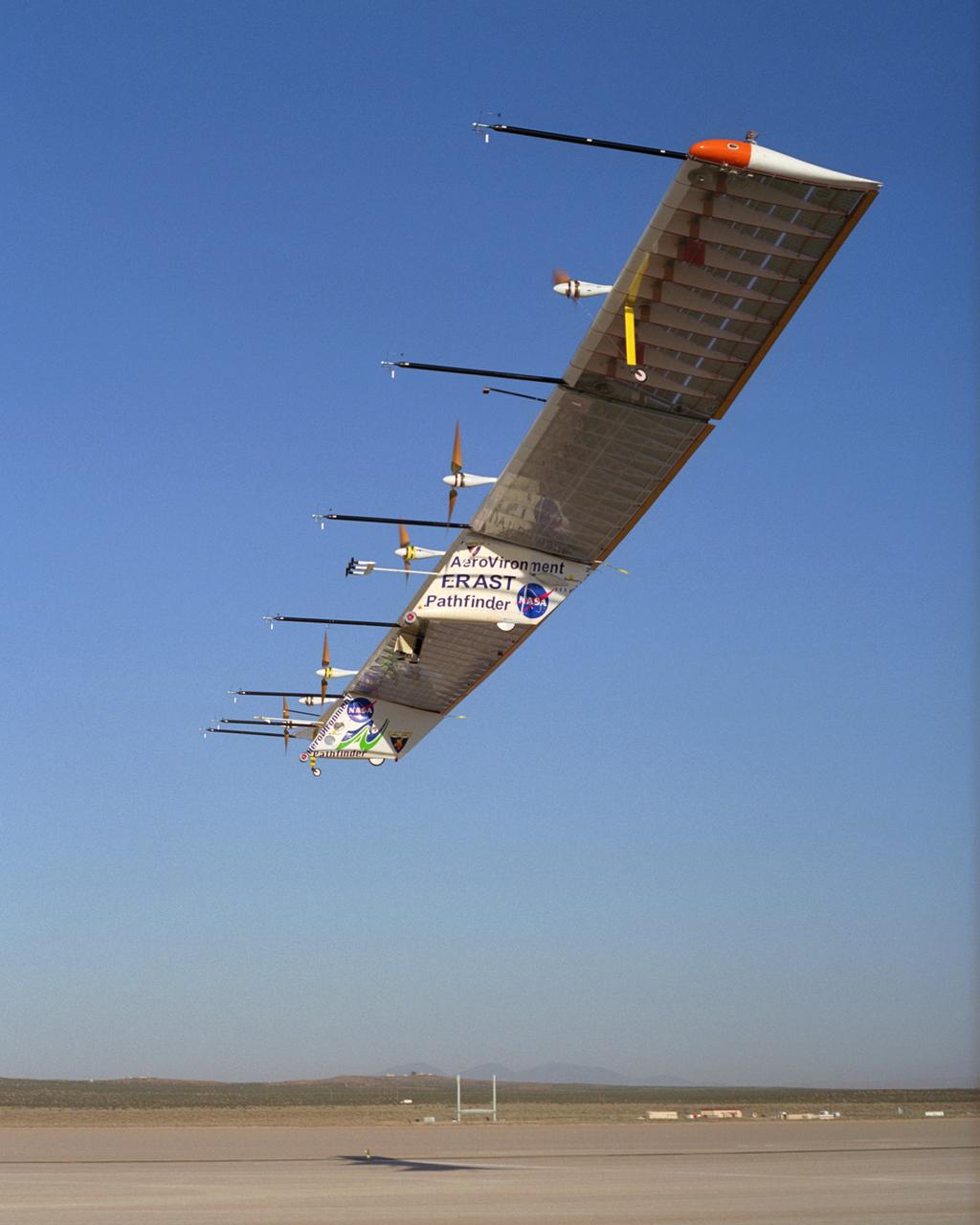
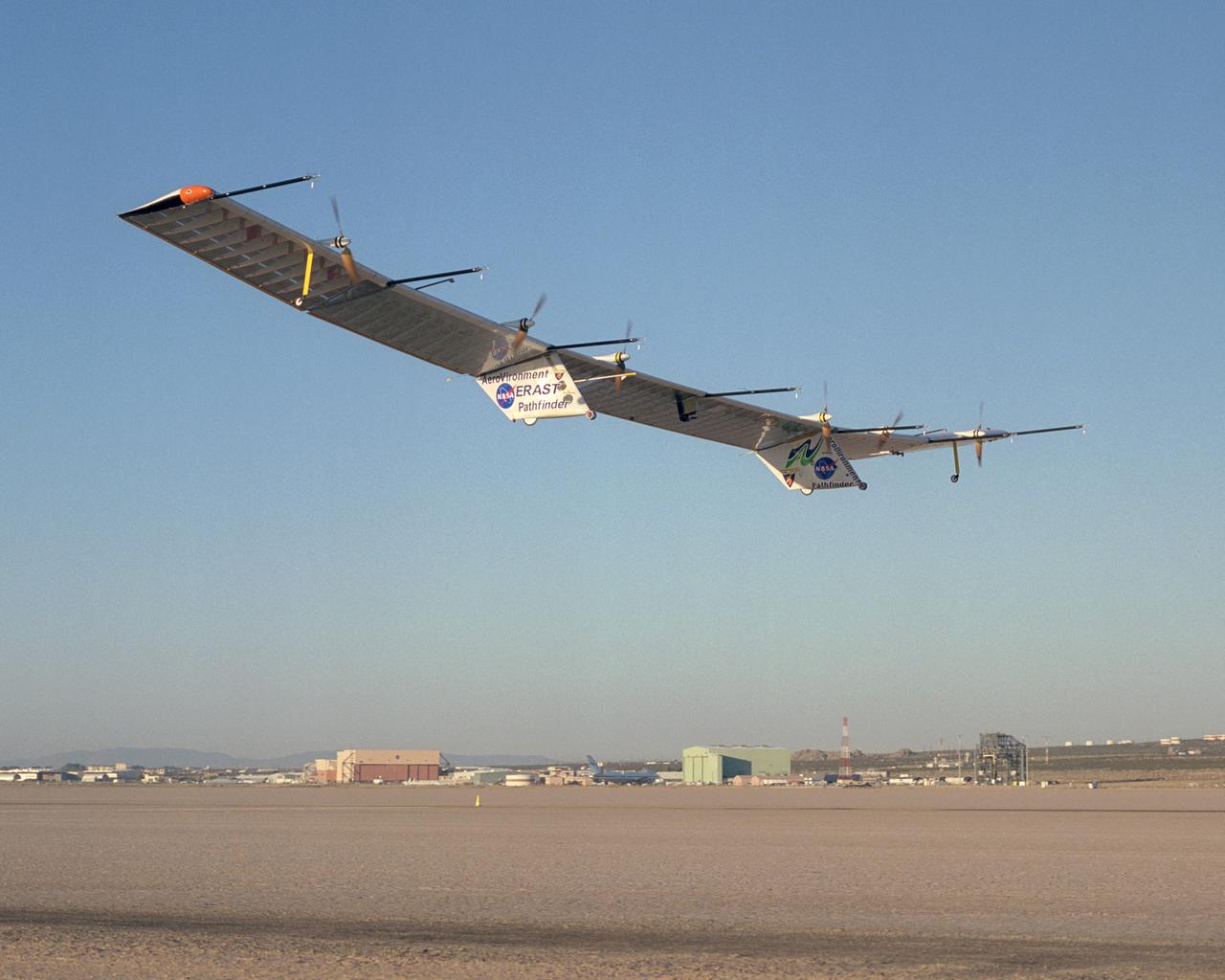
The Atmospheric Turbulence Measurement System booms extend forward from the Pathfinder-Plus solar wing as it soars over Rogers Dry Lake on its final flight.
The Atmospheric Turbulence Measurement System booms extend forward from the Pathfinder-Plus solar wing as it soars over Rogers Dry Lake.
The Pathfinder-Plus solar-electric flying wing lifts off Rogers Dry Lake adjoining NASA Dryden Flight Research Center on a turbulence-measurement flight.
ED13-0079-10 (26 March 2013) ---- SpaceX Dragon's second operational mission ended  on March 26 after three weeks attached to the International Space Station. The unmanned spacecraft splashed down  in the Pacific Ocean about 214 miles off the coast of Baja California to successfully return about 2,670 pounds of science materials from the orbital outpost.  Photo credit:  NASA
ed13-0079-10
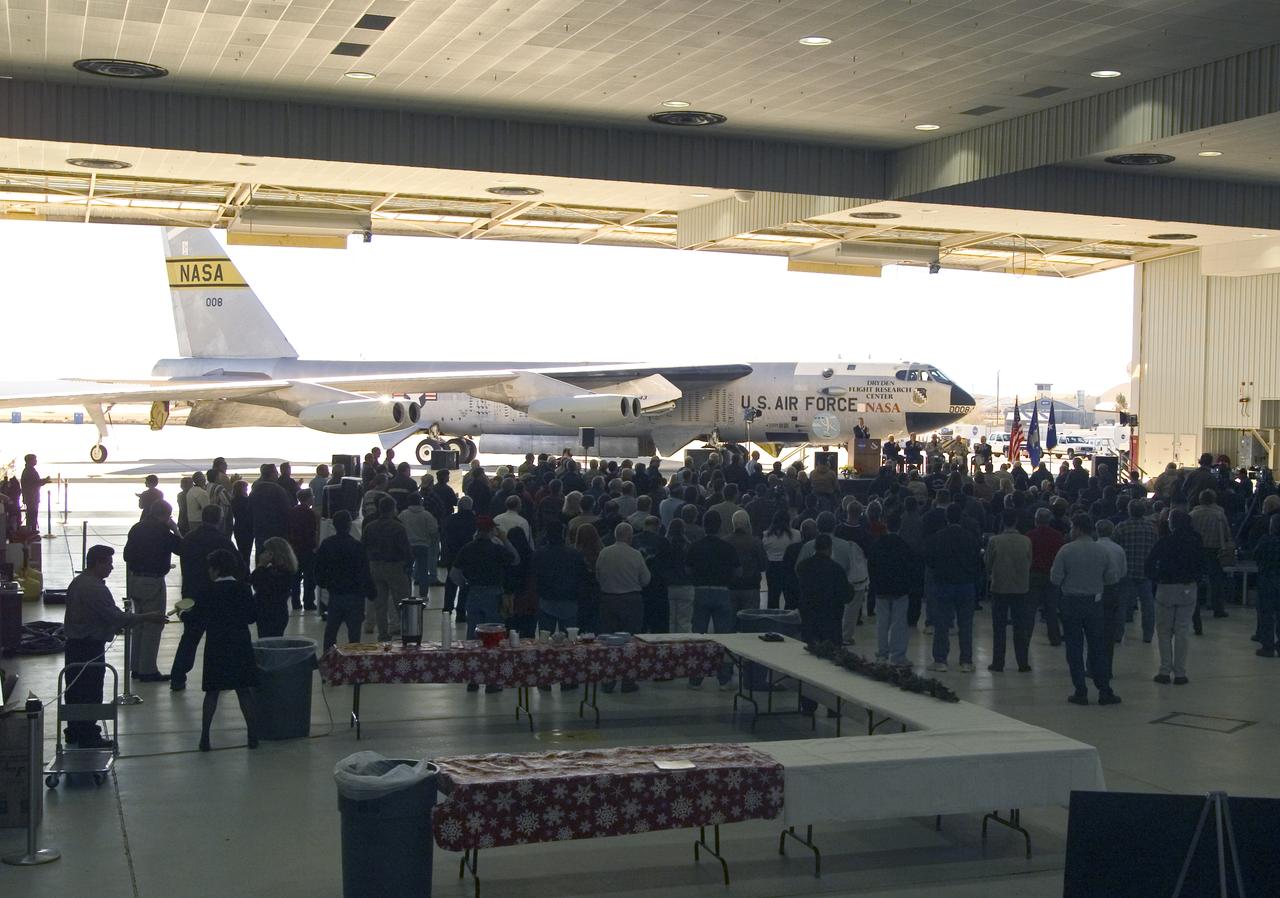
NASA's venerable B-52B mothership launch aircraft served as the backdrop at its retirement ceremony on Dec. 17, 2004.
ED04-0362-02
The left wing of NASA's Altair unmanned aerial vehicle (UAV) rests in a jig during construction at General Atomics Aeronautical Systems, Inc., (GA-ASI) facility at Adelanto, Calif.
EC02-0188-8
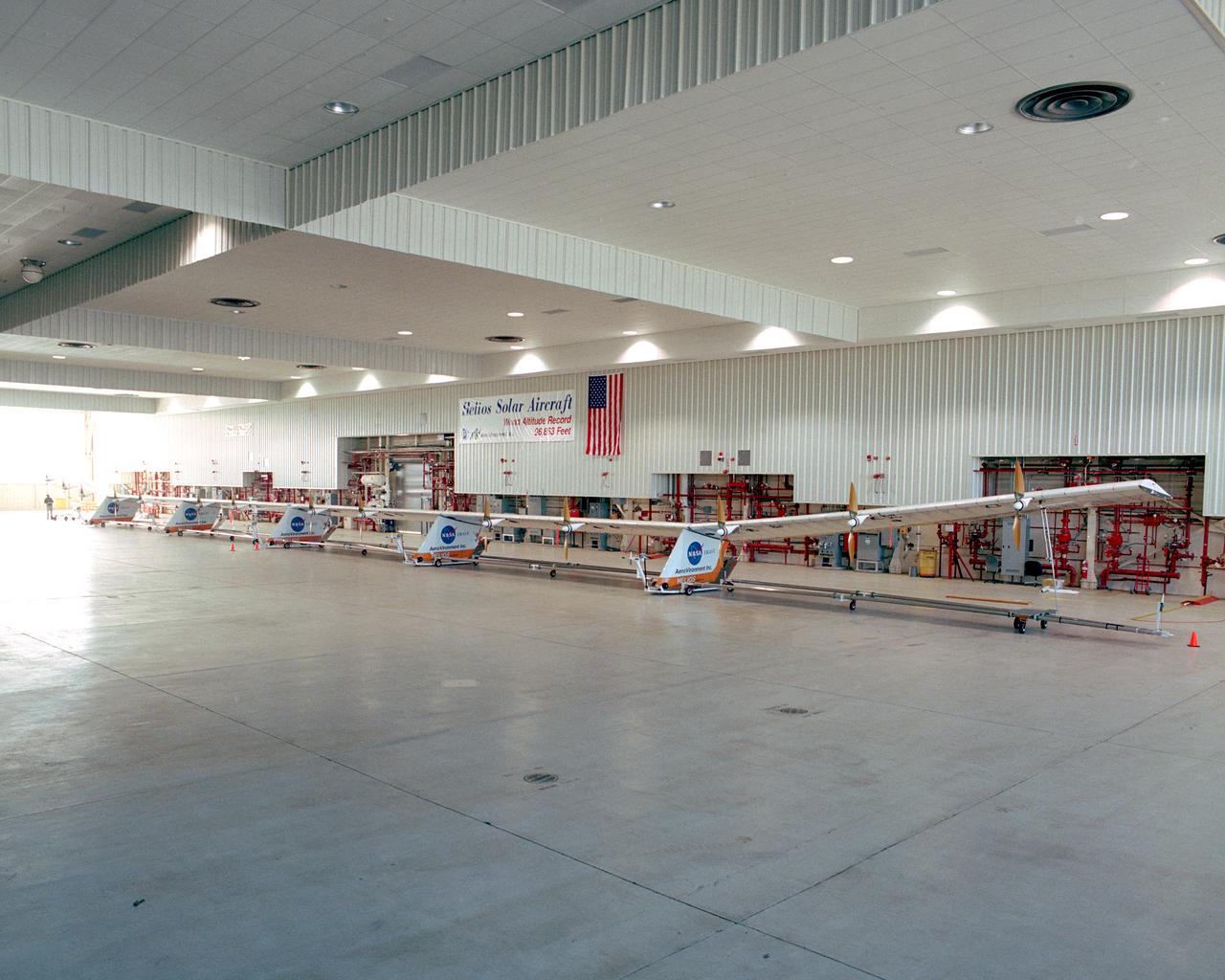
The Helios Prototype flying wing stretches almost the full length of the 300-foot-long hangar at NASA's Dryden Flight Research Center, Edwards, California. The 247-foot span solar-powered aircraft, resting on its ground maneuvering dolly, was on display for a visit of NASA Administrator Sean O'Keefe and other NASA officials on January 31, 2002. The unique solar-electric flying wing reached an altitude of 96,863 feet during an almost 17-hour flight near Hawaii on August 13, 2001, a world record for sustained horizontal flight by a non-rocket powered aircraft. Developed by AeroVironment, Inc., under NASA's Environmental Research Aircraft and Sensor Technology (ERAST) project, the Helios Prototype is the forerunner of a planned fleet of slow-flying, long duration, high-altitude uninhabited aerial vehicles (UAV) which can serve as "atmospheric satellites," performing Earth science missions or functioning as telecommunications relay platforms in the stratosphere.
EC02-0031-6