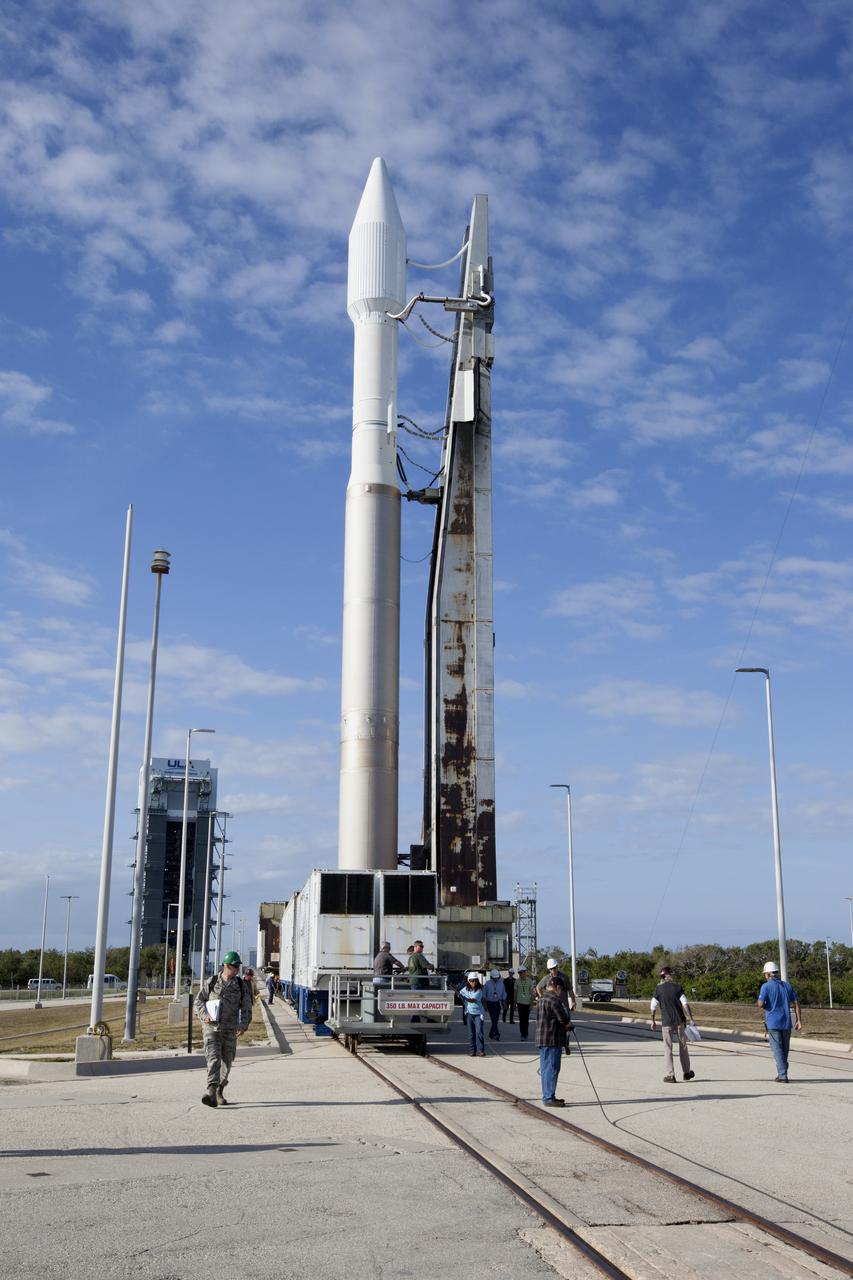
A United Launch Alliance Atlas V rocket, with the Orbital ATK Cygnus pressurized cargo module, is transported along the road to the pad at Space Launch Complex 41 at Cape Canaveral Air Force Station in Florida. Orbital ATK's seventh commercial resupply services mission, CRS-7, is scheduled to launch to the International Space Station on April 18, 2017. Cygnus will deliver 7,600 pounds of supplies, equipment and scientific research materials to the space station. Liftoff is scheduled for 11:11 a.m. EDT.
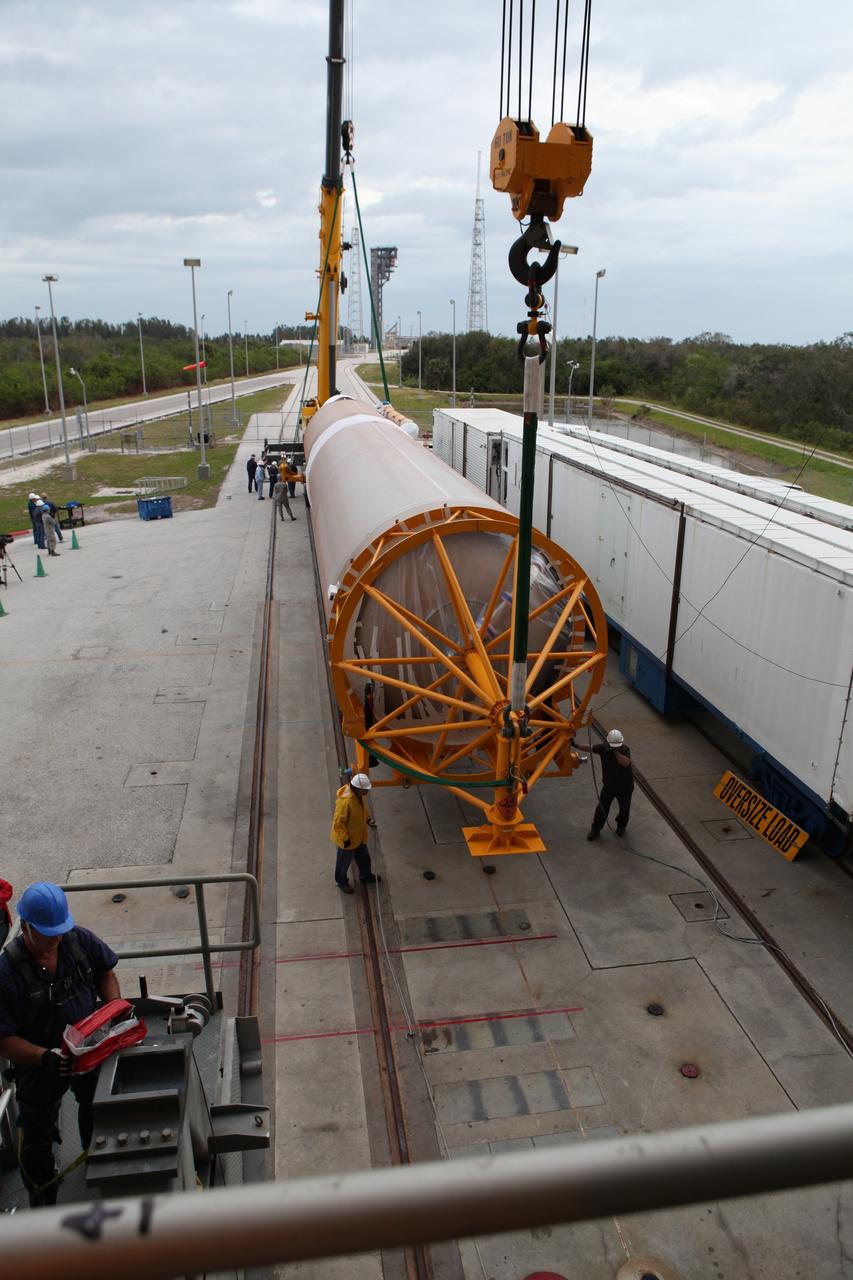
The first stage of the United Launch Alliance (ULA) Atlas V rocket arrives at the Vertical Integration Facility at Space Launch Complex 41 at Cape Canaveral Air Force Station in Florida. The rocket is being prepared for Orbital ATK's seventh commercial resupply mission, CRS-7, to the International Space Station. Orbital ATK's CYGNUS pressurized cargo module is scheduled to launch atop ULA's Atlas V rocket from Pad 41 on March 19, 2017. CYGNUS will deliver thousands of pounds of supplies, equipment and scientific research materials to the space station.
Boeing’s CST-100 Starliner spacecraft is secured atop a United Launch Alliance Atlas V rocket at the Vertical Integration Facility at Space Launch Complex-41 at Florida’s Cape Canaveral Space Force Station on July 17, 2021. Starliner will launch on the Atlas V for Boeing’s second Orbital Flight Test (OFT-2) for NASA’s Commercial Crew Program. The spacecraft rolled out from Boeing’s Commercial Crew and Cargo Processing Facility at NASA’s Kennedy Space Center earlier in the day.
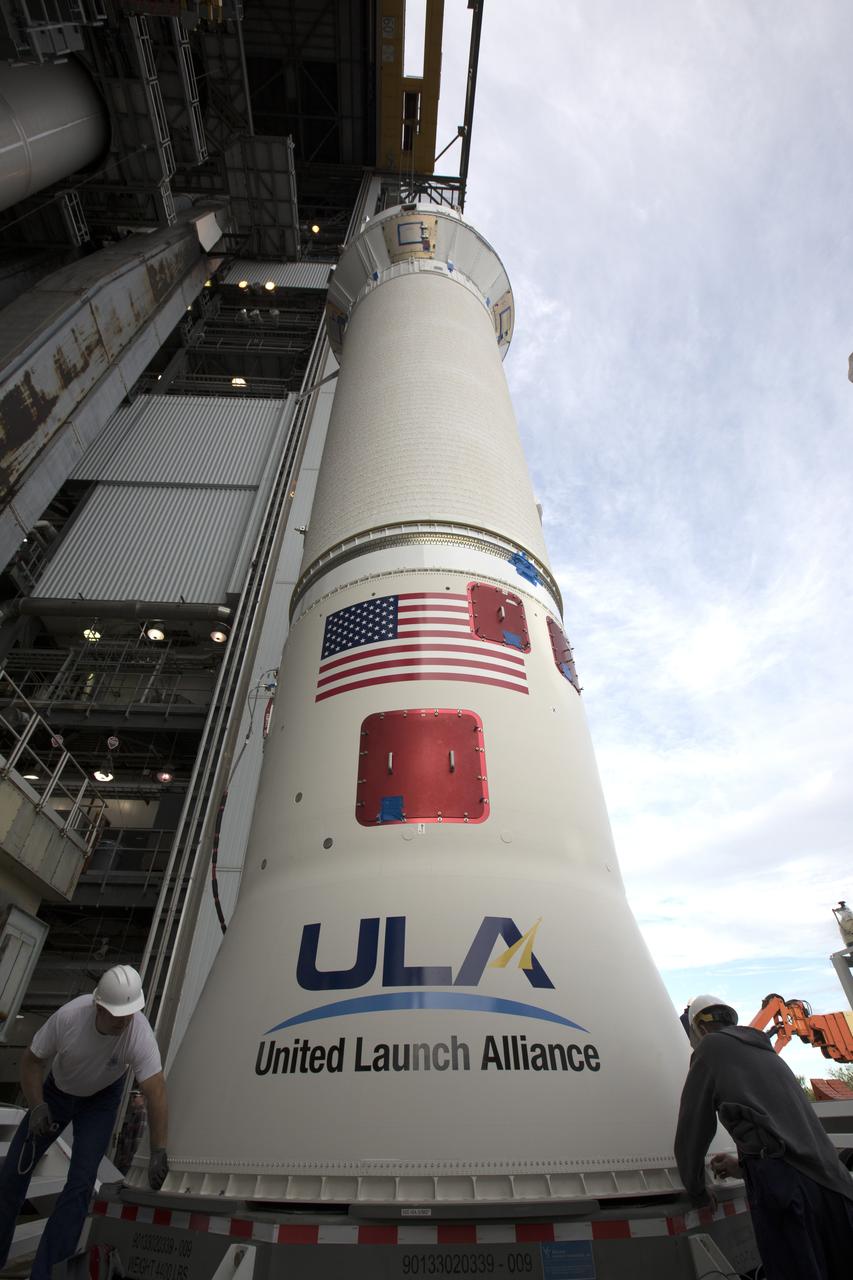
The Centaur upper stage of the United Launch Alliance (ULA) Atlas V rocket arrives at the Vertical Integration Facility at Space Launch Complex 41 at Cape Canaveral Air Force Station in Florida. The Centaur stage will be lifted and mated to the first stage booster. The rocket is being prepared for Orbital ATK's seventh commercial resupply mission, CRS-7, to the International Space Station. Orbital ATK's CYGNUS pressurized cargo module is scheduled to launch atop ULA's Atlas V rocket from Pad 41 on March 19, 2017. CYGNUS will deliver 7,600 of pounds of supplies, equipment and scientific research materials to the space station.
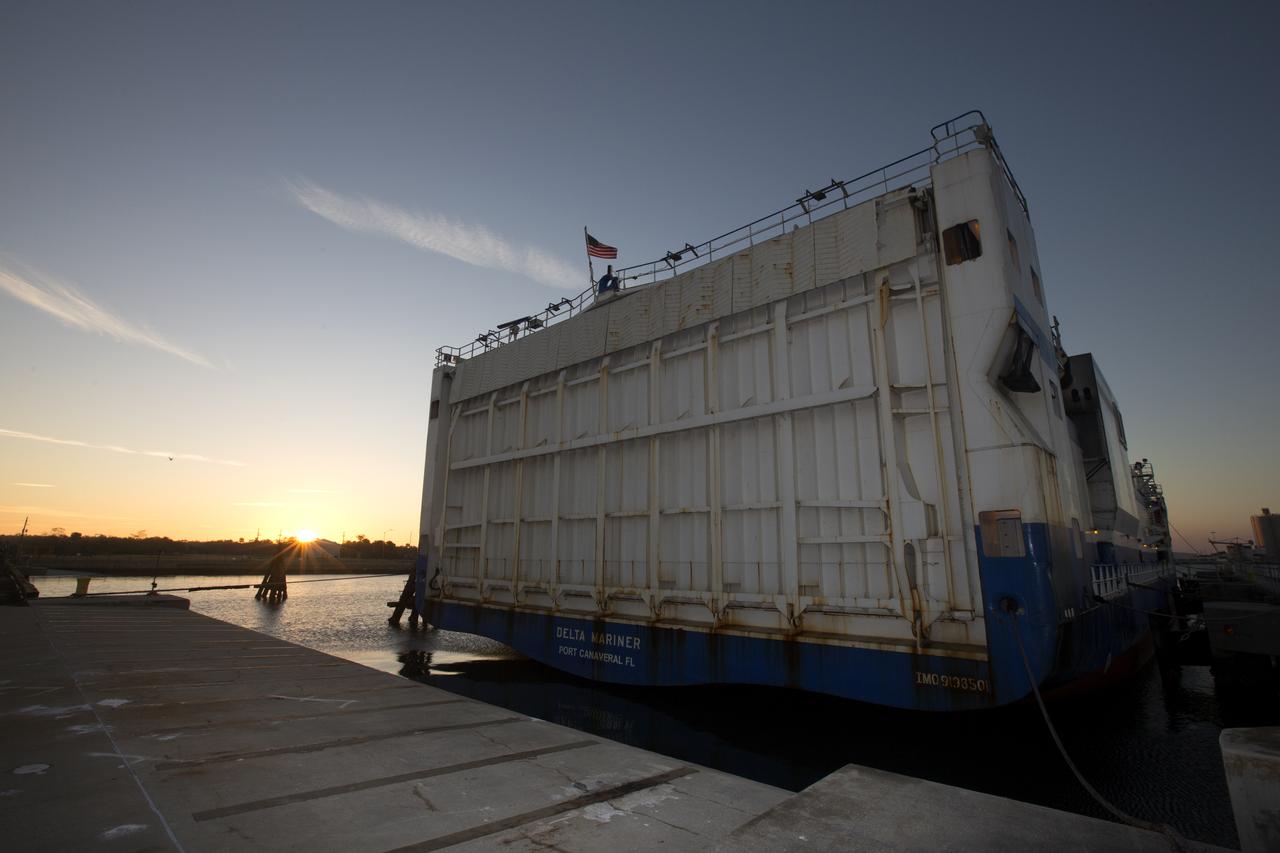
The Mariner cargo ship arrives at the Army Outpost wharf at Port Canaveral, Florida, near the Kennedy Space Center. Aboard is the United Launch Alliance (ULA) Atlas V booster for the Orbital ATK CRS-7 commercial resupply mission to the International Space Station. After the rocket is offloaded, a transport truck will take the Atlas V to the hangar at the Atlas Spaceflight Operations Center (ASOC), located south of Space Launch Complex 41 at Cape Canaveral Air Force Station. Scheduled to launch a Cygnus spacecraft on March 19, 2017, the Orbital ATK CRS-7 mission will deliver thousands of pounds of supplies, equipment and scientific research materials that improve life on Earth and drive progress toward future space exploration.
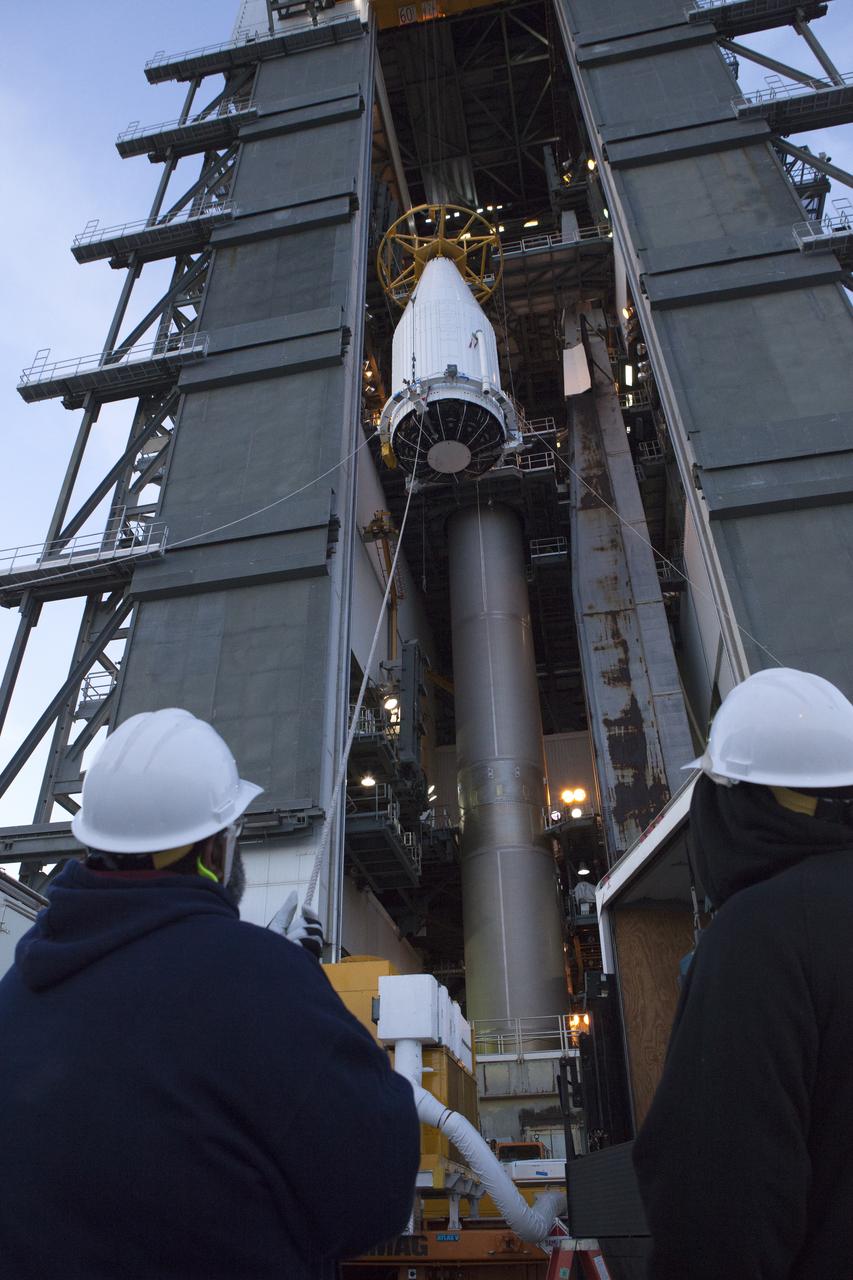
The payload fairing containing the Orbital ATK Cygnus pressurized cargo module is hoisted up by crane at the United Launch Alliance (ULA) Vertical Integration Facility at Space Launch Complex 41 at Cape Canaveral Air Force Station in Florida. The payload will be mated to the ULA Atlas V rocket. The Orbital ATK CRS-7 commercial resupply services mission to the International Space Station is scheduled to launch atop the Atlas V from pad 41. Cygnus will deliver 7,600 pounds of supplies, equipment and scientific research materials to the space station.
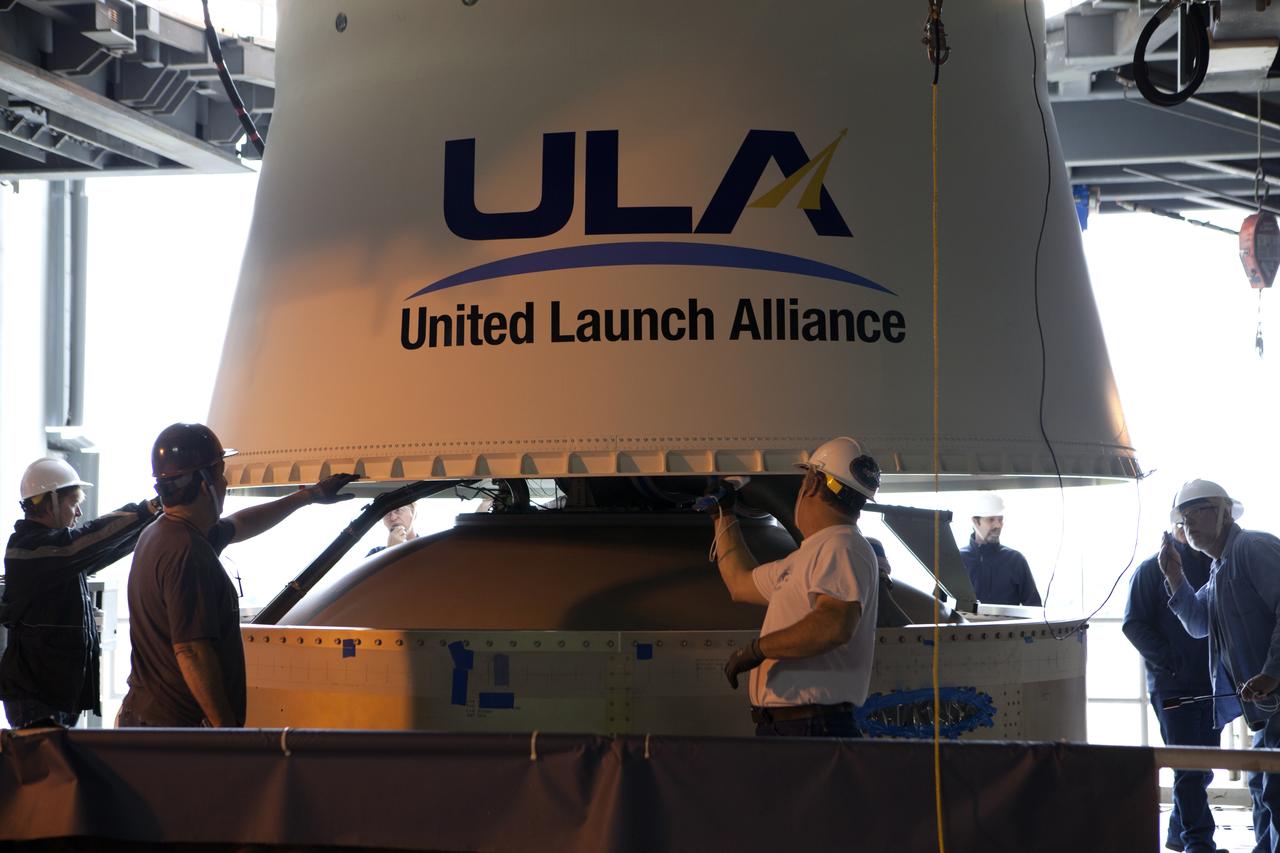
Technicians with United Launch Alliance (ULA) assist as the Centaur upper stage of the ULA Atlas V rocket is lowered onto the first stage booster inside the Vertical Integration Facility at Space Launch Complex 41 at Cape Canaveral Air Force Station in Florida. The rocket is being prepared for Orbital ATK's seventh commercial resupply mission, CRS-7, to the International Space Station. Orbital ATK's CYGNUS pressurized cargo module is scheduled to launch atop ULA's Atlas V rocket from Pad 41 on March 19, 2017. CYGNUS will deliver 7,600 of pounds of supplies, equipment and scientific research materials to the space station.
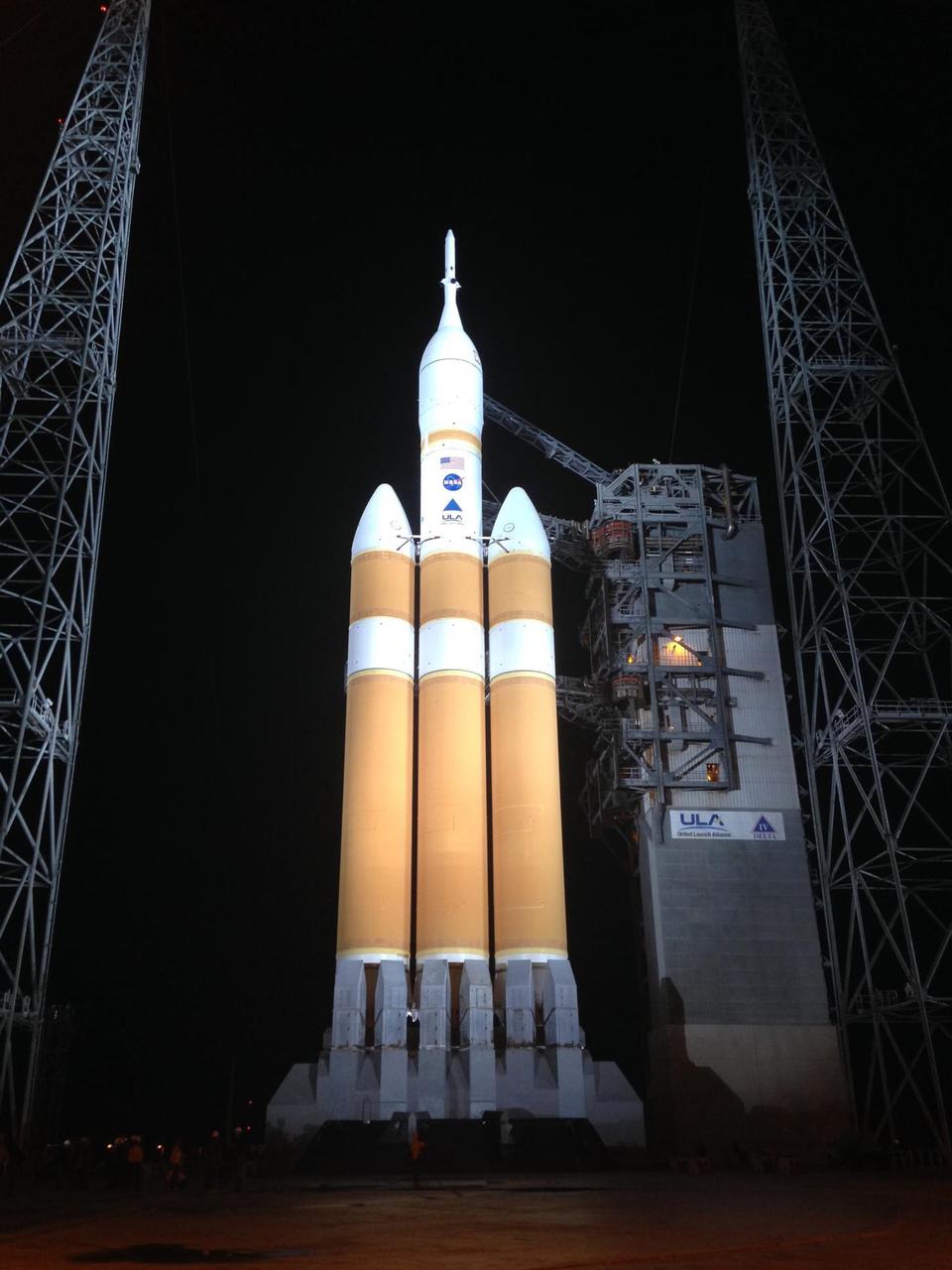
The launch gantry is rolled back to reveal NASA's Orion spacecraft for Exploration Flight Test-1 (EFT-1) mounted atop a United Launch Alliance Delta IV Heavy rocket at Cape Canaveral Air Force Station's Space Launch Complex 37 on Dec. 3, 2014. Orion is NASA’s new spacecraft built to carry humans, designed to allow us to journey to destinations never before visited by humans, including an asteroid and Mars.
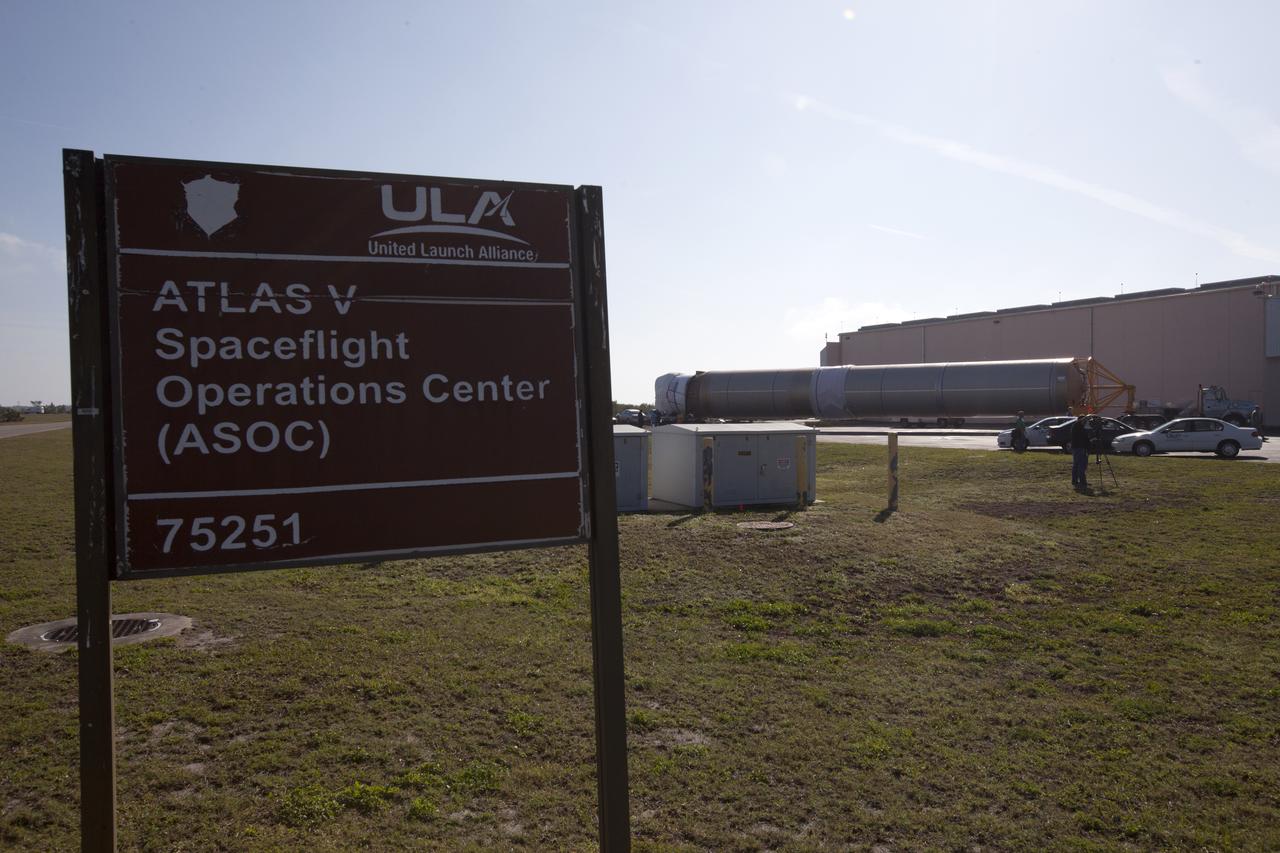
A United Launch Alliance (ULA) Atlas V booster arrives at Cape Canaveral Air Force Station's Atlas Spaceflight Operations Center (ASOC). The Atlas V will undergo final testing in that facility. When processing in the ASOC is complete, the Atlas booster will be moved to the Vertical Integration Facility for stacking at Space Launch Complex 41. Scheduled to launch March 19, 2017, the Atlas will launch a Cygnus spacecraft on the Orbital ATK CRS-7 mission to deliver thousands of pounds of supplies, equipment and scientific research materials to the International Space Station.
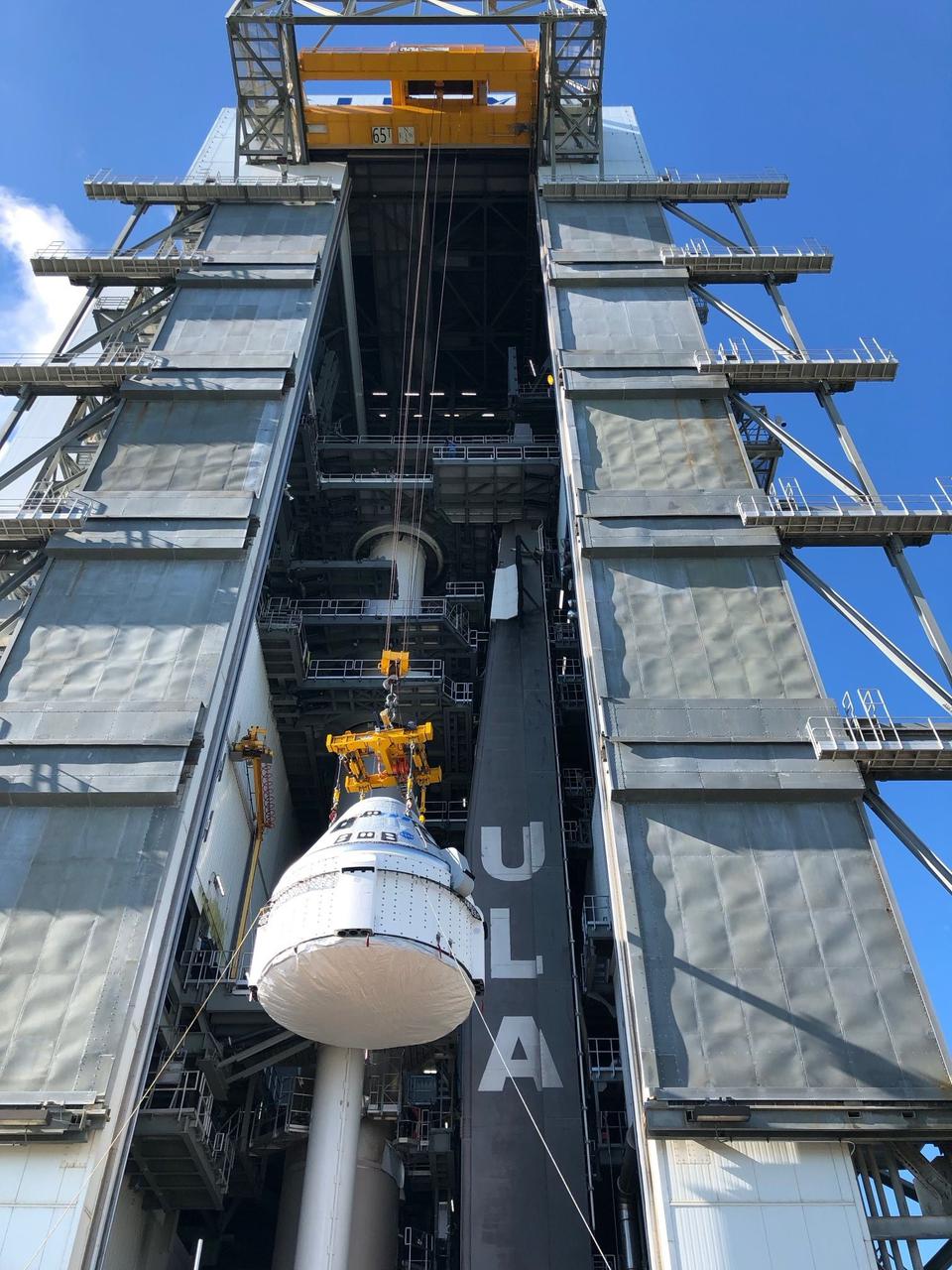
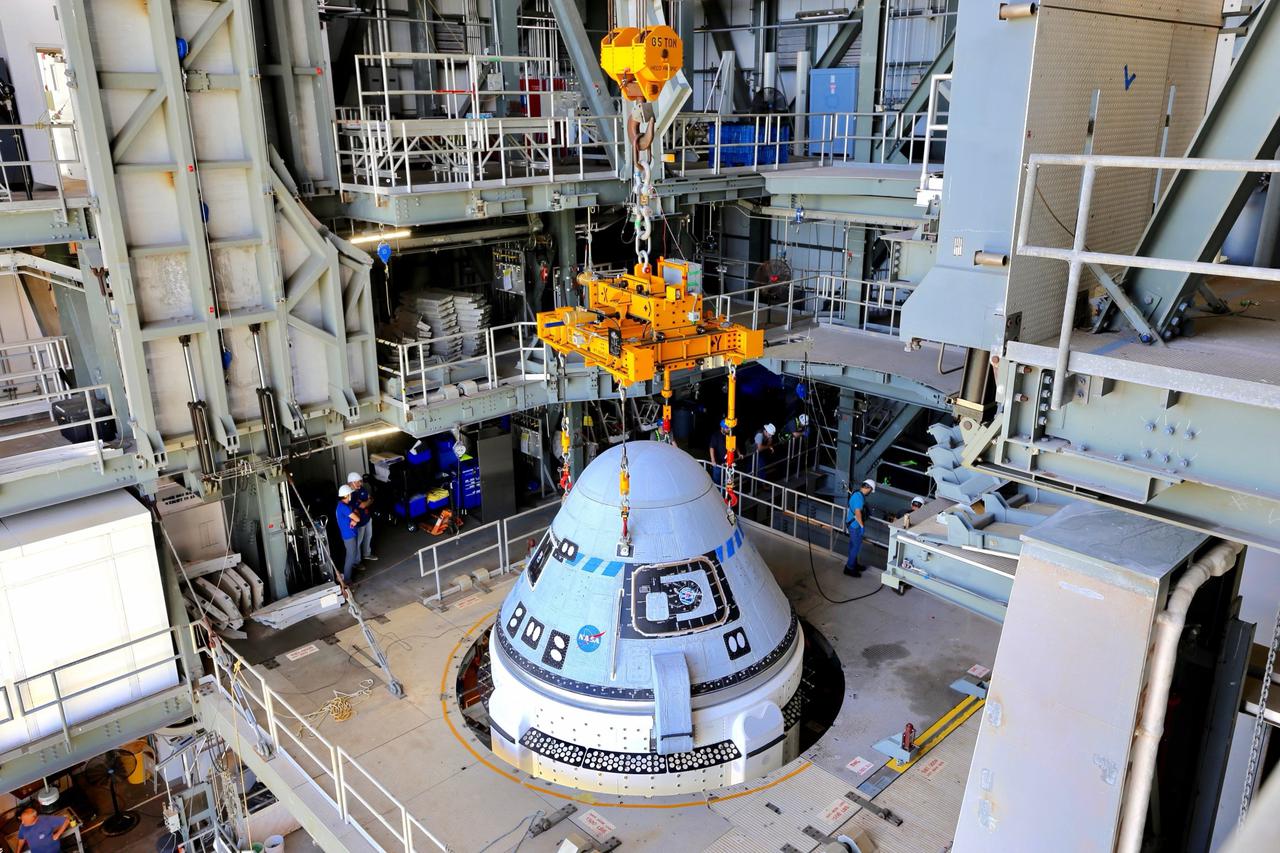
Boeing’s CST-100 Starliner spacecraft is lifted at the Vertical Integration Facility at Space Launch Complex-41 at Florida’s Cape Canaveral Space Force Station on July 17, 2021. Starliner will be secured atop a United Launch Alliance Atlas V rocket for Boeing’s Orbital Flight Test to the International Space Station for NASA’s Commercial Crew Program. The spacecraft rolled out from Boeing’s Commercial Crew and Cargo Processing Facility at NASA’s Kennedy Space Center earlier in the day.
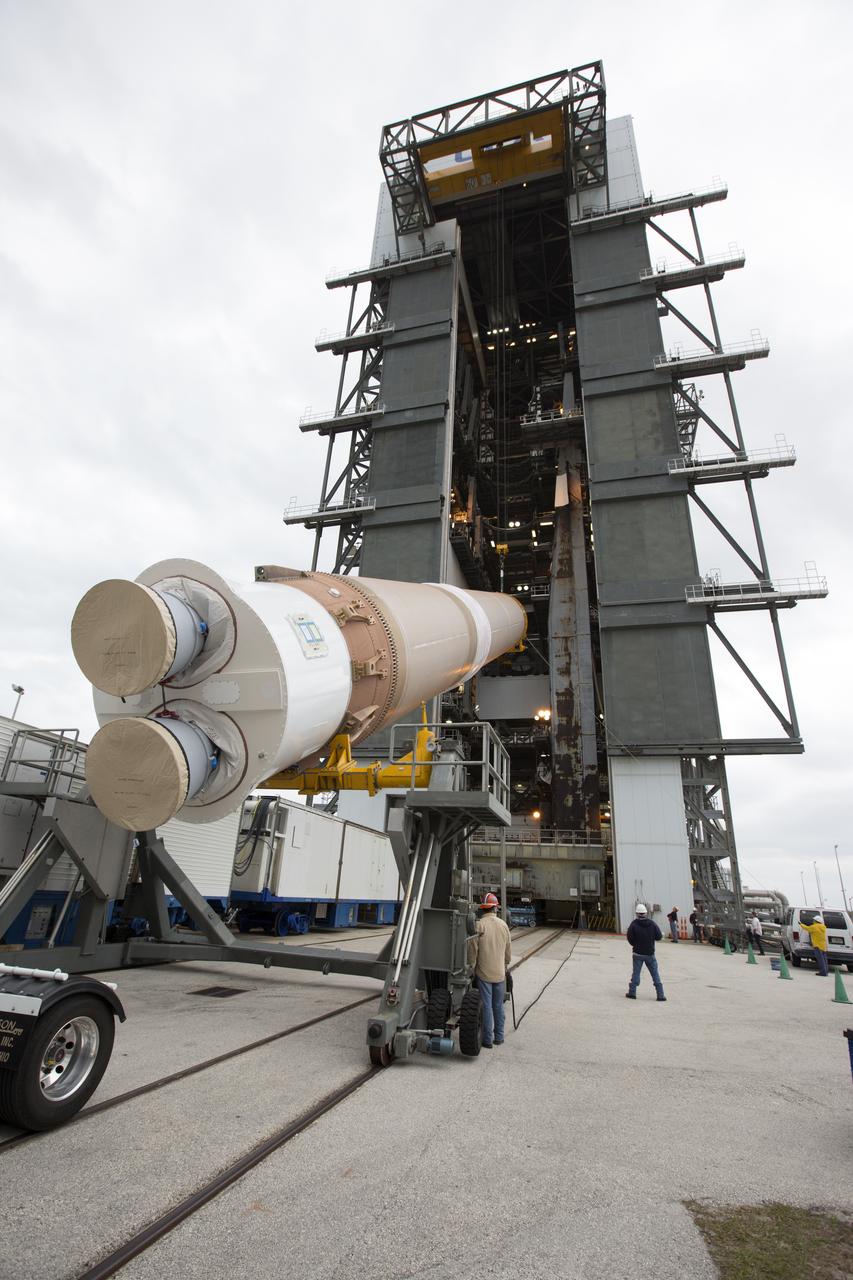
The first stage of the United Launch Alliance (ULA) Atlas V rocket is moved into the Vertical Integration Facility at Space Launch Complex 41 at Cape Canaveral Air Force Station in Florida. The rocket is being prepared for Orbital ATK's seventh commercial resupply mission, CRS-7, to the International Space Station. Orbital ATK's CYGNUS pressurized cargo module is scheduled to launch atop ULA's Atlas V rocket from Pad 41 on March 19, 2017. CYGNUS will deliver thousands of pounds of supplies, equipment and scientific research materials to the space station.

Ahead of launch as part of NASA’s Commercial Lunar Payload Services (CLPS) initiative, Astrobotic’s Peregrine lunar lander is encapsulated in the payload fairing, or nose cone, of United Launch Alliance’s Vulcan rocket on Nov. 21, 2023, at Astrotech Space Operations Facility near the agency’s Kennedy Space Center in Florida. Launch of Astrobotic’s Peregrine Mission One will carry NASA and commercial payloads to the Moon in early 2024 to study the lunar exosphere, thermal properties, and hydrogen abundance of the lunar regolith, magnetic fields, and the radiation environment of the lunar surface.
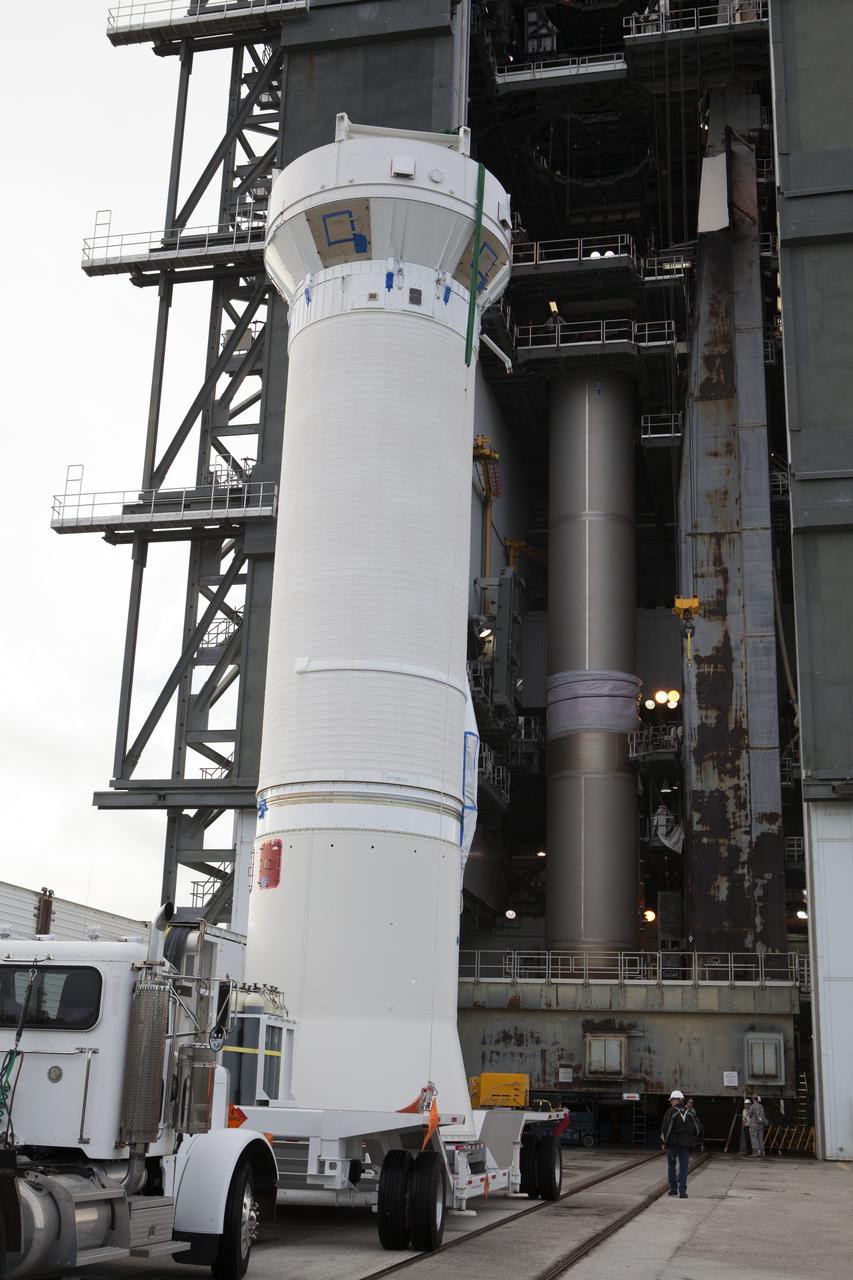
The Centaur upper stage of the United Launch Alliance (ULA) Atlas V rocket arrives at the Vertical Integration Facility at Space Launch Complex 41 at Cape Canaveral Air Force Station in Florida. The Centaur stage will be lifted and mated to the first stage booster. The rocket is being prepared for Orbital ATK's seventh commercial resupply mission, CRS-7, to the International Space Station. Orbital ATK's CYGNUS pressurized cargo module is scheduled to launch atop ULA's Atlas V rocket from Pad 41 on March 19, 2017. CYGNUS will deliver 7,600 pounds of supplies, equipment and scientific research materials to the space station.
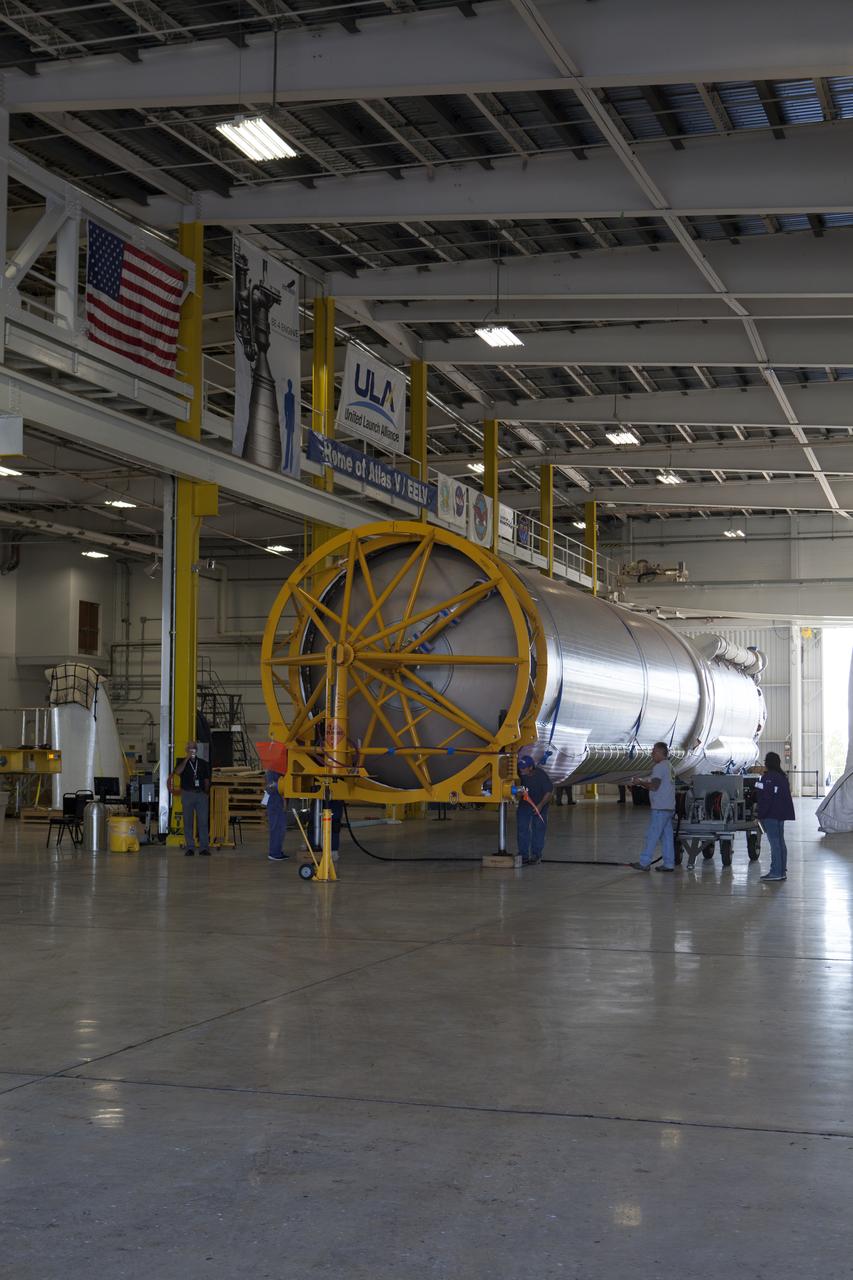
A United Launch Alliance (ULA) Atlas V booster arrives at Cape Canaveral Air Force Station's Atlas Spaceflight Operations Center (ASOC). The Atlas V will undergo final testing in that facility. When processing in the ASOC is complete, the Atlas booster will be moved to the Vertical Integration Facility for stacking at Space Launch Complex 41. Scheduled to launch March 19, 2017, the Atlas will launch a Cygnus spacecraft on the Orbital ATK CRS-7 mission to deliver thousands of pounds of supplies, equipment and scientific research materials to the International Space Station.
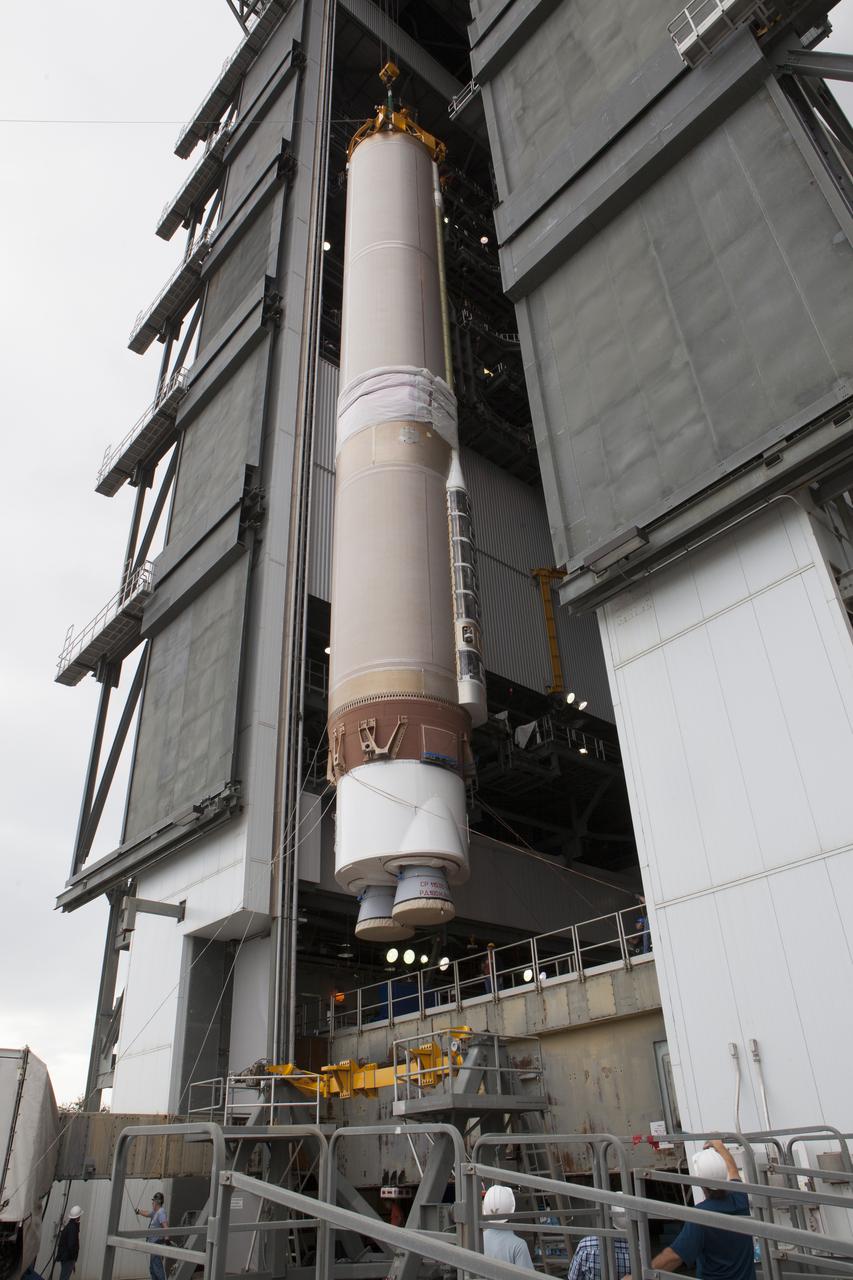
The first stage of the United Launch Alliance (ULA) Atlas V rocket is lifted to vertical and moved into the Vertical Integration Facility at Space Launch Complex 41 at Cape Canaveral Air Force Station in Florida. The rocket is being prepared for Orbital ATK's seventh commercial resupply mission, CRS-7, to the International Space Station. Orbital ATK's CYGNUS pressurized cargo module is scheduled to launch atop ULA's Atlas V rocket from Pad 41 on March 19, 2017. CYGNUS will deliver thousands of pounds of supplies, equipment and scientific research materials to the space station.
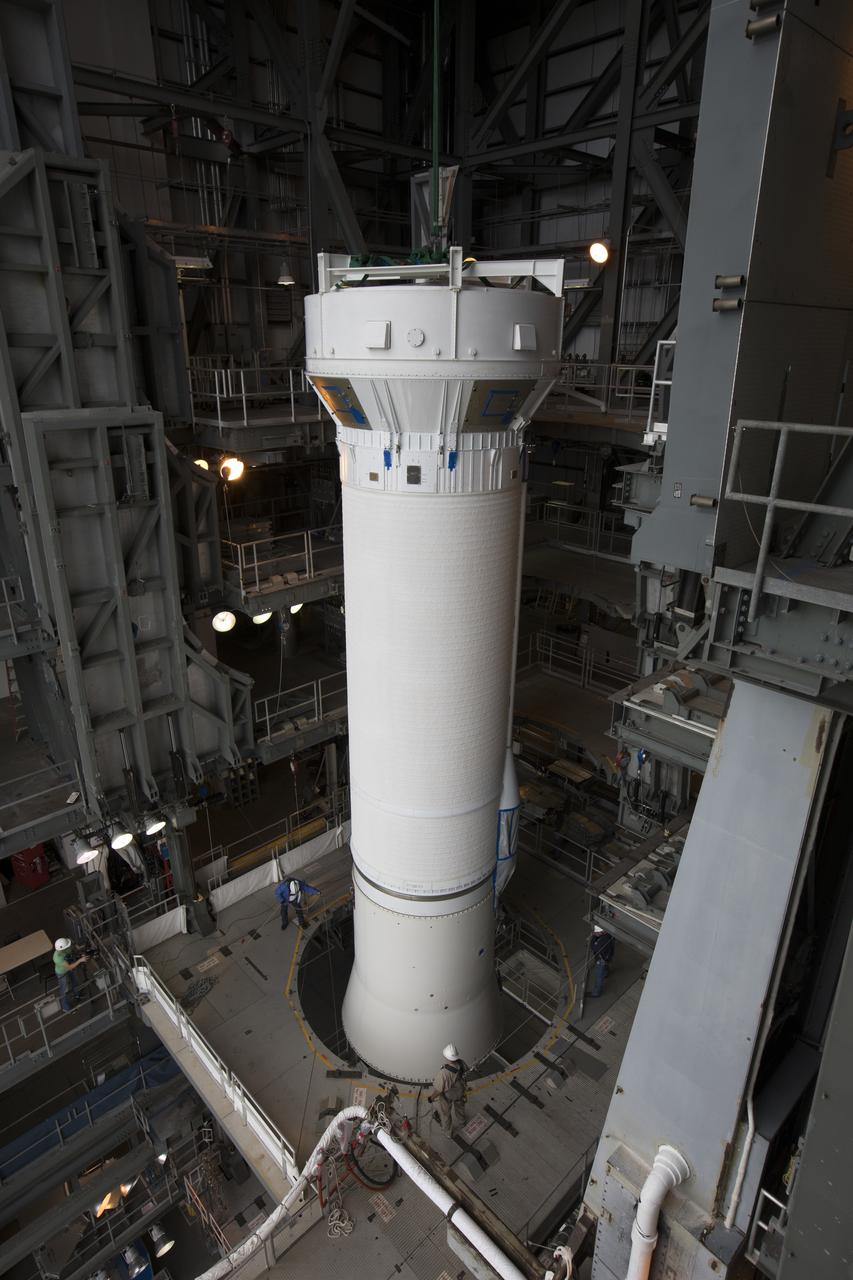
The Centaur upper stage of the United Launch Alliance (ULA) Atlas V rocket has been lifted up inside the Vertical Integration Facility at Space Launch Complex 41 at Cape Canaveral Air Force Station in Florida. The Centaur stage will be lowered and mated to the first stage booster. The rocket is being prepared for Orbital ATK's seventh commercial resupply mission, CRS-7, to the International Space Station. Orbital ATK's CYGNUS pressurized cargo module is scheduled to launch atop ULA's Atlas V rocket from Pad 41 on March 19, 2017. CYGNUS will deliver 7,600 pounds of supplies, equipment and scientific research materials to the space station.
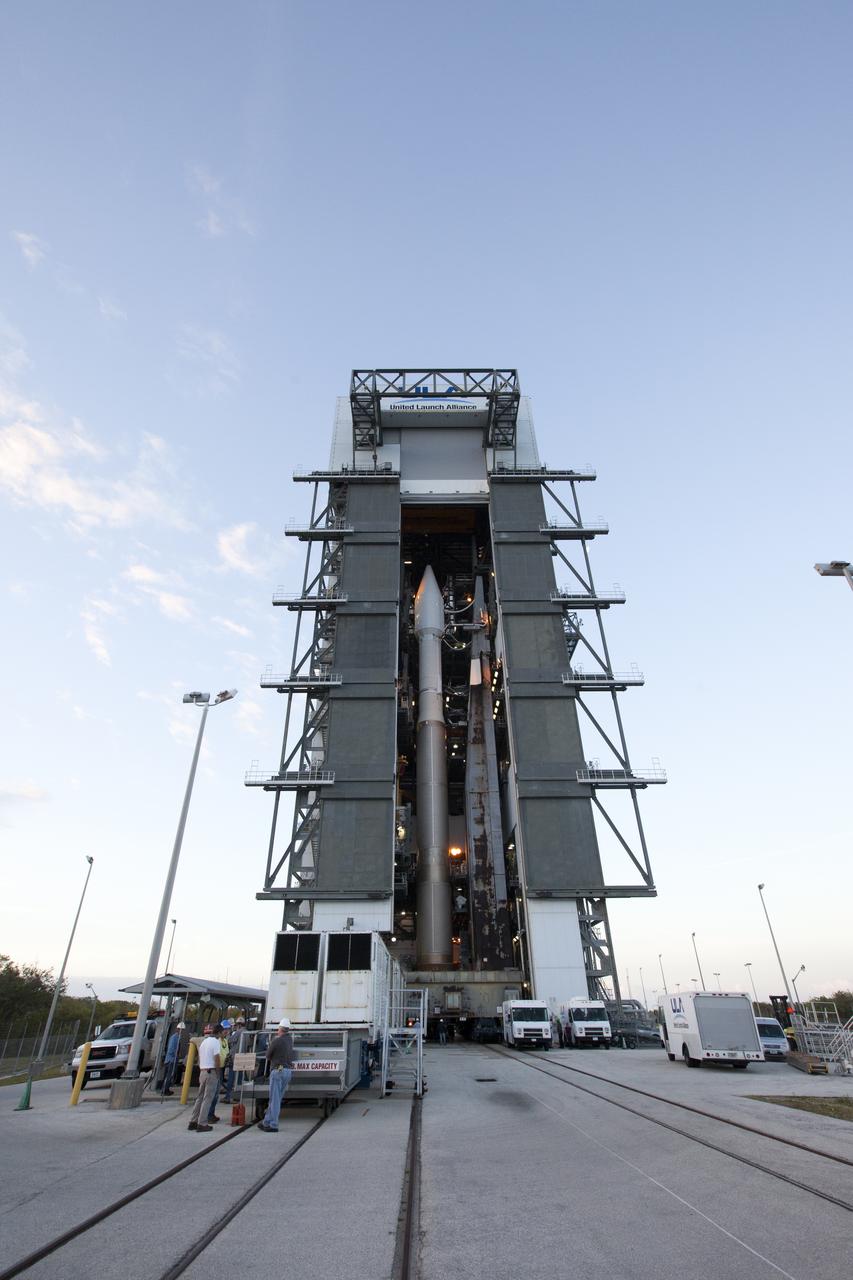
A United Launch Alliance Atlas V rocket, with the Orbital ATK Cygnus pressurized cargo module, begins to exit the Vertical Integration Facility at Space Launch Complex 41 at Cape Canaveral Air Force Station in Florida. Orbital ATK's seventh commercial resupply services mission, CRS-7, is scheduled to launch to the International Space Station on April 18, 2017. Cygnus will deliver 7,600 pounds of supplies, equipment and scientific research materials to the space station. Liftoff is scheduled for 11:11 a.m. EDT.
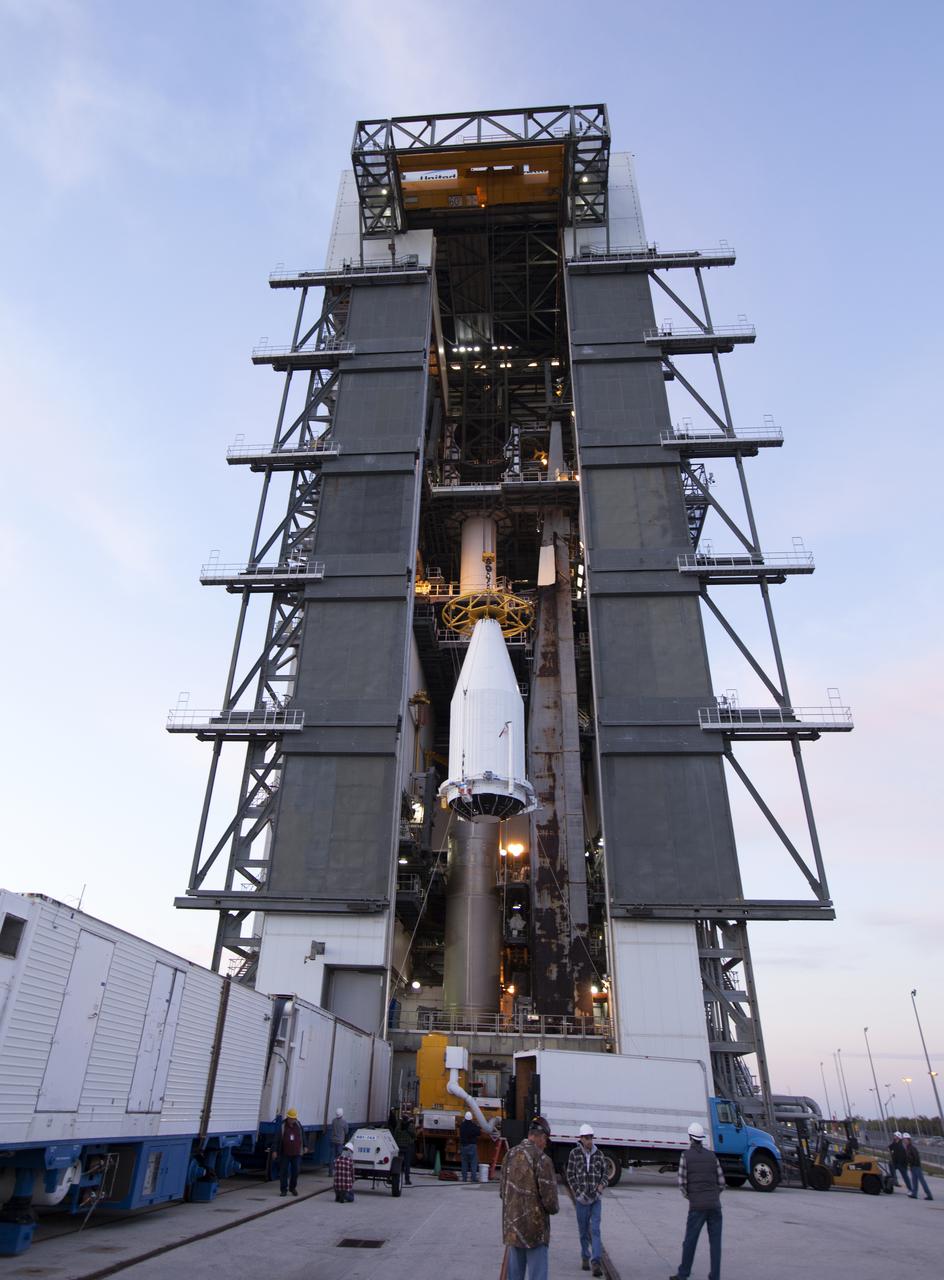
The payload fairing containing the Orbital ATK Cygnus pressurized cargo module is lifted by crane at the United Launch Alliance (ULA) Vertical Integration Facility at Space Launch Complex 41 at Cape Canaveral Air Force Station in Florida. The payload will be hoisted up and mated to the ULA Atlas V rocket. The Orbital ATK CRS-7 commercial resupply services mission to the International Space Station is scheduled to launch atop the Atlas V from pad 41. Cygnus will deliver 7,600 pounds of supplies, equipment and scientific research materials to the space station.
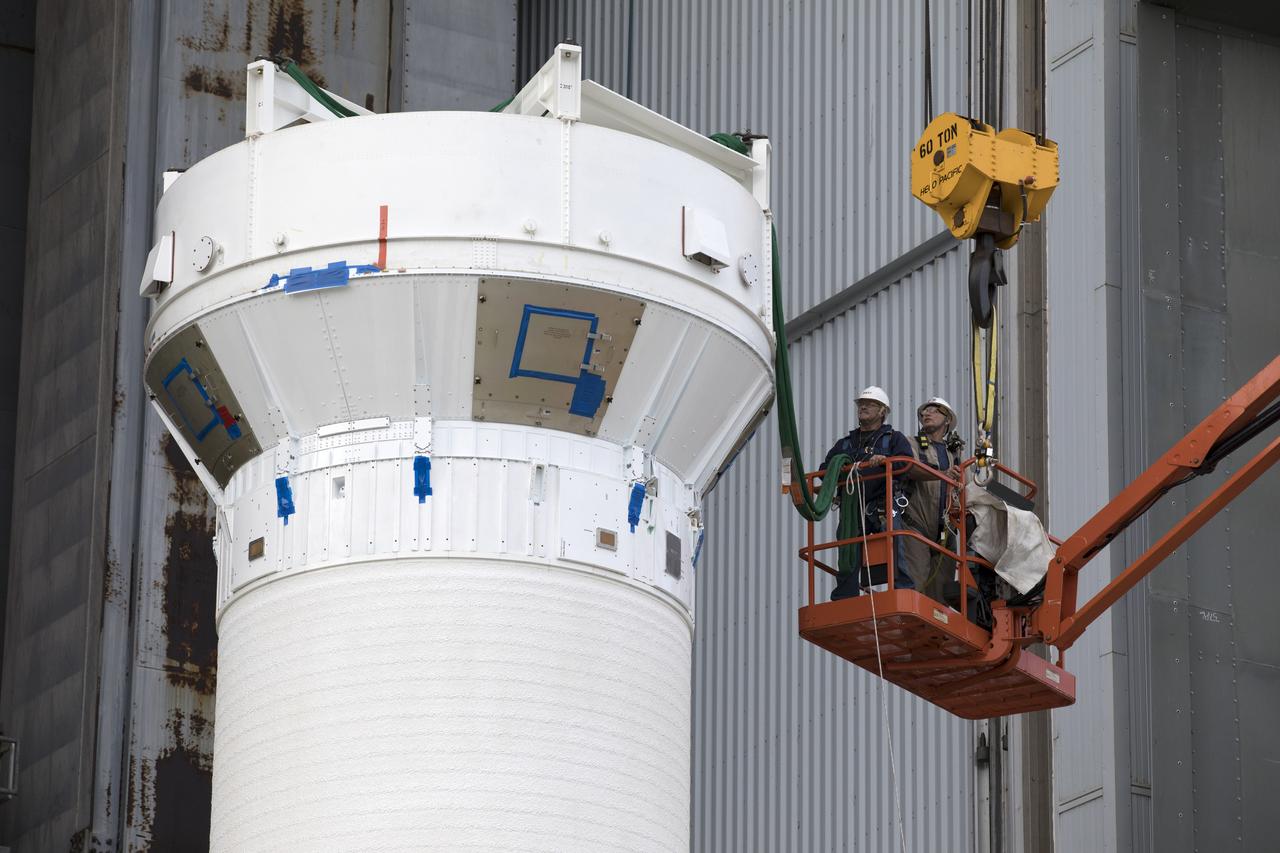
Technicians with United Launch Alliance (ULA) attach crane lines to the Centaur upper stage of the ULA Atlas V Centaur stage at the Vertical Integration Facility at Space Launch Complex 41 at Cape Canaveral Air Force Station in Florida. The Centaur stage will be lifted and mated to the first stage booster. The rocket is being prepared for Orbital ATK's seventh commercial resupply mission, CRS-7, to the International Space Station. Orbital ATK's CYGNUS pressurized cargo module is scheduled to launch atop ULA's Atlas V rocket from Pad 41 on March 19, 2017. CYGNUS will deliver 7,600 pounds of supplies, equipment and scientific research materials to the space station.
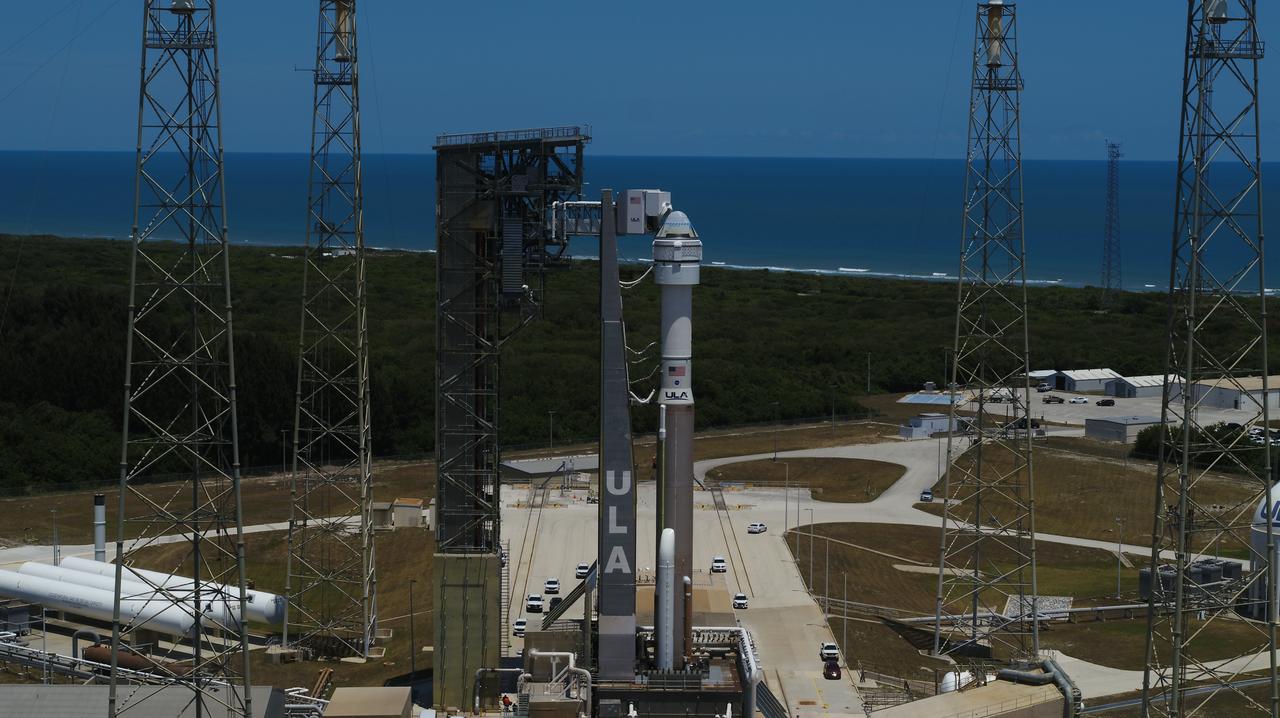
Boeing’s Starliner spacecraft atop the United Launch Alliance Atlas V rocket is seen on the launch pad of Space Launch Complex-41 at Cape Canaveral Space Force Station in Florida on Saturday, May 4, 2024, ahead of NASA’s Boeing Crew Flight Test. As part of the agency’s Commercial Crew Program, NASA astronauts Butch Wilmore and Suni Williams are the first to launch to the International Space Station aboard Boeing’s Starliner spacecraft. Liftoff is scheduled for 10:34 p.m. ET Monday, May 6.
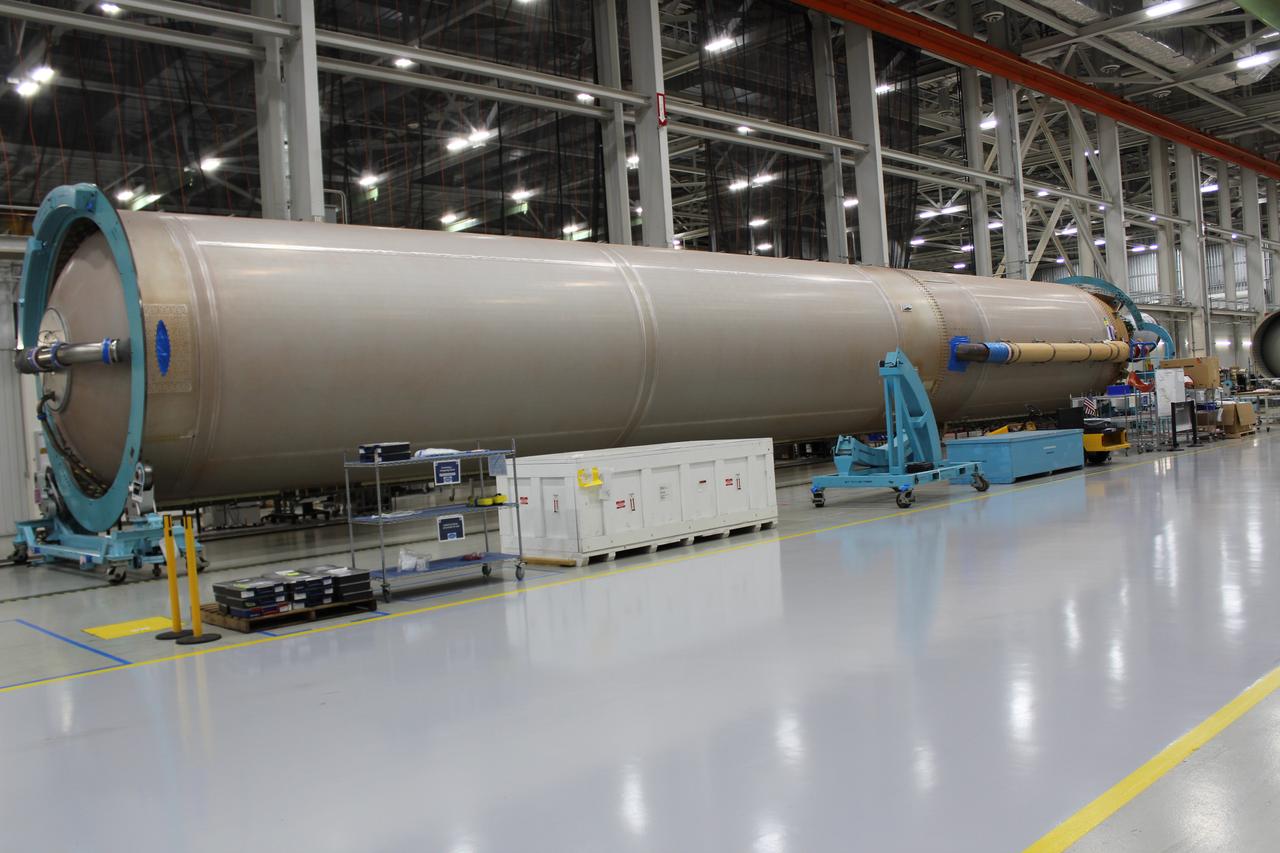
The United Launch Alliance (ULA) Atlas V first stage booster for the Crew Flight Test of Boeing’s CST-100 Starliner is in production in ULA's factory in Decatur, Alabama on March 1, 2019. Soon the booster will be assembled with the dual engine Centaur upper stage. They will be shipped aboard the company’s Mariner cargo ship to NASA’s Kennedy Space Center in Florida. Starliner and the Atlas V rockets that will launch the spacecraft, are key to restoring the nation’s capability to send astronauts to the space station from U.S. soil with NASA’s Commercial Crew Program. NASA astronauts Mike Fincke and Nicole Mann, and Boeing astronaut Chris Ferguson will launch to the space station aboard the Starliner for the Crew Flight Test.
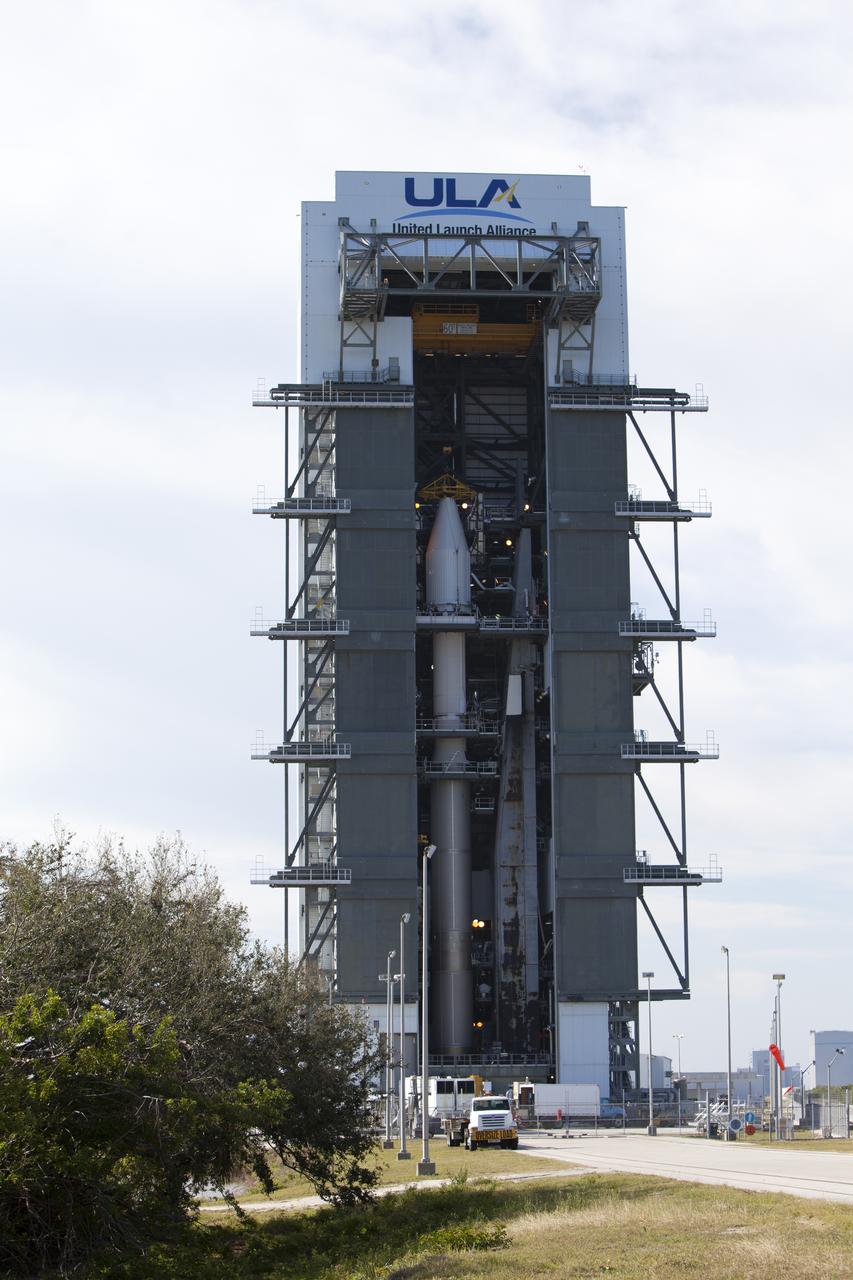
The payload fairing containing the Orbital ATK Cygnus pressurized cargo module is mated to the Centaur upper stage, or second stage, of the United Launch Alliance (ULA) rocket in the Vertical Integration Facility at Space Launch Complex 41 at Cape Canaveral Air Force Station in Florida. The Orbital ATK CRS-7 commercial resupply services mission to the International Space Station is scheduled to launch atop the Atlas V from pad 41. Cygnus will deliver 7,600 pounds of supplies, equipment and scientific research materials to the space station.
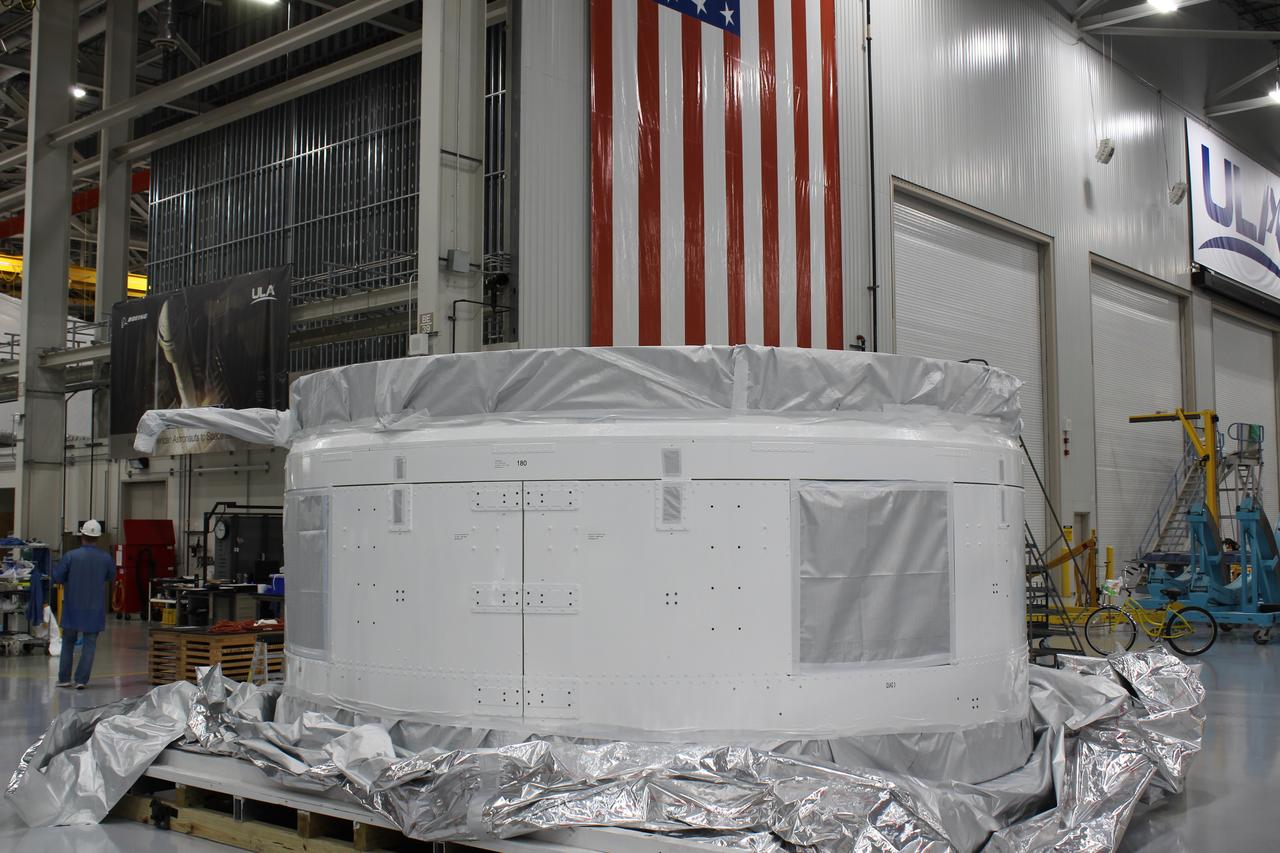
The Launch Vehicle Adapter (LVA) that will attach Boeing’s first Starliner spacecraft to the Atlas V launch vehicle is ready for transport from United Launch Alliance's manufacturing factory in Decatur, Alabama to Cape Canaveral Air Force Station in Florida.
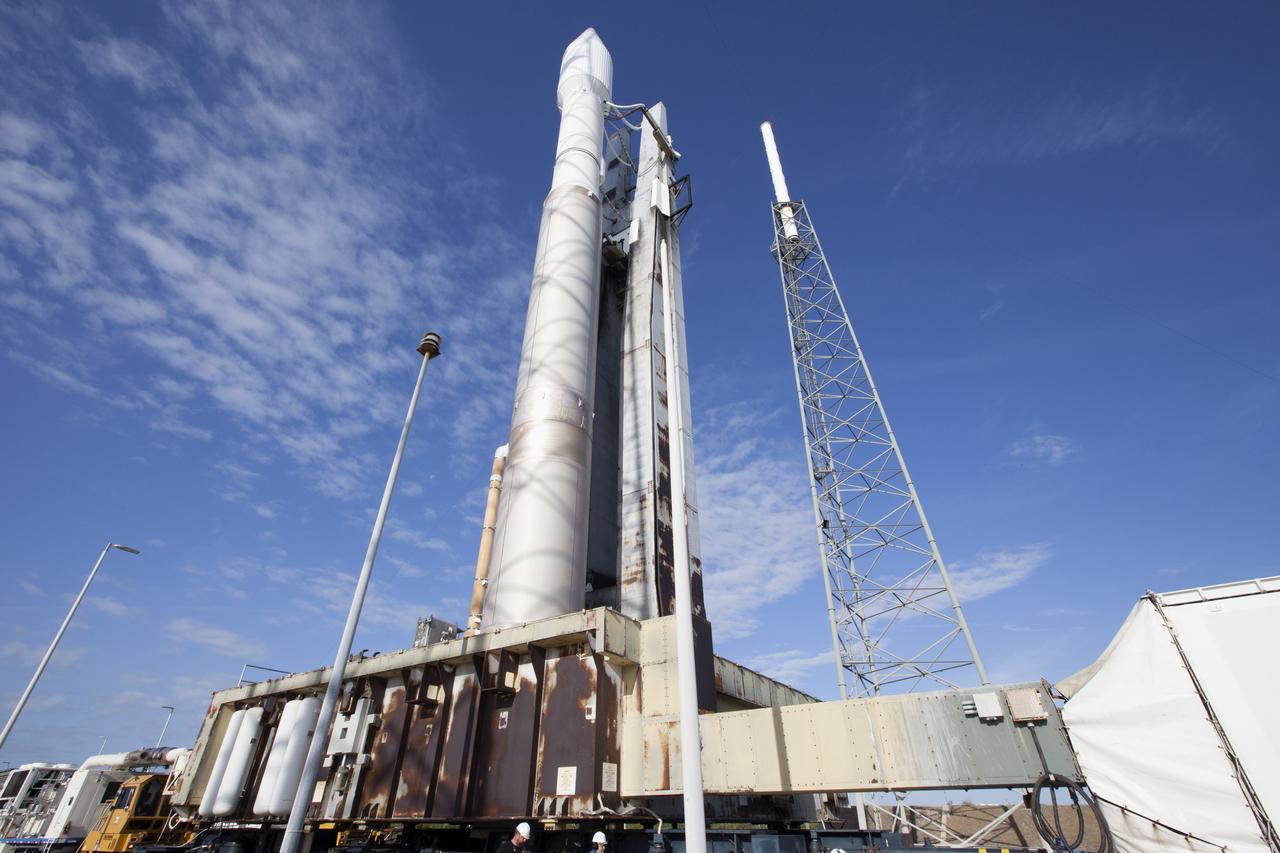
A United Launch Alliance Atlas V rocket, with the Orbital ATK Cygnus pressurized cargo module, is transported along the road to the pad at Space Launch Complex 41 at Cape Canaveral Air Force Station in Florida. Orbital ATK's seventh commercial resupply services mission, CRS-7, is scheduled to launch to the International Space Station on April 18, 2017. Cygnus will deliver 7,600 pounds of supplies, equipment and scientific research materials to the space station. Liftoff is scheduled for 11:11 a.m. EDT.
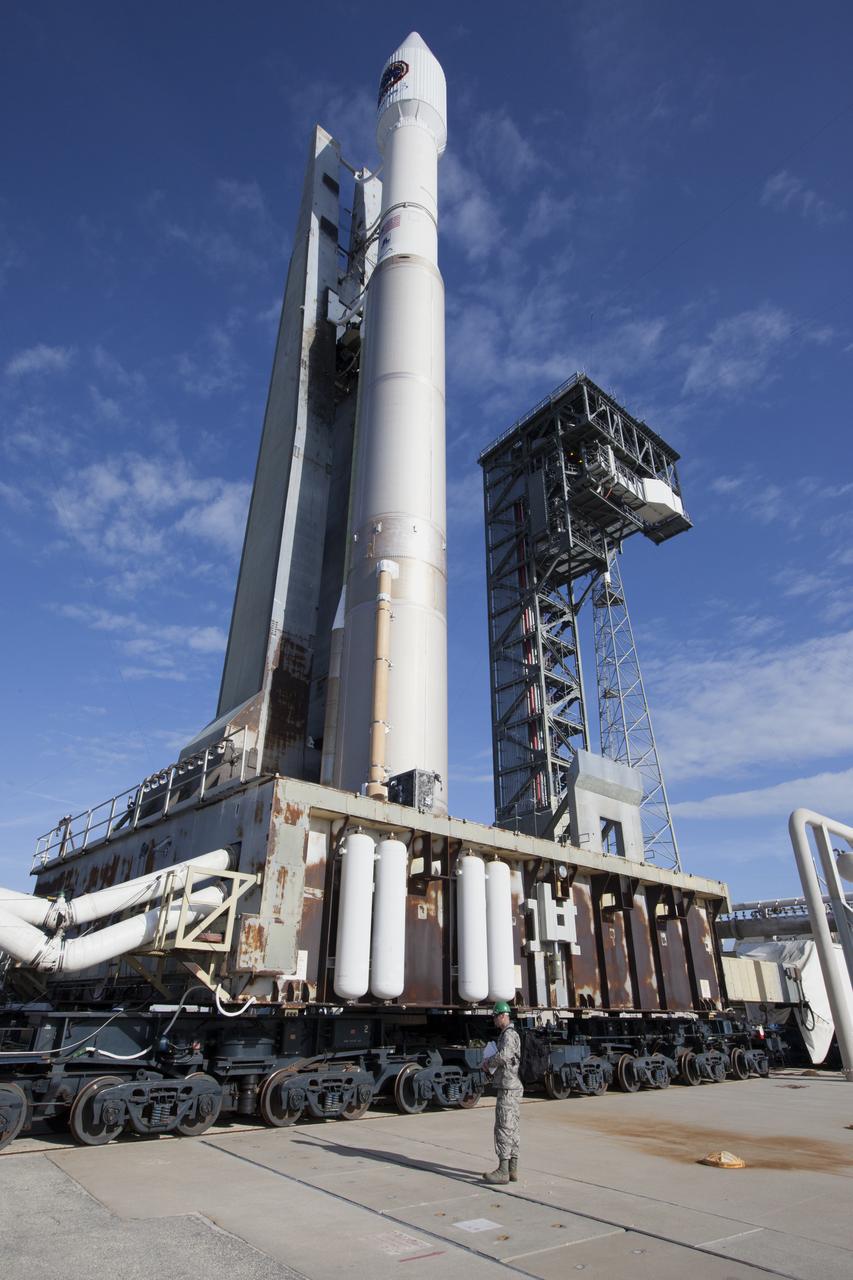
A United Launch Alliance Atlas V rocket, with the Orbital ATK Cygnus pressurized cargo module, nears the pad at Space Launch Complex 41 at Cape Canaveral Air Force Station in Florida. Orbital ATK's seventh commercial resupply services mission, CRS-7, is scheduled to launch to the International Space Station on April 18, 2017. Cygnus will deliver 7,600 pounds of supplies, equipment and scientific research materials to the space station. Liftoff is scheduled for 11:11 a.m. EDT.
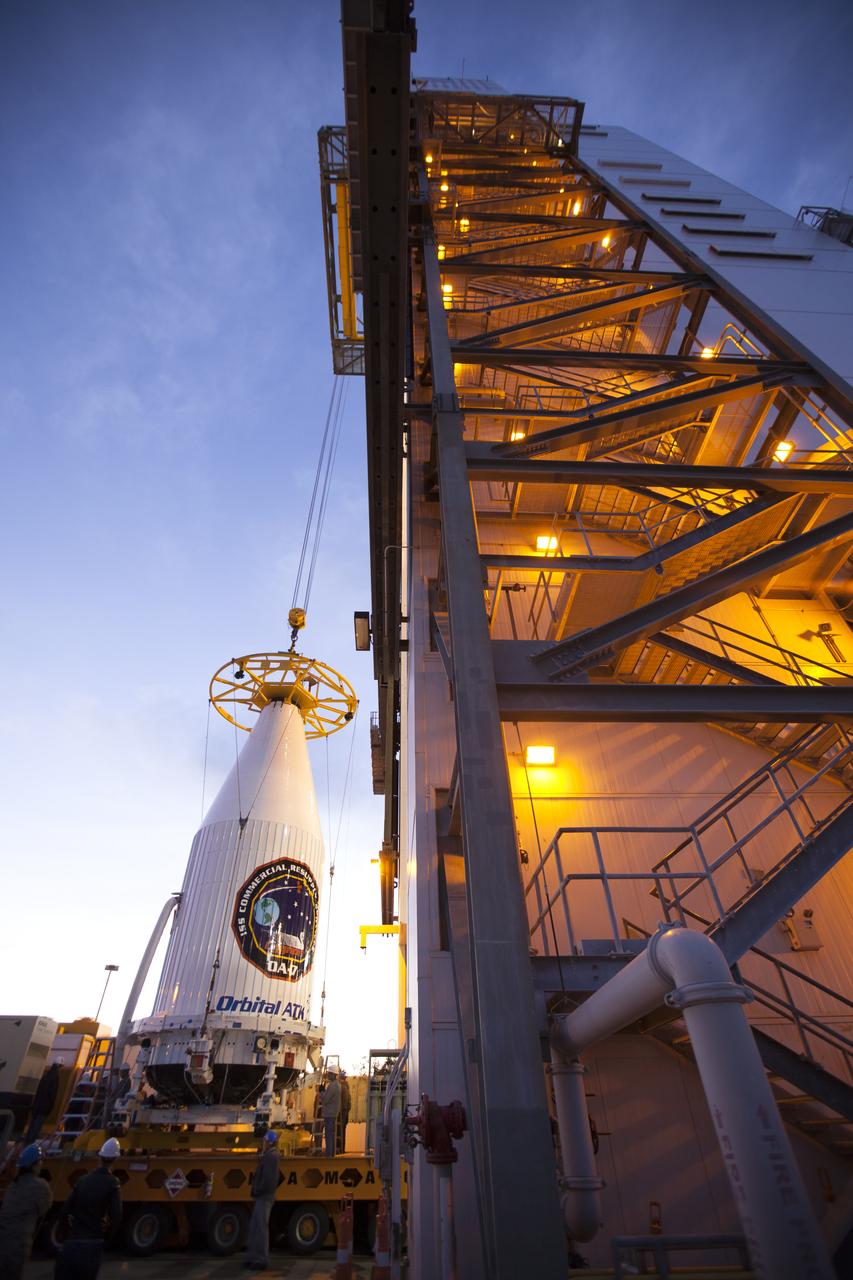
The payload fairing containing the Orbital ATK Cygnus pressurized cargo module is lifted by crane at the United Launch Alliance (ULA) Vertical Integration Facility at Space Launch Complex 41 at Cape Canaveral Air Force Station in Florida. The payload will be hoisted up and mated to the ULA Atlas V rocket. The Orbital ATK CRS-7 commercial resupply services mission to the International Space Station is scheduled to launch atop the Atlas V from pad 41. Cygnus will deliver 7,600 pounds of supplies, equipment and scientific research materials to the space station.
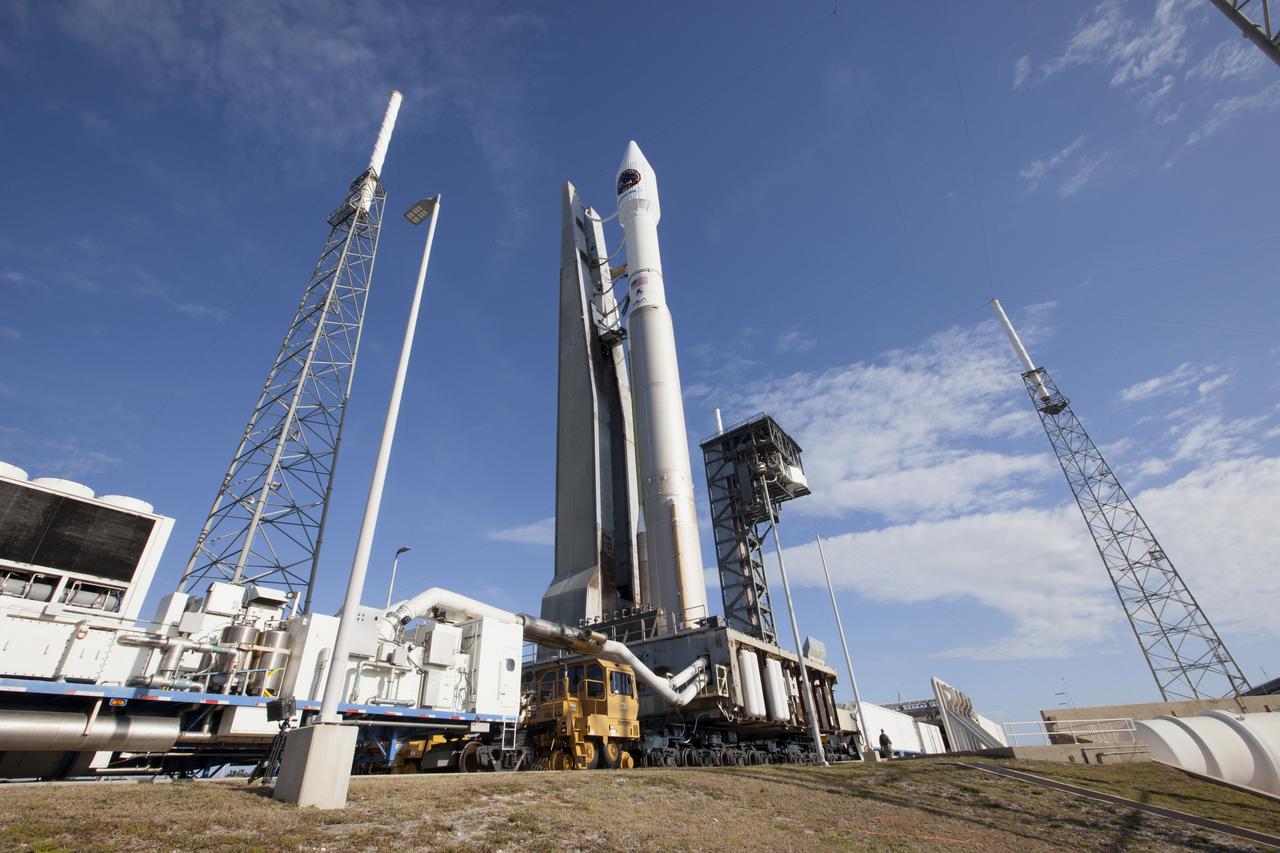
A United Launch Alliance Atlas V rocket, with the Orbital ATK Cygnus pressurized cargo module, is transported along the road to the pad at Space Launch Complex 41 at Cape Canaveral Air Force Station in Florida. Orbital ATK's seventh commercial resupply services mission, CRS-7, is scheduled to launch to the International Space Station on April 18, 2017. Cygnus will deliver 7,600 pounds of supplies, equipment and scientific research materials to the space station. Liftoff is scheduled for 11:11 a.m. EDT.
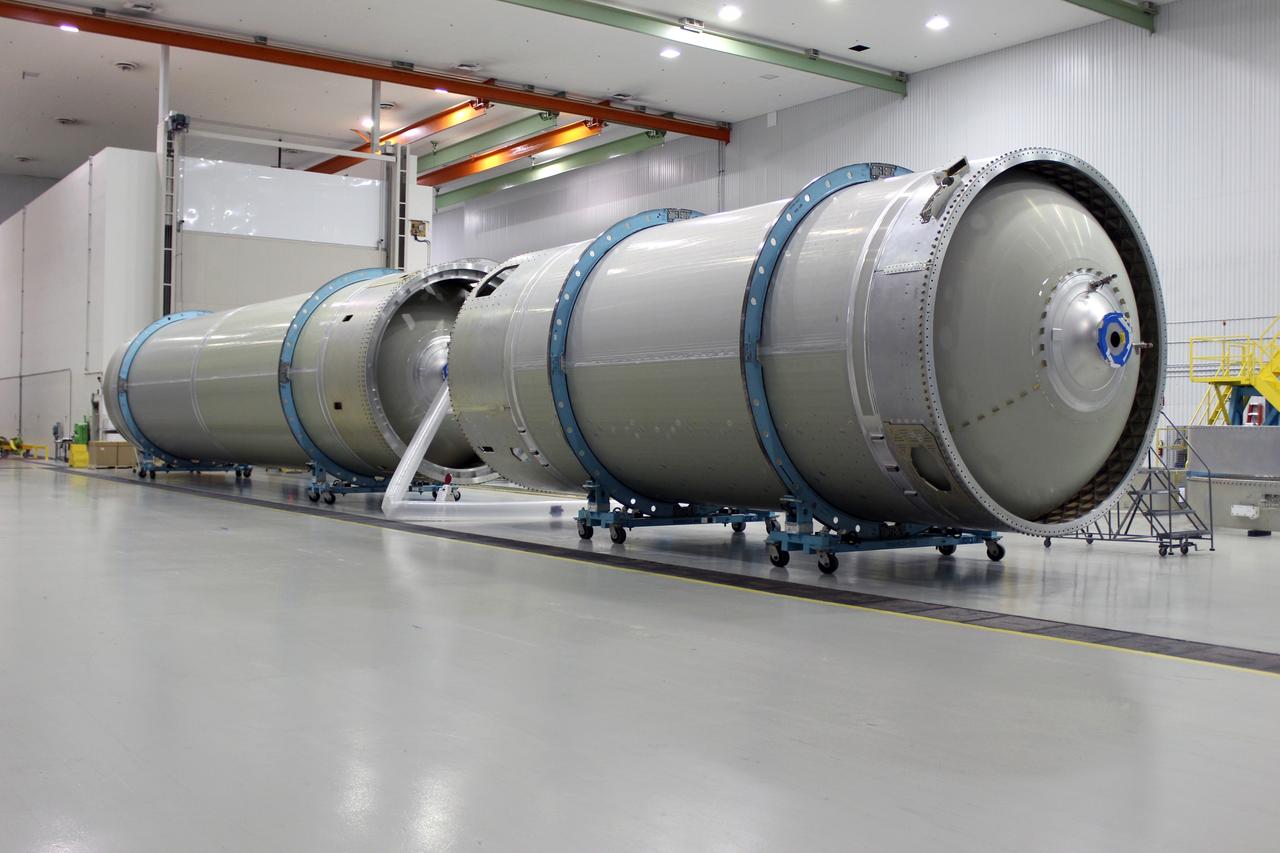
The Atlas V rocket that will launch Boeing’s CST-100 Starliner spacecraft on the company’s uncrewed Orbital Flight Test for NASA’s Commercial Crew Program is coming together inside a United Launch Alliance facility in Decatur, Alabama. The flight test is intended to prove the design of the integrated space system prior to the Crew Flight Test. These events are part of NASA’s required certification process as the company works to regularly fly astronauts to and from the International Space Station. Boeing's Starliner will launch on the United Launch Alliance Atlas V rocket from Space Launch Complex 41 at Cape Canaveral Air Force Station in Florida.

Ahead of launch as part of NASA’s Commercial Lunar Payload Services (CLPS) initiative, Astrobotic’s Peregrine lunar lander is preparing to be encapsulated in the payload fairing, or nose cone, of United Launch Alliance’s Vulcan rocket on Nov. 21, 2023, at Astrotech Space Operations Facility near the agency’s Kennedy Space Center in Florida. Launch of Astrobotic’s Peregrine Mission One will carry NASA and commercial payloads to the Moon in early 2024 to study the lunar exosphere, thermal properties, and hydrogen abundance of the lunar regolith, magnetic fields, and the radiation environment of the lunar surface.
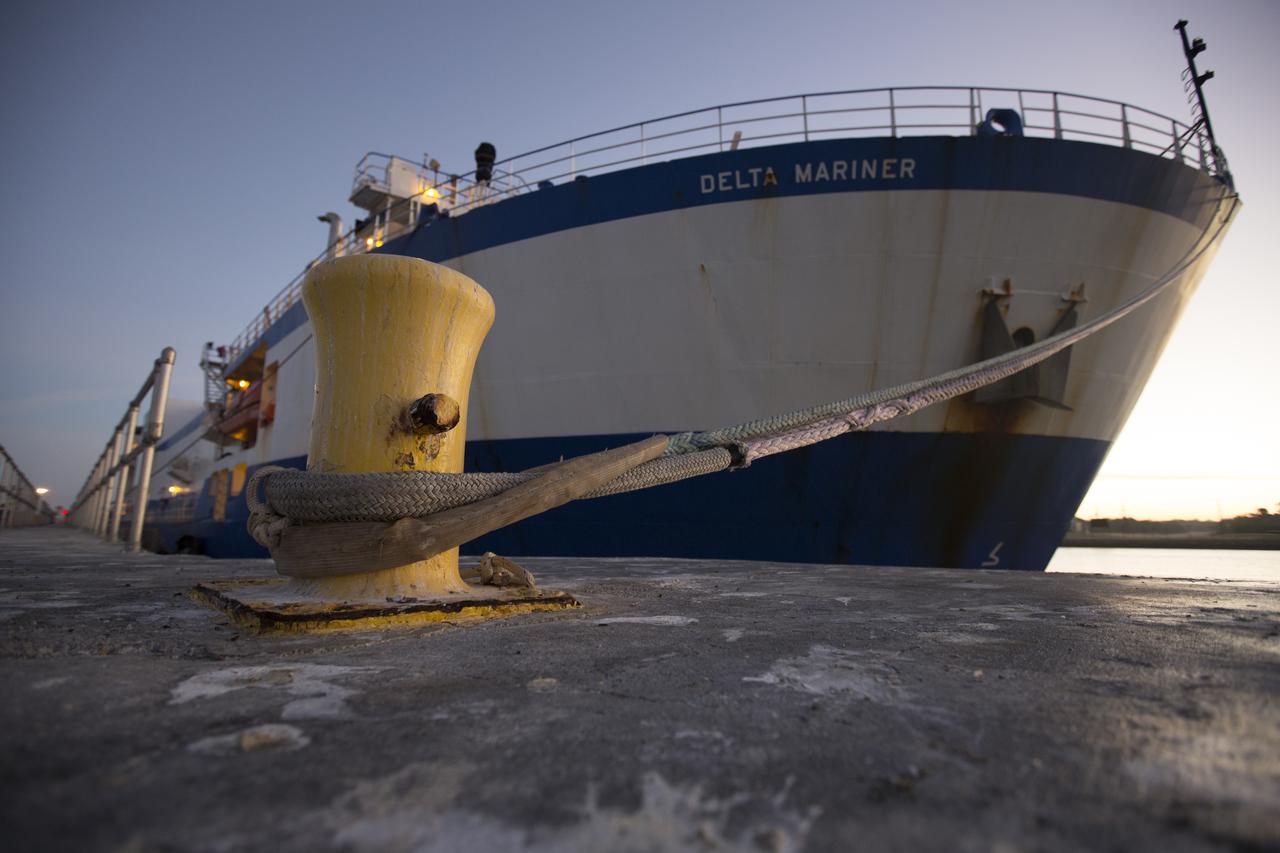
The Mariner cargo ship is docked at the Army Outpost wharf at Port Canaveral, Florida, near the Kennedy Space Center. Aboard is the United Launch Alliance (ULA) Atlas V booster for the Orbital ATK CRS-7 commercial resupply mission to the International Space Station. After the rocket is offloaded, a transport truck will take the Atlas V to the hangar at the Atlas Spaceflight Operations Center (ASOC), south of Space Launch Complex 41 at Cape Canaveral Air Force Station. Scheduled to launch a Cygnus spacecraft on March 19, 2017, the Orbital ATK CRS-7 mission will deliver thousands of pounds of supplies, equipment and scientific research materials that improve life on Earth and drive progress toward future space exploration.
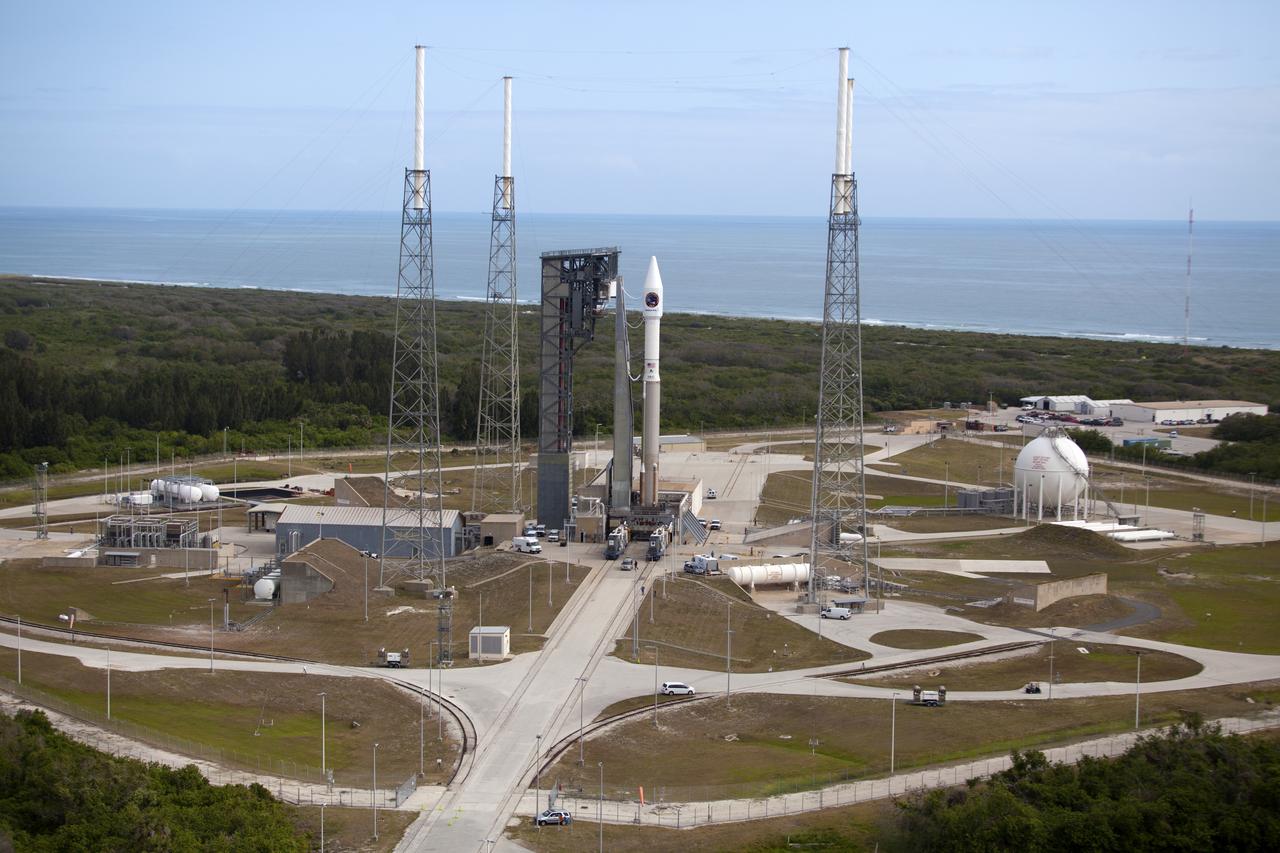
The United Launch Alliance Atlas V rocket, with the Orbital ATK Cygnus pressurized cargo module, stands ready for launch on the pad at Space Launch Complex 41 at Cape Canaveral Air Force Station in Florida. Orbital ATK's seventh commercial resupply services mission, CRS-7, is scheduled to launch to the International Space Station on April 18, 2017. Cygnus will deliver 7,600 pounds of supplies, equipment and scientific research materials to the space station. Liftoff is scheduled for 11:11 a.m. EDT.

A transport truck is about to take a United Launch Alliance (ULA) Atlas V booster from the Mariner cargo ship at the Army Outpost wharf at Port Canaveral, Florida, to the hangar at the Atlas Spaceflight Operations Center (ASOC), located south of Space Launch Complex 41 at Cape Canaveral Air Force Station. The Atlas V is scheduled to launch a Cygnus spacecraft on the Orbital ATK CRS-7 commercial resupply mission to the International Space Station. Scheduled to liftoff March 19, 2017, the Orbital ATK CRS-7 mission will deliver thousands of pounds of supplies, equipment and scientific research materials that improve life on Earth and drive progress toward future space exploration.
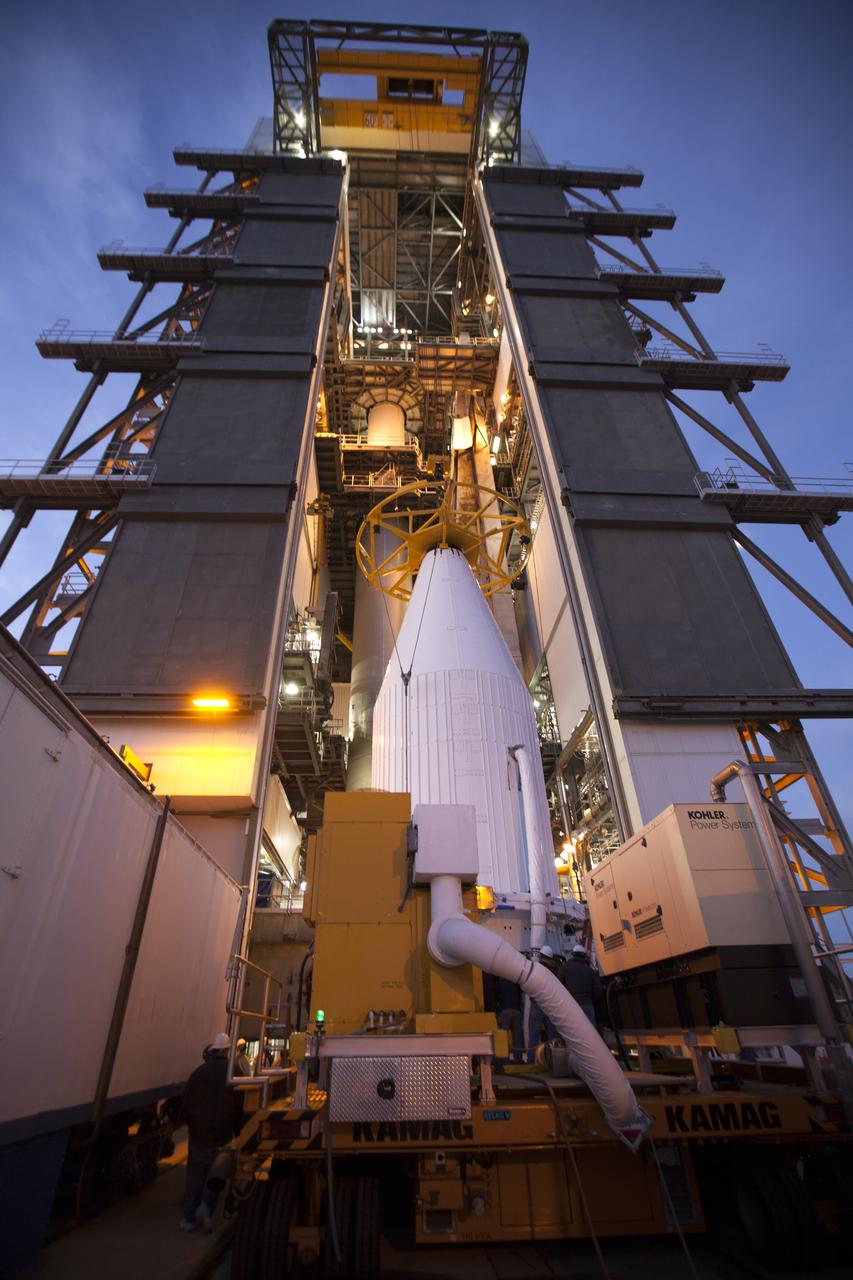
The payload fairing containing the Orbital ATK Cygnus pressurized cargo module is lifted by crane at the United Launch Alliance (ULA) Vertical Integration Facility at Space Launch Complex 41 at Cape Canaveral Air Force Station in Florida. The payload will be hoisted up and mated to the ULA Atlas V rocket. The Orbital ATK CRS-7 commercial resupply services mission to the International Space Station is scheduled to launch atop the Atlas V from pad 41. Cygnus will deliver 7,600 pounds of supplies, equipment and scientific research materials to the space station.
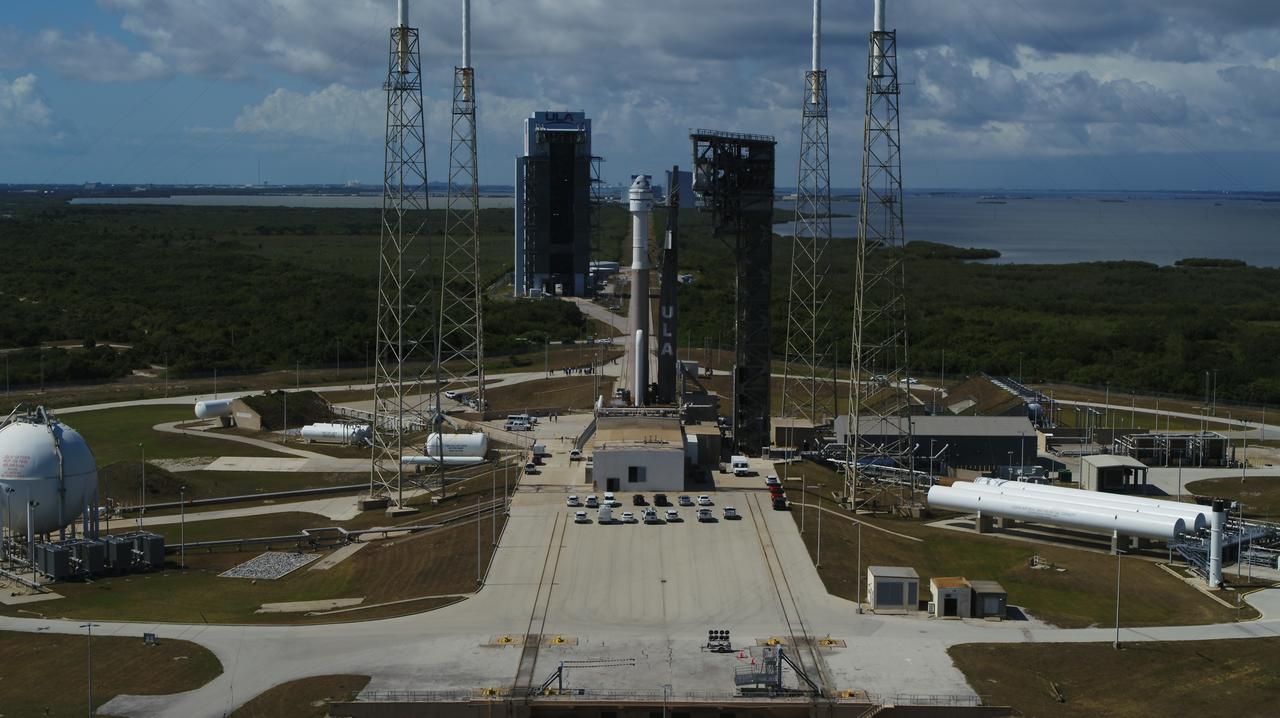
Boeing’s Starliner spacecraft atop the United Launch Alliance Atlas V rocket is seen on the launch pad of Space Launch Complex-41 at Cape Canaveral Space Force Station in Florida on Saturday, May 4, 2024, ahead of NASA’s Boeing Crew Flight Test. As part of the agency’s Commercial Crew Program, NASA astronauts Butch Wilmore and Suni Williams are the first to launch to the International Space Station aboard Boeing’s Starliner spacecraft. Liftoff is scheduled for 10:34 p.m. ET Monday, May 6.
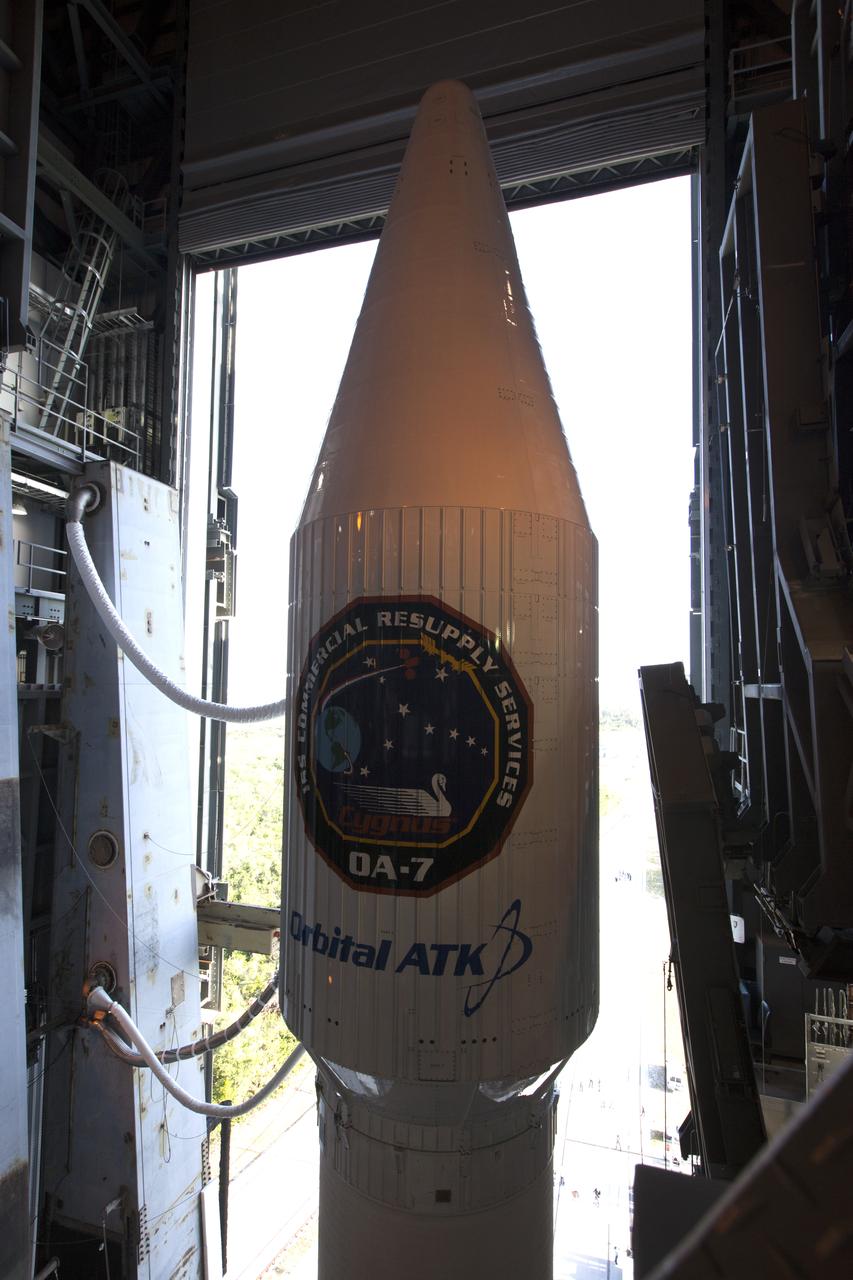
A United Launch Alliance Atlas V rocket, with the Orbital ATK Cygnus pressurized cargo module, exits the Vertical Integration Facility at Space Launch Complex 41 at Cape Canaveral Air Force Station in Florida. Orbital ATK's seventh commercial resupply services mission, CRS-7, is scheduled to launch to the International Space Station on April 18, 2017. Cygnus will deliver 7,600 pounds of supplies, equipment and scientific research materials to the space station. Liftoff is scheduled for 11:11 a.m. EDT.
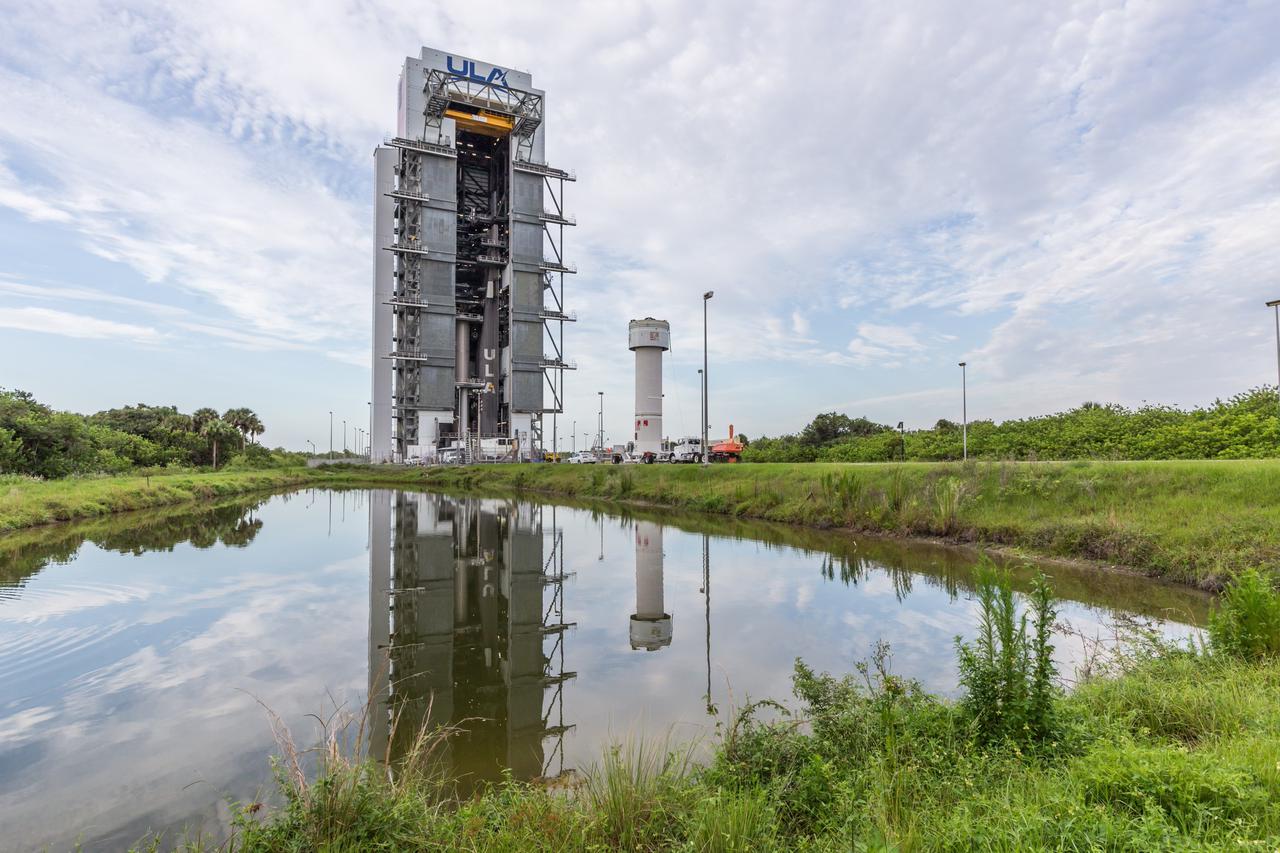
Engineers in United Launch Alliance’s Vertical Integration Facility used large cranes to assemble the stages of the company’s Atlas V rocket, in preparation for Boeing’s Orbital Flight Test-2 (OFT-2) launch to the International Space Station for NASA’s Commercial Crew Program. OFT-2 is scheduled to lift off at 2:53 p.m. ET Friday, July 30, from Space Launch Complex 41 at Cape Canaveral Space Force Station in Florida bound for the International Space Station.
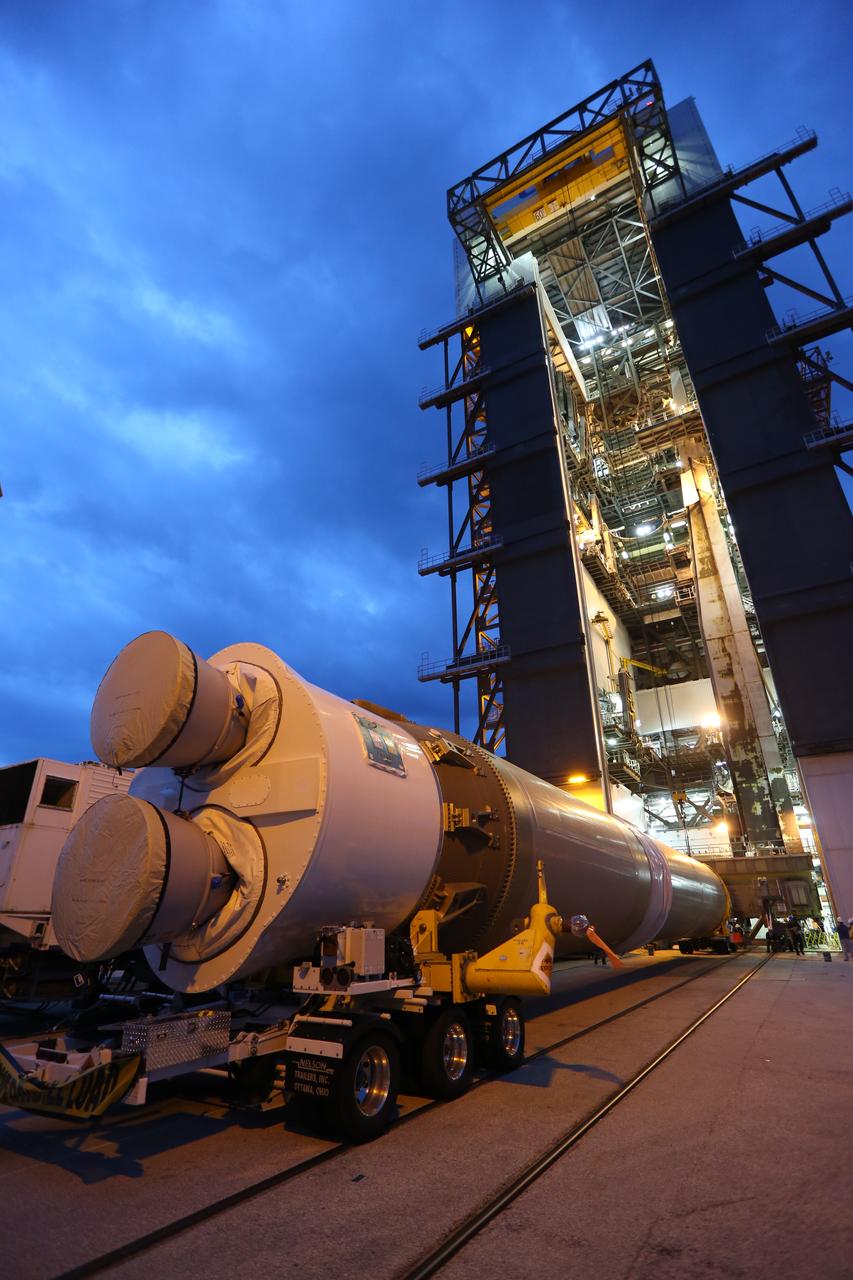
The first stage of the United Launch Alliance (ULA) Atlas V rocket arrives at the Vertical Integration Facility at Space Launch Complex 41 at Cape Canaveral Air Force Station in Florida. The rocket is being prepared for Orbital ATK's seventh commercial resupply mission, CRS-7, to the International Space Station. Orbital ATK's CYGNUS pressurized cargo module is scheduled to launch atop ULA's Atlas V rocket from Pad 41 on March 19, 2017. CYGNUS will deliver thousands of pounds of supplies, equipment and scientific research materials to the space station.
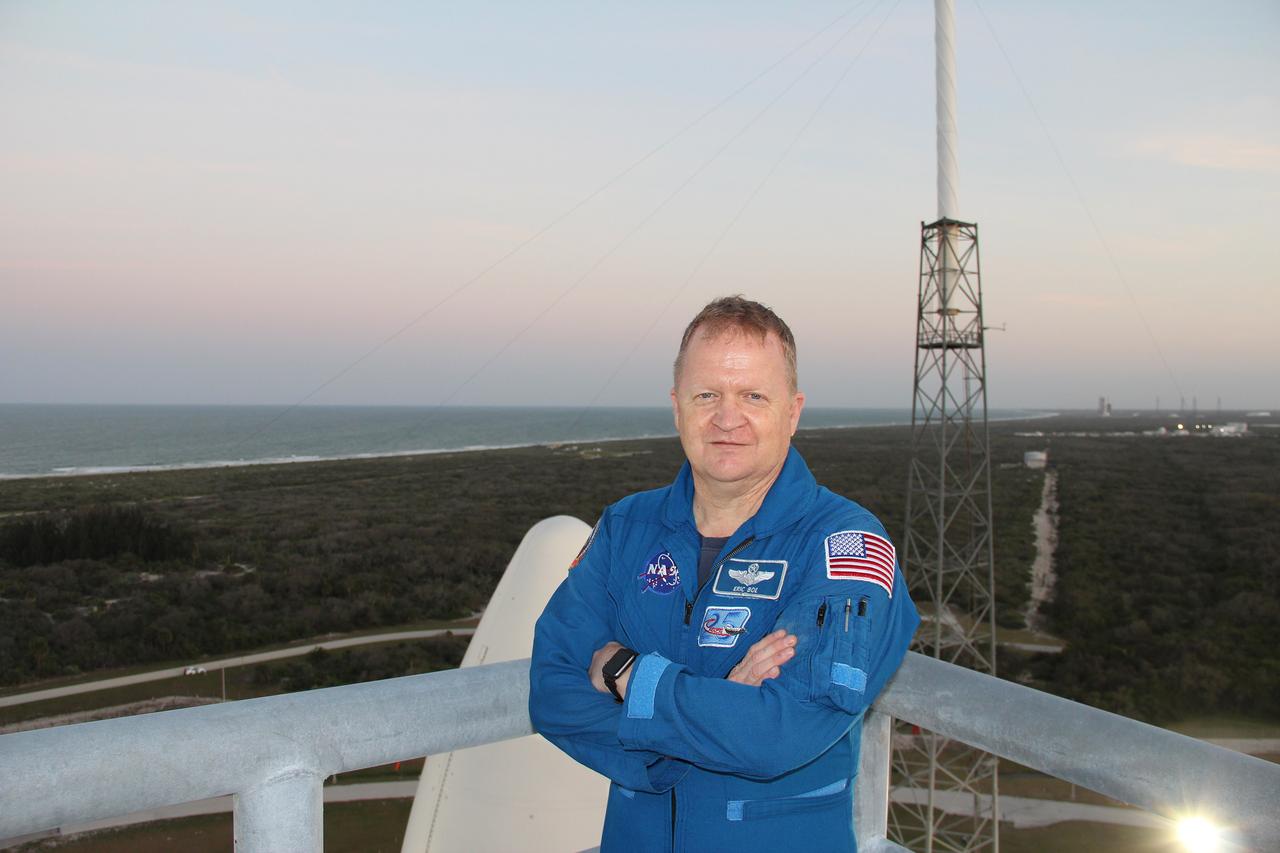
NASA astronaut Eric Boe, one of four astronauts working with the agency’s Commercial Crew Program, checked out the Crew Access Tower at Space Launch Complex 41. Boe is standing on the tower's uppermost level. Visible behind his right arm is the aerodynamic enclosure designed to protect NOAA's Geostationary Operational Environmental Satellite-S during launch – which successfully occurred March 1. To Boe’s left, one of four protective lightning masts is in view. Accompanied by NASA, Boeing and United Launch Alliance engineers, Boe inspected the launch tower to establish whether spotlight and lighting conditions will be acceptable after dark. The survey was required to ensure crew members will have suitable visibility as they prepare to board Boeing’s Starliner spacecraft and launch on missions such as the Crew Flight Test to the International Space Station, targeted for later this year.
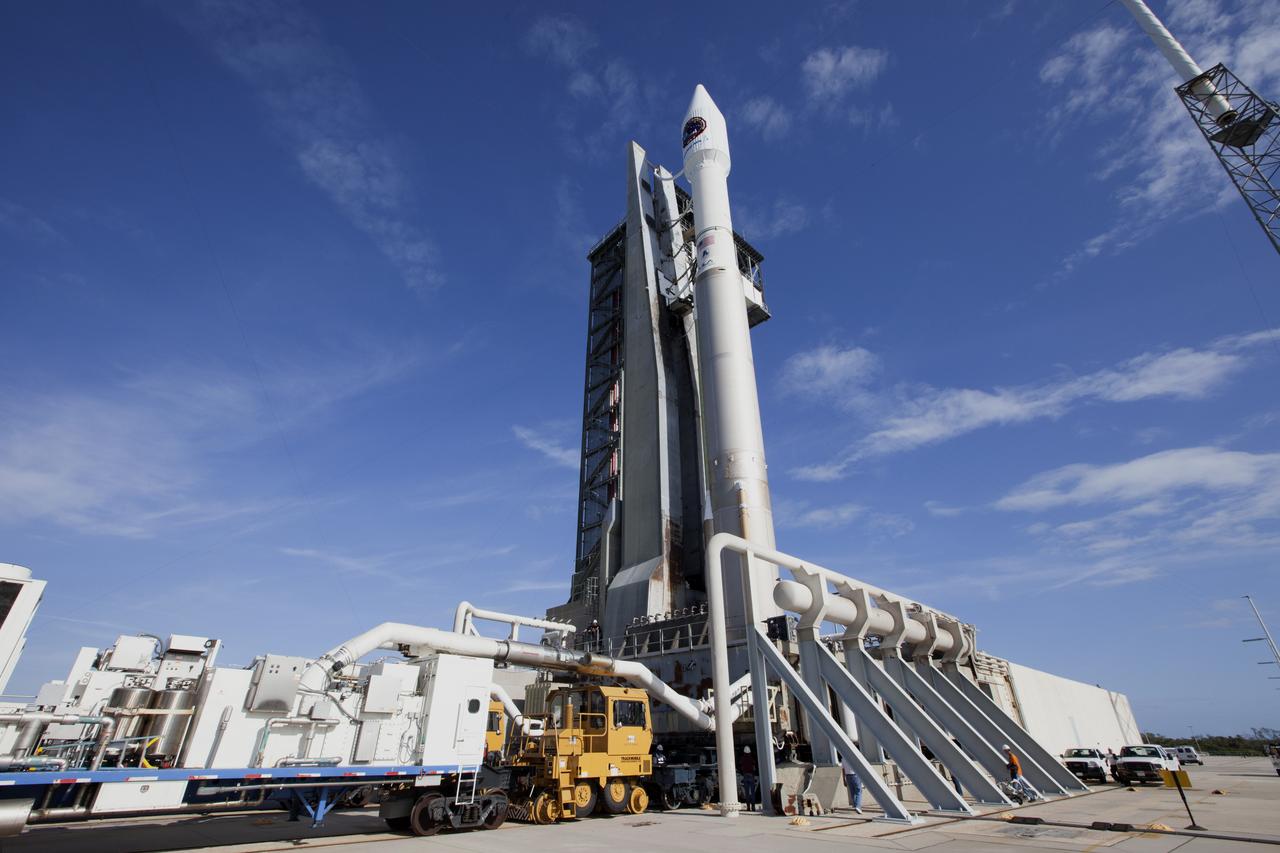
A United Launch Alliance Atlas V rocket, with the Orbital ATK Cygnus pressurized cargo module, arrives at the pad at Space Launch Complex 41 at Cape Canaveral Air Force Station in Florida. Orbital ATK's seventh commercial resupply services mission, CRS-7, is scheduled to launch to the International Space Station on April 18, 2017. Cygnus will deliver 7,600 pounds of supplies, equipment and scientific research materials to the space station. Liftoff is scheduled for 11:11 a.m. EDT.
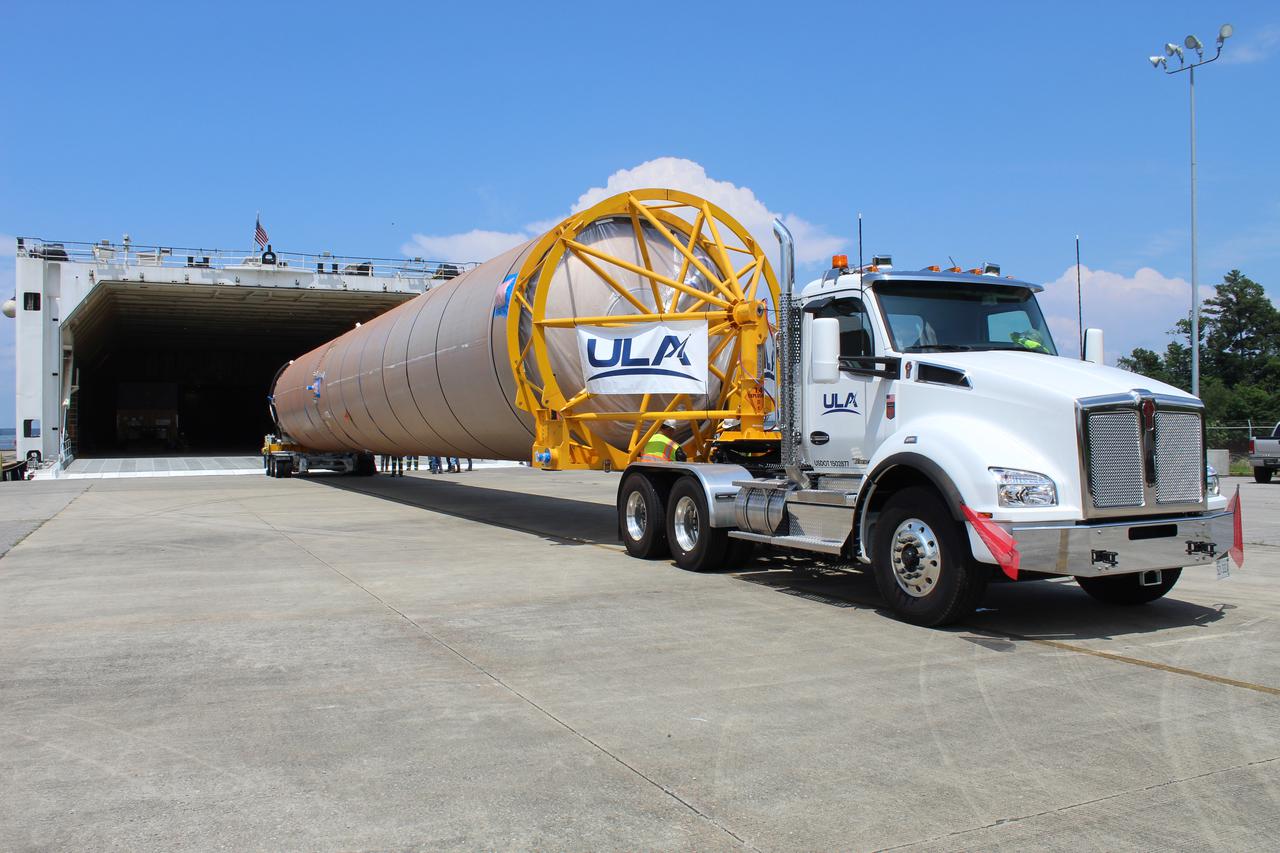
A United Launch Alliance (ULA) Atlas V booster for Boeing's CST-100 Starliner Crew Flight Test (CFT) is loaded onto a rocket-delivery ship at ULA’s manufacturing factory in Decatur, Alabama, on June 11, 2021, to begin its journey to Cape Canaveral, Florida. Starliner’s first flight with astronauts aboard, CFT will launch from Space Launch Complex 41 at Cape Canaveral Space Force Station in Florida. The flight test will demonstrate the ability of the Atlas V and Starliner to safely carry astronauts to and from the International Space Station for the agency’s Commercial Crew Program.
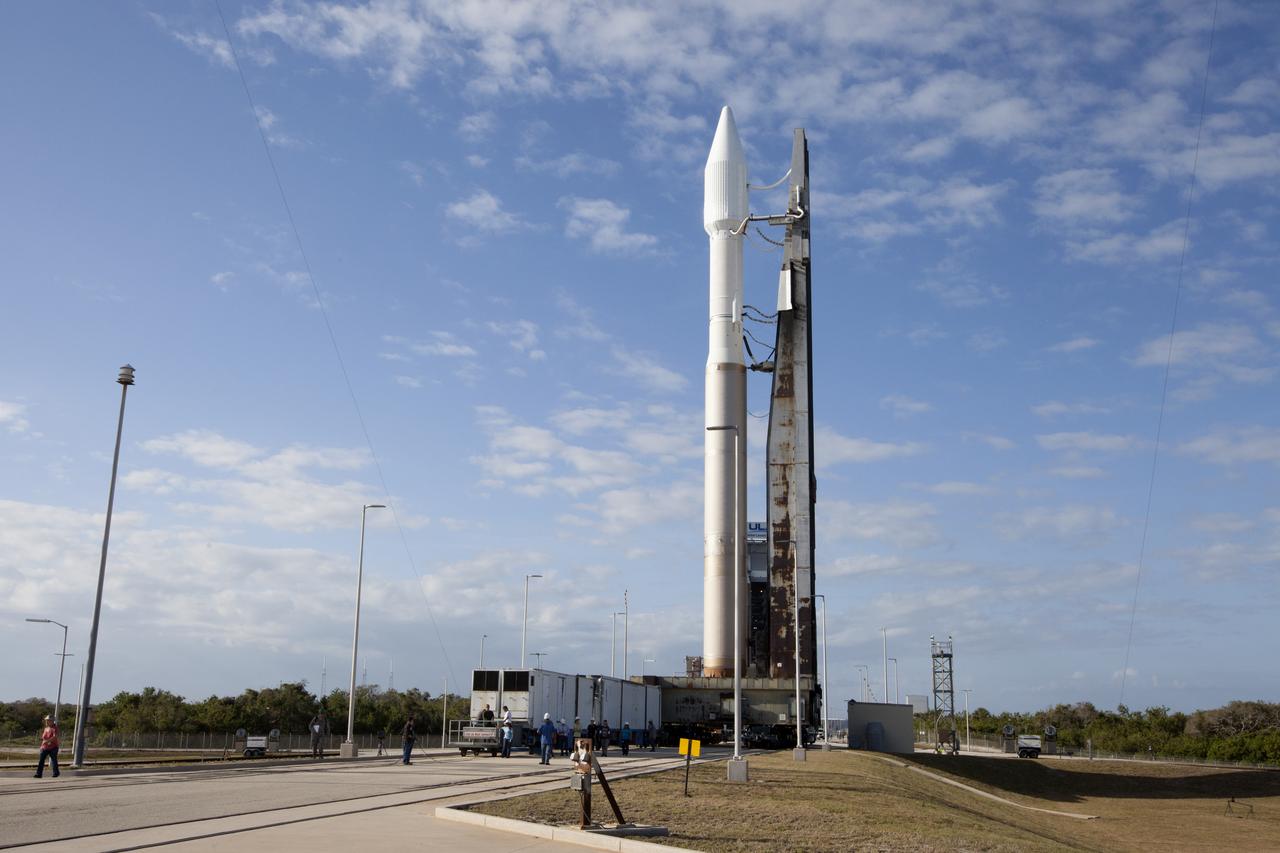
A United Launch Alliance Atlas V rocket, with the Orbital ATK Cygnus pressurized cargo module, is transported along the road to the pad at Space Launch Complex 41 at Cape Canaveral Air Force Station in Florida. Orbital ATK's seventh commercial resupply services mission, CRS-7, is scheduled to launch to the International Space Station on April 18, 2017. Cygnus will deliver 7,600 pounds of supplies, equipment and scientific research materials to the space station. Liftoff is scheduled for 11:11 a.m. EDT.
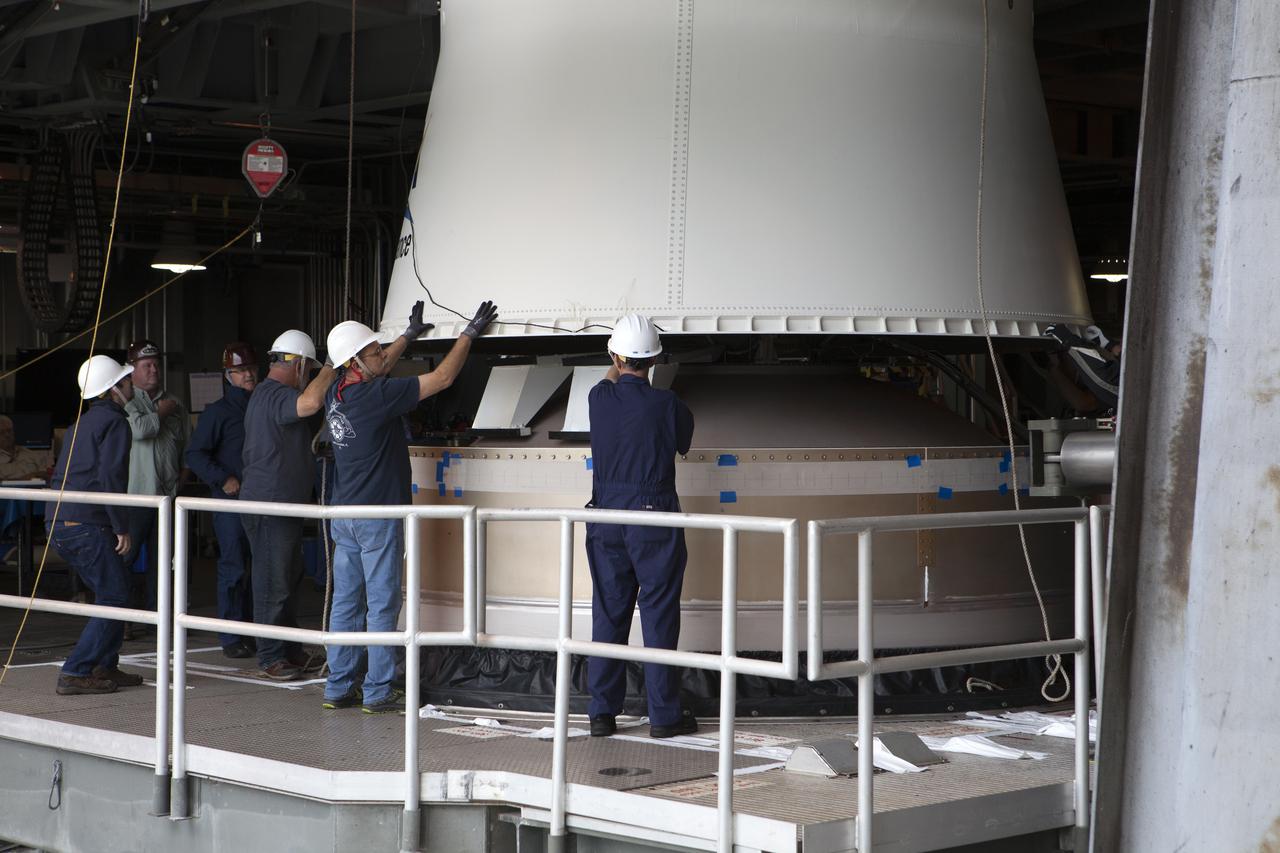
Technicians with United Launch Alliance (ULA) assist as the Centaur upper stage of the ULA Atlas V rocket is lowered onto the first stage booster inside the Vertical Integration Facility at Space Launch Complex 41 at Cape Canaveral Air Force Station in Florida. The rocket is being prepared for Orbital ATK's seventh commercial resupply mission, CRS-7, to the International Space Station. Orbital ATK's CYGNUS pressurized cargo module is scheduled to launch atop ULA's Atlas V rocket from Pad 41 on March 19, 2017. CYGNUS will deliver 7,600 pounds of supplies, equipment and scientific research materials to the space station.
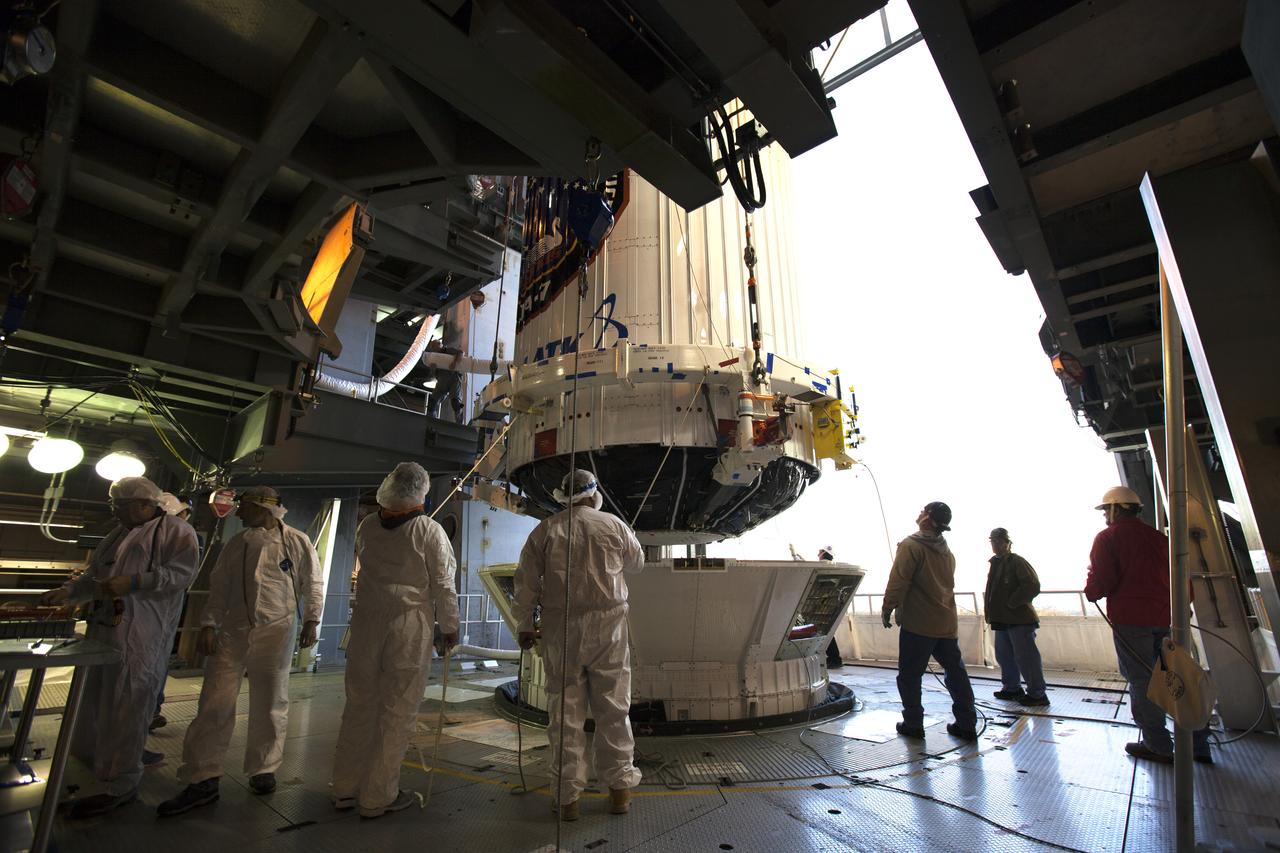
The payload fairing containing the Orbital ATK Cygnus pressurized cargo module is lowered onto the Centaur upper stage, or second stage, of the United Launch Alliance (ULA) rocket in the Vertical Integration Facility at Space Launch Complex 41 at Cape Canaveral Air Force Station in Florida. The Orbital ATK CRS-7 commercial resupply services mission to the International Space Station is scheduled to launch atop the Atlas V from pad 41. Cygnus will deliver 7,600 pounds of supplies, equipment and scientific research materials to the space station.
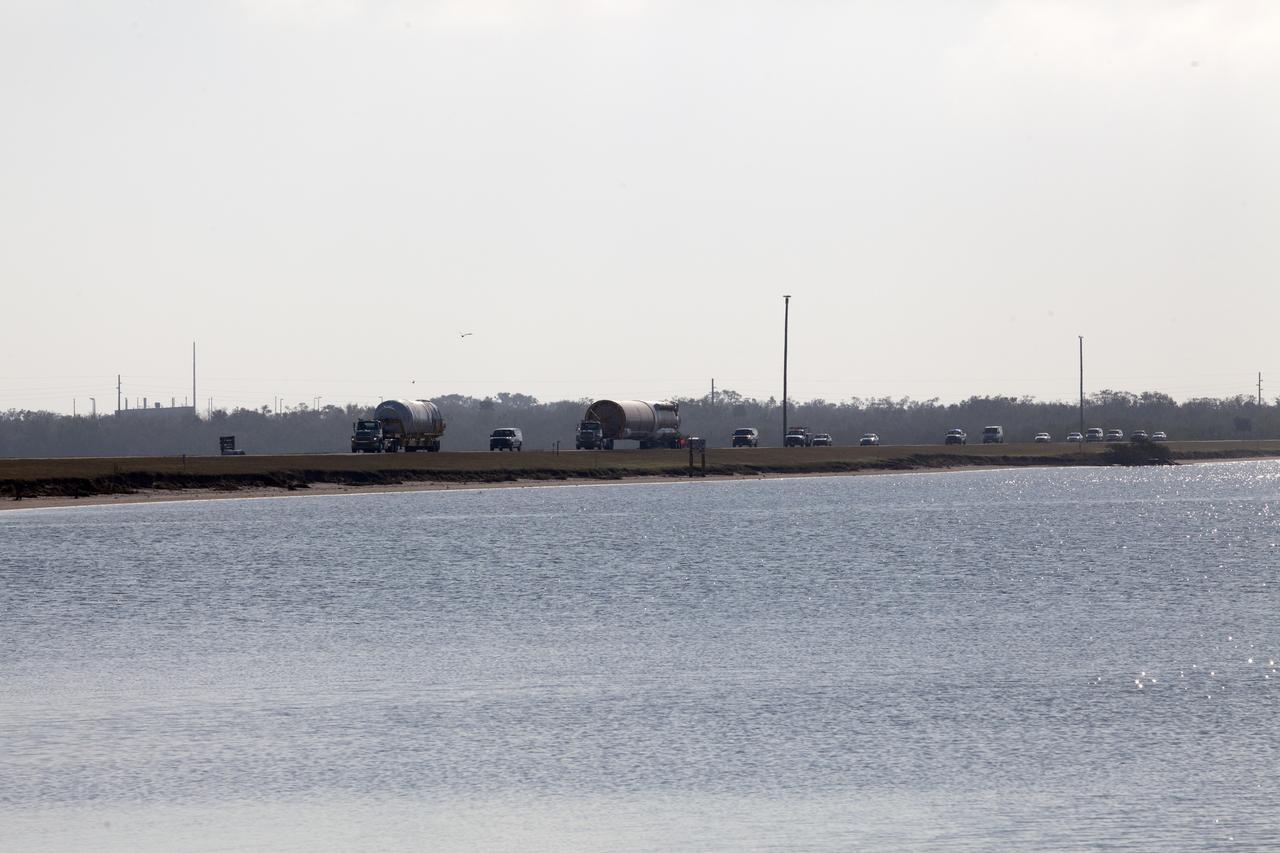
A United Launch Alliance (ULA) Atlas V booster is on its way to Cape Canaveral Air Force Station's Atlas Spaceflight Operations Center (ASOC). The Atlas V will undergo final testing in that facility. When processing in the ASOC is complete, the Atlas booster will be moved to the Vertical Integration Facility for stacking at Space Launch Complex 41. Scheduled to launch March 19, 2017, the Atlas will launch a Cygnus spacecraft on the Orbital ATK CRS-7 mission to deliver thousands of pounds of supplies, equipment and scientific research materials to the International Space Station.
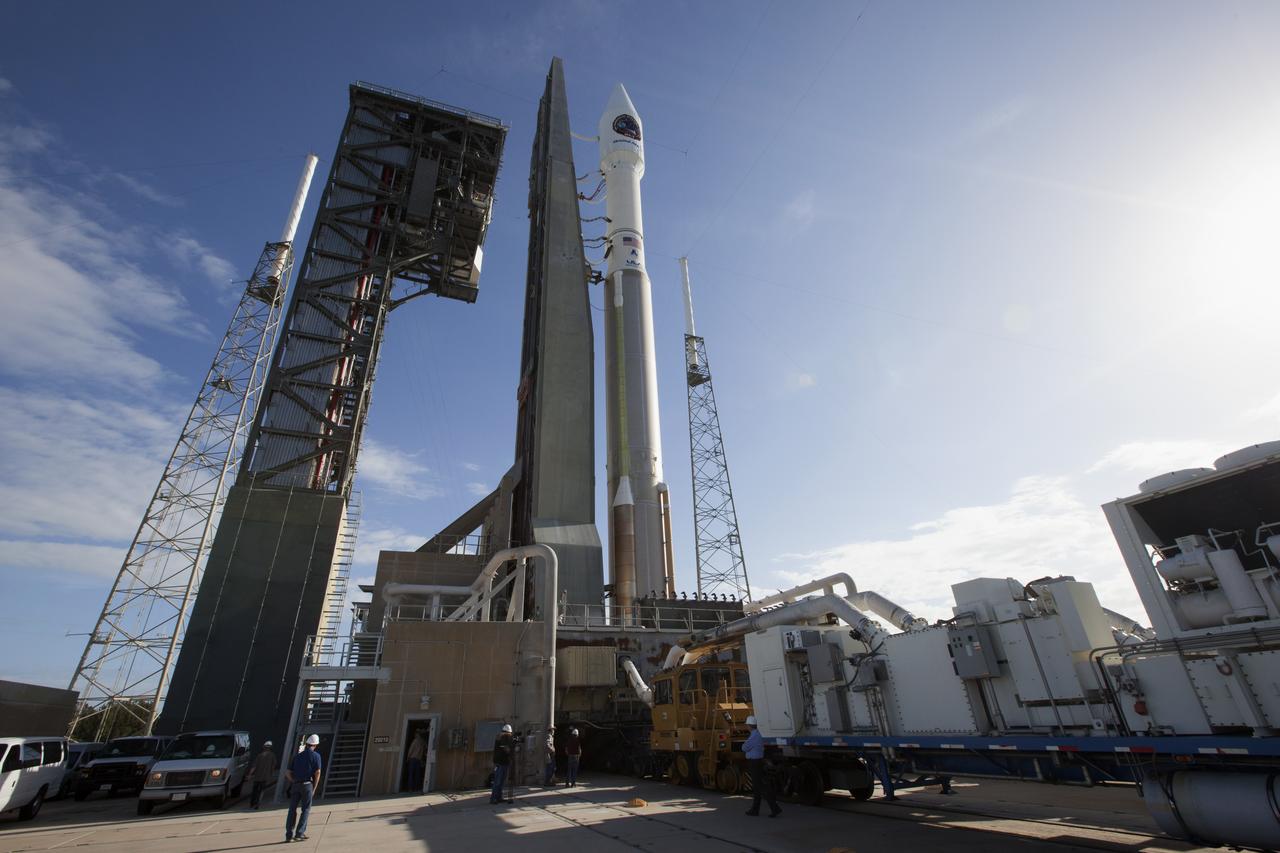
A United Launch Alliance Atlas V rocket, with the Orbital ATK Cygnus pressurized cargo module, arrives at the pad at Space Launch Complex 41 at Cape Canaveral Air Force Station in Florida. Orbital ATK's seventh commercial resupply services mission, CRS-7, is scheduled to launch to the International Space Station on April 18, 2017. Cygnus will deliver 7,600 pounds of supplies, equipment and scientific research materials to the space station. Liftoff is scheduled for 11:11 a.m. EDT.
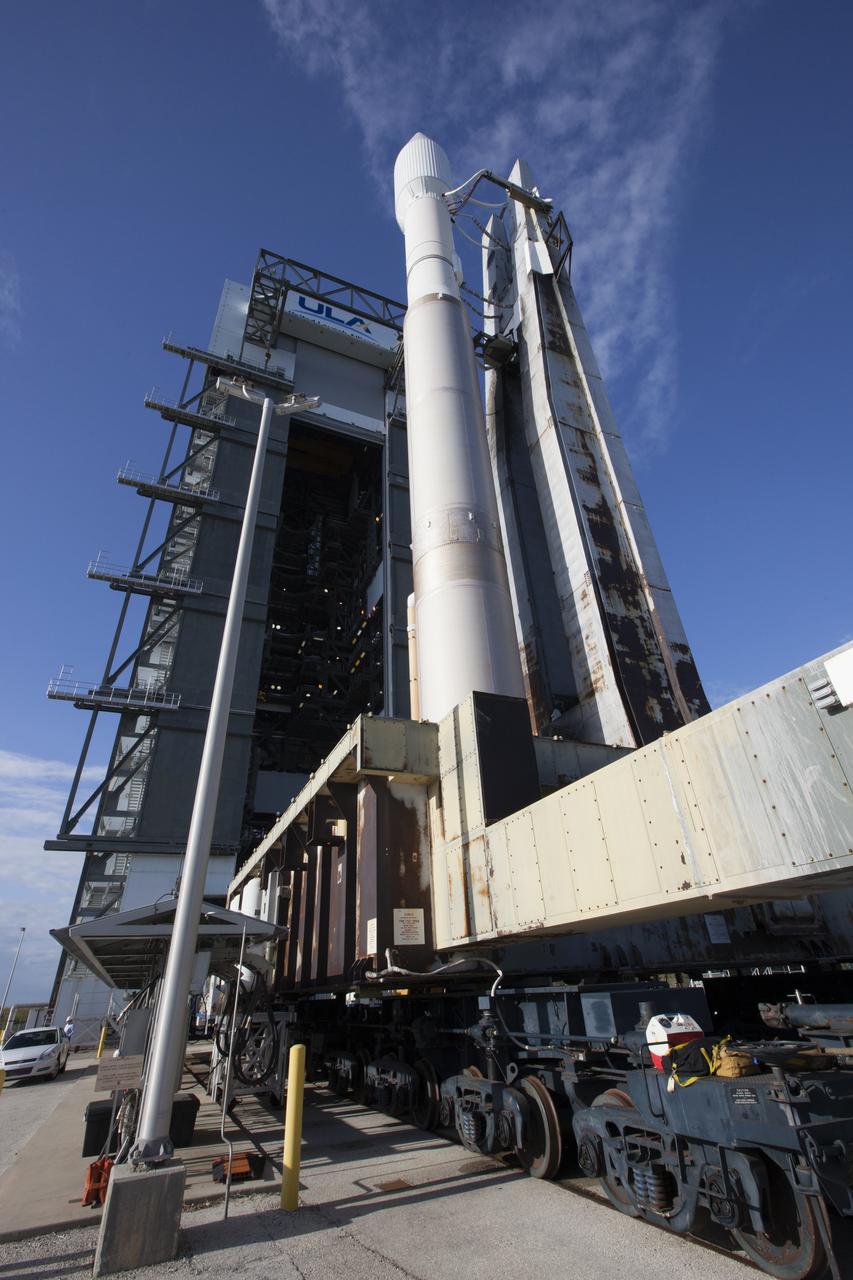
A United Launch Alliance Atlas V rocket, with the Orbital ATK Cygnus pressurized cargo module, has exited the Vertical Integration Facility for the trip to the pad at Space Launch Complex 41 at Cape Canaveral Air Force Station in Florida. Orbital ATK's seventh commercial resupply services mission, CRS-7, is scheduled to launch to the International Space Station on April 18, 2017. Cygnus will deliver 7,600 pounds of supplies, equipment and scientific research materials to the space station. Liftoff is scheduled for 11:11 a.m. EDT.
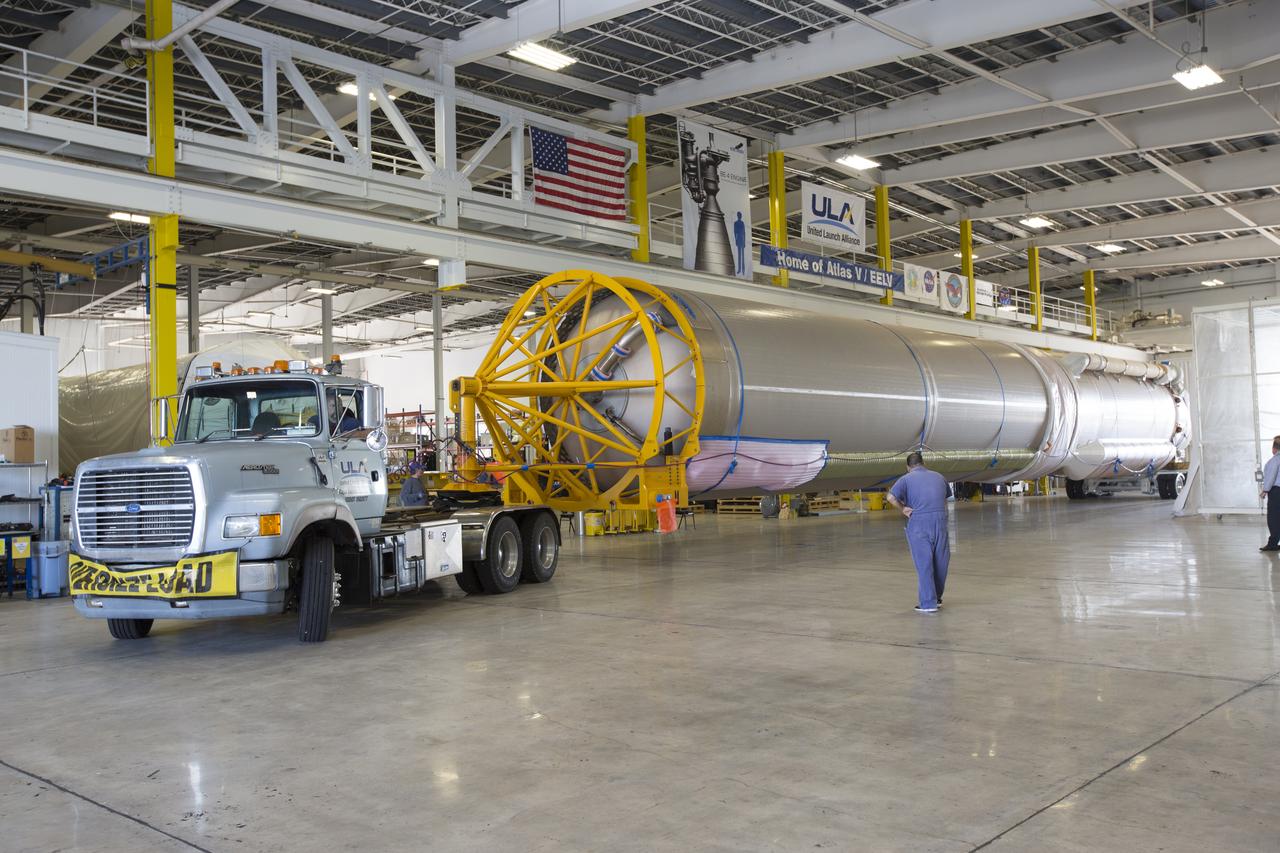
A United Launch Alliance (ULA) Atlas V booster arrives at Cape Canaveral Air Force Station's Atlas Spaceflight Operations Center (ASOC). The Atlas V will undergo final testing in that facility. When processing in the ASOC is complete, the Atlas booster will be moved to the Vertical Integration Facility for stacking at Space Launch Complex 41. Scheduled to launch March 19, 2017, the Atlas will launch a Cygnus spacecraft on the Orbital ATK CRS-7 mission to deliver thousands of pounds of supplies, equipment and scientific research materials to the International Space Station.
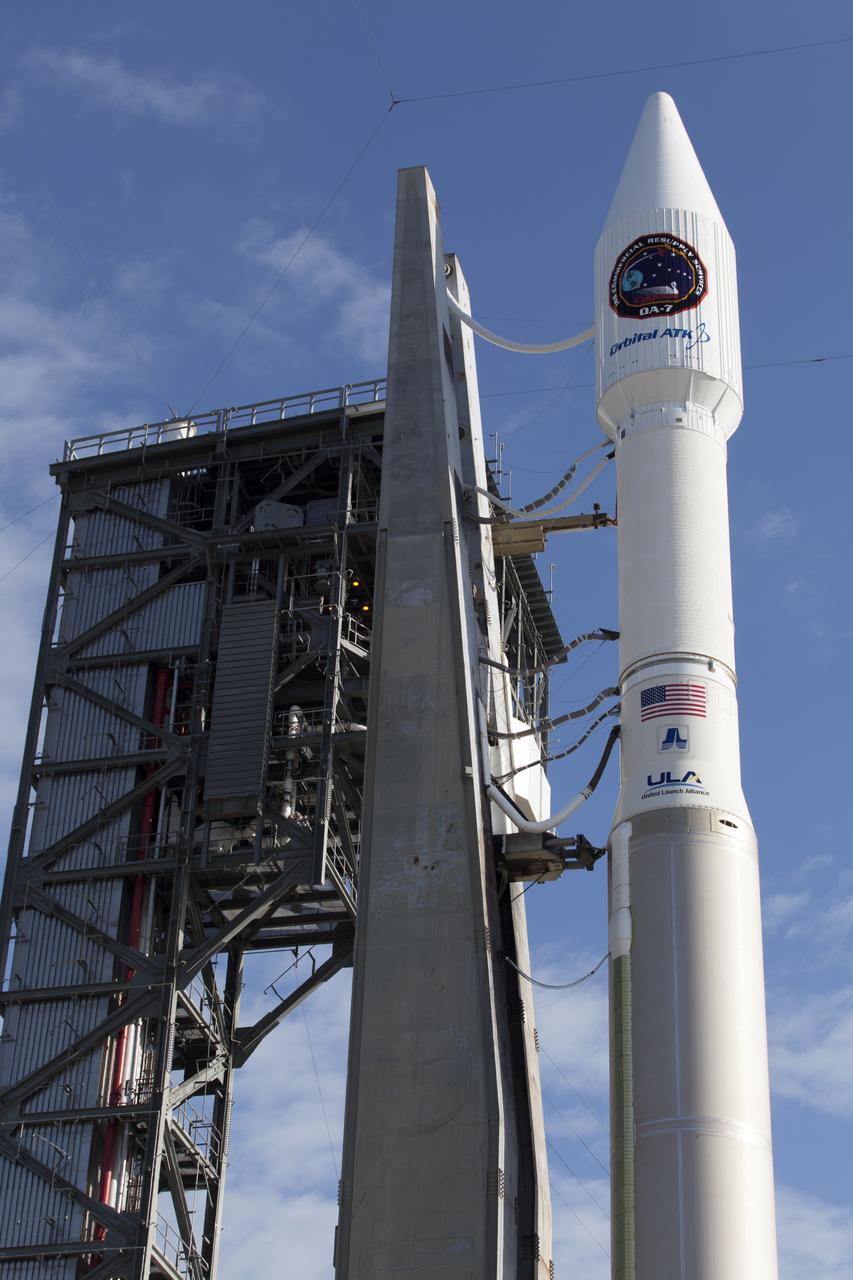
A United Launch Alliance Atlas V rocket, with the Orbital ATK Cygnus pressurized cargo module, arrives at the pad at Space Launch Complex 41 at Cape Canaveral Air Force Station in Florida. Orbital ATK's seventh commercial resupply services mission, CRS-7, is scheduled to launch to the International Space Station on April 18, 2017. Cygnus will deliver 7,600 pounds of supplies, equipment and scientific research materials to the space station. Liftoff is scheduled for 11:11 a.m. EDT.
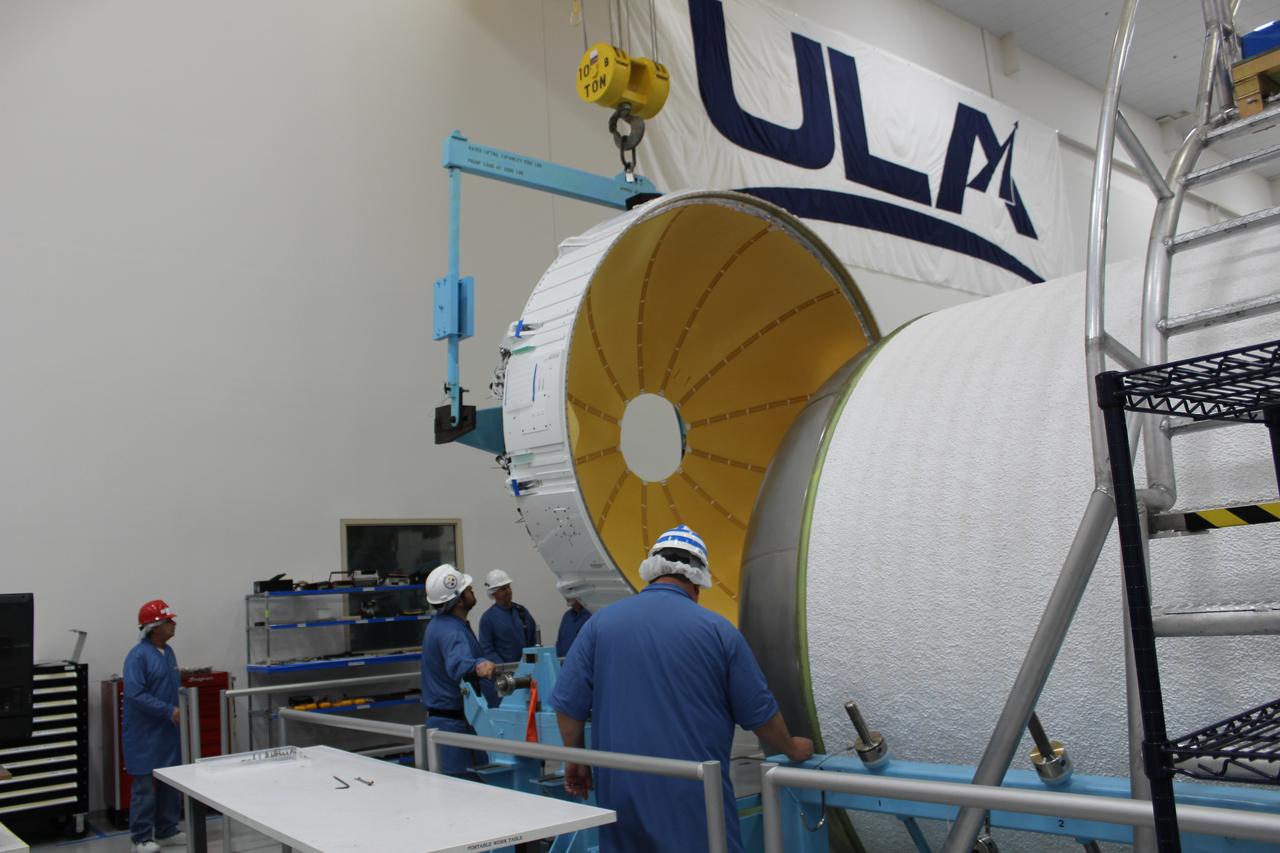
Workers assemble a United Launch Alliance (ULA) Atlas V dual engine Centaur upper stage in ULA’s factory in Decatur, Alabama on March 29, 2019. The dual engine upper stage is being prepared for the first crew rotation mission of Boeing’s CST-100 Starliner to the International Space Station. Starliner and the Atlas V rockets that will launch the spacecraft, are key elements of NASA’s Commercial Crew Program to restore the capability to send astronauts to the space station from U.S. soil.
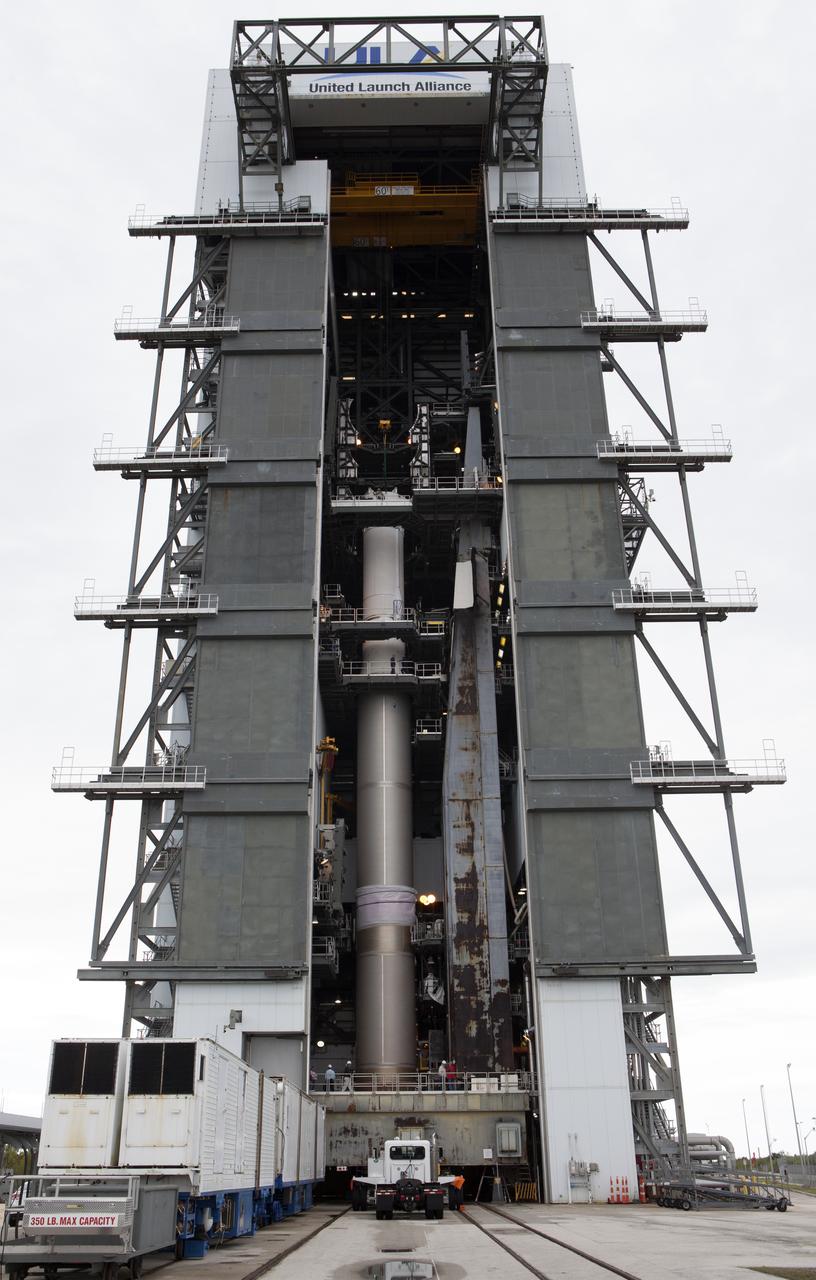
The Centaur upper stage of the United Launch Alliance (ULA) Atlas V rocket is secured on top of the first stage booster inside the Vertical Integration Facility at Space Launch Complex 41 at Cape Canaveral Air Force Station in Florida. The rocket is being prepared for Orbital ATK's seventh commercial resupply mission, CRS-7, to the International Space Station. Orbital ATK's CYGNUS pressurized cargo module is scheduled to launch atop ULA's Atlas V rocket from Pad 41 on March 19, 2017. CYGNUS will deliver 7,600 pounds of supplies, equipment and scientific research materials to the space station.

Ahead of launch as part of NASA’s Commercial Lunar Payload Services (CLPS) initiative, Astrobotic’s Peregrine lunar lander is encapsulated in the payload fairing, or nose cone, of United Launch Alliance’s Vulcan rocket on Nov. 21, 2023, at Astrotech Space Operations Facility near the agency’s Kennedy Space Center in Florida. Launch of Astrobotic’s Peregrine Mission One will carry NASA and commercial payloads to the Moon in early 2024 to study the lunar exosphere, thermal properties, and hydrogen abundance of the lunar regolith, magnetic fields, and the radiation environment of the lunar surface.
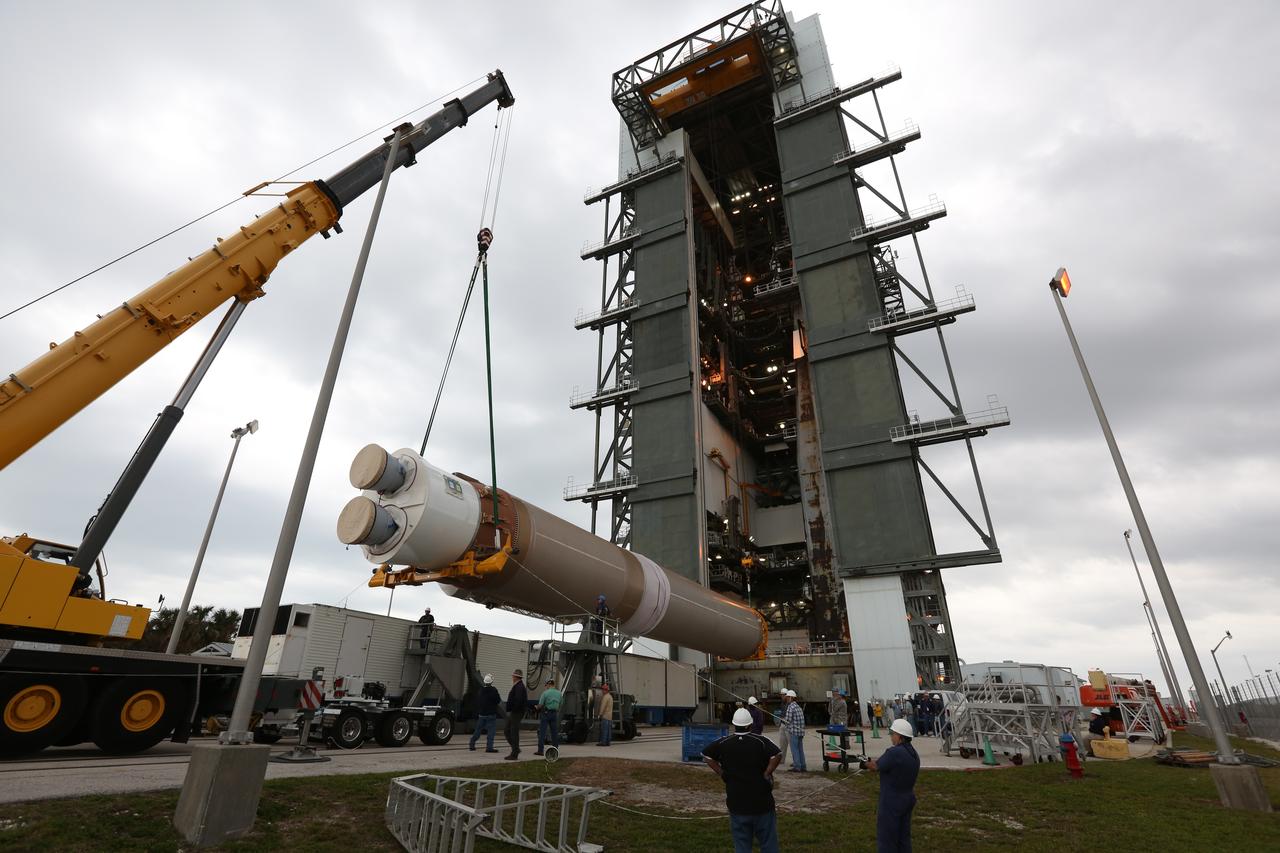
A crane lifts the first stage of the United Launch Alliance (ULA) Atlas V rocket up at the Vertical Integration Facility at Space Launch Complex 41 at Cape Canaveral Air Force Station in Florida. The rocket is being prepared for Orbital ATK's seventh commercial resupply mission, CRS-7, to the International Space Station. Orbital ATK's CYGNUS pressurized cargo module is scheduled to launch atop ULA's Atlas V rocket from Pad 41 on March 19, 2017. CYGNUS will deliver thousands of pounds of supplies, equipment and scientific research materials to the space station.
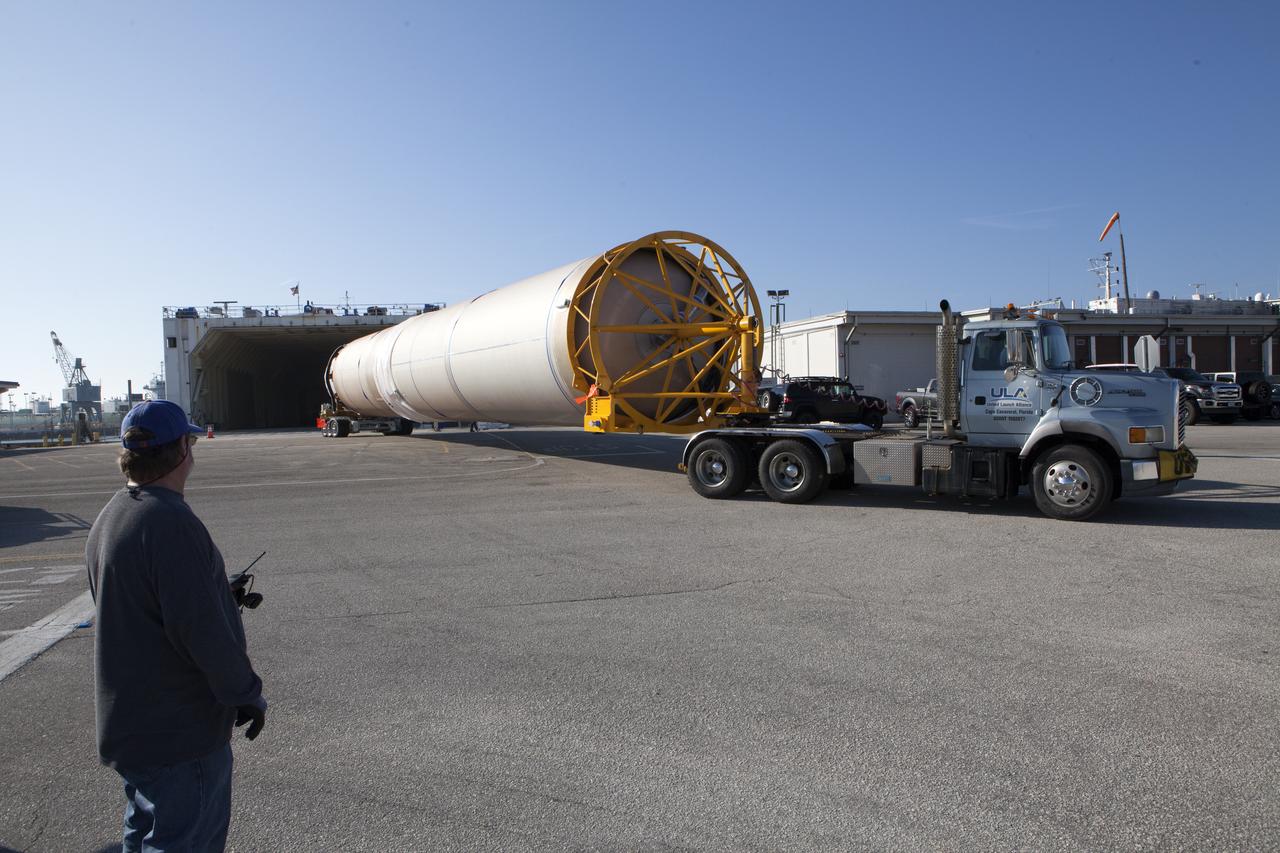
The United Launch Alliance (ULA) Atlas V booster arrives for the Orbital ATK CRS-7 commercial resupply mission to the International Space Station. A transport truck is taking the Atlas V from the Mariner cargo ship in the background, to the hangar at the Atlas Spaceflight Operations Center (ASOC), located south of Space Launch Complex 41 at Cape Canaveral Air Force Station. Scheduled to launch March 19, 2017, the Orbital ATK CRS-7 mission will lift off atop the ULA Atlas V rocket to deliver thousands of pounds of supplies, equipment and scientific research materials that improve life on Earth and drive progress toward future space exploration.
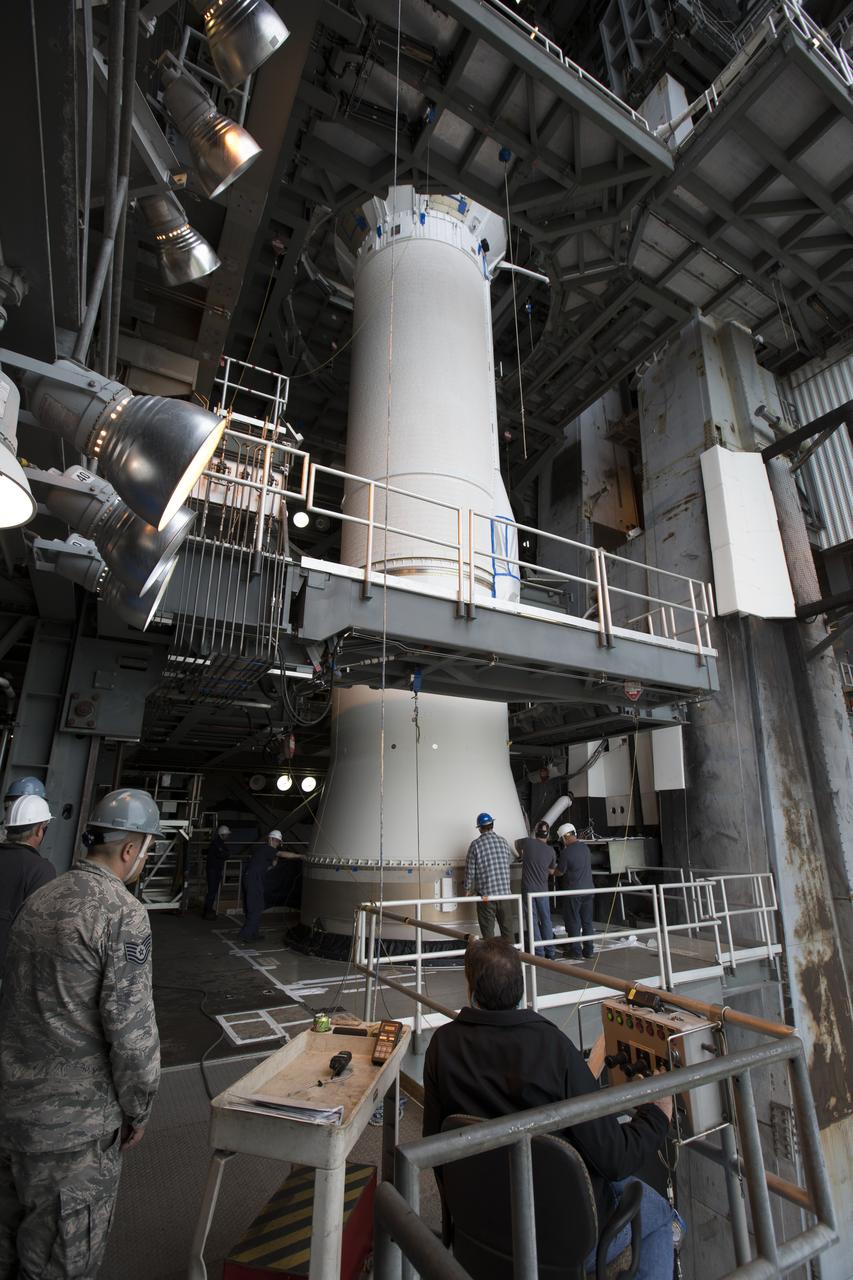
Technicians with United Launch Alliance (ULA) assist as the Centaur upper stage of the ULA Atlas V rocket is lowered onto the first stage booster inside the Vertical Integration Facility at Space Launch Complex 41 at Cape Canaveral Air Force Station in Florida. The rocket is being prepared for Orbital ATK's seventh commercial resupply mission, CRS-7, to the International Space Station. Orbital ATK's CYGNUS pressurized cargo module is scheduled to launch atop ULA's Atlas V rocket from Pad 41 on March 19, 2017. CYGNUS will deliver 7,600 pounds of supplies, equipment and scientific research materials to the space station.
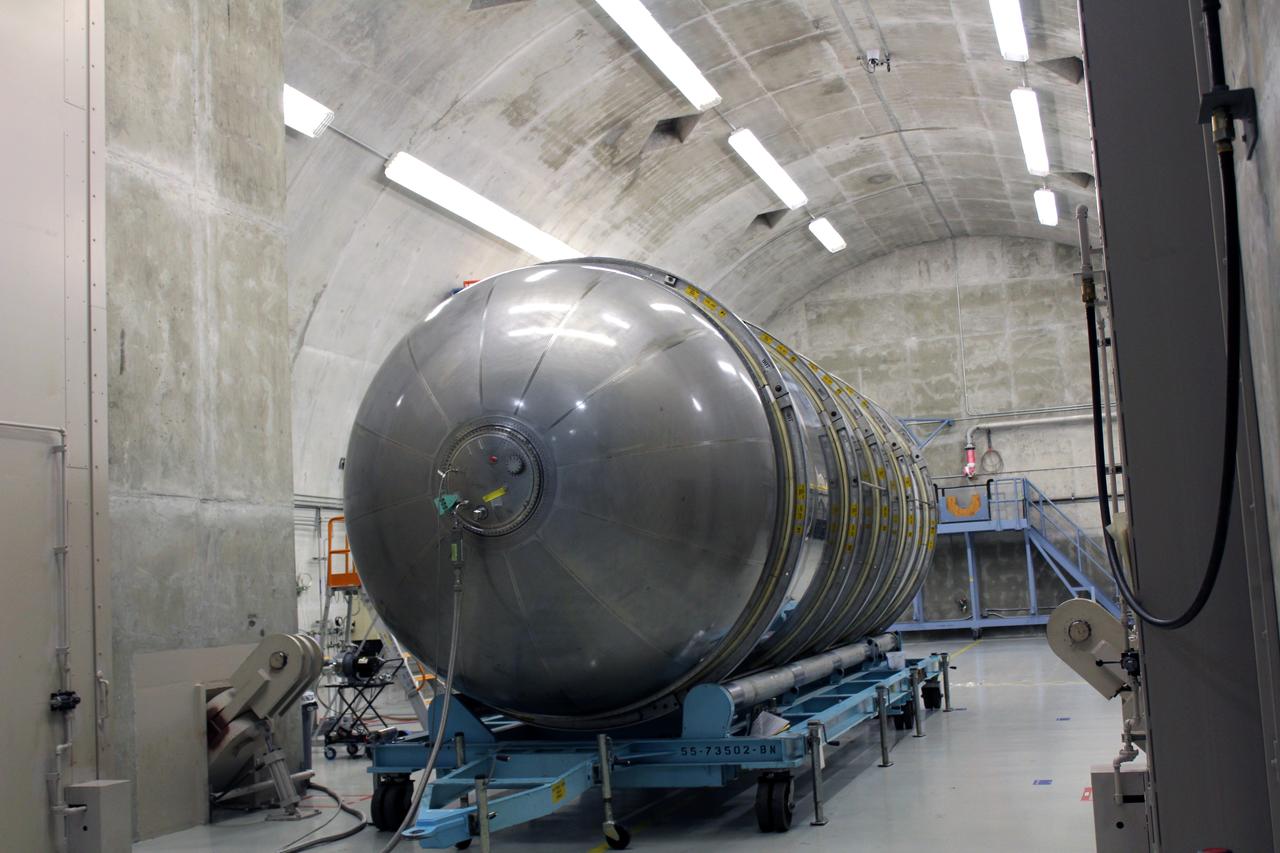
The Atlas V rocket that will launch Boeing’s CST-100 Starliner spacecraft on the company’s uncrewed Orbital Flight Test for NASA’s Commercial Crew Program is coming together inside a United Launch Alliance facility in Decatur, Alabama. The flight test is intended to prove the design of the integrated space system prior to the Crew Flight Test. These events are part of NASA’s required certification process as the company works to regularly fly astronauts to and from the International Space Station. Boeing's Starliner will launch on the United Launch Alliance Atlas V rocket from Space Launch Complex 41 at Cape Canaveral Air Force Station in Florida.
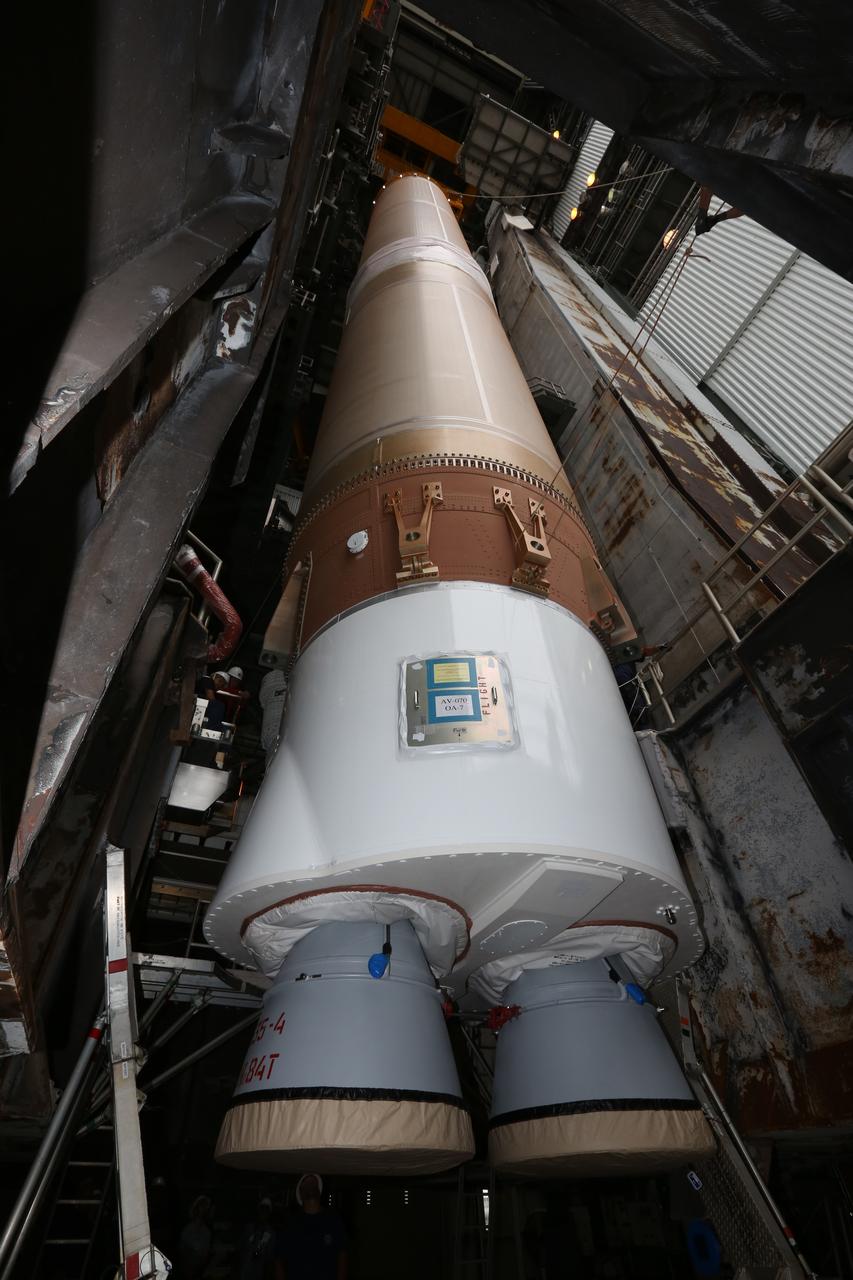
The first stage of the United Launch Alliance (ULA) Atlas V rocket is lifted up inside the Vertical Integration Facility at Space Launch Complex 41 at Cape Canaveral Air Force Station in Florida. The rocket is being prepared for Orbital ATK's seventh commercial resupply mission, CRS-7, to the International Space Station. Orbital ATK's CYGNUS pressurized cargo module is scheduled to launch atop ULA's Atlas V rocket from Pad 41 on March 19, 2017. CYGNUS will deliver thousands of pounds of supplies, equipment and scientific research materials to the space station.

Technicians with United Launch Alliance (ULA) assist as a crane lifts the Centaur upper stage of the ULA Atlas V rocket up inside the Vertical Integration Facility at Space Launch Complex 41 at Cape Canaveral Air Force Station in Florida. The Centaur stage will be mated to the first stage booster. The rocket is being prepared for Orbital ATK's seventh commercial resupply mission, CRS-7, to the International Space Station. Orbital ATK's CYGNUS pressurized cargo module is scheduled to launch atop ULA's Atlas V rocket from Pad 41 on March 19, 2017. CYGNUS will deliver 7,600 pounds of supplies, equipment and scientific research materials to the space station.
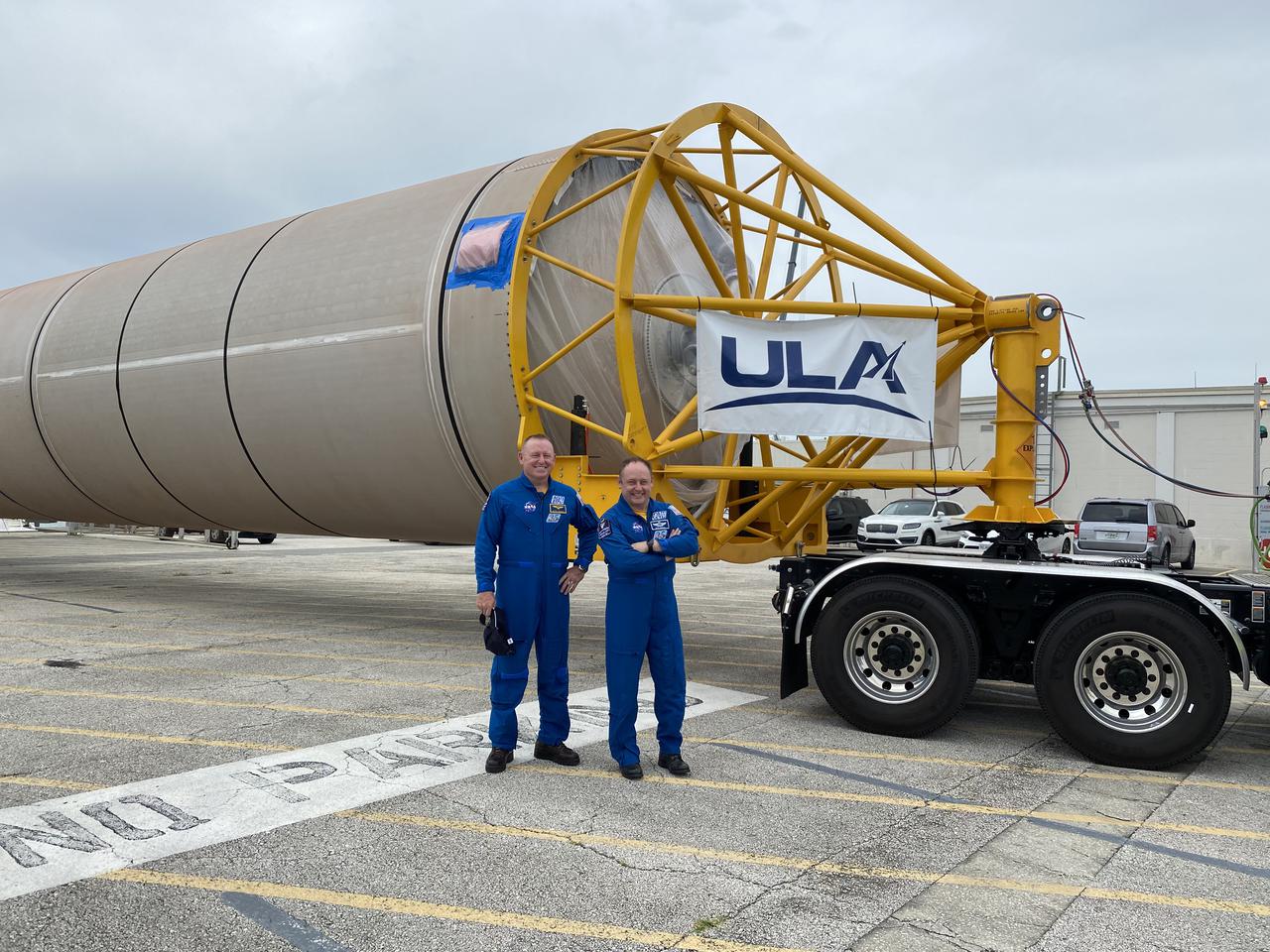
NASA astronauts Barry “Butch” Wilmore, left, Mike Fincke, right, welcome the United Launch Alliance (ULA) Atlas V rocket that will transport them and NASA astronaut Nicole Mann to the International Space Station on Boeing’s CST-100 Starliner spacecraft for the company’s Crew Flight Test (CFT). The Atlas V rocket arrived at Cape Canaveral Space Force Station (CCSFS), Florida on June 21, 2021, after its journey on a rocket-delivery ship from ULA’s manufacturing factory in Decatur, Alabama. Starliner’s first flight with astronauts aboard, CFT will launch from Space Launch Complex-41 at CCSFS. The flight test will demonstrate the ability of the Atlas V and Starliner to safely carry astronauts to and from the space station for the agency’s Commercial Crew Program.
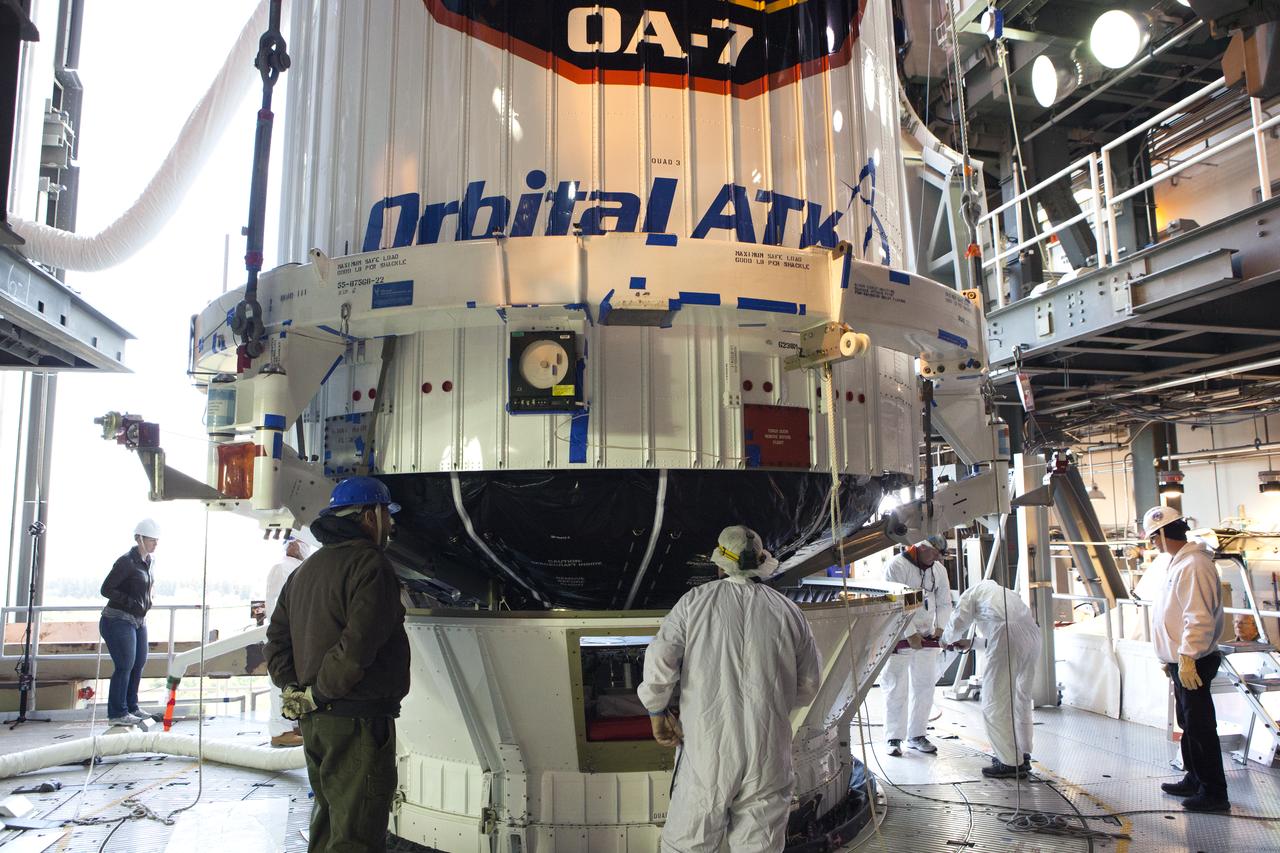
United Launch Alliance (ULA) technicians monitor the progress as the payload fairing containing the Orbital ATK Cygnus pressurized cargo module is lowered onto the Centaur upper stage, or second stage, of the ULA Atlas V rocket in the Vertical Integration Facility at Space Launch Complex 41 at Cape Canaveral Air Force Station in Florida. The Orbital ATK CRS-7 commercial resupply services mission to the International Space Station is scheduled to launch atop the Atlas V from pad 41. Cygnus will deliver 7,600 pounds of supplies, equipment and scientific research materials to the space station.
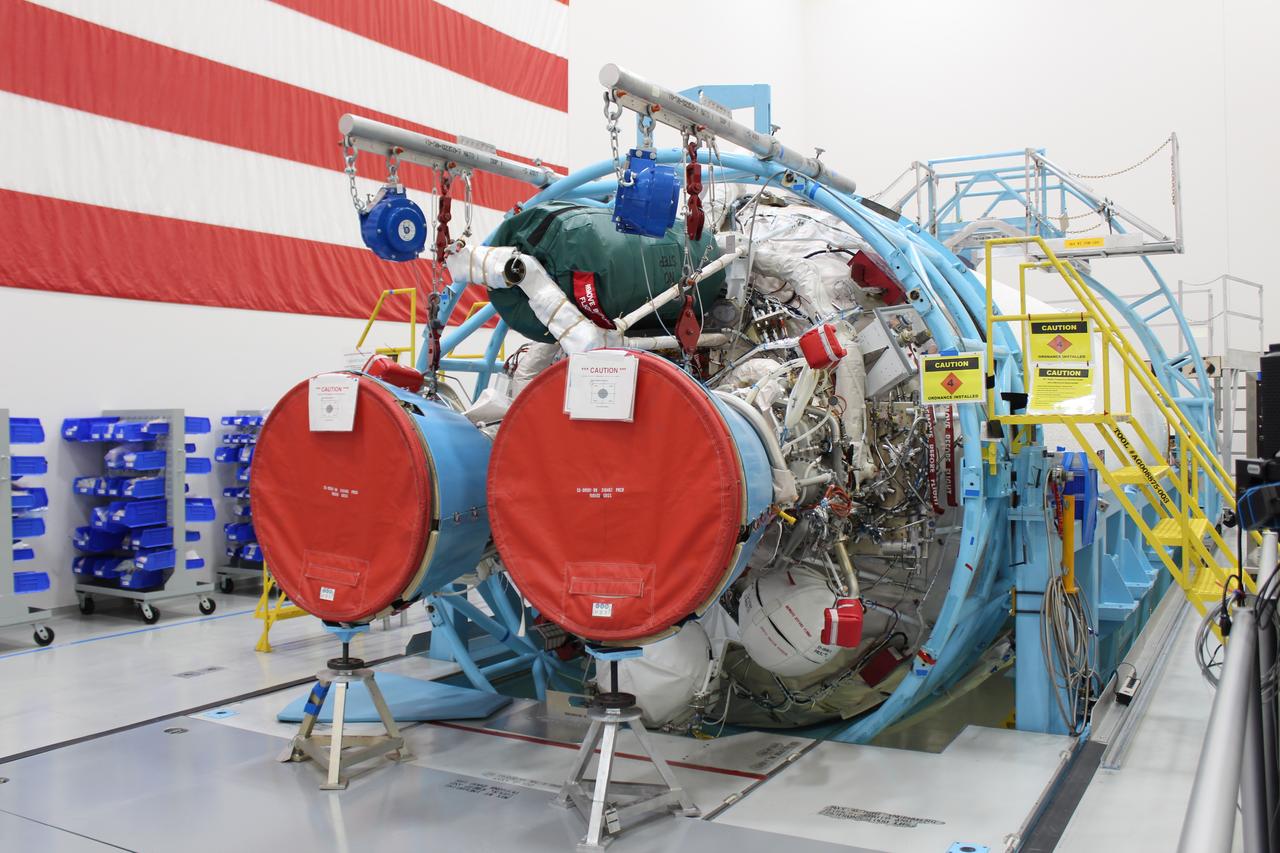
A United Launch Alliance (ULA) Atlas V dual engine Centaur upper stage is in ULA’s factory in Decatur, Alabama on March 29, 2019. The dual engine upper stage is being prepared for Boeing’s CST-100 Starliner Crew Flight Test. Soon the upper stage will be assembled with the first stage booster and shipped aboard the company’s Mariner cargo ship to NASA’s Kennedy Space Center in Florida. Starliner and the Atlas V rockets that will launch the spacecraft, are key elements of NASA’s Commercial Crew Program to restore the capability to send astronauts to the International Space Station from U.S. soil.
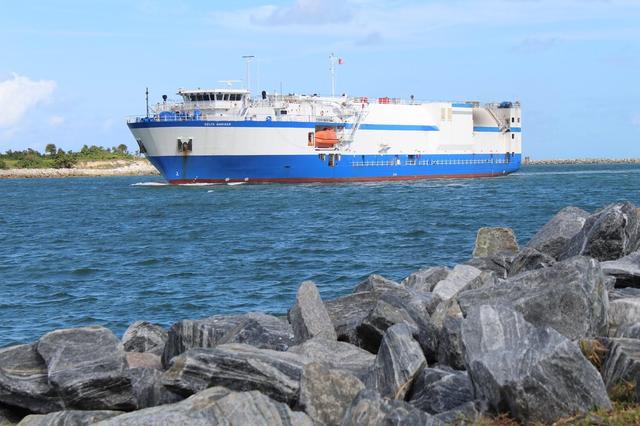
The Launch Vehicle Adapter (LVA) that will attach Boeing’s first Starliner spacecraft to the Atlas V launch vehicle arrived at Cape Canaveral in Florida on November 11, 2018. The Mariner cargo vessel brought the LVA and two stages of a Delta IV rocket from United Launch Alliance's manufacturing plant in Decatur, Alabama.
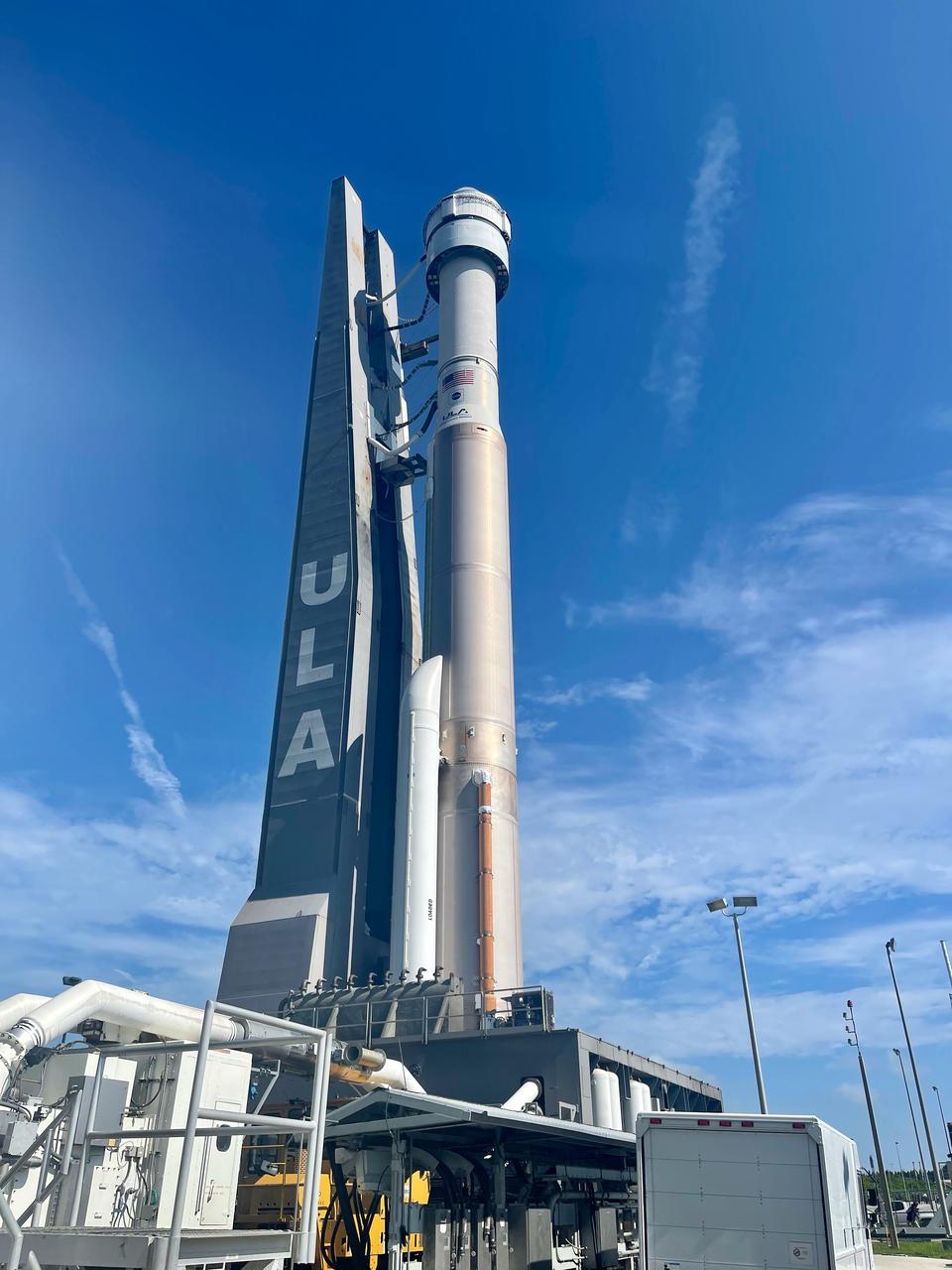
On July 29, 2021, Boeing’s CST-100 Starliner spacecraft and the United Launch Alliance Atlas V rocket rolled out of the Vertical Integration Facility to the launch pad at Space Launch Complex-41 on Cape Canaveral Space Force Station in Florida. Starliner will launch on the Atlas V for Boeing’s second uncrewed Orbital Flight Test (OFT-2) for NASA’s Commercial Crew Program.; OFT-2 is an important uncrewed mission designed to test the end-to-end capabilities of the new system for NASA’s Commercial Crew Program.
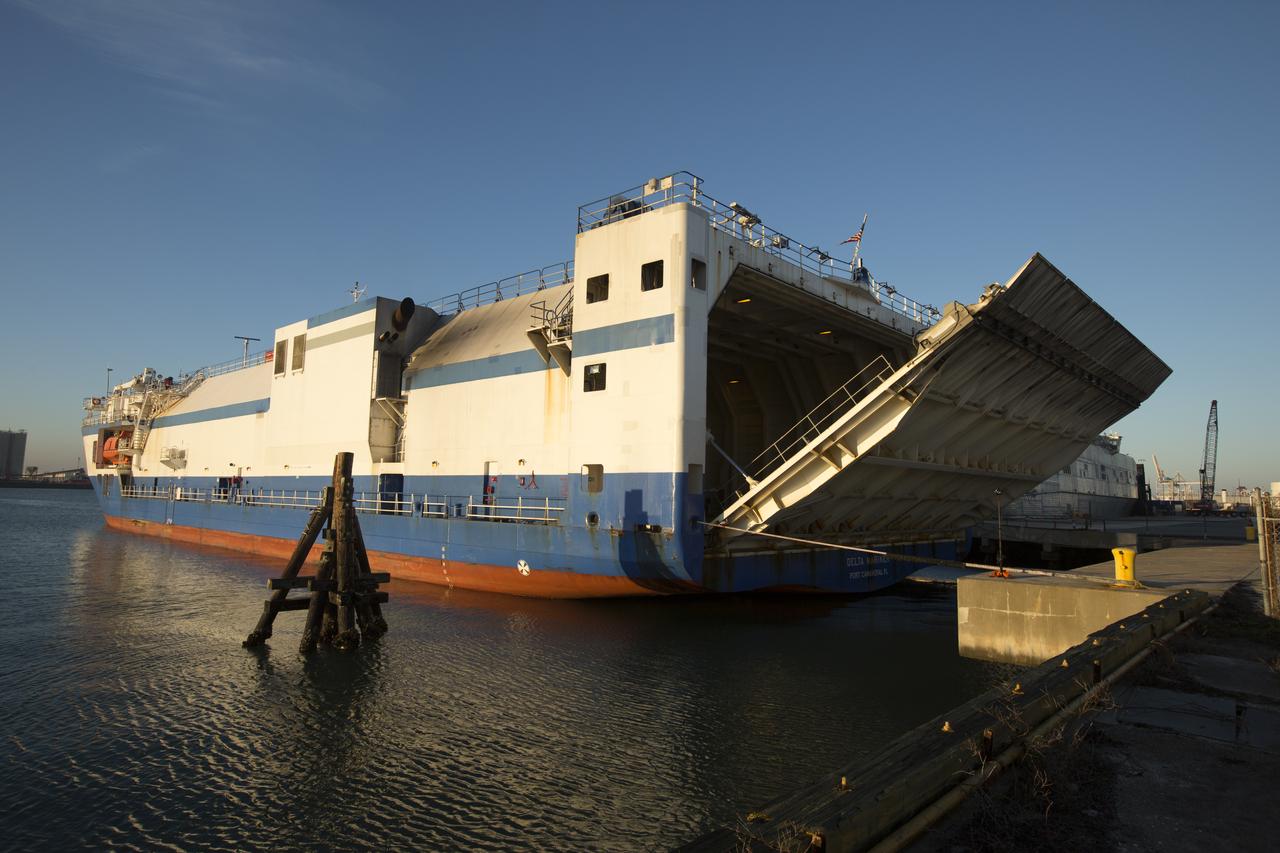
The Mariner cargo ship arrives at the Army Outpost wharf at Port Canaveral, Florida, near the Kennedy Space Center. Aboard is the United Launch Alliance (ULA) Atlas V booster for the Orbital ATK CRS-7 commercial resupply mission to the International Space Station. After the rocket is offloaded, a transport truck will take the Atlas V to the hangar at the Atlas Spaceflight Operations Center (ASOC), located south of Space Launch Complex 41 at Cape Canaveral Air Force Station. Scheduled to launch a Cygnus spacecraft on March 19, 2017, the Orbital ATK CRS-7 mission will deliver thousands of pounds of supplies, equipment and scientific research materials that improve life on Earth and drive progress toward future space exploration.
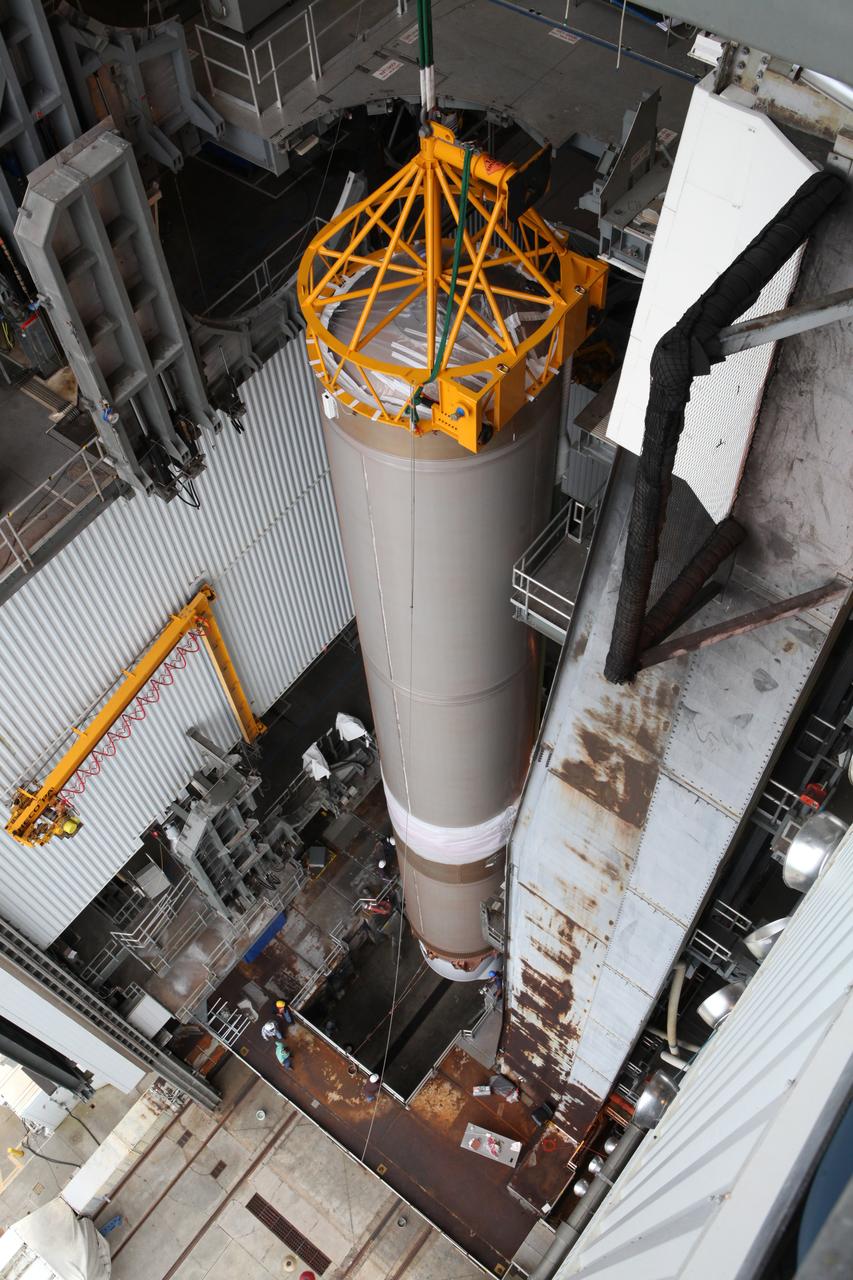
A view from above of the first stage of the United Launch Alliance (ULA) Atlas V rocket lifted to the vertical position inside the Vertical Integration Facility at Space Launch Complex 41 at Cape Canaveral Air Force Station in Florida. The rocket is being prepared for Orbital ATK's seventh commercial resupply mission, CRS-7, to the International Space Station. Orbital ATK's CYGNUS pressurized cargo module is scheduled to launch atop ULA's Atlas V rocket from Pad 41 on March 19, 2017. CYGNUS will deliver thousands of pounds of supplies, equipment and scientific research materials to the space station.
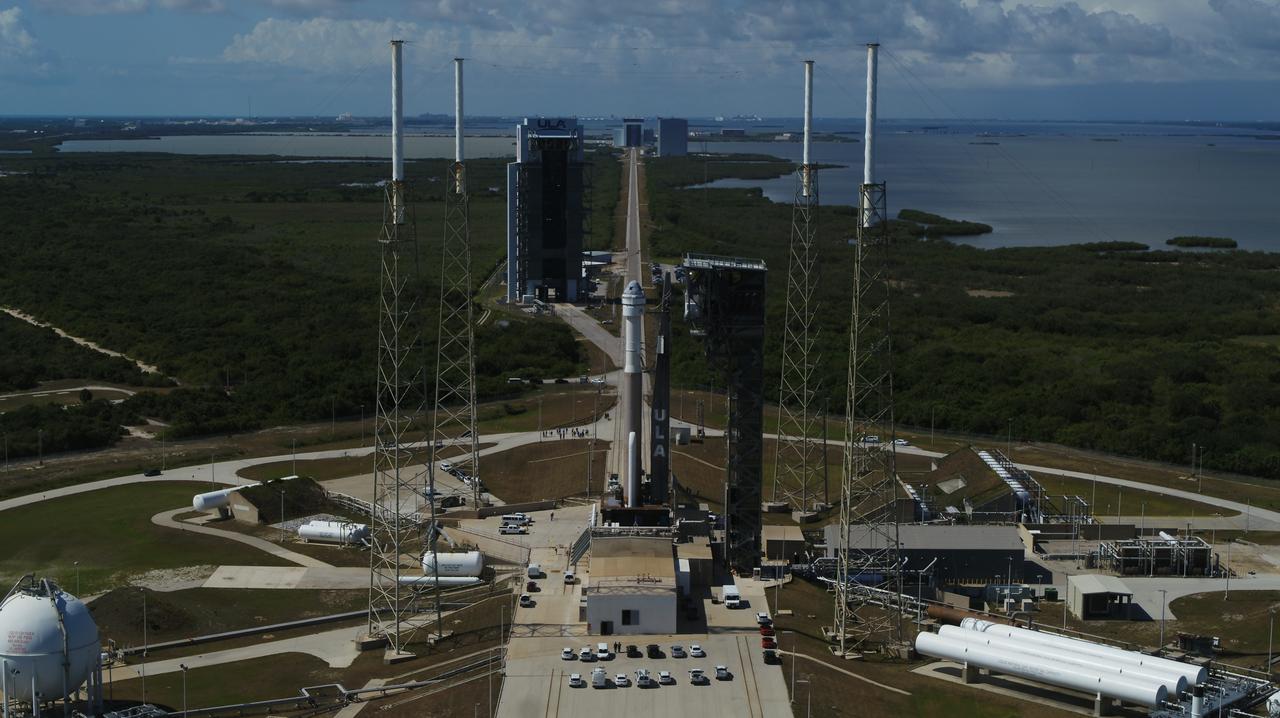
Boeing’s Starliner spacecraft atop the United Launch Alliance Atlas V rocket is seen on the launch pad of Space Launch Complex-41 at Cape Canaveral Space Force Station in Florida on Saturday, May 4, 2024, ahead of NASA’s Boeing Crew Flight Test. As part of the agency’s Commercial Crew Program, NASA astronauts Butch Wilmore and Suni Williams are the first to launch to the International Space Station aboard Boeing’s Starliner spacecraft. Liftoff is scheduled for 10:34 p.m. ET Monday, May 6.
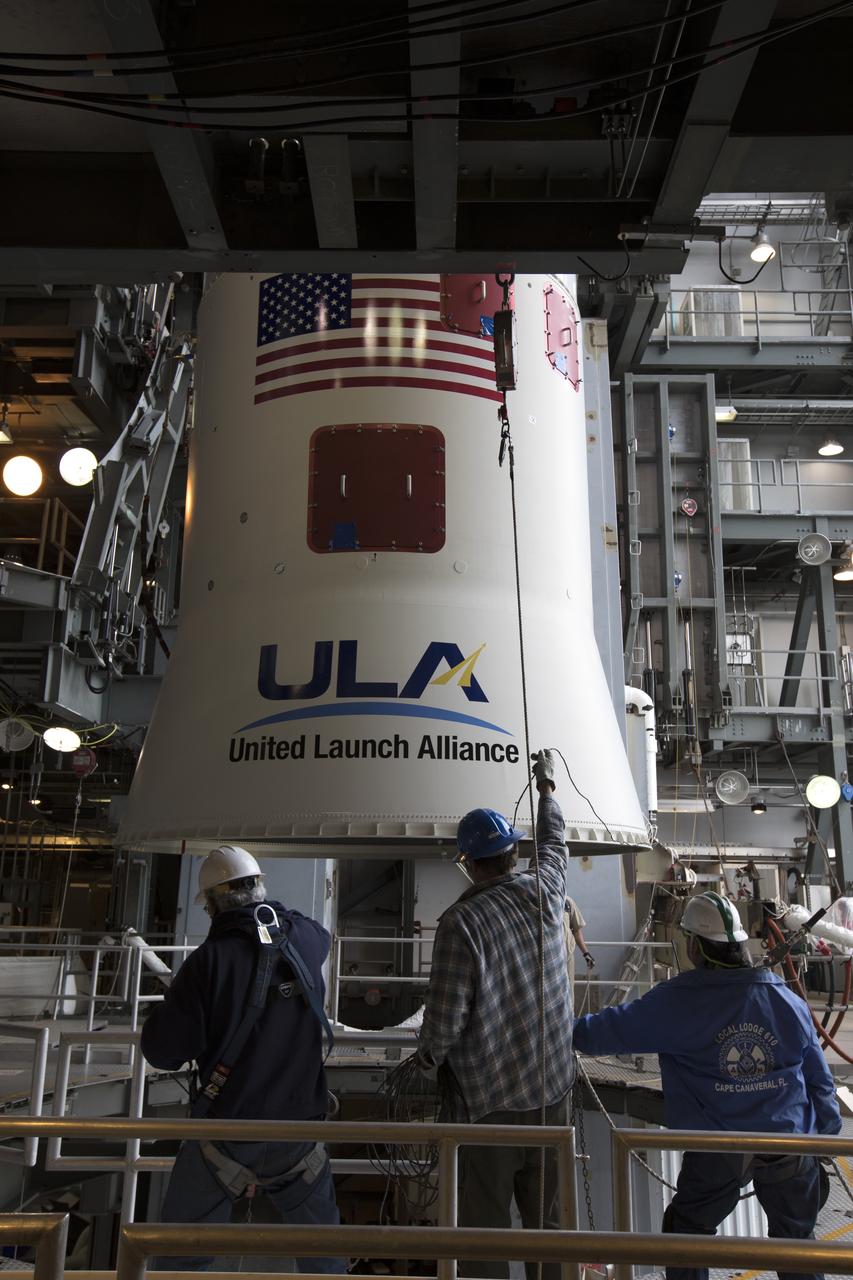
Technicians with United Launch Alliance (ULA) monitor the progress as a crane lifts the Centaur upper stage of the ULA Atlas V rocket up inside the Vertical Integration Facility at Space Launch Complex 41 at Cape Canaveral Air Force Station in Florida. The Centaur stage will be mated to the first stage booster. The rocket is being prepared for Orbital ATK's seventh commercial resupply mission, CRS-7, to the International Space Station. Orbital ATK's CYGNUS pressurized cargo module is scheduled to launch atop ULA's Atlas V rocket from Pad 41 on March 19, 2017. CYGNUS will deliver 7,600 pounds of supplies, equipment and scientific research materials to the space station.
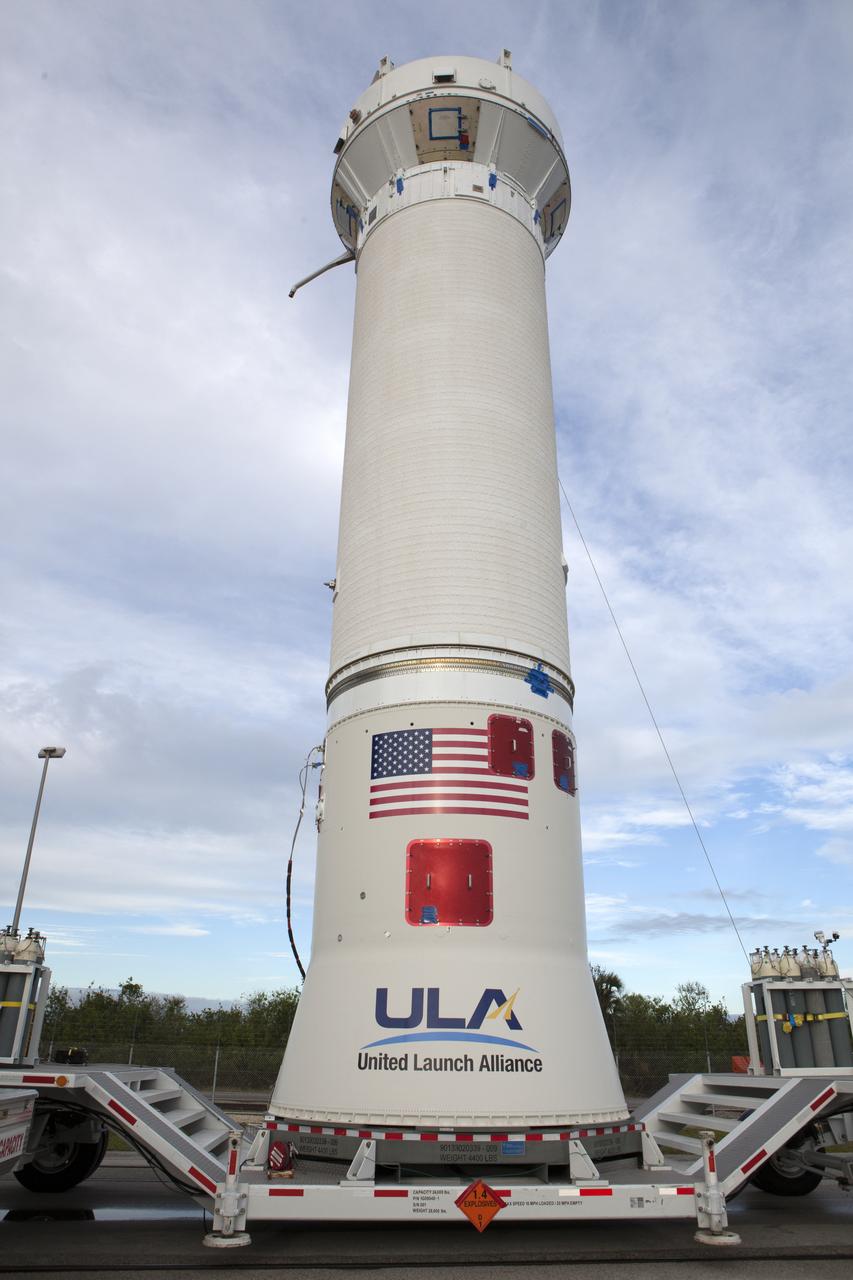
The Centaur upper stage of the United Launch Alliance (ULA) Atlas V rocket arrives at the Vertical Integration Facility at Space Launch Complex 41 at Cape Canaveral Air Force Station in Florida. The Centaur stage will be lifted and mated to the first stage booster. The rocket is being prepared for Orbital ATK's seventh commercial resupply mission, CRS-7, to the International Space Station. Orbital ATK's CYGNUS pressurized cargo module is scheduled to launch atop ULA's Atlas V rocket from Pad 41 on March 19, 2017. CYGNUS will deliver 7,600 pounds of supplies, equipment and scientific research materials to the space station.
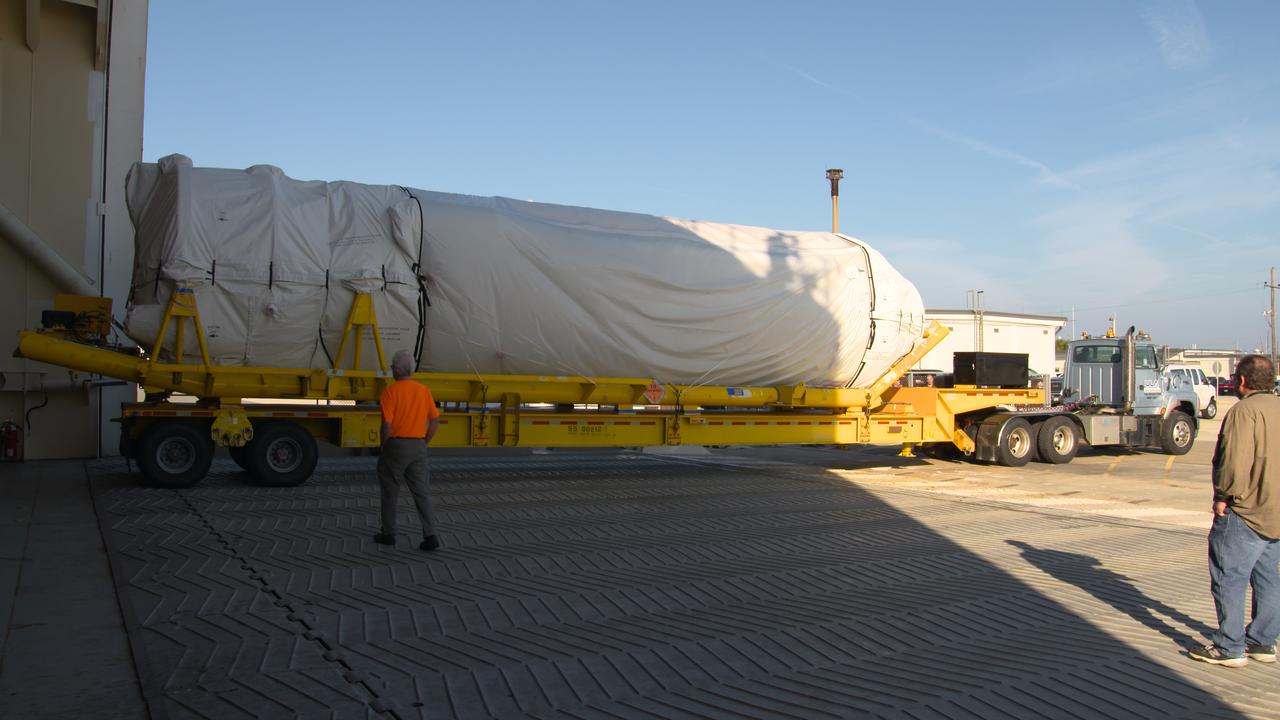
The United Launch Alliance (ULA) Centaur upper stage arrived for the Orbital ATK CRS-7 commercial resupply mission to the International Space Station. A transport truck is taking the Centaur from the Mariner cargo ship in the background, to the hangar at the Atlas Spaceflight Operations Center (ASOC), located south of Space Launch Complex 41 at Cape Canaveral Air Force Station. Scheduled to launch March 19, 2017, the Orbital ATK CRS-7 mission will lift off atop the ULA Atlas V rocket to deliver thousands of pounds of supplies, equipment and scientific research materials that improve life on Earth and drive progress toward future space exploration.
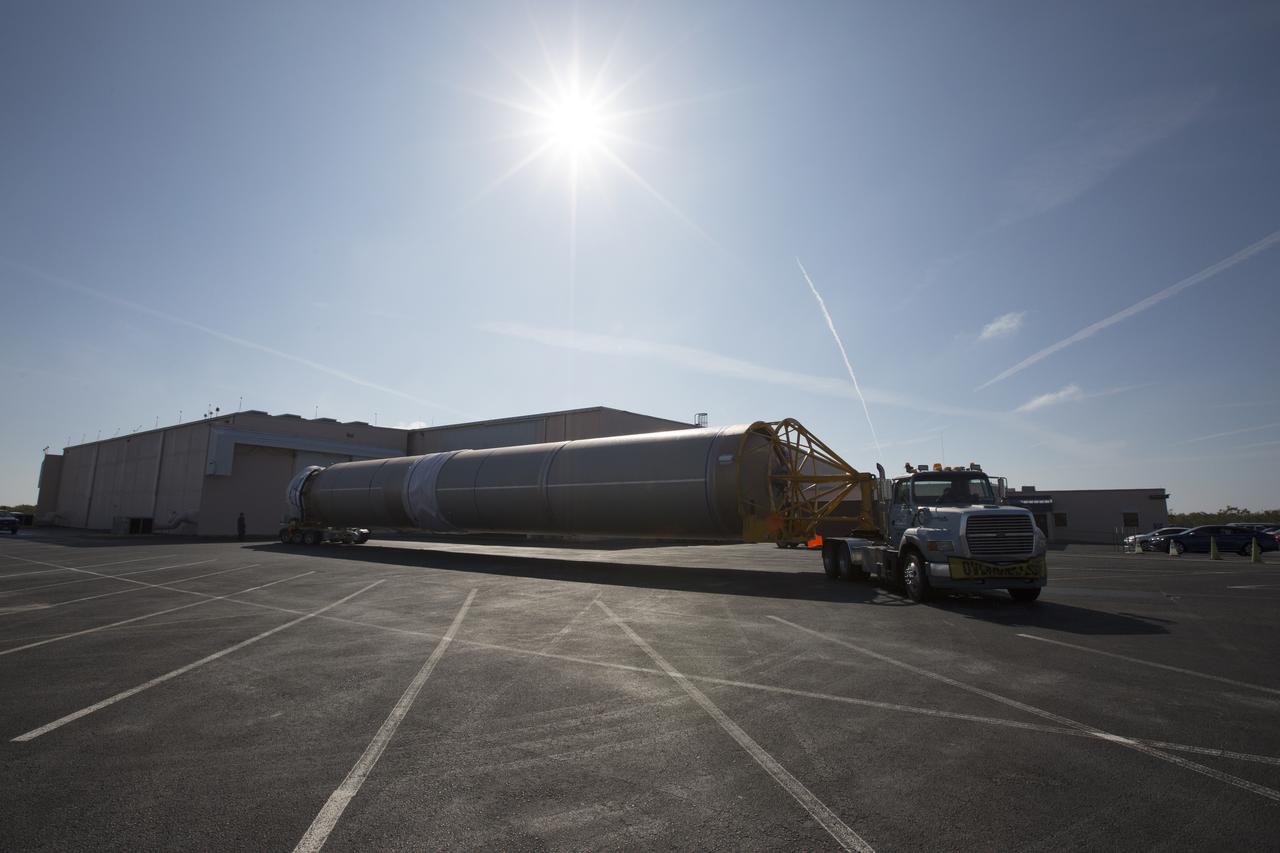
A United Launch Alliance (ULA) Atlas V booster arrives at Cape Canaveral Air Force Station's Atlas Spaceflight Operations Center (ASOC). The Atlas V will undergo final testing in that facility. When processing in the ASOC is complete, the Atlas booster will be moved to the Vertical Integration Facility for stacking at Space Launch Complex 41. Scheduled to launch March 19, 2017, the Atlas will launch a Cygnus spacecraft on the Orbital ATK CRS-7 mission to deliver thousands of pounds of supplies, equipment and scientific research materials to the International Space Station.
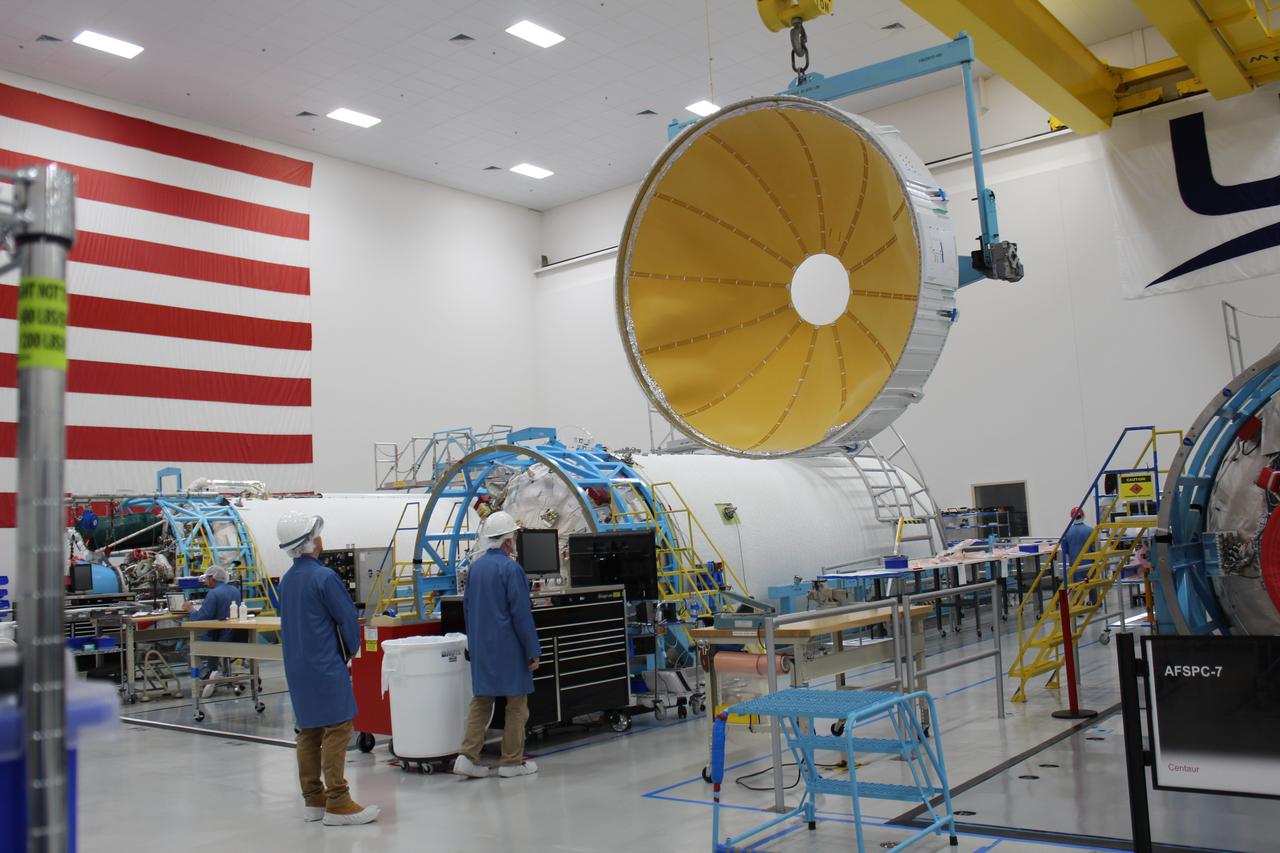
Workers assemble a United Launch Alliance (ULA) Atlas V dual engine Centaur upper stage in ULA’s factory in Decatur, Alabama on March 29, 2019. The dual engine upper stage is being prepared for the first crew rotation mission of Boeing’s CST-100 Starliner to the International Space Station. Starliner and the Atlas V rockets that will launch the spacecraft, are key elements of NASA’s Commercial Crew Program to restore the capability to send astronauts to the space station from U.S. soil.
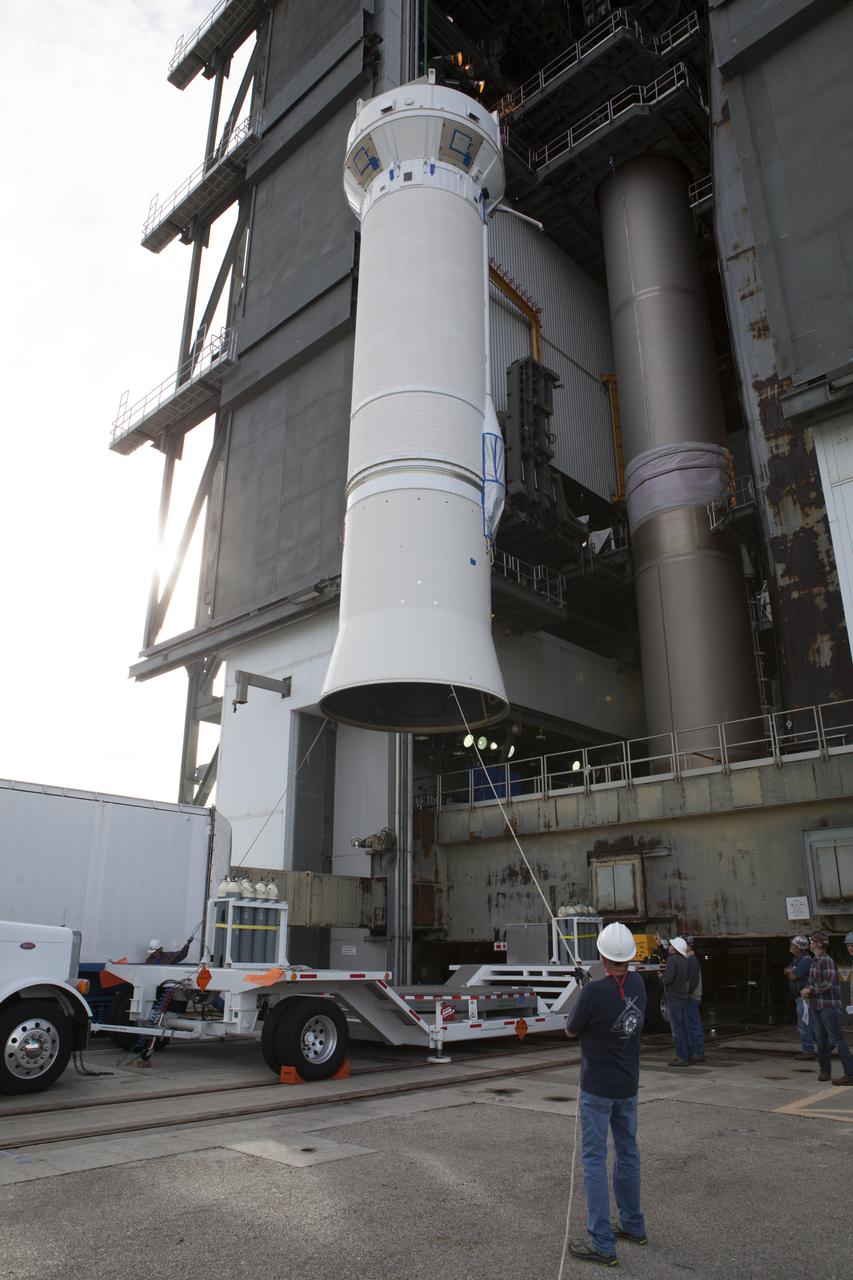
The Centaur upper stage of the United Launch Alliance (ULA) Atlas V rocket is lifted up by crane at the Vertical Integration Facility (VIF) at Space Launch Complex 41 at Cape Canaveral Air Force Station in Florida. The Centaur stage will be moved into the VIF, lifted up and mated to the first stage booster. The rocket is being prepared for Orbital ATK's seventh commercial resupply mission, CRS-7, to the International Space Station. Orbital ATK's CYGNUS pressurized cargo module is scheduled to launch atop ULA's Atlas V rocket from Pad 41 on March 19, 2017. CYGNUS will deliver 7,600 pounds of supplies, equipment and scientific research materials to the space station.
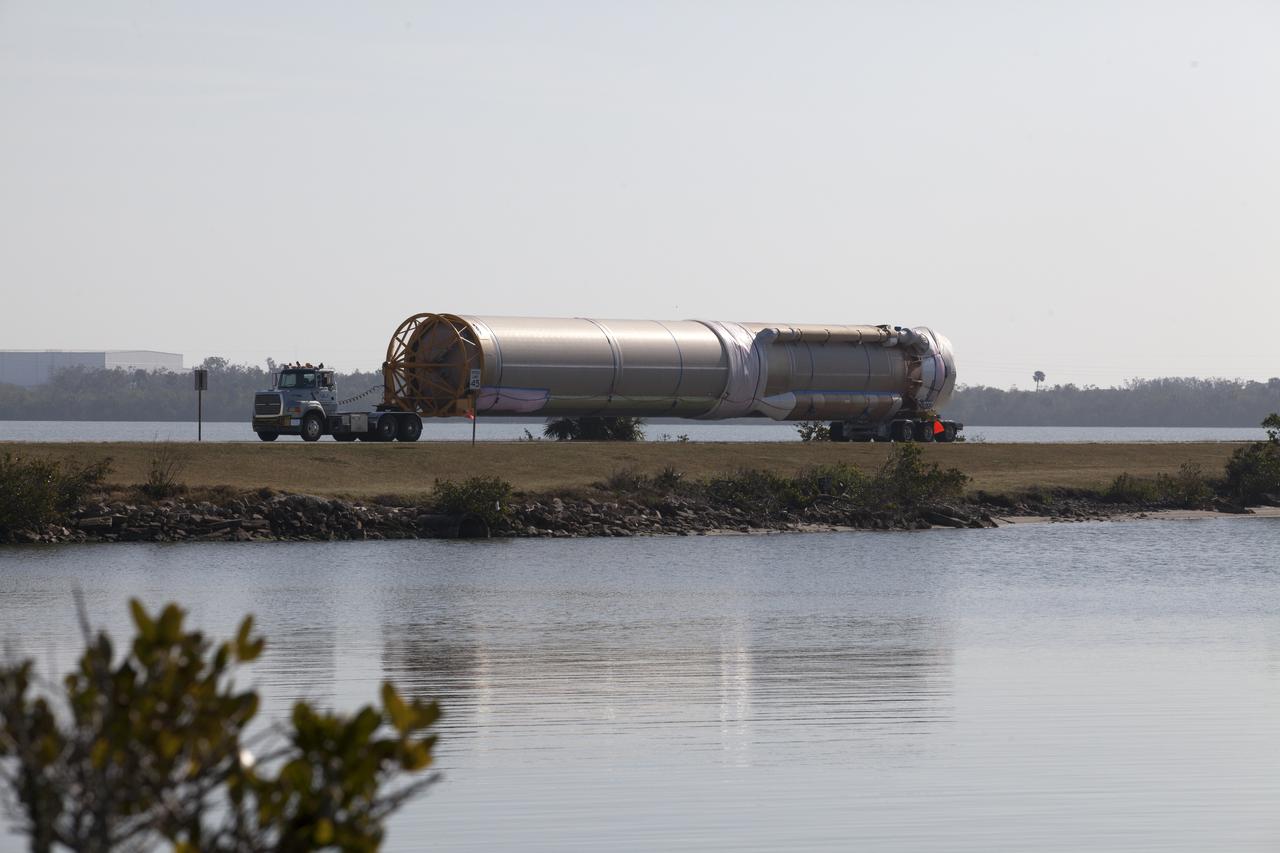
A United Launch Alliance (ULA) Atlas V booster is on its way to Cape Canaveral Air Force Station's Atlas Spaceflight Operations Center (ASOC). The Atlas V will undergo final testing in that facility. When processing in the ASOC is complete, the Atlas booster will be moved to the Vertical Integration Facility for stacking at Space Launch Complex 41. Scheduled to launch March 19, 2017, the Atlas will launch a Cygnus spacecraft on the Orbital ATK CRS-7 mission to deliver thousands of pounds of supplies, equipment and scientific research materials to the International Space Station.
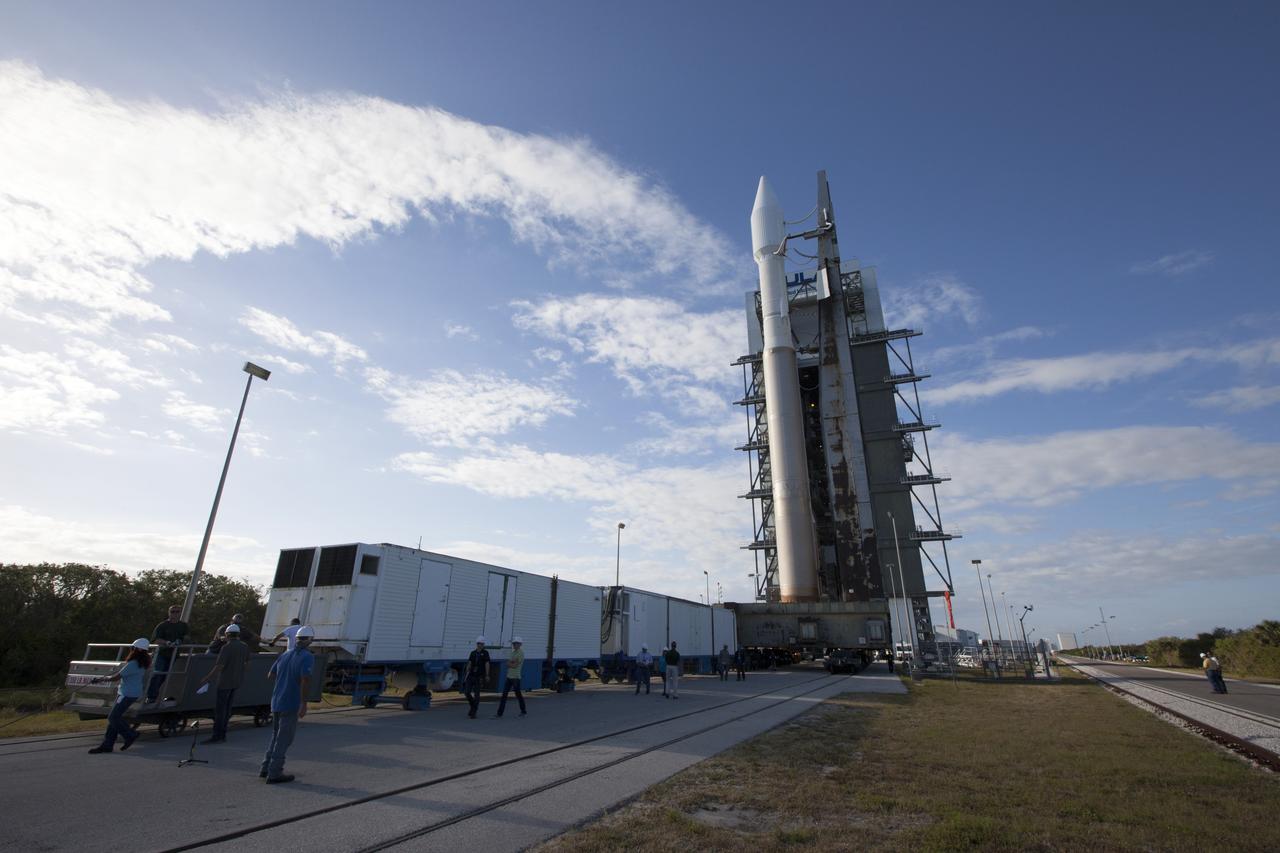
A United Launch Alliance Atlas V rocket, with the Orbital ATK Cygnus pressurized cargo module, has exited the Vertical Integration Facility for the trip to the pad at Space Launch Complex 41 at Cape Canaveral Air Force Station in Florida. Orbital ATK's seventh commercial resupply services mission, CRS-7, is scheduled to launch to the International Space Station on April 18, 2017. Cygnus will deliver 7,600 pounds of supplies, equipment and scientific research materials to the space station. Liftoff is scheduled for 11:11 a.m. EDT.
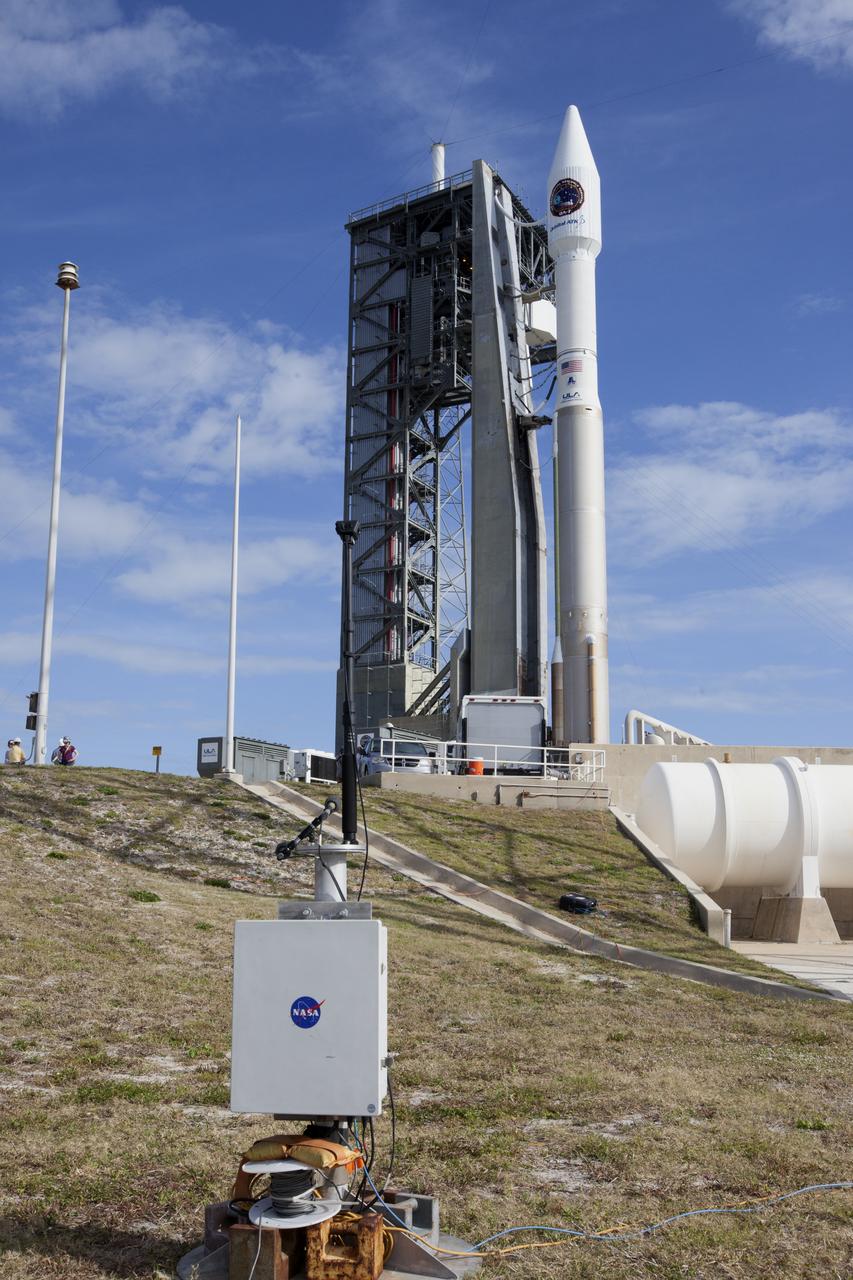
A United Launch Alliance Atlas V rocket, with the Orbital ATK Cygnus pressurized cargo module, arrives at the pad at Space Launch Complex 41 at Cape Canaveral Air Force Station in Florida. Orbital ATK's seventh commercial resupply services mission, CRS-7, is scheduled to launch to the International Space Station on April 18, 2017. Cygnus will deliver 7,600 pounds of supplies, equipment and scientific research materials to the space station. Liftoff is scheduled for 11:11 a.m. EDT.
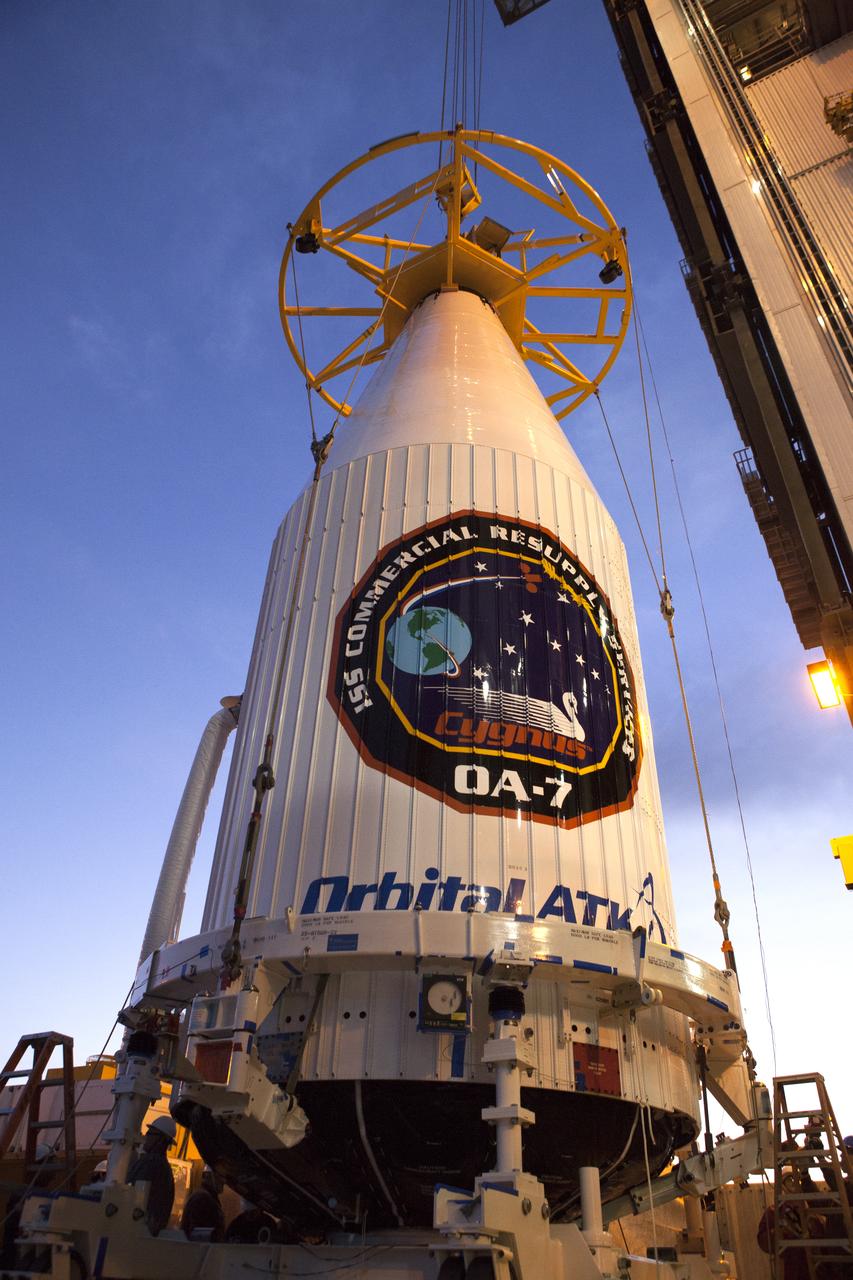
The payload fairing containing the Orbital ATK Cygnus pressurized cargo module is lifted by crane at the United Launch Alliance (ULA) Vertical Integration Facility at Space Launch Complex 41 at Cape Canaveral Air Force Station in Florida. The payload will be hoisted up and mated to the ULA Atlas V rocket. The Orbital ATK CRS-7 commercial resupply services mission to the International Space Station is scheduled to launch atop the Atlas V from pad 41. Cygnus will deliver 7,600 pounds of supplies, equipment and scientific research materials to the space station.
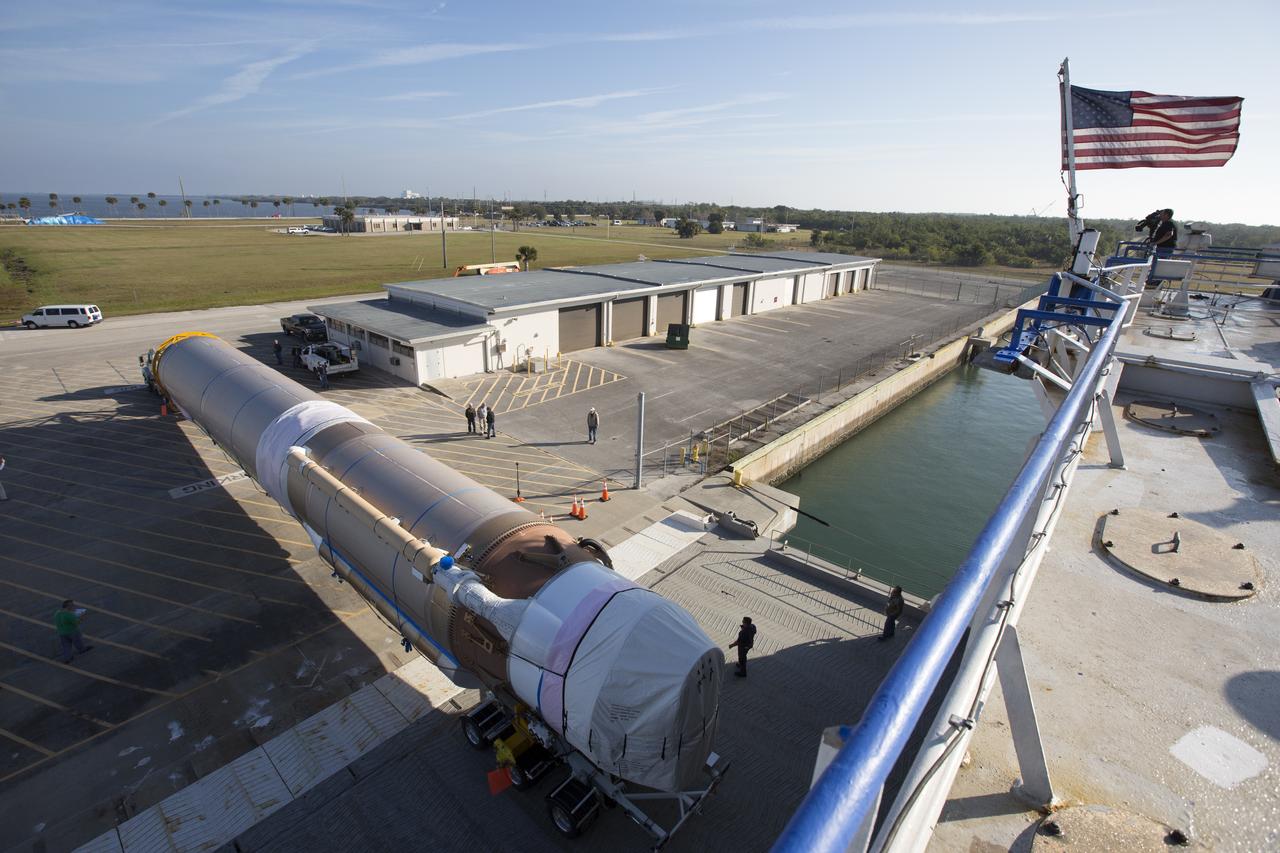
The United Launch Alliance (ULA) Atlas V booster arrives for the Orbital ATK CRS-7 commercial resupply mission to the International Space Station. A transport truck is taking the Atlas V from the Mariner cargo ship in the background, to the hangar at the Atlas Spaceflight Operations Center (ASOC), located south of Space Launch Complex 41 at Cape Canaveral Air Force Station. Scheduled to launch March 19, 2017, the Orbital ATK CRS-7 mission will lift off atop the ULA Atlas V rocket to deliver thousands of pounds of supplies, equipment and scientific research materials that improve life on Earth and drive progress toward future space exploration.
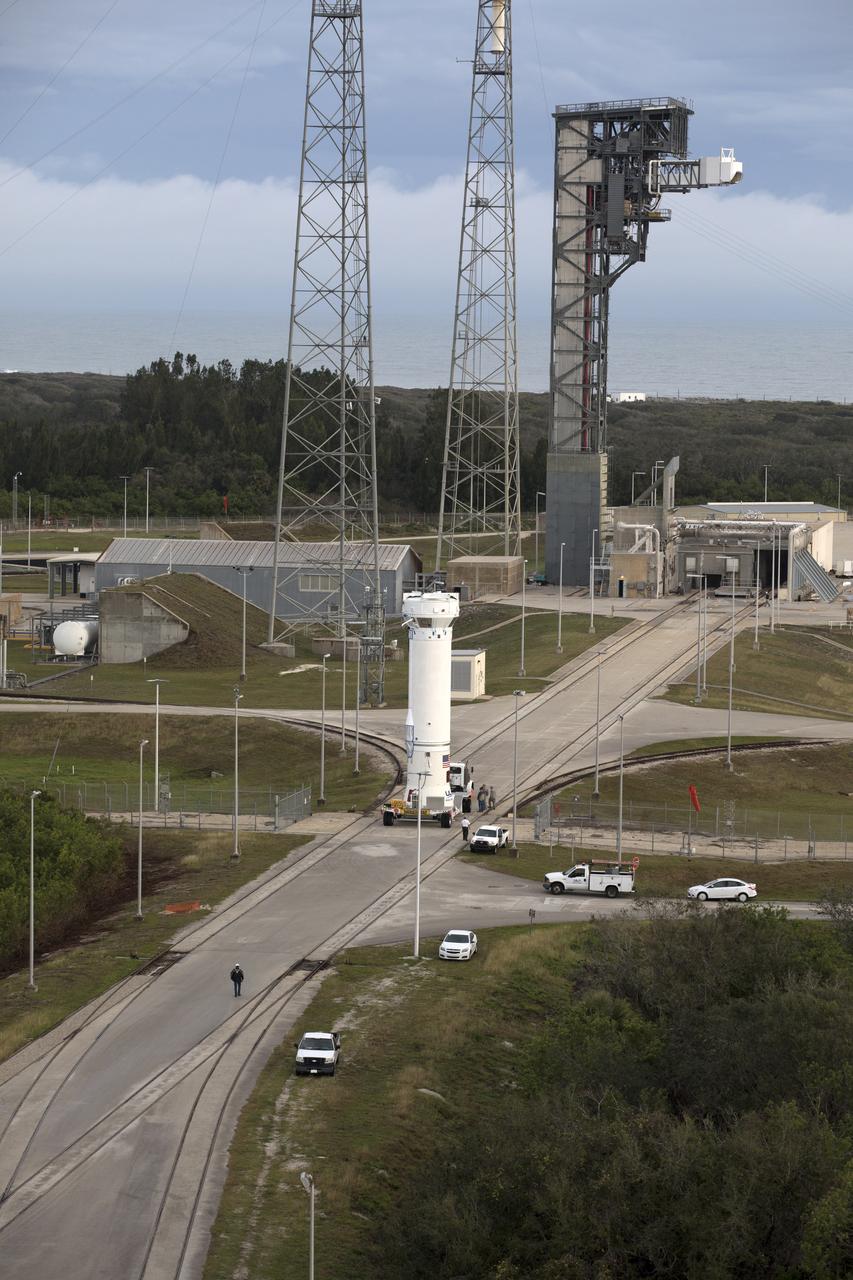
The Centaur upper stage of the United Launch Alliance (ULA) Atlas V rocket is transported to the Vertical Integration Facility at Space Launch Complex 41 at Cape Canaveral Air Force Station in Florida. The Centaur stage will be lifted and mated to the first stage booster. The rocket is being prepared for Orbital ATK's seventh commercial resupply mission, CRS-7, to the International Space Station. Orbital ATK's CYGNUS pressurized cargo module is scheduled to launch atop ULA's Atlas V rocket from Pad 41 on March 19, 2017. CYGNUS will deliver 7,600 pounds of supplies, equipment and scientific research materials to the space station.
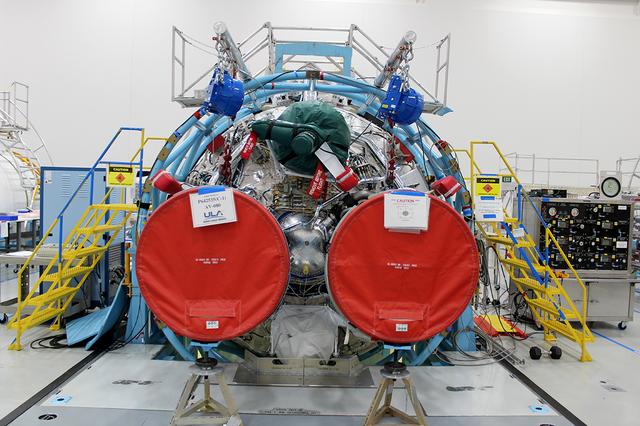
The United Launch Alliance (ULA) Orbital Flight Test dual engine Centaur stage of the Atlas V rocket is in the final stage of production and checkout on May 22, 2018, at ULA's factory in Decatur, Alabama. Boeing's CST-100 Starliner will launch on its first uncrewed flight test on the ULA Atlas V rocket. The Starliner is being developed and manufactured in partnership with NASA's Commercial Crew Program to return human spaceflight capabilities to the U.S.
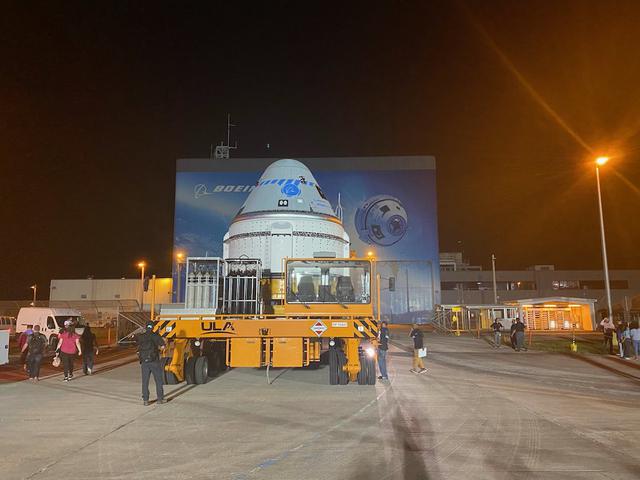
Boeing’s CST-100 Starliner spacecraft rolls out from the company’s Commercial Crew and Cargo Processing Facility at NASA’s Kennedy Space Center in Florida on July 17, 2021. The spacecraft will make the trip to Space Launch Complex-41 at Cape Canaveral Space Force Station where it will be secured atop a United Launch Alliance Atlas V rocket for Boeing’s second Orbital Flight Test (OFT-2) for NASA’s Commercial Crew Program.

The Launch Vehicle Adapter (LVA) that will attach Boeing’s first Starliner spacecraft to the Atlas V launch vehicle is unloaded from the Mariner cargo vessel at Cape Canaveral in Florida on November 12, 2018, following transport from United Launch Alliance's manufacturing factory in Decatur, Alabama. Technicians transported the LVA to Cape Canaveral Air Force Station to begin integrated operations with the Centaur upper stage.The LVA is the specially-designed structure that will be fitted to the top of Centaur. It will soon be attached to the Centaur during pre-launch stacking operations and eventually support the Starliner spacecraft during launch of the Orbital Flight Test next year. Also part of the LVA is the aeroskirt, which ULA designed in collaboration with Boeing and NASA for added aerodynamic stability during the flight. This metallic orthogrid structure will smooth the air flow over the Starliner-Atlas V vehicle, and will be nominally jettisoned after the first stage of flight. The aeroskirt also has provisions for venting in the event the Starliner abort engines are fired.
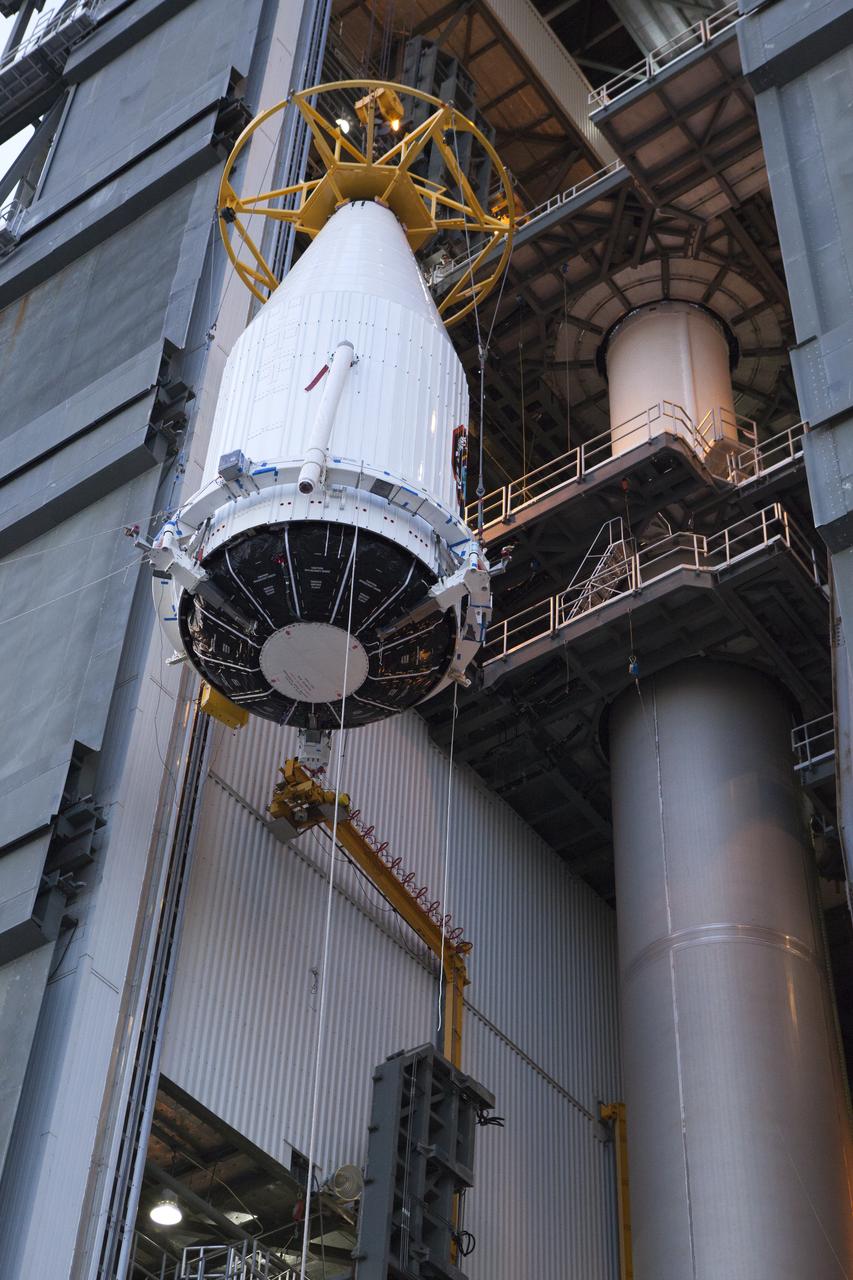
The payload fairing containing the Orbital ATK Cygnus pressurized cargo module is lifted by crane at the United Launch Alliance (ULA) Vertical Integration Facility at Space Launch Complex 41 at Cape Canaveral Air Force Station in Florida. The payload will be hoisted up and mated to the ULA Atlas V rocket. The Orbital ATK CRS-7 commercial resupply services mission to the International Space Station is scheduled to launch atop the Atlas V from pad 41. Cygnus will deliver 7,600 pounds of supplies, equipment and scientific research materials to the space station.
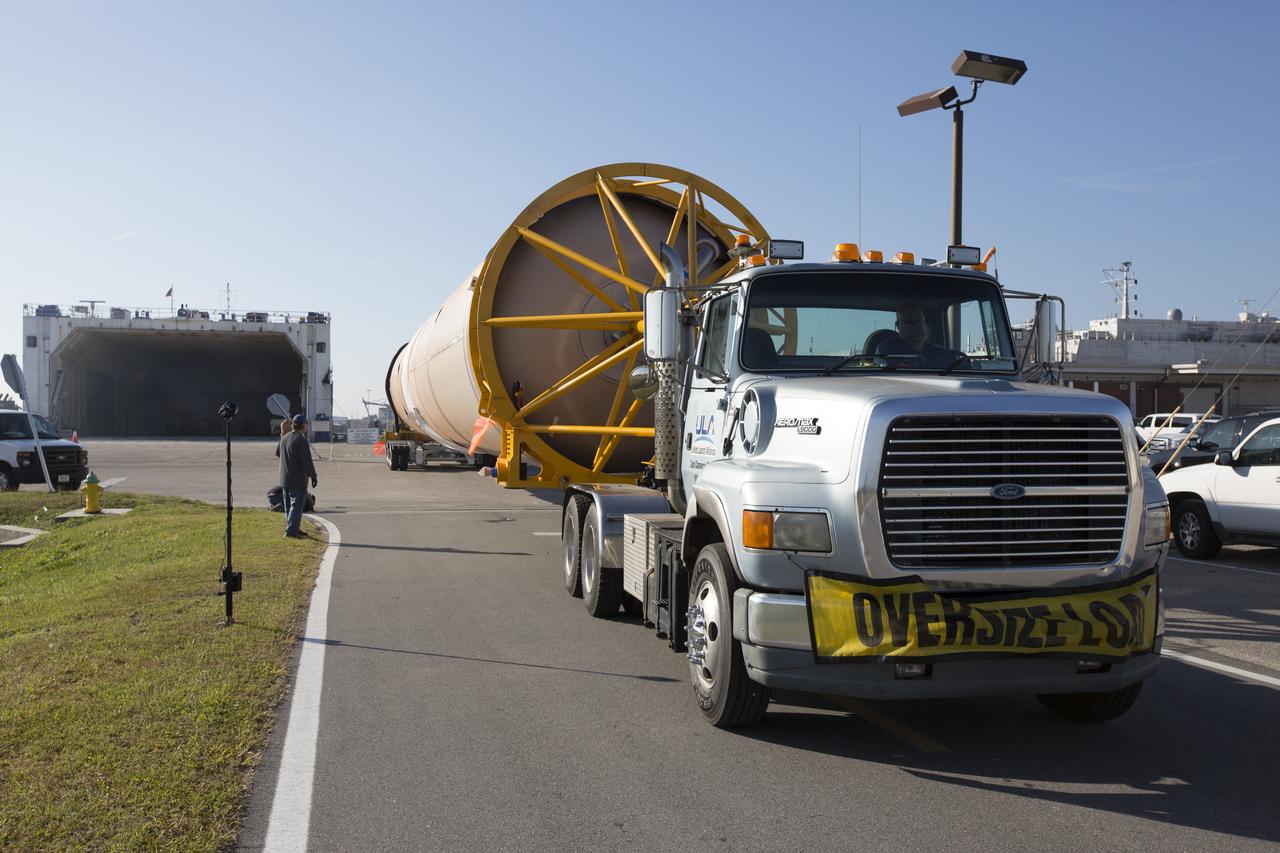
The United Launch Alliance (ULA) Atlas V booster arrives for the Orbital ATK CRS-7 commercial resupply mission to the International Space Station. A transport truck is taking the Atlas V from the Mariner cargo ship in the background, to the hangar at the Atlas Spaceflight Operations Center (ASOC), located south of Space Launch Complex 41 at Cape Canaveral Air Force Station. Scheduled to launch March 19, 2017, a Cygnus spacecraft on the Orbital ATK CRS-7 mission will lift off atop the ULA Atlas V rocket to deliver thousands of pounds of supplies, equipment and scientific research materials that improve life on Earth and drive progress toward future space exploration.
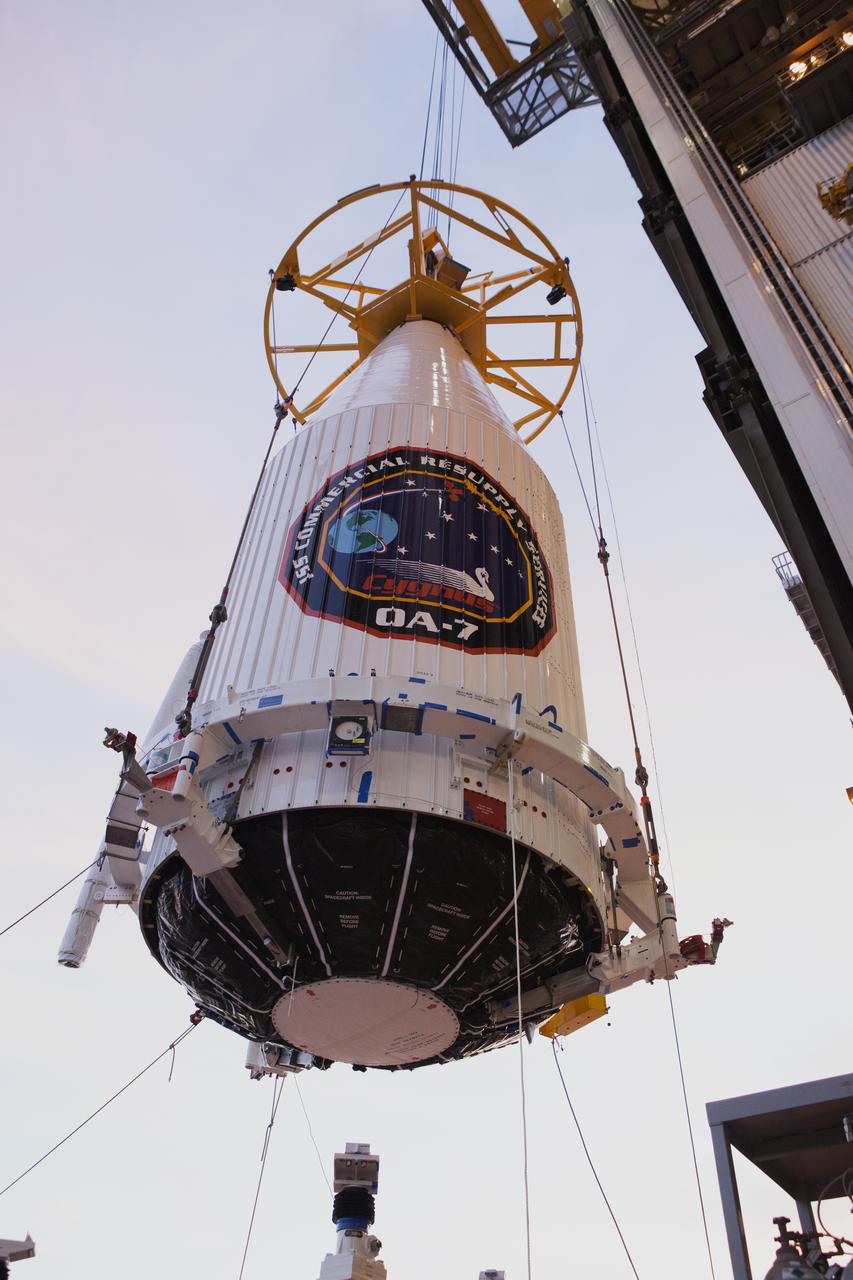
The payload fairing containing the Orbital ATK Cygnus pressurized cargo module is lifted by crane at the United Launch Alliance (ULA) Vertical Integration Facility at Space Launch Complex 41 at Cape Canaveral Air Force Station in Florida. The payload will be hoisted up and mated to the ULA Atlas V rocket. The Orbital ATK CRS-7 commercial resupply services mission to the International Space Station is scheduled to launch atop the Atlas V from pad 41. Cygnus will deliver 7,600 pounds of supplies, equipment and scientific research materials to the space station.
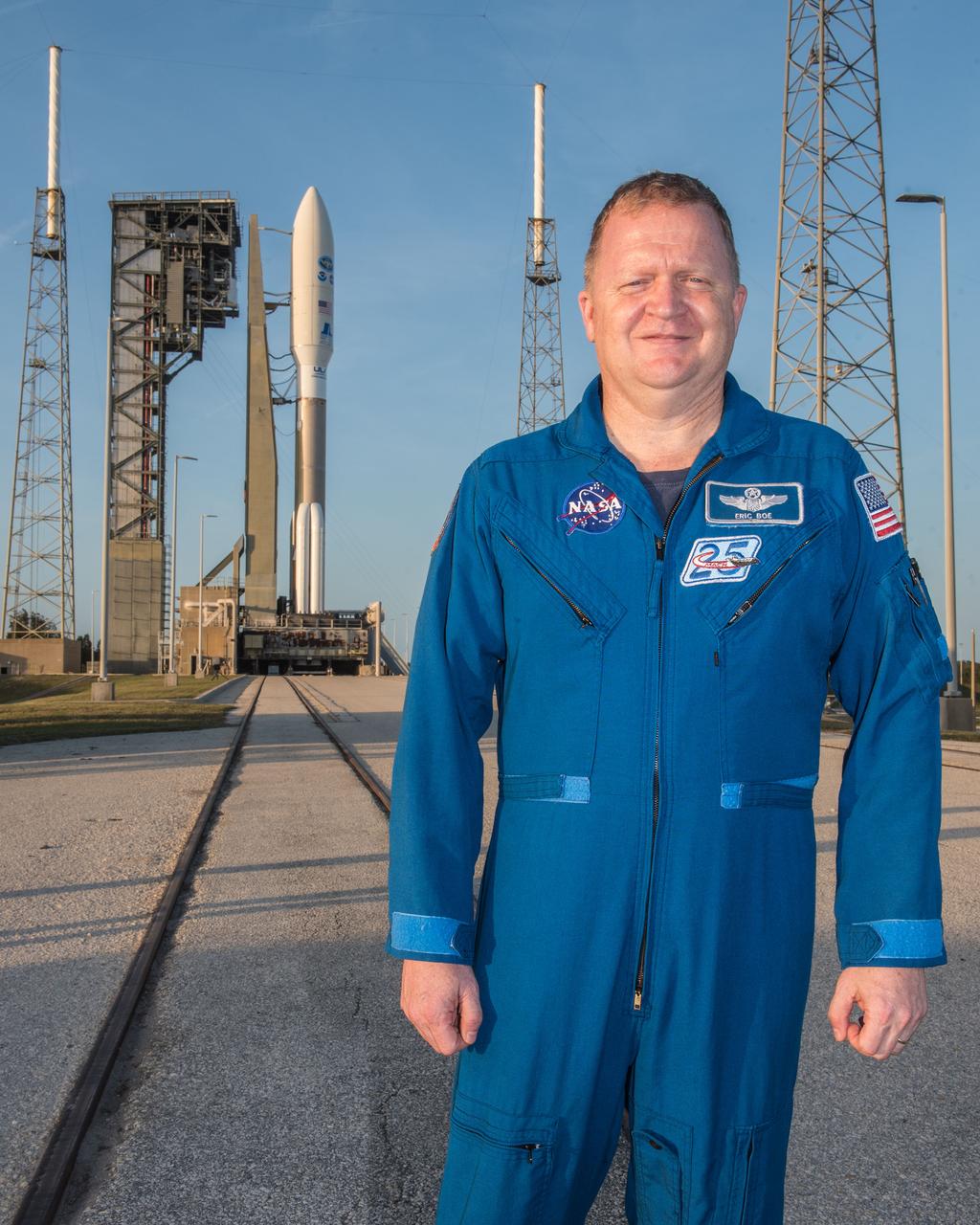
NASA astronaut Eric Boe, one of four astronauts working with the agency’s Commercial Crew Program, checked out the Crew Access Tower at Space Launch Complex 41. The United Launch Alliance (ULA) Atlas V in the background carried NOAA’s Geostationary Operational Environmental Satellite-S into orbit March 1. Later this year, the Atlas V also will carry astronauts to the International Space Station. Along with NASA, Boeing and ULA engineers, Boe inspected the launch pad and tower to establish whether spotlight and lighting conditions will be acceptable after dark. The survey helped to ensure crew members will have suitable visibility as they prepare to board Boeing’s Starliner spacecraft and launch on missions such as the Crew Flight Test to the International Space Station, targeted for later this year.
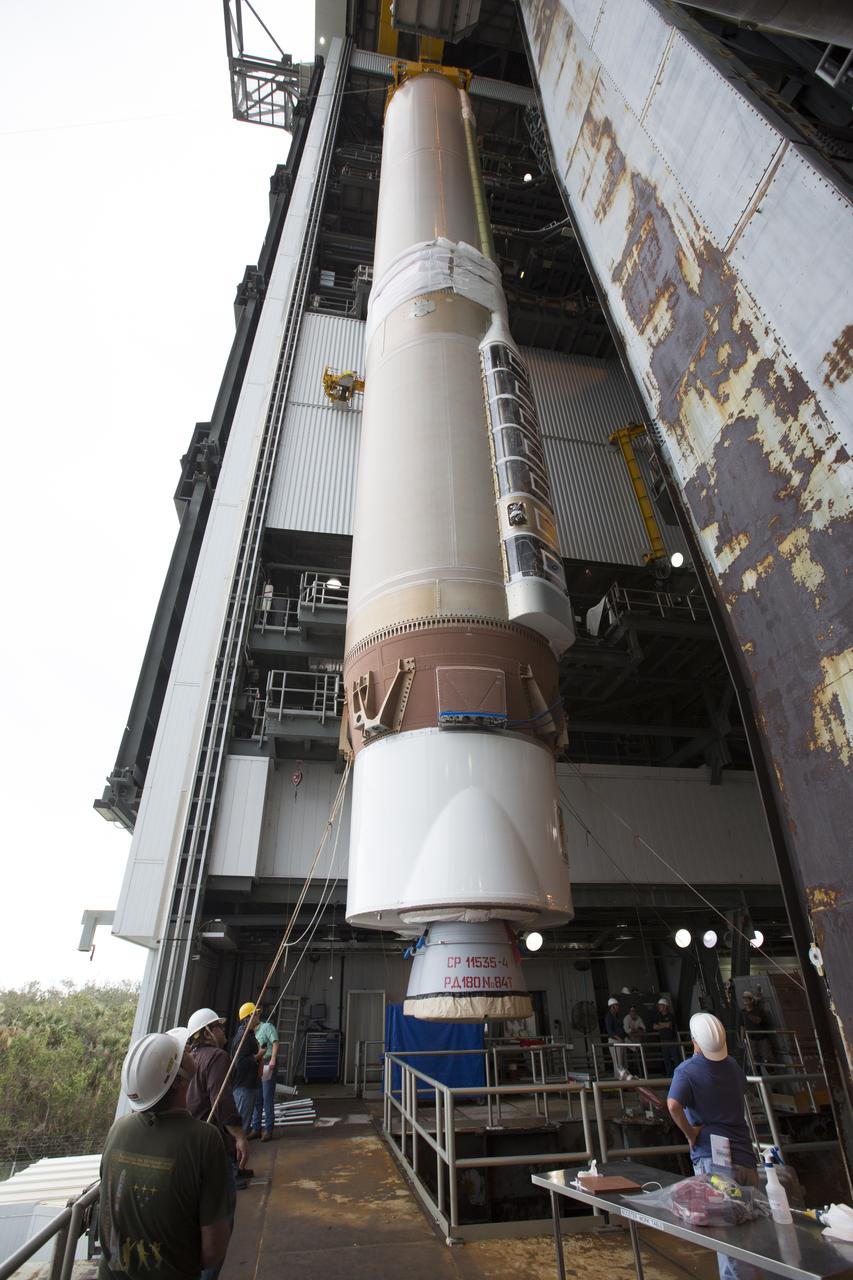
The first stage of the United Launch Alliance (ULA) Atlas V rocket is lifted up inside the Vertical Integration Facility at Space Launch Complex 41 at Cape Canaveral Air Force Station in Florida. The rocket is being prepared for Orbital ATK's seventh commercial resupply mission, CRS-7, to the International Space Station. Orbital ATK's CYGNUS pressurized cargo module is scheduled to launch atop ULA's Atlas V rocket from Pad 41 on March 19, 2017. CYGNUS will deliver thousands of pounds of supplies, equipment and scientific research materials to the space station.

The upper stage for NASA’s SLS (Space Launch System) rocket that will power the agency’s Artemis III mission and send astronauts on to the Moon for a lunar landing arrived at the Cape Canaveral Space Force Station Poseidon Wharf in Florida on Aug. 9, 2023. Known as the SLS ICPS (interim cryogenic propulsion stage), it will undergo final checkouts by contractors Boeing and ULA (United Launch Alliance) at ULA’s facilities before it is delivered to NASA’s nearby Kennedy Space Center.
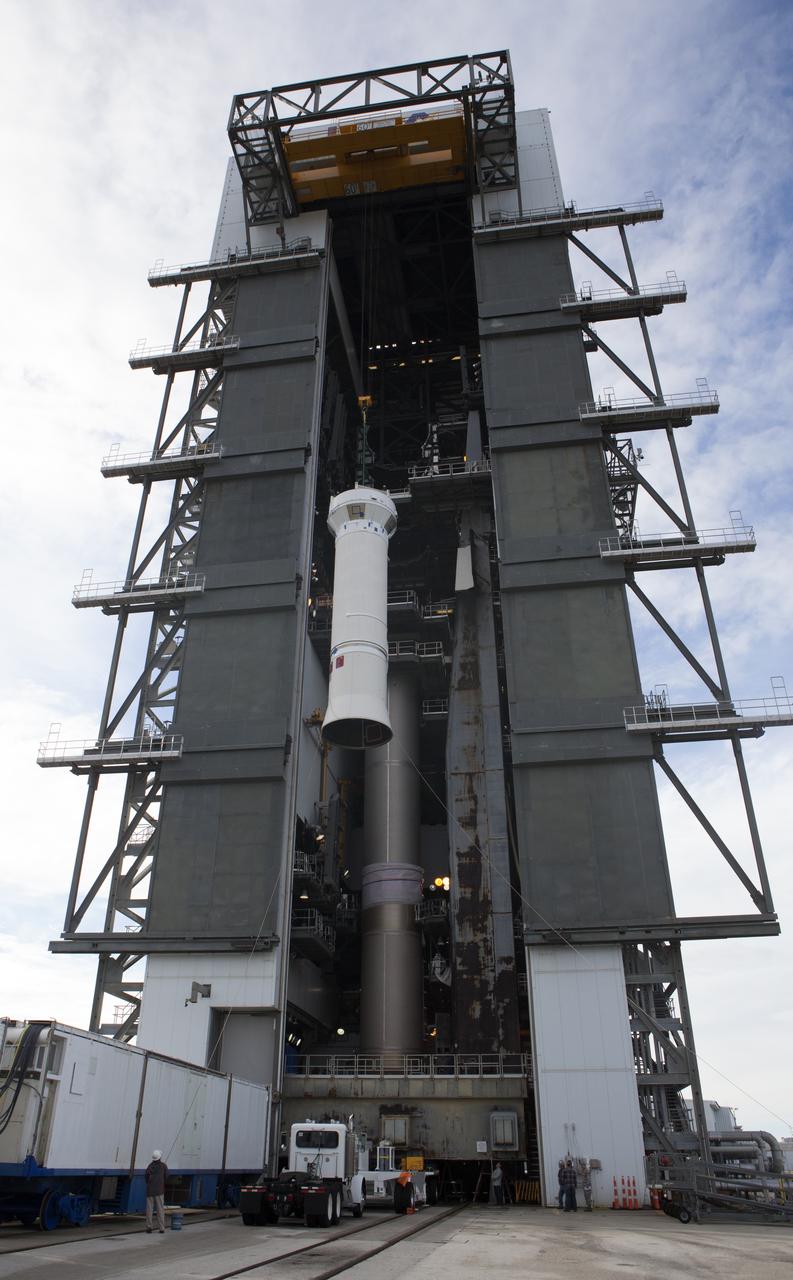
The Centaur upper stage of the United Launch Alliance (ULA) Atlas V rocket is lifted up by crane at the Vertical Integration Facility at Space Launch Complex 41 at Cape Canaveral Air Force Station in Florida. The Centaur stage will be lifted inside the VIF and lowered for mating to the first stage booster. The rocket is being prepared for Orbital ATK's seventh commercial resupply mission, CRS-7, to the International Space Station. Orbital ATK's CYGNUS pressurized cargo module is scheduled to launch atop ULA's Atlas V rocket from Pad 41 on March 19, 2017. CYGNUS will deliver 7,600 pounds of supplies, equipment and scientific research materials to the space station.
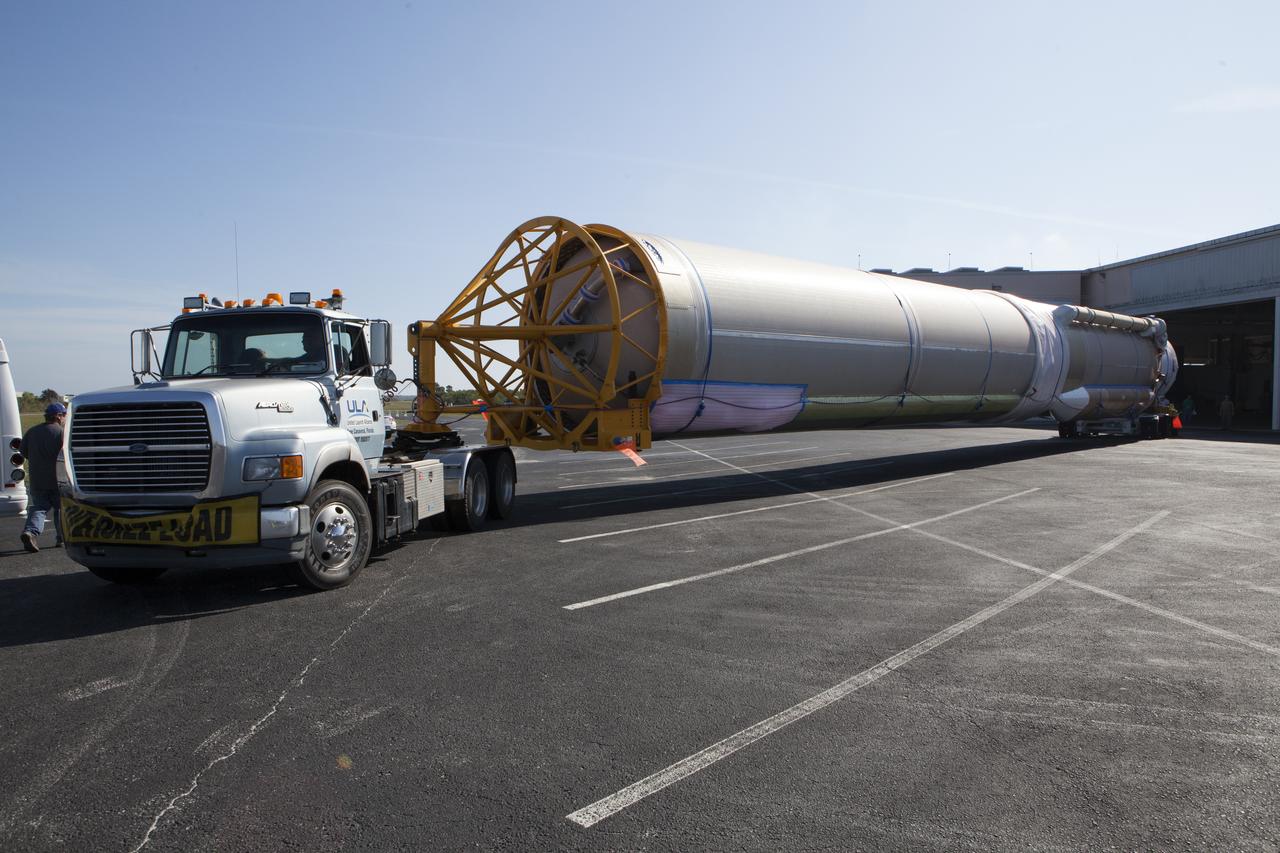
A United Launch Alliance (ULA) Atlas V booster arrives at Cape Canaveral Air Force Station's Atlas Spaceflight Operations Center (ASOC). The Atlas V will undergo final testing in that facility. When processing in the ASOC is complete, the Atlas booster will be moved to the Vertical Integration Facility for stacking at Space Launch Complex 41. Scheduled to launch March 19, 2017, the Atlas will launch a Cygnus spacecraft on the Orbital ATK CRS-7 mission to deliver thousands of pounds of supplies, equipment and scientific research materials to the International Space Station.
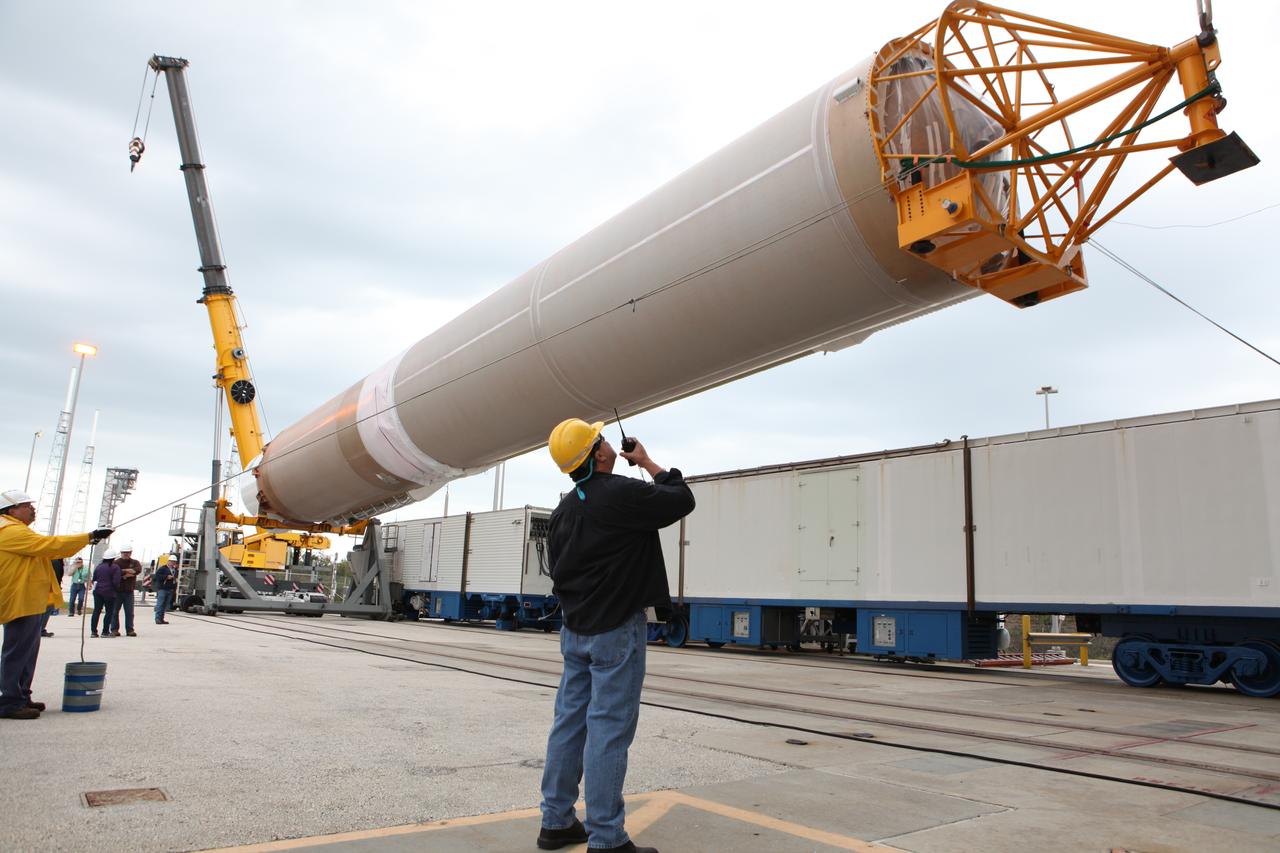
A crane is use to lift the first stage of the United Launch Alliance (ULA) Atlas V rocket and move it into the Vertical Integration Facility at Space Launch Complex 41 at Cape Canaveral Air Force Station in Florida. The rocket is being prepared for Orbital ATK's seventh commercial resupply mission, CRS-7, to the International Space Station. Orbital ATK's CYGNUS pressurized cargo module is scheduled to launch atop ULA's Atlas V rocket from Pad 41 on March 19, 2017. CYGNUS will deliver thousands of pounds of supplies, equipment and scientific research materials to the space station.
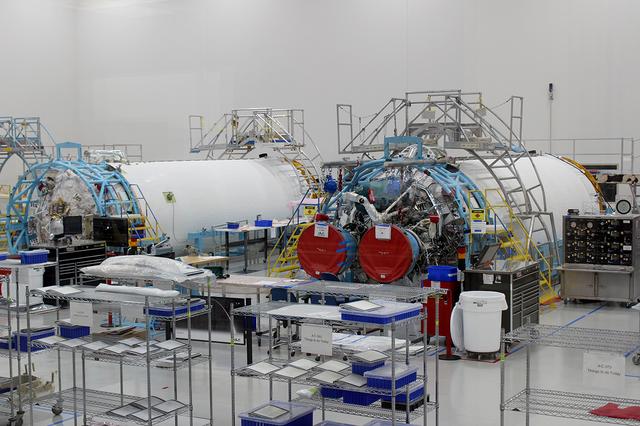
The United Launch Alliance (ULA) Crew Flight Test dual engine, at left, and the Orbital Flight test dual engine, at right, for the Centaur stage of the Atlas V rocket are in production on June 11, 2018, at ULA's factory in Decatur, Alabama. Boeing's CST-100 Starliner will launch on its first uncrewed flight test on the ULA Atlas V rocket. The Starliner is being developed and manufactured in partnership with NASA's Commercial Crew Program to return human spaceflight capabilities to the U.S.
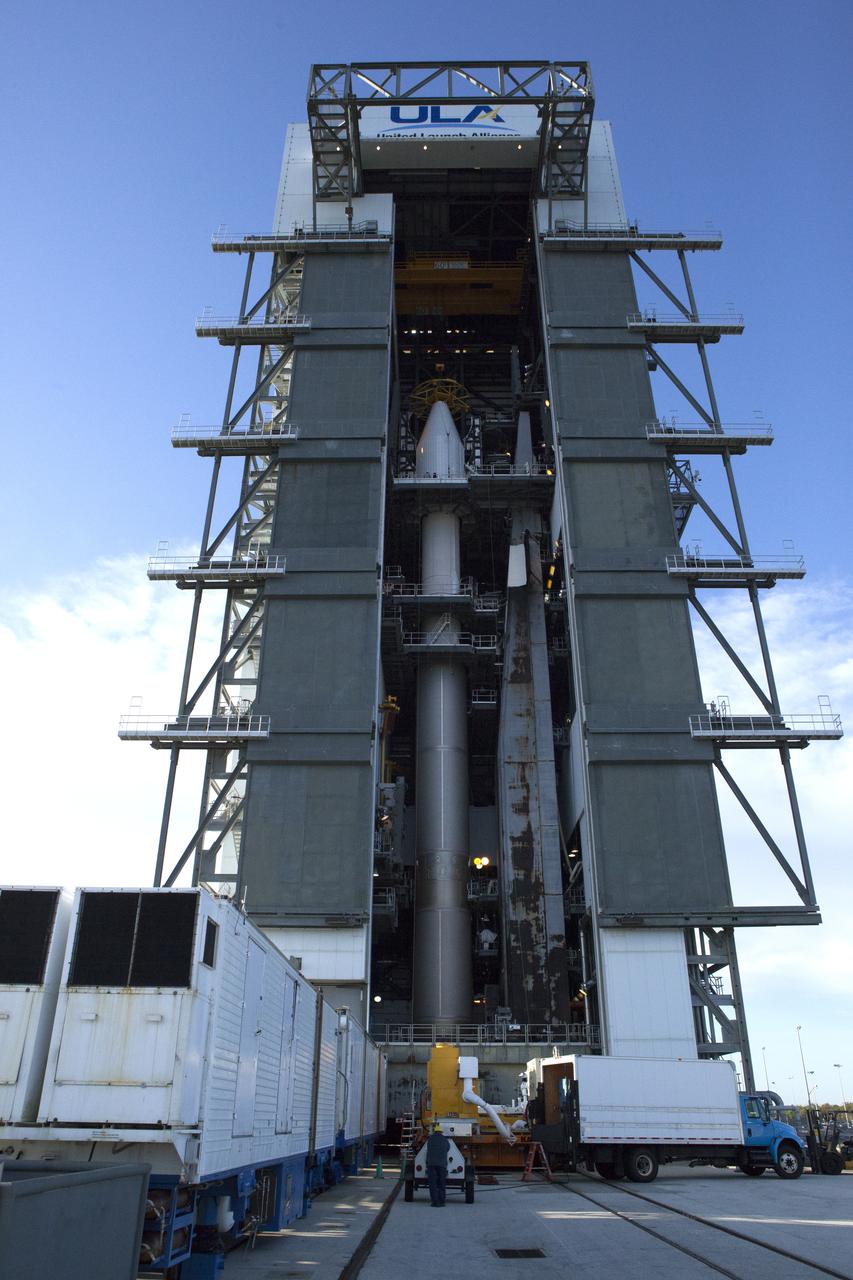
The payload fairing containing the Orbital ATK Cygnus pressurized cargo module is mated to the Centaur upper stage, or second stage, of the United Launch Alliance (ULA) rocket in the Vertical Integration Facility at Space Launch Complex 41 at Cape Canaveral Air Force Station in Florida. The Orbital ATK CRS-7 commercial resupply services mission to the International Space Station is scheduled to launch atop the Atlas V from pad 41. Cygnus will deliver 7,600 pounds of supplies, equipment and scientific research materials to the space station.
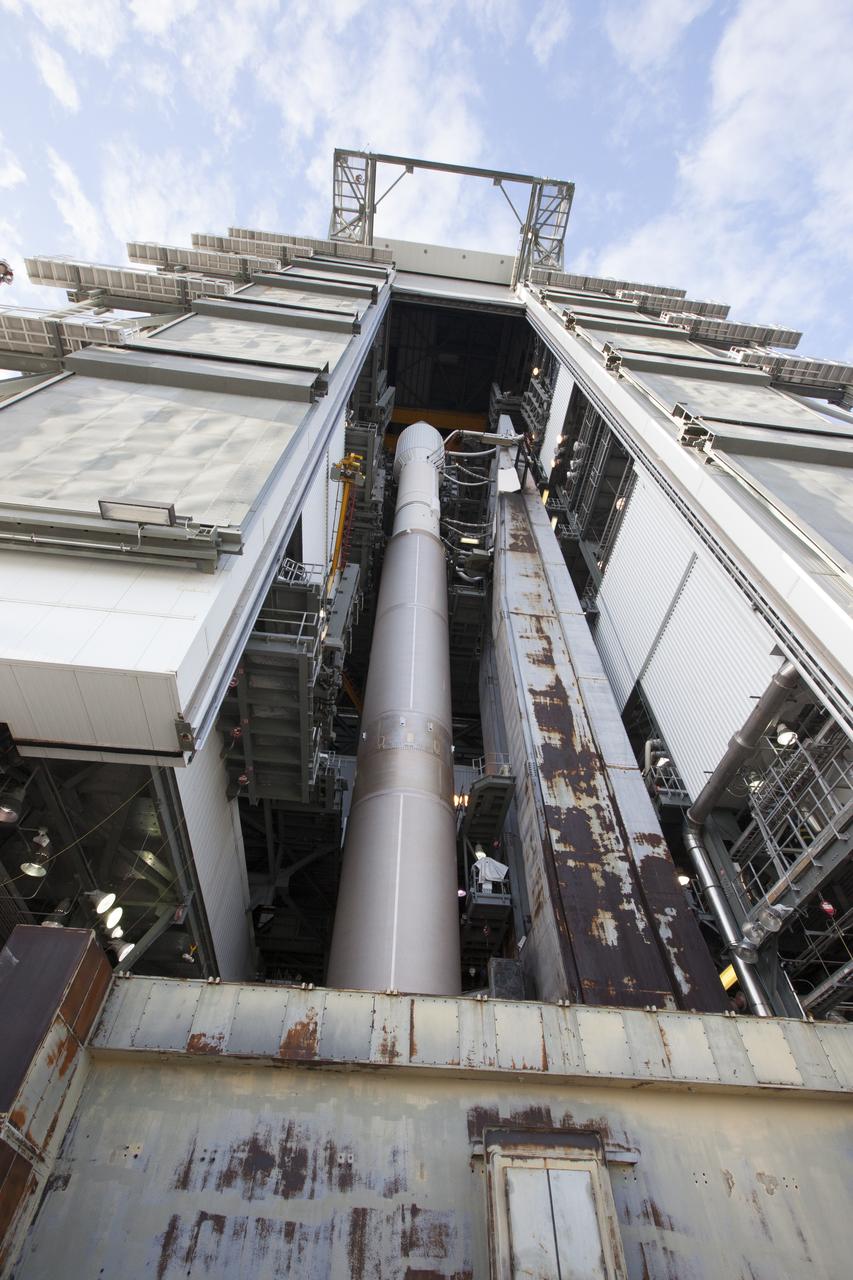
A United Launch Alliance Atlas V rocket, with the Orbital ATK Cygnus pressurized cargo module, begins to exit the Vertical Integration Facility at Space Launch Complex 41 at Cape Canaveral Air Force Station in Florida. Orbital ATK's seventh commercial resupply services mission, CRS-7, is scheduled to launch to the International Space Station on April 18, 2017. Cygnus will deliver 7,600 pounds of supplies, equipment and scientific research materials to the space station. Liftoff is scheduled for 11:11 a.m. EDT.
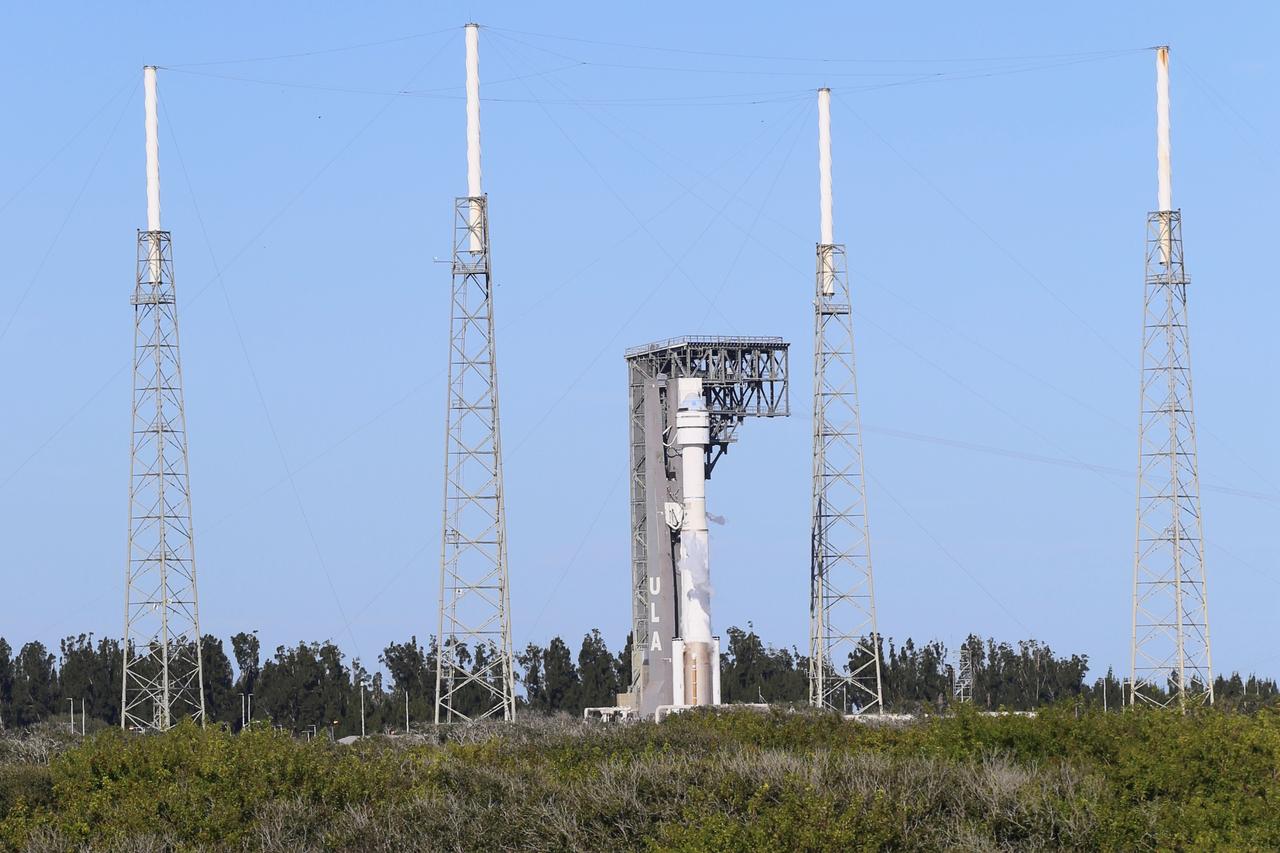
Boeing’s CST-100 Starliner spacecraft is poised atop a fueled United Launch Alliance (ULA) Atlas V rocket at Cape Canaveral Air Force Station’s (CCAFS) Space Launch Complex 41 in Florida for the program’s first-ever Integrated Day of Launch Test on Dec. 6, 2019. The rocket’s booster and Centaur upper stage have been filled with propellants for this full run-through of the launch countdown. The rehearsal is practice for Boeing’s upcoming uncrewed Orbital Flight Test to the International Space Station for NASA’s Commercial Crew Program.
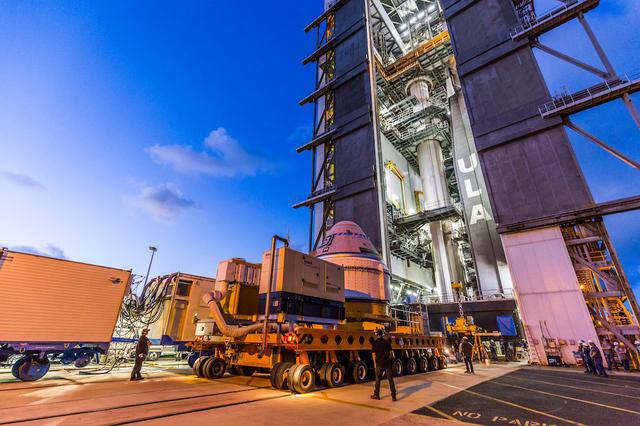
Boeing’s CST-100 Starliner spacecraft arrives at the Vertical Integration Facility at Space Launch Complex-41 at Cape Canaveral Space Force Station in Florida on July 17, 2021. Starliner will be secured atop a United Launch Alliance Atlas V rocket for Boeing’s second Orbital Flight Test (OFT-2) for NASA’s Commercial Crew Program. The spacecraft rolled out from Boeing’s Commercial Crew and Cargo Processing Facility at NASA’s Kennedy Space Center earlier in the day.
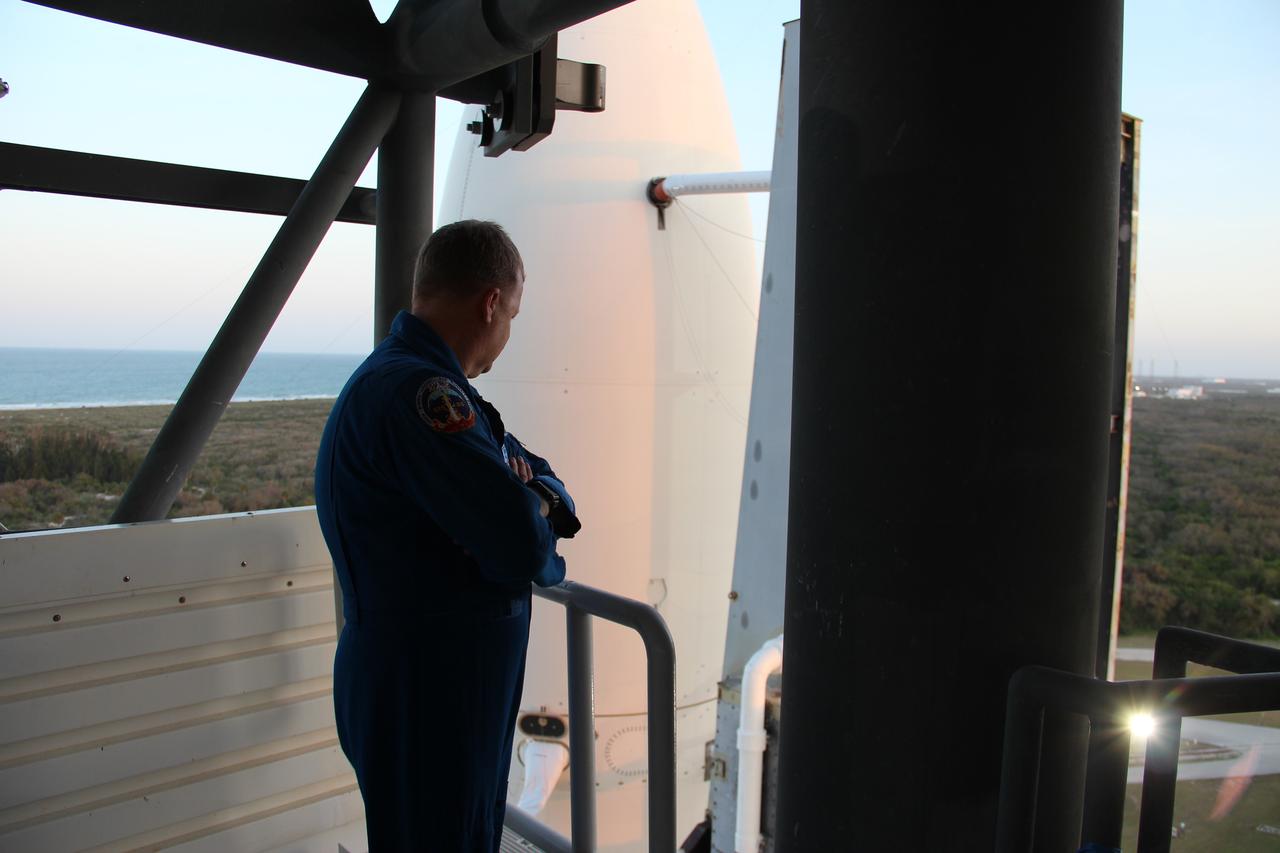
NASA astronaut Eric Boe, one of four astronauts working with the agency’s Commercial Crew Program, checked out the Crew Access Tower at Space Launch Complex 41. Here, Boe is standing right above the crew access arm, which astronauts will use to board Boeing’s Starliner spacecraft installed atop an Atlas V launch vehicle. Accompanied by NASA, Boeing and ULA engineers, Boe inspected the launch tower to establish whether spotlight and lighting conditions will be acceptable after dark. The survey was required to ensure crew members will have suitable visibility as they prepare to board Boeing’s Starliner spacecraft and launch on missions such as the Crew Flight Test to the International Space Station, targeted for later this year.
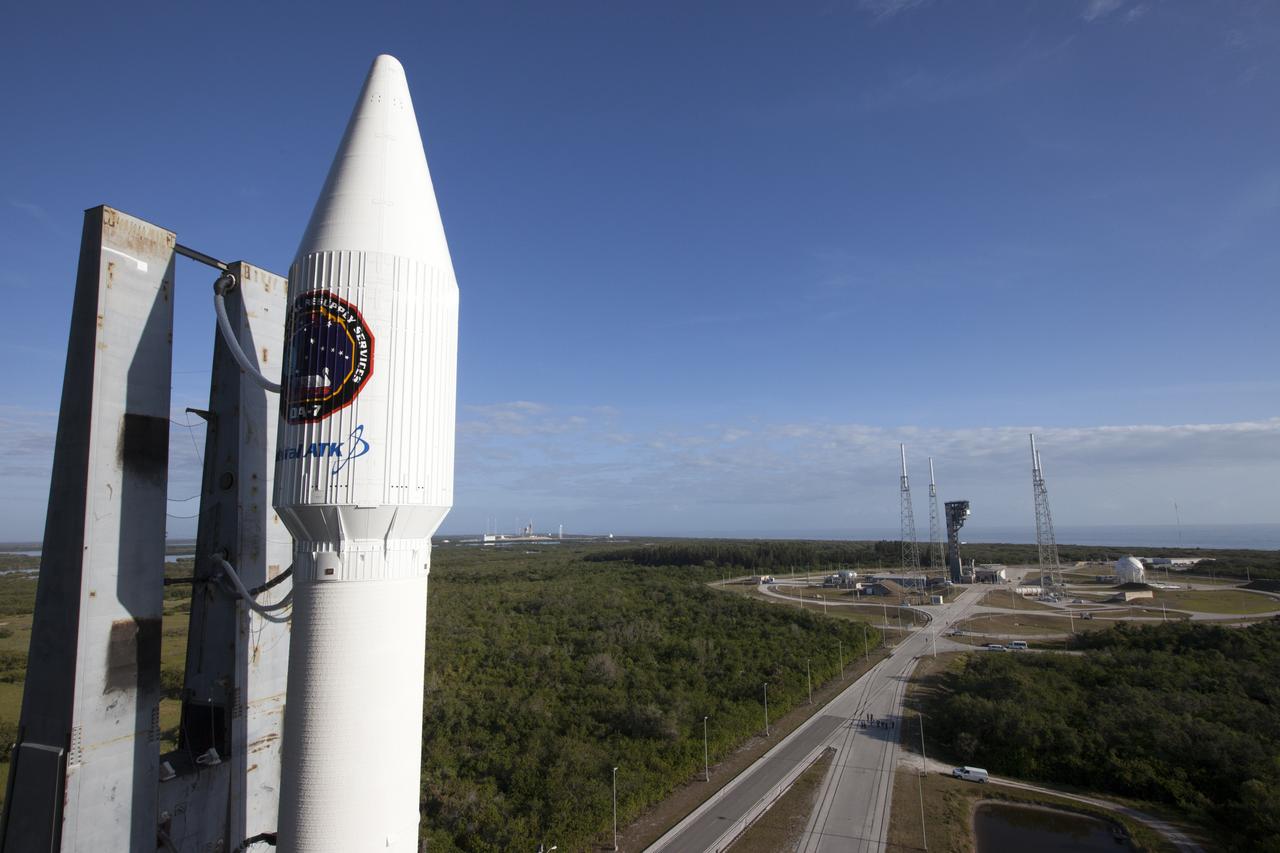
A United Launch Alliance Atlas V rocket, with the Orbital ATK Cygnus pressurized cargo module, has exited the Vertical Integration Facility for the trip to the pad at Space Launch Complex 41 at Cape Canaveral Air Force Station in Florida. Orbital ATK's seventh commercial resupply services mission, CRS-7, is scheduled to launch to the International Space Station on April 18, 2017. Cygnus will deliver 7,600 pounds of supplies, equipment and scientific research materials to the space station. Liftoff is scheduled for 11:11 a.m. EDT.
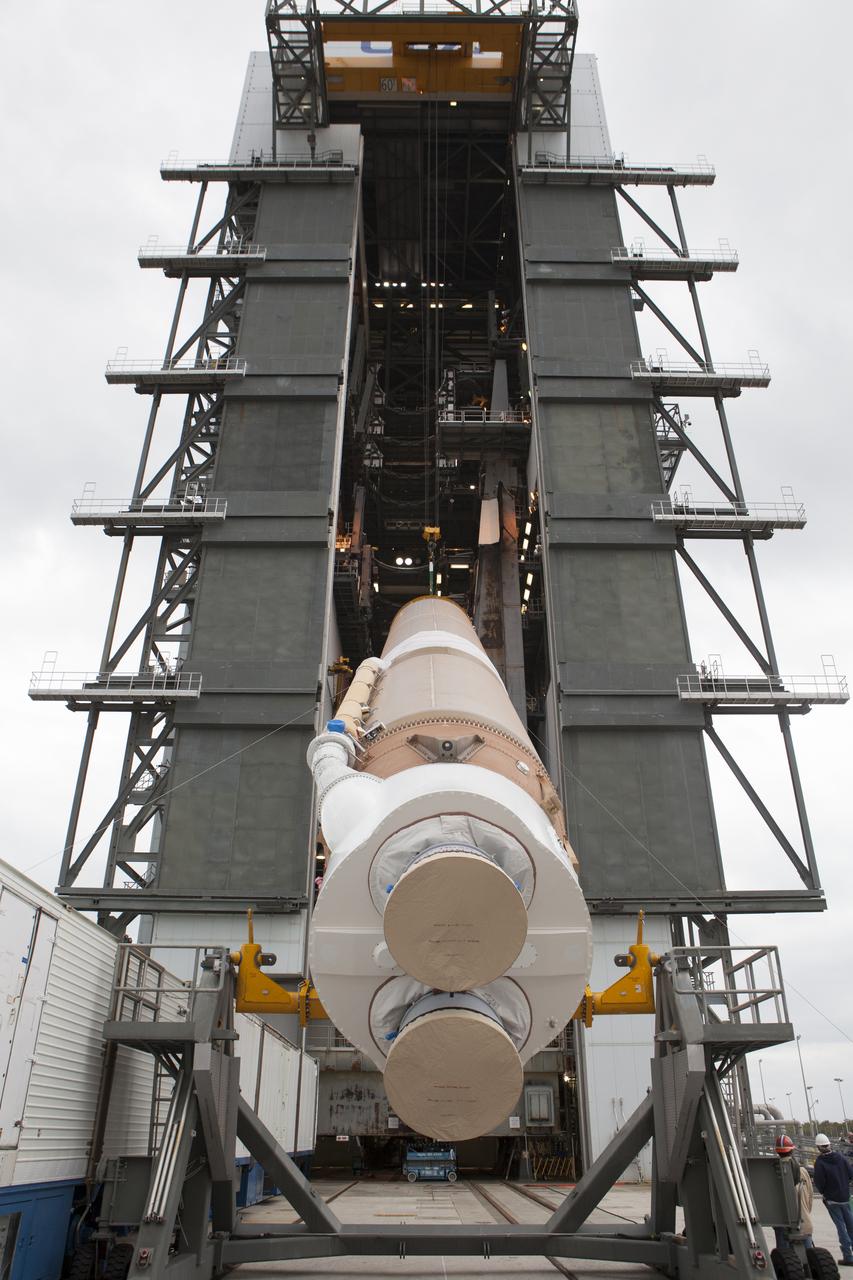
The first stage of the United Launch Alliance (ULA) Atlas V rocket is lifted by crane to vertical as it is moved into the Vertical Integration Facility at Space Launch Complex 41 at Cape Canaveral Air Force Station in Florida. The rocket is being prepared for Orbital ATK's seventh commercial resupply mission, CRS-7, to the International Space Station. Orbital ATK's CYGNUS pressurized cargo module is scheduled to launch atop ULA's Atlas V rocket from Pad 41 on March 19, 2017. CYGNUS will deliver thousands of pounds of supplies, equipment and scientific research materials to the space station.
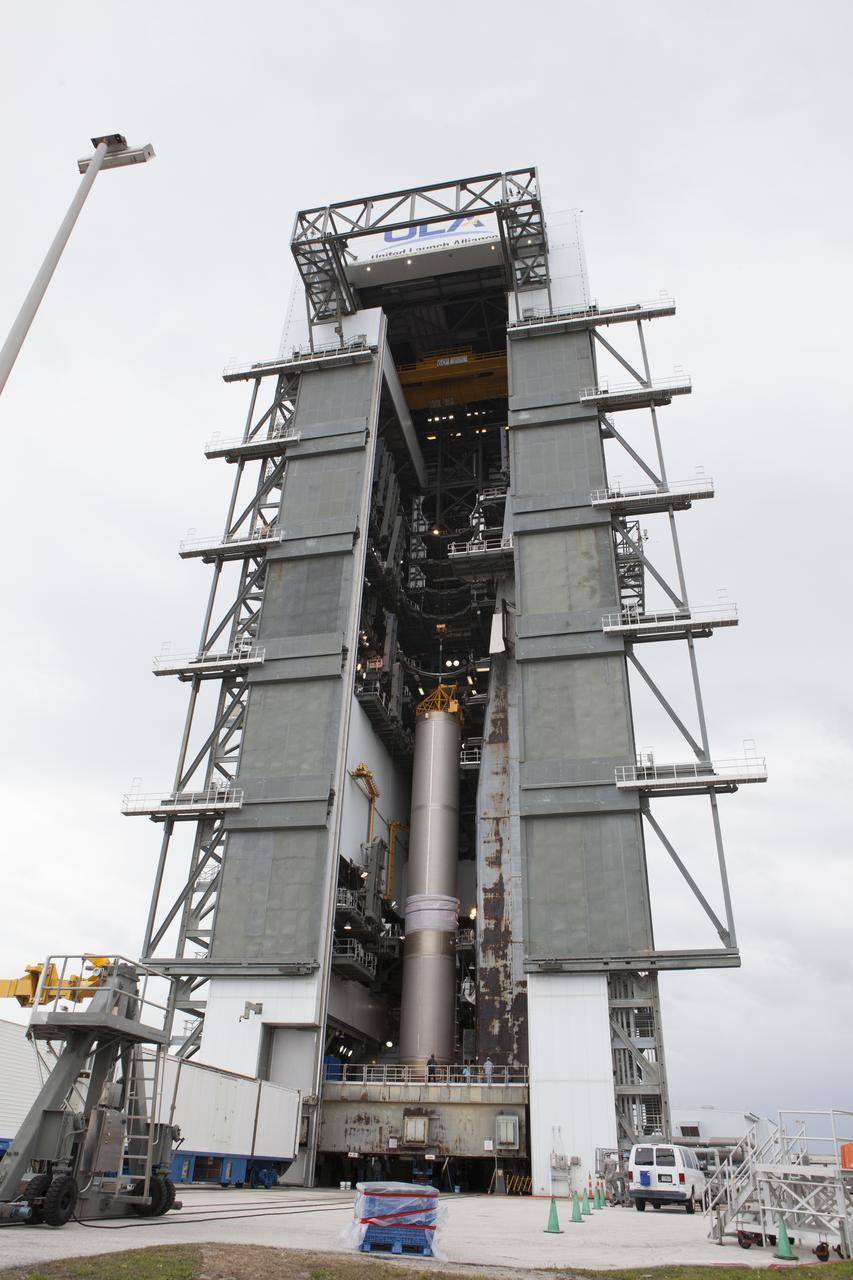
The first stage of the United Launch Alliance (ULA) Atlas V rocket was lifted to the vertical position inside the Vertical Integration Facility at Space Launch Complex 41 at Cape Canaveral Air Force Station in Florida. The rocket is being prepared for Orbital ATK's seventh commercial resupply mission, CRS-7, to the International Space Station. Orbital ATK's CYGNUS pressurized cargo module is scheduled to launch atop ULA's Atlas V rocket from Pad 41 on March 19, 2017. CYGNUS will deliver thousands of pounds of supplies, equipment and scientific research materials to the space station.
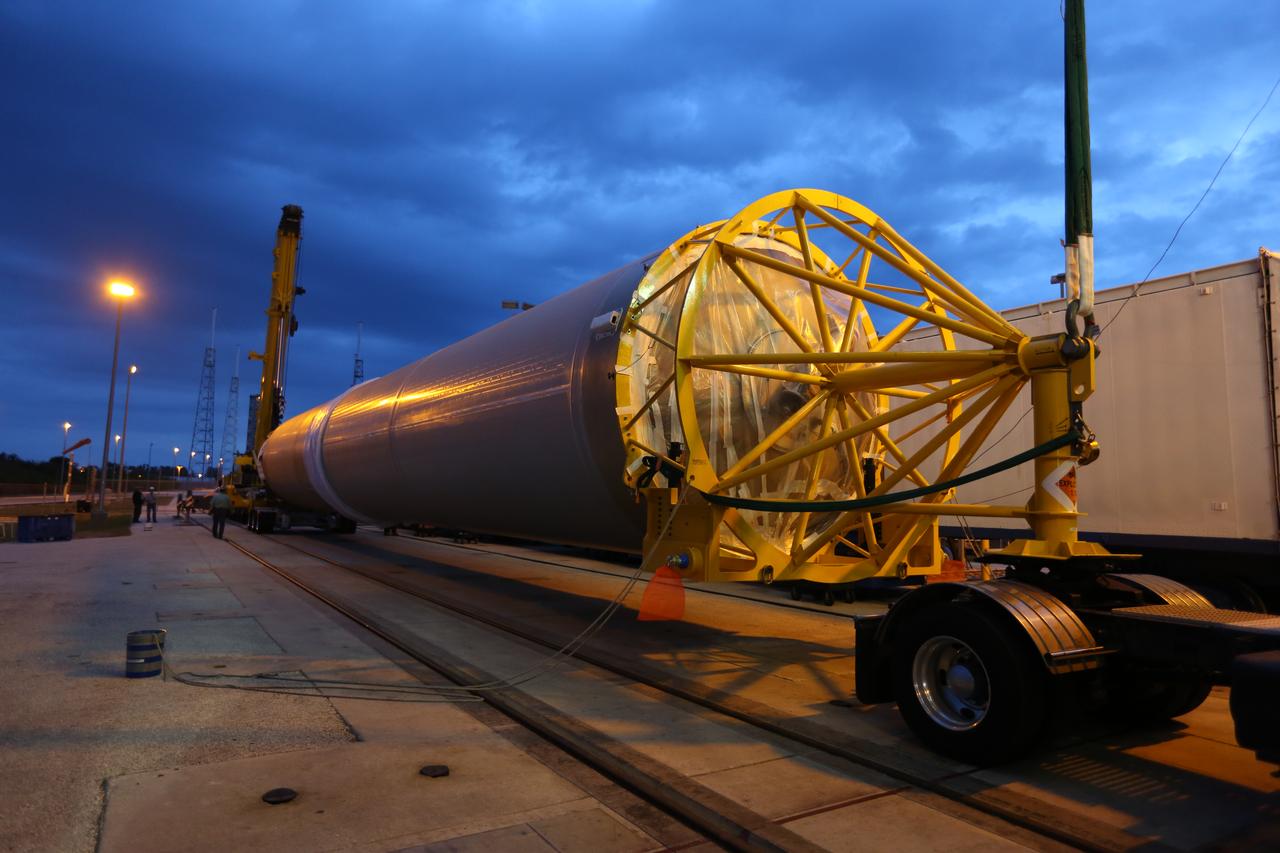
The first stage of the United Launch Alliance (ULA) Atlas V rocket arrives at the Vertical Integration Facility at Space Launch Complex 41 at Cape Canaveral Air Force Station in Florida. The rocket is being prepared for Orbital ATK's seventh commercial resupply mission, CRS-7, to the International Space Station. Orbital ATK's CYGNUS pressurized cargo module is scheduled to launch atop ULA's Atlas V rocket from Pad 41 on March 19, 2017. CYGNUS will deliver thousands of pounds of supplies, equipment and scientific research materials to the space station.
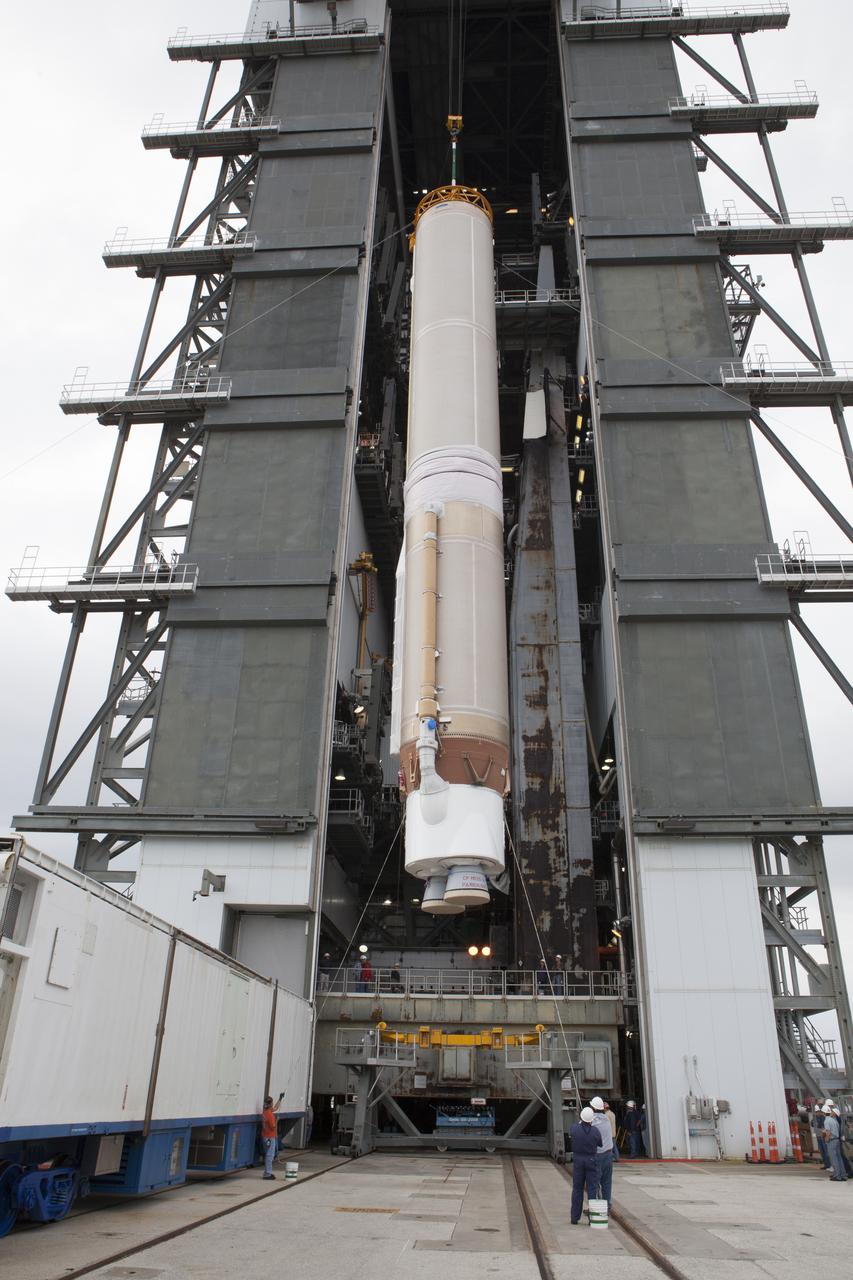
The first stage of the United Launch Alliance (ULA) Atlas V rocket is lifted to vertical as it is moved into the Vertical Integration Facility at Space Launch Complex 41 at Cape Canaveral Air Force Station in Florida. The rocket is being prepared for Orbital ATK's seventh commercial resupply mission, CRS-7, to the International Space Station. Orbital ATK's CYGNUS pressurized cargo module is scheduled to launch atop ULA's Atlas V rocket from Pad 41 on March 19, 2017. CYGNUS will deliver thousands of pounds of supplies, equipment and scientific research materials to the space station.