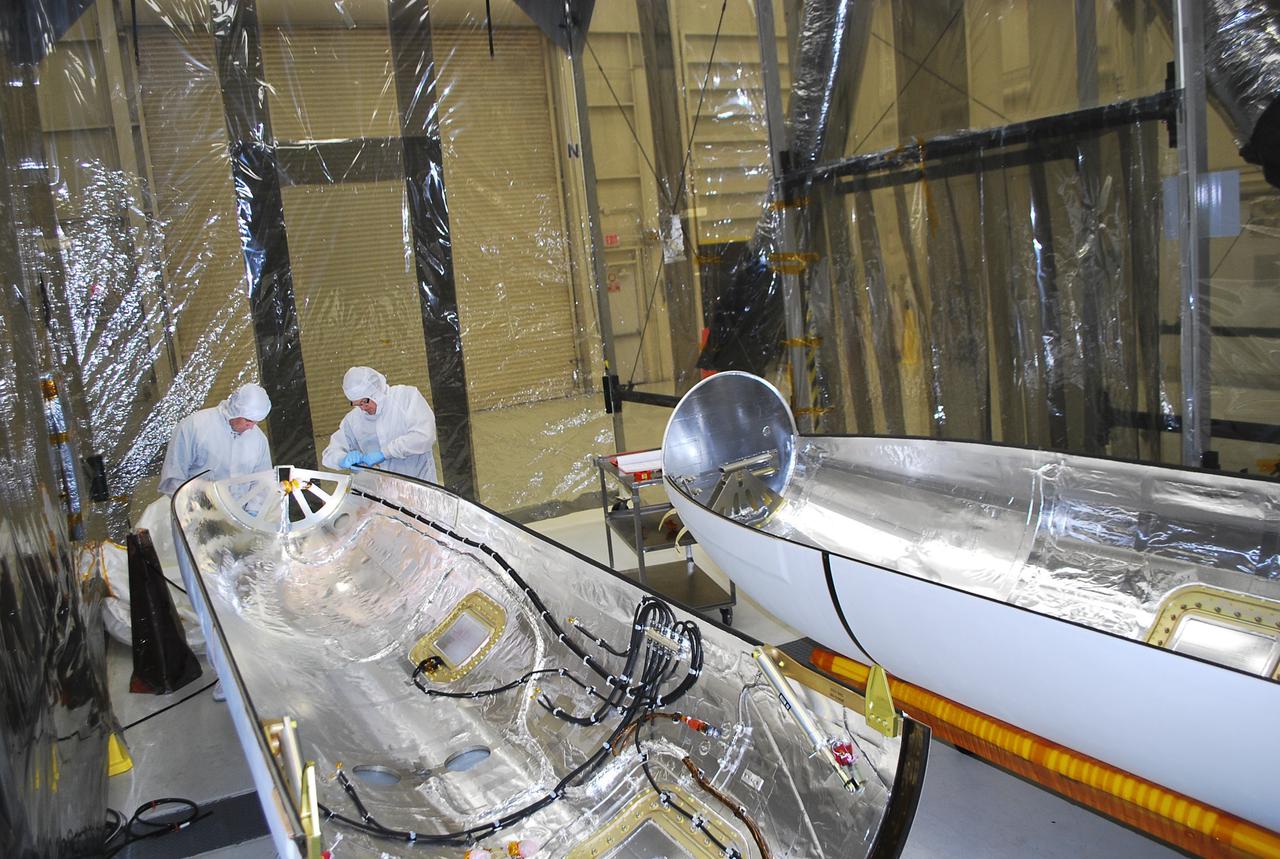
VANDENBERG AIR FORCE BASE, Calif. -- Technicians inside Building 1555 conduct inspection, cleaning and electrical testing on half of a payload fairing for the Orbital Sciences Corp. Pegasus XL rocket that will launch the Interface Region Imaging Spectrograph, or IRIS, spacecraft. The fairing will be fitted to the nose of the Pegasus to protect the spacecraft from atmospheric heating and stress during launch. IRIS will open a new window of discovery by tracing the flow of energy and plasma through the chromospheres and transition region into the sun’s corona using spectrometry and imaging. IRIS fills a crucial gap in our ability to advance studies of the sun-to-Earth connection by tracing the flow of energy and plasma through the foundation of the corona and the region around the sun known as the heliosphere. Photo credit: VAFB_Randy Beaudoin
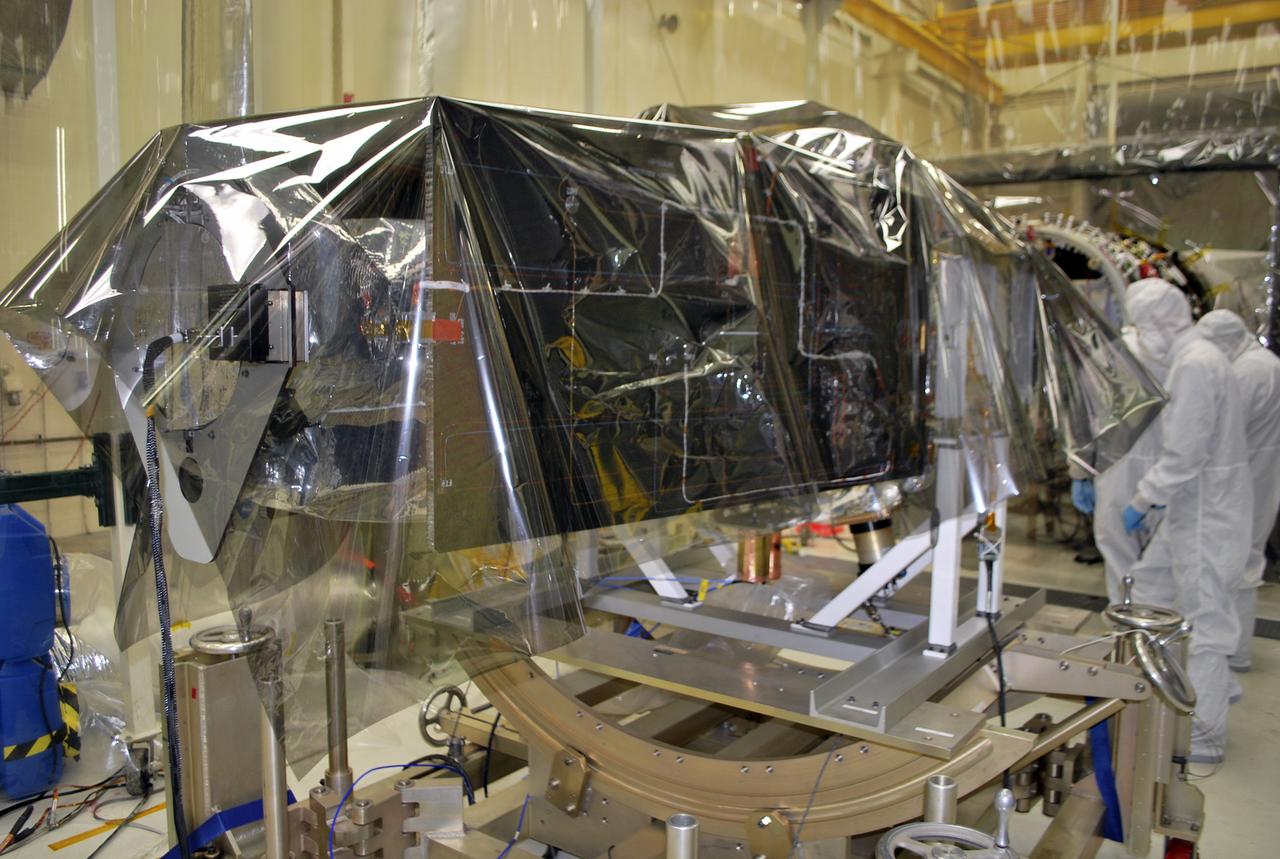
VANDENBERG AFB, Calif. – Technicians process NASA's IRIS spacecraft for launch aboard an Orbital Pegasus XL rocket. Working inside a clean room tent at Vandenberg, the technicians will conduct numerous tests and assembly operations on the spacecraft and rocket ahead of the launch. IRIS is short for Interface Region Imaging Spectrograph and the spacecraft's mission will improve our understanding of how heat and energy move through the deepest levels of the sun’s atmosphere, thereby increasing our ability to forecast space weather. Photo credit: VAFB_Randy Beaudoin
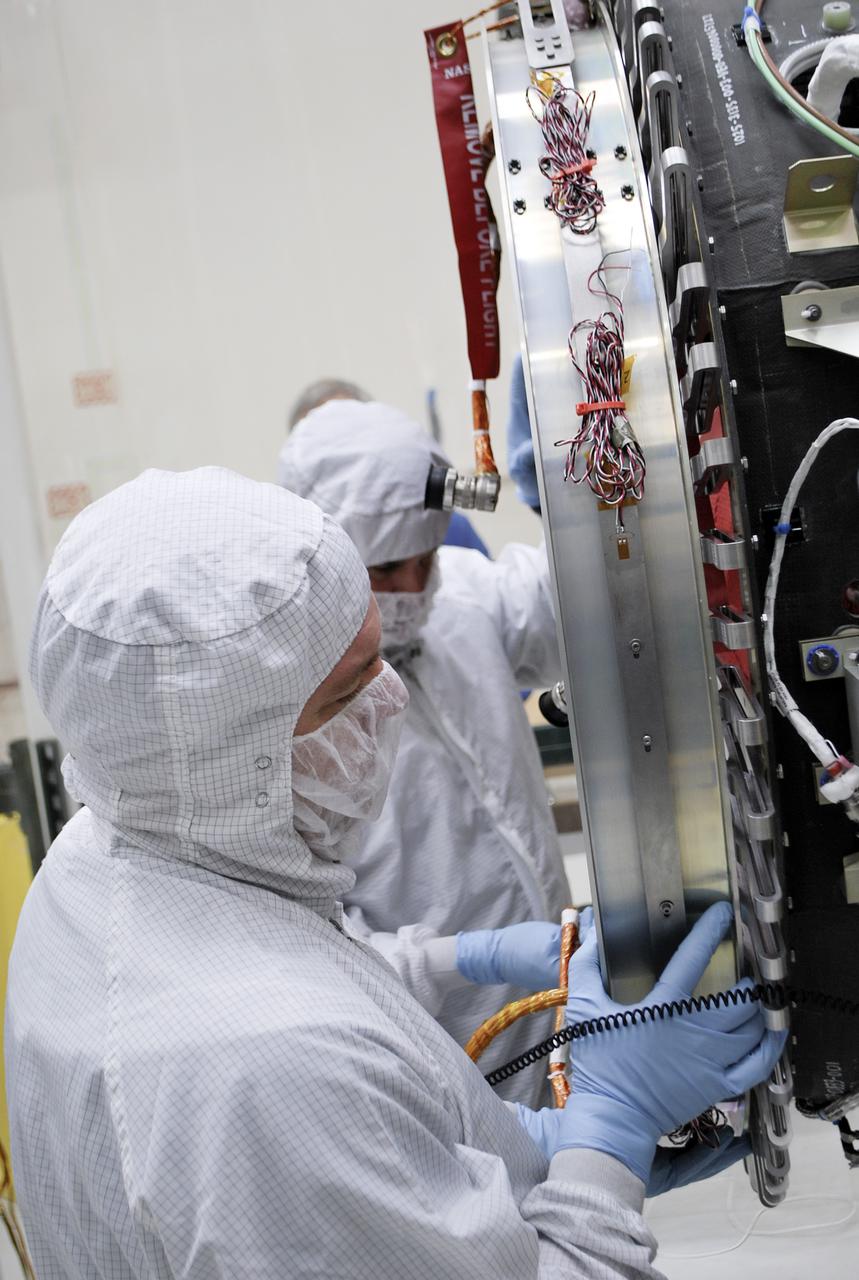
VANDENBERG AFB, Calif. – Technicians test fit the separation system that will push NASA's IRIS spacecraft away from an Orbital Pegasus XL rocket when IRIS reaches its proper orbit after launch. IRIS is short for Interface Region Imaging Spectrograph and the spacecraft's mission will improve our understanding of how heat and energy move through the deepest levels of the sun’s atmosphere, thereby increasing our ability to forecast space weather. Photo credit: VAFB_Randy Beaudoin
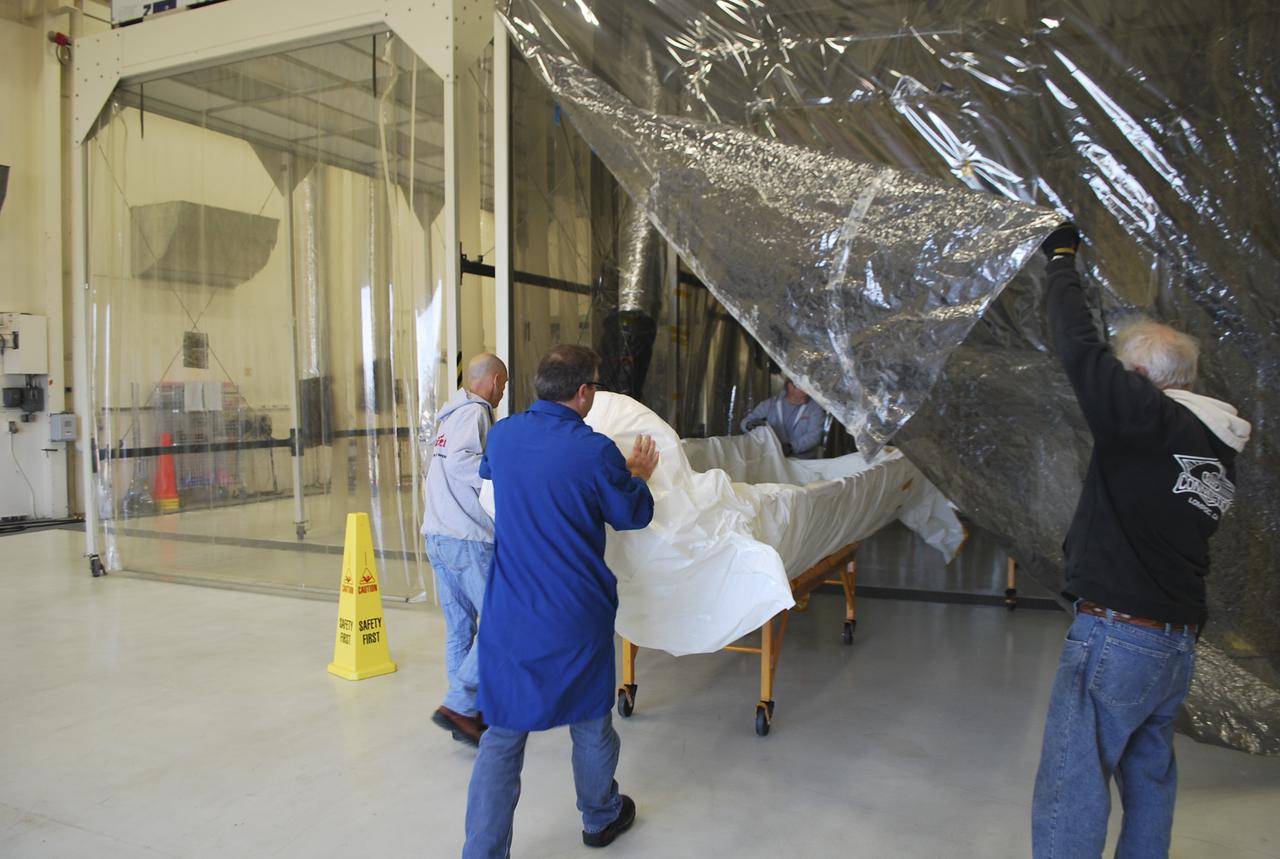
VANDENBERG AFB, Calif. – Workers load half of a payload fairing inside a hangar at Vandenberg Air Force Base in California where it will be processed and used for NASA's IRIS mission. The fairing will be fitted to the nose of an Orbital Sciences Pegasus rocket and will protect the IRIS spacecraft from atmospheric heating and stress during launch. Photo credit: VAFB_Randy Beaudoin
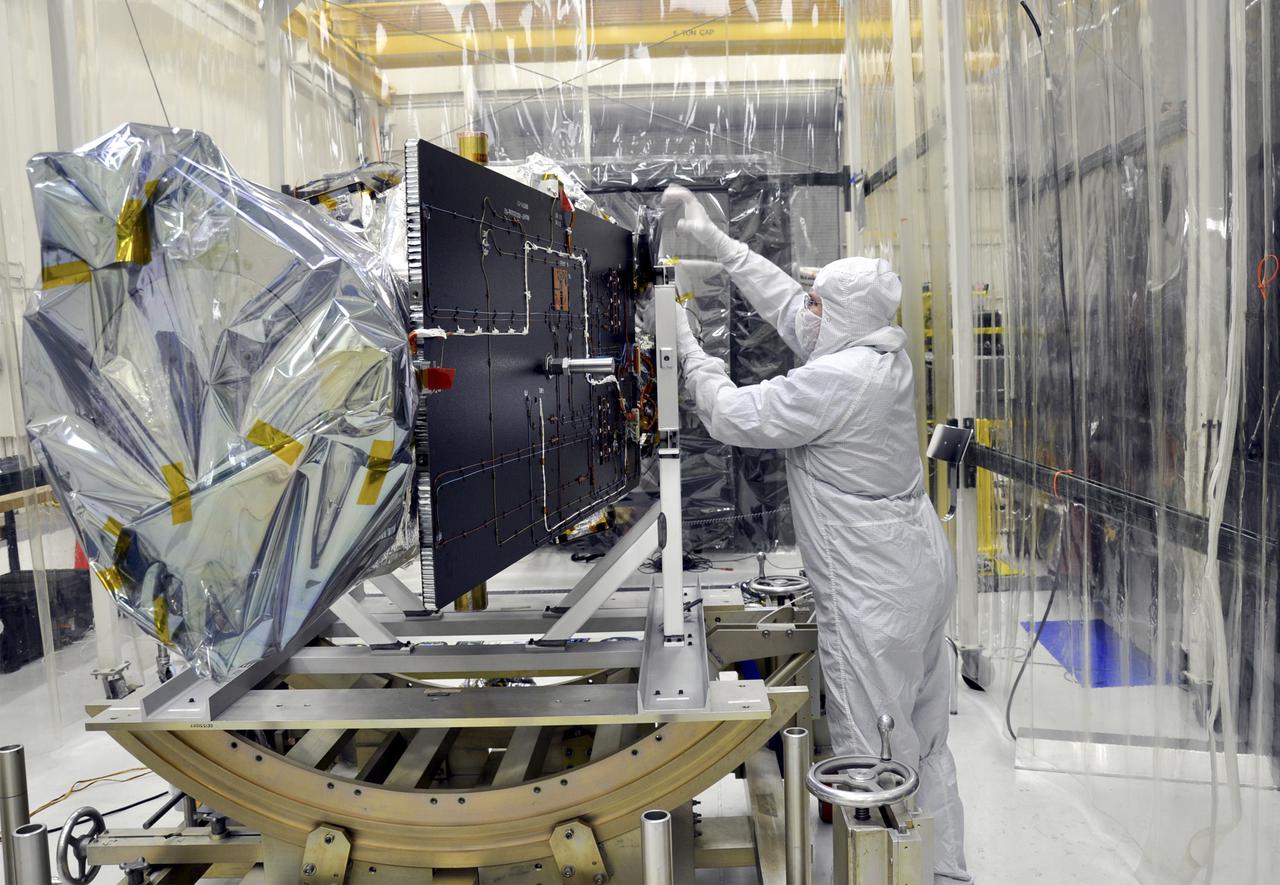
VANDENBERG AFB, Calif. – A technician removes protective Mylar wrapping from NASA's IRIS spacecraft in a clean room at Vandenberg where the spacecraft will be readied for launch aboard an Orbital Sciences Pegasus XL rocket. IRIS is short for Interface Region Imaging Spectrograph and the spacecraft's mission will improve our understanding of how heat and energy move through the deepest levels of the sun’s atmosphere, thereby increasing our ability to forecast space weather. Photo credit: VAFB_Randy Beaudoin
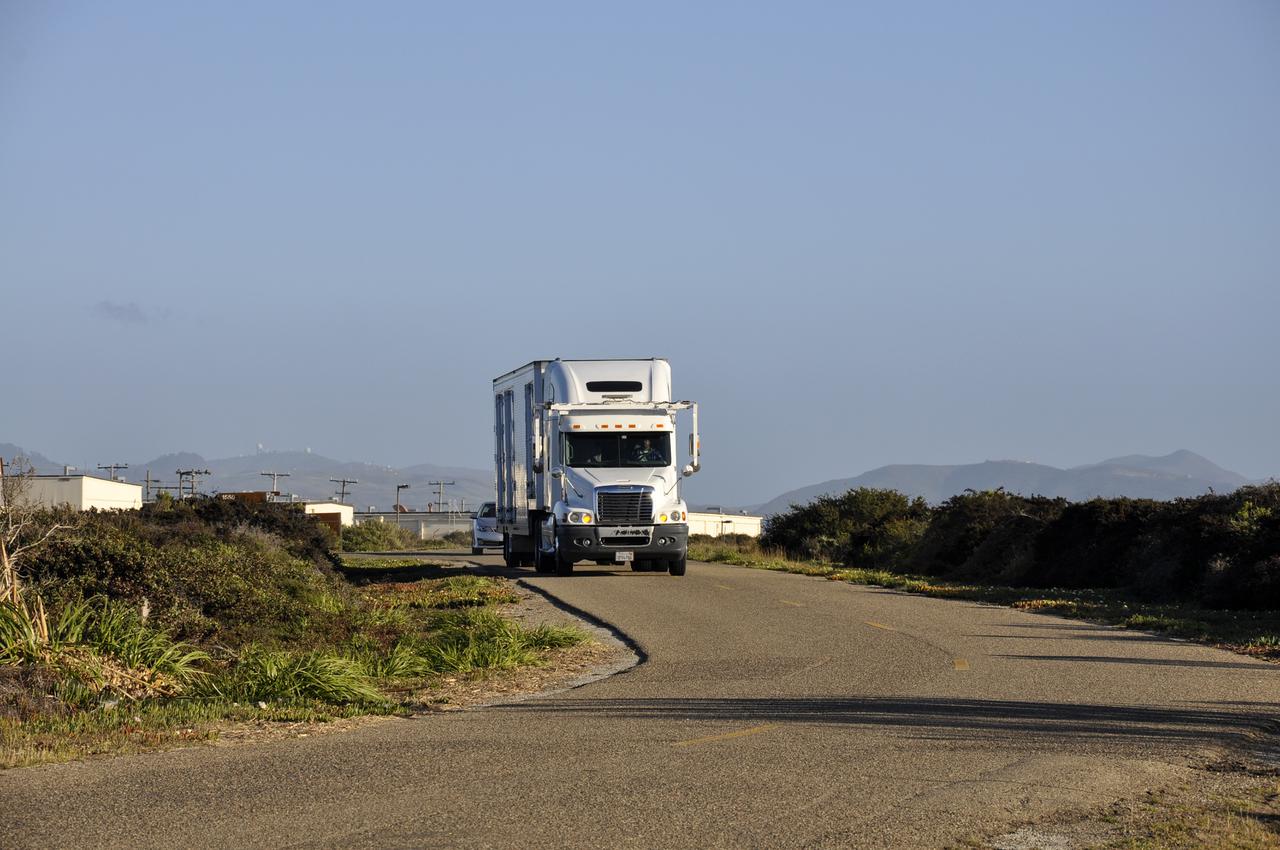
VANDENBERG AFB, Calif. – A truck carrying NASA's IRIS spacecraft nears the processing facility at Vandenberg where the spacecraft will be readied for launch aboard an Orbital Sciences Pegasus XL rocket. IRIS is short for Interface Region Imaging Spectrograph and the spacecraft's mission will improve our understanding of how heat and energy move through the deepest levels of the sun’s atmosphere, thereby increasing our ability to forecast space weather. Photo credit: VAFB_Randy Beaudoin
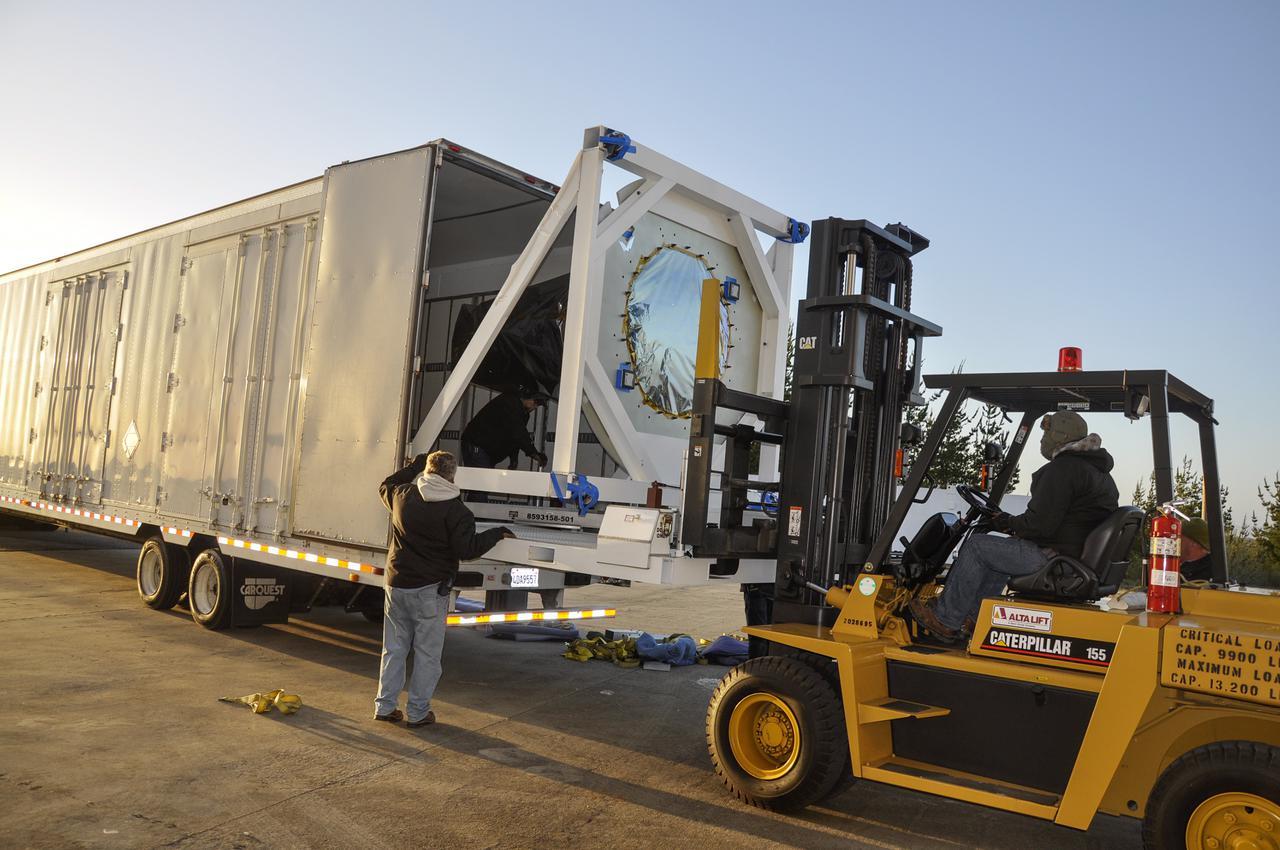
VANDENBERG AFB, Calif. – Workers unload NASA's IRIS spacecraft from a truck at the processing facility at Vandenberg where the spacecraft will be readied for launch aboard an Orbital Sciences Pegasus XL rocket. IRIS is short for Interface Region Imaging Spectrograph and the spacecraft's mission will improve our understanding of how heat and energy move through the deepest levels of the sun’s atmosphere, thereby increasing our ability to forecast space weather. Photo credit: VAFB_Randy Beaudoin

VANDENBERG AFB, Calif. – NASA's IRIS spacecraft stands in a clean room at Vandenberg where the spacecraft will be readied for launch aboard an Orbital Sciences Pegasus XL rocket. IRIS is short for Interface Region Imaging Spectrograph and the spacecraft's mission will improve our understanding of how heat and energy move through the deepest levels of the sun’s atmosphere, thereby increasing our ability to forecast space weather. Photo credit: VAFB_Randy Beaudoin
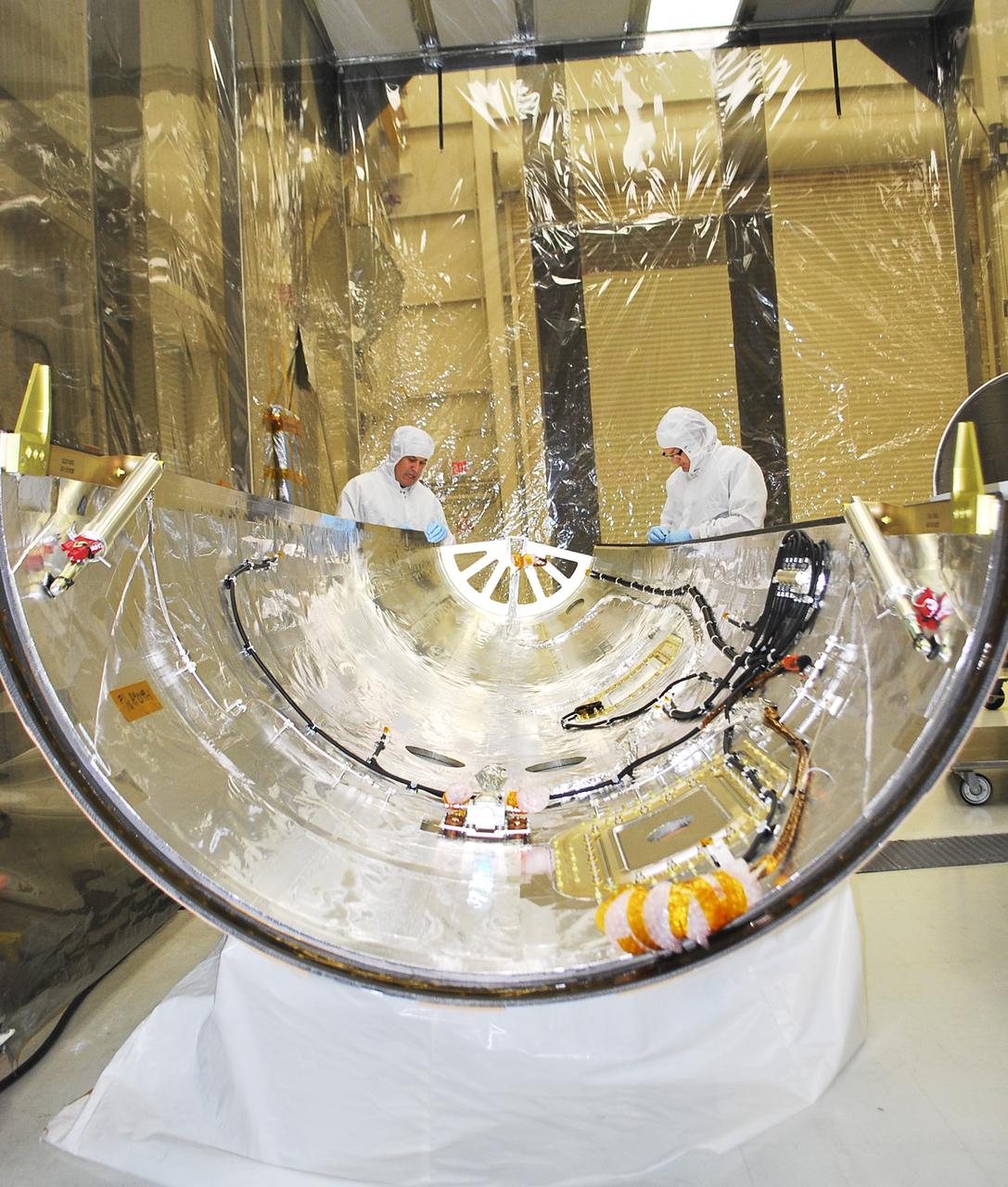
VANDENBERG AIR FORCE BASE, Calif. -- Technicians inside Building 1555 conduct inspection, cleaning and electrical testing on half of a payload fairing for the Orbital Sciences Corp. Pegasus XL rocket that will launch the Interface Region Imaging Spectrograph, or IRIS, spacecraft. The fairing will be fitted to the nose of the Pegasus to protect the spacecraft from atmospheric heating and stress during launch. IRIS will open a new window of discovery by tracing the flow of energy and plasma through the chromospheres and transition region into the sun’s corona using spectrometry and imaging. IRIS fills a crucial gap in our ability to advance studies of the sun-to-Earth connection by tracing the flow of energy and plasma through the foundation of the corona and the region around the sun known as the heliosphere. Photo credit: VAFB_Randy Beaudoin
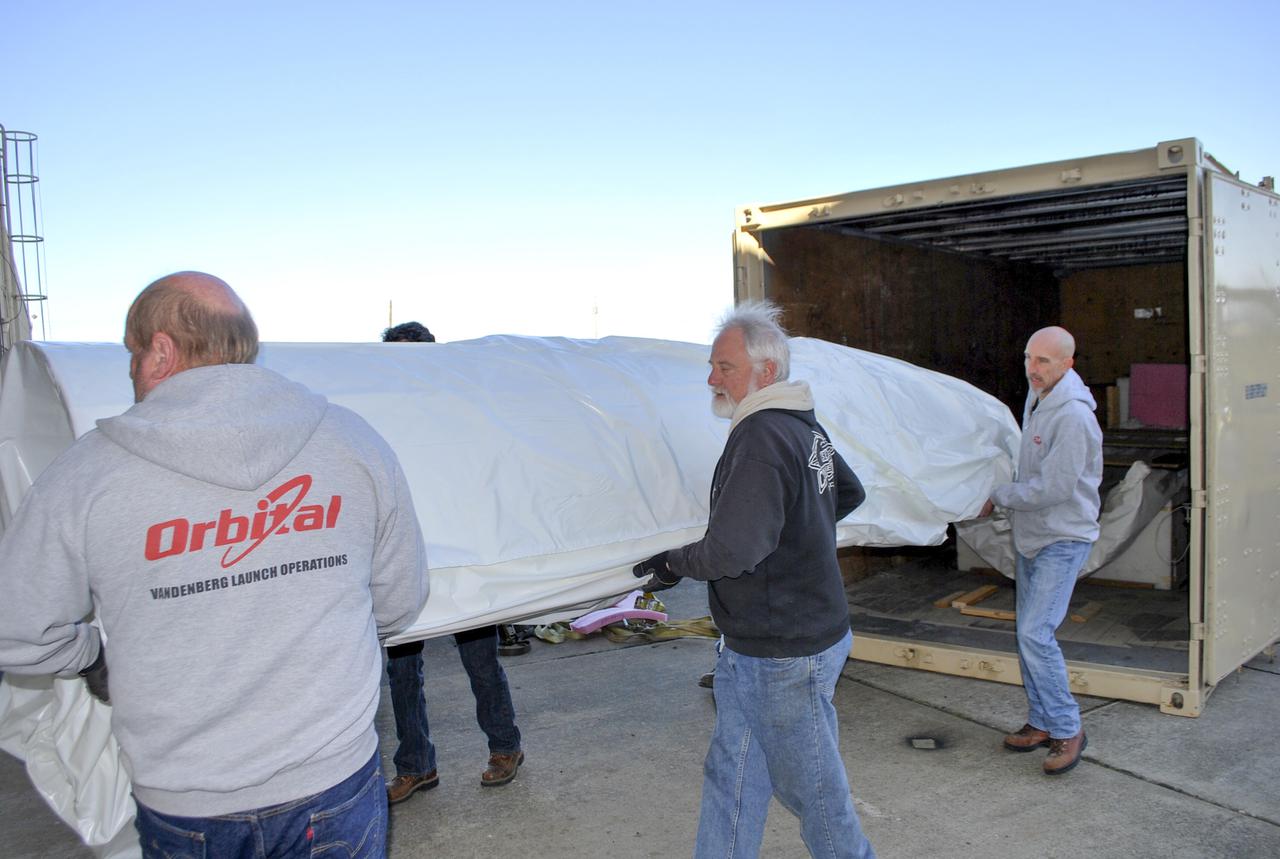
VANDENBERG AFB, Calif. – Workers carry half of a payload fairing into a hangar at Vandenberg Air Force Base in California where it will be processed and used for NASA's IRIS mission. The fairing will be fitted to the nose of an Orbital Sciences Pegasus rocket and will protect the IRIS spacecraft from atmospheric heating and stress during launch. Photo credit: VAFB_Randy Beaudoin
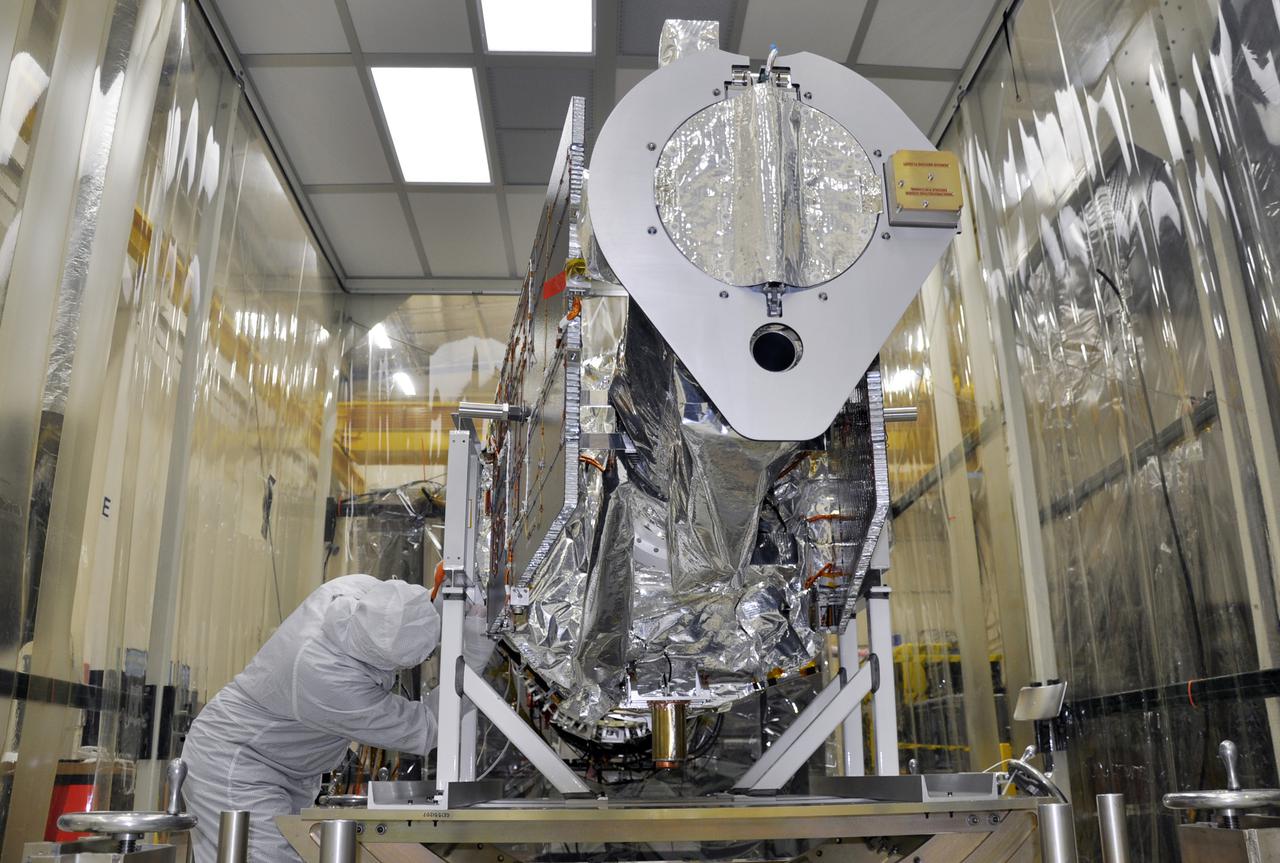
VANDENBERG AFB, Calif. – A technician finishes removing protective Mylar wrapping from NASA's IRIS spacecraft in a clean room at Vandenberg where the spacecraft will be readied for launch aboard an Orbital Sciences Pegasus XL rocket. IRIS is short for Interface Region Imaging Spectrograph and the spacecraft's mission will improve our understanding of how heat and energy move through the deepest levels of the sun’s atmosphere, thereby increasing our ability to forecast space weather. Photo credit: VAFB_Randy Beaudoin
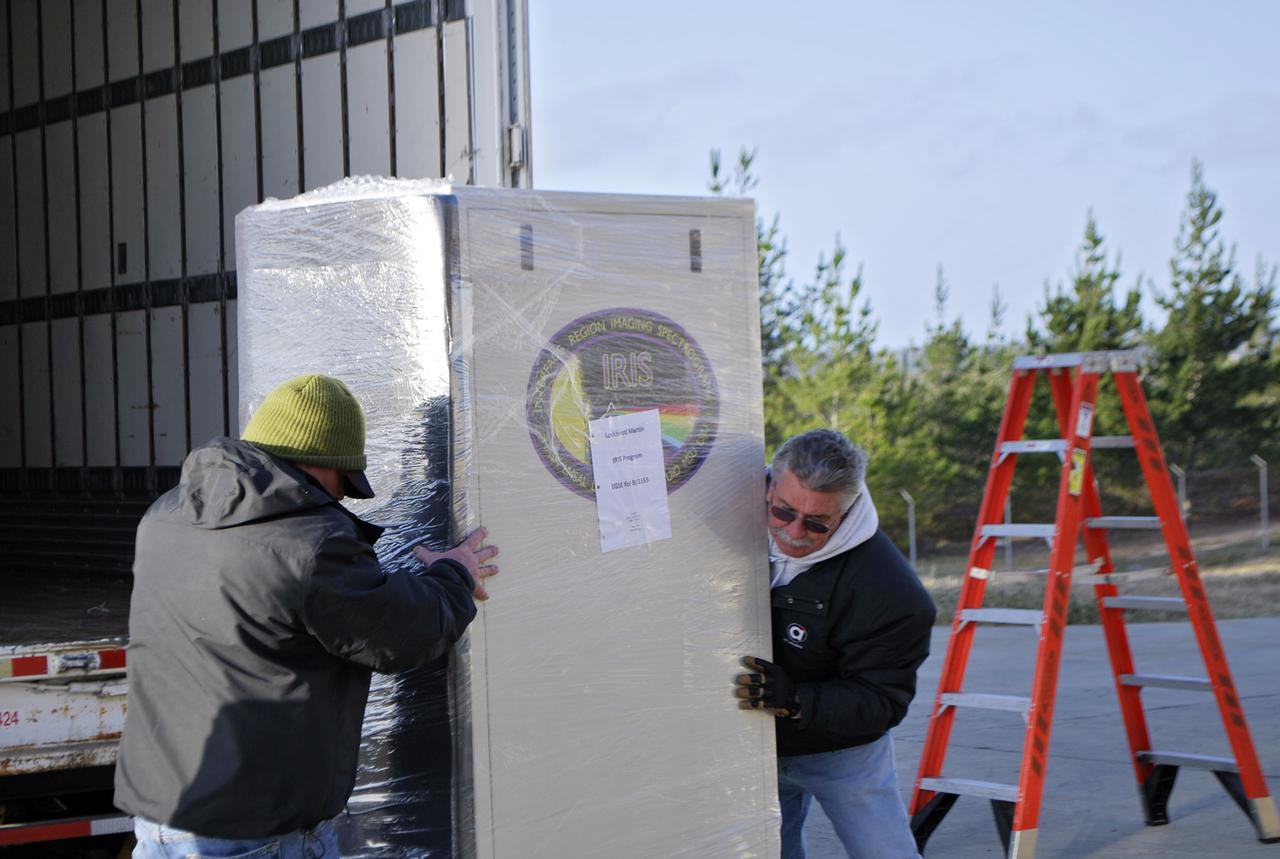
VANDENBERG AFB, Calif. – Technicians offload ground support equipment slated for NASA's IRIS mission. NASA’s Interface Region Imaging Spectrograph, or IRIS, satellite will improve our understanding of how heat and energy move through the deepest levels of the sun’s atmosphere, thereby increasing our ability to forecast space weather. On launch day, deployment of the Pegasus from Orbital’s L-1011 carrier aircraft will occur at a location over the Pacific Ocean about 100 miles northwest of Vandenberg off the central coast of California south of Big Sur. Photo credit: VAFB_Randy Beaudoin
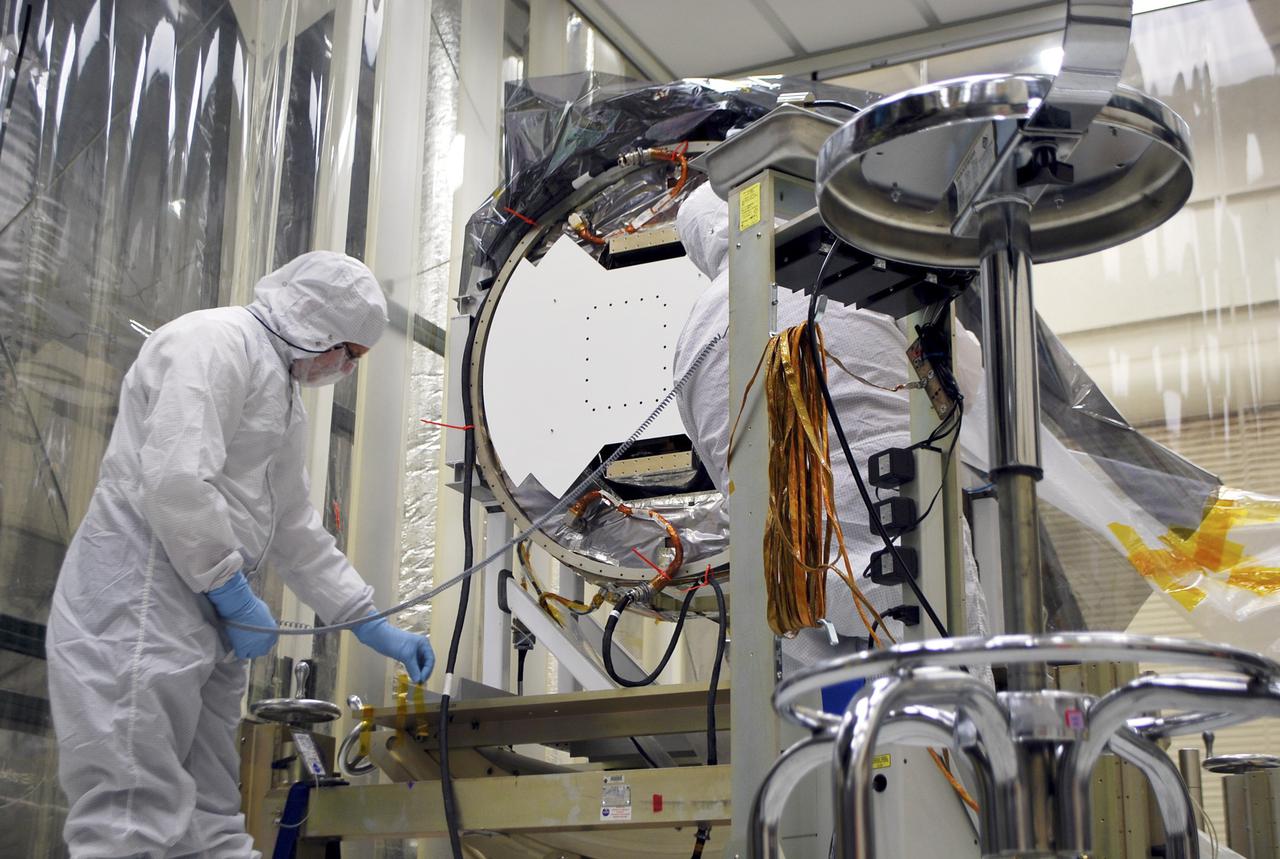
VANDENBERG AIR FORCE BASE, Calif. -- Following the first Interface Verification Test, a technician removes cables providing the electrical connections between the Interface Region Imaging Spectrograph, or IRIS, spacecraft and the Orbital Sciences Corp. Pegasus XL launch vehicle. Completion of the test paves the way for the standalone IRIS mission simulations. IRIS will open a new window of discovery by tracing the flow of energy and plasma through the chromospheres and transition region into the sun’s corona using spectrometry and imaging. IRIS fills a crucial gap in our ability to advance studies of the sun-to-Earth connection by tracing the flow of energy and plasma through the foundation of the corona and the region around the sun known as the heliosphere. Photo credit: VAFB_Randy Beaudoin
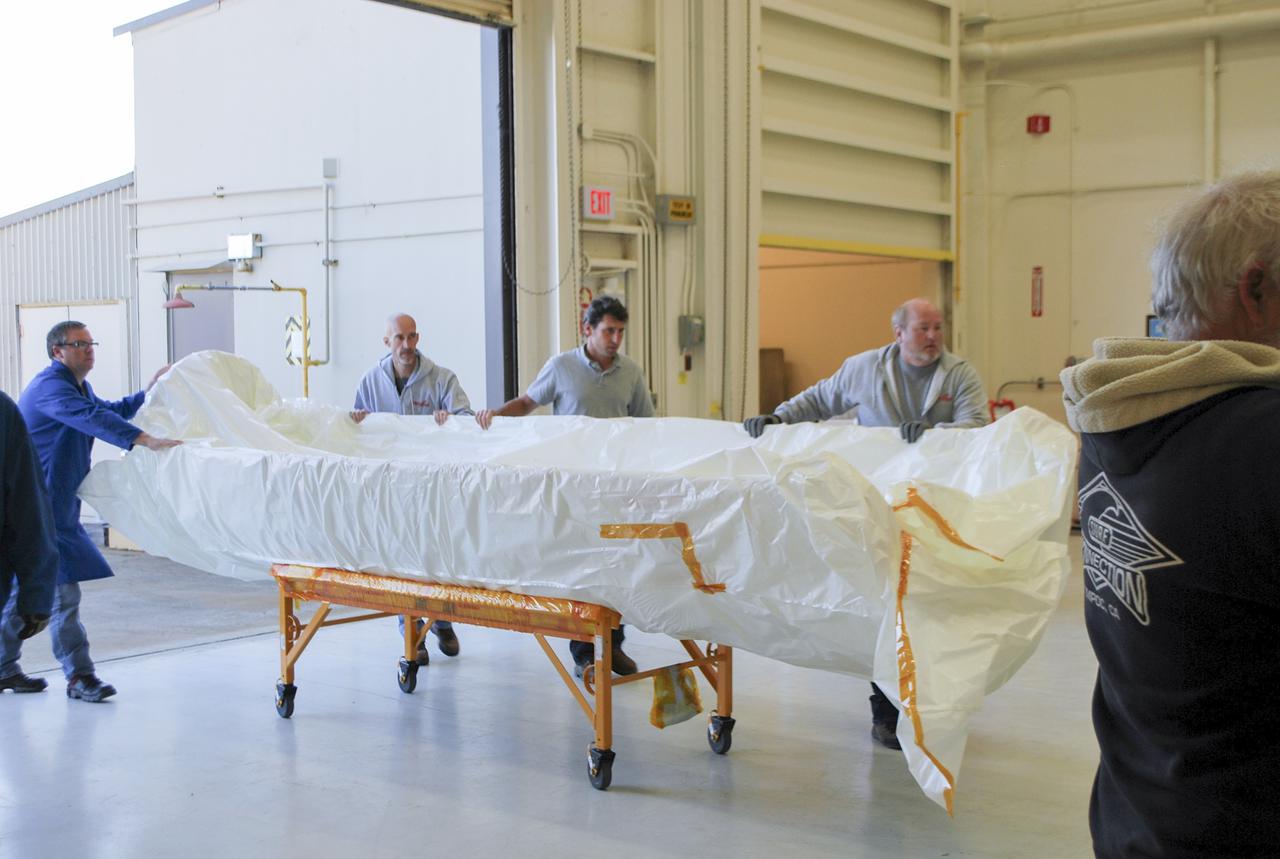
VANDENBERG AFB, Calif. – Workers load half of a payload fairing inside a hangar at Vandenberg Air Force Base in California where it will be processed and used for NASA's IRIS mission. The fairing will be fitted to the nose of an Orbital Sciences Pegasus rocket and will protect the IRIS spacecraft from atmospheric heating and stress during launch. Photo credit: VAFB_Randy Beaudoin
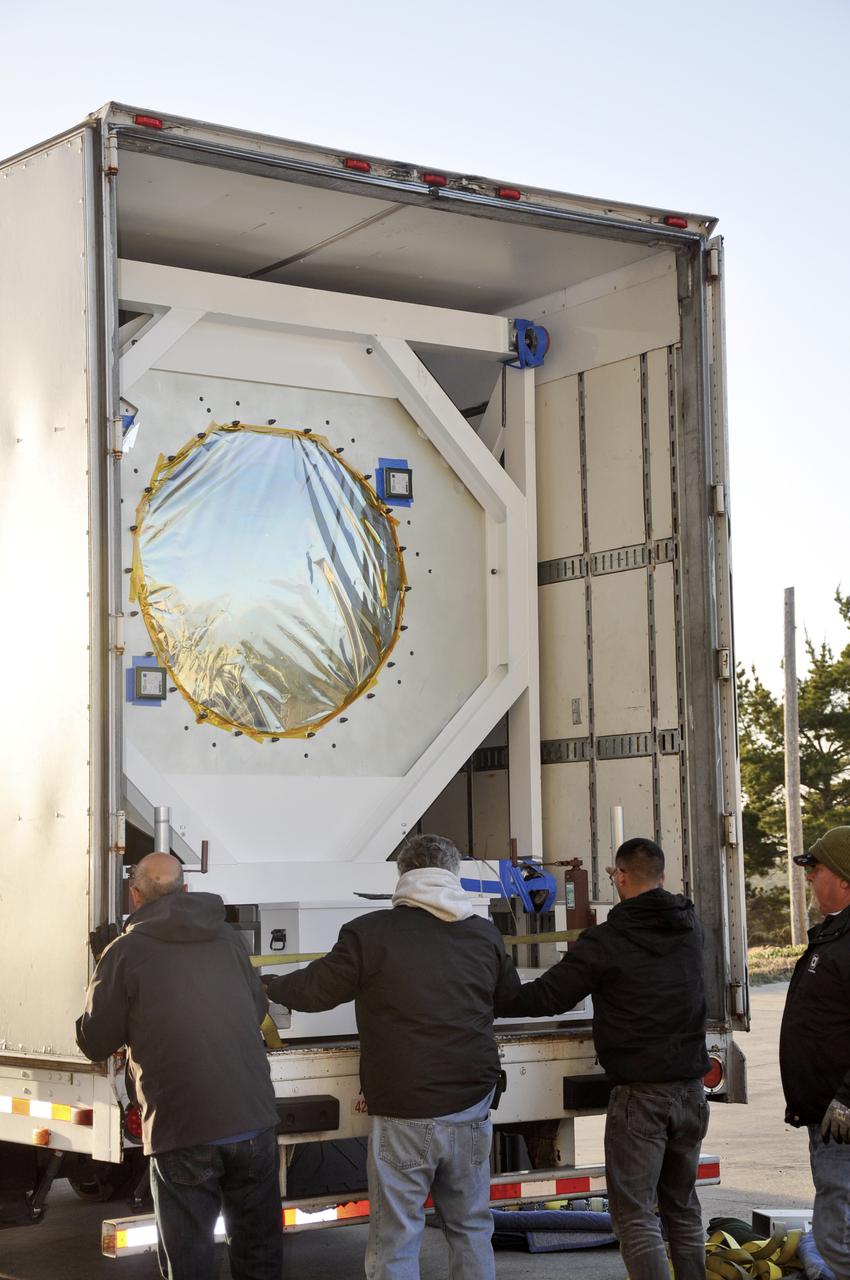
VANDENBERG AFB, Calif. – Workers prepare to unload NASA's IRIS spacecraft from a truck at the processing facility at Vandenberg where the spacecraft will be readied for launch aboard an Orbital Sciences Pegasus XL rocket. IRIS is short for Interface Region Imaging Spectrograph and the spacecraft's mission will improve our understanding of how heat and energy move through the deepest levels of the sun’s atmosphere, thereby increasing our ability to forecast space weather. Photo credit: VAFB_Randy Beaudoin
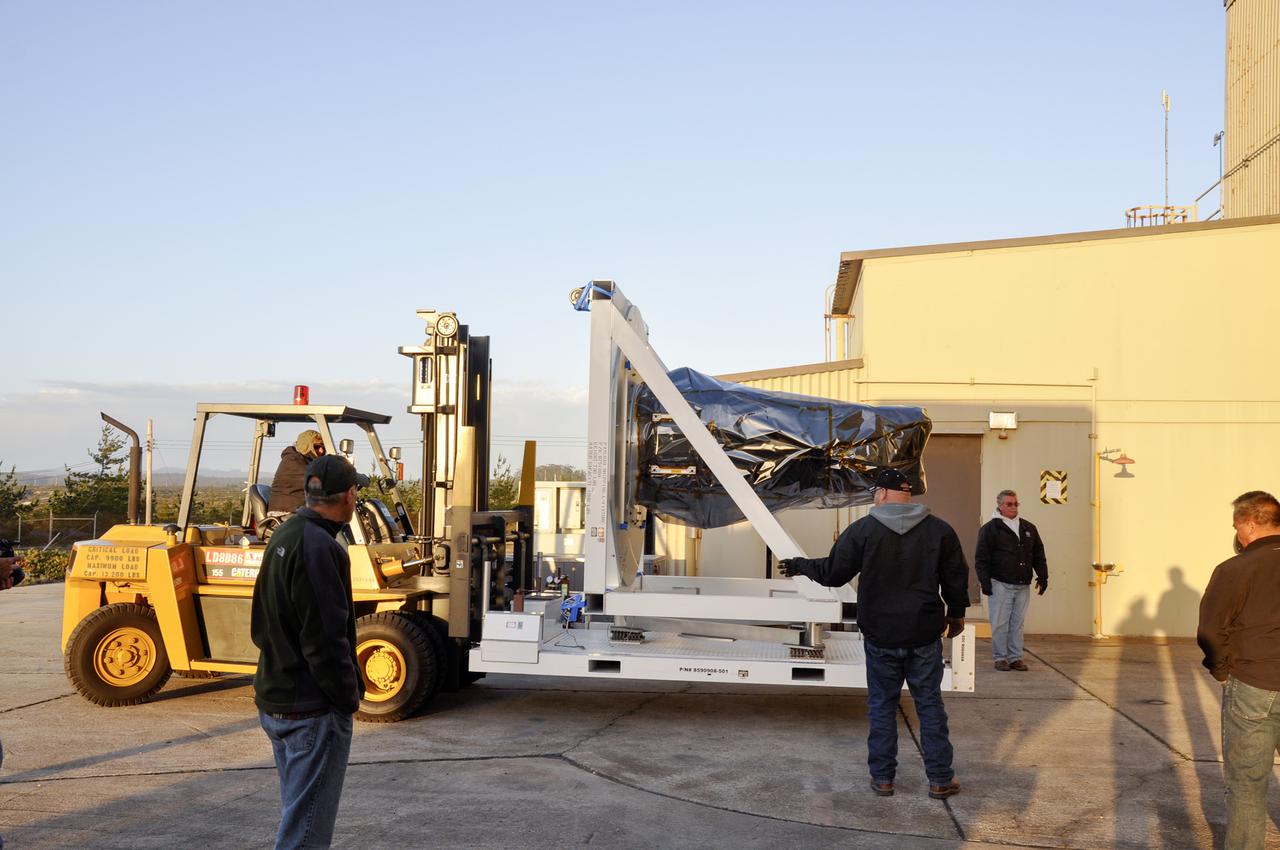
VANDENBERG AFB, Calif. – Workers move NASA's IRIS spacecraft into a processing facility at Vandenberg where the spacecraft will be readied for launch aboard an Orbital Sciences Pegasus XL rocket. IRIS is short for Interface Region Imaging Spectrograph and the spacecraft's mission will improve our understanding of how heat and energy move through the deepest levels of the sun’s atmosphere, thereby increasing our ability to forecast space weather. Photo credit: VAFB_Randy Beaudoin
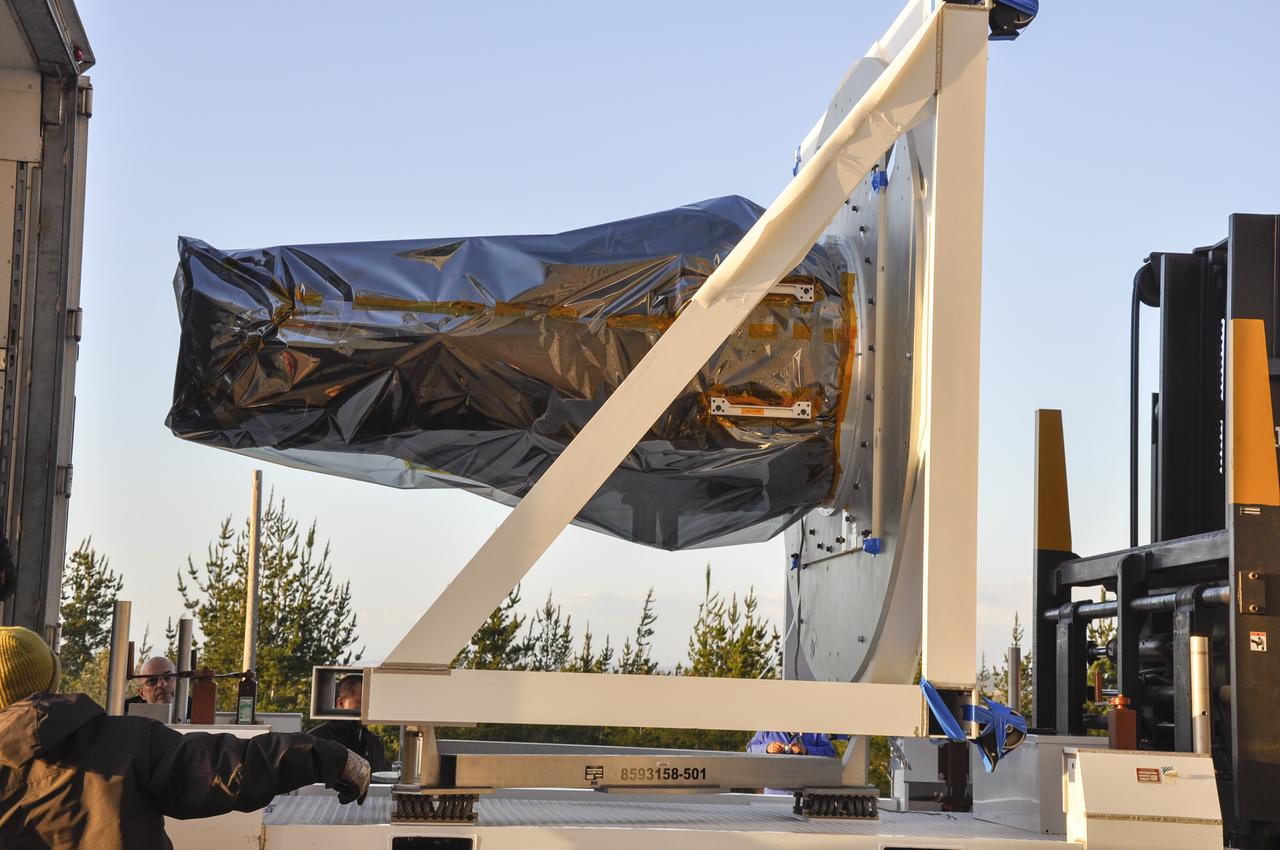
VANDENBERG AFB, Calif. – Workers unload NASA's IRIS spacecraft from a truck at the processing facility at Vandenberg where the spacecraft will be readied for launch aboard an Orbital Sciences Pegasus XL rocket. IRIS is short for Interface Region Imaging Spectrograph and the spacecraft's mission will improve our understanding of how heat and energy move through the deepest levels of the sun’s atmosphere, thereby increasing our ability to forecast space weather. Photo credit: VAFB_Randy Beaudoin
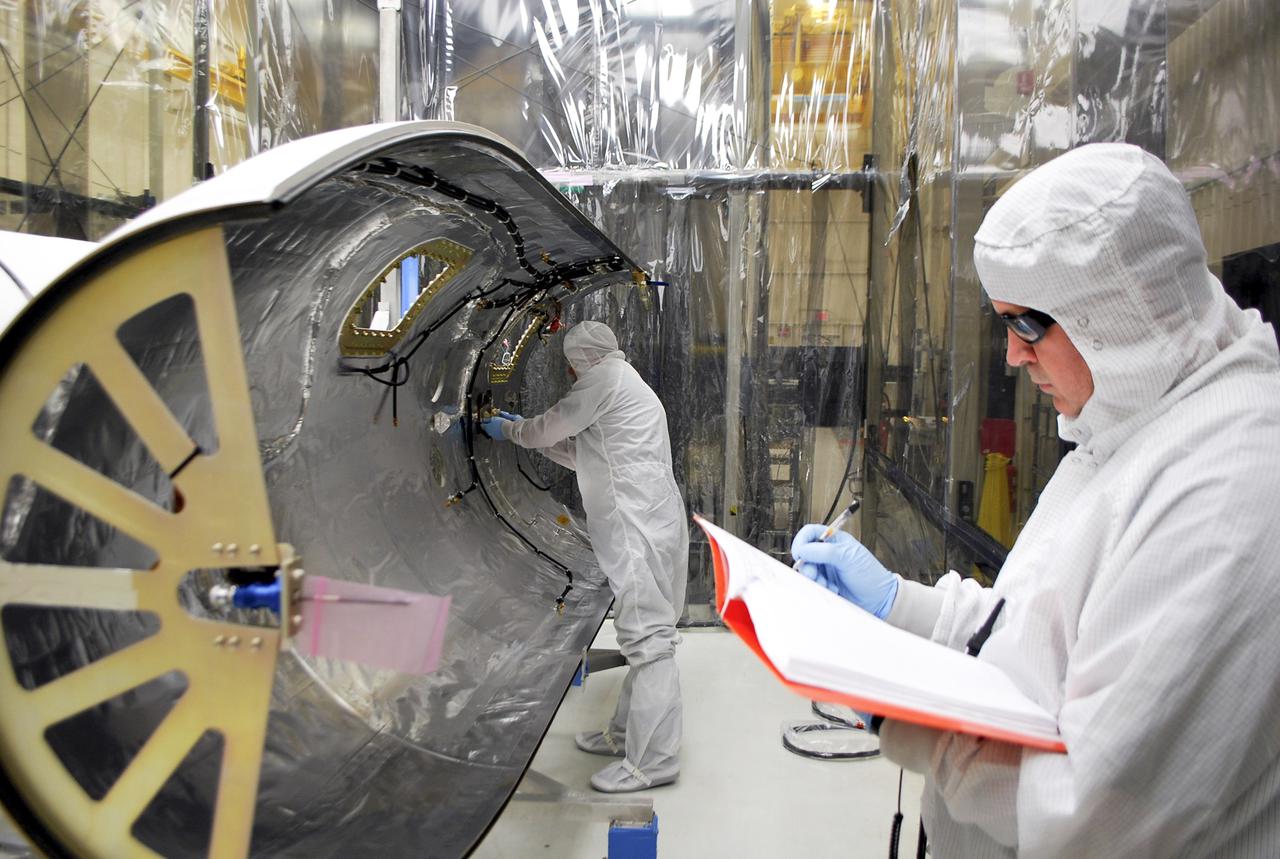
VANDENBERG AFB, Calif. – Technicians work on the payload fairing that will protect NASA's IRIS spacecraft during launch aboard an Orbital Sciences Pegasus XL rocket. NASA’s Interface Region Imaging Spectrograph, or IRIS, satellite will improve our understanding of how heat and energy move through the deepest levels of the sun’s atmosphere, thereby increasing our ability to forecast space weather. On launch day, deployment of the Pegasus from Orbital’s L-1011 carrier aircraft will occur at a location over the Pacific Ocean about 100 miles northwest of Vandenberg off the central coast of California south of Big Sur. Photo credit: VAFB_Randy Beaudoin
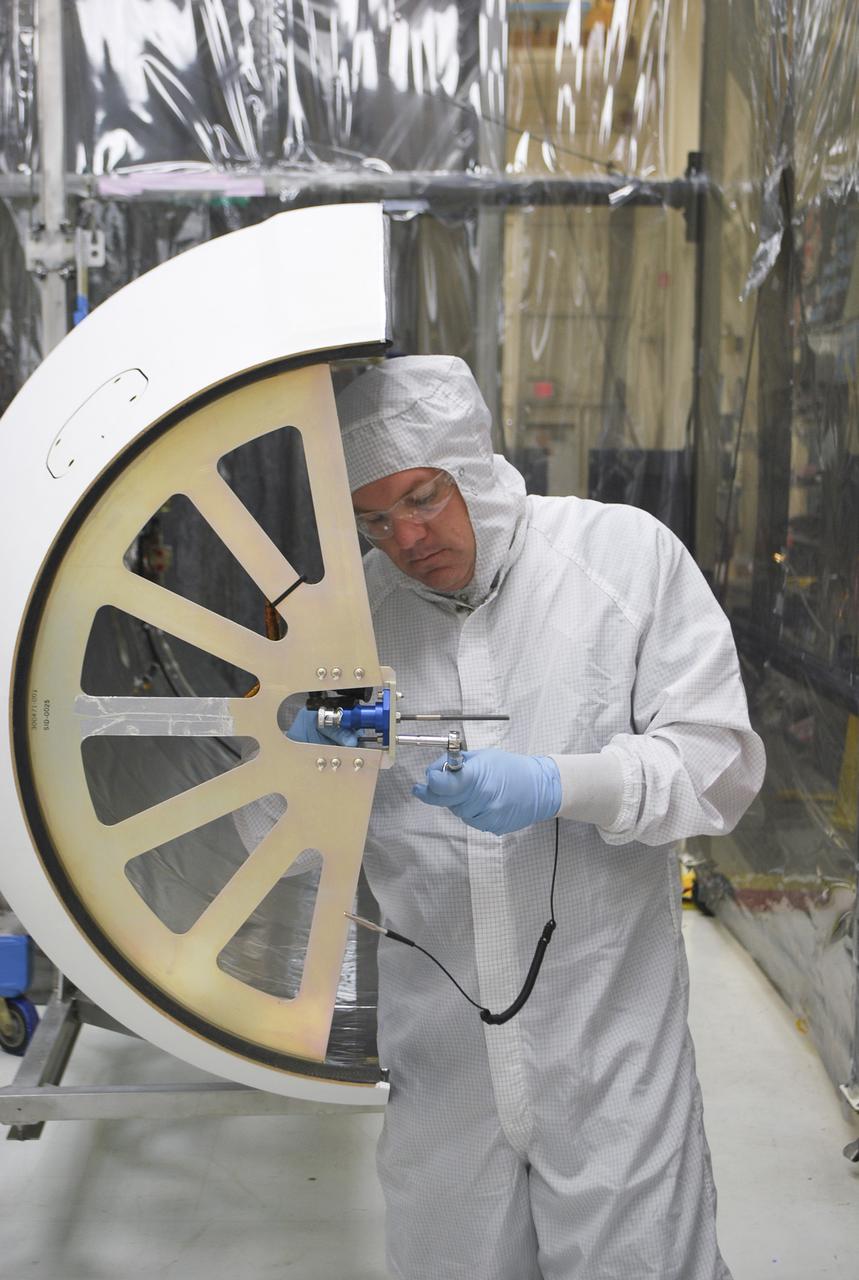
VANDENBERG AFB, Calif. – A technician works on the payload fairing that will protect NASA's IRIS spacecraft during launch aboard an Orbital Sciences Pegasus XL rocket. NASA’s Interface Region Imaging Spectrograph, or IRIS, satellite will improve our understanding of how heat and energy move through the deepest levels of the sun’s atmosphere, thereby increasing our ability to forecast space weather. On launch day, deployment of the Pegasus from Orbital’s L-1011 carrier aircraft will occur at a location over the Pacific Ocean about 100 miles northwest of Vandenberg off the central coast of California south of Big Sur. Photo credit: VAFB_Randy Beaudoin
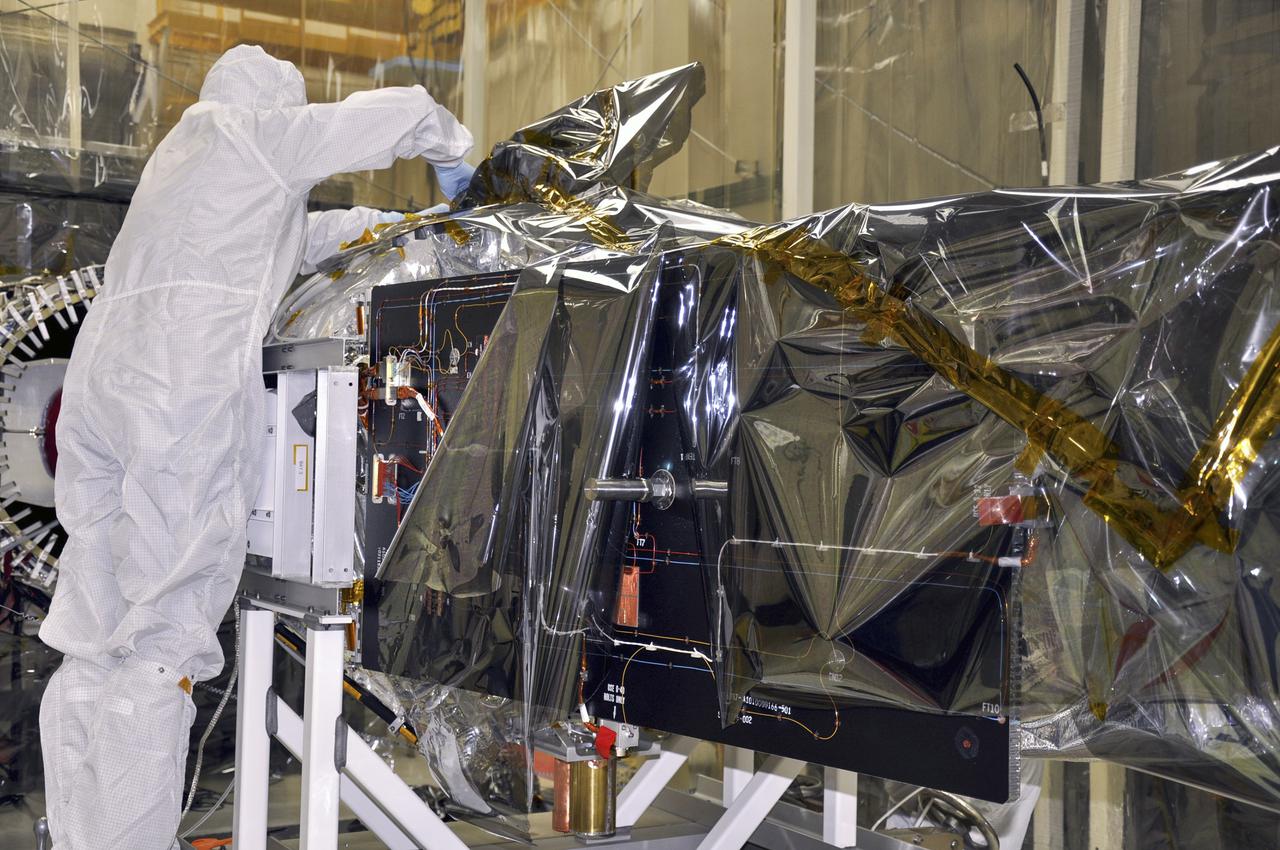
VANDENBERG AFB, Calif. – A technician removes protective Mylar wrapping from NASA's IRIS spacecraft in a clean room at Vandenberg where the spacecraft will be readied for launch aboard an Orbital Sciences Pegasus XL rocket. IRIS is short for Interface Region Imaging Spectrograph and the spacecraft's mission will improve our understanding of how heat and energy move through the deepest levels of the sun’s atmosphere, thereby increasing our ability to forecast space weather. Photo credit: VAFB_Randy Beaudoin
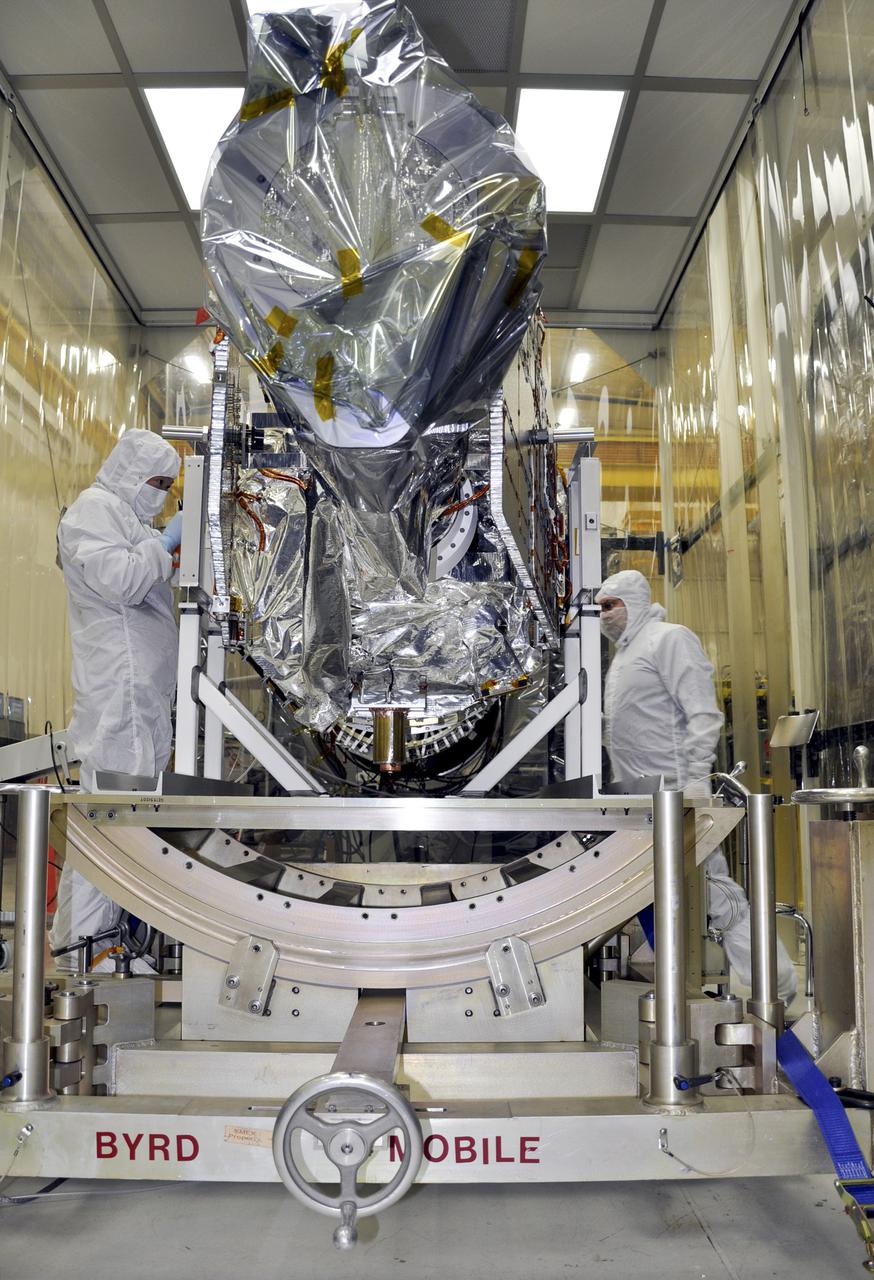
VANDENBERG AFB, Calif. – Technicians remove protective Mylar wrapping from NASA's IRIS spacecraft in a clean room at Vandenberg where the spacecraft will be readied for launch aboard an Orbital Sciences Pegasus XL rocket. IRIS is short for Interface Region Imaging Spectrograph and the spacecraft's mission will improve our understanding of how heat and energy move through the deepest levels of the sun’s atmosphere, thereby increasing our ability to forecast space weather. Photo credit: VAFB_Randy Beaudoin
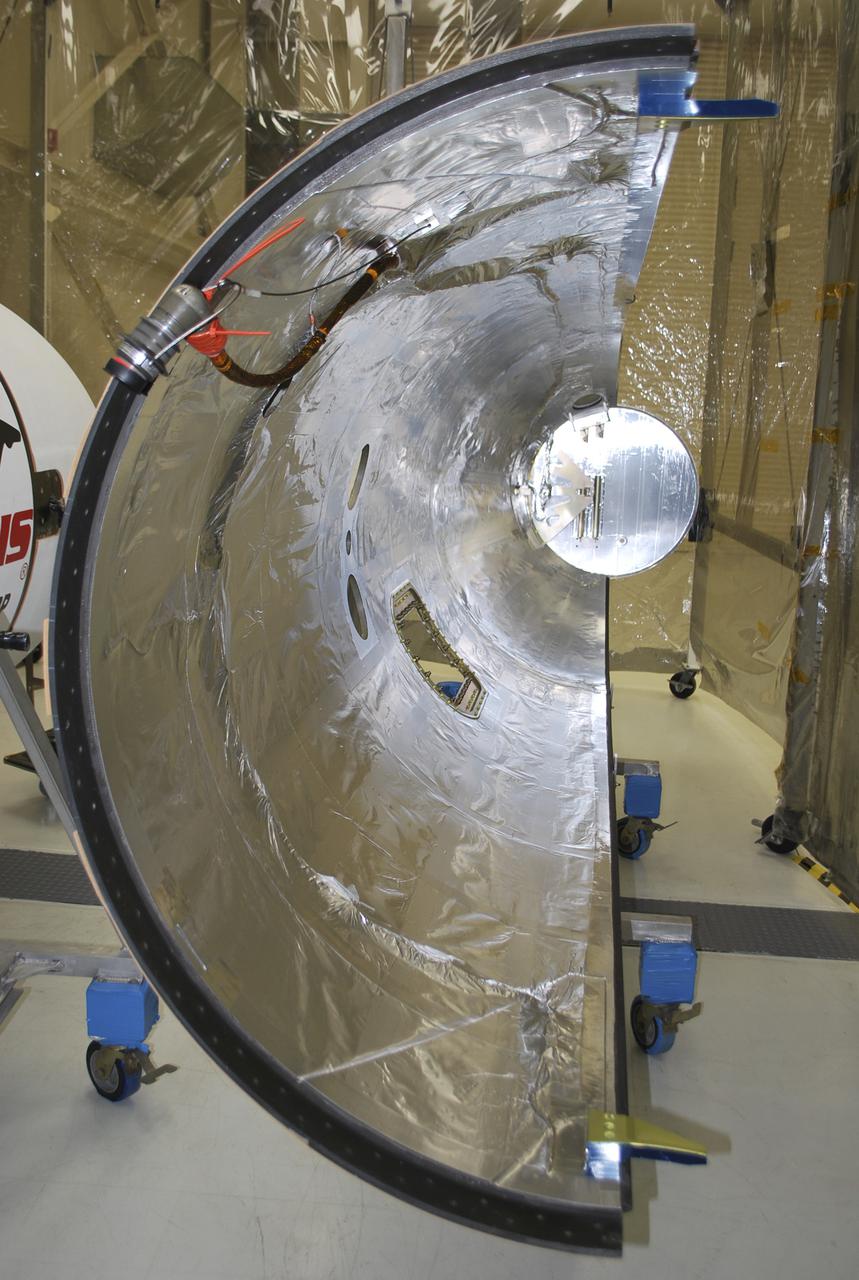
VANDENBERG AFB, Calif. – Half of the payload fairing that will protect NASA's IRIS spacecraft during launch aboard an Orbital Sciences Pegasus XL rocket as it is readied for launch. NASA’s Interface Region Imaging Spectrograph, or IRIS, satellite will improve our understanding of how heat and energy move through the deepest levels of the sun’s atmosphere, thereby increasing our ability to forecast space weather. On launch day, deployment of the Pegasus from Orbital’s L-1011 carrier aircraft will occur at a location over the Pacific Ocean about 100 miles northwest of Vandenberg off the central coast of California south of Big Sur.Photo credit: VAFB_Randy Beaudoin
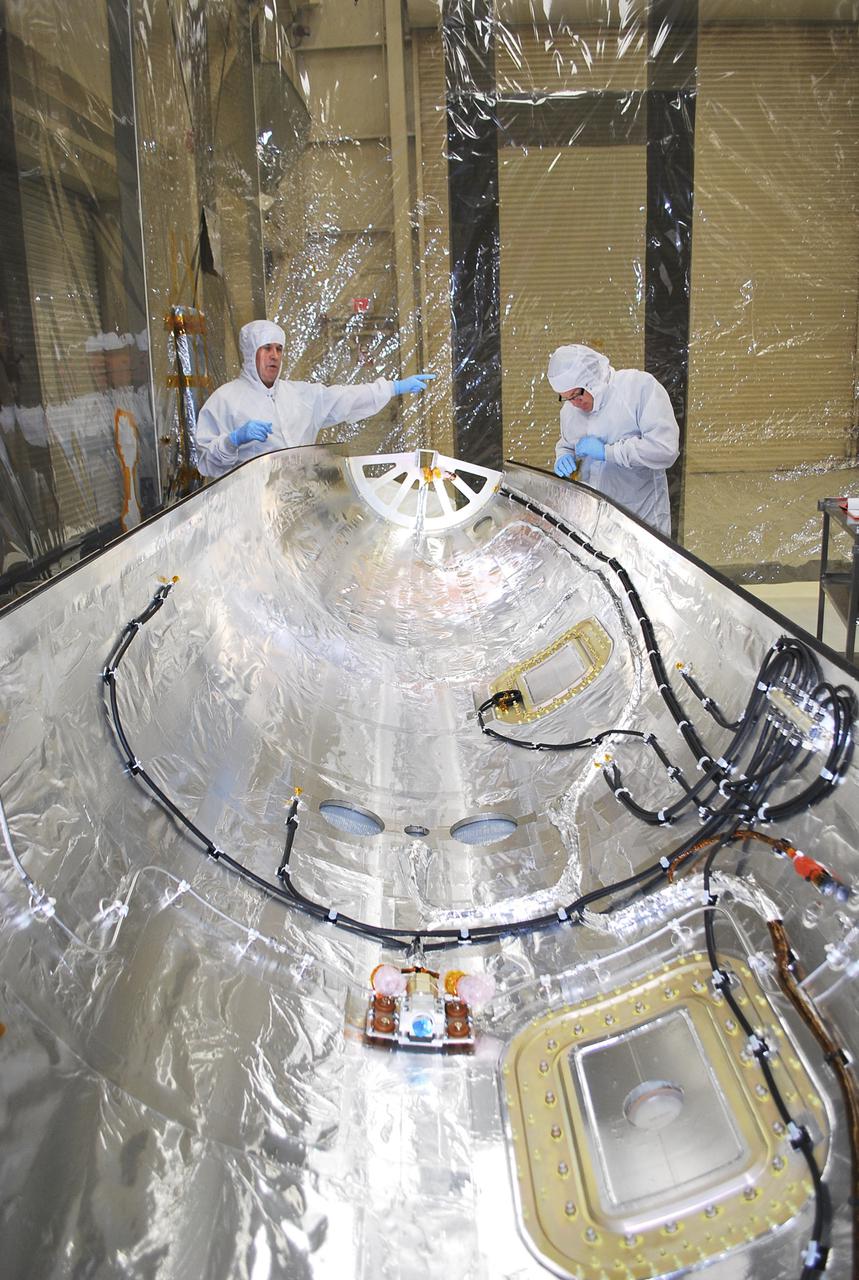
VANDENBERG AIR FORCE BASE, Calif. -- Technicians inside Building 1555 conduct inspection, cleaning and electrical testing on half of a payload fairing for the Orbital Sciences Corp. Pegasus XL rocket that will launch the Interface Region Imaging Spectrograph, or IRIS, spacecraft. The fairing will be fitted to the nose of the Pegasus to protect the spacecraft from atmospheric heating and stress during launch. IRIS will open a new window of discovery by tracing the flow of energy and plasma through the chromospheres and transition region into the sun’s corona using spectrometry and imaging. IRIS fills a crucial gap in our ability to advance studies of the sun-to-Earth connection by tracing the flow of energy and plasma through the foundation of the corona and the region around the sun known as the heliosphere. Photo credit: VAFB_Randy Beaudoin
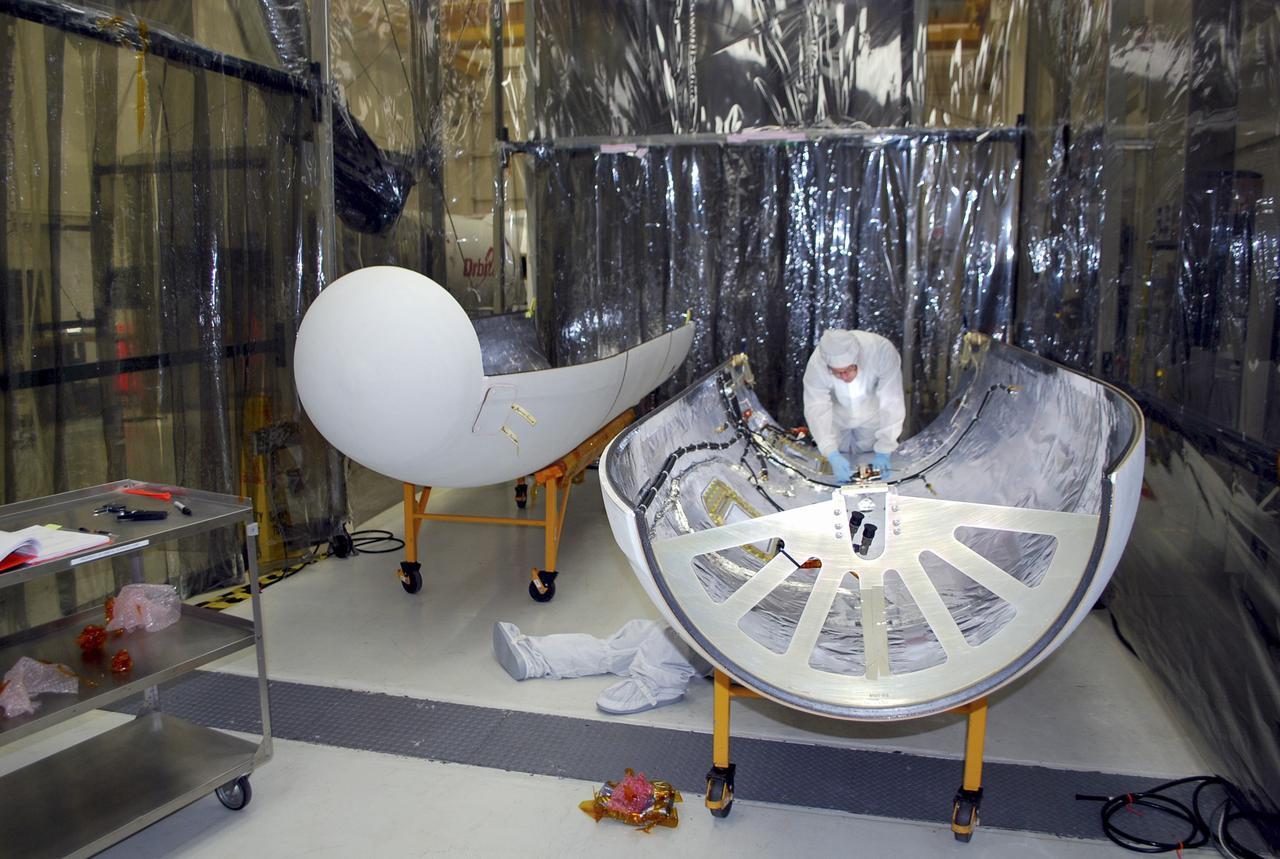
VANDENBERG AIR FORCE BASE, Calif. -- Technicians inside Building 1555 conduct inspection, cleaning and electrical testing on half of a payload fairing for the Orbital Sciences Corp. Pegasus XL rocket that will launch the Interface Region Imaging Spectrograph, or IRIS, spacecraft. The fairing will be fitted to the nose of the Pegasus to protect the spacecraft from atmospheric heating and stress during launch. IRIS will open a new window of discovery by tracing the flow of energy and plasma through the chromospheres and transition region into the sun’s corona using spectrometry and imaging. IRIS fills a crucial gap in our ability to advance studies of the sun-to-Earth connection by tracing the flow of energy and plasma through the foundation of the corona and the region around the sun known as the heliosphere. Photo credit: VAFB_Randy Beaudoin
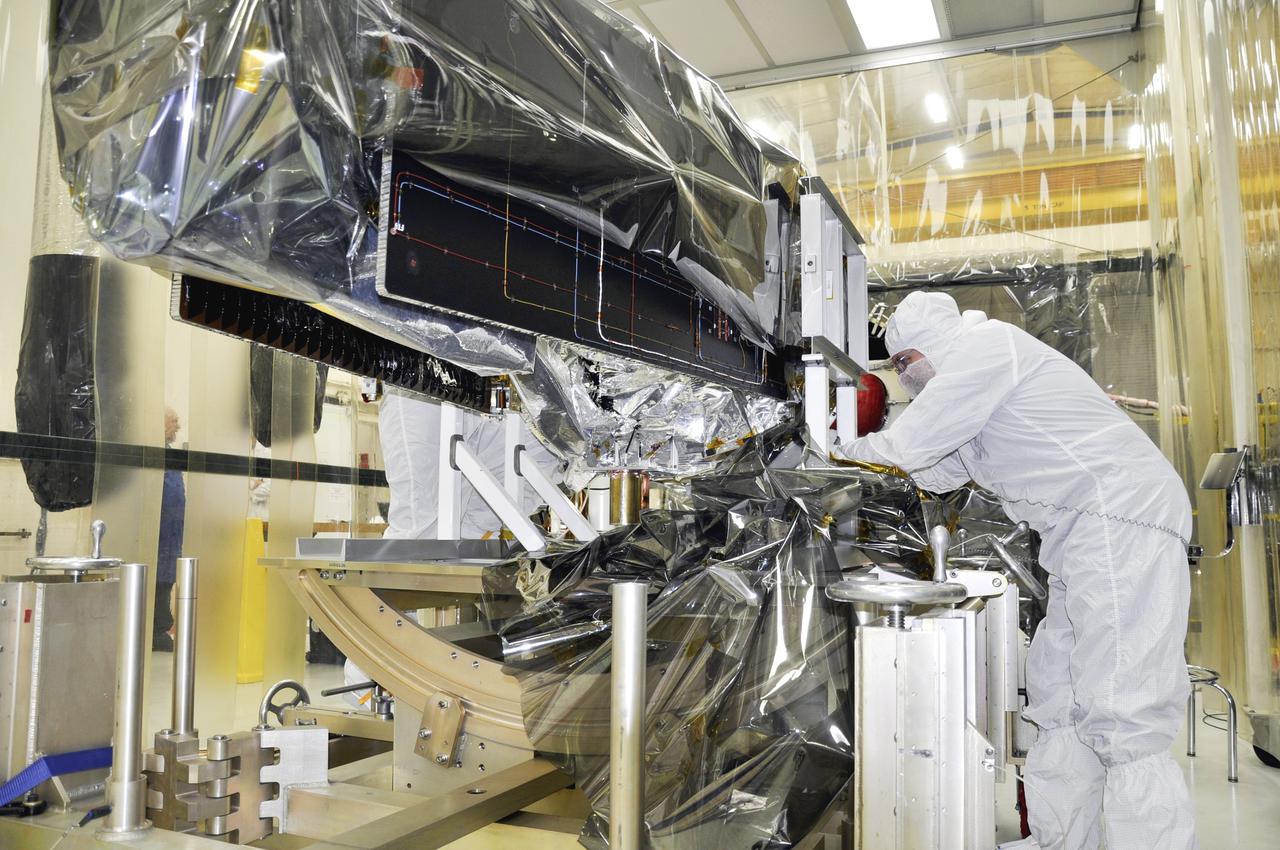
VANDENBERG AFB, Calif. – A technician removes protective Mylar wrapping from NASA's IRIS spacecraft in a clean room at Vandenberg where the spacecraft will be readied for launch aboard an Orbital Sciences Pegasus XL rocket. IRIS is short for Interface Region Imaging Spectrograph and the spacecraft's mission will improve our understanding of how heat and energy move through the deepest levels of the sun’s atmosphere, thereby increasing our ability to forecast space weather. Photo credit: VAFB_Randy Beaudoin
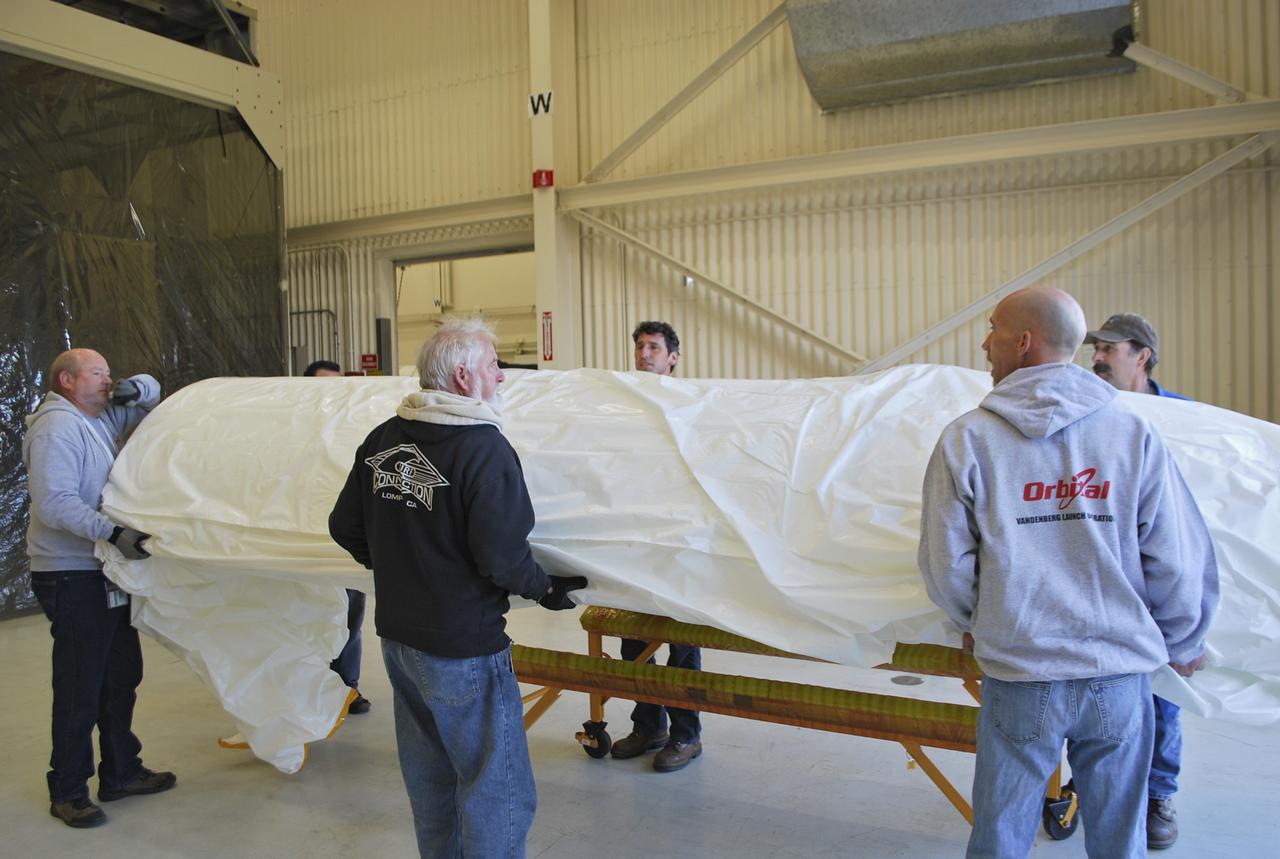
VANDENBERG AFB, Calif. – Workers load half of a payload fairing inside a hangar at Vandenberg Air Force Base in California where it will be processed and used for NASA's IRIS mission. The fairing will be fitted to the nose of an Orbital Sciences Pegasus rocket and will protect the IRIS spacecraft from atmospheric heating and stress during launch. Photo credit: VAFB_Randy Beaudoin
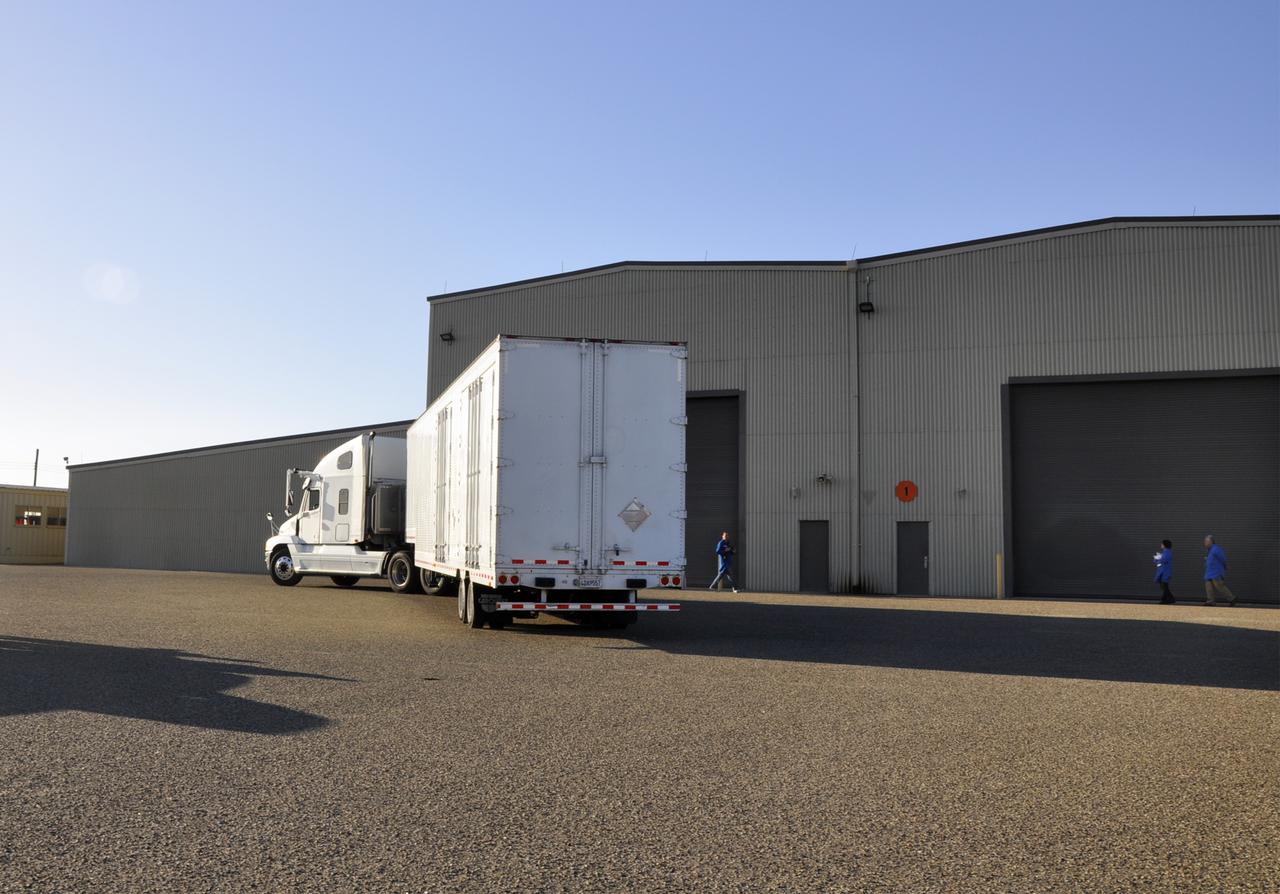
VANDENBERG AFB, Calif. – A truck carrying NASA's IRIS spacecraft nears the processing facility at Vandenberg where the spacecraft will be readied for launch aboard an Orbital Sciences Pegasus XL rocket. IRIS is short for Interface Region Imaging Spectrograph and the spacecraft's mission will improve our understanding of how heat and energy move through the deepest levels of the sun’s atmosphere, thereby increasing our ability to forecast space weather. Photo credit: VAFB_Randy Beaudoin
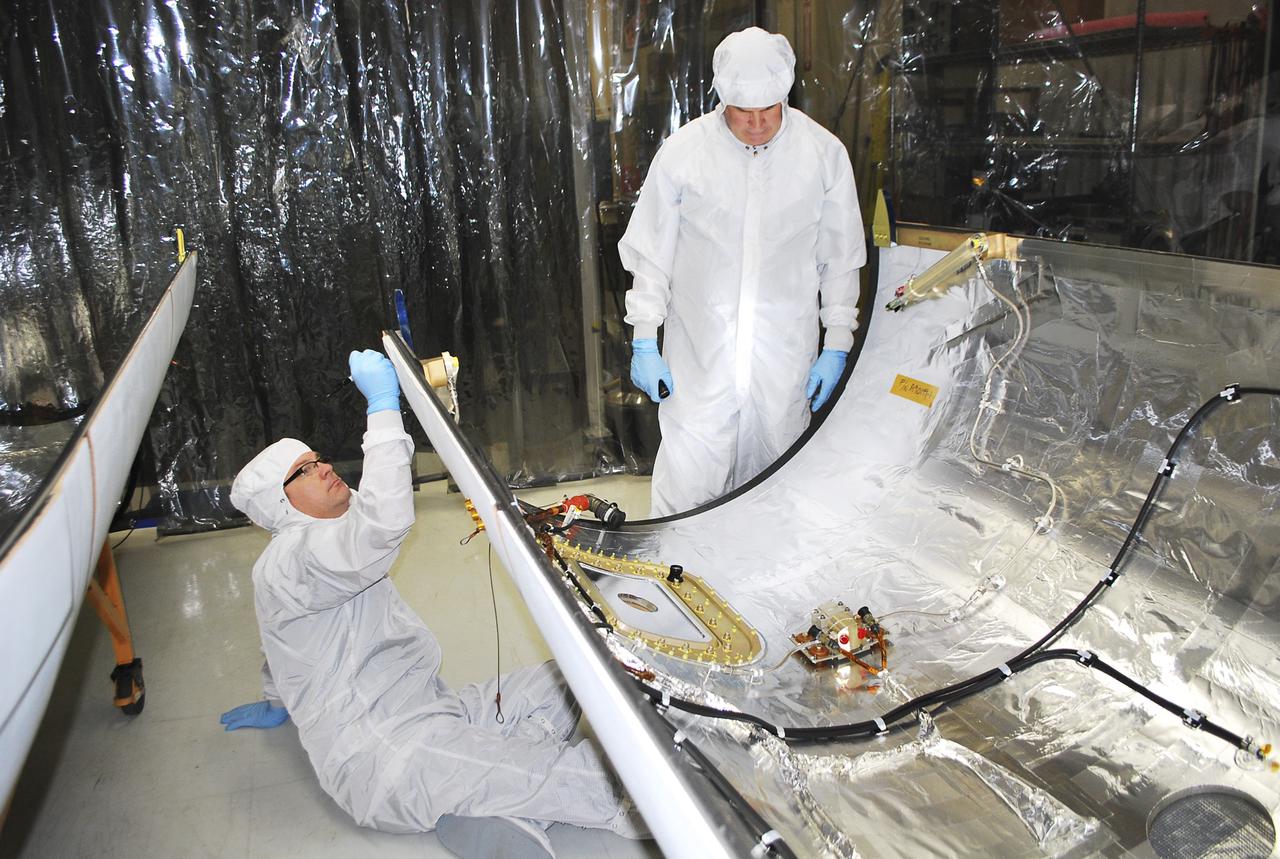
VANDENBERG AIR FORCE BASE, Calif. -- Technicians inside Building 1555 conduct inspection, cleaning and electrical testing on half of a payload fairing for the Orbital Sciences Corp. Pegasus XL rocket that will launch the Interface Region Imaging Spectrograph, or IRIS, spacecraft. The fairing will be fitted to the nose of the Pegasus to protect the spacecraft from atmospheric heating and stress during launch. IRIS will open a new window of discovery by tracing the flow of energy and plasma through the chromospheres and transition region into the sun’s corona using spectrometry and imaging. IRIS fills a crucial gap in our ability to advance studies of the sun-to-Earth connection by tracing the flow of energy and plasma through the foundation of the corona and the region around the sun known as the heliosphere. Photo credit: VAFB_Randy Beaudoin
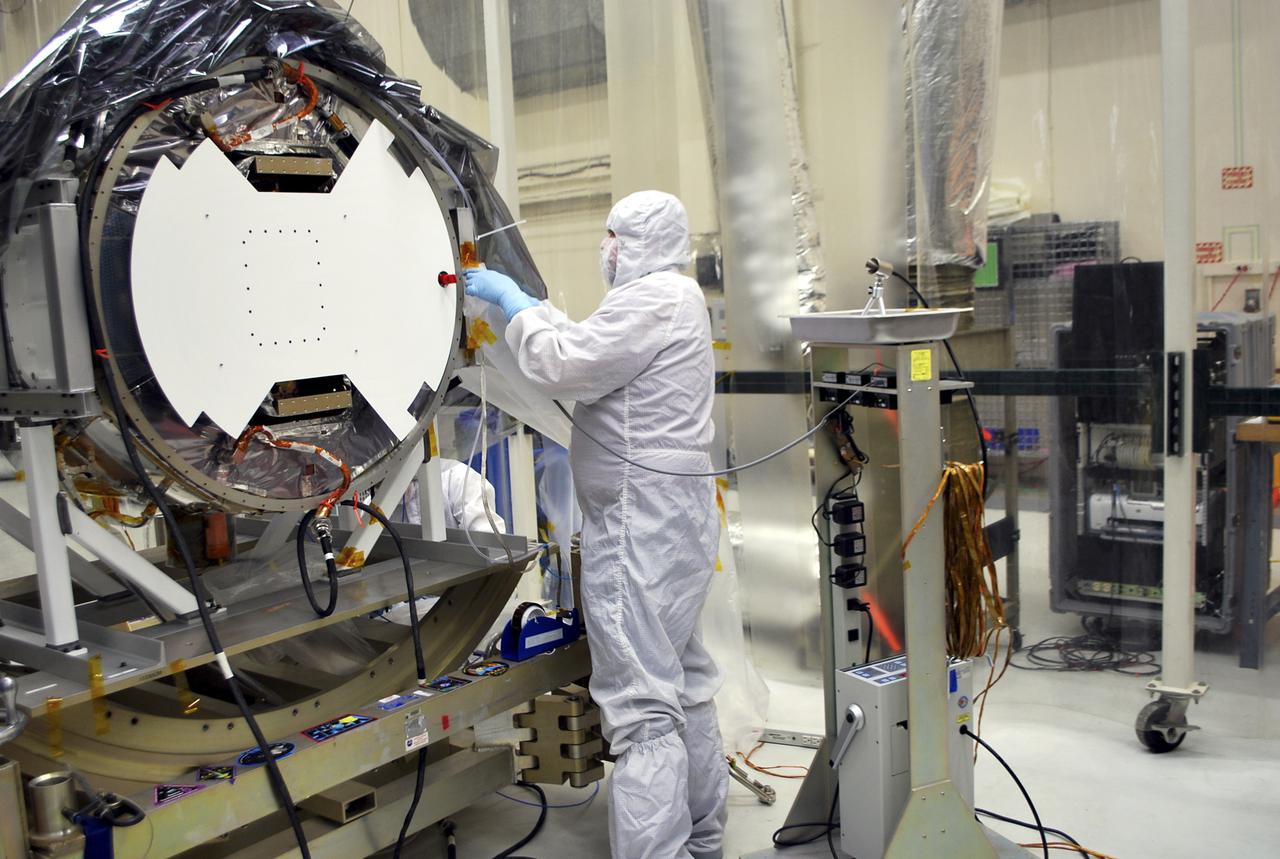
VANDENBERG AIR FORCE BASE, Calif. -- Following the first Interface Verification Test, a technician removes cables providing the electrical connections between the Interface Region Imaging Spectrograph, or IRIS, spacecraft and the Orbital Sciences Corp. Pegasus XL launch vehicle. Completion of the test paves the way for the standalone IRIS mission simulations. IRIS will open a new window of discovery by tracing the flow of energy and plasma through the chromospheres and transition region into the sun’s corona using spectrometry and imaging. IRIS fills a crucial gap in our ability to advance studies of the sun-to-Earth connection by tracing the flow of energy and plasma through the foundation of the corona and the region around the sun known as the heliosphere. Photo credit: VAFB_Randy Beaudoin
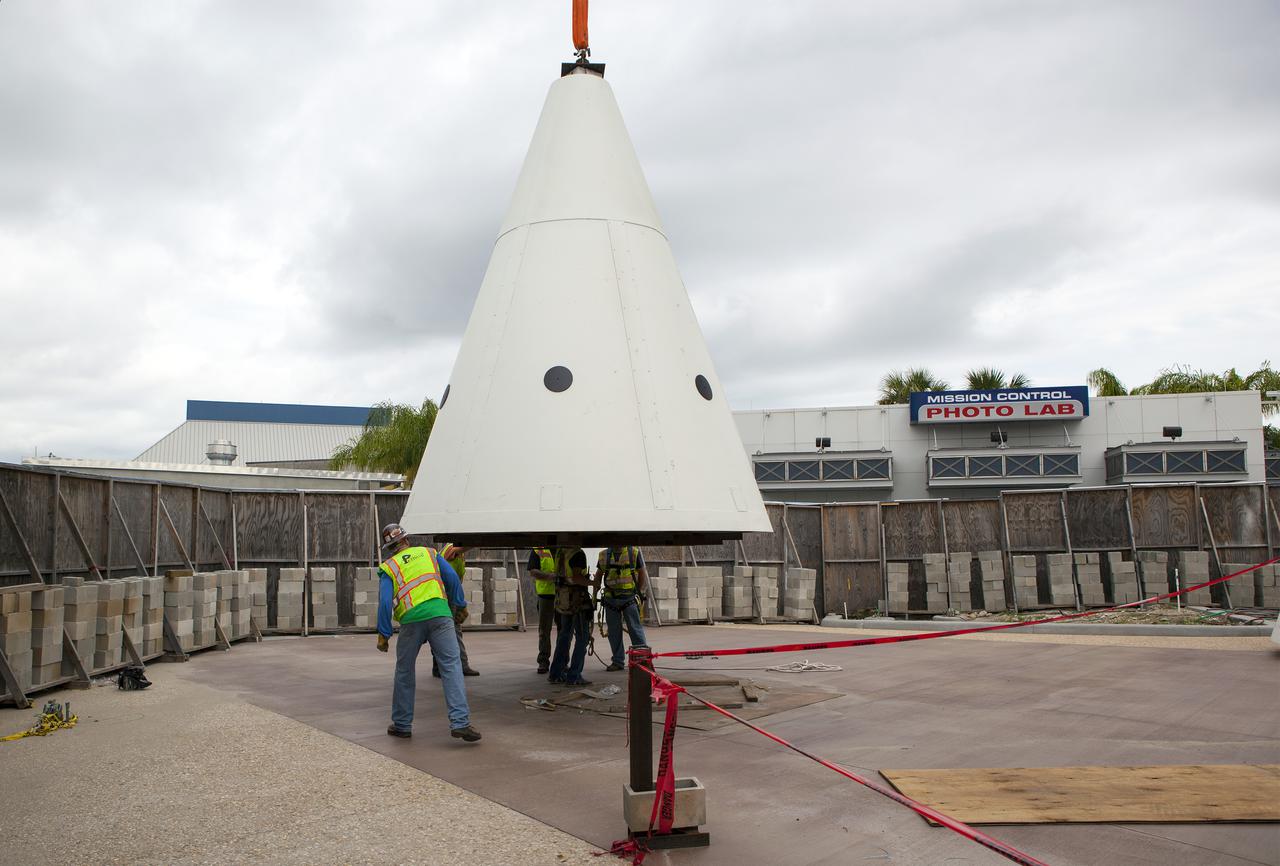
CAPE CANAVERAL, Fla. – Workers prepare to lift a nose cone to top out one of a pair of replica space shuttle solid rocket boosters at the entry of the space shuttle Atlantis attraction under construction at the Kennedy Space Center Visitor Complex. Workers will use cranes to place the nose cones atop each of the model boosters. The building at right houses the actual shuttle Atlantis. Photo credit: NASA_Dmitri Gerondidakis IRIS will open a new window of discovery by tracing the flow of energy and plasma through the chromospheres and transition region into the sun’s corona using spectrometry and imaging. IRIS fills a crucial gap in our ability to advance studies of the sun-to-Earth connection by tracing the flow of energy and plasma through the foundation of the corona and the region around the sun known as the heliosphere. Photo credit: VAFB_Randy Beaudoin
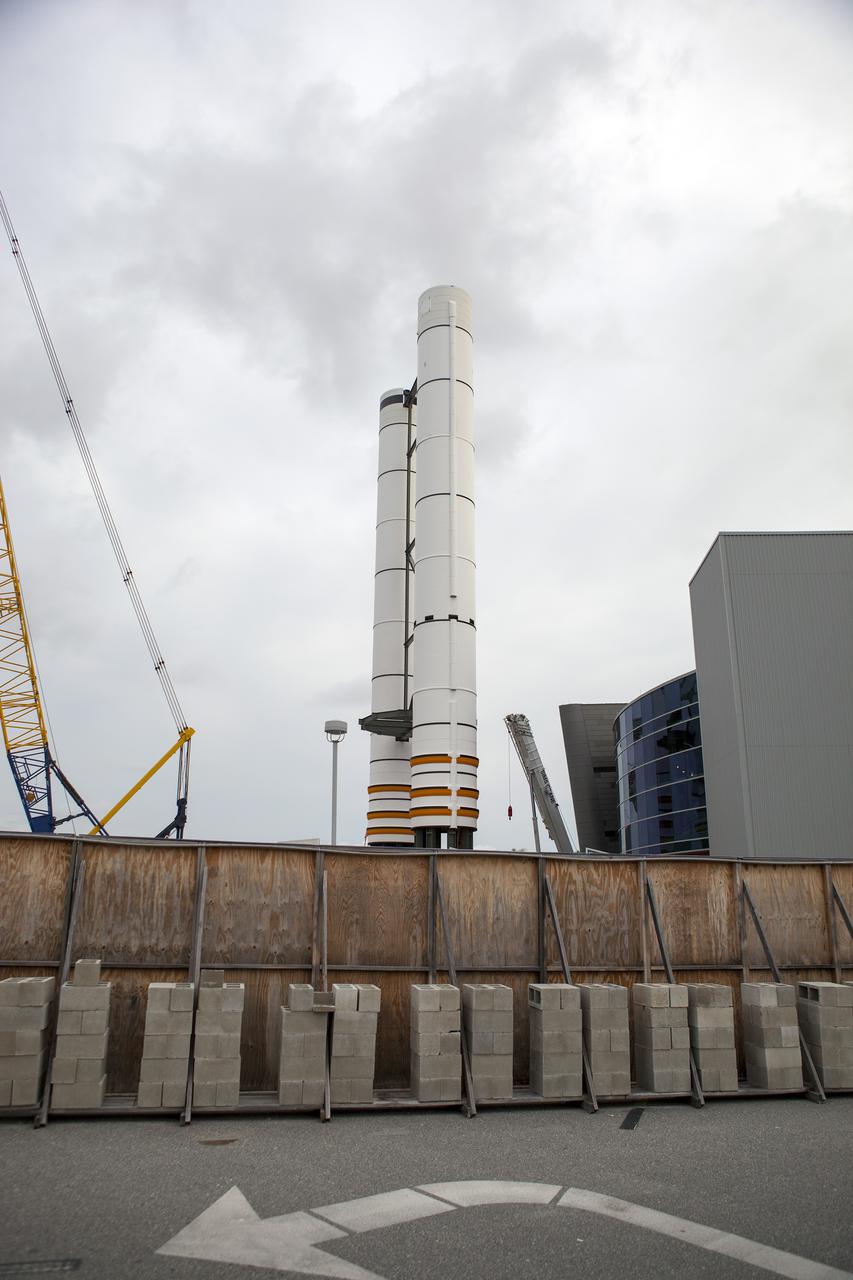
CAPE CANAVERAL, Fla. – A pair of replica space shuttle solid rocket boosters stand at the entry of the space shuttle Atlantis attraction under construction at the Kennedy Space Center Visitor Complex. Workers will use cranes to place the nose cones atop each of the model boosters. The building at right houses the actual shuttle Atlantis. Photo credit: NASA_Dmitri Gerondidakis IRIS will open a new window of discovery by tracing the flow of energy and plasma through the chromospheres and transition region into the sun’s corona using spectrometry and imaging. IRIS fills a crucial gap in our ability to advance studies of the sun-to-Earth connection by tracing the flow of energy and plasma through the foundation of the corona and the region around the sun known as the heliosphere. Photo credit: VAFB_Randy Beaudoin