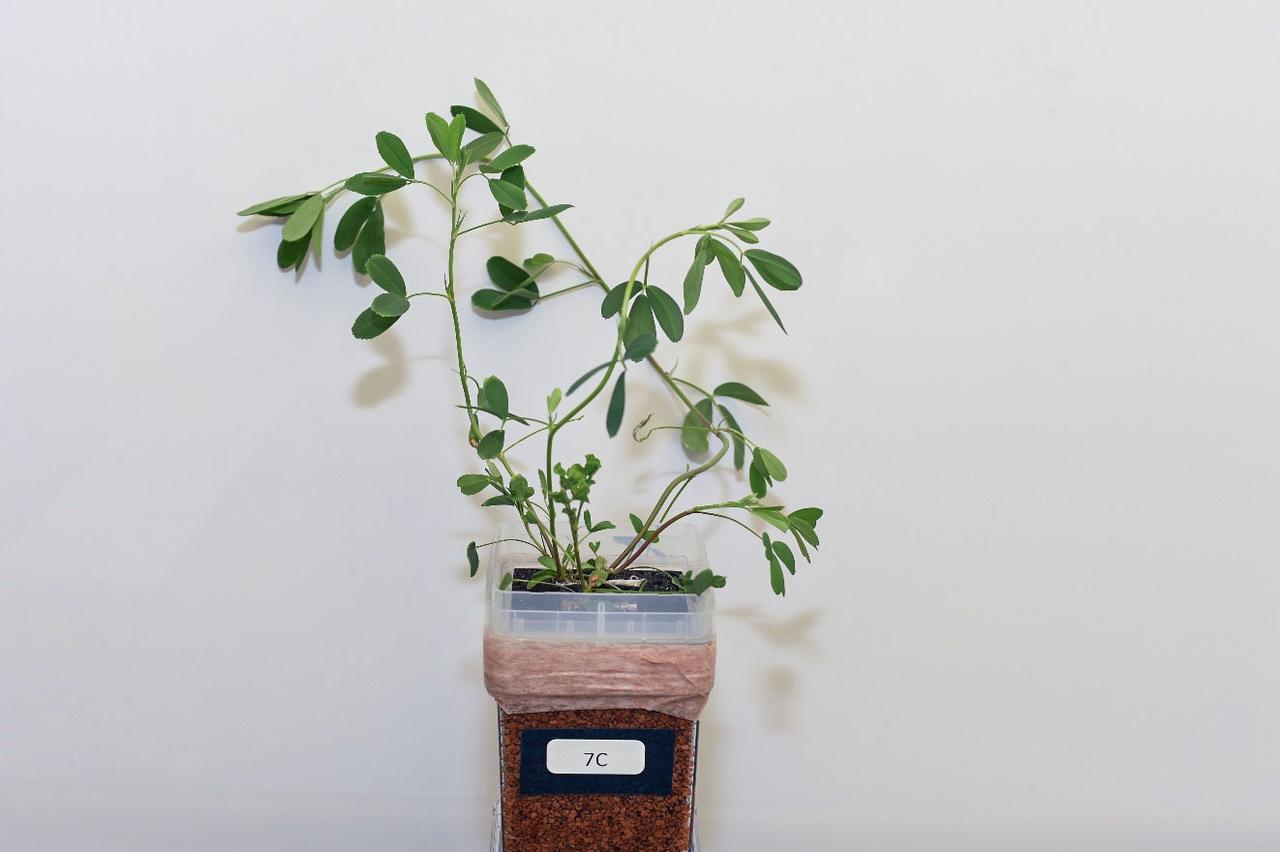
Alfalfa (Medicago sativa) grown with reduced lignin during preflight testing as part of Dissecting Beneficial Plant-Microbe Interactions and their Efficacy in the ISS Spaceflight Environment, a Model Study (Veg-06). This investigation examines spaceflight’s effects on the interactions between plants and nitrogen-fixing bacteria called rhizobia. A second part to this investigation studies the effects of reduced lignin in a space environment. Lignin is a biopolymer that reinforces plant cell walls thereby enabling plants to grow upward against the forces of gravity. Growing plants with less lignin may be feasible in environments with low gravity and may have the added benefit of biodegrading more readily, thereby facilitating the growth of future generations. Credit: Washington State University.
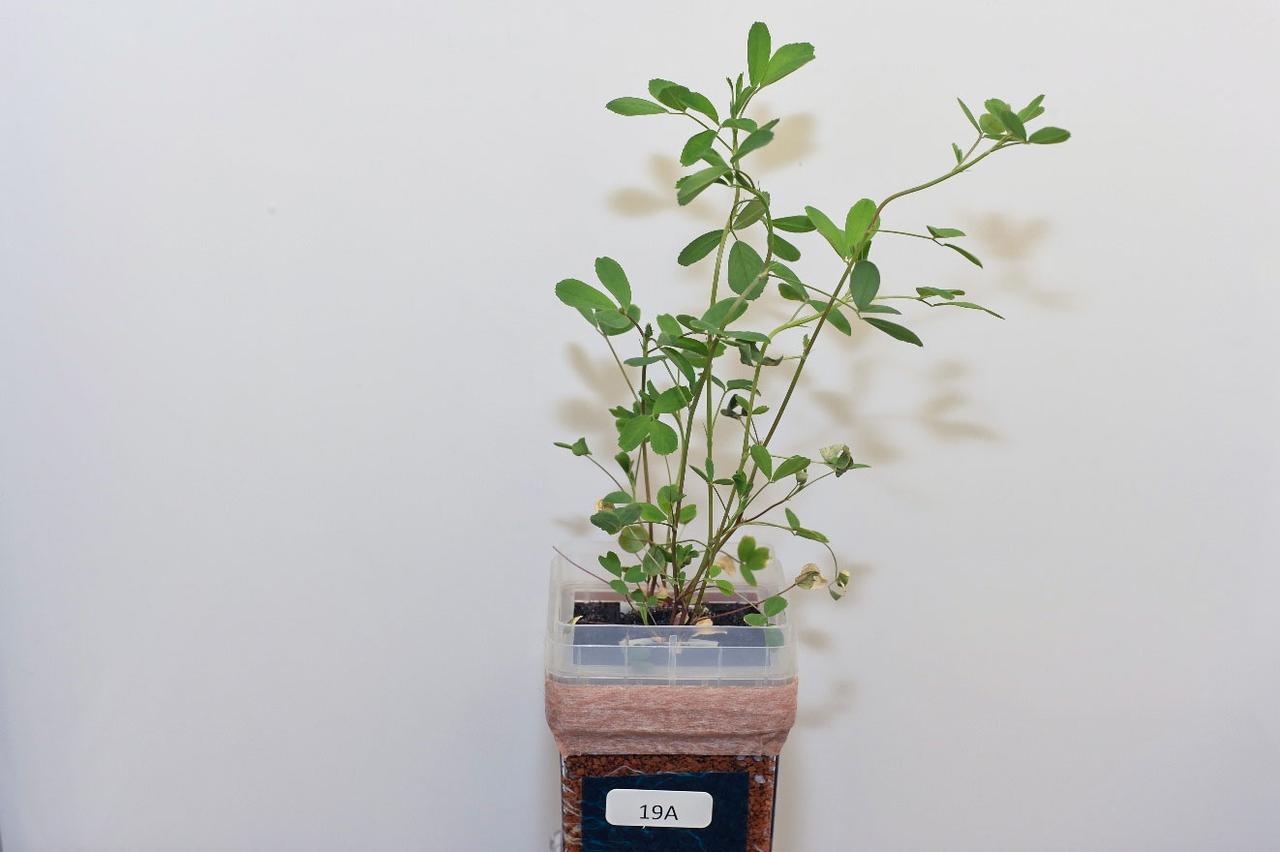
Alfalfa (Medicago sativa) grown with nitrogen during preflight testing as part of Dissecting Beneficial Plant-Microbe Interactions and their Efficacy in the ISS Spaceflight Environment, a Model Study (Veg-06). This investigation examines spaceflight’s effects on the interactions between plants and nitrogen-fixing bacteria called rhizobia. These bacteria can take up nitrogen gas from the air and convert it into ammonia, a form of nitrogen plants can use for growth. One component of the nitrogen fixation emphasis in Veg-06 will compare the growth of alfalfa with rhizobia but no nitrogen fertilizer, alfalfa with rhizobia and a source of nitrogen fertilizer, and alfalfa with neither fertilizer nor rhizobia. Results could provide a fundamental understanding of the interactions of plants and microbes for nitrogen fixation in microgravity and advance the ways to grow plants for food on future space missions. Credit: Washington State University.