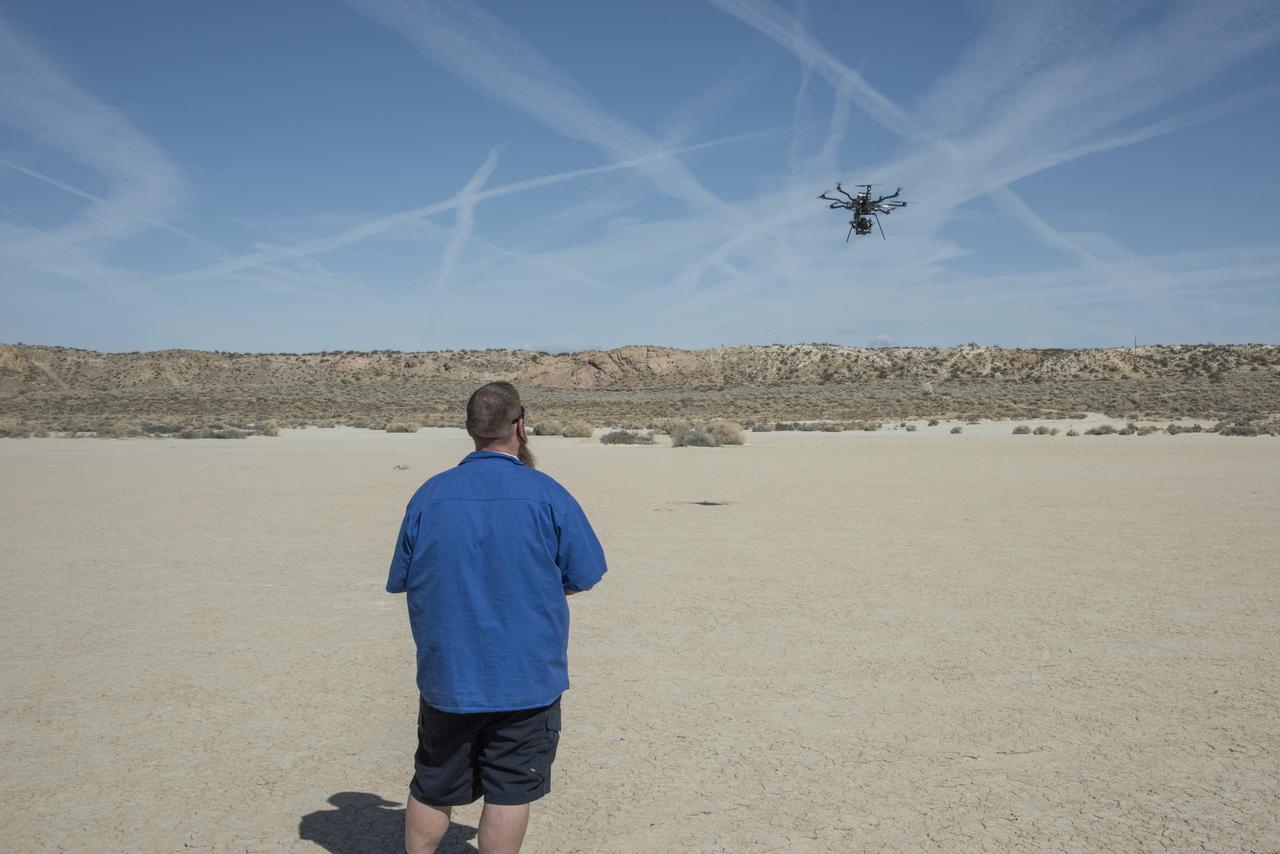
Justin Hall flies the Alta 8 remotely piloted aircraft in March 2021 at Rosamond North Lakebed at NASA’s Armstrong Flight Research Center in Edwards, California. The Resilient Autonomy project used these flights to collect data with the Nav Module hardware and software developed by NASA’s Jet Propulsion Laboratory in Pasadena, California.
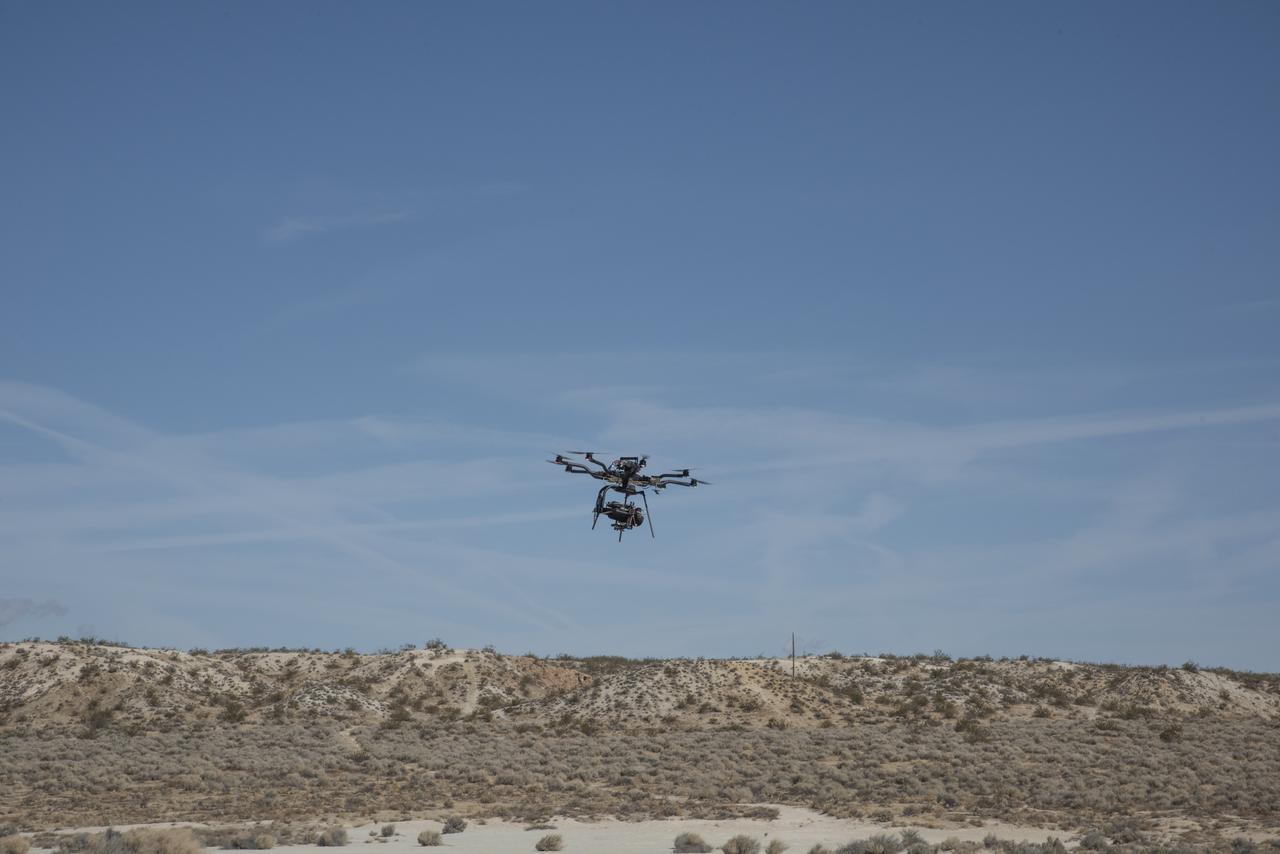
The Alta 8 remotely piloted aircraft flies above Rosamond North Lakebed at NASA's Armstrong Flight Research Center in Edwards, California. The Resilient Autonomy project used these flights to collect data with the Nav Module hardware and software developed by NASA's Jet Propulsion Laboratory in Pasadena, California.
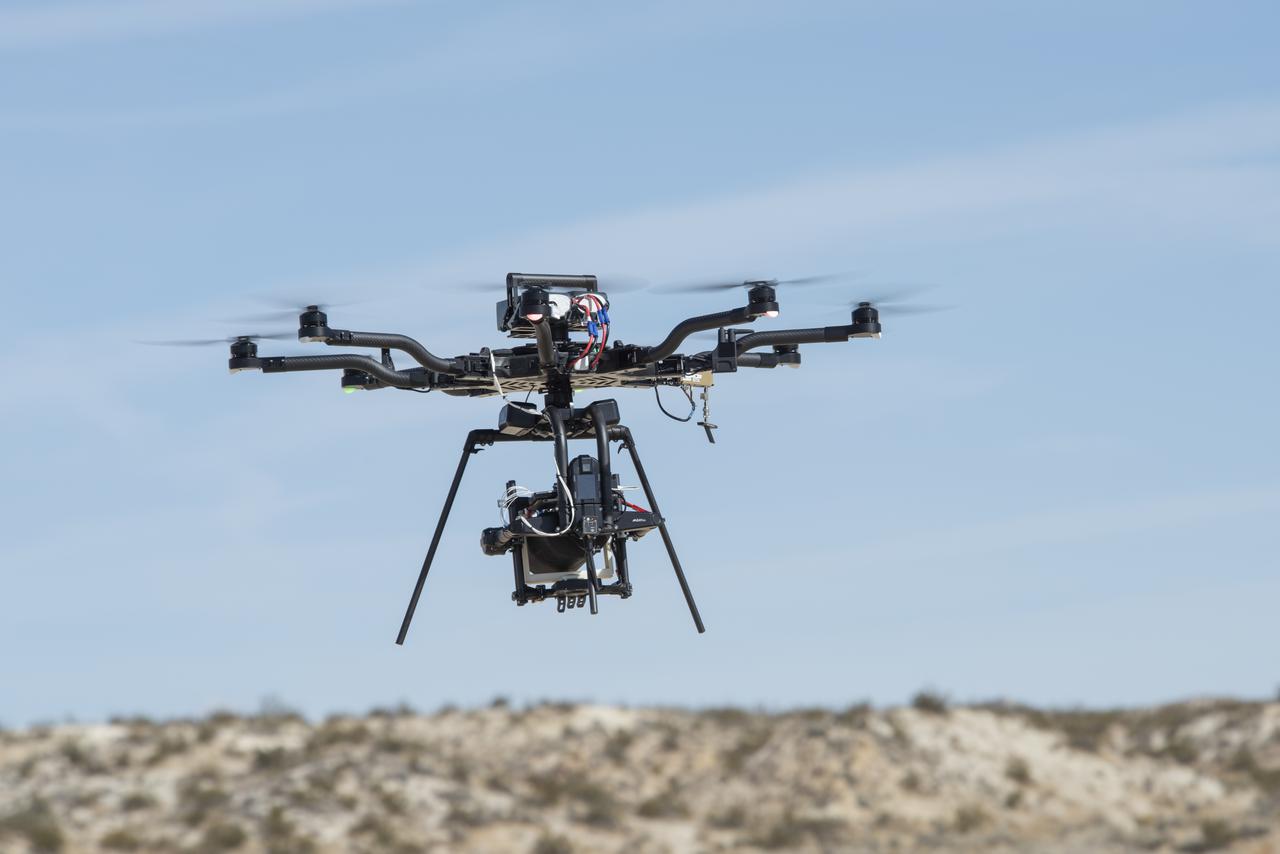
The Alta 8 remotely piloted aircraft hovers above Rosamond North Lakebed in March 2021 at NASA's Armstrong Flight Research Center in Edwards, California. The Resilient Autonomy project used these flights to collect data with the Nav Module hardware and software developed by NASA's Jet Propulsion Laboratory in Pasadena, California.
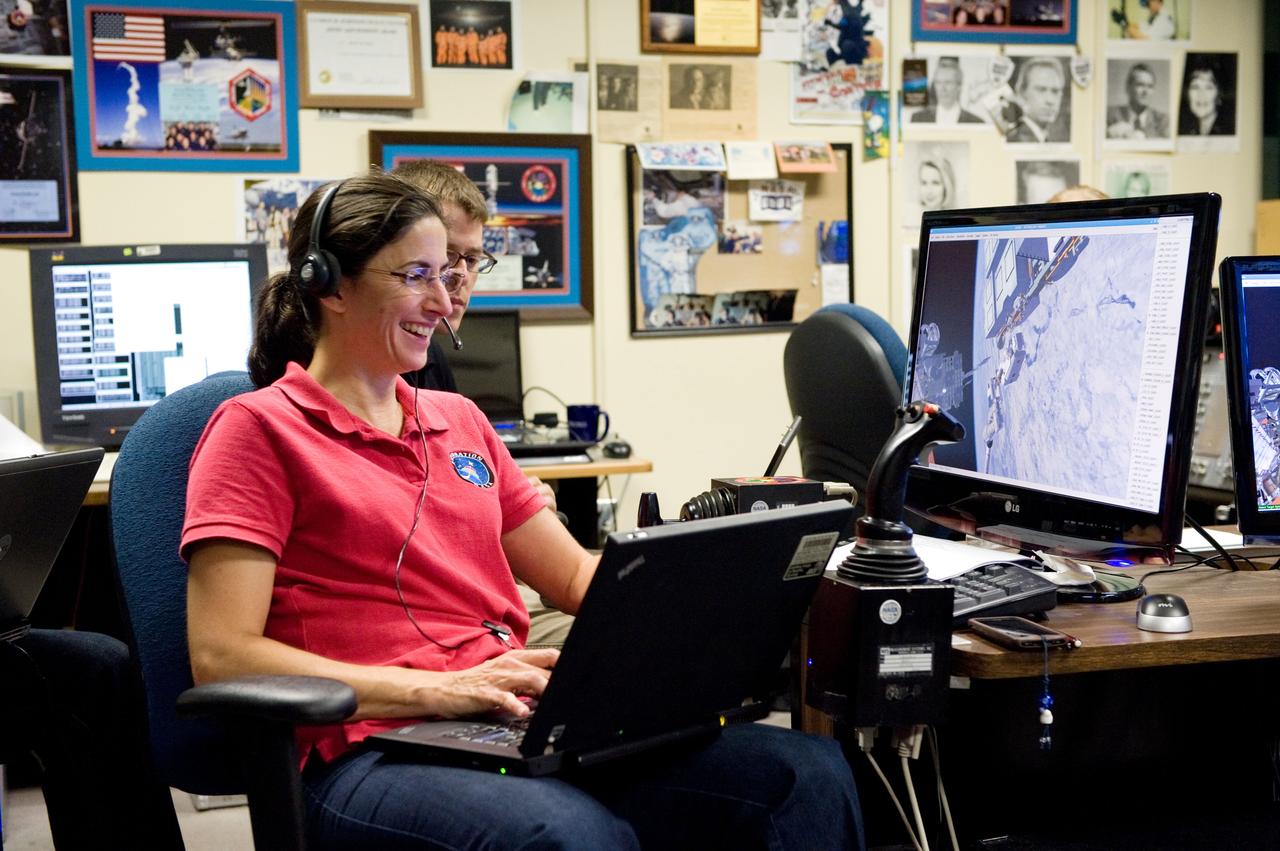
JSC2010-E-170882 (1 Oct. 2010) --- NASA astronaut Nicole Stott, STS-133 mission specialist, uses the virtual reality lab in the Space Vehicle Mock-up Facility at NASA's Johnson Space Center to train for some of her duties aboard the space shuttle and space station. This type of computer interface, paired with virtual reality training hardware and software, helps to prepare crew members for dealing with space station elements. Photo credit: NASA or National Aeronautics and Space Administration

JSC2010-E-121058 (27 Aug. 2010) --- NASA astronauts Michael Fincke (foreground) and Greg Chamitoff, both STS-134 mission specialists, use virtual reality hardware in the Space Vehicle Mock-up Facility at NASA's Johnson Space Center to rehearse some of their duties on the upcoming mission to the International Space Station. This type of virtual reality training allows the astronauts to wear a helmet and special gloves while looking at computer displays simulating actual movements around the various locations on the station hardware with which they will be working. Photo credit: NASA or National Aeronautics and Space Administration
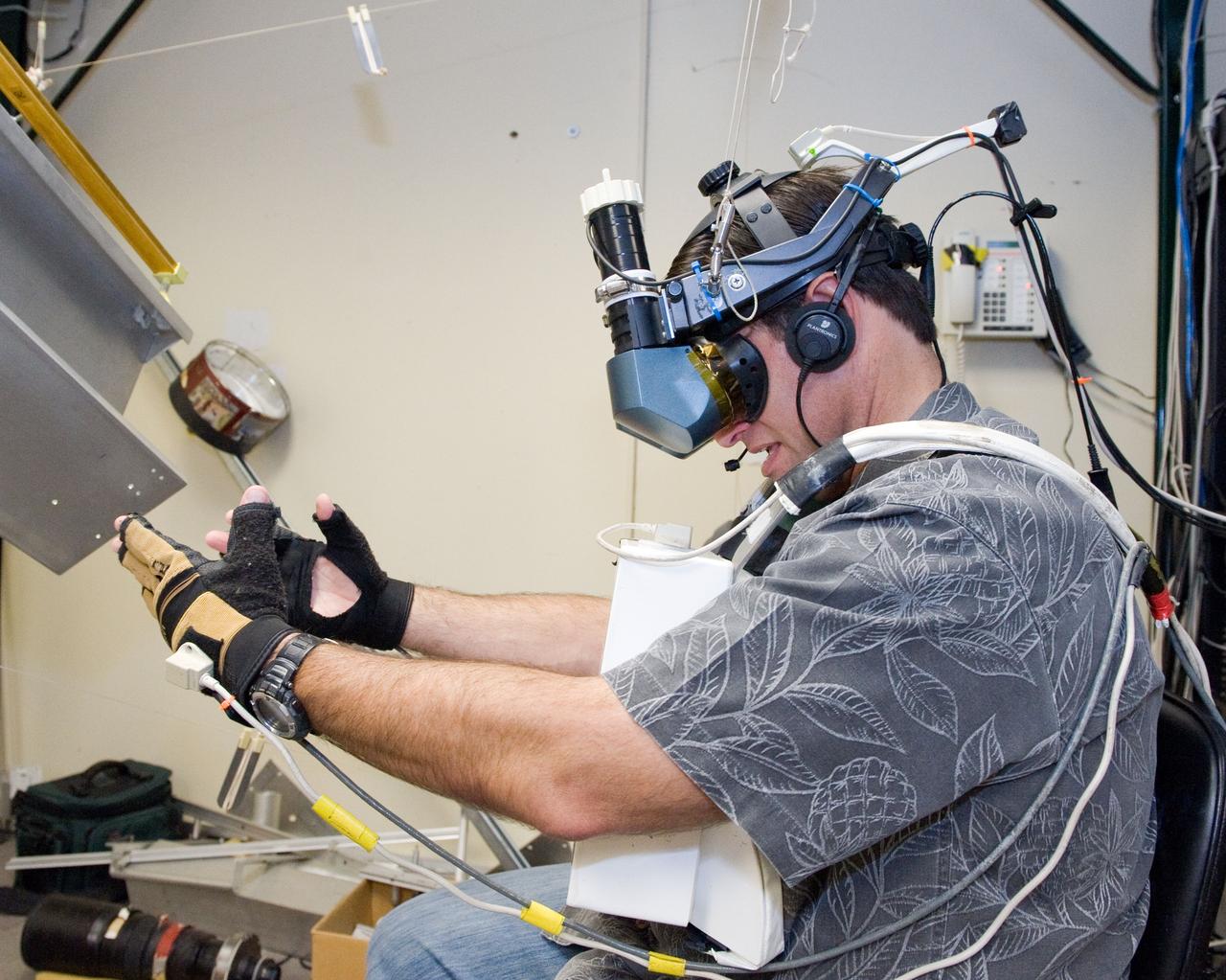
JSC2010-E-121053 (27 Aug. 2010) --- NASA astronaut Greg Chamitoff, STS-134 mission specialist, uses virtual reality hardware in the Space Vehicle Mock-up Facility at NASA's Johnson Space Center to rehearse some of his duties on the upcoming mission to the International Space Station. This type of virtual reality training allows the astronauts to wear a helmet and special gloves while looking at computer displays simulating actual movements around the various locations on the station hardware with which they will be working. Photo credit: NASA or National Aeronautics and Space Administration
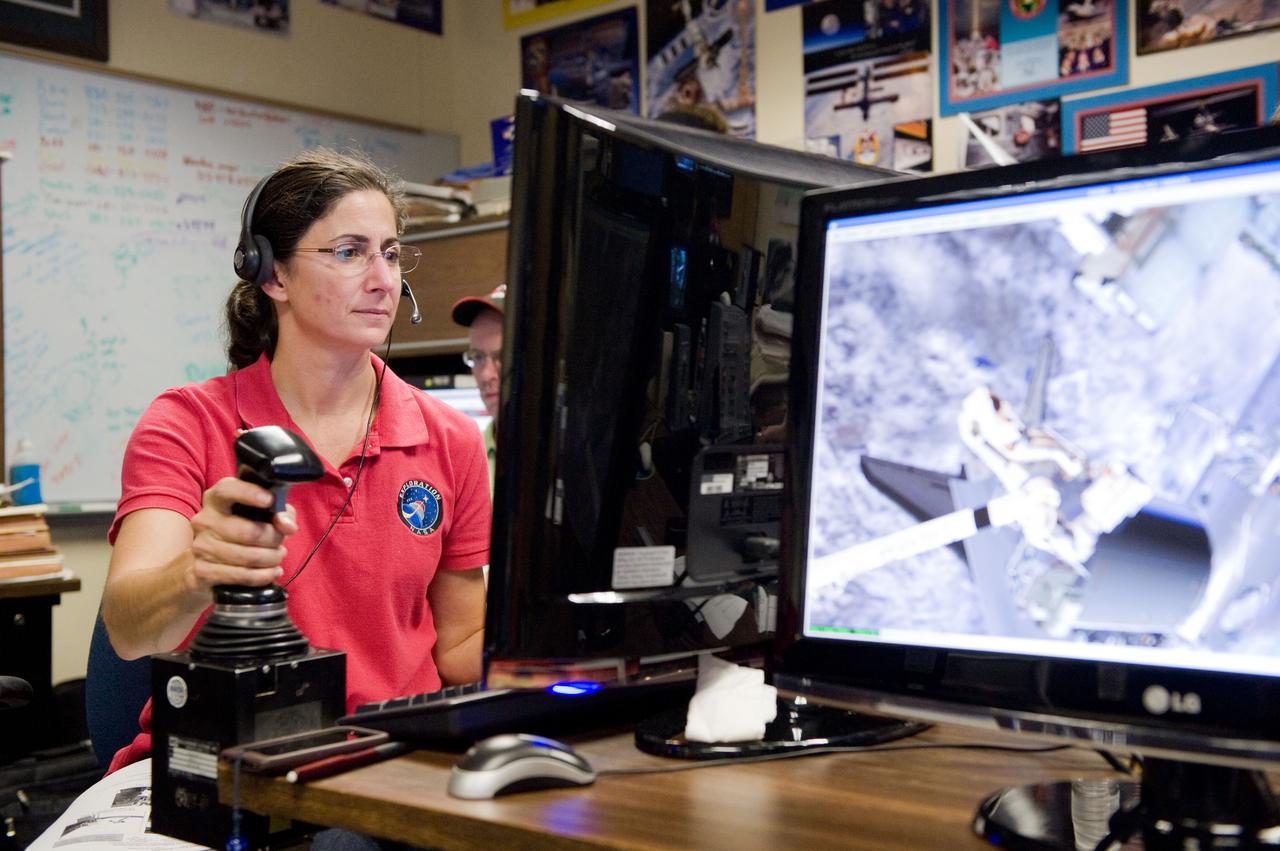
JSC2010-E-170888 (1 Oct. 2010) --- NASA astronaut Nicole Stott, STS-133 mission specialist, uses the virtual reality lab in the Space Vehicle Mock-up Facility at NASA's Johnson Space Center to train for some of her duties aboard the space shuttle and space station. This type of computer interface, paired with virtual reality training hardware and software, helps to prepare crew members for dealing with space station elements. Photo credit: NASA or National Aeronautics and Space Administration
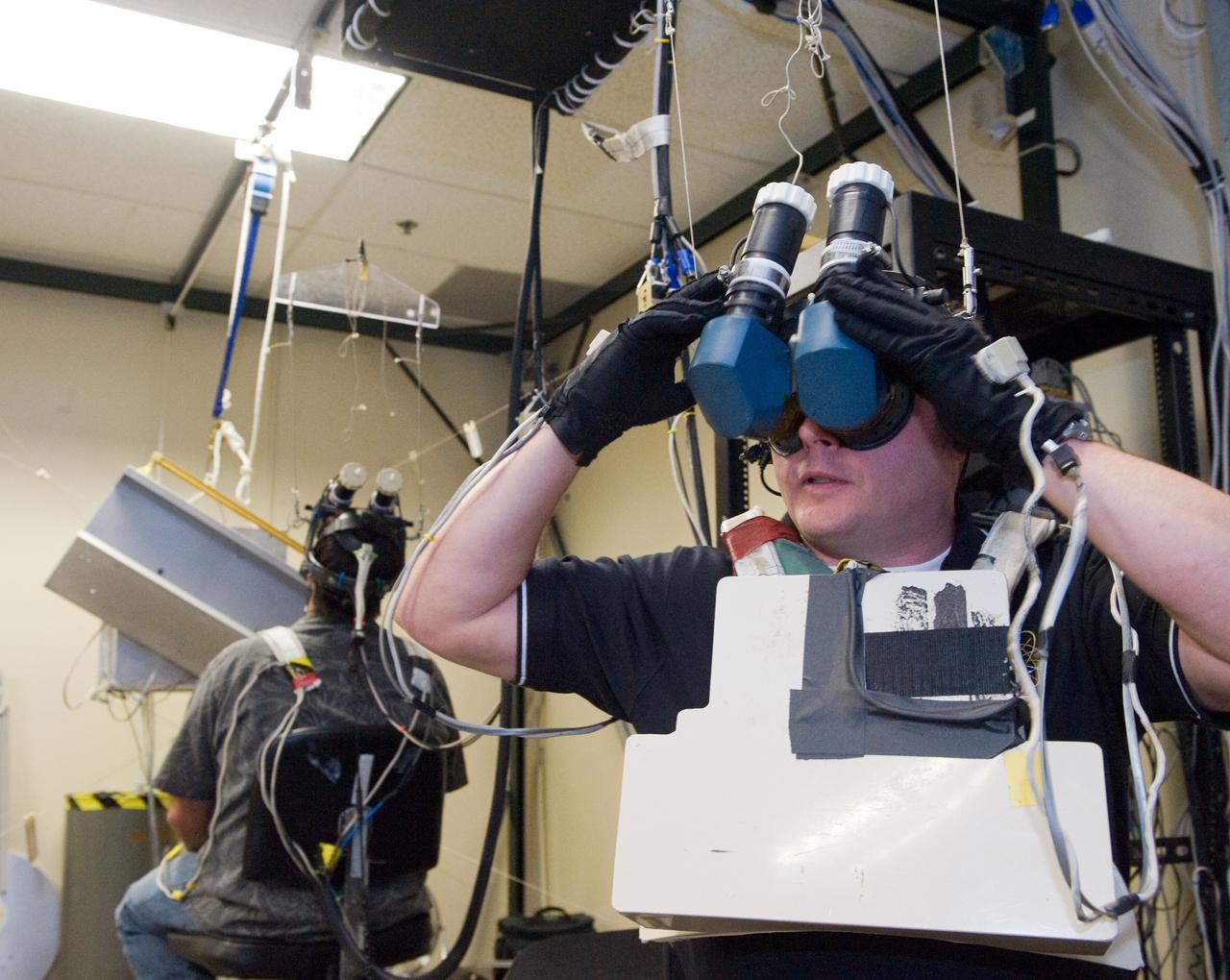
JSC2010-E-121052 (27 Aug. 2010) --- NASA astronauts Michael Fincke (foreground) and Greg Chamitoff, both STS-134 mission specialists, use virtual reality hardware in the Space Vehicle Mock-up Facility at NASA's Johnson Space Center to rehearse some of their duties on the upcoming mission to the International Space Station. This type of virtual reality training allows the astronauts to wear a helmet and special gloves while looking at computer displays simulating actual movements around the various locations on the station hardware with which they will be working. Photo credit: NASA or National Aeronautics and Space Administration
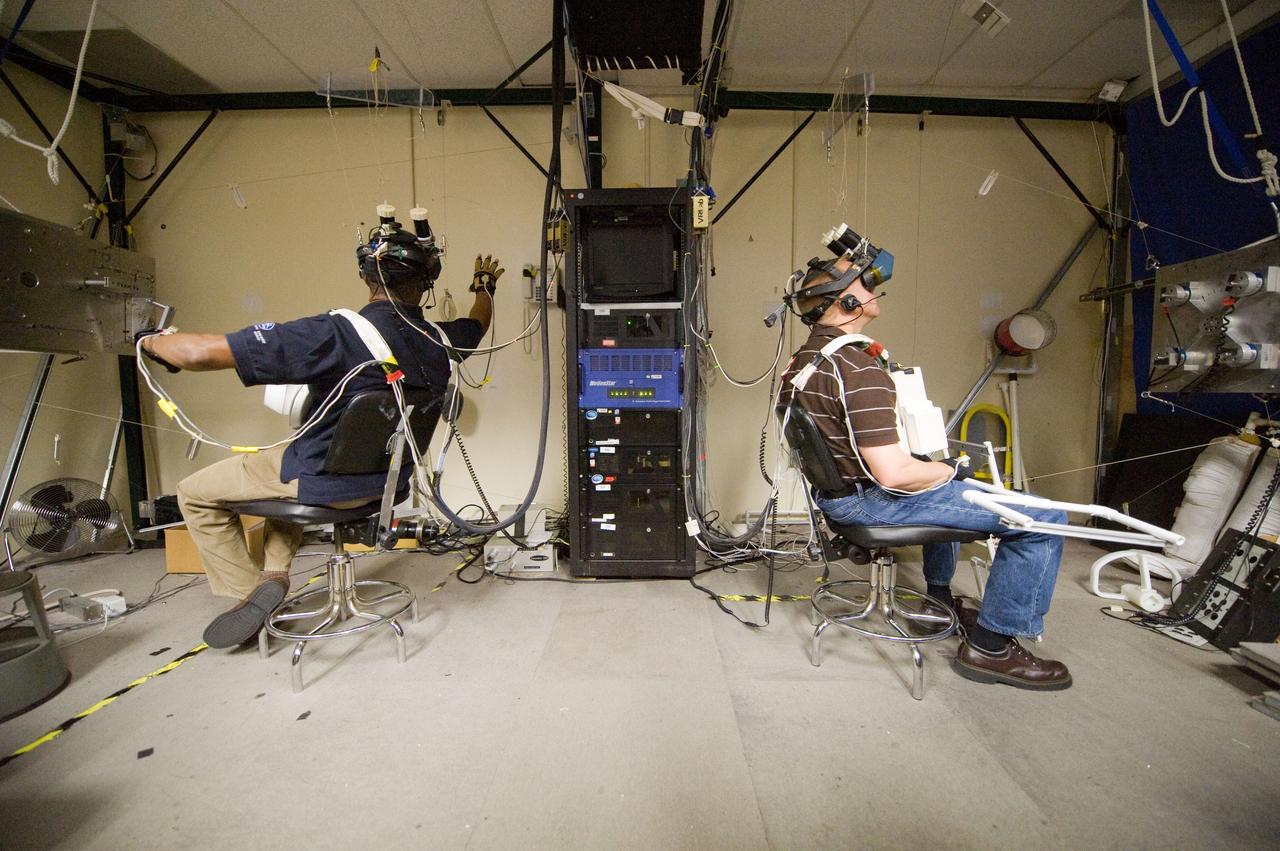
JSC2010-E-170885 (1 Oct. 2010) --- NASA astronauts Alvin Drew (left) and Tim Kopra, both STS-133 mission specialists, use virtual reality hardware in the Space Vehicle Mock-up Facility at NASA's Johnson Space Center to rehearse some of their duties on the upcoming mission to the International Space Station. This type of virtual reality training allows the astronauts to wear a helmet and special gloves while looking at computer displays simulating actual movements around the various locations on the station hardware with which they will be working. Photo credit: NASA or National Aeronautics and Space Administration
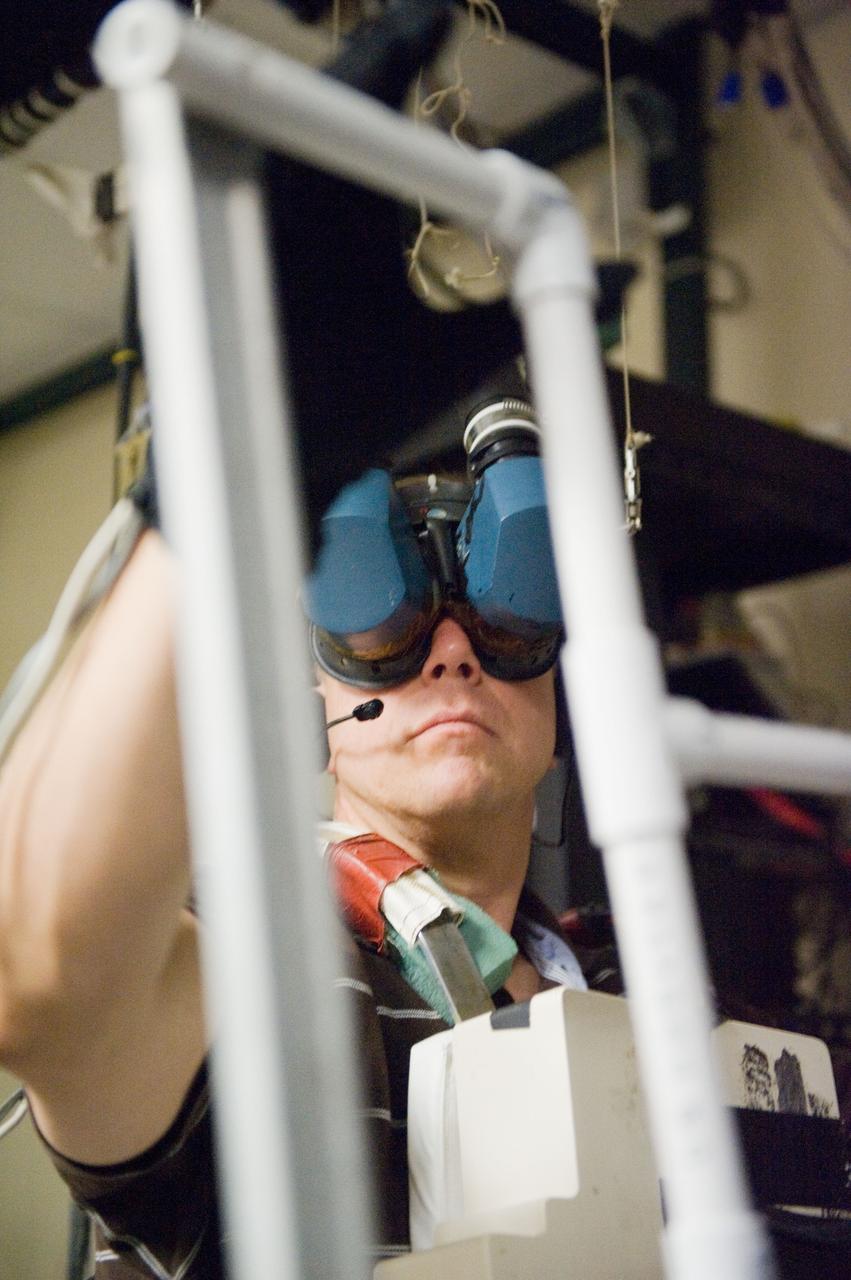
JSC2010-E-170897 (1 Oct. 2010) --- NASA astronaut Tim Kopra, STS-133 mission specialist, uses virtual reality hardware in the Space Vehicle Mock-up Facility at NASA's Johnson Space Center to rehearse some of his duties on the upcoming mission to the International Space Station. This type of virtual reality training allows the astronauts to wear a helmet and special gloves while looking at computer displays simulating actual movements around the various locations on the station hardware with which they will be working. Photo credit: NASA or National Aeronautics and Space Administration
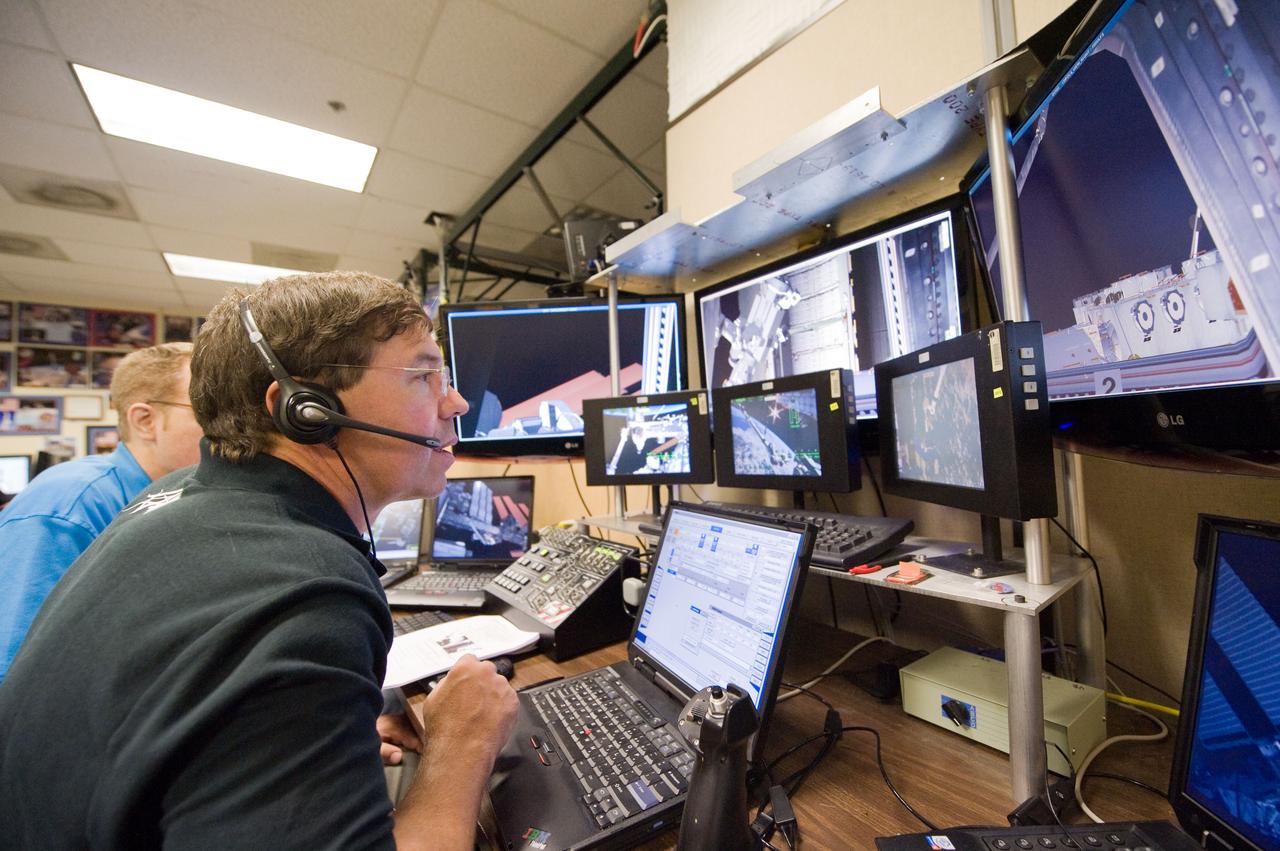
JSC2010-E-170878 (1 Oct. 2010) --- NASA astronaut Michael Barratt, STS-133 mission specialist, uses the virtual reality lab in the Space Vehicle Mock-up Facility at NASA's Johnson Space Center to train for some of his duties aboard the space shuttle and space station. This type of computer interface, paired with virtual reality training hardware and software, helps to prepare crew members for dealing with space station elements. Photo credit: NASA or National Aeronautics and Space Administration
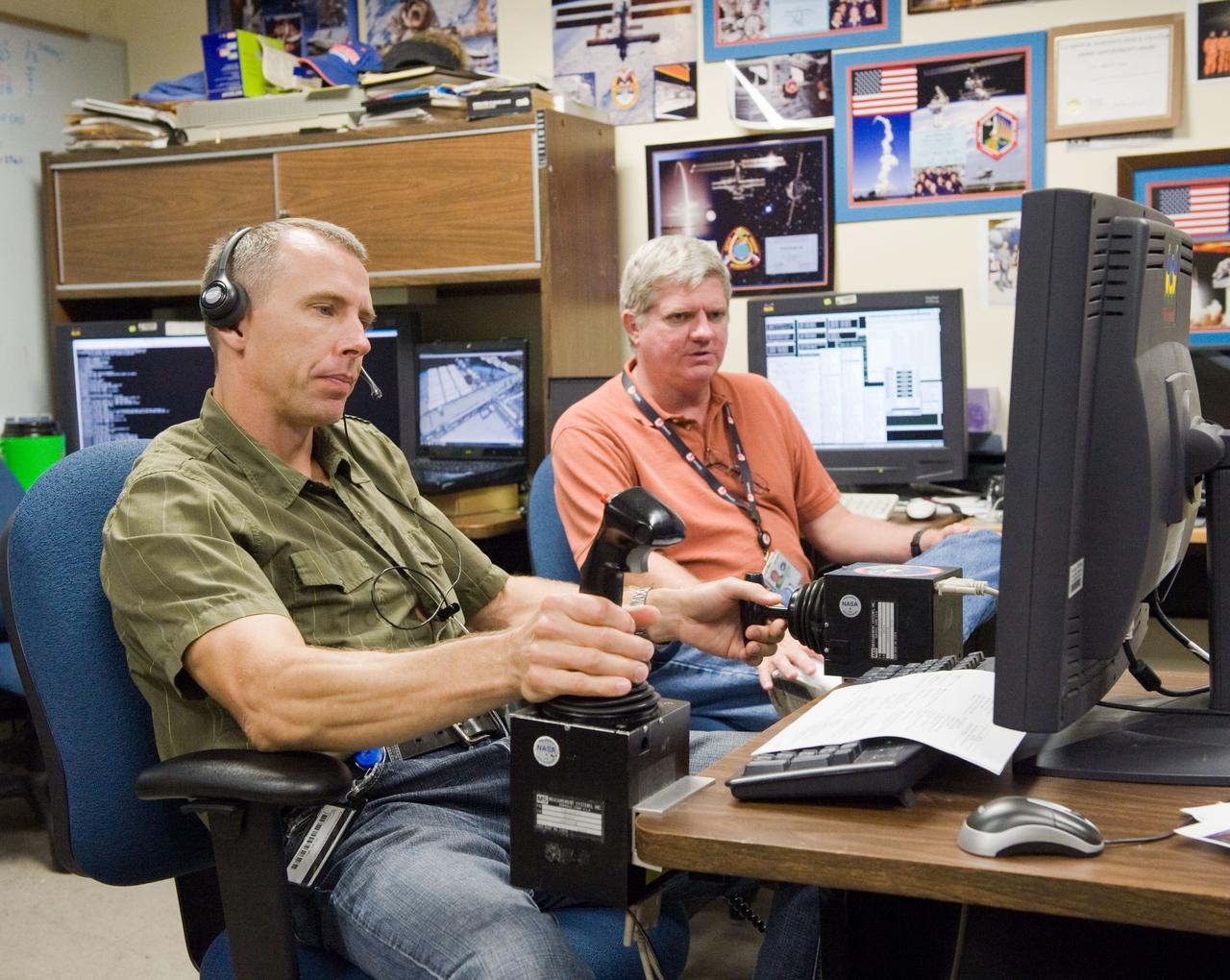
JSC2010-E-121049 (27 Aug. 2010) --- NASA astronaut Andrew Feustel (foreground), STS-134 mission specialist, uses the virtual reality lab in the Space Vehicle Mock-up Facility at NASA's Johnson Space Center to train for some of his duties aboard the space shuttle and space station. This type of computer interface, paired with virtual reality training hardware and software, helps to prepare crew members for dealing with space station elements. Photo credit: NASA or National Aeronautics and Space Administration
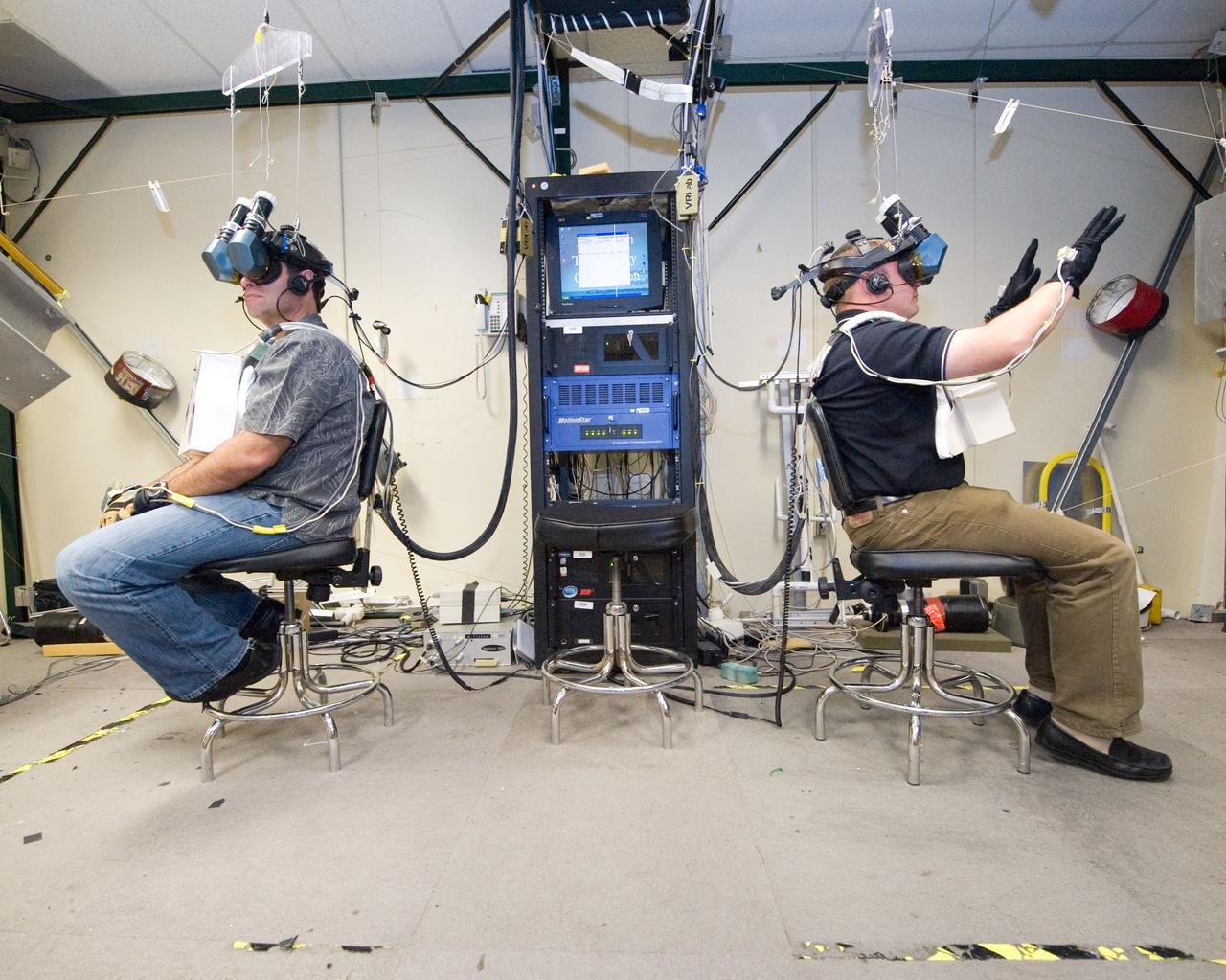
JSC2010-E-121055 (27 Aug. 2010) --- NASA astronauts Michael Fincke (right) and Greg Chamitoff, both STS-134 mission specialists, use virtual reality hardware in the Space Vehicle Mock-up Facility at NASA's Johnson Space Center to rehearse some of their duties on the upcoming mission to the International Space Station. This type of virtual reality training allows the astronauts to wear a helmet and special gloves while looking at computer displays simulating actual movements around the various locations on the station hardware with which they will be working. Photo credit: NASA or National Aeronautics and Space Administration
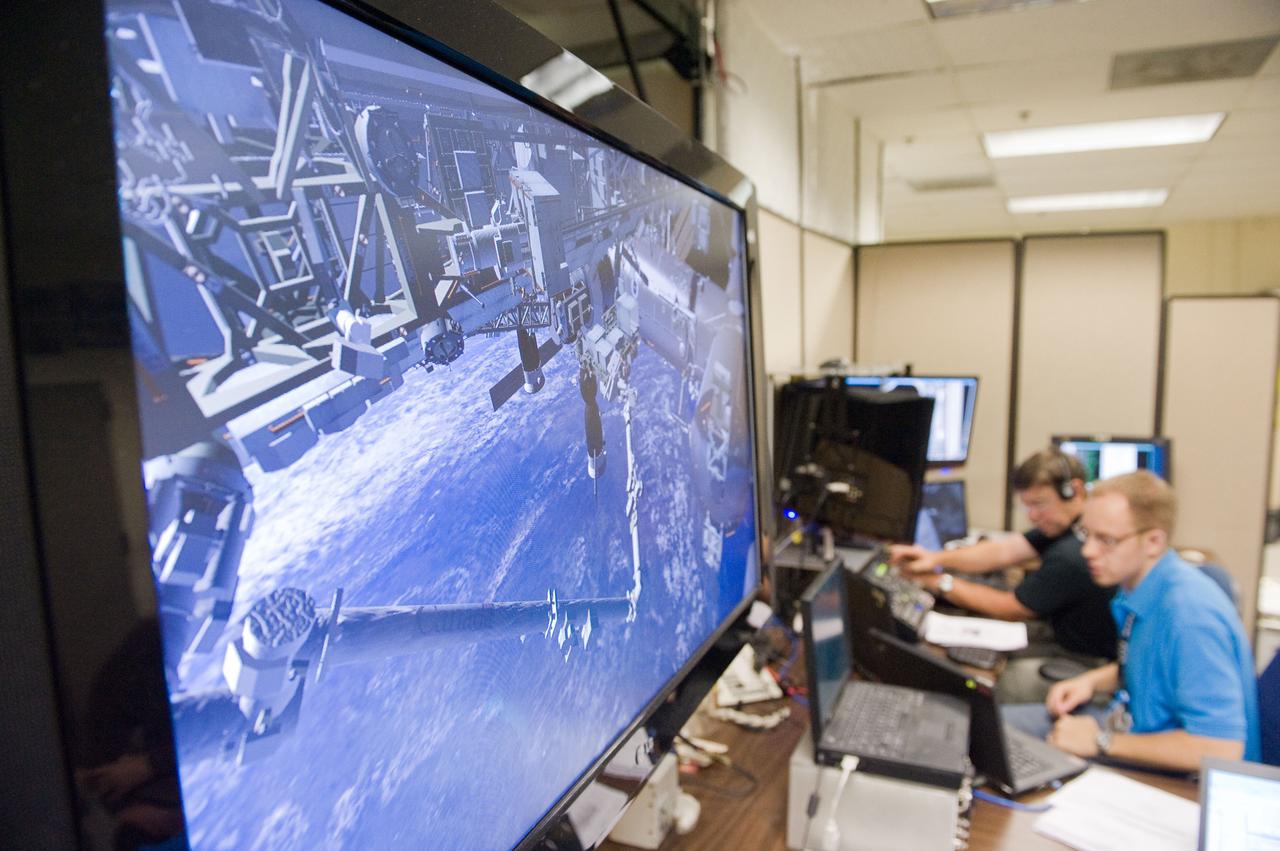
JSC2010-E-170877 (1 Oct. 2010) --- A large monitor is featured in this image during STS-133 crew members? training activities in the virtual reality laboratory in the Space Vehicle Mock-up Facility at NASA's Johnson Space Center. Photo credit: NASA or National Aeronautics and Space Administration
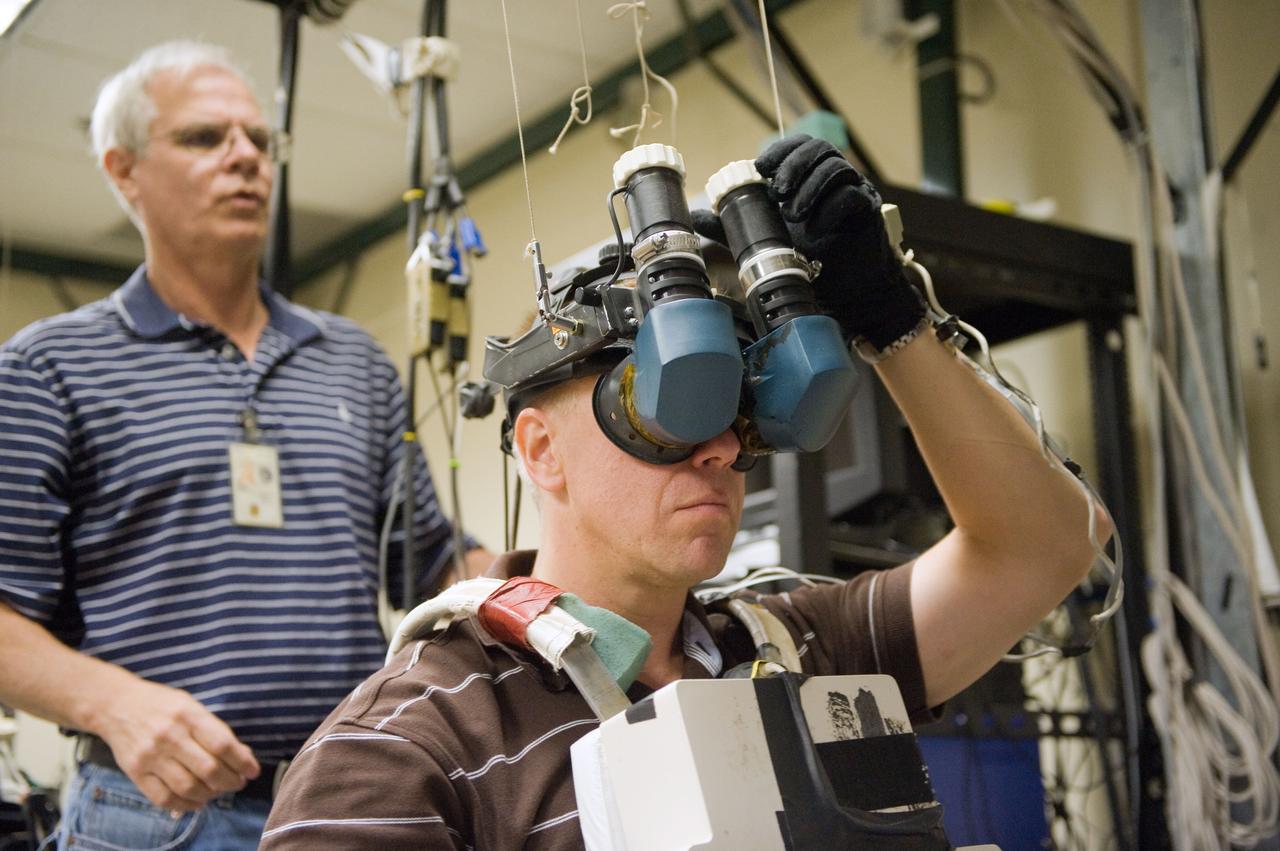
JSC2010-E-170871 (1 Oct. 2010) --- NASA astronaut Tim Kopra, STS-133 mission specialist, uses virtual reality hardware in the Space Vehicle Mock-up Facility at NASA's Johnson Space Center to rehearse some of his duties on the upcoming mission to the International Space Station. This type of virtual reality training allows the astronauts to wear a helmet and special gloves while looking at computer displays simulating actual movements around the various locations on the station hardware with which they will be working. Crew trainer David Homan assisted Kopra. Photo credit: NASA or National Aeronautics and Space Administration
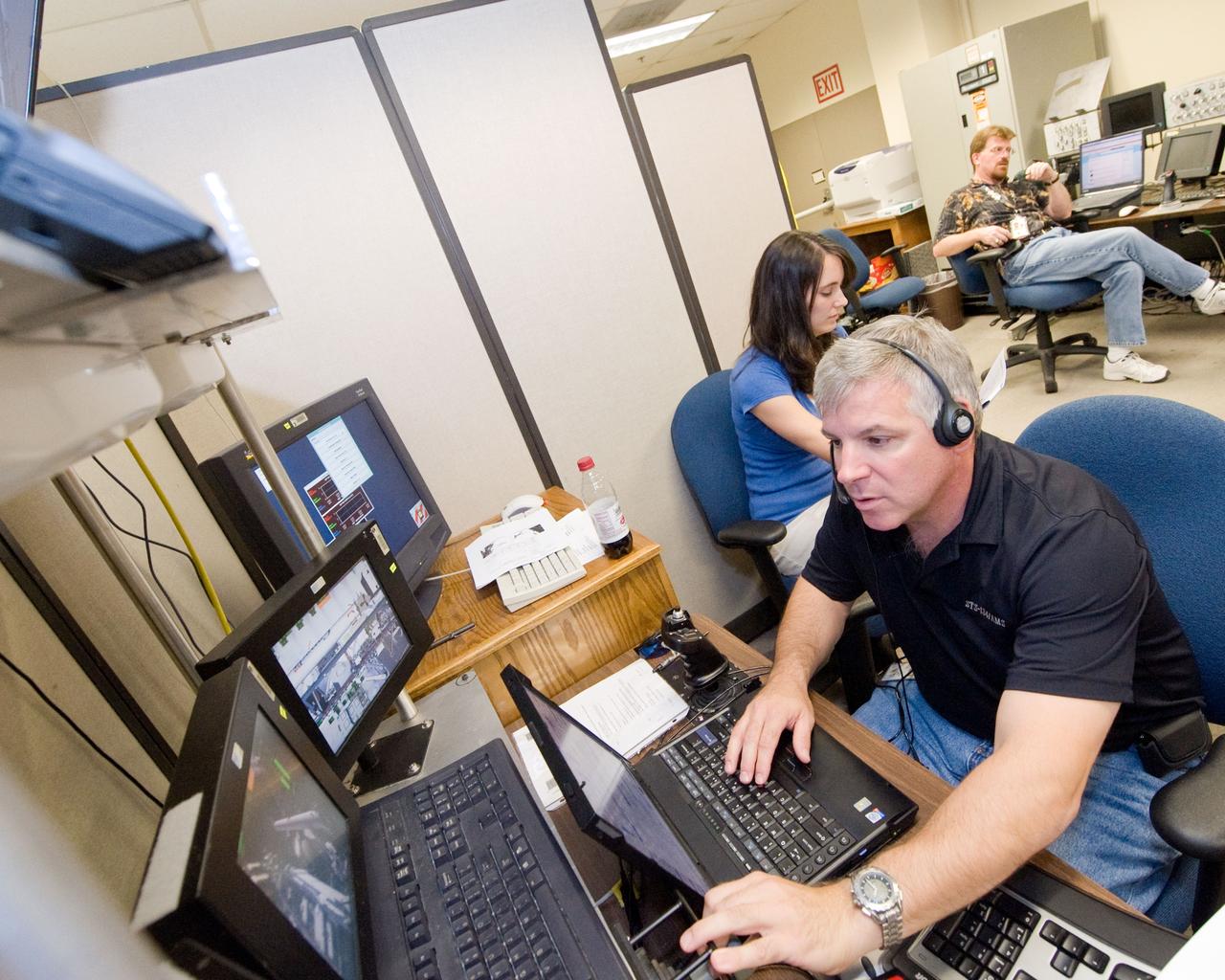
JSC2010-E-121056 (27 Aug. 2010) --- NASA astronaut Gregory H. Johnson, STS-134 pilot, uses the virtual reality lab in the Space Vehicle Mock-up Facility at NASA's Johnson Space Center to train for some of his duties aboard the space shuttle and space station. This type of computer interface, paired with virtual reality training hardware and software, helps to prepare crew members for dealing with space station elements. Photo credit: NASA or National Aeronautics and Space Administration

JSC2010-E-170892 (1 Oct. 2010) --- NASA astronaut Alvin Drew, STS-133 mission specialist, uses virtual reality hardware in the Space Vehicle Mock-up Facility at NASA's Johnson Space Center to rehearse some of his duties on the upcoming mission to the International Space Station. This type of virtual reality training allows the astronauts to wear a helmet and special gloves while looking at computer displays simulating actual movements around the various locations on the station hardware with which they will be working. Photo credit: NASA or National Aeronautics and Space Administration

JSC2010-E-170873 (1 Oct. 2010) --- NASA astronaut Tim Kopra, STS-133 mission specialist, uses virtual reality hardware in the Space Vehicle Mock-up Facility at NASA's Johnson Space Center to rehearse some of his duties on the upcoming mission to the International Space Station. This type of virtual reality training allows the astronauts to wear a helmet and special gloves while looking at computer displays simulating actual movements around the various locations on the station hardware with which they will be working. Crew trainer David Homan assisted Kopra. Photo credit: NASA or National Aeronautics and Space Administration
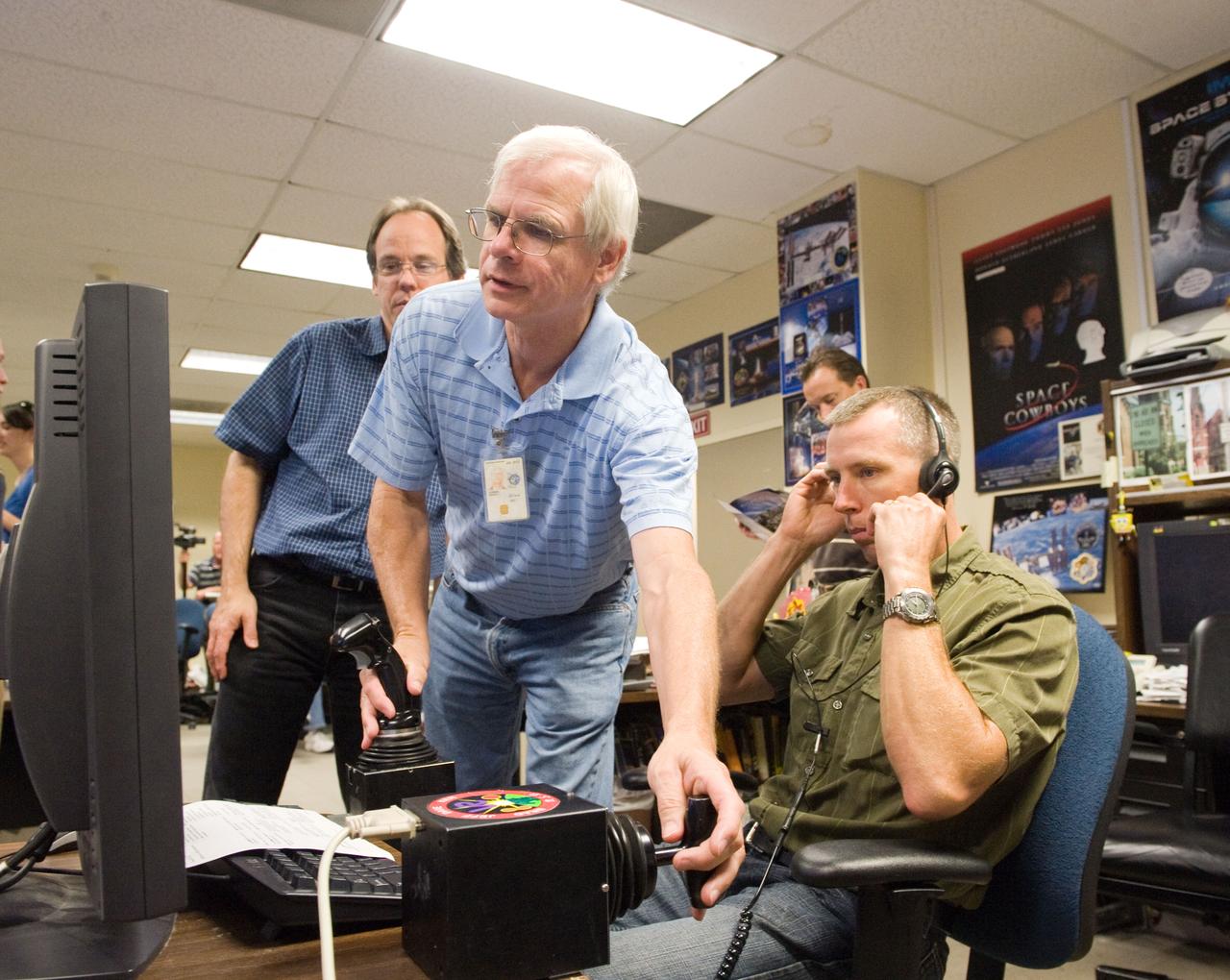
JSC2010-E-121045 (27 Aug. 2010) --- NASA astronaut Andrew Feustel (right), STS-134 mission specialist, uses the virtual reality lab in the Space Vehicle Mock-up Facility at NASA's Johnson Space Center to train for some of his duties aboard the space shuttle and space station. This type of computer interface, paired with virtual reality training hardware and software, helps to prepare crew members for dealing with space station elements. David Homan assisted Feustel. Photo credit: NASA or National Aeronautics and Space Administration
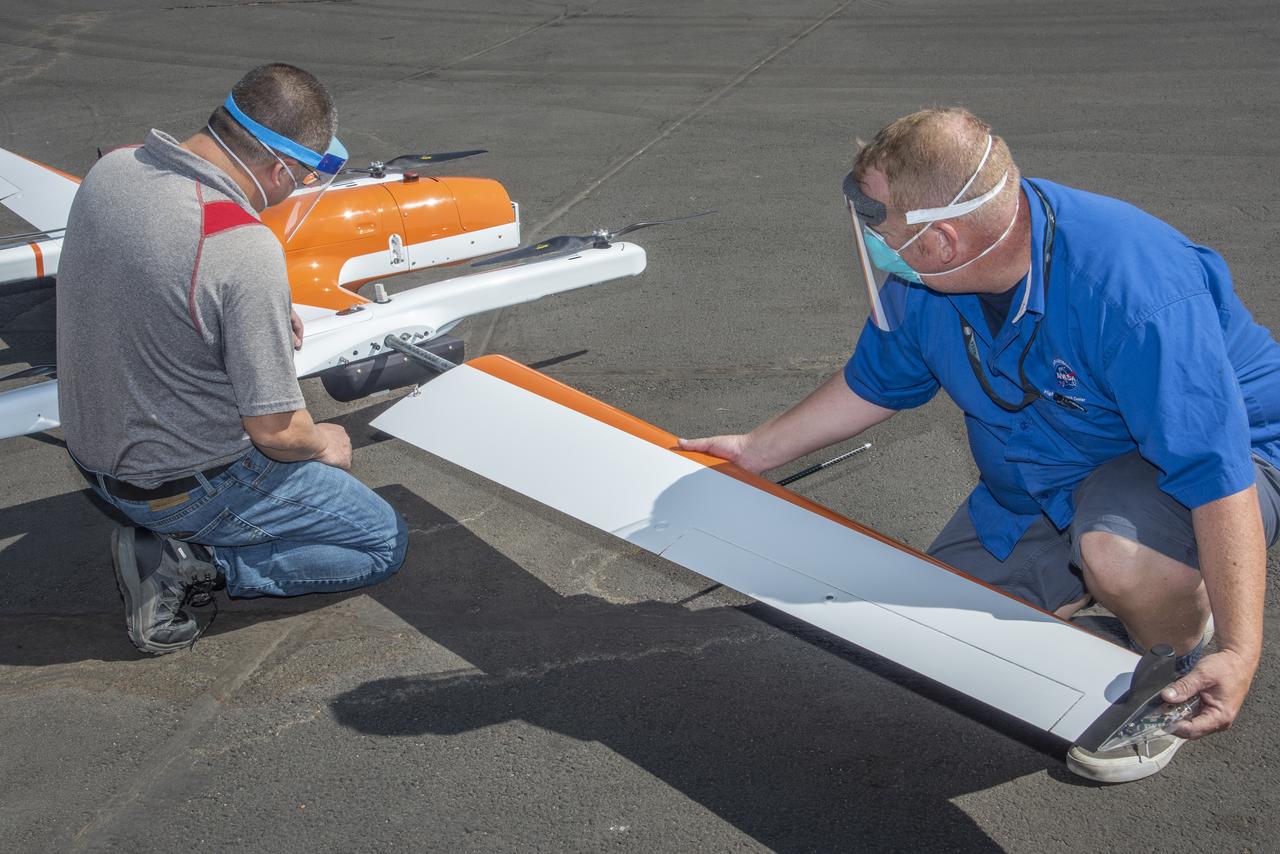
Derek Abramson and Robert Jensen install a wing on the Hybrid Quadrotor 90C (HQ-90) at NASA Armstrong Flight Research Center's Dale Reed Subscale Flight Research Lab in California on Oct. 1, 2020. This vertical lift and transition remotely piloted aircraft arrived in pieces packed in crates for the Resilient Autonomy project to test software in flight.
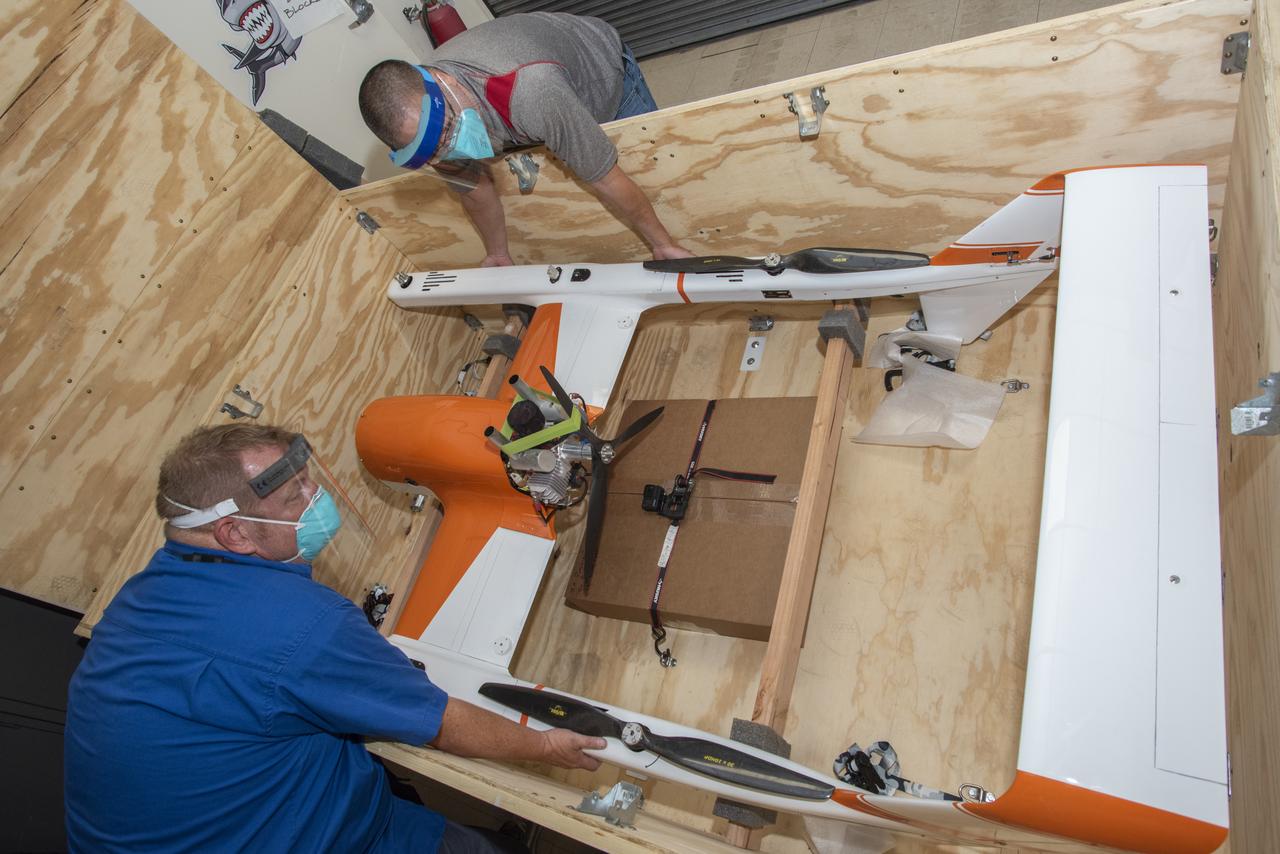
Derek Abramson and Robert Jensen unload the Hybrid Quadrotor 90C (HQ-90) at NASA Armstrong Flight Research Center’s Dale Reed Subscale Flight Research Lab in California on Oct. 1, 2020. The Resilient Autonomy project will use the vertical lift and transition remotely piloted aircraft for software testing at NASA Armstrong.
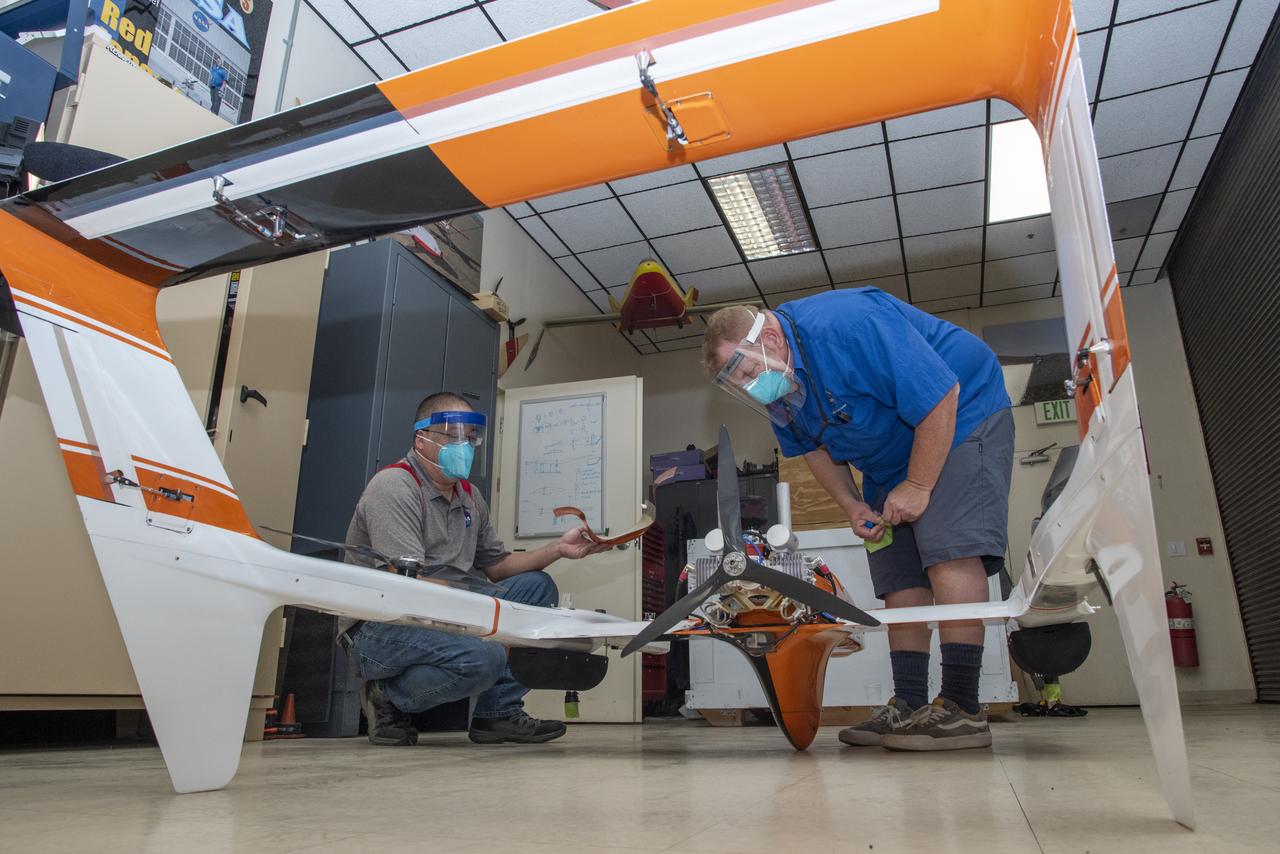
Derek Abramson and Robert Jensen assemble pieces of the Hybrid Quadrotor 90C (HQ-90) at NASA Armstrong Flight Research Center’s Dale Reed Subscale Flight Research Lab in California on Oct. 1, 2020. This vertical lift and transition remotely piloted aircraft arrived in pieces packed in crates. It was reassembled for the Resilient Autonomy project to test software in flight.
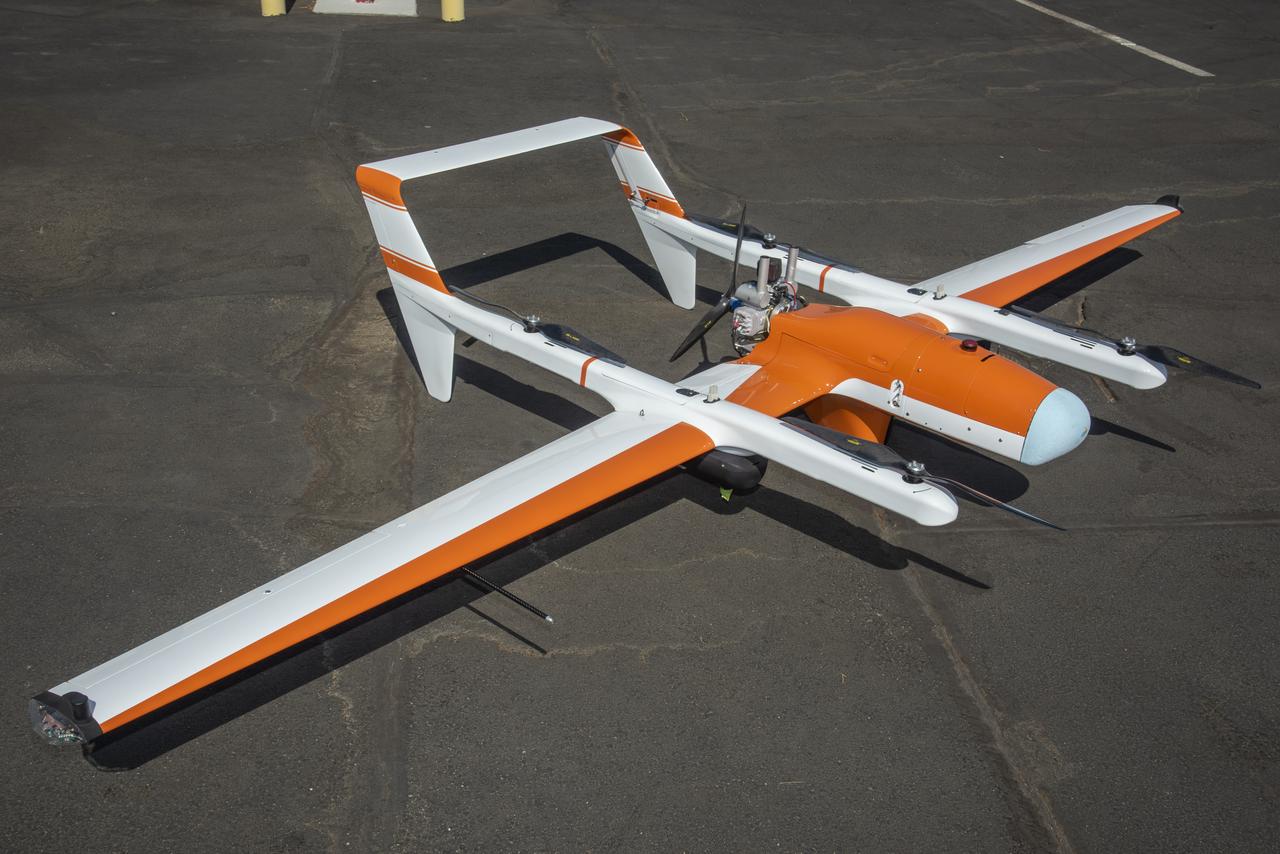
The Hybrid Quadrotor 90C (HQ-90) is displayed outside the NASA Armstrong Flight Research Center’s Dale Reed Subscale Flight Research Lab in California on Oct. 1, 2020. The Resilient Autonomy project will use this vertical lift and transition remotely piloted aircraft for software testing.
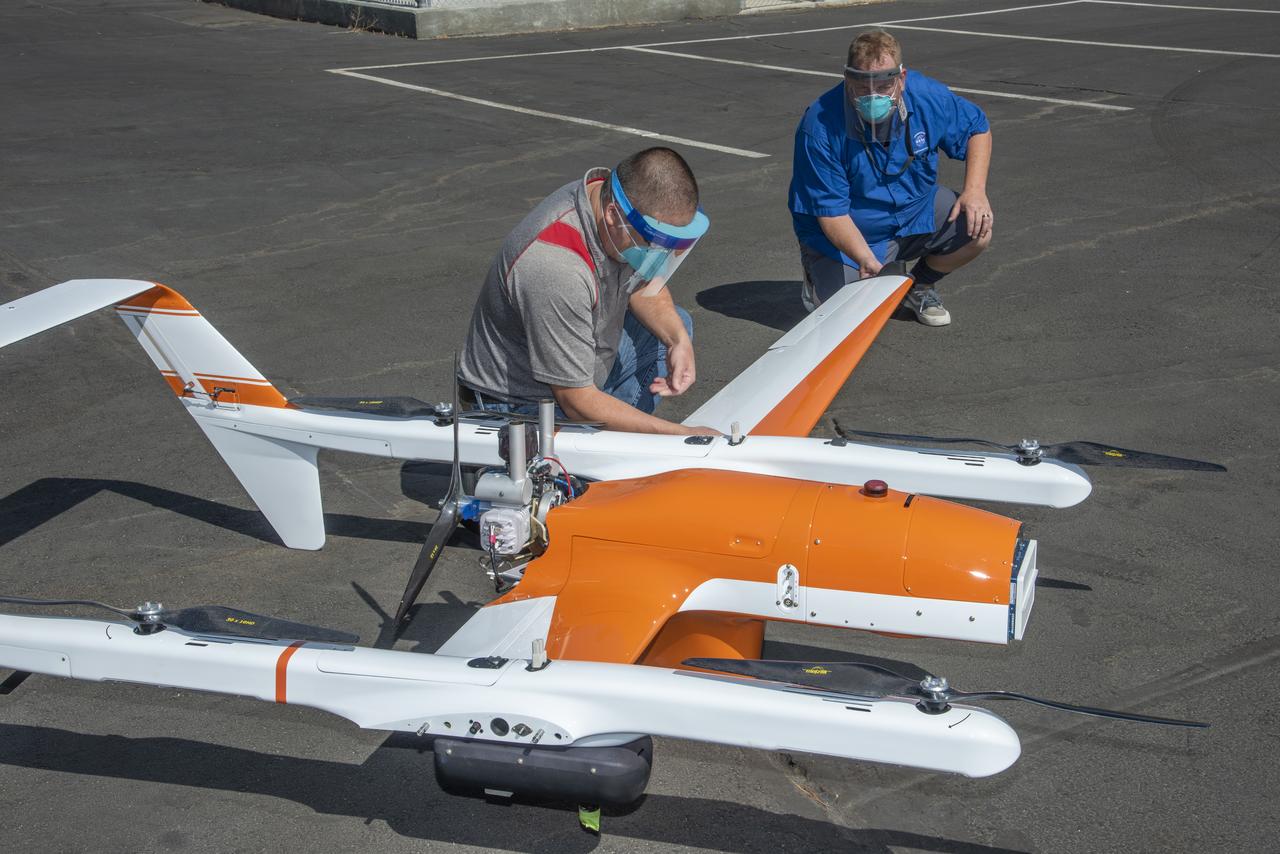
Derek Abramson and Robert Jensen install one of two wings on the Hybrid Quadrotor 90C (HQ-90) at NASA Armstrong Flight Research Center's Dale Reed Subscale Flight Research Lab in California on Oct. 1, 2020. This vertical lift and transition remotely piloted aircraft arrived in pieces packed in crates for the Resilient Autonomy project to test software in flight.