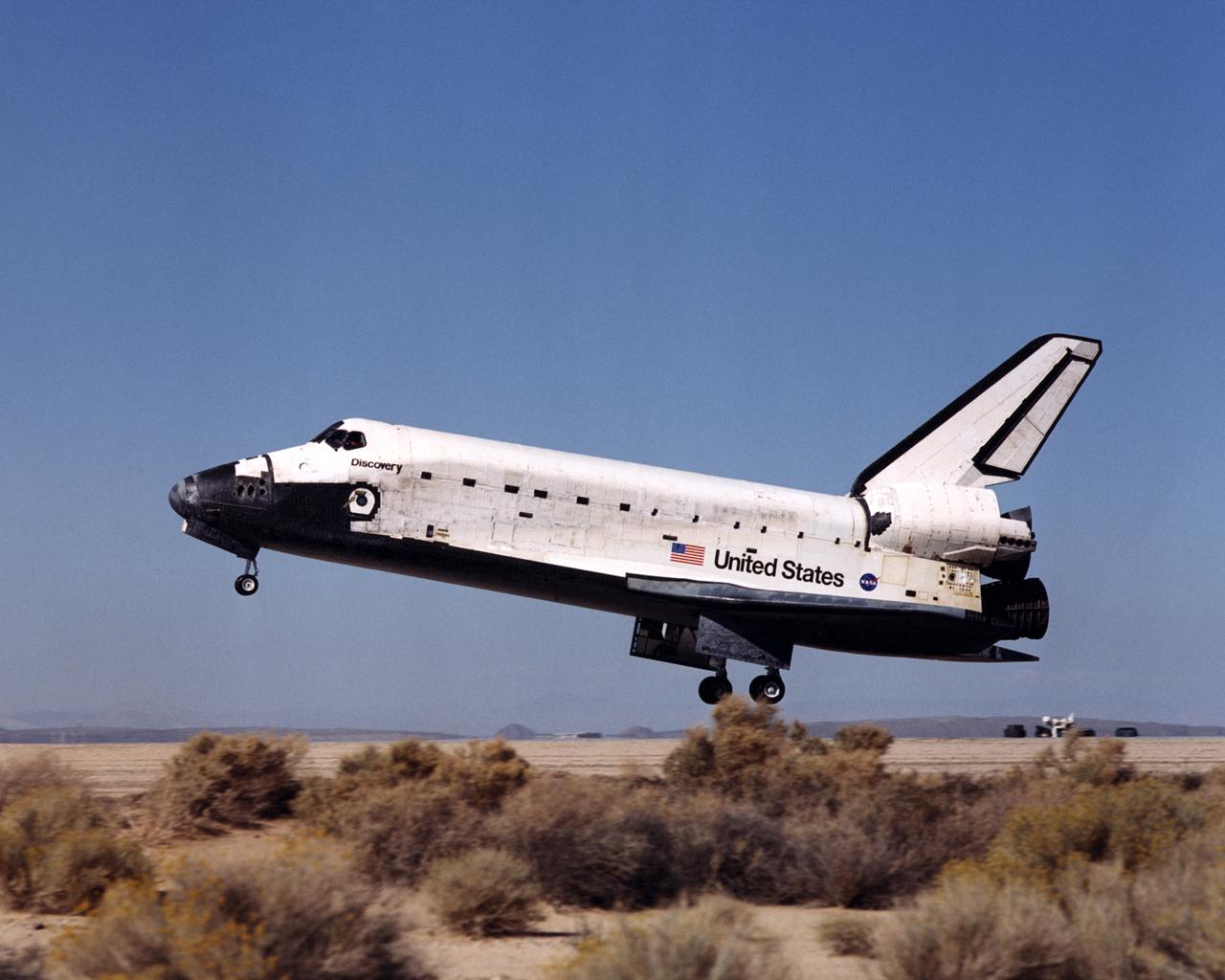
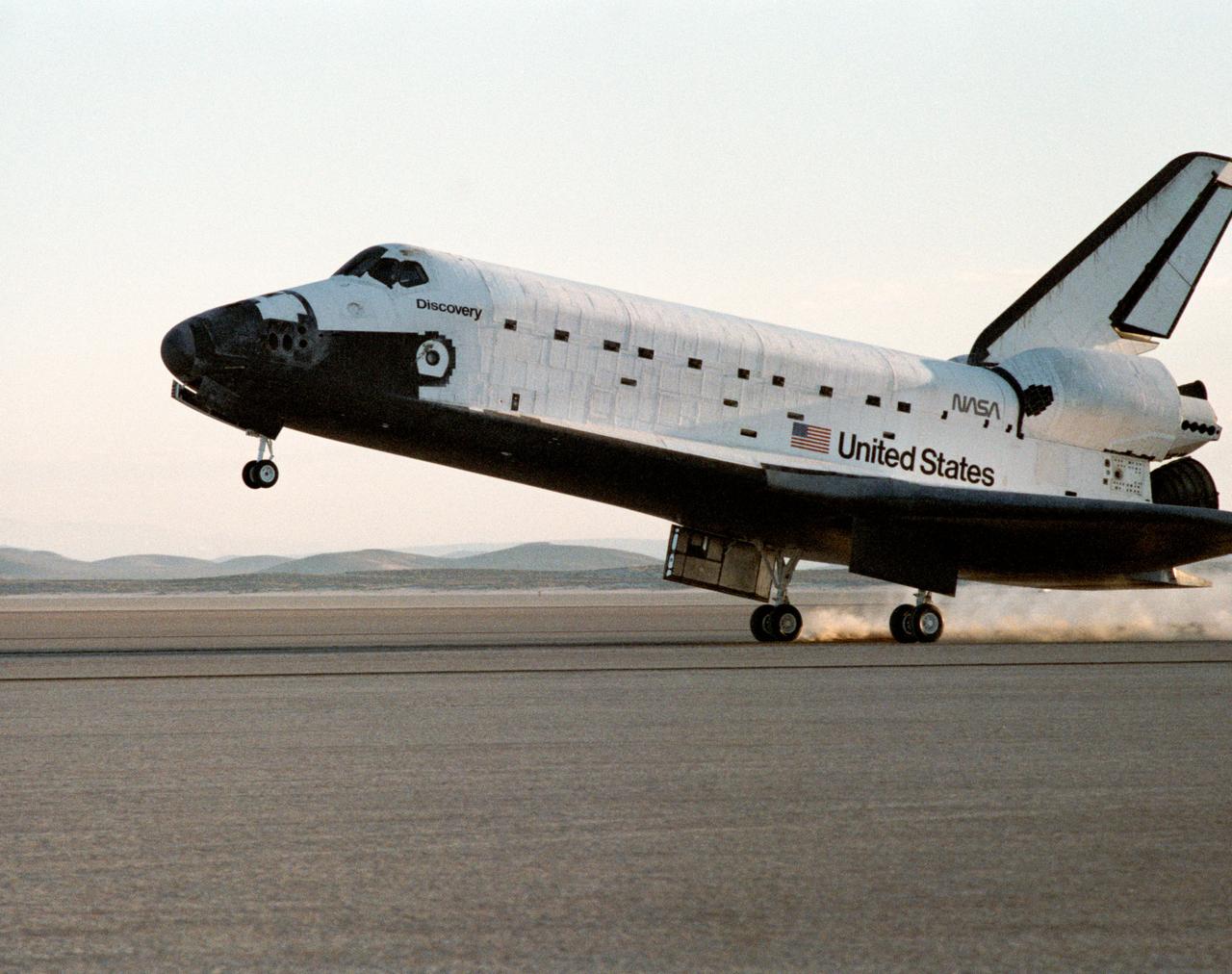
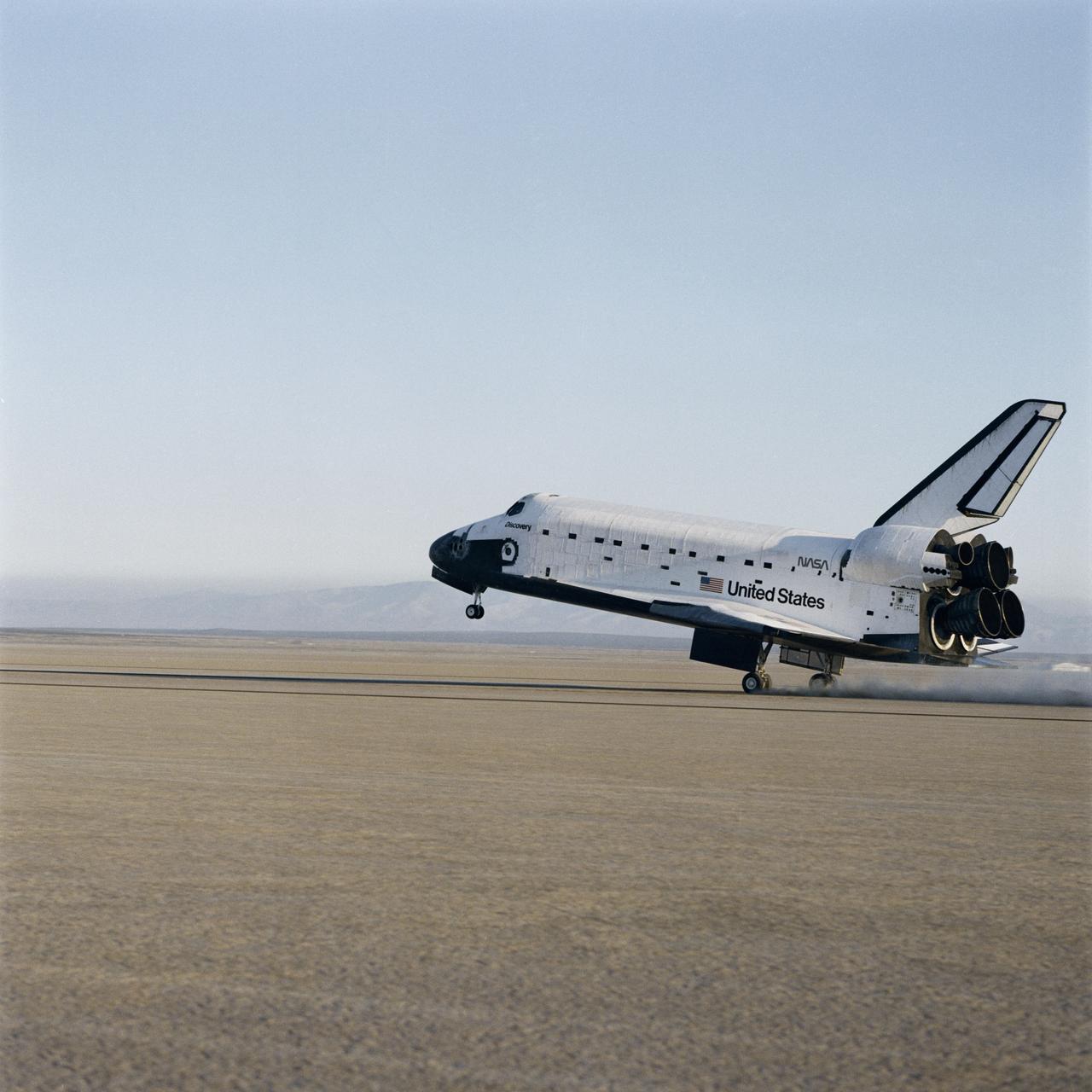
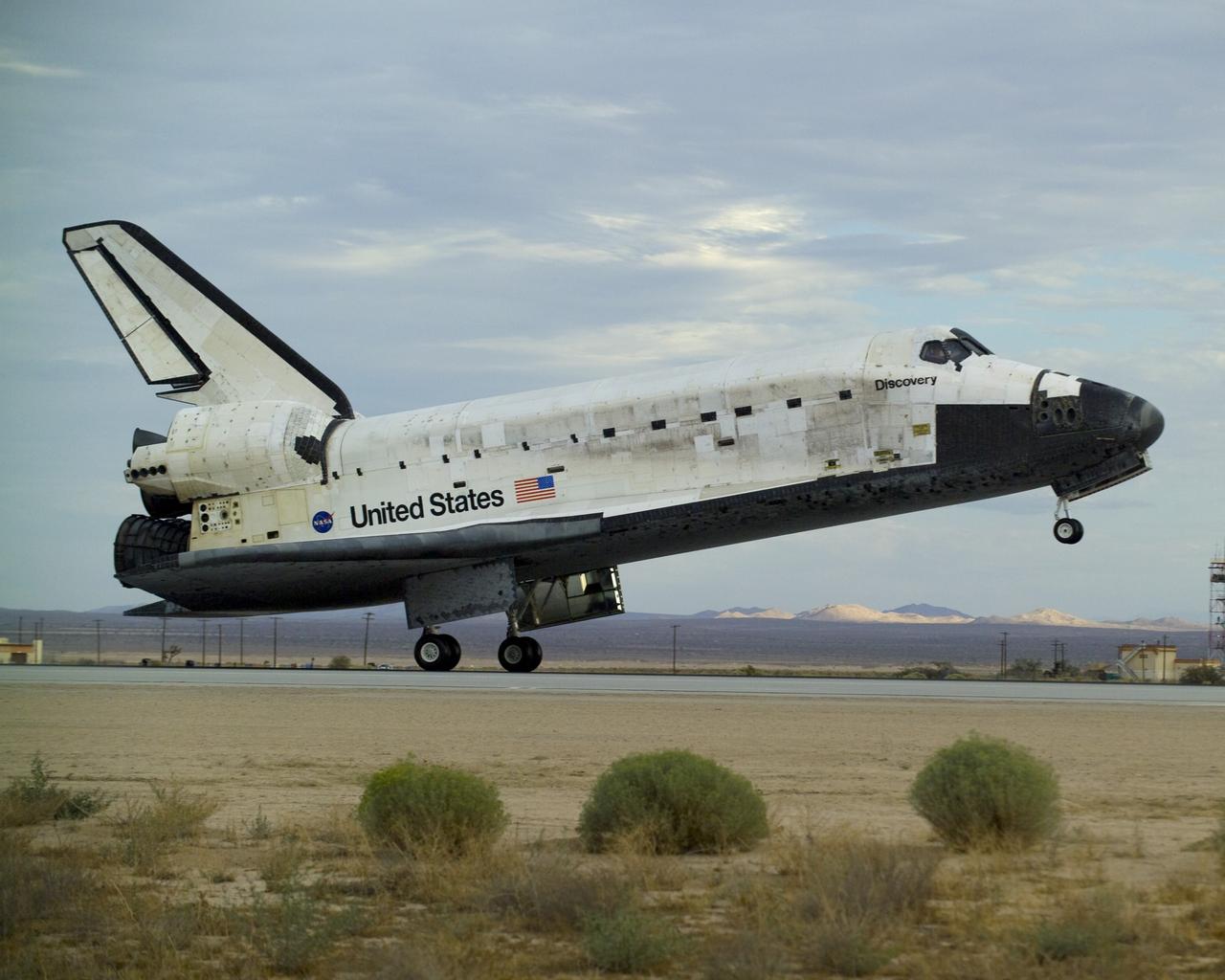
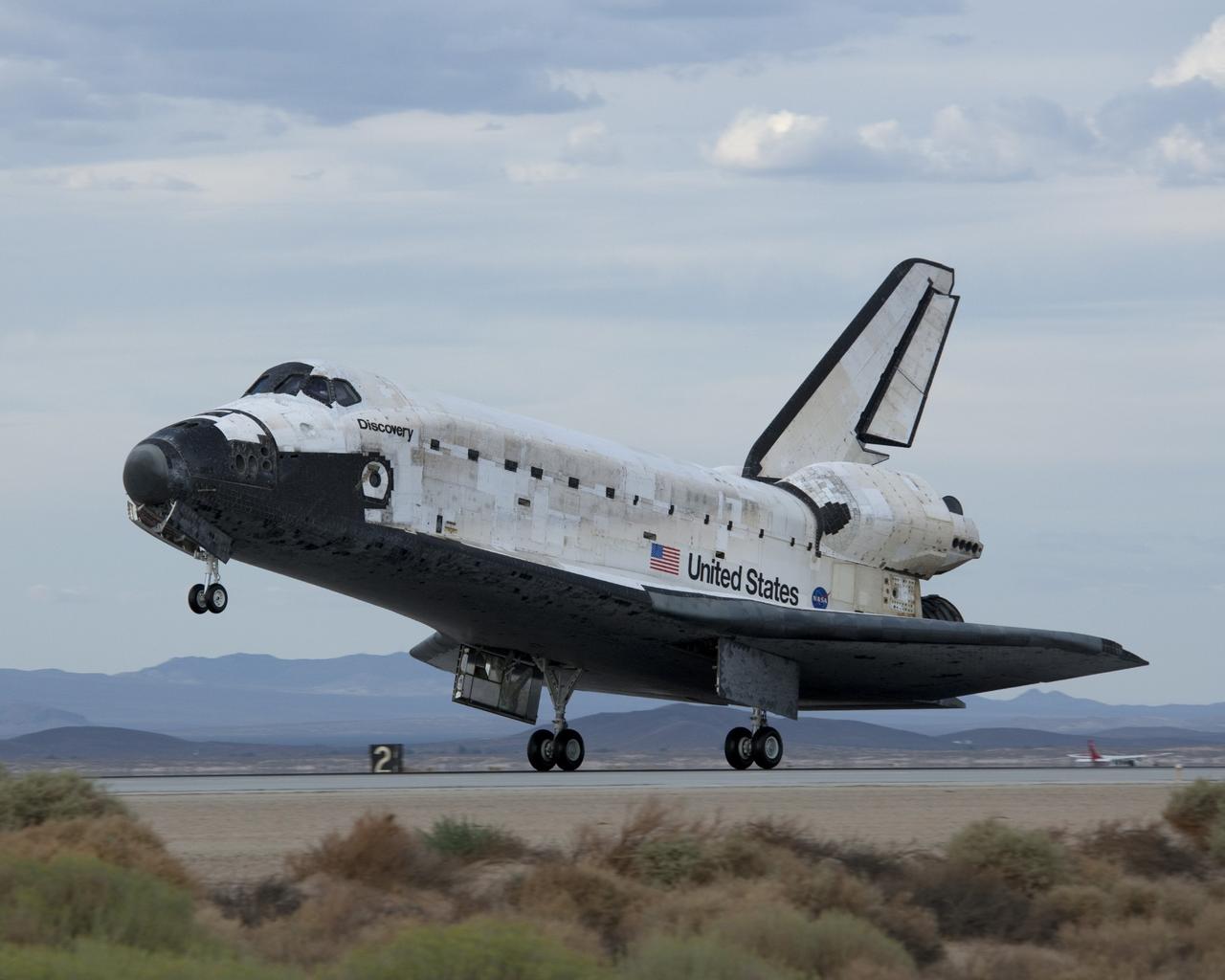
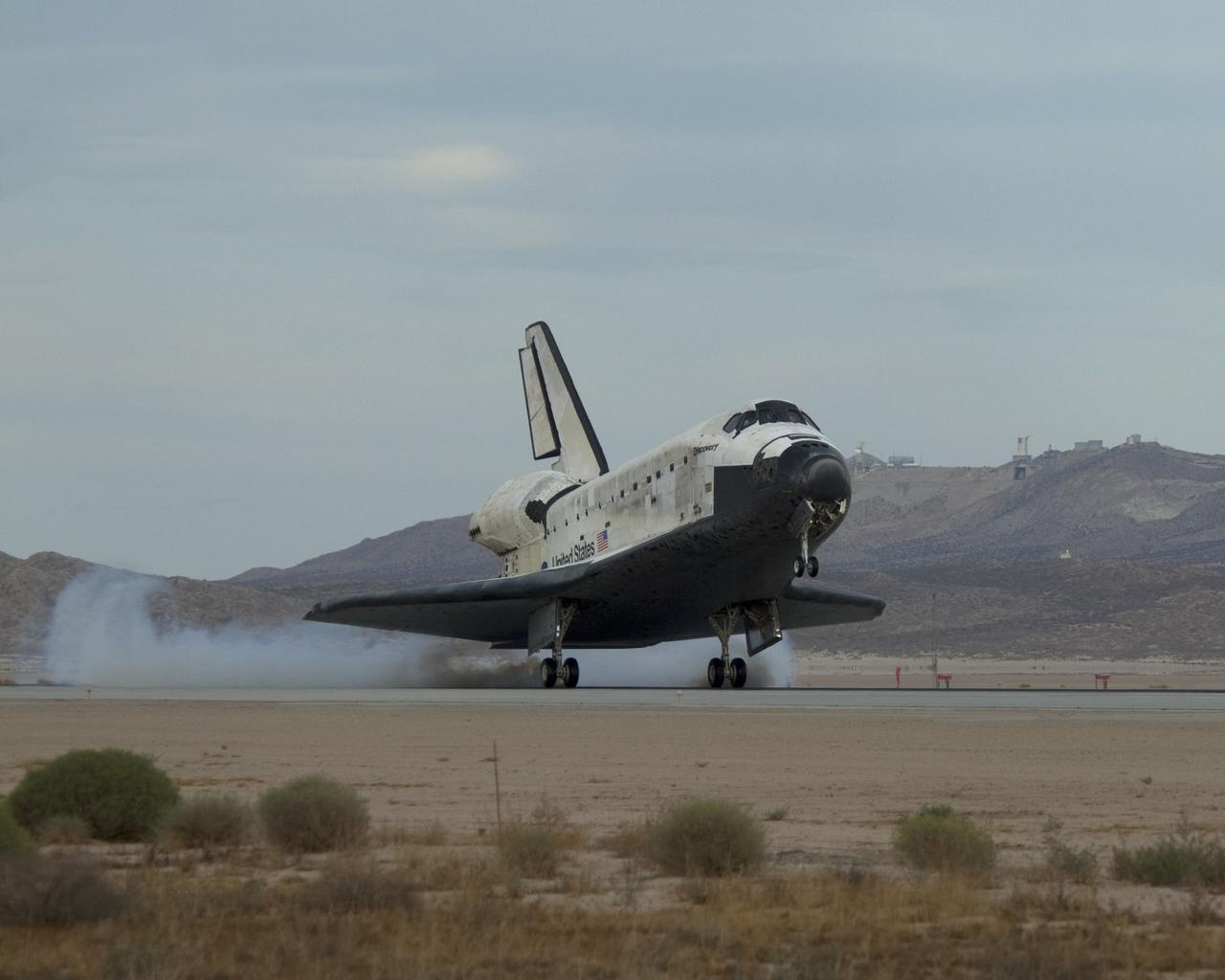
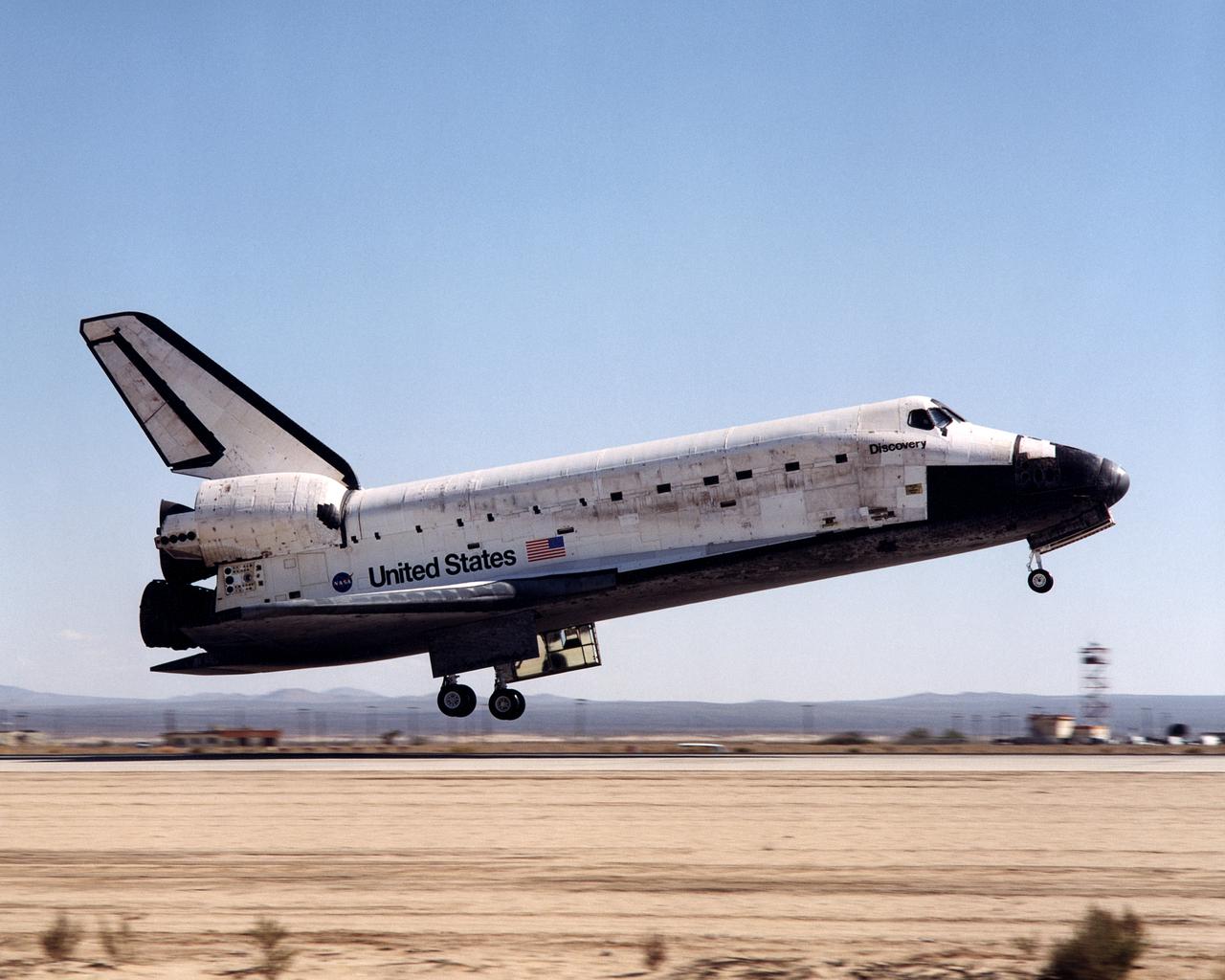
The Space Shuttle Discovery glides in for landing at Edwards Air Force Base in Southern California at the conclusion of mission STS-92 on October 24, 2000.
STS-92 - Landing at Edwards Air Force Base
The Space Shuttle Discovery glides in for landing at Edwards Air Force Base in Southern California at the conclusion of mission STS-92 on October 24, 2000.
STS-92 - Landing at Edwards Air Force Base
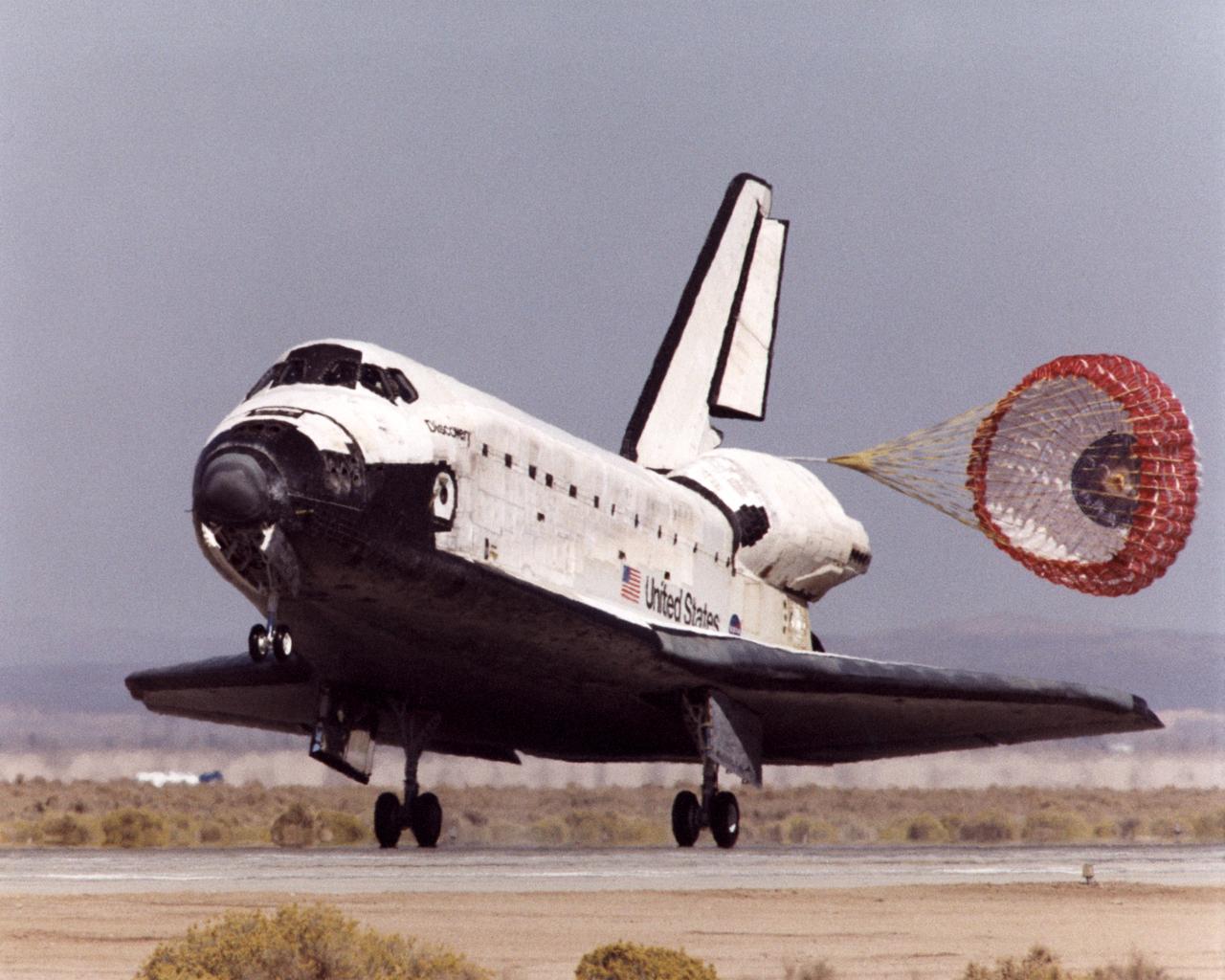
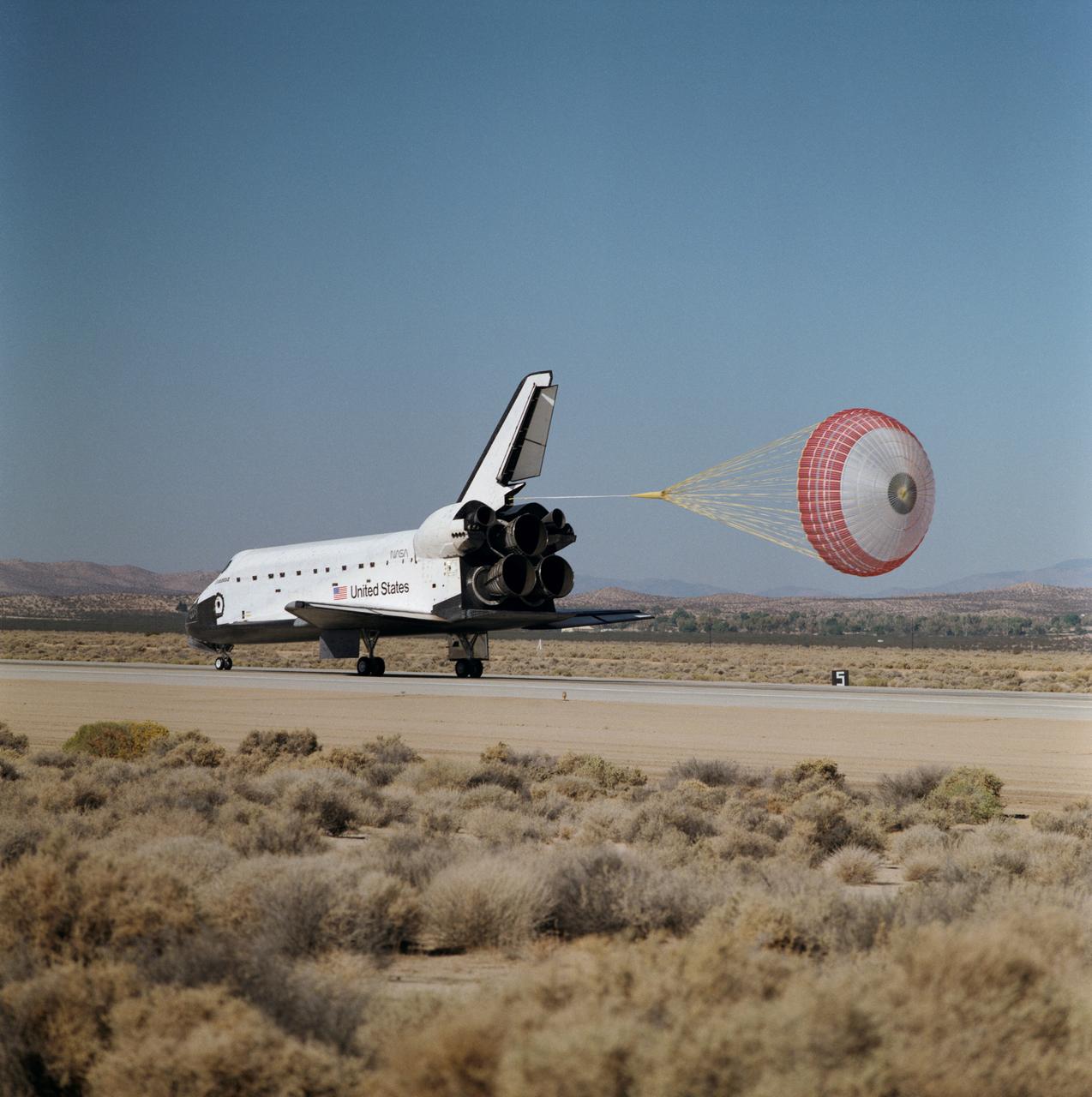
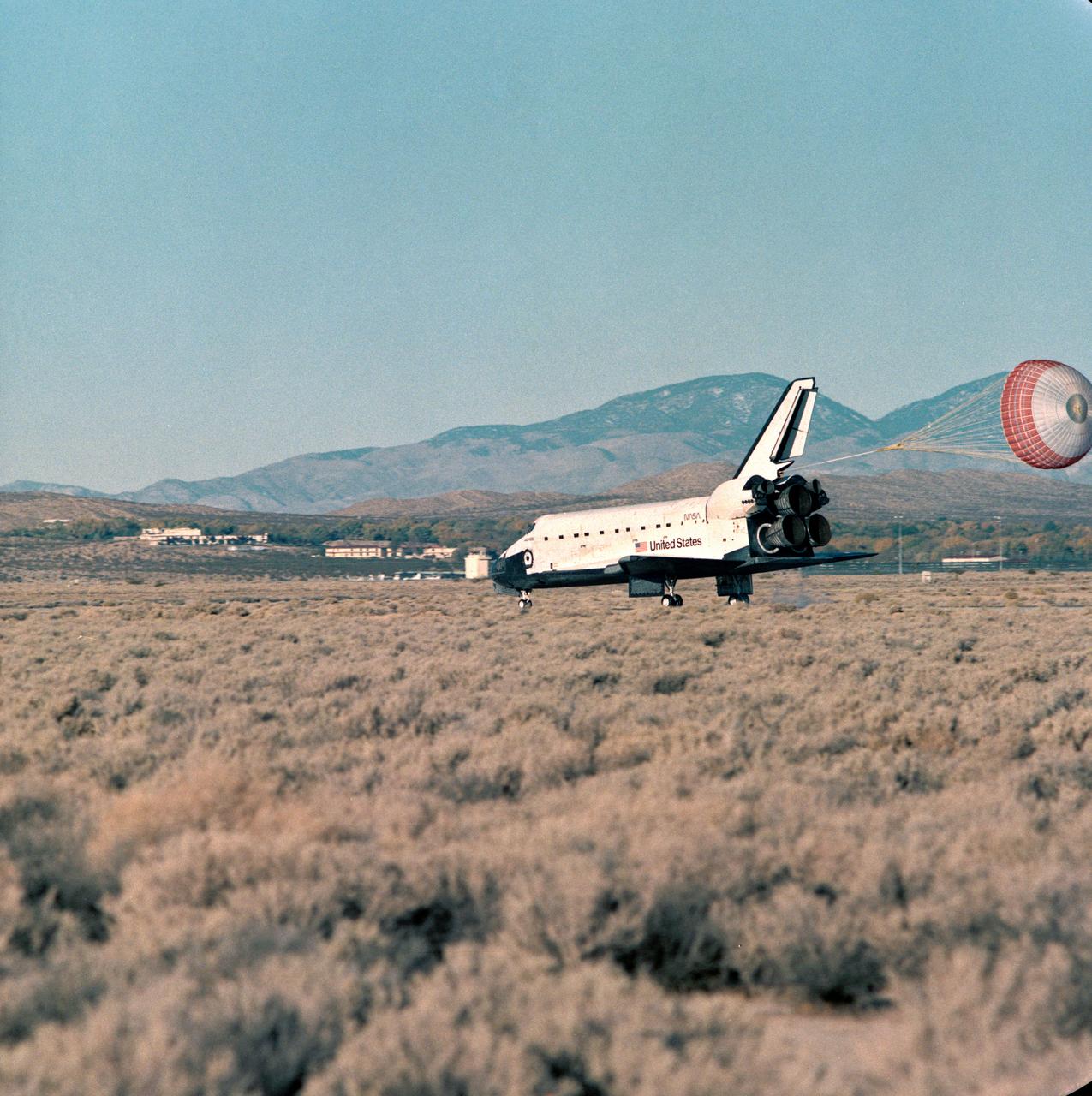
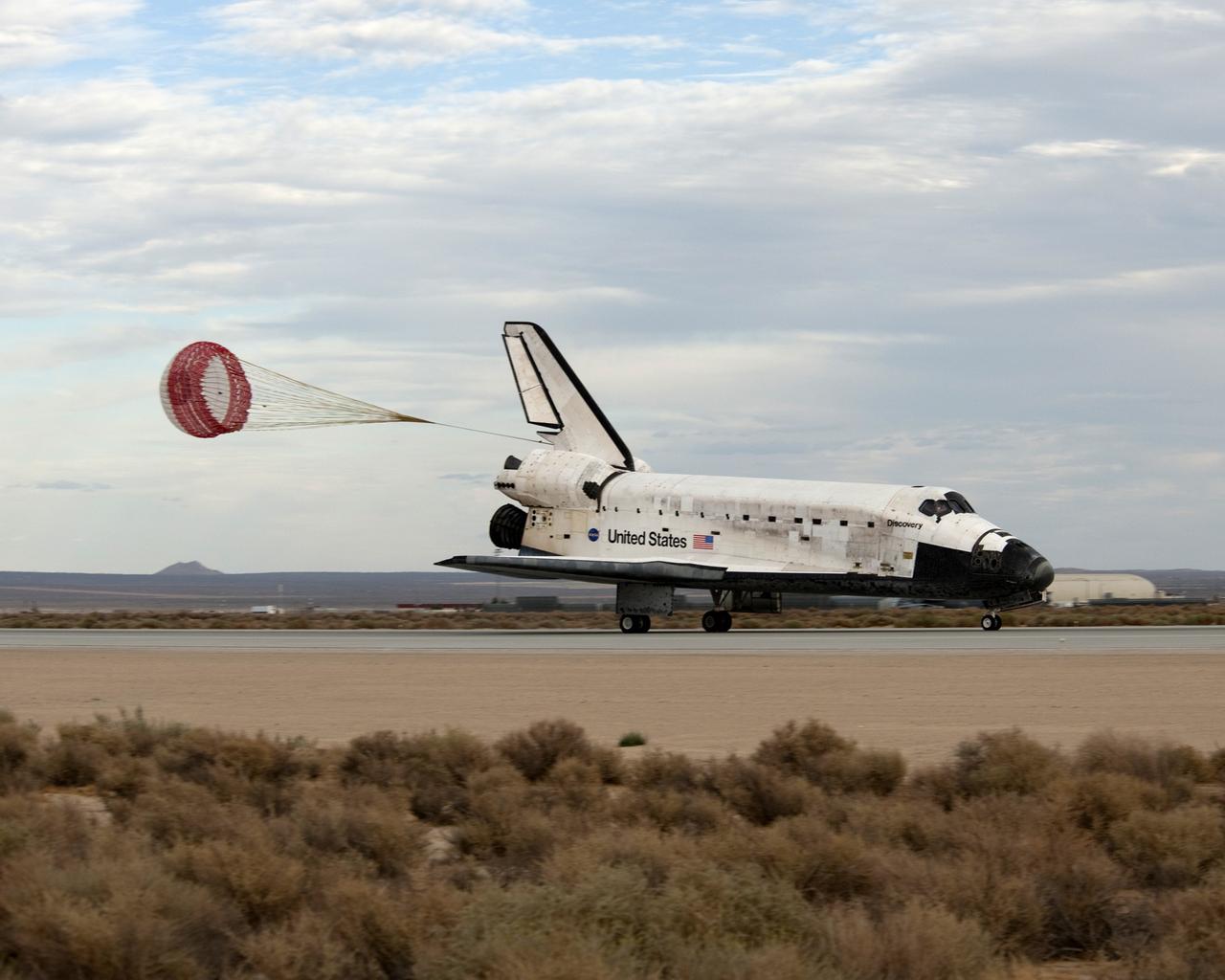
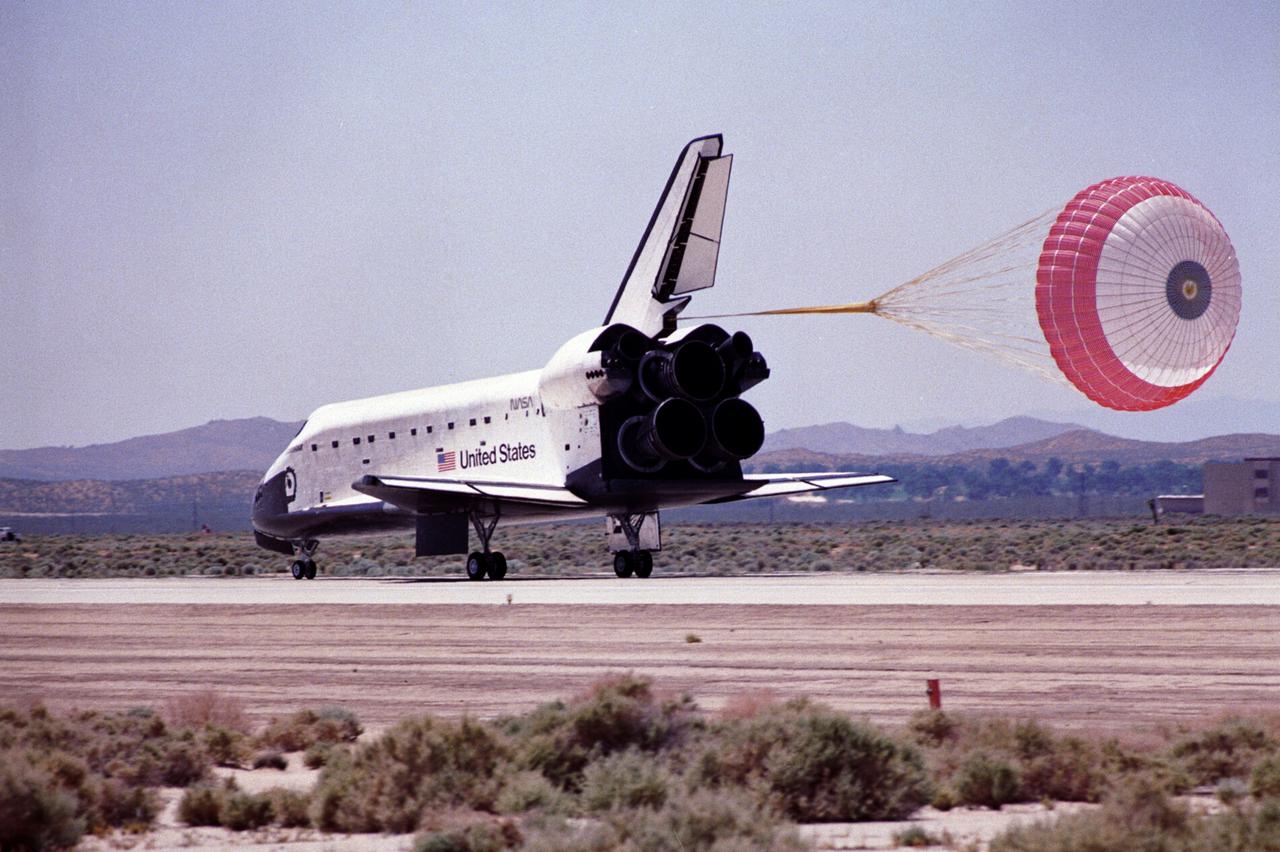
With its drag parachute deployed to help slow it down, the Space Shuttle Discovery rolls down the runway after landing at Edwards Air Force Base in Southern California at the conclusion of mission STS-92 on October 24, 2000.
STS-92 - Landing at Edwards Air Force Base
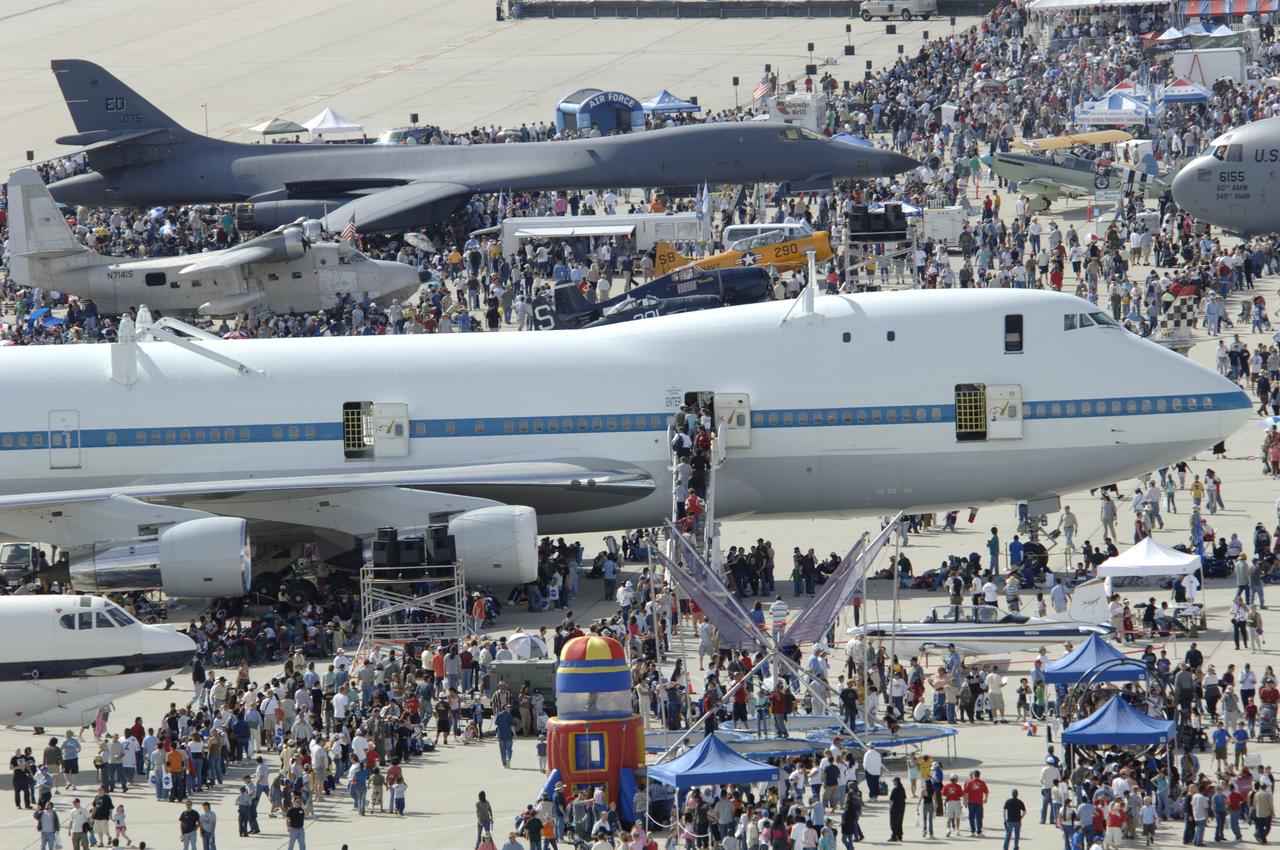
Crowds thronged around NASA's modified 747 Shuttle Carrier Aircraft and an Air Force B-1B Lancer at the Edwards Air Force Base open house Oct. 28-29, 2006.
Crowds thronged around NASA's modified 747 Shuttle Carrier Aircraft and an Air Force B-1B Lancer at the Edwards Air Force Base open house Oct. 28-29, 2006
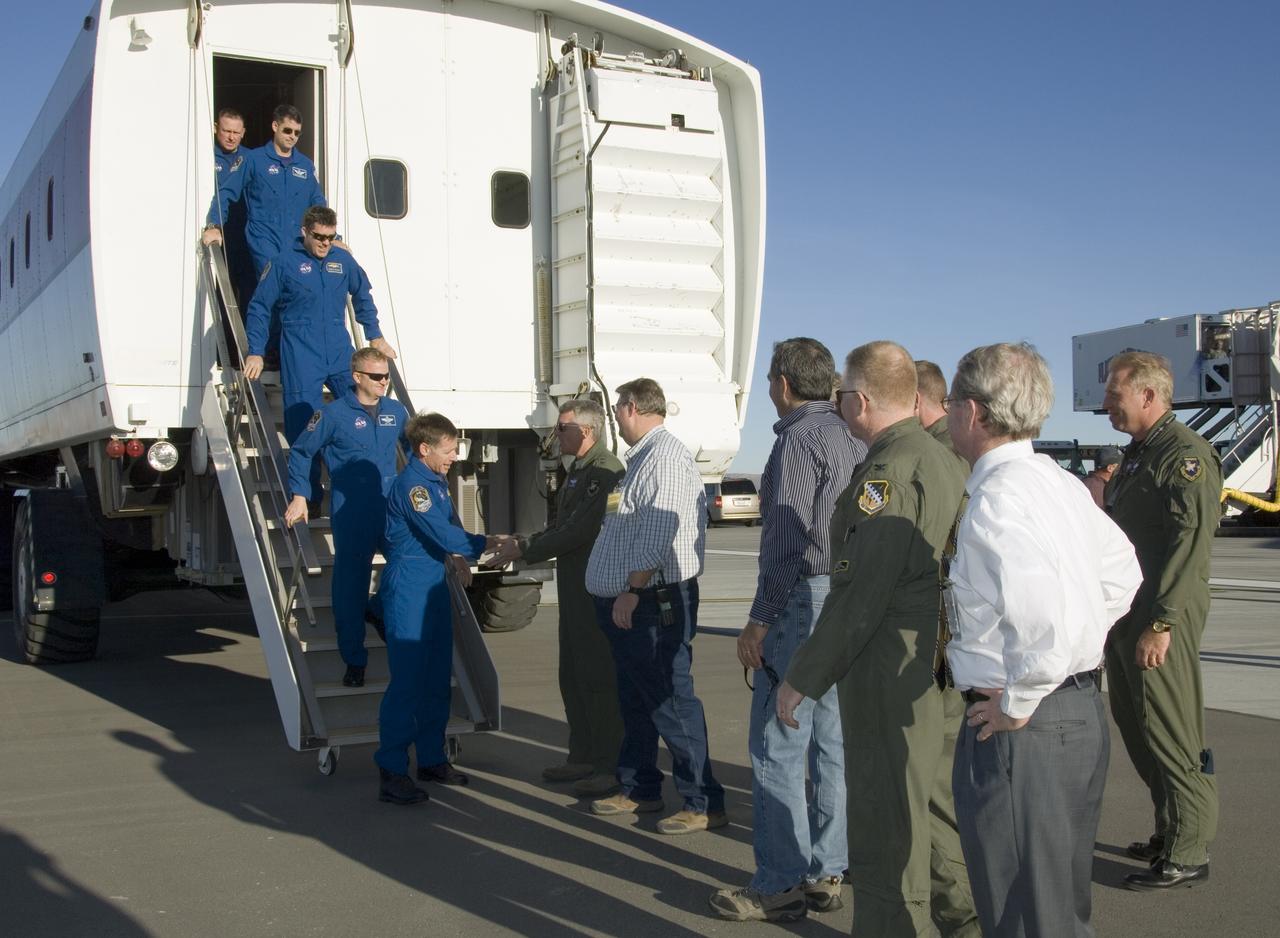
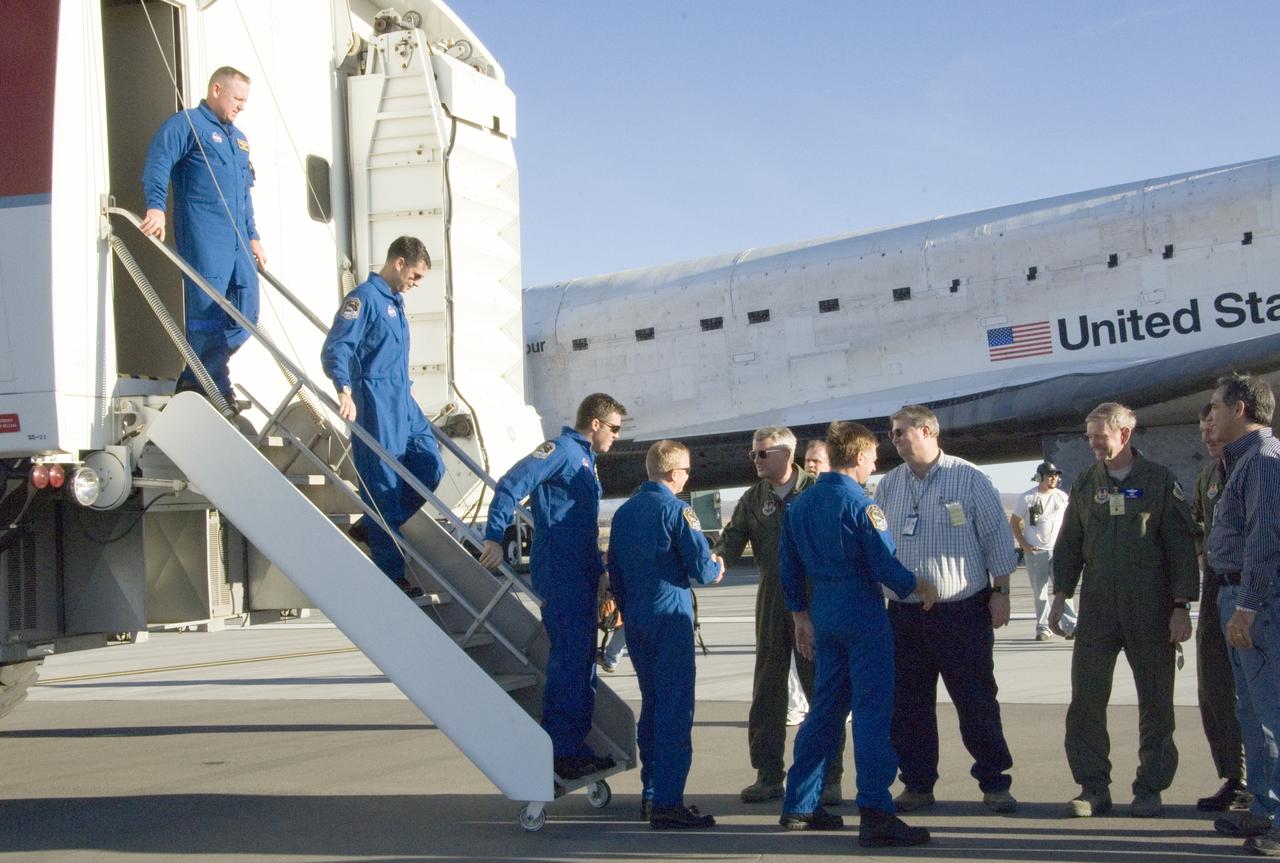
Air Force and NASA officials greet the STS-126 crew as they exit the Crew Transport Vehicle after landing the shuttle Endeavour at Edwards Air Force Base.
Air Force and NASA officials greet the STS-126 crew as they exit the Crew Transport Vehicle after landing the shuttle Endeavour at Edwards Air Force Base
Air Force and NASA officials greet the STS-126 crew as they exit the Crew Transport Vehicle after landing the shuttle Endeavour at Edwards Air Force Base.
Air Force and NASA officials greet the STS-126 crew as they exit the Crew Transport Vehicle after landing the shuttle Endeavour at Edwards Air Force Base
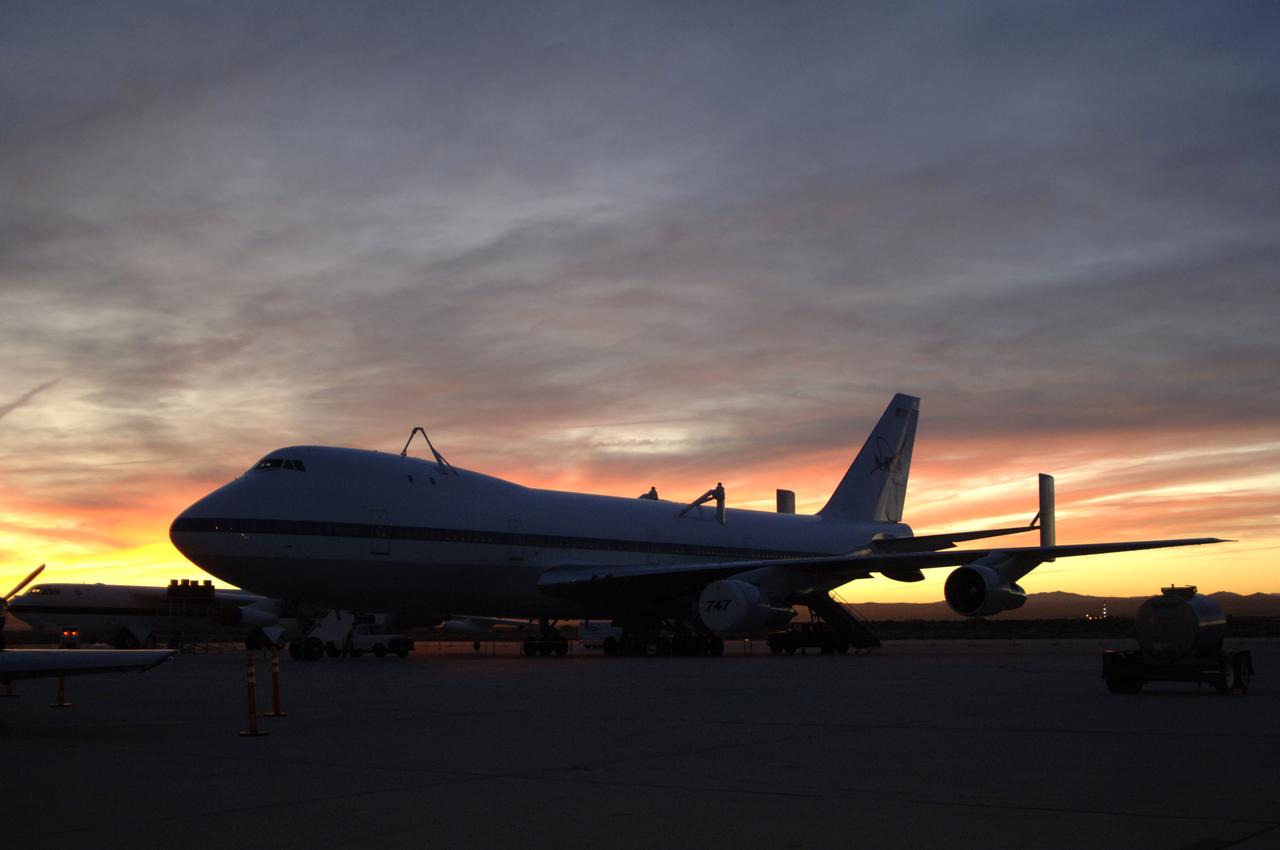
One of NASA's two modified Boeing 747 Shuttle Carrier Aircraft is silhouetted against the morning sky at sunrise on the ramp at Edwards Air Force Base.
One of NASA's two modified Boeing 747 Shuttle Carrier Aircraft is silhouetted against the morning sky at sunrise on the ramp at Edwards Air Force Base
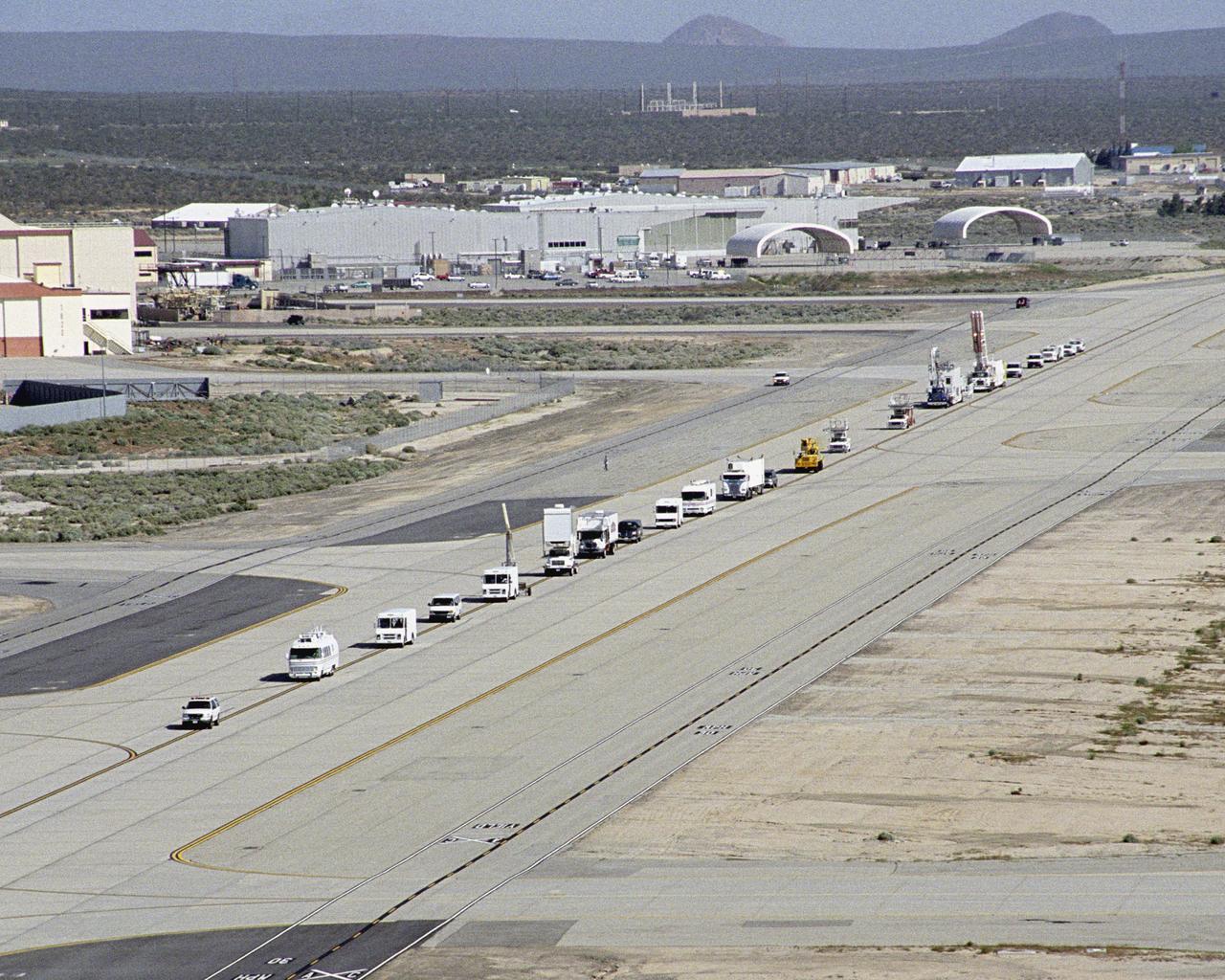
A long string of specialized NASA vehicles convoys down a taxiway at Edwards Air Force Base to begin a Space Shuttle rescue and recovery training exercise.
A long string of specialized NASA vehicles convoys down a taxiway at Edwards Air Force Base to begin a Space Shuttle rescue and recovery training exercise
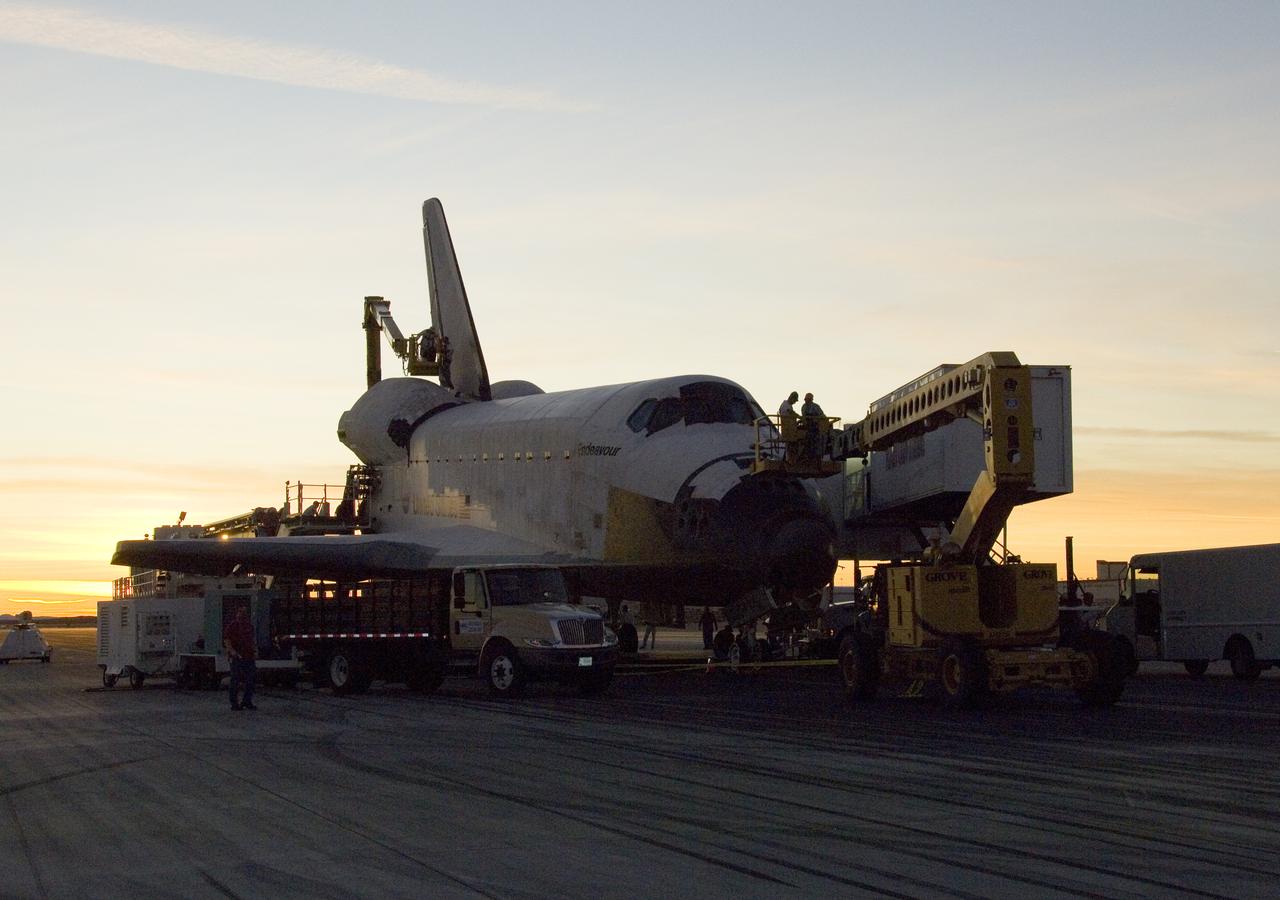
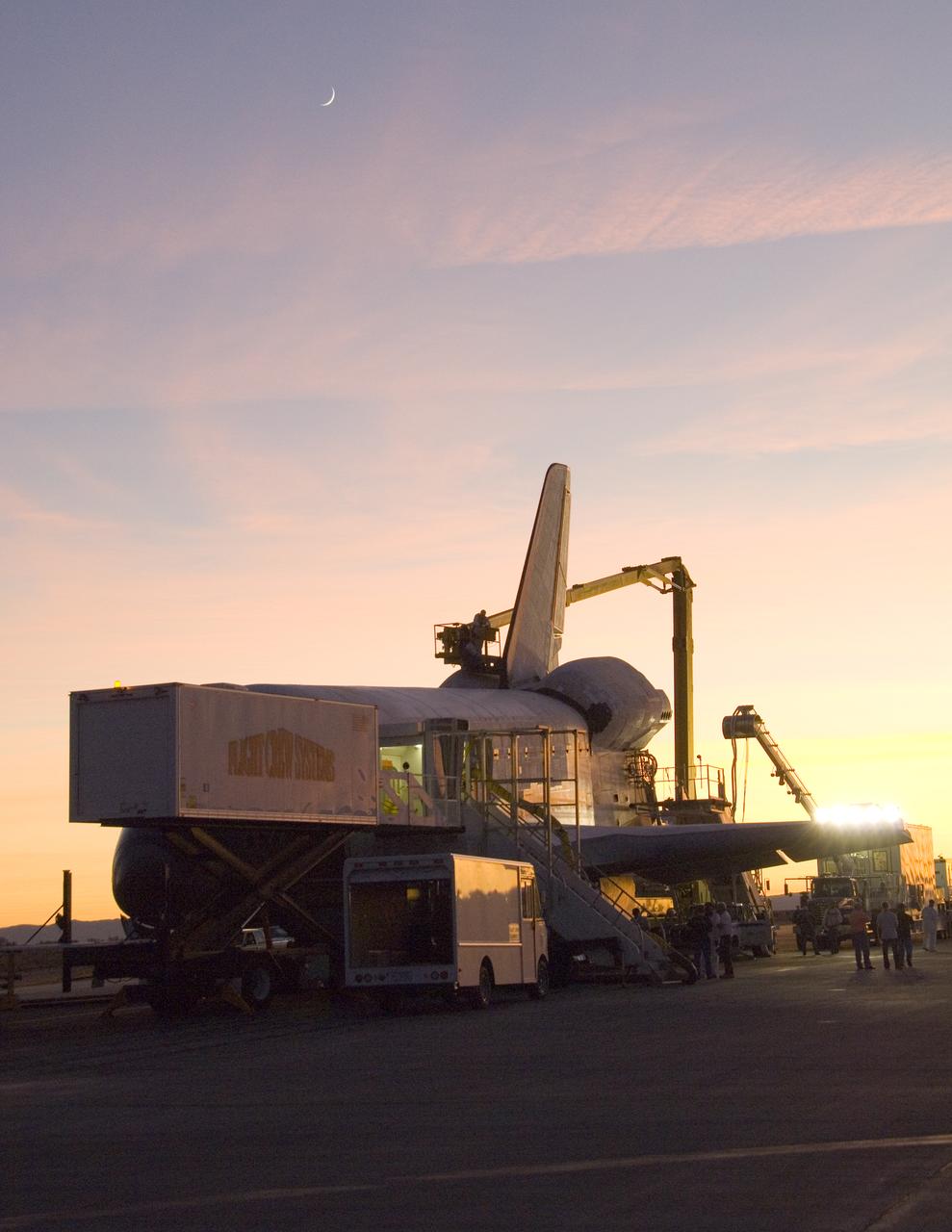
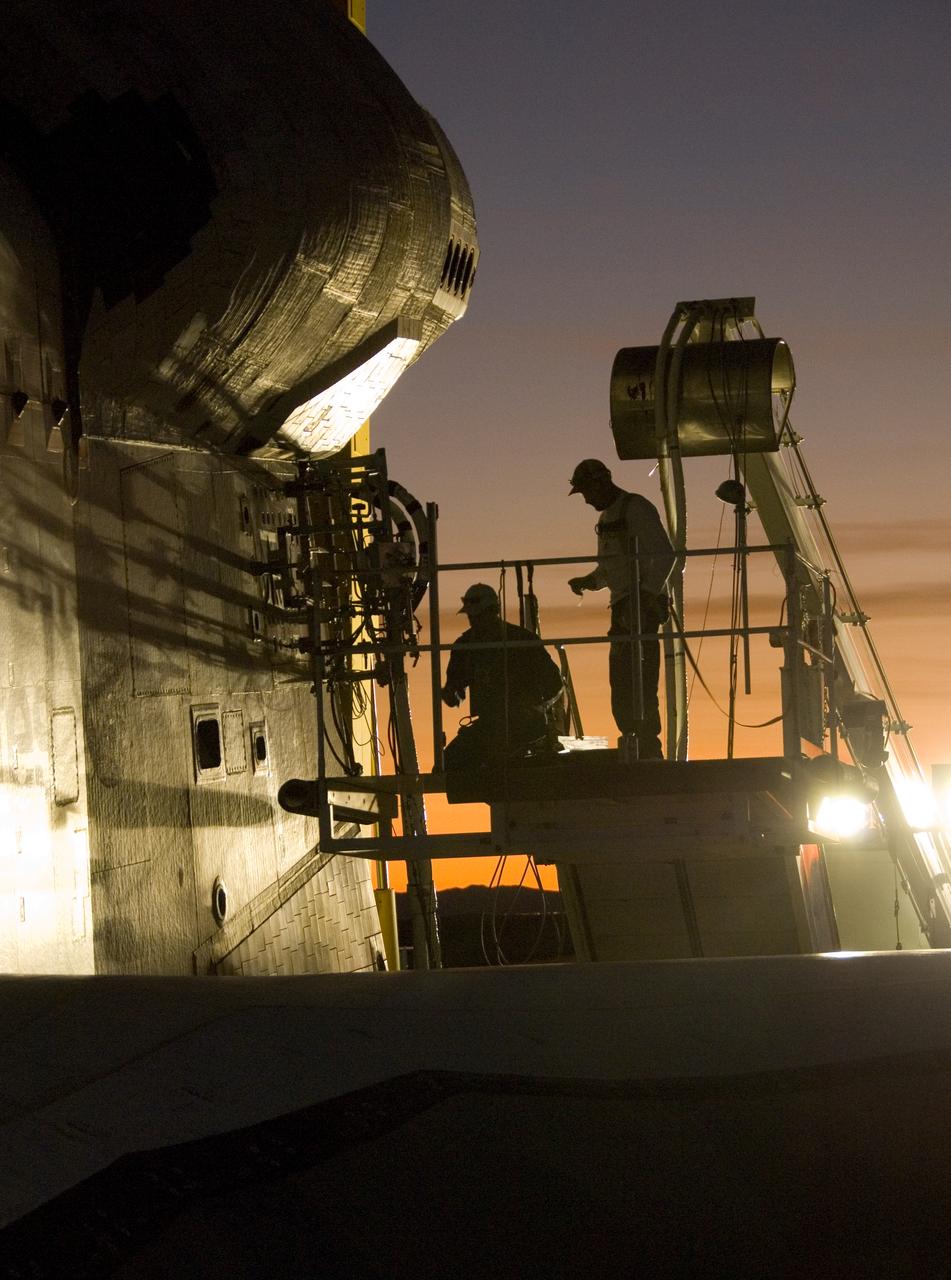
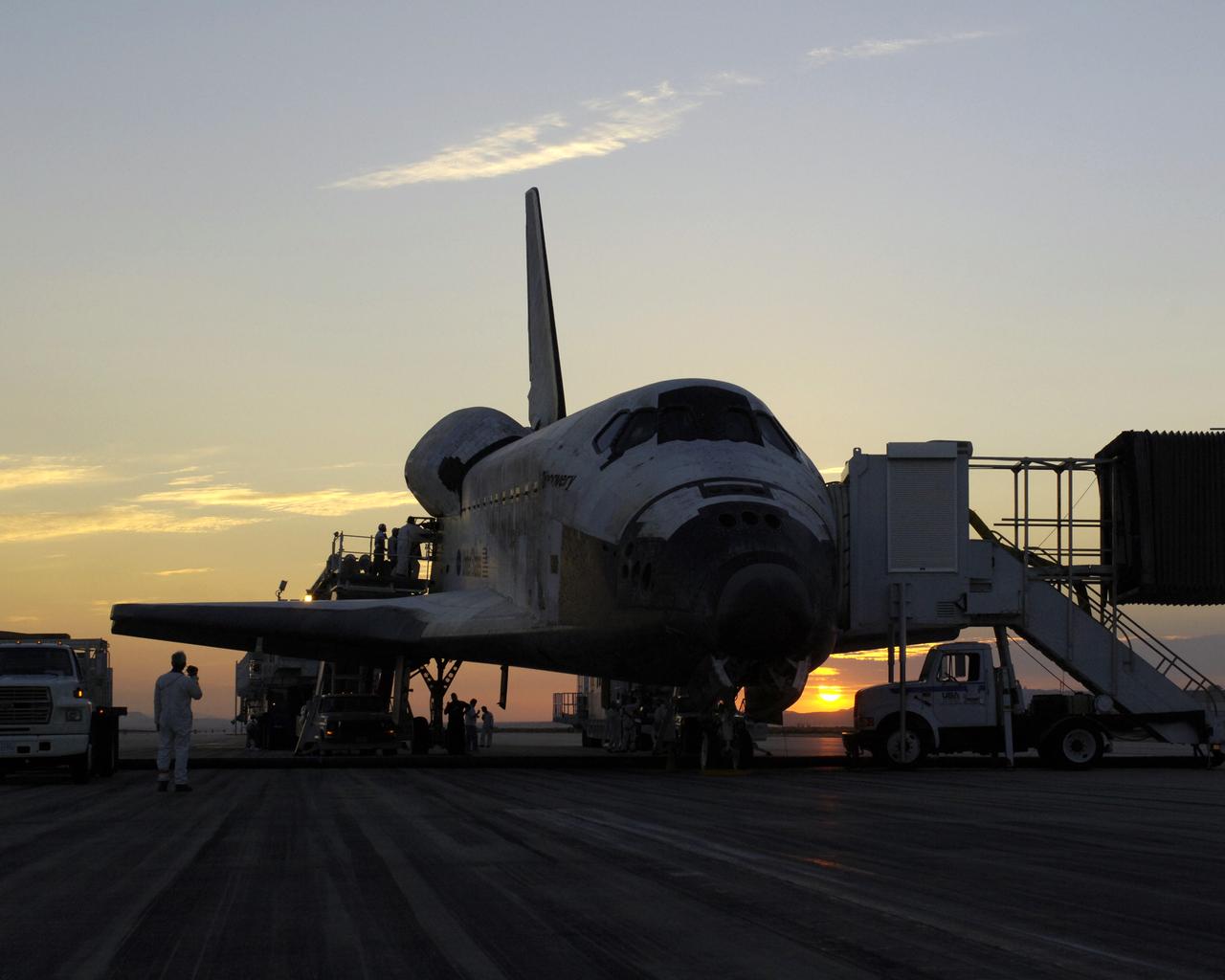
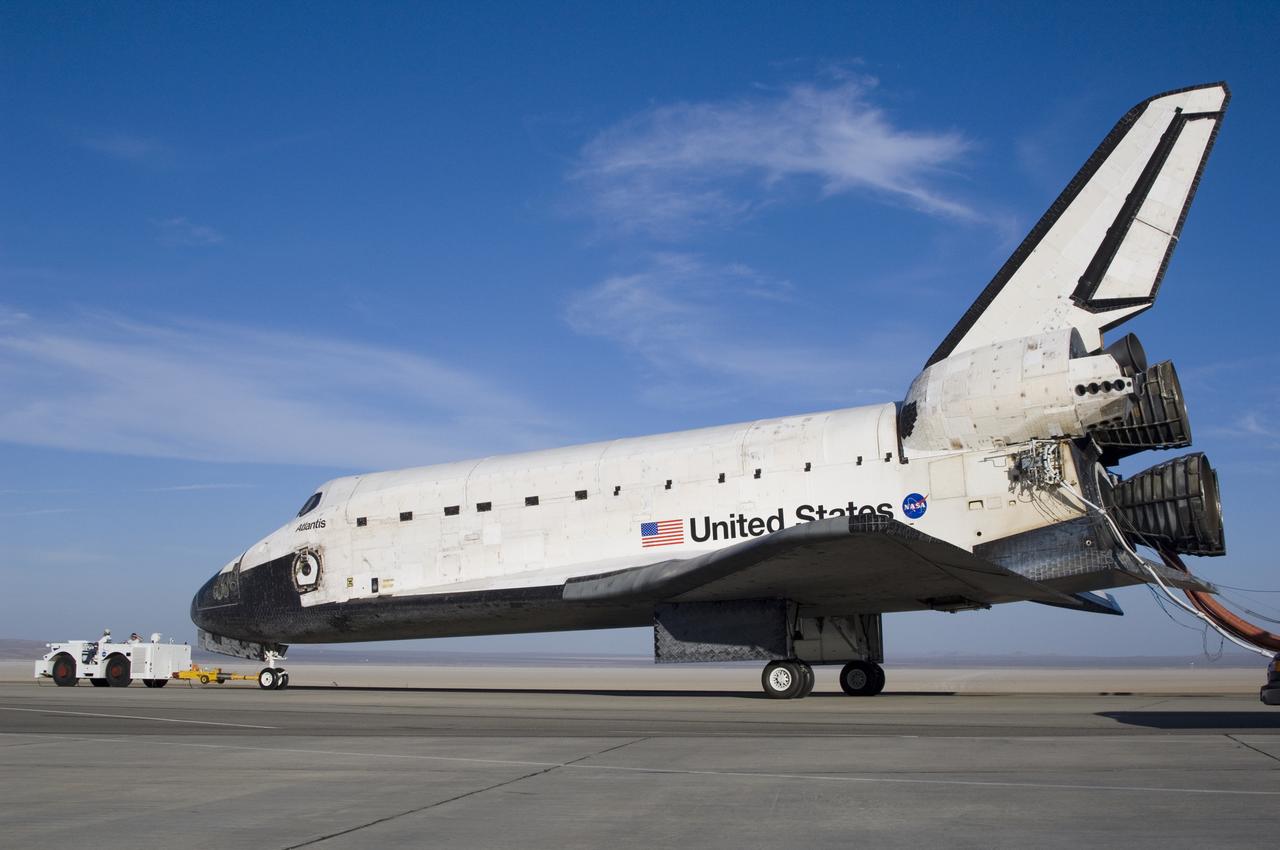
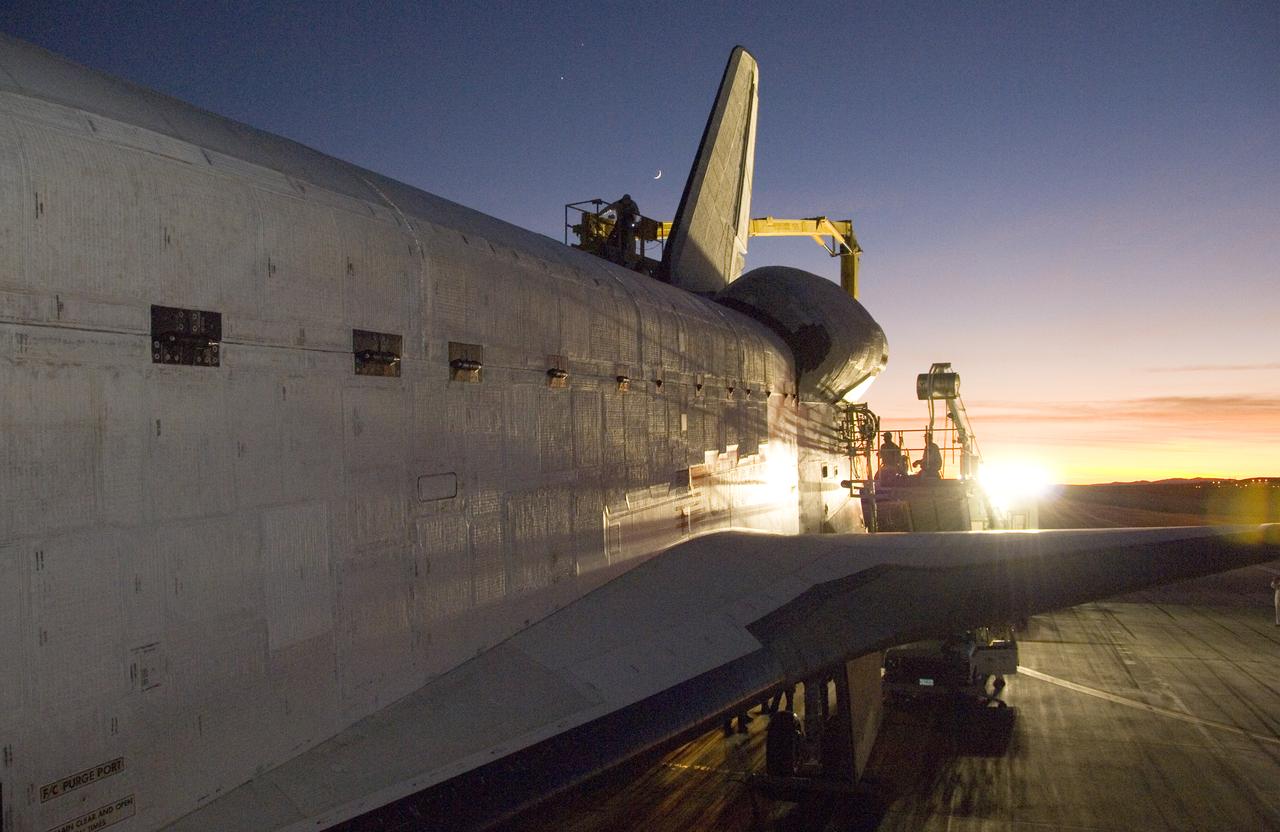
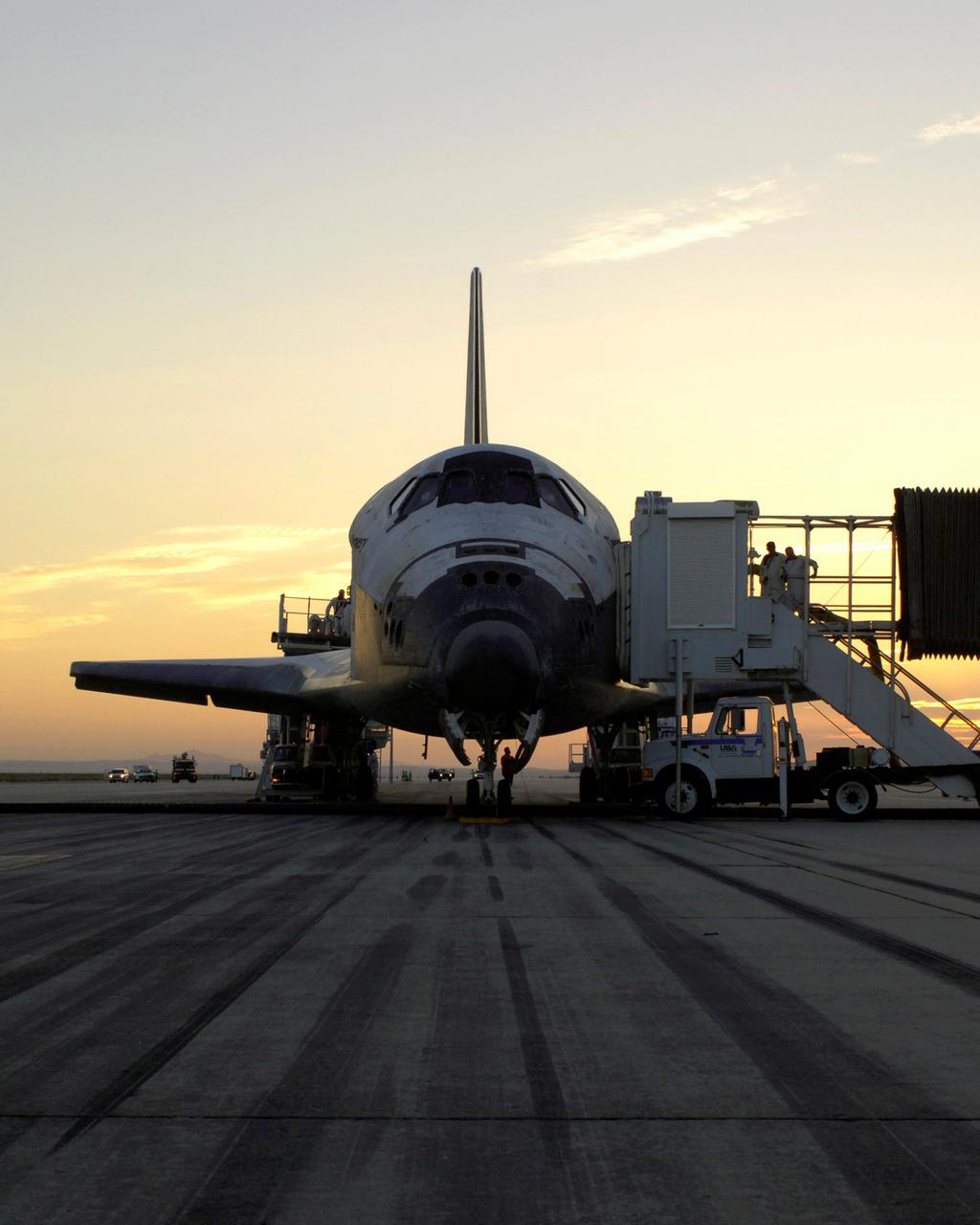
As the sun sets over the high desert, NASA technicians on mobile high-lifts prepare the shuttle Endeavour for towing off the Edwards Air Force Base runway.
As the sun sets over the high desert, NASA technicians on mobile high-lifts prepare the shuttle Endeavour for towing off the Edwards Air Force Base runway
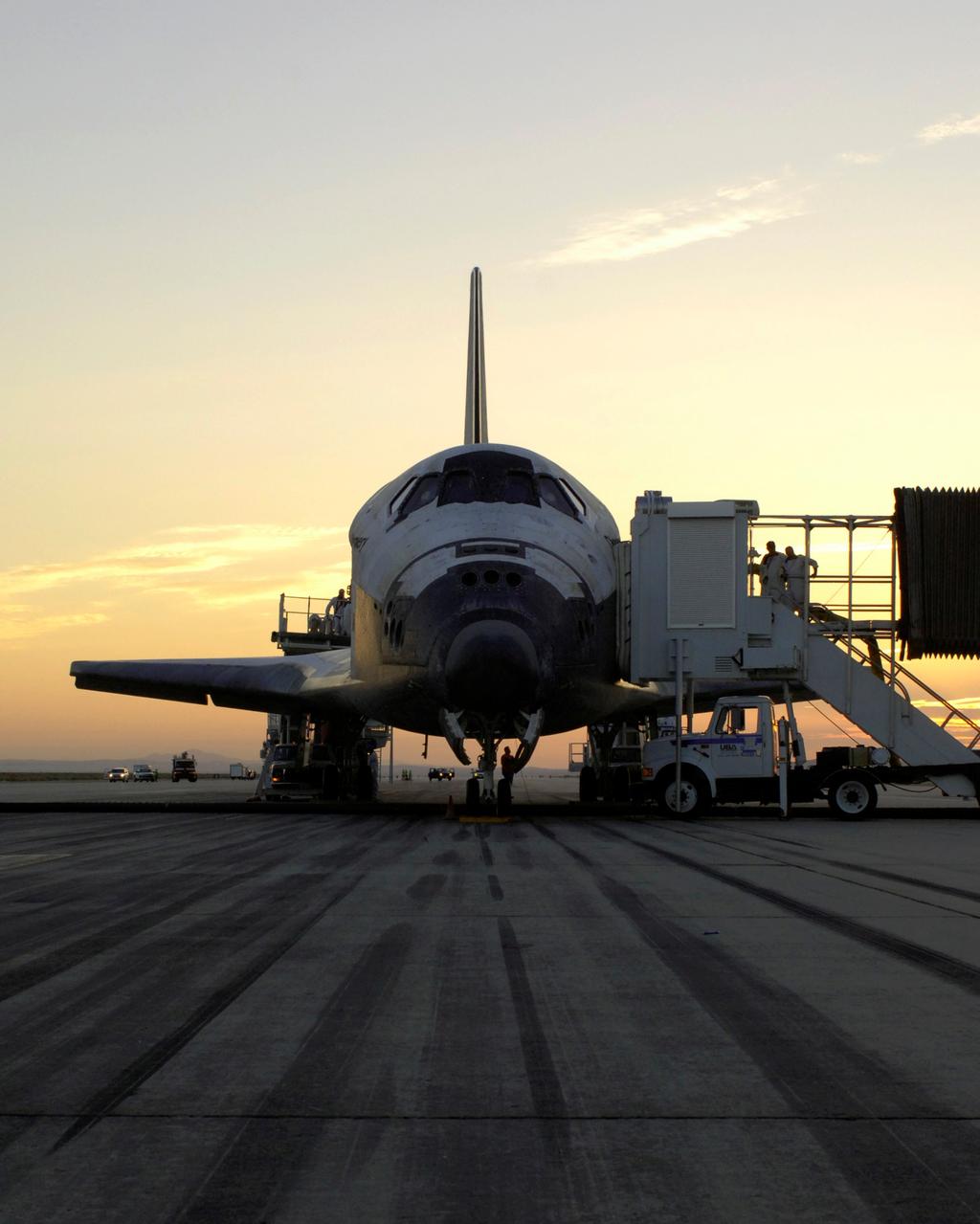
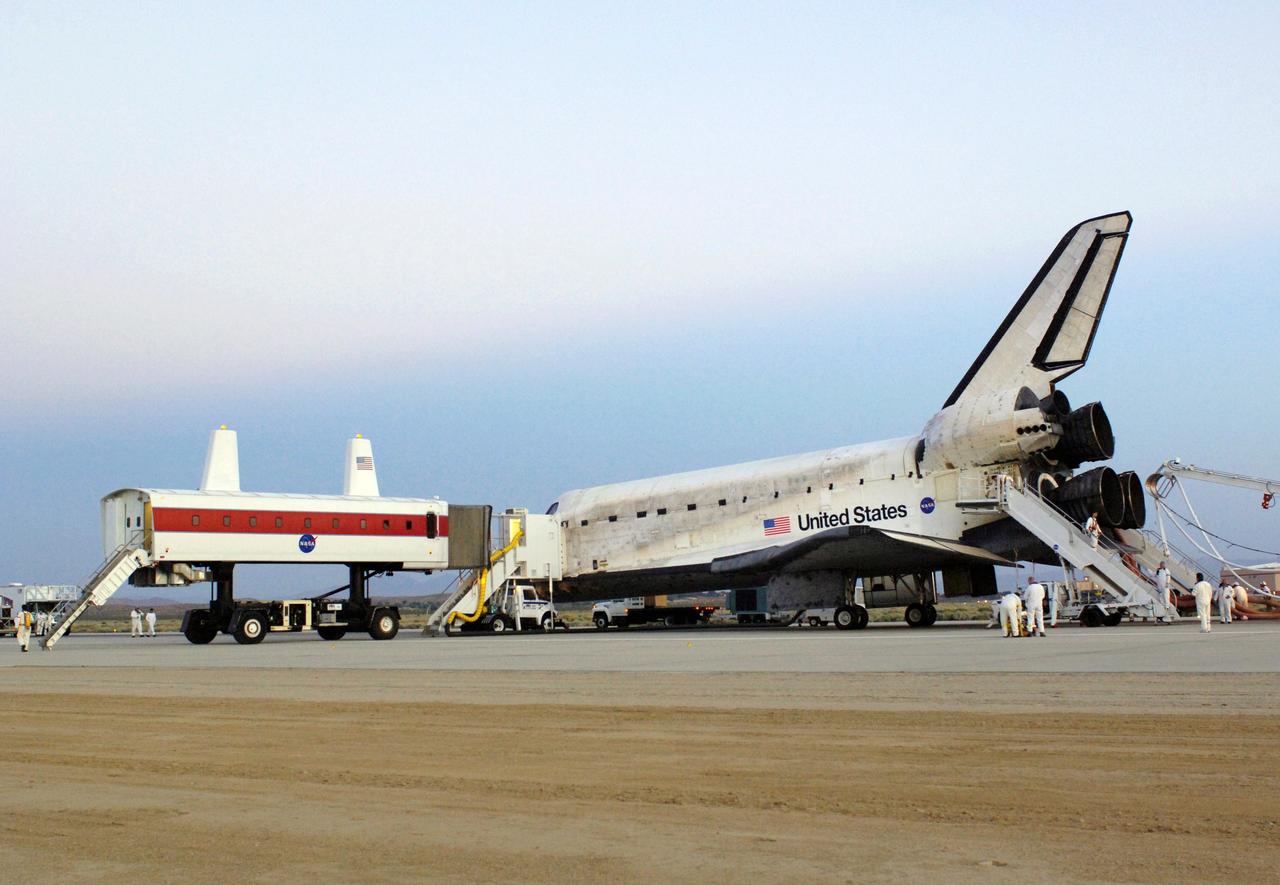
Its STS-126 mission over, Space Shuttle Endeavour is surrounded by recovery equipment before being towed off the Edwards Air Force Base runway.
Its STS-126 mission over, Space Shuttle Endeavour is surrounded by recovery equipment before being towed off the Edwards Air Force Base runway
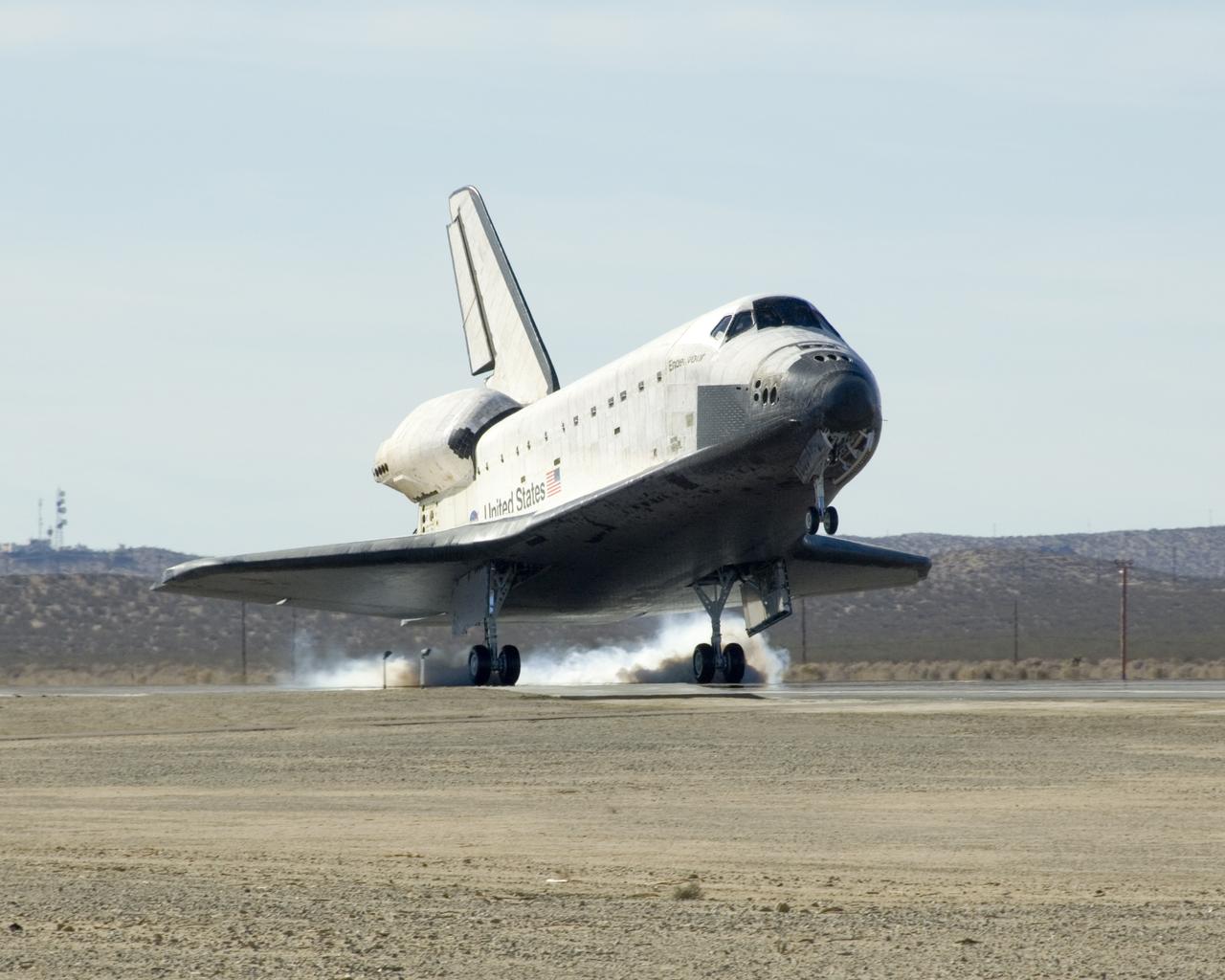
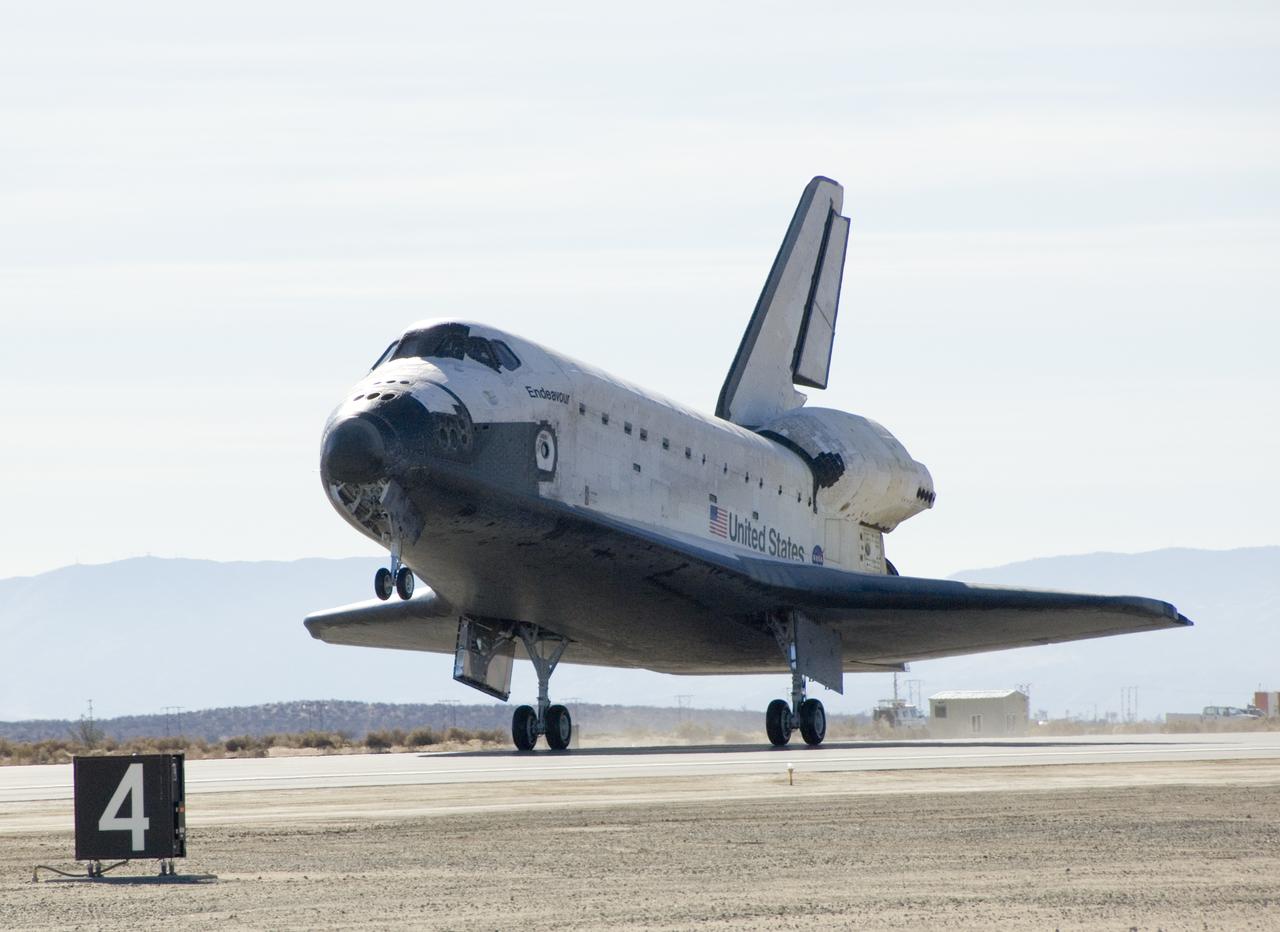
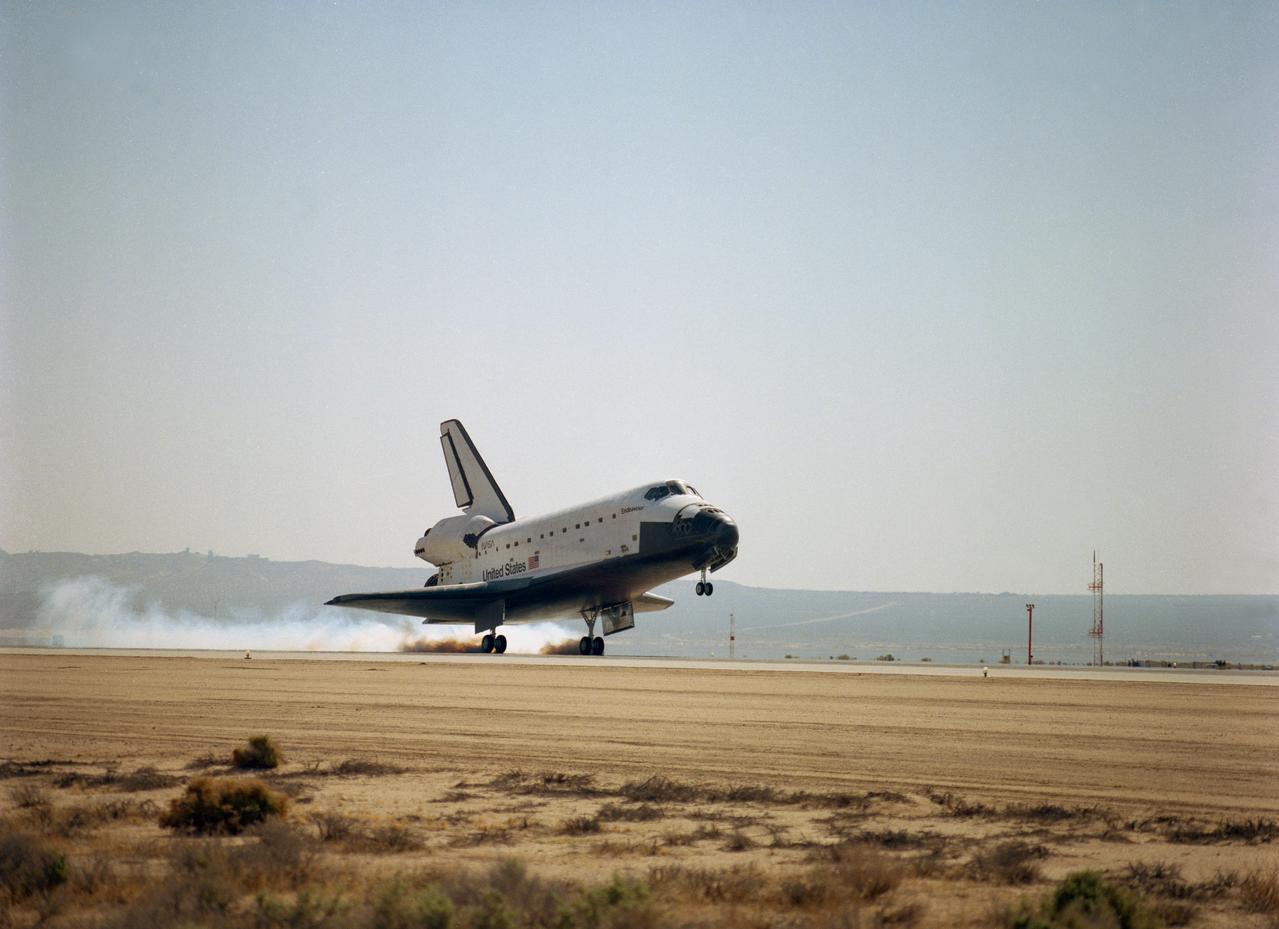
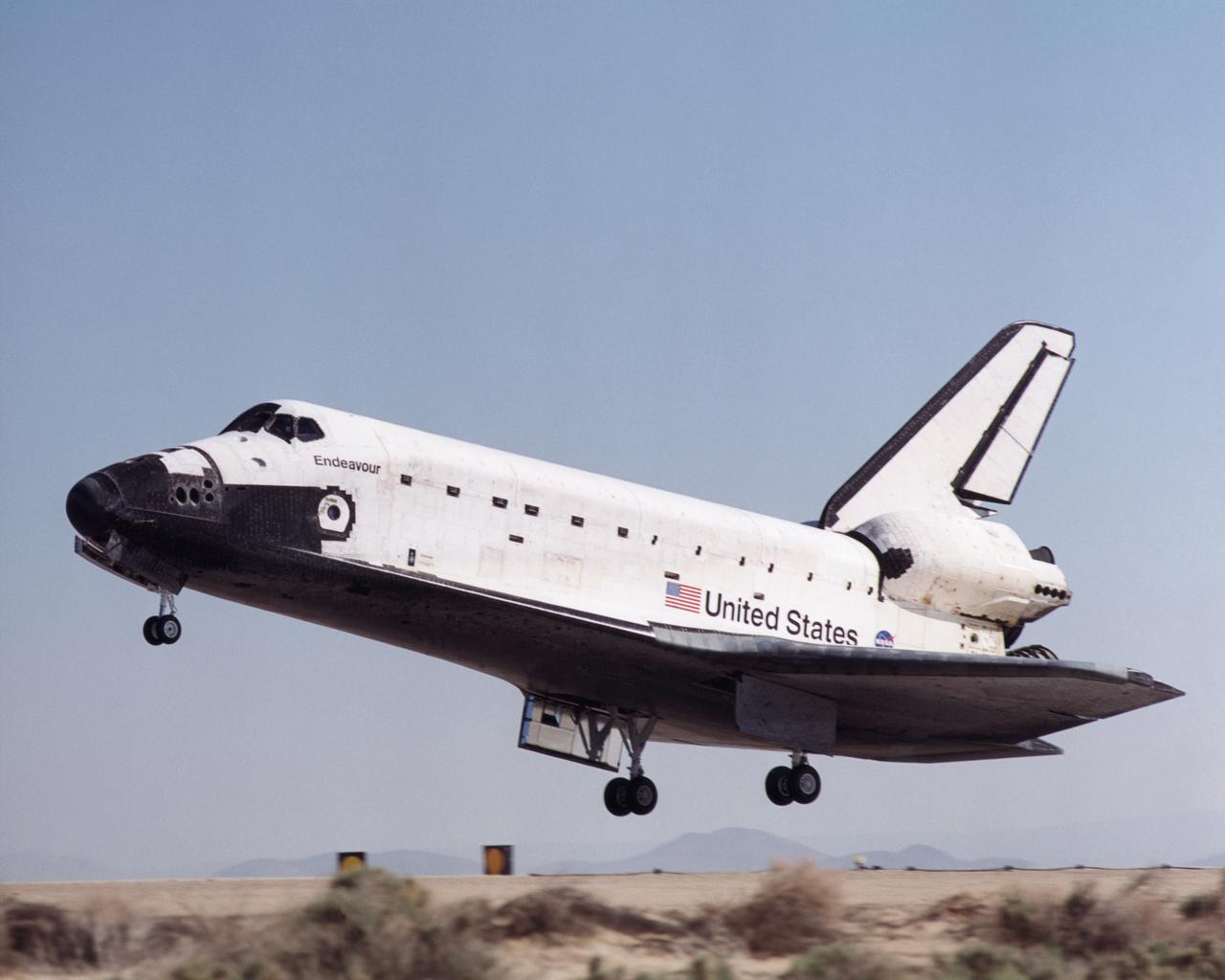
Space Shuttle Endeavour touches down at Edwards Air Force Base Nov. 30, 2008 to conclude mission STS-126 to the International Space Station.
Space Shuttle Endeavour touches down at Edwards Air Force Base Nov. 30, 2008 to conclude mission STS-126 to the International Space Station
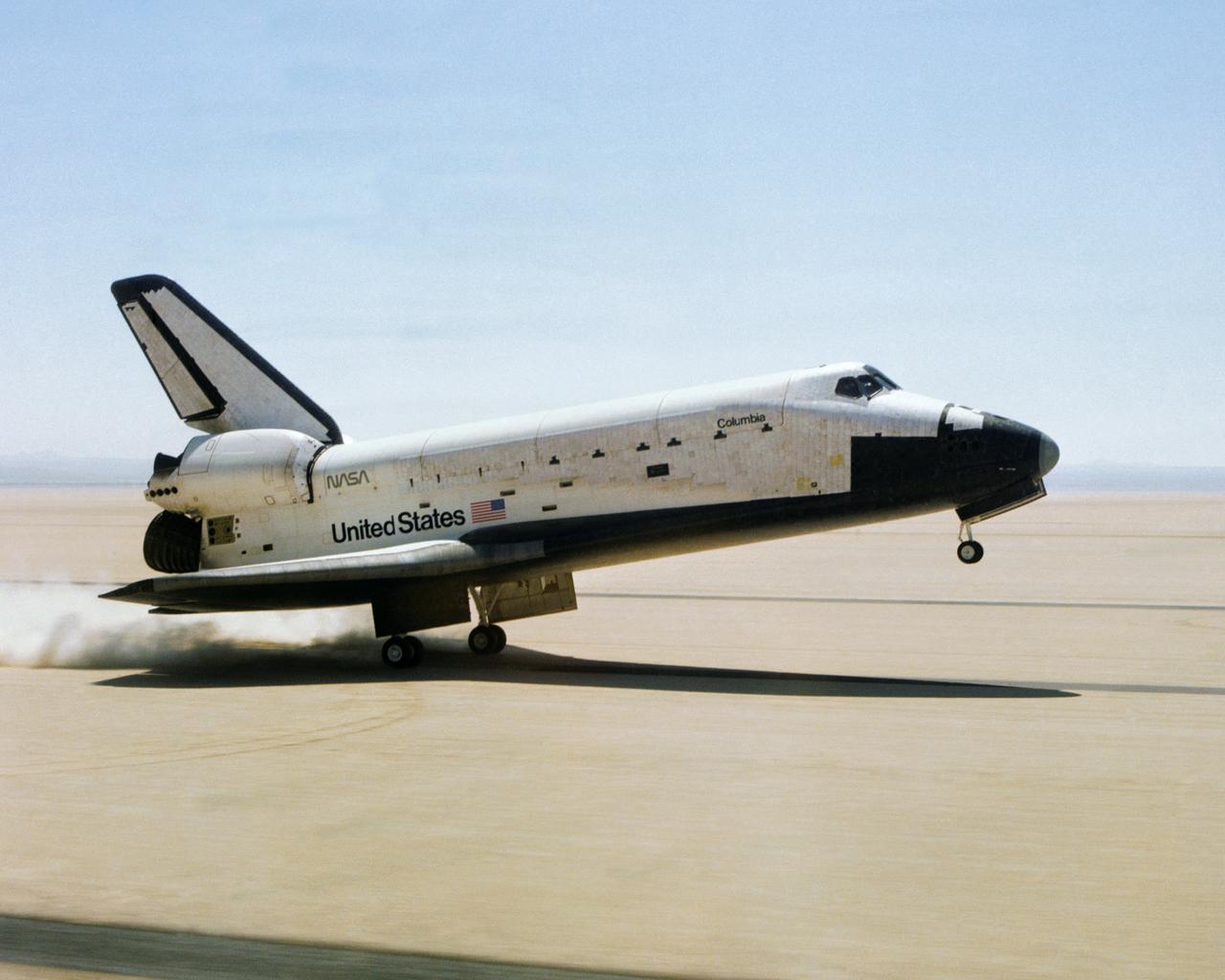
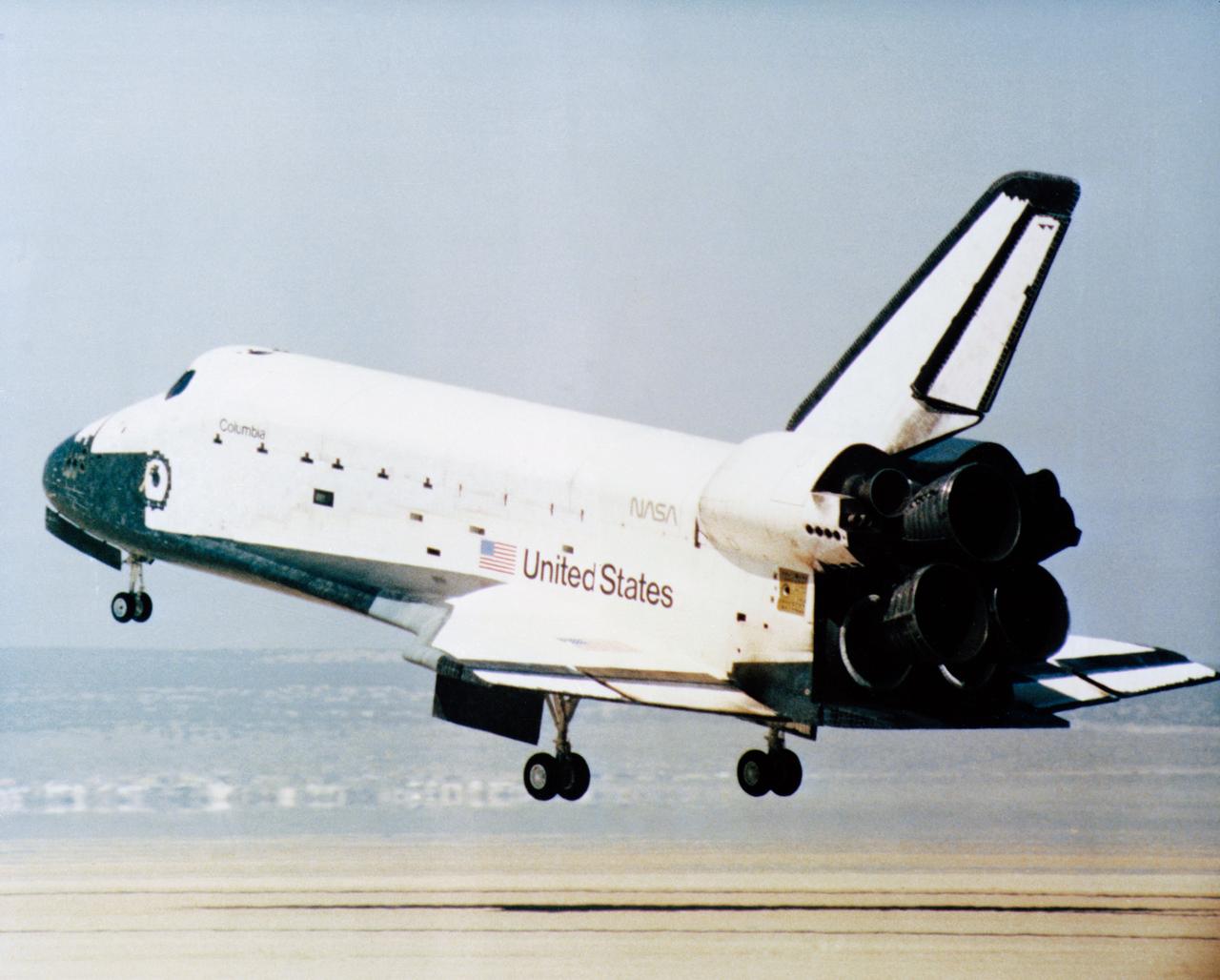
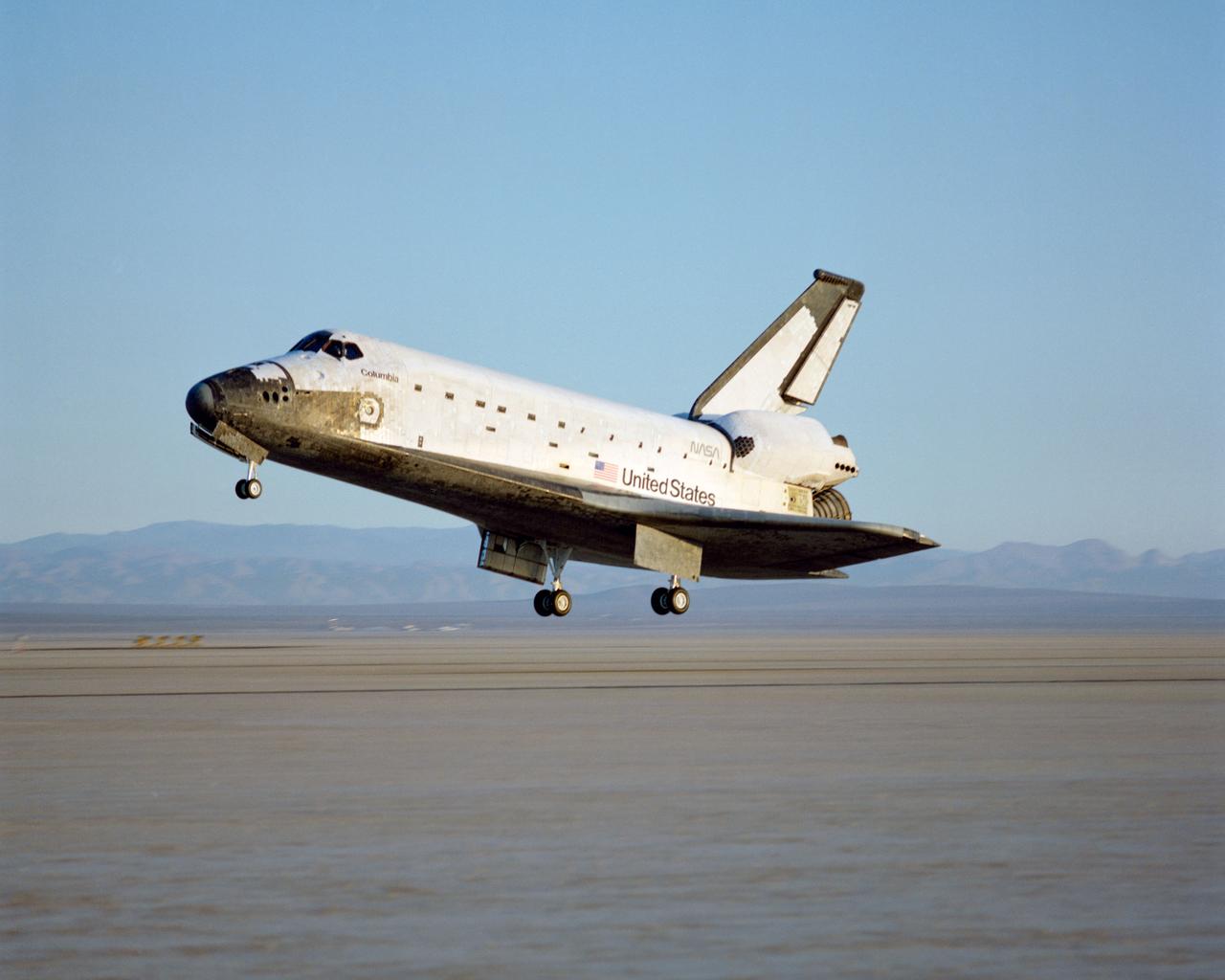
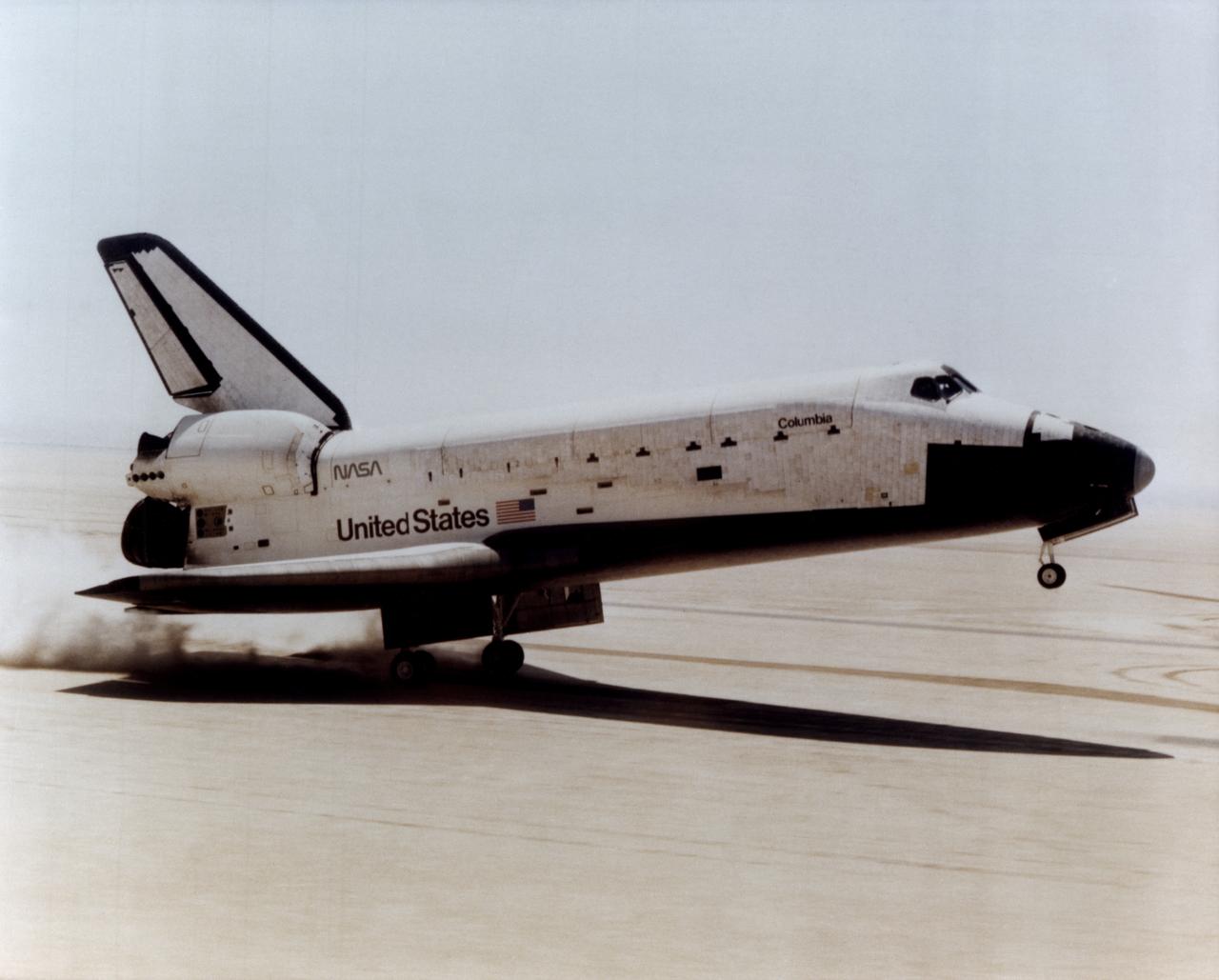
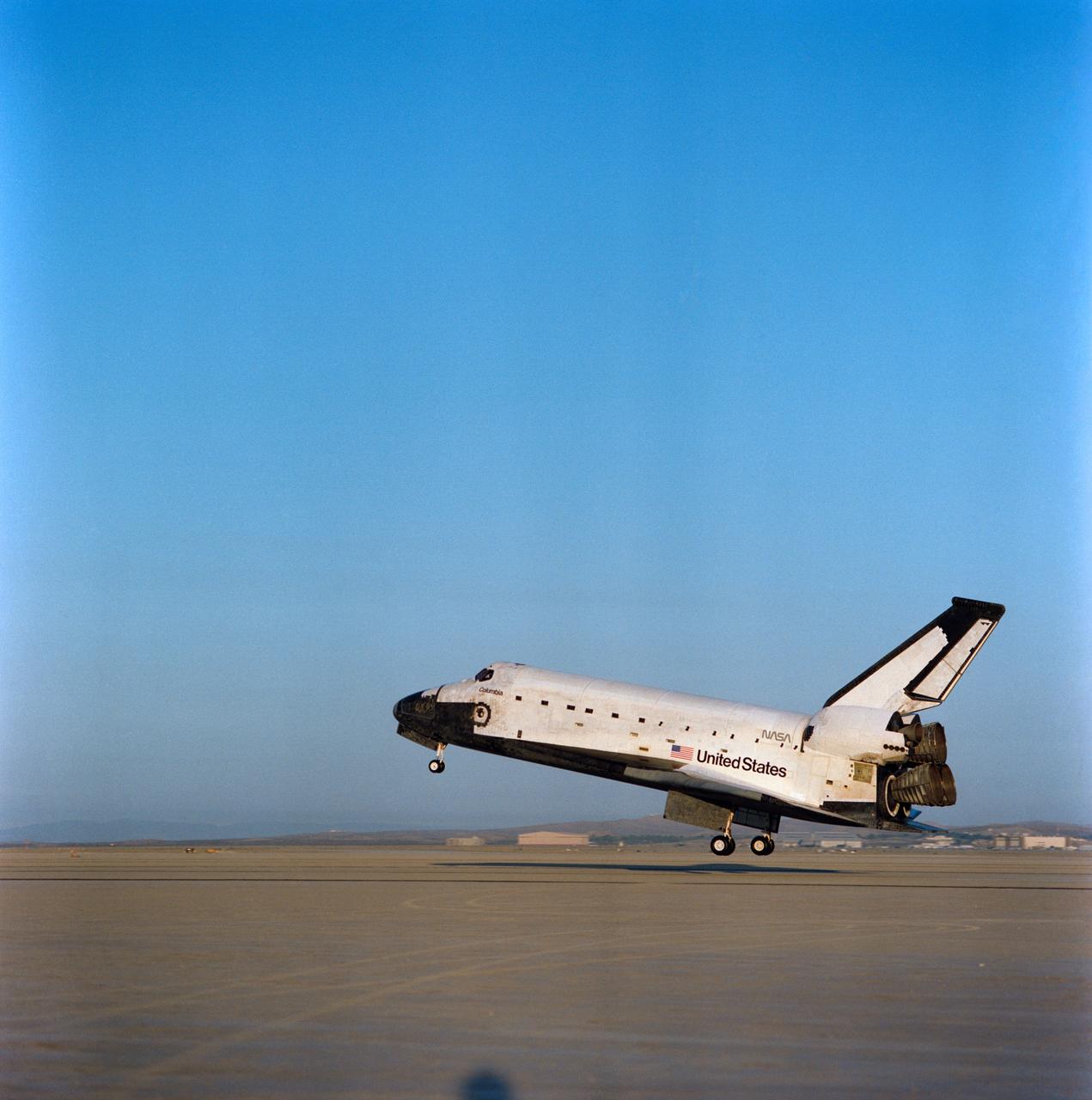
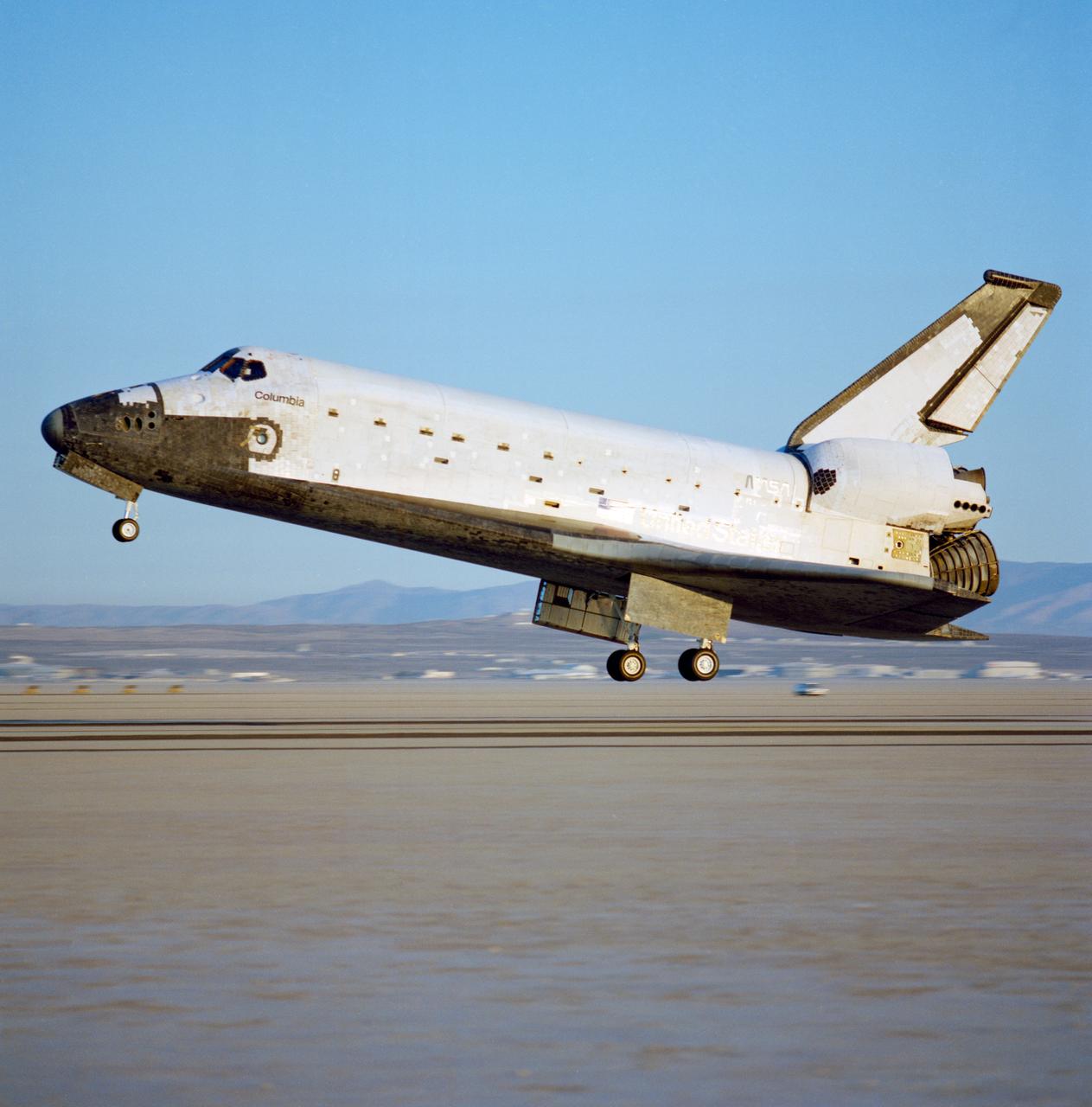
The Space Shuttle Columbia touches down on lakebed runway 23 at Edwards Air Force Base, Calif., to conclude the first orbital shuttle mission.
The Space Shuttle Columbia touches down on lakebed runway 23 at Edwards Air Force Base, Calif., to conclude the first orbital shuttle mission
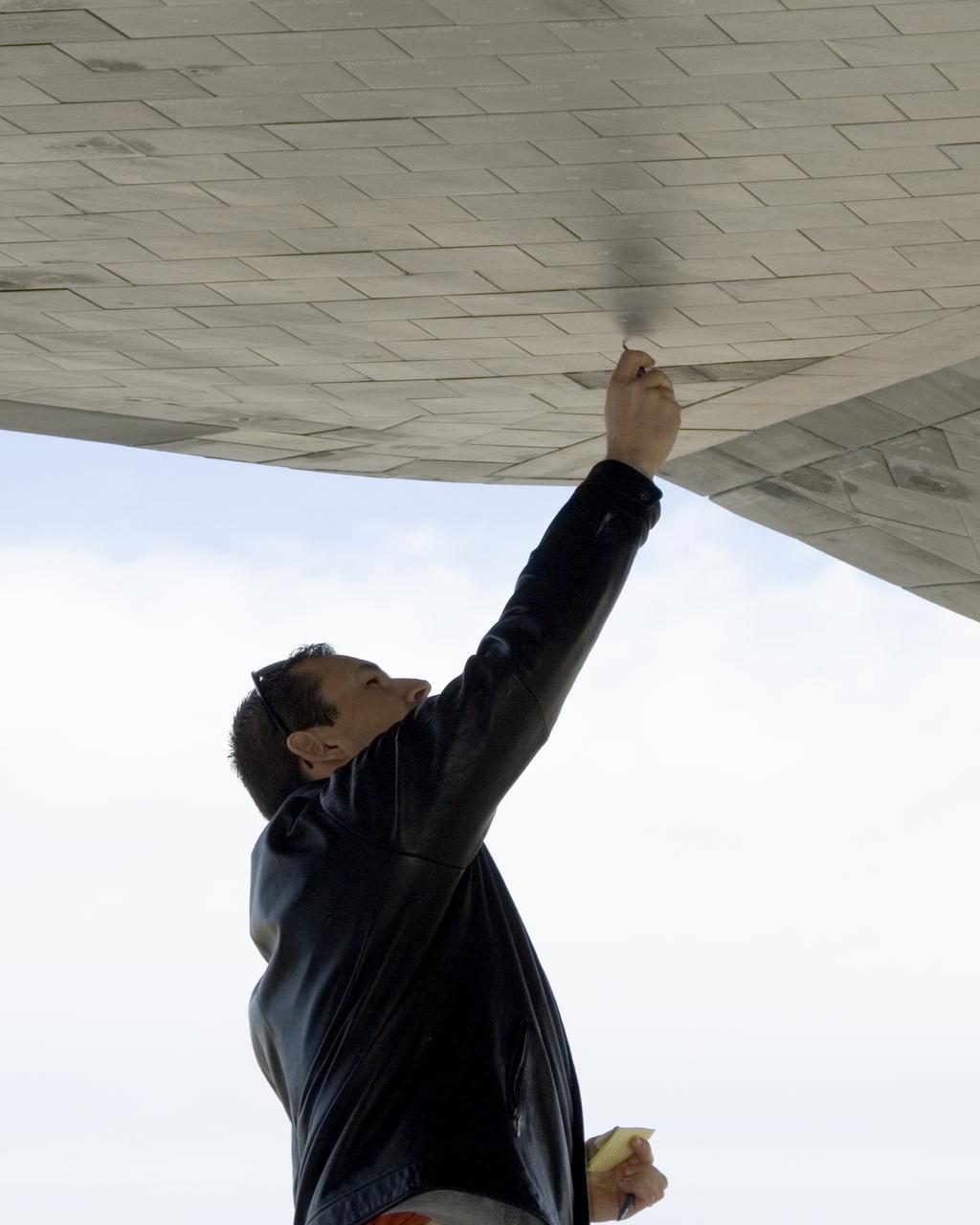
A United Space Alliance technician carefully checks the thermal tiles on the underside of Space Shuttle Endeavour for nicks and dings following its landing at Edwards Air Force Base to conclude mission STS-126.
A technician carefully checks the thermal tiles on the underside of Space Shuttle Endeavour for nicks and dings following its landing at Edwards Air Force Base
The Space Shuttle Columbia touches down on lakebed runway 23 at Edwards Air Force Base, Calif., to conclude the first orbital shuttle mission. (JSC photo # S81-30734)
The Space Shuttle Columbia touches down on lakebed runway 23 at Edwards Air Force Base, Calif., to conclude the first orbital shuttle mission
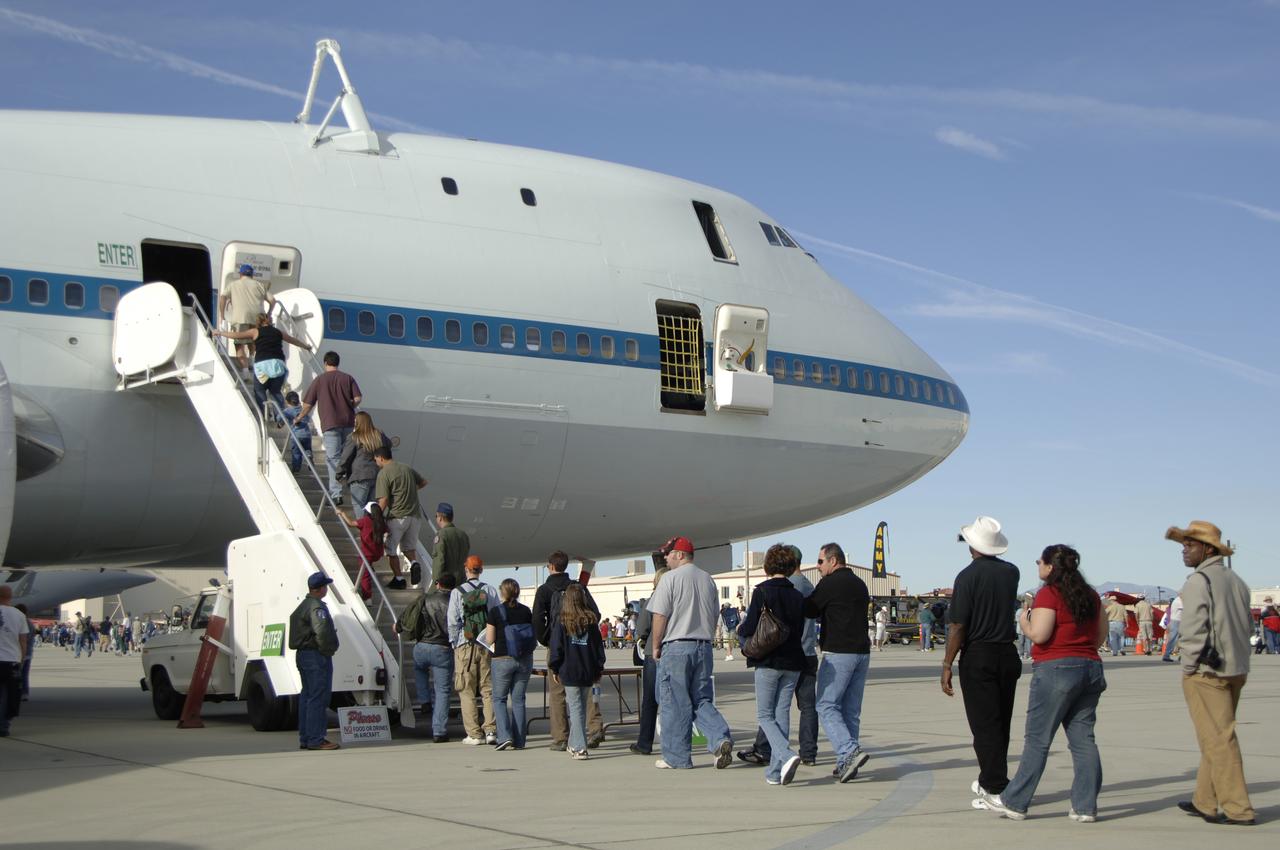
A brief tour through NASA's modified Boeing 747 Shuttle Carrier Aircraft was a popular attraction at the Edwards Air Force Base open house Oct. 28-29, 2006.
A brief tour through NASA's modified Boeing 747 Shuttle Carrier Aircraft was a popular attraction at the Edwards Air Force Base open house Oct. 28-29, 2006
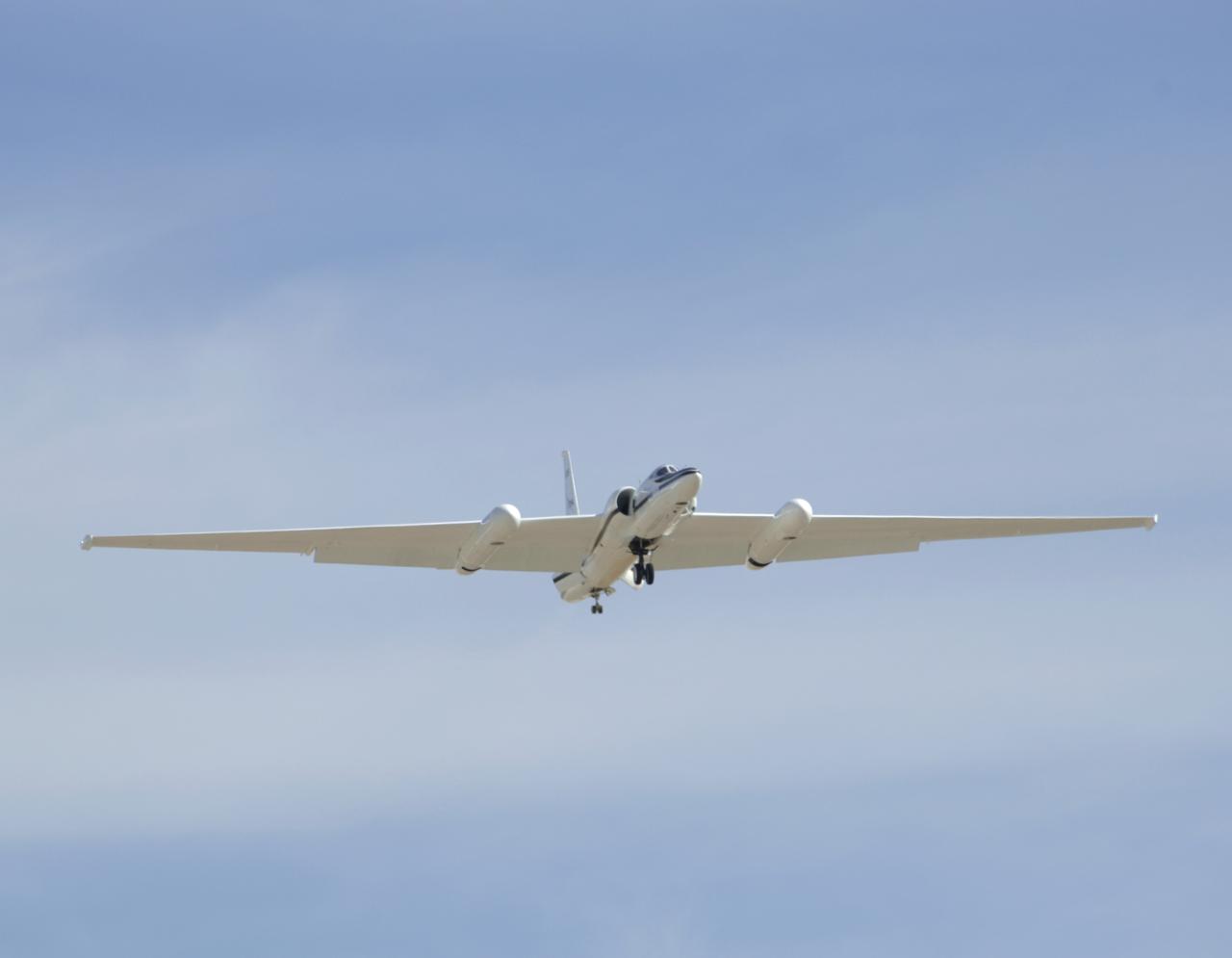
One of NASA's two ER-2 Earth resources aircraft shows off its lines during a flyover at the Edwards Air Force Base open house Oct. 28-29, 2006.
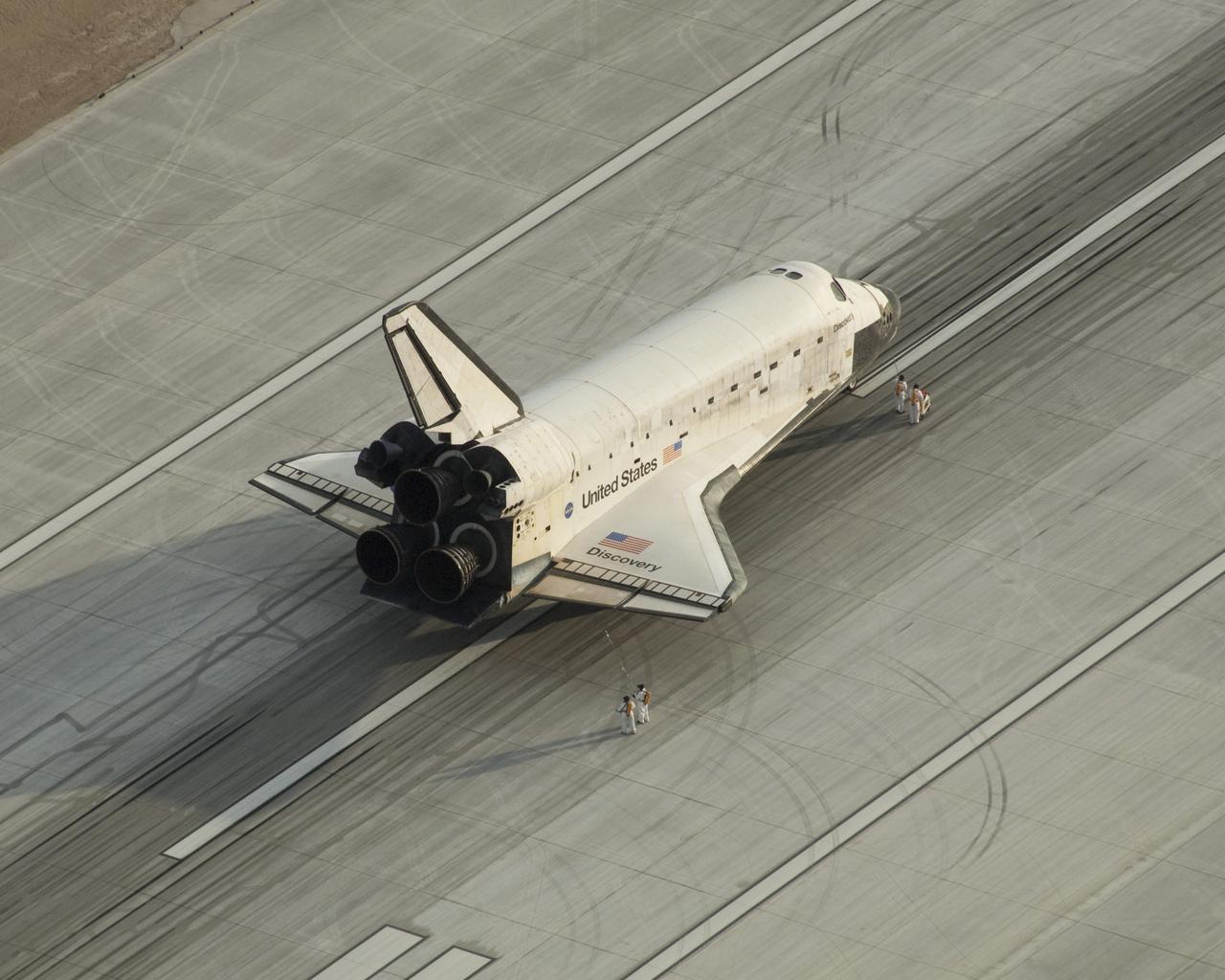
STS114-S-049 (9 August 2005) --- The sun rises on the Space Shuttle Discovery as it rests on the runway at Edwards Air Force Base in California, after a safe landing at 5:11 a.m. (PDT) on August 9, 2005.  The landing concludes a historic 14-day, Return to Flight mission to the International Space Station.
STS-114 landing at Edwards Air Force Base
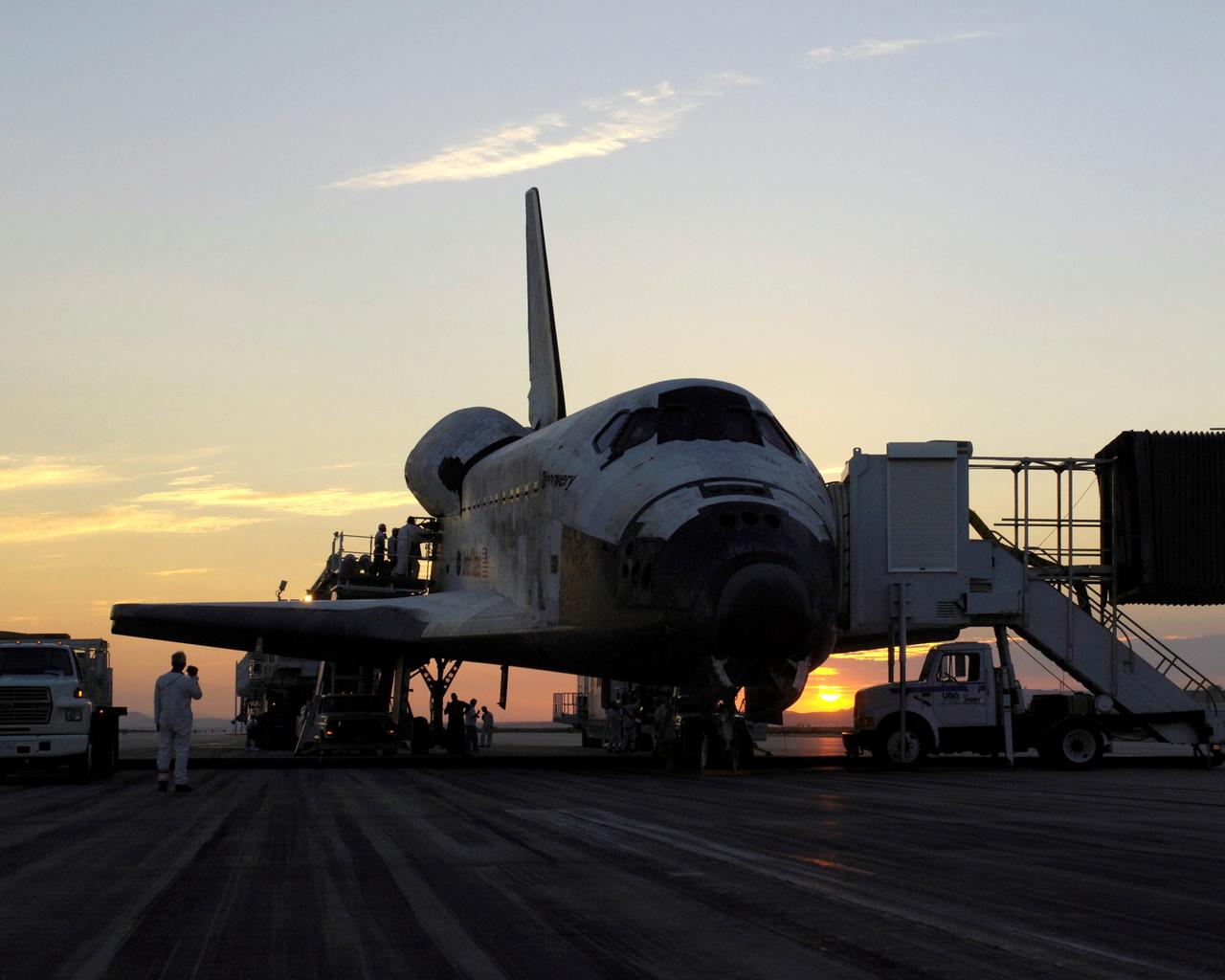
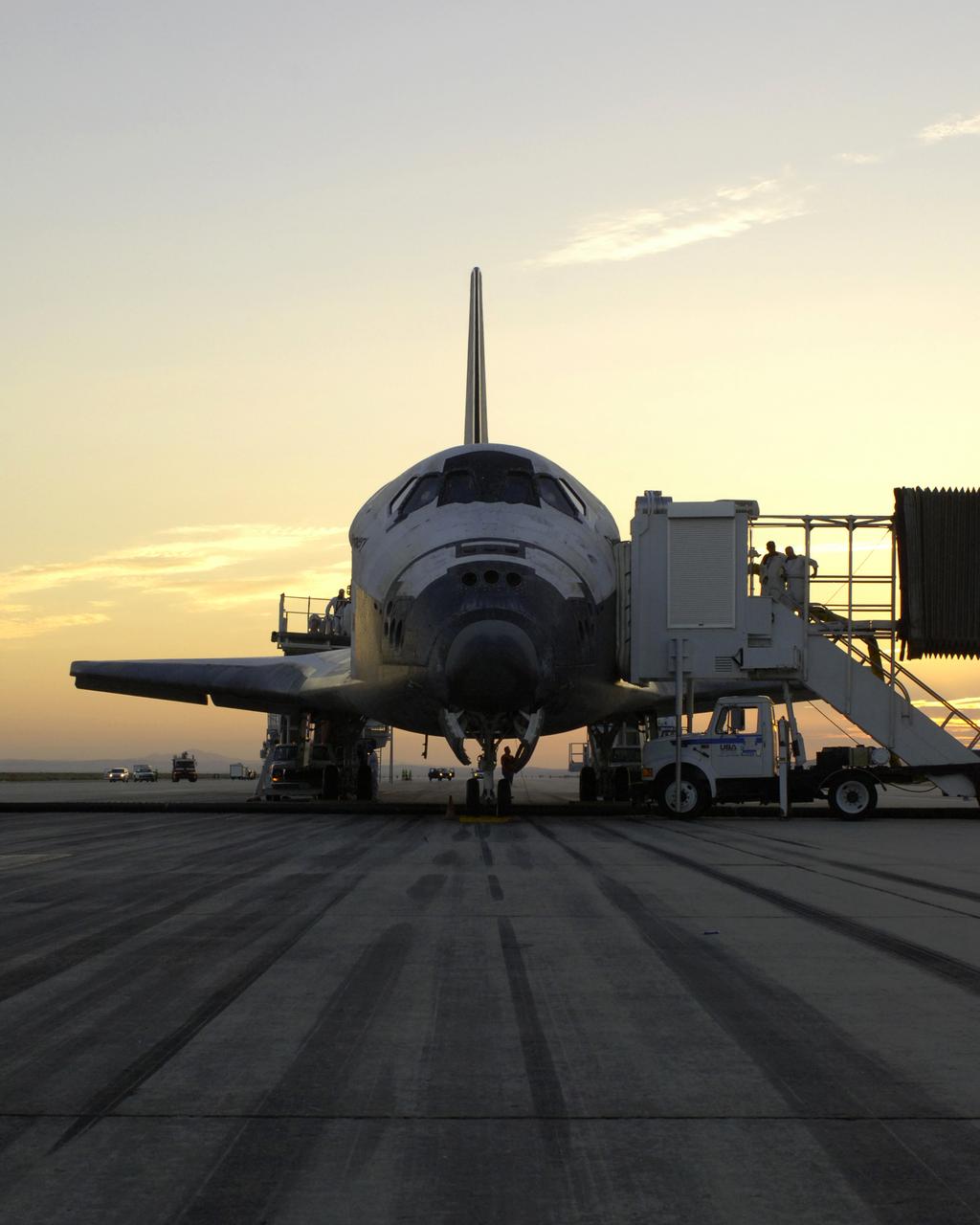
As dusk settles over Edwards Air Force Base, NASA technicians hook up various ground-support systems before shuttle Endeavour is towed off the landing runway.
As dusk settles over Edwards Air Force Base, NASA technicians hook up various ground-support systems before shuttle Endeavour is towed off the landing runway
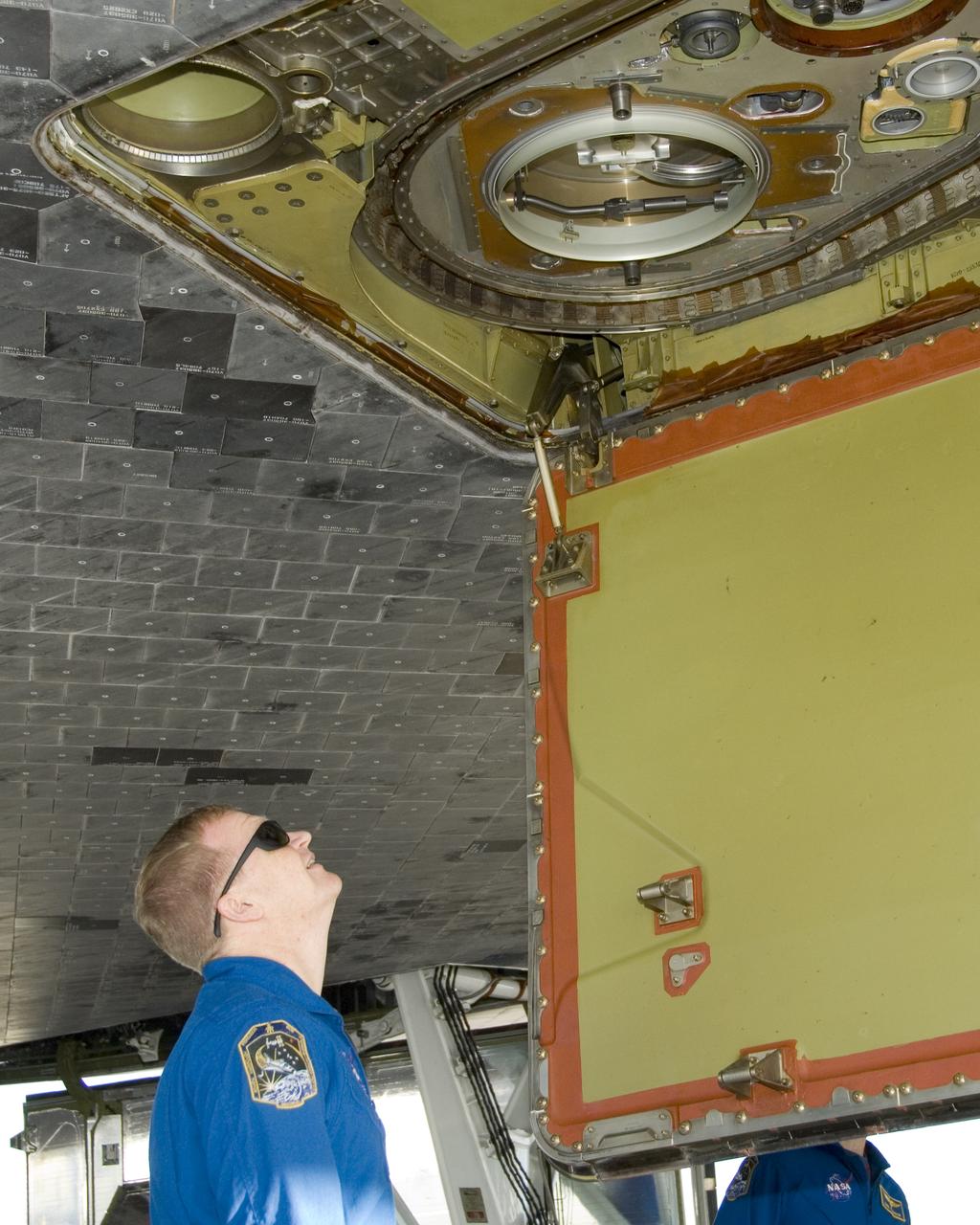
STS-126 pilot Eric Boe inspects the liquid oxygen line connection on the belly of Space Shuttle Endeavour following landing at Edwards Air Force Base Sunday.
STS-126 pilot Eric Boe inspects the liquid oxygen line connection on the belly of Space Shuttle Endeavour following landing at Edwards Air Force Base Sunday
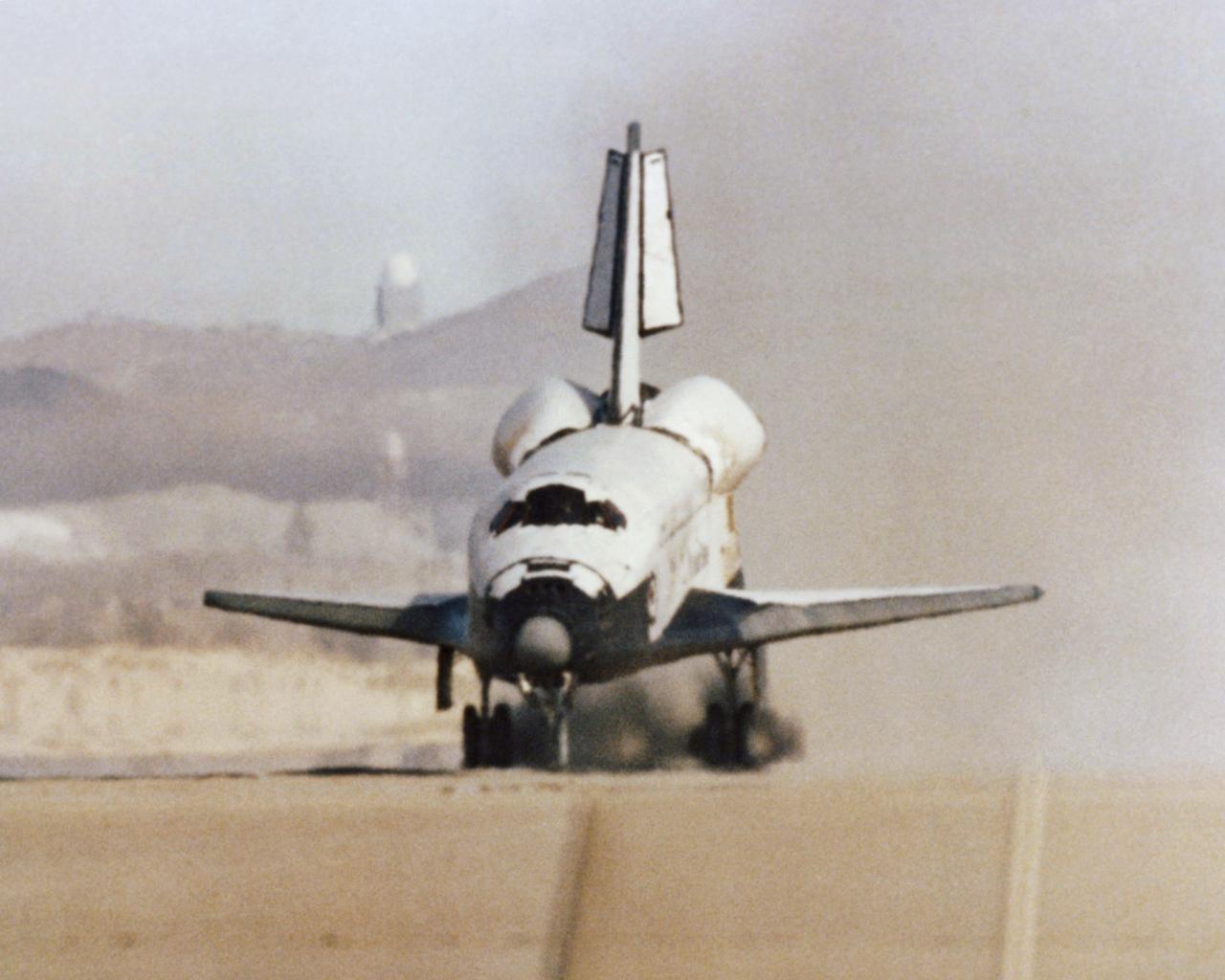
Space Shuttle Endeavour rolls out on runway 04-L at Edwards Air Force Base moments after touchdown, ending mission STS-126 to the International Space Station.
Space Shuttle Endeavour rolls out on runway 04-L at Edwards Air Force Base moments after touchdown, ending mission STS-126 to the International Space Station
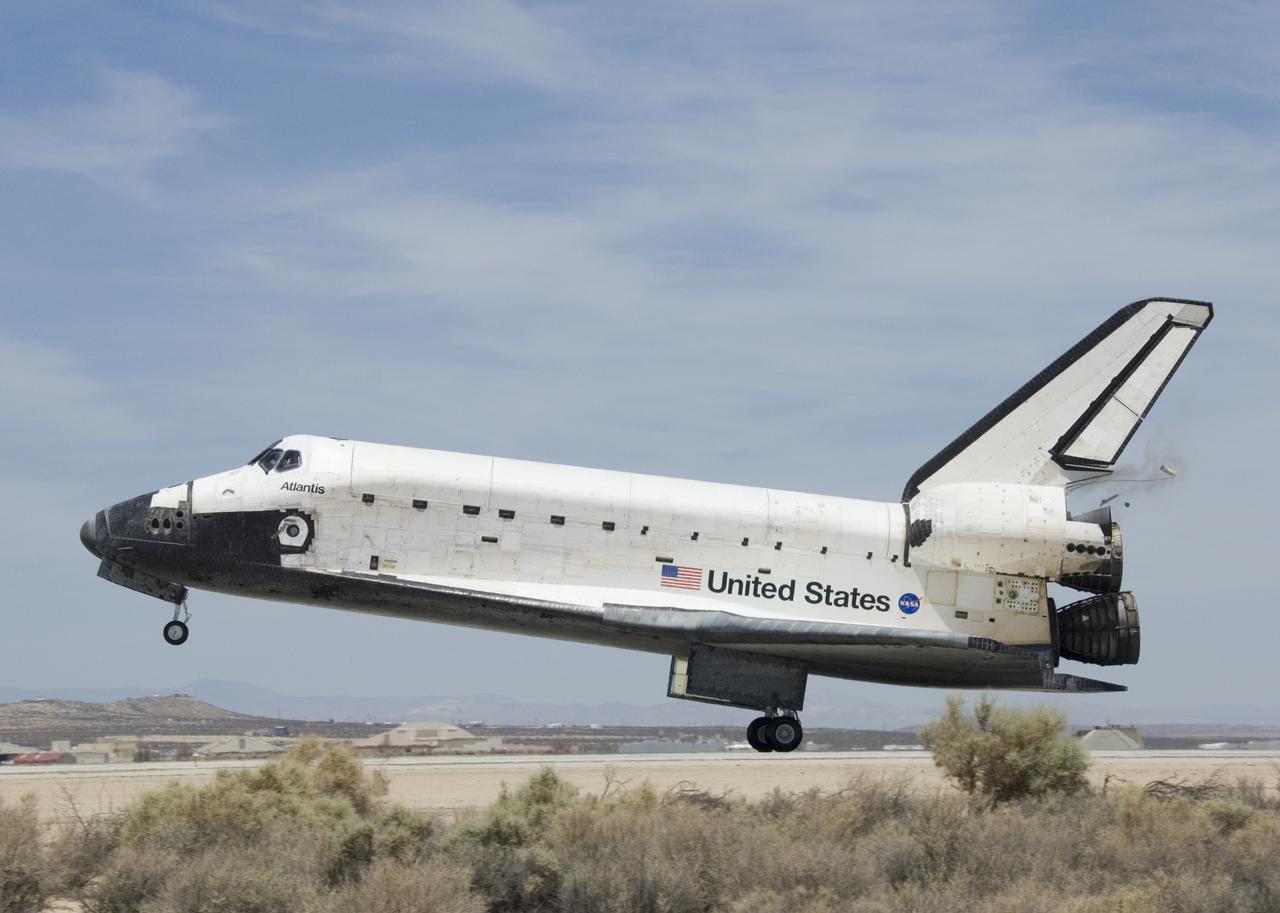
Space Shuttle Atlantis starts to deploy its braking parachute following touchdown at Edwards Air Force Base, California, on June 22, 2007.
Space Shuttle Atlantis starts to deploy its braking parachute following touchdown at Edwards Air Force Base, California, on June 22, 2007
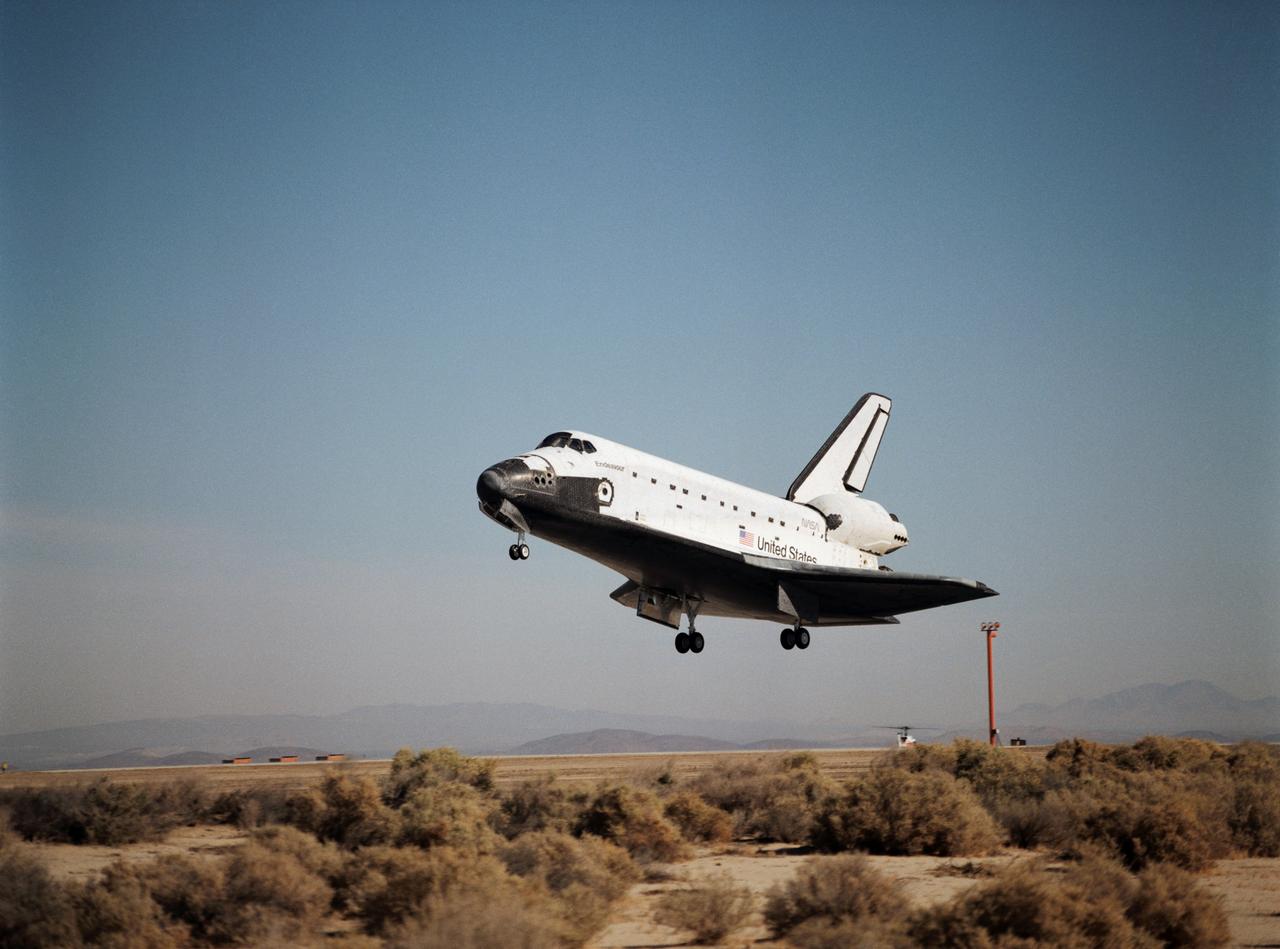
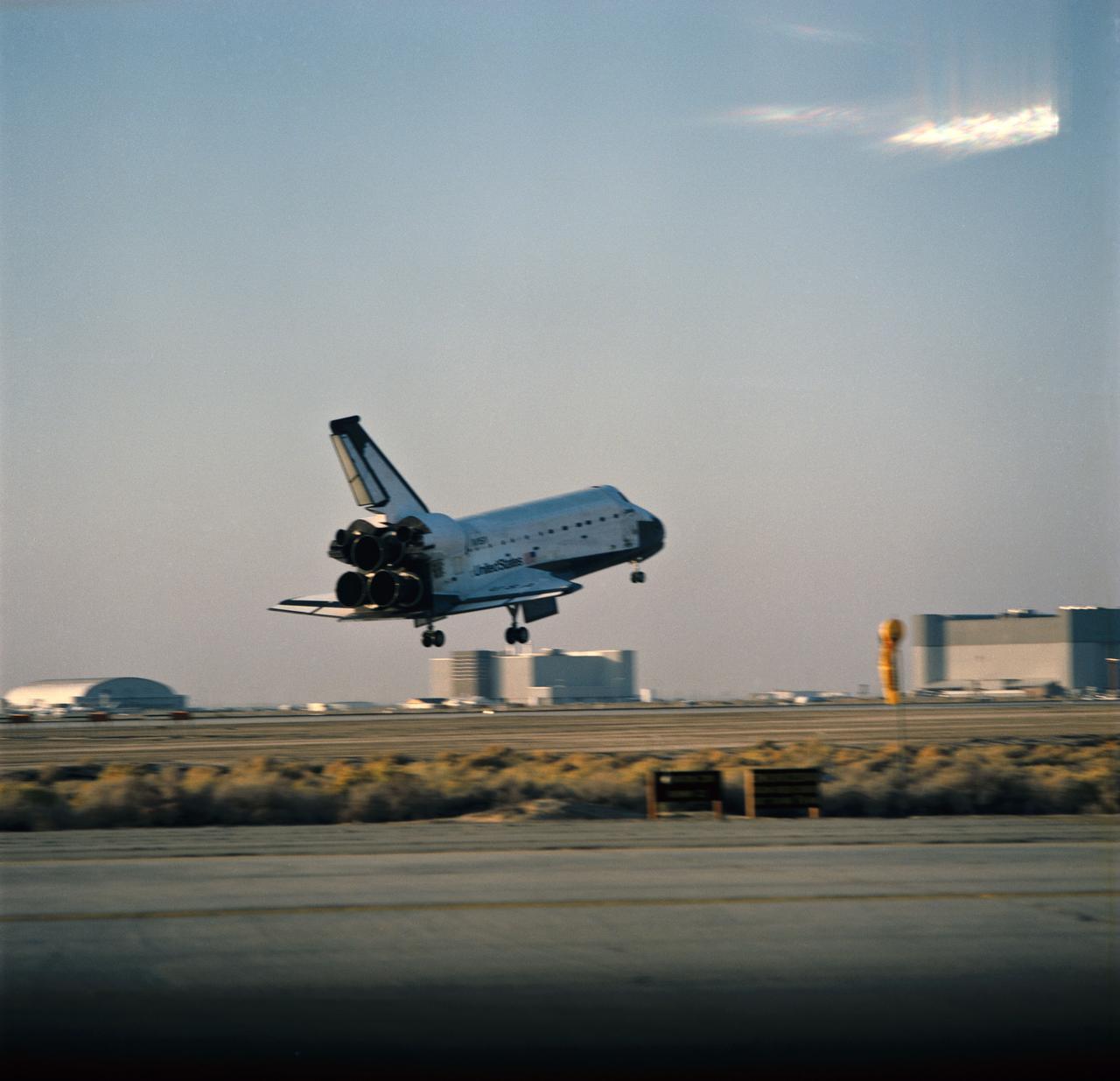
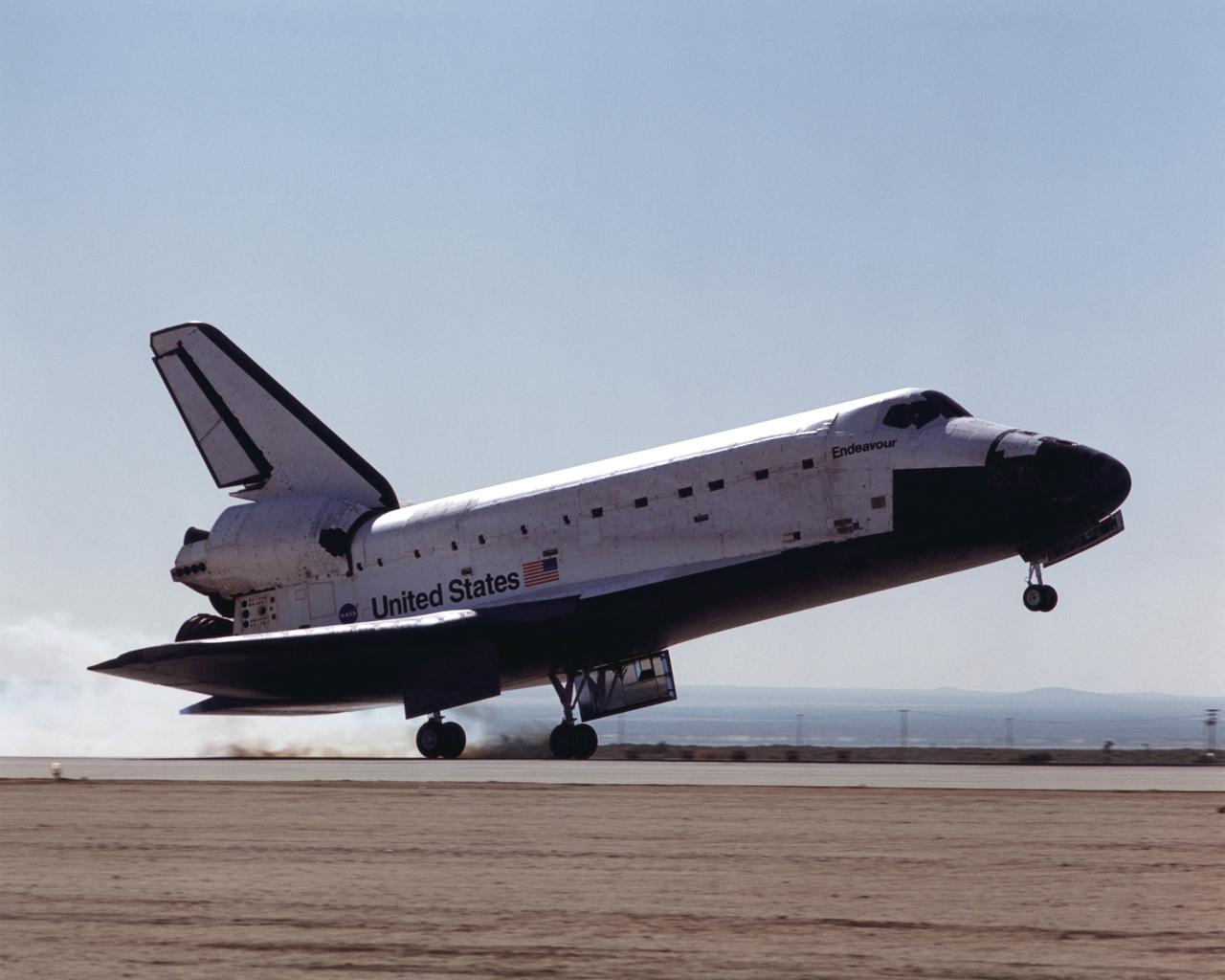
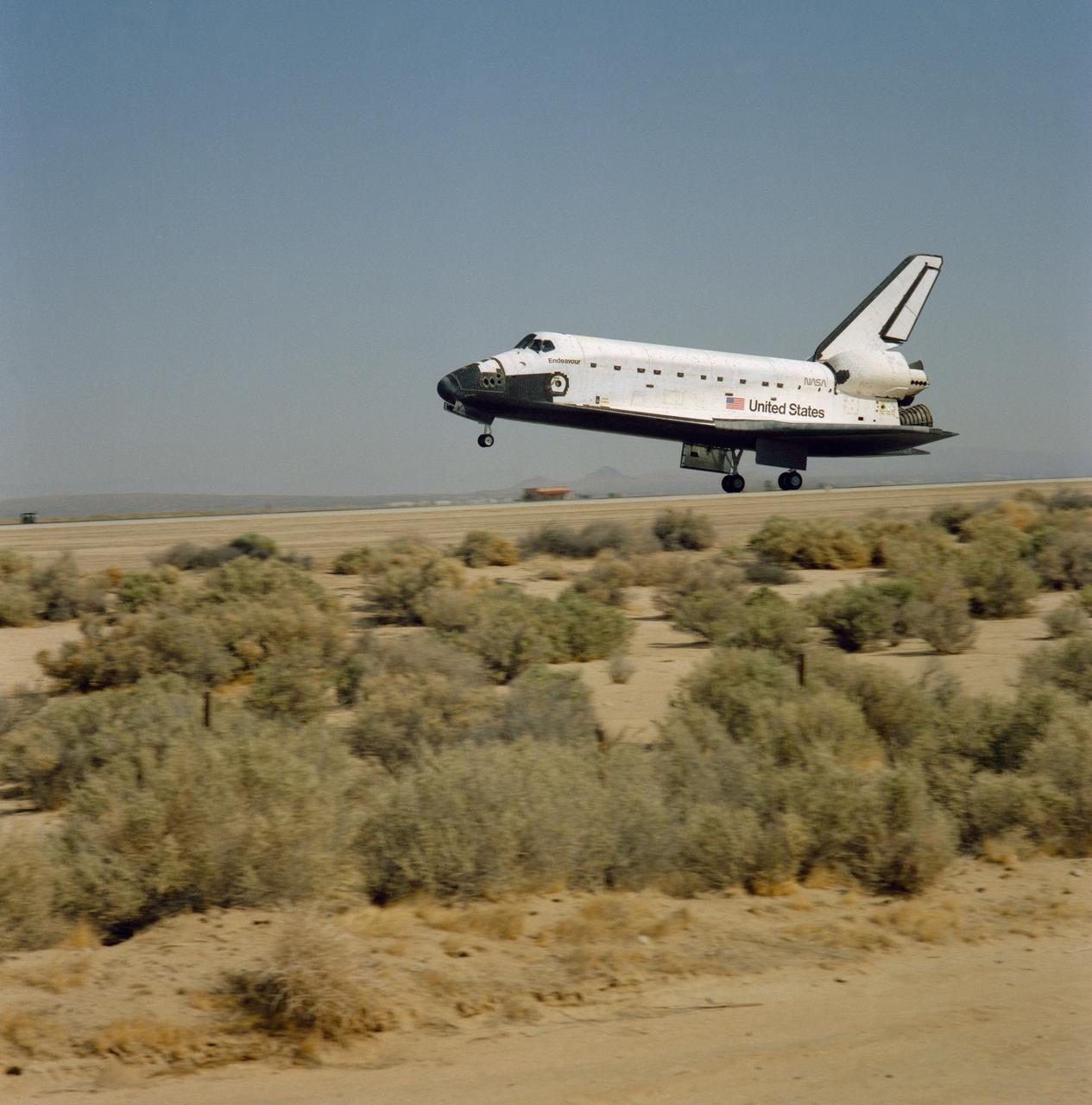
STS068-S-059 (11 October 1994) --- With its main landing gear not quite on the runway, the Space Shuttle Endeavour wraps up an eleven-day mission at Edwards Air Force Base, California.  Landing occurred at 10:02 a.m. (PDT), October 11, 1994.  Onboard were astronauts Michael A. Baker, mission commander; Terrence W. Wilcutt, pilot; Thomas D. Jones, payload commander; and Daniel W. Bursch, Peter J. K. (Jeff) Wisoff and Steven L. Smith, all mission specialists.
STS-68 landing at Edwards Air Force Base
STS114-S-047 (9 August 2005) --- NASA’s Crew Transport Vehicle (CTV) pulls up to the Space Shuttle Discovery to offload the STS-114 crewmembers after a successful landing at 5:11 a.m. (PDT) on August 9, 2005 at Edwards Air Force Base in California. The landing concludes a historic 14-day, Return to Flight mission to the International Space Station.
STS-114 landing at Edwards Air Force Base
STS068-S-060 (11 October 1994) --- With its main landing gear not quite on the runway, the Space Shuttle Endeavour wraps up an eleven-day mission at Edwards Air Force Base, California.  Landing occurred at 10:02 a.m. (PDT), October 11, 1994.  Onboard were astronauts Michael A. Baker, mission commander; Terrence W. Wilcutt, pilot; Thomas D. Jones, payload commander; and Daniel W. Bursch, Peter J. K. (Jeff) Wisoff and Steven L. Smith, all mission specialists.
STS-68 landing at Edwards Air Force Base
STS114-S-048 (9 August 2005) --- The sun rises on the Space Shuttle Discovery as it rests on the runway at Edwards Air Force Base in California, after a safe landing at 5:11 a.m. (PDT) on Aug. 9, 2005. The landing concludes a historic 14-day Return to Flight STS-114 mission to the international space station.
STS-114 landing at Edwards Air Force Base
The sun rises on the Space Shuttle Discovery as it rests on the runway at Edwards Air Force Base, California, after a safe landing August 9, 2005 to complete the STS-114 mission. Space Shuttle Discovery landed safely at NASA's Dryden Flight Research Center at Edwards Air Force Base in California at 5:11:22 a.m. PDT this morning, following the very successful 14-day STS-114 return to flight mission.  During their two weeks in space, Commander Eileen Collins and her six crewmates tested out new safety procedures and delivered supplies and equipment the International Space Station.  Discovery spent two weeks in space, where the crew demonstrated new methods to inspect and repair the Shuttle in orbit. The crew also delivered supplies, outfitted and performed maintenance on the International Space Station. A number of these tasks were conducted during three spacewalks.  In an unprecedented event, spacewalkers were called upon to remove protruding gap fillers from the heat shield on Discovery's underbelly. In other spacewalk activities, astronauts installed an external platform onto the Station's Quest Airlock and replaced one of the orbital outpost's Control Moment Gyroscopes.  Inside the Station, the STS-114 crew conducted joint operations with the Expedition 11 crew. They unloaded fresh supplies from the Shuttle and the Raffaello Multi-Purpose Logistics Module. Before Discovery undocked, the crews filled Raffeallo with unneeded items and returned to Shuttle payload bay.  Discovery launched on July 26 and spent almost 14 days on orbit.
The sun rises on the Space Shuttle Discovery as it rests on the runway at Edwards Air Force Base, California, after a safe landing August 9, 2005
The sun rises on the Space Shuttle Discovery as it rests on the runway at Edwards Air Force Base, California, after a safe landing August 9, 2005 to complete the STS-114 mission. Space Shuttle Discovery landed safely at NASA's Dryden Flight Research Center at Edwards Air Force Base in California at 5:11:22 a.m. PDT this morning, following the very successful 14-day STS-114 return to flight mission.  During their two weeks in space, Commander Eileen Collins and her six crewmates tested out new safety procedures and delivered supplies and equipment the International Space Station.  Discovery spent two weeks in space, where the crew demonstrated new methods to inspect and repair the Shuttle in orbit. The crew also delivered supplies, outfitted and performed maintenance on the International Space Station. A number of these tasks were conducted during three spacewalks.  In an unprecedented event, spacewalkers were called upon to remove protruding gap fillers from the heat shield on Discovery's underbelly. In other spacewalk activities, astronauts installed an external platform onto the Station's Quest Airlock and replaced one of the orbital outpost's Control Moment Gyroscopes.  Inside the Station, the STS-114 crew conducted joint operations with the Expedition 11 crew. They unloaded fresh supplies from the Shuttle and the Raffaello Multi-Purpose Logistics Module. Before Discovery undocked, the crews filled Raffeallo with unneeded items and returned to Shuttle payload bay.  Discovery launched on July 26 and spent almost 14 days on orbit.
The sun rises on the Space Shuttle Discovery as it rests on the runway at Edwards Air Force Base, California, after a safe landing August 9, 2005
STS068-S-061 (11 October 1994) --- The drag chute system, one of 13 Detailed Test Objectives (DTO) for STS-68, is deployed as the Space Shuttle Endeavour completes an eleven-day mission at Edwards Air Force Base, California.  Landing occurred at 10:02 a.m. (PDT), October 11, 1994.  Onboard were astronauts Michael A. Baker, mission commander; Terrence W. Wilcutt, pilot; Thomas D. Jones, payload commander; and Daniel W. Bursch, Peter J. K. (Jeff) Wisoff and Steven L. Smith, all mission specialists.
STS-68 landing at Edwards Air Force Base
51G-S-225 (24 June 1985) --- Discovery, with its seven-member 51-G crew aboard, touches down on a dry lakebed at Edwards Air Force Base in California. Landing was noted at 6:11:53 a.m. (PDT), June 24, 1985.
STS 51-G Discovery lands at Edwards Air Force Base, California
51G-S-224 (24 June 1985) --- Discovery, with its seven-member 51-G crew aboard, touches down on a dry lakebed at Edwards Air Force Base in California. Landing was noted at 6:11:53 a.m. (PDT), June 24, 1985.
STS 51-G Discovery lands at Edwards Air Force Base, California
Following its landing on June 22, 2007, the Space Shuttle Atlantis is towed from the runway at Edwards Air Force Base to NASA Dryden's Mate-Demate Device (MDD) for post-flight processing in preparation for its return to the Kennedy Space Center in Florida.
The Space Shuttle Atlantis is towed from the runway at Edwards Air Force Base to NASA Dryden's Mate-Demate Device (MDD) for post-flight processing
EDWARDS AIR FORCE BASE, Calif. -- (ED09-0253-03) Its nose still high in the air, Space Shuttle Discovery rolls down Runway 22L at Edwards Air Force Base shortly before sunset on Sept. 11, 2009 and the end of mission STS-128. (NASA photo / David Huskey/WSTF)
KSC-2009-5092
EDWARDS AIR FORCE BASE, Calif. -- (ED09-0253-02) Space Shuttle Discovery rolls out on Runway 22L after landing at Edwards Air Force Base in Southern California’s high desert to conclude mission STS-128 to the International Space Station. (NASA photo /Tom Tschida)
KSC-2009-5091
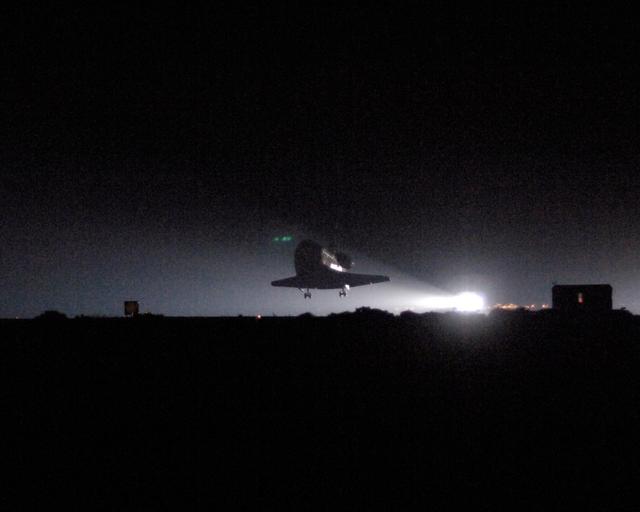
STS114-S-046 (9 August 2005) --- The Space Shuttle Discovery, with its crew of seven astronauts onboard, glides to a pre-dawn landing at Edwards Air Force Base in California. Touchdown occurred at 5:11 a.m. (PDT) August 9, 2005. Astronauts Eileen M. Collins and James M. Kelly, STS-114 commander and pilot, respectively, guided the ship as it made its 17,000 mph descent from space into the morning darkness. The landing concludes a historic 14-day, Return to Flight mission to the International Space Station. Also onboard were astronauts Stephen K. Robinson, Andrew S. W. Thomas, Wendy B. Lawrence, Charles J. Camarda, and Japan Aerospace Exploration Agency (JAXA) astronaut Soichi Noguchi, all mission specialists.
STS-114 landing at Edwards Air Force Base
STS066-S-040 (14 November 1994) --- The main landing gear is on the ground and the nose gear is about to touch down as the Space Shuttle Atlantis heads toward a stop at Edwards Air Force Base in southern California, ending a successful 10 day, 22 hour and 34 minute space mission.  Landing occurred at 7:34 a.m. (PST), November 14, 1994.  Onboard were astronauts Donald R. McMonagle, commander; Curtis L. Brown, Jr., pilot; Ellen S. Ochoa, payload commander; Scott E. Parazynski and Joseph R. Tanner, both mission specialists, along with European Space Agency (ESA) mission specialist Jean-Francois Clervoy.  The crew supported the Atmospheric Laboratory for Applications and Science (ATLAS-3) mission.
STS-66 landing at Edwards Air Force Base
STS066-S-039 (14 November 1994) --- The drag chute is fully deployed as the Space Shuttle Atlantis heads toward a stop at Edwards Air Force Base in southern California, ending a successful 10 day, 22 hour and 34 minute space mission.  Landing occurred at 7:34 a.m. (PST), November 14, 1994.  Onboard were astronauts Donald R. McMonagle, commander; Curtis L. Brown, Jr., pilot; Ellen S. Ochoa, payload commander; Scott E. Parazynski and Joseph R. Tanner, both mission specialists, along with European Space Agency (ESA) mission specialist Jean-Francois Clervoy.  The crew supported the Atmospheric Laboratory for Applications and Science (ATLAS-3) mission.
STS-66 landing at Edwards Air Force Base
STS092-S-022 [EC00-0311-3](24 OCTOBER 2000) --- The drag chute on the Space Shuttle Discovery is deployed as the  vehicle rolls toward mission completion at Edwards Air Force Base in the Mojave Desert of California.  Onboard were astronauts Brian Duffy, Pamela A. Melroy,  Leroy Chiao, William S. McArthur, Jr., Peter J.K. (Jeff) Wisoff, Michael E. Lopez-Alegria, and Koichi Wakata of Japan's National Space Development Agency (NASDA).  Discovery touched down at 2 p.m. (PDT), October 24, and rolled to a stop on Edward's concrete runway at 2:0l, for a mission elapsed time of 12 days, 21 hours and 43 minutes.
Landing views of STS-92 at Edwards Air Force Base
STS092-S-021 [EC00-0311-2](24 October 2000 --- The main landing gear on the Space Shuttle Discovery is just about to touch down to mark mission completion at Edwards Air Force Base in the Mojave Desert of California.  Onboard were astronauts Brian Duffy, Pamela A. Melroy, William S. McArthur, Jr., Leroy Chiao, Michael E. Lopez-Alegria, Peter J.K. (Jeff) Wisoff and Koichi Wakata of Japan's National Space Development Agency (NASDA).  Discovery touched down at 2 p.m. (PDT), October 24, and rolled to a stop on Edward's concrete runway at 2:0l, for a mission elapsed time of 12 days, 21 hours and 43 minutes.
Landing views of STS-92 at Edwards Air Force Base
STS092-S-020 [EC00-0311-1] (24 October 2000)--- The main landing gear on the Space Shuttle Discovery is just about to touch down to mark mission completion at Edwards Air Force Base in the Mojave Desert of California.  Onboard were astronauts Brian Duffy, Pamela A. Melroy, William S. McArthur, Jr., Leroy Chiao, Michael E. Lopez-Alegria, Peter J.K. (Jeff) Wisoff and Koichi Wakata of Japan's National Space Development Agency (NASDA).  Discovery touched down at 2 p.m. (PDT), October 24, and rolled to a stop on Edward's concrete runway at 2:0l, for a mission elapsed time of 12 days, 21 hours and 43 minutes.
Landing views of STS-92 at Edwards Air Force Base
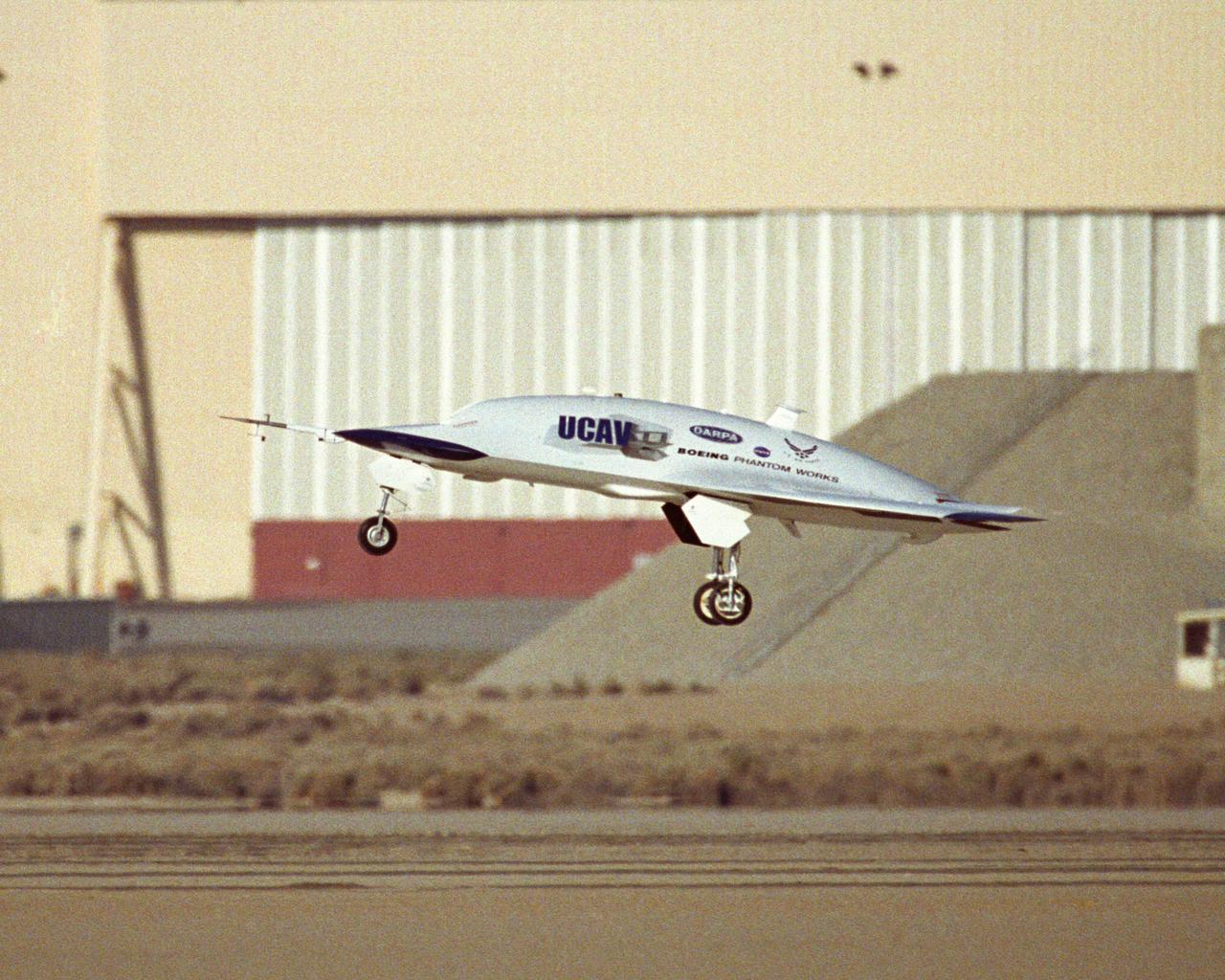
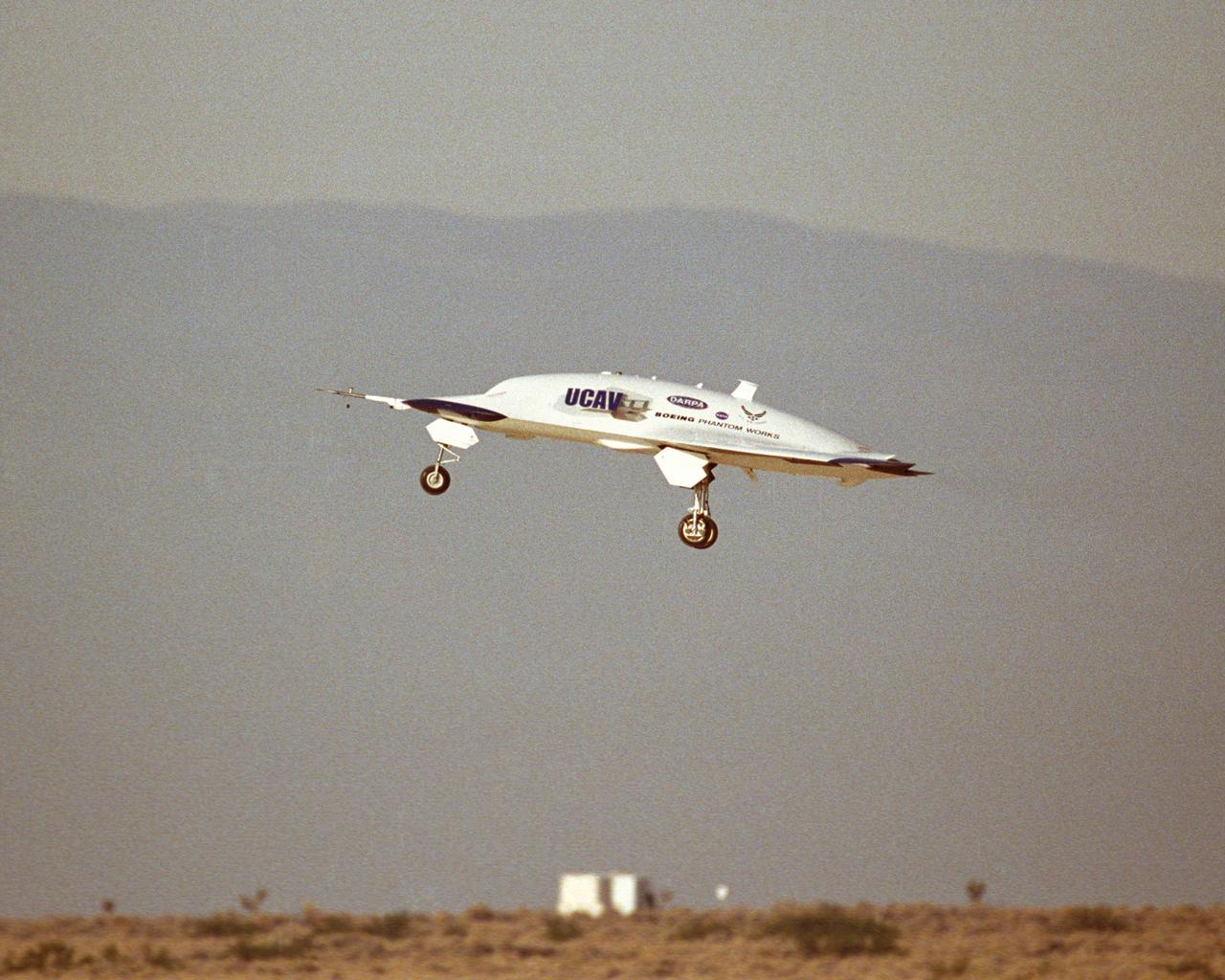
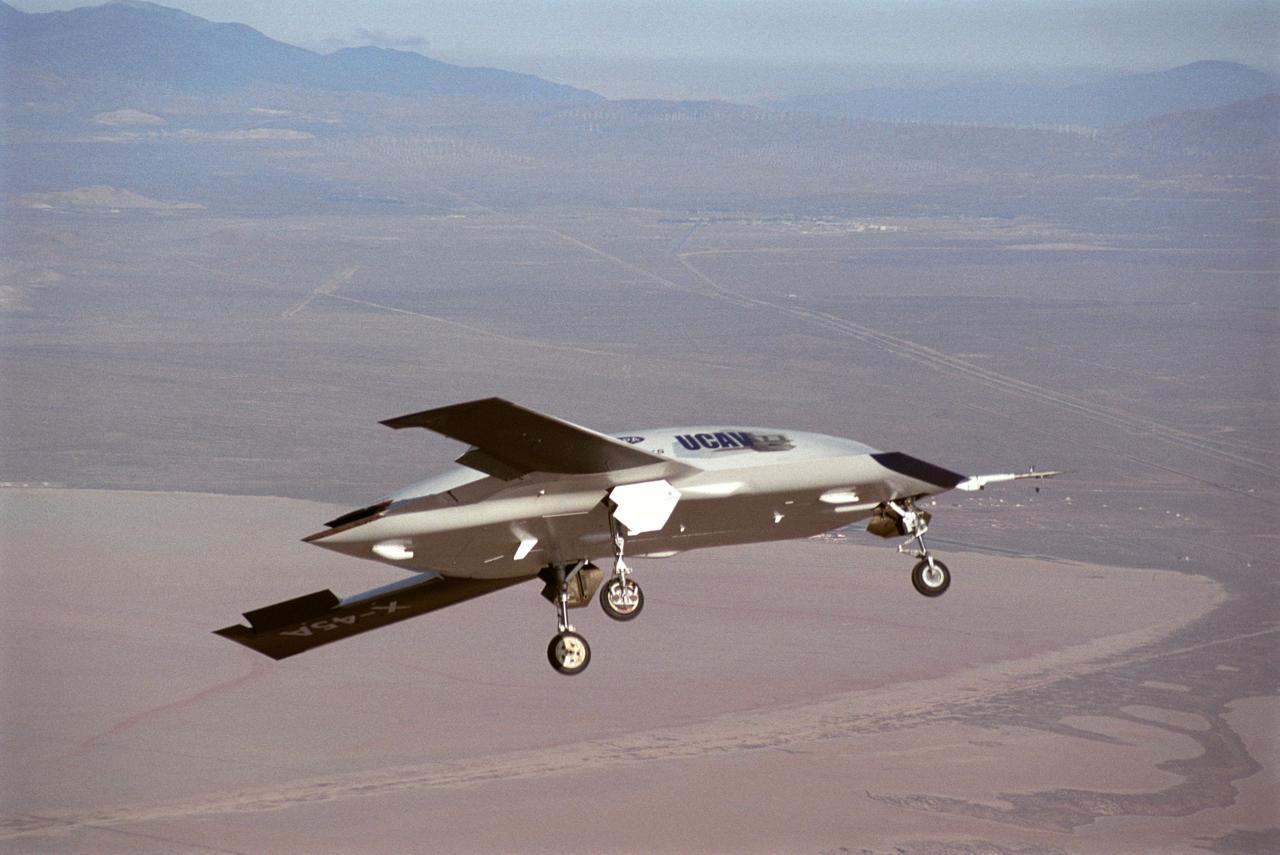
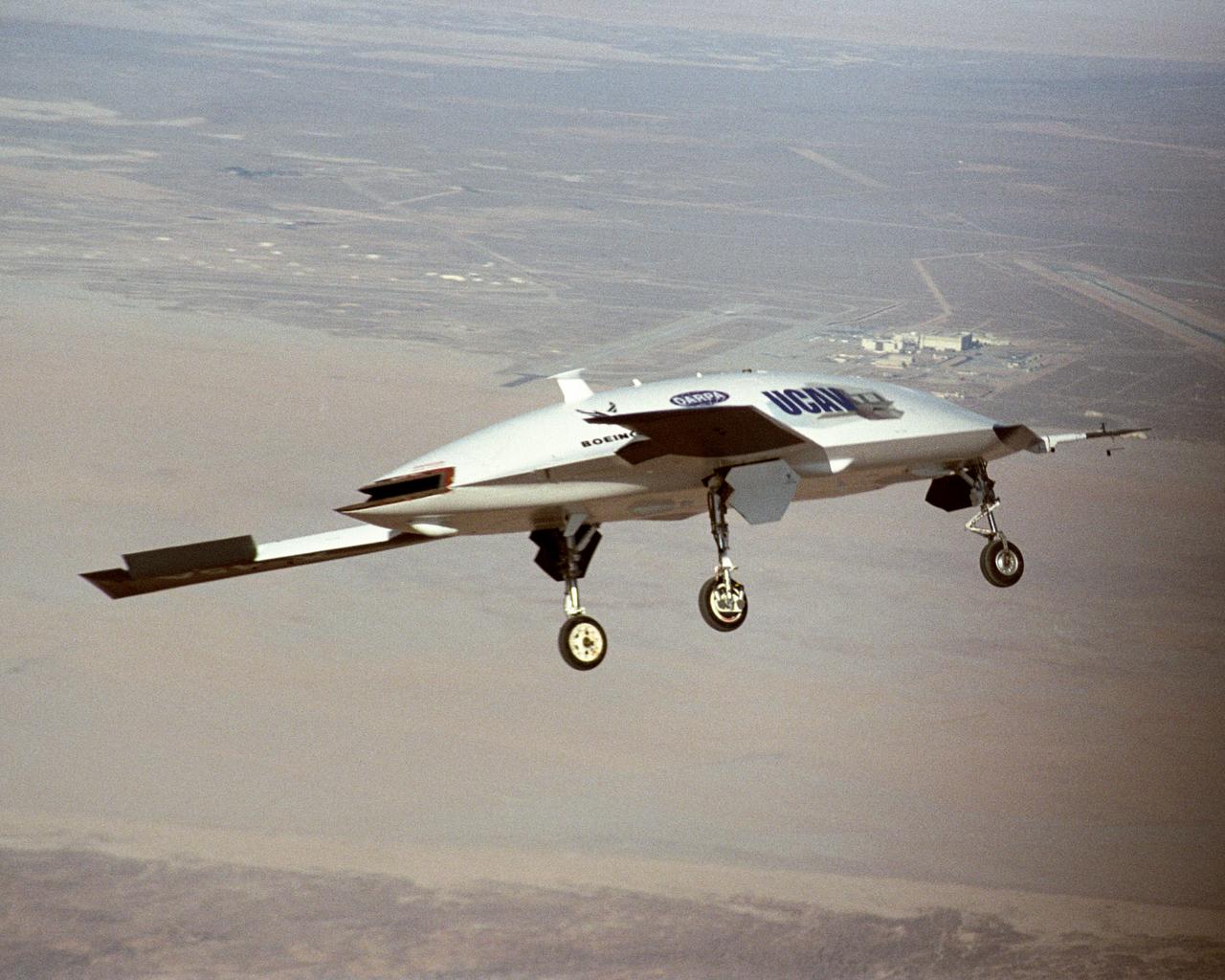
X-45A Unmanned Combat Air Vehicle, or UCAV, technology demonstration aircraft in flight during its first flight at Edwards Air Force Base, California.
X-45A Unmanned Combat Air Vehicle, or UCAV, technology demonstration aircraft in flight during its first flight at Edwards Air Force Base, California
X-45A Unmanned Combat Air Vehicle, or UCAV, technology demonstration aircraft in flight during its first flight at Edwards Air Force Base, California.
X-45A Unmanned Combat Air Vehicle, or UCAV, technology demonstration aircraft in flight during its first flight at Edwards Air Force Base, California
X-45A Unmanned Combat Air Vehicle, or UCAV, technology demonstration aircraft in flight during its first flight at Edwards Air Force Base, California.
X-45A Unmanned Combat Air Vehicle, or UCAV, technology demonstration aircraft in flight during its first flight at Edwards Air Force Base, California
X-45A Unmanned Combat Air Vehicle, or UCAV, technology demonstration aircraft in flight during its first flight at Edwards Air Force Base, California.
X-45A Unmanned Combat Air Vehicle, or UCAV, technology demonstration aircraft in flight during its first flight at Edwards Air Force Base, California
STS58-S-126 (1 Nov 1993) --- The Space Shuttle Columbia is about to touch down on the runway at Edwards Air Force Base (EAFB) in California.  The landing, which occurred at 7:06 a.m. (PST), November 1, 1993, completed a two week mission in space devoted to medical research.  Onboard the spacecraft were astronauts John E. Blaha, Richard A. Searfoss, Rhea Seddon, Shannon W. Lucid, David A. Wolf and William S. McArthur along with payload specialist Martin J. Fettman, DVM.
Landing of STS-58 Orbiter Columbia at Edwards Air Force Base
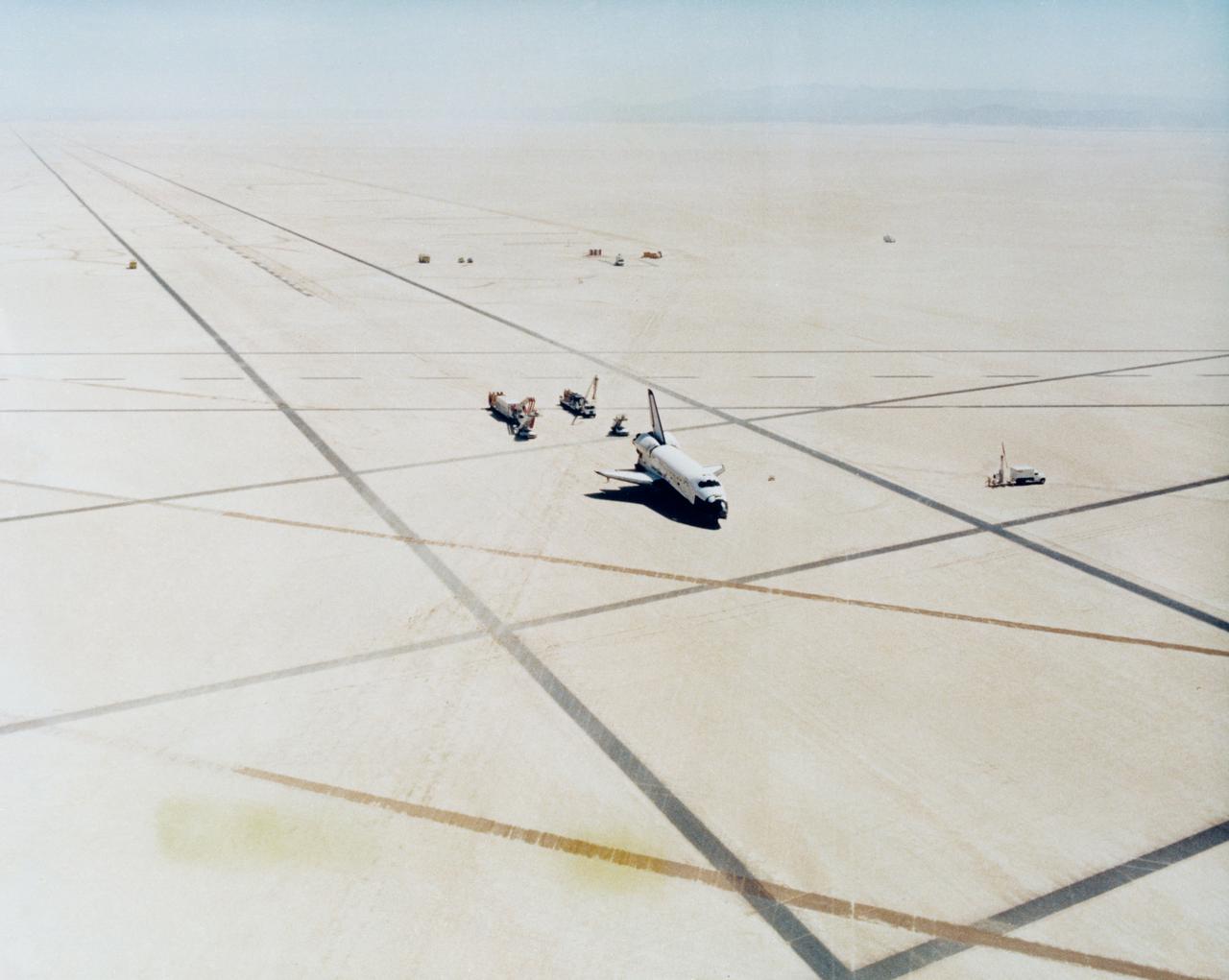
S81-30749 (14 April 1981) --- This high angle view shows the scene at Edwards Air Force Base in southern California soon after the successful landing of the space shuttle orbiter Columbia to end STS-1. Service vehicles approach the spacecraft to perform evaluations for safety, egress preparedness, etc. Astronauts John W. Young, commander, and Robert L. Crippen, pilot, are still inside the spacecraft. Photo credit: NASA
Space Shuttle orbiter Columbia on the ground at Edwards Air Force Base
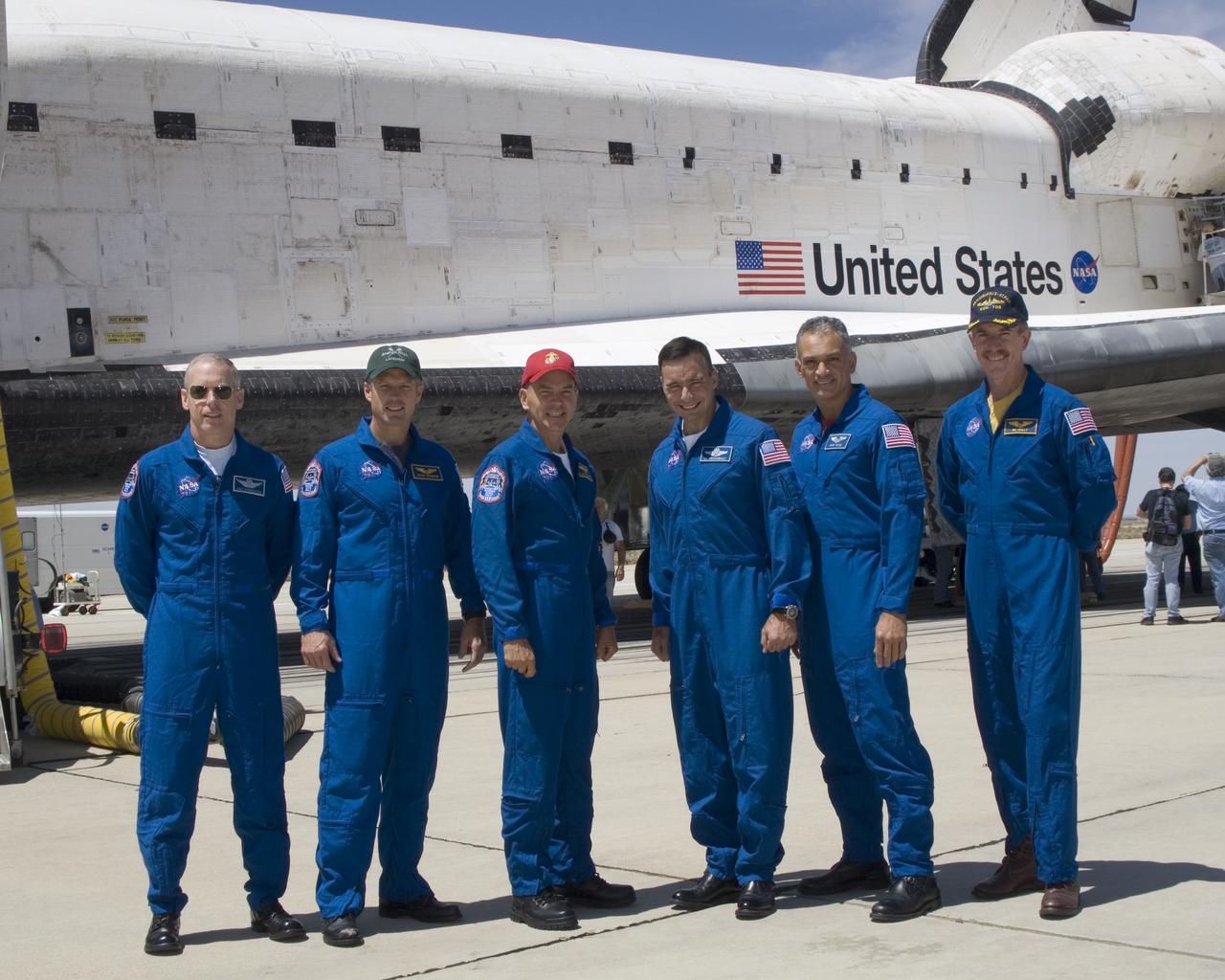
The crew of Space Shuttle mission STS-117 gathered in front of the shuttle Atlantis following landing at Edwards Air Force Base, California, June 22, 2007. From left to right: mission specialists Patrick Forrester and Steven Swanson, Commander Frederick Sturckow, Pilot Lee Archambault, and mission specialists John D. Olivas and James Reilly II.
The crew of Space Shuttle mission STS-117 gathered in front of the shuttle Atlantis following landing at Edwards Air Force Base, California, June 22, 2007
EDWARDS AIR FORCE BASE, Calif. -- (ED09-0253-25) Technicians clad in protective suits check for any hazardous gases emanating from space shuttle Discovery moments after it rolled to a stop on the main runway at Edwards Air Force Base Sept. 11. The checks are required before the crews move in for recovery operations. (NASA photo / Brian Soukup)
KSC-2009-5125
EDWARDS AIR FORCE BASE, Calif. -- (ED09-0253-01) Streams of smoke trail from the main landing gear tires as Space Shuttle Discovery touches down on Runway 22L at Edwards Air Force Base to conclude the almost 14-day STS-128 mission to the International Space Station. (NASA photo / Jim Ross)
KSC-2009-5090
EDWARDS AIR FORCE BASE, Calif. -- (ED09-0253-04) Trailing its drag chute, Space Shuttle Discovery slows to a stop after landing at Edwards Air Force Base to conclude its almost 14-day, 5.7-million-mile journey to the International Space Station  on mission STS-128 (NASA photo / Tony Landis)
KSC-2009-5093
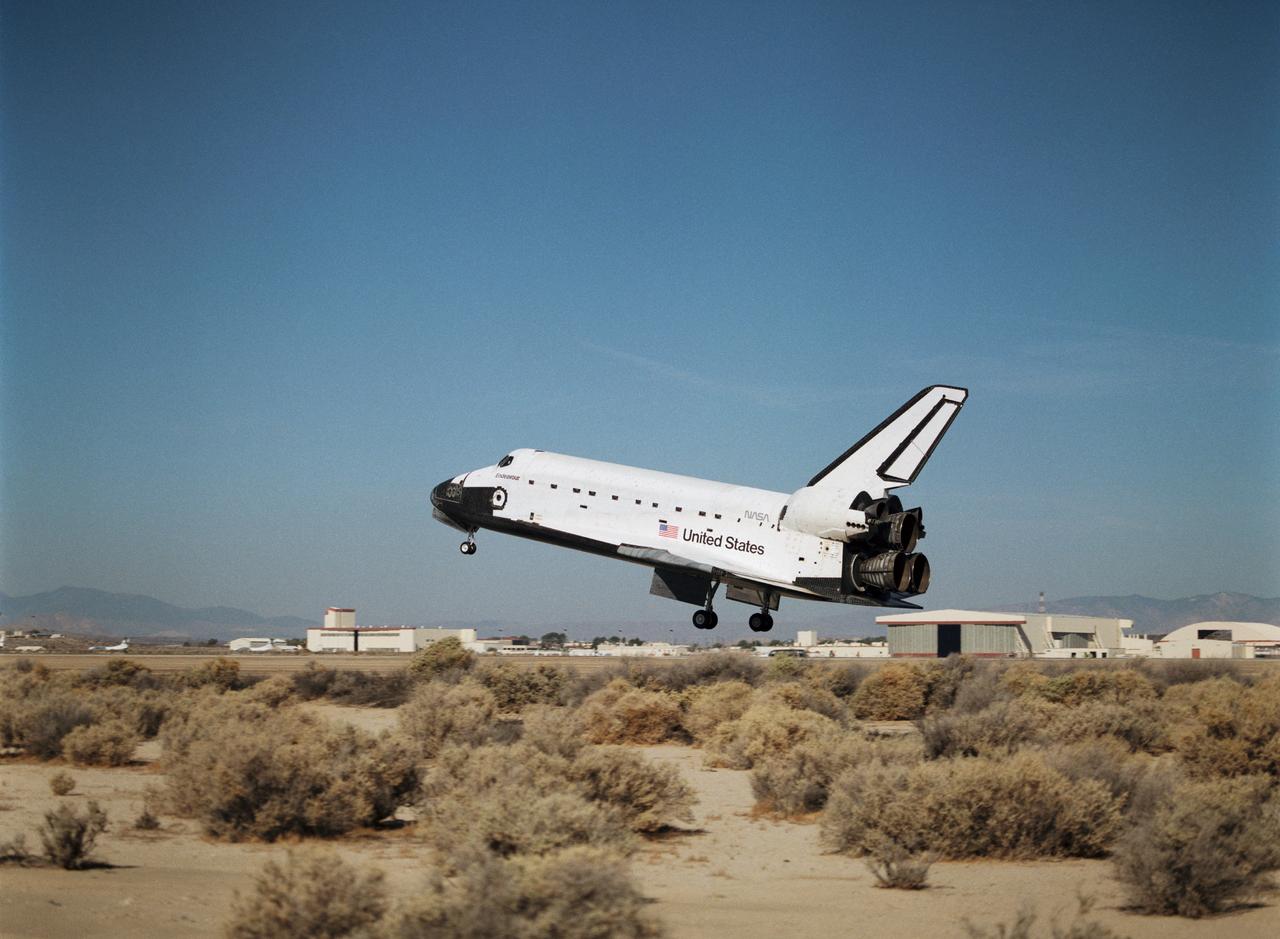
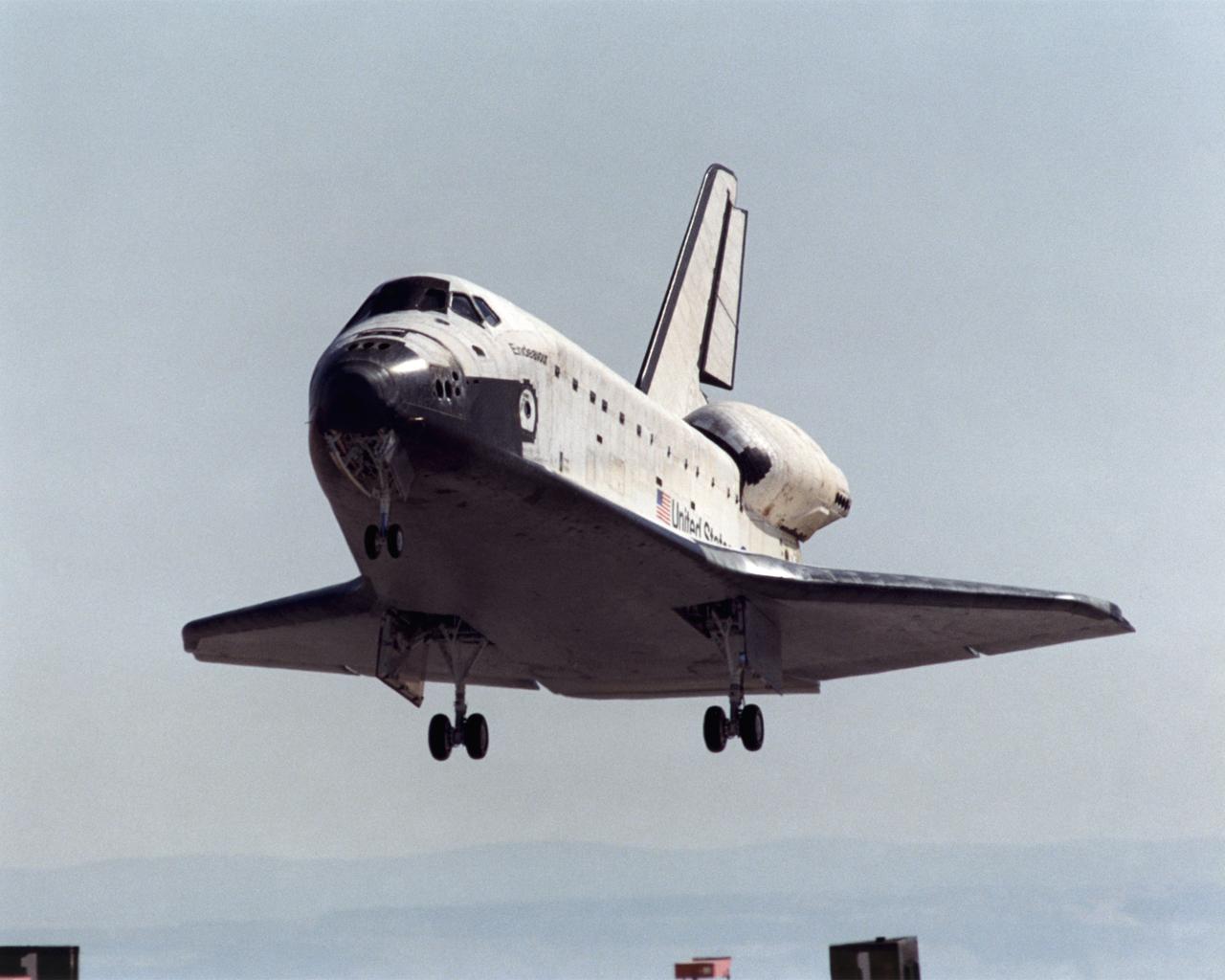
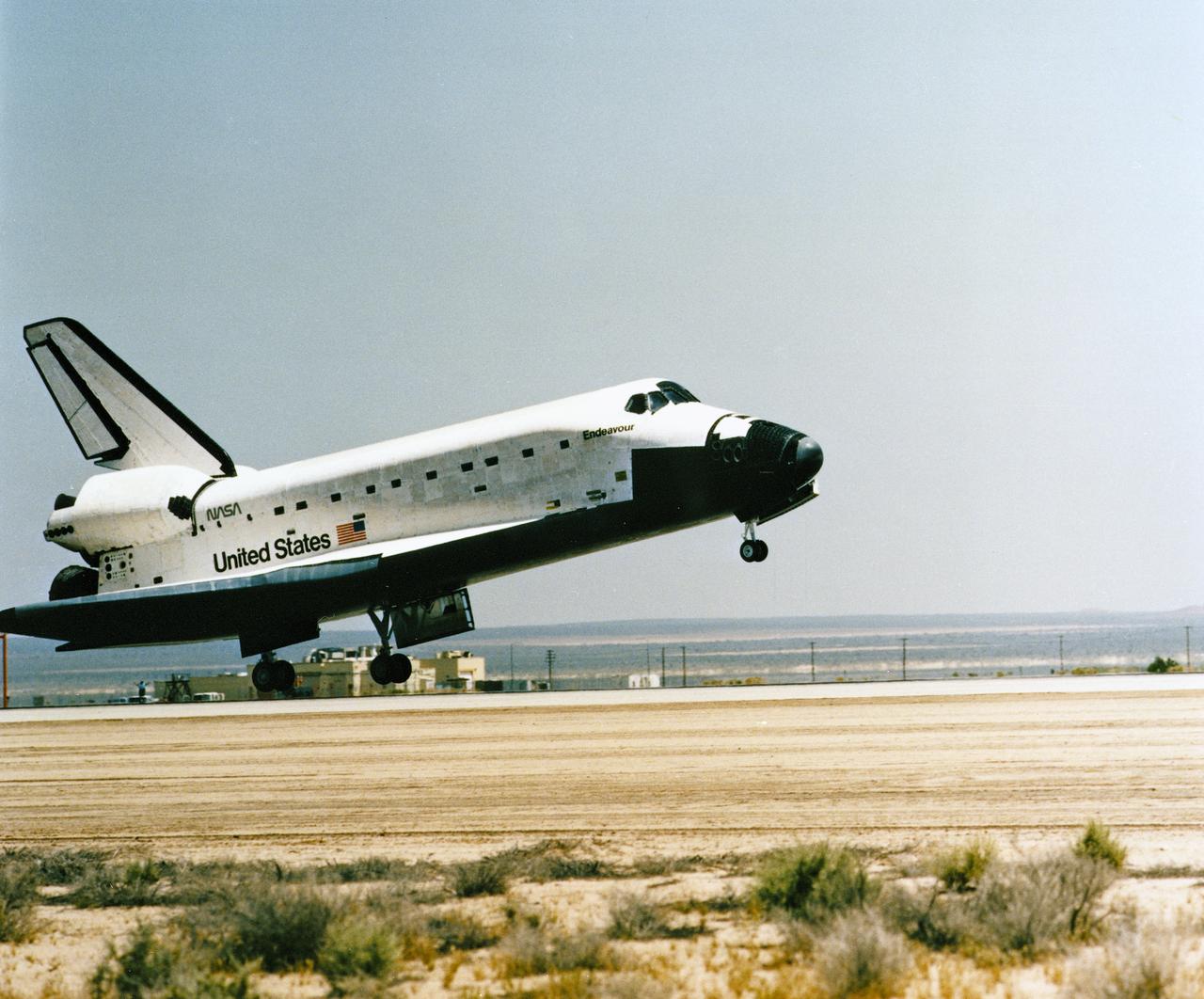
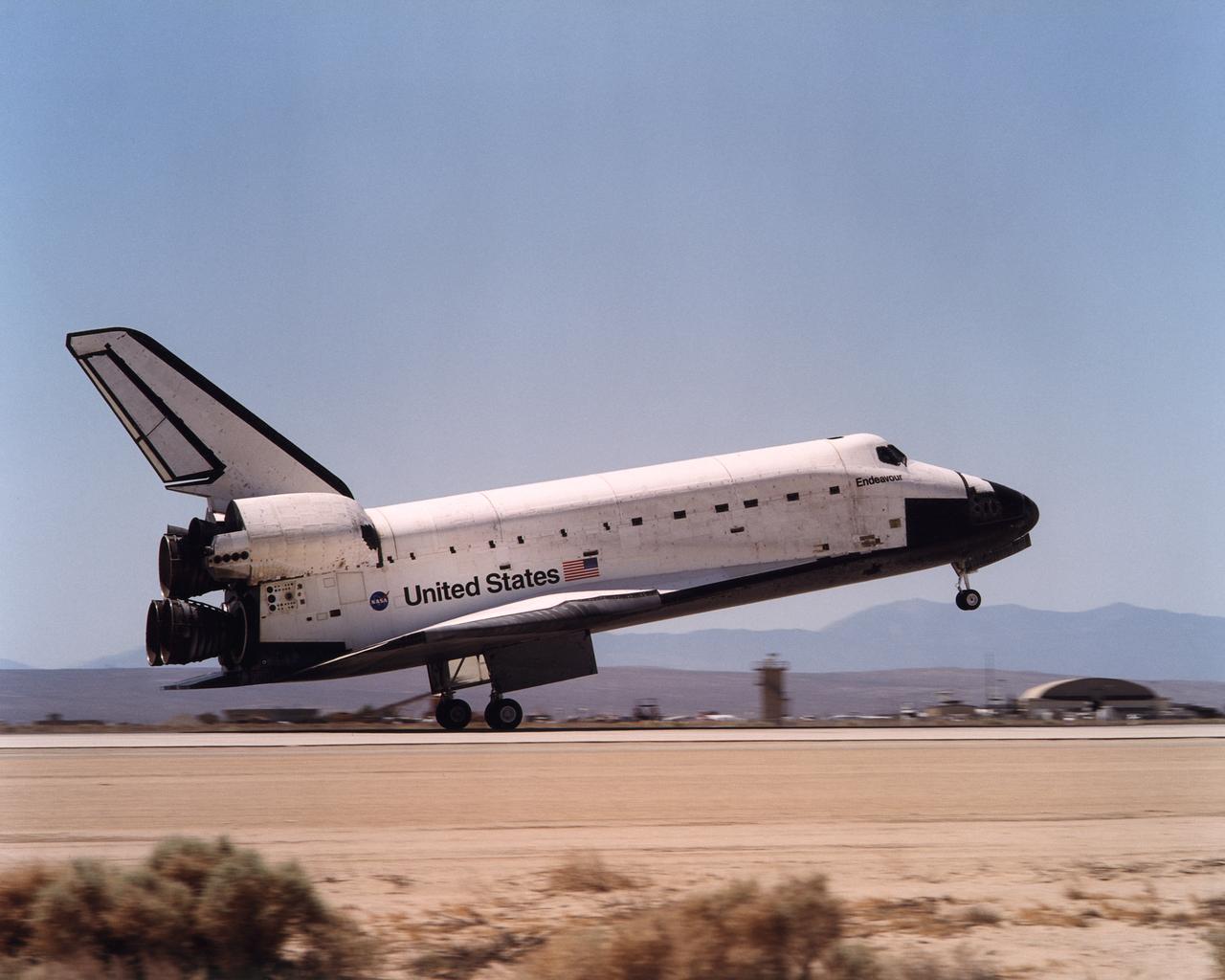
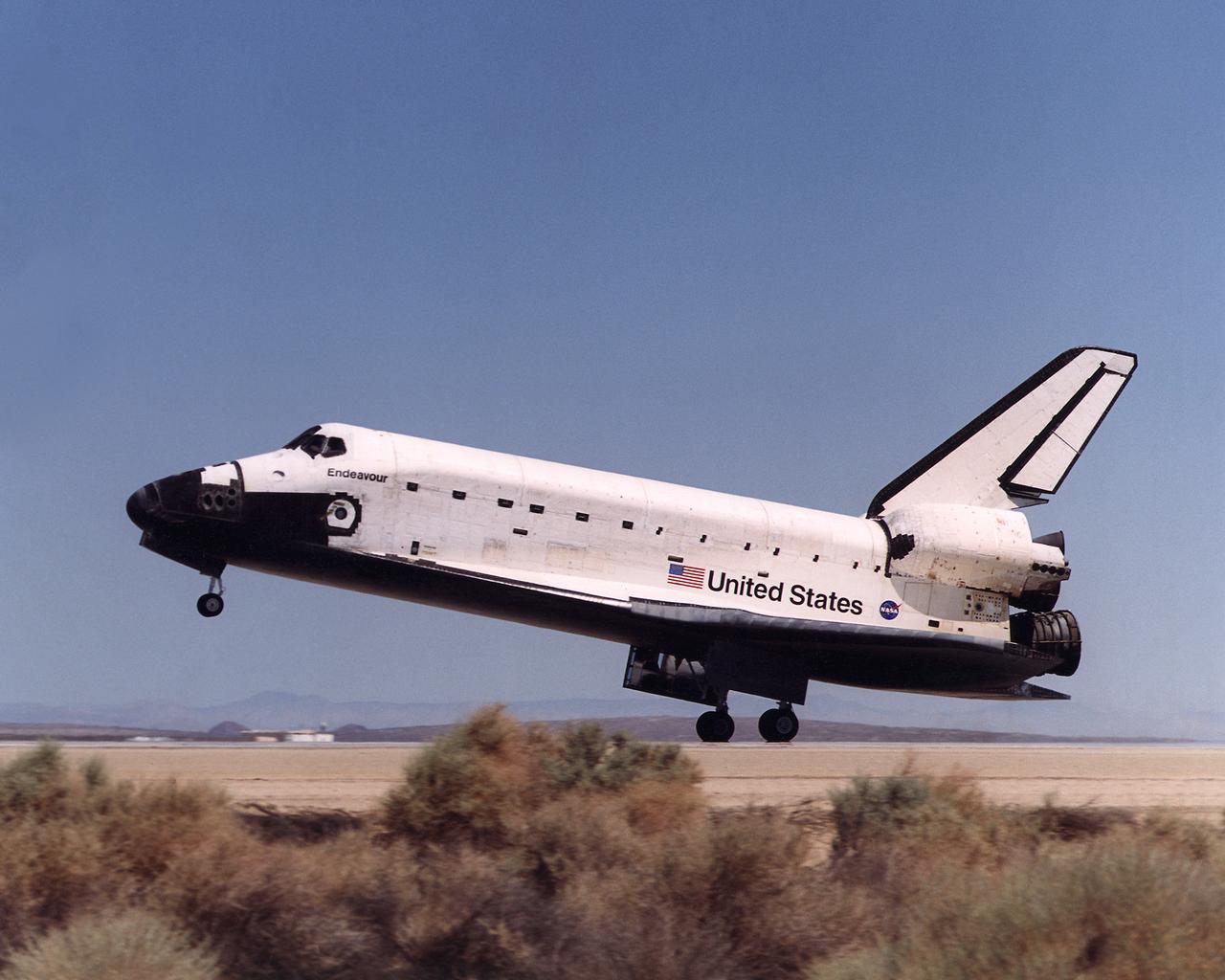
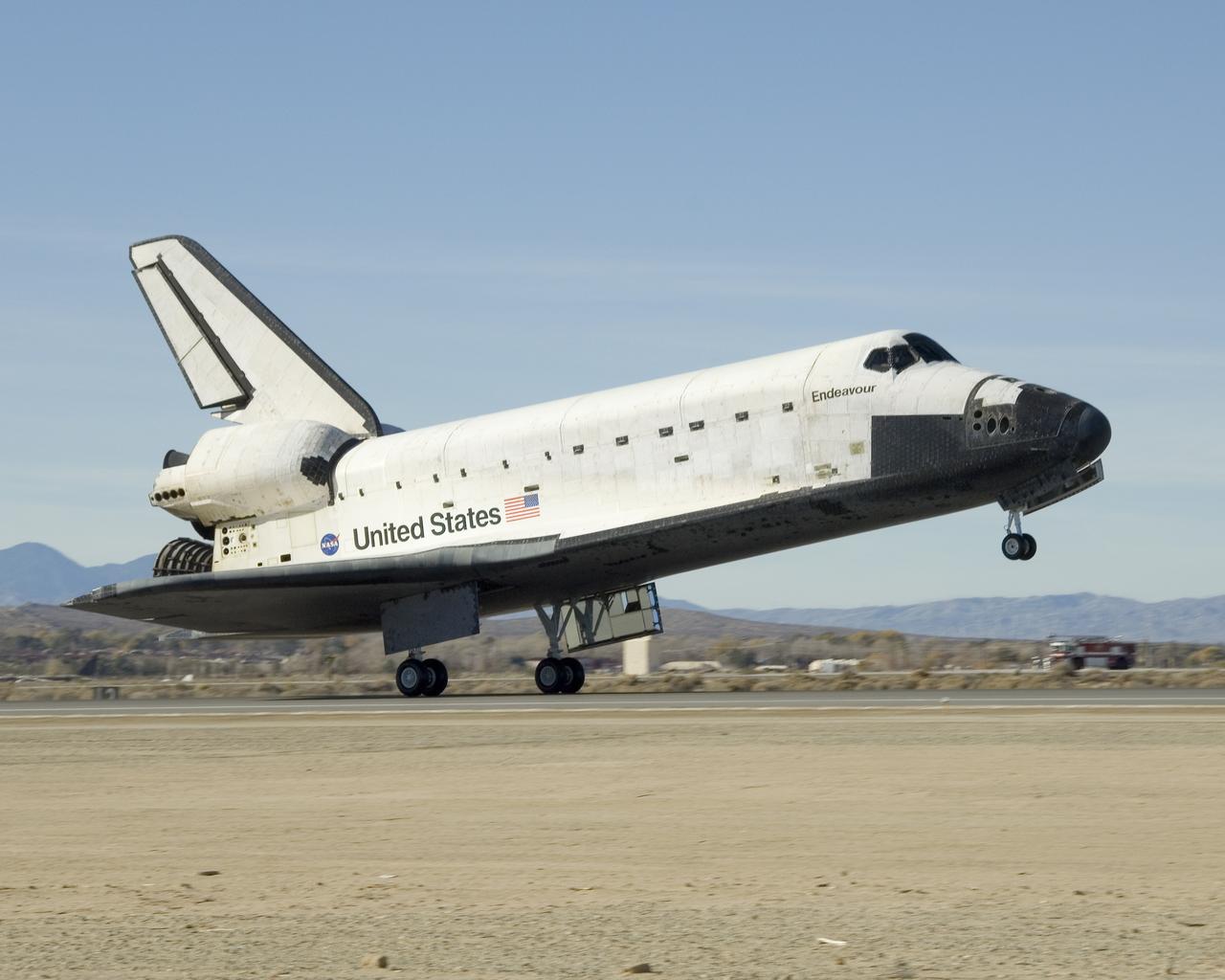
A long telephoto lens captured Space Shuttle Endeavour landing at Edwards Air Force Base, California, on May 1, 2001. NASA's Dryden Flight Research Center at Edwards would subsequently service the shuttle and mount it on a 747 for the ferry flight to the Kennedy Space Center in Florida.
A long telephoto lens captured Space Shuttle Endeavour landing at Edwards Air Force Base, California, on May 1, 2001
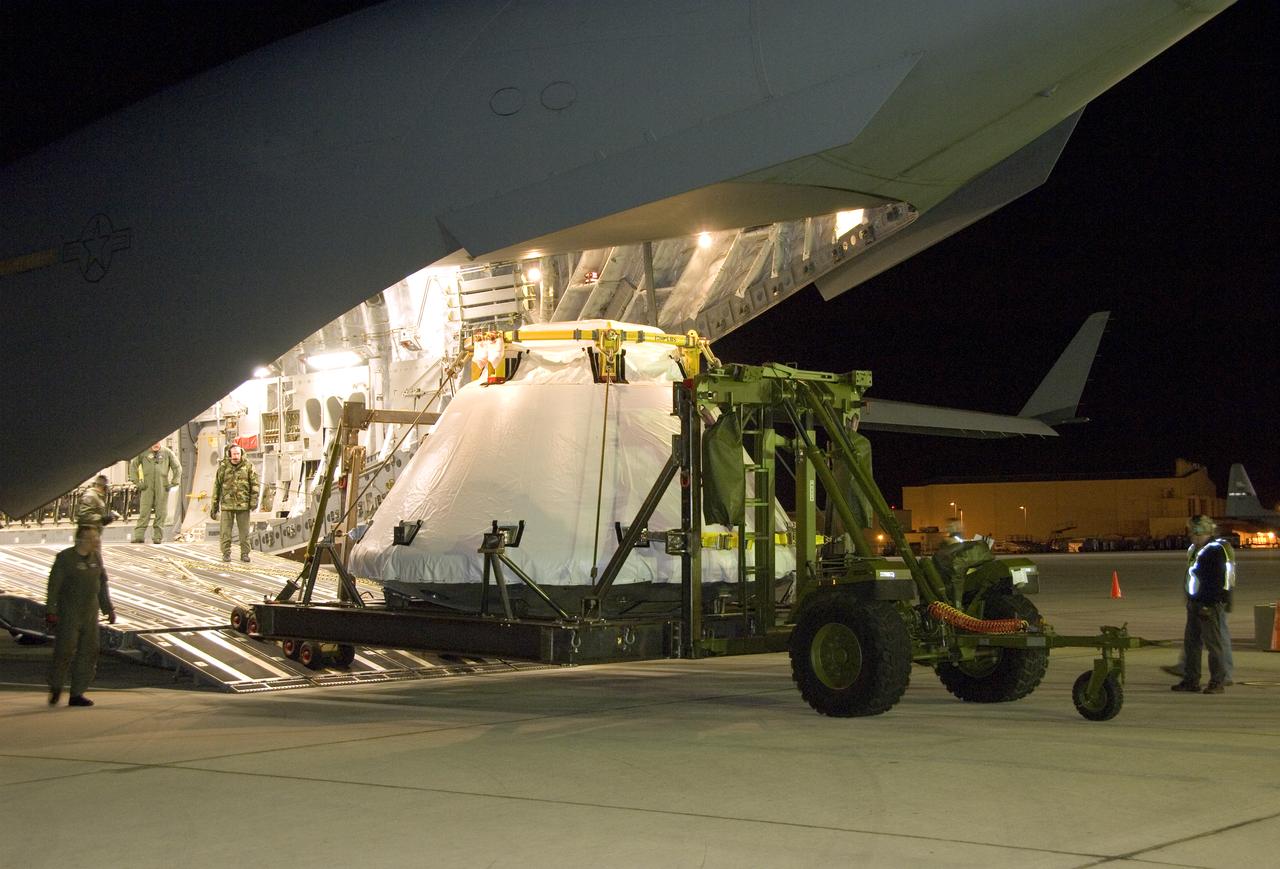
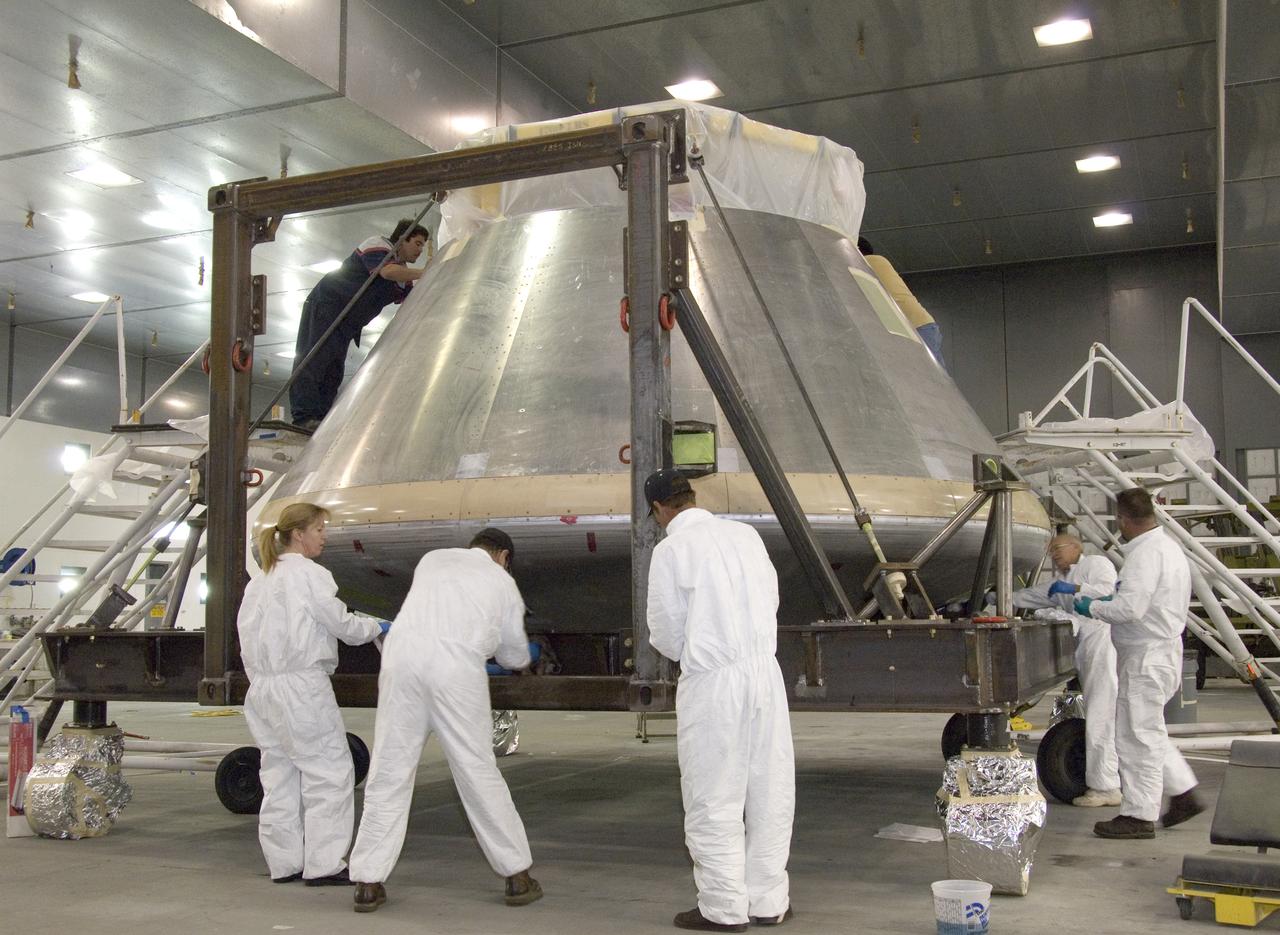
A full-scale flight-test mockup of the Constellation program's Orion crew vehicle arrived at NASA's Dryden Flight Research Center in late March 2008 to undergo preparations for the first short-range flight test of the spacecraft's astronaut escape system later that year. Engineers and technicians at NASA's Langley Research Center fabricated the structure, which precisely represents the size, outer shape and mass characteristics of the Orion space capsule. The Orion crew module mockup was ferried to NASA Dryden on an Air Force C-17. After painting in the Edwards Air Force Base paint hangar, the conical capsule was taken to Dryden for installation of flight computers, instrumentation and other electronics prior to being sent to the U.S. Army's White Sands Missile Range in New Mexico for integration with the escape system and the first abort flight test in late 2008. The tests were designed to ensure a safe, reliable method of escape for astronauts in case of an emergency.
Air Force loadmasters oversee unloading of the full-scale Orion abort test crew module mockup from a C-17 cargo aircraft at Edwards Air Force Base March 28.
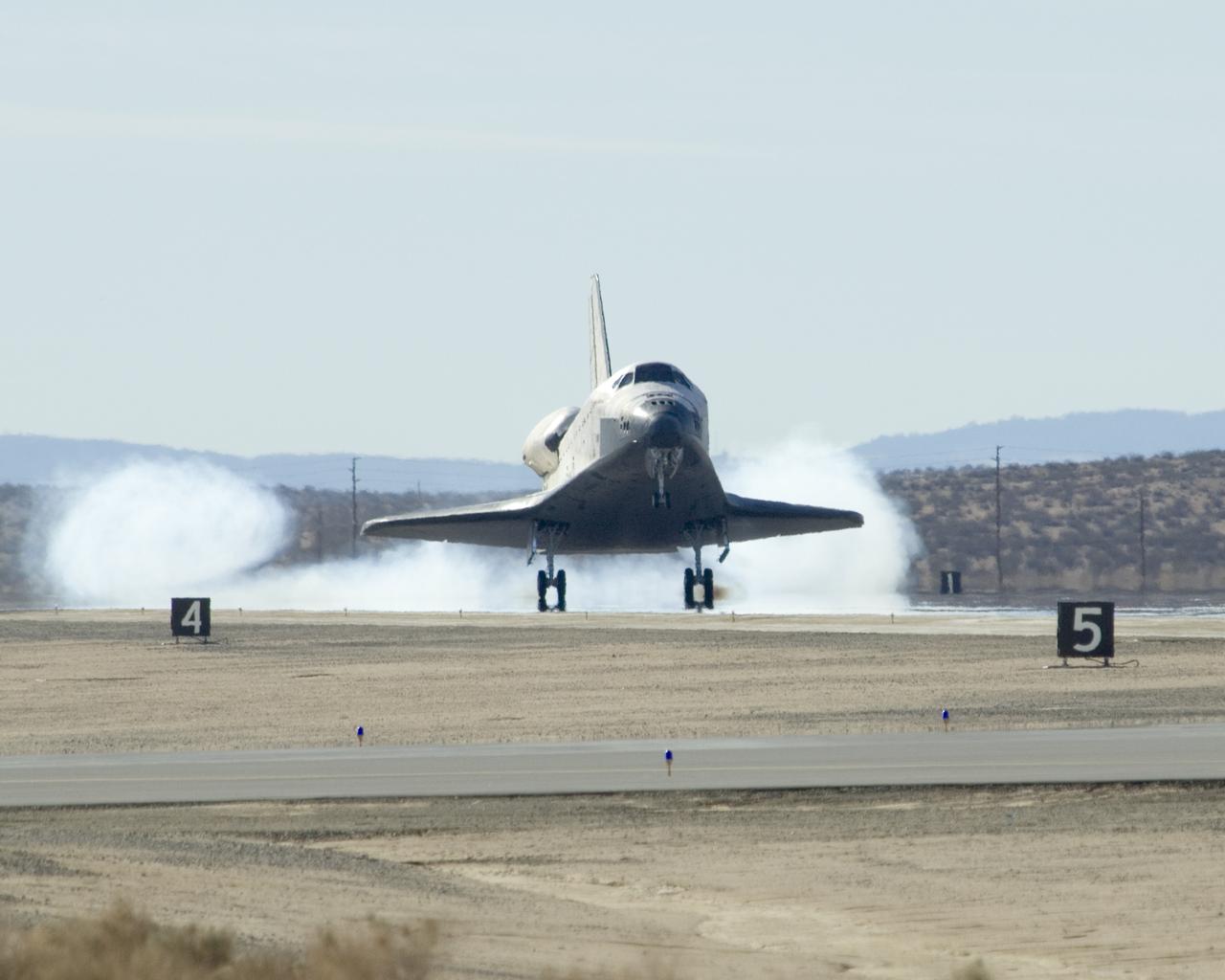
Space Shuttle Endeavour's tires produced a momentary puff of smoke as Mission STS-100 landed at NASA's Dryden Flight Research Center on Edwards Air Force Base, California, May 1, 2001.
Space Shuttle Endeavour touches down on the runway at Edwards Air Force Base, California
A full-scale flight-test mockup of the Constellation program's Orion crew vehicle arrived at NASA's Dryden Flight Research Center in late March 2008 to undergo preparations for the first short-range flight test of the spacecraft's astronaut escape system later that year. Engineers and technicians at NASA's Langley Research Center fabricated the structure, which precisely represents the size, outer shape and mass characteristics of the Orion space capsule. The Orion crew module mockup was ferried to NASA Dryden on an Air Force C-17. After painting in the Edwards Air Force Base paint hangar, the conical capsule was taken to Dryden for installation of flight computers, instrumentation and other electronics prior to being sent to the U.S. Army's White Sands Missile Range in New Mexico for integration with the escape system and the first abort flight test in late 2008. The tests were designed to ensure a safe, reliable method of escape for astronauts in case of an emergency.
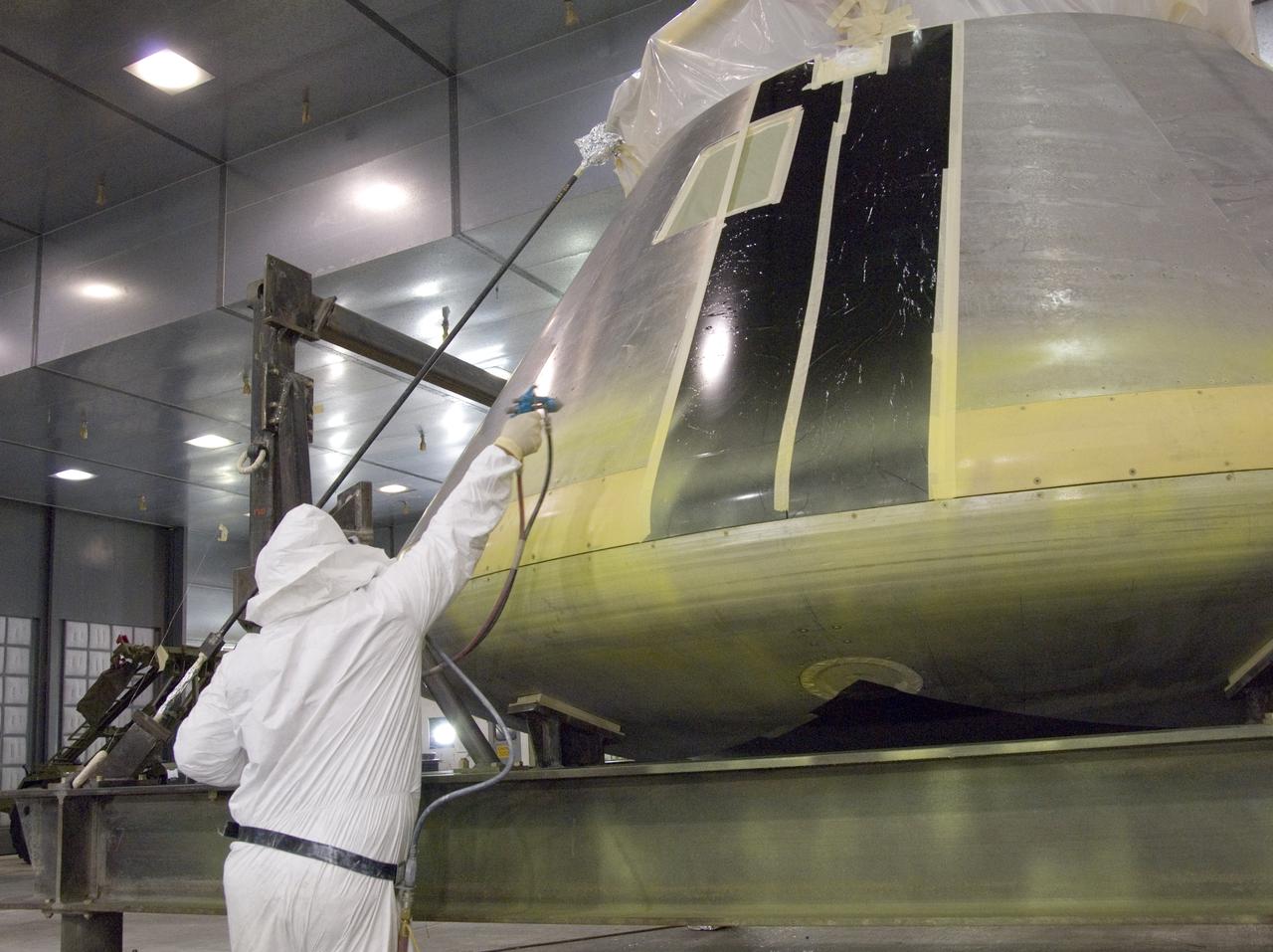
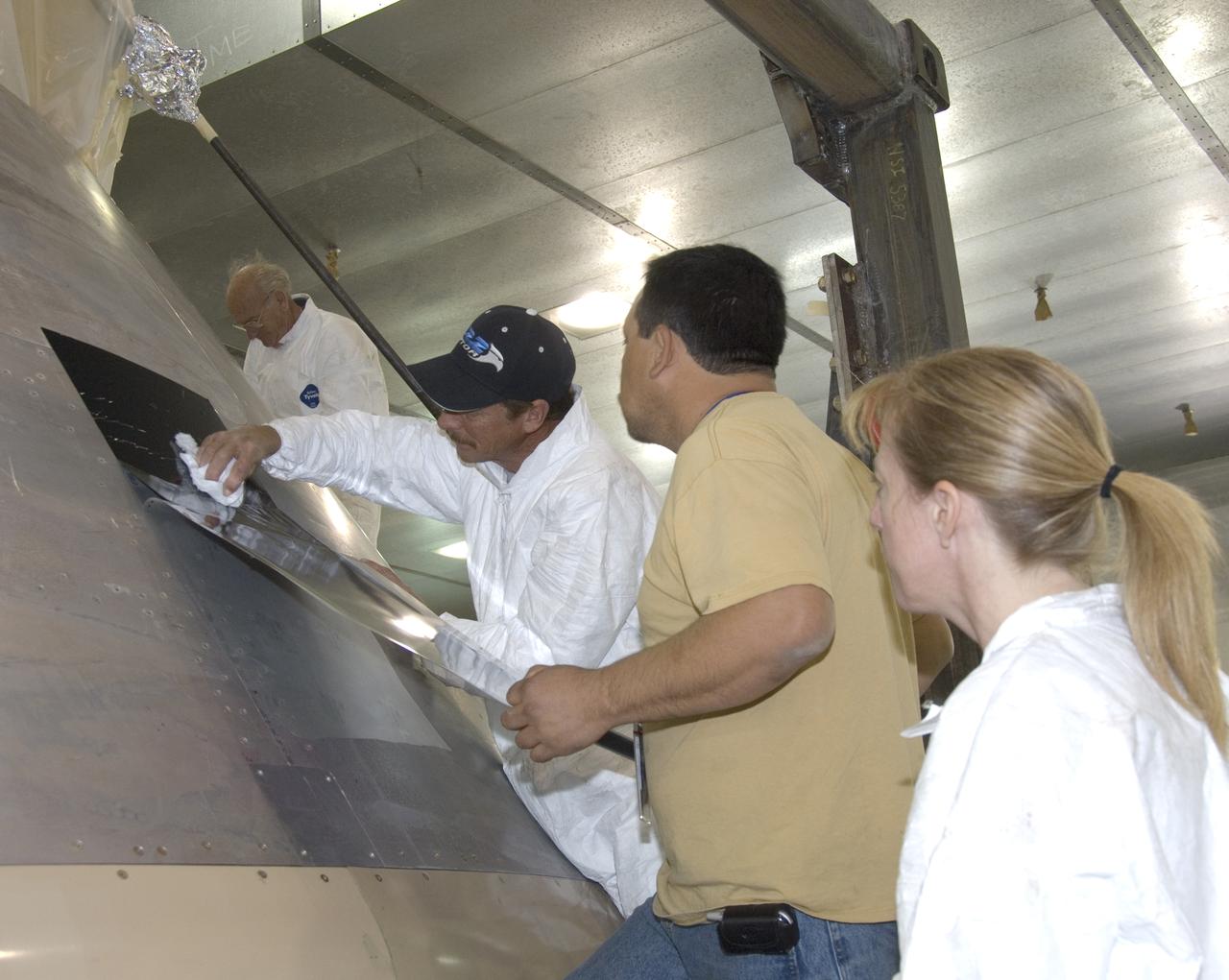
NASA paint shop technicians prepare the Orion full-scale flight test crew module for painting in the Edwards Air Force Base paint hangar.
STS-49 Orbiter Endeavour landed at Edwards Air Force Base on May 16, 1992 after a successful nine day mission dedicated to the retrieval, repair, and redeployment of the INTELSAT VI (F-3) satellite. The communication satellite for the International Telecommunication Satellite organization had been stranded in an unusable orbit since its launch aboard the Titan rocket in March 1990. The mission marked the first time 3 astronauts worked simultaneously outside the space craft.
Space Shuttle Projects
S81-30744 (14 April 1981) --- The rear wheels of the space shuttle orbiter Columbia are about to touch down on Rogers Lake (a dry bed) at Edwards Air Force Base in southern California to successfully complete a stay in space of more than two days. Astronauts John W. Young, STS-1 commander, and Robert L. Crippen, pilot, are aboard the vehicle. The mission marked the first NASA flight to end with a wheeled landing and represents the beginning of a new age of spaceflight that will employ the same hardware repeatedly. Photo credit: NASA
Space Shuttle orbiter Columbia touches down at Edwards Air Force Base
STS059-S-108 (20 April 1994) --- The main landing gear of the Space Shuttle Endeavour touches down at Edwards Air Force Base to complete the 11-day STS-59/SRL-1 mission.  Landing occurred at 9:54 a.m. (PDT), April 20, 1994.  Mission duration was 11 days, 5 hours, 49 minutes.  Guiding Endeavour to a landing was astronaut Sidney M. Gutierrez, STS-59 commander.  His crew was Kevin P. Chilton, Linda M. Godwin, Jerome (Jay) Apt, Michael R. (Rich) Clifford and Thomas D. Jones.
Landing of STS-59 Endeavour, OV-105, at Edwards Air Force Base
STS059-S-107 (20 April 1994) --- The main landing gear of the Space Shuttle Endeavour touches down at Edwards Air Force Base to complete the 11-day STS-59/SRL-1 mission.  Landing occurred at 9:54 a.m. (PDT), April 20, 1994.  Mission duration was 11 days, 5 hours, 49 minutes.  Guiding Endeavour to a landing was astronaut Sidney M. Gutierrez, STS-59 commander.  His crew was Kevin P. Chilton, Linda M. Godwin, Jerome (Jay) Apt, Michael R. (Rich) Clifford and Thomas D. Jones.
Landing of STS-59 Shuttle Endeavour at Edwards Air Force Base
STS058-S-128 (1 Nov 1993) --- The nose gear of the Space Shuttle Columbia is about to touch down on the runway at Edwards Air Force Base (EAFB) in California.  The landing, which occurred at 7:06 a.m. (PST), November 1, 1993, completed a two week mission in space devoted to medical research.  Onboard the spacecraft were astronauts John E. Blaha, Richard A. Searfoss, Rhea Seddon, Shannon W. Lucid, David A. Wolf and William S. McArthur along with payload specialist Martin J. Fettman, DVM.
The landing of STS-58 Columbia, OV-102, at Edwards Air Force Base
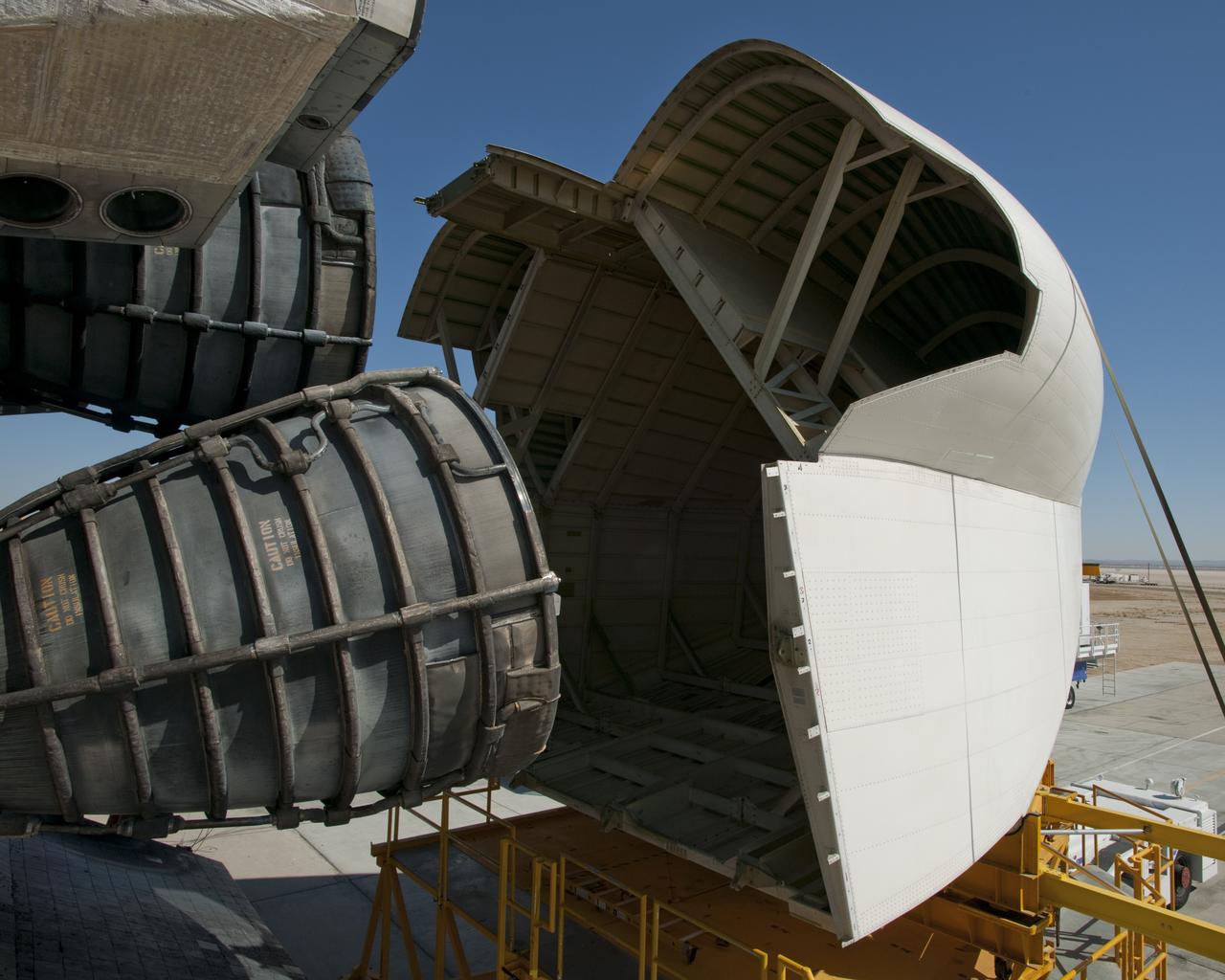
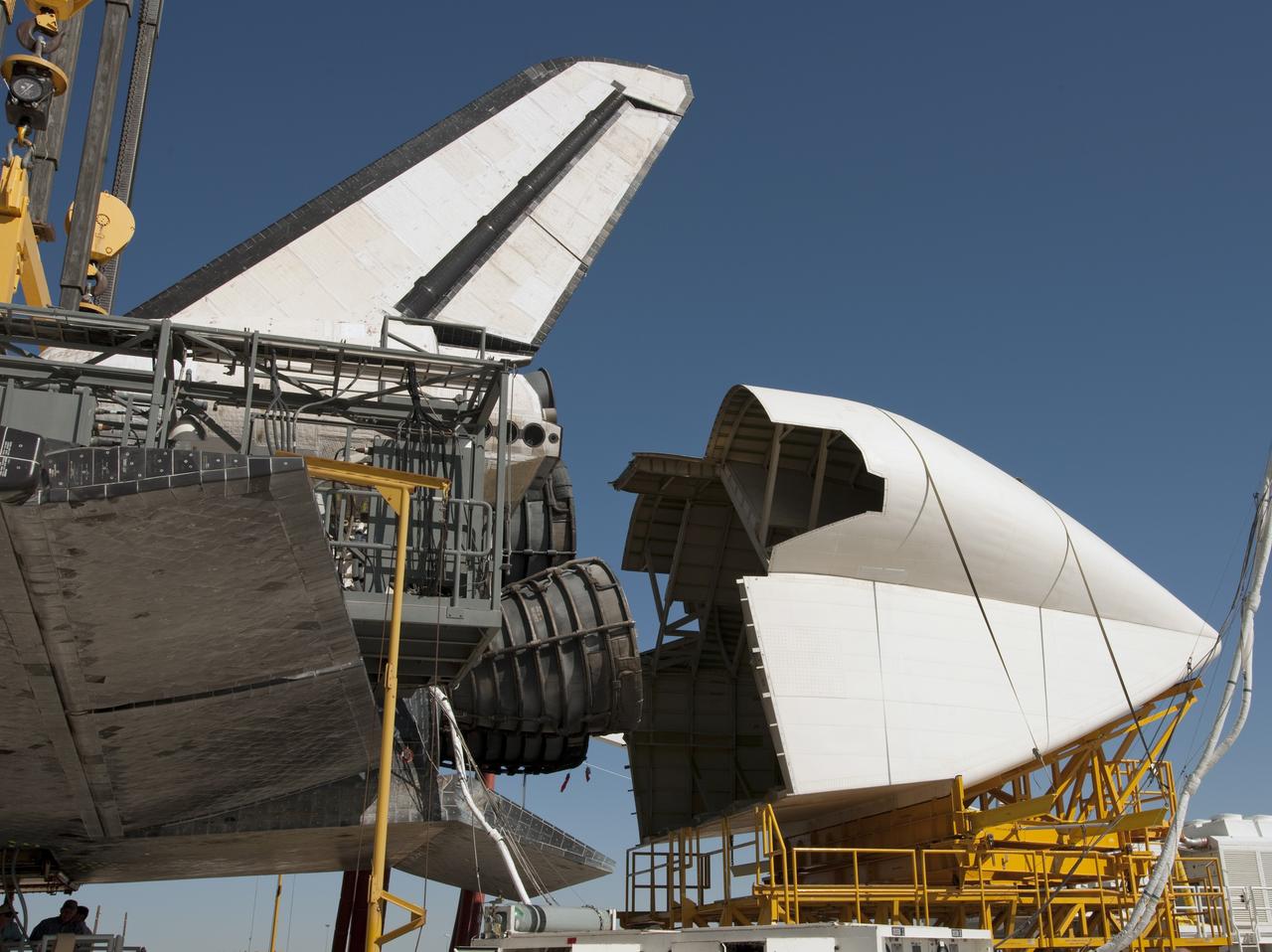
EDWARDS AIR FORCE BASE, Calif. – ((ED09-0253-83) The tail cone that improves the aerodynamics of the space shuttle for its cross-country ferry flight is positioned aft of shuttle Discovery’s rocket nozzles prior to installation at NASA’s Dryden Flight Research Center.   Discovery returned to Earth Sept. 11 on the STS-128 mission, landing at Edwards Air Force Base in California.  The shuttle delivered more than 7 tons of supplies, science racks and equipment, as well as additional environmental hardware to sustain six crew members on the International Space Station.  Photo credit: NASA/Tony Landis
KSC-2009-5143
EDWARDS AIR FORCE BASE, Calif. – (ED09-0253-84)  The tail cone that improves the aerodynamics of the space shuttle for its cross-country ferry flight is positioned aft of shuttle Discovery’s rocket nozzles prior to installation at NASA’s Dryden Flight Research Center.   Discovery returned to Earth Sept. 11 on the STS-128 mission, landing at Edwards Air Force Base in California.  The shuttle delivered more than 7 tons of supplies, science racks and equipment, as well as additional environmental hardware to sustain six crew members on the International Space Station.  Photo credit: NASA/Tony Landis
KSC-2009-5144
Space Shuttle Endeavour touches down on the runway at Edwards Air Force Base, California to conclude International Space Station construction and supply mission STS-111.
Space Shuttle Endeavour touches down on the runway at Edwards Air Force Base, California to conclude International Space Station construction and supply mission STS-111
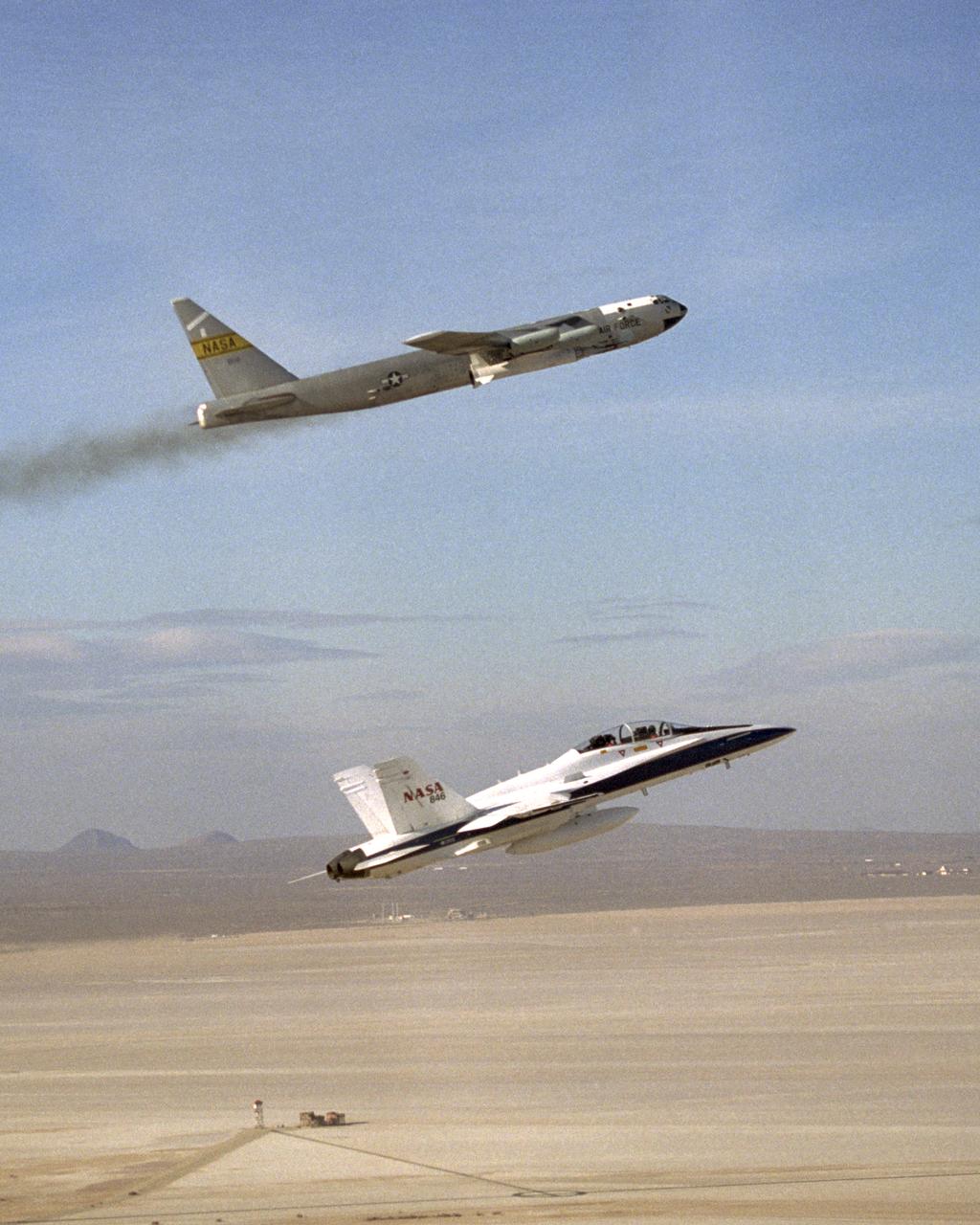
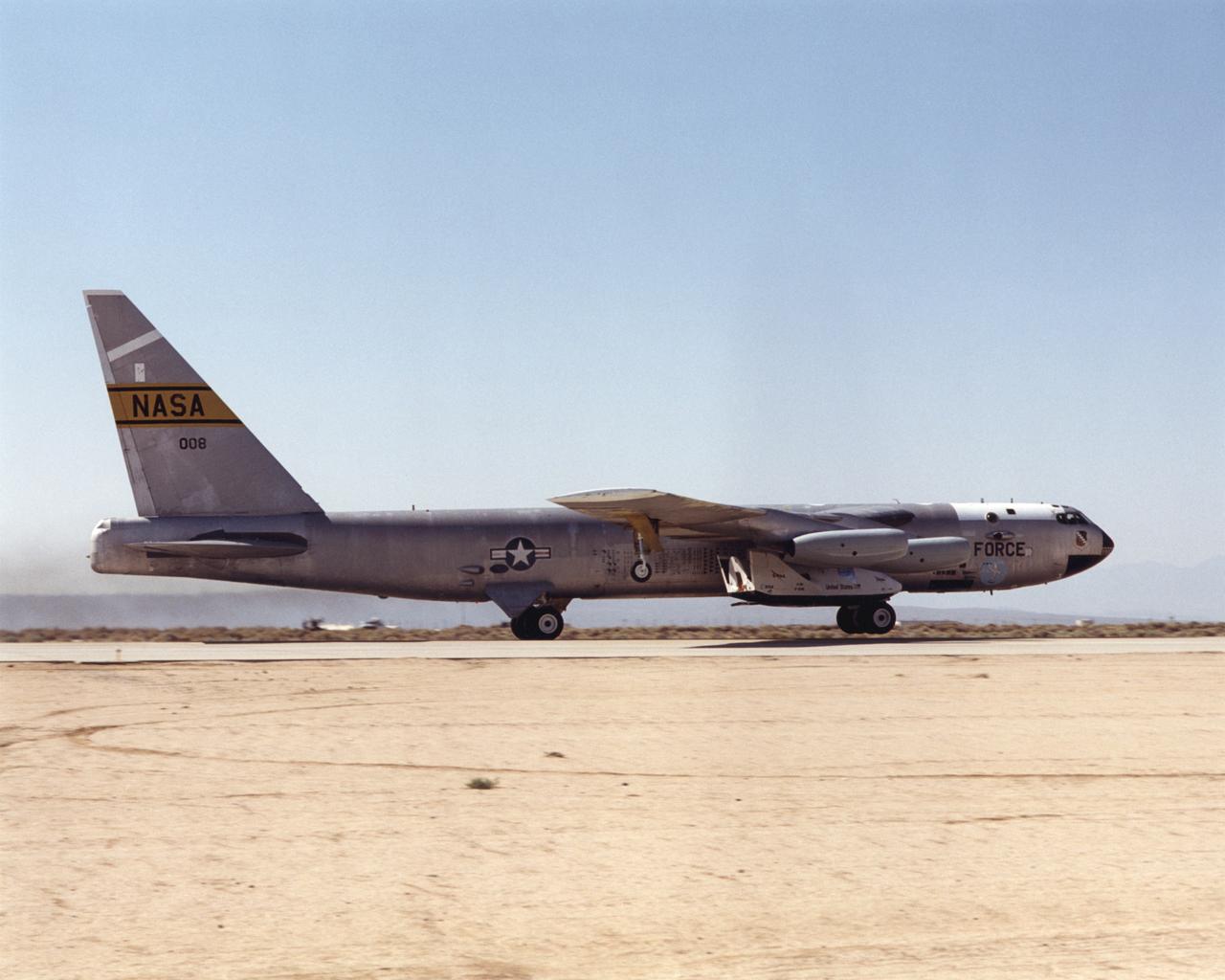
NASA's historic B-52 mothership carried the X-43A and its Pegasus booster rocket on a captive carry flight from Edwards Air Force Base.
NASA's historic B-52 mothership carried the X-43A and its Pegasus booster rocket on a captive carry flight from Edwards Air Force Base
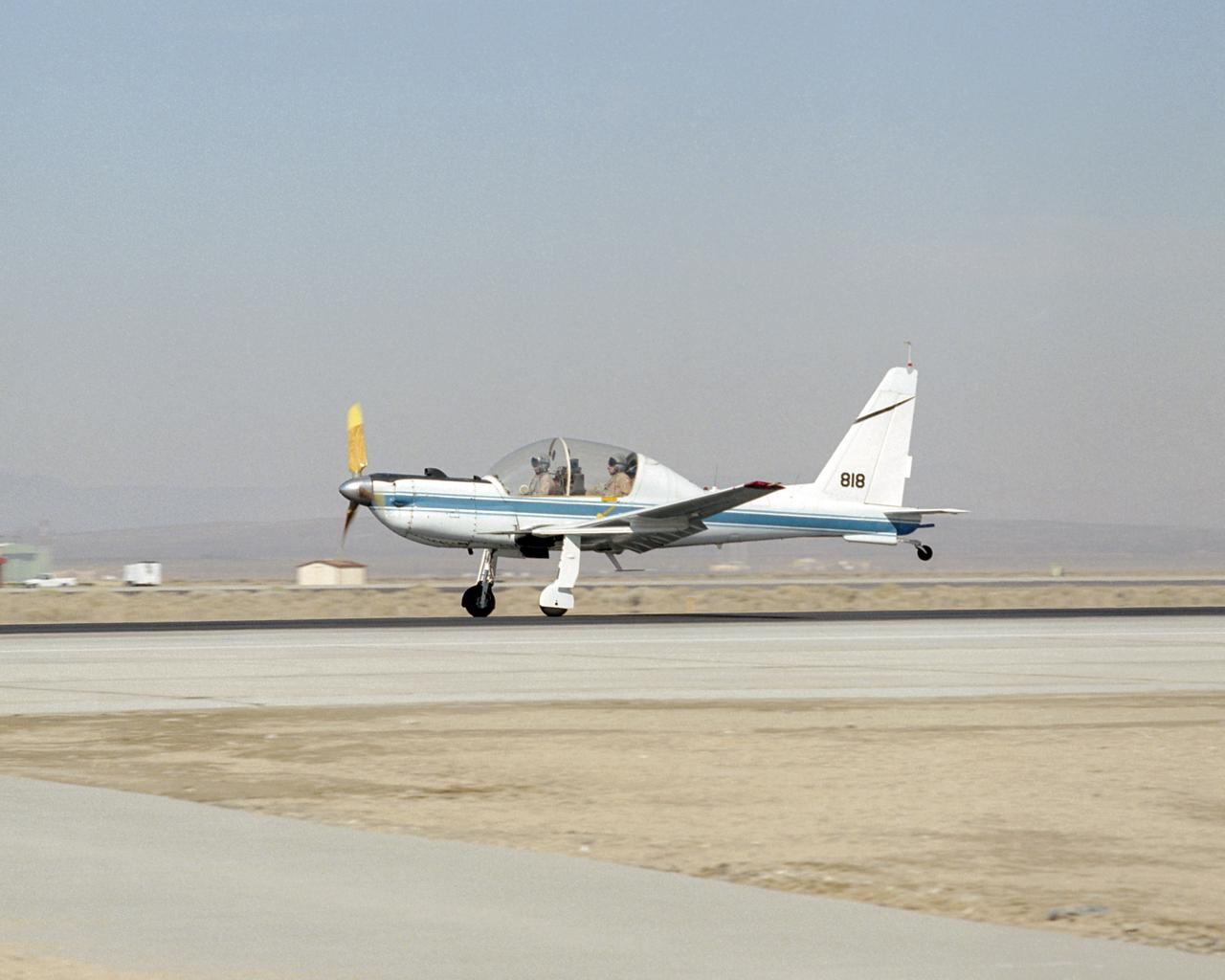
NASA's converted YO-3A observation plane, now used for acoustics research, touches down at Edwards Air Force Base following a pilot checkout flight.
NASA's converted YO-3A observation plane, now used for acoustics research, touches down at Edwards Air Force Base following a pilot checkout flight
Space Shuttle Endeavour touches down on the runway at Edwards Air Force Base, California to conclude International Space Station construction and supply mission STS-111.
Space Shuttle Endeavour touches down on the runway at Edwards Air Force Base, California to conclude International Space Station construction and supply mission STS-111
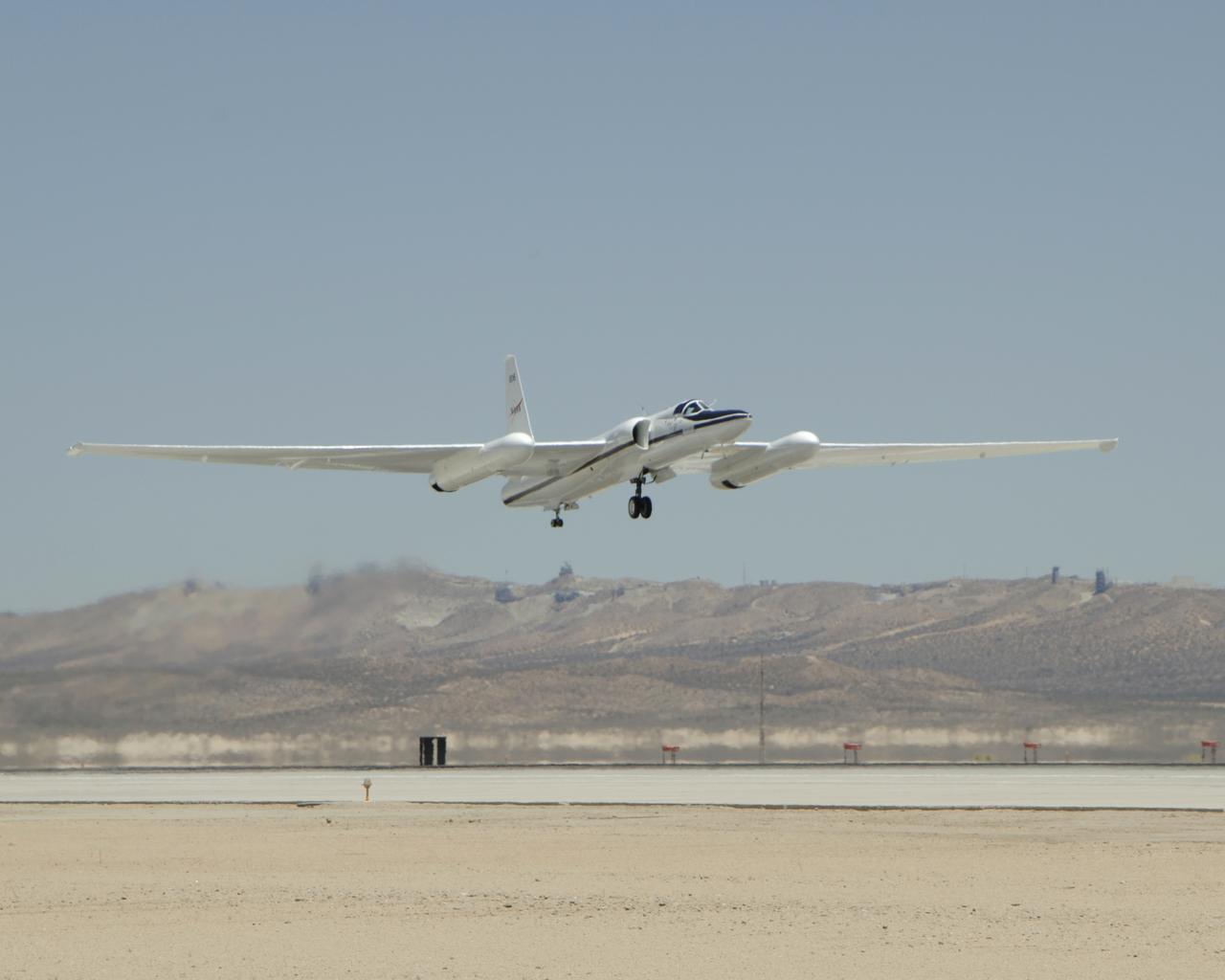
NASA'S ER-2 #806 lifts off from Edwards Air Force Base on a CALIPS/CloudSat validation instrument checkout flight.
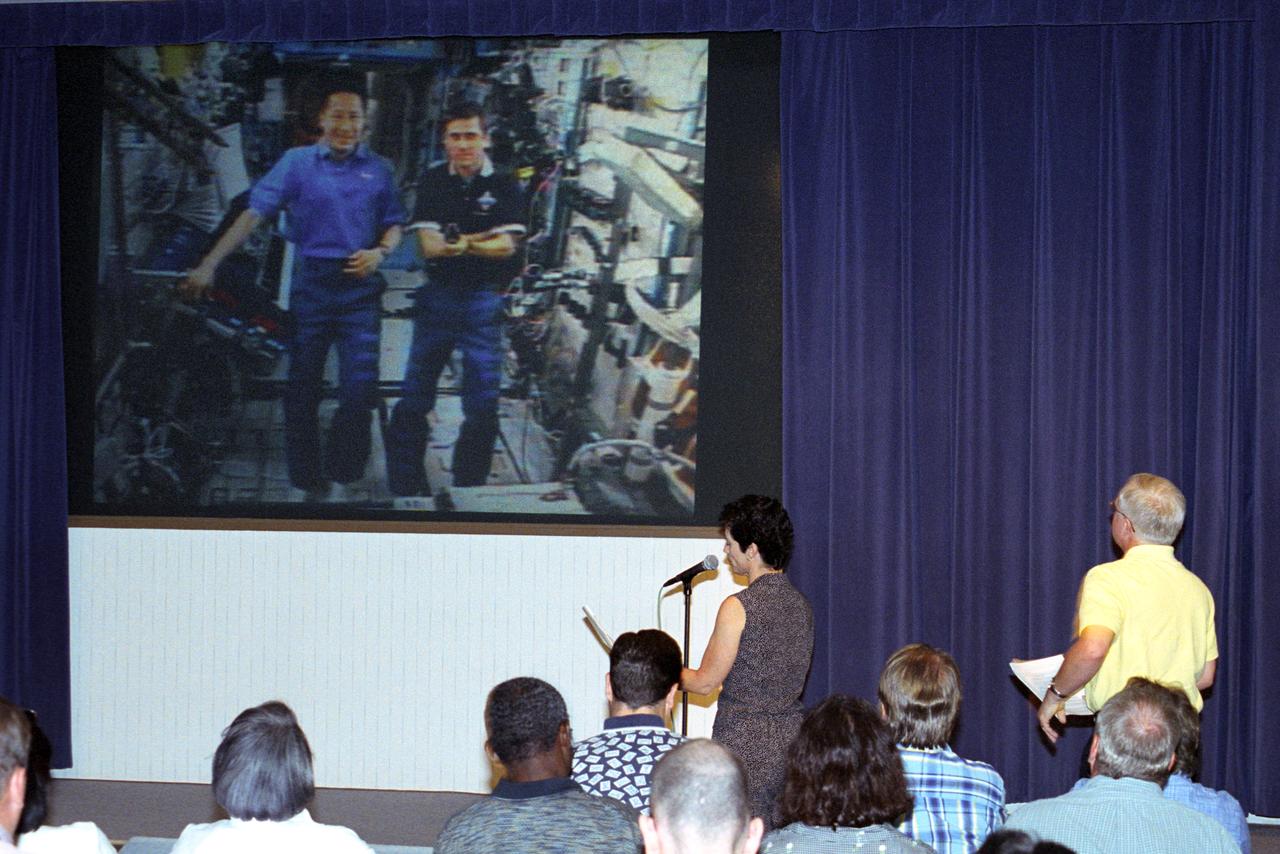
Teacher Kim Cantrell from the Edwards Air Force Base Middle School, Edwards, Calif., participating in a live uplink at NASA Dryden as part of NASA's Explorer Schools program, asks the crew of the International Space Station a question.
Teacher Kim Cantrell from the Edwards Air Force Base Middle School, Edwards, Calif., participating in a live uplink at NASA Dryden as part of NASA's Explorer Schools program, asks the crew of the International Space Station a question
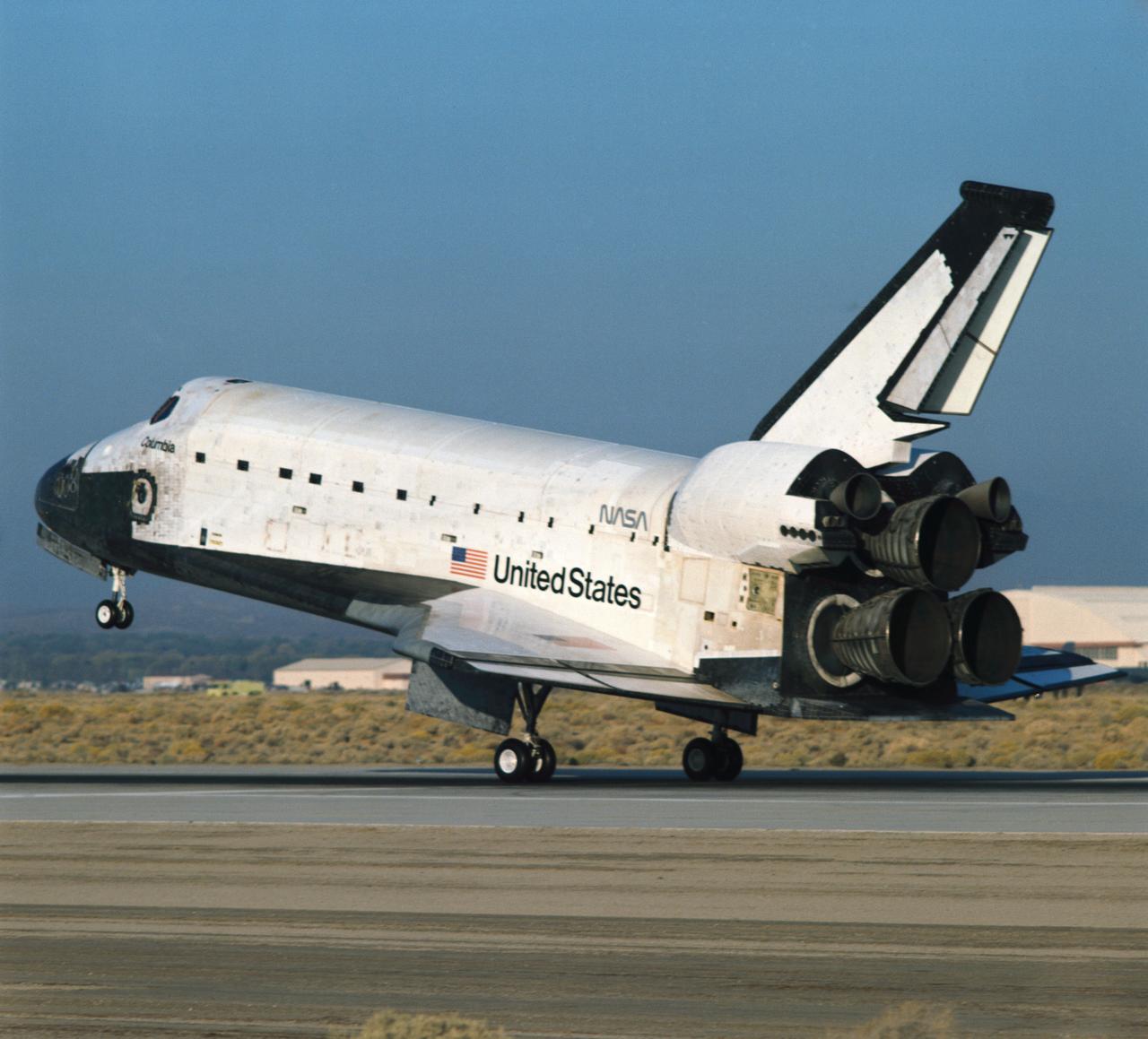
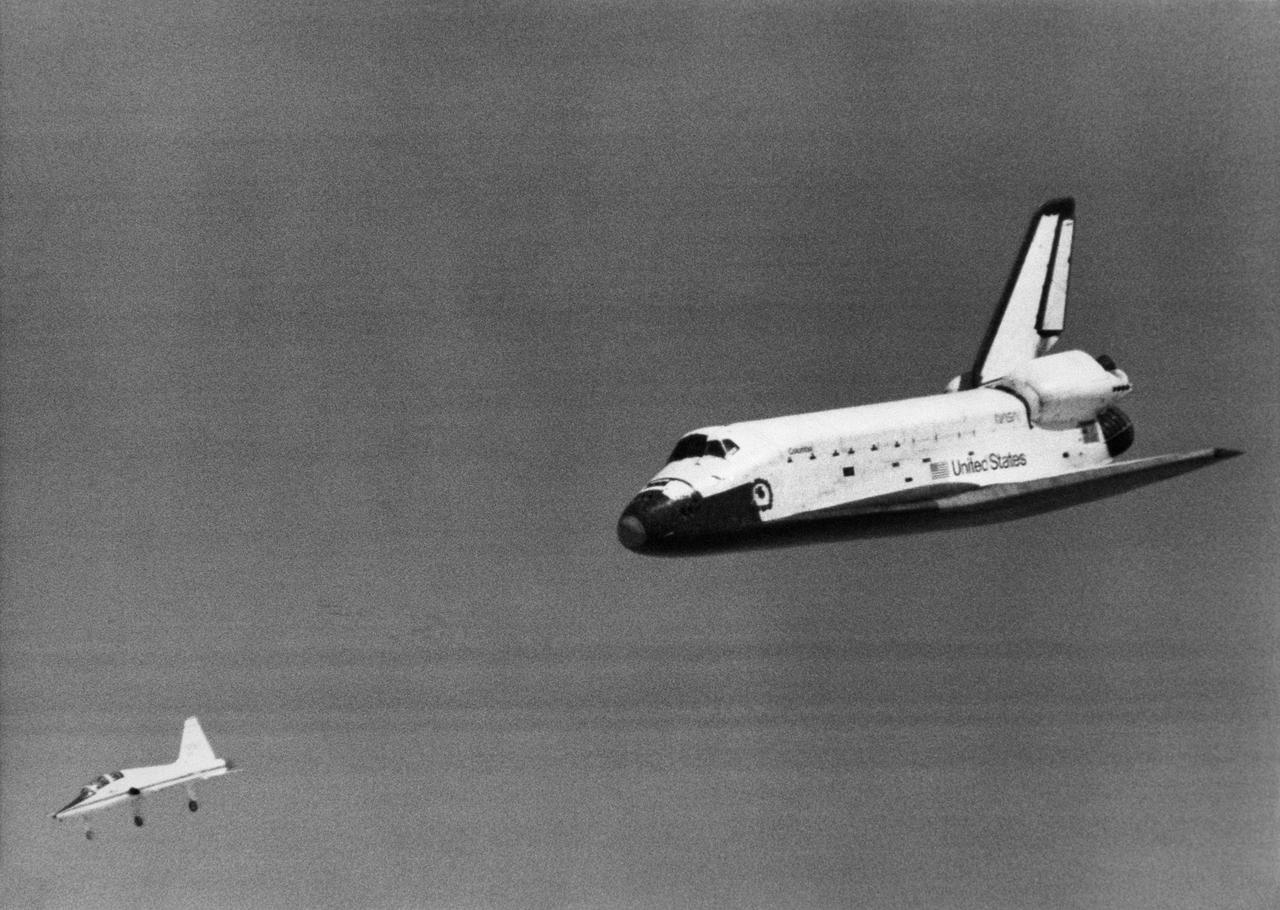
STS-28 Columbia, Orbiter Vehicle (OV) 102, approaches Runway 17 dry lake bed at Edwards Air Force Base (EAFB) California and is photographed just moments before main landing gear (MLG) touchdown. In the distance, are peaks of Southern California mountain range.
STS-28 Columbia, OV-102, landing at Edwards Air Force Base (EAFB) California
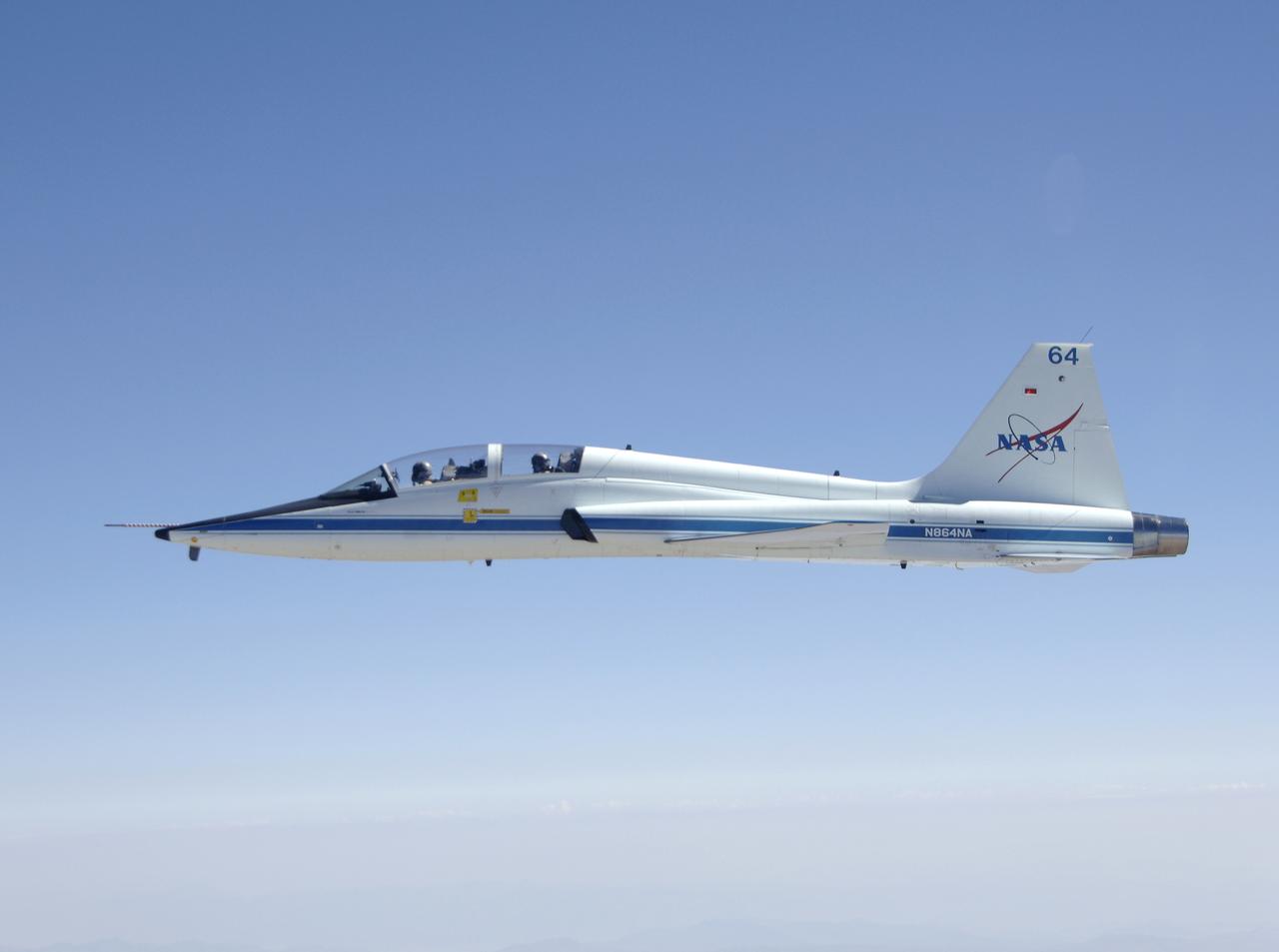
NASA Dryden's T-38 Talon trainer aircraft in flight near Edwards Air Force Base. Formerly at NASA's Langley Research Center, this Northrop T-38 Talon is now used for mission support and pilot proficiency at the Dryden Flight Research Center.
NASA Dryden's T-38 Talon trainer aircraft in flight near Edwards Air Force Base
At the conclusion of Space Shuttle Mission STS-100, Endeavour landed at Edwards Air Force Base, California, May 1, 2001. There the Orbiter would be readied by technicians at NASA's Dryden Flight Research Center for return to Kennedy Space Center, Florida, atop a 747 carrier aircraft.
Space Shuttle Endeavour flares for landing at Edwards Air Force Base, California to conclude STS-100
STS-49 Orbiter Endeavour landed at Edwards Air Force Base on May 16, 1992 The drogue chute precedes the main chute in NASA’s first exercise of its detailed test objective on the drag chute system. STS-49 ended its successful nine day mission dedicated to the retrieval, repair, and redeployment of the the INTELSAT VI (F-3) satellite. The communication satellite for the International Telecommunication Satellite organization had been stranded in an unusable orbit since its launch aboard the Titan rocket in March 1990. The mission marked the first time 3 astronauts worked simultaneously outside the space craft.
Space Shuttle Projects
The X-38, mounted beneath the right wing of NASA's B-52, climbed from the runway at Edwards Air Force Base for the seventh free flight test of the X-38, July 10, 2001. The X-38 was released at 37,500 feet and completed a thirteen minute glide flight to a landing on Rogers Dry Lake.
NASA's B-52 takes the X-38 aloft for the seventh free flight of the program, July 10, 2001
Space Shuttle Discovery landed safely at NASA's Dryden Flight Research Center at Edwards Air Force Base in Calif. at 5:11 a.m. this morning, following the very successful 14-day STS-114 return to flight mission.
Space Shuttle Discovery landed at NASA's Dryden Flight Research Center at 5:11 a.m., following the very successful 14-day STS-114 return to flight mission
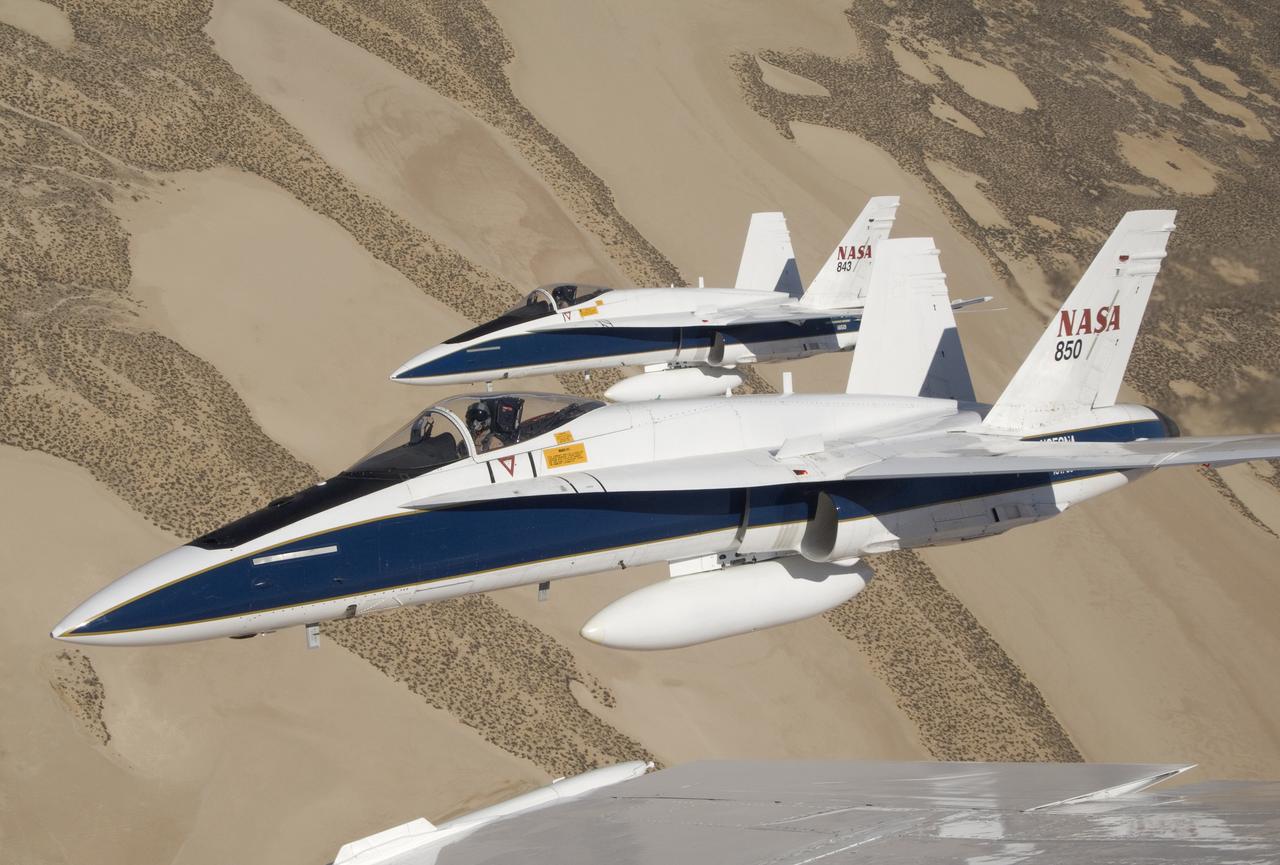
Two NASA Dryden F/A-18s flown by research pilots Frank Batteas and Nils Larson were captured by photographer Lori Losey from a third F/A-18 flown by Dick Ewers as they flew in tight formation over the desert at Edwards Air Force Base.
ED07-0110-12
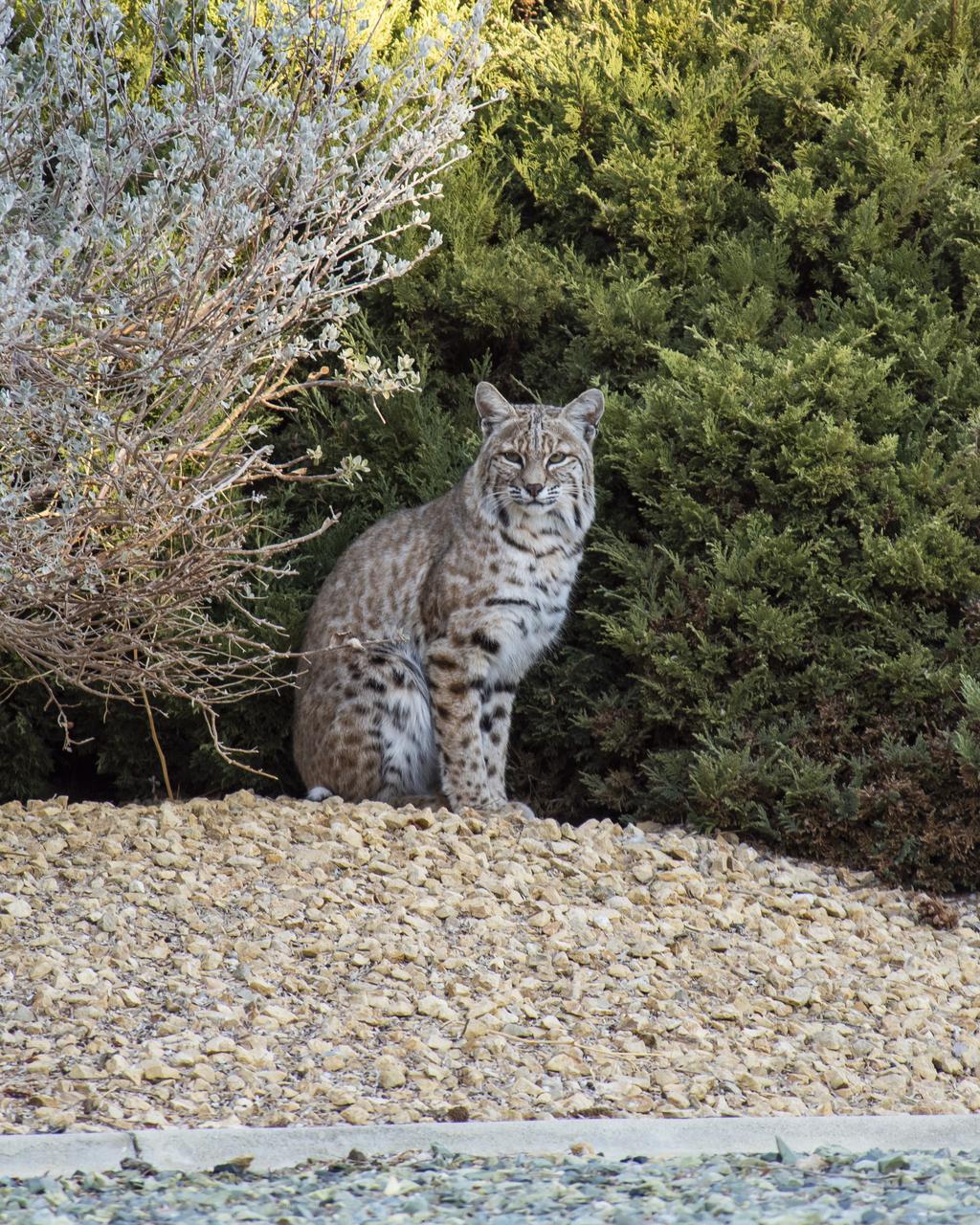
A bobcat surveying the landscape in between bushes at Armstrong Flight Research Center in Edwards, California. The spotted feline makes its home on the more than 300,000 acres of Mojave Desert surrounding the NASA facility housed at Edwards Air Force Base.
Room to roam for wildlife in the Mojave Desert at Armstrong Flight Research Center in Edwards, California
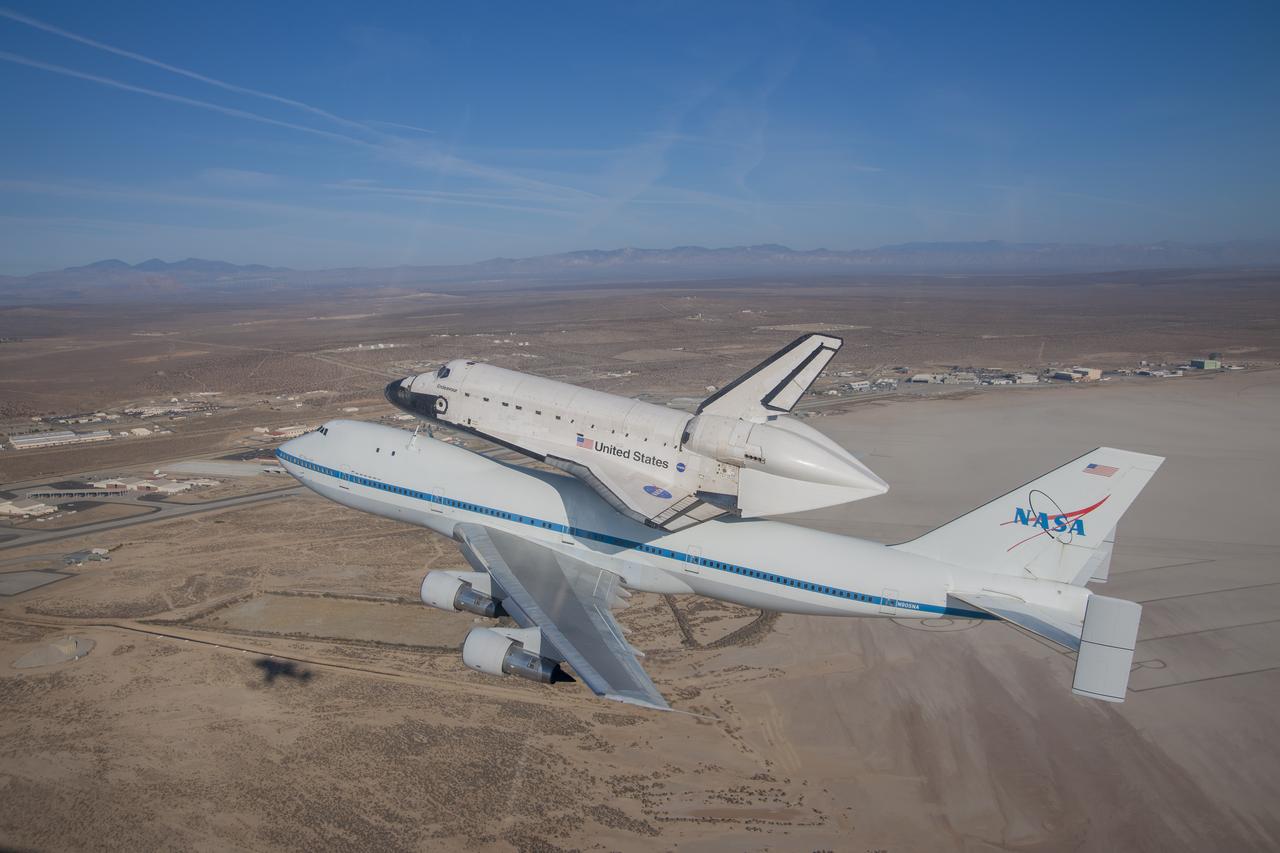
Space shuttle Endeavour and its host NASA 747 Shuttle Carrier Aircraft make a final flight over Edwards Air Force Base on Sept. 21, 2012. NASA’s Armstrong Flight Research Center in Edwards, California, is visible on the upper right of the frame.
Space Shuttle Endeavour Toured California in 2012
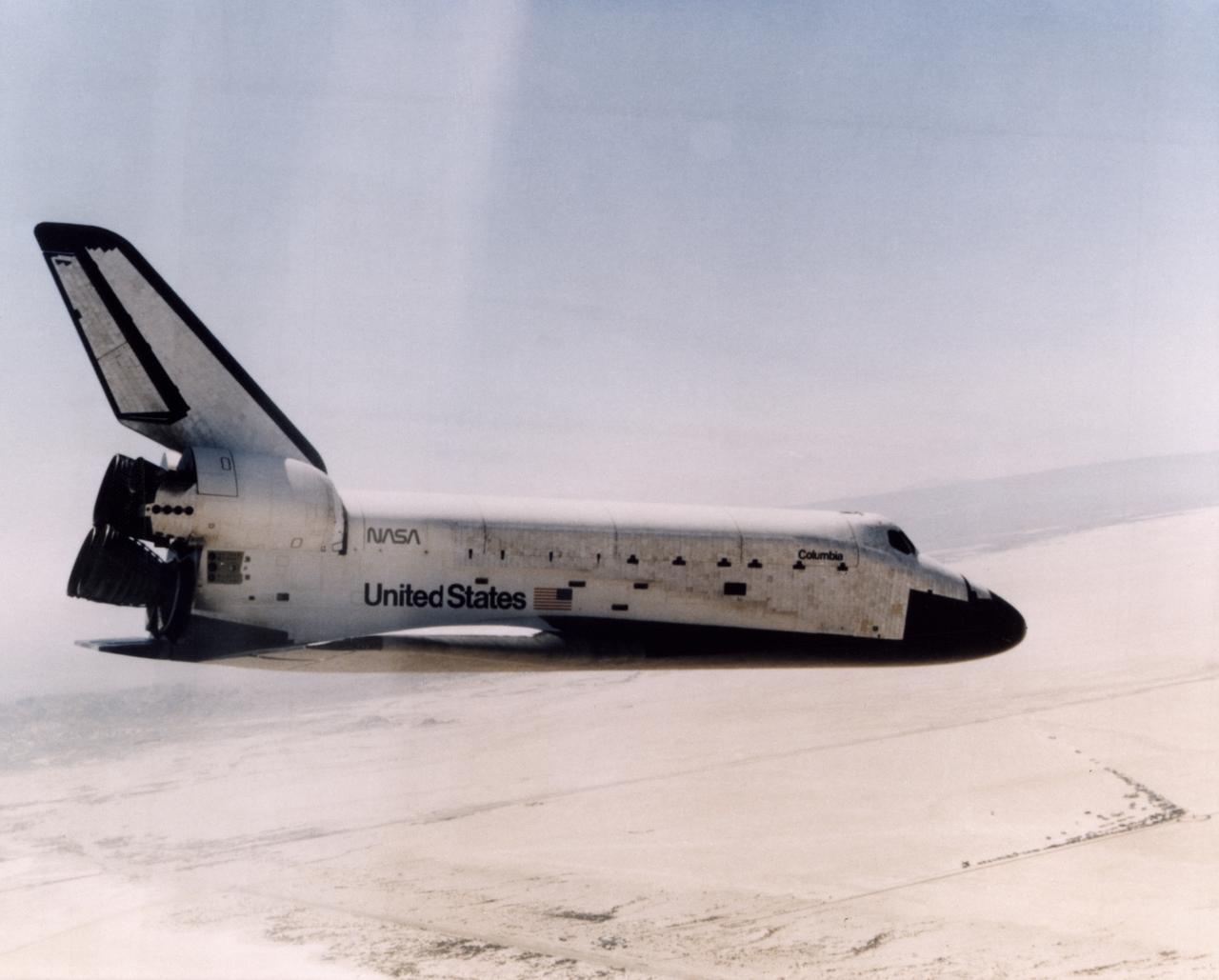
FIRST SHUTTLE LANDING -- The Space Shuttle Columbia glides down over Rogers Dry Lake as it heads for a landing at Edwards Air Force Base at the conclusion of its first orbital mission on April 14, 1981.
The Space Shuttle Columbia glides down over Rogers Dry Lake as it heads for a landing at Edwards Air Force Base at the conclusion of its first orbital mission
TOUCHDOWN! -- The Space Shuttle Columbia touches down on lakebed runway 23 at Edwards Air Force Base, Calif., to conclude the first orbital shuttle mission, April 14, 1981.
The Space Shuttle Columbia touches down on lakebed runway 23 at Edwards Air Force Base, Calif., to conclude the first orbital shuttle mission
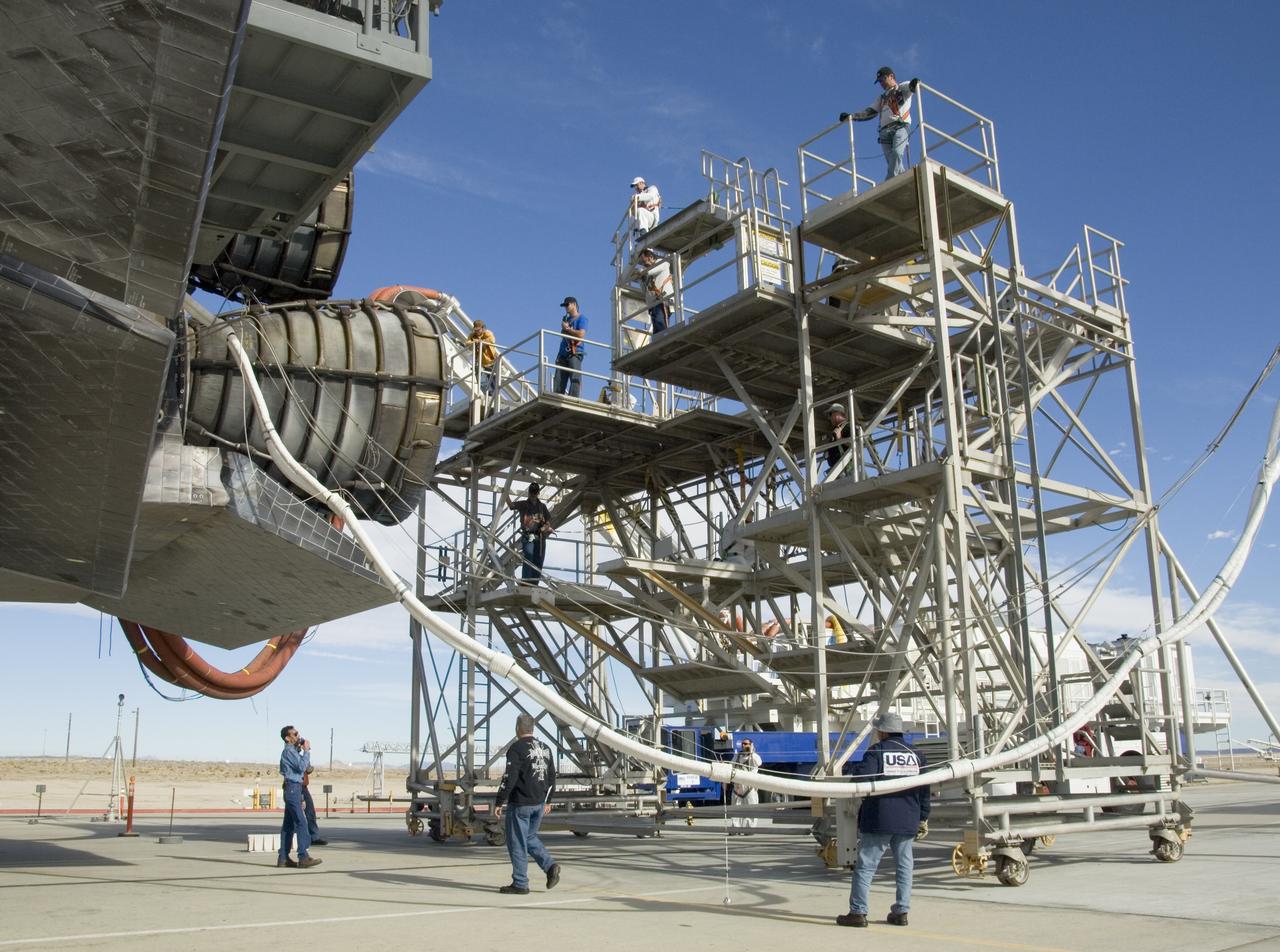
Technicians monitor the positioning of a large workstand as it is carefully moved into place around the main engines of the Space Shuttle Endeavour during deservicing and ferry flight preparations at NASA's Dryden Flight Research Center at Edwards Air Force Base.
echnicians monitor the positioning of a workstand as it is moved into place around the main engines of the shuttle Endeavour during deservicing at NASA DFRC
The Space Shuttle Columbia glides down over Rogers Dry Lake as it heads for a landing at Edwards Air Force Base at the conclusion of its first orbital mission on April 14, 1981.
The Space Shuttle Columbia glides down over Rogers Dry Lake as it heads for a landing at Edwards AFB at the conclusion of its first orbital mission
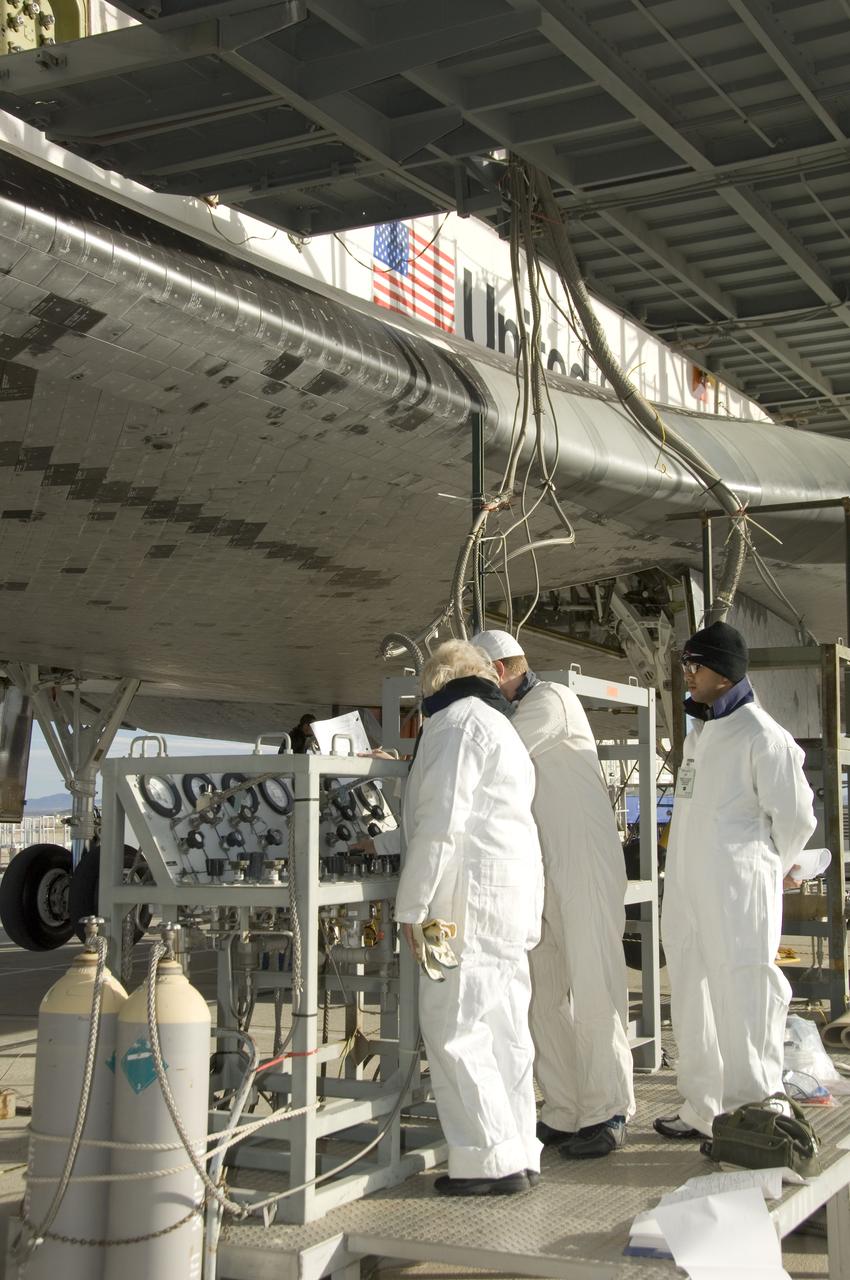
Technicians in protective coveralls check pressures of fluid systems during deservicing operations on Space Shuttle Endeavour after its landing at Edwards Air Force Base Nov. 30, 2008.
Technicians in protective coveralls check pressures of fluid systems during deservicing operations on Space Shuttle Endeavour after its landing at Edwards AFB
Smoke swirls as Space Shuttle Endeavour's tires strike the runway at Edwards Air Force Base Nov. 30 to conclude mission STS-126 to the International Space Station.
Space Shuttle Endeavour rolls out after landing on runway 04-L at Edwards AFB, ending mission STS-126 to the International Space Station Nov. 30, 2008
Space Shuttle Endeavour rolls out after landing on runway 04-L at Edwards Air Force Base, ending mission STS-126 to the International Space Station Nov. 30, 2008.
Space Shuttle Endeavour rolls out after landing on runway 04-L at Edwards AFB, ending mission STS-126 to the International Space Station Nov. 30, 2008
The setting sun casts long shadows over shuttle Endeavour as technicians prepare to tow the orbiter from the Edwards Air Force Base runway after landing Nov. 30.
he setting sun casts long shadows over shuttle Endeavour as technicians prepare to tow the orbiter from the Edwards AFB runway after landing Nov. 30
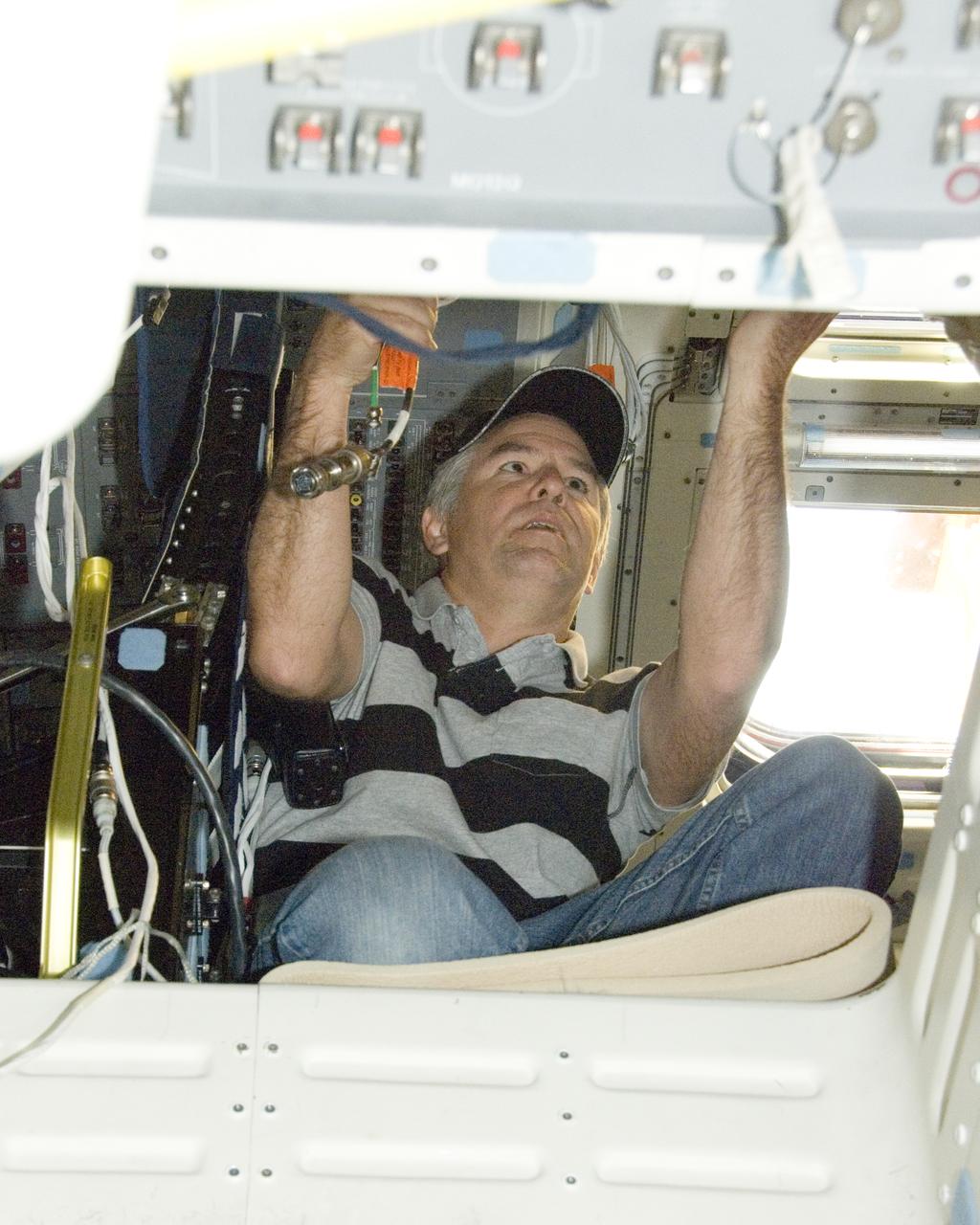
United Space Alliance technician Mark Shimei works inside Space Shuttle Endeavour's flight deck during deservicing operations at NASA Dryden following its landing at Edwards Air Force Base on Nov. 30, 2008.
Technician Mark Shimei works inside Space Shuttle Endeavour's flight deck during deservicing operations at NASA Dryden following its landing on Nov. 30, 2008
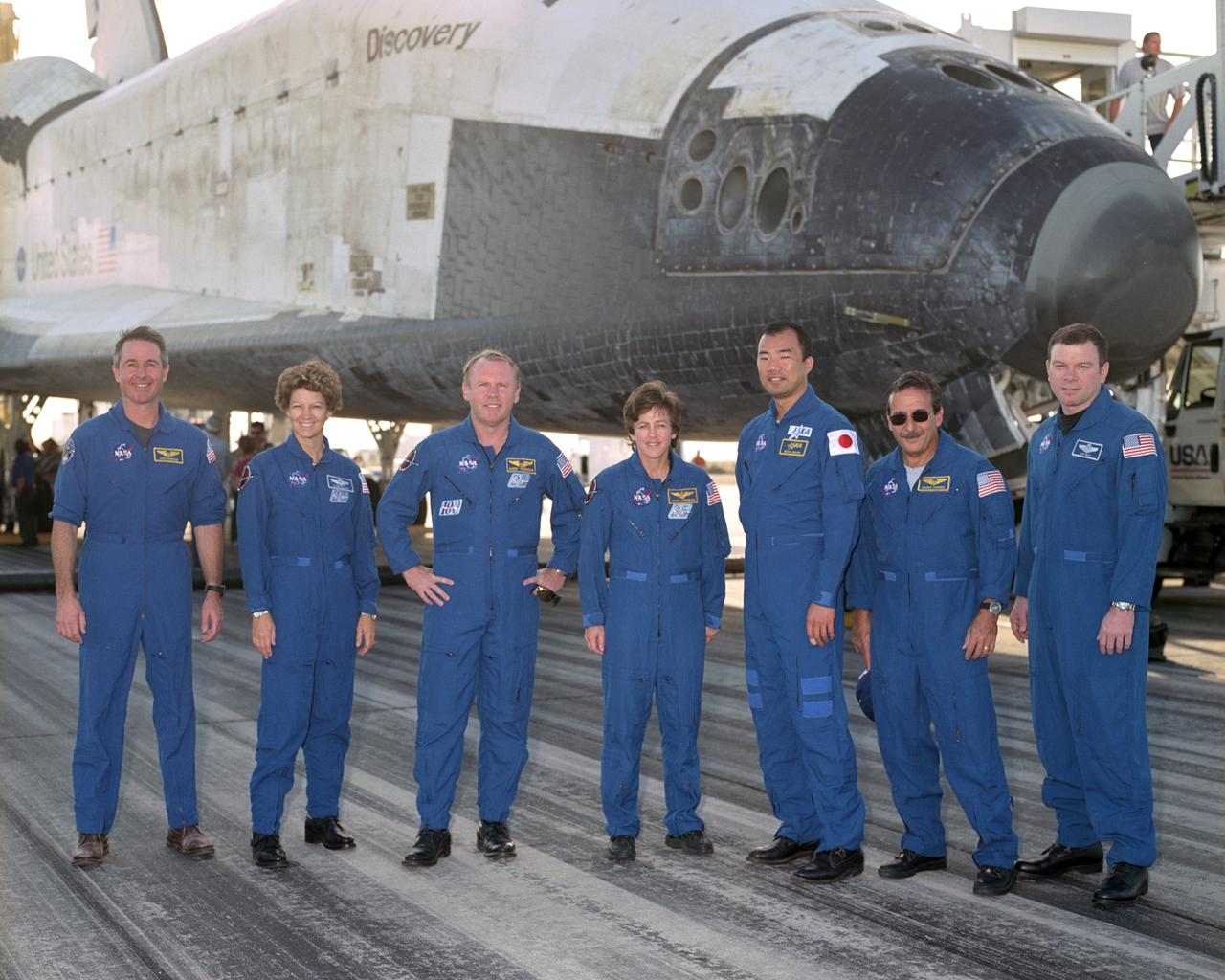
The crew of Space Shuttle mission STS-114 gathered in front of the shuttle Discovery following landing at Edwards Air Force Base, California, August 9, 2005. From left to right: Mission Specialist Stephen Robinson, Commander Eileen Collins, Mission Specialists Andrew Thomas, Wendy Lawrence, Soichi Noguchi and Charles Camarda, and Pilot James Kelly.  Space Shuttle Discovery landed safely at NASA's Dryden Flight Research Center at Edwards Air Force Base in California at 5:11:22 a.m. PDT this morning, following the very successful 14-day STS-114 return to flight mission.  During their two weeks in space, Commander Eileen Collins and her six crewmates tested out new safety procedures and delivered supplies and equipment the International Space Station.  Discovery spent two weeks in space, where the crew demonstrated new methods to inspect and repair the Shuttle in orbit. The crew also delivered supplies, outfitted and performed maintenance on the International Space Station. A number of these tasks were conducted during three spacewalks.  In an unprecedented event, spacewalkers were called upon to remove protruding gap fillers from the heat shield on Discovery's underbelly. In other spacewalk activities, astronauts installed an external platform onto the Station's Quest Airlock and replaced one of the orbital outpost's Control Moment Gyroscopes.  Inside the Station, the STS-114 crew conducted joint operations with the Expedition 11 crew. They unloaded fresh supplies from the Shuttle and the Raffaello Multi-Purpose Logistics Module. Before Discovery undocked, the crews filled Raffeallo with unneeded items and returned to Shuttle payload bay.  Discovery launched on July 26 and spent almost 14 days on orbit.
The crew of Space Shuttle mission STS-114 gathered in front of the shuttle Discovery following landing at Edwards Air Force Base, California, August 9, 2005
A full-scale flight-test mockup of the Constellation program's Orion crew vehicle arrived at NASA's Dryden Flight Research Center in late March 2008 to undergo preparations for the first short-range flight test of the spacecraft's astronaut escape system later that year. Engineers and technicians at NASA's Langley Research Center fabricated the structure, which precisely represents the size, outer shape and mass characteristics of the Orion space capsule. The Orion crew module mockup was ferried to NASA Dryden on an Air Force C-17. After painting in the Edwards Air Force Base paint hangar, the conical capsule was taken to Dryden for installation of flight computers, instrumentation and other electronics prior to being sent to the U.S. Army's White Sands Missile Range in New Mexico for integration with the escape system and the first abort flight test in late 2008. The tests were designed to ensure a safe, reliable method of escape for astronauts in case of an emergency.
Paint shop technicians carefully apply masking prior to painting the Orion full-scale abort flight test crew module in the Edwards Air Force Base paint hangar.
A full-scale flight-test mockup of the Constellation program's Orion crew vehicle arrived at NASA's Dryden Flight Research Center in late March 2008 to undergo preparations for the first short-range flight test of the spacecraft's astronaut escape system later that year. Engineers and technicians at NASA's Langley Research Center fabricated the structure, which precisely represents the size, outer shape and mass characteristics of the Orion space capsule. The Orion crew module mockup was ferried to NASA Dryden on an Air Force C-17. After painting in the Edwards Air Force Base paint hangar, the conical capsule was taken to Dryden for installation of flight computers, instrumentation and other electronics prior to being sent to the U.S. Army's White Sands Missile Range in New Mexico for integration with the escape system and the first abort flight test in late 2008. The tests were designed to ensure a safe, reliable method of escape for astronauts in case of an emergency.
A NASA painter applies the first primer coat to NASA's Orion full-scale abort flight test crew module in the Edwards Air Force Base paint hangar.
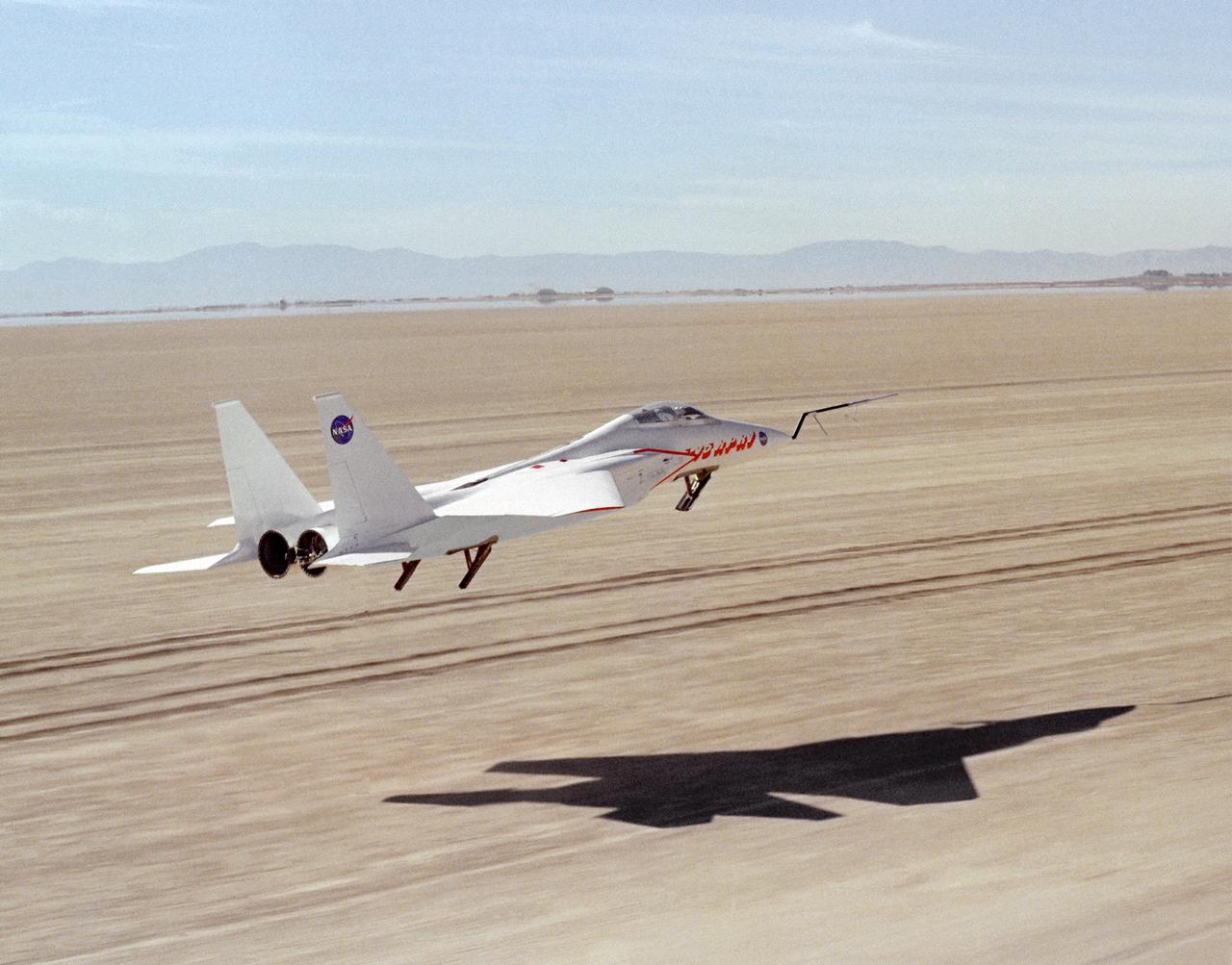
This photograph shows NASA's 3/8th-scale remotely piloted research vehicle landing on Rogers Dry Lakebed at Edwards Air Force Base, California, in 1975.
F-15 RPRV landing on lakebed
The sun rises on the Space Shuttle Discovery as it rests on the runway at Edward’s Air Force Base in California after a safe landing at 5:11 am (PDT) on August 9, 2005. The STS-114 landing concluded a historic 14 day return to flight mission to the International Space Station (ISS) after nearly a two and one half year delay in flight after the Space Shuttle Columbia tragedy in February 2003. Three successful space walks performed during the mission included a demonstration of repair techniques to the Shuttle’s thermal tiles known as the Thermal Protection System, the replacement of a failed Control Moment Gyroscope which helps keep the station oriented properly, and the installation of the External Stowage Platform, a space “shelf” for holding spare parts during Station construction. The shuttle’s heat shield repair was a first for Shuttle repair while still in space.
Space Shuttle Projects
STS028-S-013 (13 Aug 1989) --- The Space Shuttle Columbia is captured on film just prior to main gear touchdown at Edwards Air Force Base in Southern California.  The landing marked a successful end to a five-day DOD-devoted mission.  Onboard the spacecraft were Astronauts Brewster H. Shaw Jr., Richard N. Richards, David C. Leestma, James C.  Adamson and Mark N. Brown.
STS-28 Columbia, OV-102, landing at Edwards Air Force Base (EAFB) California
STS028-S-018 (13 Aug 1989) --- The Space shuttle Columbia is captured on film just prior to main gear touchdown at Edwards Air Force Base in Southern California.  The landing marked a successful end to a five-day Department of Defense (DOD)-devoted mission.  Onboard the spacecraft were astronauts Brewster H. Shaw Jr., Richard N. Richards, David C. Leestma, James C.  Adamson and Mark N. Brown.
STS-28 Columbia, OV-102, landing at Edwards Air Force Base (EAFB) California
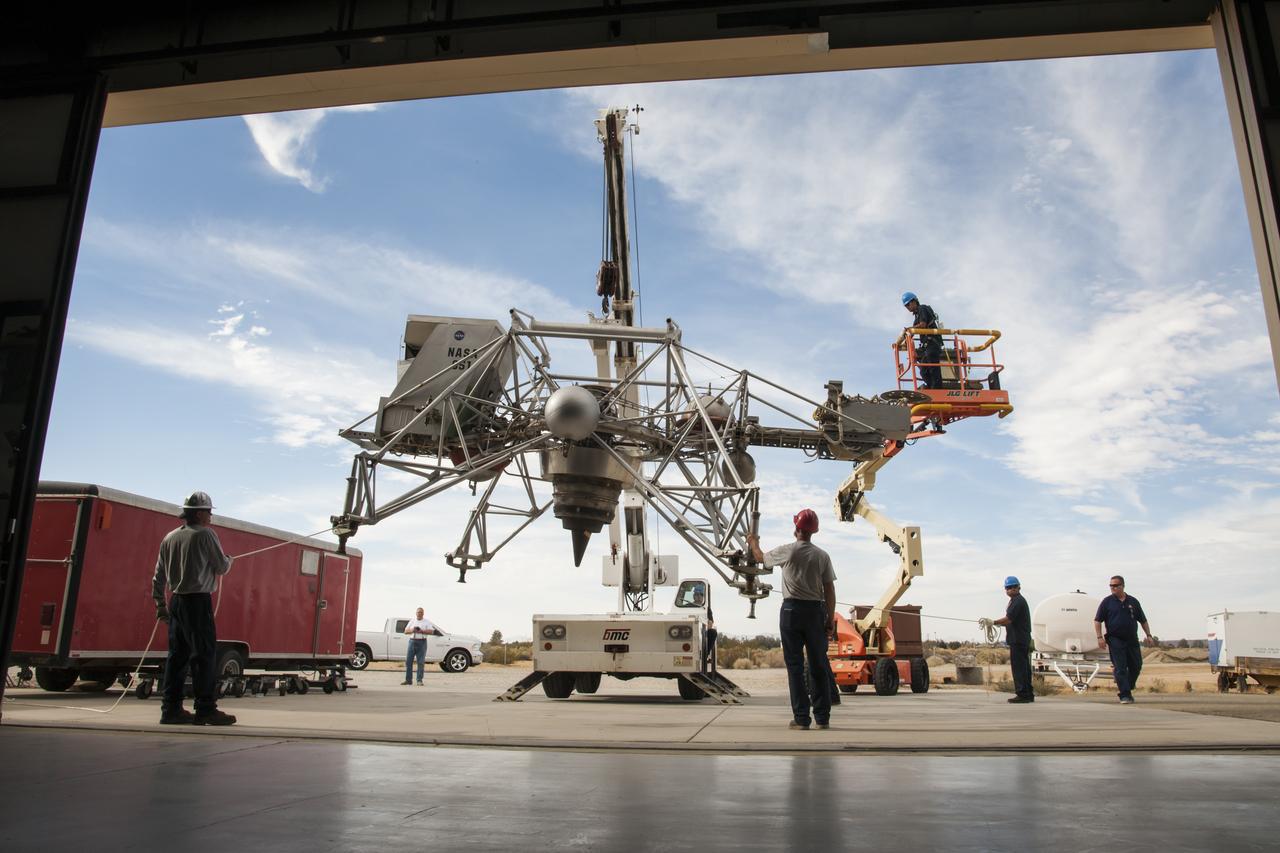
Workers move the Lunar Landing Research Vehicle, or LLRV, into the Edwards Air Force Base Flight Test Museum in California for temporary display.
NASA Lends Space Artifacts to Air Force Museum
Workers drive the space shuttle Crew Transport Vehicle, or CTV, to the Edwards Air Force Base Flight Test Museum in California for display.
NASA Lends Space Artifacts to Air Force Museum
NASA's modified Boeing 747 Shuttle Carrier Aircraft with the Space Shuttle Endeavour on top climbs out after takeoff from Edwards Air Force Base on the first leg of its ferry flight back to the Kennedy Space Center in Florida.
NASA's Boeing 747 SCA with the Space Shuttle Endeavour on top climbs out after takeoff from Edwards Air Force Base
NASA technicians position the aerodynamic tailcone around the engine nozzles of the Space Shuttle Endeavour Dec. 7 in preparation for its ferry flight from NASA's Dryden Flight Research Center at Edwards Air Force Base back to the Kennedy Space Center in Florida.
NASA technicians position the aerodynamic tailcone around the engine nozzles of the Space Shuttle Endeavour in preparation for its ferry back to KSC in Florida
Under soggy skies on a Sunday morning, the Space Shuttle Endeavour is encased in the Mate-DeMate gantry during turnaround processing at NASA's Dryden Flight Research Center following its STS-126 landing at Edwards Air Force Base a week earlier.
Under soggy skies on a Sunday morning, the Space Shuttle Endeavour is encased in the Mate-DeMate gantry during turnaround processing at NASA DFRC
Moments after sunrise, the modified Boeing 747 carrier aircraft carrying the Space Shuttle Endeavour lifts off from Edwards Air Force Base on the first leg of its ferry flight back to the Kennedy Space Center on Dec. 10, 2008.
Moments after sunrise, the modified 747 carrier aircraft carrying the Endeavour lifts off from Edwards AFB on the first leg of its ferry flight back to KSC
The Space Shuttle Endeavour atop its modified Boeing 747 carrier aircraft lifts off from Edwards Air Force Base on the first leg of its ferry flight back to the Kennedy Space Center just after sunrise on Dec. 10, 2008.
The modified 747 carrier aircraft carrying the Space Shuttle Endeavour soars aloft from Edwards AFB on the first leg of its ferry flight back to Florida
Technicians monitor the positioning of a large workstand as it is carefully moved into place around the main engine nozzles of Space Shuttle Endeavour during deservicing and ferry flight preparations at NASA's Dryden Flight Research Center at Edwards Air Force Base.
Technicians monitor the positioning of a workstand as it is moved into place around the main engines of the shuttle Endeavour during deservicing at NASA DFRC
The modified Boeing 747 carrier aircraft carrying the Space Shuttle Endeavour soars aloft from Edwards Air Force Base on the first leg of its ferry flight back to the Kennedy Space Center just after sunrise on Dec. 10, 2008.
The modified 747 carrier aircraft carrying the Space Shuttle Endeavour soars aloft from Edwards AFB on the first leg of its ferry flight back to Florida