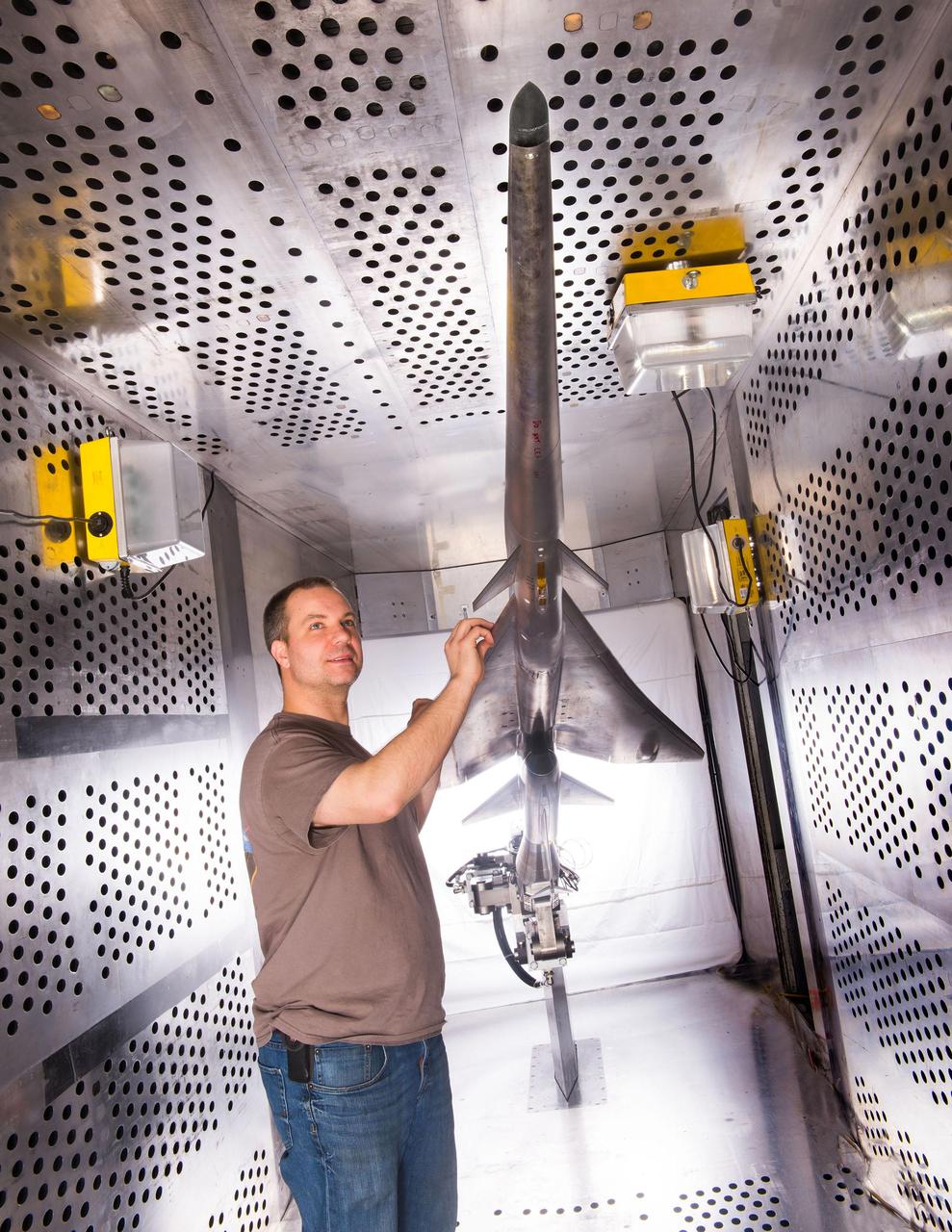
Mechanical technician Dan Pitts prepares a scale model of Lockheed Martin's Quiet Supersonic Technology (QueSST) X-plane preliminary design for its first high-speed wind tunnel tests at NASA's Glenn Research Center.
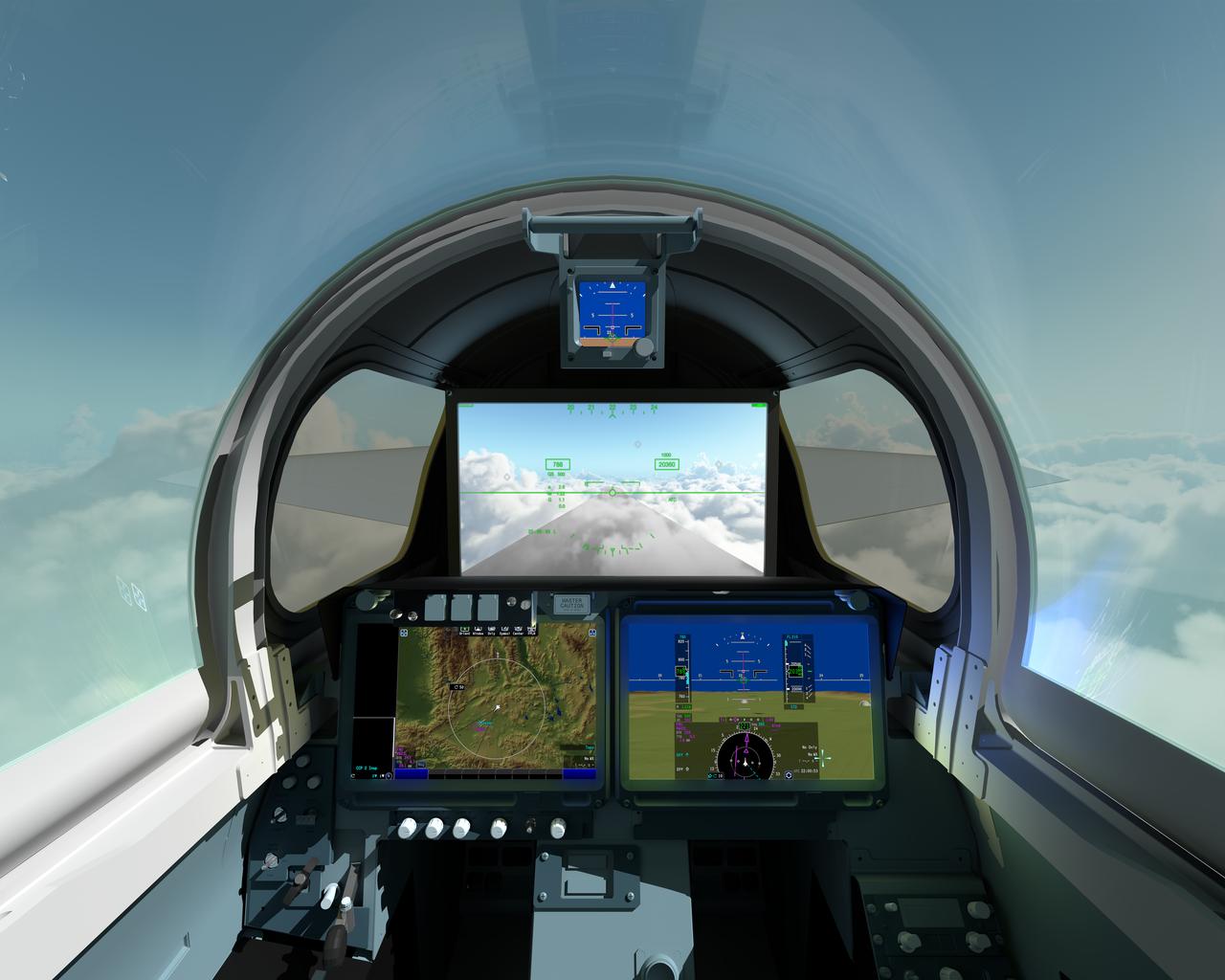
The pilot of NASAÕs X-59 Quiet SuperSonic Technology, or QueSST, aircraft will navigate the skies in a cockpit unlike any other. There wonÕt be a forward-facing window. ThatÕs right; itÕs actually a 4K monitor that serves as the central window and allows the pilot to safely see traffic in his or her flight path, and provides additional visual aids for airport approaches, landings and takeoffs. The 4K monitor, which is part of the aircraftÕs eXternal Visibility System, or XVS, displays stitched images from two cameras outside the aircraft combined with terrain data from an advanced computing system. The two portals and traditional canopy are real windows however, and help the pilot see the horizon. The displays below the XVS will provide a variety of aircraft systems and trajectory data for the pilot to safely fly. The XVS is one of several innovative solutions to help ensure the X-59Õs design shape reduces a sonic boom to a gentle thump heard by people on the ground. Though not intended to ever carry passengers, the X-59 boom-suppressing technology and community response data could help lift current bans on supersonic flight over land and enable a new generation of quiet supersonic commercial aircraft.
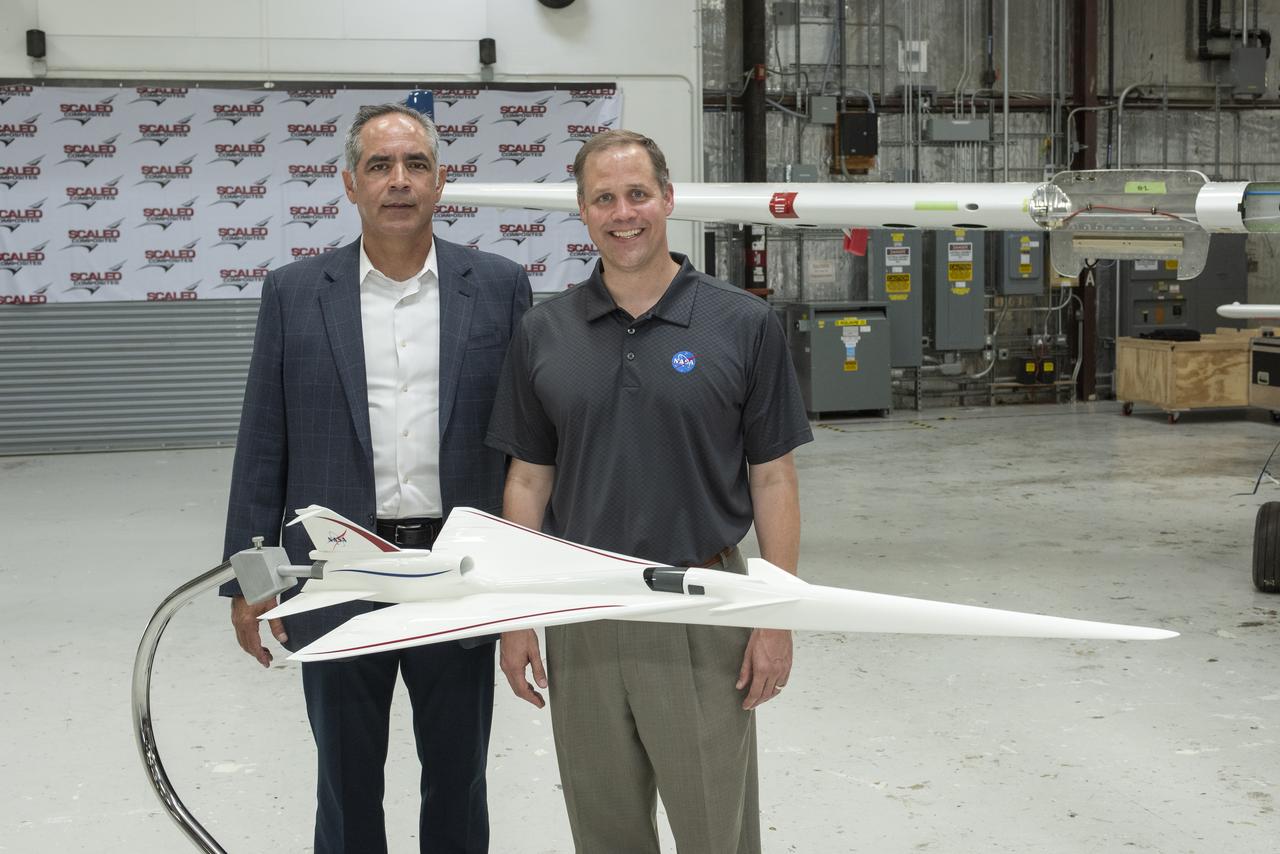
NASA Administrator Bridenstine stands with AFRC center director McBride by model NASA's Supersonic X-Plane, X-59 Quiet Supersonic Technology or QueSST. Bridenstine spoke at press event at Mojave Air and Space Port in California. The goal of X-59 is to quiet the sound when aircraft pierce the speed of sound and make a loud sonic boom on the ground.
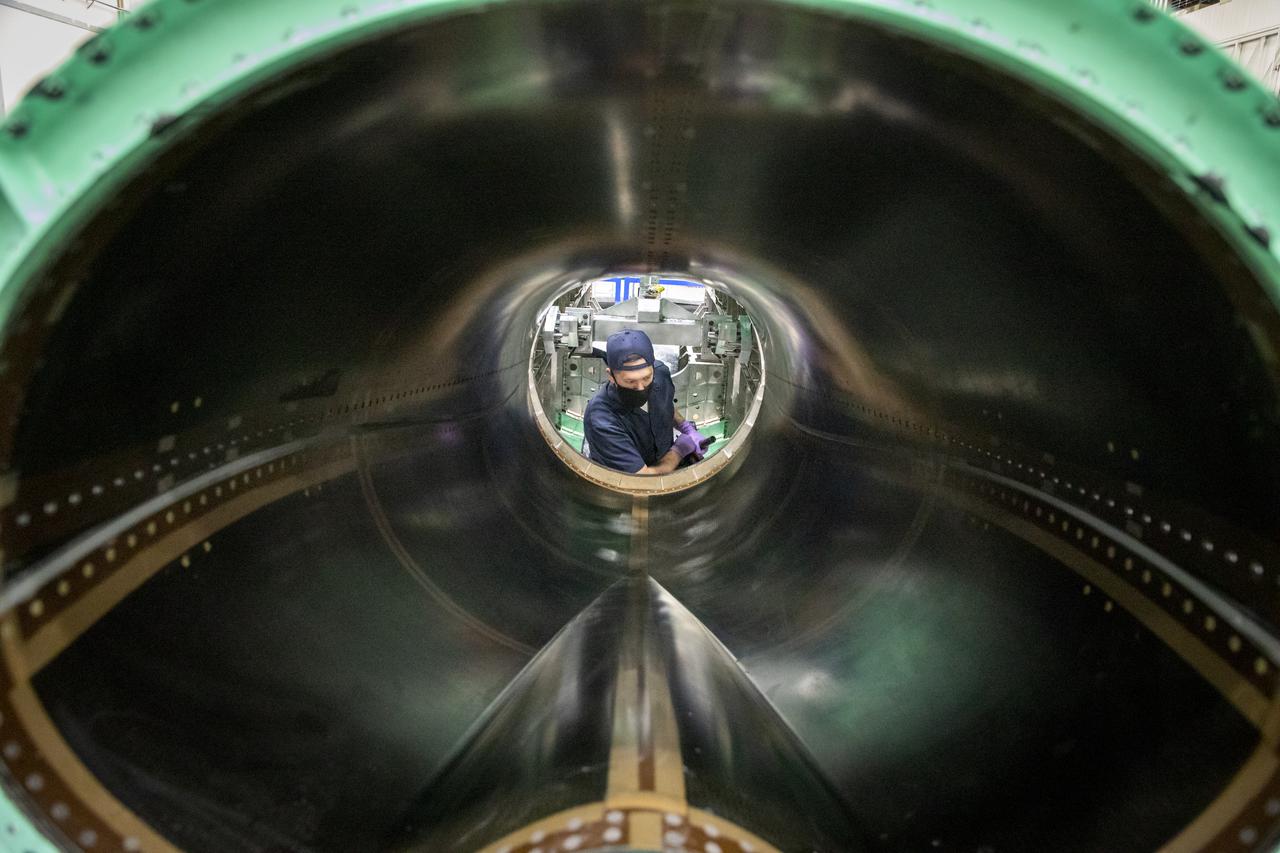
A technician is working on the engine inlet of NASA’s X-59 Quiet Supersonic Technology (QueSST) aircraft at Lockheed Martin’s Skunk Works facility in Palmdale, California.
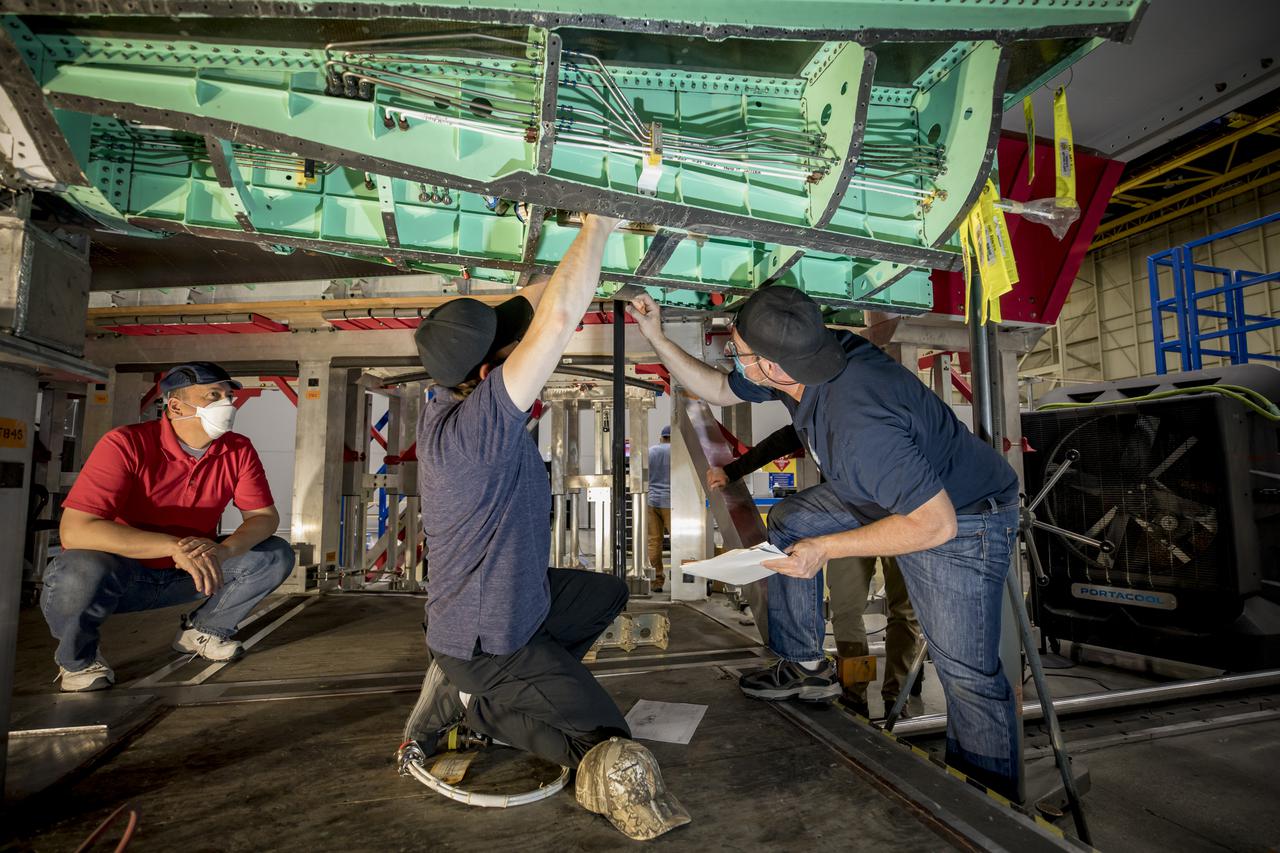
Technicians preform some installation work in the mid-bay on the X-59 Quiet SuperSonic Technology or QueSST aircraft. The aircraft, under construction at Lockheed Martin Skunk Works in Palmdale, California, will fly to demonstrate the ability to fly supersonic while reducing the loud sonic boom to a quiet sonic thump. Lockheed Martin Photography By Garry Tice 1011 Lockheed Way, Palmdale, Ca. 93599 Event: SEG 450 Mid Bay - Encoders Date: 4/28/2021
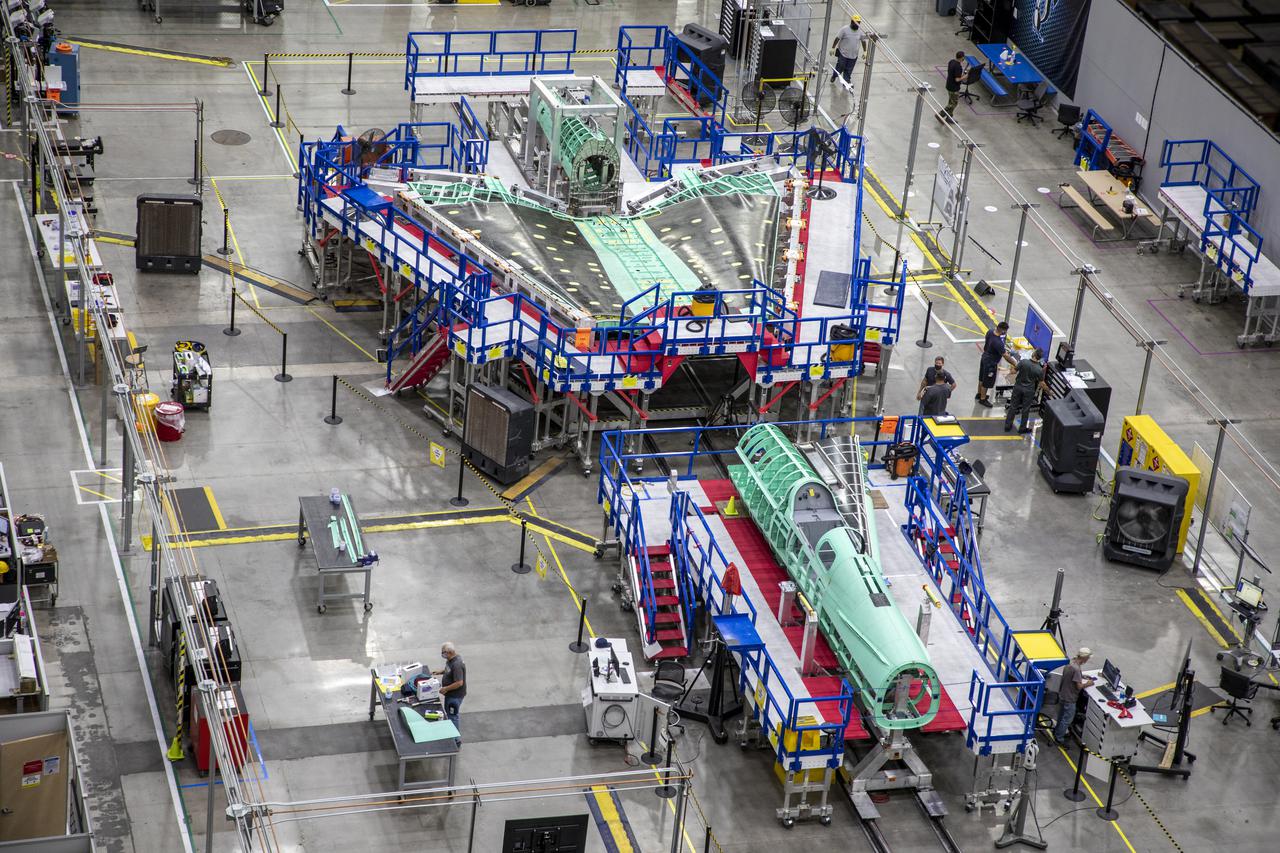
This overhead shot of the X-59 Quiet SuperSonic Technology or QueSST aircraft shows the assembly progress of the vehicle during Spring 2021. The aircraft, under construction at Lockheed Martin Skunk Works in Palmdale, California, will fly to demonstrate the ability to fly supersonic while reducing the loud sonic boom to a quiet sonic thump. Lockheed Martin Photography By Garry Tice 1011 Lockheed Way, Palmdale, Ca. 93599
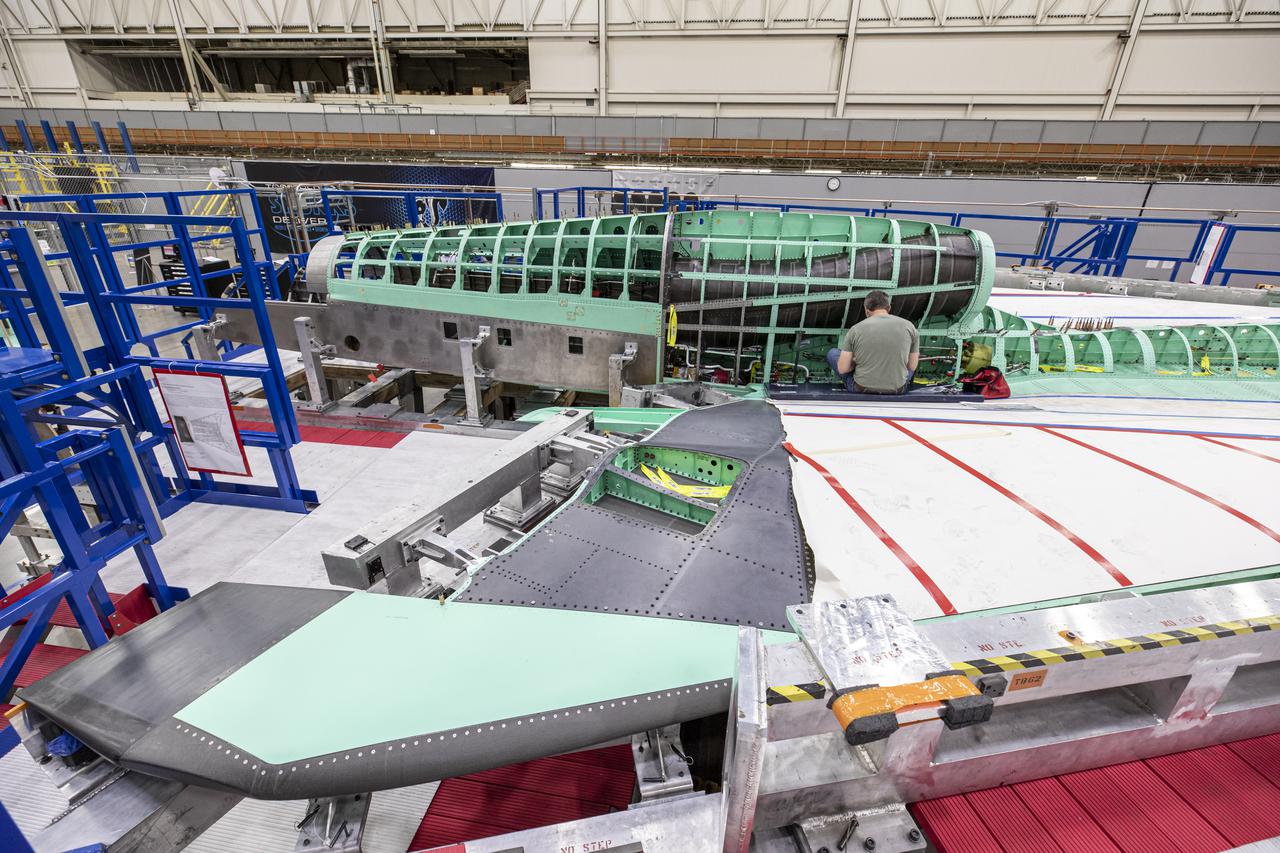
Here is a wide shot of the wing, engine and engine inlet area of NASA’s X-59 Quiet SuperSonic Technology or QueSST aircraft. The aircraft, under construction at Lockheed Martin Skunk Works in Palmdale, California, will fly to demonstrate the ability to fly supersonic while reducing the loud sonic boom to a quiet sonic thump. Lockheed Martin Photography By Garry Tice 1011 Lockheed Way, Palmdale, Ca. 93599 Event: SEG 400 Main Wing Assembly, SEG 430 Spine, SEG 500 Empennage Date: 4/28/2021
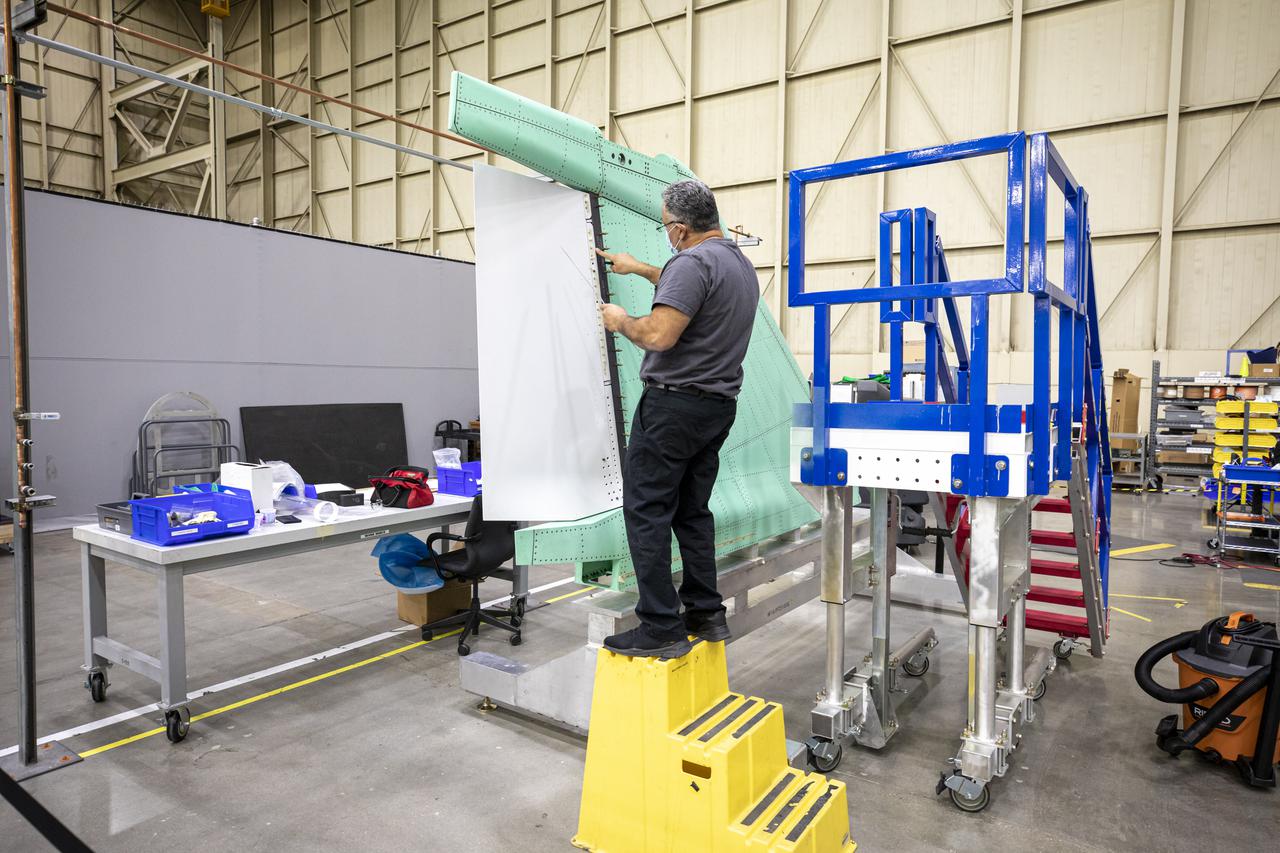
A technician is shown working on the X-59 Quiet SuperSonic Technology or QueSST aircraft’s vertical tail prior to installation. Lockheed Martin Photography By Garry Tice 1011 Lockheed Way, Palmdale, Ca. 93599 Event: SEG 530 Vertical Tail - Rudder Installed Date: 5/12/2021
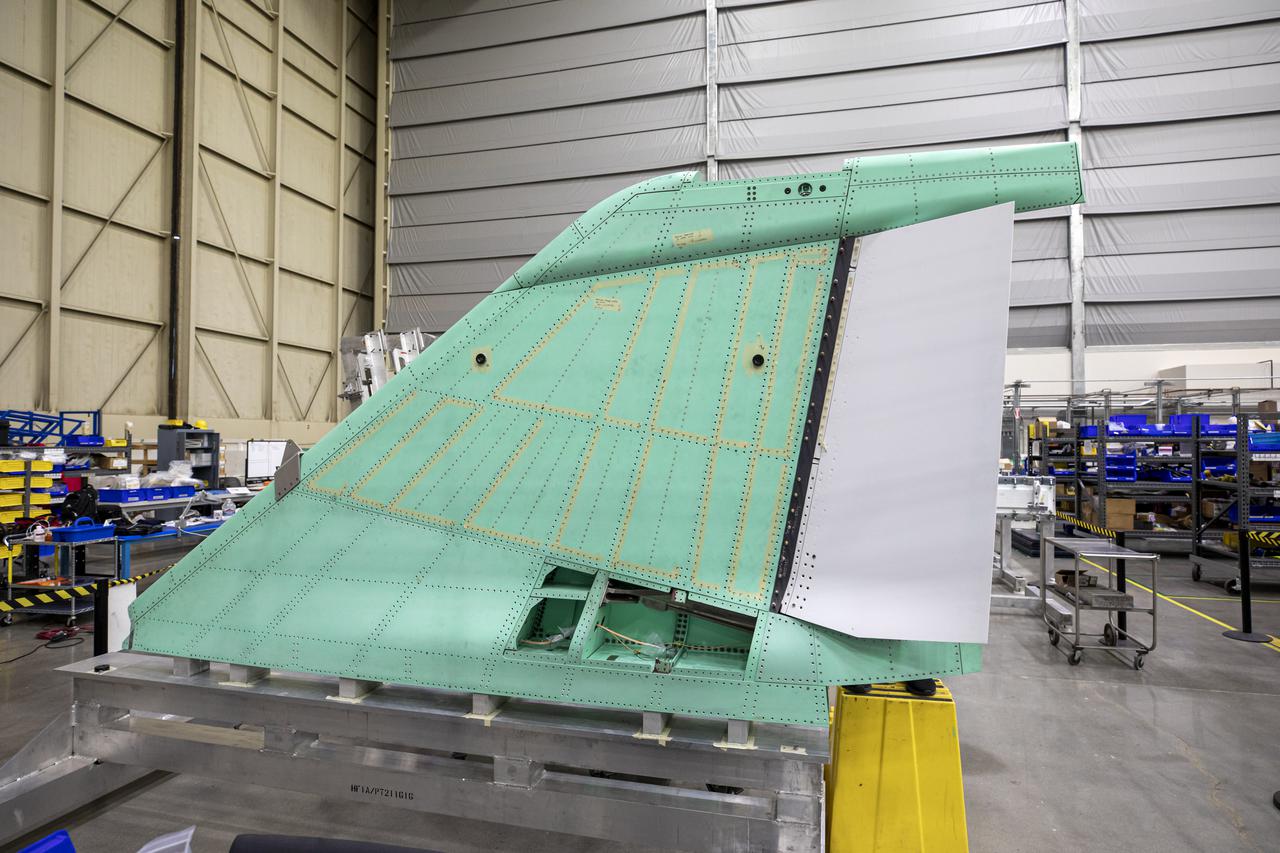
Pictured here is a close up view of the X-59 Quiet SuperSonic Technology or QueSST aircraft’s vertical tail prior to installation. Lockheed Martin Photography By Garry Tice 1011 Lockheed Way, Palmdale, Ca. 93599 Event: SEG 530 Vertical Tail - Rudder Installed Date: 5/12/2021
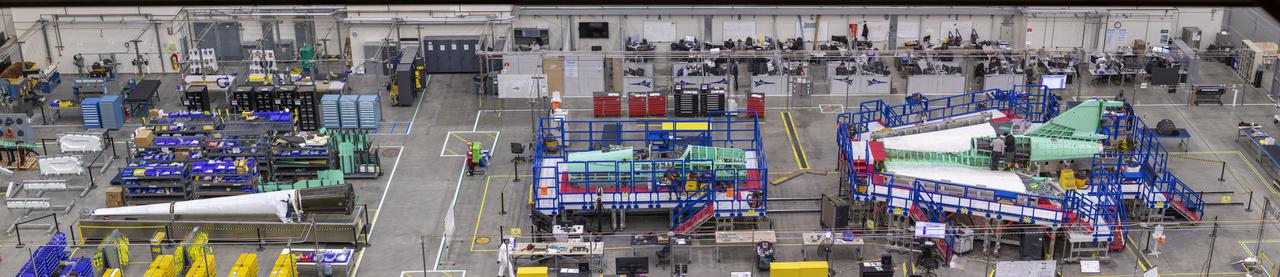
This overhead shot of the X-59 Quiet SuperSonic Technology or QueSST aircraft shows the assembly progress of the vehicle during Spring 2021. Pictured here you can see the nose (far left) which will later be mounted to the middle section in the photo known as the fuselage and the last section is the wing and tail in the far right of the photo. Lockheed Martin Photography By Garry Tice 1011 Lockheed Way, Palmdale, Ca. 93599 Event: Manufacture Area From Above Date: 3/30/2021

This overview shot of the X-59 Quiet Supersonic Technology or QueSST aircraft shows the vehicle before a major merger of three major aircraft sections – the fuselage, the wing, and the tail assembly – together, making it looks more like an airplane. Lockheed Martin Photography By Garry Tice 1011 Lockheed Way, Palmdale, Ca. 93599 Event: Manufacture Area From Above Date: 3/30/2021
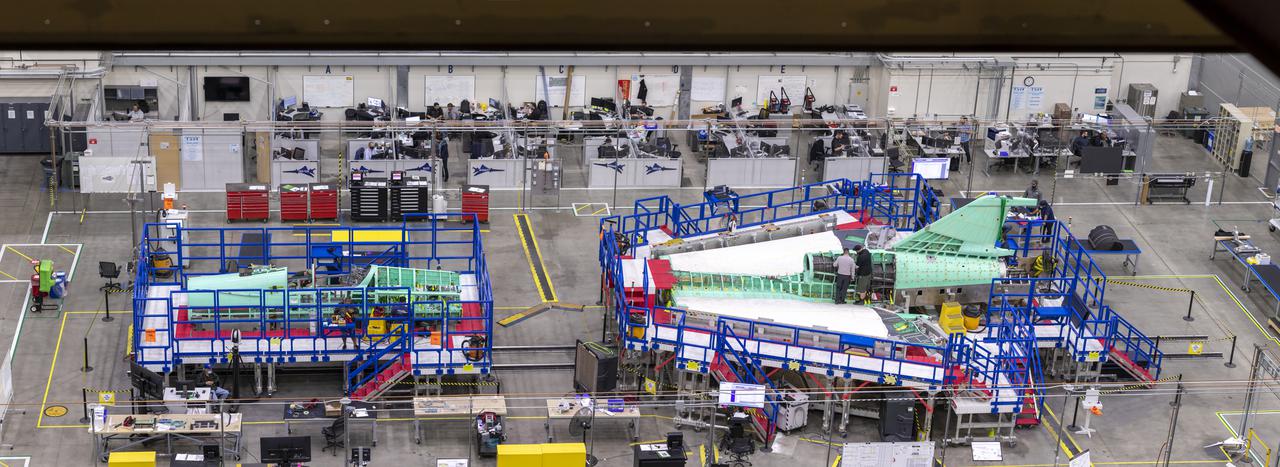
This overhead shot of the X-59 Quiet SuperSonic Technology or QueSST aircraft shows the assembly progress of the vehicle during Spring 2021. In the left side of the picture, the fuselage which contains the cockpit is shown and the right side of the photo shows the wing and the tail section of the aircraft. Lockheed Martin Photography By Garry Tice 1011 Lockheed Way, Palmdale, Ca. 93599 Event: Manufacture Area From Above Date: 3/30/2021
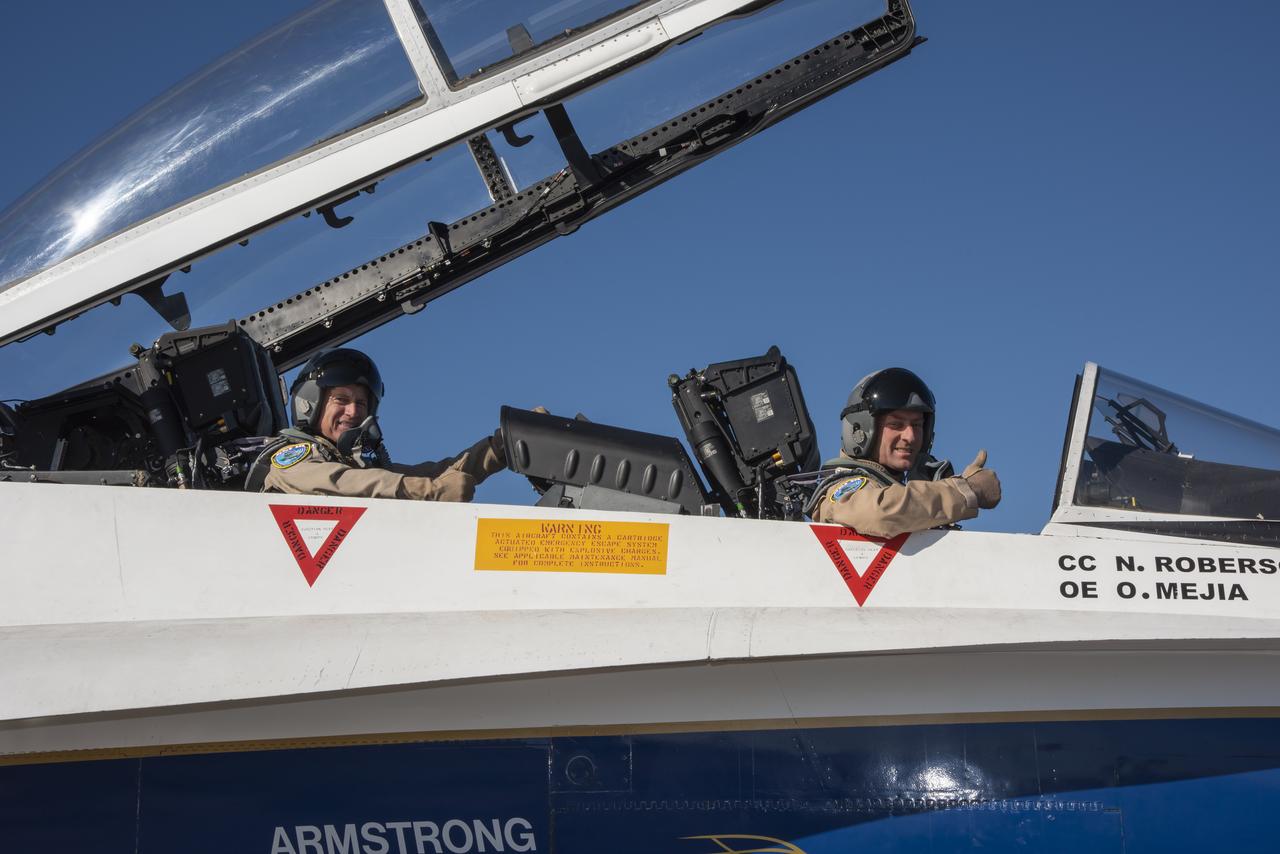
NASA Armstrong Flight Research Center test pilots Jim "Clue" Less (front) and Wayne "Ringo" Ringelberg (back) taxi out in a NASA F/A-18 at Ellington Field in Houston, Texas, in preparation of a training flight for the Quiet Supersonic Flights 2018 series, or QSF18. The QSF18 flights will provide NASA with feedback necessary to validate community response techniques for future quiet supersonic research flights for the X-59 Quiet SuperSonic Technology, or QueSST.
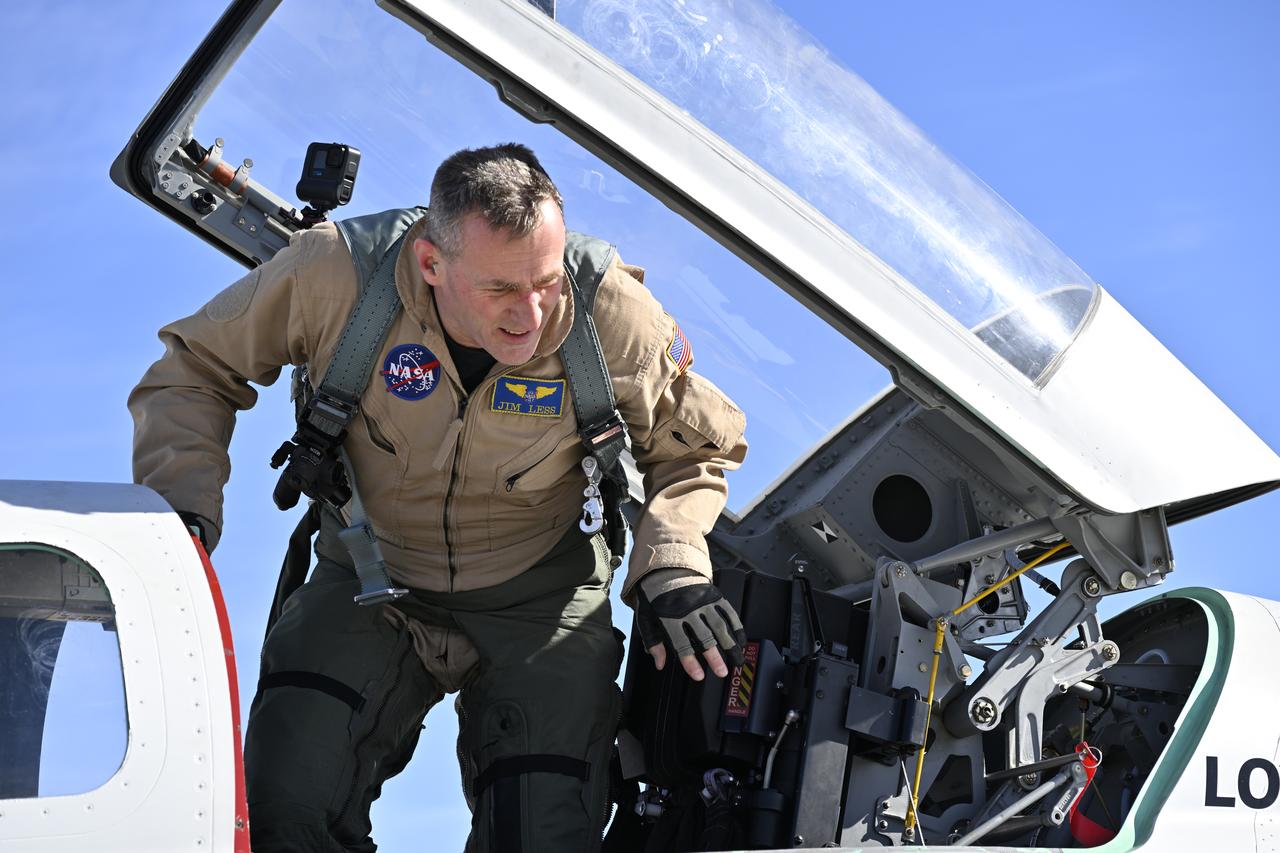
NASA test pilot Jim Less prepares to exit the cockpit of the quiet supersonic X-59 aircraft in between electromagnetic interference (EMI) testing. The EMI testing ensures an aircraft’s systems function properly under various conditions of electromagnetic radiation. The X-59 is the centerpiece of the NASA’s Quesst mission, designed to demonstrate quiet supersonic technology and provide data to address a key barrier to commercial supersonic travel.
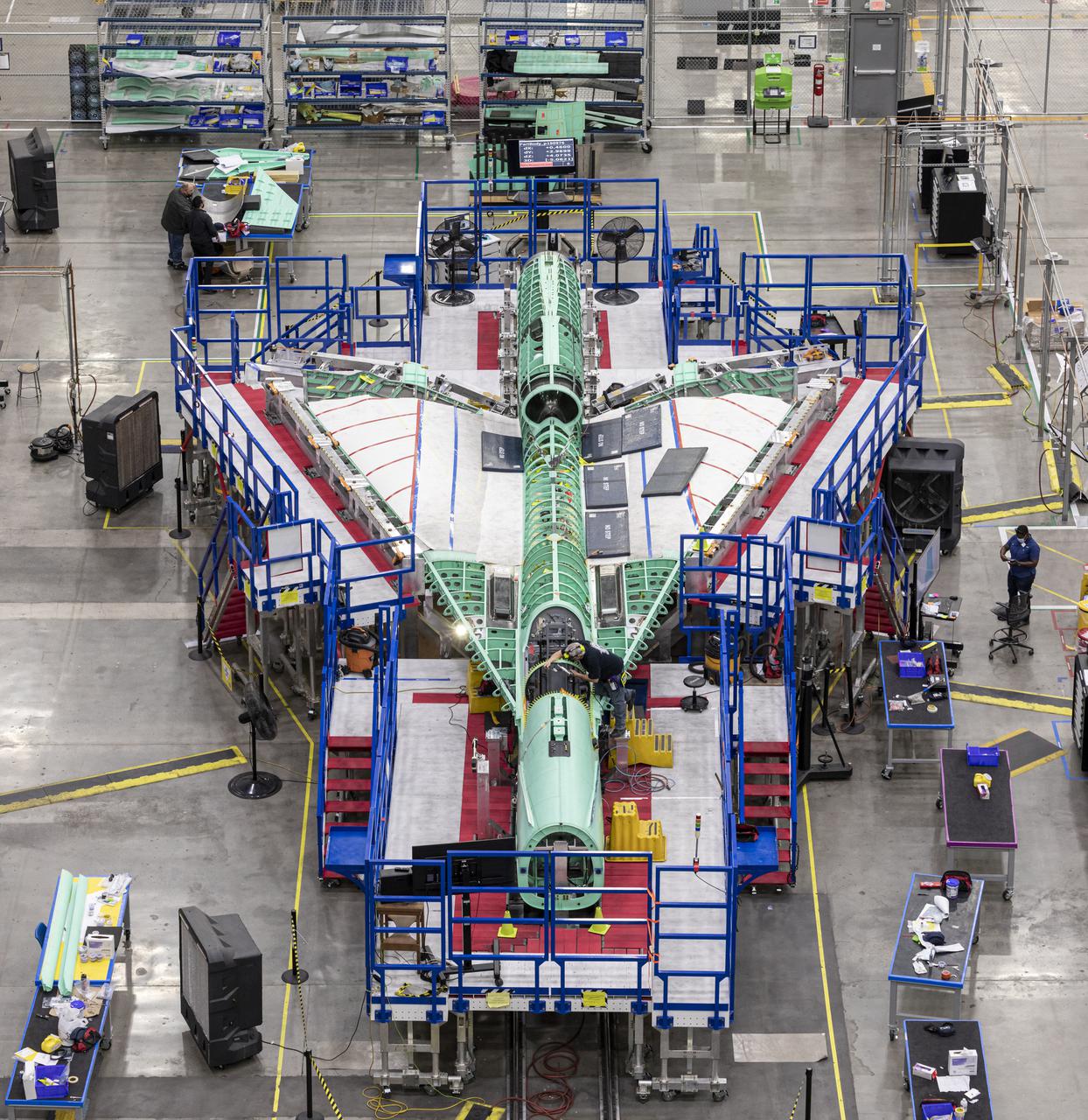
This overhead view shows NASA’s X-59 Quiet SuperSonic Technology or QueSST aircraft as it comes together for the merger of its main parts – the wing, forward section and tail assembly. Lockheed Martin Photography By Garry Tice 1011 Lockheed Way, Palmdale, Ca. 93599 Event: Manufacturing Area From Above Date: 5/26/2021
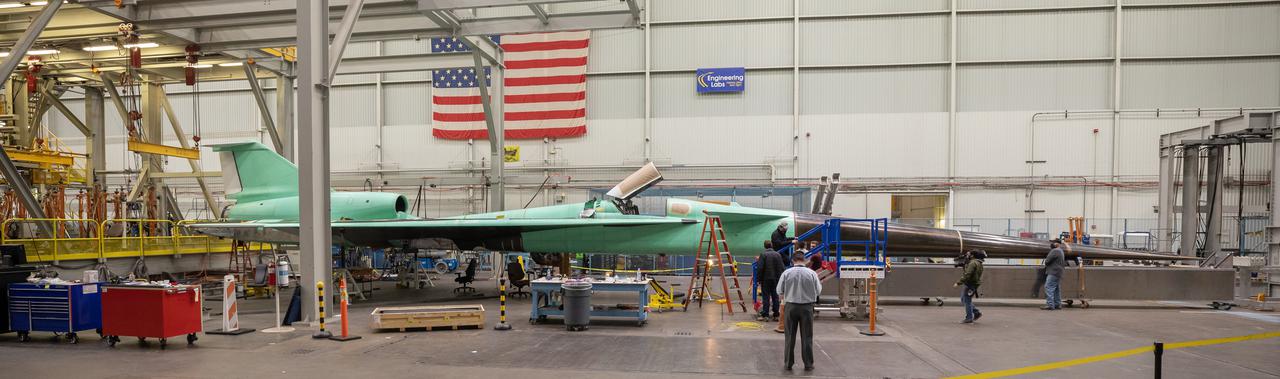
This panoramic side view of NASA’s X-59 Quiet SuperSonic Technology airplane shows the aircraft sitting on jacks at a Lockheed Martin test facility in Fort Worth, Texas. Lockheed Martin Aeronautics Company - Fort Worth - Chris Hanoch Subject: SEG 230 Nose Attachement FP#: 21-03420 POC: Analiese Smith, Chris Higgins Other info: X-59 in Fort Worth, testing
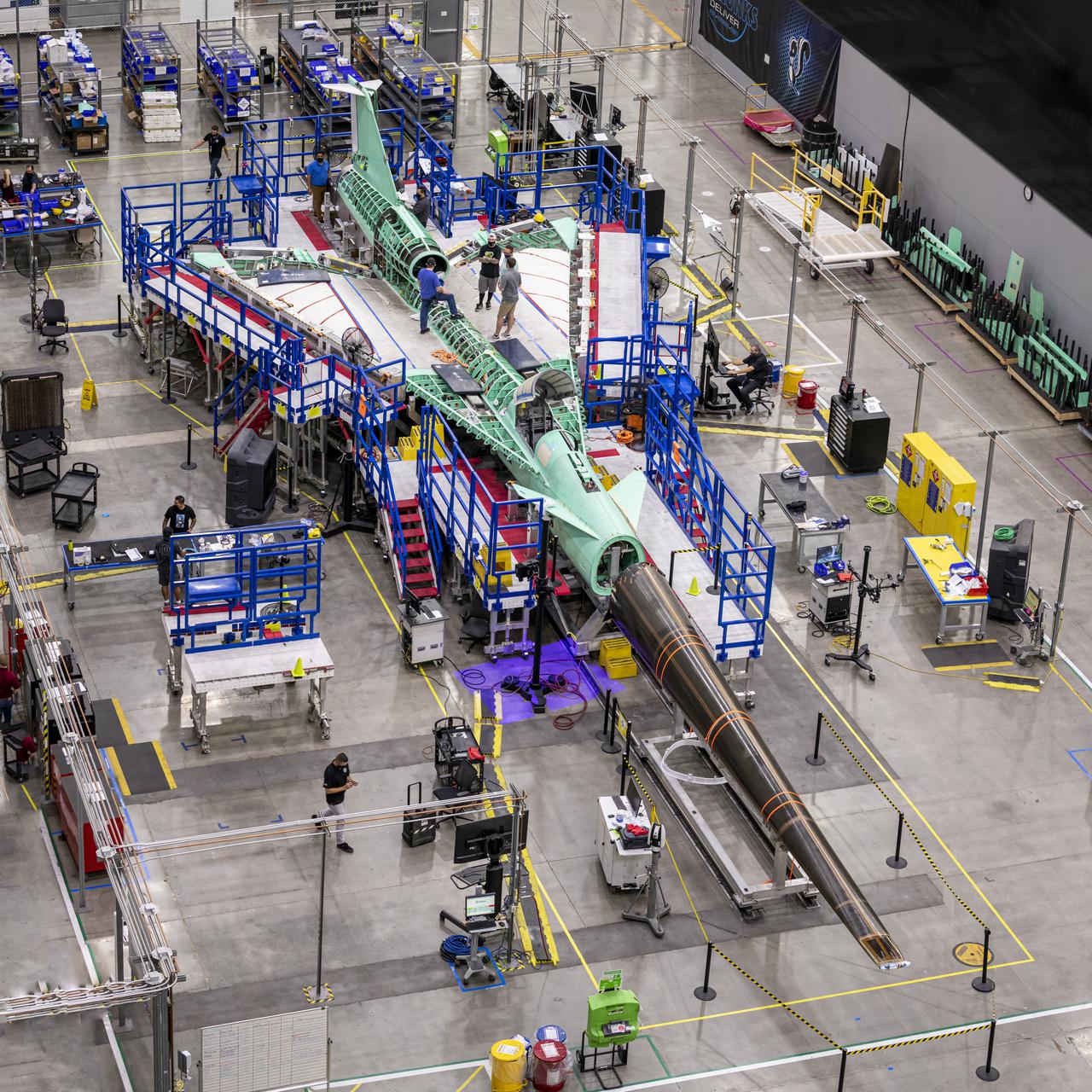
The X-59 Quiet SuperSonic Technology (QueSST) aircraft is taking shape at the Lockheed Martin Skunk Works facility in Palmdale, California. The team positioned the X-59 QueSST's nose at the front of the aircraft. As one of the more recognizable features of the X-59, the nose makes up almost a third of the aircraft length and will be essential in shaping shock waves during supersonic flight, resulting in quiet sonic thumps instead of loud sonic booms. The nose was attached and then removed from the front of the aircraft in preparation for its shipment to Fort Worth, Texas where it will undergo additional testing. The X-59 will fly at supersonic speeds above communities as part of the Low-Boom Flight Demonstration mission, during which NASA will gather community feedback to the sound of quiet supersonic flight. These findings will be shared with regulators to inform decisions on current restrictions of supersonic flight over land. Lockheed Martin Photography By Garry Tice 1011 Lockheed Way, Palmdale, Ca. 93599 Event: Manufacturing Area From Above Date: 8/18/2021 Additional Info:
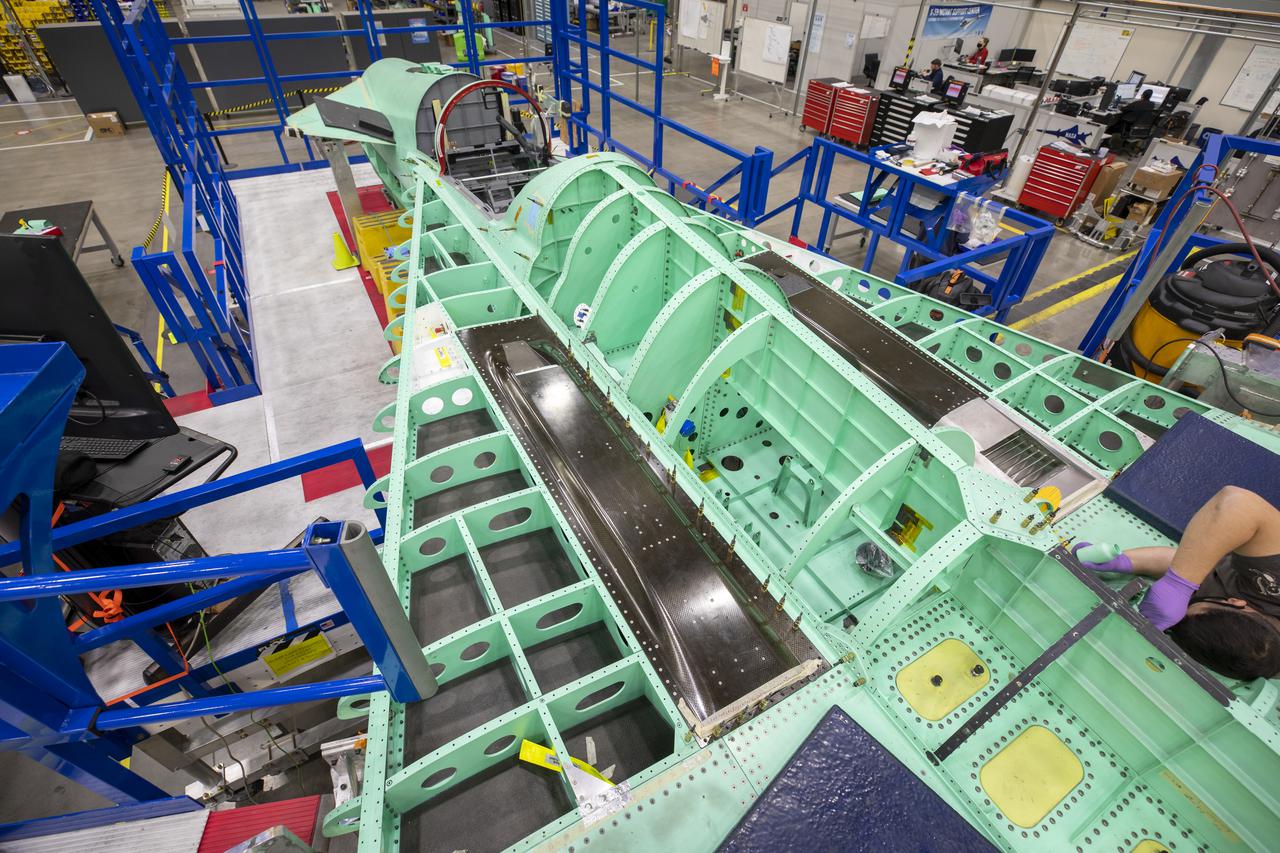
NASA is targeting 2022 for the first flight of the X-59 Quiet SuperSonic Technology (QueSST) research aircraft. Its mission – fly over communities to collect data that could cut passenger travel time in half without disturbing people on the ground. NASA’s X-59 is equipped with supersonic technologies that aid in lowering the sound of the sonic boom. In this picture, the black rectangle panels are the air intakes for the environmental control system (ECS) that regulates the temperature, cabin pressure, and air distribution. The silver grate located at the rear of one of the ECS panels is the exhaust — both of these sections are traditionally housed on the underside of the plane. By placing these features on top of the X-59 wing, the wing blocks and prevents the ECS exhaust from interacting with the shock waves on the bottom of the aircraft. This unique design approach to re-shaping the shock wave pattern substantially reduces the sonic boom to more of a sonic “thump” when it reaches the ground. Lockheed Martin Photography By Garry Tice 1011 Lockheed Way, Palmdale, Ca. 93599 Event: SEG 210 Forebody Date: 1/19/2021 Additional Info:
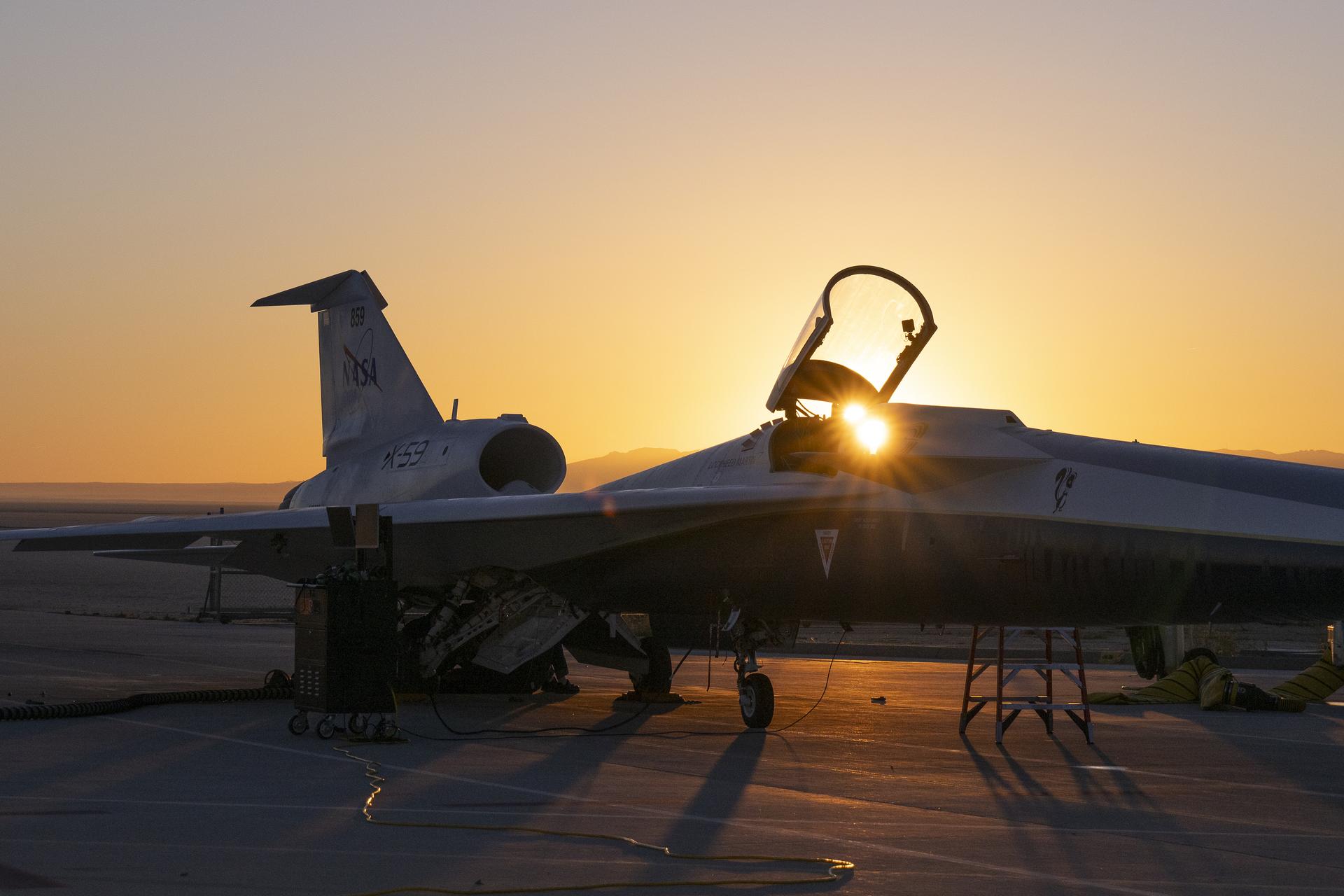
NASA’s X-59 quiet supersonic research aircraft during engine run testing on Thursday, March 12, 2026, at NASA’s Armstrong Flight Research Center in Edwards, California. Engineers and technicians monitored the aircraft’s systems as the engine powered up, gathering data to verify performance and prepare the X-59 for its next series of experimental flights. The X-59 will support NASA’s Quesst mission, which aims to demonstrate technology that can reduce the loud sonic booms of supersonic flight.
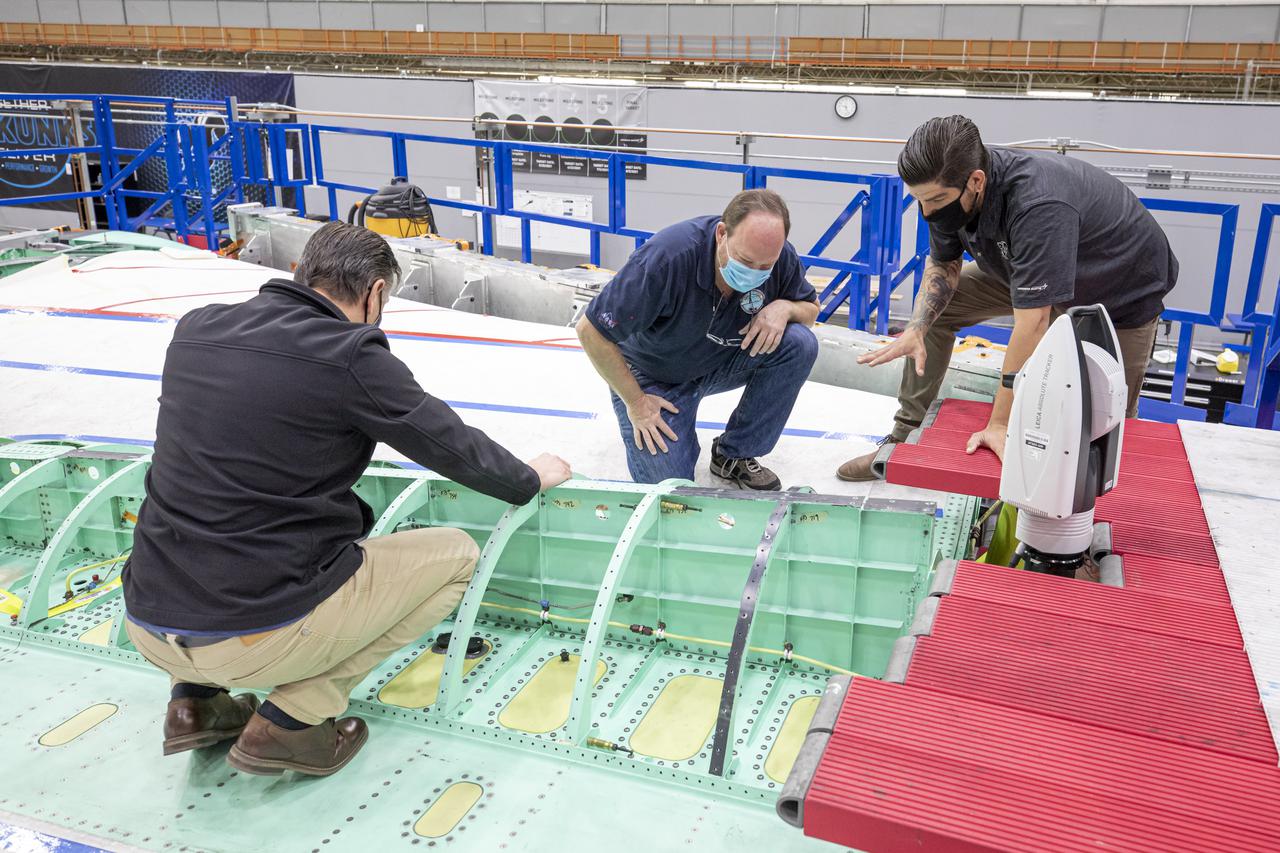
Technicians work with a laser measuring system on the X-59 spine. The X-59 Quiet SuperSonic Technology, or QueSST, aircraft is under construction at Lockheed Martin Skunk Works in Palmdale, California, and will fly to demonstrate the ability to fly supersonic while reducing the loud sonic boom to a quiet sonic thump. Lockheed Martin Photography By Garry Tice 1011 Lockheed Way, Palmdale, Ca. 93599 Event: SEG 400 Main Wing Assembly, SEG 430 Spine, SEG 500 Empennage Date: 4/28/2021
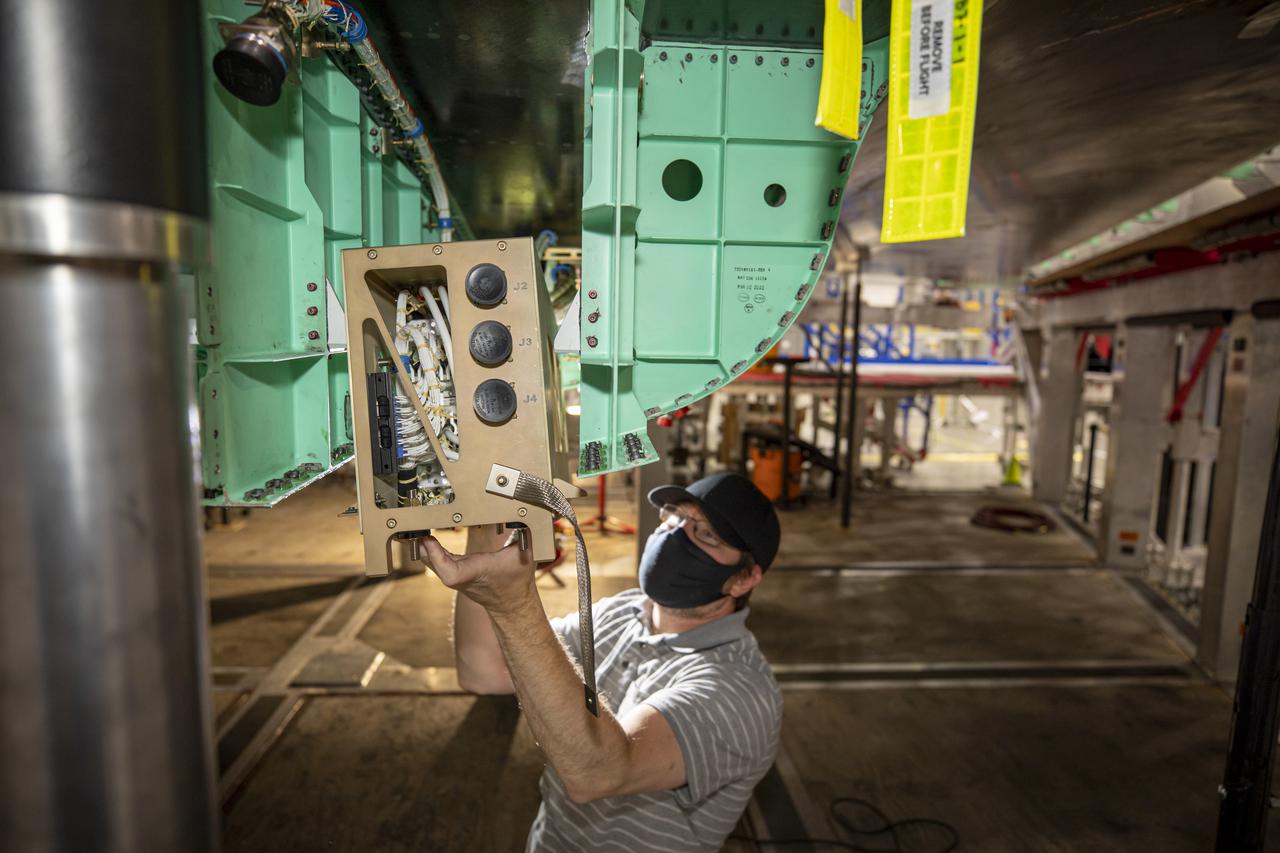
A technician works on the installation of the PDS Pallet (gold colored box that he is holding) on NASA’s X-59 Quiet SuperSonic Technology or QueSST aircraft. Lockheed Martin Photography By Garry Tice 1011 Lockheed Way, Palmdale, Ca. 93599 Event: SEG 450 Mid Bay - PDS Fit Check Date: 5/03/2021
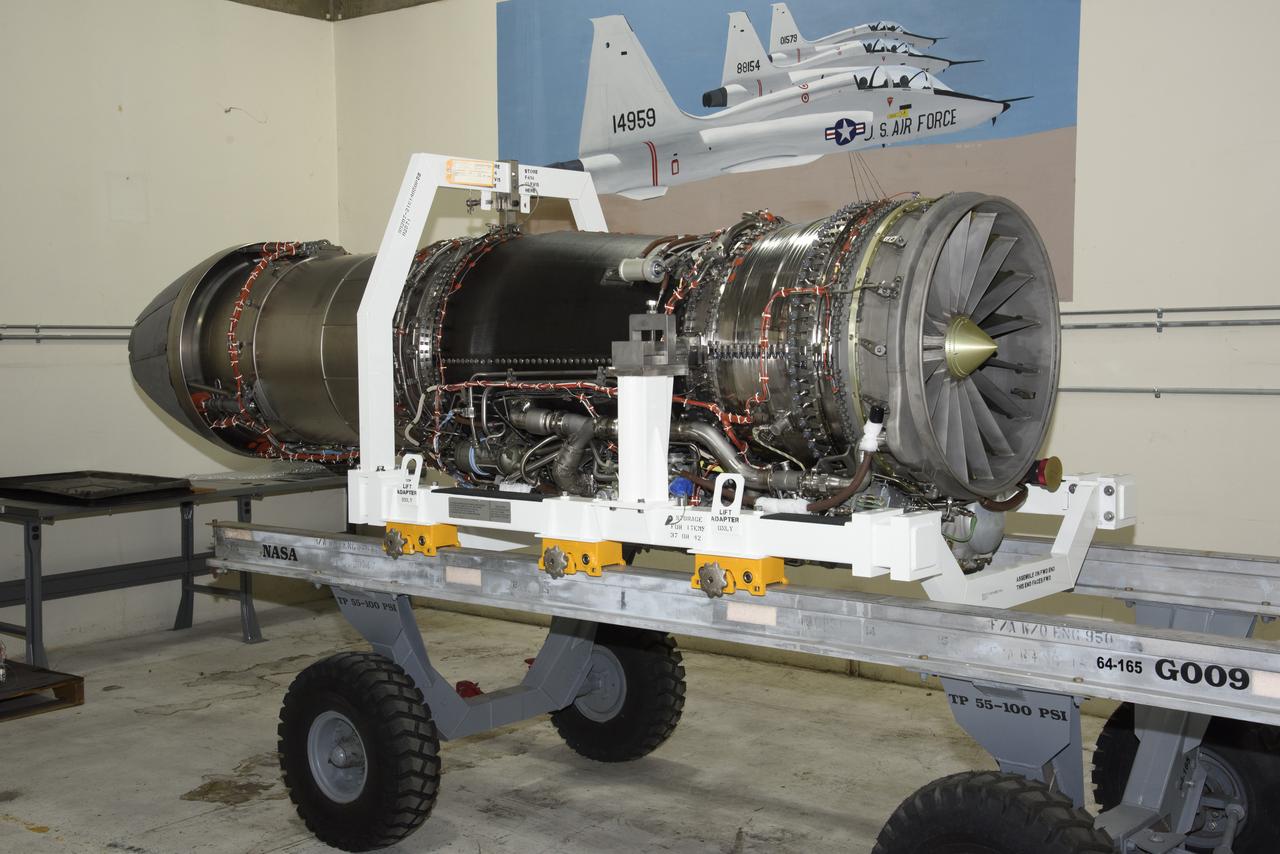
The F414-GE-100 engine, which will power NASA’s X-59 Quiet SuperSonic Technology X-plane (QueSST) in flight, is unboxed at NASA’s Armstrong Flight Research Center in Edwards, California. The engine, one of two delivered by GE, is approximately 13 feet long, and will power X-59 on missions to gather information about how the public perceives the sounds of quieter supersonic flight.
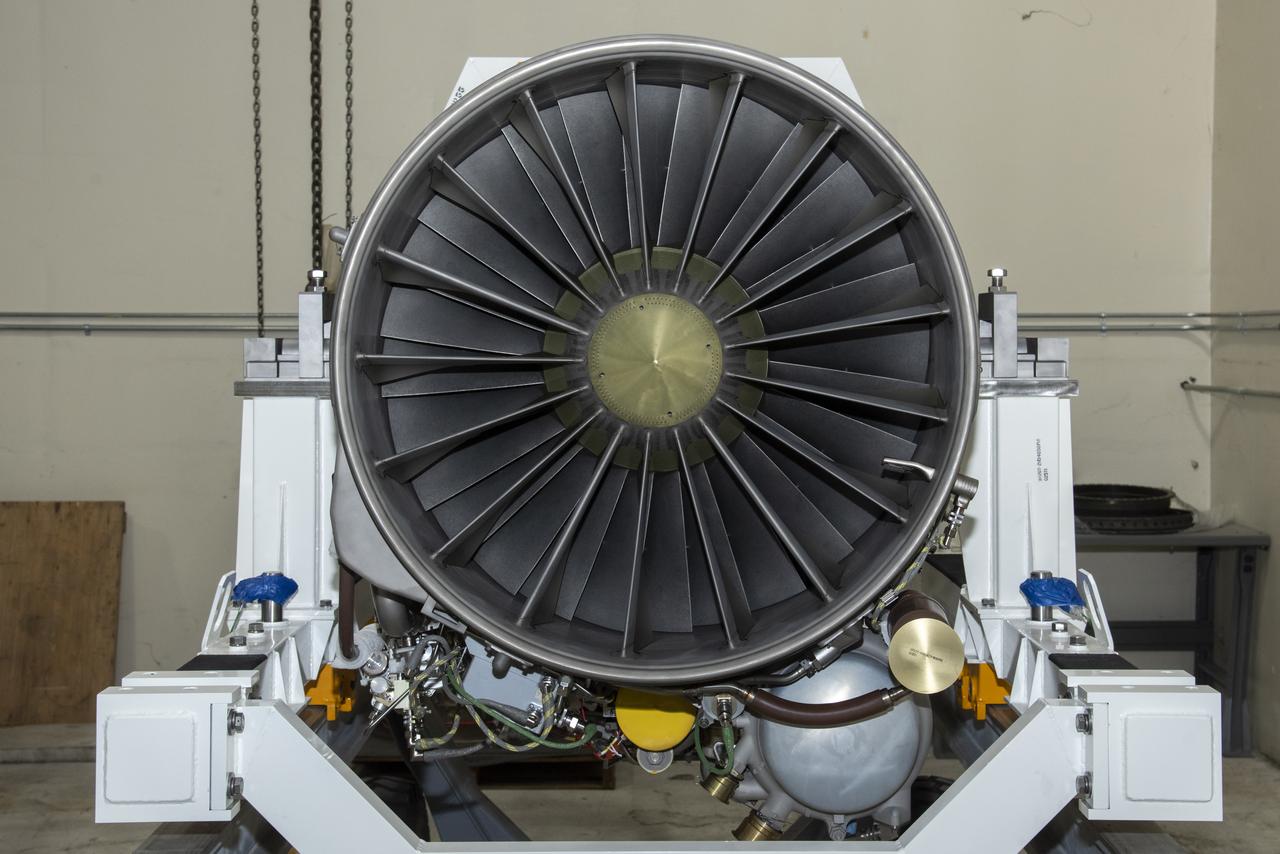
The F414-GE-100 engine, which will power NASA’s X-59 Quiet SuperSonic Technology X-plane (QueSST) in flight, is unboxed at NASA’s Armstrong Flight Research Center in Edwards, California. The engine, one of two delivered by GE, is approximately 13 feet long, and will power X-59 on missions to gather information about how the public perceives the sounds of quieter supersonic flight.

NASA’s F-15D research aircraft is positioned behind the X-59 during electromagnetic compatibility testing at U.S. Air Force Plant 42 in Palmdale, California. During this test, the F-15D’s radar and avionics were turned on one at a time while engineers evaluated each signal’s interaction with the X-59 for possible interference. NASA’s Quesst mission will demonstrate quiet supersonic technology that will provide data to help determine an acceptable sound limit in the sky.
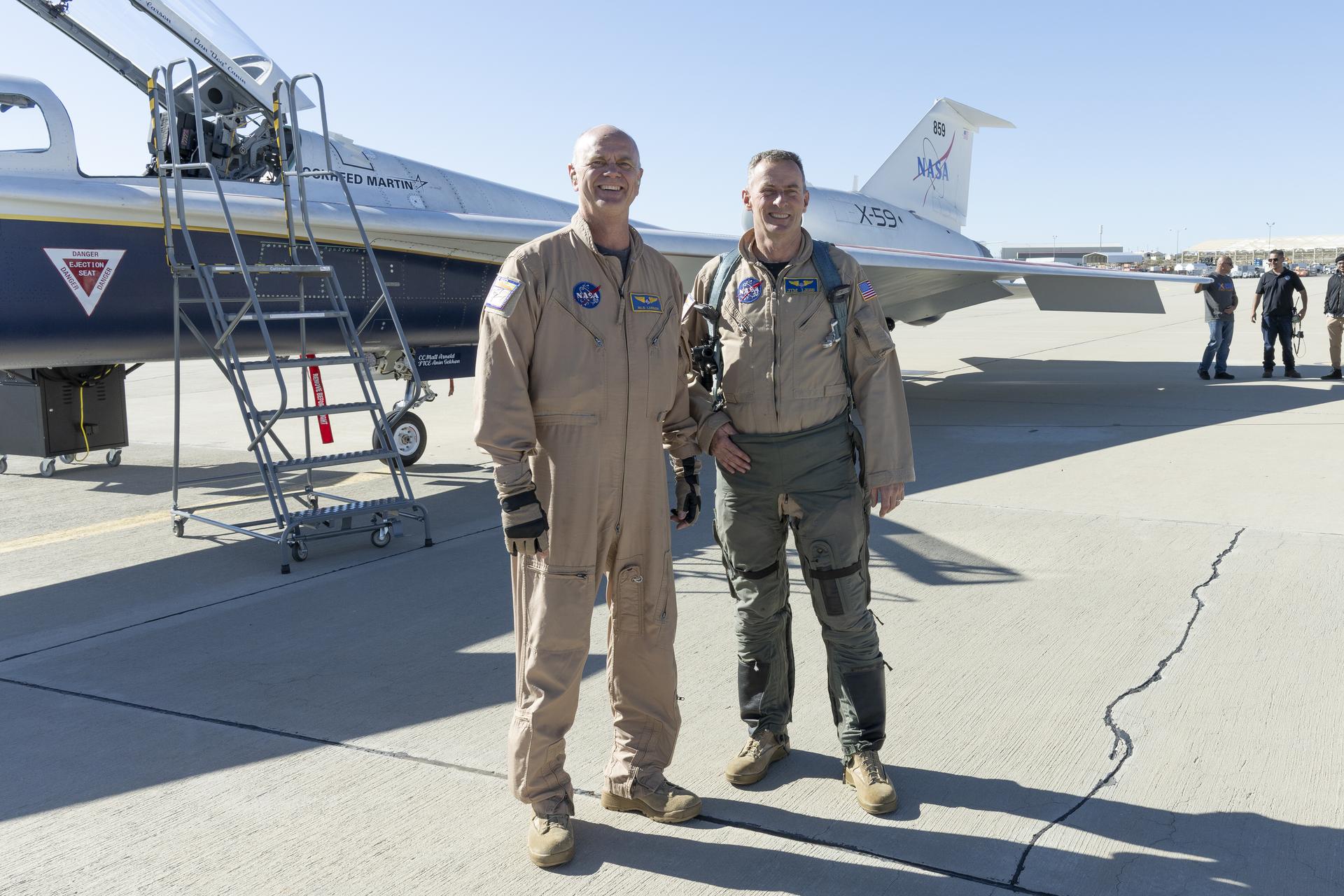
NASA chase pilot Jim “Clue” Less congratulates Nils Larson after completing the X-59’s first flight on Tuesday, Oct. 28, 2025. The milestone marks a major step toward demonstrating quiet supersonic technology that could enable future air travel over land without the disruptive noise of traditional sonic booms.

NASA chase pilot Jim “Clue” Less congratulates Nils Larson after completing the X-59’s first flight on Tuesday, Oct. 28, 2025. The milestone marks a major step toward demonstrating quiet supersonic technology that could enable future air travel over land without the disruptive noise of traditional sonic booms.

NASA chase pilot Jim “Clue” Less congratulates Nils Larson after completing the X-59’s first flight on Tuesday, Oct. 28, 2025. The milestone marks a major step toward demonstrating quiet supersonic technology that could enable future air travel over land without the disruptive noise of traditional sonic booms.
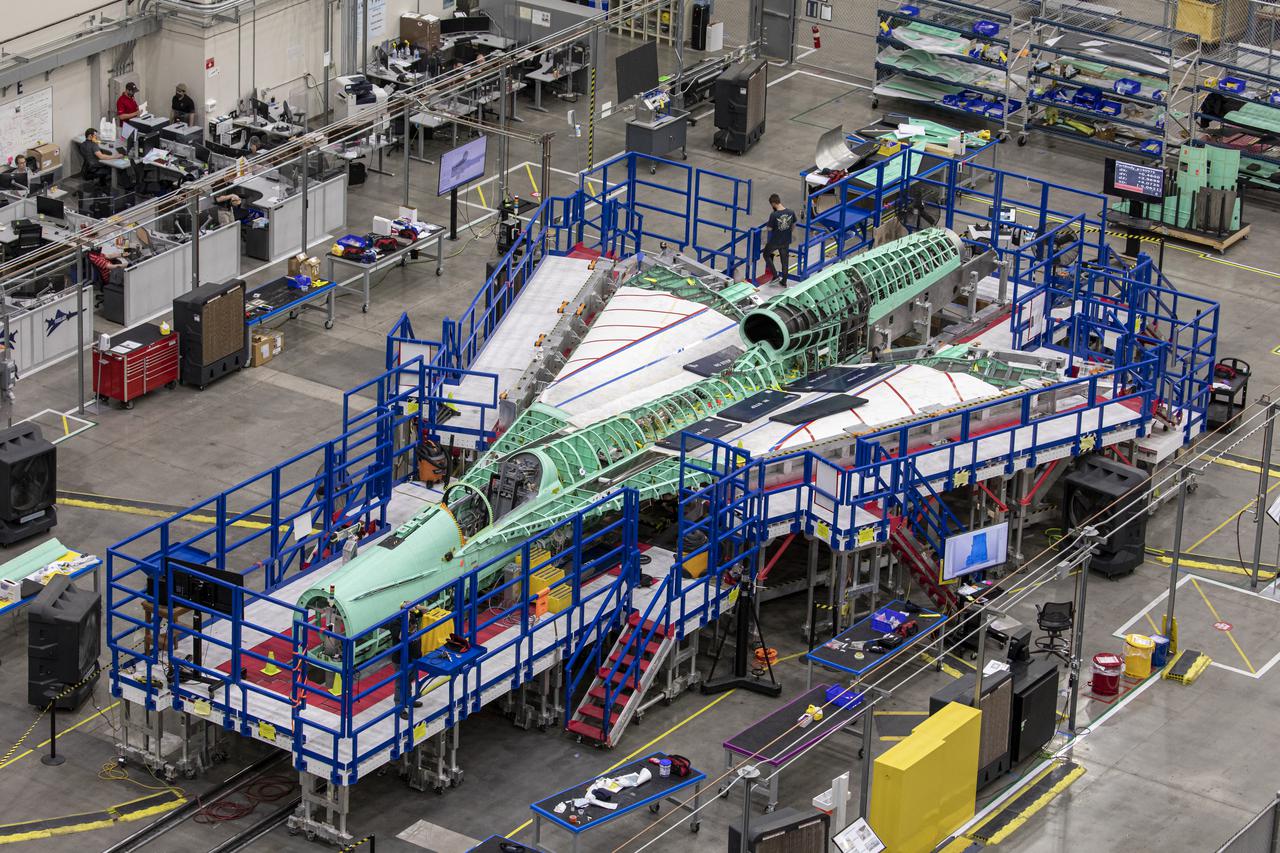
The team at Lockheed Martin Skunk Works in Palmdale, California, merged the major sections of the X-59 Quiet SuperSonic Technology aircraft, which includes the wing, tail assembly, and fuselage or forward section. This marks the first time the X-59 resembles an actual aircraft. (Pictured here is a overhead view of the X-59 as it comes together for the major assembly merger in summer 2021.) Lockheed Martin Photography By Garry Tice 1011 Lockheed Way, Palmdale, Ca. 93599 Event: Manufacturing Area From Above Date: 5/26/2021
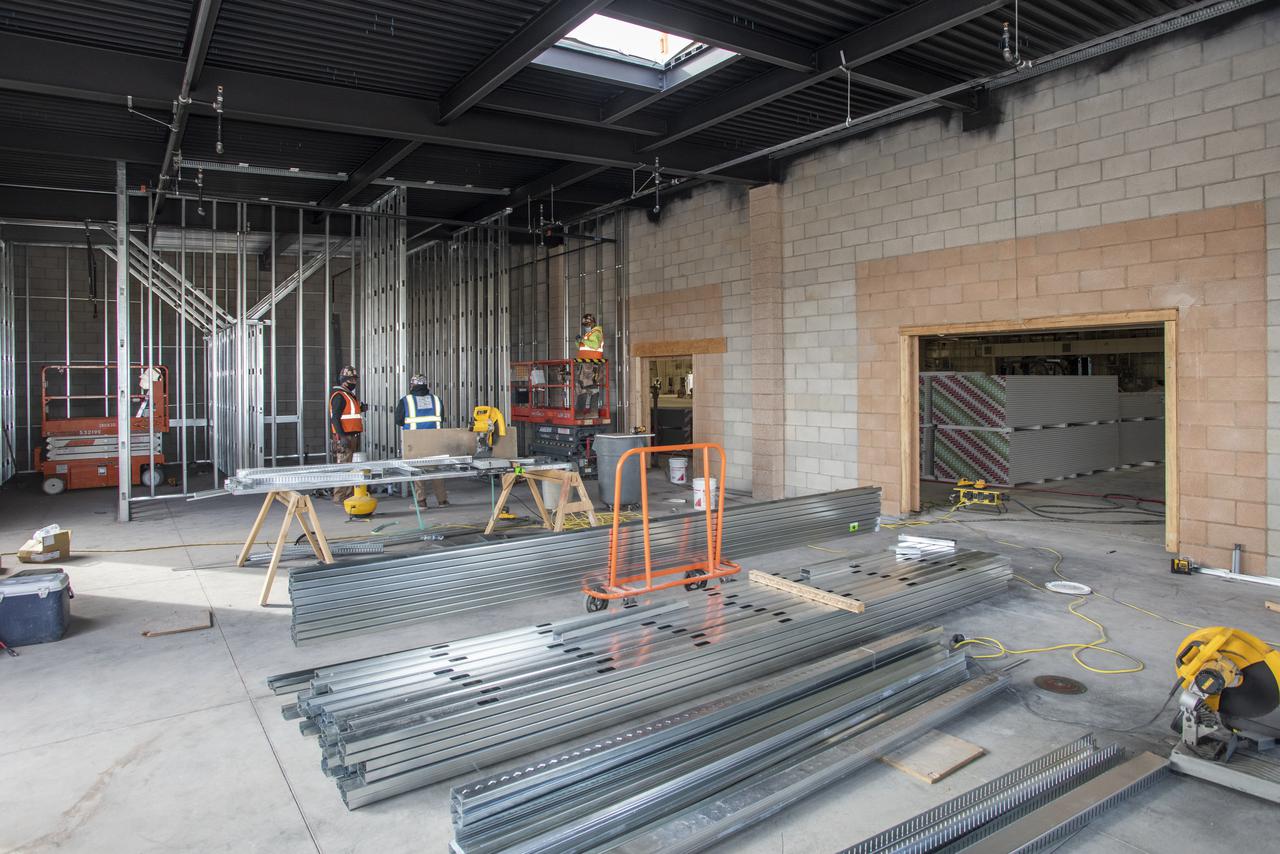
Work continues at Building 4826, the future home of the X-59 Quiet SuperSonic Technology aircraft, at NASA's Armstrong Flight Research Center in Edwards, California.
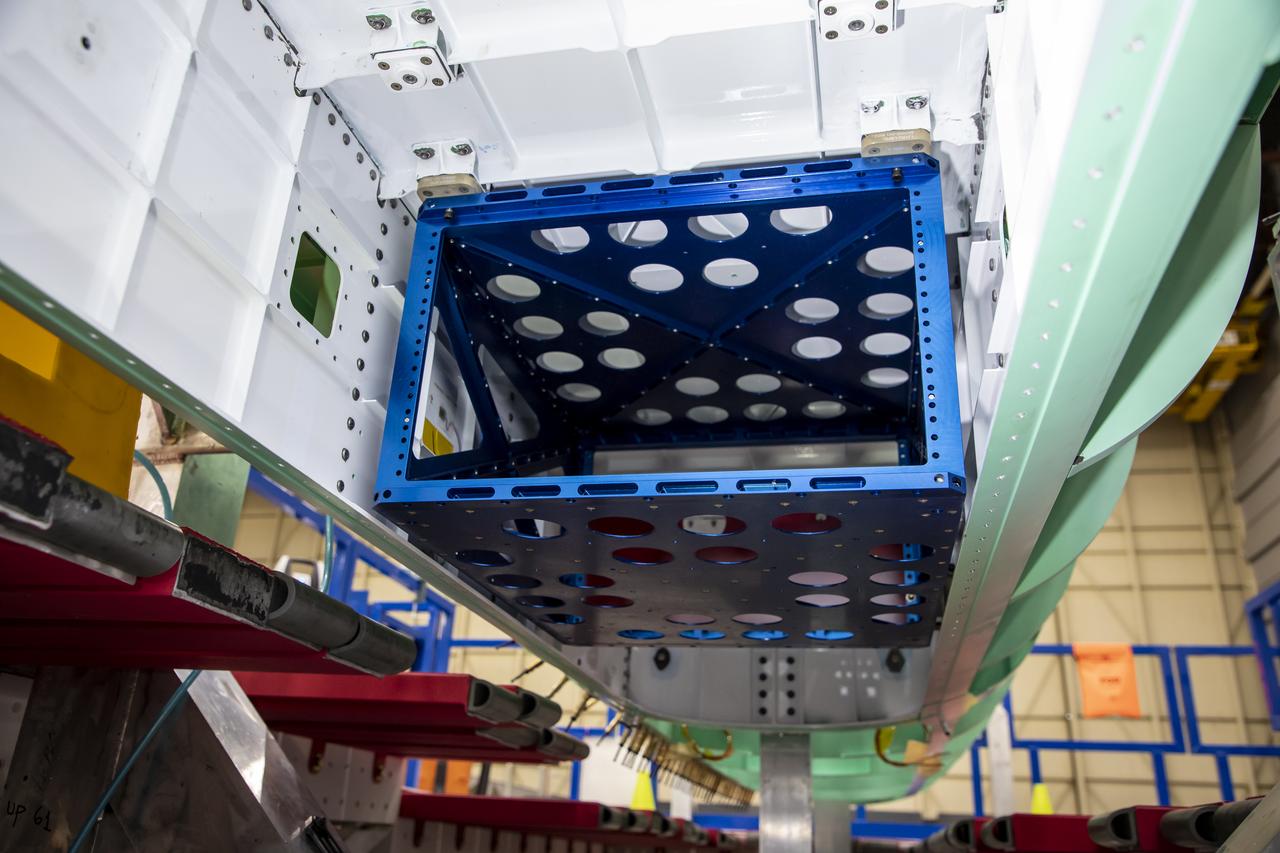
Following the successful installation of mounting brackets, technicians successfully installed the pallet for the eXternal Visibility System, or XVS, onto the X-59 Quiet SuperSonic Technology X-plane, also known as X-59 QueSST. The pallet installation marks an assembly milestone as the first NASA flight systems hardware to be installed onto the vehicle. X-59 will fly to demonstrate the ability to produce quiet thumps at supersonic speeds, instead of the typical, loud sonic booms associated with supersonic flight.
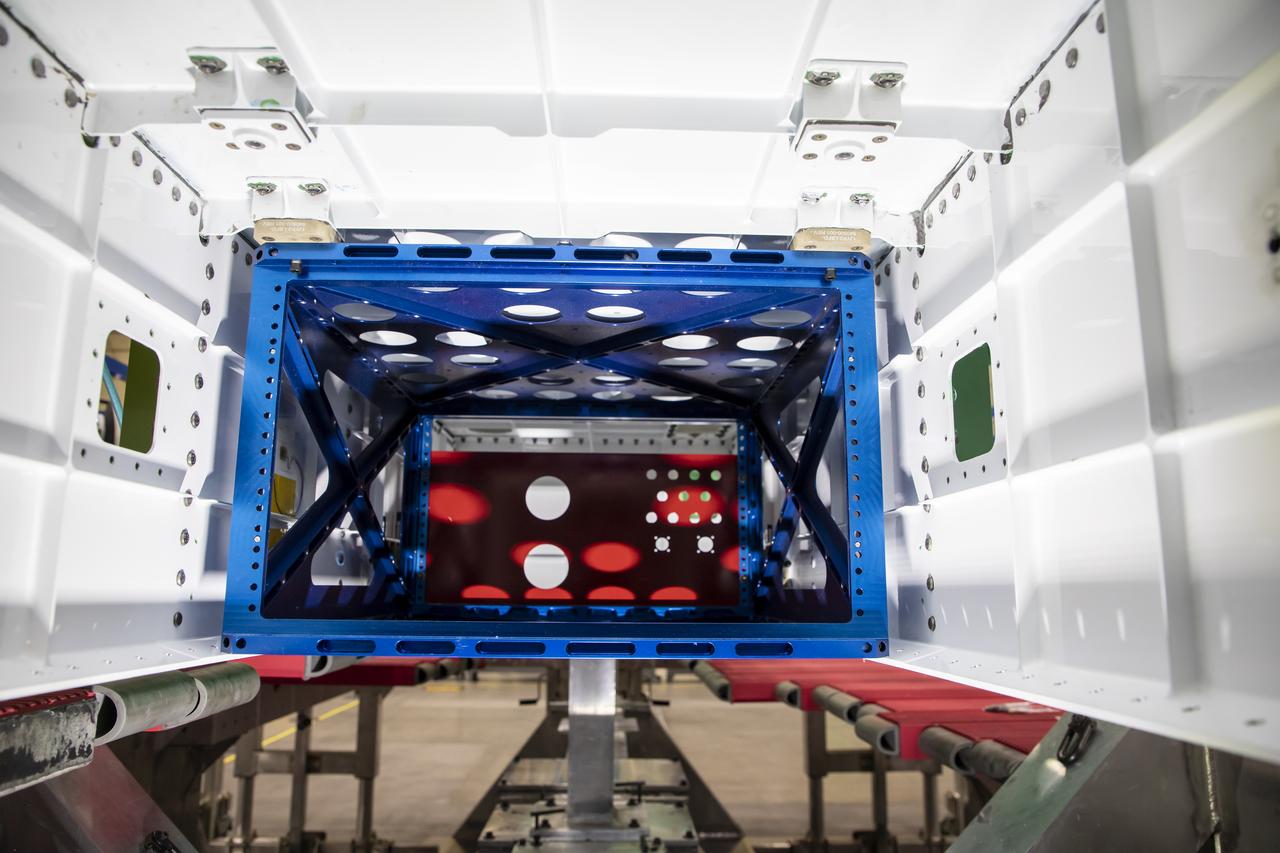
Following the successful installation of mounting brackets, technicians successfully installed the pallet for the eXternal Visibility System, or XVS, onto the X-59 Quiet SuperSonic Technology X-plane, also known as X-59 QueSST. The pallet installation marks an assembly milestone as the first NASA flight systems hardware to be installed onto the vehicle. X-59 will fly to demonstrate the ability to produce quiet thumps at supersonic speeds, instead of the typical, loud sonic booms associated with supersonic flight.
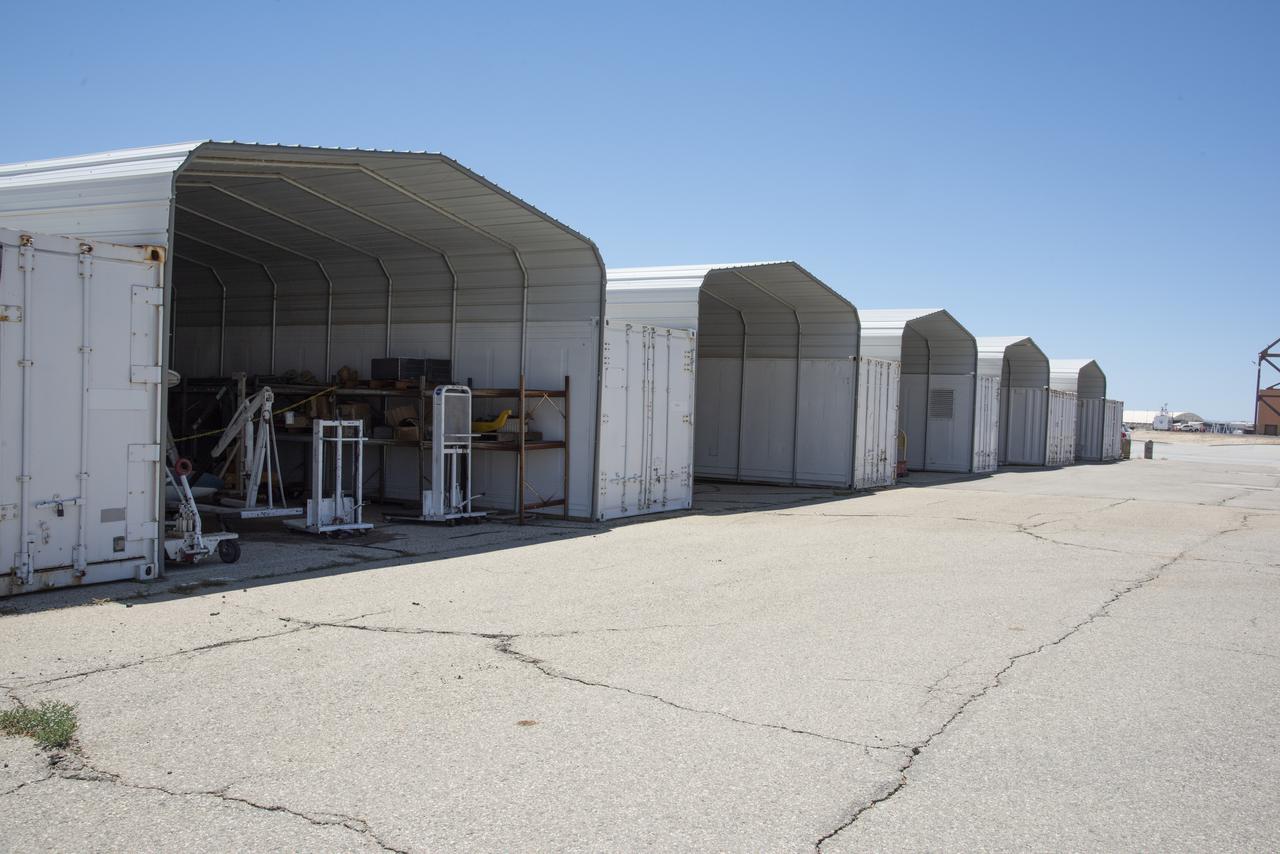
This 8,800-square-foot canopy area was demolished during the refurbishment of the east side of Building 4826, the future home of the X-59 Quiet SuperSonic Technology aircraft, at NASA's Armstrong Flight Research Center in Edwards, California.
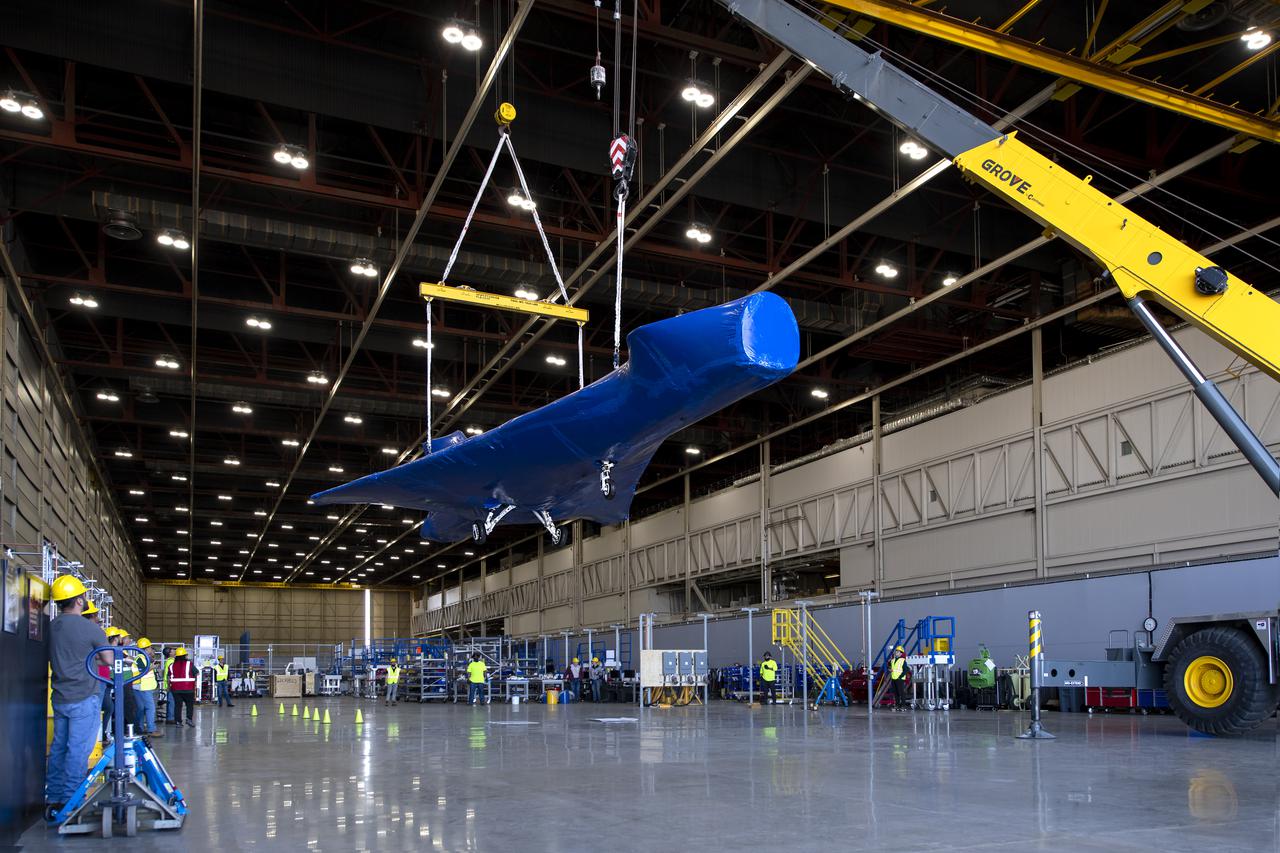
The X-59, NASA’s quiet supersonic technology experimental aircraft, is suspended in the air at Lockheed Martin’s Skunk Works facility in Palmdale, California, following several months of critical ground testing in Ft. Worth, Texas
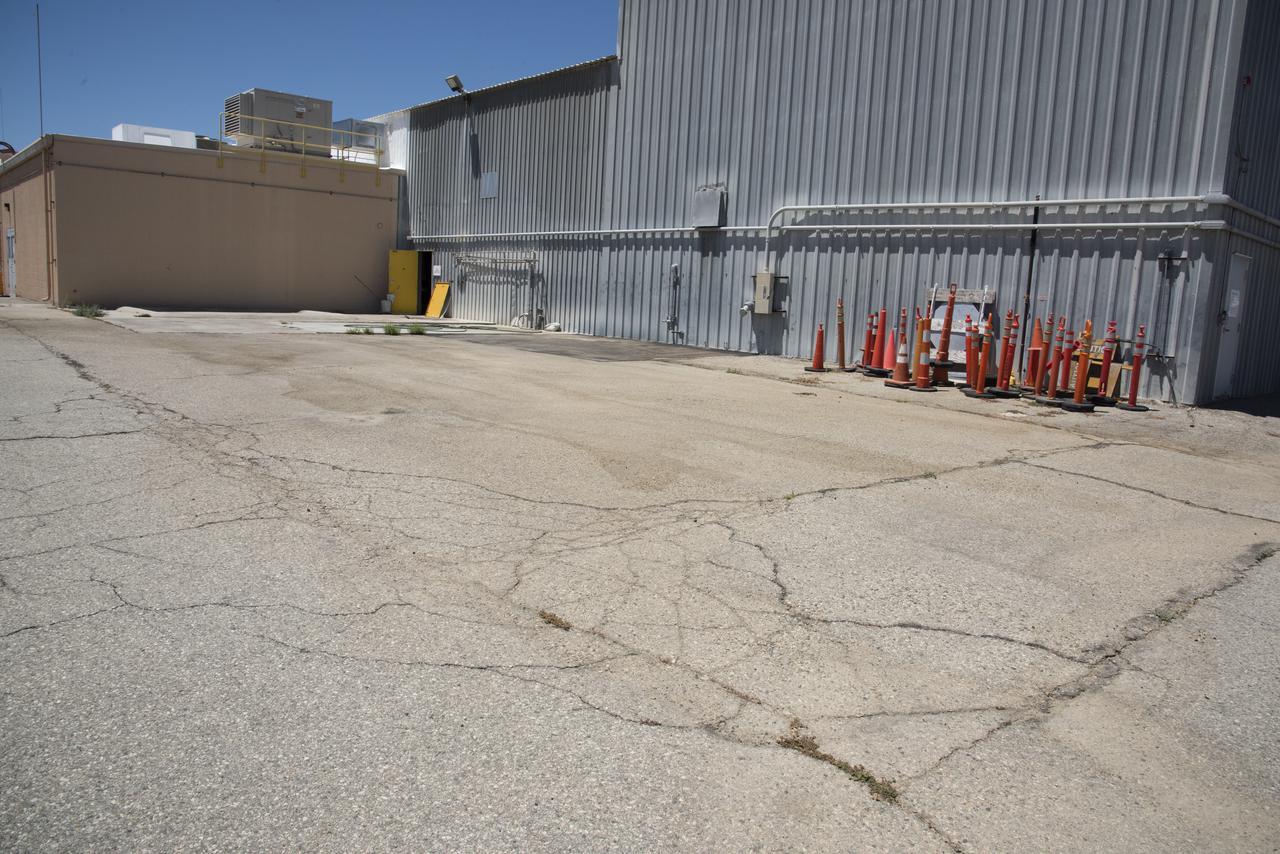
On the east side of Building 4826, the future home of the X-59 Quiet SuperSonic Technology aircraft, a conference room, offices, restrooms and a communications room are under construction at NASA's Armstrong Flight Research Center in Edwards, California.
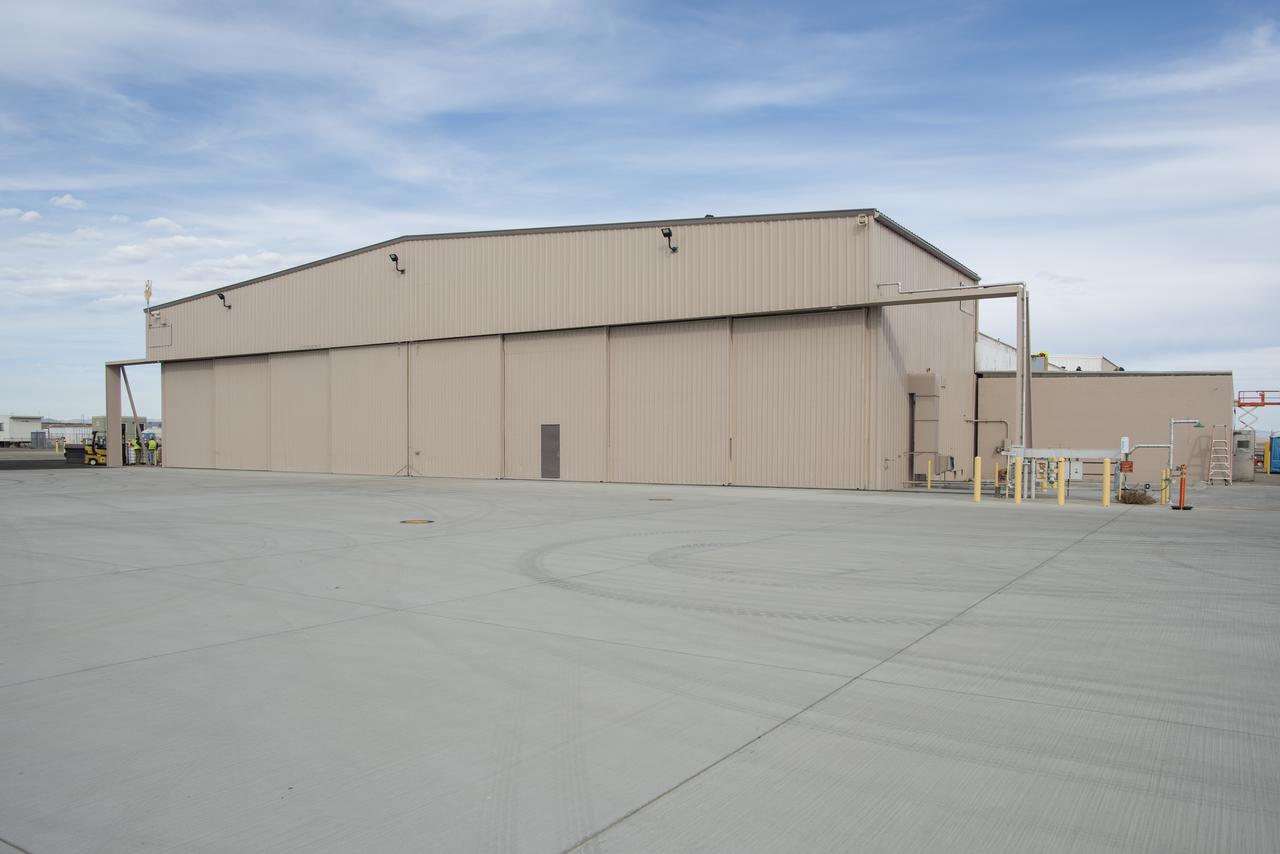
This is how Building 4826, the future home of the X-59 Quiet SuperSonic Technology aircraft, at NASA's Armstrong Flight Research Center in Edwards, California, looks as the building's renovations continue.
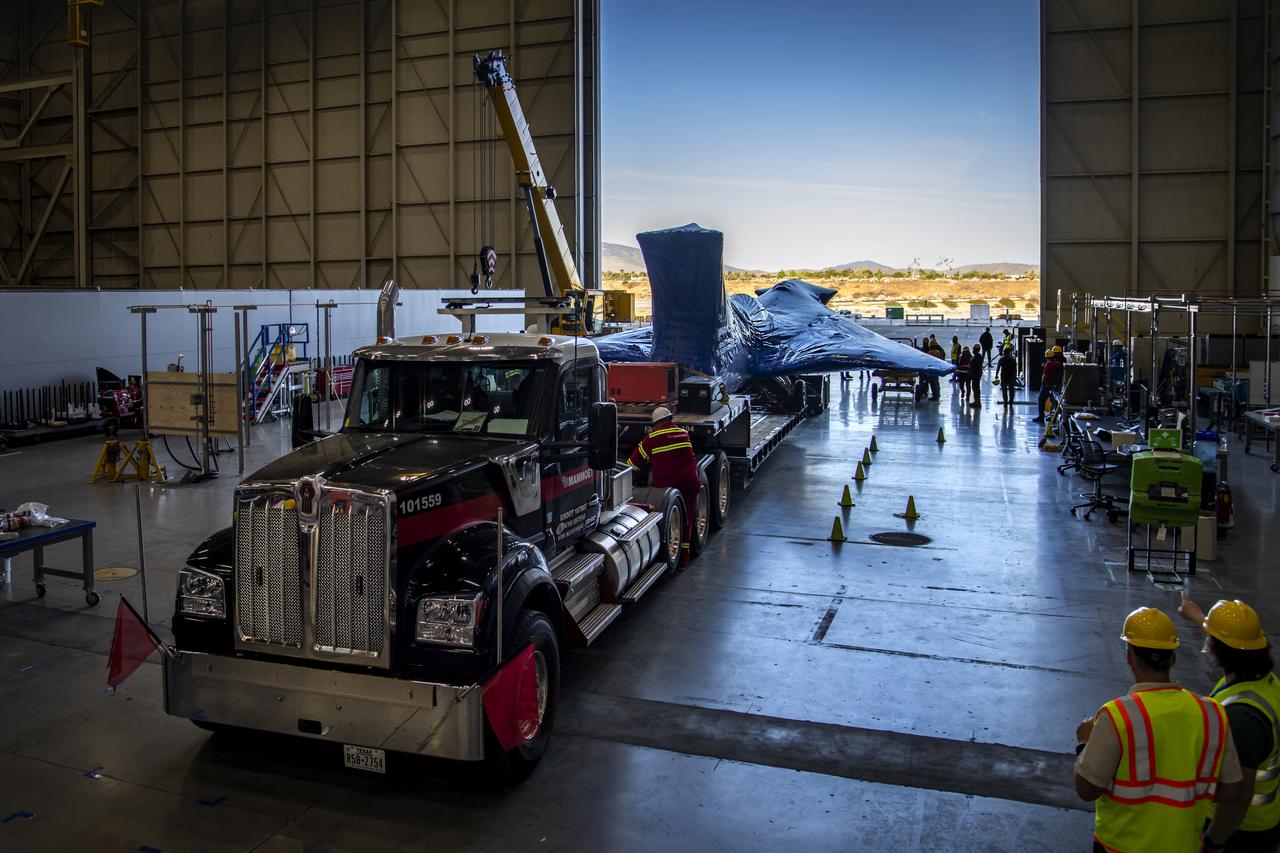
The X-59, NASA’s quiet supersonic technology experimental aircraft, arrives back at Lockheed Martin’s Skunk Works facility in Palmdale, California, following several months of critical ground testing in Ft. Worth, Texas
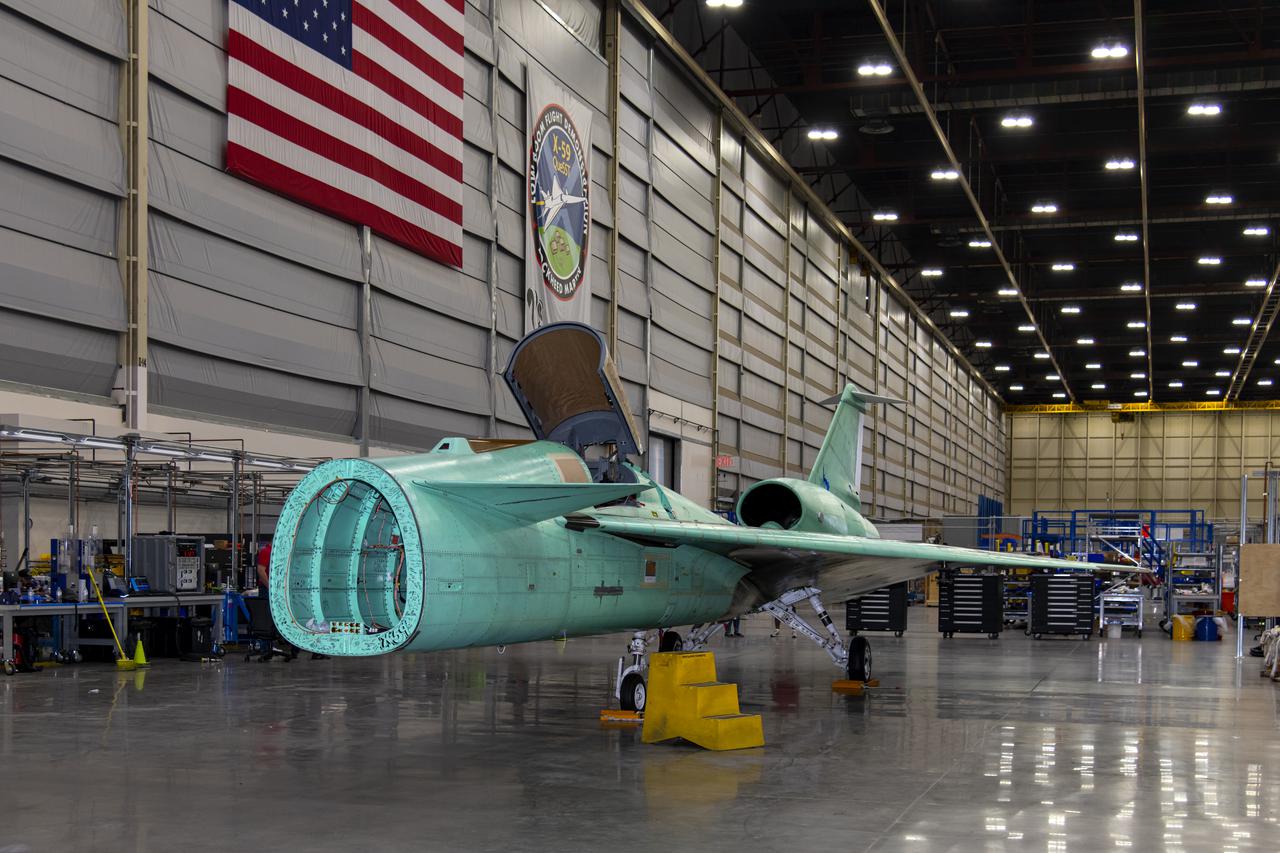
The X-59, NASA's quiet supersonic technology experimental aircraft, sits in Lockheed Martin's Skunk Works facility in Palmdale, California, following its return from several months of critical ground testing in Ft. Worth, Texas
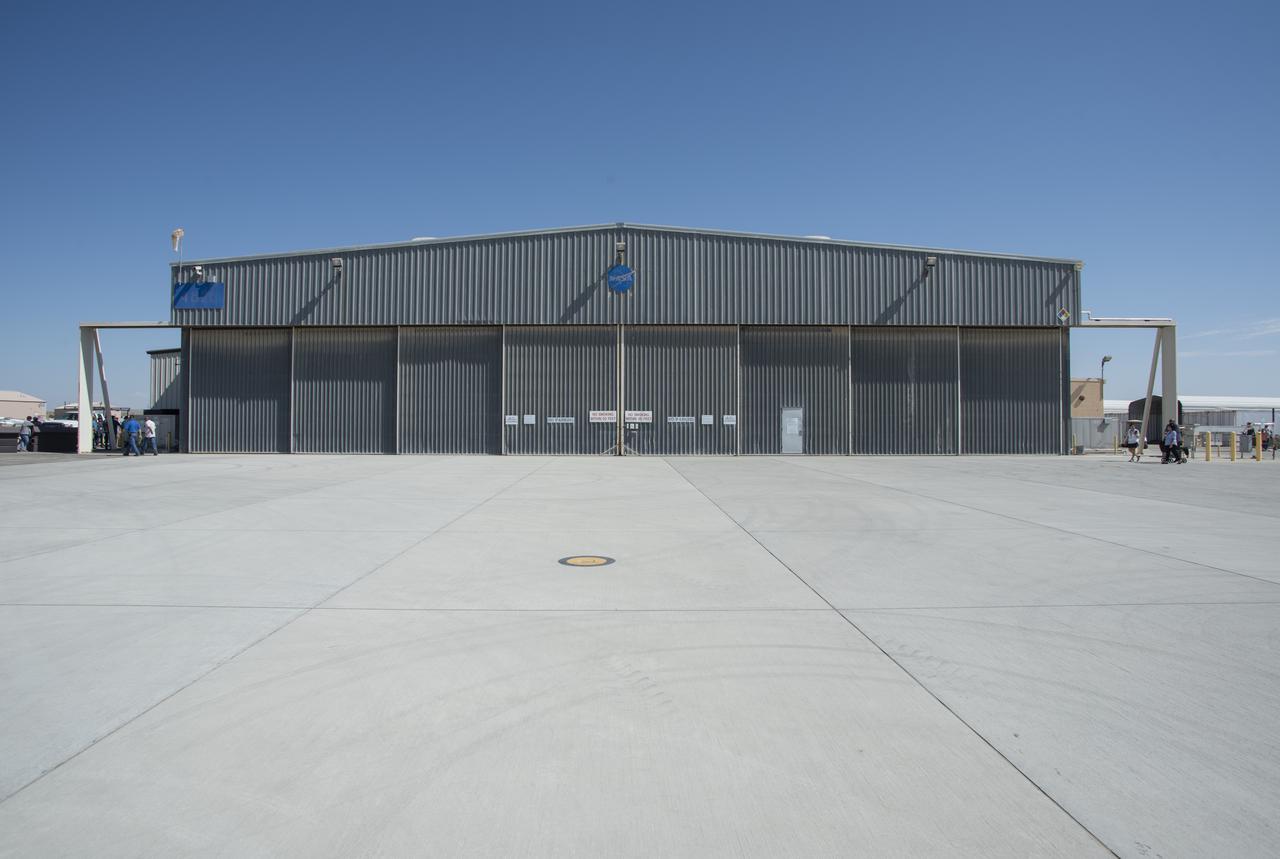
This is how Building 4826, the future home of the X-59 Quiet SuperSonic Technology aircraft, at NASA's Armstrong Flight Research Center in Edwards, California, looked prior to the building's renovations.
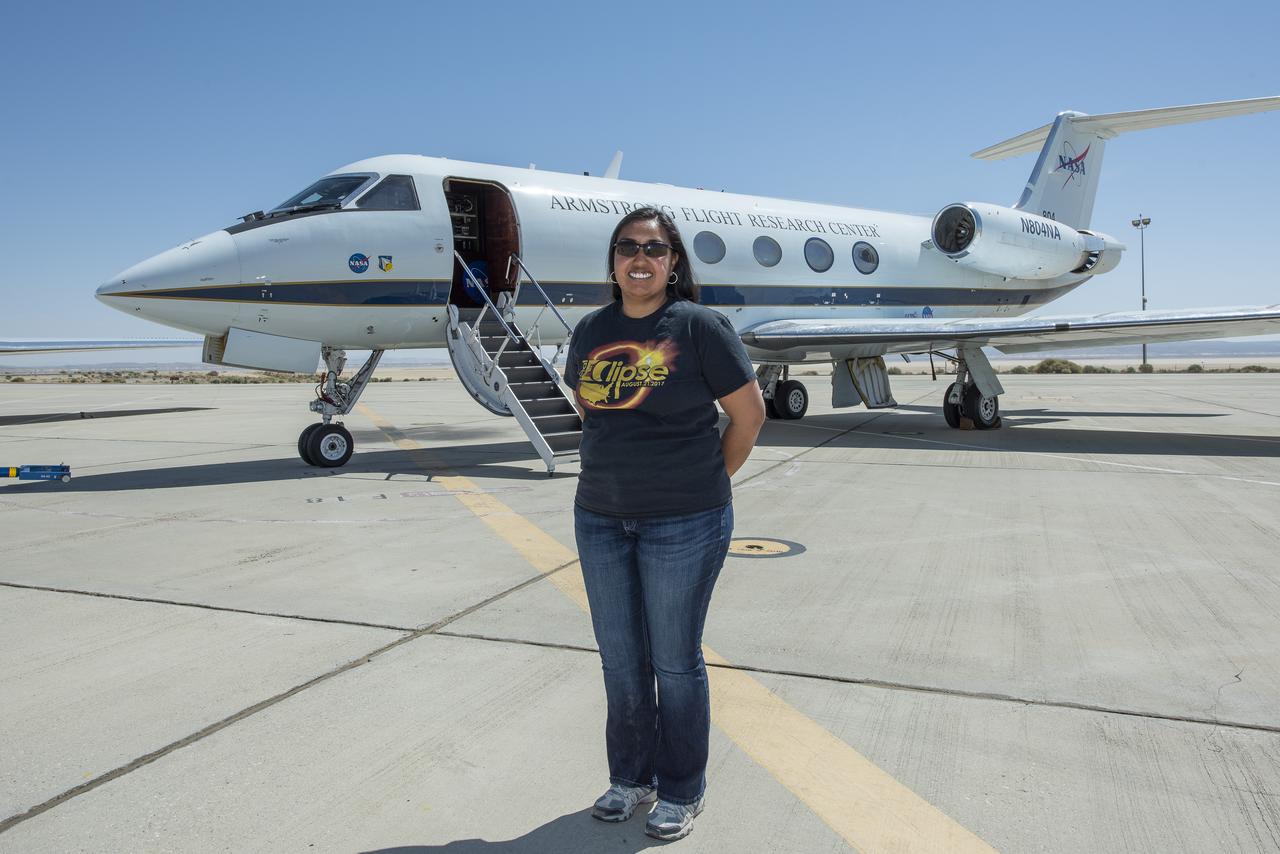
Claudia Sales, NASA’s acting X-59 deputy chief engineer and airworthiness certification lead for the quiet supersonic research aircraft, supports ground testing for Acoustic Research Measurements (ARM) flights. The test campaign to evaluate technologies that reduce aircraft noise was conducted at NASA’s Armstrong Flight Research Center in Edwards, California, in 2018.

A NASA F/A-18 is towed to the apron at NASA's Armstrong Flight Research Center in Edwards, California during sunrise over Rogers Dry Lake. The F/A-18 was used to test a transmitter for an air navigation system, called the Airborne Location Integrating Geospatial Navigation System, or ALIGNS. This system, designed to allow pilots to position their aircraft at precise distances to each other, will be critical for acoustic validation efforts of NASA's next supersonic X-plane, the X-59 Quiet SuperSonic Technology.

During Bring Kids to Work Day at NASA’s Armstrong Flight Research Center in Edwards, California, on June 17, 2025, participants pose with flight suit cutouts in front of NASA’s Quesst display. NASA's Quesst mission, which features the agency’s X-59 quiet supersonic experimental aircraft, will demonstrate technology to fly supersonic, or faster than the speed of sound, without generating loud sonic booms.
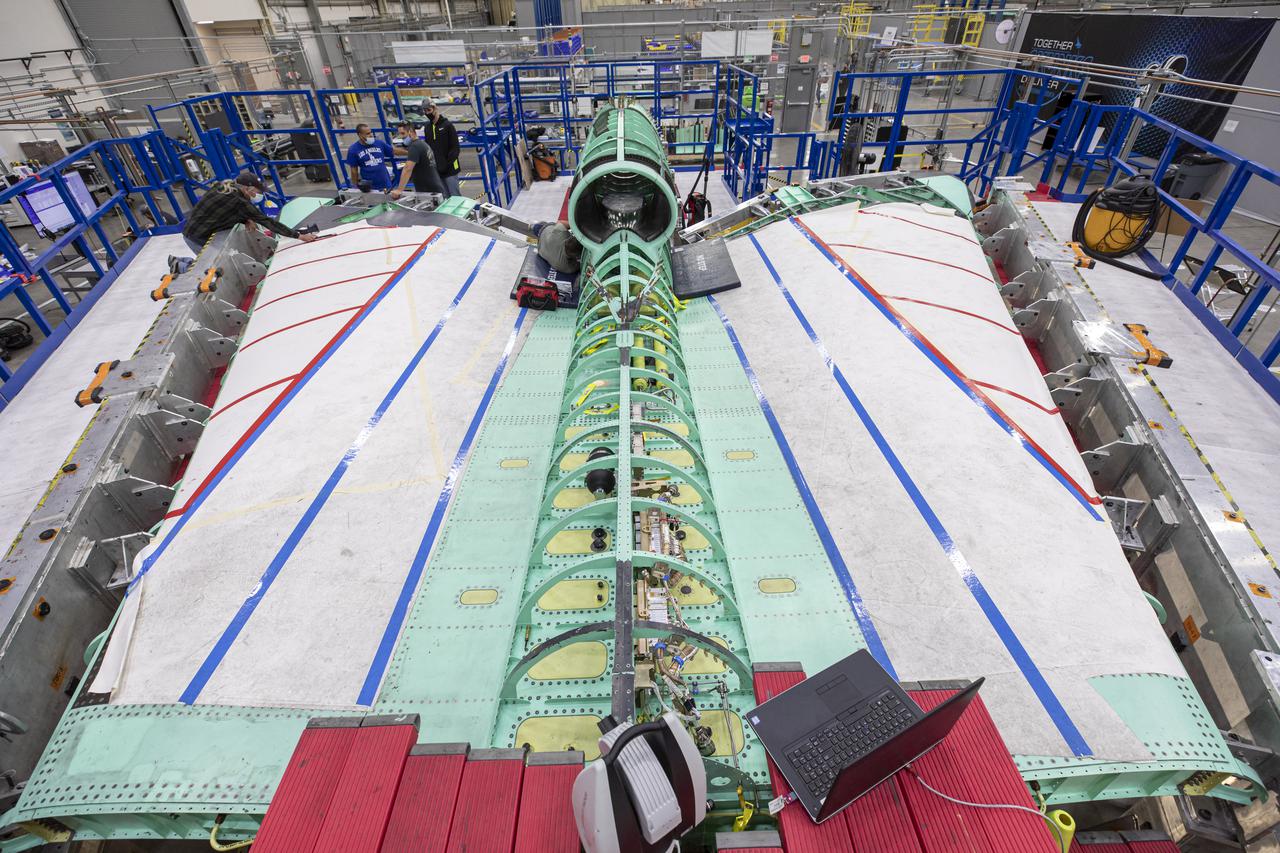
Lockheed Martin Photography By Garry Tice 1011 Lockheed Way, Palmdale, Ca. 93599 Event: SEG 400 Main Wing Assembly, SEG 430 Spine, SEG 500 Empennage Date: 4/28/2021 Additional Info:
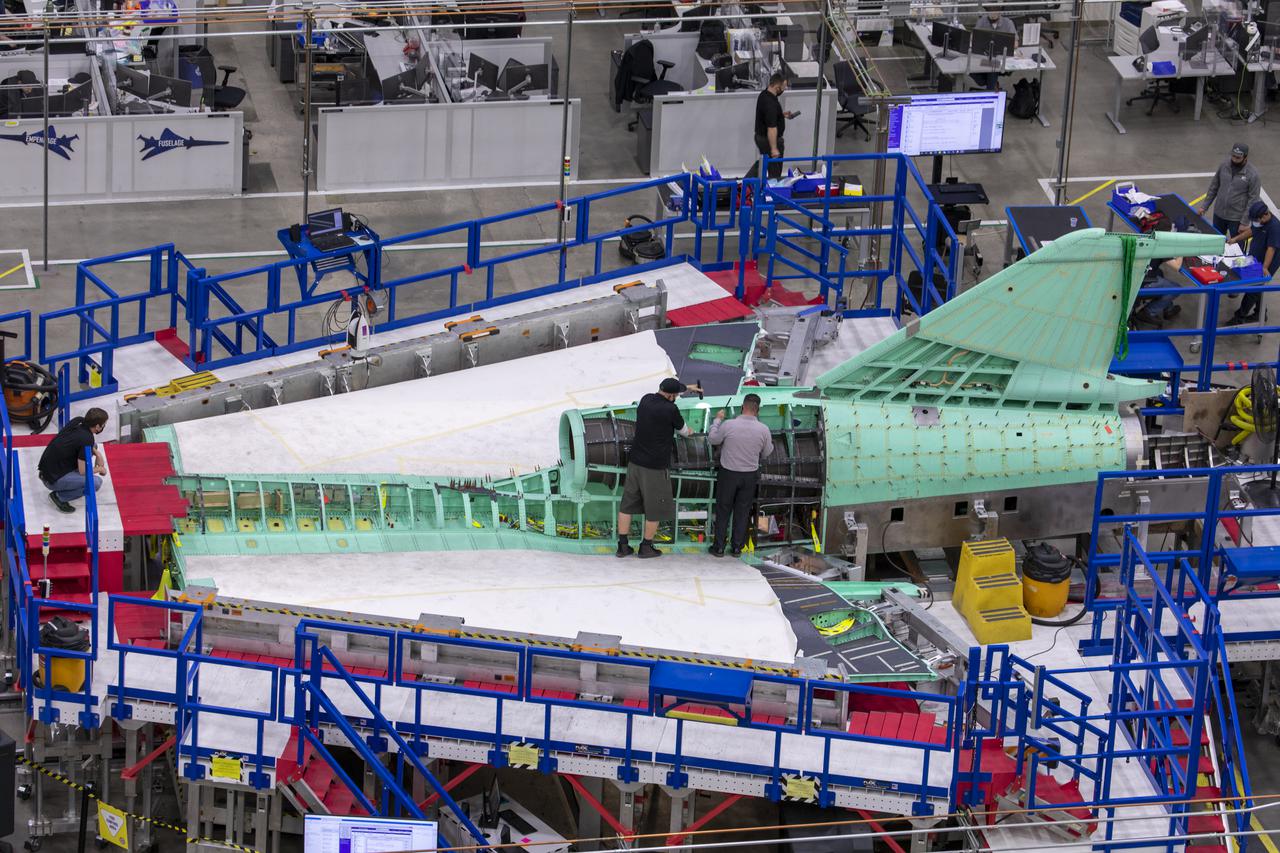
This overhead shot of the X-59 assembly during Spring 2021 shows assembly with technicians working at the engine inlet section where the engine will be located on the aircraft. Lockheed Martin Photography By Garry Tice 1011 Lockheed Way, Palmdale, Ca. 93599 Event: Manufacture Area From Above Date: 3/30/2021
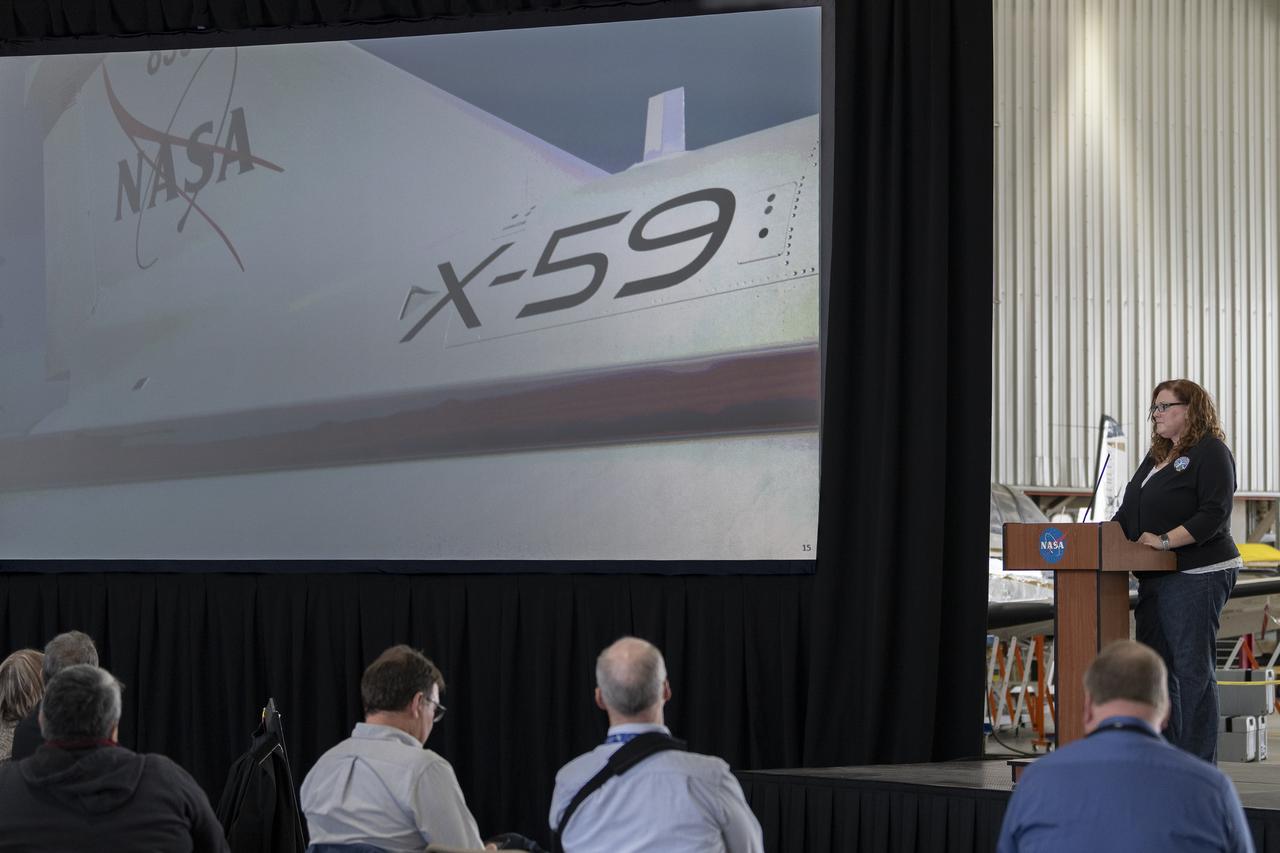
Cathy Bahm, Low Boom Flight Demonstrator project manager at NASA’s Armstrong Flight Research Center in Edwards, California, presents a look at how the X-59 aircraft team addresses safety. Bahm manages the effort to design, build, and test the X-59 aircraft, which will use quiet supersonic technologies to fly over communities as part of NASA’s Quesst mission.
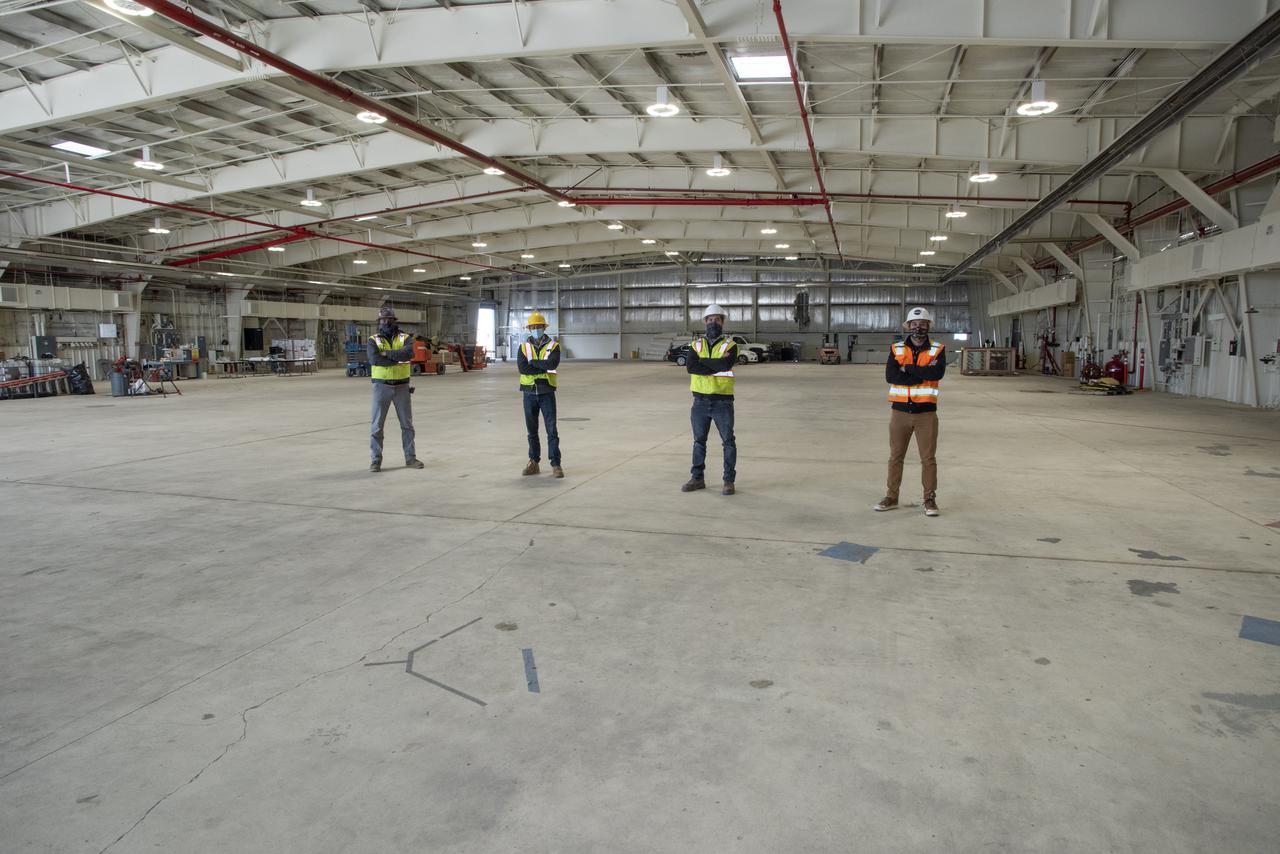
The future home of the X-59 Quiet SuperSonic Technology aircraft is taking shape at NASA's Armstrong Flight Research Center in Edwards, California. Some of the staff working on the project include from left to right Hector Mendoza, CJW/MZT Joint Venture site superintendent, Tim Nazer, CJW/MZT quality control manager, Collin Morris, CJW/MZT project manager and Bryan Watters, NASA civil/structural engineer and project manager.

Cathy Bahm, Low Boom Flight Demonstrator project manager at NASA’s Armstrong Flight Research Center in Edwards, California, presents a look at how the X-59 aircraft team addresses safety. Bahm manages the effort to design, build, and test the X-59 aircraft, which will use quiet supersonic technologies to fly over communities as part of NASA’s Quesst mission.
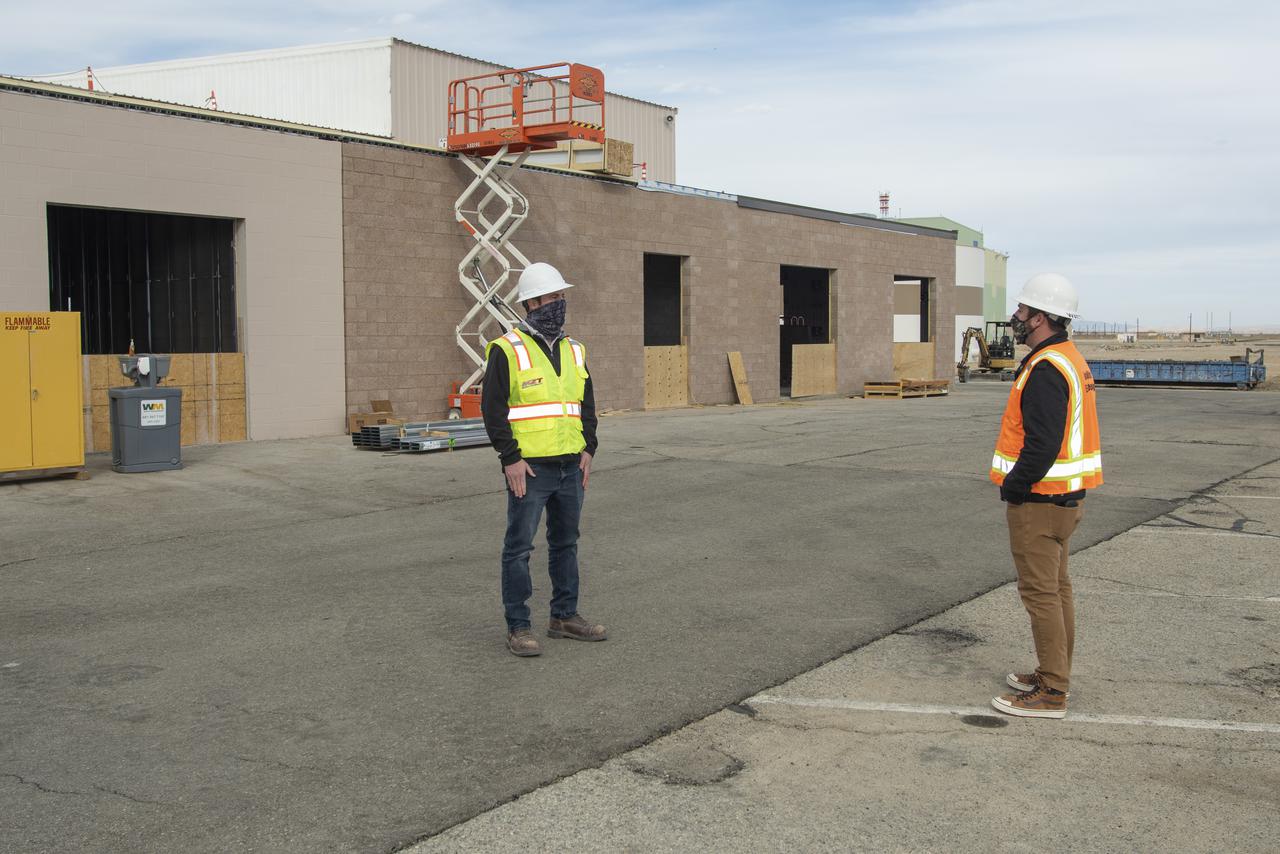
Collin Morris, CJW/MZT project manager and Bryan Watters, NASA civil/structural engineer and project manager, discuss work on the east side of Building 4826. Building 4826 is the future home of the X-59 Quiet SuperSonic Technology aircraft, where a conference room, offices, restrooms and a communications room will be added at NASA's Armstrong Flight Research Center in Edwards, California.
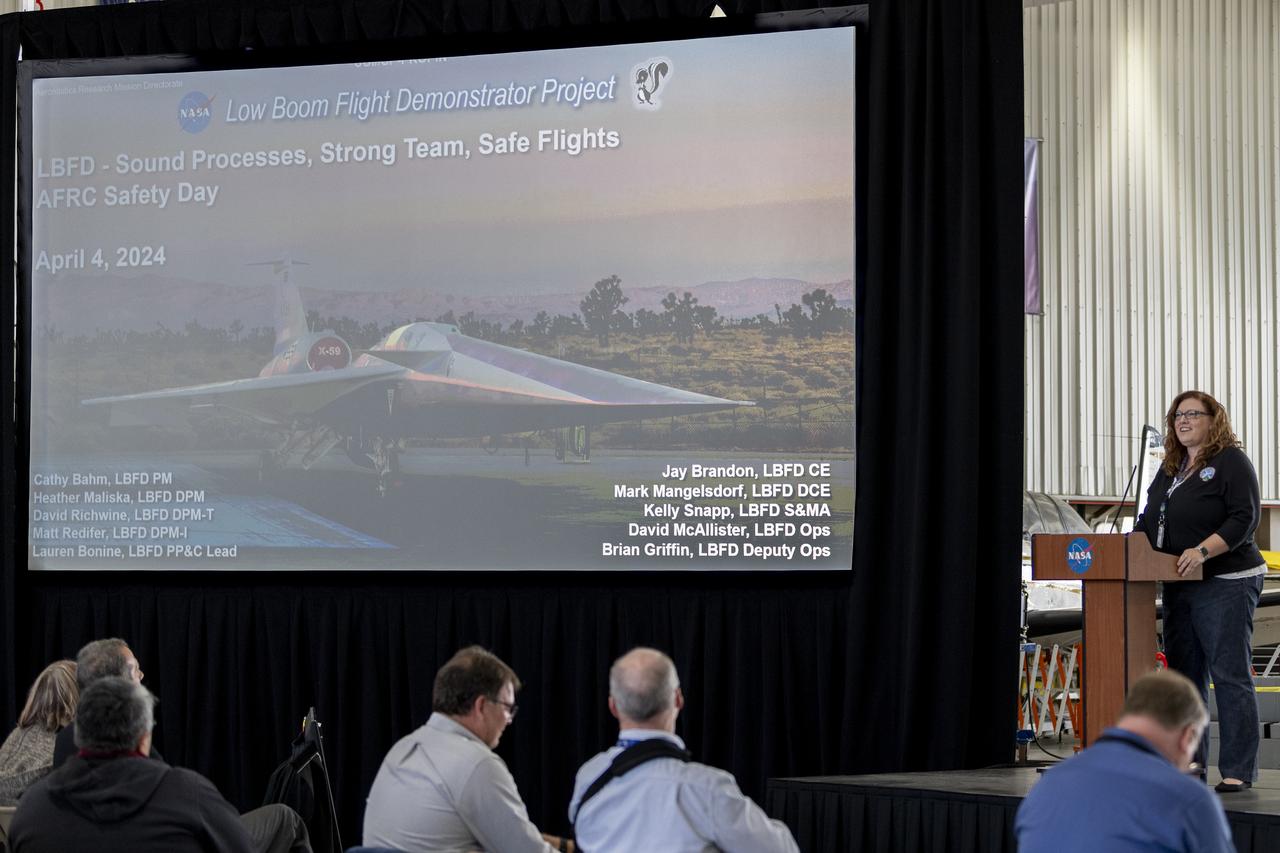
Cathy Bahm, Low Boom Flight Demonstrator project manager at NASA’s Armstrong Flight Research Center in Edwards, California, presents a look at how the X-59 aircraft team addresses safety. Bahm manages the effort to design, build, and test the X-59 aircraft, which will use quiet supersonic technologies to fly over communities as part of NASA’s Quesst mission.
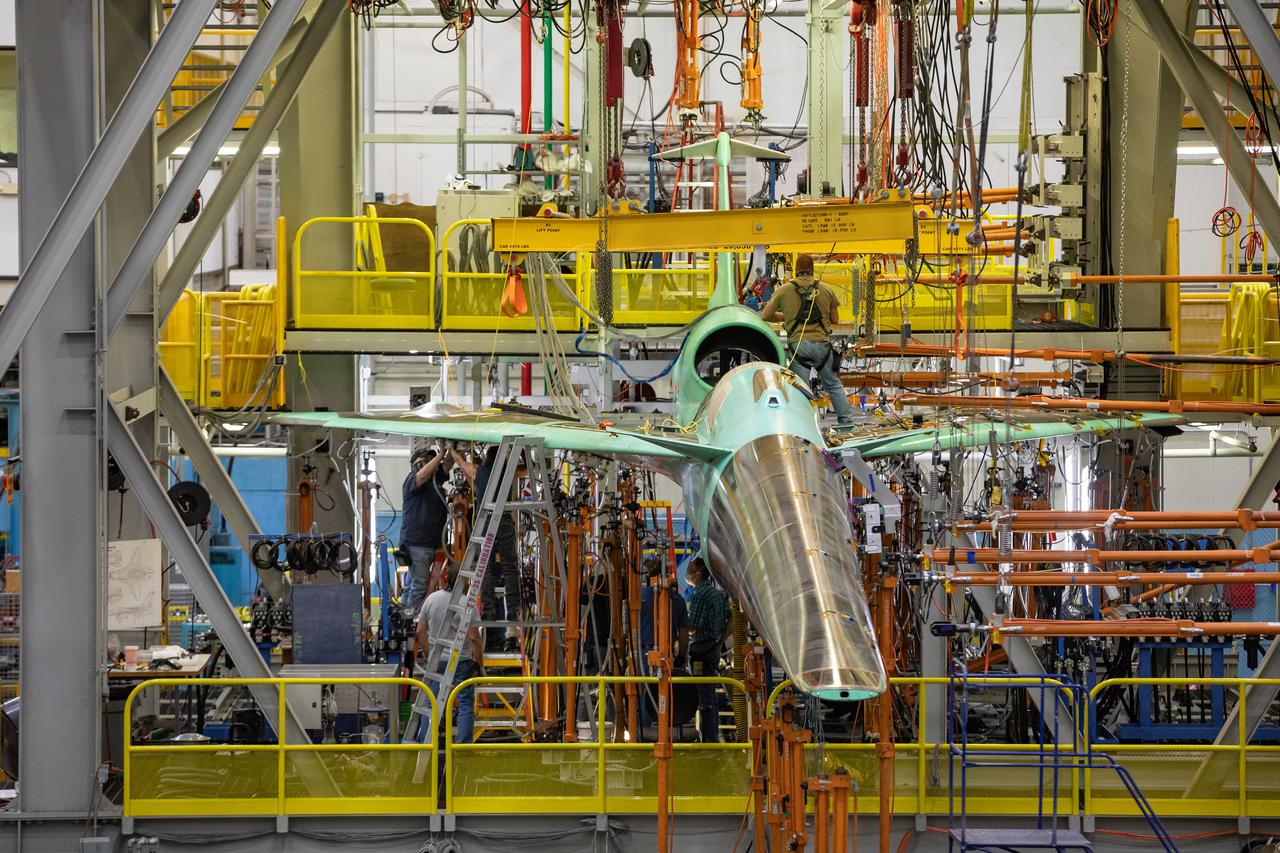
NASA’s X-59 Quiet SuperSonic Technology airplane undergoes structural stress tests at a Lockheed Martin facility in Fort Worth, Texas. Lockheed Martin Aeronautics Company - Fort Worth - Chris Hanoch Subject: X-59 - Various Angles in Test Fixture FP#: 21-03420 POC: Analiese Smith, Chris Higgins Other info: X-59 in Fort Worth, testing; high angle shots in fixture 1-10-22
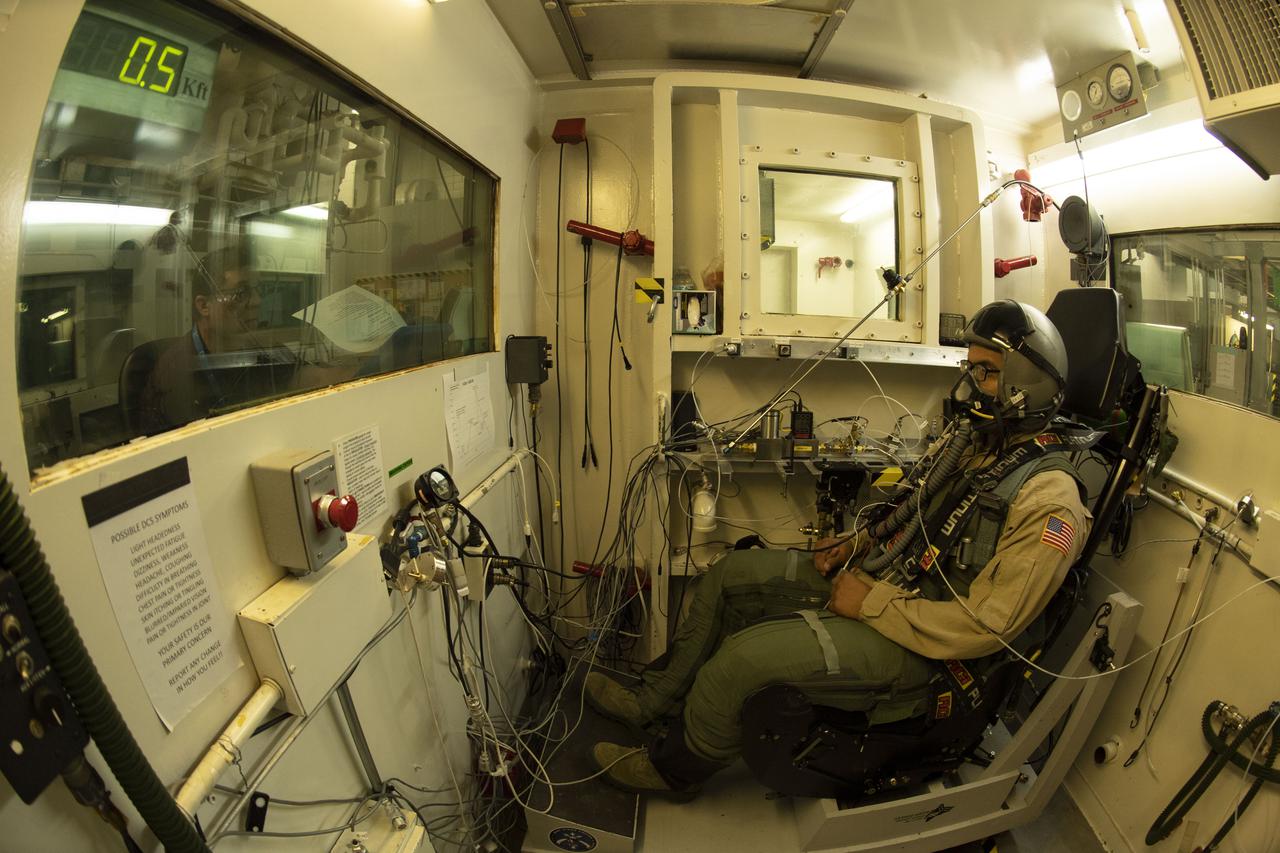
The test director runs through a check list as a military test volunteer prepares to undergo a rapid decompression test.
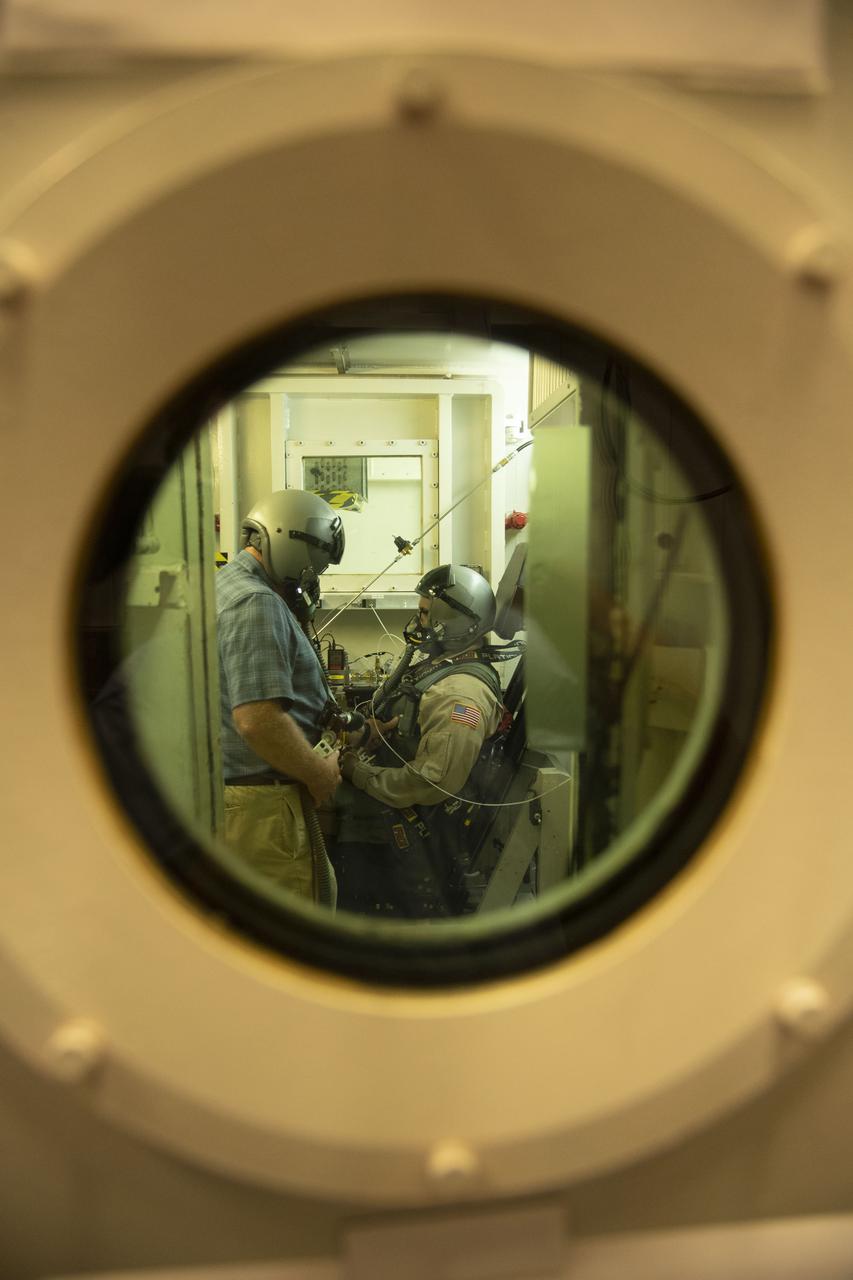
The low pressure (hypobaric) chamber at KBR’s facility in San Antonio, Texas, simulates very high altitudes by reducing the air pressure inside of the chamber. The subject inside the chamber experiences the reduced pressure conditions that exist at higher altitudes, in this case altitudes up to 60,000 feet.
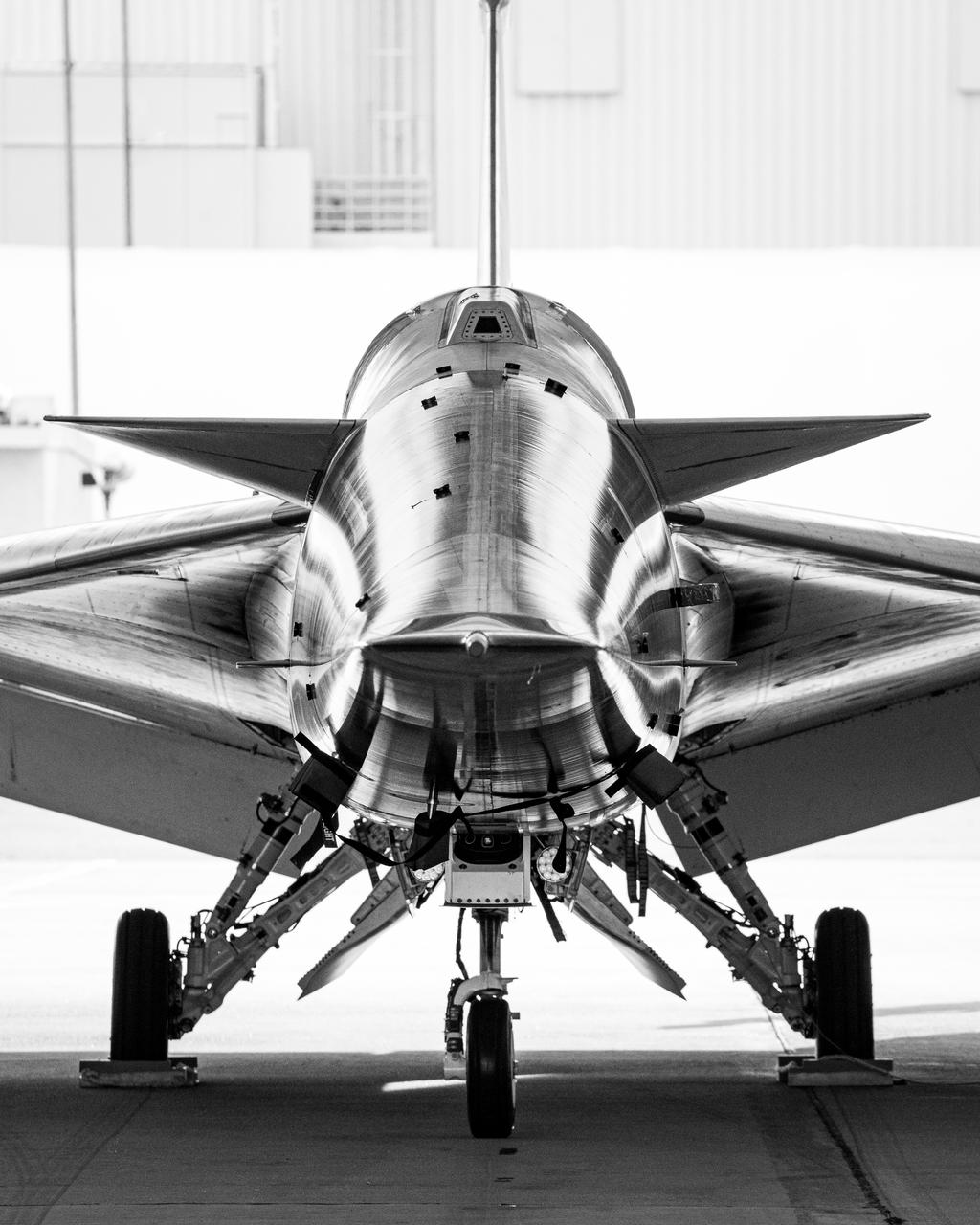
NASA’s X-59 research aircraft moves from its construction site to the flight line – or the space between the hangar and the runway – at Lockheed Martin Skunk Works in Palmdale, California, on June 16, 2023. This milestone kicks off a series of ground tests to ensure the X-59 is safe and ready to fly. The X-59 is designed to fly faster than Mach 1 while reducing the resulting sonic boom to a thump for people on the ground. NASA will evaluate this technology during flight tests as part of the agency’s Quesst mission, which helps enable commercial supersonic air travel over land. Lockheed Martin Photography By Garry Tice 1011 Lockheed Way, Palmdale, Ca. 93599 Event: Move to Run Stall 5 Date: 6/19/2023 Additional Info:
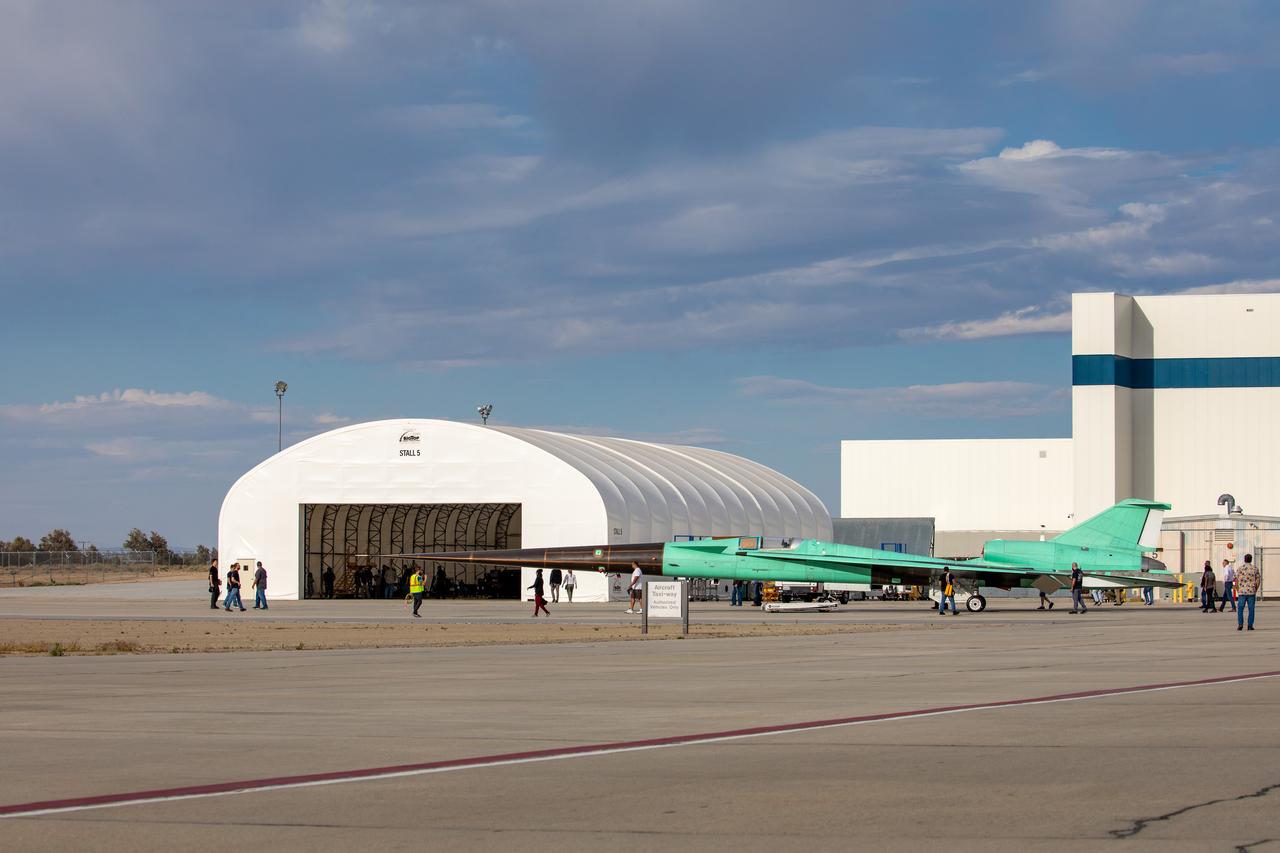
Technicians check out the X-59 aircraft as it sits near the runway at Lockheed Martin Skunk Works in Palmdale, California, on June 19, 2023. Lockheed Martin Photography By Garry Tice 1011 Lockheed Way, Palmdale, Ca. 93599 Event: Move to Run Stall 5 Date: 6/19/2023 Additional Info:
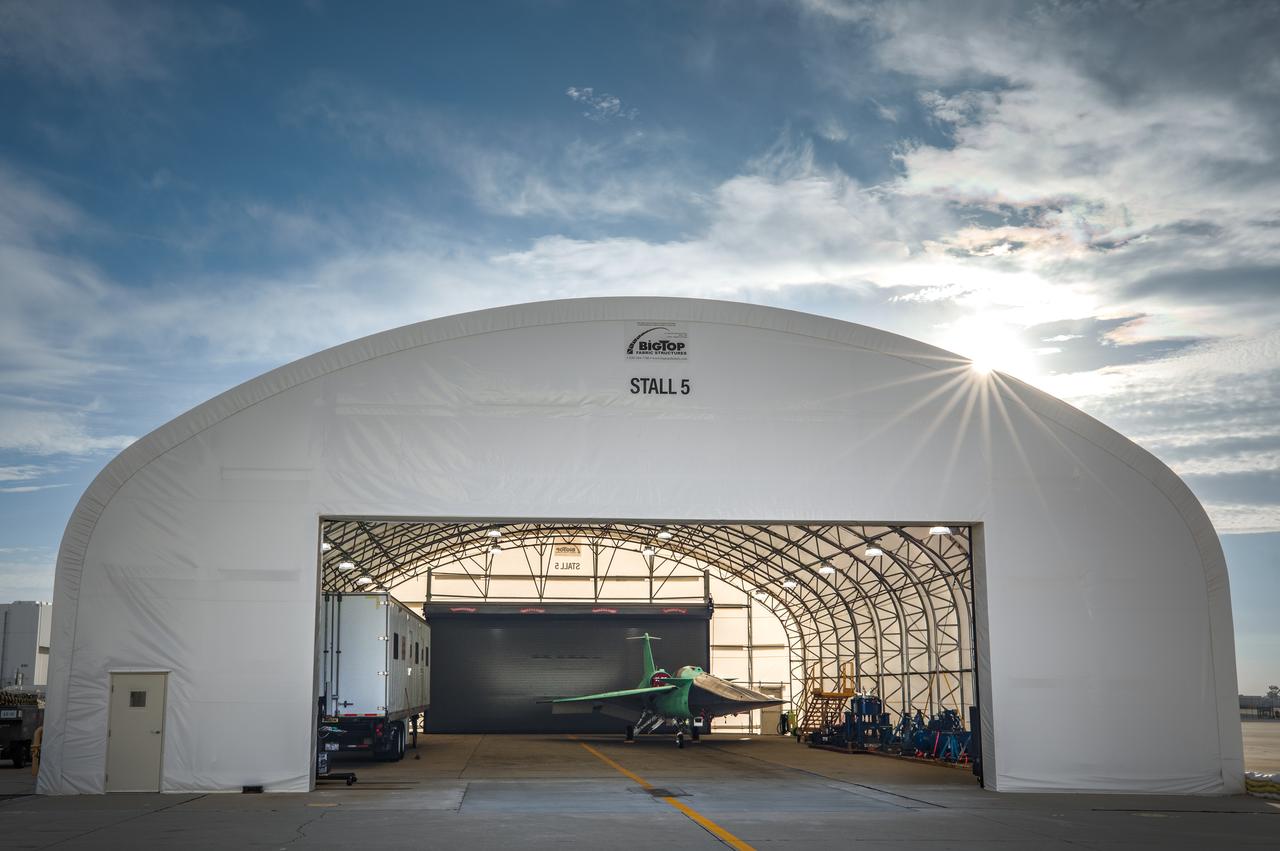
NASA’s X-59 aircraft is parked in stall five near the runway at Lockheed Martin Skunk Works in Palmdale, California, on June 19, 2023. This is where the X-59 will be housed during ground and initial flight tests. Lockheed Martin Photography By Garry Tice 1011 Lockheed Way, Palmdale, Ca. 93599 Event: Move to Run Stall 5 Date: 6/19/2023 Additional Info:
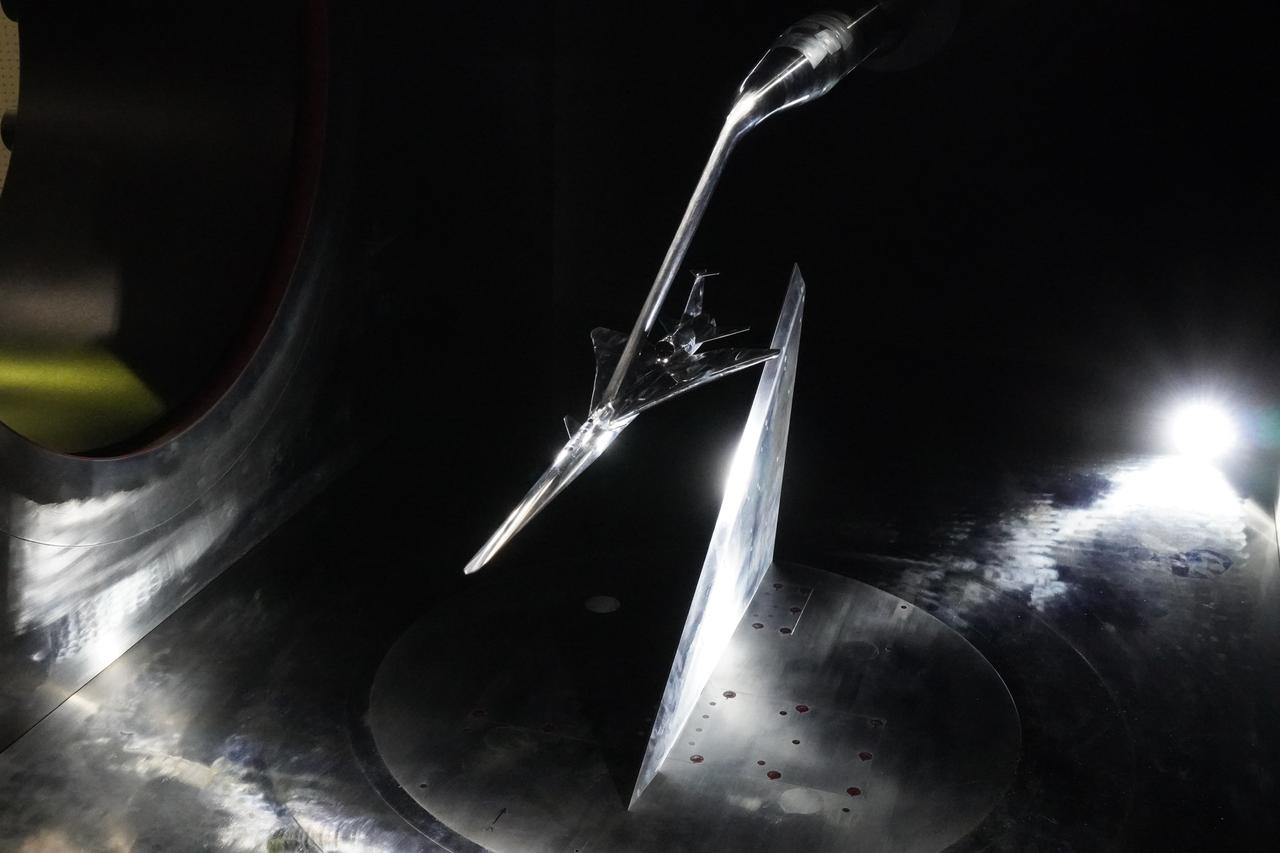
Here you see the X-59 scaled model inside the JAXA supersonic wind tunnel during critical tests related to sound predictions.
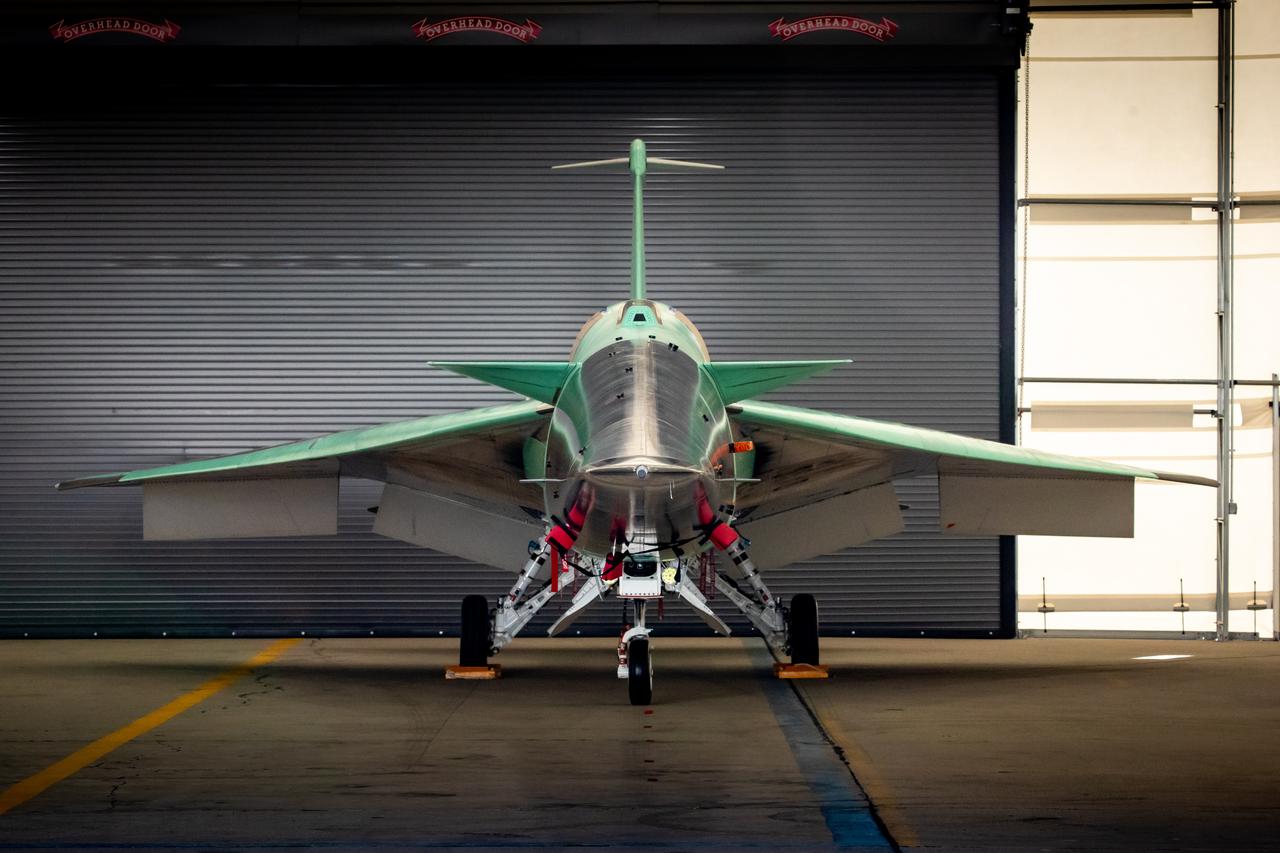
NASA’s X-59 aircraft is parked near the runway at Lockheed Martin Skunk Works in Palmdale, California, on June 19, 2023. This is where the X-59 will be housed during ground and initial flight tests. Lockheed Martin Photography By Garry Tice 1011 Lockheed Way, Palmdale, Ca. 93599 Event: Move to Run Stall 5 Date: 6/19/2023 Additional Info:
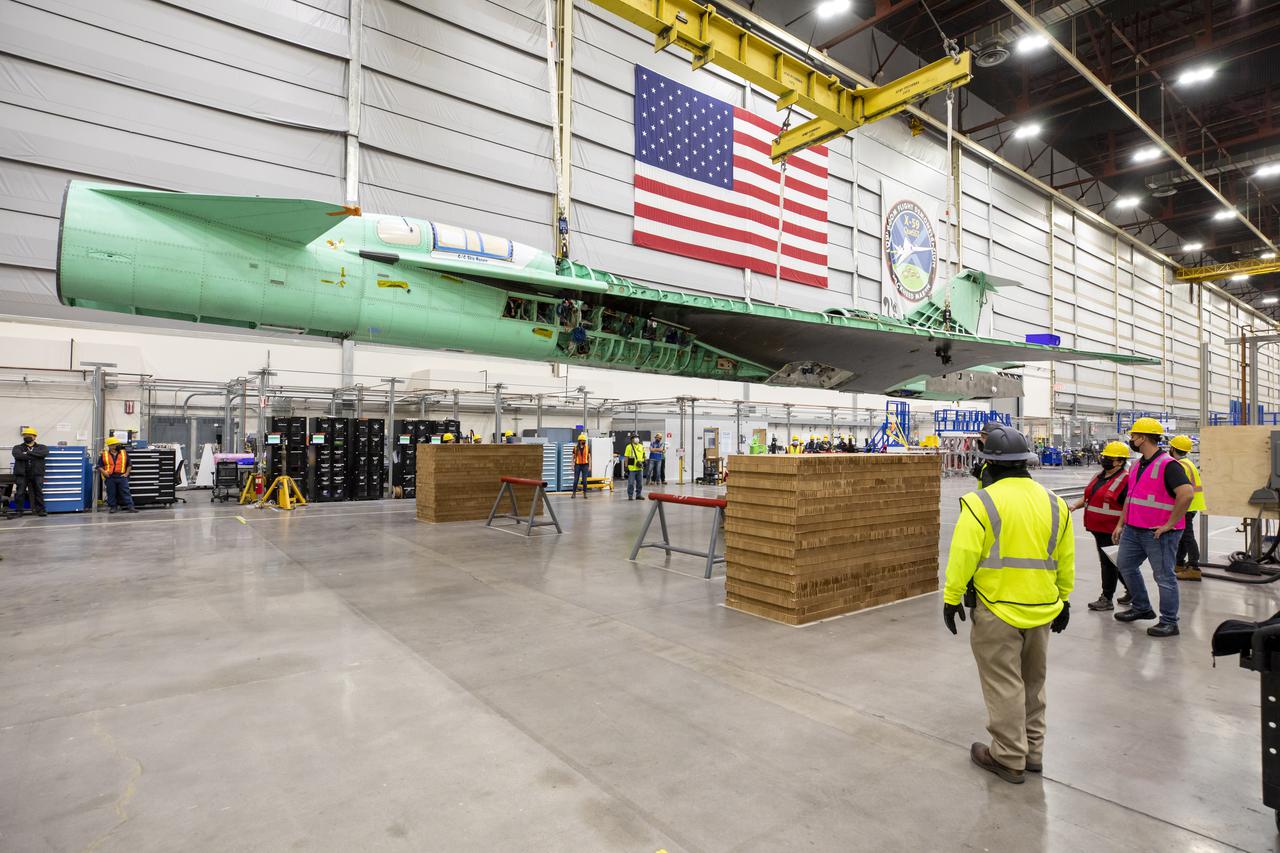
The X-59 is free from its structural support jig for the first time. In this image, cranes are holding up the aircraft prior to placement on the floor jacks. Notice that the nose has been removed temporarily — it will be reinstalled again before the upcoming structural testing. Lockheed Martin Photography By Garry Tice 1011 Lockheed Way, Palmdale, Ca. 93599 Event: Removal From Tooling Jig Date: 10/27/2021 Additional Info:
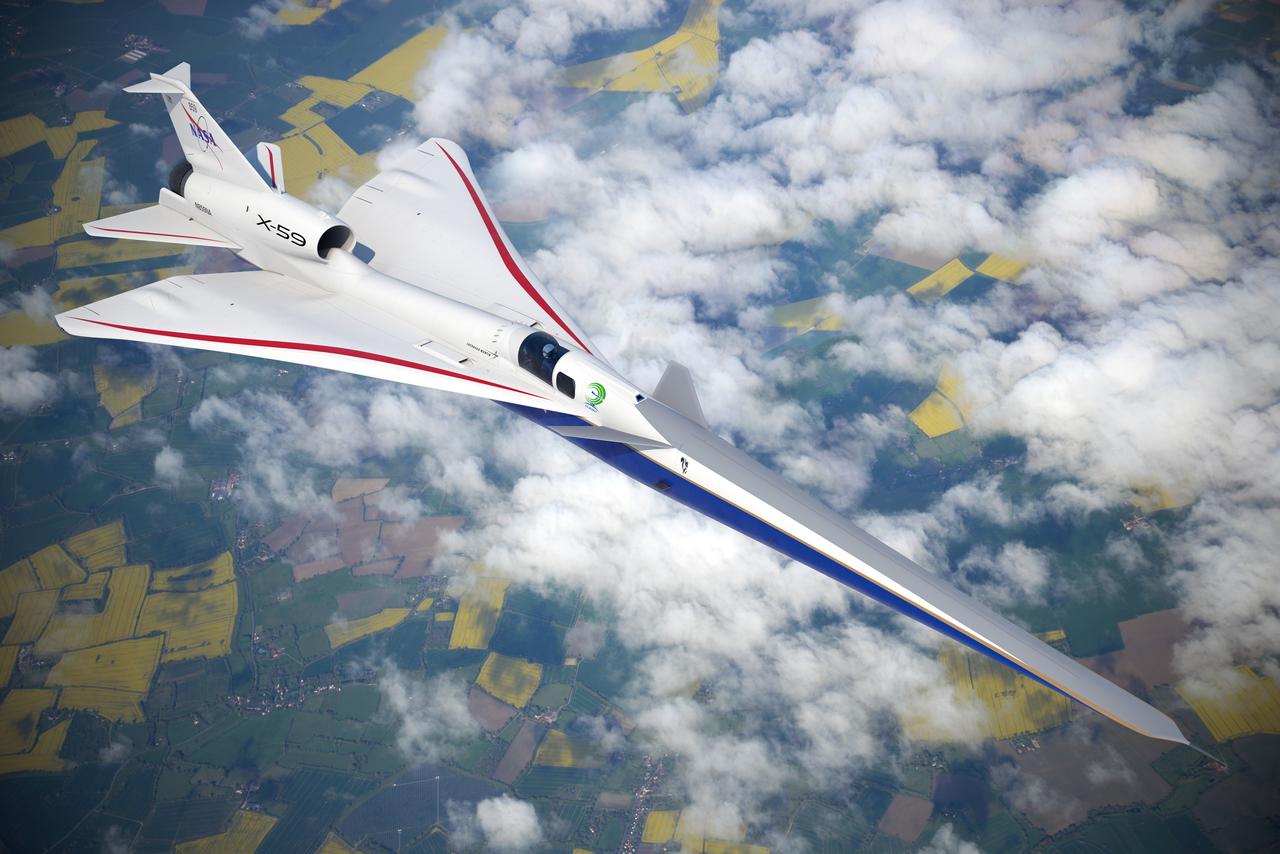
Artist illustration of the X-59 in flight over land.
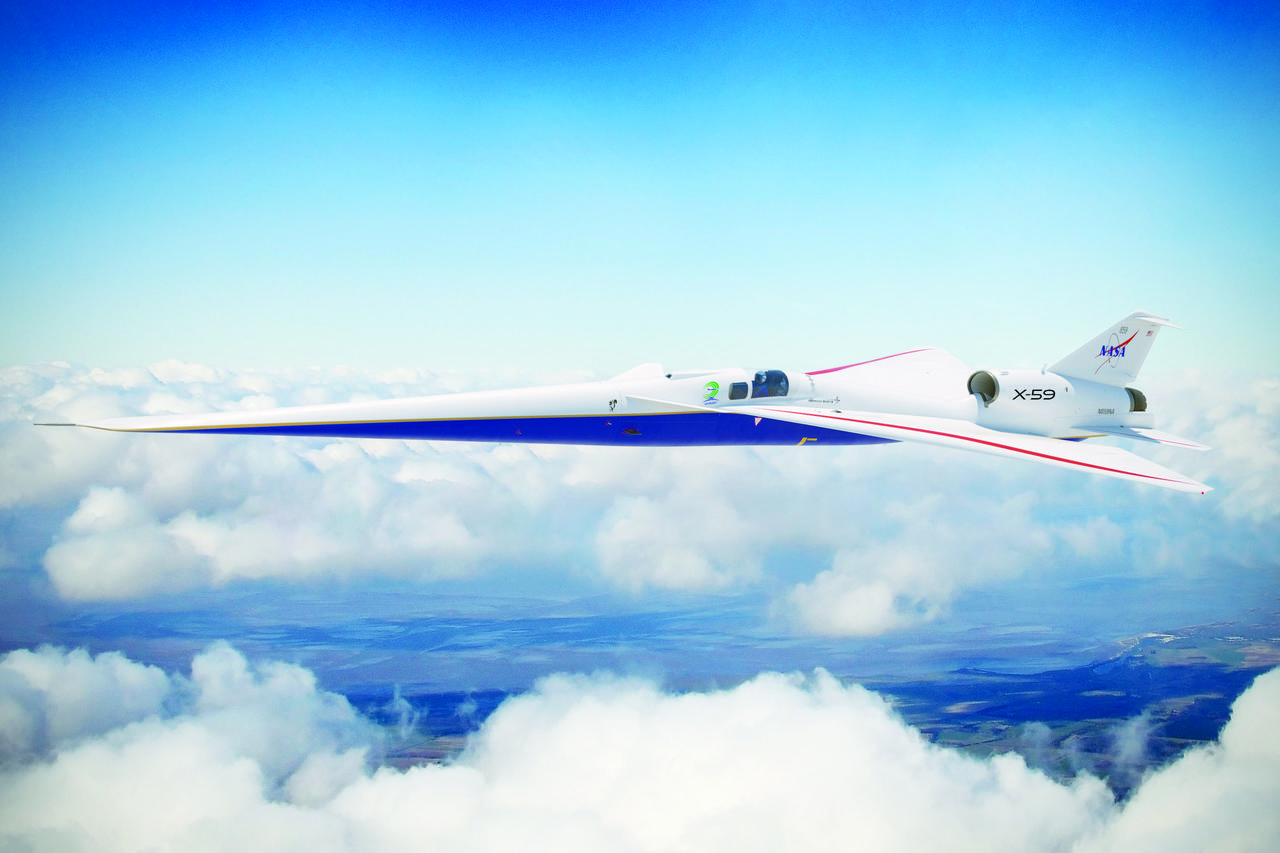
Artist illustration of the X-59 in flight above the clouds with land below, flying left.
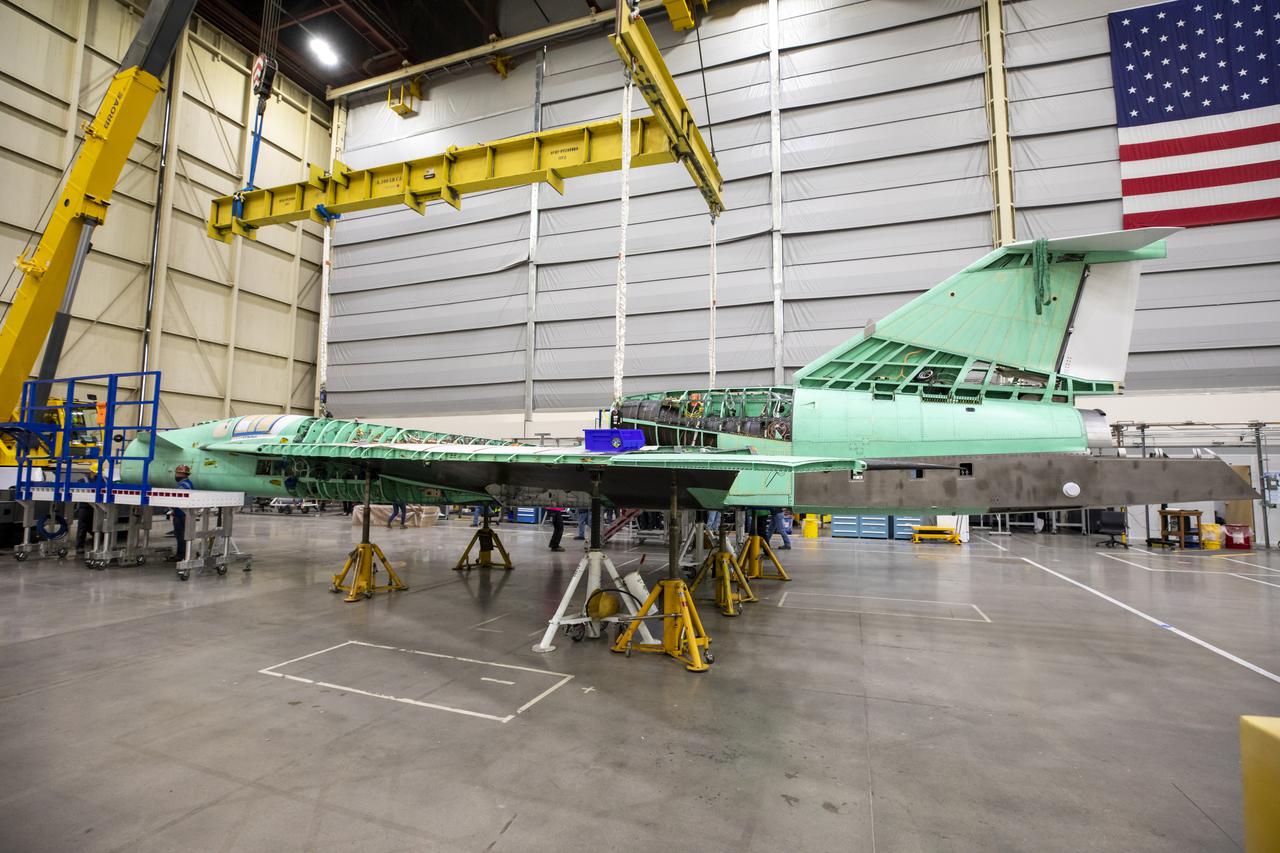
A view of the X-59 being supported by ground supports in preparation for installation of the landing gear and other hardware required for structural testing. Lockheed Martin Photography By Garry Tice 1011 Lockheed Way, Palmdale, Ca. 93599 Event: Removal From Tooling Jig Date: 10/27/2021 Additional Info:
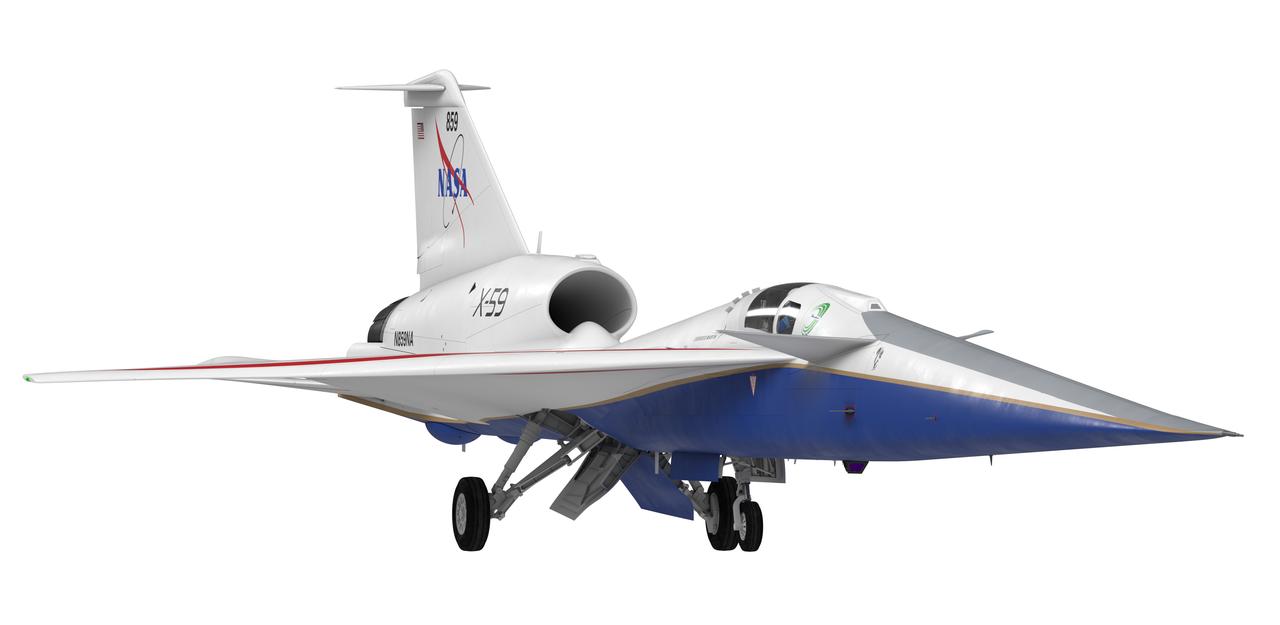
Artist concept of the X-59 three forths view
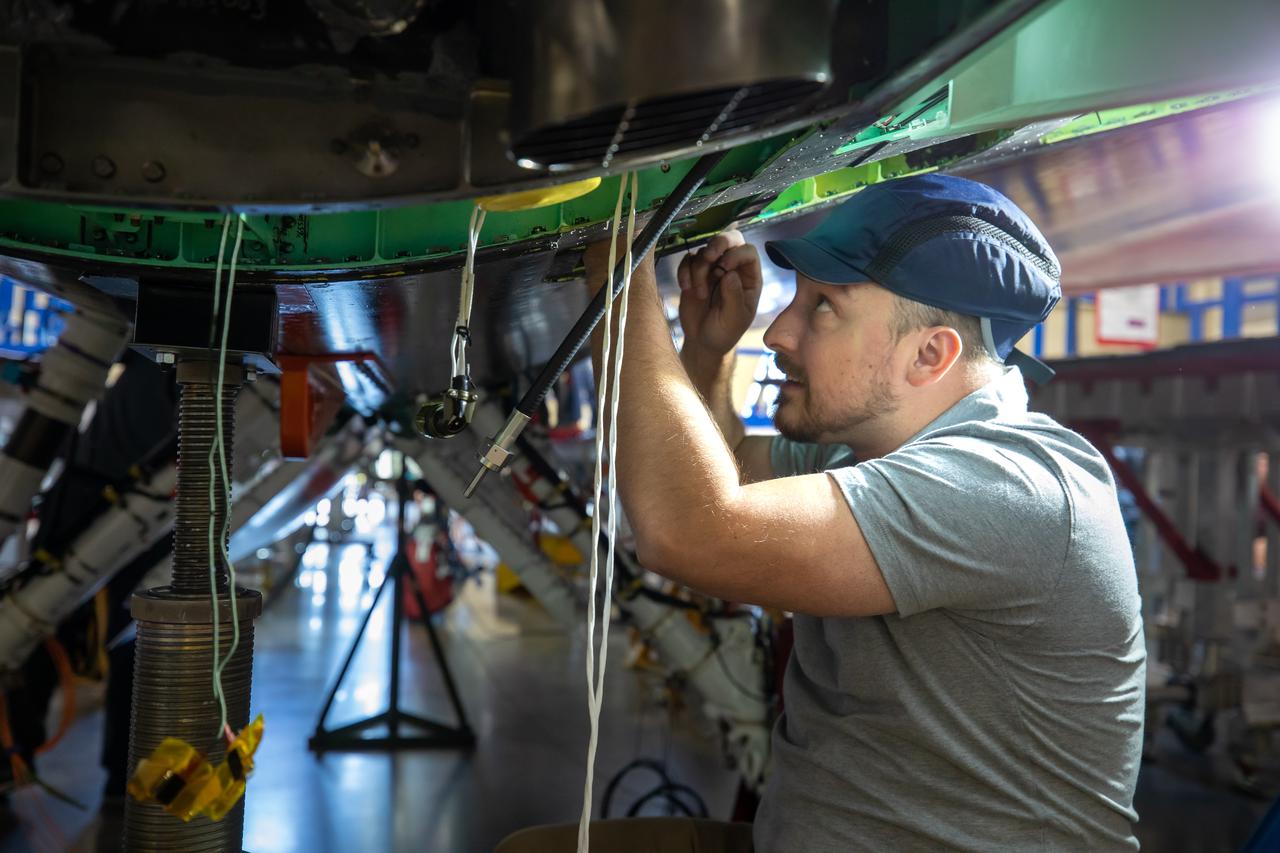
A Lockheed Martin Skunk Works technician works to complete wiring on the X-59 aircraft in preparation for the power-on system checkouts. Once complete, the X-59 aircraft will demonstrate the ability to fly supersonic while reducing the loud sonic boom to a quiet sonic thump and help enable commercial supersonic air travel over land. This aircraft is the centerpiece of NASA’s Quesst mission.
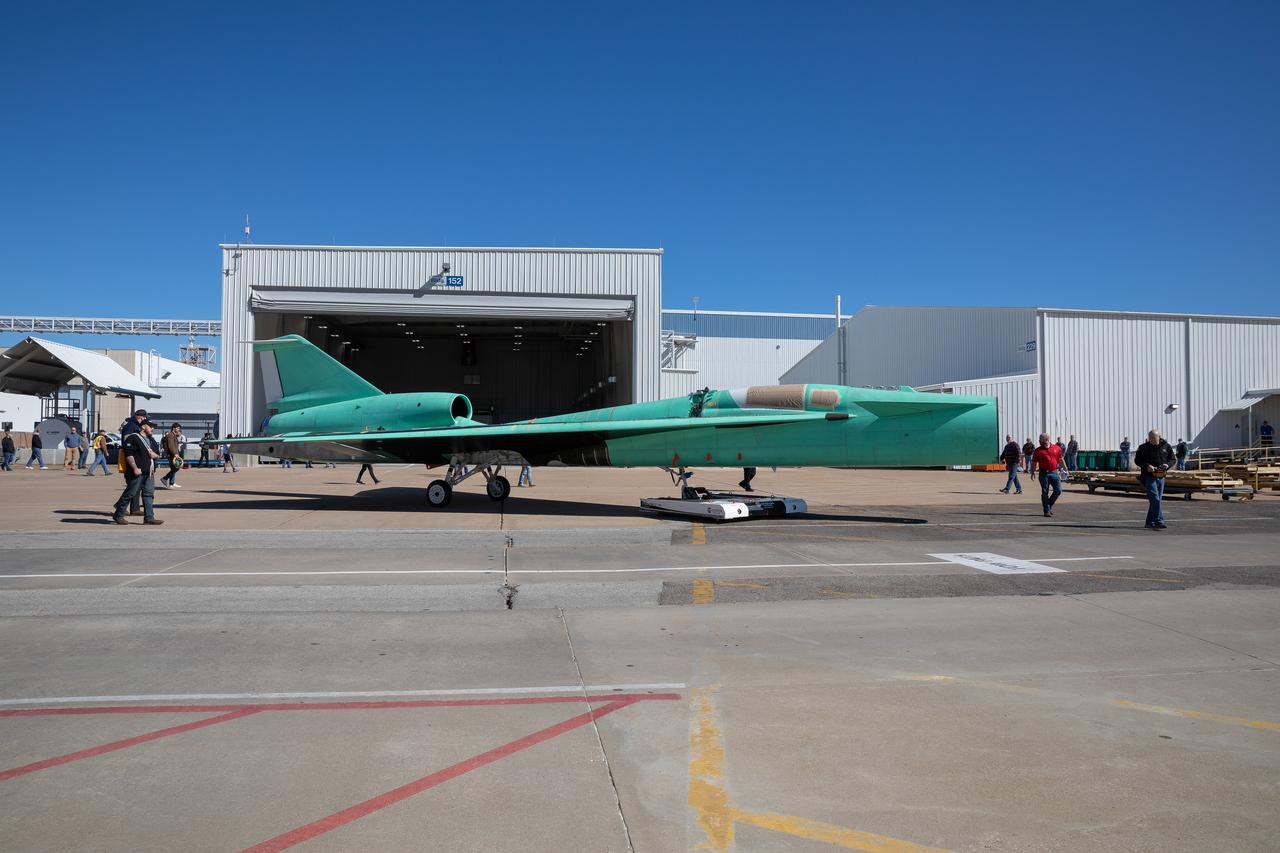
The X-59 is transported to the fuel barn at Lockheed Martin in Fort Worth, Texas to undergo fuel tank calibration tests. During this phase, the X-59’s gas tanks were filled and fuel-remaining sensors inside the aircraft were checked.
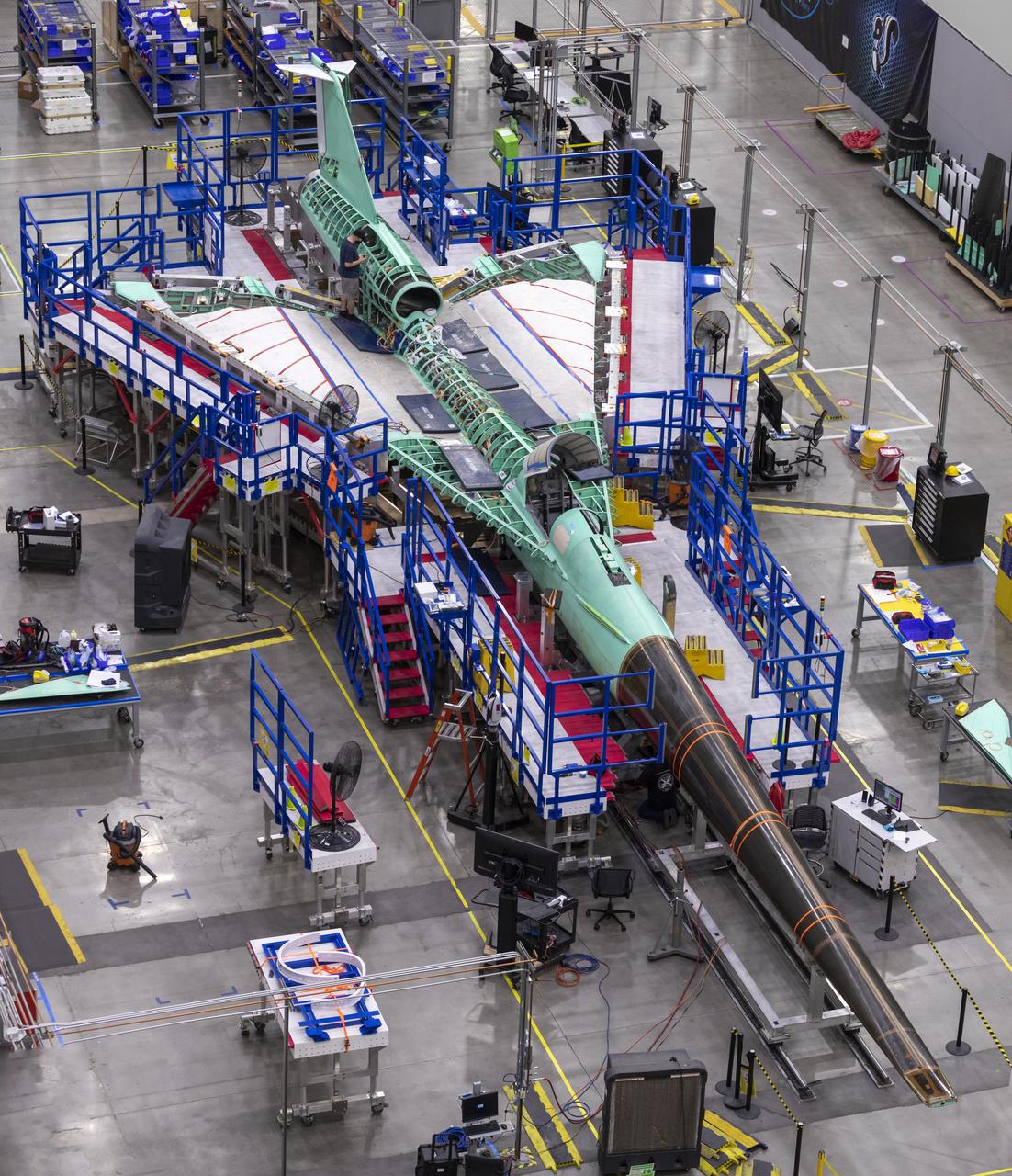
A overhead view of the X-59 with its nose on. The X-59’s nose is 38-feet long – approximately one third of the length of the entire aircraft. The plane is under construction at Lockheed Martin Skunk Works in Palmdale, California, will fly to demonstrate the ability to fly supersonic while reducing the loud sonic boom to a quiet sonic thump.
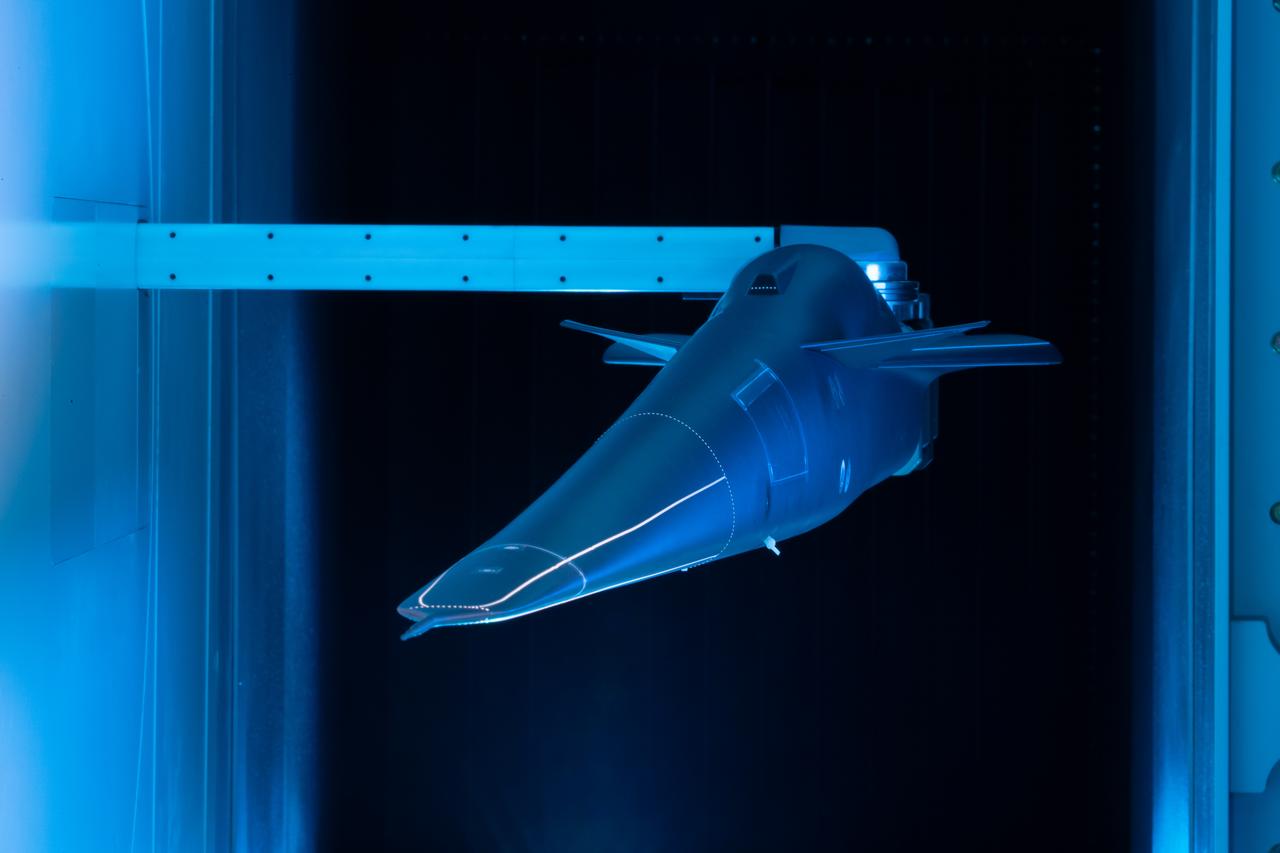
Event: Forebody and Nose - Windtunnel Testing A model of the X-59 forebody is shown in the Lockheed Martin Skunk Works’ wind tunnel in Palmdale, California. These tests gave the team measurements of wind flow angle around the aircraft’s nose and confirmed computer predictions made using computational fluid dynamics (CFD) software tools. The data will be fed into the aircraft flight control system to tell the pilot the aircraft’s altitude, speed and angle. This is part of NASA’s Quesst mission which plans to help enable supersonic air travel over land.
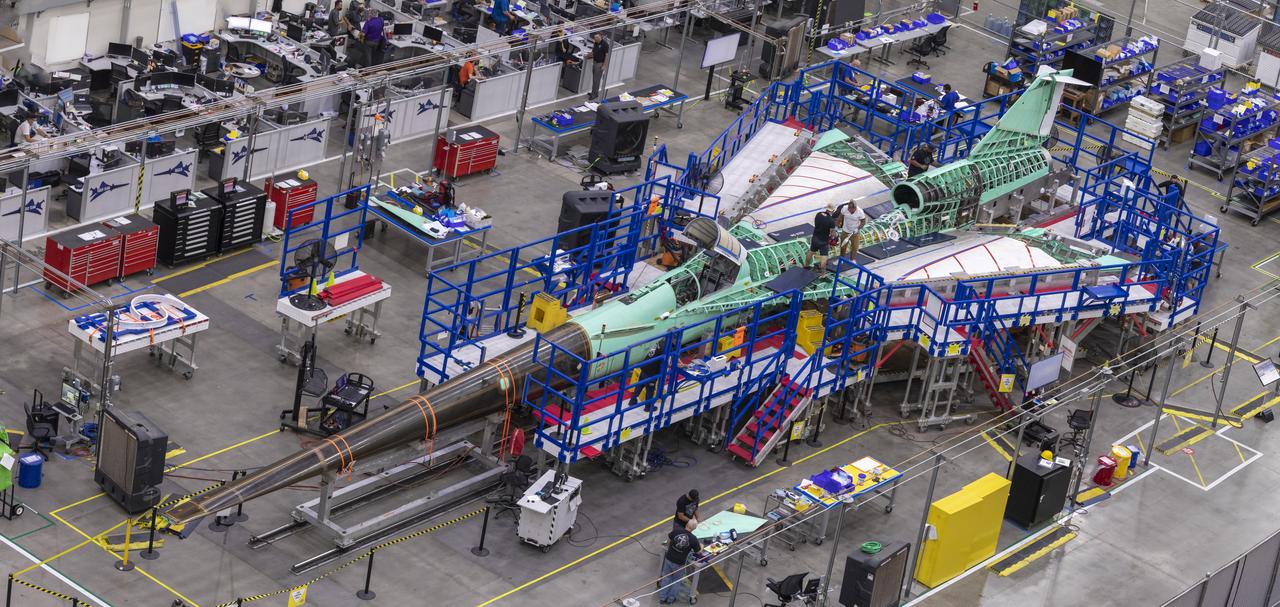
Event: Manufacturing Area From Above A overhead view of the X-59 with its nose on. The X-59’s nose is 38-feet long – approximately one third of the length of the entire aircraft. The aircraft, under construction at Lockheed Martin Skunk Works in Palmdale, California, will demonstrate the ability to fly supersonic while reducing the loud sonic boom to a quiet sonic thump.

Lockheed Martin technicians work to align and check the fastener holes on the X-59’s fuselage skin. The aircraft, under construction at Lockheed Martin Skunk Works in Palmdale, California, will demonstrate the ability to fly supersonic while reducing the loud sonic boom to a quiet sonic thump.
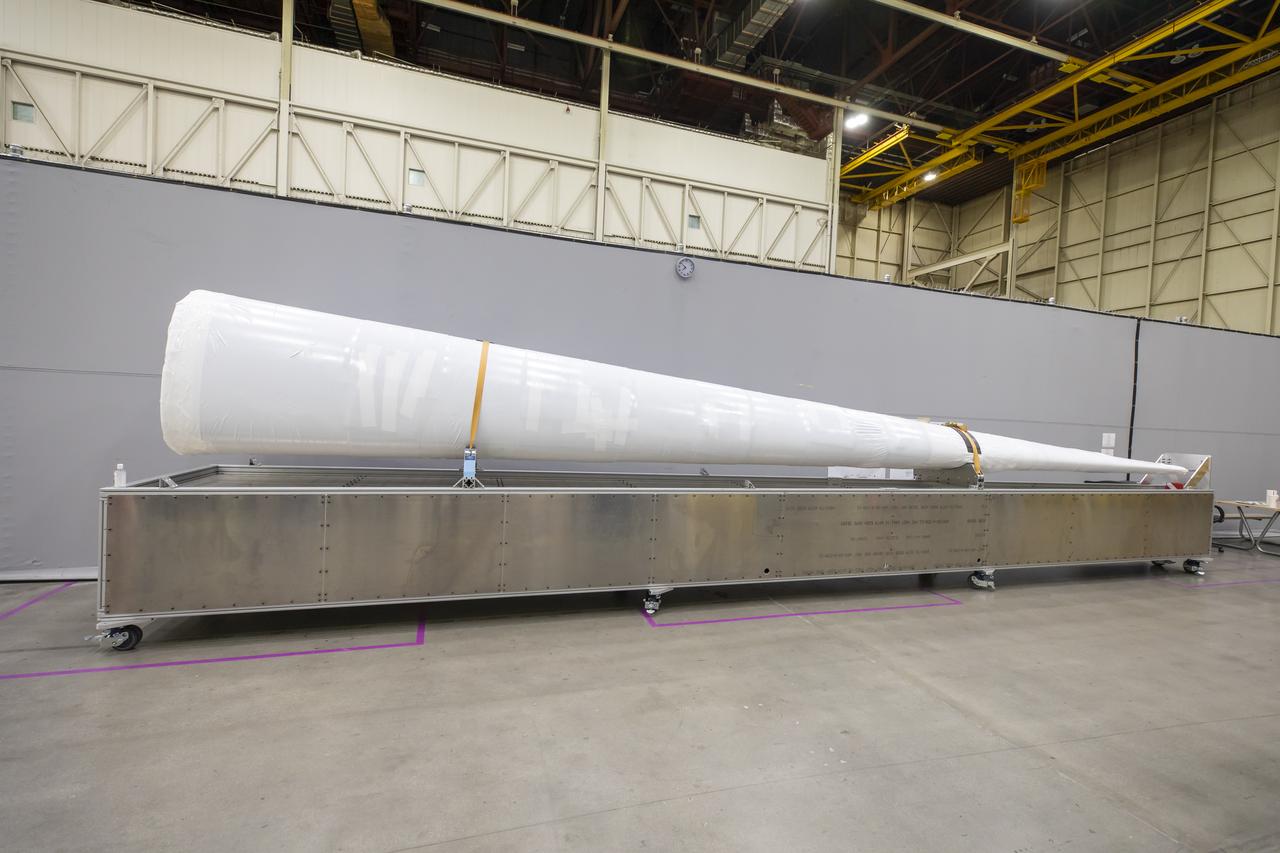
Event: SEG 230 Nose The X-59’s nose is wrapped up safely and rests on a dolly before the team temporarily attaches it to the aircraft for fit checks at Lockheed Martin in Palmdale, California. The full length of the X-plane’s nose is 38-feet – making up one third of the plane’s full length. The aircraft, under construction at Lockheed Martin Skunk Works in Palmdale, California, once in the air will demonstrate the ability to fly supersonic while reducing the loud sonic boom to a quiet sonic thump.
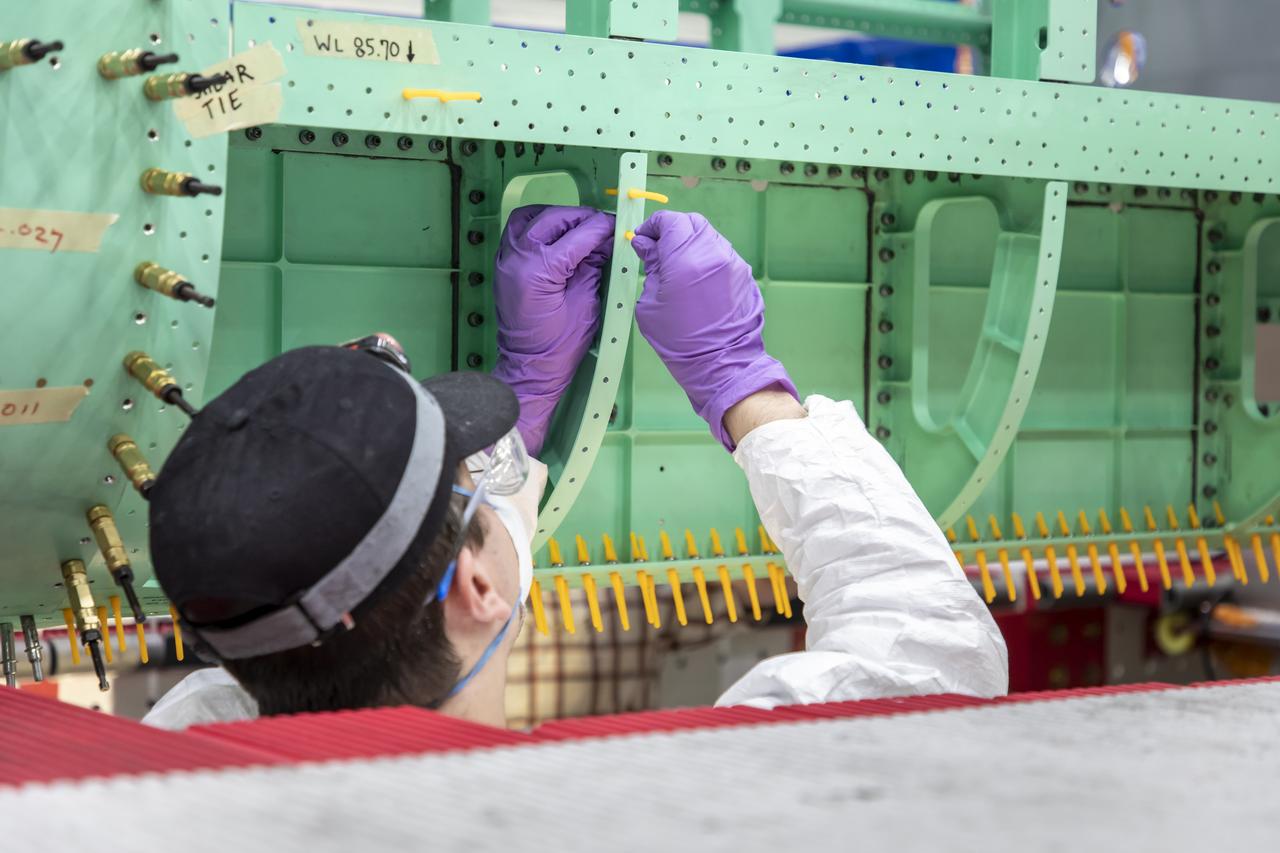
A Lockheed Martin technician prepares holes for installation of the fuselage panel on the X-59. The fuselage is the section of the aircraft that contains the cockpit. The aircraft, under construction at Lockheed Martin Skunk Works in Palmdale, California, will demonstrate the ability to fly supersonic while reducing the loud sonic boom to a quiet sonic thump.
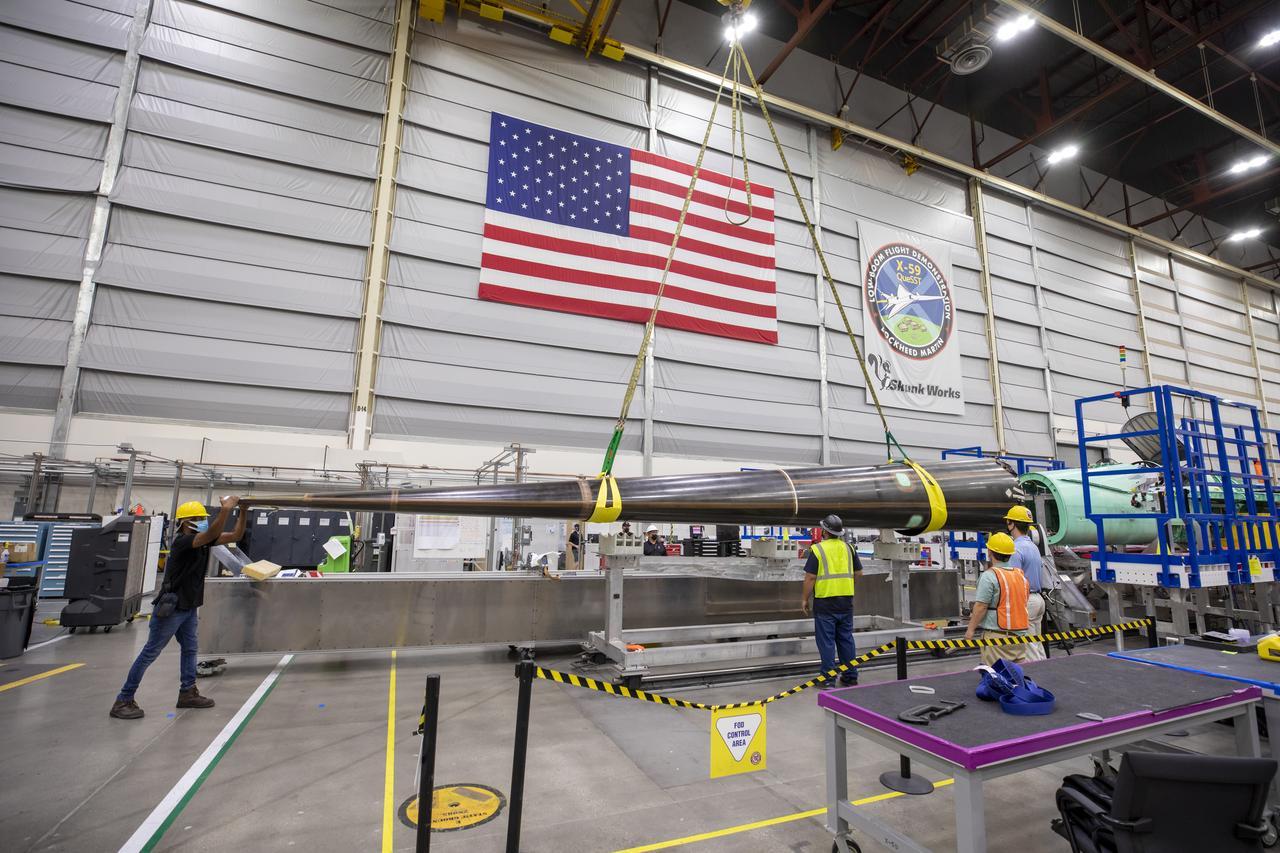
Event: SEG 230 Nose - Craned Onto Tooling A close up of the X-59’s duckbill nose, which is a crucial part of its supersonic design shaping. The team prepares the nose for a fit check. The X-59’s nose is 38-feet long – approximately one third of the length of the entire aircraft. The aircraft, under construction at Lockheed Martin Skunk Works in Palmdale, California, will demonstrate the ability to fly supersonic while reducing the loud sonic boom to a quiet sonic thump.
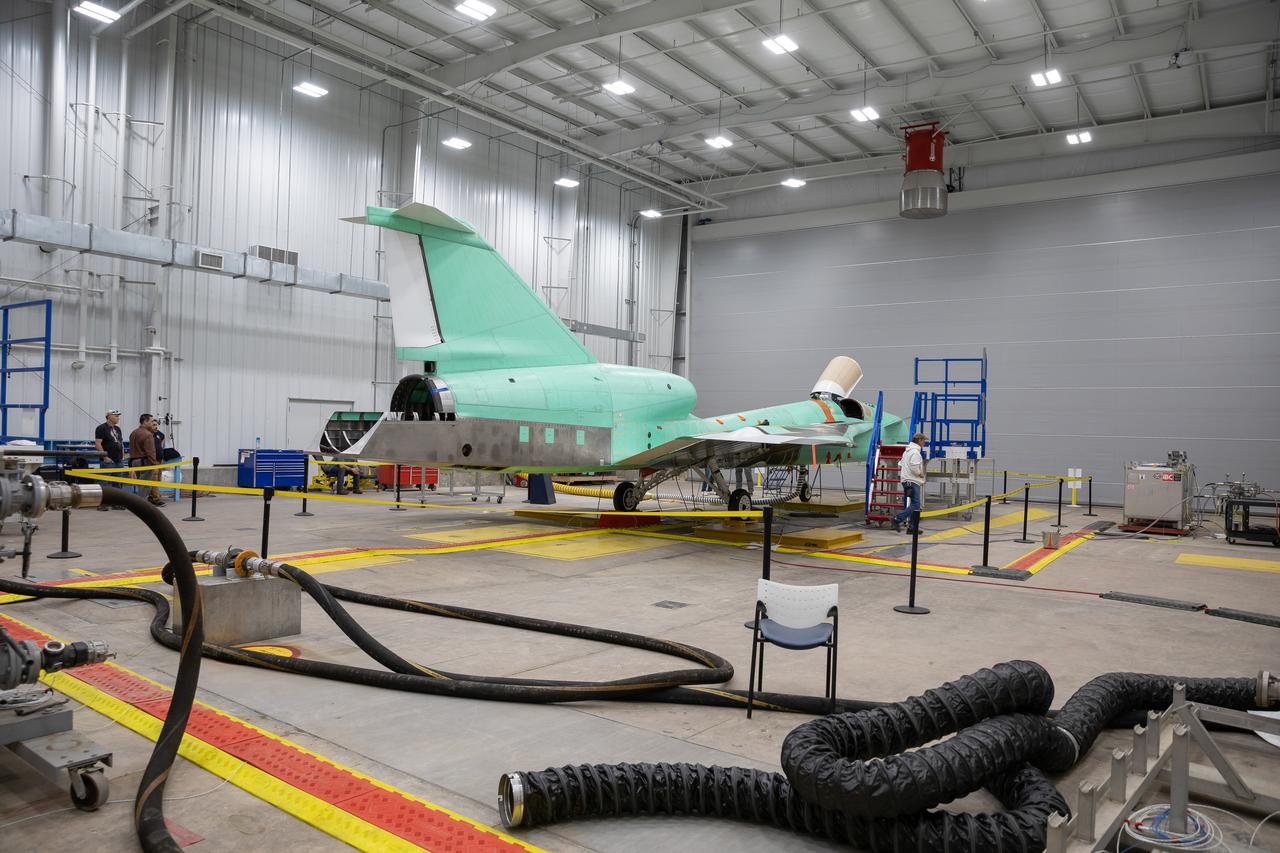
The X-59 sits in the fuel barn at Lockheed Martin in Fort Worth, Texas. While in the fuel barn, the X-59 underwent fuel tank calibration tests. During this phase, the X-59’s gas tanks were filled and fuel-remaining sensors inside the aircraft were checked.
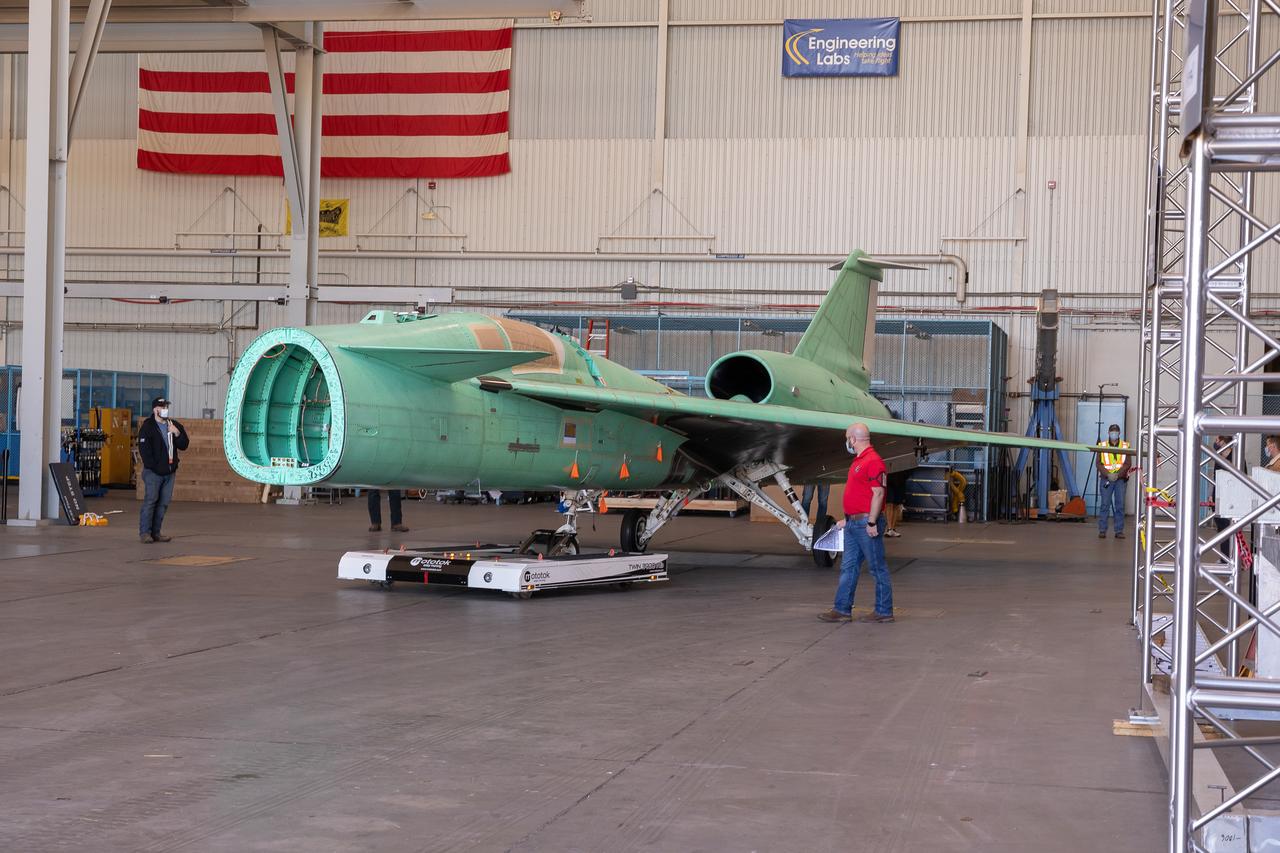
The X-59 is transported to the fuel barn at Lockheed Martin in Fort Worth, Texas to undergo fuel tank calibration tests. During this phase, the X-59’s gas tanks were filled and fuel-remaining sensors inside the aircraft were checked.
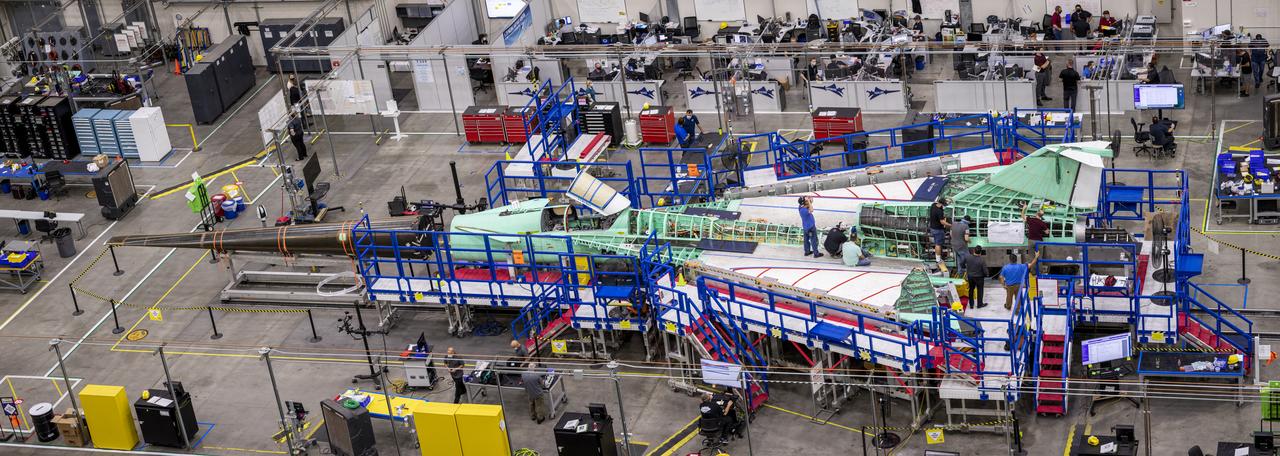
A panoramic side view of the left top of the X-59 supersonic plane with the tail on and the nose in the process of installation. The X-59’s nose is 38-feet long – approximately one third of the length of the entire aircraft. The aircraft, under construction at Lockheed Martin Skunk Works in Palmdale, California, will demonstrate the ability to fly supersonic while reducing the loud sonic boom to a quiet sonic thump.
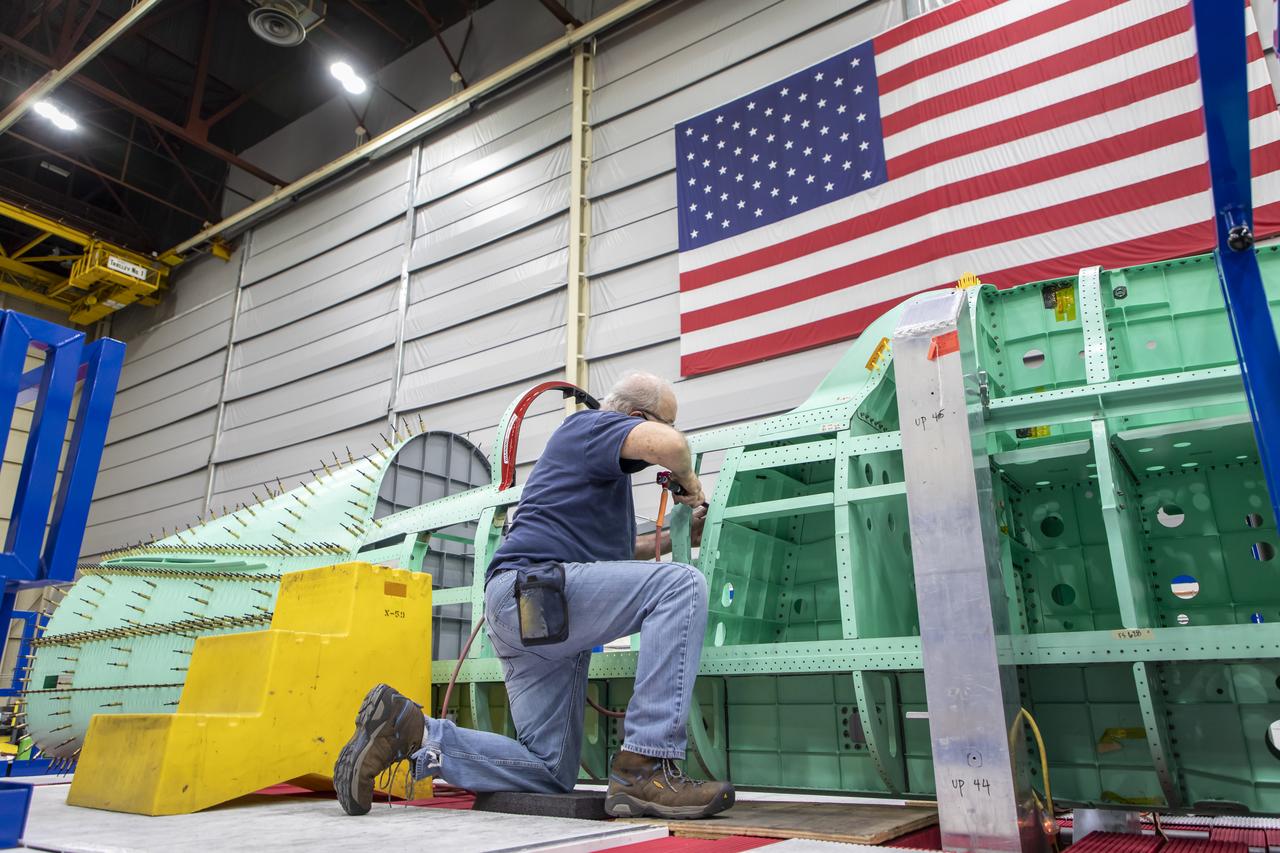
Event: SEG 210 Forebody A Lockheed Martin technician works on the ejection seat support structure and once complete, the ejection seat rails will be installed on the X-59 airplane. The aircraft, under construction at Lockheed Martin Skunk Works in Palmdale, California, will demonstrate the ability to fly supersonic while reducing the loud sonic boom to a quiet sonic thump.

NASA’s X-59 undergoes a structural stress test at Lockheed Martin’s facility at Fort Worth, Texas. The X-59 is a one-of-a-kind airplane designed to fly at supersonic speeds without making a startling sonic boom sound for the communities below. This is part of NASA’s Quesst mission, which plans to help enable supersonic air travel over land.
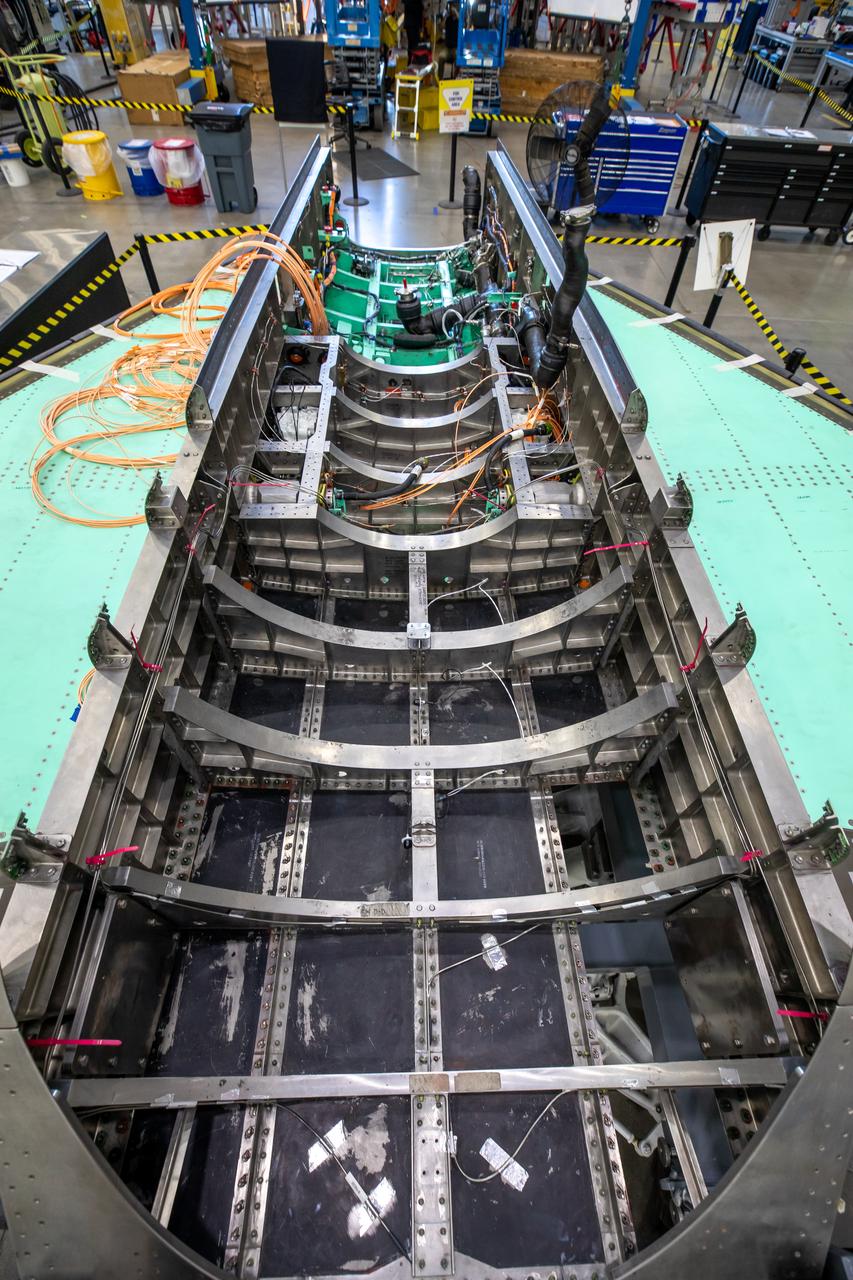
This image shows the X-59 aircraft’s lower empennage structure, or tail section of the plane, that was installed. The stabilators, the outer surfaces also seen in the photo, attach to the lower empennage and are used to help regulate the aircraft pitch which controls the up and down movement of the motion of the plane. The 13-foot engine will pack 22,000 pounds of propulsion and energy and power the X-plane to its planned cruising speed of Mach 1.4. Once complete, the X-59 aircraft will demonstrate the ability to fly supersonic while reducing the loud sonic boom to a quiet sonic thump and help enable commercial supersonic air travel over land. This aircraft is the centerpiece of NASA’s Quesst mission.
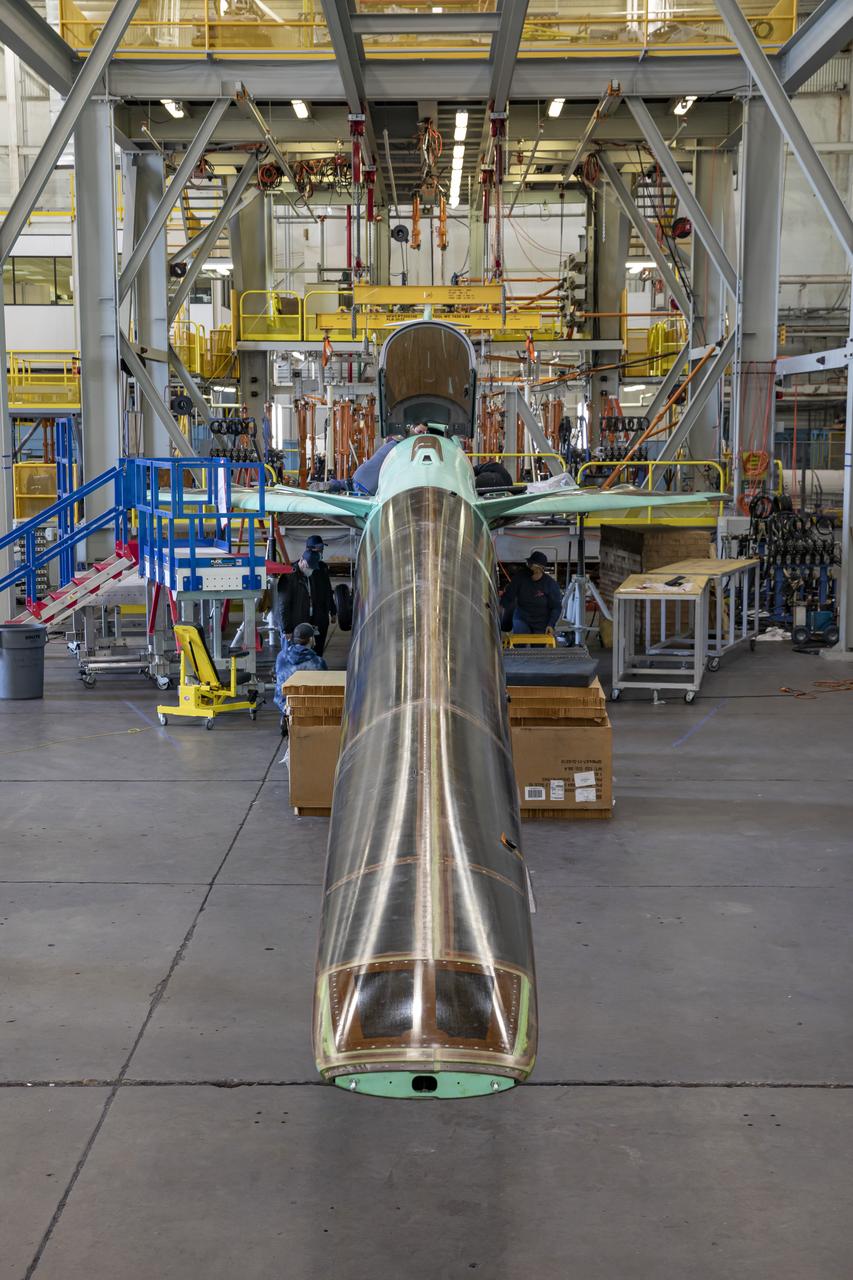
NASA’s X-59 undergoes a structural stress test at a Lockheed Martin facility in Fort Worth, Texas. The X-59’s nose makes up one third of the aircraft, at 38-feet in length. The X-59 is a one-of-a-kind airplane designed to fly at supersonic speeds without making aa startling sonic boom sound for the communities below. This is part of NASA’s Quesst mission which plans to help enable supersonic air travel over land
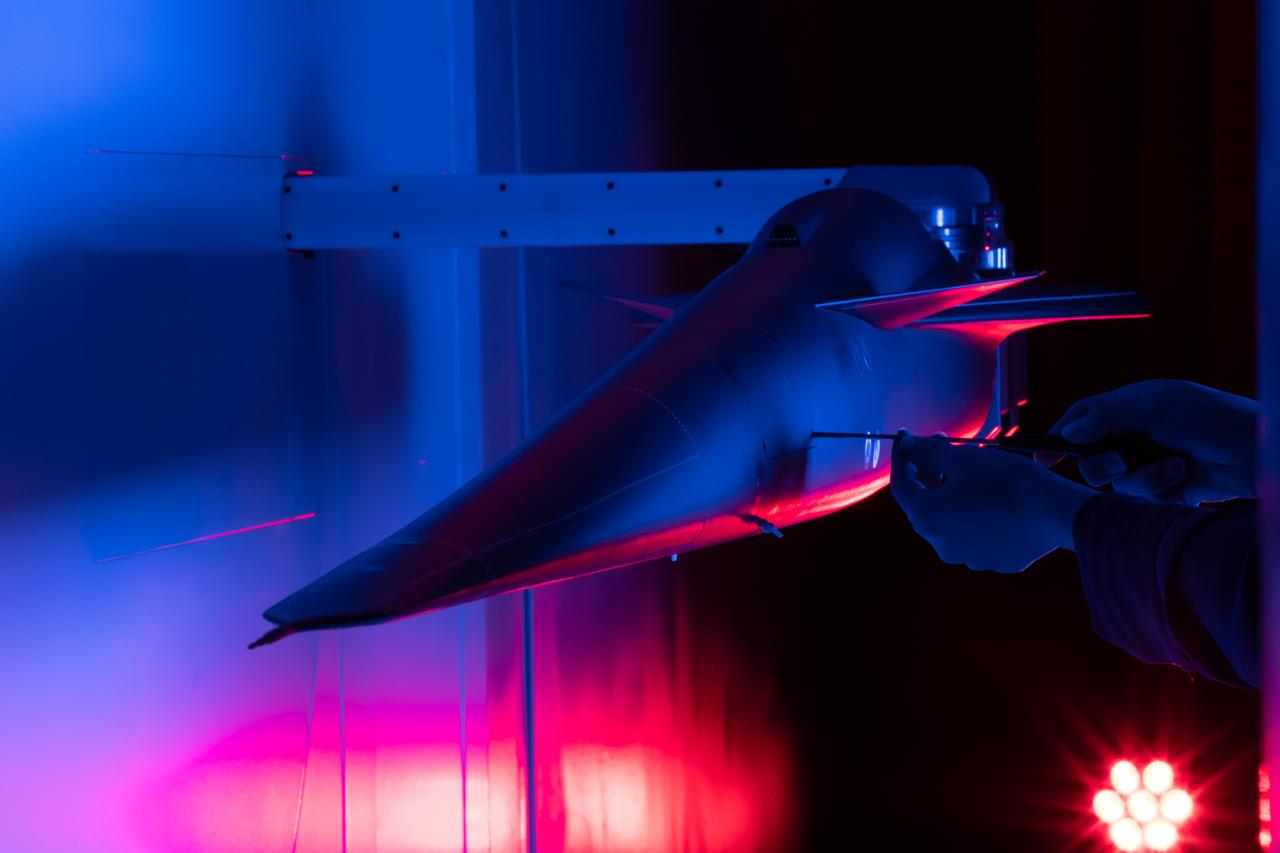
Event: Forebody and Nose - Windtunnel Testing A technician works on the X-59 model during testing in the low-speed wind tunnel at Lockheed Martin Skunk Works in Palmdale, California. These tests gave the team measurements of wind flow angle around the aircraft’s nose and confirmed computer predictions made using computational fluid dynamics (CFD) software tools. The data will be fed into the aircraft flight control system to tell the pilot the aircraft’s altitude, speed, and angle. This is part of NASA’s Quesst mission which plans to help enable supersonic air travel over land.
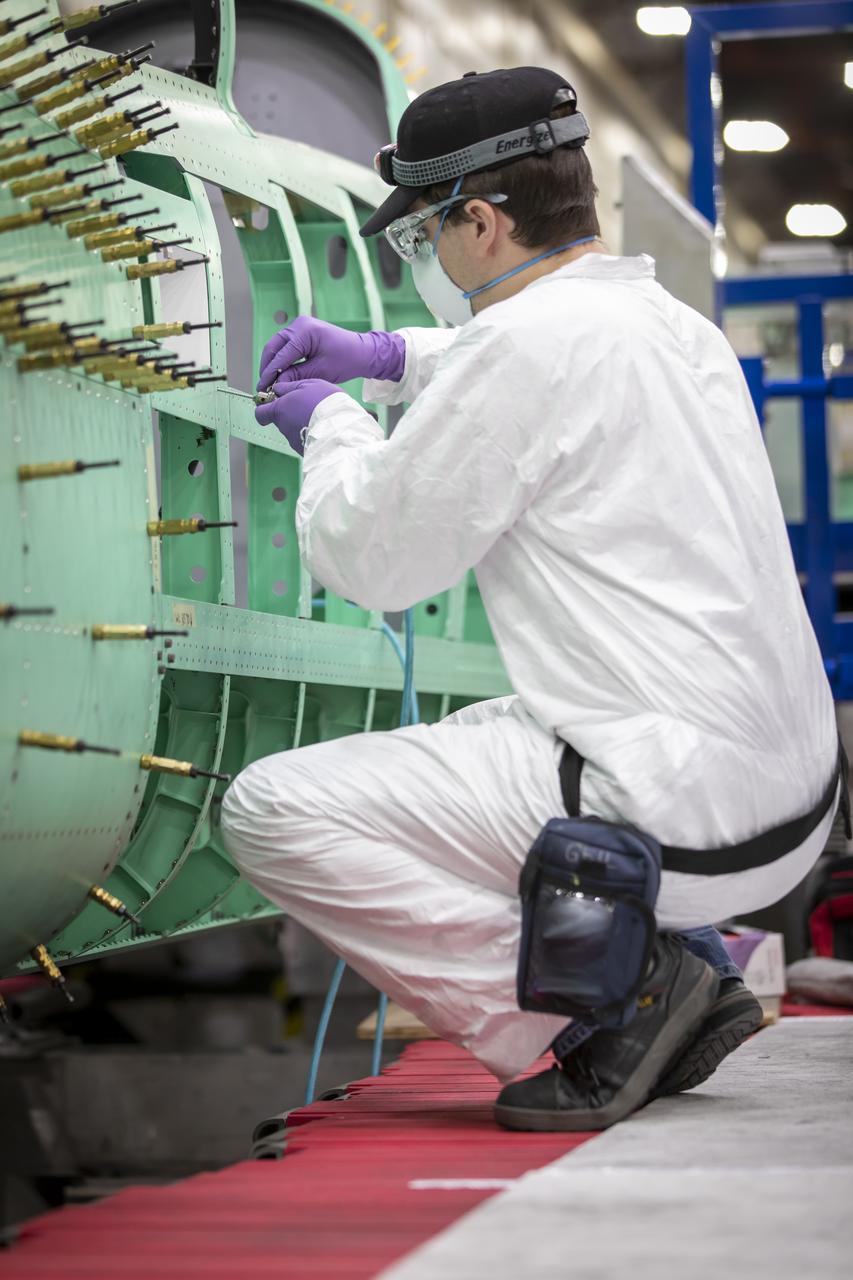
Event: SEG 210 Forebody A Lockheed Martin technician prepares to install the left fuselage skins onto the X-59. Once in the air, the aircraft, currently under construction at Lockheed Martin Skunk Works in Palmdale, California, will demonstrate the ability to fly supersonic while reducing the loud sonic boom to a quiet sonic thump.
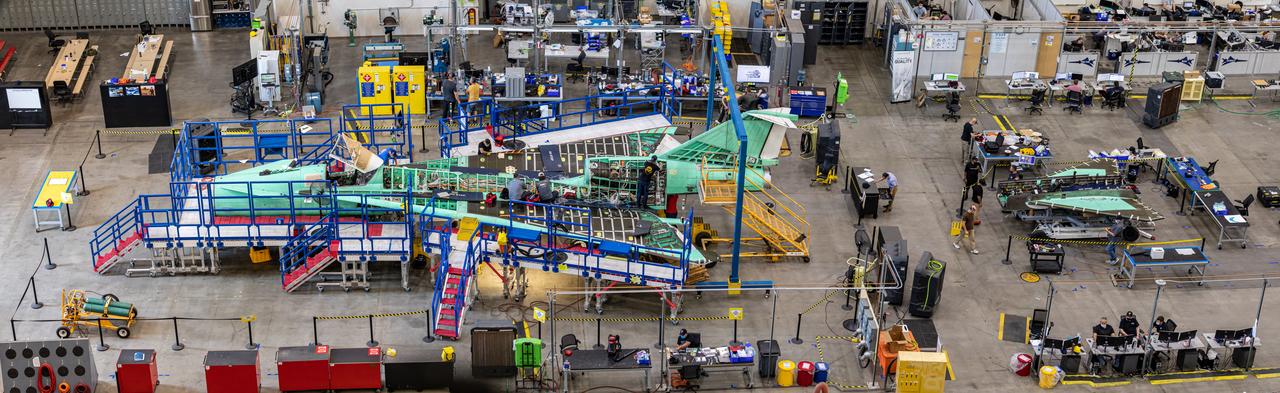
This overhead view of the X-59 shows the aircraft’s current state of assembly at Lockheed Martin Skunk Works in Palmdale, California. Throughout the manufacturing process, the team often removes components to effectively and safely assemble other sections of the aircraft. The X-59’s horizontal tails and lower empennage were recently removed from the aircraft and can be seen behind it as the team prepares for the installation of the engine. The X-59 is the centerpiece of the Quesst mission which plans to help enable commercial supersonic air travel over land.
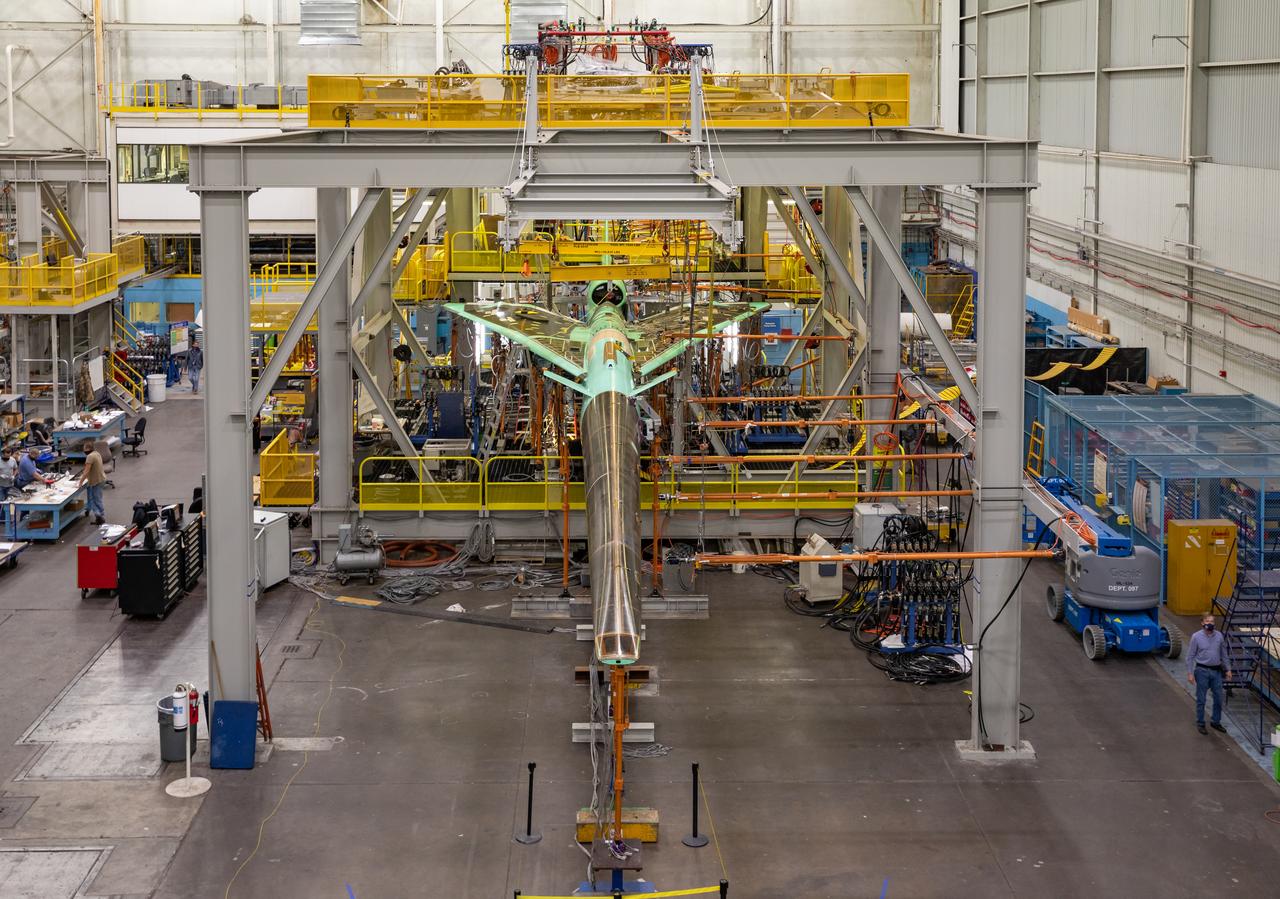
NASA’s X-59 undergoes a structural stress test at Lockheed Martin’s facility at Fort Worth, Texas. The X-59 is a one-of-a-kind airplane designed to fly at supersonic speeds without making a startling sonic boom sound for the communities below. This is part of NASA’s Quesst mission, which plans to help enable supersonic air travel over land.
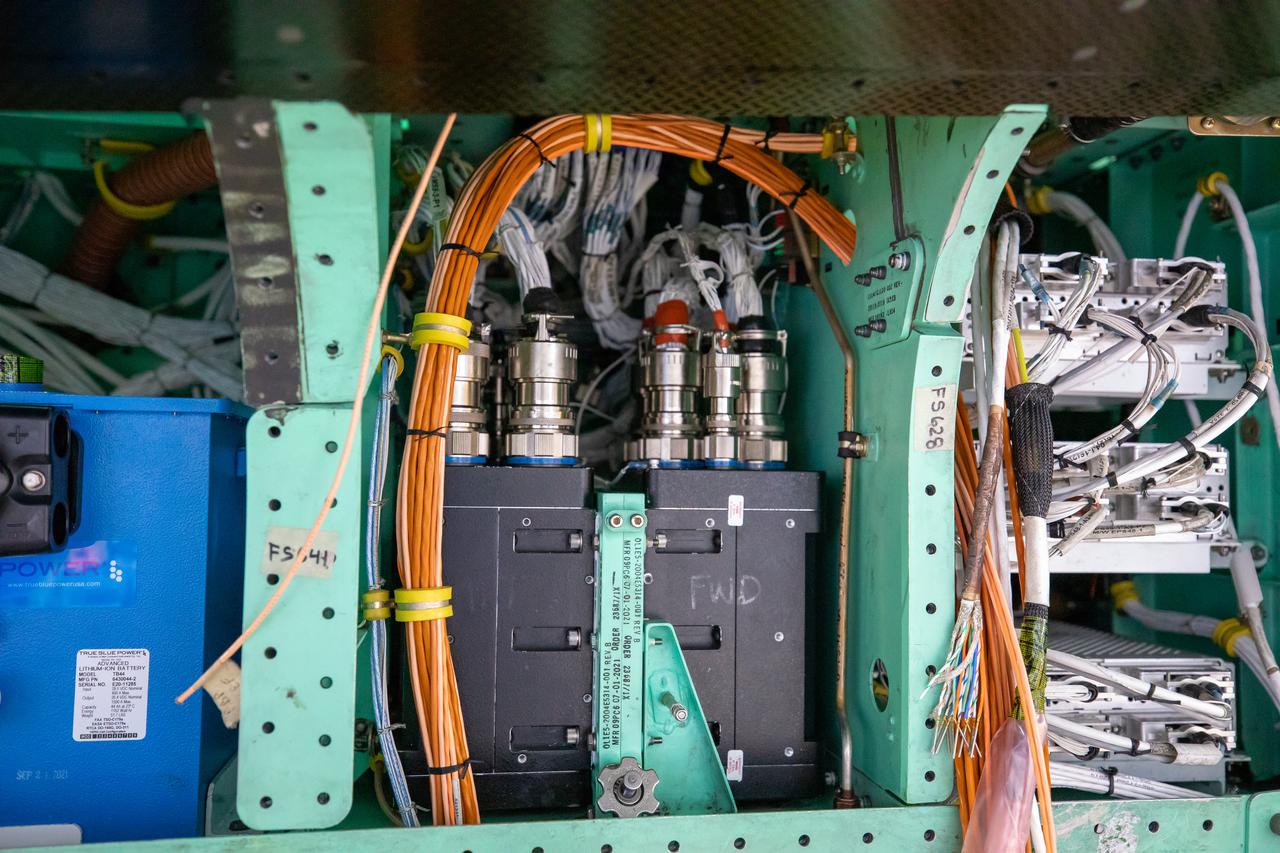
This is a closeup view of the inner workings of the X-59 aircraft. Visible are one the plane’s three lithium-ion batteries (blue box), electrical power system and other wiring components including the vehicle management systems computers (two black boxes) and the white wirings which assist in providing the power that is needed for the aircraft to function in flight. All of these components are essential to maintaining and monitoring the X-59 once it takes to the skies. The X-59 is the centerpiece of the Quesst mission which plans to help enable commercial supersonic air travel over land.
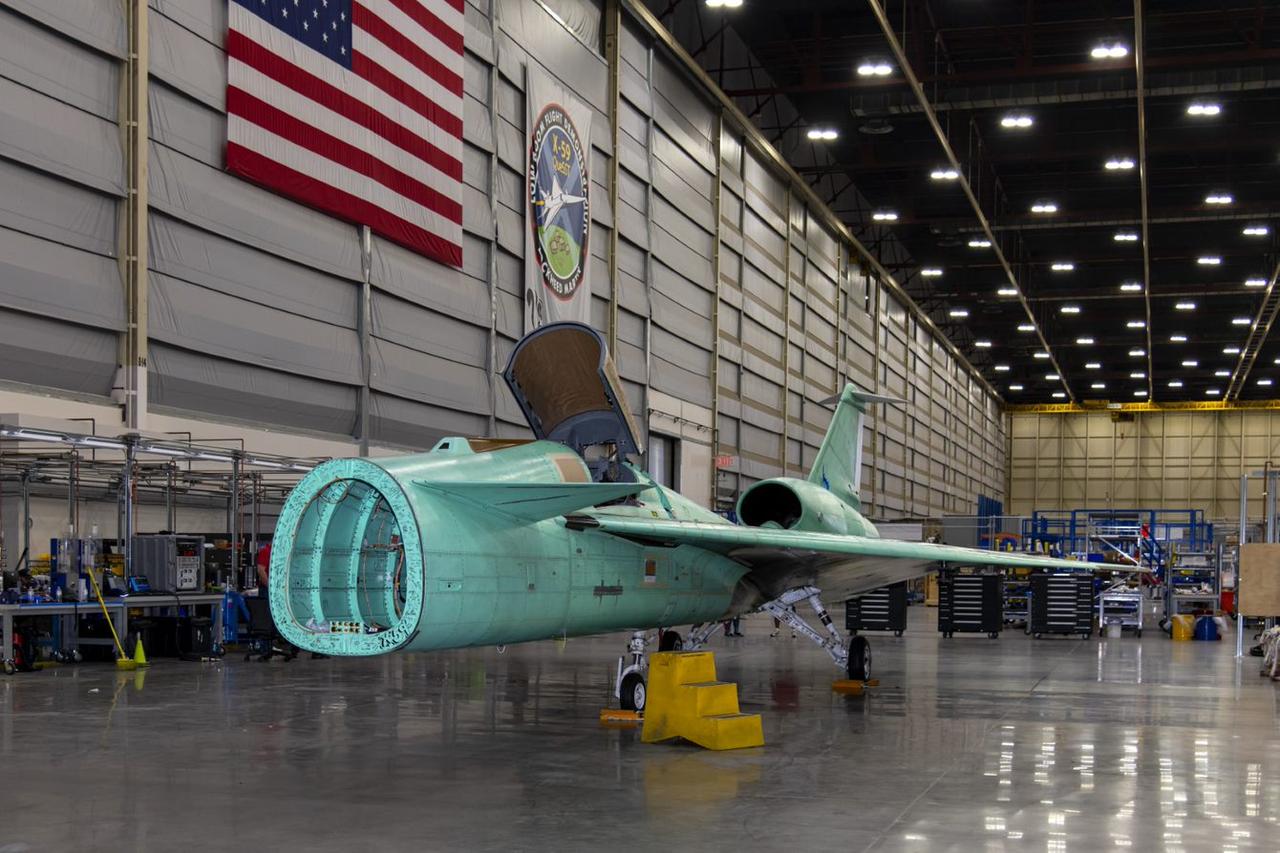
The X-59 arrives home in Palmdale, California after completing important structural and fuel tests at the Lockheed Martin facility in Ft. Worth, Texas. The nose, which is not installed in this image, was removed prior to the transport home and arrived separately to the facility. This is part of NASA’s Quesst mission which plans to help enable supersonic air travel over land.
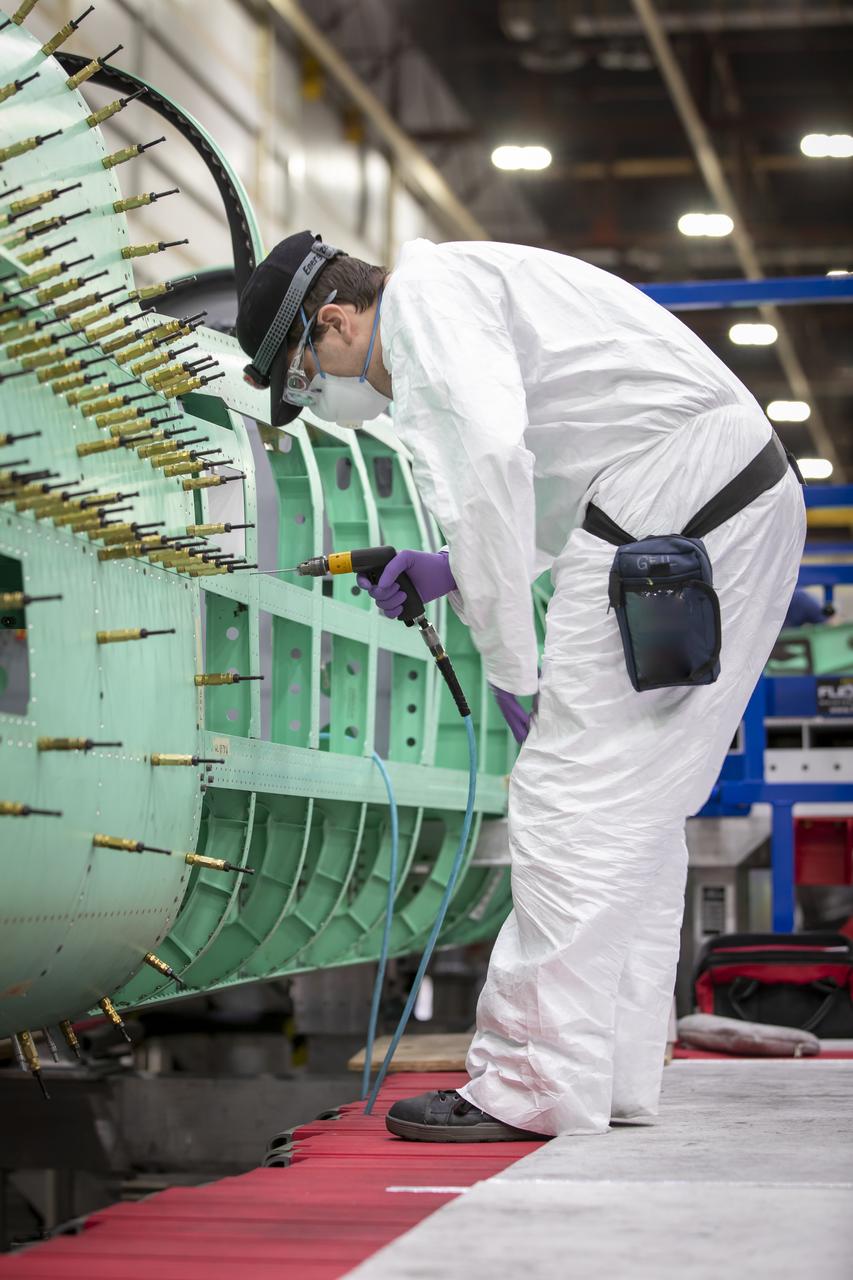
Event: SEG 210 Forebody A Lockheed Martin technician prepares to install the left fuselage skins onto the X-59. Once in the air, the aircraft, currently under construction at Lockheed Martin Skunk Works in Palmdale, California, will demonstrate the ability to fly supersonic while reducing the loud sonic boom to a quiet sonic thump.
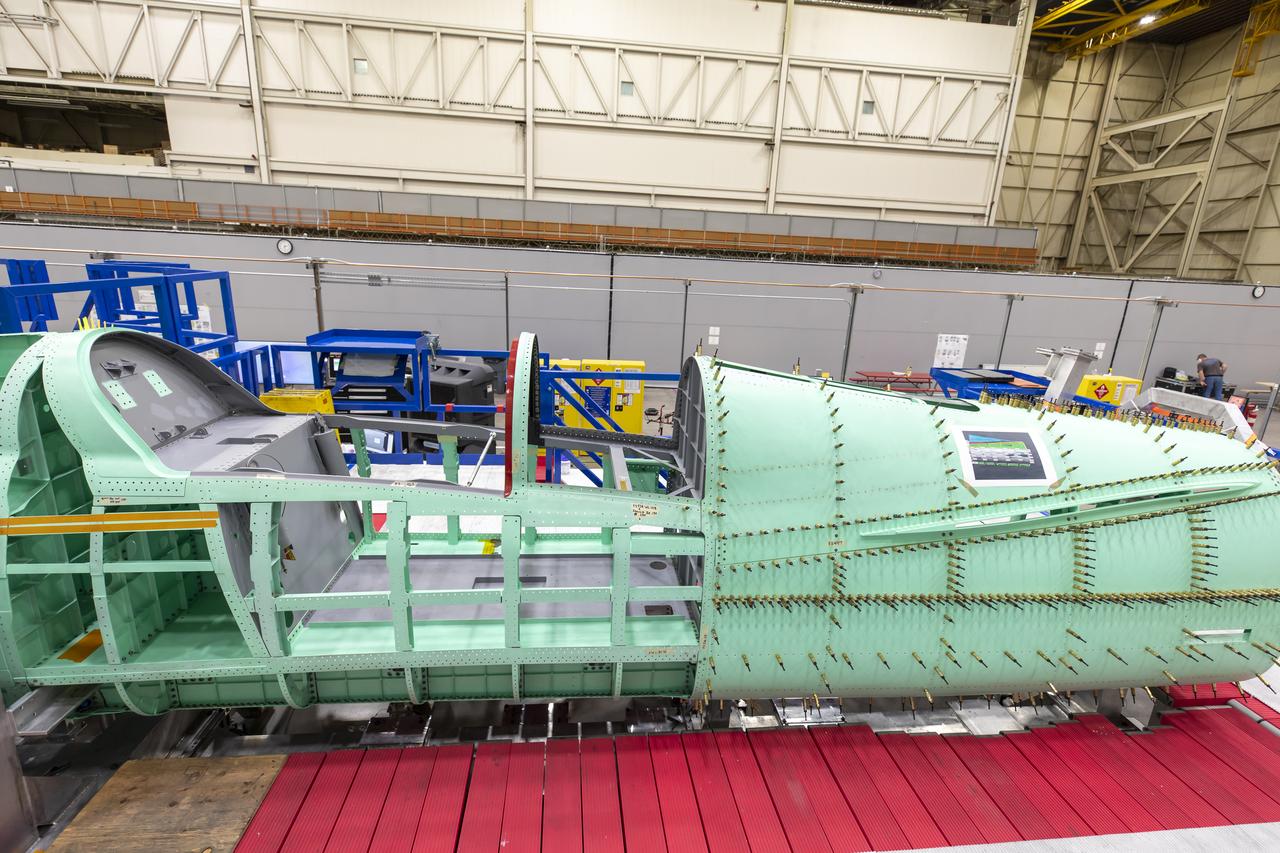
Event: SEG 210 Forebody A right side view of where the team is preparing the X-59 structure for installation of the forward fuselage, which contains the cockpit. The aircraft, under construction at Lockheed Martin Skunk Works in Palmdale, California, will fly to demonstrate the ability to fly supersonic while reducing the loud sonic boom to a quiet sonic thump.
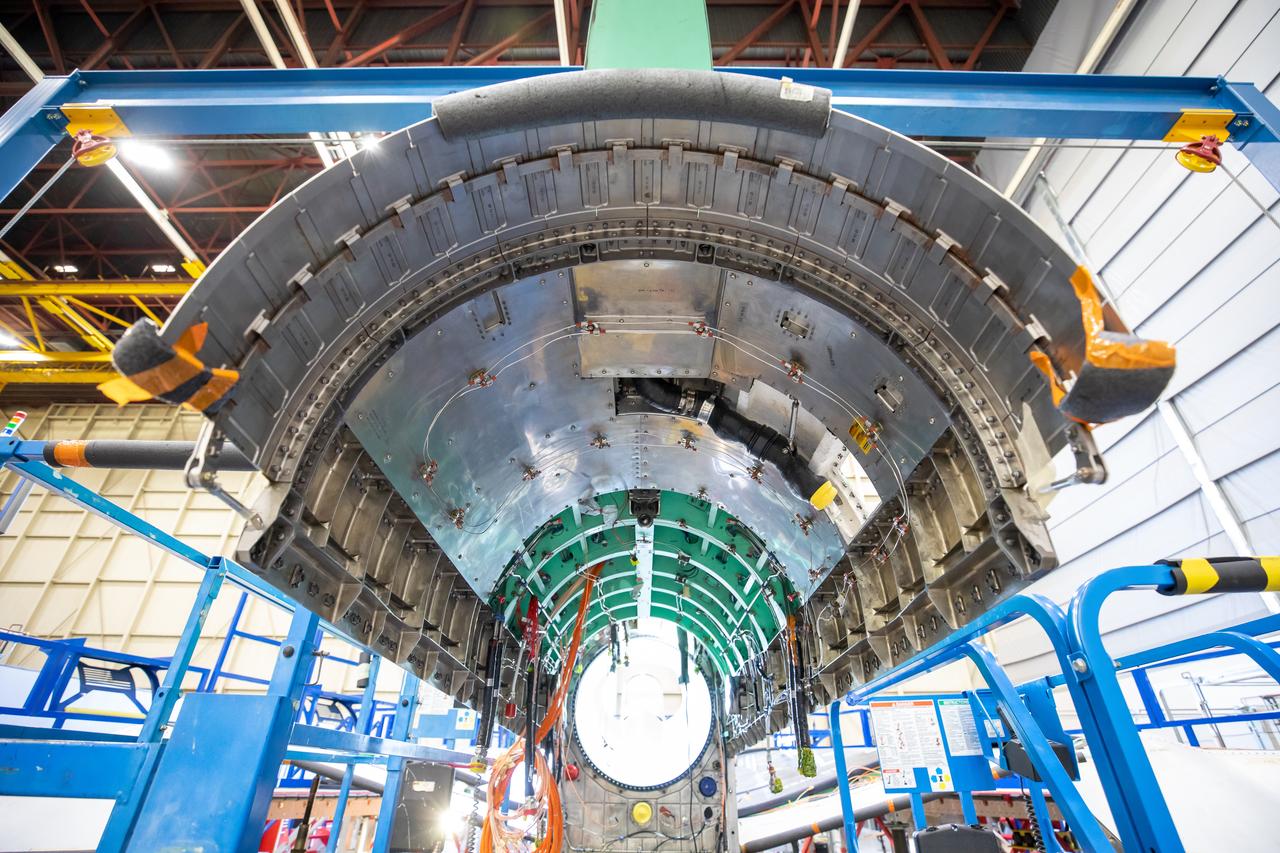
The upper empennage, or tail section of the plane, and engine bay is surrounded by a blue gantry that is used to assist with ground installation and removal of the X-59’s lower empennage and engine. Once fully assembled, the X-59 aircraft will demonstrate the ability to fly supersonic while reducing the loud sonic boom to a quiet sonic thump and help enable commercial supersonic air travel over land. This aircraft is the centerpiece of NASA’s Quesst mission.
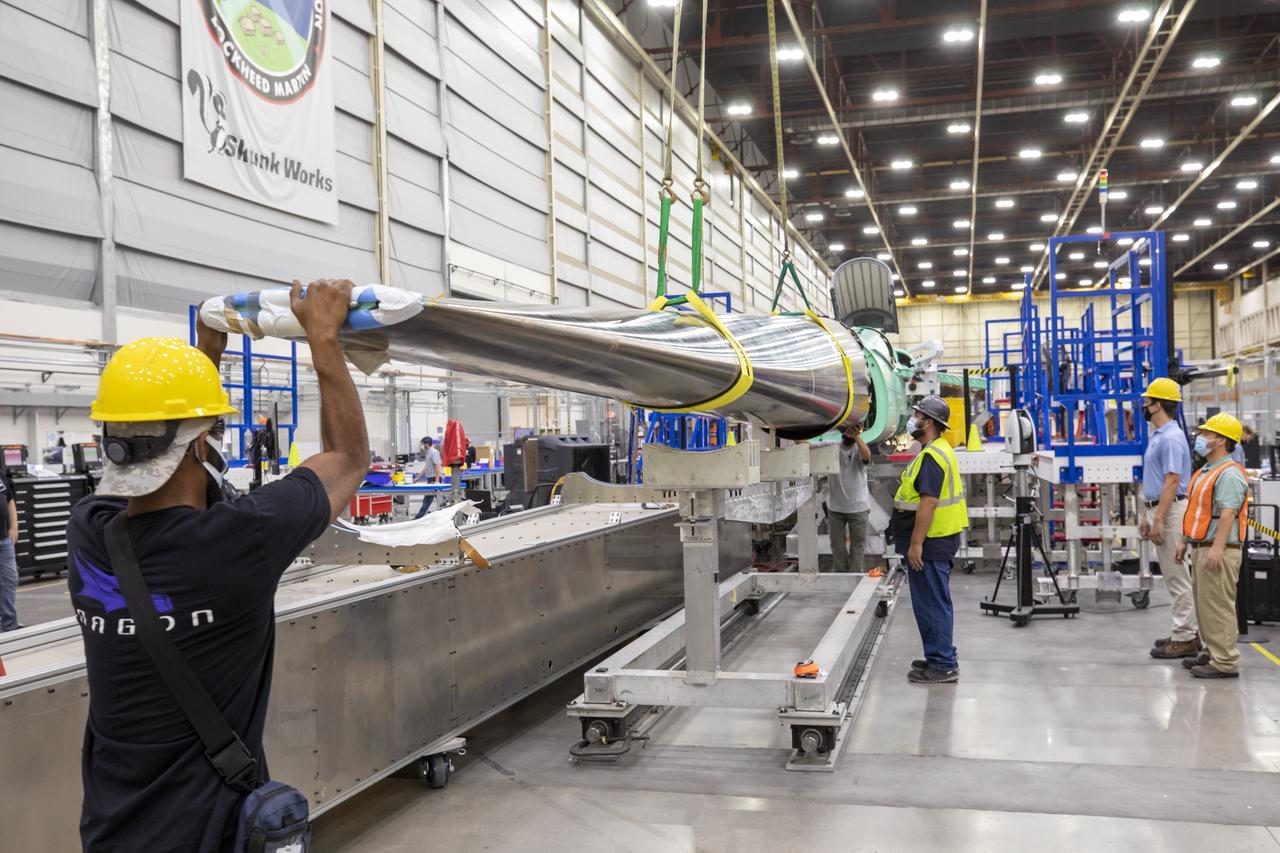
Event: SEG 230 Nose - Craned Onto Tooling A close-up of the X-59’s duckbill nose, which is a crucial part of its supersonic design shaping. The team prepares the nose for a fit check. The X-59’s nose is 38-feet long – approximately one third of the length of the entire aircraft. The aircraft, under construction at Lockheed Martin Skunk Works in Palmdale, California, will demonstrate the ability to fly supersonic while reducing the loud sonic boom to a quiet sonic thump.
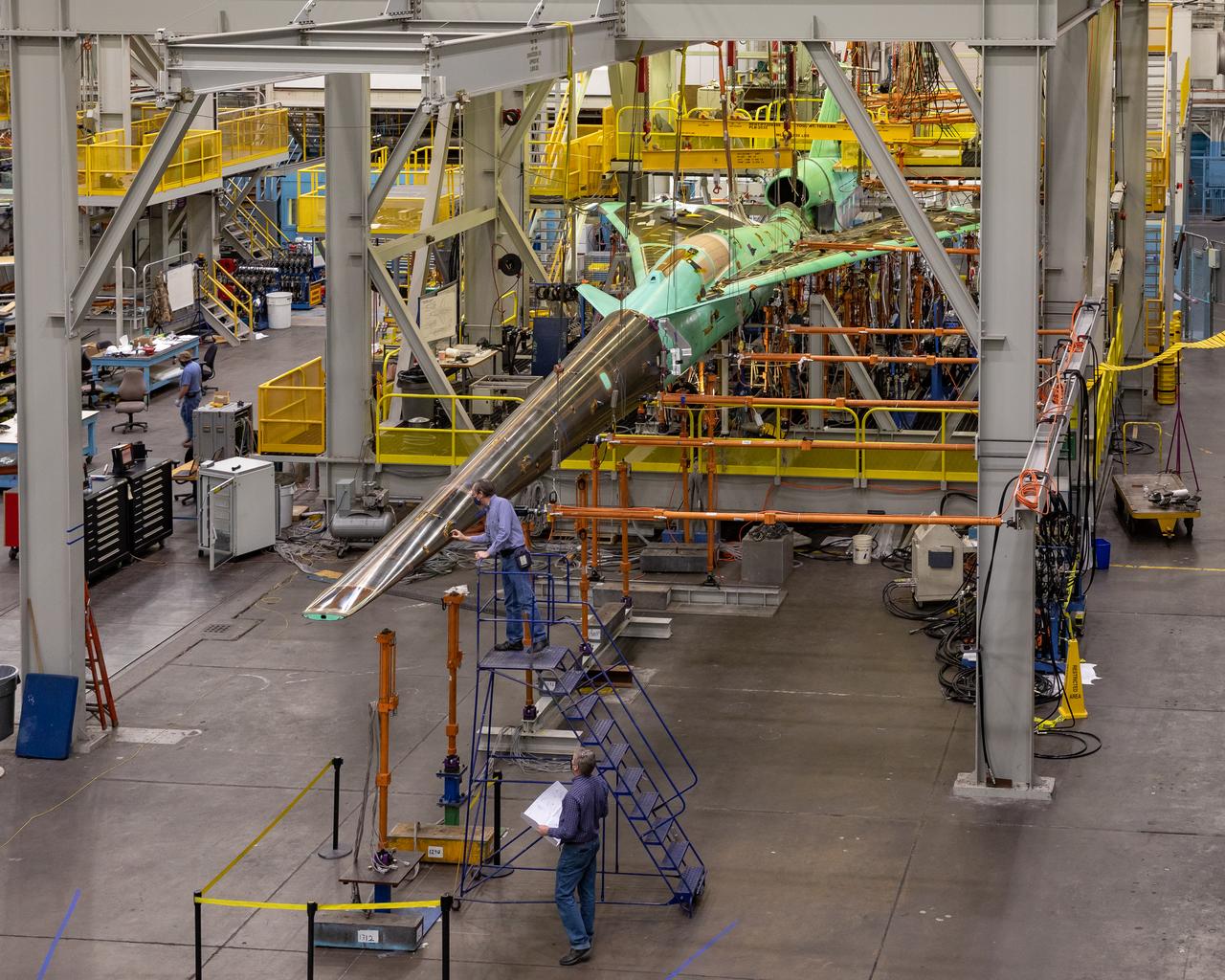
NASA’s X-59 undergoes a structural stress test at Lockheed Martin’s facility in Fort Worth, Texas. The X-59’s nose makes up one third of the aircraft, at 38-feet in length. The X-59 is a one-of-a-kind airplane designed to fly at supersonic speeds without making a startling sonic boom sound for the communities below. This is part of NASA’s Quesst mission, which plans to help enable supersonic air travel over land
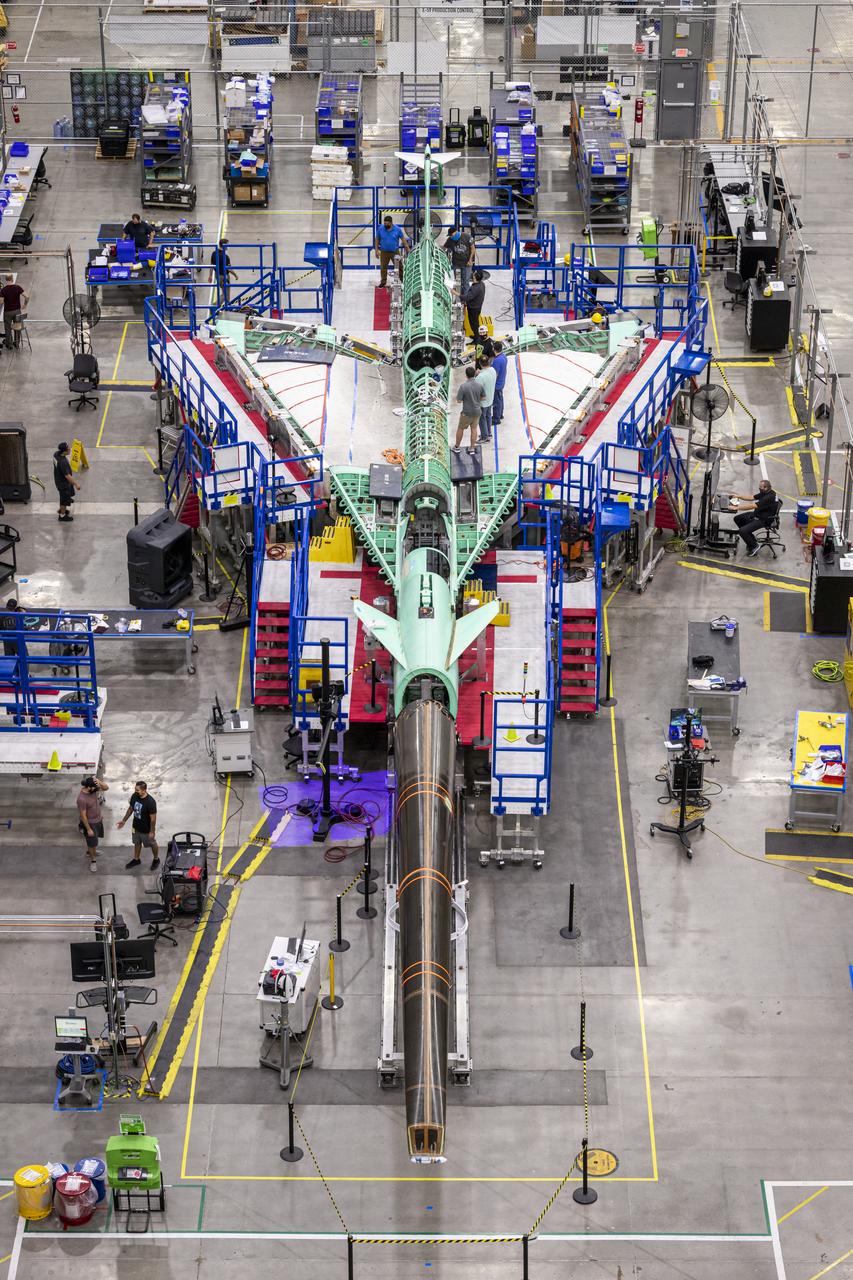
An overhead view of the X-59 supersonic plane with the tail on and the nose in the process of installation. The X-59’s nose is 38-feet long – approximately one third of the length of the entire aircraft. The aircraft, under construction at Lockheed Martin Skunk Works in Palmdale, California, will demonstrate the ability to fly supersonic while reducing the loud sonic boom to a quiet sonic thump.
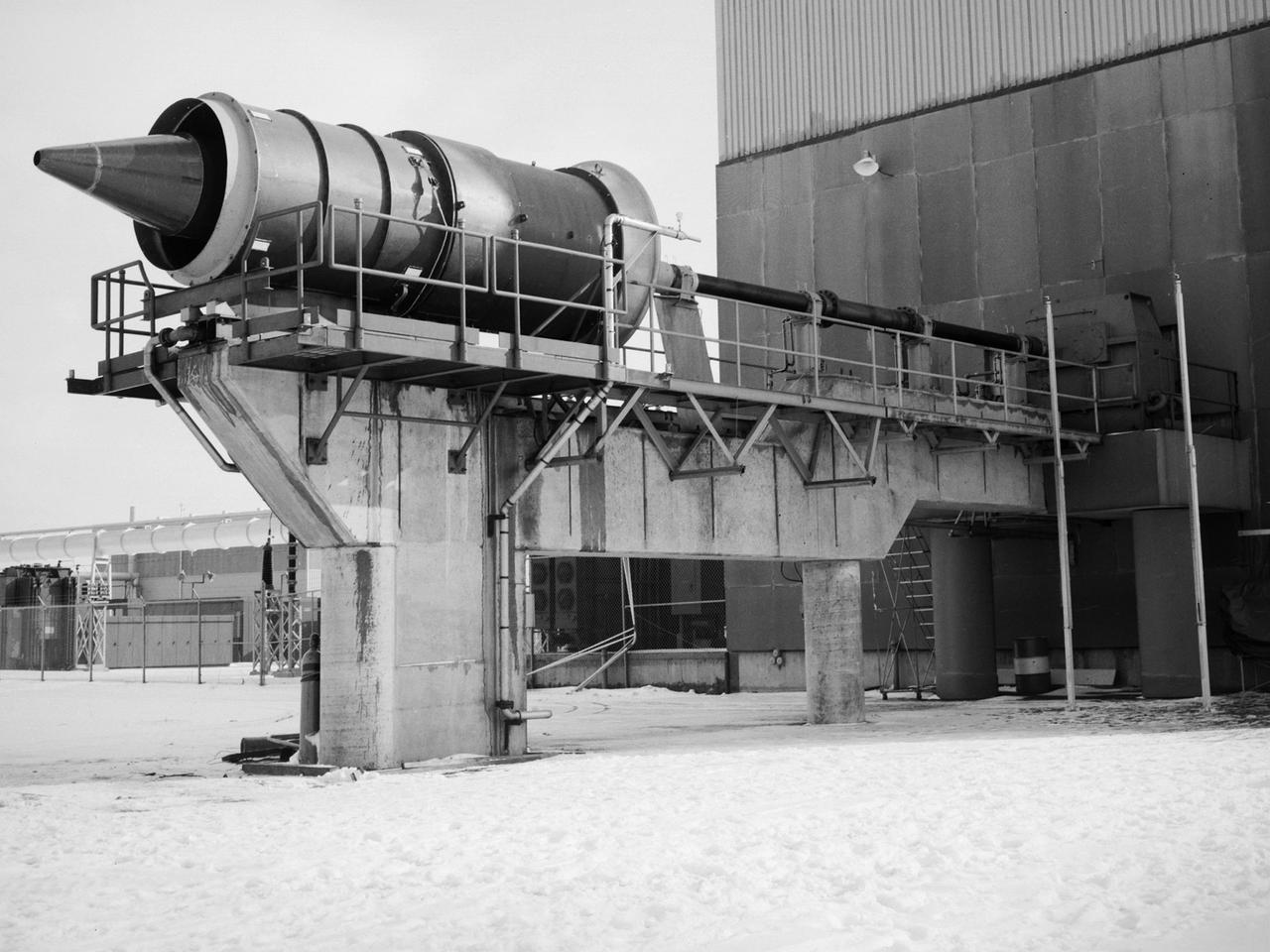
The Fan Noise Test Facility built at the Lewis Research Center to obtain far-field noise data for the National Aeronautics and Space Administration (NASA) and General Electric Quiet Engine Program. The engine incorporated existing noise reduction methods into an engine of similar power to those that propelled the Boeing 707 or McDonnell-Douglas DC-8 airliner. The new the low-bypass ratio turbofan engines of the 1960s were inherently quieter than their turbojet counterparts, researchers had a better grasp of the noise generation problem, and new acoustic technologies had emerged. Lewis contracted General Electric in 1969 to build and aerodynamically test three experimental engines with 72-inch diameter fans. The engines were then brought to Lewis and tested with an acoustically treated nacelle. This Fan Noise Test Facility was built off of the 10- by 10-Foot Supersonic Wind Tunnel’s Main Compressor and Drive Building. Lewis researchers were able to isolate the fan’s noise during these initial tests by removing the core of the engine. The Lewis test rig drove engines to takeoff tip speeds of 1160 feet per second. The facility was later used to test a series of full-scale model fans and fan noise suppressors to be used with the quiet engine. NASA researchers predicted low-speed single-stage fans without inlet guide vanes and with large spacing between rotors and stators would be quieter. General Electric modified a TF39 turbofan engine by removing the the outer protion of the fan and spacing the blade rows of the inner portion. The tests revealed that the untreated version of the engine generated less noise than was anticipated, and the acoustically treated nacelle substantially reduced engine noise.
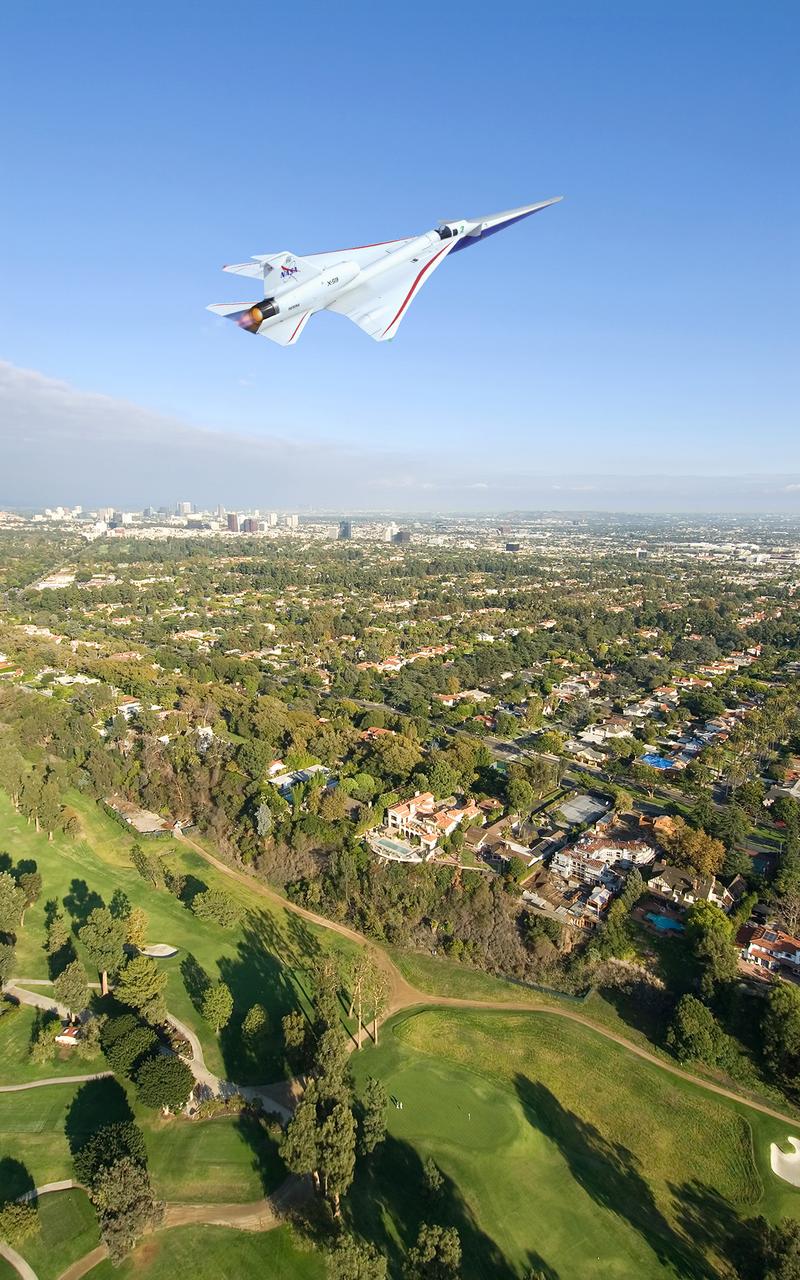
An artist illustration of the Low-Boom Flight Demonstration vehicle flying over a community.

Artist illustration of the X-59 in flight over land (with cities and rural areas below). Satellite image from USGS/NASA Landsat.
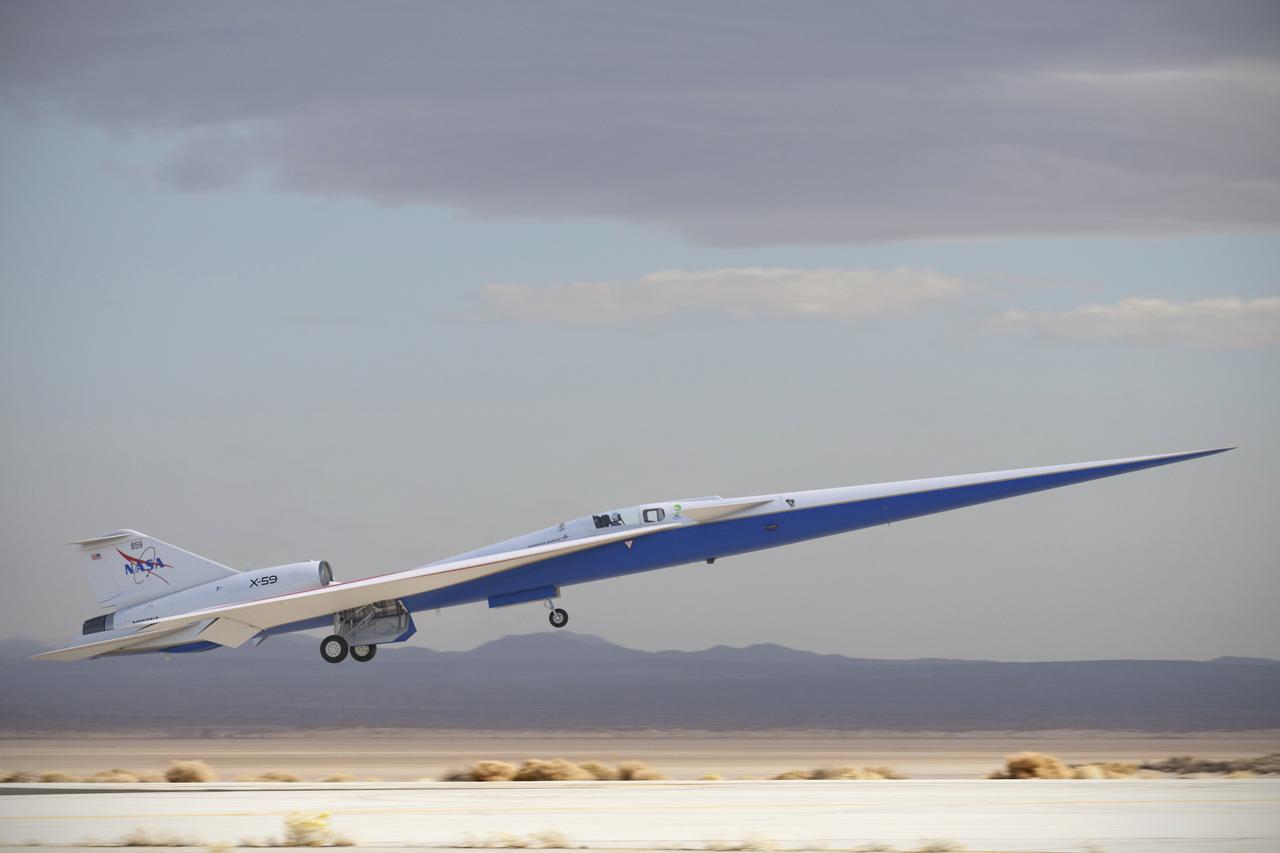
Artist illustration of the X-59 taking off from the runway.

Artist illustration of the X-59 in flight in blue skies and white clouds.
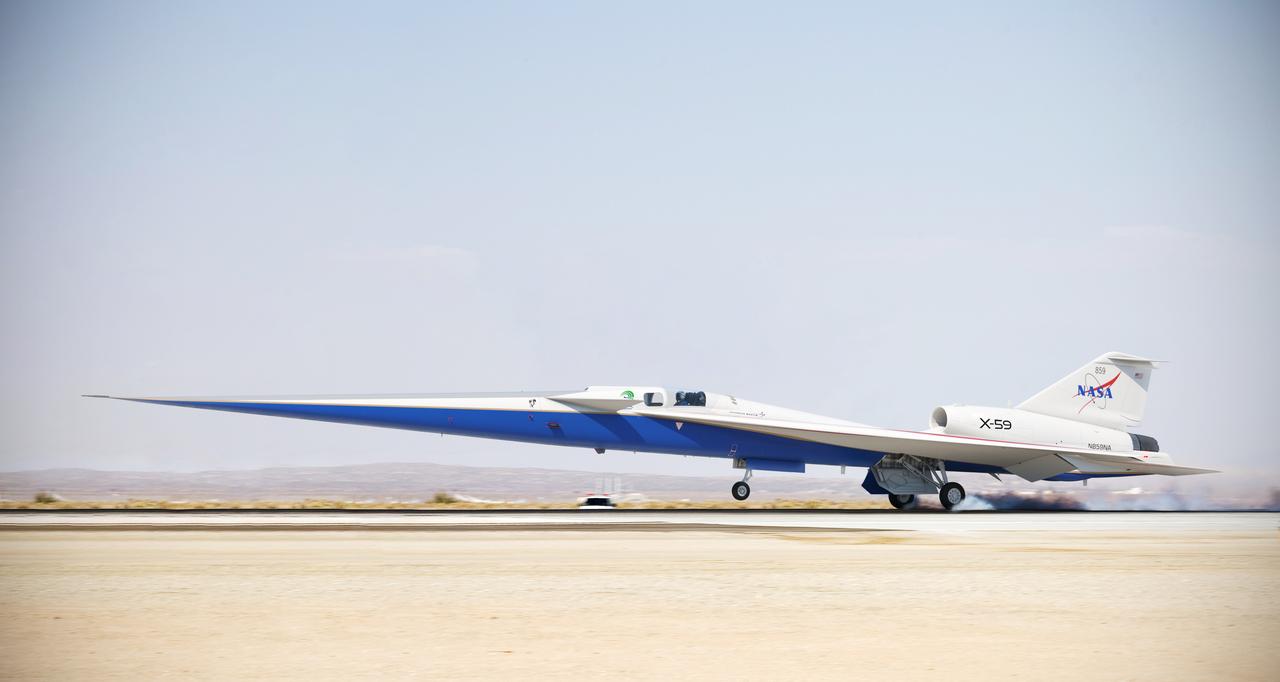
Artist illustration of the X-59 landing on the runway.
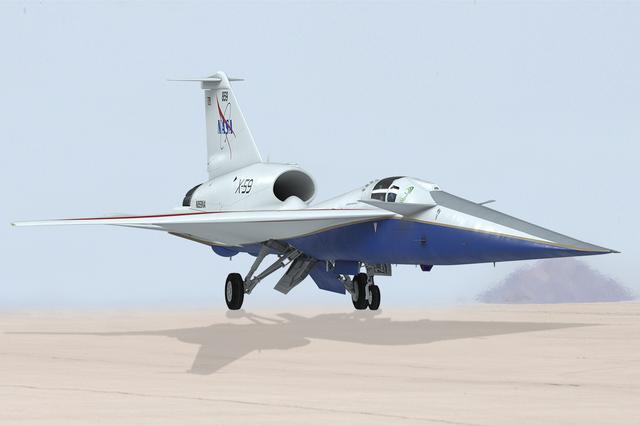
Artist illustration of the X-59 taxiing on the runway.
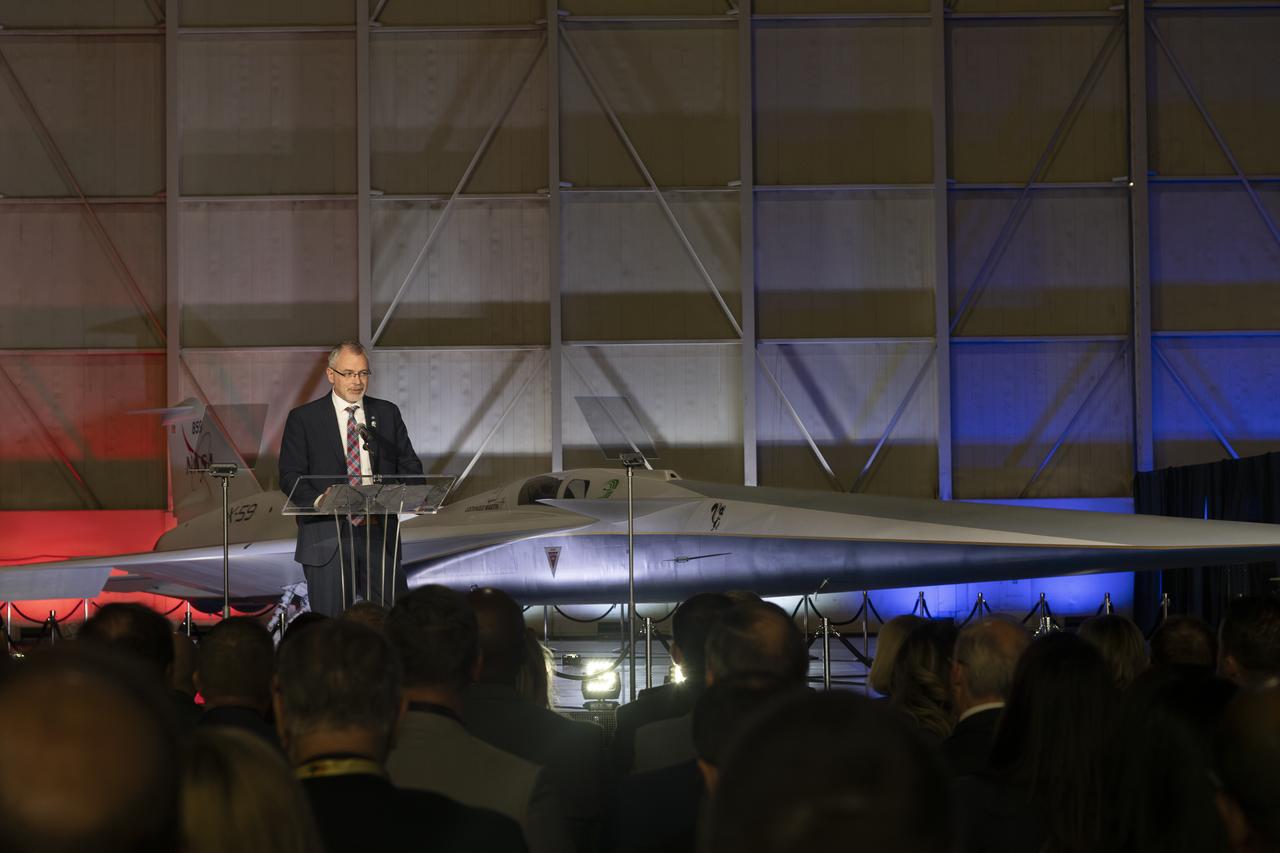
NASA Associate Administrator Jim Free speaks on stage following the unveiling of the agency’s X-59 quiet supersonic research aircraft at a January 12, 2024 event at Lockheed Martin Skunk Works in Palmdale, California. The X-59 is the centerpiece of NASA’s Quesst mission, which seeks to solve one of the major barriers to supersonic flight over land, currently banned in the United States, by making sonic booms quieter.
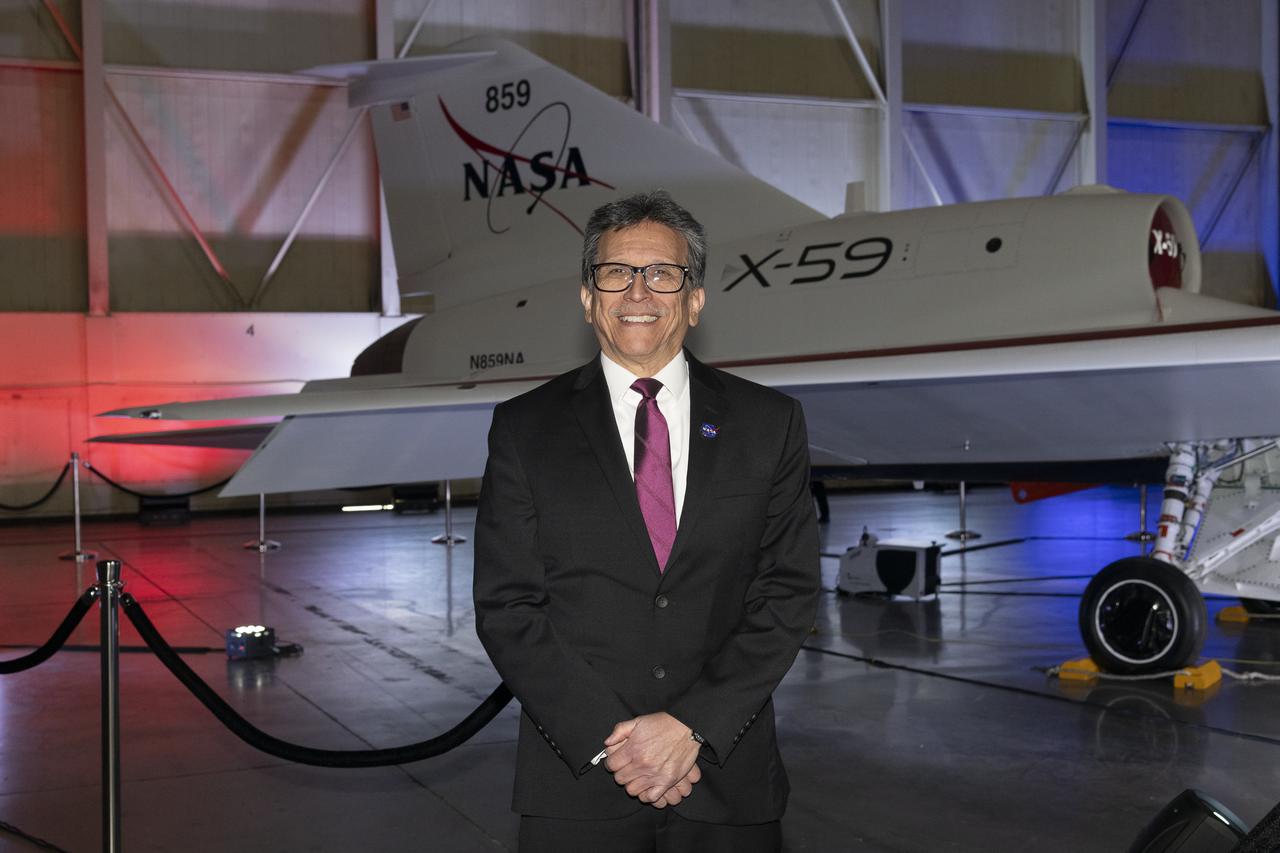
NASA’s structures lead for the X-59, Dr. Walt Silva, poses in front of the agency’s X-59 quiet supersonic research aircraft at a January 12, 2024 event at Lockheed Martin Skunk Works in Palmdale, California. The X-59 is the centerpiece of NASA’s Quesst mission, which seeks to solve one of the major barriers to supersonic flight over land, currently banned in the United States, by making sonic booms quieter.
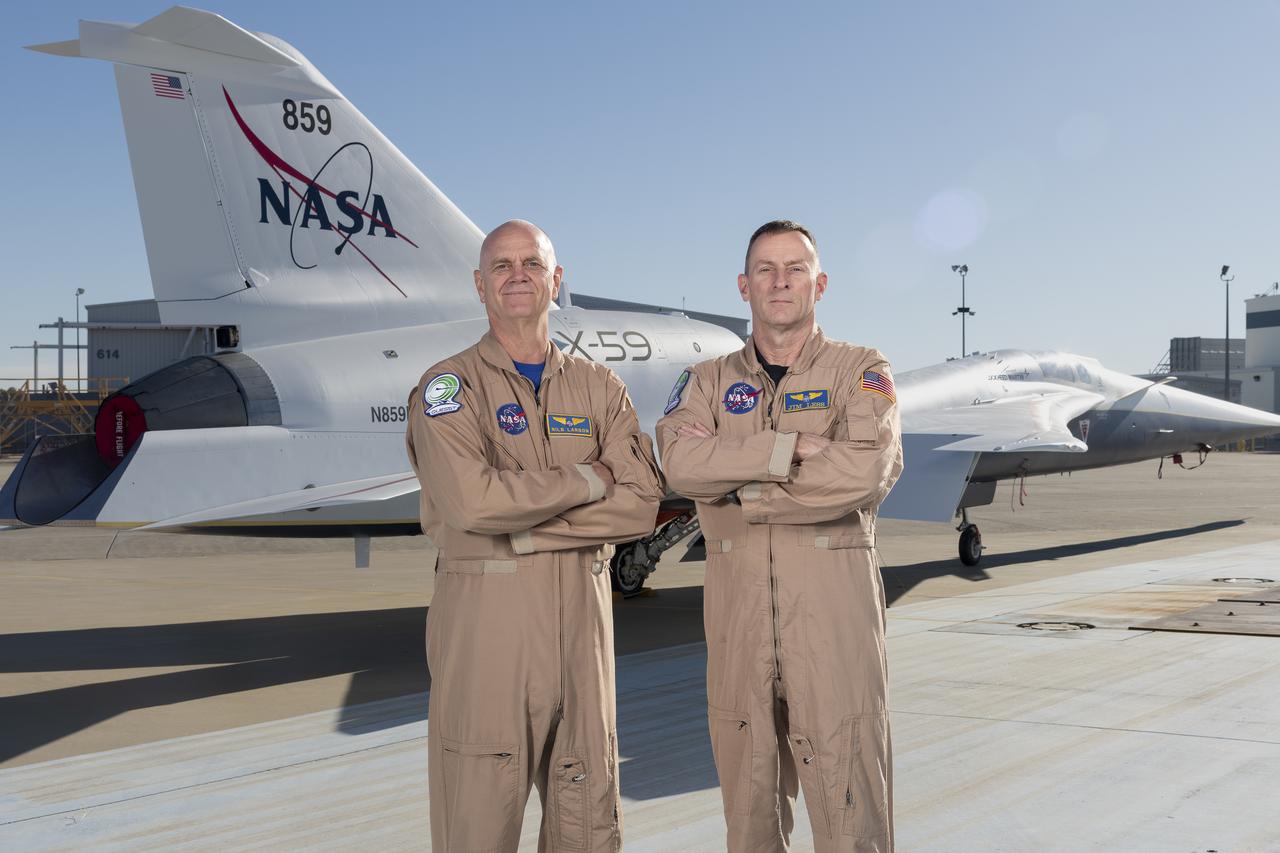
NASA test pilots Nils Larson (left) and Jim “Clue” Less (right) pose with the newly-painted X-59 as it sits on the ramp at Lockheed Martin Skunk Works in Palmdale, California. The X-59 is the centerpiece of NASA’s Quesst mission, which seeks to solve one of the major barriers to supersonic flight over land, currently banned in the United States, by making sonic booms quieter.
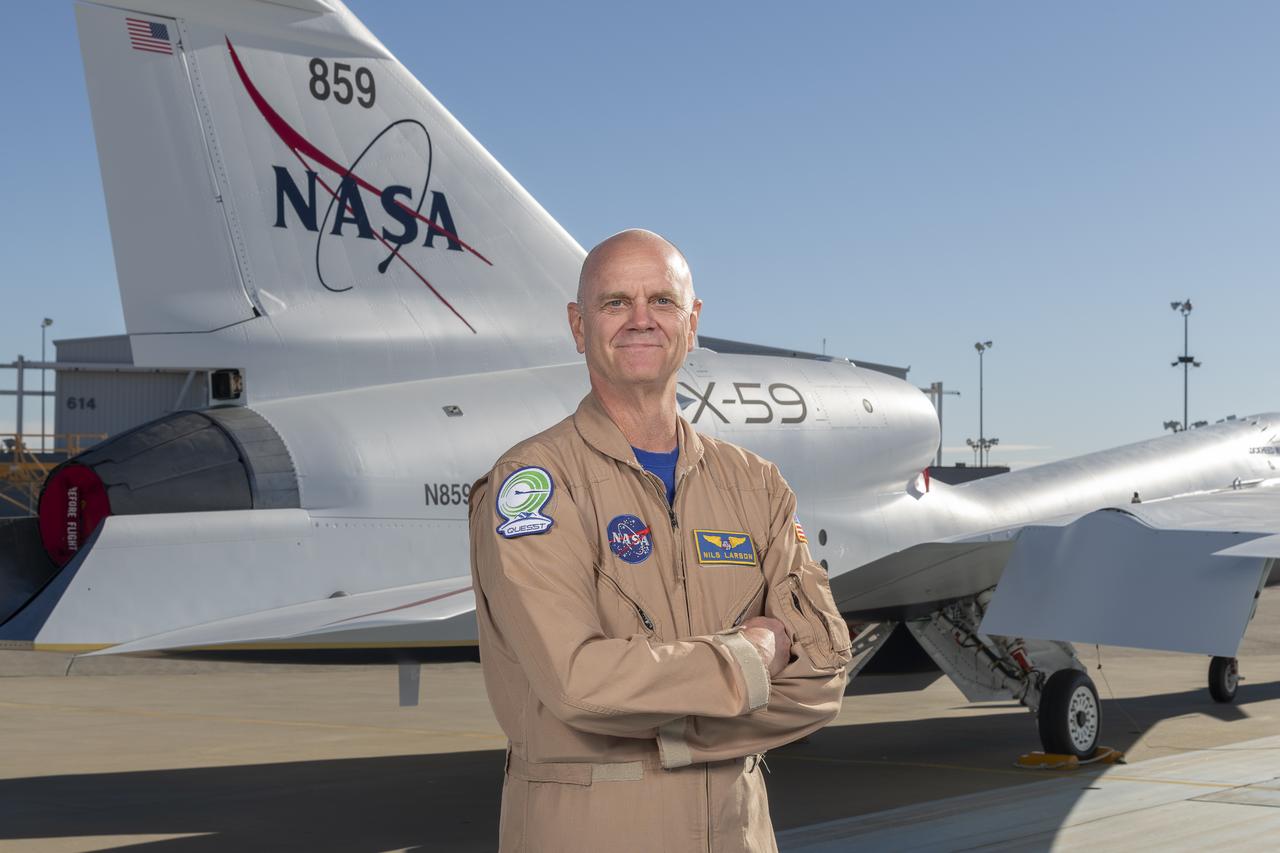
NASA test pilot Nils Larson poses with the newly-painted X-59 as it sits on the ramp at Lockheed Martin Skunk Works in Palmdale, California. The X-59 is the centerpiece of NASA’s Quesst mission, which seeks to solve one of the major barriers to supersonic flight over land, currently banned in the United States, by making sonic booms quieter.