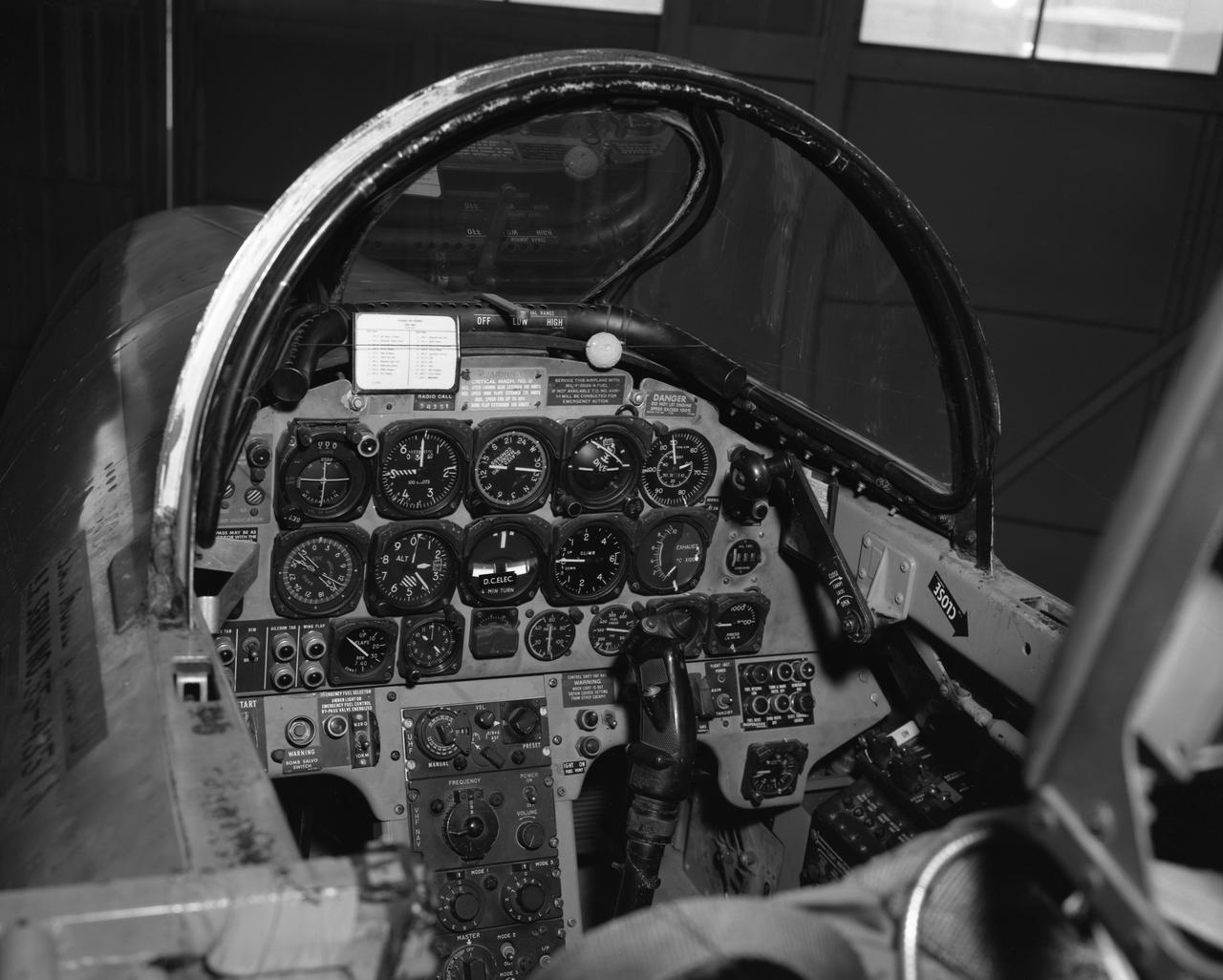
T-33 #351 Cockpit control panel. Feb. 13, 1964
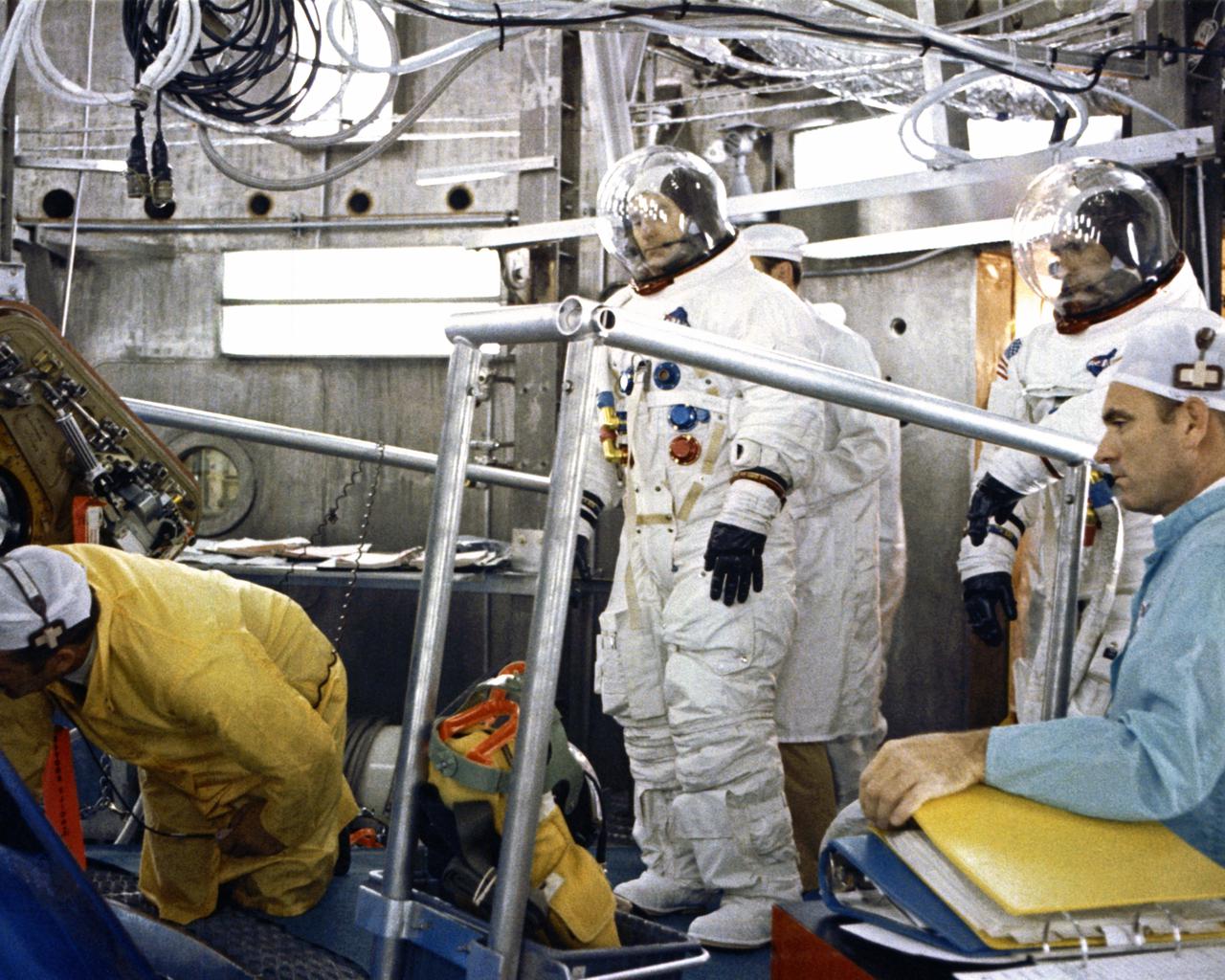
CAPE CANAVERAL, Fla. -- Apollo 12 lunar module pilot Alan L. Bean enters spacecraft in preparation for altitude chamber test with mission commander Charles Conrad Jr. and Richard F. Gordon Jr., command module pilot. Air was pumped out of the chamber to simulate a space environment. The Apollo 12 astronauts are scheduled to perform the nation’s second manned lunar landing. Photo credit: NASA

STS085-351-005 (7 - 19 August 1997) --- Payload specialist Bjarni Tryggvason of the Canadian Space Agency (CSA) shows off the Microgravity Vibration Isolation Mount (MIM) fluid disk. One of five fluid loop experiments (FLEX), this one deals with the growth of resonance patterns (GORP) in gaseous liquid systems.
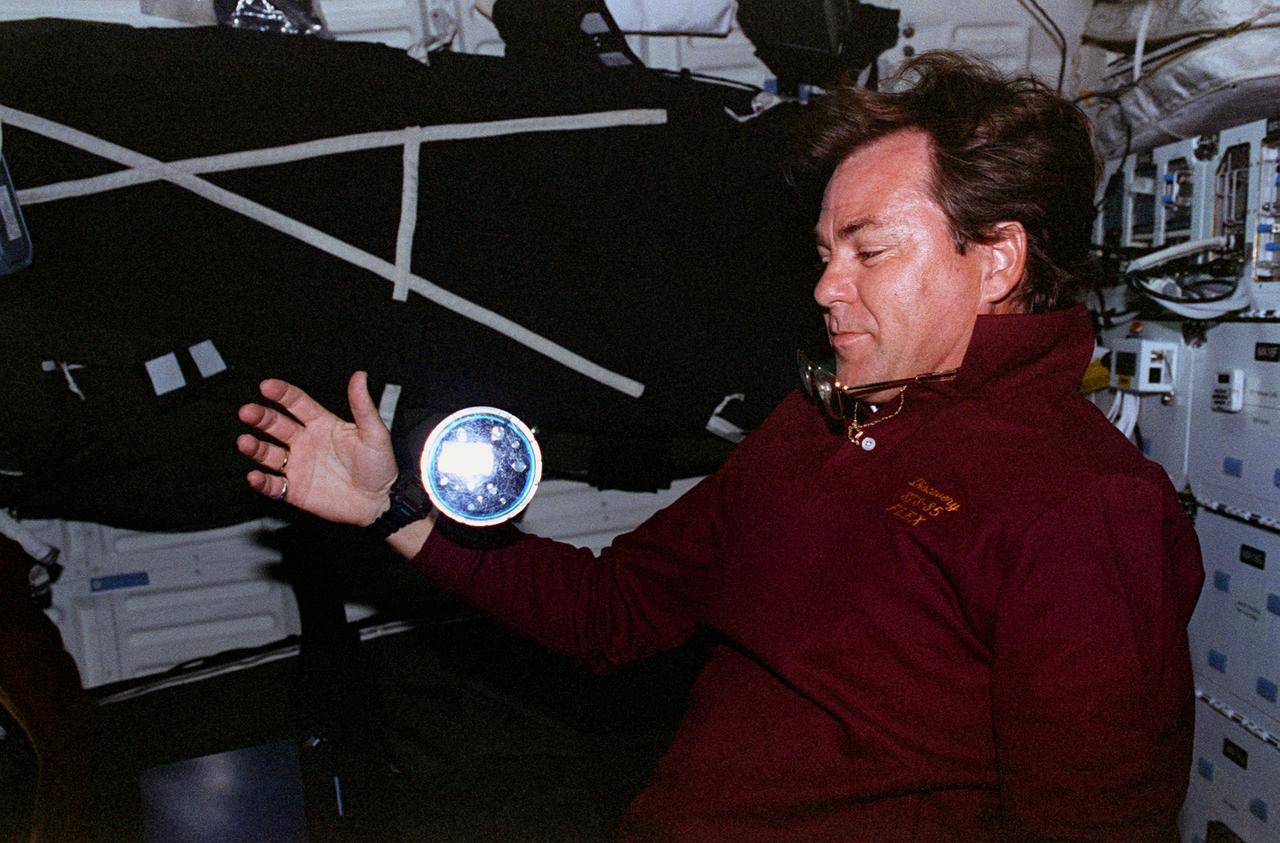
STS085-351-003 (7 - 19 August 1997) --- Payload specialist Bjarni Tryggvason of the Canadian Space Agency (CSA) shows off the Microgravity Vibration Isolation Mount (MIM) fluid disk. One of five Fluid Loop Experiments (FLEX), this one deals with the Growth of Resonance Patterns (GORP) in gaseous liquid systems.
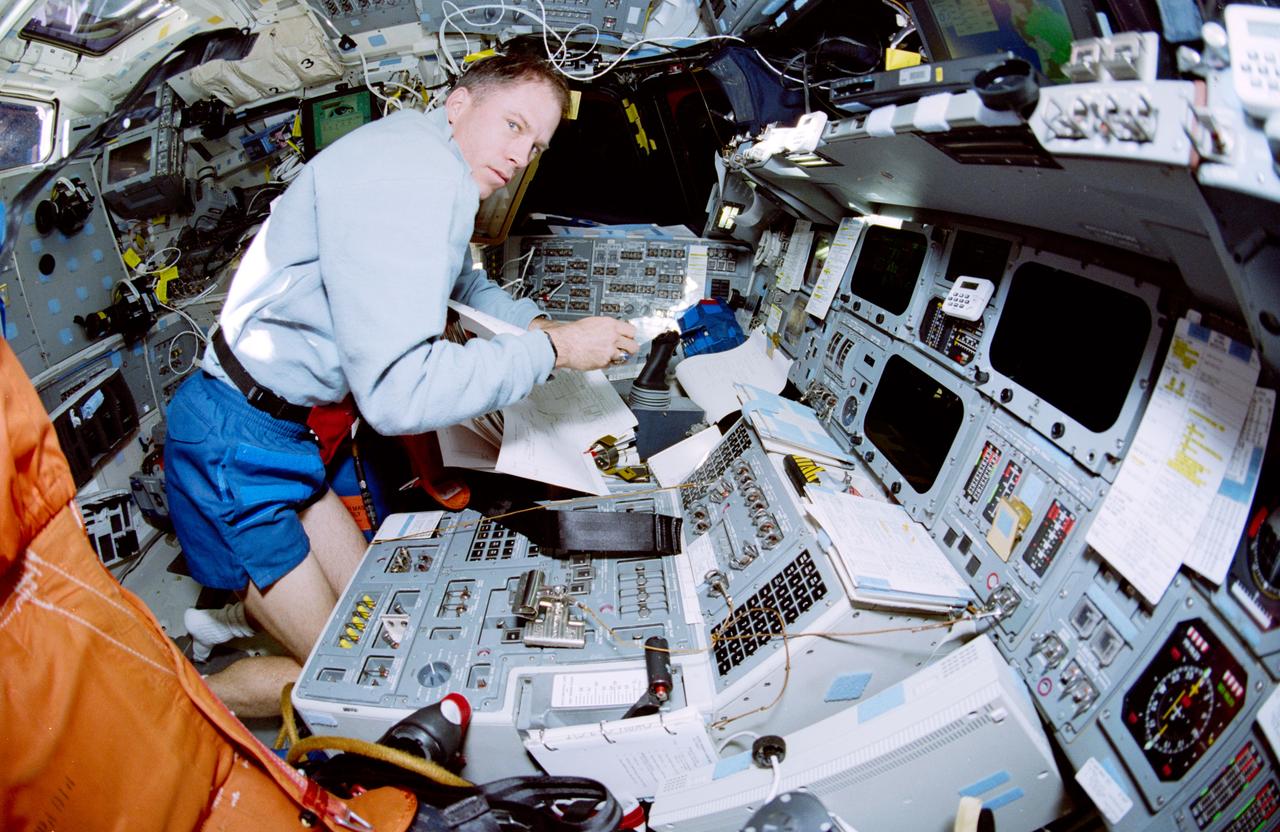
STS090-351-012 (17 April - 3 May 1998) --- A "fish-eye" lens on a 35mm camera records Richard A. Searfoss, mission commander, at the commander's station on forward flight deck of the Earth-orbiting Space Shuttle Columbia. The pilot's station is in the foreground.
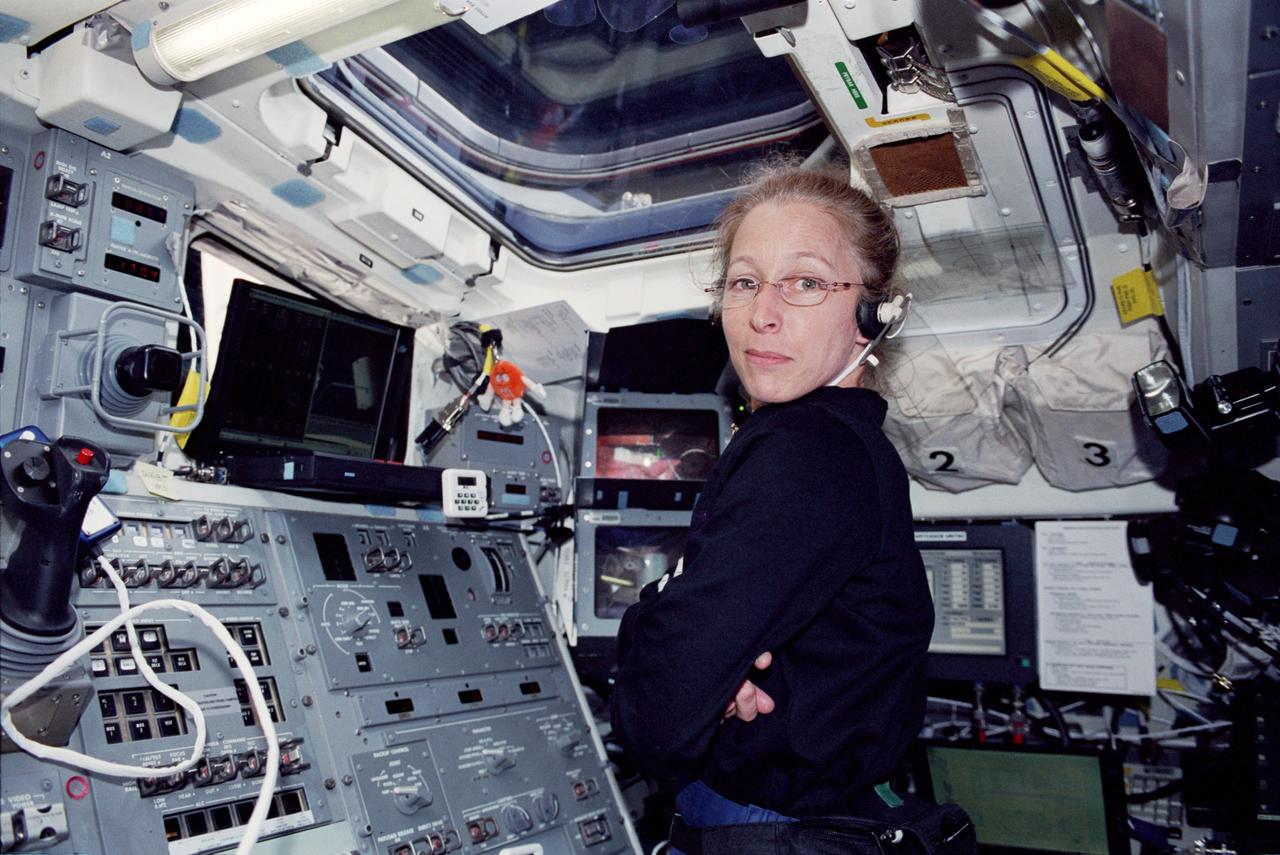
STS098-351-0013 (7-20 February 2001) --- Astronaut Marsha S. Ivins, mission specialist, spent a great deal of time on the aft flight deck of the Space Shuttle Atlantis during space walks and other important activities of the STS-98/5a mission.

NASA Ames Research Center 70 Year Anniversary Gala Dinner held at Santa Clara University, Santa Clara, California with special guest speaker Nichelle Nichols of Star Trek fame.
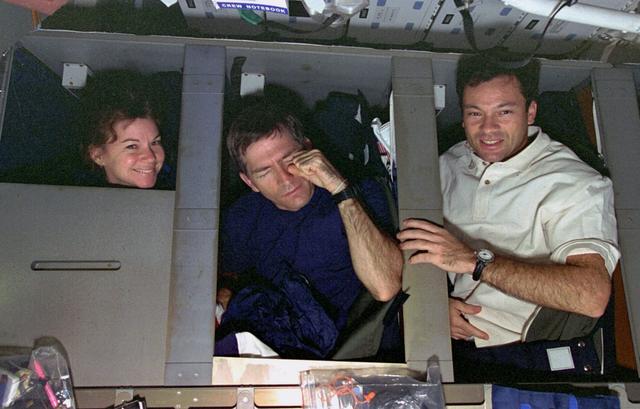
STS073-351-035 (20 October - 5 November 1995) --- Three crew members are captured on camera at the end of their sleep shift on the middeck of the Earth-orbiting Space Shuttle Columbia. Pictured are (left to right) astronaut Catherine G. Coleman, mission specialist; payload specialist Fred W. Leslie and astronaut Michael E. Lopez-Alegria, mission specialist. The trio joined four other crewmembers for 16 days of in-space research in support of the United States Microgravity Laboratory (USML-2) mission.
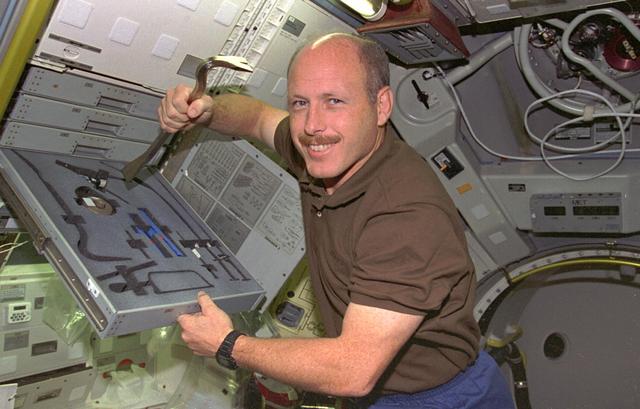
STS073-351-024 (20 October - 5 November 1995) --- Astronaut Kenneth D. Bowersox, STS-73 mission commander, retrieves a crow bar from a tool set onboard the science module in the cargo bay of the Earth-orbiting Space Shuttle Columbia. Various tools were available for a variety of in-flight maintenance tasks for the crew to carry out during the 16-day United States Microgravity Laboratory (USML-2) mission.
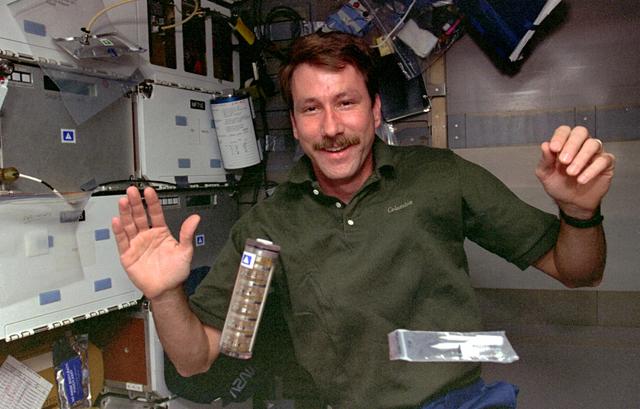
STS073-351-009 (20 October - 5 November 1995) --- Astronaut Kent V. Rominger, STS-73 pilot, retrieves a protein sample on the middeck of the Earth-orbiting Space Shuttle Columbia. Rominger, along with four other NASA astronauts and two guest researchers, spent 16 full days in space in support of the United States Microgravity Laboratory (USML-2) mission.

STS075-351-022 (22 Feb.- 9 March 1996) --- The space shuttle Columbia's vertical stabilizer appears to point to the four stars of the Southern Cross. The scene was captured with a 35mm camera just prior to a sunrise. The seven member crew was launched aboard the space shuttle Columbia on Feb. 22, 1996, and landed on March 9, 1996. Crew members were Andrew M. Allen, mission commander; Scott J. Horowitz, pilot; Franklin R. Chang-Diaz, payload commander; and Maurizio Cheli, European Space Agency (ESA); Jeffrey A. Hoffman and Claude Nicollier, ESA, all mission specialists; along with payload specialist Umberto Guidoni of the Italian Space Agency (ASI).
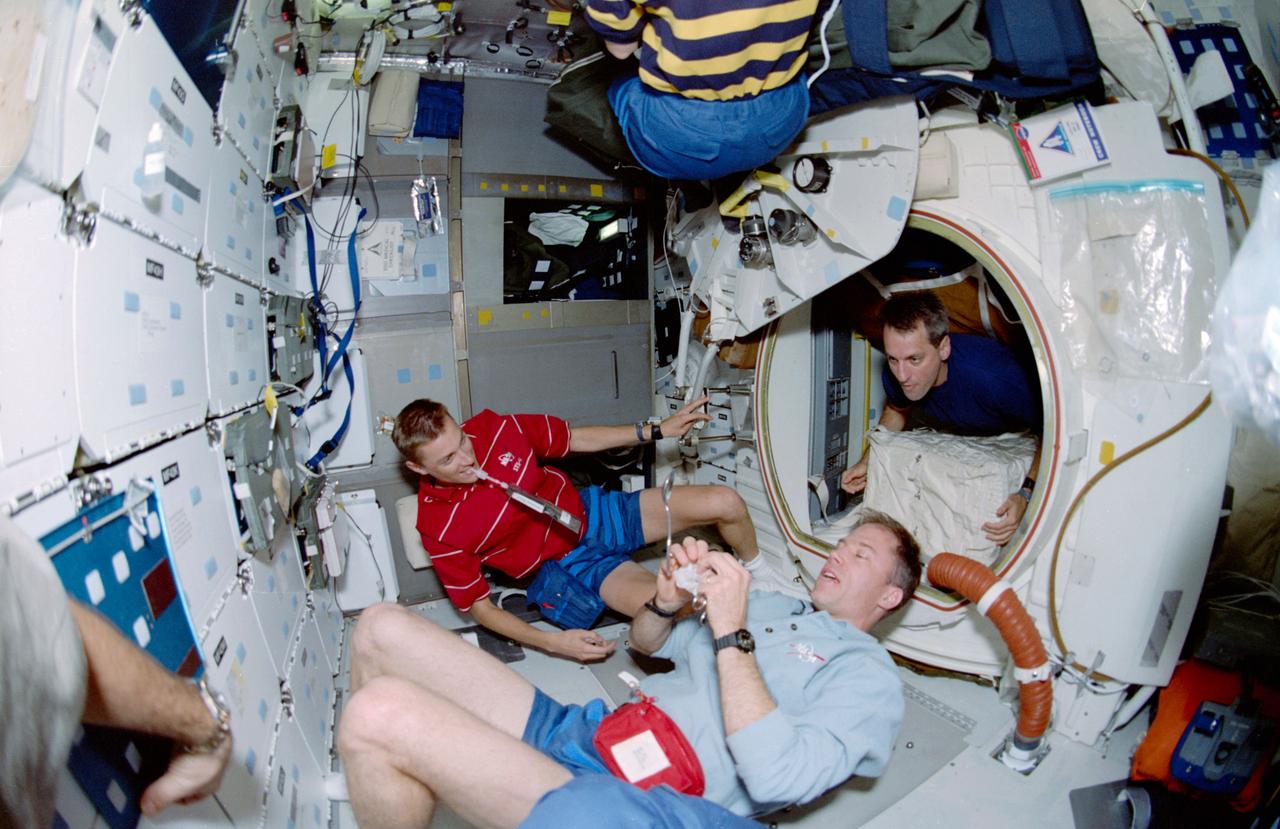
STS090-351-009 (17 April - 3 May 1998) --- Three members of the Neurolab crew were photographed during off-duty time on the mid-deck aboard the Earth-orbiting Space Shuttle Columbia. Left to right are James A. (Jim) Pawelczyk, payload specialist, and astronauts Richard A. Searfoss, mission commander; and Richard M. Linnehan, payload commander. Linnehan is in the hatchway of the tunnel that connected the crew members to the Spacelab Science Module in Columbia's cargo bay. A "fish-eye" lens on a 35mm camera gives the scene a slightly distorted look. Five NASA astronauts and two payload specialists went on to spend a little more than 16-days in Earth-orbit in support of the Neurolab mission.
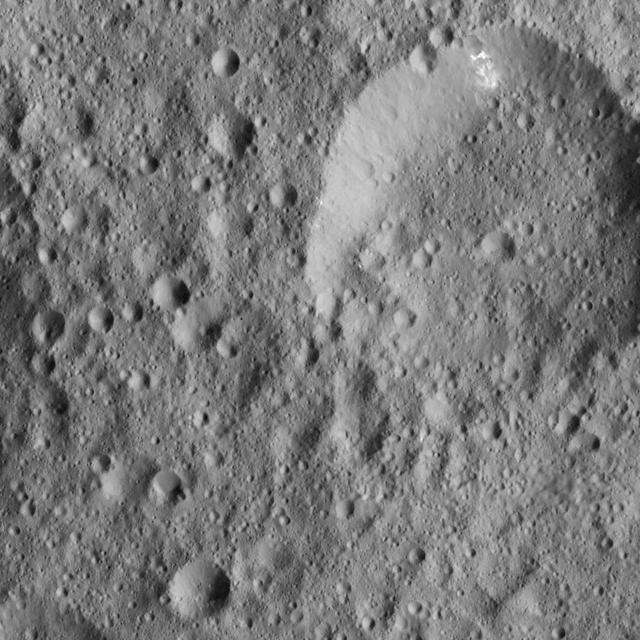
This view from NASA's Dawn spacecraft captures a portion of the northern hemisphere of Ceres. Bright material can be seen in the wall of the large crater at upper right. The image is centered at approximately 15 degrees north latitude, 351 degrees east longitude. Dawn captured the scene on Dec. 21, 2015 from its low-altitude mapping orbit (LAMO), at an approximate altitude of 240 miles (385 kilometers) above Ceres. The image resolution is 120 feet (35 meters) per pixel. http://photojournal.jpl.nasa.gov/catalog/PIA20302
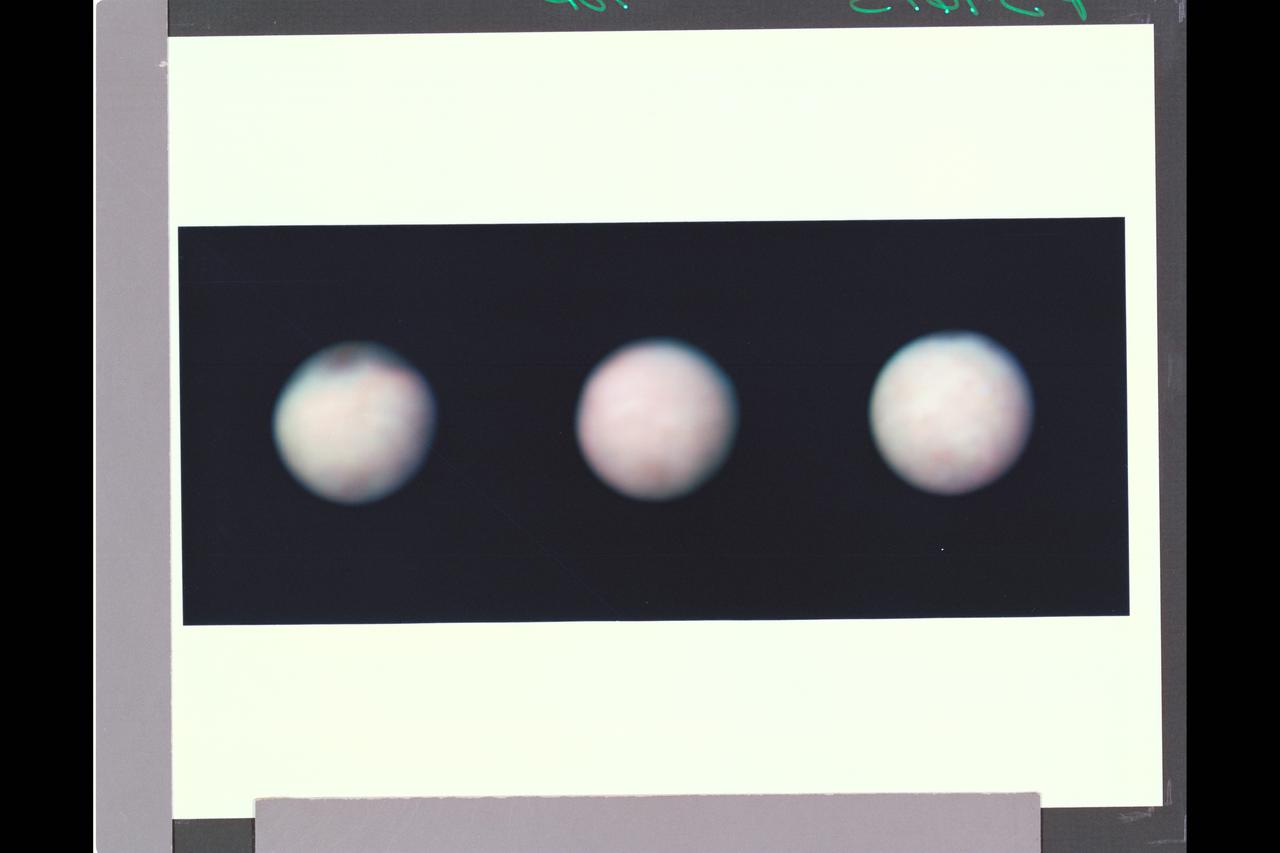
P-34615 These three color images of Triton were taken at three different orbital longitudes to show different faces of the neptune moon. the overall pinkish cast of the images may be due to the presence of reddish material on Triton produced by irradiation of methane gas and ice on Triton. In these pictures the south pole is at roughly 6 o'clock, about 1/6th of the way from the bottom. Near the top of the left on Triton's equator are several large dark spots that are probably suface markings. These markings rotate with a 5.88-day orbital period of Triton. The left image has a central longitude 288 degrees, the center at 351 degrees ( nearly the hemisphere that will be seen at Voyager's closest approach to Triton), and the right image is at 35 degrees logitude.
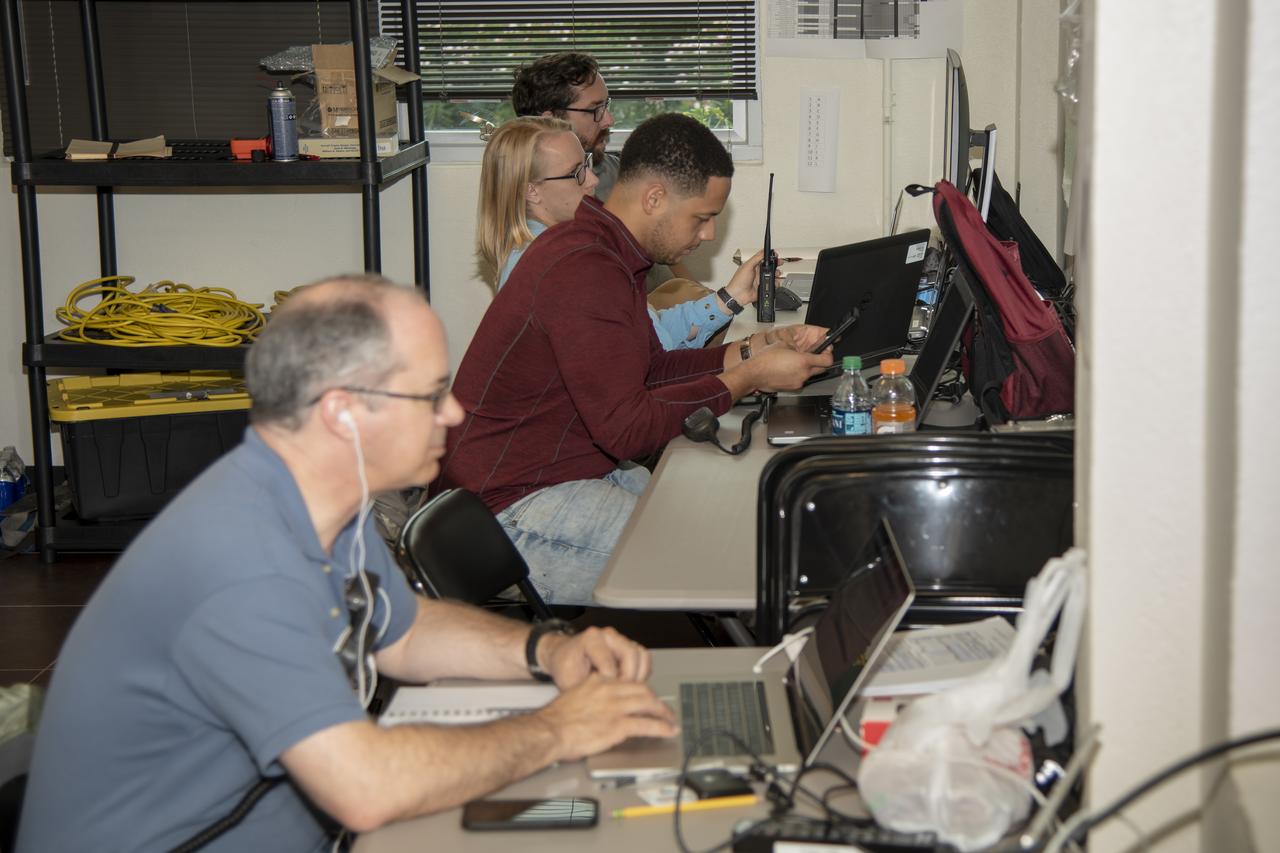
While NASA’s F/A-18 goes supersonic off the coast, a team of researchers monitor the flight and operate multiple sound monitor stations around Galveston and its surrounding area. This allows NASA to obtain accurate sound level data, which gets matched to community response data.
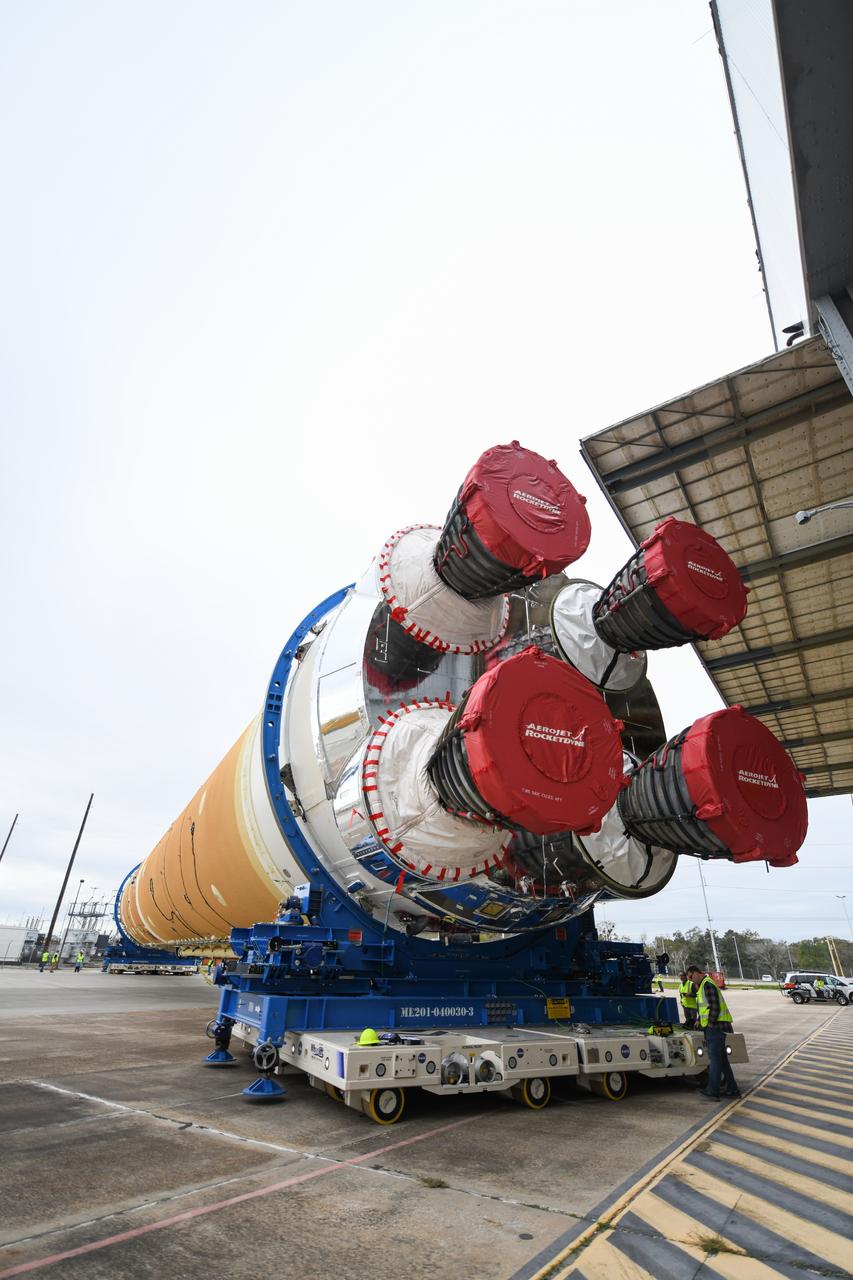
These images show how teams at NASA’s Michoud Assembly Facility in New Orleans moved the core stage, complete with all four RS-25 engines, for NASA’s Space Launch System (SLS) rocket to Building 110 for final shipping preparations on Jan. 1. The SLS core stage includes state-of-the-art avionics, propulsion systems and two colossal propellant tanks that collectively hold 733,000 gallons of liquid oxygen and liquid hydrogen to power its four RS-25 engines. The completed stage, which will provide more than 2 million pounds of thrust to help power the first Artemis mission to the Moon, will be shipped via the agency’s Pegasus barge from Michoud to NASA’s Stennis Space Center near Bay St. Louis, Mississippi, later this month. Once at Stennis, the Artemis rocket stage will be loaded into the B-2 Test Stand for the core stage Green Run test series. The comprehensive test campaign will progressively bring the entire core stage, including its avionics and engines, to life for the first time to verify the stage is fit for flight ahead of the launch of Artemis I.
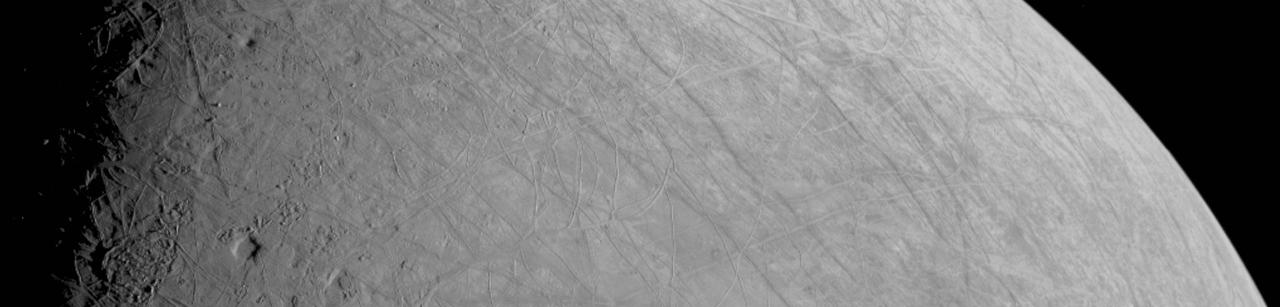
This look at the complex, ice-covered surface of Jupiter's moon Europa came from NASA's Juno mission during a close pass on Sept. 29, 2022. At closest approach, the spacecraft came within a distance of about 219 miles (352 kilometers). Juno's flyby is only the third close pass of the moon in history and the closest look any spacecraft has provided of Europa since Jan. 3, 2000, when NASA's Galileo came within 218 miles (351 kilometers) of the surface. Europa is the sixth-largest moon in the solar system, slightly smaller than Earth's moon. Scientists think a salty ocean lies below a miles-thick ice shell. This segment of the first image of Europa taken during this flyby by the spacecraft's JunoCam (a public-engagement camera) zooms in on a swath of Europa's surface north of the equator. Due to the enhanced contrast between light and shadow seen along the terminator (the nightside boundary, at 10 degrees west longitude), rugged terrain features are easily seen, including tall shadow-casting blocks, while bright and dark ridges and troughs curve across the surface. The oblong pit near the terminator might be a degraded impact crater. The vertical area covered in the image is 155 miles (250 kilometers) tall. The resolution of the image is 0.6 miles (1 kilometer) per pixel. https://photojournal.jpl.nasa.gov/catalog/PIA25330