
NASA Dryden's highly modified F-15B aircraft, tail number 837, serves as an Intelligent flight Control System (IFCS) research testbed aircraft.
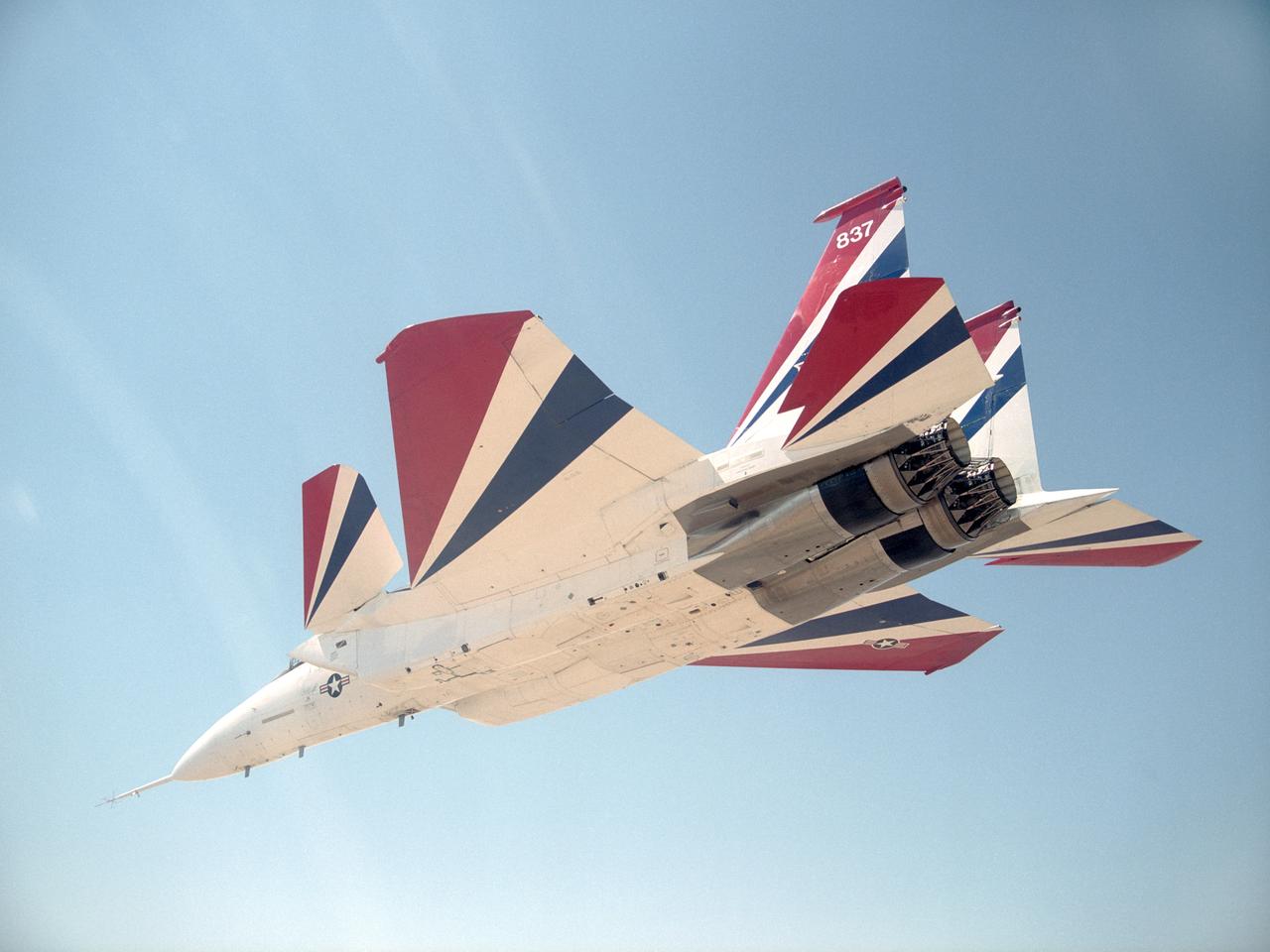
NASA Dryden's highly modified F-15B aircraft, tail number 837, serves as an Intelligent flight Control System (IFCS) research testbed aircraft.

NASA Dryden's highly modified F-15B aircraft, tail number 837, serves as an Intelligent flight Control System (IFCS) research testbed aircraft.
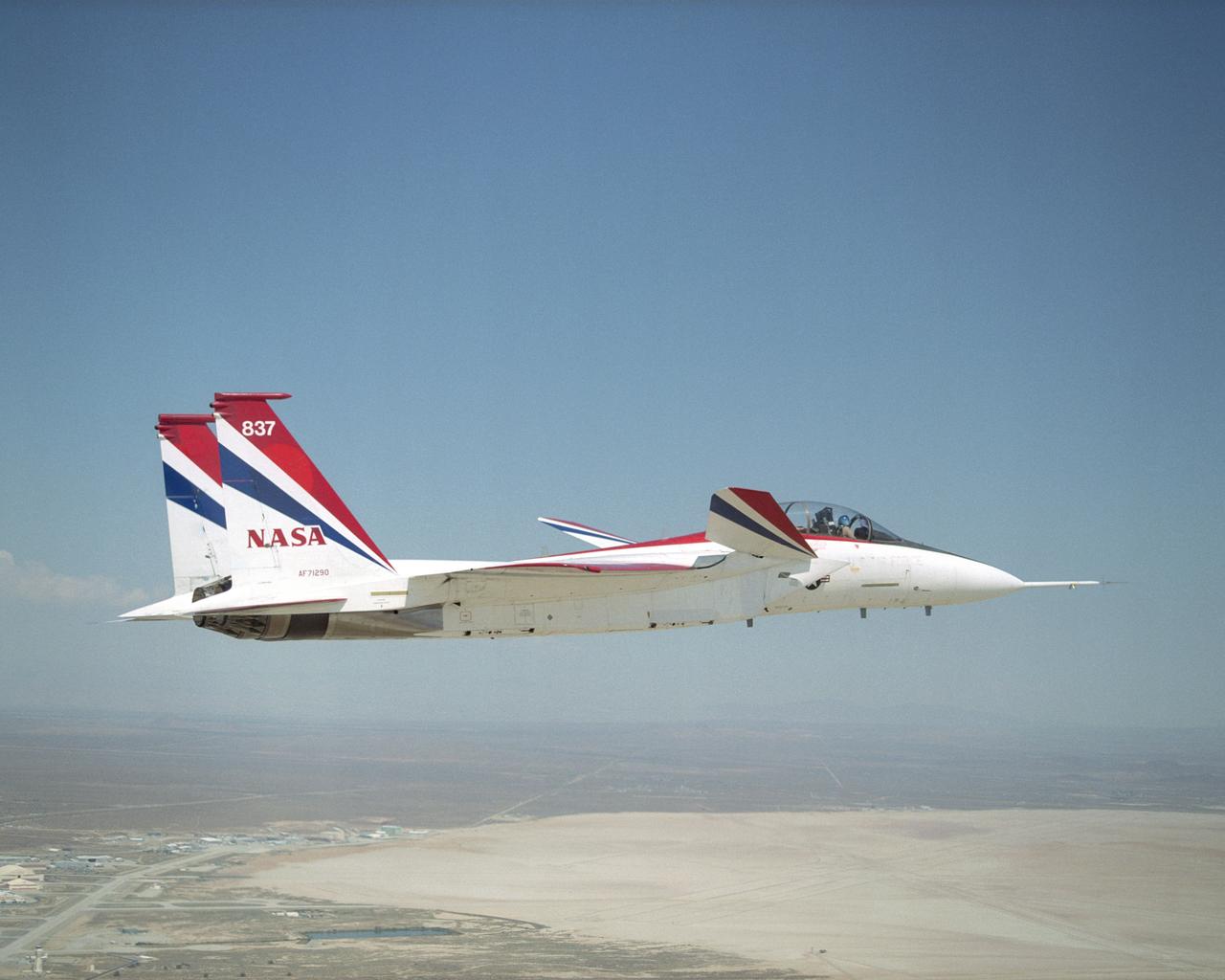
NASA Dryden's highly modified F-15B aircraft, tail number 837, serves as an Intelligent flight Control System (IFCS) research testbed aircraft.
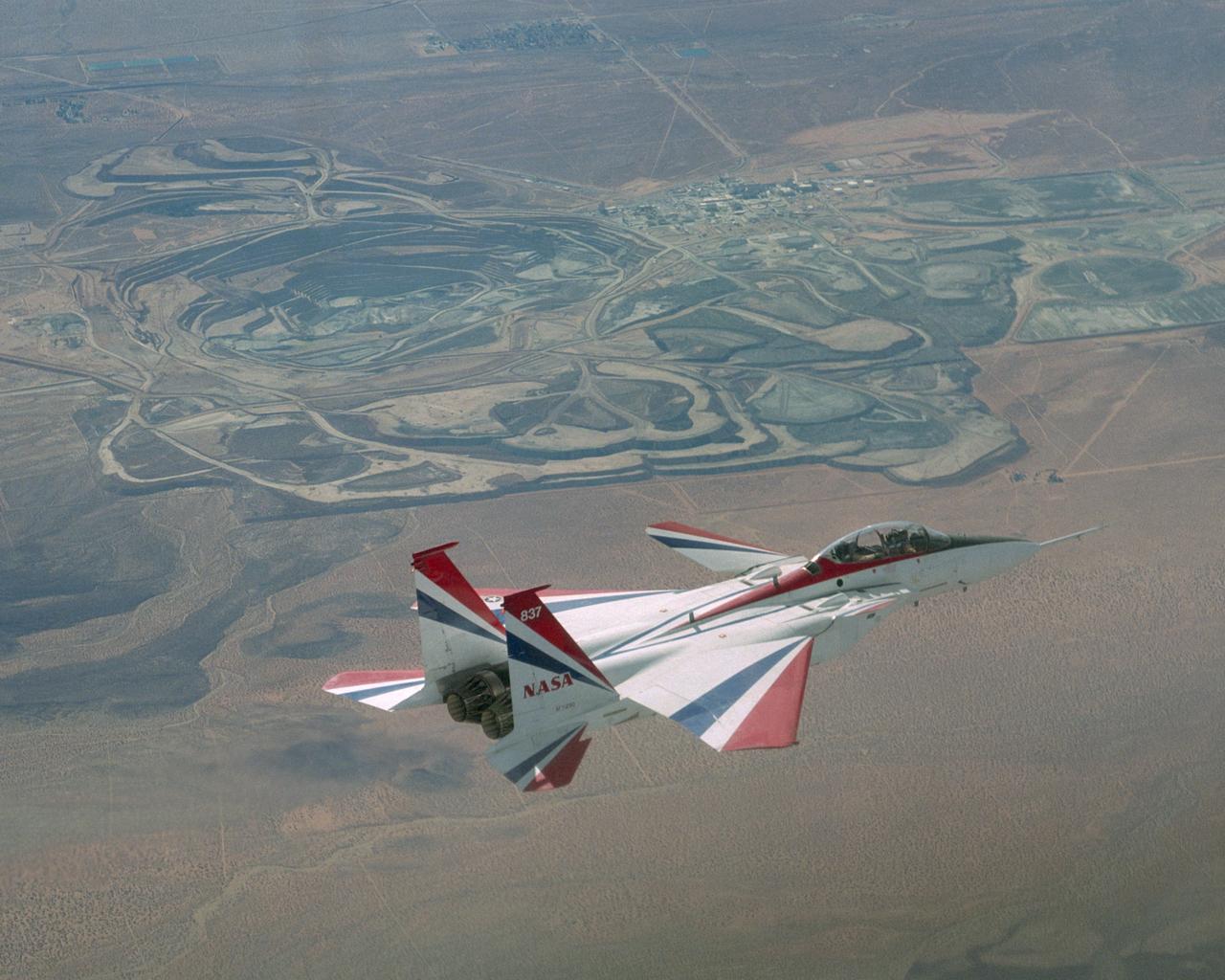
NASA Dryden's highly modified F-15B, tail number 837, seen here with the Boron Mine as a backdrop, resumed Intelligent Flight Control System (IFCS) project flights on Dec. 6, 2002.

This view from a NASA Dryden F-18 chase aircraft shows Dryden's highly modified F-15B, tail number 837, which resumed Intelligent Flight Control System (IFCS) project flights on Dec. 6, 2002.
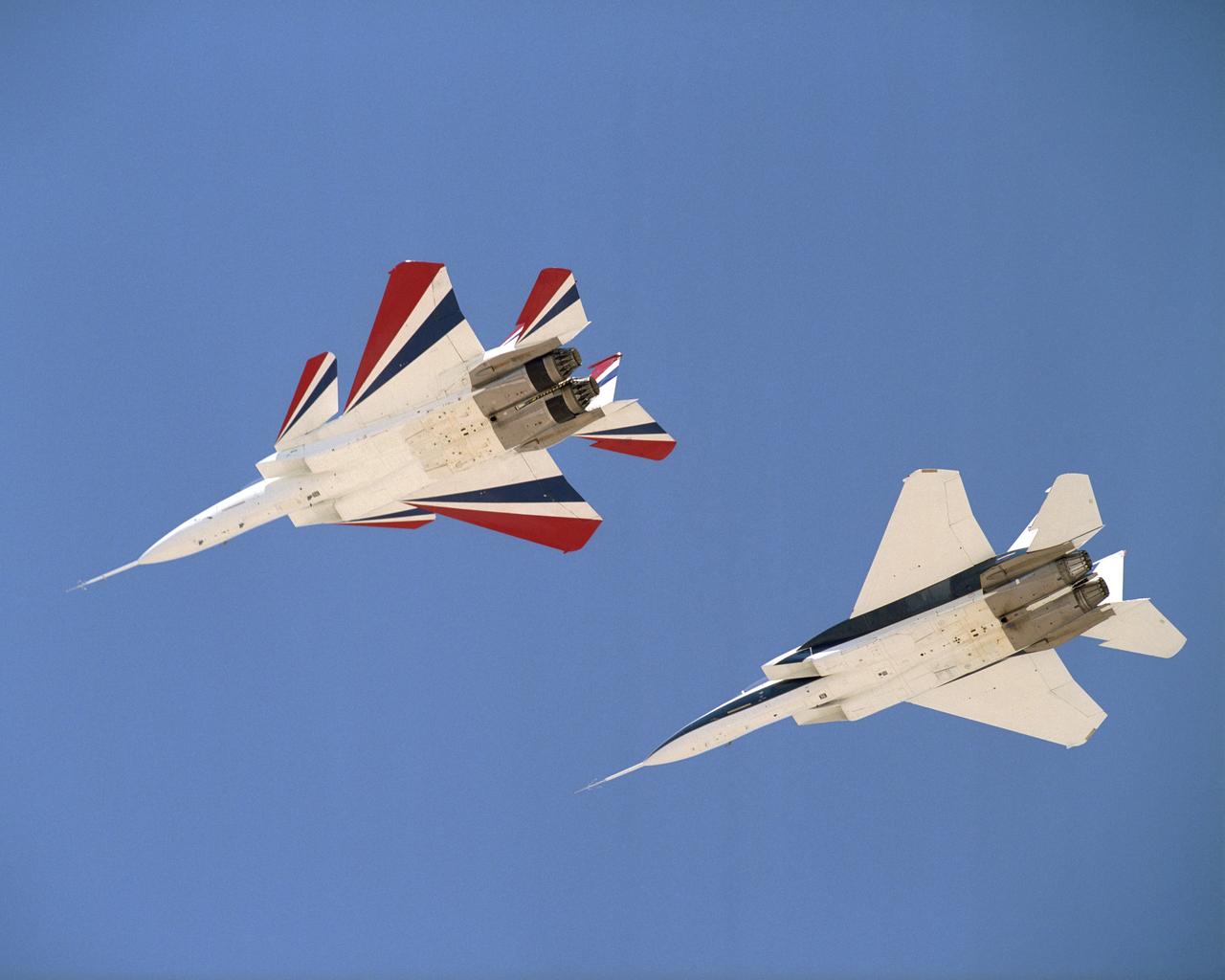
NASA's two modified F-15B research aircraft joined up for a fly-over of NASA's Dryden Flight Research Center on Edwards AFB, Calif., after a research mission.
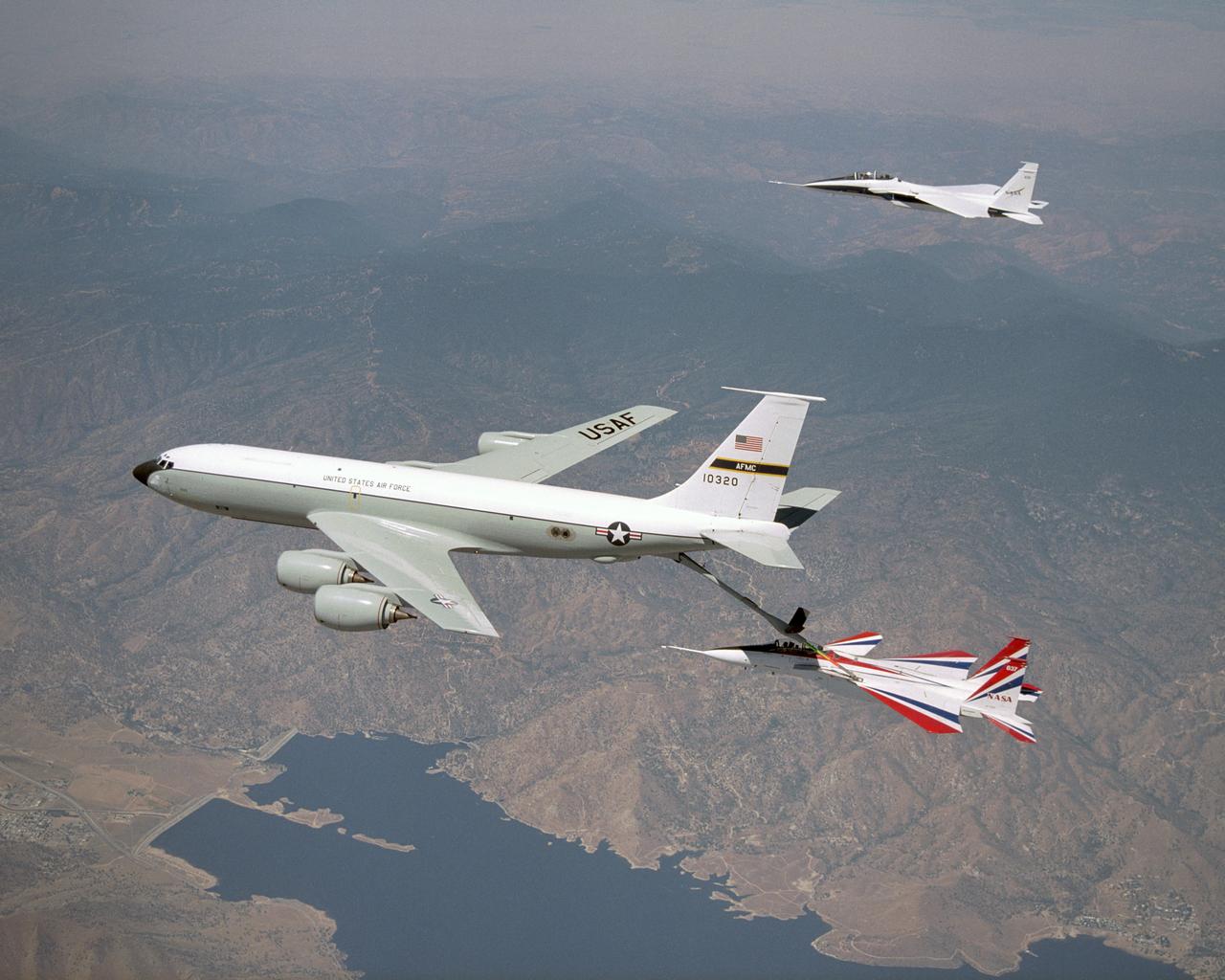
One of NASA's two F-15 research aircraft gets refueled in mid-air over Lake Isabella from a USAF KC-135 tanker while NASA's other F-15 flies chase alongside.
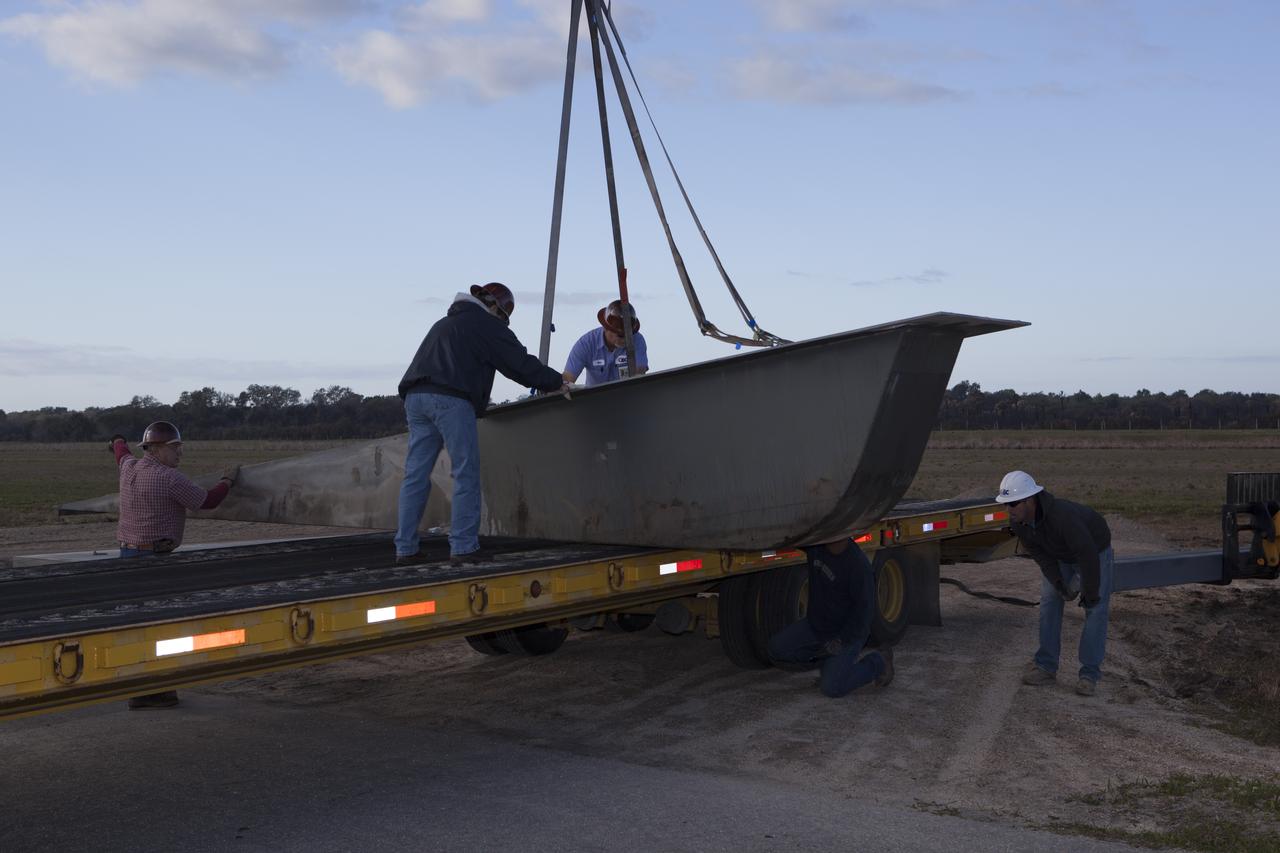
CAPE CANAVERAL, Fla. – Construction workers assist as a crane lowers a portion of the launch pad for the Project Morpheus prototype lander onto a transporter at the north end of the Shuttle Landing Facility at NASA’s Kennedy Space Center in Florida. The launch pad is being moved to a different location at the landing facility to support the next phase of flight testing. Morpheus completed its seventh free flight test on March 11. The 83-second test began at 3:41 p.m. EDT with the Morpheus lander launching from the ground over a flame trench and ascending to 580 feet. Morpheus then flew its fastest downrange trek at 30 mph, travelling farther than before, 837 feet. The lander performed a 42-foot divert to emulate a hazard avoidance maneuver before descending and touching down on Landing Site 2, at the northern landing pad inside the automated landing and hazard avoidance technology ALHAT hazard field. Morpheus landed within one foot of its intended target. Project Morpheus tests NASA’s ALHAT and an engine that runs on liquid oxygen and methane, or green propellants, into a fully-operational lander that could deliver cargo to other planetary surfaces. The landing facility provides the lander with the kind of field necessary for realistic testing, complete with rocks, craters and hazards to avoid. Morpheus’ ALHAT payload allows it to navigate to clear landing sites amidst rocks, craters and other hazards during its descent. Project Morpheus is being managed under the Advanced Exploration Systems, or AES, Division in NASA’s Human Exploration and Operations Mission Directorate. The efforts in AES pioneer new approaches for rapidly developing prototype systems, demonstrating key capabilities and validating operational concepts for future human missions beyond Earth orbit. For more information on Project Morpheus, visit http://morpheuslander.jsc.nasa.gov/. Photo credit: NASA/Dimitri Gerondidakis
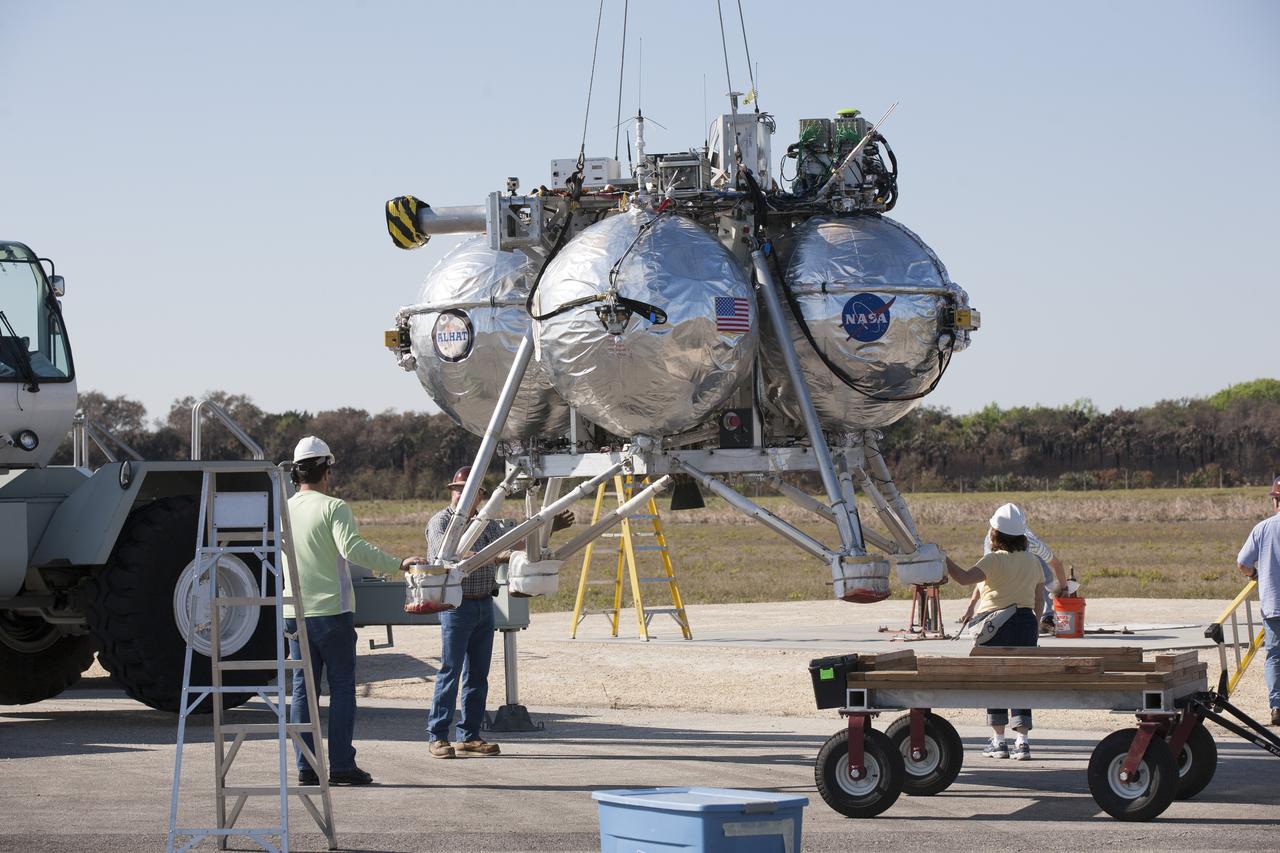
CAPE CANAVERAL, Fla. - Engineers and technicians assist as a crane lowers the Project Morpheus prototype lander in preparation for its seventh free flight test at the north end of the Shuttle Landing Facility at NASA’s Kennedy Space Center in Florida. The 83-second test began at 3:41 p.m. EDT with the Morpheus lander launching from the ground over a flame trench and ascending to 580 feet, its highest to date. Morpheus then flew its fastest downrange trek at 30 mph, travelling farther than before, 837 feet. The lander performed a 42-foot divert to emulate a hazard avoidance maneuver before descending and touching down on Landing Site 2, at the northern landing pad inside the automated landing and hazard avoidance technology ALHAT hazard field. Morpheus landed within one foot of its intended target. Project Morpheus tests NASA’s ALHAT and an engine that runs on liquid oxygen and methane, or green propellants, into a fully-operational lander that could deliver cargo to other planetary surfaces. The landing facility provides the lander with the kind of field necessary for realistic testing, complete with rocks, craters and hazards to avoid. Morpheus’ ALHAT payload allows it to navigate to clear landing sites amidst rocks, craters and other hazards during its descent. Project Morpheus is being managed under the Advanced Exploration Systems, or AES, Division in NASA’s Human Exploration and Operations Mission Directorate. The efforts in AES pioneer new approaches for rapidly developing prototype systems, demonstrating key capabilities and validating operational concepts for future human missions beyond Earth orbit. For more information on Project Morpheus, visit http://morpheuslander.jsc.nasa.gov/. Photo credit: NASA/Kim Shiflett
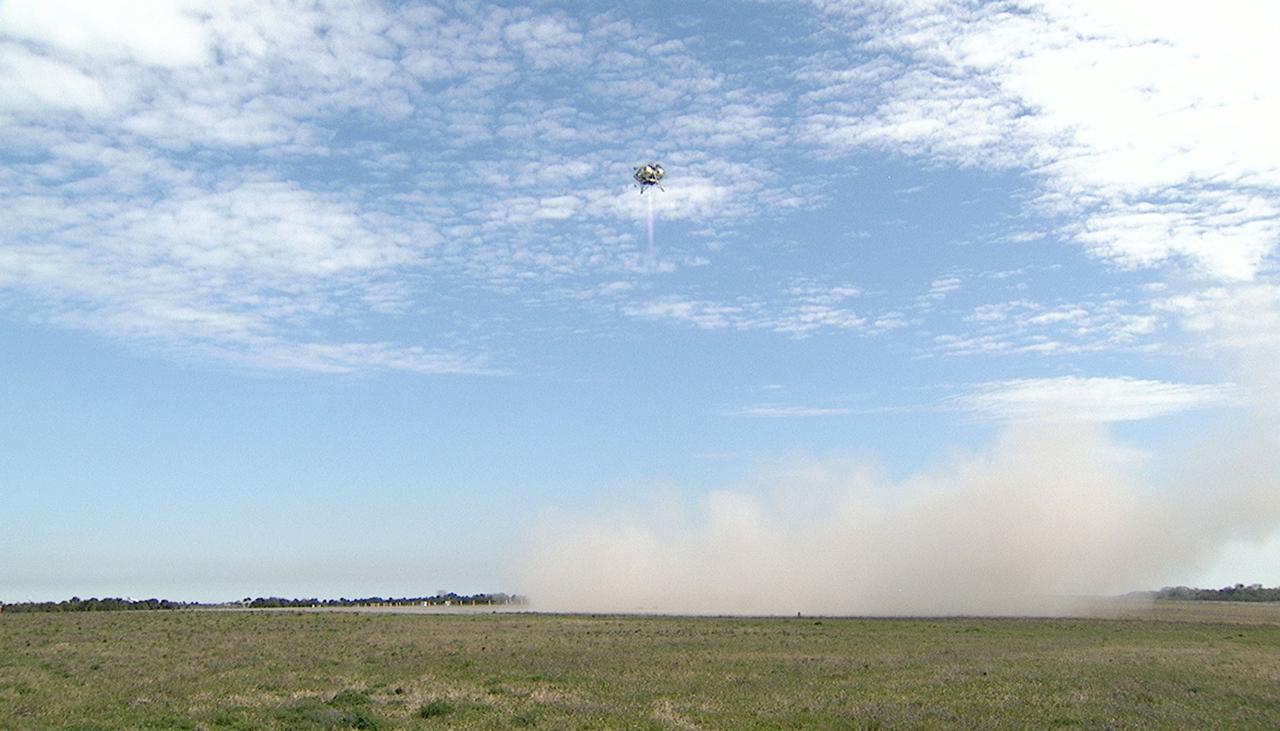
CAPE CANAVERAL, Fla. - The Project Morpheus prototype lander soars high on its seventh free flight test at the north end of the Shuttle Landing Facility at NASA’s Kennedy Space Center in Florida. The 83-second test began at 3:41 p.m. EDT with the Morpheus lander launching from the ground over a flame trench and ascending to 580 feet, its highest to date. Morpheus then flew its fastest downrange trek at 30 mph, travelling farther than before, 837 feet. The lander performed a 42-foot divert to emulate a hazard avoidance maneuver before descending and touching down on Landing Site 2, at the northern landing pad inside the automated landing and hazard avoidance technology ALHAT hazard field. Morpheus landed within one foot of its intended target. Project Morpheus tests NASA’s ALHAT and an engine that runs on liquid oxygen and methane, or green propellants, into a fully-operational lander that could deliver cargo to other planetary surfaces. The landing facility provides the lander with the kind of field necessary for realistic testing, complete with rocks, craters and hazards to avoid. Morpheus’ ALHAT payload allows it to navigate to clear landing sites amidst rocks, craters and other hazards during its descent. Project Morpheus is being managed under the Advanced Exploration Systems, or AES, Division in NASA’s Human Exploration and Operations Mission Directorate. The efforts in AES pioneer new approaches for rapidly developing prototype systems, demonstrating key capabilities and validating operational concepts for future human missions beyond Earth orbit. For more information on Project Morpheus, visit http://morpheuslander.jsc.nasa.gov/. Photo credit: NASA/Mike Chambers
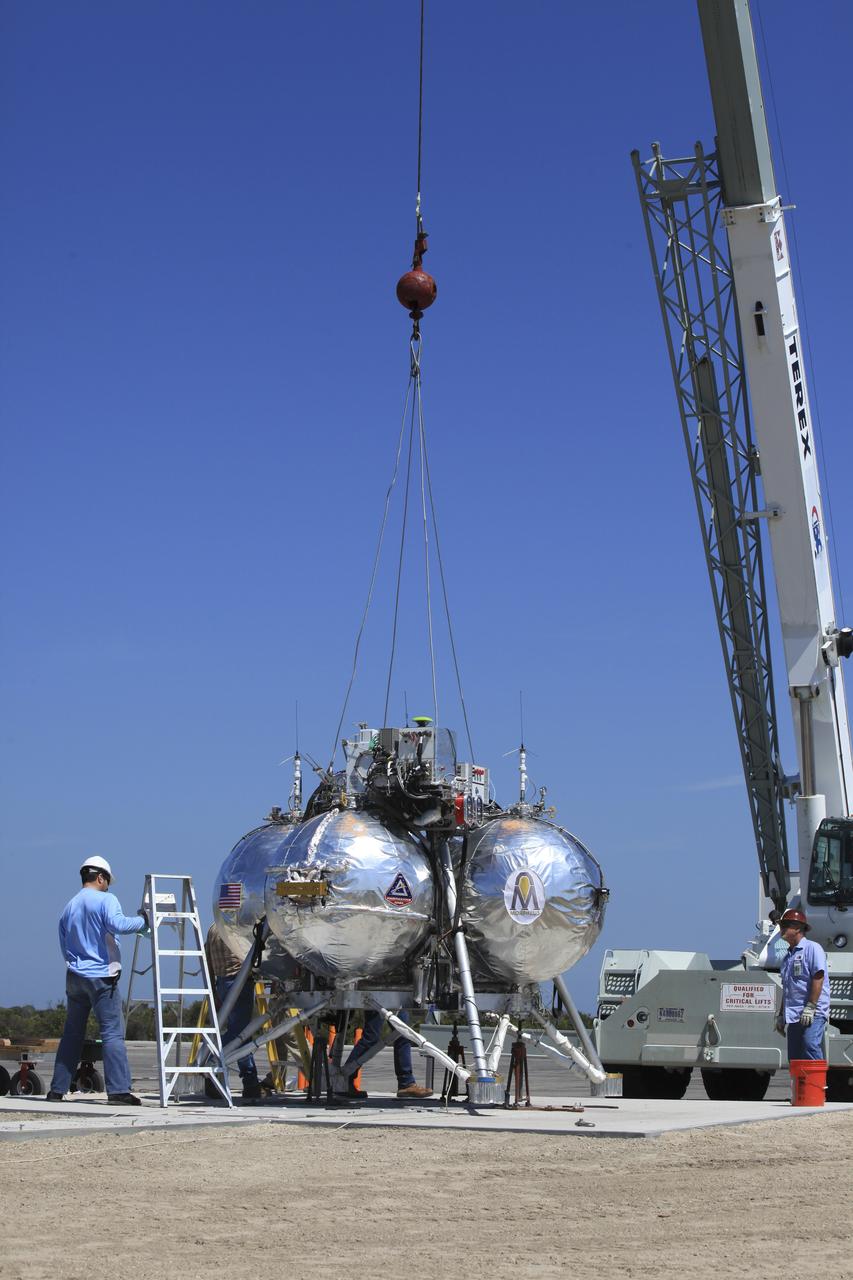
CAPE CANAVERAL, Fla. – A crane lowers the Project Morpheus prototype lander onto a launch pad at a new launch site at the north end of the Shuttle Landing Facility at NASA's Kennedy Space Center in Florida. Engineers and technicians are preparing Morpheus for an automated landing and hazard avoidance technology, or ALHAT, and laser test at the new launch site. The launch pad was moved to a different location at the landing facility to support the next phase of flight testing. The seventh free flight test of Morpheus occurred on March 11. The 83-second test began at 3:41 p.m. EDT with the Morpheus lander launching from the ground over a flame trench and ascending to 580 feet. Morpheus then flew its fastest downrange trek at 30 mph, travelling farther than before, 837 feet. The lander performed a 42-foot divert to emulate a hazard avoidance maneuver before descending and touching down on Landing Site 2, at the northern landing pad inside the ALHAT hazard field. Morpheus landed within one foot of its intended target. Project Morpheus tests NASA’s ALHAT and an engine that runs on liquid oxygen and methane, or green propellants, into a fully-operational lander that could deliver cargo to other planetary surfaces. The landing facility provides the lander with the kind of field necessary for realistic testing, complete with rocks, craters and hazards to avoid. Morpheus’ ALHAT payload allows it to navigate to clear landing sites amidst rocks, craters and other hazards during its descent. Project Morpheus is being managed under the Advanced Exploration Systems, or AES, Division in NASA’s Human Exploration and Operations Mission Directorate. The efforts in AES pioneer new approaches for rapidly developing prototype systems, demonstrating key capabilities and validating operational concepts for future human missions beyond Earth orbit. For more information on Project Morpheus, visit http://morpheuslander.jsc.nasa.gov/. Photo credit: NASA/Kim Shiflett
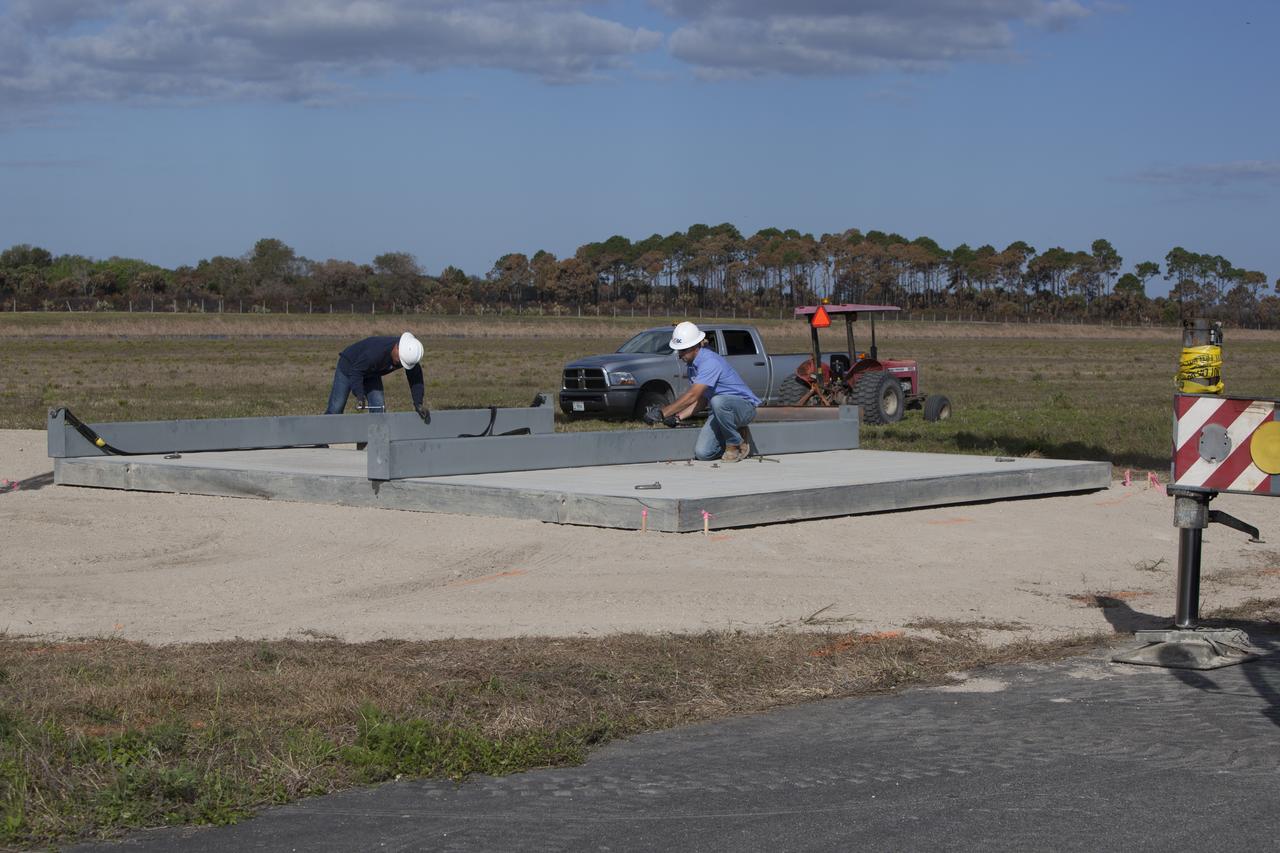
CAPE CANAVERAL, Fla. – Construction workers begin to reassemble the launch pad for the Project Morpheus prototype lander at a new location at the north end of the Shuttle Landing Facility at NASA’s Kennedy Space Center in Florida. The launch pad was moved to a different location to support the next phase of flight testing. Morpheus completed its seventh free flight test on March 11. The 83-second test began at 3:41 p.m. EDT with the Morpheus lander launching from the ground over a flame trench and ascending to 580 feet. Morpheus then flew its fastest downrange trek at 30 mph, travelling farther than before, 837 feet. The lander performed a 42-foot divert to emulate a hazard avoidance maneuver before descending and touching down on Landing Site 2, at the northern landing pad inside the automated landing and hazard avoidance technology ALHAT hazard field. Morpheus landed within one foot of its intended target. Project Morpheus tests NASA’s ALHAT and an engine that runs on liquid oxygen and methane, or green propellants, into a fully-operational lander that could deliver cargo to other planetary surfaces. The landing facility provides the lander with the kind of field necessary for realistic testing, complete with rocks, craters and hazards to avoid. Morpheus’ ALHAT payload allows it to navigate to clear landing sites amidst rocks, craters and other hazards during its descent. Project Morpheus is being managed under the Advanced Exploration Systems, or AES, Division in NASA’s Human Exploration and Operations Mission Directorate. The efforts in AES pioneer new approaches for rapidly developing prototype systems, demonstrating key capabilities and validating operational concepts for future human missions beyond Earth orbit. For more information on Project Morpheus, visit http://morpheuslander.jsc.nasa.gov/. Photo credit: NASA/Dimitri Gerondidakis
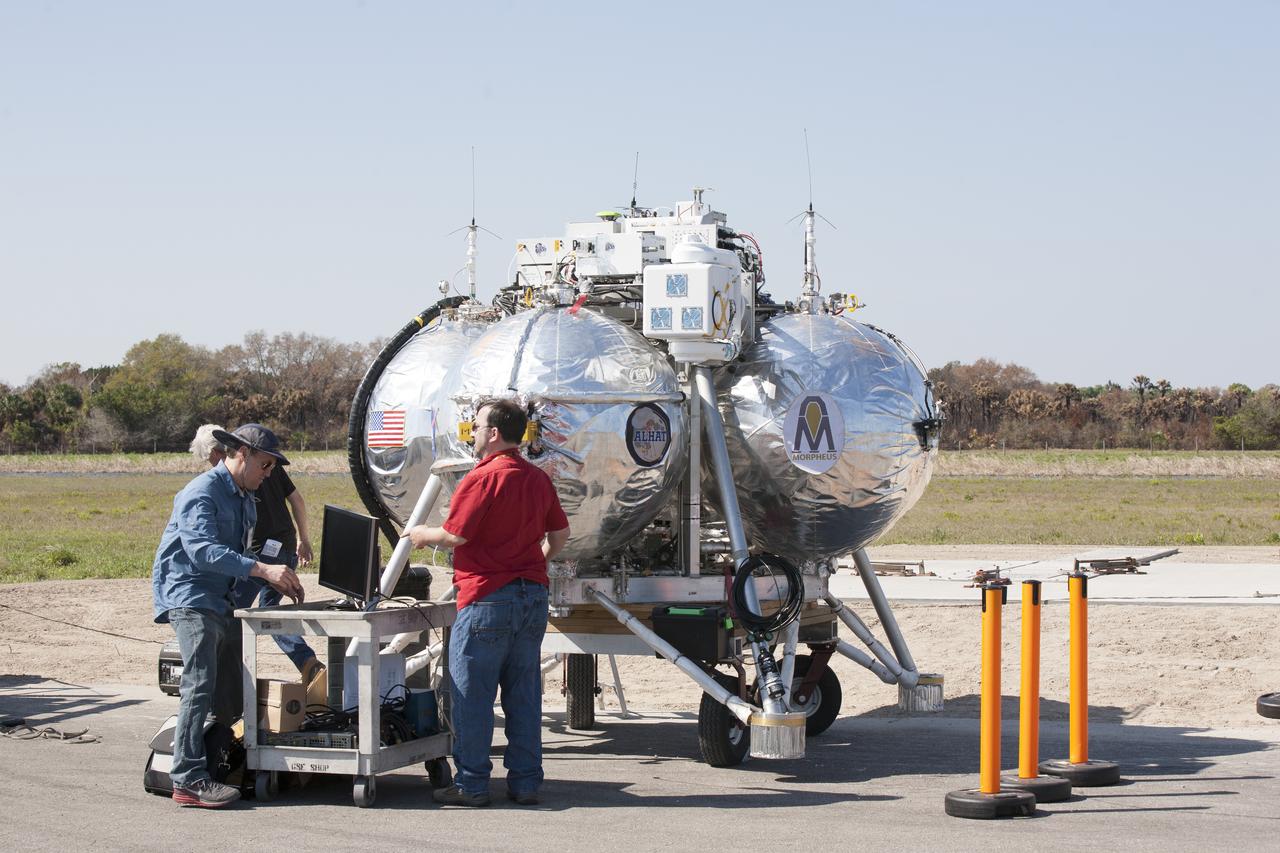
CAPE CANAVERAL, Fla. – Engineers run an automated landing and hazard avoidance technology, or ALHAT, and laser test on the Project Morpheus prototype lander at a new launch site at the north end of the Shuttle Landing Facility at NASA’s Kennedy Space Center in Florida. The launch pad was moved to a different location at the landing facility to support the next phase of flight testing. The seventh free flight test of Morpheus occurred on March 11. The 83-second test began at 3:41 p.m. EDT with the Morpheus lander launching from the ground over a flame trench and ascending to 580 feet. Morpheus then flew its fastest downrange trek at 30 mph, travelling farther than before, 837 feet. The lander performed a 42-foot divert to emulate a hazard avoidance maneuver before descending and touching down on Landing Site 2, at the northern landing pad inside the ALHAT hazard field. Morpheus landed within one foot of its intended target. Project Morpheus tests NASA’s ALHAT and an engine that runs on liquid oxygen and methane, or green propellants, into a fully-operational lander that could deliver cargo to other planetary surfaces. The landing facility provides the lander with the kind of field necessary for realistic testing, complete with rocks, craters and hazards to avoid. Morpheus’ ALHAT payload allows it to navigate to clear landing sites amidst rocks, craters and other hazards during its descent. Project Morpheus is being managed under the Advanced Exploration Systems, or AES, Division in NASA’s Human Exploration and Operations Mission Directorate. The efforts in AES pioneer new approaches for rapidly developing prototype systems, demonstrating key capabilities and validating operational concepts for future human missions beyond Earth orbit. For more information on Project Morpheus, visit http://morpheuslander.jsc.nasa.gov/. Photo credit: NASA/Kim Shiflett
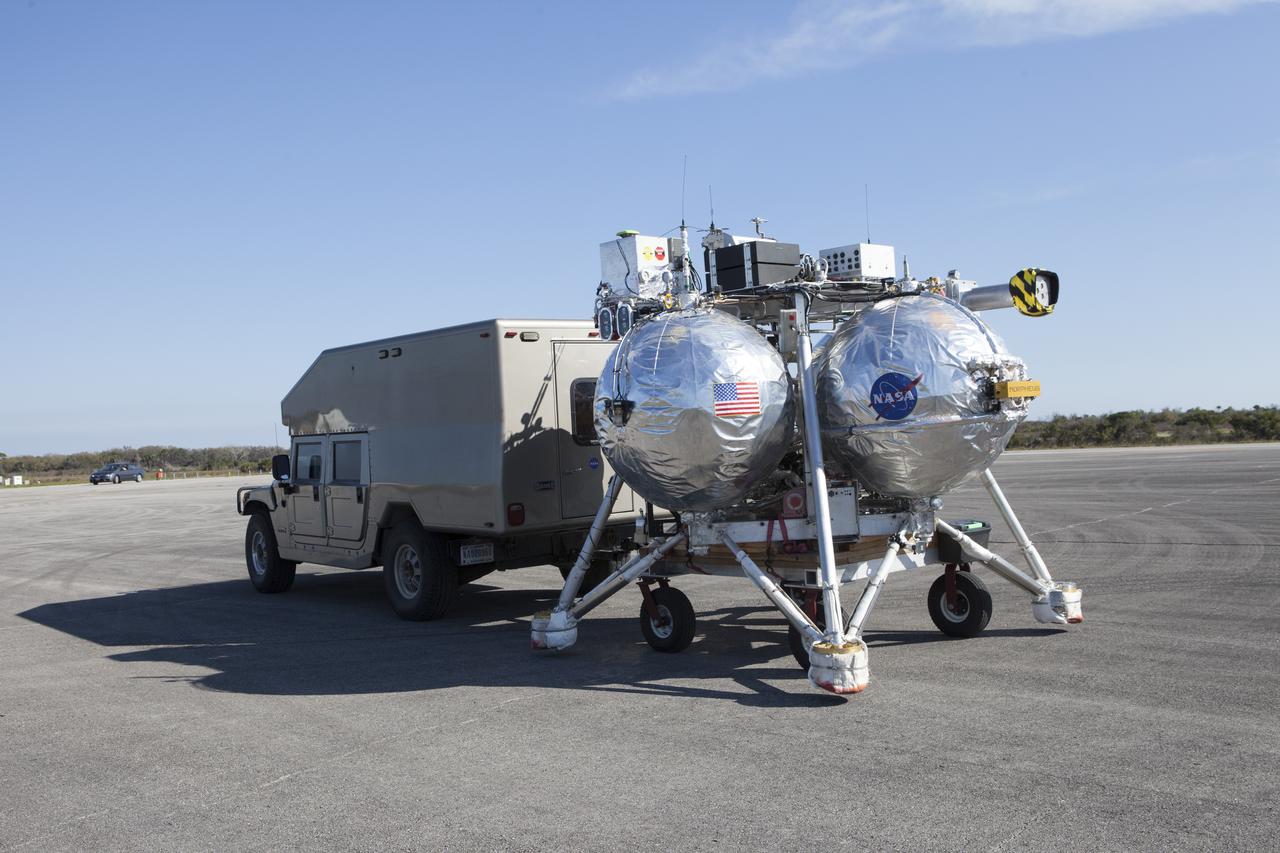
CAPE CANAVERAL, Fla. - The Project Morpheus prototype lander is transported to the north end of the Shuttle Landing Facility at NASA’s Kennedy Space Center in Florida for the seventh free flight test. The 83-second test began at 3:41 p.m. EDT with the Morpheus lander launching from the ground over a flame trench and ascending to 580 feet, its highest to date. Morpheus then flew its fastest downrange trek at 30 mph, travelling farther than before, 837 feet. The lander performed a 42-foot divert to emulate a hazard avoidance maneuver before descending and touching down on Landing Site 2, at the northern landing pad inside the automated landing and hazard avoidance technology ALHAT hazard field. Morpheus landed within one foot of its intended target. Project Morpheus tests NASA’s ALHAT and an engine that runs on liquid oxygen and methane, or green propellants, into a fully-operational lander that could deliver cargo to other planetary surfaces. The landing facility provides the lander with the kind of field necessary for realistic testing, complete with rocks, craters and hazards to avoid. Morpheus’ ALHAT payload allows it to navigate to clear landing sites amidst rocks, craters and other hazards during its descent. Project Morpheus is being managed under the Advanced Exploration Systems, or AES, Division in NASA’s Human Exploration and Operations Mission Directorate. The efforts in AES pioneer new approaches for rapidly developing prototype systems, demonstrating key capabilities and validating operational concepts for future human missions beyond Earth orbit. For more information on Project Morpheus, visit http://morpheuslander.jsc.nasa.gov/. Photo credit: NASA/Kim Shiflett
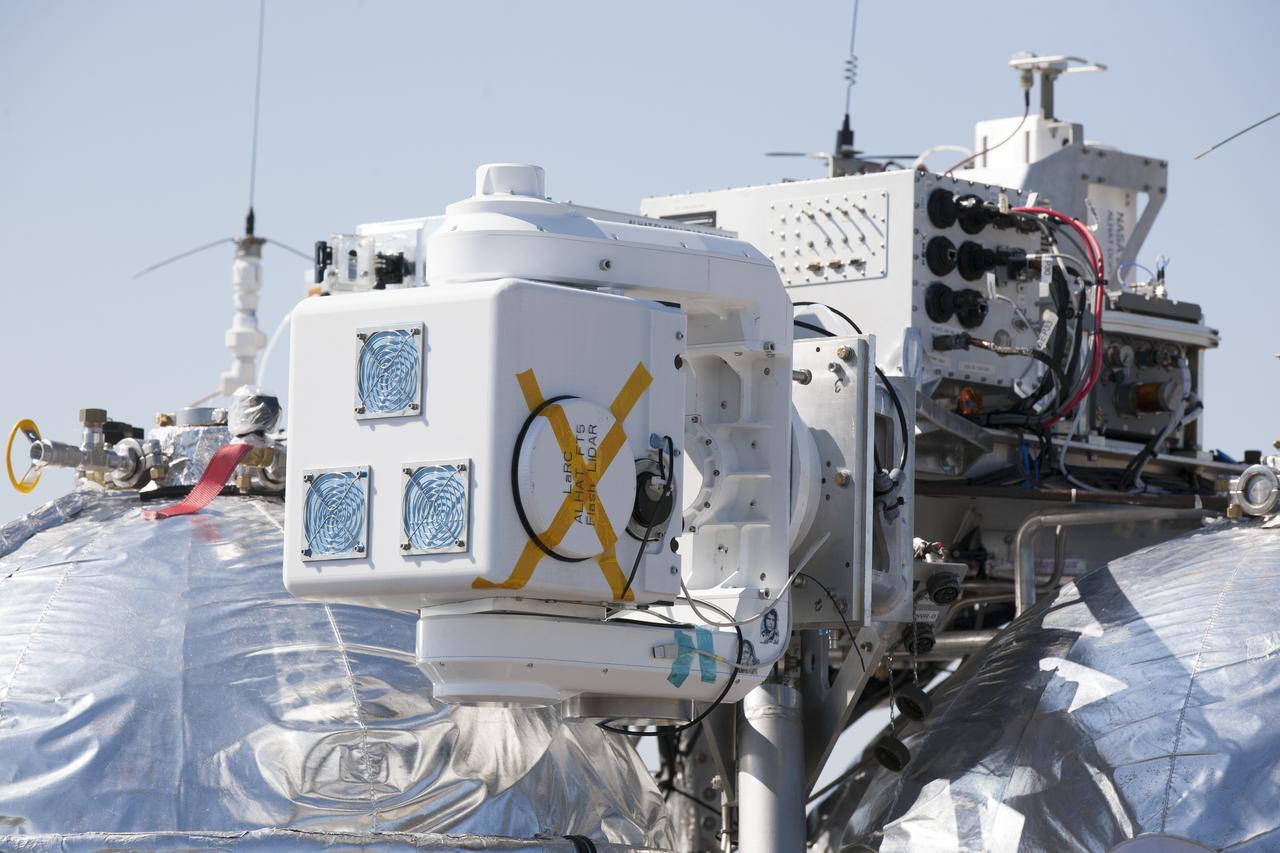
CAPE CANAVERAL, Fla. – Engineers run an automated landing and hazard avoidance technology, or ALHAT, and laser test on the Project Morpheus prototype lander at a new launch site at the north end of the Shuttle Landing Facility at NASA’s Kennedy Space Center in Florida. The launch pad was moved to a different location at the landing facility to support the next phase of flight testing. The seventh free flight test of Morpheus occurred on March 11. The 83-second test began at 3:41 p.m. EDT with the Morpheus lander launching from the ground over a flame trench and ascending to 580 feet. Morpheus then flew its fastest downrange trek at 30 mph, travelling farther than before, 837 feet. The lander performed a 42-foot divert to emulate a hazard avoidance maneuver before descending and touching down on Landing Site 2, at the northern landing pad inside the ALHAT hazard field. Morpheus landed within one foot of its intended target. Project Morpheus tests NASA’s ALHAT and an engine that runs on liquid oxygen and methane, or green propellants, into a fully-operational lander that could deliver cargo to other planetary surfaces. The landing facility provides the lander with the kind of field necessary for realistic testing, complete with rocks, craters and hazards to avoid. Morpheus’ ALHAT payload allows it to navigate to clear landing sites amidst rocks, craters and other hazards during its descent. Project Morpheus is being managed under the Advanced Exploration Systems, or AES, Division in NASA’s Human Exploration and Operations Mission Directorate. The efforts in AES pioneer new approaches for rapidly developing prototype systems, demonstrating key capabilities and validating operational concepts for future human missions beyond Earth orbit. For more information on Project Morpheus, visit http://morpheuslander.jsc.nasa.gov/. Photo credit: NASA/Kim Shiflett

CAPE CANAVERAL, Fla. - The Project Morpheus prototype lander soars high on its seventh free flight test at the north end of the Shuttle Landing Facility at NASA’s Kennedy Space Center in Florida. The 83-second test began at 3:41 p.m. EDT with the Morpheus lander launching from the ground over a flame trench and ascending to 580 feet, its highest to date. Morpheus then flew its fastest downrange trek at 30 mph, travelling farther than before, 837 feet. The lander performed a 42-foot divert to emulate a hazard avoidance maneuver before descending and touching down on Landing Site 2, at the northern landing pad inside the automated landing and hazard avoidance technology ALHAT hazard field. Morpheus landed within one foot of its intended target. Project Morpheus tests NASA’s ALHAT and an engine that runs on liquid oxygen and methane, or green propellants, into a fully-operational lander that could deliver cargo to other planetary surfaces. The landing facility provides the lander with the kind of field necessary for realistic testing, complete with rocks, craters and hazards to avoid. Morpheus’ ALHAT payload allows it to navigate to clear landing sites amidst rocks, craters and other hazards during its descent. Project Morpheus is being managed under the Advanced Exploration Systems, or AES, Division in NASA’s Human Exploration and Operations Mission Directorate. The efforts in AES pioneer new approaches for rapidly developing prototype systems, demonstrating key capabilities and validating operational concepts for future human missions beyond Earth orbit. For more information on Project Morpheus, visit http://morpheuslander.jsc.nasa.gov/. Photo credit: NASA/Mike Chambers
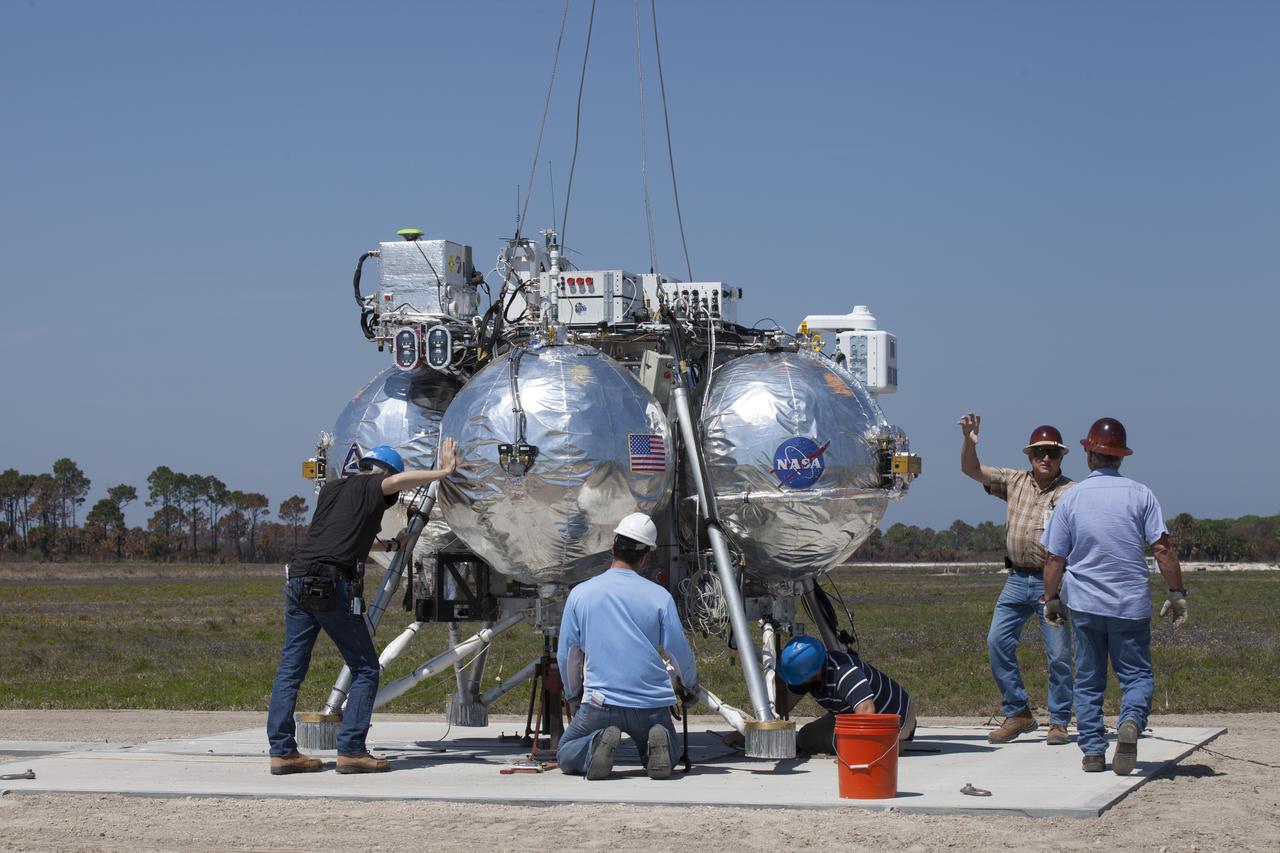
CAPE CANAVERAL, Fla. – Engineers and technicians prepare the Project Morpheus prototype lander for an automated landing and hazard avoidance technology, or ALHAT, and laser test at a new launch site at the north end of the Shuttle Landing Facility at NASA’s Kennedy Space Center in Florida. The launch pad was moved to a different location at the landing facility to support the next phase of flight testing. The seventh free flight test of Morpheus occurred on March 11. The 83-second test began at 3:41 p.m. EDT with the Morpheus lander launching from the ground over a flame trench and ascending to 580 feet. Morpheus then flew its fastest downrange trek at 30 mph, travelling farther than before, 837 feet. The lander performed a 42-foot divert to emulate a hazard avoidance maneuver before descending and touching down on Landing Site 2, at the northern landing pad inside the ALHAT hazard field. Morpheus landed within one foot of its intended target. Project Morpheus tests NASA’s ALHAT and an engine that runs on liquid oxygen and methane, or green propellants, into a fully-operational lander that could deliver cargo to other planetary surfaces. The landing facility provides the lander with the kind of field necessary for realistic testing, complete with rocks, craters and hazards to avoid. Morpheus’ ALHAT payload allows it to navigate to clear landing sites amidst rocks, craters and other hazards during its descent. Project Morpheus is being managed under the Advanced Exploration Systems, or AES, Division in NASA’s Human Exploration and Operations Mission Directorate. The efforts in AES pioneer new approaches for rapidly developing prototype systems, demonstrating key capabilities and validating operational concepts for future human missions beyond Earth orbit. For more information on Project Morpheus, visit http://morpheuslander.jsc.nasa.gov/. Photo credit: NASA/Kim Shiflett
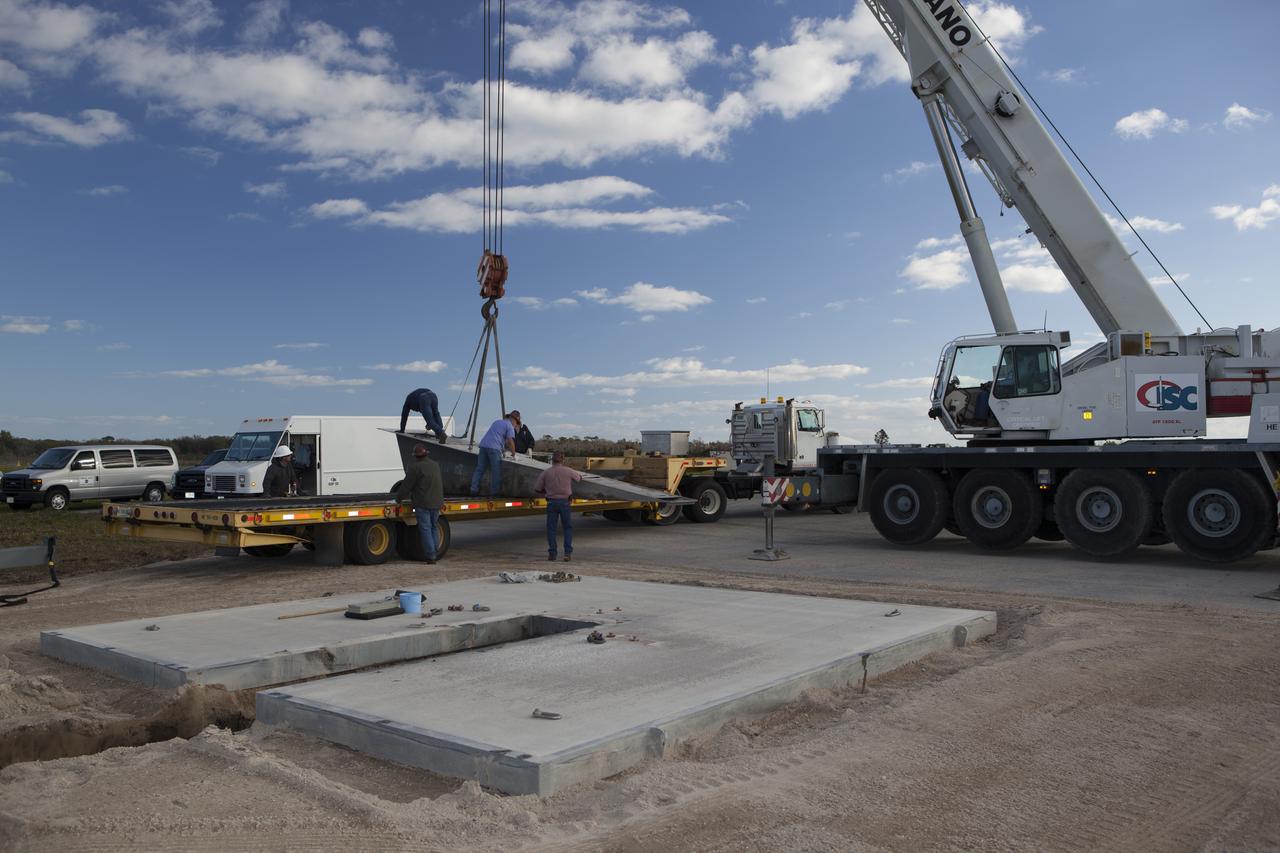
CAPE CANAVERAL, Fla. – Construction workers assist as a crane lowers a portion of the launch pad for the Project Morpheus prototype lander onto a transporter at the north end of the Shuttle Landing Facility at NASA’s Kennedy Space Center in Florida. The launch pad is being moved to a different location at the landing facility to support the next phase of flight testing. Morpheus completed its seventh free flight test on March 11. The 83-second test began at 3:41 p.m. EDT with the Morpheus lander launching from the ground over a flame trench and ascending to 580 feet. Morpheus then flew its fastest downrange trek at 30 mph, travelling farther than before, 837 feet. The lander performed a 42-foot divert to emulate a hazard avoidance maneuver before descending and touching down on Landing Site 2, at the northern landing pad inside the automated landing and hazard avoidance technology ALHAT hazard field. Morpheus landed within one foot of its intended target. Project Morpheus tests NASA’s ALHAT and an engine that runs on liquid oxygen and methane, or green propellants, into a fully-operational lander that could deliver cargo to other planetary surfaces. The landing facility provides the lander with the kind of field necessary for realistic testing, complete with rocks, craters and hazards to avoid. Morpheus’ ALHAT payload allows it to navigate to clear landing sites amidst rocks, craters and other hazards during its descent. Project Morpheus is being managed under the Advanced Exploration Systems, or AES, Division in NASA’s Human Exploration and Operations Mission Directorate. The efforts in AES pioneer new approaches for rapidly developing prototype systems, demonstrating key capabilities and validating operational concepts for future human missions beyond Earth orbit. For more information on Project Morpheus, visit http://morpheuslander.jsc.nasa.gov/. Photo credit: NASA/Dimitri Gerondidakis
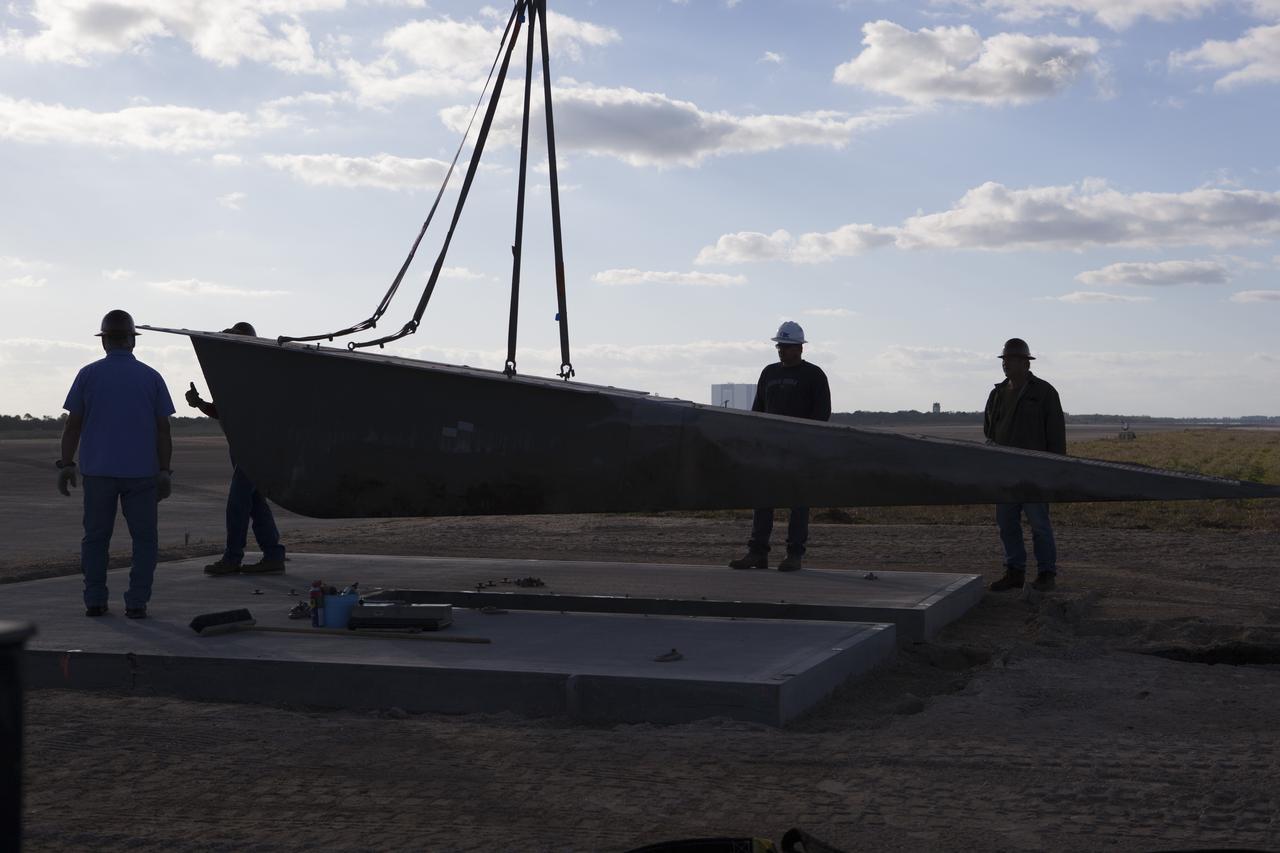
CAPE CANAVERAL, Fla. – Construction workers monitor the progress as a crane is used to lift a portion of the launch pad for the Project Morpheus prototype lander at the north end of the Shuttle Landing Facility at NASA’s Kennedy Space Center in Florida. The launch pad will be moved to a different location at the landing facility to support the next phase of flight testing. The seventh free flight test of Morpheus occurred on March 11. The 83-second test began at 3:41 p.m. EDT with the Morpheus lander launching from the ground over a flame trench and ascending to 580 feet. Morpheus then flew its fastest downrange trek at 30 mph, travelling farther than before, 837 feet. The lander performed a 42-foot divert to emulate a hazard avoidance maneuver before descending and touching down on Landing Site 2, at the northern landing pad inside the automated landing and hazard avoidance technology ALHAT hazard field. Morpheus landed within one foot of its intended target. Project Morpheus tests NASA’s ALHAT and an engine that runs on liquid oxygen and methane, or green propellants, into a fully-operational lander that could deliver cargo to other planetary surfaces . The landing facility provides the lander with the kind of field necessary for realistic testing, complete with rocks, craters and hazards to avoid. Morpheus’ ALHAT payload allows it to navigate to clear landing sites amidst rocks, craters and other hazards during its descent. Project Morpheus is being managed under the Advanced Exploration Systems, or AES, Division in NASA’s Human Exploration and Operations Mission Directorate. The efforts in AES pioneer new approaches for rapidly developing prototype systems, demonstrating key capabilities and validating operational concepts for future human missions beyond Earth orbit. For more information on Project Morpheus, visit http://morpheuslander.jsc.nasa.gov/. Photo credit: NASA/Dimitri Gerondidakis

CAPE CANAVERAL, Fla. – Engineers and technicians prepare the Project Morpheus prototype lander for an automated landing and hazard avoidance technology, or ALHAT, and laser test at a new launch site at the north end of the Shuttle Landing Facility at NASA’s Kennedy Space Center in Florida. The launch pad was moved to a different location at the landing facility to support the next phase of flight testing. The seventh free flight test of Morpheus occurred on March 11. The 83-second test began at 3:41 p.m. EDT with the Morpheus lander launching from the ground over a flame trench and ascending to 580 feet. Morpheus then flew its fastest downrange trek at 30 mph, travelling farther than before, 837 feet. The lander performed a 42-foot divert to emulate a hazard avoidance maneuver before descending and touching down on Landing Site 2, at the northern landing pad inside the ALHAT hazard field. Morpheus landed within one foot of its intended target. Project Morpheus tests NASA’s ALHAT and an engine that runs on liquid oxygen and methane, or green propellants, into a fully-operational lander that could deliver cargo to other planetary surfaces. The landing facility provides the lander with the kind of field necessary for realistic testing, complete with rocks, craters and hazards to avoid. Morpheus’ ALHAT payload allows it to navigate to clear landing sites amidst rocks, craters and other hazards during its descent. Project Morpheus is being managed under the Advanced Exploration Systems, or AES, Division in NASA’s Human Exploration and Operations Mission Directorate. The efforts in AES pioneer new approaches for rapidly developing prototype systems, demonstrating key capabilities and validating operational concepts for future human missions beyond Earth orbit. For more information on Project Morpheus, visit http://morpheuslander.jsc.nasa.gov/. Photo credit: NASA/Kim Shiflett
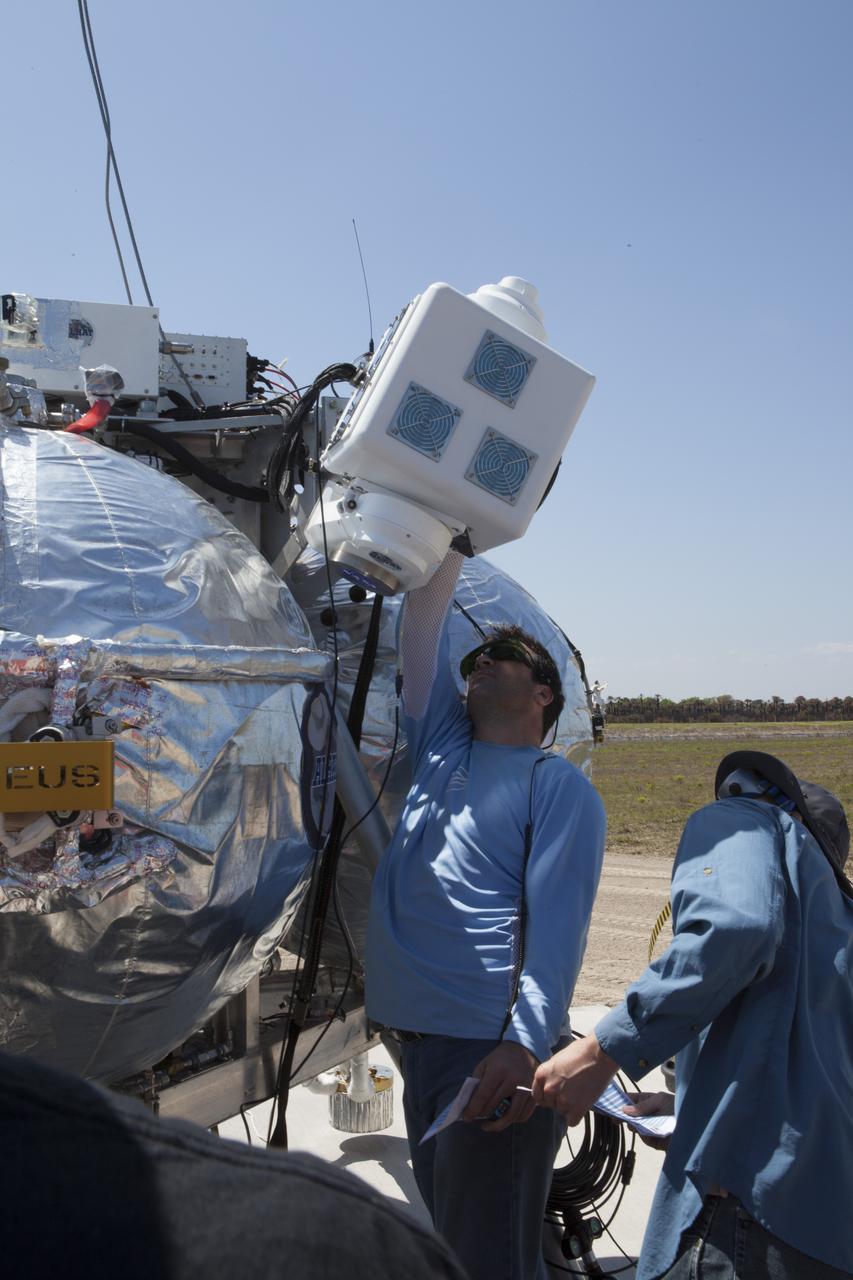
CAPE CANAVERAL, Fla. – Engineers and technicians wearing safety goggles, prepare the Project Morpheus prototype lander for an automated landing and hazard avoidance technology, or ALHAT, and laser test at a new launch site at the north end of the Shuttle Landing Facility at NASA’s Kennedy Space Center in Florida. The launch pad was moved to a different location at the landing facility to support the next phase of flight testing. The seventh free flight test of Morpheus occurred on March 11. The 83-second test began at 3:41 p.m. EDT with the Morpheus lander launching from the ground over a flame trench and ascending to 580 feet. Morpheus then flew its fastest downrange trek at 30 mph, travelling farther than before, 837 feet. The lander performed a 42-foot divert to emulate a hazard avoidance maneuver before descending and touching down on Landing Site 2, at the northern landing pad inside the ALHAT hazard field. Morpheus landed within one foot of its intended target. Project Morpheus tests NASA’s ALHAT and an engine that runs on liquid oxygen and methane, or green propellants, into a fully-operational lander that could deliver cargo to other planetary surfaces. The landing facility provides the lander with the kind of field necessary for realistic testing, complete with rocks, craters and hazards to avoid. Morpheus’ ALHAT payload allows it to navigate to clear landing sites amidst rocks, craters and other hazards during its descent. Project Morpheus is being managed under the Advanced Exploration Systems, or AES, Division in NASA’s Human Exploration and Operations Mission Directorate. The efforts in AES pioneer new approaches for rapidly developing prototype systems, demonstrating key capabilities and validating operational concepts for future human missions beyond Earth orbit. For more information on Project Morpheus, visit http://morpheuslander.jsc.nasa.gov/. Photo credit: NASA/Kim Shiflett
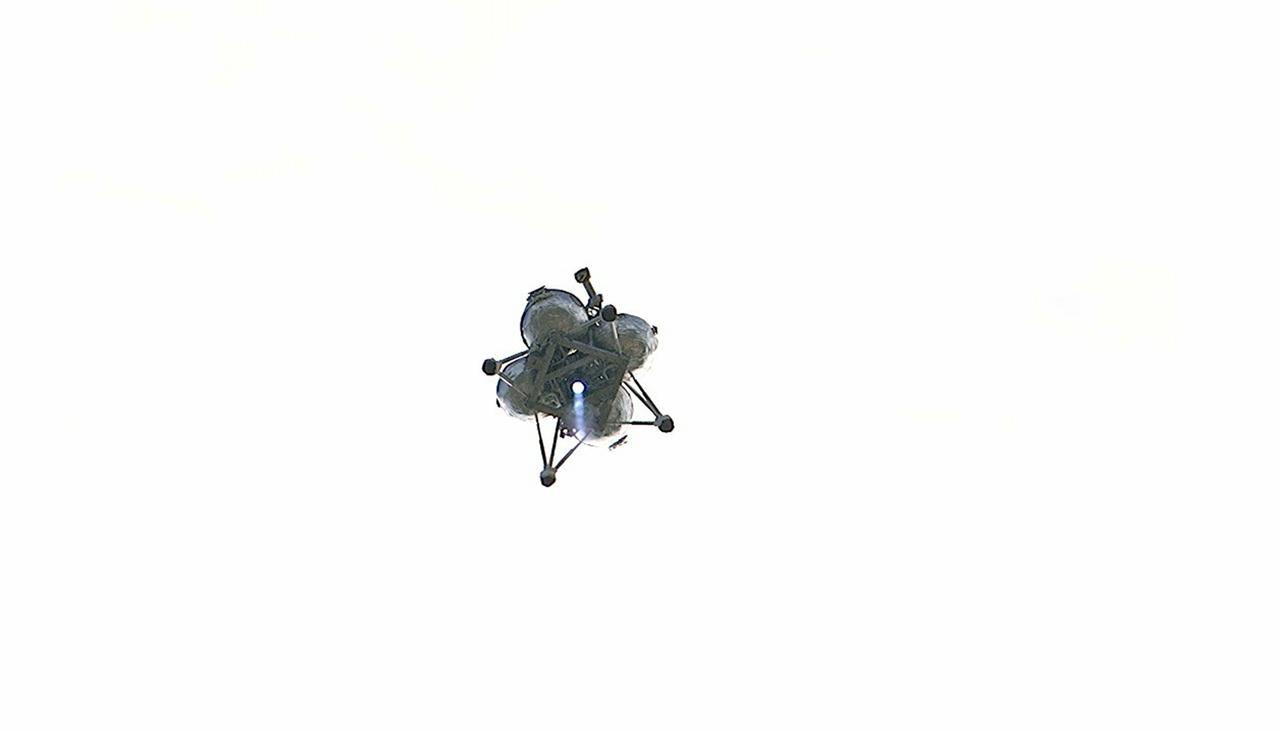
CAPE CANAVERAL, Fla. - The Project Morpheus prototype lander soars high on its seventh free flight test at the north end of the Shuttle Landing Facility at NASA’s Kennedy Space Center in Florida. The 83-second test began at 3:41 p.m. EDT with the Morpheus lander launching from the ground over a flame trench and ascending to 580 feet, its highest to date. Morpheus then flew its fastest downrange trek at 30 mph, travelling farther than before, 837 feet. The lander performed a 42-foot divert to emulate a hazard avoidance maneuver before descending and touching down on Landing Site 2, at the northern landing pad inside the automated landing and hazard avoidance technology ALHAT hazard field. Morpheus landed within one foot of its intended target. Project Morpheus tests NASA’s ALHAT and an engine that runs on liquid oxygen and methane, or green propellants, into a fully-operational lander that could deliver cargo to other planetary surfaces. The landing facility provides the lander with the kind of field necessary for realistic testing, complete with rocks, craters and hazards to avoid. Morpheus’ ALHAT payload allows it to navigate to clear landing sites amidst rocks, craters and other hazards during its descent. Project Morpheus is being managed under the Advanced Exploration Systems, or AES, Division in NASA’s Human Exploration and Operations Mission Directorate. The efforts in AES pioneer new approaches for rapidly developing prototype systems, demonstrating key capabilities and validating operational concepts for future human missions beyond Earth orbit. For more information on Project Morpheus, visit http://morpheuslander.jsc.nasa.gov/. Photo credit: NASA/Mike Chambers
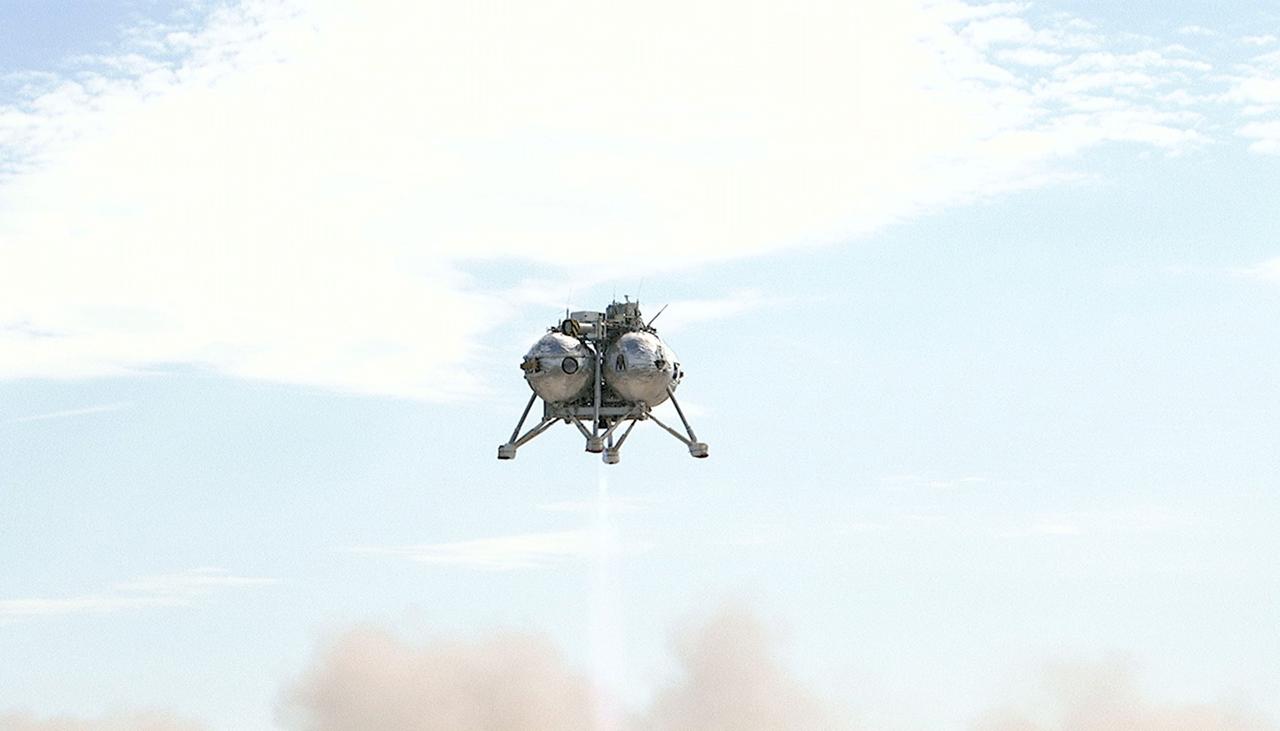
CAPE CANAVERAL, Fla. - The Project Morpheus prototype lander soars high on its seventh free flight test at the north end of the Shuttle Landing Facility at NASA’s Kennedy Space Center in Florida. The 83-second test began at 3:41 p.m. EDT with the Morpheus lander launching from the ground over a flame trench and ascending to 580 feet, its highest to date. Morpheus then flew its fastest downrange trek at 30 mph, travelling farther than before, 837 feet. The lander performed a 42-foot divert to emulate a hazard avoidance maneuver before descending and touching down on Landing Site 2, at the northern landing pad inside the automated landing and hazard avoidance technology ALHAT hazard field. Morpheus landed within one foot of its intended target. Project Morpheus tests NASA’s ALHAT and an engine that runs on liquid oxygen and methane, or green propellants, into a fully-operational lander that could deliver cargo to other planetary surfaces. The landing facility provides the lander with the kind of field necessary for realistic testing, complete with rocks, craters and hazards to avoid. Morpheus’ ALHAT payload allows it to navigate to clear landing sites amidst rocks, craters and other hazards during its descent. Project Morpheus is being managed under the Advanced Exploration Systems, or AES, Division in NASA’s Human Exploration and Operations Mission Directorate. The efforts in AES pioneer new approaches for rapidly developing prototype systems, demonstrating key capabilities and validating operational concepts for future human missions beyond Earth orbit. For more information on Project Morpheus, visit http://morpheuslander.jsc.nasa.gov/. Photo credit: NASA/Mike Chambers
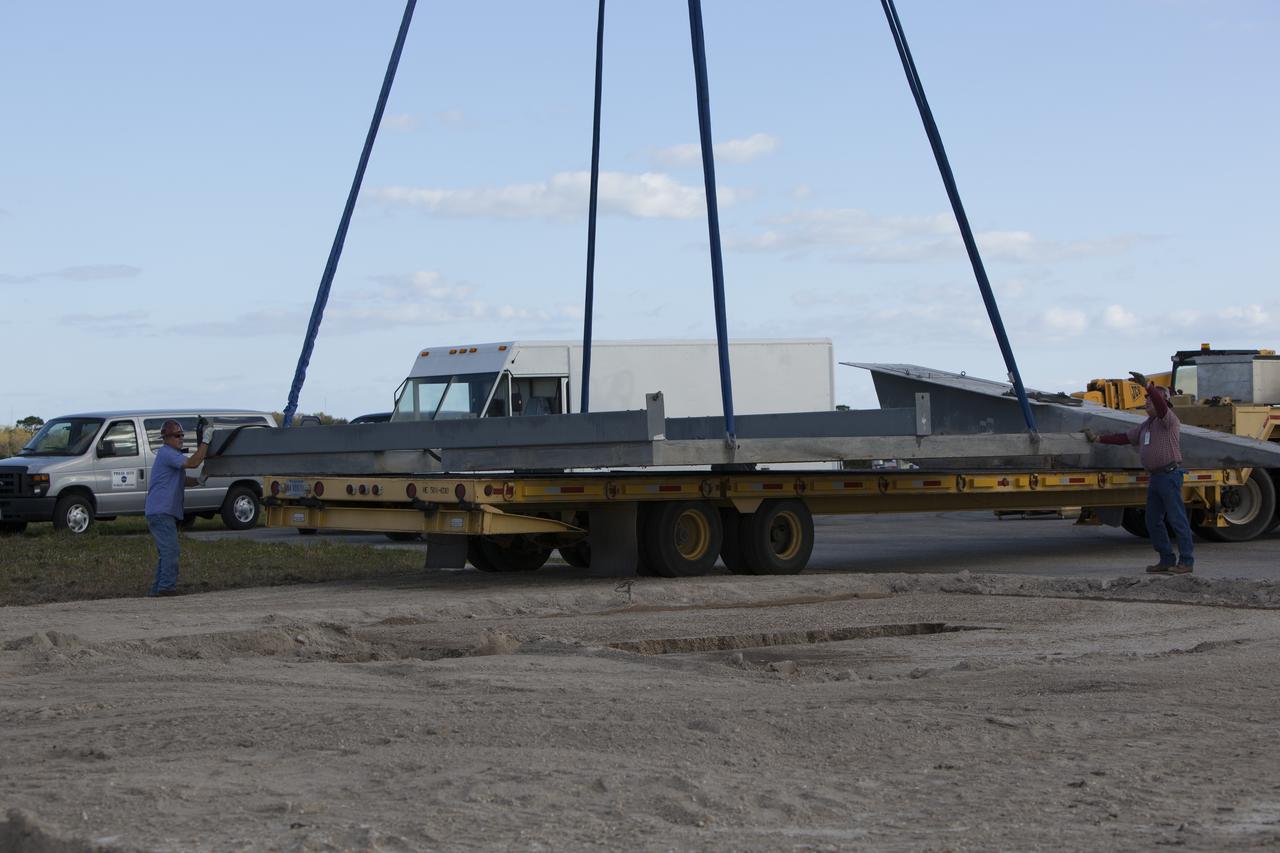
CAPE CANAVERAL, Fla. – Construction workers assist as a crane lowers a large portion of the launch pad for the Project Morpheus prototype lander onto a transporter at the north end of the Shuttle Landing Facility at NASA’s Kennedy Space Center in Florida. The launch pad is being moved to a different location at the landing facility to support the next phase of flight testing. Morpheus completed its seventh free flight test on March 11. The 83-second test began at 3:41 p.m. EDT with the Morpheus lander launching from the ground over a flame trench and ascending to 580 feet. Morpheus then flew its fastest downrange trek at 30 mph, travelling farther than before, 837 feet. The lander performed a 42-foot divert to emulate a hazard avoidance maneuver before descending and touching down on Landing Site 2, at the northern landing pad inside the automated landing and hazard avoidance technology ALHAT hazard field. Morpheus landed within one foot of its intended target. Project Morpheus tests NASA’s ALHAT and an engine that runs on liquid oxygen and methane, or green propellants, into a fully-operational lander that could deliver cargo to other planetary surfaces. The landing facility provides the lander with the kind of field necessary for realistic testing, complete with rocks, craters and hazards to avoid. Morpheus’ ALHAT payload allows it to navigate to clear landing sites amidst rocks, craters and other hazards during its descent. Project Morpheus is being managed under the Advanced Exploration Systems, or AES, Division in NASA’s Human Exploration and Operations Mission Directorate. The efforts in AES pioneer new approaches for rapidly developing prototype systems, demonstrating key capabilities and validating operational concepts for future human missions beyond Earth orbit. For more information on Project Morpheus, visit http://morpheuslander.jsc.nasa.gov/. Photo credit: NASA/Dimitri Gerondidakis
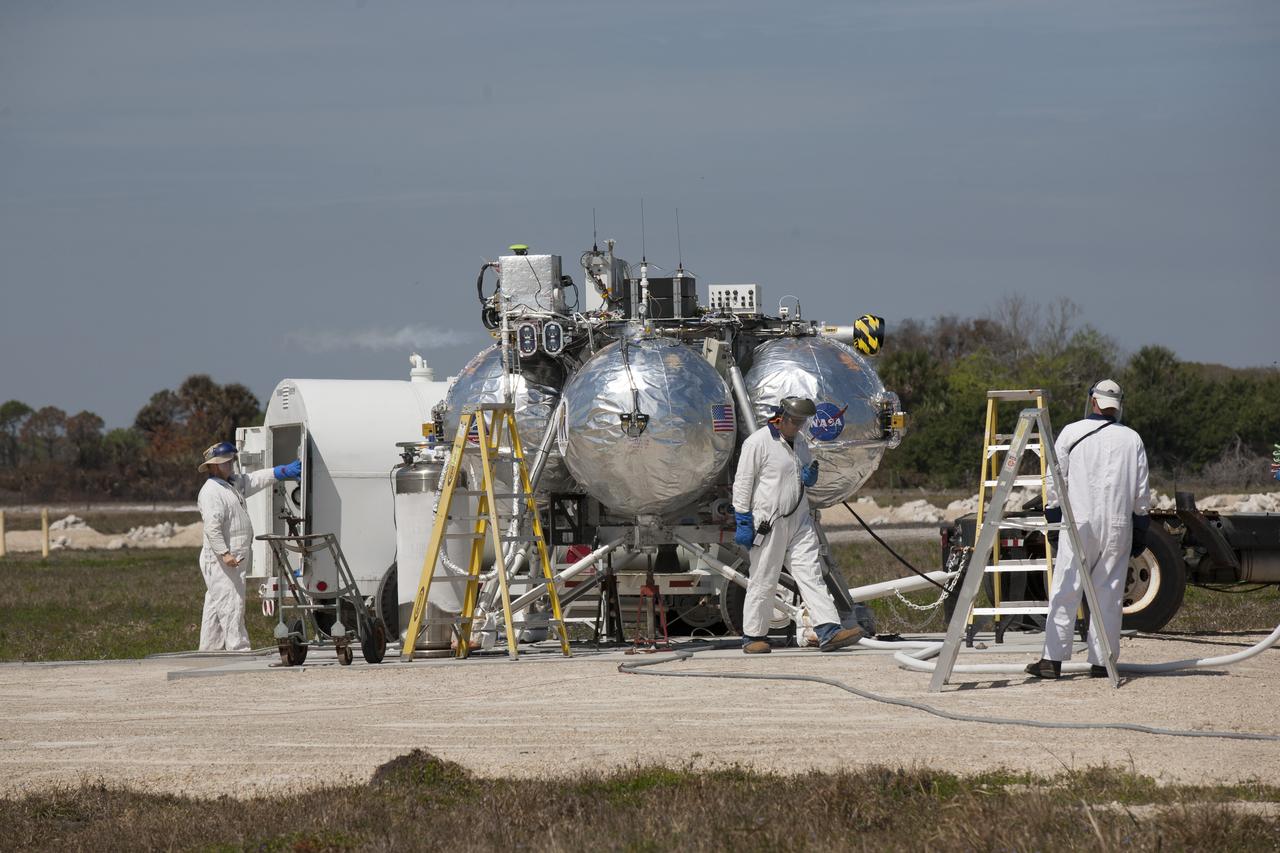
CAPE CANAVERAL, Fla. - Engineers and technicians prepare the Project Morpheus prototype lander for its seventh free flight test at the north end of the Shuttle Landing Facility at NASA’s Kennedy Space Center in Florida. The 83-second test began at 3:41 p.m. EDT with the Morpheus lander launching from the ground over a flame trench and ascending to 580 feet, its highest to date. Morpheus then flew its fastest downrange trek at 30 mph, travelling farther than before, 837 feet. The lander performed a 42-foot divert to emulate a hazard avoidance maneuver before descending and touching down on Landing Site 2, at the northern landing pad inside the automated landing and hazard avoidance technology ALHAT hazard field. Morpheus landed within one foot of its intended target. Project Morpheus tests NASA’s ALHAT and an engine that runs on liquid oxygen and methane, or green propellants, into a fully-operational lander that could deliver cargo to other planetary surfaces. The landing facility provides the lander with the kind of field necessary for realistic testing, complete with rocks, craters and hazards to avoid. Morpheus’ ALHAT payload allows it to navigate to clear landing sites amidst rocks, craters and other hazards during its descent. Project Morpheus is being managed under the Advanced Exploration Systems, or AES, Division in NASA’s Human Exploration and Operations Mission Directorate. The efforts in AES pioneer new approaches for rapidly developing prototype systems, demonstrating key capabilities and validating operational concepts for future human missions beyond Earth orbit. For more information on Project Morpheus, visit http://morpheuslander.jsc.nasa.gov/. Photo credit: NASA/Kim Shiflett
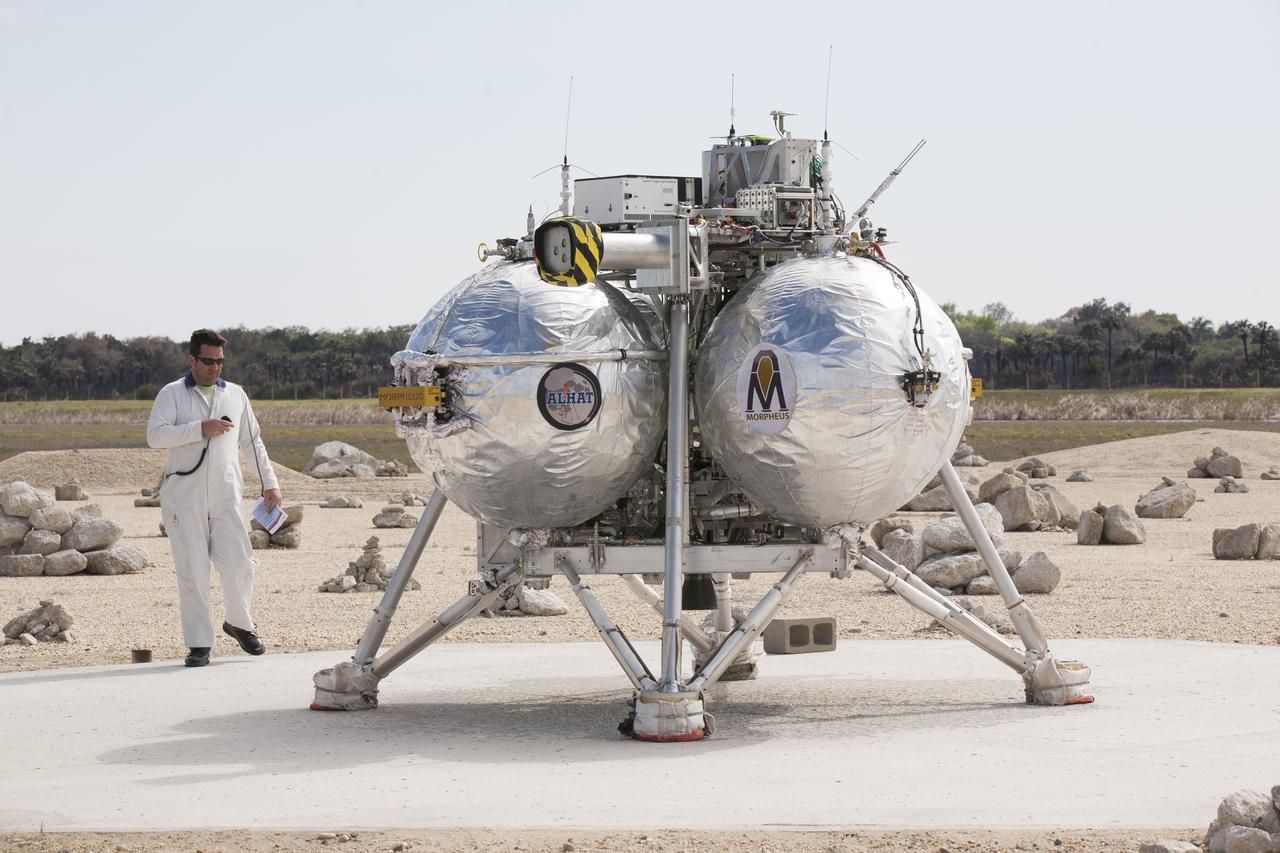
CAPE CANAVERAL, Fla. - An engineer checks the Project Morpheus prototype lander after it landed in the automated landing and hazard avoidance technology, or ALHAT, hazard field, completing its seventh free flight test at the north end of the Shuttle Landing Facility at NASA’s Kennedy Space Center in Florida. The 83-second test began at 3:41 p.m. EDT with the Morpheus lander launching from the ground over a flame trench and ascending to 580 feet, its highest to date. Morpheus then flew its fastest downrange trek at 30 mph, travelling farther than before, 837 feet. The lander performed a 42-foot divert to emulate a hazard avoidance maneuver before descending and touching down on Landing Site 2, at the northern landing pad inside the hazard field. Morpheus landed within one foot of its intended target. Project Morpheus tests NASA’s ALHAT and an engine that runs on liquid oxygen and methane, or green propellants, into a fully-operational lander that could deliver cargo to other planetary surfaces. The landing facility provides the lander with the kind of field necessary for realistic testing, complete with rocks, craters and hazards to avoid. Morpheus’ ALHAT payload allows it to navigate to clear landing sites amidst rocks, craters and other hazards during its descent. Project Morpheus is being managed under the Advanced Exploration Systems, or AES, Division in NASA’s Human Exploration and Operations Mission Directorate. The efforts in AES pioneer new approaches for rapidly developing prototype systems, demonstrating key capabilities and validating operational concepts for future human missions beyond Earth orbit. For more information on Project Morpheus, visit http://morpheuslander.jsc.nasa.gov/. Photo credit: NASA/Kim Shiflett
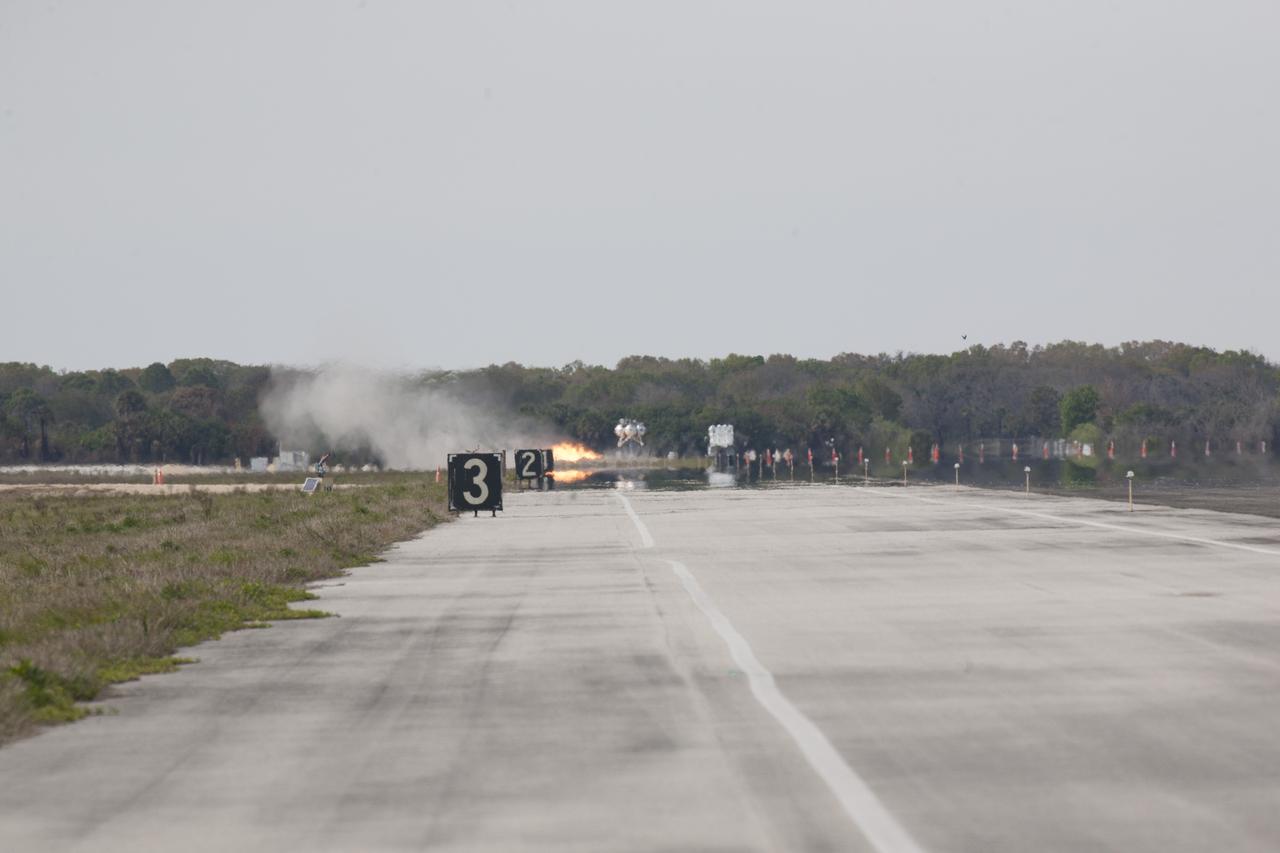
CAPE CANAVERAL, Fla. - The Project Morpheus prototype lander lifts off in the automated landing and hazard avoidance technology, or ALHAT, hazard field for its seventh free flight test at the north end of the Shuttle Landing Facility at NASA’s Kennedy Space Center in Florida. The 83-second test began at 3:41 p.m. EDT with the Morpheus lander launching from the ground over a flame trench and ascending to 580 feet, its highest to date. Morpheus then flew its fastest downrange trek at 30 mph, travelling farther than before, 837 feet. The lander performed a 42-foot divert to emulate a hazard avoidance maneuver before descending and touching down on Landing Site 2, at the northern landing pad inside the hazard field. Morpheus landed within one foot of its intended target. Project Morpheus tests NASA’s ALHAT and an engine that runs on liquid oxygen and methane, or green propellants, into a fully-operational lander that could deliver cargo to other planetary surfaces. The landing facility provides the lander with the kind of field necessary for realistic testing, complete with rocks, craters and hazards to avoid. Morpheus’ ALHAT payload allows it to navigate to clear landing sites amidst rocks, craters and other hazards during its descent. Project Morpheus is being managed under the Advanced Exploration Systems, or AES, Division in NASA’s Human Exploration and Operations Mission Directorate. The efforts in AES pioneer new approaches for rapidly developing prototype systems, demonstrating key capabilities and validating operational concepts for future human missions beyond Earth orbit. For more information on Project Morpheus, visit http://morpheuslander.jsc.nasa.gov/. Photo credit: NASA/Kim Shiflett
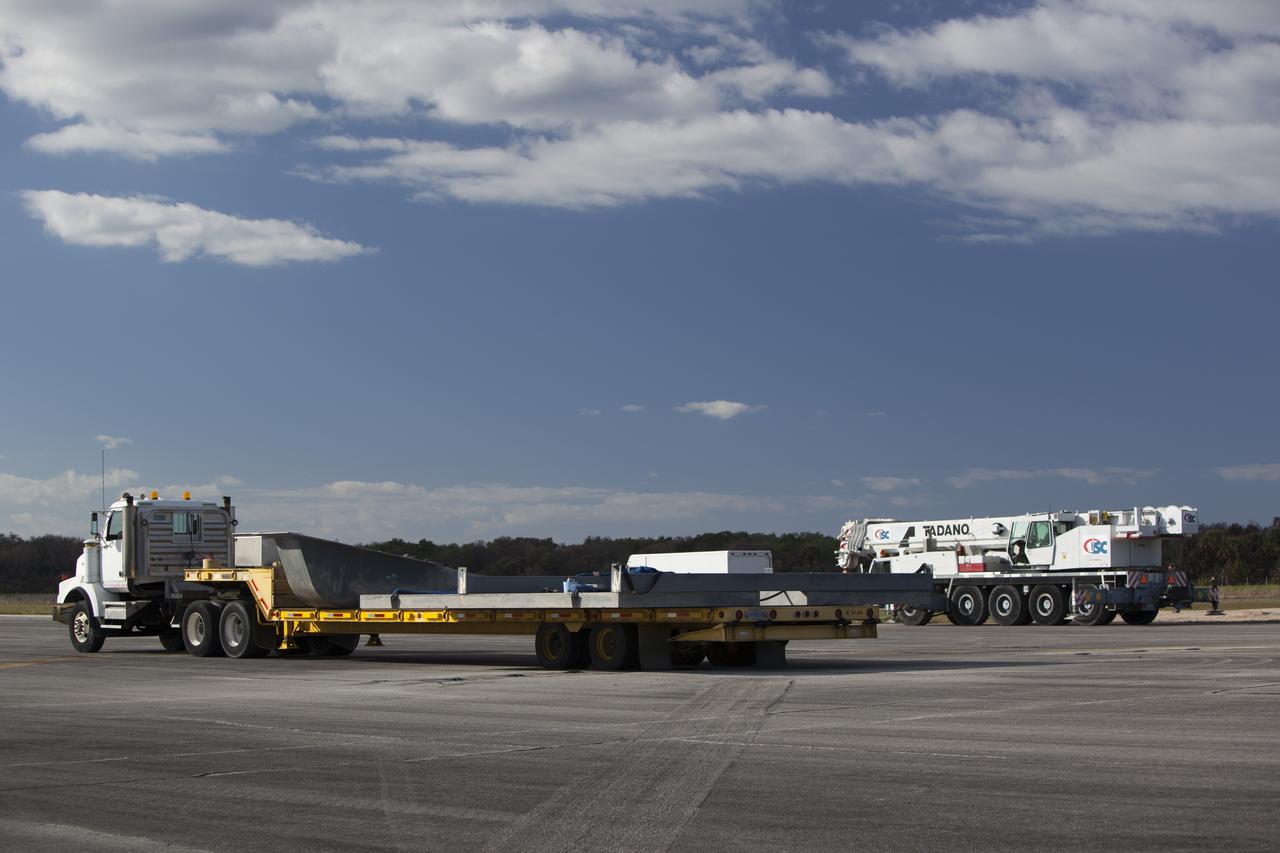
CAPE CANAVERAL, Fla. – A flatbed truck carries the launch pad for the Project Morpheus prototype lander to a new location at the north end of the Shuttle Landing Facility at NASA’s Kennedy Space Center in Florida. The launch pad is being moved to a different location to support the next phase of flight testing. Morpheus completed its seventh free flight test on March 11. The 83-second test began at 3:41 p.m. EDT with the Morpheus lander launching from the ground over a flame trench and ascending to 580 feet. Morpheus then flew its fastest downrange trek at 30 mph, travelling farther than before, 837 feet. The lander performed a 42-foot divert to emulate a hazard avoidance maneuver before descending and touching down on Landing Site 2, at the northern landing pad inside the automated landing and hazard avoidance technology ALHAT hazard field. Morpheus landed within one foot of its intended target. Project Morpheus tests NASA’s ALHAT and an engine that runs on liquid oxygen and methane, or green propellants, into a fully-operational lander that could deliver cargo to other planetary surfaces. The landing facility provides the lander with the kind of field necessary for realistic testing, complete with rocks, craters and hazards to avoid. Morpheus’ ALHAT payload allows it to navigate to clear landing sites amidst rocks, craters and other hazards during its descent. Project Morpheus is being managed under the Advanced Exploration Systems, or AES, Division in NASA’s Human Exploration and Operations Mission Directorate. The efforts in AES pioneer new approaches for rapidly developing prototype systems, demonstrating key capabilities and validating operational concepts for future human missions beyond Earth orbit. For more information on Project Morpheus, visit http://morpheuslander.jsc.nasa.gov/. Photo credit: NASA/Dimitri Gerondidakis
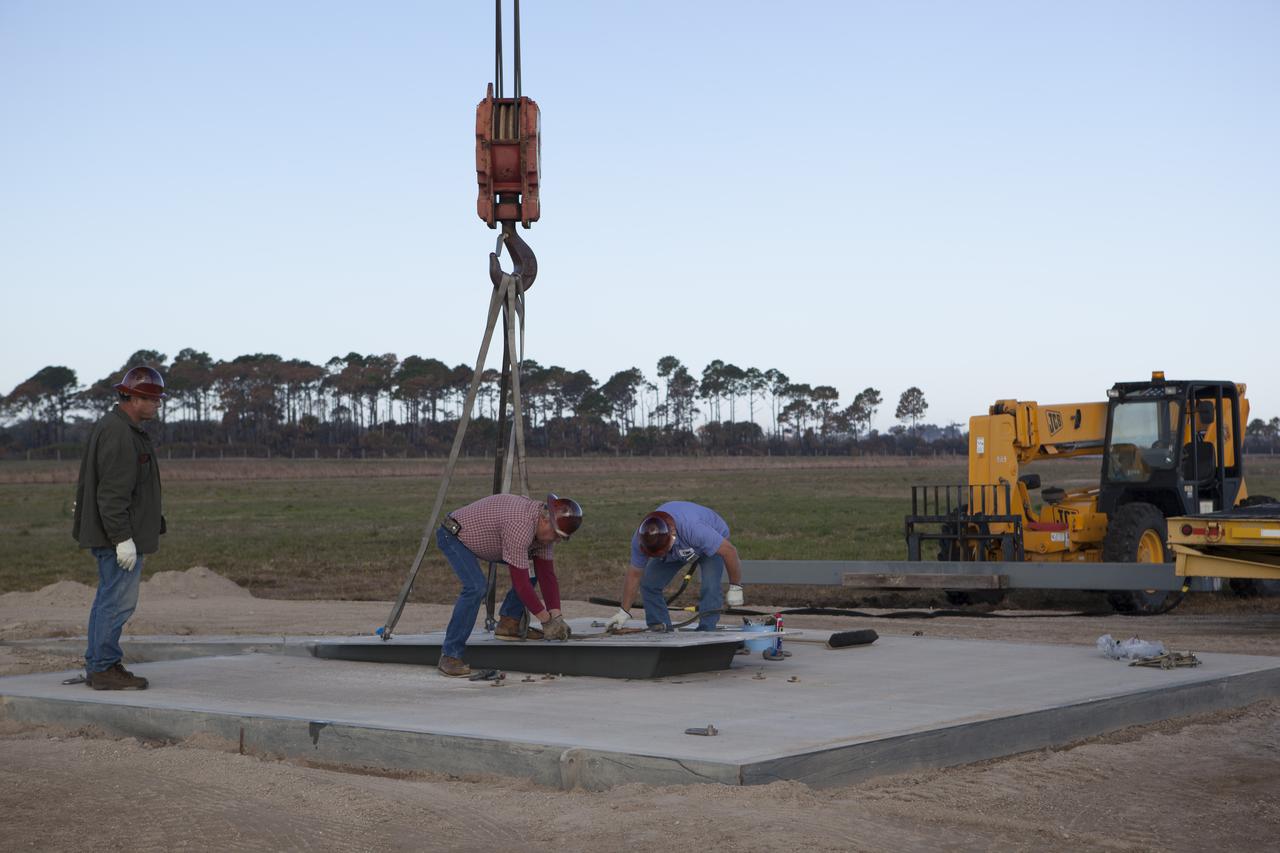
CAPE CANAVERAL, Fla. – Construction workers attach a crane to part of the launch pad for the Project Morpheus prototype lander at the north end of the Shuttle Landing Facility at NASA’s Kennedy Space Center in Florida. The launch pad will be moved to a different location at the landing facility to support the next phase of flight testing. The seventh free flight test of Morpheus occurred on March 11. The 83-second test began at 3:41 p.m. EDT with the Morpheus lander launching from the ground over a flame trench and ascending to 580 feet. Morpheus then flew its fastest downrange trek at 30 mph, travelling farther than before, 837 feet. The lander performed a 42-foot divert to emulate a hazard avoidance maneuver before descending and touching down on Landing Site 2, at the northern landing pad inside the automated landing and hazard avoidance technology ALHAT hazard field. Morpheus landed within one foot of its intended target. Project Morpheus tests NASA’s ALHAT and an engine that runs on liquid oxygen and methane, or green propellants, into a fully-operational lander that could deliver cargo to other planetary surfaces. The landing facility provides the lander with the kind of field necessary for realistic testing, complete with rocks, craters and hazards to avoid. Morpheus’ ALHAT payload allows it to navigate to clear landing sites amidst rocks, craters and other hazards during its descent. Project Morpheus is being managed under the Advanced Exploration Systems, or AES, Division in NASA’s Human Exploration and Operations Mission Directorate. The efforts in AES pioneer new approaches for rapidly developing prototype systems, demonstrating key capabilities and validating operational concepts for future human missions beyond Earth orbit. For more information on Project Morpheus, visit http://morpheuslander.jsc.nasa.gov/. Photo credit: NASA/Dimitri Gerondidakis
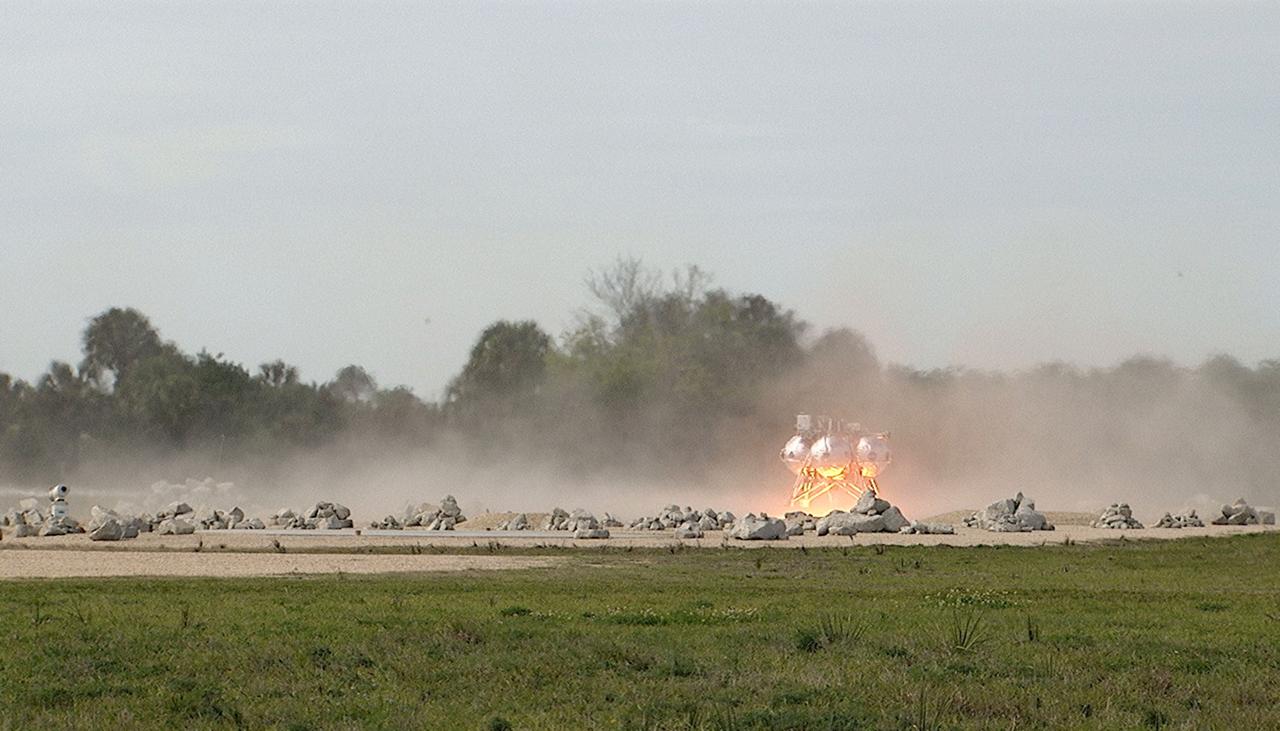
CAPE CANAVERAL, Fla. - The Project Morpheus prototype lander touches down in the automated landing and hazard avoidance technology, or ALHAT, hazard field after completing its seventh free flight test at the north end of the Shuttle Landing Facility at NASA’s Kennedy Space Center in Florida. The 83-second test began at 3:41 p.m. EDT with the Morpheus lander launching from the ground over a flame trench and ascending to 580 feet, its highest to date. Morpheus then flew its fastest downrange trek at 30 mph, travelling farther than before, 837 feet. The lander performed a 42-foot divert to emulate a hazard avoidance maneuver before descending and touching down on Landing Site 2, at the northern landing pad inside the hazard field. Morpheus landed within one foot of its intended target. Project Morpheus tests NASA’s ALHAT and an engine that runs on liquid oxygen and methane, or green propellants, into a fully-operational lander that could deliver cargo to other planetary surfaces. The landing facility provides the lander with the kind of field necessary for realistic testing, complete with rocks, craters and hazards to avoid. Morpheus’ ALHAT payload allows it to navigate to clear landing sites amidst rocks, craters and other hazards during its descent. Project Morpheus is being managed under the Advanced Exploration Systems, or AES, Division in NASA’s Human Exploration and Operations Mission Directorate. The efforts in AES pioneer new approaches for rapidly developing prototype systems, demonstrating key capabilities and validating operational concepts for future human missions beyond Earth orbit. For more information on Project Morpheus, visit http://morpheuslander.jsc.nasa.gov/. Photo credit: NASA/Mike Chambers
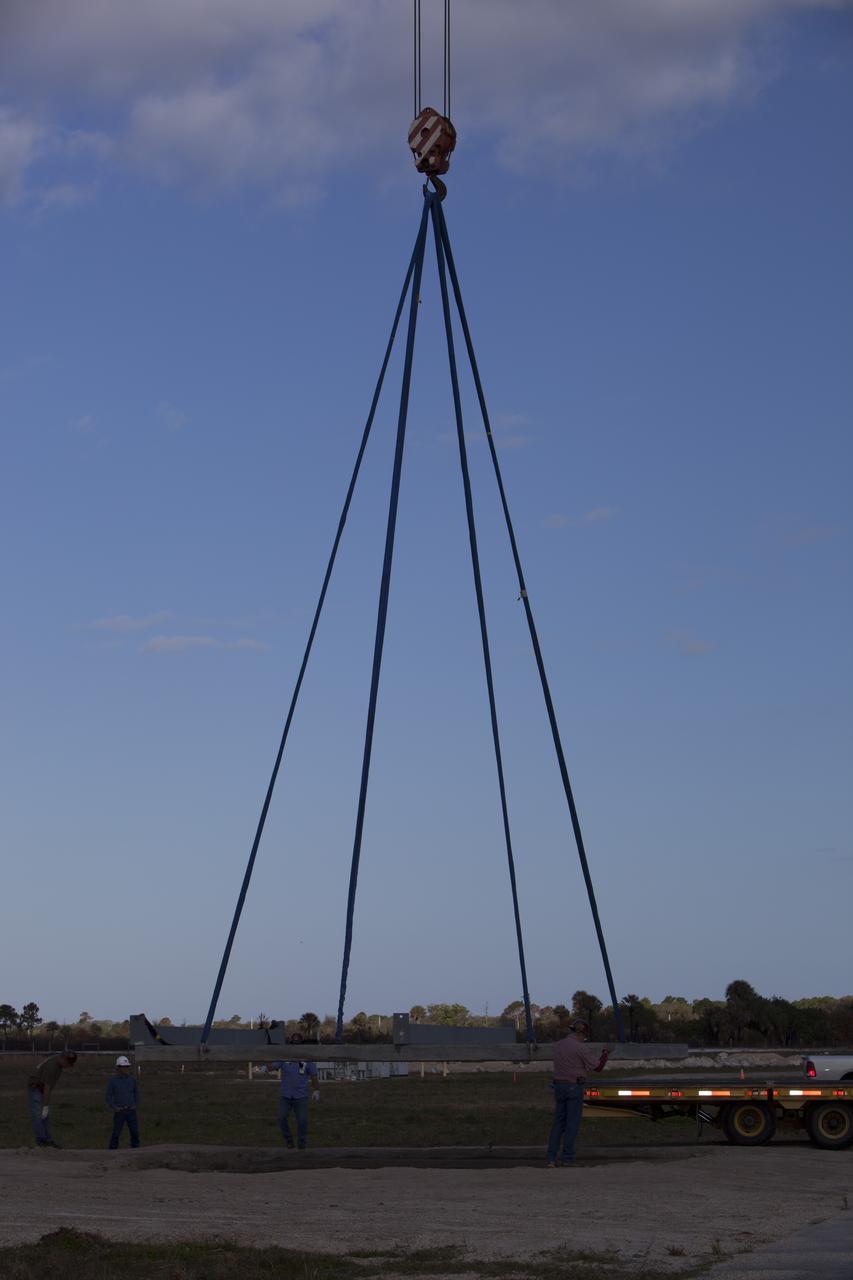
CAPE CANAVERAL, Fla. – Construction workers assist as a crane is used to lift a large portion of the launch pad for the Project Morpheus prototype lander onto a transporter at the north end of the Shuttle Landing Facility at NASA’s Kennedy Space Center in Florida. The launch pad is being moved to a different location at the landing facility to support the next phase of flight testing. Morpheus completed its seventh free flight test on March 11. The 83-second test began at 3:41 p.m. EDT with the Morpheus lander launching from the ground over a flame trench and ascending to 580 feet. Morpheus then flew its fastest downrange trek at 30 mph, travelling farther than before, 837 feet. The lander performed a 42-foot divert to emulate a hazard avoidance maneuver before descending and touching down on Landing Site 2, at the northern landing pad inside the automated landing and hazard avoidance technology ALHAT hazard field. Morpheus landed within one foot of its intended target. Project Morpheus tests NASA’s ALHAT and an engine that runs on liquid oxygen and methane, or green propellants, into a fully-operational lander that could deliver cargo to other planetary surfaces. The landing facility provides the lander with the kind of field necessary for realistic testing, complete with rocks, craters and hazards to avoid. Morpheus’ ALHAT payload allows it to navigate to clear landing sites amidst rocks, craters and other hazards during its descent. Project Morpheus is being managed under the Advanced Exploration Systems, or AES, Division in NASA’s Human Exploration and Operations Mission Directorate. The efforts in AES pioneer new approaches for rapidly developing prototype systems, demonstrating key capabilities and validating operational concepts for future human missions beyond Earth orbit. For more information on Project Morpheus, visit http://morpheuslander.jsc.nasa.gov/. Photo credit: NASA/Dimitri Gerondidakis
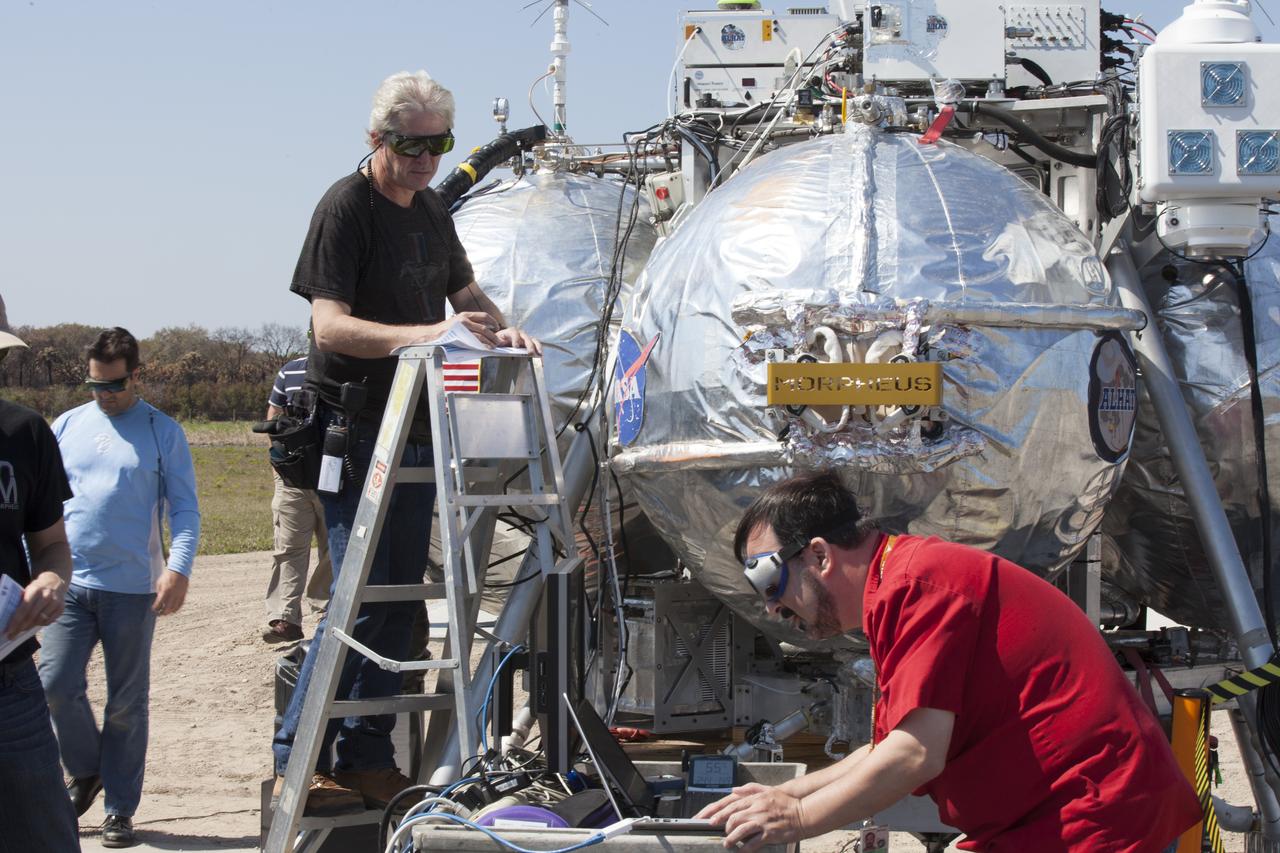
CAPE CANAVERAL, Fla. – Engineers and technicians prepare the Project Morpheus prototype lander for an automated landing and hazard avoidance technology, or ALHAT, and laser test at a new launch site at the north end of the Shuttle Landing Facility at NASA’s Kennedy Space Center in Florida. The launch pad was moved to a different location at the landing facility to support the next phase of flight testing. The seventh free flight test of Morpheus occurred on March 11. The 83-second test began at 3:41 p.m. EDT with the Morpheus lander launching from the ground over a flame trench and ascending to 580 feet. Morpheus then flew its fastest downrange trek at 30 mph, travelling farther than before, 837 feet. The lander performed a 42-foot divert to emulate a hazard avoidance maneuver before descending and touching down on Landing Site 2, at the northern landing pad inside the ALHAT hazard field. Morpheus landed within one foot of its intended target. Project Morpheus tests NASA’s ALHAT and an engine that runs on liquid oxygen and methane, or green propellants, into a fully-operational lander that could deliver cargo to other planetary surfaces. The landing facility provides the lander with the kind of field necessary for realistic testing, complete with rocks, craters and hazards to avoid. Morpheus’ ALHAT payload allows it to navigate to clear landing sites amidst rocks, craters and other hazards during its descent. Project Morpheus is being managed under the Advanced Exploration Systems, or AES, Division in NASA’s Human Exploration and Operations Mission Directorate. The efforts in AES pioneer new approaches for rapidly developing prototype systems, demonstrating key capabilities and validating operational concepts for future human missions beyond Earth orbit. For more information on Project Morpheus, visit http://morpheuslander.jsc.nasa.gov/. Photo credit: NASA/Kim Shiflett
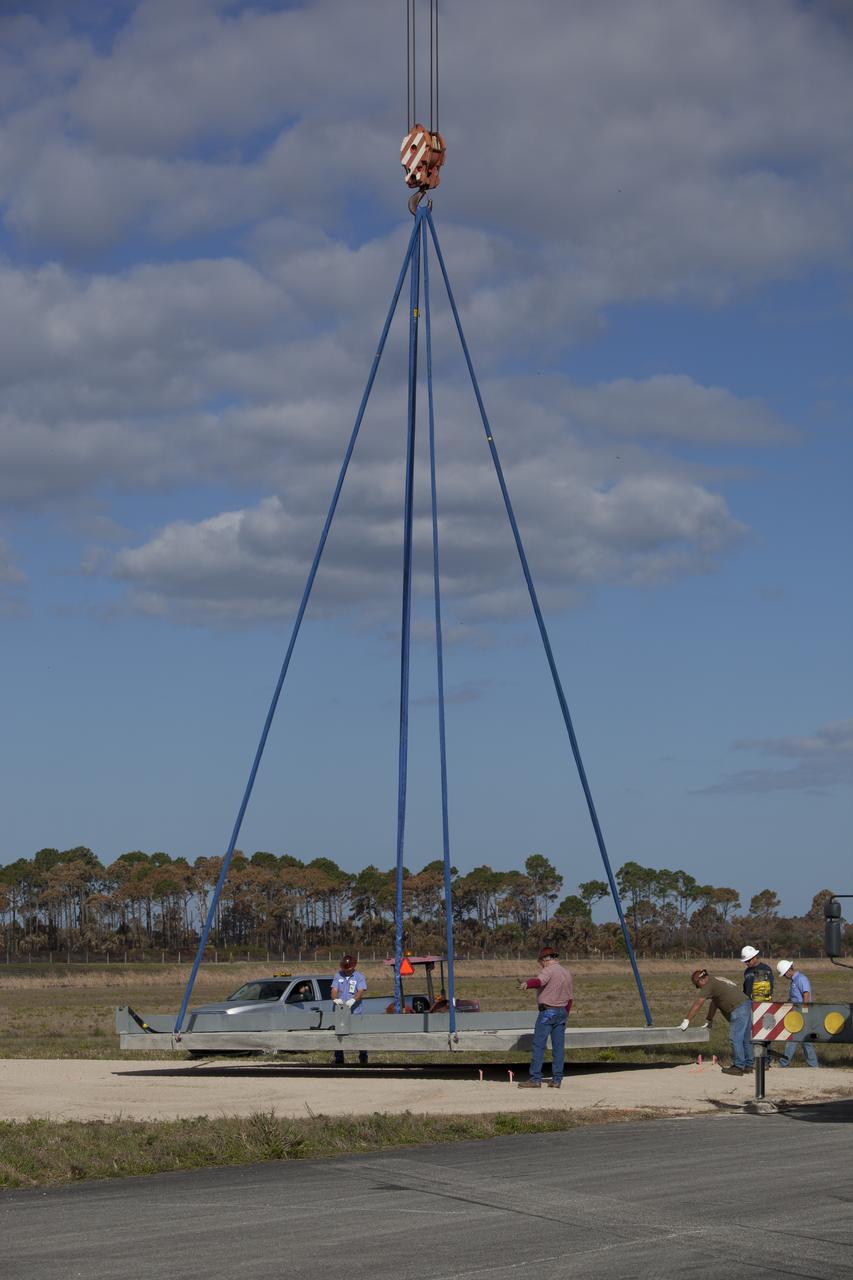
CAPE CANAVERAL, Fla. – A crane is used to lower the launch pad for the Project Morpheus prototype lander onto a new location at the north end of the Shuttle Landing Facility at NASA’s Kennedy Space Center in Florida. The launch pad was moved to a different location to support the next phase of flight testing. Morpheus completed its seventh free flight test on March 11. The 83-second test began at 3:41 p.m. EDT with the Morpheus lander launching from the ground over a flame trench and ascending to 580 feet. Morpheus then flew its fastest downrange trek at 30 mph, travelling farther than before, 837 feet. The lander performed a 42-foot divert to emulate a hazard avoidance maneuver before descending and touching down on Landing Site 2, at the northern landing pad inside the automated landing and hazard avoidance technology ALHAT hazard field. Morpheus landed within one foot of its intended target. Project Morpheus tests NASA’s ALHAT and an engine that runs on liquid oxygen and methane, or green propellants, into a fully-operational lander that could deliver cargo to other planetary surfaces. The landing facility provides the lander with the kind of field necessary for realistic testing, complete with rocks, craters and hazards to avoid. Morpheus’ ALHAT payload allows it to navigate to clear landing sites amidst rocks, craters and other hazards during its descent. Project Morpheus is being managed under the Advanced Exploration Systems, or AES, Division in NASA’s Human Exploration and Operations Mission Directorate. The efforts in AES pioneer new approaches for rapidly developing prototype systems, demonstrating key capabilities and validating operational concepts for future human missions beyond Earth orbit. For more information on Project Morpheus, visit http://morpheuslander.jsc.nasa.gov/. Photo credit: NASA/Dimitri Gerondidakis
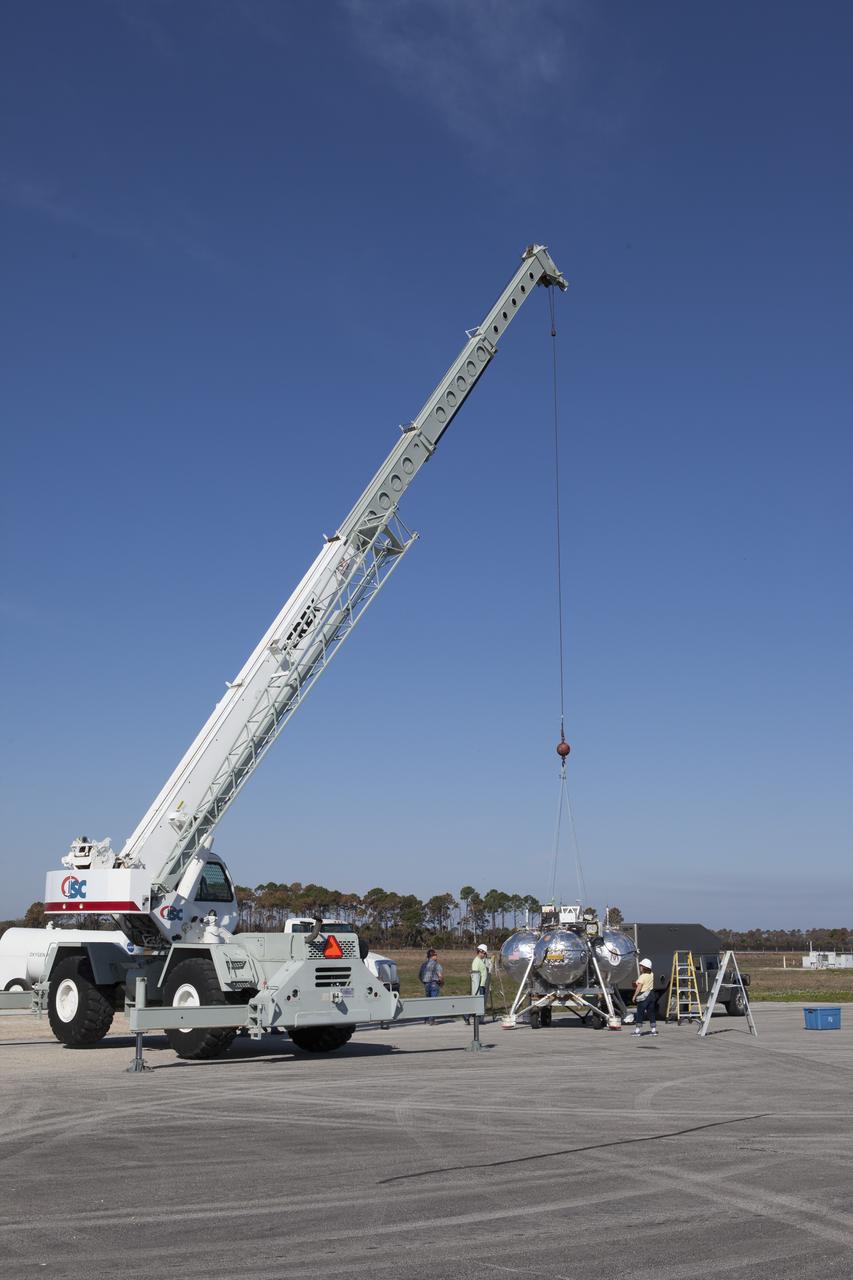
CAPE CANAVERAL, Fla. - Preparations are underway to prepare the Project Morpheus prototype lander for its seventh free flight test at the north end of the Shuttle Landing Facility at NASA’s Kennedy Space Center in Florida. The 83-second test began at 3:41 p.m. EDT with the Morpheus lander launching from the ground over a flame trench and ascending to 580 feet, its highest to date. Morpheus then flew its fastest downrange trek at 30 mph, travelling farther than before, 837 feet. The lander performed a 42-foot divert to emulate a hazard avoidance maneuver before descending and touching down on Landing Site 2, at the northern landing pad inside the automated landing and hazard avoidance technology ALHAT hazard field. Morpheus landed within one foot of its intended target. Project Morpheus tests NASA’s ALHAT and an engine that runs on liquid oxygen and methane, or green propellants, into a fully-operational lander that could deliver cargo to other planetary surfaces. The landing facility provides the lander with the kind of field necessary for realistic testing, complete with rocks, craters and hazards to avoid. Morpheus’ ALHAT payload allows it to navigate to clear landing sites amidst rocks, craters and other hazards during its descent. Project Morpheus is being managed under the Advanced Exploration Systems, or AES, Division in NASA’s Human Exploration and Operations Mission Directorate. The efforts in AES pioneer new approaches for rapidly developing prototype systems, demonstrating key capabilities and validating operational concepts for future human missions beyond Earth orbit. For more information on Project Morpheus, visit http://morpheuslander.jsc.nasa.gov/. Photo credit: NASA/Kim Shiflett
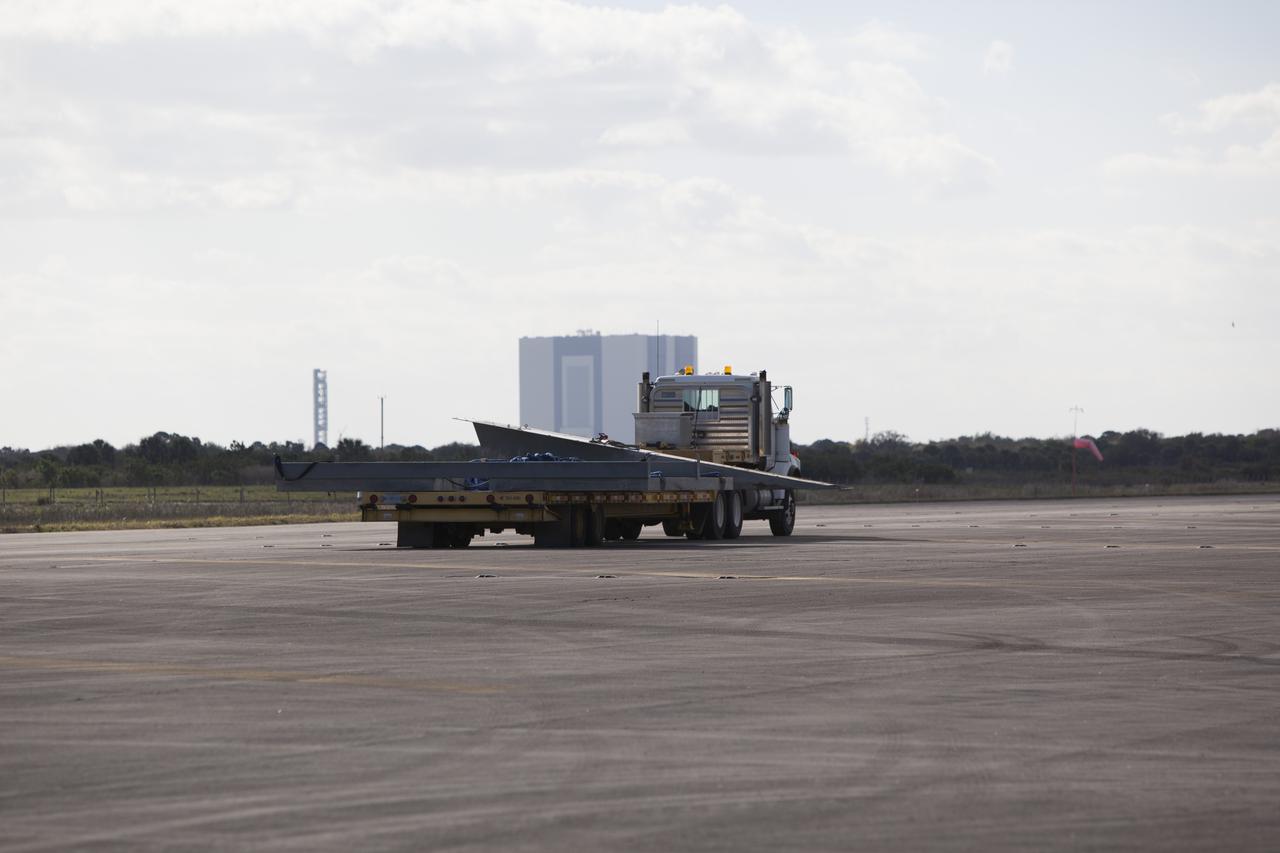
CAPE CANAVERAL, Fla. – A flatbed truck carries the launch pad for the Project Morpheus prototype lander to a new location at the north end of the Shuttle Landing Facility at NASA’s Kennedy Space Center in Florida. The launch pad is being moved to a different location to support the next phase of flight testing. Morpheus completed its seventh free flight test on March 11. The 83-second test began at 3:41 p.m. EDT with the Morpheus lander launching from the ground over a flame trench and ascending to 580 feet. Morpheus then flew its fastest downrange trek at 30 mph, travelling farther than before, 837 feet. The lander performed a 42-foot divert to emulate a hazard avoidance maneuver before descending and touching down on Landing Site 2, at the northern landing pad inside the automated landing and hazard avoidance technology ALHAT hazard field. Morpheus landed within one foot of its intended target. Project Morpheus tests NASA’s ALHAT and an engine that runs on liquid oxygen and methane, or green propellants, into a fully-operational lander that could deliver cargo to other planetary surfaces. The landing facility provides the lander with the kind of field necessary for realistic testing, complete with rocks, craters and hazards to avoid. Morpheus’ ALHAT payload allows it to navigate to clear landing sites amidst rocks, craters and other hazards during its descent. Project Morpheus is being managed under the Advanced Exploration Systems, or AES, Division in NASA’s Human Exploration and Operations Mission Directorate. The efforts in AES pioneer new approaches for rapidly developing prototype systems, demonstrating key capabilities and validating operational concepts for future human missions beyond Earth orbit. For more information on Project Morpheus, visit http://morpheuslander.jsc.nasa.gov/. Photo credit: NASA/Dimitri Gerondidakis
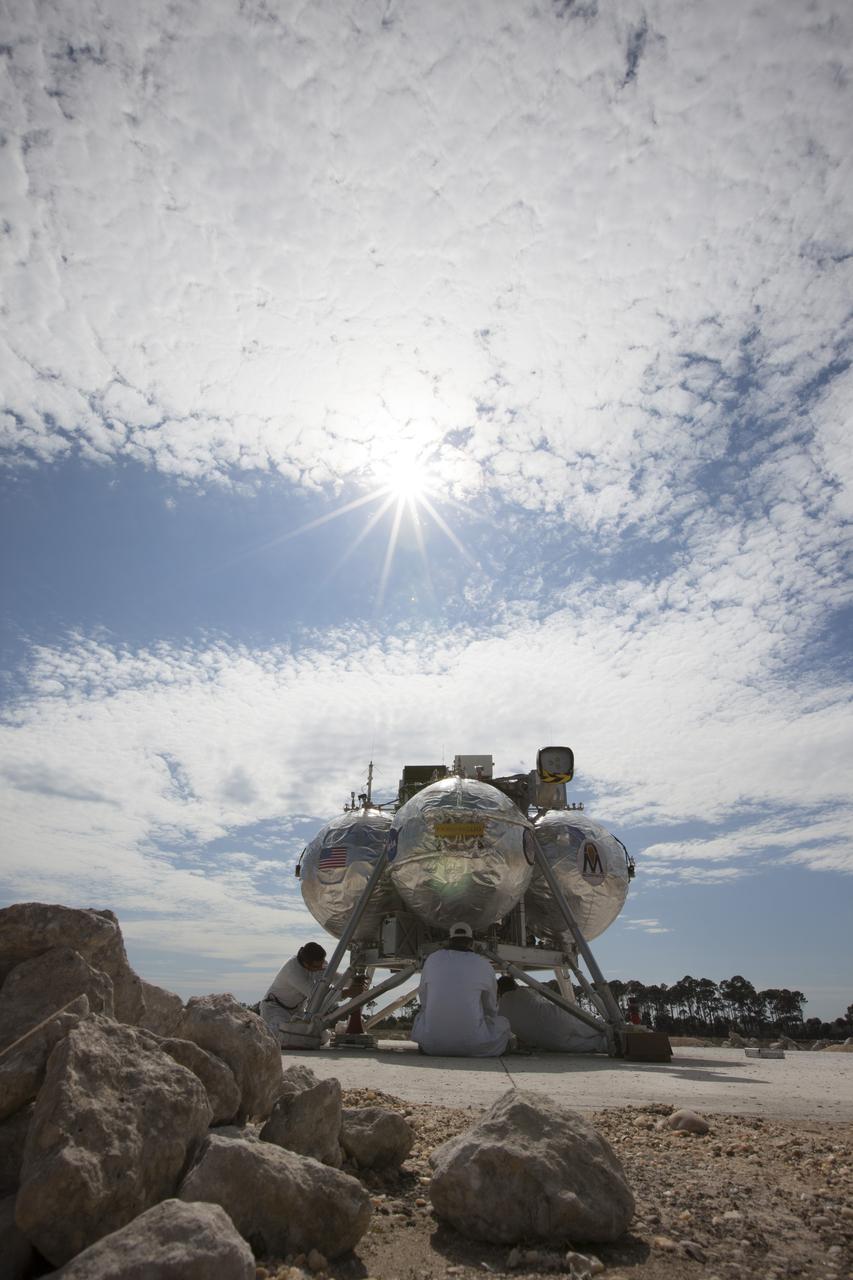
CAPE CANAVERAL, Fla. - Technicians prepare the Project Morpheus prototype lander for its seventh free flight test at the north end of the Shuttle Landing Facility at NASA’s Kennedy Space Center in Florida. The 83-second test began at 3:41 p.m. EDT with the Morpheus lander launching from the ground over a flame trench and ascending to 580 feet, its highest to date. Morpheus then flew its fastest downrange trek at 30 mph, travelling farther than before, 837 feet. The lander performed a 42-foot divert to emulate a hazard avoidance maneuver before descending and touching down on Landing Site 2, at the northern landing pad inside the automated landing and hazard avoidance technology ALHAT hazard field. Morpheus landed within one foot of its intended target. Project Morpheus tests NASA’s ALHAT and an engine that runs on liquid oxygen and methane, or green propellants, into a fully-operational lander that could deliver cargo to other planetary surfaces. The landing facility provides the lander with the kind of field necessary for realistic testing, complete with rocks, craters and hazards to avoid. Morpheus’ ALHAT payload allows it to navigate to clear landing sites amidst rocks, craters and other hazards during its descent. Project Morpheus is being managed under the Advanced Exploration Systems, or AES, Division in NASA’s Human Exploration and Operations Mission Directorate. The efforts in AES pioneer new approaches for rapidly developing prototype systems, demonstrating key capabilities and validating operational concepts for future human missions beyond Earth orbit. For more information on Project Morpheus, visit http://morpheuslander.jsc.nasa.gov/. Photo credit: NASA/Kim Shiflett
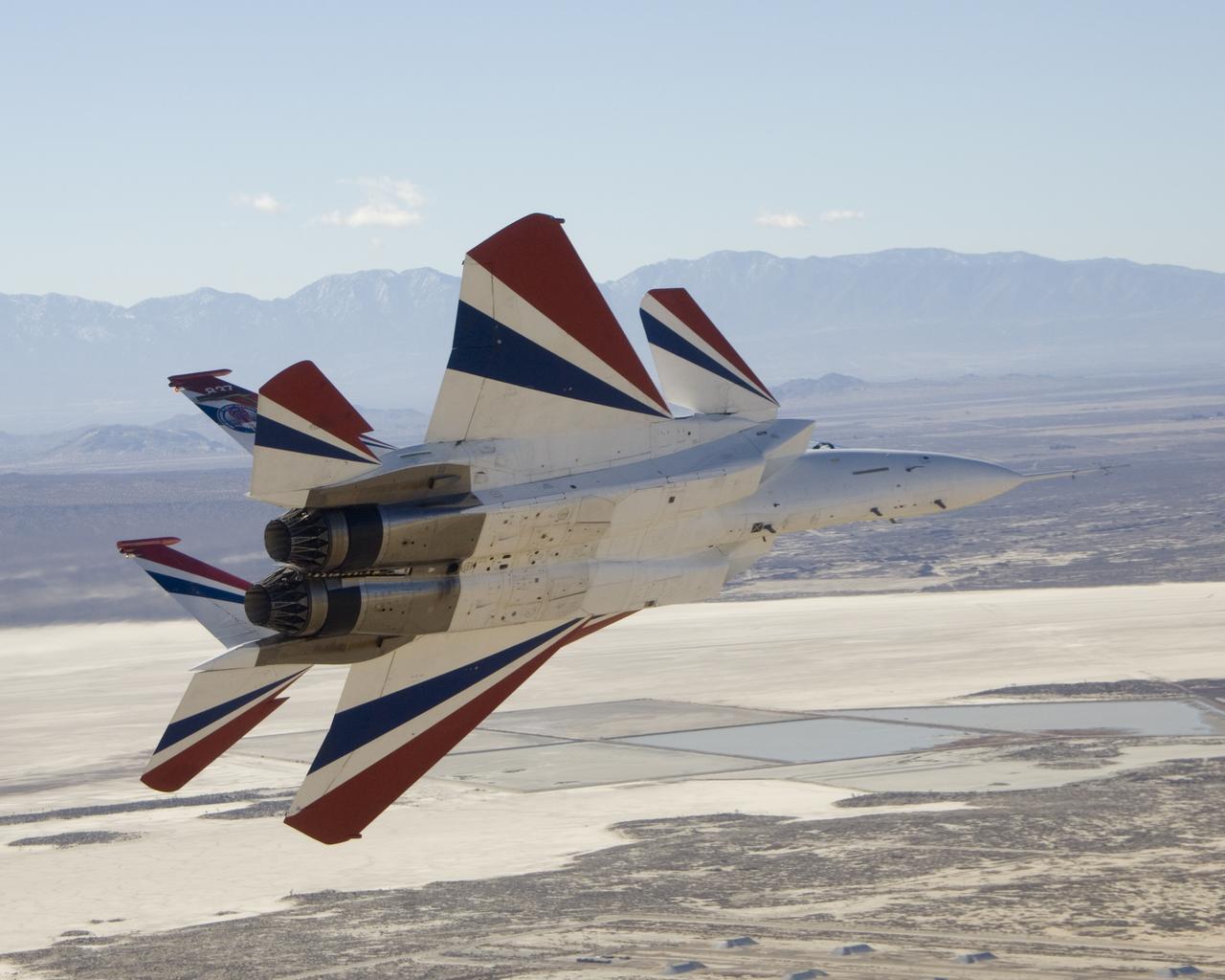
Two small Range Safety System antennas are located just behind the engine inlets of NASA's NF-15B research aircraft as it banks away from the chase plane.
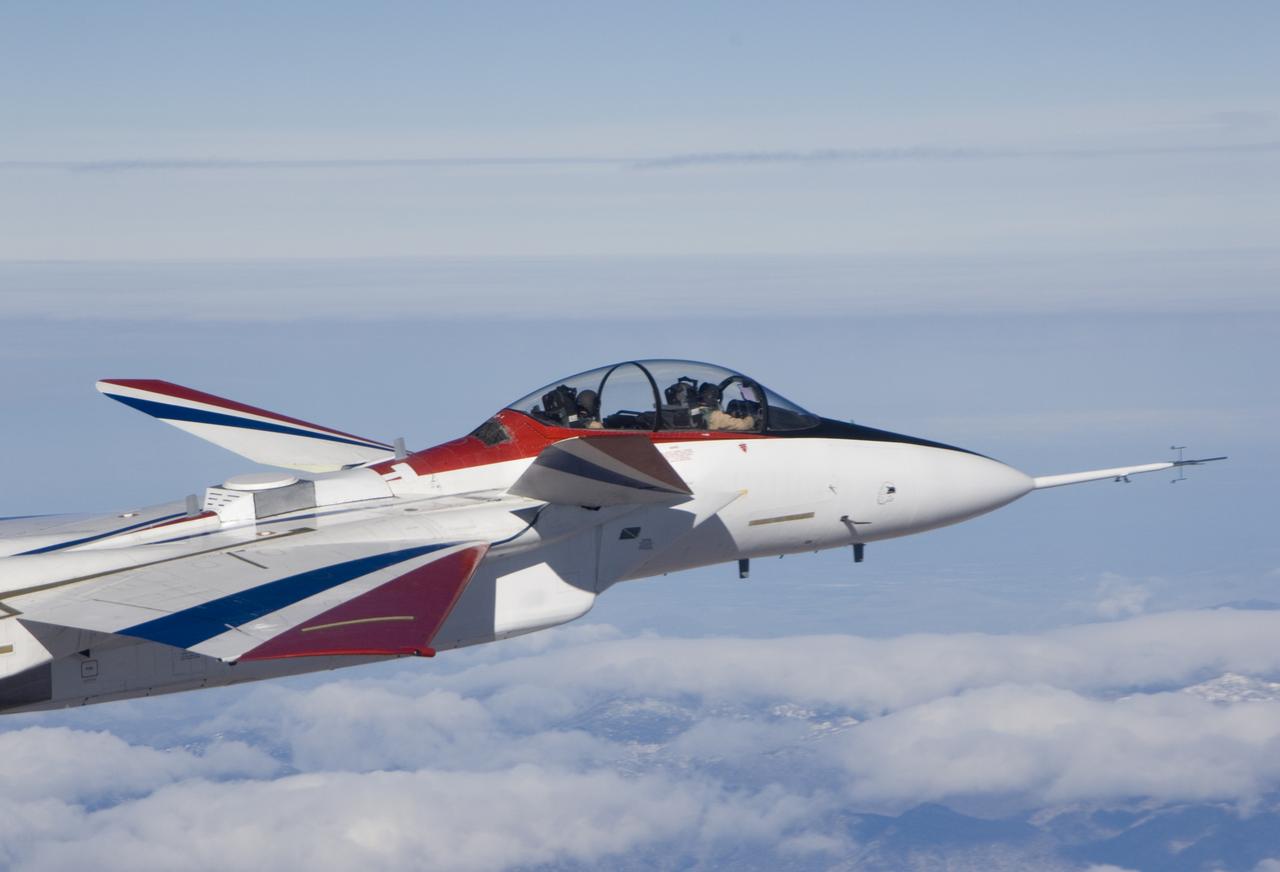
Range safety and phased-array range user system antennas validated in the ECANS project can be seen just behind the cockpit on NASA's NF-15B research aircraft.
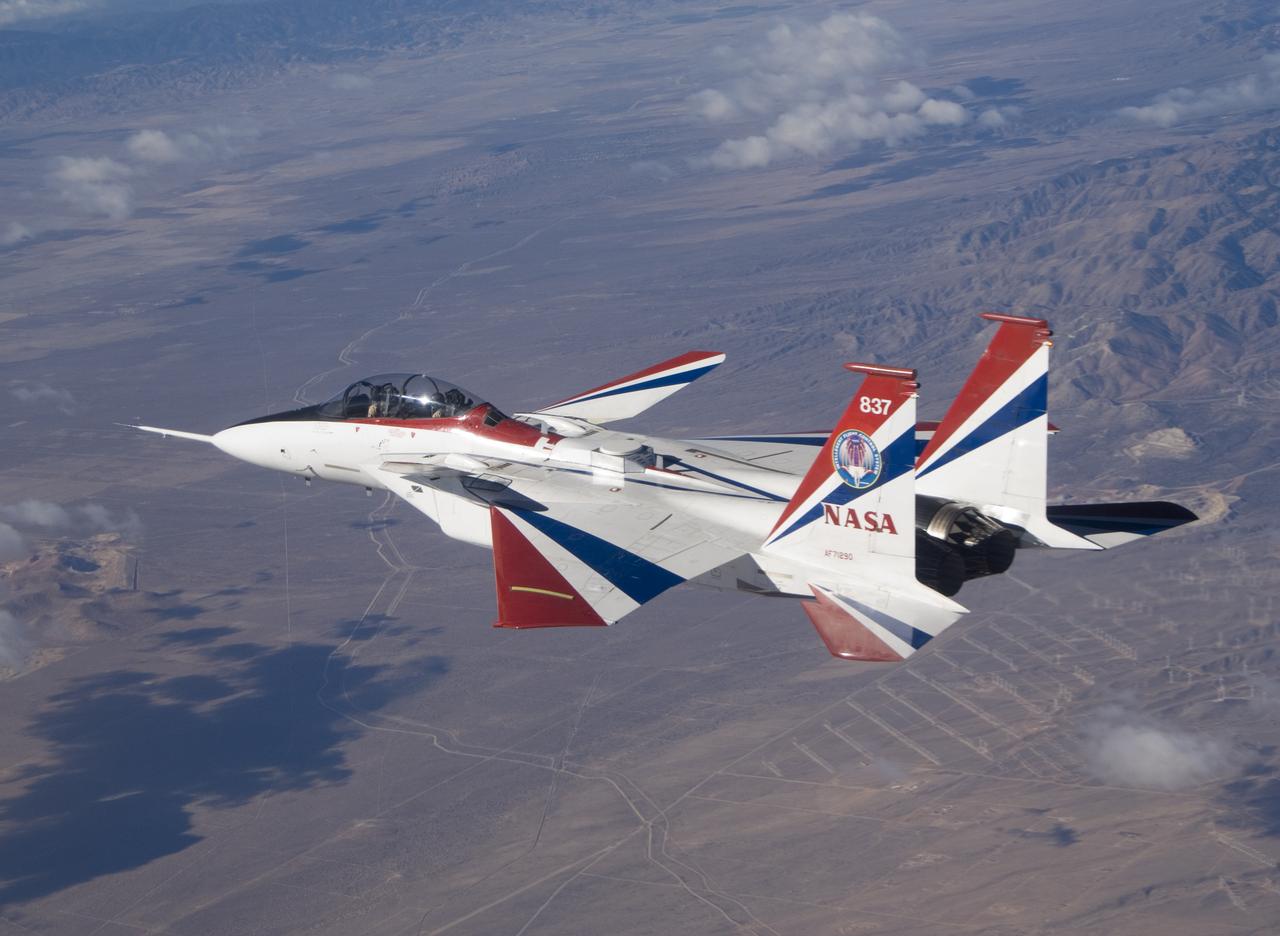
New range safety and range user system antennas for the ECANS project can be seen just behind and to the left of the cockpit on NASA's NF-15B research aircraft.
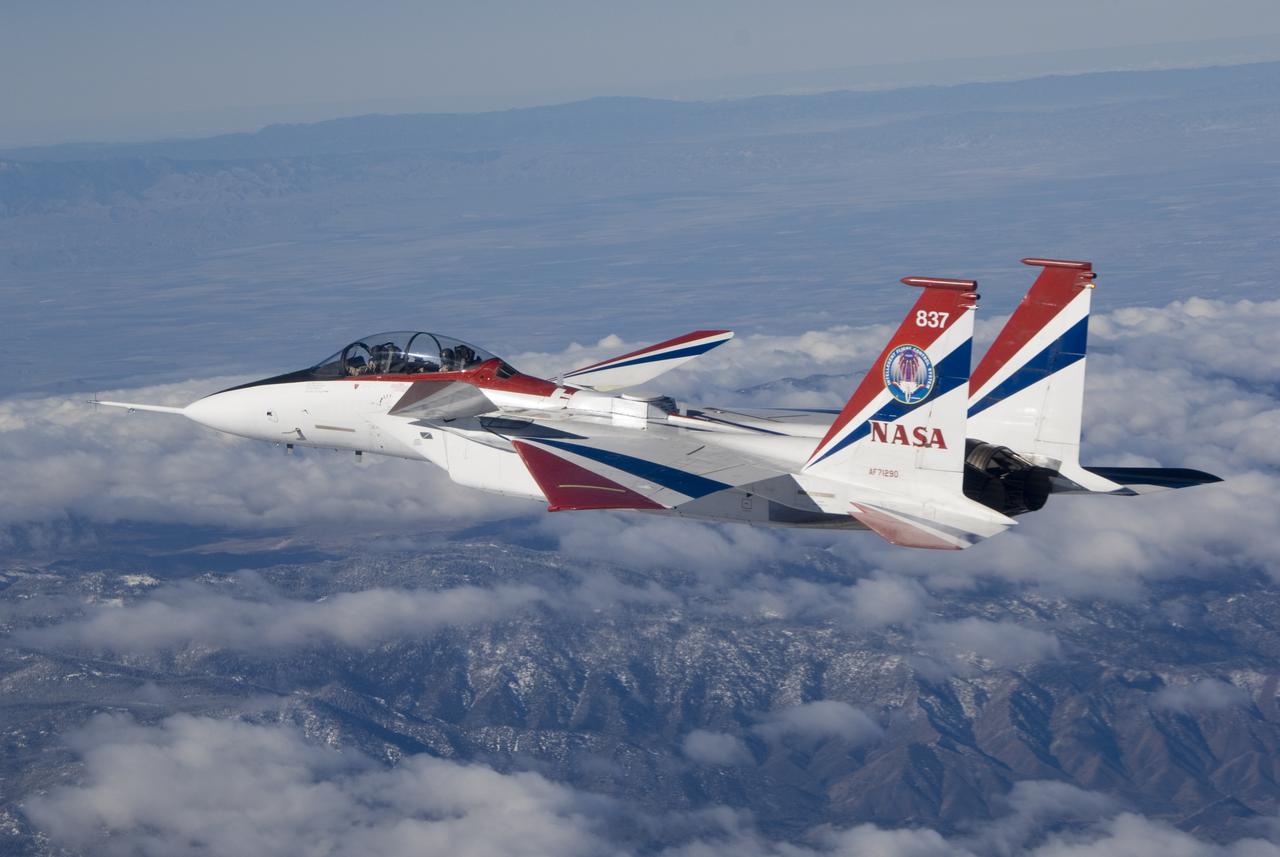
Antennas used for the Space-Based Range Demonstration and Certification project protrude from the top of NASA's NF-15B testbed during a research flight.
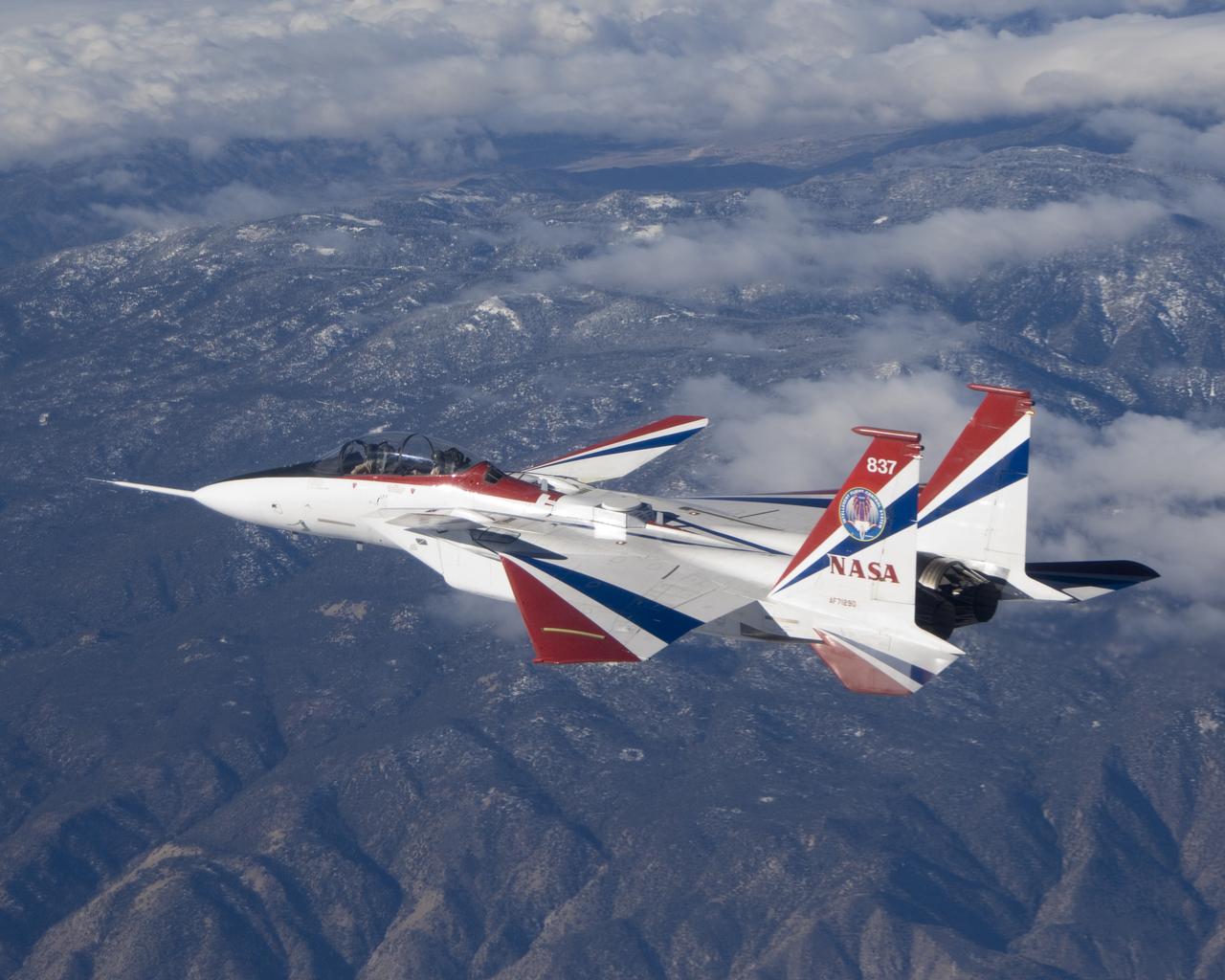
The jagged ridges of Southern California's Tehachapi Mountains form the backdrop to NASA's brightly-colored NF-15B testbed aircraft during a research mission.
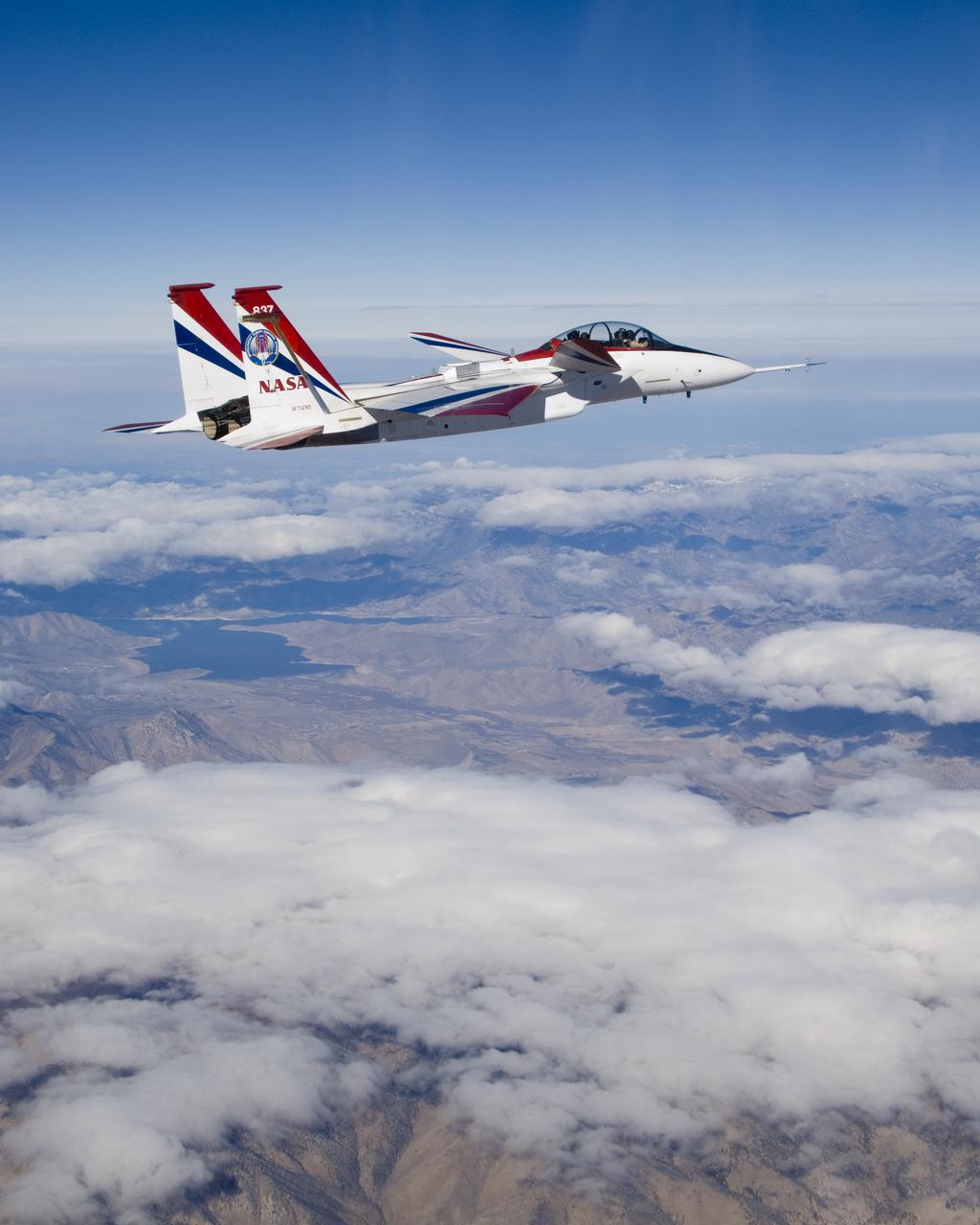
NASA's highly modified NF-15B research aircraft cruises over Southern California's Tehachapi Mountains near Lake Isabella during a research mission.
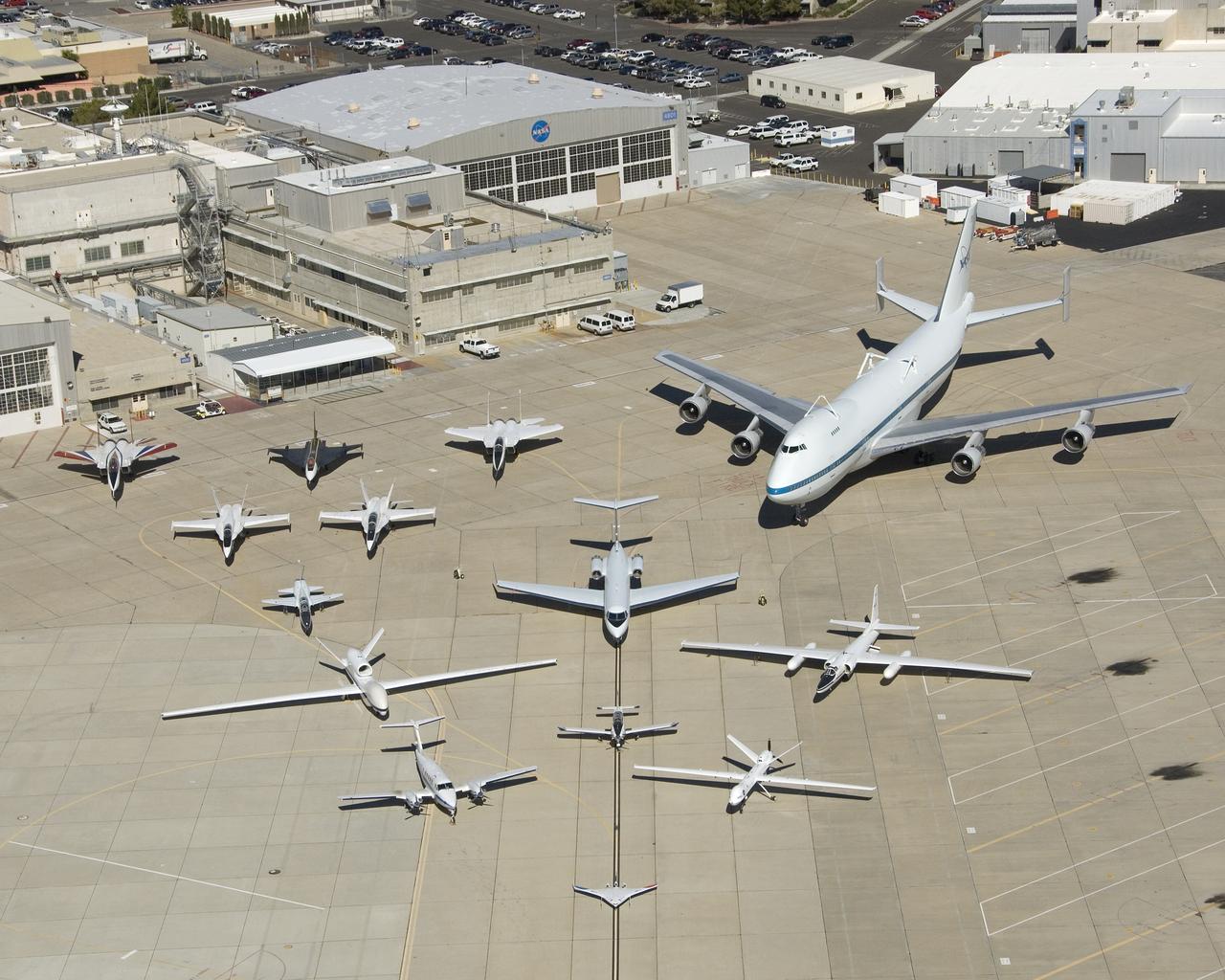
Dryden Flight Research Center - aircraft fleet on ramp