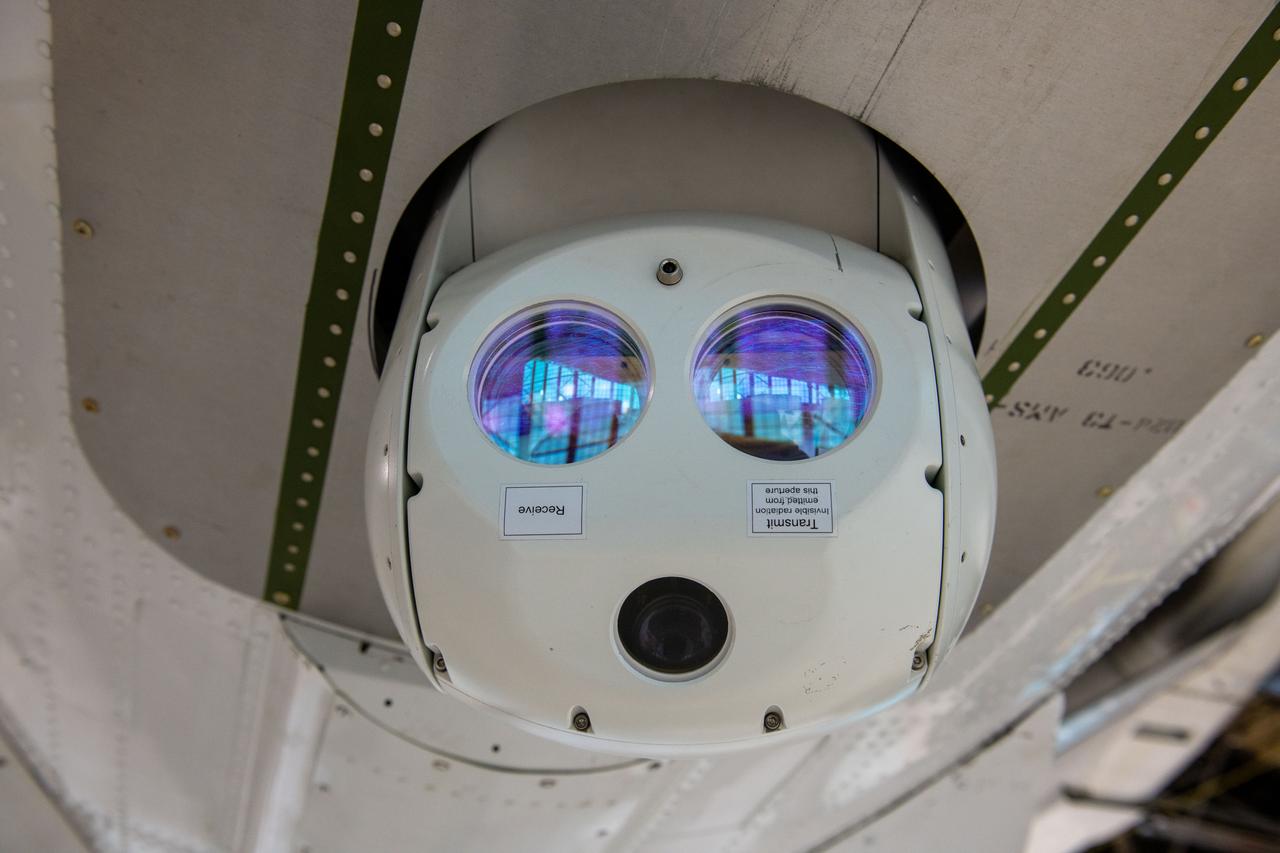
Convergent Aeronautics Solutions (CAS) Quantum Technologies (QTech)
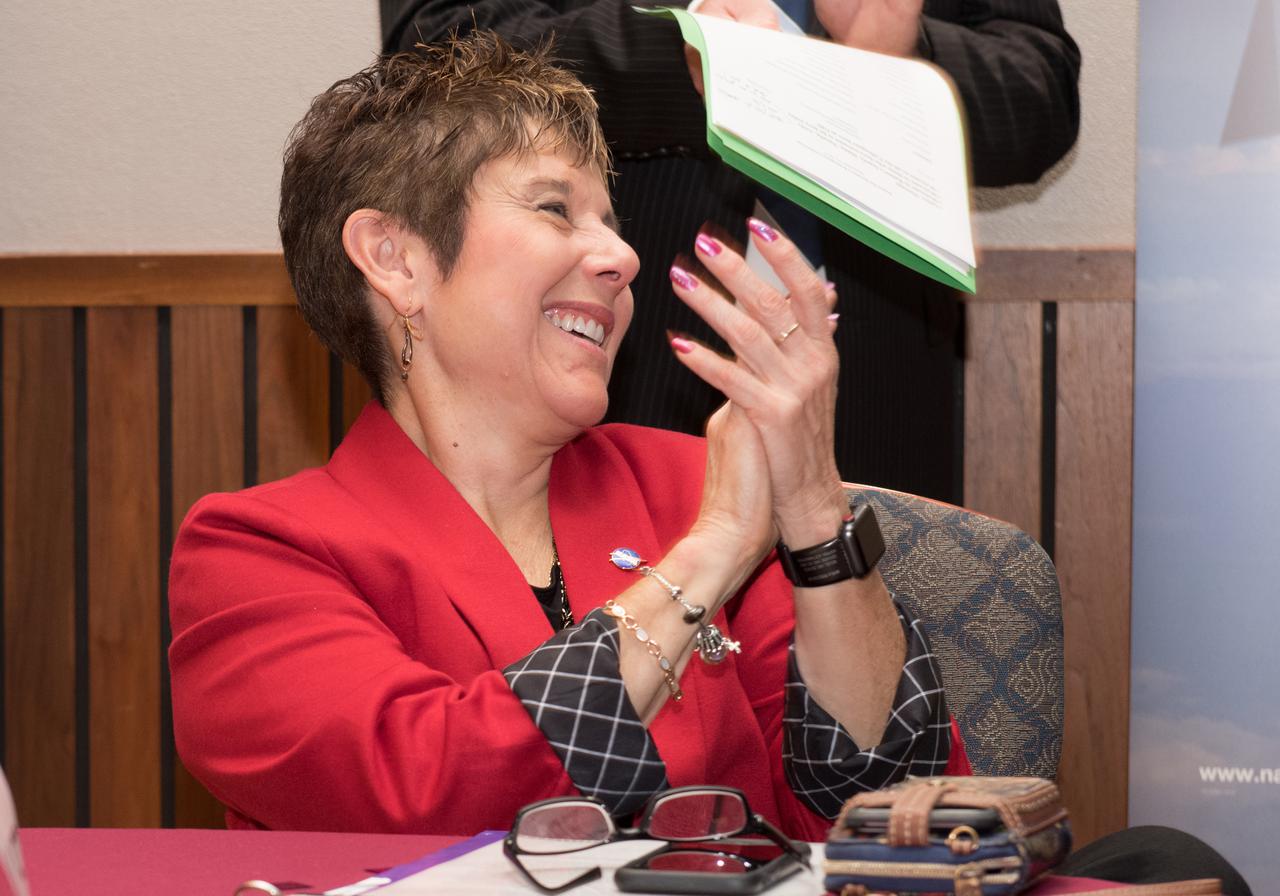
GRC Center Director, Dr. Marla Perez-Davis reacts to a presentation during the Retirement Reception for the Director of Aeronautics, Ruben Del Rosario
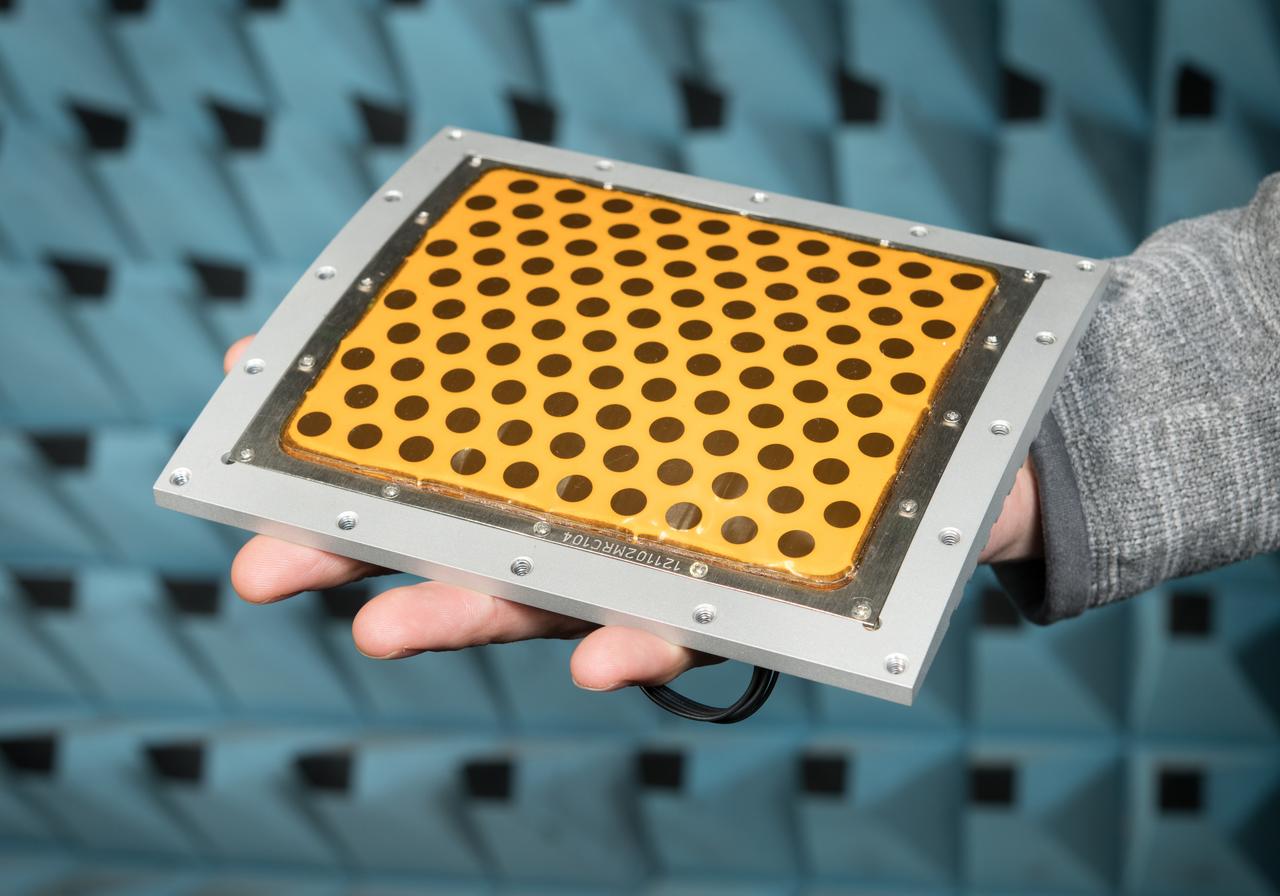
Curved Confocal Lightweight Antenna Structures for Aeronautical Communications Technologies, CLAS-ACT, Phased Array Antenna on Mock Carbon Fiber Fuselage
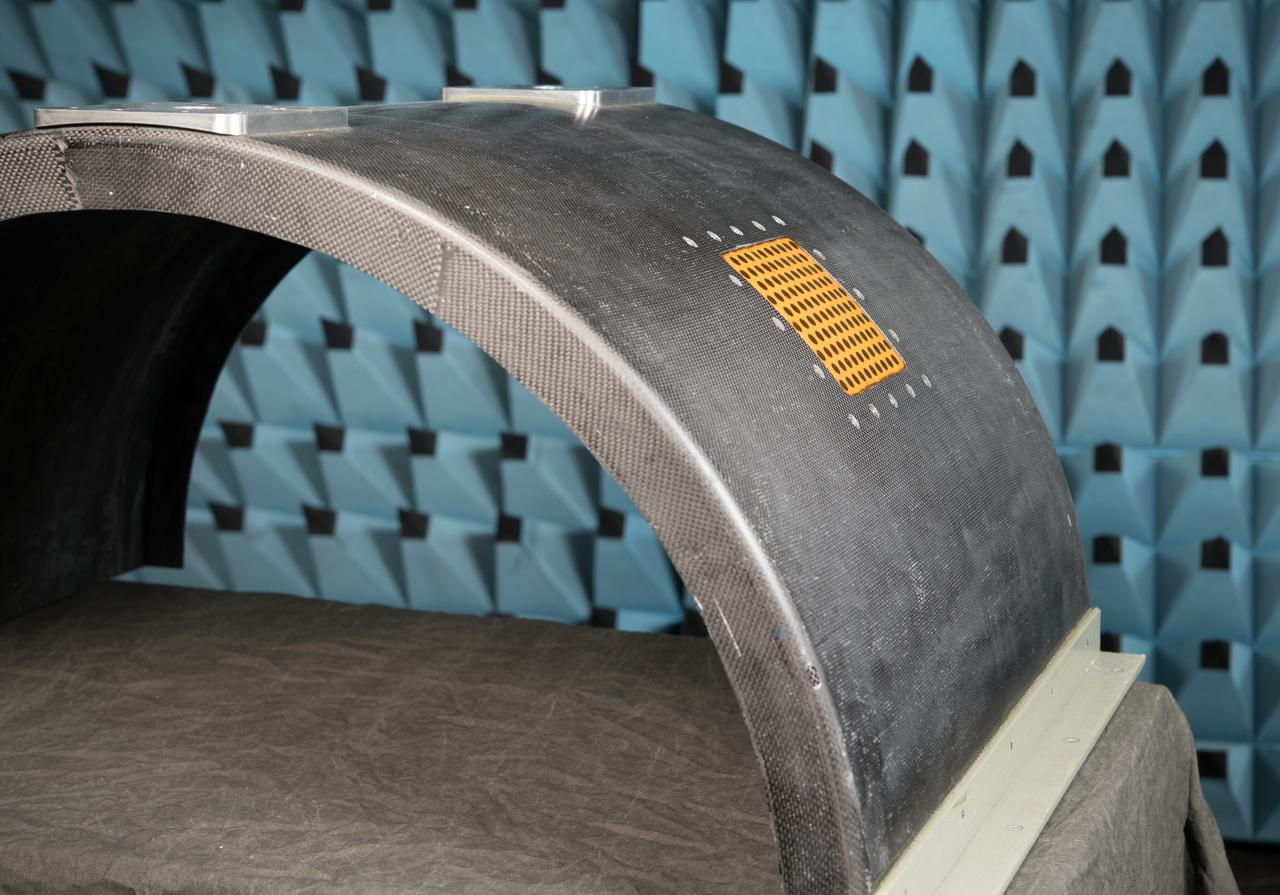
Curved Confocal Lightweight Antenna Structures for Aeronautical Communications Technologies, CLAS-ACT, Phased Array Antenna on Mock Carbon Fiber Fuselage
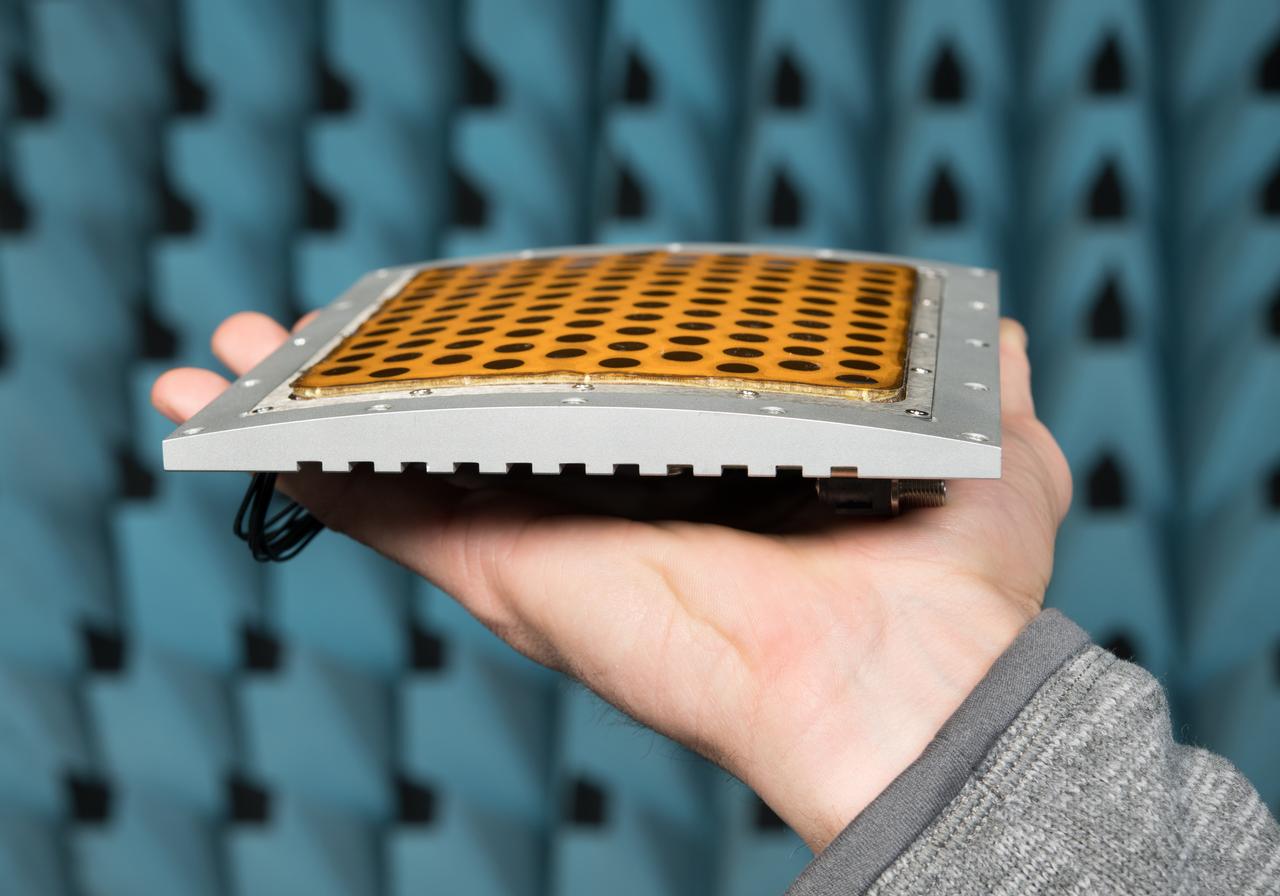
Curved Confocal Lightweight Antenna Structures for Aeronautical Communications Technologies, CLAS-ACT, Phased Array Antenna on Mock Carbon Fiber Fuselage
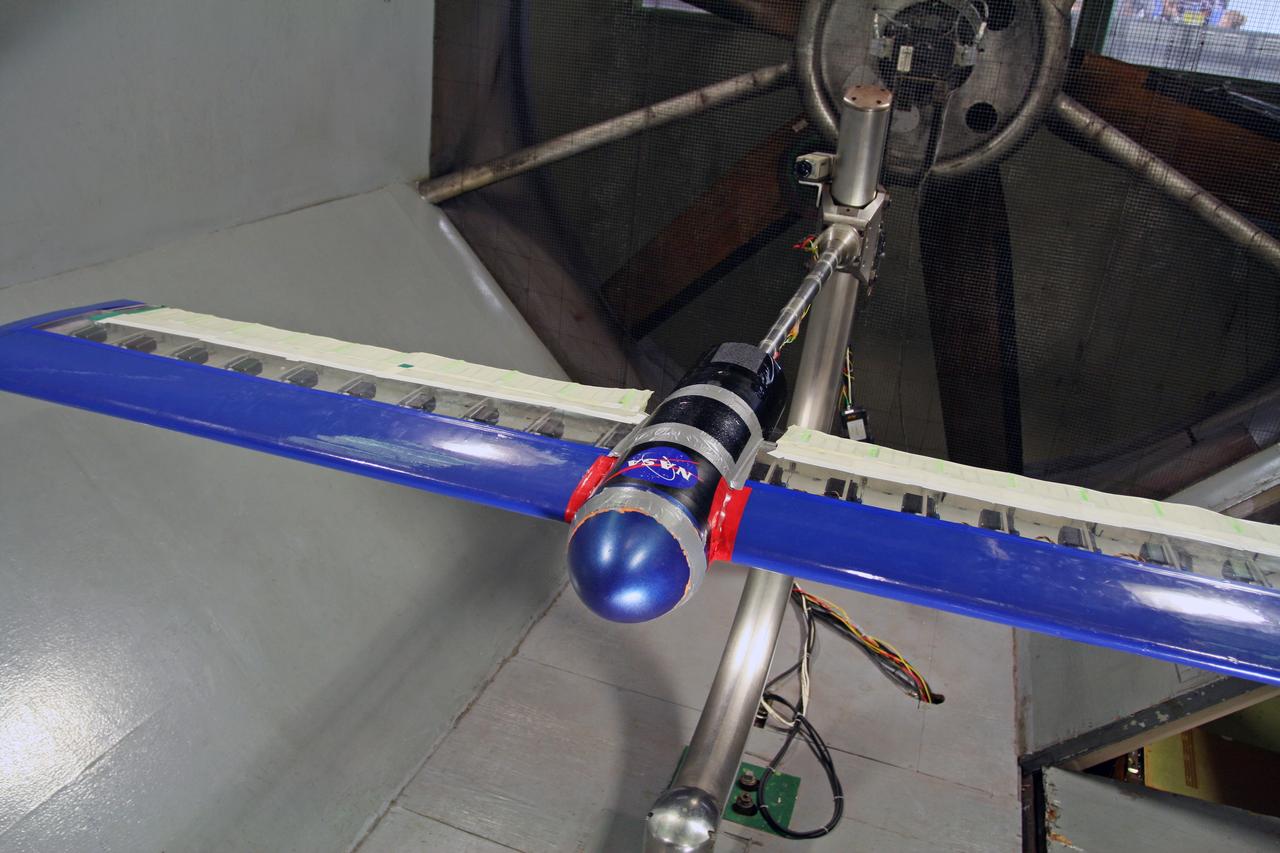
Aeronautic Academy Continuous Trailing Edge Flap
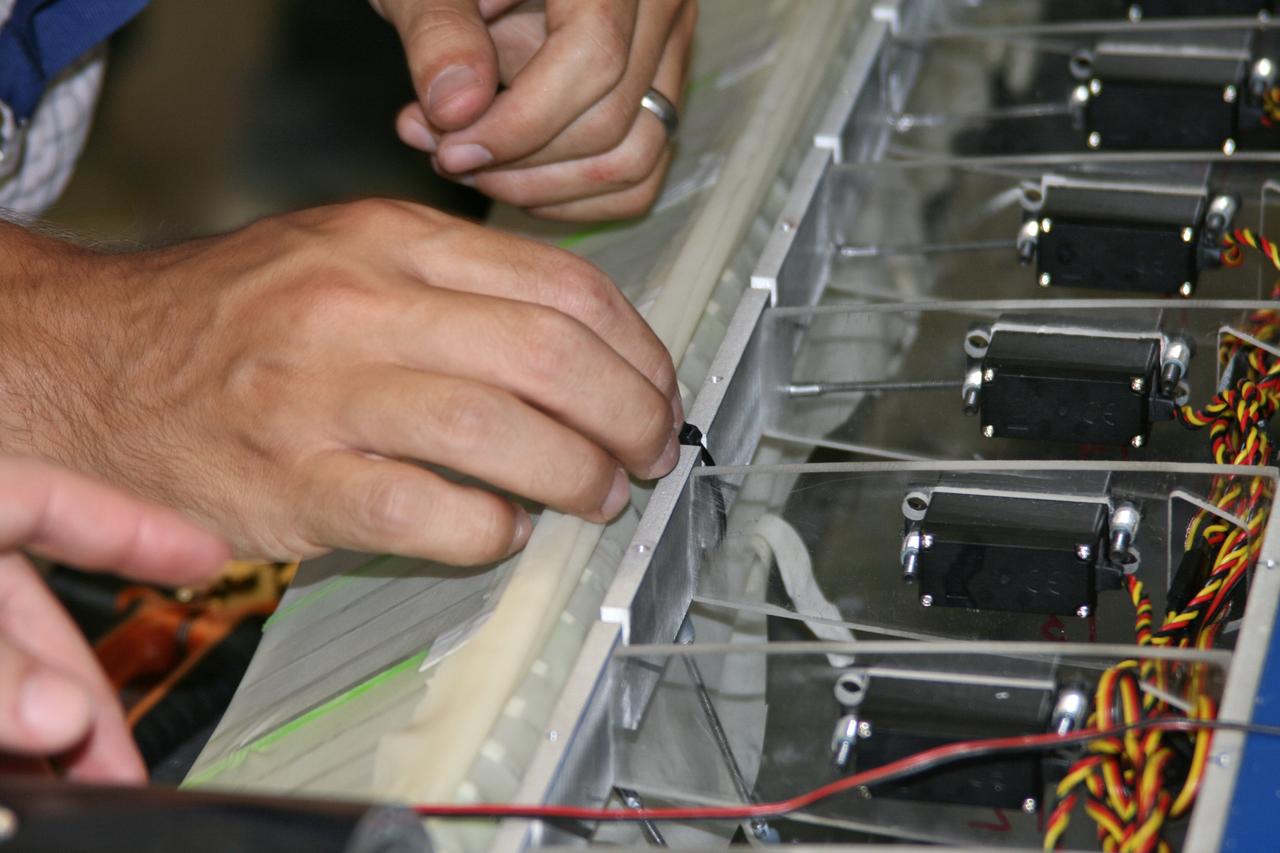
Aeronautic Academy Continuous Trailing Edge Flap
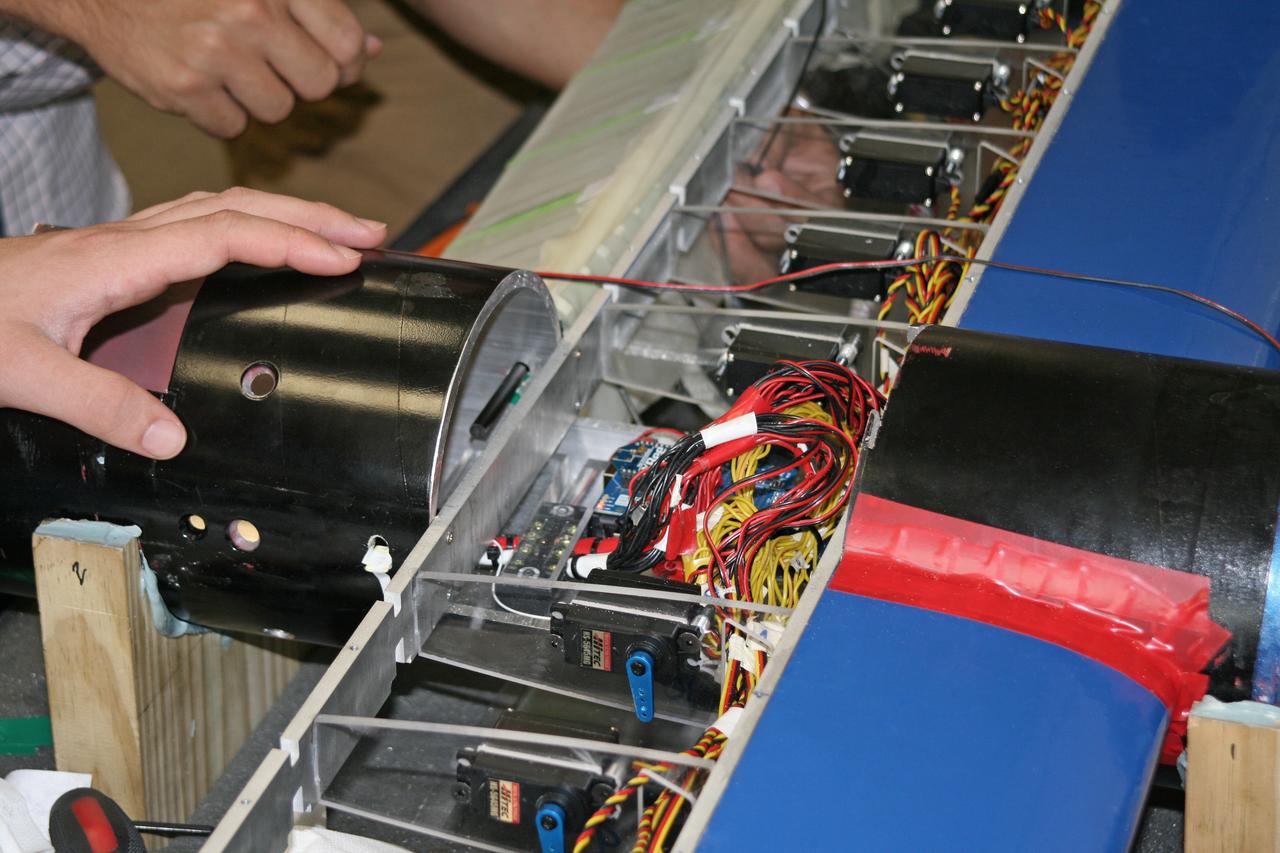
Aeronautic Academy Continuous Trailing Edge Flap
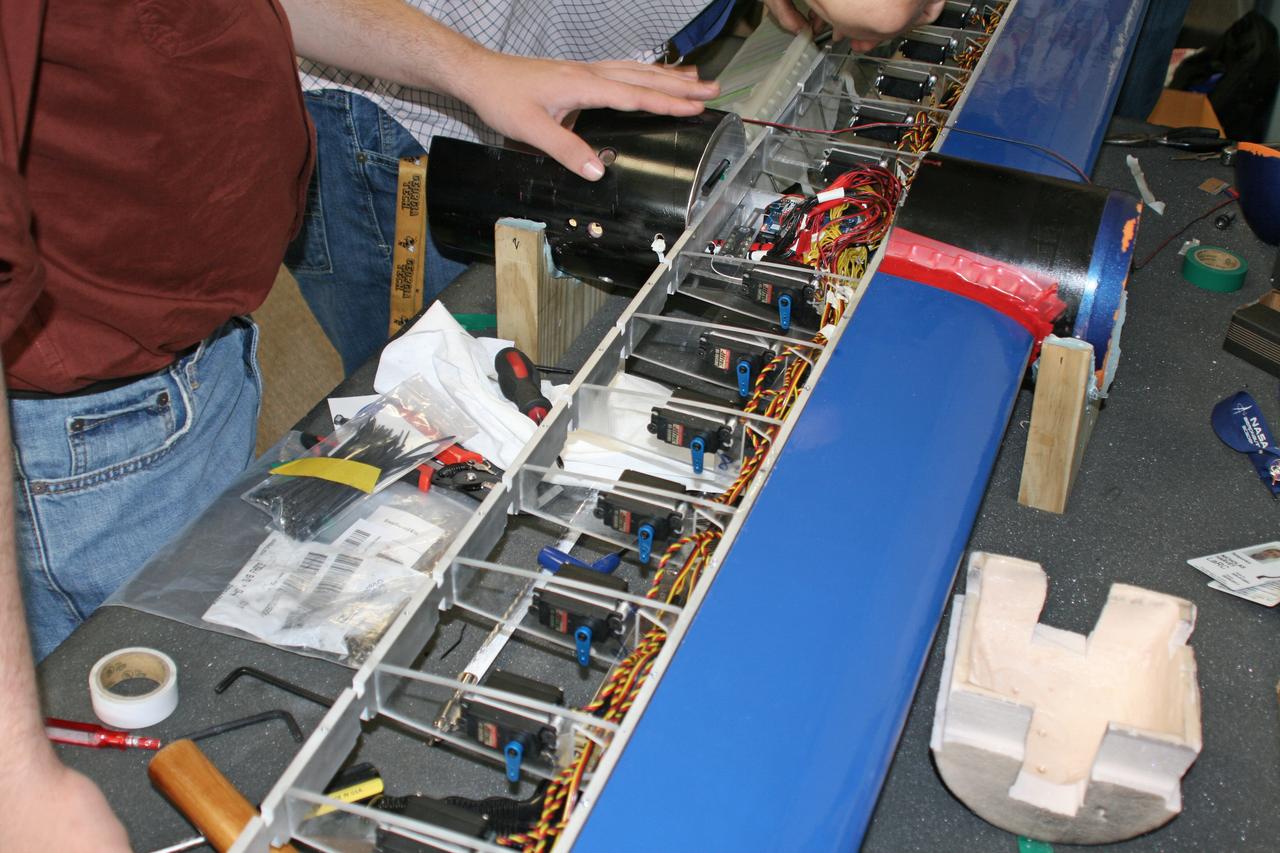
Aeronautic Academy Continuous Trailing Edge Flap
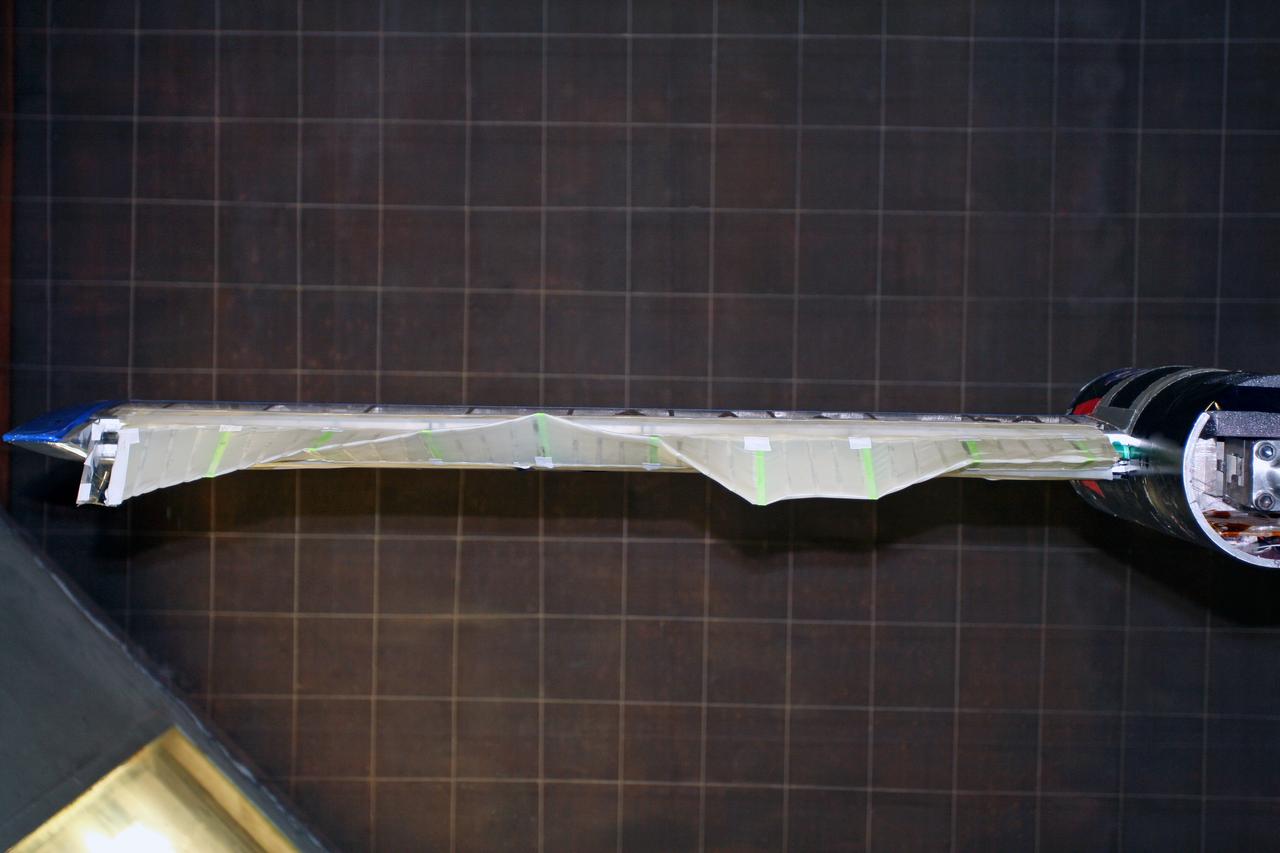
Aeronautic Academy Continuous Trailing Edge Flap
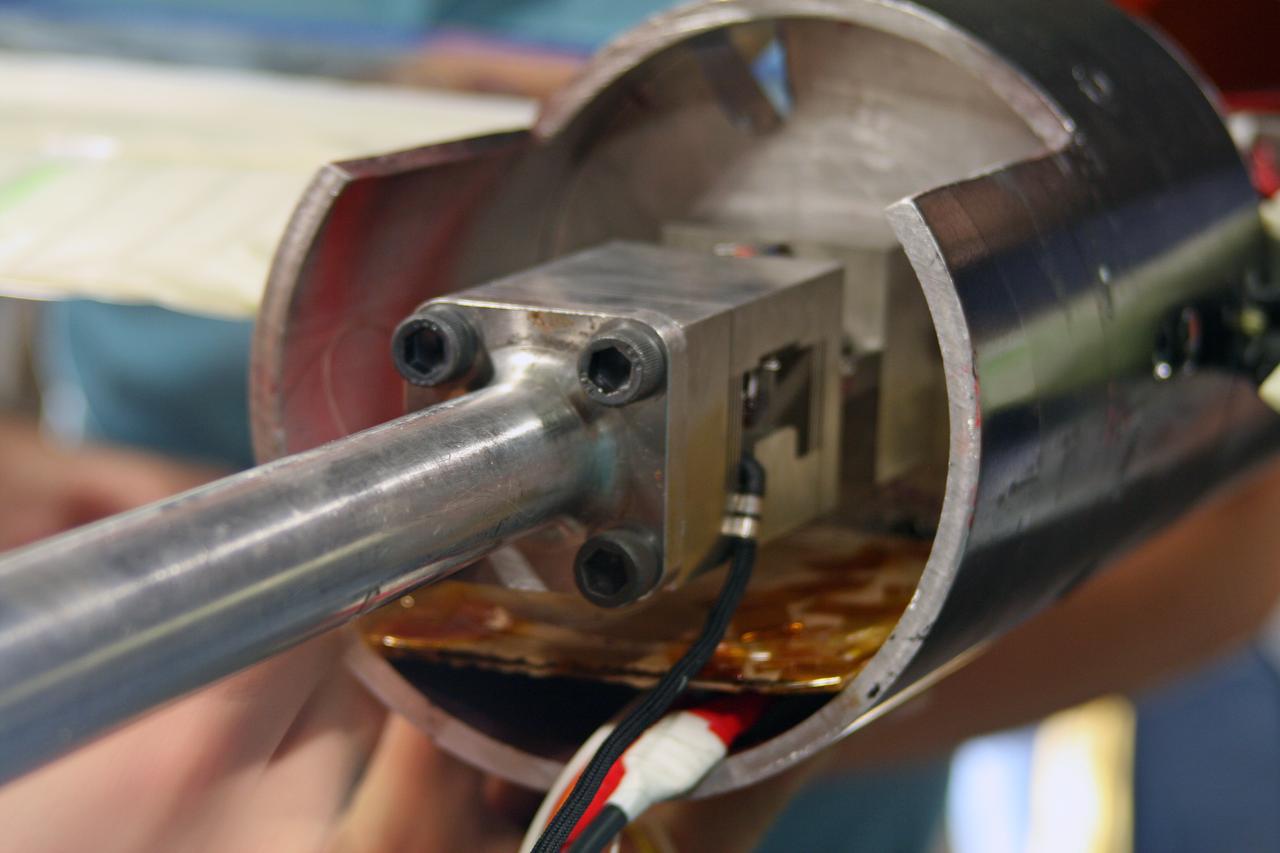
Aeronautic Academy Continuous Trailing Edge Flap

NASA Aeronautics and center leadership gather inside the viewing area of the main control room at NASA’s Armstrong Flight Research Center in Edwards, California, on Tuesday, Oct. 28, 2025. The group watches in real time as flight controllers and engineers receive updates from the aircraft during its historic first flight in support of the agency’s Quesst mission.

NASA Aeronautics and center leadership gather inside the viewing area of the main control room at NASA’s Armstrong Flight Research Center in Edwards, California, on Tuesday, Oct. 28, 2025. The group watches in real time as flight controllers and engineers receive updates from the aircraft during its historic first flight in support of the agency’s Quesst mission.
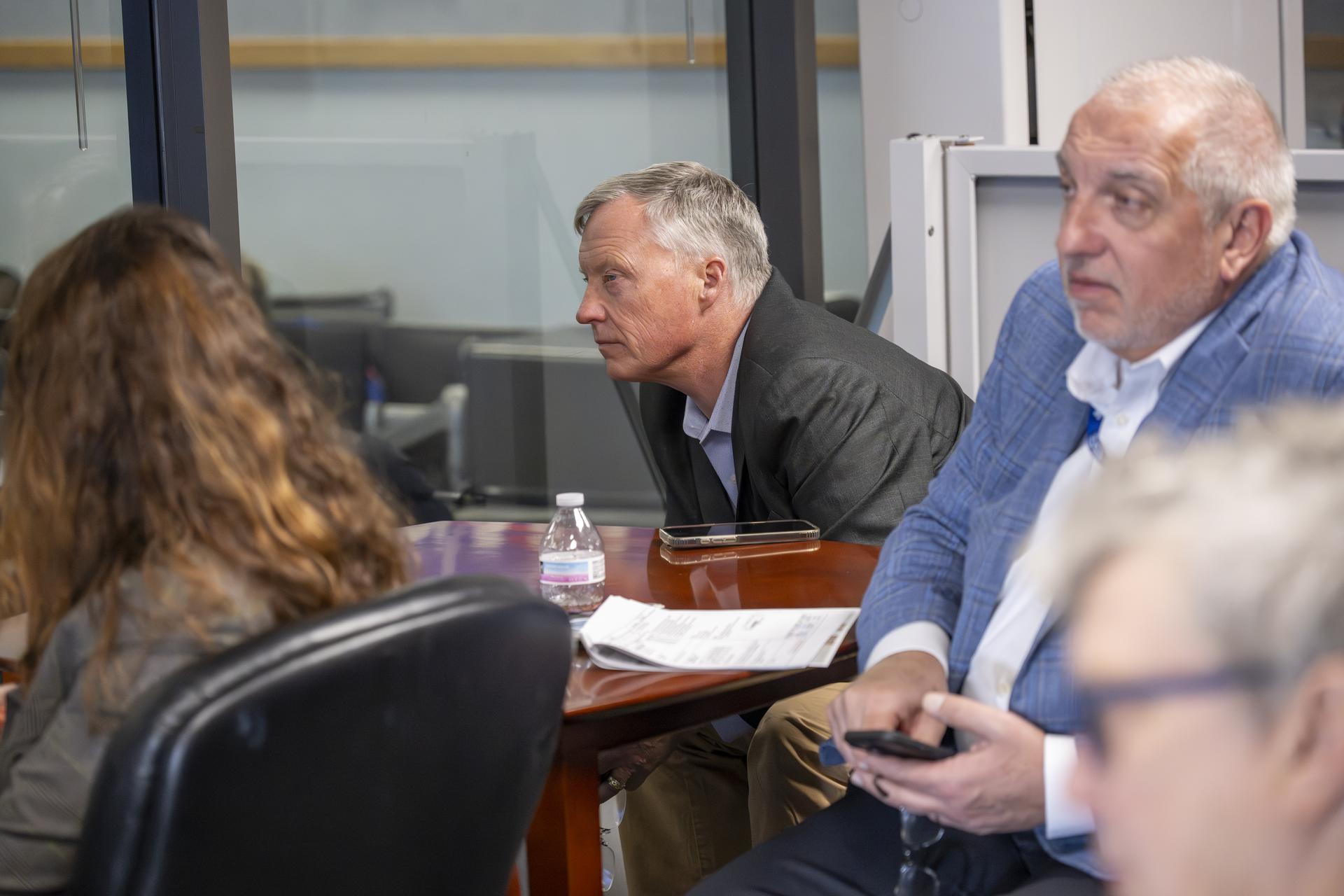
NASA Aeronautics and center leadership gather inside the viewing area of the main control room at NASA’s Armstrong Flight Research Center in Edwards, California, on Tuesday, Oct. 28, 2025. The group watches in real time as flight controllers and engineers receive updates from the aircraft during its historic first flight in support of the agency’s Quesst mission.

NASA Aeronautics and center leadership gather inside the viewing area of the main control room at NASA’s Armstrong Flight Research Center in Edwards, California, on Tuesday, Oct. 28, 2025. The group watches in real time as flight controllers and engineers receive updates from the aircraft during its historic first flight in support of the agency’s Quesst mission.

NASA Aeronautics and center leadership gather inside the viewing area of the main control room at NASA’s Armstrong Flight Research Center in Edwards, California, on Tuesday, Oct. 28, 2025. The group watches in real time as flight controllers and engineers receive updates from the aircraft during its historic first flight in support of the agency’s Quesst mission.

NASA Aeronautics and center leadership gather inside the viewing area of the main control room at NASA’s Armstrong Flight Research Center in Edwards, California, on Tuesday, Oct. 28, 2025. The group watches in real time as flight controllers and engineers receive updates from the aircraft during its historic first flight in support of the agency’s Quesst mission.

NASA Aeronautics and center leadership gather inside the viewing area of the main control room at NASA’s Armstrong Flight Research Center in Edwards, California, on Tuesday, Oct. 28, 2025. The group watches in real time as flight controllers and engineers receive updates from the aircraft during its historic first flight in support of the agency’s Quesst mission.
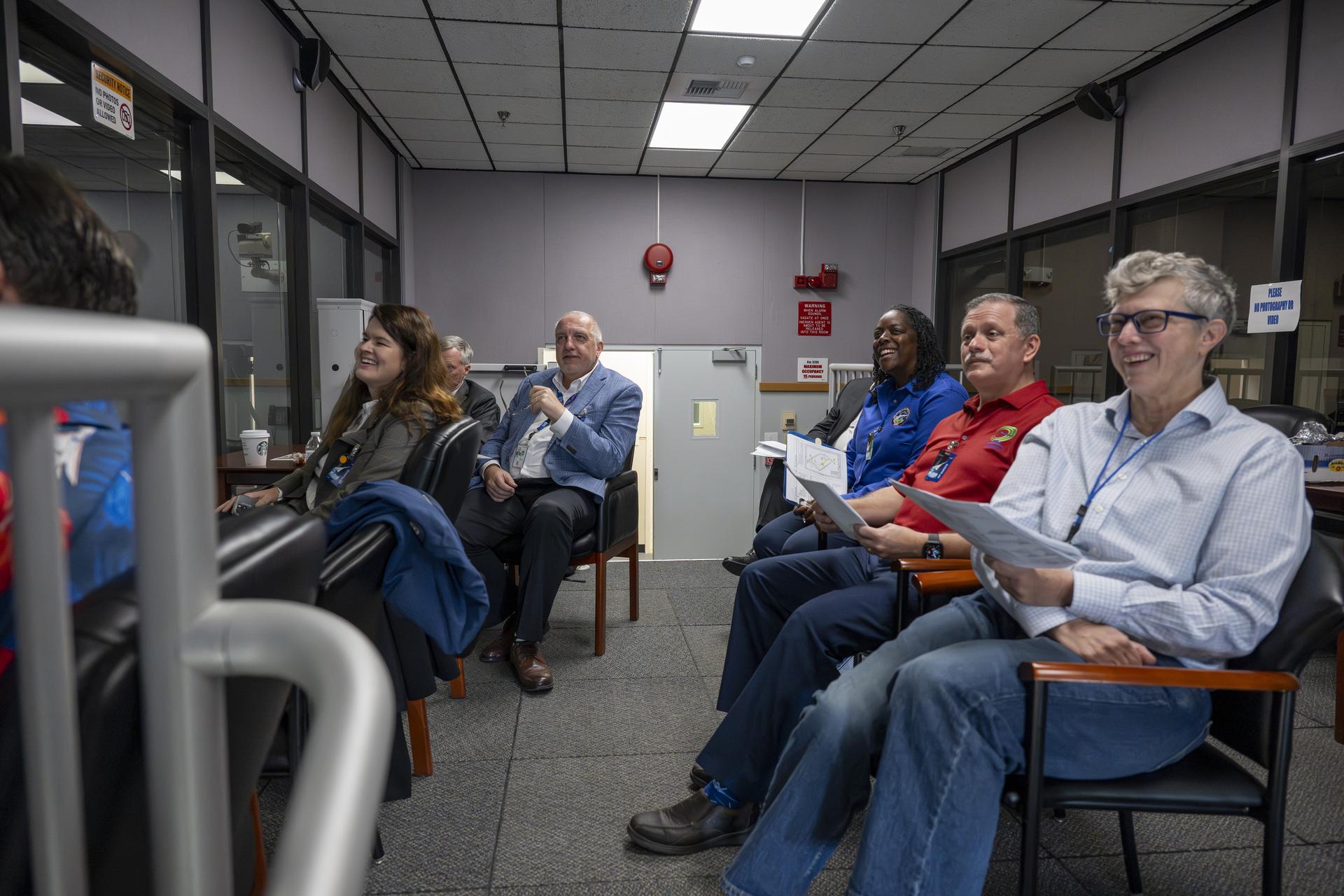
NASA Aeronautics and center leadership gather inside the viewing area of the main control room at NASA’s Armstrong Flight Research Center in Edwards, California, on Tuesday, Oct. 28, 2025. The group watches in real time as flight controllers and engineers receive updates from the aircraft during its historic first flight in support of the agency’s Quesst mission.

NASA Aeronautics and center leadership gather inside the viewing area of the main control room at NASA’s Armstrong Flight Research Center in Edwards, California, on Tuesday, Oct. 28, 2025. The group watches in real time as flight controllers and engineers receive updates from the aircraft during its historic first flight in support of the agency’s Quesst mission.
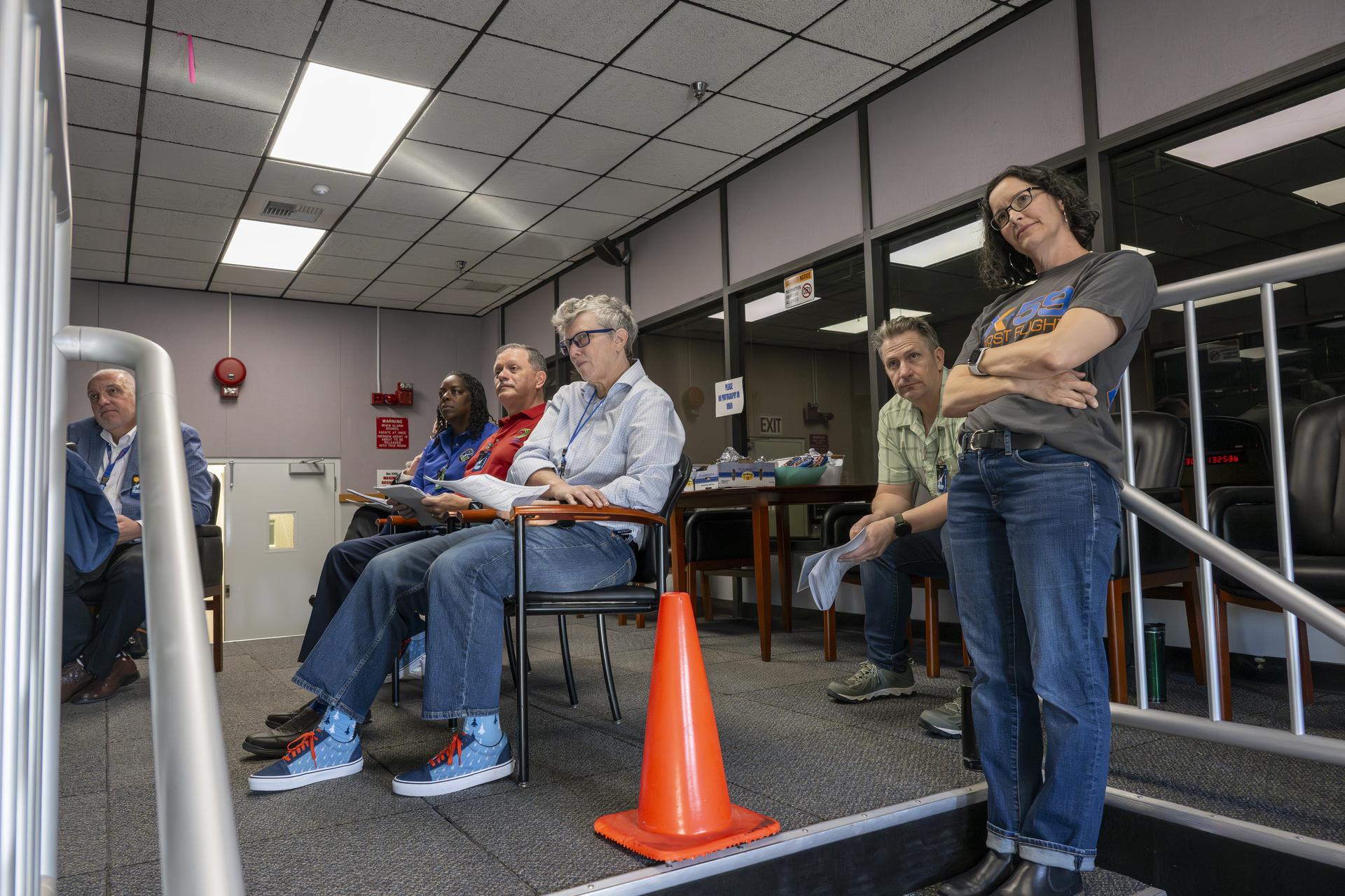
NASA Aeronautics and center leadership gather inside the viewing area of the main control room at NASA’s Armstrong Flight Research Center in Edwards, California, on Tuesday, Oct. 28, 2025. The group watches in real time as flight controllers and engineers receive updates from the aircraft during its historic first flight in support of the agency’s Quesst mission.

NASA Aeronautics and center leadership gather inside the viewing area of the main control room at NASA’s Armstrong Flight Research Center in Edwards, California, on Tuesday, Oct. 28, 2025. The group watches in real time as flight controllers and engineers receive updates from the aircraft during its historic first flight in support of the agency’s Quesst mission.

NASA Aeronautics and center leadership gather inside the viewing area of the main control room at NASA’s Armstrong Flight Research Center in Edwards, California, on Tuesday, Oct. 28, 2025. The group watches in real time as flight controllers and engineers receive updates from the aircraft during its historic first flight in support of the agency’s Quesst mission.
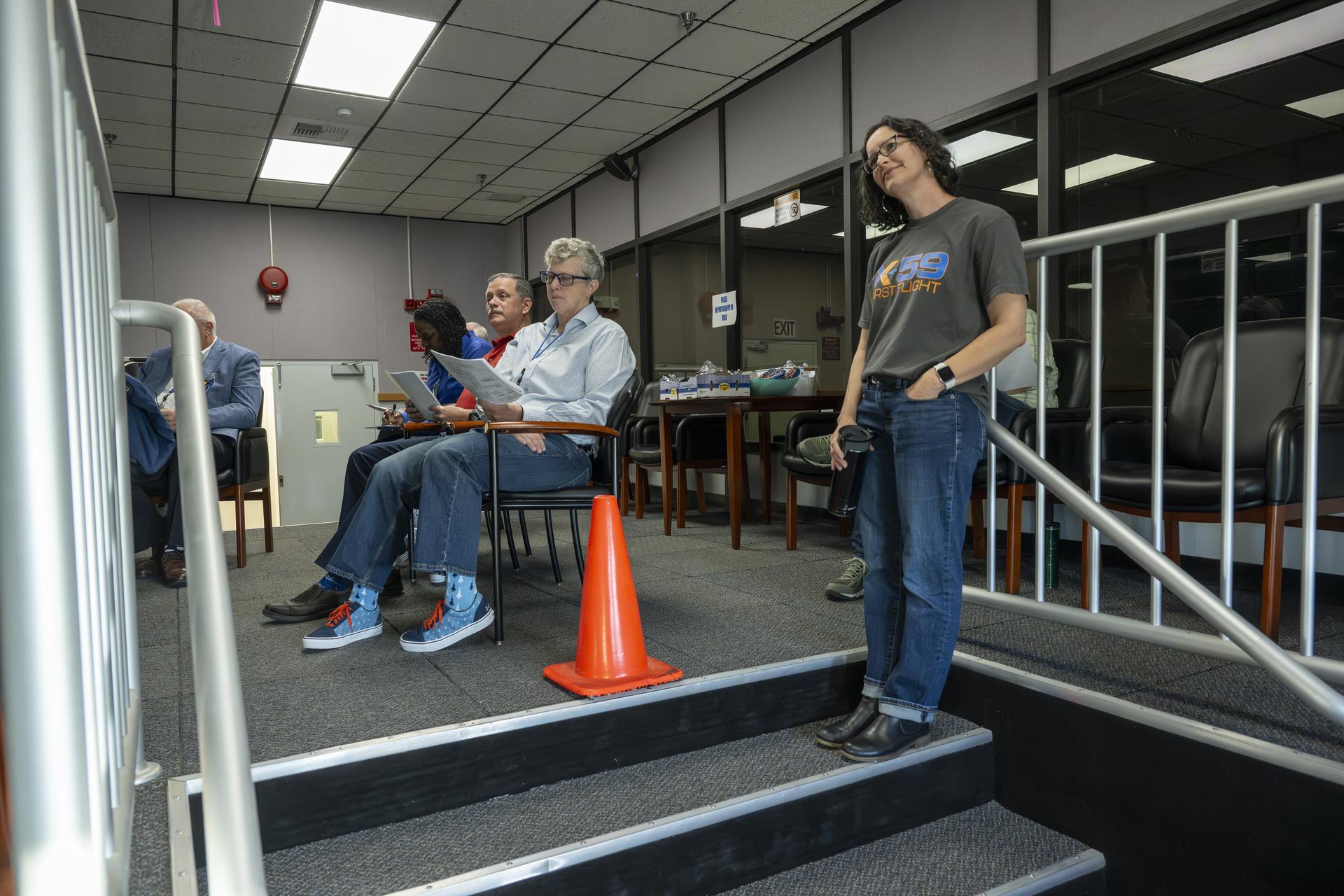
NASA Aeronautics and center leadership gather inside the viewing area of the main control room at NASA’s Armstrong Flight Research Center in Edwards, California, on Tuesday, Oct. 28, 2025. The group watches in real time as flight controllers and engineers receive updates from the aircraft during its historic first flight in support of the agency’s Quesst mission.

NASA Aeronautics and center leadership gather inside the viewing area of the main control room at NASA’s Armstrong Flight Research Center in Edwards, California, on Tuesday, Oct. 28, 2025. The group watches in real time as flight controllers and engineers receive updates from the aircraft during its historic first flight in support of the agency’s Quesst mission.
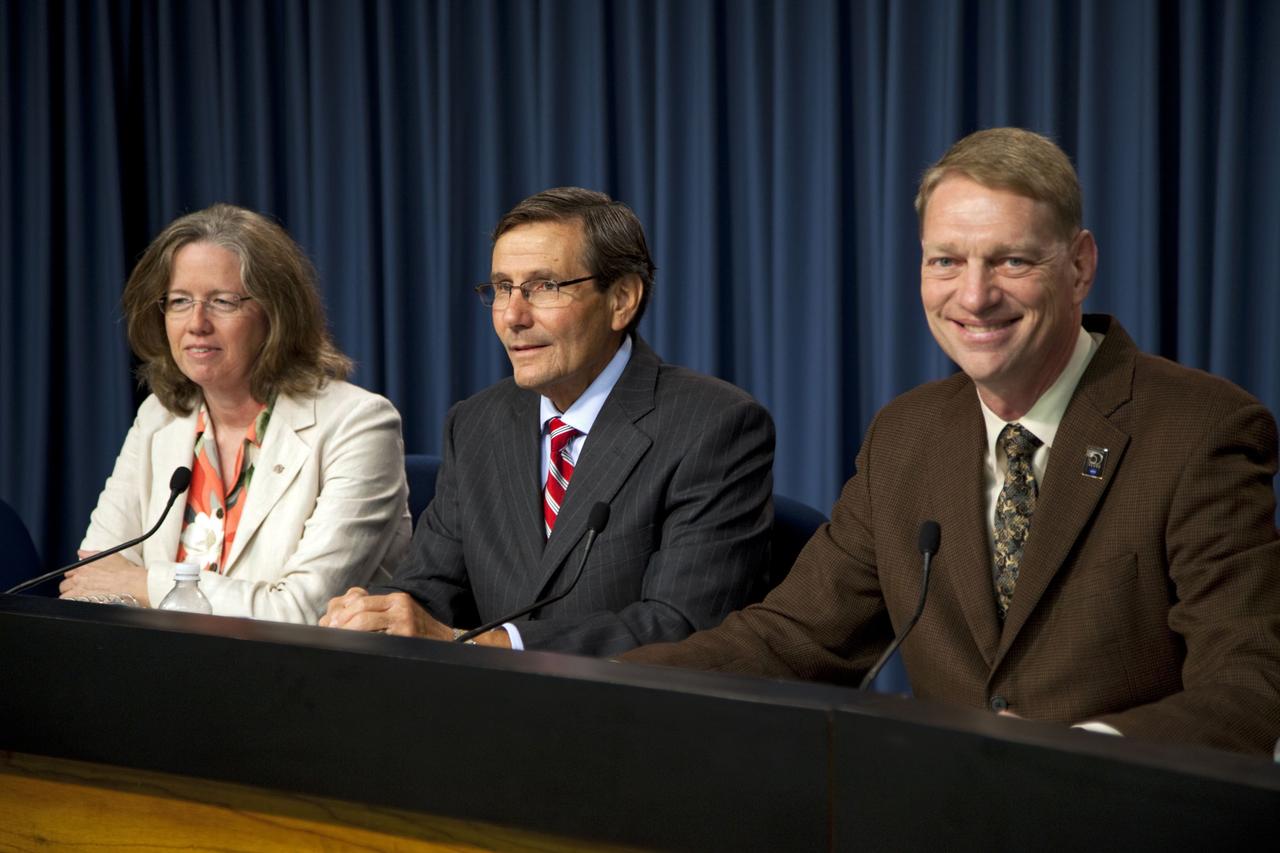
CAPE CANAVERAL, Fla. -- In the Press Site auditorium at NASA's Kennedy Space Center in Florida, media were briefed about updates to aeronautics research at NASA. Seen here are NASA Public Affairs Officer Beth Dickey, Edgar G. Waggoner, director of the Integrated Systems Research Program Office, Aeronautics Research Mission Directorate and John Cavolowsky, director of the Airspace Systems Program Office, Aeronautics Research Mission Directorate. Photo credit: NASA/Frankie Martin
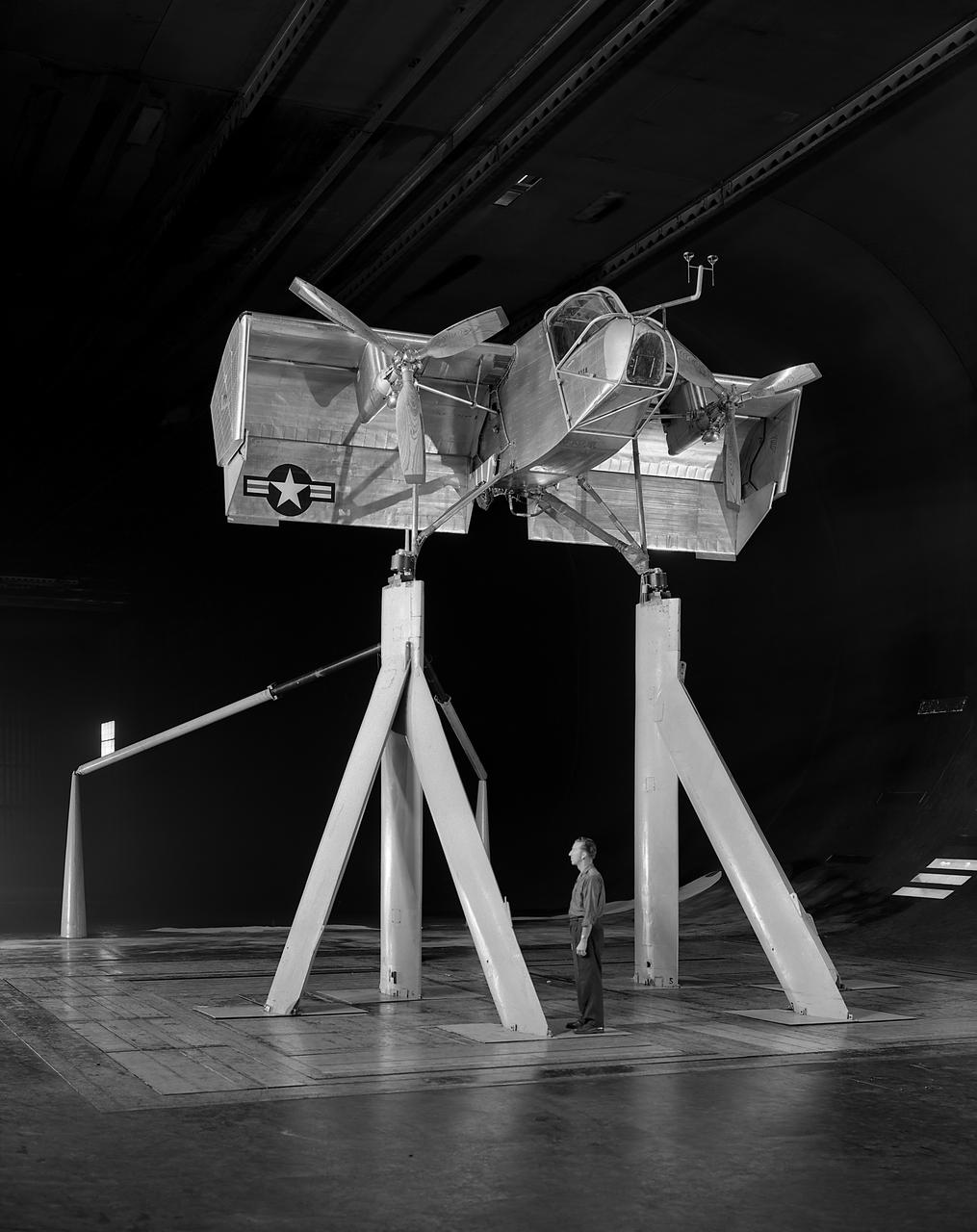
Research engineer, Harry Henninger of the Ryan Aeronautical Company, with the deflected slipstream model VZ-3RY Vertiplane.

NASA Associate Administrator for the Aeronautics Research Mission Directorate Bob Pearce speaks on stage prior to the unveiling of the agency’s X-59 quiet supersonic research aircraft at a January 12, 2024 event at Lockheed Martin Skunk Works in Palmdale, California. The X-59 is the centerpiece of NASA’s Quesst mission, which seeks to solve one of the major barriers to supersonic flight over land, currently banned in the United States, by making sonic booms quieter.

NASA Associate Administrator for the Aeronautics Research Mission Directorate Bob Pearce speaks on stage prior to the unveiling of the agency’s X-59 quiet supersonic research aircraft at a January 12, 2024 event at Lockheed Martin Skunk Works in Palmdale, California. The X-59 is the centerpiece of NASA’s Quesst mission, which seeks to solve one of the major barriers to supersonic flight over land, currently banned in the United States, by making sonic booms quieter.

NASA Associate Administrator for the Aeronautics Research Mission Directorate Bob Pearce speaks on stage prior to the unveiling of the agency’s X-59 quiet supersonic research aircraft at a January 12, 2024 event at Lockheed Martin Skunk Works in Palmdale, California. The X-59 is the centerpiece of NASA’s Quesst mission, which seeks to solve one of the major barriers to supersonic flight over land, currently banned in the United States, by making sonic booms quieter.
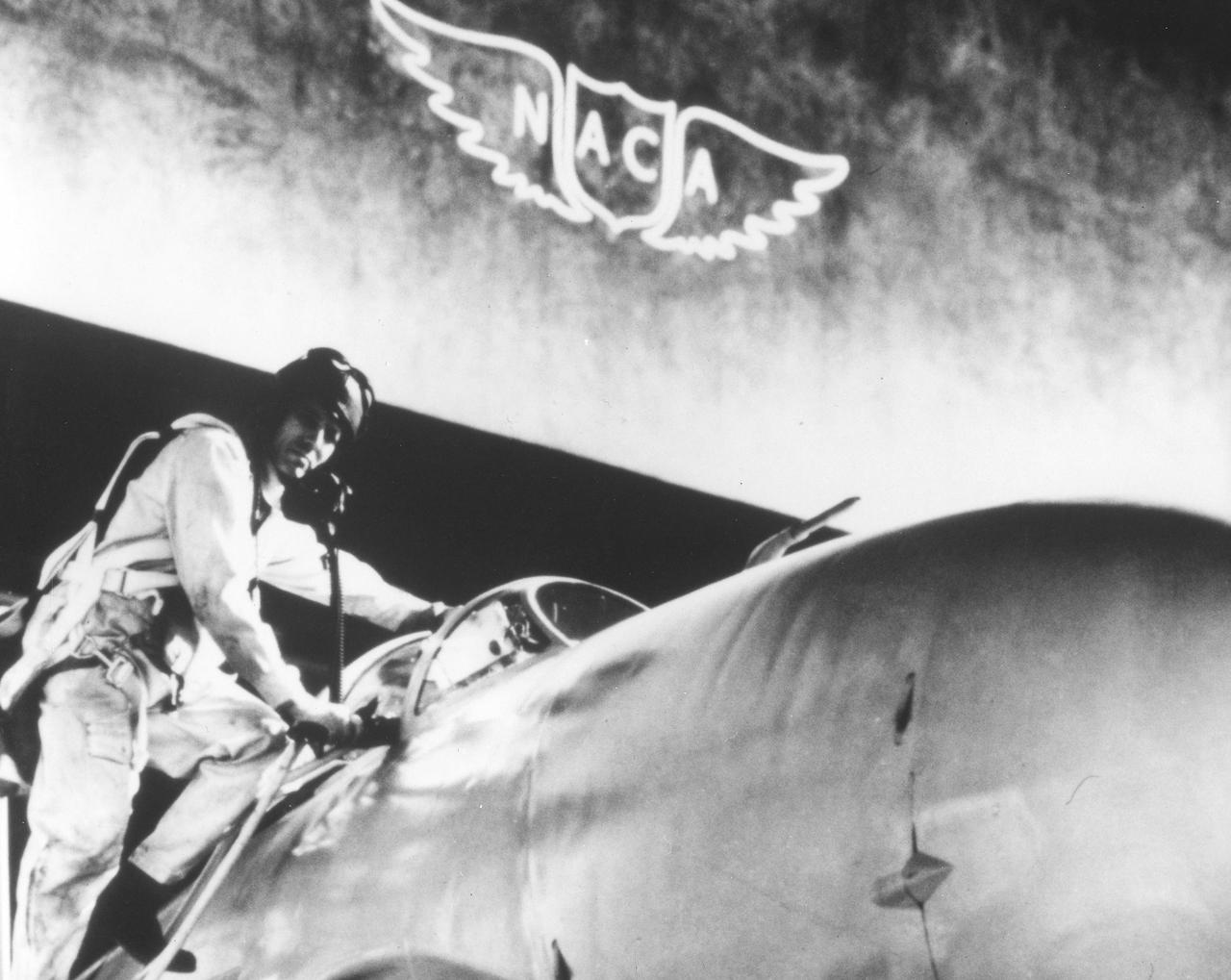
The Marshall Space Flight Center was activated on July 1, 1960 as a part of NASA, which had been established on October 1, 1958 by Congressional passage of the National Aeronautics and Space Act. The nucleus of NASA was the Advisory Committee for Aeronautics later named the National Advisory Committee for Aeronauts (NACA). The NACA was founded in 1915 to study the problems of flight and to recommend practical solutions to basic aircraft design and construction problems. NACA's wind turnels and other research facilities made NACA technical reports the basis for aviation progress for more than 40 years.
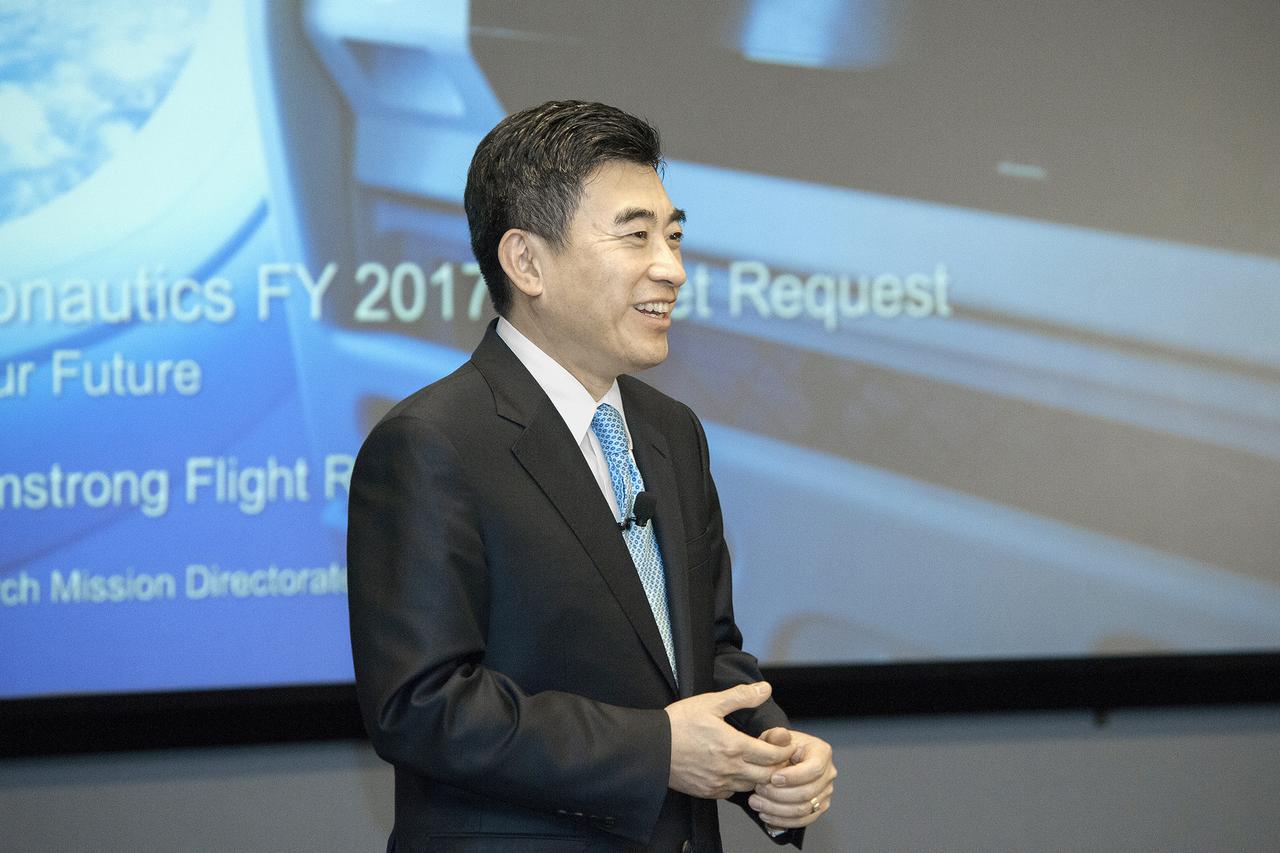
NASA Associate Administrator for Aeronautics Jaiwon Shin talked to staff and managers at NASA Armstrong Flight Research Center in California March 17 about the New Horizons initiative. The 10-year plan could substantially improve aviation and provide major economic benefits.
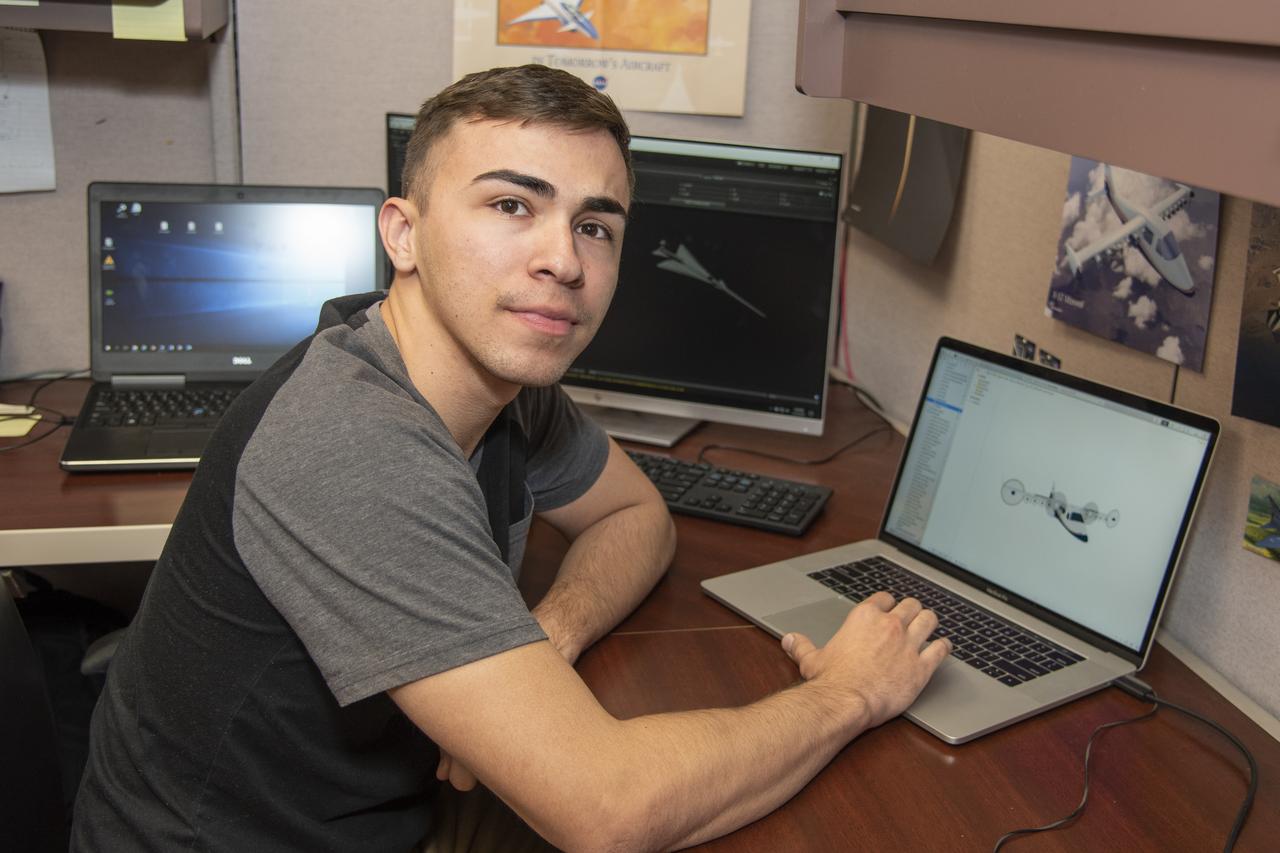
Christopher Morales, spring and summer 2019 intern, works to produce the first iOS version of the app
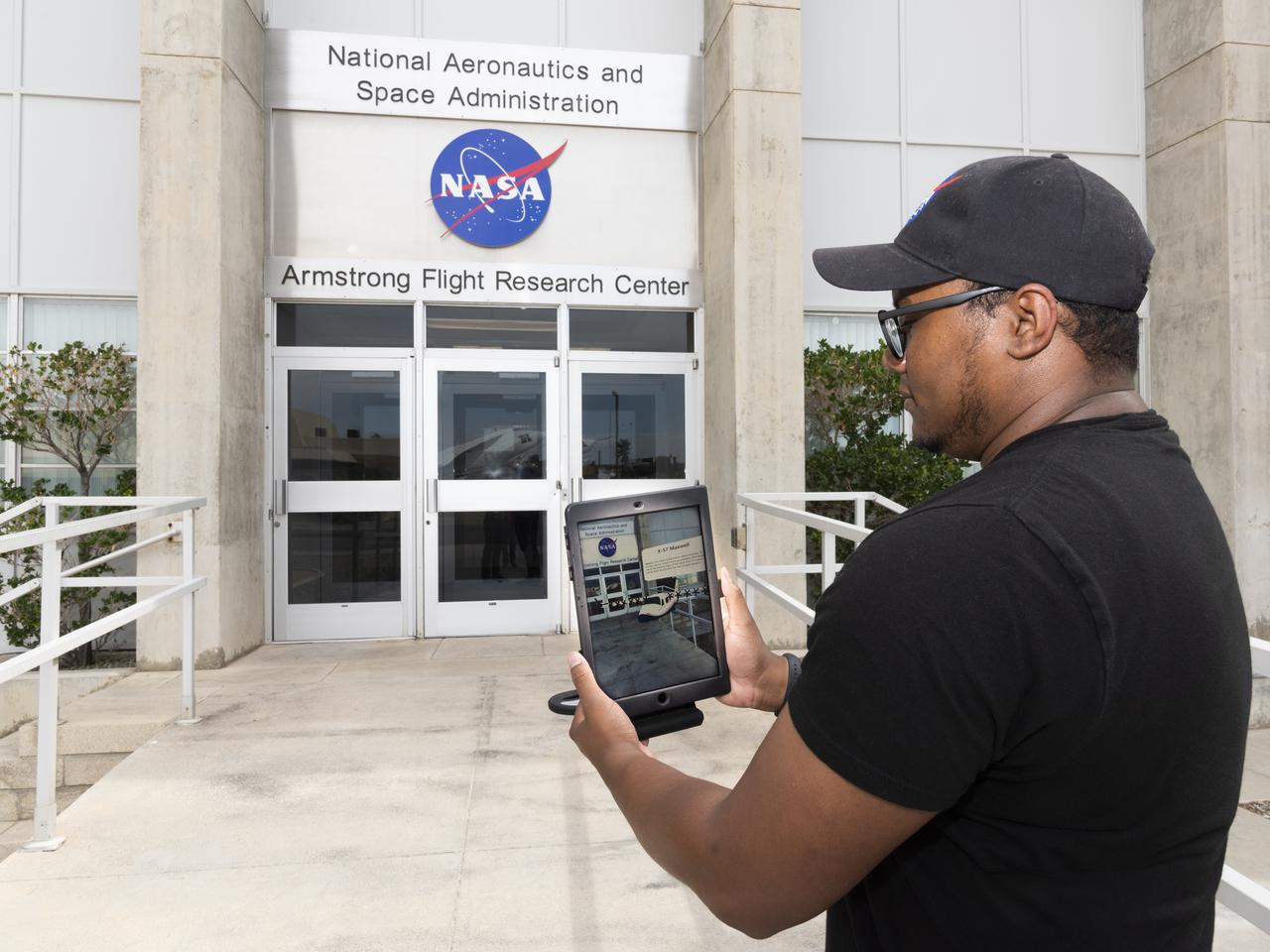
Daniel Williams, intern, shows what the app looks like while in use with the 3D model of the X-57 Maxwell displayed on the screen.
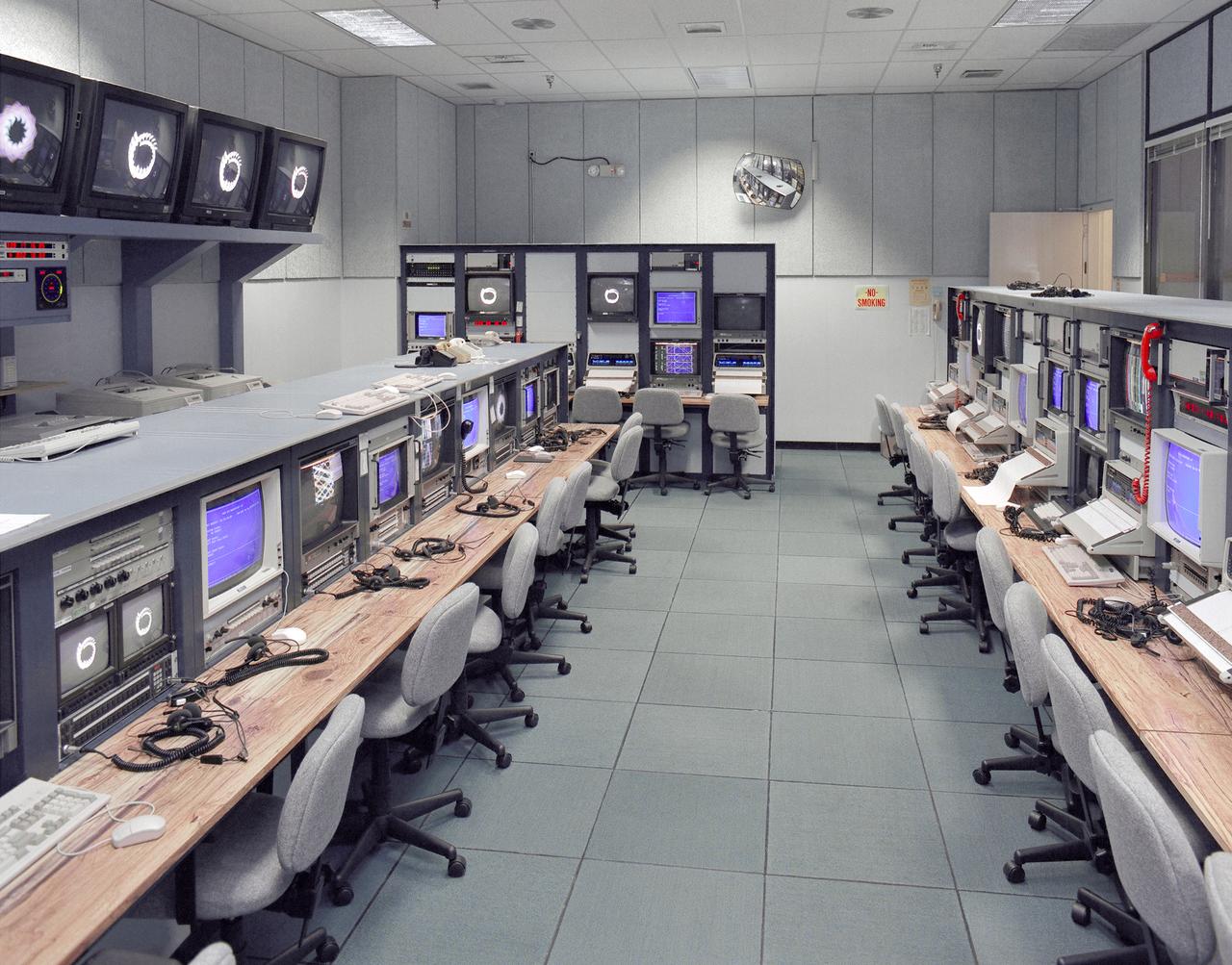
Mission control Blue Room, seen here, in building 4800 at NASA's Dryden Flight Research Center, is part of the Western Aeronautical Test Range (WATR). All aspects of a research mission are monitored from one of two of these control rooms at Dryden. The WATR consists of a highly automated complex of computer controlled tracking, telemetry, and communications systems and control room complexes that are capable of supporting any type of mission ranging from system and component testing, to sub-scale and full-scale flight tests of new aircraft and reentry systems. Designated areas are assigned for spin/dive tests, corridors are provided for low, medium, and high-altitude supersonic flight, and special STOL/VSTOL facilities are available at Ames Moffett and Crows Landing. Special use airspace, available at Edwards, covers approximately twelve thousand square miles of mostly desert area. The southern boundary lies to the south of Rogers Dry Lake, the western boundary lies midway between Mojave and Bakersfield, the northern boundary passes just south of Bishop, and the eastern boundary follows about 25 miles west of the Nevada border except in the northern areas where it crosses into Nevada.
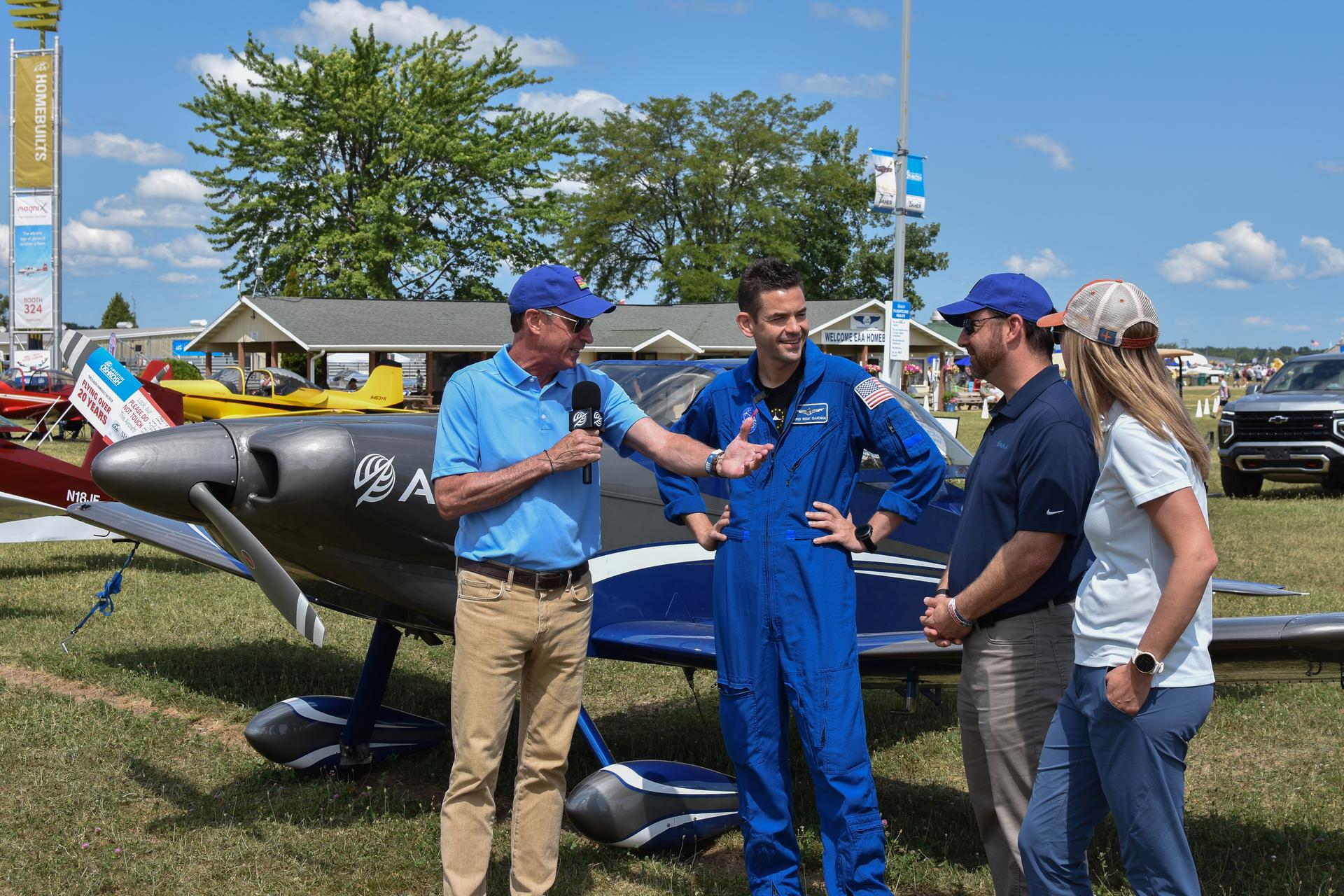
NASA Administrator Jared Isaacman meets with representatives from the American Institute of Aeronautics and Astronautics (AIAA) at the 2026 Experimental Aircraft Association (EAA) AirVenture air show in Oshkosh, Wisconsin, on Thursday, July 23, 2026.

Dr. von Braun, Director of the Marshall Space Flight Center, spoke of the progress in the Saturn Program during his appearance before the Senate Committee on Aeronautical and Space Sciences. He was accompanied by Dr. Robert C. Seamans, Jr., Associate Administrator of the National Aeronautics and Space Administration (NASA).
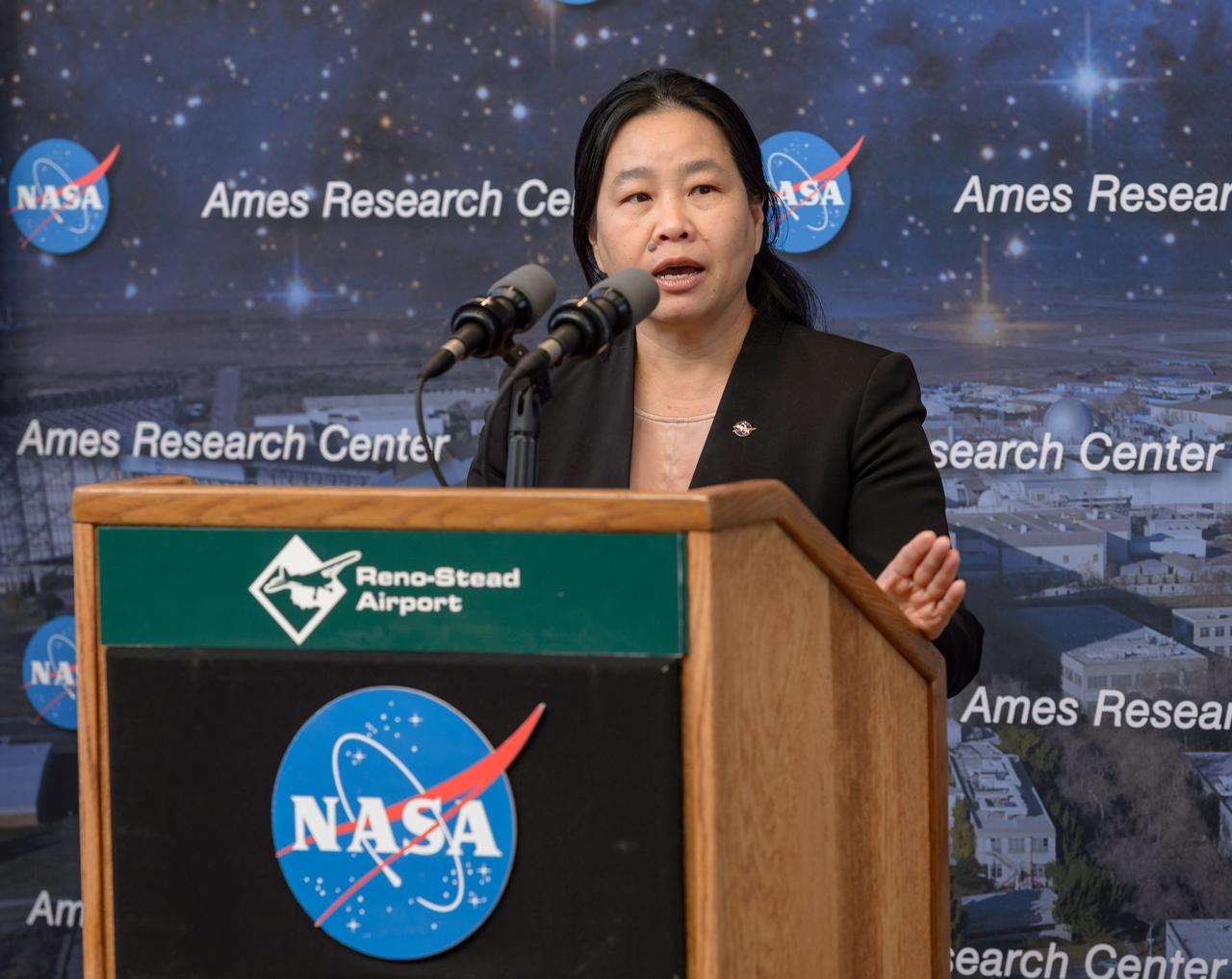
News Conference following the test of Unmanned Aircraft Systems Traffic Management (UTM) technical capability Level 2 (TCL2) at Reno-Stead Airport, Nevada. Huy Tran, NASA Ames Aeronautics Director gives a NASA UTM Project Overview.
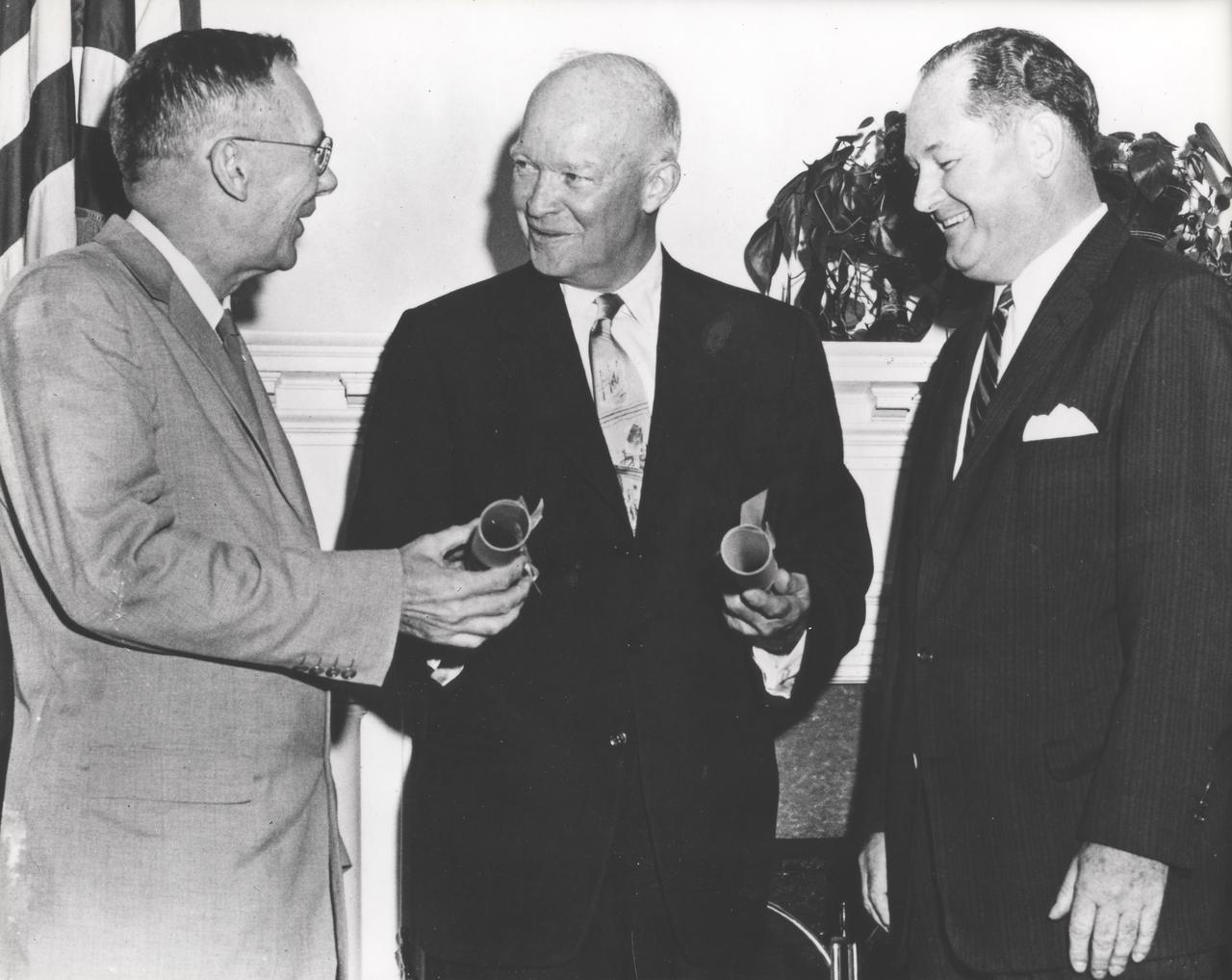
The National Aeronautics and Space Administration (NASA) was created on October 1, 1958, to perform civilian research related to space flight and aeronautics. President Eisenhower commissioned Dr. T. Keith Glennan, right, as the first administrator for NASA and Dr. Hugh L. Dryden as deputy administrator.
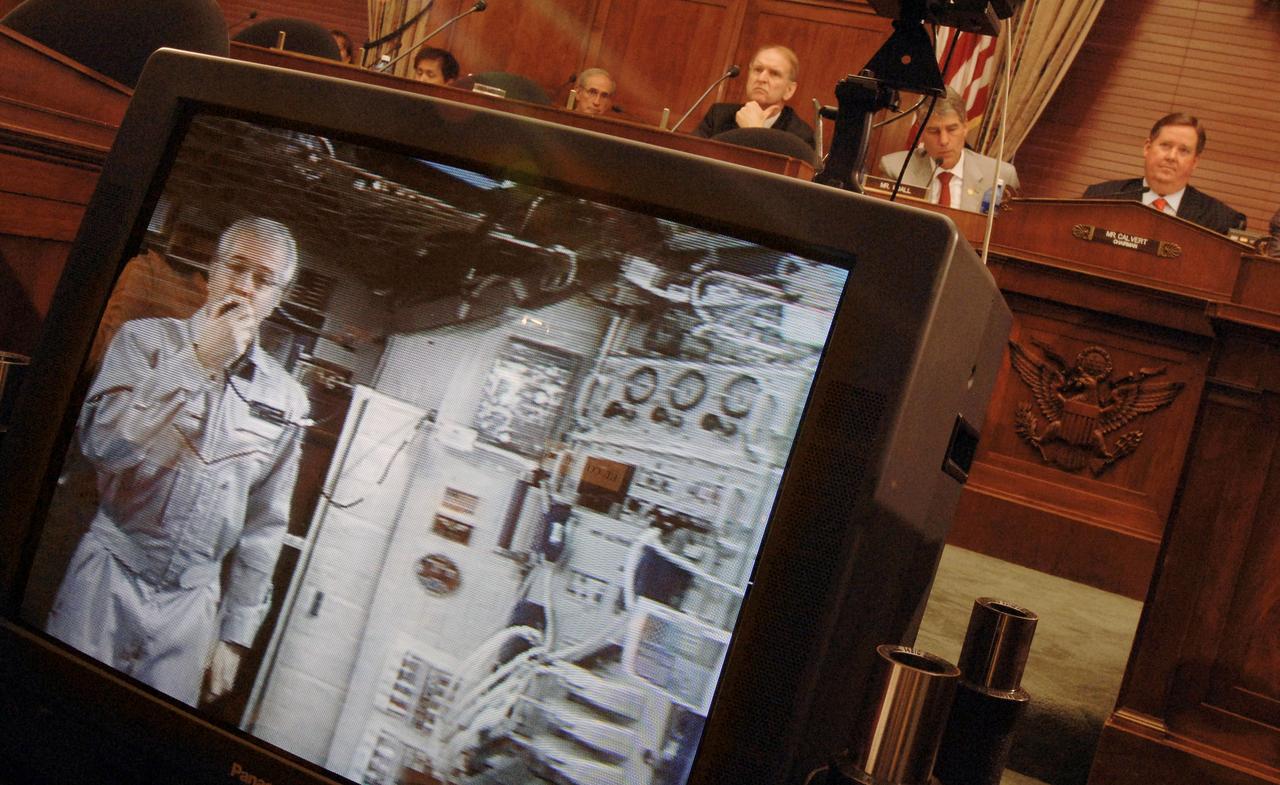
JSC2005-E-22364 (14 June 2005) --- Astronaut John L. Phillips, Expedition 11 NASA ISS science officer and flight engineer, testifies via video screen before the House Subcommittee on Space and Aeronautics chaired by Rep. Ken Calvert (R-Calif.), as he orbited Earth onboard the International Space Station (ISS) at a speed of five miles a second. Phillips was approximately 220 statute miles above Earth, but his radio transmissions were routed to a Tracking and Data Relay Satellite (TDRS) in geostationary orbit at an altitude of about 22,300 miles. Photo credit: NASA/Bill Ingalls.
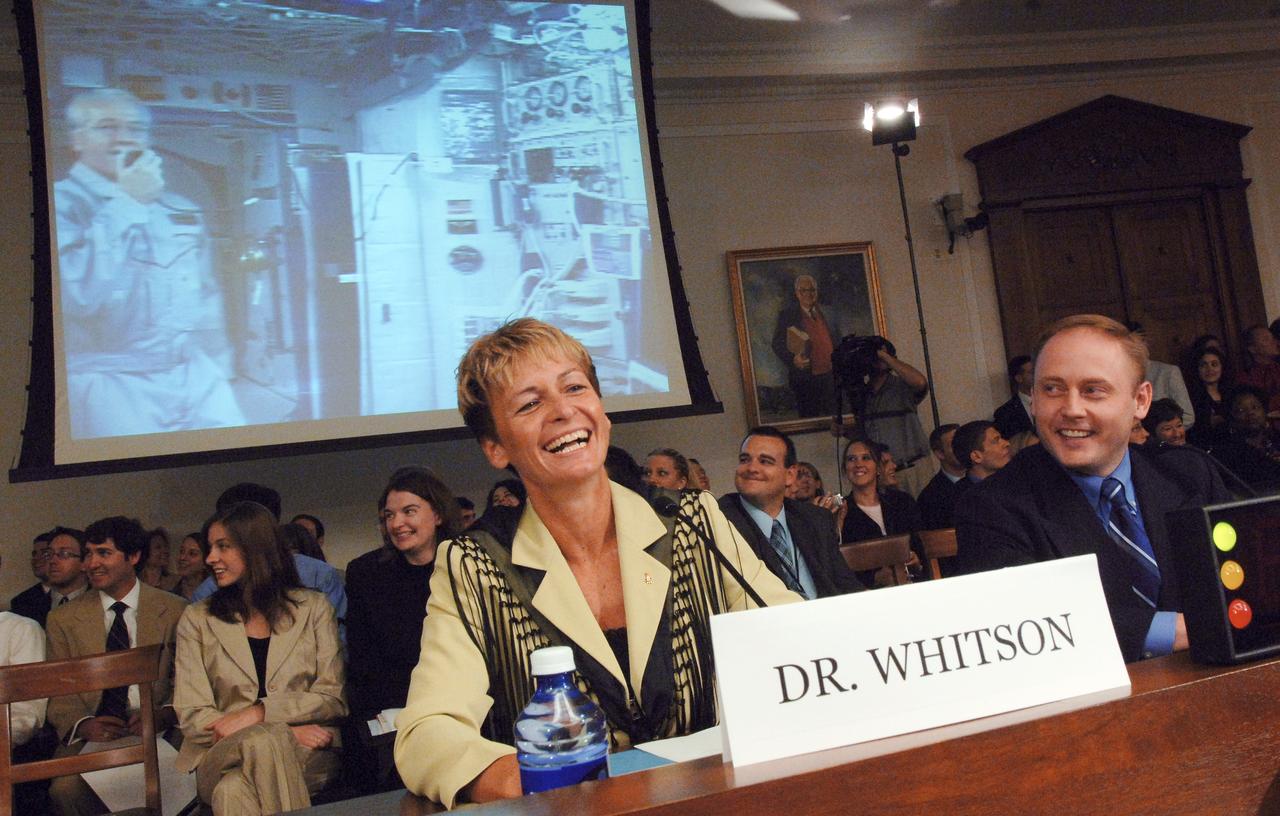
JSC2005-E-22363 (14 June 2005) --- Astronauts Peggy A. Whitson (left) and Edward M. (Mike) Fincke, former Station residents, share a laugh during the House Subcommittee on Space and Aeronautics hearing chaired by Rep. Ken Calvert (R-Calif.), as current Station astronaut John L. Phillips, Expedition 11 NASA ISS science officer and flight engineer, testifies via video screen in the background. Phillips was approximately 220 statute miles above Earth, but his radio transmissions were routed to a Tracking and Data Relay Satellite (TDRS) in geostationary orbit at an altitude of about 22,300 miles. Photo credit: NASA/Bill Ingalls.
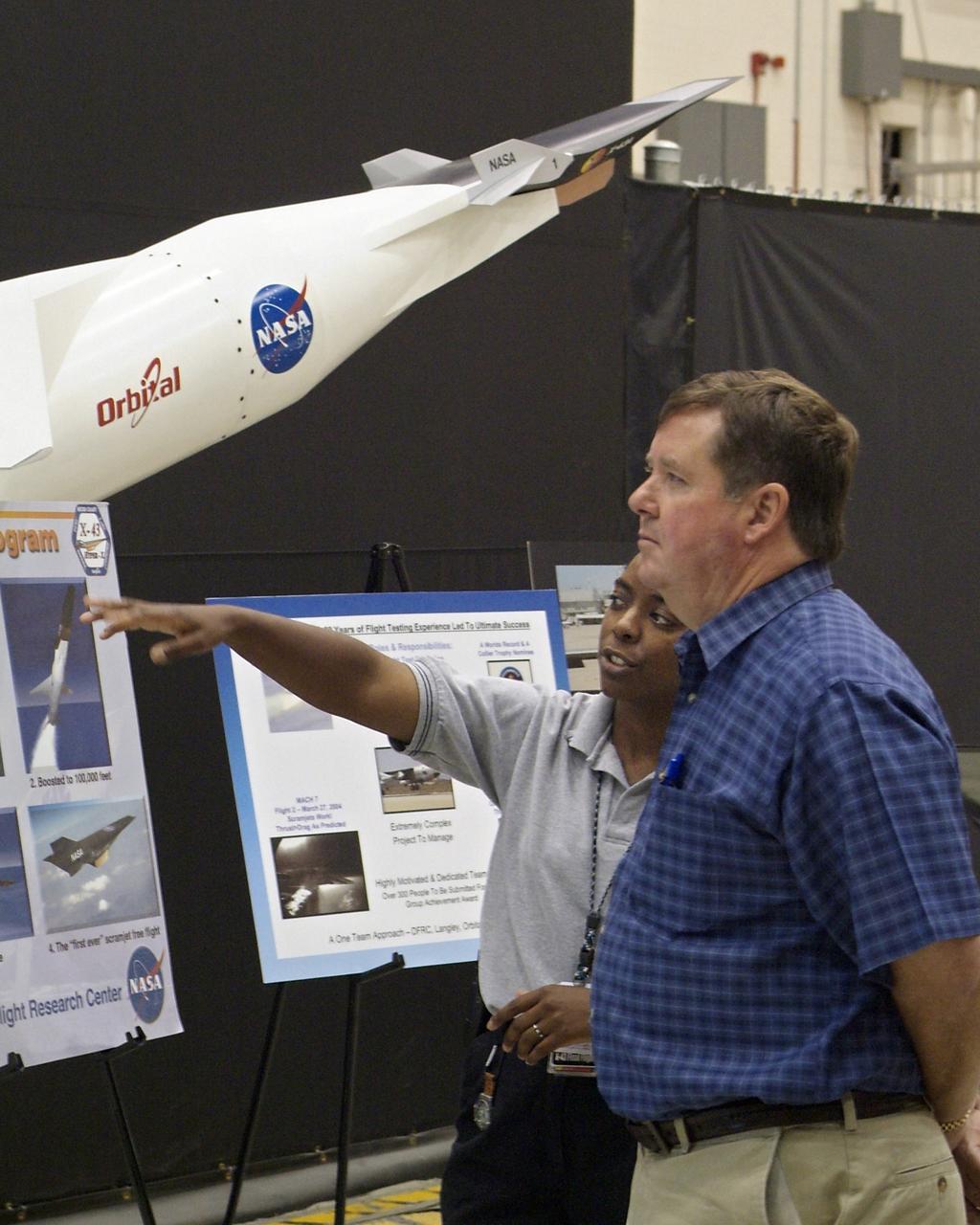
Rep. Ken Calvert, (R-Calif.), chairman of the House Subcommittee on Space and Aeronautics, received an update on the mission of NASA's Dryden Flight Research Center during a visit on June 2, 2005. Rep. Calvert, accompanied by several staff members, was briefed by center management on the Dryden's role as a flight research institution, and then reviewed some of the center's recent, current and upcoming flight research projects during a tour of the facility. During the afternoon, Rep. Calvert received similar briefings on a variety of projects at several aerospace development firms at the Civilian Flight Test Center in Mojave. Rep. Calvert's tour of NASA Dryden was the second in a series of visits to all 10 NASA field centers to better acquaint him with the roles and responsibilities of each center.

The Dryden Aeronautical Test Range at NASA’s Armstrong Flight Research Center in California uses radars, such as those in the photo, for tracking aircraft and spacecraft.

The Dryden Aeronautical Test Range at NASA’s Armstrong Flight Research Center in California uses radars, such as those in the photo, for tracking aircraft and spacecraft.

Terrence Hertz, Deputy Associate Administrator for Technology, NASA Aeronautics Research Mission Directorate, at the NOAA/NASA Altair flight demo kickoff.
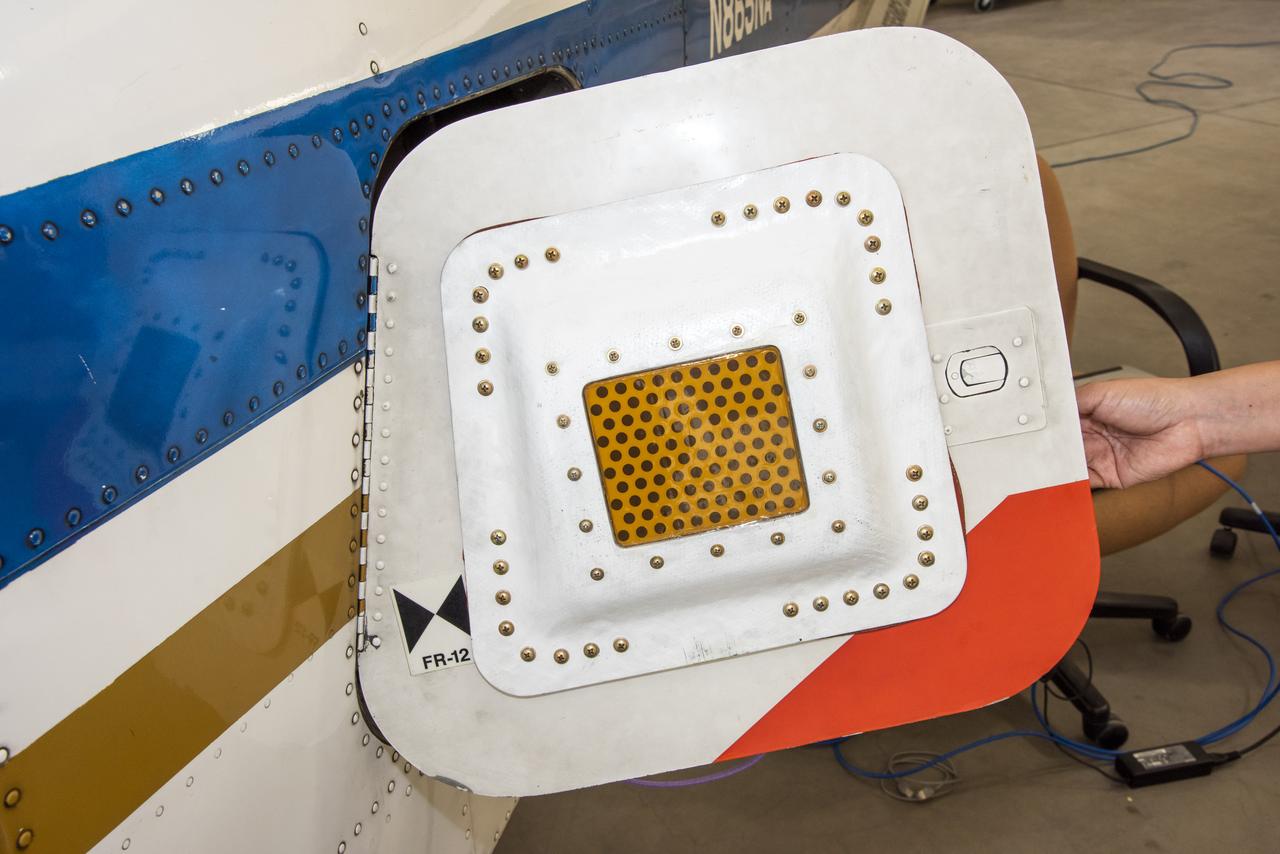
A photo of the conformal antenna installed on the door of T-34C aircraft. The conformal antenna was developed and designed by members of the Conformal Lightweight Antenna Structures for Aeronautical Communications Technologies activity within the Convergent Aeronautics Solutions project. The antenna is made of aerogels which have resulted in a thin, flexible antenna substrate with improved gain, bandwidth and efficiency.
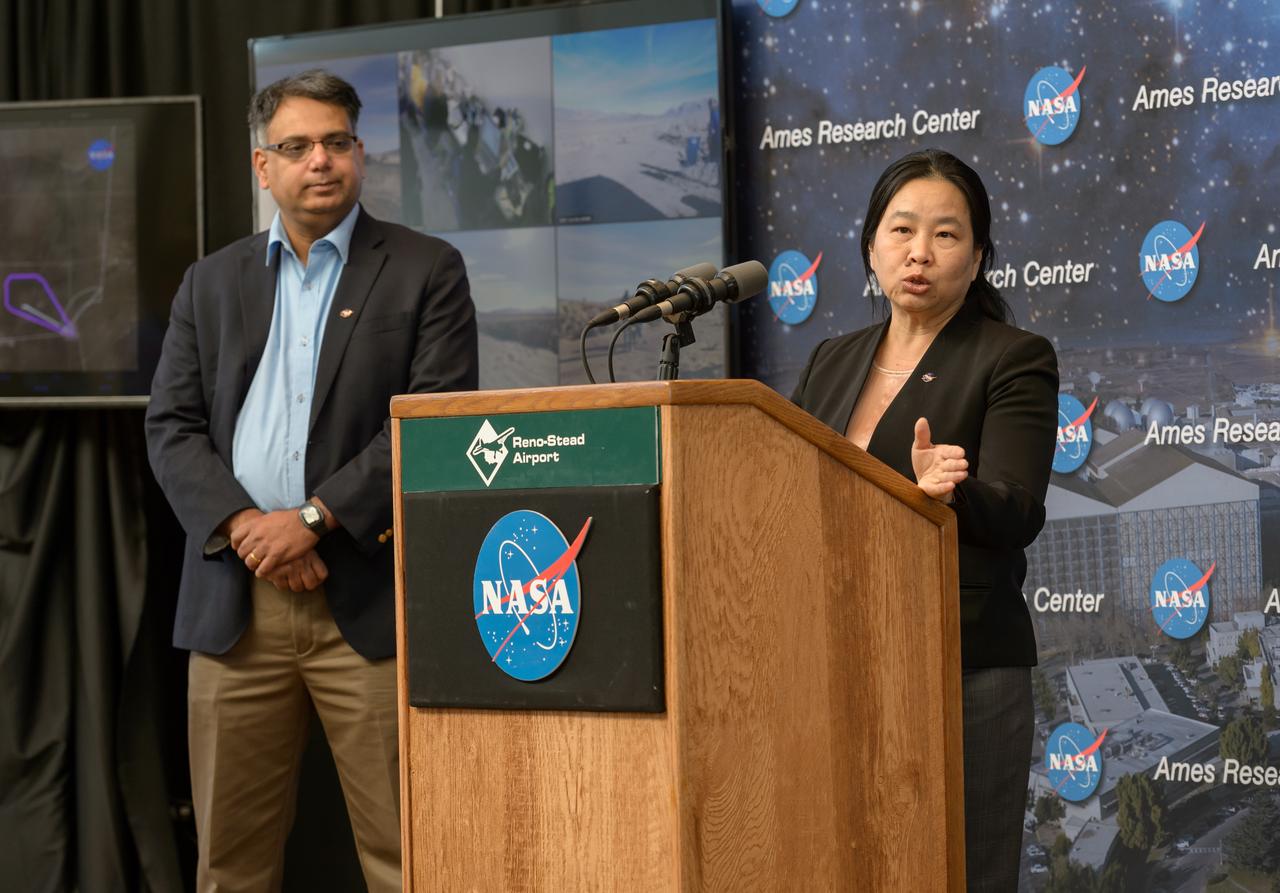
News Conference following the test of Unmanned Aircraft Systems Traffic Management (UTM) technical capability Level 2 (TCL2) at Reno-Stead Airport, Nevada. Parimal Kopardekar, NASA Ames Senior Engineer for Ait Transportation Systems gave an overview of UTM (Left). Huy Tran, NASA Ames Aeronautics Director, presents NASA UTM Project Overview.
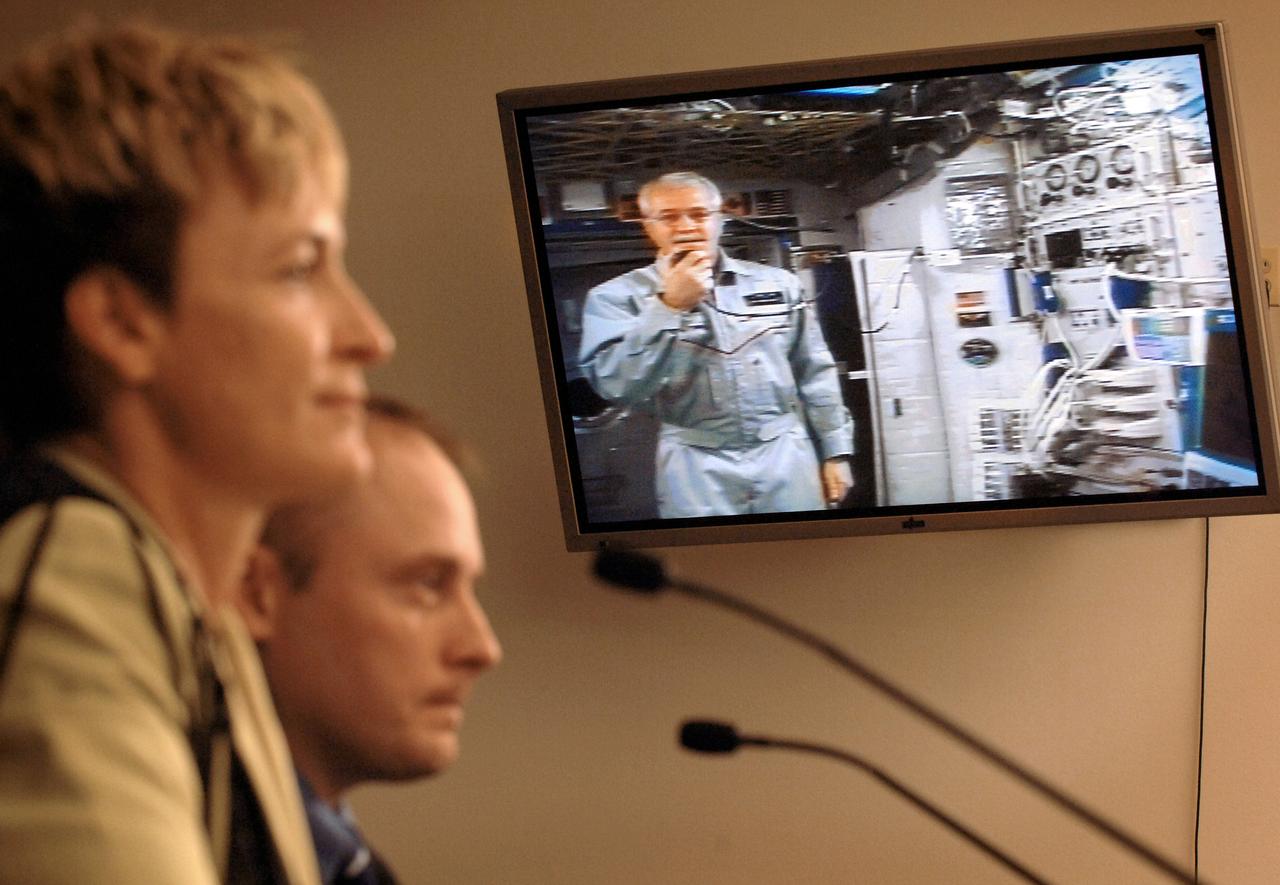
JSC2005-E-22365 (14 June 2005) --- Astronaut John L. Phillips, Expedition 11 NASA space station science officer and flight engineer, testifies via video screen before the House Subcommittee on Space and Aeronautics chaired by Rep. Ken Calvert (R-Calif.), as he orbited Earth onboard the international space station at a speed of five miles a second. Phillips was approximately 220 statute miles above Earth, but his radio transmissions were routed to a Tracking and Data Relay Satellite (TDRS) in geostationary orbit at an altitude of about 22,300 miles. Astronauts Peggy A. Whitson and Edward M. (Mike) Fincke, former station residents, are visible at left. Photo credit: NASA/Bill Ingalls.

The Triplex 7M telemetry antenna at far right and the two radars to the left are a few assets of the Dryden Aeronautical Test Range at NASA’s Armstrong Flight Research Center in California.
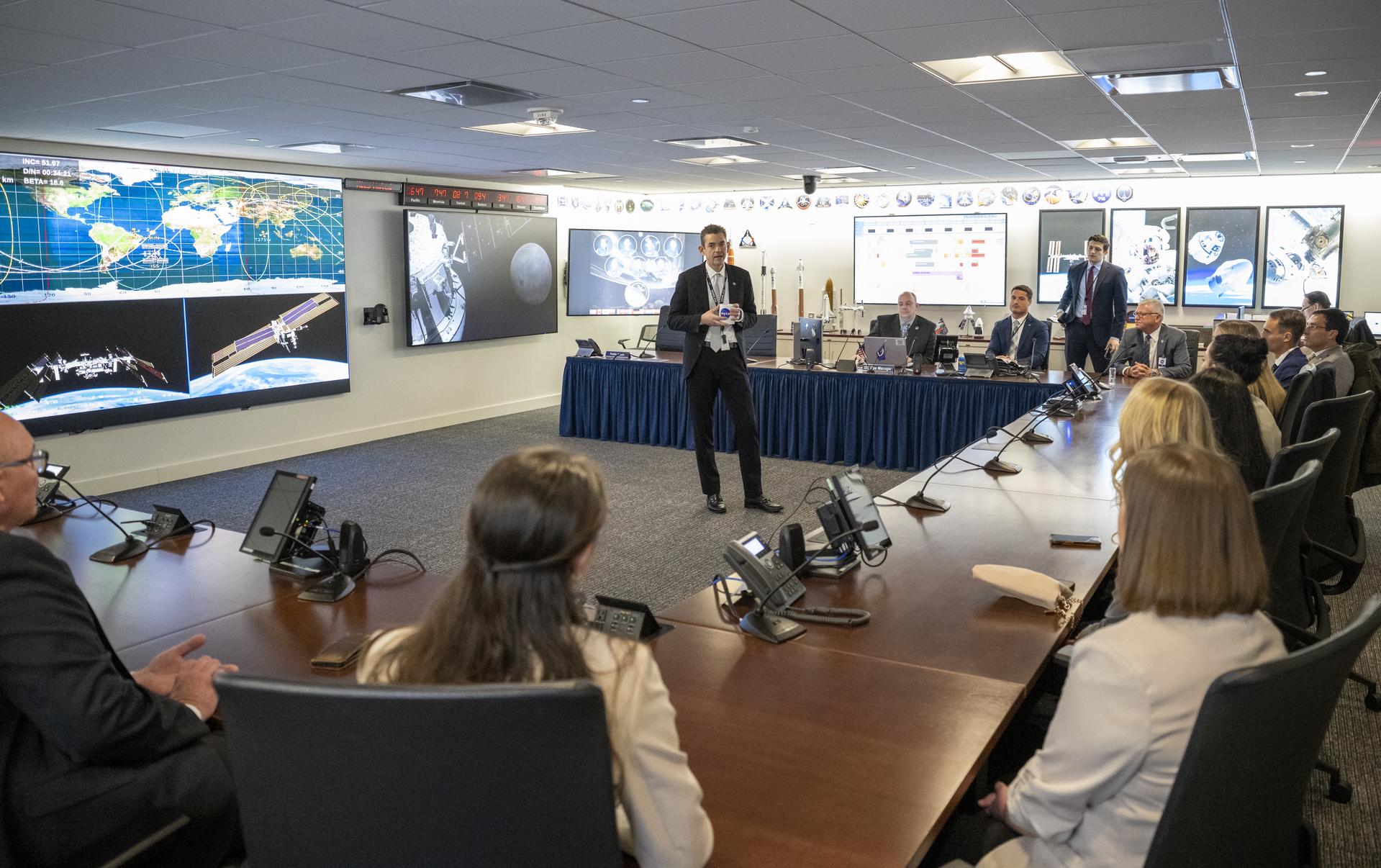
NASA Administrator Jared Isaacman speaks with Embry‑Riddle Aeronautical University students and staff in the Space Operations Center (SOC), Thursday, March 19, 2026, at the Mary W. Jackson NASA Headquarters building in Washington. The group is visiting NASA Headquarters after six Embry‑Riddle Aeronautical University students were named to the Aviation Week Network 20 Twenties Class of 2026, which recognizes outstanding aerospace-focused university students. Photo Credit: (NASA/Keegan Barber)

NASA Administrator Jared Isaacman speaks with Embry‑Riddle Aeronautical University students and staff in the Space Operations Center (SOC), Thursday, March 19, 2026, at the Mary W. Jackson NASA Headquarters building in Washington. The group is visiting NASA Headquarters after six Embry‑Riddle Aeronautical University students were named to the Aviation Week Network 20 Twenties Class of 2026, which recognizes outstanding aerospace-focused university students. Photo Credit: (NASA/Keegan Barber)

Embry‑Riddle Aeronautical University student Daniella Bezuidenhout speaks with NASA Administrator Jared Isaacman in the Space Operations Center (SOC), Thursday, March 19, 2026, at the Mary W. Jackson NASA Headquarters building in Washington. Embry‑Riddle Aeronautical University students and staff are visiting NASA Headquarters after six students were named to the Aviation Week Network 20 Twenties Class of 2026, which recognizes outstanding aerospace-focused university students. Photo Credit: (NASA/Keegan Barber)
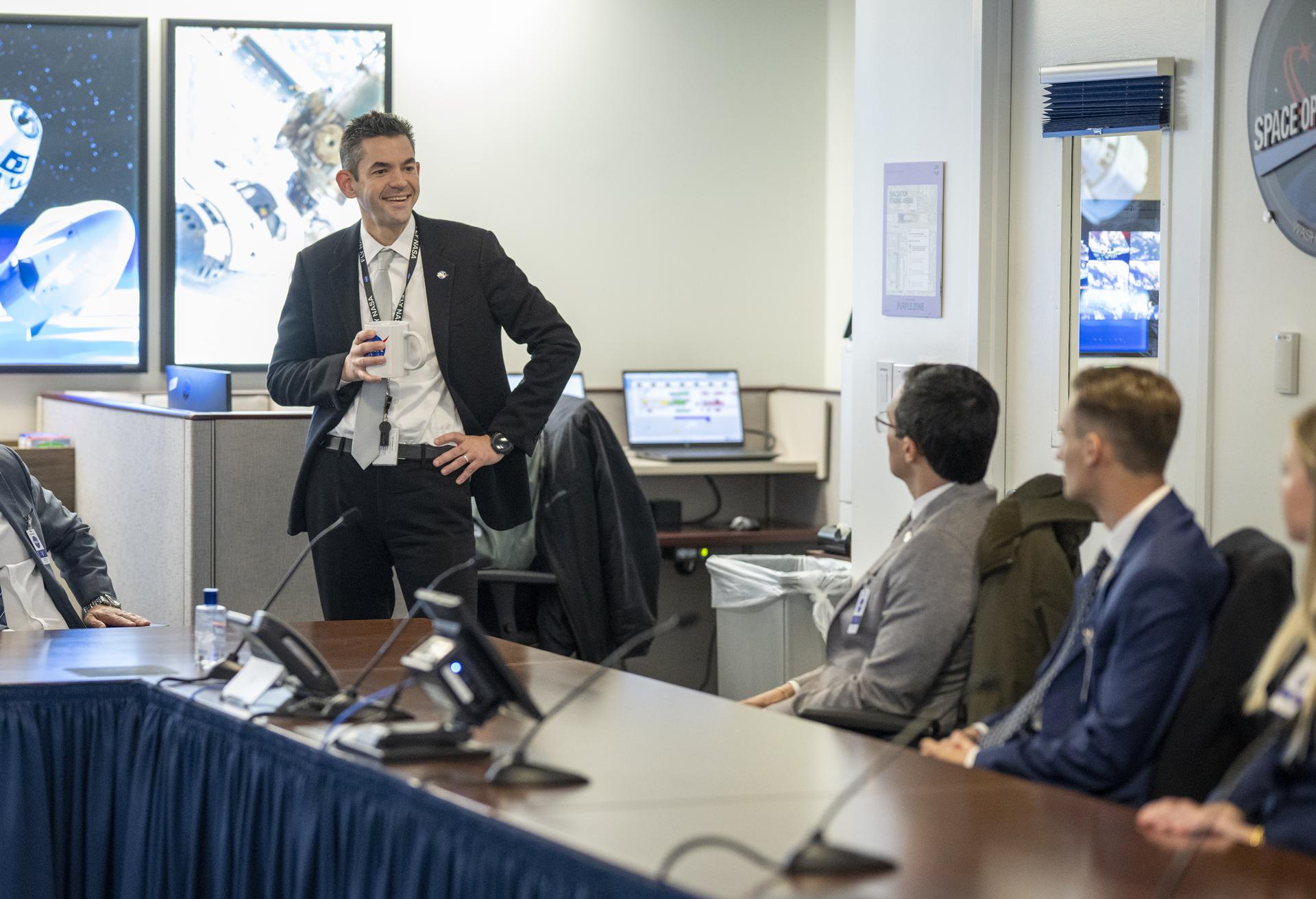
NASA Administrator Jared Isaacman speaks with Embry‑Riddle Aeronautical University students and staff in the Space Operations Center (SOC), Thursday, March 19, 2026, at the Mary W. Jackson NASA Headquarters building in Washington. The group is visiting NASA Headquarters after six Embry‑Riddle Aeronautical University students were named to the Aviation Week Network 20 Twenties Class of 2026, which recognizes outstanding aerospace-focused university students. Photo Credit: (NASA/Keegan Barber)

NASA Administrator Jared Isaacman poses for a photo with Embry‑Riddle Aeronautical University students and staff in the Space Operations Center (SOC), Thursday, March 19, 2026, at the Mary W. Jackson NASA Headquarters building in Washington. The group is visiting NASA Headquarters after six Embry‑Riddle Aeronautical University students were named to the Aviation Week Network 20 Twenties Class of 2026, which recognizes outstanding aerospace-focused university students. Photo Credit: (NASA/Keegan Barber)

NASA Administrator Jared Isaacman speaks with Embry‑Riddle Aeronautical University students and staff in the Space Operations Center (SOC), Thursday, March 19, 2026, at the Mary W. Jackson NASA Headquarters building in Washington. The group is visiting NASA Headquarters after six Embry‑Riddle Aeronautical University students were named to the Aviation Week Network 20 Twenties Class of 2026, which recognizes outstanding aerospace-focused university students. Photo Credit: (NASA/Keegan Barber)

Embry‑Riddle Aeronautical University students and staff ask questions about the International Space Station in the Space Operations Center (SOC), Thursday, March 19, 2026, at the Mary W. Jackson NASA Headquarters building in Washington. The group is visiting NASA Headquarters after six Embry‑Riddle Aeronautical University students were named to the Aviation Week Network 20 Twenties Class of 2026, which recognizes outstanding aerospace-focused university students. Photo Credit: (NASA/Keegan Barber)

Technicians at General Atomics Aeronautical Systems, Inc., (GA-ASI) facility at Adelanto, Calif., carefully install a turboprop engine to the rear fuselage of NASA's Altair aircraft during final assembly operations.
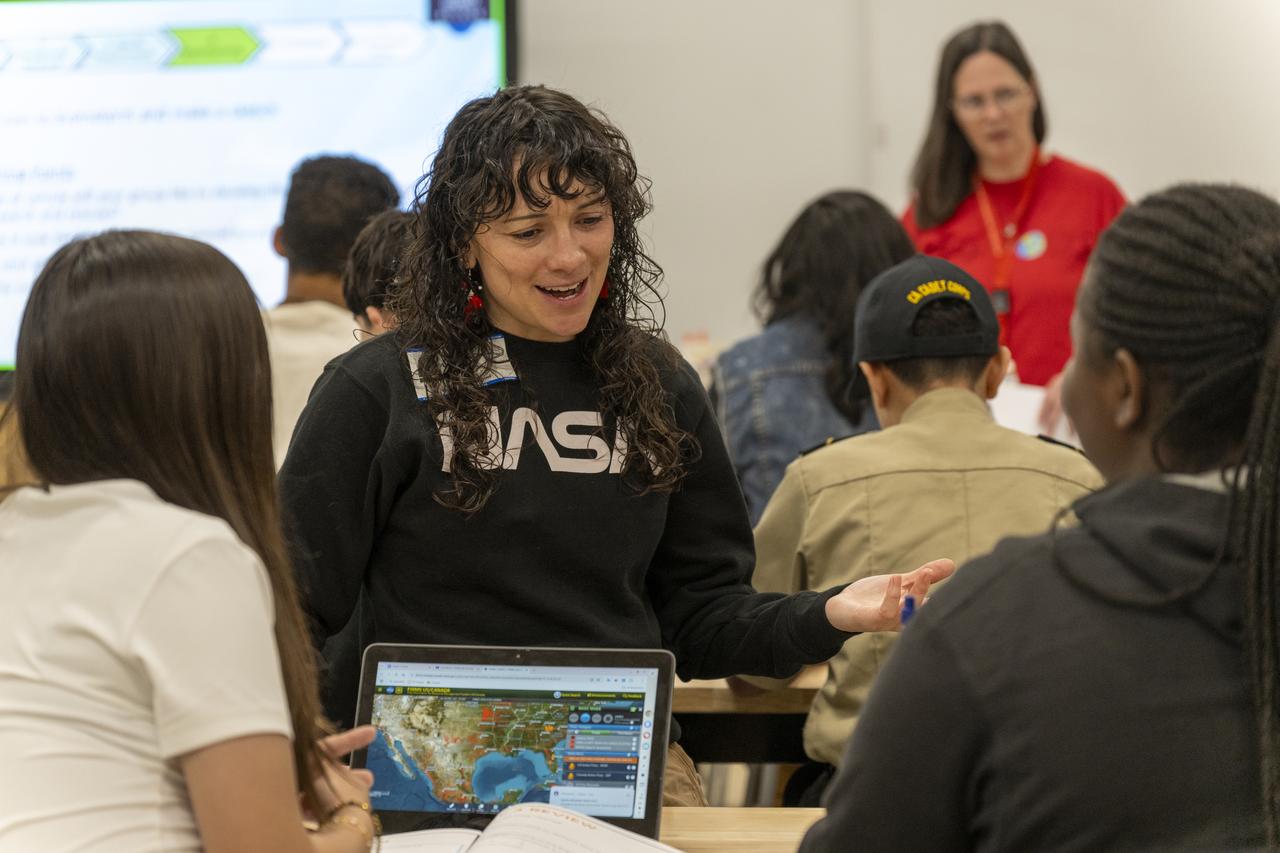
Giovanna Camacho, Pathways systems engineering intern at NASA’s Armstrong Flight Research Center in Edwards, California, teaches students about aeronautics during Aero Fair at Tropico Middle School in Rosamond, California, on April 9, 2025.
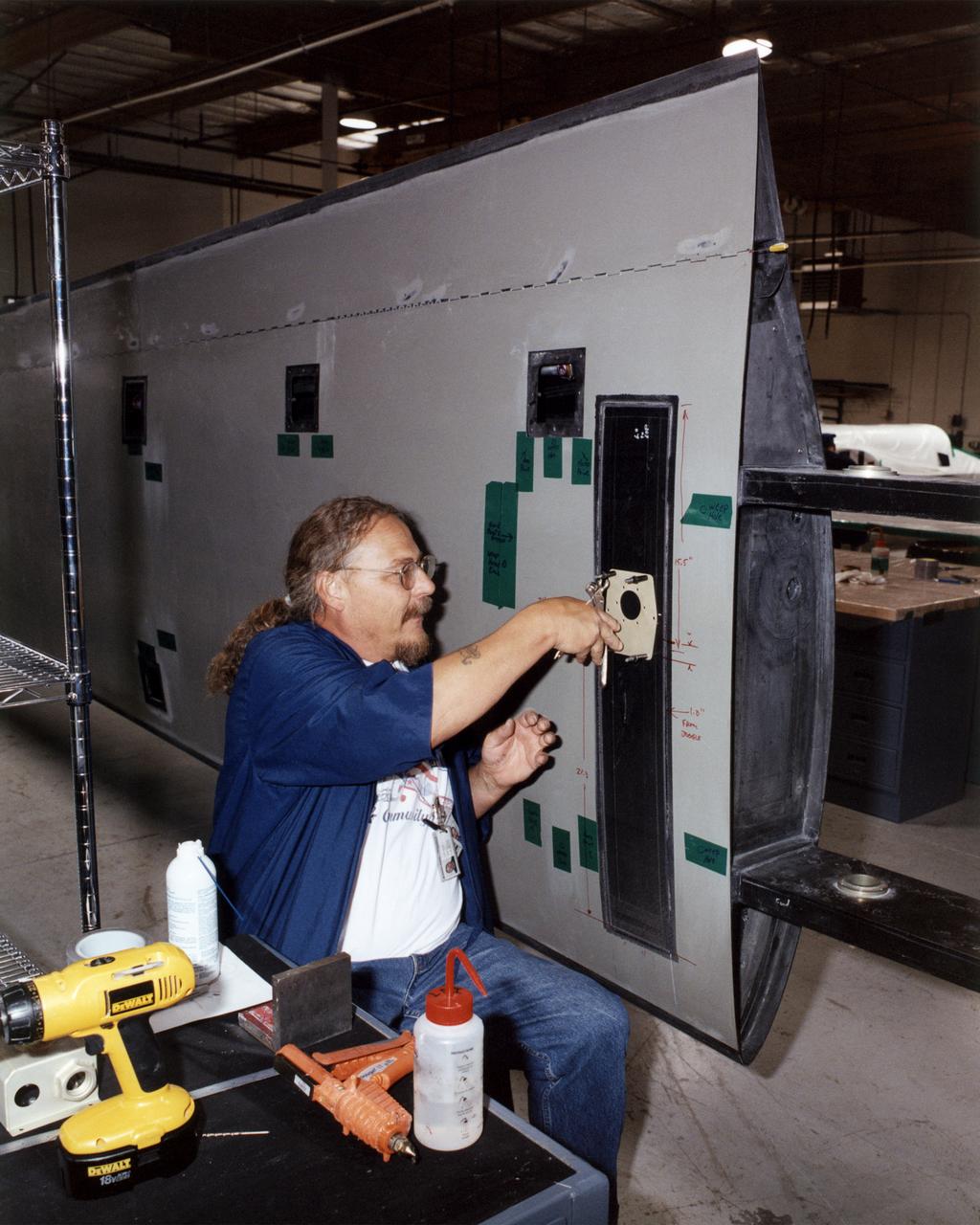
Technician Dave Brown installs a drilling template during construction of the all-composite left wing of NASA's Altair aircraft at General Atomics Aeronautical Systems, Inc., (GA-ASI) facility at Adelanto, Calif.
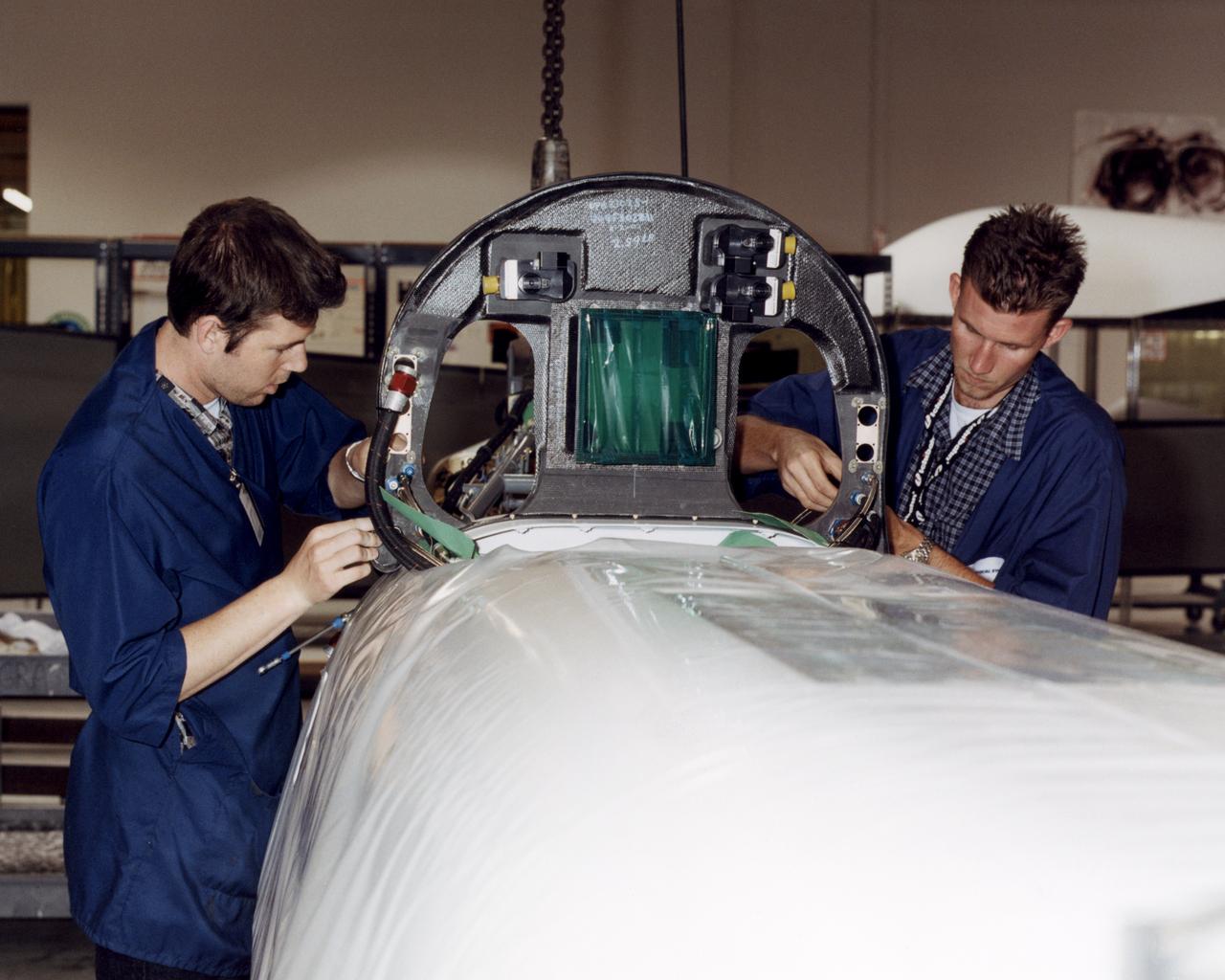
Technicians at General Atomics Aeronautical Systems, Inc., (GA-ASI) facility at Adelanto, Calif., carefully thread control lines through a bulkhead during engine installation on NASA's Altair aircraft.

Bridenstine walks along with AFRC Center Director David McBride as McBride explains the aeronautical research happening at the center as well as discussing the capabilities used for agency missions.
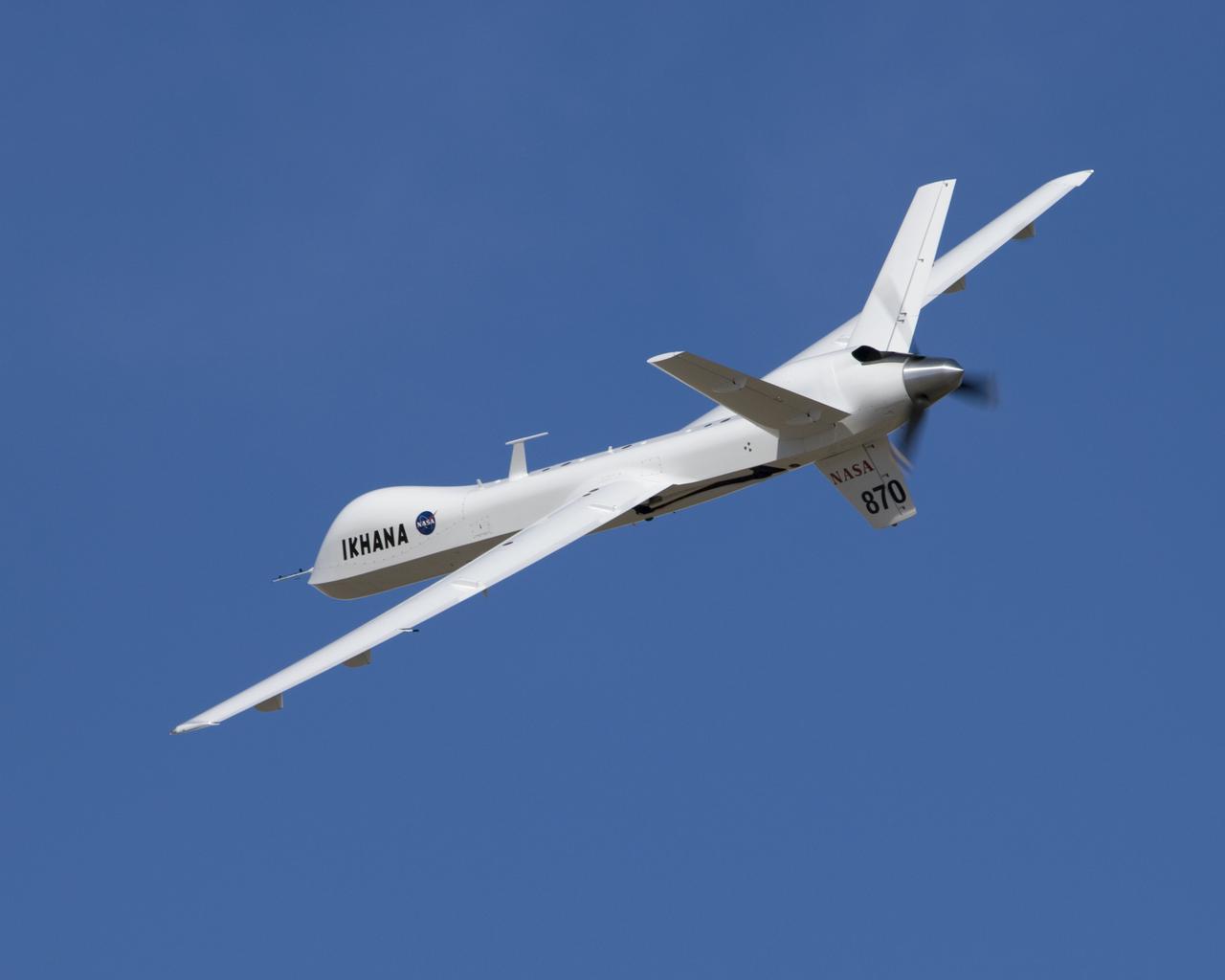
Straight wings, a Y-tail and a pusher propeller distinguish NASA's Ikhana, a civil version of General Atomics Aeronautical system's Predator B unmanned aircraft.

Chair of the Space and Aeronautics Subcommittee, Congresswoman Kendra Horn, D-Okla., speaks during a Space and Aeronautics Subcommittee of the House Science, Space, and Technology Committee hearing titled, “Developing Core Capabilities for Deep Space Exploration: An Update on NASA's SLS, Orion, and Exploration Ground Systems," Wednesday, September 18, 2019 at the Rayburn House Office Building in Washington. Photo Credit: (NASA/Aubrey Gemignani)
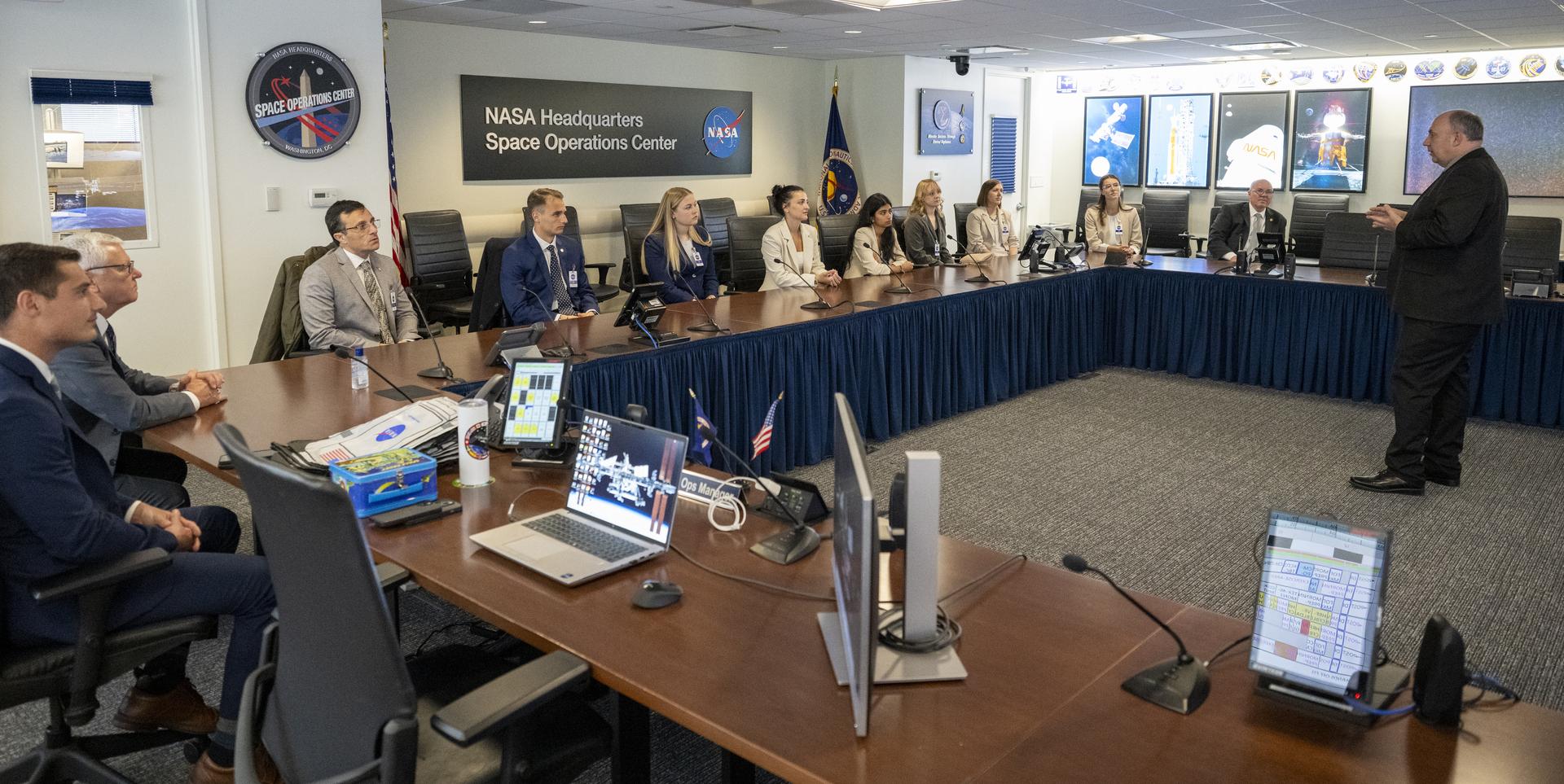
NASA Headquarters Space Operations Center (SOC) Manager Kevin Metrocavage, right, speaks with Embry‑Riddle Aeronautical University students and staff about the International Space Station in the SOC, Thursday, March 19, 2026, at the Mary W. Jackson NASA Headquarters building in Washington. The group is visiting NASA Headquarters after six Embry‑Riddle Aeronautical University students were named to the Aviation Week Network 20 Twenties Class of 2026, which recognizes outstanding aerospace-focused university students. Photo Credit: (NASA/Keegan Barber)

The communication antenna is used primarily for test flights to receive downlink flight data and video from test aircraft and also to support command uplink of data to test aircraft for command and control. It is one of two such assets of the Dryden Aeronautical Test Range at NASA’s Armstrong Flight Research Center in California.

The communication antenna is used primarily for test flights to receive downlink flight data and video from test aircraft and also to support command uplink of data to test aircraft for command and control. It is one of two such assets of the Dryden Aeronautical Test Range at NASA’s Armstrong Flight Research Center in California.
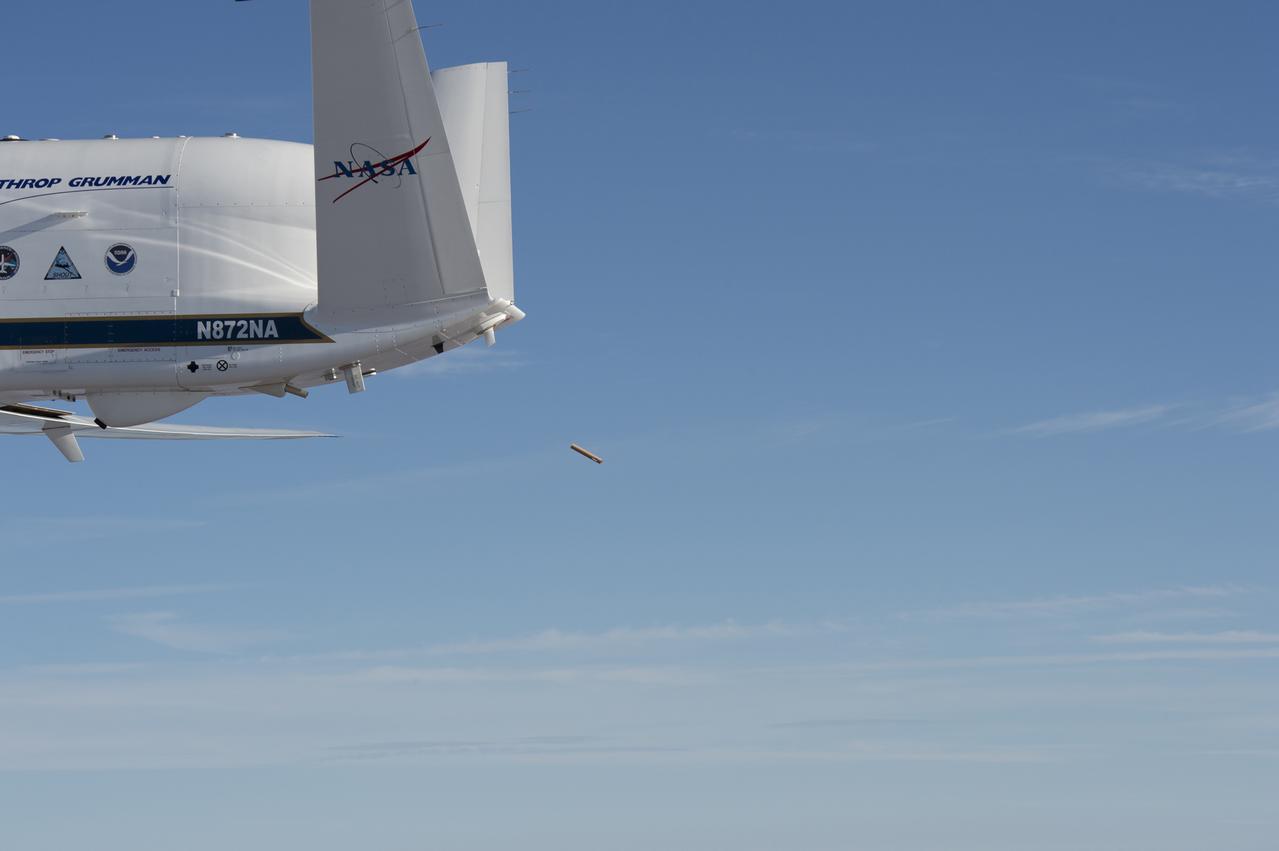
NASA’s Global Hawk aircraft deploys a dropsonde during a test flight over the Dryden Aeronautical Test Range in August 2015. The small, tube-shaped sensor will transmit data on temperature, humidity, and wind speed, which will be used to help improve weather model forecasts
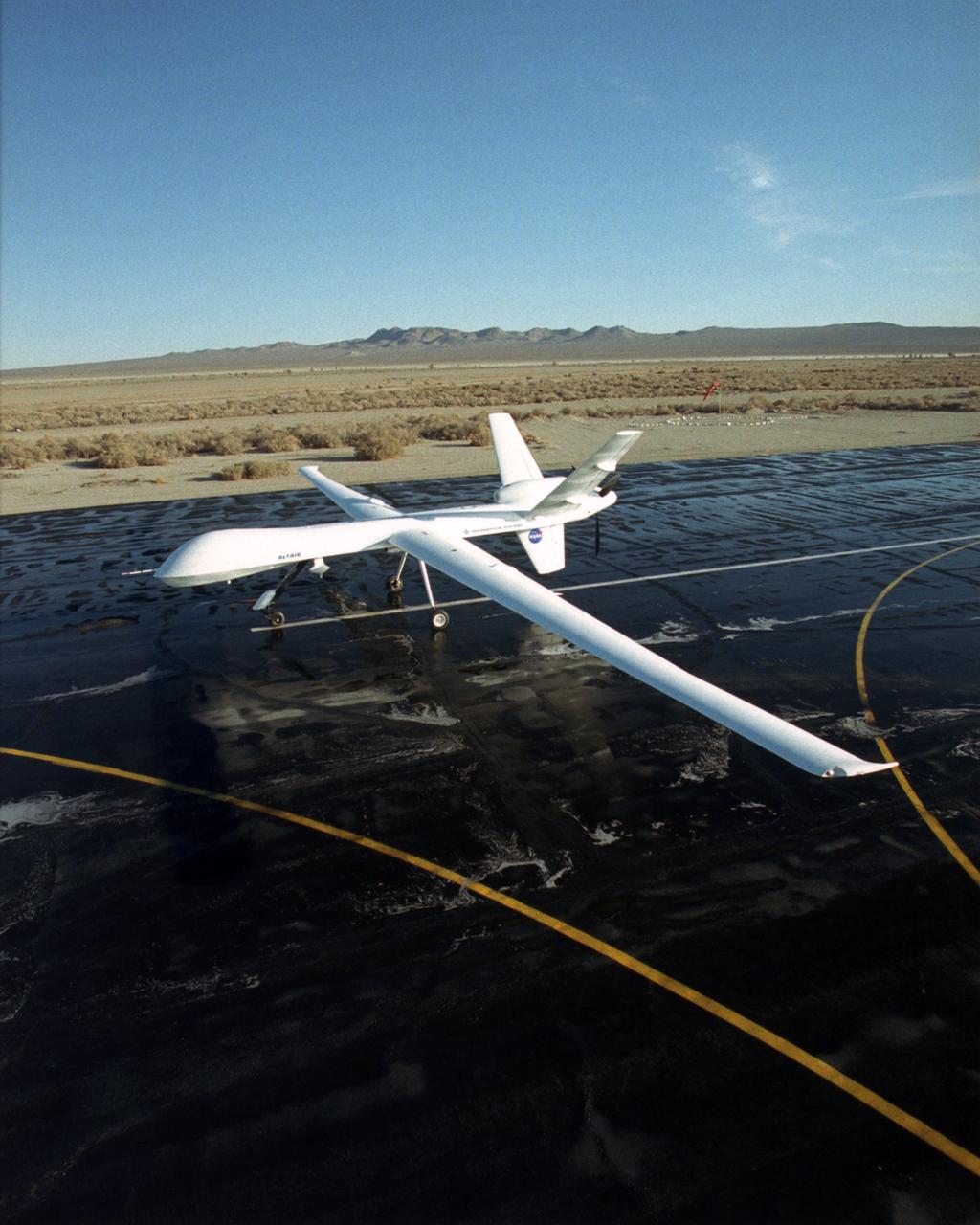
The Altair unmanned aerial vehicle (UAV), built by General Atomics Aeronautical Systems, Inc. for NASA, is poised for flight at GA-ASI's flight test facility at El Mirage, California.
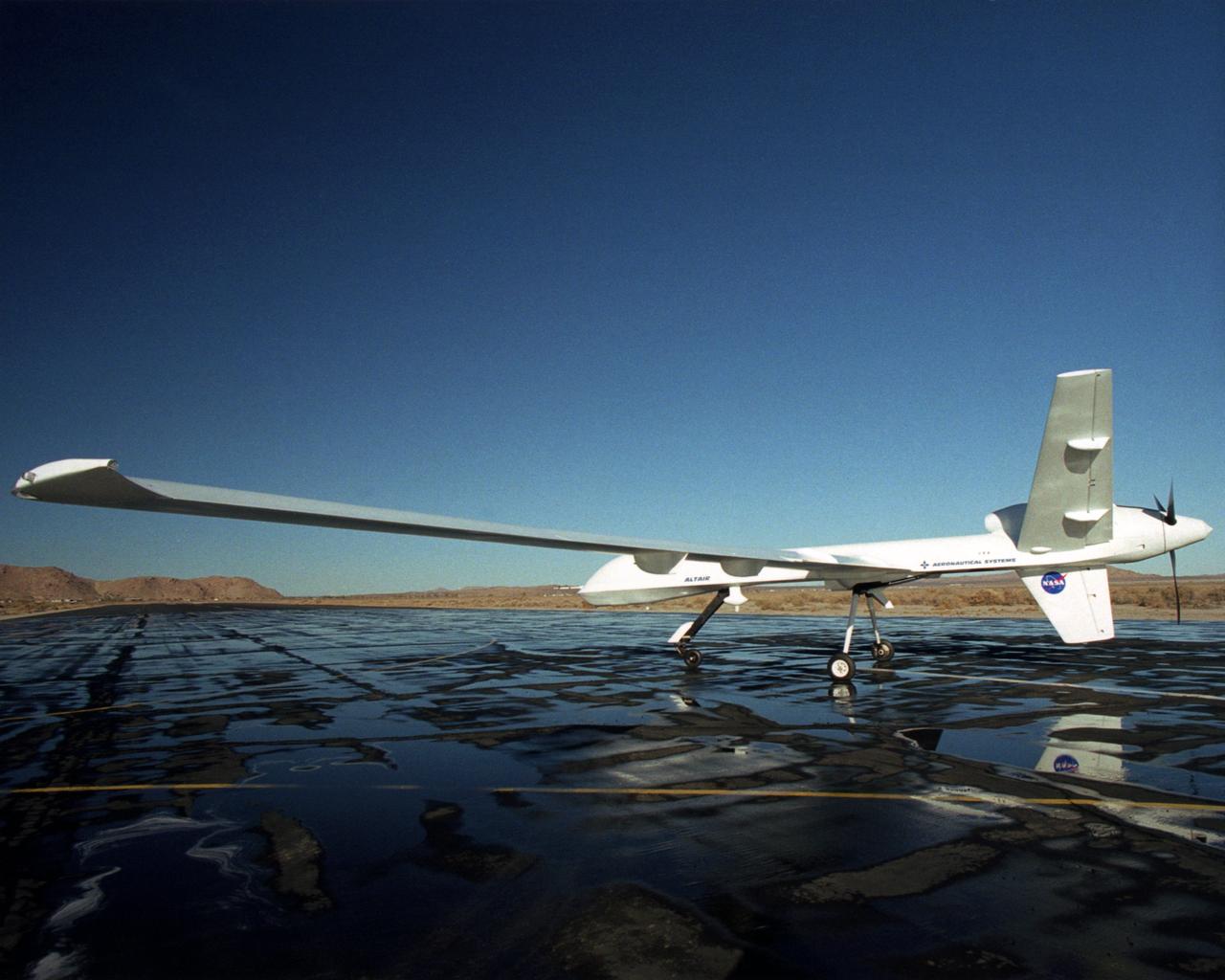
Long wings, a V-tail with a ventral fin and a rear-mounted engine distinguish the Altair, an unmanned aerial vehicle built for NASA by General Atomics Aeronautical Systems, Inc.
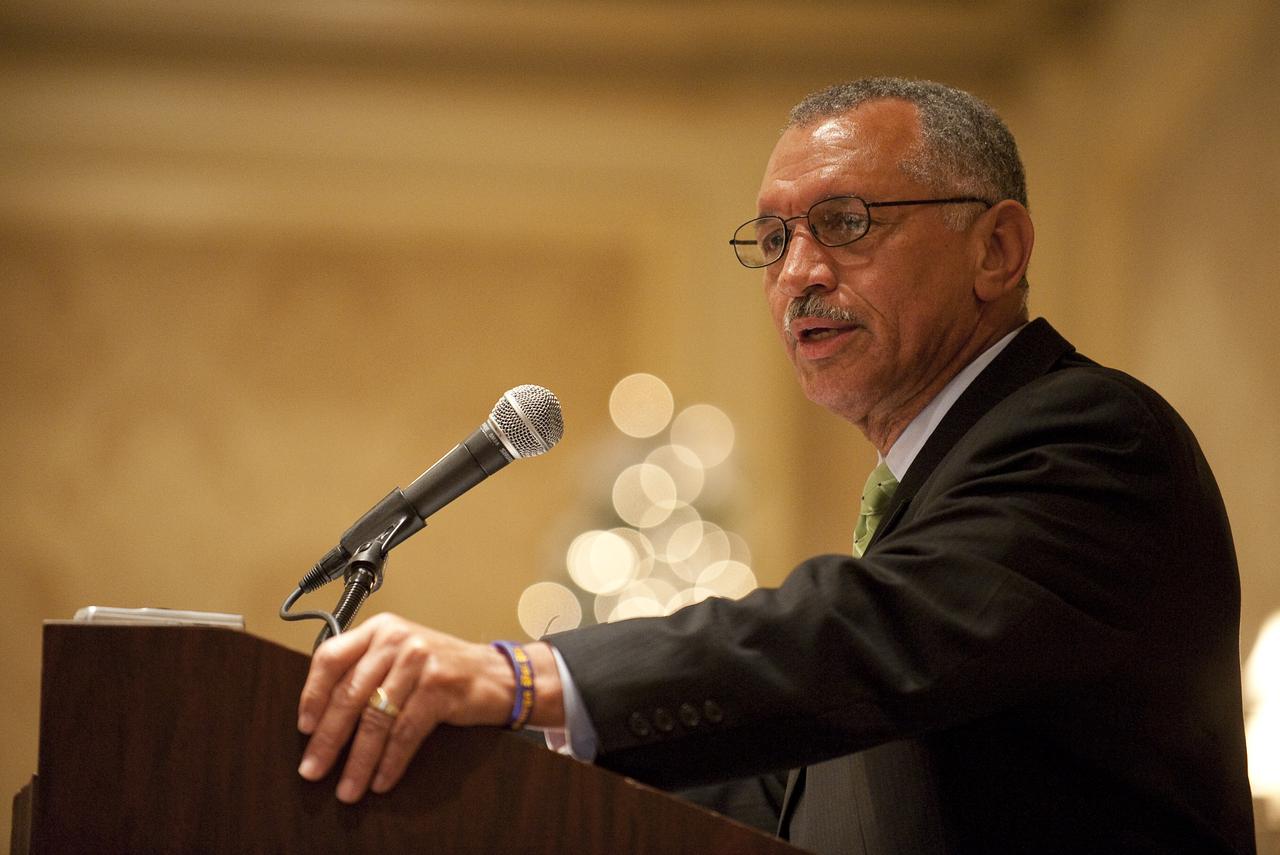
NASA Administrator Charles Bolden speaks during a luncheon co-hosted by the American Institute of Aeronautics and Astronautics (AIAA) and Women In Aerospace (WIA) Wednesday, Dec., 9, 2009 at the Ritz-Carlton in Arlington, Va. Photo Credit: (NASA/Bill Ingalls)
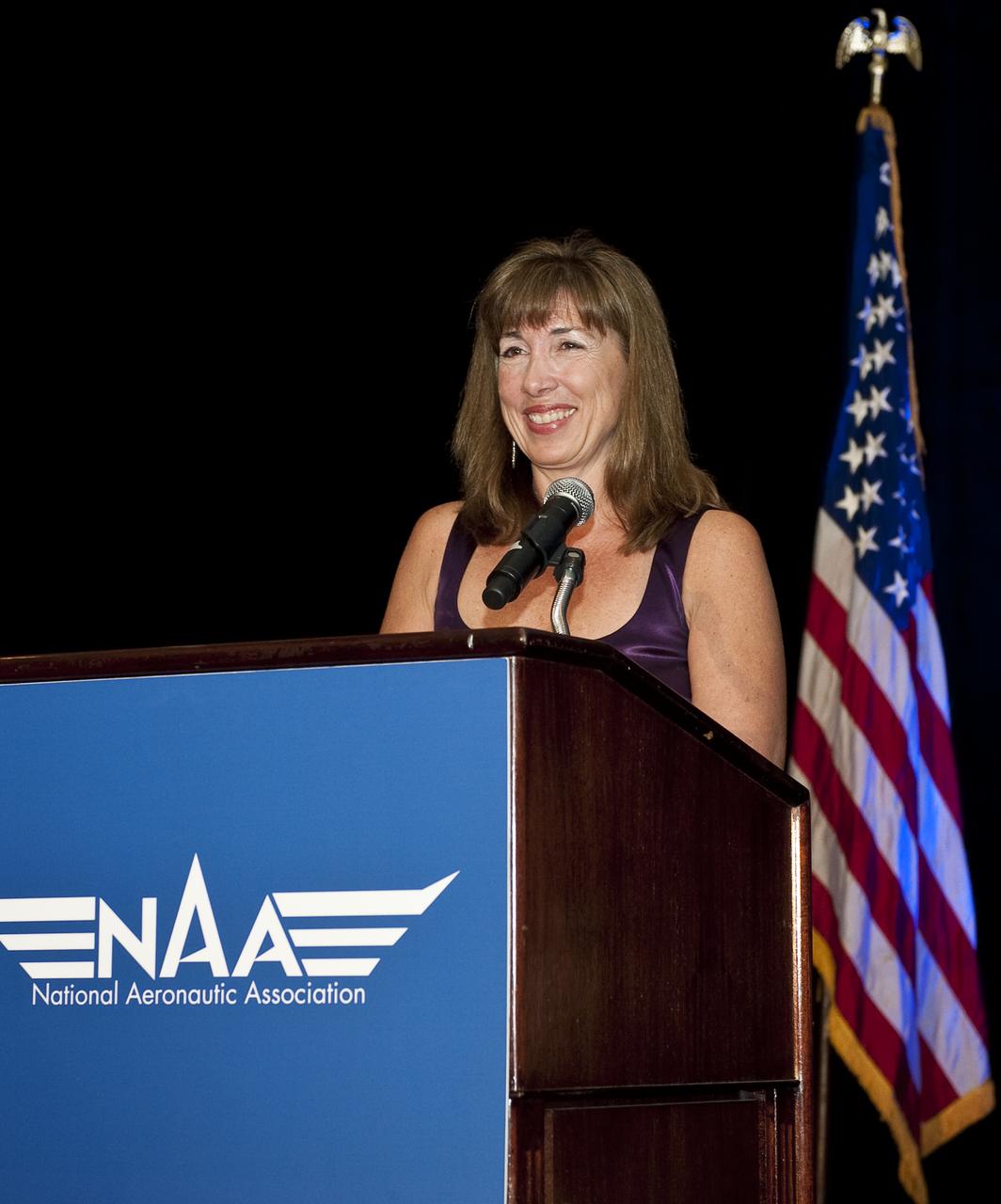
Lori Garver, Deputy Administrator of NASA, speaks at the Annual Collier Dinner on Thursday, May 13, 2010 in Arlington, VA. NASA and the International Space Station team is the winner of the 2009 Robert J. Collier Trophy. The Collier Trophy is awarded annually for the greatest achievement in aeronautics or astronautics in America. Photo Credit: (NASA/Carla Cioffi)
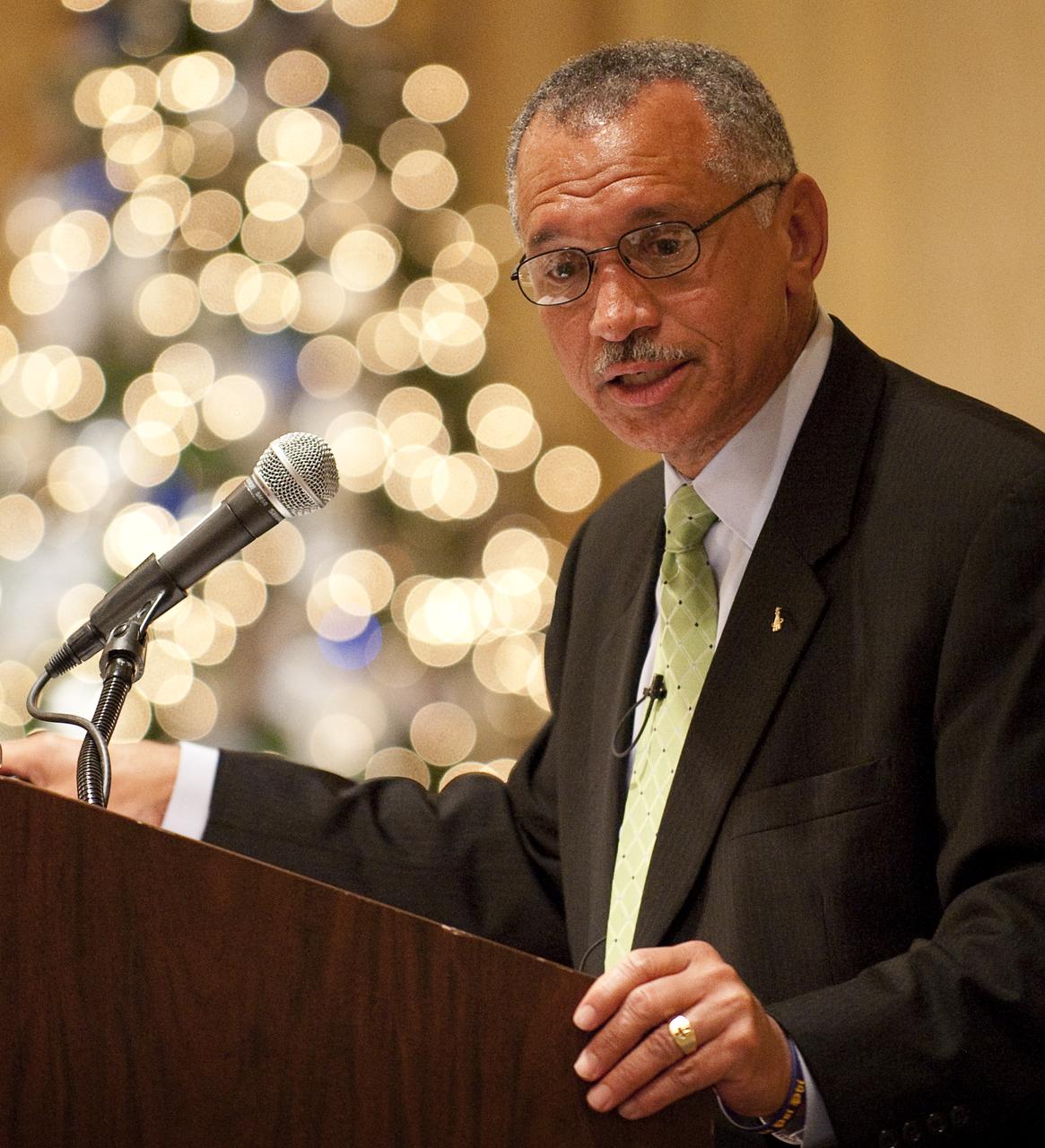
NASA Administrator Charles Bolden speaks during a luncheon co-hosted by the American Institute of Aeronautics and Astronautics (AIAA) and Women In Aerospace (WIA) Wednesday, Dec., 9, 2009 at the Ritz-Carlton in Arlington, Va. Photo Credit: (NASA/Bill Ingalls)
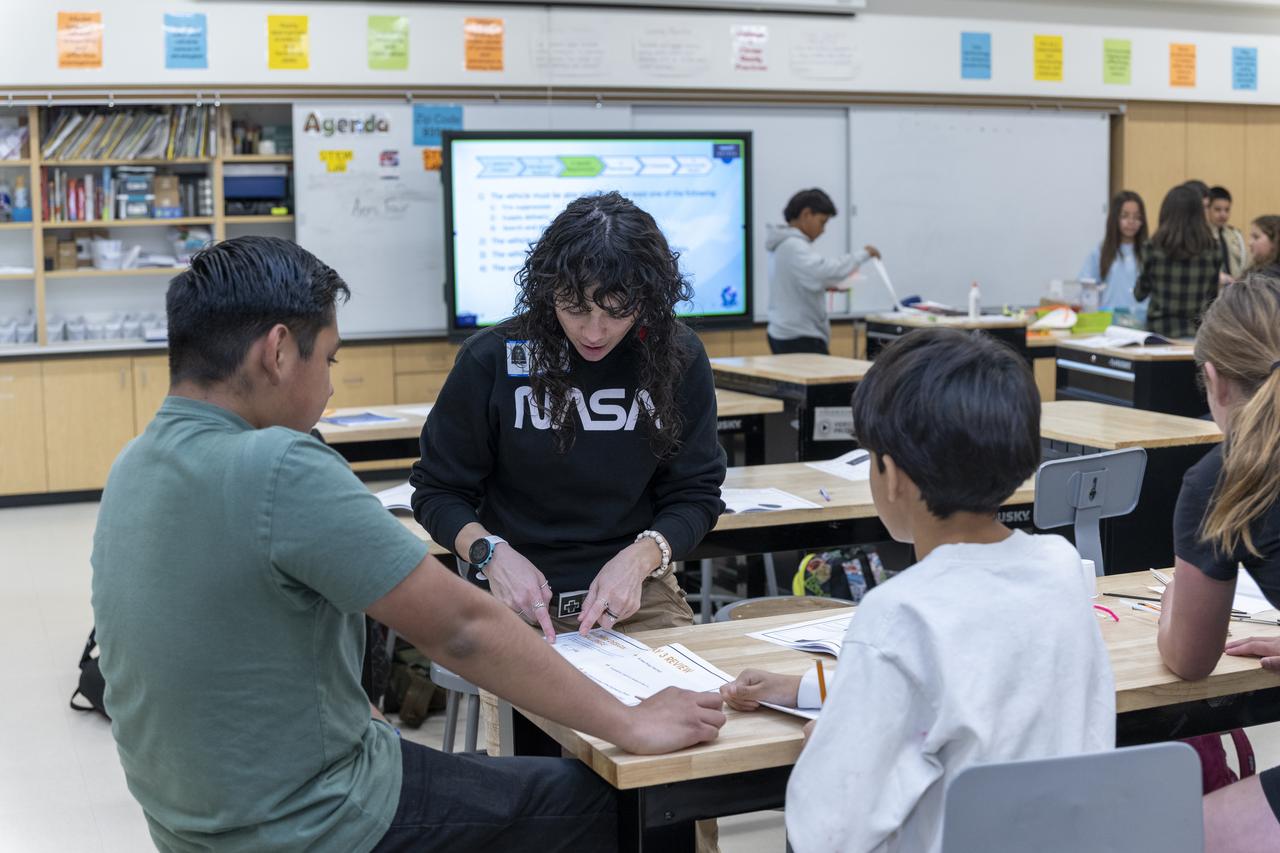
Giovanna Camacho, Pathways systems engineering intern from NASA’s Armstrong Flight Research Center in Edwards, California, teaches students about aeronautics during Aero Fair at Tropico Middle School in Rosamond, California, on April 9, 2025.
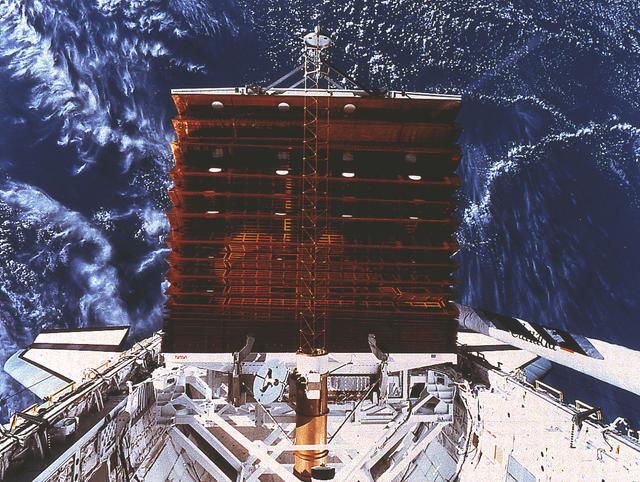
An STS-41D onboard photo shows the Solar Array Experiment (SAE) panel deployment for the Office of Aeronautics and space Technology-1 (OAST-1). OAST-1 is several advanced space technology experiments utilizing a common data system and is mounted on a platform in the Shuttle cargo bay.

U.S. Rep. Pete Olson, R-Texas, speaks during a hearing before the House Subcommitte on Space and Aeronautics regarding Safety of Human Spaceflight on Capitol Hill, Wednesday, Dec. 2, 2009, in Washington. Photo Credit: (NASA/Bill Ingalls)
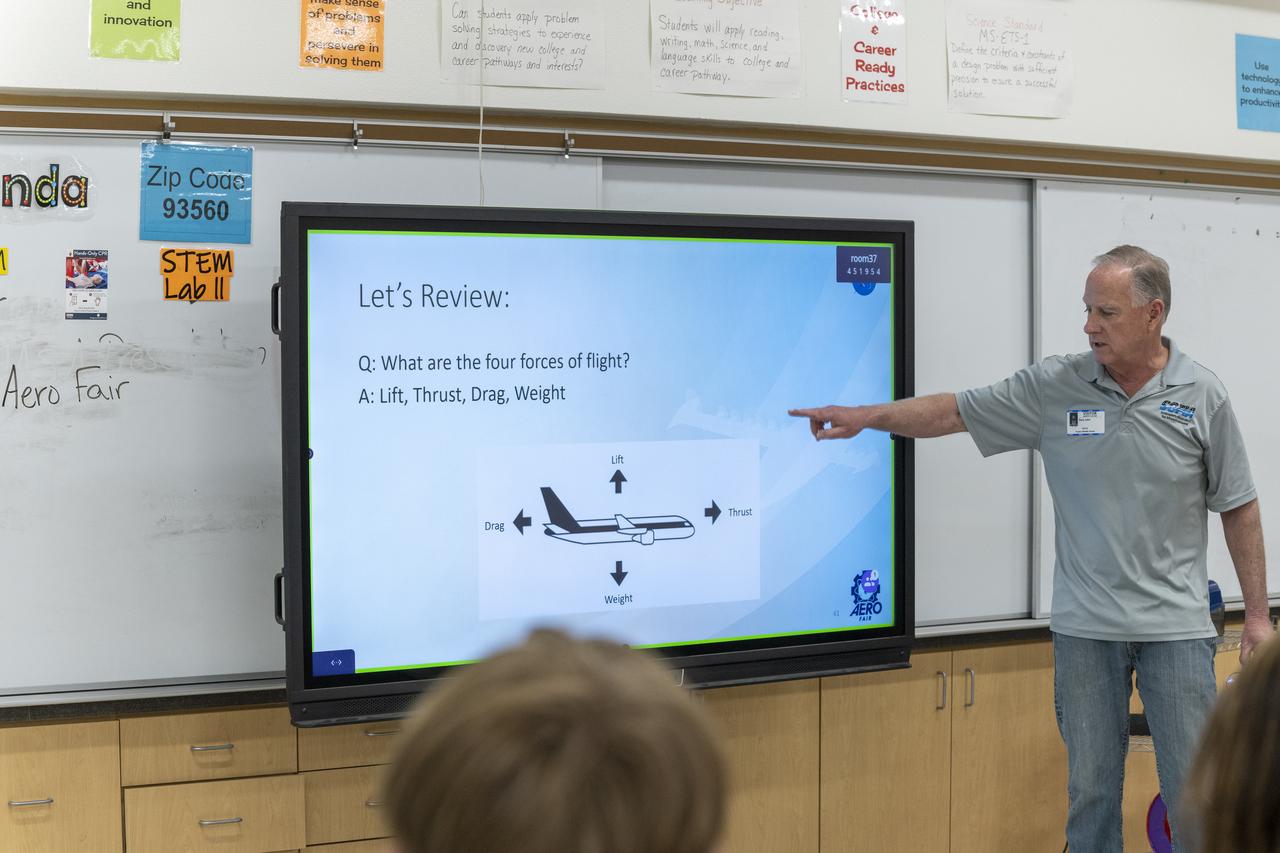
Gary Laier, center liaison for the Small Business Innovation Research/Small Business Technology Transfer (SBIR/STTR) program at NASA’s Armstrong Flight Research Center in Edwards, California, teaches students about aeronautics during Aero Fair at Tropico Middle School in Rosamond, California, on April 9, 2025.
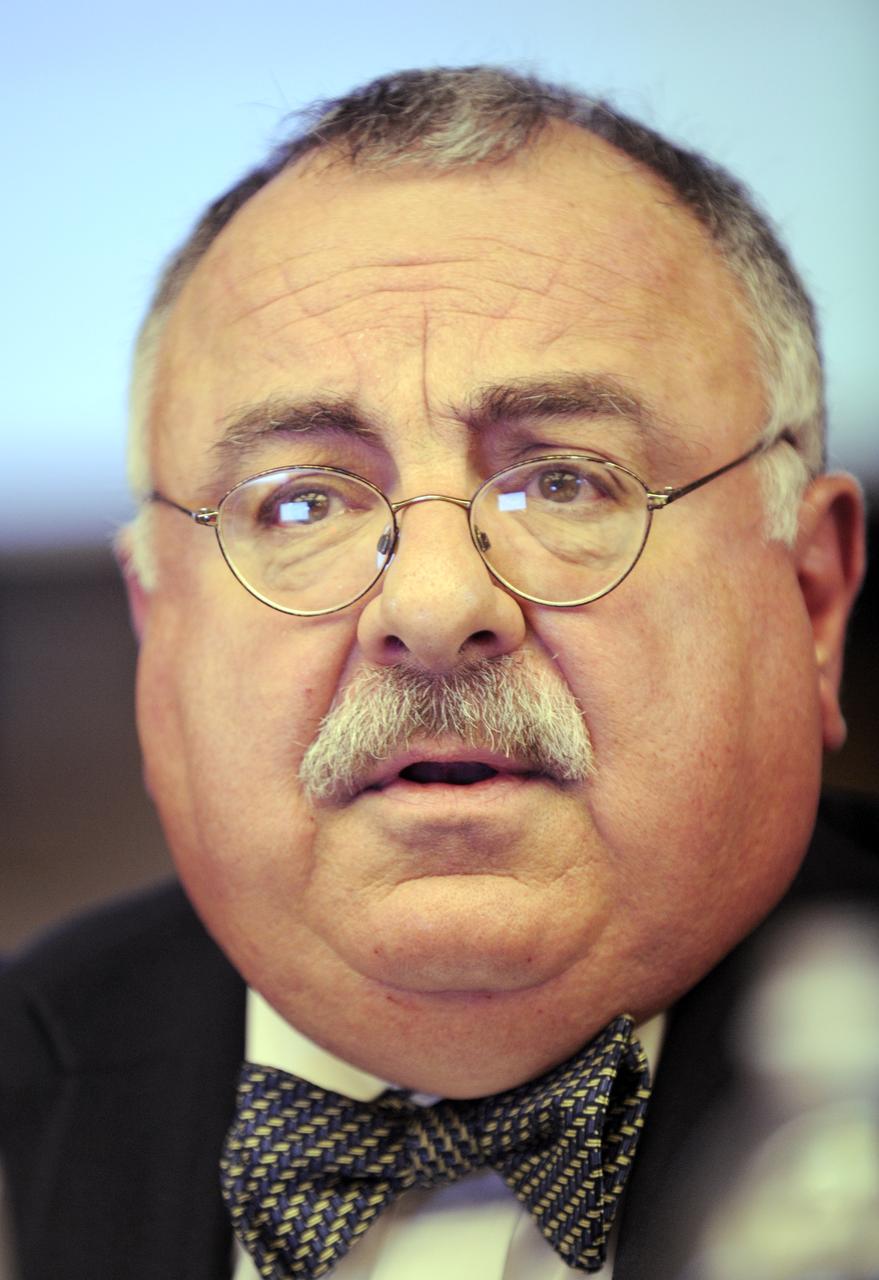
Dr. Joseph R. Fragola, Vice President, Valador, Inc., testifies during a hearing before the House Subcommitte on Space and Aeronautics regarding Safety of Human Spaceflight on Capitol Hill, Wednesday, Dec. 2, 2009, in Washington. Photo Credit: (NASA/Bill Ingalls)
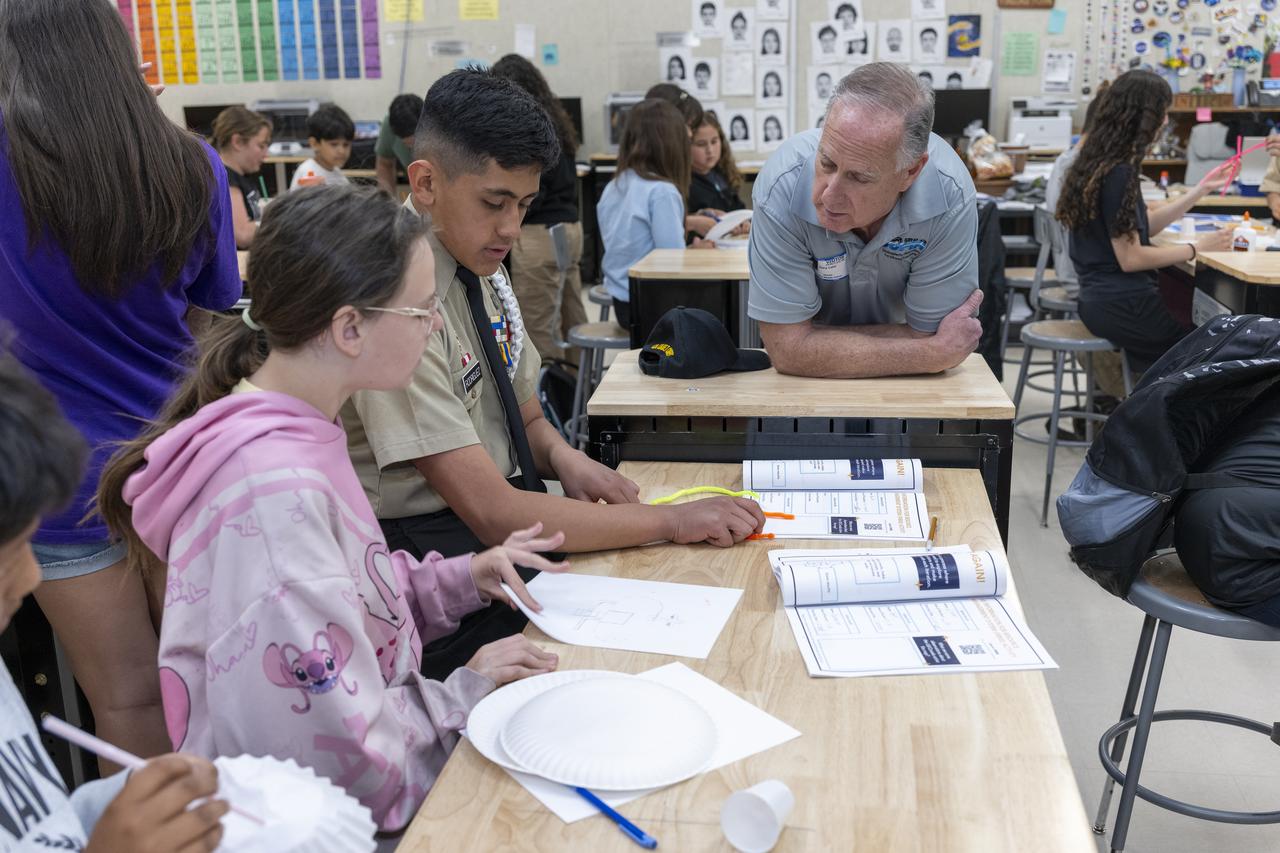
Gary Laier, center liaison for the Small Business Innovation Research/Small Business Technology Transfer (SBIR/STTR) program at NASA’s Armstrong Flight Research Center in Edwards, California, teaches students about aeronautics during Aero Fair at Tropico Middle School in Rosamond, California, on April 9, 2025.
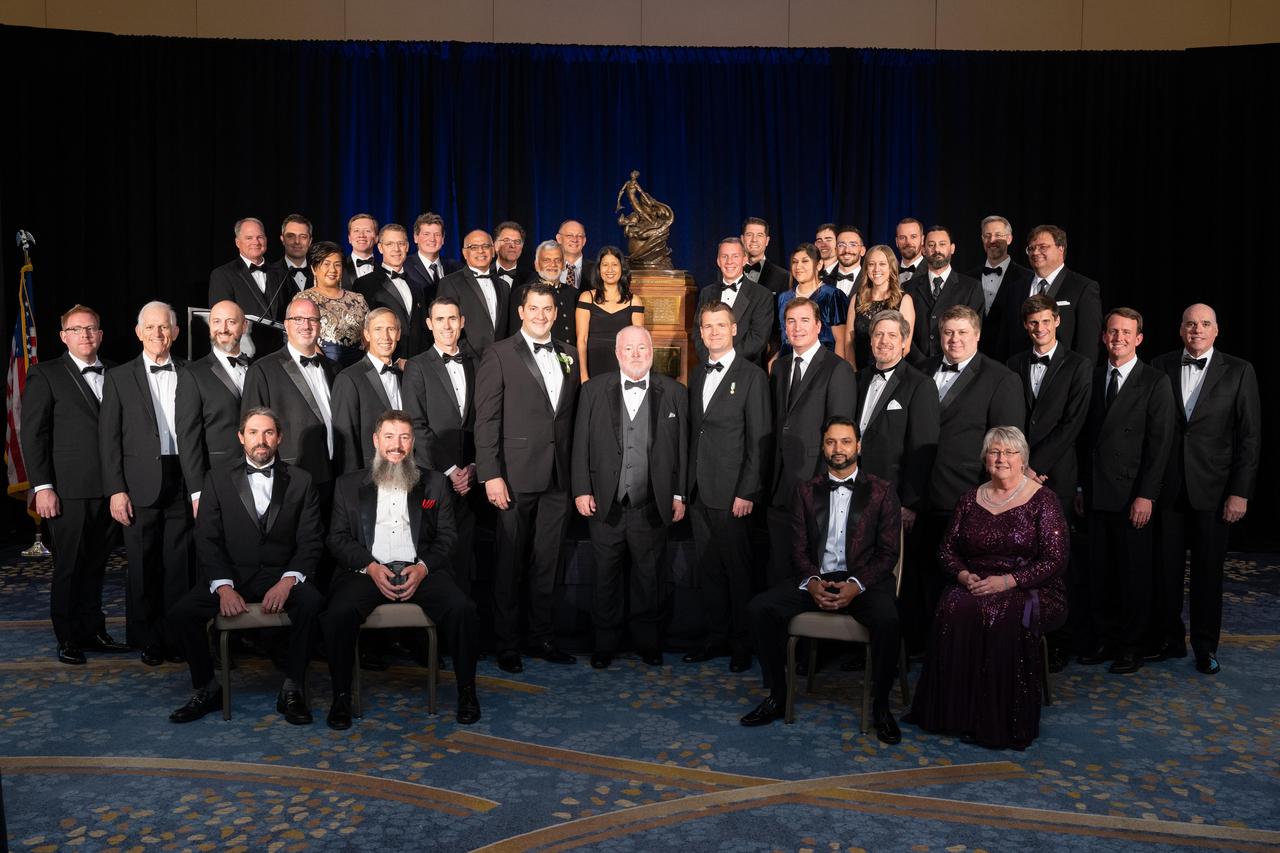
Members of NASA's Ingenuity Mars Helicopter team are pictured with the Collier Trophy during the Robert J. Collier Dinner in Washington on June 9, 2022. The team was awarded the 2021 Collier Trophy "for the first powered, controlled flight of an aircraft on another planet, thereby opening the skies of Mars and other worlds for future scientific discovery and exploration," the award citation states. This historic trophy – which is on permanent display at the Smithsonian Air and Space Museum in Washington – is awarded annually by the National Aeronautic Association "for the greatest achievement in aeronautics or astronautics in America, with respect to improving the performance, efficiency, and safety of air or space vehicles, the value of which has been thoroughly demonstrated by actual use during the preceding year." https://photojournal.jpl.nasa.gov/catalog/PIA25324
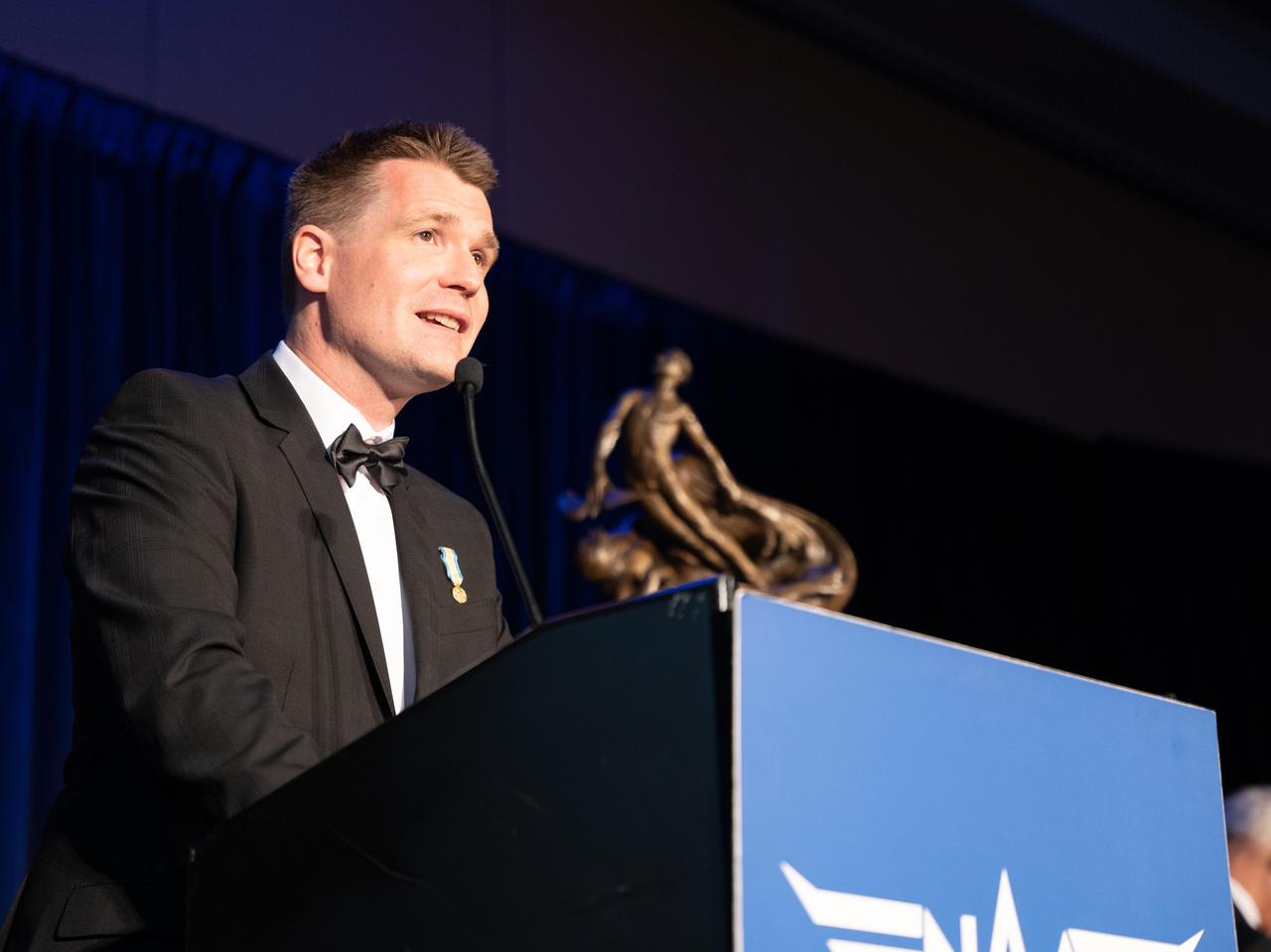
The chief pilot for NASA's Ingenuity Mars Helicopter, Håvard Grip, speaks at the Robert J. Collier Dinner in Washington on June 9, 2022. The Ingenuity Mars Helicopter team was awarded the 2021 Collier Trophy "for the first powered, controlled flight of an aircraft on another planet, thereby opening the skies of Mars and other worlds for future scientific discovery and exploration," the award citation states. This historic trophy – which is on permanent display at the Smithsonian Air and Space Museum in Washington – is awarded annually by the National Aeronautic Association "for the greatest achievement in aeronautics or astronautics in America, with respect to improving the performance, efficiency, and safety of air or space vehicles, the value of which has been thoroughly demonstrated by actual use during the preceding year." https://photojournal.jpl.nasa.gov/catalog/PIA25216

The left wing of NASA's Altair unmanned aerial vehicle (UAV) rests in a jig during construction at General Atomics Aeronautical Systems, Inc., (GA-ASI) facility at Adelanto, Calif.
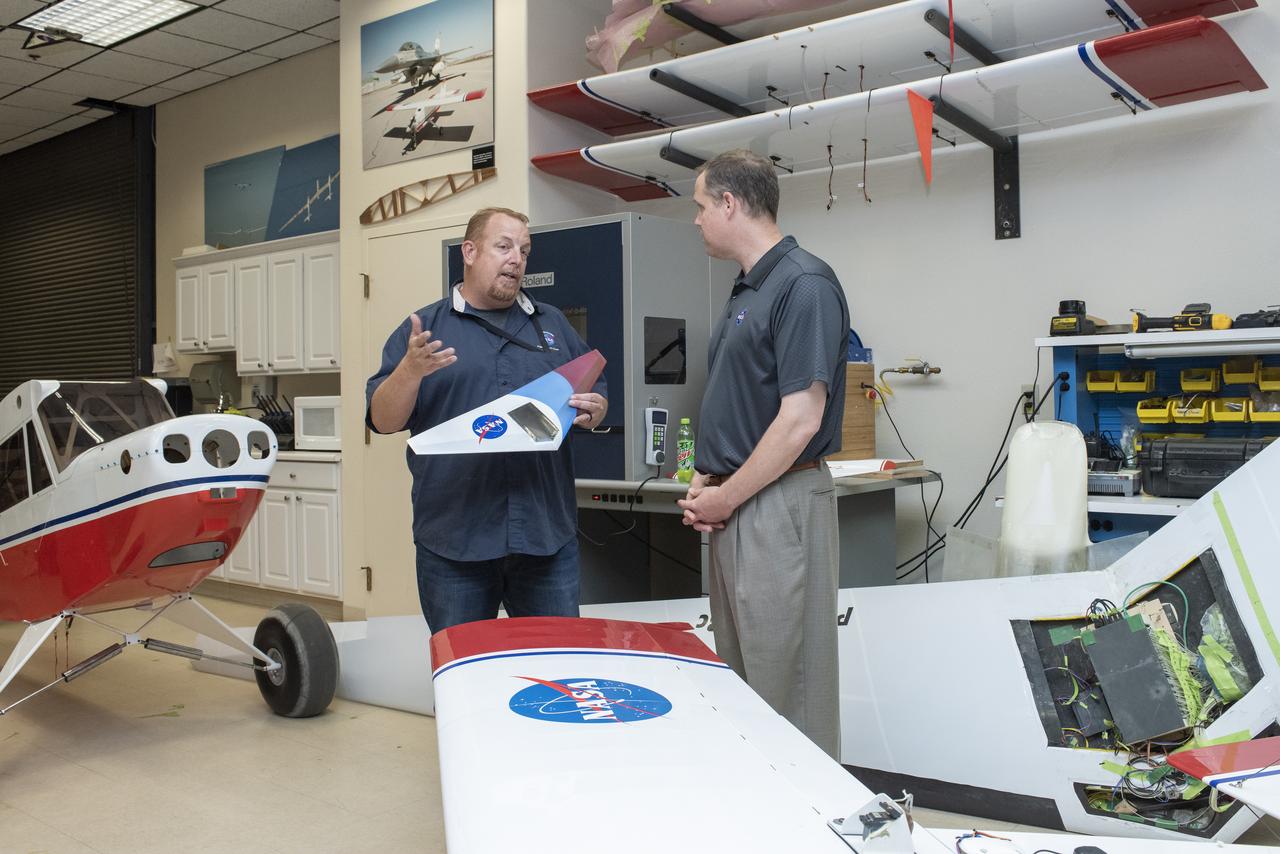
Armstrong's Robert "Red" Jensen talks to Bridenstine about using small scale aircraft to test aeronautical concepts keeping cost of aviation discoveries lower until technology is proved for larger aircraft.
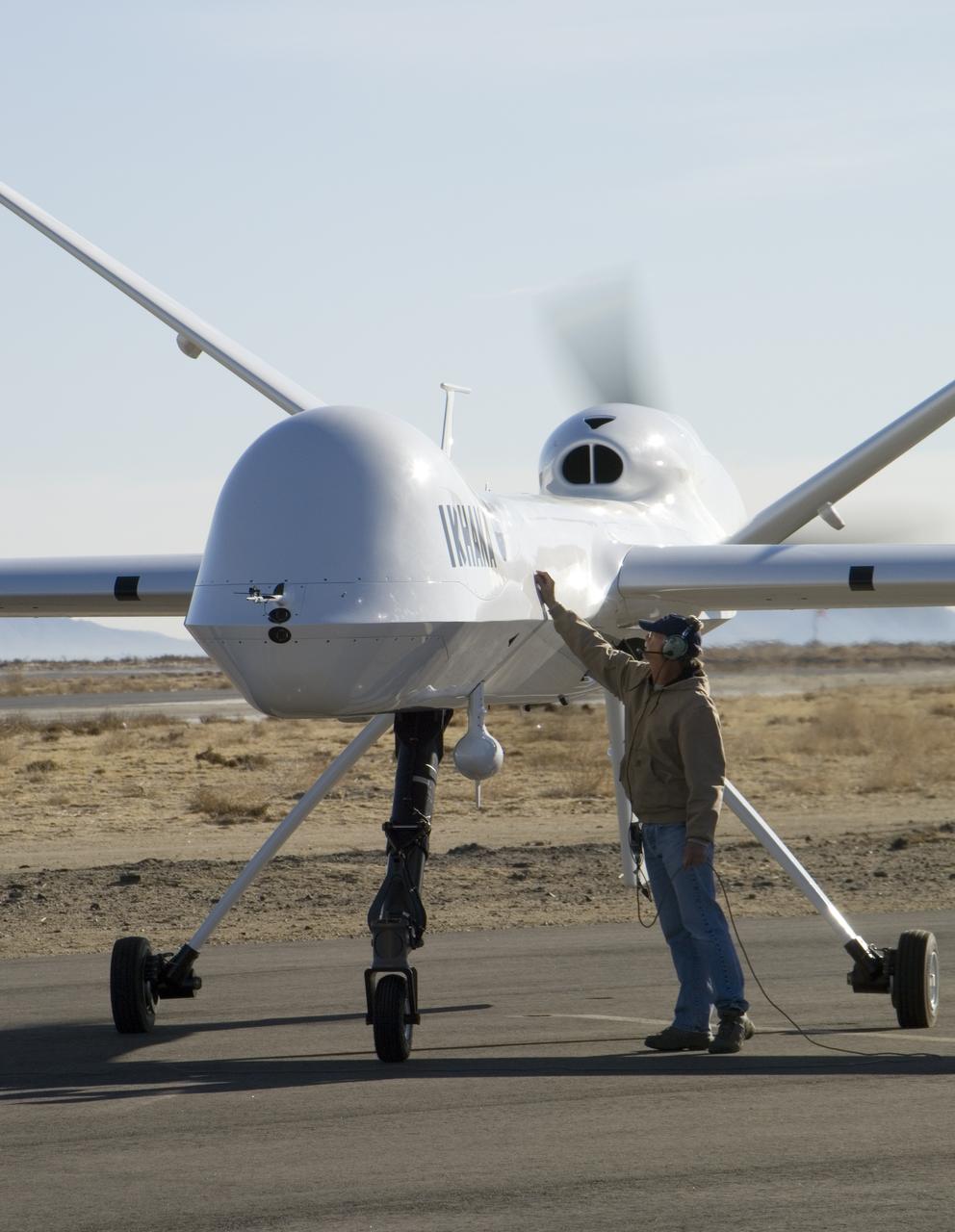
Crew chief Joe Kinn gives NASA's Ikhana unmanned aircraft a final check during engine run-up prior to takeoff at General Atomics Aeronautical Systems' airfield.
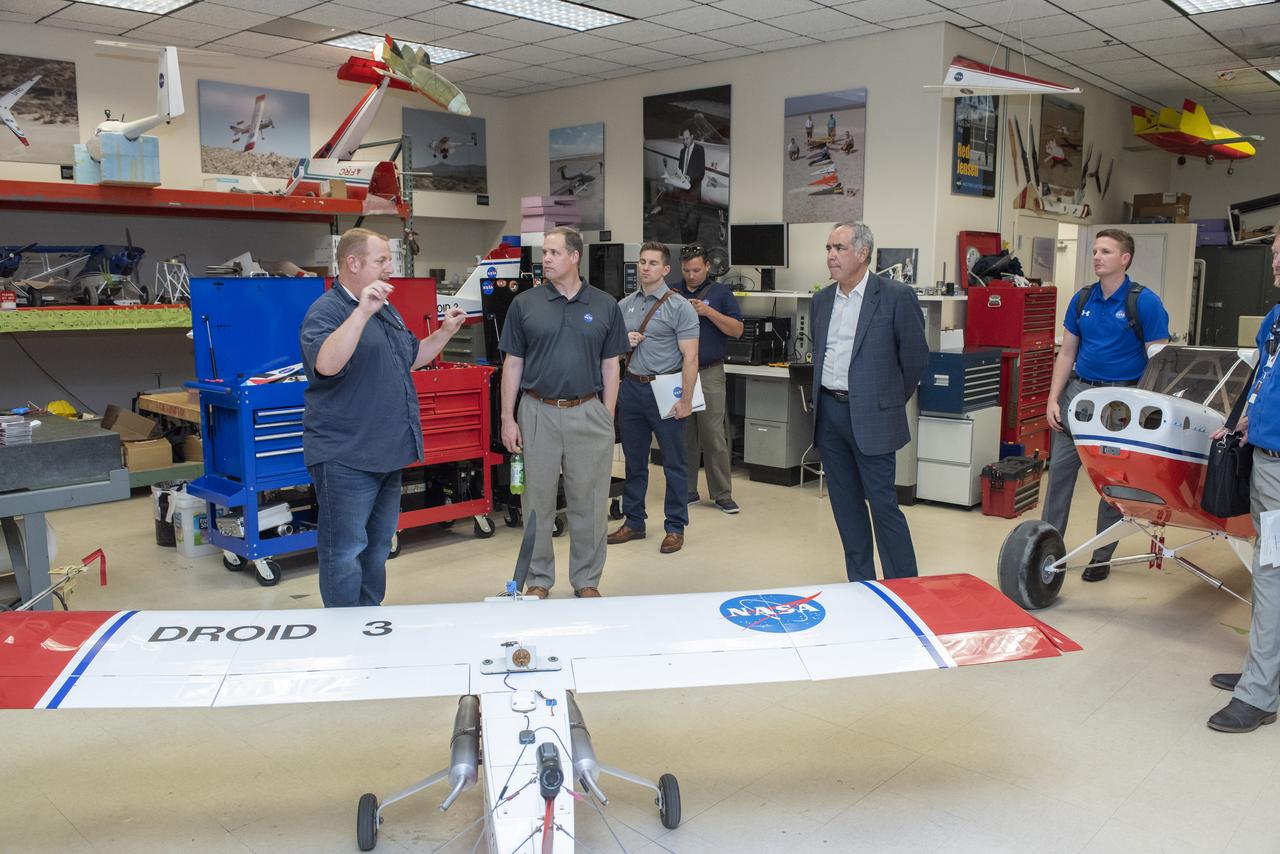
Armstrong's Robert "Red" Jensen talks to Bridenstine about using small scale aircraft to test aeronautical concepts keeping cost of aviation discoveries lower until technology is proved for larger aircraft.
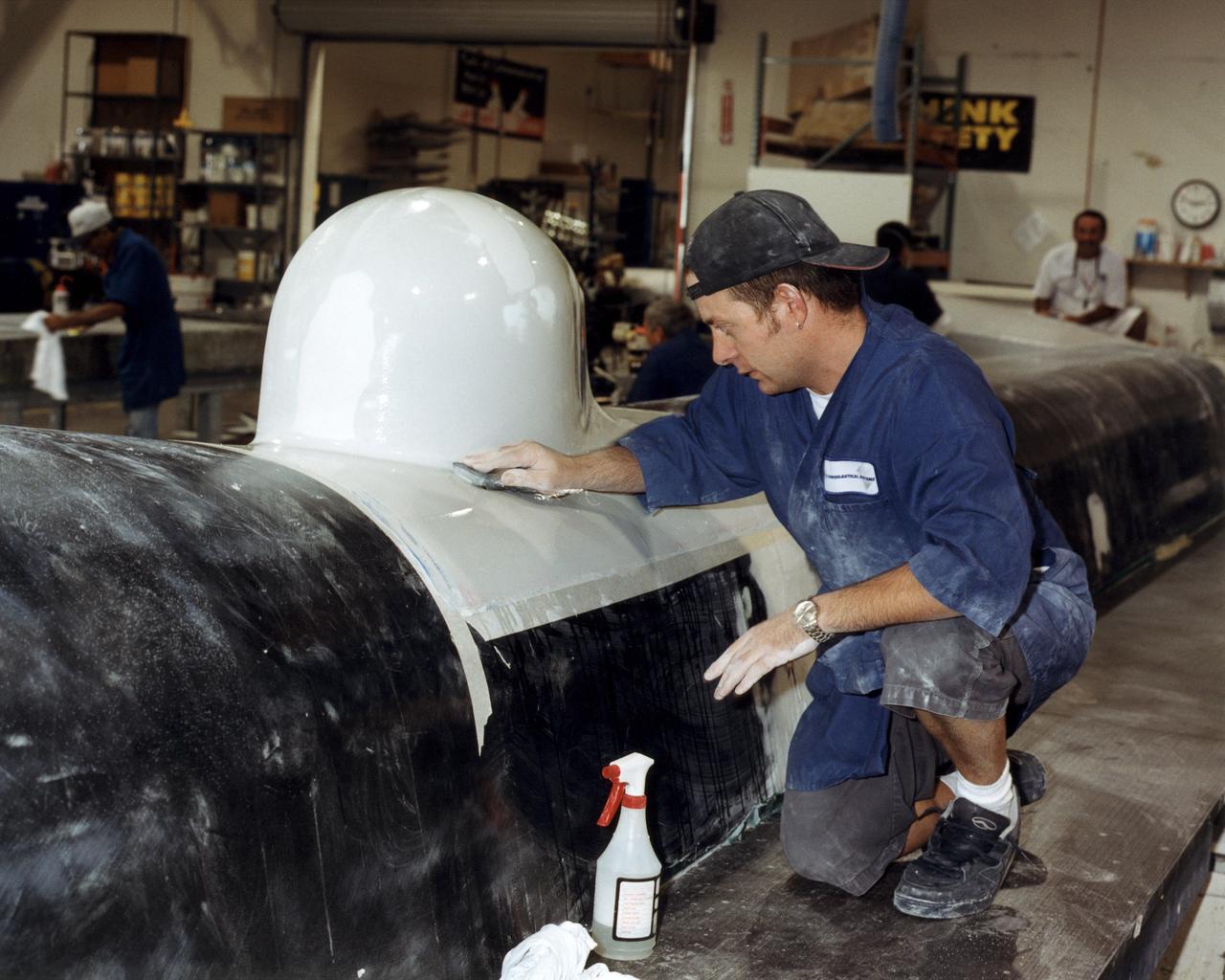
Technician Shawn Warren carefully smoothes out the composite skin of an instrument fairing<br>atop the upper fuselage of the Altair unmanned aerial vehicle (UAV) at General Atomics Aeronautical Systems, Inc., facility at Adelanto, Calif.
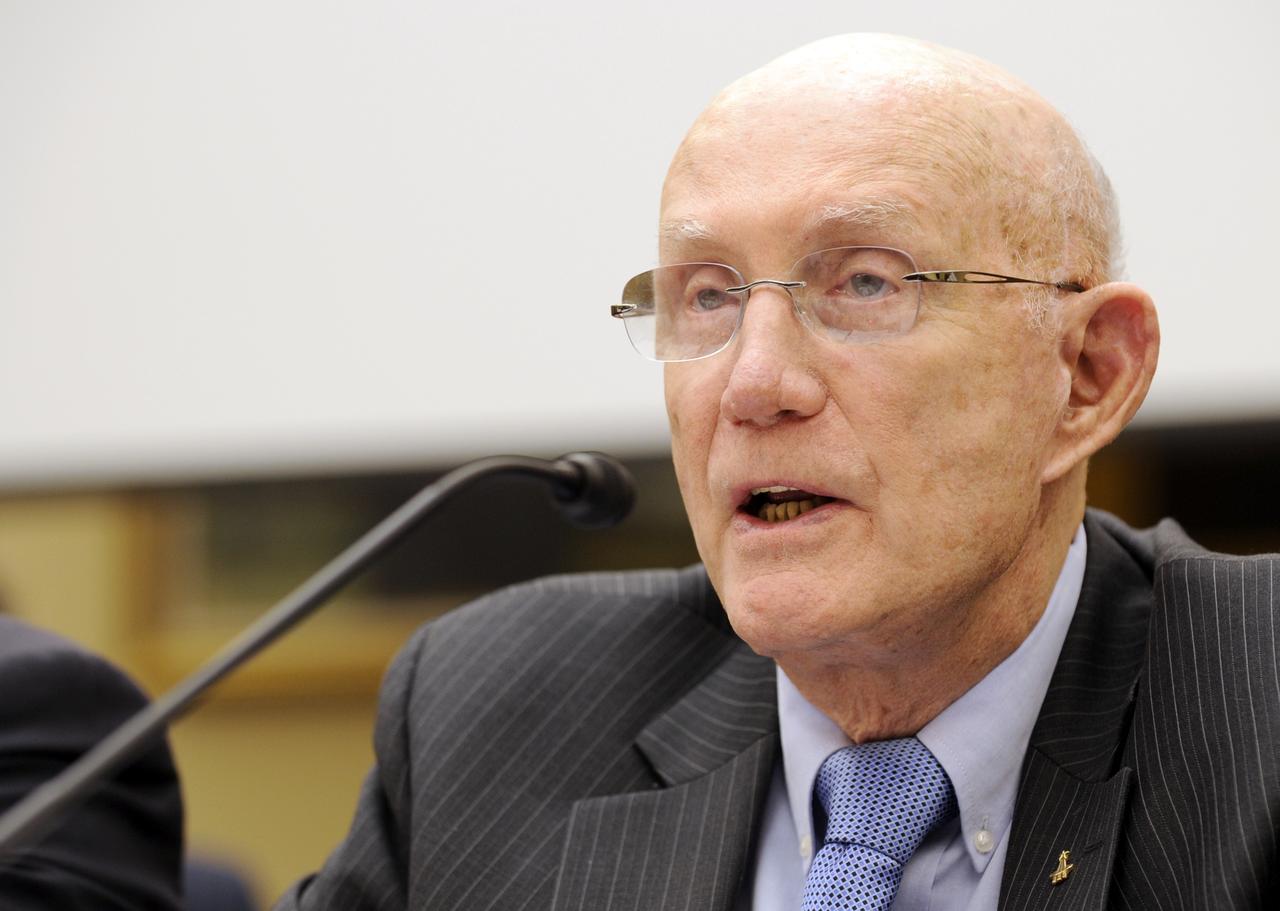
Reitred astronaut Lt. Gen. Thomas Stafford testifies during a hearing before the House Subcommitte on Space and Aeronautics regarding Safety of Human Spaceflight on Capitol Hill, Wednesday, Dec. 2, 2009, in Washington. Photo Credit: (NASA/Bill Ingalls)

NASA Special Assistant to the Administrator Mark Sirangelo testifies during the House Subcommittee on Space and Aeronautics hearing titled "Keeping our sights on Mars: A Review of NASA's Deep Space Exploration Programs and Lunar Proposal", Wednesday, May 8, 2019 at the Rayburn House Office Building in Washington. Photo Credit: (NASA/Bill Ingalls)
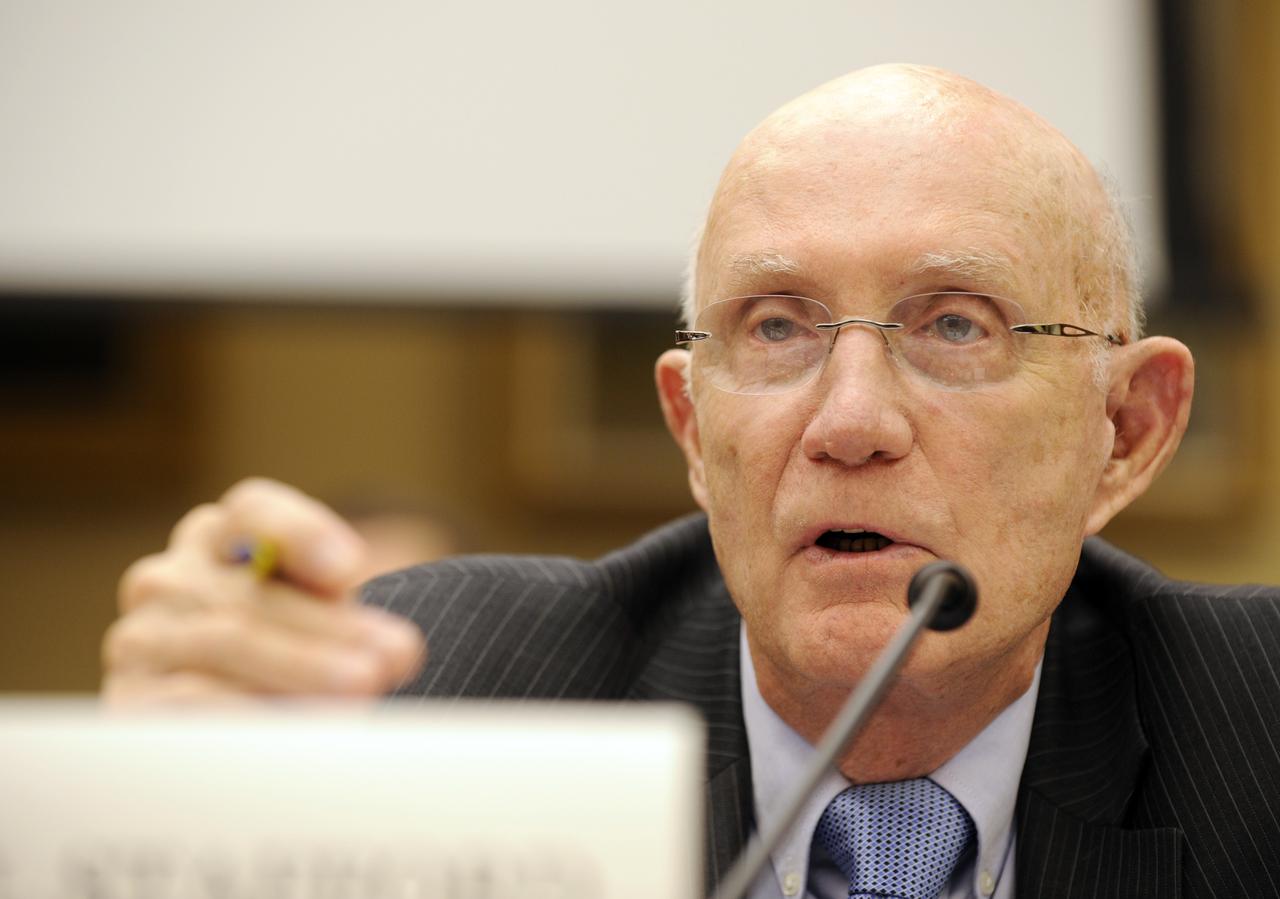
Reitred astronaut Lt. Gen. Thomas Stafford testifies during a hearing before the House Subcommitte on Space and Aeronautics regarding Safety of Human Spaceflight on Capitol Hill, Wednesday, Dec. 2, 2009, in Washington. Photo Credit: (NASA/Bill Ingalls)

NASA Special Assistant to the Administrator Mark Sirangelo testifies during the House Subcommittee on Space and Aeronautics hearing titled "Keeping our sights on Mars: A Review of NASA's Deep Space Exploration Programs and Lunar Proposal", Wednesday, May 8, 2019 at the Rayburn House Office Building in Washington. Photo Credit: (NASA/Bill Ingalls)

NASA's Armstrong Flight Research Center installed a conformal antenna on the door of its T-34C aircraft to test its performance parameters. The conformal antenna was designed through a cross-center collaboration through the Conformal Lightweight Antenna Structures for Aeronautical Communications Technologies project.
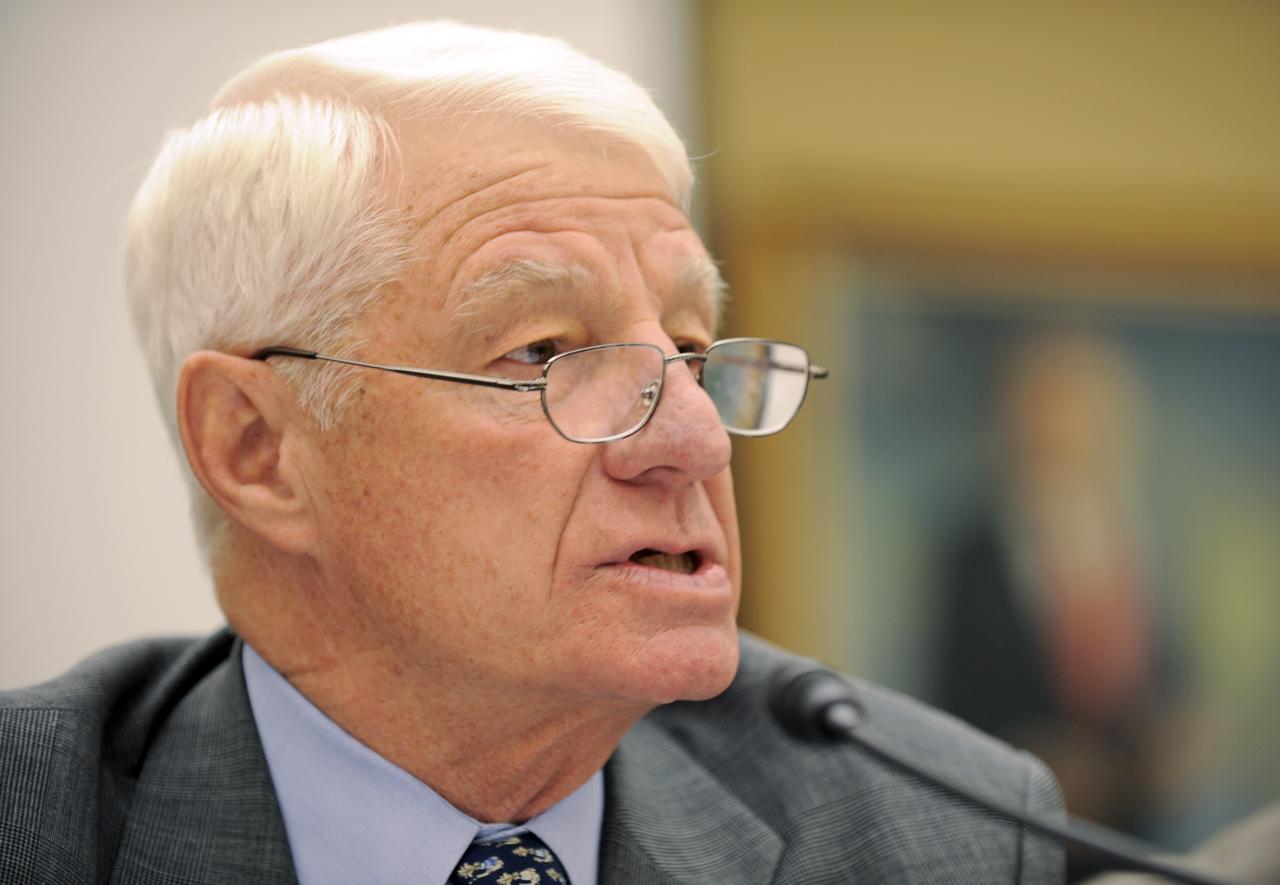
John Marshall, a member of the NASA Aerospace Safety Advisory Panel (ASAP), testifies during a hearing before the House Subcommitte on Space and Aeronautics regarding Safety of Human Spaceflight on Capitol Hill, Wednesday, Dec. 2, 2009, in Washington. Photo Credit: (NASA/Bill Ingalls)

Jeff Hanley, Constellation Program Manager at NASA, testifies before a hearing before the House Subcommitte on Space and Aeronautics regarding Safety of Human Spaceflight on Capitol Hill, Wednesday, Dec. 2, 2009, in Washington. Photo Credit: (NASA/Bill Ingalls)
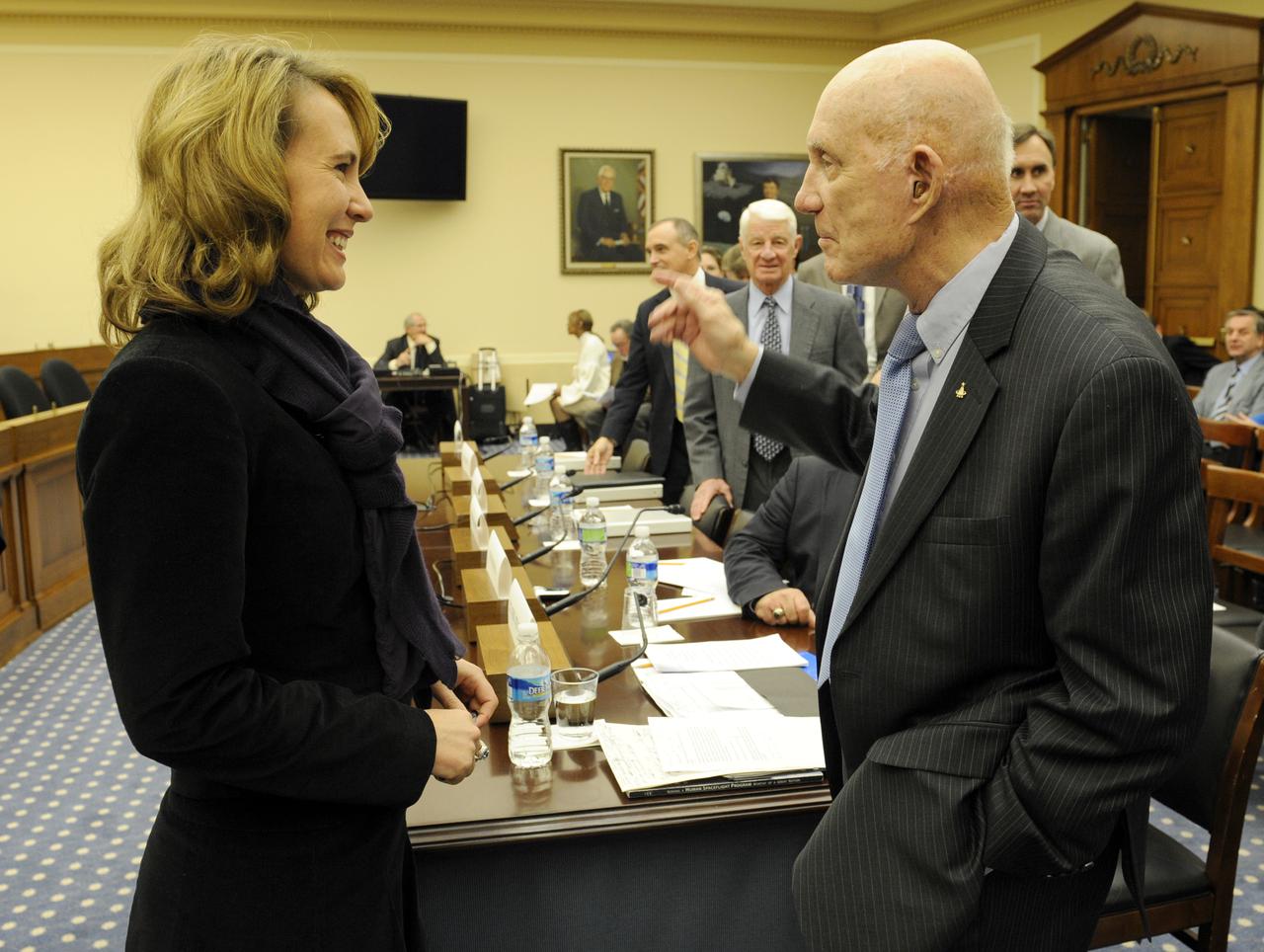
U.S. Rep. Gabrielle Giffords, D-Ariz., left, speaks with reitred astronaut Lt. Gen. Thomas Stafford prior to the start of a hearing before the House Subcommitte on Space and Aeronautics regarding Safety of Human Spaceflight on Capitol Hill, Wednesday, Dec. 2, 2009, in Washington. Photo Credit: (NASA/Bill Ingalls)
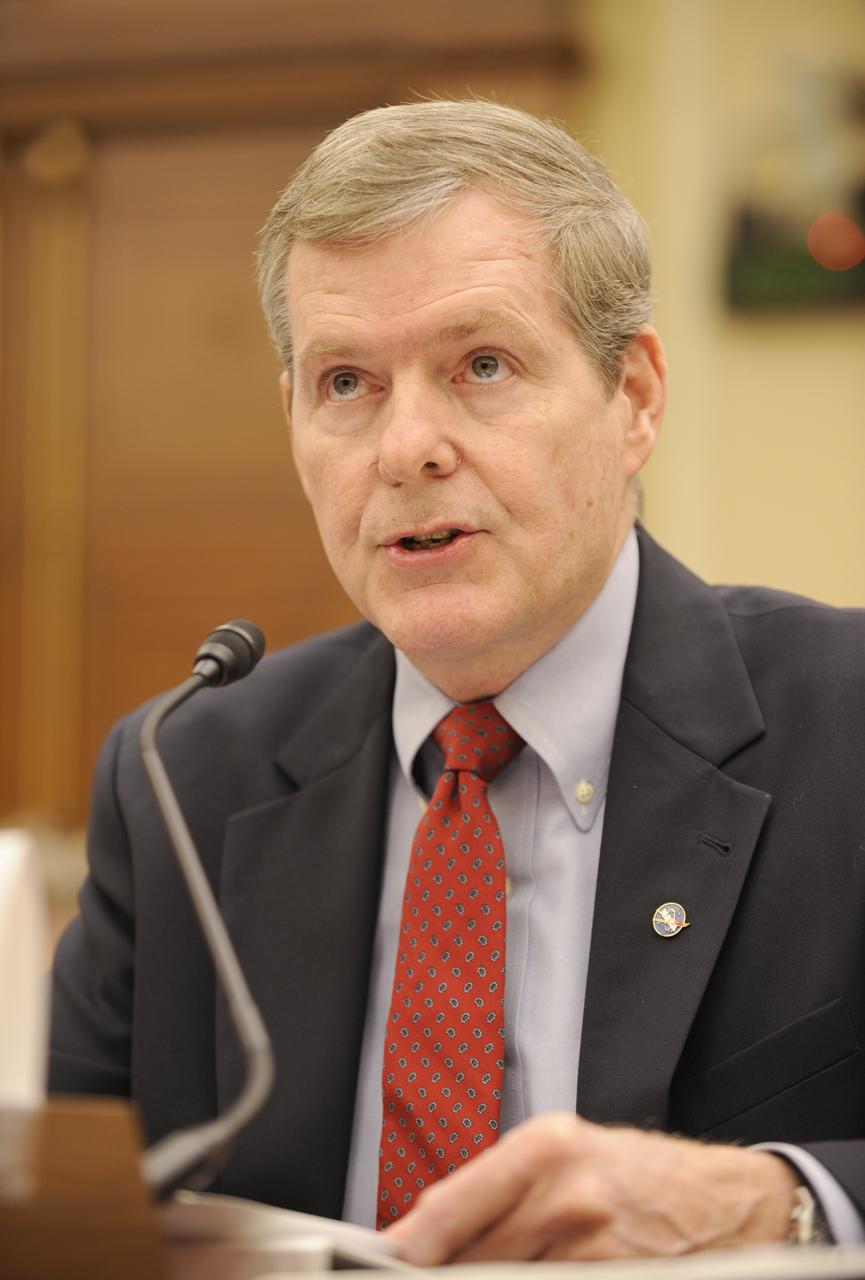
Bryan O'Connor, Chief of Safety and Mission Assurance at NASA, testifies before a hearing before the House Subcommitte on Space and Aeronautics regarding Safety of Human Spaceflight on Capitol Hill, Wednesday, Dec. 2, 2009, in Washington. Photo Credit: (NASA/Bill Ingalls)
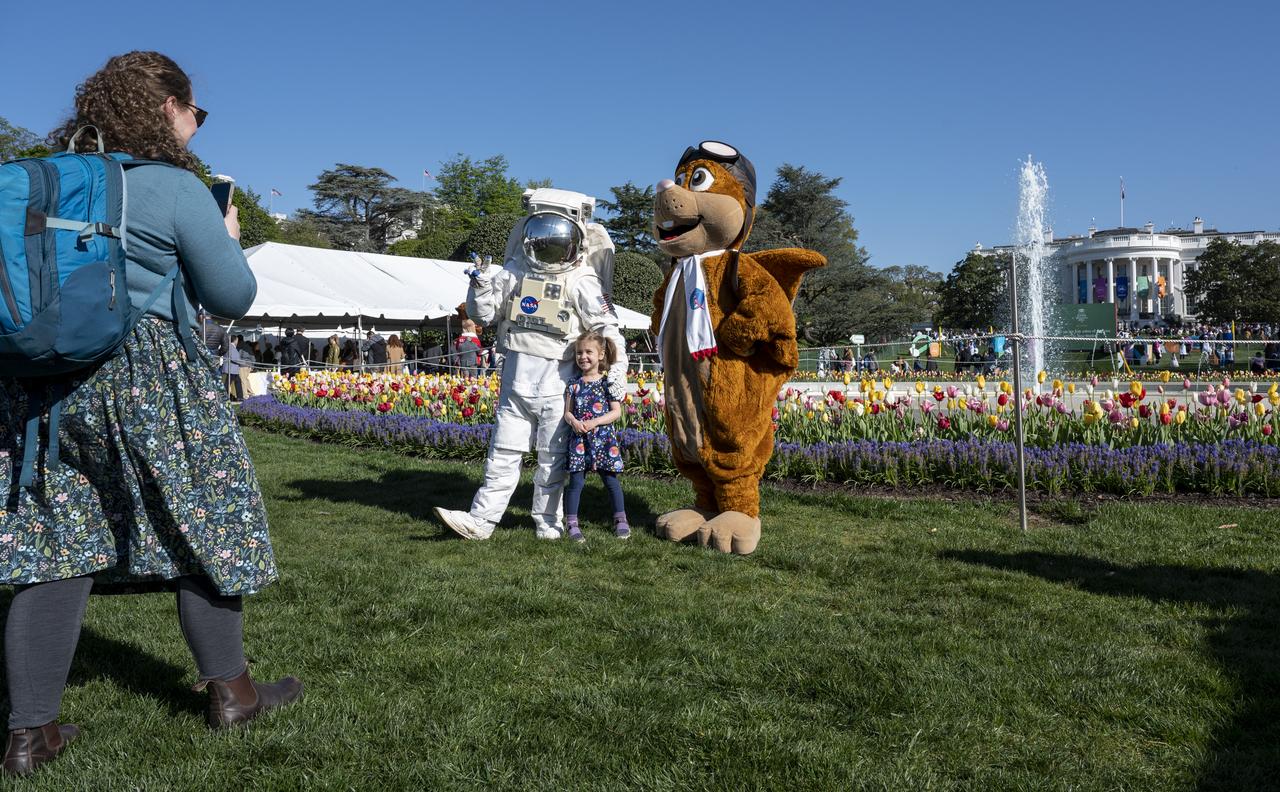
Spacey Casey, left, and NASA Aeronautics' mascot Orville the Flying Squirrel, right, pose for photos with guests during the White House Easter Egg Roll, Monday, April 10, 2023, on the South Lawn of the White House in Washington. Photo Credit: (NASA/Keegan Barber)

Constellation Program Manager Jeff Hanley testifies during a hearing before the House Subcommitte on Space and Aeronautics regarding Safety of Human Spaceflight on Capitol Hill, Wednesday, Dec. 2, 2009, in Washington. Photo Credit: (NASA/Bill Ingalls)

Bretton Alexander, President of the Commercial Spaceflight Federation, testifies during a hearing before the House Subcommitte on Space and Aeronautics regarding Safety of Human Spaceflight on Capitol Hill, Wednesday, Dec. 2, 2009, in Washington. Photo Credit: (NASA/Bill Ingalls)
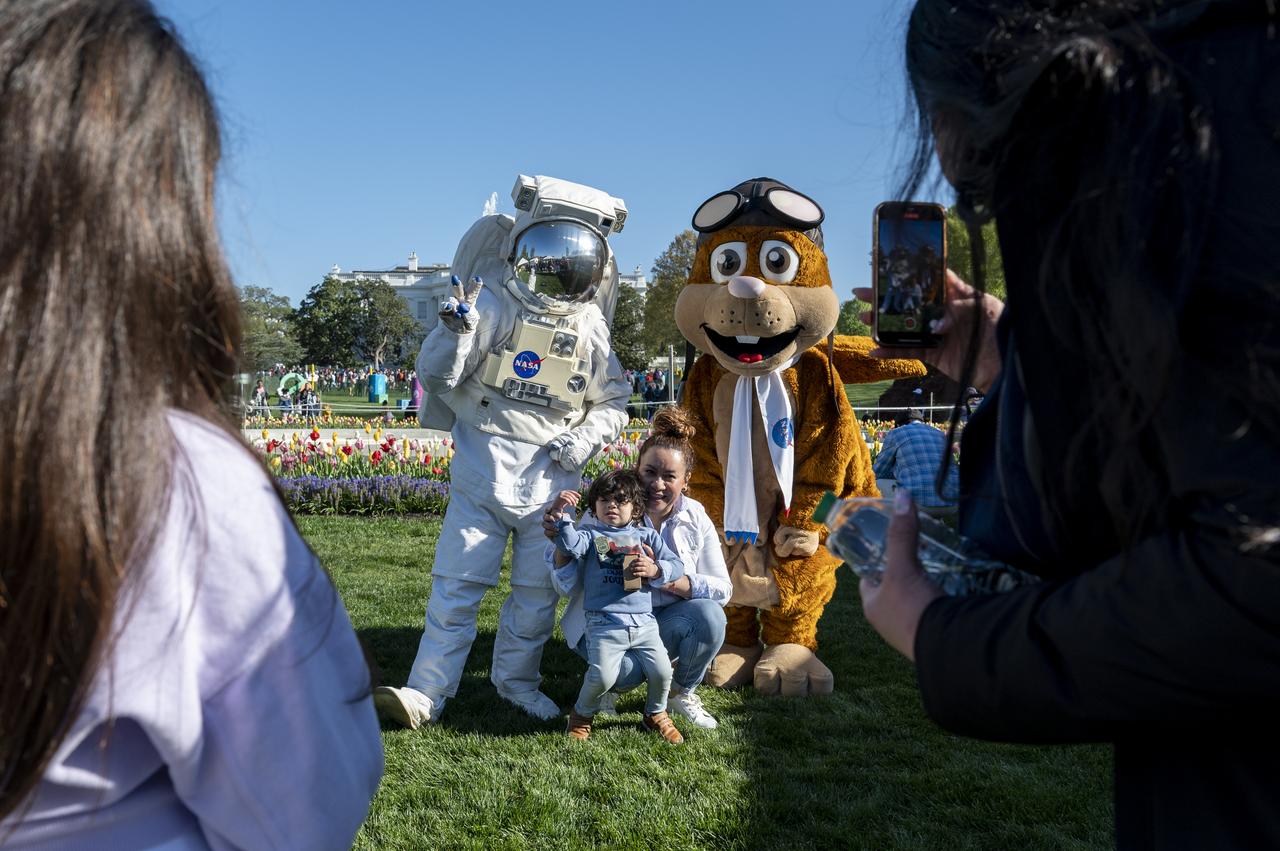
Spacey Casey, left, and NASA Aeronautics' mascot Orville the Flying Squirrel, right, pose for photos with guests during the White House Easter Egg Roll, Monday, April 10, 2023, on the South Lawn of the White House in Washington. Photo Credit: (NASA/Keegan Barber)
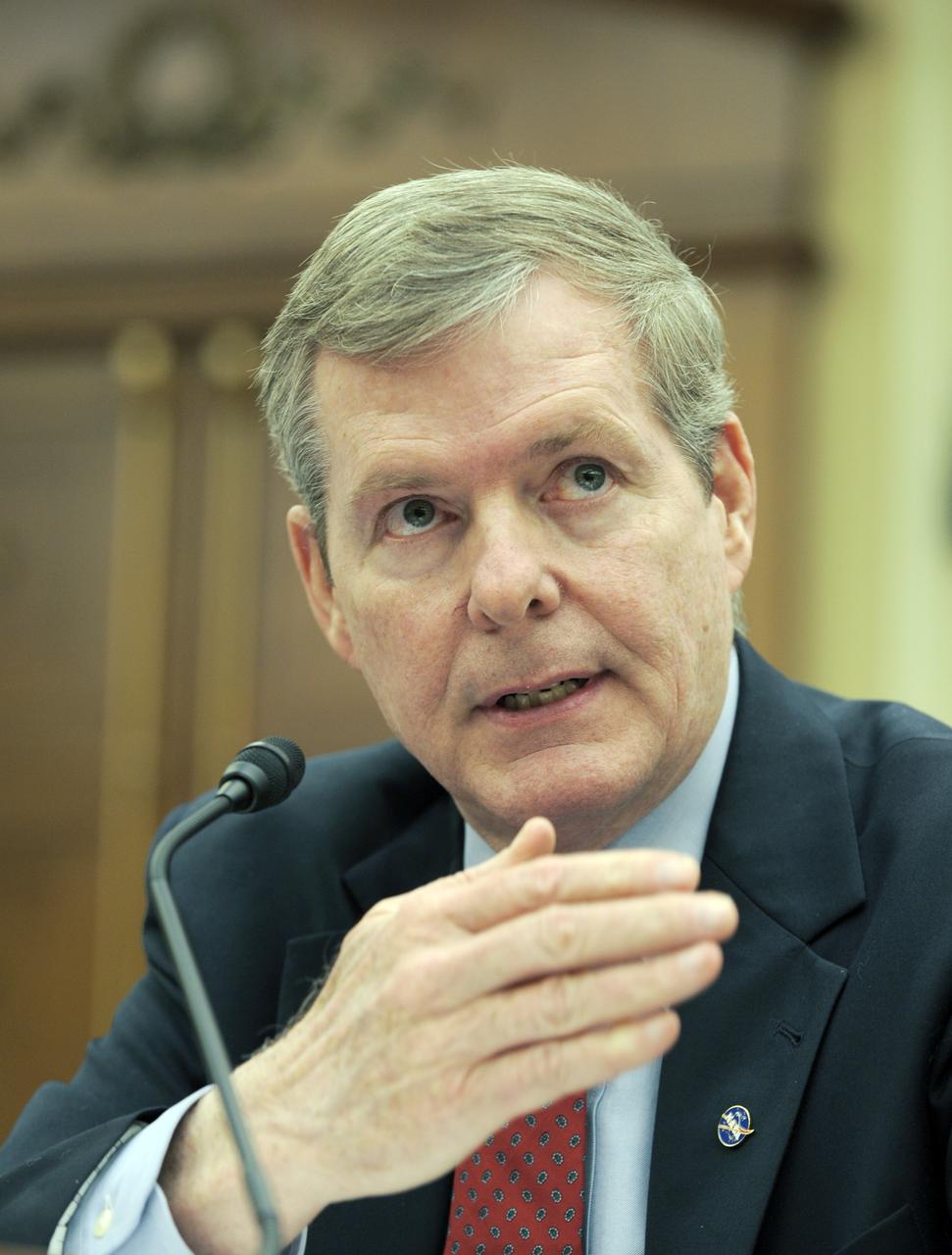
Bryan O'Connor, Chief of Safety and Mission Assurance at NASA, testifies during a hearing before the House Subcommitte on Space and Aeronautics regarding Safety of Human Spaceflight on Capitol Hill, Wednesday, Dec. 2, 2009, in Washington. Photo Credit: (NASA/Bill Ingalls)

Chair Kendra Horn, D-OK., opens the House Subcommittee on Space and Aeronautics hearing titled "Keeping our sights on Mars: A Review of NASA's Deep Space Exploration Programs and Lunar Proposal", Wednesday, May 8, 2019 at the Rayburn House Office Building in Washington. Photo Credit: (NASA/Bill Ingalls)