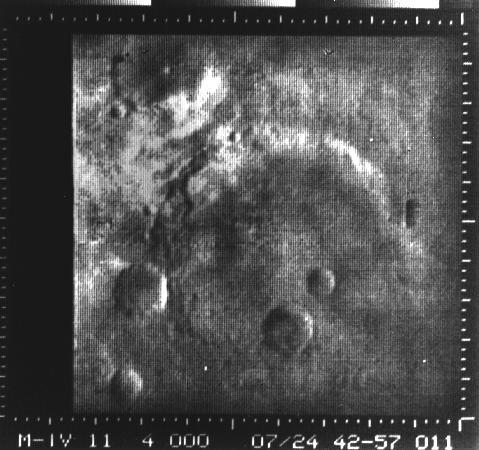
Atlantis Region on Mars - Mariner 4

Today's VIS image shows part of Atlantis Chaos. Chaos terrain is typified by regions of blocky, often steep sided, mesas interspersed with deep valleys. With time and erosion the valleys widen and the mesas become smaller. The mesas in this image appear brighter than the surrounding lowlands, likely due to relatively less dust cover. Atlantis Chaos is located in Terra Sirenum. Orbit Number: 83918 Latitude: -34.684 Longitude: 183.217 Instrument: VIS Captured: 2020-11-14 02:09 https://photojournal.jpl.nasa.gov/catalog/PIA24352
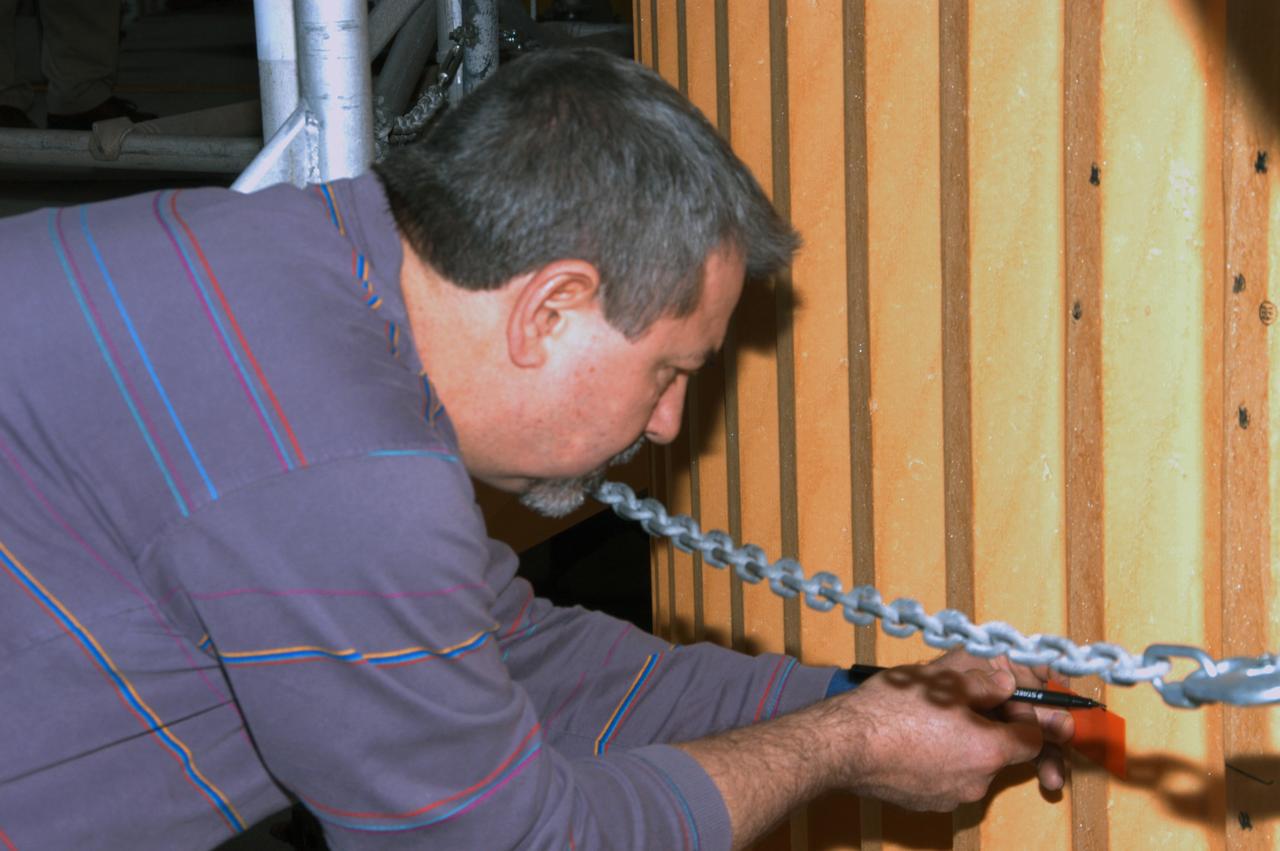
In high bay 1 of the Vehicle Assembly Building, a technician marks off an area for inspection on Atlantis' external tank. A severe thunderstorm with golf ball-sized hail caused visible divots in the giant tank's foam insulation and minor surface damage to about 26 heat shield tiles on the shuttle's left wing. Further evaluation of the tank is necessary to get an accurate accounting of foam damage and determine the type of repair required and the time needed for that work. A new target launch date has not been determined, but teams will focus on preparing Atlantis for liftoff in late April on mission STS-117.
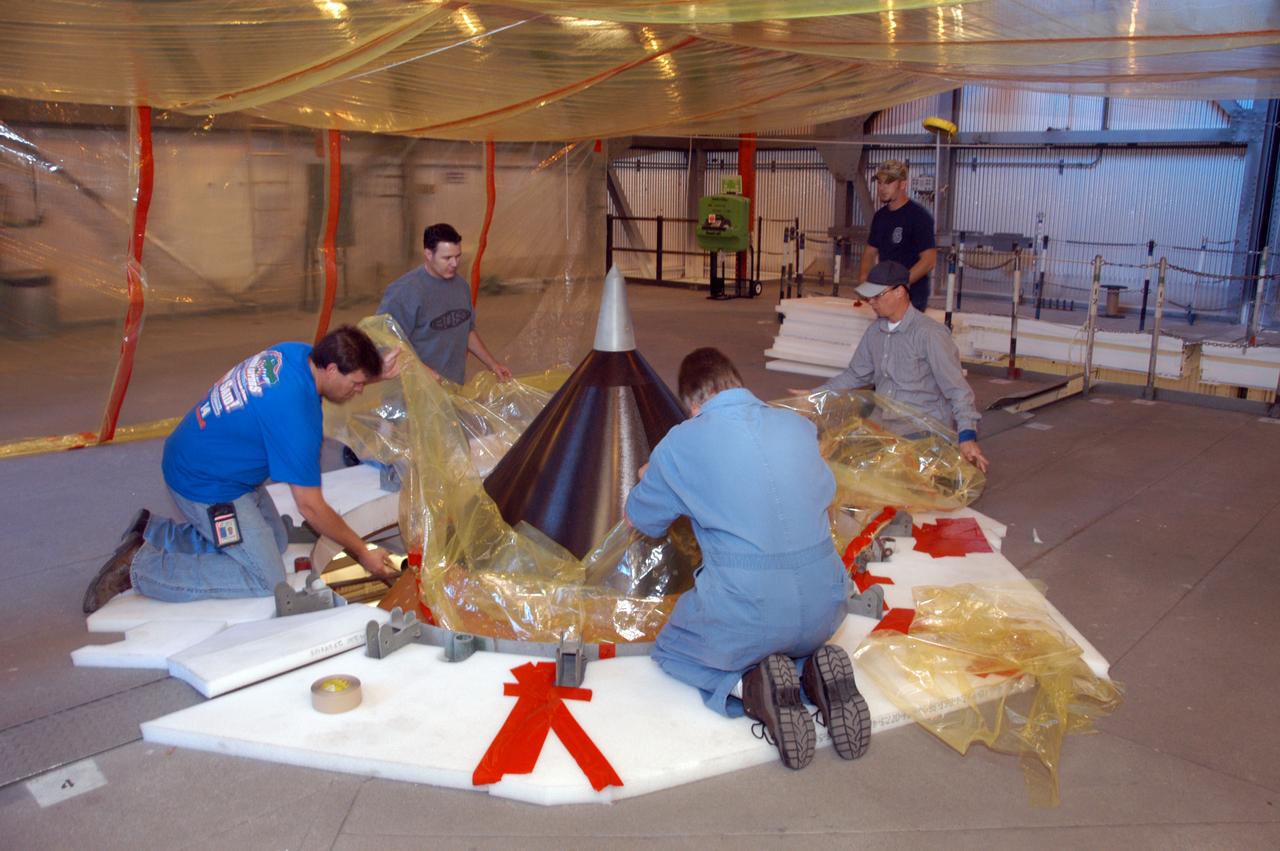
On an upper level of high bay 1 of the Vehicle Assembly Building, technicians place protective material around the nose cone of Atlantis' external tank. The nose cone will undergo repair for hail damage. A severe thunderstorm with golf ball-sized hail caused visible divots in the giant tank's foam insulation and minor surface damage to about 26 heat shield tiles on the shuttle's left wing. Further evaluation of the tank is necessary to get an accurate accounting of foam damage and determine the type of repair required and the time needed for that work. A new target launch date has not been determined, but teams will focus on preparing Atlantis for liftoff in late April on mission STS-117.
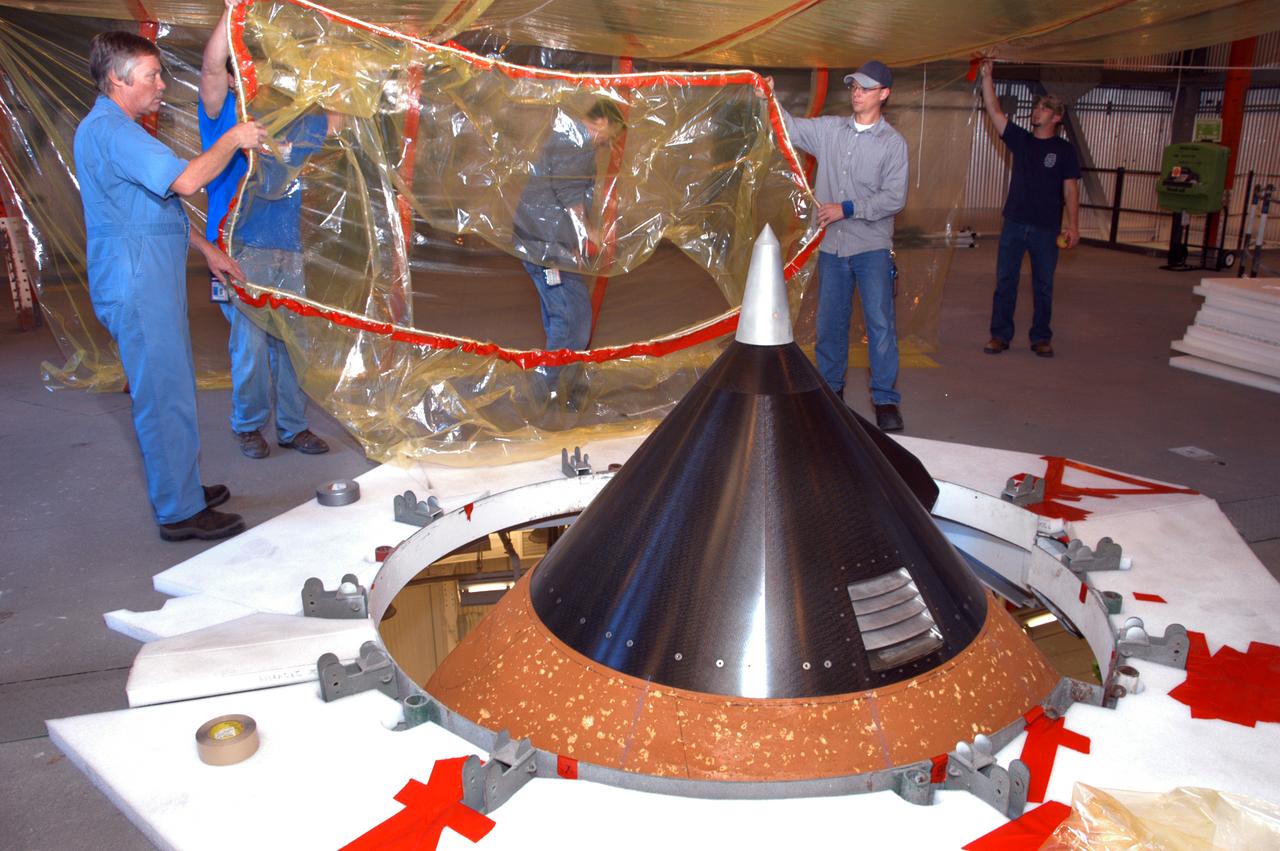
On an upper level of high bay 1 of the Vehicle Assembly Building, technicians move protective material toward the nose cone (foreground) of Atlantis' external tank. The nose cone will undergo repair for hail damage. A severe thunderstorm with golf ball-sized hail caused visible divots in the giant tank's foam insulation and minor surface damage to about 26 heat shield tiles on the shuttle's left wing. Further evaluation of the tank is necessary to get an accurate accounting of foam damage and determine the type of repair required and the time needed for that work. A new target launch date has not been determined, but teams will focus on preparing Atlantis for liftoff in late April on mission STS-117.
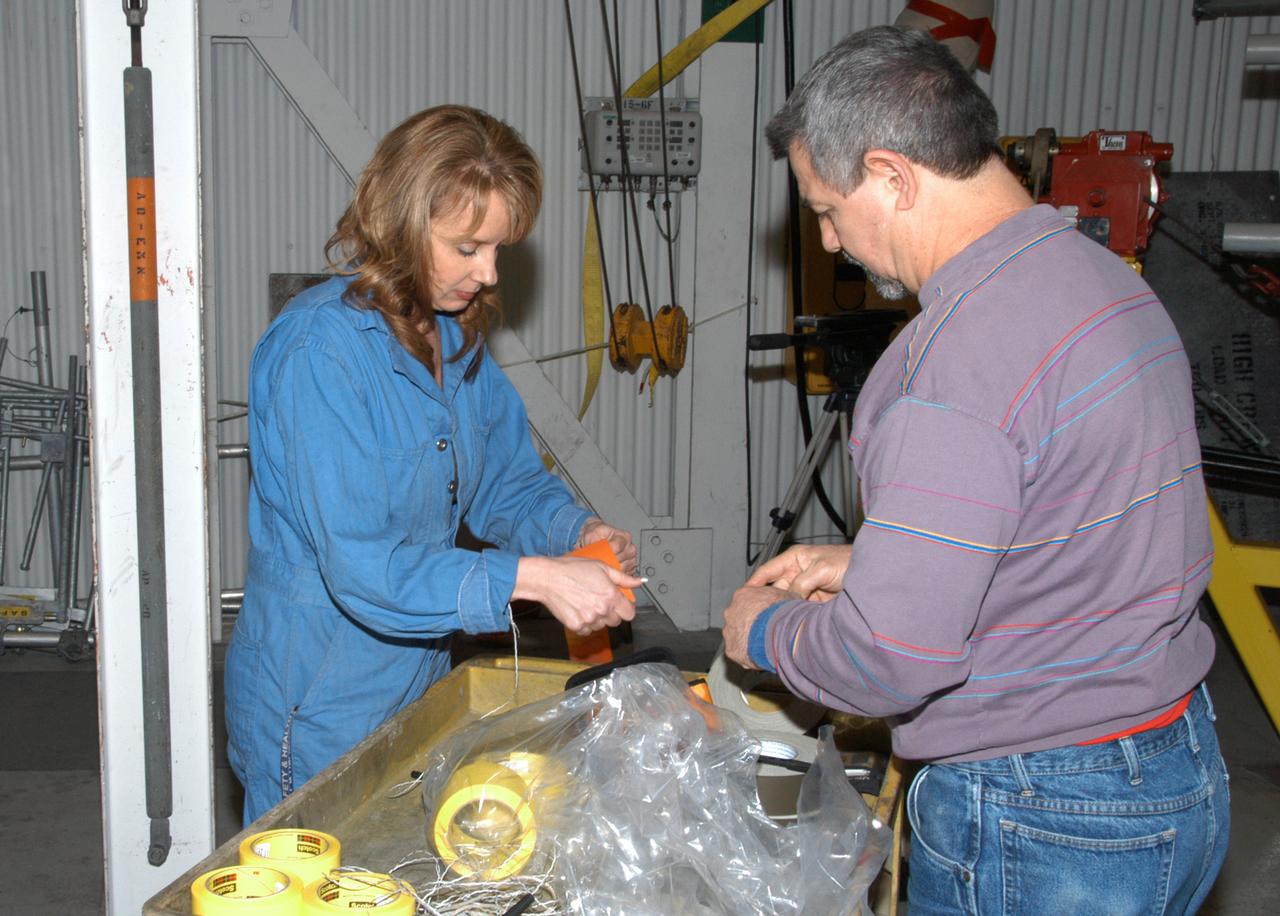
Technicians in the Vehicle Assembly Building prepare materials that will be used during repair of the nose cone on Atlantis' external tank. A severe thunderstorm with golf ball-sized hail caused visible divots in the giant tank's foam insulation and minor surface damage to about 26 heat shield tiles on the shuttle's left wing. Further evaluation of the tank is necessary to get an accurate accounting of foam damage and determine the type of repair required and the time needed for that work. A new target launch date has not been determined, but teams will focus on preparing Atlantis for liftoff in late April on mission STS-117.
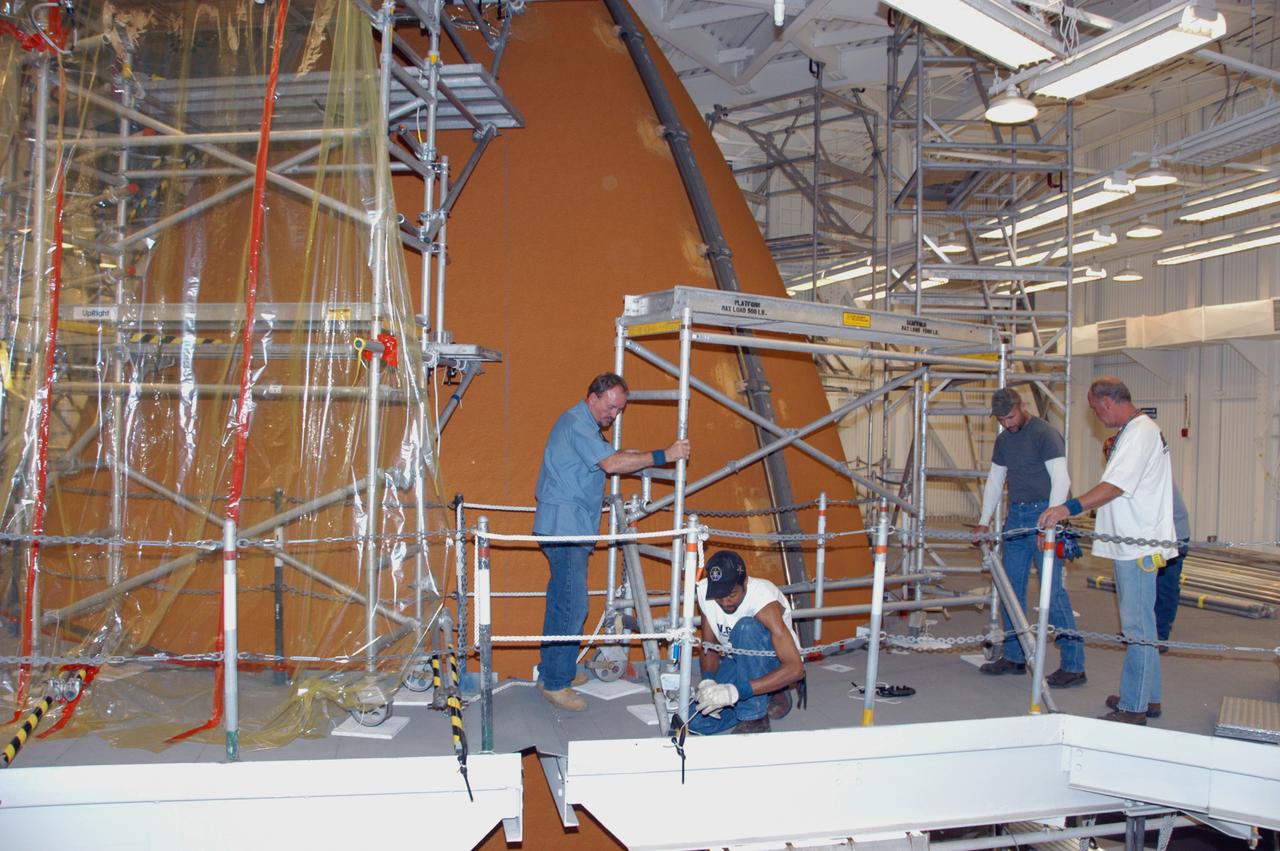
On an upper level of high bay 1 of the Vehicle Assembly Building, technicians secure protective material around Atlantis' external tank. The preparations are for future repair work of the hail damage that happened Feb. 27. A severe thunderstorm with golf ball-sized hail caused visible divots in the giant tank's foam insulation and minor surface damage to about 26 heat shield tiles on the shuttle's left wing. Further evaluation of the tank is necessary to get an accurate accounting of foam damage and determine the type of repair required and the time needed for that work. A new target launch date has not been determined, but teams will focus on preparing Atlantis for liftoff in late April on mission STS-117.

On an upper level of high bay 1 of the Vehicle Assembly Building, technicians secure protective material around the base of the nose cone of Atlantis' external tank. The nose cone will undergo repair for hail damage. A severe thunderstorm with golf ball-sized hail caused visible divots in the giant tank's foam insulation and minor surface damage to about 26 heat shield tiles on the shuttle's left wing. Further evaluation of the tank is necessary to get an accurate accounting of foam damage and determine the type of repair required and the time needed for that work. A new target launch date has not been determined, but teams will focus on preparing Atlantis for liftoff in late April on mission STS-117.
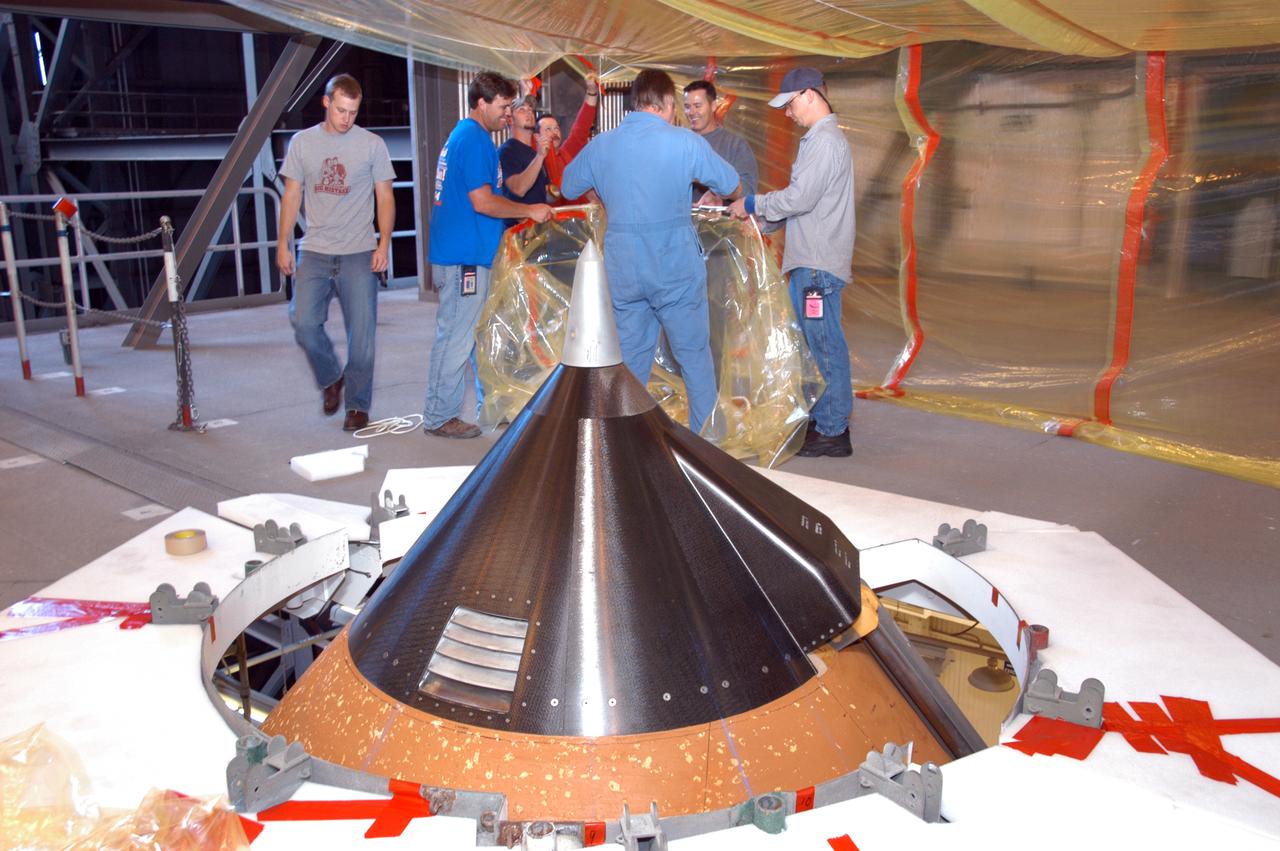
On an upper level of high bay 1 of the Vehicle Assembly Building, technicians prepare the area around the nose cone (foreground) of Atlantis' external tank that will undergo repair for hail damage. A severe thunderstorm with golf ball-sized hail caused visible divots in the giant tank's foam insulation and minor surface damage to about 26 heat shield tiles on the shuttle's left wing. Further evaluation of the tank is necessary to get an accurate accounting of foam damage and determine the type of repair required and the time needed for that work. A new target launch date has not been determined, but teams will focus on preparing Atlantis for liftoff in late April on mission STS-117.
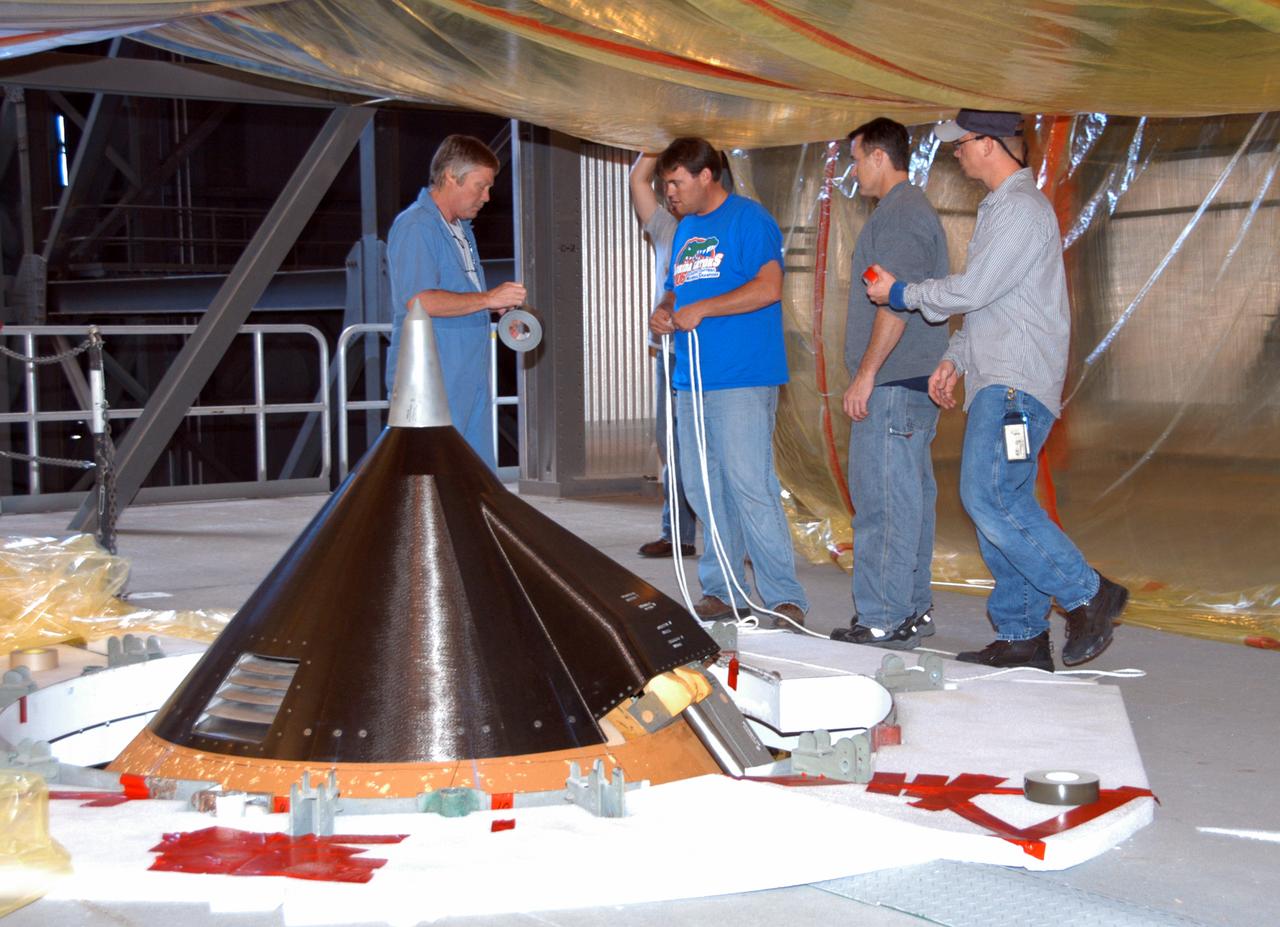
On an upper level of high bay 1 of the Vehicle Assembly Building, technicians prepare the area around the nose cone (left) of Atlantis' external tank that will undergo repair for hail damage. A severe thunderstorm with golf ball-sized hail caused visible divots in the giant tank's foam insulation and minor surface damage to about 26 heat shield tiles on the shuttle's left wing. Further evaluation of the tank is necessary to get an accurate accounting of foam damage and determine the type of repair required and the time needed for that work. A new target launch date has not been determined, but teams will focus on preparing Atlantis for liftoff in late April on mission STS-117.
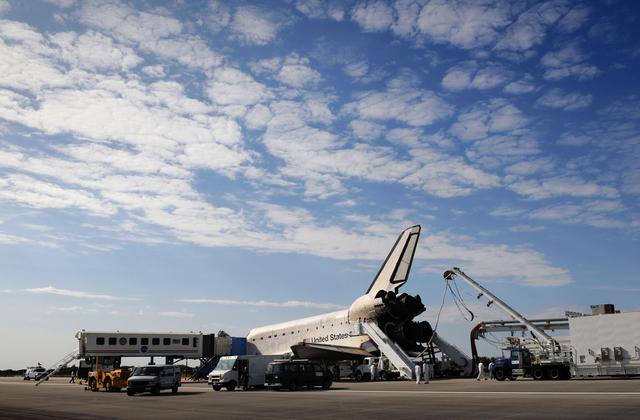
The space shuttle Atlantis (STS-122) is serviced by support vehicles and crew at the Shuttle Landing Facility after the safe landing at 9:07a.m., Wednesday, Feb. 20, 2008 at Kennedy Space Center, Fla. Atlantis and the crew of STS-122 completed delivery of the European Space Agency’s (ESA) Columbus laboratory to the International Space Station. Photo Credit: (NASA/Bill Ingalls)

NM21-396-024 (23 March 1996) --- Backdropped against the blackness of space the Space Shuttle Atlantis was taken by the two Mir-21 cosmonaut crew members onboard Russia’s Mir Space Station, during rendezvous and docking operations on March 23, 1996. The Orbiter Docking System (ODS), the connective tunnel and the Spacehab Module can be seen in Atlantis’ cargo bay. With the subsequent delivery of astronaut Shannon W. Lucid to the Mir, the Mir-21 crew grew to three, as the mission specialist quickly becomes a cosmonaut guest researcher. She will spend approximately 140 days on Mir before returning to Earth.
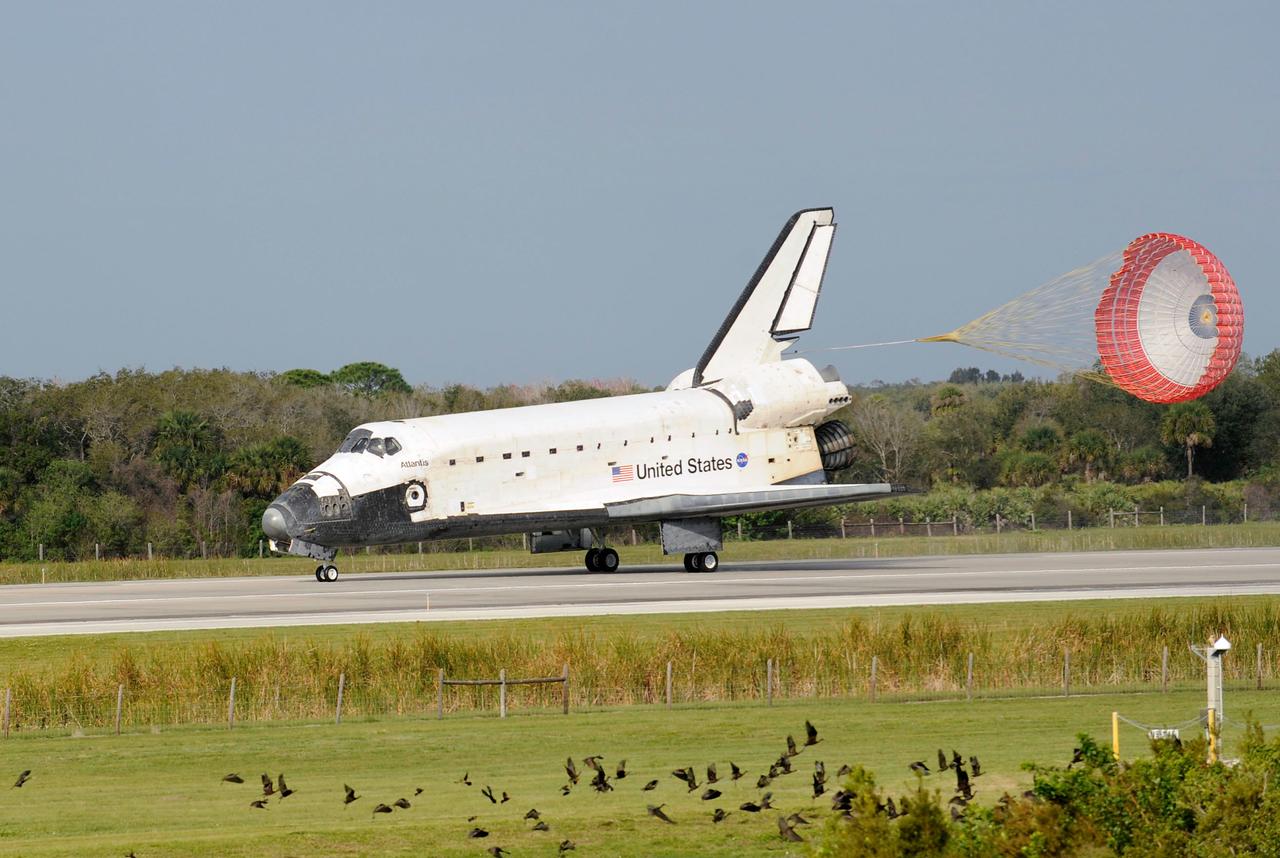
The space shuttle Atlantis (STS-122) lands at the Shuttle Landing Facility, 9:07a.m., Wednesday, Feb. 20, 2008 at Kennedy Space Center, Fla. completing delivery of the European Space Agency’s (ESA) Columbus laboratory to the International Space Station. Photo Credit: (NASA/Bill Ingalls)

In the Vehicle Assembly Building, markers show the hail damage being repaired on the external tank of Space Shuttle Atlantis. The white hole with a red circle around it is a hole prepared for molding and material application. The red material is sealant tape so the mold doesn't leak when the foam rises against the mold. The white/ translucent square mold is an area where the foam has been applied and the foam has risen and cured against the mold surface. The area will be de-molded and sanded flush with the adjacent area. In late February, Atlantis' external tank received hail damage during a severe thunderstorm that passed through the Kennedy Space Center Launch Complex 39 area. The hail caused visible divots in the giant tank's foam insulation as well as minor surface damage to about 26 heat shield tiles on the shuttle's left wing. The launch now is targeted for June 8.

Workers carry a banner full of signatures while following behind space shuttle Atlantis as it begins its trek to its new home at the Kennedy Space Center Visitor Complex, early Friday, Nov. 2, 2012, in Cape Canaveral, Fla. The spacecraft traveled 125,935,769 miles during 33 spaceflights, including 12 missions to the International Space Station. Its final flight, STS-135, closed out the Space Shuttle Program era with a landing on July 21, 2011. Photo Credit: (NASA/Bill Ingalls)
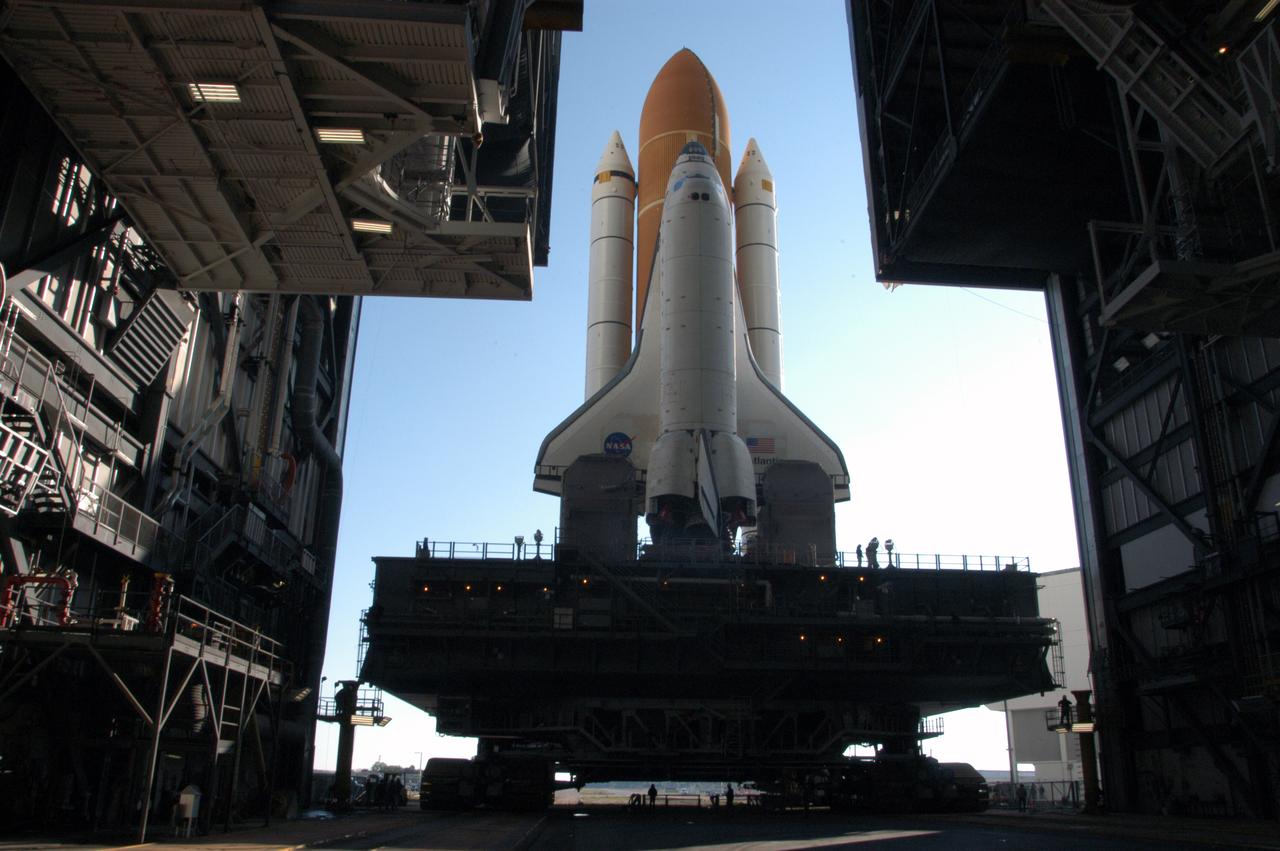
Atop the massive mobile launcher platform and crawler-transporter, Space Shuttle Atlantis begins rolling through the open door of the Vehicle Assembly Building for the journey to Launch Pad 39A. First motion was at 8:19 a.m. In front of each of Atlantis' wings are the tail masts, which provide several umbilical connections to the orbiter, including a liquid-oxygen line through one and a liquid-hydrogen line through another. The 3.4-mile trip to the pad along the crawlerway will take about 6 hours. The mission payload aboard Space Shuttle Atlantis is the S3/S4 integrated truss structure, along with a third set of solar arrays and batteries. The crew of six astronauts will install the truss to continue assembly of the International Space Station. Launch is targeted for March 15.
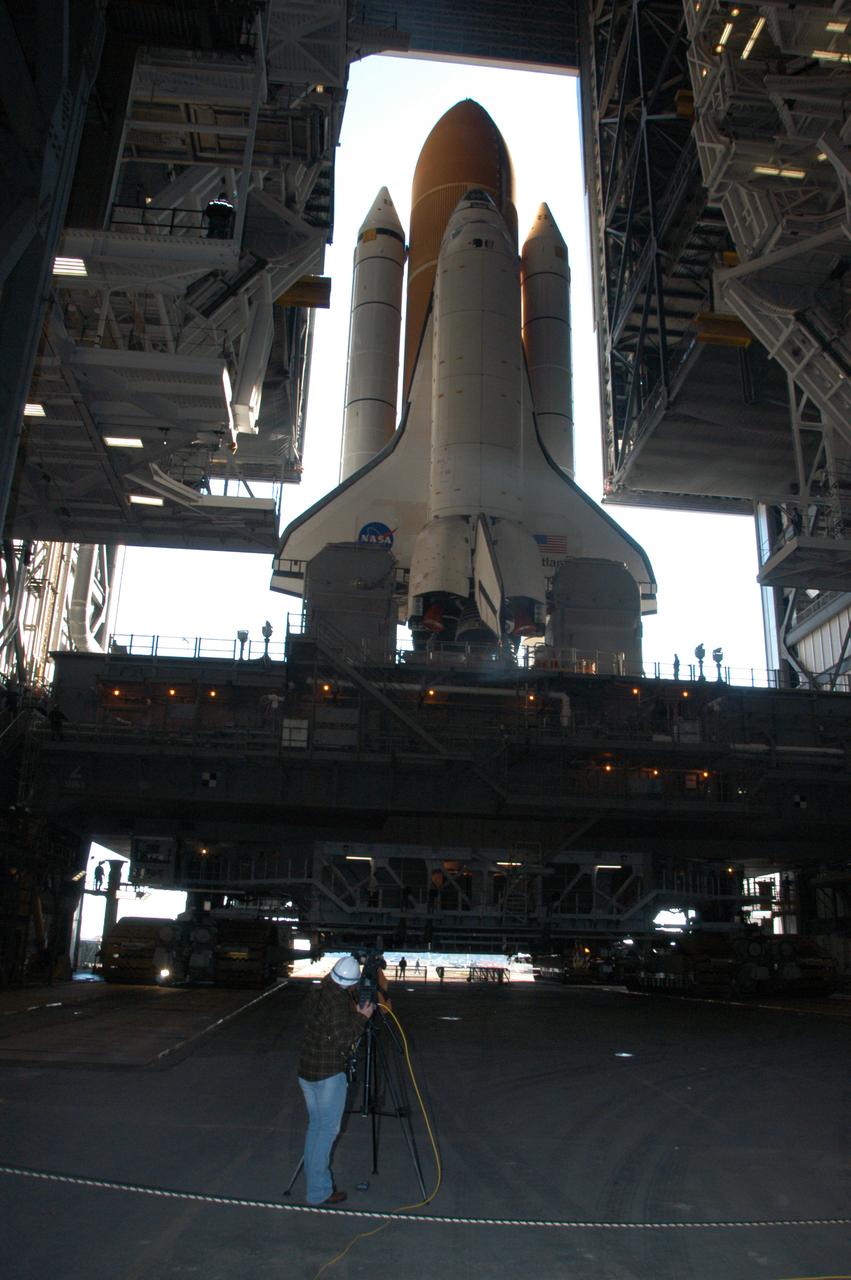
Atop the massive mobile launcher platform and crawler-transporter, Space Shuttle Atlantis begins rolling through the open door of the Vehicle Assembly Building for the journey to Launch Pad 39A. First motion was at 8:19 a.m. In front of each of Atlantis' wings are the tail masts, which provide several umbilical connections to the orbiter, including a liquid-oxygen line through one and a liquid-hydrogen line through another. The 3.4-mile trip to the pad along the crawlerway will take about 6 hours. The mission payload aboard Space Shuttle Atlantis is the S3/S4 integrated truss structure, along with a third set of solar arrays and batteries. The crew of six astronauts will install the truss to continue assembly of the International Space Station. Launch is targeted for March 15.

NM22-427-023 (20 Sept. 1996) --- This photograph of the space shuttle Atlantis was taken from approximately 170 feet away by astronaut Shannon W. Lucid, winding up her duties as cosmonaut guest researcher onboard Russia?s Mir Space Station. Lucid was in Mir?s Base Block Module. The Spacehab double module, a first time space flyer, is seen in the aft payload bay. Its tunnel can be seen connecting to both Atlantis? crew cabin and the androgynous docking adapter. Also seen in the forward bay is the Ku-band antenna used for communications. Though not recognizable in this photo, several Atlantis crew members had their ?noses to the windows? as NASA was about to make its first crew member exchange with Mir. Astronaut John E. Blaha was onboard Atlantis as Lucid?s replacement.
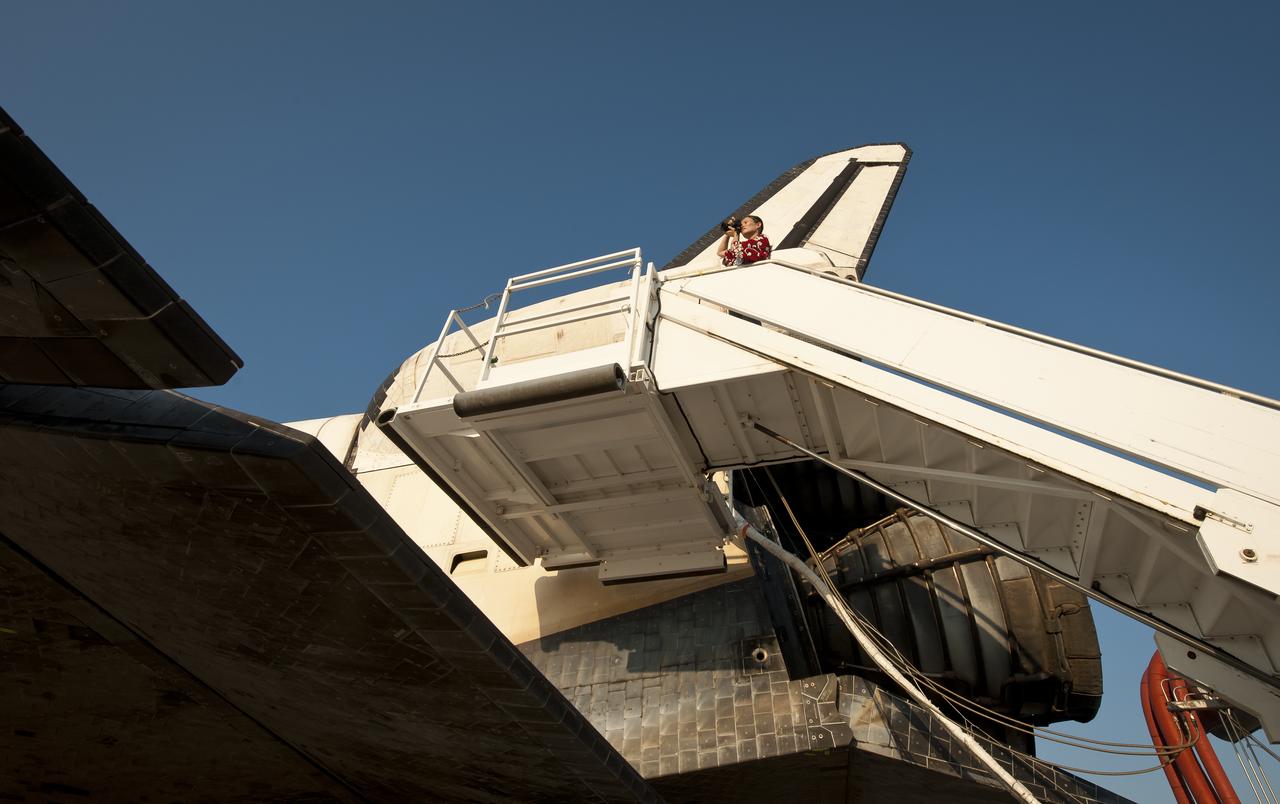
NASA and contractor personnel work on the space shuttle Atlantis at the Kennedy Space Center Shuttle Landing Facility (SLF) shortly after Atlantis (STS-135) landed early Thursday morning, July 21, 2011, in Cape Canaveral, Fla. Overall, Atlantis spent 307 days in space and traveled nearly 126 million miles during its 33 flights. Atlantis, the fourth orbiter built, launched on its first mission on Oct. 3, 1985. Photo Credit: (NASA/Bill Ingalls)
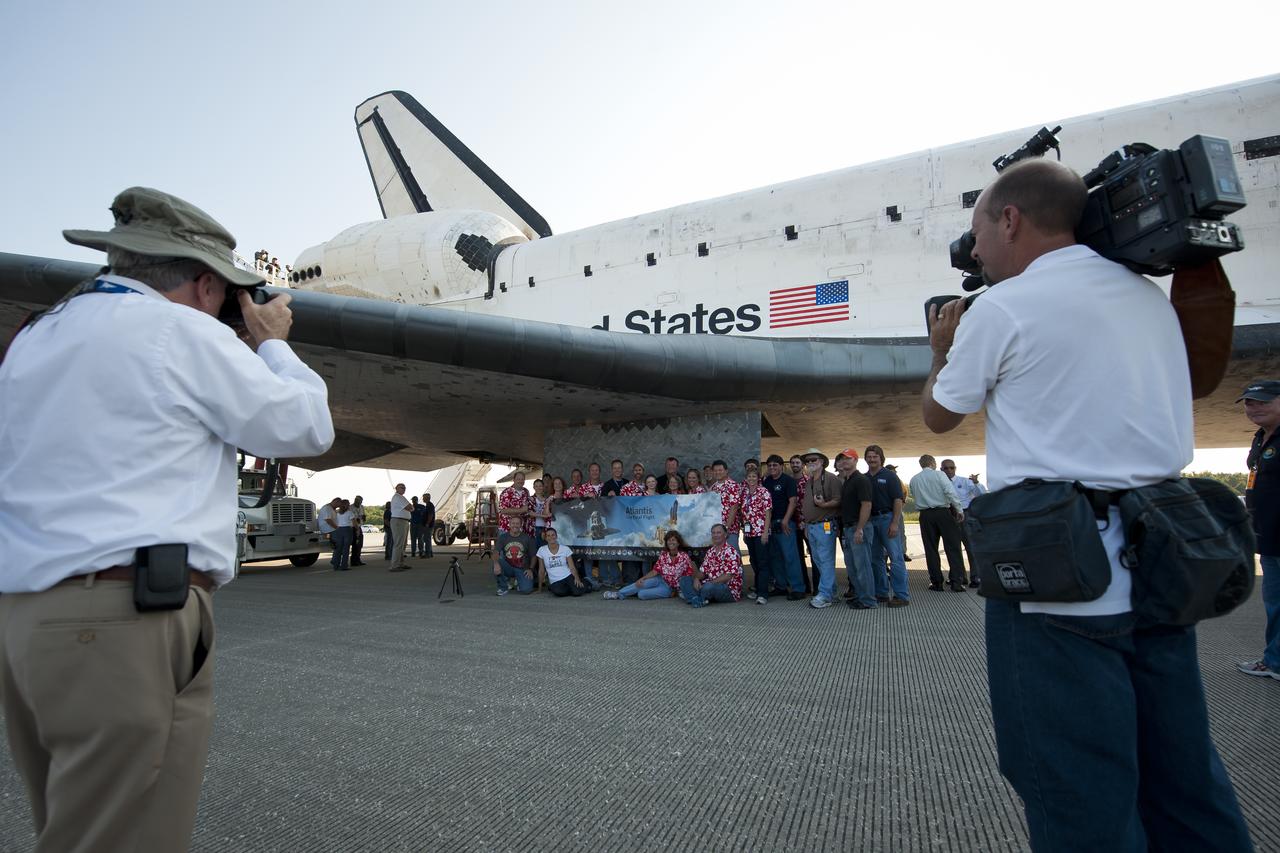
NASA and contractor personnel are photographed under the wing of the space shuttle Atlantis at the Kennedy Space Center Shuttle Landing Facility (SLF) shortly after Atlantis (STS-135) landed early Thursday morning, July 21, 2011, in Cape Canaveral, Fla. Overall, Atlantis spent 307 days in space and traveled nearly 126 million miles during its 33 flights. Atlantis, the fourth orbiter built, launched on its first mission on Oct. 3, 1985. Photo Credit: (NASA/Bill Ingalls)
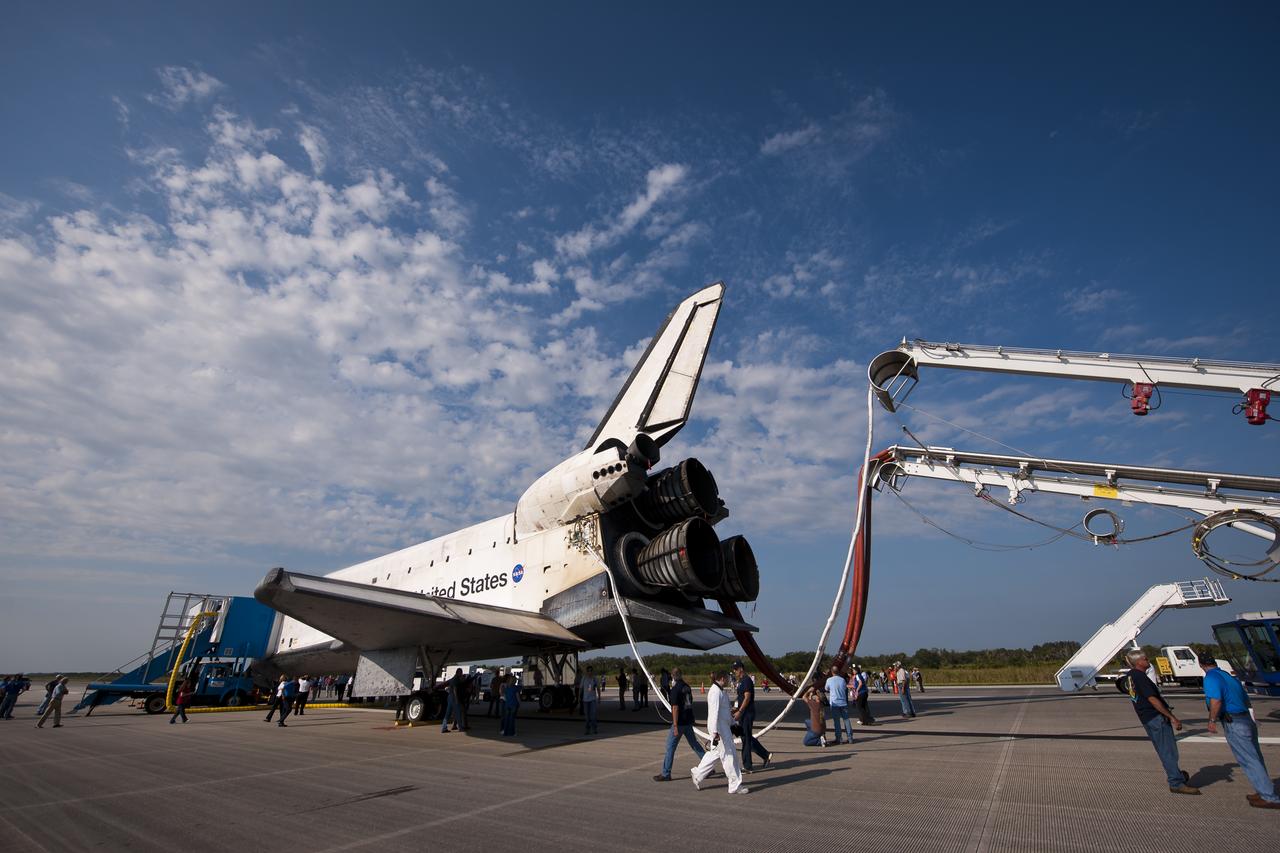
NASA and contractor personnel work on the space shuttle Atlantis at the Kennedy Space Center Shuttle Landing Facility (SLF) shortly after Atlantis (STS-135) landed early Thursday morning, July 21, 2011, in Cape Canaveral, Fla. Overall, Atlantis spent 307 days in space and traveled nearly 126 million miles during its 33 flights. Atlantis, the fourth orbiter built, launched on its first mission on Oct. 3, 1985. Photo Credit: (NASA/Bill Ingalls)
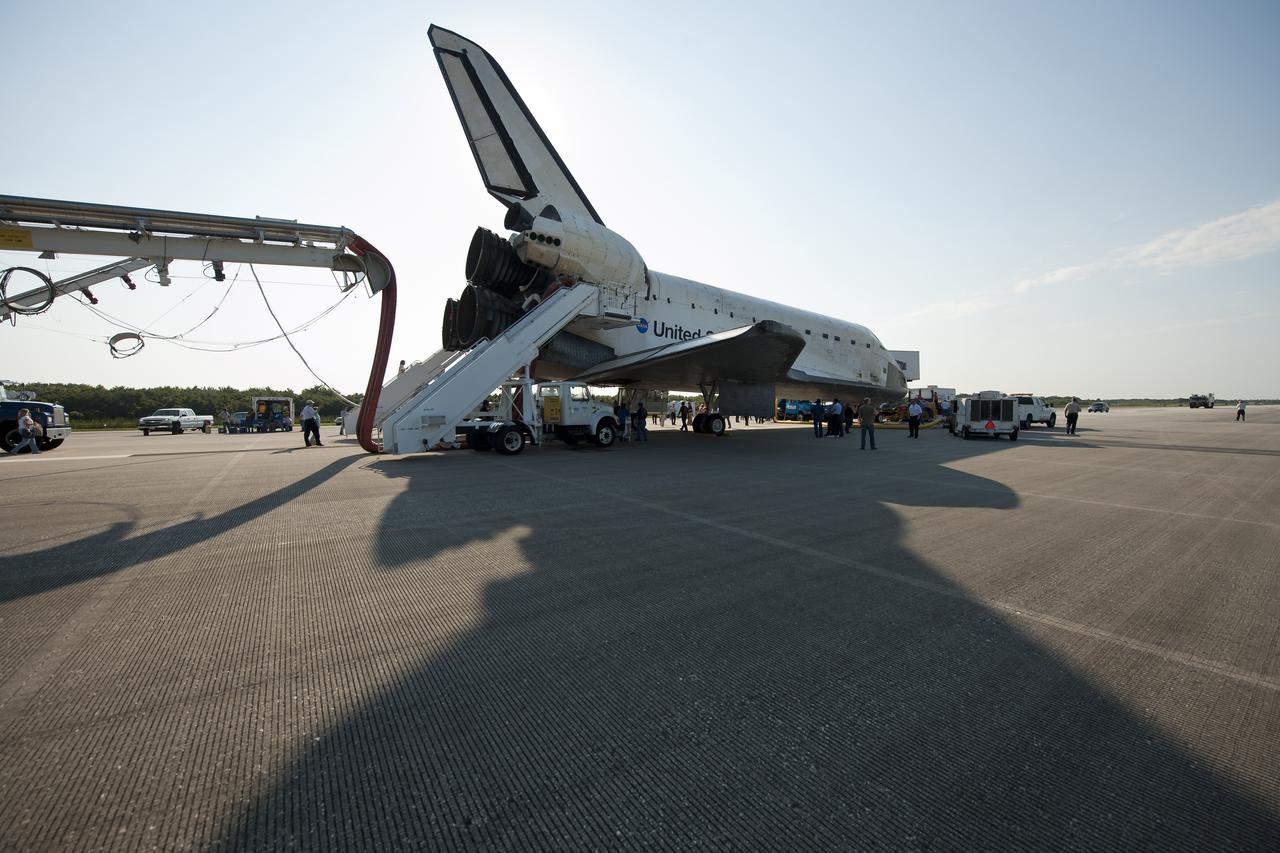
NASA and contractor personnel work on the space shuttle Atlantis at the Kennedy Space Center Shuttle Landing Facility (SLF) shortly after Atlantis (STS-135) landed early Thursday morning, July 21, 2011, in Cape Canaveral, Fla. Overall, Atlantis spent 307 days in space and traveled nearly 126 million miles during its 33 flights. Atlantis, the fourth orbiter built, launched on its first mission on Oct. 3, 1985. Photo Credit: (NASA/Bill Ingalls)
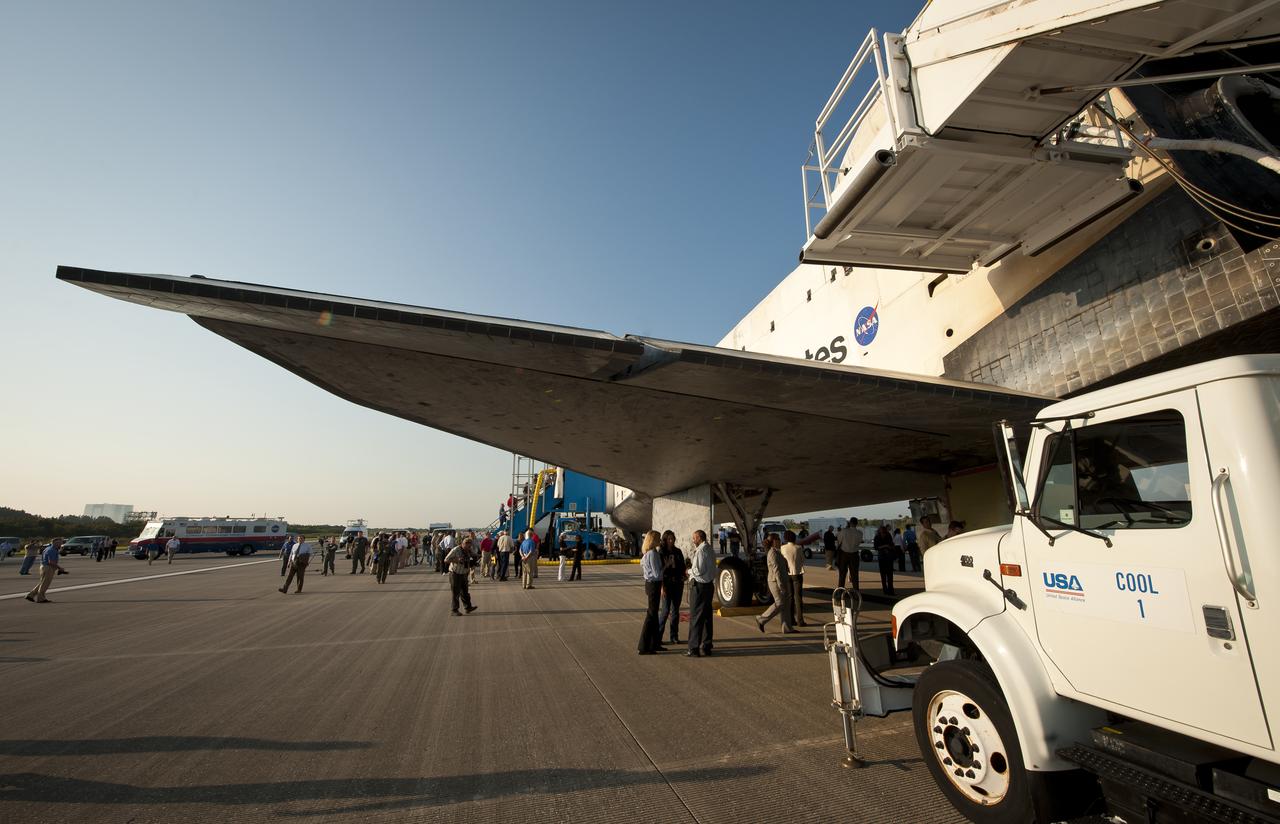
NASA and contractor personnel work on the space shuttle Atlantis at the Kennedy Space Center Shuttle Landing Facility (SLF) shortly after Atlantis (STS-135) landed early Thursday morning, July 21, 2011, in Cape Canaveral, Fla. Overall, Atlantis spent 307 days in space and traveled nearly 126 million miles during its 33 flights. Atlantis, the fourth orbiter built, launched on its first mission on Oct. 3, 1985. Photo Credit: (NASA/Bill Ingalls)
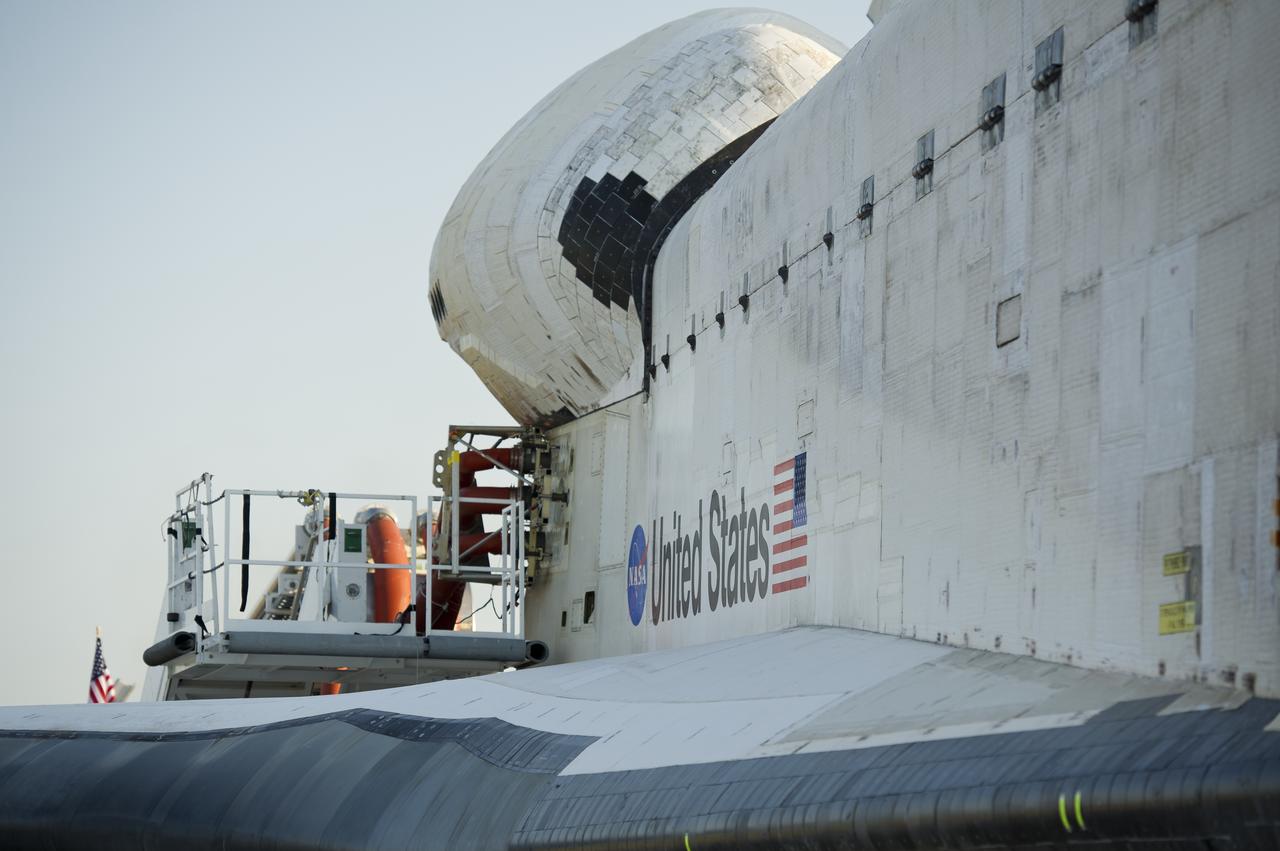
Close up view of the side the space shuttle Atlantis at the Kennedy Space Center Shuttle Landing Facility (SLF) shortly after Atlantis (STS-135) landed early Thursday morning, July 21, 2011, in Cape Canaveral, Fla. Overall, Atlantis spent 307 days in space and traveled nearly 126 million miles during its 33 flights. Atlantis, the fourth orbiter built, launched on its first mission on Oct. 3, 1985. Photo Credit: (NASA/Bill Ingalls)
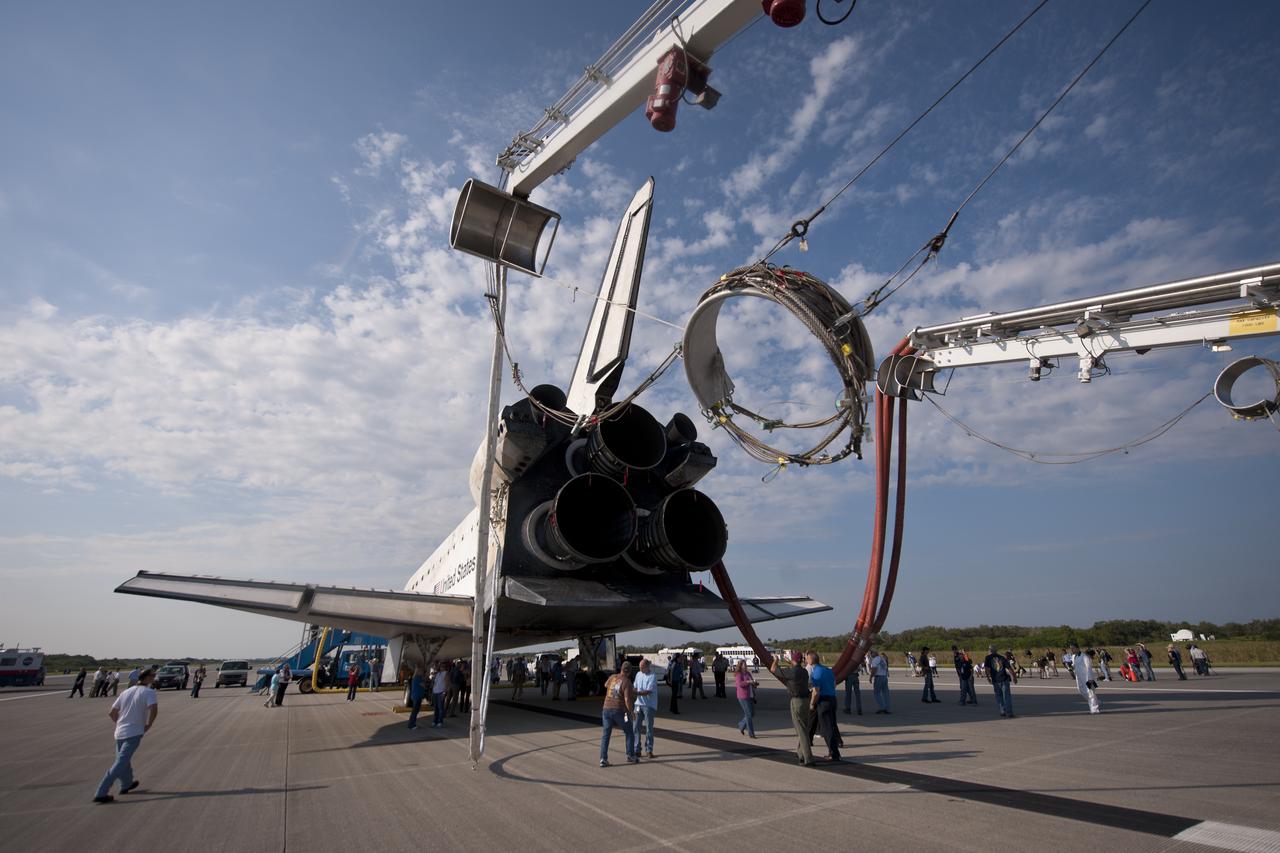
NASA and contractor personnel work on the space shuttle Atlantis at the Kennedy Space Center Shuttle Landing Facility (SLF) shortly after Atlantis (STS-135) landed early Thursday morning, July 21, 2011, in Cape Canaveral, Fla. Overall, Atlantis spent 307 days in space and traveled nearly 126 million miles during its 33 flights. Atlantis, the fourth orbiter built, launched on its first mission on Oct. 3, 1985. Photo Credit: (NASA/Bill Ingalls)
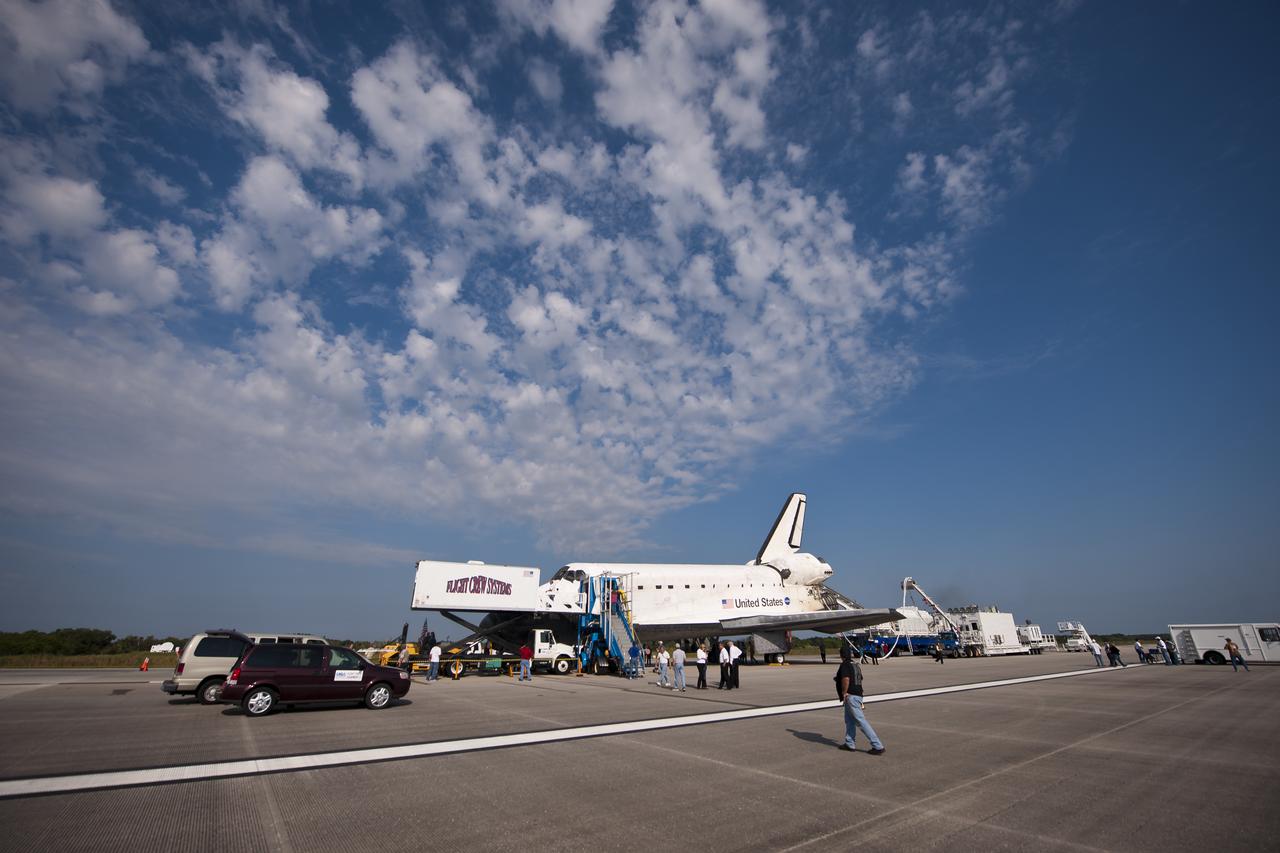
NASA and contractor personnel work on the space shuttle Atlantis at the Kennedy Space Center Shuttle Landing Facility (SLF) shortly after Atlantis (STS-135) landed early Thursday morning, July 21, 2011, in Cape Canaveral, Fla. Overall, Atlantis spent 307 days in space and traveled nearly 126 million miles during its 33 flights. Atlantis, the fourth orbiter built, launched on its first mission on Oct. 3, 1985. Photo Credit: (NASA/Bill Ingalls)
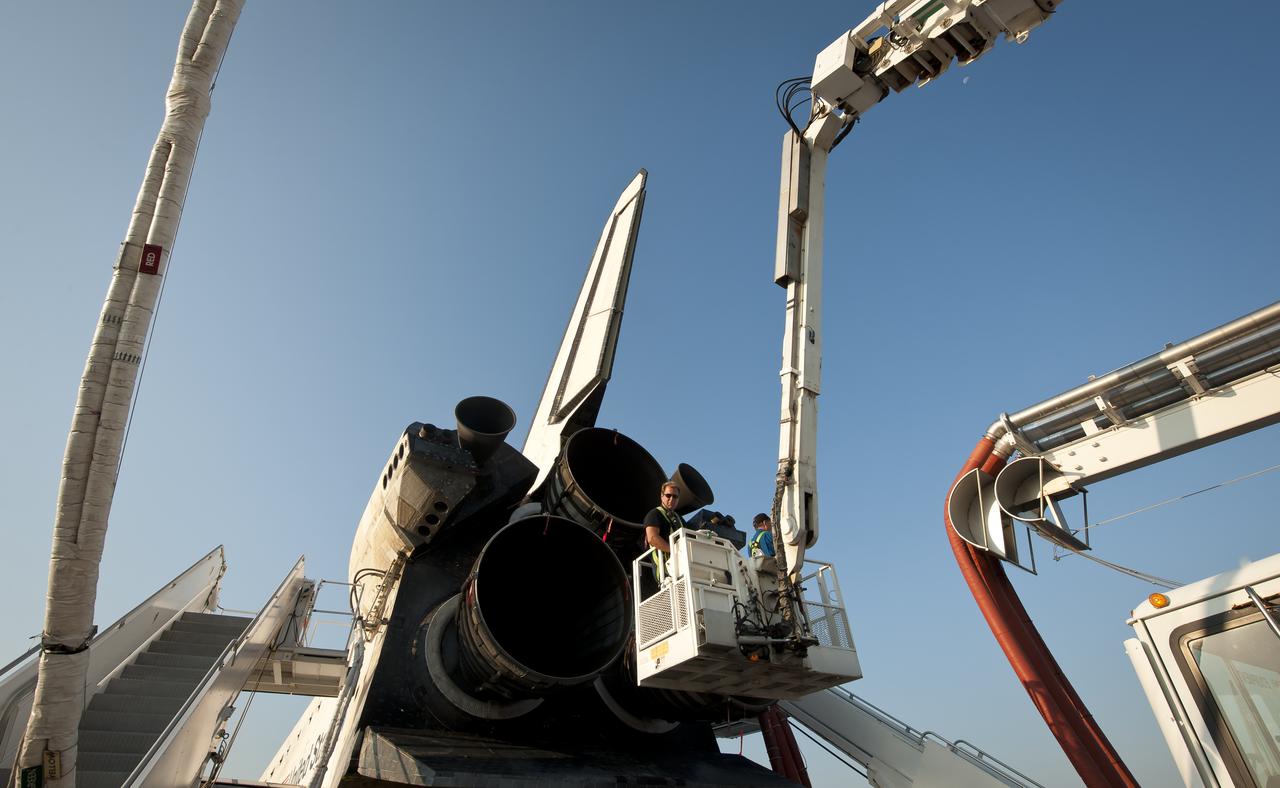
NASA and contractor personnel work on the space shuttle Atlantis at the Kennedy Space Center Shuttle Landing Facility (SLF) shortly after Atlantis (STS-135) landed early Thursday morning, July 21, 2011, in Cape Canaveral, Fla. Overall, Atlantis spent 307 days in space and traveled nearly 126 million miles during its 33 flights. Atlantis, the fourth orbiter built, launched on its first mission on Oct. 3, 1985. Photo Credit: (NASA/Bill Ingalls)
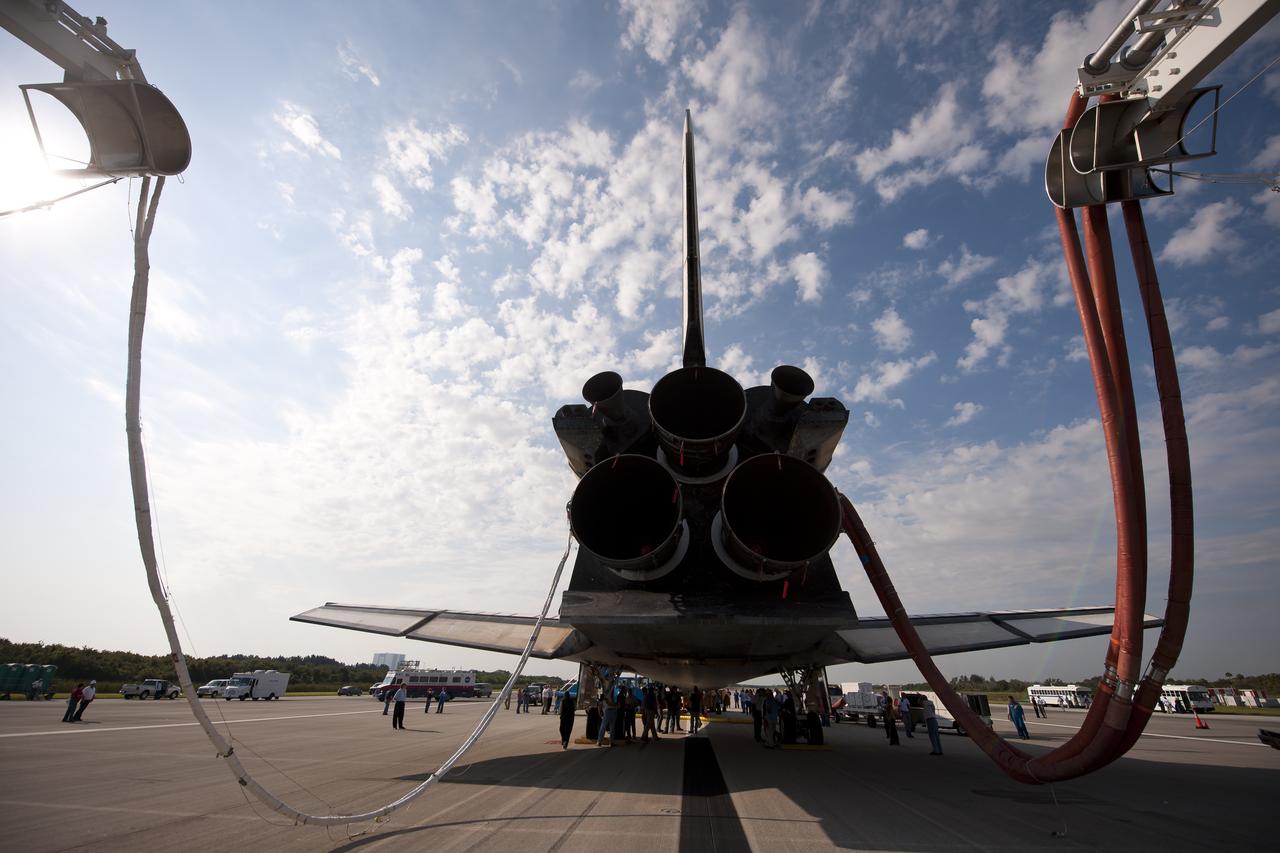
NASA and contractor personnel work on the space shuttle Atlantis at the Kennedy Space Center Shuttle Landing Facility (SLF) shortly after Atlantis (STS-135) landed early Thursday morning, July 21, 2011, in Cape Canaveral, Fla. Overall, Atlantis spent 307 days in space and traveled nearly 126 million miles during its 33 flights. Atlantis, the fourth orbiter built, launched on its first mission on Oct. 3, 1985. Photo Credit: (NASA/Bill Ingalls)
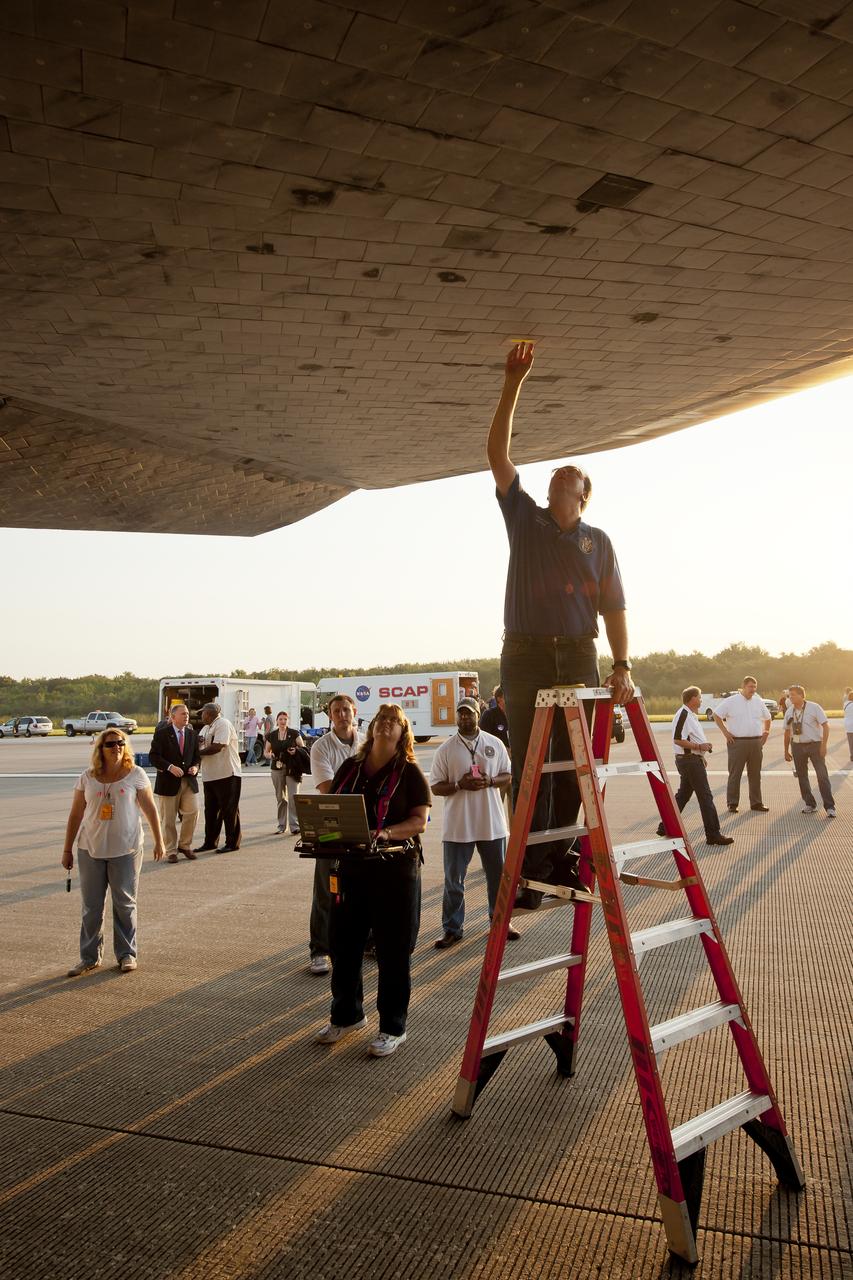
NASA and contractor personnel work under the space shuttle Atlantis at the Kennedy Space Center Shuttle Landing Facility (SLF) shortly after Atlantis (STS-135) landed early Thursday morning, July 21, 2011, in Cape Canaveral, Fla. Overall, Atlantis spent 307 days in space and traveled nearly 126 million miles during its 33 flights. Atlantis, the fourth orbiter built, launched on its first mission on Oct. 3, 1985. Photo Credit: (NASA/Bill Ingalls)
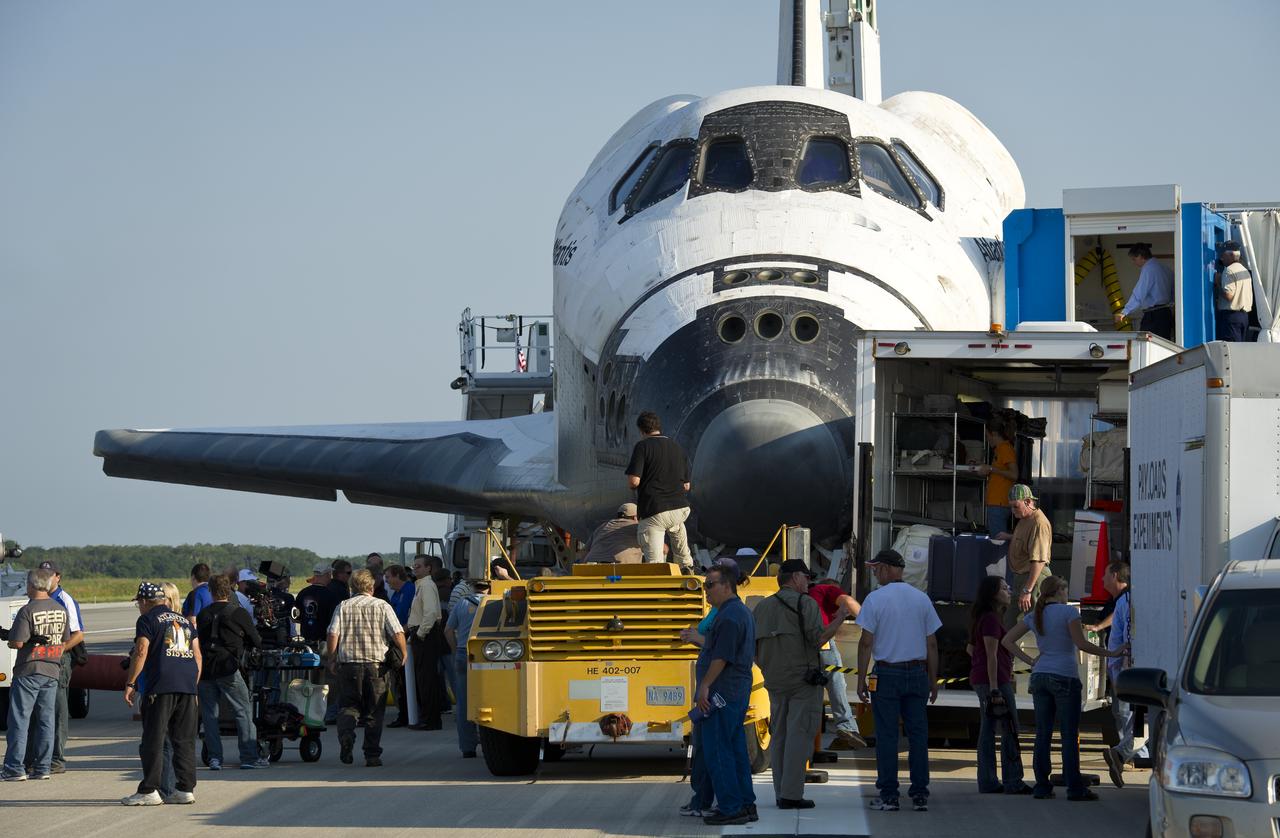
NASA and contractor personnel work on the space shuttle Atlantis at the Kennedy Space Center Shuttle Landing Facility (SLF) shortly after Atlantis (STS-135) landed early Thursday morning, July 21, 2011, in Cape Canaveral, Fla. Overall, Atlantis spent 307 days in space and traveled nearly 126 million miles during its 33 flights. Atlantis, the fourth orbiter built, launched on its first mission on Oct. 3, 1985. Photo Credit: (NASA/Bill Ingalls)
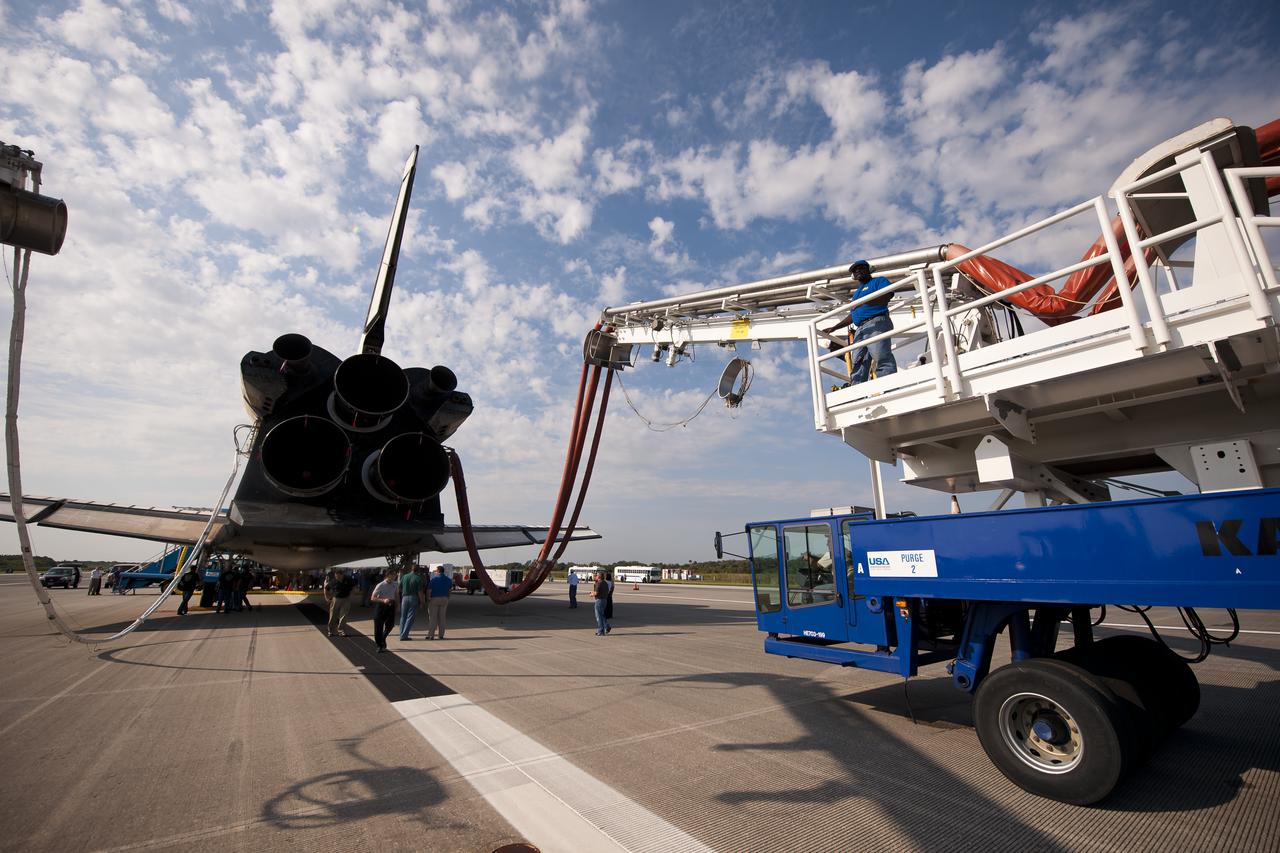
NASA and contractor personnel work on the space shuttle Atlantis at the Kennedy Space Center Shuttle Landing Facility (SLF) shortly after Atlantis (STS-135) landed early Thursday morning, July 21, 2011, in Cape Canaveral, Fla. Overall, Atlantis spent 307 days in space and traveled nearly 126 million miles during its 33 flights. Atlantis, the fourth orbiter built, launched on its first mission on Oct. 3, 1985. Photo Credit: (NASA/Bill Ingalls)
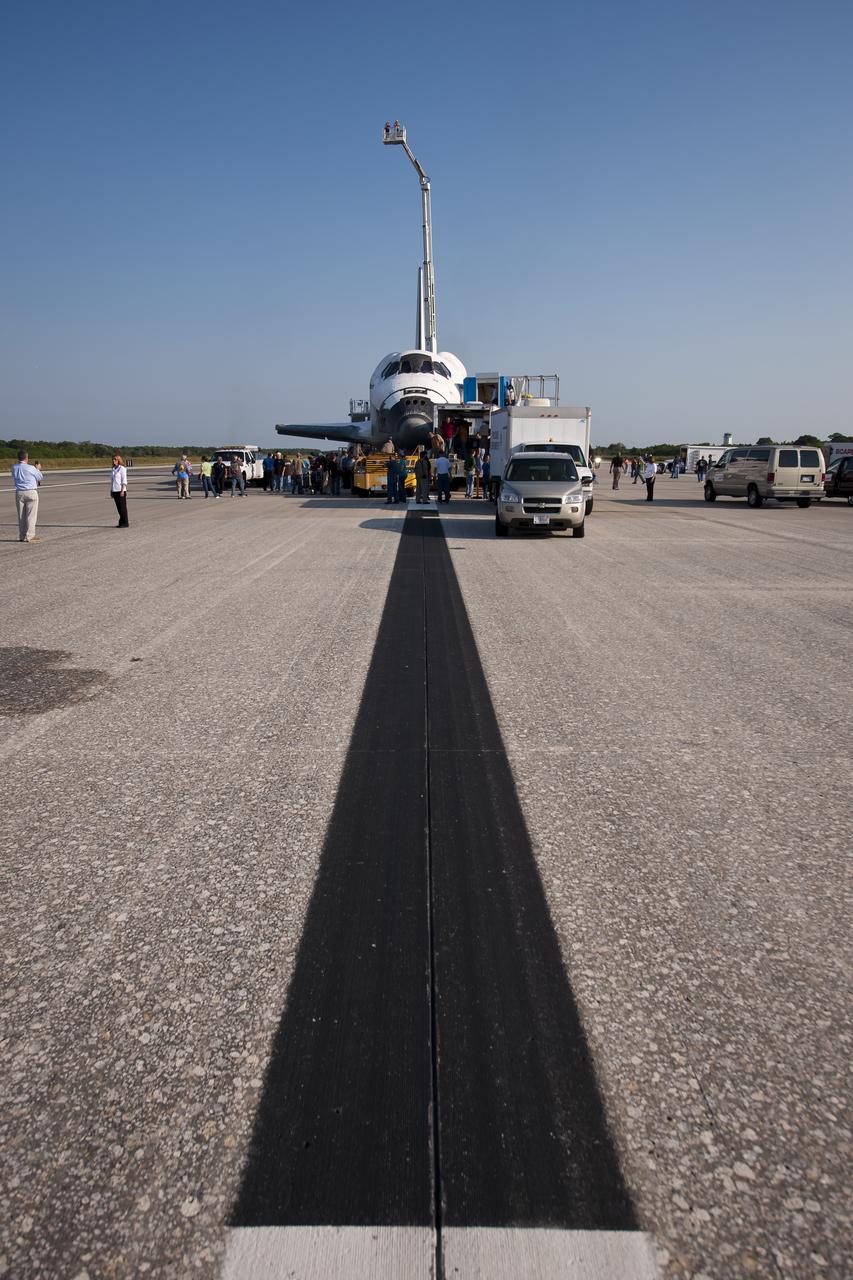
NASA and contractor personnel work on the space shuttle Atlantis at the Kennedy Space Center Shuttle Landing Facility (SLF) shortly after Atlantis (STS-135) landed early Thursday morning, July 21, 2011, in Cape Canaveral, Fla. Overall, Atlantis spent 307 days in space and traveled nearly 126 million miles during its 33 flights. Atlantis, the fourth orbiter built, launched on its first mission on Oct. 3, 1985. Photo Credit: (NASA/Bill Ingalls)
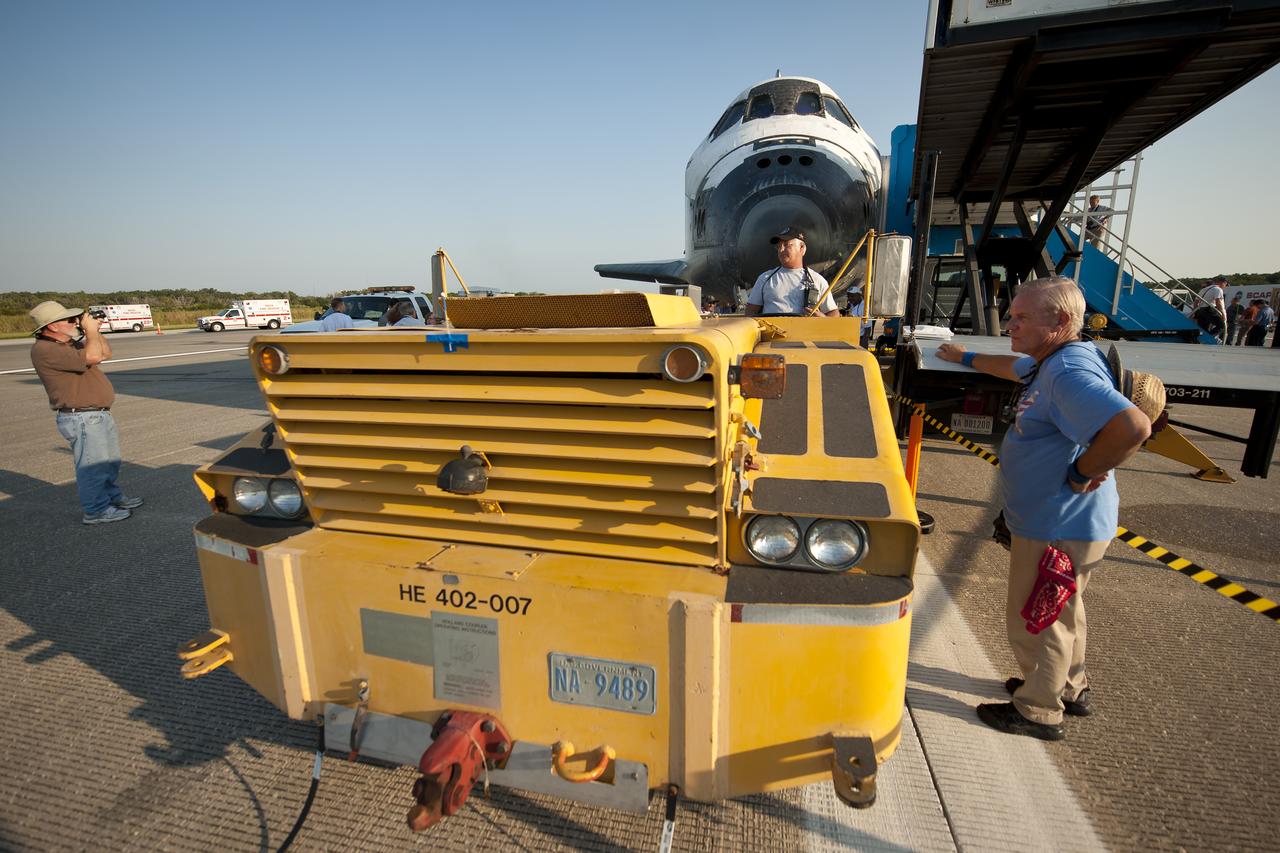
NASA and contractor personnel work on the space shuttle Atlantis at the Kennedy Space Center Shuttle Landing Facility (SLF) shortly after Atlantis (STS-135) landed early Thursday morning, July 21, 2011, in Cape Canaveral, Fla. Overall, Atlantis spent 307 days in space and traveled nearly 126 million miles during its 33 flights. Atlantis, the fourth orbiter built, launched on its first mission on Oct. 3, 1985. Photo Credit: (NASA/Bill Ingalls)
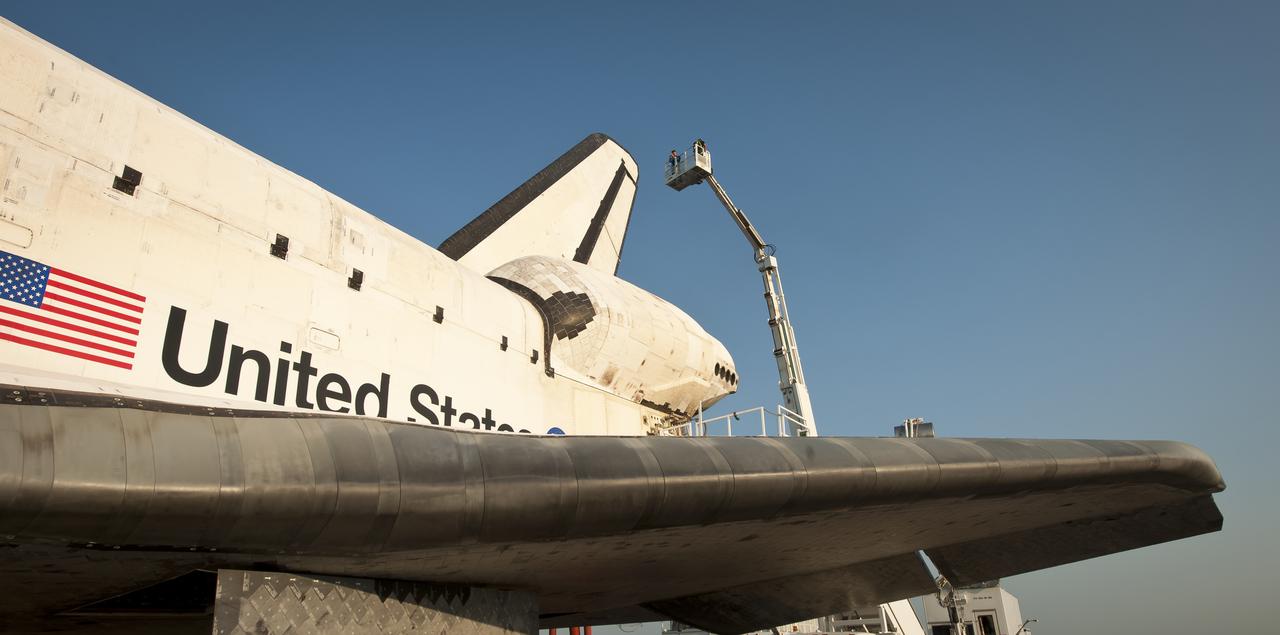
NASA and contractor personnel work on the space shuttle Atlantis at the Kennedy Space Center Shuttle Landing Facility (SLF) shortly after Atlantis (STS-135) landed early Thursday morning, July 21, 2011, in Cape Canaveral, Fla. Overall, Atlantis spent 307 days in space and traveled nearly 126 million miles during its 33 flights. Atlantis, the fourth orbiter built, launched on its first mission on Oct. 3, 1985. Photo Credit: (NASA/Bill Ingalls)
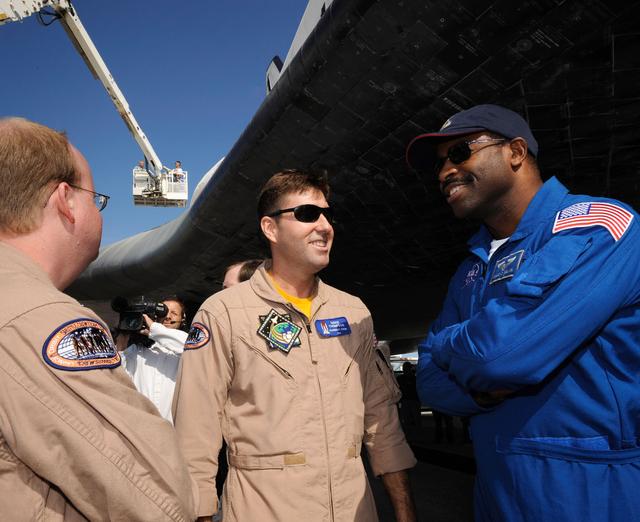
STS-122 Mission Specialist Leland Melvin, right, talks with members of the space shuttle close out crew underneath the wing of the space shuttle Atlantis. Atlantis landed at the Shuttle Landing Facility, 9:07a.m., Wednesday, Feb. 20, 2008 at Kennedy Space Center, Fla. completing delivery of the European Space Agency’s (ESA) Columbus laboratory to the International Space Station. Photo Credit: (NASA/Bill Ingalls)
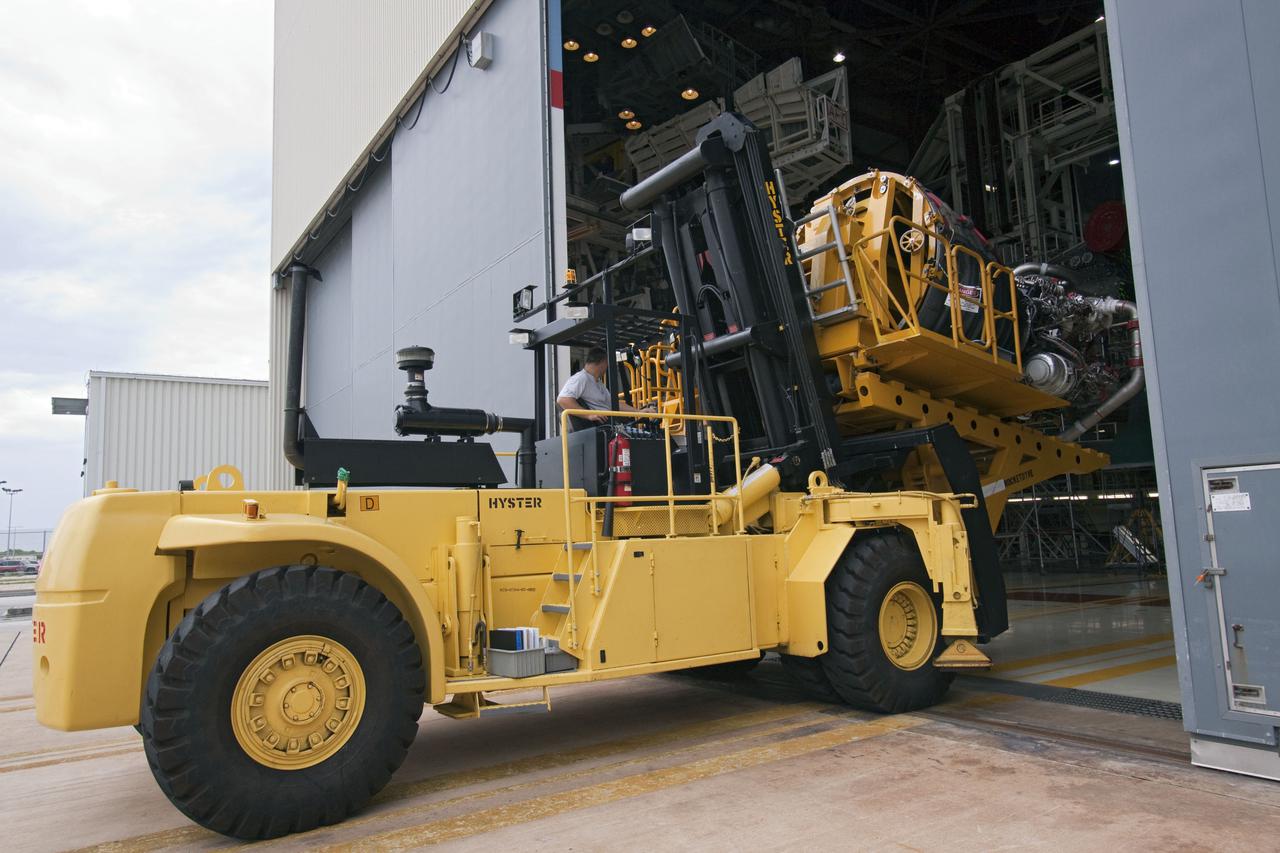
CAPE CANAVERAL, Fla. -- At NASA's Kennedy Space Center in Florida, space shuttle Atlantis' main engine no. 3 is moved out of Orbiter Processing Facility-1 after removal from the shuttle. Inspection and maintenance of each main engine is standard procedure following a shuttle mission. Some of the engines maintained and stored in the engine shop could be used for Atlantis, on what currently is planned as the 'launch on need,' or potential rescue mission for Endeavour's STS-134 mission, targeted for launch Feb. 26, 2011. For information, visit www.nasa.gov_shuttle. Photo credit: NASA_Jack Pfaller
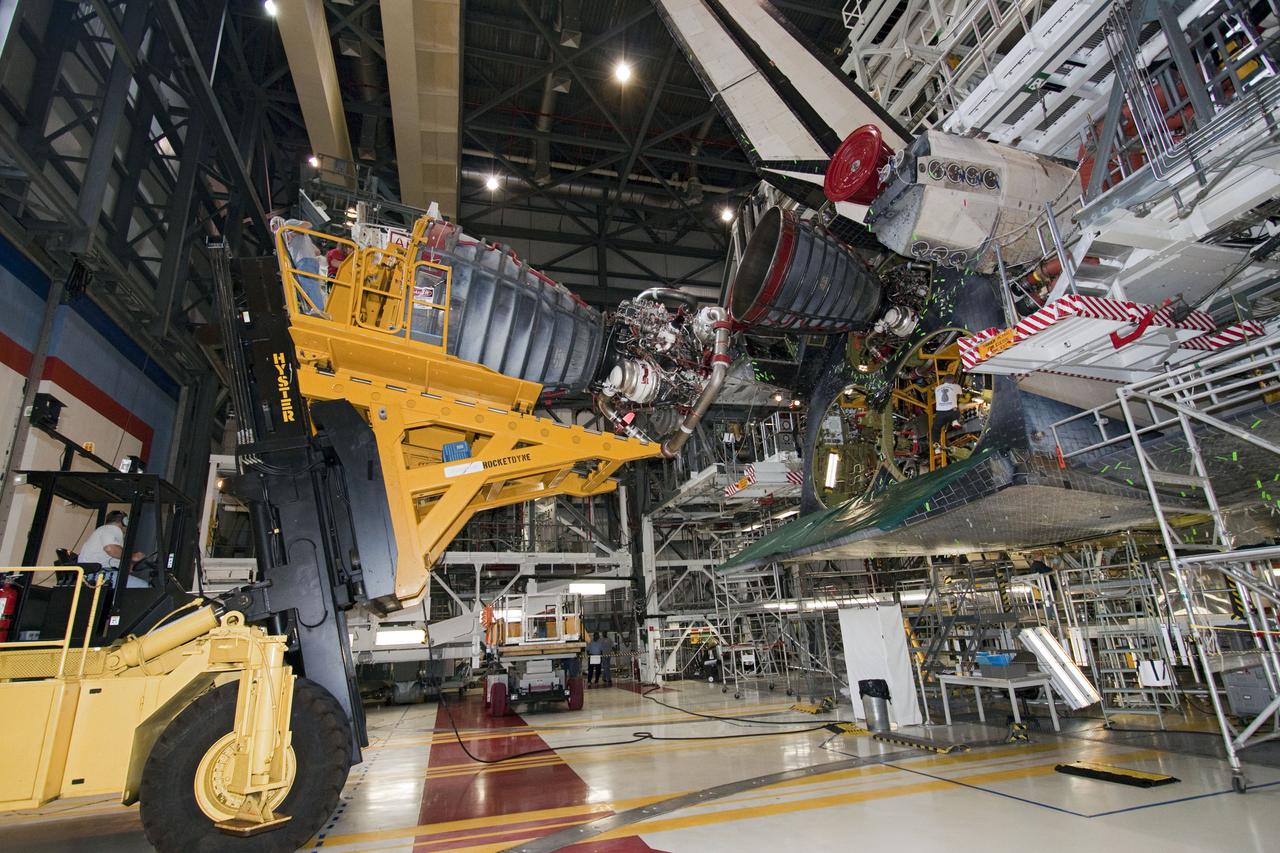
CAPE CANAVERAL, Fla. -- In Orbiter Processing Facility-1 at NASA's Kennedy Space Center in Florida, the Hyster engine lift moves main engine no. 3 away from space shuttle Atlantis. Inspection and maintenance of each main engine is standard procedure following a shuttle mission. Some of the engines maintained and stored in the engine shop could be used for Atlantis, on what currently is planned as the 'launch on need,' or potential rescue mission for Endeavour's STS-134 mission, targeted for launch Feb. 26, 2011. For information, visit www.nasa.gov_shuttle. Photo credit: NASA_Jack Pfaller
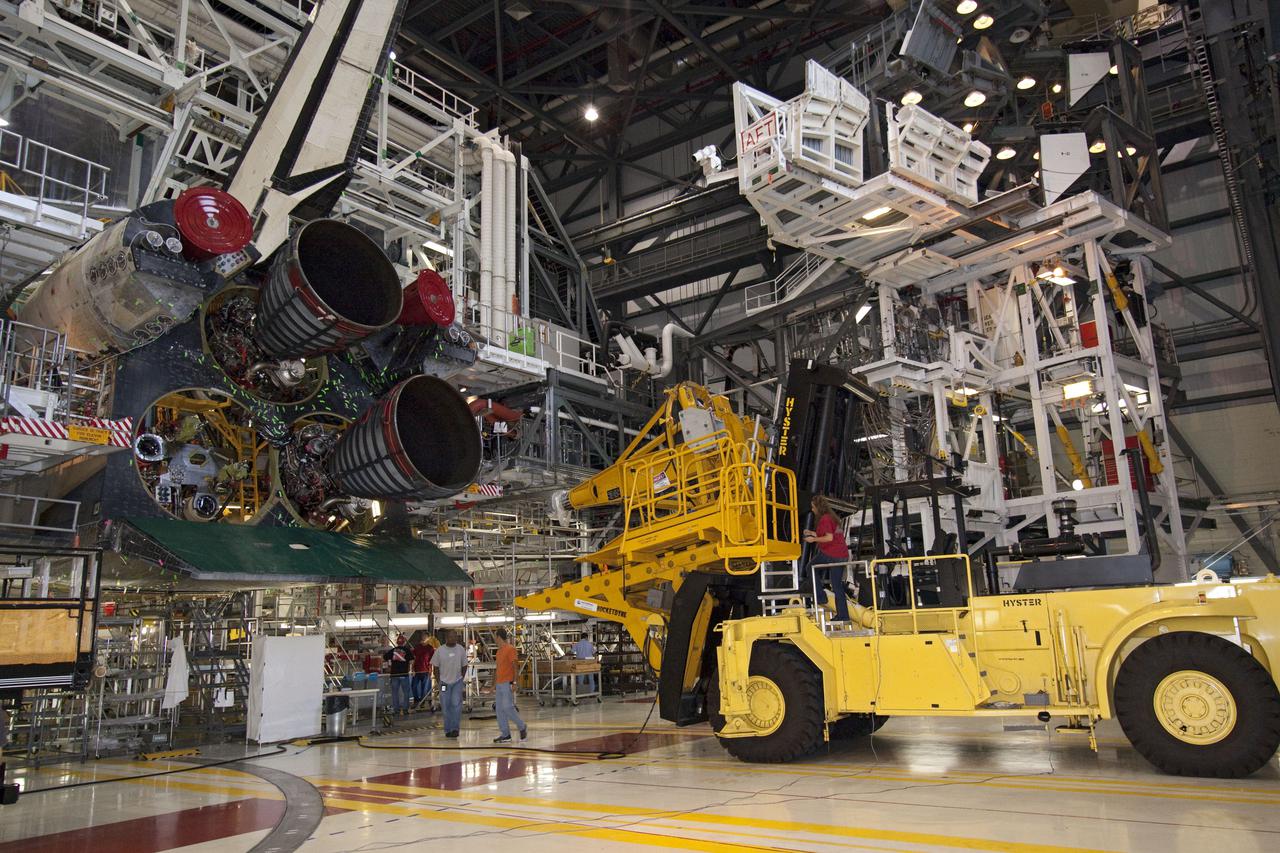
CAPE CANAVERAL, Fla. -- In Orbiter Processing Facility-1 at NASA's Kennedy Space Center in Florida, removal of main engine no. 3 from space shuttle Atlantis is under way. Inspection and maintenance of each main engine is standard procedure following a shuttle mission. Some of the engines maintained and stored in the engine shop could be used for Atlantis, on what currently is planned as the 'launch on need,' or potential rescue mission for Endeavour's STS-134 mission, targeted for launch Feb. 26, 2011. For information, visit www.nasa.gov_shuttle. Photo credit: NASA_Jack Pfaller
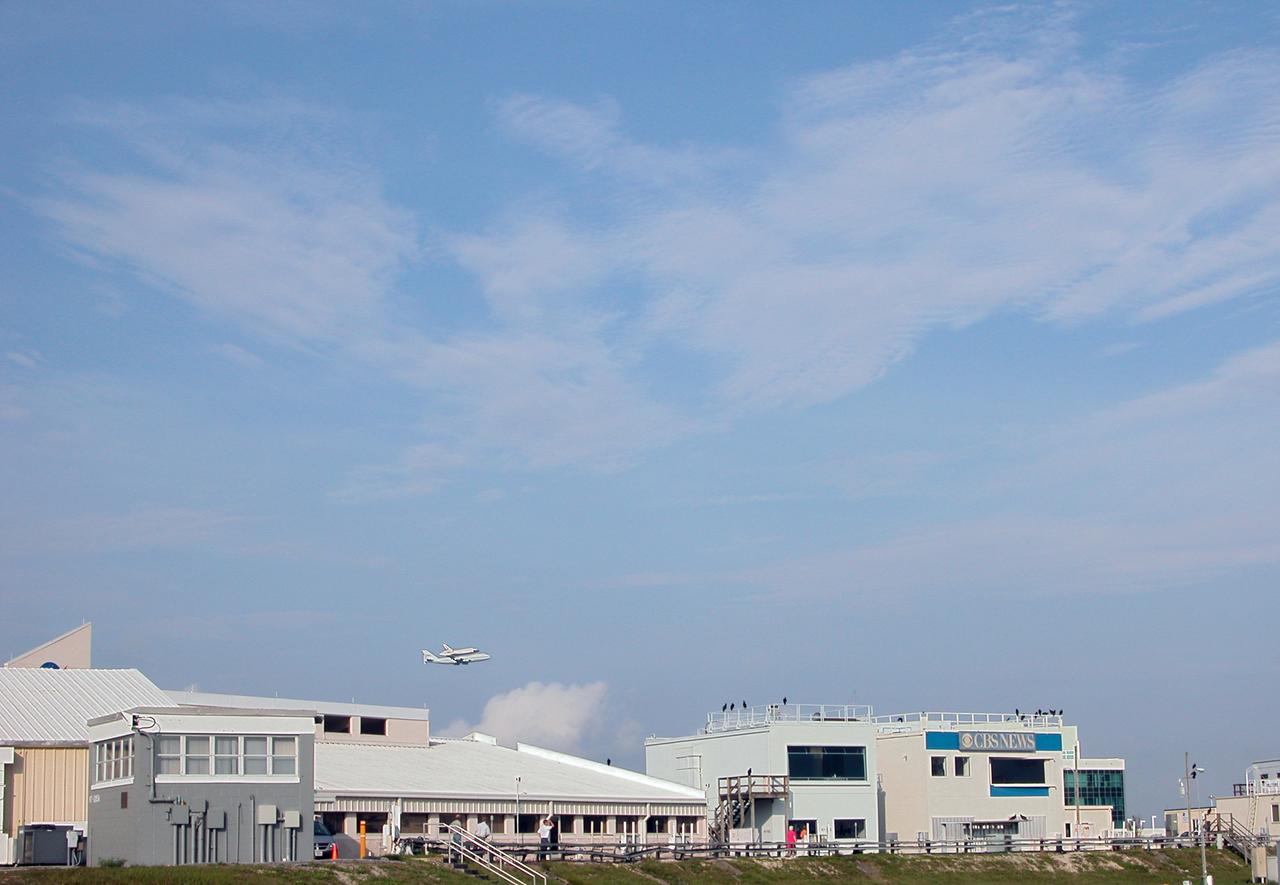
On a morning where broken clouds filled the sky of Central Florida, the shuttle carrier aircraft, or SCA, and its passenger Atlantis ease their way past the NASA News Center for a landing at the KSC Shuttle Landing Facility, known as the SLF. The aircraft is a modified Boeing 747 jetliner Atlantis landed at Edwards Air Force Base in California to end mission STS-117. The return to KSC began July 1 and took three days after stops across the country for fuel. The last stop was at Ft. Campbell in Kentucky. Weather conditions over the last leg postponed the return trip until July 3. Touchdown was at 8:27 a.m. EDT. Atlantis will be removed from the back of the SCA via the mate/demate device at the SLF. It will then be towed to the Orbiter Processing Facility to begin processing for its next launch, mission STS-122 in December.
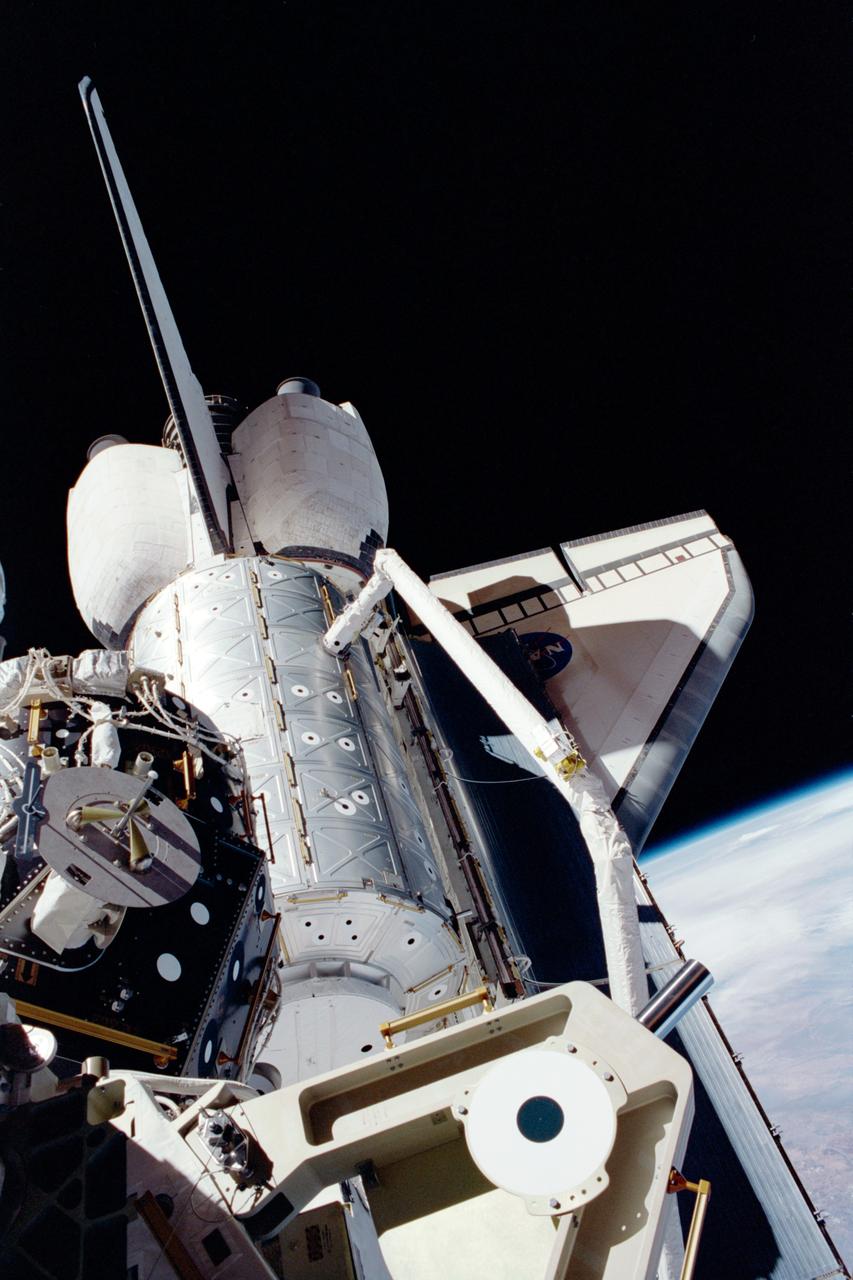
STS098-331-005 (7-20 February 2001) --- In the grasp of the shuttle’s remote manipulator system (RMS) robot arm, the Destiny laboratory is moved from its stowage position in the cargo bay of the Space Shuttle Atlantis. The photo was taken by astronaut Thomas D. Jones, who was participating in one of three STS-98/5a spacewalks at the time. Astronaut Robert L. Curbeam (out of frame) also made the three spacewalks.
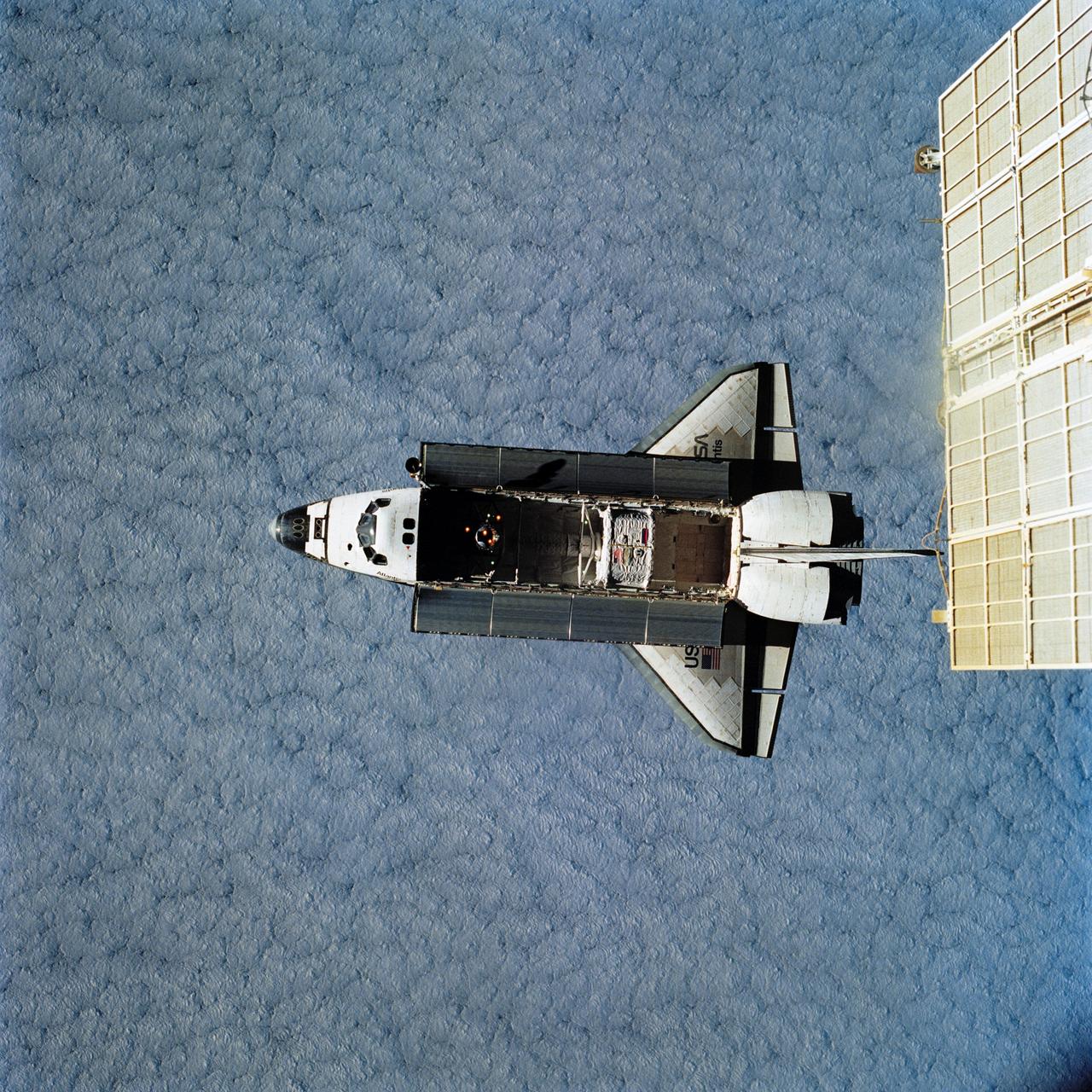
NM21-724-042 (23 March 1996) --- Backdropped against a "floor" of clouds, this view of the Space Shuttle Atlantis was taken by the two Mir-21 cosmonaut crew members onboard Russia's Mir Space Station, during rendezvous and docking operations on March 23, 1996. Part of a solar array panel connected to the Mir is seen in the foreground. The Orbiter Docking System (ODS), the connective tunnel and the Spacehab Module can be seen in Atlantis' cargo bay. With the subsequent delivery of astronaut Shannon W. Lucid to the Mir, the Mir-21 crew grew to three, as the mission specialist quickly becomes a cosmonaut guest researcher. She will spend approximately 140 days on Mir before returning to Earth.
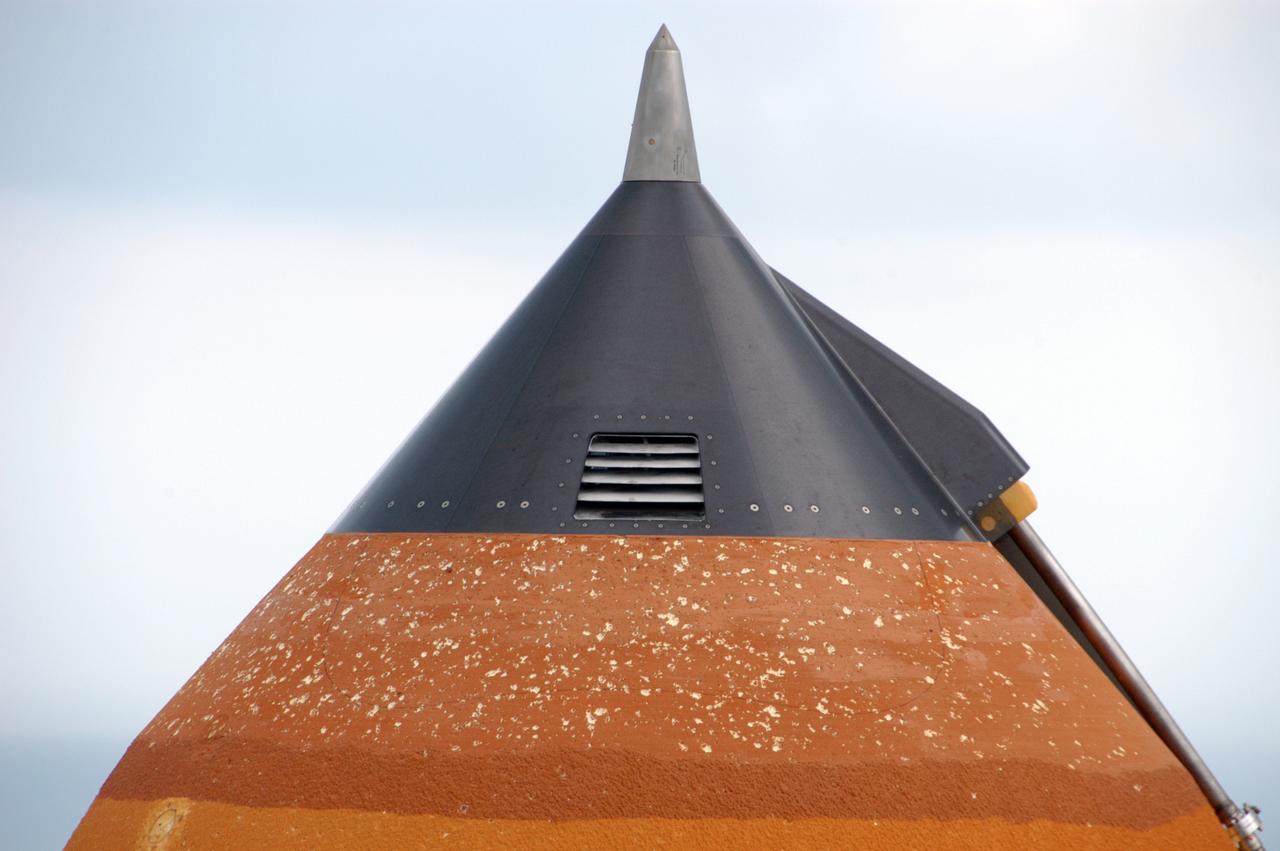
At Launch Pad 39A, the external tank attached to Space Shuttle Atlantis shows damage from hail bombardment during a strong thunderstorm that passed through Kennedy Space Center about 5 p.m. EST on Feb. 26. A full assessment of the storm's impact is under way. The two-day STS-117 Flight Readiness Review is being held concurrently with the assessment. Hail also impacted Space Shuttle Columbia before the launch of STS-4 in 1982; Atlantis, being readied for STS-38 in 1990; and Discovery, before the launch of STS-96 in 1999.
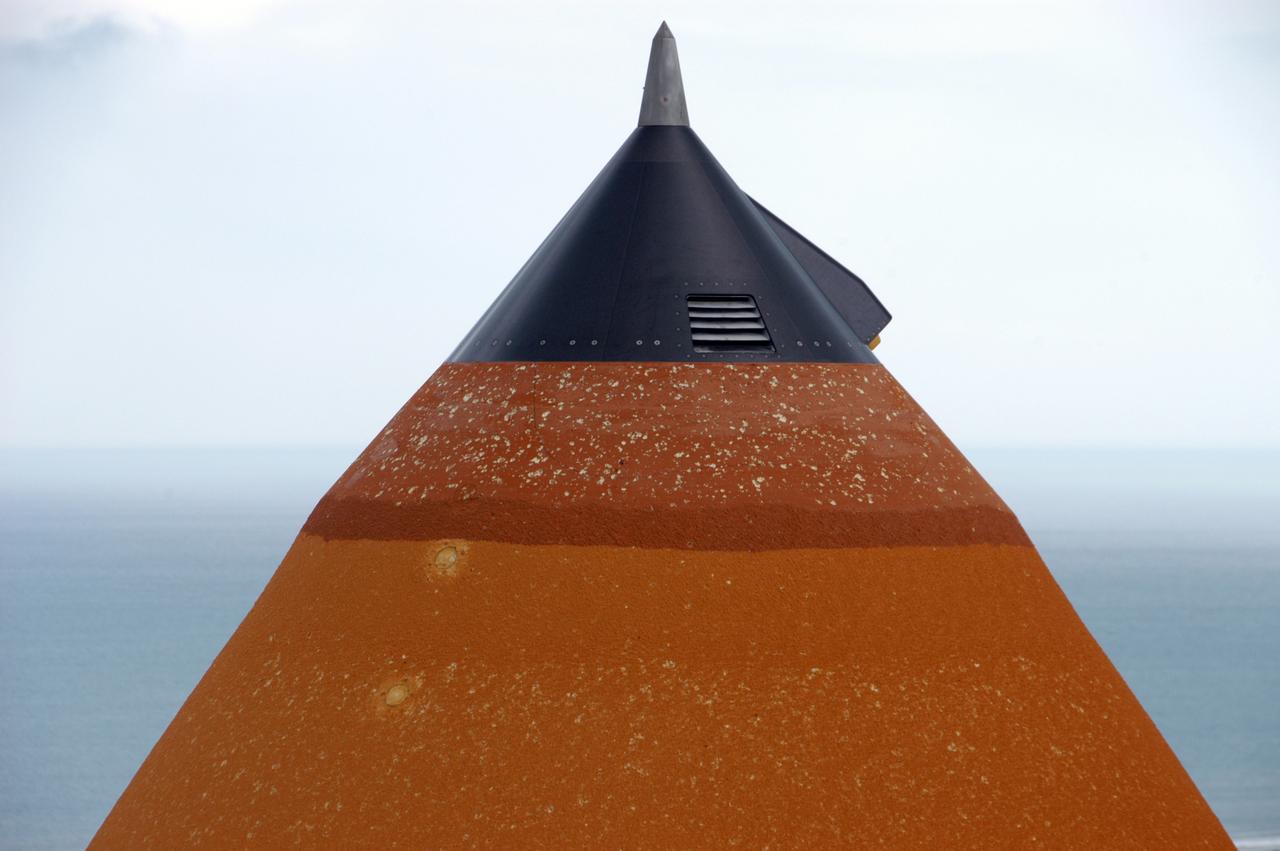
At Launch Pad 39A, the external tank attached to Space Shuttle Atlantis shows damage from hail bombardment during a strong thunderstorm that passed through Kennedy Space Center about 5 p.m. EST on Feb. 26. A full assessment of the storm's impact is under way. The two-day STS-117 Flight Readiness Review is being held concurrently with the assessment. Hail also impacted Space Shuttle Columbia before the launch of STS-4 in 1982; Atlantis, being readied for STS-38 in 1990; and Discovery, before the launch of STS-96 in 1999.
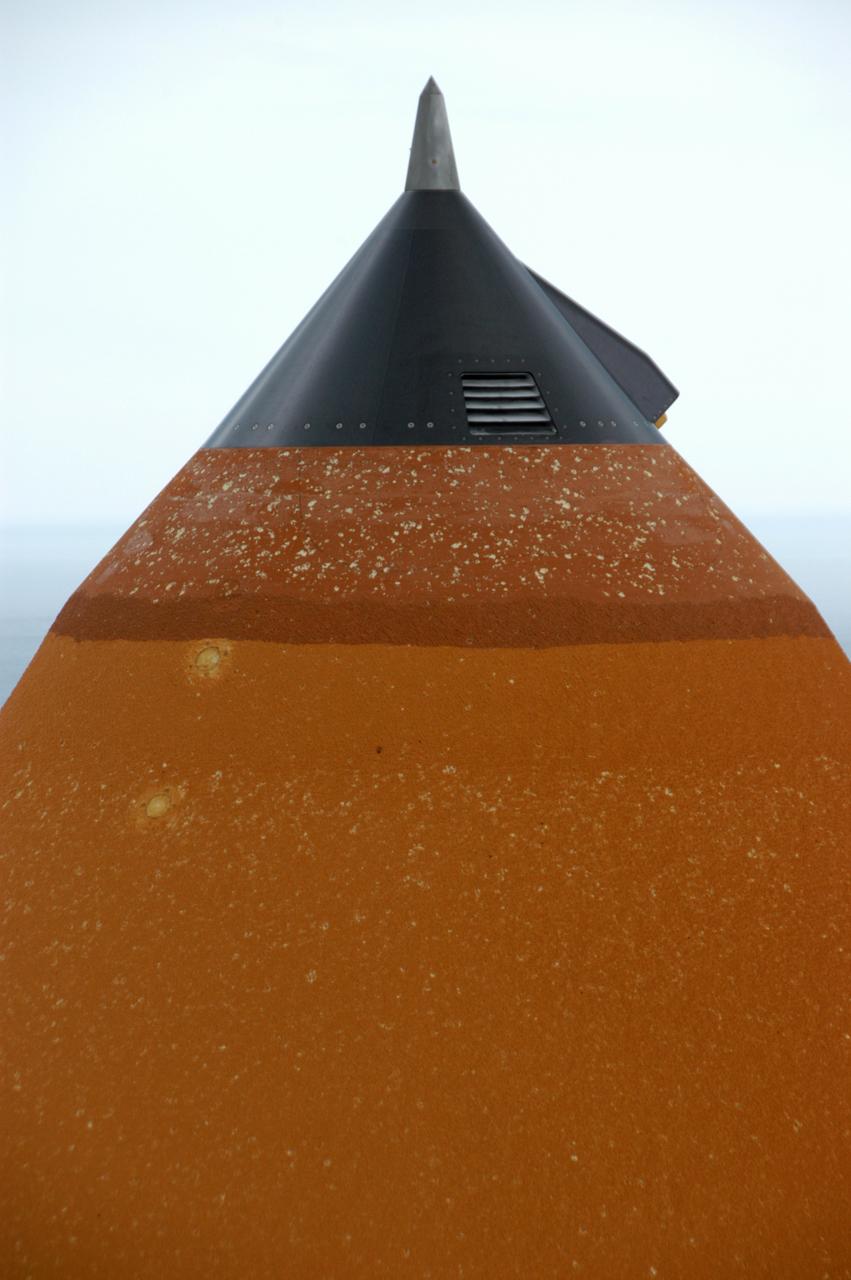
At Launch Pad 39A, the external tank attached to Space Shuttle Atlantis shows damage from hail bombardment during a strong thunderstorm that passed through Kennedy Space Center about 5 p.m. EST on Feb. 26. A full assessment of the storm's impact is under way. The two-day STS-117 Flight Readiness Review is being held concurrently with the assessment. Hail also impacted Space Shuttle Columbia before the launch of STS-4 in 1982; Atlantis, being readied for STS-38 in 1990; and Discovery, before the launch of STS-96 in 1999.
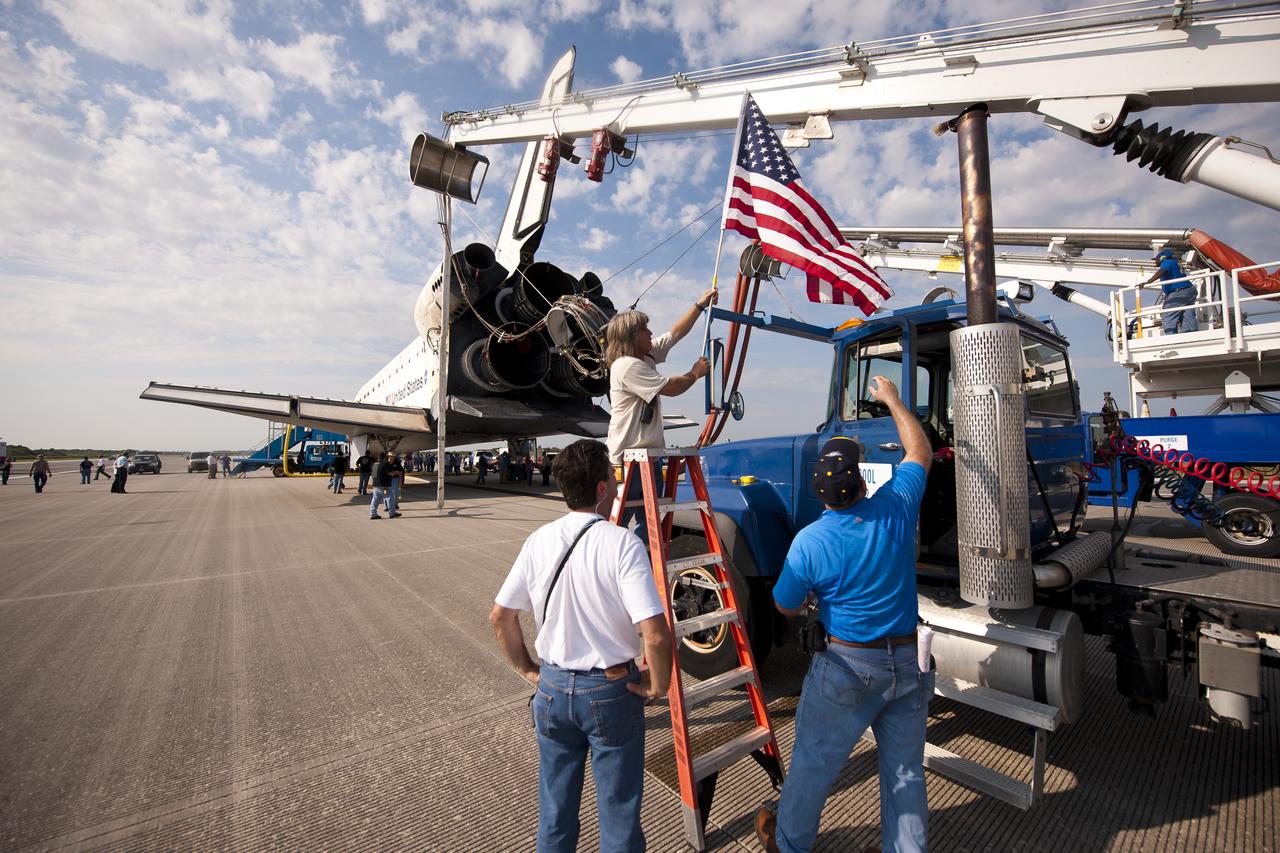
NASA and contractor personnel mount American flags to support vehicles near the space shuttle Atlantis at the Kennedy Space Center Shuttle Landing Facility (SLF) shortly after Atlantis (STS-135) landed early Thursday morning, July 21, 2011, in Cape Canaveral, Fla. The runway is marked to show where the nose landing gear wheels stopped. Overall, Atlantis spent 307 days in space and traveled nearly 126 million miles during its 33 flights. Atlantis, the fourth orbiter built, launched on its first mission on Oct. 3, 1985. Photo Credit: (NASA/Bill Ingalls)
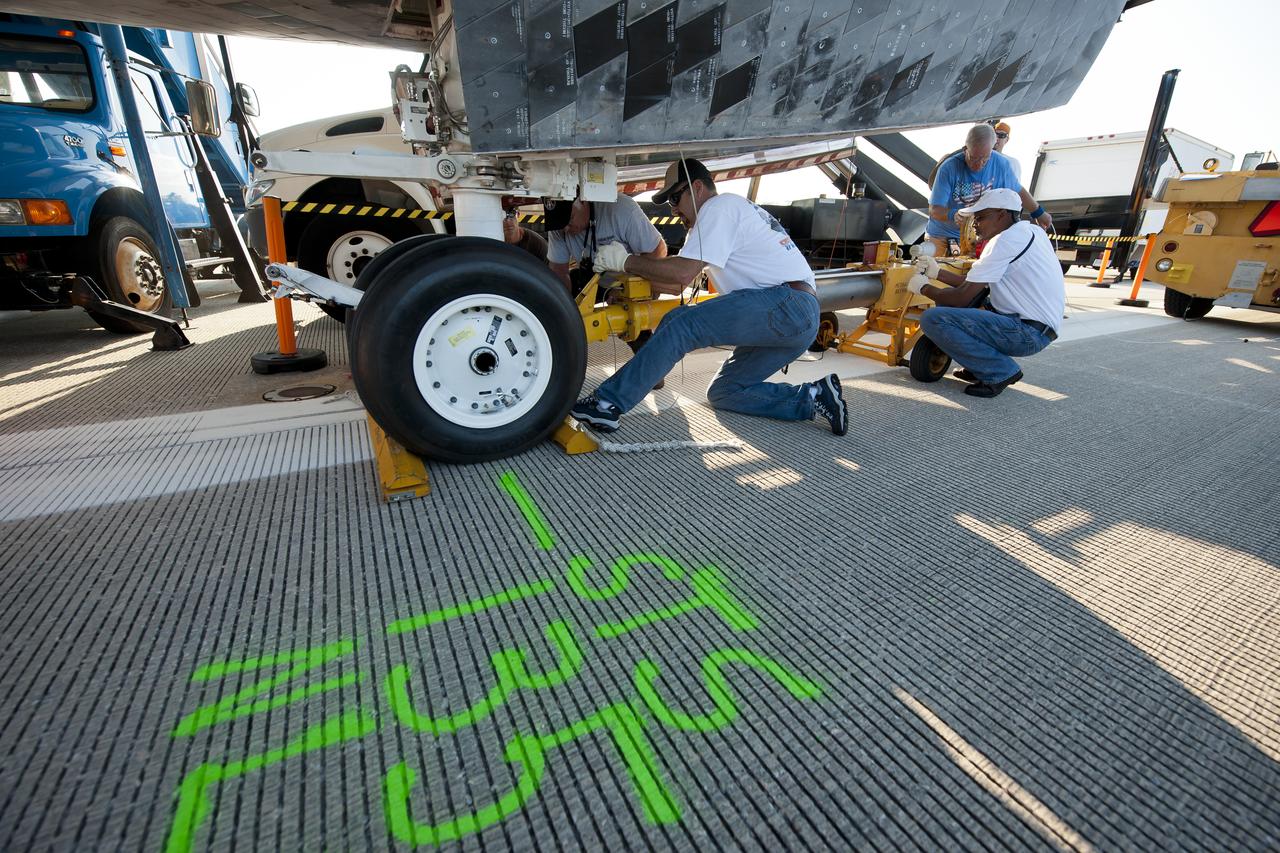
NASA and contractor personnel work to secure the tow bar onto the space shuttle Atlantis at the Kennedy Space Center Shuttle Landing Facility (SLF) shortly after Atlantis (STS-135) landed early Thursday morning, July 21, 2011, in Cape Canaveral, Fla. The runway is marked to show where the nose landing gear wheels stopped. Overall, Atlantis spent 307 days in space and traveled nearly 126 million miles during its 33 flights. Atlantis, the fourth orbiter built, launched on its first mission on Oct. 3, 1985. Photo Credit: (NASA/Bill Ingalls)
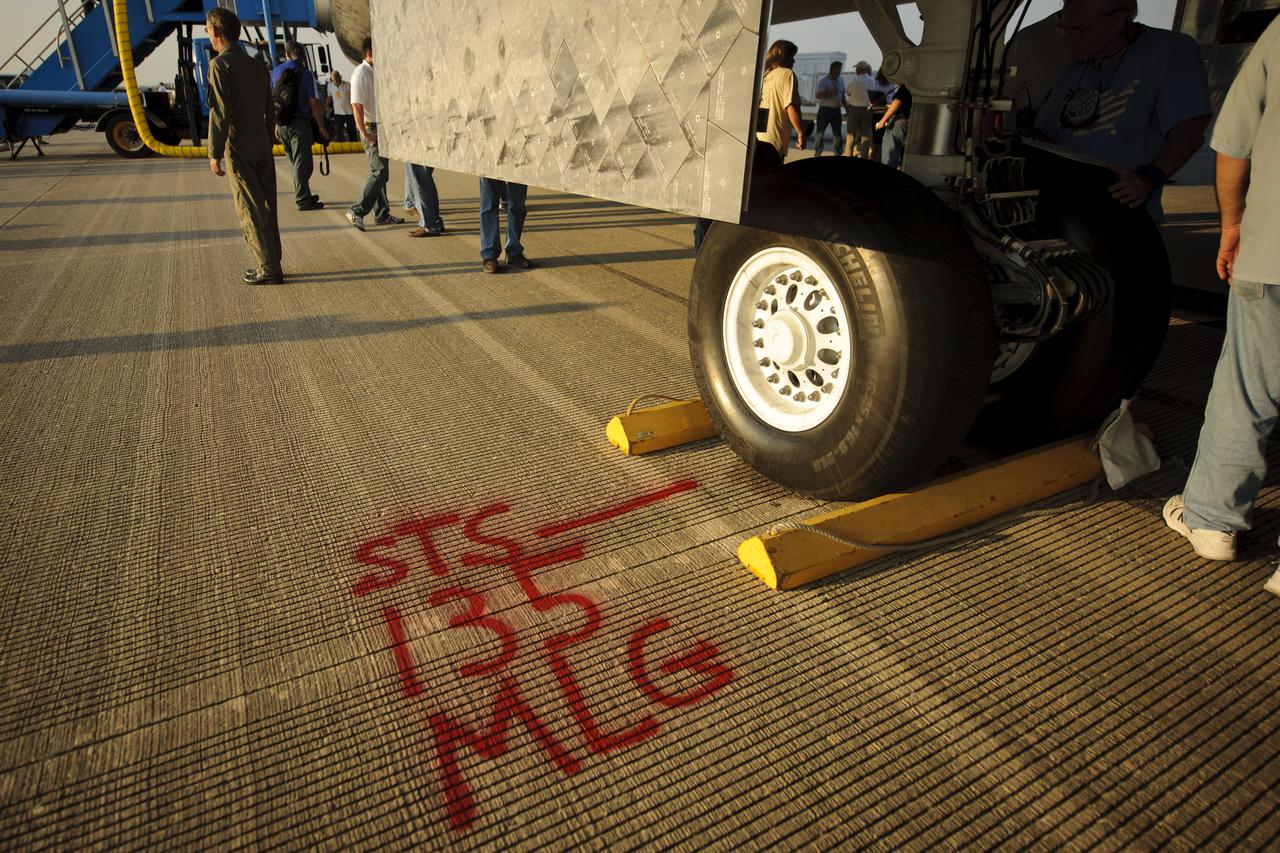
The runway of the Shuttle Landing Facility (SLF) is marked to show where the main landing gear wheels stopped for the space shuttle Atlantis (STS-135) shortly after it landed early Thursday morning, July 21, 2011, in Cape Canaveral, Fla. Overall, Atlantis spent 307 days in space and traveled nearly 126 million miles during its 33 flights. Atlantis, the fourth orbiter built, launched on its first mission on Oct. 3, 1985. Photo Credit: (NASA/Bill Ingalls)
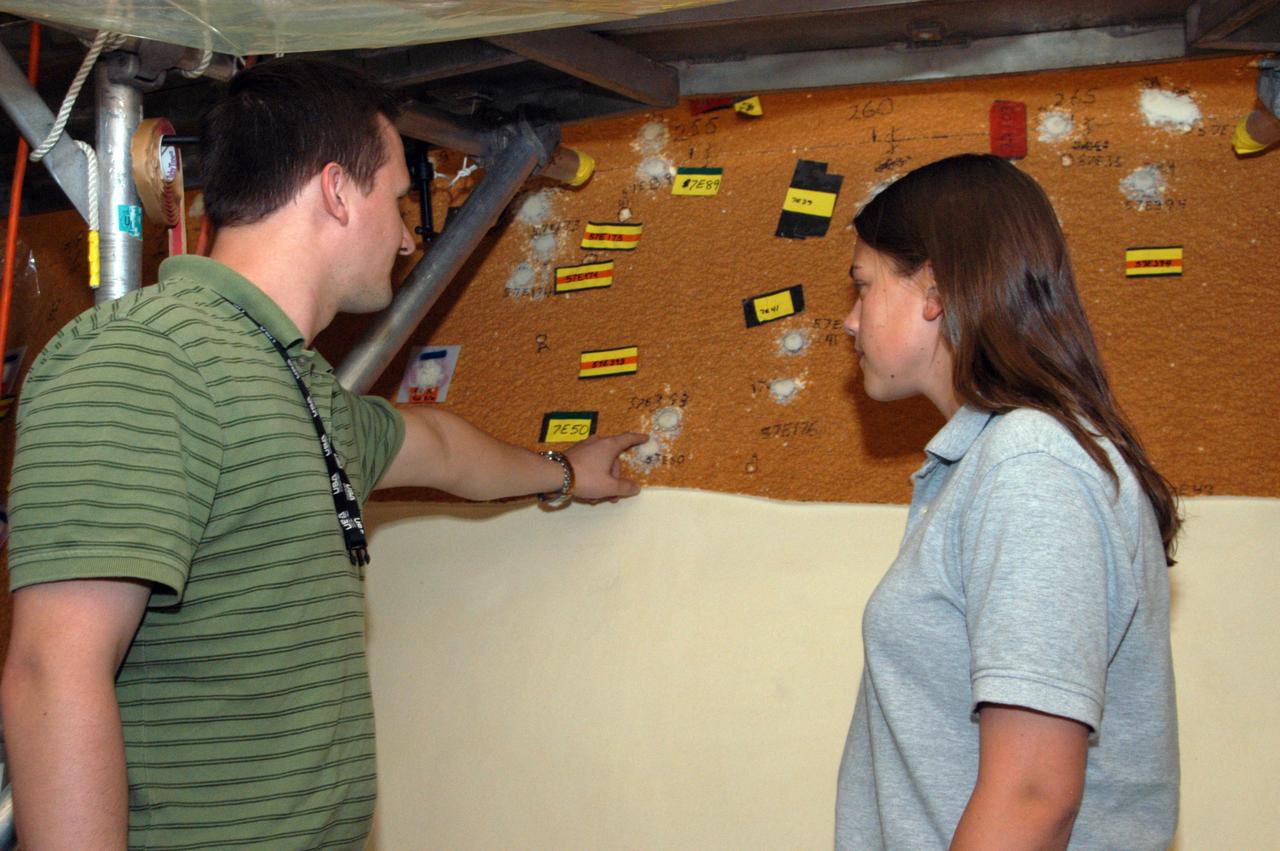
In the Vehicle Assembly Building, Mike Ravenscroft, with United Space Alliance, points to some of the foam repair done on the external tank of Space Shuttle Atlantis. Holes filled with foam are sanded flush with the adjacent area. In late February, Atlantis' external tank received hail damage during a severe thunderstorm that passed through the Kennedy Space Center Launch Complex 39 area. The hail caused visible divots in the giant tank's foam insulation as well as minor surface damage to about 26 heat shield tiles on the shuttle's left wing. The launch now is targeted for June 8.
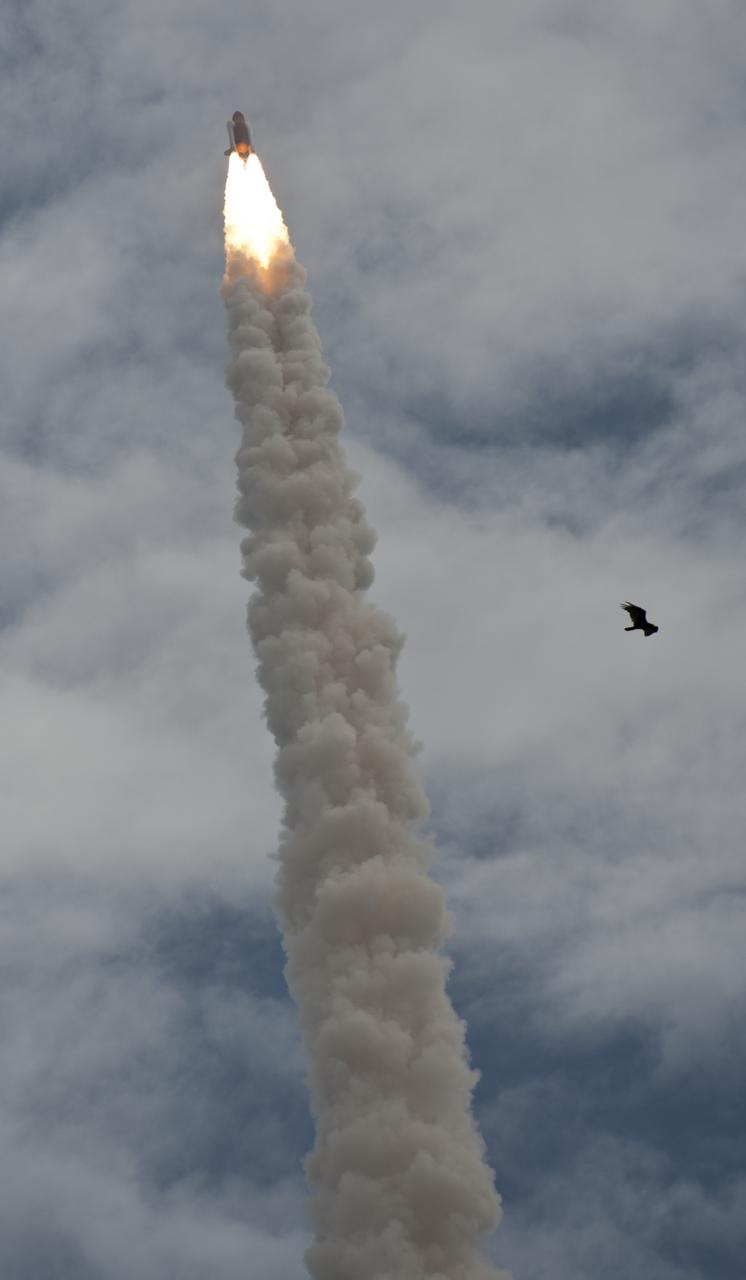
Space shuttle Atlantis, STS-135, launches skyward on a 12-day mission to the International Space Station (ISS), Friday, July 8, 2011, at NASA's Kennedy Space Center in Cape Canaveral, Fla. The launch of Atlantis is the final flight of the shuttle program and will carry the Raffaello multipurpose logistics module containing supplies and spare parts for the space station. Photo Credit: (NASA/Paul E. Alers)
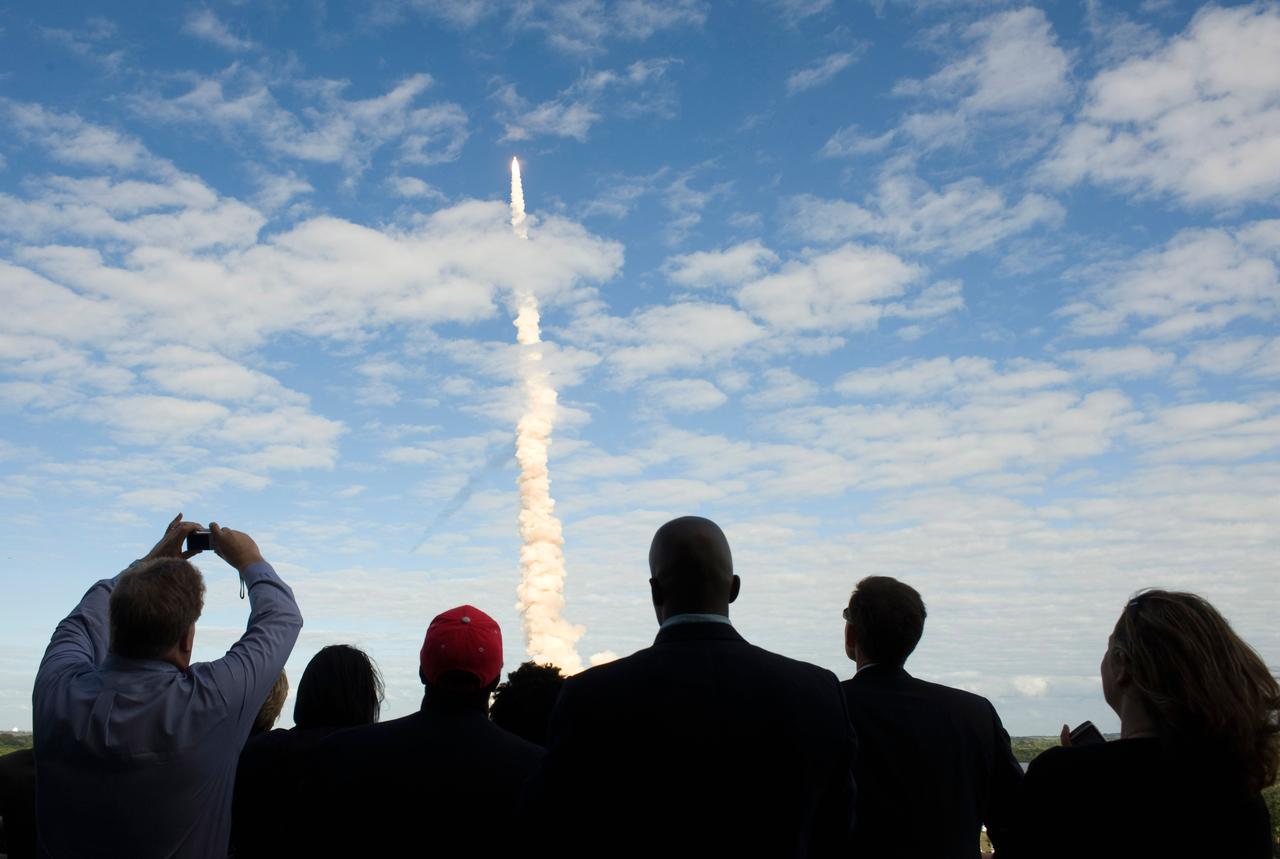
Guests at NASA's Kennedy Space Center view the launch of space shuttle Atlantis in Cape Canaveral, Fla., on Monday, Nov. 16, 2009. Space shuttle Atlantis and its six-member crew began the 11-day STS-129 mission to the International Space Station. The shuttle will transport spare hardware to the outpost and return a station crew member who spent more than two months in space. Photo Credit: (NASA/Carla Cioffi)
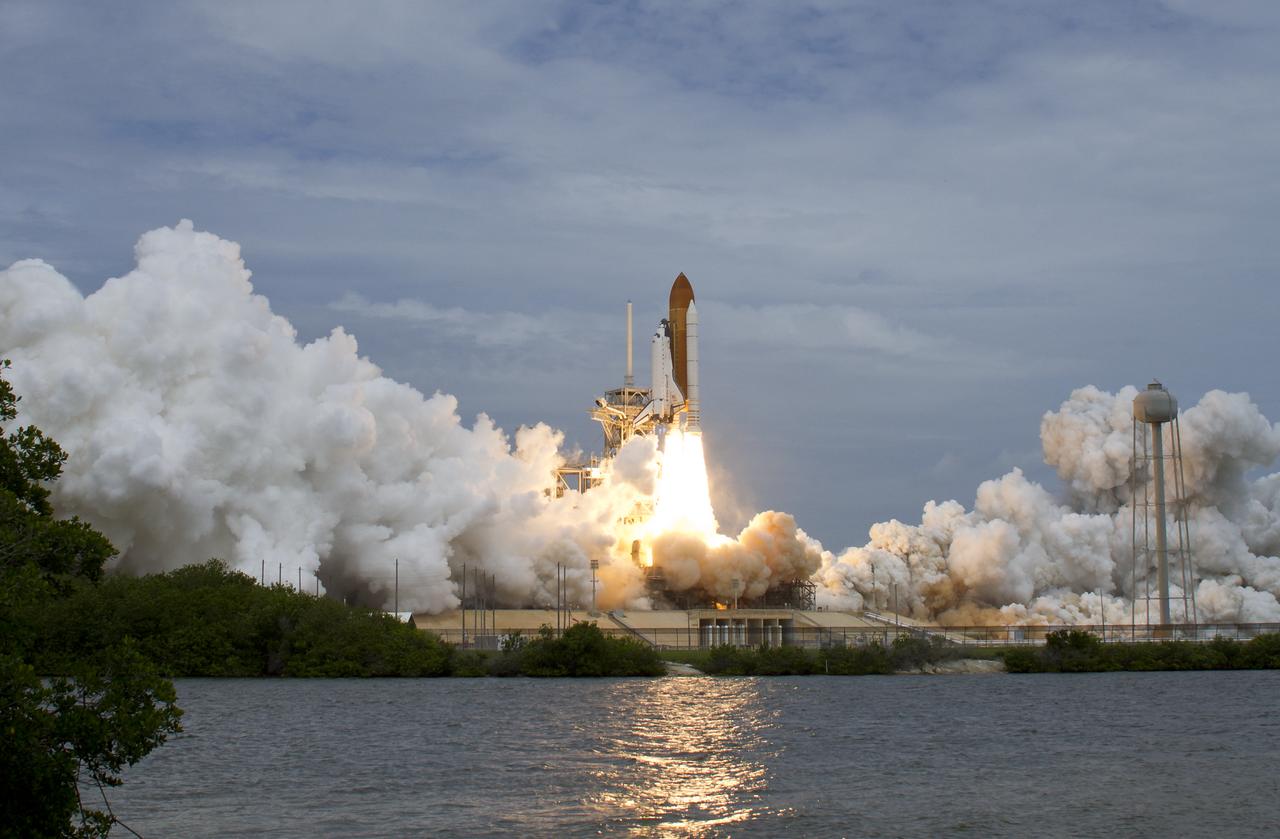
Space shuttle Atlantis is seen as it launches from pad 39A on Friday, July 8, 2011, at NASA's Kennedy Space Center in Cape Canaveral, Fla. The launch of Atlantis, STS-135, is the final flight of the shuttle program, a 12-day mission to the International Space Station. Photo Credit: (NASA/Bill Ingalls)
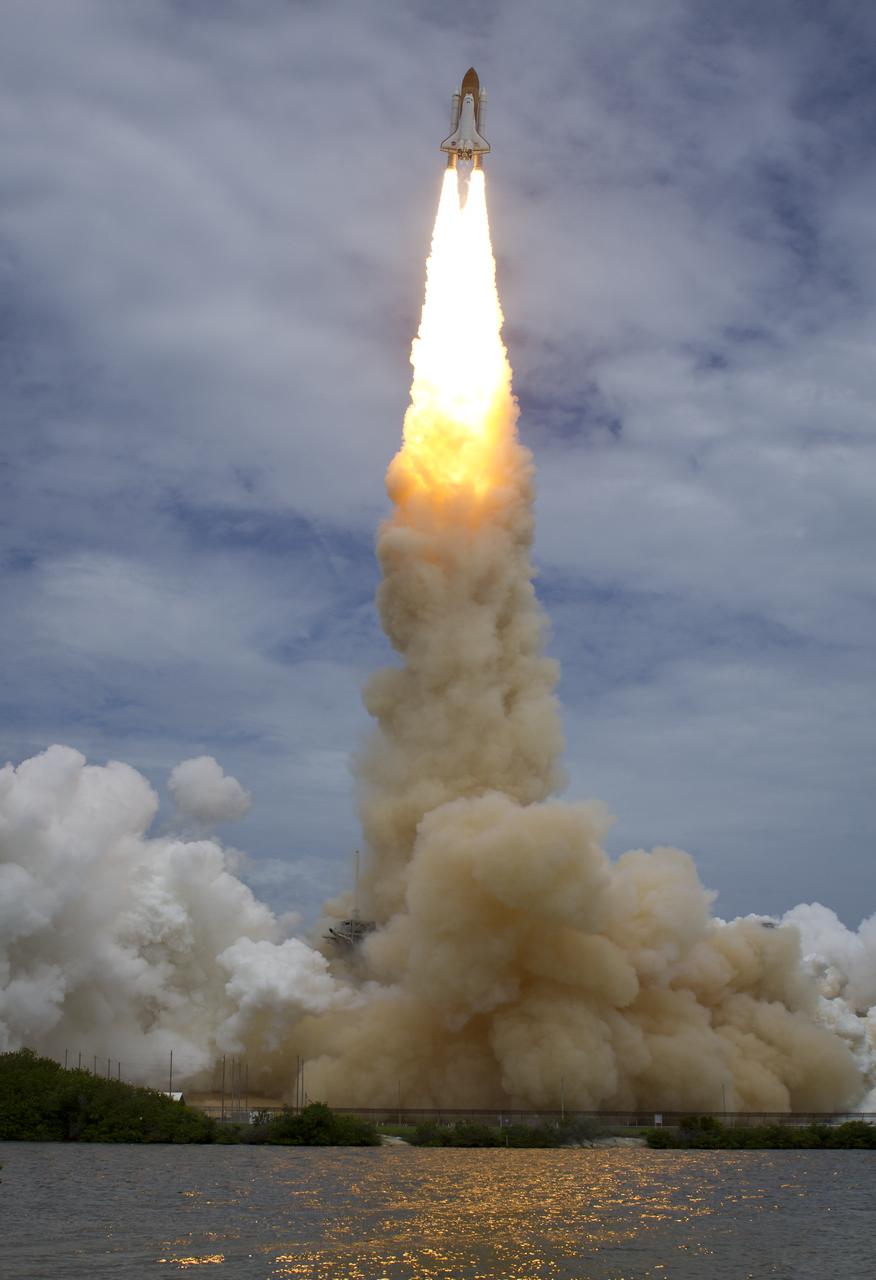
Space shuttle Atlantis is seen as it launches from pad 39A on Friday, July 8, 2011, at NASA's Kennedy Space Center in Cape Canaveral, Fla. The launch of Atlantis, STS-135, is the final flight of the shuttle program, a 12-day mission to the International Space Station. Photo Credit: (NASA/Bill Ingalls)
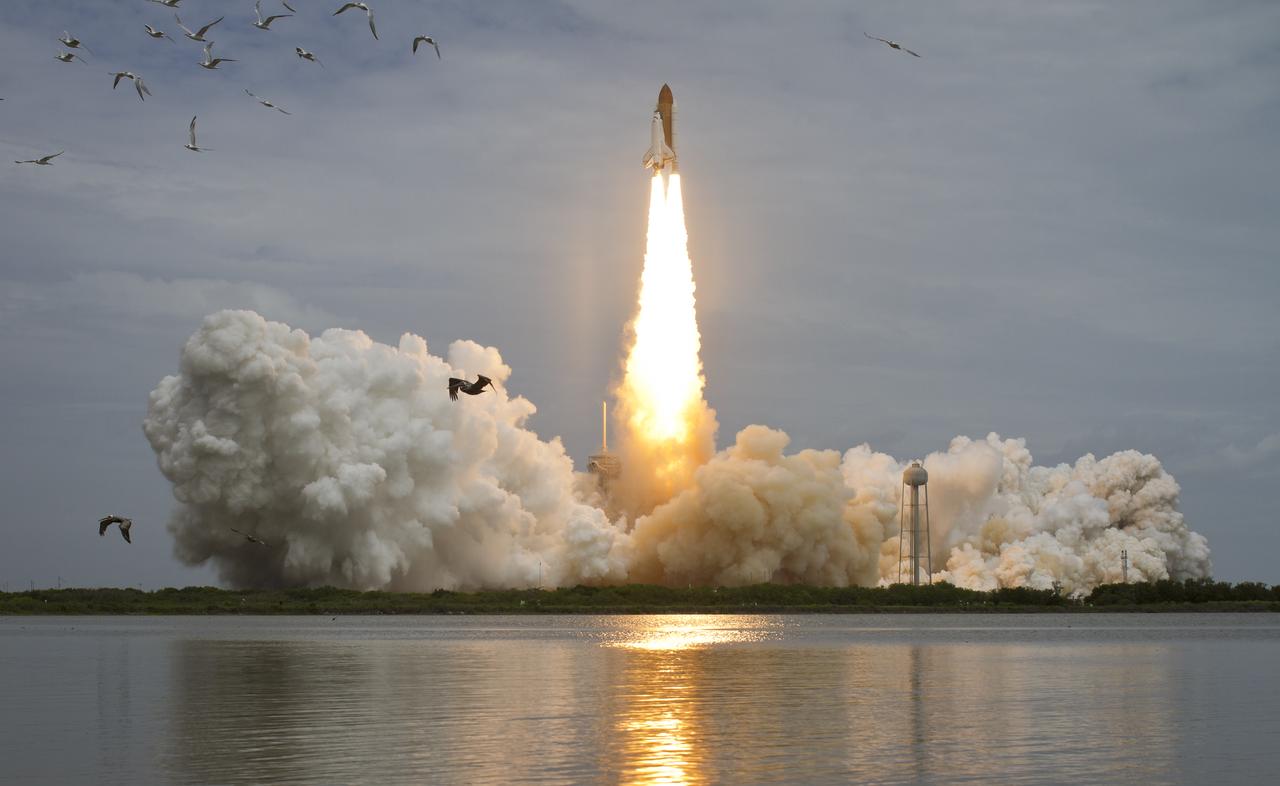
Space shuttle Atlantis is seen as it launches from pad 39A on Friday, July 8, 2011, at NASA's Kennedy Space Center in Cape Canaveral, Fla. The launch of Atlantis, STS-135, is the final flight of the shuttle program, a 12-day mission to the International Space Station. Photo Credit: (NASA/Bill Ingalls)
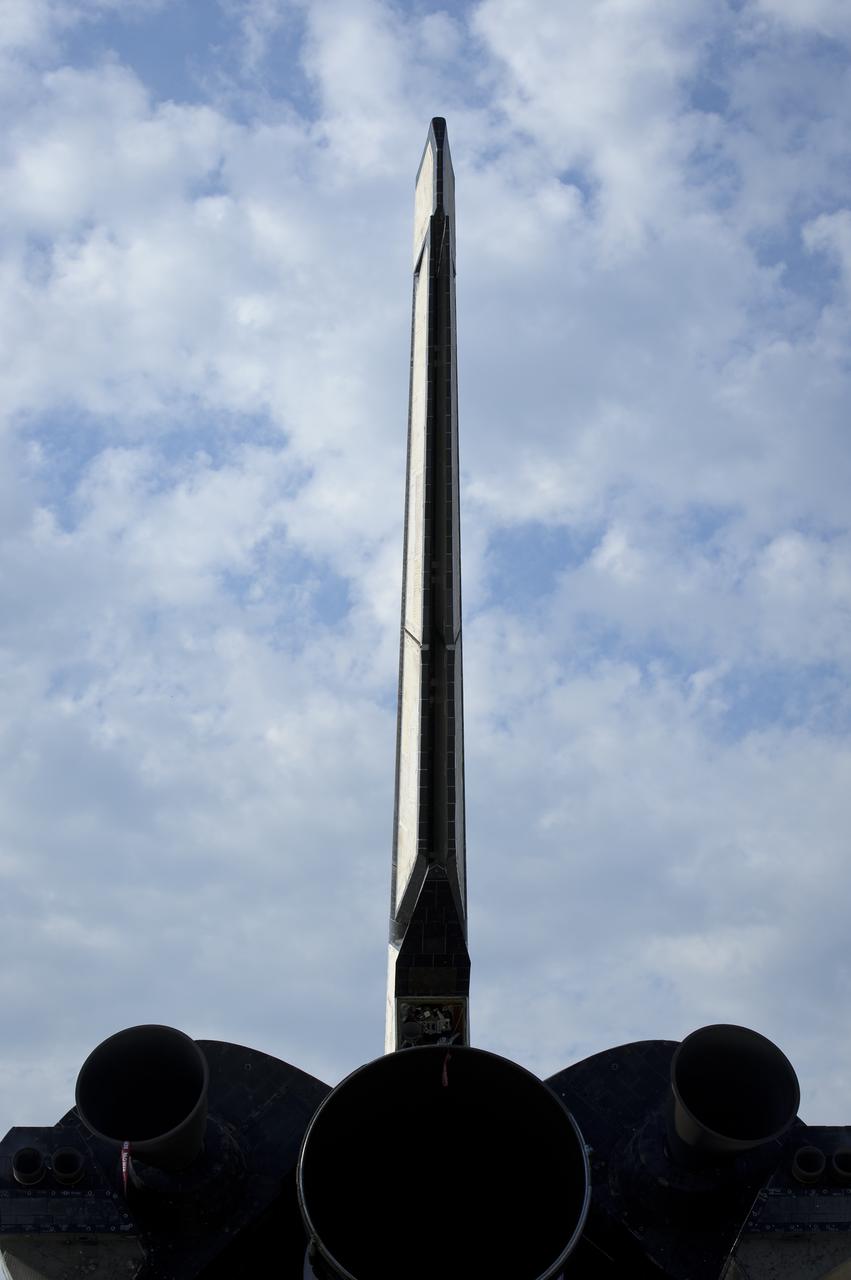
The vertical tail of the space shuttle Atlantis is seen at the Kennedy Space Center Shuttle Landing Facility (SLF) shortly after Atlantis (STS-135) landed early Thursday morning, July 21, 2011, in Cape Canaveral, Fla. Overall, Atlantis spent 307 days in space and traveled nearly 126 million miles during its 33 flights. Atlantis, the fourth orbiter built, launched on its first mission on Oct. 3, 1985. Photo Credit: (NASA/Bill Ingalls)

NM21-401-012 (28 March 1996) --- The Space Shuttle Atlantis is backdropped over the darkness of space, and partially over clouds and open ocean waters on Earth, as it and Russia’s Mir Space Station begin their relative separation following several days of joint operations. This 35mm film was exposed by astronaut Shannon W. Lucid as she was beginning her record-setting stay aboard Mir, as a cosmonaut guest researcher. Onboard with Lucid were her Mir-21 crew mates, cosmonauts Yuriy I. Onufriyenko, commander; and Yuriy V. Usachov, flight engineer. Onboard Atlantis were Kevin P. Chilton, STS-76 mission commander; Richard A. Searfoss, pilot; along with Linda M. Godwin, Ronald M. Sega and Michael R. (Rich) Clifford, mission specialists.

In the Vehicle Assembly Building, markers show the hail damage being repaired on the external tank of Space Shuttle Atlantis. The white hole with a red circle around it is a hole prepared for molding and material application. The red material is sealant tape so the mold doesn't leak when the foam rises against the mold. The white/ translucent square mold is an area where the foam has been applied and the foam has risen and cured against the mold surface. The area will be de-molded and sanded flush the with adjacent area. In late February, Atlantis' external tank received hail damage during a severe thunderstorm that passed through the Kennedy Space Center Launch Complex 39 area. The hail caused visible divots in the giant tank's foam insulation as well as minor surface damage to about 26 heat shield tiles on the shuttle's left wing. The March launch was postponed and has not yet been rescheduled due to the repair process.
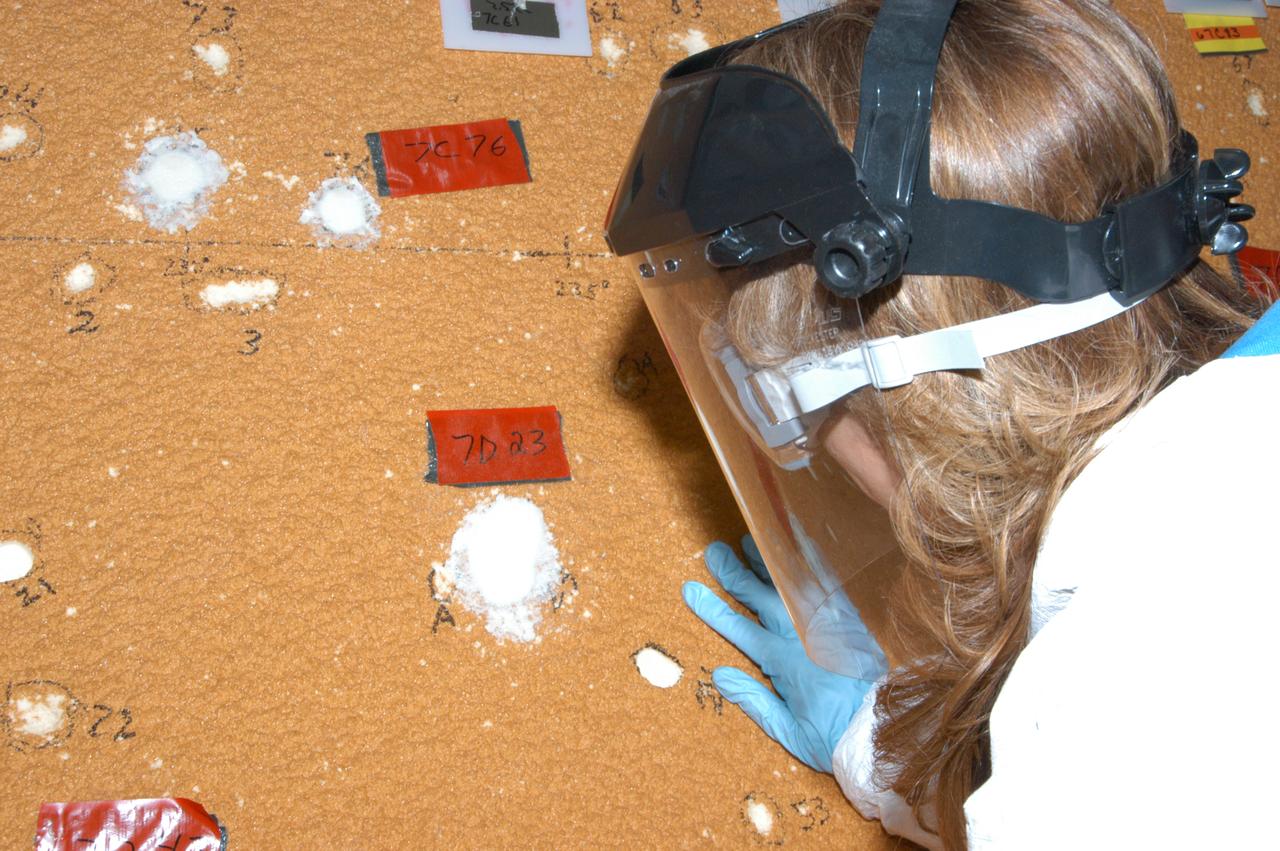
In the Vehicle Assembly Building, United Space Alliance technician Brenda Morris examines the surface on Space Shuttle Atlantis' external tank where hail damage has been repaired. At the top of the photo is a white/translucent square mold where the foam has been applied and the foam has risen and cured against the mold surface. In late February, Atlantis' external tank received hail damage during a severe thunderstorm that passed through the Kennedy Space Center Launch Complex 39 area. The hail caused visible divots in the giant tank's foam insulation as well as minor surface damage to about 26 heat shield tiles on the shuttle's left wing. The March launch was postponed and has not yet been rescheduled due to the repair process.
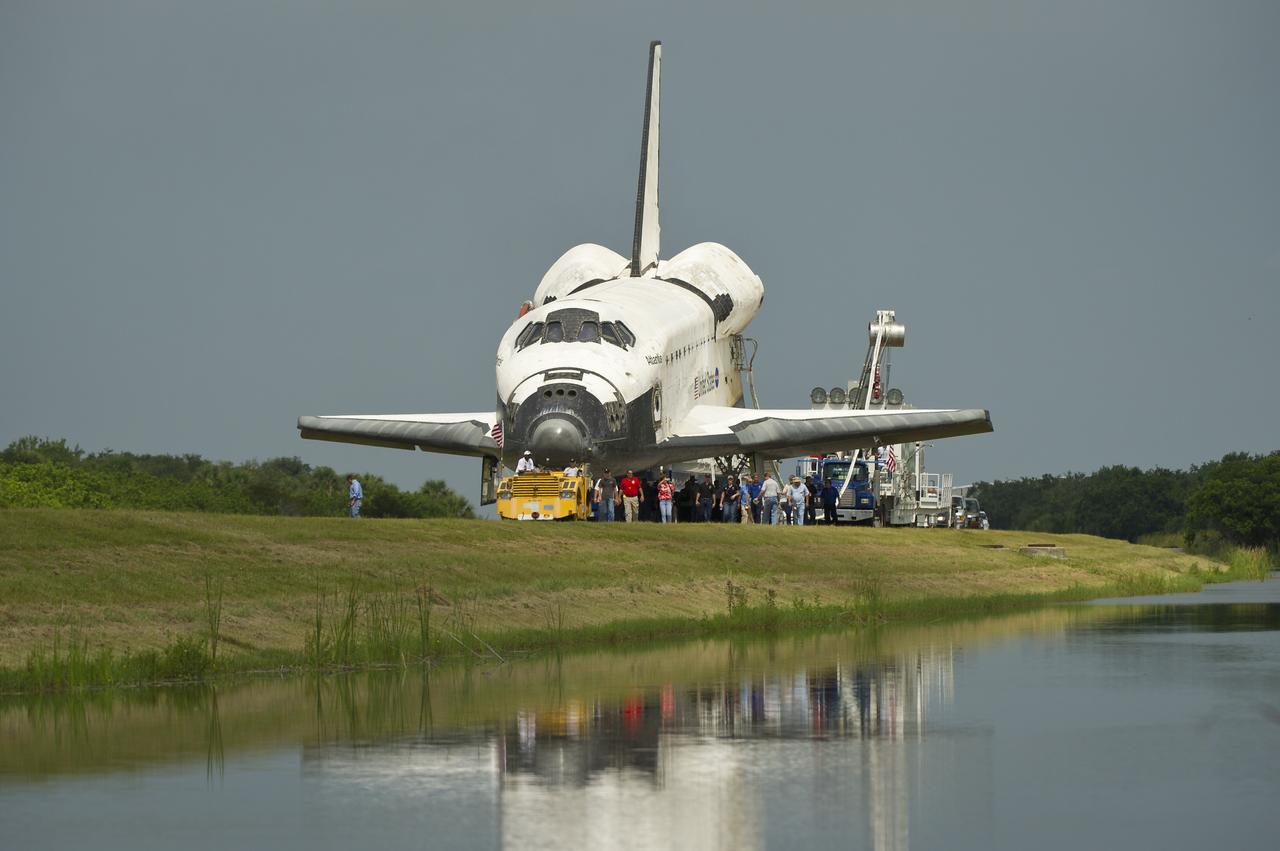
Space shuttle Atlantis (STS-135) is rolled over to the Orbiter Processing Facility (OPF) shortly after landing at NASA's Kennedy Space Center Shuttle Landing Facility (SLF), completing its 13-day mission to the International Space Station (ISS) and the final flight of the Space Shuttle Program, early Thursday morning, July 21, 2011, in Cape Canaveral, Fla. Overall, Atlantis spent 307 days in space and traveled nearly 126 million miles during its 33 flights. Atlantis, the fourth orbiter built, launched on its first mission on Oct. 3, 1985. Photo Credit: (NASA/Bill Ingalls)
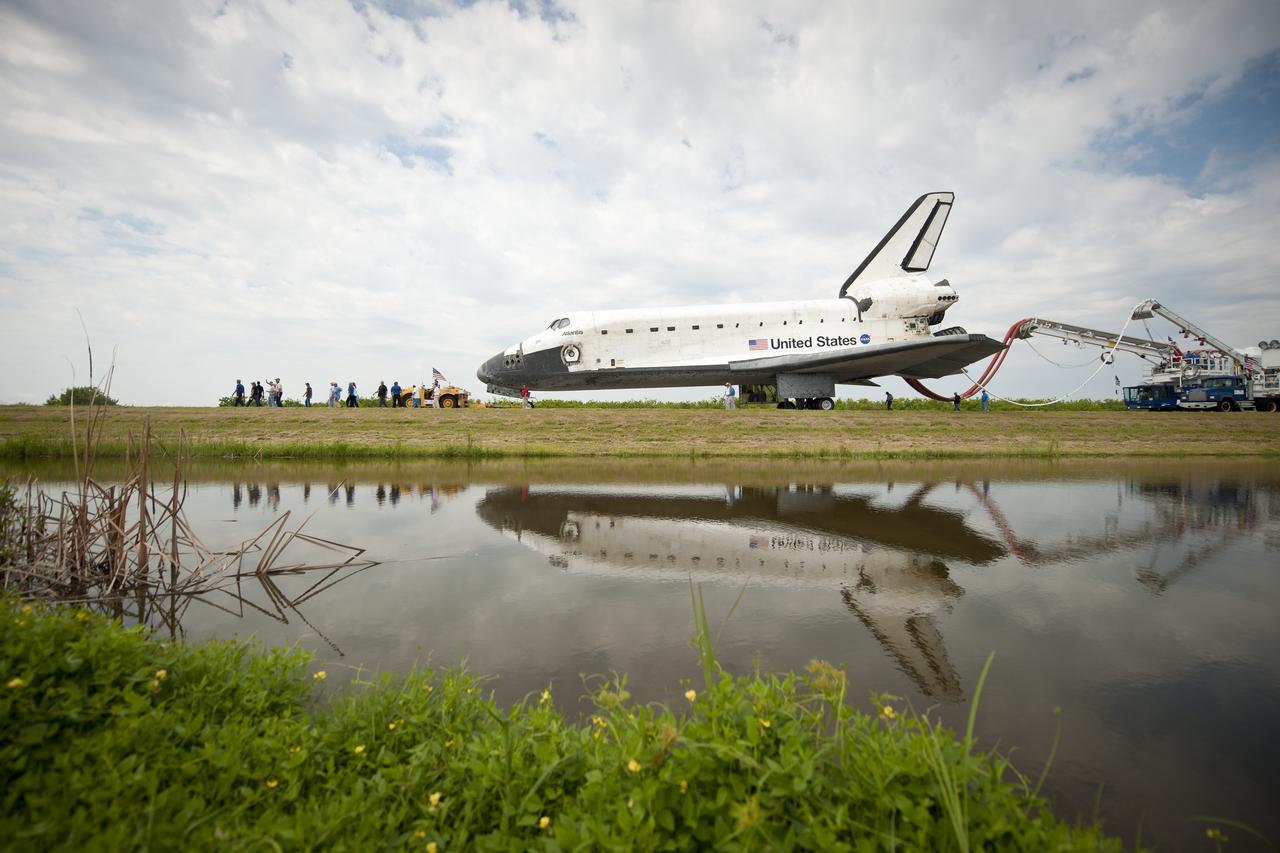
Space shuttle Atlantis (STS-135) is rolled over to the Orbiter Processing Facility (OPF) shortly after landing at NASA's Kennedy Space Center Shuttle Landing Facility (SLF), completing its 13-day mission to the International Space Station (ISS) and the final flight of the Space Shuttle Program, early Thursday morning, July 21, 2011, in Cape Canaveral, Fla. Overall, Atlantis spent 307 days in space and traveled nearly 126 million miles during its 33 flights. Atlantis, the fourth orbiter built, launched on its first mission on Oct. 3, 1985. Photo Credit: (NASA/Bill Ingalls)
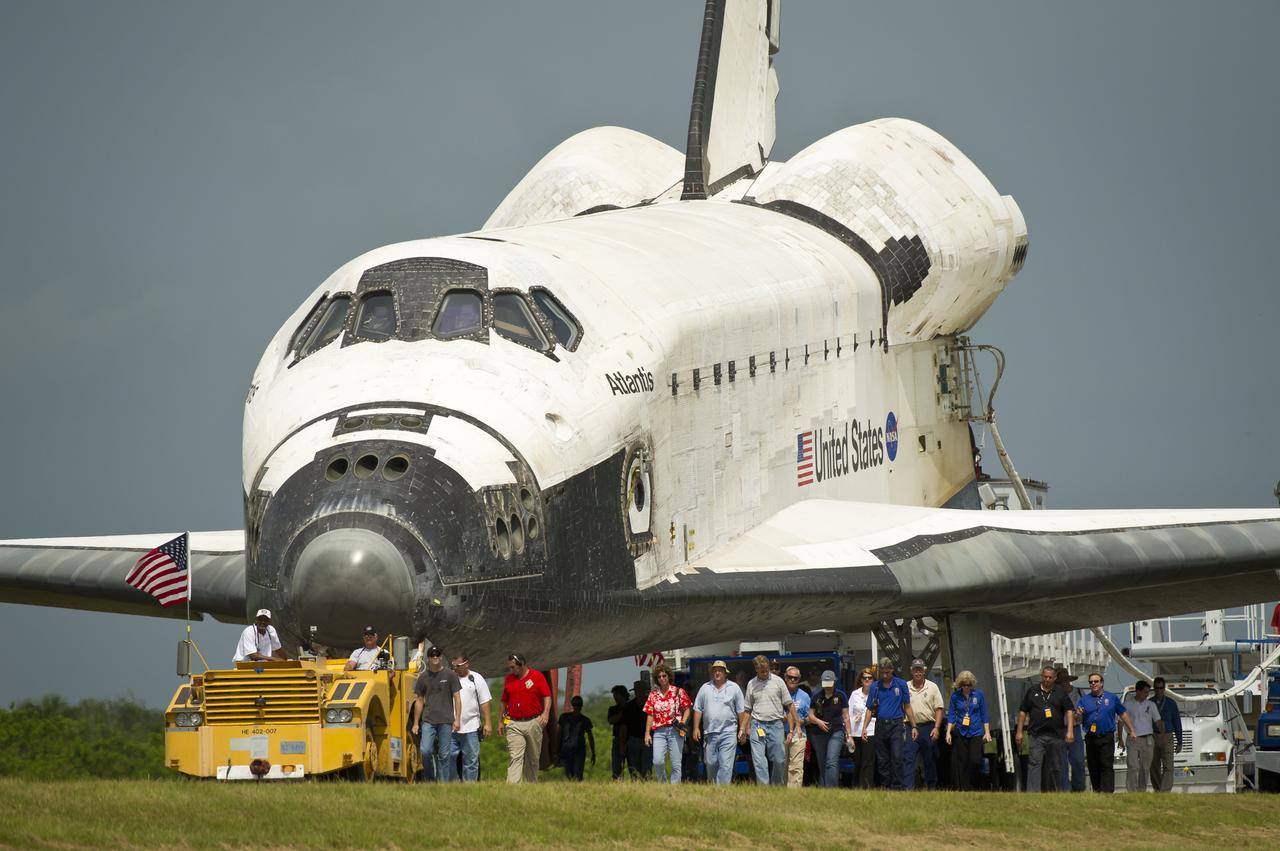
Space shuttle Atlantis (STS-135) is rolled over to the Orbiter Processing Facility (OPF) shortly after landing at NASA's Kennedy Space Center Shuttle Landing Facility (SLF), completing its 13-day mission to the International Space Station (ISS) and the final flight of the Space Shuttle Program, early Thursday morning, July 21, 2011, in Cape Canaveral, Fla. Overall, Atlantis spent 307 days in space and traveled nearly 126 million miles during its 33 flights. Atlantis, the fourth orbiter built, launched on its first mission on Oct. 3, 1985. Photo Credit: (NASA/Bill Ingalls)

Today's VIS image shows part of Atlantis Chaos. Chaos terrain is typified by regions of blocky, often steep sided, mesas interspersed with deep valleys. With time and erosion the valleys widen and the mesas become smaller. The mesas in this image appear brighter than the surrounding lowlands, likely due to relatively less dust cover. Atlantis Chaos is located in Terra Sirenum. Orbit Number: 83606 Latitude: -34.6882 Longitude: 183.955 Instrument: VIS Captured: 2020-10-19 09:36 https://photojournal.jpl.nasa.gov/catalog/PIA24277

Today's VIS image shows part of Atlantis Chaos. Chaos terrain is typified by regions of blocky, often steep sided, mesas interspersed with deep valleys. With time and erosion the valleys widen and the mesas become smaller. The mesas in this image appear brighter than the surrounding lowlands, likely due to relatively less dust cover. Atlantis Chaos is located in Terra Sirenum. Orbit Number: 92160 Latitude: -34.9498 Longitude: 183.405 Instrument: VIS Captured: 2022-09-23 18:04 https://photojournal.jpl.nasa.gov/catalog/PIA25749

NM21-727-030 (23 March 1996) --- This view of the Space Shuttle Atlantis was taken by the two Mir-21 cosmonaut crew members onboard Russia's Mir Space Station, during rendezvous and docking operations on March 23, 1996. The Orbiter Docking System (ODS), the connective tunnel and the Spacehab Module can be seen in Atlantis' cargo bay. With the subsequent delivery of astronaut Shannon W. Lucid to the Mir, the Mir-21 crew grew to three, as the mission specialist quickly become a cosmonaut guest researcher. She will spend approximately 140 days on Mir before returning to Earth.

Onlookers watch as space shuttle Atlantis rolls to its new home at the Kennedy Space Center Visitor Complex, early Friday, Nov. 2, 2012, in Cape Canaveral, Fla. The spacecraft traveled 125,935,769 miles during 33 spaceflights, including 12 missions to the International Space Station. Its final flight, STS-135, closed out the Space Shuttle Program era with a landing on July 21, 2011. Photo Credit: (NASA/Bill Ingalls)
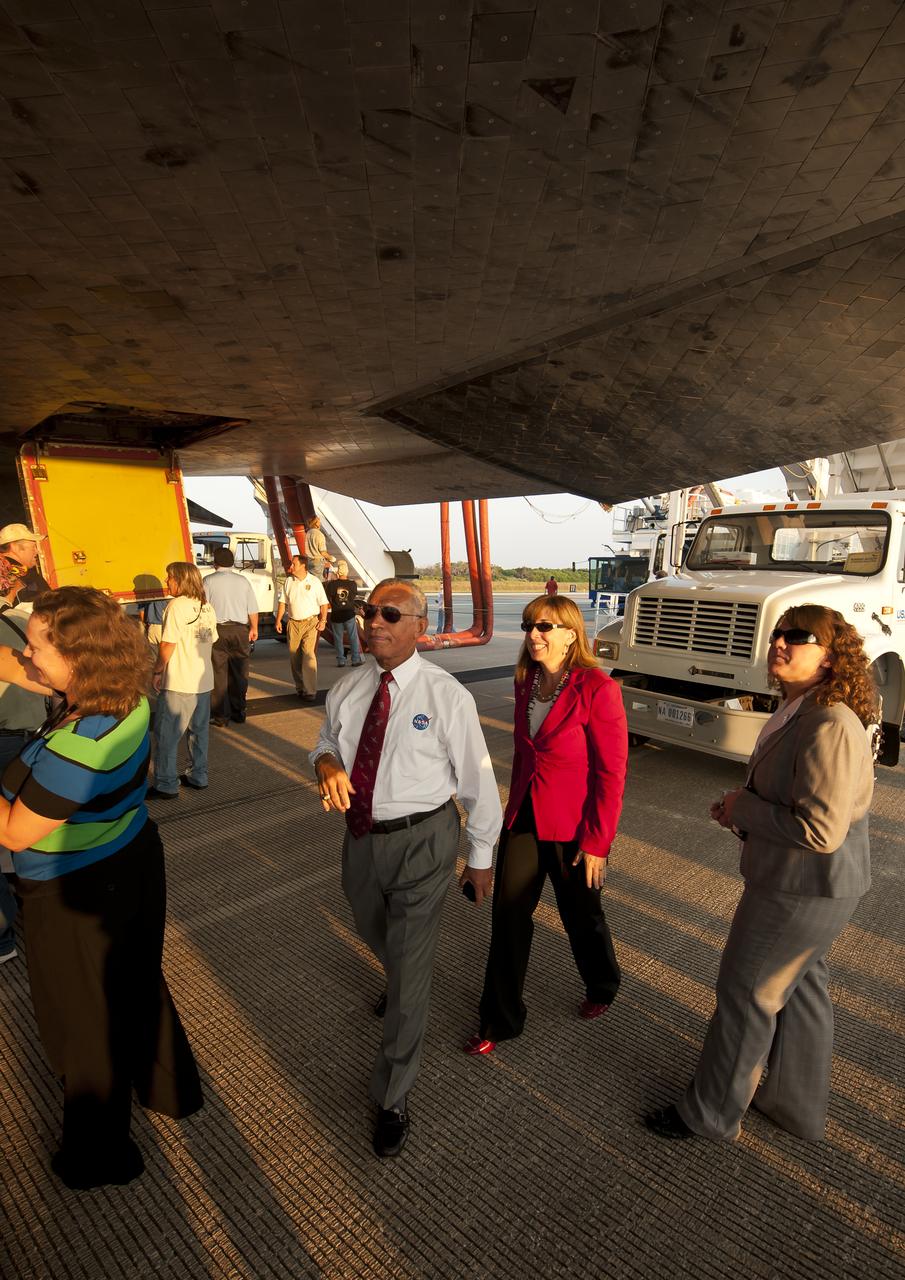
NASA Administrator Charles Bolden and Deputy Administrator Lori Garver walk under the space shuttle Atlantis at the Kennedy Space Center Shuttle Landing Facility (SLF) shortly after Atlantis (STS-135) landed early Thursday morning, July 21, 2011, in Cape Canaveral, Fla. Overall, Atlantis spent 307 days in space and traveled nearly 126 million miles during its 33 flights. Atlantis, the fourth orbiter built, launched on its first mission on Oct. 3, 1985. Photo Credit: (NASA/Bill Ingalls)
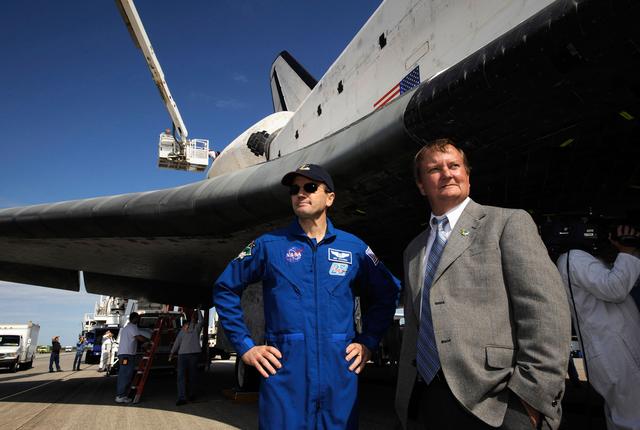
STS-122 Mission Specialist, Rex Walheim, left, and Shuttle Launch Director, Michael D. Leinbach take a moment to watch the close out crew work on the space shuttle Atlantis. Atlantis landed at the Shuttle Landing Facility, 9:07a.m., Wednesday, Feb. 20, 2008 at Kennedy Space Center, Fla. completing delivery of the European Space Agency’s (ESA) Columbus laboratory to the International Space Station. Photo Credit: (NASA/Bill Ingalls)
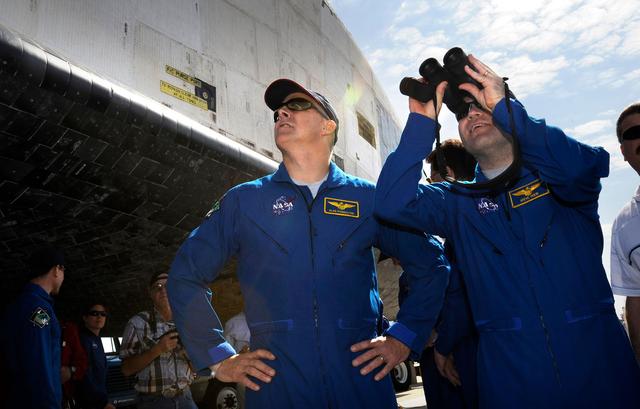
STS-122 Mission Commander Steve Frick, right, and Pilot Alan Poindexter use a pair of binoculars to inspect the outside of the space shuttle Atlantis. Atlantis landed at the Shuttle Landing Facility, 9:07a.m., Wednesday, Feb. 20, 2008 at Kennedy Space Center, Fla. completing delivery of the European Space Agency’s (ESA) Columbus laboratory to the International Space Station. Photo Credit: (NASA/Bill Ingalls)
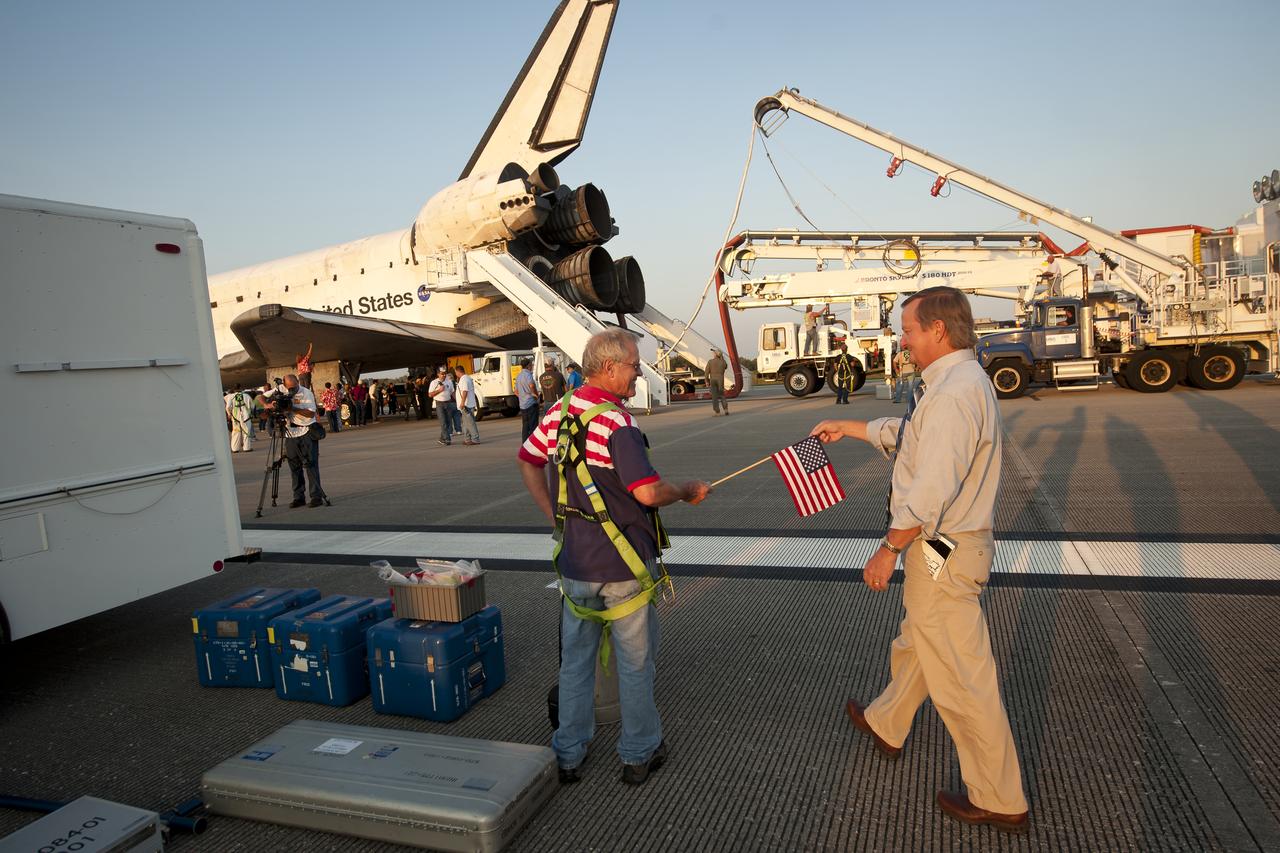
NASA Launch Director Michael Leinbach, right, hands an American flag to a worker on the runway of the Shuttle Landing Facility (SLF) shortly after the space shuttle Atlantis (STS-135) landed early Thursday morning, July 21, 2011, in Cape Canaveral, Fla. Overall, Atlantis spent 307 days in space and traveled nearly 126 million miles during its 33 flights. Atlantis, the fourth orbiter built, launched on its first mission on Oct. 3, 1985. Photo Credit: (NASA/Bill Ingalls)
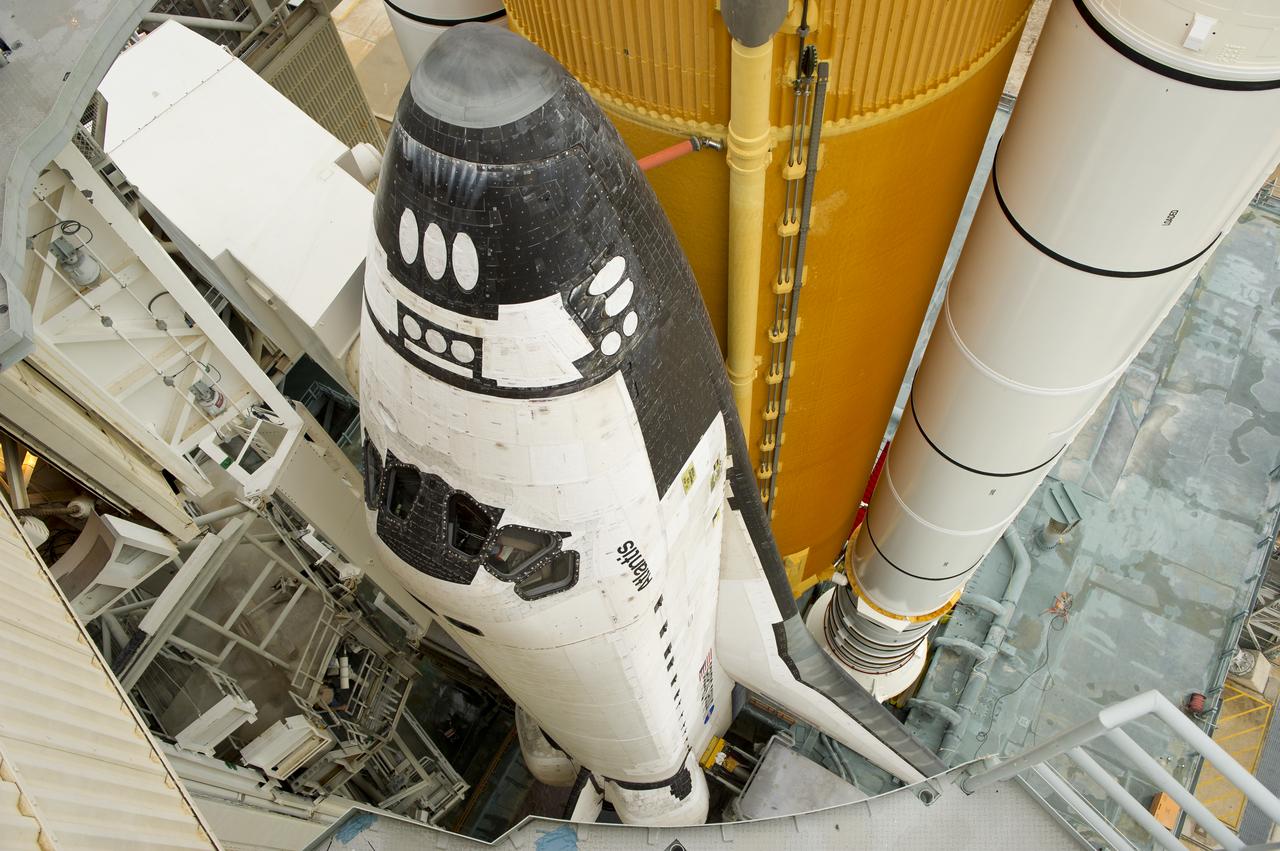
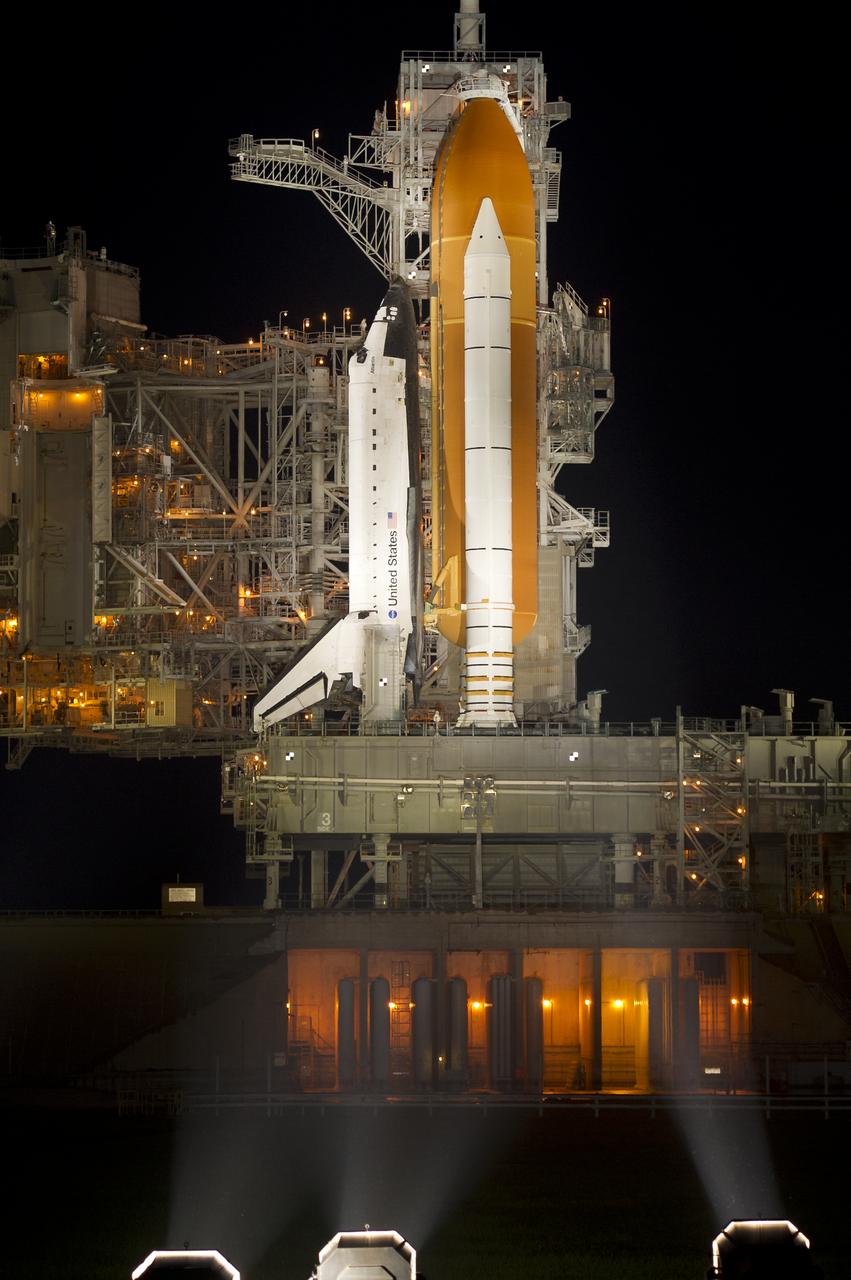
The space shuttle Atlantis is revealed as the rotating service structure (RSS) is rolled back at launch pad 39a on Thursday, July 7, 2011 at the NASA Kennedy Space Center in Cape Canaveral, Fla. Atlantis is set to liftoff Friday, July 8, on the final flight of the shuttle program, STS-135, a 12-day mission to the International Space Station. Photo Credit: (NASA/Bill Ingalls)
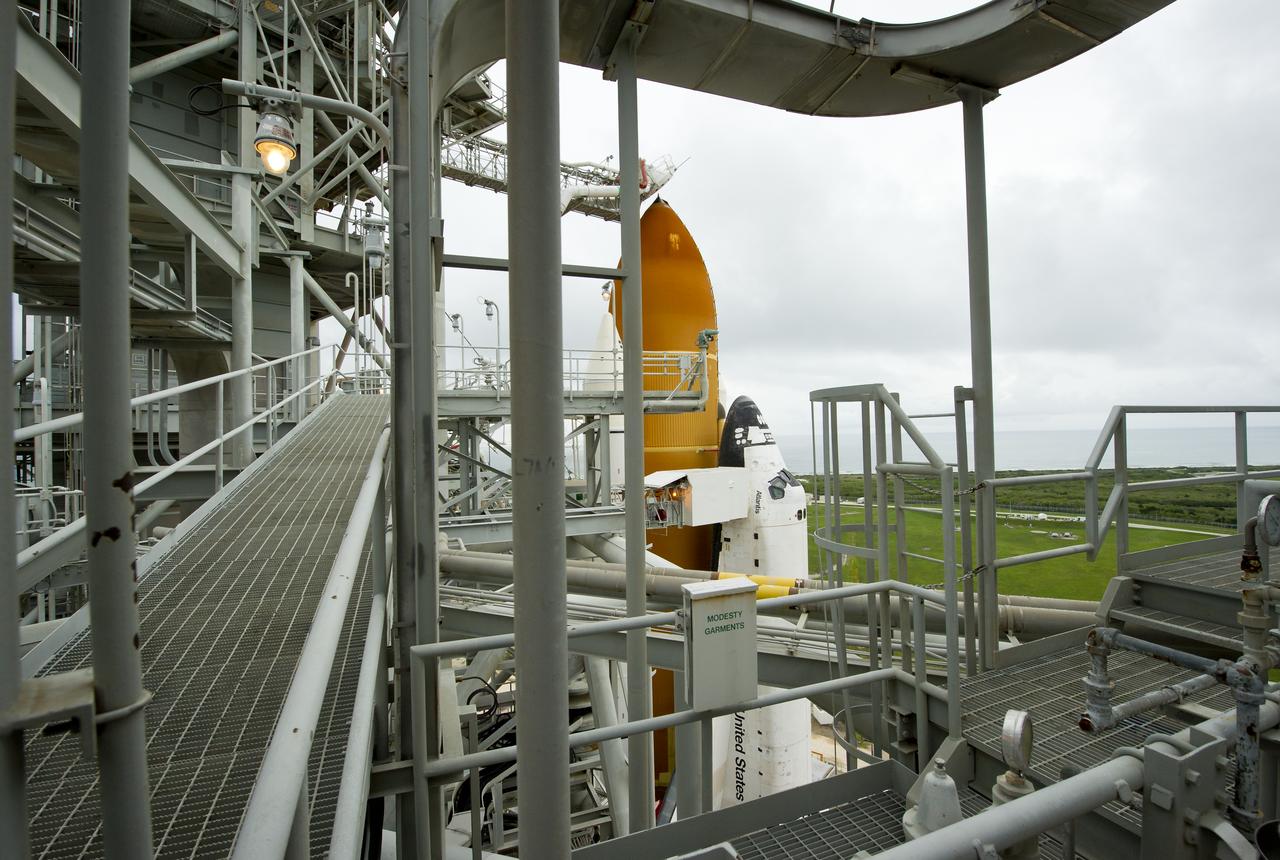
The space shuttle Atlantis is revealed as the rotating service structure (RSS) is rolled back at launch pad 39a on Thursday, July 7, 2011 at the NASA Kennedy Space Center in Cape Canaveral, Fla. Atlantis is set to liftoff Friday, July 8, on the final flight of the shuttle program, STS-135, a 12-day mission to the International Space Station. Photo Credit: (NASA/Bill Ingalls)
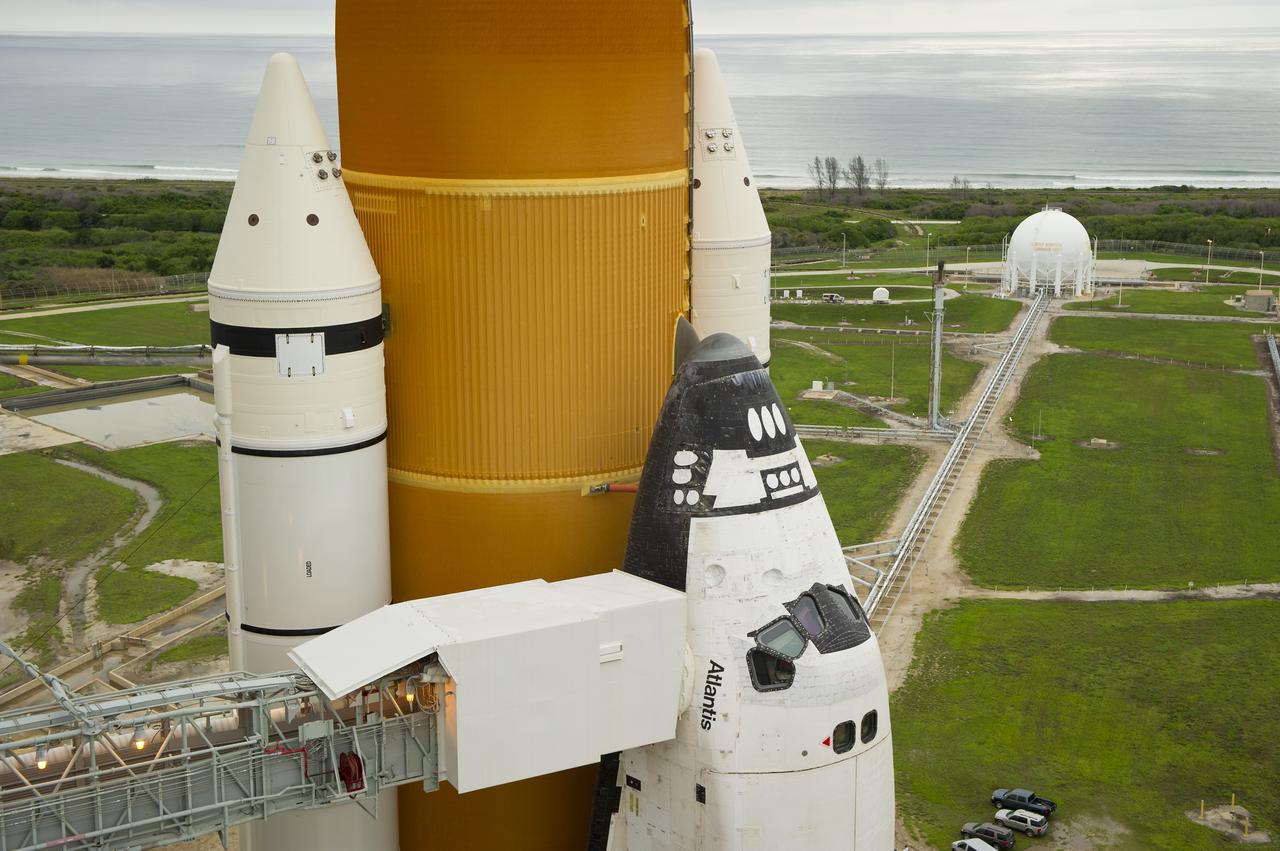
The space shuttle Atlantis is revealed as the rotating service structure (RSS) is rolled back at launch pad 39a on Thursday, July 7, 2011 at the NASA Kennedy Space Center in Cape Canaveral, Fla. Atlantis is set to liftoff Friday, July 8, on the final flight of the shuttle program, STS-135, a 12-day mission to the International Space Station. Photo Credit: (NASA/Bill Ingalls)

The space shuttle Atlantis is seen shortly after the rotating service structure (RSS) was rolled back at launch pad 39a, Thursday, July 7, 2011 at the NASA Kennedy Space Center in Cape Canaveral, Fla. Atlantis is set to liftoff Friday, July 8, on the final flight of the shuttle program, STS-135, a 12-day mission to the International Space Station. Photo Credit: (NASA/Bill Ingalls)
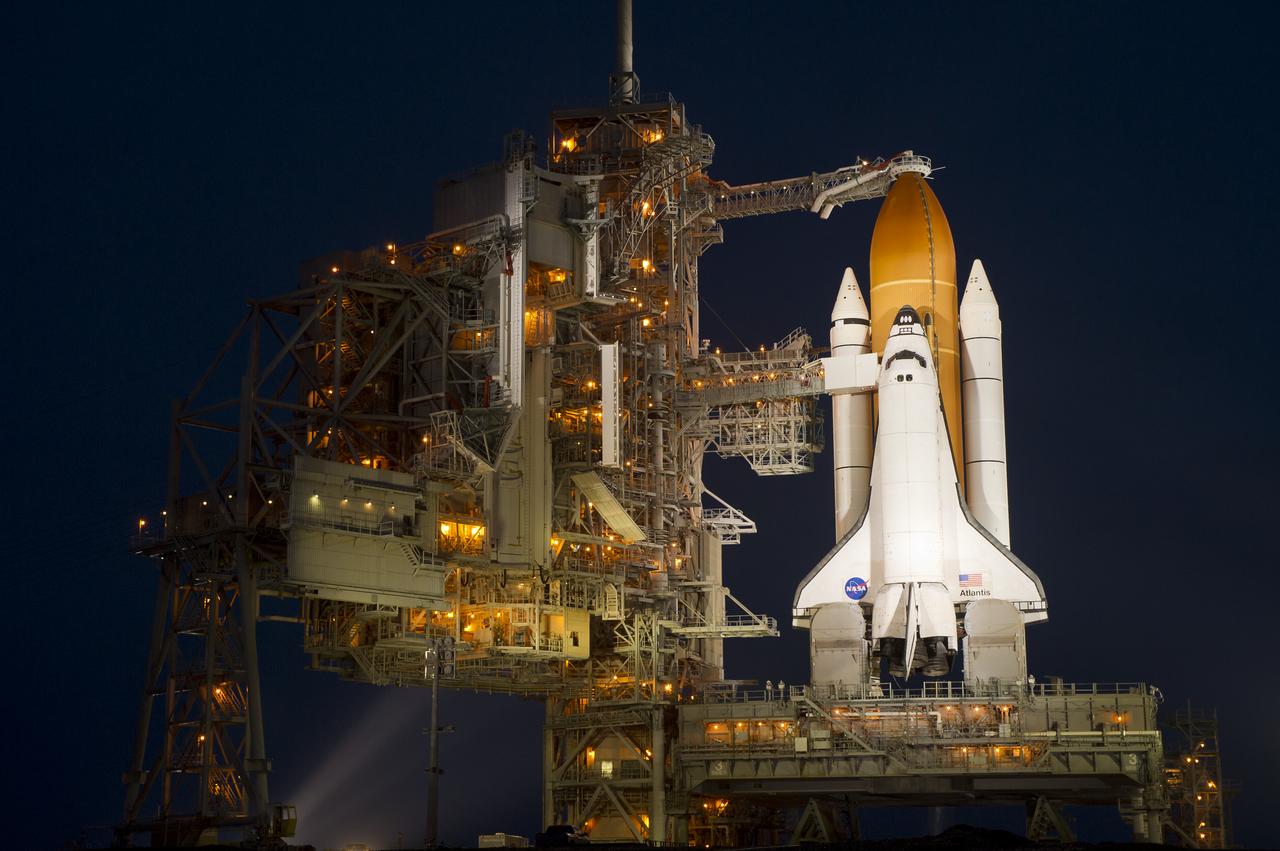
The space shuttle Atlantis is seen shortly after the rotating service structure (RSS) was rolled back at launch pad 39a, Thursday, July 7, 2011 at the NASA Kennedy Space Center in Cape Canaveral, Fla. Atlantis is set to liftoff Friday, July 8, on the final flight of the shuttle program, STS-135, a 12-day mission to the International Space Station. Photo Credit: (NASA/Bill Ingalls)
The space shuttle Atlantis is seen shortly after the rotating service structure (RSS) was rolled back at launch pad 39a, Thursday, July 7, 2011 at the NASA Kennedy Space Center in Cape Canaveral, Fla. Atlantis is set to liftoff Friday, July 8, on the final flight of the shuttle program, STS-135, a 12-day mission to the International Space Station. Photo Credit: (NASA/Bill Ingalls)
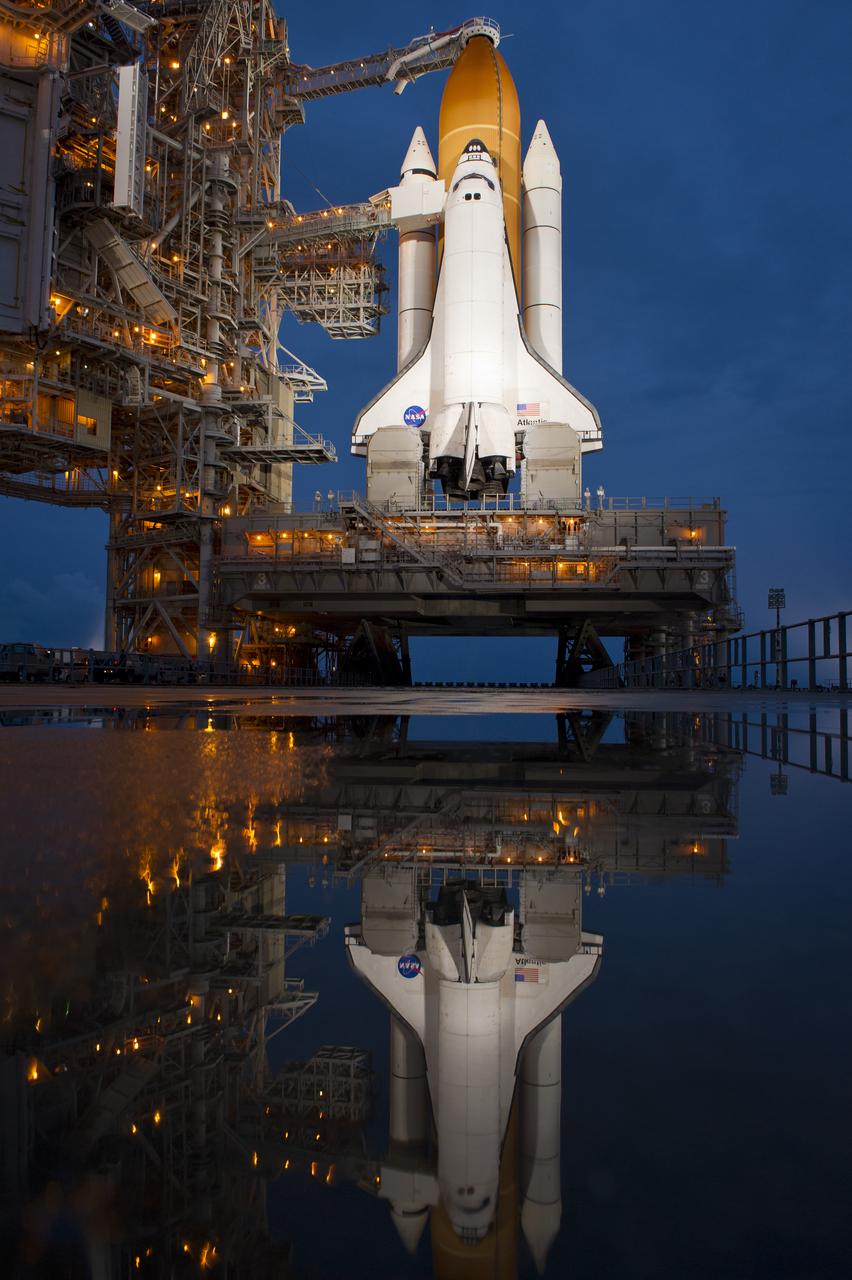
The space shuttle Atlantis is seen shortly after the rotating service structure (RSS) was rolled back at launch pad 39a, Thursday, July 7, 2011 at the NASA Kennedy Space Center in Cape Canaveral, Fla. Atlantis is set to liftoff Friday, July 8, on the final flight of the shuttle program, STS-135, a 12-day mission to the International Space Station. Photo Credit: (NASA/Bill Ingalls)
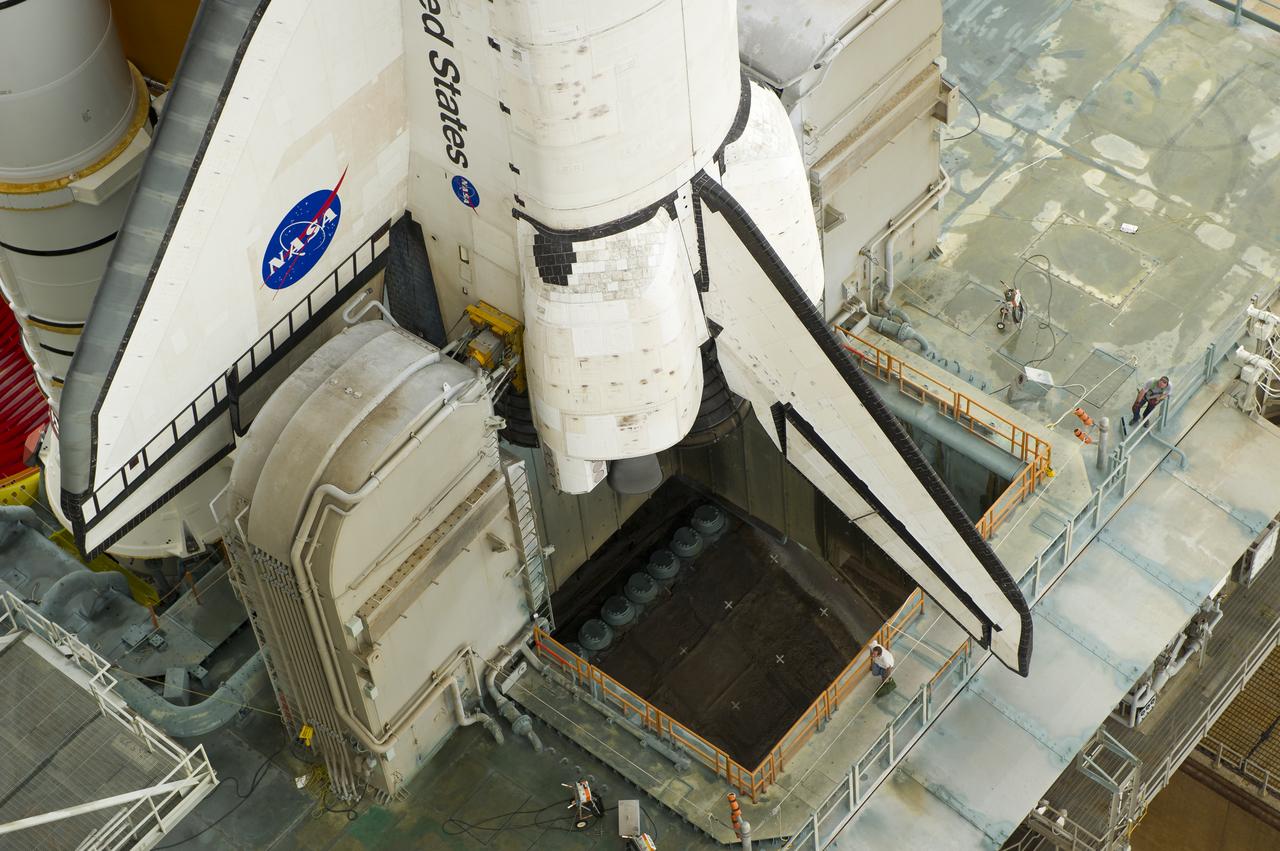
The space shuttle Atlantis is revealed as the rotating service structure (RSS) is rolled back at launch pad 39a on Thursday, July 7, 2011 at the NASA Kennedy Space Center in Cape Canaveral, Fla. Atlantis is set to liftoff Friday, July 8, on the final flight of the shuttle program, STS-135, a 12-day mission to the International Space Station. Photo Credit: (NASA/Bill Ingalls)
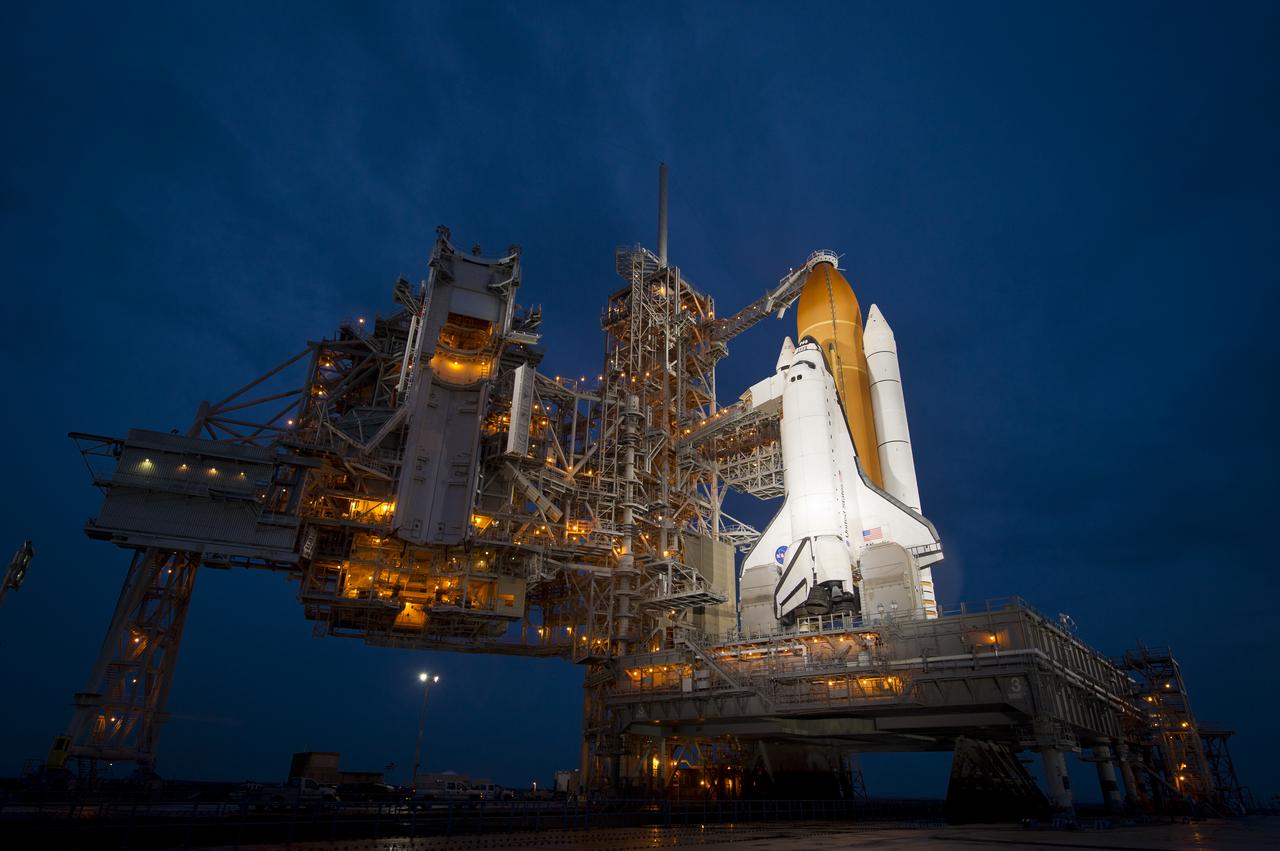
The space shuttle Atlantis is seen shortly after the rotating service structure (RSS) was rolled back at launch pad 39a, Thursday, July 7, 2011 at the NASA Kennedy Space Center in Cape Canaveral, Fla. Atlantis is set to liftoff Friday, July 8, on the final flight of the shuttle program, STS-135, a 12-day mission to the International Space Station. Photo Credit: (NASA/Bill Ingalls)
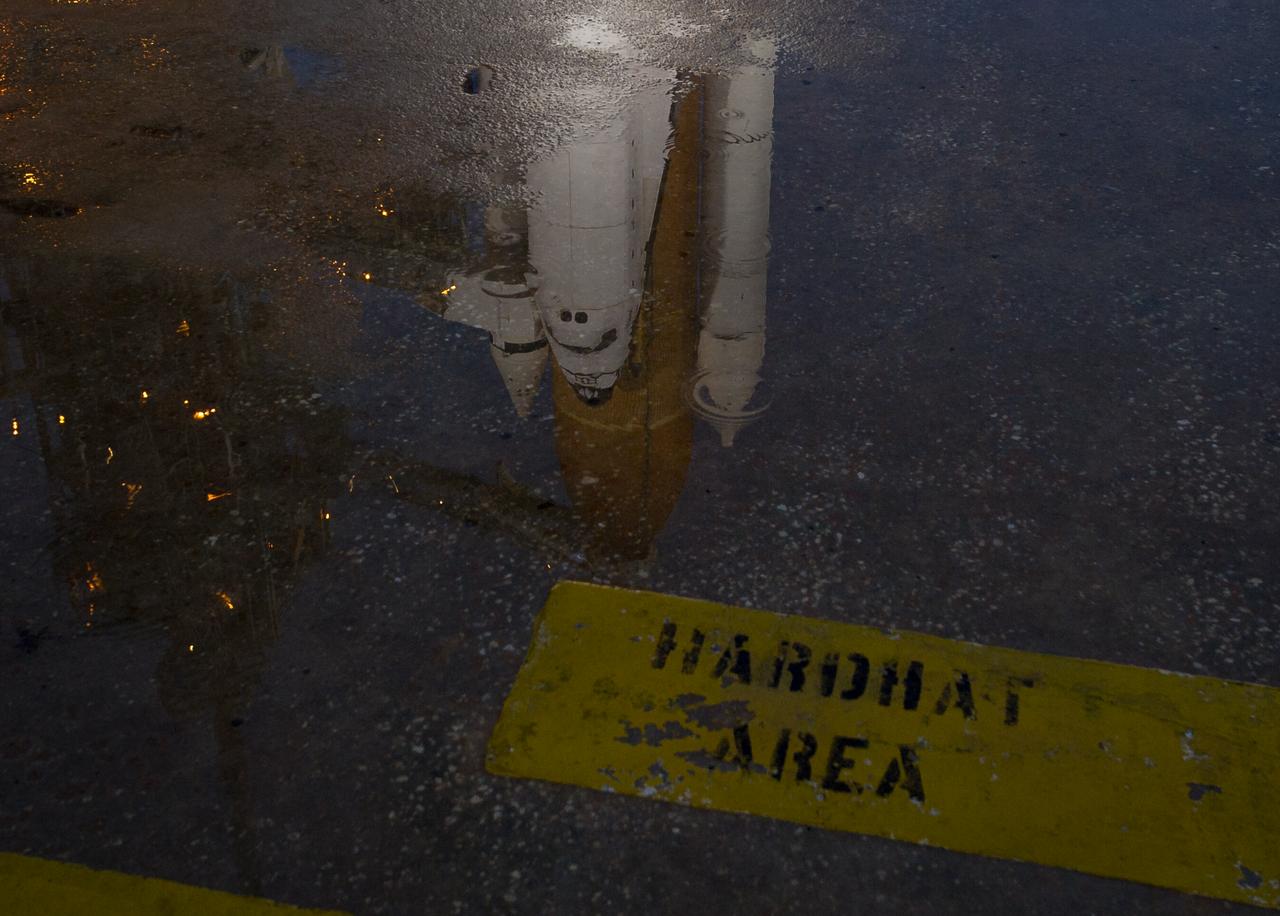
The space shuttle Atlantis is seen shortly after the rotating service structure (RSS) was rolled back at launch pad 39a, Thursday, July 7, 2011 at the NASA Kennedy Space Center in Cape Canaveral, Fla. Atlantis is set to liftoff Friday, July 8, on the final flight of the shuttle program, STS-135, a 12-day mission to the International Space Station. Photo Credit: (NASA/Bill Ingalls)
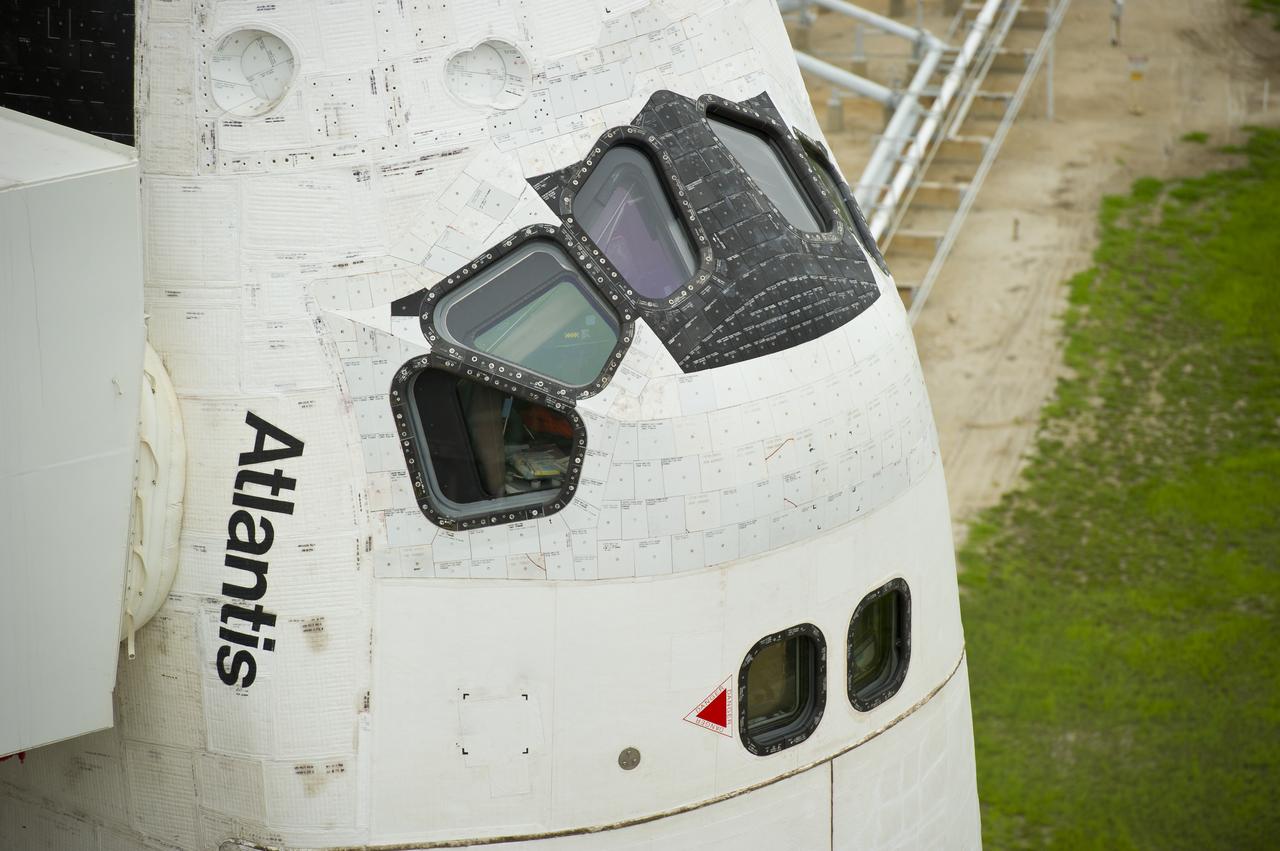
The space shuttle Atlantis is revealed as the rotating service structure (RSS) is rolled back at launch pad 39a on Thursday, July 7, 2011 at the NASA Kennedy Space Center in Cape Canaveral, Fla. Atlantis is set to liftoff Friday, July 8, on the final flight of the shuttle program, STS-135, a 12-day mission to the International Space Station. Photo Credit: (NASA/Bill Ingalls)
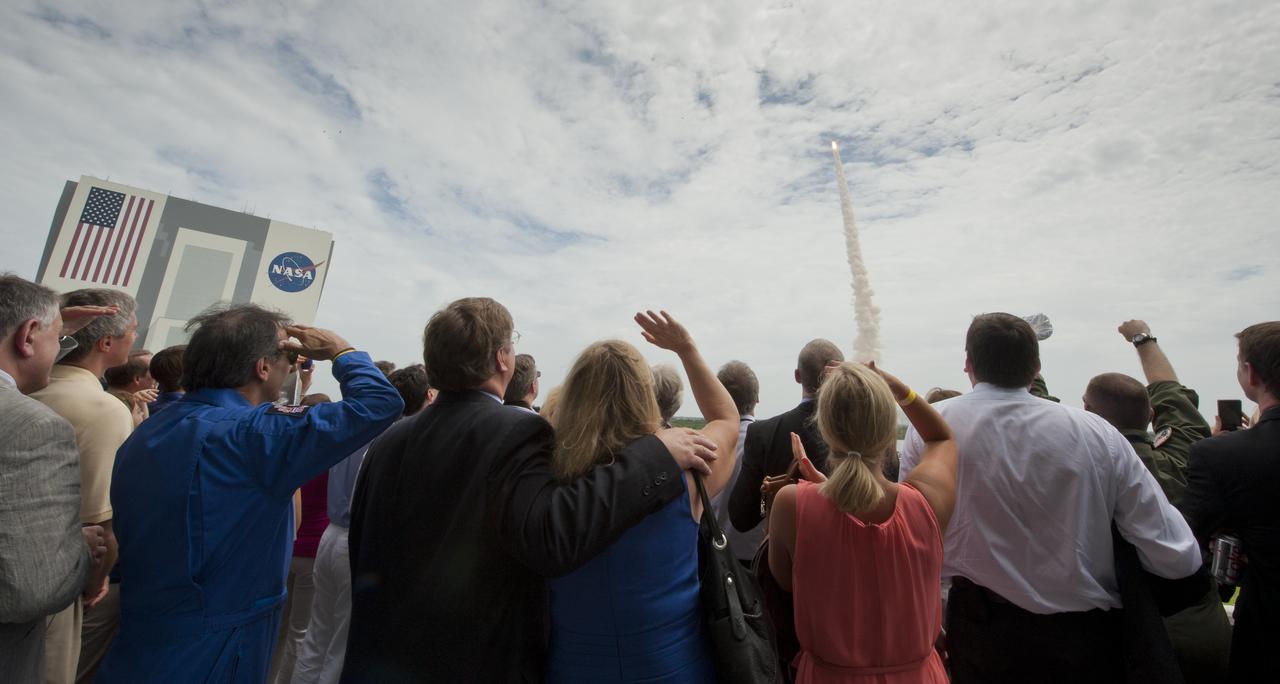
Guests look on from the terrace of Operations Support Building II as space shuttle Atlantis launches from launch pad 39A on the STS-135 mission Friday, July 8, 2011, at Kennedy Space Center in Cape Canaveral, Fla. Atlantis and its crew will deliver to the International Space Station the Raffaello multipurpose logistics module containing supplies and spare parts for the space station. Photo Credit: (NASA/Carla Cioffi)
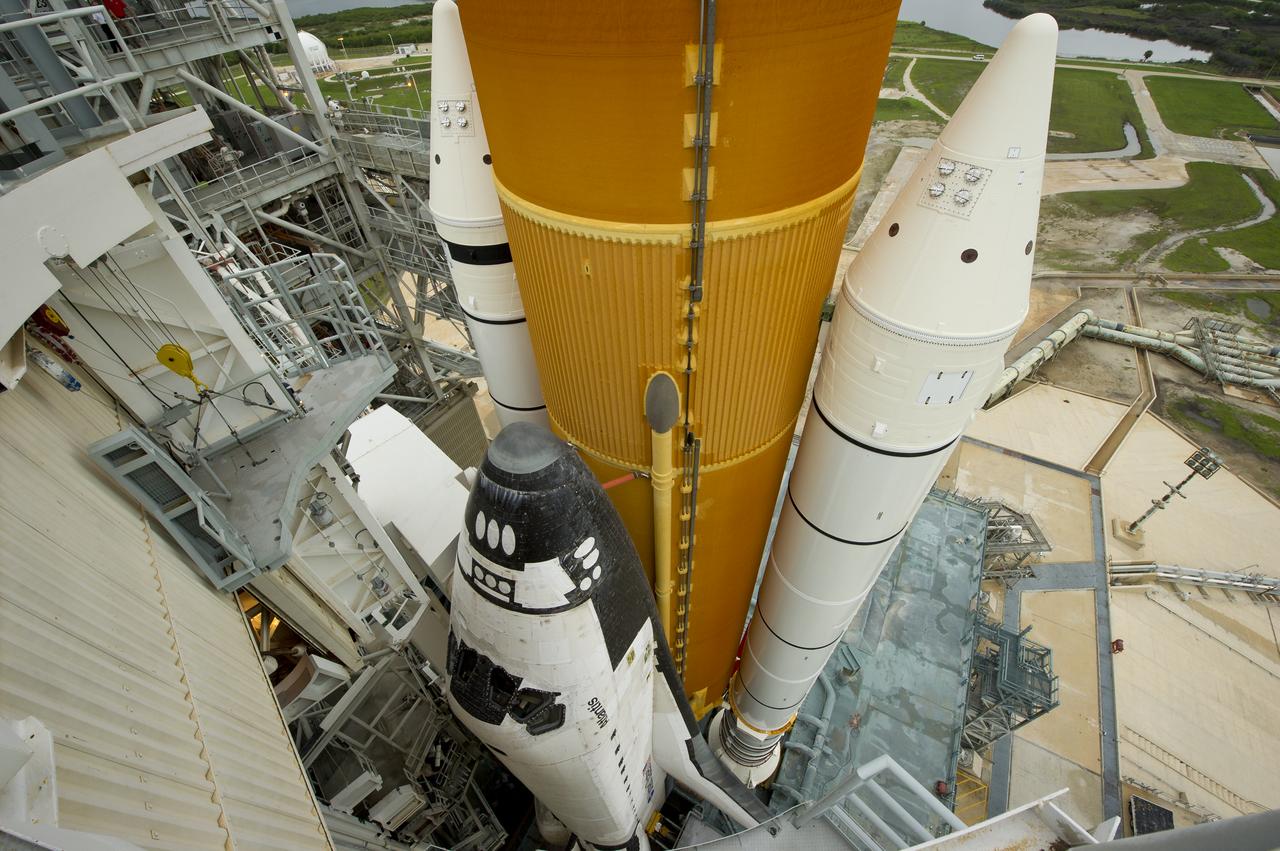
The space shuttle Atlantis is revealed as the rotating service structure (RSS) is rolled back at launch pad 39a on Thursday, July 7, 2011 at the NASA Kennedy Space Center in Cape Canaveral, Fla. Atlantis is set to liftoff Friday, July 8, on the final flight of the shuttle program, STS-135, a 12-day mission to the International Space Station. Photo Credit: (NASA/Bill Ingalls)
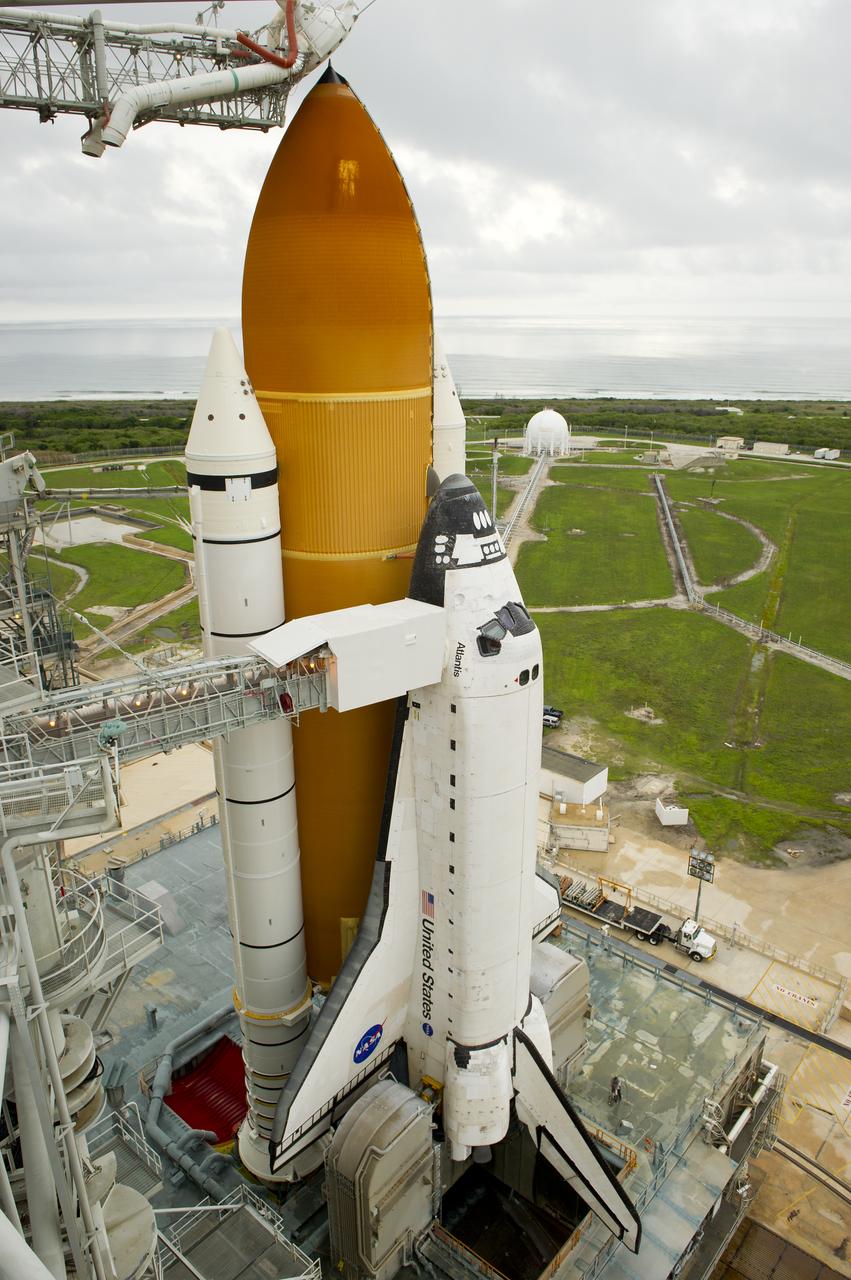
The space shuttle Atlantis is revealed as the rotating service structure (RSS) is rolled back at launch pad 39a on Thursday, July 7, 2011 at the NASA Kennedy Space Center in Cape Canaveral, Fla. Atlantis is set to liftoff Friday, July 8, on the final flight of the shuttle program, STS-135, a 12-day mission to the International Space Station. Photo Credit: (NASA/Bill Ingalls)
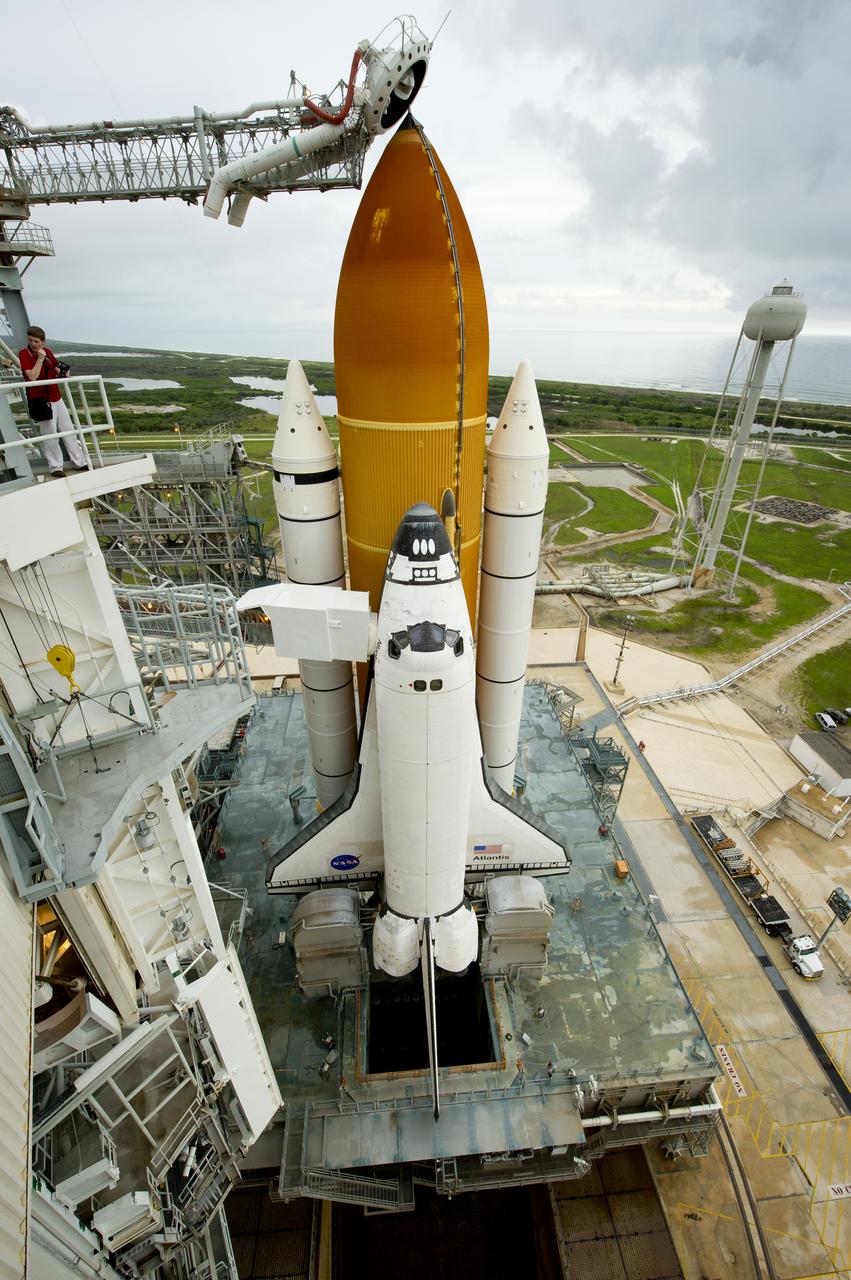
The space shuttle Atlantis is revealed as the rotating service structure (RSS) is rolled back at launch pad 39a on Thursday, July 7, 2011 at the NASA Kennedy Space Center in Cape Canaveral, Fla. Atlantis is set to liftoff Friday, July 8, on the final flight of the shuttle program, STS-135, a 12-day mission to the International Space Station. Photo Credit: (NASA/Bill Ingalls)
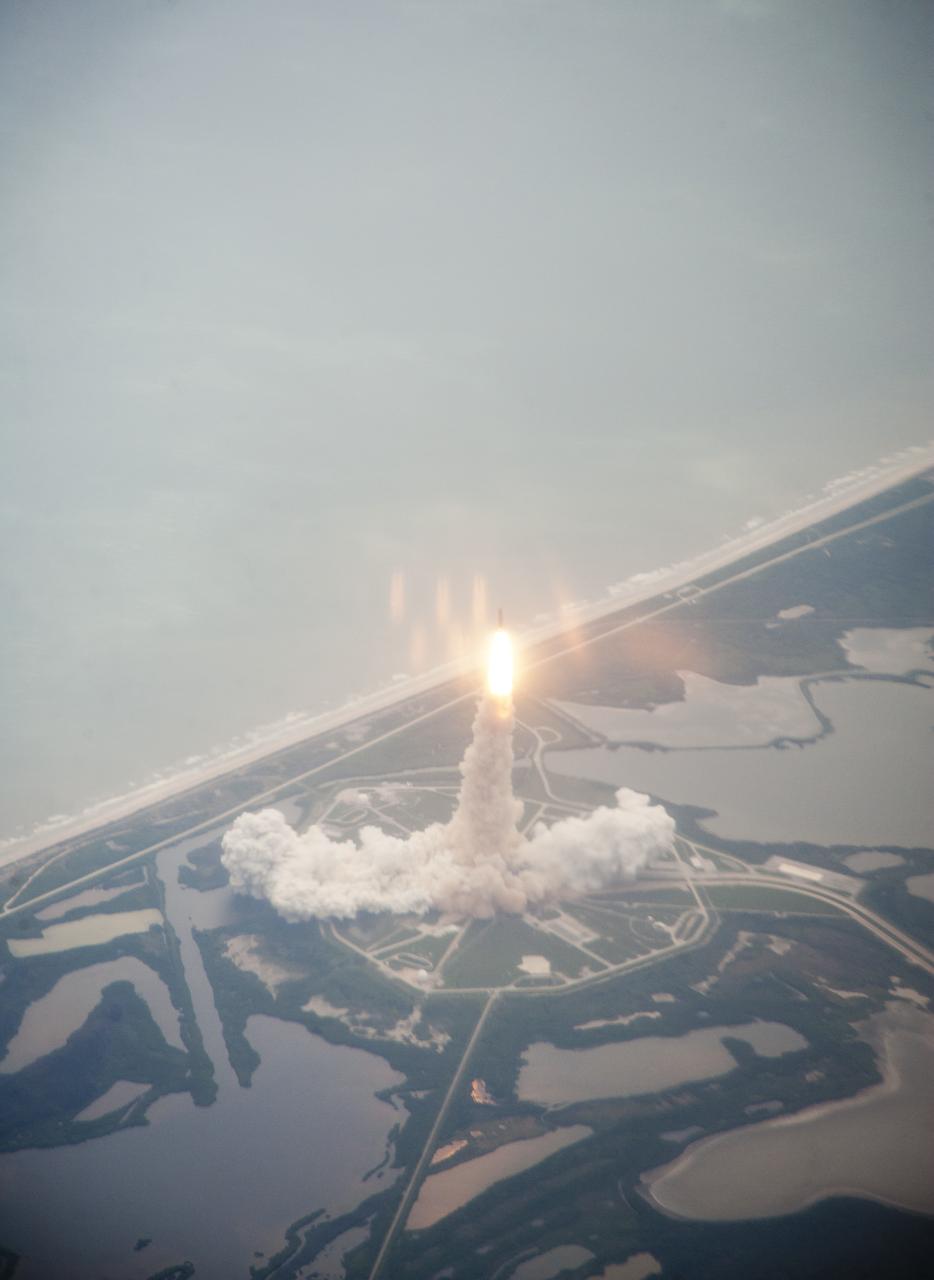
Space shuttle Atlantis is seen through the window of a Shuttle Training Aircraft (STA) as it launches from launch pad 39A at Kennedy Space Center on the STS-135 mission, Friday, July 8, 2011 in Cape Canaveral, Fla. Atlantis launched on the final flight of the shuttle program on a 12-day mission to the International Space Station. The STS-135 crew will deliver the Raffaello multipurpose logistics module containing supplies and spare parts for the space station. Photo Credit: (NASA/Dick Clark)
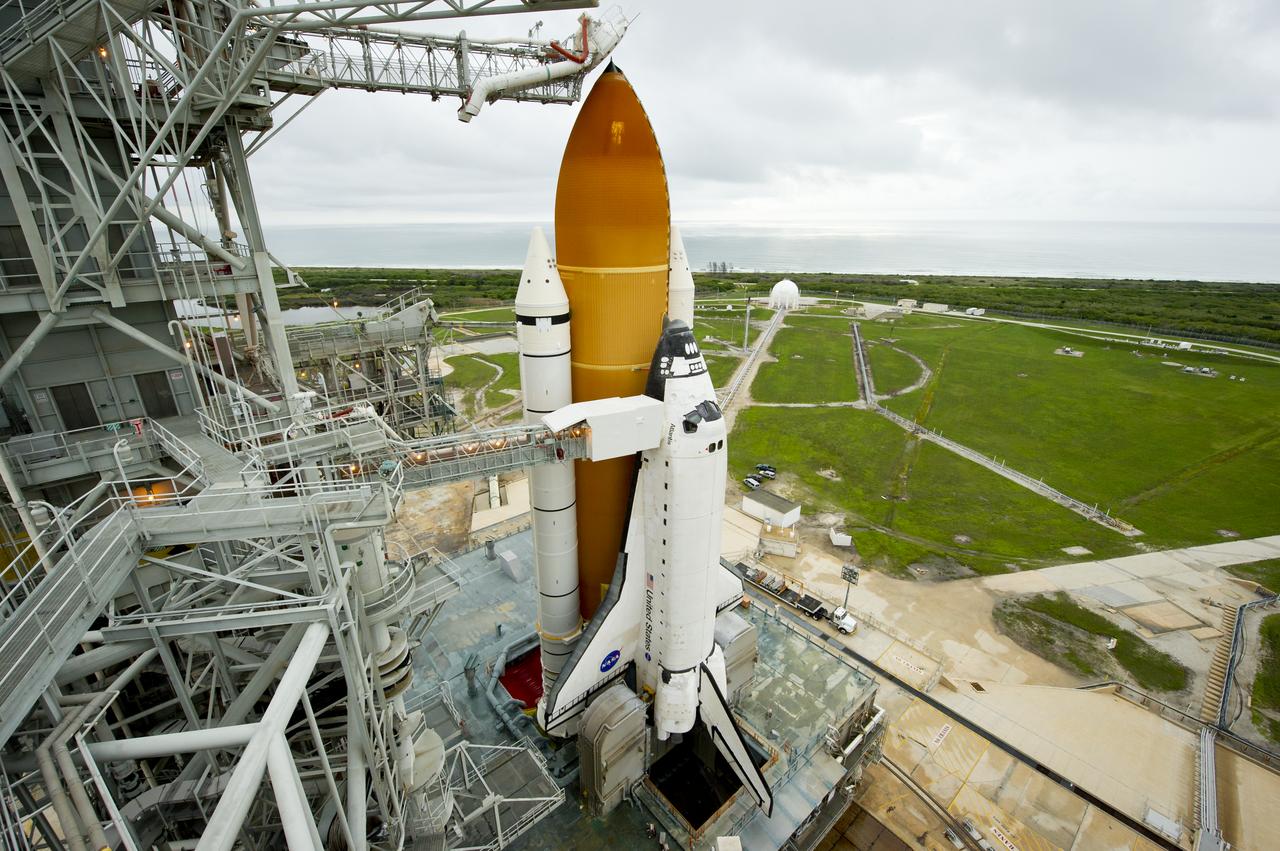
The space shuttle Atlantis is revealed as the rotating service structure (RSS) is rolled back at launch pad 39a on Thursday, July 7, 2011 at the NASA Kennedy Space Center in Cape Canaveral, Fla. Atlantis is set to liftoff Friday, July 8, on the final flight of the shuttle program, STS-135, a 12-day mission to the International Space Station. Photo Credit: (NASA/Bill Ingalls)
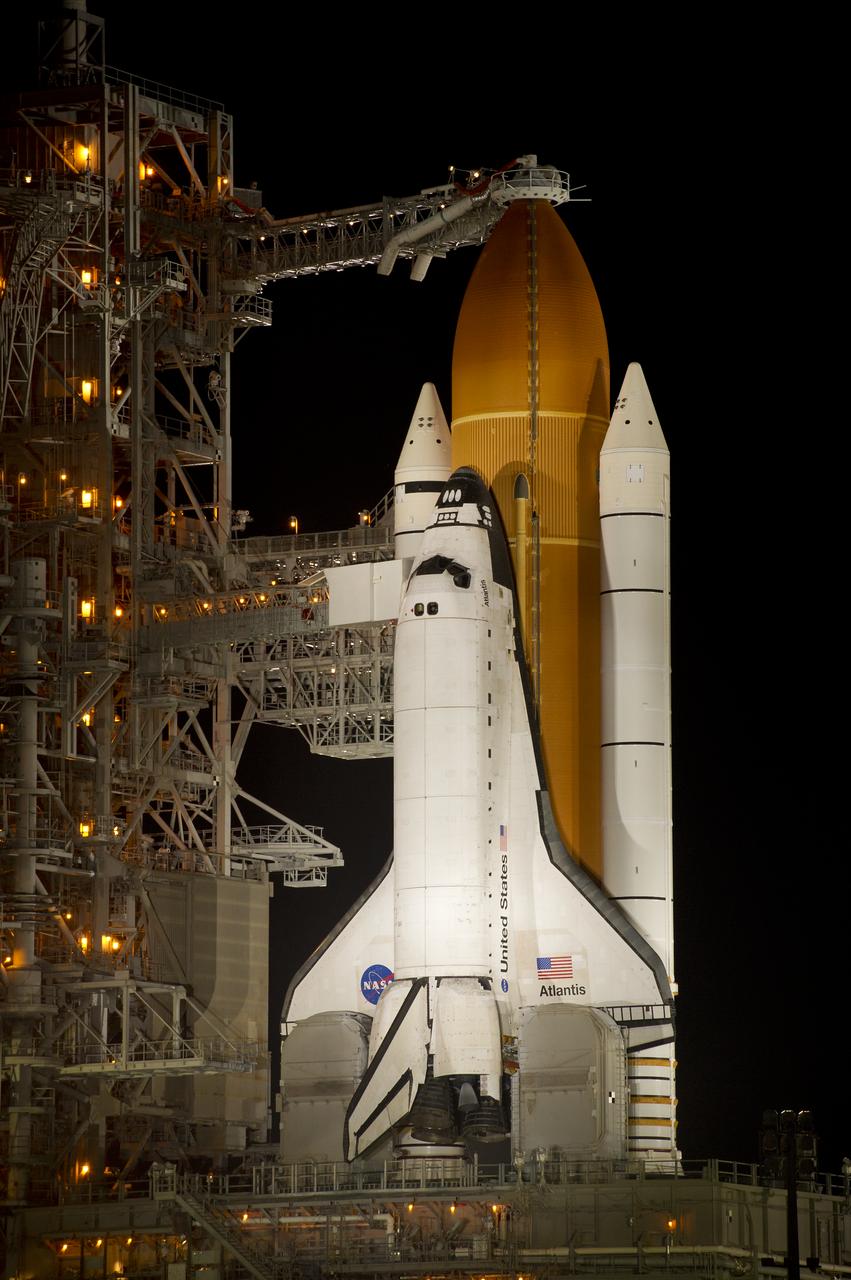
The space shuttle Atlantis is seen shortly after the rotating service structure (RSS) was rolled back at launch pad 39a, Thursday, July 7, 2011 at the NASA Kennedy Space Center in Cape Canaveral, Fla. Atlantis is set to liftoff Friday, July 8, on the final flight of the shuttle program, STS-135, a 12-day mission to the International Space Station. Photo Credit: (NASA/Bill Ingalls)
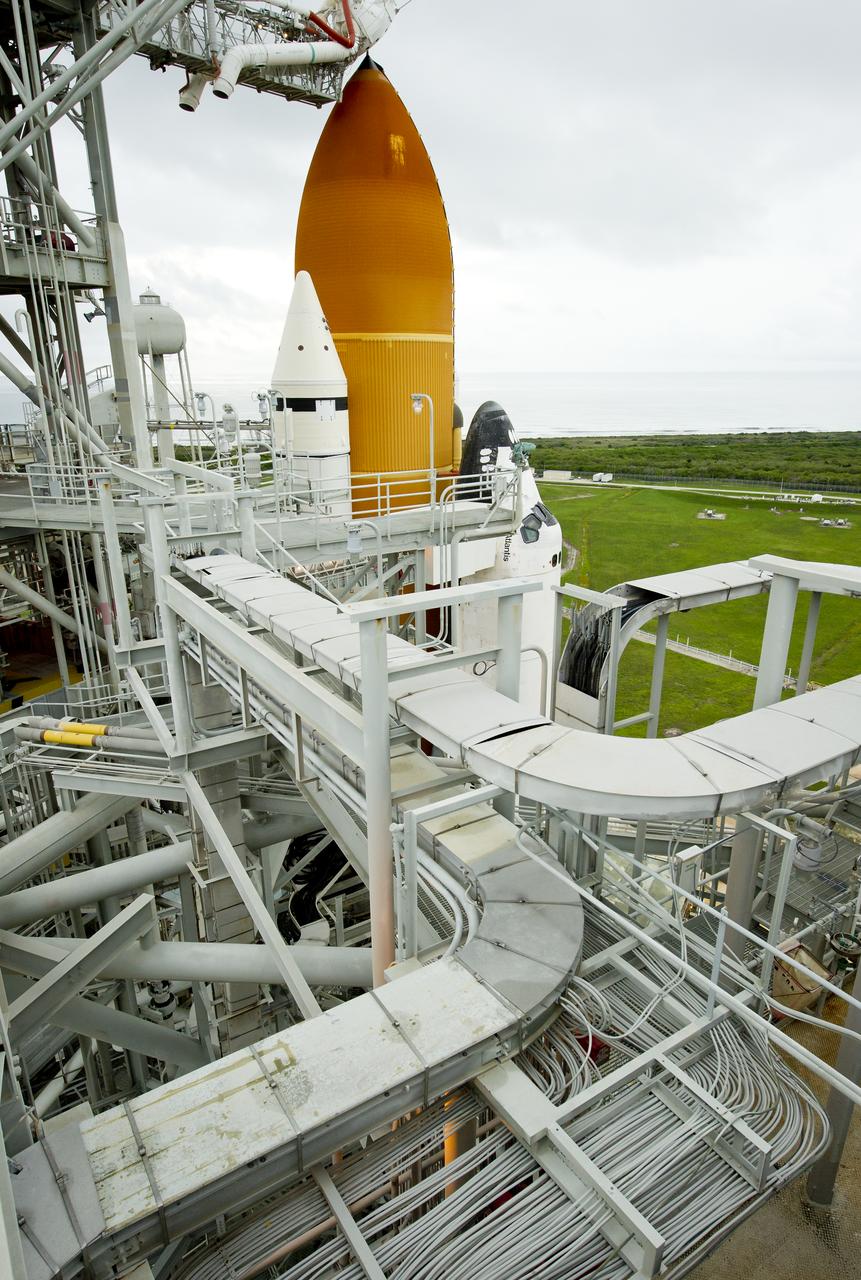
The space shuttle Atlantis is revealed as the rotating service structure (RSS) is rolled back at launch pad 39a on Thursday, July 7, 2011 at the NASA Kennedy Space Center in Cape Canaveral, Fla. Atlantis is set to liftoff Friday, July 8, on the final flight of the shuttle program, STS-135, a 12-day mission to the International Space Station. Photo Credit: (NASA/Bill Ingalls)
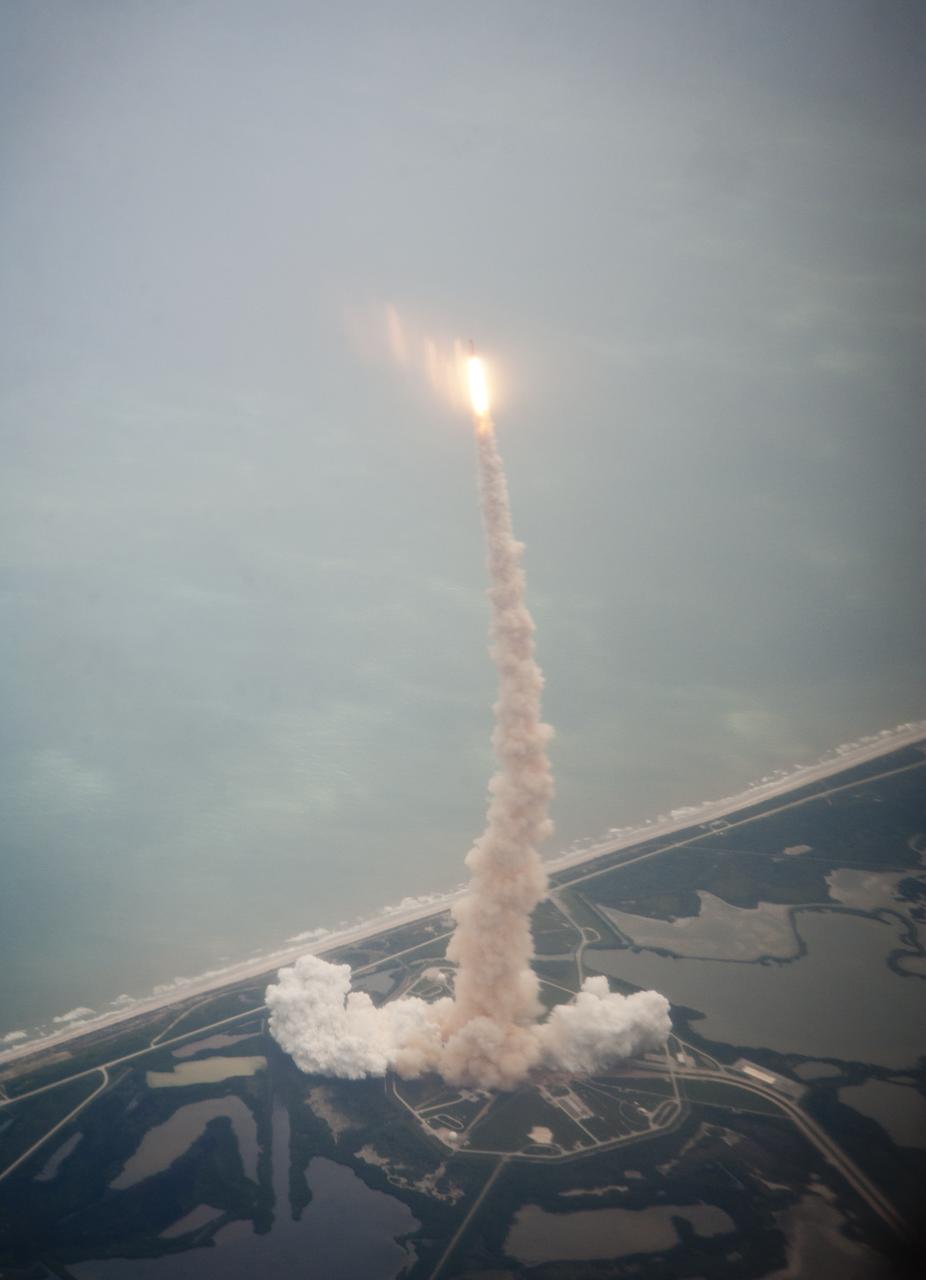
Space shuttle Atlantis is seen through the window of a Shuttle Training Aircraft (STA) as it launches from launch pad 39A at Kennedy Space Center on the STS-135 mission, Friday, July 8, 2011 in Cape Canaveral, Fla. Atlantis launched on the final flight of the shuttle program on a 12-day mission to the International Space Station. The STS-135 crew will deliver the Raffaello multipurpose logistics module containing supplies and spare parts for the space station. Photo Credit: (NASA/Dick Clark)
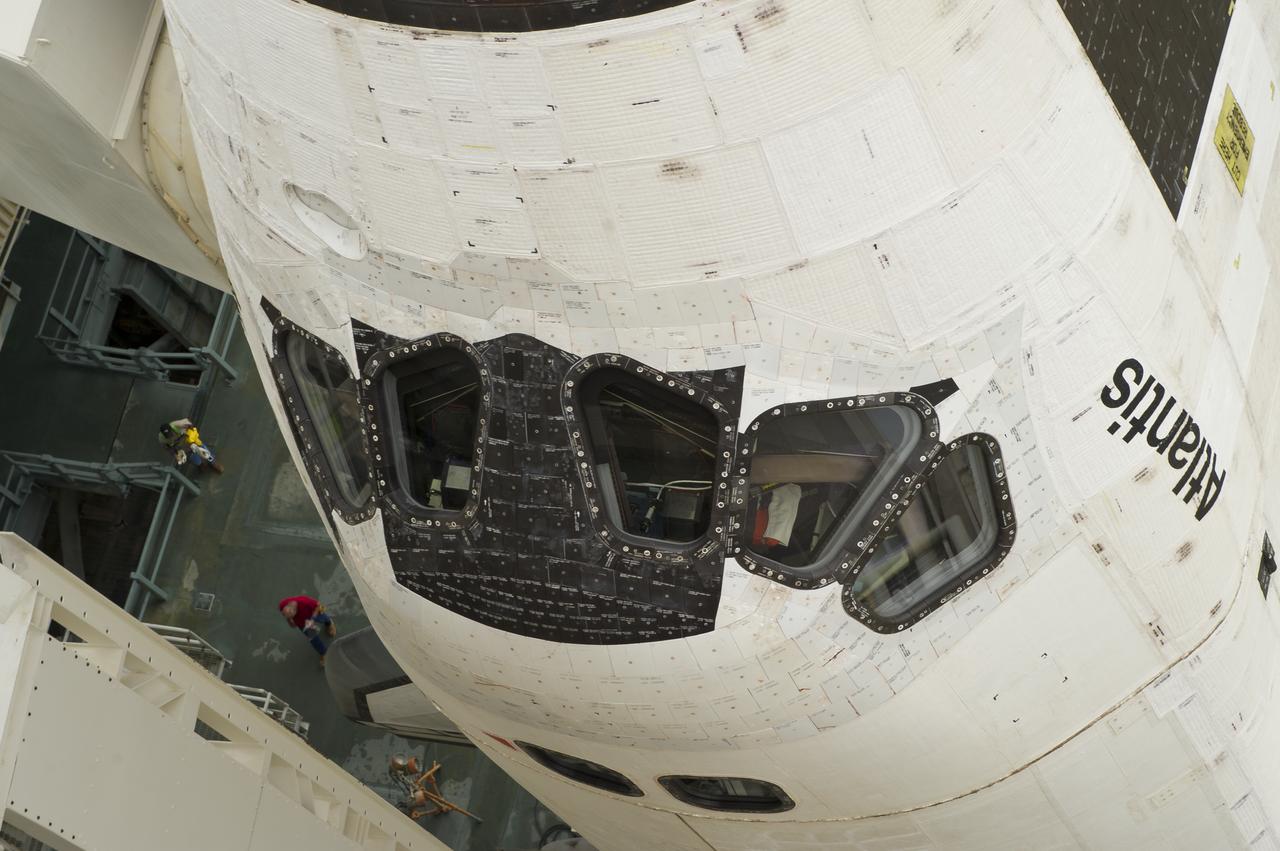
The space shuttle Atlantis is revealed as the rotating service structure (RSS) is rolled back at launch pad 39a on Thursday, July 7, 2011 at the NASA Kennedy Space Center in Cape Canaveral, Fla. Atlantis is set to liftoff Friday, July 8, on the final flight of the shuttle program, STS-135, a 12-day mission to the International Space Station. Photo Credit: (NASA/Bill Ingalls)
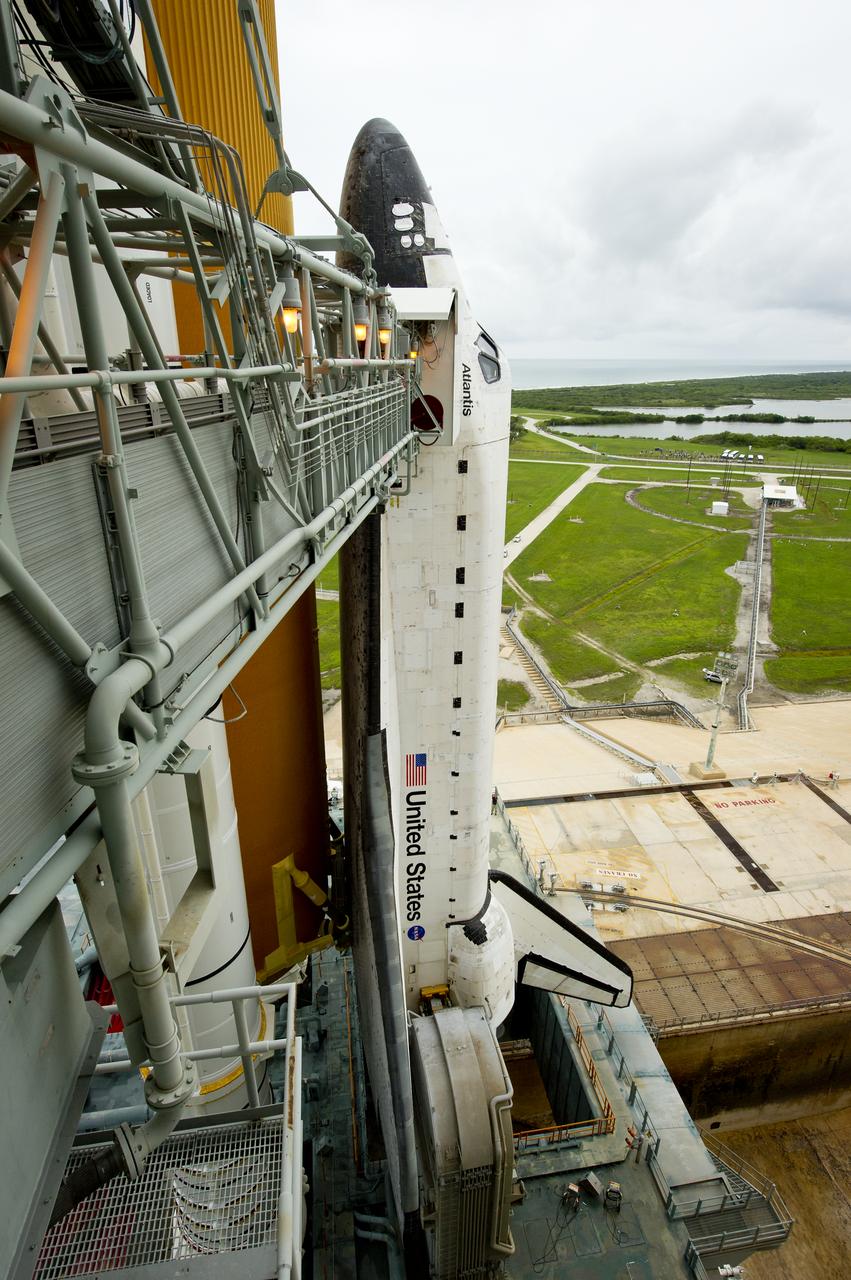
The space shuttle Atlantis is revealed as the rotating service structure (RSS) is rolled back at launch pad 39a on Thursday, July 7, 2011 at the NASA Kennedy Space Center in Cape Canaveral, Fla. Atlantis is set to liftoff Friday, July 8, on the final flight of the shuttle program, STS-135, a 12-day mission to the International Space Station. Photo Credit: (NASA/Bill Ingalls)
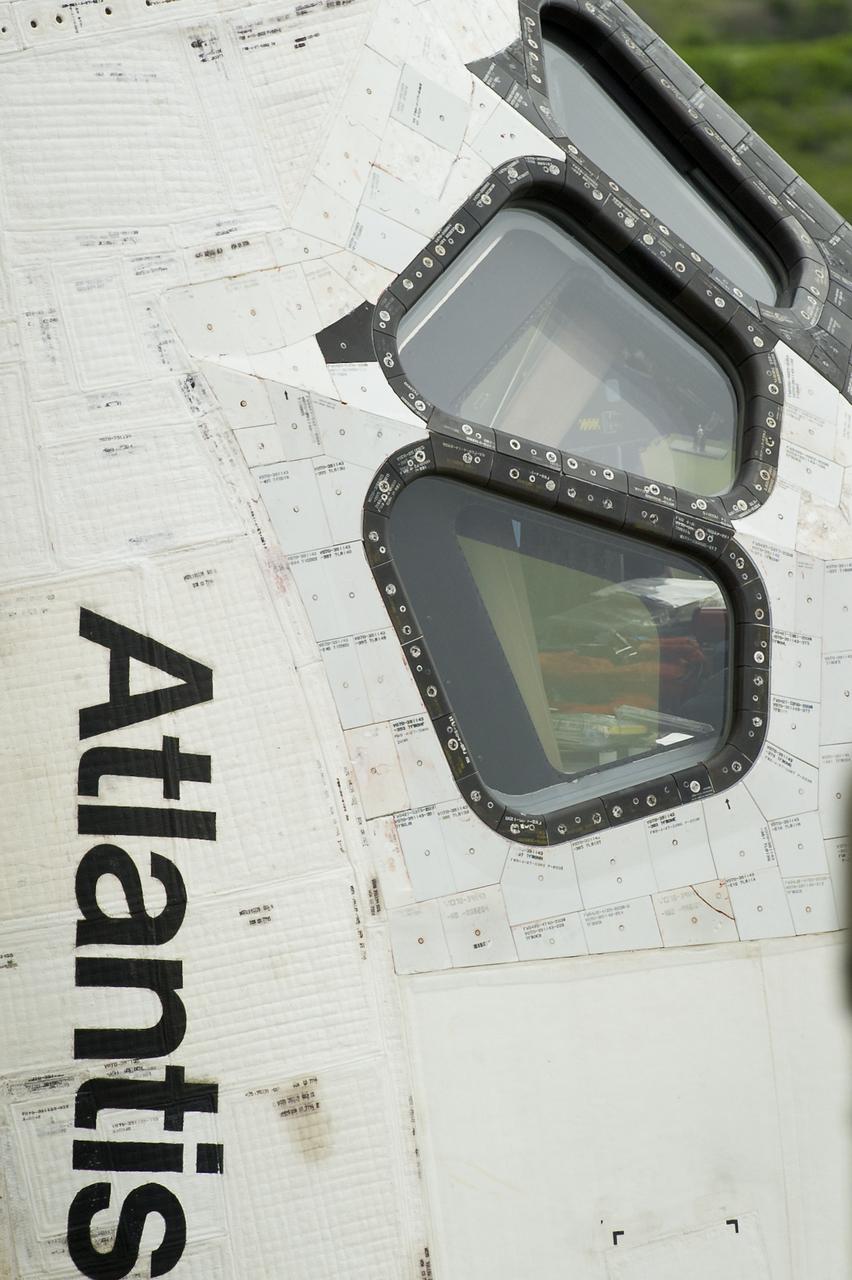
The space shuttle Atlantis is revealed as the rotating service structure (RSS) is rolled back at launch pad 39a on Thursday, July 7, 2011 at the NASA Kennedy Space Center in Cape Canaveral, Fla. Atlantis is set to liftoff Friday, July 8, on the final flight of the shuttle program, STS-135, a 12-day mission to the International Space Station. Photo Credit: (NASA/Bill Ingalls)
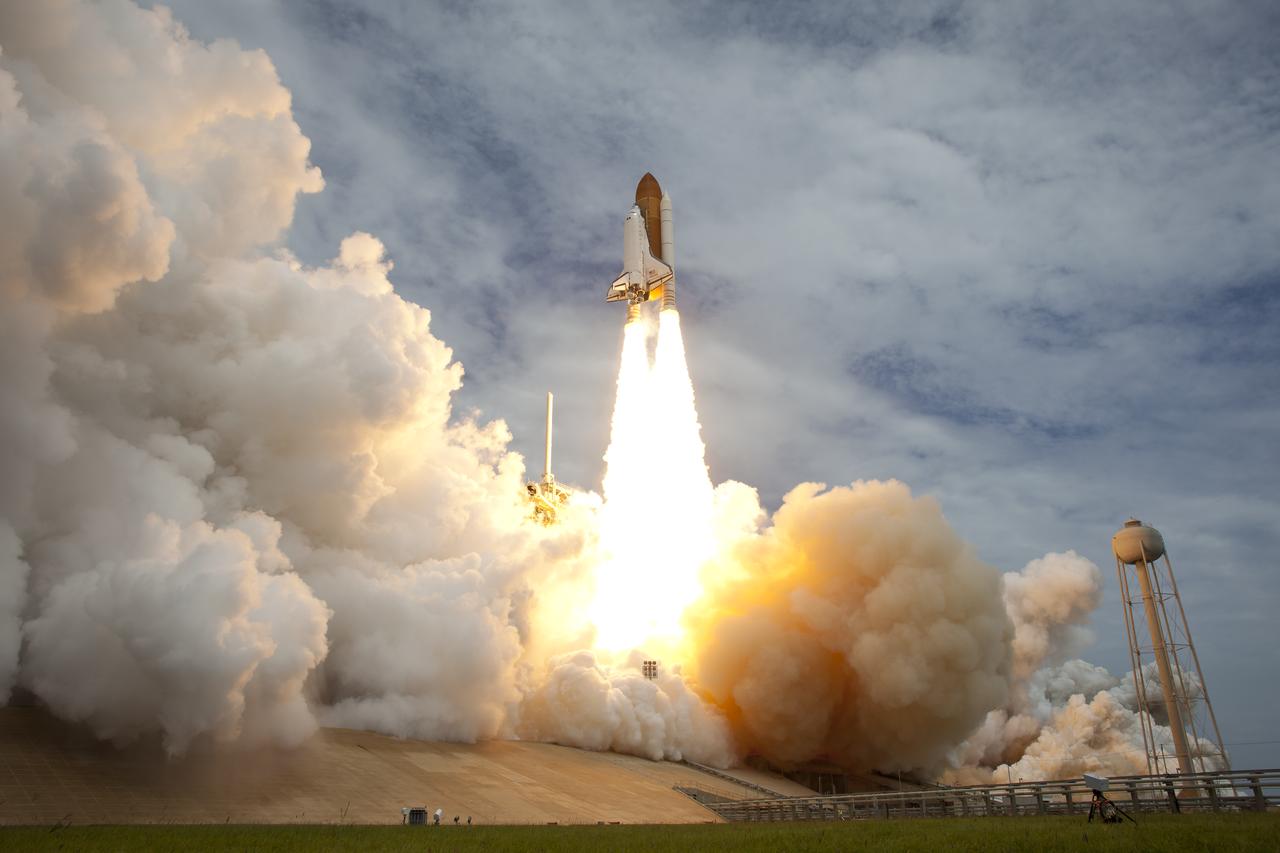
Space shuttle Atlantis is seen as it launches from pad 39A on Friday, July 8, 2011, at NASA's Kennedy Space Center in Cape Canaveral, Fla. The launch of Atlantis, STS-135, is the final flight of the shuttle program, a 12-day mission to the International Space Station. Photo Credit: (NASA/Bill Ingalls)
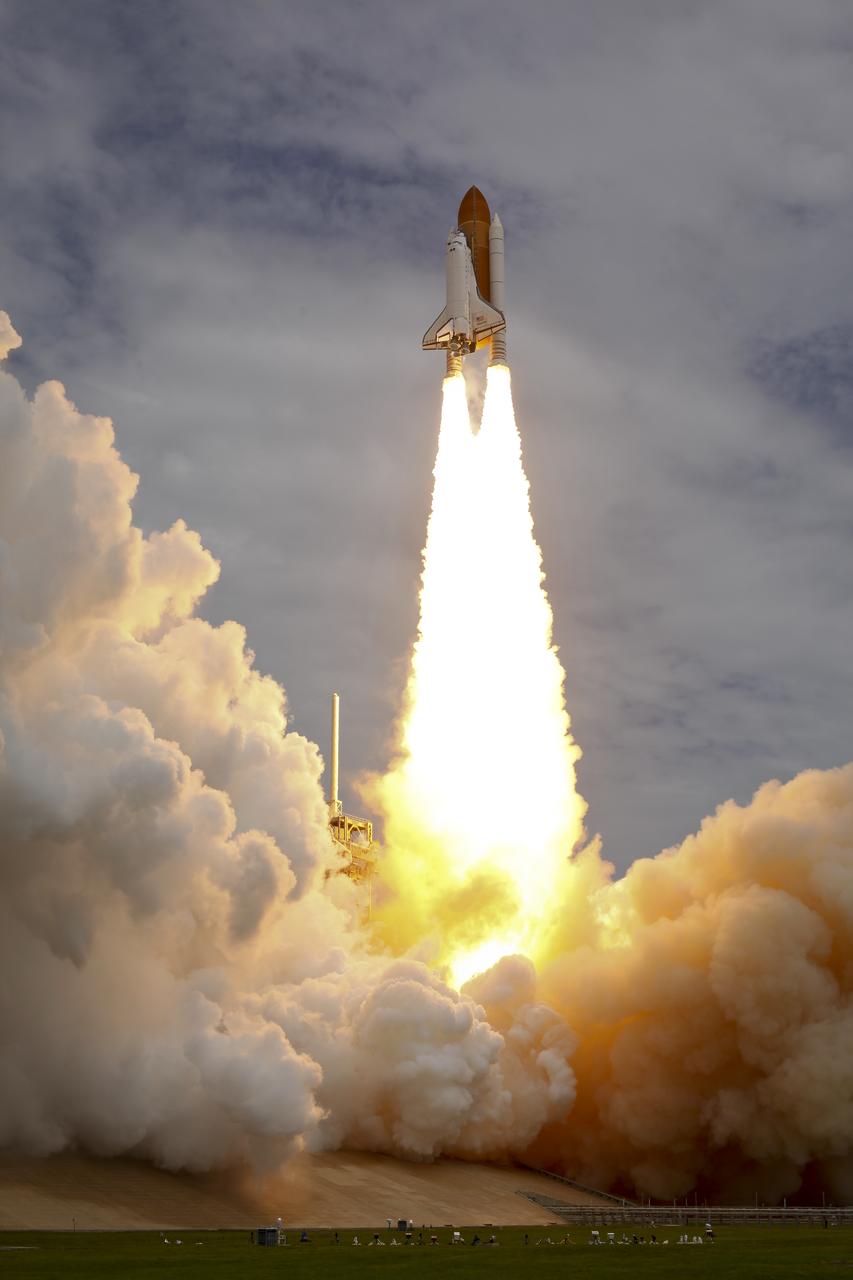
Space shuttle Atlantis is seen as it launches from pad 39A on Friday, July 8, 2011, at NASA's Kennedy Space Center in Cape Canaveral, Fla. The launch of Atlantis, STS-135, is the final flight of the shuttle program, a 12-day mission to the International Space Station. Photo Credit: (NASA/Bill Ingalls)
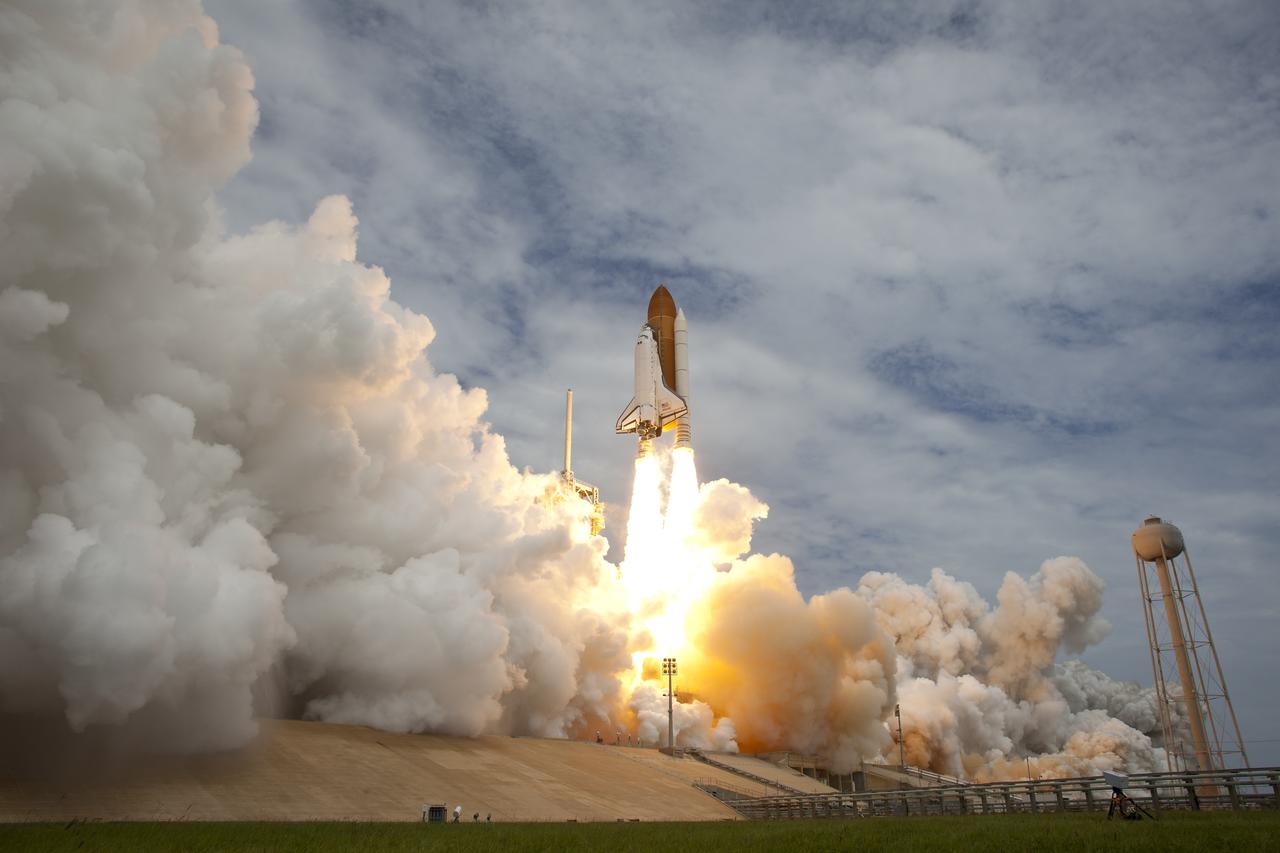
Space shuttle Atlantis is seen as it launches from pad 39A on Friday, July 8, 2011, at NASA's Kennedy Space Center in Cape Canaveral, Fla. The launch of Atlantis, STS-135, is the final flight of the shuttle program, a 12-day mission to the International Space Station. Photo Credit: (NASA/Bill Ingalls)
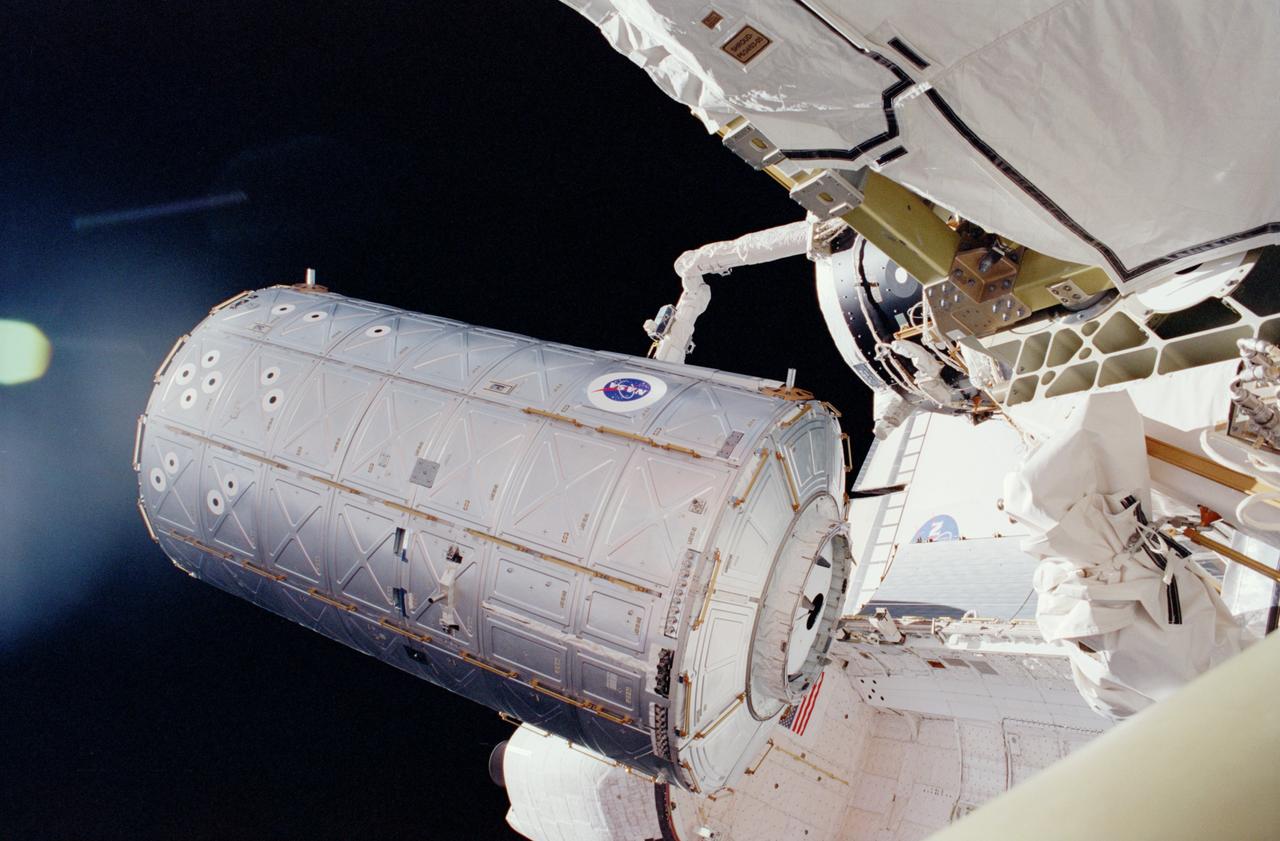
STS098-331-0017 (7-20 February 2001) --- In the grasp of the shuttle's remote manipulator system (RMS) robot arm, the Destiny laboratory is moved from its stowage position in the cargo bay of the Space Shuttle Atlantis. The photo was taken by astronaut Thomas D. Jones, who was participating in one of three STS-98/5a space walks at the time. Astronaut Robert L. Curbeam (out of frame) also made the three space walks.
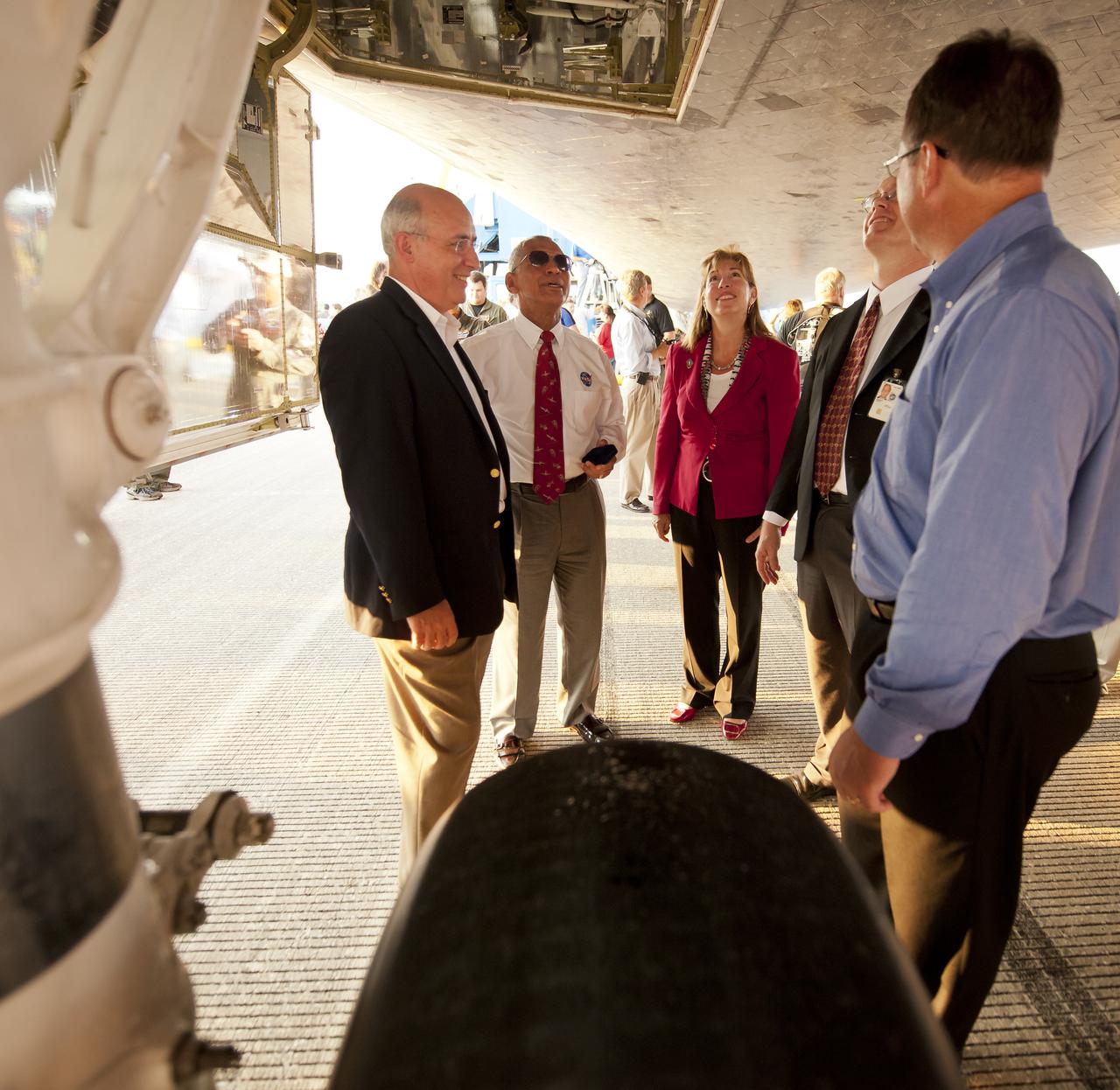
NASA International Space Station Program Office Manager Michael Suffredini, left, NASA Administrator Charles Bolden, second from left, Deputy Administrator Lori Garver, Manager, Space Shuttle Program Office John Shannon, third from left, and an unidentified colleague, talk under the space shuttle Atlantis at the Kennedy Space Center Shuttle Landing Facility (SLF) shortly after Atlantis (STS-135) landed early Thursday morning, July 21, 2011, in Cape Canaveral, Fla. Overall, Atlantis spent 307 days in space and traveled nearly 126 million miles during its 33 flights. Atlantis, the fourth orbiter built, launched on its first mission on Oct. 3, 1985. Photo Credit: (NASA/Bill Ingalls)

NASA Chief of the Astronaut Office Peggy Whitson, left, STS-135 mission Pilot Doug Hurley, second from left, NASA Administrator Charles Bolden, and Deputy Chief of Flight Crew Operations Directorate Brian Kelly, right, talk under the space shuttle Atlantis at the Kennedy Space Center Shuttle Landing Facility (SLF) shortly after Hurley and the rest of the STS-135 crew landed in Atlantis early Thursday morning, July 21, 2011, in Cape Canaveral, Fla. Overall, Atlantis spent 307 days in space and traveled nearly 126 million miles during its 33 flights. Atlantis, the fourth orbiter built, launched on its first mission on Oct. 3, 1985. Photo Credit: (NASA/Bill Ingalls)

In the Vehicle Assembly Building, United Space Alliance technicians Brenda Morris and Brian Williams are applying foam and molds on Space Shuttle Atlantis' external tank to areas damaged by hail. The white hole with a red circle around it (upper right) is a hole prepared for molding and material application. The red material is sealant tape so the mold doesn't leak when the foam rises against the mold. The white/ translucent square mold is an area where the foam has been applied and the foam has risen and cured against the mold surface. In late February, Atlantis' external tank received hail damage during a severe thunderstorm that passed through the Kennedy Space Center Launch Complex 39 area. The hail caused visible divots in the giant tank's foam insulation as well as minor surface damage to about 26 heat shield tiles on the shuttle's left wing. The March launch was postponed and has not yet been rescheduled due to the repair process.
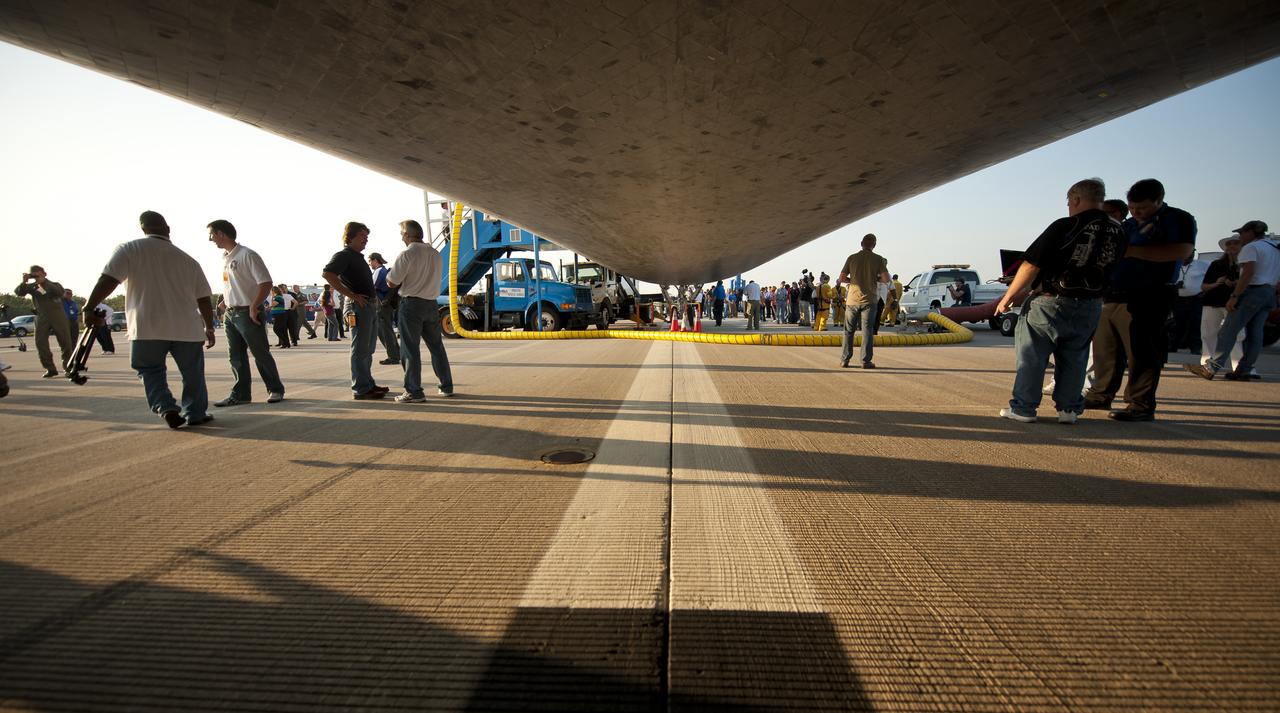
A view looking forward underneath the space shuttle Atlantis on the Shuttle Landing Facility (SLF) runway at NASA Kennedy Space Center shortly after it landed with the STS-135 crew, completing its 13-day mission to the International Space Station (ISS) and the final flight of the Space Shuttle Program, early Thursday morning, July 21, 2011, in Cape Canaveral, Fla. Overall, Atlantis spent 307 days in space and traveled nearly 126 million miles during its 33 flights. Atlantis, the fourth orbiter built, launched on its first mission on Oct. 3, 1985. Photo Credit: (NASA/Bill Ingalls)
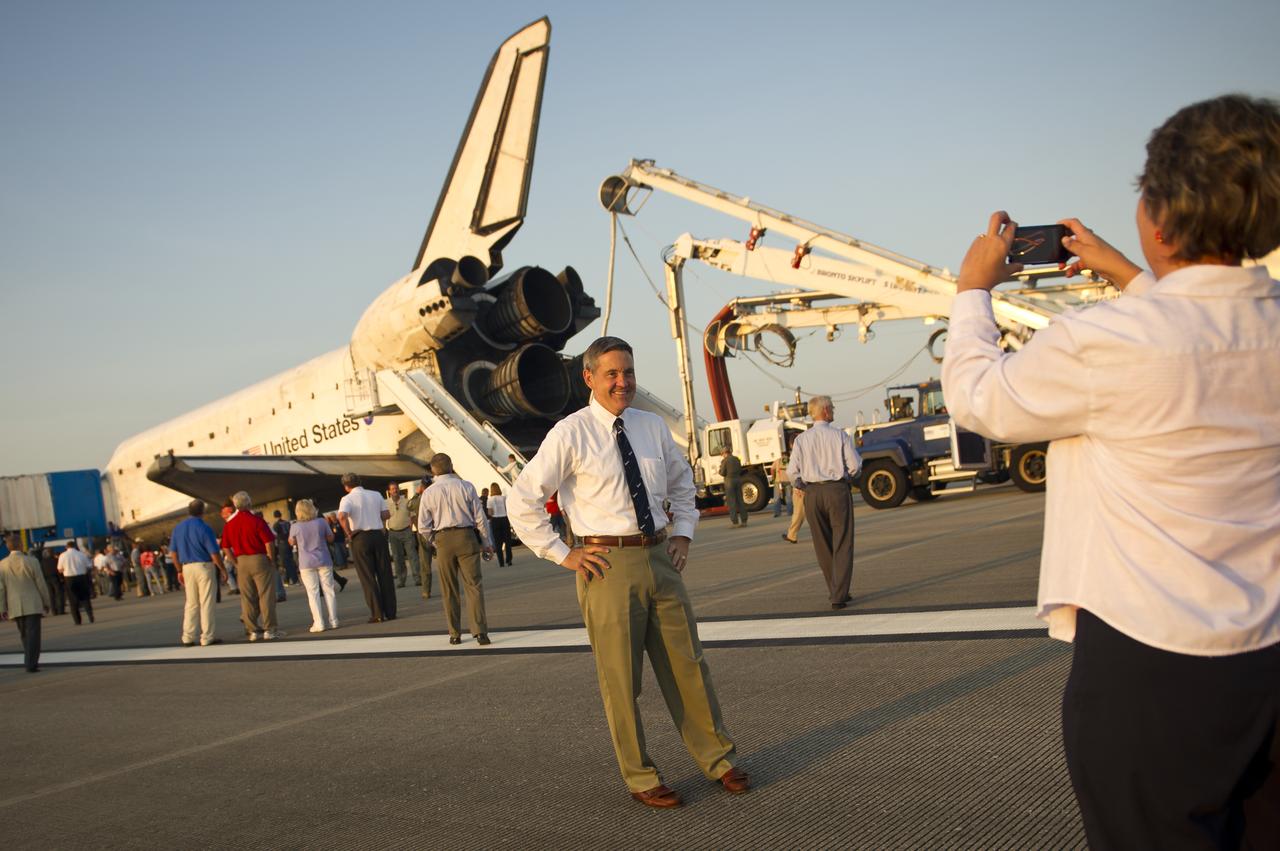
NASA Kennedy Space center Director Robert Cabana stops to have his photograph made by a colleague at the Shuttle Landing Facility (SLF) shortly after the space shuttle Atlantis (STS-135) landed early Thursday morning, July 21, 2011, in Cape Canaveral, Fla. Overall, Atlantis spent 307 days in space and traveled nearly 126 million miles during its 33 flights. Atlantis, the fourth orbiter built, launched on its first mission on Oct. 3, 1985. Photo Credit: (NASA/Bill Ingalls)