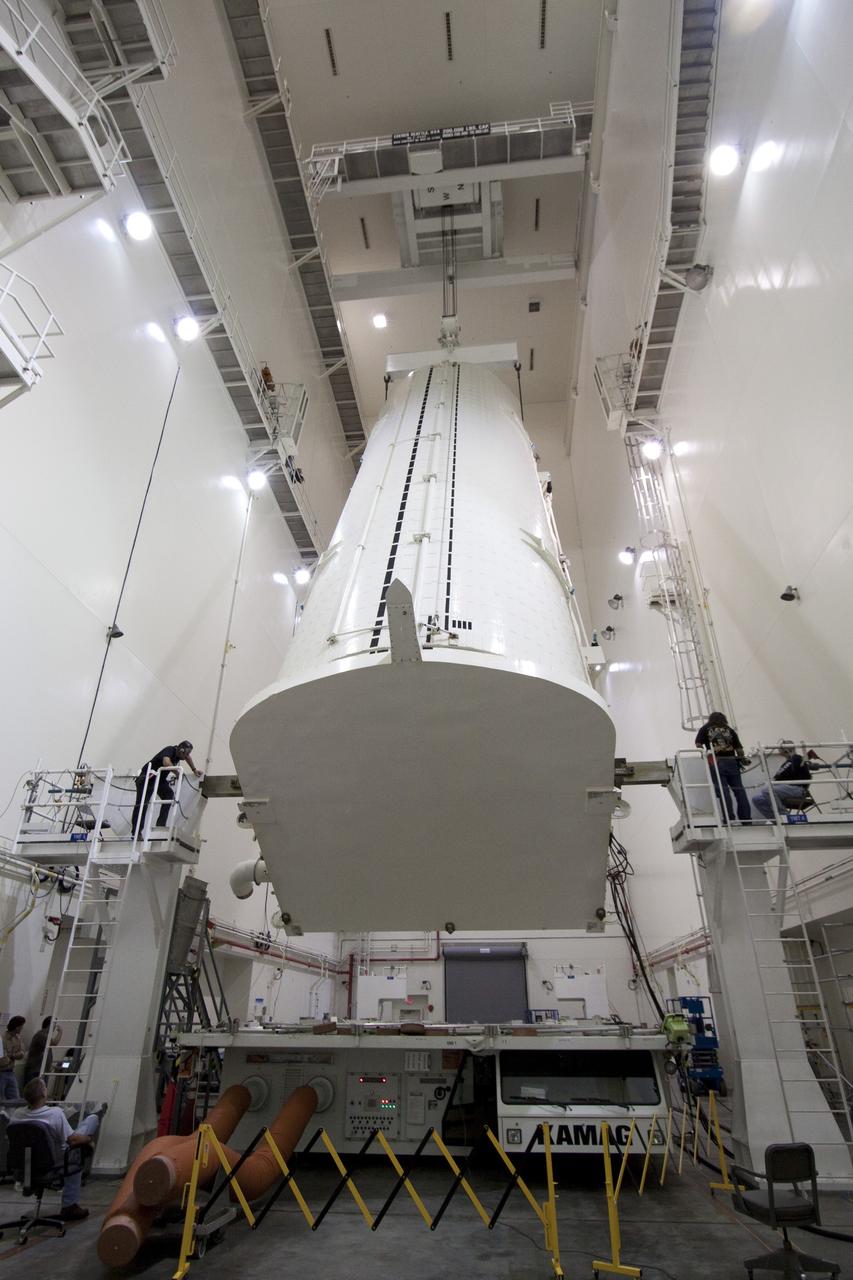
CAPE CANAVERAL, Fla. -- In the Canister Rotation Facility at NASA's Kennedy Space Center in Florida, workers monitor the progress of the payload canister as an overhead crane rotates it into a vertical position. The canister will then be delivered to Launch Pad 39A, lifted into the rotating service structure where the module will be moved into the clean room before it is installed into space shuttle Discovery's payload bay. Discovery and its STS-133 crew will deliver the PMM, packed with supplies and critical spare parts, as well as Robonaut 2, the dexterous humanoid astronaut helper, to the International Space Station. Launch is targeted for 4:40 p.m. EDT, Nov. 1. Photo credit: NASA/Jack Pfaller
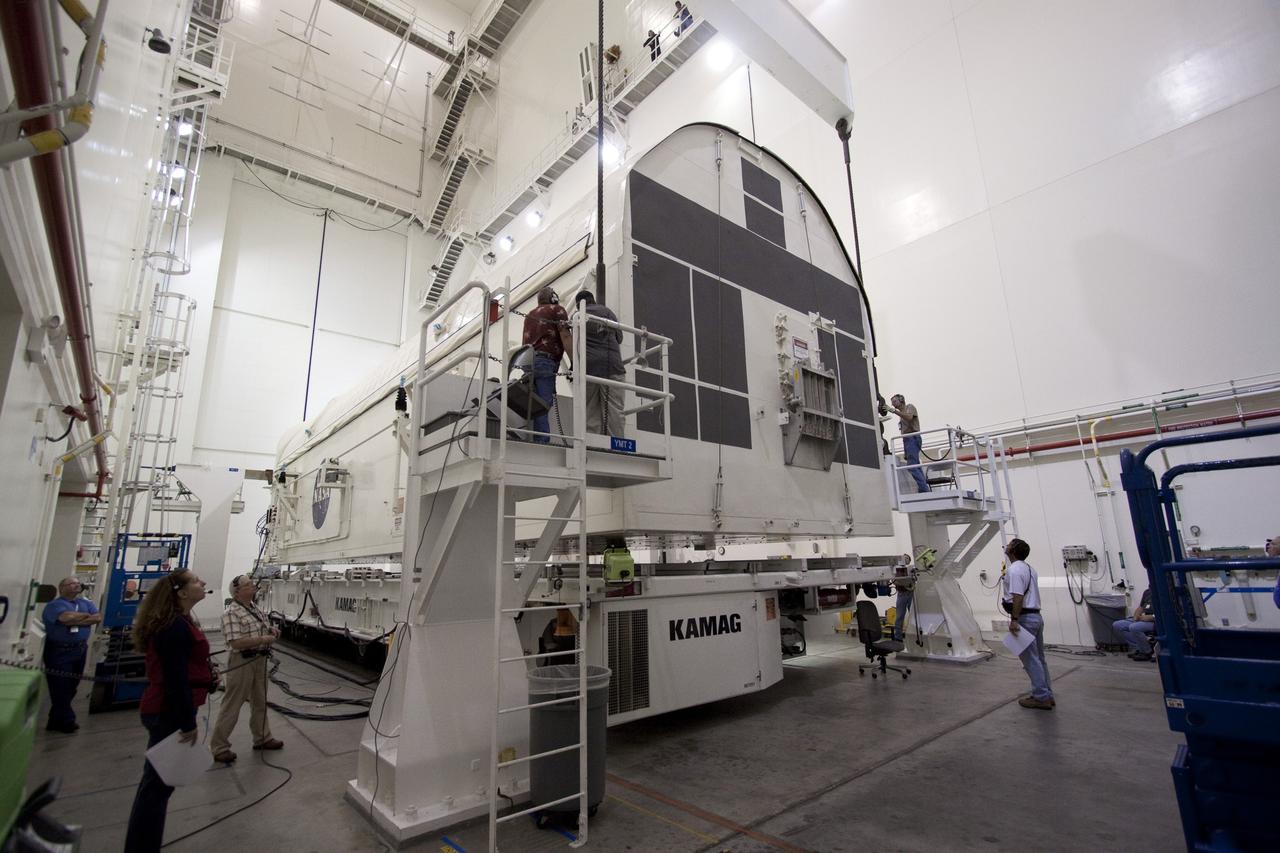
CAPE CANAVERAL, Fla. -- In the Canister Rotation Facility at NASA's Kennedy Space Center in Florida, workers connect an overhead crane to the payload canister for its rotation into a vertical position. The canister will then be delivered to Launch Pad 39A, lifted into the rotating service structure where the module will be moved into the clean room before it is installed into space shuttle Discovery's payload bay. Discovery and its STS-133 crew will deliver the PMM, packed with supplies and critical spare parts, as well as Robonaut 2, the dexterous humanoid astronaut helper, to the International Space Station. Launch is targeted for 4:40 p.m. EDT, Nov. 1. Photo credit: NASA/Jack Pfaller
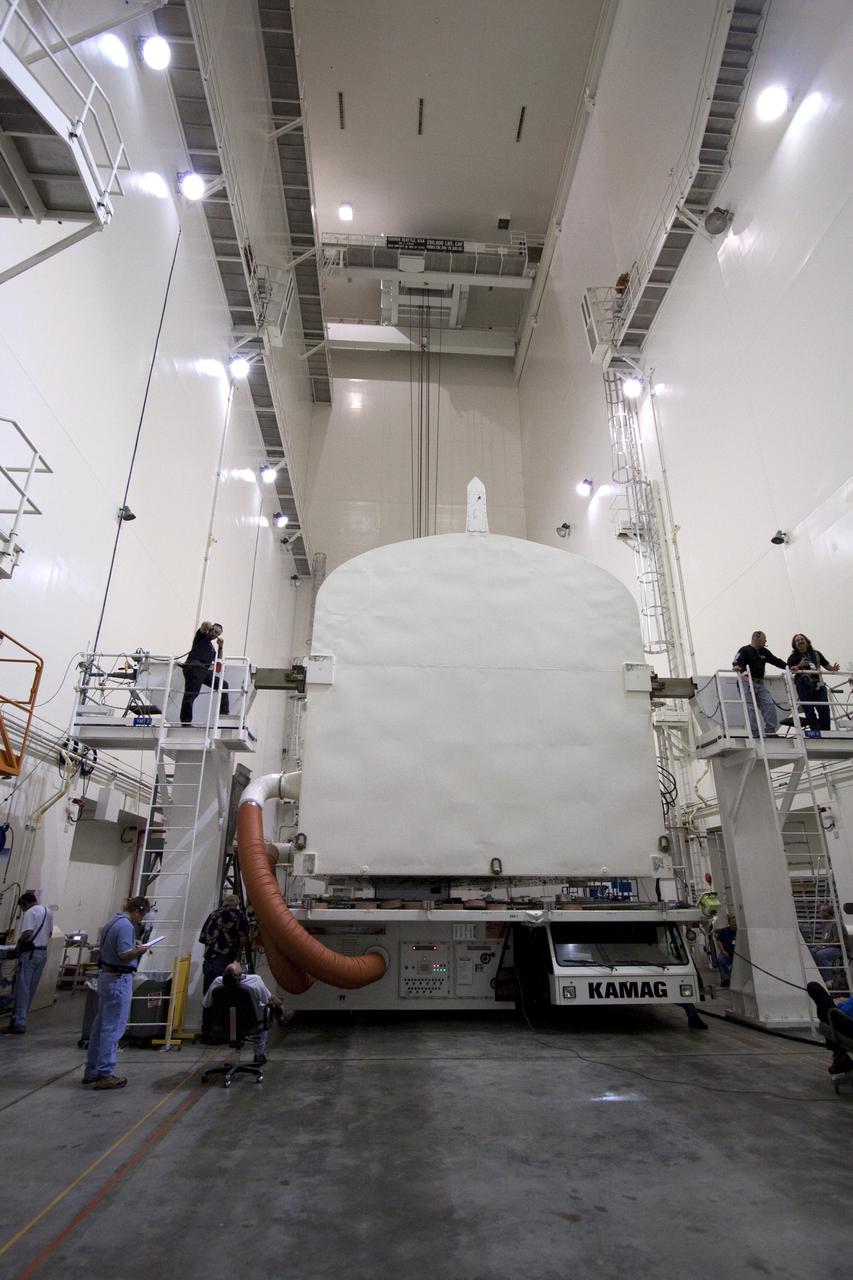
CAPE CANAVERAL, Fla. -- In the Canister Rotation Facility at NASA's Kennedy Space Center in Florida, workers are preparing the payload canister for its rotation into a vertical position. The canister will then be delivered to Launch Pad 39A, lifted into the rotating service structure where the module will be moved into the clean room before it is installed into space shuttle Discovery's payload bay. Discovery and its STS-133 crew will deliver the PMM, packed with supplies and critical spare parts, as well as Robonaut 2, the dexterous humanoid astronaut helper, to the International Space Station. Launch is targeted for 4:40 p.m. EDT, Nov. 1. Photo credit: NASA/Jack Pfaller
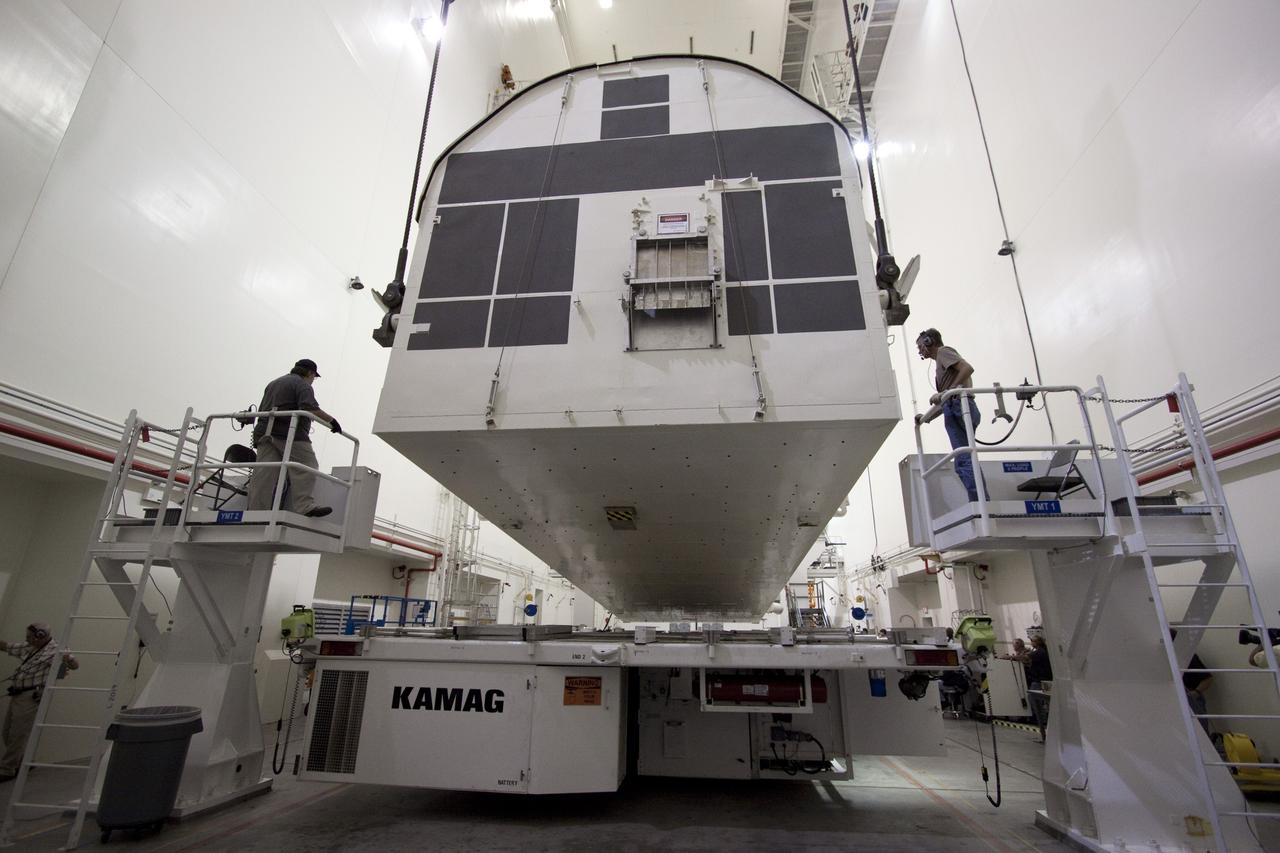
CAPE CANAVERAL, Fla. -- In the Canister Rotation Facility at NASA's Kennedy Space Center in Florida, workers monitor the progress of the payload canister as an overhead crane rotates it into a vertical position. The canister will then be delivered to Launch Pad 39A, lifted into the rotating service structure where the module will be moved into the clean room before it is installed into space shuttle Discovery's payload bay. Discovery and its STS-133 crew will deliver the PMM, packed with supplies and critical spare parts, as well as Robonaut 2, the dexterous humanoid astronaut helper, to the International Space Station. Launch is targeted for 4:40 p.m. EDT, Nov. 1. Photo credit: NASA/Jack Pfaller
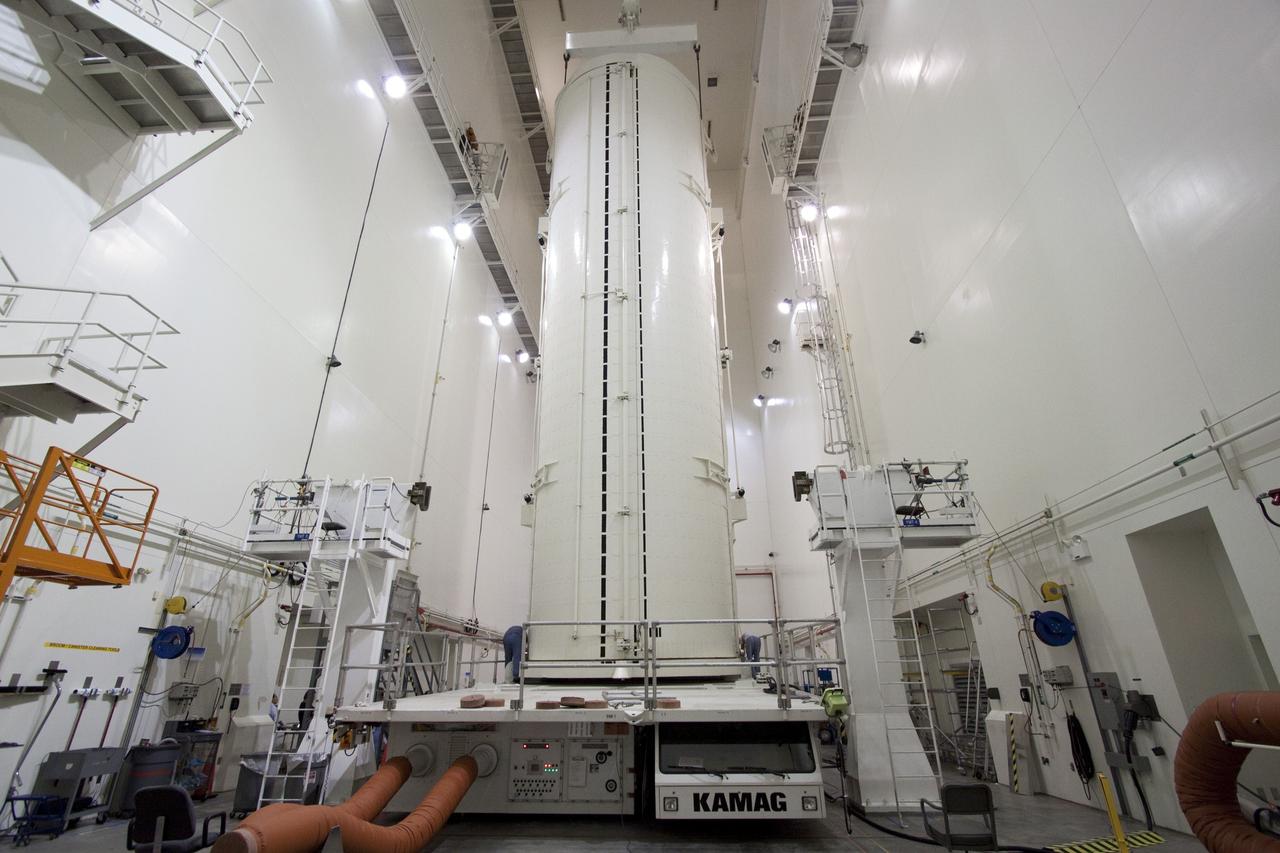
CAPE CANAVERAL, Fla. -- In the Canister Rotation Facility at NASA's Kennedy Space Center in Florida, the payload canister rests on a transport vehicle after being rotated into a vertical position. The canister will then be delivered to Launch Pad 39A, lifted into the rotating service structure where the module will be moved into the clean room before it is installed into space shuttle Discovery's payload bay. Discovery and its STS-133 crew will deliver the PMM, packed with supplies and critical spare parts, as well as Robonaut 2, the dexterous humanoid astronaut helper, to the International Space Station. Launch is targeted for 4:40 p.m. EDT, Nov. 1. Photo credit: NASA/Jack Pfaller
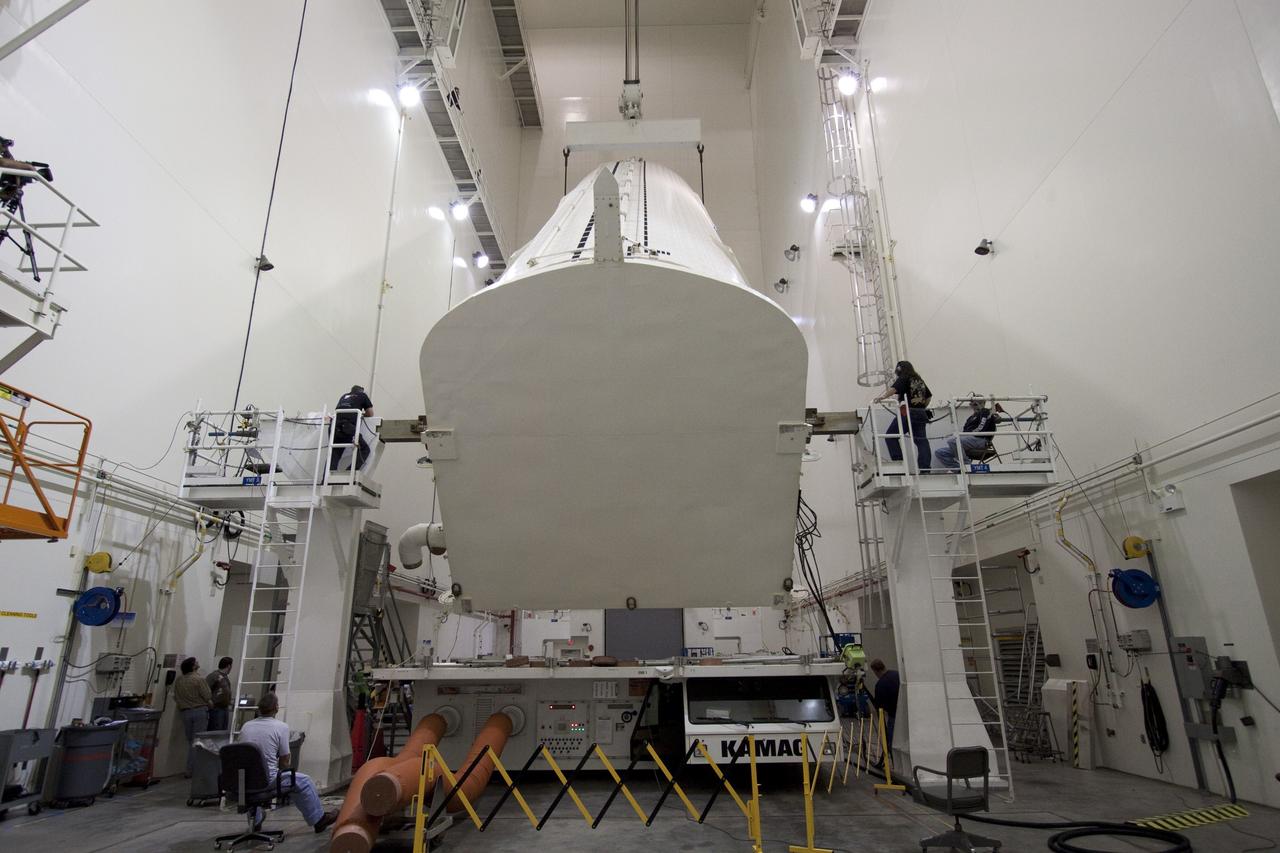
CAPE CANAVERAL, Fla. -- In the Canister Rotation Facility at NASA's Kennedy Space Center in Florida, workers monitor the progress of the payload canister as an overhead crane rotates it into a vertical position. The canister will then be delivered to Launch Pad 39A, lifted into the rotating service structure where the module will be moved into the clean room before it is installed into space shuttle Discovery's payload bay. Discovery and its STS-133 crew will deliver the PMM, packed with supplies and critical spare parts, as well as Robonaut 2, the dexterous humanoid astronaut helper, to the International Space Station. Launch is targeted for 4:40 p.m. EDT, Nov. 1. Photo credit: NASA/Jack Pfaller
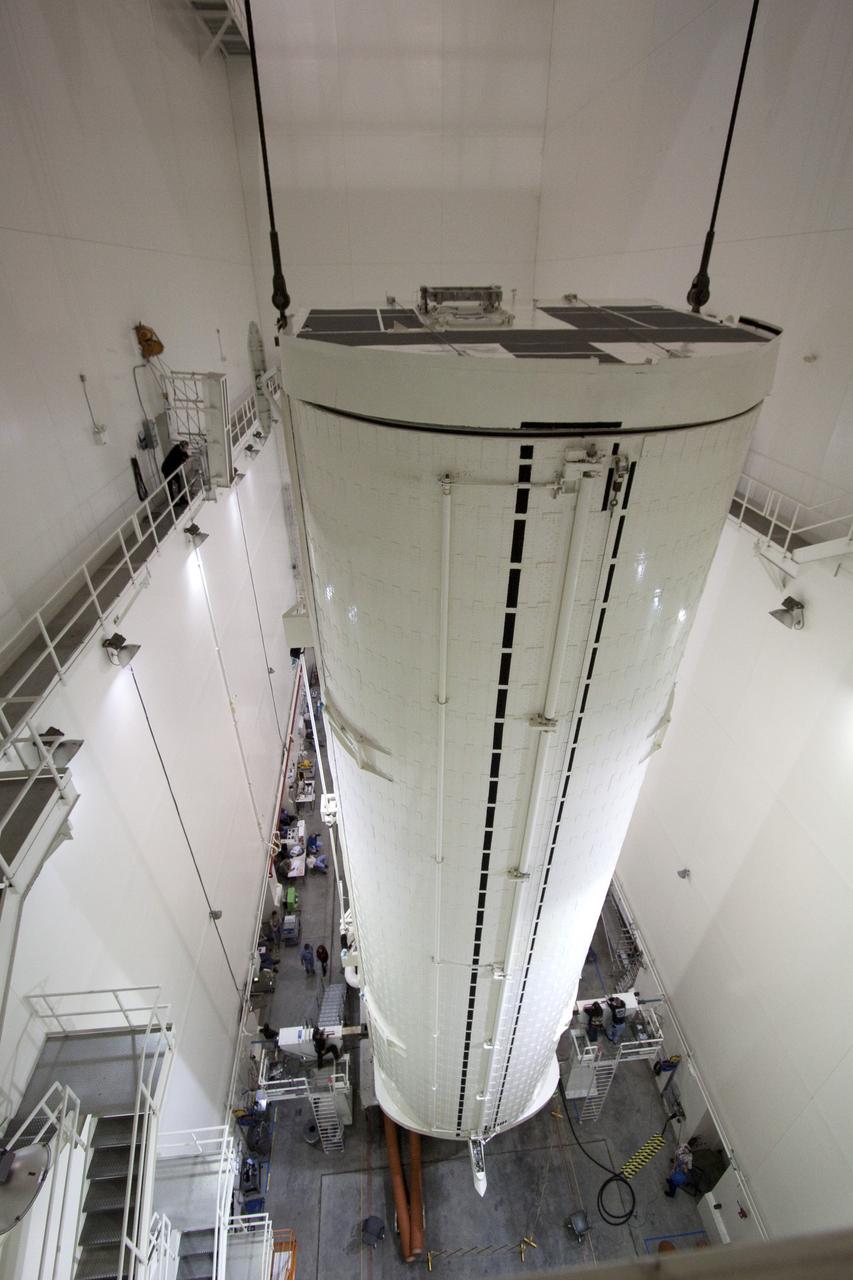
CAPE CANAVERAL, Fla. -- In the Canister Rotation Facility at NASA's Kennedy Space Center in Florida, an overhead crane lifts the payload canister into a vertical position. The canister will then be delivered to Launch Pad 39A, lifted into the rotating service structure where the module will be moved into the clean room before it is installed into space shuttle Discovery's payload bay. Discovery and its STS-133 crew will deliver the PMM, packed with supplies and critical spare parts, as well as Robonaut 2, the dexterous humanoid astronaut helper, to the International Space Station. Launch is targeted for 4:40 p.m. EDT, Nov. 1. Photo credit: NASA/Jack Pfaller
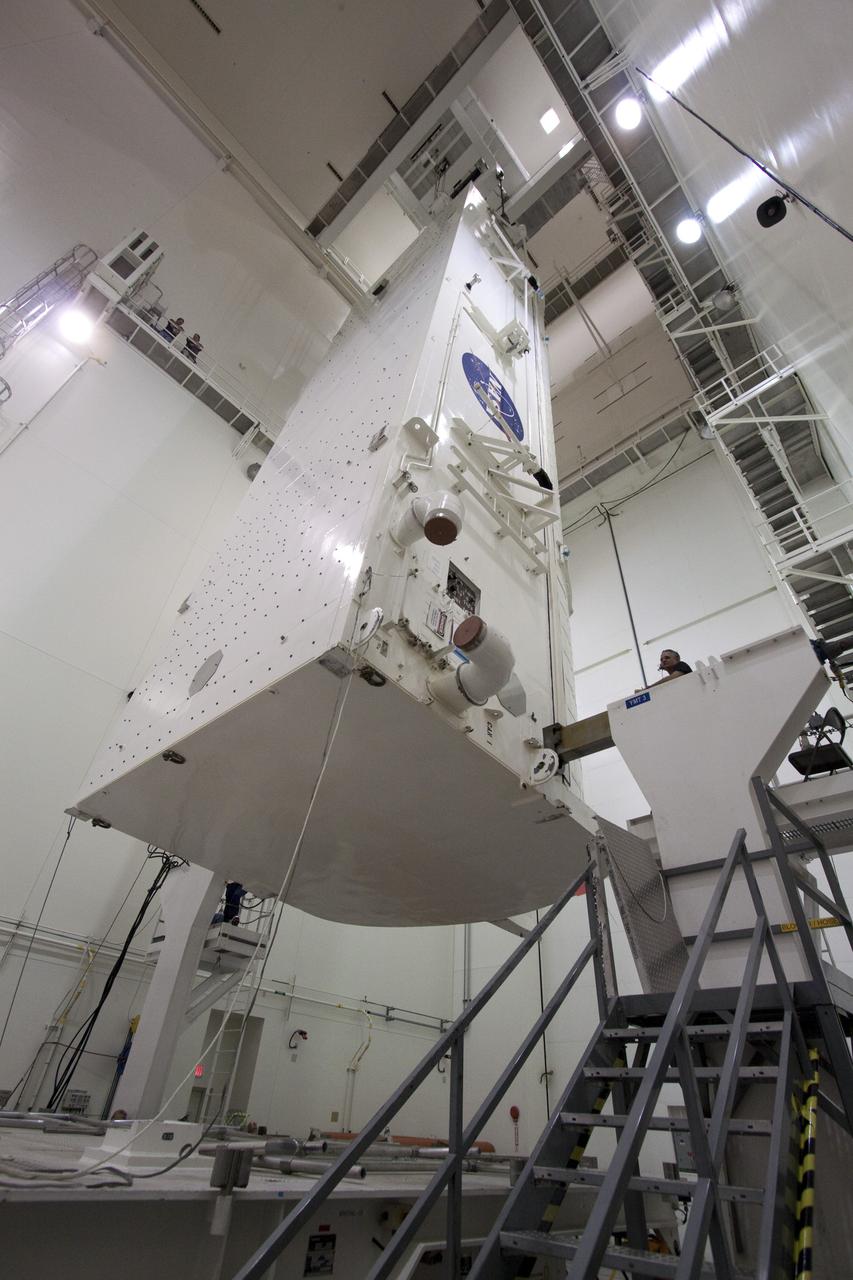
CAPE CANAVERAL, Fla. -- In the Canister Rotation Facility at NASA's Kennedy Space Center in Florida, workers monitor the progress of the payload canister as an overhead crane lifts it into a vertical position. The canister will then be delivered to Launch Pad 39A, lifted into the rotating service structure where the module will be moved into the clean room before it is installed into space shuttle Discovery's payload bay. Discovery and its STS-133 crew will deliver the PMM, packed with supplies and critical spare parts, as well as Robonaut 2, the dexterous humanoid astronaut helper, to the International Space Station. Launch is targeted for 4:40 p.m. EDT, Nov. 1. Photo credit: NASA/Jack Pfaller
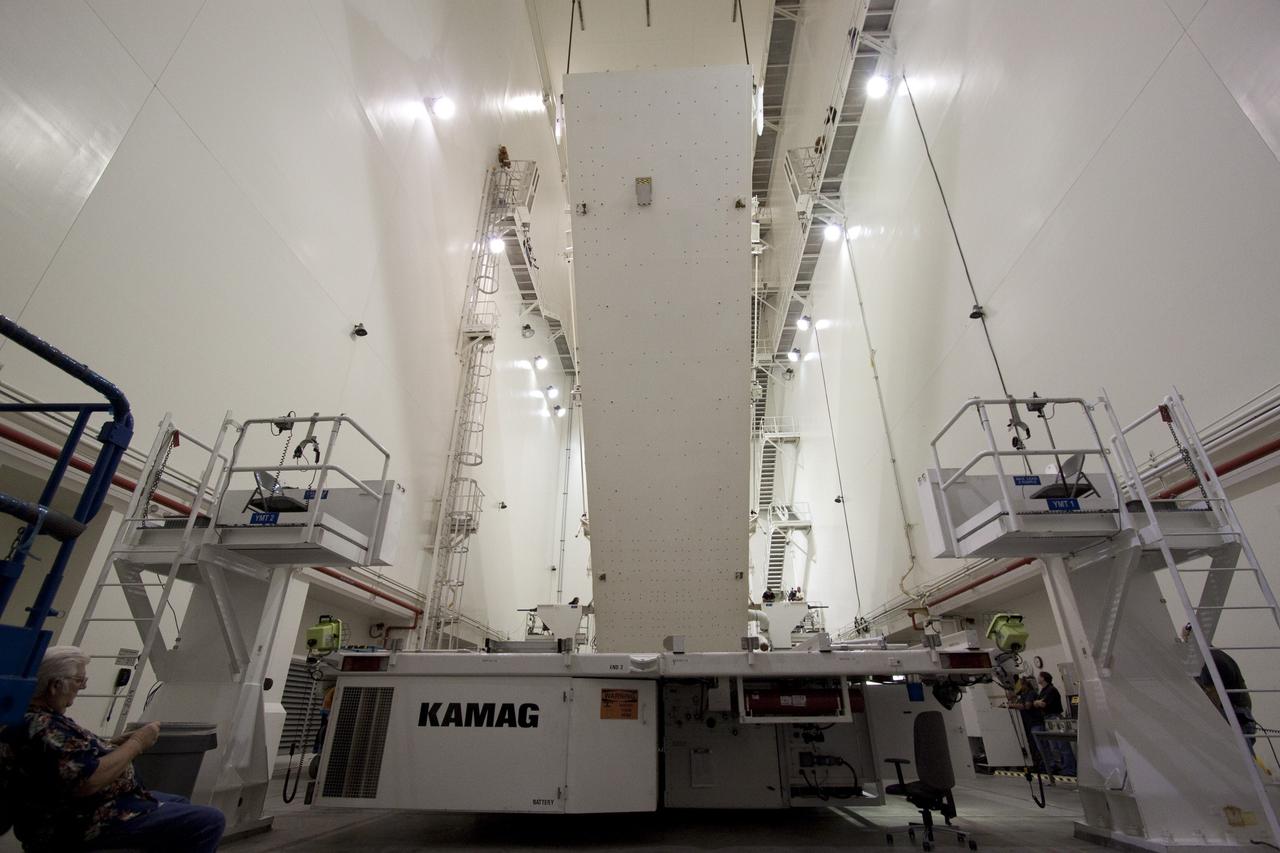
CAPE CANAVERAL, Fla. -- In the Canister Rotation Facility at NASA's Kennedy Space Center in Florida, an overhead crane lifts the payload canister into a vertical position. The canister will then be delivered to Launch Pad 39A, lifted into the rotating service structure where the module will be moved into the clean room before it is installed into space shuttle Discovery's payload bay. Discovery and its STS-133 crew will deliver the PMM, packed with supplies and critical spare parts, as well as Robonaut 2, the dexterous humanoid astronaut helper, to the International Space Station. Launch is targeted for 4:40 p.m. EDT, Nov. 1. Photo credit: NASA/Jack Pfaller
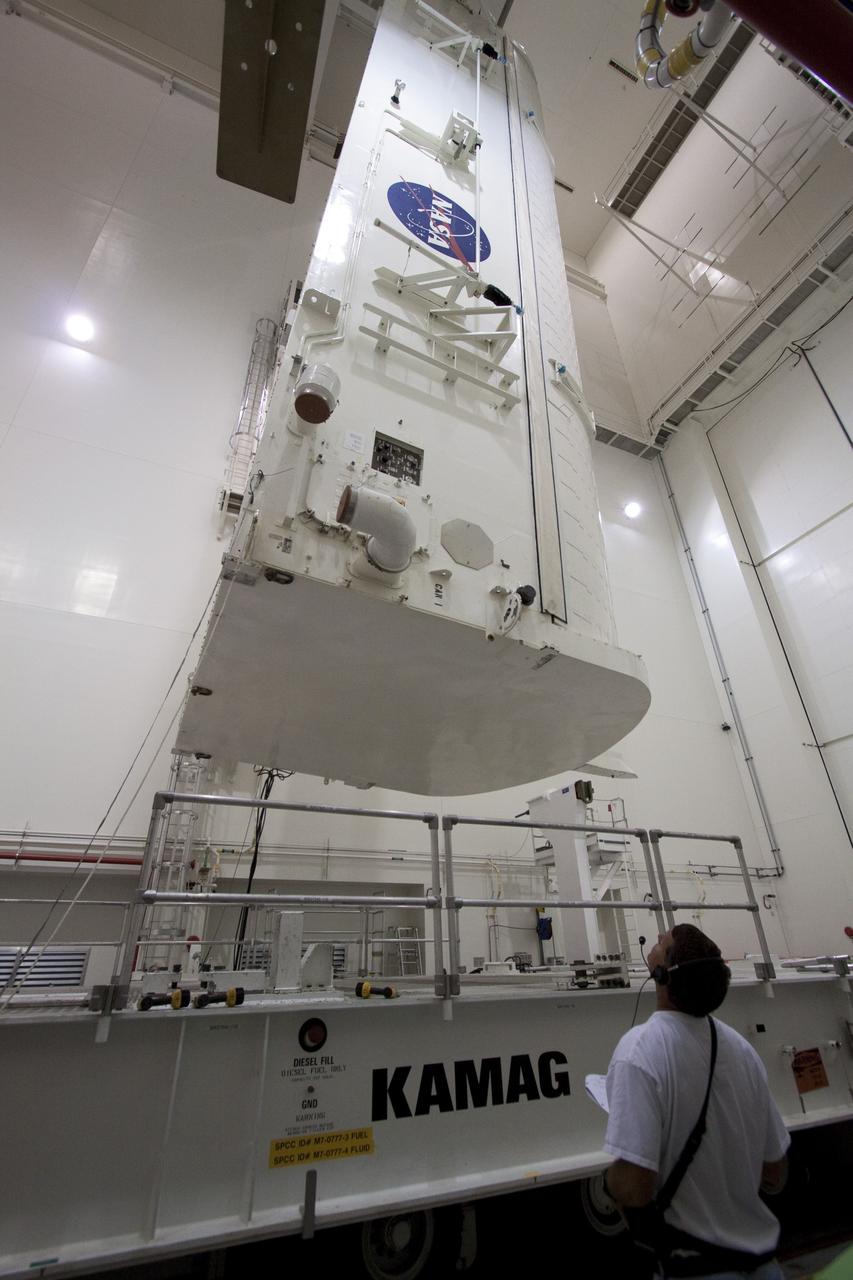
CAPE CANAVERAL, Fla. -- In the Canister Rotation Facility at NASA's Kennedy Space Center in Florida, a workers watches the progress of an overhead crane as it lowers the payload canister onto a transport vehicle. The canister will then be delivered to Launch Pad 39A, lifted into the rotating service structure where the module will be moved into the clean room before it is installed into space shuttle Discovery's payload bay. Discovery and its STS-133 crew will deliver the PMM, packed with supplies and critical spare parts, as well as Robonaut 2, the dexterous humanoid astronaut helper, to the International Space Station. Launch is targeted for 4:40 p.m. EDT, Nov. 1. Photo credit: NASA/Jack Pfaller
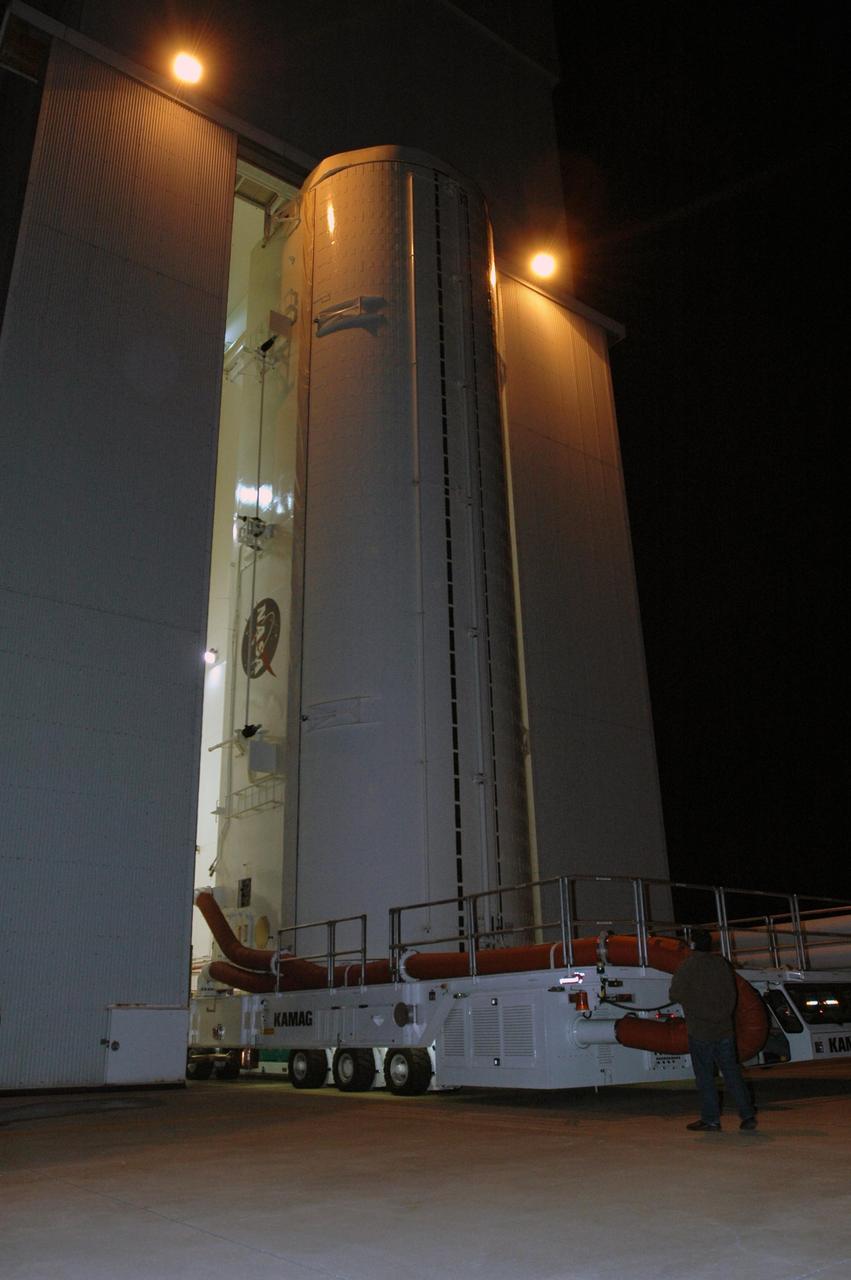
KENNEDY SPACE CENTER, FLA. -- At NASA's Kennedy Space Center, the payload canister rolls out of the Canister Rotation Facility where it was rotated from horizontal to vertical for its trip to Launch Pad 39A. The canister contains the Columbus Lab module and integrated cargo carrier-lite payloads for space shuttle Atlantis on mission STS-122. They will be transferred into the payload changeout room on the pad. Atlantis is targeted to launch on Dec. 6. Photo credit: NASA/Dimitri Gerondidakis
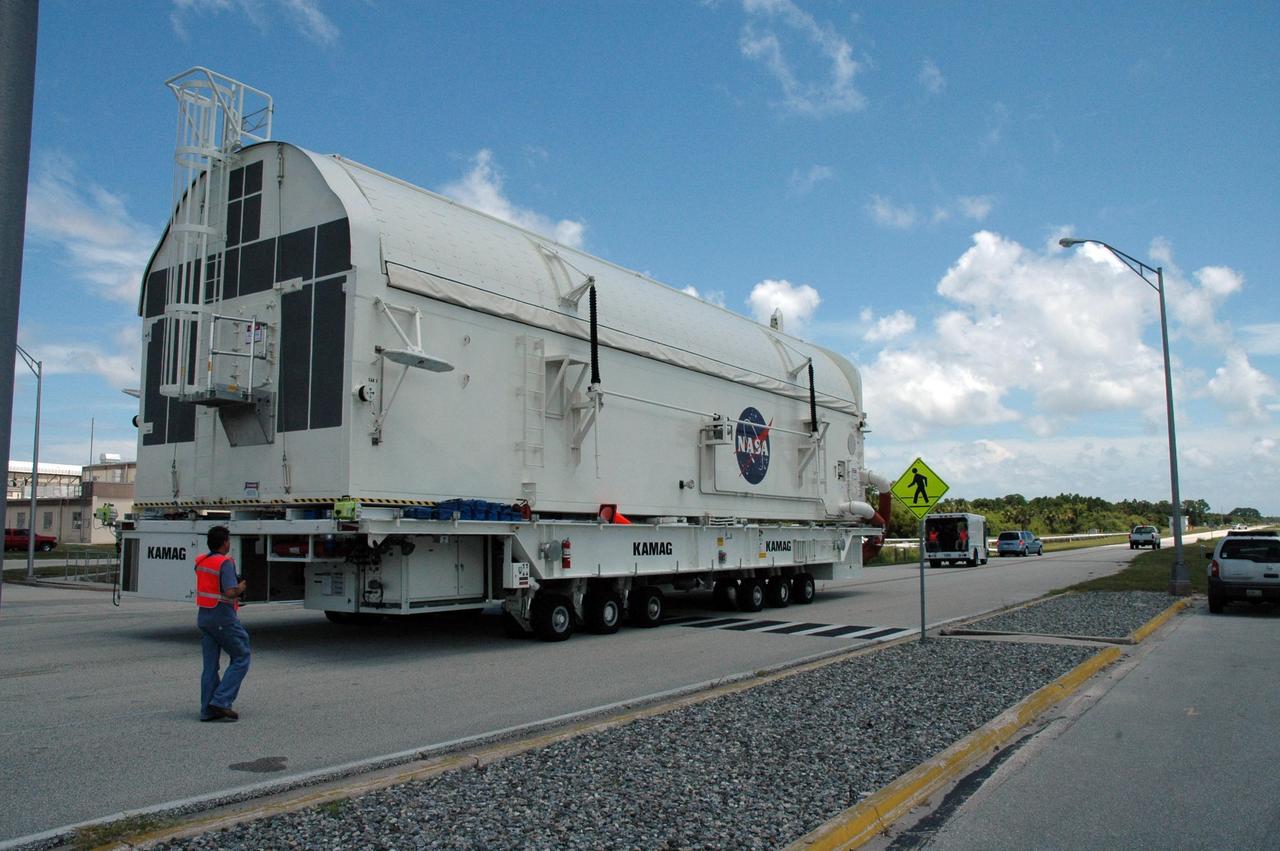
KENNEDY SPACE CENTER, FLA. -- The STS-118 payload canister transporter moves from the Space Station Processing Facility to the Canister Rotation Facility. Inside the canister are the SPACEHAB module, the S5 truss and the external stowage platform 3. At the CRF, the canister will be raised to a vertical position for delivery to Launch Pad 39A. Endeavour is targeted for launch on Aug. 9 to the International Space Station. The mission will continue space station construction with installation of the truss. Photo credit: NASA/Jim Grossmann
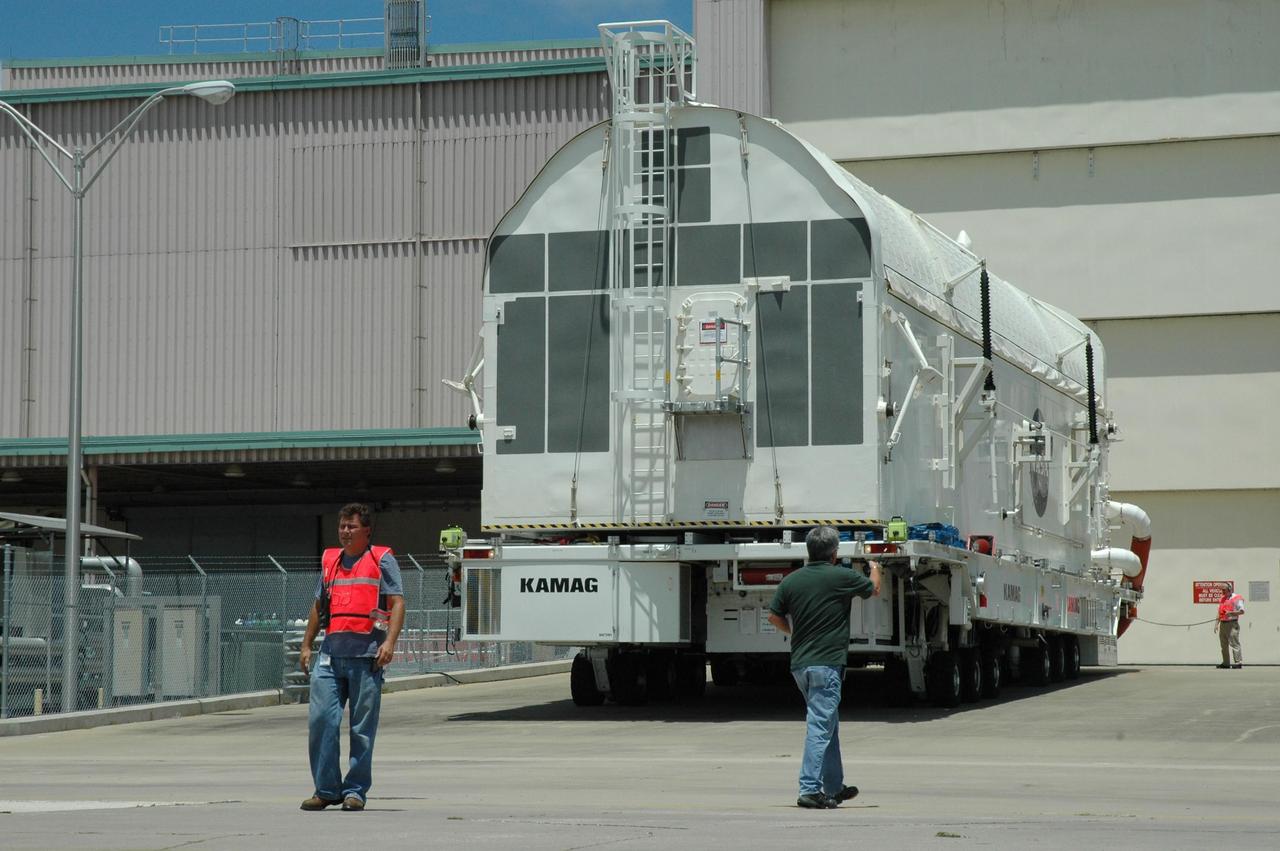
KENNEDY SPACE CENTER, FLA. -- The STS-118 payload canister transporter backs away from the Space Station Processing Facility with a full load. Inside the canister are the SPACEHAB module, the S5 truss and the external stowage platform 3. The canister is being moved to the Canister Rotation Facility where it will be raised to a vertical position for delivery to Launch Pad 39A. Endeavour is targeted for launch on Aug. 9 to the International Space Station. The mission will continue space station construction with installation of the truss. Photo credit: NASA/Jim Grossmann
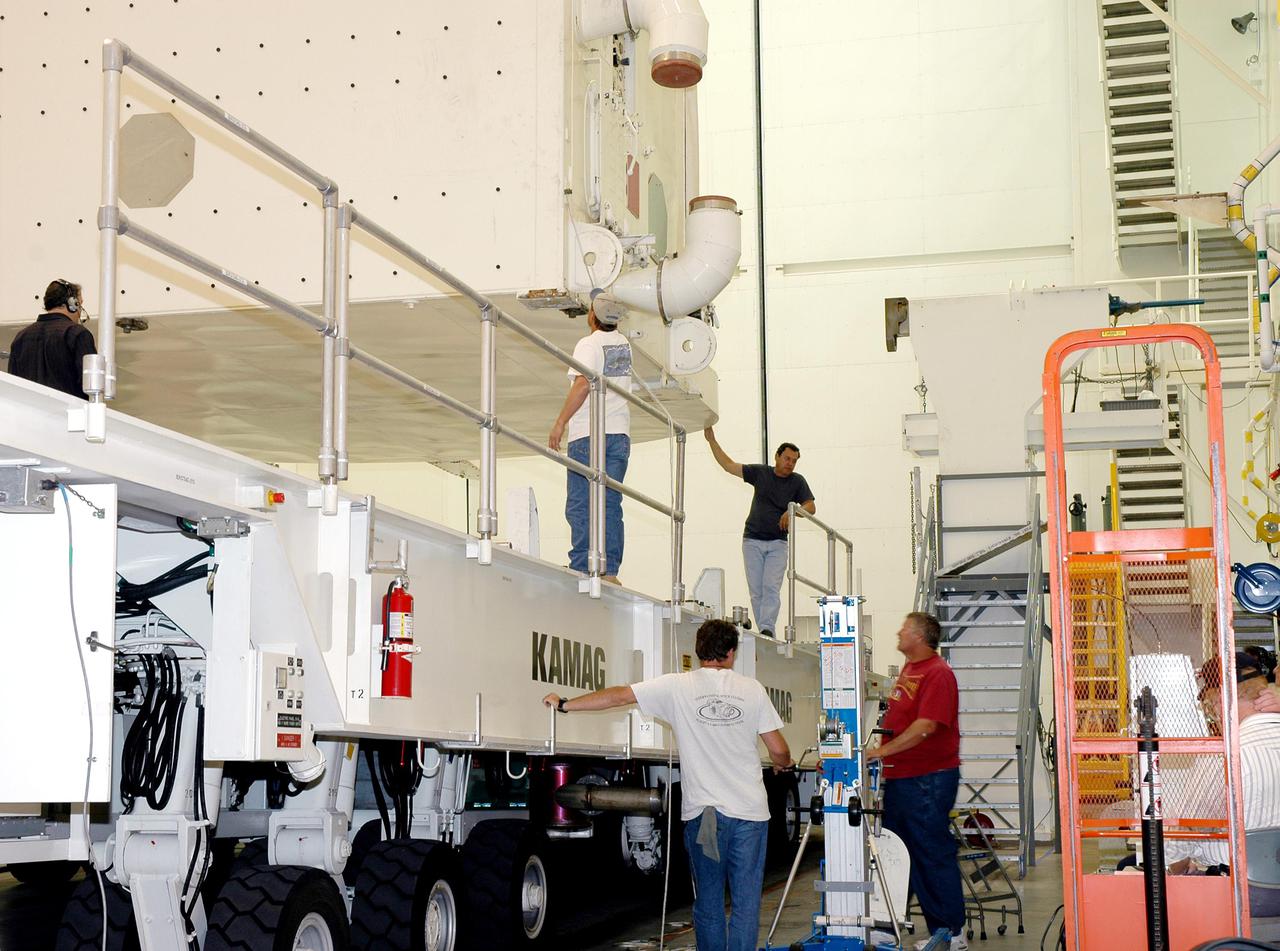
KENNEDY SPACE CENTER, FLA. - Workers in the Canister Rotation Facility at NASA’s Kennedy Space Center observe the Payload Canister after its rotation to a vertical position. The canister will be transported to Launch Pad 39B. The payloads inside, including the Multi-Purpose Logistics Module Raffaello and External Stowage Platform-2, will be moved into the Payload Changeout Room in the Rotating Service Structure and then installed in Discovery’s payload bay. Space Shuttle Discovery is scheduled to launch on Return to Flight mission STS-114 to the International Space Station. The launch window extends from May 22 to June 3.
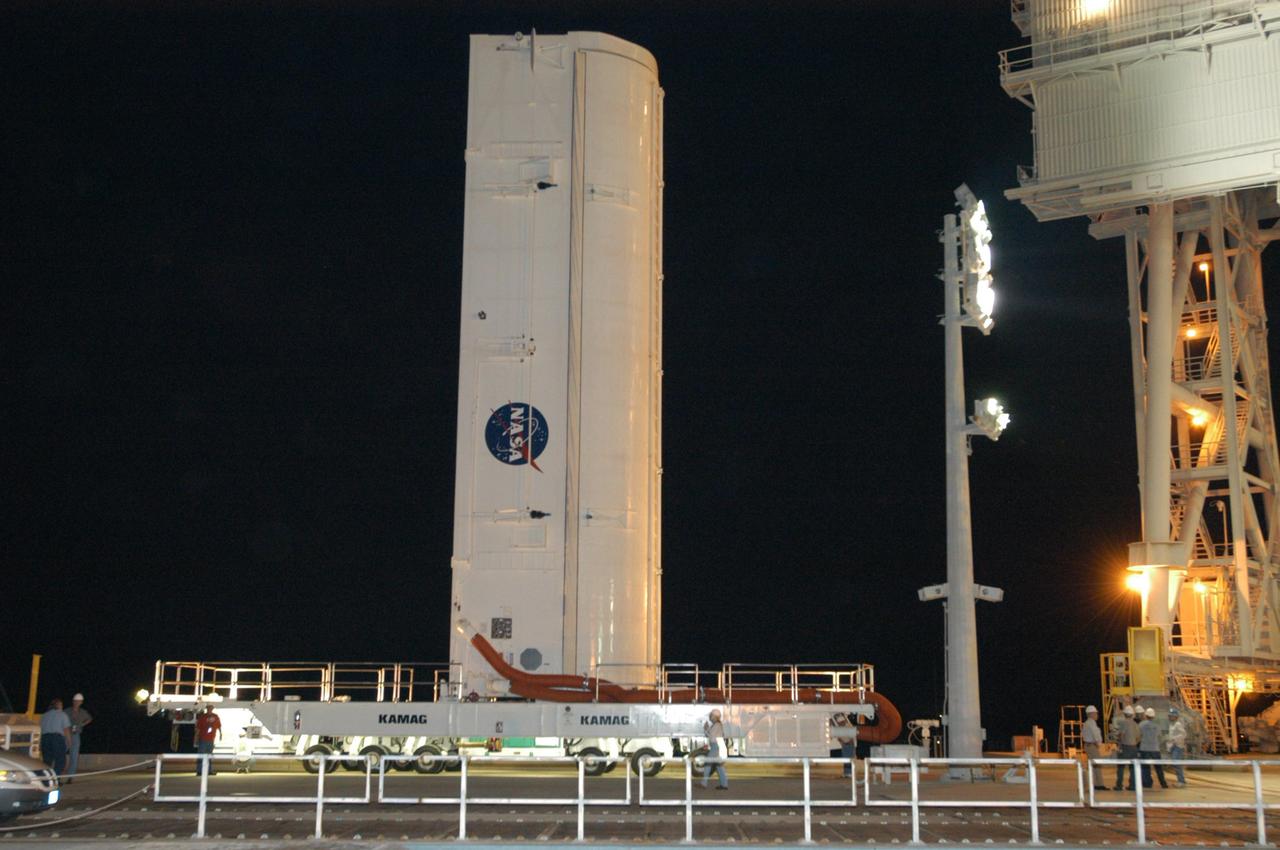
KENNEDY SPACE CENTER, FLA. - After a several-hour trip from the Canister Rotation Facility, the payload canister arrives on Launch Pad 39B. Inside the canister is the payload for Atlantis and mission STS-115, the Port 3/4 truss segment with two large solar arrays. The canister will be positioned alongside the rotating service structure and beneath the payload changeout room (PCR) for transfer of the truss into the PCR. The payload changeout room provides an environmentally clean or "white room" condition in which to receive a payload transferred from a protective payload canister. After the shuttle arrives at the pad, the rotating service structure will close around it and the payload will then be transferred into Atlantis' payload bay. Atlantis' launch window begins Aug. 28. During its 11-day mission to the International Space Station, the STS-115 crew of six astronauts will install the truss, a 17-ton segment of the space station's truss backbone. Photo credit: NASA/George Shelton
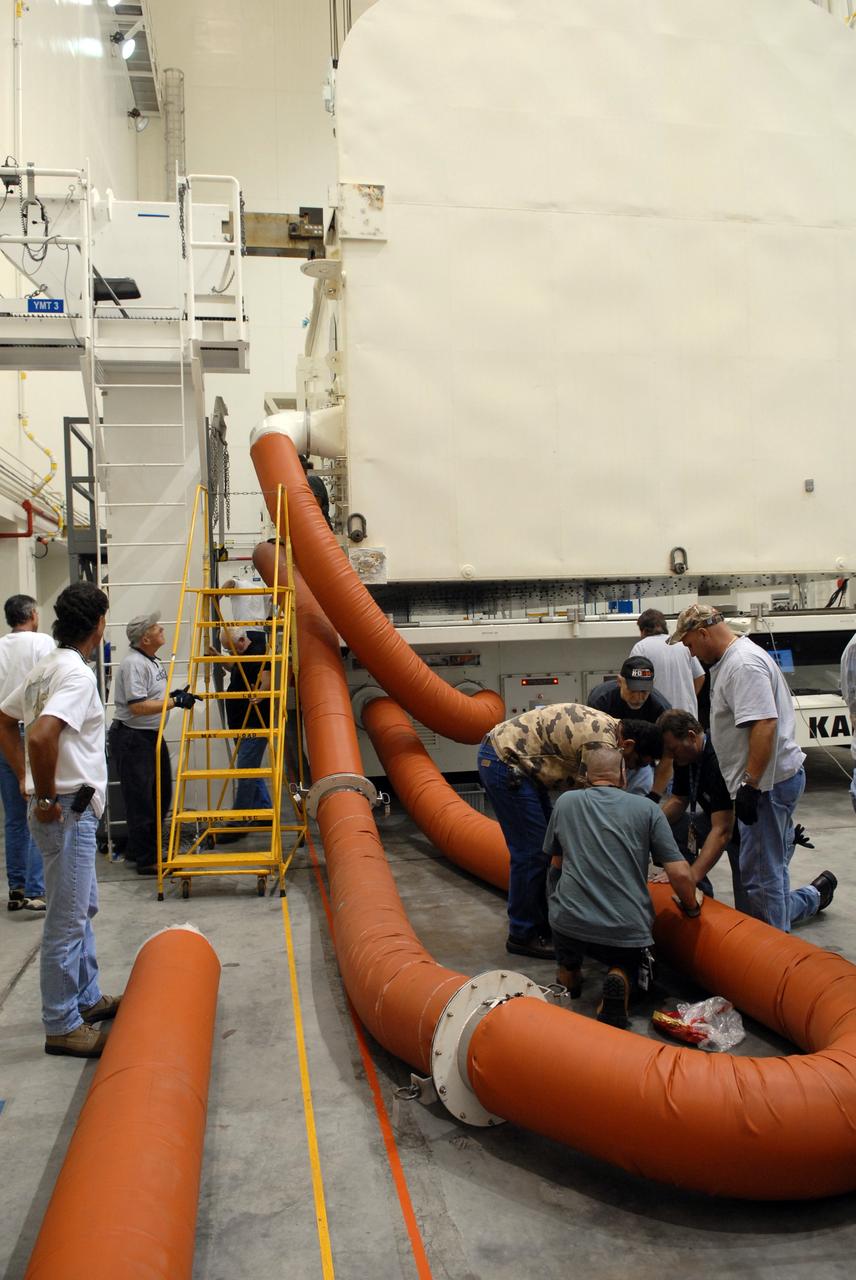
CAPE CANAVERAL, Fla. - At NASA's Kennedy Space Center, the payload canister is in the Canister Rotation Facility where it will be lifted to a vertical position. Workers check the umbilical lines that keep a controlled environment in the canister. The canister’s cargo consists of four carriers holding various equipment for the STS-125 mission aboard space shuttle Atlantis to service NASA’s Hubble Space Telescope. At the pad, the cargo will be moved into the Payload Changeout Room. The changeout room is the enclosed, environmentally controlled portion of the rotating service structure that supports cargo delivery to the pad and subsequent vertical installation into the shuttle’s payload bay. Launch of Atlantis is targeted for Oct. 10. Photo credit: NASA/Jack Pfaller
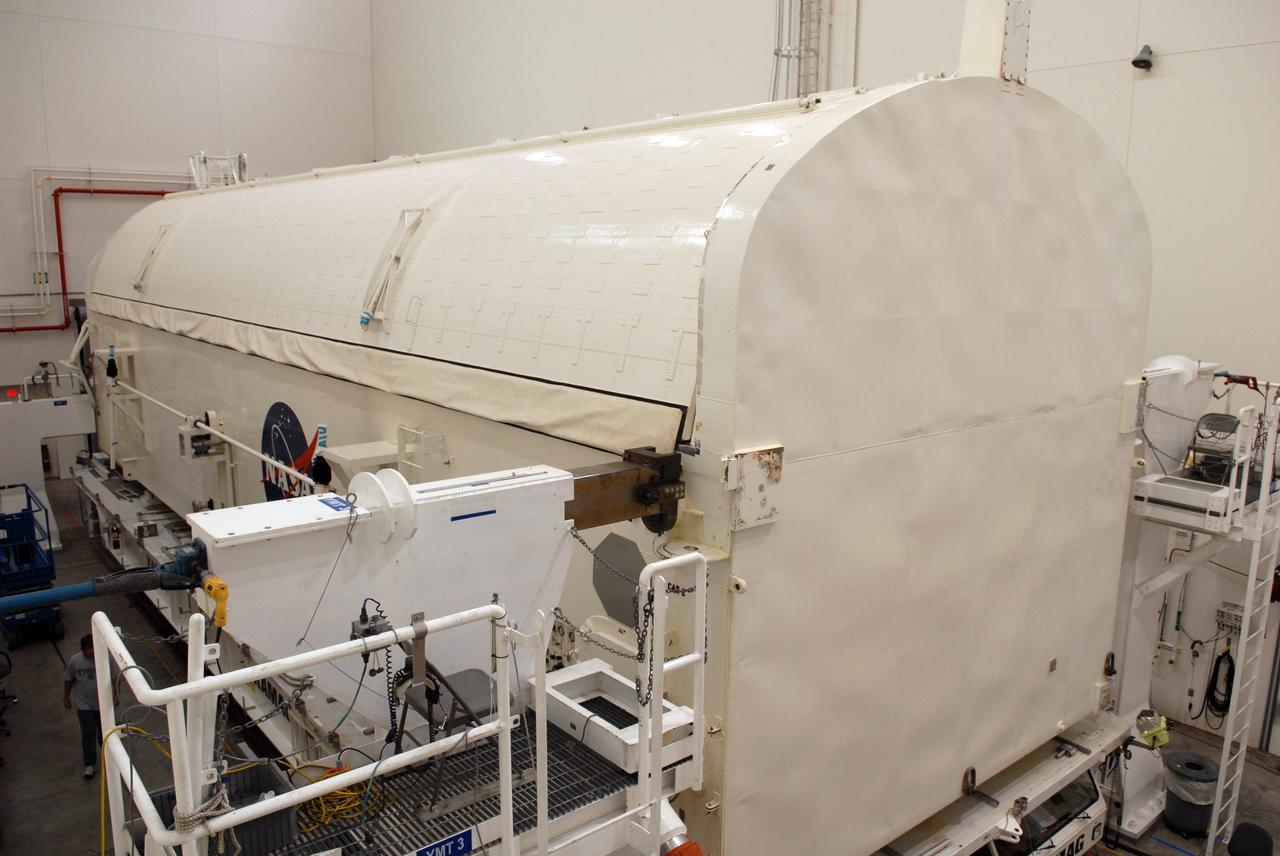
CAPE CANAVERAL, Fla. - At NASA's Kennedy Space Center, the payload canister is in the Canister Rotation Facility where it will be lifted to a vertical position. The canister transporter will then carry the canister and its cargo to Launch Pad 39A. The cargo consists of four carriers holding various equipment for the STS-125 mission aboard space shuttle Atlantis to service NASA’s Hubble Space Telescope. At the pad, the cargo will be moved into the Payload Changeout Room. The changeout room is the enclosed, environmentally controlled portion of the rotating service structure that supports cargo delivery to the pad and subsequent vertical installation into the shuttle’s payload bay. Launch of Atlantis is targeted for Oct. 10. Photo credit: NASA/Jack Pfaller
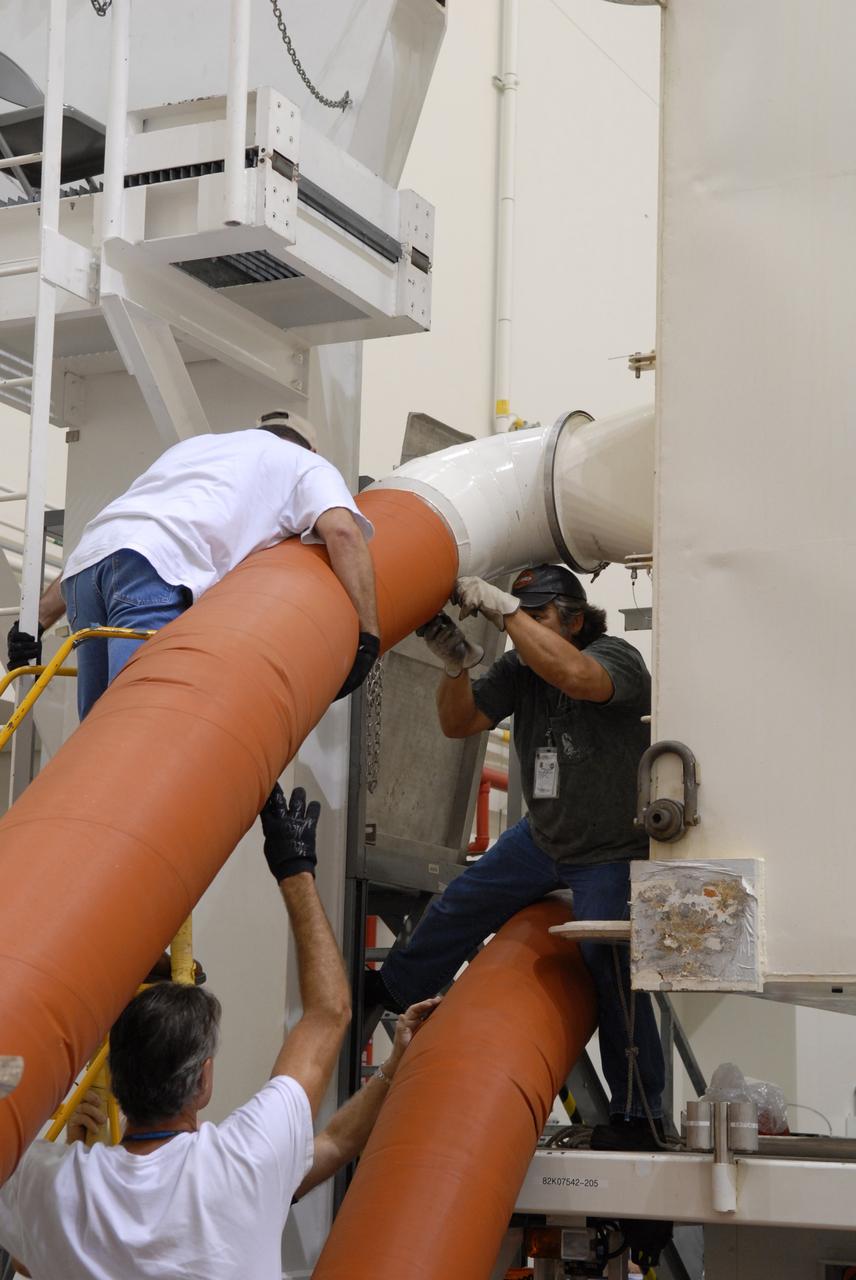
CAPE CANAVERAL, Fla. - In the Canister Rotation Facility at NASA's Kennedy Space Center, workers check the umbilical lines that keep a controlled environment in the payload canister. The canister will be lifted to a vertical position for the trip to Launch Pad 39A. The canister’s cargo consists of four carriers holding various equipment for the STS-125 mission aboard space shuttle Atlantis to service NASA’s Hubble Space Telescope. At the pad, the cargo will be moved into the Payload Changeout Room. The changeout room is the enclosed, environmentally controlled portion of the rotating service structure that supports cargo delivery to the pad and subsequent vertical installation into the shuttle’s payload bay. Launch of Atlantis is targeted for Oct. 10. Photo credit: NASA/Jack Pfaller
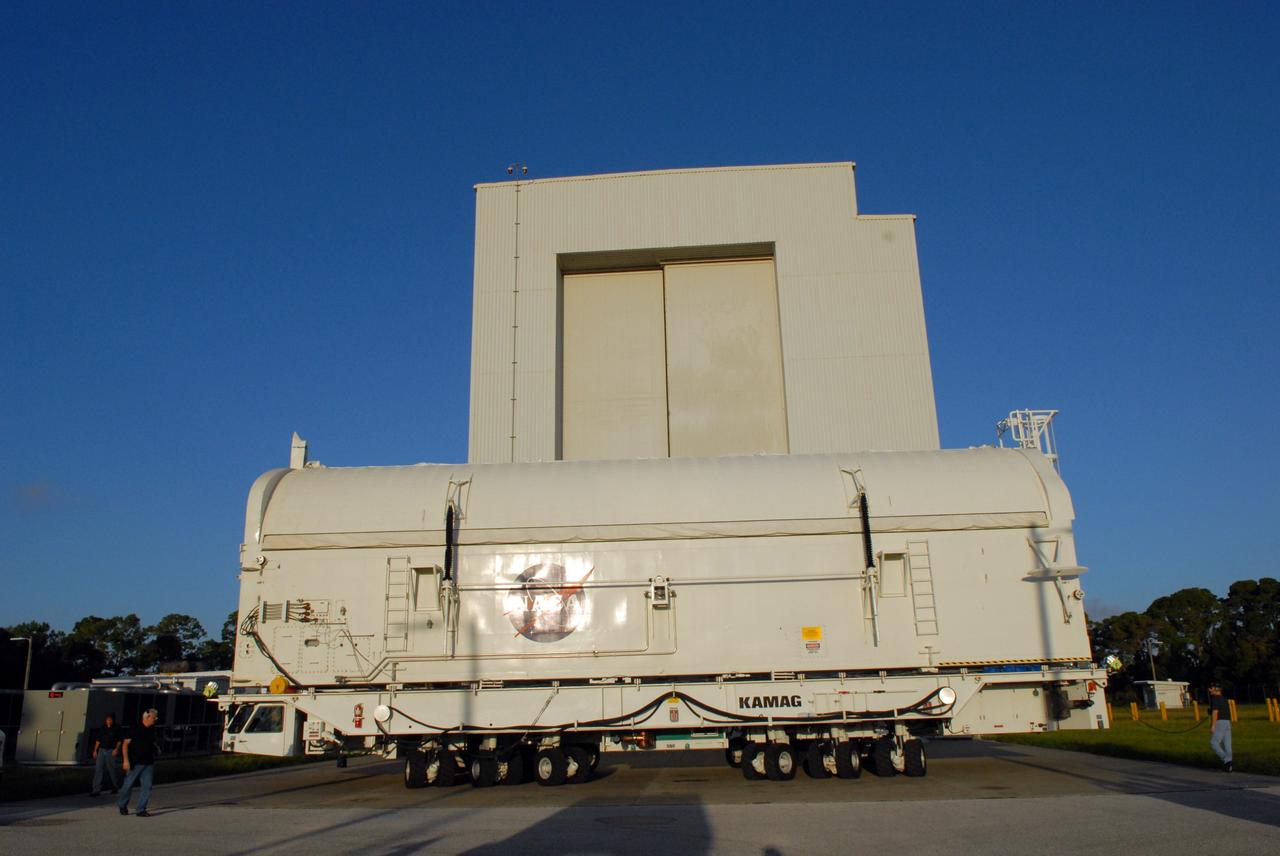
CAPE CANAVERAL, Fla. - The payload canister containing the equipment and hardware for space shuttle Atlantis’ STS-125 mission to the Hubble Space Telescope is moved from the Payload Hazardous Servicing Facility at NASA’s Kennedy Space Center in Florida, to the canister rotation facility. The canister will be transferred to Launch Pad 39A and the payload will be loaded into Atlantis’ payload bay. Launch of Atlantis is targeted for Oct 10. Photo credit: NASA/Jack Pfaller
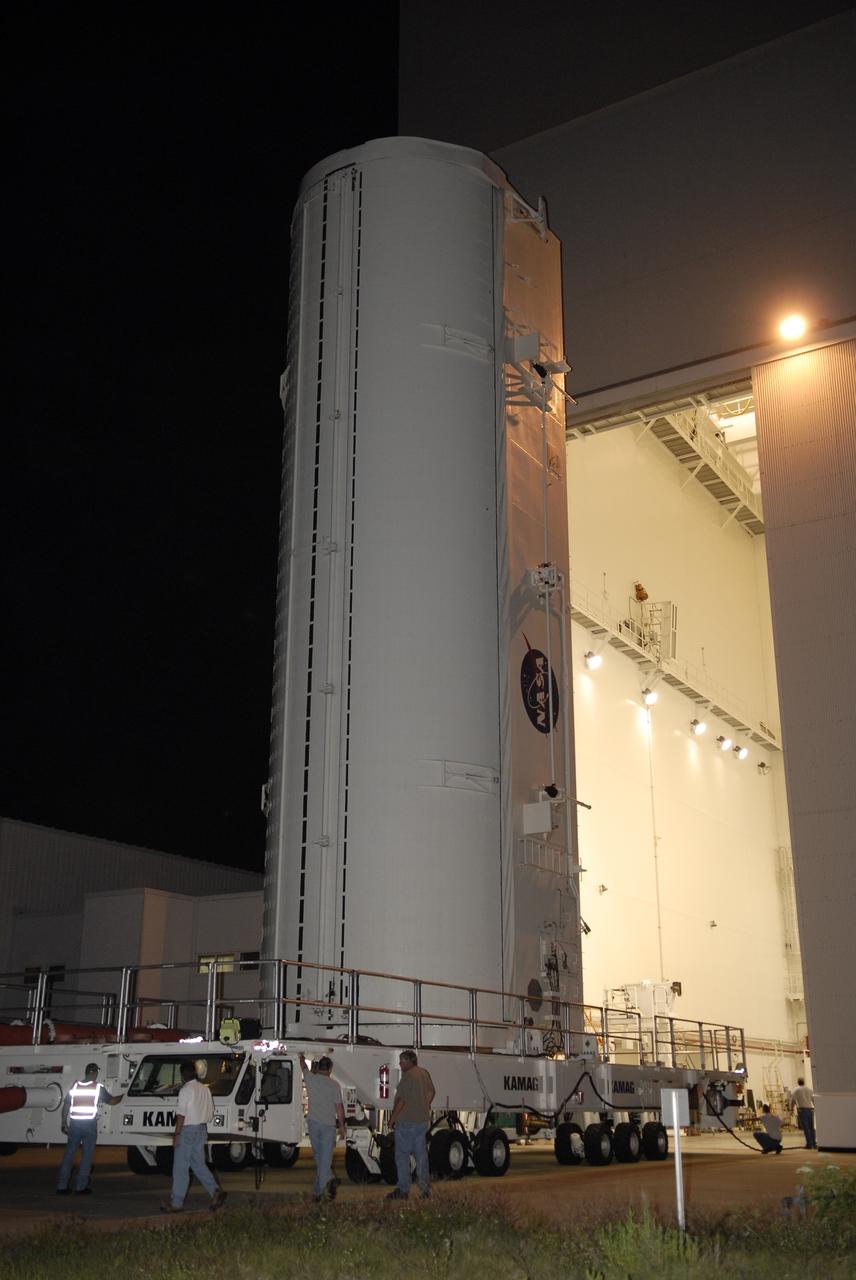
CAPE CANAVERAL, Fla. – The transporter with the payload canister exits the Canister Rotation Facility at NASA's Kennedy Space Center in Florida. Inside the canister is space shuttle Endeavour's payload for the STS-127 mission, which includes the Japan Aerospace Exploration Agency's Kibo Exposed Facility and the Experiment Logistics Module Exposed Section to the International Space Station. They will be installed on the Kibo laboratory on the station. Launch of Endeavour is targeted for June 13. Photo credit: NASA/Kim Shiflett
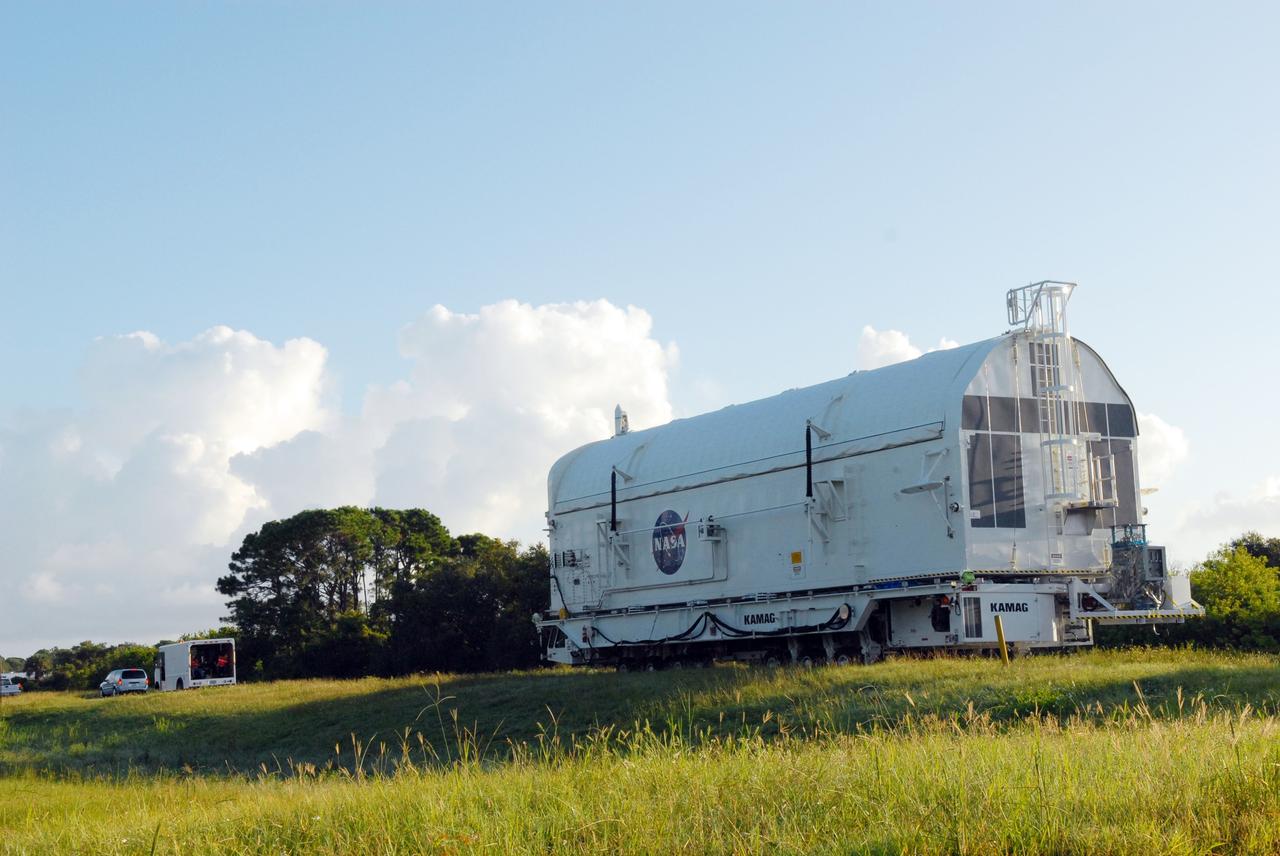
CAPE CANAVERAL, Fla. - The payload canister containing the equipment and hardware for space shuttle Atlantis’ STS-125 mission to the Hubble Space Telescope is moved from the Payload Hazardous Servicing Facility at NASA’s Kennedy Space Center in Florida, to the canister rotation facility. The canister will be transferred to Launch Pad 39A and the payload will be loaded into Atlantis’ payload bay. Launch of Atlantis is targeted for Oct 10. Photo credit: NASA/Jack Pfaller
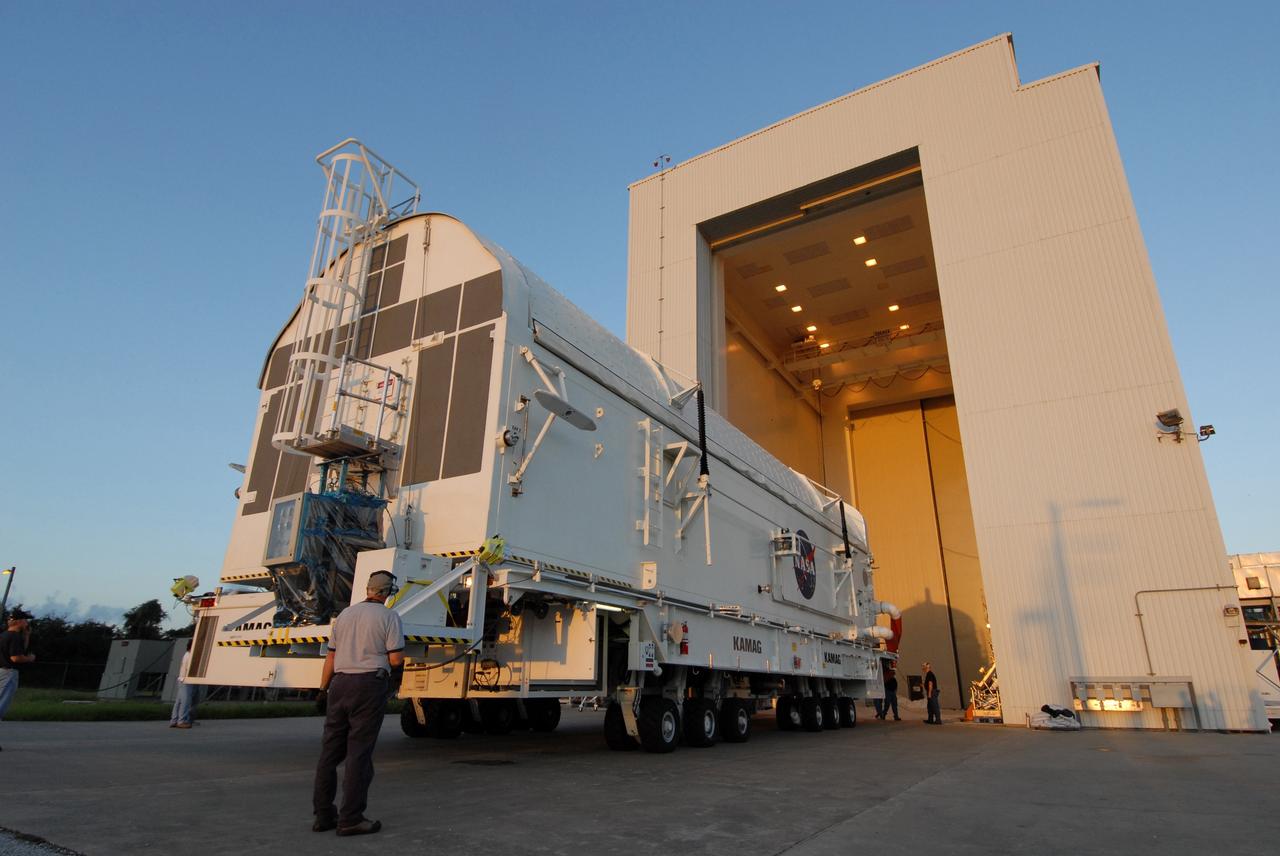
CAPE CANAVERAL, Fla. - The payload canister containing the equipment and hardware for space shuttle Atlantis’ STS-125 mission to the Hubble Space Telescope is moved from the Payload Hazardous Servicing Facility at NASA’s Kennedy Space Center in Florida, to the canister rotation facility. The canister will be transferred to Launch Pad 39A and the payload will be loaded into Atlantis’ payload bay. Launch of Atlantis is targeted for Oct 10. Photo credit: NASA/Jack Pfaller
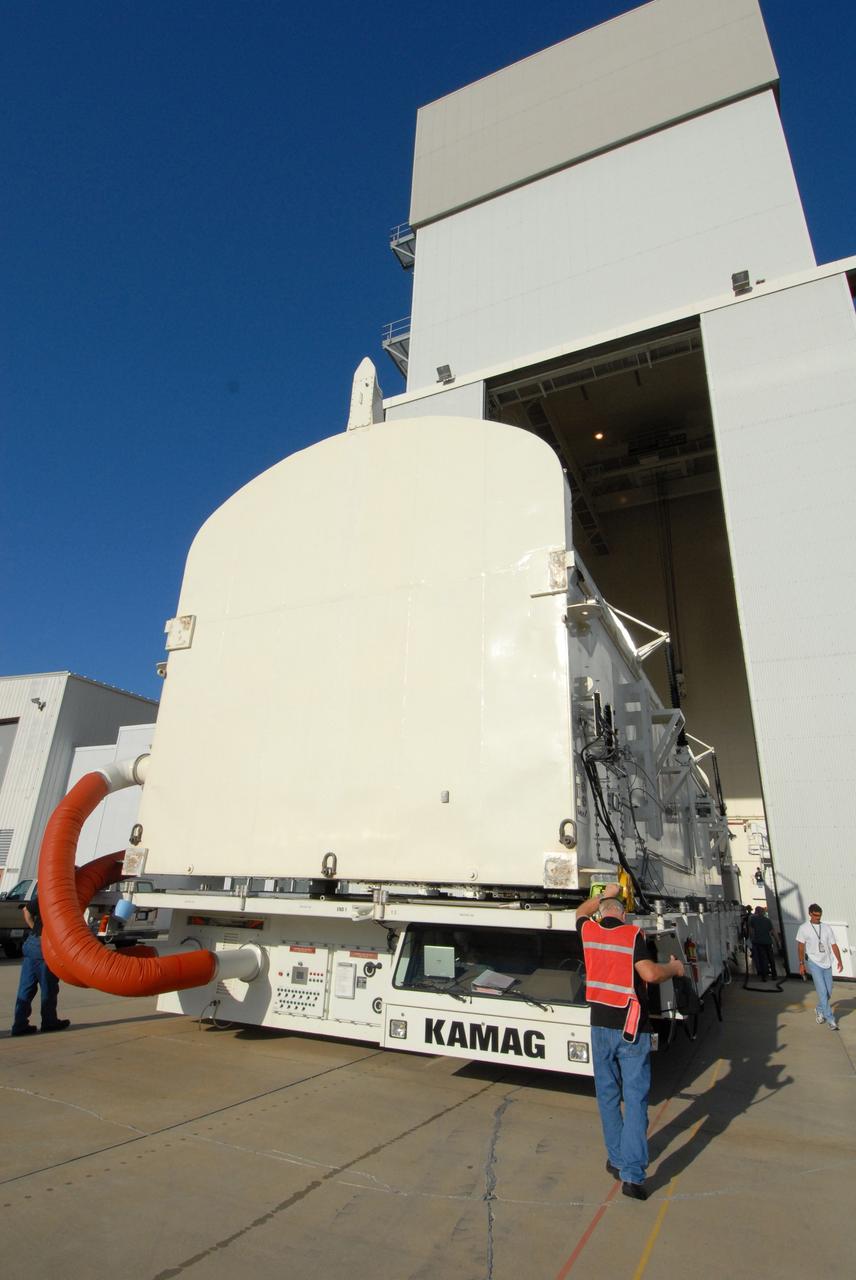
CAPE CANAVERAL, Fla. - The payload canister containing the equipment and hardware for space shuttle Atlantis’ STS-125 mission to the Hubble Space Telescope is moved from the Payload Hazardous Servicing Facility at NASA’s Kennedy Space Center in Florida, to the canister rotation facility. The canister will be transferred to Launch Pad 39A and the payload will be loaded into Atlantis’ payload bay. Launch of Atlantis is targeted for Oct 10. Photo credit: NASA/Jack Pfaller
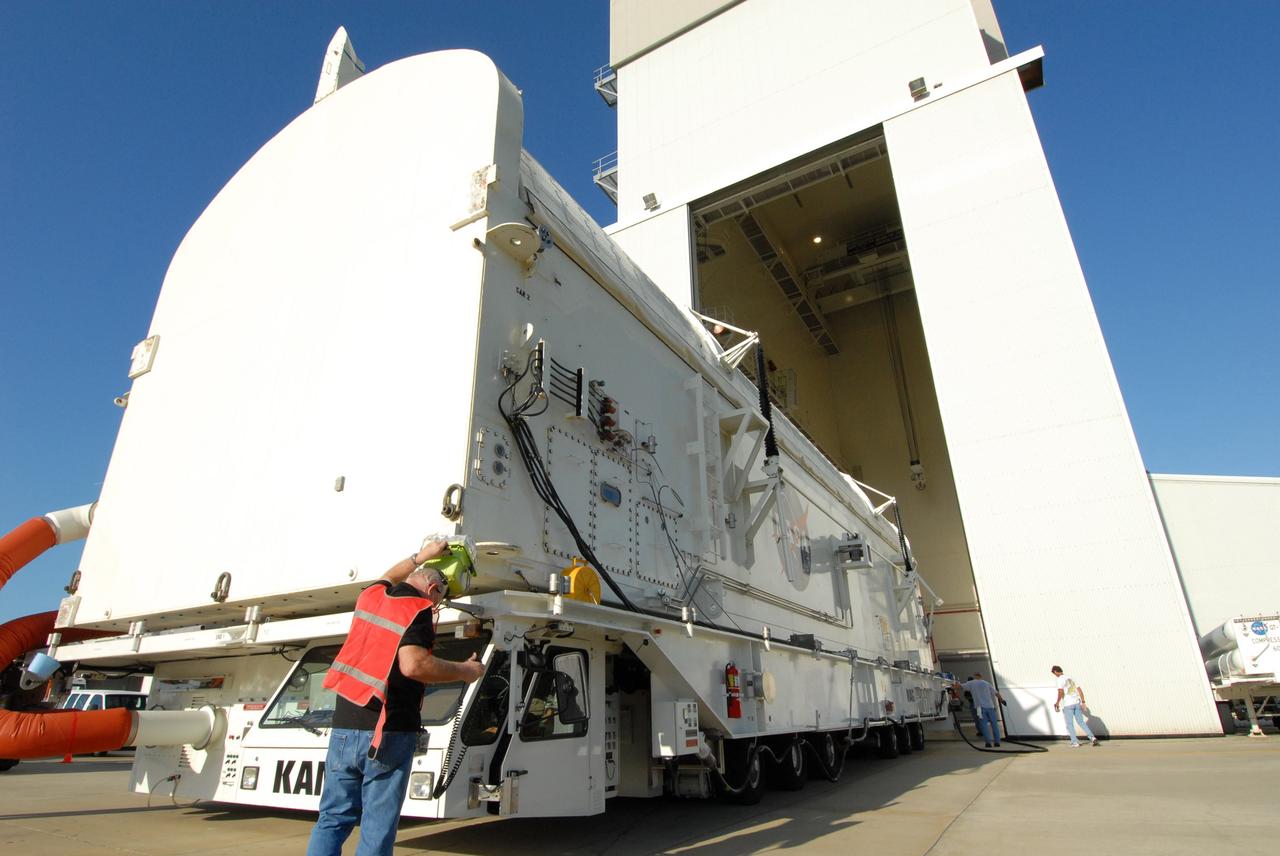
CAPE CANAVERAL, Fla. - The payload canister containing the equipment and hardware for space shuttle Atlantis’ STS-125 mission to the Hubble Space Telescope is moved from the Payload Hazardous Servicing Facility at NASA’s Kennedy Space Center in Florida, to the canister rotation facility. The canister will be transferred to Launch Pad 39A and the payload will be loaded into Atlantis’ payload bay. Launch of Atlantis is targeted for Oct 10. Photo credit: NASA/Jack Pfaller
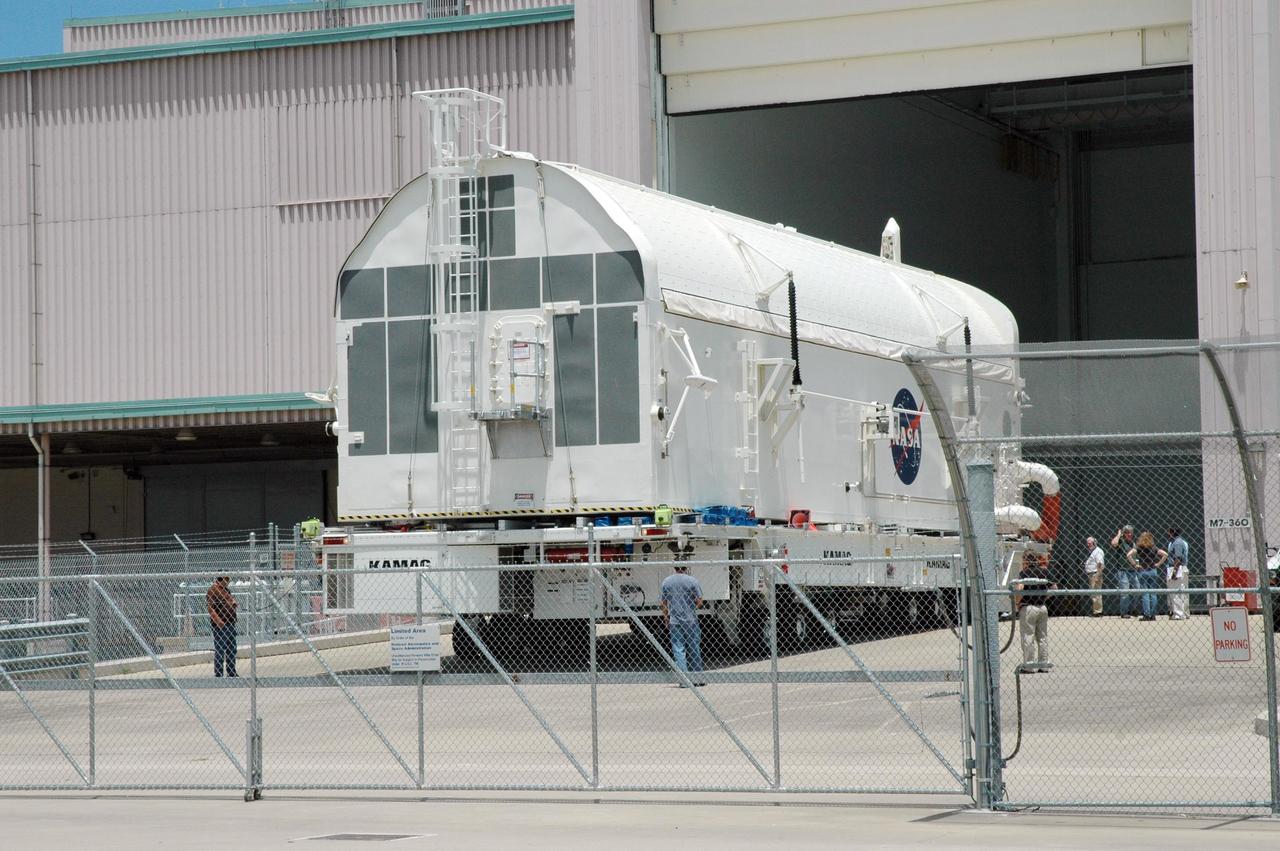
KENNEDY SPACE CENTER, FLA. -- The STS-118 payload canister transporter exits the Space Station Processing Facility with a full load. Inside are the SPACEHAB module, the S5 truss and the external stowage platform 3. The canister is being moved to the Canister Rotation Facility where it will be raised to a vertical position for delivery to Launch Pad 39A. Endeavour is targeted for launch on Aug. 9 to the International Space Station. The mission will continue space station construction with installation of the truss. Photo credit: NASA/Jim Grossmann
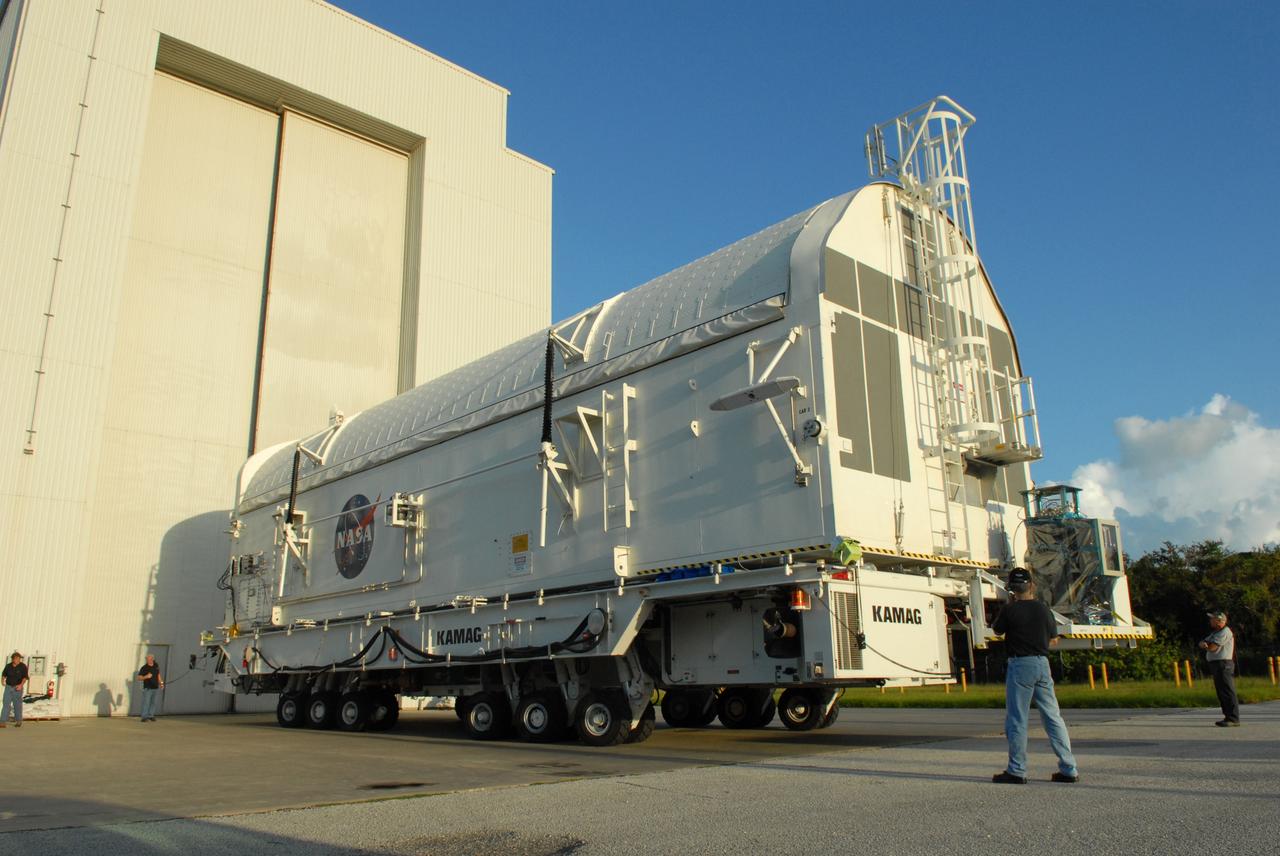
CAPE CANAVERAL, Fla. - The payload canister containing the equipment and hardware for space shuttle Atlantis’ STS-125 mission to the Hubble Space Telescope is moved from the Payload Hazardous Servicing Facility at NASA’s Kennedy Space Center in Florida, to the canister rotation facility. The canister will be transferred to Launch Pad 39A and the payload will be loaded into Atlantis’ payload bay. Launch of Atlantis is targeted for Oct 10. Photo credit: NASA/Jack Pfaller

CAPE CANAVERAL, Fla. - The payload canister containing the payload for space shuttle Endeavour's STS-126 mission rolls out of the Space Station Processing Facility at NASA's Kennedy Space Center in Florida. Inside the canister are the Multi-Purpose Logistics Module Leonardo and the Lightweight Multi-Purpose Experiment Support Structure Carrier. The canister next will be transported to the Canister Rotation Facility to raise it to vertical and then will be taken to Launch Pad 39A. At the pad, the payload canister will release its cargo into the Payload Changeout Room. Later, the payload will be installed in Endeavour's payload bay. Endeavour is targeted for launch on Nov. 14. Photo credit: NASA/Troy Cryder
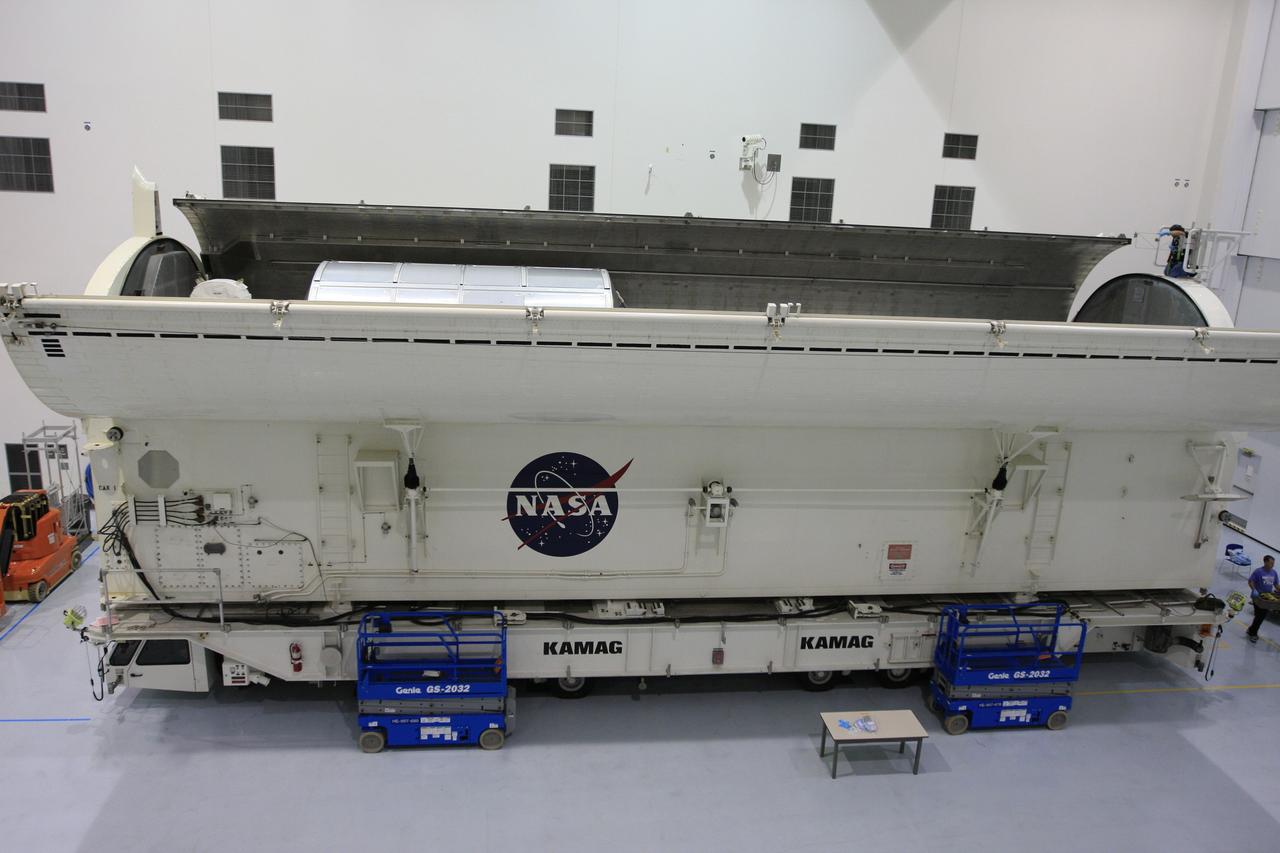
CAPE CANAVERAL, Fla. - In the Space Station Processing Facility at NASA's Kennedy Space Center in Florida, the doors of the payload canister are closing over the payload for space shuttle Endeavour's STS-126 mission. Inside the canister are the Multi-Purpose Logistics Module Leonardo and the Lightweight Multi-Purpose Experiment Support Structure Carrier. The canister next will be transported to the Canister Rotation Facility to raise it to vertical and then will be taken to Launch Pad 39A. At the pad, the payload canister will release its cargo into the Payload Changeout Room. Later, the payload will be installed in Endeavour's payload bay. Endeavour is targeted for launch on Nov. 14. Photo credit: NASA/Troy Cryder
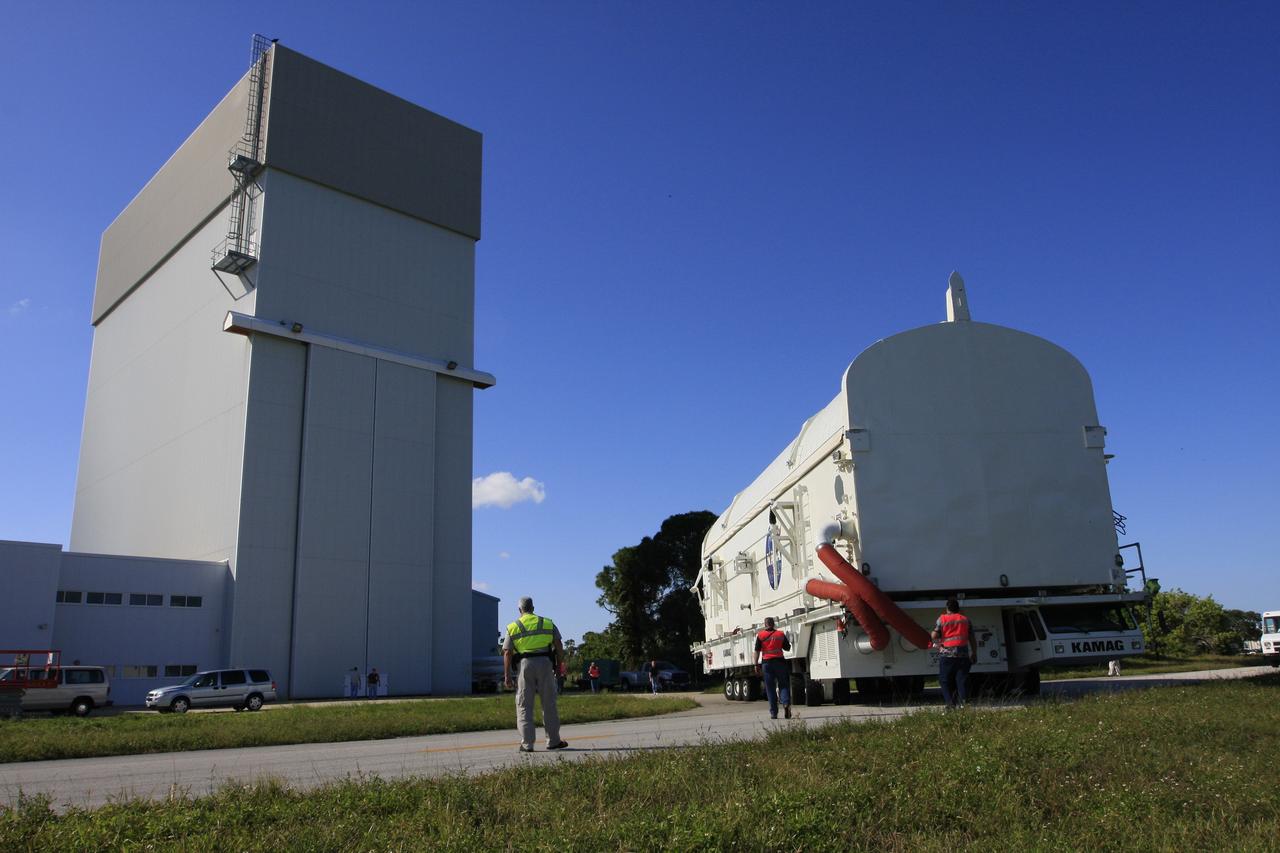
CAPE CANAVERAL, Fla. - The payload canister containing the payload for space shuttle Endeavour's STS-126 mission backs away from the Space Station Processing Facility at NASA's Kennedy Space Center in Florida. Inside the canister are the Multi-Purpose Logistics Module Leonardo and the Lightweight Multi-Purpose Experiment Support Structure Carrier. The canister will be transported to the Canister Rotation Facility to raise it to vertical and then will be taken to Launch Pad 39A. At the pad, the payload canister will release its cargo into the Payload Changeout Room. Later, the payload will be installed in Endeavour's payload bay. Endeavour is targeted for launch on Nov. 14. Photo credit: NASA/Troy Cryder
CAPE CANAVERAL, Fla. - In the Space Station Processing Facility at NASA's Kennedy Space Center in Florida, the doors of the payload canister are closing over the payload for space shuttle Endeavour's STS-126 mission. Inside the canister are the Multi-Purpose Logistics Module Leonardo and the Lightweight Multi-Purpose Experiment Support Structure Carrier. The canister next will be transported to the Canister Rotation Facility to raise it to vertical and then will be taken to Launch Pad 39A. At the pad, the payload canister will release its cargo into the Payload Changeout Room. Later, the payload will be installed in Endeavour's payload bay. Endeavour is targeted for launch on Nov. 14. Photo credit: NASA/Troy Cryder
CAPE CANAVERAL, Fla. - In the Space Station Processing Facility at NASA's Kennedy Space Center in Florida, workers prepare to close the payload canister containing the payload for space shuttle Endeavour's STS-126 mission. Inside the canister are the Multi-Purpose Logistics Module Leonardo and the Lightweight Multi-Purpose Experiment Support Structure Carrier. The canister next will be transported to the Canister Rotation Facility to raise it to vertical and then will be taken to Launch Pad 39A. At the pad, the payload canister will release its cargo into the Payload Changeout Room. Later, the payload will be installed in Endeavour's payload bay. Endeavour is targeted for launch on Nov. 14. Photo credit: NASA/Troy Cryder
CAPE CANAVERAL, Fla. - In the Space Station Processing Facility at NASA's Kennedy Space Center in Florida, workers secure the closed doors of the payload canister containing the payload for space shuttle Endeavour's STS-126 mission. Inside the canister are the Multi-Purpose Logistics Module Leonardo and the Lightweight Multi-Purpose Experiment Support Structure Carrier. The canister next will be transported to the Canister Rotation Facility to raise it to vertical and then will be taken to Launch Pad 39A. At the pad, the payload canister will release its cargo into the Payload Changeout Room. Later, the payload will be installed in Endeavour's payload bay. Endeavour is targeted for launch on Nov. 14. Photo credit: NASA/Troy Cryder
KENNEDY SPACE CENTER, FLA. -- The STS-118 payload canister transporter moves into the Canister Rotation Facility. Inside the canister are the SPACEHAB module, the S5 truss and the external stowage platform 3. At the CRF, the canister will be raised to a vertical position for delivery to Launch Pad 39A. Endeavour is targeted for launch on Aug. 9 to the International Space Station. The mission will continue space station construction with installation of the truss. Photo credit: NASA/Jim Grossmann
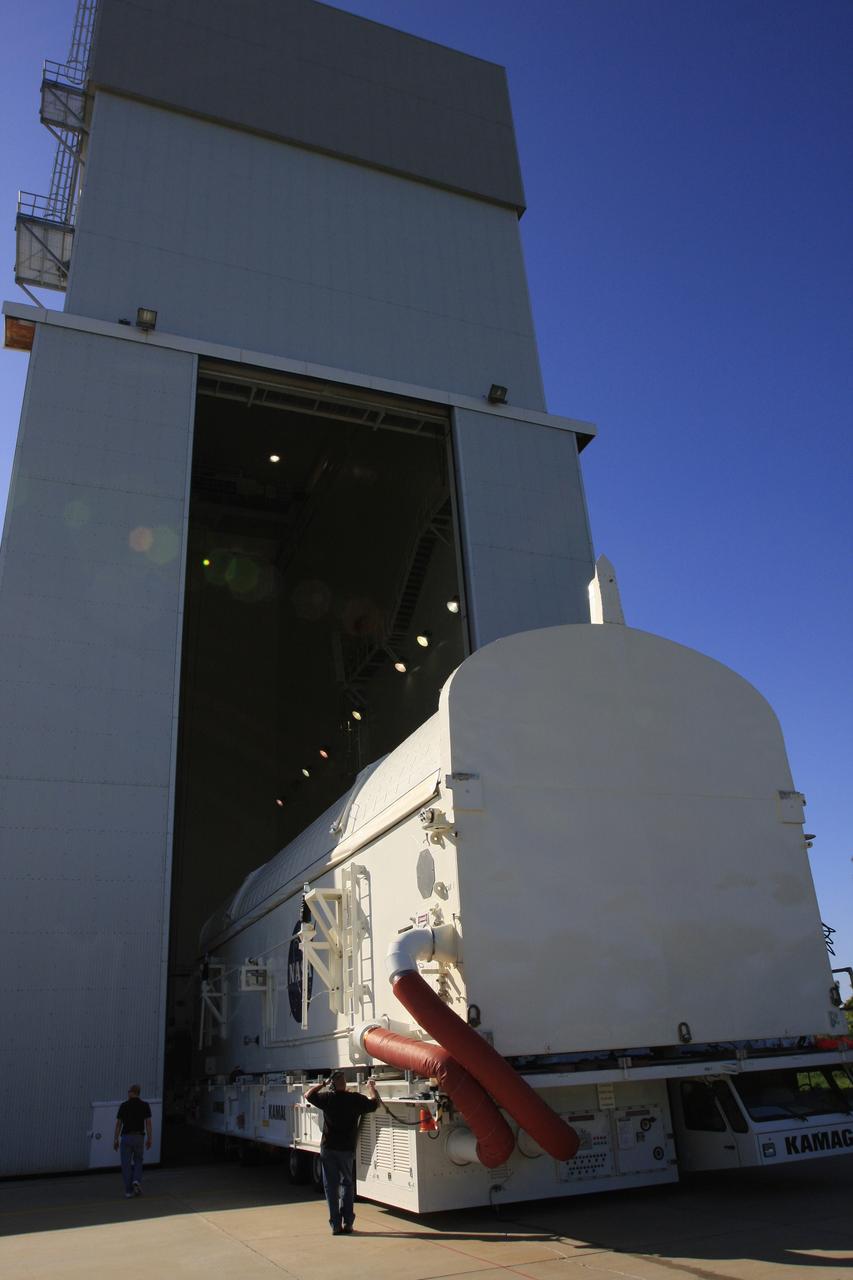
CAPE CANAVERAL, Fla. - The payload canister containing the payload for space shuttle Endeavour's STS-126 mission rolls into the Canister Rotation Facility at NASA's Kennedy Space Center in Florida. The canister will be raised to vertical and then transported to Launch Pad 39A. At the pad, the payload canister will release its cargo into the Payload Changeout Room. Later, the payload will be installed in Endeavour's payload bay. Endeavour is targeted for launch on Nov. 14. Photo credit: NASA/Troy Cryder
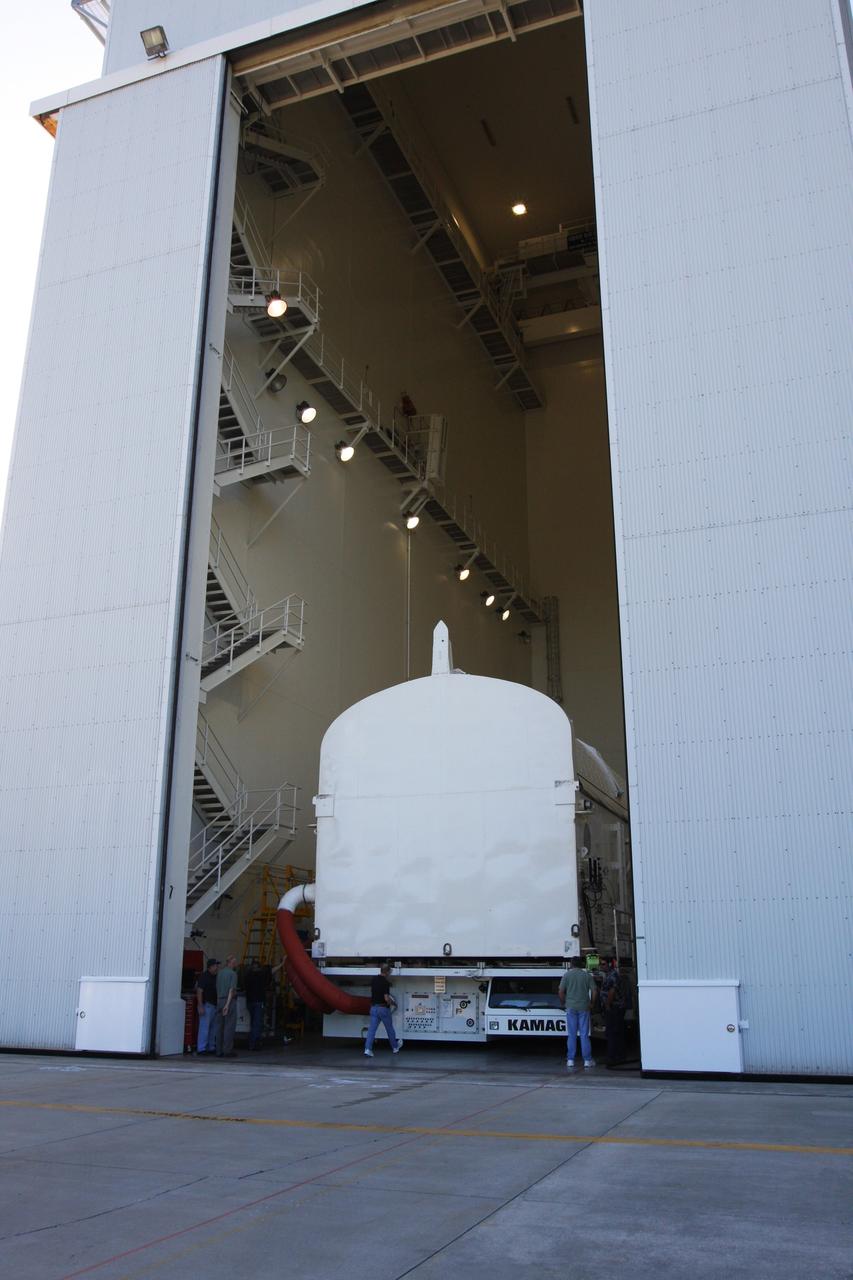
CAPE CANAVERAL, Fla. - The payload canister containing the payload for space shuttle Endeavour's STS-126 mission rolls into the Canister Rotation Facility at NASA's Kennedy Space Center in Florida. The canister will be raised to vertical and then transported to Launch Pad 39A. At the pad, the payload canister will release its cargo into the Payload Changeout Room. Later, the payload will be installed in Endeavour's payload bay. Endeavour is targeted for launch on Nov. 14. Photo credit: NASA/Troy Cryder
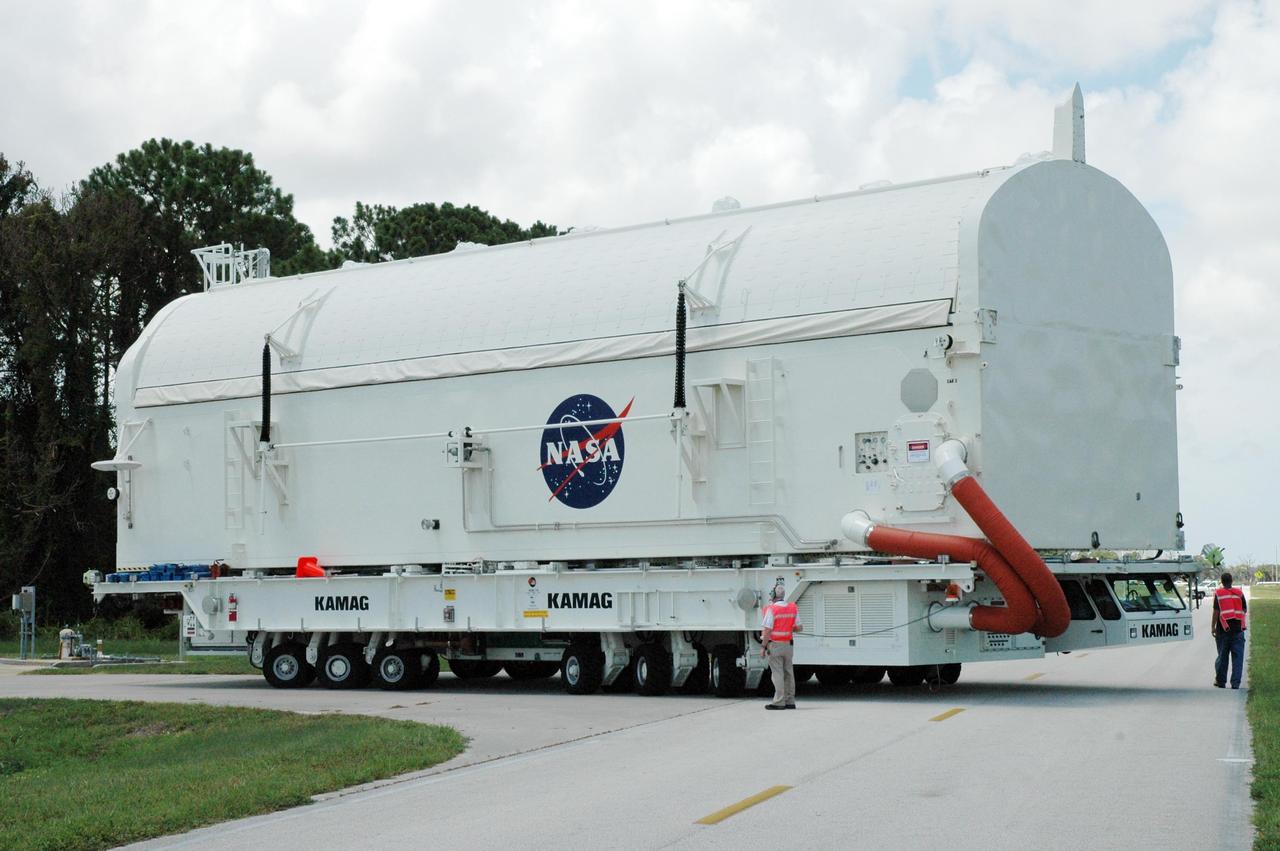
KENNEDY SPACE CENTER, FLA. -- The STS-118 payload canister transporter turns the corner toward the Canister Rotation Facility. Inside the canister are the SPACEHAB module, the S5 truss and the external stowage platform 3. At the CRF, the canister will be raised to a vertical position for delivery to Launch Pad 39A. Endeavour is targeted for launch on Aug. 9 to the International Space Station. The mission will continue space station construction with installation of the truss. Photo credit: NASA/Jim Grossmann
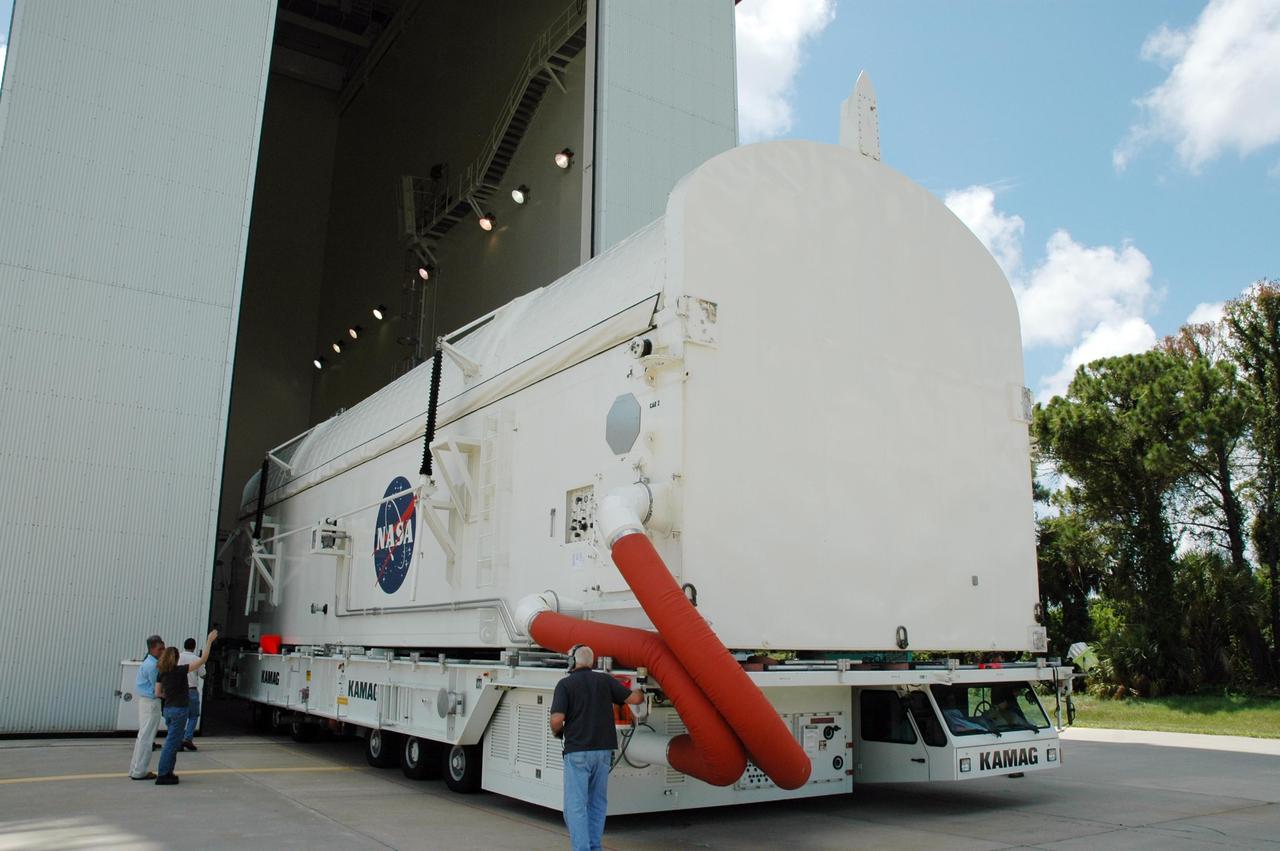
KENNEDY SPACE CENTER, FLA. -- The STS-118 payload canister transporter moves into the Canister Rotation Facility. Inside the canister are the SPACEHAB module, the S5 truss and the external stowage platform 3. At the CRF, the canister will be raised to a vertical position for delivery to Launch Pad 39A. Endeavour is targeted for launch on Aug. 9 to the International Space Station. The mission will continue space station construction with installation of the truss. Photo credit: NASA/Jim Grossmann
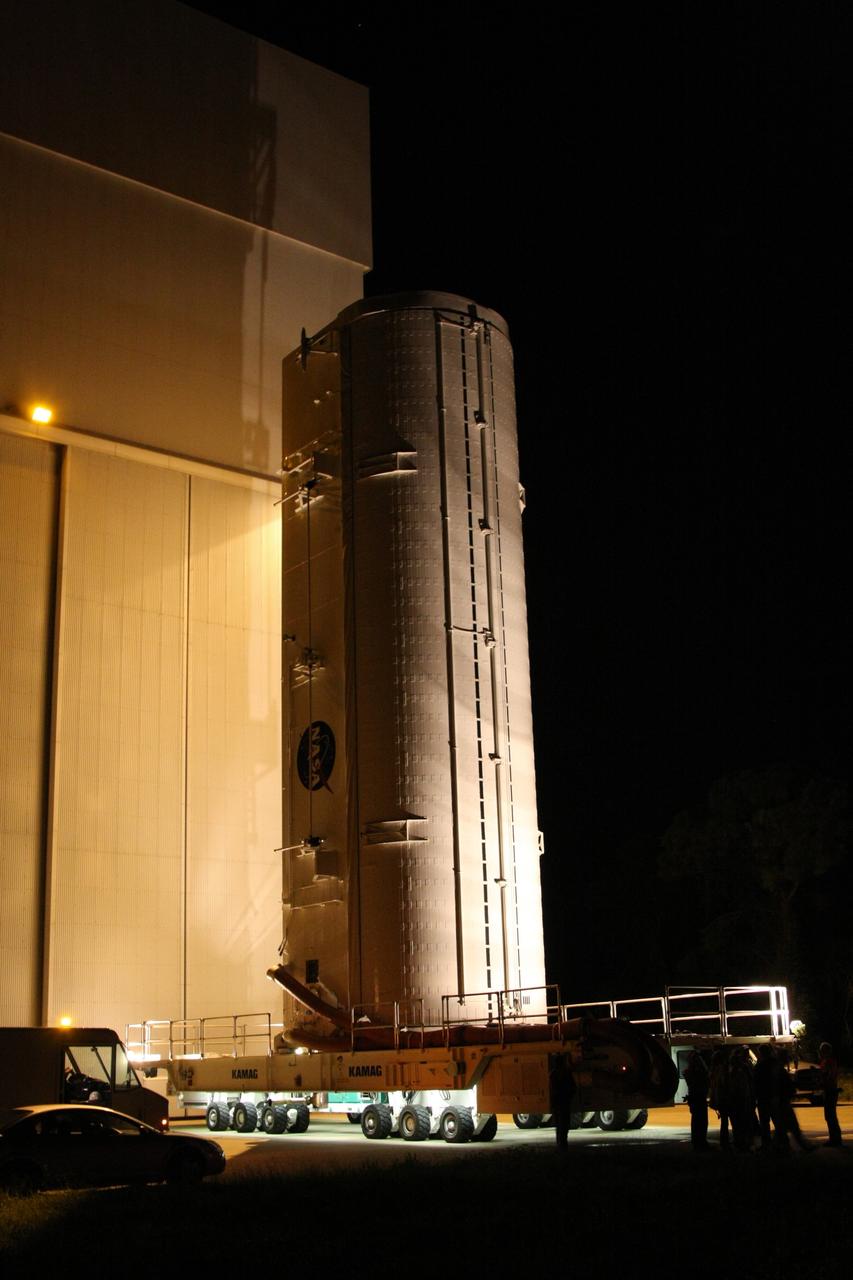
CAPE CANAVERAL, Fla. - In its vertical position, the payload canister with space shuttle Endeavour's STS-126 mission payload inside leaves the Canister Rotation Facility at NASA's Kennedy Space Center in Florida. Inside the canister are the Multi-Purpose Logistics Module Leonardo and the Lightweight Multi-Purpose Experiment Support Structure Carrier. At the pad, the payload canister will release its cargo into the Payload Changeout Room. Later, the payload will be installed in Endeavour's payload bay. Endeavour is targeted for launch on Nov. 14. Photo credit: NASA/Dimitri Gerondidakis
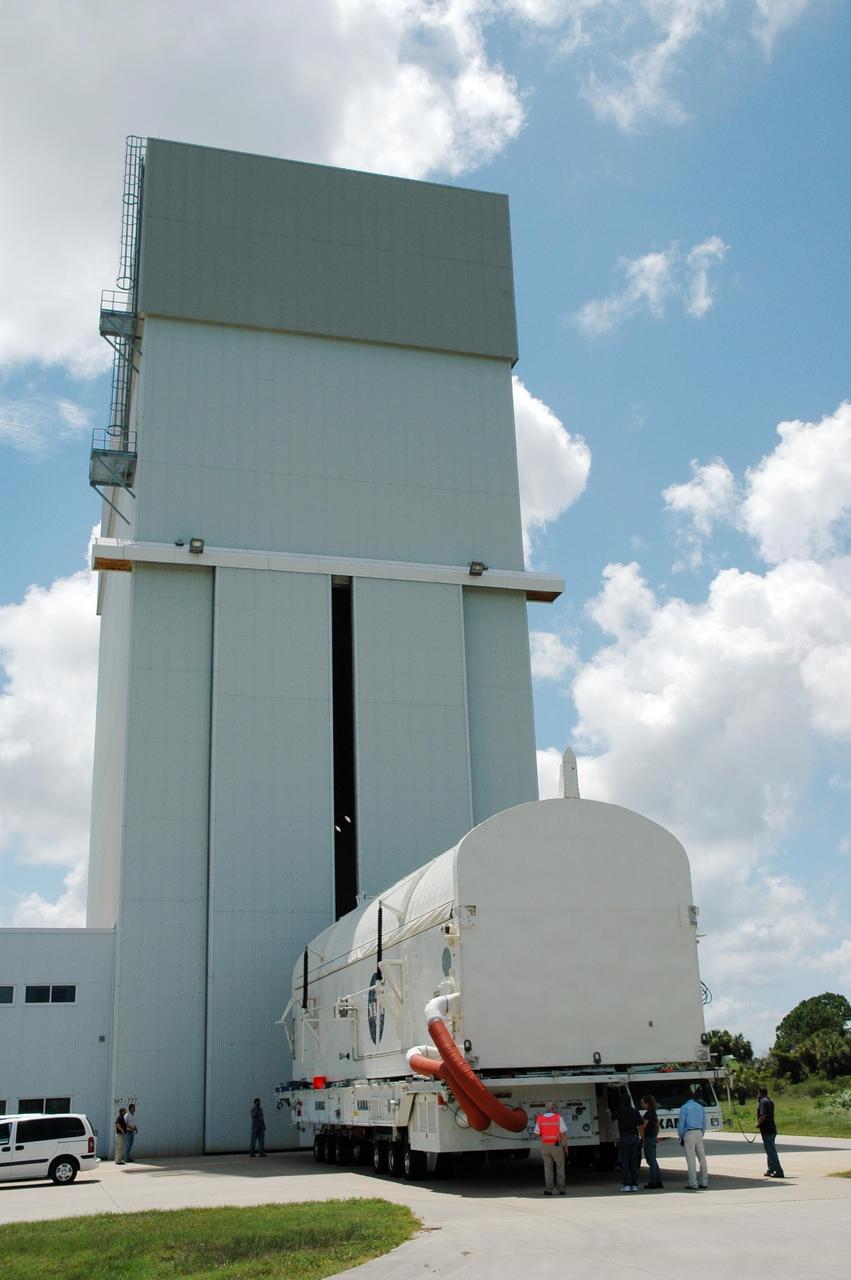
KENNEDY SPACE CENTER, FLA. -- The STS-118 payload canister transporter arrives at the Canister Rotation Facility. Inside the canister are the SPACEHAB module, the S5 truss and the external stowage platform 3. At the CRF, the canister will be raised to a vertical position for delivery to Launch Pad 39A. Endeavour is targeted for launch on Aug. 9 to the International Space Station. The mission will continue space station construction with installation of the truss. Photo credit: NASA/Jim Grossmann
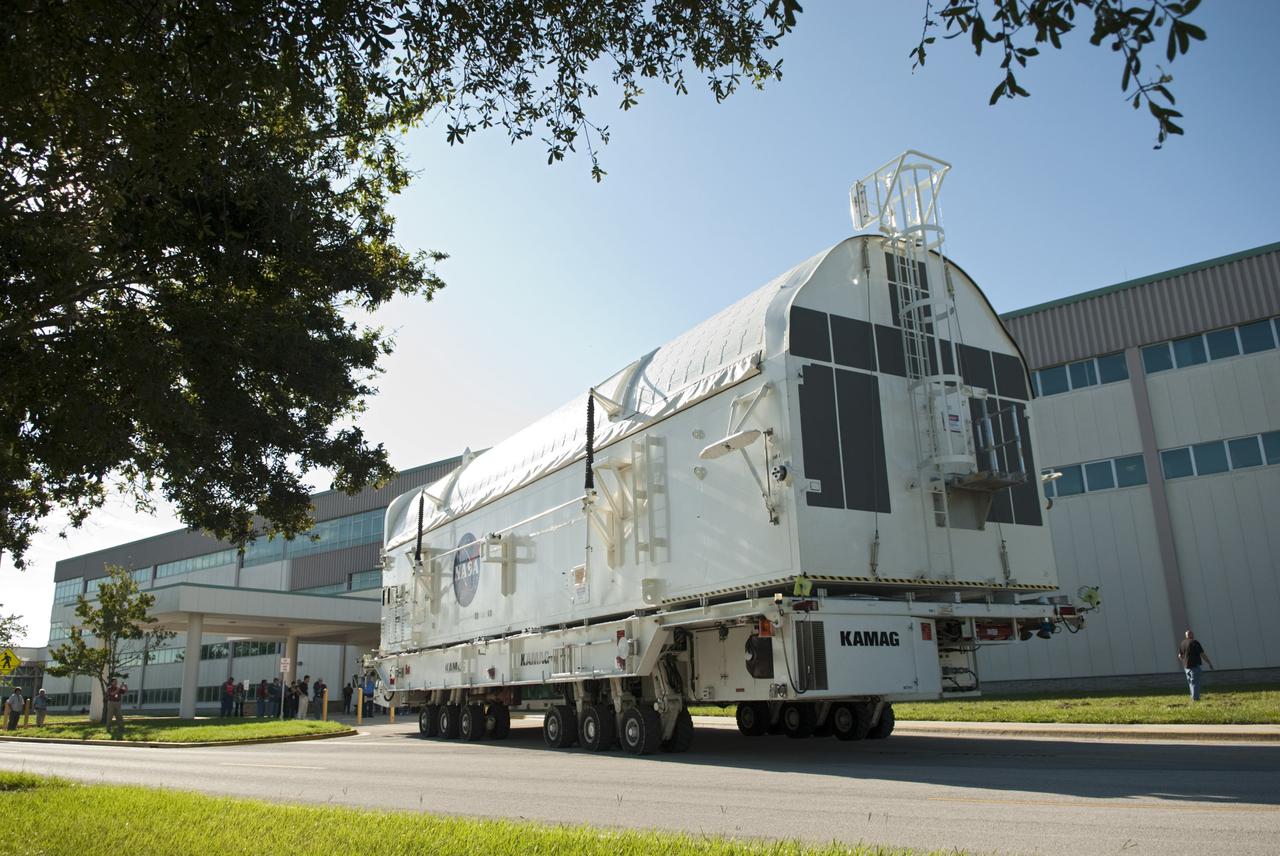
CAPE CANAVERAL, Fla. -- Payload canister #2 approaches the Space Station Processing Facility for a group employee photo opportunity. The canister is on its way from the Canister Rotation Facility at NASA's Kennedy Space Center in Florida to the Reutilization, Recycling and Marketing Facility on Ransom Road. The two payload canisters used to transport space shuttle payloads to the launch pad for installation in the shuttles' cargo bays are being decommissioned following the end of the Space Shuttle Program. Each canister weighs 110,000 pounds and is 65 feet long, 22 feet wide, and 18 feet, 7 inches high. The canisters were prescreened through NASA Headquarters as possible artifacts, but their size makes them difficult to transport to locations off the center. Federal and state agencies now will be given the opportunity to screen the canisters for potential use before a final decision is made on their disposition. For more information, visit http:__www.nasa.gov_centers_kennedy_pdf_167403main_CRF-06.pdf. Photo credit: NASA_Jim Grossmann
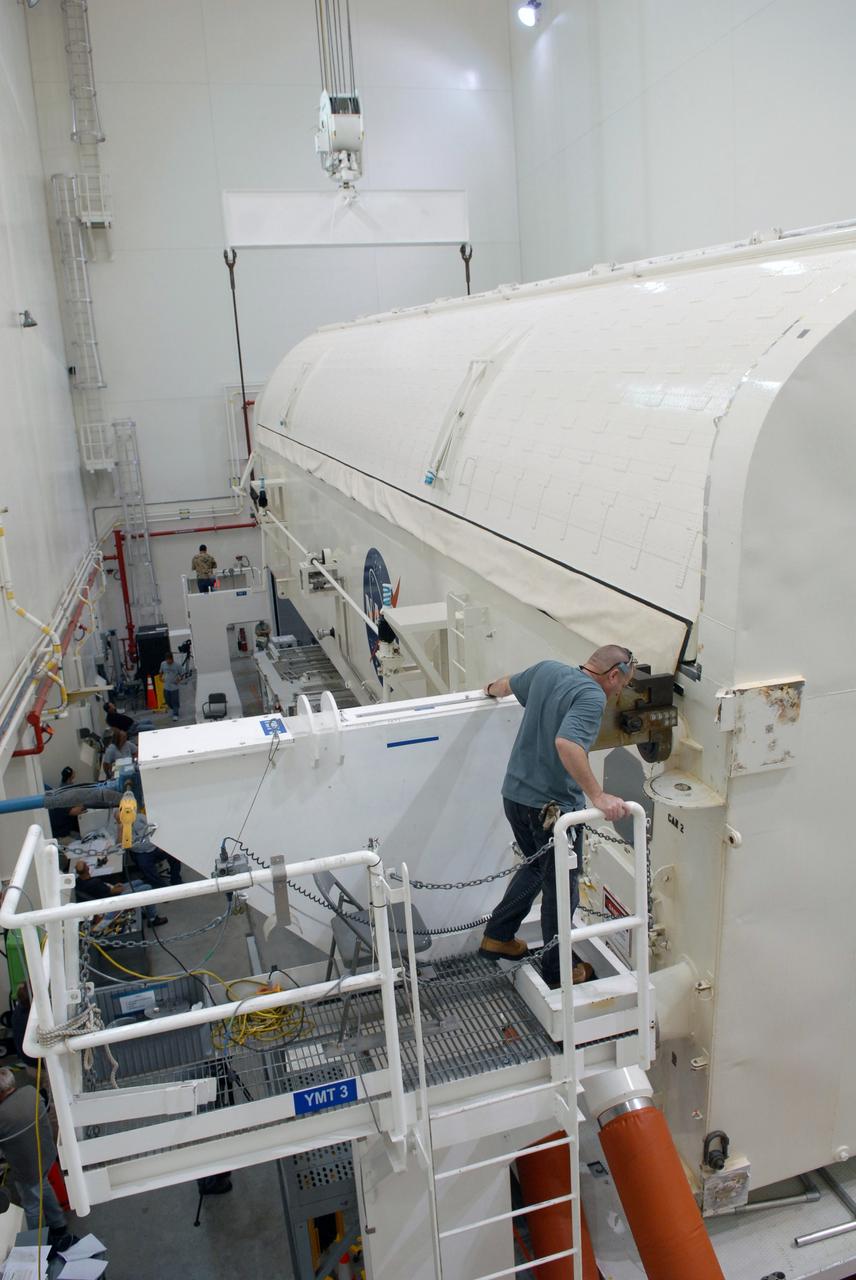
CAPE CANAVERAL, Fla. - In the Canister Rotation Facility at NASA's Kennedy Space Center, workers get ready to lift the payload canister to a vertical position for the trip to Launch Pad 39A. The canister’s cargo consists of four carriers holding various equipment for the STS-125 mission aboard space shuttle Atlantis to service NASA’s Hubble Space Telescope. At the pad, the cargo will be moved into the Payload Changeout Room. The changeout room is the enclosed, environmentally controlled portion of the rotating service structure that supports cargo delivery to the pad and subsequent vertical installation into the shuttle’s payload bay. Launch of Atlantis is targeted for Oct. 10. Photo credit: NASA/Jack Pfaller
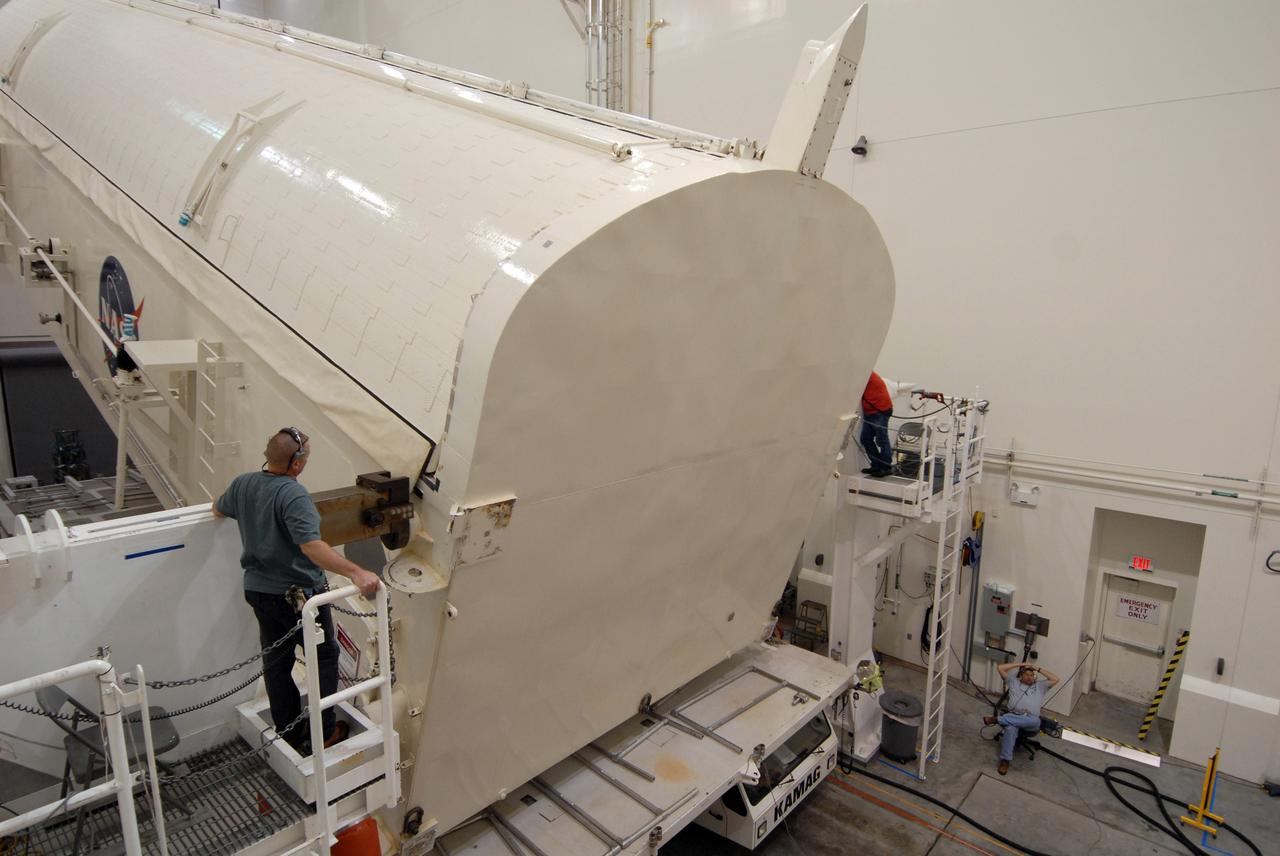
CAPE CANAVERAL, Fla. - In the Canister Rotation Facility at NASA's Kennedy Space Center, the payload canister is lifted toward a vertical position for the trip to Launch Pad 39A. The canister’s cargo consists of four carriers holding various equipment for the STS-125 mission aboard space shuttle Atlantis to service NASA’s Hubble Space Telescope. At the pad, the cargo will be moved into the Payload Changeout Room. The changeout room is the enclosed, environmentally controlled portion of the rotating service structure that supports cargo delivery to the pad and subsequent vertical installation into the shuttle’s payload bay. Launch of Atlantis is targeted for Oct. 10. Photo credit: NASA/Jack Pfaller
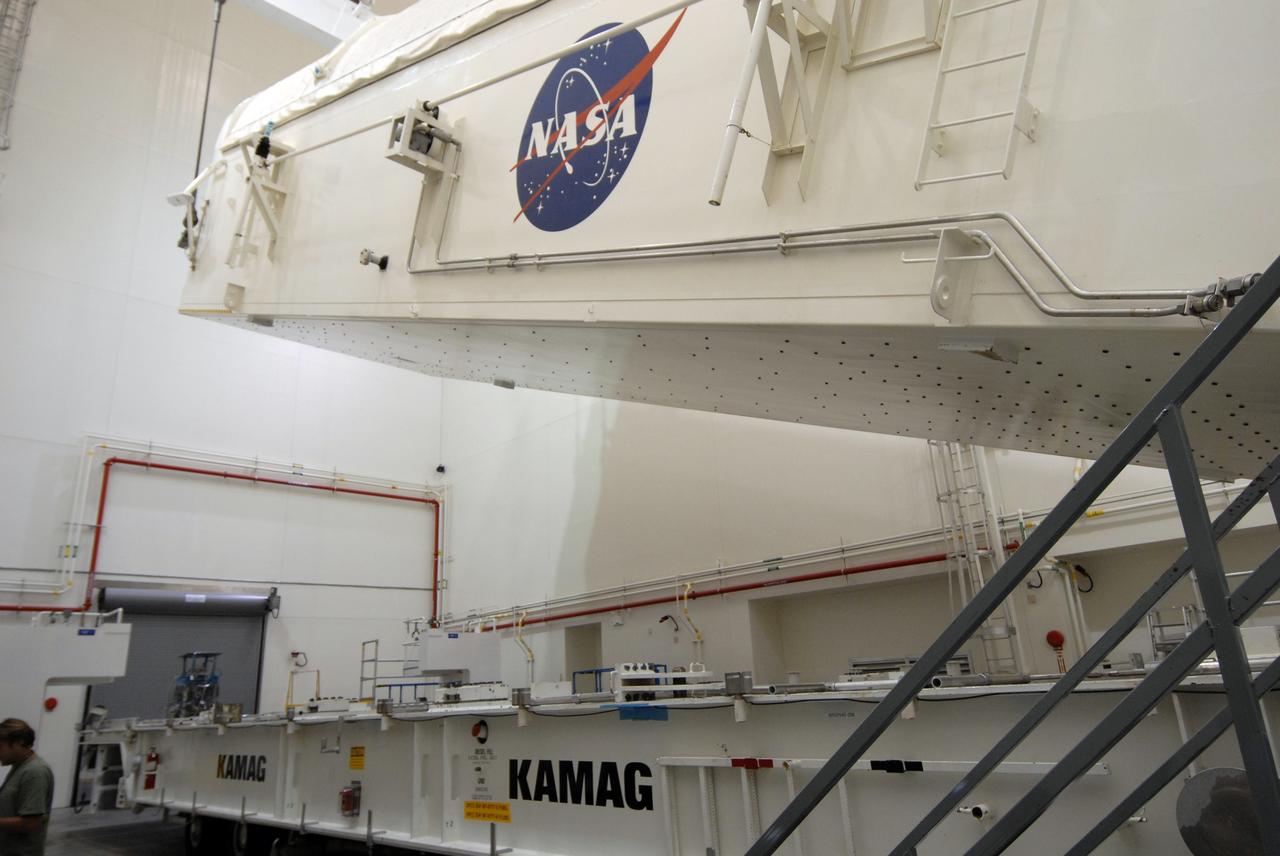
CAPE CANAVERAL, Fla. - In the Canister Rotation Facility at NASA's Kennedy Space Center, the payload canister is lifted toward a vertical position for the trip to Launch Pad 39A. The canister’s cargo consists of four carriers holding various equipment for the STS-125 mission aboard space shuttle Atlantis to service NASA’s Hubble Space Telescope. At the pad, the cargo will be moved into the Payload Changeout Room. The changeout room is the enclosed, environmentally controlled portion of the rotating service structure that supports cargo delivery to the pad and subsequent vertical installation into the shuttle’s payload bay. Launch of Atlantis is targeted for Oct. 10. Photo credit: NASA/Jack Pfaller
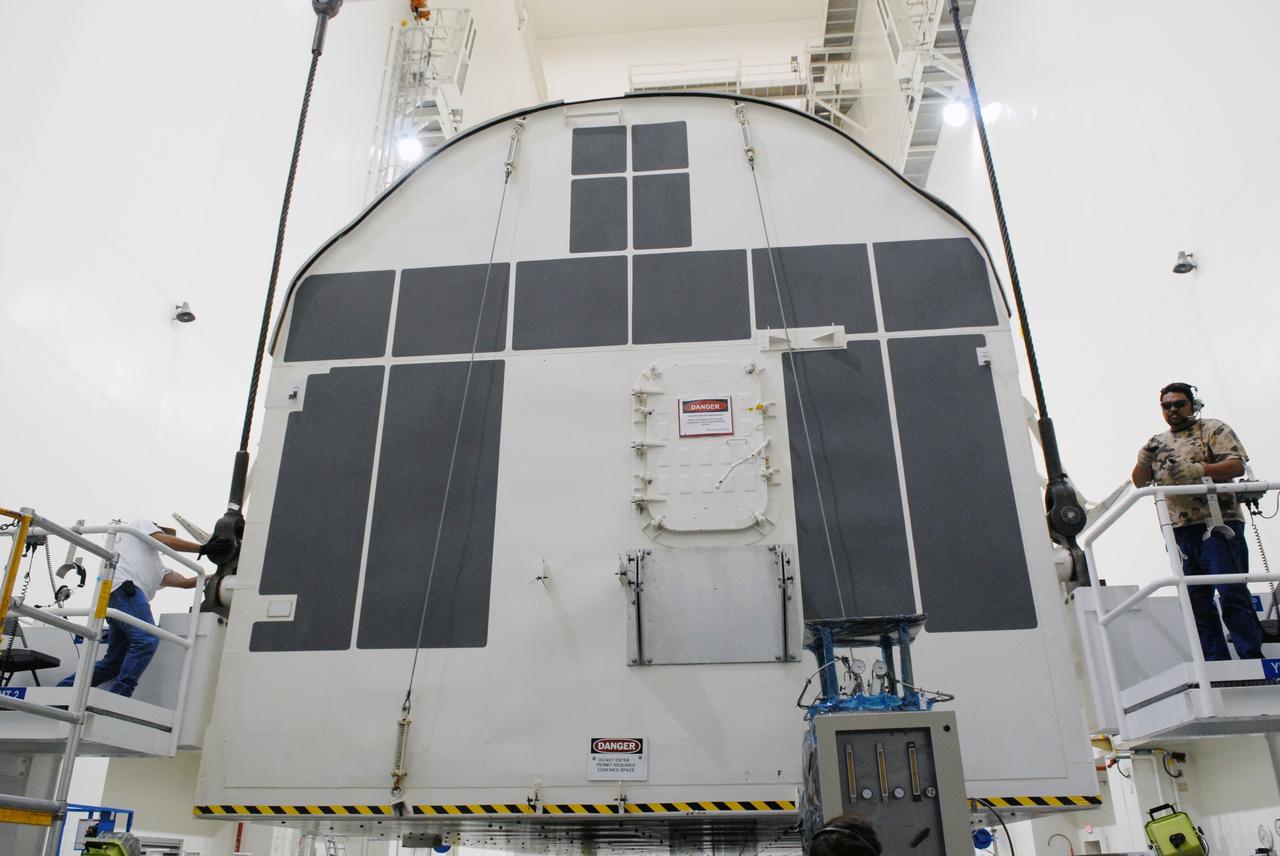
CAPE CANAVERAL, Fla. - In the Canister Rotation Facility at NASA's Kennedy Space Center, workers check cable fittings that will lift the payload canister to a vertical position for the trip to Launch Pad 39A. The canister’s cargo consists of four carriers holding various equipment for the STS-125 mission aboard space shuttle Atlantis to service NASA’s Hubble Space Telescope. At the pad, the cargo will be moved into the Payload Changeout Room. The changeout room is the enclosed, environmentally controlled portion of the rotating service structure that supports cargo delivery to the pad and subsequent vertical installation into the shuttle’s payload bay. Launch of Atlantis is targeted for Oct. 10. Photo credit: NASA/Jack Pfaller
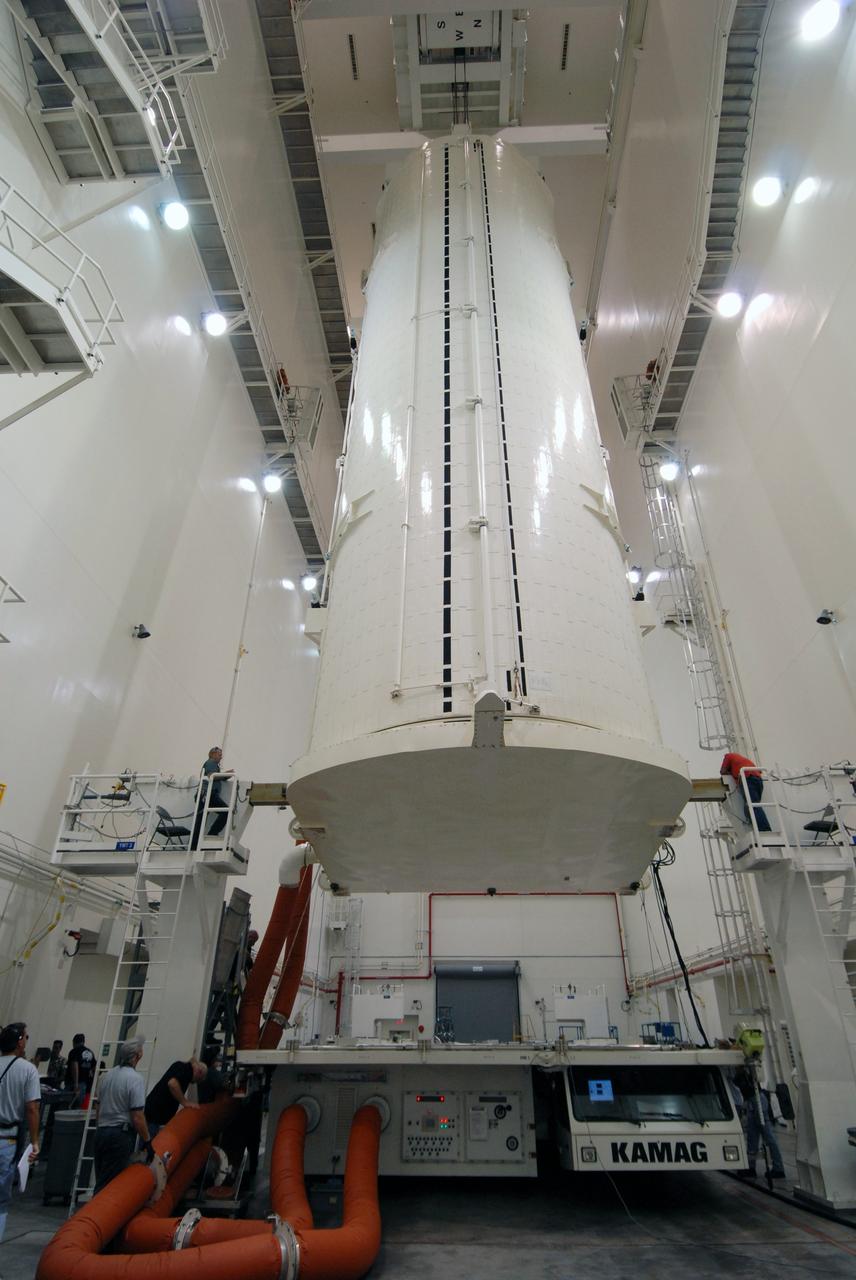
CAPE CANAVERAL, Fla. - In the Canister Rotation Facility at NASA's Kennedy Space Center, the payload canister is lifted to a vertical position for the trip to Launch Pad 39A. The canister’s cargo consists of four carriers holding various equipment for the STS-125 mission aboard space shuttle Atlantis to service NASA’s Hubble Space Telescope. At the pad, the cargo will be moved into the Payload Changeout Room. The changeout room is the enclosed, environmentally controlled portion of the rotating service structure that supports cargo delivery to the pad and subsequent vertical installation into the shuttle’s payload bay. Launch of Atlantis is targeted for Oct. 10. Photo credit: NASA/Jack Pfaller
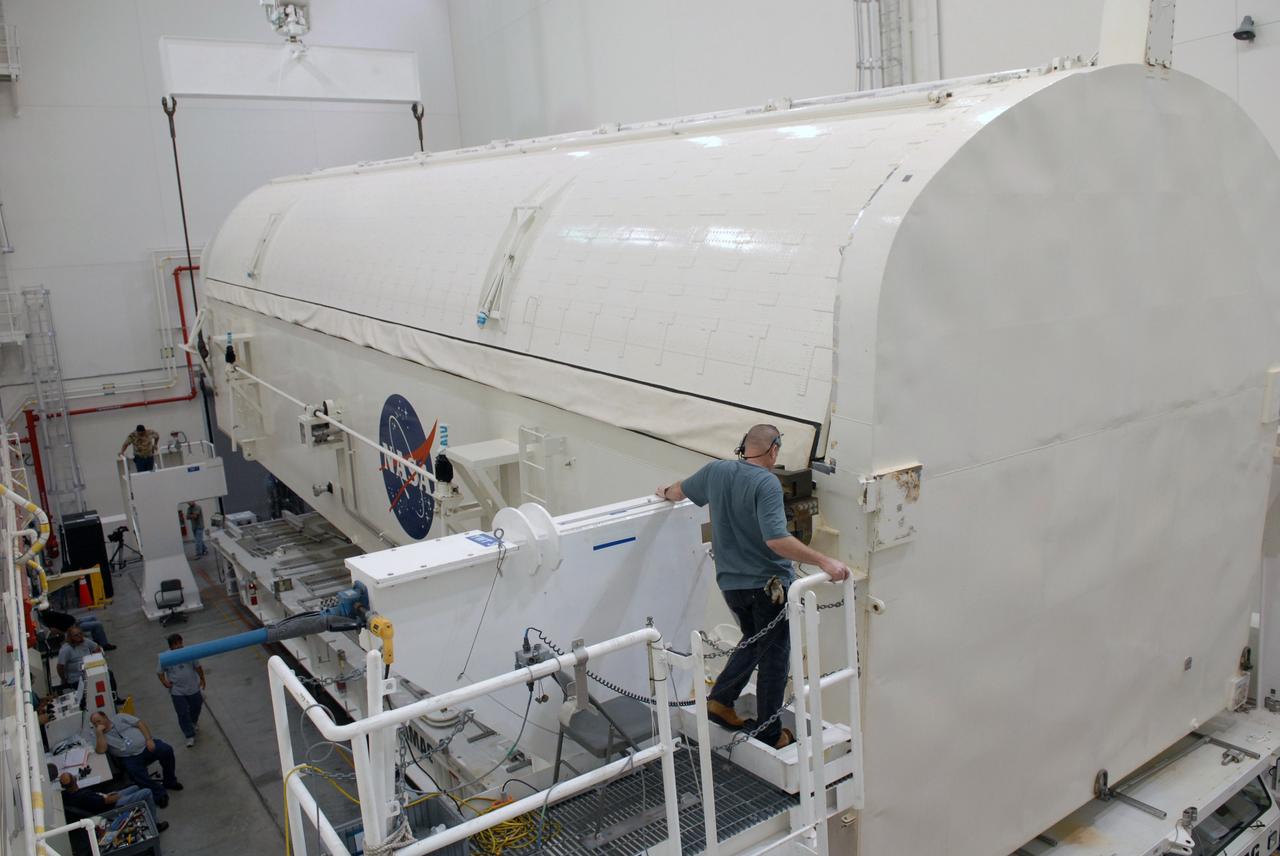
CAPE CANAVERAL, Fla. - In the Canister Rotation Facility at NASA's Kennedy Space Center, workers get ready to lift the payload canister to a vertical position for the trip to Launch Pad 39A. The canister’s cargo consists of four carriers holding various equipment for the STS-125 mission aboard space shuttle Atlantis to service NASA’s Hubble Space Telescope. At the pad, the cargo will be moved into the Payload Changeout Room. The changeout room is the enclosed, environmentally controlled portion of the rotating service structure that supports cargo delivery to the pad and subsequent vertical installation into the shuttle’s payload bay. Launch of Atlantis is targeted for Oct. 10. Photo credit: NASA/Jack Pfaller
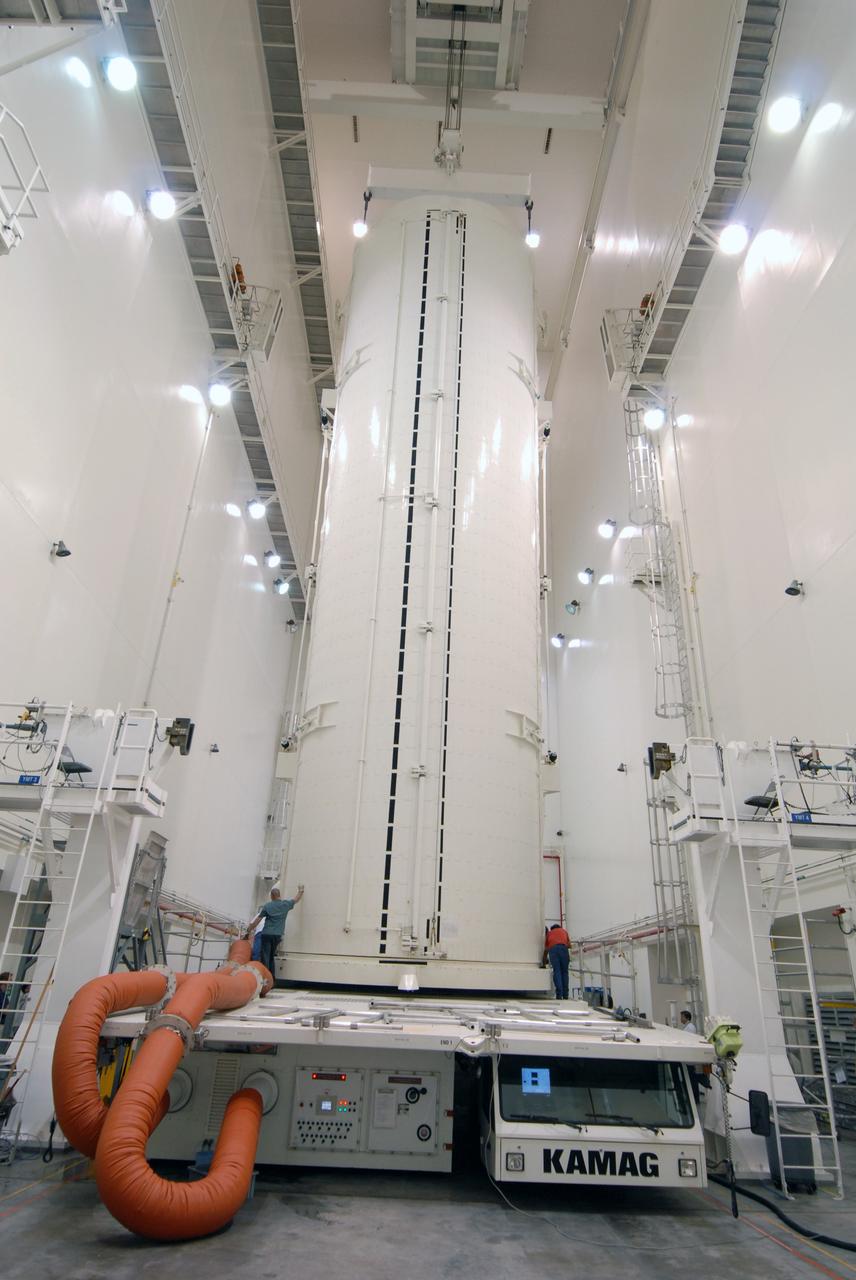
CAPE CANAVERAL, Fla. - In the Canister Rotation Facility at NASA's Kennedy Space Center, the payload canister is in a vertical position for the trip to Launch Pad 39A. The canister’s cargo consists of four carriers holding various equipment for the STS-125 mission aboard space shuttle Atlantis to service NASA’s Hubble Space Telescope. At the pad, the cargo will be moved into the Payload Changeout Room. The changeout room is the enclosed, environmentally controlled portion of the rotating service structure that supports cargo delivery to the pad and subsequent vertical installation into the shuttle’s payload bay. Launch of Atlantis is targeted for Oct. 10. Photo credit: NASA/Jack Pfaller
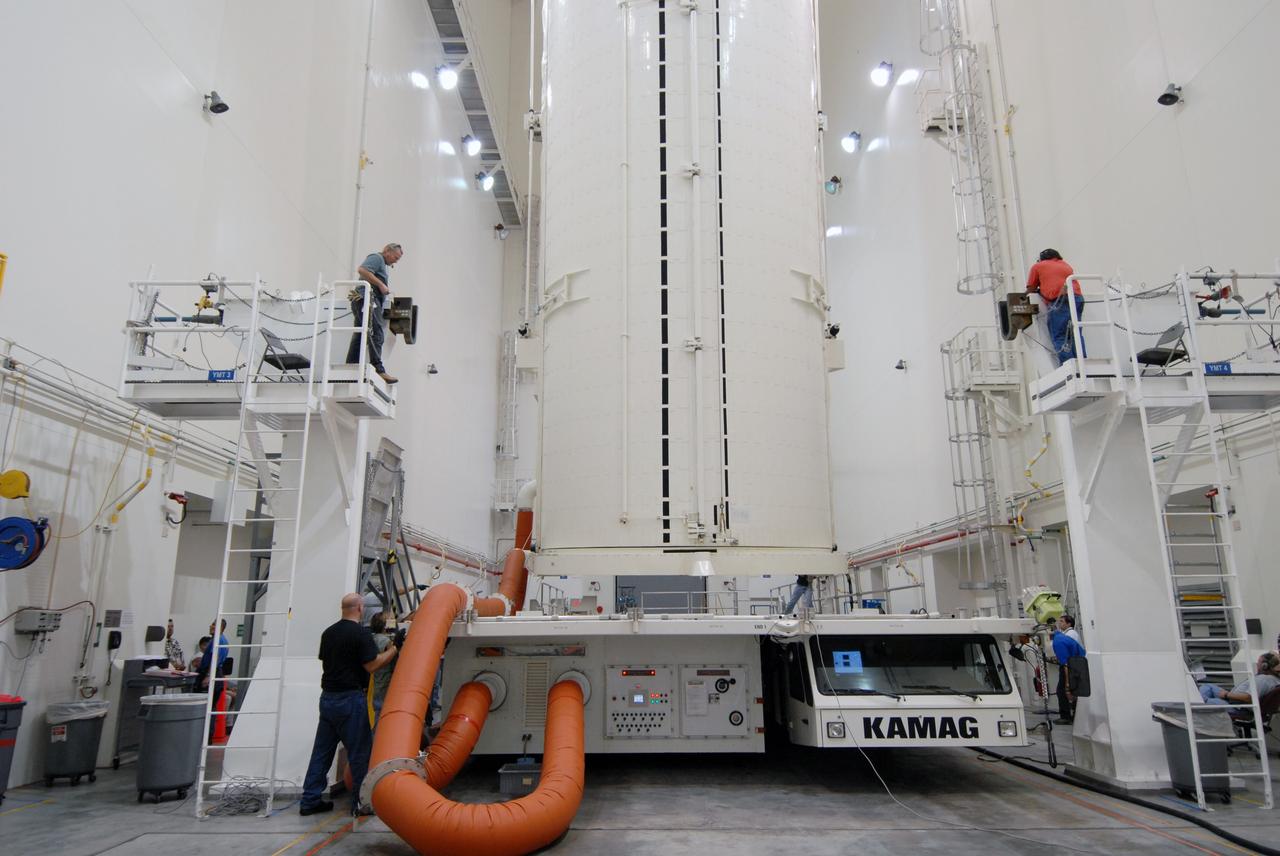
CAPE CANAVERAL, Fla. - In the Canister Rotation Facility at NASA's Kennedy Space Center, the payload canister is in a vertical position for the trip to Launch Pad 39A. The canister’s cargo consists of four carriers holding various equipment for the STS-125 mission aboard space shuttle Atlantis to service NASA’s Hubble Space Telescope. At the pad, the cargo will be moved into the Payload Changeout Room. The changeout room is the enclosed, environmentally controlled portion of the rotating service structure that supports cargo delivery to the pad and subsequent vertical installation into the shuttle’s payload bay. Launch of Atlantis is targeted for Oct. 10. Photo credit: NASA/Jack Pfaller
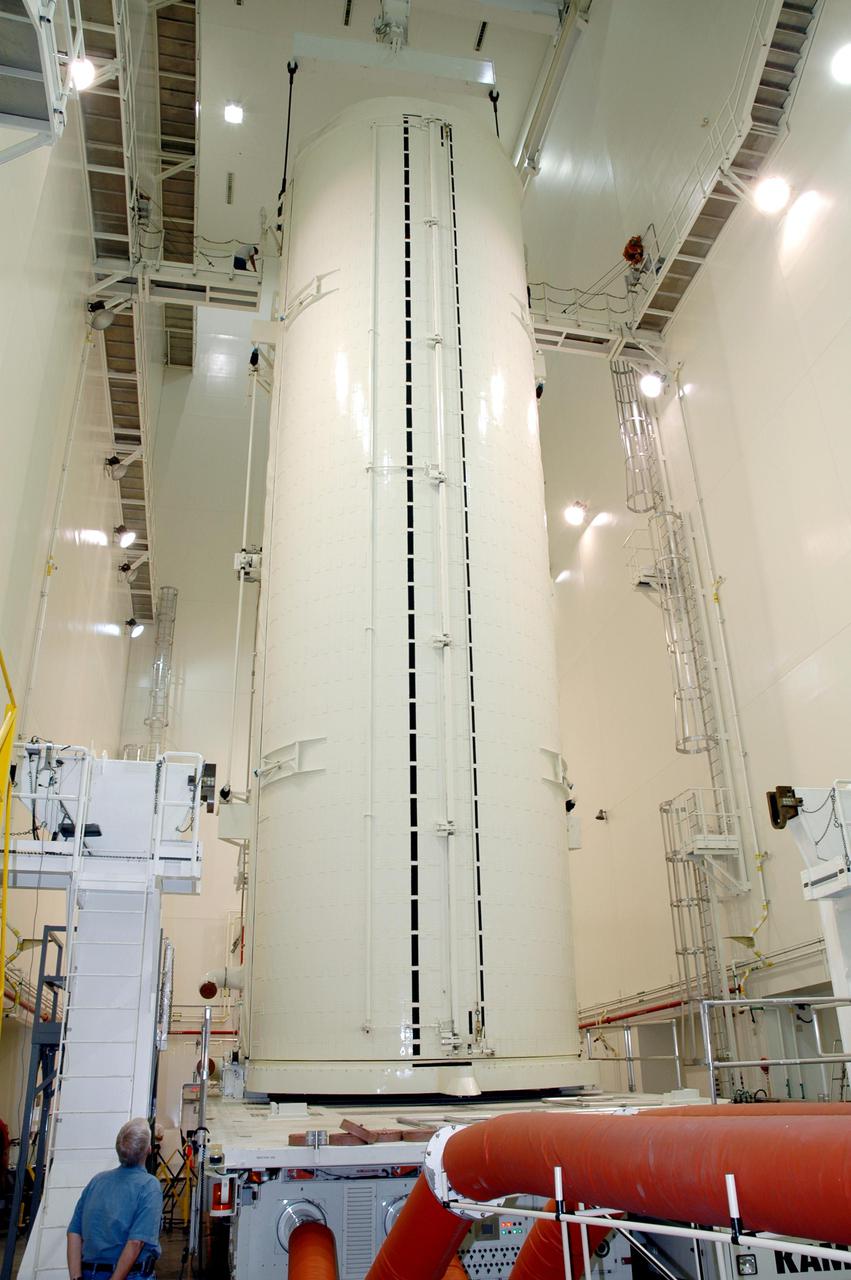
KENNEDY SPACE CENTER, FLA. - In the Canister Rotation Facility at NASA’s Kennedy Space Center, the vertical Payload Canister is ready for transport to Launch Pad 39B. The canister will be transported to Launch Pad 39B. The payloads inside, including the Multi-Purpose Logistics Module Raffaello and External Stowage Platform-2, will be moved into the Payload Changeout Room in the Rotating Service Structure and then installed in Discovery’s payload bay. Space Shuttle Discovery is scheduled to launch on Return to Flight mission STS-114 to the International Space Station. The launch window extends from May 22 to June 3.
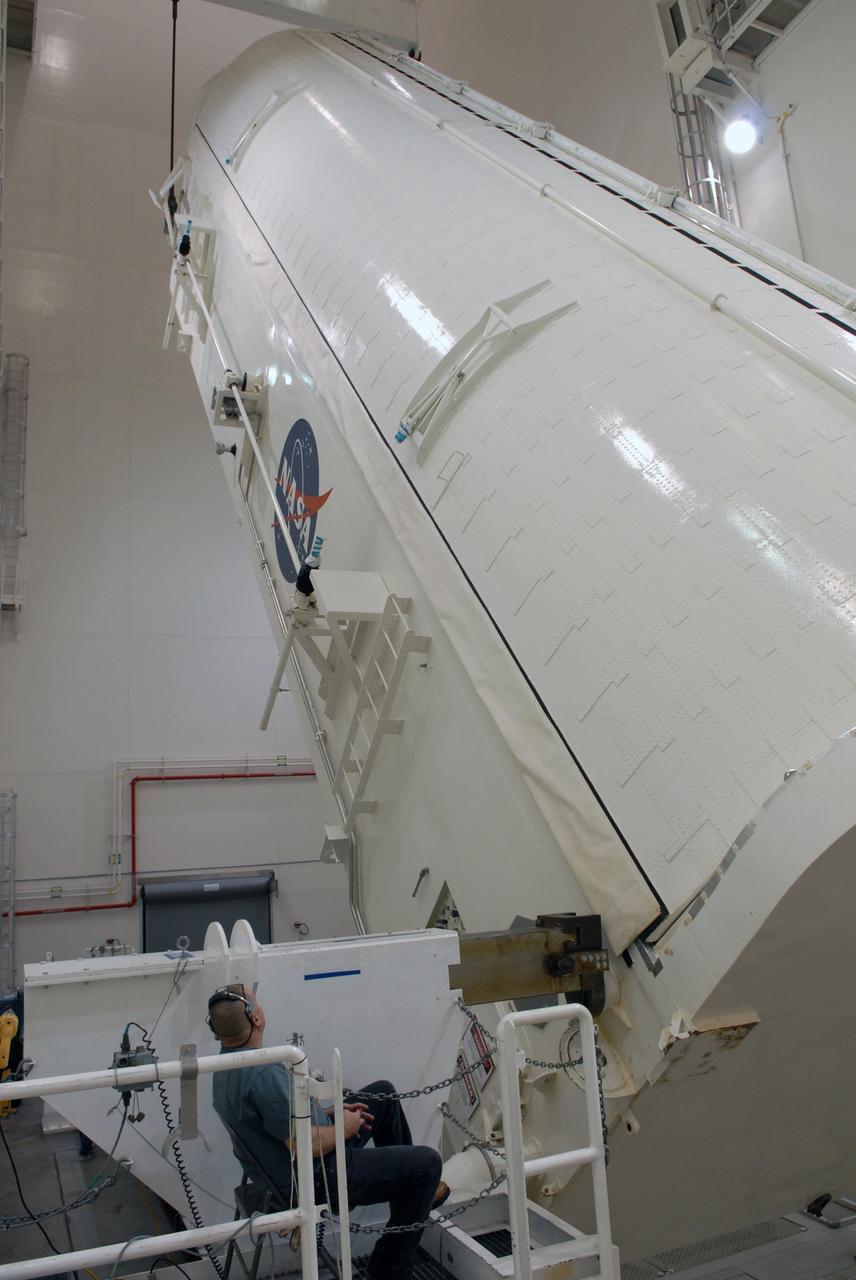
CAPE CANAVERAL, Fla. - In the Canister Rotation Facility at NASA's Kennedy Space Center, the payload canister is lifted toward a vertical position for the trip to Launch Pad 39A. The canister’s cargo consists of four carriers holding various equipment for the STS-125 mission aboard space shuttle Atlantis to service NASA’s Hubble Space Telescope. At the pad, the cargo will be moved into the Payload Changeout Room. The changeout room is the enclosed, environmentally controlled portion of the rotating service structure that supports cargo delivery to the pad and subsequent vertical installation into the shuttle’s payload bay. Launch of Atlantis is targeted for Oct. 10. Photo credit: NASA/Jack Pfaller
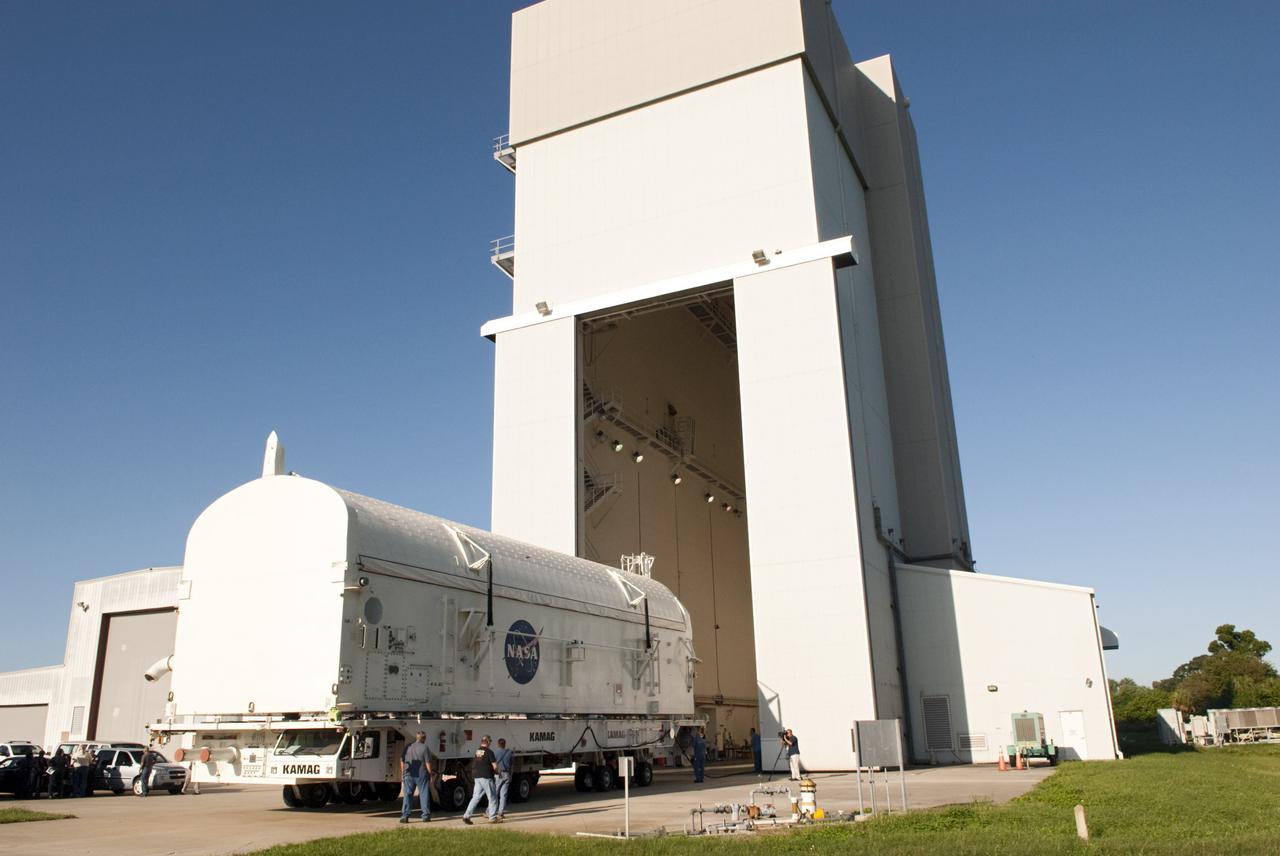
CAPE CANAVERAL, Fla. -- Payload canister #1 departs the high bay of the Canister Rotation Facility at NASA's Kennedy Space Center in Florida for the last time. The canister is being moved to the Reutilization, Recycling and Marketing Facility on Ransom Road. The two payload canisters used to transport space shuttle payloads to the launch pad for installation in the shuttles' cargo bays are being decommissioned following the end of the Space Shuttle Program. Each canister weighs 110,000 pounds and is 65 feet long, 22 feet wide, and 18 feet, 7 inches high. The canisters were prescreened through NASA Headquarters as possible artifacts, but their size makes them difficult to transport to locations off the center. Federal and state agencies now will be given the opportunity to screen the canisters for potential use before a final decision is made on their disposition. For more information, visit http:__www.nasa.gov_centers_kennedy_pdf_167403main_CRF-06.pdf. Photo credit: NASA_Jim Grossmann
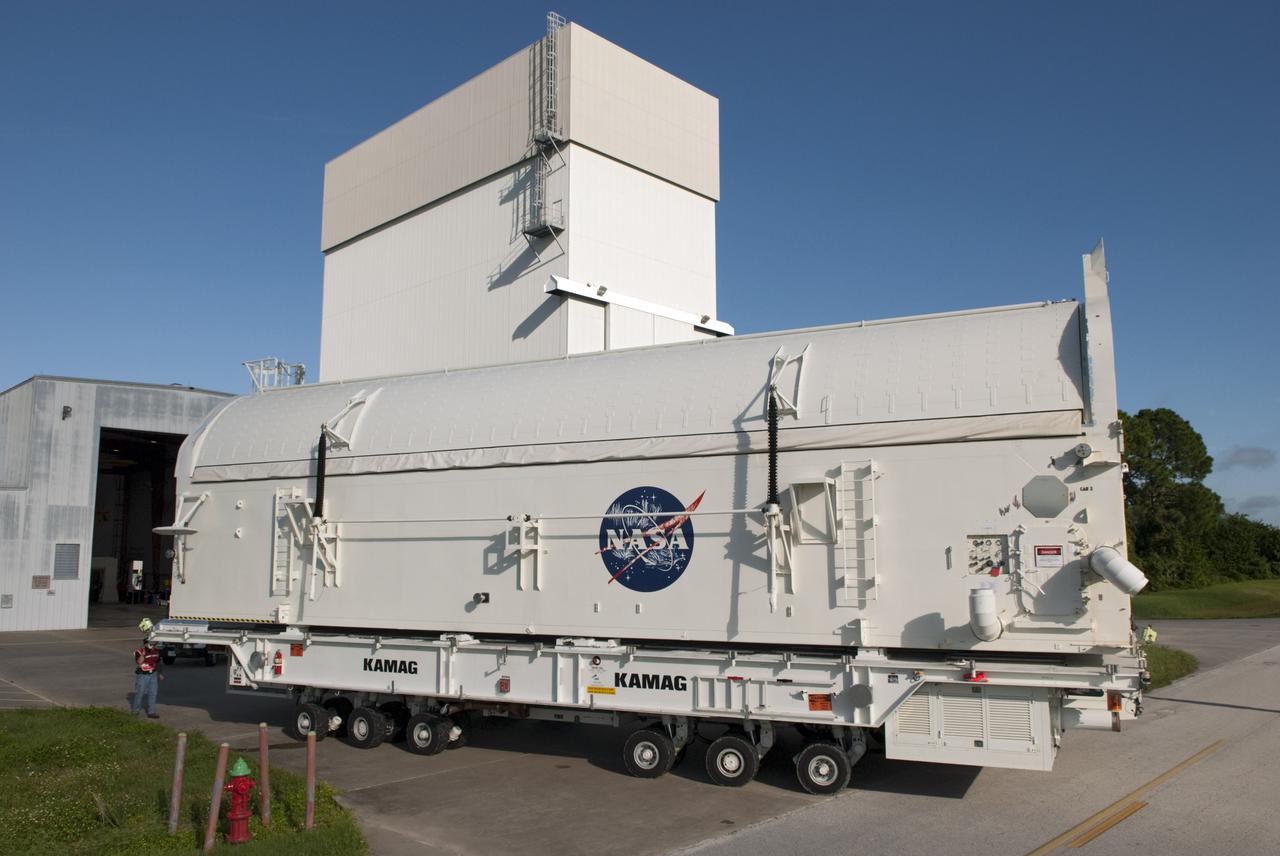
CAPE CANAVERAL, Fla. -- Payload canister #2 departs the high bay of the Canister Rotation Facility at NASA's Kennedy Space Center in Florida for the last time. The canister is being moved to the Reutilization, Recycling and Marketing Facility on Ransom Road. The two payload canisters used to transport space shuttle payloads to the launch pad for installation in the shuttles' cargo bays are being decommissioned following the end of the Space Shuttle Program. Each canister weighs 110,000 pounds and is 65 feet long, 22 feet wide, and 18 feet, 7 inches high. The canisters were prescreened through NASA Headquarters as possible artifacts, but their size makes them difficult to transport to locations off the center. Federal and state agencies now will be given the opportunity to screen the canisters for potential use before a final decision is made on their disposition. For more information, visit http:__www.nasa.gov_centers_kennedy_pdf_167403main_CRF-06.pdf. Photo credit: NASA_Jim Grossmann
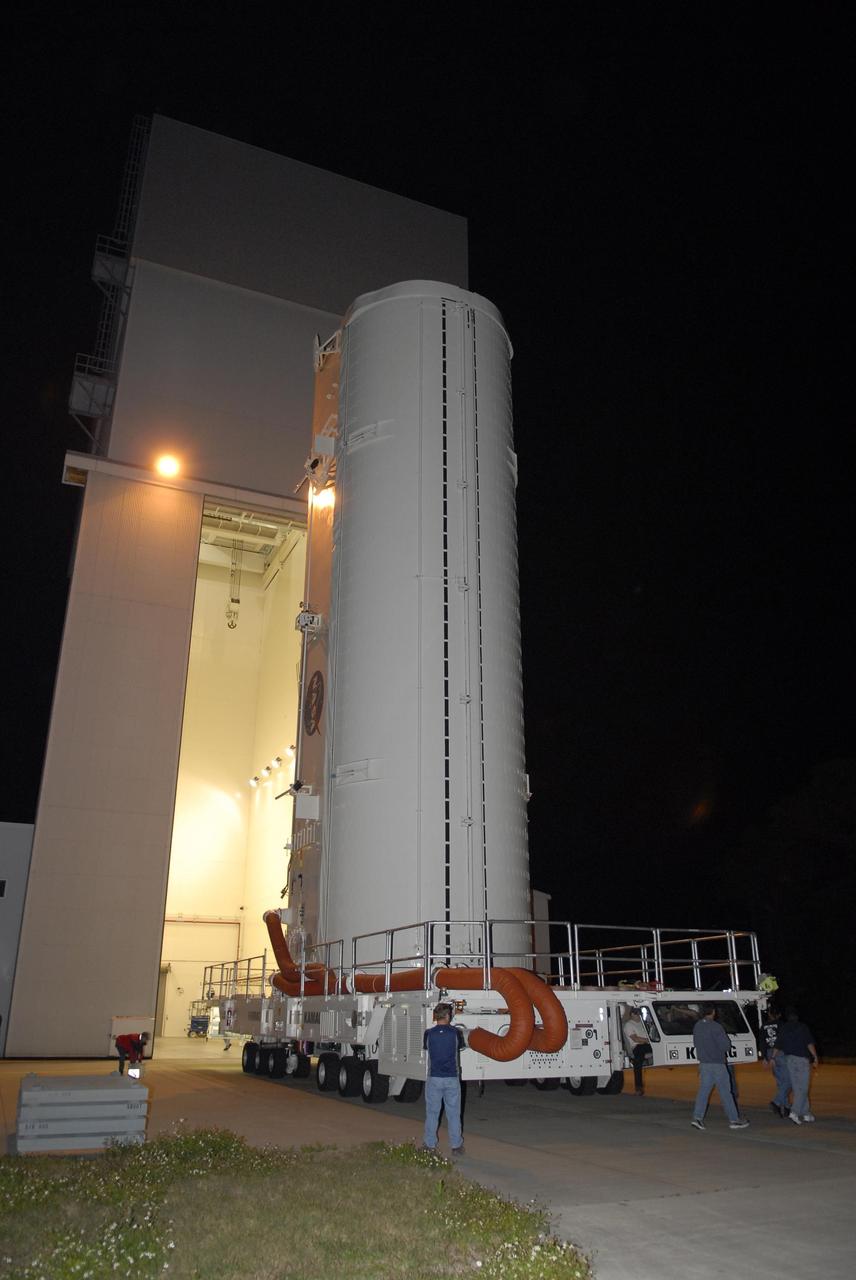
KENNEDY SPACE CENTER, FLA. -- The payload canister on its transporter leaves the Canister Rotation Facility at NASA's Kennedy Space Center, heading for Launch Pad 39A. The canister contains the S3/S4 integrated truss for mission STS-117 to the International Space Station aboard Space Shuttle Atlantis. The Atlantis crew will install the new truss segment, retract a set of solar arrays and unfold a new set on the starboard side of the station. Launch is targeted for March 15. Photo credit: NASA/Kim Shiflett
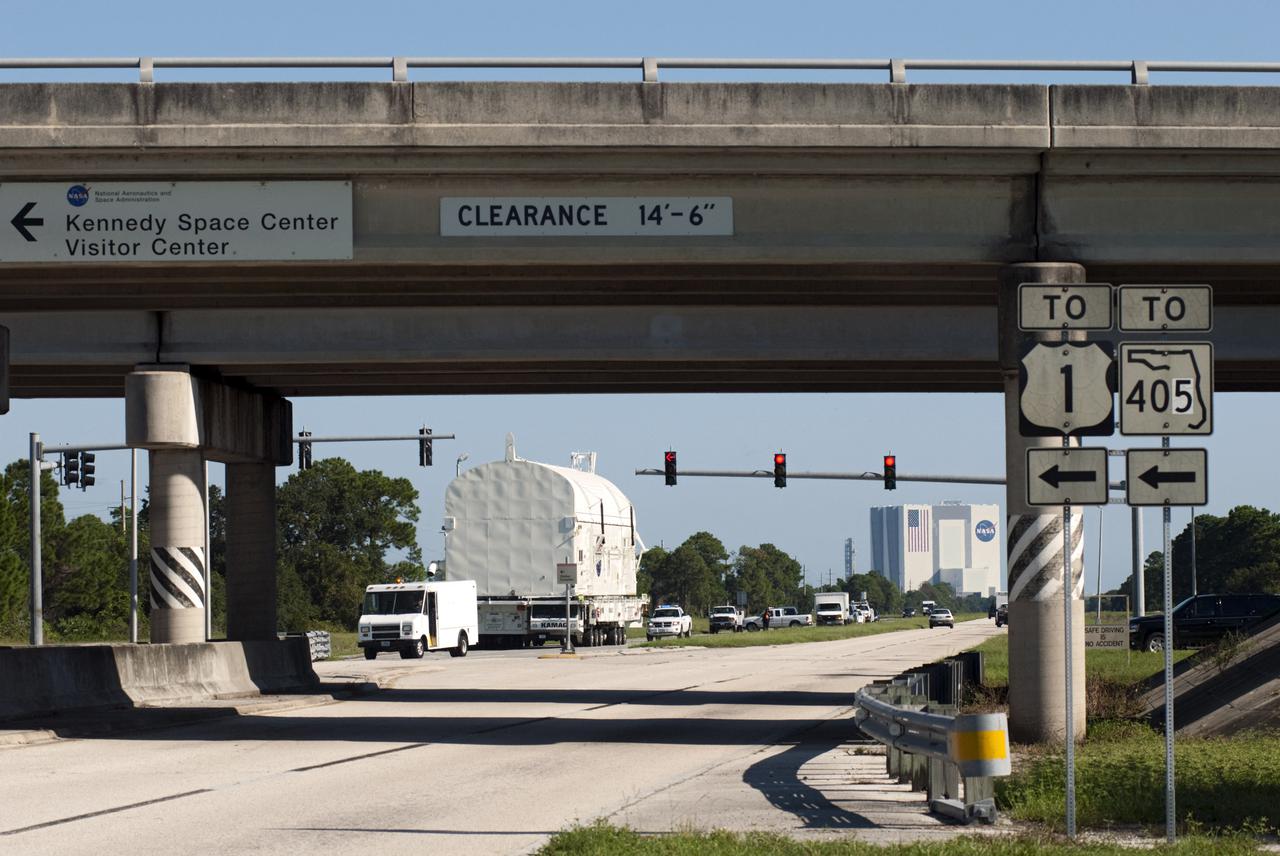
CAPE CANAVERAL, Fla. -- At NASA's Kennedy Space Center in Florida, a convoy of support vehicles travels with payload canister #2 on its move from the Canister Rotation Facility (CFR) to the Reutilization, Recycling and Marketing Facility on Ransom Road. In the background is the 525-foot-tall Vehicle Assembly Building where the canister was rotated into a vertical position before the CRF took over the task in 1993. The two payload canisters used to transport space shuttle payloads to the launch pad for installation in the shuttles' cargo bays are being decommissioned following the end of the Space Shuttle Program. Each canister weighs 110,000 pounds and is 65 feet long, 22 feet wide, and 18 feet, 7 inches high. The canisters were prescreened through NASA Headquarters as possible artifacts, but their size makes them difficult to transport to locations off the center. Federal and state agencies now will be given the opportunity to screen the canisters for potential use before a final decision is made on their disposition. For more information, visit http:__www.nasa.gov_centers_kennedy_pdf_167403main_CRF-06.pdf. Photo credit: NASA_Jim Grossmann
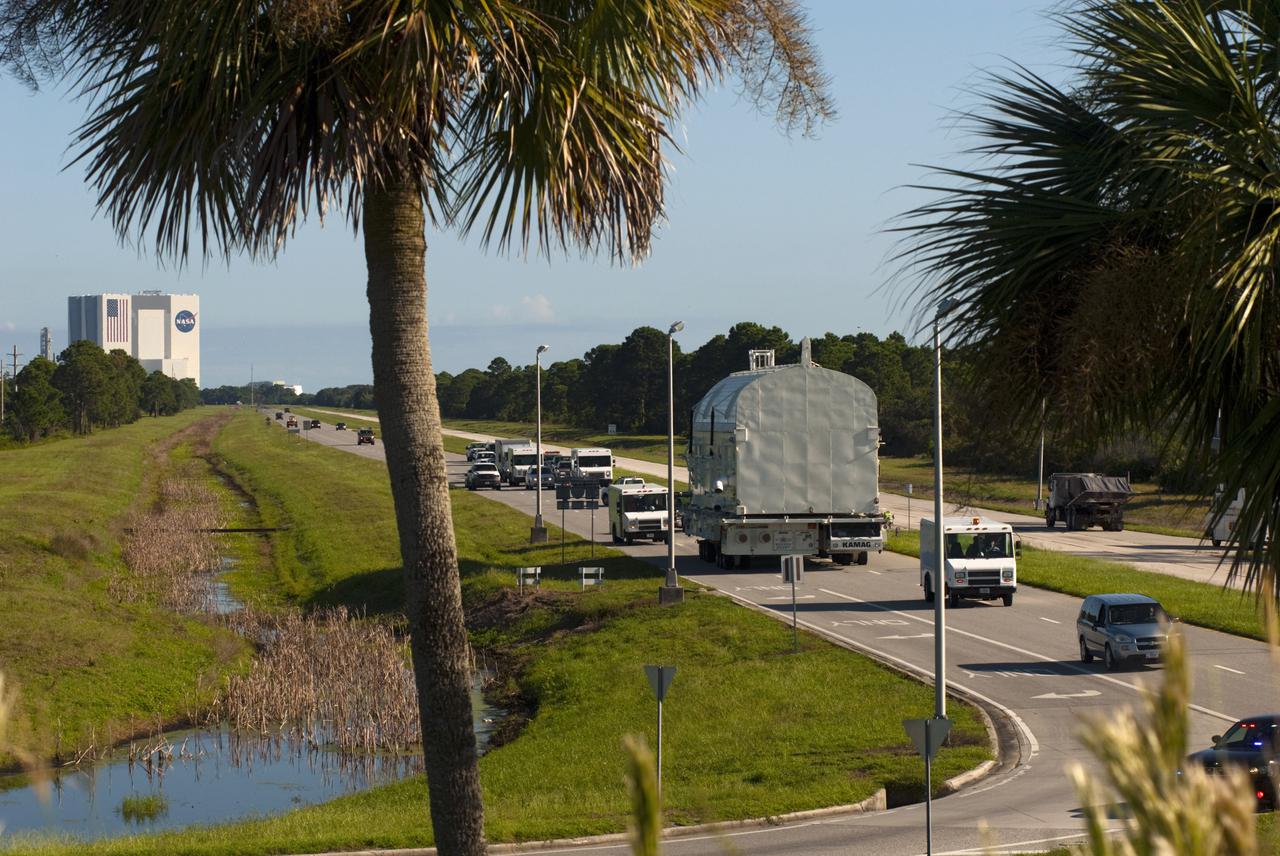
CAPE CANAVERAL, Fla. -- At NASA's Kennedy Space Center in Florida, a convoy of support vehicles travels with payload canister #1 on its move from the Canister Rotation Facility (CFR) to the Reutilization, Recycling and Marketing Facility on Ransom Road. In the background is the 525-foot-tall Vehicle Assembly Building where the canister was rotated into a vertical position before the CRF took over the task in 1993. The two payload canisters used to transport space shuttle payloads to the launch pad for installation in the shuttles' cargo bays are being decommissioned following the end of the Space Shuttle Program. Each canister weighs 110,000 pounds and is 65 feet long, 22 feet wide, and 18 feet, 7 inches high. The canisters were prescreened through NASA Headquarters as possible artifacts, but their size makes them difficult to transport to locations off the center. Federal and state agencies now will be given the opportunity to screen the canisters for potential use before a final decision is made on their disposition. For more information, visit http:__www.nasa.gov_centers_kennedy_pdf_167403main_CRF-06.pdf. Photo credit: NASA_Jim Grossmann
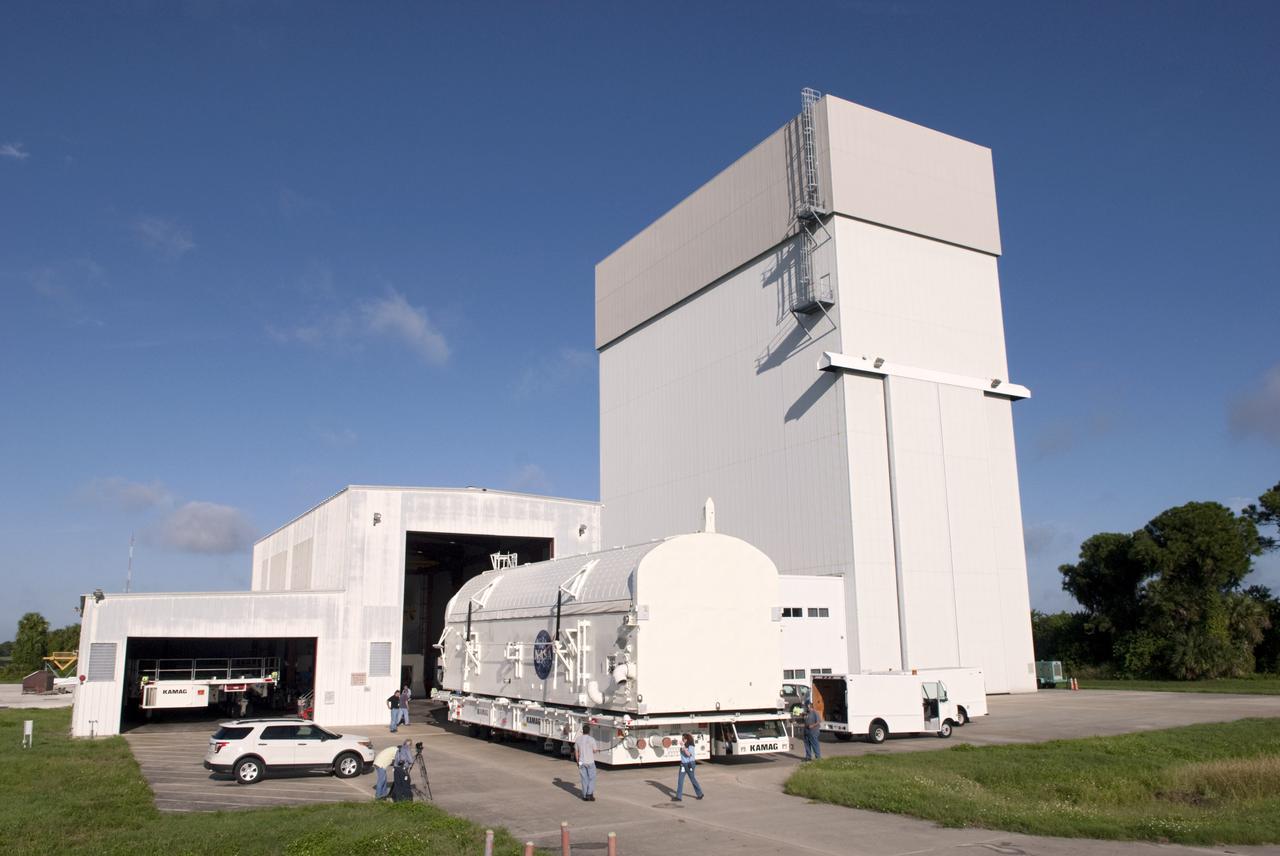
CAPE CANAVERAL, Fla. -- Employees monitor payload canister #2 as it rolls out of the high bay of the Canister Rotation Facility at NASA's Kennedy Space Center in Florida for its trip to the Reutilization, Recycling and Marketing Facility on Ransom Road. The two payload canisters used to transport space shuttle payloads to the launch pad for installation in the shuttles' cargo bays are being decommissioned following the end of the Space Shuttle Program. Each canister weighs 110,000 pounds and is 65 feet long, 22 feet wide, and 18 feet, 7 inches high. The canisters were prescreened through NASA Headquarters as possible artifacts, but their size makes them difficult to transport to locations off the center. Federal and state agencies now will be given the opportunity to screen the canisters for potential use before a final decision is made on their disposition. For more information, visit http:__www.nasa.gov_centers_kennedy_pdf_167403main_CRF-06.pdf. Photo credit: NASA_Jim Grossmann
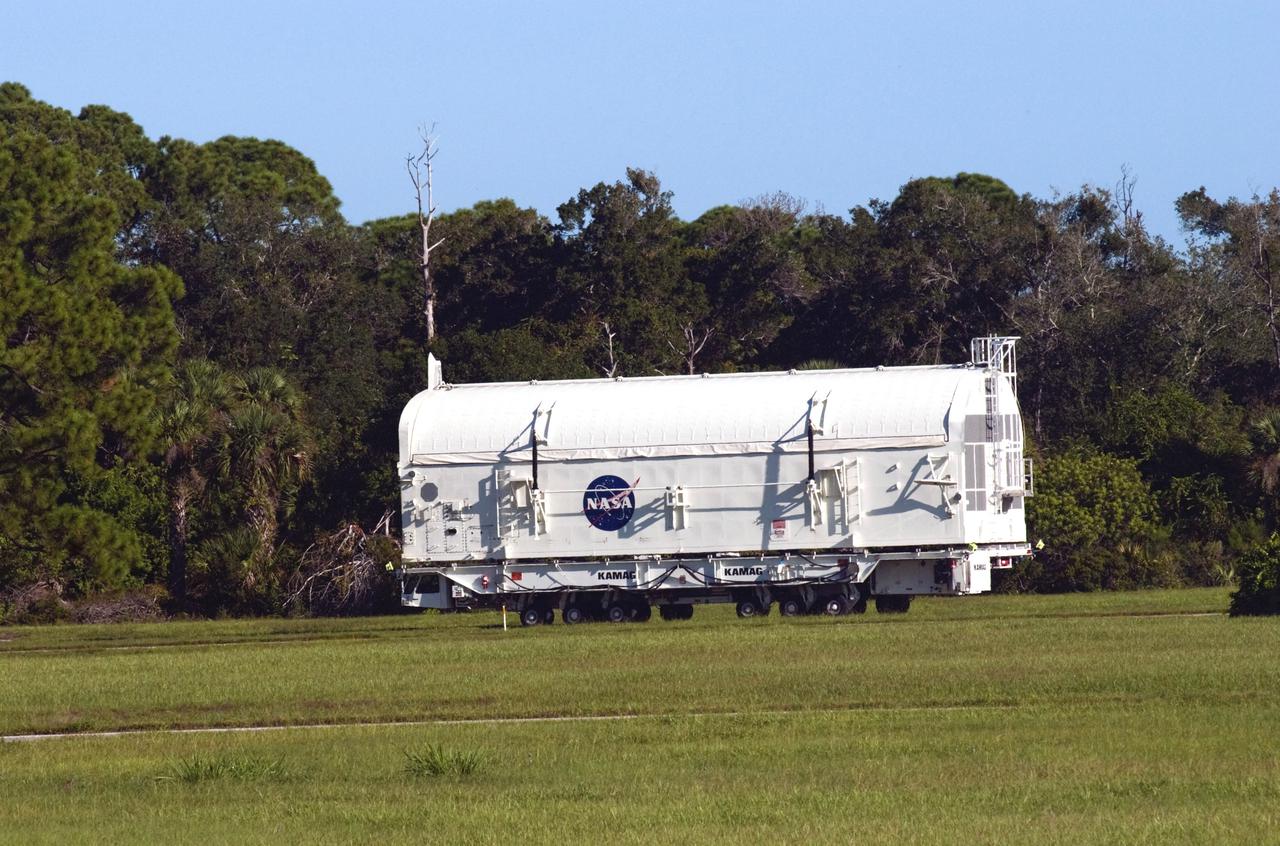
CAPE CANAVERAL, Fla. -- At NASA's Kennedy Space Center in Florida, payload canister #1 travels at a slow, steady 5 mph from the Canister Rotation Facility to the Reutilization, Recycling and Marketing Facility on Ransom Road. The two payload canisters used to transport space shuttle payloads to the launch pad for installation in the shuttles' cargo bays are being decommissioned following the end of the Space Shuttle Program. Each canister weighs 110,000 pounds and is 65 feet long, 22 feet wide, and 18 feet, 7 inches high. The canisters were prescreened through NASA Headquarters as possible artifacts, but their size makes them difficult to transport to locations off the center. Federal and state agencies now will be given the opportunity to screen the canisters for potential use before a final decision is made on their disposition. For more information, visit http:__www.nasa.gov_centers_kennedy_pdf_167403main_CRF-06.pdf. Photo credit: NASA_Jim Grossmann
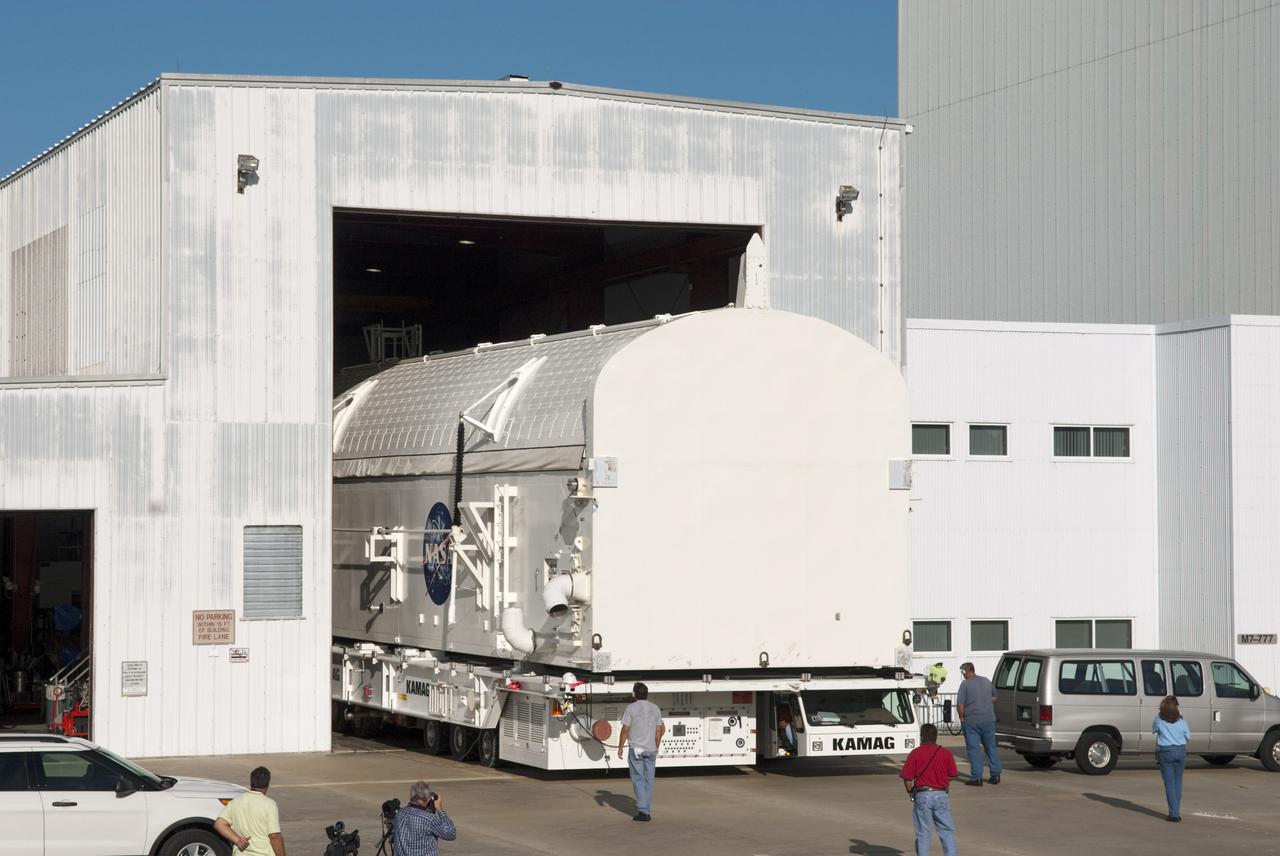
CAPE CANAVERAL, Fla. -- Payload canister #2 rolls out of the high bay of the Canister Rotation Facility at NASA's Kennedy Space Center in Florida on its way to the Reutilization, Recycling and Marketing Facility on Ransom Road. The two payload canisters used to transport space shuttle payloads to the launch pad for installation in the shuttles' cargo bays are being decommissioned following the end of the Space Shuttle Program. Each canister weighs 110,000 pounds and is 65 feet long, 22 feet wide, and 18 feet, 7 inches high. The canisters were prescreened through NASA Headquarters as possible artifacts, but their size makes them difficult to transport to locations off the center. Federal and state agencies now will be given the opportunity to screen the canisters for potential use before a final decision is made on their disposition. For more information, visit http:__www.nasa.gov_centers_kennedy_pdf_167403main_CRF-06.pdf. Photo credit: NASA_Jim Grossmann
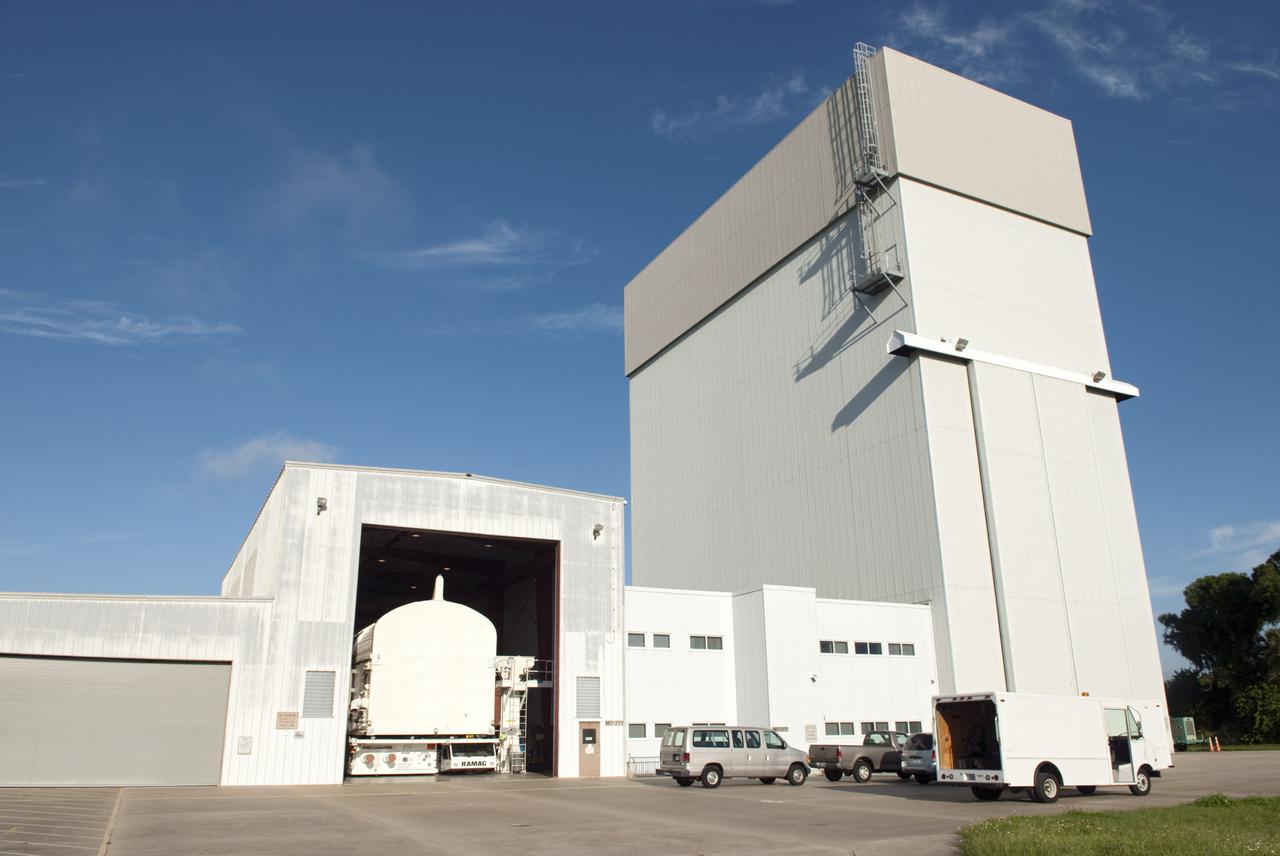
CAPE CANAVERAL, Fla. -- At the Canister Rotation Facility at NASA's Kennedy Space Center in Florida, preparations are under way to move payload canister #2 to the Reutilization, Recycling and Marketing Facility on Ransom Road. The two payload canisters used to transport space shuttle payloads to the launch pad for installation in the shuttles' cargo bays are being decommissioned following the end of the Space Shuttle Program. Each canister weighs 110,000 pounds and is 65 feet long, 22 feet wide, and 18 feet, 7 inches high. The canisters were prescreened through NASA Headquarters as possible artifacts, but their size makes them difficult to transport to locations off the center. Federal and state agencies now will be given the opportunity to screen the canisters for potential use before a final decision is made on their disposition. For more information, visit http:__www.nasa.gov_centers_kennedy_pdf_167403main_CRF-06.pdf. Photo credit: NASA_Jim Grossmann
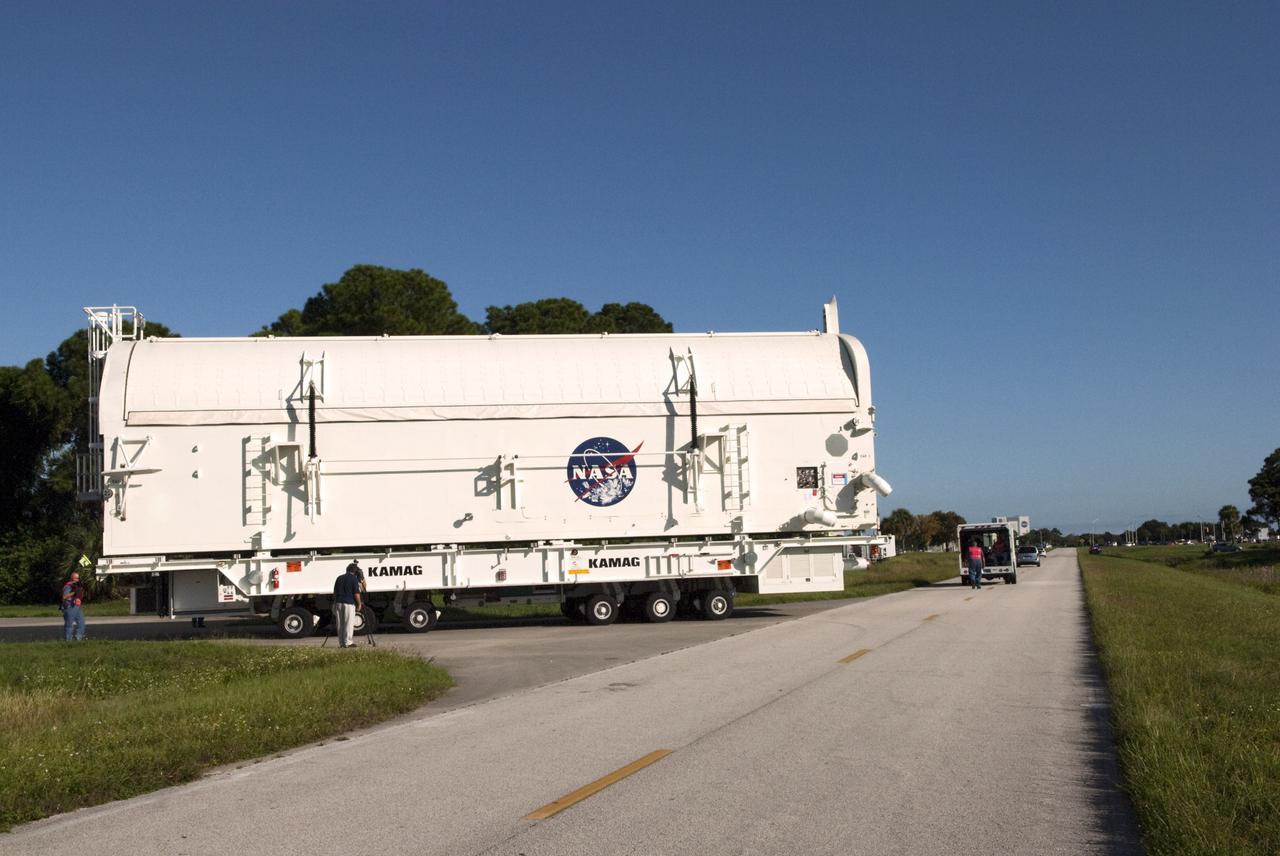
CAPE CANAVERAL, Fla. -- At NASA's Kennedy Space Center in Florida, payload canister #1 winds its way along the roads from the Canister Rotation Facility to the Reutilization, Recycling and Marketing Facility on Ransom Road. The two payload canisters used to transport space shuttle payloads to the launch pad for installation in the shuttles' cargo bays are being decommissioned following the end of the Space Shuttle Program. Each canister weighs 110,000 pounds and is 65 feet long, 22 feet wide, and 18 feet, 7 inches high. The canisters were prescreened through NASA Headquarters as possible artifacts, but their size makes them difficult to transport to locations off the center. Federal and state agencies now will be given the opportunity to screen the canisters for potential use before a final decision is made on their disposition. For more information, visit http:__www.nasa.gov_centers_kennedy_pdf_167403main_CRF-06.pdf. Photo credit: NASA_Jim Grossmann
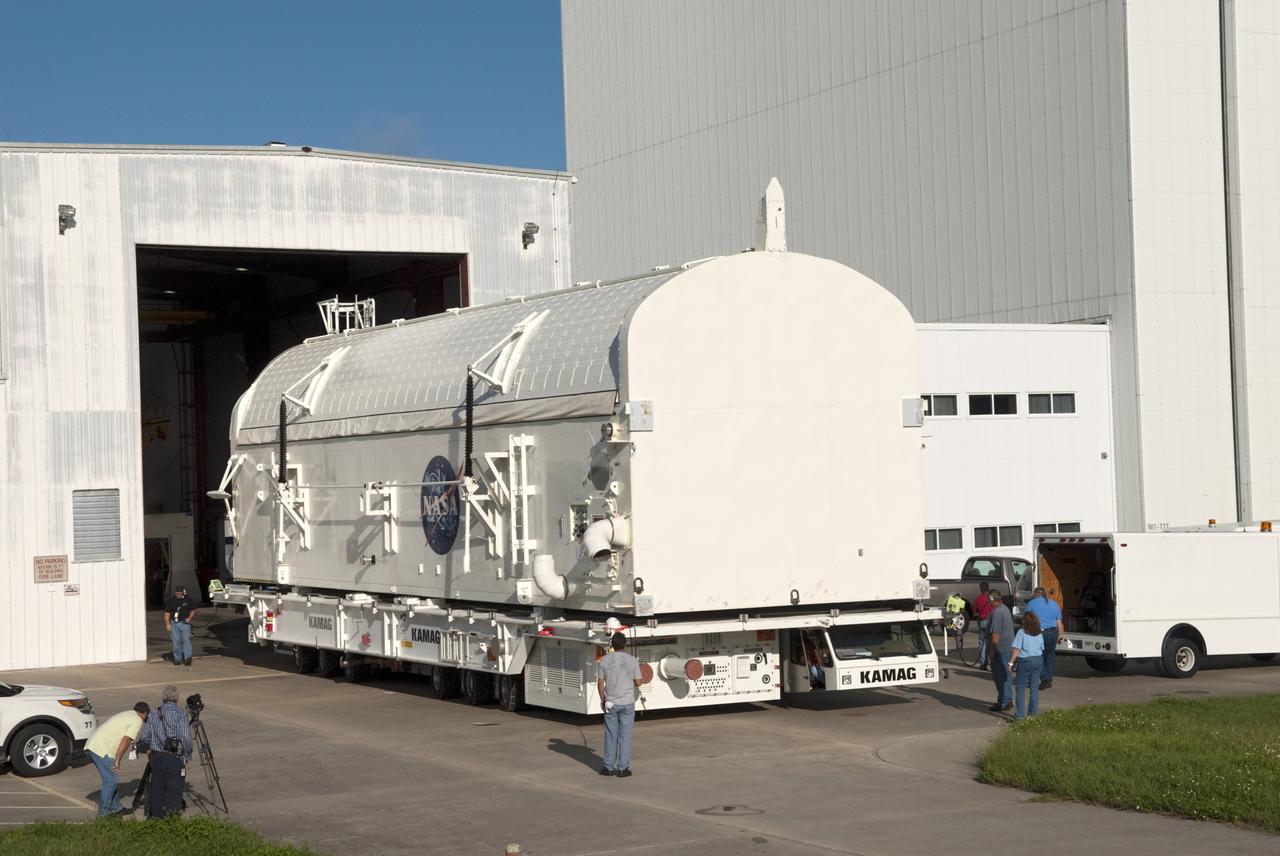
CAPE CANAVERAL, Fla. -- Employees monitor payload canister #2 as it rolls out of the high bay of the Canister Rotation Facility at NASA's Kennedy Space Center in Florida for its trip to the Reutilization, Recycling and Marketing Facility on Ransom Road. The two payload canisters used to transport space shuttle payloads to the launch pad for installation in the shuttles' cargo bays are being decommissioned following the end of the Space Shuttle Program. Each canister weighs 110,000 pounds and is 65 feet long, 22 feet wide, and 18 feet, 7 inches high. The canisters were prescreened through NASA Headquarters as possible artifacts, but their size makes them difficult to transport to locations off the center. Federal and state agencies now will be given the opportunity to screen the canisters for potential use before a final decision is made on their disposition. For more information, visit http:__www.nasa.gov_centers_kennedy_pdf_167403main_CRF-06.pdf. Photo credit: NASA_Jim Grossmann
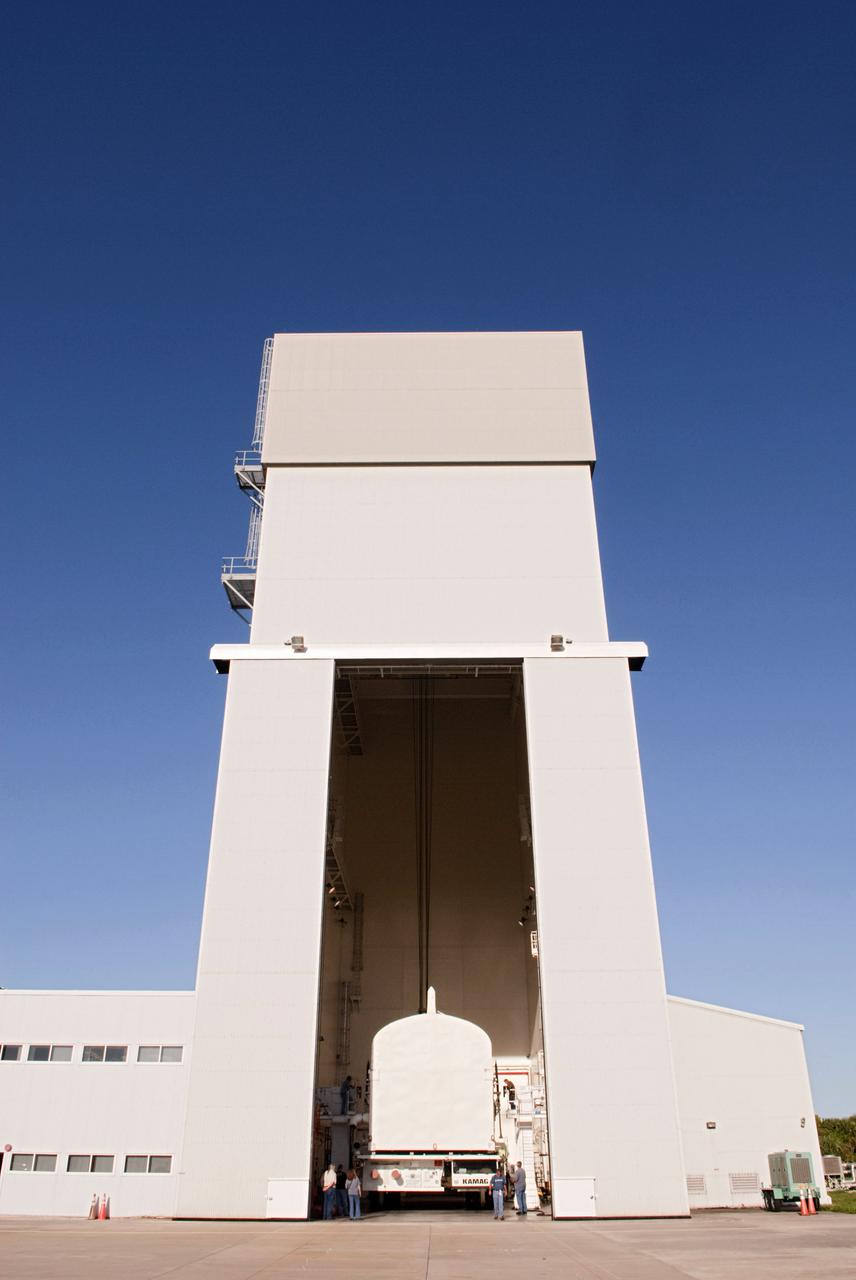
CAPE CANAVERAL, Fla. -- At the Canister Rotation Facility at NASA's Kennedy Space Center in Florida, preparations are under way to move payload canister #1 to the Reutilization, Recycling and Marketing Facility on Ransom Road. The two payload canisters used to transport space shuttle payloads to the launch pad for installation in the shuttles' cargo bays are being decommissioned following the end of the Space Shuttle Program. Each canister weighs 110,000 pounds and is 65 feet long, 22 feet wide, and 18 feet, 7 inches high. The canisters were prescreened through NASA Headquarters as possible artifacts, but their size makes them difficult to transport to locations off the center. Federal and state agencies now will be given the opportunity to screen the canisters for potential use before a final decision is made on their disposition. For more information, visit http:__www.nasa.gov_centers_kennedy_pdf_167403main_CRF-06.pdf. Photo credit: NASA_Jim Grossmann
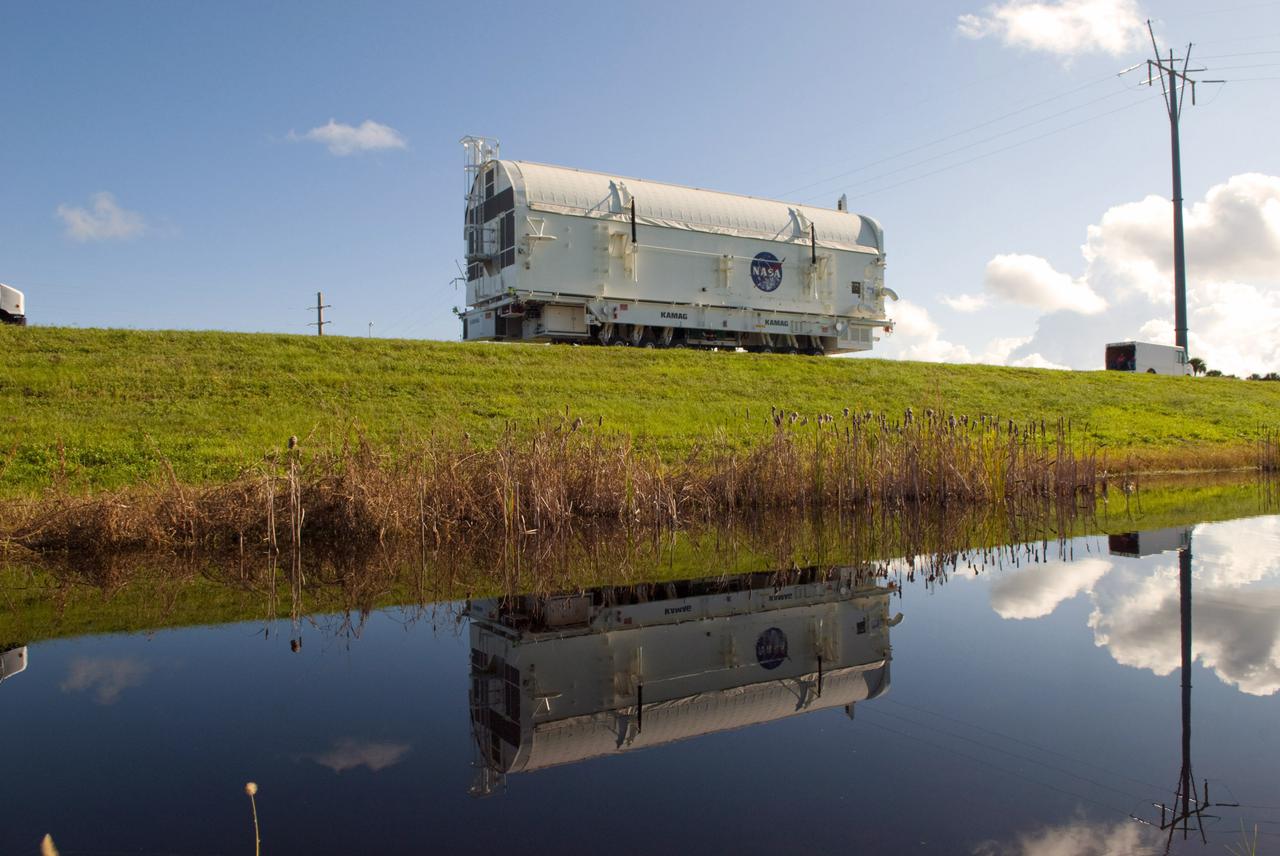
CAPE CANAVERAL, Fla. -- At NASA's Kennedy Space Center in Florida, payload canister #1 is reflected in the water standing beside the roadway leading from the Canister Rotation Facility to the Reutilization, Recycling and Marketing Facility on Ransom Road. The two payload canisters used to transport space shuttle payloads to the launch pad for installation in the shuttles' cargo bays are being decommissioned following the end of the Space Shuttle Program. Each canister weighs 110,000 pounds and is 65 feet long, 22 feet wide, and 18 feet, 7 inches high. The canisters were prescreened through NASA Headquarters as possible artifacts, but their size makes them difficult to transport to locations off the center. Federal and state agencies now will be given the opportunity to screen the canisters for potential use before a final decision is made on their disposition. For more information, visit http:__www.nasa.gov_centers_kennedy_pdf_167403main_CRF-06.pdf. Photo credit: NASA_Jim Grossmann
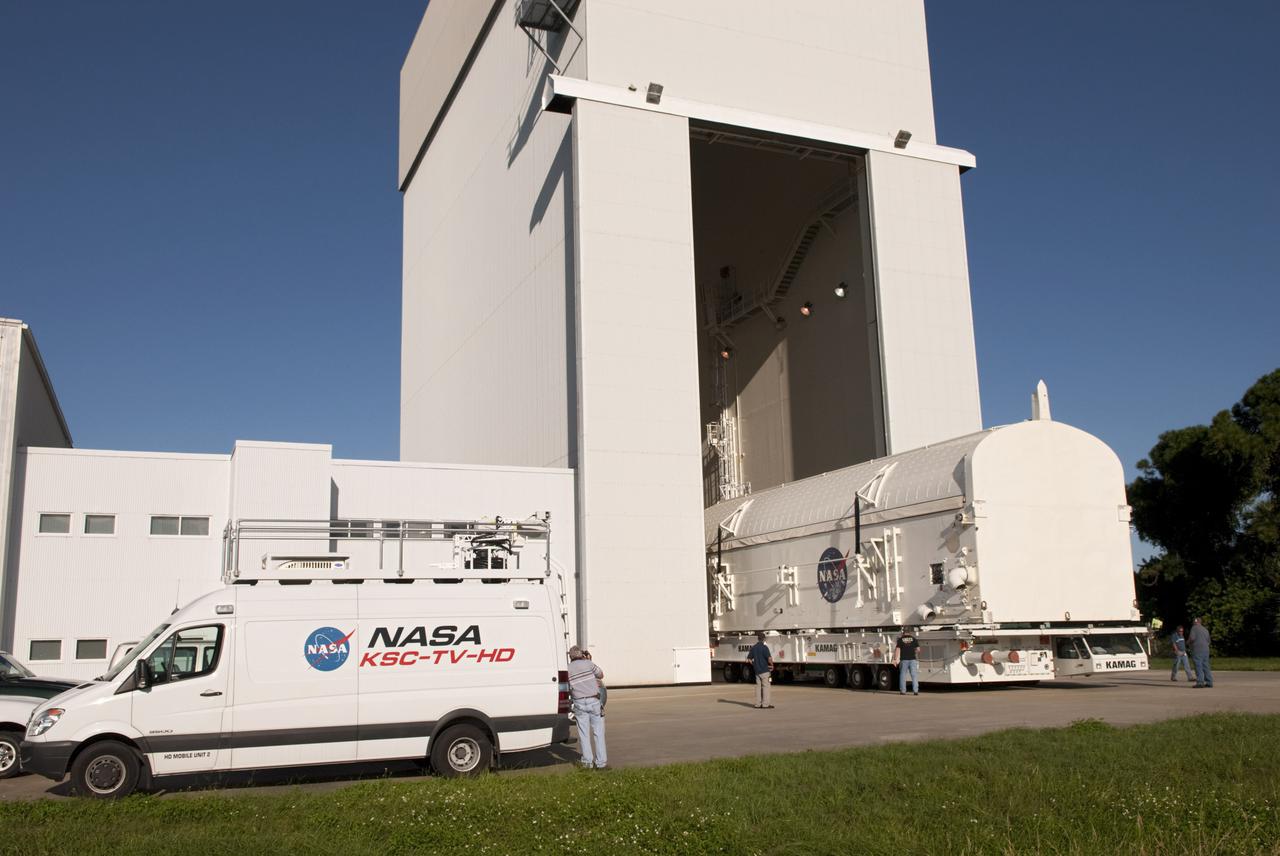
CAPE CANAVERAL, Fla. -- Payload canister #1 rolls out of the high bay of the Canister Rotation Facility at NASA's Kennedy Space Center in Florida on its way to the Reutilization, Recycling and Marketing Facility on Ransom Road. The two payload canisters used to transport space shuttle payloads to the launch pad for installation in the shuttles' cargo bays are being decommissioned following the end of the Space Shuttle Program. Each canister weighs 110,000 pounds and is 65 feet long, 22 feet wide, and 18 feet, 7 inches high. The canisters were prescreened through NASA Headquarters as possible artifacts, but their size makes them difficult to transport to locations off the center. Federal and state agencies now will be given the opportunity to screen the canisters for potential use before a final decision is made on their disposition. For more information, visit http:__www.nasa.gov_centers_kennedy_pdf_167403main_CRF-06.pdf. Photo credit: NASA_Jim Grossmann
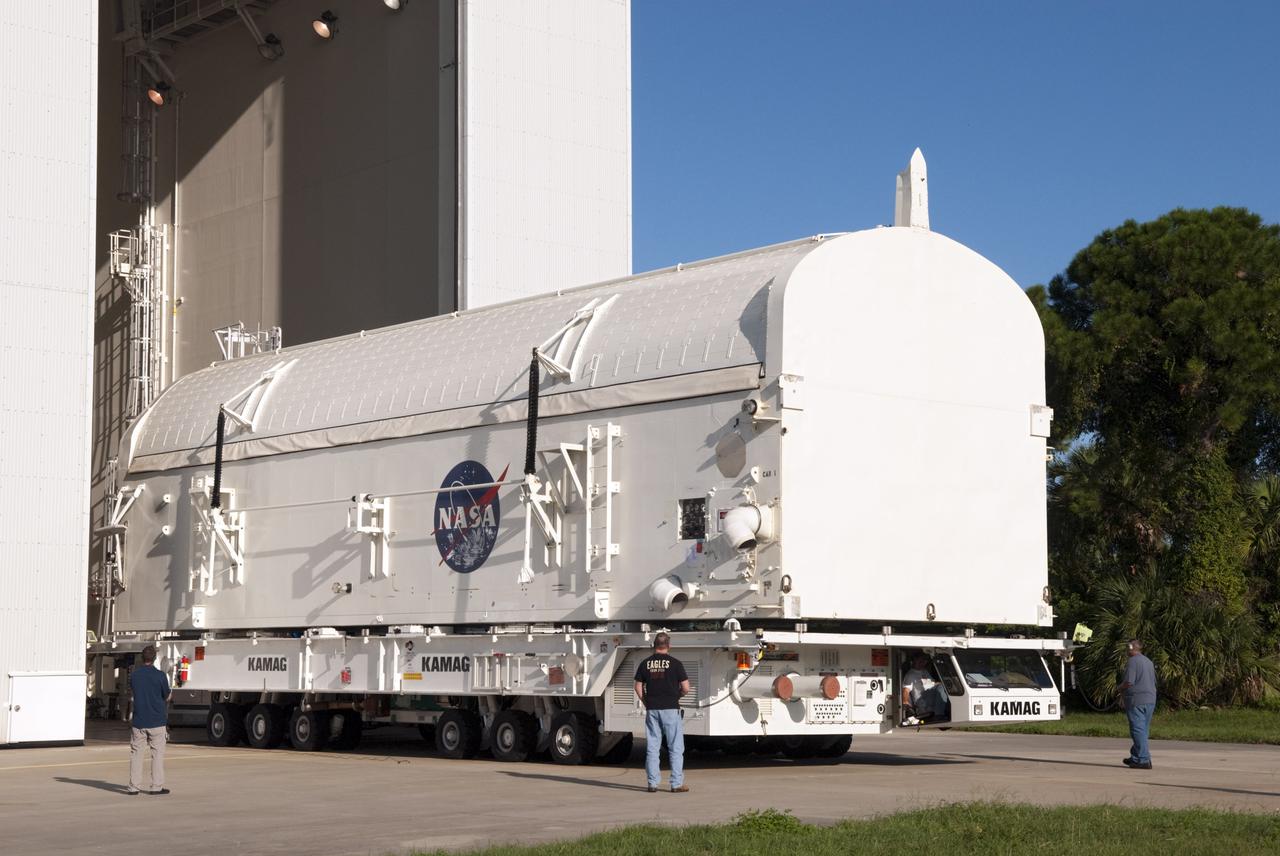
CAPE CANAVERAL, Fla. -- Employees monitor payload canister #1 as it rolls out of the high bay of the Canister Rotation Facility at NASA's Kennedy Space Center in Florida for its trip to the Reutilization, Recycling and Marketing Facility on Ransom Road. The two payload canisters used to transport space shuttle payloads to the launch pad for installation in the shuttles' cargo bays are being decommissioned following the end of the Space Shuttle Program. Each canister weighs 110,000 pounds and is 65 feet long, 22 feet wide, and 18 feet, 7 inches high. The canisters were prescreened through NASA Headquarters as possible artifacts, but their size makes them difficult to transport to locations off the center. Federal and state agencies now will be given the opportunity to screen the canisters for potential use before a final decision is made on their disposition. For more information, visit http:__www.nasa.gov_centers_kennedy_pdf_167403main_CRF-06.pdf. Photo credit: NASA_Jim Grossmann
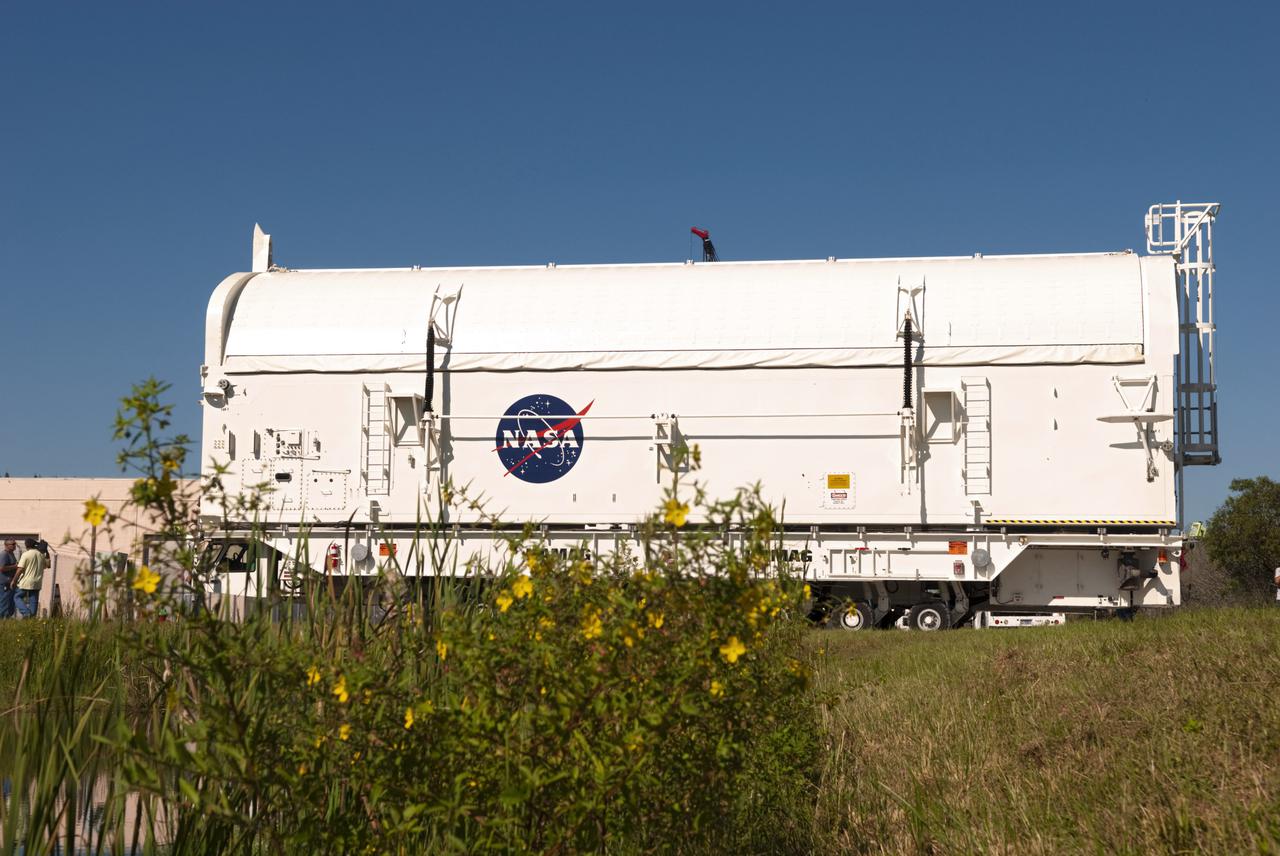
CAPE CANAVERAL, Fla. -- Wildflowers line the roadway along the route payload canister #2 is traveling between the Canister Rotation Facility and the Reutilization, Recycling and Marketing Facility on Ransom Road at NASA's Kennedy Space Center in Florida. The two payload canisters used to transport space shuttle payloads to the launch pad for installation in the shuttles' cargo bays are being decommissioned following the end of the Space Shuttle Program. Each canister weighs 110,000 pounds and is 65 feet long, 22 feet wide, and 18 feet, 7 inches high. The canisters were prescreened through NASA Headquarters as possible artifacts, but their size makes them difficult to transport to locations off the center. Federal and state agencies now will be given the opportunity to screen the canisters for potential use before a final decision is made on their disposition. For more information, visit http:__www.nasa.gov_centers_kennedy_pdf_167403main_CRF-06.pdf. Photo credit: NASA_Jim Grossmann
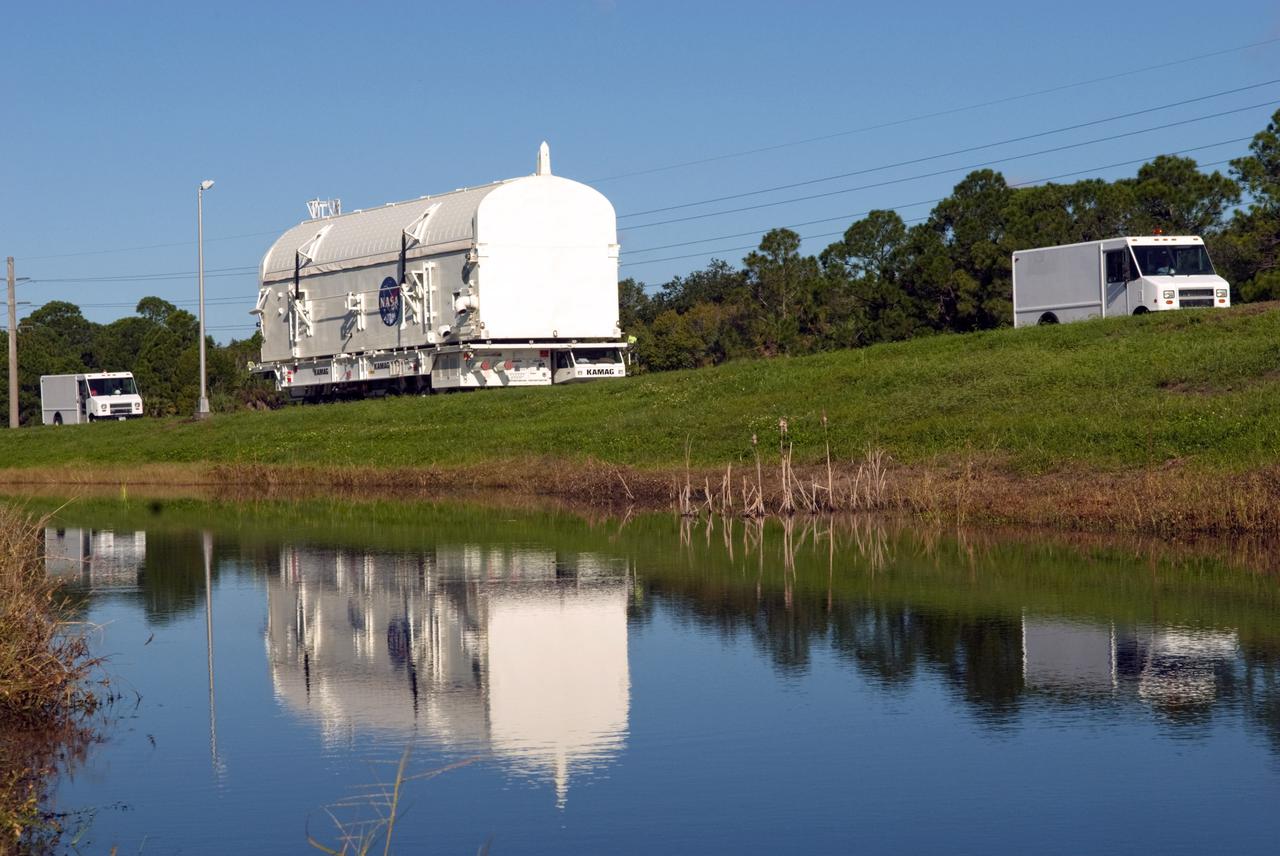
CAPE CANAVERAL, Fla. -- At NASA's Kennedy Space Center in Florida, payload canister #1 is reflected in the water standing beside the roadway leading from the Canister Rotation Facility to the Reutilization, Recycling and Marketing Facility on Ransom Road. The two payload canisters used to transport space shuttle payloads to the launch pad for installation in the shuttles' cargo bays are being decommissioned following the end of the Space Shuttle Program. Each canister weighs 110,000 pounds and is 65 feet long, 22 feet wide, and 18 feet, 7 inches high. The canisters were prescreened through NASA Headquarters as possible artifacts, but their size makes them difficult to transport to locations off the center. Federal and state agencies now will be given the opportunity to screen the canisters for potential use before a final decision is made on their disposition. For more information, visit http:__www.nasa.gov_centers_kennedy_pdf_167403main_CRF-06.pdf. Photo credit: NASA_Jim Grossmann
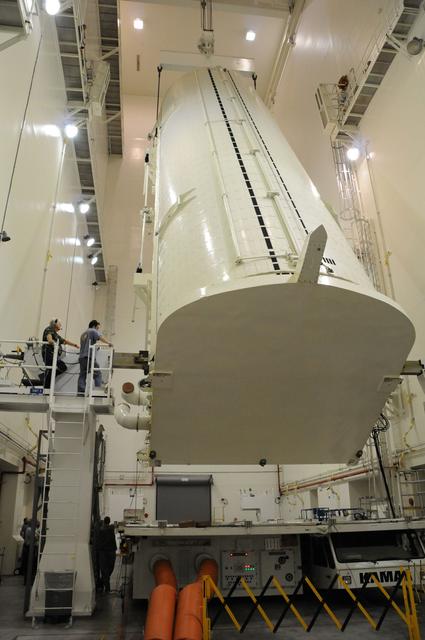
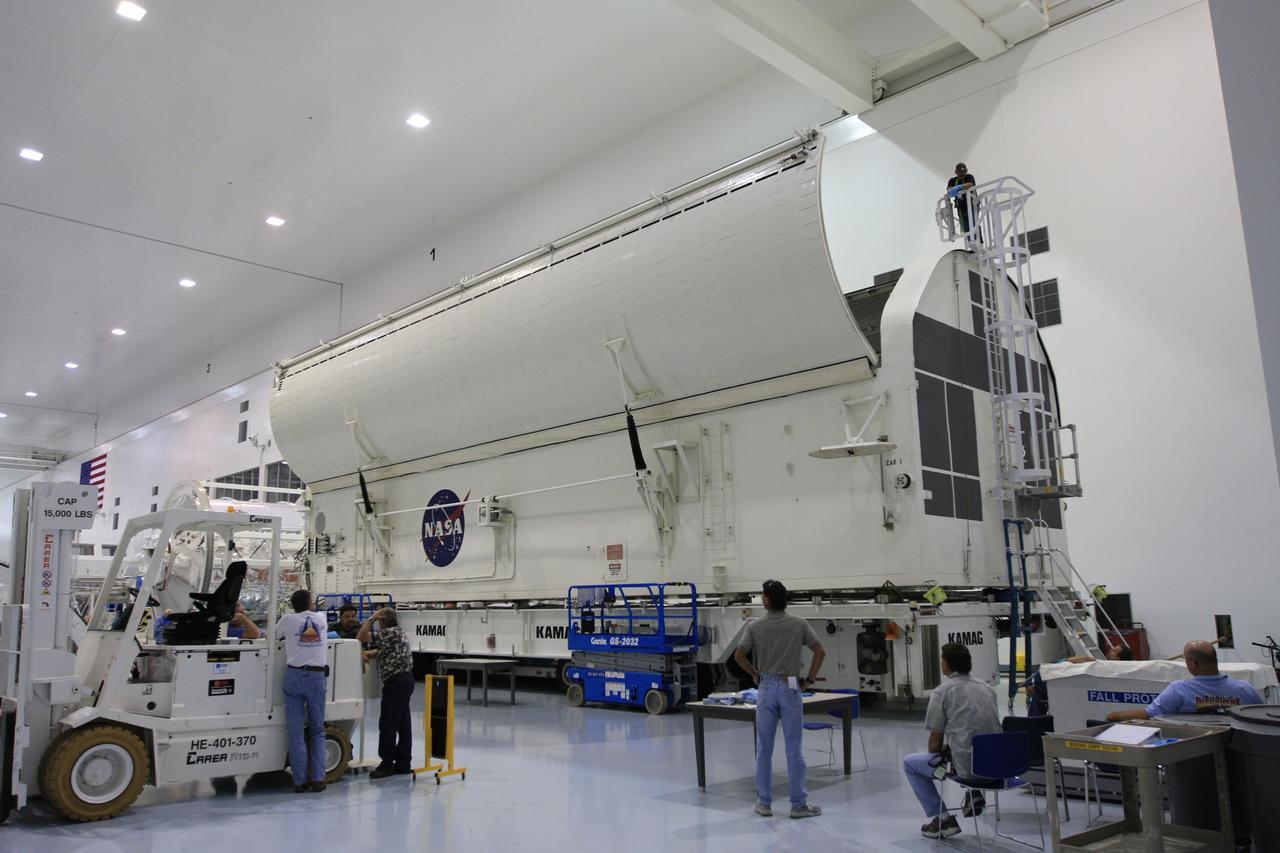
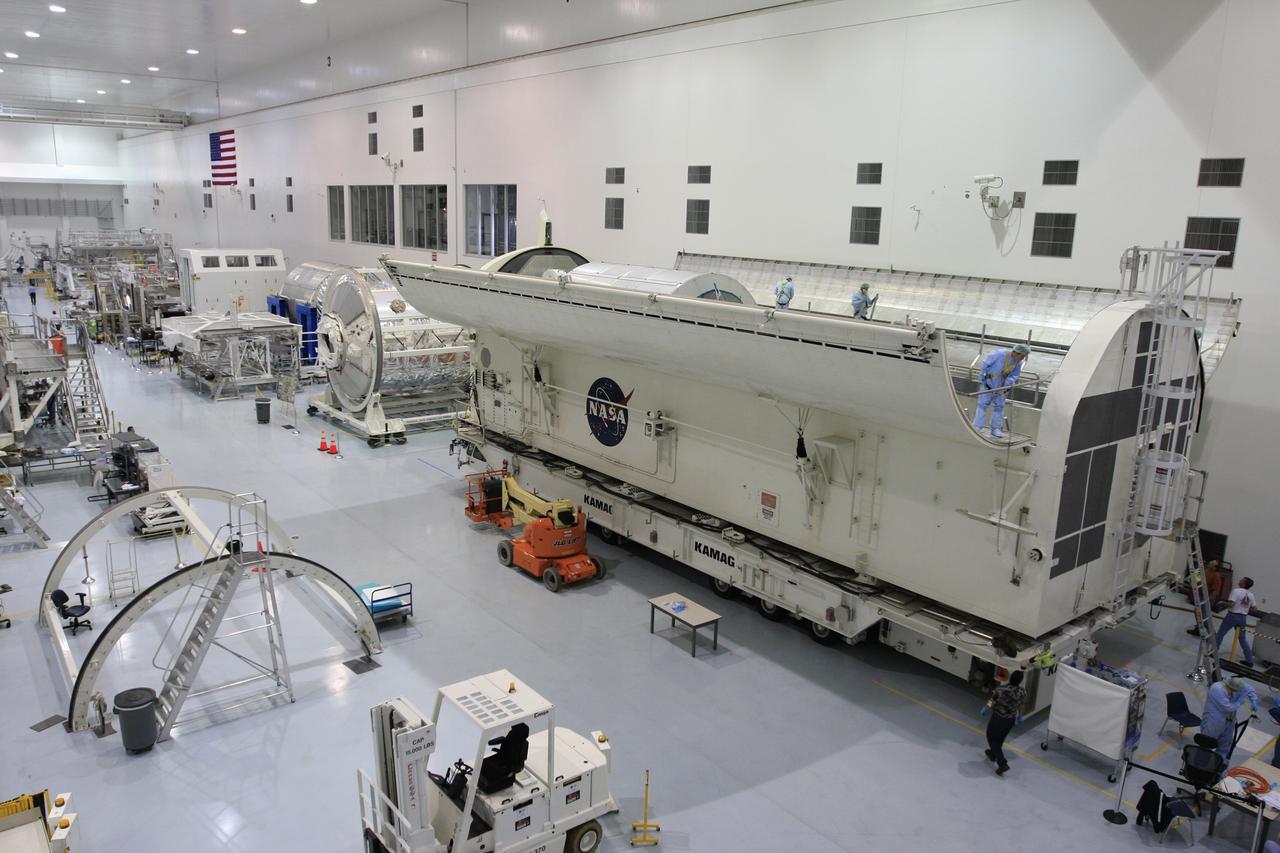
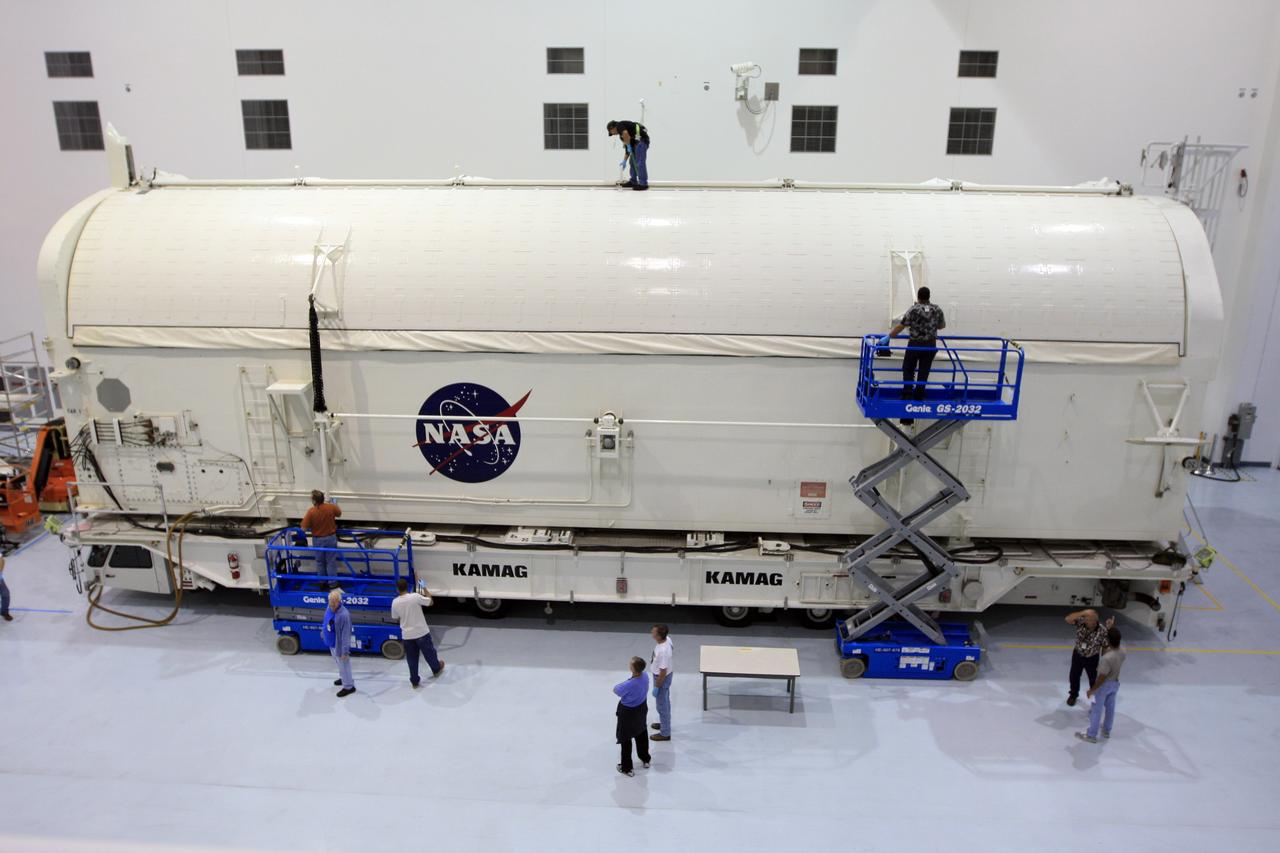
Interior View of CRF
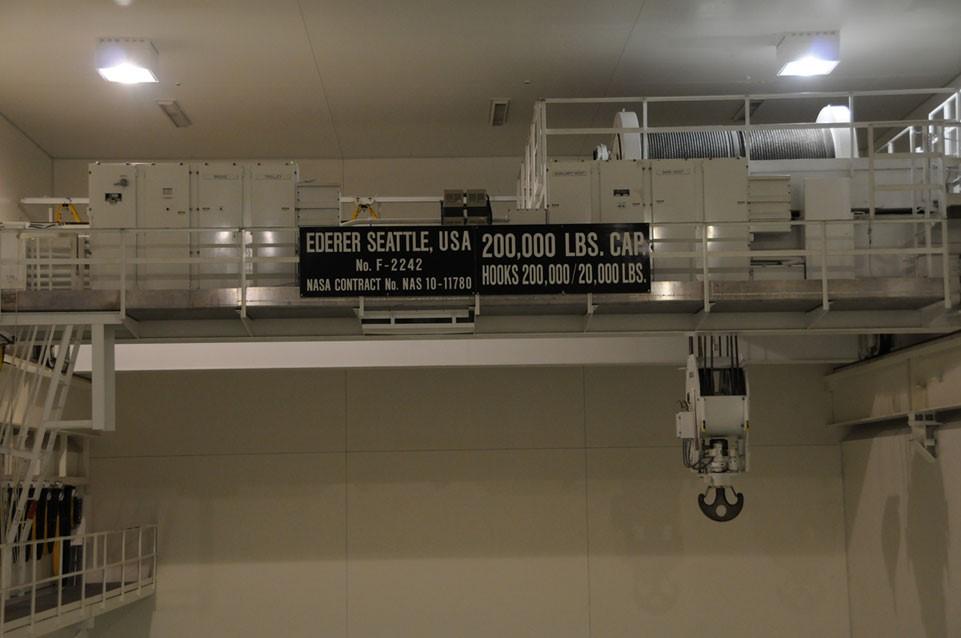
Interior View of CRF
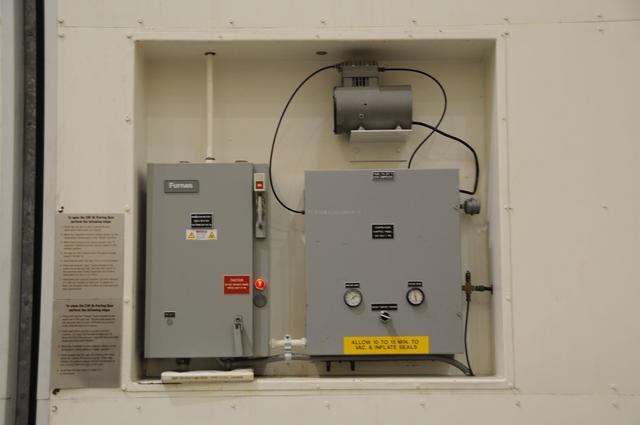
Interior View of CRF
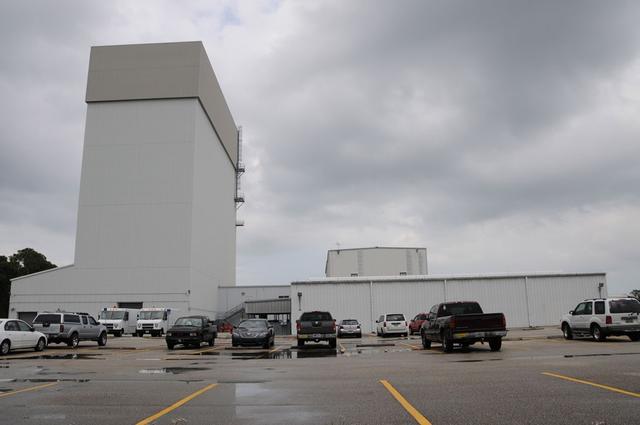
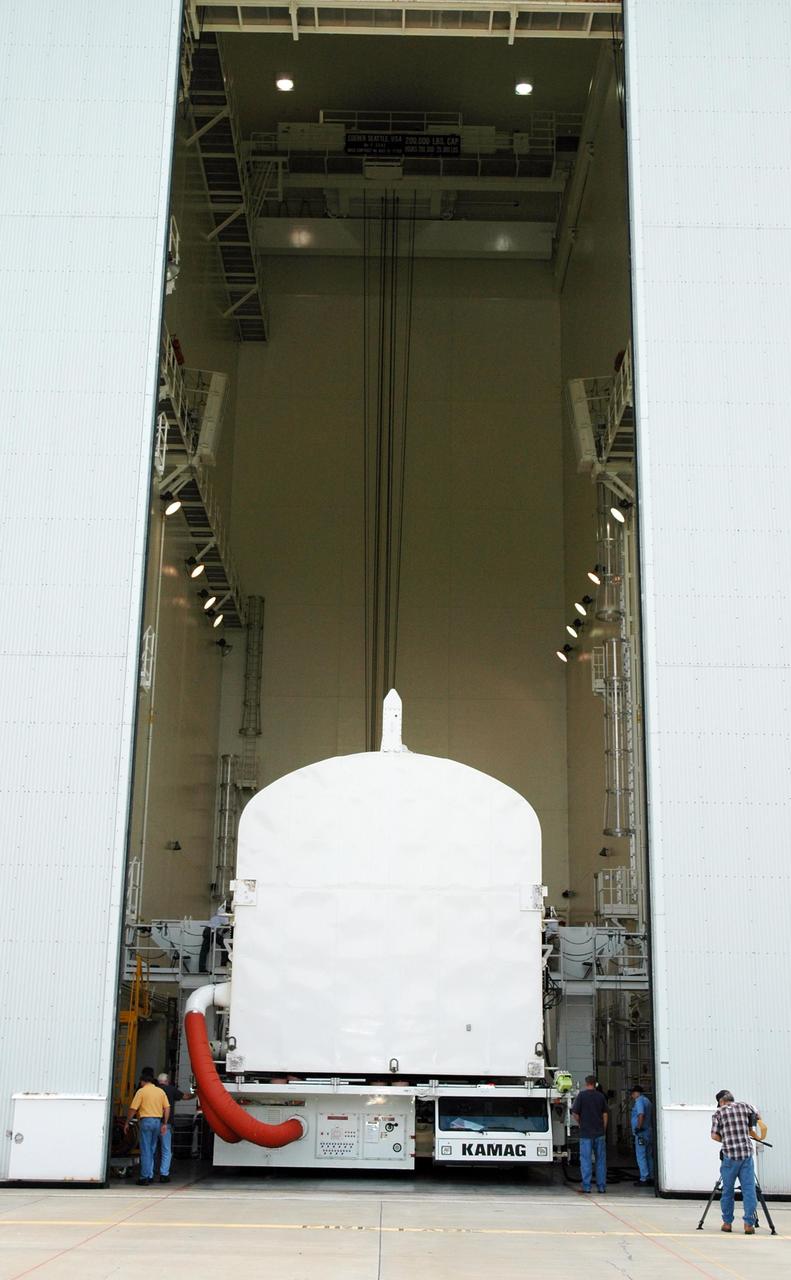
Exterior View of CRF
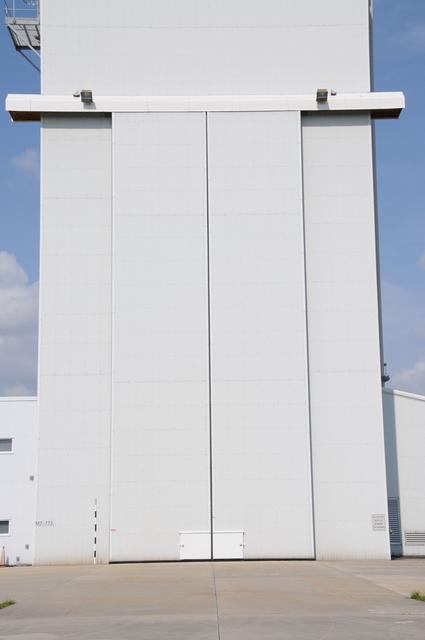
Exterior View of CRF
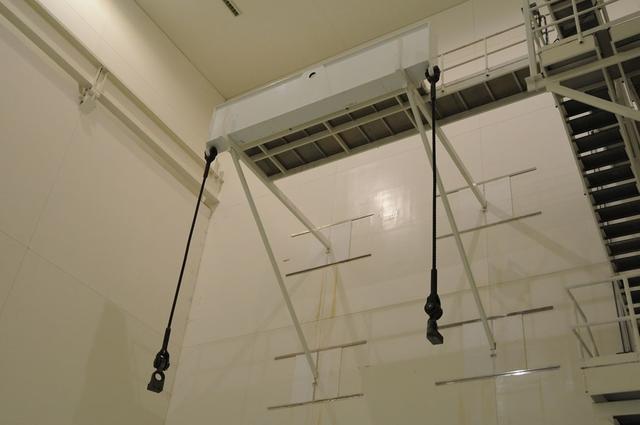
Interior View of CRF
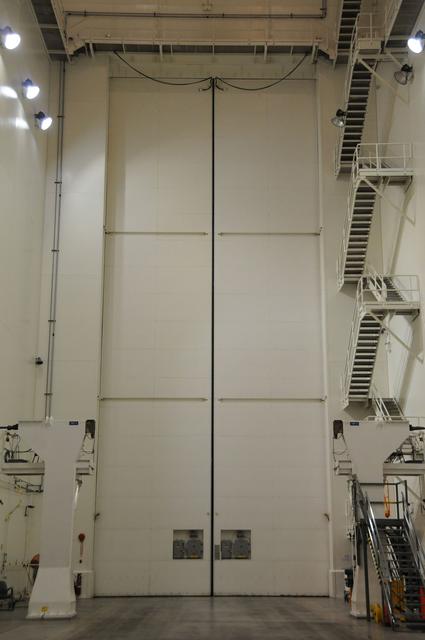
Interior View of CRF
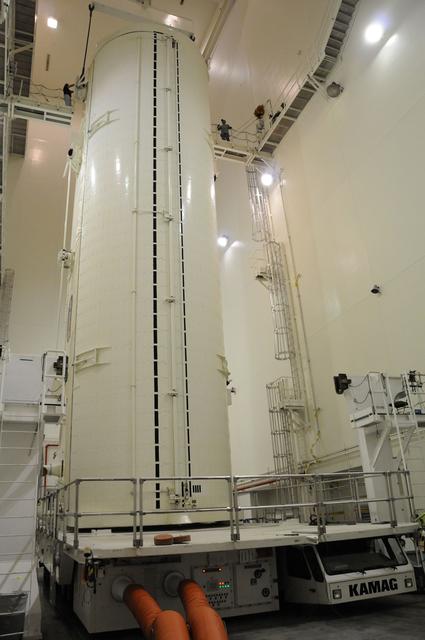
Interior View of CRF
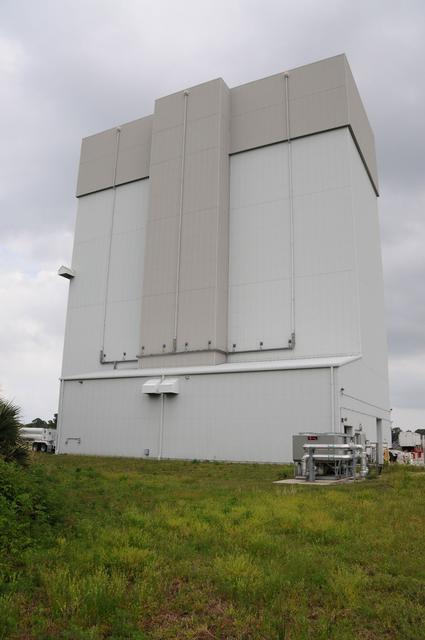
Exterior View of CRF
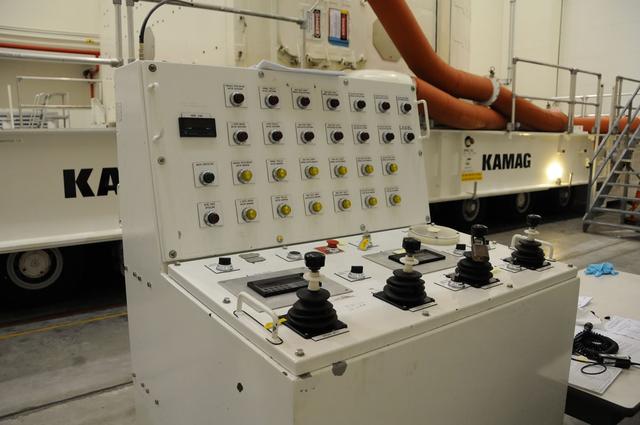
Interior View of CRF
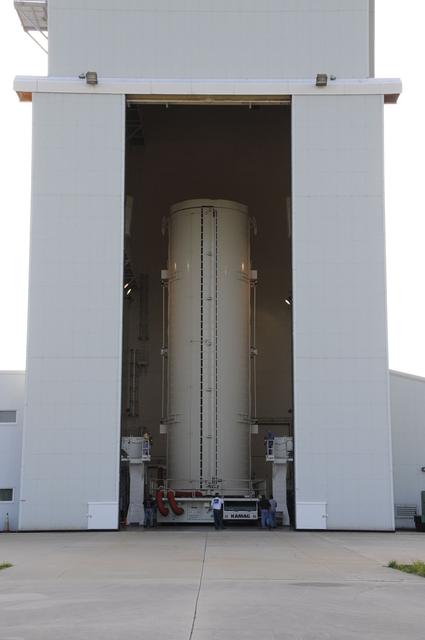
Exterior View of CRF
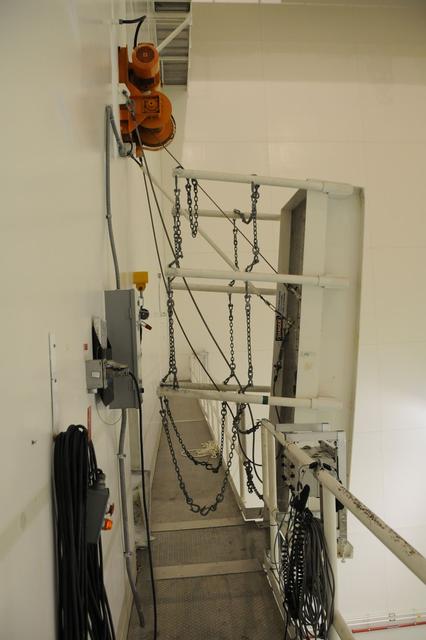
Interior View of CRF
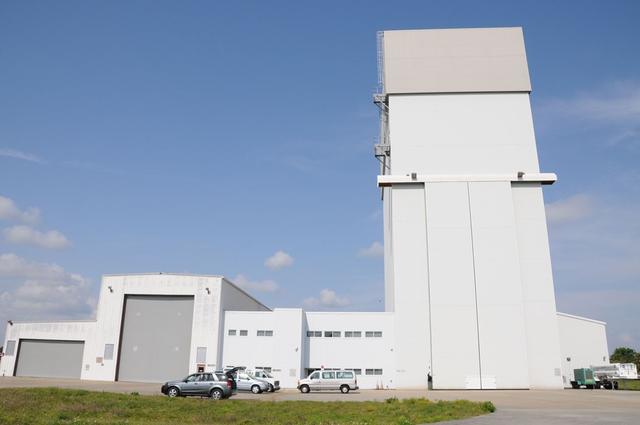
Exterior View of CRF
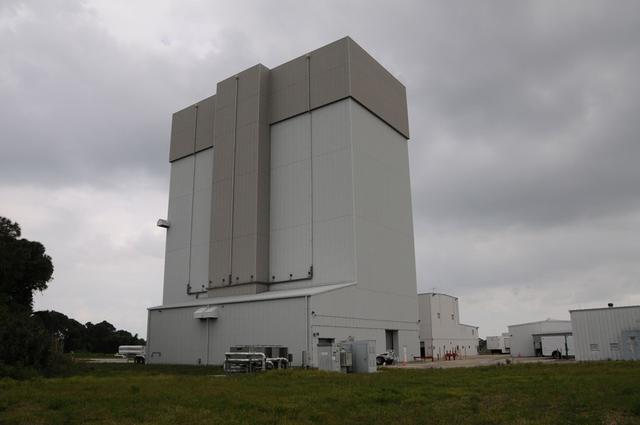
Exterior View of CRF
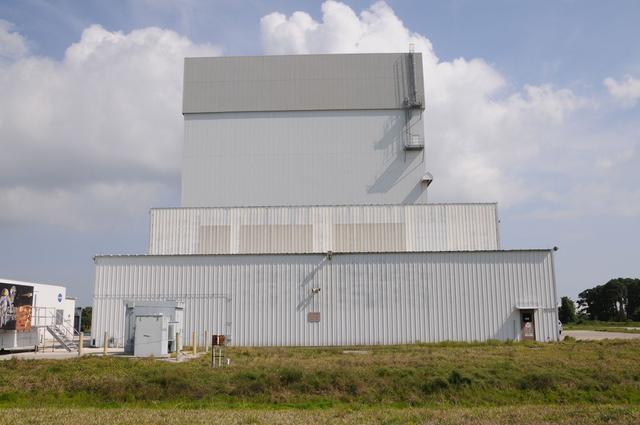
Exterior View of CRF
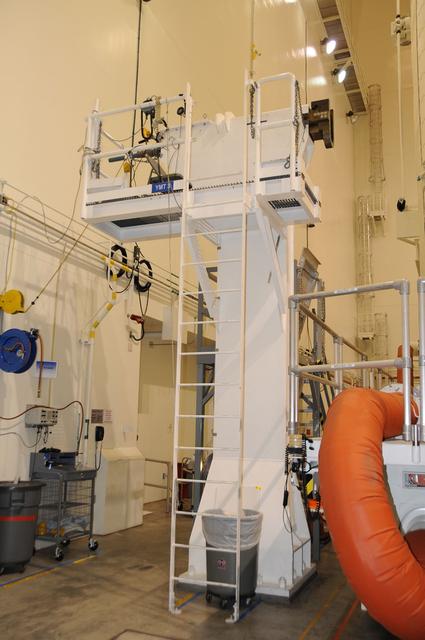
Interior View of CRF
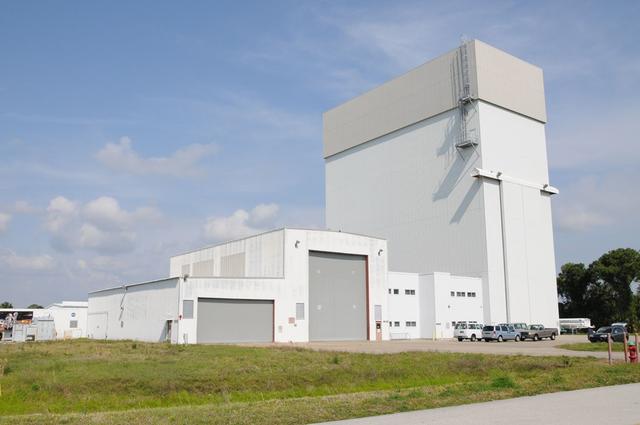
Exterior View of CRF
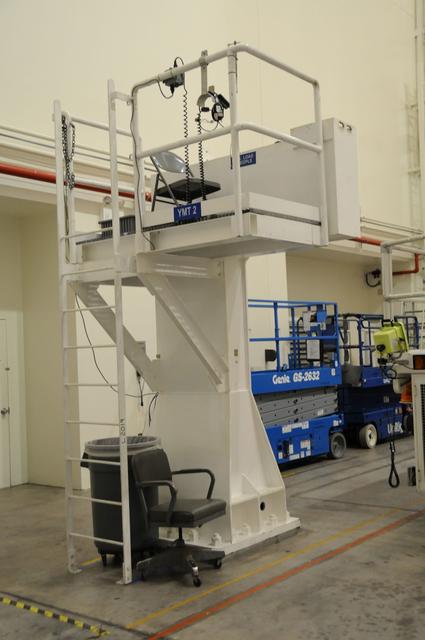
Interior View of CRF
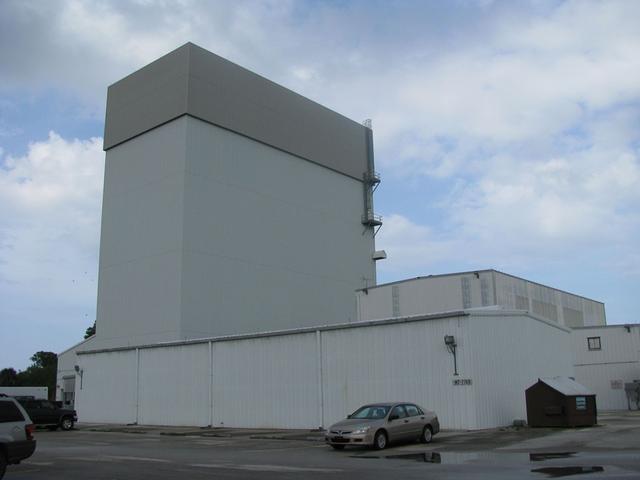
Exterior View of CRF
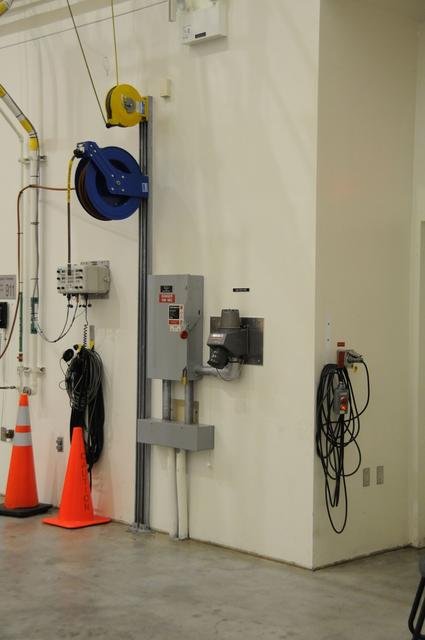
Interior View of CRF
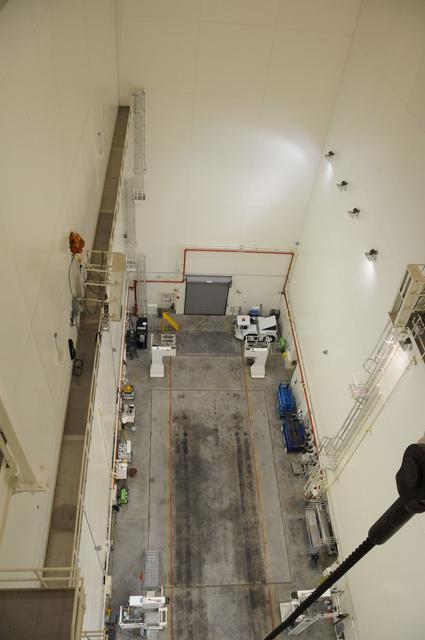
Interior View of CRF
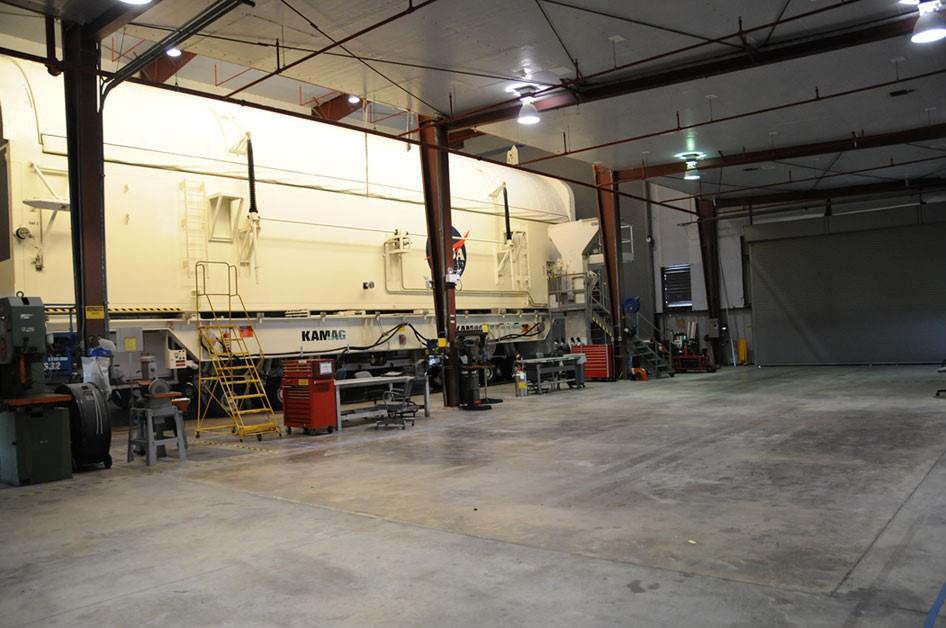
Interior View of CRF

Exterior View of CRF
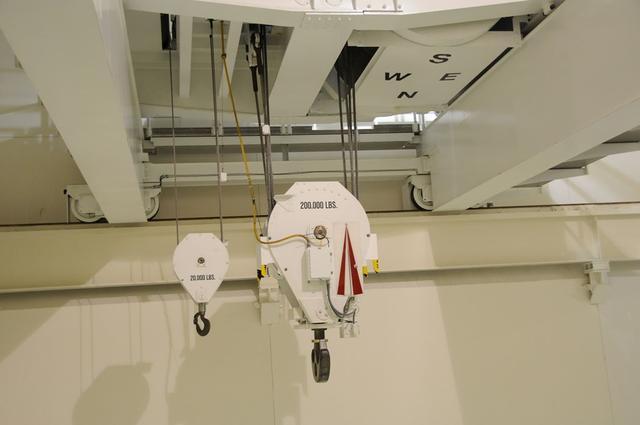
Interior View of CRF
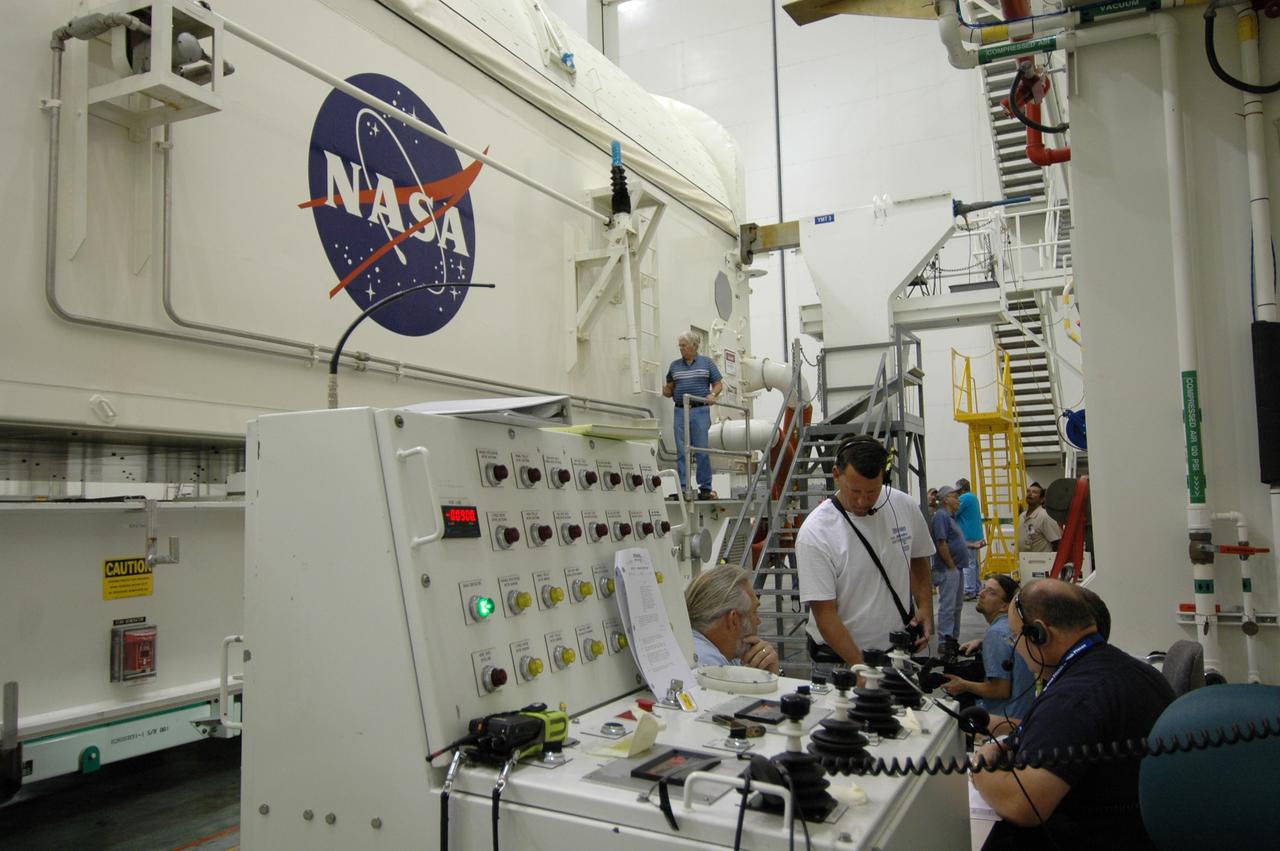
CAPE CANAVERAL, Fla. -- In the Vertical Integration Facility at NASA's Kennedy Space Center, technicians monitor the rotation of the payload canister to a vertical position. The canister contains the Japanese Experiment Module -Pressurized Module. The canister will be transported to Launch Pad 39A for space shuttle Discovery’s STS-124 mission. At the pad, the payload will be transferred from the canister into the payload changeout room on the rotating service structure. The changeout room is the enclosed, environmentally controlled portion of the service structure that supports cargo delivery to the pad and subsequent vertical installation into an orbiter's payload bay. On the mission, the STS-124 crew will transport the JEM as well as the Japanese Remote Manipulator System to the International Space Station. The launch of Discovery is targeted for May 31. Photo credit: NASA/Jim Grossmann
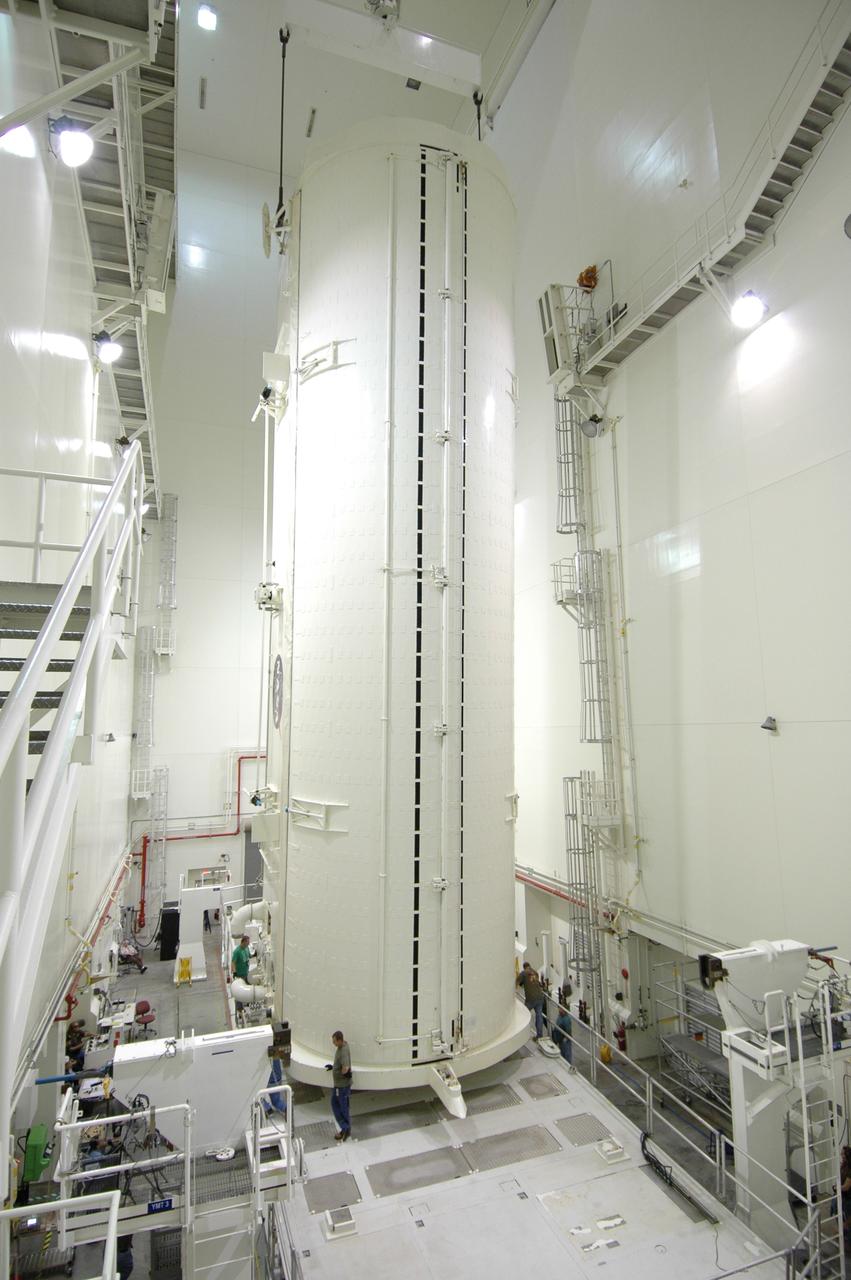
CAPE CANAVERAL, Fla. -- After rotation in the Vertical Integration Facility at NASA's Kennedy Space Center, the payload canister is lowered vertically onto the payload canister transporter. The canister contains the Japanese Experiment Module -Pressurized Module, which will be transported to Launch Pad 39A for space shuttle Discovery’s STS-124 mission. At the pad, the payload will be transferred from the canister into the payload changeout room on the rotating service structure. The changeout room is the enclosed, environmentally controlled portion of the service structure that supports cargo delivery to the pad and subsequent vertical installation into an orbiter's payload bay. On the mission, the STS-124 crew will transport the JEM as well as the Japanese Remote Manipulator System to the International Space Station. The launch of Discovery is targeted for May 31. Photo credit: NASA/Jim Grossmann
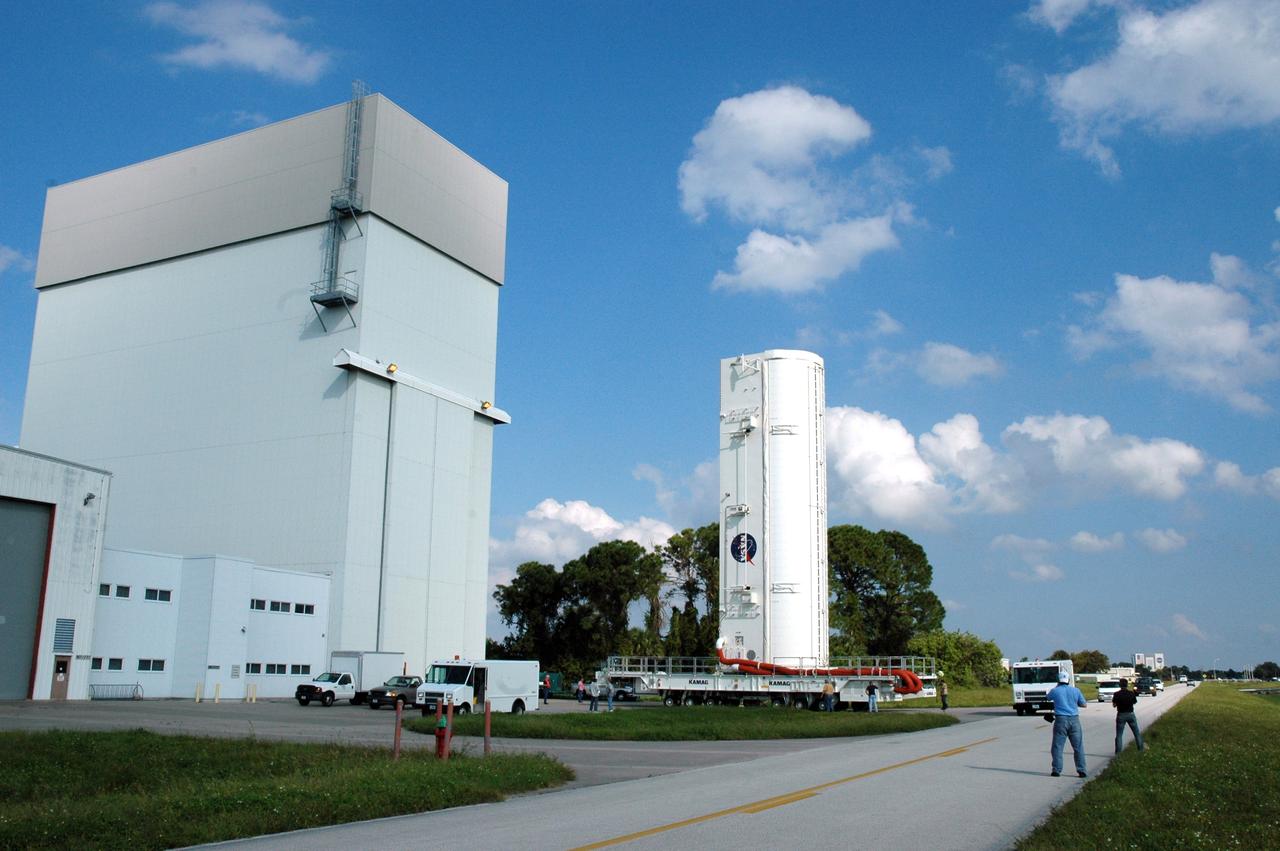
CAPE CANAVERAL, Fla. – On NASA's Kennedy Space Center in Florida, the canister with space shuttle Atlantis’ Hubble Space Telescope payload inside heads toward the Canister Rotation Facility. The payload comprises four carriers holding various equipment for the mission. After rotation to horizontal, the canister will be transported back to Kennedy’s Payload Hazardous Servicing Facility where the hardware will be stored until a new target launch date can be set for Atlantis’ STS-125 mission in 2009. Atlantis’ October target launch date was delayed after a device on board Hubble used in the storage and transmission of science data to Earth shut down on Sept. 27. Replacing the broken device will be added to Atlantis’ servicing mission to the telescope Photo credit: NASA/Tim Jacobs
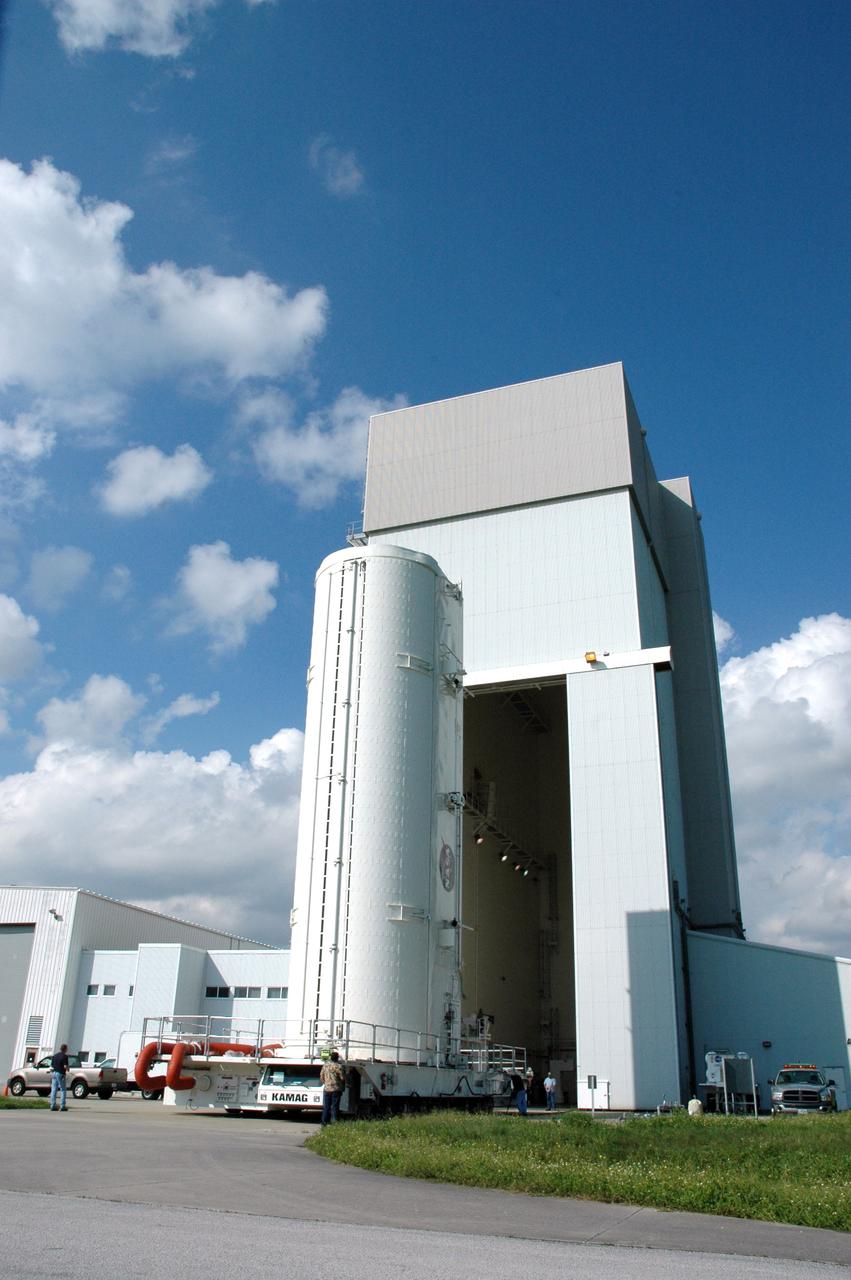
CAPE CANAVERAL, Fla. – On NASA's Kennedy Space Center in Florida, the canister with space shuttle Atlantis’ Hubble Space Telescope payload inside heads for the open doors of the Canister Rotation Facility. The payload comprises four carriers holding various equipment for the mission. After rotation to horizontal, the canister will be transported back to Kennedy’s Payload Hazardous Servicing Facility where the hardware will be stored until a new target launch date can be set for Atlantis’ STS-125 mission in 2009. Atlantis’ October target launch date was delayed after a device on board Hubble used in the storage and transmission of science data to Earth shut down on Sept. 27. Replacing the broken device will be added to Atlantis’ servicing mission to the telescope Photo credit: NASA/Tim Jacobs
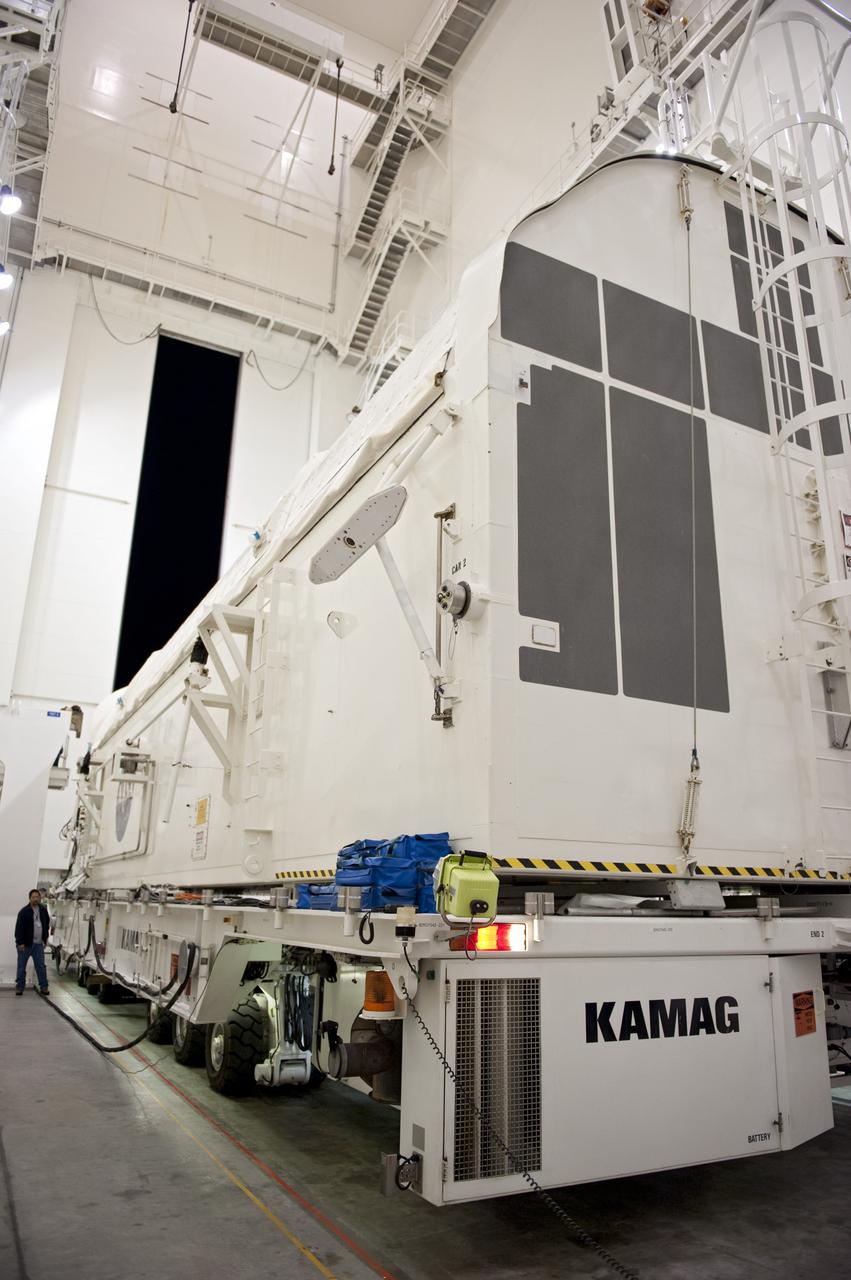
CAPE CANAVERAL, Fla. -- A canister, carrying the Alpha Magnetic Spectrometer-2 AMS and Express Logistics Carrier-3 for space shuttle Endeavour's STS-134 mission, enters the Canister Rotation Facility from the Space Station Processing Facility at NASA's Kennedy Space Center in Florida. There, the canister that protects the space-bound payload will be rotated from a horizontal to vertical position so that it can be installed into Endeavour's payload bay. AMS is a particle physics detector, designed to operate as an external experiment on the International Space Station. It will use the unique environment of space to study the universe and its origin by searching for dark matter. AMS-2 will fly to the station aboard Endeavour's STS-134 mission targeted to launch April 19 at 7:48 p.m. EDT. For more information visit, www.nasa.gov/mission_pages/shuttle/shuttlemissions/sts134/index.html. Photo credit: NASA/Kim Shiflett
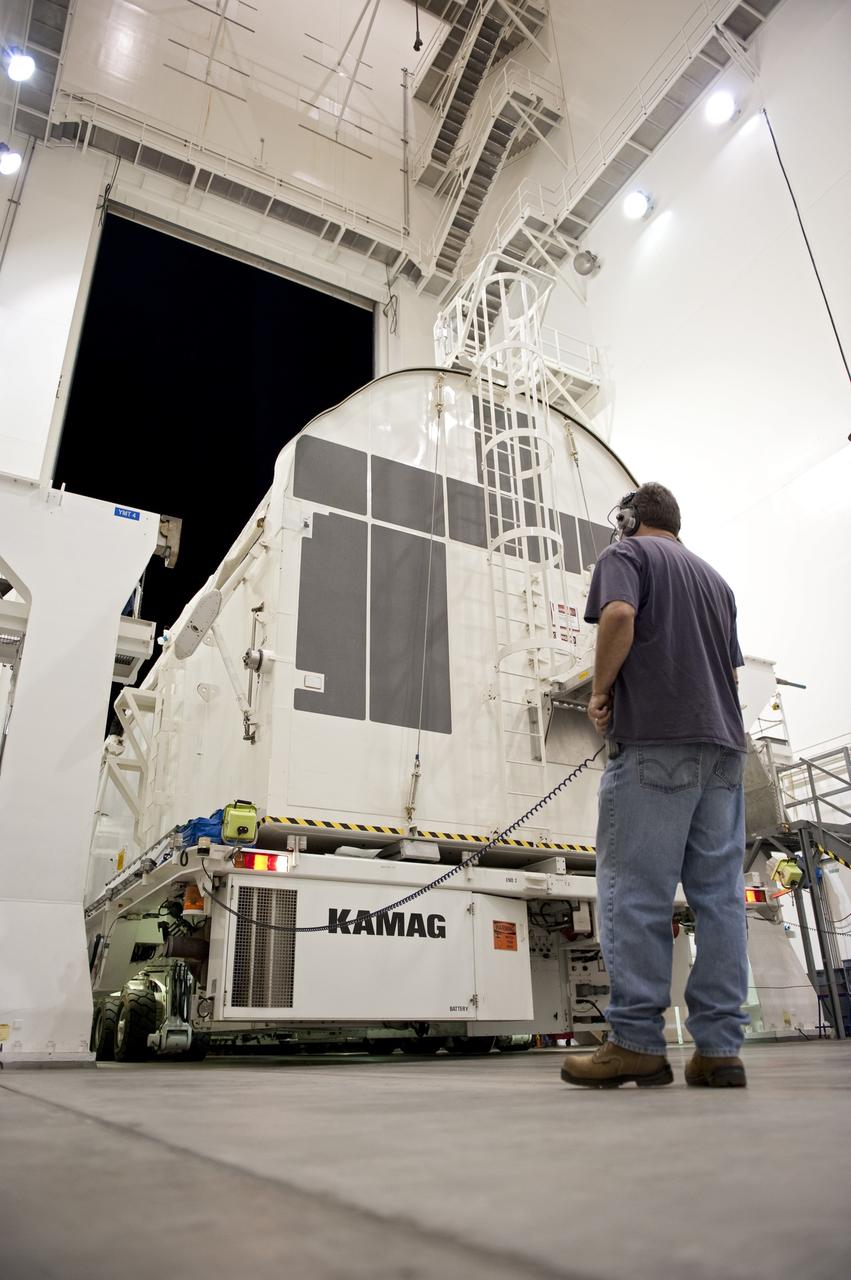
CAPE CANAVERAL, Fla. -- A canister, carrying the Alpha Magnetic Spectrometer-2 AMS and Express Logistics Carrier-3 for space shuttle Endeavour's STS-134 mission, enters the Canister Rotation Facility from the Space Station Processing Facility at NASA's Kennedy Space Center in Florida. There, the canister that protects the space-bound payload will be rotated from a horizontal to vertical position so that it can be installed into Endeavour's payload bay. AMS is a particle physics detector, designed to operate as an external experiment on the International Space Station. It will use the unique environment of space to study the universe and its origin by searching for dark matter. AMS-2 will fly to the station aboard Endeavour's STS-134 mission targeted to launch April 19 at 7:48 p.m. EDT. For more information visit, www.nasa.gov/mission_pages/shuttle/shuttlemissions/sts134/index.html. Photo credit: NASA/Kim Shiflett
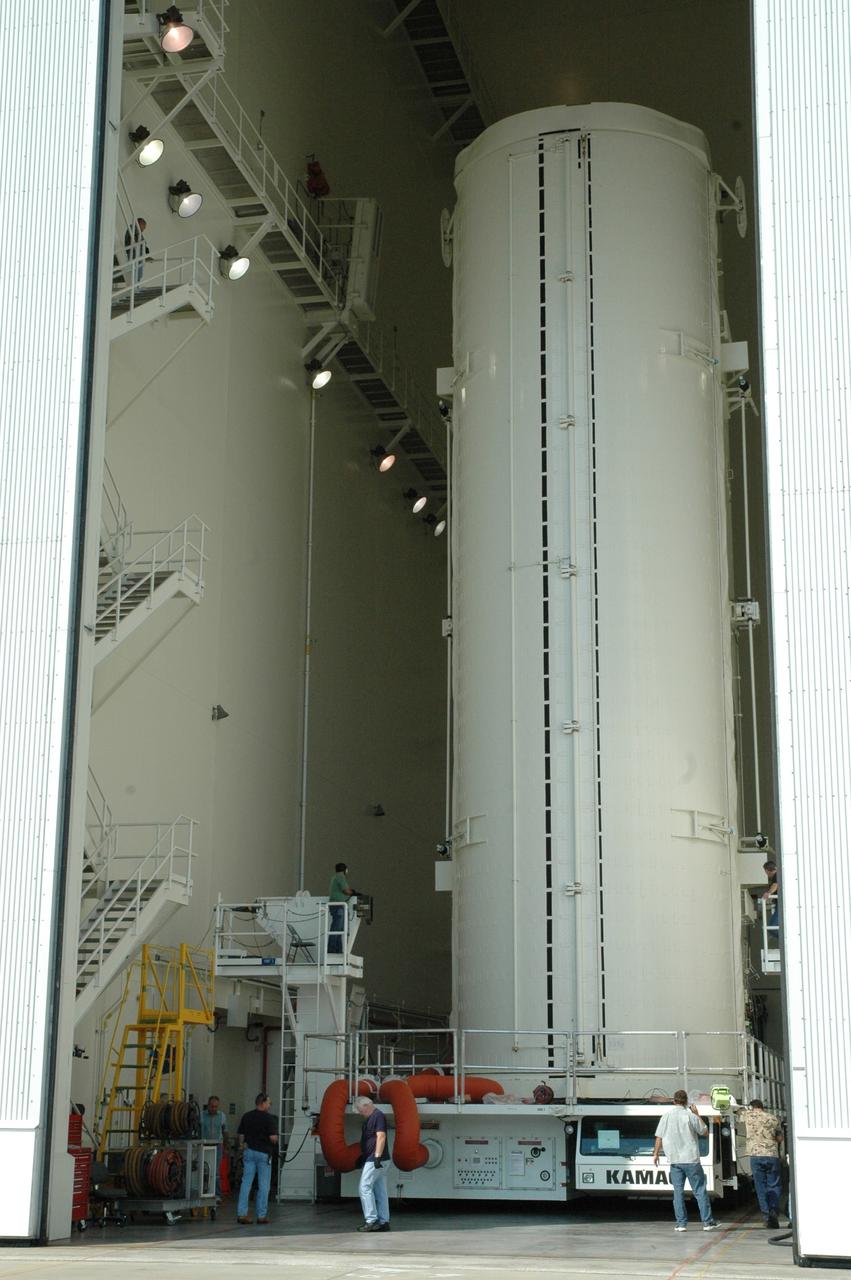
CAPE CANAVERAL, Fla. – On NASA's Kennedy Space Center in Florida, the canister with space shuttle Atlantis’ Hubble Space Telescope payload arrives inside the Canister Rotation Facility. The payload comprises four carriers holding various equipment for the mission. After rotation to horizontal, the canister will be transported back to Kennedy’s Payload Hazardous Servicing Facility where the hardware will be stored until a new target launch date can be set for Atlantis’ STS-125 mission in 2009. Atlantis’ October target launch date was delayed after a device on board Hubble used in the storage and transmission of science data to Earth shut down on Sept. 27. Replacing the broken device will be added to Atlantis’ servicing mission to the telescope Photo credit: NASA/Tim Jacobs
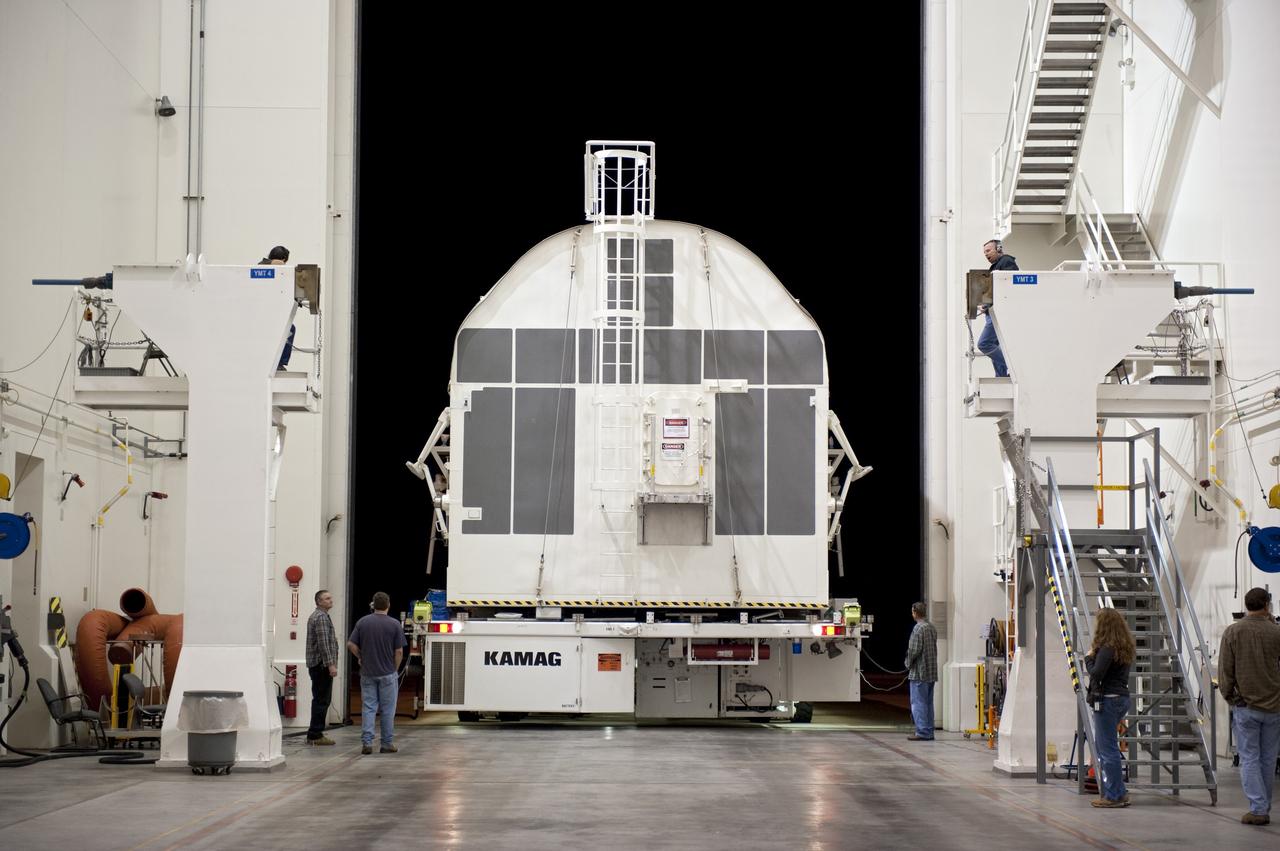
CAPE CANAVERAL, Fla. -- A canister, carrying the Alpha Magnetic Spectrometer-2 AMS and Express Logistics Carrier-3 for space shuttle Endeavour's STS-134 mission, enters the Canister Rotation Facility from the Space Station Processing Facility at NASA's Kennedy Space Center in Florida. There, the canister that protects the space-bound payload will be rotated from a horizontal to vertical position so that it can be installed into Endeavour's payload bay. AMS is a particle physics detector, designed to operate as an external experiment on the International Space Station. It will use the unique environment of space to study the universe and its origin by searching for dark matter. AMS-2 will fly to the station aboard Endeavour's STS-134 mission targeted to launch April 19 at 7:48 p.m. EDT. For more information visit, www.nasa.gov/mission_pages/shuttle/shuttlemissions/sts134/index.html. Photo credit: NASA/Kim Shiflett
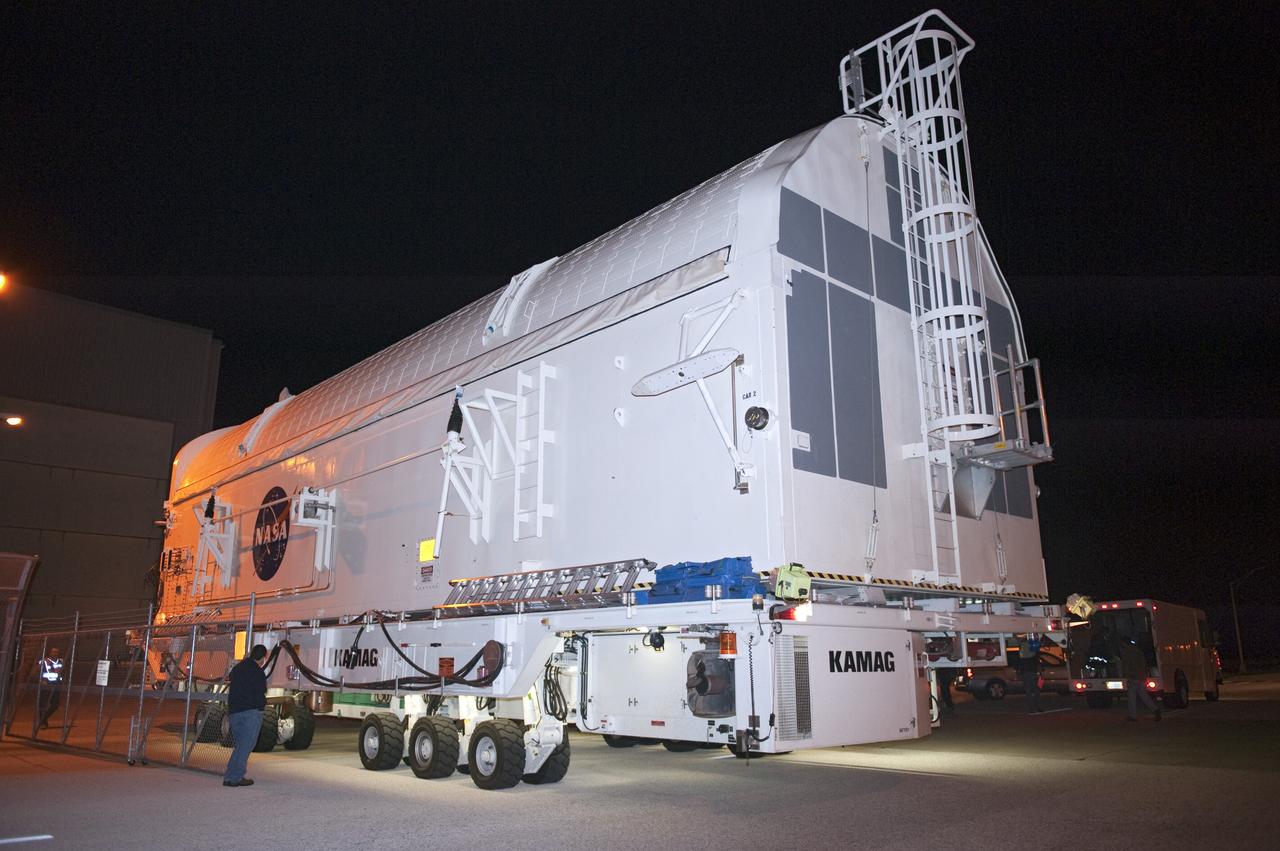
CAPE CANAVERAL, Fla. -- A canister, carrying the Alpha Magnetic Spectrometer-2 AMS and Express Logistics Carrier-3 for space shuttle Endeavour's STS-134 mission, is moved from the Space Station Processing Facility to the Canister Rotation Facility at NASA's Kennedy Space Center in Florida. There, the canister that protects the space-bound payload will be rotated from a horizontal to vertical position so that it can be installed into Endeavour's payload bay. AMS is a particle physics detector, designed to operate as an external experiment on the International Space Station. It will use the unique environment of space to study the universe and its origin by searching for dark matter. AMS-2 will fly to the station aboard Endeavour's STS-134 mission targeted to launch April 19 at 7:48 p.m. EDT. For more information visit, www.nasa.gov/mission_pages/shuttle/shuttlemissions/sts134/index.html. Photo credit: NASA/Kim Shiflett