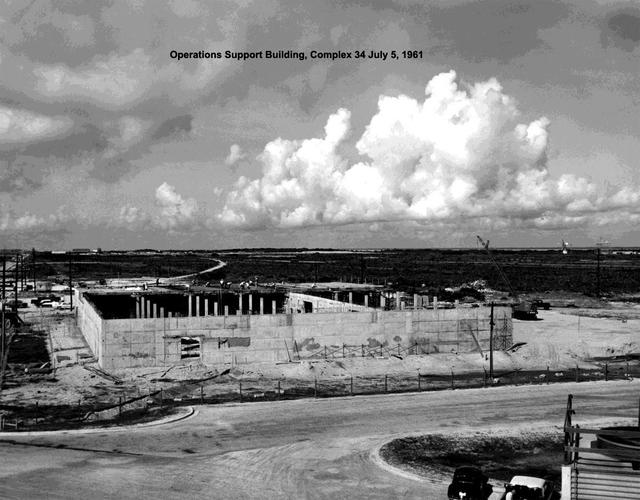
Exterior view of the Engineering Support Building (formerly Operations support Building)
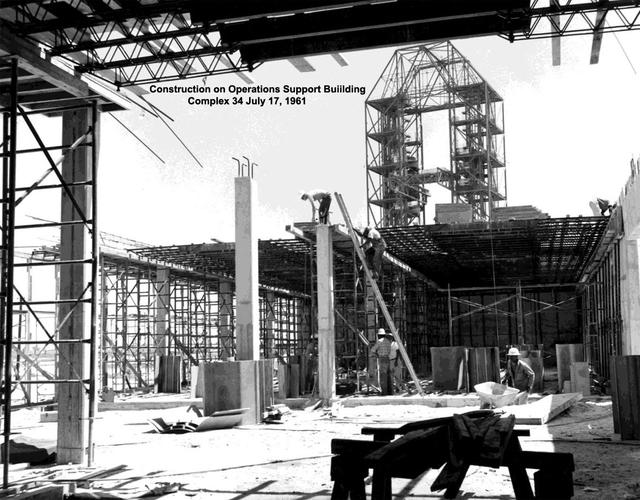
Exterior view of the Engineering Support Building (formerly Operations support Building)
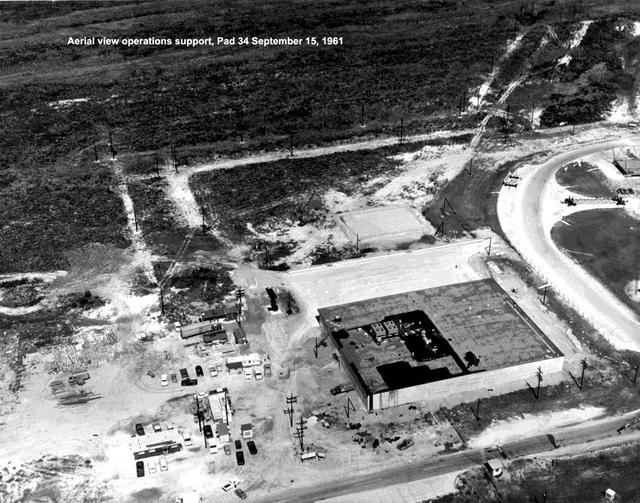
Aerial view of the Engineering Support Building (formerly Operations support Building)
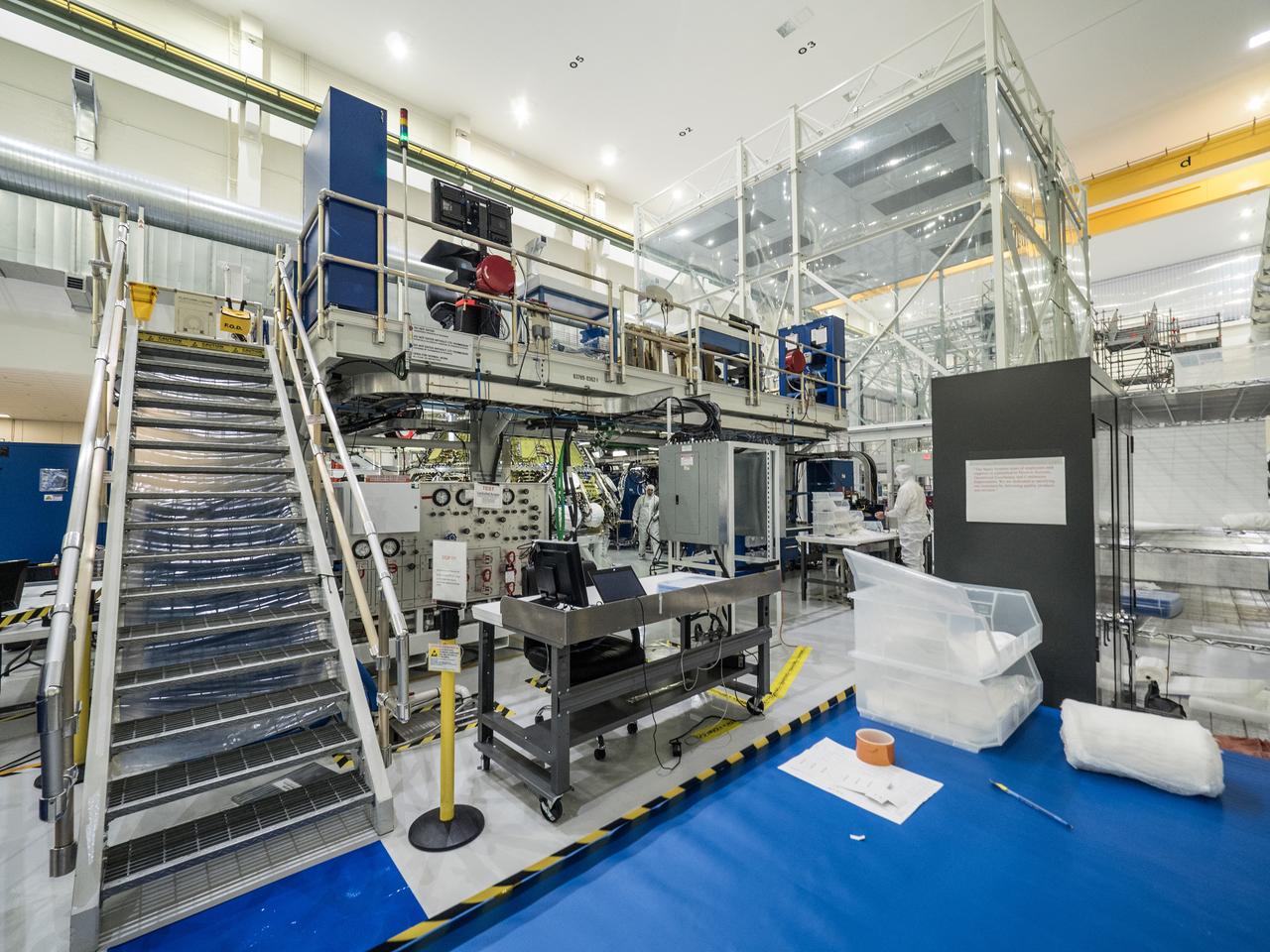
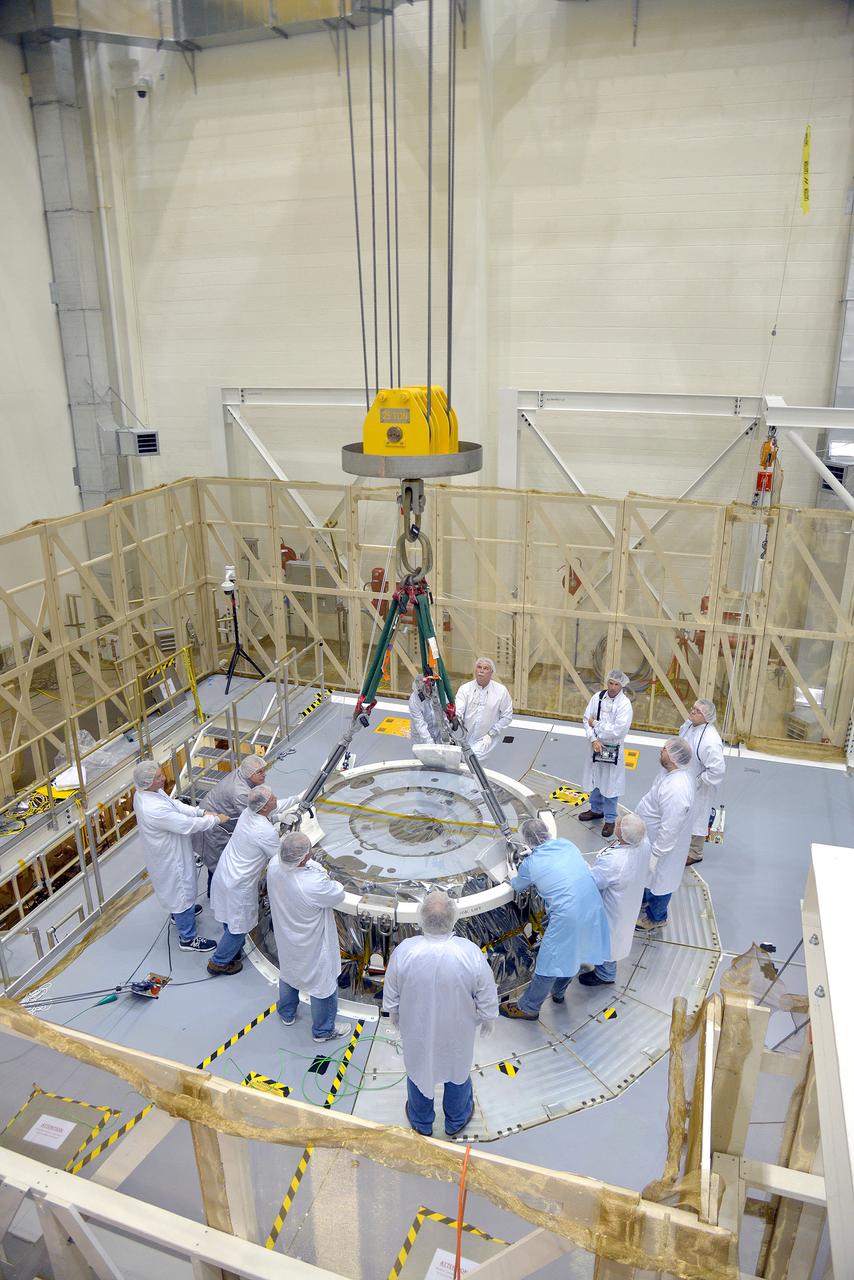
Lockheed Martin engineers assemble Orion's Artemis I crew module at NASA's Kennedy Space Center Operations and Checkout Building on April 27, 2018.
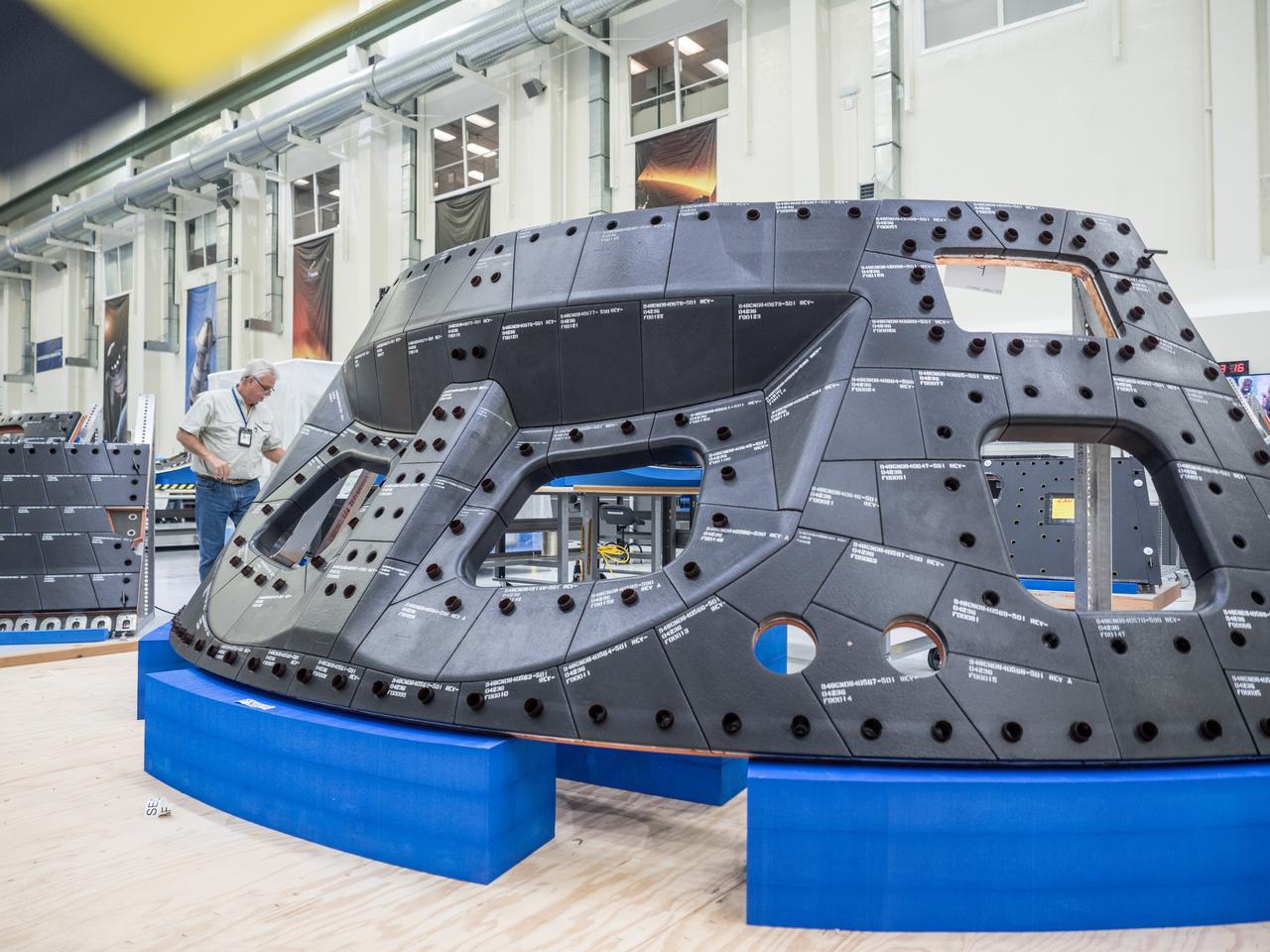
Lockheed Martin engineers assemble Orion's Artemis I crew module at NASA's Kennedy Space Center Operations and Checkout Building on April 27, 2018.
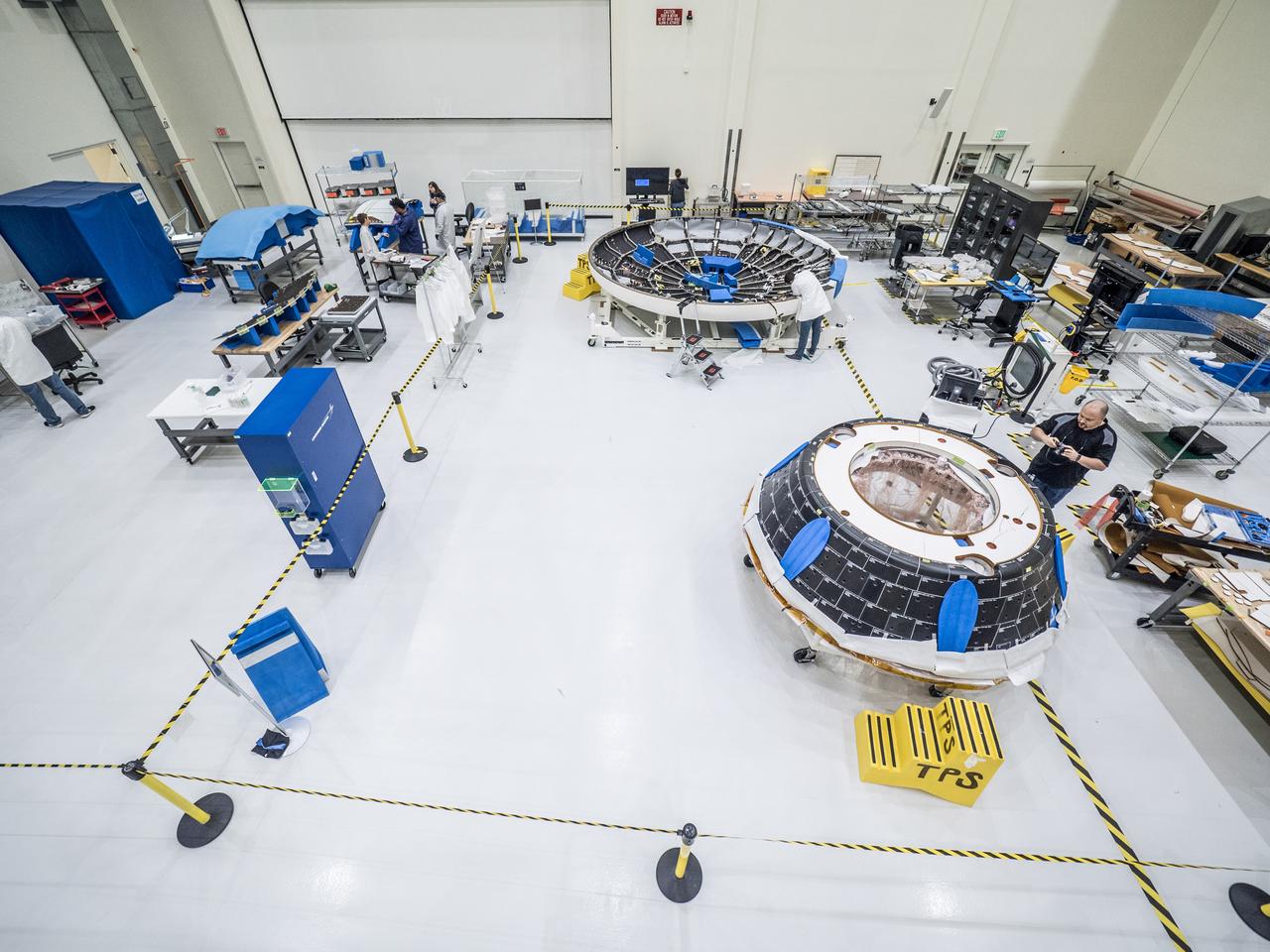
Lockheed Martin engineers assemble Orion's Artemis I crew module at NASA's Kennedy Space Center Operations and Checkout Building on April 27, 2018.
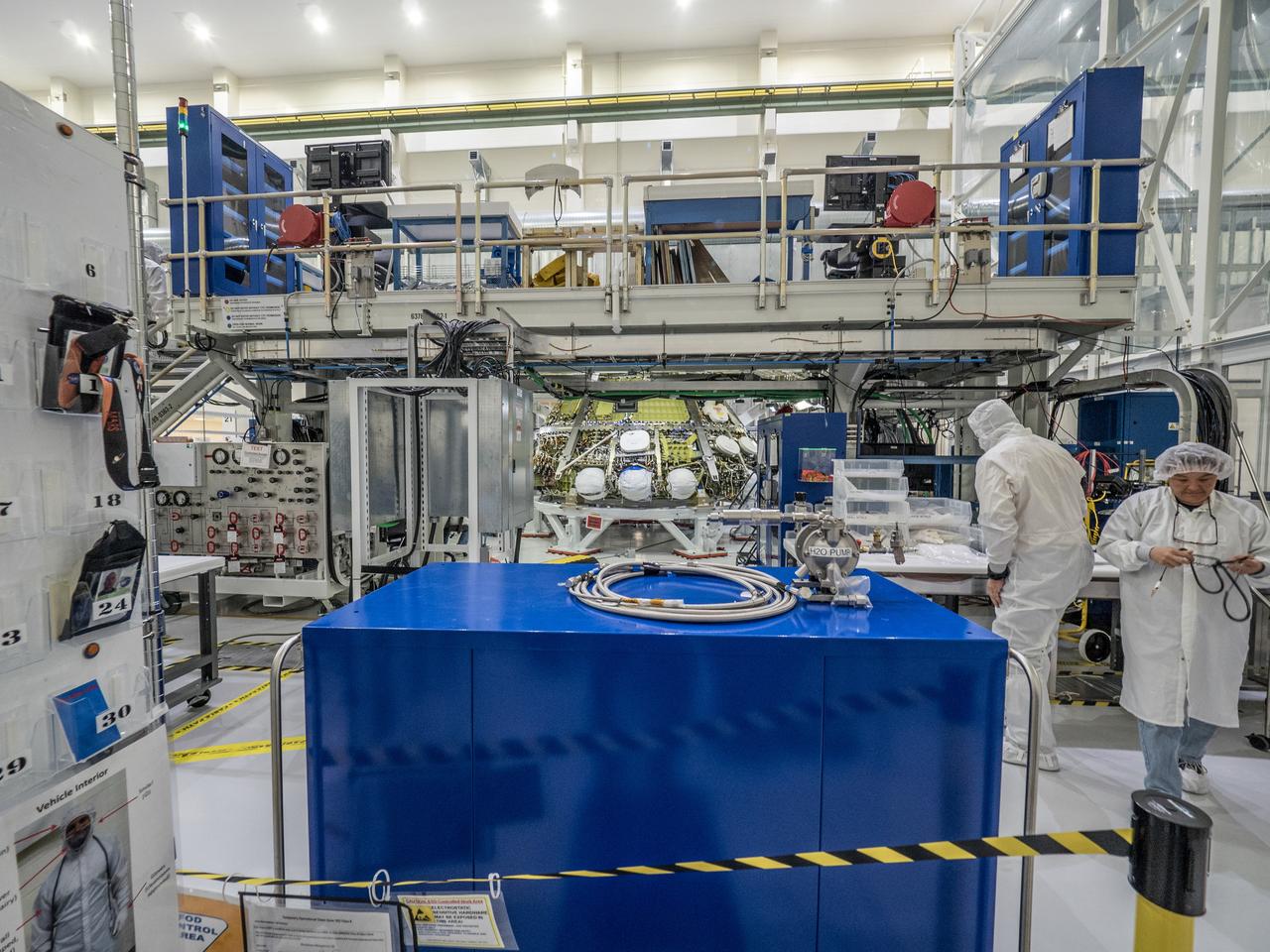
Lockheed Martin engineers assemble Orion's Artemis I crew module at NASA's Kennedy Space Center Operations and Checkout Building on April 27, 2018.
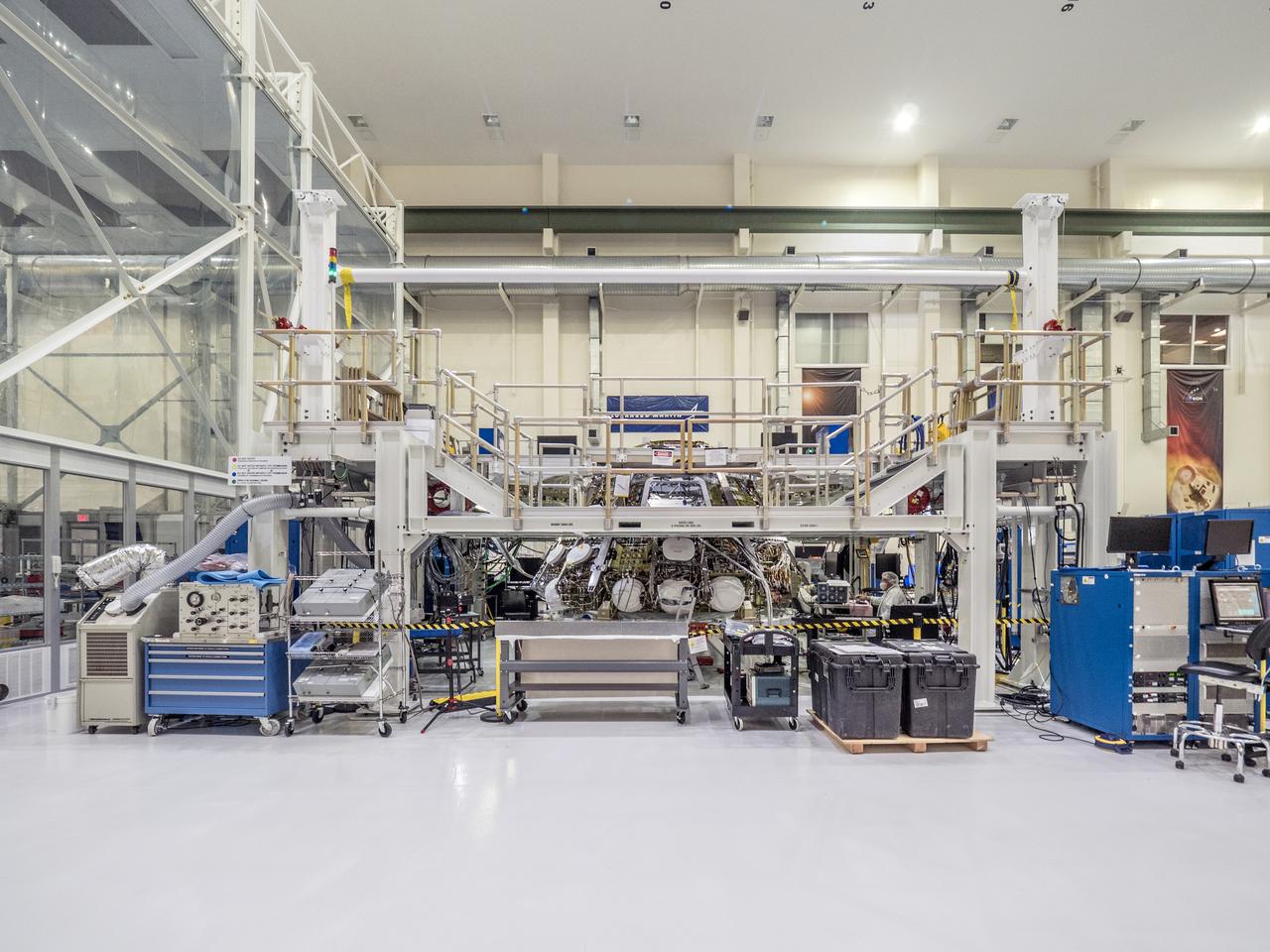
Lockheed Martin engineers assemble Orion's Artemis I crew module at NASA's Kennedy Space Center Operations and Checkout Building on April 27, 2018.
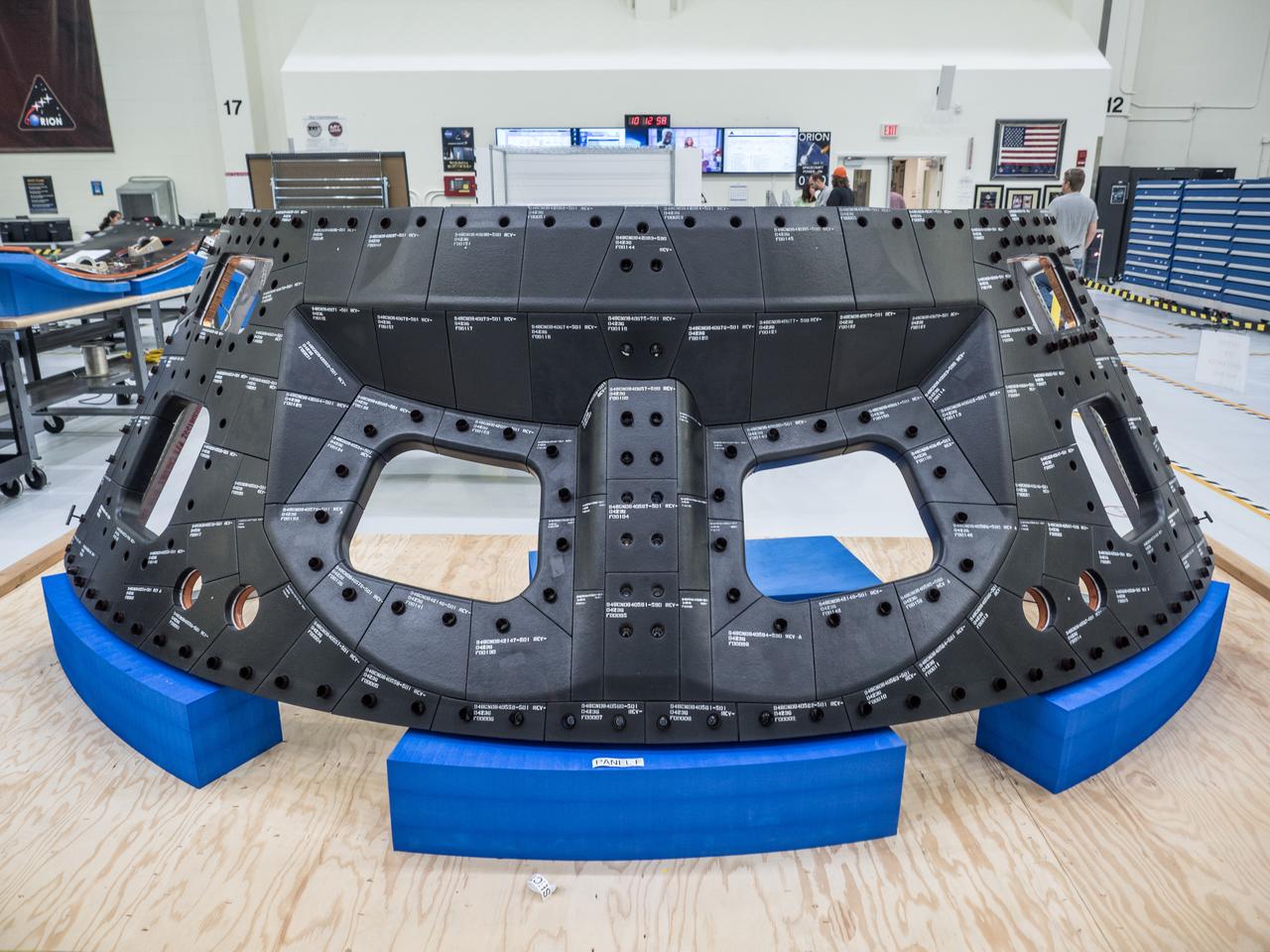
Lockheed Martin engineers assemble Orion's Artemis I crew module at NASA's Kennedy Space Center Operations and Checkout Building on April 27, 2018.
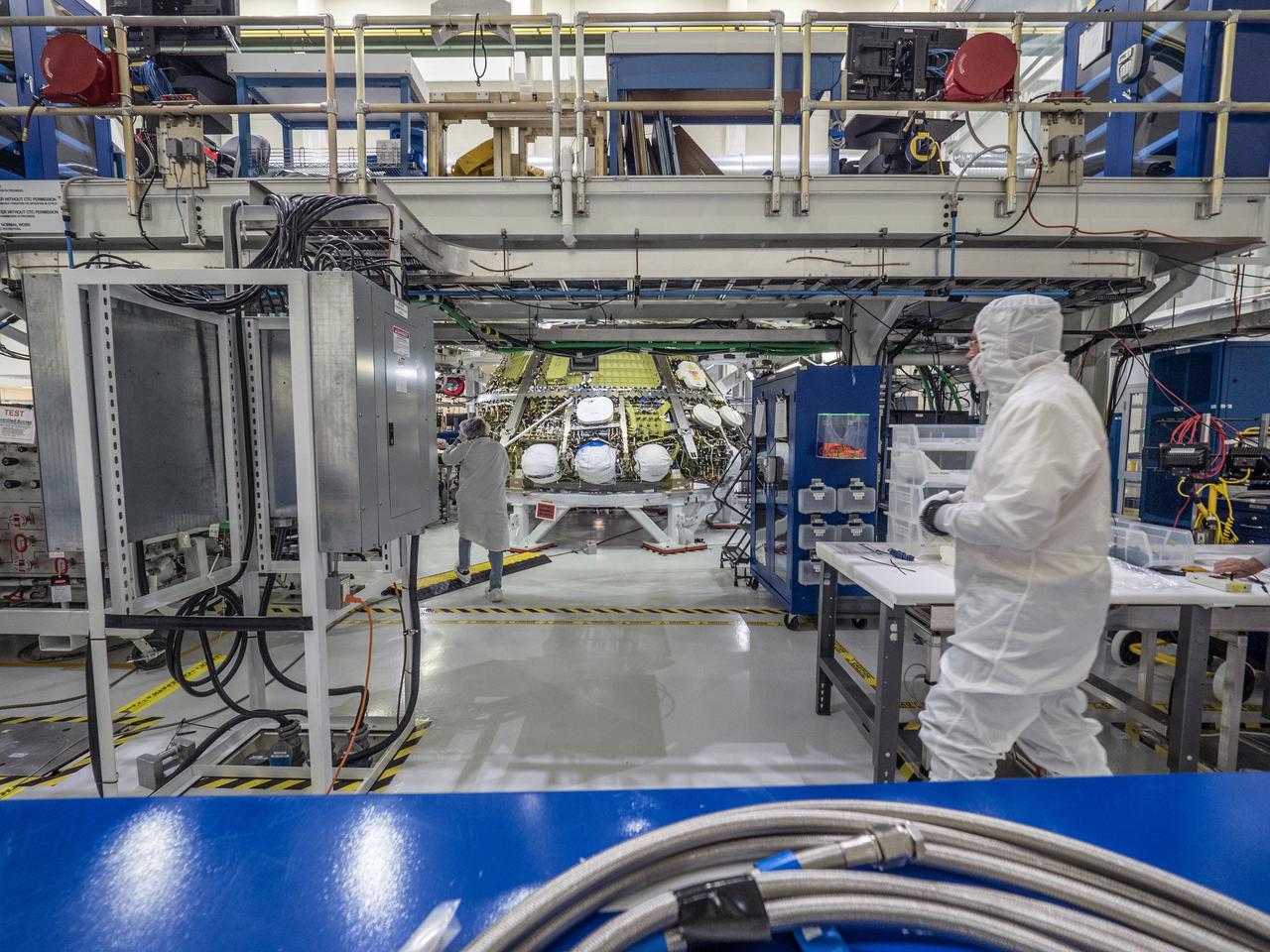
Lockheed Martin engineers assemble Orion's Artemis I crew module at NASA's Kennedy Space Center Operations and Checkout Building on April 27, 2018.
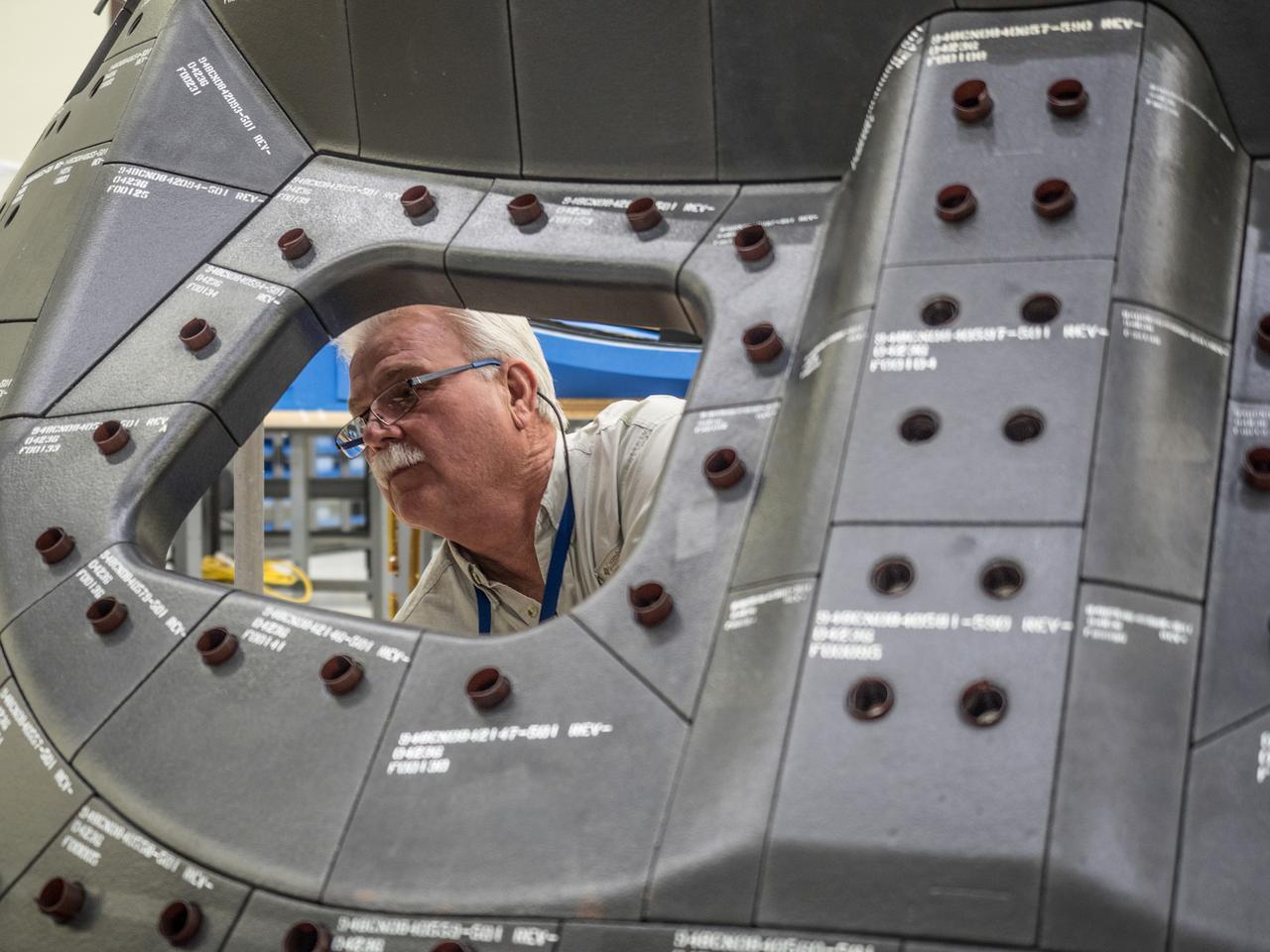
Lockheed Martin engineers assemble Orion's Artemis I crew module at NASA's Kennedy Space Center Operations and Checkout Building on April 27, 2018.
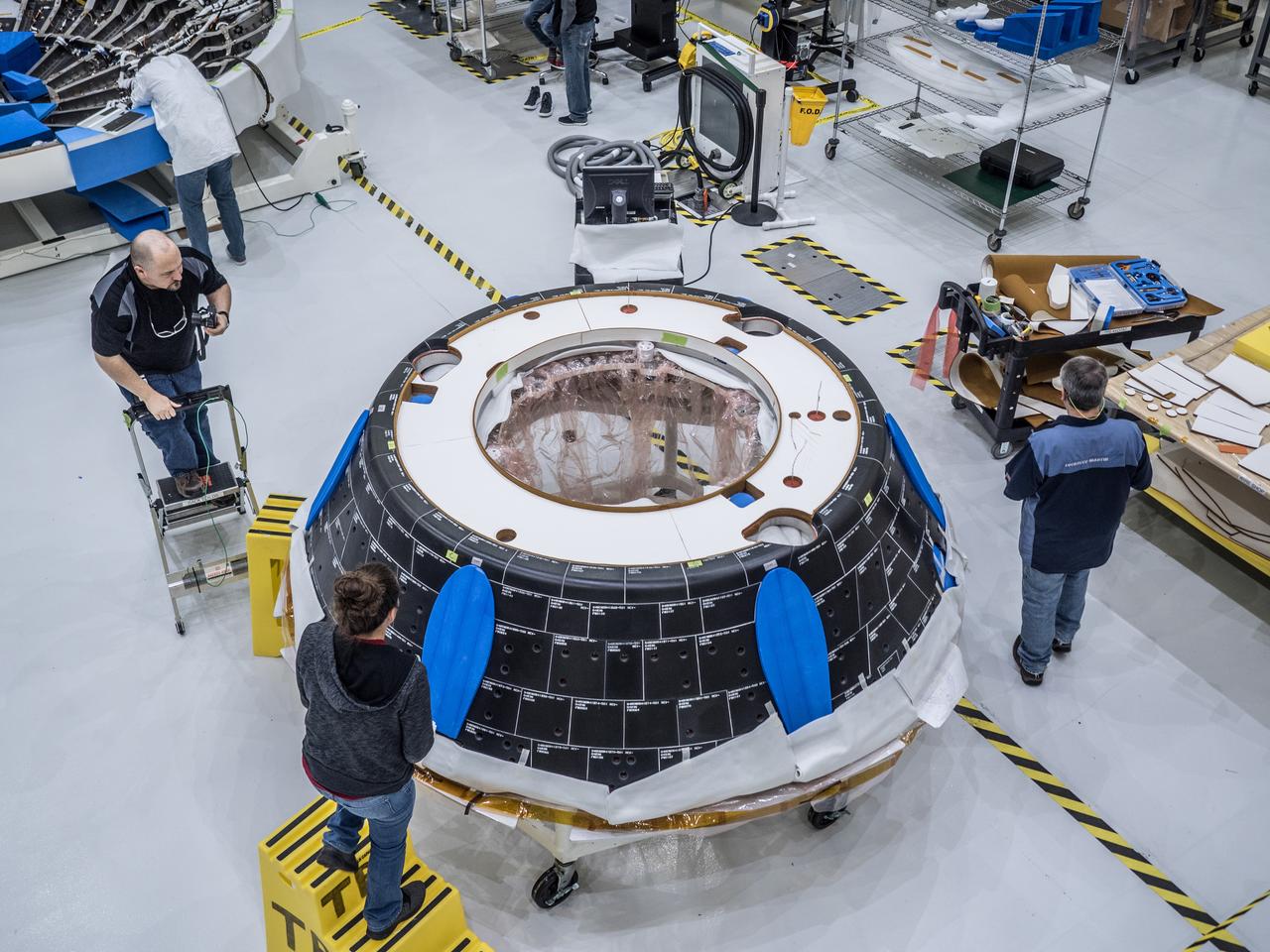
Lockheed Martin engineers assemble Orion's Artemis I crew module at NASA's Kennedy Space Center Operations and Checkout Building on April 27, 2018.
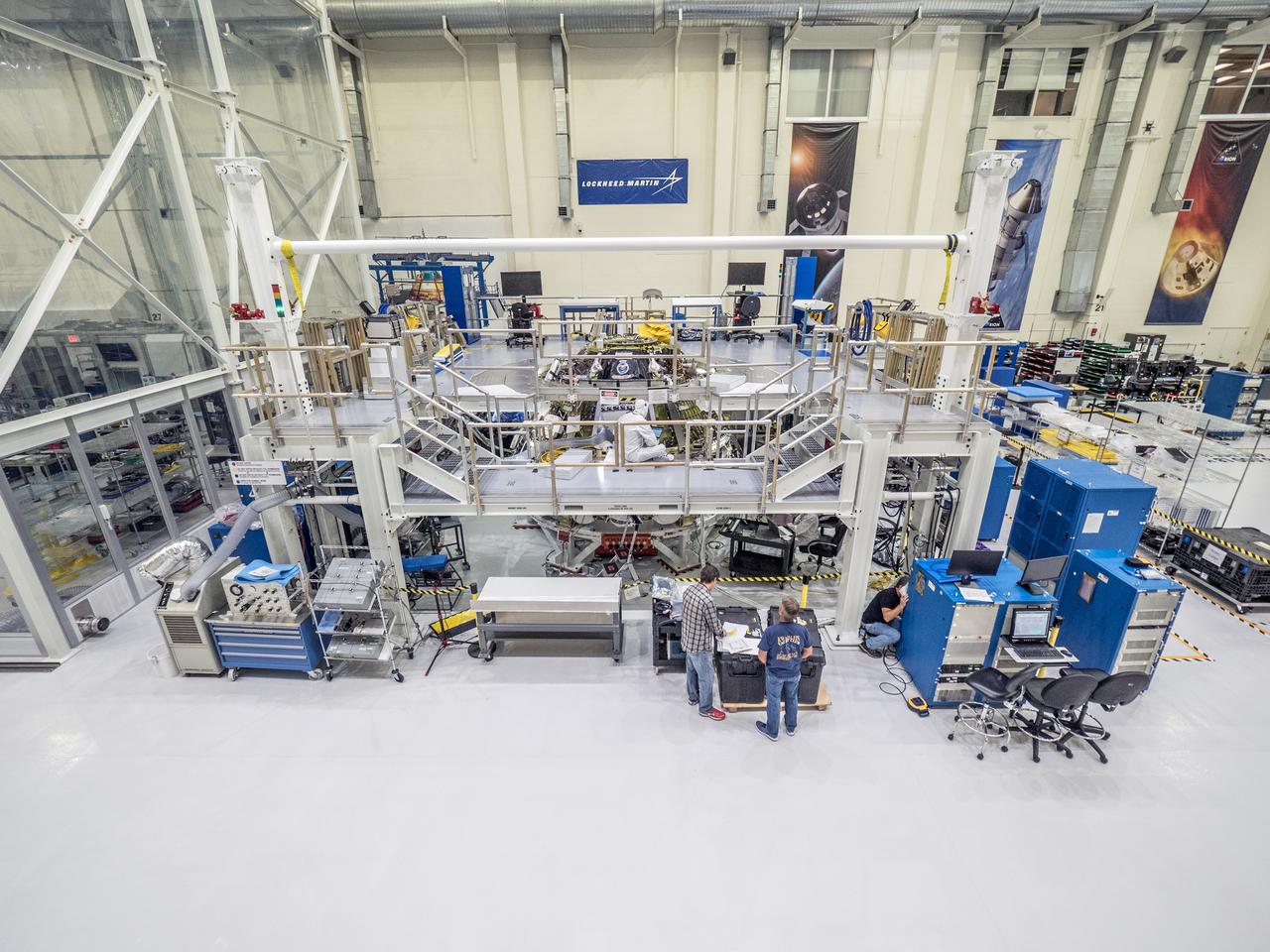
Lockheed Martin engineers assemble Orion's Artemis I crew module at NASA's Kennedy Space Center Operations and Checkout Building on April 27, 2018.
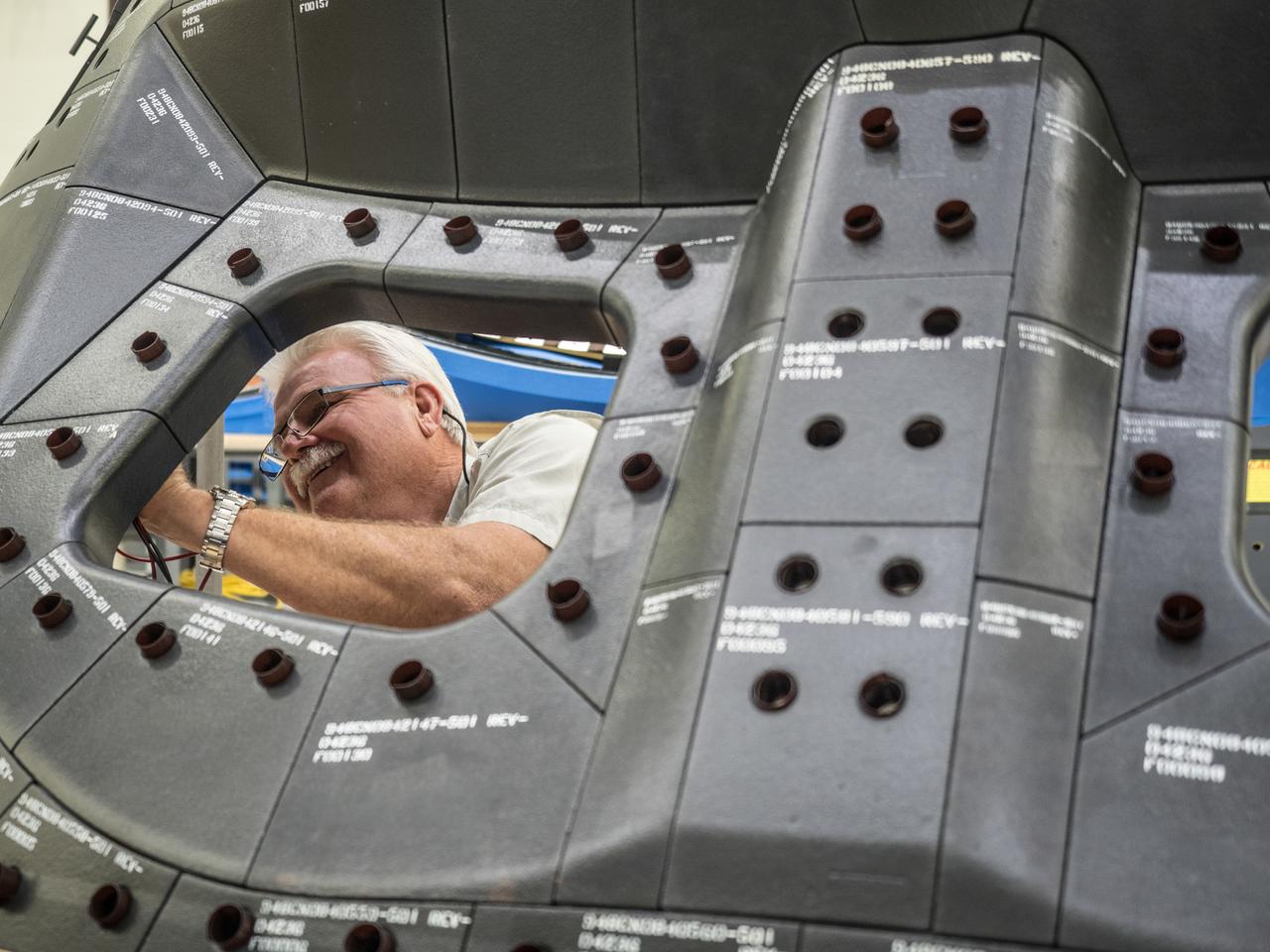
Lockheed Martin engineers assemble Orion's Artemis I crew module at NASA's Kennedy Space Center Operations and Checkout Building on April 27, 2018.
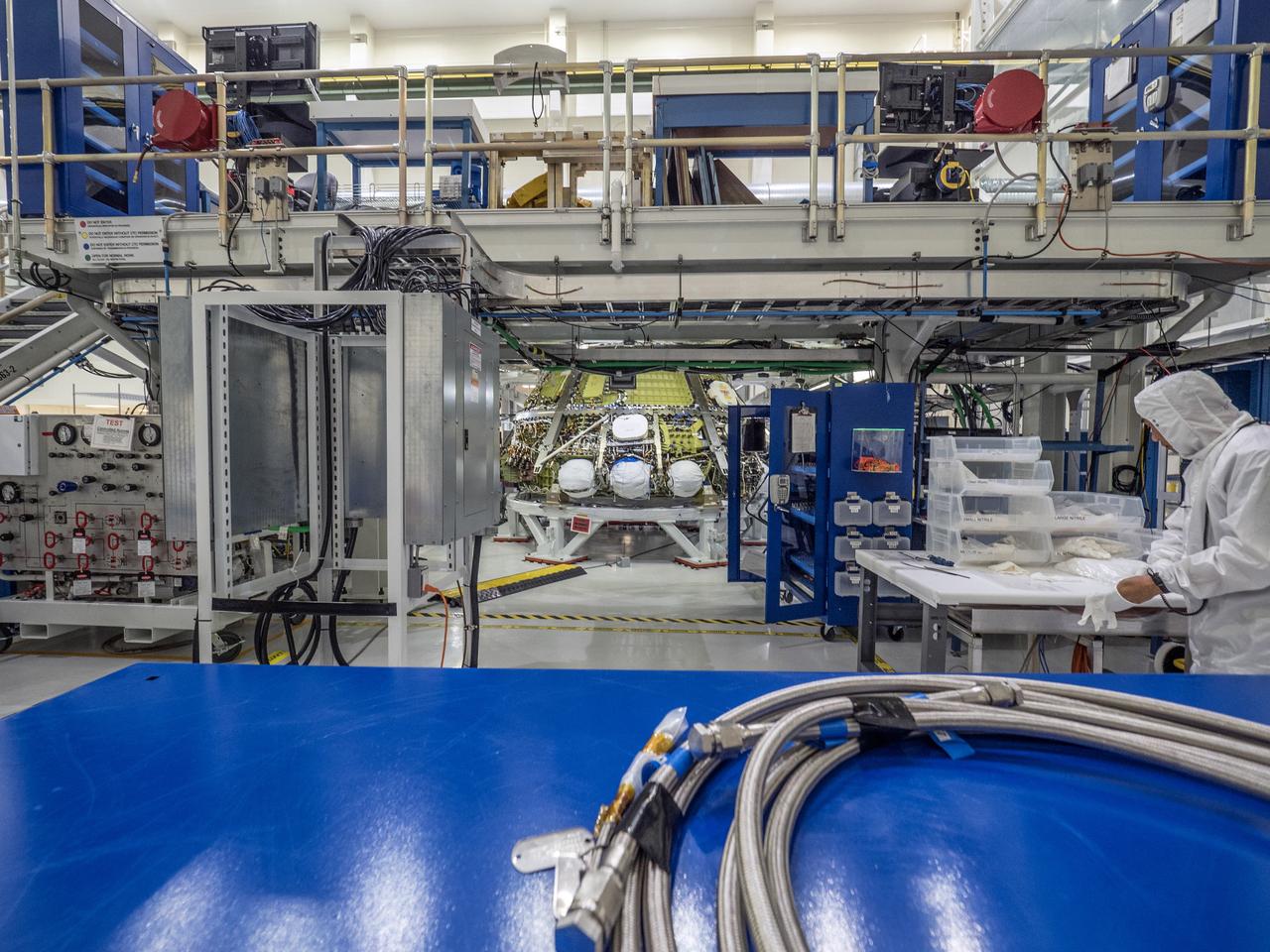
Lockheed Martin engineers assemble Orion's Artemis I crew module at NASA's Kennedy Space Center Operations and Checkout Building on April 27, 2018.
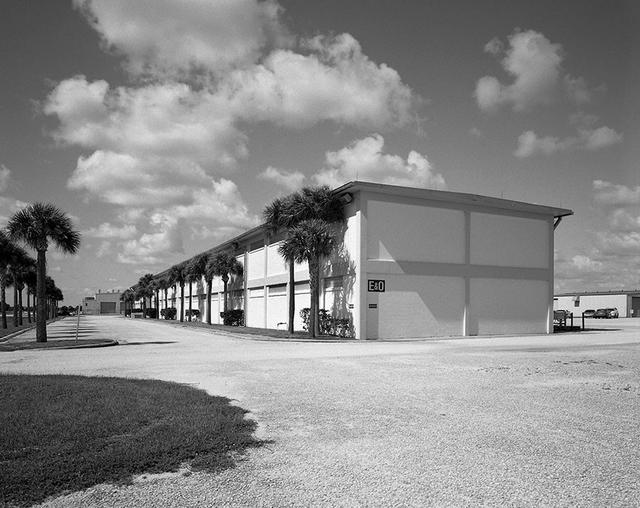
Exterior View of E&O Building
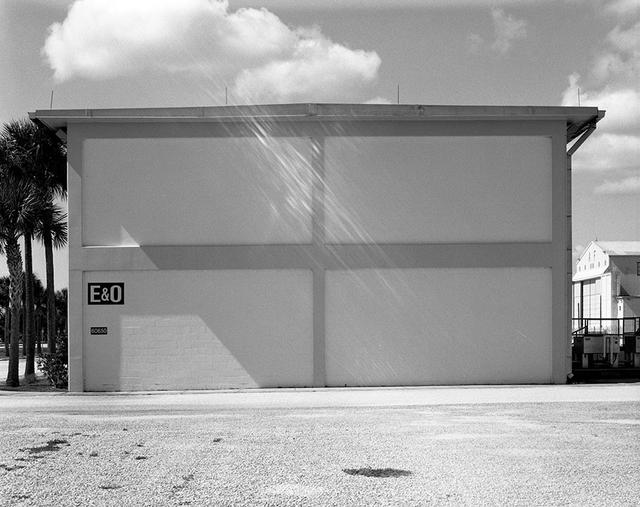
Exterior View of E&O Building
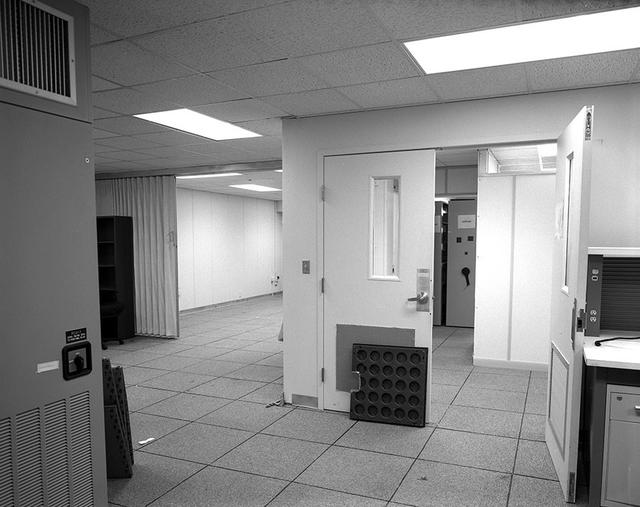
Interior View of E&O Building
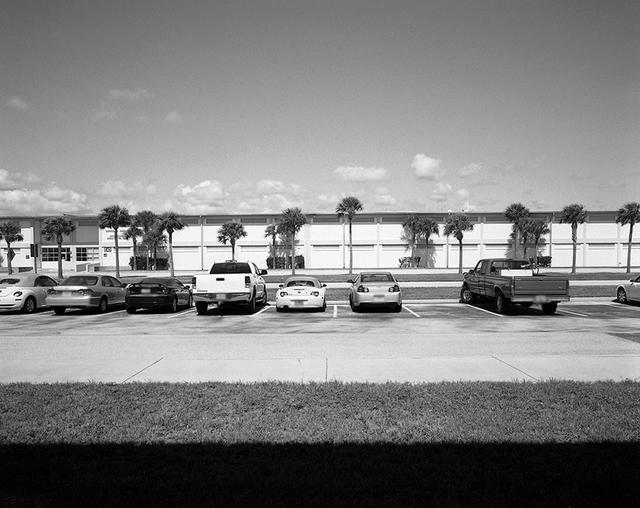
Exterior View of E&O Building
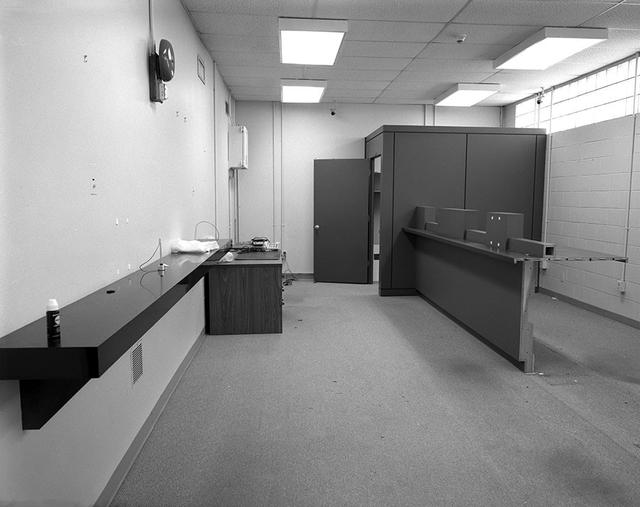
Interior View of E&O Building
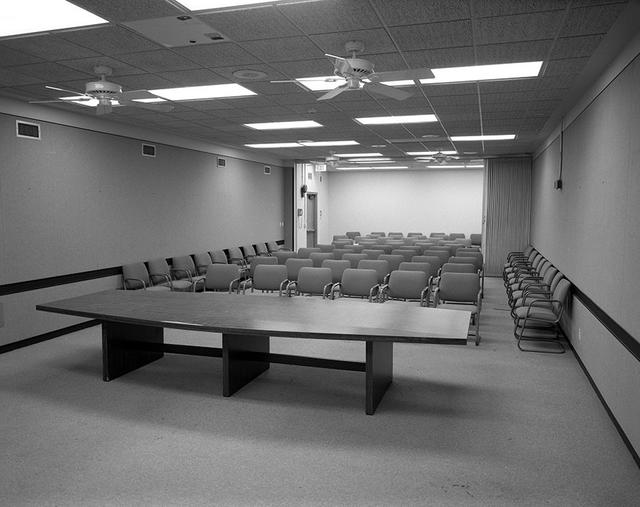
Interior View of E&O Building
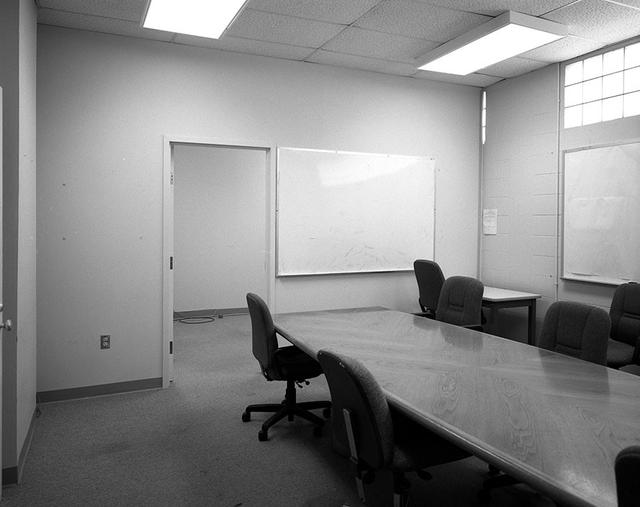
Interior View of E&O Building
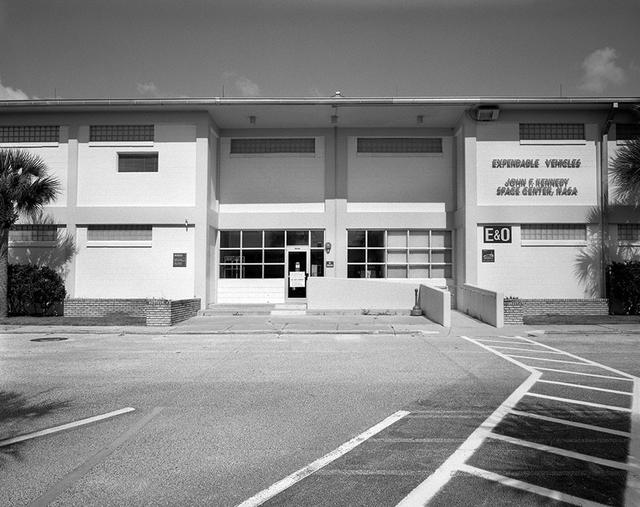
Exterior View of E&O Building
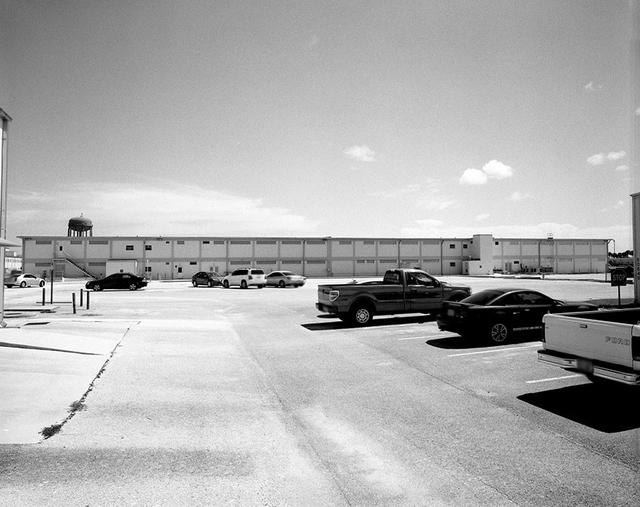
Exterior View of E&O Building
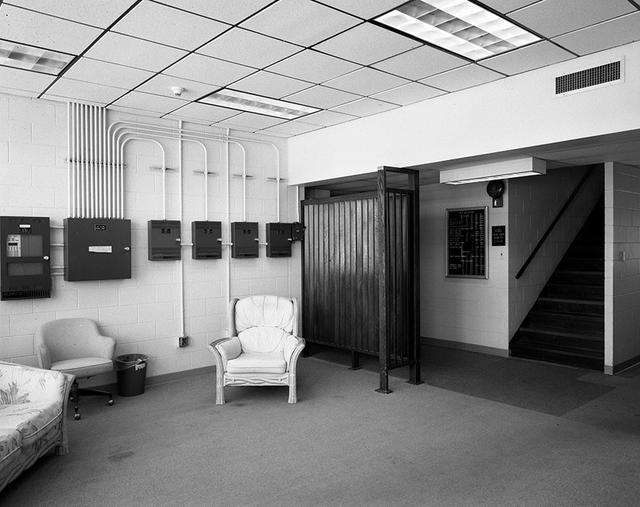
Interior View of E&O Building
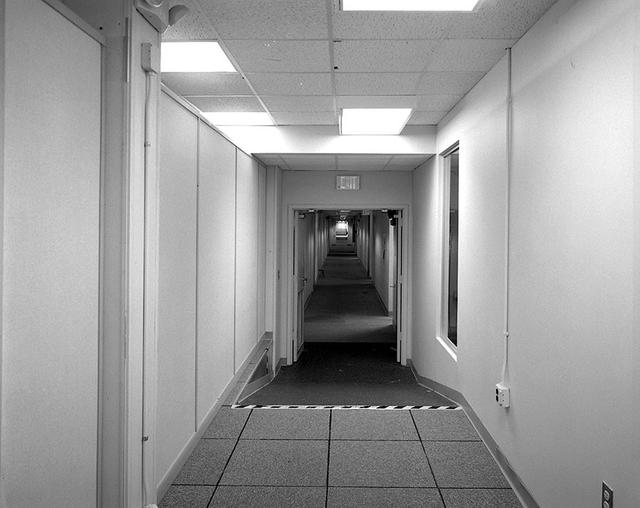
Interior View of E&O Building
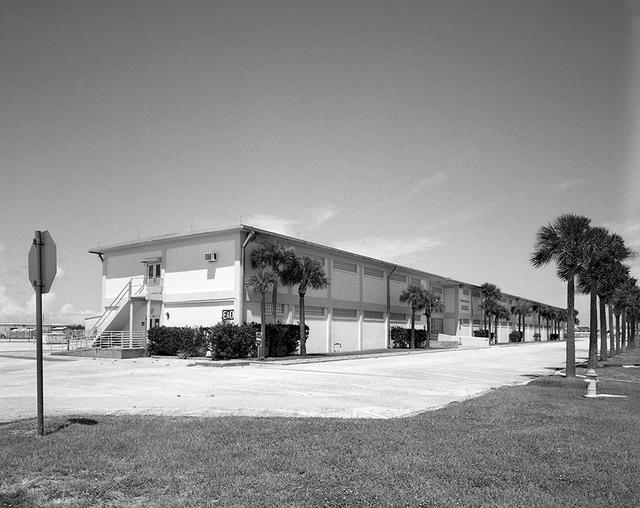
Exterior View of E&O Building
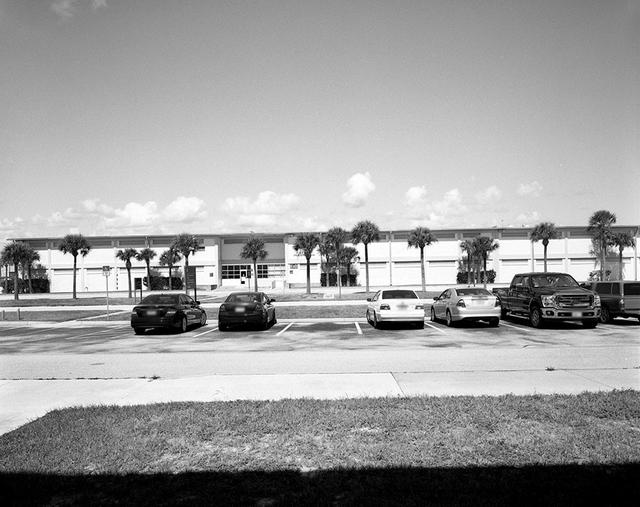
Exterior View of E&O Building
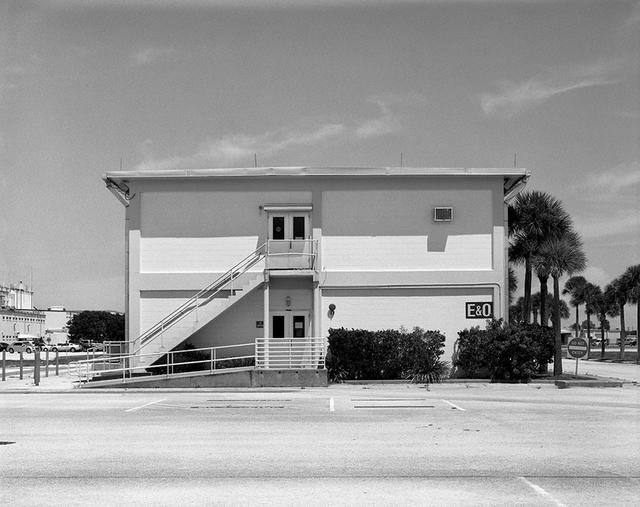
Exterior View of E&O Building
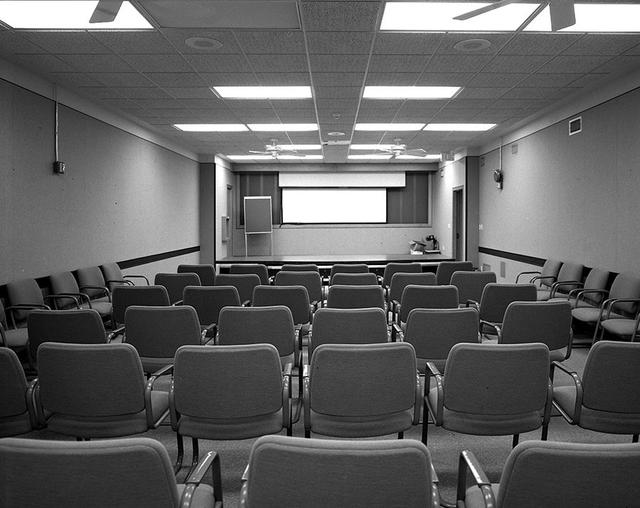
Interior View of E&O Building
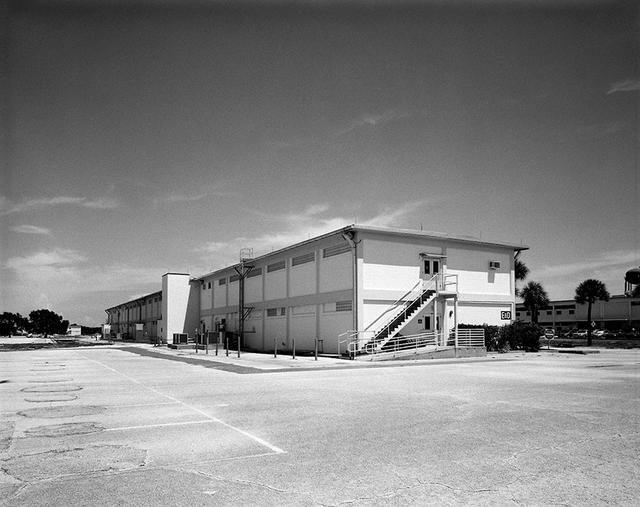
Exterior View of E&O Building
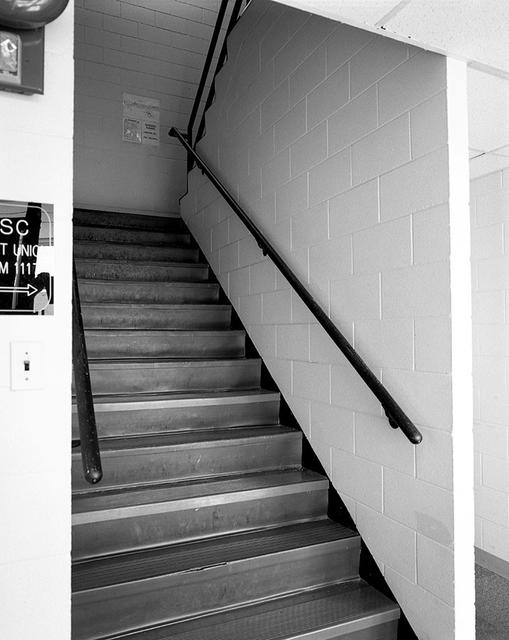
Interior View of E&O Building
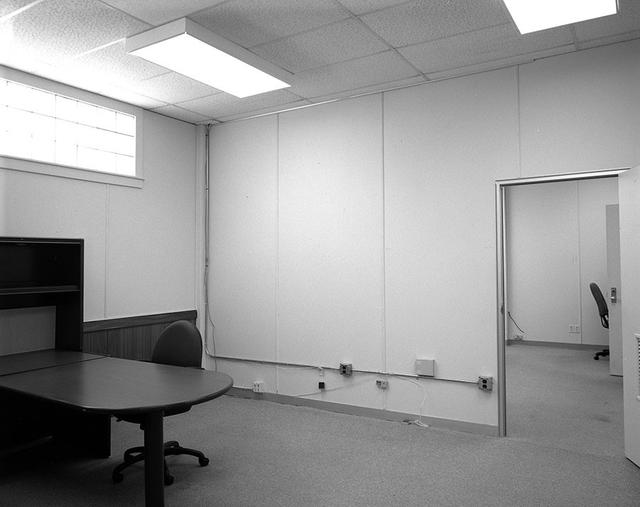
Interior View of E&O Building
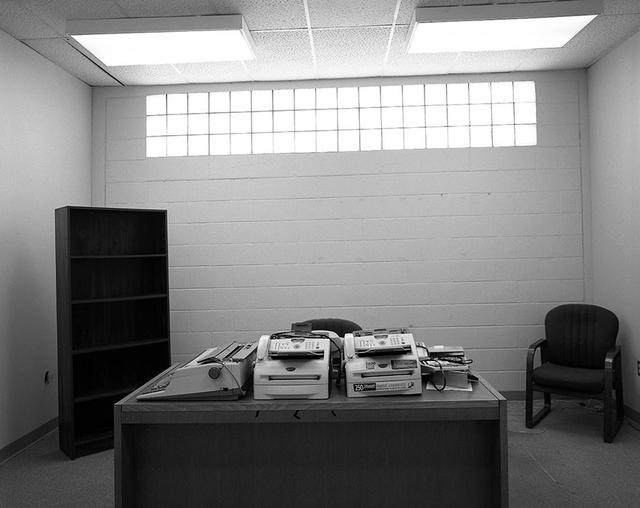
Interior View of E&O Building
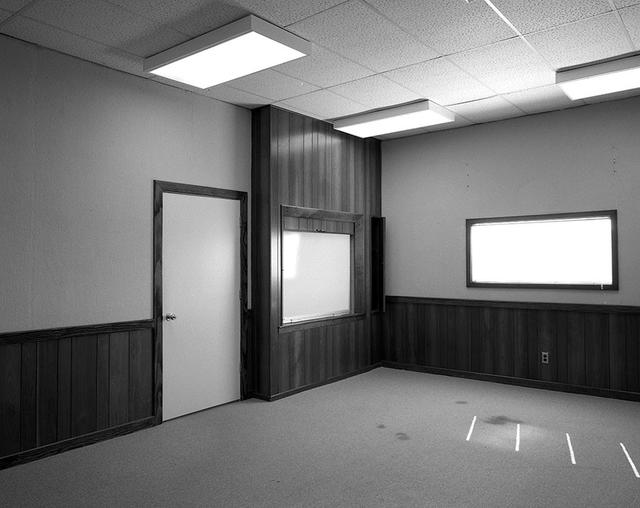
Interior View of E&O Building
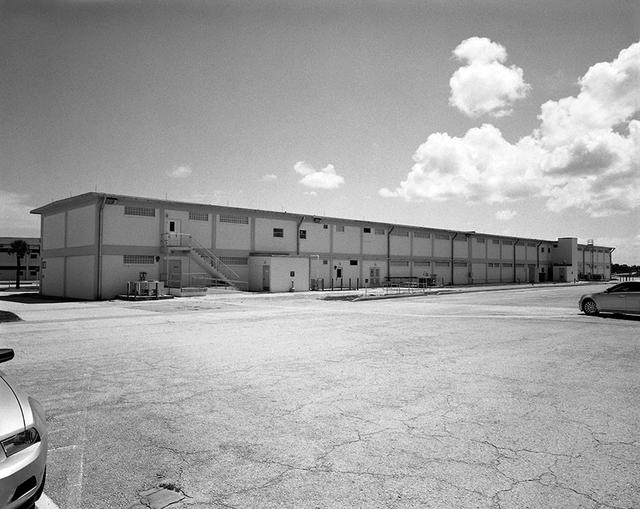
Exterior View of E&O Building
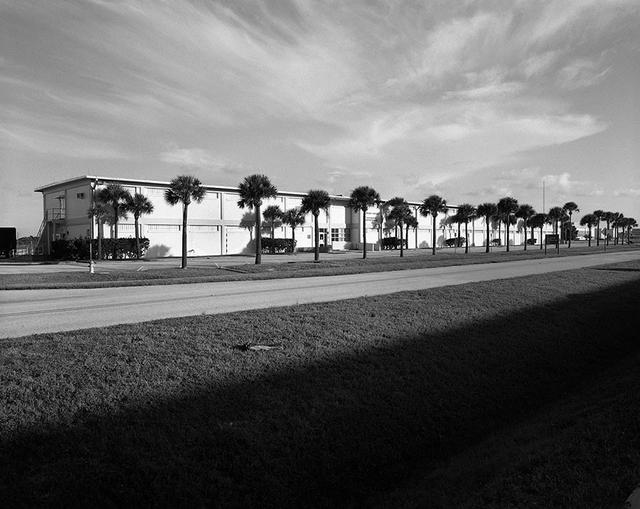
Exterior View of E&O Building
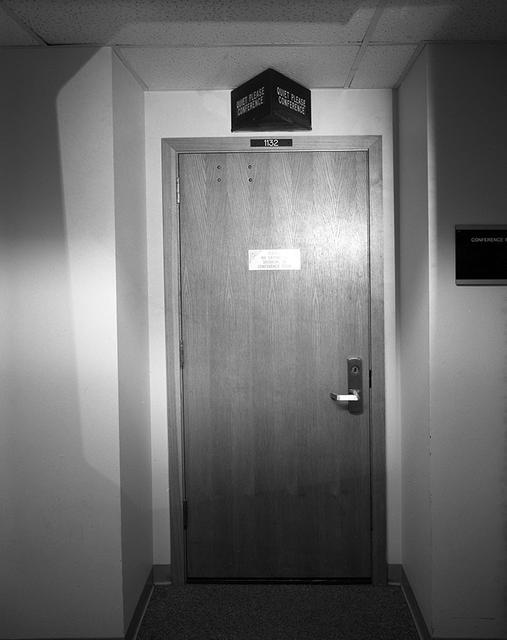
Interior View of E&O Building
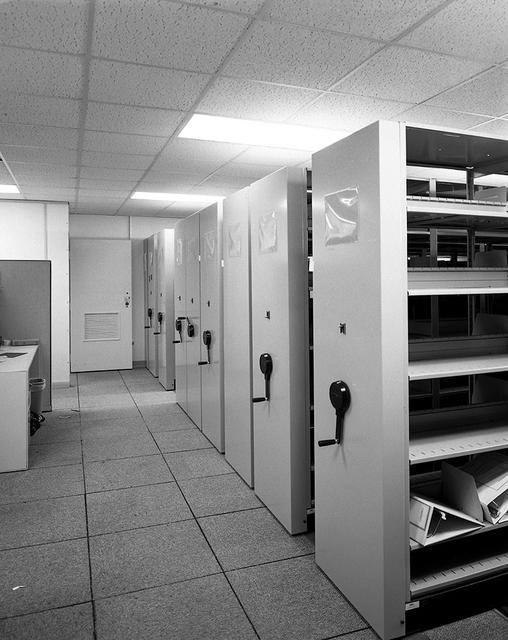
Interior View of E&O Building
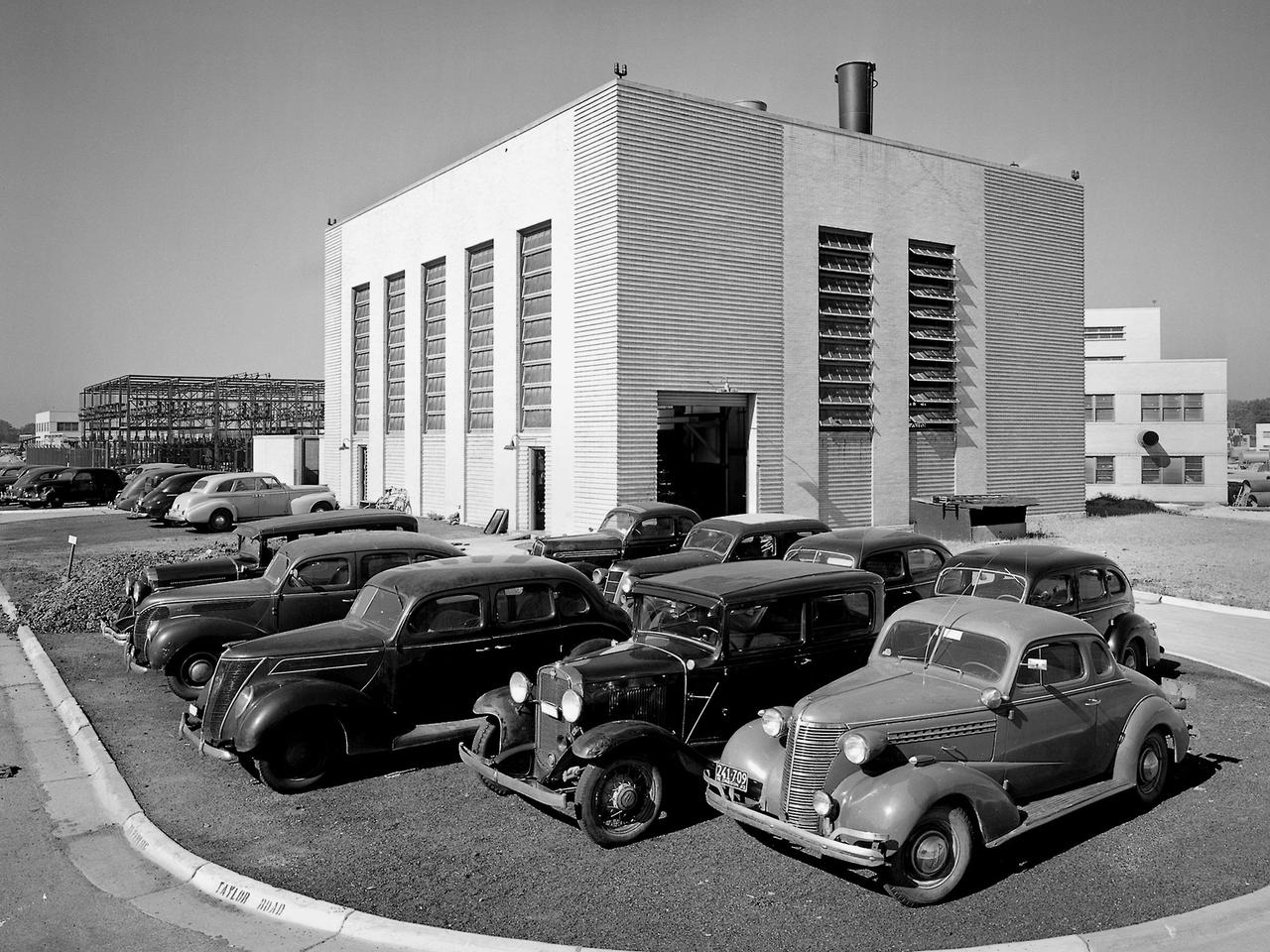
The Steam Plant at the National Advisory Committee for Aeronautics (NACA) Aircraft Engine Research Laboratory supplies steam to the major test facilities and office buildings. Steam is used for the Icing Research Tunnel's spray system and the Engine Research Building’s desiccant air dryers. In addition, its five boilers supply heat to various buildings and the cafeteria. Schirmer-Schneider Company built the $141,000 facility in the fall of 1942, and it has been in operation ever since.
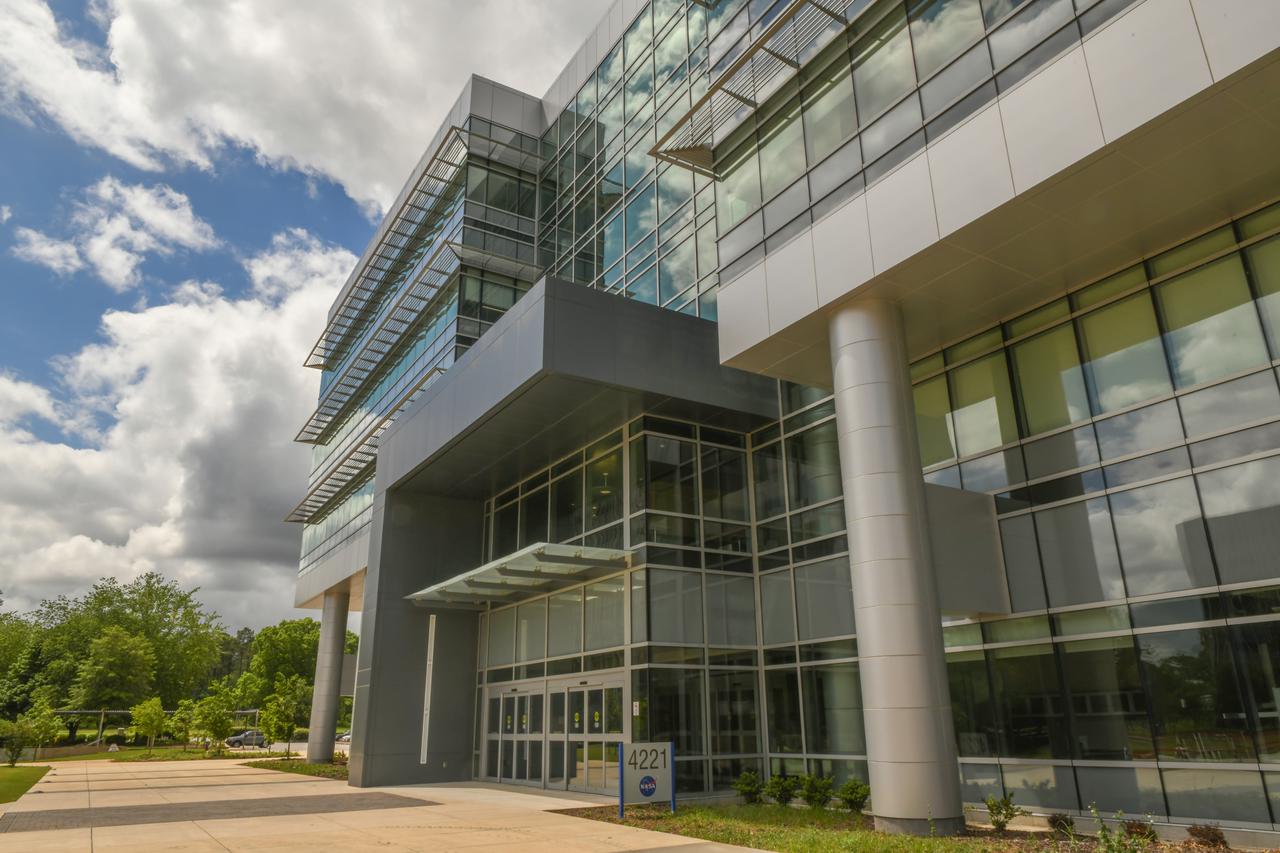
The newest building on Marshall Space Flight Center’s campus as of April 22, 2019, Building 4221 houses offices for the center’s top leaders, as well as the Human Exploration, Development and Operations Office; the Science Technology Office; the Engineering Directorate; the Human Landing Program Office; and the Office of Strategic Analysis and Communications.
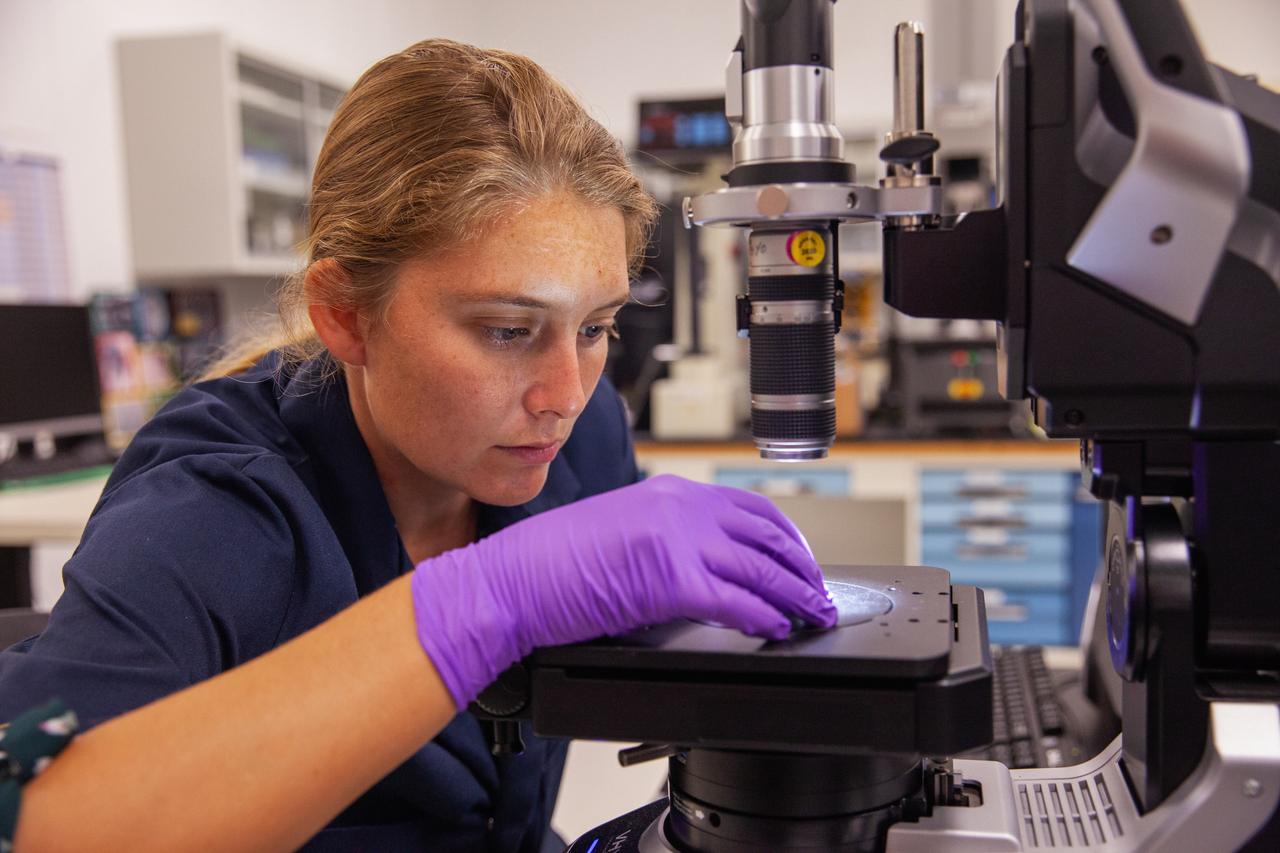
Liz Tomsik, an engineer in the Materials Analysis Lab, examines a sample placed on a digital microscope inside the Neil Armstrong Operations and Checkout Building at NASA’s Kennedy Space Center in Florida on Oct. 6, 2020.
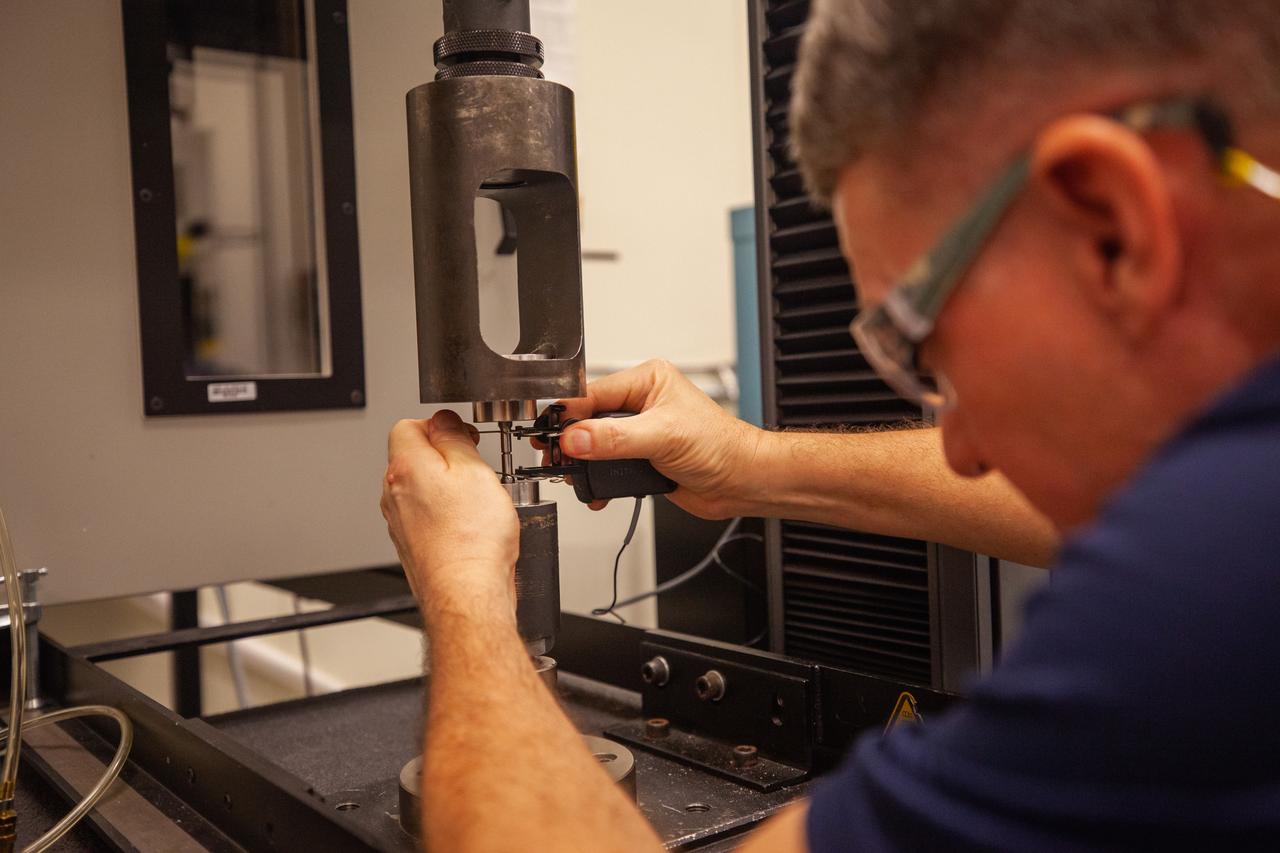
Brian Cheshire, an engineer in the Mechanical and Environmental Testing Lab at NASA’s Kennedy Space Center, works in front of an Instron inside a lab at the Florida spaceport’s Operations and Checkout Building on Oct. 6, 2020.
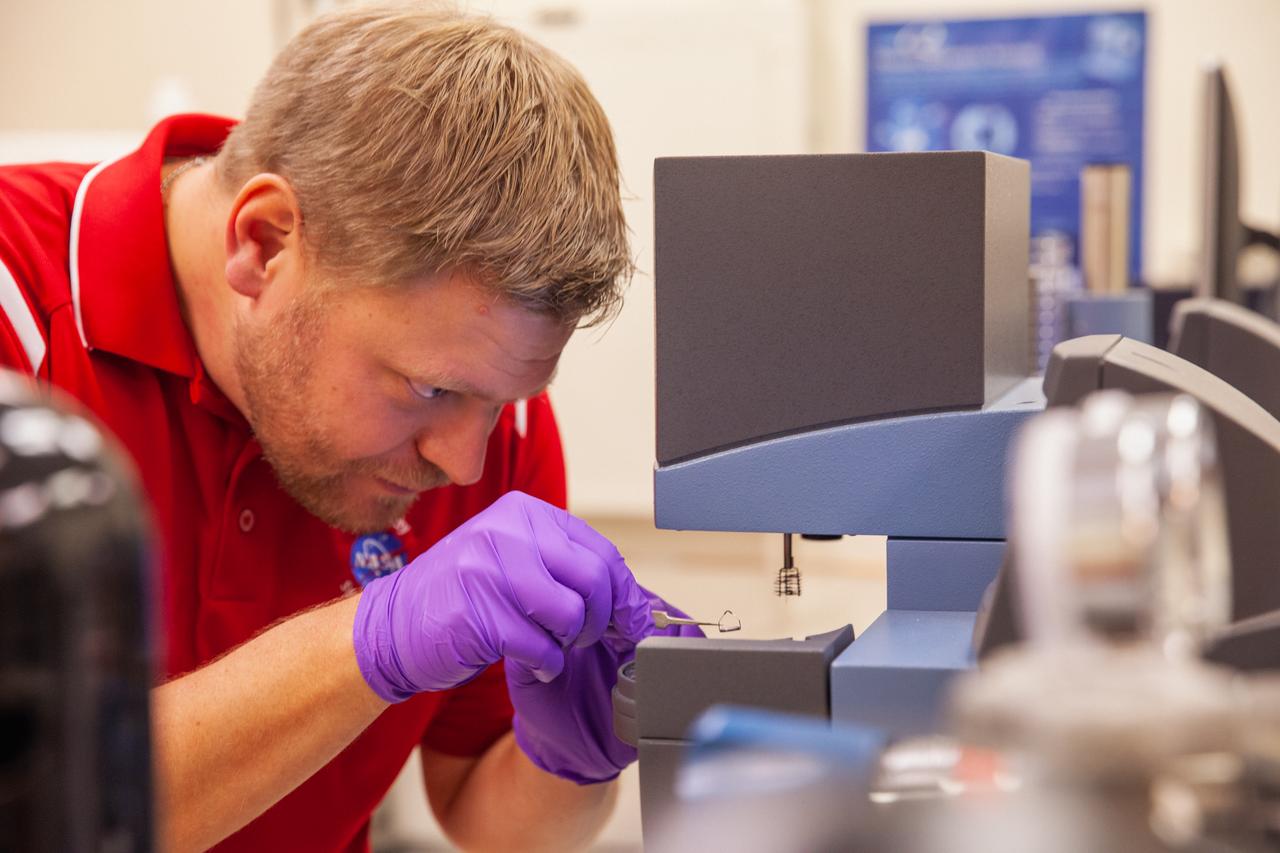
Jerry Buhrow, an engineer in the Materials Analysis Lab, places a sample on a thermal testing unit inside a lab at NASA Kennedy Space Center’s Neil Armstrong Operations and Checkout Building on Oct. 6, 2020.
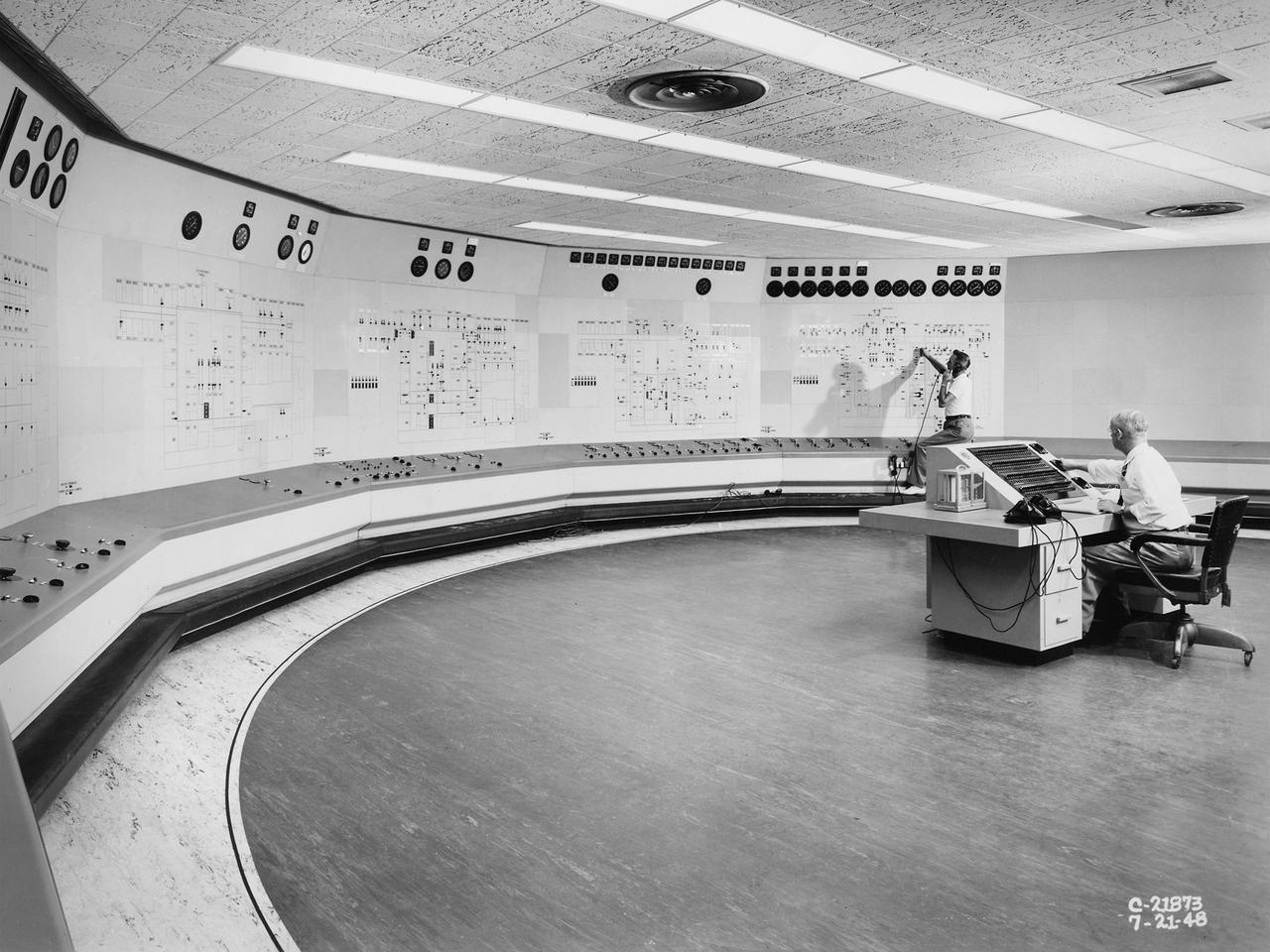
Operators in the Engine Research Building’s Central Control Room at the National Advisory Committee for Aeronautics (NACA) Lewis Flight Propulsion Laboratory. The massive 4.25-acre Engine Research Building contains dozens of test cells, test stands, and altitude chambers. A powerful collection of compressors and exhausters located in the central portion of the basement provided process air and exhaust for these test areas. This system is connected to similar process air systems in the laboratory’s other large test facilities. The Central Control Room coordinates this activity and communicates with the local utilities. This photograph was taken just after a major upgrade to the control room in 1948. The panels on the wall contain rudimentary floor plans of the different Engine Research Building sections with indicator lights and instrumentation for each test cell. The process air equipment included 12 exhausters, four compressors, a refrigeration system, cooling water, and an exhaust system. The operators in the control room kept in contact with engineers running the process air system and those conducting the tests in the test cells. The operators also coordinated with the local power companies to make sure enough electricity was available to operate the powerful compressors and exhausters.
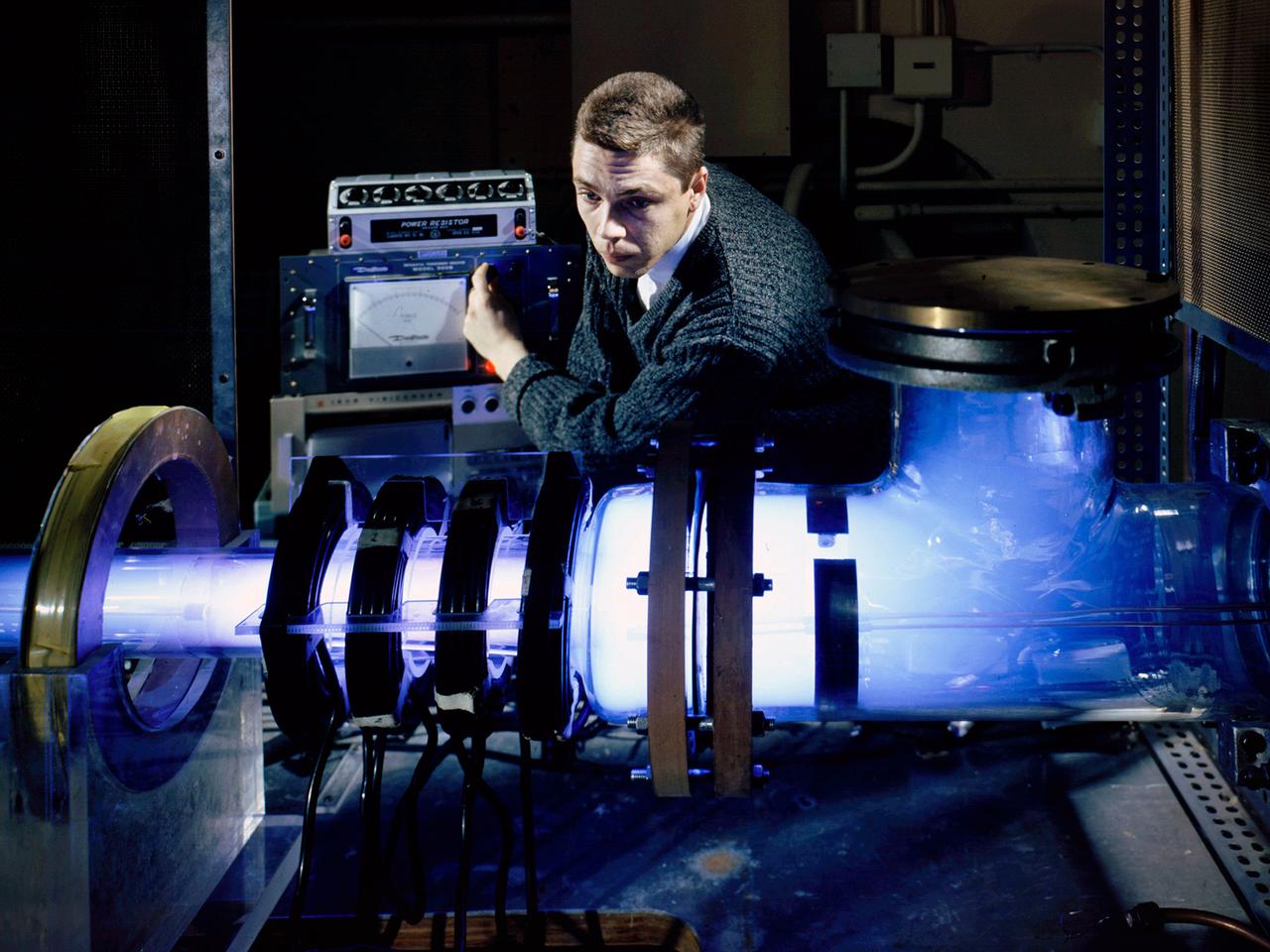
Raymond Palmer, of the Electromagnetic Propulsion Division’s Plasma Flow Section, adjusts the traveling magnetic wave plasma engine being operated in the Electric Power Conversion at the National Aeronautics and Space Administration (NASA) Lewis Research Center. During the 1960s Lewis researchers were exploring several different methods of creating electric propulsion systems, including the traveling magnetic wave plasma engine. The device operated similarly to alternating-current motors, except that a gas, not a solid, was used to conduct the electricity. A magnetic wave induced a current as it passed through the plasma. The current and magnetic field pushed the plasma in one direction. Palmer and colleague Robert Jones explored a variety of engine configurations in the Electric Propulsion Research Building. The engine is seen here mounted externally on the facility’s 5-foot diameter and 16-foot long vacuum tank. The four magnetic coils are seen on the left end of the engine. The researchers conducted two-minute test runs with varying configurations and used of both argon and xenon as the propellant. The Electric Propulsion Research Building was built in 1942 as the Engine Propeller Research Building, often called the Prop House. It contained four test cells to study large reciprocating engines with their propellers. After World War II, the facility was modified to study turbojet engines. By the 1960s, the facility was modified again for electric propulsion research and given its current name.
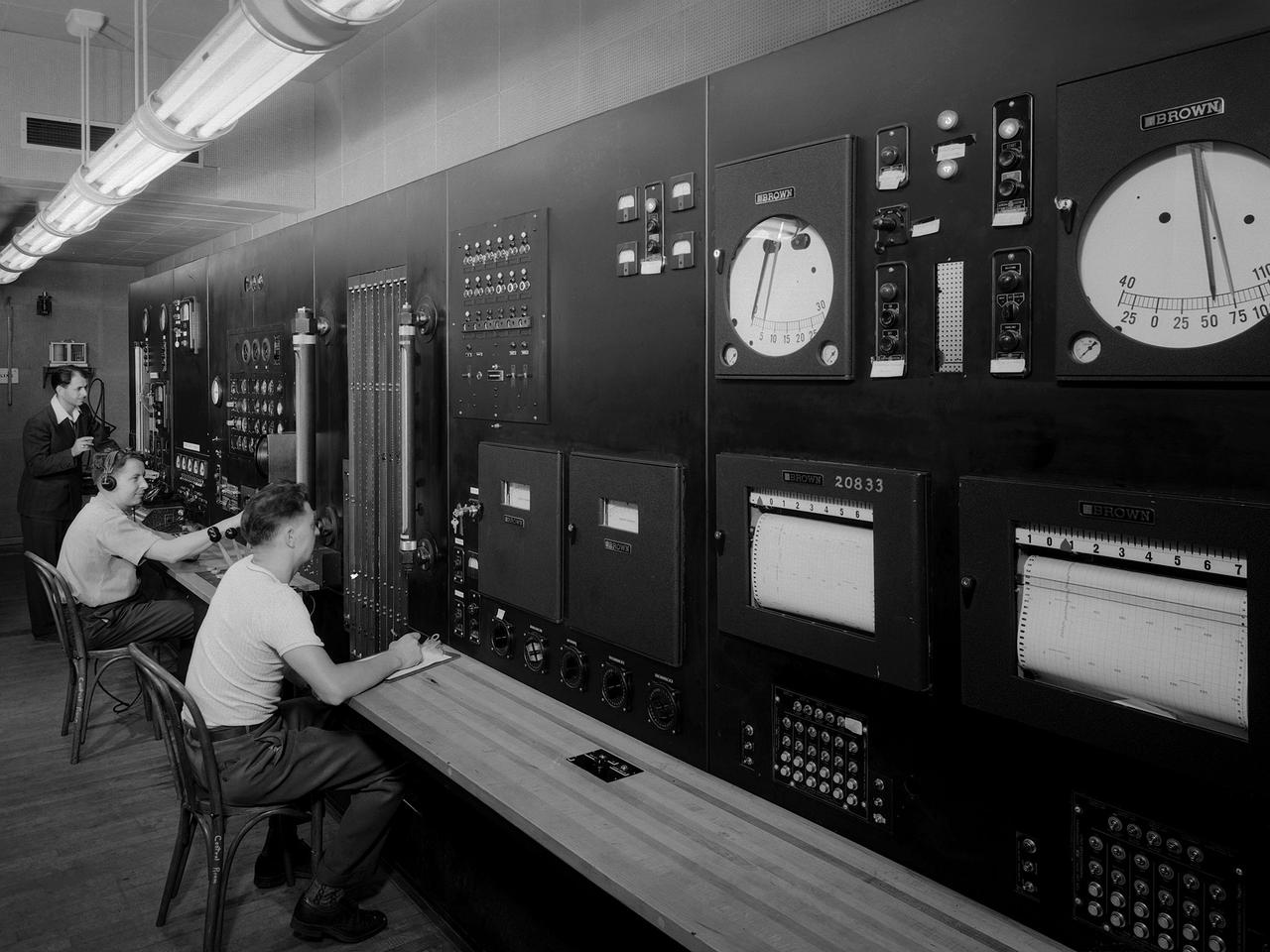
Operators in the control room for the Altitude Wind Tunnel at the National Advisory Committee for Aeronautics (NACA) Aircraft Engine Research Laboratory remotely operate a Wright R–3350 engine in the tunnel’s test section. Four of the engines were used to power the B–29 Superfortress, a critical weapon in the Pacific theater during World War II. The wind tunnel, which had been in operation for approximately six months, was the nation’s only wind tunnel capable of testing full-scale engines in simulated altitude conditions. The soundproof control room was used to operate the wind tunnel and control the engine being run in the test section. The operators worked with assistants in the adjacent Exhauster Building and Refrigeration Building to manage the large altitude simulation systems. The operator at the center console controlled the tunnel’s drive fan and operated the engine in the test section. Two sets of pneumatic levers near his right forearm controlled engine fuel flow, speed, and cooling. Panels on the opposite wall, out of view to the left, were used to manage the combustion air, refrigeration, and exhauster systems. The control panel also displayed the master air speed, altitude, and temperature gauges, as well as a plethora of pressure, temperature, and airflow readings from different locations on the engine. The operator to the right monitored the manometer tubes to determine the pressure levels. Despite just being a few feet away from the roaring engine, the control room remained quiet during the tests.
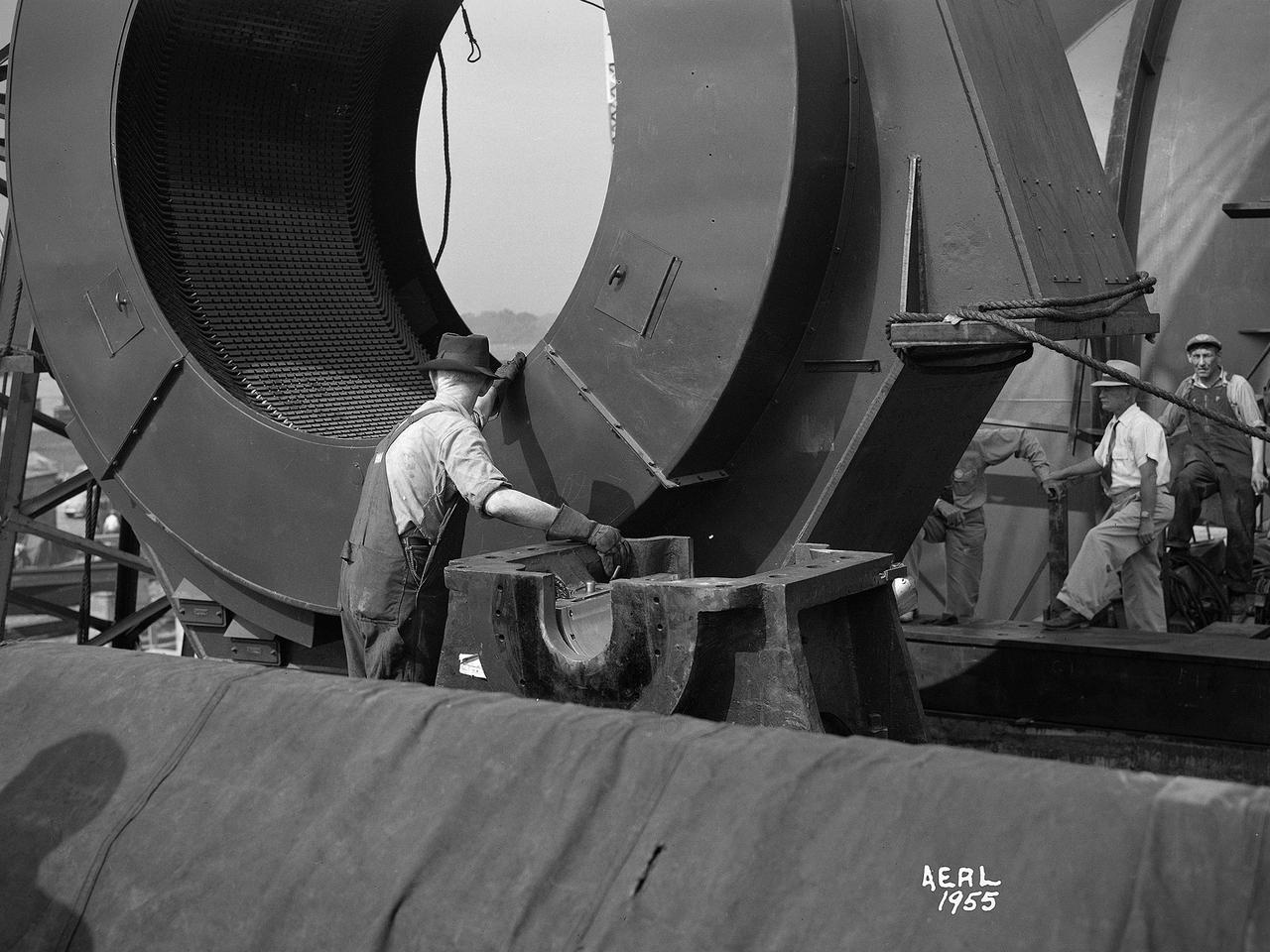
Construction workers install the drive motor for the Altitude Wind Tunnel (AWT) in the Exhauster Building at the National Advisory Committee for Aeronautics (NACA) Aircraft Engine Research Laboratory. The AWT was capable of operating full-scale engines in air density, speed, and temperature similar to that found at high altitudes. The tunnel could produce wind speeds up to 500 miles per hour through a 20-foot-diameter test section at the standard operating altitude of 30,000 feet. The airflow was created by a large wooden fan near the tunnel’s southeast corner. This photograph shows the installation of the 18,000-horsepower drive motor inside the adjoining Exhauster Building in July 1943. The General Electric motor, whose support frame is seen in this photograph, connected to a drive shaft that extended from the building, through the tunnel shell, and into a 12-bladed, 31-foot-diameter spruce wood fan. Flexible couplings on the shaft allowed for the movement of the shell. The corner of the Exhauster Building was built around the motor after its installation. The General Electric induction motor could produce 10 to 410 revolutions per minute and create wind speeds up to 500 miles per hour, or Mach 0.63, at 30,000 feet. The AWT became operational in January 1944 and tested piston, turbojet and ramjet engines for nearly 20 years.
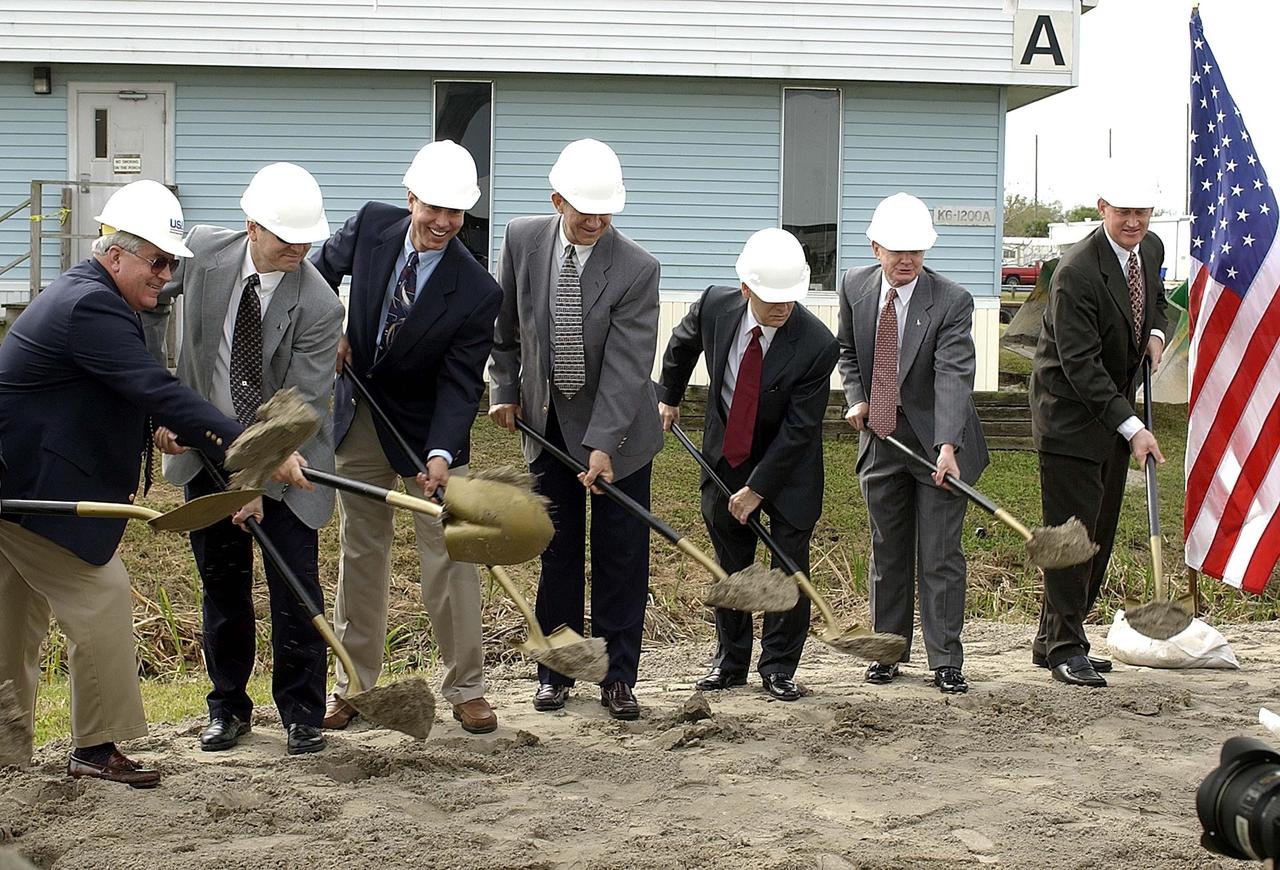
KENNEDY SPACE CENTER, FLA. -- -- Lifting their shovels for the groundbreaking of the Operations Support Building II are (left to right) Bill Pickavance, Vice President & Deputy Program Manager Florida Operations, United Space Alliance; Mike Wetmore, director of Shuttle Processing; Miguel Morales, chief, Facilities Division, Spaceport Services; Mike Sumner, chief of operations, Spaceport Services; David Wolfberg, designer of the facility, with Architect and Engineers Wolfberg, Alvarez and Partners of Coral Gables; Roy Bridges, KSC director; and Don Minderman, OSB II project manager, Spaceport Services. Not shown: David Boland, David Boland Inc.(construction company). The new building will replace modular housing constructed more than 20 years ago and house NASA and contractor support staff for shuttle operations. The demolition of the modular buildings has begun and construction will immediately follow. The new structure is projected to be ready in April 2005.
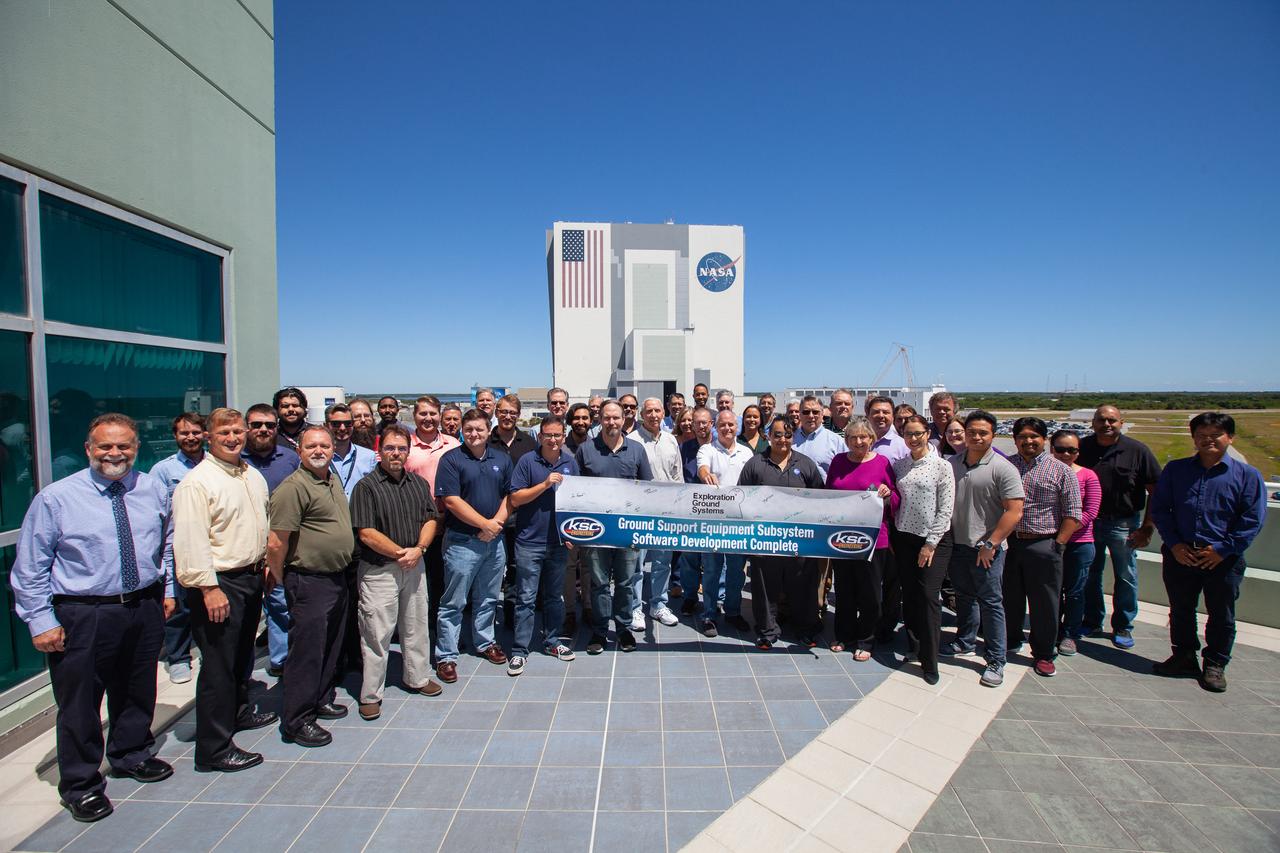
A banner signing event was held April 22, 2019, at NASA’s Kennedy Space Center in Florida, to mark the accomplishments of the Kennedy engineering team that supported the Ground Support Equipment (GSE) Subsystem Software development. The team gathered in the observation area of the Operations Support Building II with a view of the Vehicle Assembly Building behind them. This team includes the software leads, local developers, remote developers, modelers, project engineers, software quality assurance, build team members, integrators, system engineers, a chief engineer and some software managers. There are 60 unique instances of GSE Subsystem Software code. As of today, 58 of those 60 instances have completed software Level 5 Verification (L5V) and are in the process of completing Subsystem Verification & Validation.
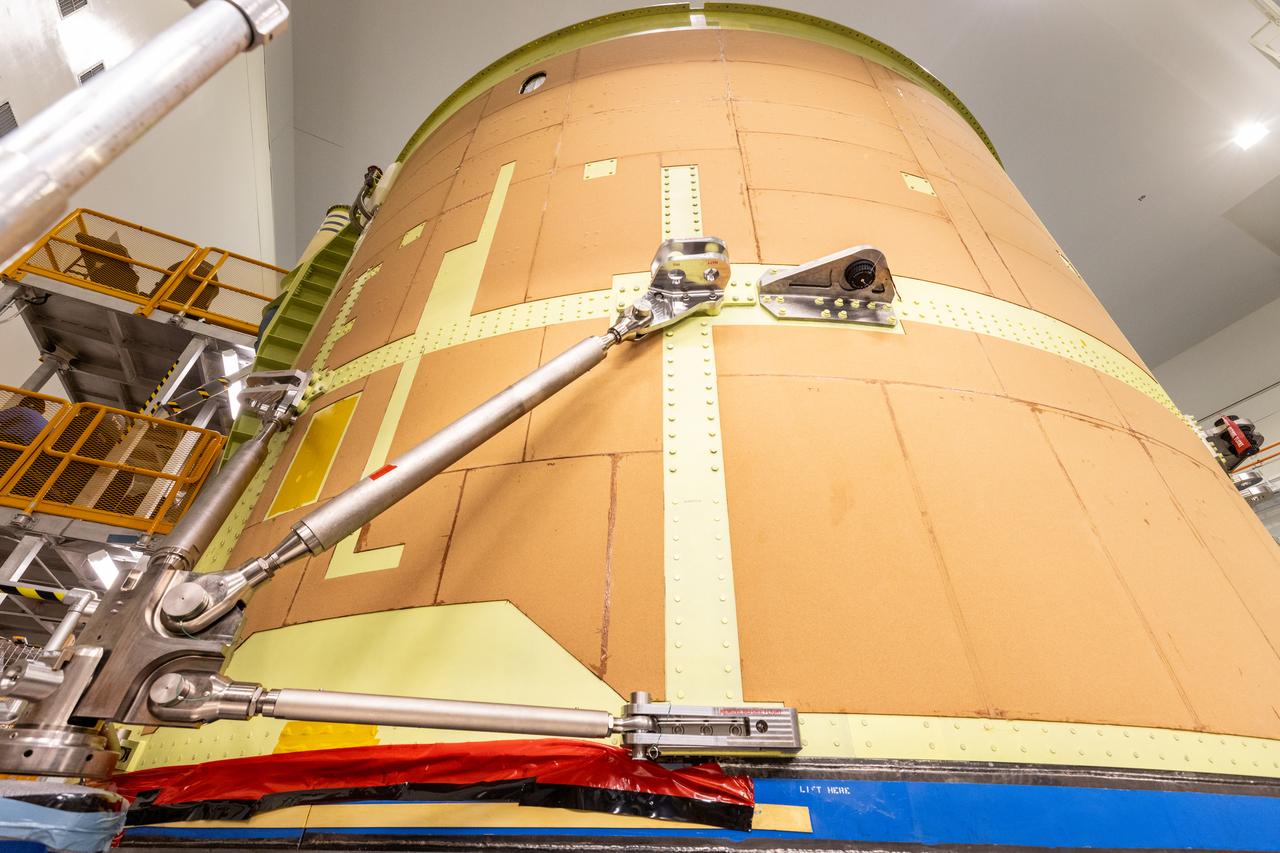
Teams at NASA’s Kennedy Space Center in Florida installed four “quad pods” around the Artemis III core stage engine section inside the spaceport’s Space Systems Processing Facility on Tuesday, Sept. 10, 2024. These structures are used to support the engine assembly during operations. The engine section will be transferred to the NASA Kennedy’s Vehicle Assembly Building for final integration.

Teams at NASA’s Kennedy Space Center in Florida installed four “quad pods” around the Artemis III core stage engine section inside the spaceport’s Space Systems Processing Facility on Tuesday, Sept. 10, 2024. These structures are used to support the engine assembly during operations. The engine section will be transferred to the NASA Kennedy’s Vehicle Assembly Building for final integration.
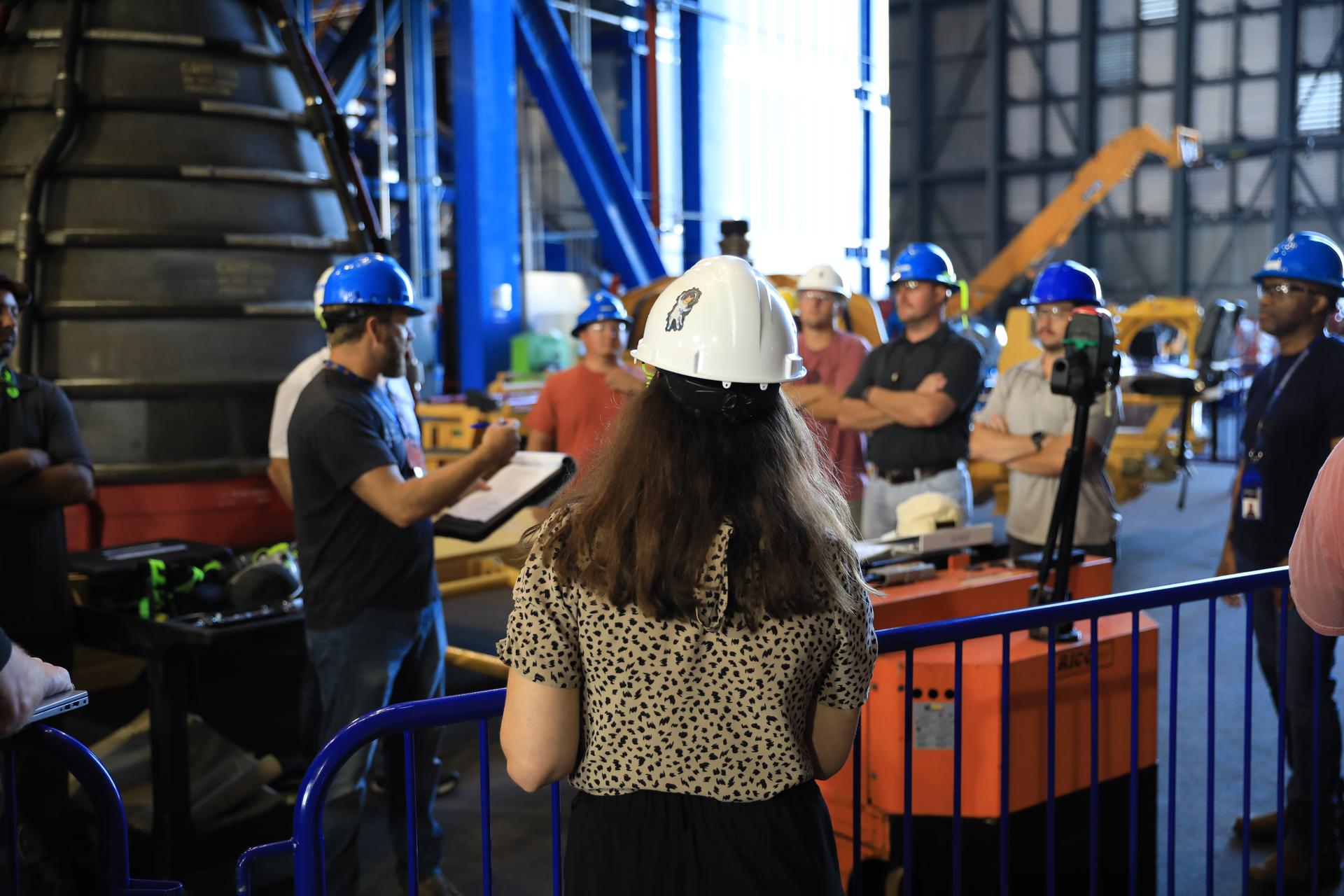
Employees discuss the lift and install operations for the RS-25 SLS (Space Launch System) rocket engines on Tuesday, Aug. 25, 2026, inside the Vehicle Assembly Building at NASA’s Kennedy Space Center in Florida. The engines will be installed in the SLS rocket core stage for integration atop the mobile launcher. During Artemis III, the four RS‑25 engines will launch the Orion spacecraft and its crew of four into low Earth orbit, generating more than two million pounds of thrust at liftoff.

Technicians and engineers put finishing touches on the Orion Exploration Flight Test-1 (EFT-1) crew module and service module stack in the Operations and Checkout (O&C) Building at Kennedy Space Center on Sept. 7, 2014. Part of Batch image transfer from Flickr.
Technicians and engineers put finishing touches on the Orion Exploration Flight Test-1 (EFT-1) crew module and service module stack in the Operations and Checkout (O&C) Building at Kennedy Space Center on Sept. 7, 2014. Part of Batch image transfer from Flickr.
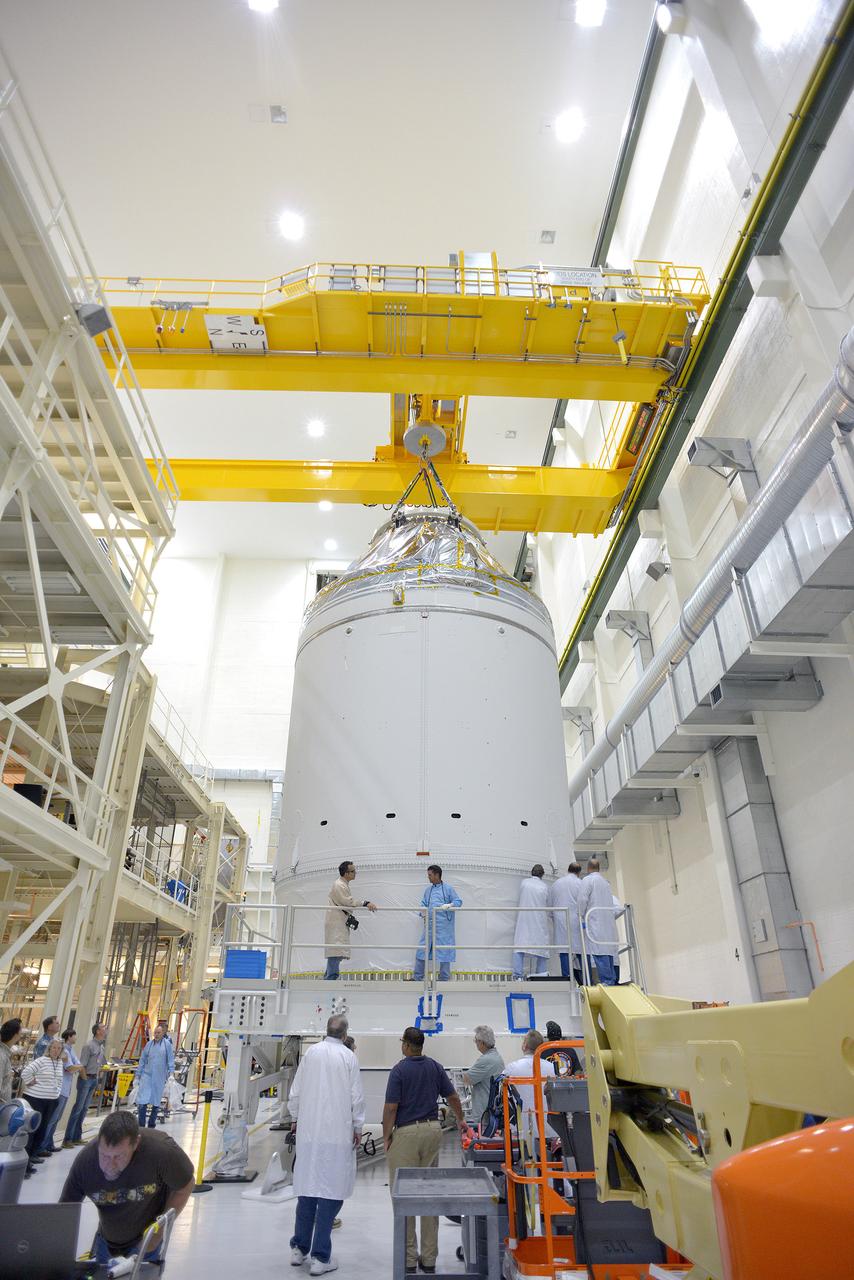
Technicians and engineers put finishing touches on the Orion Exploration Flight Test-1 (EFT-1) crew module and service module stack in the Operations and Checkout (O&C) Building at Kennedy Space Center on Sept. 7, 2014. Part of Batch image transfer from Flickr.
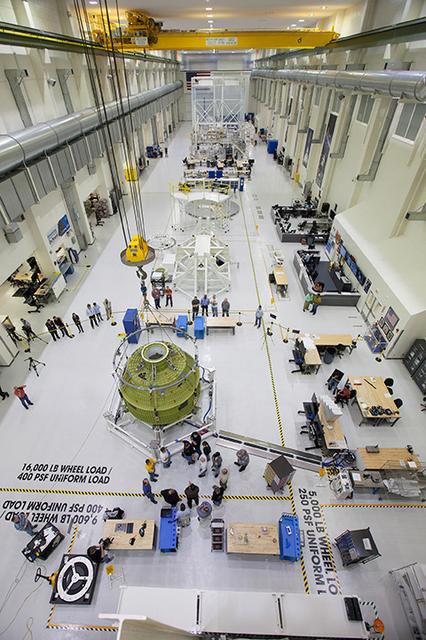
The Orion pressure vessel, which is the underlying structure of the crew module, arrived at the Neil Armstrong Operations and Checkout Building at NASA's Kennedy Space Center in Florida on Feb. 2, 2016. At Kennedy, engineers will outfit the pressure vessel with Orion's systems and subsystems ahead of Artemis I. Part of Batch image transfer from Flickr.
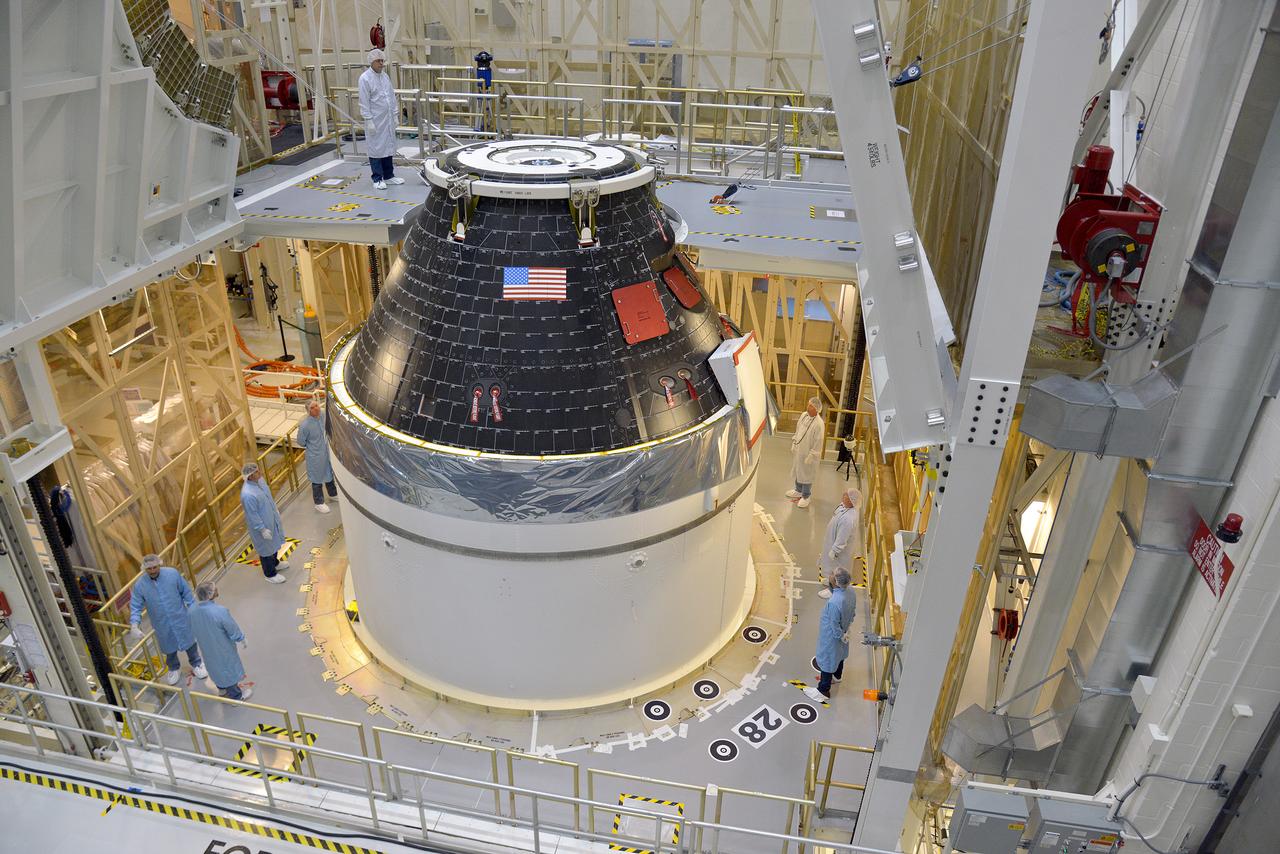
Technicians and engineers put finishing touches on the Orion Exploration Flight Test-1 (EFT-1) crew module and service module stack in the Operations and Checkout (O&C) Building at Kennedy Space Center on Sept. 7, 2014. Part of Batch image transfer from Flickr.

Technicians and engineers put finishing touches on the Orion Exploration Flight Test-1 (EFT-1) crew module and service module stack in the Operations and Checkout (O&C) Building at Kennedy Space Center on Sept. 7, 2014. Part of Batch image transfer from Flickr.
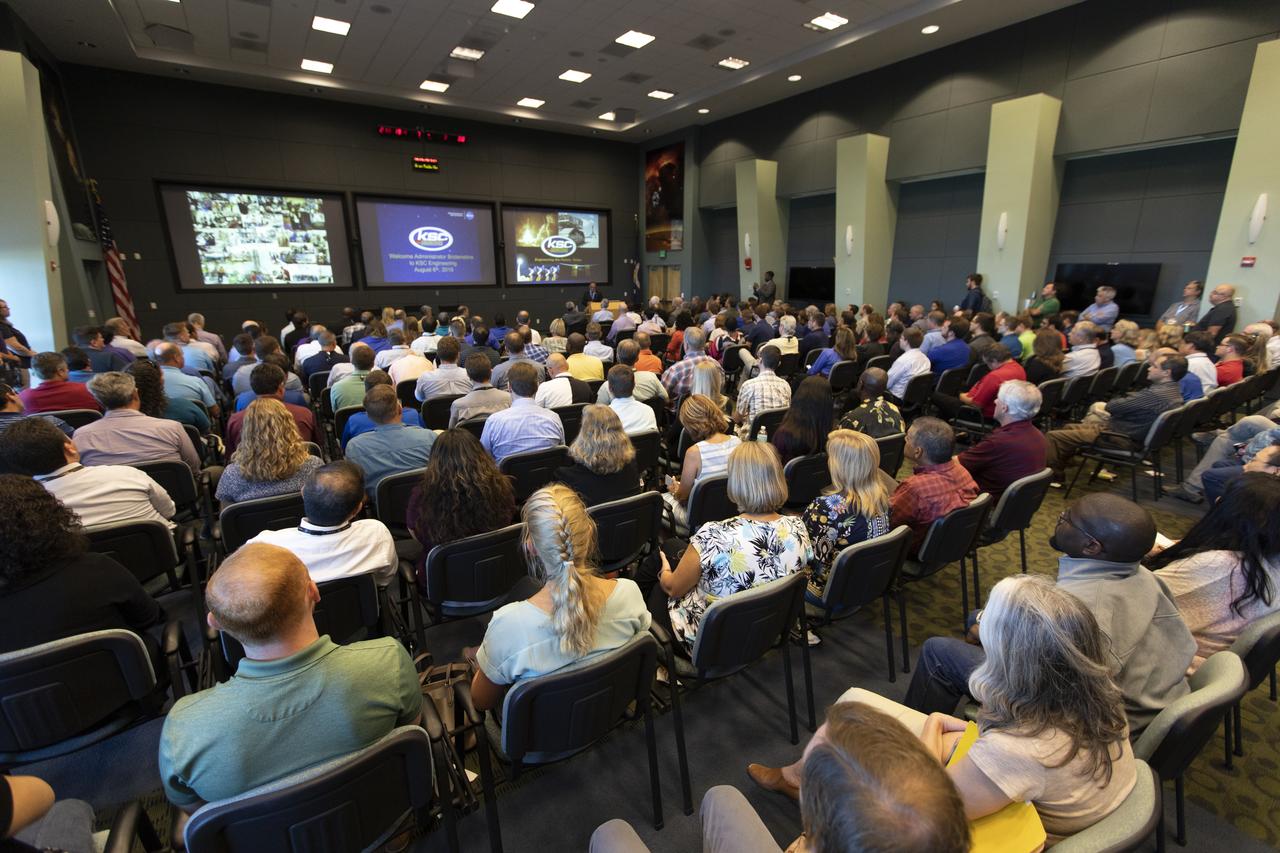
Employees of the Engineering Directorate at NASA's Kennedy Space Center gather in the conference room of Operations Support Building II for a presentation by NASA Administrator Jim Bridenstine. He made his first official visit to the Florida spaceport on Aug. 6 and 7, 2018.
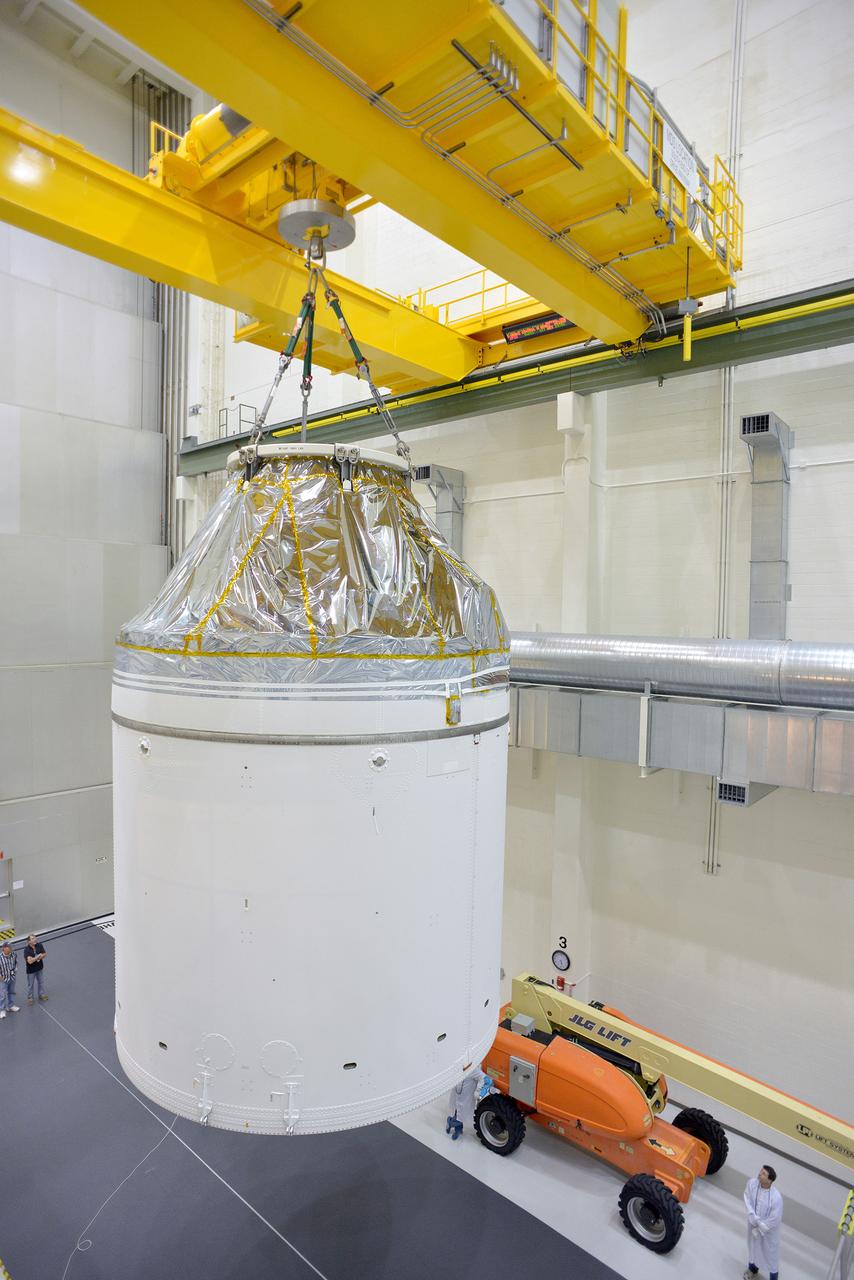
Technicians and engineers put finishing touches on the Orion Exploration Flight Test-1 (EFT-1) crew module and service module stack in the Operations and Checkout (O&C) Building at Kennedy Space Center on Sept. 7, 2014. Part of Batch image transfer from Flickr.
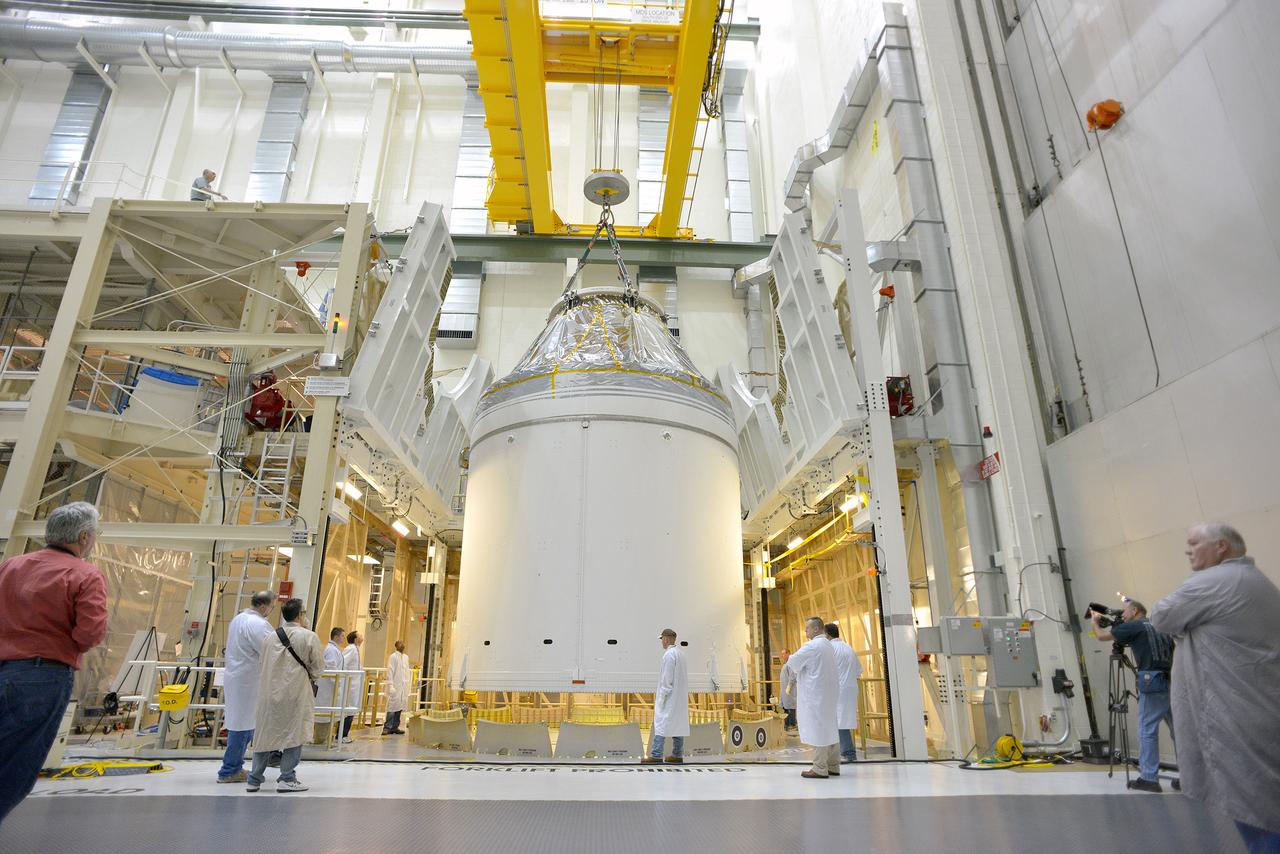
Technicians and engineers put finishing touches on the Orion Exploration Flight Test-1 (EFT-1) crew module and service module stack in the Operations and Checkout (O&C) Building at Kennedy Space Center on Sept. 7, 2014. Part of Batch image transfer from Flickr.
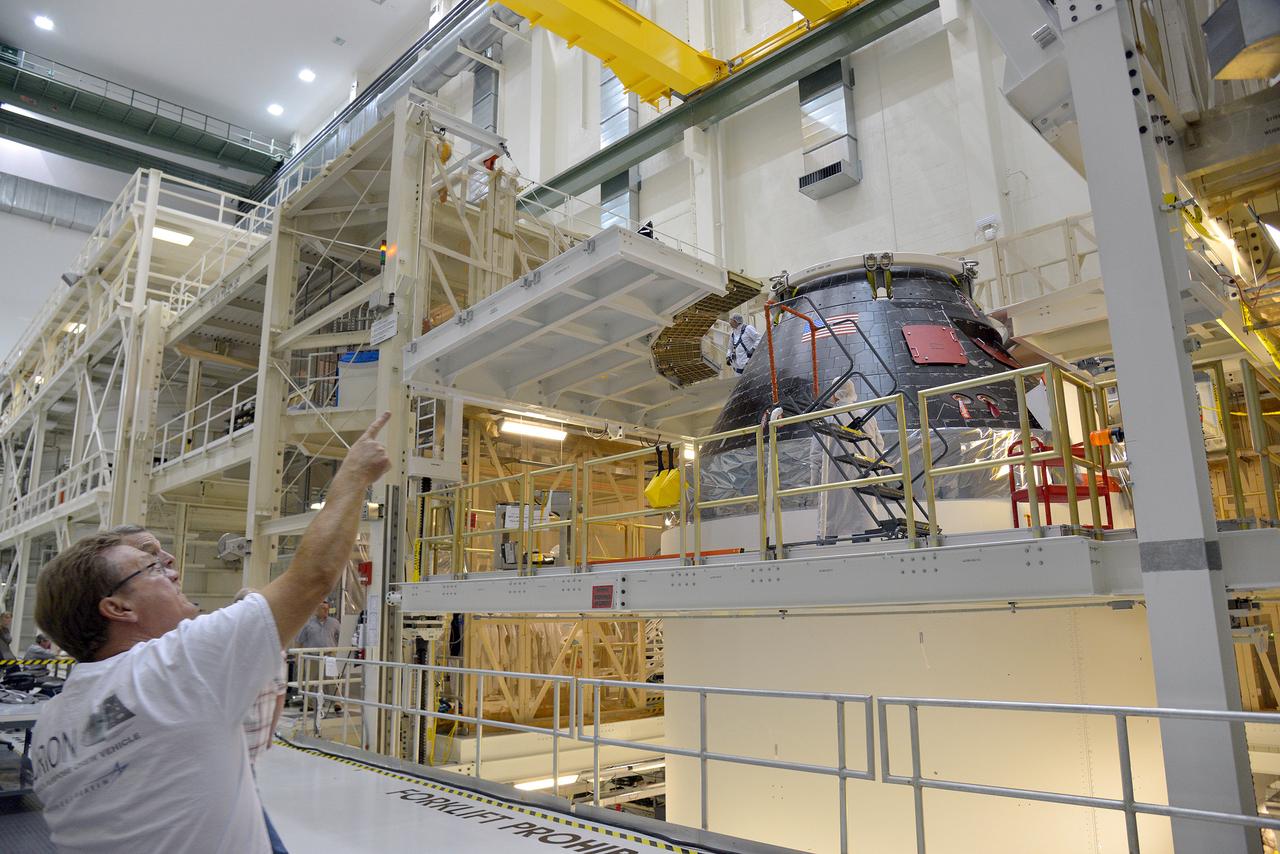
Technicians and engineers put finishing touches on the Orion Exploration Flight Test-1 (EFT-1) crew module and service module stack in the Operations and Checkout (O&C) Building at Kennedy Space Center on Sept. 7, 2014. Part of Batch image transfer from Flickr.
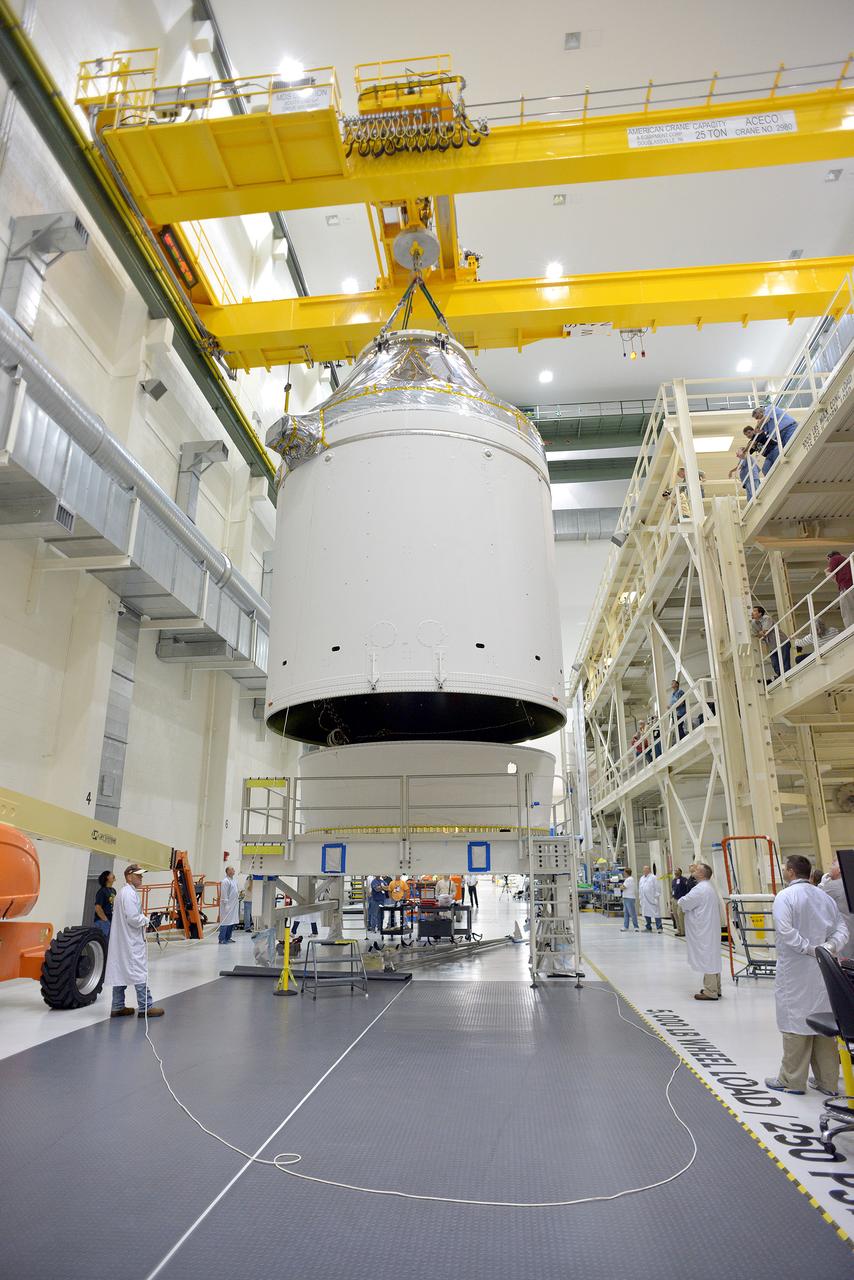
Technicians and engineers put finishing touches on the Orion Exploration Flight Test-1 (EFT-1) crew module and service module stack in the Operations and Checkout (O&C) Building at Kennedy Space Center on Sept. 7, 2014. Part of Batch image transfer from Flickr.
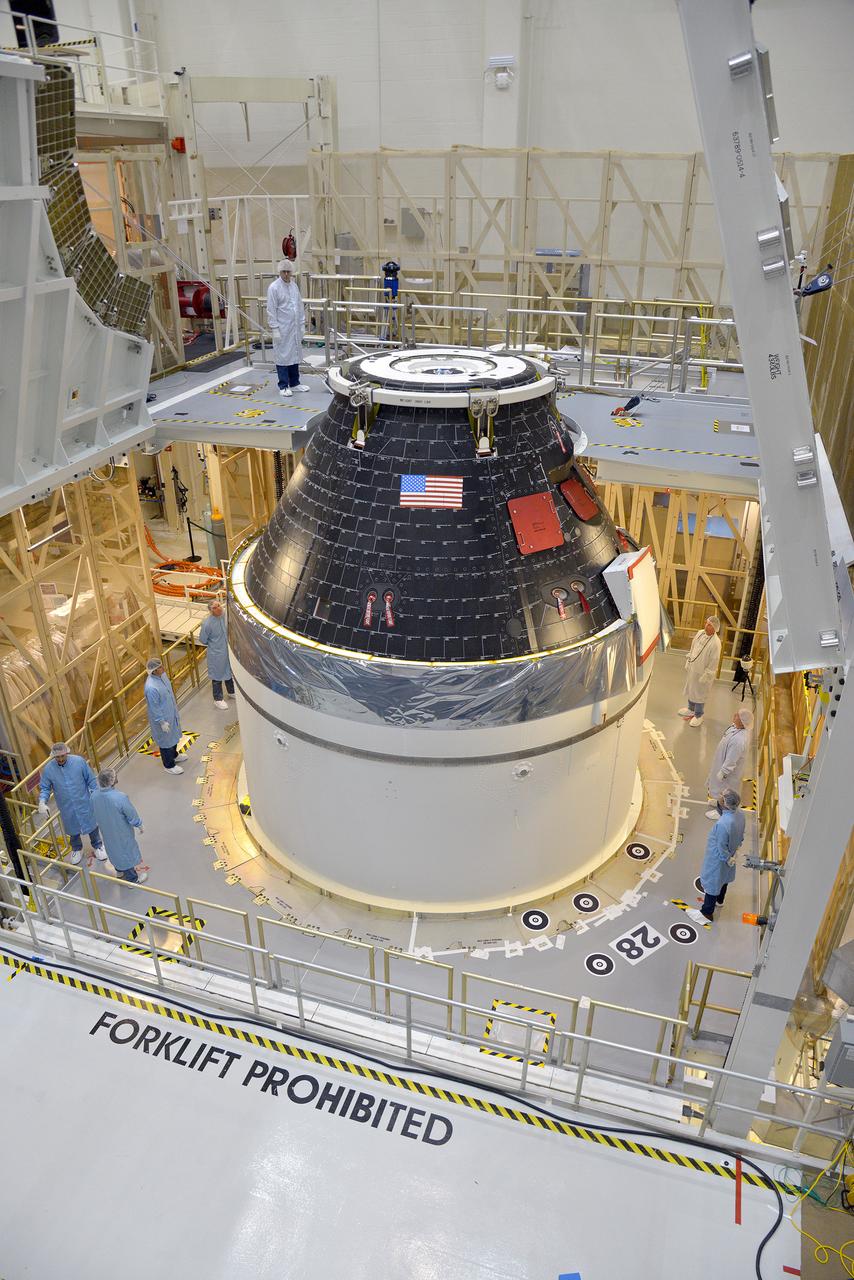
Technicians and engineers put finishing touches on the Orion Exploration Flight Test-1 (EFT-1) crew module and service module stack in the Operations and Checkout (O&C) Building at Kennedy Space Center on Sept. 7, 2014. Part of Batch image transfer from Flickr.
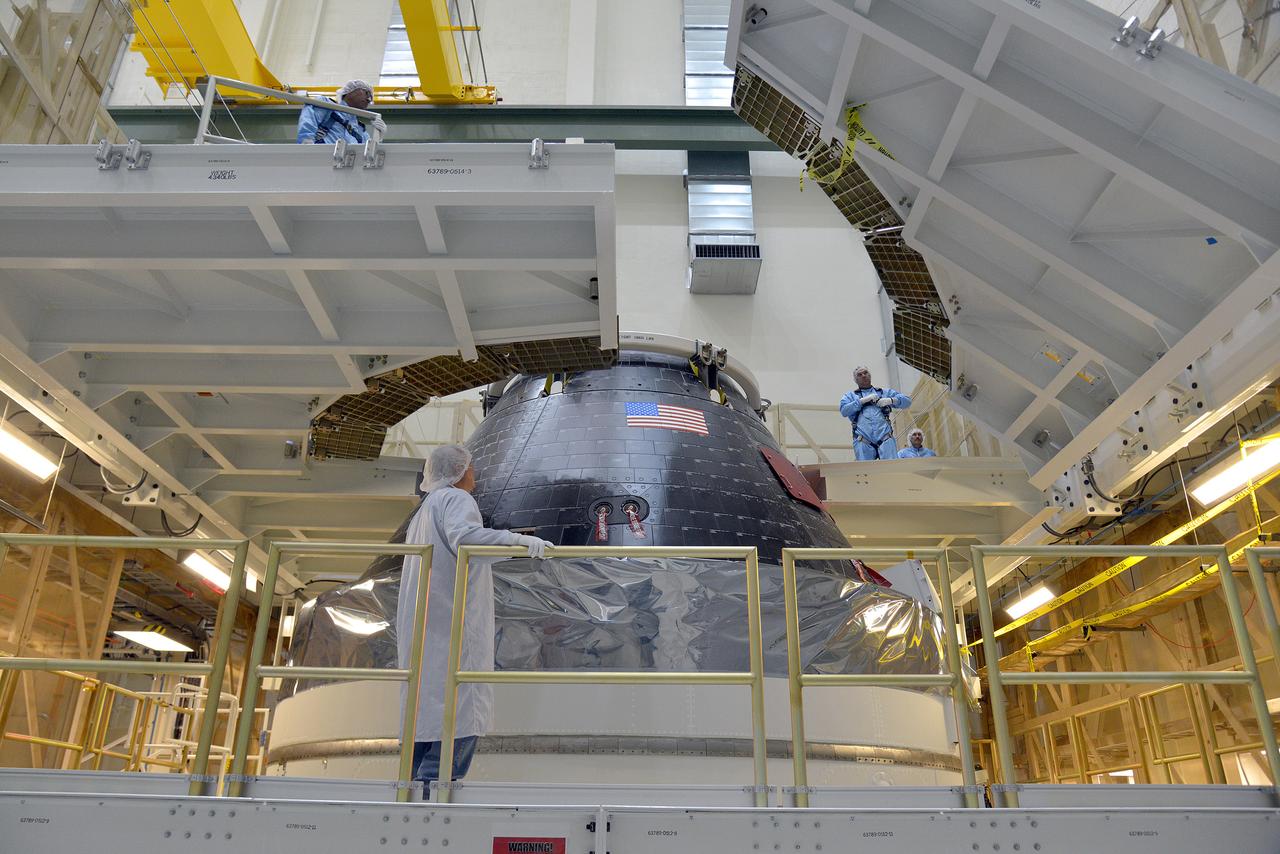
Technicians and engineers put finishing touches on the Orion Exploration Flight Test-1 (EFT-1) crew module and service module stack in the Operations and Checkout (O&C) Building at Kennedy Space Center on Sept. 7, 2014. Part of Batch image transfer from Flickr.
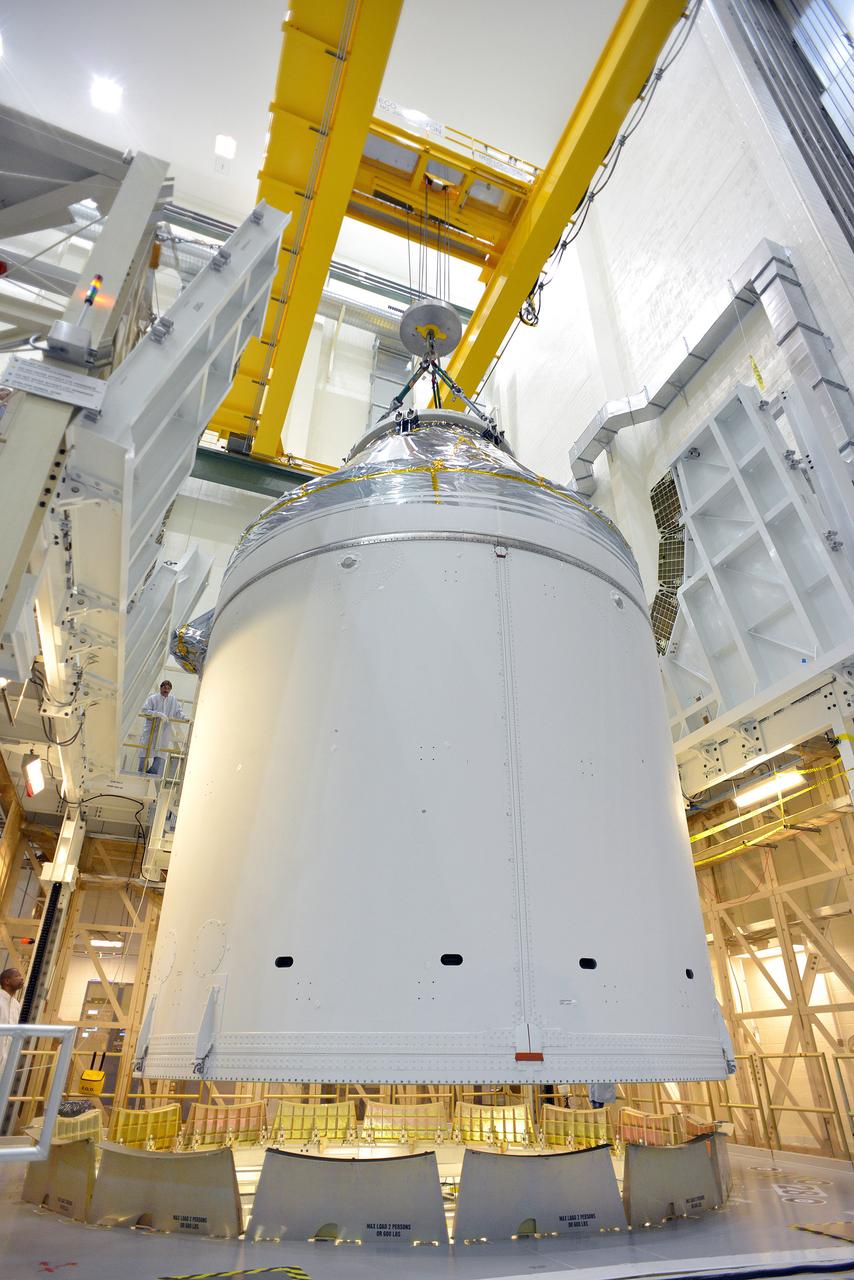
Technicians and engineers put finishing touches on the Orion Exploration Flight Test-1 (EFT-1) crew module and service module stack in the Operations and Checkout (O&C) Building at Kennedy Space Center on Sept. 7, 2014. Part of Batch image transfer from Flickr.
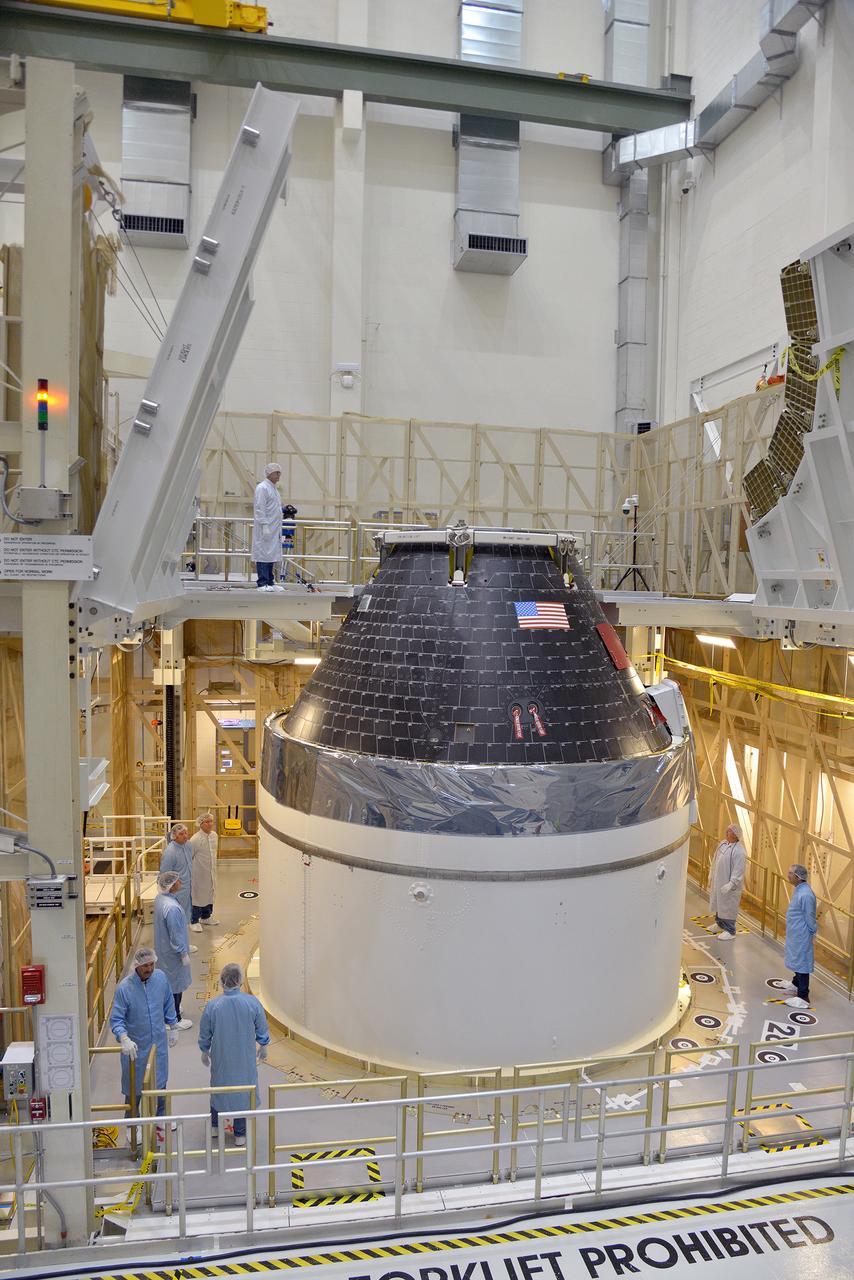
Technicians and engineers put finishing touches on the Orion Exploration Flight Test-1 (EFT-1) crew module and service module stack in the Operations and Checkout (O&C) Building at Kennedy Space Center on Sept. 7, 2014. Part of Batch image transfer from Flickr.

Technicians and engineers put finishing touches on the Orion Exploration Flight Test-1 (EFT-1) crew module and service module stack in the Operations and Checkout (O&C) Building at Kennedy Space Center on Sept. 7, 2014. Part of Batch image transfer from Flickr.
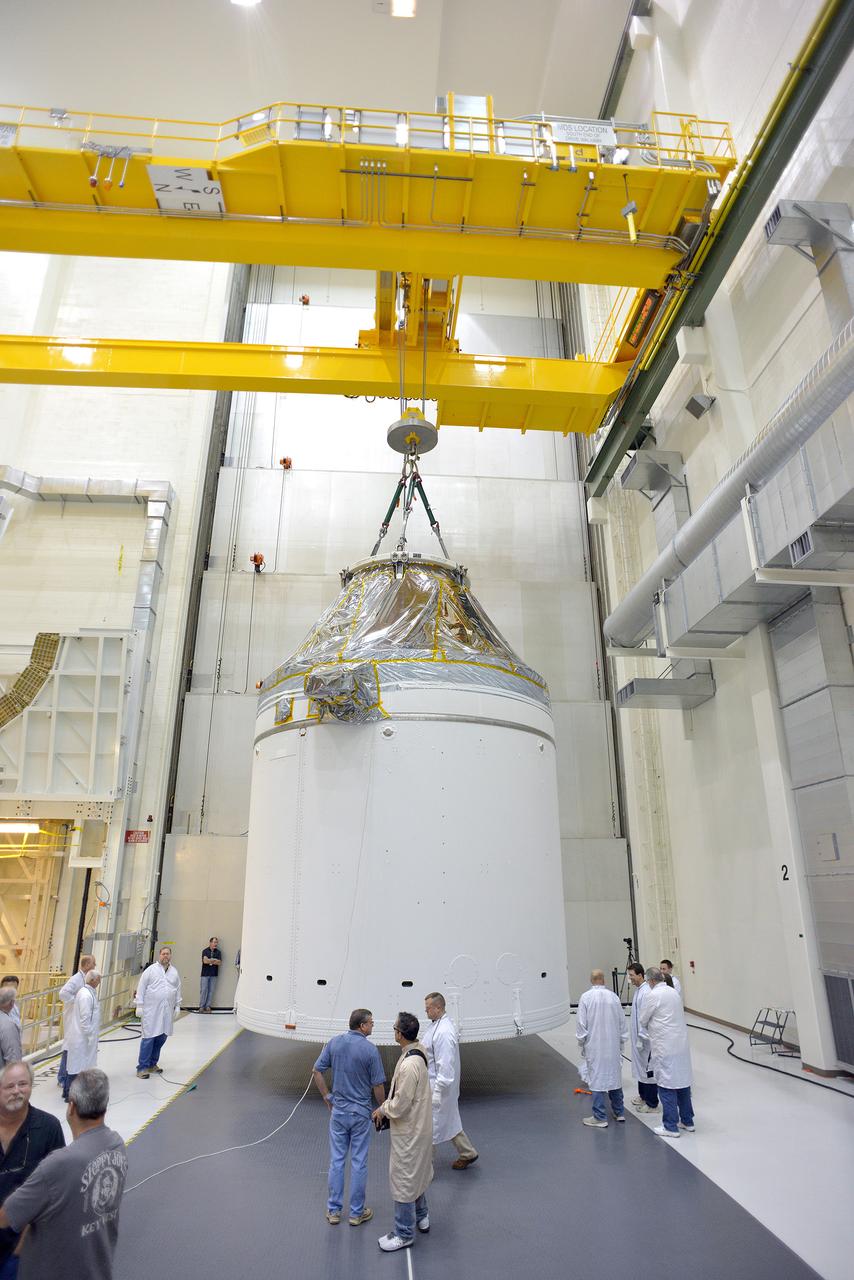
Technicians and engineers put finishing touches on the Orion Exploration Flight Test-1 (EFT-1) crew module and service module stack in the Operations and Checkout (O&C) Building at Kennedy Space Center on Sept. 7, 2014. Part of Batch image transfer from Flickr.
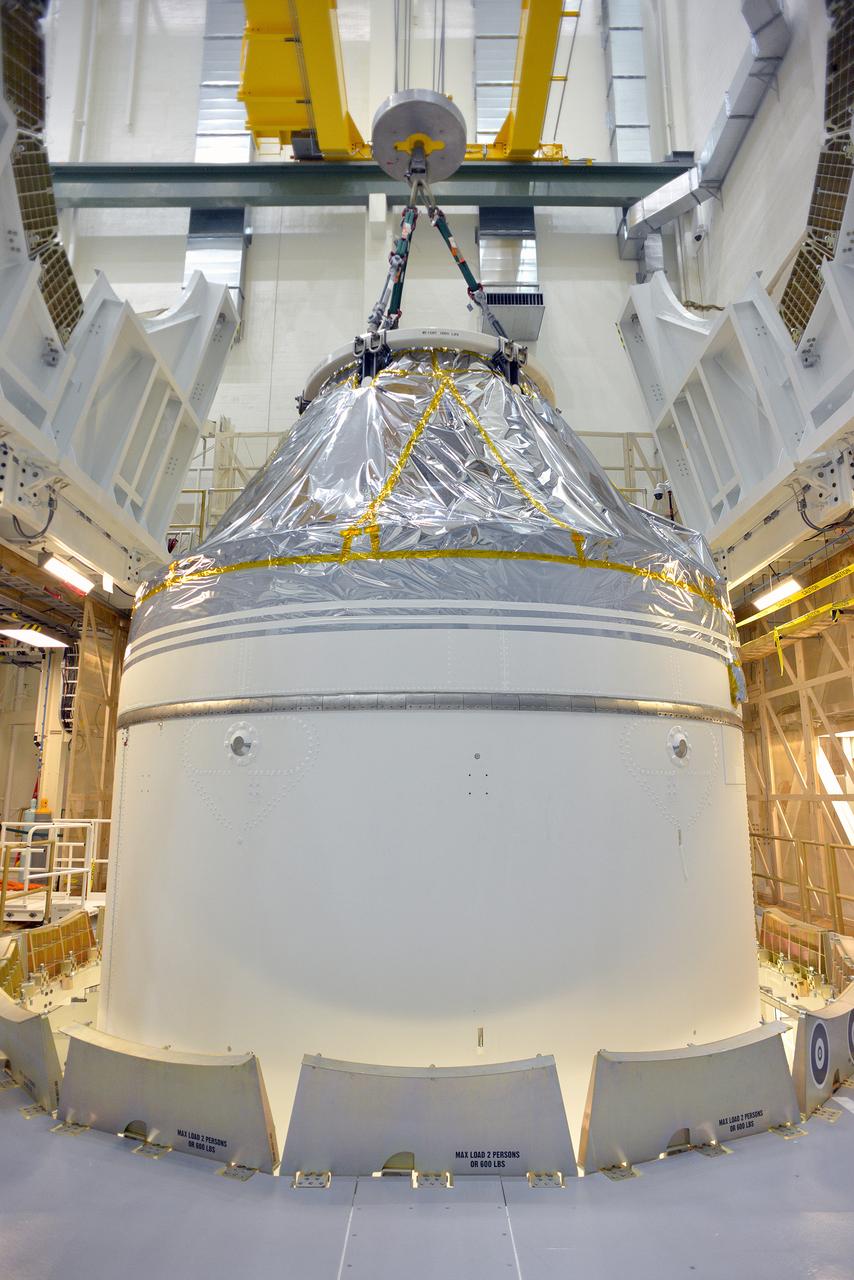
Technicians and engineers put finishing touches on the Orion Exploration Flight Test-1 (EFT-1) crew module and service module stack in the Operations and Checkout (O&C) Building at Kennedy Space Center on Sept. 7, 2014. Part of Batch image transfer from Flickr.
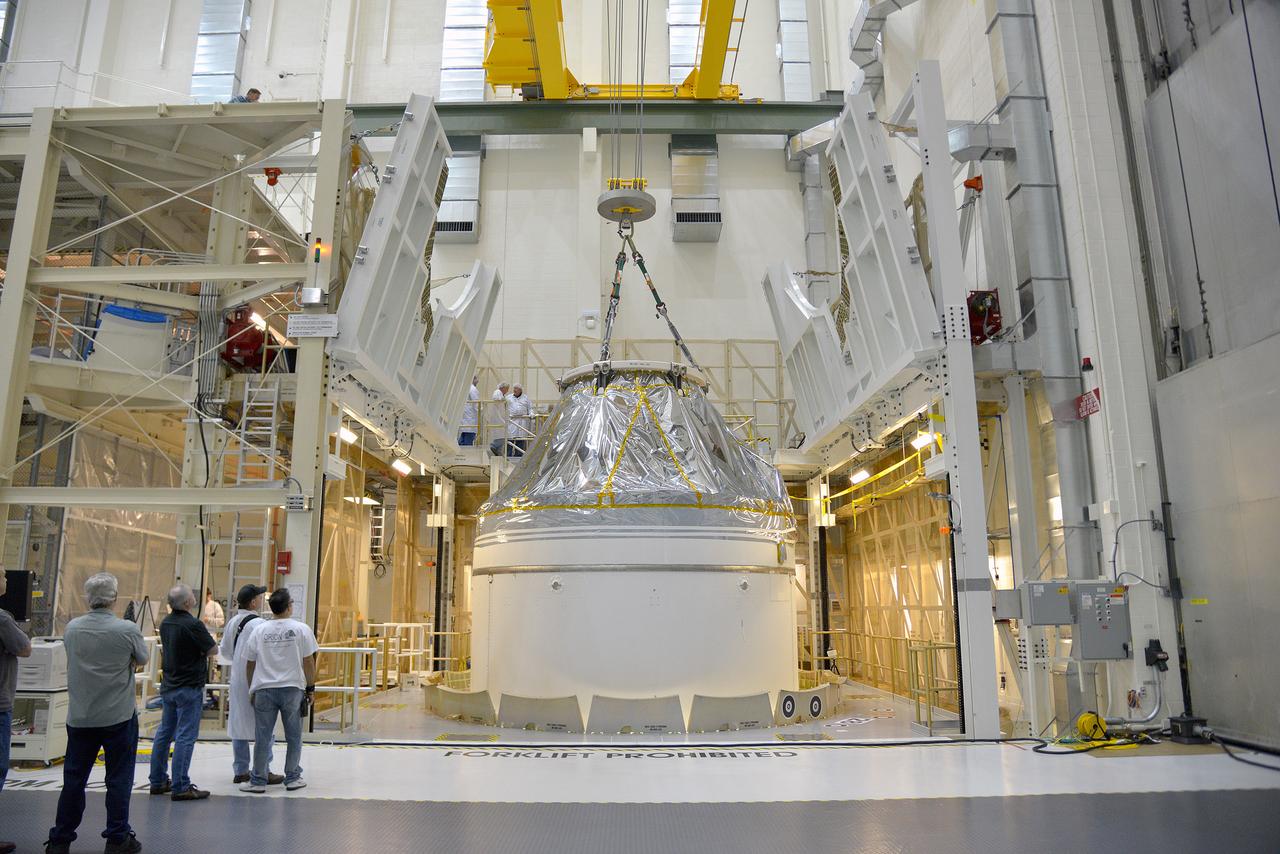
Technicians and engineers put finishing touches on the Orion Exploration Flight Test-1 (EFT-1) crew module and service module stack in the Operations and Checkout (O&C) Building at Kennedy Space Center on Sept. 7, 2014. Part of Batch image transfer from Flickr.

Technicians and engineers put finishing touches on the Orion Exploration Flight Test-1 (EFT-1) crew module and service module stack in the Operations and Checkout (O&C) Building at Kennedy Space Center on Sept. 7, 2014. Part of Batch image transfer from Flickr.
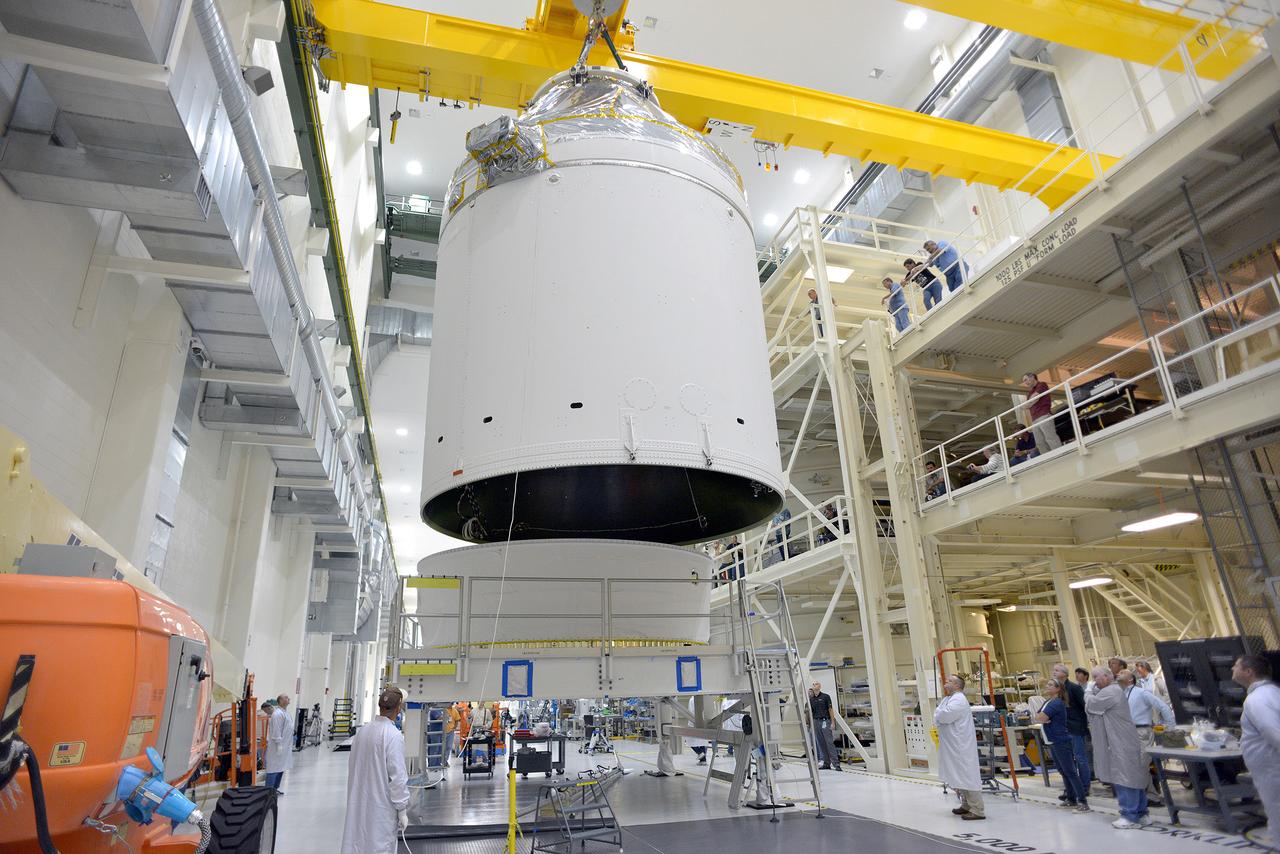
Technicians and engineers put finishing touches on the Orion Exploration Flight Test-1 (EFT-1) crew module and service module stack in the Operations and Checkout (O&C) Building at Kennedy Space Center on Sept. 7, 2014. Part of Batch image transfer from Flickr.
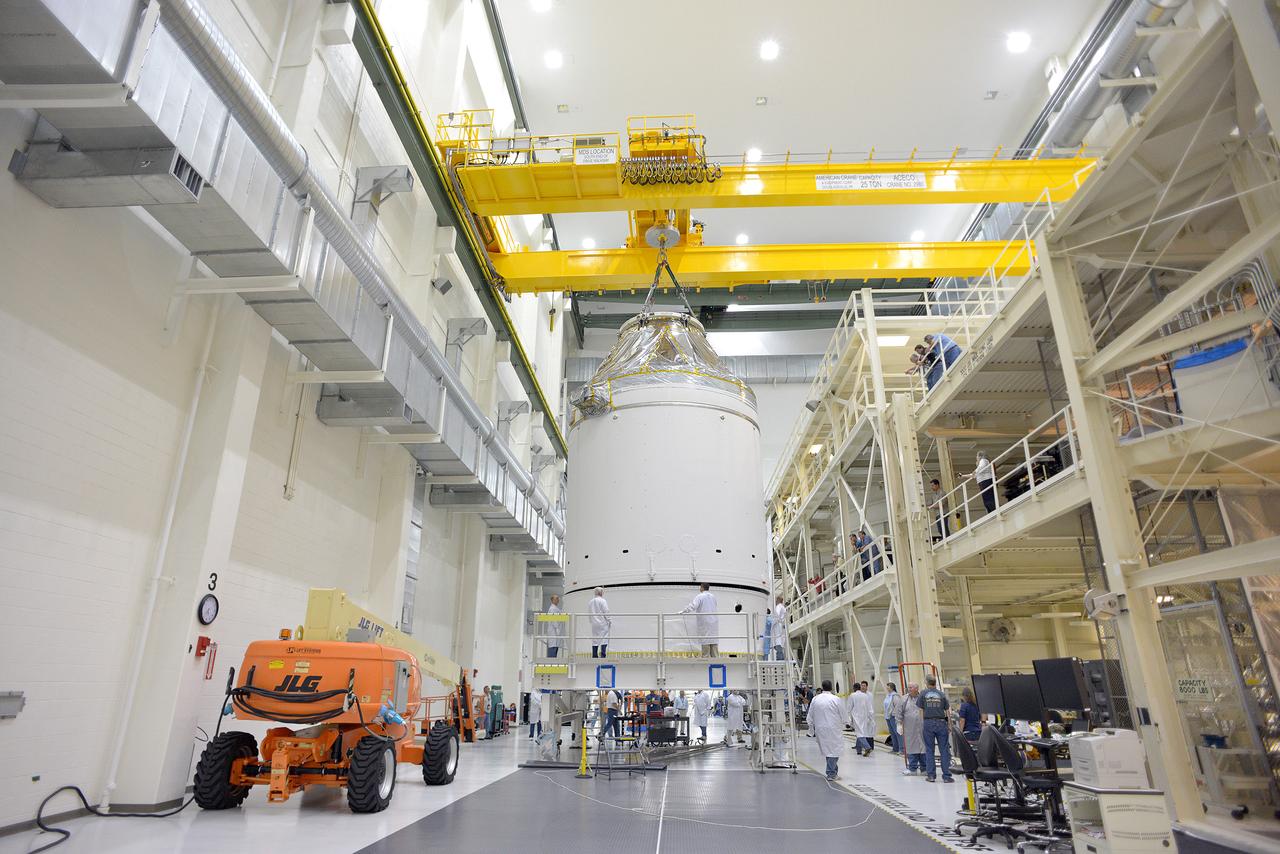
Technicians and engineers put finishing touches on the Orion Exploration Flight Test-1 (EFT-1) crew module and service module stack in the Operations and Checkout (O&C) Building at Kennedy Space Center on Sept. 7, 2014. Part of Batch image transfer from Flickr.
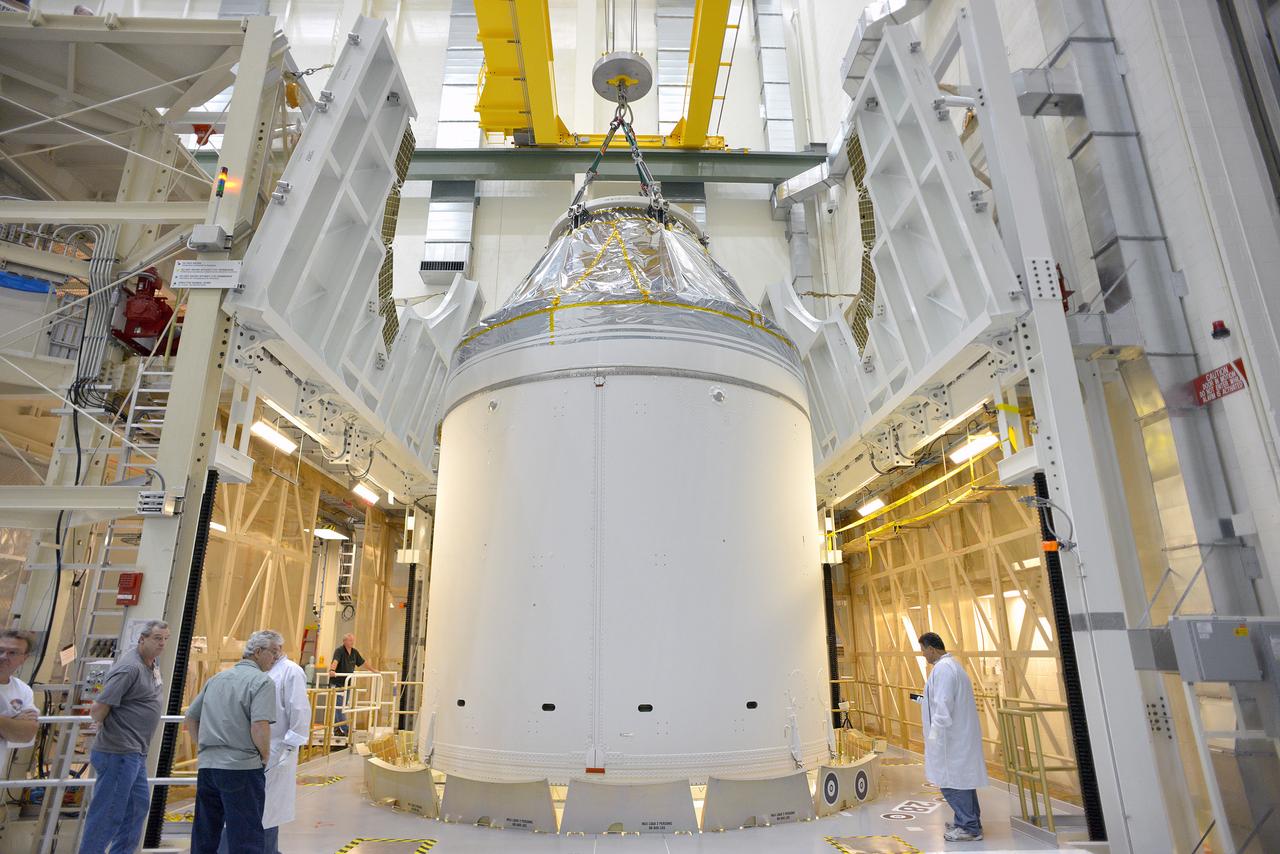
Technicians and engineers put finishing touches on the Orion Exploration Flight Test-1 (EFT-1) crew module and service module stack in the Operations and Checkout (O&C) Building at Kennedy Space Center on Sept. 7, 2014. Part of Batch image transfer from Flickr.
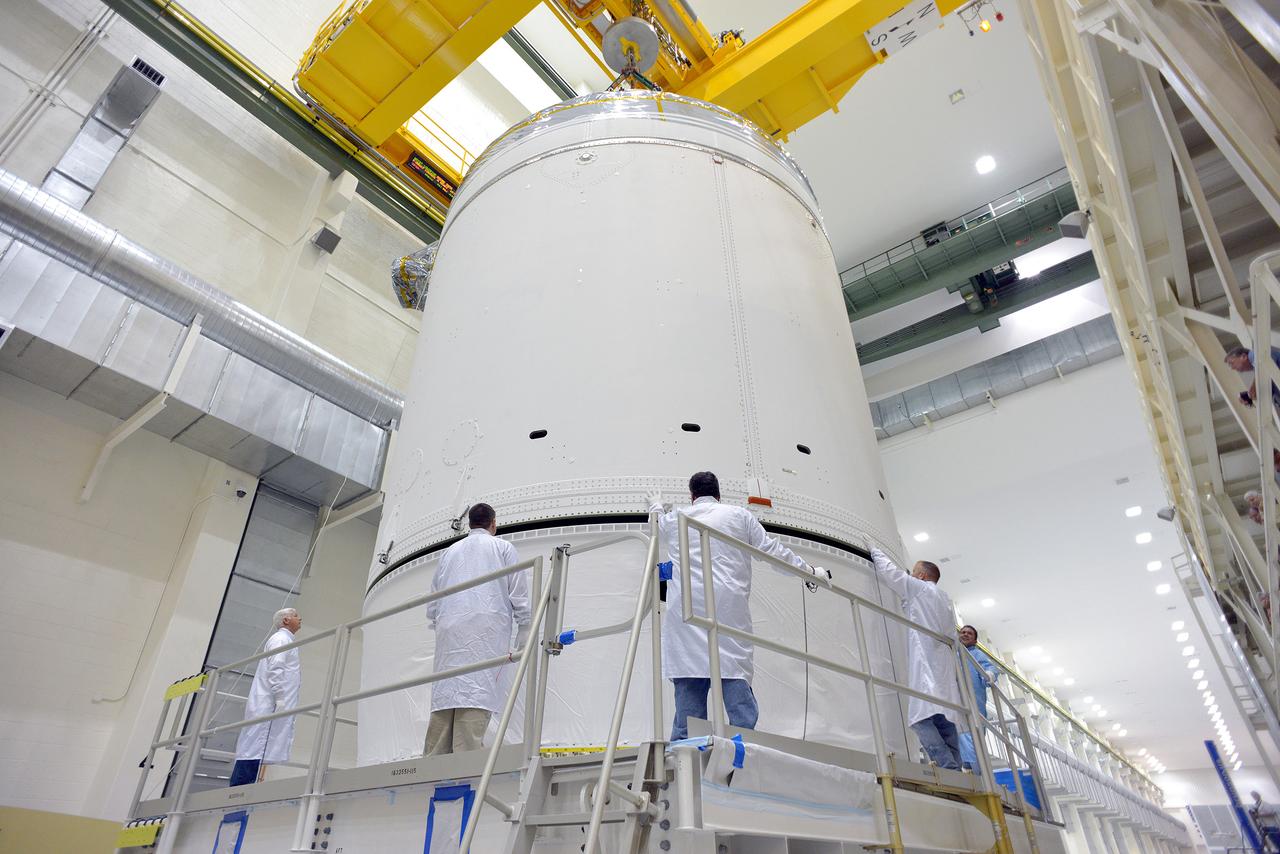
Technicians and engineers put finishing touches on the Orion Exploration Flight Test-1 (EFT-1) crew module and service module stack in the Operations and Checkout (O&C) Building at Kennedy Space Center on Sept. 7, 2014. Part of Batch image transfer from Flickr.
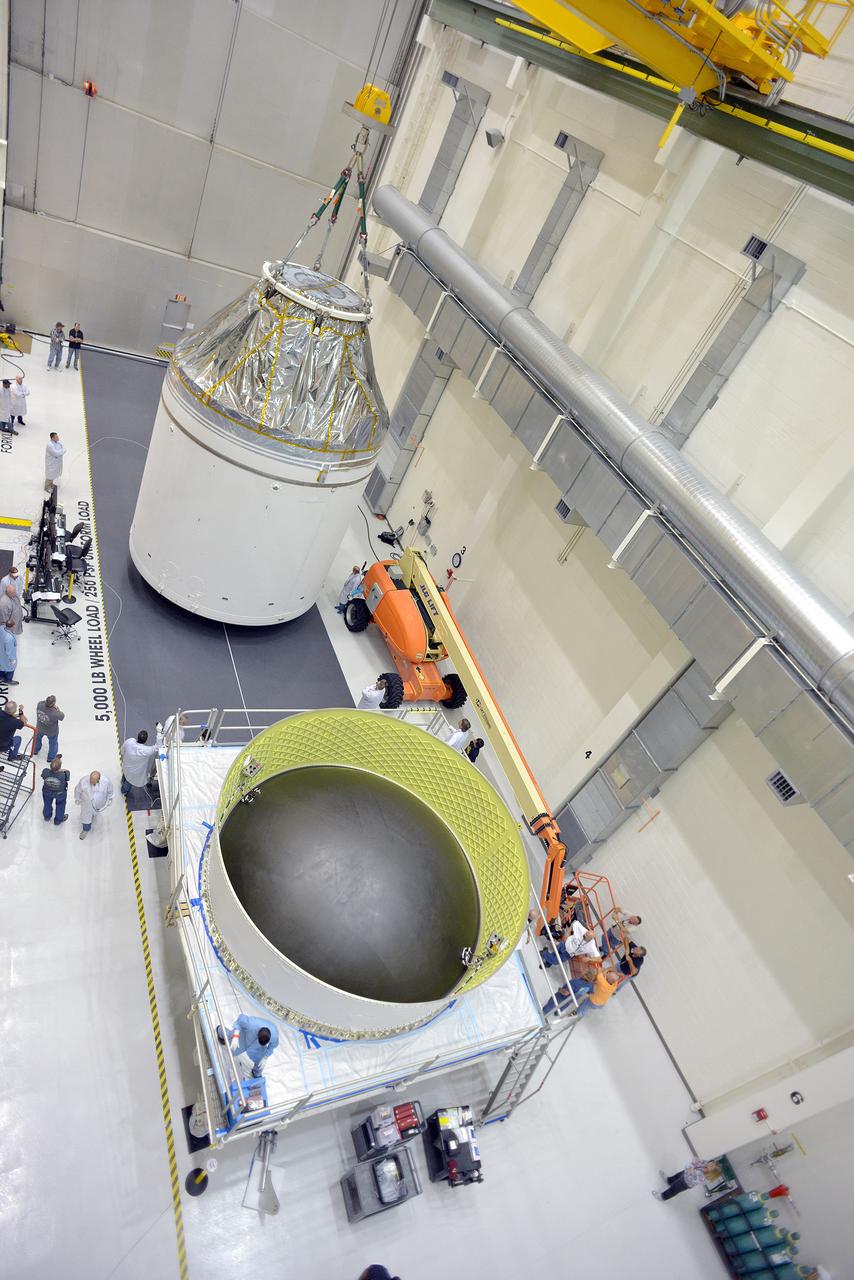
Technicians and engineers put finishing touches on the Orion Exploration Flight Test-1 (EFT-1) crew module and service module stack in the Operations and Checkout (O&C) Building at Kennedy Space Center on Sept. 7, 2014. Part of Batch image transfer from Flickr.
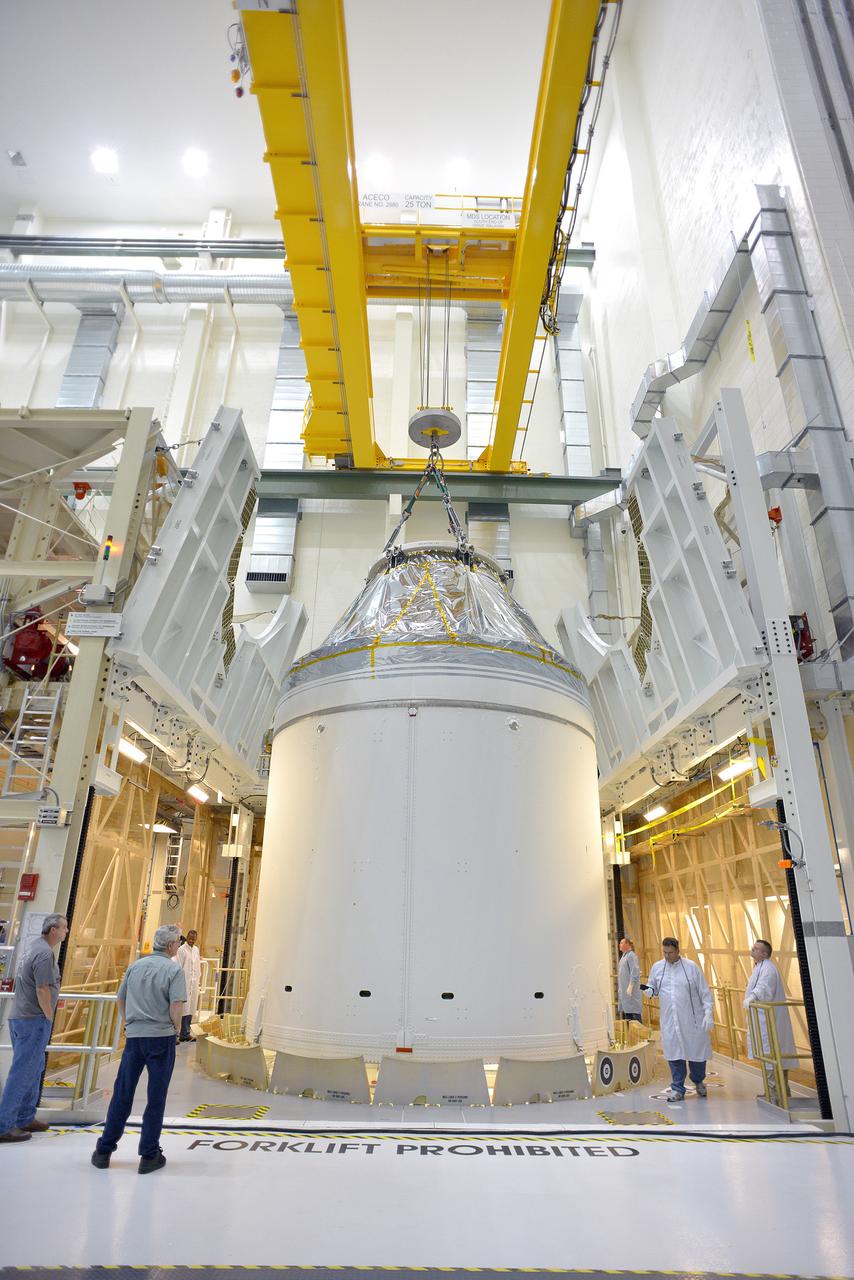
Technicians and engineers put finishing touches on the Orion Exploration Flight Test-1 (EFT-1) crew module and service module stack in the Operations and Checkout (O&C) Building at Kennedy Space Center on Sept. 7, 2014. Part of Batch image transfer from Flickr.
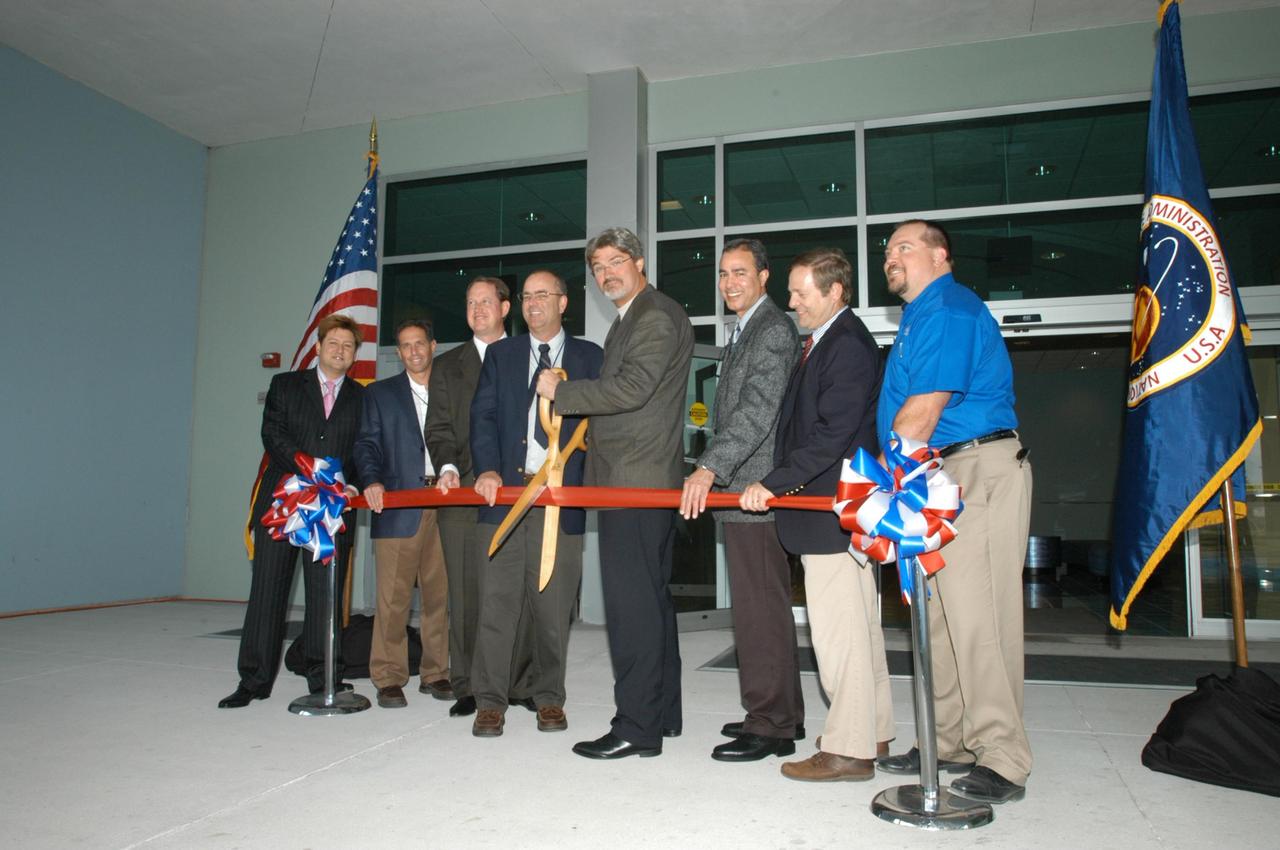
KENNEDY SPACE CENTER, FLA. -- With the ribbon-cutting ceremony, the new Operations Support Building II is officially in business. Participating in the event are (left to right) Aris Garcia, vice president of the architecture firm Wolfgang Alvarez; Mark Nappi, associate program manager of Ground Operations for United Space Alliance; Donald Minderman, NASA project manager; Scott Kerr, director of Engineering Development at Kennedy; Bill Parsons, deputy director of Kennedy Space Center; Miguel Morales, with NASA Engineering Development; Mike Wetmore, director of Shuttle Processing; and Tim Clancy, president of the construction firm Clancy & Theys. The Operations Support Building II is an Agency safety and health initiative project to replace 198,466 square feet of substandard modular housing and trailers in the Launch Complex 39 area at Kennedy Space Center. The five-story building, which sits south of the Vehicle Assembly Building and faces the launch pads, includes 960 office spaces, 16 training rooms, computer and multimedia conference rooms, a Mission Conference Center with an observation deck, technical libraries, an Exchange store, storage, break areas, and parking. Photo credit: NASA/George Shelton
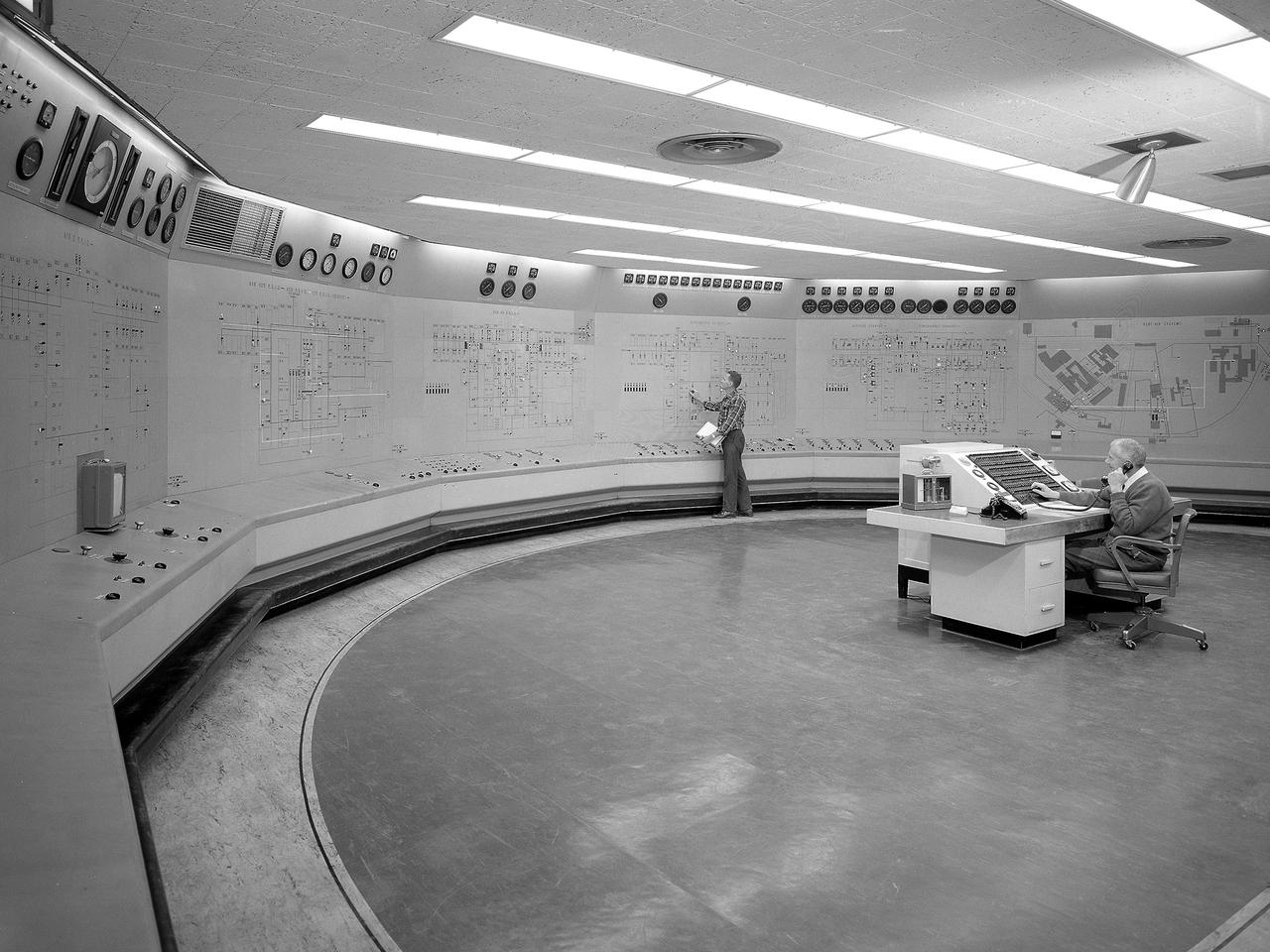
Operators in the Engine Research Building’s Central Control Room at the National Aeronautics and Space Administration (NASA) Lewis Research Center. The massive 4.25-acre Engine Research Building contains dozens of test cells, test stands, and altitude chambers. A powerful a collection of compressors and exhausters located in the central portion of the basement provides process air and exhaust for these test areas. This system is connected to similar process air systems in the laboratory’s other large test facilities. The Central Control Room coordinates this activity and communicates with the local utilities. The panels on the wall contain schematics with indicator lights and instrumentation for the atmospheric exhaust, altitude exhaust, refrigerated air, and process air systems. The process air equipment included twelve exhausters, four compressors, refrigeration system, cooling water, and an exhaust system. The operators in the control room kept in contact with engineers running the process air system and those conducting the tests in the test cells. The operators also coordinated with the local power companies to make sure enough electricity was available to operate the powerful compressors and exhausters.
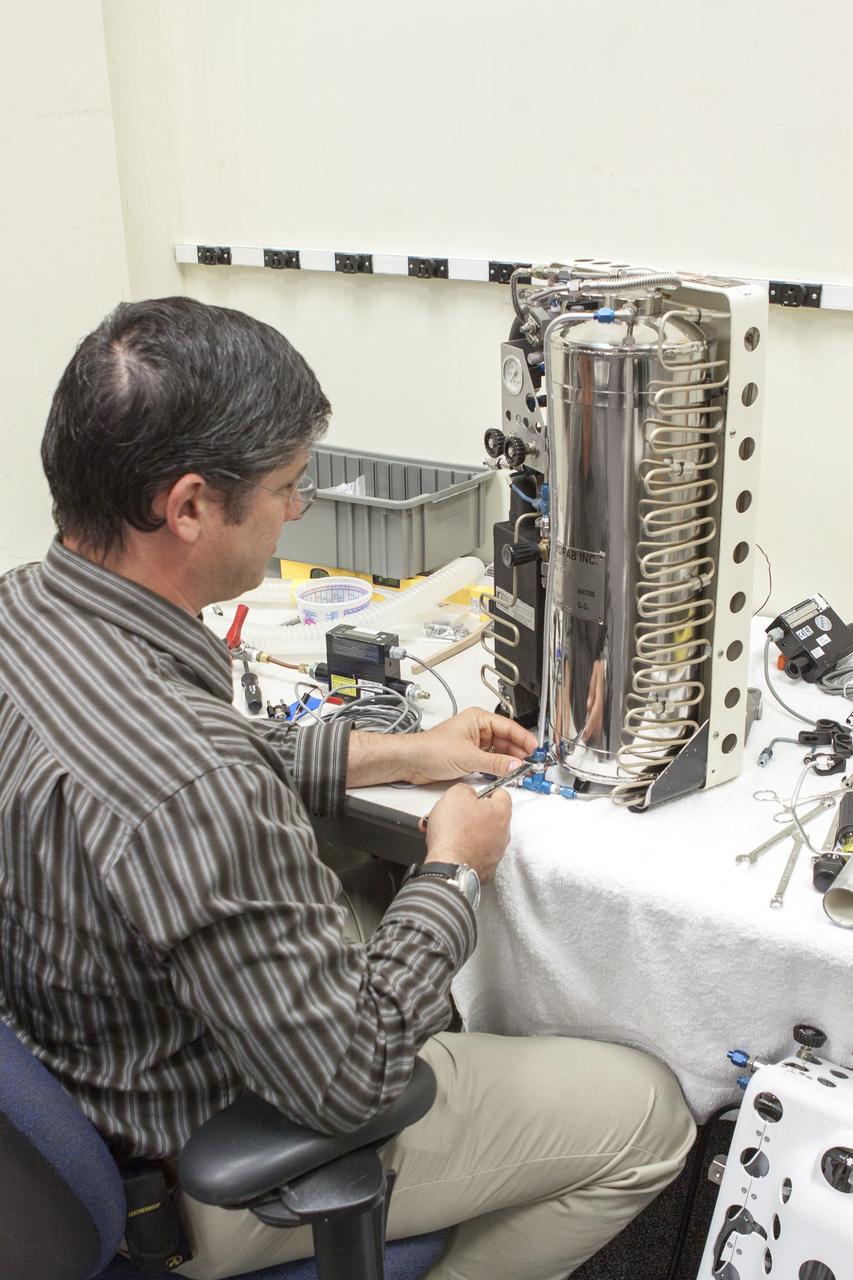
CAPE CANAVERAL, Fla. - NASA Kennedy Space Center Lead Engineer David Bush works on a prototype of a Cryogenic Refuge Alternative Supply System, or CryoRASS, in the Operations and Checkout Building. CryoRASS and a small liquid-air filled backpack called CryoBA, short for Cryogenic Breathing Apparatus, are being developed by a NASA Kennedy Space Center engineering team in collaboration with The National Institute for Occupational Safety and Health to provide miners with twice the amount of breathable and cooler air than traditional compressed systems. The technology also could be used for commercial applications, such as fire and military rescue operations, as well as NASA's future human spaceflight missions. Photo credit: NASA/Jim Gossmann
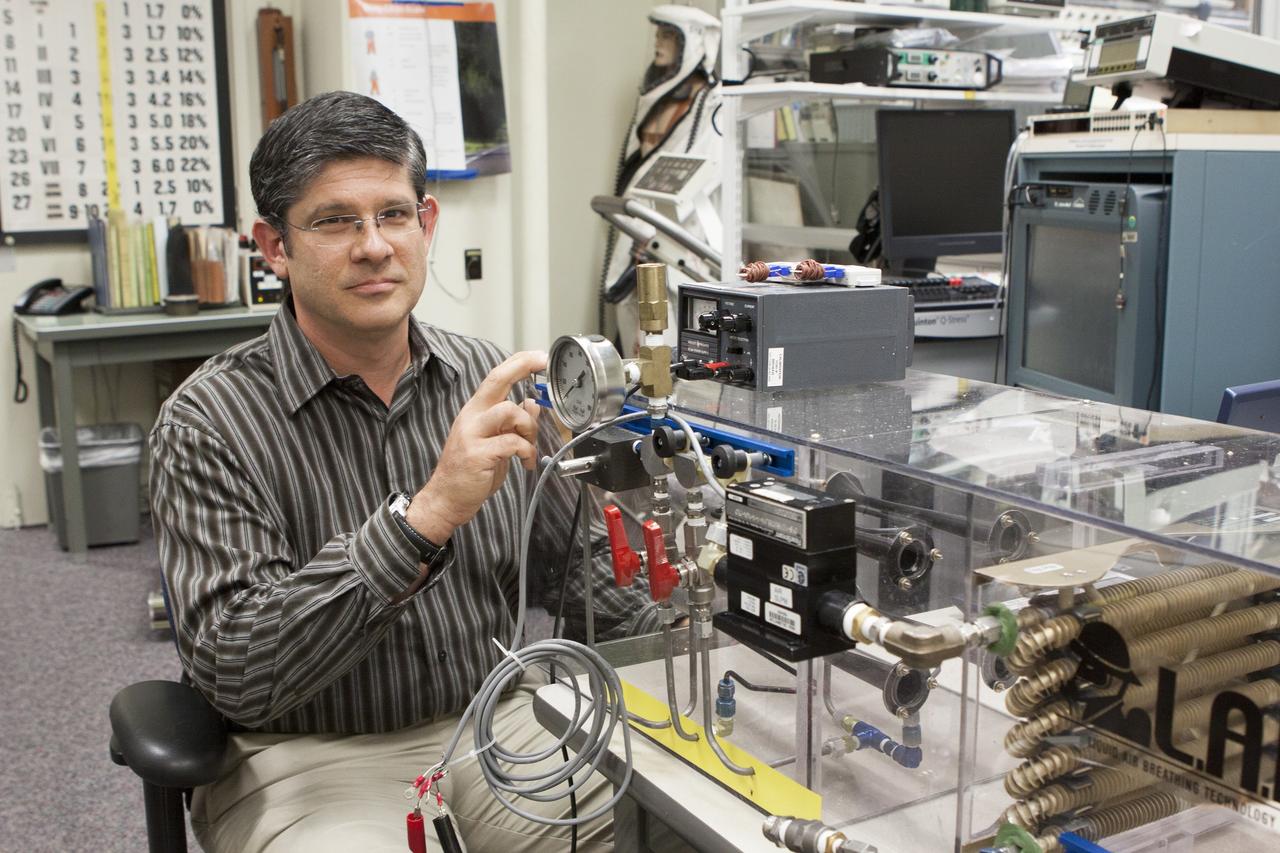
CAPE CANAVERAL, Fla. - NASA Kennedy Space Center Lead Engineer David Bush works on a prototype of a Cryogenic Refuge Alternative Supply System, or CryoRASS, in the Operations and Checkout Building. CryoRASS and a small liquid-air filled backpack called CryoBA, short for Cryogenic Breathing Apparatus, are being developed by a NASA Kennedy Space Center engineering team in collaboration with The National Institute for Occupational Safety and Health to provide miners with twice the amount of breathable and cooler air than traditional compressed systems. The technology also could be used for commercial applications, such as fire and military rescue operations, as well as NASA's future human spaceflight missions. Photo credit: NASA/Jim Gossmann
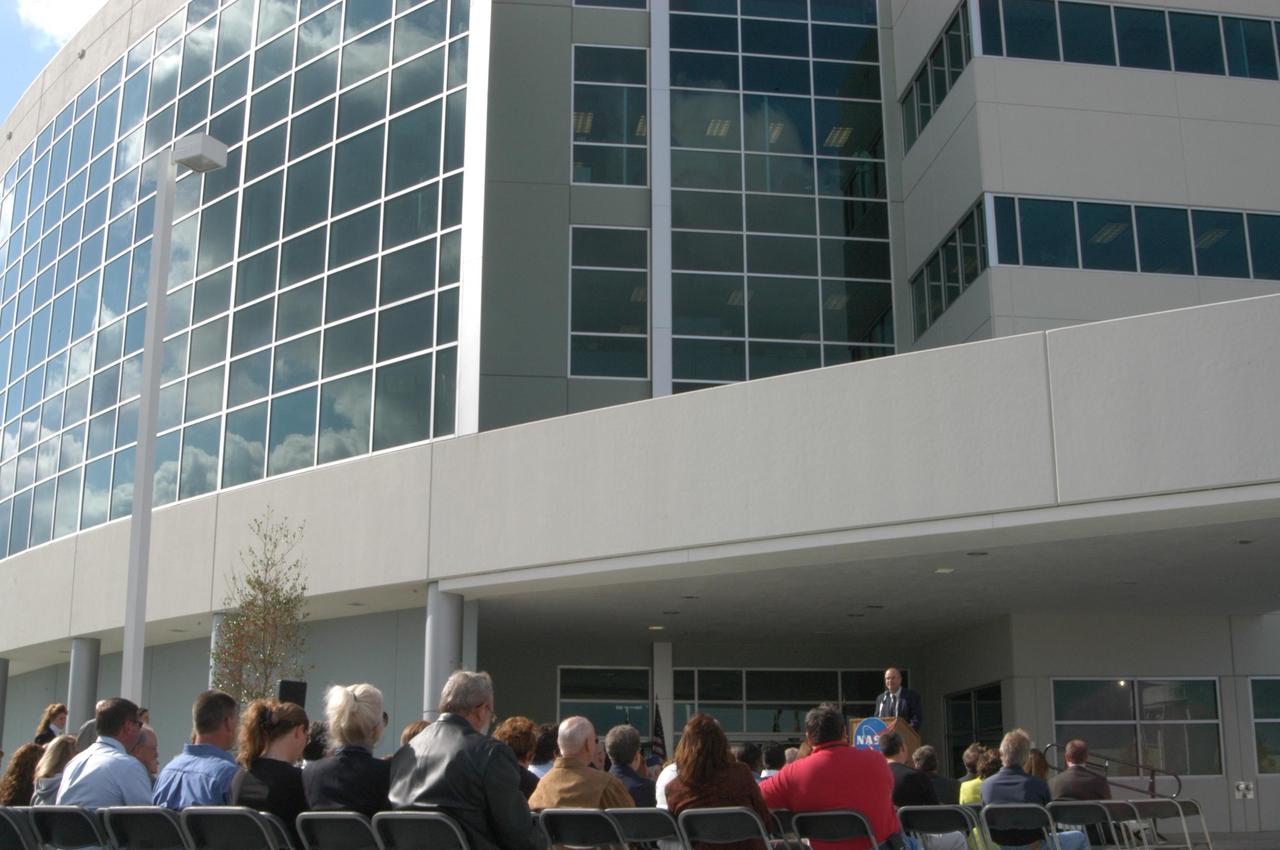
KENNEDY SPACE CENTER, FLA. -- Scott Kerr, director of Engineering Development at Kennedy Space Center, addresses guests at a ribbon-cutting ceremony for the Operations Support Building II (behind him). He and other key Center personnel and guests attended the significant event. The Operations Support Building II is an Agency safety and health initiative project to replace 198,466 square feet of substandard modular housing and trailers in the Launch Complex 39 area at Kennedy Space Center. The five-story building, which sits south of the Vehicle Assembly Building and faces the launch pads, includes 960 office spaces, 16 training rooms, computer and multimedia conference rooms, a Mission Conference Center with an observation deck, technical libraries, an Exchange store, storage, break areas, and parking. Photo credit: NASA/George Shelton
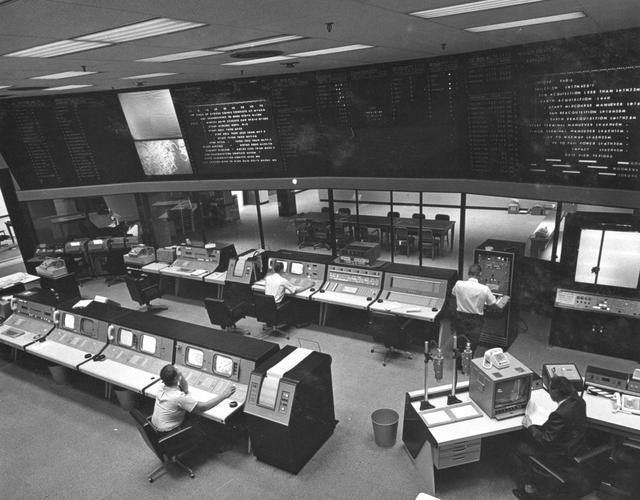
This archival image was released as part of a gallery comparing JPL's past and present, commemorating the 80th anniversary of NASA's Jet Propulsion Laboratory on Oct. 31, 2016. When spacecraft in deep space "phone home," they do it through NASA's Deep Space Network. Engineers in this room at NASA's Jet Propulsion Laboratory -- known as Mission Control -- monitor the flow of data. This image was taken in May 1964, when the building this nerve center is in, the Space Flight Operations Facility (Building 230), was dedicated at JPL. http://photojournal.jpl.nasa.gov/catalog/PIA21120
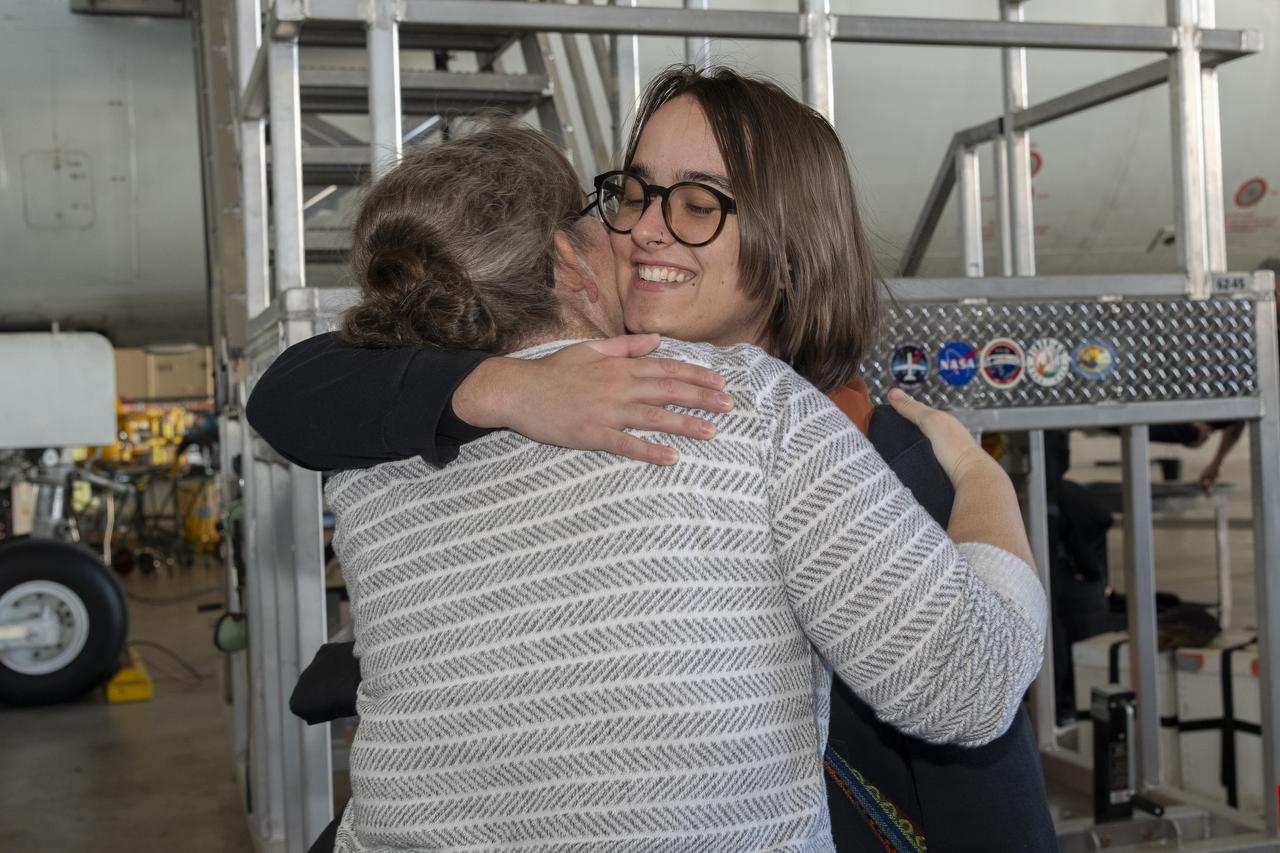
NASA’s DC-8 operations engineer, Nickelle “Nicki” Reid, left, embraces Katherine Ball, chemical engineering Ph.D. candidate at California Institute of Technology, after the DC-8 aircraft and crew return to NASA Armstrong’s Building 703 in Palmdale, California, on April 1, 2024, following the aircraft’s final mission in support of the Airborne and Satellite Investigation of Asian Air Quality (ASIA-AQ).

NASA DC-8 crew members Nickelle “Nicki” Reid, operations engineer, left, and Isac Mata, engineer technician, exchange in a heartfelt hug after the DC-8 aircraft and crew return to NASA Armstrong’s Building 703 in Palmdale, California, on April 1, 2024, following the aircraft’s final mission in support of the Airborne and Satellite Investigation of Asian Air Quality (ASIA-AQ). Smiling in the background is Michael Thomson, director of NASA Armstrong’s Science Mission Directorate.

Over 600 middle school, high school, and college students from across the nation launched 30 high-powered rockets just north of NASA’s Marshall Space Flight Center in Huntsville, Alabama. This year marked the 26th anniversary of the competition. To compete, students follow the NASA engineering design lifecycle by going through a series of reviews for nine months leading up to launch day. Each year, a payload challenge is issued to the university teams, and this year’s task took inspiration from the agency’s Artemis missions, where NASA will send astronauts to explore the Moon for scientific discovery, economic benefit, and to build the foundation for the first crewed missions to Mars. Teams were challenged build and fly a STEMnaut Habitat for Agricultural Utilization Study (HAUS) that safely houses four STEMnauts, non-living objects representing astronauts. The habitat had to include equipment capable of both collecting and testing soil samples to support agricultural research operations.

Over 600 middle school, high school, and college students from across the nation launched 30 high-powered rockets just north of NASA’s Marshall Space Flight Center in Huntsville, Alabama. This year marked the 26th anniversary of the competition. To compete, students follow the NASA engineering design lifecycle by going through a series of reviews for nine months leading up to launch day. Each year, a payload challenge is issued to the university teams, and this year’s task took inspiration from the agency’s Artemis missions, where NASA will send astronauts to explore the Moon for scientific discovery, economic benefit, and to build the foundation for the first crewed missions to Mars. Teams were challenged build and fly a STEMnaut Habitat for Agricultural Utilization Study (HAUS) that safely houses four STEMnauts, non-living objects representing astronauts. The habitat had to include equipment capable of both collecting and testing soil samples to support agricultural research operations.

Over 600 middle school, high school, and college students from across the nation launched 30 high-powered rockets just north of NASA’s Marshall Space Flight Center in Huntsville, Alabama. This year marked the 26th anniversary of the competition. To compete, students follow the NASA engineering design lifecycle by going through a series of reviews for nine months leading up to launch day. Each year, a payload challenge is issued to the university teams, and this year’s task took inspiration from the agency’s Artemis missions, where NASA will send astronauts to explore the Moon for scientific discovery, economic benefit, and to build the foundation for the first crewed missions to Mars. Teams were challenged build and fly a STEMnaut Habitat for Agricultural Utilization Study (HAUS) that safely houses four STEMnauts, non-living objects representing astronauts. The habitat had to include equipment capable of both collecting and testing soil samples to support agricultural research operations.

Over 600 middle school, high school, and college students from across the nation launched 30 high-powered rockets just north of NASA’s Marshall Space Flight Center in Huntsville, Alabama. This year marked the 26th anniversary of the competition. To compete, students follow the NASA engineering design lifecycle by going through a series of reviews for nine months leading up to launch day. Each year, a payload challenge is issued to the university teams, and this year’s task took inspiration from the agency’s Artemis missions, where NASA will send astronauts to explore the Moon for scientific discovery, economic benefit, and to build the foundation for the first crewed missions to Mars. Teams were challenged build and fly a STEMnaut Habitat for Agricultural Utilization Study (HAUS) that safely houses four STEMnauts, non-living objects representing astronauts. The habitat had to include equipment capable of both collecting and testing soil samples to support agricultural research operations.

Over 600 middle school, high school, and college students from across the nation launched 30 high-powered rockets just north of NASA’s Marshall Space Flight Center in Huntsville, Alabama. This year marked the 26th anniversary of the competition. To compete, students follow the NASA engineering design lifecycle by going through a series of reviews for nine months leading up to launch day. Each year, a payload challenge is issued to the university teams, and this year’s task took inspiration from the agency’s Artemis missions, where NASA will send astronauts to explore the Moon for scientific discovery, economic benefit, and to build the foundation for the first crewed missions to Mars. Teams were challenged build and fly a STEMnaut Habitat for Agricultural Utilization Study (HAUS) that safely houses four STEMnauts, non-living objects representing astronauts. The habitat had to include equipment capable of both collecting and testing soil samples to support agricultural research operations.

Over 600 middle school, high school, and college students from across the nation launched 30 high-powered rockets just north of NASA’s Marshall Space Flight Center in Huntsville, Alabama. This year marked the 26th anniversary of the competition. To compete, students follow the NASA engineering design lifecycle by going through a series of reviews for nine months leading up to launch day. Each year, a payload challenge is issued to the university teams, and this year’s task took inspiration from the agency’s Artemis missions, where NASA will send astronauts to explore the Moon for scientific discovery, economic benefit, and to build the foundation for the first crewed missions to Mars. Teams were challenged build and fly a STEMnaut Habitat for Agricultural Utilization Study (HAUS) that safely houses four STEMnauts, non-living objects representing astronauts. The habitat had to include equipment capable of both collecting and testing soil samples to support agricultural research operations.

Over 600 middle school, high school, and college students from across the nation launched 30 high-powered rockets just north of NASA’s Marshall Space Flight Center in Huntsville, Alabama. This year marked the 26th anniversary of the competition. To compete, students follow the NASA engineering design lifecycle by going through a series of reviews for nine months leading up to launch day. Each year, a payload challenge is issued to the university teams, and this year’s task took inspiration from the agency’s Artemis missions, where NASA will send astronauts to explore the Moon for scientific discovery, economic benefit, and to build the foundation for the first crewed missions to Mars. Teams were challenged build and fly a STEMnaut Habitat for Agricultural Utilization Study (HAUS) that safely houses four STEMnauts, non-living objects representing astronauts. The habitat had to include equipment capable of both collecting and testing soil samples to support agricultural research operations.

Over 600 middle school, high school, and college students from across the nation launched 30 high-powered rockets just north of NASA’s Marshall Space Flight Center in Huntsville, Alabama. This year marked the 26th anniversary of the competition. To compete, students follow the NASA engineering design lifecycle by going through a series of reviews for nine months leading up to launch day. Each year, a payload challenge is issued to the university teams, and this year’s task took inspiration from the agency’s Artemis missions, where NASA will send astronauts to explore the Moon for scientific discovery, economic benefit, and to build the foundation for the first crewed missions to Mars. Teams were challenged build and fly a STEMnaut Habitat for Agricultural Utilization Study (HAUS) that safely houses four STEMnauts, non-living objects representing astronauts. The habitat had to include equipment capable of both collecting and testing soil samples to support agricultural research operations.

Over 600 middle school, high school, and college students from across the nation launched 30 high-powered rockets just north of NASA’s Marshall Space Flight Center in Huntsville, Alabama. This year marked the 26th anniversary of the competition. To compete, students follow the NASA engineering design lifecycle by going through a series of reviews for nine months leading up to launch day. Each year, a payload challenge is issued to the university teams, and this year’s task took inspiration from the agency’s Artemis missions, where NASA will send astronauts to explore the Moon for scientific discovery, economic benefit, and to build the foundation for the first crewed missions to Mars. Teams were challenged build and fly a STEMnaut Habitat for Agricultural Utilization Study (HAUS) that safely houses four STEMnauts, non-living objects representing astronauts. The habitat had to include equipment capable of both collecting and testing soil samples to support agricultural research operations.
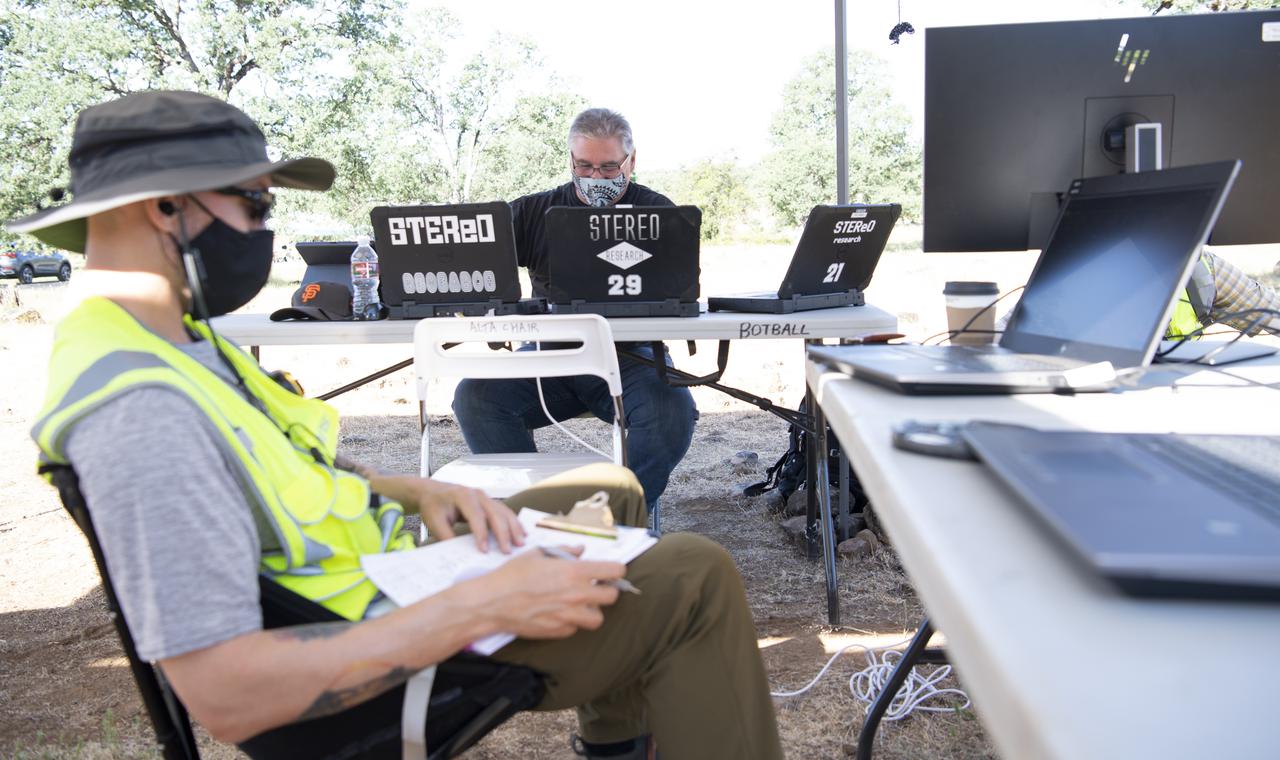
Bill McCarthy, software engineer and research laptop operator for STEReO, the Scalable Traffic Management for Emergency Response Operations project, at NASA's Ames Research Center, is seen as the STEReO teams works through scenarios, Wednesday, May 5, 2021 as Cal Fire conducts aerial fire fighting training exercises near Redding, California. STEReO, the Scalable Traffic Management for Emergency Response Operations project, led by NASA’s Ames Research Center, builds on NASA’s expertise in air traffic management, human factors research, and autonomous technology development to apply the agency’s work in Unmanned Aircraft Systems Traffic Management, or UTM, to public safety uses. Photo Credit: (NASA/Joel Kowsky)
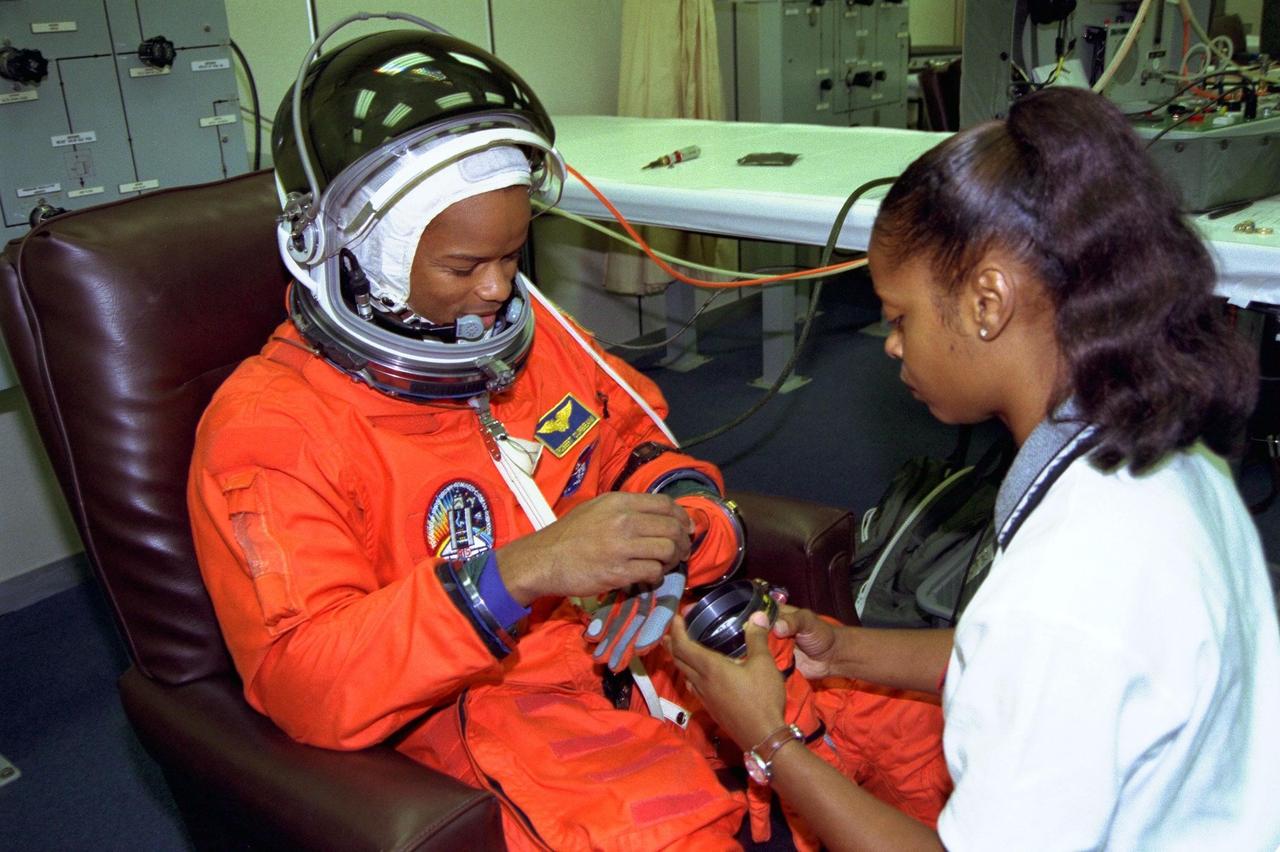
STS-85 Mission Specialist Robert L. Curbeam, Jr. looks down at his glove as a suit technician helps him with the other as he undergoes suitup in the Operations and Checkout (O&C) Building. He is a lieutenant commander in the Navy and is a former radar intercept officer. Curbeam holds a master’s degree in aeronautical engineering and was selected as an astronaut in 1994. On TS-85, Curbeam will serve as the expert for the operation of the Cryogenic Infrared Spectrometers and Telescopes for the Atmosphere-Shuttle Pallet Satellite-2 (CRISTA-SPAS-2) free-flyer, Technology Applications and Science-1 (TAS-1) and science, and International Extreme Ultraviolet Hitchhiker-2 payloads. He will also serve as the flight engineer during ascent and reentry operations
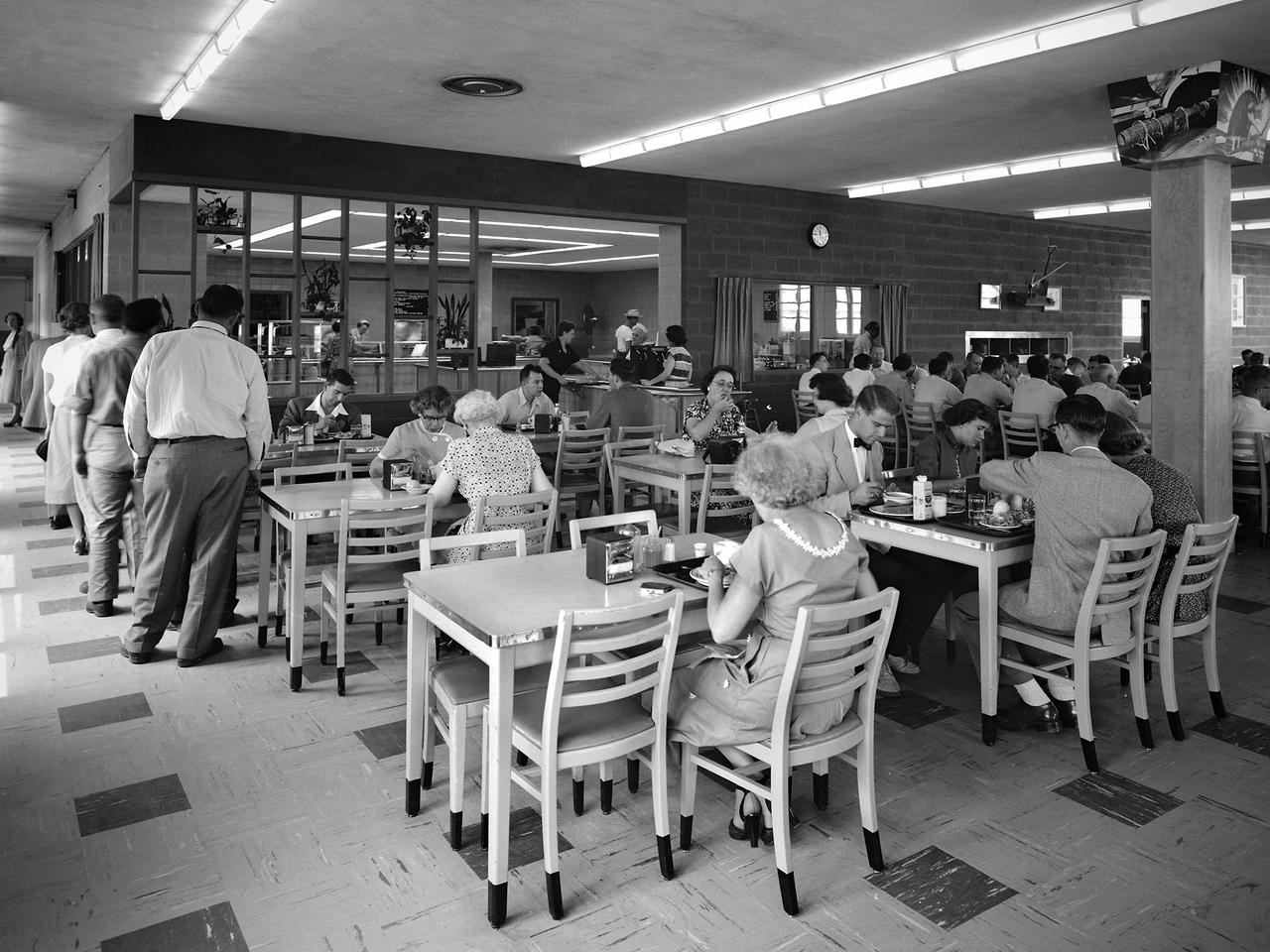
NACA staff members queue up in the Lewis Flight Propulsion Laboratory cafeteria in August 1952. The cafeteria originally opened in November 1942 inside the south end of the Engine Research Building. A non-profit Exchange was established to handle the finances, while Helen Thompson, a German born pastry cook, ran the day-to-day operations. Employees could also purchase her bakery to take home with them. Services were expanded to include a lunch counter and a food cart that ferried meals to the facilities. By the end of World War II the cafeteria was serving nearly 1600 meals daily in a space designed for half of that. In 1951 a new wing was added to the Utilities Building to accommodate an expanded cafeteria, seen in this photograph. In the mid-1960s an auxiliary unit was built in the new Development Engineering Building located across Brookpark Road.
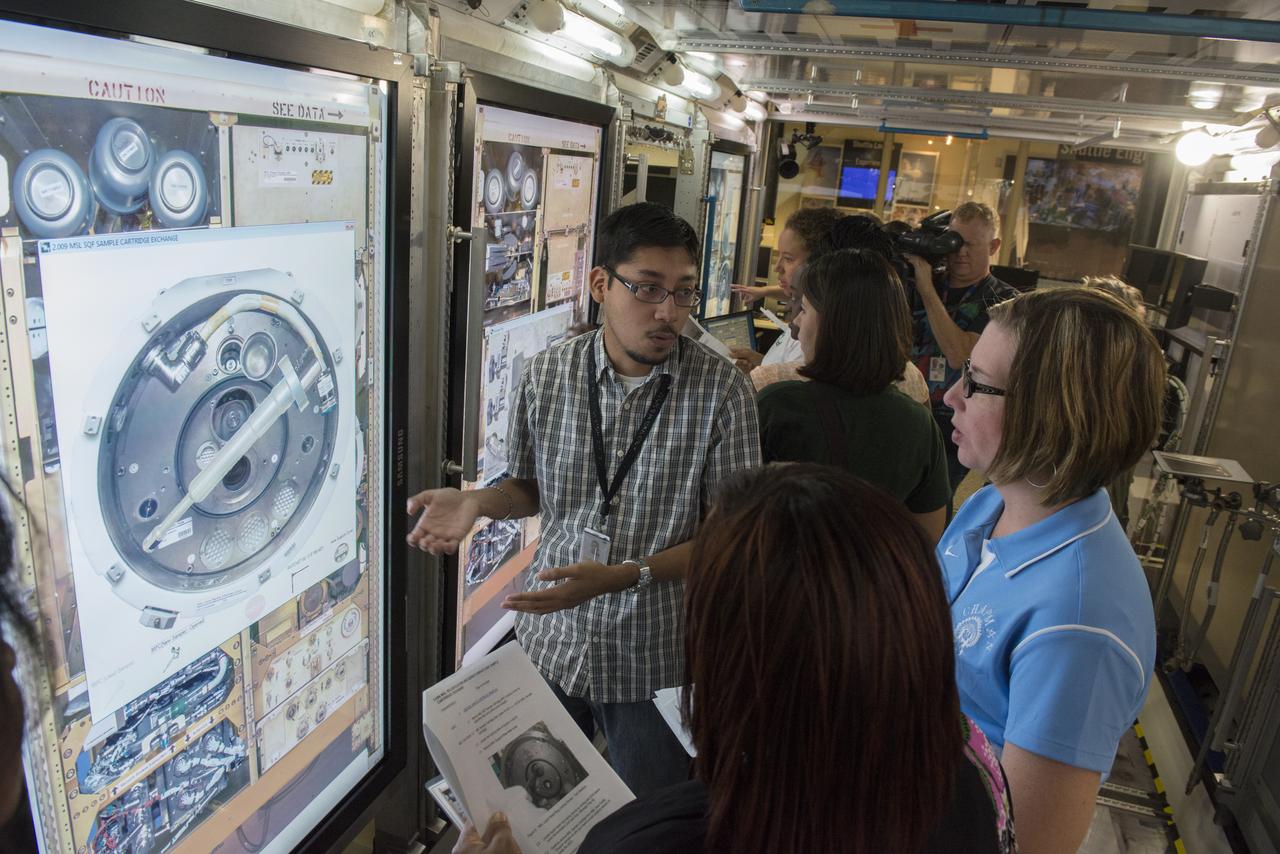
VINCENT VIDAURRI, CENTER, A TECHNICAL SPECIALIST WITH TELEDYNE BROWN ENGINEERING SUPPORTING MISSION OPERATIONS AT THE MARSHALL SPACE FLIGHT CENTER, PROVIDES DETAILS ABOUT A MOCK-UP OF THE INTERNATIONAL SPACE STATION SCIENCE LAB TO A GROUP OF AREA TEACHERS AS PART OF "BACK-2-SCHOOL DAY." TEAM REDSTONE -- WHICH INCLUDES THE MARSHALL SPACE FLIGHT CENTER AND U.S. ARMY ORGANIZATIONS ON REDSTONE ARSENAL -- INVITED 50 TEACHERS TO TOUR REDSTONE ARSENAL AUG. 15, GIVING THEM AN OPPORTUNITY TO LEARN OF AND SEE RESOURCES AVAILABLE TO THEM AND THEIR STUDENTS. THE TOUR FOCUSED ON SITES AVAILABLE FOR FIELD TRIPS FOR STUDENTS STUDYING MATH, SCIENCE, TECHNOLOGY AND ENGINEERING. STOPS INCLUDED MARSHALL'S PAYLOAD OPERATIONS INTEGRATION CENTER AND THE HIGH SCHOOLS UNITED WITH NASA TO CREATE HARDWARE LAB, OR HUNCH, BOTH LOCATED IN BUILDING 4663. THE PROGRAM GIVES HIGH SCHOOL STUDENTS THE CHANCE TO WORK WITH NASA ENGINEERS TO DESIGN AND BUILD HARDWARE FOR USE ON THE INTERNATIONAL SPACE STATION. THE TEACHERS ALSO VISITED THE ARMY AVIATION & MISSILE RESEARCH DEVELOPMENT & ENGINEERING CENTER AND THE REDSTONE TEST CENTER