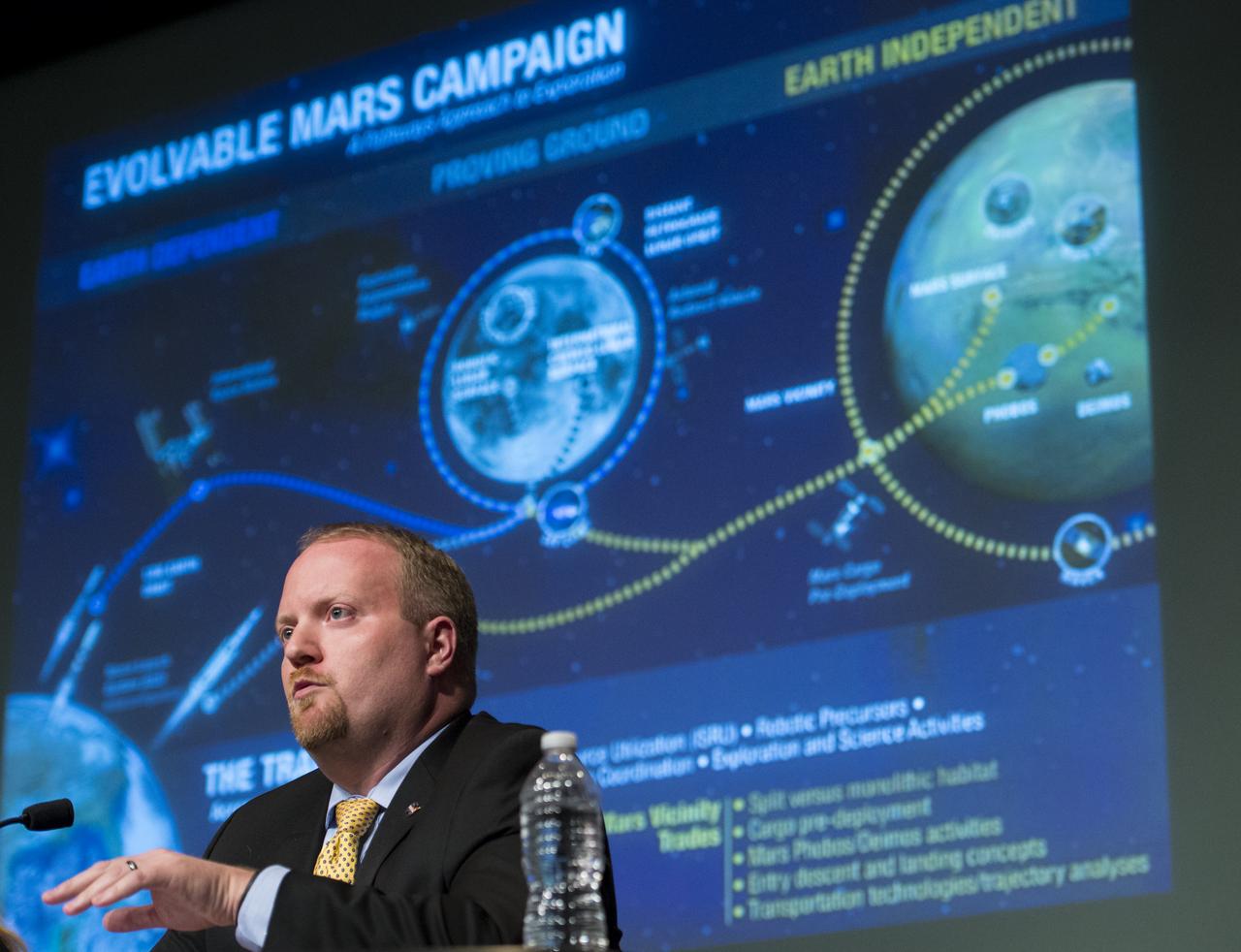
Jason Crusan, Director of NASA's Advanced Exploration Systems Division, speaks during an Exploration Forum showcasing NASA's human exploration path to Mars in the James E. Webb Auditorium at NASA Headquarters on Tuesday, April 29, 2014. Photo Credit: (NASA/Joel Kowsky)
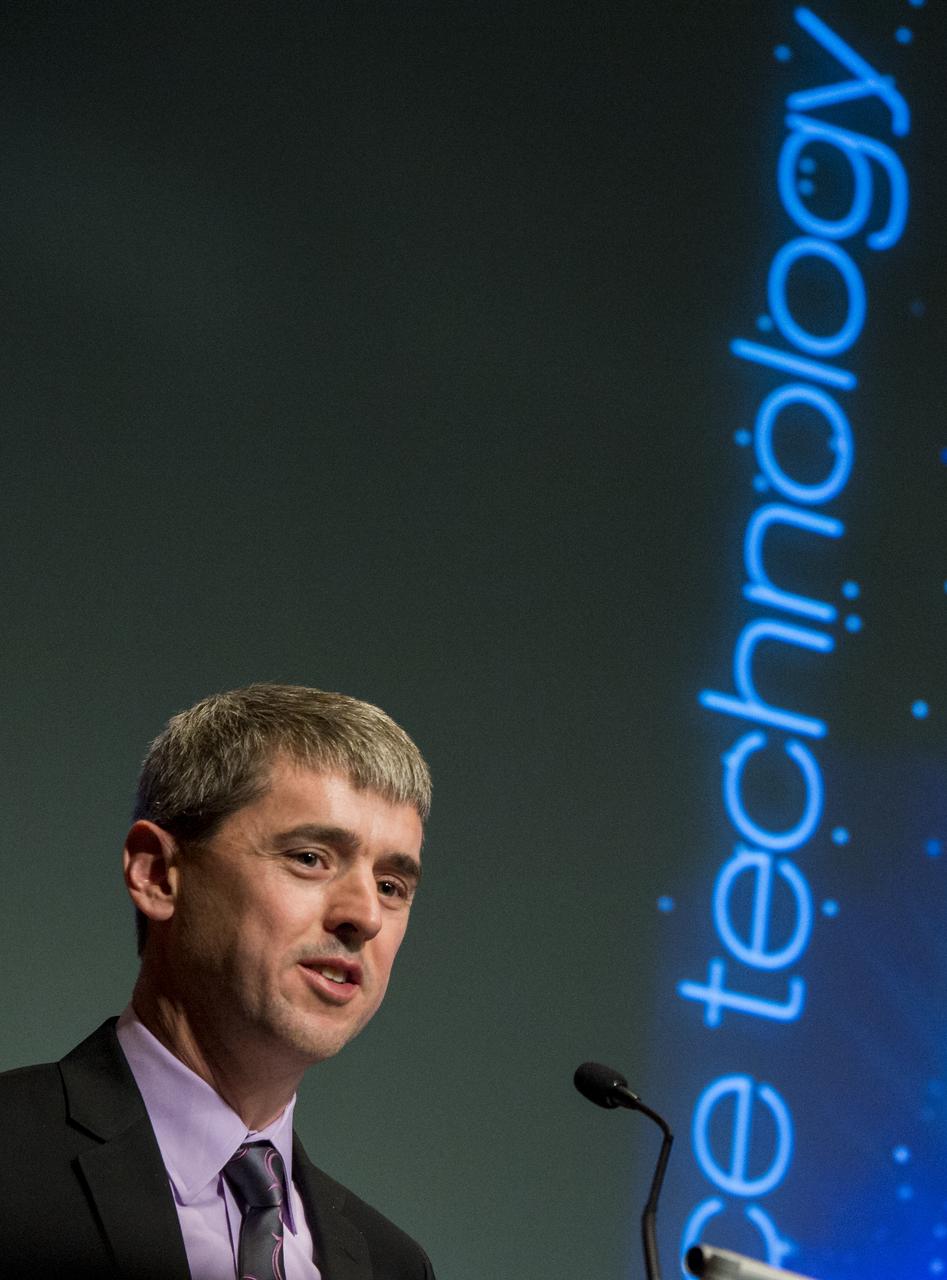
Randy Lillard, Program Executive for Technology Demonstration Missions of NASA's Space Technology Mission DIrectorate, speaks during an Exploration Forum showcasing NASA's human exploration path to Mars in the James E. Webb Auditorium at NASA Headquarters on Tuesday, April 29, 2014. Photo Credit: (NASA/Joel Kowsky)
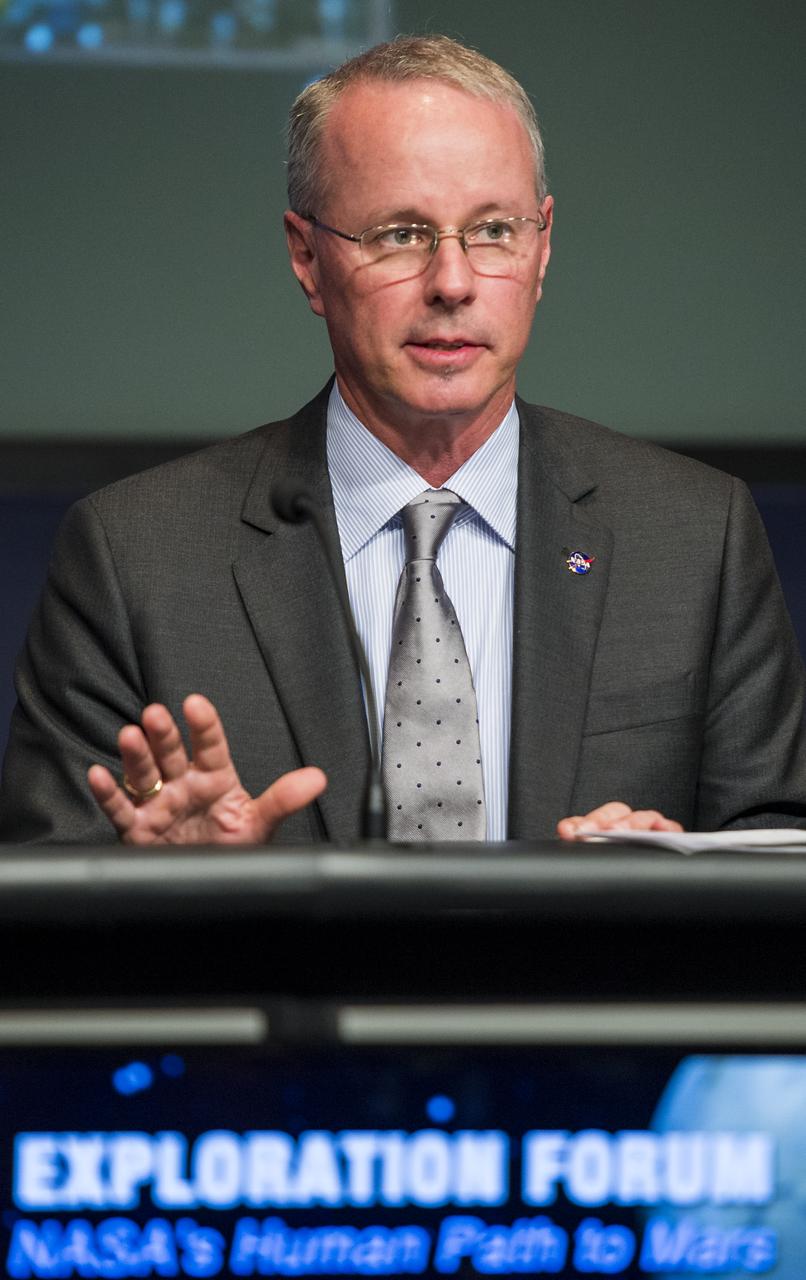
David Miller, NASA Chief Technologist, participate in a panel discussion during an Exploration Forum showcasing NASA's human exploration path to Mars in the James E. Webb Auditorium at NASA Headquarters on Tuesday, April 29, 2014. Photo Credit: (NASA/Joel Kowsky)
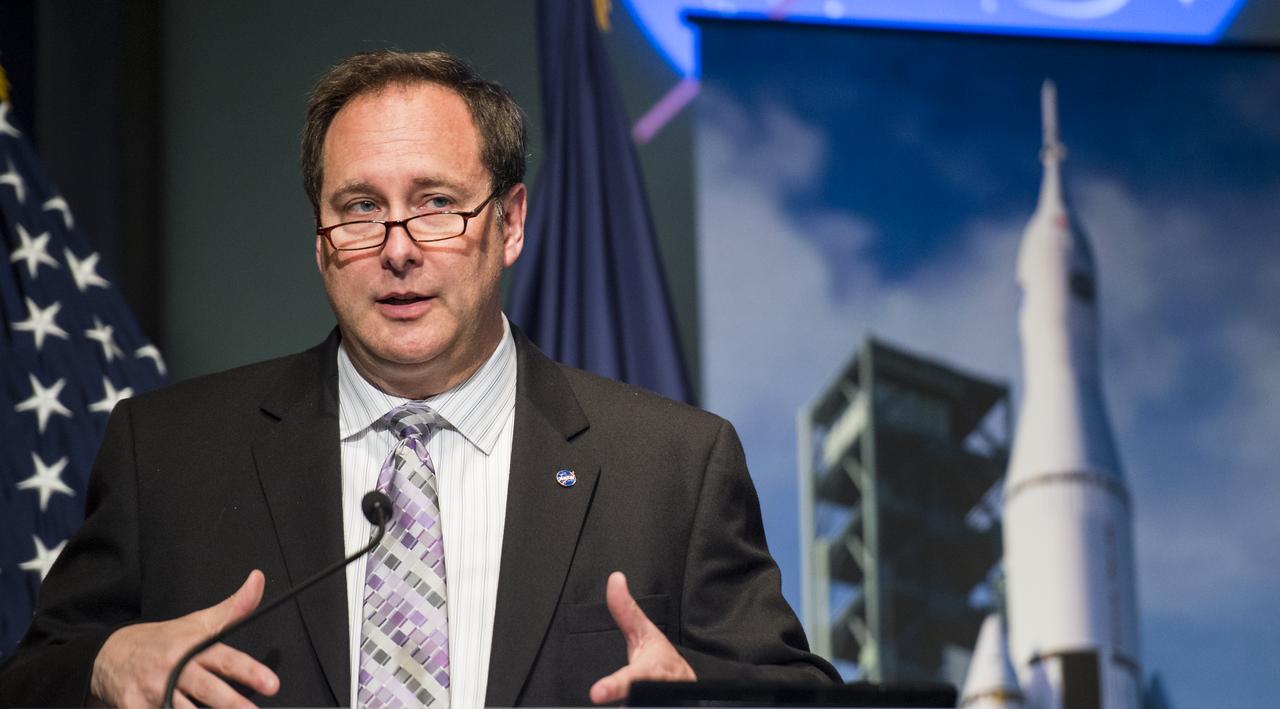
Robert Lightfoot, NASA Associate Adminstrator, delivers closing remarks at an Exploration Forum showcasing NASA's human exploration path to Mars in the James E. Webb Auditorium at NASA Headquarters on Tuesday, April 29, 2014. Photo Credit: (NASA/Joel Kowsky)
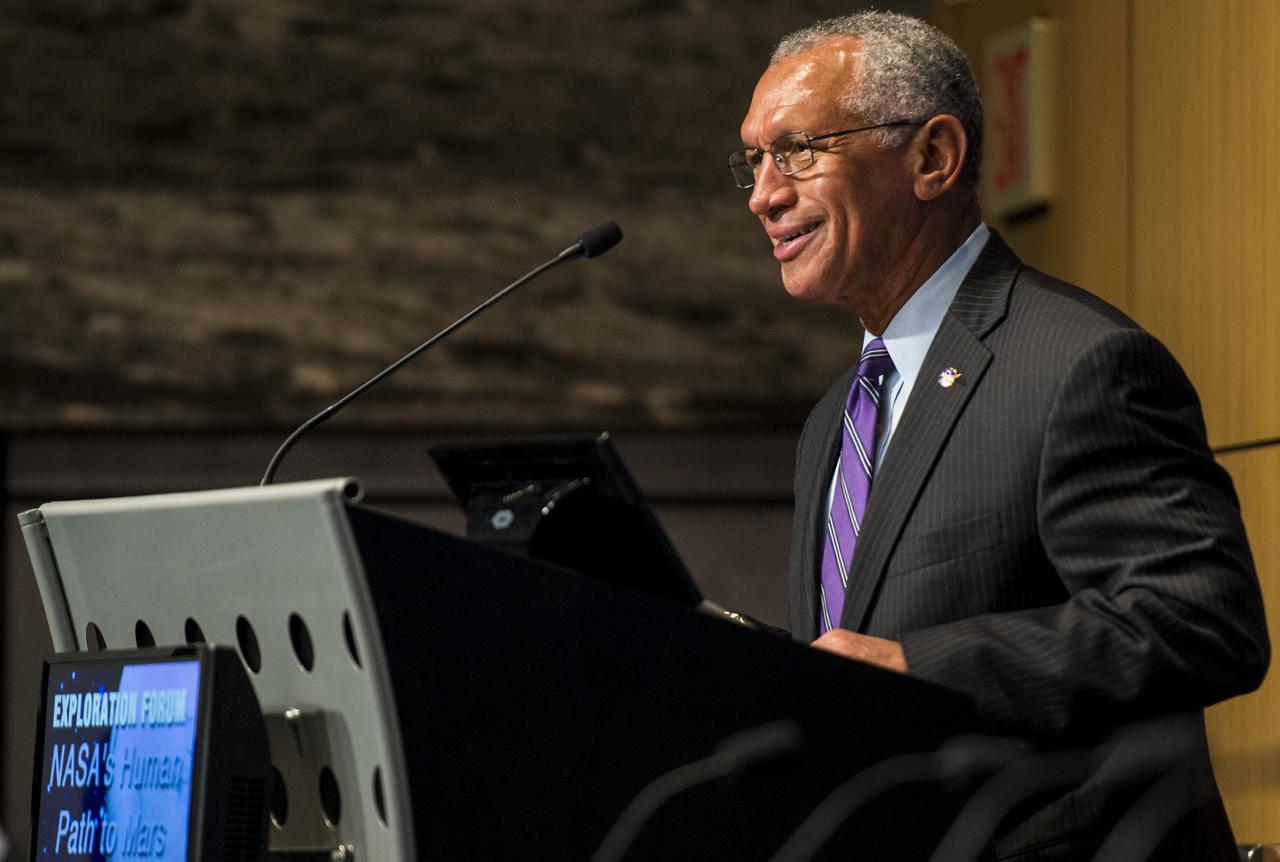
NASA Administrator Charles Bolden speaks during an Exploration Forum showcasing NASA's human exploration path to Mars in the James E. Webb Auditorium at NASA Headquarters on Tuesday, April 29, 2014. Photo Credit: (NASA/Joel Kowsky)
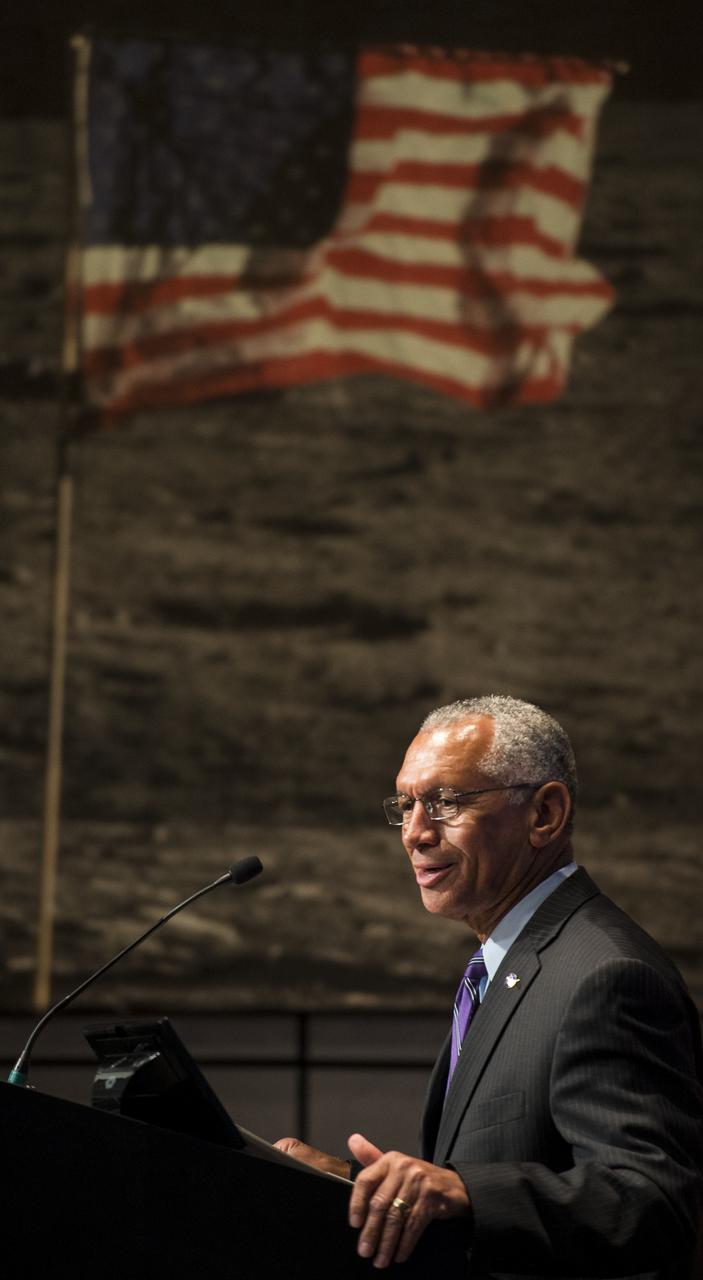
NASA Administrator Charles Bolden speaks during an Exploration Forum showcasing NASA's human exploration path to Mars in the James E. Webb Auditorium at NASA Headquarters on Tuesday, April 29, 2014. Photo Credit: (NASA/Joel Kowsky)
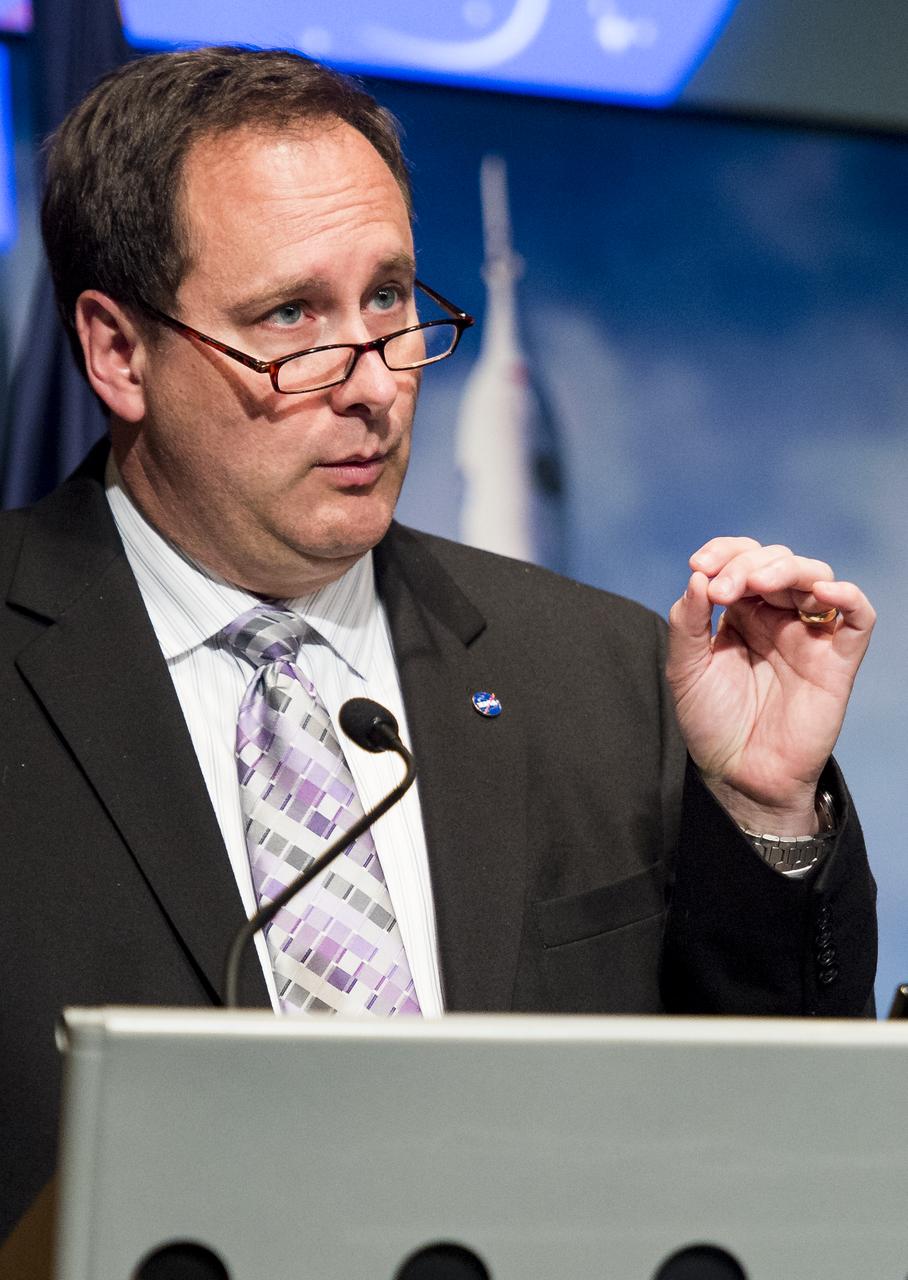
Robert Lightfoot, NASA Associate Adminstrator, delivers closing remarks at an Exploration Forum showcasing NASA's human exploration path to Mars in the James E. Webb Auditorium at NASA Headquarters on Tuesday, April 29, 2014. Photo Credit: (NASA/Joel Kowsky)
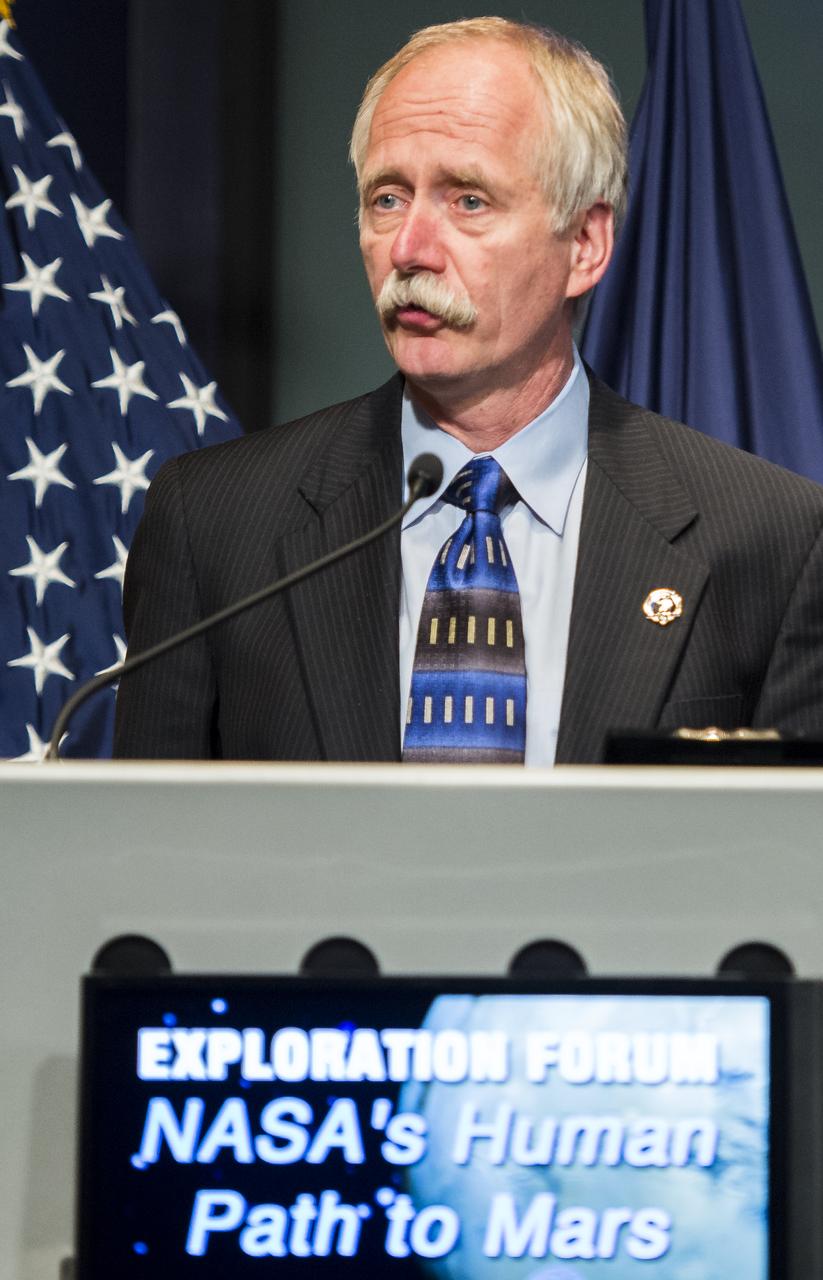
William Gerstenmaier, NASA Associate Administrator for Human Exploration and Operations, speaks during an Exploration Forum showcasing NASA's human exploration path to Mars in the James E. Webb Auditorium at NASA Headquarters on Tuesday, April 29, 2014. Photo Credit: (NASA/Joel Kowsky)
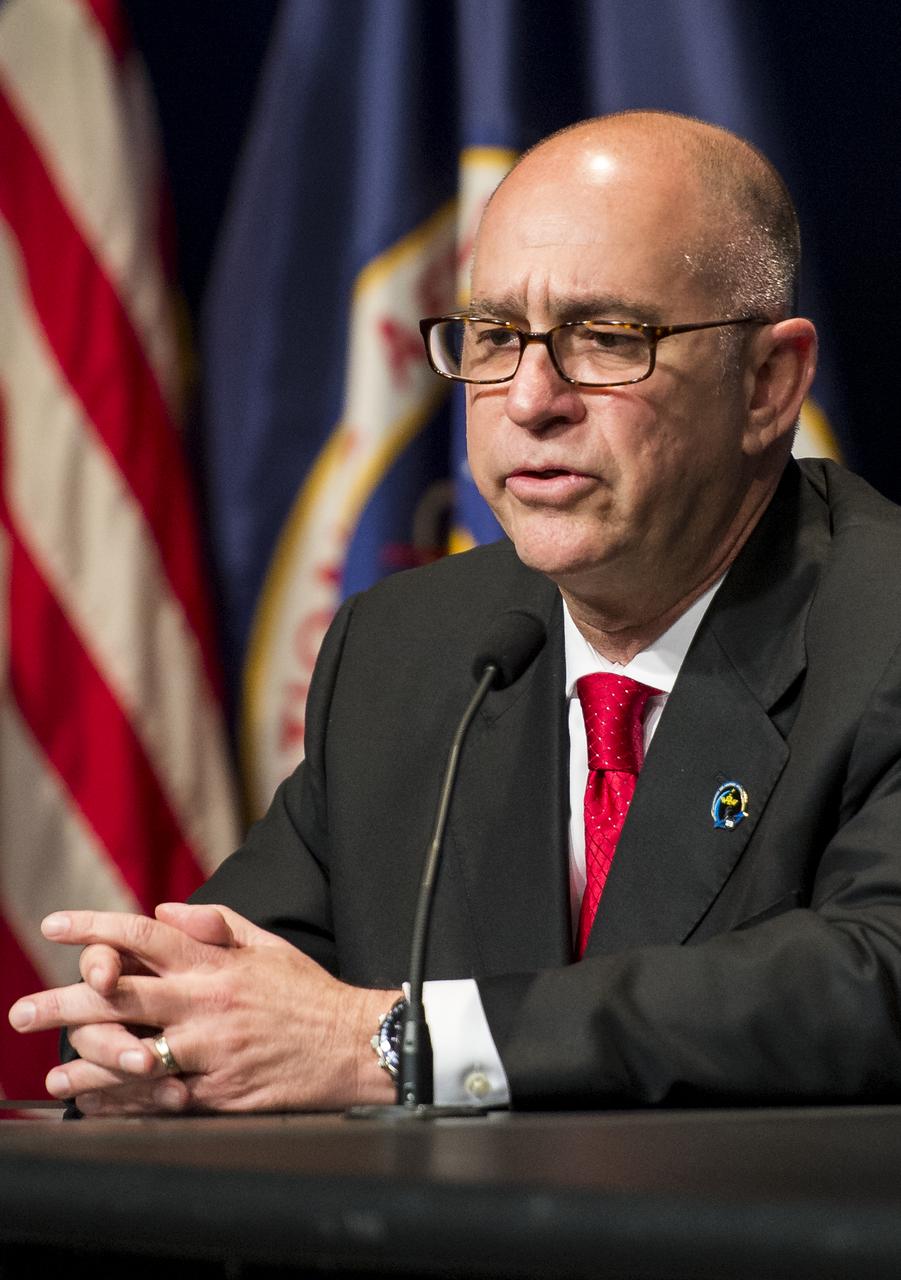
Sam Scimemi, Director of NASA's International Space Station Division, speaks during an Exploration Forum showcasing NASA's human exploration path to Mars in the James E. Webb Auditorium at NASA Headquarters on Tuesday, April 29, 2014. Photo Credit: (NASA/Joel Kowsky)
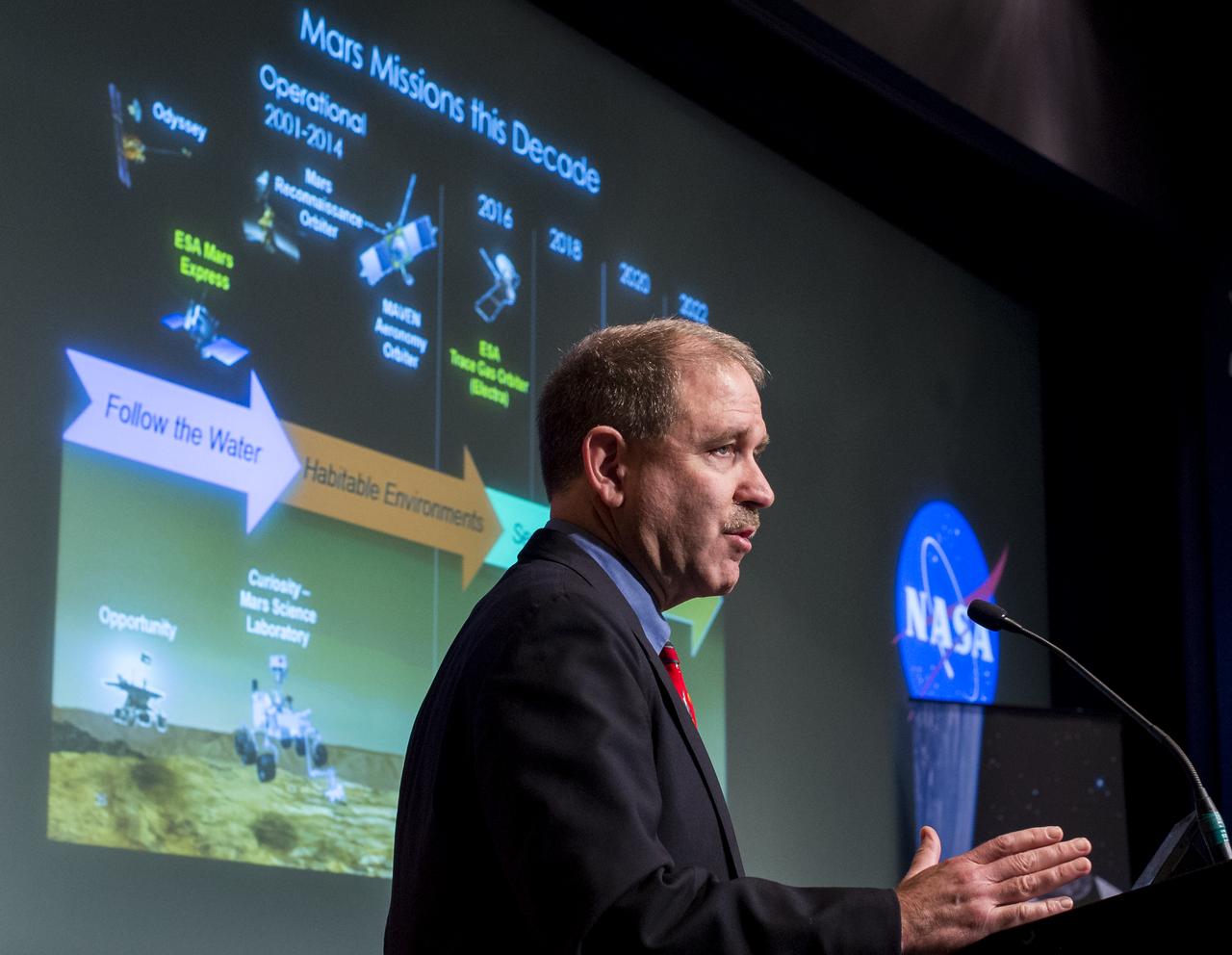
John Grunsfeld, NASA Associate Administrator for the Science Mission Directorate, speaks during an Exploration Forum showcasing NASA's human exploration path to Mars in the James E. Webb Auditorium at NASA Headquarters on Tuesday, April 29, 2014. Photo Credit: (NASA/Joel Kowsky)
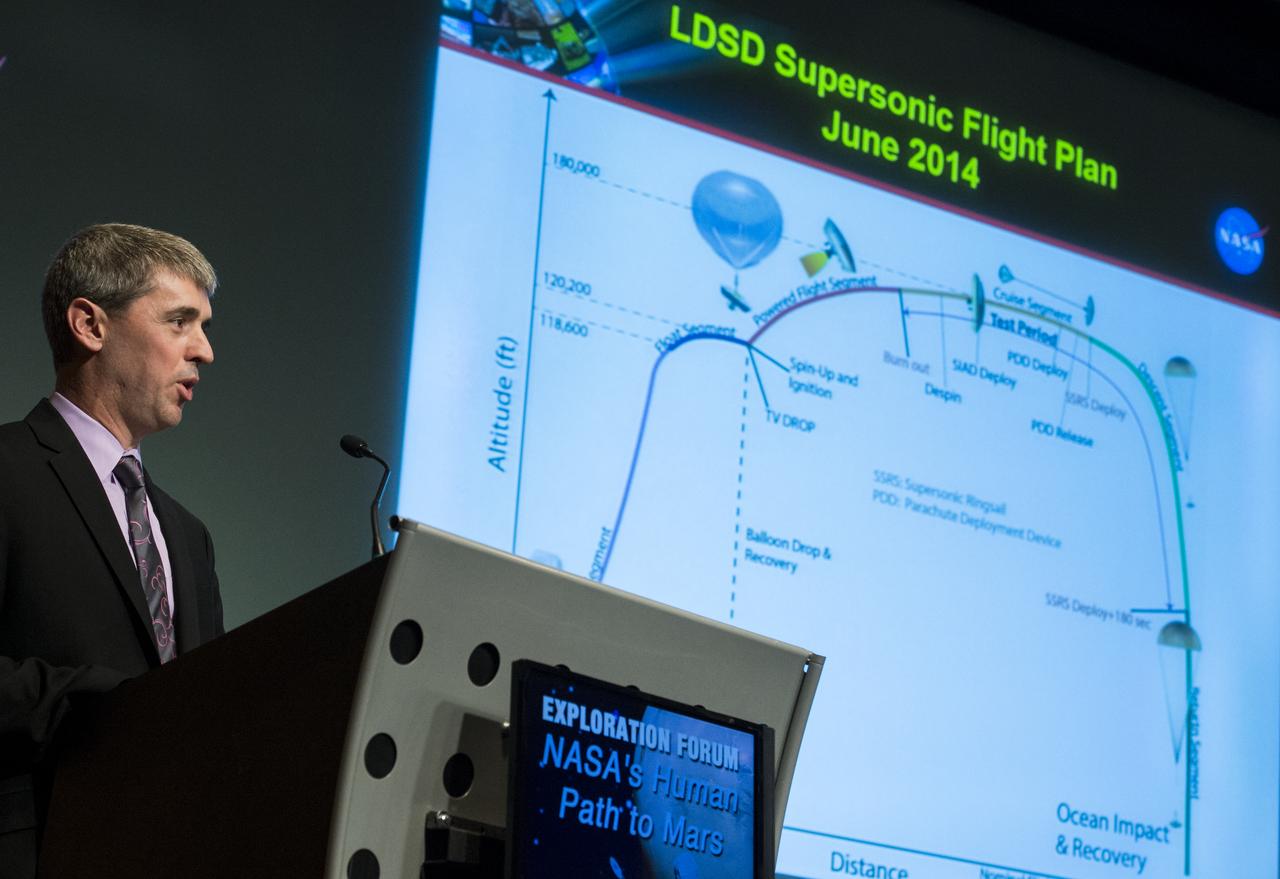
Randy Lillard, Program Executive for Technology Demonstration Missions of NASA's Space Technology Mission DIrectorate, speaks about the upcoming Low-Density Supersonic Decelerator demonstration during an Exploration Forum showcasing NASA's human exploration path to Mars in the James E. Webb Auditorium at NASA Headquarters on Tuesday, April 29, 2014. Photo Credit: (NASA/Joel Kowsky)
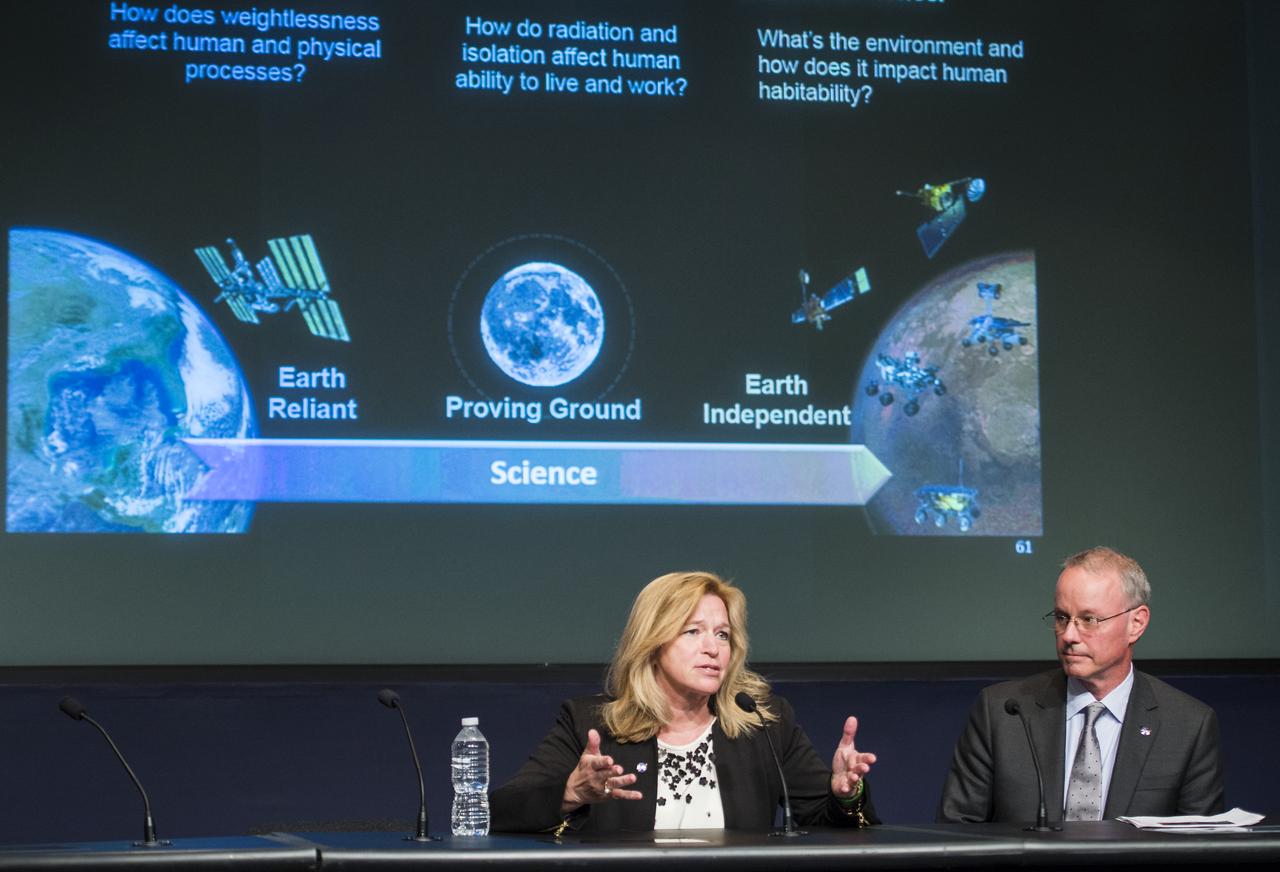
Ellen Stofan, NASA Chief Scientist, left, and David Miller, NASA Chief Technologist, right, participate in a panel discussion during an Exploration Forum showcasing NASA's human exploration path to Mars in the James E. Webb Auditorium at NASA Headquarters on Tuesday, April 29, 2014. Photo Credit: (NASA/Joel Kowsky)
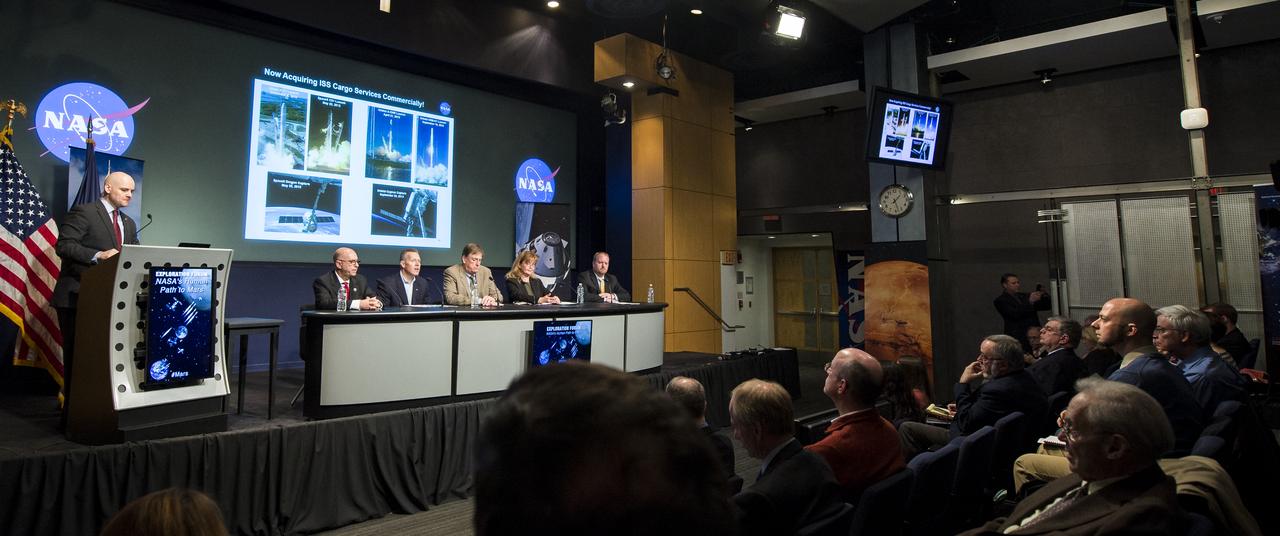
Sam Scimemi, Director of NASA's International Space Station Division, second from left, Phil McAlister, Director of NASA's Commercial Spaceflight Division, third from left, Dan Dumbacher, Deputy Associate Administrator of NASA's Exploration Systems Development, center, Michele Gates, Senior Technical Advisor of NASA's Human Exploration and Operations Mission Directorate, second from right, and Jason Crusan, Director of NASA's Advanced Exploration Systems Division, right, sit on a panel during an Exploration Forum showcasing NASA's human exploration path to Mars in the James E. Webb Auditorium at NASA Headquarters on Tuesday, April 29, 2014. Photo Credit: (NASA/Joel Kowsky)
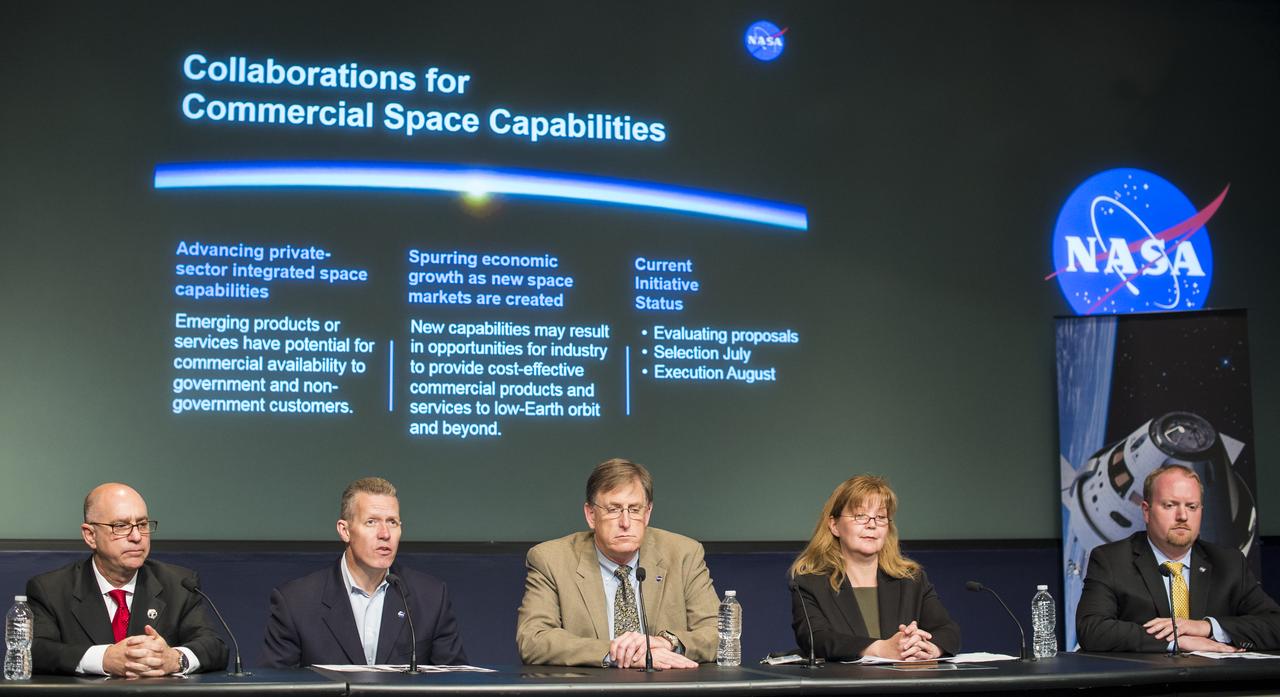
Sam Scimemi, Director of NASA's International Space Station Division, left, Phil McAlister, Director of NASA's Commercial Spaceflight Division, second from left, Dan Dumbacher, Deputy Associate Administrator of NASA's Exploration Systems Development, center, Michele Gates, Senior Technical Advisor of NASA's Human Exploration and Operations Mission Directorate, second from right, and Jason Crusan, Director of NASA's Advanced Exploration Systems Division, right, sit on a panel during an Exploration Forum showcasing NASA's human exploration path to Mars in the James E. Webb Auditorium at NASA Headquarters on Tuesday, April 29, 2014. Photo Credit: (NASA/Joel Kowsky)
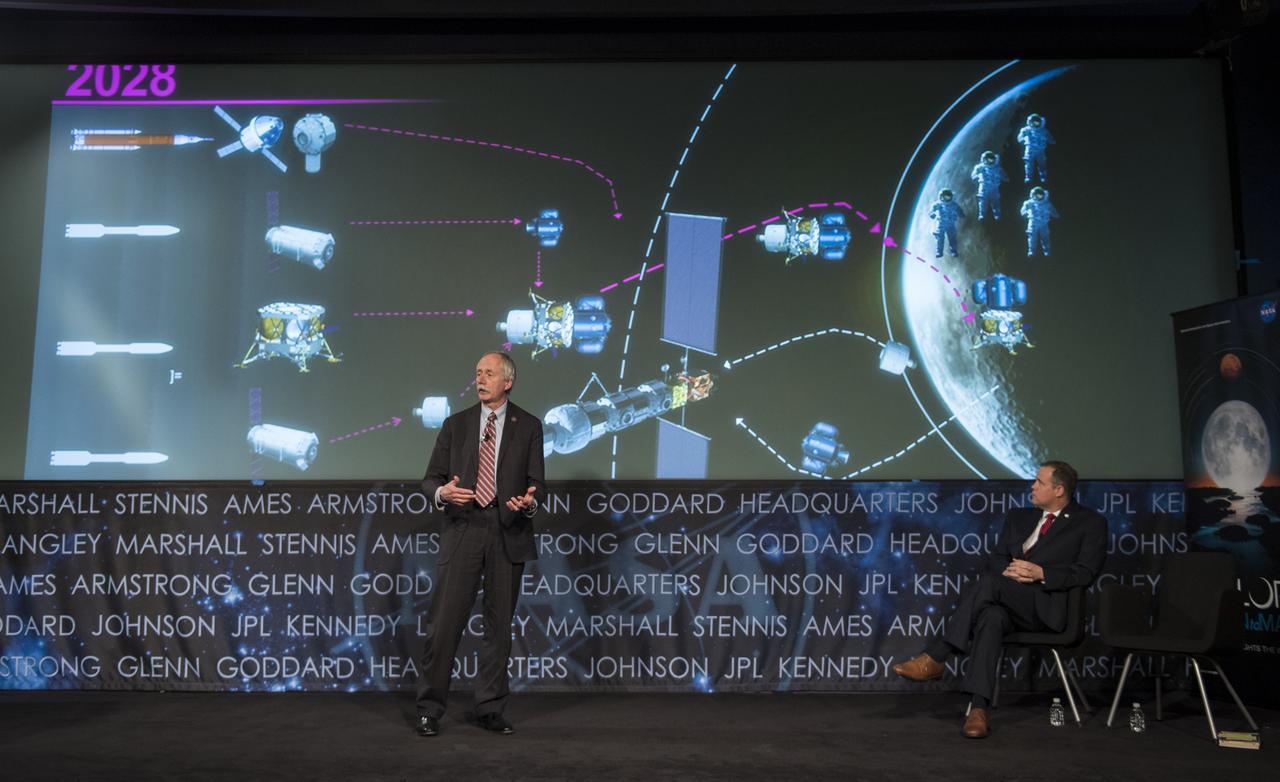
NASA Associate Administrator for the Human Exploration and Operations Mission Directorate William Gerstenmaier speaks at the opening of an industry forum on the agency's lunar exploration plans, Thursday, Feb. 14, 2019 at NASA Headquarters in Washington. The agency will work with industry to study and refine the approach to landing on the Moon, which includes a system of three separate elements that will provide astronauts transportation, landing, and safe return. Photo Credit: (NASA/Joel Kowsky)
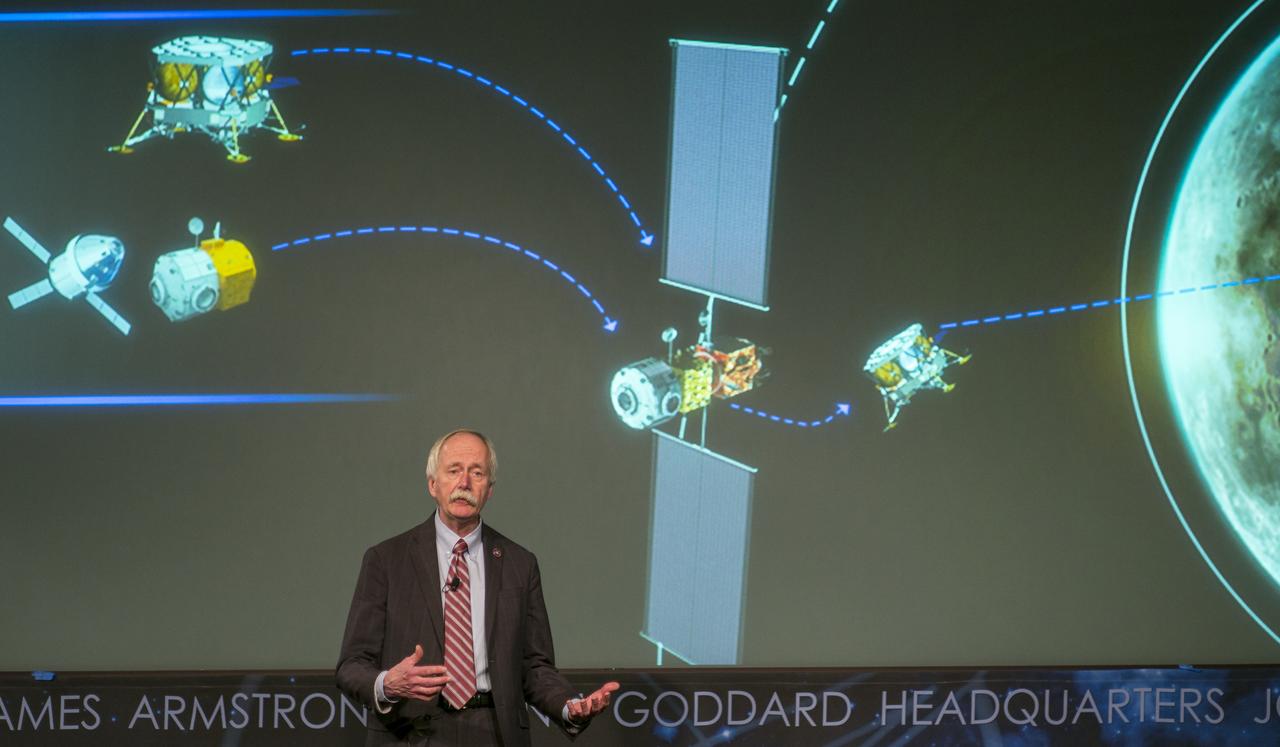
NASA Associate Administrator for the Human Exploration and Operations Mission Directorate William Gerstenmaier speaks at the opening of an industry forum on the agency's lunar exploration plans, Thursday, Feb. 14, 2019 at NASA Headquarters in Washington. The agency will work with industry to study and refine the approach to landing on the Moon, which includes a system of three separate elements that will provide astronauts transportation, landing, and safe return. Photo Credit: (NASA/Joel Kowsky)
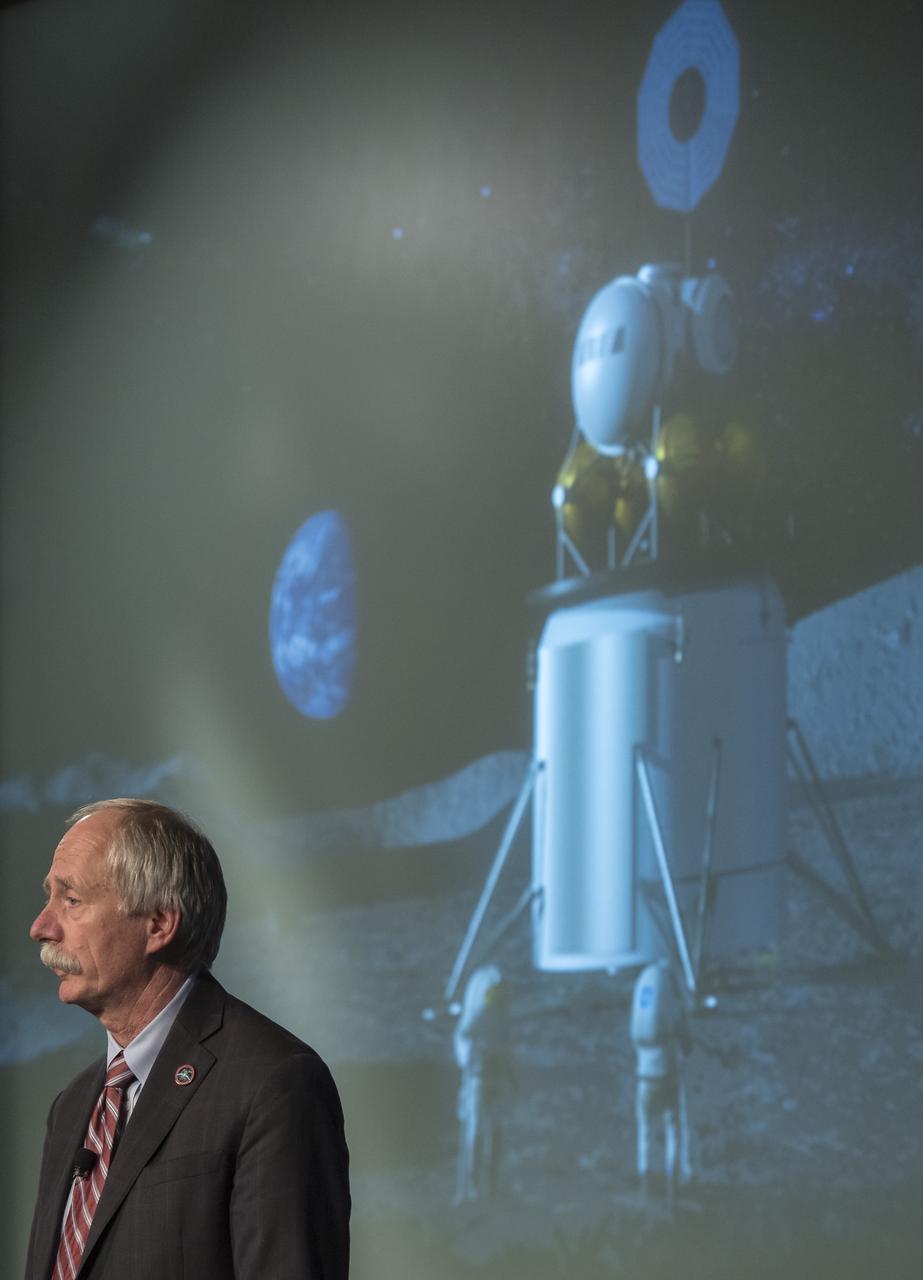
NASA Associate Administrator for the Human Exploration and Operations Mission Directorate William Gerstenmaier speaks at the opening of an industry forum on the agency's lunar exploration plans, Thursday, Feb. 14, 2019 at NASA Headquarters in Washington. The agency will work with industry to study and refine the approach to landing on the Moon, which includes a system of three separate elements that will provide astronauts transportation, landing, and safe return. Photo Credit: (NASA/Joel Kowsky)
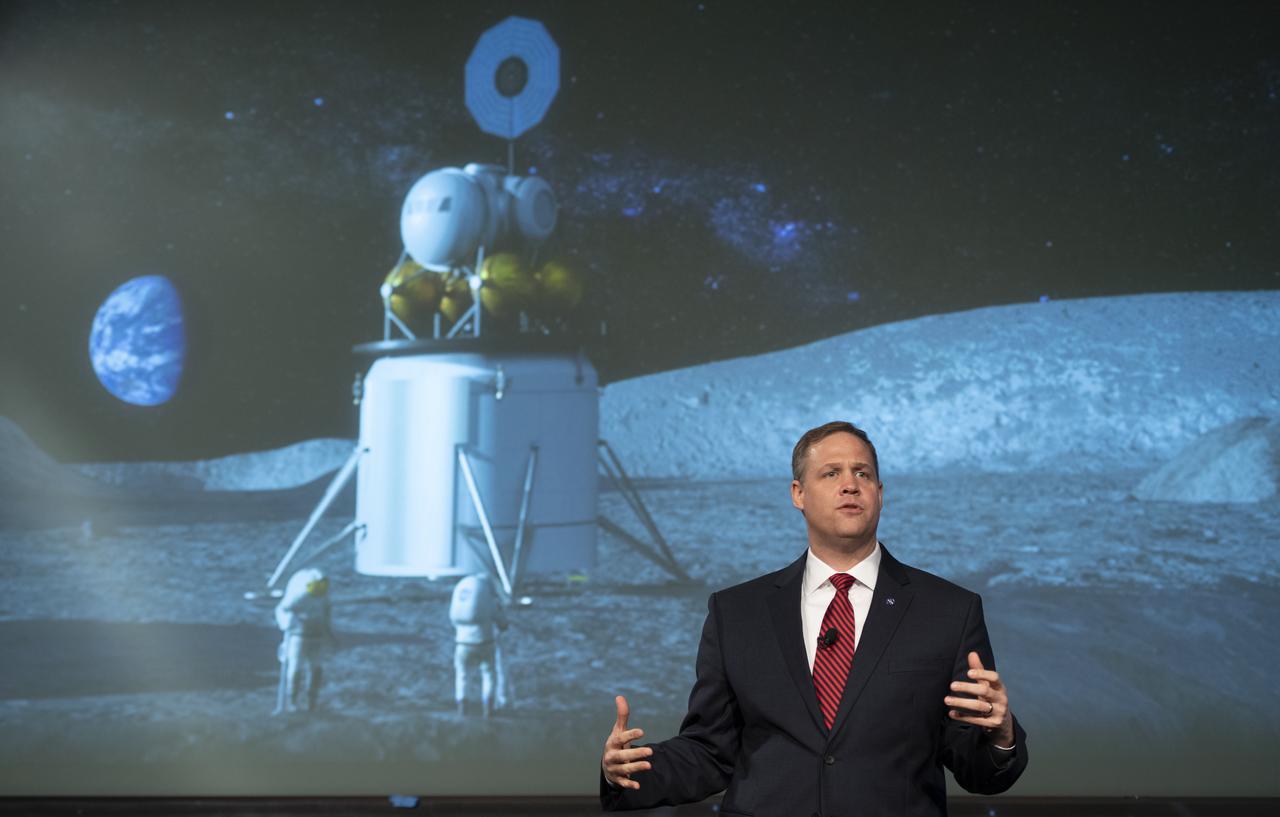
NASA Administrator Jim Bridenstine speaks at the opening of an industry forum on the agency's lunar exploration plans, Thursday, Feb. 14, 2019 at NASA Headquarters in Washington. The agency will work with industry to study and refine the approach to landing on the Moon, which includes a system of three separate elements that will provide astronauts transportation, landing, and safe return. Photo Credit: (NASA/Joel Kowsky)
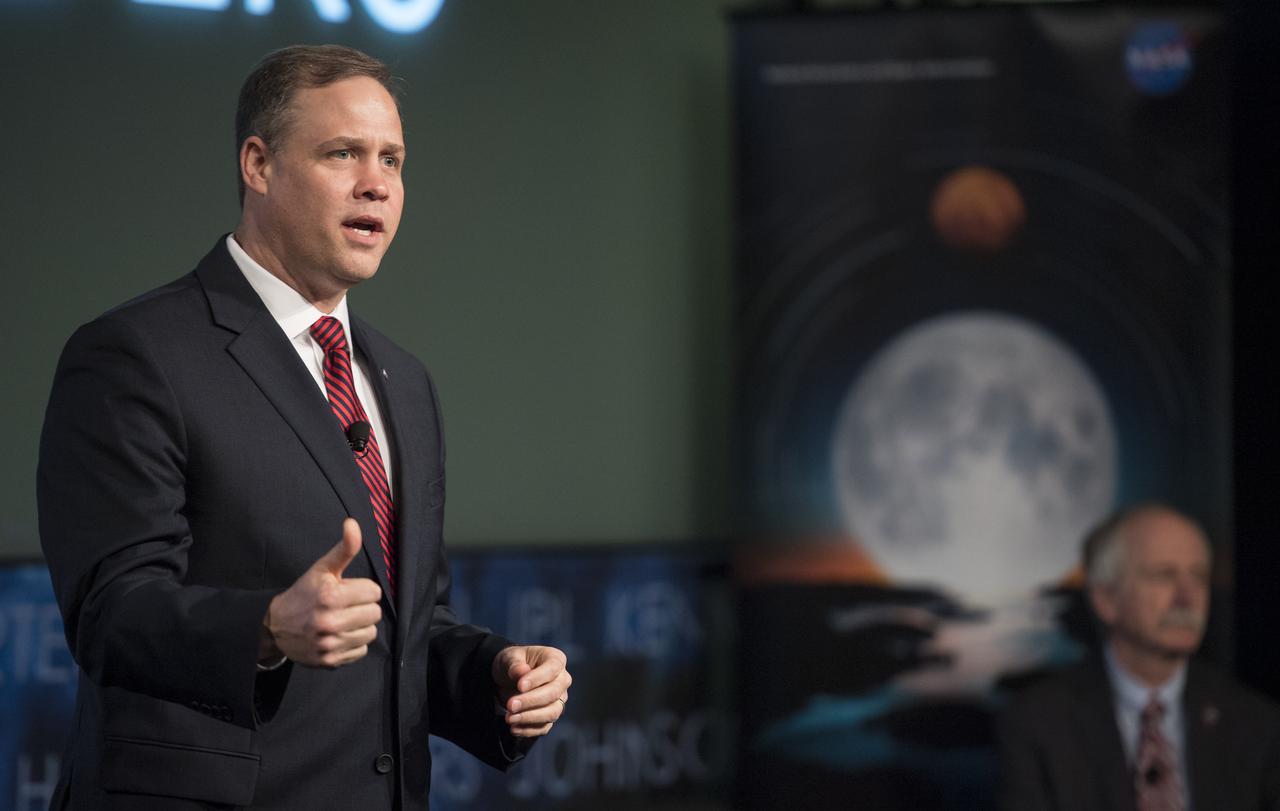
NASA Administrator Jim Bridenstine speaks at the opening of an industry forum on the agency's lunar exploration plans, Thursday, Feb. 14, 2019 at NASA Headquarters in Washington. The agency will work with industry to study and refine the approach to landing on the Moon, which includes a system of three separate elements that will provide astronauts transportation, landing, and safe return. Photo Credit: (NASA/Joel Kowsky)
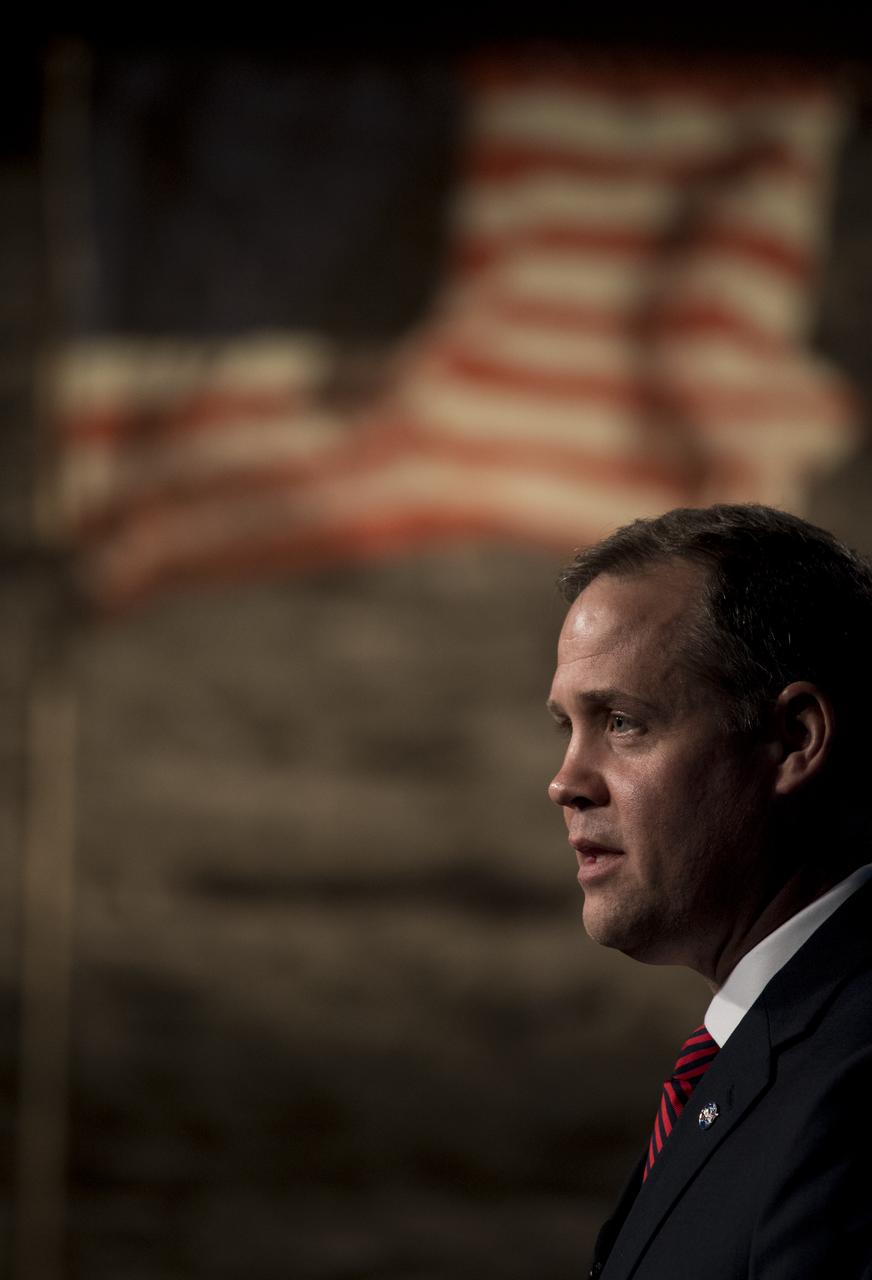
NASA Administrator Jim Bridenstine speaks at the opening of an industry forum on the agency's lunar exploration plans, Thursday, Feb. 14, 2019 at NASA Headquarters in Washington. The agency will work with industry to study and refine the approach to landing on the Moon, which includes a system of three separate elements that will provide astronauts transportation, landing, and safe return. Photo Credit: (NASA/Joel Kowsky)
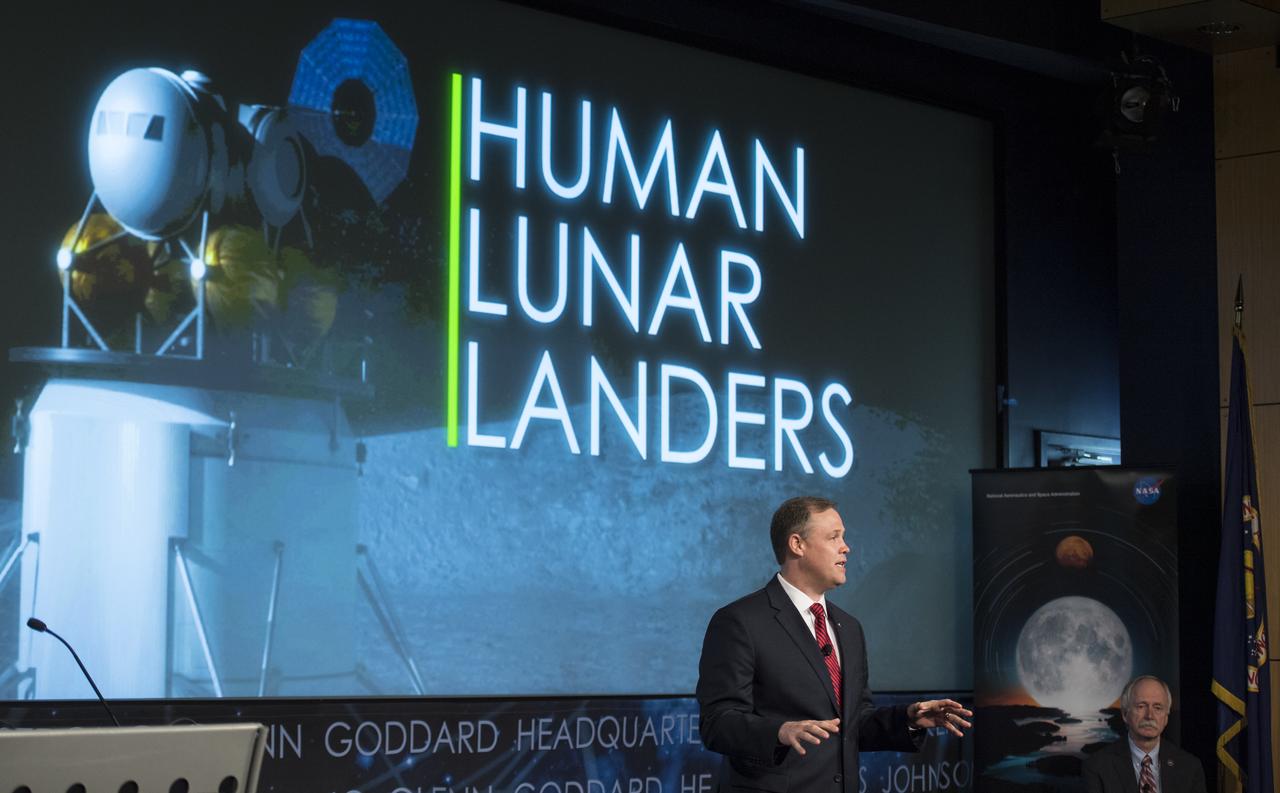
NASA Administrator Jim Bridenstine speaks at the opening of an industry forum on the agency's lunar exploration plans, Thursday, Feb. 14, 2019 at NASA Headquarters in Washington. The agency will work with industry to study and refine the approach to landing on the Moon, which includes a system of three separate elements that will provide astronauts transportation, landing, and safe return. Photo Credit: (NASA/Joel Kowsky)
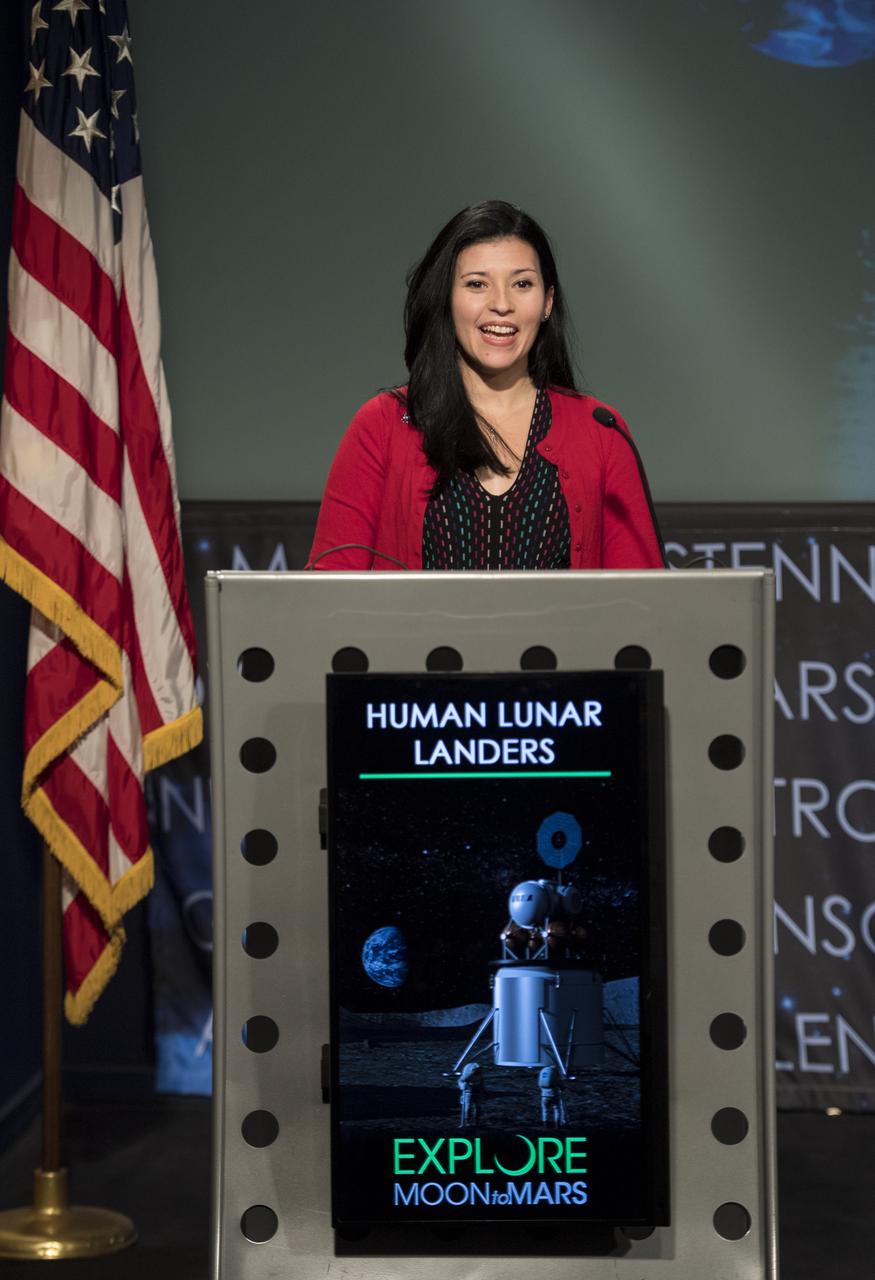
NASA Associate Administrator for the Office of Communications Bettina Inclán speaks at the opening an industry forum on the agency's lunar exploration plans, Thursday, Feb. 14, 2019 at NASA Headquarters in Washington. The agency will work with industry to study and refine the approach to landing on the Moon, which includes a system of three separate elements that will provide astronauts transportation, landing, and safe return. Photo Credit: (NASA/Joel Kowsky)
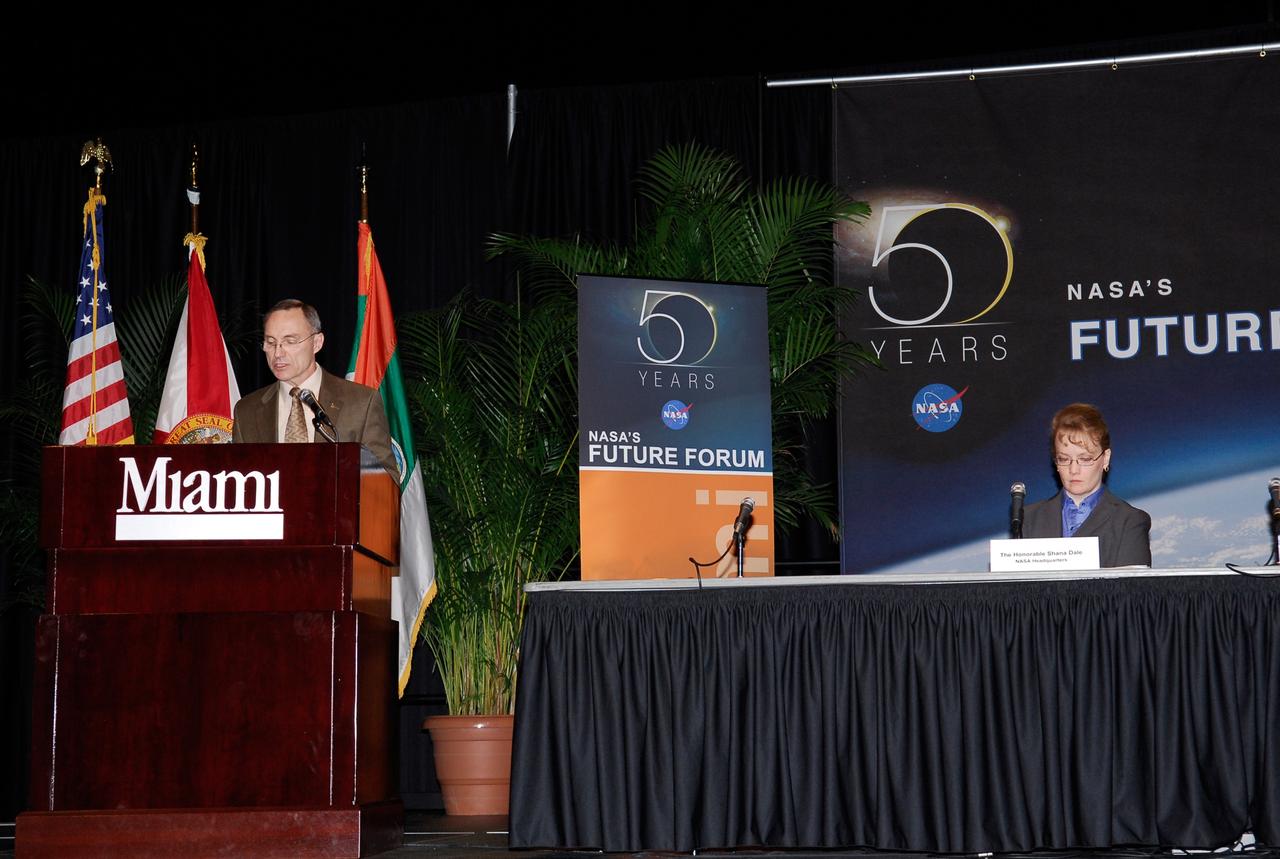
CAPE CANAVERAL, Fla. -- During NASA’s Future Forum in Miami, Carl Walz provides an overview of NASA’s Exploration Program. Walz is director of the Advanced Capabilities Division. At the table on the right is NASA Deputy Administrator Shana Dale. The forum focused on how space exploration benefits Florida's economy. The forum was held at the University of Miami's BankUnited Center and included presentations and panels. Also participating was Russell Romanella, director of the International Space Station and Spacecraft Processing. Photo credit: NASA/Kim Shiflett
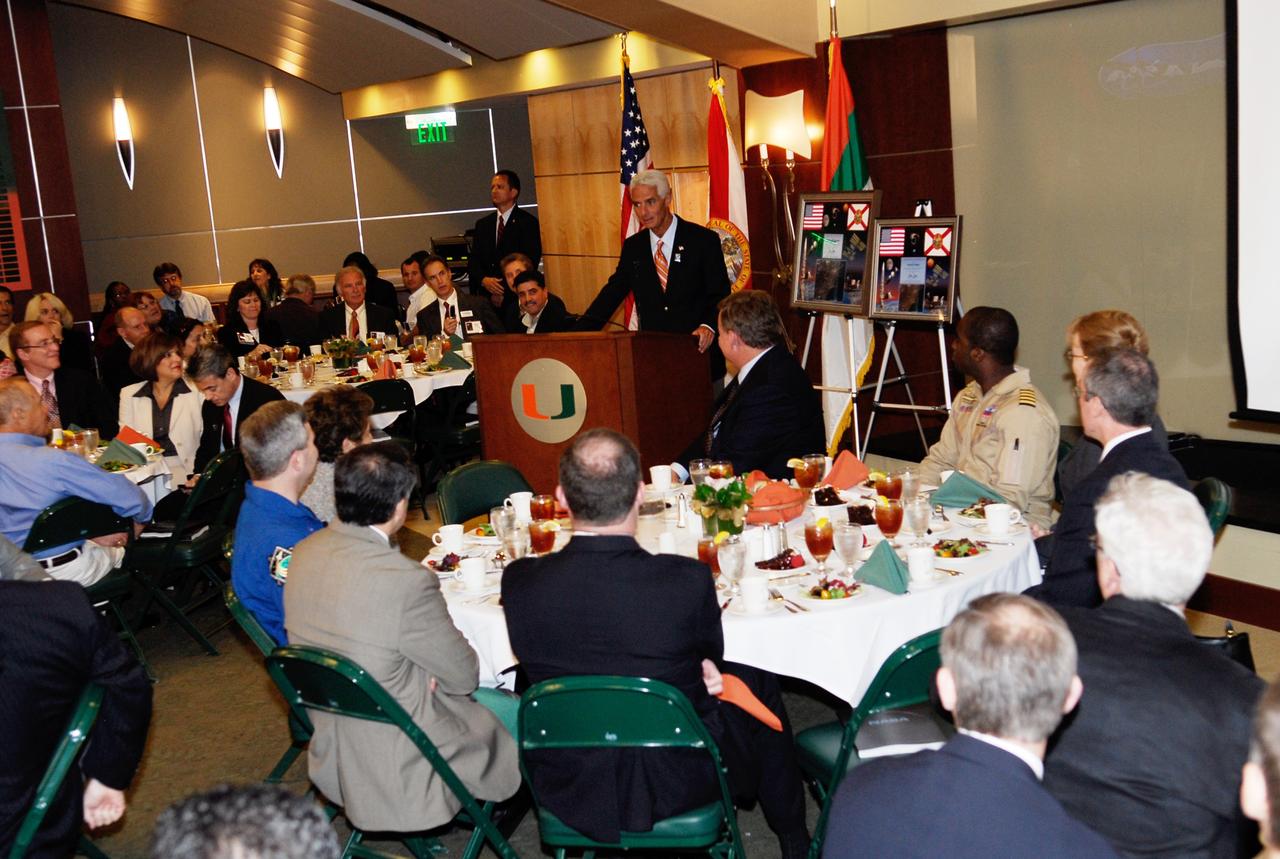
CAPE CANAVERAL, Fla. -- Florida Gov. Charlie Crist (center, by the podium) makes an appearance at the luncheon held during NASA’s Future Forum in Miami. The keynote presentation was given by astronaut Steve Frick, who was commander of the STS-122 shuttle mission. The forum focused on how space exploration benefits Florida's economy. The event, which included presentations and panels, was held at the University of Miami's BankUnited Center. Among those participating were NASA Deputy Administrator Shana Dale, astronaut Carl Walz, director of the Advanced Capabilities Division in NASA's Exploration Systems Mission Directorate, and Russell Romanella, director, International Space Station and Spacecraft Processing. Photo credit: NASA/Kim Shiflett
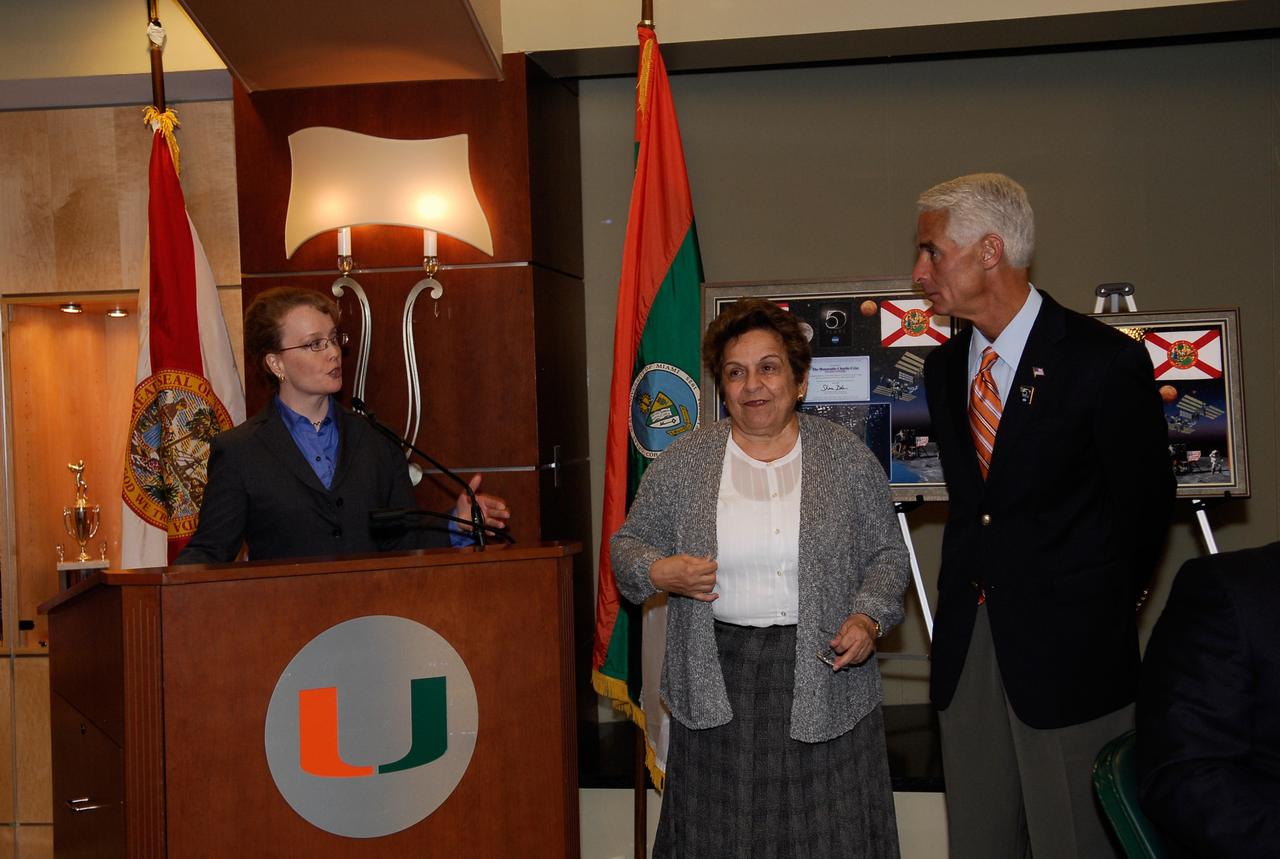
CAPE CANAVERAL, Fla. -- At the luncheon held during NASA’s Future Forum in Miami, NASA’s Deputy Administrator Shana Dale presents Florida Gov. Charlie Crist (on the right). At center is Donna E. Shalala, president of the University of Miami. The forum focused on how space exploration benefits Florida's economy. The event, which included presentations and panels, was held at the University of Miami's BankUnited Center. Among those participating were NASA Deputy Administrator Shana Dale, astronaut Carl Walz, director of the Advanced Capabilities Division in NASA's Exploration Systems Mission Directorate, and Russell Romanella, director, International Space Station and Spacecraft Processing. Photo credit: NASA/Kim Shiflett
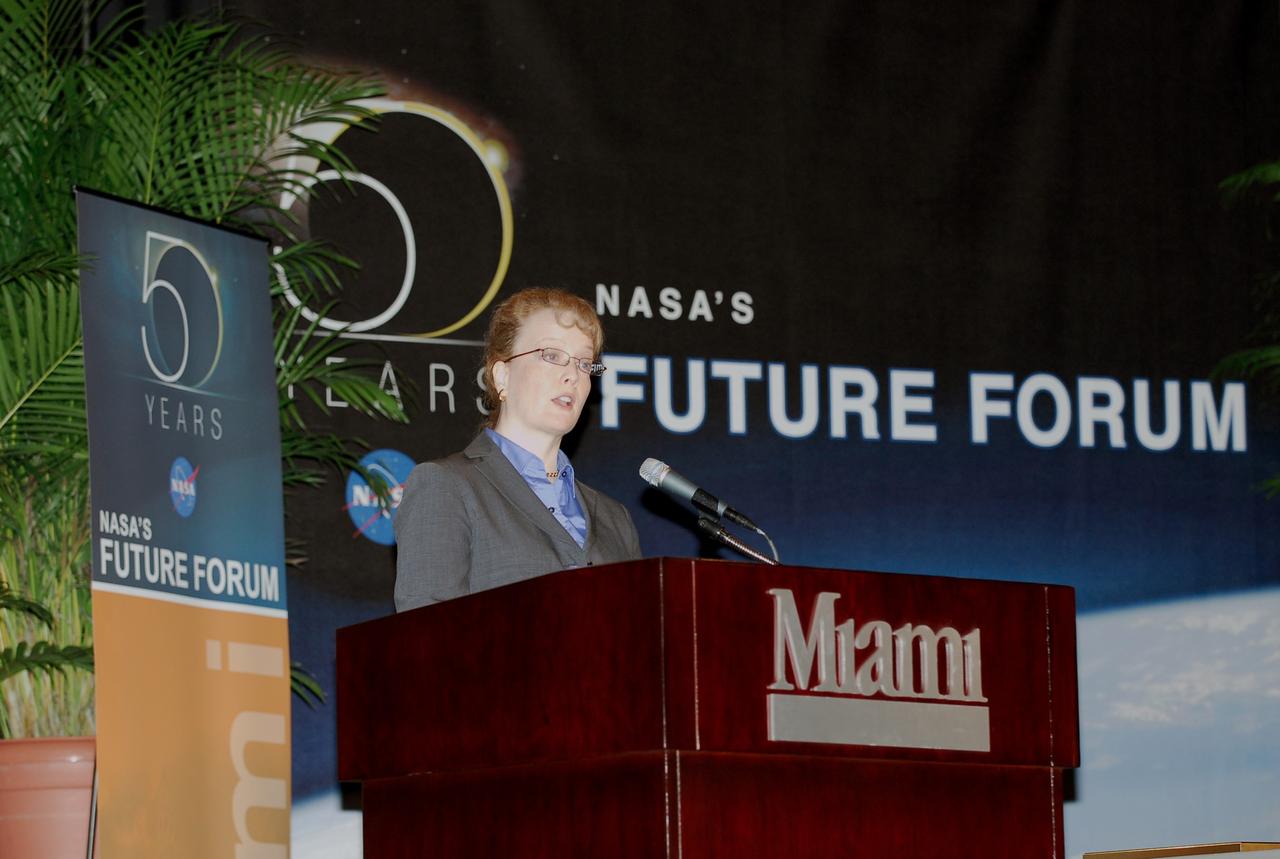
CAPE CANAVERAL, Fla. -- NASA Deputy Administrator Shana Dale (at the podium) gives the keynote address during a Future Forum in Miami. The forum, which focused on how space exploration benefits Florida's economy, was held at the University of Miami's BankUnited Center and included presentations and panels. Among those participating were NASA Deputy Administrator Shana Dale, astronaut Carl Walz, director of the Advanced Capabilities Division in NASA's Exploration Systems Mission Directorate, and Russell Romanella, director, International Space Station and Spacecraft Processing. Photo credit: NASA/Kim Shiflett
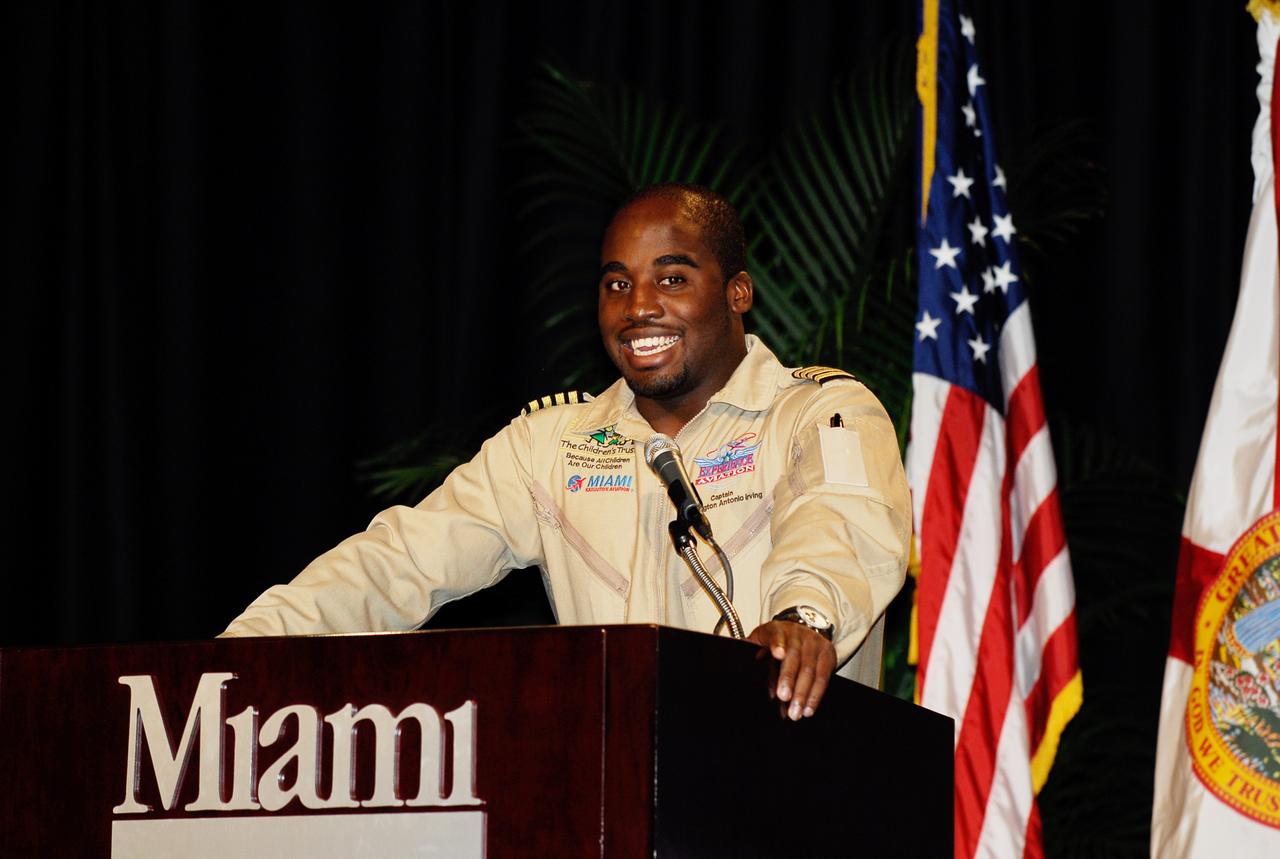
CAPE CANAVERAL, Fla. -- At the luncheon held during NASA’s Future Forum in Miami, Barrington Irving talks about his experiences as the first African-American and youngest person to fly solo around the world. The forum focused on how space exploration benefits Florida's economy. The event, which included presentations and panels, was held at the University of Miami's BankUnited Center. Among those participating were NASA Deputy Administrator Shana Dale, astronaut Carl Walz, director of the Advanced Capabilities Division in NASA's Exploration Systems Mission Directorate, and Russell Romanella, director, International Space Station and Spacecraft Processing. Photo credit: NASA/Kim Shiflett
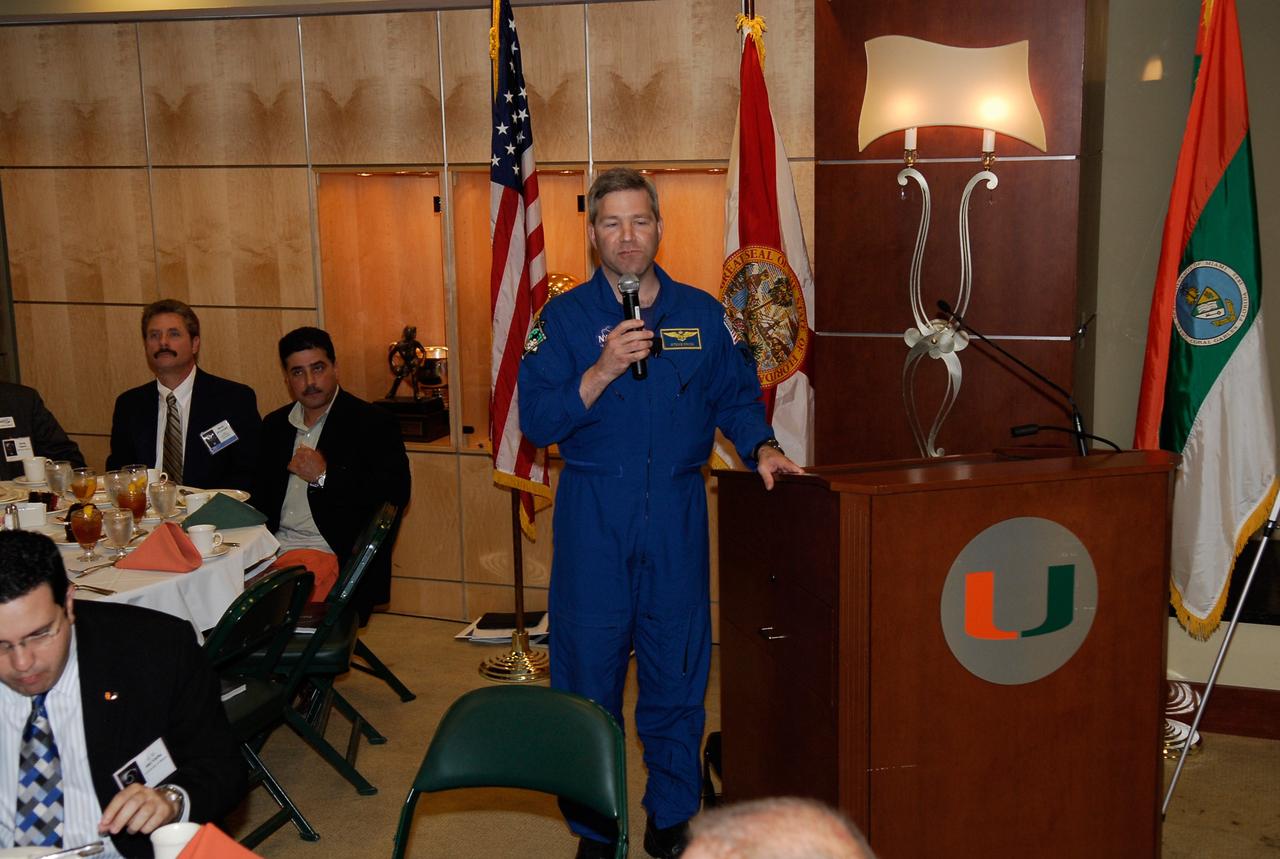
CAPE CANAVERAL, Fla. -- At the luncheon held during NASA’s Future Forum in Miami, astronaut Steve Frick gives the keynote address. Frick served as commander of the STS-122 shuttle mission. The forum focused on how space exploration benefits Florida's economy. The event, which included presentations and panels, was held at the University of Miami's BankUnited Center. Among those participating were NASA Deputy Administrator Shana Dale, astronaut Carl Walz, director of the Advanced Capabilities Division in NASA's Exploration Systems Mission Directorate, and Russell Romanella, director, International Space Station and Spacecraft Processing. Photo credit: NASA/Kim Shiflett
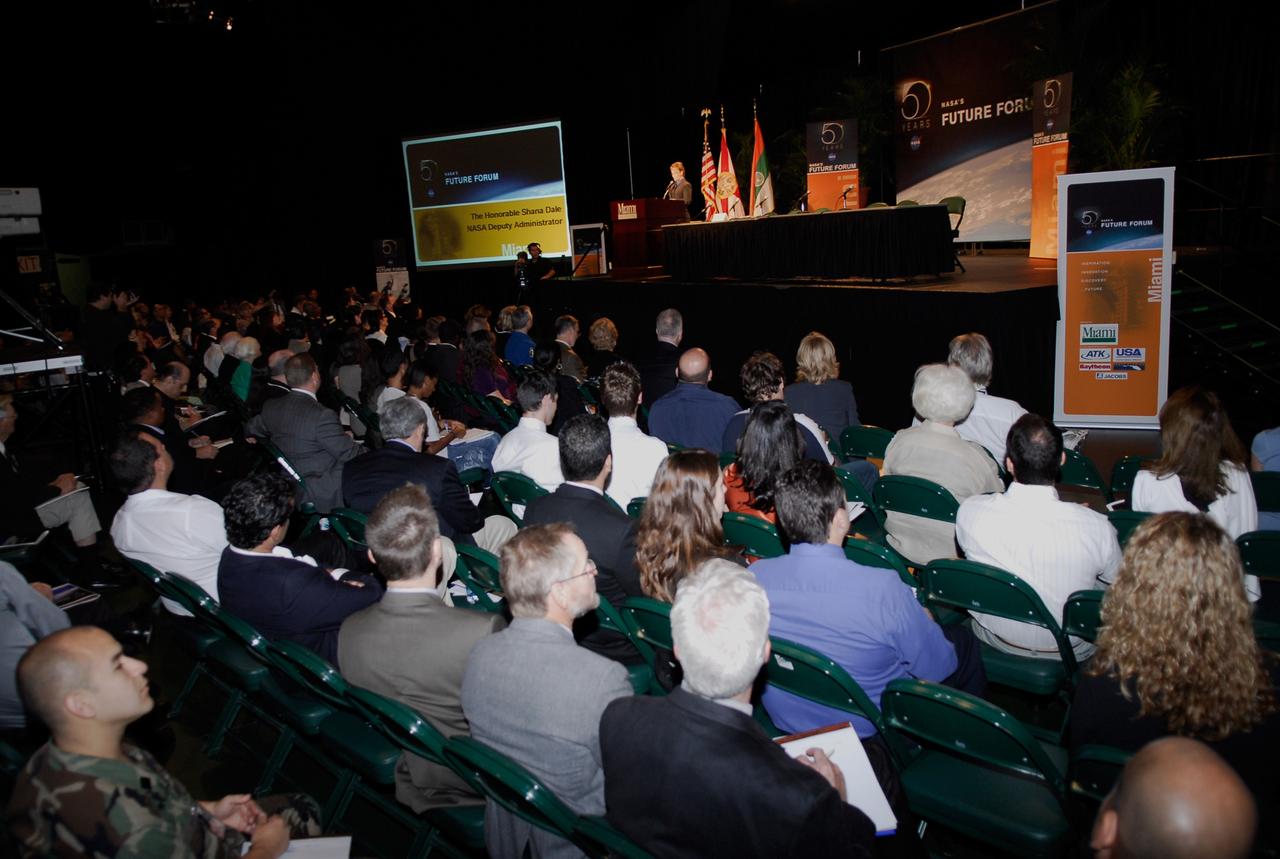
CAPE CANAVERAL, Fla. -- NASA Deputy Administrator Shana Dale (at the podium) gives the keynote address during a Future Forum in Miami. The forum, which focused on how space exploration benefits Florida's economy, was held at the University of Miami's BankUnited Center and included presentations and panels. Among those participating were NASA Deputy Administrator Shana Dale, astronaut Carl Walz, director of the Advanced Capabilities Division in NASA's Exploration Systems Mission Directorate, and Russell Romanella, director, International Space Station and Spacecraft Processing. Photo credit: NASA/Kim Shiflett
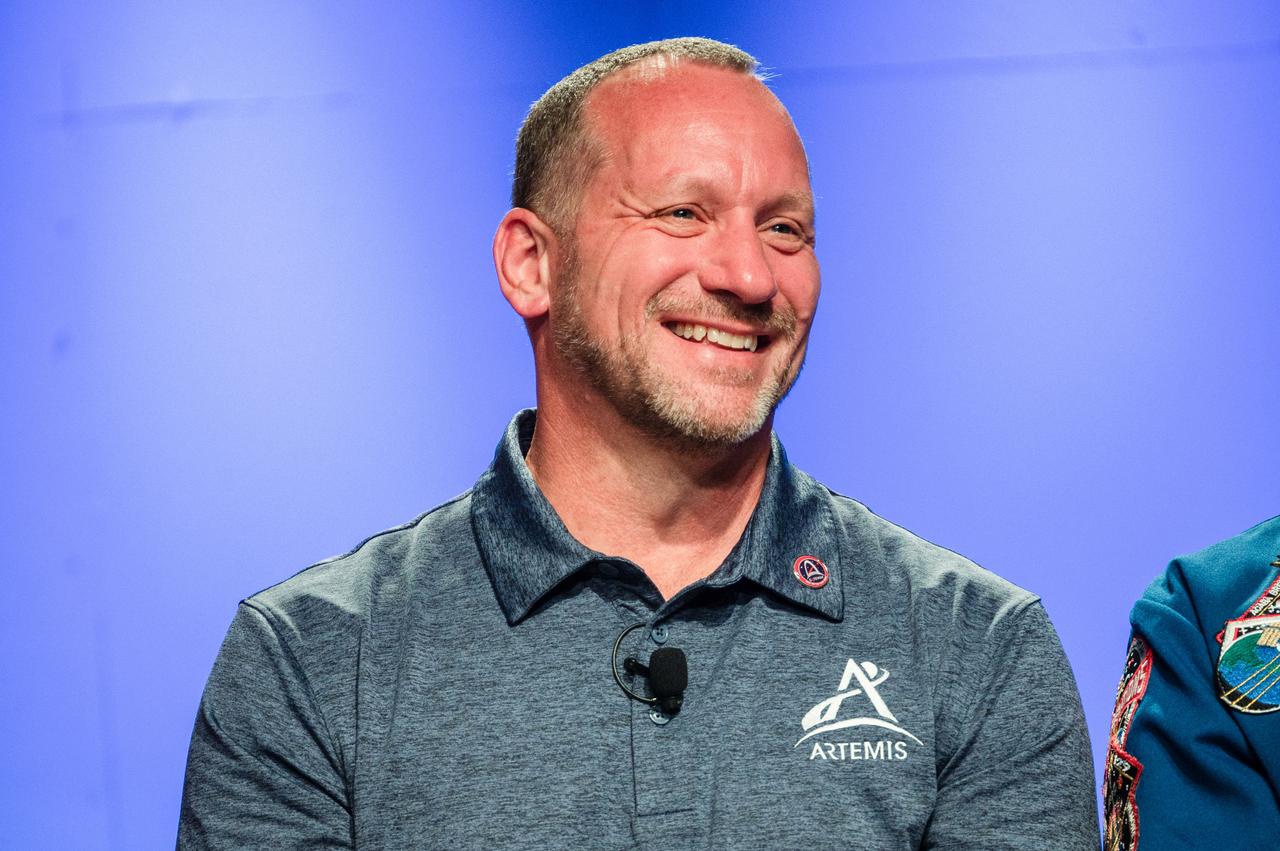
jsc2024e055771 (July 26, 2024) -- Dr. Jon Olansen engages the audience at the Theater in the Woods during "The Historic Artemis II Mission" forum held at EAA AirVenture Oshkosh 2024. As the Gateway Program Manager, Olansen highlights Gateway's pivotal role in supporting the Artemis era of lunar exploration. Photo Credit: NASA/Andrew Carlsen
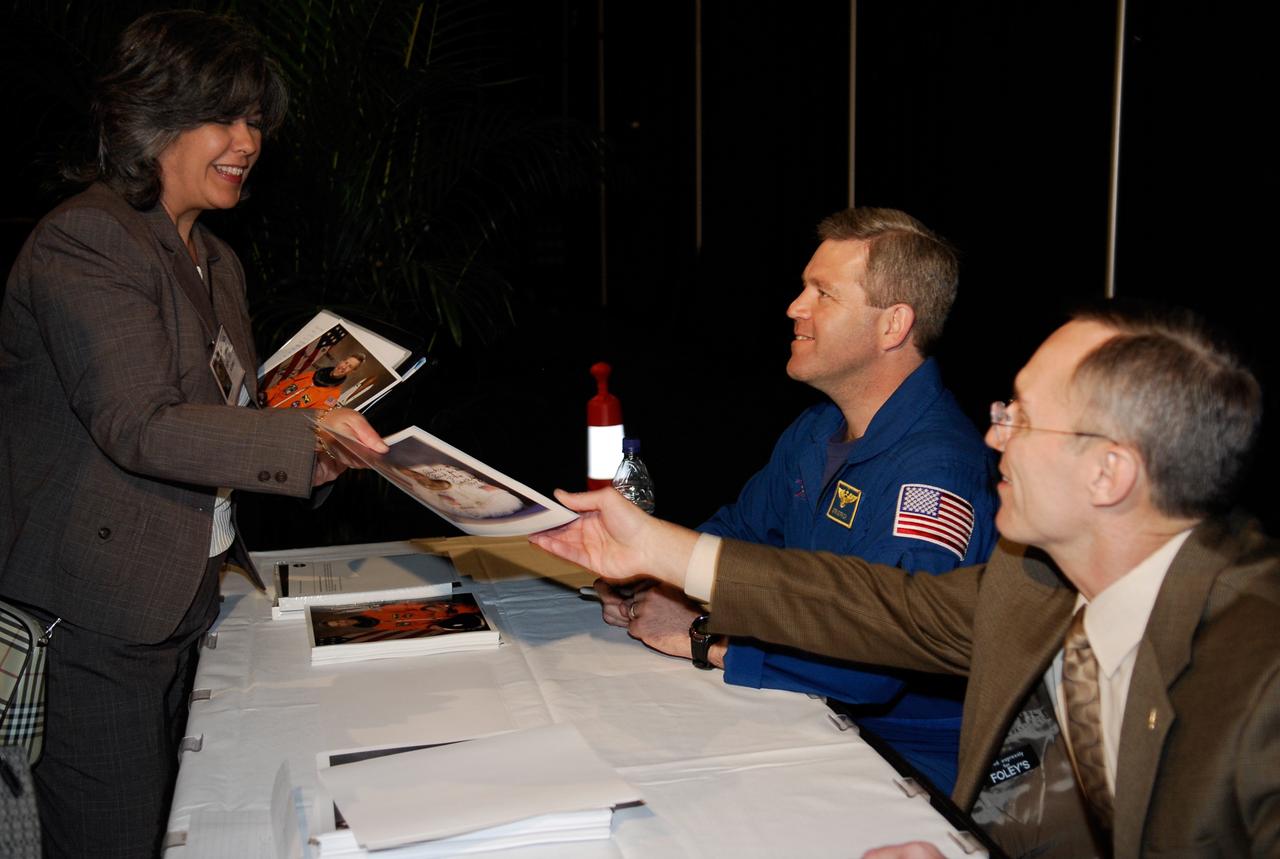
CAPE CANAVERAL, Fla. -- During a break in presentations at NASA’s Future Forum in Miami, astronaut Steve Frick and former astronaut Carl Walz sign autographs. Frick served as commander of the STS-122 shuttle mission. Walz is now director of NASA’s Advanced Capabilities Division. The forum focused on how space exploration benefits Florida's economy. The event, which included presentations and panels, was held at the University of Miami's BankUnited Center. Among those participating were NASA Deputy Administrator Shana Dale, astronaut Carl Walz, director of the Advanced Capabilities Division in NASA's Exploration Systems Mission Directorate, and Russell Romanella, director, International Space Station and Spacecraft Processing. Photo credit: NASA/Kim Shiflett
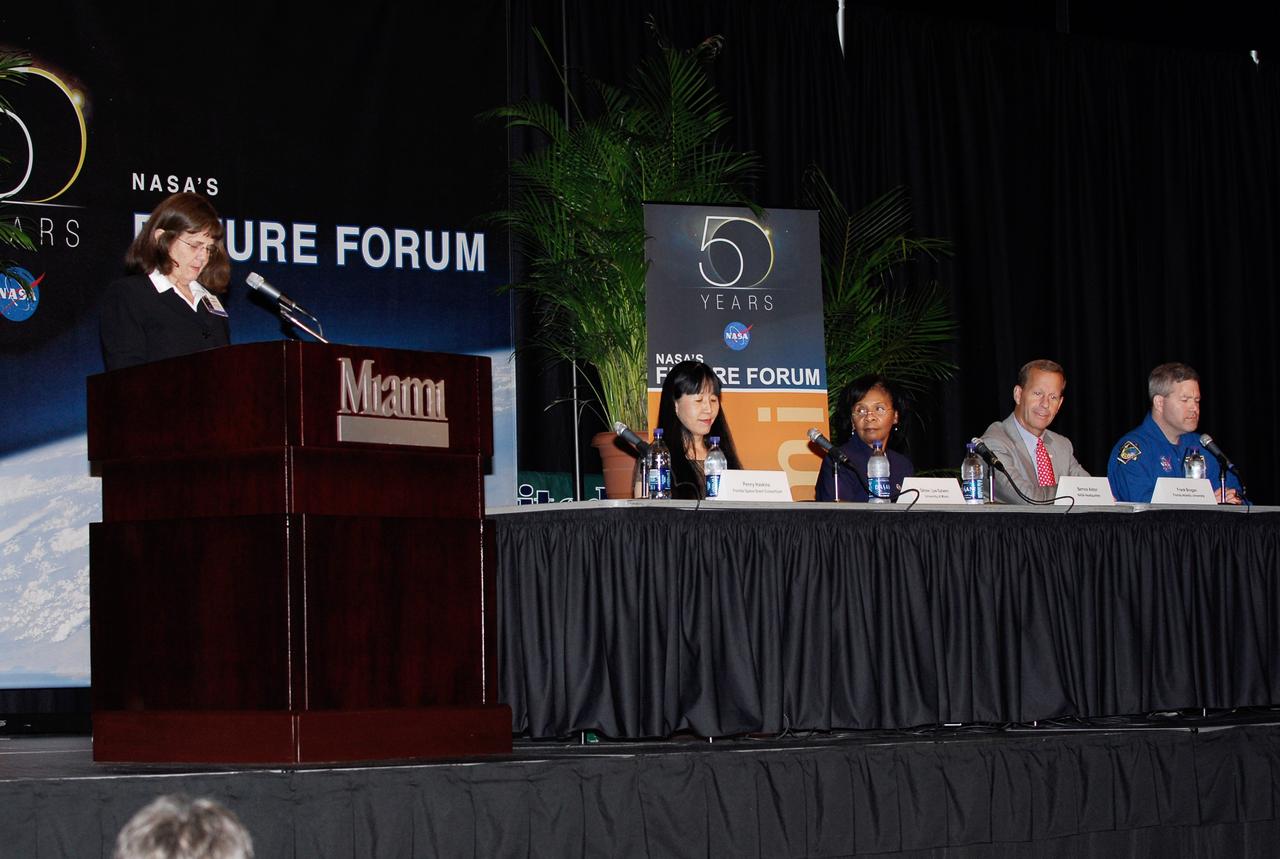
CAPE CANAVERAL, Fla. -- One of the panels conducted during NASA’s Future Forum in Miami featured (left to right) Penny Haskins (at the podium), associate director of the Florida Space Grant Consortium; Okhee Lee-Salwen, with the University of Miami’s College of Education; Bernice Alston, NASA deputy assistant administrator for education; Frank Brogan, president of Florida Atlantic University and former Florida lieutenant governor; Steve Frick, astronaut and commander of the STS-122 space shuttle mission. The forum, which focused on how space exploration benefits Florida's economy, was held at the University of Miami's BankUnited Center and included presentations and panels. Among those participating were NASA Deputy Administrator Shana Dale, astronaut Carl Walz, director of the Advanced Capabilities Division in NASA's Exploration Systems Mission Directorate, and Russell Romanella, director, International Space Station and Spacecraft Processing. Photo credit: NASA/Kim Shiflett
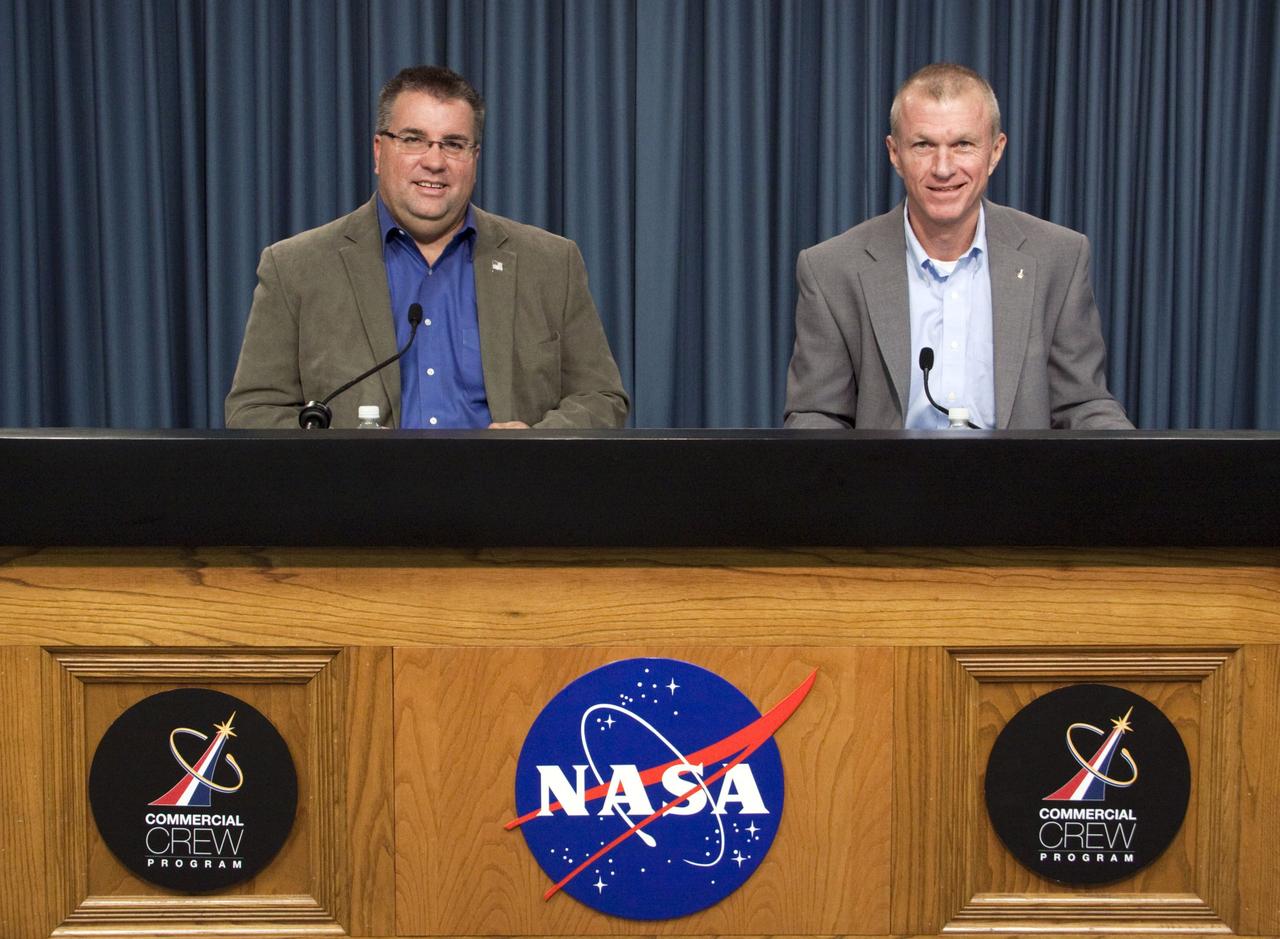
CAPE CANAVERAL, Fla. -- Commercial Crew Program (CCP) Manager Ed Mango, left, and Deputy Program Manager Brent Jett host a Program Strategy Forum at NASA's Kennedy Space Center in Florida. The forum was held to update industry partners about NASA's decision to use multiple, competitively awarded Space Act Agreements (SAAs) instead of an Integrated Design Contract for the agency's next phase of developing commercial space transportation system capabilities. Using SAAs instead of a contract will allow NASA to maintain multiple partners, with the flexibility to adjust technical direction, milestones and funding. The move was made so the program could adapt to dynamic budgetary circumstances while maintaining a high level of competition among transportation providers. CCP is helping to mature the design and development of a crew transportation system with the overall goal of accelerating a United States-led capability to the International Space Station. The goal of the program is to drive down the cost of space travel as well as open up space to more people than ever before by balancing industry’s own innovative capabilities with NASA's 50 years of human spaceflight experience. For more information, visit www.nasa.gov/commercialcrew. Photo credit: NASA/Jim Grossmann
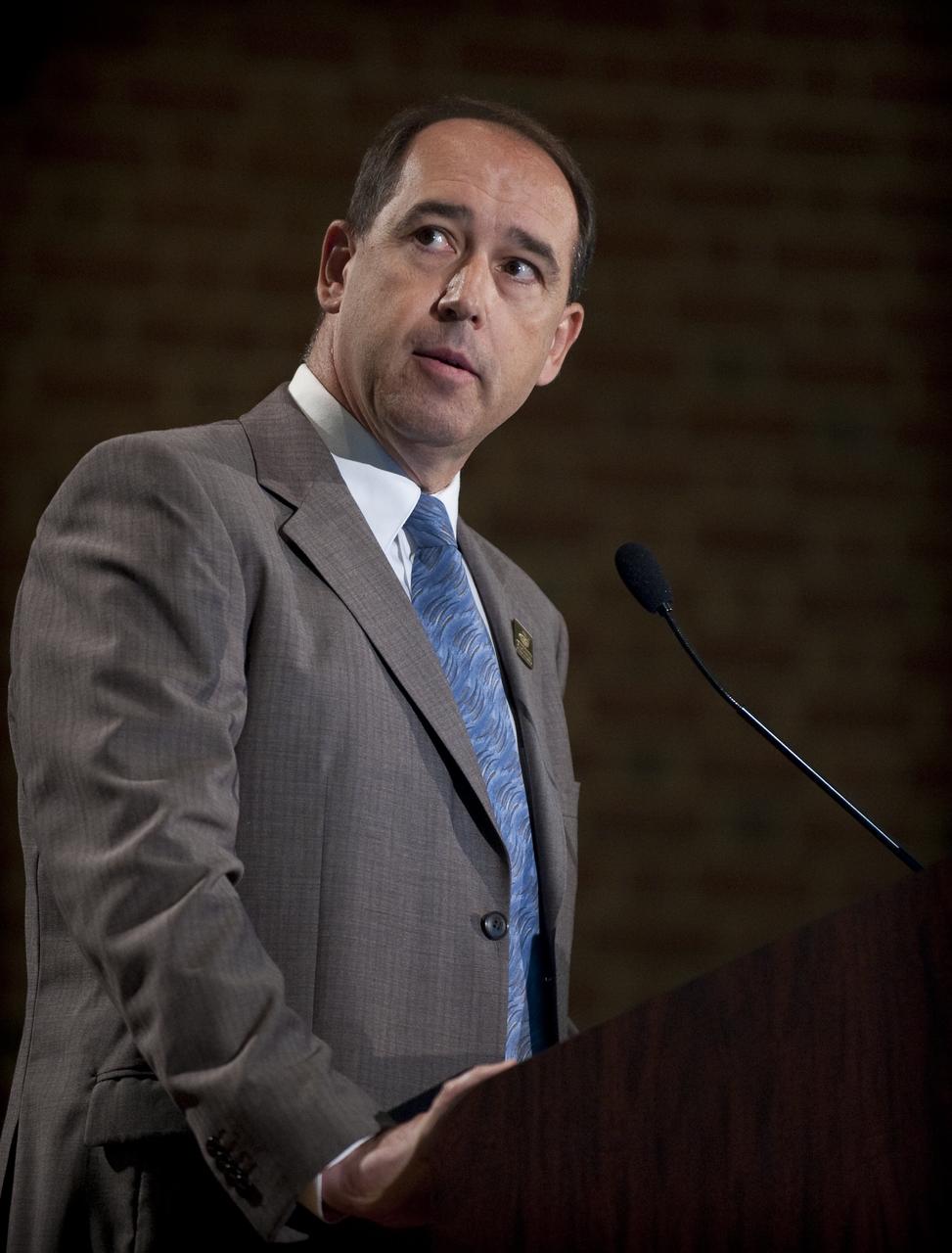
NASA's Manager of Centennial Challenges Andy Petro speaks during the NASA New Space Technology Industry Forum being held at the University of Maryland in College Park on Tuesday, July 13, 2010. During the two-day event, speakers are focusing on the president's fiscal year 2011 budget request for NASA's new Space Technology Program. Representatives from industry, academia and the federal government are in attendance to discuss strategy, development and implementation of NASA's proposed new technology-enabled exploration. Photo Credit: (NASA/Bill Ingalls)
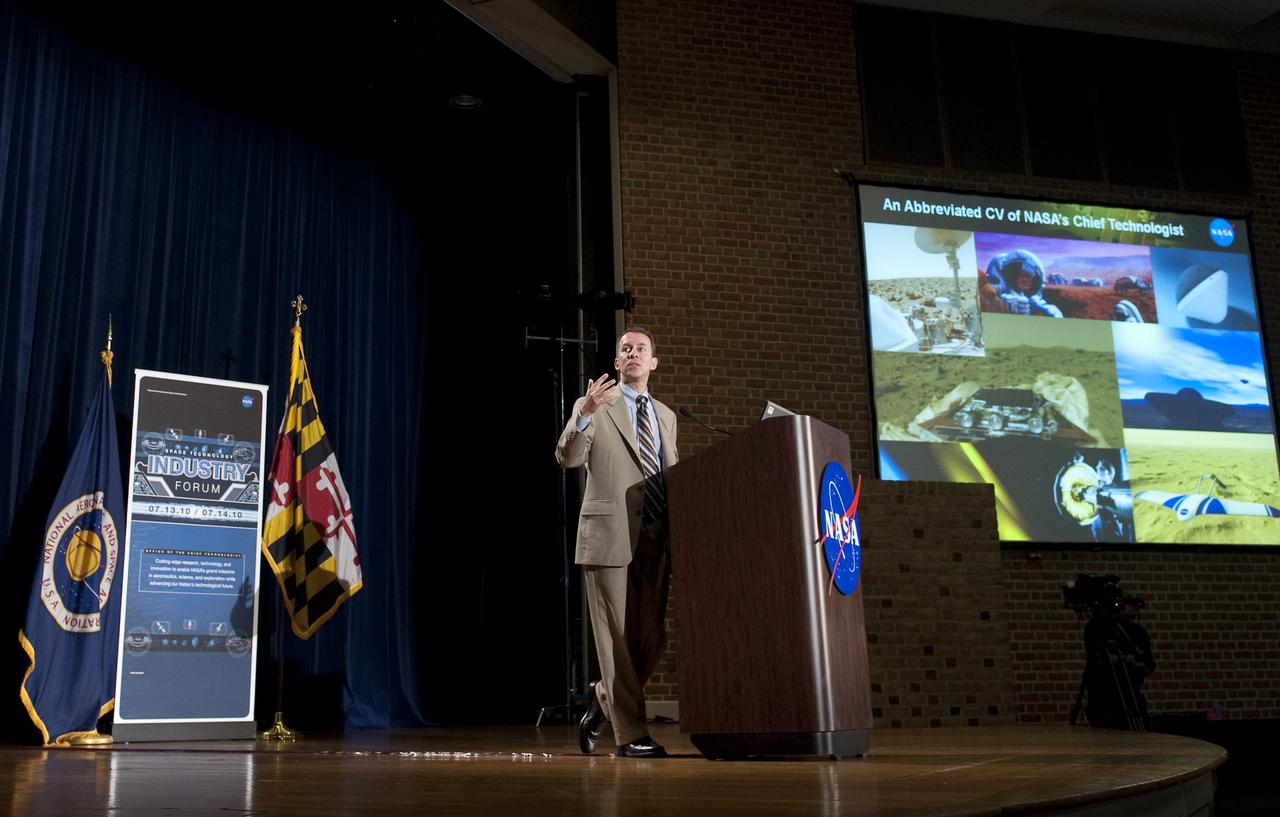
NASA Chief Technologist Bobby Braun speaks during the NASA New Space Technology Industry Forum being held at the University of Maryland in College Park on Tuesday, July 13, 2010. During the two-day event, speakers are focusing on the president's fiscal year 2011 budget request for NASA's new Space Technology Program. Representatives from industry, academia and the federal government are in attendance to discuss strategy, development and implementation of NASA's proposed new technology-enabled exploration. Photo Credit: (NASA/Bill Ingalls)
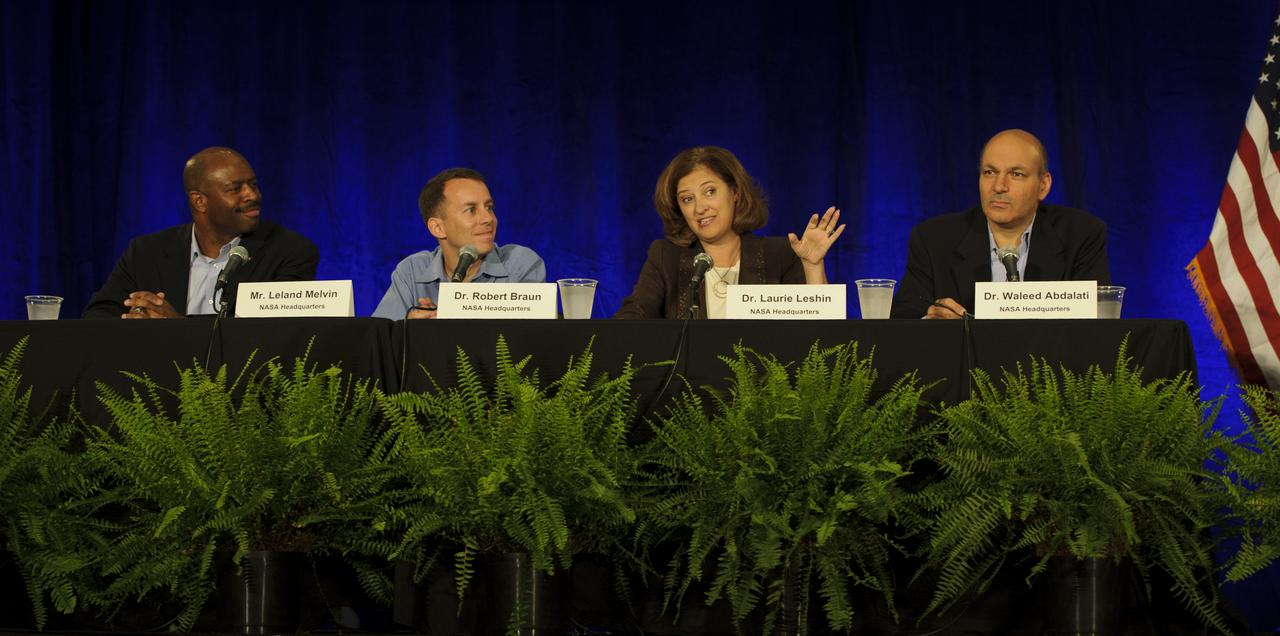
Dr. Laurie Leshin, NASA Deputy Associate Administrator Exploration Systems Mission Directortorate, second from right, speaks as Dr. Waleed Abdalati, NASA Chief Scientist, right, Dr. Robert Braun, NASA Chief Technologist, and Leland Melvin, Assoicate Administrator for NASA Education, far left, at the NASA Future Forum held at the Riggs Alumni Center on the campus of the University of Maryland, Thursday, Aug. 11, 2011 in College Park, Md. Photo Credit: (NASA/Paul E. Alers)
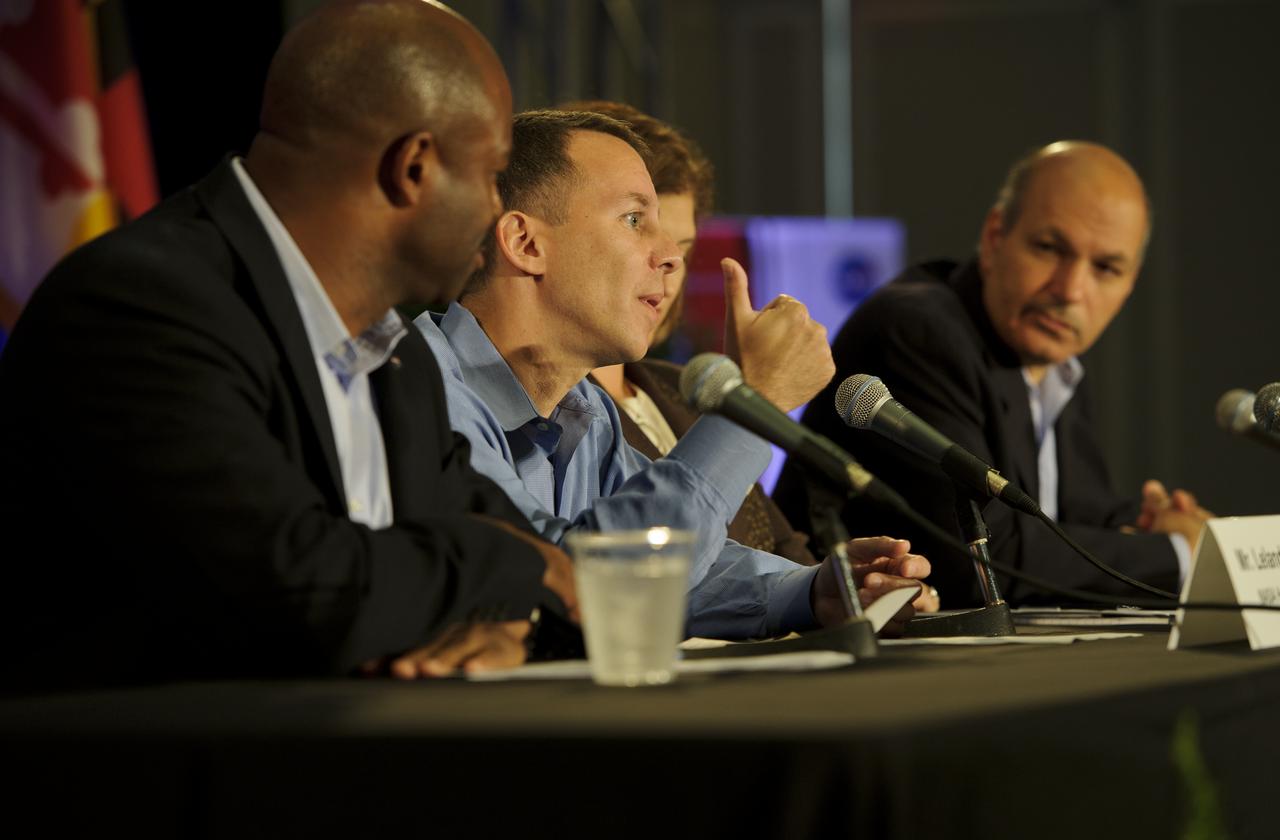
Dr. Robert Braun, NASA Chief Technologist, second from left, makes a point, as panelists Leland Melvin, Assoicate Administrator for NASA Education, left, Dr. Laurie Leshin, NASA Deputy Associate Administrator Exploration Systems Mission Directortorate, and Dr. Waleed Abdalati, NASA Chief Scientist, right, look on during a panel discussion at the NASA Future Forum held at the Riggs Alumni Center on the campus of the University of Maryland, Thursday, Aug. 11, 2011 in College Park, Md. Photo Credit: (NASA/Paul E. Alers)
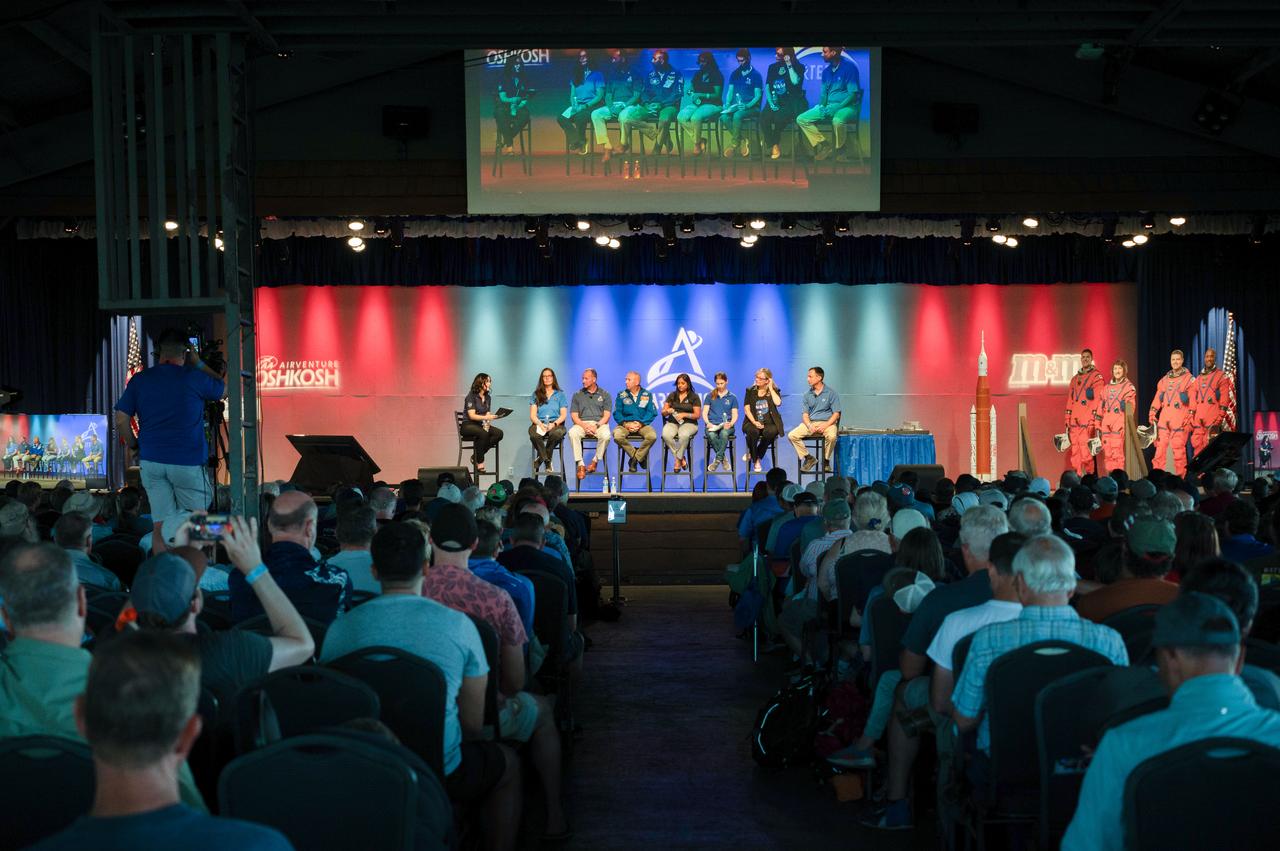
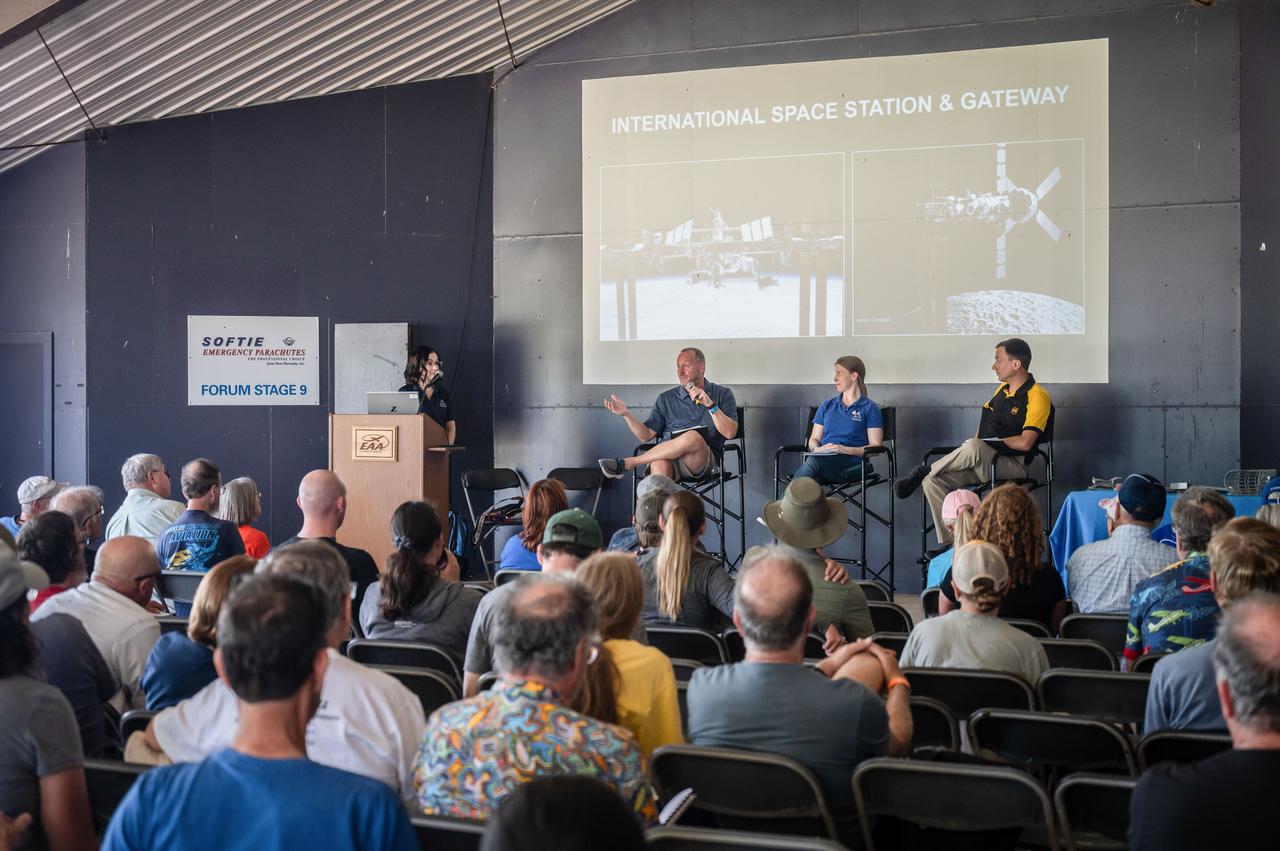
jsc2024e055767 (July 26, 2024) -- The panel for "The Historic Artemis II Mission" forum at EAA AirVenture Oshkosh 2024, featuring NASA experts including Dr. Jon Olansen, Gateway Program Manager (center). The discussion covered the Artemis II mission's significance in lunar exploration and the groundbreaking technologies that will enable future missions to the Moon and beyond. Photo Credit: NASA/Andrew Carlsen
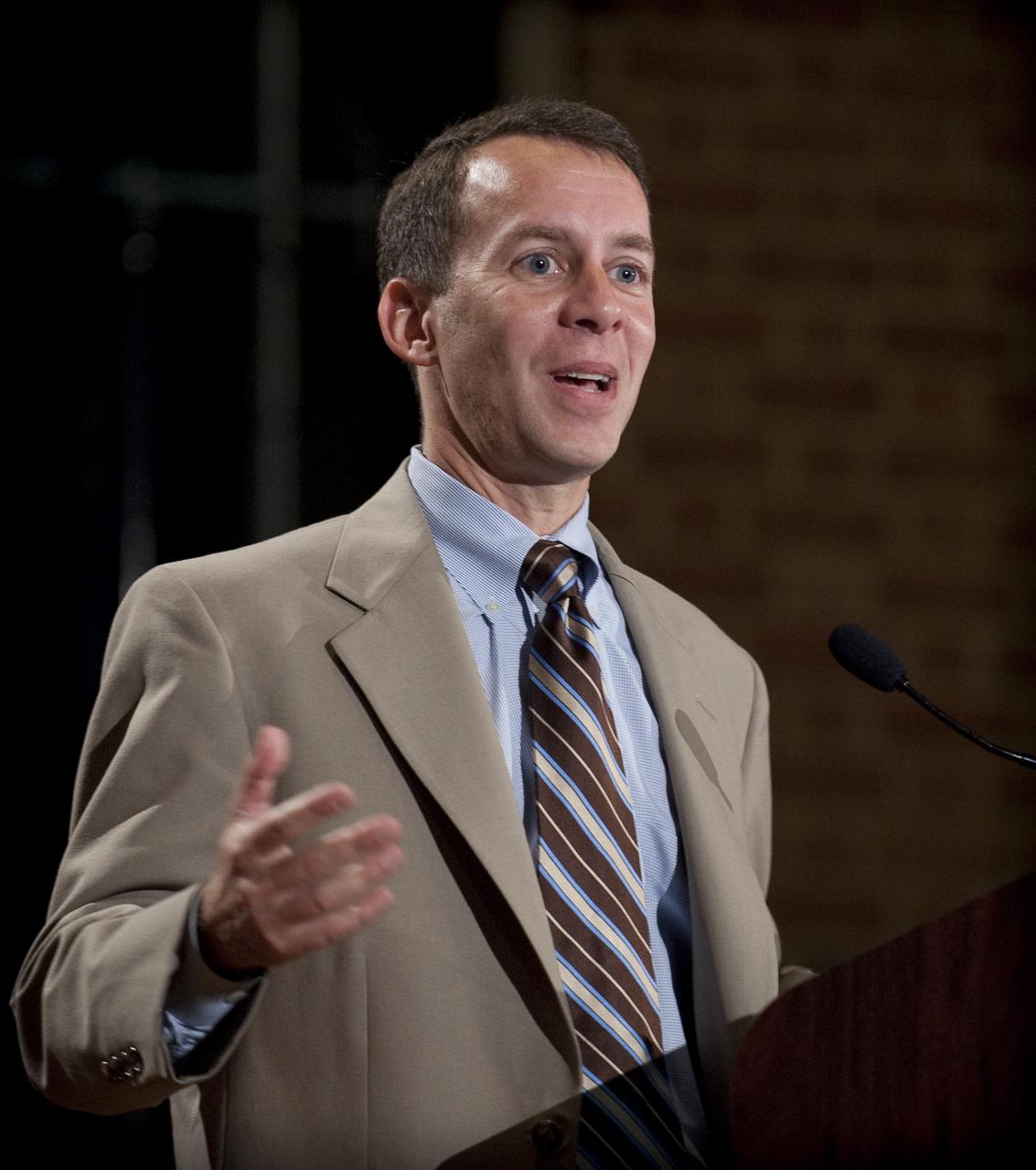
NASA Chief Technologist Bobby Braun speaks during the NASA New Space Technology Industry Forum being held at the University of Maryland in College Park on Tuesday, July 13, 2010. During the two-day event, speakers are focusing on the president's fiscal year 2011 budget request for NASA's new Space Technology Program. Representatives from industry, academia and the federal government are in attendance to discuss strategy, development and implementation of NASA's proposed new technology-enabled exploration. Photo Credit: (NASA/Bill Ingalls)
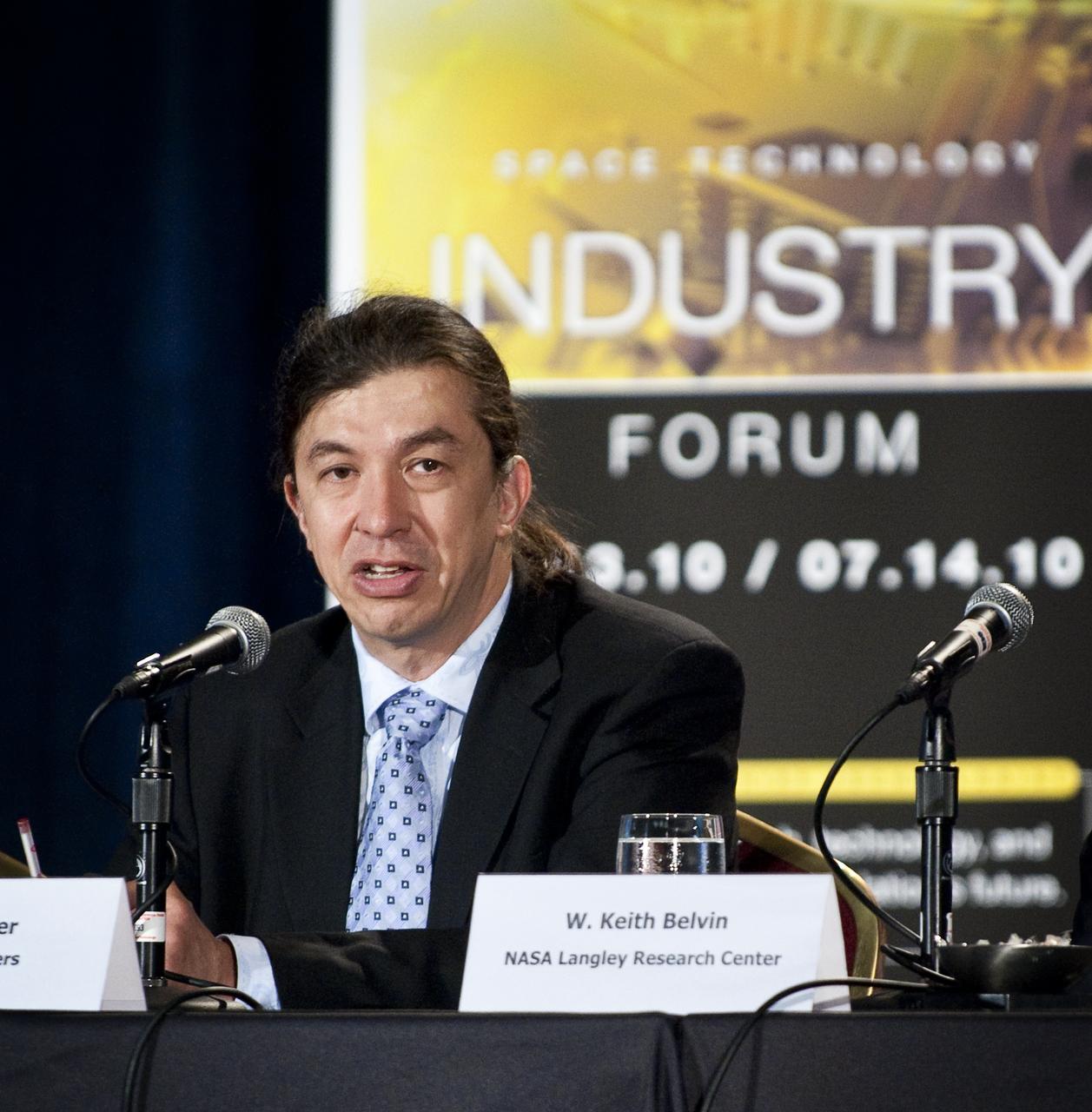
James Reuther, Director of Strategic Integration at NASA Headquarters, speaks during the NASA New Space Technology Industry Forum being held at the University of Maryland in College Park on Wednesday, July 14, 2010. During the two-day event, speakers are focusing on the president's fiscal year 2011 budget request for NASA's new Space Technology Program. Representatives from industry, academia and the federal government are in attendance to discuss strategy, development and implementation of NASA's proposed new technology-enabled exploration. Photo Credit: (NASA/Carla Cioffi)
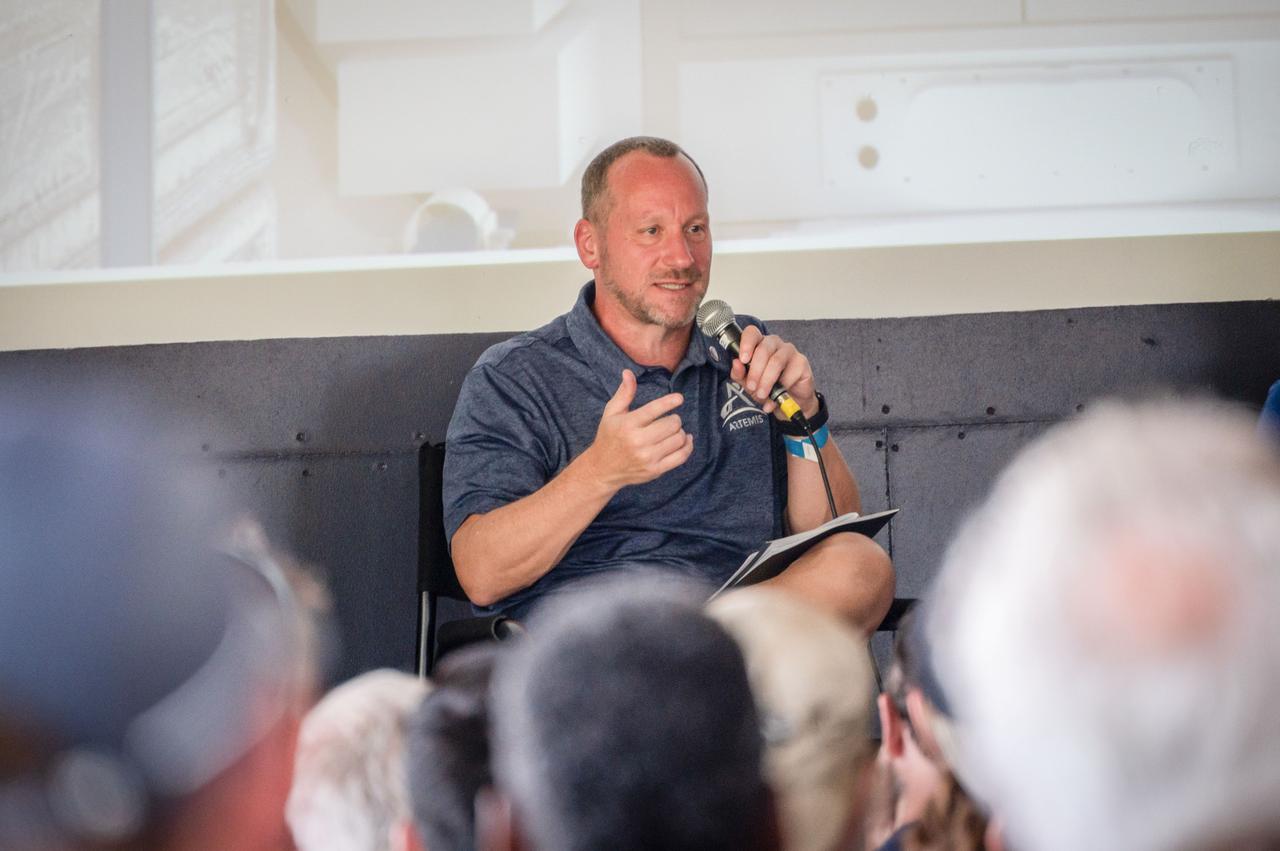
jsc2024e055763 (July 26, 2024) -- Dr. Jon Olansen, Gateway Program Manager, shares insights about Gateway during the "Living the Lunar Life" forum at EAA AirVenture 2024. The panel, held on July 26, focused on the intricacies of lunar living as NASA prepares to undertake unprecedented exploration of the Moon with Artemis. Photo Credit: NASA/Andrew Carlsen
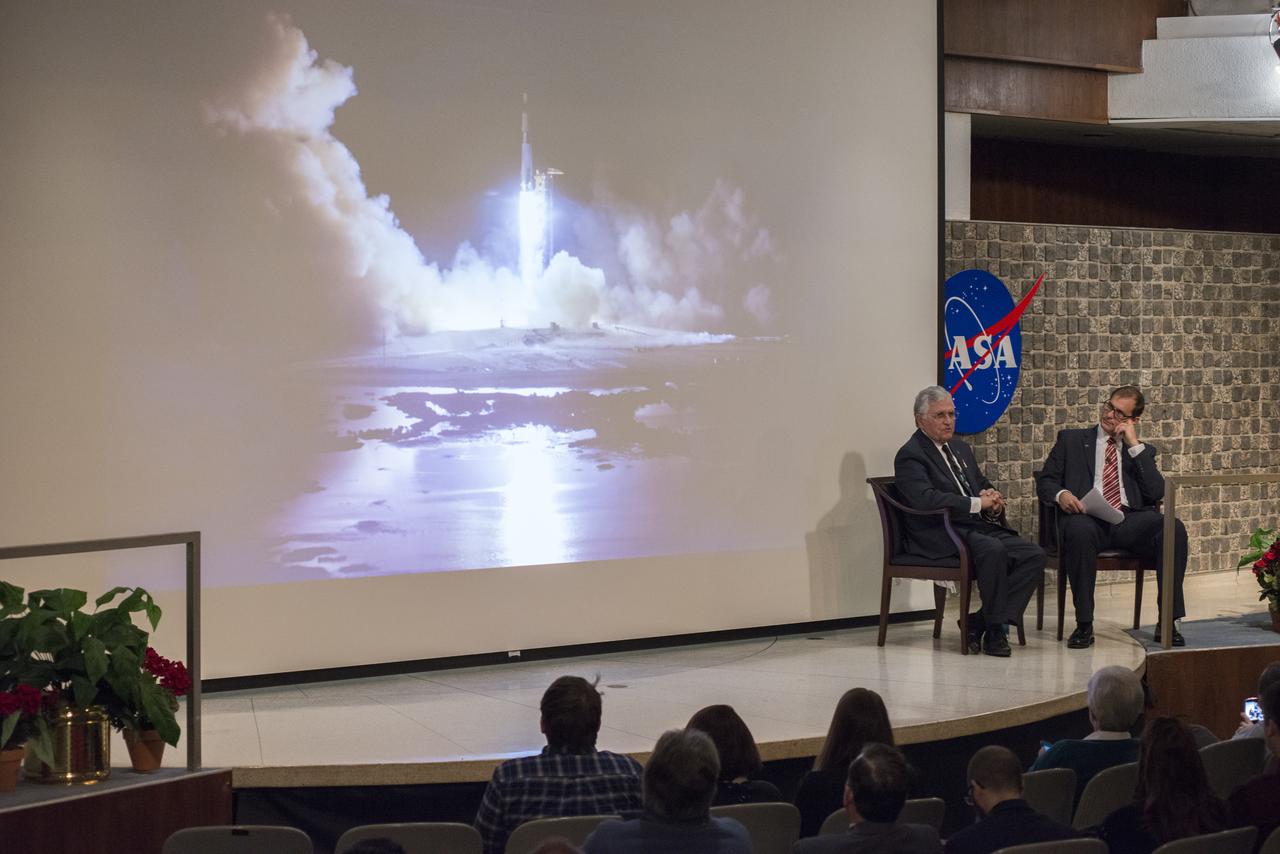
Apollo 17 lunar module pilot Harrison Schmitt, left, shared his experiences as an astronaut and lunar geologist during a visit to Marshall Dec. 7, as part of the Shared Experiences Forum. During an interactive Q&A moderated by Marshall Associate Director Jonathan Pettus, right, Schmitt spoke about launching on the Saturn V rocket, exploring the Moon and looking back at the Earth. The day of his visit was the 45th anniversary of the Apollo 17 launch.
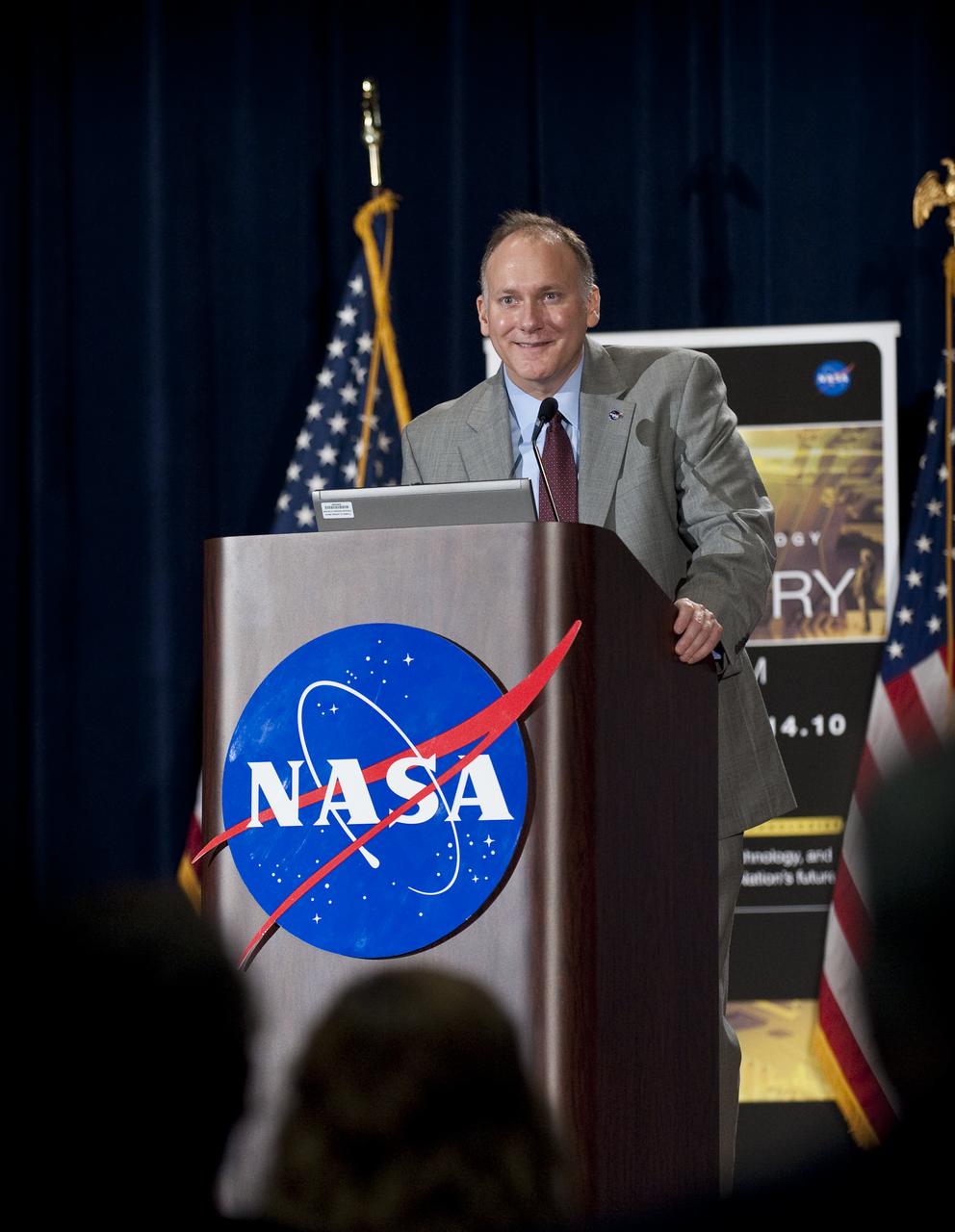
David Steitz, from NASA's Office of Communications, kicks off the NASA New Space Technology Industry Forum being held at the University of Maryland in College Park on Tuesday, July 13, 2010. During the two-day event, speakers are focusing on the president's fiscal year 2011 budget request for NASA's new Space Technology Program. Representatives from industry, academia and the federal government are in attendance to discuss strategy, development and implementation of NASA's proposed new technology-enabled exploration. Photo Credit: (NASA/Bill Ingalls)
jsc2024e055762 (July 26, 2024) -- Dr. Jon Olansen, Gateway Program Manager, shares insights about Gateway during the "Living the Lunar Life" forum at EAA AirVenture 2024. The panel, held on July 26, focused on the intricacies of lunar living as NASA prepares to undertake unprecedented exploration of the Moon with Artemis. Photo Credit: NASA/Andrew Carlsen
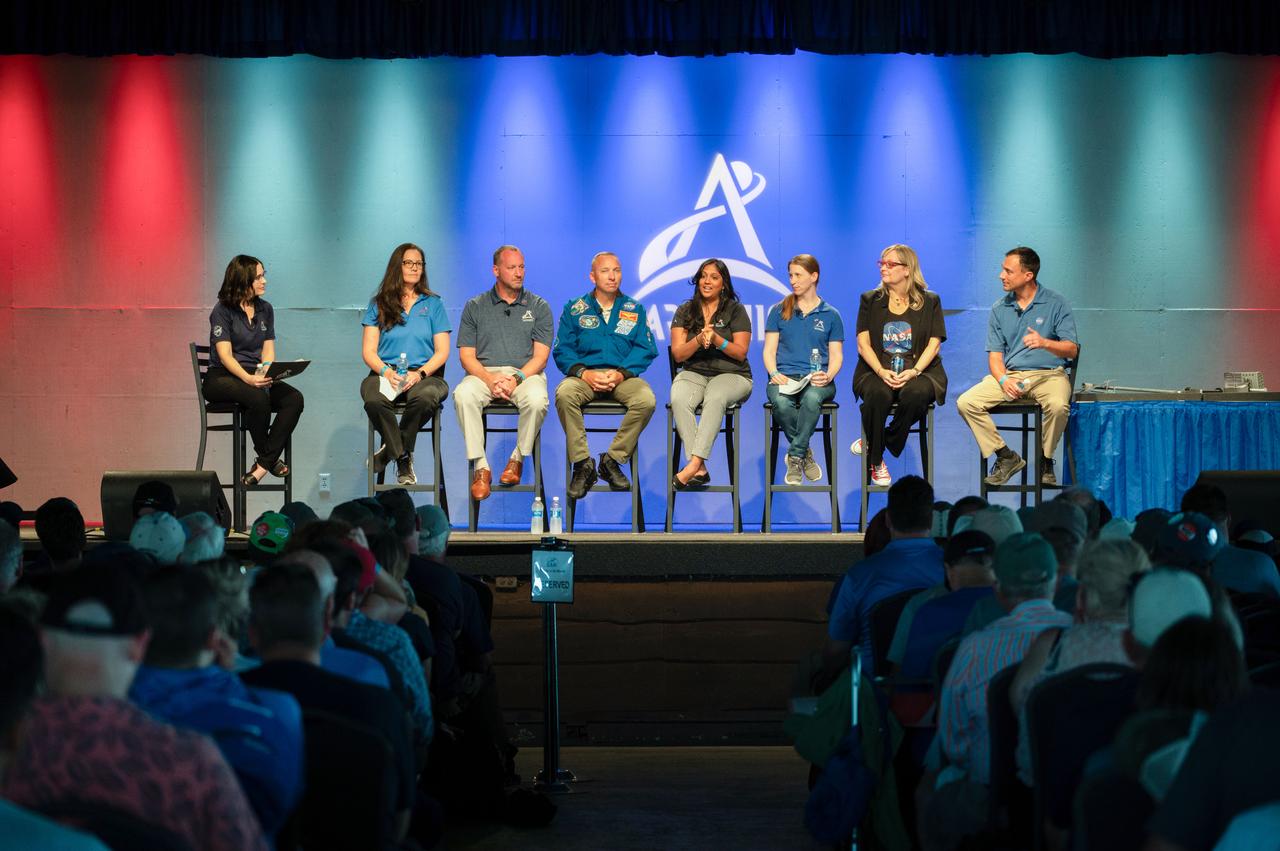
jsc2024e055768 (July 26, 2024) -- The panel for "The Historic Artemis II Mission" forum at EAA AirVenture Oshkosh 2024, featuring NASA experts including Dr. Jon Olansen, Gateway Program Manager (center). The discussion covered the Artemis II mission's significance in lunar exploration and the groundbreaking technologies that will enable future missions to the Moon and beyond. Photo Credit: NASA/Andrew Carlsen
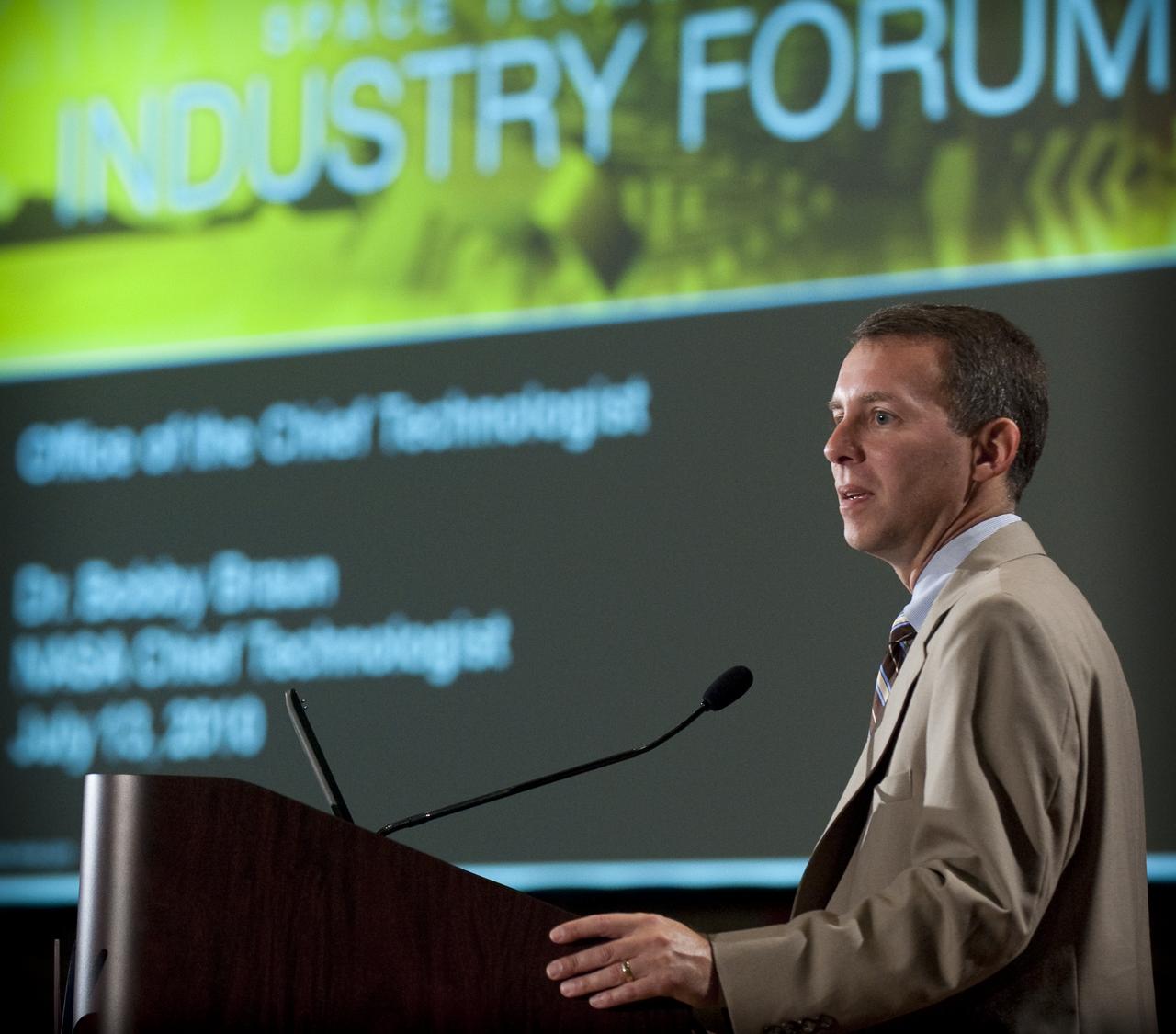
NASA Chief Technologist Bobby Braun speaks during the NASA New Space Technology Industry Forum being held at the University of Maryland in College Park on Tuesday, July 13, 2010. During the two-day event, speakers are focusing on the president's fiscal year 2011 budget request for NASA's new Space Technology Program. Representatives from industry, academia and the federal government are in attendance to discuss strategy, development and implementation of NASA's proposed new technology-enabled exploration. Photo Credit: (NASA/Bill Ingalls)
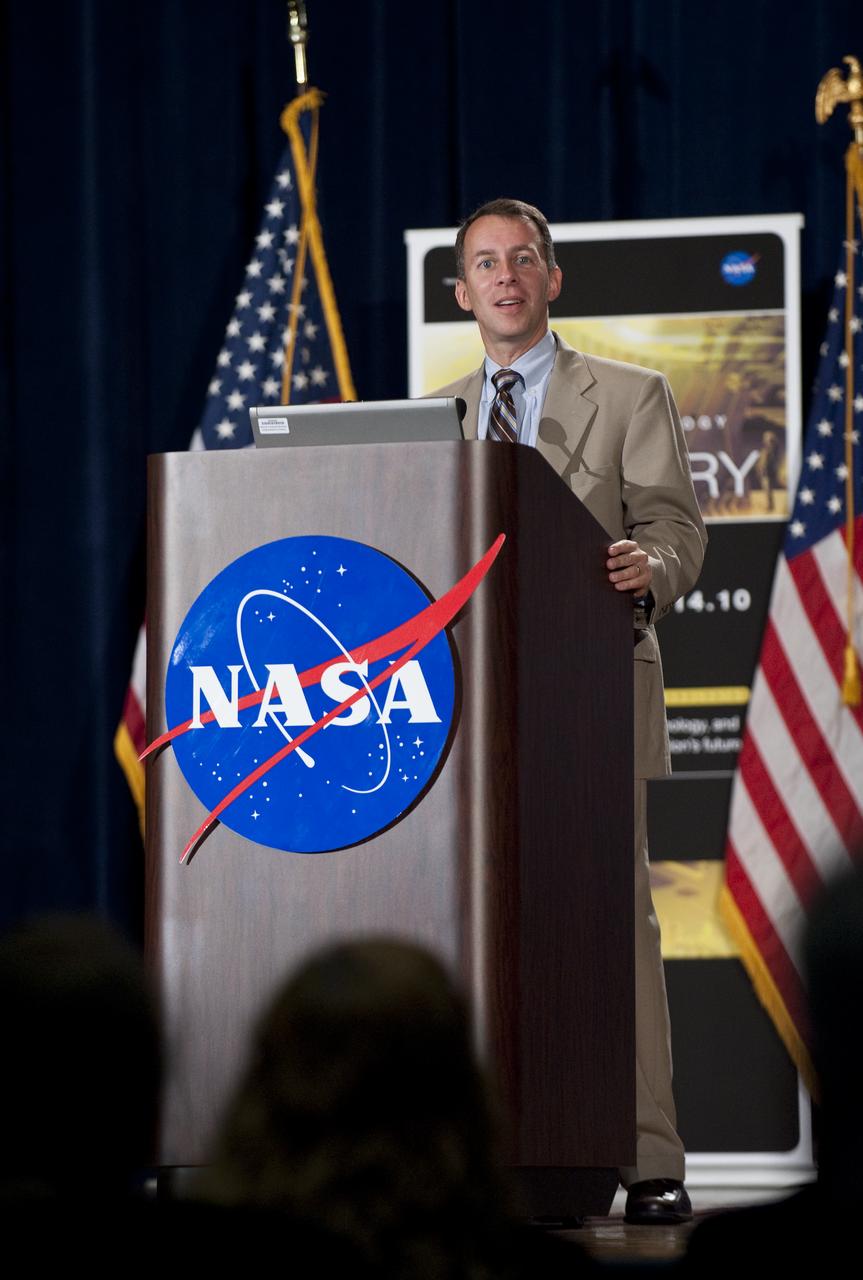
NASA Chief Technologist Bobby Braun speaks during the NASA New Space Technology Industry Forum being held at the University of Maryland in College Park on Tuesday, July 13, 2010. During the two-day event, speakers are focusing on the president's fiscal year 2011 budget request for NASA's new Space Technology Program. Representatives from industry, academia and the federal government are in attendance to discuss strategy, development and implementation of NASA's proposed new technology-enabled exploration. Photo Credit: (NASA/Bill Ingalls)
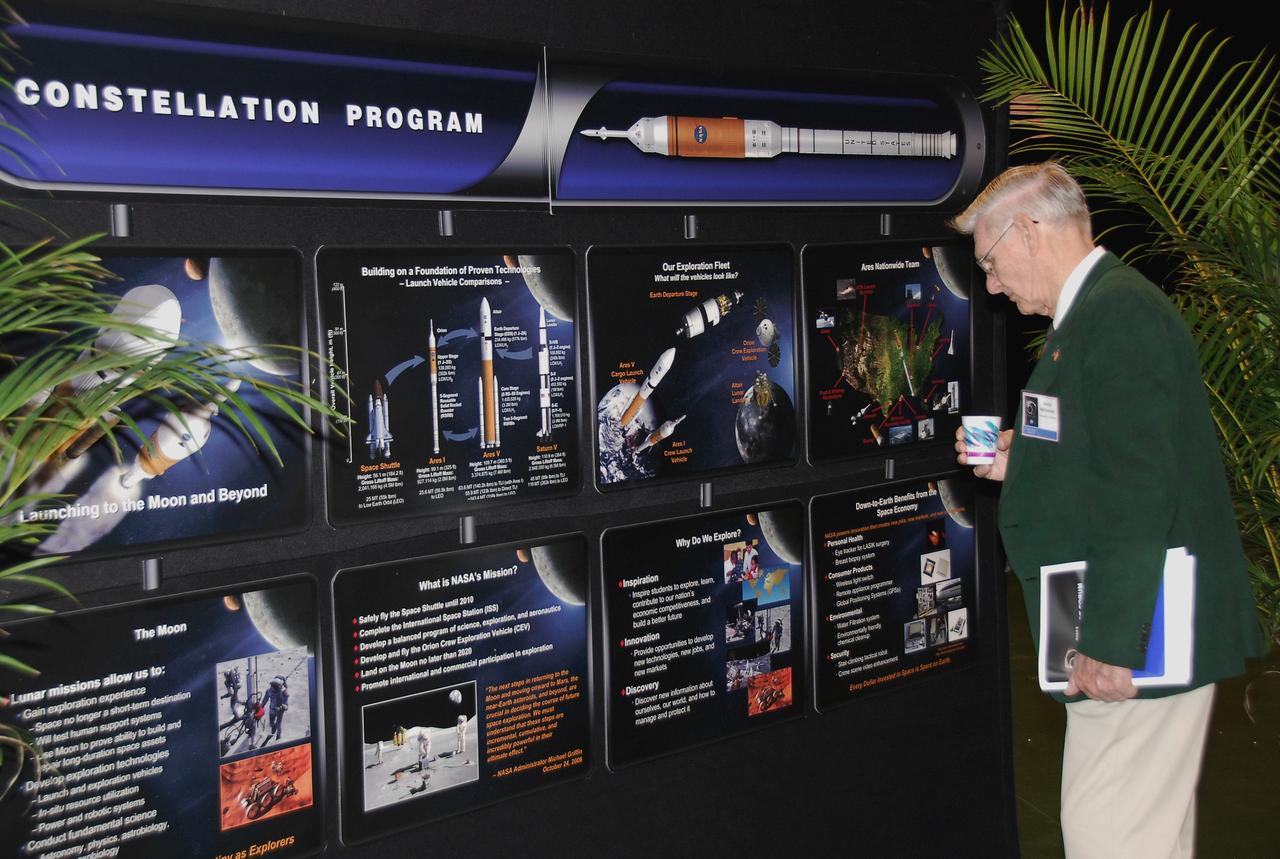
CAPE CANAVERAL, Fla. -- This display of NASA’s Constellation Program was part of a daylong event commemorating the agency’s 50th anniversary during a Future Forum in Miami that focused on how space exploration benefits Florida's economy. The event, which included presentations and panels, was held at the University of Miami's BankUnited Center. Among those participating were NASA Deputy Administrator Shana Dale, astronaut Carl Walz, director of the Advanced Capabilities Division in NASA's Exploration Systems Mission Directorate, and Russell Romanella, director, International Space Station and Spacecraft Processing. Photo credit: NASA/Kim Shiflett
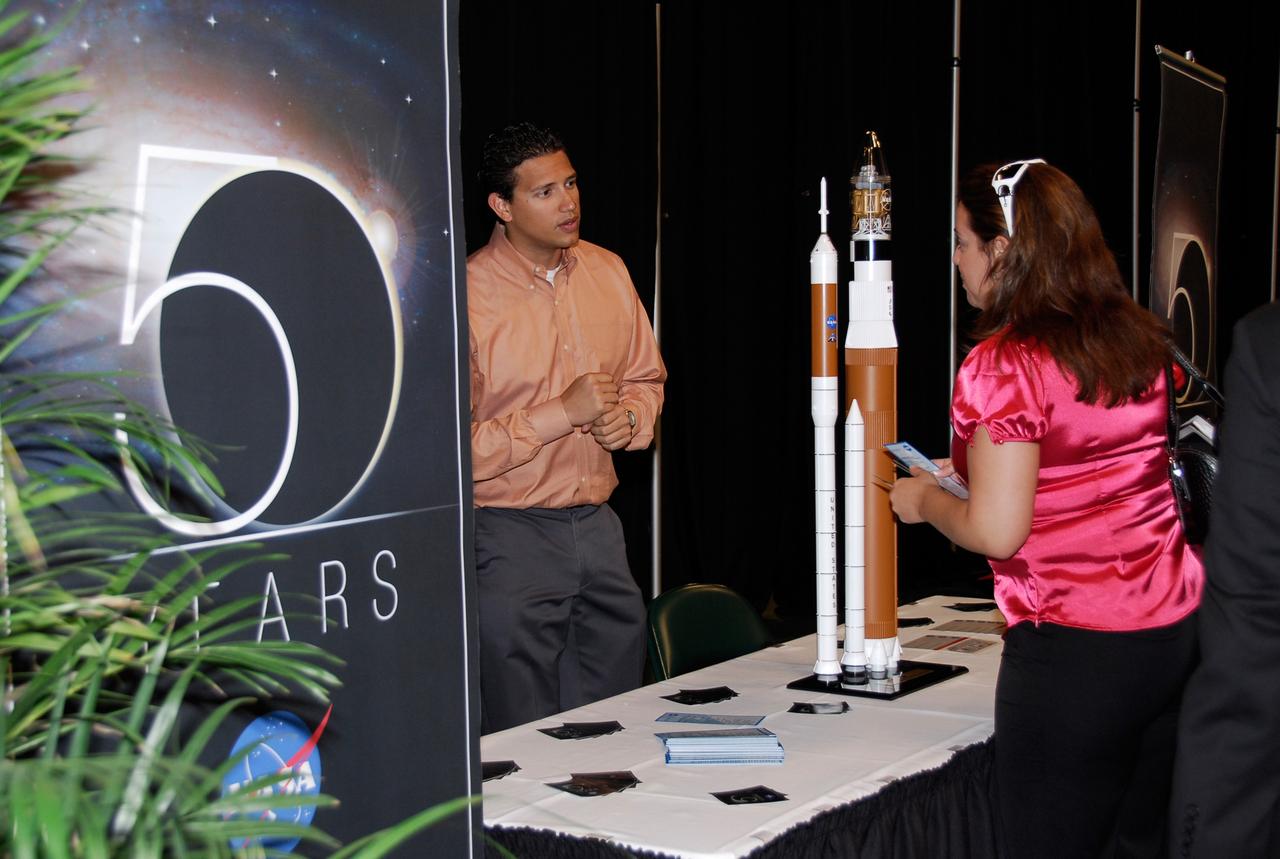
CAPE CANAVERAL, Fla. -- NASA displays an exhibit commemorating the agency’s 50th anniversary during a Future Forum in Miami that focuses on how space exploration benefits Florida's economy. The event, which included presentations and panels, was held at the University of Miami's BankUnited Center. Among those participating were NASA Deputy Administrator Shana Dale, astronaut Carl Walz, director of the Advanced Capabilities Division in NASA's Exploration Systems Mission Directorate, and Russell Romanella, director, International Space Station and Spacecraft Processing. Photo credit: NASA/Kim Shiflett
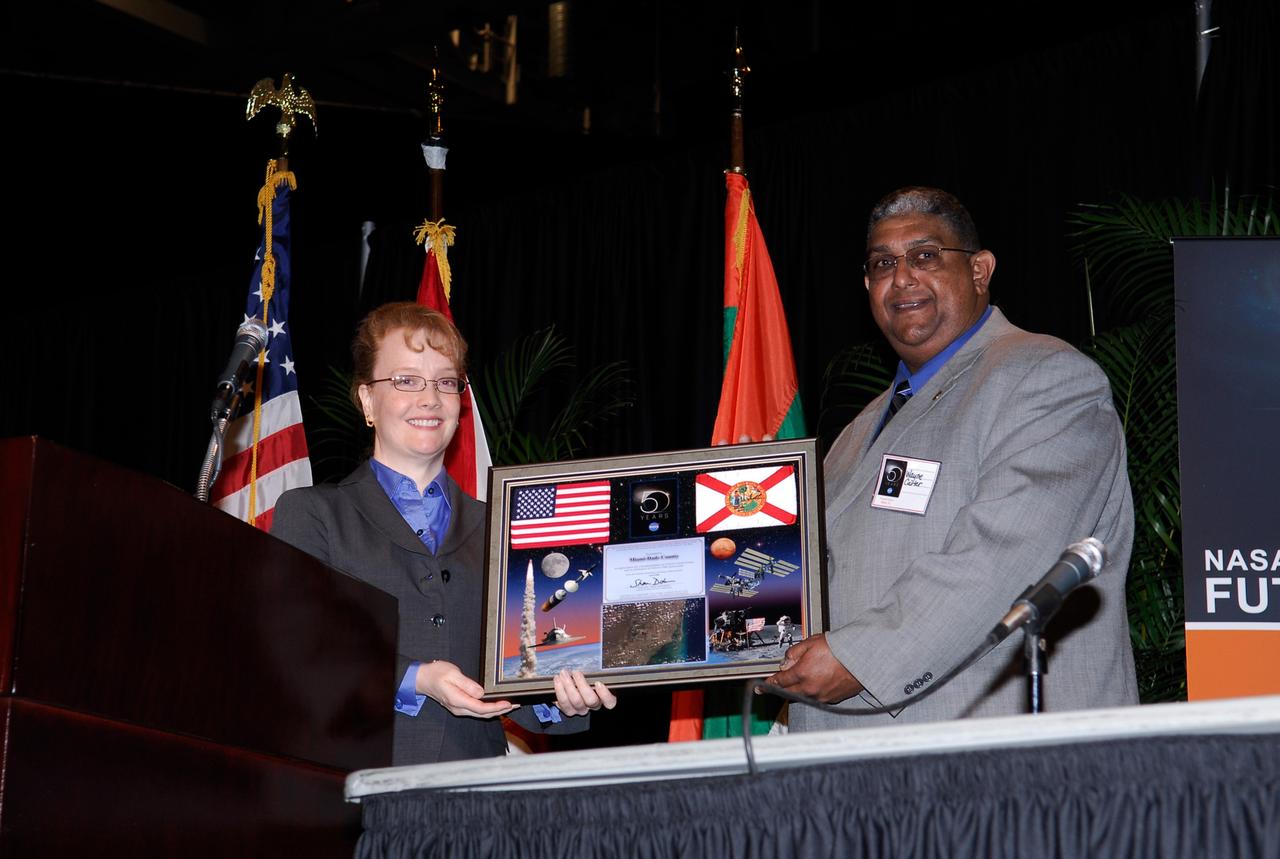
CAPE CANAVERAL, Fla. -- NASA Deputy Administrator Shana Dale (left) presents a 50th anniversary commemorative plaque to Wayne Carter during a Future Forum in Miami that focused on how space exploration benefits Florida's economy. Carter is assistant director for constituent services for the Miami-Dade County Mayor, Carlos Alveraz. The event, which included presentations and panels, was held at the University of Miami's BankUnited Center. Among those participating were NASA Deputy Administrator Shana Dale, astronaut Carl Walz, director of the Advanced Capabilities Division in NASA's Exploration Systems Mission Directorate, and Russell Romanella, director, International Space Station and Spacecraft Processing. Photo credit: NASA/Kim Shiflett
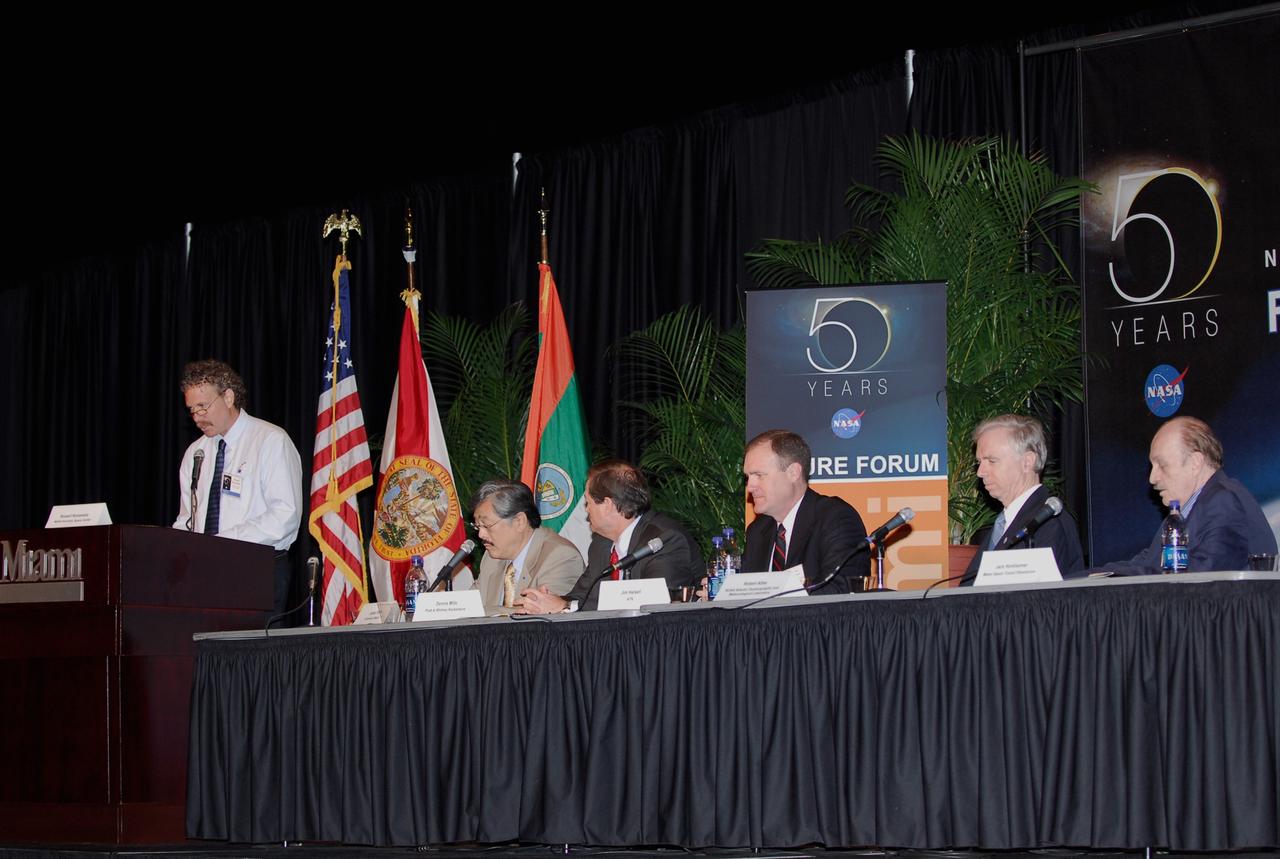
CAPE CANAVERAL, Fla. -- At the podium, Russell Romanella, director of International Space Station and Spacecraft Processing at Kennedy Space Center, moderates a panel presenting “Pushing the Limits of Knowledge To Inspire New Generations” during NASA’s Future Forum in Miami. Others on the panel include James Tien, dean of engineering at the University of Miami; Dennis Mills, with UTC/Pratt Whitney Rocketdyne; Jim Halsell, former astronaut; Robert Atlas, director of NOAA's Atlantic Oceanographic and Meteorological Laboratory; and Jack Horkheimer, executive director of the Miami Space Transit Planetarium. The forum focused on how space exploration benefits Florida's economy. The event, which included presentations and panels, was held at the University of Miami's BankUnited Center. Among those participating were NASA Deputy Administrator Shana Dale, astronaut Carl Walz, director of the Advanced Capabilities Division in NASA's Exploration Systems Mission Directorate, and Russell Romanella, director, International Space Station and Spacecraft Processing. Photo credit: NASA/Kim Shiflett
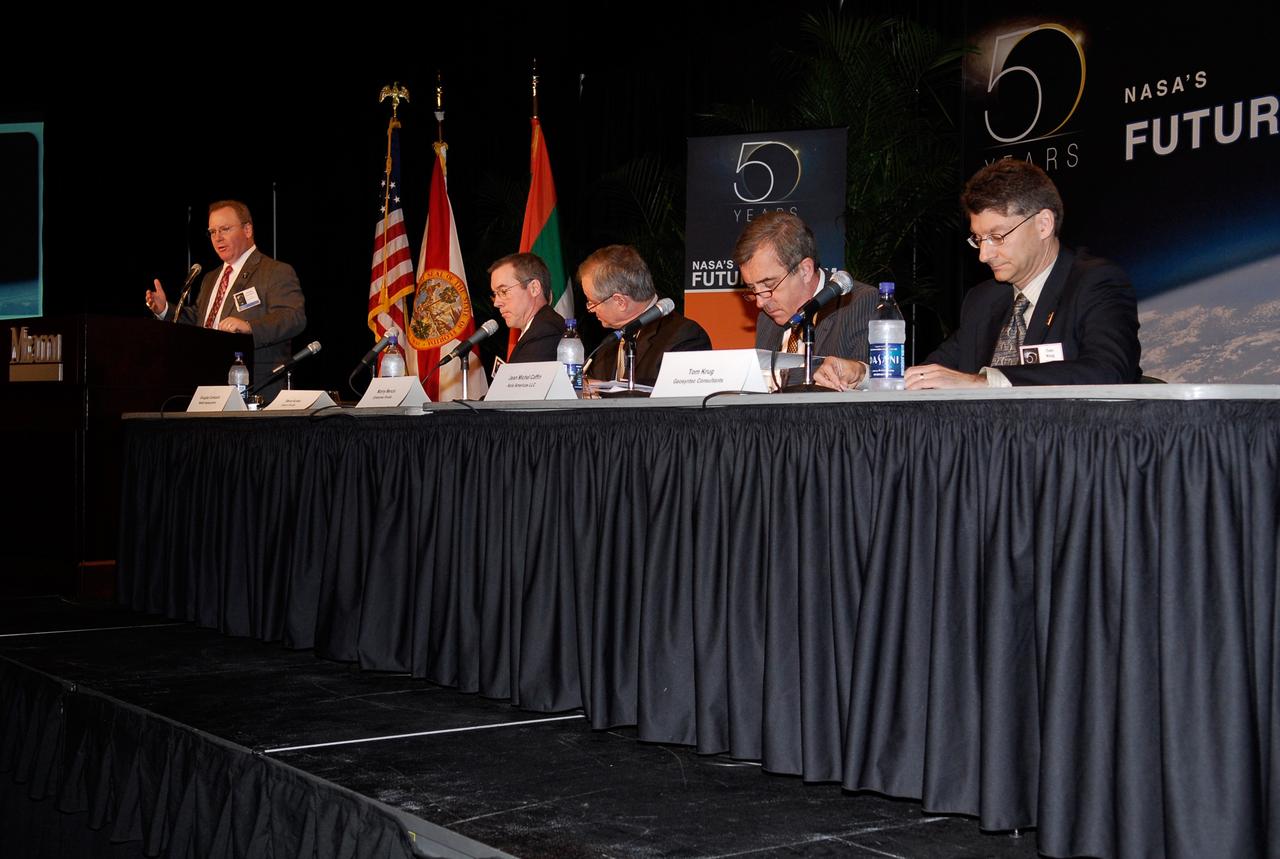
CAPE CANAVERAL, Fla. -- From the podium, Douglas Comstock, director of NASA's Innovative Partnership Program, moderates a panel presenting the topic “Unleashing the Power of Technology and Creativity” during NASA’s Future Forum in Miami. Others on the panel are (left to right), Steve Kohler, president and CEO of Space Florida; Manny Mencia Sr., vice president for international trade and business development of Enterprise Florida; Jean Michel Caffin, managing partner of Axis Americas and Beacon Council Executive Cabinet; and Tom Krug, associate and senior engineer with Geosyntec Consultants. The forum focused on how space exploration benefits Florida's economy. The event, which included presentations and panels, was held at the University of Miami's BankUnited Center. Among those participating were NASA Deputy Administrator Shana Dale, astronaut Carl Walz, director of the Advanced Capabilities Division in NASA's Exploration Systems Mission Directorate, and Russell Romanella, director, International Space Station and Spacecraft Processing. Photo credit: NASA/Kim Shiflett
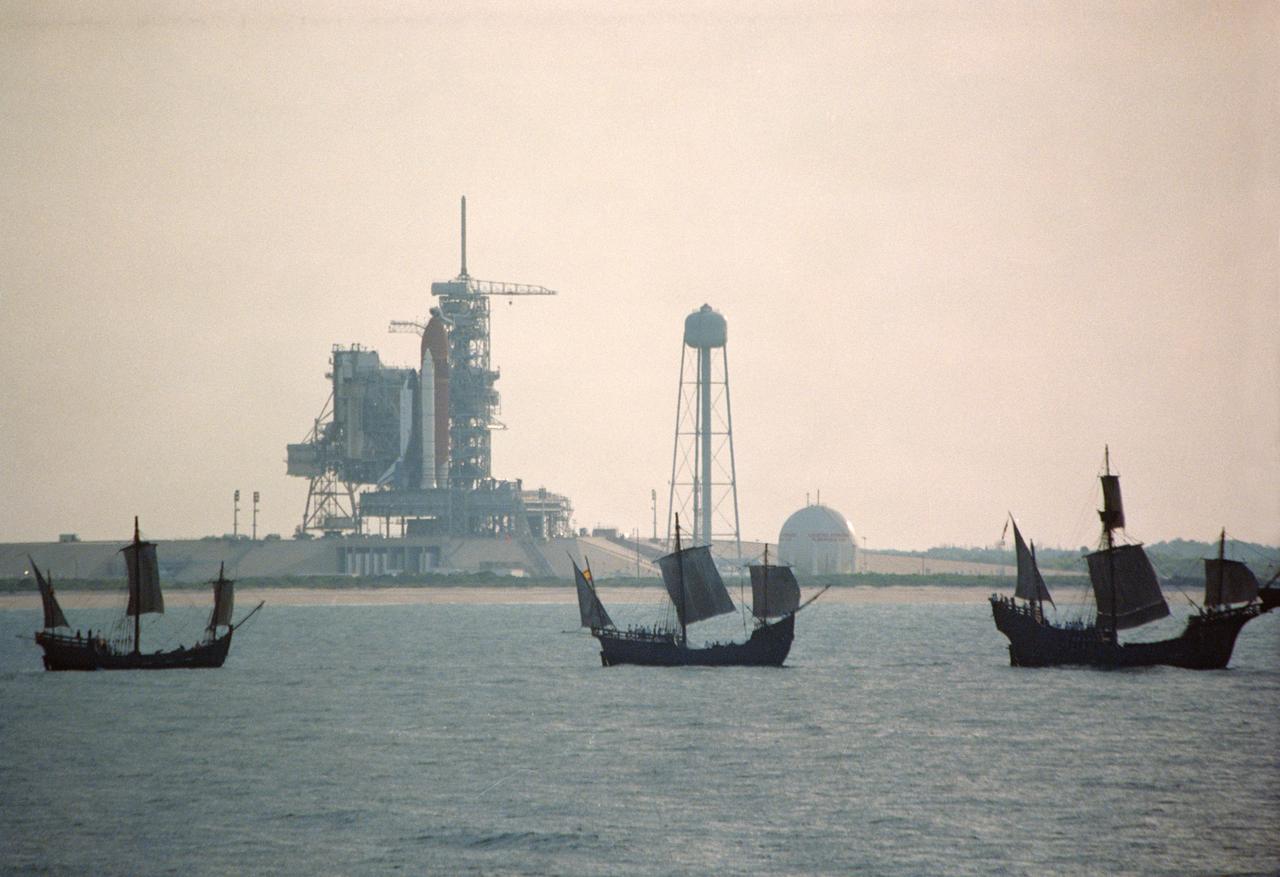
S92-39074 (6 May 1992) --- The centuries-old technology that built Christopher Columbus' three sailing ships passes within a half mile of the 20th-Century Space Shuttle Endeavour, in background, awaiting liftoff on Launch Pad 39B. The replicas of the Santa Maria, Nina, and Pinta wind-powered ships, managed by the Spain '92 Foundation, are on a tour to ports around the Gulf of Mexico and up the Atlantic Coast of the United States. Endeavour is set to lift off on its maiden voyage, STS-49, on May 7, 1992. Video footage of the two types of exploration vessels will be used by NASA for a variety of productions, including the annual Von Braun Exploration forum sponsored by NASA's Marshall Space Flight Center (MSFC), Huntsville, Alabama, in October, 1992. This year's theme is Exploration and the Evolution of Nations. 1992 is the 500th anniversary of Columbus' voyage to the New World.
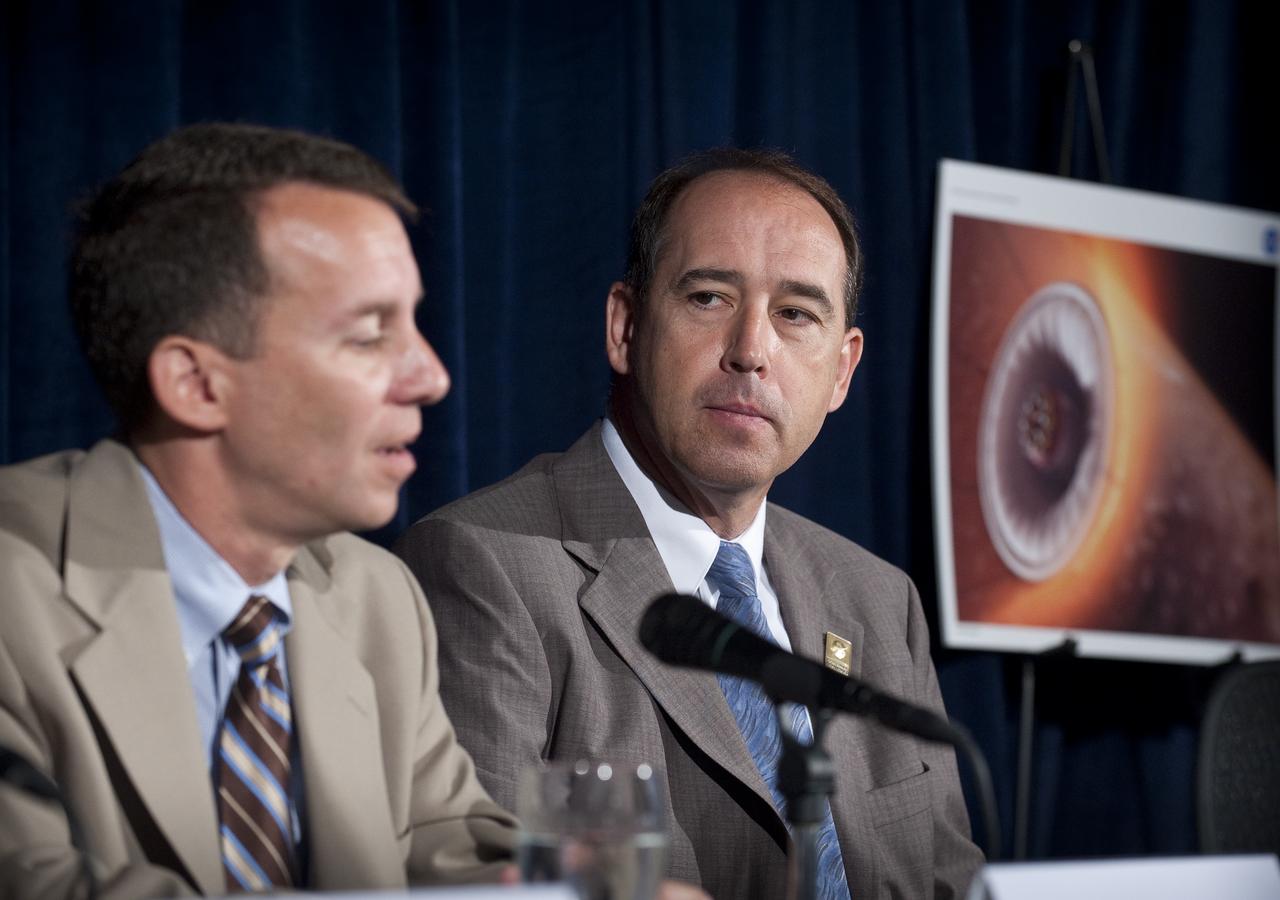
NASA's Manager of Centennial Challenges Andy Petro, right, listens as NASA Chief Technologist Bobby Braun answers a reporter's question during a press conference held at the NASA New Space Technology Industry Forum being held at the University of Maryland in College Park on Tuesday, July 13, 2010. During the two-day event, speakers are focusing on the president's fiscal year 2011 budget request for NASA's new Space Technology Program. Representatives from industry, academia and the federal government are in attendance to discuss strategy, development and implementation of NASA's proposed new technology-enabled exploration. Photo Credit: (NASA/Bill Ingalls)
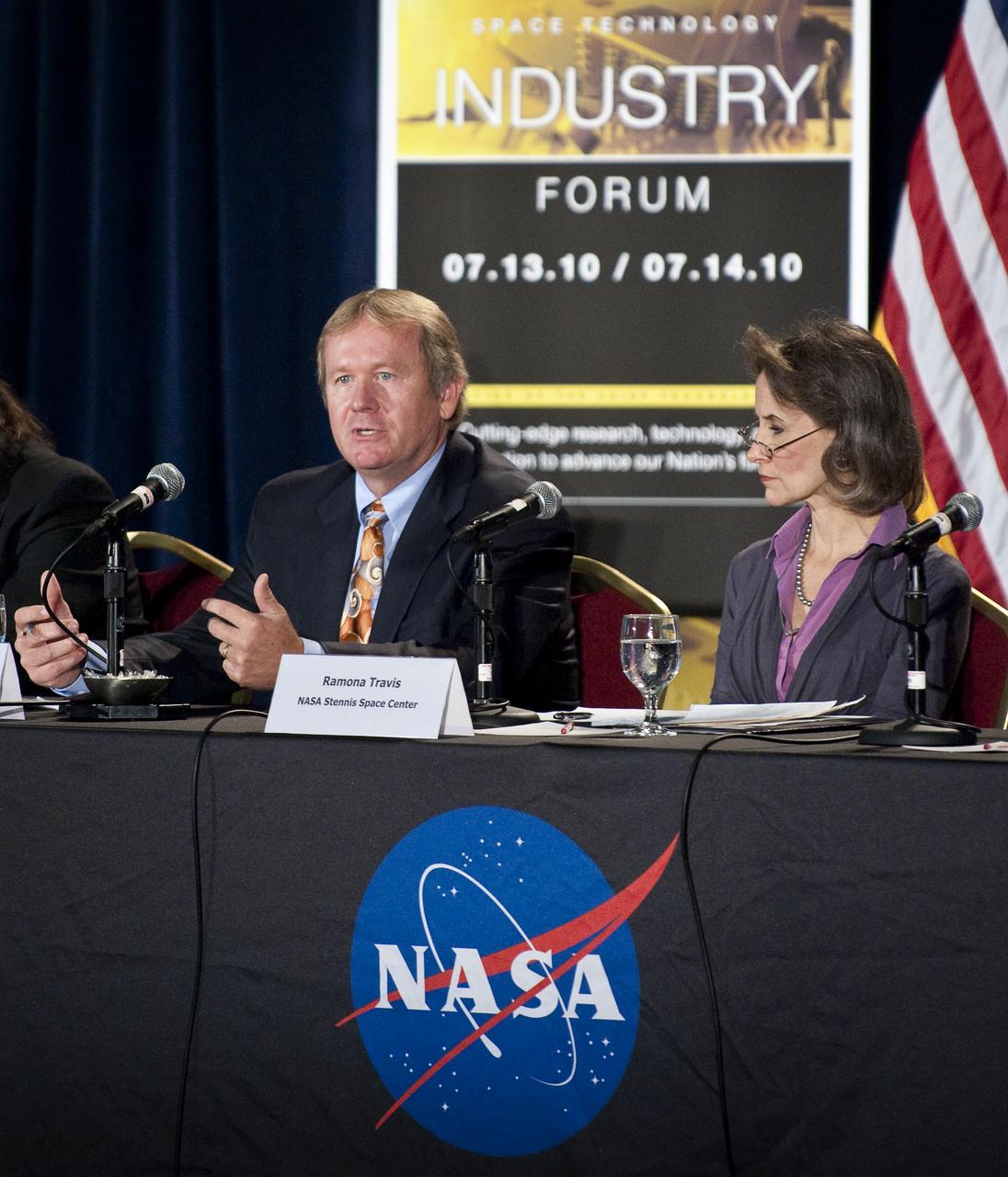
Keith Belvin, NASA Systems Engineer at NASA Langley Research Center, speaks during the NASA New Space Technology Industry Forum being held at the University of Maryland in College Park on Wednesday, July 14, 2010. During the two-day event, speakers are focusing on the president's fiscal year 2011 budget request for NASA's new Space Technology Program. Representatives from industry, academia and the federal government are in attendance to discuss strategy, development and implementation of NASA's proposed new technology-enabled exploration. Photo Credit: (NASA/Carla Cioffi)
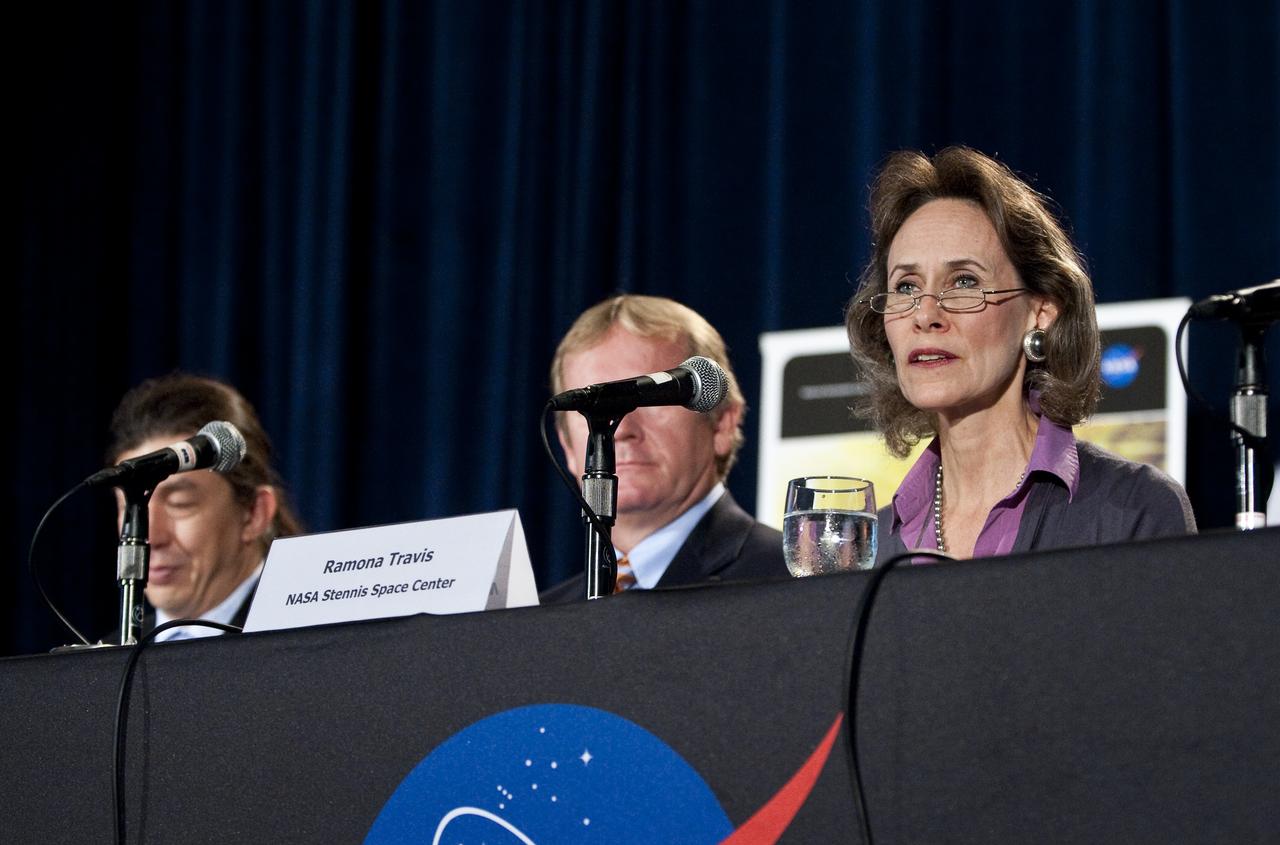
Ramona Travis, NASA Stennis Space Center Chief Technologist, speaks during the NASA New Space Technology Industry Forum being held at the University of Maryland in College Park on Wednesday, July 14, 2010. During the two-day event, speakers are focusing on the president's fiscal year 2011 budget request for NASA's new Space Technology Program. Representatives from industry, academia and the federal government are in attendance to discuss strategy, development and implementation of NASA's proposed new technology-enabled exploration. Photo Credit: (NASA/Carla Cioffi)
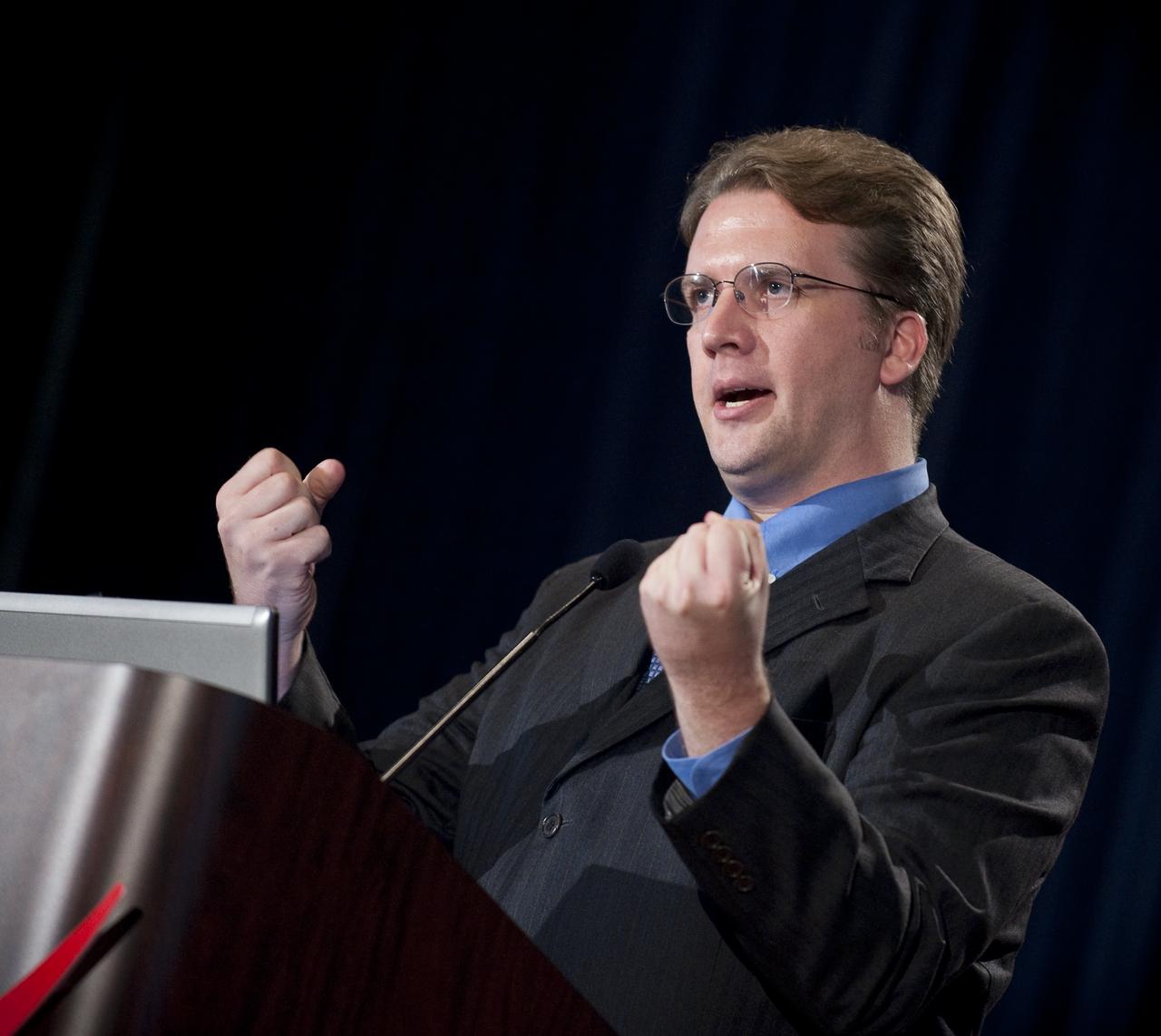
NASA Small Satellite Subsystem Technology and Edison Small Satellite Demonstrations Program Executive Brant Sponberg speaks during the NASA New Space Technology Industry Forum being held at the University of Maryland in College Park on Tuesday, July 13, 2010. During the two-day event, speakers are focusing on the president's fiscal year 2011 budget request for NASA's new Space Technology Program. Representatives from industry, academia and the federal government are in attendance to discuss strategy, development and implementation of NASA's proposed new technology-enabled exploration. Photo Credit: (NASA/Bill Ingalls)
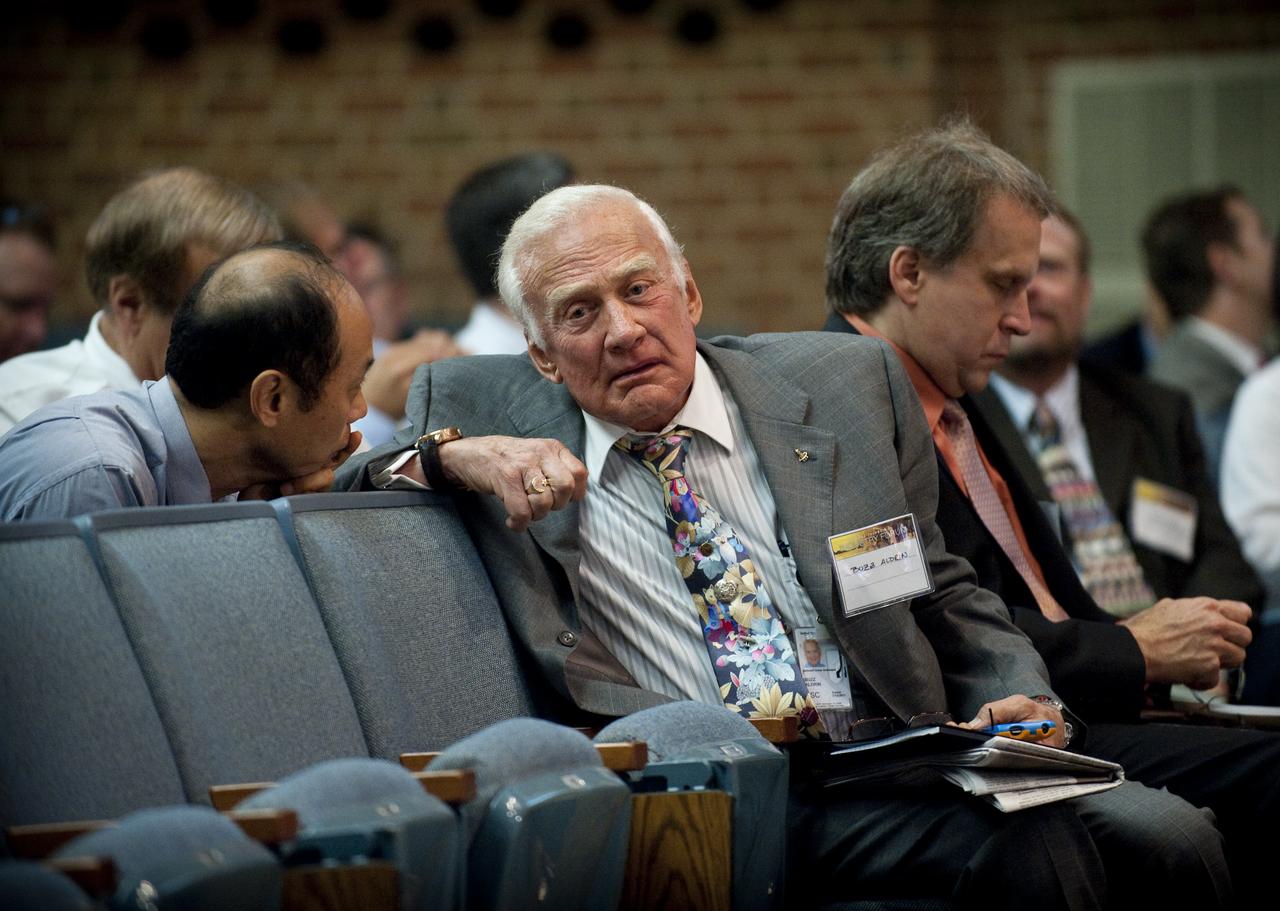
Retired NASA Astronaut and Air Force Col. Buzz Aldrin talks with other attendees of NASA's New Space Technology Industry Forum being held at the University of Maryland in College Park on Tuesday, July 13, 2010. During the two-day event, speakers are focusing on the president's fiscal year 2011 budget request for NASA's new Space Technology Program. Representatives from industry, academia and the federal government are in attendance to discuss strategy, development and implementation of NASA's proposed new technology-enabled exploration. Photo Credit: (NASA/Bill Ingalls)
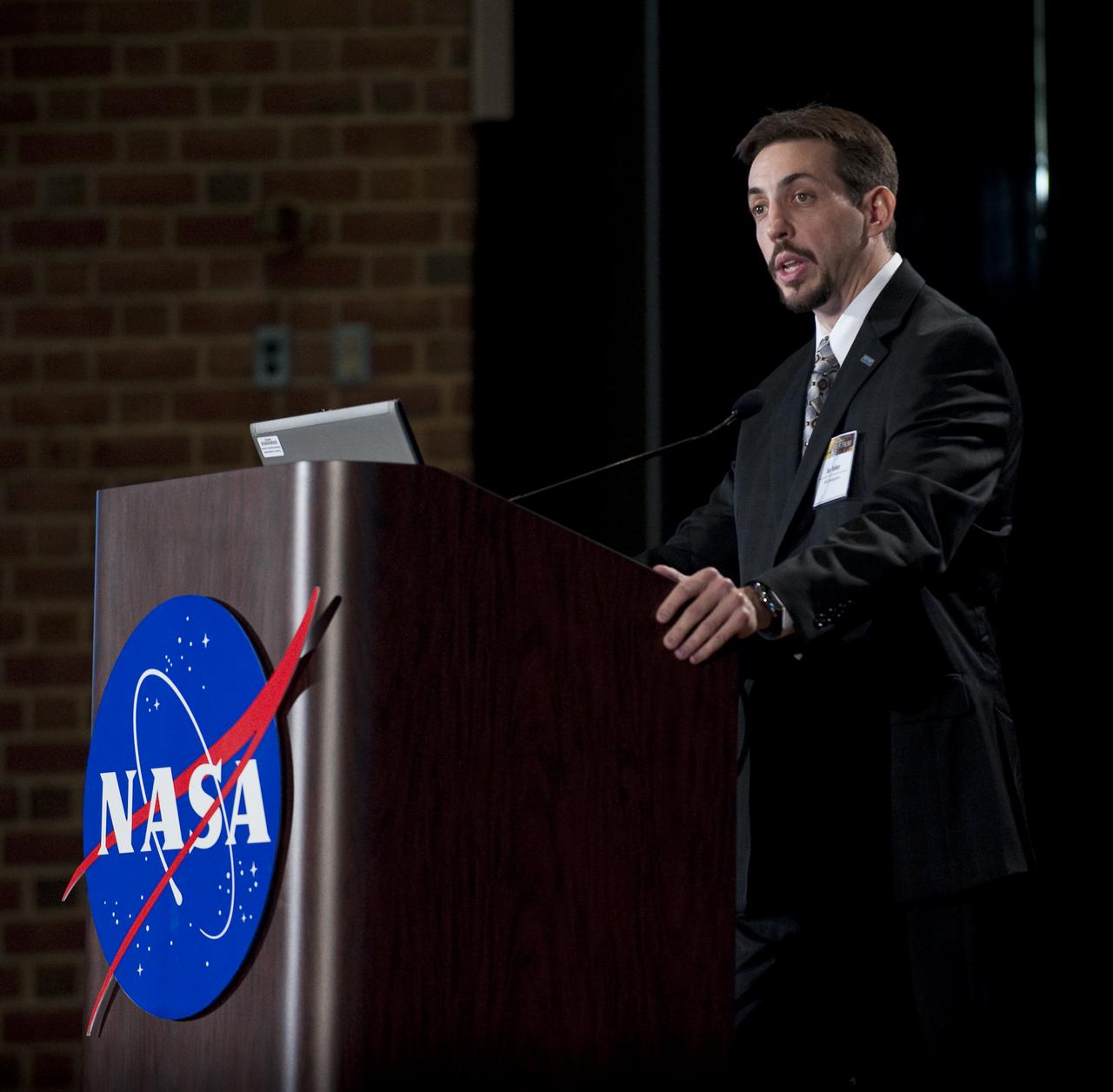
Program Executive for the NASA Innovative Advanced Concepts (NIAC) Program Jay Falker speaks during the NASA New Space Technology Industry Forum being held at the University of Maryland in College Park on Tuesday, July 13, 2010. During the two-day event, speakers are focusing on the president's fiscal year 2011 budget request for NASA's new Space Technology Program. Representatives from industry, academia and the federal government are in attendance to discuss strategy, development and implementation of NASA's proposed new technology-enabled exploration. Photo Credit: (NASA/Bill Ingalls)
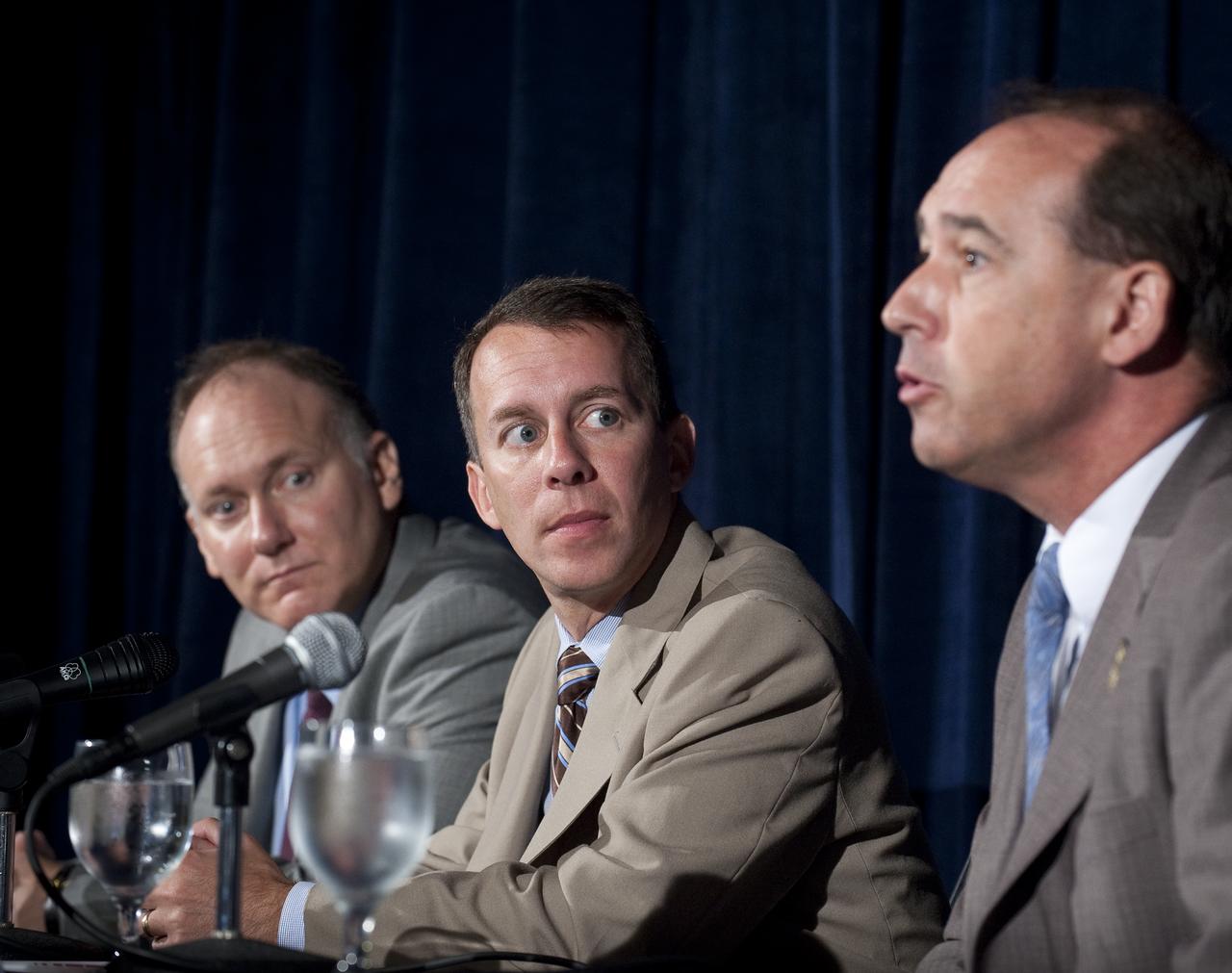
NASA Chief Technologist Bobby Braun, center, listens as NASA's Manager of Centennial Challenges Andy Petro, right, answers a reporter's question during a press conference held at the NASA New Space Technology Industry Forum being held at the University of Maryland in College Park on Tuesday, July 13, 2010. During the two-day event, speakers are focusing on the president's fiscal year 2011 budget request for NASA's new Space Technology Program. Representatives from industry, academia and the federal government are in attendance to discuss strategy, development and implementation of NASA's proposed new technology-enabled exploration. Photo Credit: (NASA/Bill Ingalls)

California Congresswoman Maxine Waters, 35th Congressional District, waves to the crowds as she is introduced at the Endeavour Kick-Off Ceremony at The Forum in Inglewood, Saturday, Oct. 13, 2012. Endeavour, built as a replacement for space shuttle Challenger, completed 25 missions, spent 299 days in orbit, and orbited Earth 4,671 times while traveling 122,883,151 miles. Beginning Oct. 30, the shuttle will be on display in the CSC’s Samuel Oschin Space Shuttle Endeavour Display Pavilion, embarking on its new mission to commemorate past achievements in space and educate and inspire future generations of explorers. Photo Credit: (NASA/Carla Cioffi)
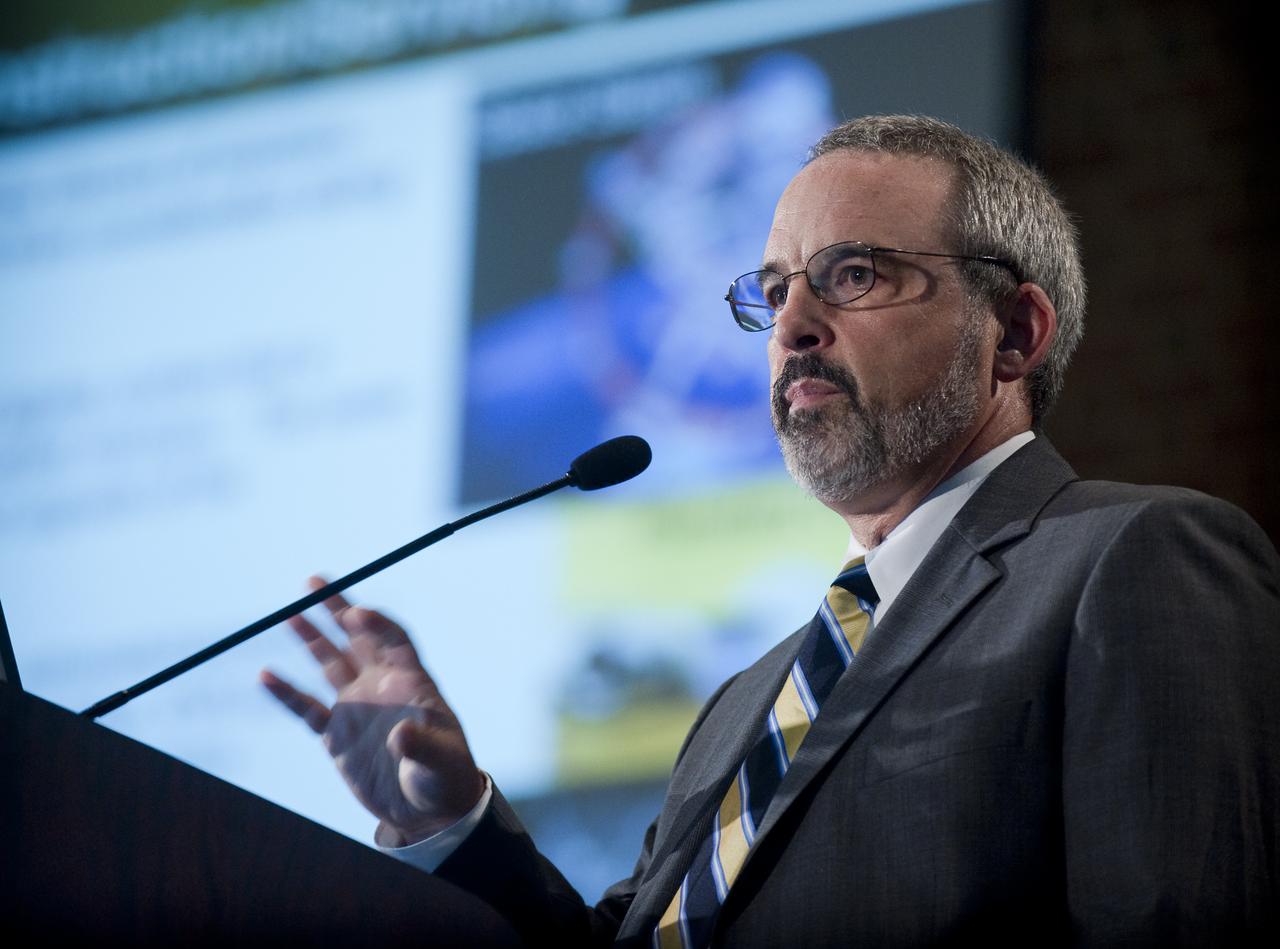
NASA Program Manager for Game Changing Technology Program Jean Francois Barthelemy speaks during the NASA New Space Technology Industry Forum being held at the University of Maryland in College Park on Tuesday, July 13, 2010. During the two-day event, speakers are focusing on the president's fiscal year 2011 budget request for NASA's new Space Technology Program. Representatives from industry, academia and the federal government are in attendance to discuss strategy, development and implementation of NASA's proposed new technology-enabled exploration. Photo Credit: (NASA/Bill Ingalls)
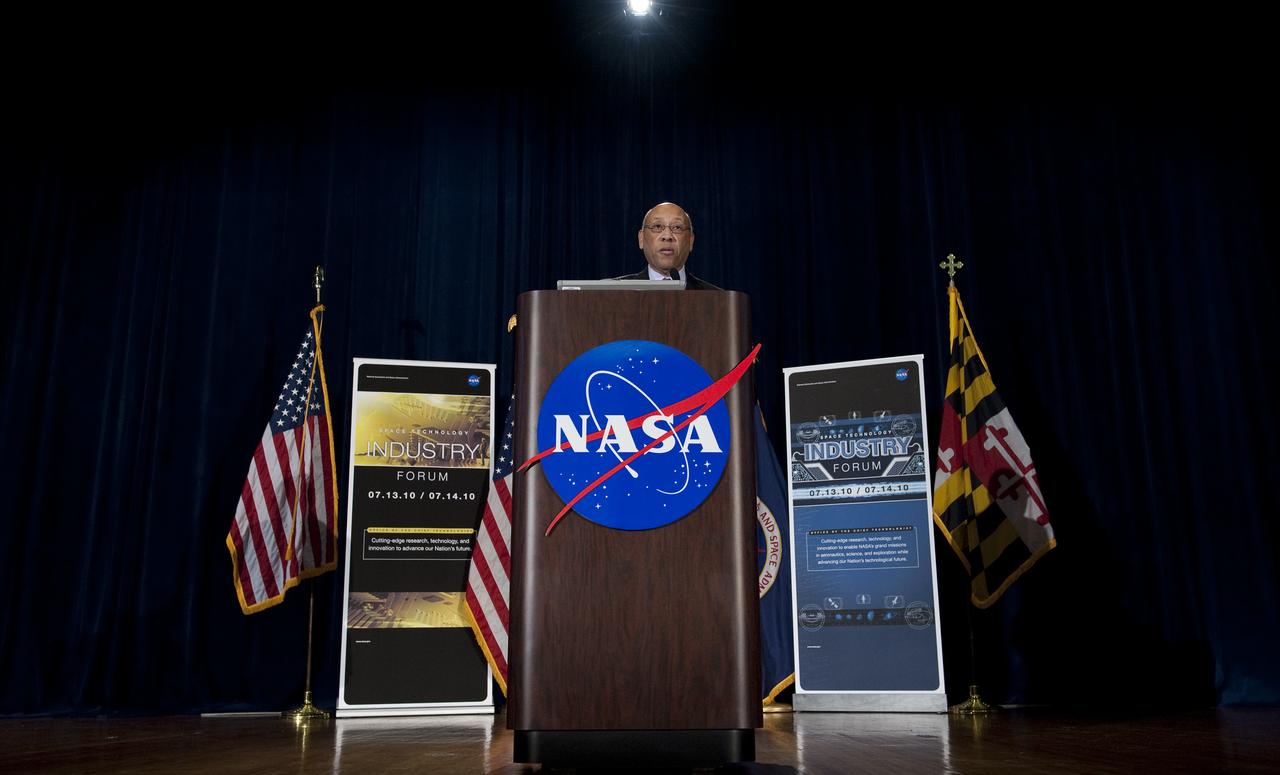
NASA Program Executive for SBIR/STTR Programs Carl Ray speaks during the NASA New Space Technology Industry Forum being held at the University of Maryland in College Park on Tuesday, July 13, 2010. During the two-day event, speakers are focusing on the president's fiscal year 2011 budget request for NASA's new Space Technology Program. Representatives from industry, academia and the federal government are in attendance to discuss strategy, development and implementation of NASA's proposed new technology-enabled exploration. Photo Credit: (NASA/Bill Ingalls)
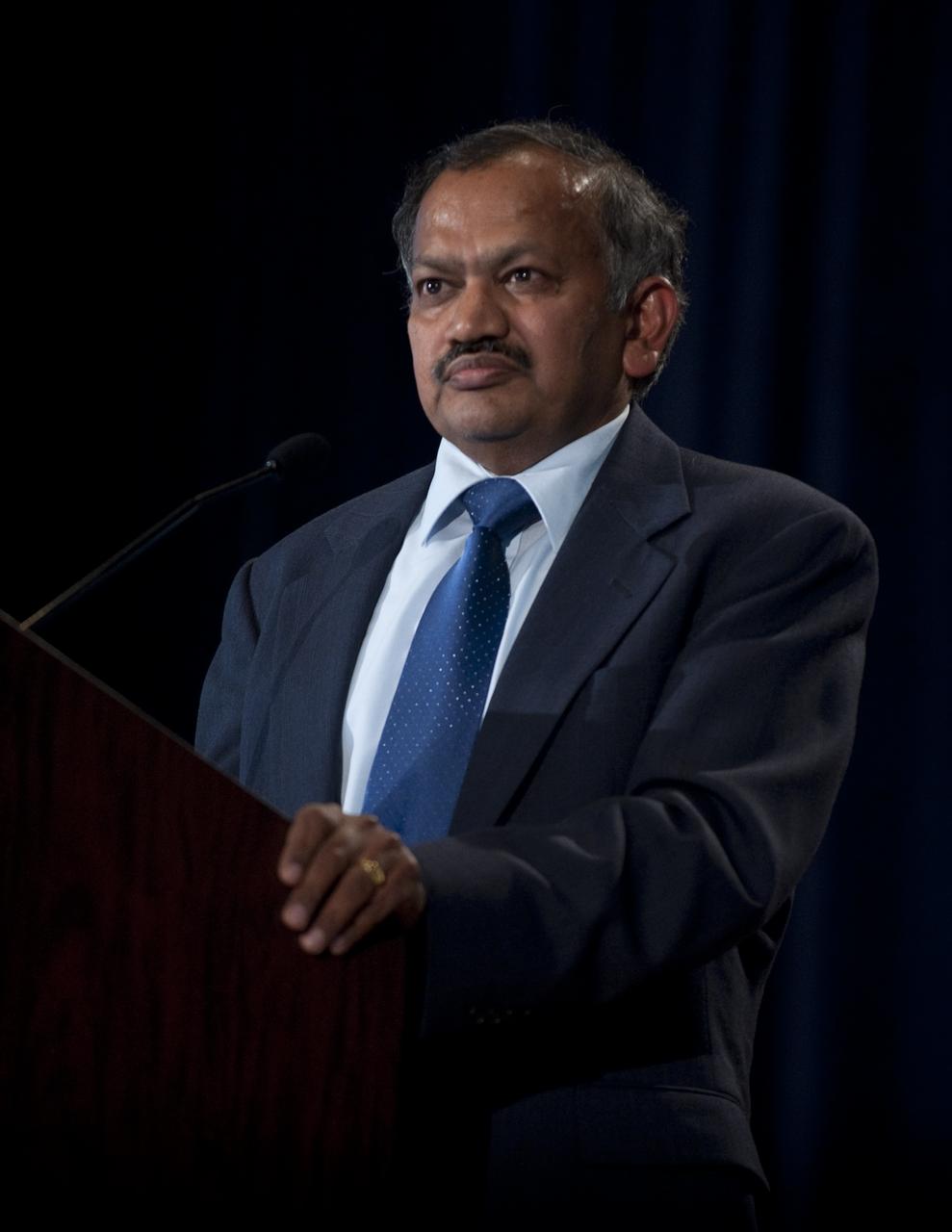
NASA's Program Executive for Flight Opportunities Program L.K. Kubendran speaks during the NASA New Space Technology Industry Forum being held at the University of Maryland in College Park on Tuesday, July 13, 2010. During the two-day event, speakers are focusing on the president's fiscal year 2011 budget request for NASA's new Space Technology Program. Representatives from industry, academia and the federal government are in attendance to discuss strategy, development and implementation of NASA's proposed new technology-enabled exploration. Photo Credit: (NASA/Bill Ingalls)
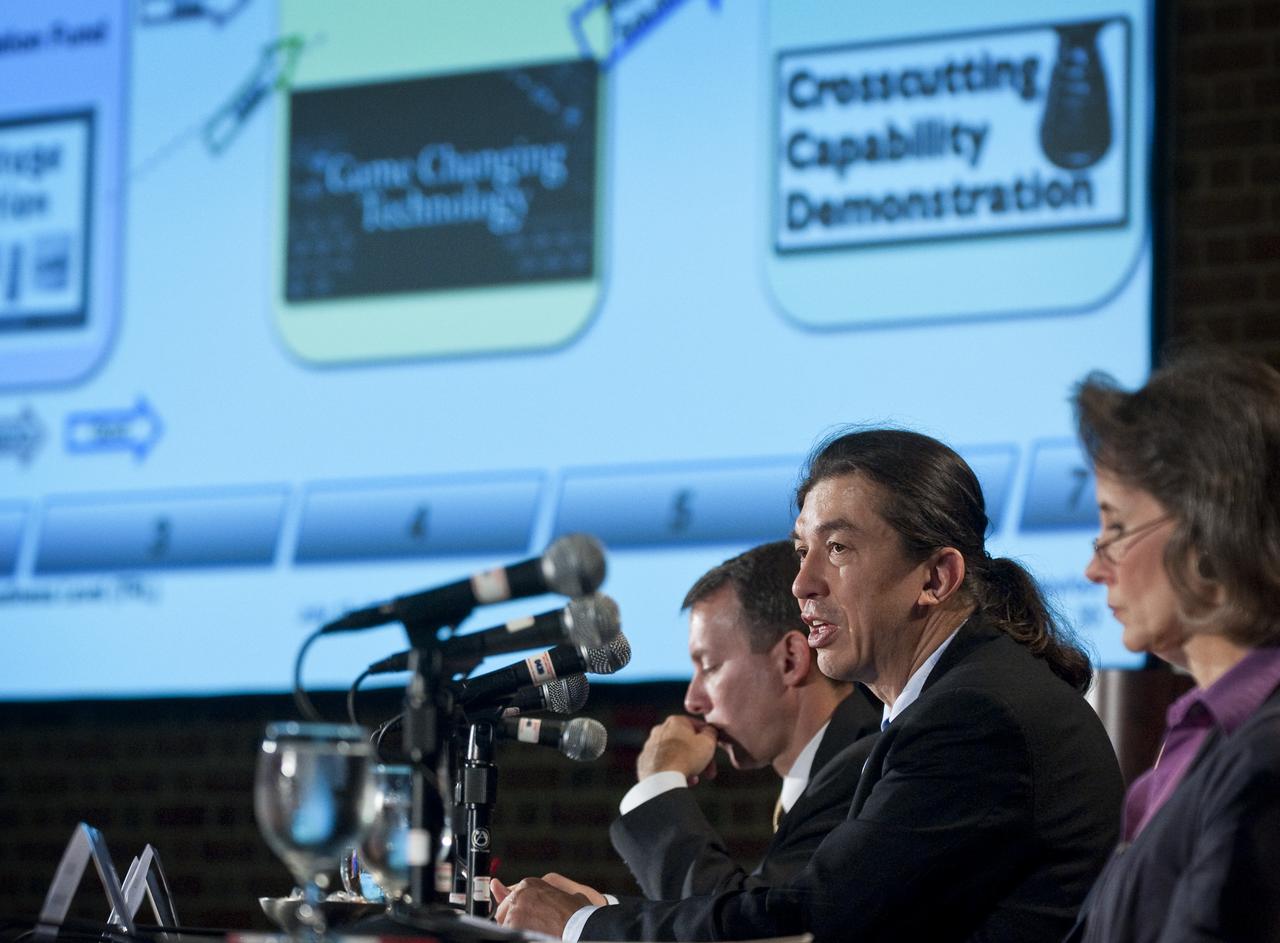
James Reuther, second from right, Director of Strategic Integration at NASA Headquarters, speaks during the NASA New Space Technology Industry Forum being held at the University of Maryland in College Park on Wednesday, July 14, 2010. During the two-day event, speakers are focusing on the president's fiscal year 2011 budget request for NASA's new Space Technology Program. Representatives from industry, academia and the federal government are in attendance to discuss strategy, development and implementation of NASA's proposed new technology-enabled exploration. Photo Credit: (NASA/Carla Cioffi)
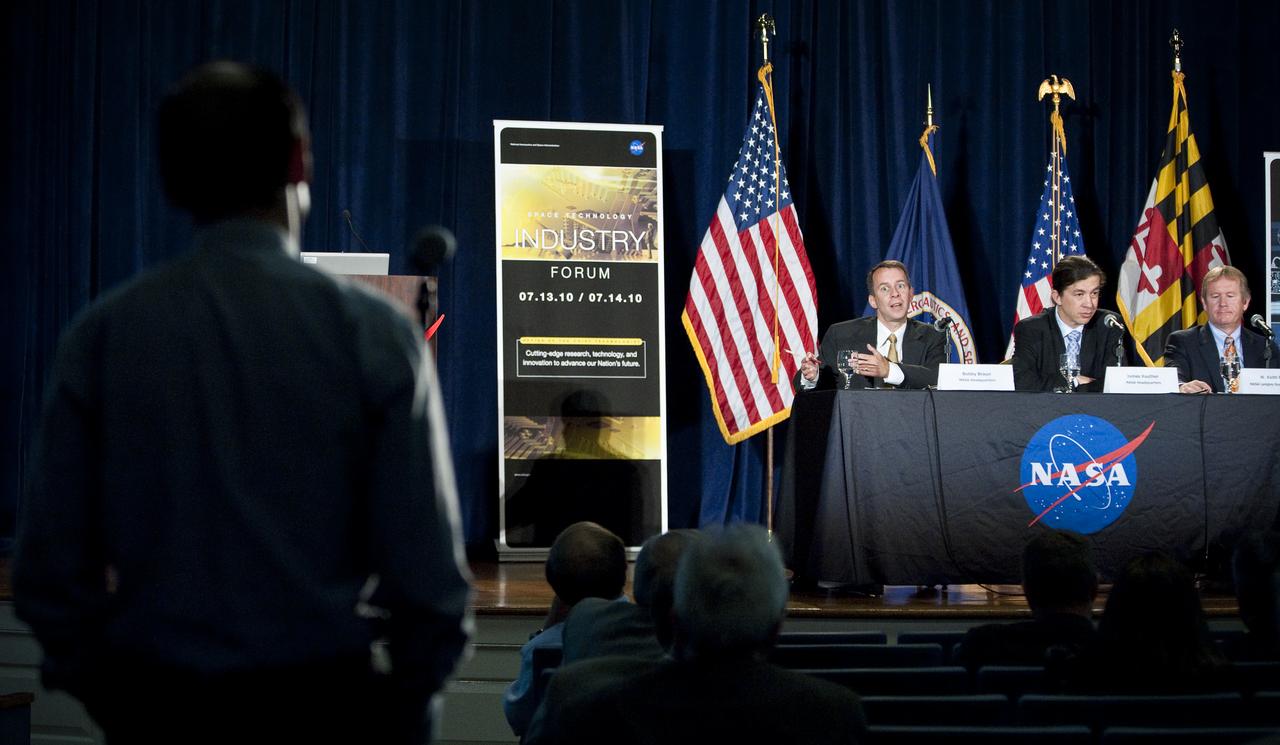
Bobby Braun, third from right, NASA Chief Technologist, answers a question during the NASA New Space Technology Industry Forum being held at the University of Maryland in College Park on Wednesday, July 14, 2010. During the two-day event, speakers are focusing on the president's fiscal year 2011 budget request for NASA's new Space Technology Program. Representatives from industry, academia and the federal government are in attendance to discuss strategy, development and implementation of NASA's proposed new technology-enabled exploration. Photo Credit: (NASA/Carla Cioffi)
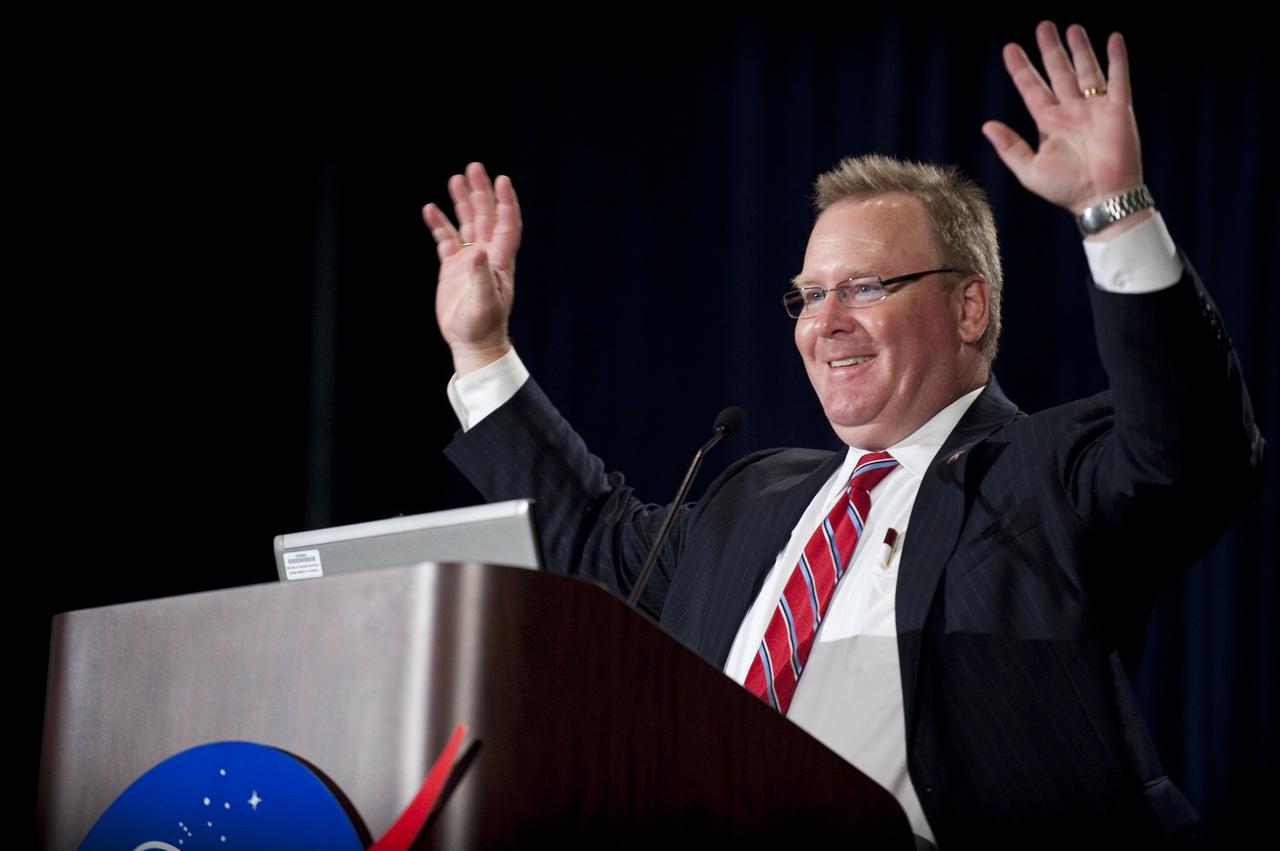
NASA's Partnership, Innovation & Commercial Space Director Doug Comstock speaks during the NASA New Space Technology Industry Forum being held at the University of Maryland in College Park on Tuesday, July 13, 2010. During the two-day event, speakers are focusing on the president's fiscal year 2011 budget request for NASA's new Space Technology Program. Representatives from industry, academia and the federal government are in attendance to discuss strategy, development and implementation of NASA's proposed new technology-enabled exploration. Photo Credit: (NASA/Bill Ingalls)
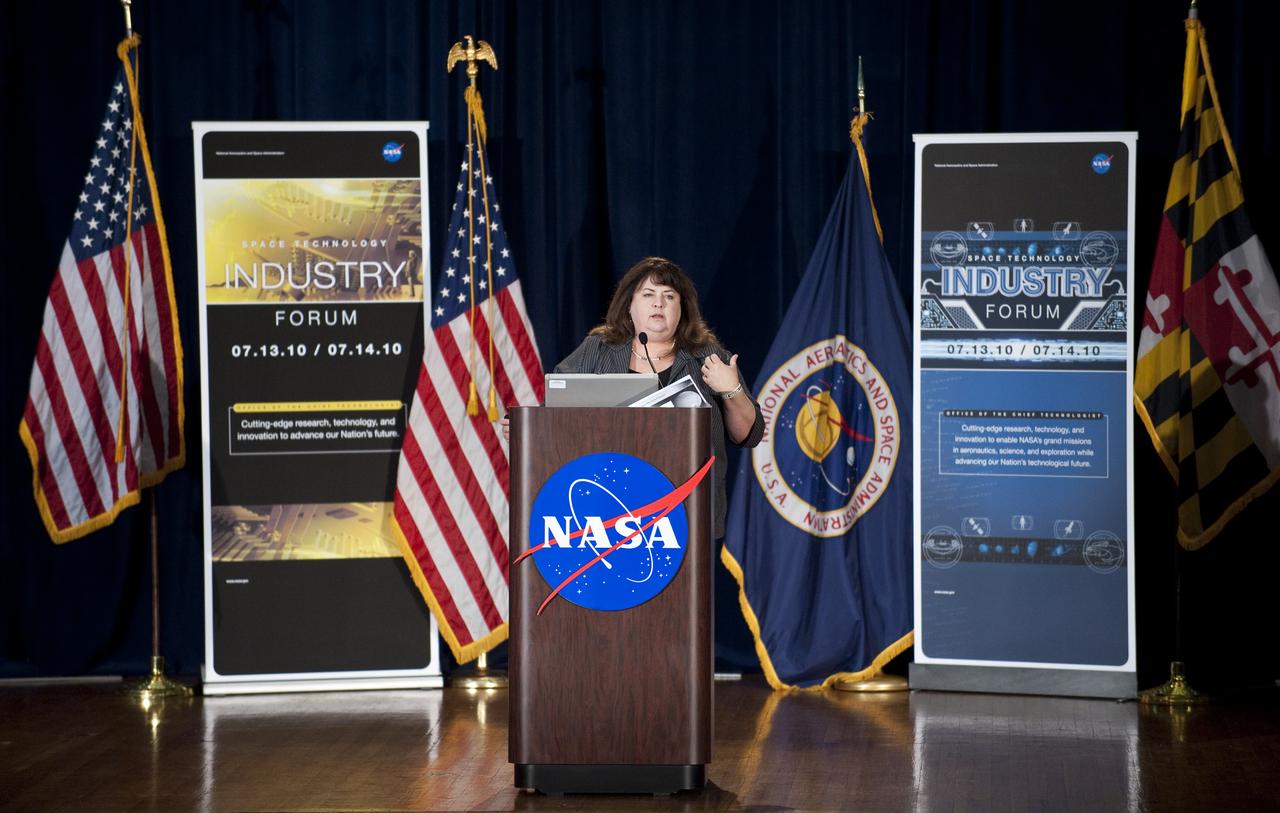
NASA's Program Executive for Technology Demonstration Missions Bonnie James speaks during the NASA New Space Technology Industry Forum being held at the University of Maryland in College Park on Tuesday, July 13, 2010. During the two-day event, speakers are focusing on the president's fiscal year 2011 budget request for NASA's new Space Technology Program. Representatives from industry, academia and the federal government are in attendance to discuss strategy, development and implementation of NASA's proposed new technology-enabled exploration. Photo Credit: (NASA/Bill Ingalls)
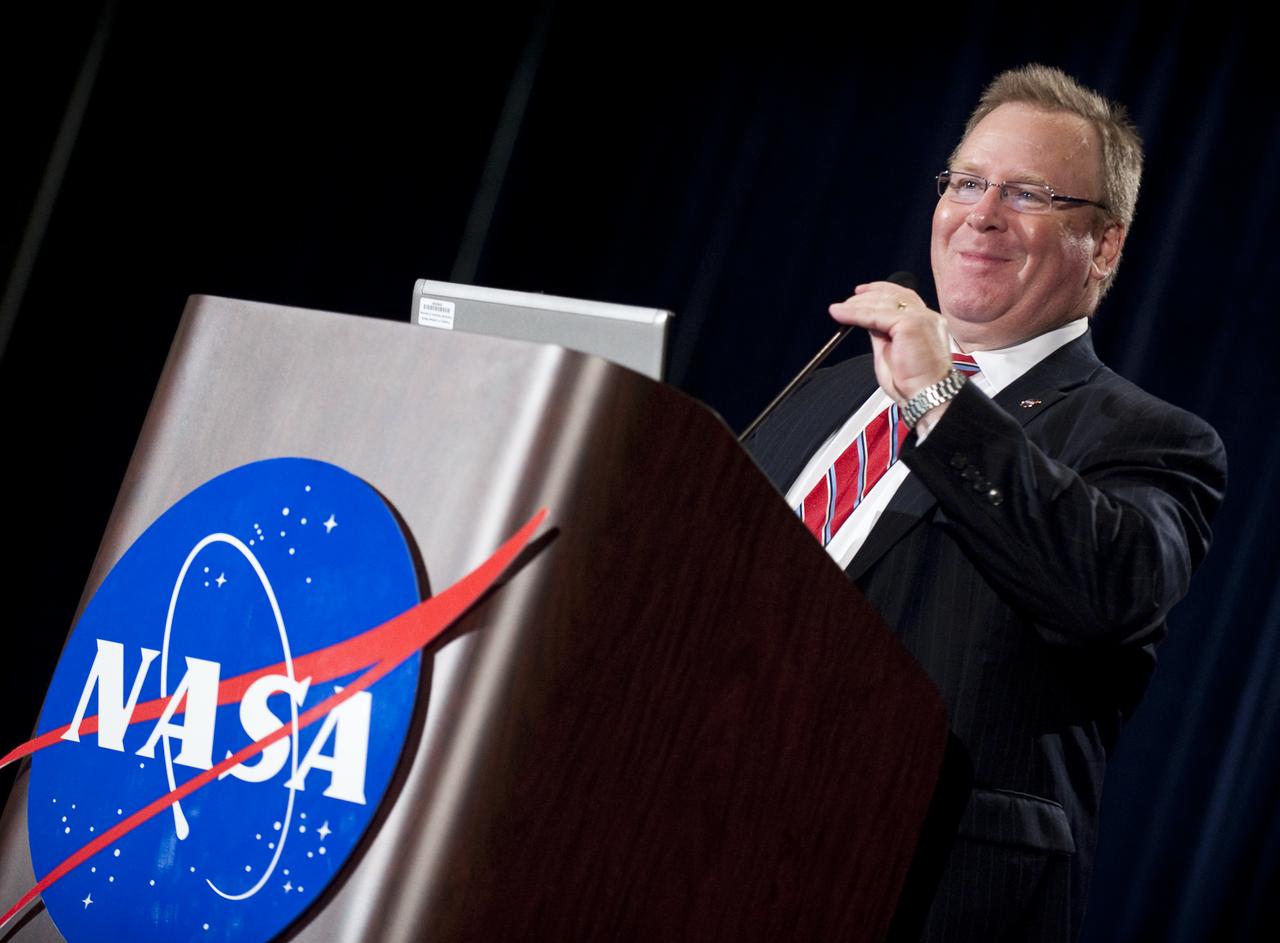
NASA's Partnership, Innovation & Commercial Space Director Doug Comstock speaks during the NASA New Space Technology Industry Forum being held at the University of Maryland in College Park on Tuesday, July 13, 2010. During the two-day event, speakers are focusing on the president's fiscal year 2011 budget request for NASA's new Space Technology Program. Representatives from industry, academia and the federal government are in attendance to discuss strategy, development and implementation of NASA's proposed new technology-enabled exploration. Photo Credit: (NASA/Bill Ingalls)
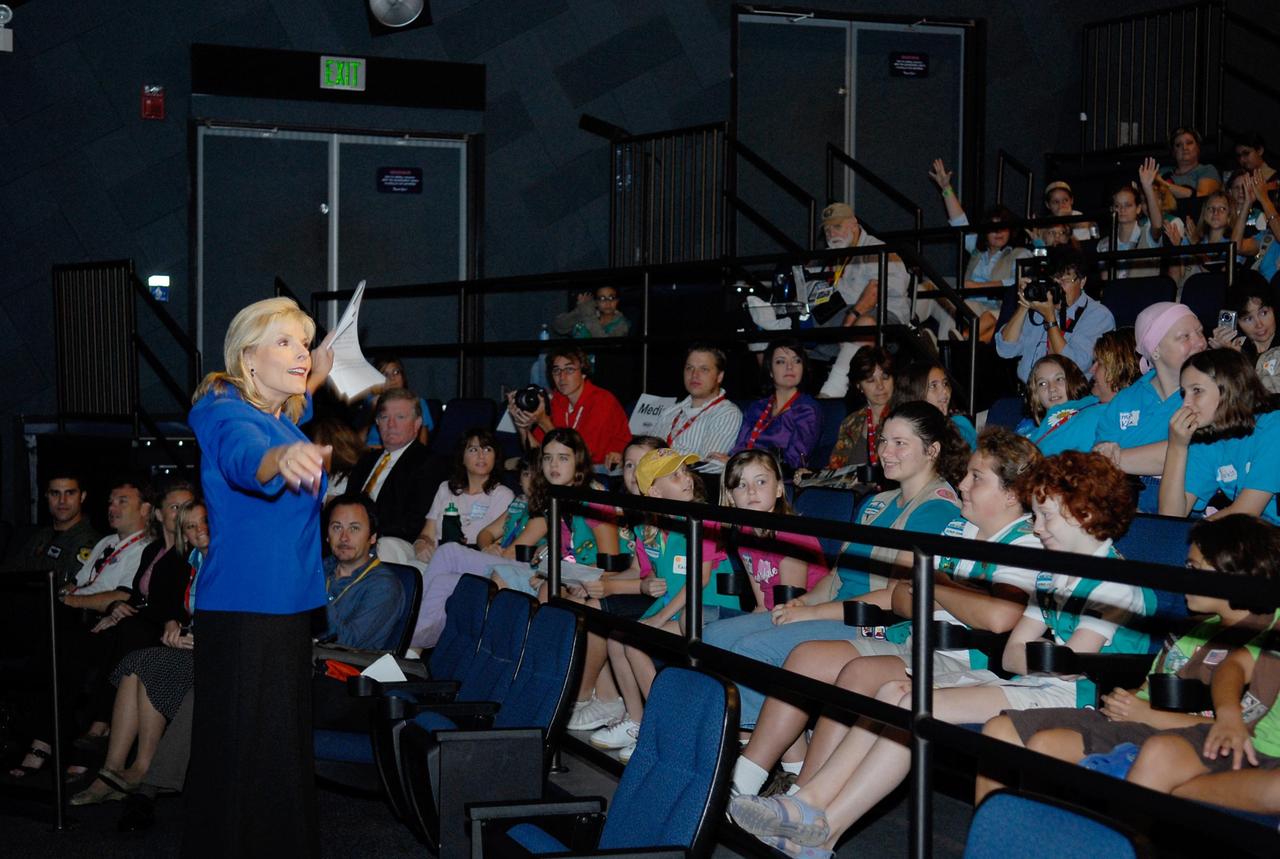
KENNEDY SPACE CENTER, FLA. -- Barbara West, from local ABC affiliate WFTV, talks to the audience of Girl Scouts attending the Pioneering Women of Aerospace forum during the World Space Expo held at NASA's Kennedy Space Center Visitor Complex. The forum featured Eileen Collins and other prominent female space veterans. The expo commemorates humanity's first 50 years in space while looking forward to returning people to the moon and exploring beyond. The expo showcased various panels, presentations and educational programs, as well as an aerial salute featuring the U.S. Air Force Thunderbirds, U.S. Air Force F-22 Raptor, U.S. Navy F-18 Super Hornet, U.S. Air Force F-15 Eagle, the P-51 Mustang Heritage Flight, and the U.S. Air Force 920th Rescue Wing, which was responsible for Mercury and Gemini capsule recovery. The U.S. Army Golden Knights also demonstrated precision skydiving. Photo credit: NASA/Kim Shiflett
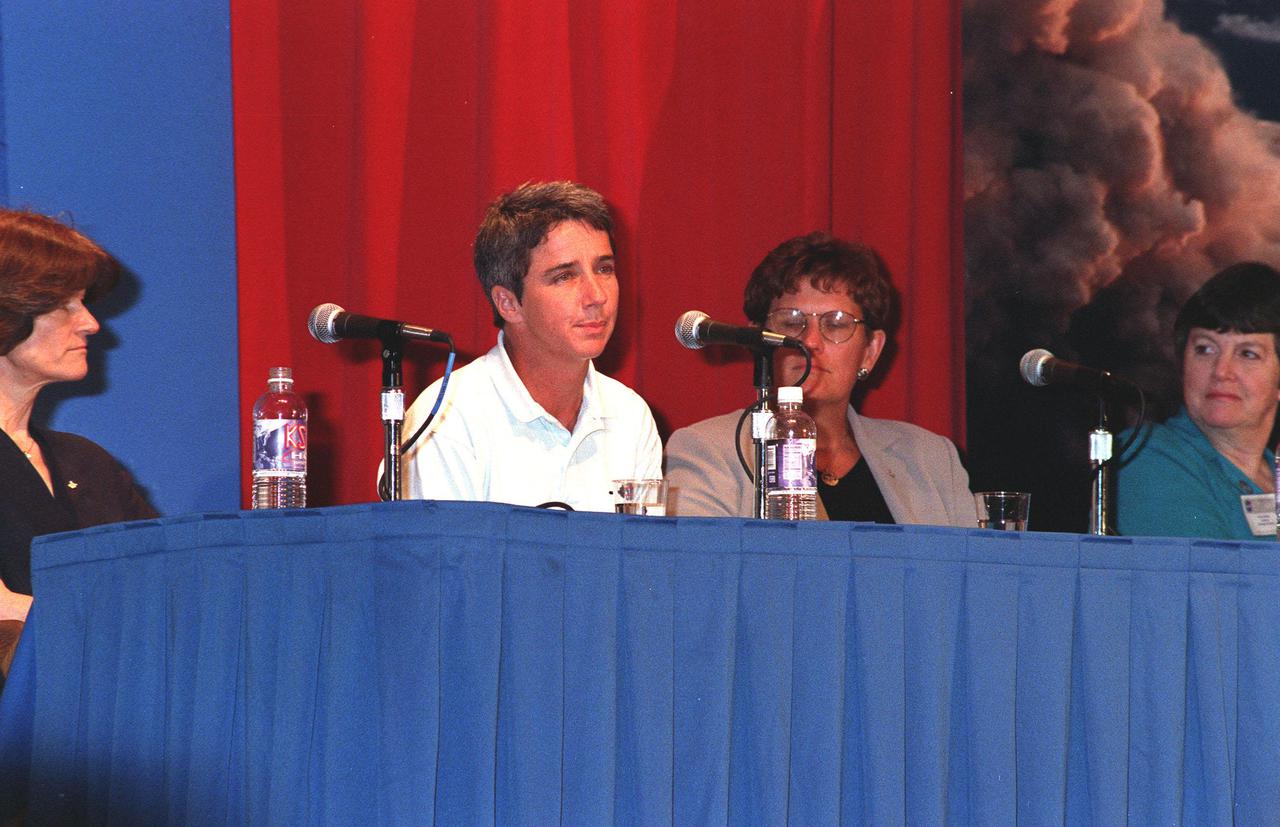
Former astronaut Sally Ride (left) sits on a panel of women discussing 'Past, Present and Future of Space.' Other participants in the women's forum include Marta Bohn-Meyer (second from left), the first SR-71 female pilot; Kathryn Sullivan, Ph.D., the first American woman to walk in space; Donna Shirley, Ph.D., the first woman leading the Mars Exploration Program; astronaut Yvonne Cagle; Jennifer Harris, flight director, Mars Pathfinder; astronaut Ellen Ochoa, the first Hispanic female in space and member of the President's commission on the Celebration of Women in American History. The panel is being moderated by Lynn Sherr, ABC News correspondent. The forum about women in space included a welcome by Center Director Roy Bridges and remarks by Donna Shalala, secretary of Department of Health and Human Services. The attendees are planning to view the launch of STS-93 at the Banana Creek viewing sight. Much attention has been generated over the launch due to Commander Eileen M. Collins, the first woman to serve as commander of a Shuttle mission. The primary payload of the five-day mission is the Chandra X-ray Observatory, which will allow scientists from around the world to study some of the most distant, powerful and dynamic objects in the universe. Liftoff is scheduled for July 20 at 12:36 a.m. EDT
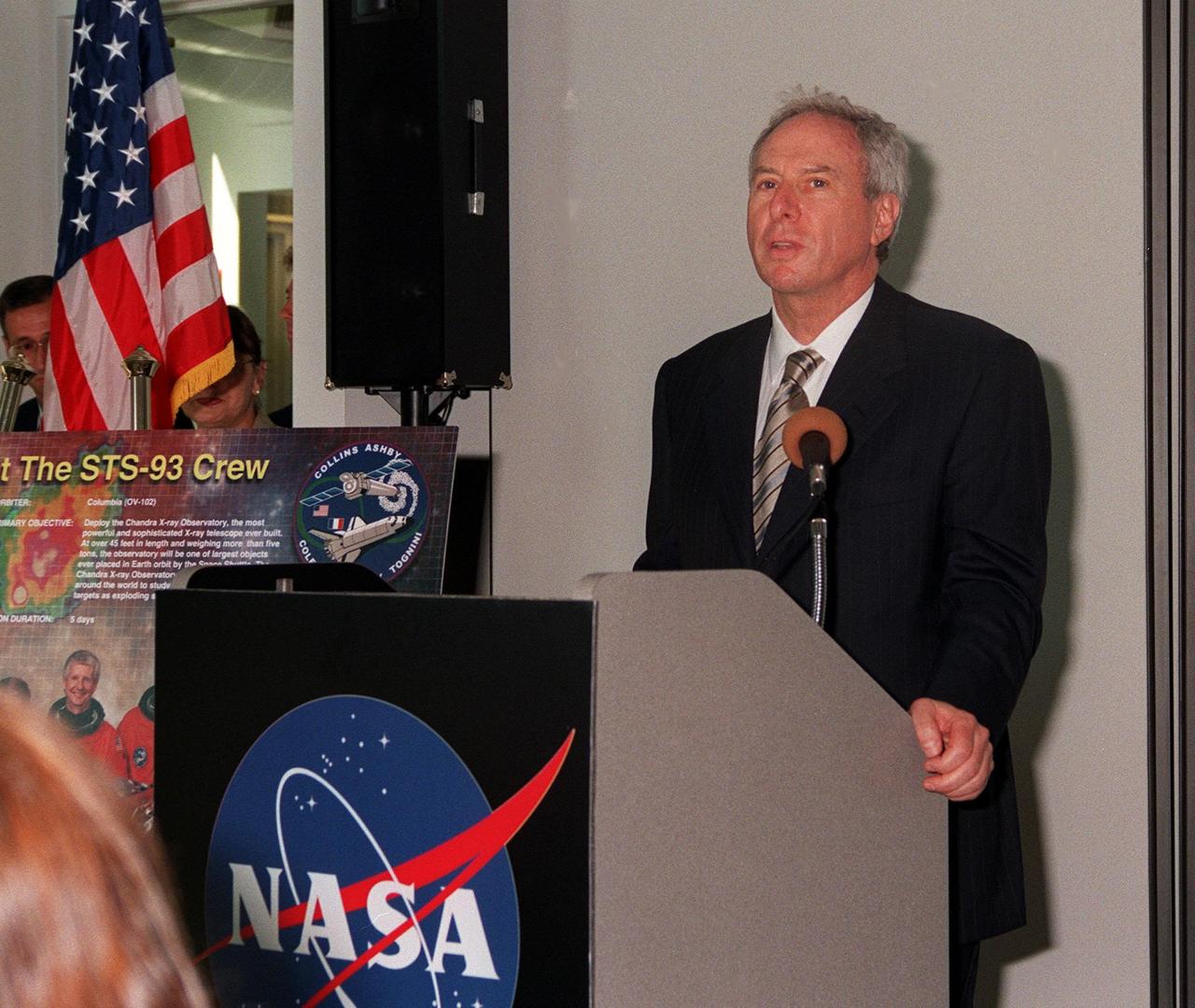
KENNEDY SPACE CENTER, FLA. -- NASA Administrator Daniel Goldin addresses the attendees of a women's forum held in the Apollo/Saturn V Center. Participants in a panel discussion, "Past, Present and Future of Space," include former astronaut Sally Ride; Marta Bohn-Meyer, the first SR-71 female pilot; Kathryn Sullivan, Ph.D., the first American woman to walk in space; Donna Shirley, Ph.D., the first woman leading the Mars Exploration Program; astronaut Yvonne Cagle; Jennifer Harris, flight director, Mars Pathfinder; astronaut Ellen Ochoa, the first Hispanic female in space and member of the President's commission on the Celebration of Women in American History. The forum included a welcome by Center Director Roy Bridges and remarks by Donna Shalala, secretary of Department of Health and Human Services. The attendees are planning to view the launch of STS-93 at the Banana Creek viewing sight. Much attention has been generated over the launch due to Commander Eileen M. Collins, the first woman to serve as commander of a Shuttle mission. The primary payload of the five-day mission is the Chandra X-ray Observatory, which will allow scientists from around the world to study some of the most distant, powerful and dynamic objects in the universe. Liftoff is scheduled for July 20 at 12:36 a.m. EDT
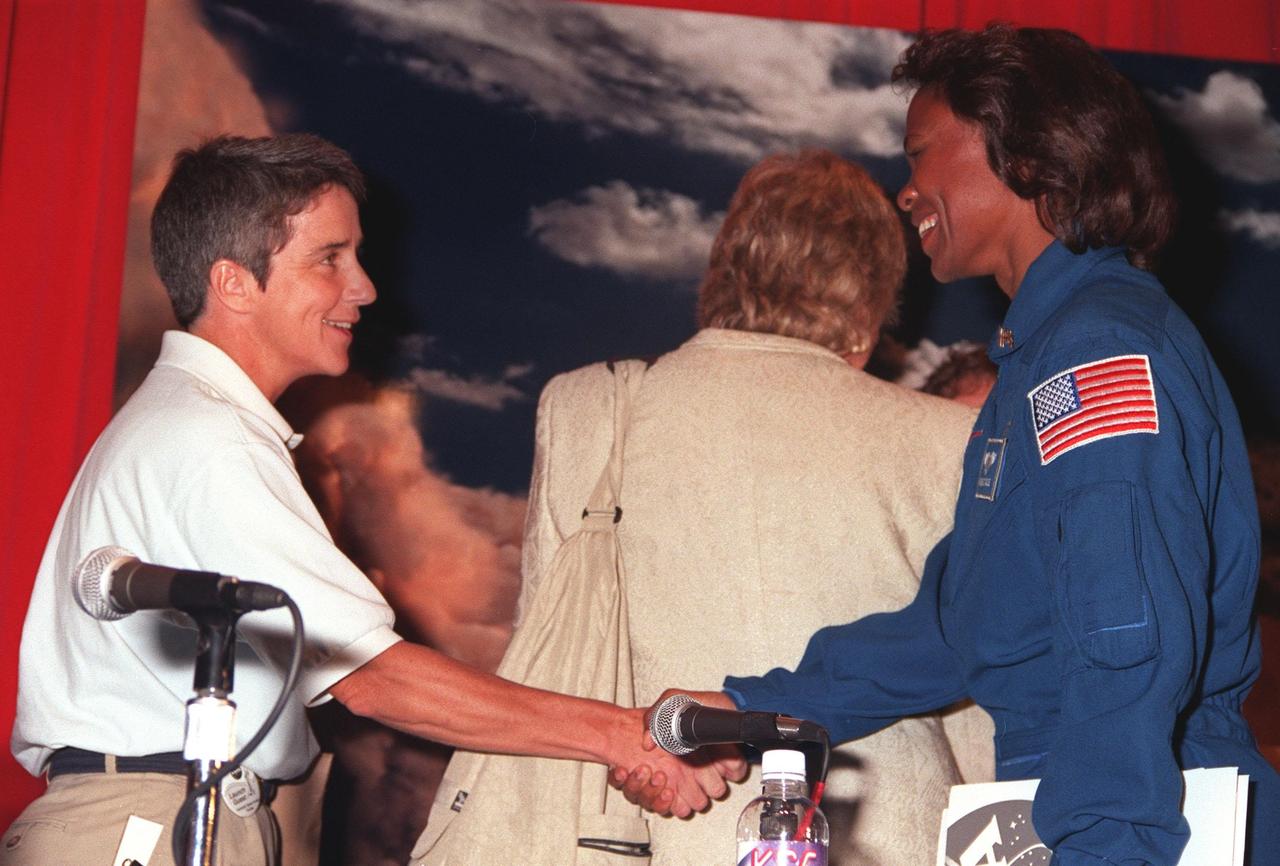
KENNEDY SPACE CENTER, Fla. -- At a women's forum held in the Apollo/Saturn V Center, Marta Bohn-Meyer, the first woman to pilot an SR-71, greets astronaut Yvonne Cagle. They participated in the panel discussion about "Past, Present and Future of Space," along with Kathryn Sullivan, Ph.D., the first American woman to walk in space; Donna Shirley, Ph.D., the first woman leading the Mars Exploration Program; Jennifer Harris, the Mars 2001 Operations System Development Manager at the Jet Propulsion Laboratory; and astronaut Ellen Ochoa, the first Hispanic female in space and member of the President's commission on the Celebration of Women in American History. The forum included a welcome by Center Director Roy Bridges and remarks by Donna Shalala, secretary of Department of Health and Human Services. The attendees are planning to view the launch of STS-93 at the Banana Creek viewing site. Much attention has been generated over the launch due to Commander Eileen M. Collins, the first woman to serve as commander of a Shuttle mission. The primary payload of the five-day mission is the Chandra X-ray Observatory, which will allow scientists from around the world to study some of the most distant, powerful and dynamic objects in the universe. Liftoff is scheduled for July 20 at 12:36 a.m. EDT
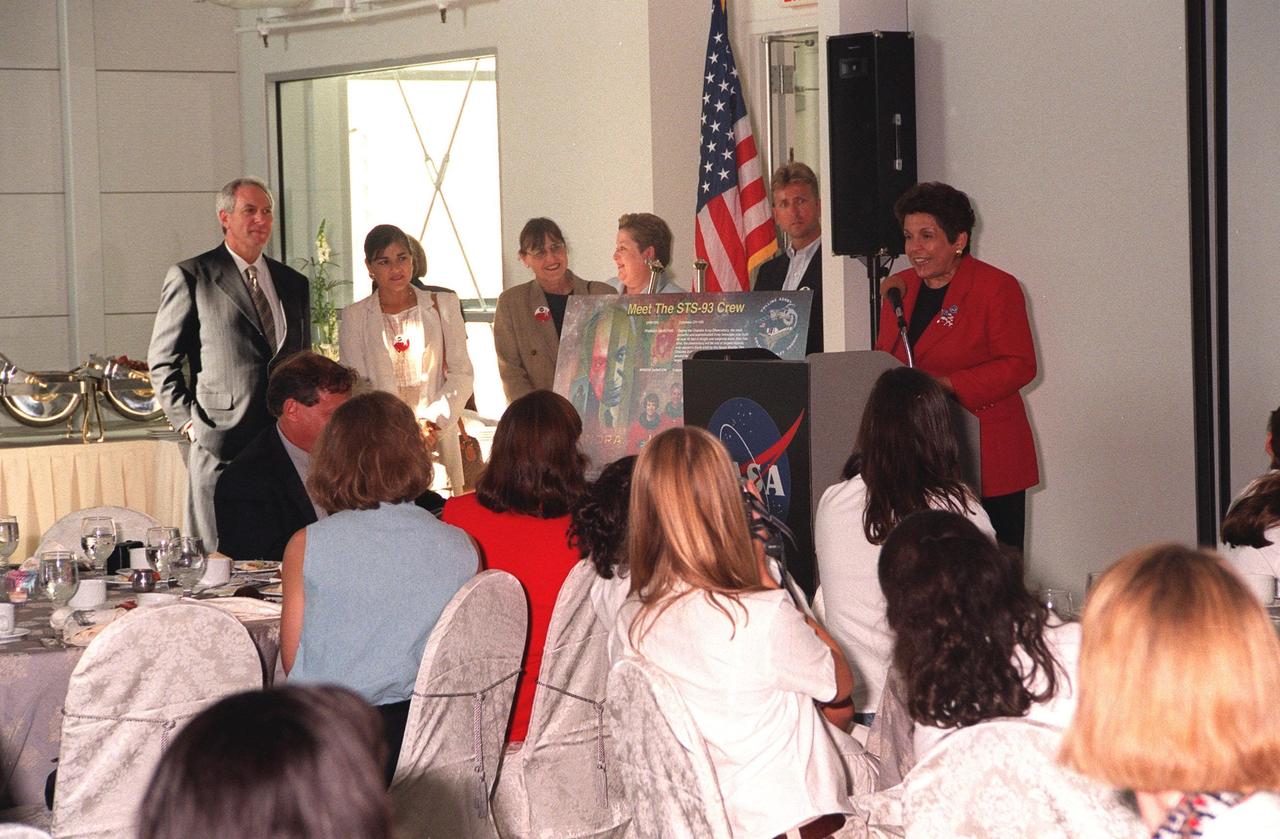
KENNEDY SPACE CENTER, FLA. -- At a women's forum held in the Apollo/Saturn V Center, Donna Shalala, secretary of Department of Health and Human Services, addresses the attendees. At the far left is NASA Administrator Daniel Goldin. Participants in a panel discussion, "Past, Present and Future of Space," include former astronaut Sally Ride; Marta Bohn-Meyer, the first SR-71 female pilot; Kathryn Sullivan, Ph.D., the first American woman to walk in space; Donna Shirley, Ph.D., the first woman leading the Mars Exploration Program; astronaut Yvonne Cagle; Jennifer Harris, flight director, Mars Pathfinder; astronaut Ellen Ochoa, the first Hispanic female in space and member of the President's commission on the Celebration of Women in American History. The forum included a welcome by Center Director Roy Bridges and remarks by Goldin. The attendees are planning to view the launch of STS-93 at the Banana Creek viewing sight. Much attention has been generated over the launch due to Commander Eileen M. Collins, the first woman to serve as commander of a Shuttle mission. The primary payload of the five-day mission is the Chandra X-ray Observatory, which will allow scientists from around the world to study some of the most distant, powerful and dynamic objects in the universe. Liftoff is scheduled for July 20 at 12:36 a.m. EDT
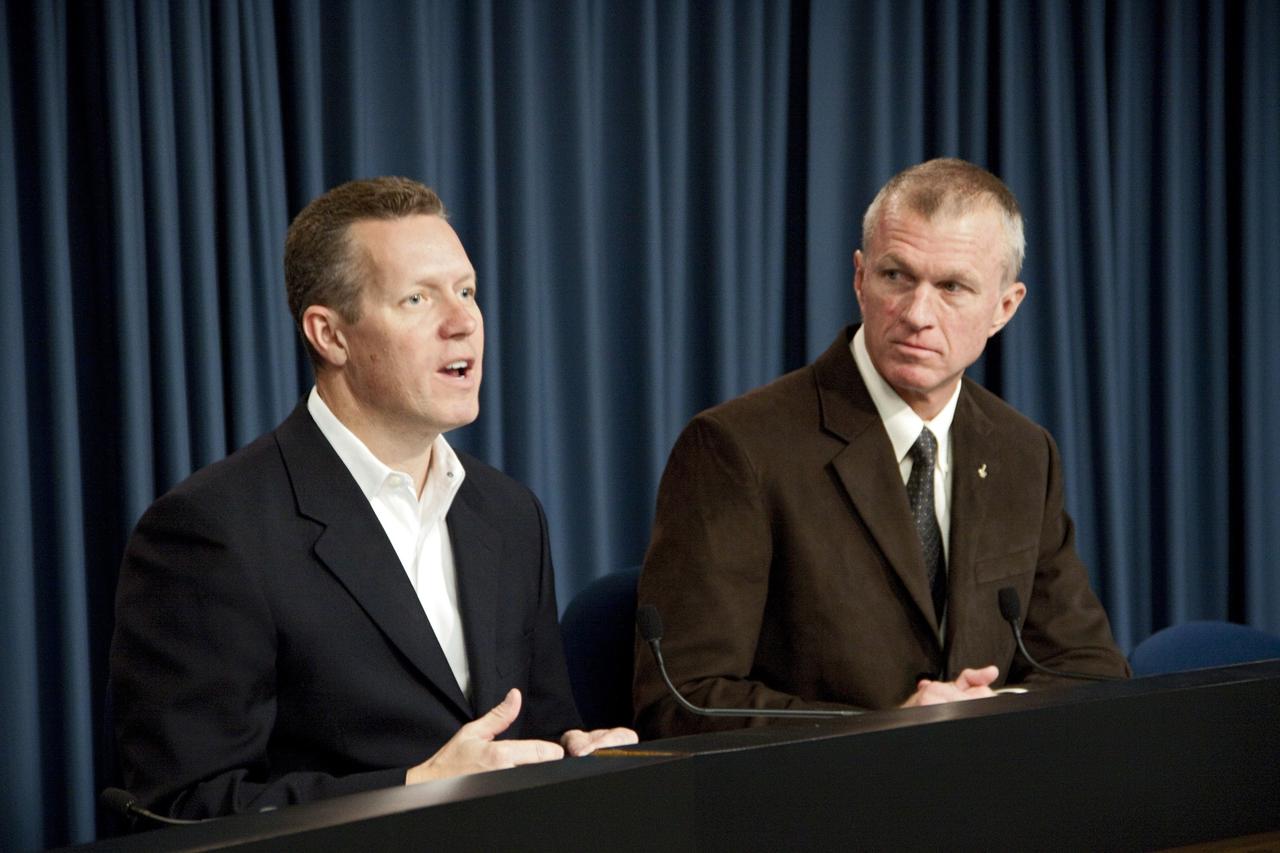
CAPE CANAVERAL, Fla. -- In the Press Site auditorium at NASA's Kennedy Space Center in Florida, Phil McAlister (left), director, Commercial Spaceflight Development in NASA’s Human Exploration and Operations Mission Directorate, and Brent Jeff, deputy director, Commercial Crew Program, brief representatives from aerospace industry partners and the media during a strategy forum on the next steps for NASA's Commercial Crew Program. The goal of the Commercial Crew Program is to have a commercially developed, human-capable, certified spacecraft safely flying astronauts into orbit and to the International Space Station by the middle of the decade. For more information about NASA's Commercial Crew Program, visit http://www.nasa.gov/exploration/commercial. Photo credit: NASA/Jim Grossmann
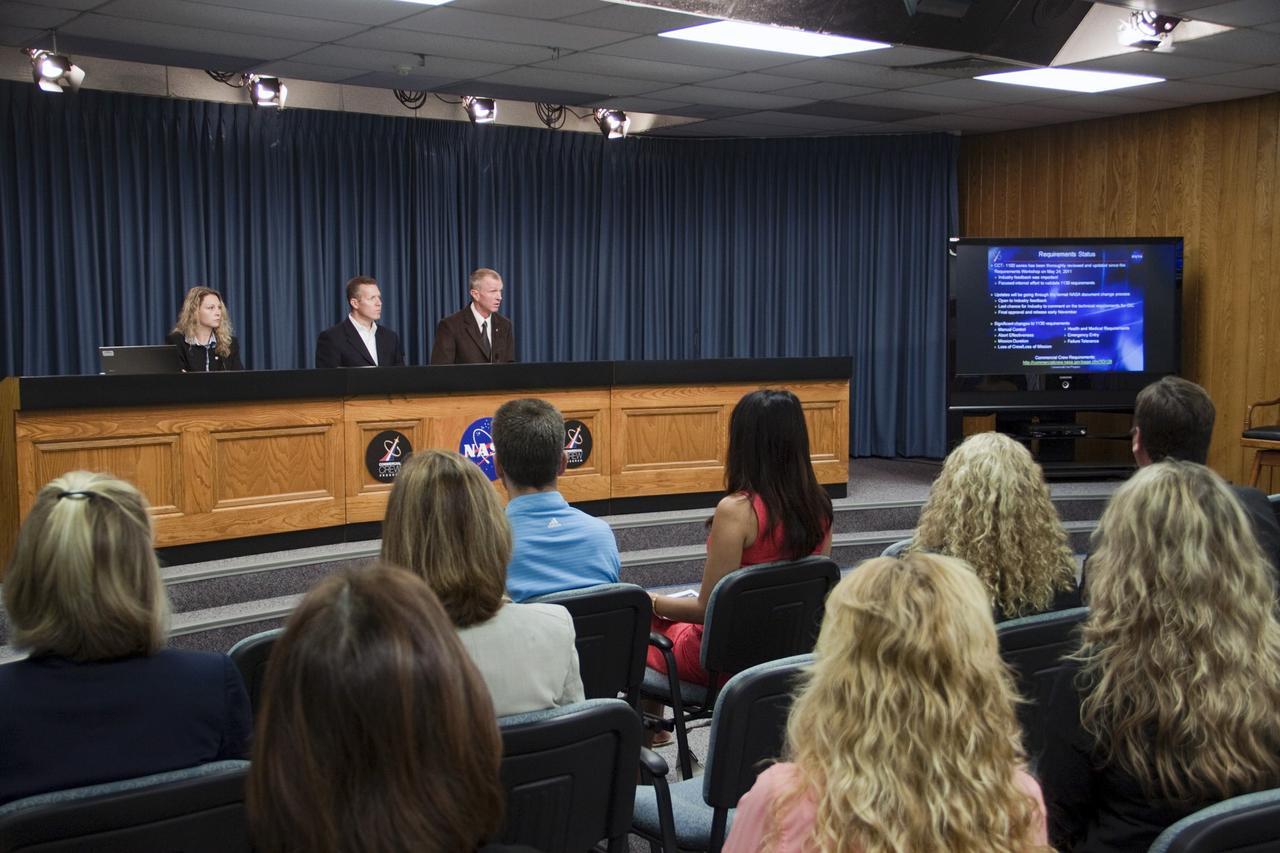
CAPE CANAVERAL, Fla. -- Representatives from aerospace industry partners and the media are given an overview on NASA's Commercial Crew Program's next steps during a strategy forum held in the Press Site auditorium at Kennedy Space Center in Florida. On the dais, from left, are Candrea Thomas, NASA Public Affairs; Phil McAlister, director, Commercial Spaceflight Development in NASA’s Human Exploration and Operations Mission Directorate, and Brent Jeff, deputy director, Commercial Crew Program. The goal of the Commercial Crew Program is to have a commercially developed, human-capable, certified spacecraft safely flying astronauts into orbit and to the International Space Station by the middle of the decade. For more information about NASA's Commercial Crew Program, visit http://www.nasa.gov/exploration/commercial. Photo credit: NASA/Jim Grossmann
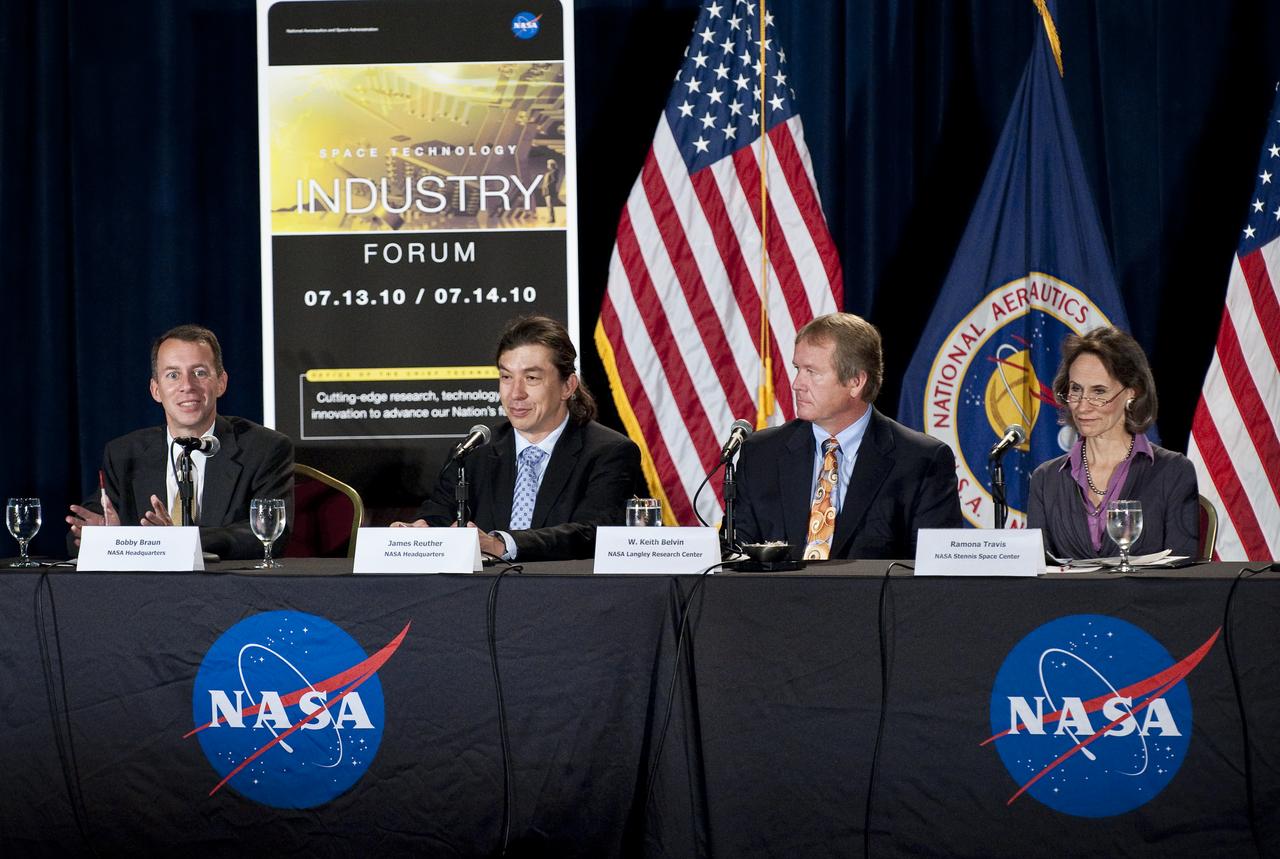
Bobby Braun, far left, NASA Chief Technologist, speaks during the NASA New Space Technology Industry Forum being held at the University of Maryland in College Park on Wednesday, July 14, 2010. Mr. Braun is joined on the panel by James Reuther, Director of Strategic Integration at NASA Headquarters, second from left; Keith Belvin, NASA Systems Engineer at NASA Langley Research Center and Ramona Travis, NASA Stennis Space Center Chief Technologist, far right. During the two-day event, speakers are focusing on the president's fiscal year 2011 budget request for NASA's new Space Technology Program. Representatives from industry, academia and the federal government are in attendance to discuss strategy, development and implementation of NASA's proposed new technology-enabled exploration. Photo Credit: (NASA/Carla Cioffi)
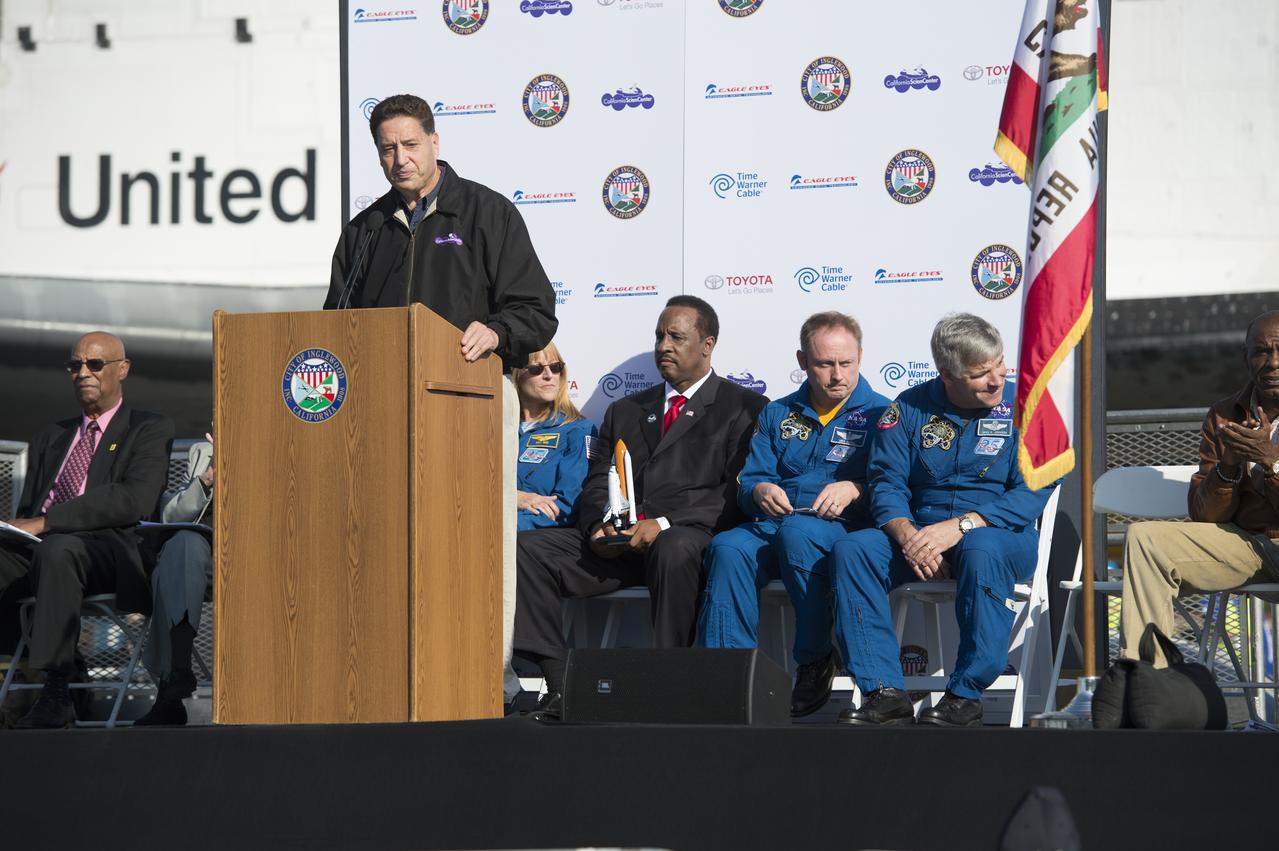
Jeffrey Rudolph, President and CEO, California Science Center speaks at the Endeavour Kick-Off Ceremony at The Forum in Inglewood, Saturday, Oct. 13, 2012. Behind him are seen Hildreth Walker, Founder of A-Man Inc. STEM International Science Center, far left; James T. Butts, Jr., Mayor of Inglewood; NASA astronauts Michael Fincke and Gregory Johnson, far right. Endeavour, built as a replacement for space shuttle Challenger, completed 25 missions, spent 299 days in orbit, and orbited Earth 4,671 times while traveling 122,883,151 miles. Beginning Oct. 30, the shuttle will be on display in the CSC’s Samuel Oschin Space Shuttle Endeavour Display Pavilion, embarking on its new mission to commemorate past achievements in space and educate and inspire future generations of explorers. Photo Credit: (NASA/Carla Cioffi)

KENNEDY SPACE CENTER, FLA. -- A U.S. Air Force F-22 Raptor is parked on the Shuttle Landing Facility at NASA's Kennedy Space Center. The plane is participating in the World Space Expo being held from Nov. 1 to Nov. 4 at the NASA Kennedy Space Center Visitor Complex. Other aircraft joining in the salute include U.S. Air Force Thunderbirds Aerial Demonstration Squadron, U.S. Navy F-18 Super Hornets, the P-51 Mustang Heritage Flight and the U.S. Air Force 920th Rescue Wing, which was responsible for Mercury and Gemini capsule recovery. The U.S. Army Golden Knights also will demonstrate precision skydiving. The World Space Expo is an event to commemorate humanity's first 50 years in space while looking forward to returning people to the moon and exploring beyond. The expo will showcase various panels, presentations and educational programs. It also is a part of NASA's 50th anniversary celebrations, highlighting the 45th Anniversary of the Mercury Program celebration featuring original NASA astronauts John Glenn and Scott Carpenter and the Pioneering Women of Aerospace forum featuring Eileen Collins and other prominent female space veterans. The agency was founded Oct. 1, 1958. Photo credit: NASA/Jack Pfaller
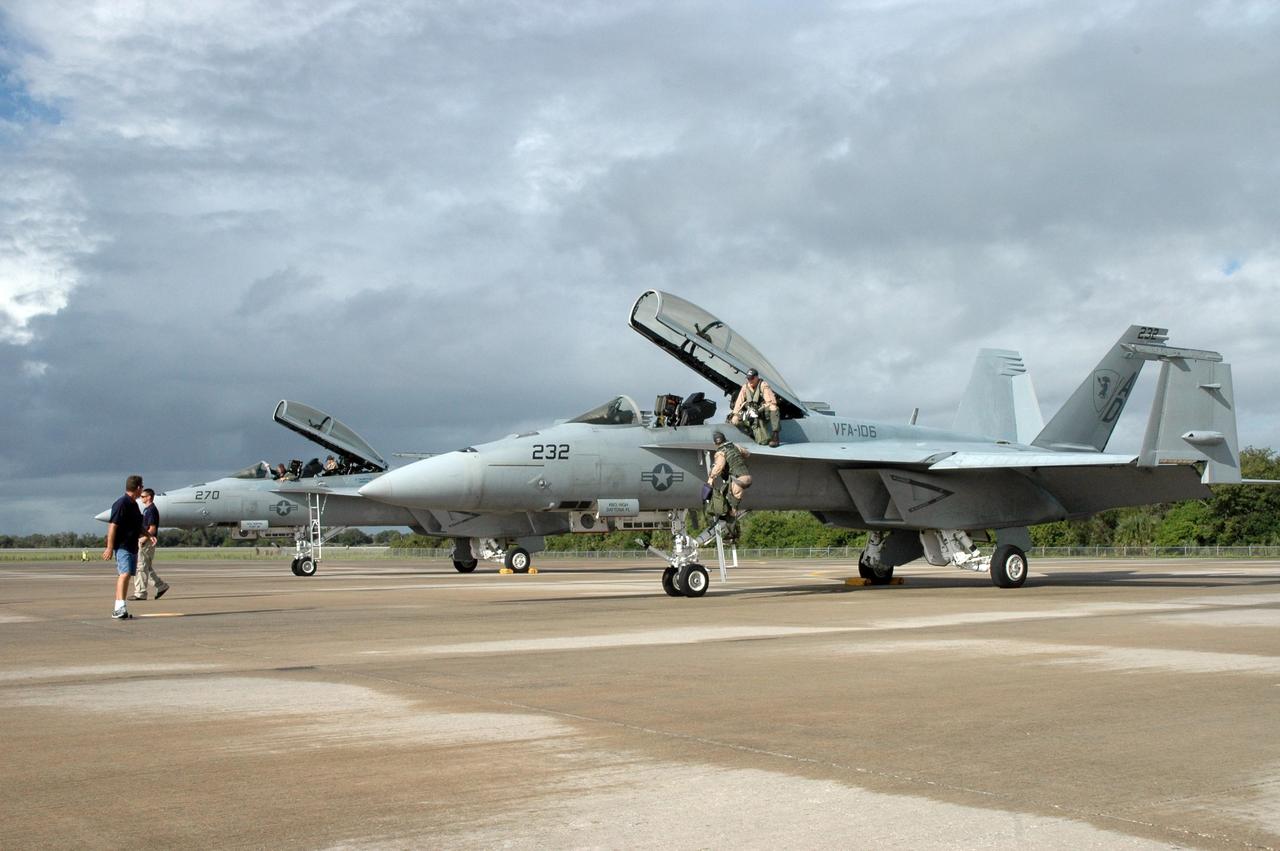
KENNEDY SPACE CENTER, FLA. -- Pilots of several U.S. Navy F-18 Super Hornet jets climb out of the cockpits on the Shuttle Landing Facility at NASA's Kennedy Space Center. Several of the planes are participating in the World Space Expo being held from Nov. 1 to Nov. 4 at the NASA Kennedy Space Center Visitor Complex. Other aircraft joining in the salute include U.S. Air Force Thunderbirds Aerial Demonstration Squadron , U.S. Air Force F-22 Raptor, U.S. Air Force F-15 Eagle, the P-51 Mustang Heritage Flight and the U.S. Air Force 920th Rescue Wing, which was responsible for Mercury and Gemini capsule recovery. The U.S. Army Golden Knights also will demonstrate precision skydiving. The World Space Expo is an event to commemorate humanity's first 50 years in space while looking forward to returning people to the moon and exploring beyond. The expo will showcase various panels, presentations and educational programs. It also is a part of NASA's 50th anniversary celebrations, highlighting the 45th Anniversary of the Mercury Program celebration featuring original NASA astronauts John Glenn and Scott Carpenter and the Pioneering Women of Aerospace forum featuring Eileen Collins and other prominent female space veterans. The agency was founded Oct. 1, 1958. Photo credit: NASA/Jack Pfaller
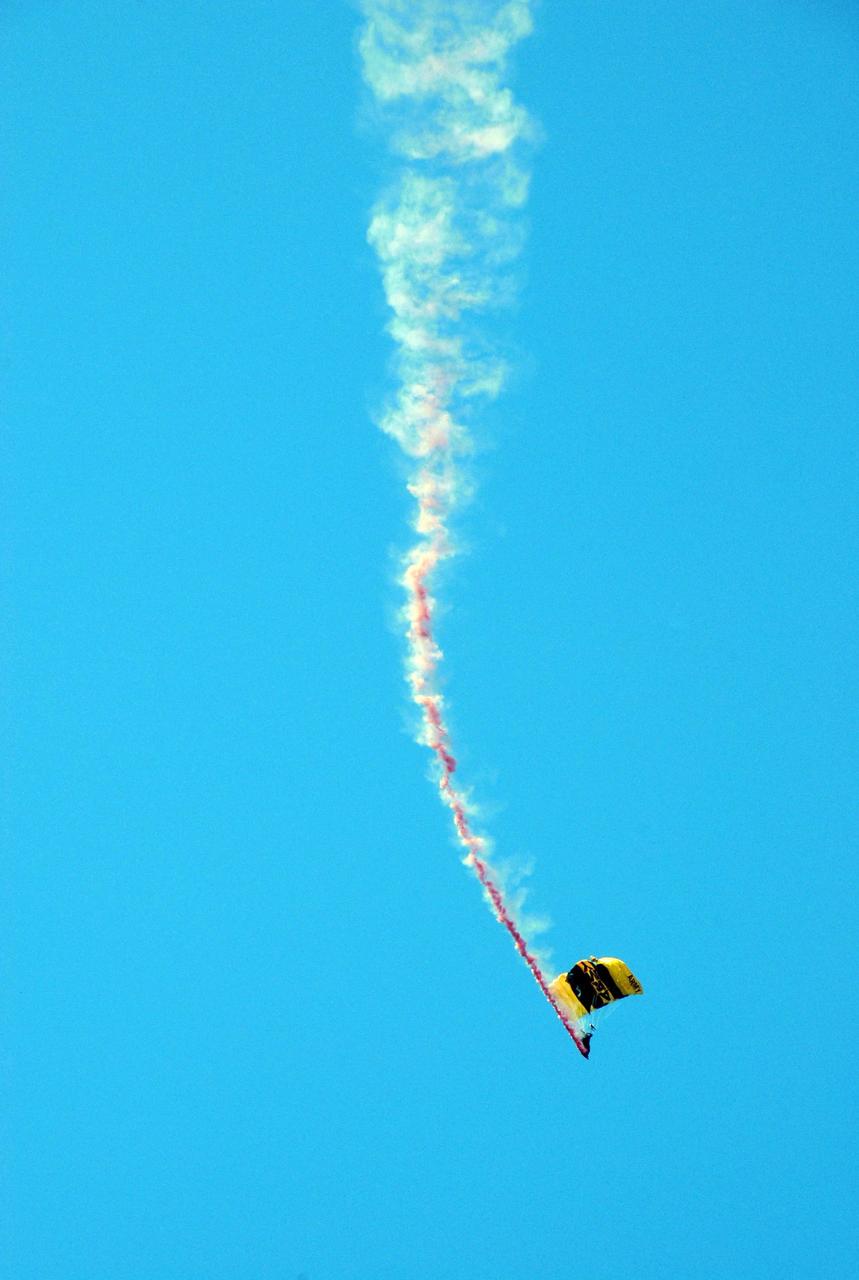
KENNEDY SPACE CENTER, FLA. -- A member of the U.S. Army Golden Knights demonstrates precision skydiving as part of the World Space Expo aerial salute at NASA's Kennedy Space Center. Other aircraft joining in the expo salute include the U.S. Air Force Thunderbirds Demonstration Squadron, the U.S. Navy F-18 Super Hornets, U.S. Air Force F-22 Raptor, U.S. Air Force F-15 Eagle, P-51 Mustang Heritage Flight, and the U.S. Air Force 920th Rescue Wing, which was responsible for Mercury and Gemini capsule recovery. The World Space Expo held Nov. 1-4 was an event commemorating humanity's first 50 years in space while looking forward to returning people to the moon and exploring beyond. The expo showcased various panels, presentations and educational programs. It also was a part of NASA's 50th anniversary celebrations, highlighting the 45th Anniversary of the Mercury Program celebration featuring original NASA astronauts John Glenn and Scott Carpenter and the Pioneering Women of Aerospace forum featuring Eileen Collins and other prominent female space veterans. The agency was founded Oct. 1, 1958. Photo credit: NASA/Kim Shiflett
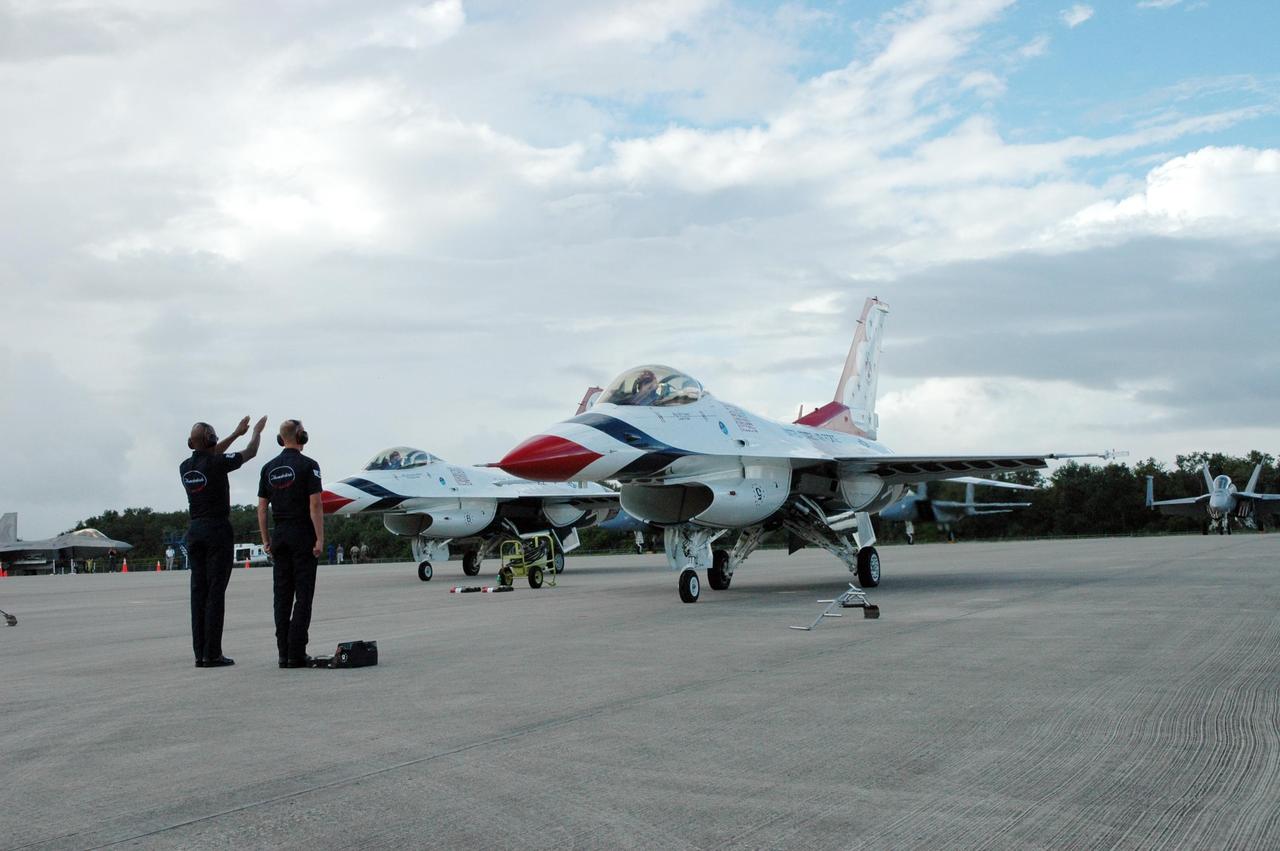
KENNEDY SPACE CENTER, FLA. -- U.S. Air Force Thunderbirds line up on the Shuttle Landing Facility at NASA's Kennedy Space Center. The aerial demonstration squadron is performing for the World Space Expo being held from Nov. 1 to Nov. 4 at the NASA Kennedy Space Center Visitor Complex. Other aircraft participating in the salute include U.S. Air Force F-22 Raptor, U.S. Navy F-18 Super Hornet, U.S. Air Force F-15 Eagle, the P-51 Mustang Heritage Flight and the U.S. Air Force 920th Rescue Wing, which was responsible for Mercury and Gemini capsule recovery. The U.S. Army Golden Knights also will demonstrate precision skydiving. The World Space Expo is an event to commemorate humanity's first 50 years in space while looking forward to returning people to the moon and exploring beyond. The expo will showcase various panels, presentations and educational programs. It also is a part of NASA's 50th anniversary celebrations, highlighting the 45th Anniversary of the Mercury Program celebration featuring original NASA astronauts John Glenn and Scott Carpenter and the Pioneering Women of Aerospace forum featuring Eileen Collins and other prominent female space veterans. The agency was founded Oct. 1, 1958. Photo credit: NASA/Jack Pfaller
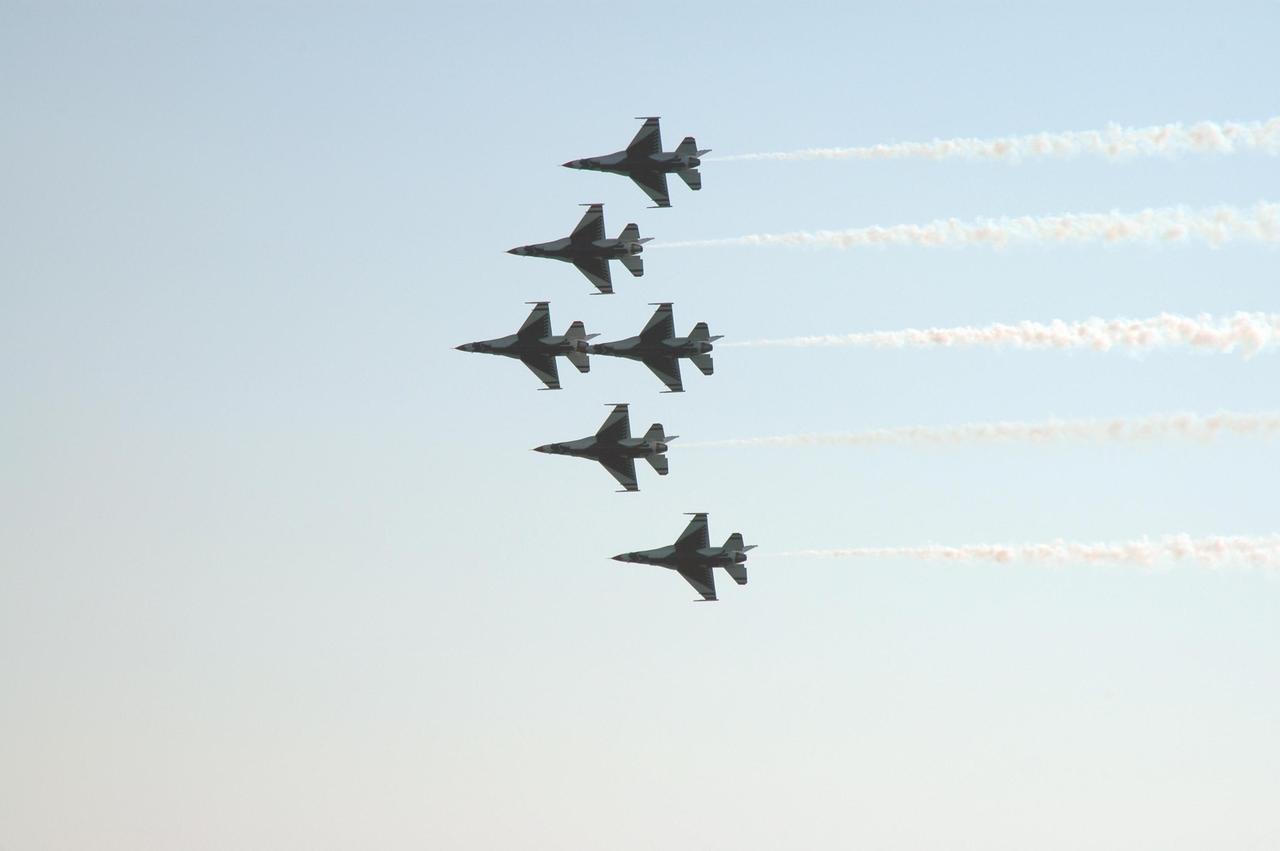
KENNEDY SPACE CENTER, FLA. -- At NASA's Kennedy Space Center, the U.S. Air Force Thunderbirds Demonstration Squadron performs during the World Space Expo aerial salute. Other aircraft joining in the expo salute include the U.S. Navy F-18 Super Hornets, U.S. Air Force F-22 Raptor, U.S. Air Force F-15 Eagle, P-51 Mustang Heritage Flight, U.S. Air Force 920th Rescue wing, which was responsible for Mercury and Gemini capsule recovery, and the U.S. Army Golden Knights demonstrating precision skydiving. The World Space Expo held Nov. 1-4 was an event commemorating humanity's first 50 years in space while looking forward to returning people to the moon and exploring beyond. The expo showcased various panels, presentations and educational programs. It also was a part of NASA's 50th anniversary celebrations, highlighting the 45th Anniversary of the Mercury Program celebration featuring original NASA astronauts John Glenn and Scott Carpenter and the Pioneering Women of Aerospace forum featuring Eileen Collins and other prominent female space veterans. The agency was founded Oct. 1, 1958. Photo credit: NASA/Chris Chamberland
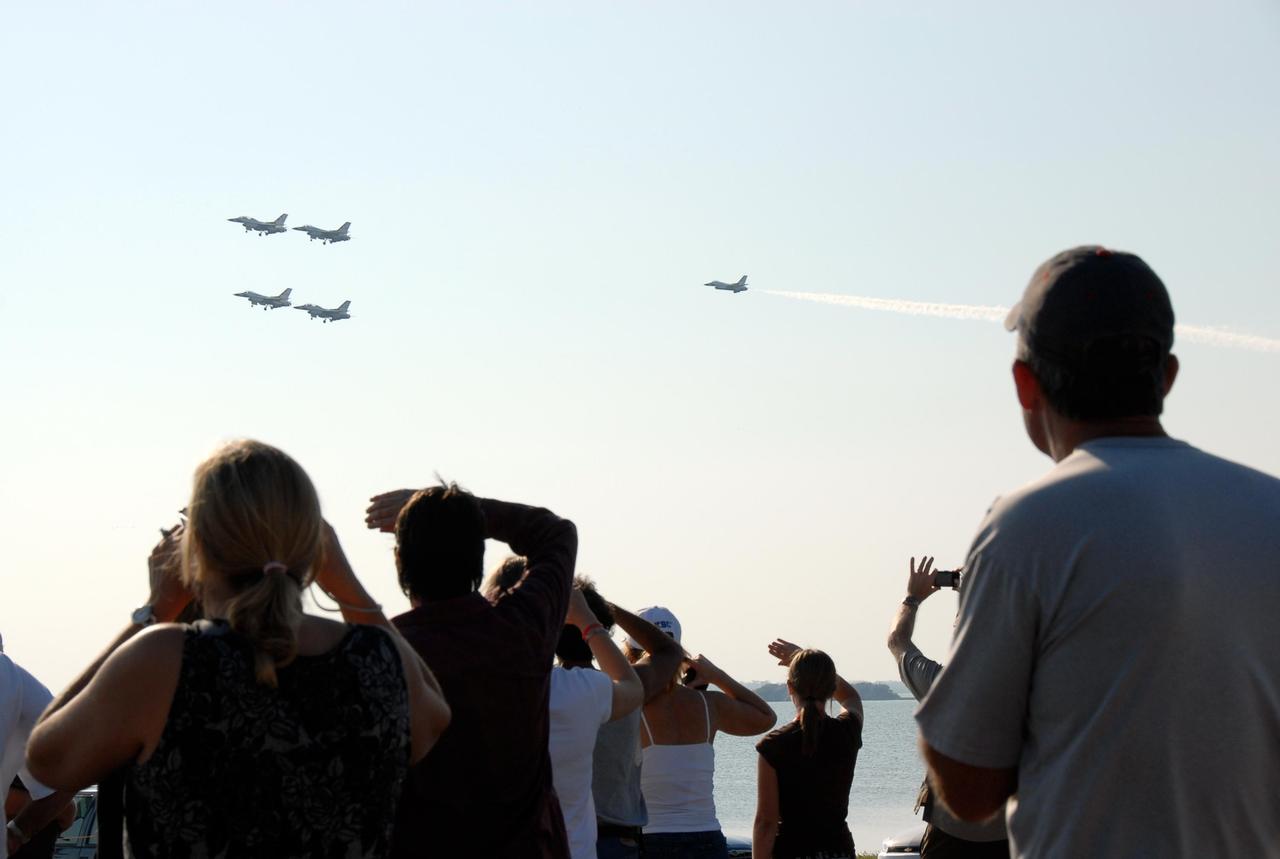
KENNEDY SPACE CENTER, FLA. -- Crowds at NASA's Kennedy Space Center watch the U.S. Air Force Thunderbirds Demonstration Squadron perform during the World Space Expo aerial salute. Other aircraft joining in the expo salute include the U.S. Navy F-18 Super Hornets, U.S. Air Force F-22 Raptor, U.S. Air Force F-15 Eagle, P-51 Mustang Heritage Flight, the U.S. Air Force 920th Rescue Wing, which was responsible for Mercury and Gemini capsule recovery, and the U.S. Army Golden Knights precision skydivers. The World Space Expo held Nov. 1-4 was an event commemorating humanity's first 50 years in space while looking forward to returning people to the moon and exploring beyond. The expo showcased various panels, presentations and educational programs. It also was a part of NASA's 50th anniversary celebrations, highlighting the 45th Anniversary of the Mercury Program celebration featuring original NASA astronauts John Glenn and Scott Carpenter and the Pioneering Women of Aerospace forum featuring Eileen Collins and other prominent female space veterans. The agency was founded Oct. 1, 1958. Photo credit: NASA/Kim Shiflett
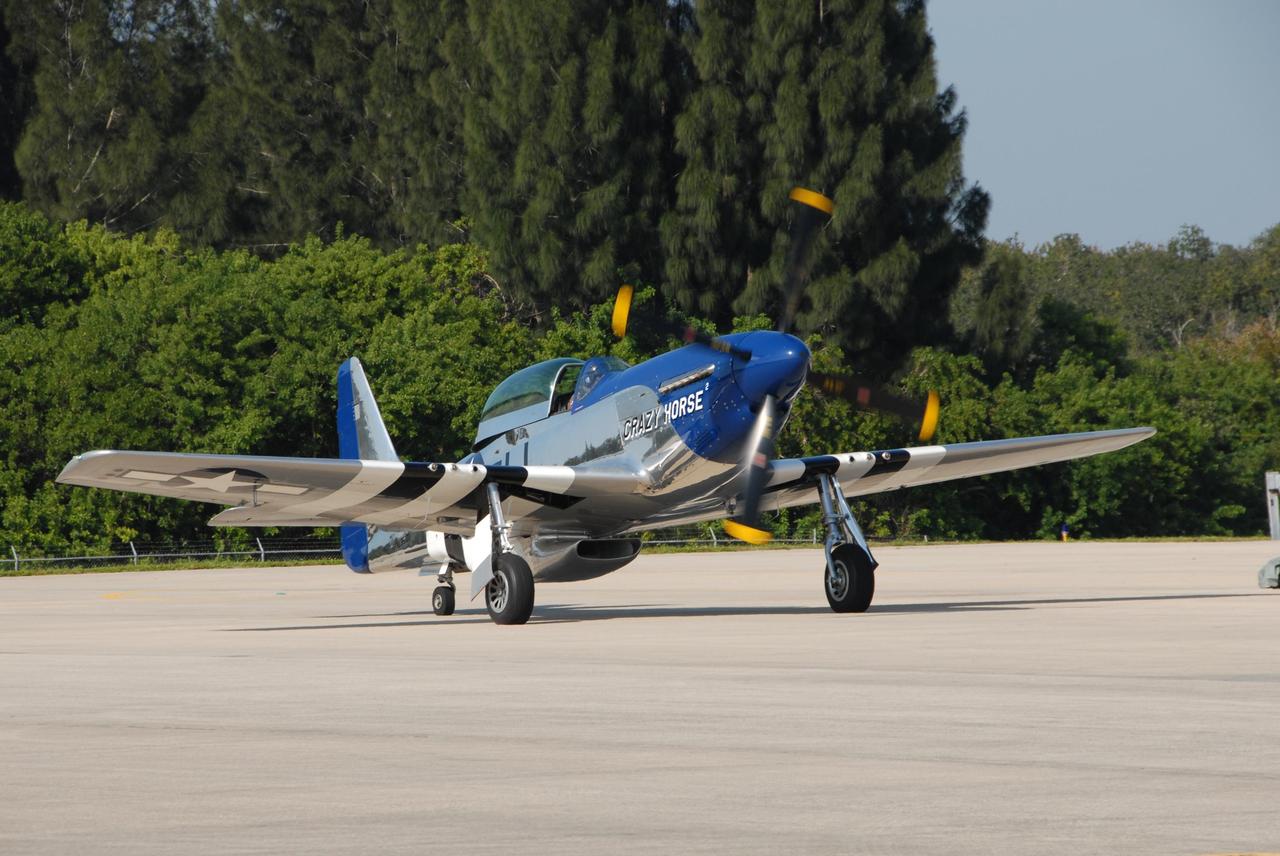
KENNEDY SPACE CENTER, FLA. — A P-51 Mustang, seen here on the Shuttle Landing Facility at NASA's Kennedy Space Center, is part of the World Space Expo aerial salute held at the Center's Visitor Complex. Other aircraft joining in the expo salute include the U.S. Air Force Thunderbirds Demonstration Squadron, the U.S. Navy F-18 Super Hornets, U.S. Air Force F-22 Raptor, U.S. Air Force F-15 Eagle, P-51 Mustang Heritage Flight, the U.S. Air Force 920th Rescue Wing, which was responsible for Mercury and Gemini capsule recovery, and the U.S. Army Golden Knights demonstrating precision skydiving. The World Space Expo Nov. 1-4 was an event commemorating humanity's first 50 years in space while looking forward to returning people to the moon and exploring beyond. The expo showcased various panels, presentations and educational programs. It also was a part of NASA's 50th anniversary celebrations, highlighting the 45th Anniversary of the Mercury Program celebration featuring original NASA astronauts John Glenn and Scott Carpenter and the Pioneering Women of Aerospace forum featuring Eileen Collins and other prominent female space veterans. The agency was founded Oct. 1, 1958. Photo credit: NASA/George Shelton
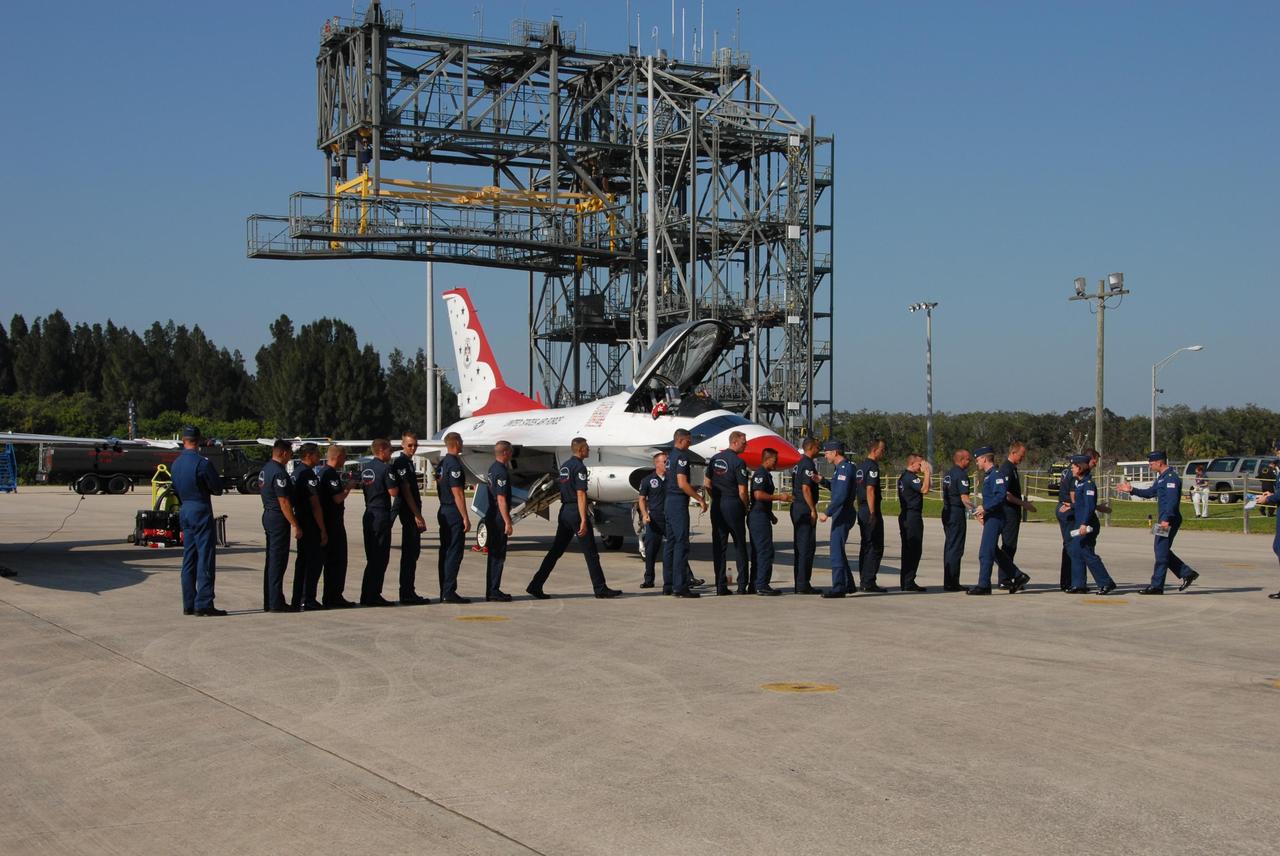
KENNEDY SPACE CENTER, FLA. — At NASA's Kennedy Space Center Shuttle Landing Facility, the air crew for the U.S. Air Force Thunderbirds Demonstration Squadron line up at left for a walkdown with the pilots, at right. The squadron is part of an aerial salute for the World Space Expo held at the center's Visitor Complex. Other aircraft joining in the expo salute include the U.S. Navy F-18 Super Hornets, U.S. Air Force F-22 Raptor, U.S. Air Force F-15 Eagle, P-51 Mustang Heritage Flight, the U.S. Air Force 920th Rescue Wing, which was responsible for Mercury and Gemini capsule recovery, and the U.S. Army Golden Knights demonstrating precision skydiving. The World Space Expo Nov. 1-4 was an event commemorating humanity's first 50 years in space while looking forward to returning people to the moon and exploring beyond. The expo showcased various panels, presentations and educational programs. It also was a part of NASA's 50th anniversary celebrations, highlighting the 45th Anniversary of the Mercury Program celebration featuring original NASA astronauts John Glenn and Scott Carpenter and the Pioneering Women of Aerospace forum featuring Eileen Collins and other prominent female space veterans. The agency was founded Oct. 1, 1958. Photo credit: NASA/George Shelton
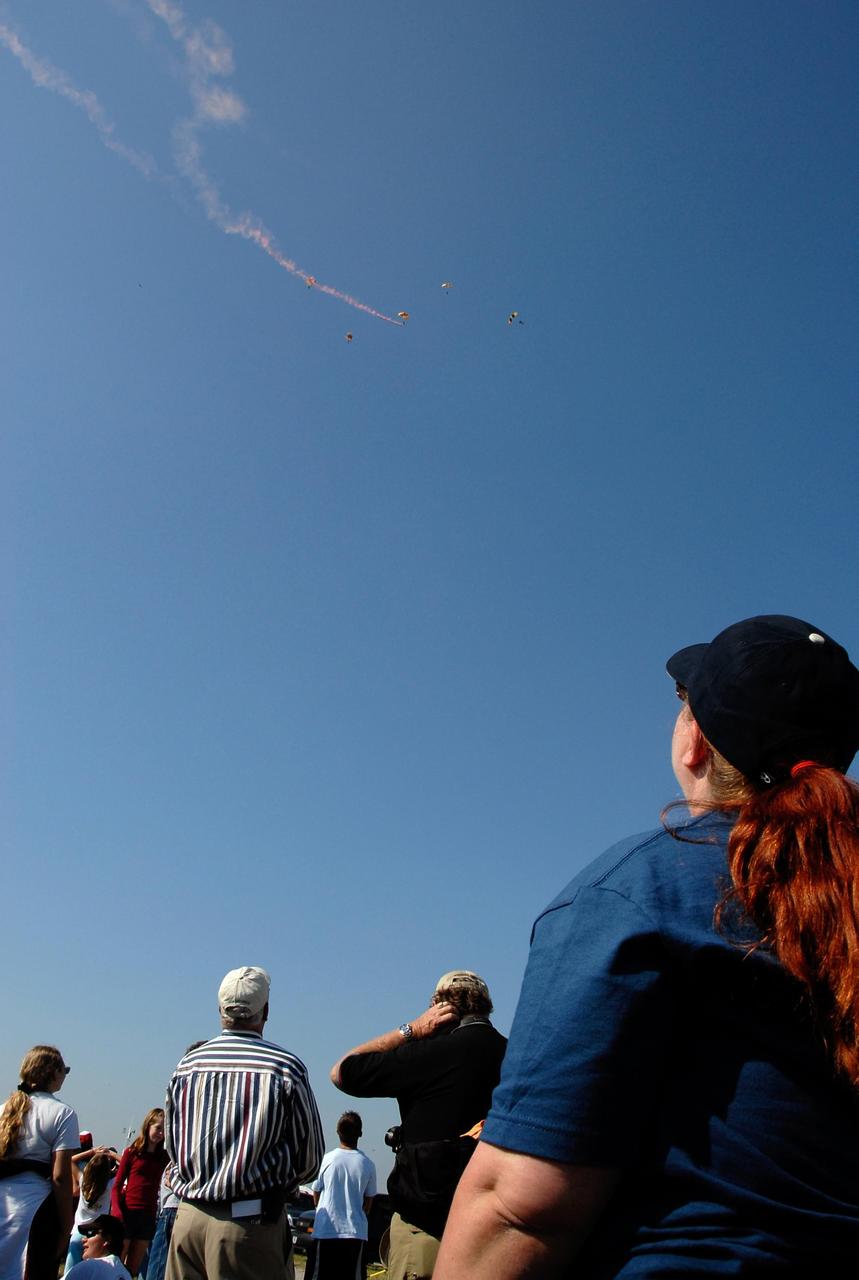
KENNEDY SPACE CENTER, FLA. -- Crowds at NASA's Kennedy Space Center watch the U.S. Army Golden Knights demonstrate precision skydiving as part of the World Space Expo aerial salute. Other aircraft joining in the expo salute include the U.S. Air Force Thunderbirds Demonstration Squadron, the U.S. Navy F-18 Super Hornets, U.S. Air Force F-22 Raptor, U.S. Air Force F-15 Eagle, P-51 Mustang Heritage Flight, and the U.S. Air Force 920th Rescue Wing, which was responsible for Mercury and Gemini capsule recovery. The World Space Expo held Nov. 1-4 was an event commemorating humanity's first 50 years in space while looking forward to returning people to the moon and exploring beyond. The expo showcased various panels, presentations and educational programs. It also was a part of NASA's 50th anniversary celebrations, highlighting the 45th Anniversary of the Mercury Program celebration featuring original NASA astronauts John Glenn and Scott Carpenter and the Pioneering Women of Aerospace forum featuring Eileen Collins and other prominent female space veterans. The agency was founded Oct. 1, 1958. Photo credit: NASA/Kim Shiflett
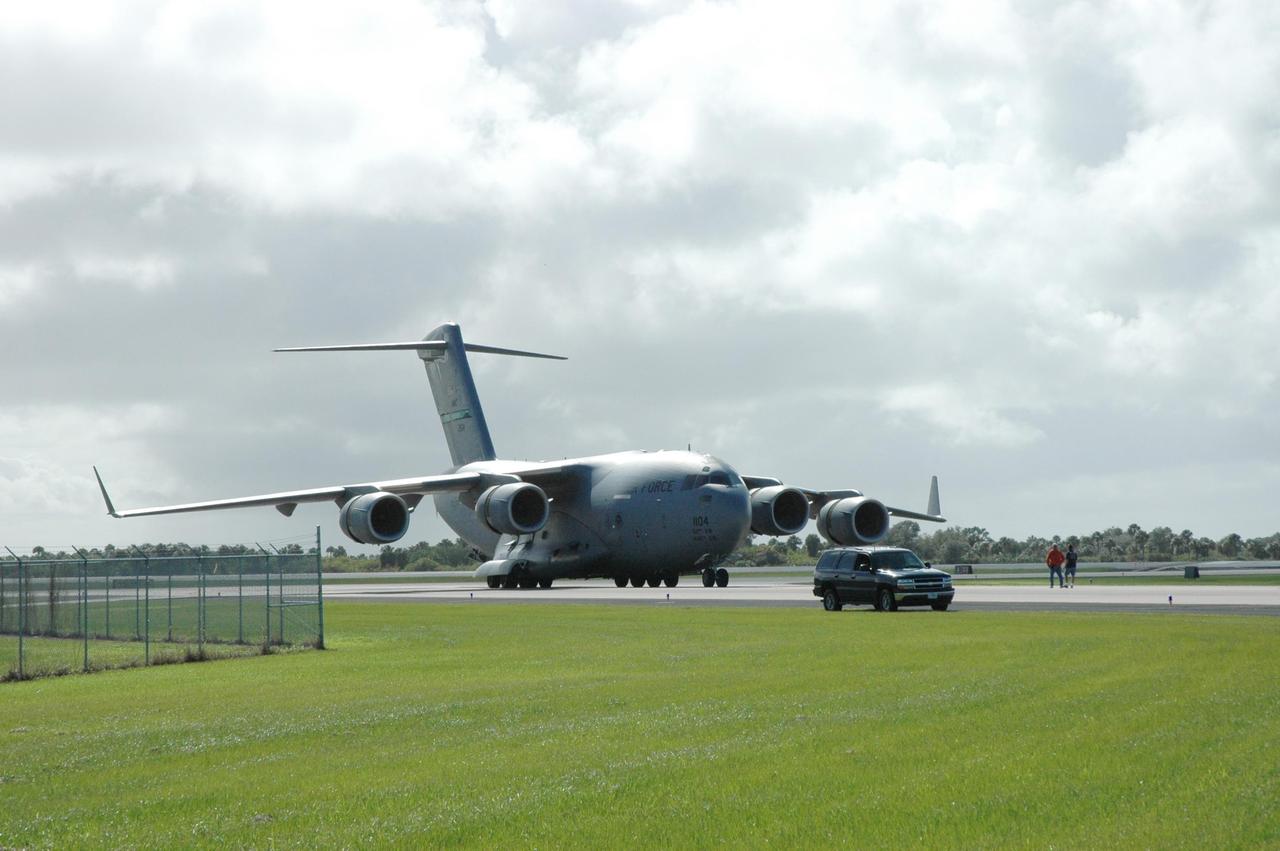
KENNEDY SPACE CENTER, FLA. -- A C-17 lands on the Shuttle Landing Facility at NASA's Kennedy Space Center. The plane is providing support for the aerial show being performed for the World Space Expo being held from Nov. 1 to Nov. 4 at the NASA Kennedy Space Center Visitor Complex. Aircraft participating are the U.S. Air Force Thunderbirds, U.S. Air Force F-22 Raptor, U.S. Navy F-18 Super Hornet, U.S. Air Force F-15 Eagle, the P-51 Mustang Heritage Flight and the U.S. Air Force 920th Rescue Wing, which was responsible for Mercury and Gemini capsule recovery. The U.S. Army Golden Knights also will demonstrate precision skydiving. The World Space Expo is an event to commemorate humanity's first 50 years in space while looking forward to returning people to the moon and exploring beyond. The expo will showcase various panels, presentations and educational programs. It also is a part of NASA's 50th anniversary celebrations, highlighting the 45th Anniversary of the Mercury Program celebration featuring original NASA astronauts John Glenn and Scott Carpenter and the Pioneering Women of Aerospace forum featuring Eileen Collins and other prominent female space veterans. The agency was founded Oct. 1, 1958. Photo credit: NASA/Jack Pfaller
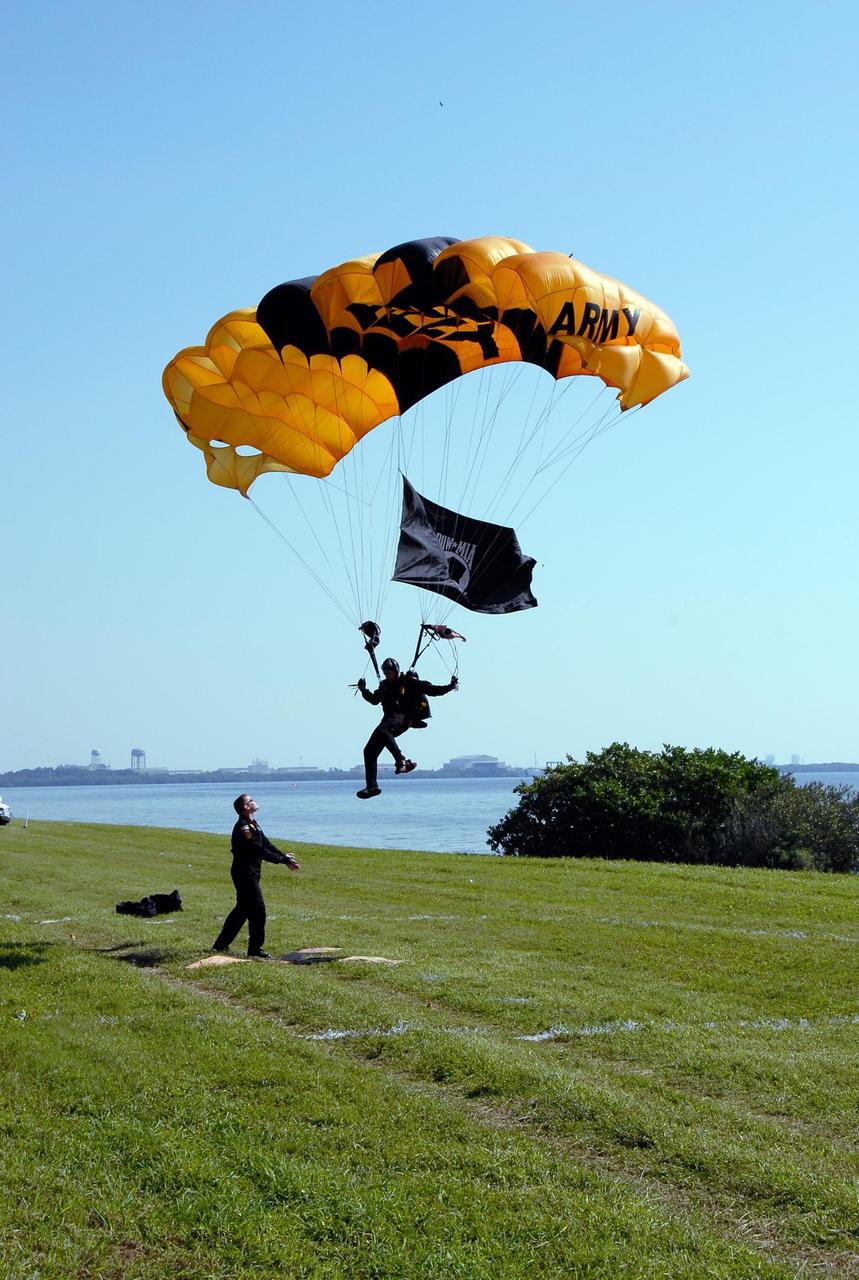
KENNEDY SPACE CENTER, FLA. -- Members of the U.S. Army Golden Knights demonstrate precision skydiving as part of the World Space Expo aerial salute at NASA's Kennedy Space Center. Other aircraft joining in the expo salute include the U.S. Air Force Thunderbirds Demonstration Squadron, the U.S. Navy F-18 Super Hornets, U.S. Air Force F-22 Raptor, U.S. Air Force F-15 Eagle, P-51 Mustang Heritage Flight, and the U.S. Air Force 920th Rescue Wing, which was responsible for Mercury and Gemini capsule recovery. The World Space Expo held Nov. 1-4 was an event commemorating humanity's first 50 years in space while looking forward to returning people to the moon and exploring beyond. The expo showcased various panels, presentations and educational programs. It also was a part of NASA's 50th anniversary celebrations, highlighting the 45th Anniversary of the Mercury Program celebration featuring original NASA astronauts John Glenn and Scott Carpenter and the Pioneering Women of Aerospace forum featuring Eileen Collins and other prominent female space veterans. The agency was founded Oct. 1, 1958. Photo credit: NASA/Kim Shiflett
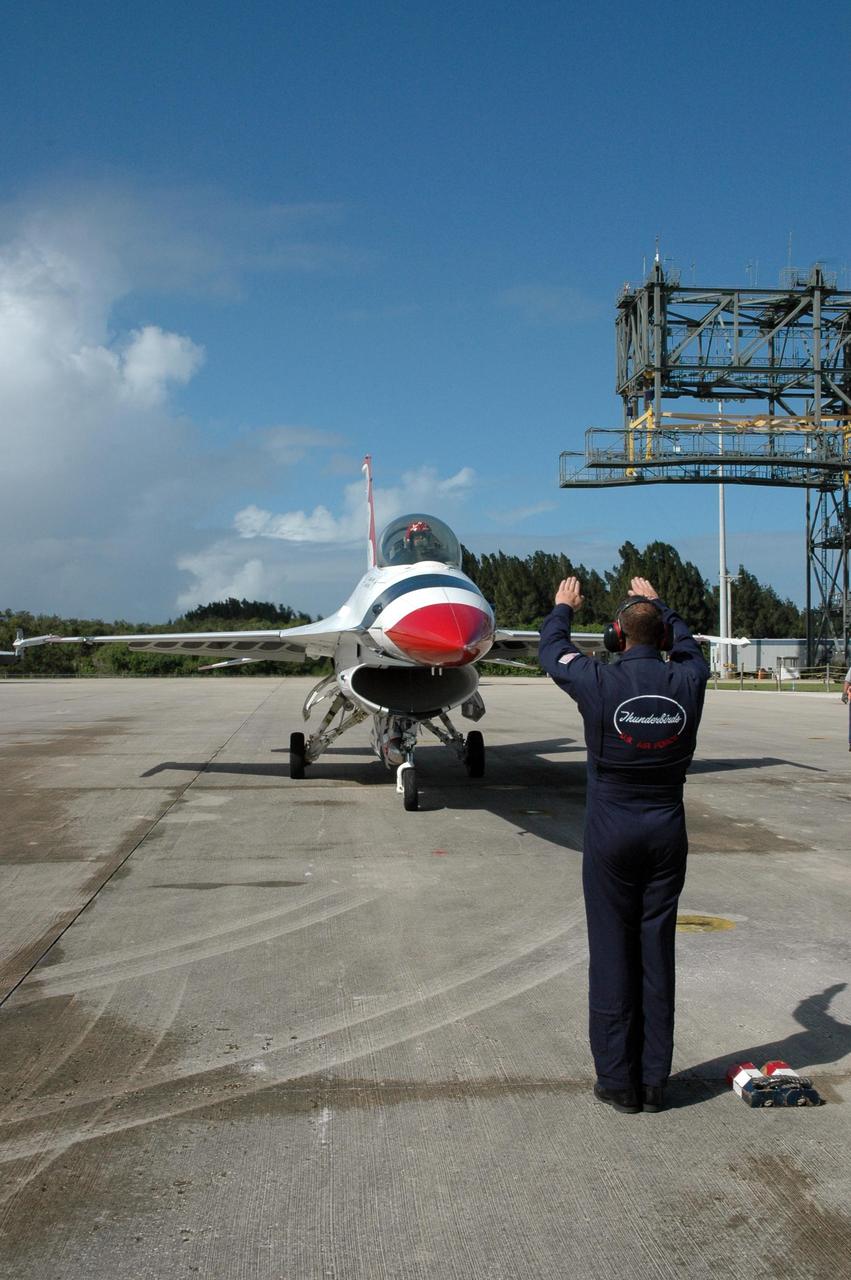
KENNEDY SPACE CENTER, FLA. -- Another of the U.S. Air Force Thunderbirds lands at the Shuttle Landing Facility at NASA's Kennedy Space Center. The aerial demonstration squadron is performing for the World Space Expo being held from Nov. 1 to Nov. 4 at the NASA Kennedy Space Center Visitor Complex. Other aircraft participating in the salute include U.S. Air Force F-22 Raptor, U.S. Navy F-18 Super Hornet, U.S. Air Force F-15 Eagle, the P-51 Mustang Heritage Flight and the U.S. Air Force 920th Rescue Wing, which was responsible for Mercury and Gemini capsule recovery. The U.S. Army Golden Knights also will demonstrate precision skydiving. The World Space Expo is an event to commemorate humanity's first 50 years in space while looking forward to returning people to the moon and exploring beyond. The expo will showcase various panels, presentations and educational programs. It also is a part of NASA's 50th anniversary celebrations, highlighting the 45th Anniversary of the Mercury Program celebration featuring original NASA astronauts John Glenn and Scott Carpenter and the Pioneering Women of Aerospace forum featuring Eileen Collins and other prominent female space veterans. The agency was founded Oct. 1, 1958. Photo credit: NASA/Jack Pfaller
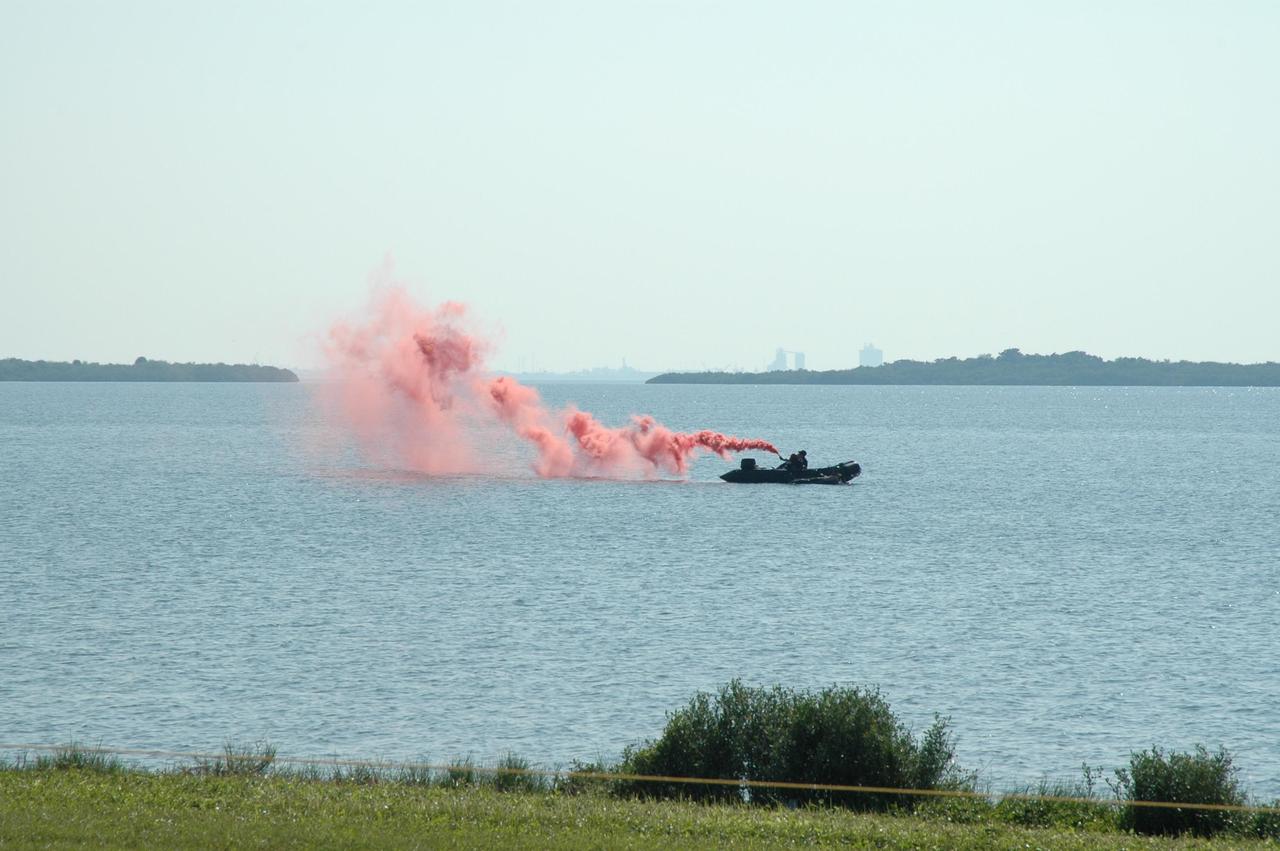
KENNEDY SPACE CENTER, FLA. -- In the water next to the NASA Causeway at NASA's Kennedy Space Center, part of the U.S. Air Force 920th Rescue Wing puts on a demonstration during the World Space Expo aerial salute. This unit was responsible for Mercury and Gemini capsule recovery. Other aircraft joining in the expo salute include the U.S. Air Force Thunderbirds Demonstration Squadron, the U.S. Navy F-18 Super Hornets, U.S. Air Force F-22 Raptor, U.S. Air Force F-15 Eagle, P-51 Mustang Heritage Flight, and the U.S. Army Golden Knights demonstrating precision skydiving. The World Space Expo held Nov. 1-4 was an event commemorating humanity's first 50 years in space while looking forward to returning people to the moon and exploring beyond. The expo showcased various panels, presentations and educational programs. It also was a part of NASA's 50th anniversary celebrations, highlighting the 45th Anniversary of the Mercury Program celebration featuring original NASA astronauts John Glenn and Scott Carpenter and the Pioneering Women of Aerospace forum featuring Eileen Collins and other prominent female space veterans. The agency was founded Oct. 1, 1958. Photo credit: NASA/Chris Chamberland
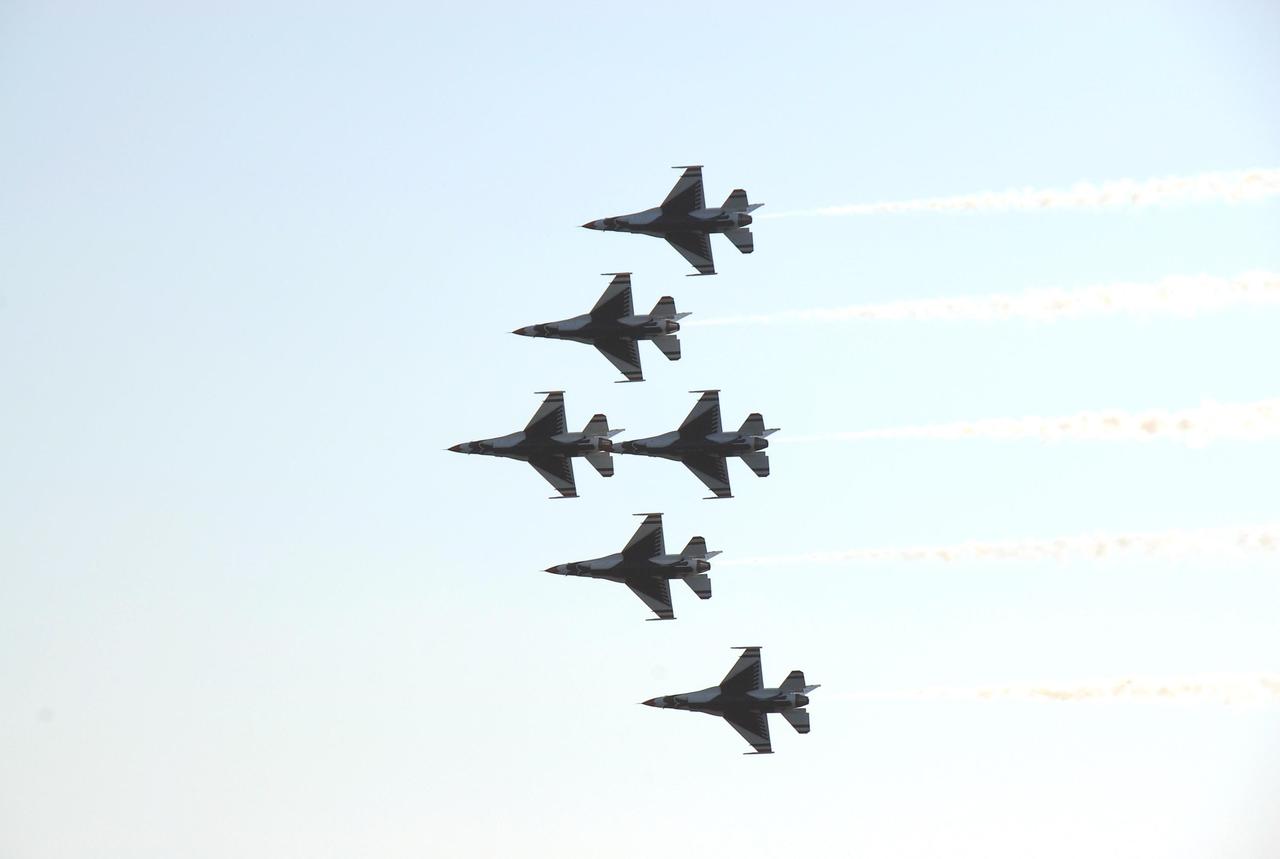
KENNEDY SPACE CENTER, FLA. -- The U.S. Air Force Thunderbirds Demonstration Squadron fly in close formation during the World Space Expo aerial salute. Other aircraft joining in the expo salute include the U.S. Navy F-18 Super Hornets, U.S. Air Force F-22 Raptor, U.S. Air Force F-15 Eagle, P-51 Mustang Heritage Flight, the U.S. Air Force 920th Rescue Wing, which was responsible for Mercury and Gemini capsule recovery, and the U.S. Army Golden Knights precision skydivers. The World Space Expo held Nov. 1-4 was an event commemorating humanity's first 50 years in space while looking forward to returning people to the moon and exploring beyond. The expo showcased various panels, presentations and educational programs. It also was a part of NASA's 50th anniversary celebrations, highlighting the 45th Anniversary of the Mercury Program celebration featuring original NASA astronauts John Glenn and Scott Carpenter and the Pioneering Women of Aerospace forum featuring Eileen Collins and other prominent female space veterans. The agency was founded Oct. 1, 1958. Photo credit: NASA/Kim Shiflett

KENNEDY SPACE CENTER, FLA. -- The U.S. Air Force Thunderbirds Demonstration Squadron flies in formation over NASA's Kennedy Space Center as part of the World Space Expo aerial salute. Other aircraft joining in the expo salute include the U.S. Navy F-18 Super Hornets, U.S. Air Force F-22 Raptor, U.S. Air Force F-15 Eagle, P-51 Mustang Heritage Flight, and the U.S. Air Force 920th Rescue Wing, which was responsible for Mercury and Gemini capsule recovery, and the U.S. Army Golden Knights precision skydiving team. The World Space Expo held Nov. 1-4 was an event commemorating humanity's first 50 years in space while looking forward to returning people to the moon and exploring beyond. The expo showcased various panels, presentations and educational programs. It also was a part of NASA's 50th anniversary celebrations, highlighting the 45th Anniversary of the Mercury Program celebration featuring original NASA astronauts John Glenn and Scott Carpenter and the Pioneering Women of Aerospace forum featuring Eileen Collins and other prominent female space veterans. The agency was founded Oct. 1, 1958. Photo credit: NASA/Kim Shiflett
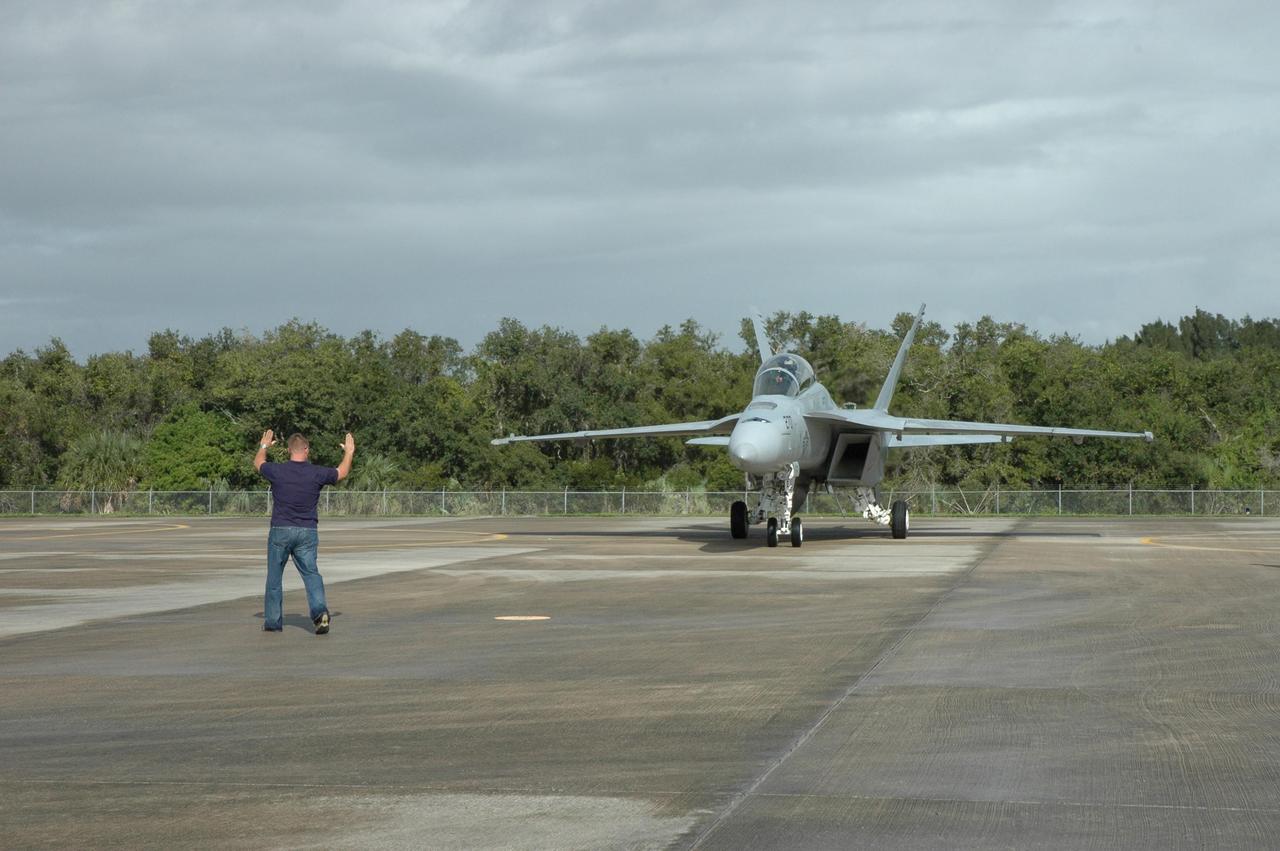
KENNEDY SPACE CENTER, FLA. -- A U.S. Navy F-18 Super Hornet is parked on the Shuttle Landing Facility at NASA's Kennedy Space Center. Several of the planes are participating in the World Space Expo being held from Nov. 1 to Nov. 4 at the NASA Kennedy Space Center Visitor Complex. Other aircraft joining in the salute include U.S. Air Force Thunderbirds Aerial Demonstration Squadron , U.S. Air Force F-22 Raptor, U.S. Air Force F-15 Eagle, the P-51 Mustang Heritage Flight and the U.S. Air Force 920th Rescue Wing, which was responsible for Mercury and Gemini capsule recovery. The U.S. Army Golden Knights also will demonstrate precision skydiving. The World Space Expo is an event to commemorate humanity's first 50 years in space while looking forward to returning people to the moon and exploring beyond. The expo will showcase various panels, presentations and educational programs. It also is a part of NASA's 50th anniversary celebrations, highlighting the 45th Anniversary of the Mercury Program celebration featuring original NASA astronauts John Glenn and Scott Carpenter and the Pioneering Women of Aerospace forum featuring Eileen Collins and other prominent female space veterans. The agency was founded Oct. 1, 1958. Photo credit: NASA/Jack Pfaller
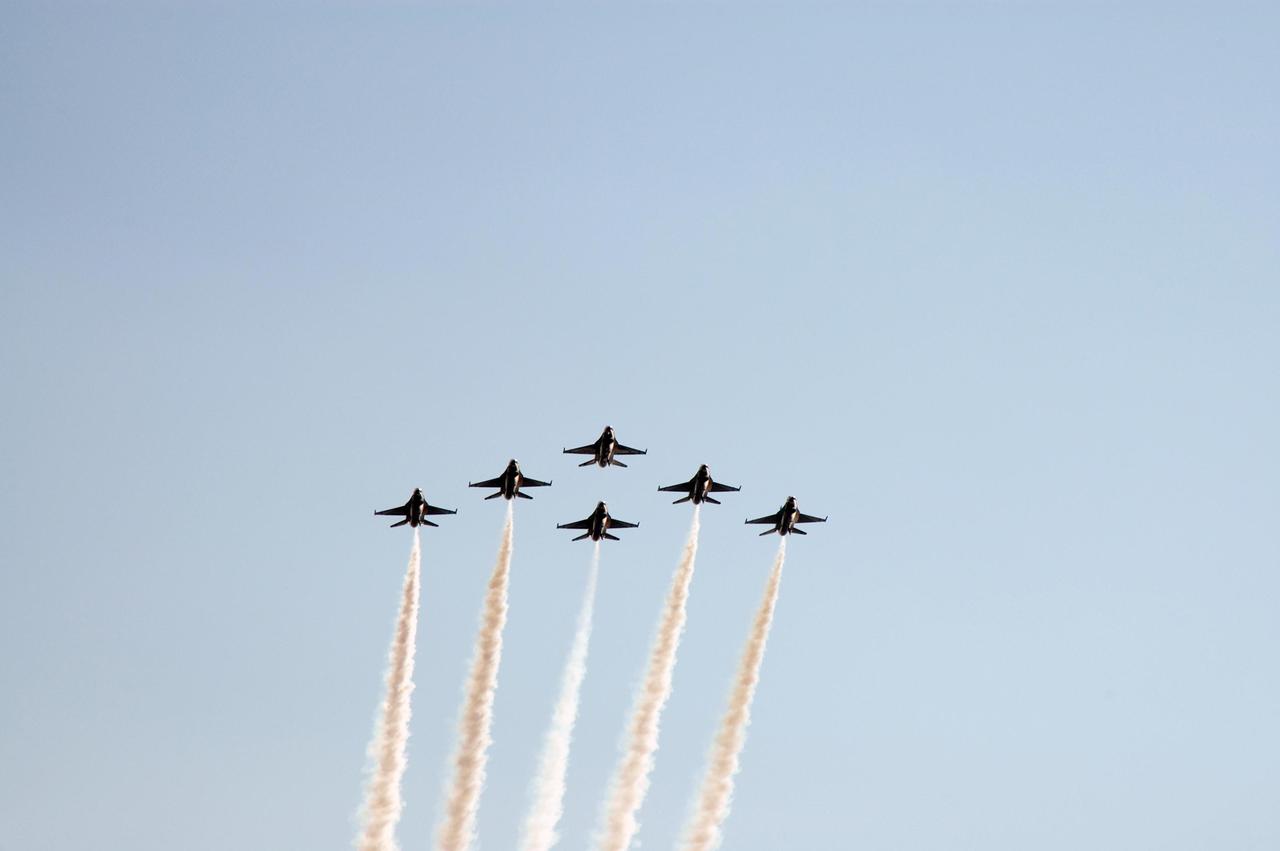
KENNEDY SPACE CENTER, FLA. -- At NASA's Kennedy Space Center, the U.S. Navy F-18 Super Hornets demonstrate their formation flying during the World Space Expo aerial salute. Other aircraft joining in the expo salute include the U.S. Air Force Thunderbirds Demonstration Squadron, U.S. Air Force F-22 Raptor, U.S. Air Force F-15 Eagle, P-51 Mustang Heritage Flight, U.S. Air Force 920th Rescue wing, which was responsible for Mercury and Gemini capsule recovery, and the U.S. Army Golden Knights demonstrating precision skydiving. The World Space Expo held Nov. 1-4 was an event commemorating humanity's first 50 years in space while looking forward to returning people to the moon and exploring beyond. The expo showcased various panels, presentations and educational programs. It also was a part of NASA's 50th anniversary celebrations, highlighting the 45th Anniversary of the Mercury Program celebration featuring original NASA astronauts John Glenn and Scott Carpenter and the Pioneering Women of Aerospace forum featuring Eileen Collins and other prominent female space veterans. The agency was founded Oct. 1, 1958. Photo credit: NASA/Chris Chamberland

KENNEDY SPACE CENTER, FLA. -- U.S. Air Force Thunderbirds line up on the Shuttle Landing Facility at NASA's Kennedy Space Center. The aerial demonstration squadron is performing for the World Space Expo being held from Nov. 1 to Nov. 4 at the NASA Kennedy Space Center Visitor Complex. Other aircraft participating in the salute include U.S. Air Force F-22 Raptor, U.S. Navy F-18 Super Hornet, U.S. Air Force F-15 Eagle, the P-51 Mustang Heritage Flight and the U.S. Air Force 920th Rescue Wing, which was responsible for Mercury and Gemini capsule recovery. The U.S. Army Golden Knights also will demonstrate precision skydiving. The World Space Expo is an event to commemorate humanity's first 50 years in space while looking forward to returning people to the moon and exploring beyond. The expo will showcase various panels, presentations and educational programs. It also is a part of NASA's 50th anniversary celebrations, highlighting the 45th Anniversary of the Mercury Program celebration featuring original NASA astronauts John Glenn and Scott Carpenter and the Pioneering Women of Aerospace forum featuring Eileen Collins and other prominent female space veterans. The agency was founded Oct. 1, 1958. Photo credit: NASA/Jack Pfaller
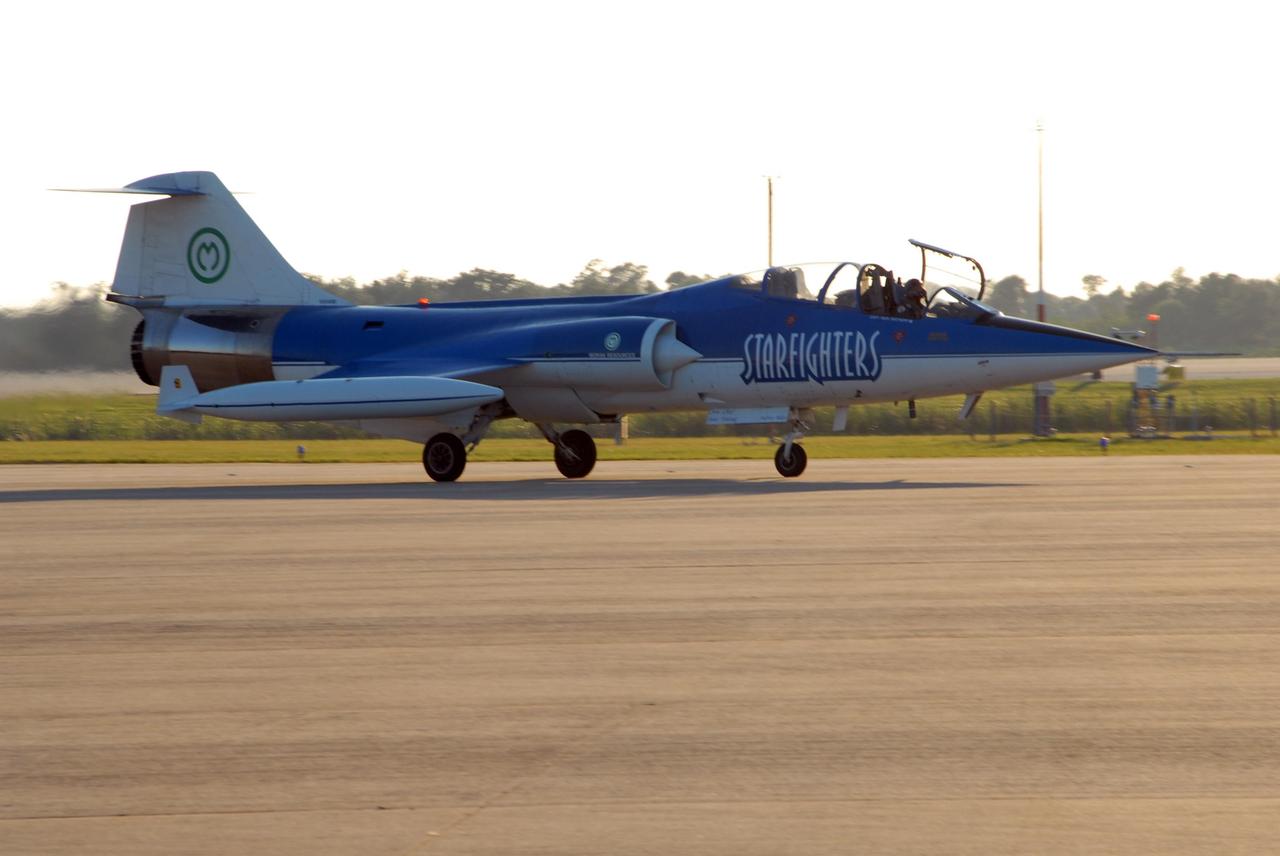
KENNEDY SPACE CENTER, FLA. — One of the Starfighters F-104 Demo Team pays a visit to NASA's Kennedy Space Center. The Starfighters are taking part in an air show in Jacksonville, Fla., and took the time to pay tribute to the World Space Expo at the center. The expo included an aerial salute featuring the U.S. Air Force Thunderbirds Demonstration Squadron, the U.S. Navy F-18 Super Hornets, U.S. Air Force F-22 Raptor, U.S. Air Force F-15 Eagle, P-51 Mustang Heritage Flight, the U.S. Air Force 920th Rescue Wing, which was responsible for Mercury and Gemini capsule recovery, and the U.S. Army Golden Knights demonstrating precision skydiving. The World Space Expo Nov. 1-4 was an event commemorating humanity's first 50 years in space while looking forward to returning people to the moon and exploring beyond. The expo showcased various panels, presentations and educational programs. It also was a part of NASA's 50th anniversary celebrations, highlighting the 45th Anniversary of the Mercury Program celebration featuring original NASA astronauts John Glenn and Scott Carpenter and the Pioneering Women of Aerospace forum featuring Eileen Collins and other prominent female space veterans. The agency was founded Oct. 1, 1958. Photo credit: NASA/George Shelton

KENNEDY SPACE CENTER, FLA. -- A member of the U.S. Army Golden Knights demonstrates precision landing as part of the World Space Expo aerial salute at NASA's Kennedy Space Center. Other aircraft joining in the expo salute include the U.S. Air Force Thunderbirds Demonstration Squadron, the U.S. Navy F-18 Super Hornets, U.S. Air Force F-22 Raptor, U.S. Air Force F-15 Eagle, P-51 Mustang Heritage Flight, and the U.S. Air Force 920th Rescue Wing, which was responsible for Mercury and Gemini capsule recovery. The World Space Expo held Nov. 1-4 was an event commemorating humanity's first 50 years in space while looking forward to returning people to the moon and exploring beyond. The expo showcased various panels, presentations and educational programs. It also was a part of NASA's 50th anniversary celebrations, highlighting the 45th Anniversary of the Mercury Program celebration featuring original NASA astronauts John Glenn and Scott Carpenter and the Pioneering Women of Aerospace forum featuring Eileen Collins and other prominent female space veterans. The agency was founded Oct. 1, 1958. Photo credit: NASA/Kim Shiflett
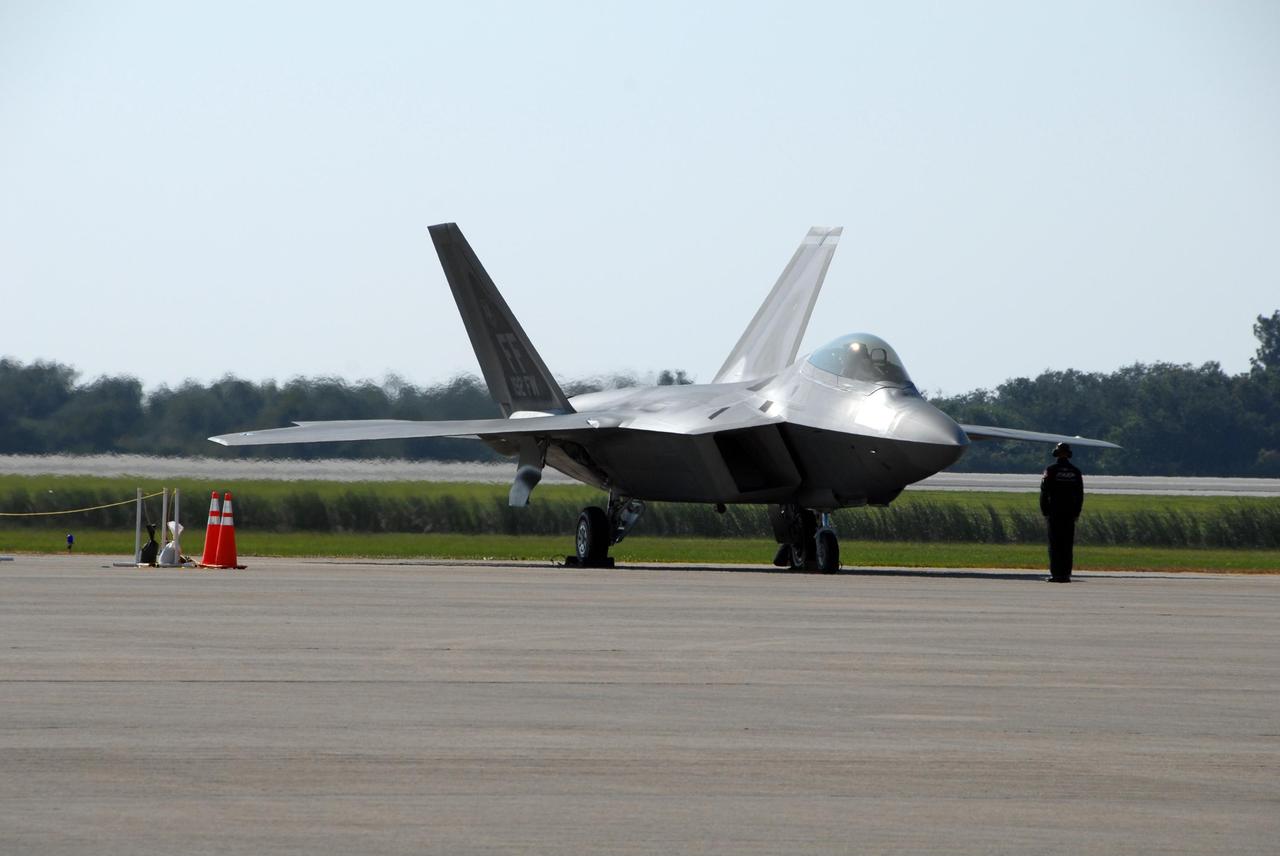
KENNEDY SPACE CENTER, FLA. — This U.S. Air Force F-22 Raptor is part of an aerial salute for the World Space Expo at NASA's Kennedy Space Center Visitor Complex. Other aircraft joining in the expo salute include the U.S. Air Force Thunderbirds Demonstration Squadron, the U.S. Navy F-18 Super Hornets, the U.S. Air Force F-15 Eagle, P-51 Mustang Heritage Flight, the U.S. Air Force 920th Rescue Wing, which was responsible for Mercury and Gemini capsule recovery, and the U.S. Army Golden Knights demonstrating precision skydiving. The World Space Expo Nov. 1-4 was an event commemorating humanity's first 50 years in space while looking forward to returning people to the moon and exploring beyond. The expo showcased various panels, presentations and educational programs. It also was a part of NASA's 50th anniversary celebrations, highlighting the 45th Anniversary of the Mercury Program celebration featuring original NASA astronauts John Glenn and Scott Carpenter and the Pioneering Women of Aerospace forum featuring Eileen Collins and other prominent female space veterans. The agency was founded Oct. 1, 1958. Photo credit: NASA/George Shelton
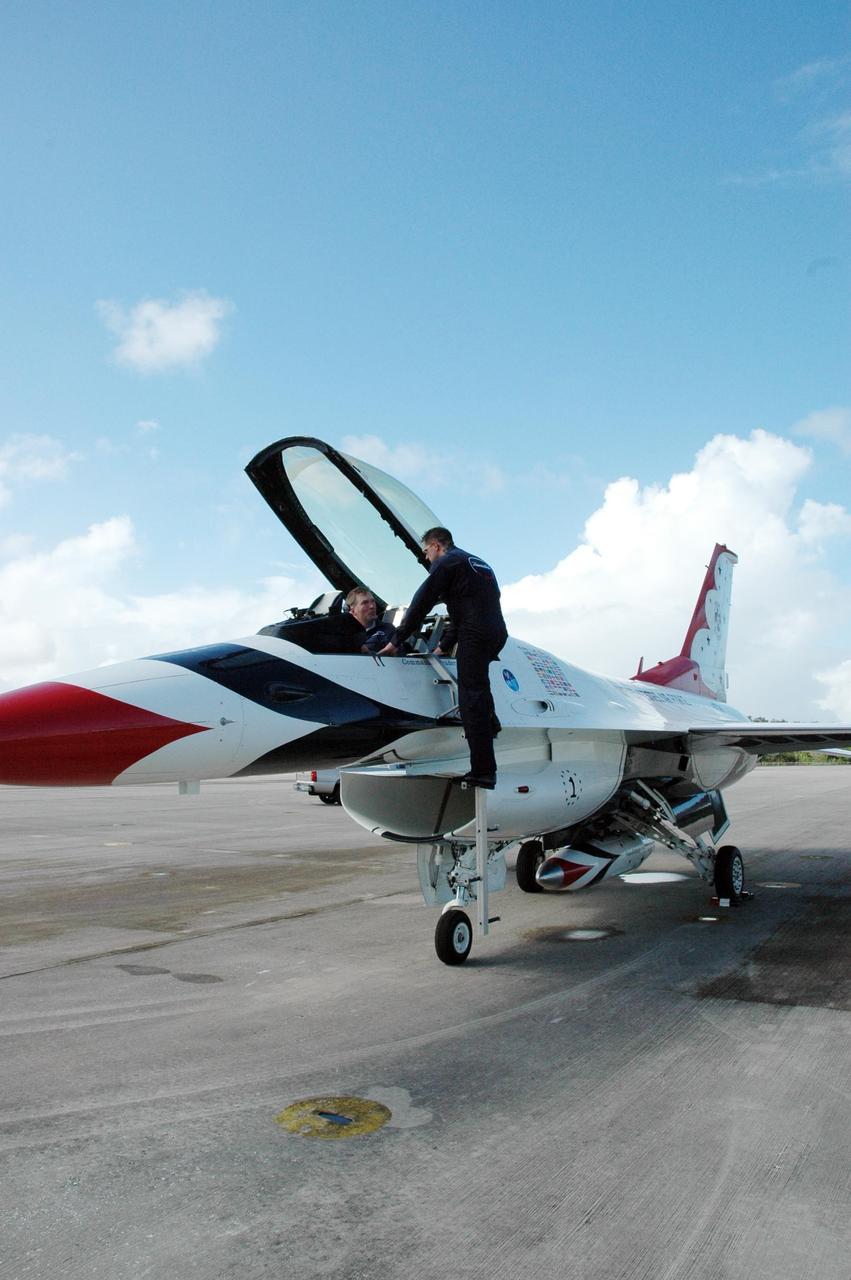
KENNEDY SPACE CENTER, FLA. -- Another of the U.S. Air Force Thunderbirds is parked on the Shuttle Landing Facility at NASA's Kennedy Space Center. The aerial demonstration squadron is performing for the World Space Expo being held from Nov. 1 to Nov. 4 at the NASA Kennedy Space Center Visitor Complex. Other aircraft participating in the salute include U.S. Air Force F-22 Raptor, U.S. Navy F-18 Super Hornet, U.S. Air Force F-15 Eagle, the P-51 Mustang Heritage Flight and the U.S. Air Force 920th Rescue Wing, which was responsible for Mercury and Gemini capsule recovery. The U.S. Army Golden Knights also will demonstrate precision skydiving. The World Space Expo is an event to commemorate humanity's first 50 years in space while looking forward to returning people to the moon and exploring beyond. The expo will showcase various panels, presentations and educational programs. It also is a part of NASA's 50th anniversary celebrations, highlighting the 45th Anniversary of the Mercury Program celebration featuring original NASA astronauts John Glenn and Scott Carpenter and the Pioneering Women of Aerospace forum featuring Eileen Collins and other prominent female space veterans. The agency was founded Oct. 1, 1958. Photo credit: NASA/Jack Pfaller