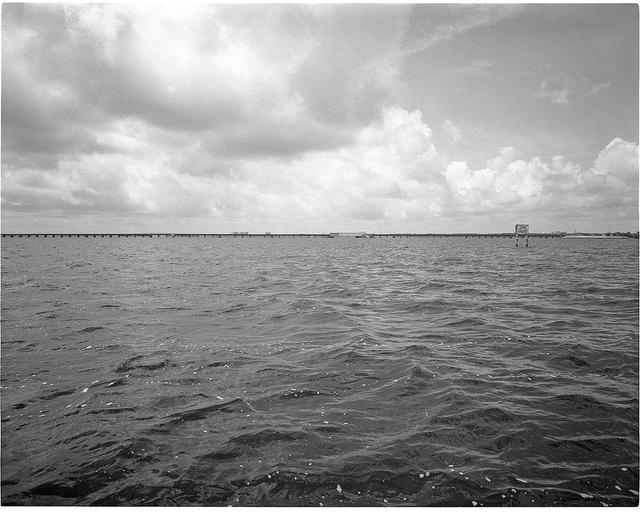
View of the Jay Jay Bridge
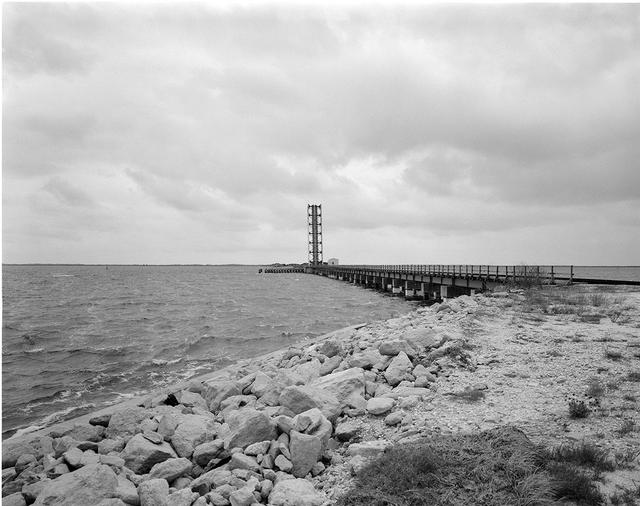
View of the Jay Jay Bridge
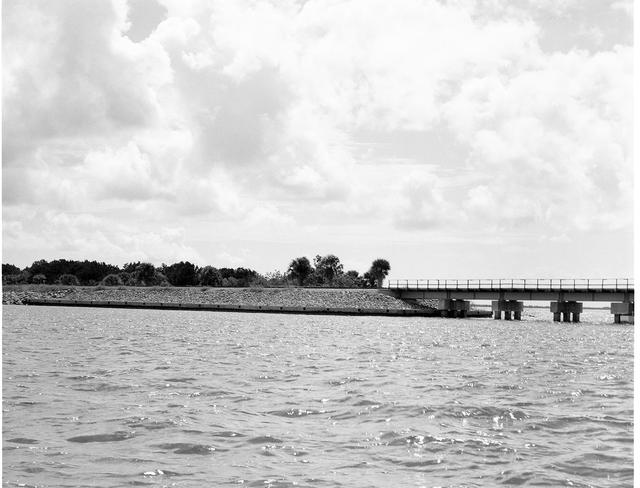
View of the Jay Jay Bridge
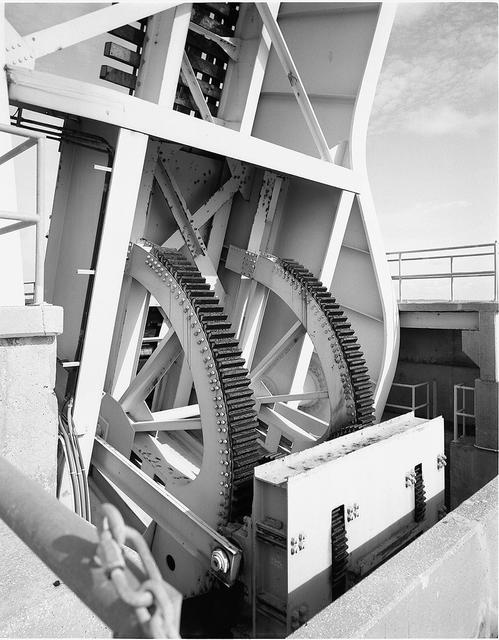
View of the Jay Jay Bridge
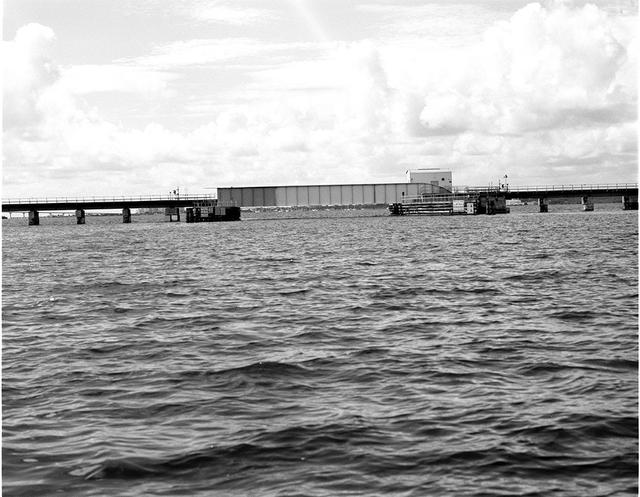
View of the Jay Jay Bridge
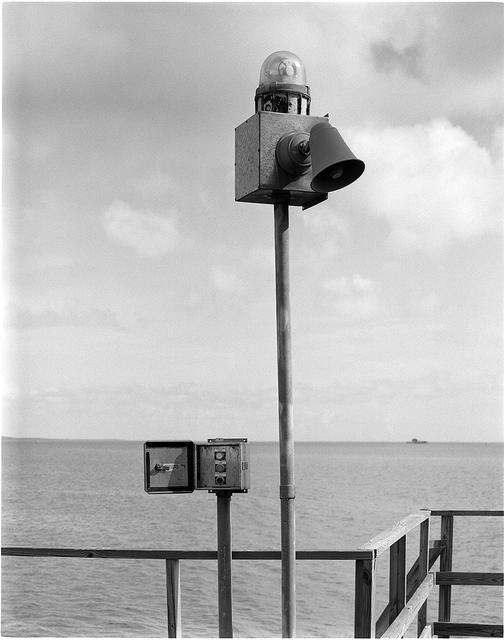
View of the Jay Jay Bridge
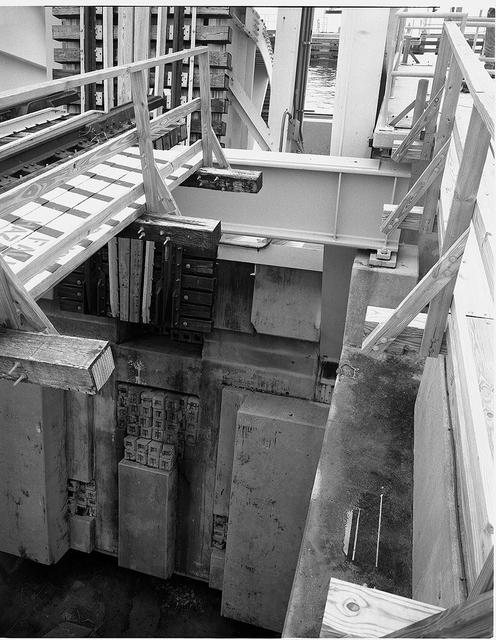
View of the Jay Jay Bridge
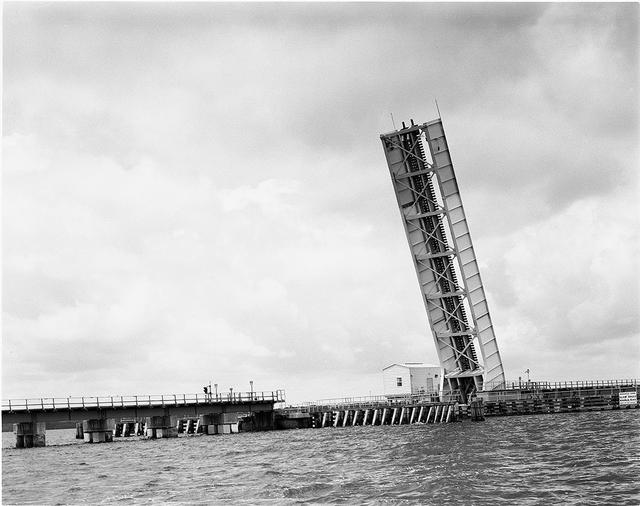
View of the Jay Jay Bridge
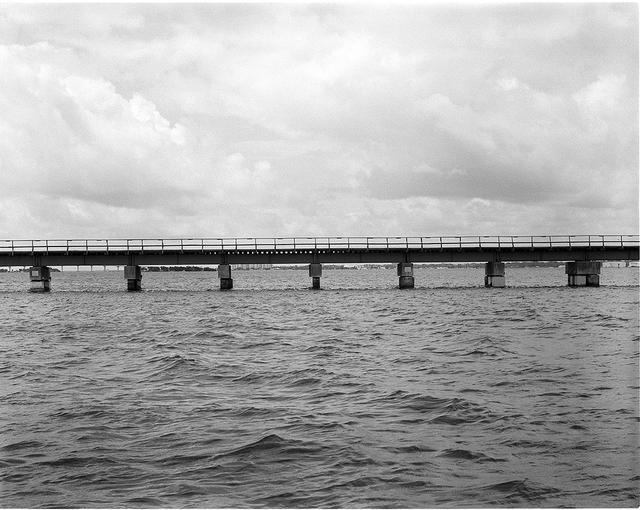
View of the Jay Jay Bridge
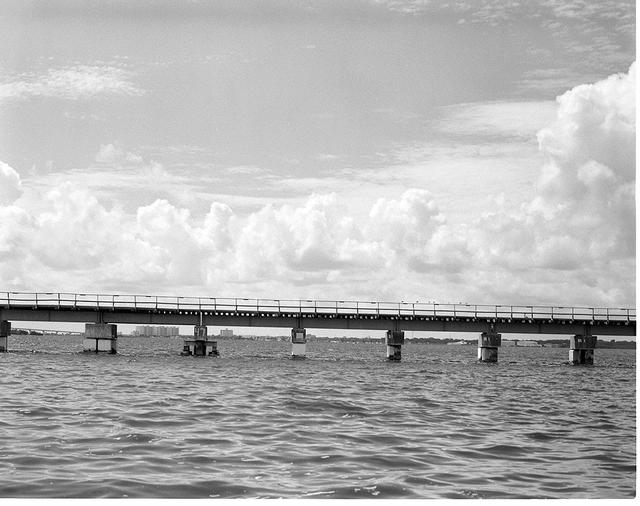
View of the Jay Jay Bridge
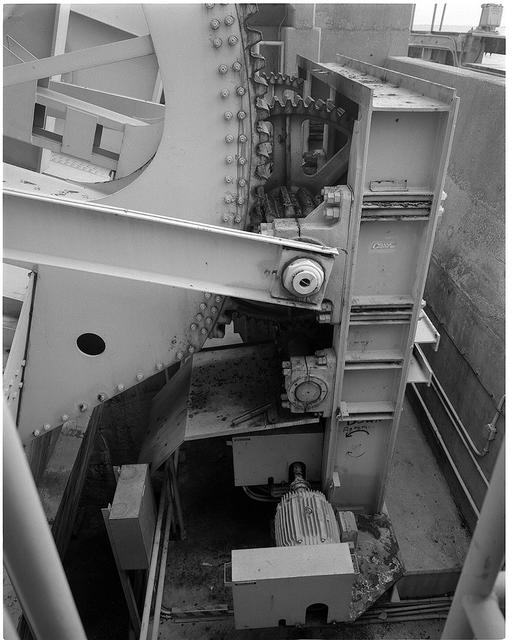
View of the Jay Jay Bridge
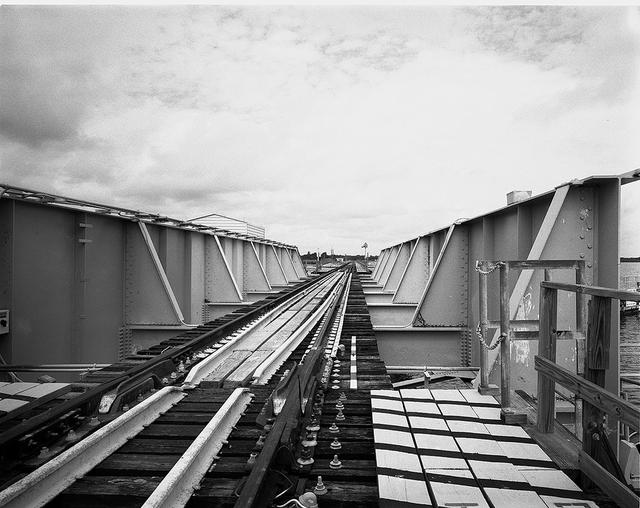
View of the Jay Jay Bridge
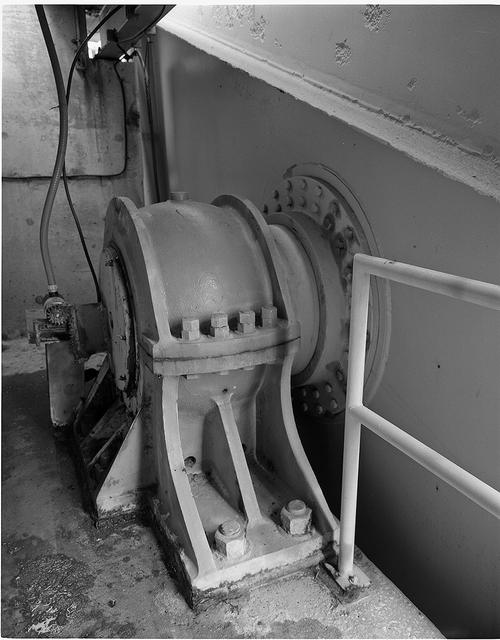
View of the Jay Jay Bridge
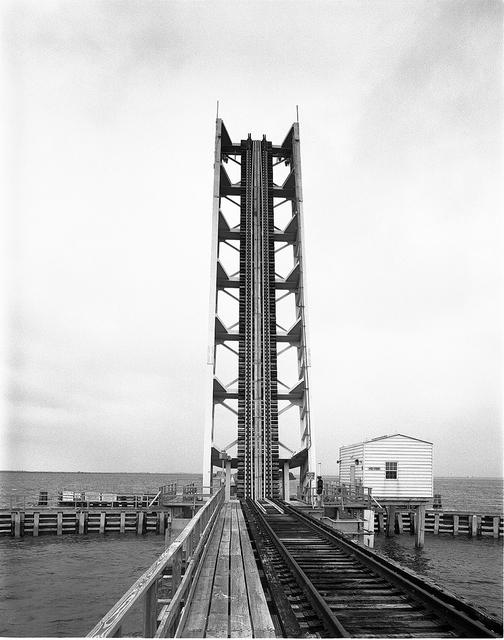
View of the Jay Jay Bridge
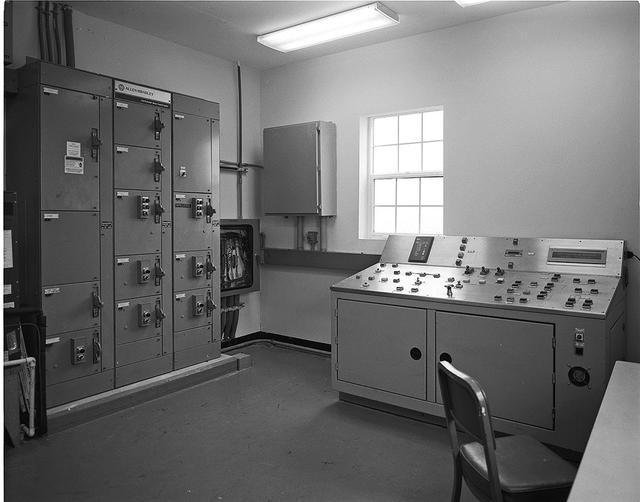
Interior view of the Jay Jay Bridge Control House
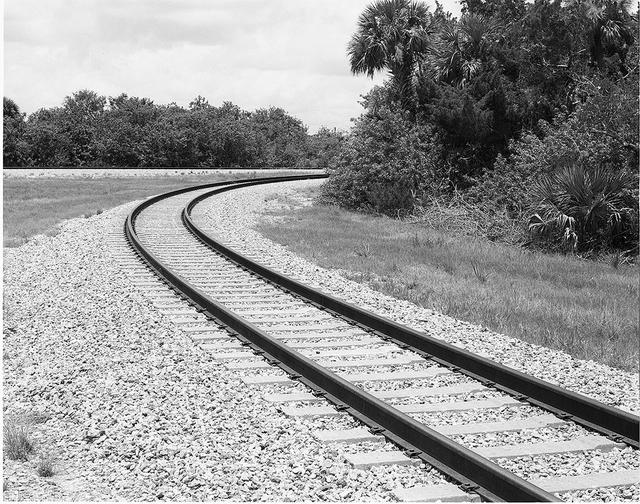
View of the Railway System
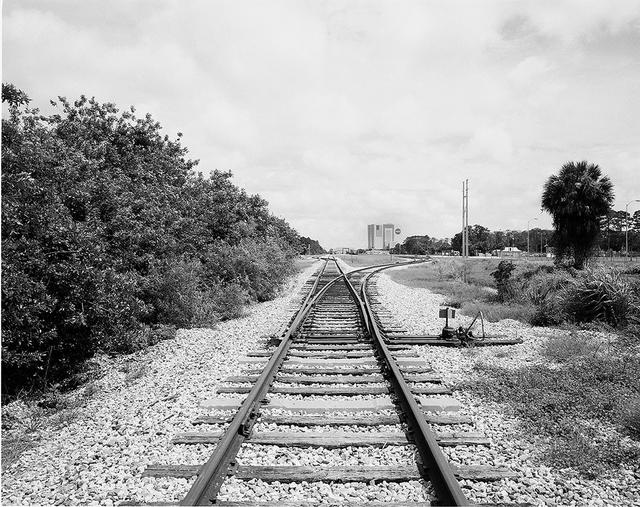
View of the Railway System
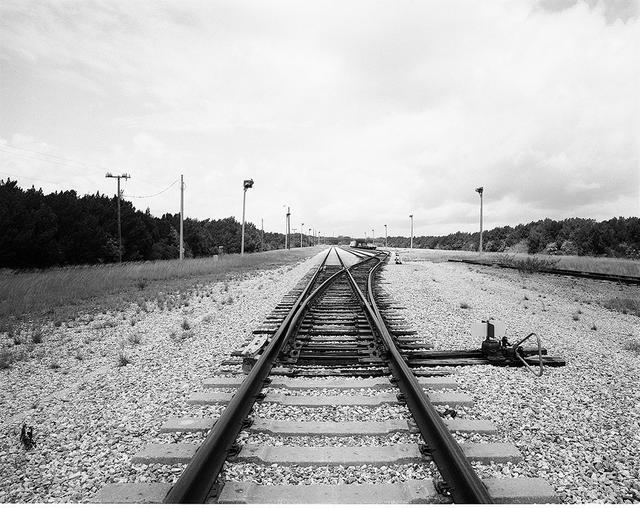
View of the Railway System
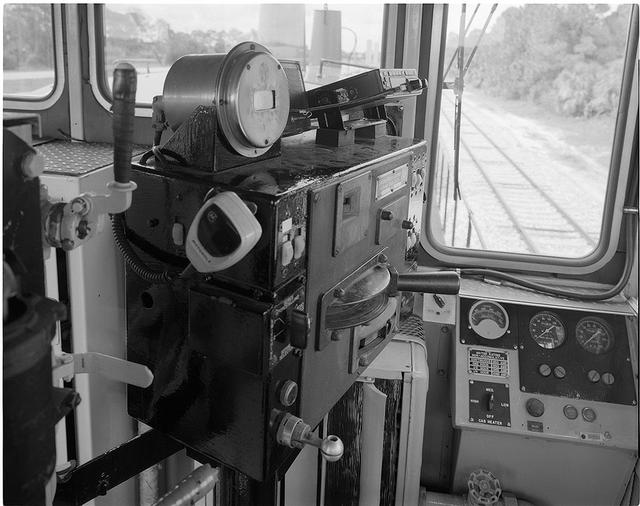
View of the Railway System
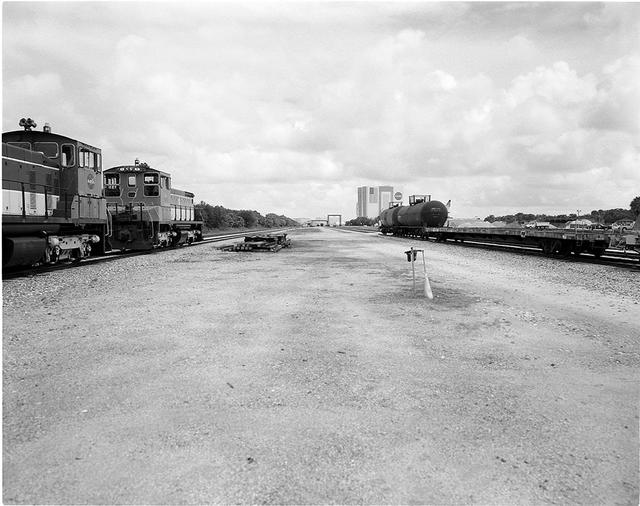
View of the Railway System
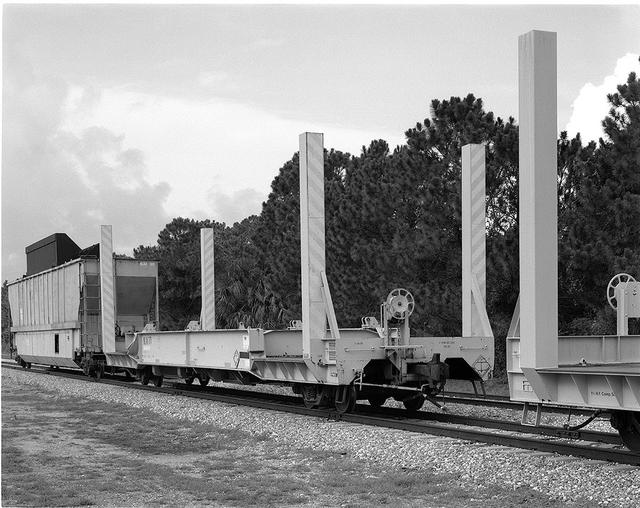
View of the Railway System
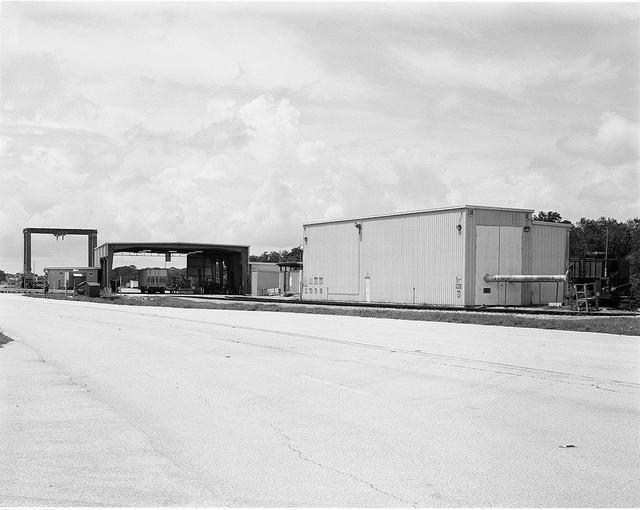
View of the Railway System
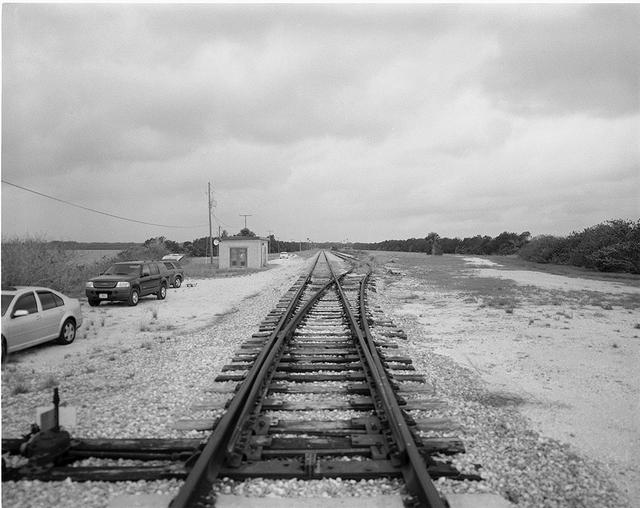
View of the Railway System

View of the Railway System
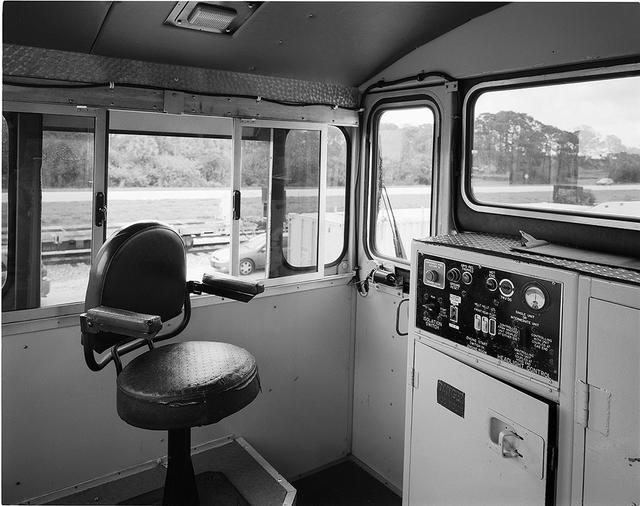
View of the Railway System
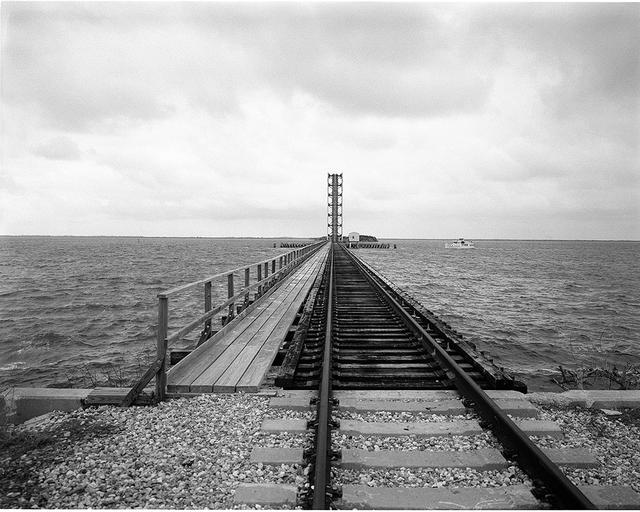
View of the Railway System
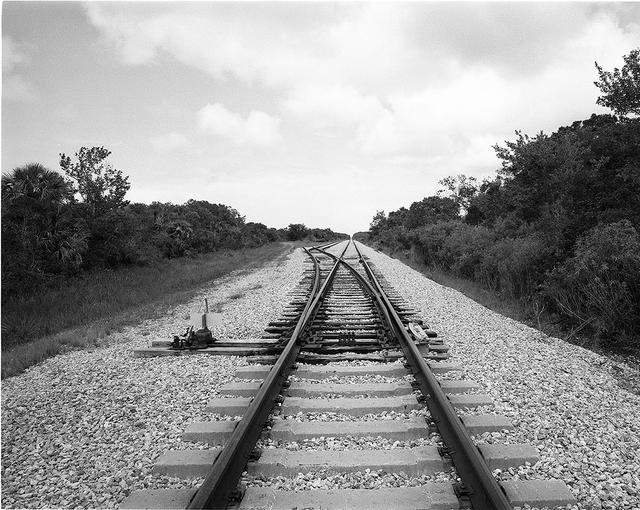
View of the Railway System
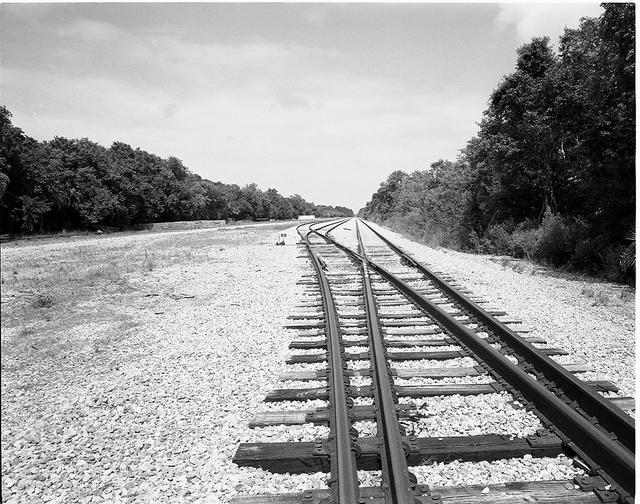
View of the Railway System
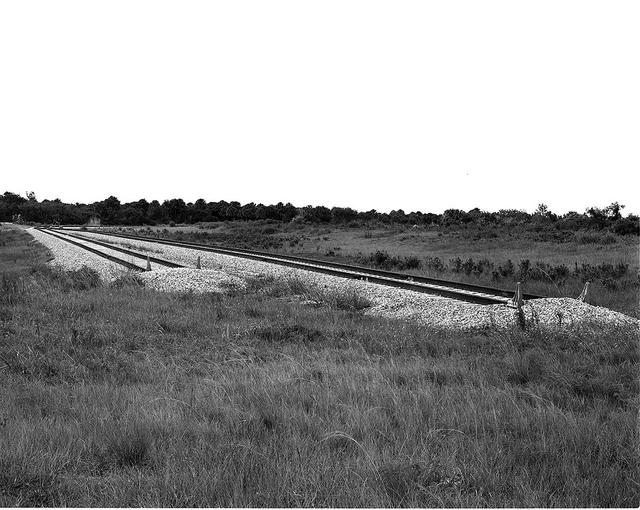
View of the Railway System
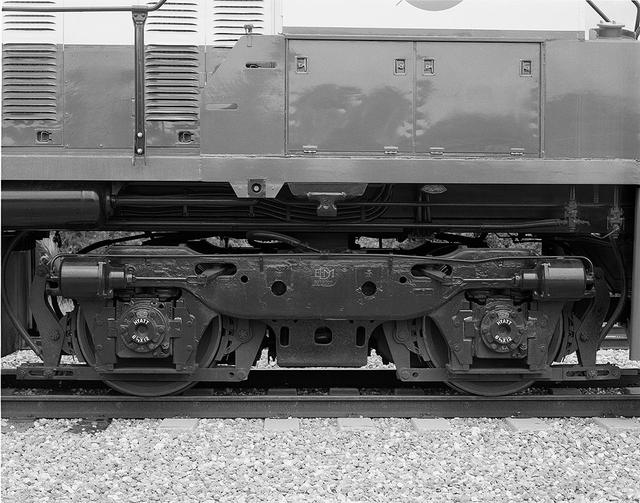
View of the Railway System
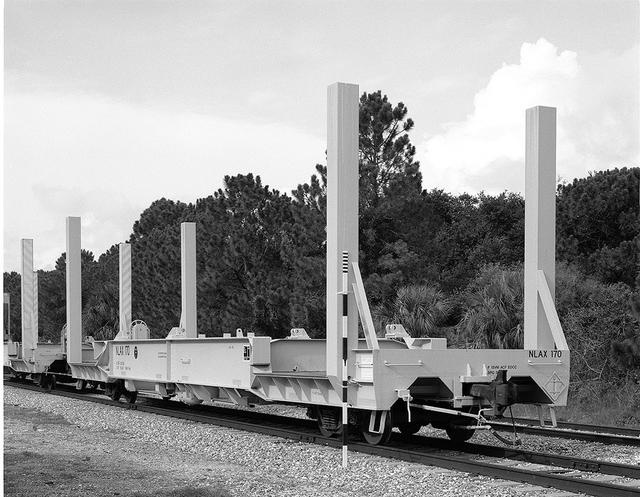
View of the Railway System
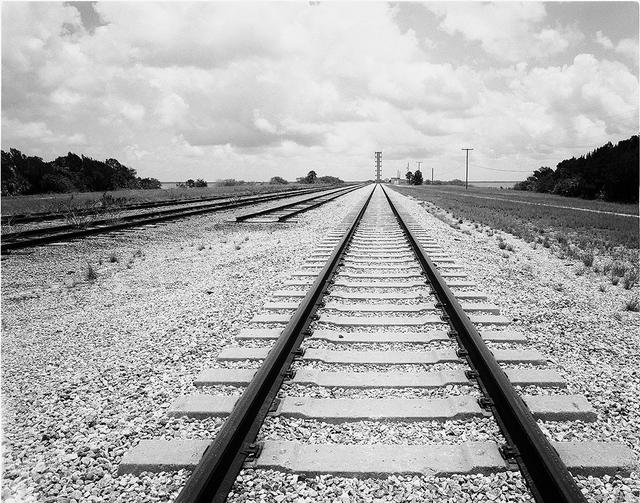
View of the Railway System
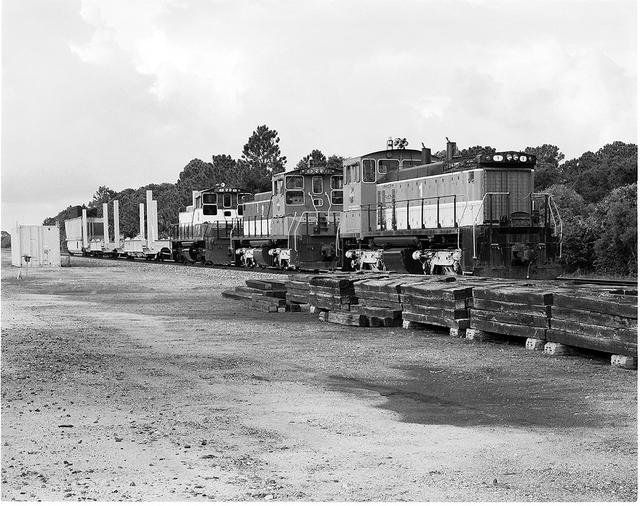
View of the Railway System
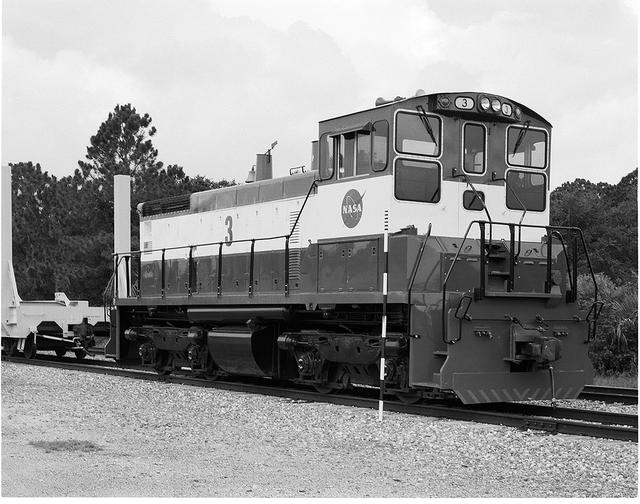
View of the Railway System
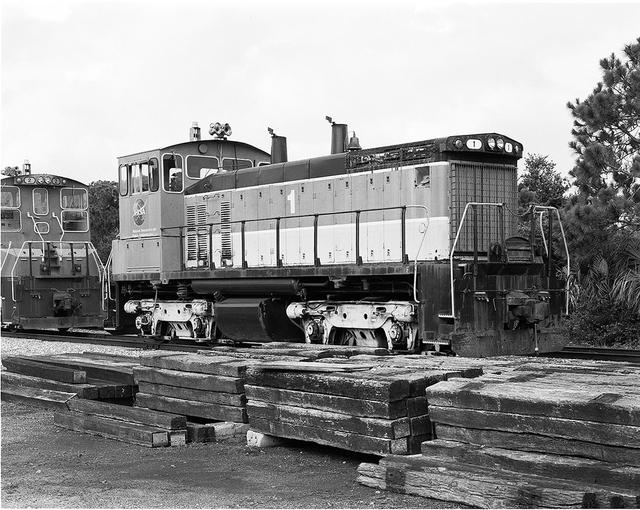
View of the Railway System
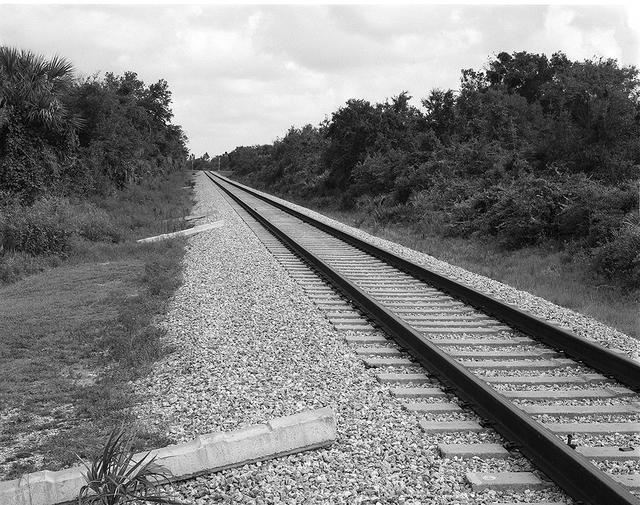
View of the Railway System
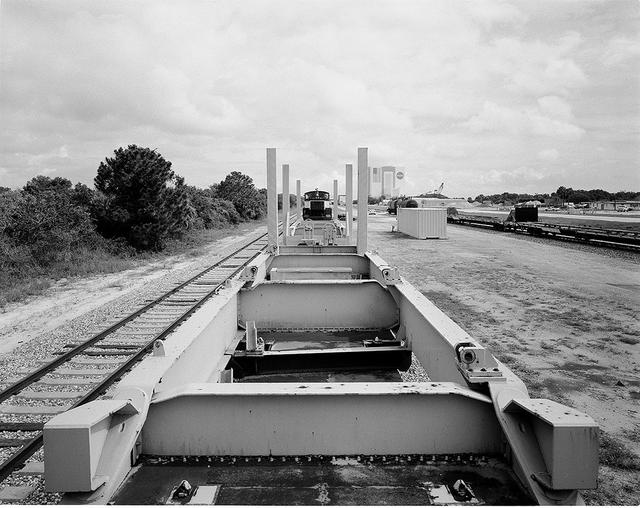
View of the Railway System
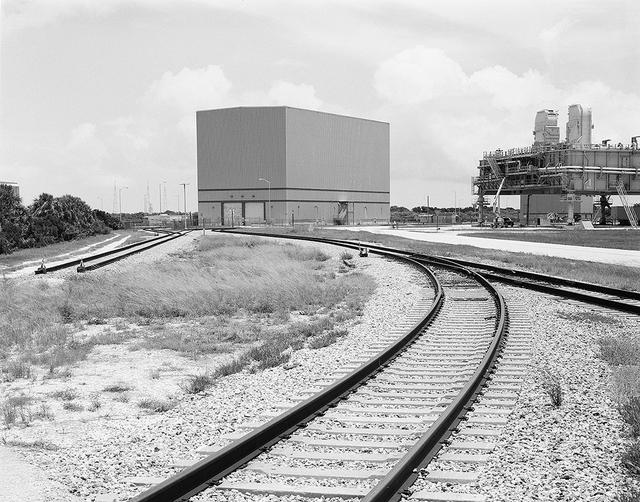
View of the Railway System
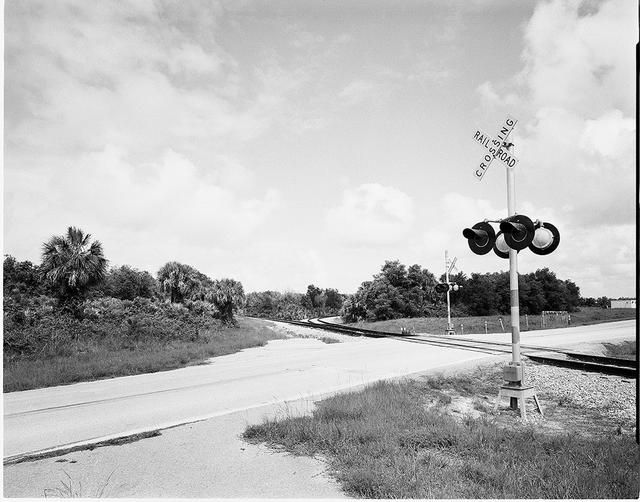
View of the Railway System
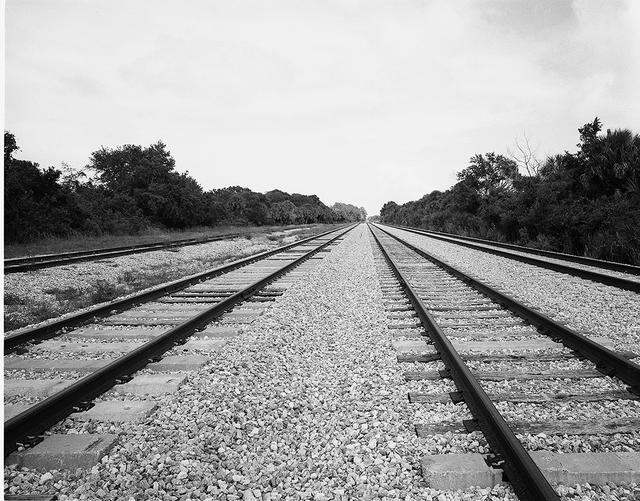
View of the Railway System
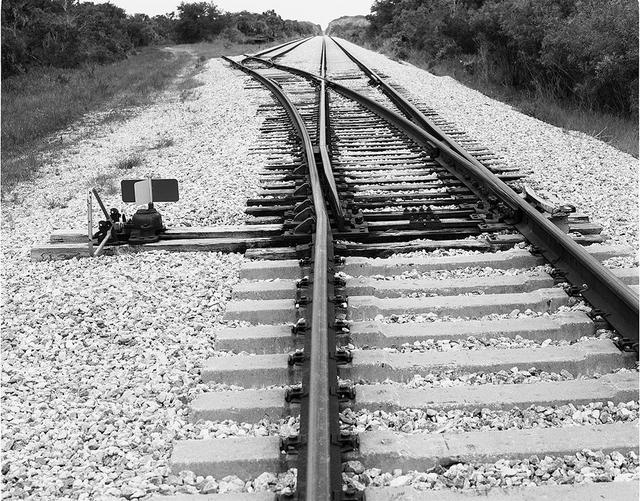
View of the Railway System
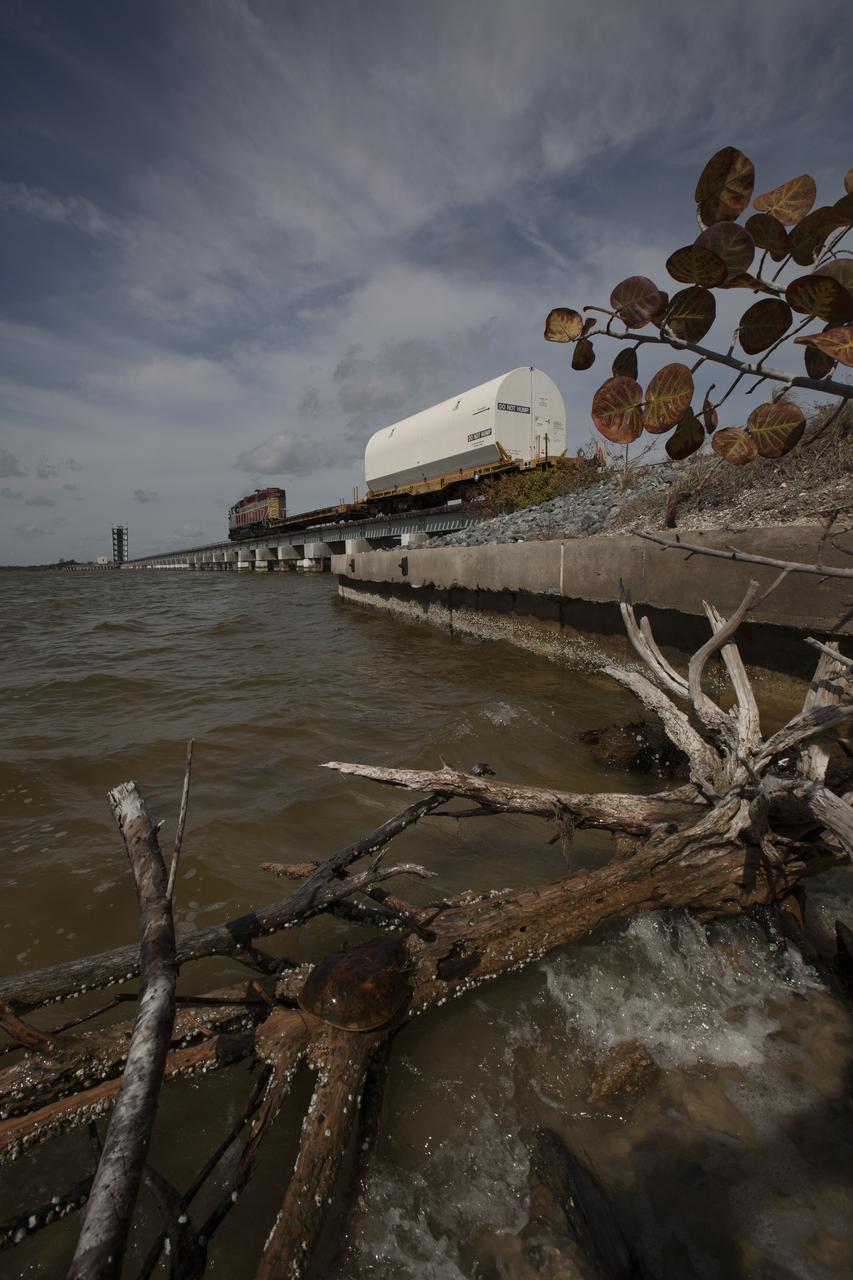
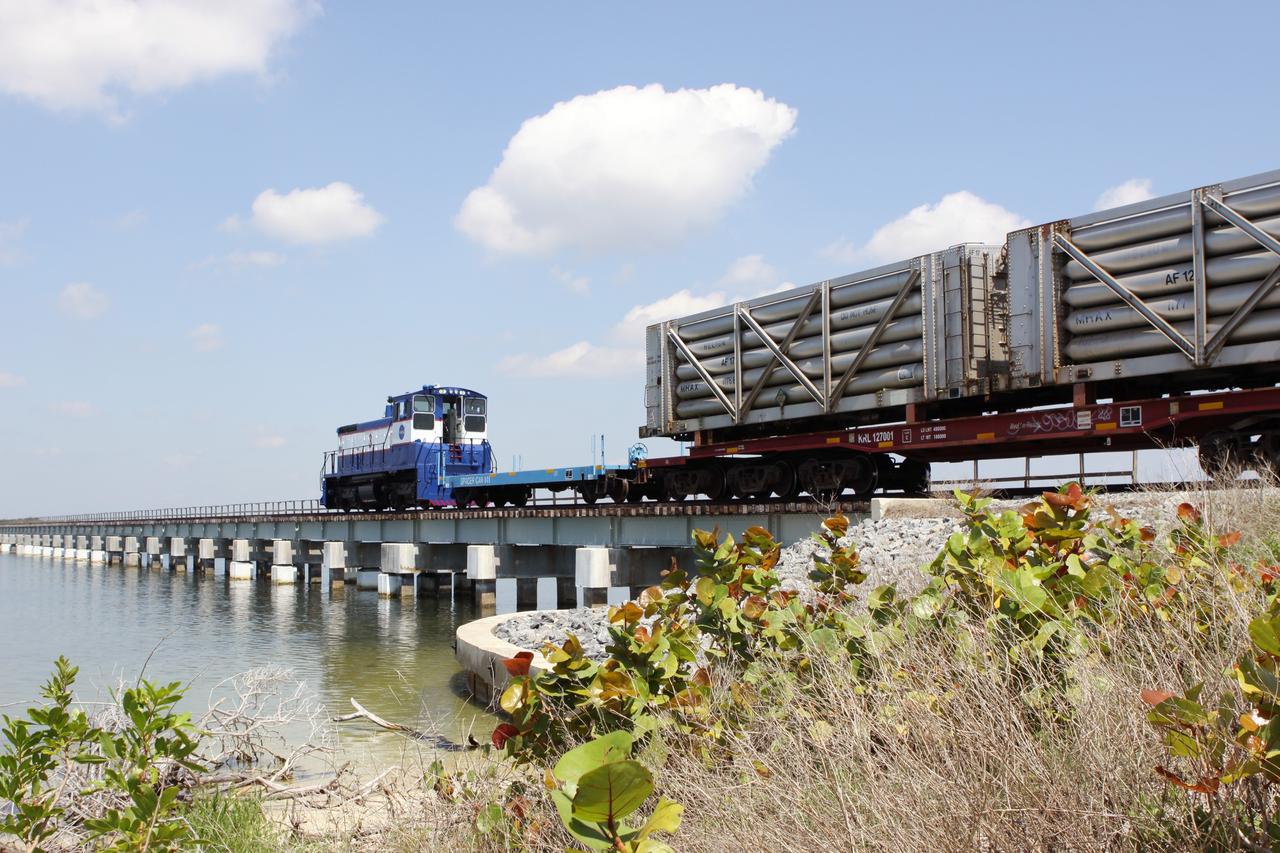
An Iowa Northern locomotive, contracted by Goodloe Transportation of Chicago, travels along the NASA railroad bridge over the Indian River north of Kennedy Space Center, carrying one of two containers on a railcar for transport to the NASA Jay Jay railroad yard. The containers held two pathfinders, or test versions, of solid rocket booster segments for NASA’s Space Launch System rocket that were delivered to the Rotation, Processing and Surge Facility (RPSF). Inside the RPSF, the Ground Systems Development and Operations Program and Jacobs Engineering, on the Test and Operations Support Contract, will conduct a series of lifts, moves and stacking operations using the booster segments, which are inert, to prepare for Exploration Mission-1, deep-space missions and the journey to Mars. The pathfinder booster segments are from Orbital ATK in Utah.
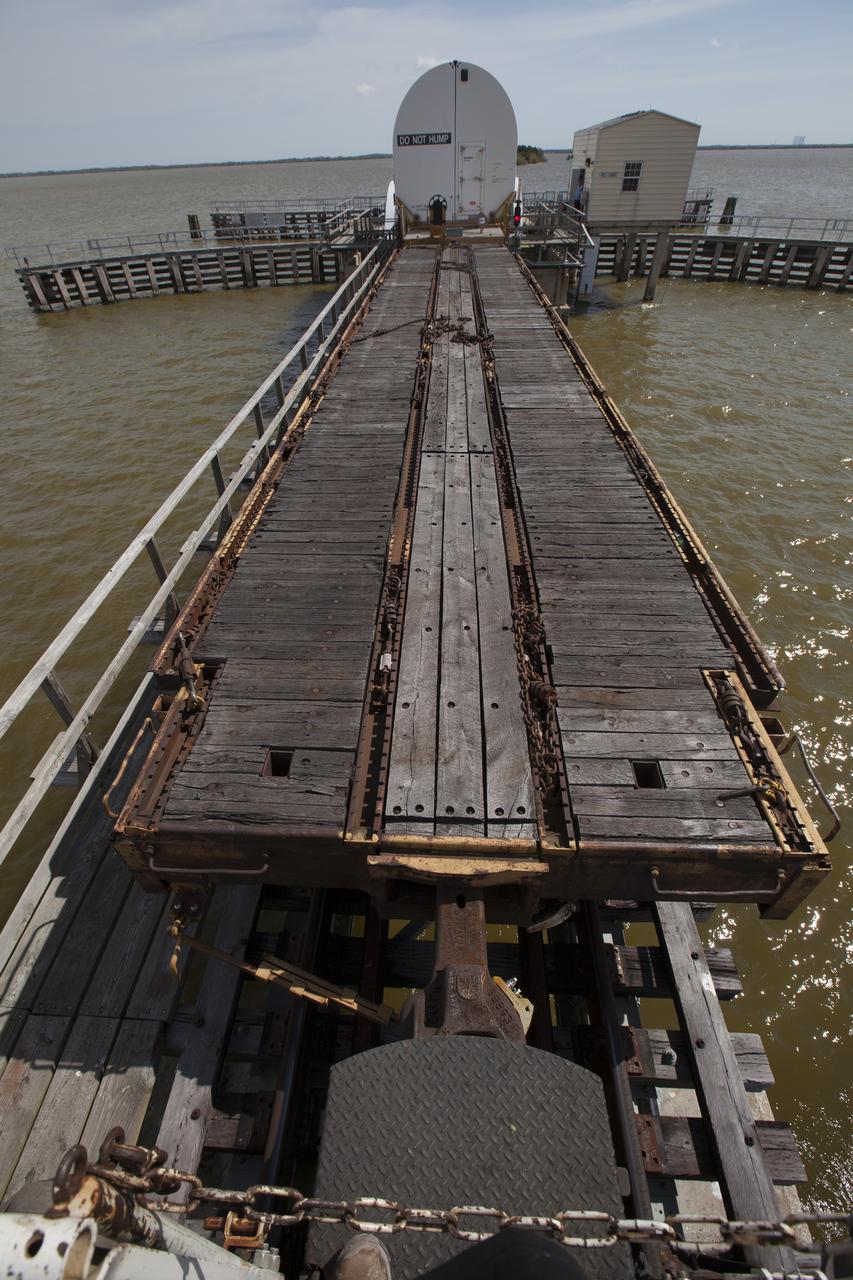
An Iowa Northern locomotive, contracted by Goodloe Transportation of Chicago, continues along the NASA railroad bridge over the Indian River north of Kennedy Space Center, carrying one of two containers on a railcar for transport to the NASA Jay Jay railroad yard. The containers held two pathfinders, or test versions, of solid rocket booster segments for NASA’s Space Launch System rocket that were delivered to the Rotation, Processing and Surge Facility (RPSF). Inside the RPSF, the Ground Systems Development and Operations Program and Jacobs Engineering, on the Test and Operations Support Contract, will conduct a series of lifts, moves and stacking operations using the booster segments, which are inert, to prepare for Exploration Mission-1, deep-space missions and the journey to Mars. The pathfinder booster segments are from Orbital ATK in Utah.
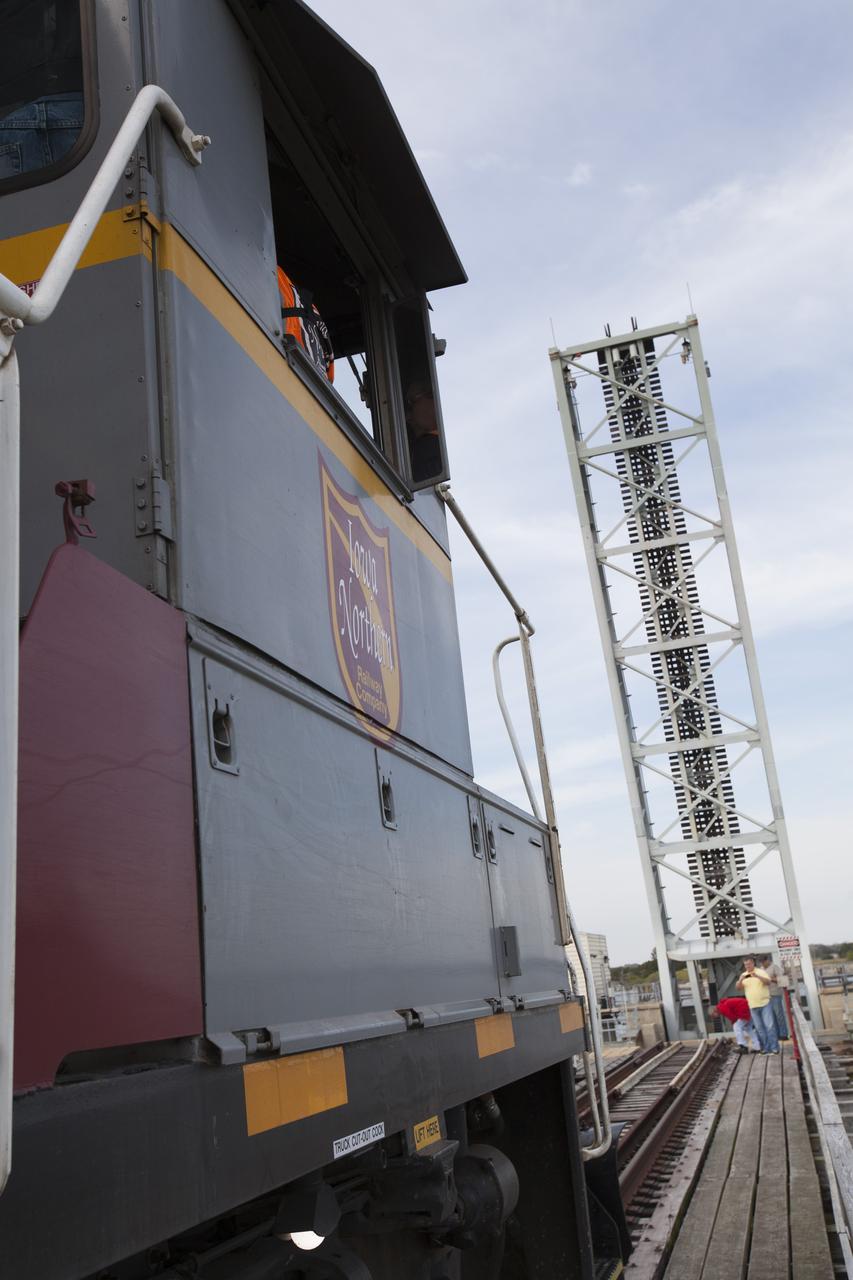
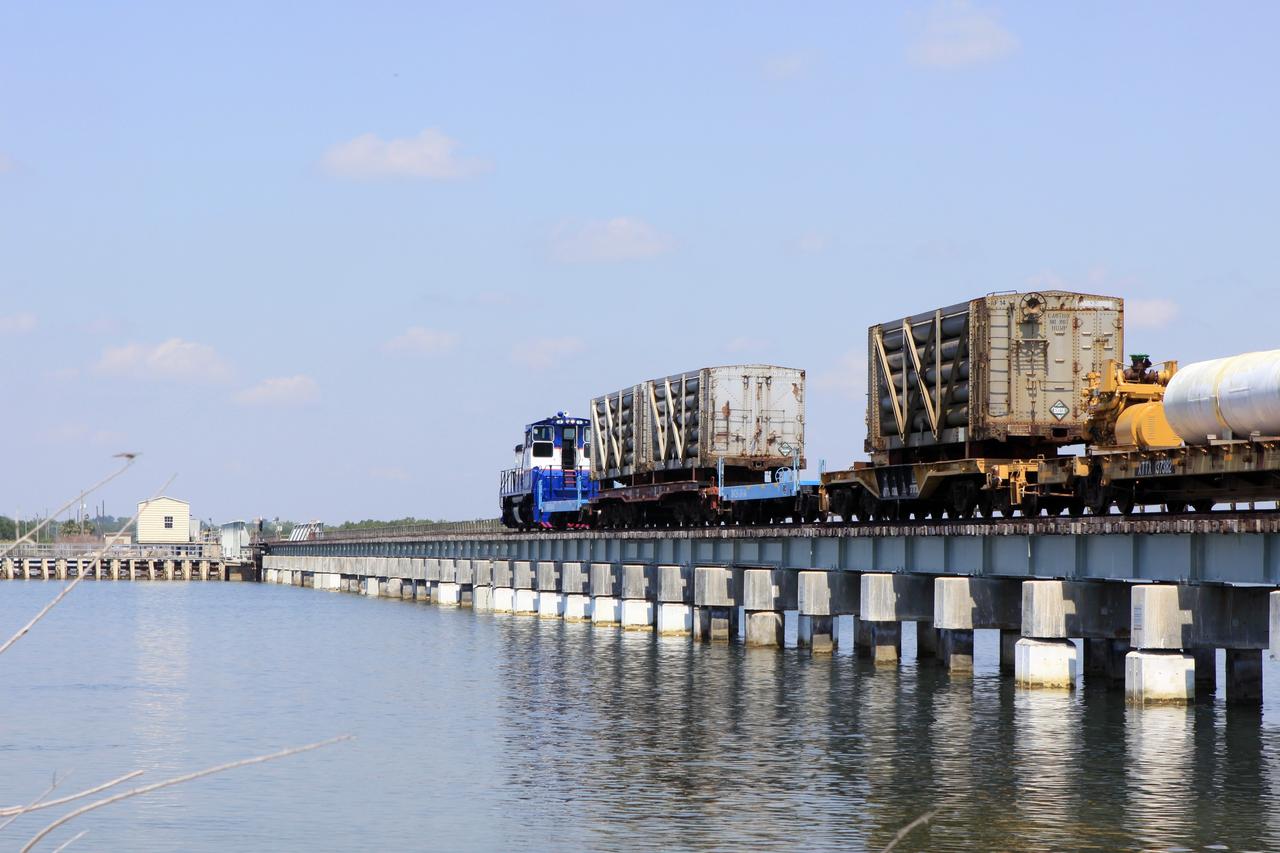
An Iowa Northern locomotive, contracted by Goodloe Transportation of Chicago, approaches the raised span of the NASA railroad bridge to continue over the Indian River north of Kennedy Space Center with two containers on railcars for storage at the NASA Jay Jay railroad yard. The containers held two pathfinders, or test versions, of solid rocket booster segments for NASA’s Space Launch System rocket that were delivered to the Rotation, Processing and Surge Facility (RPSF). Inside the RPSF, the Ground Systems Development and Operations Program and Jacobs Engineering, on the Test and Operations Support Contract, will conduct a series of lifts, moves and stacking operations using the booster segments, which are inert, to prepare for Exploration Mission-1, deep-space missions and the journey to Mars. The pathfinder booster segments are from Orbital ATK in Utah.
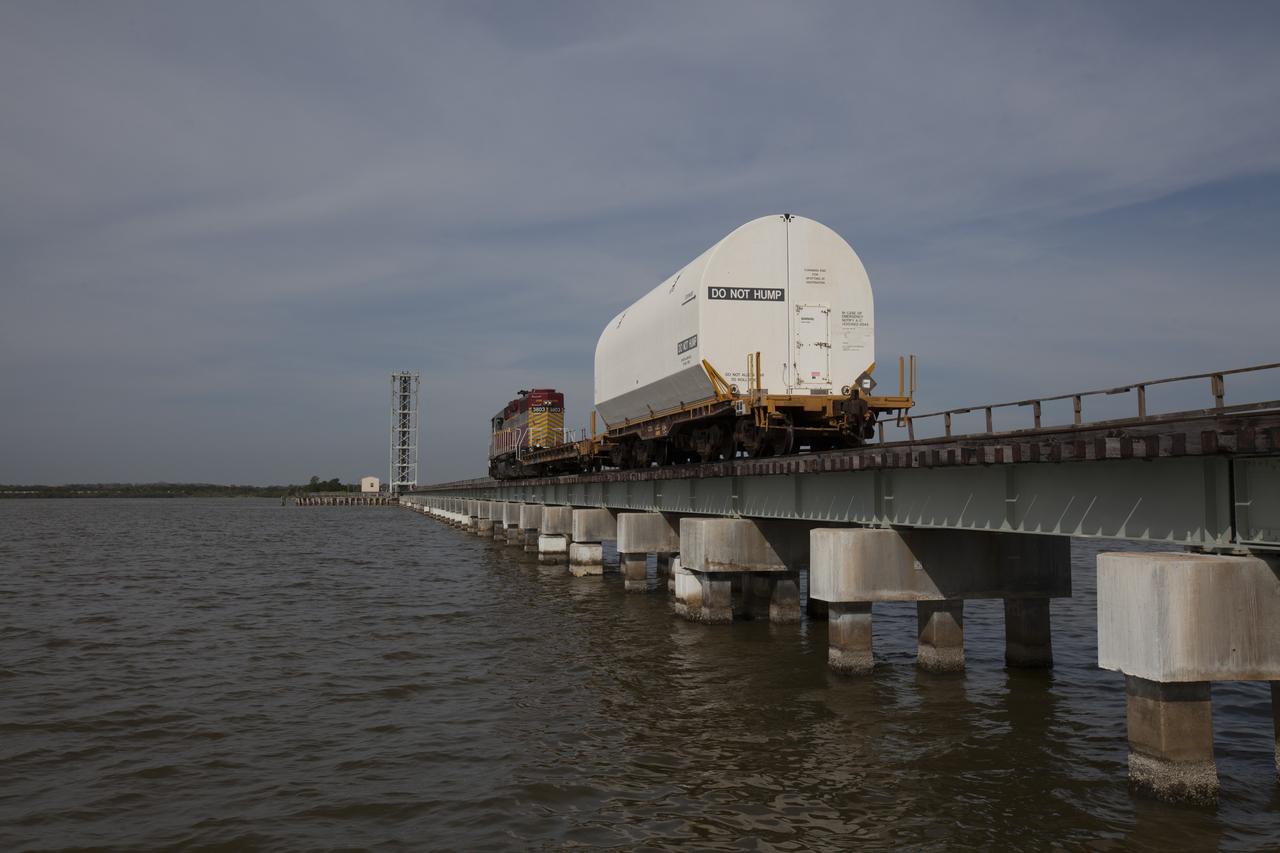
An Iowa Northern locomotive, conracted by Goodloe Transportation of Chicago, travels along the NASA railroad bridge over the Indian River north of Kennedy Space Center, with two containers on railcars for transport to the NASA Jay Jay railroad yard. The containers held two pathfinders, or test versions, of solid rocket booster segments for NASA’s Space Launch System rocket that were delivered to the Rotation, Processing and Surge Facility (RPSF). Inside the RPSF, the Ground Systems Development and Operations Program and Jacobs Engineering, on the Test and Operations Support Contract, will conduct a series of lifts, moves and stacking operations using the booster segments, which are inert, to prepare for Exploration Mission-1, deep-space missions and the journey to Mars. The pathfinder booster segments are from Orbital ATK in Utah.
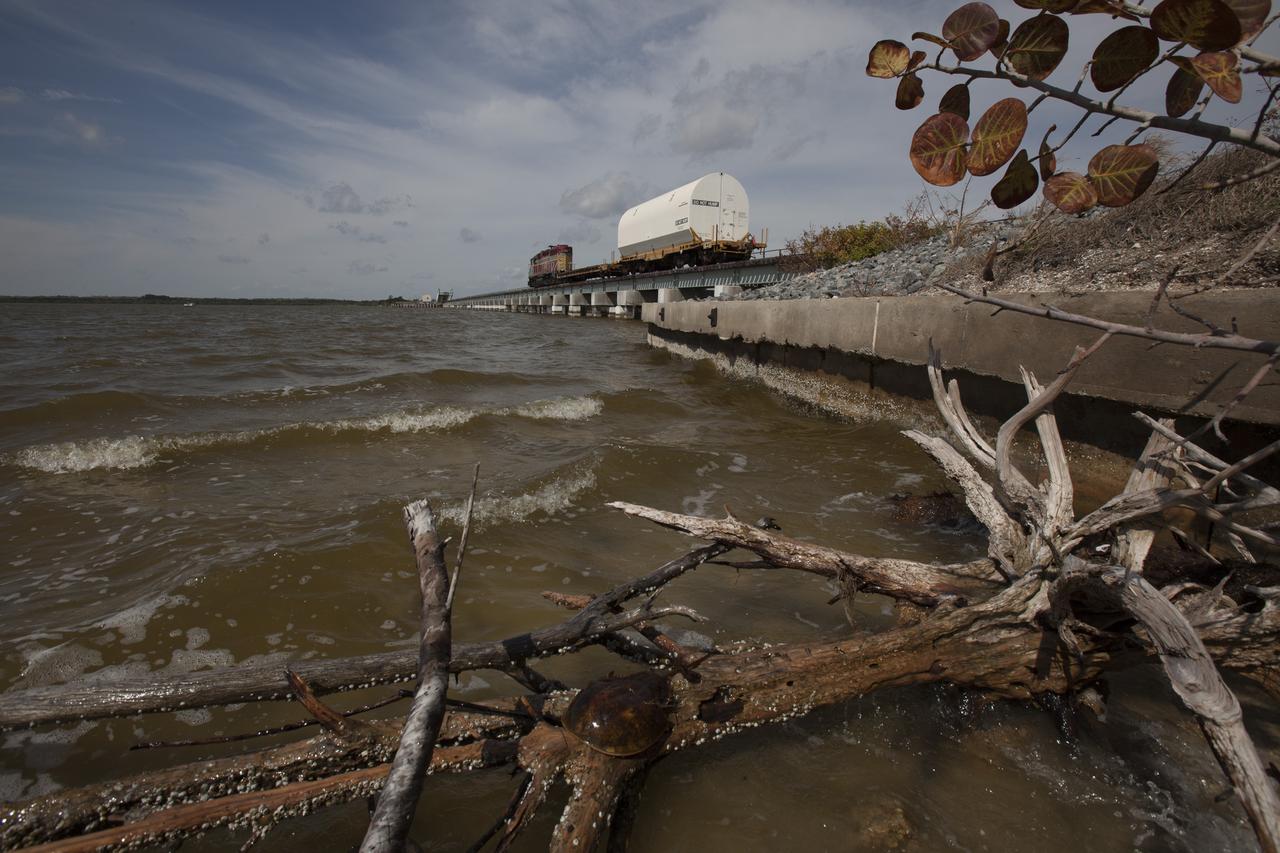
An Iowa Northern locomotive, contracted by Goodloe Transportation of Chicago, travels along the NASA railroad bridge over the Indian River north of Kennedy Space Center, carrying one of two containers on a railcar for transport to the NASA Jay Jay railroad yard near the center. The containers held two pathfinders, or test versions, of solid rocket booster segments for NASA’s Space Launch System rocket that were delivered to the Rotation, Processing and Surge Facility (RPSF). Inside the RPSF, the Ground Systems Development and Operations Program and Jacobs Engineering, on the Test and Operations Support Contract, will conduct a series of lifts, moves and stacking operations using the booster segments, which are inert, to prepare for Exploration Mission-1, deep-space missions and the journey to Mars. The pathfinder booster segments are from Orbital ATK in Utah.
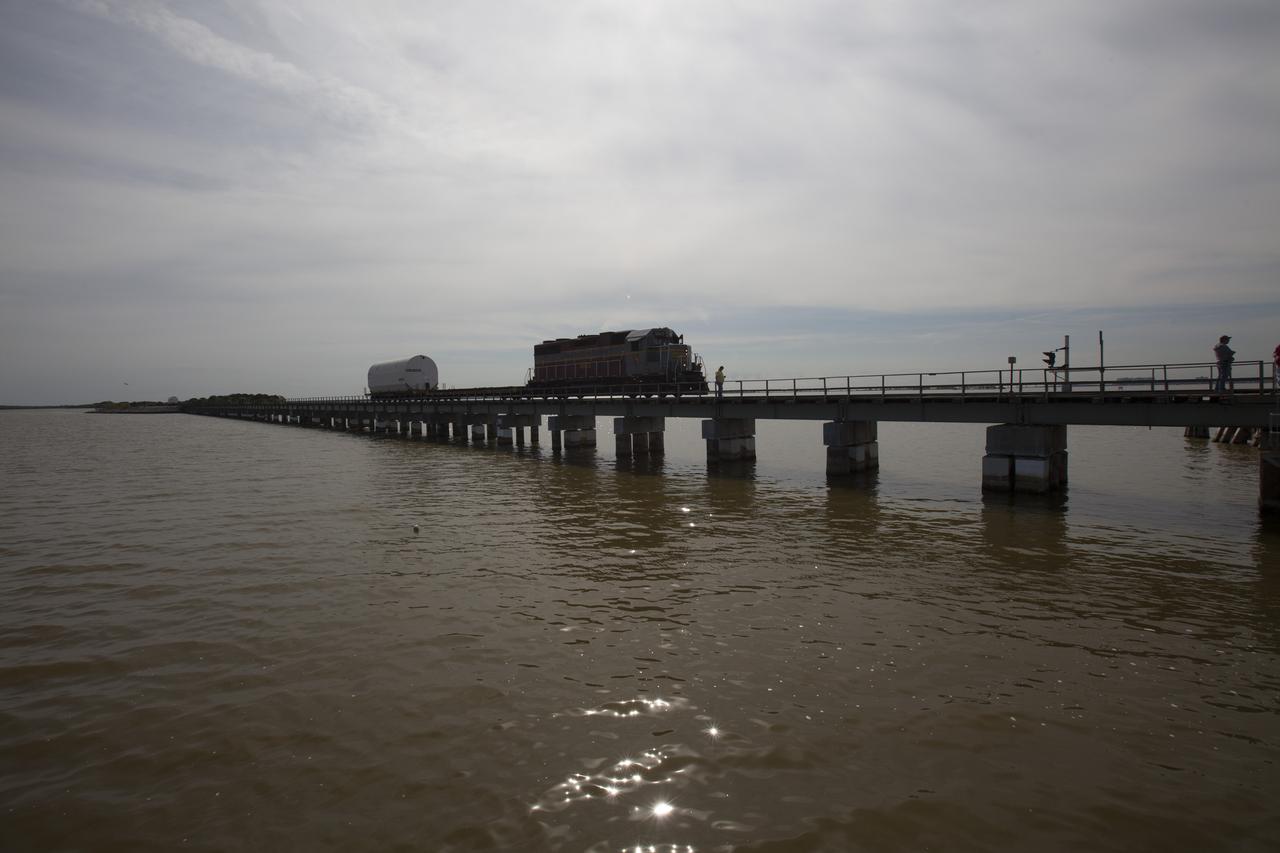
An Iowa Northern locomotive, contracted by Goodloe Transportation of Chicago, travels along the NASA railroad bridge over the Indian River north of Kennedy Space Center, carrying one of two containers on a railcar for transport to the NASA Jay Jay railroad yard. The containers held two pathfinders, or test versions, of solid rocket booster segments for NASA’s Space Launch System rocket that were delivered to the Rotation, Processing and Surge Facility (RPSF). Inside the RPSF, the Ground Systems Development and Operations Program and Jacobs Engineering, on the Test and Operations Support Contract, will conduct a series of lifts, moves and stacking operations using the booster segments, which are inert, to prepare for Exploration Mission-1, deep-space missions and the journey to Mars. The pathfinder booster segments are from Orbital ATK in Utah.

Roy D. Bridges Jr., KSC's next center director, at right, poses in the firing room of the Launch Control Center with two top contractor officials at Kennedy Space Center during the STS-82 launch of Discovery on the second Hubble Space Telescope servicing mission. From left, are Michael J. McCulley, vice president and associate program manager for ground operations for United Space Alliance at KSC; and Bruce Melnick, vice president of McDonnell Douglas Space and Defense Systems-KSC. Bridges is slated to become KSC's seventh center director on March 2, succeeding Jay F. Honeycutt
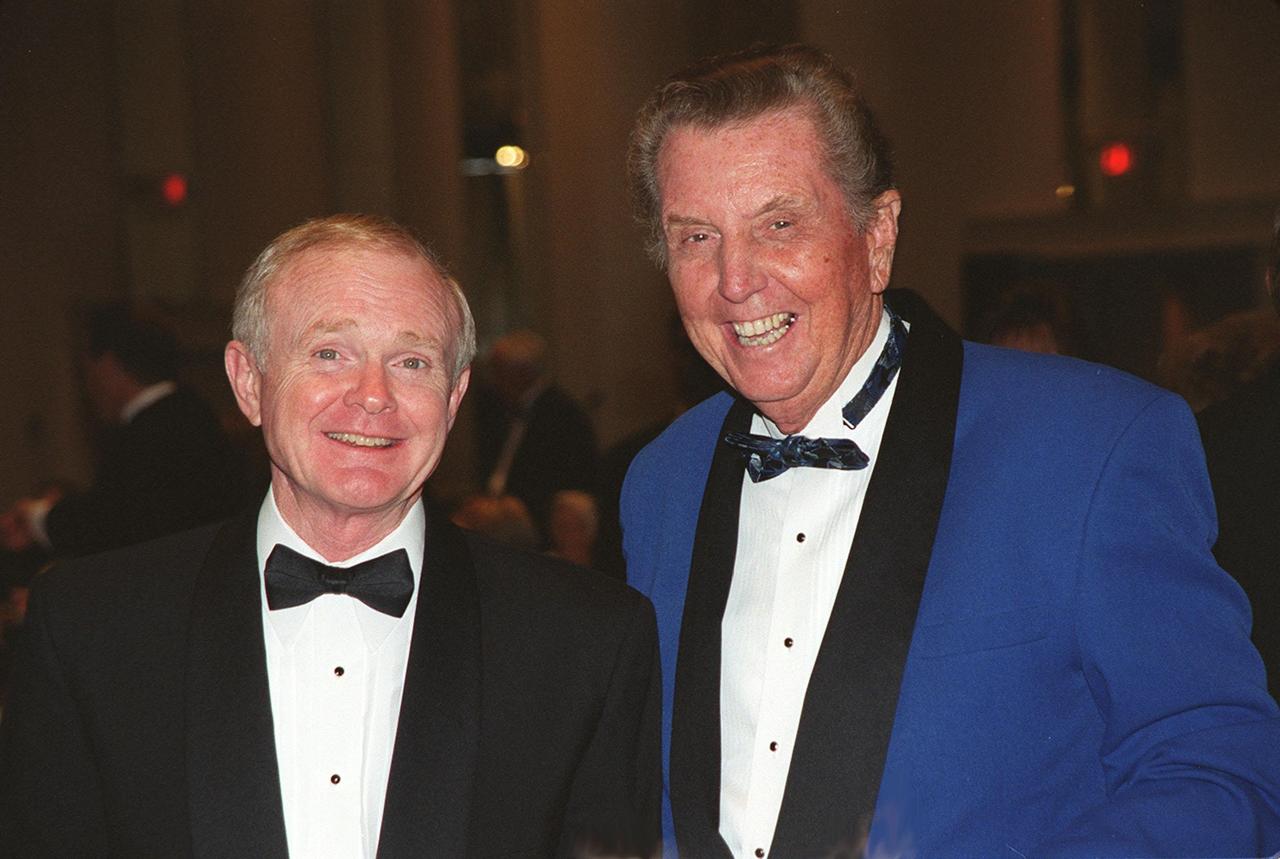
Posing for a photograph during the 50th anniversary gala capping a year-long celebration of 50 years of rocket launches from Cape Canaveral Air Force Station are Center Director Roy Bridges (left) and renowned NBC broadcaster, author and emcee Jay Barbree. The first launch at CCAFS took place at 9:28 a.m. on July 24, 1950, with the liftoff of Bumper 8 from Launch Complex 3. The gala was hosted by the Cape Canaveral Chapter Air Force Association
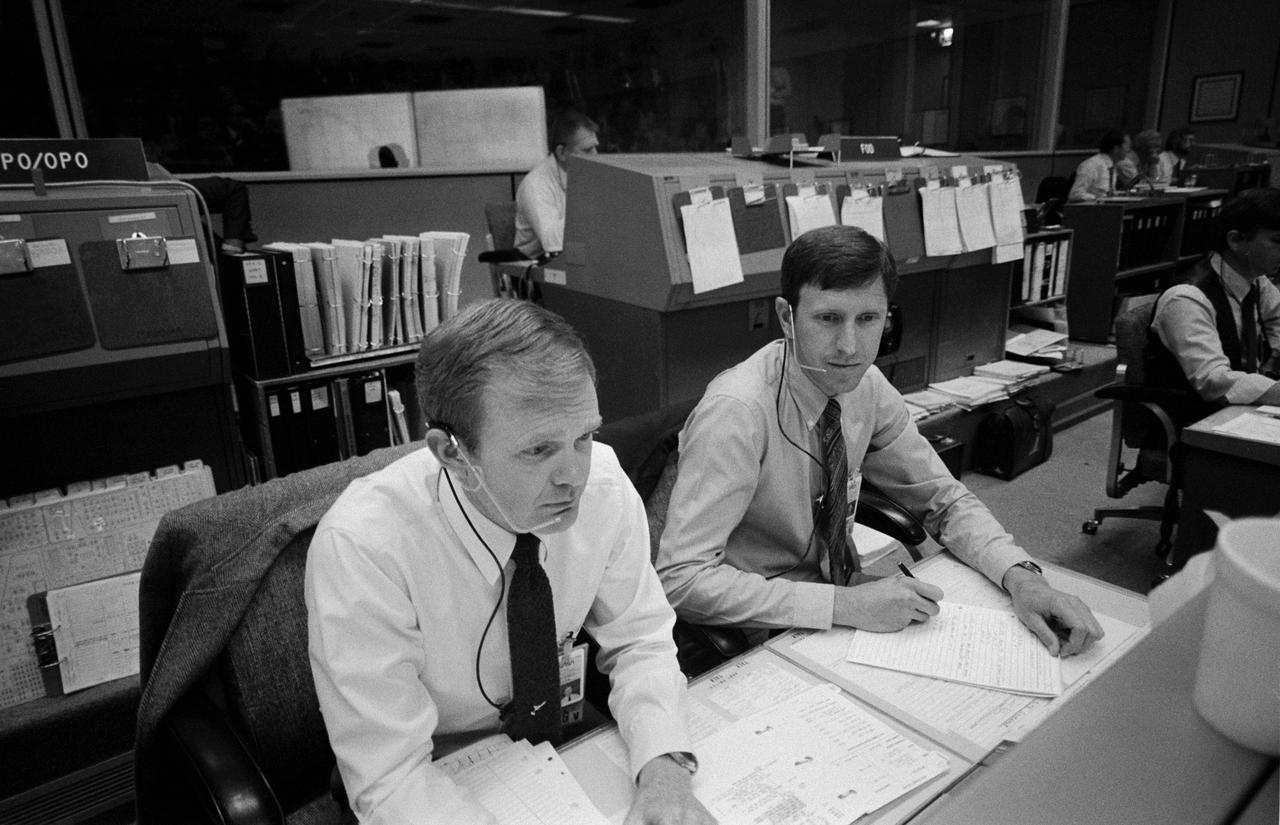
Astronauts Roy D. Bridges (left) and RIchard O. Covey serve as spacecraft communicators (CAPCOM) for STS-6. They are seated at the CAPCOM console in the mission operations control room (MOCR) of JSC's mission control center (30119); Flight Director Jay H. Greene communicates with a nearby flight controller in the MOCR just after launch of the Challenger (30120).
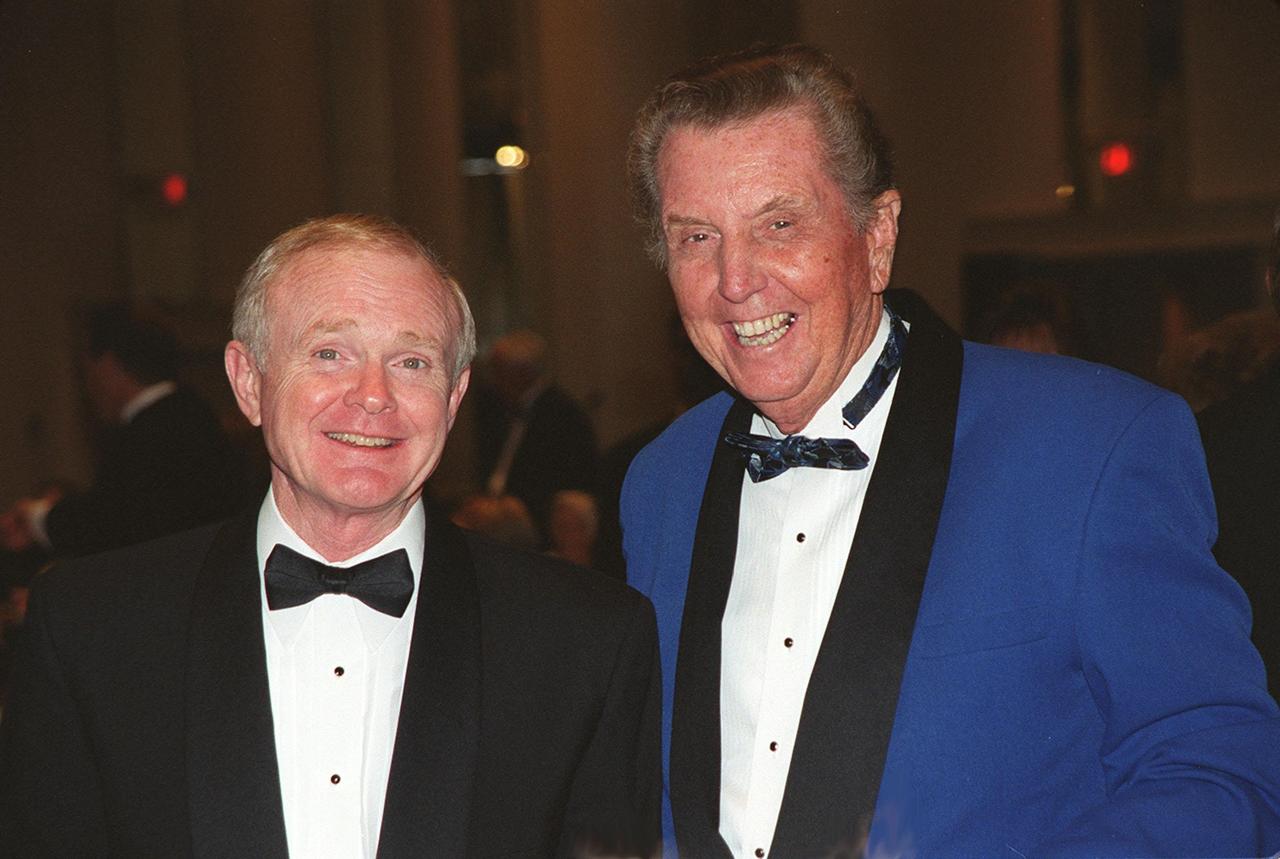
Posing for a photograph during the 50th anniversary gala capping a year-long celebration of 50 years of rocket launches from Cape Canaveral Air Force Station are Center Director Roy Bridges (left) and renowned NBC broadcaster, author and emcee Jay Barbree. The first launch at CCAFS took place at 9:28 a.m. on July 24, 1950, with the liftoff of Bumper 8 from Launch Complex 3. The gala was hosted by the Cape Canaveral Chapter Air Force Association
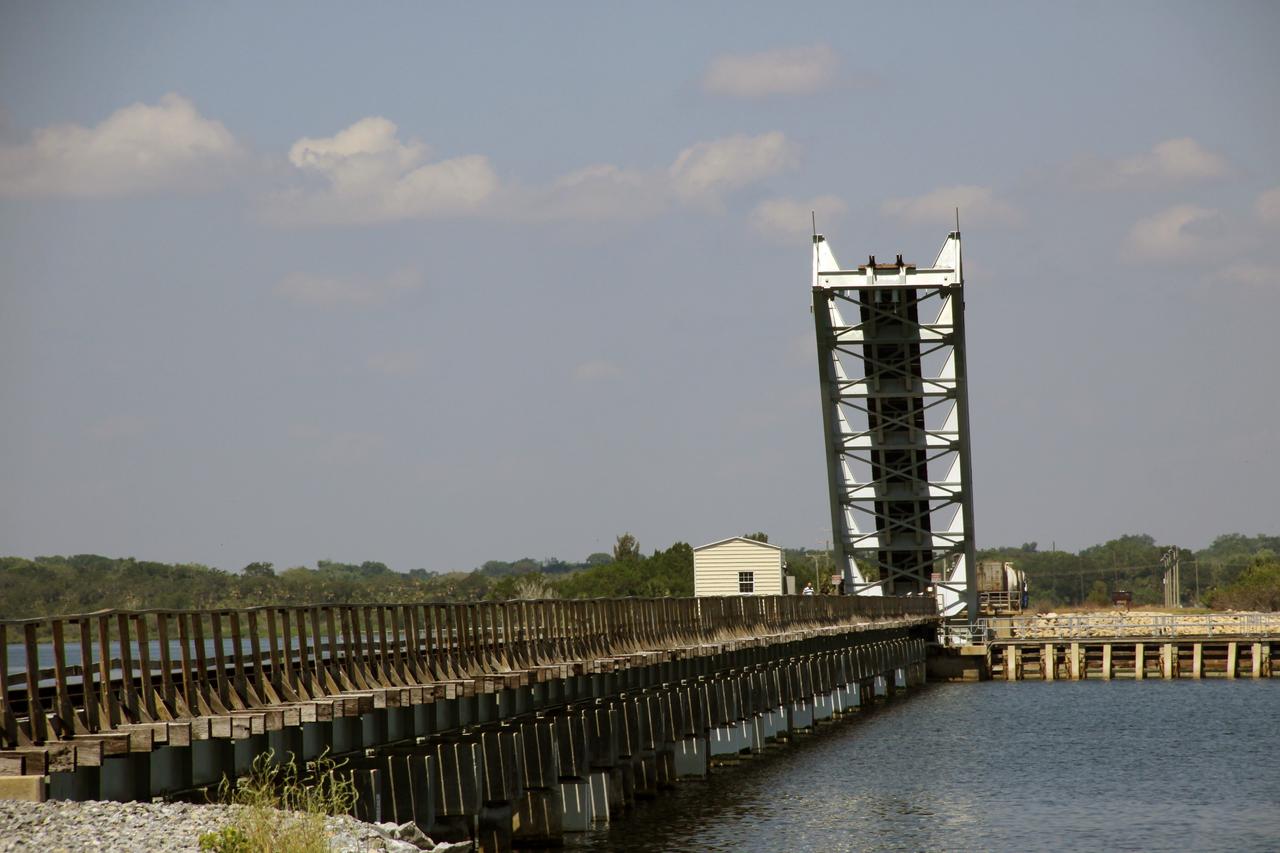
CAPE CANAVERAL, Fla. – The drawbridge span of the NASA Railroad’s Jay Jay Railroad Bridge over the Indian River north of Launch Complex 39 at NASA’s Kennedy Space Center in Florida is reopened following the passage of a NASA Railroad train. The permanent configuration of the bridge is open the span is lowered only for a train to cross. The railroad cars were needed in support of the Space Shuttle Program but currently are not in use by NASA following the completion of the program in 2011. Originally, the tankers belonged to the U.S. Bureau of Mines. At the peak of the shuttle program, there were approximately 30 cars in the fleet. About half the cars were returned to the bureau as launch activity diminished. Five tank cars are being loaned to SpaceX and repurposed to support their engine tests in Texas. Eight cars previously were shipped to California on loan to support the SpaceX Falcon 9 rocket launches from Space Launch Complex-4 on Vandenberg Air Force Base. SpaceX already has three helium tank cars previously used for the shuttle program at Space Launch Complex-40 on Cape Canaveral Air Force Station in Florida. For more information, visit http://www.nasa.gov/spacex. Photo credit: NASA/Jim Grossmann

From left, Center Director Roy Bridges and NASA Administrator Daniel S. Goldin applaud as Jay Holliman, with the help of his mother, Mrs. Dianne Holliman, unveils a plaque honoring his father, the late John Holliman. At right is Tom Johnson, news group chairman of CNN. The occasion was the dedication of the KSC Press Site auditorium as the John Holliman Auditorium to honor the CNN national correspondent for his enthusiastic, dedicated coverage of America's space program. The auditorium was built in 1980 and has been the focal point for new coverage of Space Shuttle launches. The ceremony followed the 94th launch of a Space Shuttle, on mission STS-96, earlier this morning
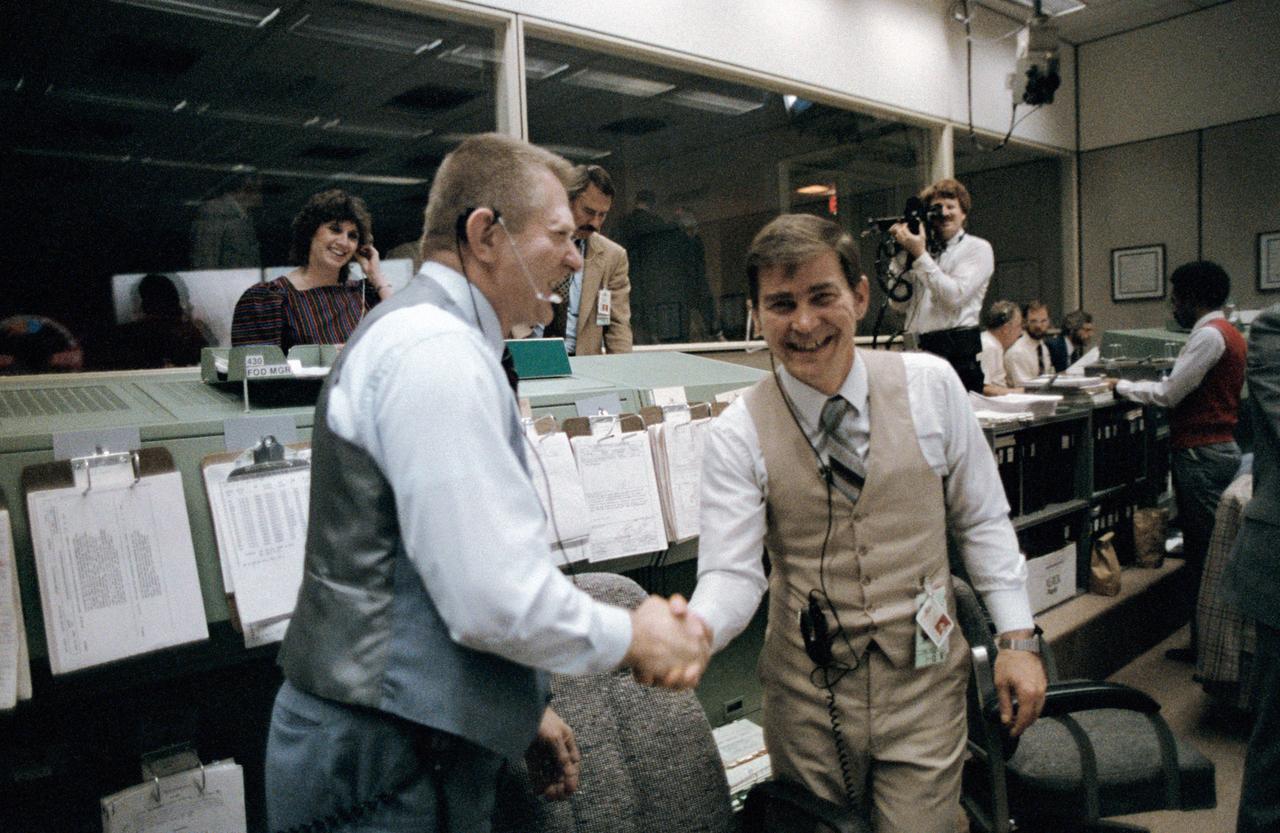
Various views of STS-6 MOCR activities during Day-5 with Vice-Pres. George Bush, Cap Communicator Bridges, JSC Director Gerald Griffin, Eugene F. Kranz, NASA Admin. James M. Beggs, Cap Com Astronaut O'Connor, Flight Directors Jay H. Greene, Gary E. Coen, and Harold Draughon. 1. BUSH, GEORGE, VICE-PRES. - STS-6 MOCR 2. DIR. GRIFFIN, GERALD D. - STS-6 MOCR 3. ADMIN. BEGGS, JAMES M. - STS-6 MOCR 4. FLT. DIRECTORS - STS-6 JSC, HOUSTON, TX Also available in 35 CN
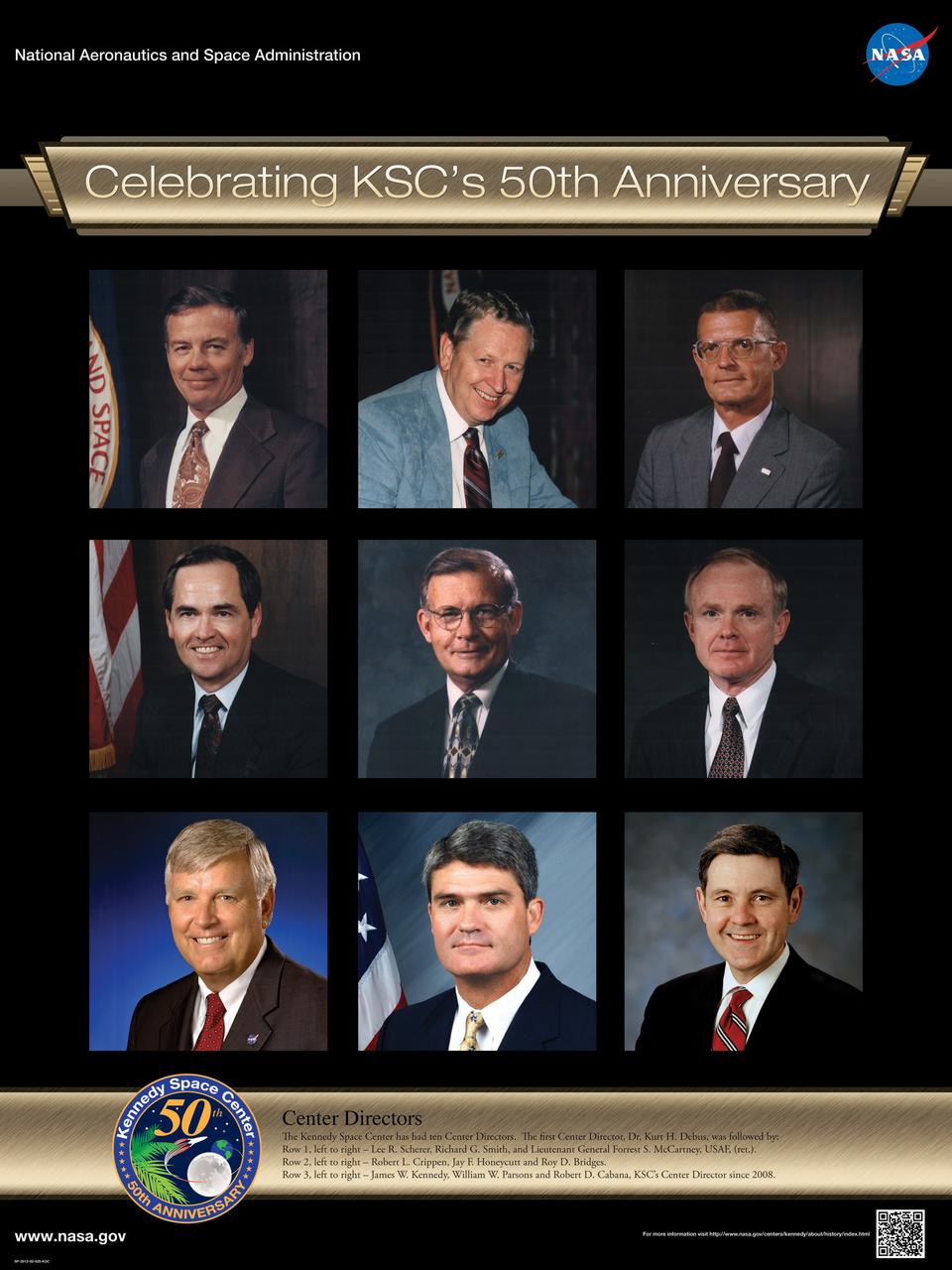
Center Directors: The Kennedy Space Center has had ten Center Directors. The first Center Director, Dr. Kurt H. Debus, was followed by: Row 1, left to right – Lee R. Scherer, Richard G. Smith, and Lieutenant General Forrest S. McCartney, USAF, ret.. Row 2, left to right – Robert L. Crippen, Jay F. Honeycutt and Roy D. Bridges. Row 3, left to right – James W. Kennedy, William W. Parsons and Robert D. Cabana, KSC’s Center Director since 2008. Poster designed by Kennedy Space Center Graphics Department/Greg Lee. Credit: NASA
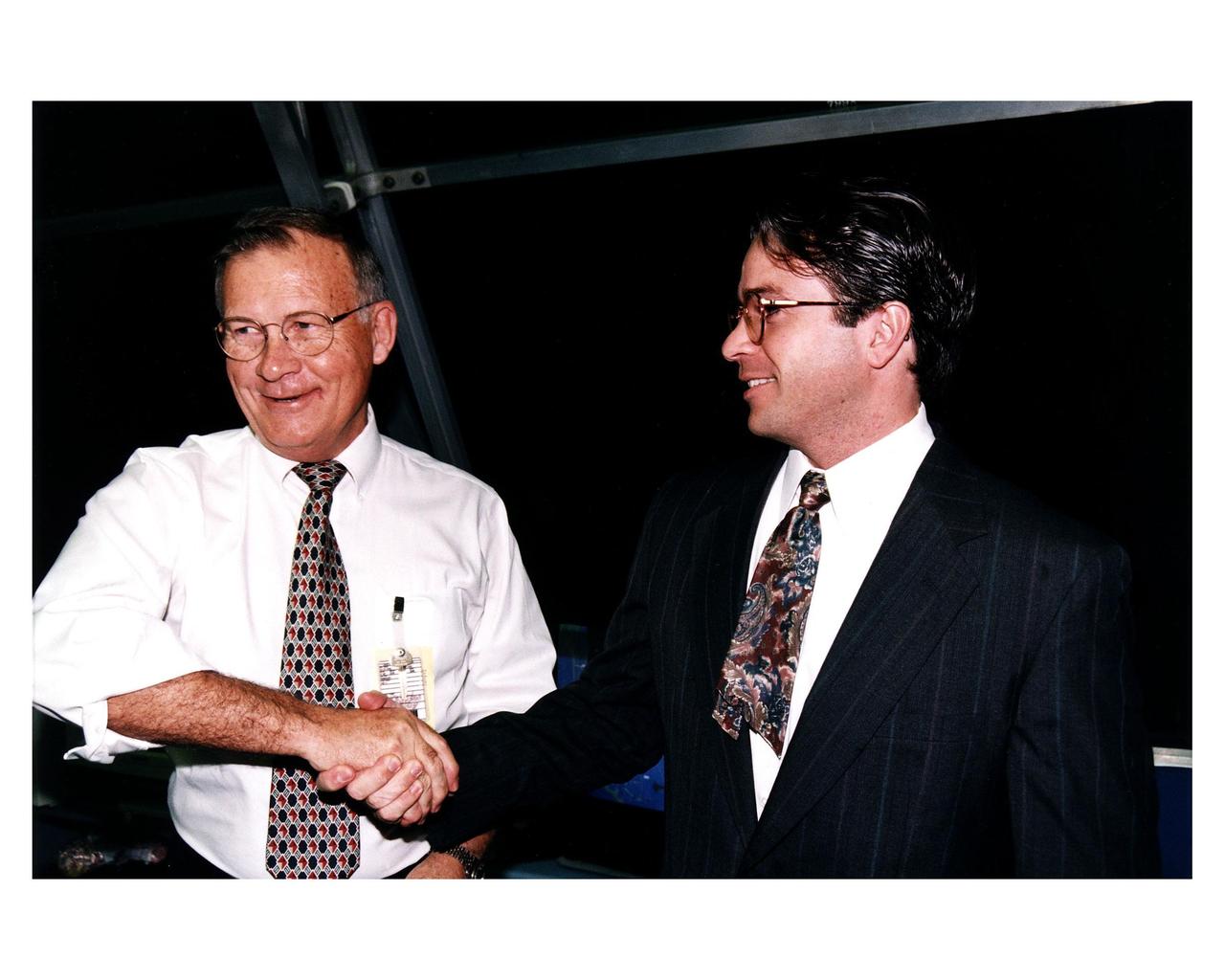
KSC Center Director Jay F. Honeycutt, at left, shakes hands with Scott Cilento, the new flow director of the Space Shuttle orbiter Discovery, in the firing room of the Launch Control Center (LCC) during the STS-82 launch of Discovery on the second Hubble Space Telescope servicing mission. This is Cilento's first launch as Discovery's flow director and Honeycutt's last launch as center director. Honeycutt plans to retire and will be succeeded by Roy D. Bridges Jr. on March 2, 1997. Cilento only has half a tie because Honeycutt just cut it, upholding the LCC tradition of cutting the tie of the person performing in a new role for the first time
![Center Directors: Kennedy Space Center Directors around KSC – 1st row, left to right, Richard Smith [center] Bob Cabana [at the podium] Jay Honeycutt [far right]. 2nd row, left to right, Bob Crippen [left] Jim Kennedy Lieutenant General Forrest S. McCartney, USAF, ret. [far left]. 3rd row, left to right, Bill Parsons [far right] Lee Scherer Roy Bridges [2nd from right]. Poster designed by Kennedy Space Center Graphics Department/Greg Lee. Credit: NASA](https://images-assets.nasa.gov/image/KSC-2012-1848/KSC-2012-1848~medium.jpg)
Center Directors: Kennedy Space Center Directors around KSC – 1st row, left to right, Richard Smith [center] Bob Cabana [at the podium] Jay Honeycutt [far right]. 2nd row, left to right, Bob Crippen [left] Jim Kennedy Lieutenant General Forrest S. McCartney, USAF, ret. [far left]. 3rd row, left to right, Bill Parsons [far right] Lee Scherer Roy Bridges [2nd from right]. Poster designed by Kennedy Space Center Graphics Department/Greg Lee. Credit: NASA
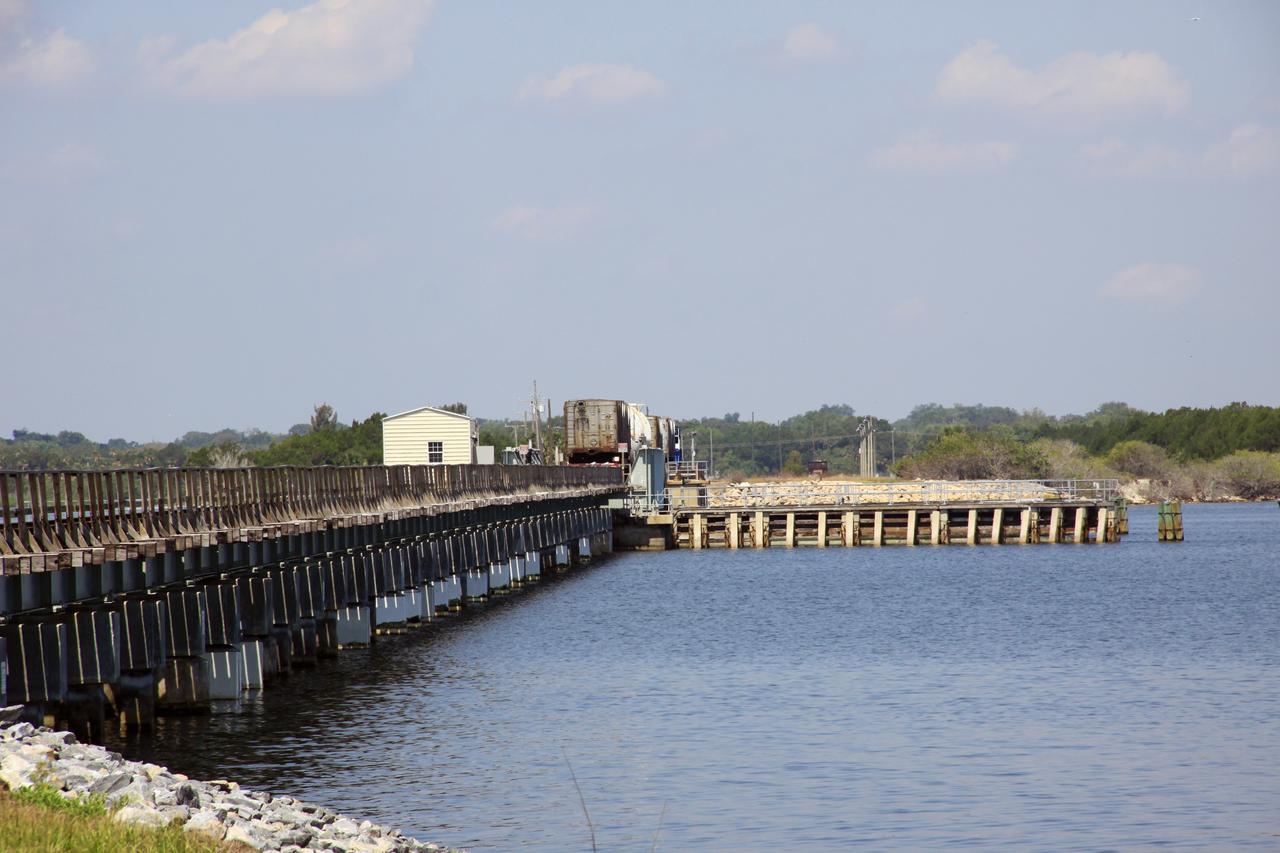
CAPE CANAVERAL, Fla. – A NASA Railroad train has crossed the Indian River on the railroad’s Jay Jay Railroad Bridge north of Launch Complex 39 at NASA’s Kennedy Space Center in Florida. The train is on its way to the Florida East Coast Railway interchange in Titusville, Fla., where the train’s helium tank cars, a liquid oxygen tank car, and a liquid hydrogen dewar or tank car will be transferred for delivery to the SpaceX engine test complex outside McGregor, Texas. The railroad cars were needed in support of the Space Shuttle Program but currently are not in use by NASA following the completion of the program in 2011. Originally, the tankers belonged to the U.S. Bureau of Mines. At the peak of the shuttle program, there were approximately 30 cars in the fleet. About half the cars were returned to the bureau as launch activity diminished. Five tank cars are being loaned to SpaceX and repurposed to support their engine tests in Texas. Eight cars previously were shipped to California on loan to support the SpaceX Falcon 9 rocket launches from Space Launch Complex-4 on Vandenberg Air Force Base. SpaceX already has three helium tank cars previously used for the shuttle program at Space Launch Complex-40 on Cape Canaveral Air Force Station in Florida. For more information, visit http://www.nasa.gov/spacex. Photo credit: NASA/Jim Grossmann
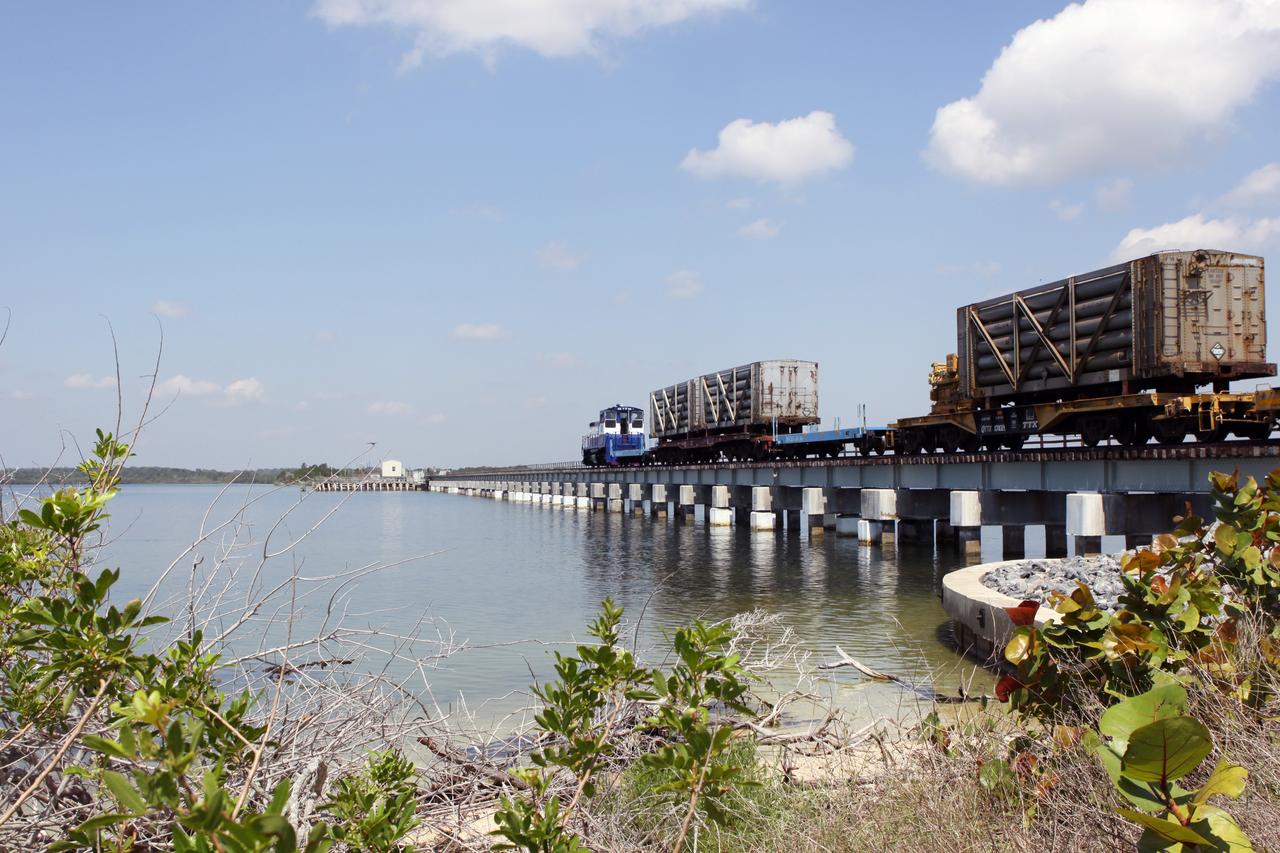
CAPE CANAVERAL, Fla. – A NASA Railroad train crosses the railroad’s Jay Jay Railroad Bridge north of Launch Complex 39 at NASA’s Kennedy Space Center in Florida. The train is on its way to the Florida East Coast Railway interchange in Titusville, Fla., where the train’s helium tank cars, a liquid oxygen tank car, and a liquid hydrogen dewar or tank car will be transferred for delivery to the SpaceX engine test complex outside McGregor, Texas. The railroad cars were needed in support of the Space Shuttle Program but currently are not in use by NASA following the completion of the program in 2011. Originally, the tankers belonged to the U.S. Bureau of Mines. At the peak of the shuttle program, there were approximately 30 cars in the fleet. About half the cars were returned to the bureau as launch activity diminished. Five tank cars are being loaned to SpaceX and repurposed to support their engine tests in Texas. Eight cars previously were shipped to California on loan to support the SpaceX Falcon 9 rocket launches from Space Launch Complex-4 on Vandenberg Air Force Base. SpaceX already has three helium tank cars previously used for the shuttle program at Space Launch Complex-40 on Cape Canaveral Air Force Station in Florida. For more information, visit http://www.nasa.gov/spacex. Photo credit: NASA/Jim Grossmann
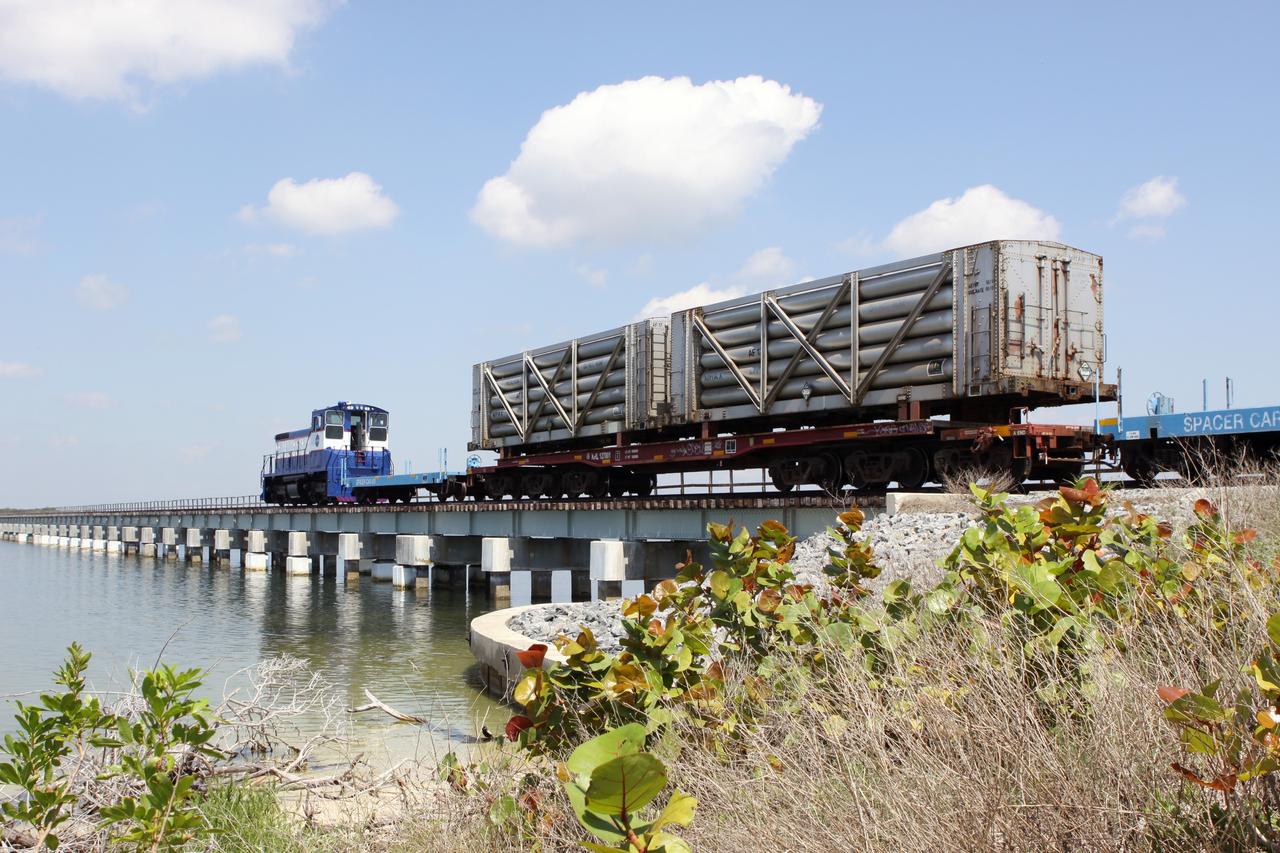
CAPE CANAVERAL, Fla. – A NASA Railroad train crosses the railroad’s Jay Jay Railroad Bridge north of Launch Complex 39 at NASA’s Kennedy Space Center in Florida. The train is on its way to the Florida East Coast Railway interchange in Titusville, Fla., where the train’s helium tank cars, a liquid oxygen tank car, and a liquid hydrogen dewar or tank car will be transferred for delivery to the SpaceX engine test complex outside McGregor, Texas. The railroad cars were needed in support of the Space Shuttle Program but currently are not in use by NASA following the completion of the program in 2011. Originally, the tankers belonged to the U.S. Bureau of Mines. At the peak of the shuttle program, there were approximately 30 cars in the fleet. About half the cars were returned to the bureau as launch activity diminished. Five tank cars are being loaned to SpaceX and repurposed to support their engine tests in Texas. Eight cars previously were shipped to California on loan to support the SpaceX Falcon 9 rocket launches from Space Launch Complex-4 on Vandenberg Air Force Base. SpaceX already has three helium tank cars previously used for the shuttle program at Space Launch Complex-40 on Cape Canaveral Air Force Station in Florida. For more information, visit http://www.nasa.gov/spacex. Photo credit: NASA/Jim Grossmann
CAPE CANAVERAL, Fla. – A NASA Railroad train crosses the railroad’s Jay Jay Railroad Bridge north of Launch Complex 39 at NASA’s Kennedy Space Center in Florida. The train is on its way to the Florida East Coast Railway interchange in Titusville, Fla., where the train’s helium tank cars, a liquid oxygen tank car, and a liquid hydrogen dewar or tank car will be transferred for delivery to the SpaceX engine test complex outside McGregor, Texas. The railroad cars were needed in support of the Space Shuttle Program but currently are not in use by NASA following the completion of the program in 2011. Originally, the tankers belonged to the U.S. Bureau of Mines. At the peak of the shuttle program, there were approximately 30 cars in the fleet. About half the cars were returned to the bureau as launch activity diminished. Five tank cars are being loaned to SpaceX and repurposed to support their engine tests in Texas. Eight cars previously were shipped to California on loan to support the SpaceX Falcon 9 rocket launches from Space Launch Complex-4 on Vandenberg Air Force Base. SpaceX already has three helium tank cars previously used for the shuttle program at Space Launch Complex-40 on Cape Canaveral Air Force Station in Florida. For more information, visit http://www.nasa.gov/spacex. Photo credit: NASA/Jim Grossmann
CAPE CANAVERAL, Fla. – A NASA Railroad train crosses the railroad’s Jay Jay Railroad Bridge north of Launch Complex 39 at NASA’s Kennedy Space Center in Florida. The train is on its way to the Florida East Coast Railway interchange in Titusville, Fla., where the train’s helium tank cars, a liquid oxygen tank car, and a liquid hydrogen dewar or tank car will be transferred for delivery to the SpaceX engine test complex outside McGregor, Texas. The railroad cars were needed in support of the Space Shuttle Program but currently are not in use by NASA following the completion of the program in 2011. Originally, the tankers belonged to the U.S. Bureau of Mines. At the peak of the shuttle program, there were approximately 30 cars in the fleet. About half the cars were returned to the bureau as launch activity diminished. Five tank cars are being loaned to SpaceX and repurposed to support their engine tests in Texas. Eight cars previously were shipped to California on loan to support the SpaceX Falcon 9 rocket launches from Space Launch Complex-4 on Vandenberg Air Force Base. SpaceX already has three helium tank cars previously used for the shuttle program at Space Launch Complex-40 on Cape Canaveral Air Force Station in Florida. For more information, visit http://www.nasa.gov/spacex. Photo credit: NASA/Jim Grossmann
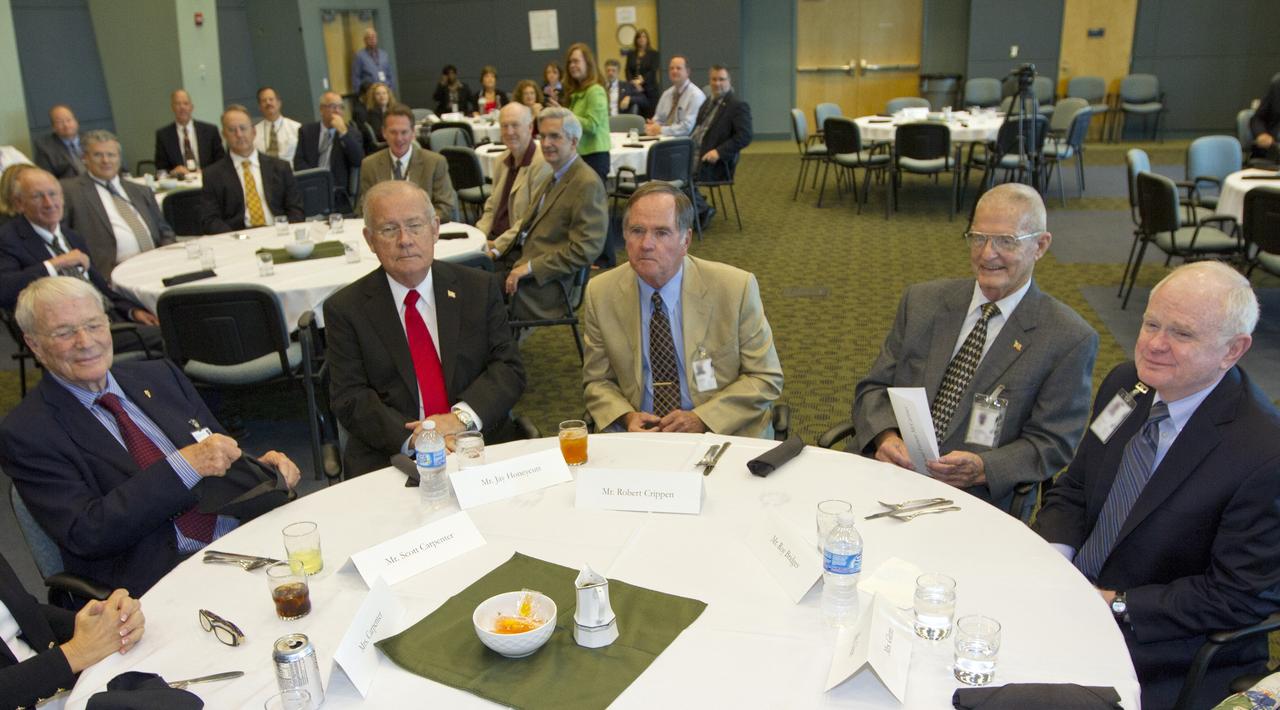
CAPE CANAVERAL, Fla. - Former Mercury astronaut Scott Carpenter, left, and former Kennedy Space Center directors Jay Honeycutt, Bob Crippen, Forrest McCartney and Roy Bridges listen during a luncheon Feb. 17, 2012, celebrating 50 years of Americans in orbit, an era which began with Glenn's Mercury mission MA-6, on Feb. 20, 1962. Glenn's launch aboard an Atlas rocket took with it the hopes of an entire nation and ushered in a new era of space travel that eventually led to Americans walking on the moon by the end of the 1960s. Glenn soon was followed into orbit by Scott Carpenter, Walter Schirra and Gordon Cooper. Their fellow Mercury astronauts Alan Shepard and Virgil "Gus" Grissom flew earlier suborbital flights. Deke Slayton, a member of NASA's original Mercury 7 astronauts, was grounded by a medical condition until the Apollo-Soyuz Test Project in 1975. Photo credit: NASA/Kim Shiflett
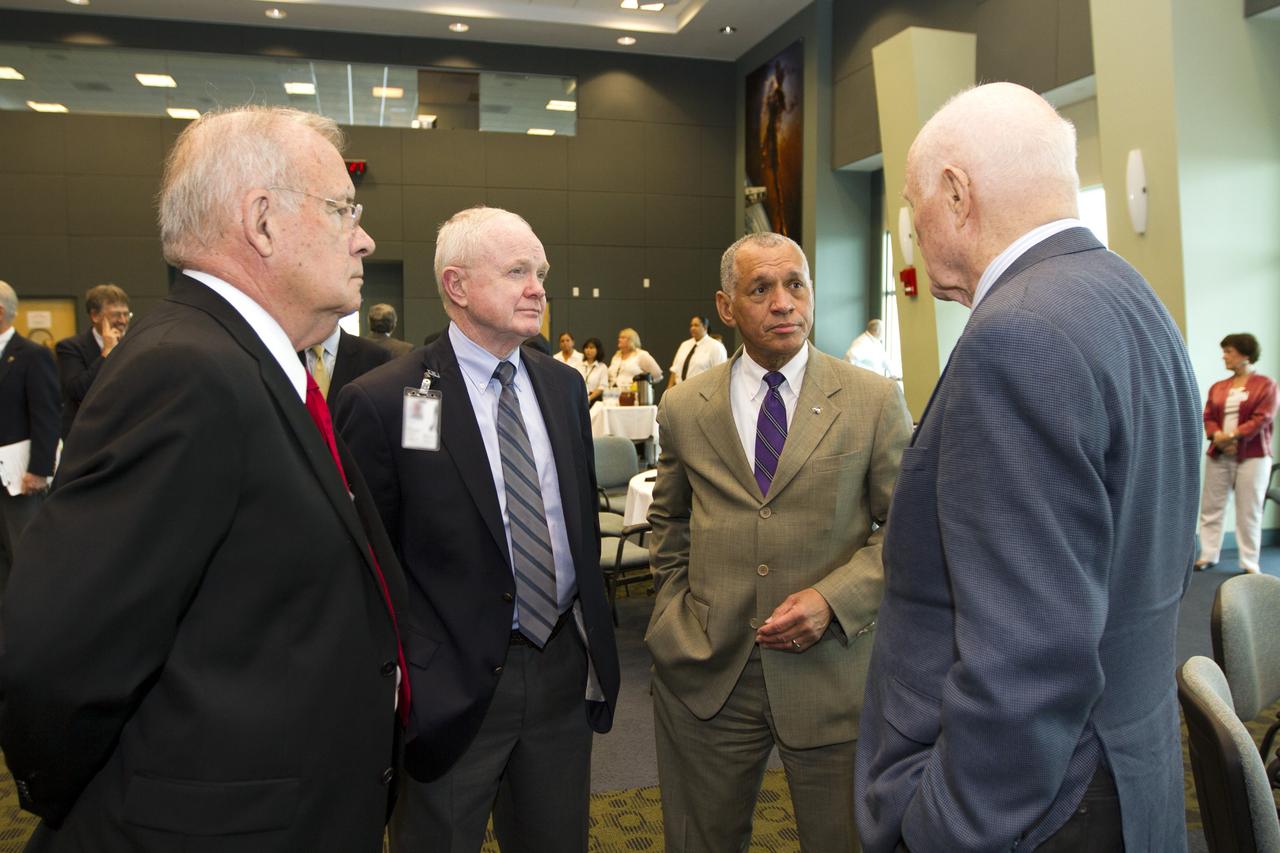
CAPE CANAVERAL, Fla. - Former Kennedy Space Center directors Jay Honeycutt, left, Roy Bridges and NASA Administrator Charles Bolden talk with astronaut John Glenn before a luncheon Feb. 17, 2012 celebrating 50 years of Americans in orbit, an era which began with Glenn's Mercury mission MA-6, on Feb. 20, 1962. Glenn's launch aboard an Atlas rocket took with it the hopes of an entire nation and ushered in a new era of space travel that eventually led to Americans walking on the moon by the end of the 1960s. Glenn soon was followed into orbit by Scott Carpenter, Walter Schirra and Gordon Cooper. Their fellow Mercury astronauts Alan Shepard and Virgil "Gus" Grissom flew earlier suborbital flights. Deke Slayton, a member of NASA's original Mercury 7 astronauts, was grounded by a medical condition until the Apollo-Soyuz Test Project in 1975. Photo credit: NASA/Kim Shiflett
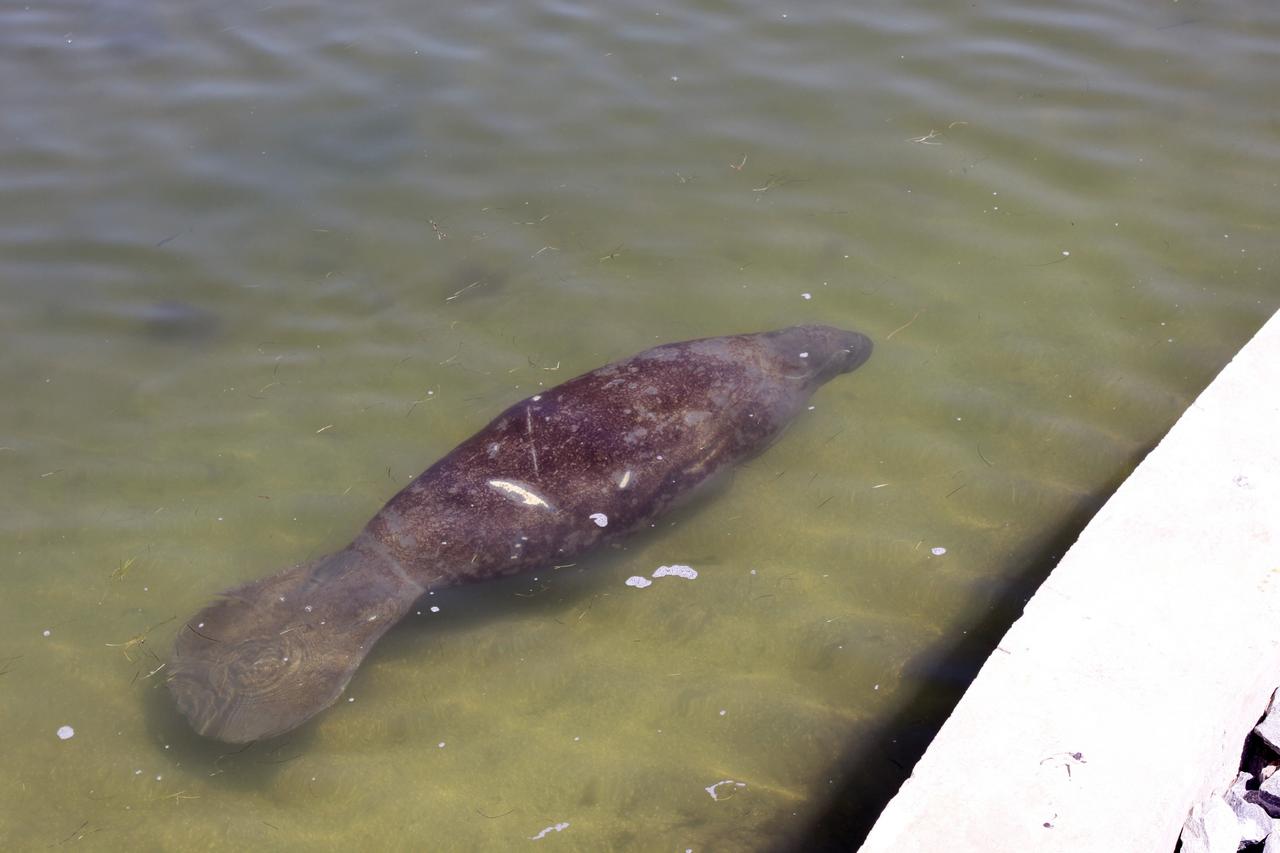
CAPE CANAVERAL, Fla. – A manatee relaxes in the Indian River near the NASA Railroad’s Jay Jay Railroad Bridge north of Launch Complex 39 at NASA’s Kennedy Space Center in Florida. The manatee was spotted by a cameraman on hand to photograph a NASA Railroad train on its way to the Florida East Coast Railway interchange in Titusville, Fla., where the train’s helium tank cars, a liquid oxygen tank car, and a liquid hydrogen dewar or tank car will be transferred for delivery to the SpaceX engine test complex outside McGregor, Texas. The railroad cars were needed in support of the Space Shuttle Program but currently are not in use by NASA following the completion of the program in 2011. Originally, the tankers belonged to the U.S. Bureau of Mines. At the peak of the shuttle program, there were approximately 30 cars in the fleet. About half the cars were returned to the bureau as launch activity diminished. Five tank cars are being loaned to SpaceX and repurposed to support their engine tests in Texas. Eight cars previously were shipped to California on loan to support the SpaceX Falcon 9 rocket launches from Space Launch Complex-4 on Vandenberg Air Force Base. SpaceX already has three helium tank cars previously used for the shuttle program at Space Launch Complex-40 on Cape Canaveral Air Force Station in Florida. For more information, visit http://www.nasa.gov/spacex. Photo credit: NASA/Jim Grossmann
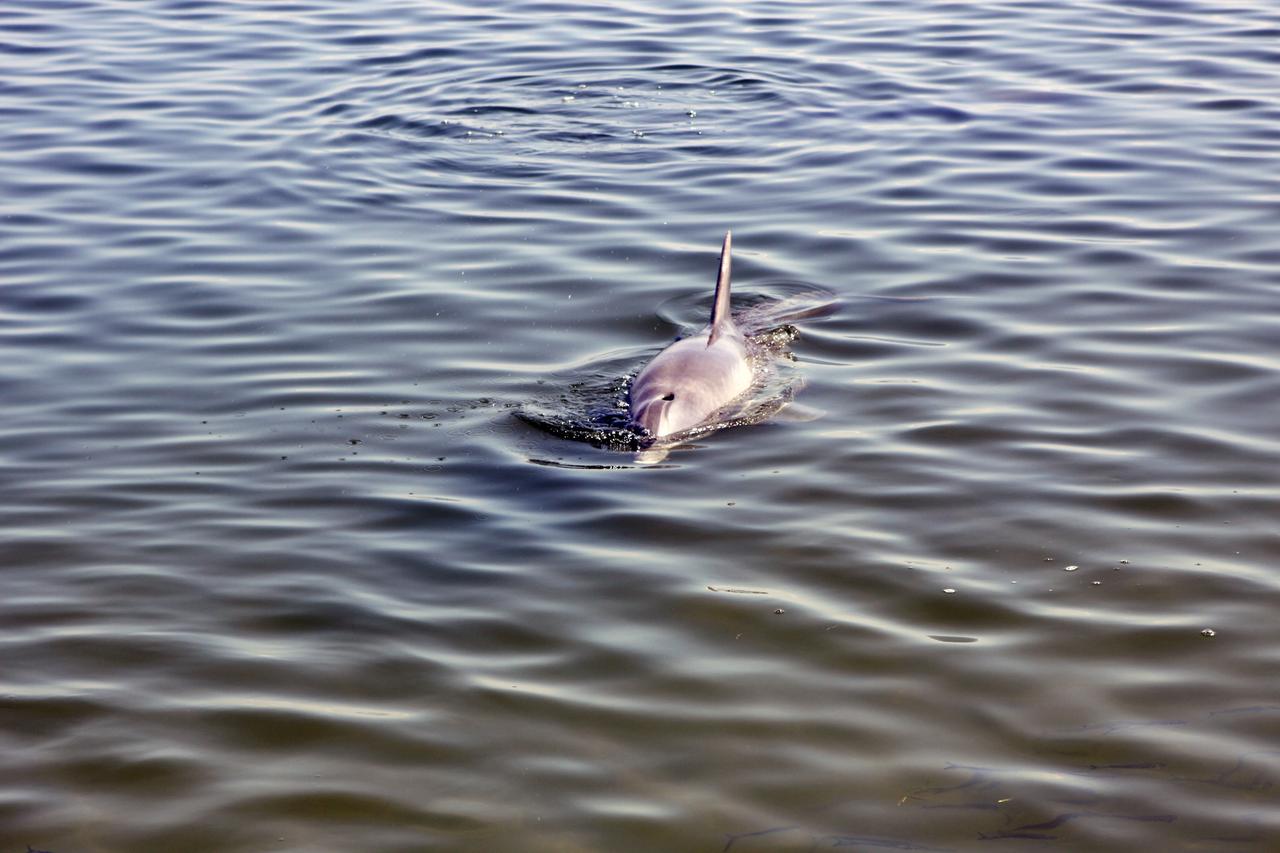
CAPE CANAVERAL, Fla. – Bubbles form around a dolphin splashing in the Indian River near the NASA Railroad’s Jay Jay Railroad Bridge north of Launch Complex 39 at NASA’s Kennedy Space Center in Florida. The dolphin was spotted by a cameraman on hand to photograph a NASA Railroad train on its way to the Florida East Coast Railway interchange in Titusville, Fla., where the train’s helium tank cars, a liquid oxygen tank car, and a liquid hydrogen dewar or tank car will be transferred for delivery to the SpaceX engine test complex outside McGregor, Texas. The railroad cars were needed in support of the Space Shuttle Program but currently are not in use by NASA following the completion of the program in 2011. Originally, the tankers belonged to the U.S. Bureau of Mines. At the peak of the shuttle program, there were approximately 30 cars in the fleet. About half the cars were returned to the bureau as launch activity diminished. Five tank cars are being loaned to SpaceX and repurposed to support their engine tests in Texas. Eight cars previously were shipped to California on loan to support the SpaceX Falcon 9 rocket launches from Space Launch Complex-4 on Vandenberg Air Force Base. SpaceX already has three helium tank cars previously used for the shuttle program at Space Launch Complex-40 on Cape Canaveral Air Force Station in Florida. For more information, visit http://www.nasa.gov/spacex. Photo credit: NASA/Jim Grossmann
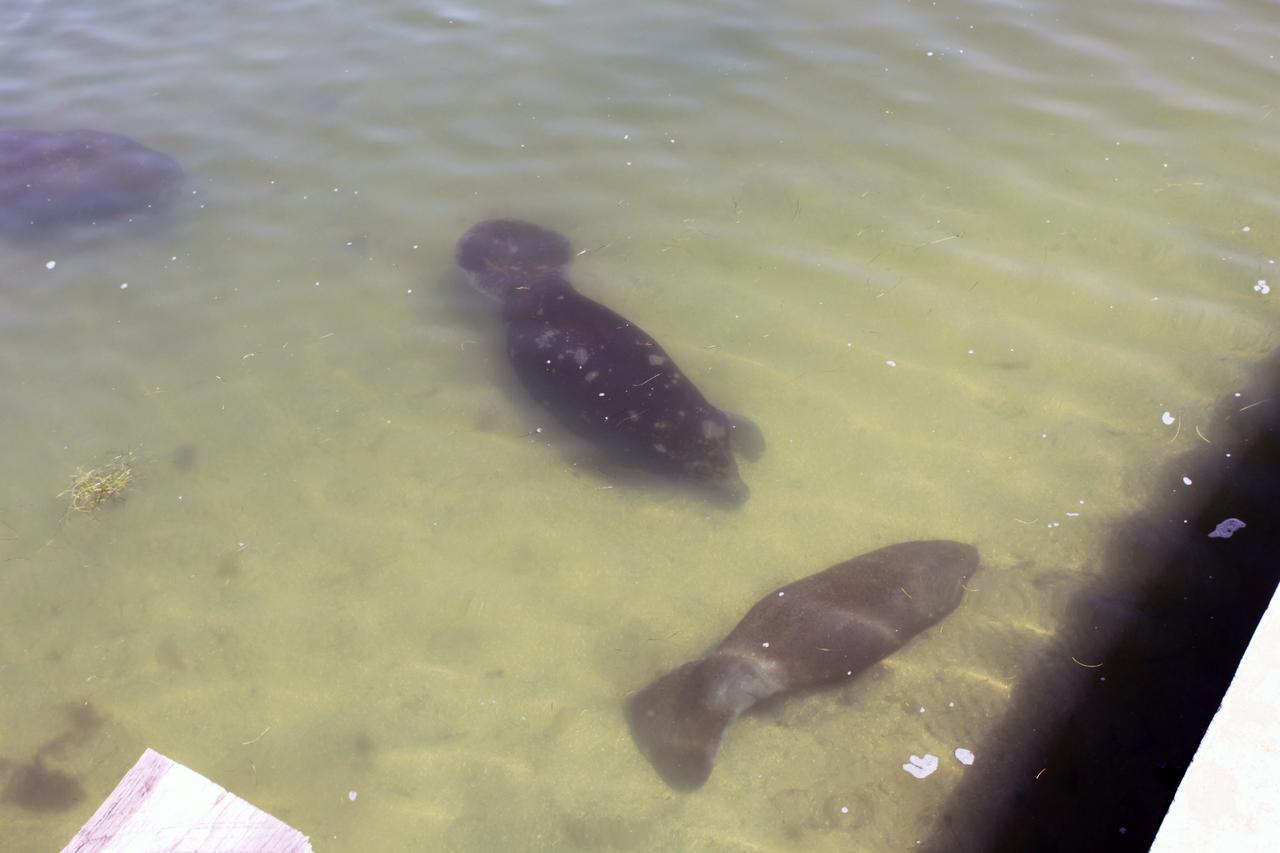
CAPE CANAVERAL, Fla. – Manatees relax in the Indian River near the NASA Railroad’s Jay Jay Railroad Bridge north of Launch Complex 39 at NASA’s Kennedy Space Center in Florida. The manatees were spotted by a cameraman on hand to photograph a NASA Railroad train on its way to the Florida East Coast Railway interchange in Titusville, Fla., where the train’s helium tank cars, a liquid oxygen tank car, and a liquid hydrogen dewar or tank car will be transferred for delivery to the SpaceX engine test complex outside McGregor, Texas. The railroad cars were needed in support of the Space Shuttle Program but currently are not in use by NASA following the completion of the program in 2011. Originally, the tankers belonged to the U.S. Bureau of Mines. At the peak of the shuttle program, there were approximately 30 cars in the fleet. About half the cars were returned to the bureau as launch activity diminished. Five tank cars are being loaned to SpaceX and repurposed to support their engine tests in Texas. Eight cars previously were shipped to California on loan to support the SpaceX Falcon 9 rocket launches from Space Launch Complex-4 on Vandenberg Air Force Base. SpaceX already has three helium tank cars previously used for the shuttle program at Space Launch Complex-40 on Cape Canaveral Air Force Station in Florida. For more information, visit http://www.nasa.gov/spacex. Photo credit: NASA/Jim Grossmann
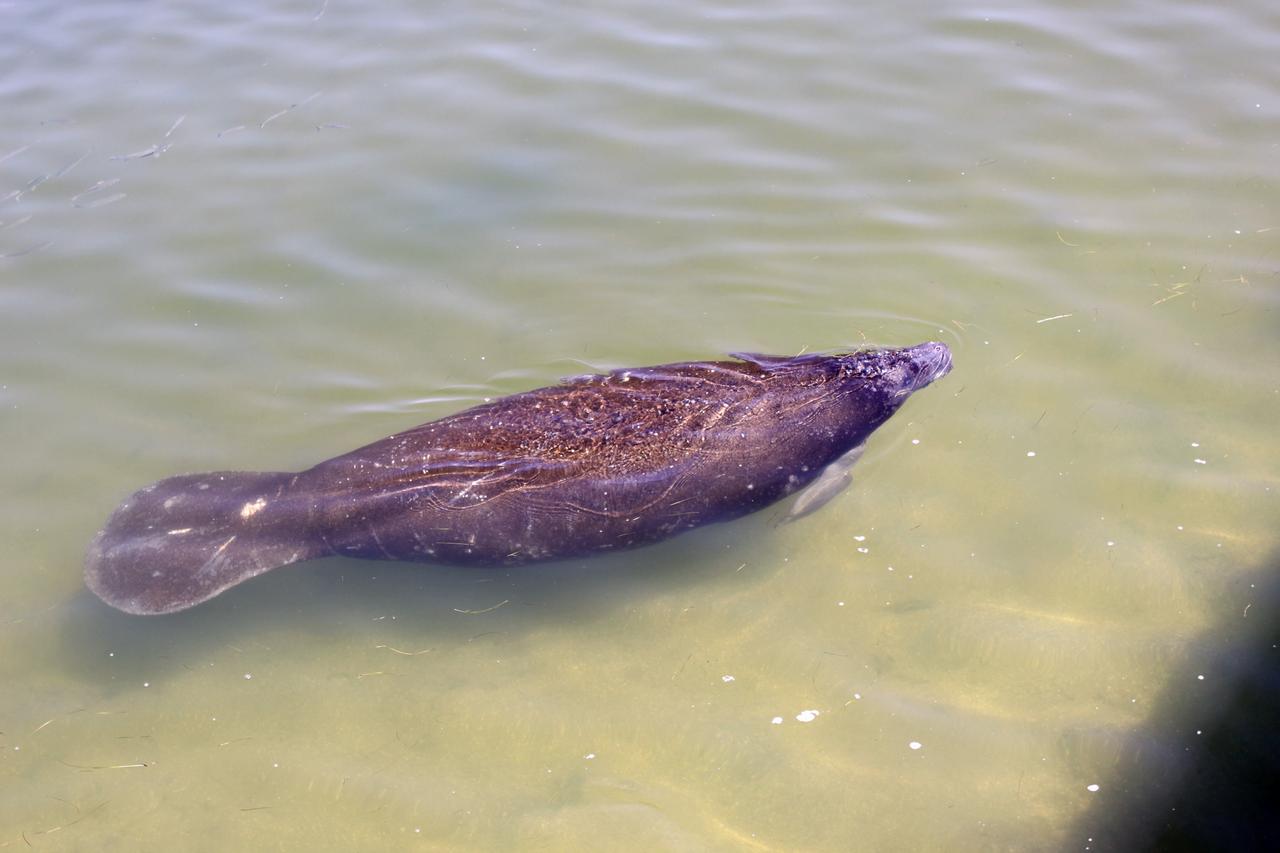
CAPE CANAVERAL, Fla. – A manatee relaxes in the Indian River near the NASA Railroad’s Jay Jay Railroad Bridge north of Launch Complex 39 at NASA’s Kennedy Space Center in Florida. The manatee was spotted by a cameraman on hand to photograph a NASA Railroad train on its way to the Florida East Coast Railway interchange in Titusville, Fla., where the train’s helium tank cars, a liquid oxygen tank car, and a liquid hydrogen dewar or tank car will be transferred for delivery to the SpaceX engine test complex outside McGregor, Texas. The railroad cars were needed in support of the Space Shuttle Program but currently are not in use by NASA following the completion of the program in 2011. Originally, the tankers belonged to the U.S. Bureau of Mines. At the peak of the shuttle program, there were approximately 30 cars in the fleet. About half the cars were returned to the bureau as launch activity diminished. Five tank cars are being loaned to SpaceX and repurposed to support their engine tests in Texas. Eight cars previously were shipped to California on loan to support the SpaceX Falcon 9 rocket launches from Space Launch Complex-4 on Vandenberg Air Force Base. SpaceX already has three helium tank cars previously used for the shuttle program at Space Launch Complex-40 on Cape Canaveral Air Force Station in Florida. For more information, visit http://www.nasa.gov/spacex. Photo credit: NASA/Jim Grossmann
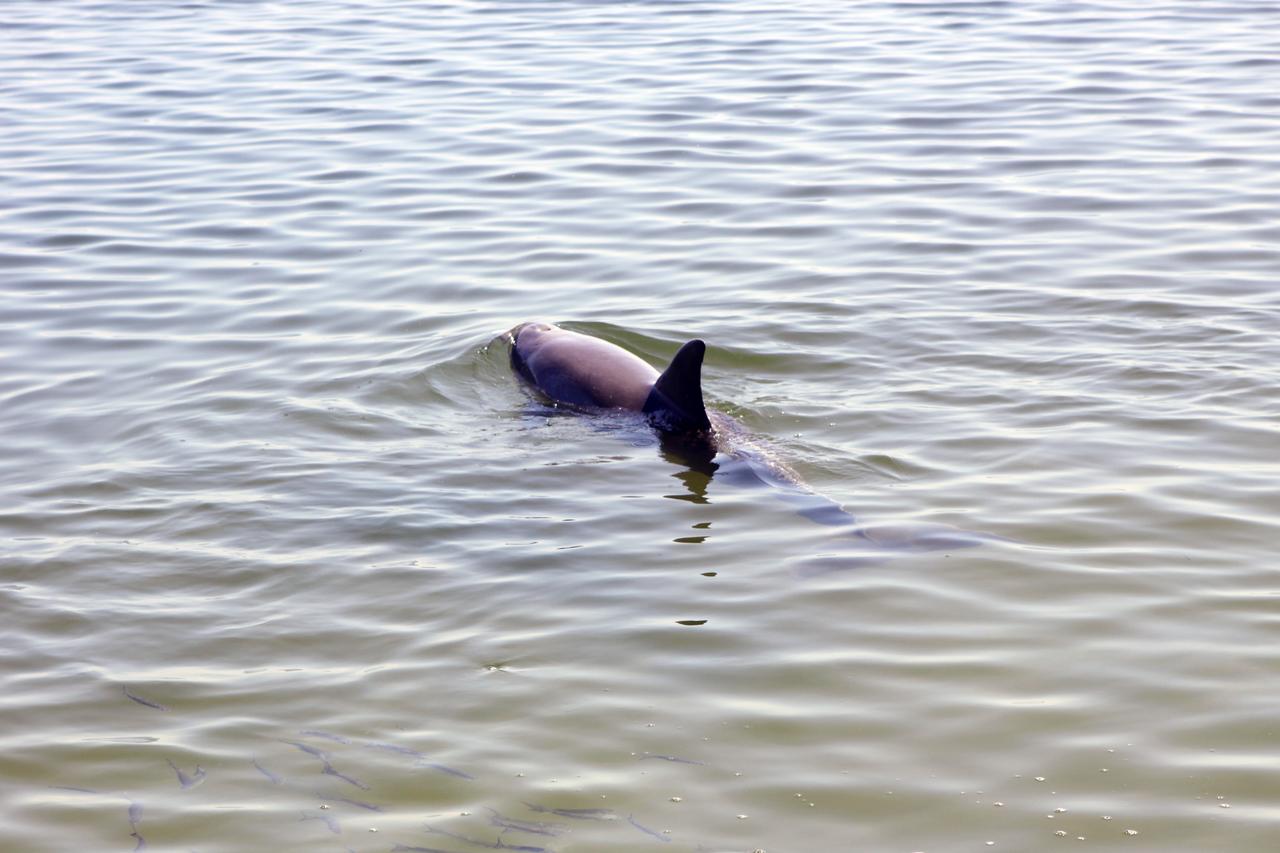
CAPE CANAVERAL, Fla. – A dolphin swims in the Indian River near the NASA Railroad’s Jay Jay Railroad Bridge north of Launch Complex 39 at NASA’s Kennedy Space Center in Florida. The dolphin was spotted by a cameraman on hand to photograph a NASA Railroad train on its way to the Florida East Coast Railway interchange in Titusville, Fla., where the train’s helium tank cars, a liquid oxygen tank car, and a liquid hydrogen dewar or tank car will be transferred for delivery to the SpaceX engine test complex outside McGregor, Texas. The railroad cars were needed in support of the Space Shuttle Program but currently are not in use by NASA following the completion of the program in 2011. Originally, the tankers belonged to the U.S. Bureau of Mines. At the peak of the shuttle program, there were approximately 30 cars in the fleet. About half the cars were returned to the bureau as launch activity diminished. Five tank cars are being loaned to SpaceX and repurposed to support their engine tests in Texas. Eight cars previously were shipped to California on loan to support the SpaceX Falcon 9 rocket launches from Space Launch Complex-4 on Vandenberg Air Force Base. SpaceX already has three helium tank cars previously used for the shuttle program at Space Launch Complex-40 on Cape Canaveral Air Force Station in Florida. For more information, visit http://www.nasa.gov/spacex. Photo credit: NASA/Jim Grossmann
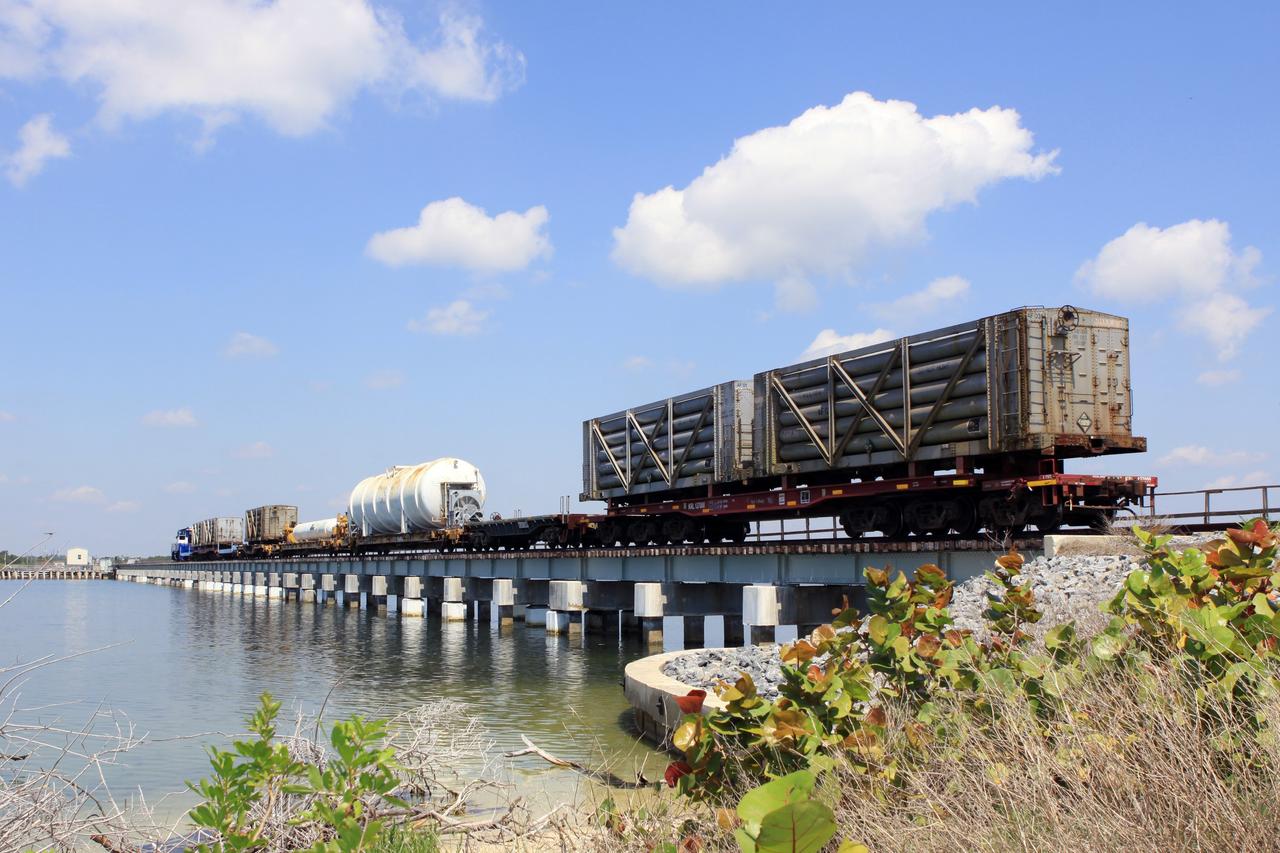
CAPE CANAVERAL, Fla. – A NASA Railroad train crosses the railroad’s Jay Jay Railroad Bridge north of Launch Complex 39 at NASA’s Kennedy Space Center in Florida. The train is on its way to the Florida East Coast Railway interchange in Titusville, Fla., where the train’s helium tank cars, a liquid oxygen tank car, and a liquid hydrogen dewar or tank car will be transferred for delivery to the SpaceX engine test complex outside McGregor, Texas. The helium tank cars are positioned in the front and rear of the train. The long, thin tank car in the middle was used for liquid hydrogen, followed by a much larger tank car used for liquid oxygen. The railroad cars were needed in support of the Space Shuttle Program but currently are not in use by NASA following the completion of the program in 2011. Originally, the tankers belonged to the U.S. Bureau of Mines. At the peak of the shuttle program, there were approximately 30 cars in the fleet. About half the cars were returned to the bureau as launch activity diminished. Five tank cars are being loaned to SpaceX and repurposed to support their engine tests in Texas. Eight cars previously were shipped to California on loan to support the SpaceX Falcon 9 rocket launches from Space Launch Complex-4 on Vandenberg Air Force Base. SpaceX already has three helium tank cars previously used for the shuttle program at Space Launch Complex-40 on Cape Canaveral Air Force Station in Florida. For more information, visit http://www.nasa.gov/spacex. Photo credit: NASA/Jim Grossmann
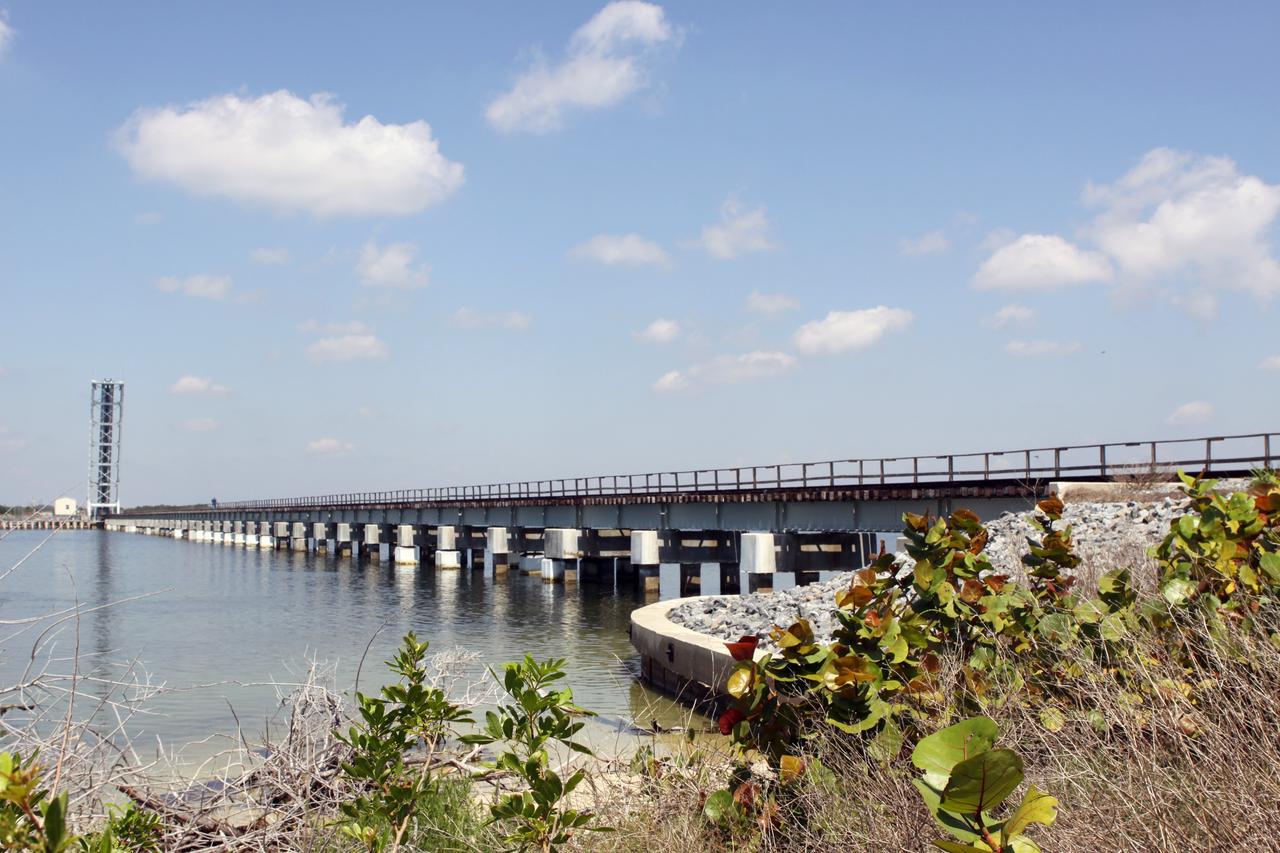
CAPE CANAVERAL, Fla. – Preparations are under way at the NASA Railroad’s Jay Jay Railroad Bridge north of Launch Complex 39 at NASA’s Kennedy Space Center in Florida for the passage of the NASA Railroad train on its way to the Florida East Coast Railway interchange in Titusville, Fla., where the train’s helium tank cars, a liquid oxygen tank car, and a liquid hydrogen dewar or tank car will be transferred for delivery to the SpaceX engine test complex outside McGregor, Texas. The permanent configuration of the drawbridge span is open, but the span will be lowered for a train to cross. The railroad cars were needed in support of the Space Shuttle Program but currently are not in use by NASA following the completion of the program in 2011. Originally, the tankers belonged to the U.S. Bureau of Mines. At the peak of the shuttle program, there were approximately 30 cars in the fleet. About half the cars were returned to the bureau as launch activity diminished. Five tank cars are being loaned to SpaceX and repurposed to support their engine tests in Texas. Eight cars previously were shipped to California on loan to support the SpaceX Falcon 9 rocket launches from Space Launch Complex-4 on Vandenberg Air Force Base. SpaceX already has three helium tank cars previously used for the shuttle program at Space Launch Complex-40 on Cape Canaveral Air Force Station in Florida. For more information, visit http://www.nasa.gov/spacex. Photo credit: NASA/Jim Grossmann
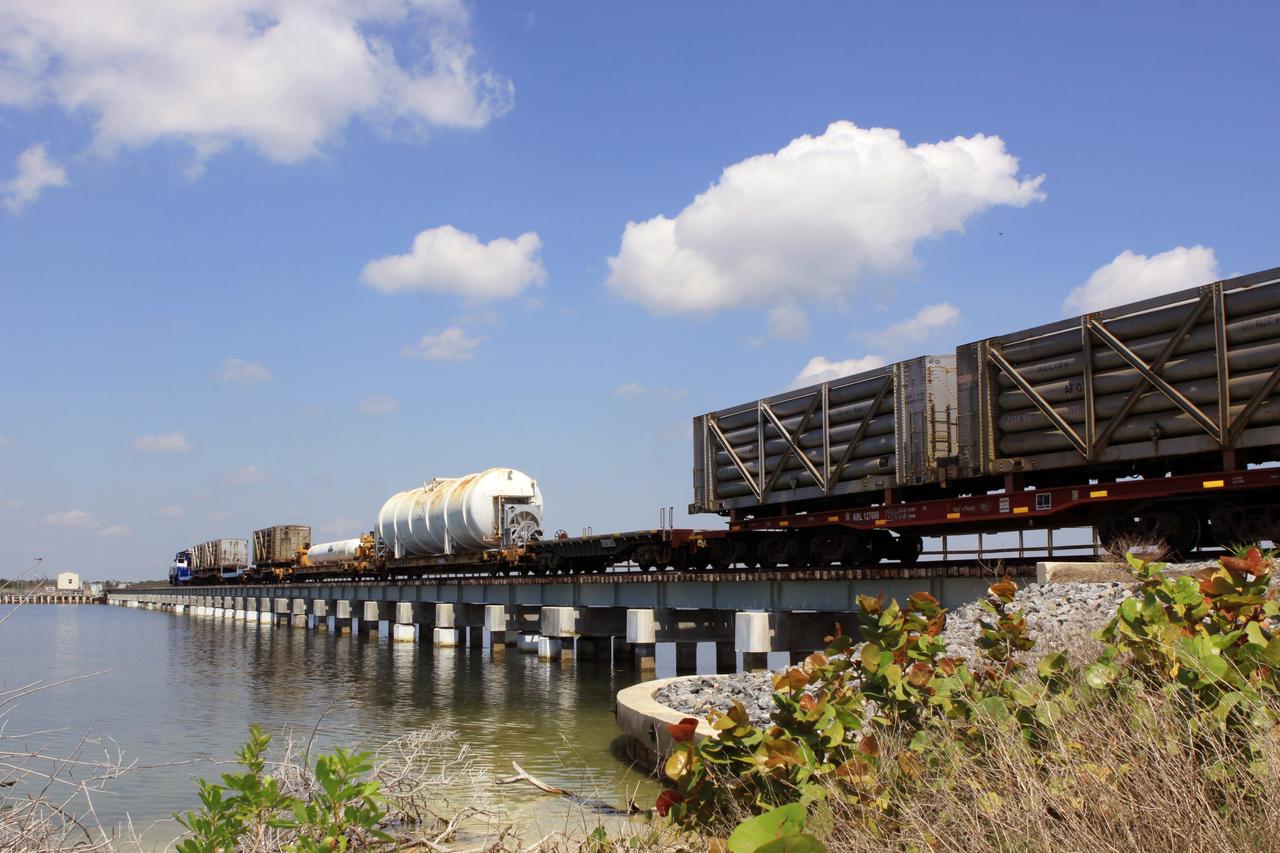
CAPE CANAVERAL, Fla. – A NASA Railroad train crosses the railroad’s Jay Jay Railroad Bridge north of Launch Complex 39 at NASA’s Kennedy Space Center in Florida. The train is on its way to the Florida East Coast Railway interchange in Titusville, Fla., where the train’s helium tank cars, a liquid oxygen tank car, and a liquid hydrogen dewar or tank car will be transferred for delivery to the SpaceX engine test complex outside McGregor, Texas. The helium tank cars are positioned in the front and rear of the train. The long, thin tank car in the middle was used for liquid hydrogen, followed by a much larger tank car used for liquid oxygen. The railroad cars were needed in support of the Space Shuttle Program but currently are not in use by NASA following the completion of the program in 2011. Originally, the tankers belonged to the U.S. Bureau of Mines. At the peak of the shuttle program, there were approximately 30 cars in the fleet. About half the cars were returned to the bureau as launch activity diminished. Five tank cars are being loaned to SpaceX and repurposed to support their engine tests in Texas. Eight cars previously were shipped to California on loan to support the SpaceX Falcon 9 rocket launches from Space Launch Complex-4 on Vandenberg Air Force Base. SpaceX already has three helium tank cars previously used for the shuttle program at Space Launch Complex-40 on Cape Canaveral Air Force Station in Florida. For more information, visit http://www.nasa.gov/spacex. Photo credit: NASA/Jim Grossmann
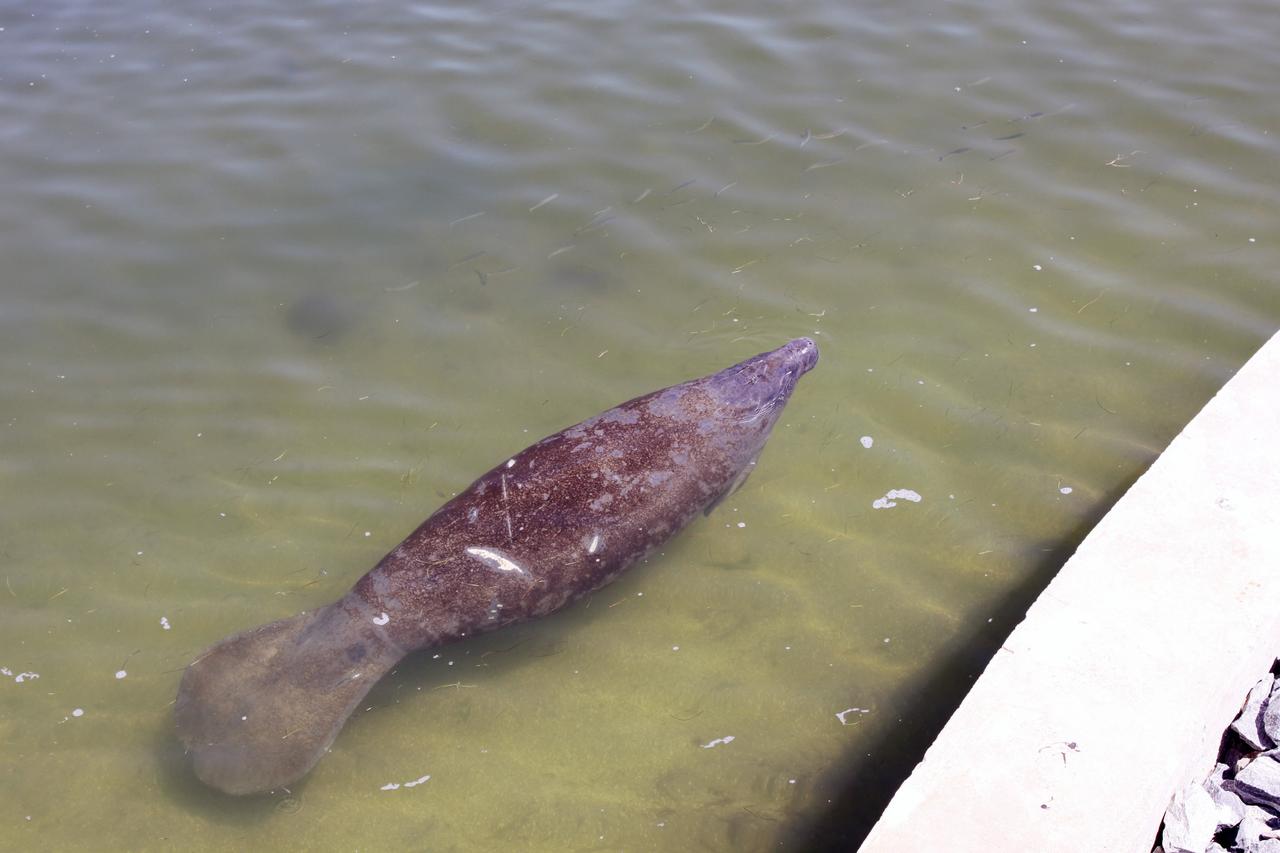
CAPE CANAVERAL, Fla. – A manatee swims in the Indian River near the NASA Railroad’s Jay Jay Railroad Bridge north of Launch Complex 39 at NASA’s Kennedy Space Center in Florida. The manatee was spotted by a cameraman on hand to photograph a NASA Railroad train on its way to the Florida East Coast Railway interchange in Titusville, Fla., where the train’s helium tank cars, a liquid oxygen tank car, and a liquid hydrogen dewar or tank car will be transferred for delivery to the SpaceX engine test complex outside McGregor, Texas. The railroad cars were needed in support of the Space Shuttle Program but currently are not in use by NASA following the completion of the program in 2011. Originally, the tankers belonged to the U.S. Bureau of Mines. At the peak of the shuttle program, there were approximately 30 cars in the fleet. About half the cars were returned to the bureau as launch activity diminished. Five tank cars are being loaned to SpaceX and repurposed to support their engine tests in Texas. Eight cars previously were shipped to California on loan to support the SpaceX Falcon 9 rocket launches from Space Launch Complex-4 on Vandenberg Air Force Base. SpaceX already has three helium tank cars previously used for the shuttle program at Space Launch Complex-40 on Cape Canaveral Air Force Station in Florida. For more information, visit http://www.nasa.gov/spacex. Photo credit: NASA/Jim Grossmann
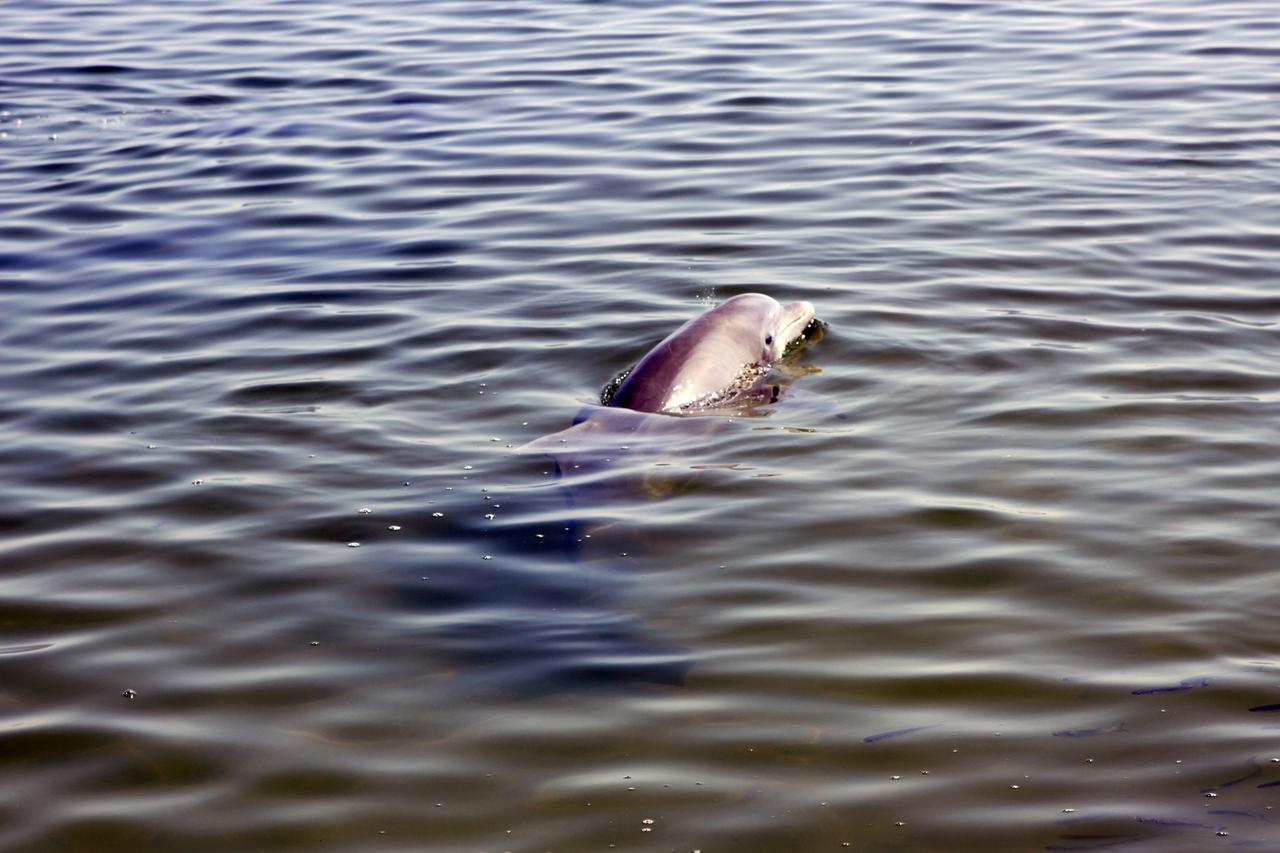
CAPE CANAVERAL, Fla. – A dolphin plays in the Indian River near the NASA Railroad’s Jay Jay Railroad Bridge north of Launch Complex 39 at NASA’s Kennedy Space Center in Florida. The dolphin was spotted by a cameraman on hand to photograph a NASA Railroad train on its way to the Florida East Coast Railway interchange in Titusville, Fla., where the train’s helium tank cars, a liquid oxygen tank car, and a liquid hydrogen dewar or tank car will be transferred for delivery to the SpaceX engine test complex outside McGregor, Texas. The railroad cars were needed in support of the Space Shuttle Program but currently are not in use by NASA following the completion of the program in 2011. Originally, the tankers belonged to the U.S. Bureau of Mines. At the peak of the shuttle program, there were approximately 30 cars in the fleet. About half the cars were returned to the bureau as launch activity diminished. Five tank cars are being loaned to SpaceX and repurposed to support their engine tests in Texas. Eight cars previously were shipped to California on loan to support the SpaceX Falcon 9 rocket launches from Space Launch Complex-4 on Vandenberg Air Force Base. SpaceX already has three helium tank cars previously used for the shuttle program at Space Launch Complex-40 on Cape Canaveral Air Force Station in Florida. For more information, visit http://www.nasa.gov/spacex. Photo credit: NASA/Jim Grossmann
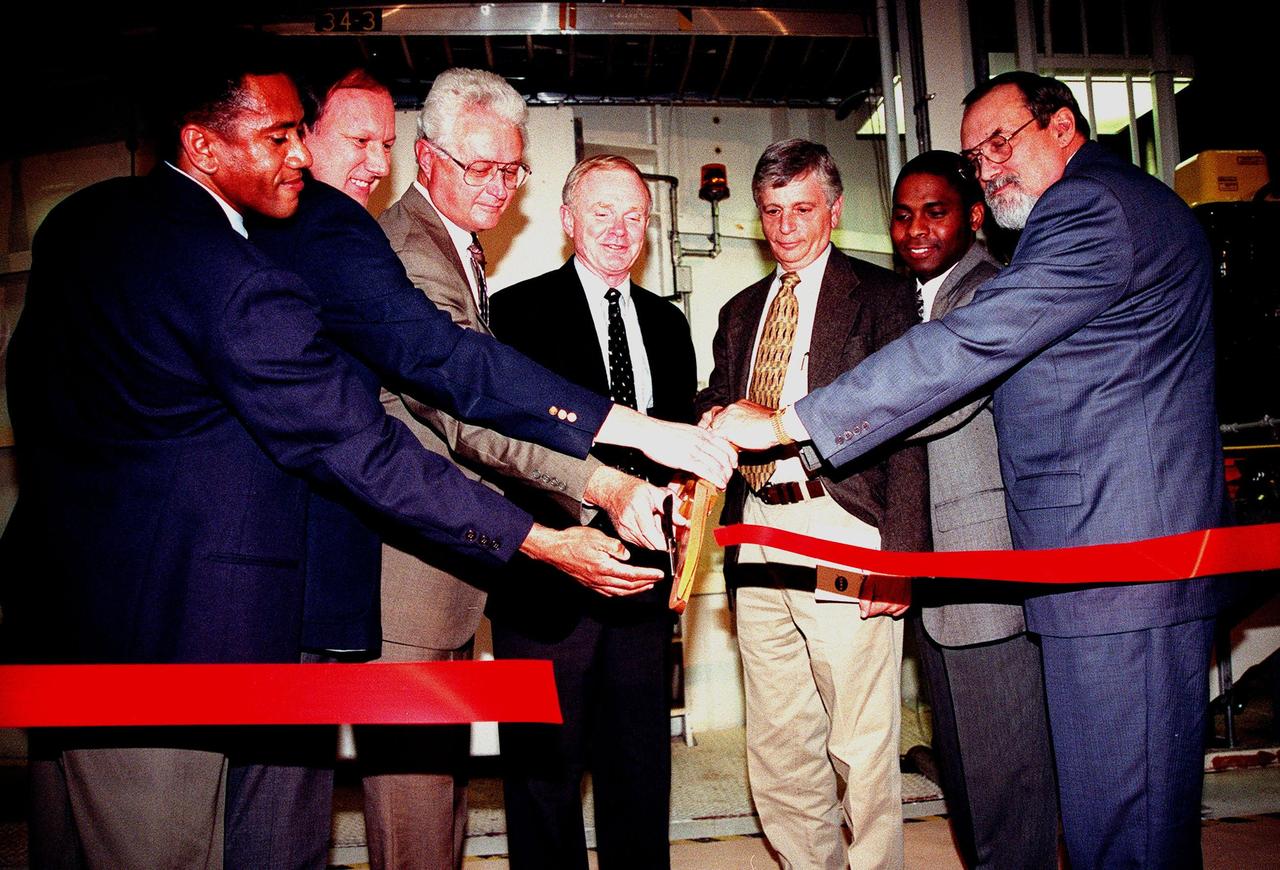
KENNEDY SPACE CENTER, FLA. -- Cutting a red ribbon for the unveiling of a newly renovated altitude chamber are (left to right) Tommy Mack, project manager, NASA; Steve Francois, director, Space Station and Shuttle Payloads; Sterling Walker, director, Engineering Development; Roy Bridges, director, Kennedy Space Center; Jay Greene, International Space Station manager for Technical; Michael Terry, project manager, Boeing; and Terry Smith, director of Engineering, Boeing Space Coast Operations. The chamber was reactivated, after a 24-year hiatus, to perform leak tests on International Space Station pressurized modules at the launch site. Originally, two chambers were built to test the Apollo command and lunar service modules. They were last used in 1975 during the Apollo-Soyuz Test Project. After installation of new vacuum pumping equipment and controls, a new control room, and a new rotation handling fixture, the chamber again became operational in February 1999. The chamber, which is 33 feet in diameter and 50 feet tall, is constructed of stainless steel. The first module that will be tested for leaks is the U.S. Laboratory. No date has been determined for the test
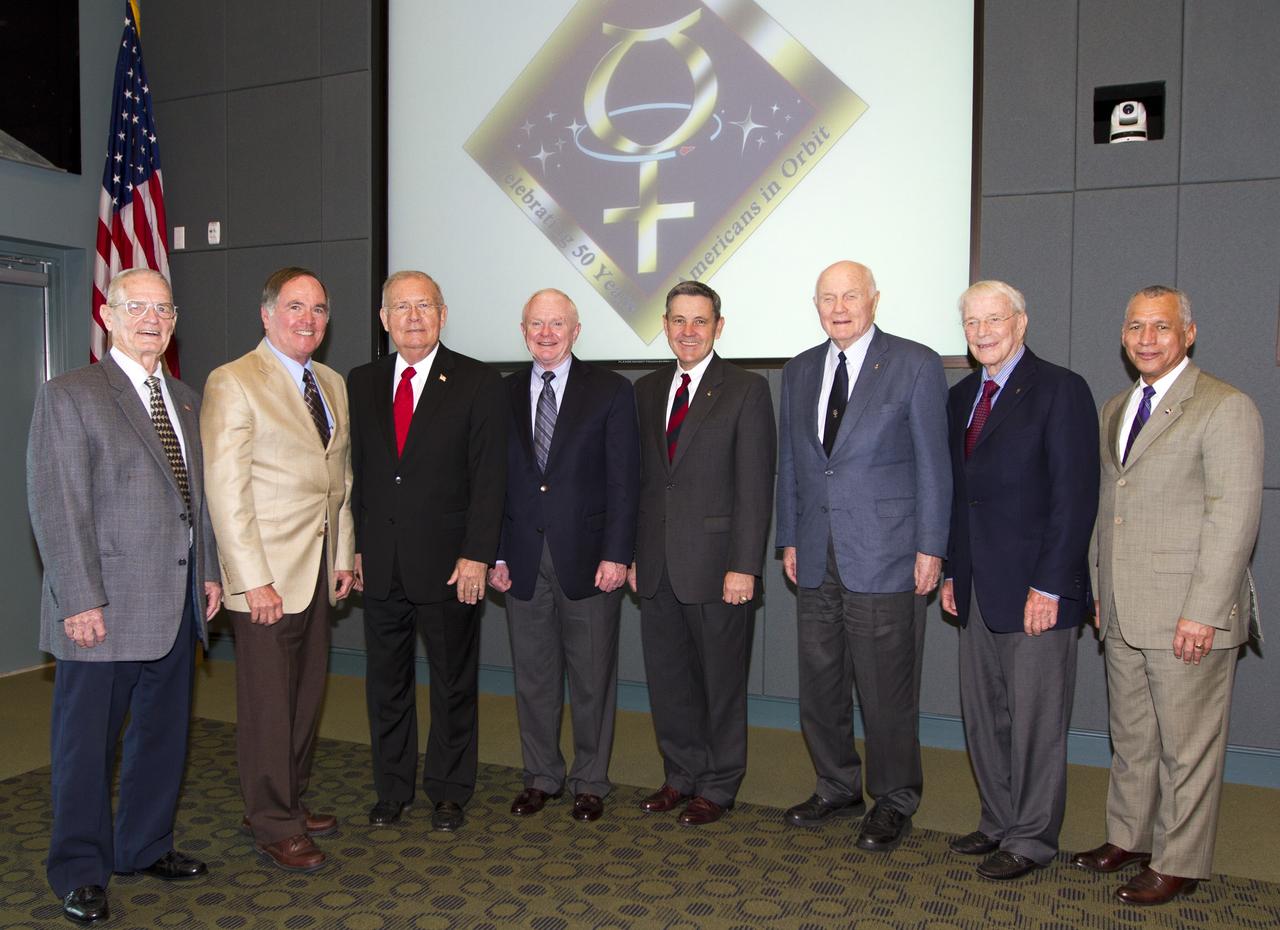
CAPE CANAVERAL, Fla. - Former Kennedy Space Center directors Forrest McCartney, from left, Bob Crippen, Jay Honeycutt and Roy Bridges stand with current Kennedy director Bob Cabana, Mercury astronauts John Glenn and Scott Carpenter and NASA Administrator Charles Bolden during a luncheon Feb. 17, 2012, celebrating 50 years of Americans in orbit, an era which began with Glenn's Mercury mission MA-6, on Feb. 20, 1962. Glenn's launch aboard an Atlas rocket took with it the hopes of an entire nation and ushered in a new era of space travel that eventually led to Americans walking on the moon by the end of the 1960s. Glenn soon was followed into orbit by Scott Carpenter, Walter Schirra and Gordon Cooper. Their fellow Mercury astronauts Alan Shepard and Virgil "Gus" Grissom flew earlier suborbital flights. Deke Slayton, a member of NASA's original Mercury 7 astronauts, was grounded by a medical condition until the Apollo-Soyuz Test Project in 1975. Photo credit: NASA/Kim Shiflett
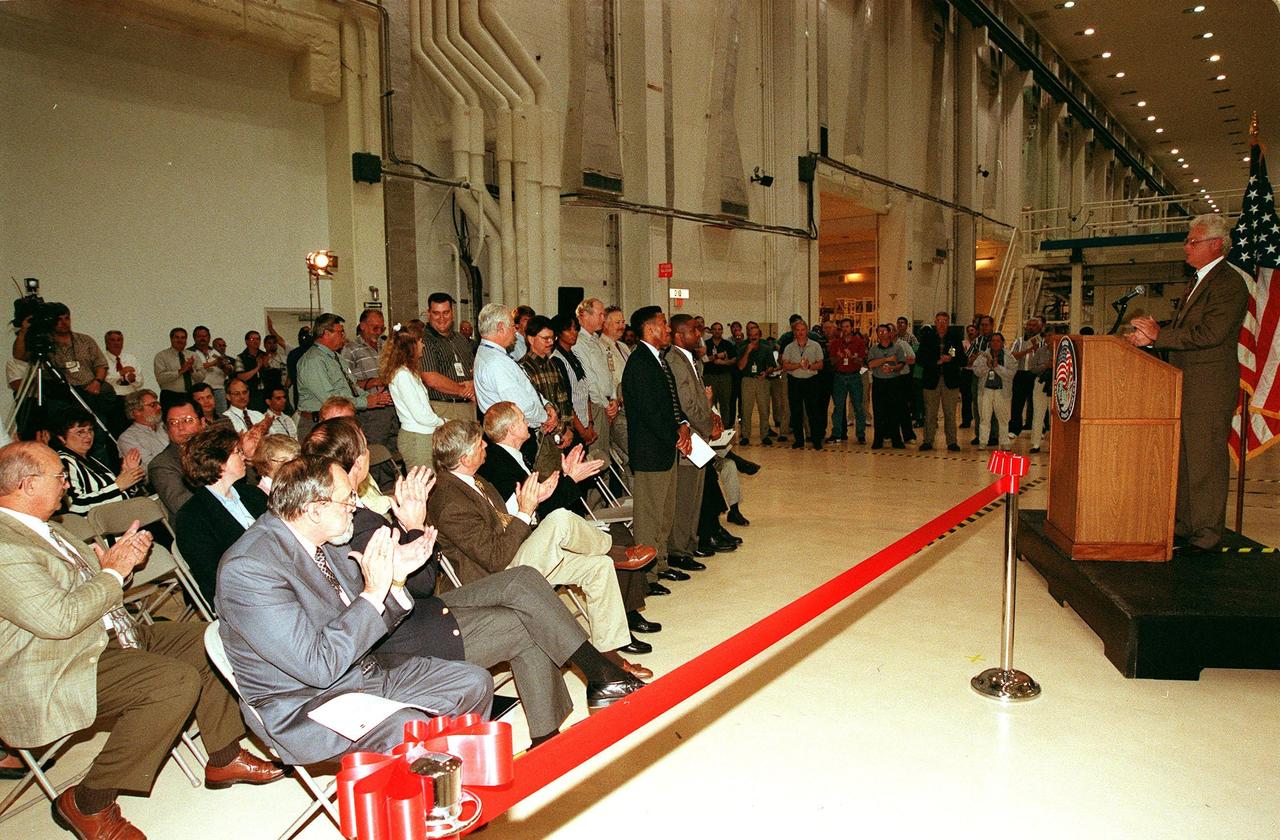
KENNEDY SPACE CENTER, FLA. -- At a ribbon-cutting ceremony inside the Operations and Checkout Building high bay, Sterling Walker, director of Engineering Development, introduces the project team members responsible for renovating an altitude chamber formerly used on the Apollo program. In addition, management, media and onlookers are present for the ceremony. Seated in the front row left are (left to right) Terry Smith, director of Engineering, Boeing Space Coast Operations; Steve Francois, director, Space Station and Shuttle Payloads; Jay Greene, International Space Station manager for Technical; and Roy Bridges, center director. The chamber was reactivated, after a 24-year hiatus, to perform leak tests on International Space Station pressurized modules at the launch site. Originally, two chambers were built to test the Apollo command and lunar service modules. They were last used in 1975 during the Apollo-Soyuz Test Project. After installation of new vacuum pumping equipment and controls, a new control room, and a new rotation handling fixture, the chamber again became operational in February 1999. The chamber, which is 33 feet in diameter and 50 feet tall, is constructed of stainless steel. The first module that will be tested for leaks is the U.S. Laboratory. No date has been determined for the test