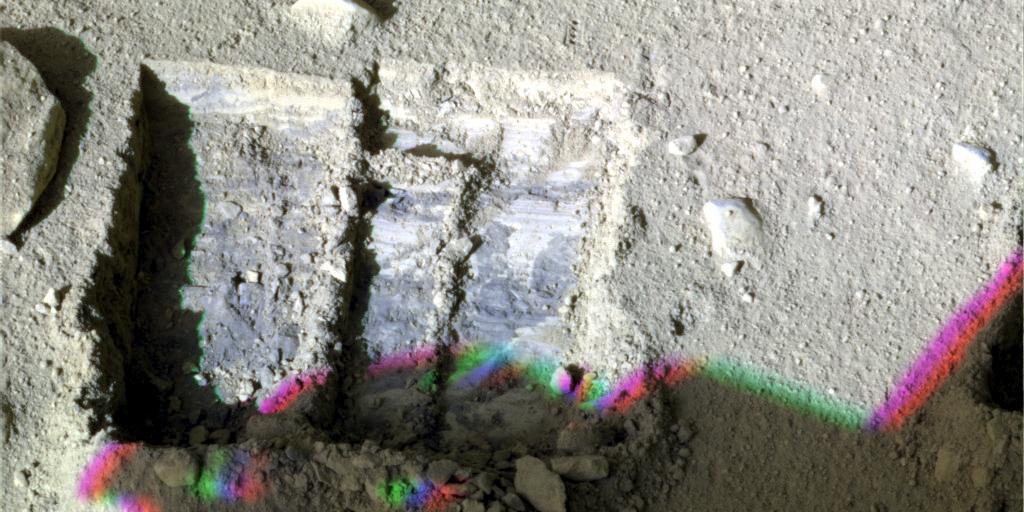
Phoenix La Mancha Trench
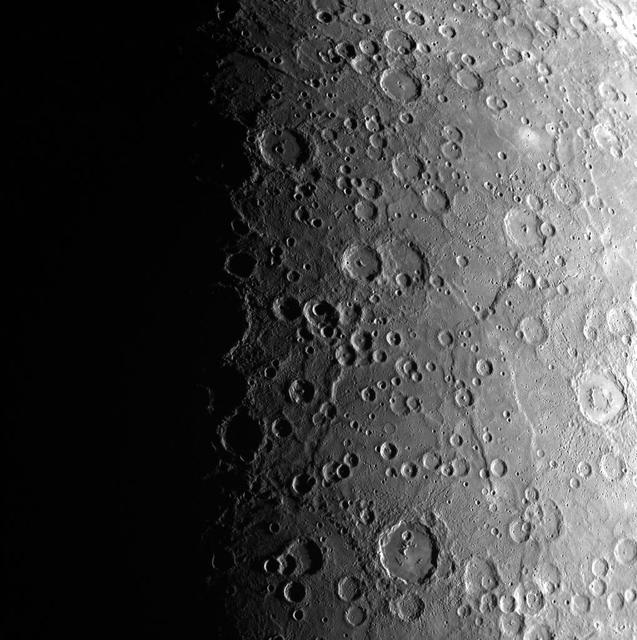
Hasta La Vista, Baby!
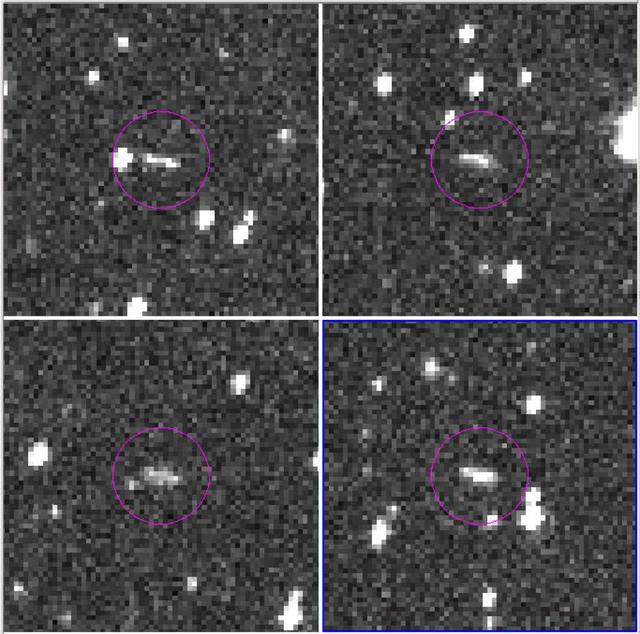
These are the discovery observations of asteroid 2018 LA from the Catalina Sky Survey, taken June 2, 2018. About eight hours after these images were taken, the asteroid entered Earth's atmosphere (about 9:44 a.m. PDT, 12:44 p.m. EDT, 16:44 UTC, 6:44 p.m. local Botswana time), and disintegrated in the upper atmosphere near Botswana, Africa. https://photojournal.jpl.nasa.gov/catalog/PIA22468
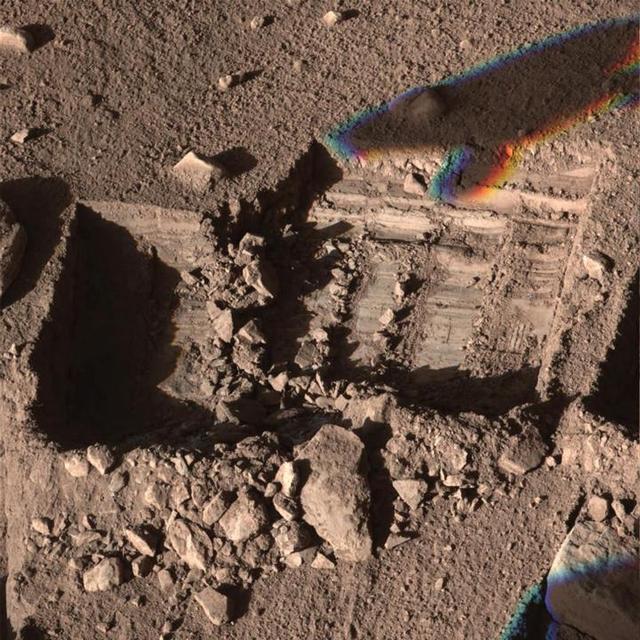
La Mancha Trench Dug by Phoenix Mars Lander

The tropical Pacific Ocean is beginning to exhibit the characteristics of a developing La Niña condition.

This view of Titan surface highlights northwestern Shangri-la -- a large, equatorial dark region revealed by radar observations to be covered in longitudinal dune fields

This image of Las Vegas, NV was acquired on August, 2000 and covers an area 42 km (25 miles) wide and 30 km (18 miles) long. The image displays three bands of the reflected visible and infrared wavelength region, with a spatial resolution of 15 m. McCarran International Airport to the south and Nellis Air Force Base to the NE are the two major airports visible. Golf courses appear as bright red areas of worms. The first settlement in Las Vegas (which is Spanish for The Meadows) was recorded back in the early 1850s when the Mormon church, headed by Brigham Young, sent a mission of 30 men to construct a fort and teach agriculture to the Indians. Las Vegas became a city in 1905 when the railroad announced this city was to be a major division point. Prior to legalized gambling in 1931, Las Vegas was developing as an agricultural area. Las Vegas' fame as a resort area became prominent after World War II. The image is located at 36.1 degrees north latitude and 115.1 degrees west longitude. http://photojournal.jpl.nasa.gov/catalog/PIA11096

This image acquired by NASA Terra spacecraft is of La Chaux-de-Fonds, a Swiss city in the Jura Mountains, founded in 1656.

iss071e666237 (Sept. 17, 2024) --- NASA astronaut Don Pettit was able to capture a photo of a recent fire in La Porte, Texas yesterday. Our NASA Astronauts have the ability to observe natural disasters from a vantage point of 250 miles above Earth. The imagery and data provided from the International Space Station can provide benefits to regions that experience unexpected events such as fires, floods, hurricanes, earthquakes, and more. This information is valuable when monitoring disasters on Earth in real time.

NASA astronaut Don Pettit was able to capture a photo of a recent fire in La Porte, Texas yesterday. Our NASA Astronauts have the ability to observe natural disasters from a vantage point of 250 miles above Earth. The imagery and data provided from the International Space Station can provide benefits to regions that experience unexpected events such as fires, floods, hurricanes, earthquakes, and more. This information is valuable when monitoring disasters on Earth in real time.

iss071e666253 (Sept. 17, 2024) --- NASA astronaut Don Pettit was able to capture a photo of a recent fire in La Porte, Texas yesterday. Our NASA Astronauts have the ability to observe natural disasters from a vantage point of 250 miles above Earth. The imagery and data provided from the International Space Station can provide benefits to regions that experience unexpected events such as fires, floods, hurricanes, earthquakes, and more. This information is valuable when monitoring disasters on Earth in real time.
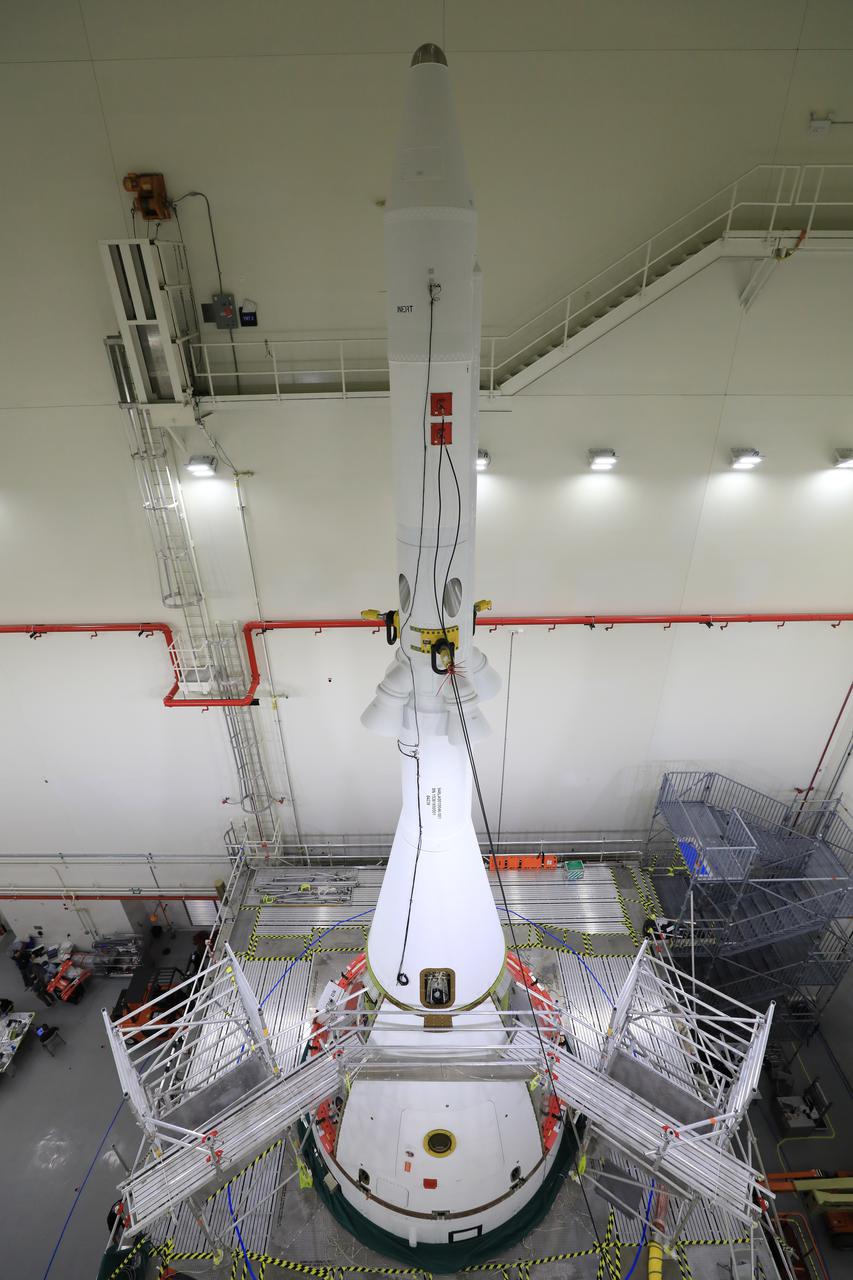
Technicians and engineers with Exploration Ground Systems and Jacobs connect the ogive fairings for Orion’s Artemis I mission to the launch abort system (LAS) inside the Launch Abort System Facility high bay at NASA’s Kennedy Space Center in Florida on Aug. 20, 2021. The ogives are four protective panels that will shield the crew module from the severe vibrations and sounds it will experience during launch. During Artemis missions, the 44-foot-tall LAS will detach from the spacecraft when it is no longer needed. Launching in 2021, Artemis I will be an uncrewed test of the Orion spacecraft and Space Launch System rocket as an integrated system ahead of crewed flights to the Moon. Under Artemis, NASA aims to land the first woman and first person of color on the Moon and establish sustainable lunar exploration.
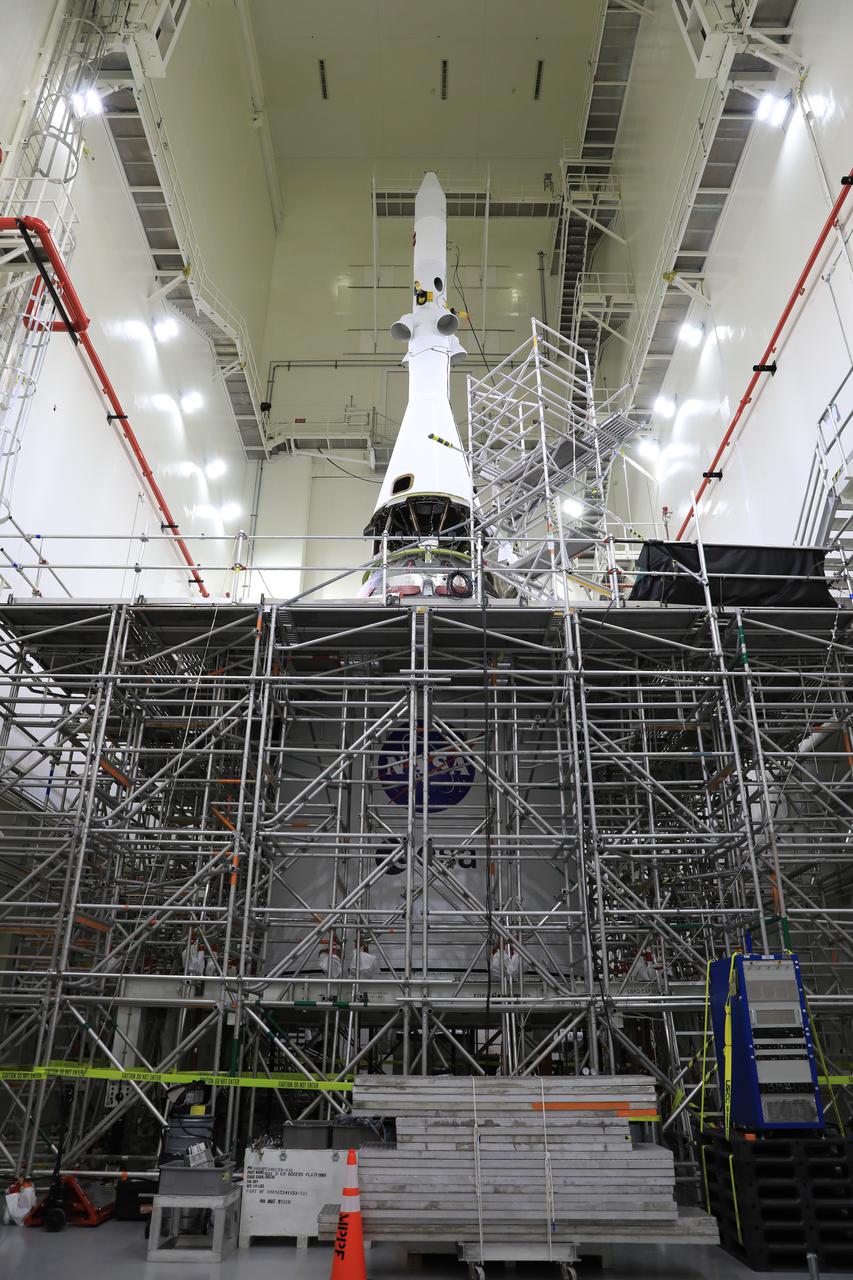
A view of the launch abort system (LAS) for Orion’s Artemis I mission after technicians and engineers with Exploration Ground Systems and Jacobs connected the ogive fairings to it inside the Launch Abort System Facility high bay at NASA’s Kennedy Space Center in Florida on Aug. 20, 2021. The ogives are four protective panels that will shield the crew module from the severe vibrations and sounds it will experience during launch. During Artemis missions, the 44-foot-tall LAS will detach from the spacecraft when it is no longer needed. Launching in 2021, Artemis I will be an uncrewed test of the Orion spacecraft and Space Launch System rocket as an integrated system ahead of crewed flights to the Moon. Under Artemis, NASA aims to land the first woman and first person of color on the Moon and establish sustainable lunar exploration.
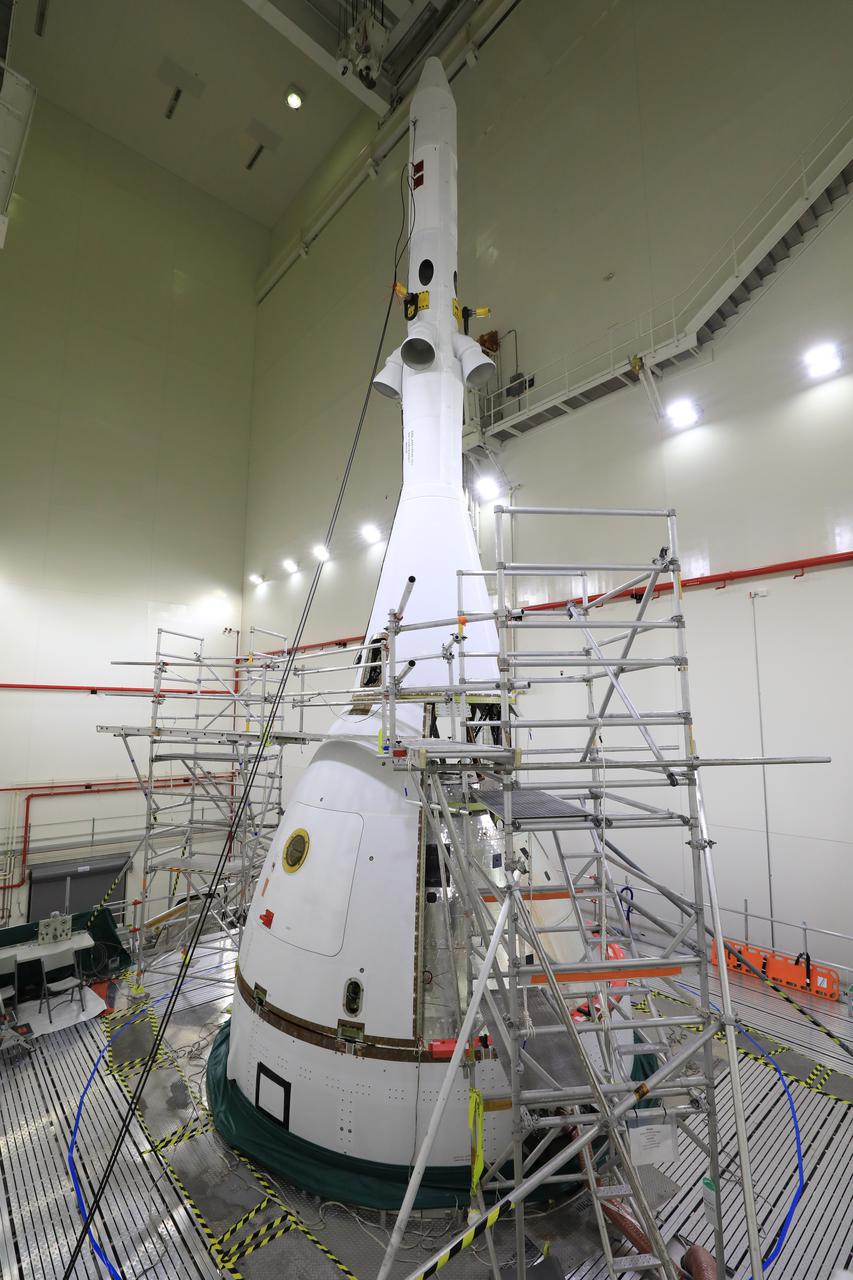
Technicians and engineers with Exploration Ground Systems and Jacobs connect the ogive fairings for Orion’s Artemis I mission to the launch abort system (LAS) inside the Launch Abort System Facility high bay at NASA’s Kennedy Space Center in Florida on Aug. 20, 2021. The ogives are four protective panels that will shield the crew module from the severe vibrations and sounds it will experience during launch. During Artemis missions, the 44-foot-tall LAS will detach from the spacecraft when it is no longer needed. Launching in 2021, Artemis I will be an uncrewed test of the Orion spacecraft and Space Launch System rocket as an integrated system ahead of crewed flights to the Moon. Under Artemis, NASA aims to land the first woman and first person of color on the Moon and establish sustainable lunar exploration.
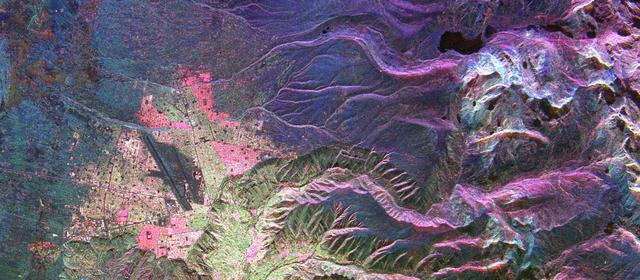
This is an image of the Bolivian capital city of La Paz that was created using three radar frequencies.
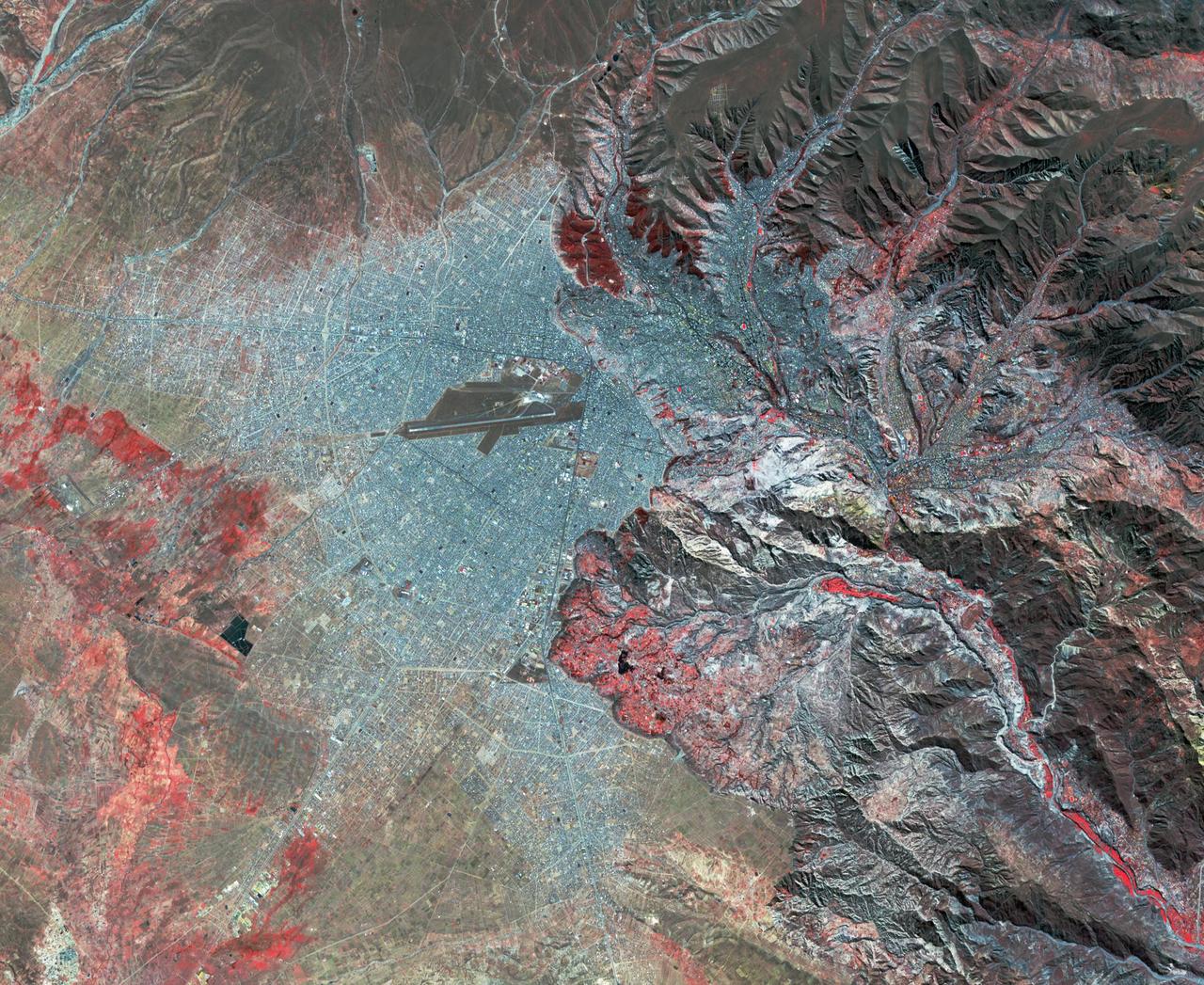
La Paz, Bolivia is the highest capital in the world, located on the Andes' Altiplano plateau at more than 3500 meters above sea level. It is situated in a bowl-like depression, surrounded by high mountains. La Paz was founded in 1548 by Spanish conquistadors at the site of the Inca settlement of Laja. Like many South American cities, La Paz and its suburbs have seen remarkable growth in the last 30 years. From 1986 to 2017 the population grew from about 400,000 to over 2.3 million. The ASTER image was acquired July 11, 2017. The images cover an area of 27 by 33 kilometers, and are located at 16.5 degrees south, 68.1 degrees west. https://photojournal.jpl.nasa.gov/catalog/PIA21220
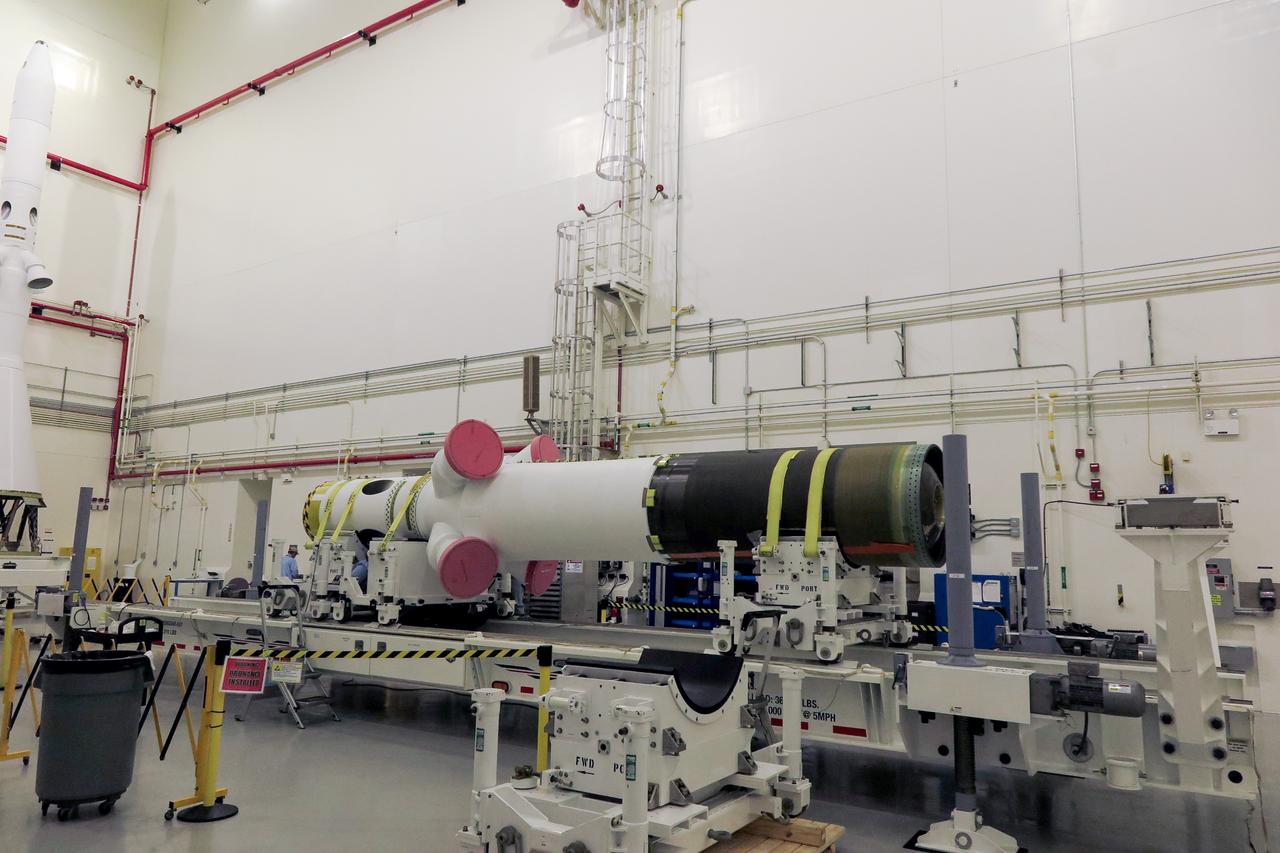
The launch abort motor is integrated with the jettison motor for Orion’s launch abort system (LAS) for Artemis II, inside the Launch Abort System Facility at NASA’s Kennedy Space Center in Florida on April 15, 2020. The launch abort and jettison motors are two of three motors on the LAS. The LAS will be positioned atop the Orion crew module and is designed to protect astronauts if a problem arises during launch by pulling the spacecraft away from a failing rocket. Artemis II will take the first humans in orbit around the Moon in the 21st century. In view, at far left, is the Launch Abort System for Artemis I, the first uncrewed mission of Orion atop the Space Launch System rocket.
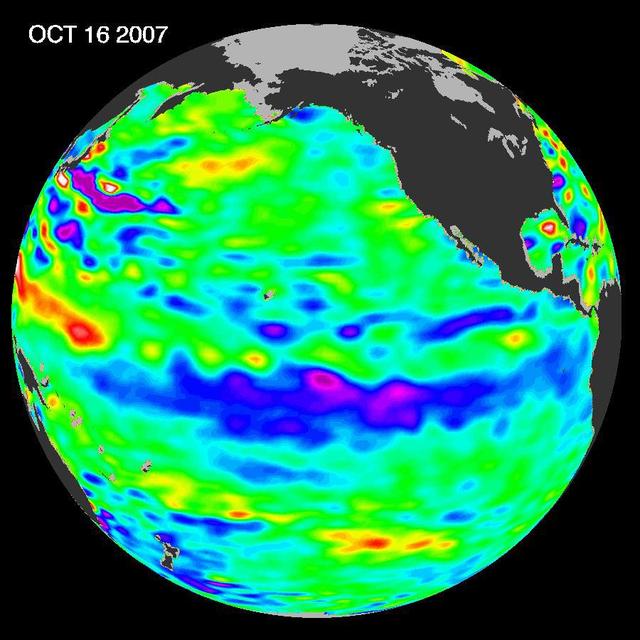
The tropical Pacific Ocean remains in the grips of a cool La Niña, as shown by new data of sea-level heights from mid-October of 2007, collected by NASA U.S-French Jason altimetric satellite.
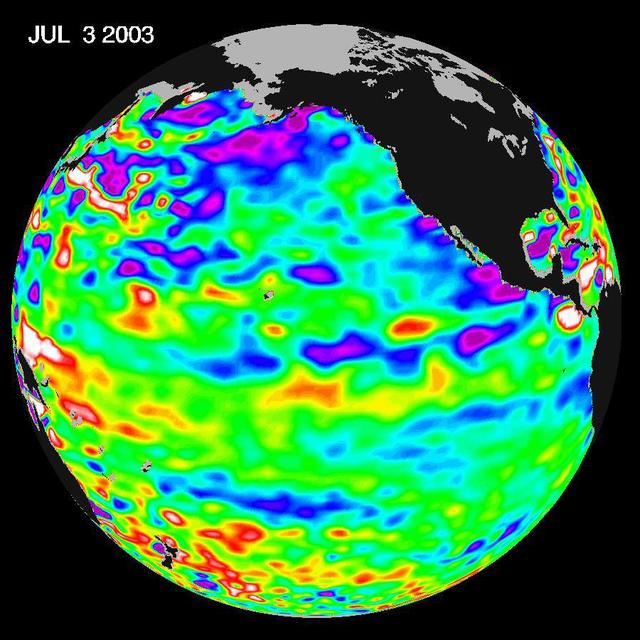
Since the weak El Niño event of last winter, the equatorial Pacific has cooled and oceanographers have been on a La Niña watch. Thus far, equatorial waters have seesawed between cooling and the present slight warming.
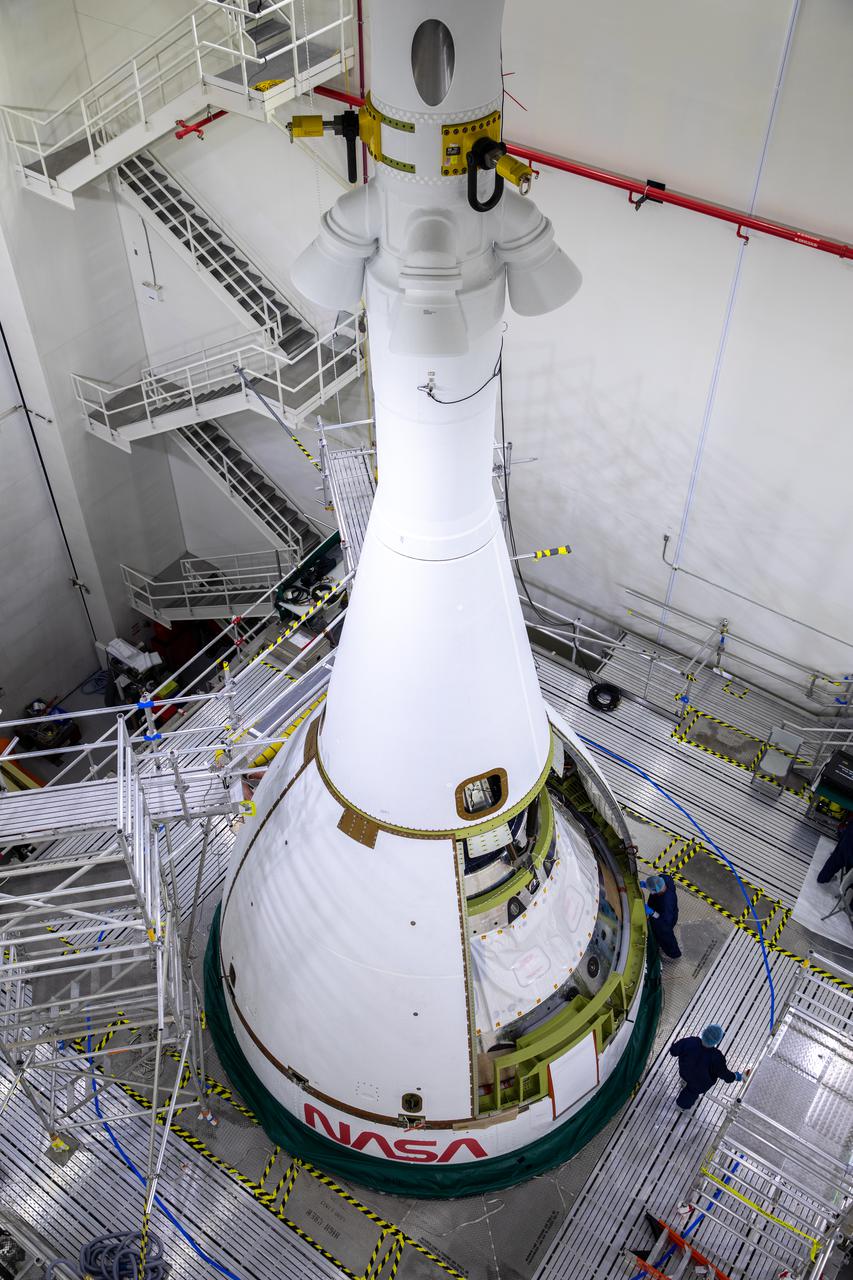
The third ogive fairing for the Orion spacecraft that will fly on the Artemis I mission is attached to the spacecraft’s launch abort system (LAS) inside the Launch Abort System Facility high bay at NASA’s Kennedy Space Center in Florida on Sept. 1, 2021. The ogives consist of four protective panels that will shield the crew module from the severe vibrations and sounds it will experience during launch. During Artemis missions, the 44-foot-tall LAS will detach from the spacecraft when it is no longer needed. Launching in 2021, Artemis I will be an uncrewed test of Orion and the Space Launch System rocket as an integrated system ahead of crewed flights to the Moon. Under Artemis, NASA aims to land the first woman and first person of color on the Moon and establish a long-term presence in lunar orbit.
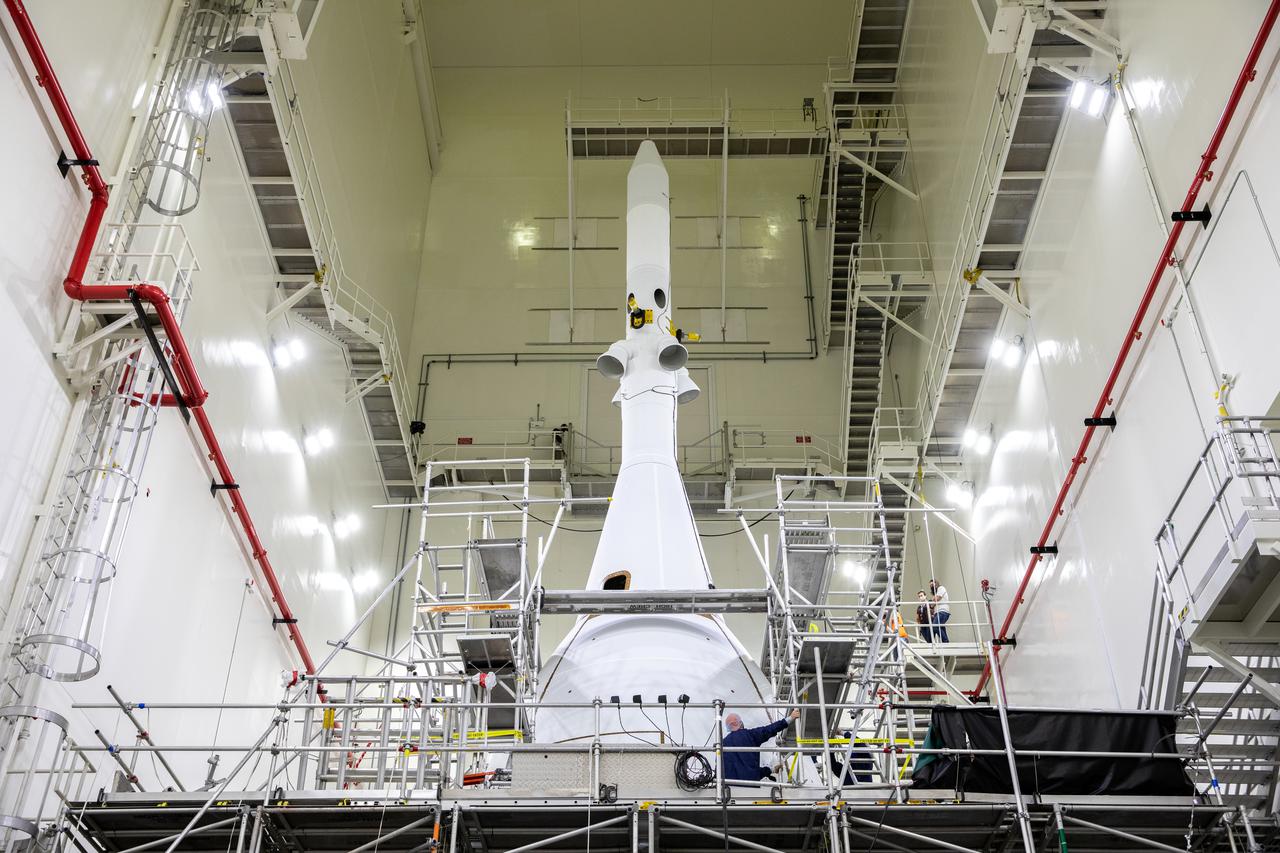
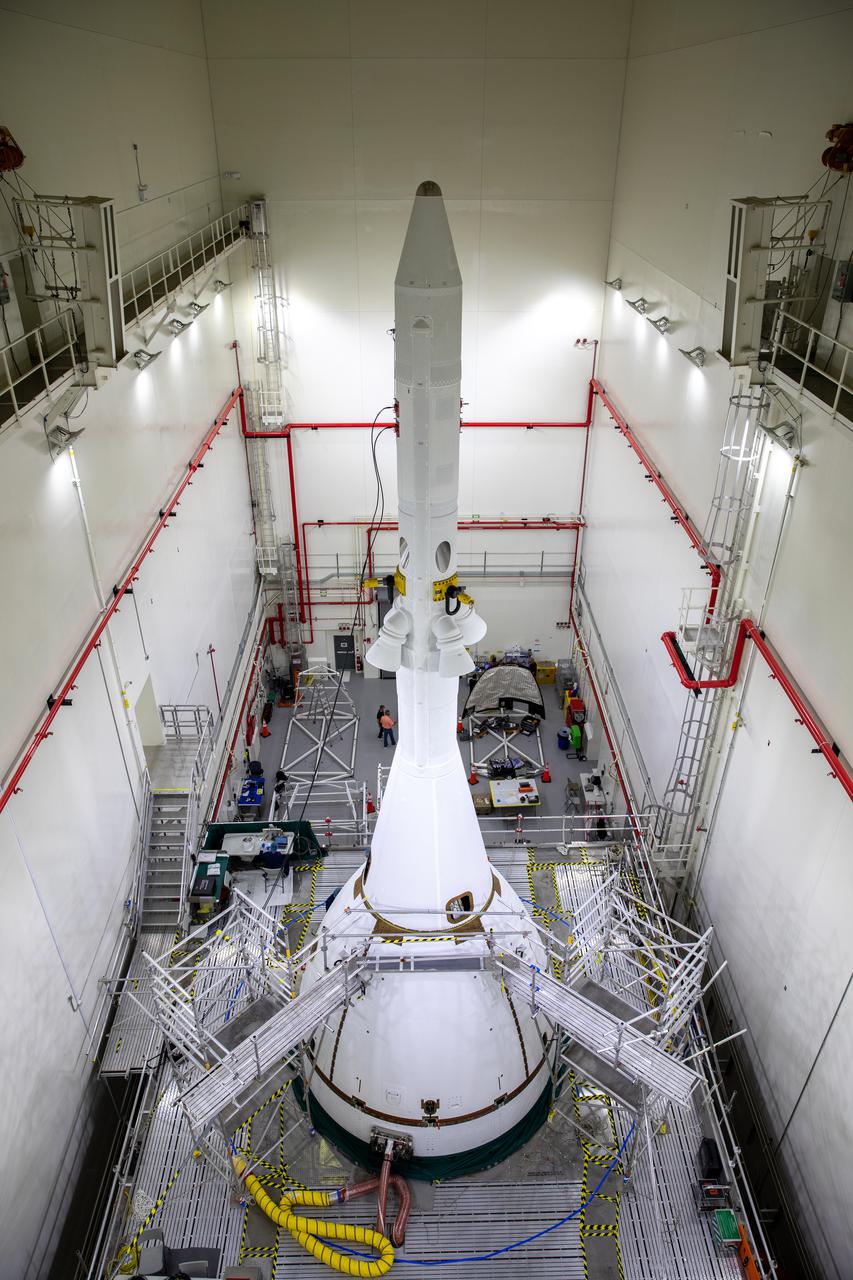
The fourth and final ogive fairing for the Orion spacecraft that will fly on the Artemis I mission is attached to the spacecraft’s launch abort system (LAS) inside the Launch Abort System Facility high bay at NASA’s Kennedy Space Center in Florida on Sept. 7, 2021. The ogives are protective panels that will shield the crew module from the severe vibrations and sounds it will experience during launch. During Artemis missions, the 44-foot-tall LAS will detach from the spacecraft when it is no longer needed. Launching in 2021, Artemis I will be an uncrewed test of Orion and the Space Launch System rocket as an integrated system ahead of crewed flights to the Moon. Under Artemis, NASA aims to land the first woman and first person of color on the Moon and establish a long-term presence in lunar orbit.
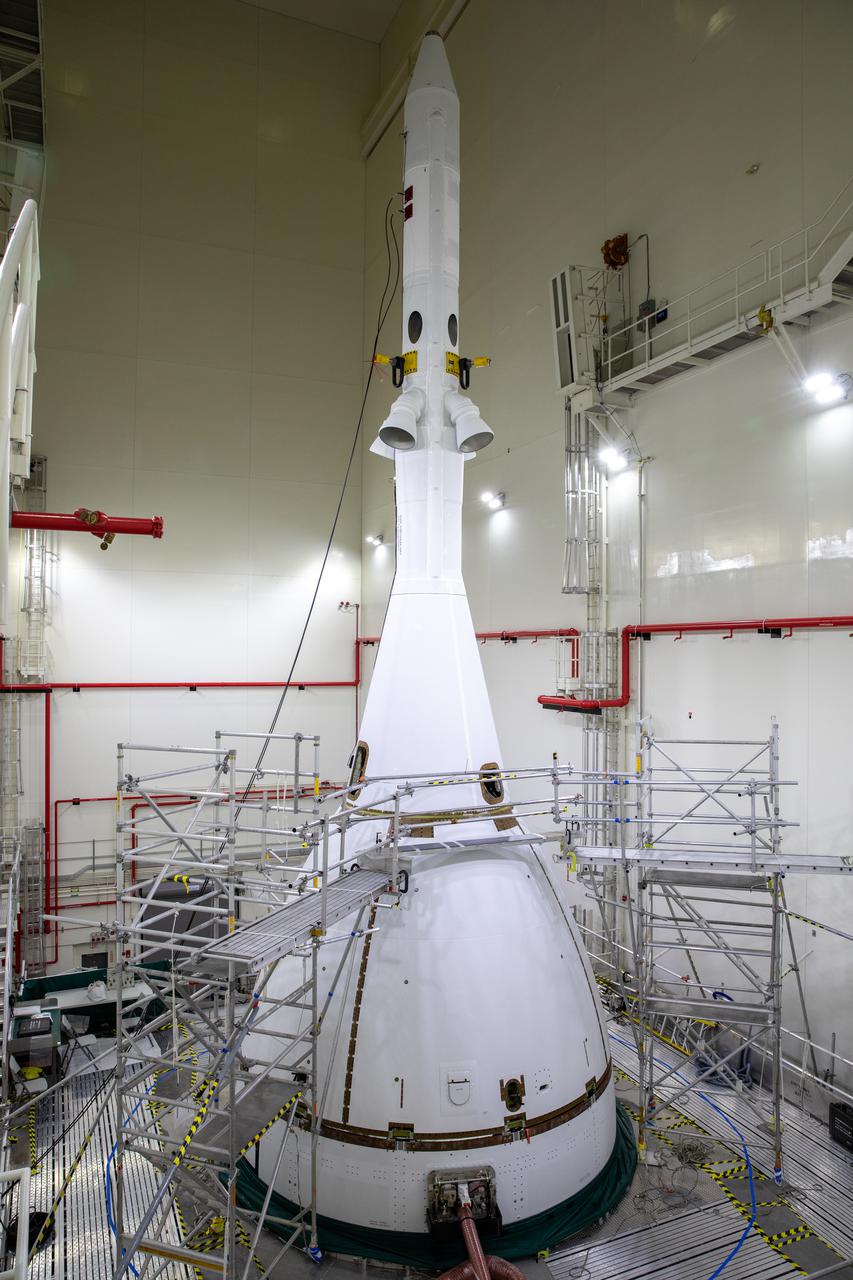
The third ogive fairing for the Orion spacecraft that will fly on the Artemis I mission is attached to the spacecraft’s launch abort system (LAS) inside the Launch Abort System Facility high bay at NASA’s Kennedy Space Center in Florida on Sept. 1, 2021. The ogives consist of four protective panels that will shield the crew module from the severe vibrations and sounds it will experience during launch. During Artemis missions, the 44-foot-tall LAS will detach from the spacecraft when it is no longer needed. Launching in 2021, Artemis I will be an uncrewed test of Orion and the Space Launch System rocket as an integrated system ahead of crewed flights to the Moon. Under Artemis, NASA aims to land the first woman and first person of color on the Moon and establish a long-term presence in lunar orbit.
The third ogive fairing for the Orion spacecraft that will fly on the Artemis I mission is attached to the spacecraft’s launch abort system (LAS) inside the Launch Abort System Facility high bay at NASA’s Kennedy Space Center in Florida on Sept. 1, 2021. The ogives consist of four protective panels that will shield the crew module from the severe vibrations and sounds it will experience during launch. During Artemis missions, the 44-foot-tall LAS will detach from the spacecraft when it is no longer needed. Launching in 2021, Artemis I will be an uncrewed test of Orion and the Space Launch System rocket as an integrated system ahead of crewed flights to the Moon. Under Artemis, NASA aims to land the first woman and first person of color on the Moon and establish a long-term presence in lunar orbit.

The fourth and final ogive fairing for the Orion spacecraft that will fly on the Artemis I mission is attached to the spacecraft’s launch abort system (LAS) inside the Launch Abort System Facility high bay at NASA’s Kennedy Space Center in Florida on Sept. 7, 2021. The ogives are protective panels that will shield the crew module from the severe vibrations and sounds it will experience during launch. During Artemis missions, the 44-foot-tall LAS will detach from the spacecraft when it is no longer needed. Launching in 2021, Artemis I will be an uncrewed test of Orion and the Space Launch System rocket as an integrated system ahead of crewed flights to the Moon. Under Artemis, NASA aims to land the first woman and first person of color on the Moon and establish a long-term presence in lunar orbit.

The fourth and final ogive fairing for the Orion spacecraft that will fly on the Artemis I mission is attached to the spacecraft’s launch abort system (LAS) inside the Launch Abort System Facility high bay at NASA’s Kennedy Space Center in Florida on Sept. 7, 2021. The ogives are protective panels that will shield the crew module from the severe vibrations and sounds it will experience during launch. During Artemis missions, the 44-foot-tall LAS will detach from the spacecraft when it is no longer needed. Launching in 2021, Artemis I will be an uncrewed test of Orion and the Space Launch System rocket as an integrated system ahead of crewed flights to the Moon. Under Artemis, NASA aims to land the first woman and first person of color on the Moon and establish a long-term presence in lunar orbit.
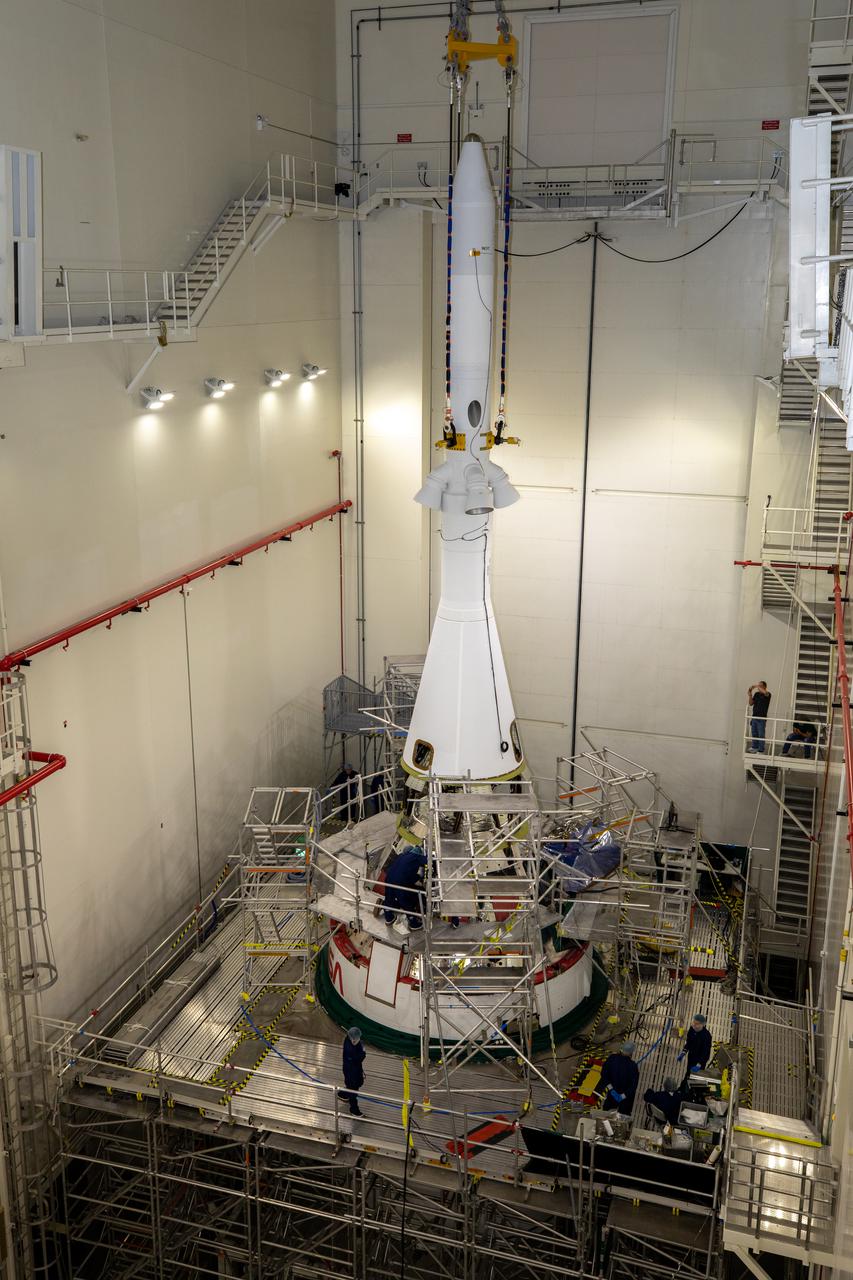
Teams with NASA’s Exploration Ground Systems (EGS) and contractor Jacobs integrated the launch abort system (LAS) with the Orion spacecraft inside the Launch Abort System Facility at NASA’s Kennedy Space Center in Florida on July 23, 2021. Launching later this year, Artemis I will be a test of the Orion spacecraft and Space Launch System rocket as an integrated system ahead of crewed flights to the Moon. Although there will be no crew the Artemis I, the launch abort system will collect flight data during the ascent to space and then jettison from the spacecraft. Next, technicians will install four panels, or ogives, that make up the fairing assembly and protect the spacecraft from heat, air, and acoustic environments during its entry into orbit. Once final checkouts are complete, Orion will join the Space Launch System for integration.
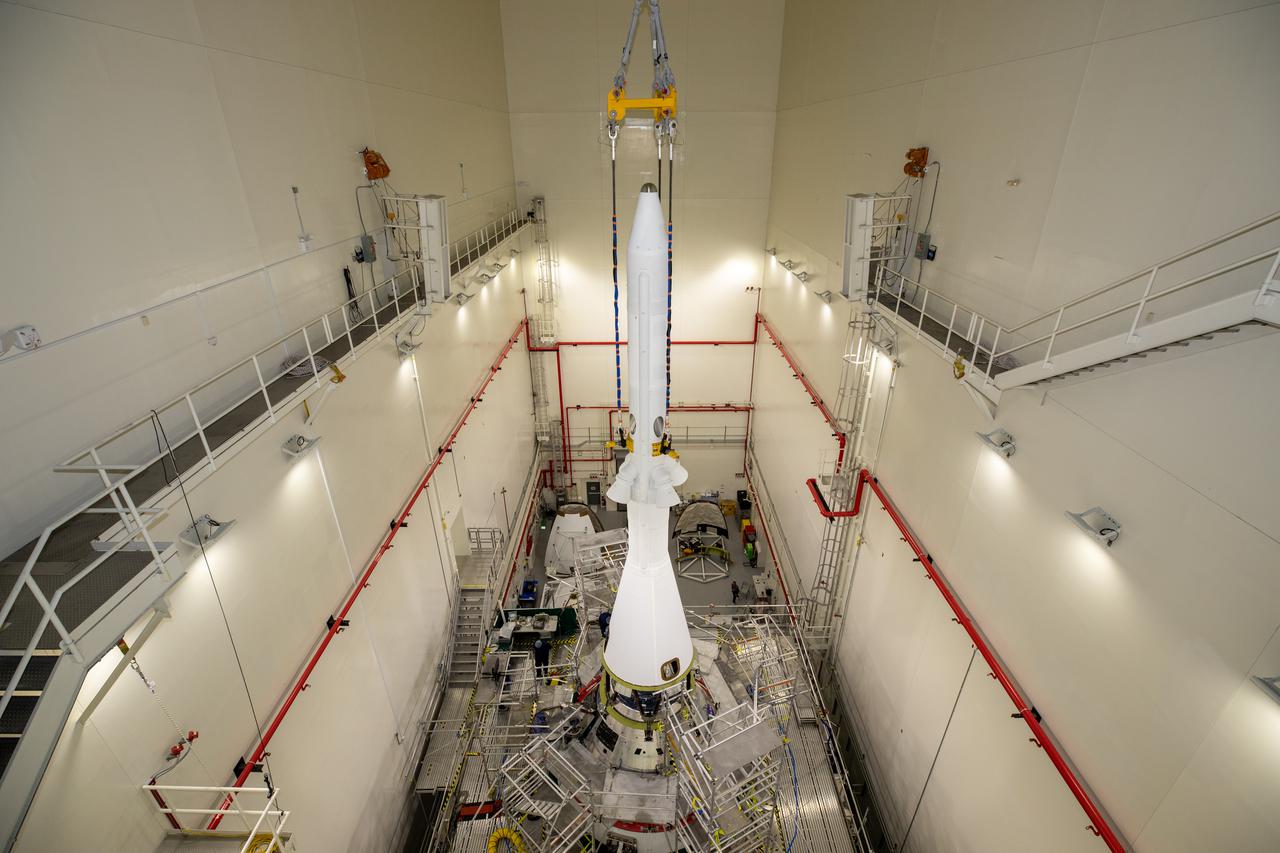
Teams with NASA’s Exploration Ground Systems (EGS) and contractor Jacobs integrated the launch abort system (LAS) with the Orion spacecraft inside the Launch Abort System Facility at NASA’s Kennedy Space Center in Florida on July 23, 2021. Launching later this year, Artemis I will be a test of the Orion spacecraft and Space Launch System rocket as an integrated system ahead of crewed flights to the Moon. Although there will be no crew the Artemis I, the launch abort system will collect flight data during the ascent to space and then jettison from the spacecraft. Next, technicians will install four panels, or ogives, that make up the fairing assembly and protect the spacecraft from heat, air, and acoustic environments during its entry into orbit. Once final checkouts are complete, Orion will join the Space Launch System for integration.
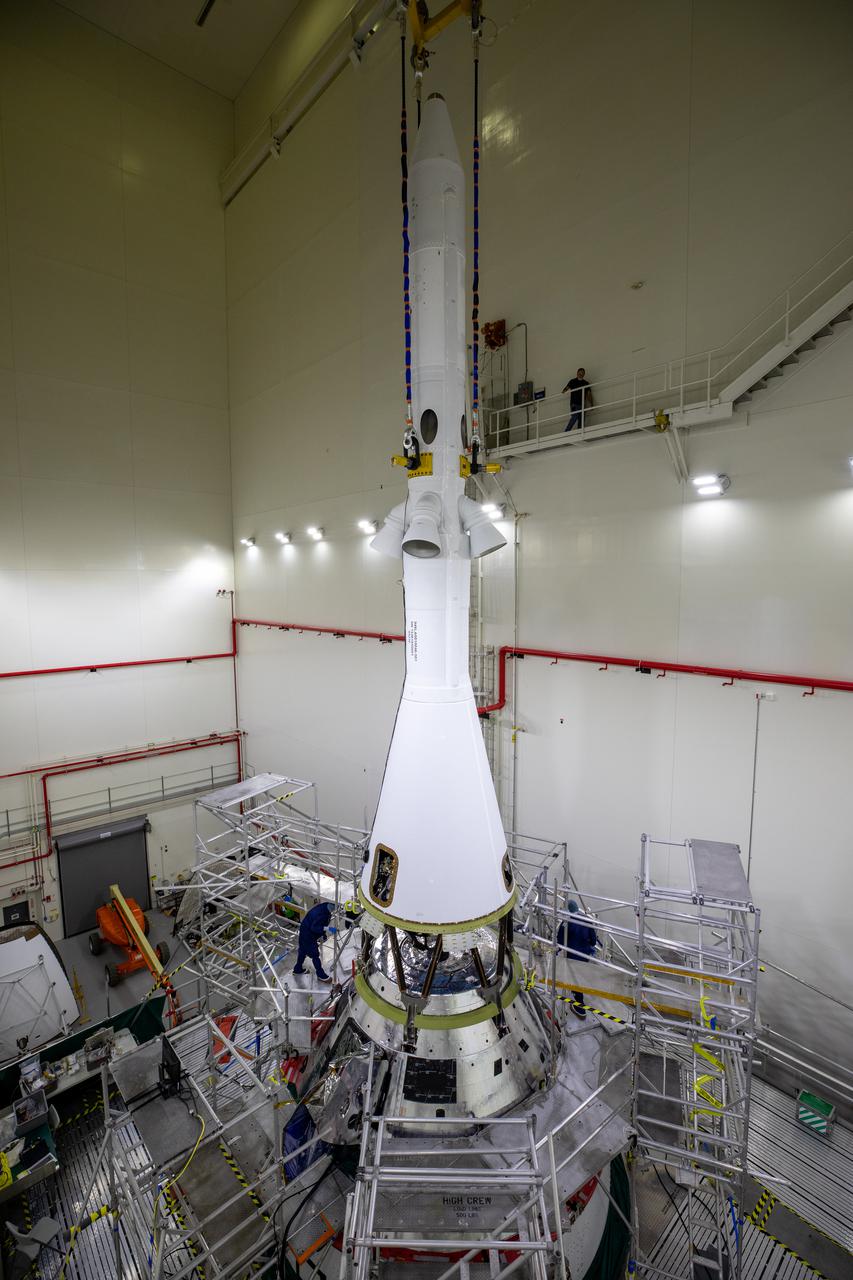
Teams with NASA’s Exploration Ground Systems (EGS) and contractor Jacobs integrated the launch abort system (LAS) with the Orion spacecraft inside the Launch Abort System Facility at NASA’s Kennedy Space Center in Florida on July 23, 2021. Launching later this year, Artemis I will be a test of the Orion spacecraft and Space Launch System rocket as an integrated system ahead of crewed flights to the Moon. Although there will be no crew the Artemis I, the launch abort system will collect flight data during the ascent to space and then jettison from the spacecraft. Next, technicians will install four panels, or ogives, that make up the fairing assembly and protect the spacecraft from heat, air, and acoustic environments during its entry into orbit. Once final checkouts are complete, Orion will join the Space Launch System for integration.
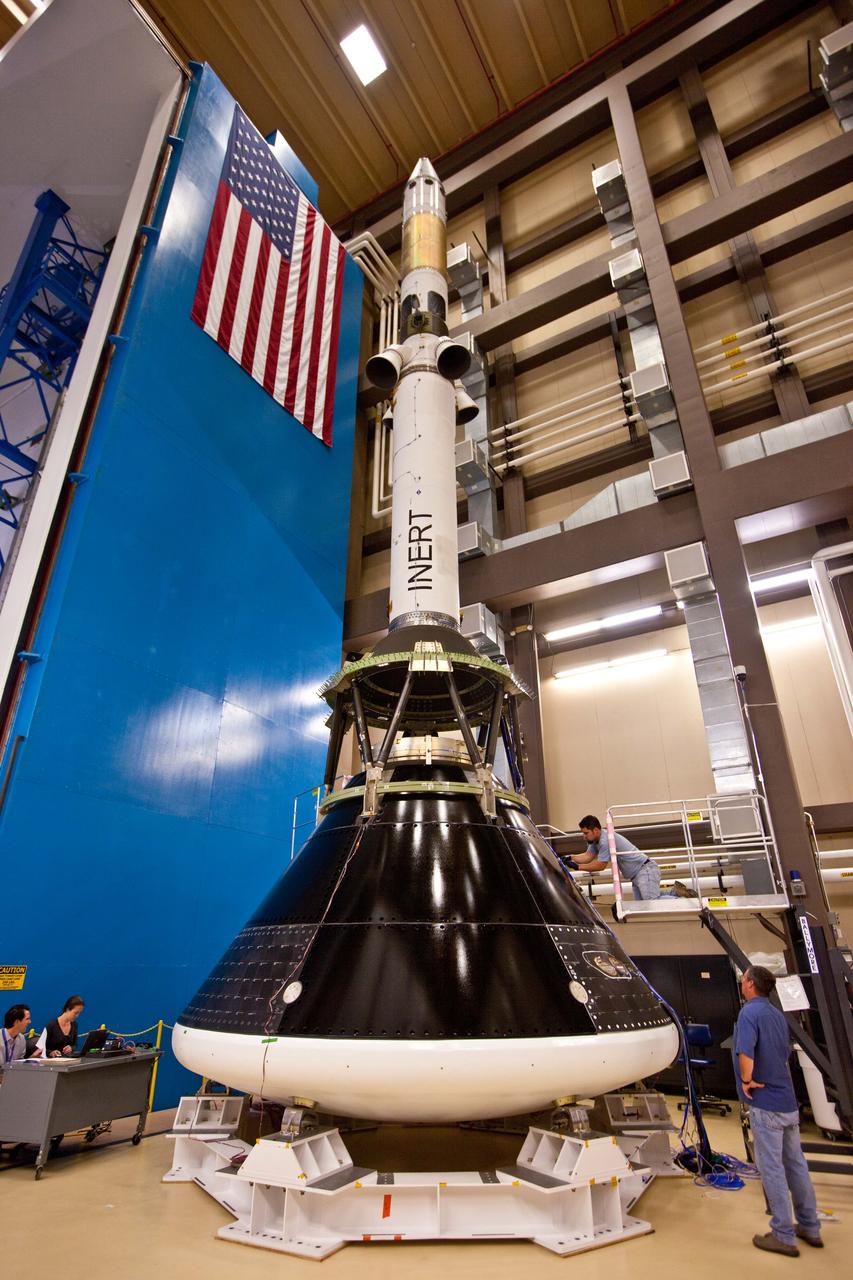
The Orion launch abort system and crew module test articles undergo stacking at Lockheed Martin’s facilities near Denver in preparation for acoustic testing on Aug. 9, 2011. To emulate the sound pressure levels experienced at launch, the tests exposed Orion and its launch abort system to acoustic levels exceeding 150 decibels, while hundreds of instruments record the vehicle’s response. Part of Batch image transfer from Flickr.
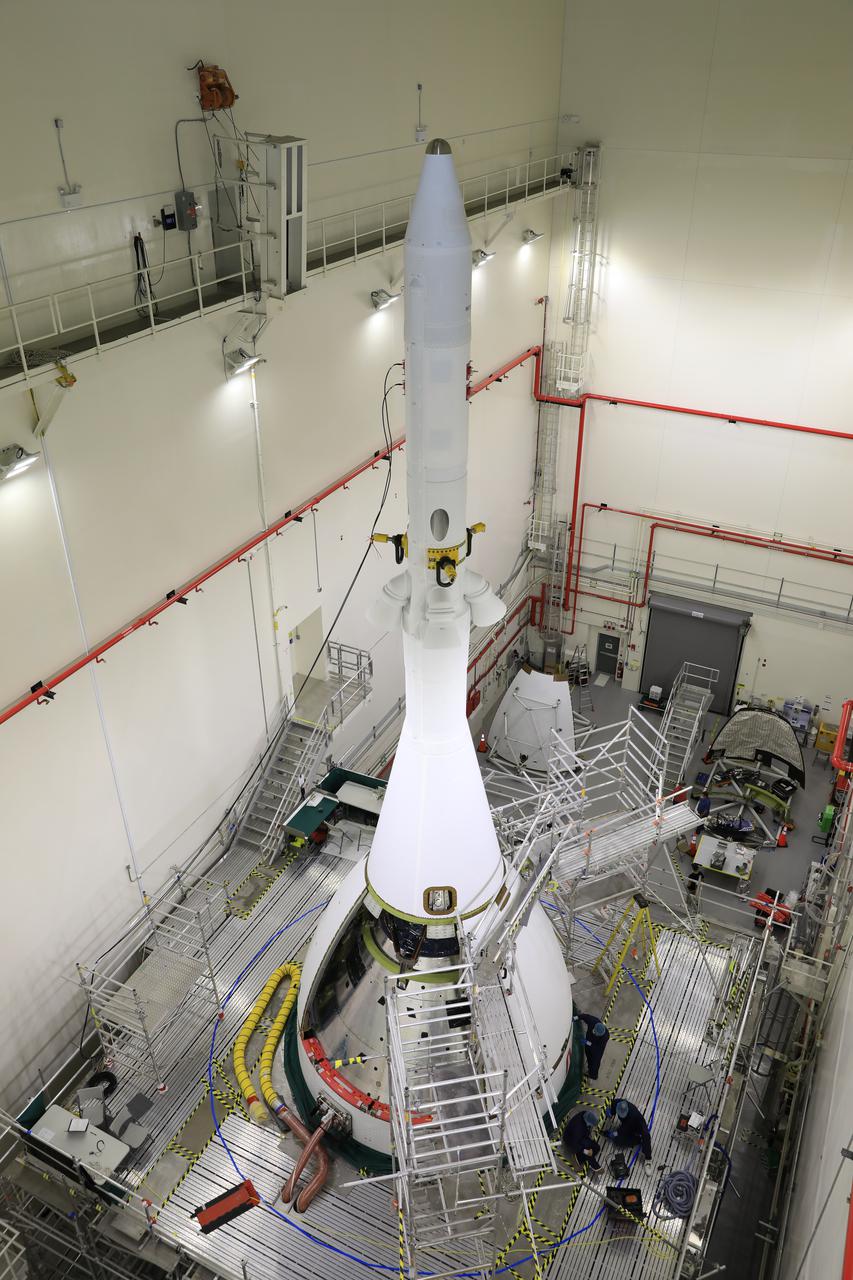
Technicians and engineers with Exploration Ground Systems and Jacobs connect the second ogive fairing for Orion’s Artemis I mission to the launch abort system (LAS) inside the Launch Abort System Facility high bay at NASA’s Kennedy Space Center in Florida on Aug. 23, 2021. The ogives consist of four protective panels that will shield the crew module from the severe vibrations and sounds it will experience during launch. During Artemis missions, the 44-foot-tall LAS will detach from the spacecraft when it is no longer needed. Launching in 2021, Artemis I will be an uncrewed test of the Orion spacecraft and Space Launch System rocket as an integrated system ahead of crewed flights to the Moon. Under Artemis, NASA aims to land the first woman and first person of color on the Moon and establish sustainable lunar exploration.
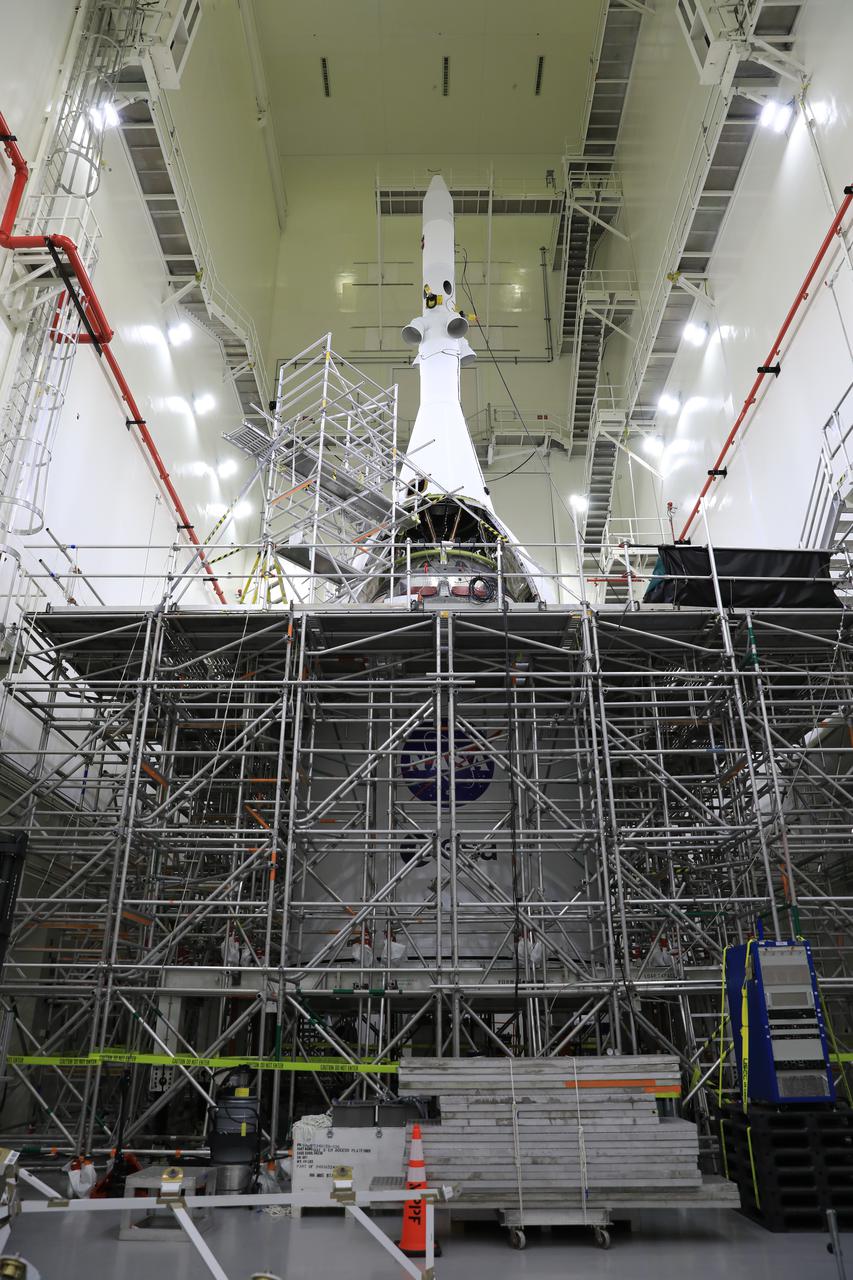
Technicians and engineers with Exploration Ground Systems and Jacobs connect the second ogive fairing for Orion’s Artemis I mission to the launch abort system (LAS) inside the Launch Abort System Facility high bay at NASA’s Kennedy Space Center in Florida on Aug. 23, 2021. The ogives consist of four protective panels that will shield the crew module from the severe vibrations and sounds it will experience during launch. During Artemis missions, the 44-foot-tall LAS will detach from the spacecraft when it is no longer needed. Launching in 2021, Artemis I will be an uncrewed test of the Orion spacecraft and Space Launch System rocket as an integrated system ahead of crewed flights to the Moon. Under Artemis, NASA aims to land the first woman and first person of color on the Moon and establish sustainable lunar exploration.
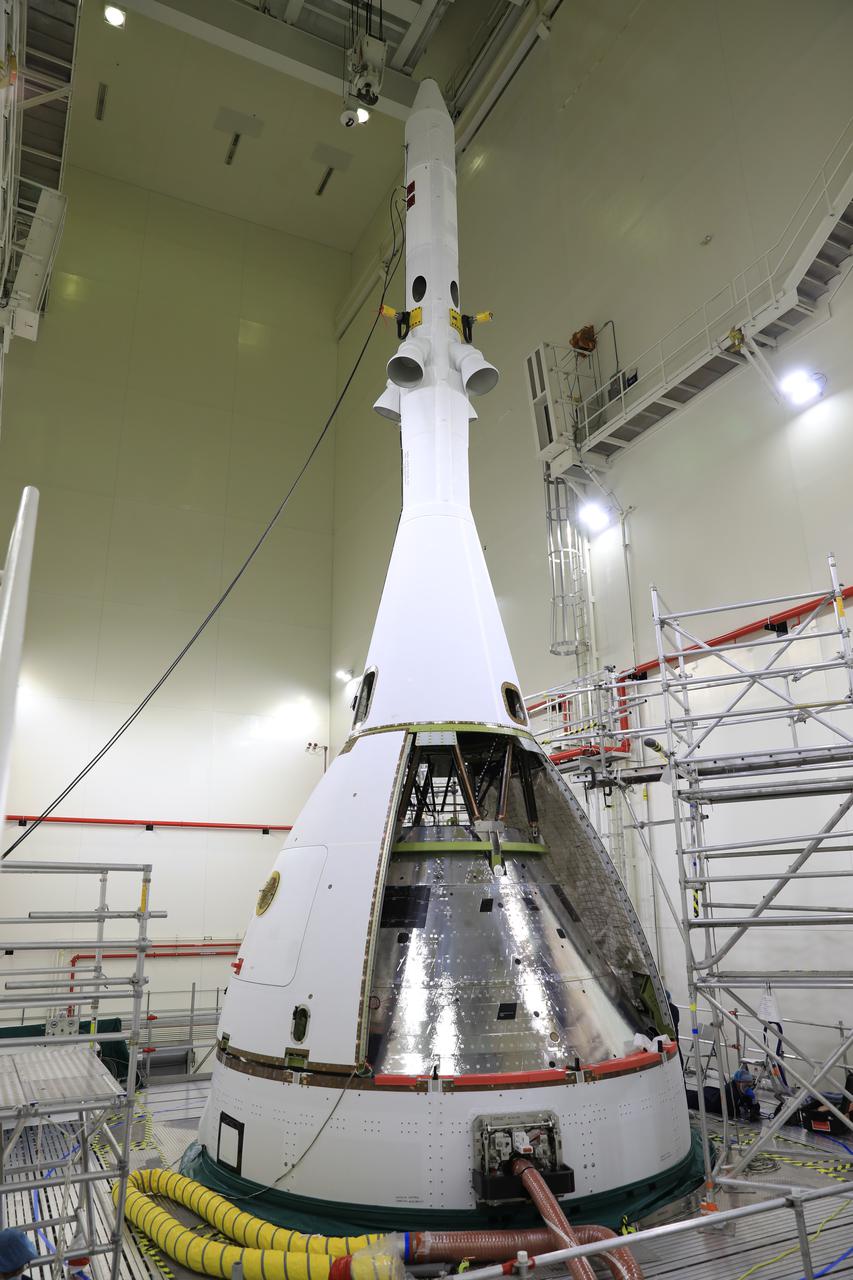
Technicians and engineers with Exploration Ground Systems and Jacobs connect the second ogive fairing for Orion’s Artemis I mission to the launch abort system (LAS) inside the Launch Abort System Facility high bay at NASA’s Kennedy Space Center in Florida on Aug. 23, 2021. The ogives consist of four protective panels that will shield the crew module from the severe vibrations and sounds it will experience during launch. During Artemis missions, the 44-foot-tall LAS will detach from the spacecraft when it is no longer needed. Launching in 2021, Artemis I will be an uncrewed test of the Orion spacecraft and Space Launch System rocket as an integrated system ahead of crewed flights to the Moon. Under Artemis, NASA aims to land the first woman and first person of color on the Moon and establish sustainable lunar exploration.
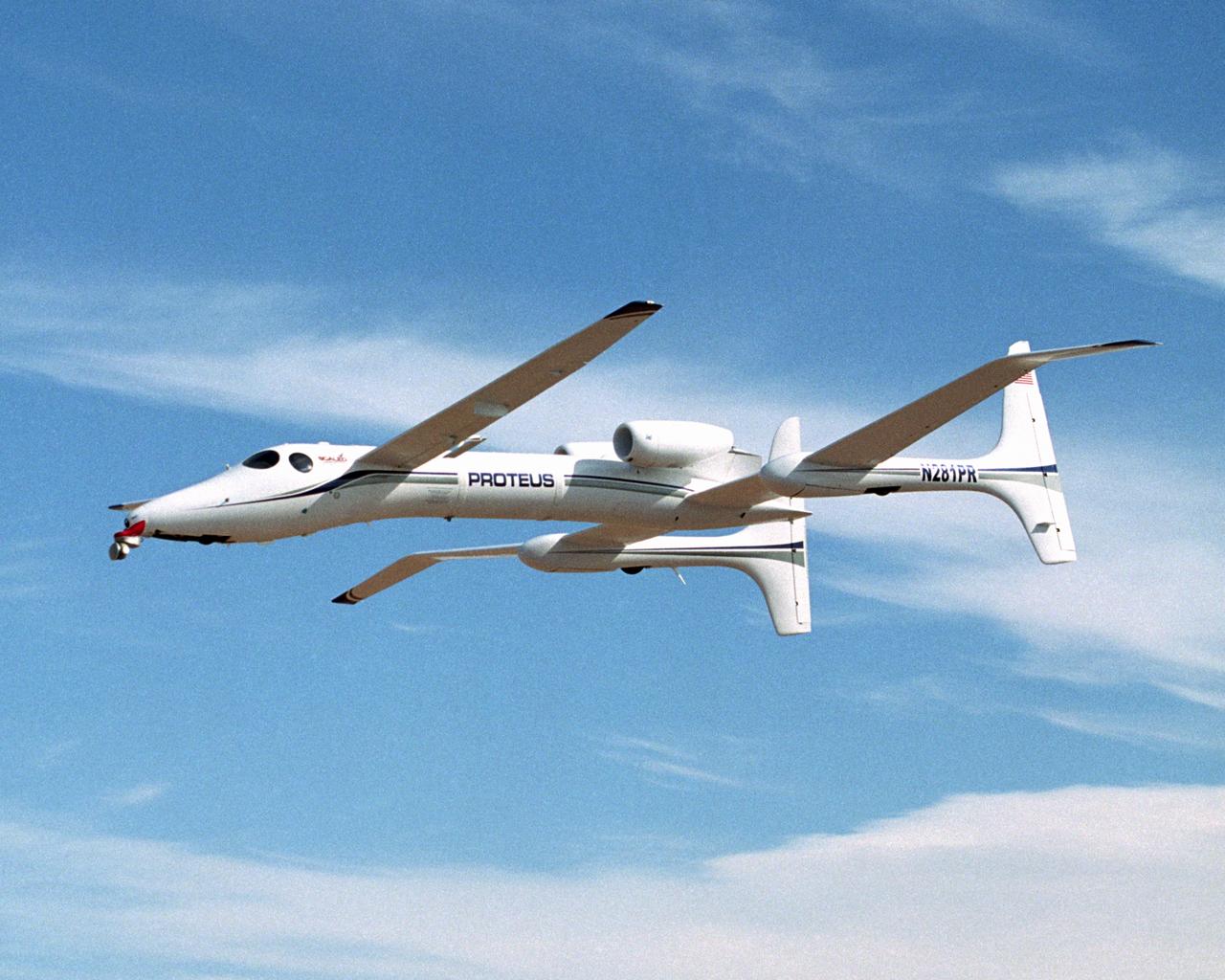
Proteus aircraft low-level flyby at Las Cruces Airport.
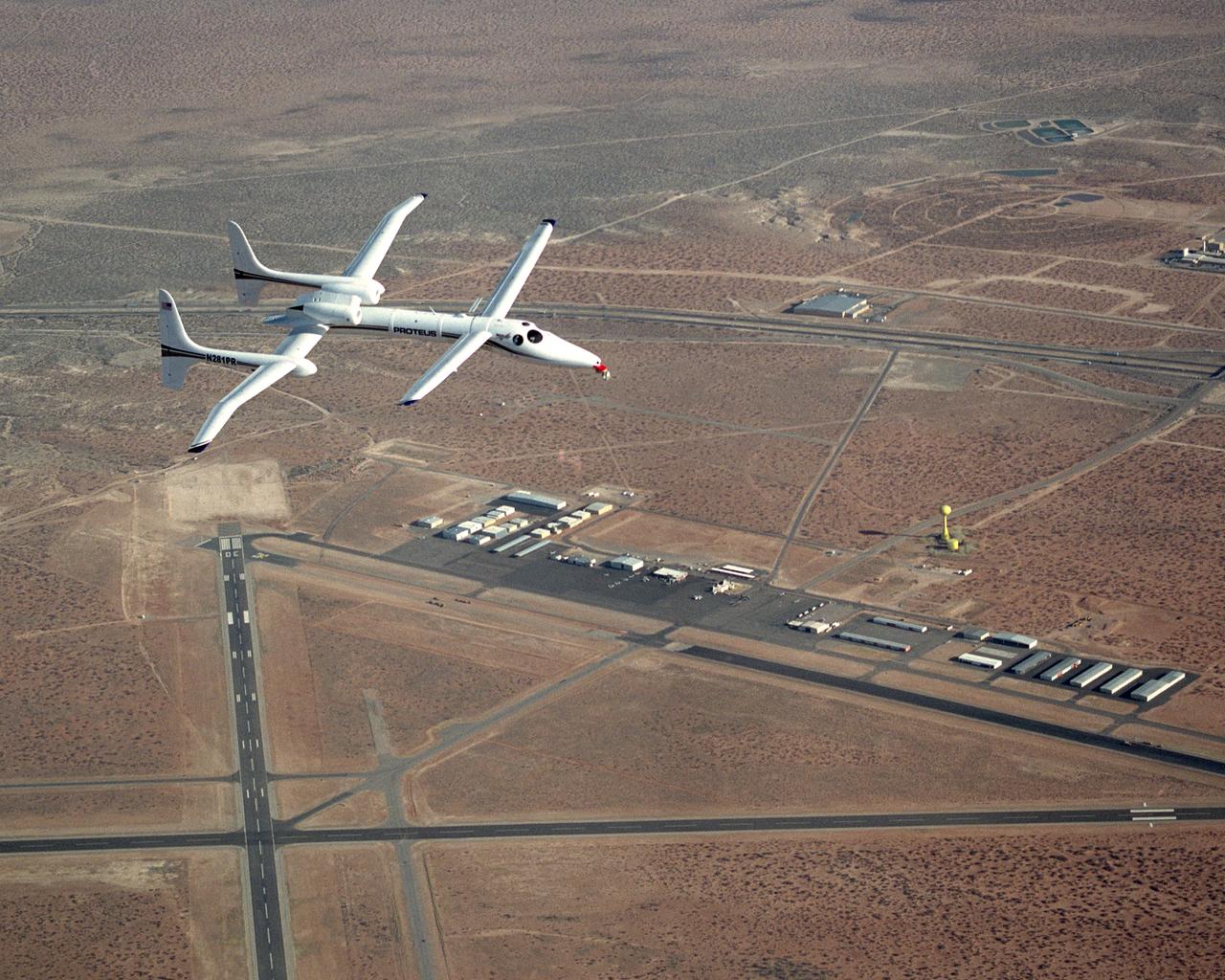
Proteus aircraft over Las Cruces International Airport in New Mexico.
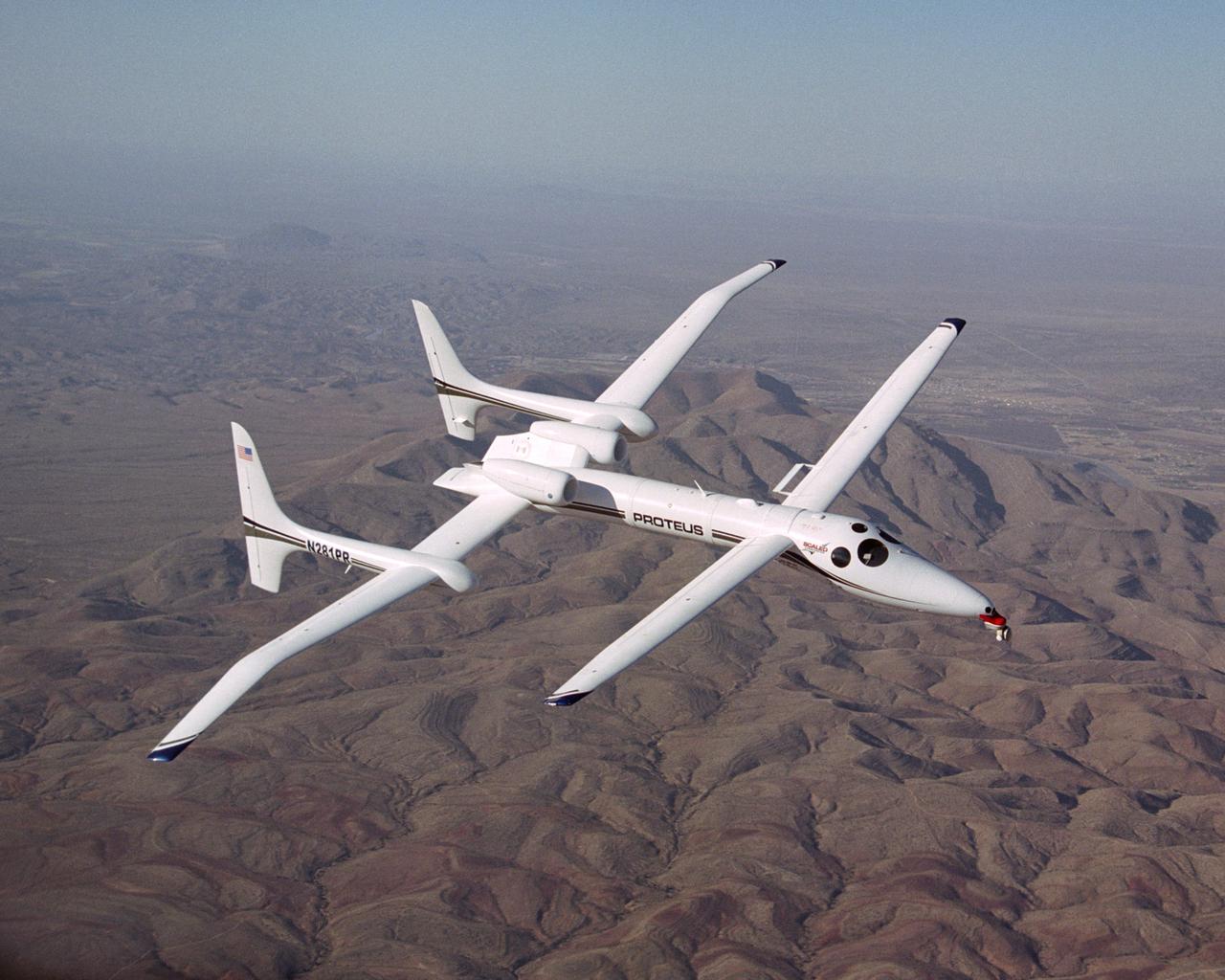
Proteus in flight over mountains near Las Cruces, New Mexico.

On Sunday, April 28, a category F5 tornado cut an East-West path through La Plata, Maryland, killing 5 and injuring more than 100. These two images acquired by NASA's Terra satellite Advanced Spaceborne Thermal Emission and Reflection Radiometer (ASTER) show a 6-by-17.8-kilometer (3.7-by-11.1-mile) area centered on the town. The top image was acquired on May 12, 2001, and the bottom on May 3, 2002. The bands used for the image portray vegetation in red, and bare fields and urban areas in blue-green. The dark turquoise swath cutting across the 2002 image is the track of the tornado, where the vegetation was ripped up and removed. With its 14 spectral bands from the visible to the thermal infrared wavelength region, and its high spatial resolution of 15 to 90 meters(about 50 to 300 feet), ASTER will image Earth for the next six years to map and monitor the changing surface of our planet. http://photojournal.jpl.nasa.gov/catalog/PIA03494
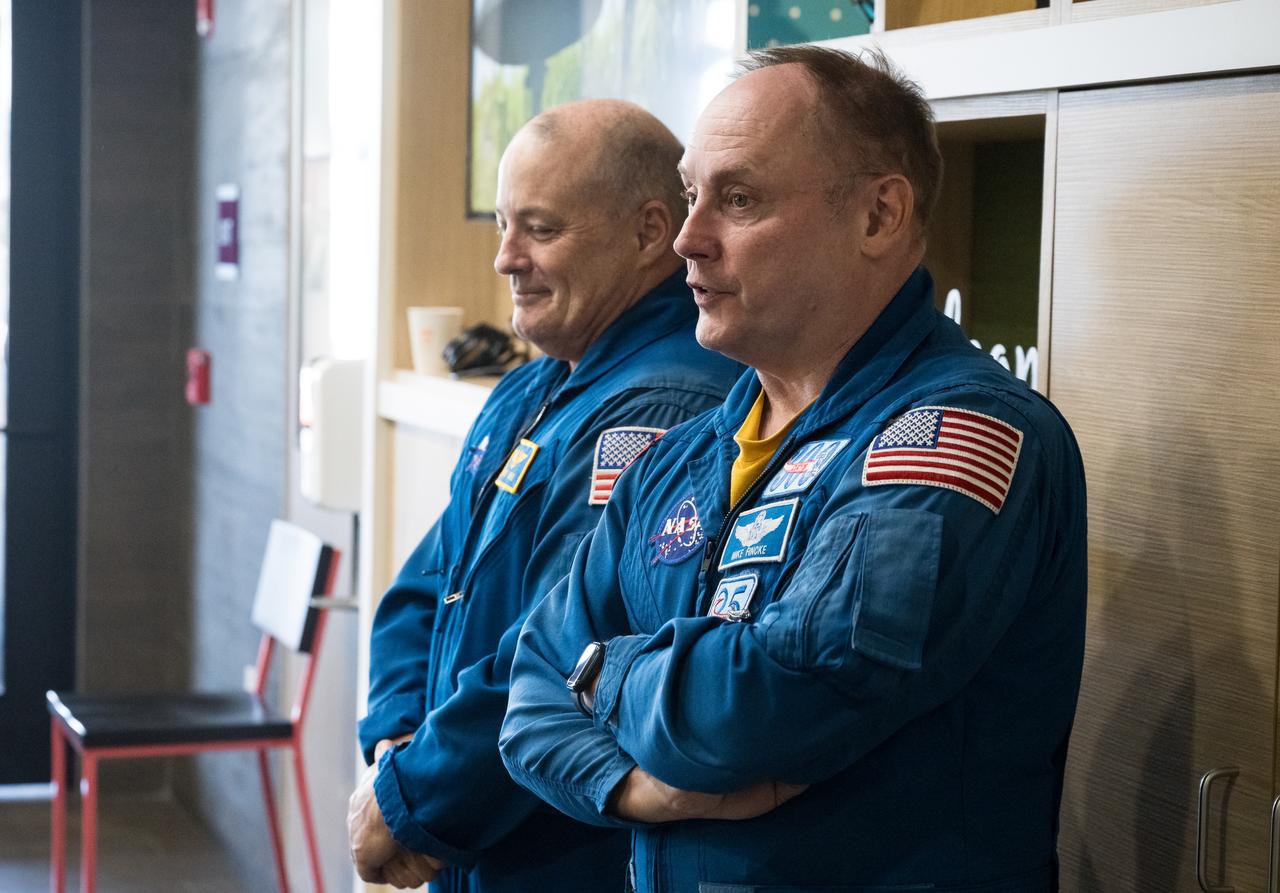
NASA Astronauts Scott Tingle, left, and Mike Fincke, speak with Boeing and NASA landing teams before the landing of NASA’s Boeing Crew Flight Test Starliner spacecraft, Friday, Sept. 6, 2024, in Las Cruces, New Mexico. The uncrewed spacecraft is scheduled to land at White Sands Missile Range’s Space Harbor later today, Mountain Time (Sept. 7 Eastern Time). This approach allows NASA and Boeing to continue gathering testing data. Photo Credit: (NASA/Aubrey Gemignani)
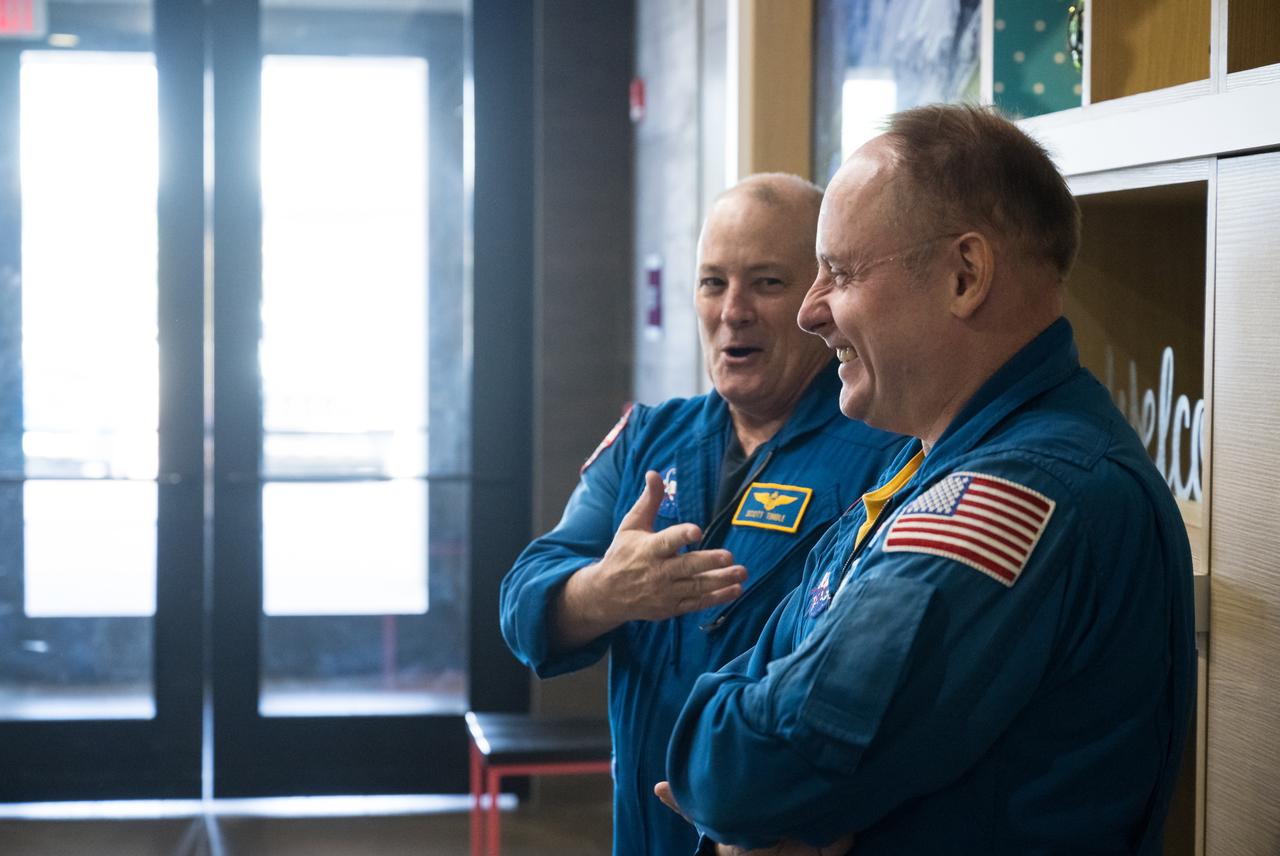
NASA Astronauts Scott Tingle, left, and Mike Fincke, speak with Boeing and NASA landing teams before the landing of NASA’s Boeing Crew Flight Test Starliner spacecraft, Friday, Sept. 6, 2024, in Las Cruces, New Mexico. The uncrewed spacecraft is scheduled to land at White Sands Missile Range’s Space Harbor later today, Mountain Time (Sept. 7 Eastern Time). This approach allows NASA and Boeing to continue gathering testing data. Photo Credit: (NASA/Aubrey Gemignani)

Over the years of the Landsat program, the desert city of Las Vegas has gone through a massive growth spurt. The outward expansion of the city over the last quarter of a century is shown here with two false-color Landsat 5 images (August 3, 1984, and November 2, 2011). The dark purple grid of city streets and the green of irrigated vegetation grow out in every direction into the surrounding desert. These images were created using reflected light from the shortwave infrared, near-infrared, and green portions of the electromagnetic spectrum (Landsat 5 TM bands 7,4,2). ---- NASA and the U.S. Department of the Interior through the U.S. Geological Survey (USGS) jointly manage Landsat, and the USGS preserves a 40-year archive of Landsat images that is freely available over the Internet. The next Landsat satellite, now known as the Landsat Data Continuity Mission (LDCM) and later to be called Landsat 8, is scheduled for launch in 2013. In honor of Landsat’s 40th anniversary in July 2012, the USGS released the LandsatLook viewer – a quick, simple way to go forward and backward in time, pulling images of anywhere in the world out of the Landsat archive. <b><a href="http://www.nasa.gov/audience/formedia/features/MP_Photo_Guidelines.html" rel="nofollow">NASA image use policy.</a></b> <b><a href="http://www.nasa.gov/centers/goddard/home/index.html" rel="nofollow">NASA Goddard Space Flight Center</a></b> enables NASA’s mission through four scientific endeavors: Earth Science, Heliophysics, Solar System Exploration, and Astrophysics. Goddard plays a leading role in NASA’s accomplishments by contributing compelling scientific knowledge to advance the Agency’s mission. <b>Follow us on <a href="http://twitter.com/NASA_GoddardPix" rel="nofollow">Twitter</a></b> <b>Like us on <a href="http://www.facebook.com/pages/Greenbelt-MD/NASA-Goddard/395013845897?ref=tsd" rel="nofollow">Facebook</a></b> <b>Find us on <a href="http://instagrid.me/nasagoddard/?vm=grid" rel="nofollow">Instagram</a></b>

A category F4 tornado tore through La Plata, Maryland on April 28, 2002, killing 5 and injuring more than 100 people. This image from NASA Terra satellite was acquired on May 1, 2002.

The cold pool of water in the Pacific known as La Nina is beginning to fade, but ocean conditions have not returned to normal, according to scientists studying images from the U.S.-French TOPEX/Poseidon satellite. http://photojournal.jpl.nasa.gov/catalog/PIA00031
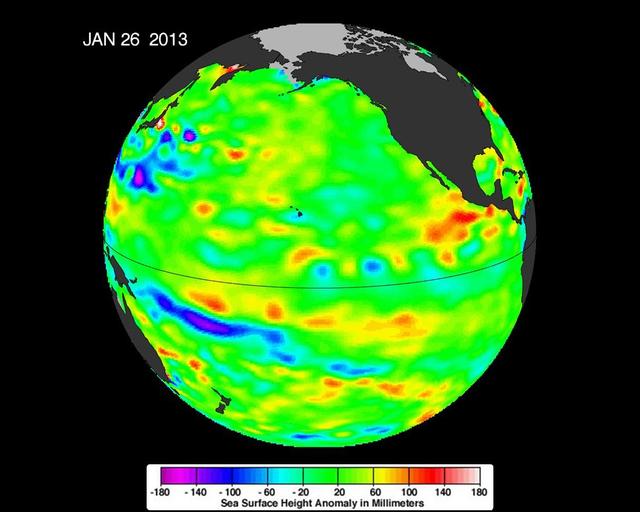
The latest image of sea surface heights in the Pacific Ocean from NASA Jason-2 satellite shows that the equatorial Pacific Ocean is now in its 10th month of being locked in what some call a neutral, or La Nada state.
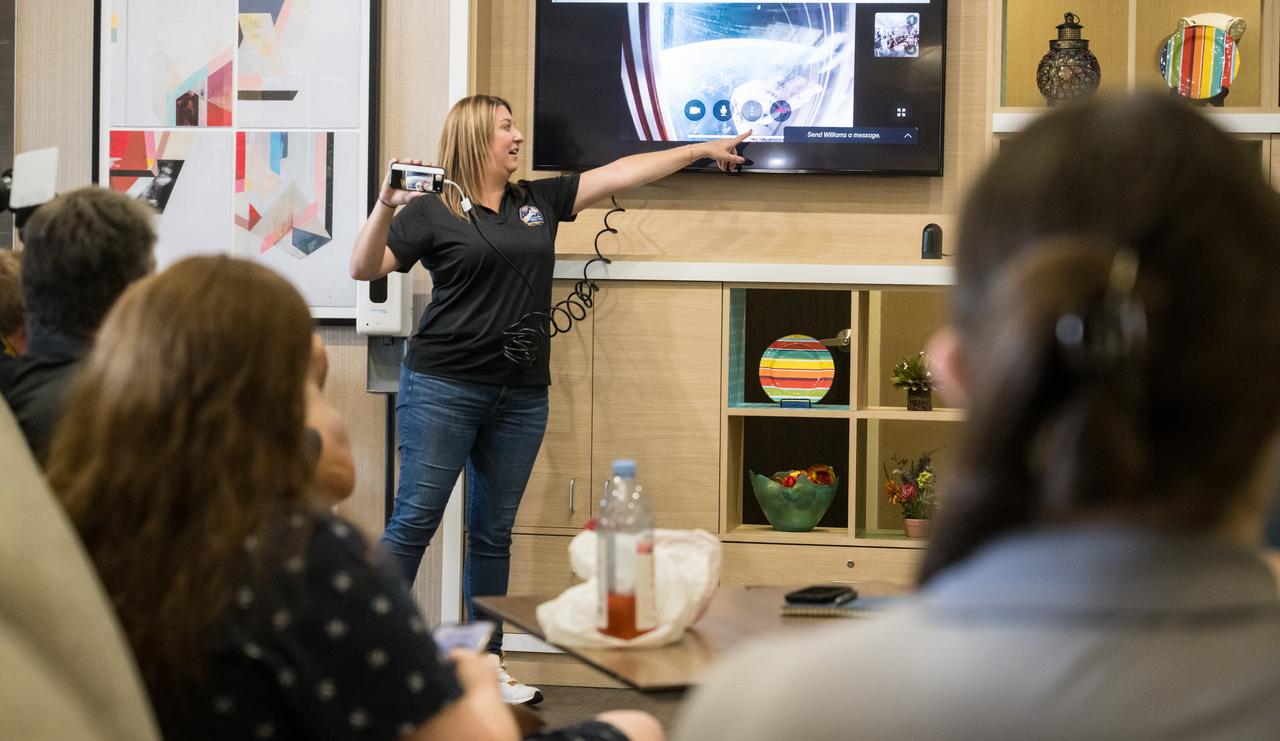
Boeing Astronaut Liaison & Space Flight Awareness Program Manager Megan Donaldson points out NASA’s Boeing Crew Flight Test Starliner spacecraft docked at the International Space Station during a call with NASA astronauts Butch Wilmore and Suni Williams before it’s uncrewed landing, Friday, Sept. 6, 2024, in Las Cruces, New Mexico. It is scheduled to land at White Sands Missile Range’s Space Harbor later today, Mountain Time (Sept. 7 Eastern Time). Photo Credit: (NASA/Aubrey Gemignani)
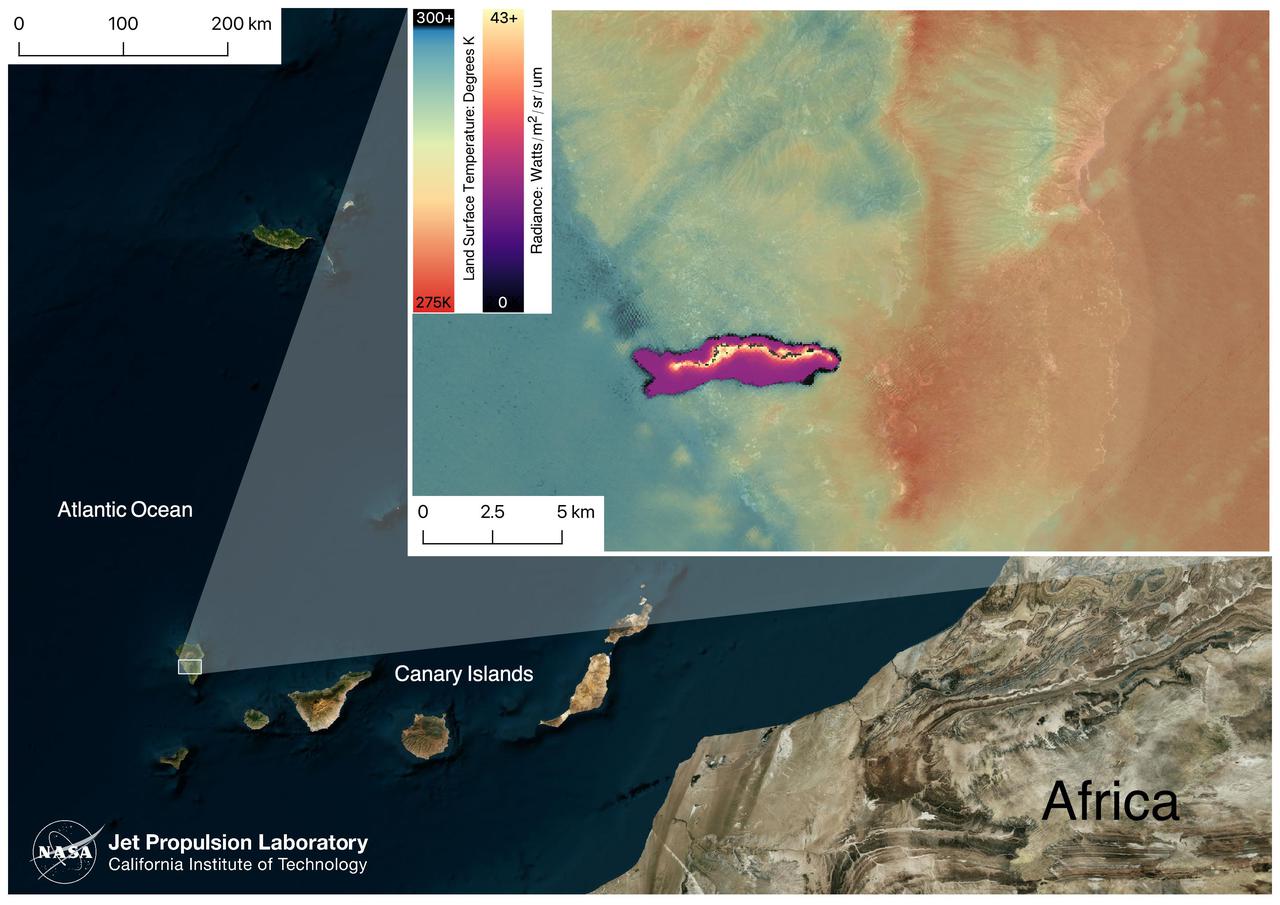
On September 19, 2021 volcanic activity permanently altered the coastline of the small island of La Palma, located off the coast of northwestern Africa. Within seven hours of the initial eruption, the lava flow traveled about 6km to the Atlantic Coast where it continues to extend the coastline out into the ocean. This image taken by the ECOSTRESS module aboard the International Space Station captured the initial Laval flow several hours after the eruption. Dark spots along the coastline represent locations where lava flowed into the ocean, increasing the surface temperature. ECOSTRESS's primary mission is to detect small changes in the temperature of plants to measure evapotranspiration rates. It can use the same instrumentation to detect changes in surface temperature associated with events such as volcanic eruptions. ECOSTRESS observations have a spatial resolution of about 70x70 meters, which enables researchers to study surface-temperature conditions down to the size of a football field. The mission can acquire images of the same region at different times of the day. This is advantageous when monitoring plant stress in the same area throughout the day, for example. https://photojournal.jpl.nasa.gov/catalog/PIA24916
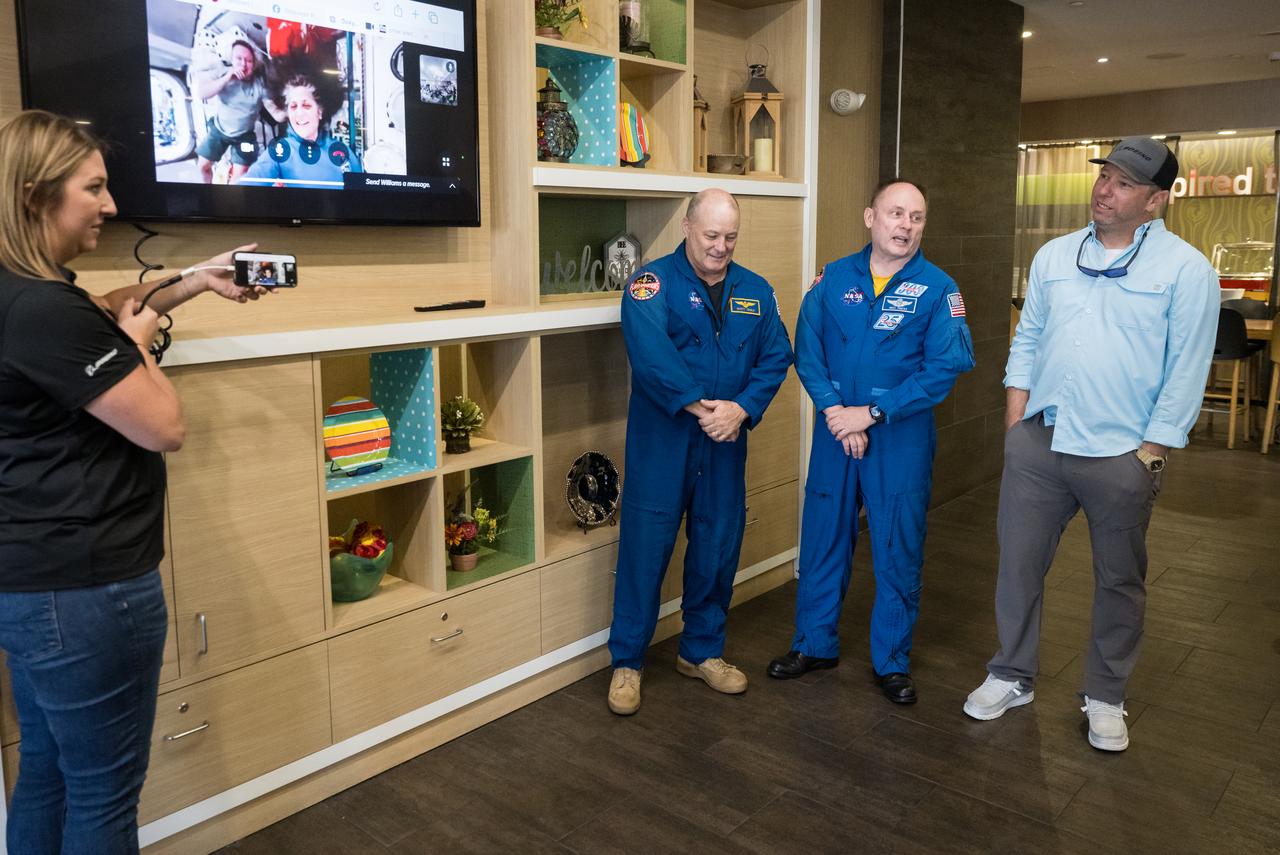
NASA Astronauts Butch Wilmore, left, and Suni Williams, speak with Boeing and NASA landing teams by phone from the International Space Station, before the landing of NASA’s Boeing Crew Flight Test Starliner spacecraft, Friday, Sept. 6, 2024, in Las Cruces, New Mexico. The uncrewed spacecraft is scheduled to land at White Sands Missile Range’s Space Harbor later today, Mountain Time (Sept. 7 Eastern Time). This approach allows NASA and Boeing to continue gathering testing data. Photo Credit: (NASA/Aubrey Gemignani)
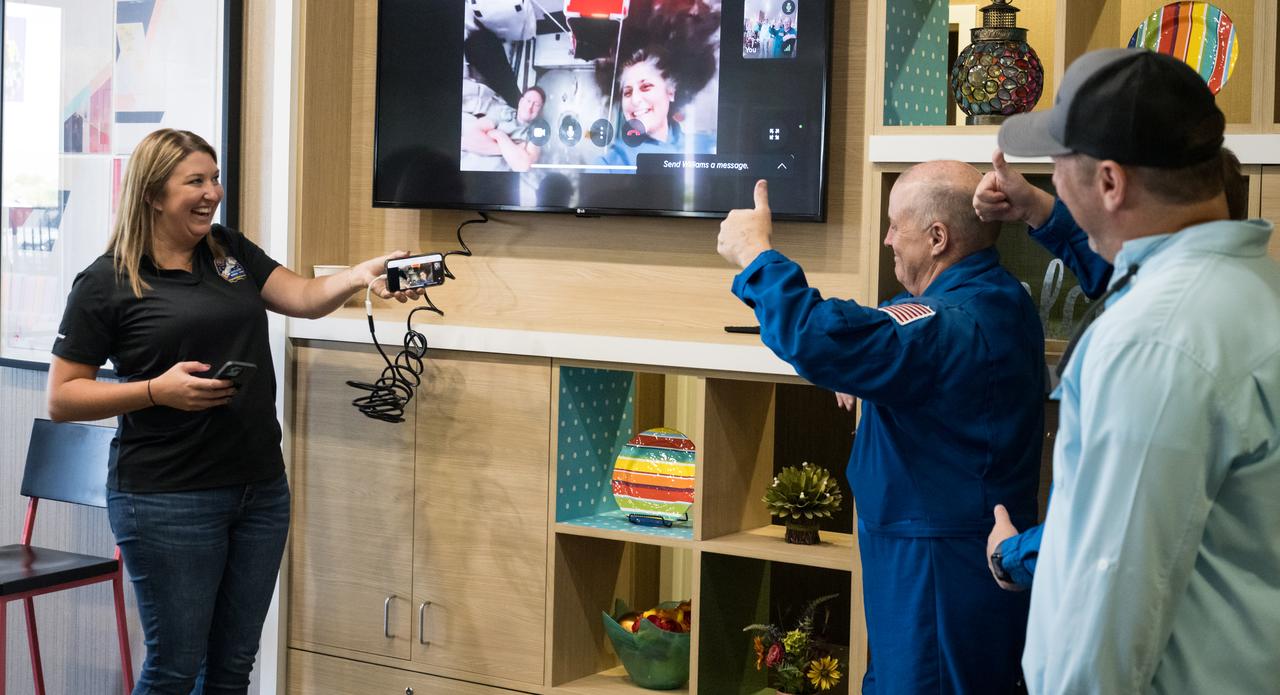
NASA Astronauts Butch Wilmore, left, and Suni Williams, speak with Boeing and NASA landing teams by phone from the International Space Station, before the landing of NASA’s Boeing Crew Flight Test Starliner spacecraft, Friday, Sept. 6, 2024, in Las Cruces, New Mexico. The uncrewed spacecraft is scheduled to land at White Sands Missile Range’s Space Harbor later today, Mountain Time (Sept. 7 Eastern Time). This approach allows NASA and Boeing to continue gathering testing data. Photo Credit: (NASA/Aubrey Gemignani)
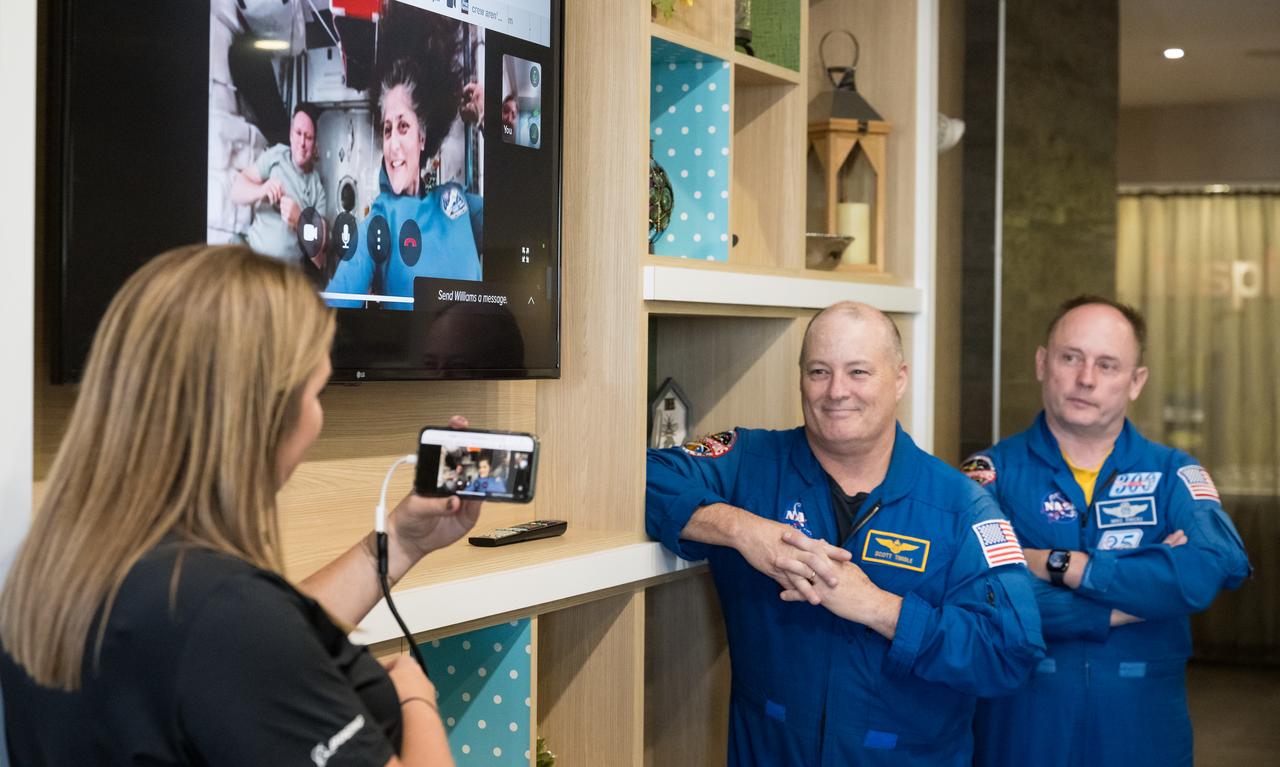
NASA Astronauts Butch Wilmore, left, and Suni Williams, speak with Boeing and NASA landing teams by phone from the International Space Station, before the landing of NASA’s Boeing Crew Flight Test Starliner spacecraft, Friday, Sept. 6, 2024, in Las Cruces, New Mexico. The uncrewed spacecraft is scheduled to land at White Sands Missile Range’s Space Harbor later today, Mountain Time (Sept. 7 Eastern Time). This approach allows NASA and Boeing to continue gathering testing data. Photo Credit: (NASA/Aubrey Gemignani)

The cold pool of water in the Pacific known as La Niña still persists, although it is slowly weakening, according to scientists studying new data from NASA U.S.-French TOPEX/Poseidon satellite.
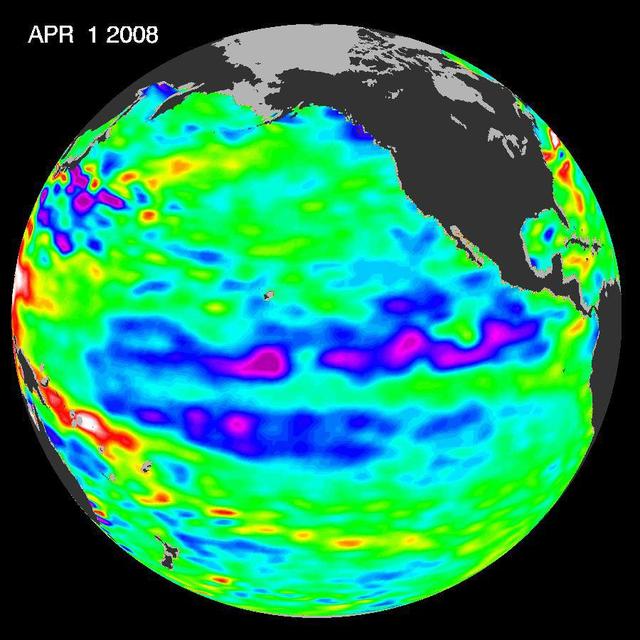
One of the strongest La Niñas in many years is slowly weakening but continues to blanket the Pacific Ocean near the equator, as shown by new sea-level height data collected by NASA U.S.-French Jason oceanographic satellite.

The Proteus aircraft and NASA Dryden's T-34 in flight over Las Cruces, New Mexico.
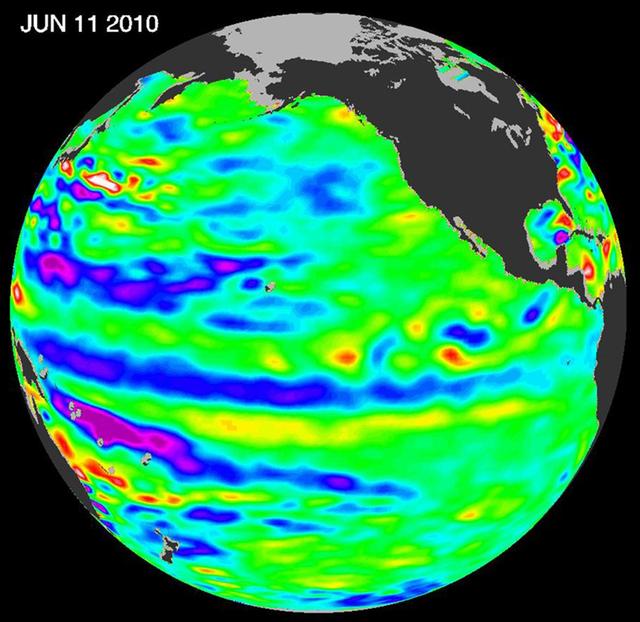
This image from NASA European Ocean Surface Topography Mission/Jason-2 shows that the moderate El Niño of the past year has officially bowed out, leaving his cool sibling, La Niña, poised to potentially take the equatorial stage.

This anaglyph was taken by NASA Phoenix Mars Lander Surface Stereo Imager Oct. 7, 2008. The anaglyph highlights the depth of the trench, informally named La Mancha, and reveals the ice layer beneath the soil surface. 3D glasses are necessary.

NASA TOPEX/Poseidon data, collected over a 10-day sampling cycle from March 1 to 11, 2000, showed a La Niña condition.
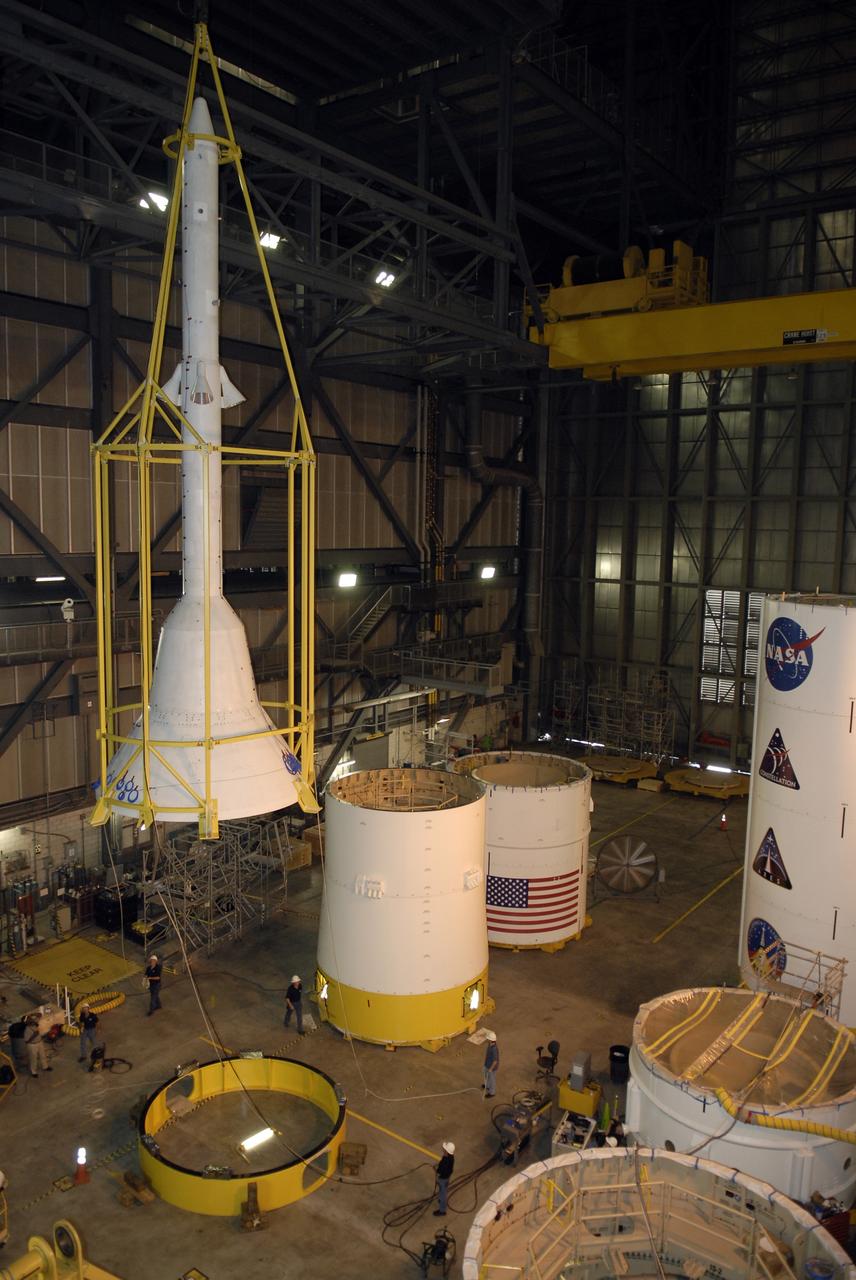
CAPE CANAVERAL, Fla. – In high bay 4 of the Vehicle Assembly Building at NASA's Kennedy Space Center in Florida, the framework known as the "birdcage" lifts the Ares I-X simulator crew module-launch abort system, or CM-LAS. The CM-LAS stack will be mated with the simulator service module-service adapter stack. Ares I-X is the flight test for the Ares I. The I-X flight will provide NASA an early opportunity to test and prove hardware, facilities and ground operations associated with Ares I. The launch of the 327-foot-tall, full-scale Ares I-X is targeted for August 2009. Photo credit: NASA/Kim Shiflett
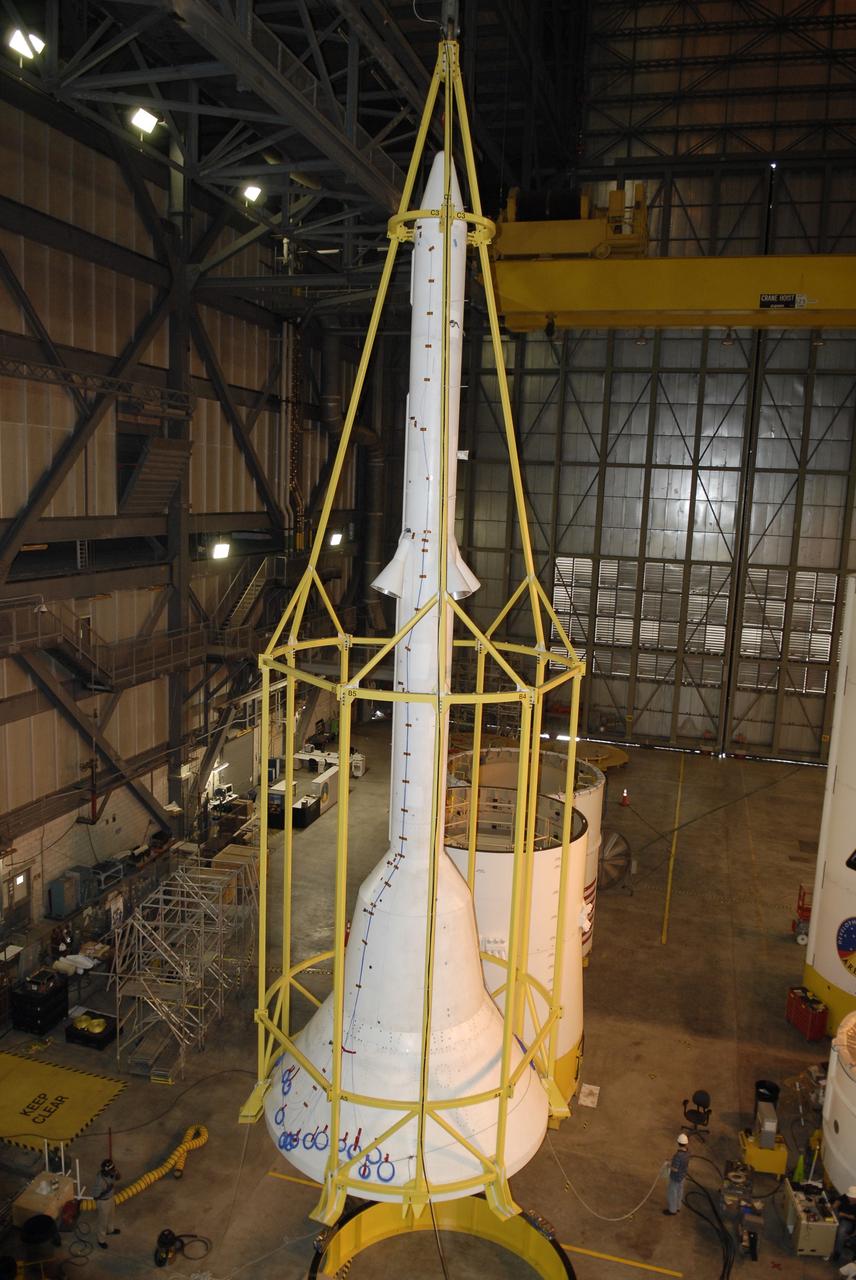
CAPE CANAVERAL, Fla. – In high bay 4 of the Vehicle Assembly Building at NASA's Kennedy Space Center in Florida, the framework known as the "birdcage" is placed over the Ares I-X simulator crew module-launch abort system, or CM-LAS. The birdcage will be used to lift the CM-LAS to mate the stack with the simulator service module-service adapter stack. Ares I-X is the flight test for the Ares I. The I-X flight will provide NASA an early opportunity to test and prove hardware, facilities and ground operations associated with Ares I. The launch of the 327-foot-tall, full-scale Ares I-X is targeted for August 2009. Photo credit: NASA/Kim Shiflett
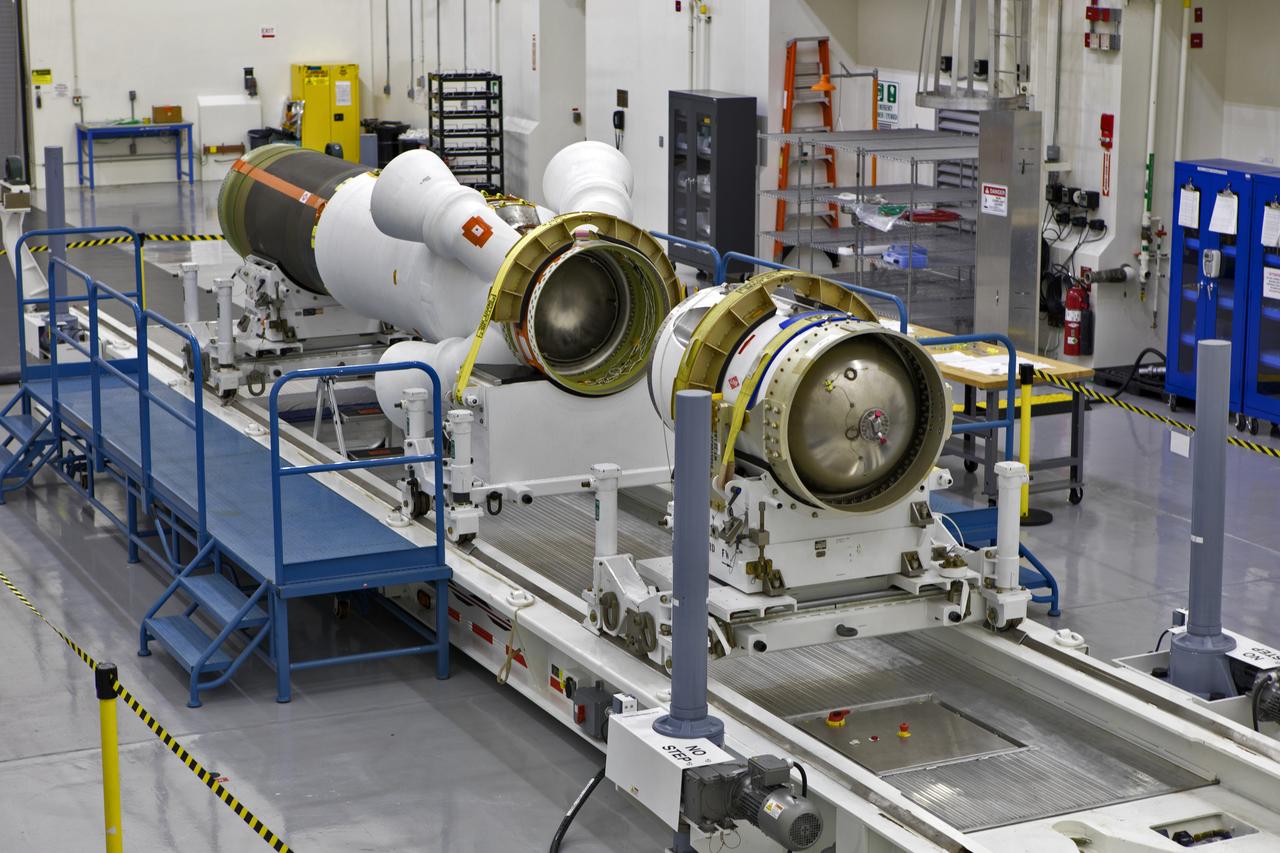
The jettison motor for Orion’s Launch Abort System (LAS) is shown inside the Launch Abort System Facility (LASF) at NASA’s Kennedy Space Center in Florida. The motor, which arrived at Kennedy on Sept. 10, 2018, will be stored in the LASF until processing for a full-stress test of the LAS called Ascent Abort-2 (AA-2), scheduled for April 2019. Designed and built by NASA and Lockheed Martin, the LAS will protect astronauts if a problem arises during launch by pulling the spacecraft away from a failing rocket. The jettison motor is one of three solid propellant rocket motors in the LAS (the abort motor and attitude control motor are the other two). The jettison motor will pull the LAS away from the crew module, allowing Orion’s parachutes to deploy and the spacecraft to safely land in the ocean.
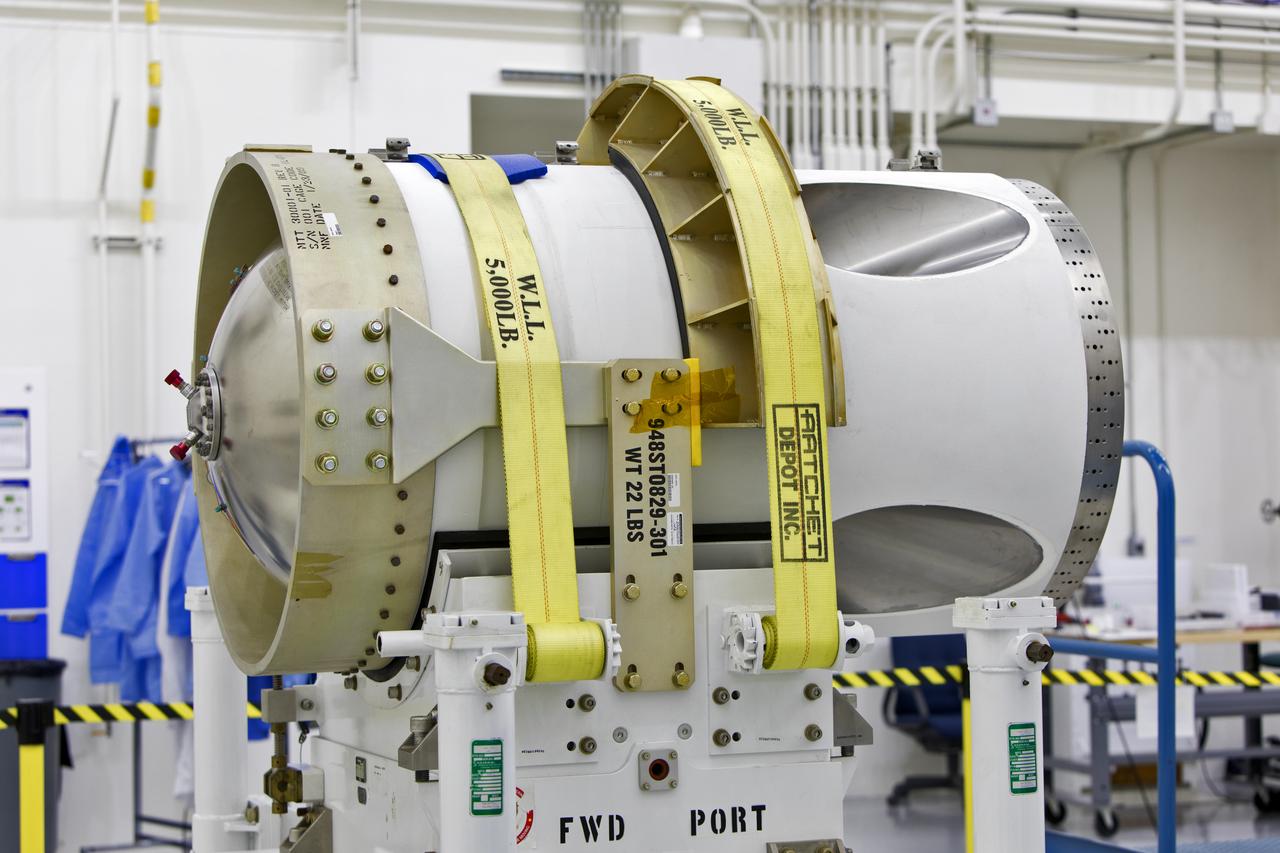
The jettison motor for Orion’s Launch Abort System (LAS) is shown inside the Launch Abort System Facility (LASF) at NASA’s Kennedy Space Center in Florida. The motor, which arrived at Kennedy on Sept. 10, 2018, will be stored in the LASF until processing for a full-stress test of the LAS called Ascent Abort-2 (AA-2), scheduled for April 2019. Designed and built by NASA and Lockheed Martin, the LAS will protect astronauts if a problem arises during launch by pulling the spacecraft away from a failing rocket. The jettison motor is one of three solid propellant rocket motors in the LAS (the abort motor and attitude control motor are the other two). The jettison motor will pull the LAS away from the crew module, allowing Orion’s parachutes to deploy and the spacecraft to safely land in the ocean.
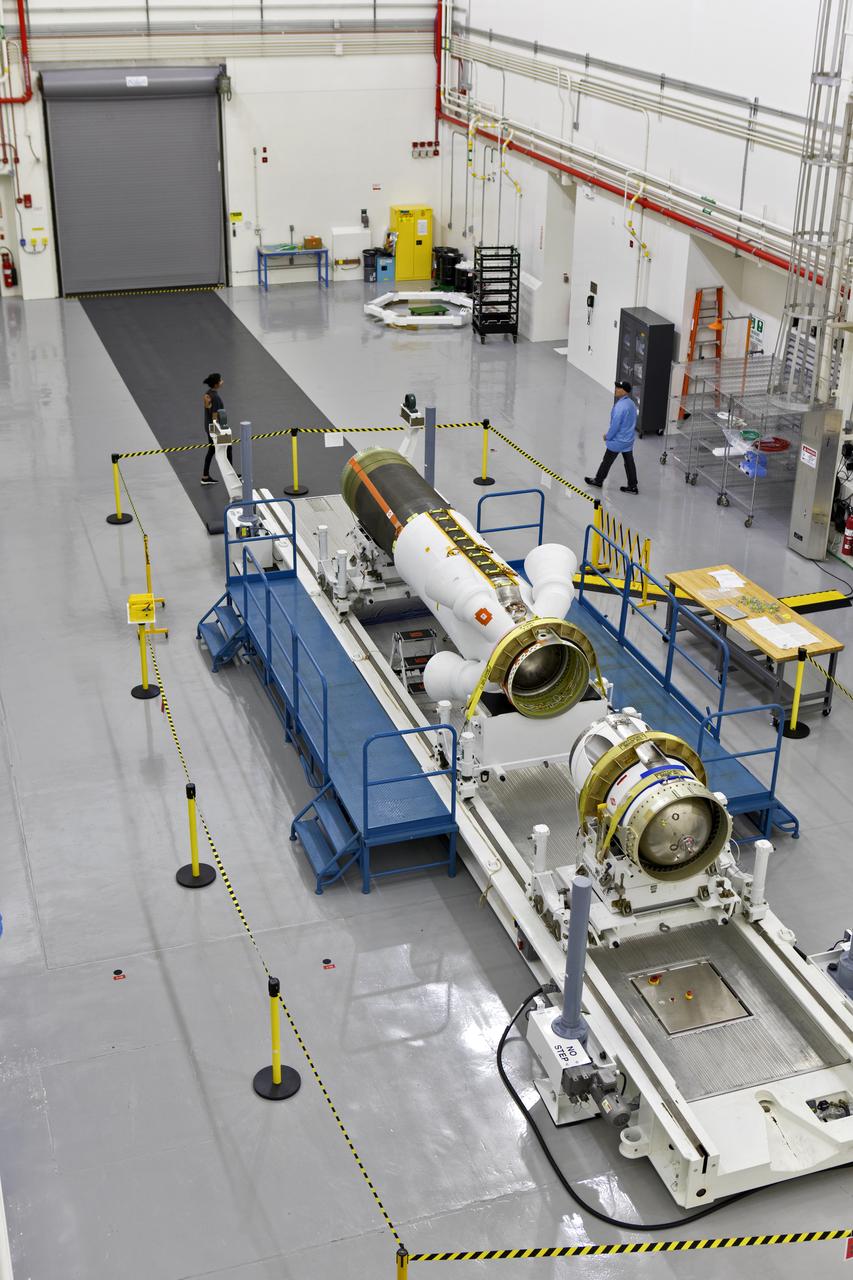
The jettison motor for Orion’s Launch Abort System (LAS) is shown inside the Launch Abort System Facility (LASF) at NASA’s Kennedy Space Center in Florida. The motor, which arrived at Kennedy on Sept. 10, 2018, will be stored in the LASF until processing for a full-stress test of the LAS called Ascent Abort-2 (AA-2), scheduled for April 2019. Designed and built by NASA and Lockheed Martin, the LAS will protect astronauts if a problem arises during launch by pulling the spacecraft away from a failing rocket. The jettison motor is one of three solid propellant rocket motors in the LAS (the abort motor and attitude control motor are the other two). The jettison motor will pull the LAS away from the crew module, allowing Orion’s parachutes to deploy and the spacecraft to safely land in the ocean.
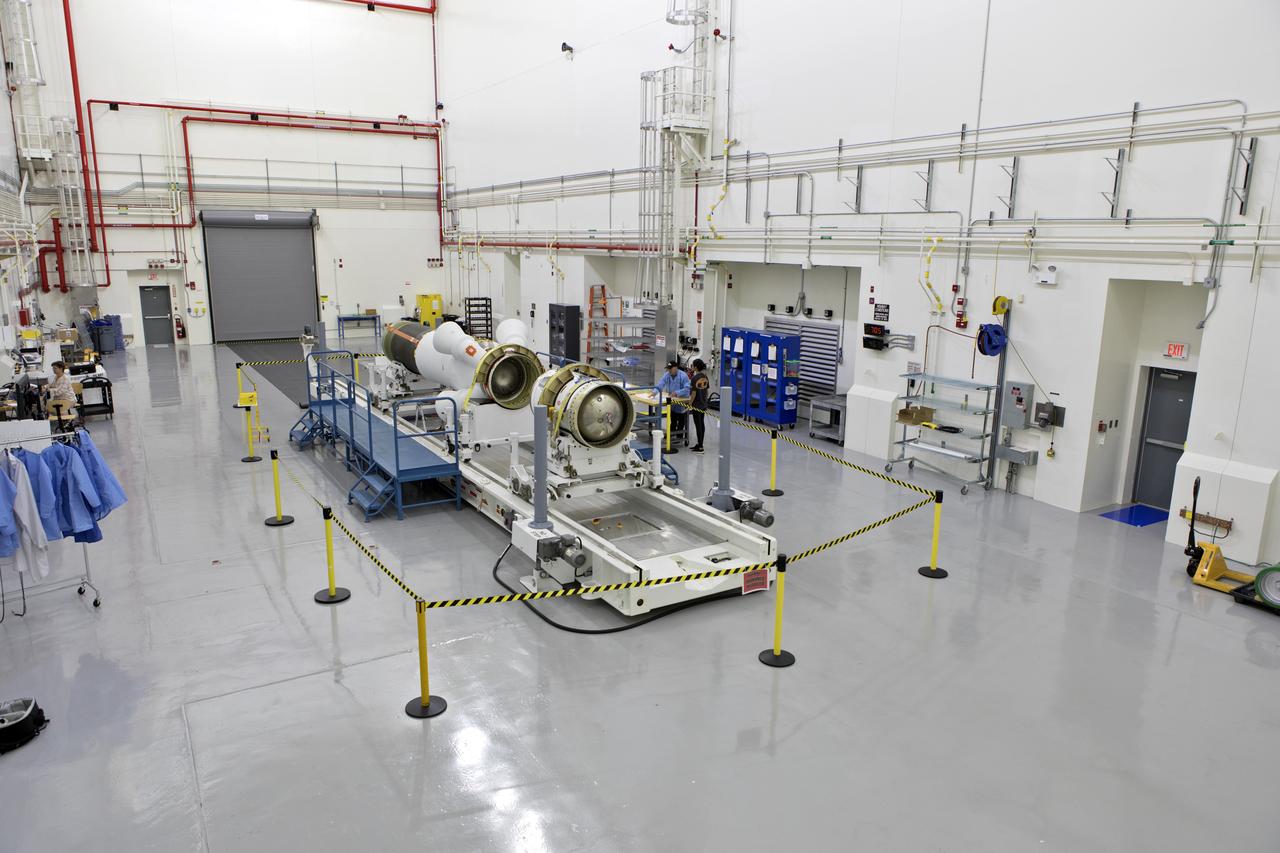
The jettison motor for Orion’s Launch Abort System (LAS) is shown inside the Launch Abort System Facility (LASF) at NASA’s Kennedy Space Center in Florida. The motor, which arrived at Kennedy on Sept. 10, 2018, will be stored in the LASF until processing for a full-stress test of the LAS called Ascent Abort-2 (AA-2), scheduled for April 2019. Designed and built by NASA and Lockheed Martin, the LAS will protect astronauts if a problem arises during launch by pulling the spacecraft away from a failing rocket. The jettison motor is one of three solid propellant rocket motors in the LAS (the abort motor and attitude control motor are the other two). The jettison motor will pull the LAS away from the crew module, allowing Orion’s parachutes to deploy and the spacecraft to safely land in the ocean.
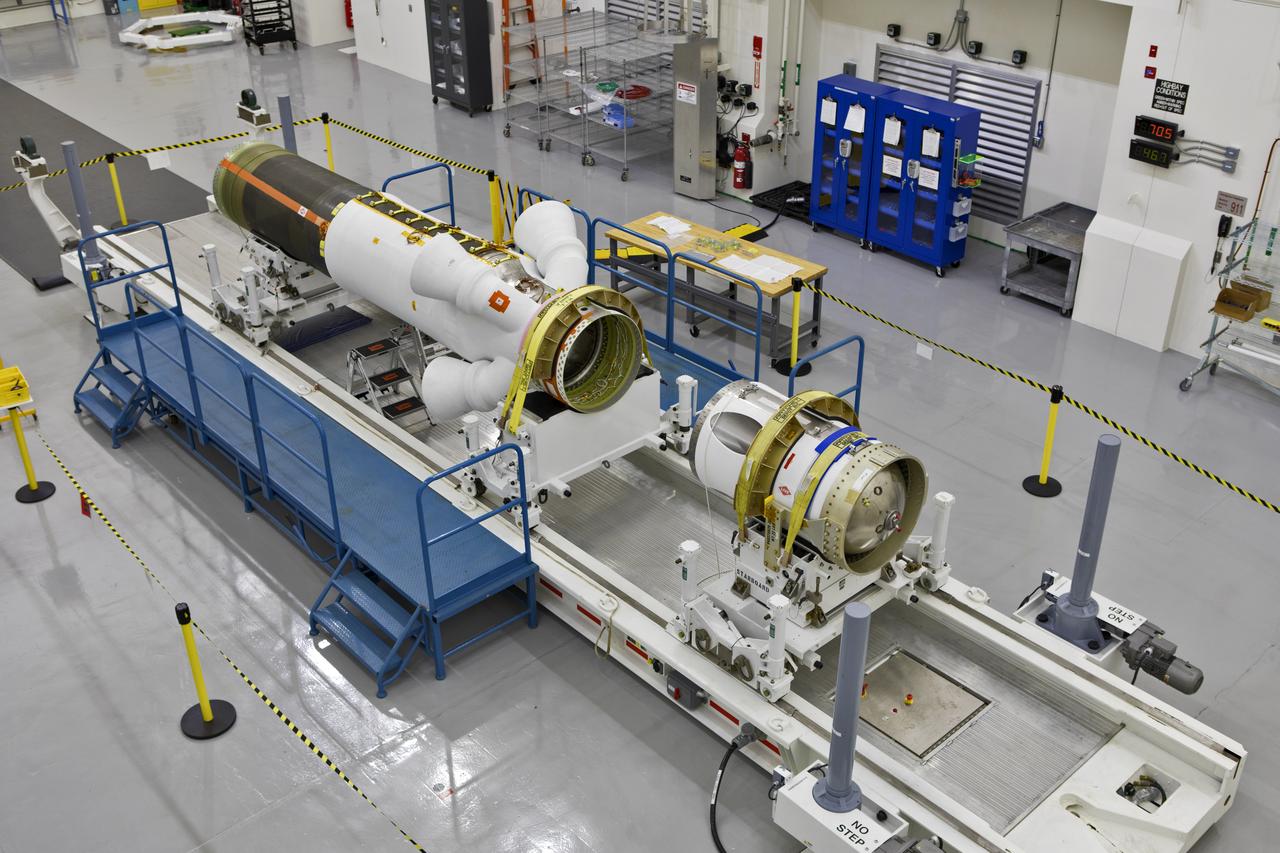
The jettison motor for Orion’s Launch Abort System (LAS) is shown inside the Launch Abort System Facility (LASF) at NASA’s Kennedy Space Center in Florida. The motor, which arrived at Kennedy on Sept. 10, 2018, will be stored in the LASF until processing for a full-stress test of the LAS called Ascent Abort-2 (AA-2), scheduled for April 2019. Designed and built by NASA and Lockheed Martin, the LAS will protect astronauts if a problem arises during launch by pulling the spacecraft away from a failing rocket. The jettison motor is one of three solid propellant rocket motors in the LAS (the abort motor and attitude control motor are the other two). The jettison motor will pull the LAS away from the crew module, allowing Orion’s parachutes to deploy and the spacecraft to safely land in the ocean.
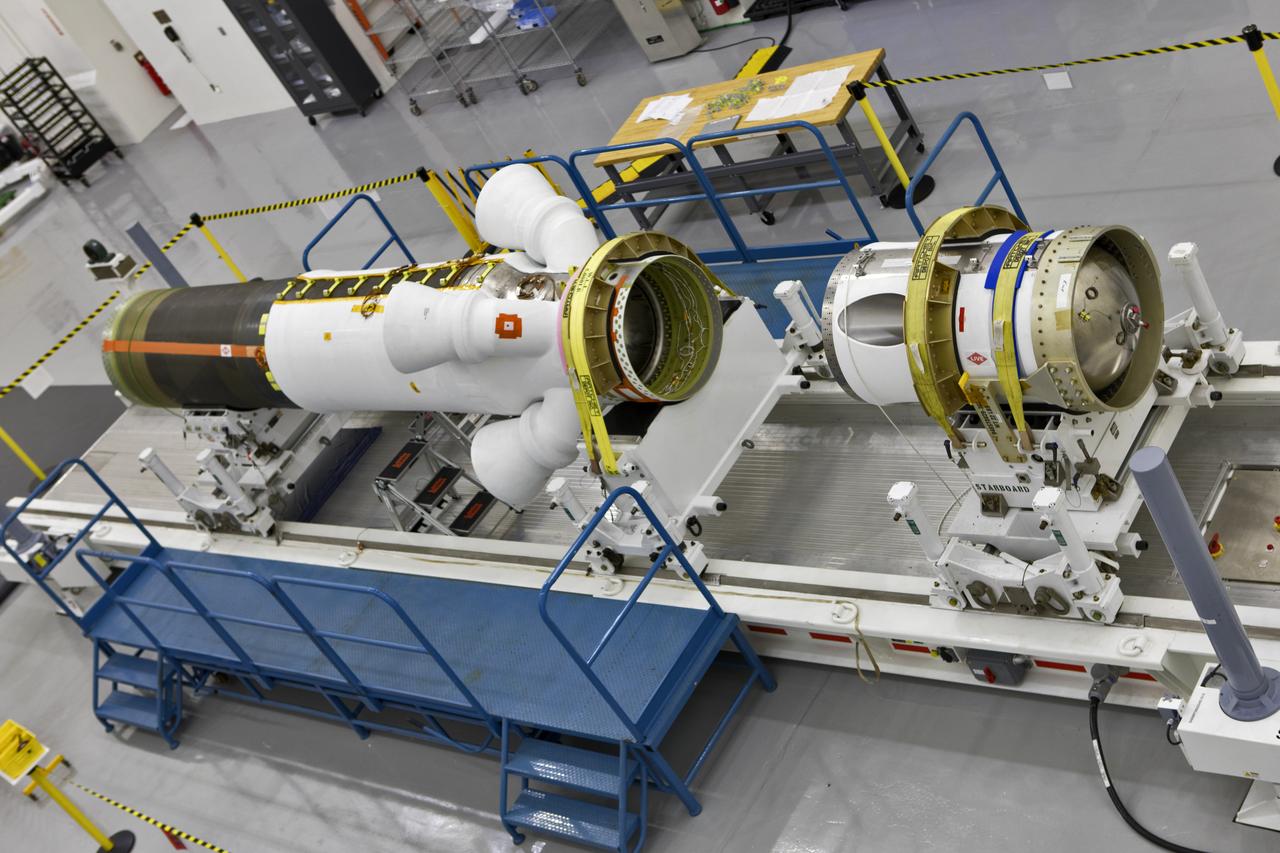
The jettison motor for Orion’s Launch Abort System (LAS) is shown inside the Launch Abort System Facility (LASF) at NASA’s Kennedy Space Center in Florida. The motor, which arrived at Kennedy on Sept. 10, 2018, will be stored in the LASF until processing for a full-stress test of the LAS called Ascent Abort-2 (AA-2), scheduled for April 2019. Designed and built by NASA and Lockheed Martin, the LAS will protect astronauts if a problem arises during launch by pulling the spacecraft away from a failing rocket. The jettison motor is one of three solid propellant rocket motors in the LAS (the abort motor and attitude control motor are the other two). The jettison motor will pull the LAS away from the crew module, allowing Orion’s parachutes to deploy and the spacecraft to safely land in the ocean.
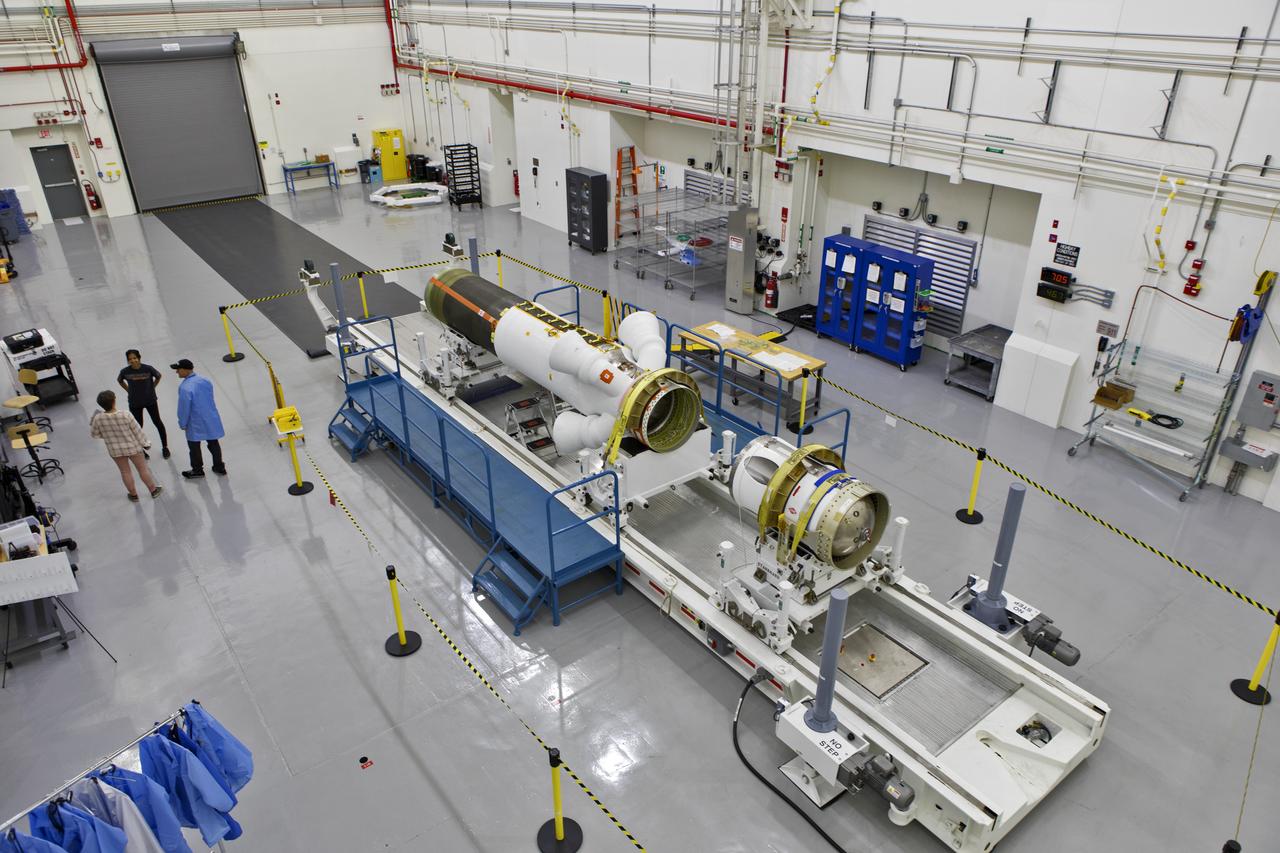
The jettison motor for Orion’s Launch Abort System (LAS) is shown inside the Launch Abort System Facility (LASF) at NASA’s Kennedy Space Center in Florida. The motor, which arrived at Kennedy on Sept. 10, 2018, will be stored in the LASF until processing for a full-stress test of the LAS called Ascent Abort-2 (AA-2), scheduled for April 2019. Designed and built by NASA and Lockheed Martin, the LAS will protect astronauts if a problem arises during launch by pulling the spacecraft away from a failing rocket. The jettison motor is one of three solid propellant rocket motors in the LAS (the abort motor and attitude control motor are the other two). The jettison motor will pull the LAS away from the crew module, allowing Orion’s parachutes to deploy and the spacecraft to safely land in the ocean.
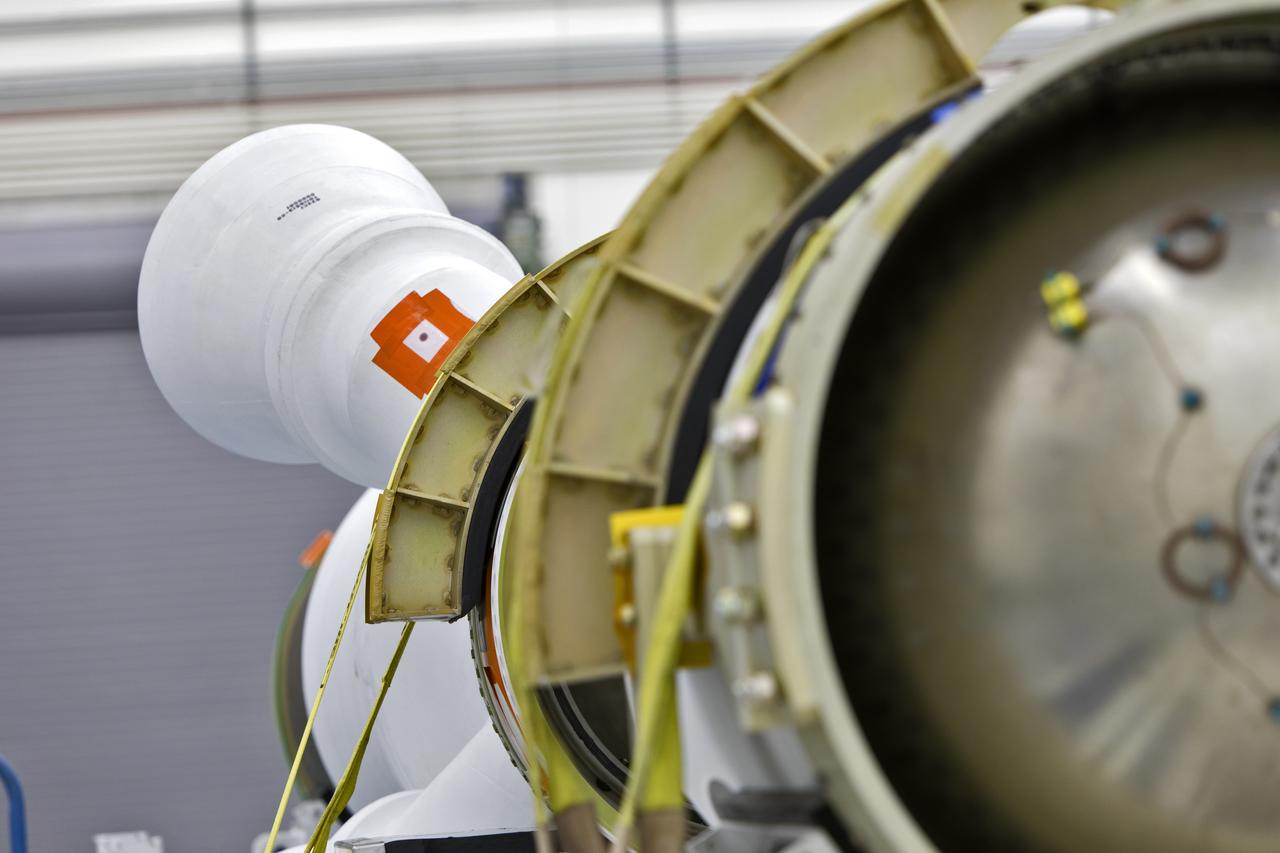
The jettison motor for Orion’s Launch Abort System (LAS) is shown inside the Launch Abort System Facility (LASF) at NASA’s Kennedy Space Center in Florida. The motor, which arrived at Kennedy on Sept. 10, 2018, will be stored in the LASF until processing for a full-stress test of the LAS called Ascent Abort-2 (AA-2), scheduled for April 2019. Designed and built by NASA and Lockheed Martin, the LAS will protect astronauts if a problem arises during launch by pulling the spacecraft away from a failing rocket. The jettison motor is one of three solid propellant rocket motors in the LAS (the abort motor and attitude control motor are the other two). The jettison motor will pull the LAS away from the crew module, allowing Orion’s parachutes to deploy and the spacecraft to safely land in the ocean.
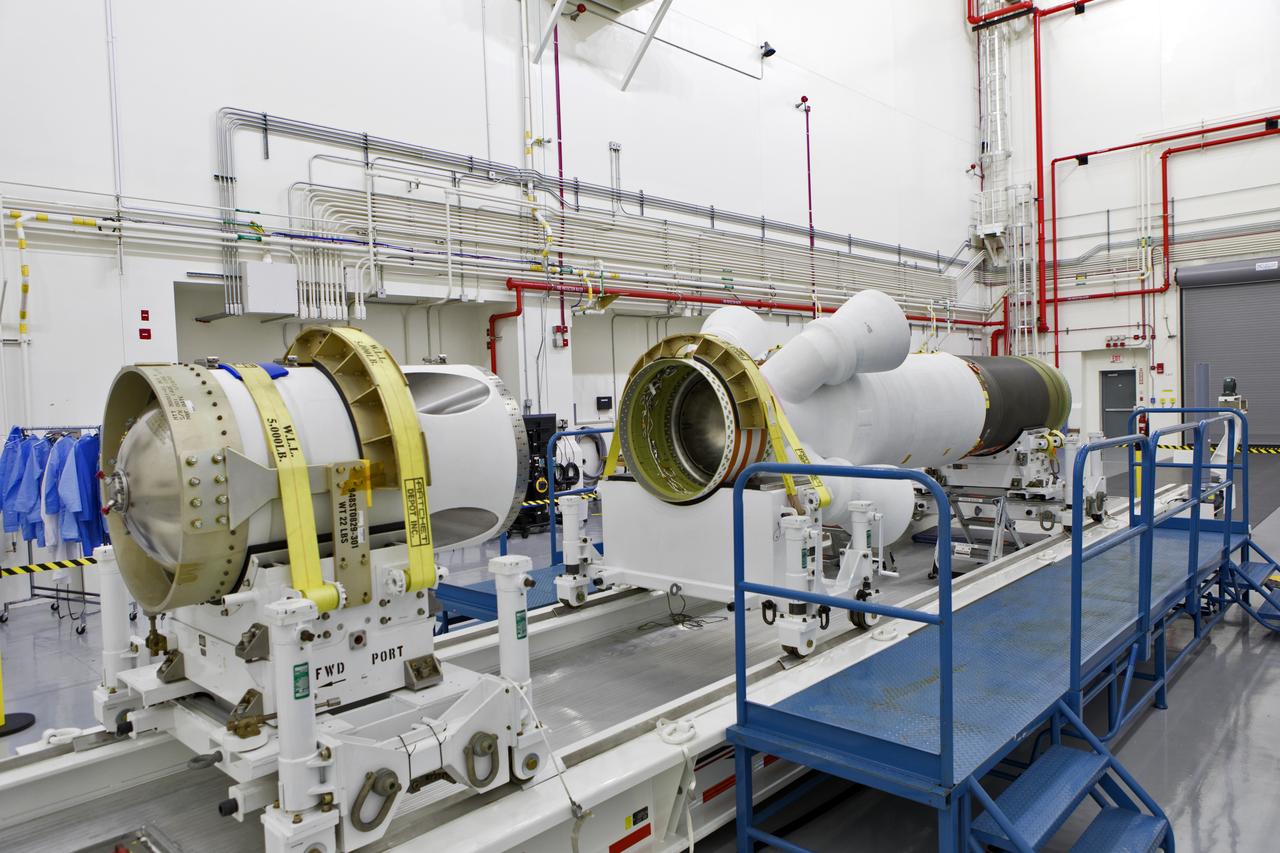
The jettison motor for Orion’s Launch Abort System (LAS) is shown inside the Launch Abort System Facility (LASF) at NASA’s Kennedy Space Center in Florida. The motor, which arrived at Kennedy on Sept. 10, 2018, will be stored in the LASF until processing for a full-stress test of the LAS called Ascent Abort-2 (AA-2), scheduled for April 2019. Designed and built by NASA and Lockheed Martin, the LAS will protect astronauts if a problem arises during launch by pulling the spacecraft away from a failing rocket. The jettison motor is one of three solid propellant rocket motors in the LAS (the abort motor and attitude control motor are the other two). The jettison motor will pull the LAS away from the crew module, allowing Orion’s parachutes to deploy and the spacecraft to safely land in the ocean.
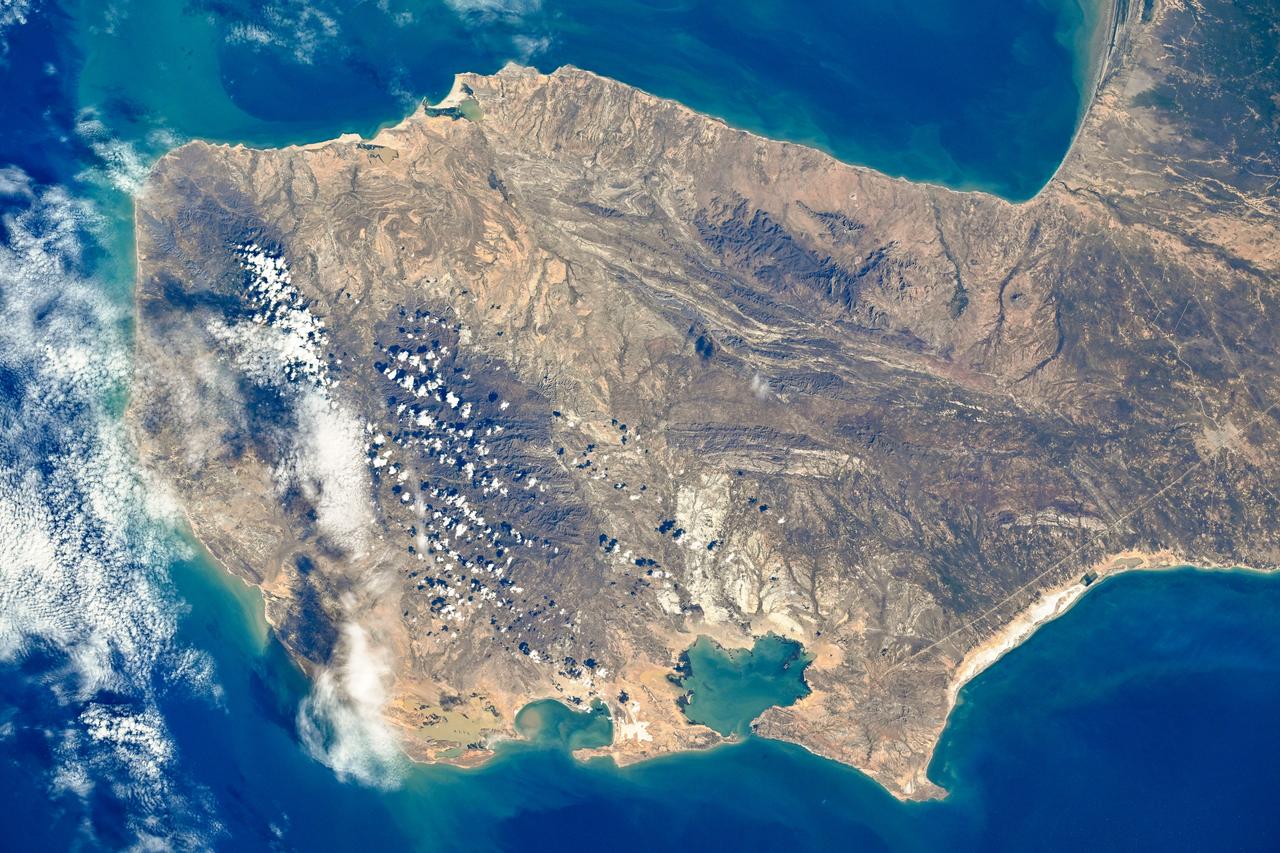
iss073e0379768 (July 20, 2025) --- Colombia's La Guajira Peninsula on the Caribbean Sea, with its desert region and beautiful coastline, is pictured from the International Space Station as it orbited 258 miles above.
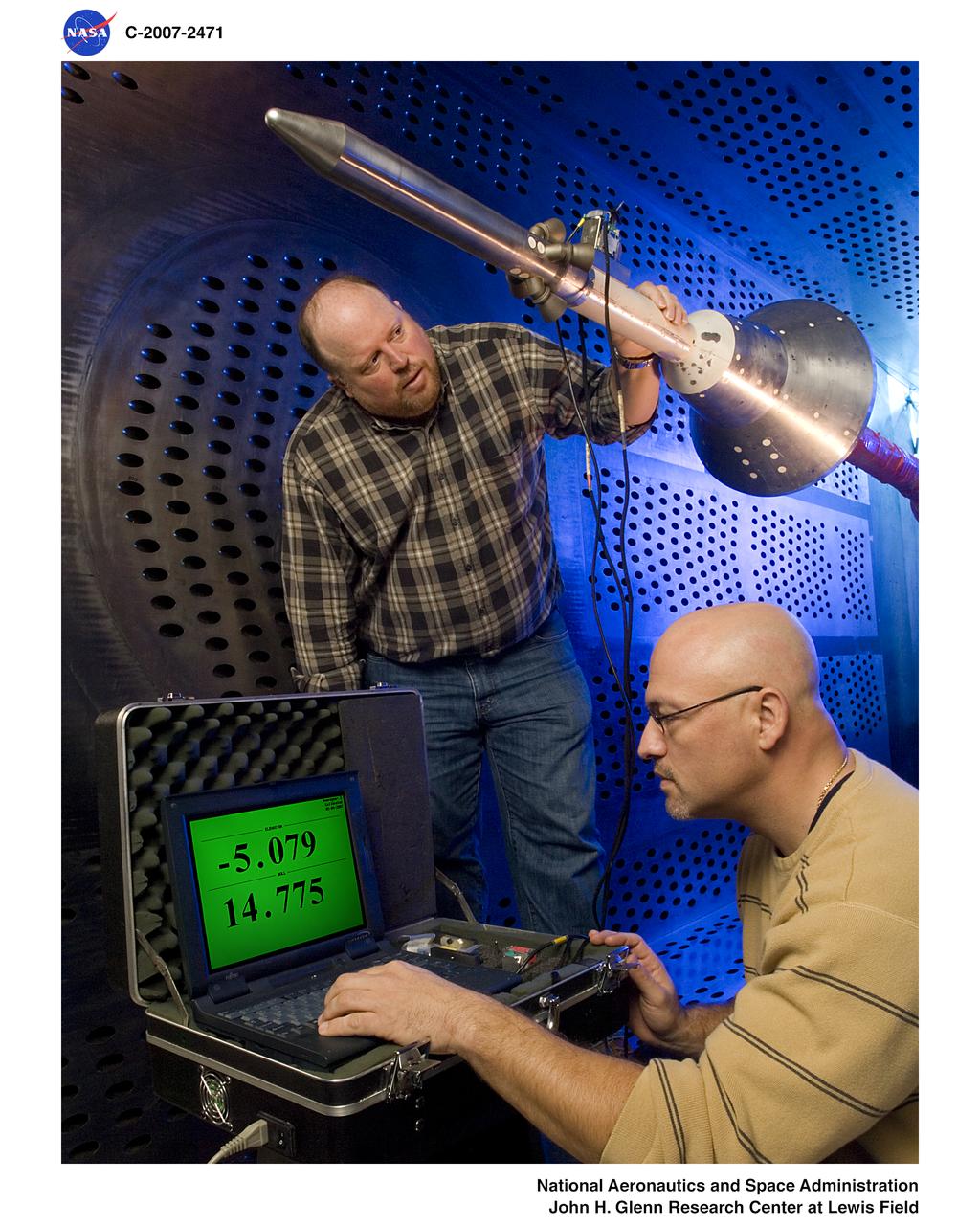
Orion Capsule and Launch Abort System (LAS) installed in the NASA Glenn 8x6 Supersonic Wind Tunnel for testing. This test is an Aero Acoustic test of the LAS. Pictured is the calibration of the model's angle of attack
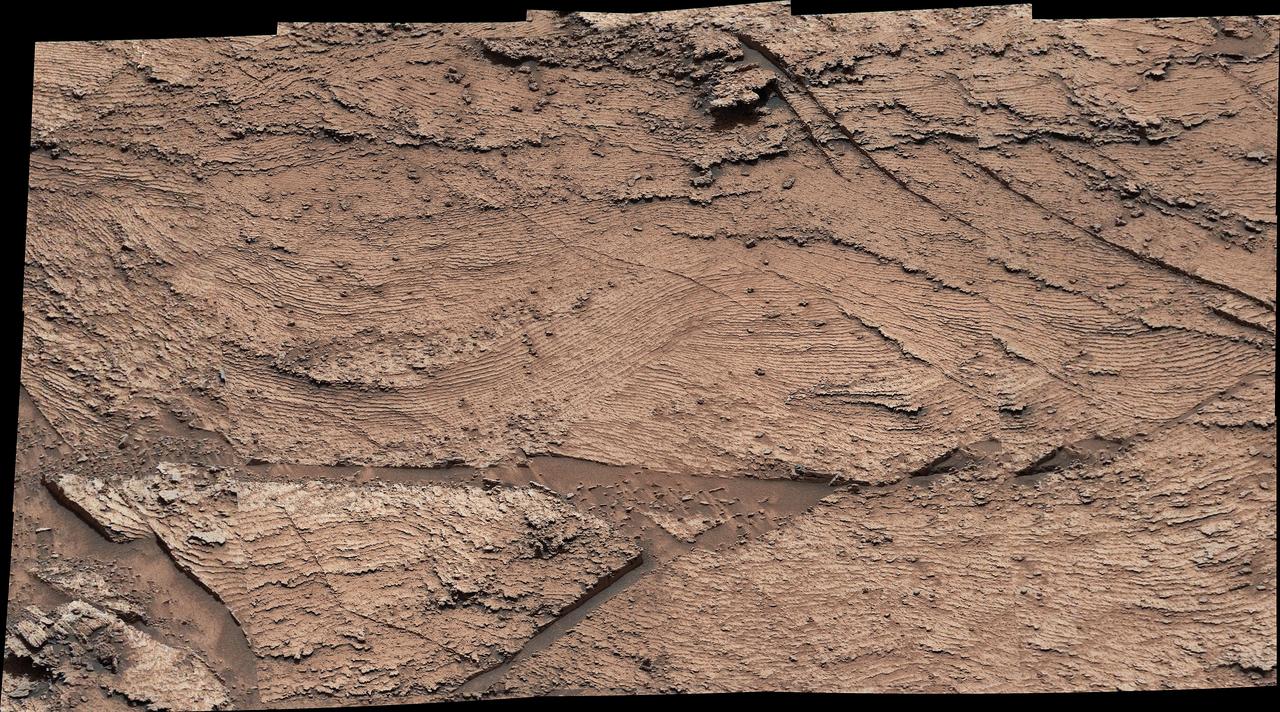
NASA's Curiosity Mars rover captured evidence of rock layers that built up as windblown sand accumulated in some areas and was scoured away in others in the ancient past. This panorama, made up of nine individual images that were later stitched together, was captured at a location nicknamed "Las Claritas" using Curiosity's Mast Camera, or Mastcam, on May 19, 2022, the 3,478th Martian day, or sol, of the mission. https://photojournal.jpl.nasa.gov/catalog/PIA25369
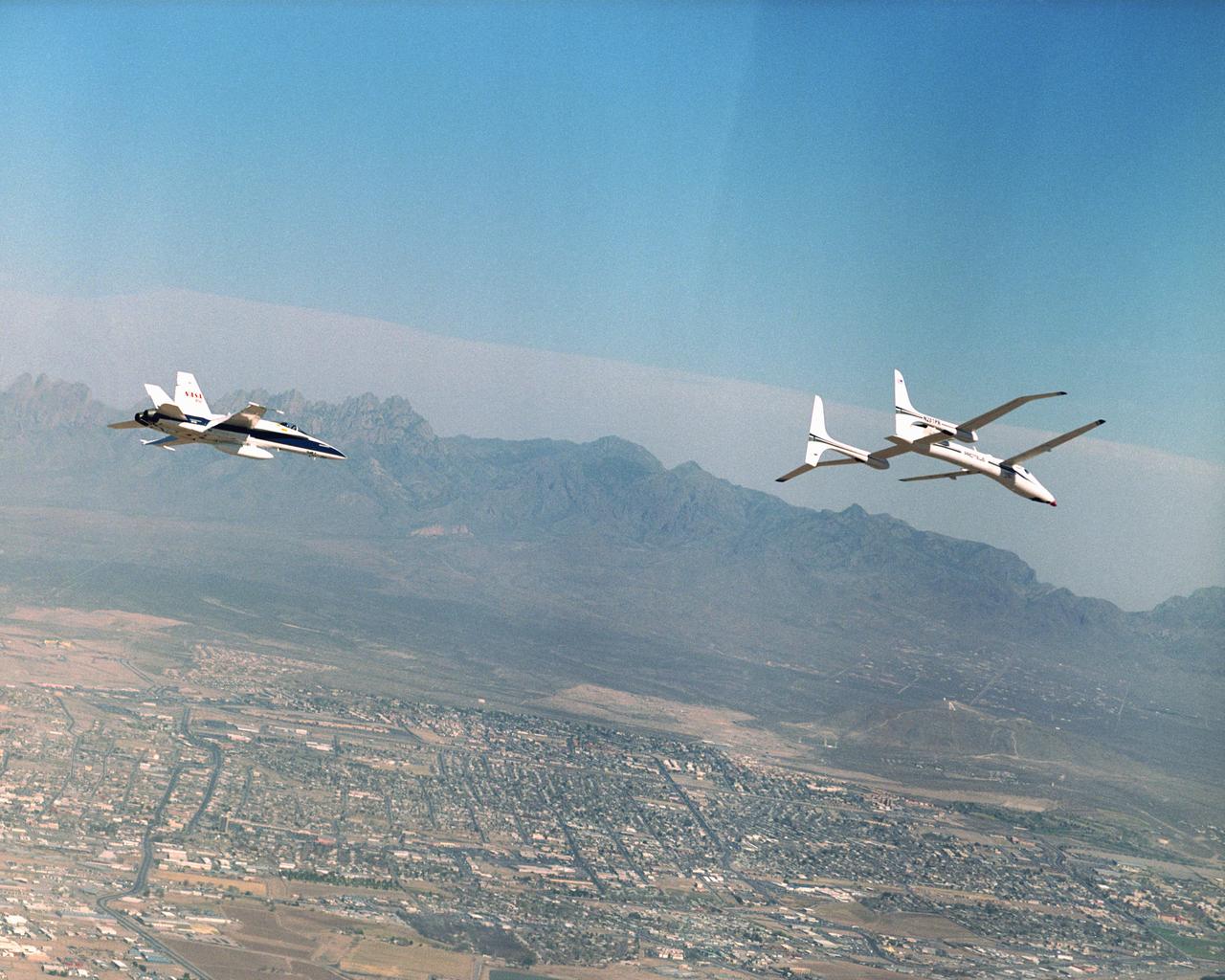
Proteus and an F/A-18 Hornet from NASA's Dryden Flight Research Center are seen here in flight over Las Cruces, New Mexico.
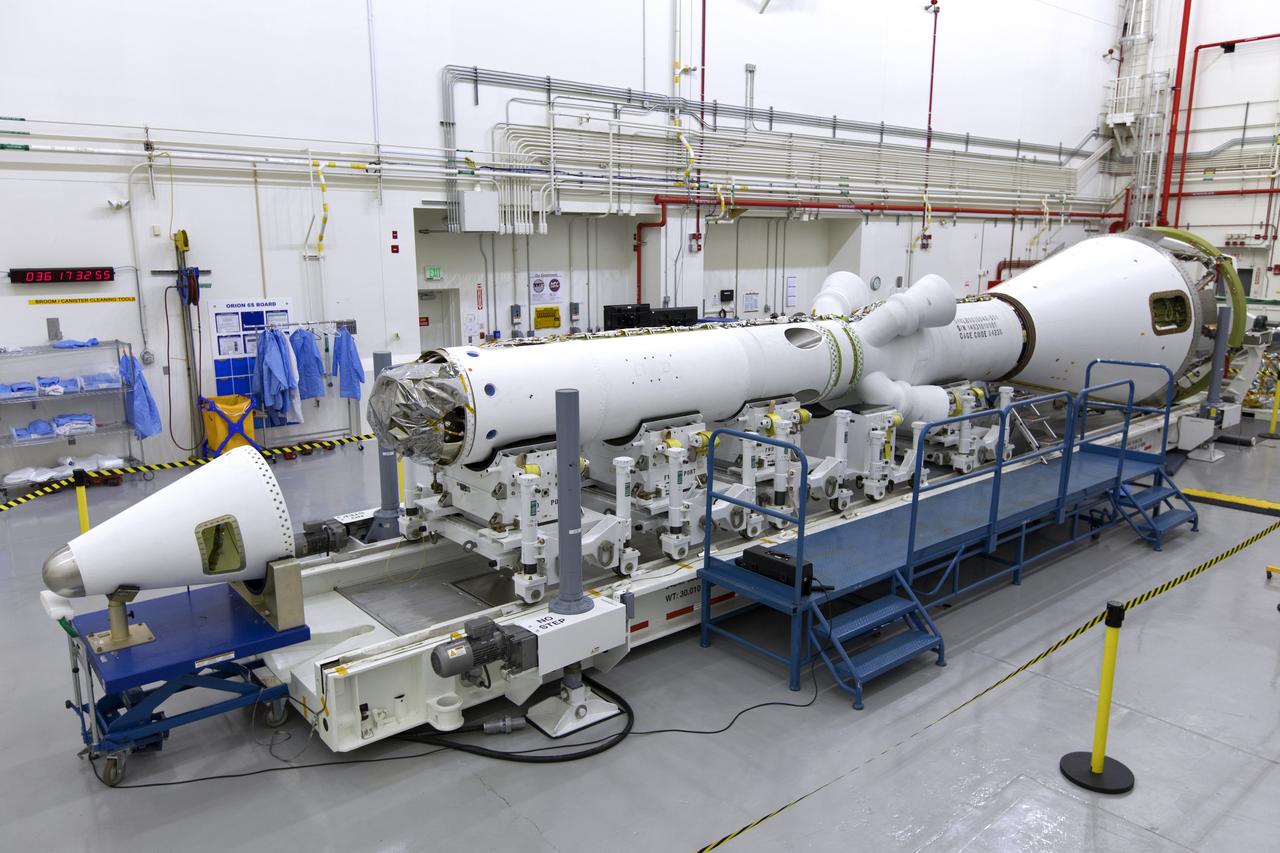
Inside the Launch Abort System Facility (LASF) at NASA’s Kennedy Space Center in Florida, the Launch Abort System (LAS) that will be used for the Orion Ascent Abort-2 (AA-2) Flight Test is being assembled on Feb. 5, 2019. AA-2 is a full-stress test of the LAS, scheduled for Spring 2019. AA-2 will launch from Space Launch Complex 46, carrying a fully functional LAS and a 22,000-pound Orion test vehicle to an altitude of 31,000 feet and traveling at more than 1,000 miles an hour. The test will verify the LAS can steer the crew module and astronauts aboard to safety in the event of an issue with the Space Launch System (SLS) rocket when the spacecraft is under the highest aerodynamic loads it will experience during a rapid climb into space. NASA's Orion and Exploration Ground Systems programs and contractors from Jacob's and Northrop Grumman in conjunction with the Air Force Space and Missile Center's Launch Operations branch are performing flight operations for AA-2.
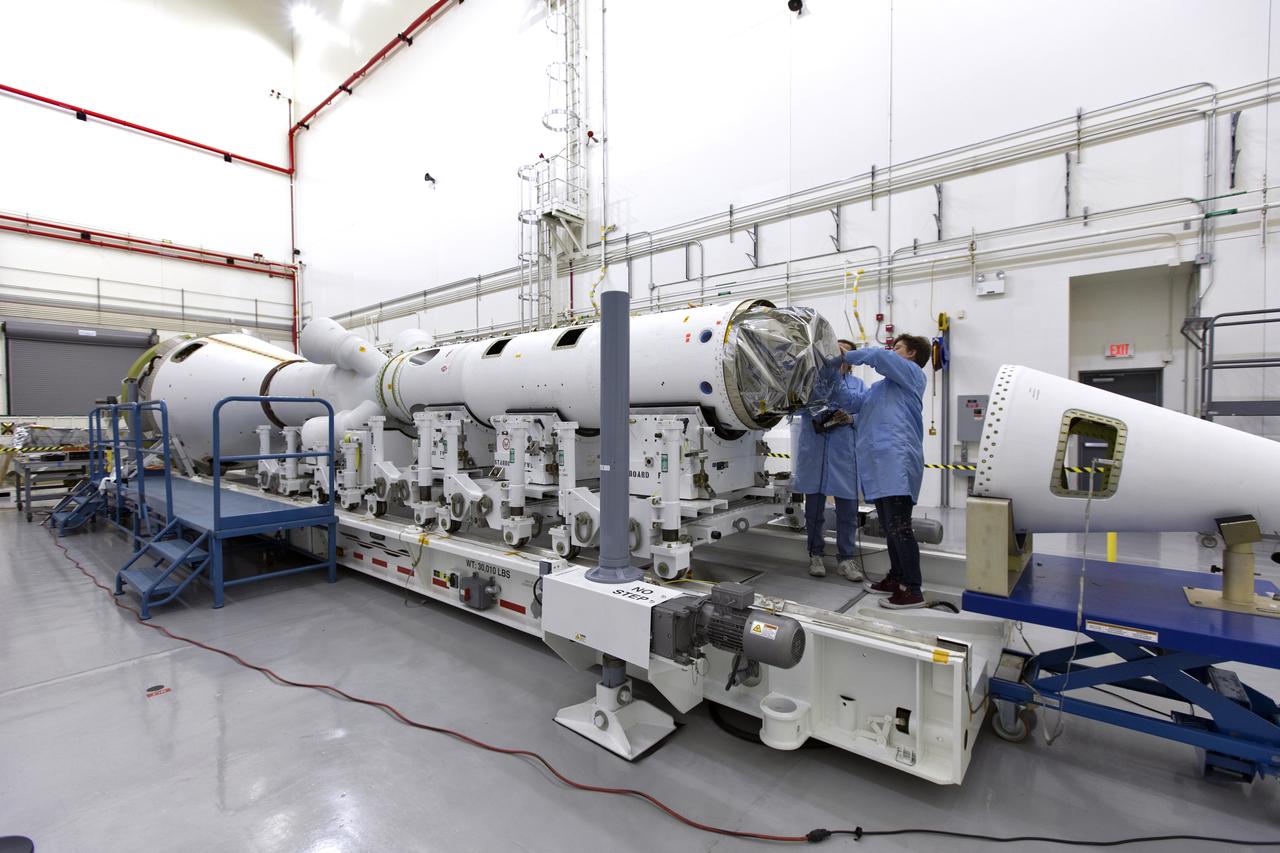
Inside the Launch Abort System Facility (LASF) at NASA’s Kennedy Space Center in Florida, workers assemble the Launch Abort System (LAS) on Feb. 5, 2019, that will be used for the Orion Ascent Abort-2 (AA-2) Flight Test. AA-2 is a full-stress test of the LAS, scheduled for Spring 2019. AA-2 will launch from Space Launch Complex 46, carrying a fully functional LAS and a 22,000-pound Orion test vehicle to an altitude of 31,000 feet and traveling at more than 1,000 miles an hour. The test will verify the LAS can steer the crew module and astronauts aboard to safety in the event of an issue with the Space Launch System (SLS) rocket when the spacecraft is under the highest aerodynamic loads it will experience during a rapid climb into space. NASA's Orion and Exploration Ground Systems programs and contractors from Jacob's and Northrop Grumman in conjunction with the Air Force Space and Missile Center's Launch Operations branch are performing flight operations for AA-2.
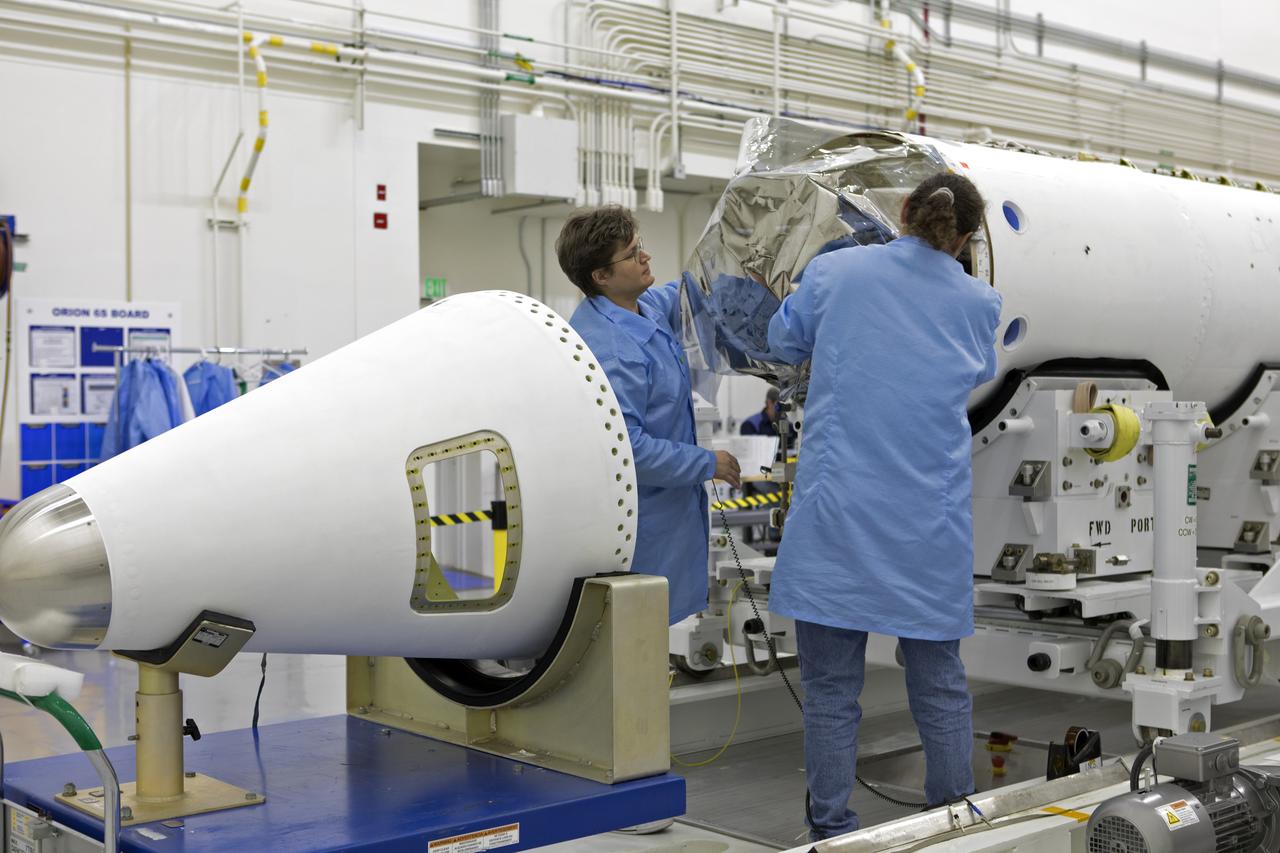
Inside the Launch Abort System Facility (LASF) at NASA’s Kennedy Space Center in Florida, workers assemble the Launch Abort System (LAS) on Feb. 5, 2019, that will be used for the Orion Ascent Abort-2 (AA-2) Flight Test. AA-2 is a full-stress test of the LAS, scheduled for Spring 2019. AA-2 will launch from Space Launch Complex 46, carrying a fully functional LAS and a 22,000-pound Orion test vehicle to an altitude of 31,000 feet and traveling at more than 1,000 miles an hour. The test will verify the LAS can steer the crew module and astronauts aboard to safety in the event of an issue with the Space Launch System (SLS) rocket when the spacecraft is under the highest aerodynamic loads it will experience during a rapid climb into space. NASA's Orion and Exploration Ground Systems programs and contractors from Jacob's and Northrop Grumman in conjunction with the Air Force Space and Missile Center's Launch Operations branch are performing flight operations for AA-2.
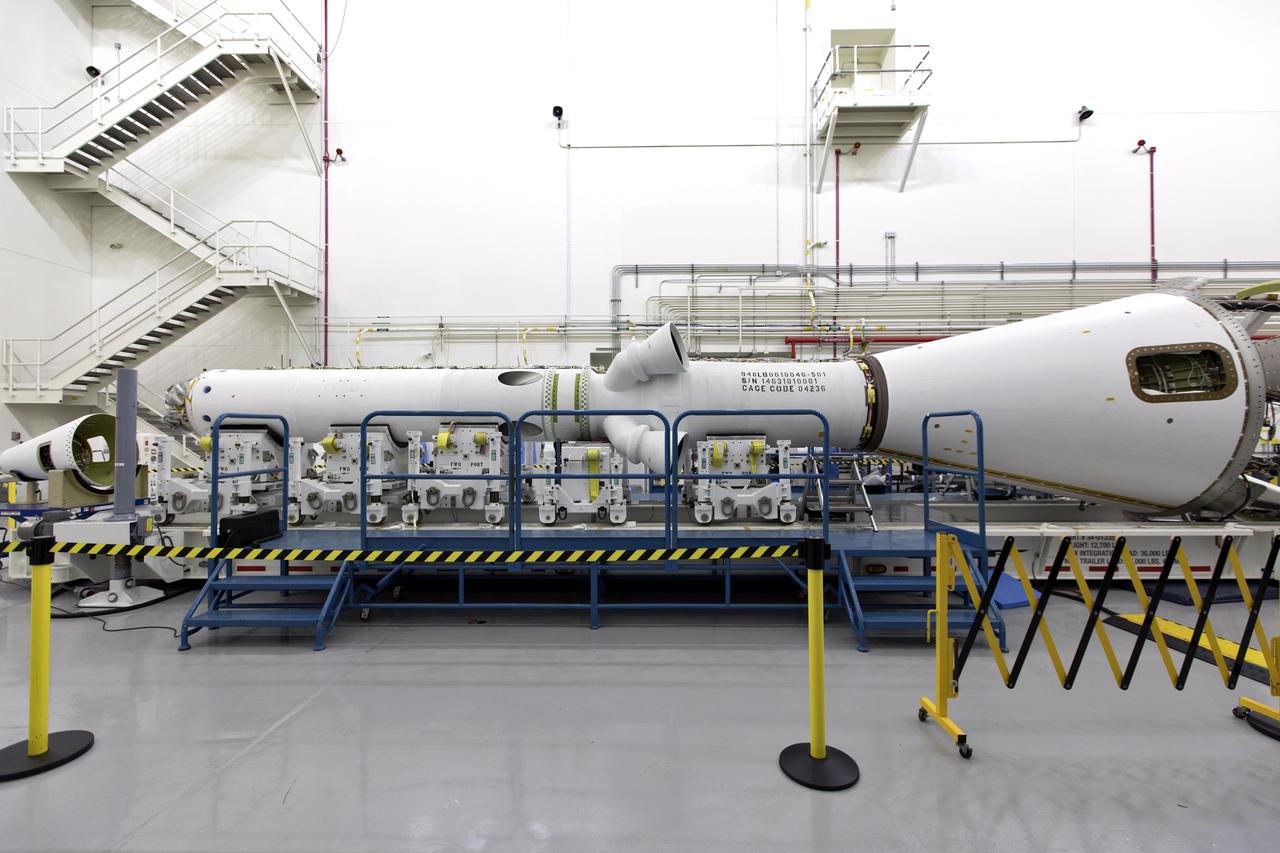
Inside the Launch Abort System Facility (LASF) at NASA’s Kennedy Space Center in Florida, the Launch Abort System (LAS) that will be used for the Orion Ascent Abort-2 (AA-2) Flight Test is being assembled on Feb. 5, 2019. AA-2 is a full-stress test of the LAS, scheduled for Spring 2019. AA-2 will launch from Space Launch Complex 46, carrying a fully functional LAS and a 22,000-pound Orion test vehicle to an altitude of 31,000 feet and traveling at more than 1,000 miles an hour. The test will verify the LAS can steer the crew module and astronauts aboard to safety in the event of an issue with the Space Launch System (SLS) rocket when the spacecraft is under the highest aerodynamic loads it will experience during a rapid climb into space. NASA's Orion and Exploration Ground Systems programs and contractors from Jacob's and Northrop Grumman in conjunction with the Air Force Space and Missile Center's Launch Operations branch are performing flight operations for AA-2.
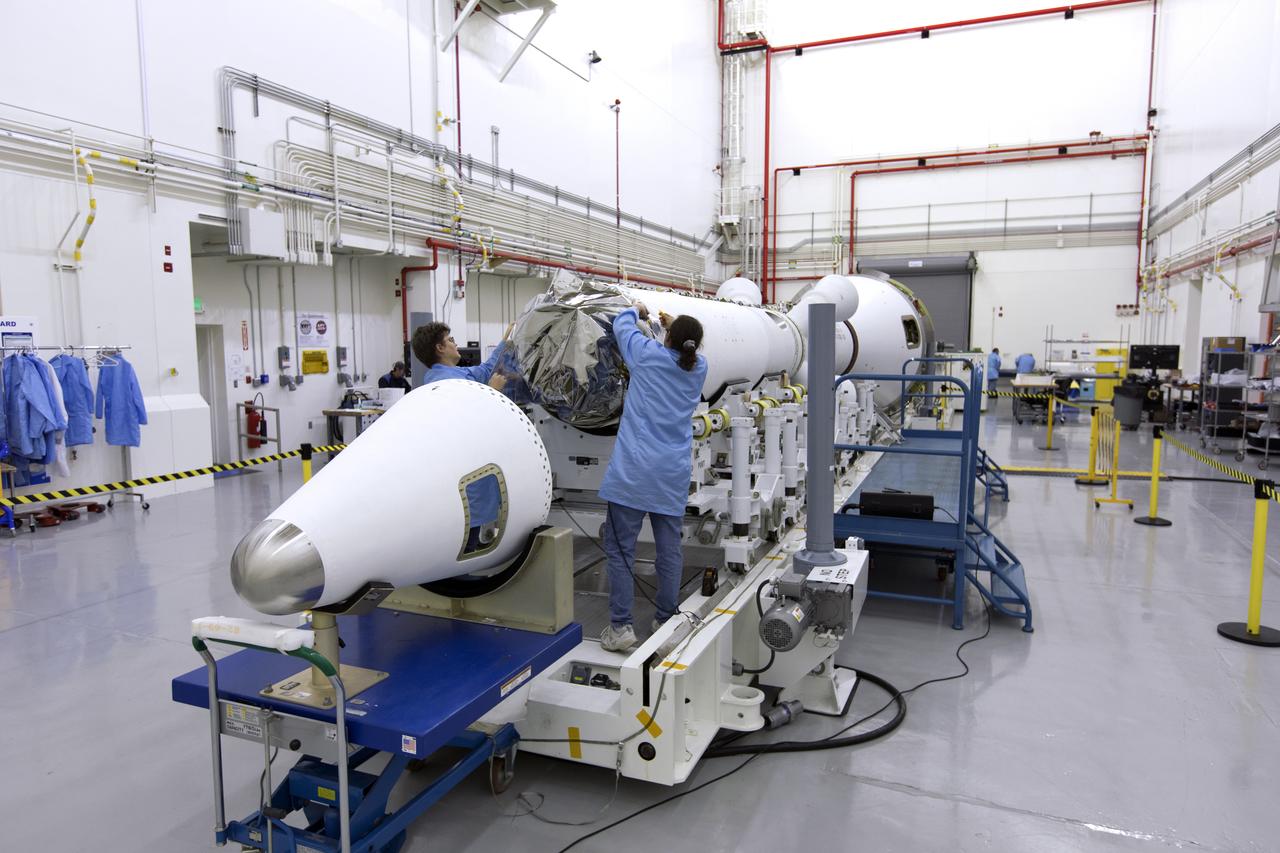
Inside the Launch Abort System Facility (LASF) at NASA’s Kennedy Space Center in Florida, workers assemble the Launch Abort System (LAS) on Feb. 5, 2019, that will be used for the Orion Ascent Abort-2 (AA-2) Flight Test. AA-2 is a full-stress test of the LAS, scheduled for Spring 2019. AA-2 will launch from Space Launch Complex 46, carrying a fully functional LAS and a 22,000-pound Orion test vehicle to an altitude of 31,000 feet and traveling at more than 1,000 miles an hour. The test will verify the LAS can steer the crew module and astronauts aboard to safety in the event of an issue with the Space Launch System (SLS) rocket when the spacecraft is under the highest aerodynamic loads it will experience during a rapid climb into space. NASA's Orion and Exploration Ground Systems programs and contractors from Jacob's and Northrop Grumman in conjunction with the Air Force Space and Missile Center's Launch Operations branch are performing flight operations for AA-2.
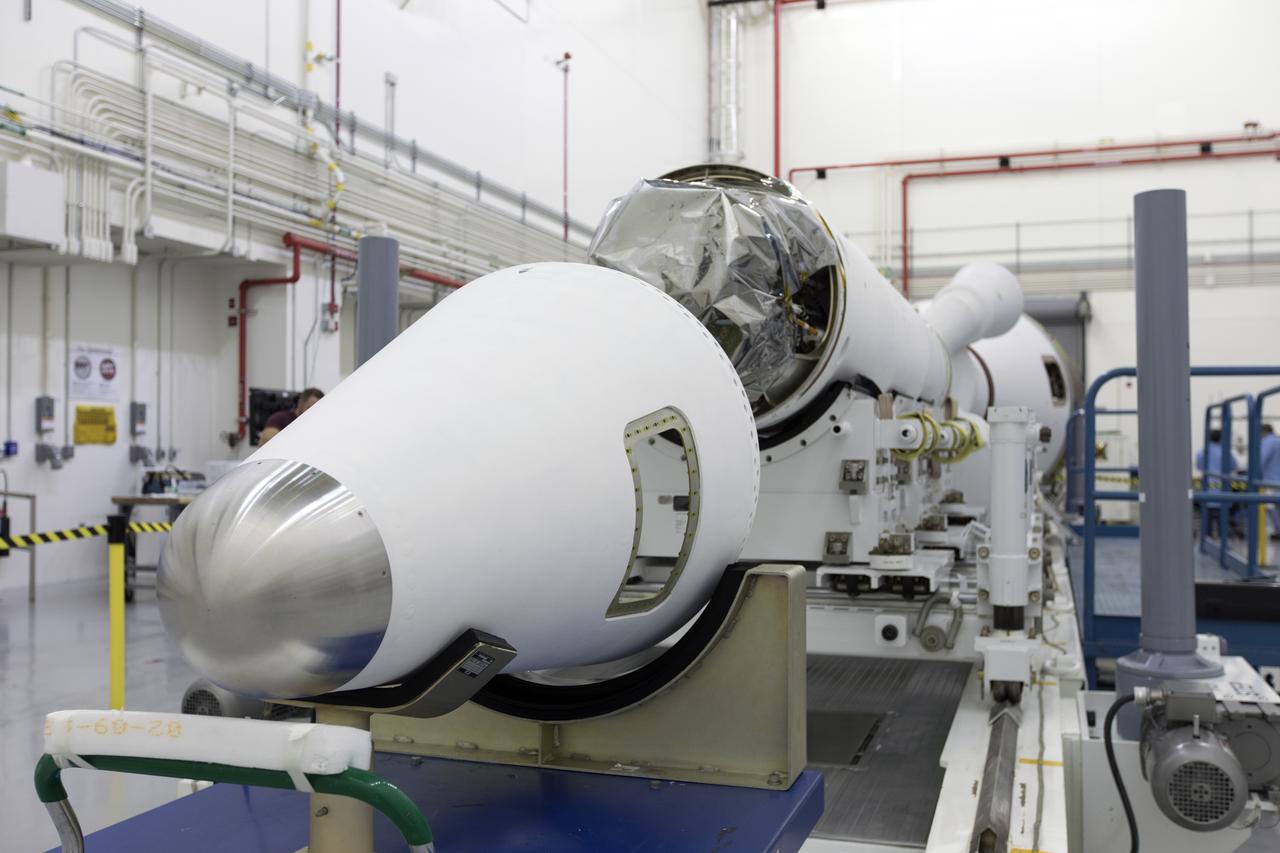
Inside the Launch Abort System Facility (LASF) at NASA’s Kennedy Space Center in Florida, the Launch Abort System (LAS) that will be used for the Orion Ascent Abort-2 (AA-2) Flight Test is being assembled on Feb. 5, 2019. AA-2 is a full-stress test of the LAS, scheduled for Spring 2019. AA-2 will launch from Space Launch Complex 46, carrying a fully functional LAS and a 22,000-pound Orion test vehicle to an altitude of 31,000 feet and traveling at more than 1,000 miles an hour. The test will verify the LAS can steer the crew module and astronauts aboard to safety in the event of an issue with the Space Launch System (SLS) rocket when the spacecraft is under the highest aerodynamic loads it will experience during a rapid climb into space. NASA's Orion and Exploration Ground Systems programs and contractors from Jacob's and Northrop Grumman in conjunction with the Air Force Space and Missile Center's Launch Operations branch are performing flight operations for AA-2.
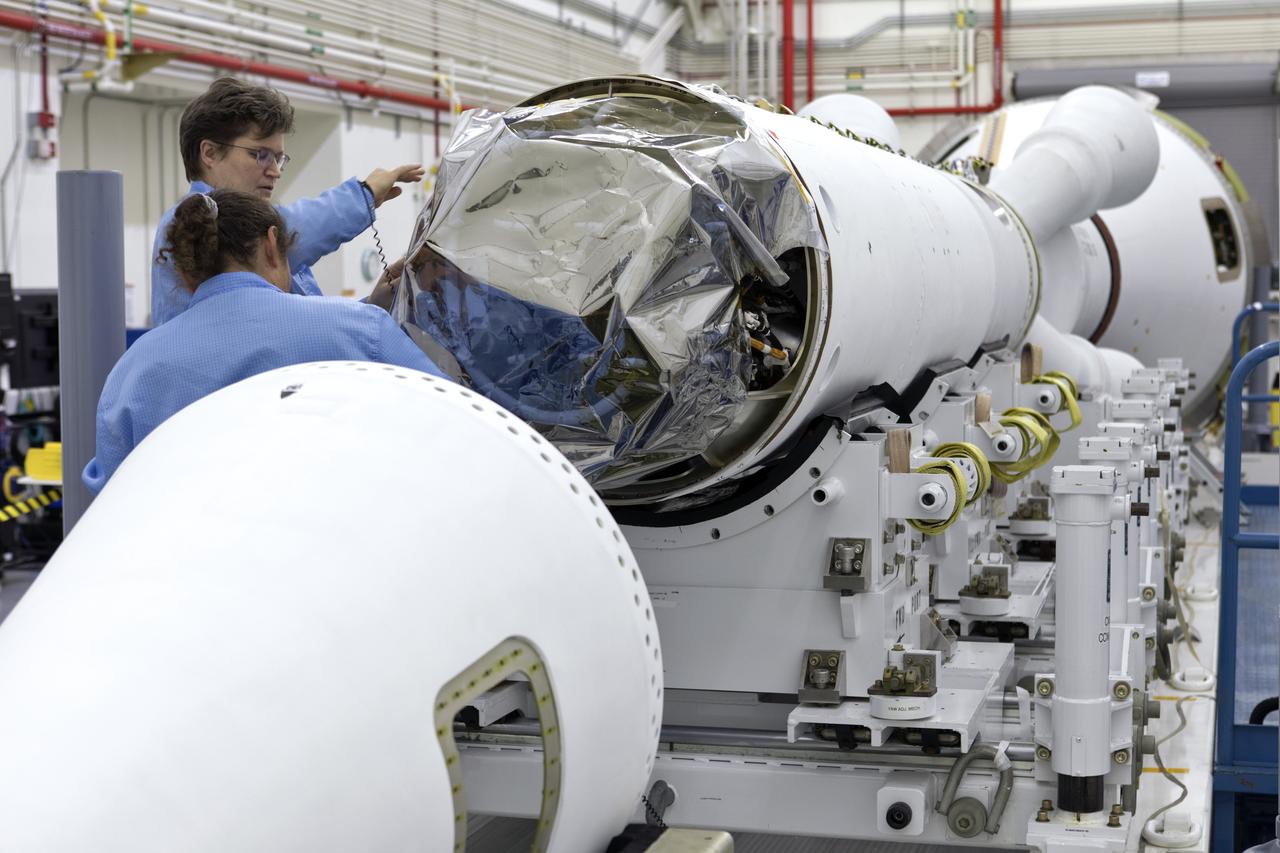
Inside the Launch Abort System Facility (LASF) at NASA’s Kennedy Space Center in Florida, workers assemble the Launch Abort System (LAS) on Feb. 5, 2019, that will be used for the Orion Ascent Abort-2 (AA-2) Flight Test. AA-2 is a full-stress test of the LAS, scheduled for Spring 2019. AA-2 will launch from Space Launch Complex 46, carrying a fully functional LAS and a 22,000-pound Orion test vehicle to an altitude of 31,000 feet and traveling at more than 1,000 miles an hour. The test will verify the LAS can steer the crew module and astronauts aboard to safety in the event of an issue with the Space Launch System (SLS) rocket when the spacecraft is under the highest aerodynamic loads it will experience during a rapid climb into space. NASA's Orion and Exploration Ground Systems programs and contractors from Jacob's and Northrop Grumman in conjunction with the Air Force Space and Missile Center's Launch Operations branch are performing flight operations for AA-2.
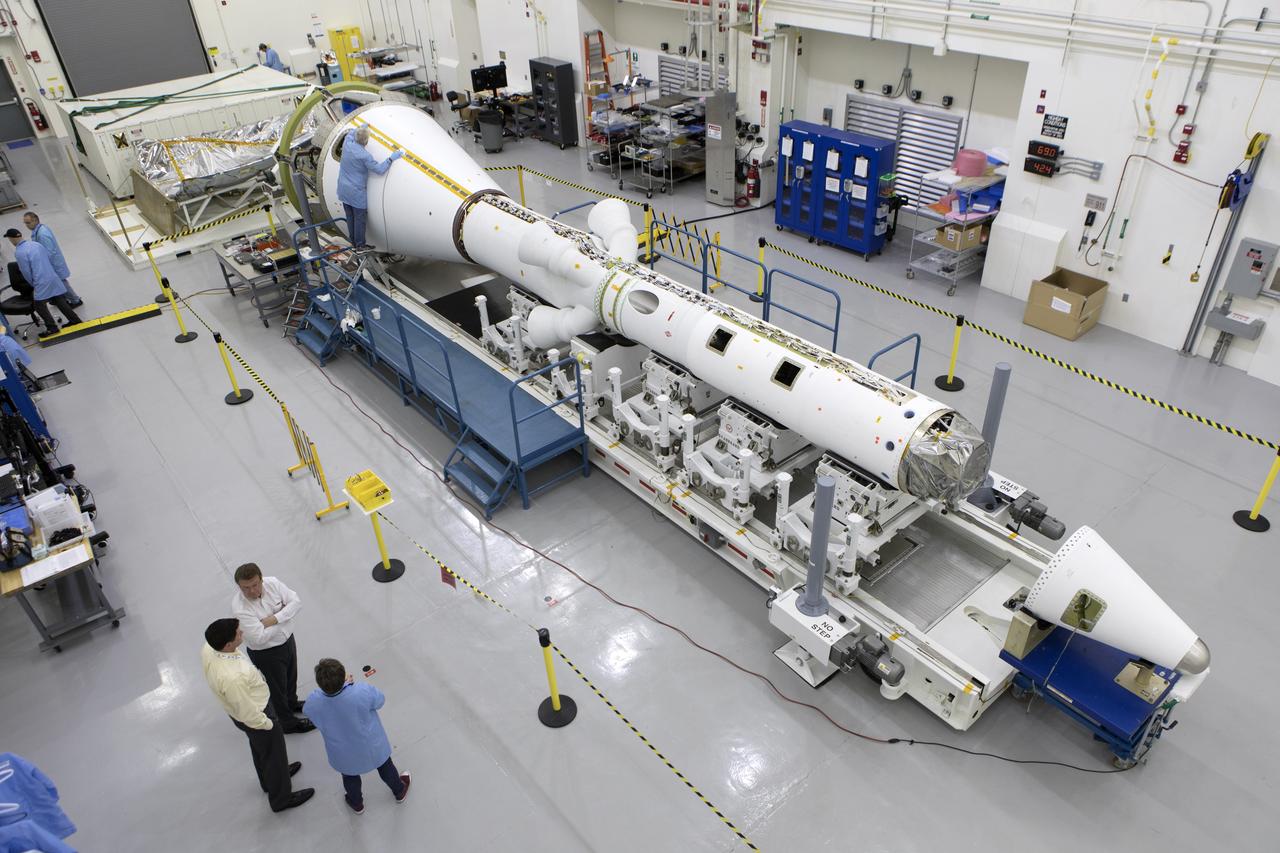
In this view from above inside the Launch Abort System Facility (LASF) at NASA’s Kennedy Space Center in Florida, the Launch Abort System (LAS) that will be used for the Orion Ascent Abort-2 (AA-2) Flight Test is being assembled on Feb. 5, 2019. AA-2 is a full-stress test of the LAS, scheduled for Spring 2019. AA-2 will launch from Space Launch Complex 46, carrying a fully functional LAS and a 22,000-pound Orion test vehicle to an altitude of 31,000 feet and traveling at more than 1,000 miles an hour. The test will verify the LAS can steer the crew module and astronauts aboard to safety in the event of an issue with the Space Launch System (SLS) rocket when the spacecraft is under the highest aerodynamic loads it will experience during a rapid climb into space. NASA's Orion and Exploration Ground Systems programs and contractors from Jacob's and Northrop Grumman in conjunction with the Air Force Space and Missile Center's Launch Operations branch are performing flight operations for AA-2.
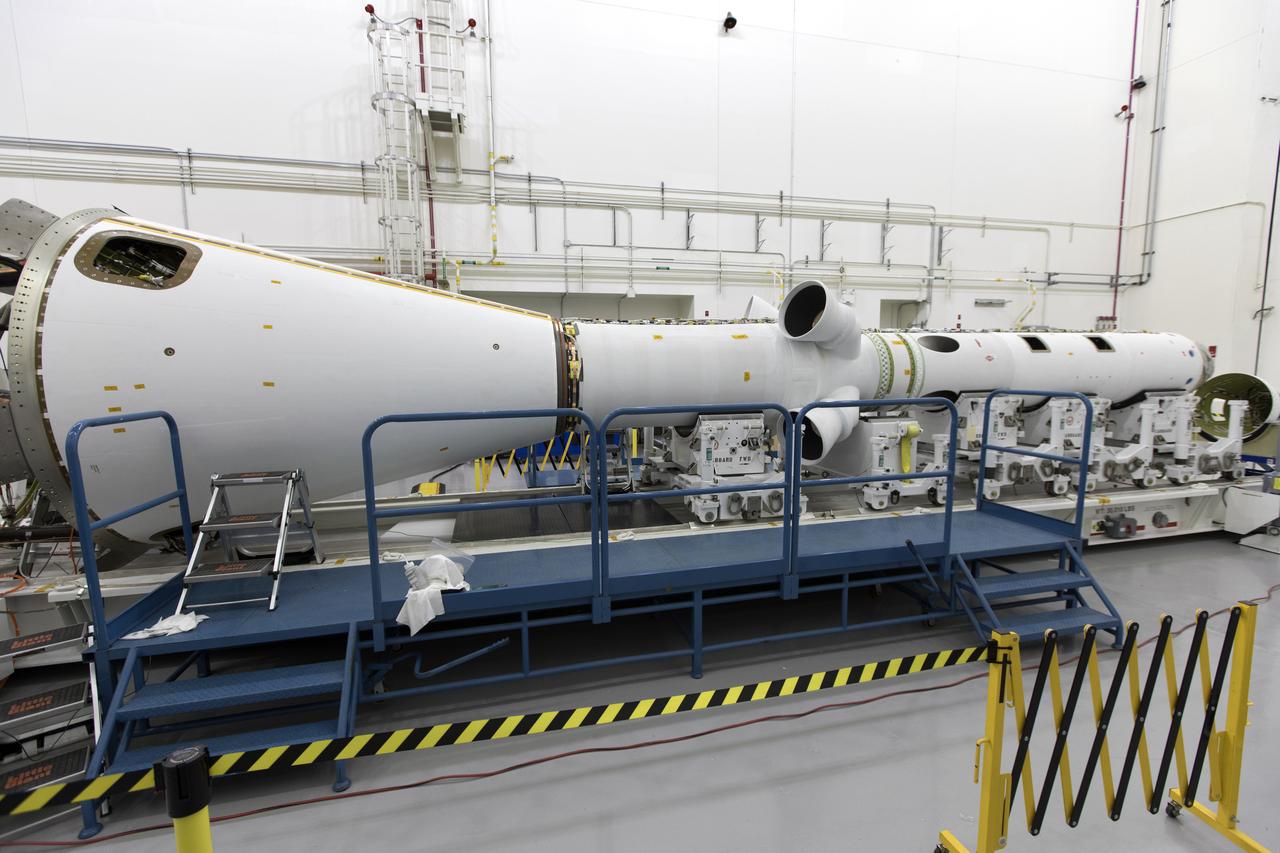
Inside the Launch Abort System Facility (LASF) at NASA’s Kennedy Space Center in Florida, the Launch Abort System (LAS) that will be used for the Orion Ascent Abort-2 (AA-2) Flight Test is being assembled on Feb. 5, 2019. AA-2 is a full-stress test of the LAS, scheduled for Spring 2019. AA-2 will launch from Space Launch Complex 46, carrying a fully functional LAS and a 22,000-pound Orion test vehicle to an altitude of 31,000 feet and traveling at more than 1,000 miles an hour. The test will verify the LAS can steer the crew module and astronauts aboard to safety in the event of an issue with the Space Launch System (SLS) rocket when the spacecraft is under the highest aerodynamic loads it will experience during a rapid climb into space. NASA's Orion and Exploration Ground Systems programs and contractors from Jacob's and Northrop Grumman in conjunction with the Air Force Space and Missile Center's Launch Operations branch are performing flight operations for AA-2.
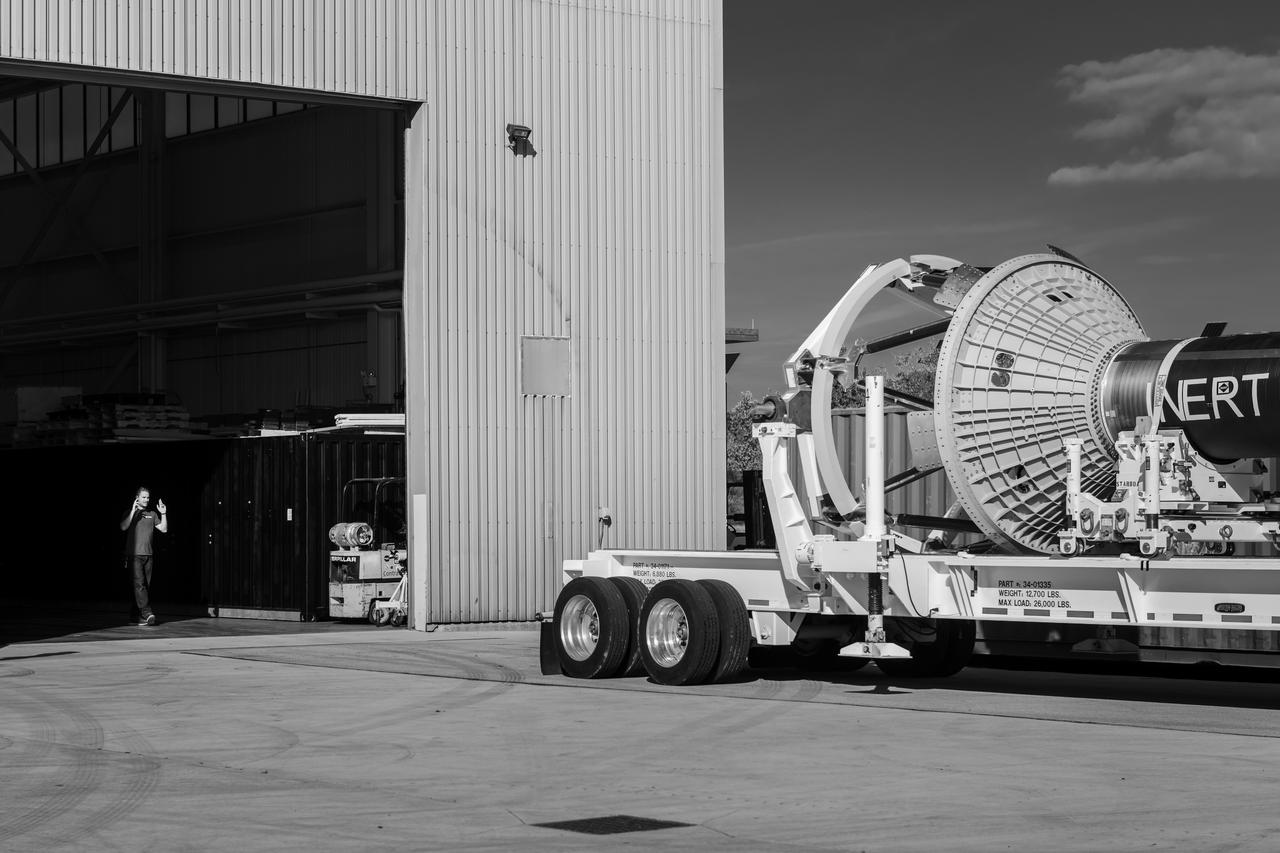
An engineer signals the truck driver carrying Orion’s Launch Abort System (LAS) at the Space Environments Complex. The LAS was awaiting Orion’s Crew Capsule to be tested on for mission critical support for Artemis II. Photo Credit: (NASA/Jordan Salkin)

A repeat of last year mild La Niña conditions -- with a stormy winter in the Pacific Northwest and a dry winter in the southwestern United States -- will be the likely outcome of sea-surface heights observed by NASA TOPEX/Poseidon satellite.
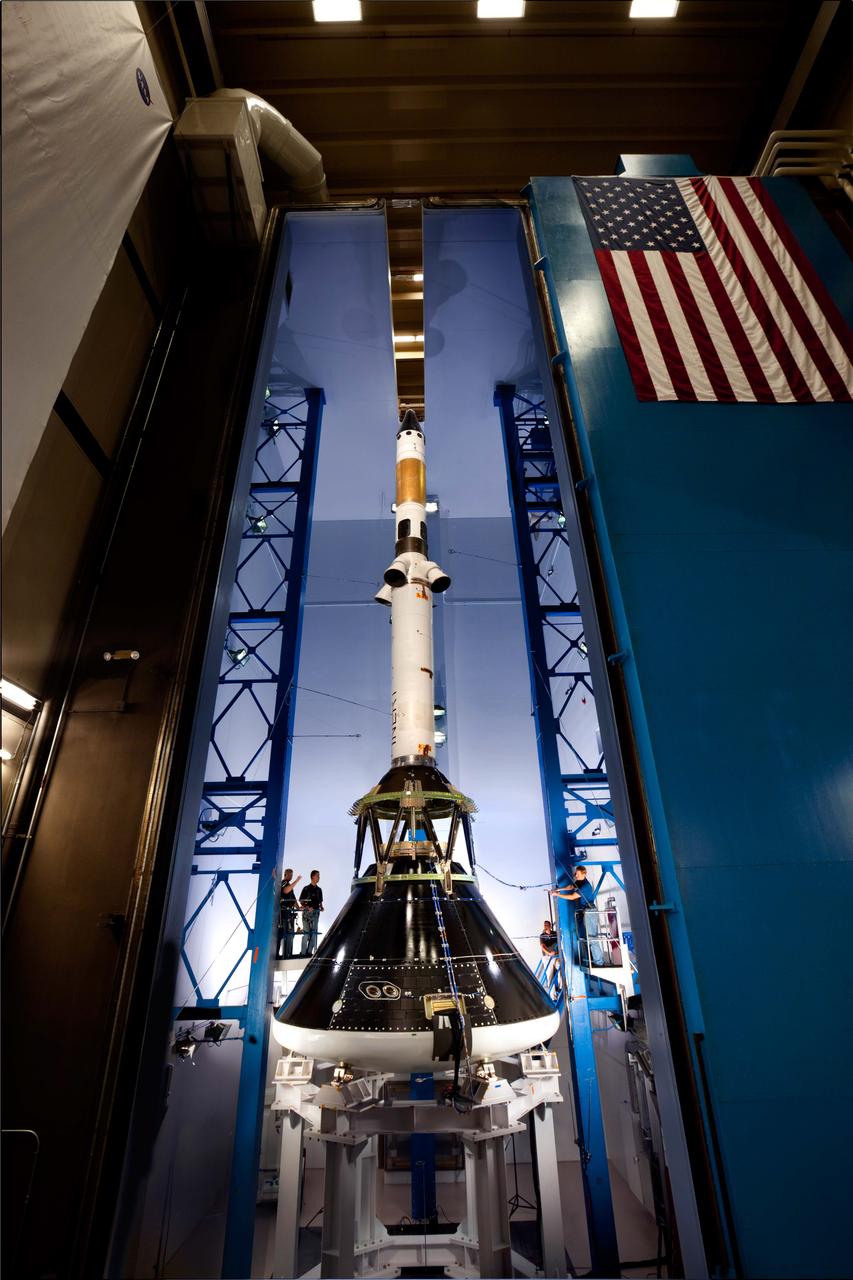
Technicians position microphones around the Orion launch abort system and crew module test articles in preparation for the second round of testing in the acoustic chamber at Lockheed Martin’s facilities near Denver on Aug. 16, 2011. The vehicle was bombarded by acoustic levels of 150 decibels to simulate conditions during launch and abort if necessary. Part of Batch image transfer from Flickr.
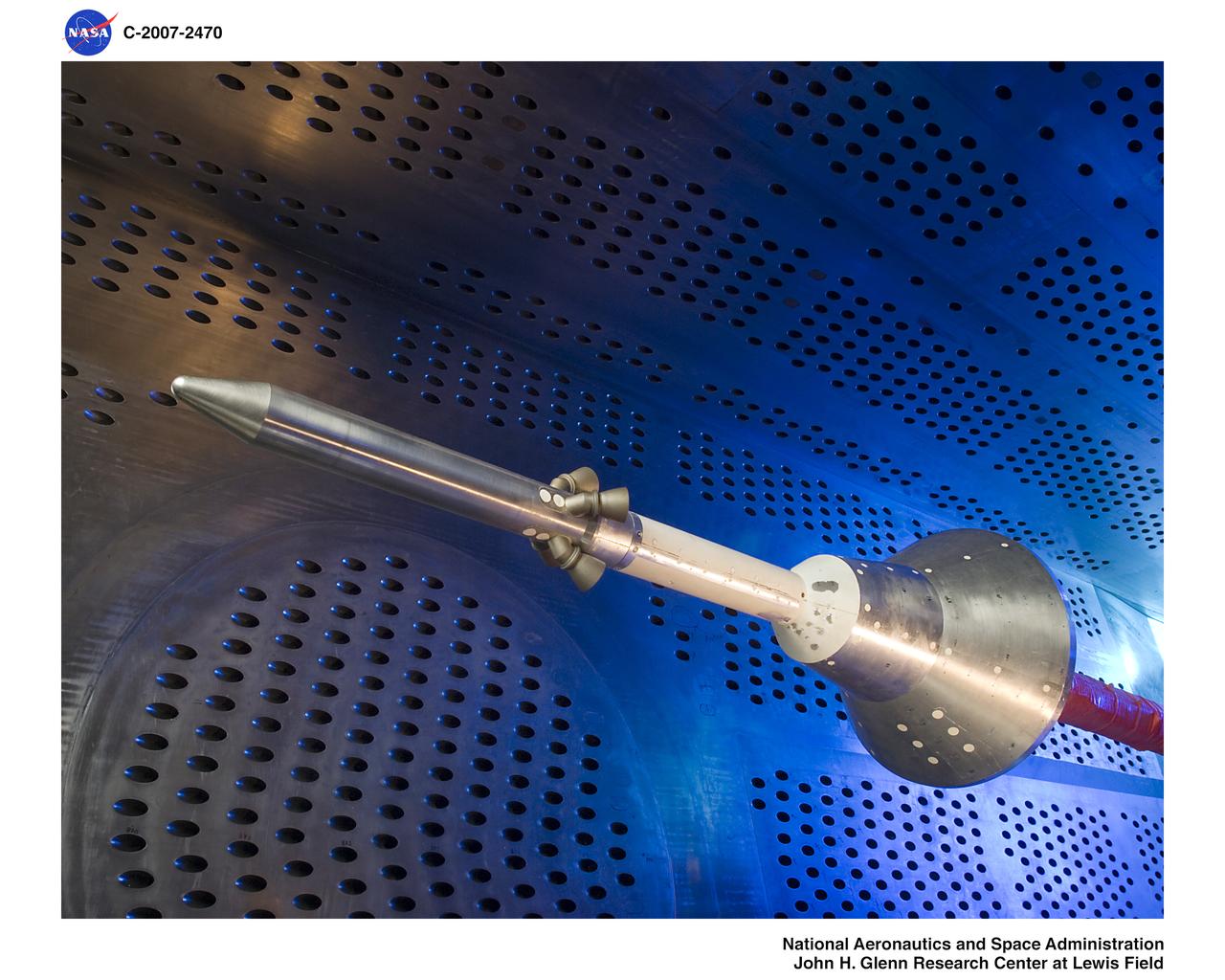
Orion Capsule and Launch Abort System (LAS) installed in the NASA Glenn 8x6 Supersonic Wind Tunnel (SWT) for testing. This test is an Aero Acoustic test of the LAS. 8x6 supersonic wind tunnel test section
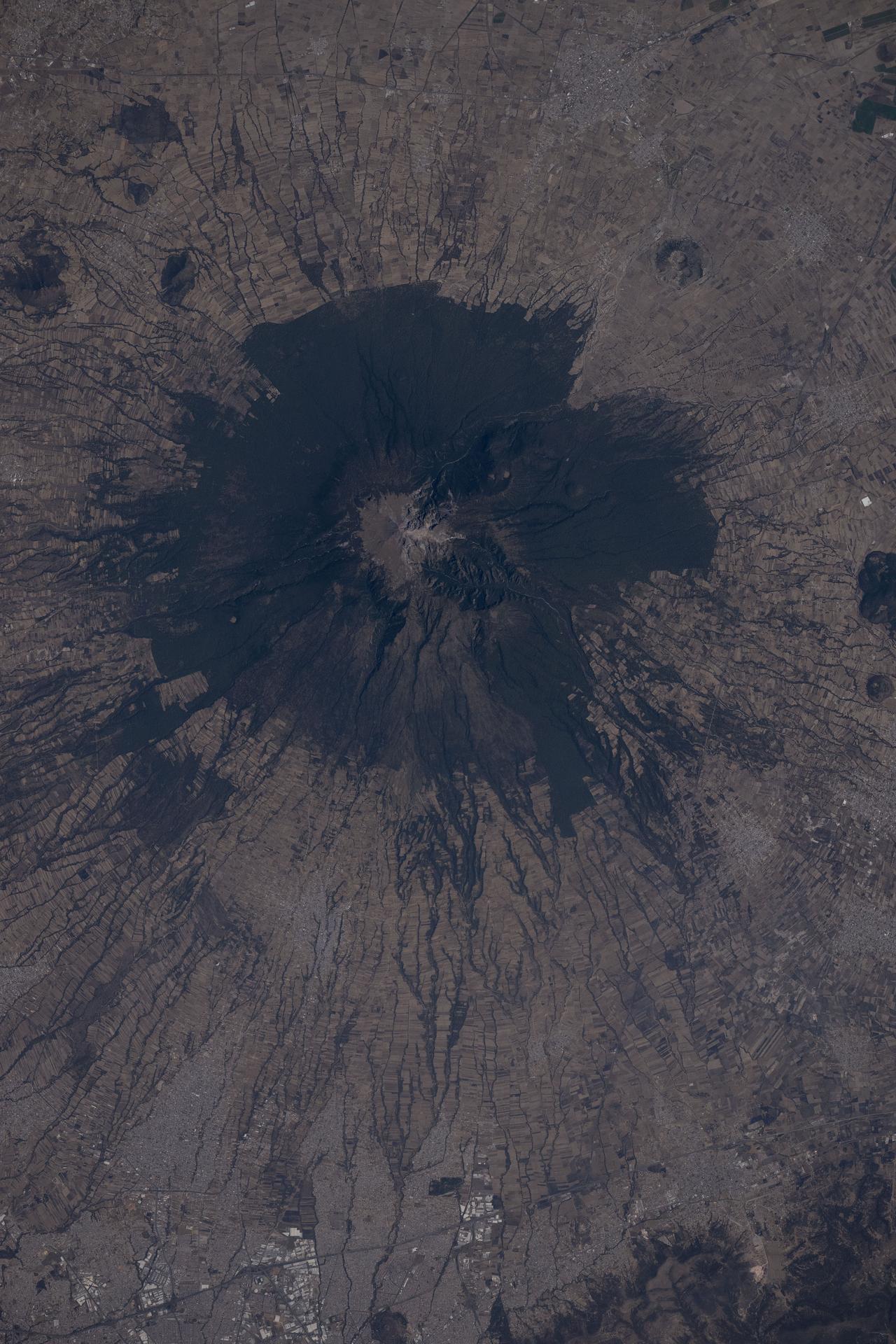
iss074e0319896 (Feb. 21, 2026) --- La Malinche Volcano, east of Mexico City, is a dormant, heavily eroded stratovolcano estimated to be about 30 to 35 million years old. The International Space Station was orbiting 259 miles above Oaxaca when this photograph was taken. Credit: NASA/Jessica Meir

iss073e0176332 (May 20, 2025) --- The Argentinian cities of La Plata (top left) and Buenos Aires and their surrounding suburbs with a combined population of about 13.66 million are pictured at approximately 4:43 a.m. local time from the International Space Station as it orbited 267 miles above.
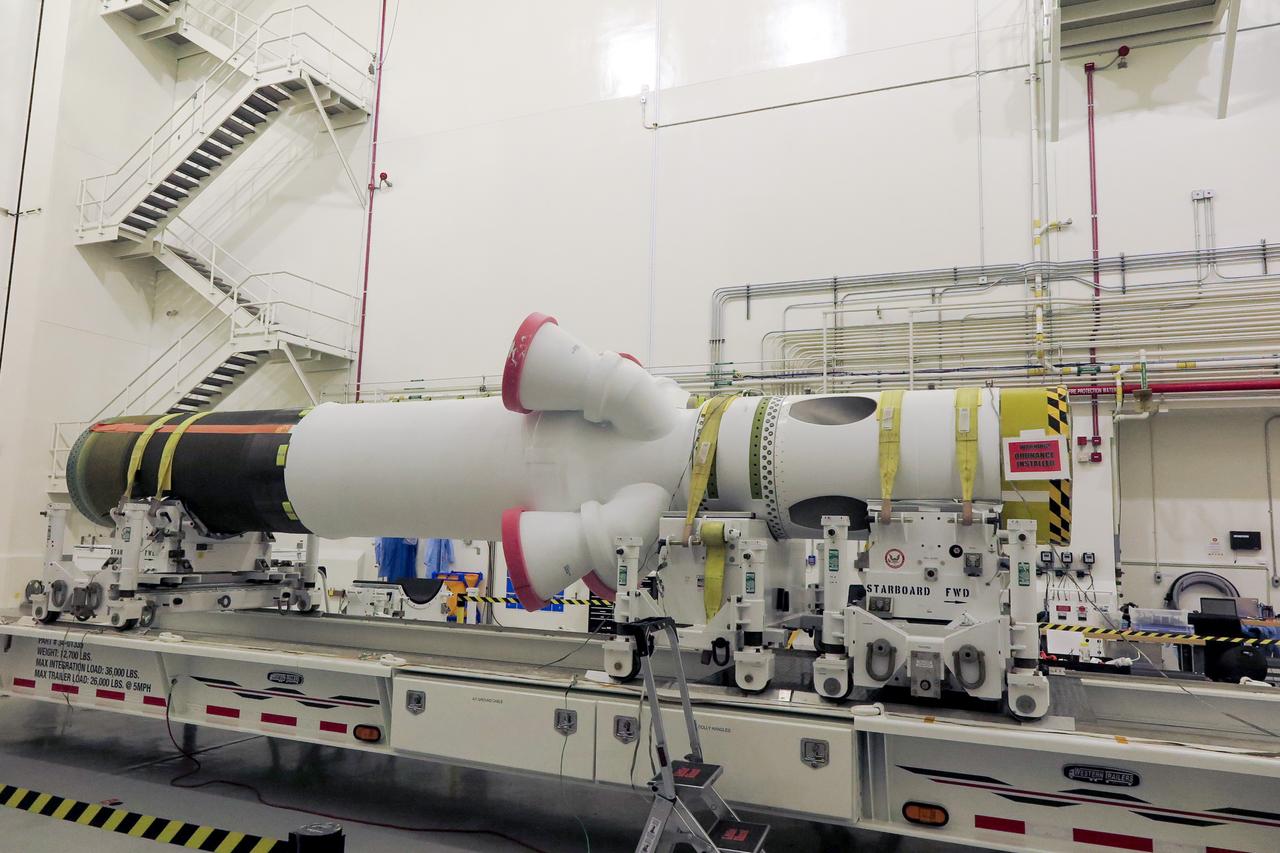
The launch abort motor is integrated with the jettison motor for Orion’s launch abort system (LAS) for Artemis II, inside the Launch Abort System Facility at NASA’s Kennedy Space Center in Florida on April 15, 2020. The launch abort and jettison motors are two of three motors on the LAS. The LAS will be positioned atop the Orion crew module and is designed to protect astronauts if a problem arises during launch by pulling the spacecraft away from a failing rocket. Artemis II will take the first humans in orbit around the Moon in the 21st century.
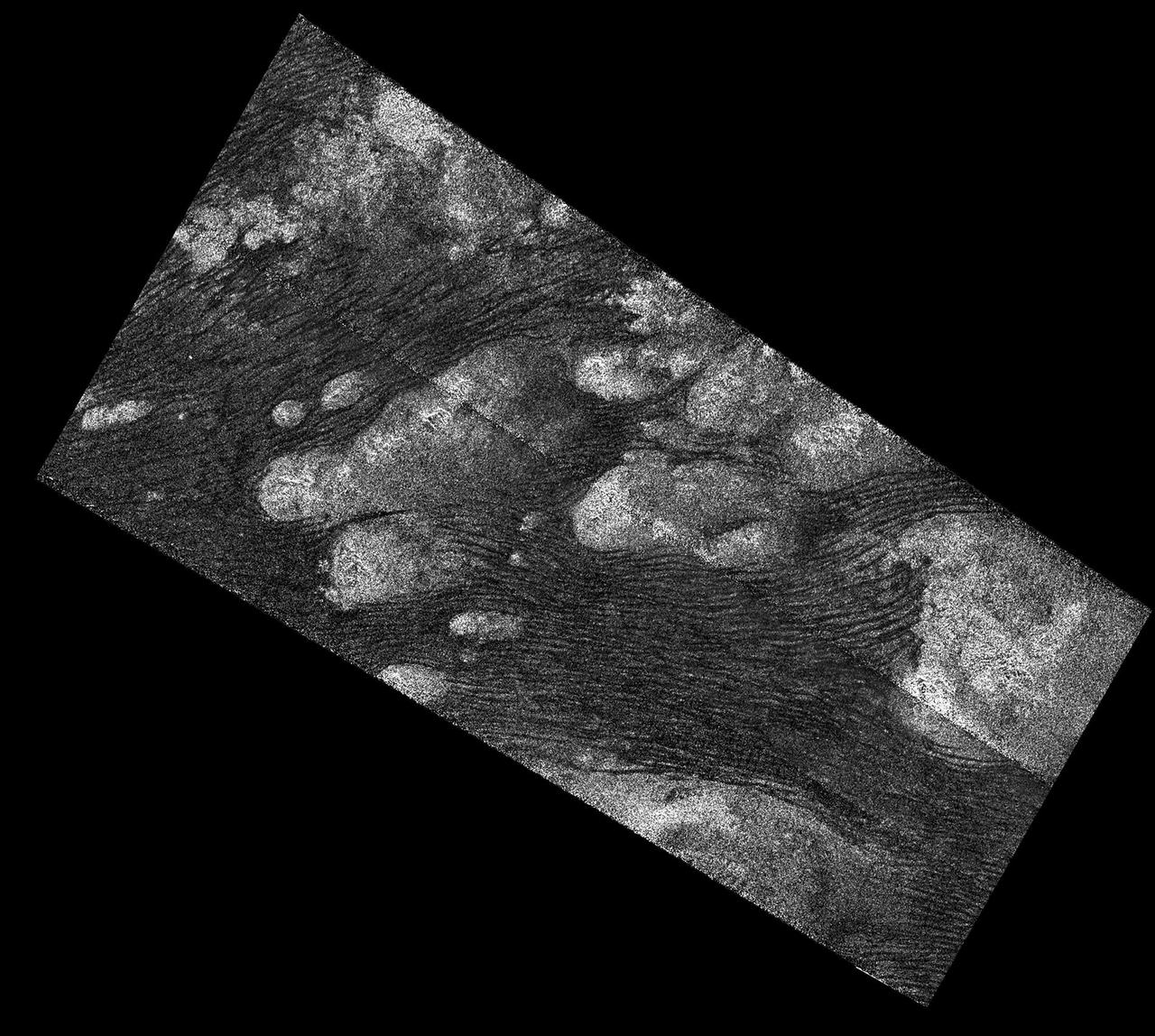
The Shangri-La Sand Sea on Titan is shown in this image from the Synthetic Aperture radar (SAR) on NASA's Cassini spacecraft. Hundreds of sand dunes are visible as dark lines snaking across the surface. These dunes display patterns of undulation and divergence around elevated mountains (which appear bright to the radar), thereby showing the direction of wind and sand transport on the surface. Sands being carried from left to right (west to east) cannot surmount the tallest obstacles; instead, they are directed through chutes and canyons between the tall features, evident in thin, blade-like, isolated dunes between bright some features. Once sands have passed around the obstacles, they resume their downwind course, at first collecting into small, patchy dunes and then organizing into larger, more pervasive linear forms, before being halted once again by obstacles. These patterns reveal the effects not only of wind -- perhaps even modern winds if the dunes are actively moving today -- but also the effects of underlying bedrock and surrounding topography. Dunes across the solar system aid in our understanding of underlying topography, winds and climate, past and present. Similar patterns can be seen in dunes of the Great Sandy Desert in Australia, where dunes undulate broadly across the uneven terrain and are halted at the margins of sand-trapping lakes. The dune orientations correlate generally with the direction of current trade winds, and reveal that winds must have been similar back when the dunes formed, during the Pleistocene glacial and interglacial periods. An annotated version of this radar image is also available.at the Photojournal. North on Titan is up in the image. Radar illuminates the scene from upper right at a 27-degree incidence angle. http://photojournal.jpl.nasa.gov/catalog/PIA20710
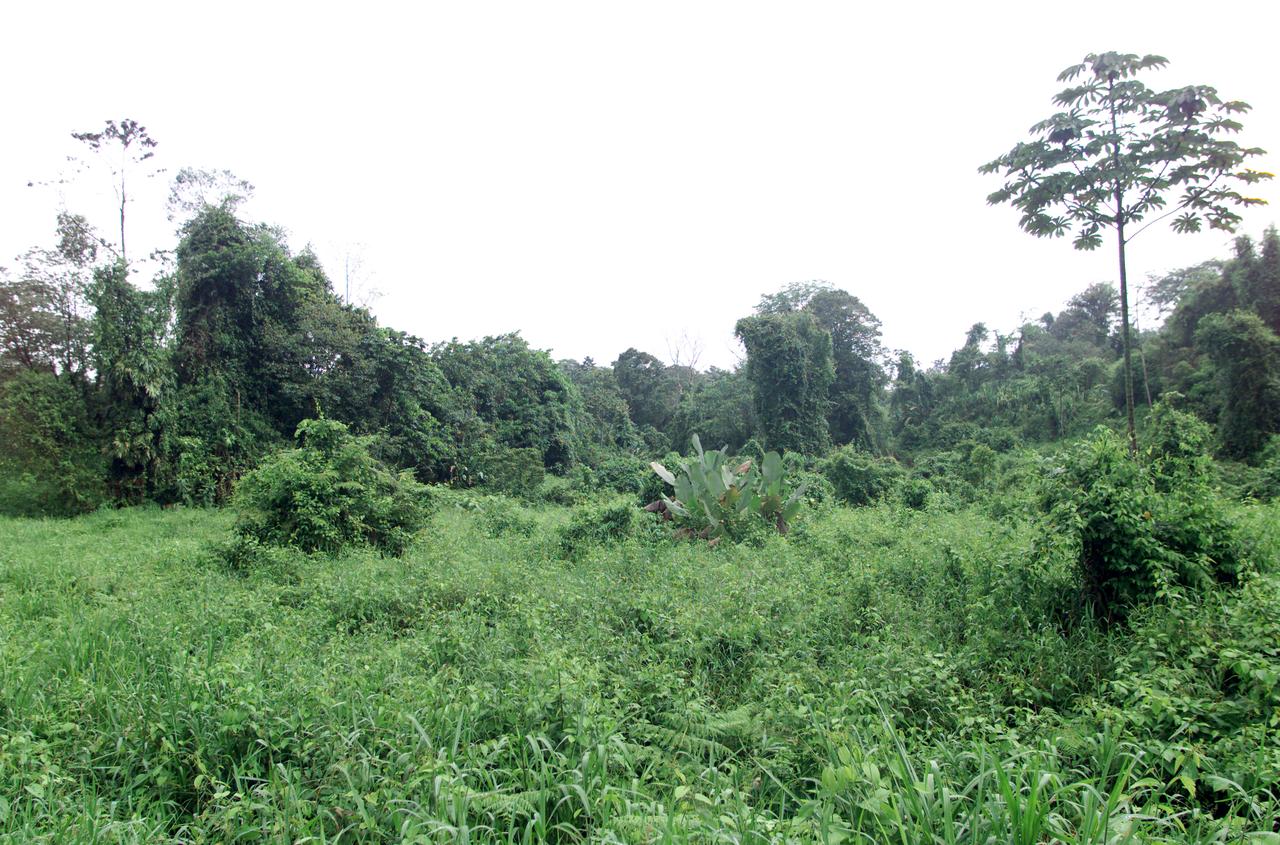
Dense rain forest in the La Selva region of Costa Rica. AirSAR 2004 Mesoamerica is a three-week expedition by an international team of scientists that uses an all-weather imaging tool, called the Airborne Synthetic Aperture Radar (AirSAR) which is located onboard NASA's DC-8 airborne laboratory. Scientists from many parts of the world including NASA's Jet Propulsion Laboratory are combining ground research done in several areas in Central America with NASA's AirSAR technology to improve and expand on the quality of research they are able to conduct. The radar, developed by NASA's Jet Propulsion Laboratory, can penetrate clouds and also collect data at night. Its high-resolution sensors operate at multiple wavelengths and modes, allowing AirSAR to see beneath treetops, through thin sand, and dry snow pack. AirSAR's 2004 campaign is a collaboration of many U.S. and Central American institutions and scientists, including NASA; the National Science Foundation; the Smithsonian Institution; National Geographic; Conservation International; the Organization of Tropical Studies; the Central American Commission for Environment and Development; and the Inter-American Development Bank.

President and founder of Bigelow Aerospace Robert T. Bigelow, talks during a media briefing where he and NASA Deputy Administrator Lori Garver discussed their $17.8 million contract to provide a Bigelow Expandable Activity Module (BEAM) to the International Space Station to test expandable space habitat technology, Wednesday, Jan. 16, 2013 at Bigelow Aerospace in Las Vegas. BEAM is scheduled to arrive at the space station in 2015 for a two-year technology demonstration. Photo Credit: (NASA/Bill Ingalls)
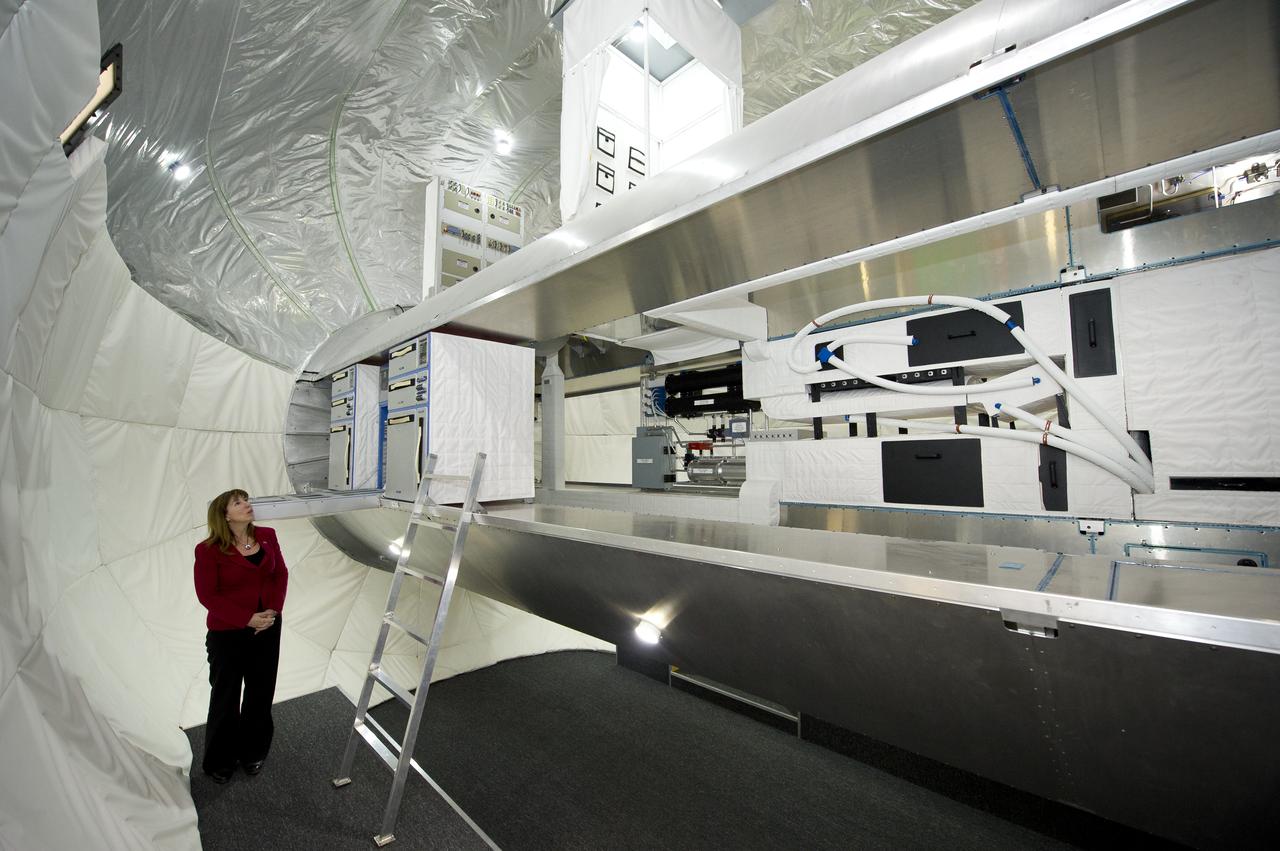
NASA Deputy Administrator Lori Garver views the inside of a full scale mockup of Bigelow Aerospace's Space Station Alpha during a tour of the Bigelow Aerospace facilities by the company's President Robert Bigelow on Friday, Feb. 4, 2011, in Las Vegas. NASA has been discussing potential partnership opportunities with Bigelow for its inflatable habitat technologies as part of NASA's goal to develop innovative technologies to ensure that the U.S. remains competitive in future space endeavors. Photo Credit: (NASA/Bill Ingalls)

NASA Deputy Administrator Lori Garver talks during a press conference shortly after she was given a tour of the Bigelow Aerospace facilities by the company's President Robert Bigelow on Friday, Feb. 4, 2011, in Las Vegas. NASA has been discussing potential partnership opportunities with Bigelow for its inflatable habitat technologies as part of NASA's goal to develop innovative technologies to ensure that the U.S. remains competitive in future space endeavors. Photo Credit: (NASA/Bill Ingalls)

NASA Deputy Administrator Lori Garver talks during a media briefing where she and President and founder of Bigelow Aerospace Robert T. Bigelow, discussed their $17.8 million contract to provide a Bigelow Expandable Activity Module (BEAM) to the International Space Station to test expandable space habitat technology, Wednesday, Jan. 16, 2013 at Bigelow Aerospace in Las Vegas. BEAM is scheduled to arrive at the space station in 2015 for a two-year technology demonstration. Photo Credit: (NASA/Bill Ingalls)

Bigelow Aerospace President Robert Bigelow talks during a press conference shortly after he and NASA Deputy Administrator Lori Garver toured the Bigelow Aerospace facilities on Friday, Feb. 4, 2011, in Las Vegas. NASA has been discussing potential partnership opportunities with Bigelow for its inflatable habitat technologies as part of NASA's goal to develop innovative technologies to ensure that the U.S. remains competitive in future space endeavors. Photo Credit: (NASA/Bill Ingalls)
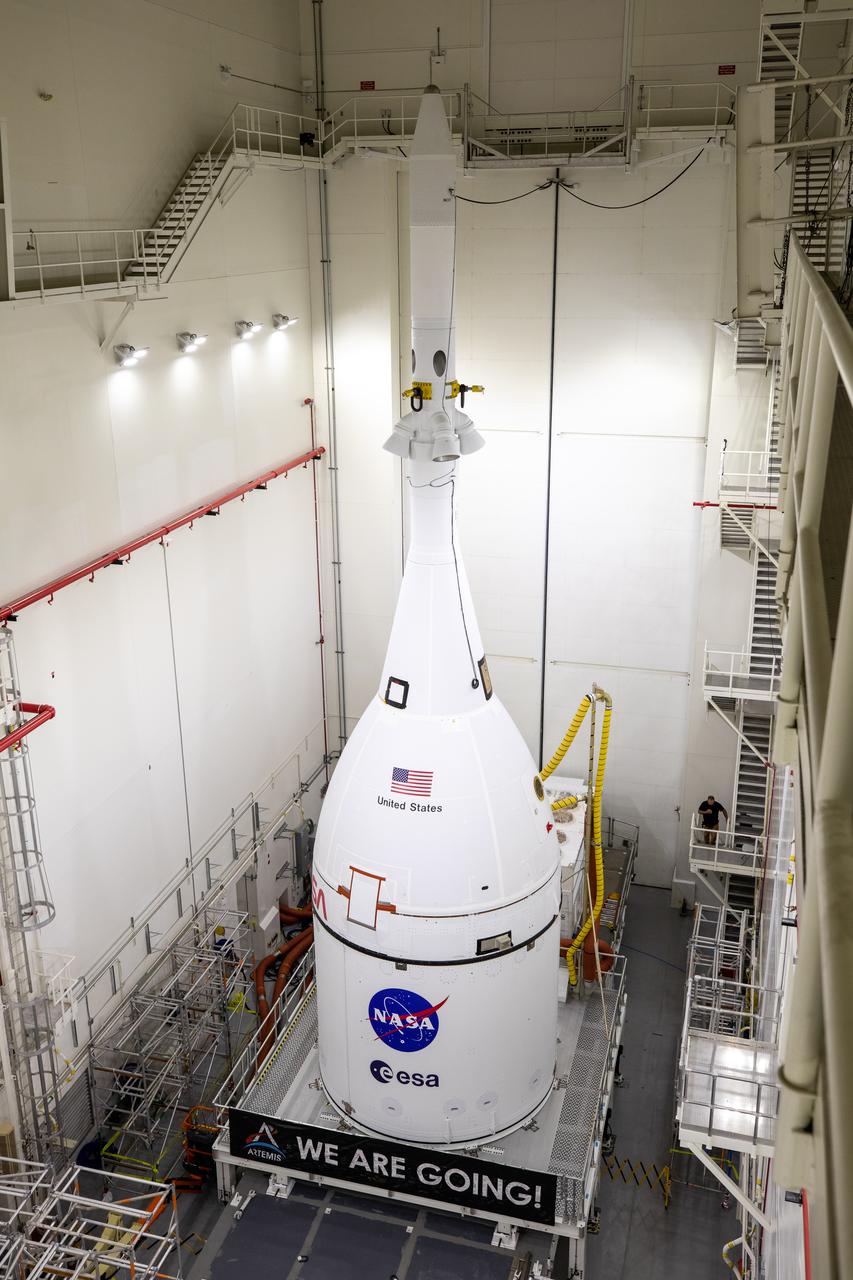
Inside the Launch Abort System Facility (LASF) at NASA’s Kennedy Space Center in Florida, the fully assembled Orion spacecraft for the agency’s Artemis I mission is prepared for transport on Oct. 18, 2021. In the early morning hours of Oct. 19, Orion was moved from the LASF into the Vehicle Assembly Building, where teams with the agency’s Exploration Ground Systems and contractor Jacobs will lift and lower the spacecraft on top of the Space Launch System (SLS) rocket to complete assembly of NASA’s Moon rocket. The first in an increasingly complex set of missions, Artemis I will be an integrated flight test for Orion and SLS ahead of crewed flights to the Moon.
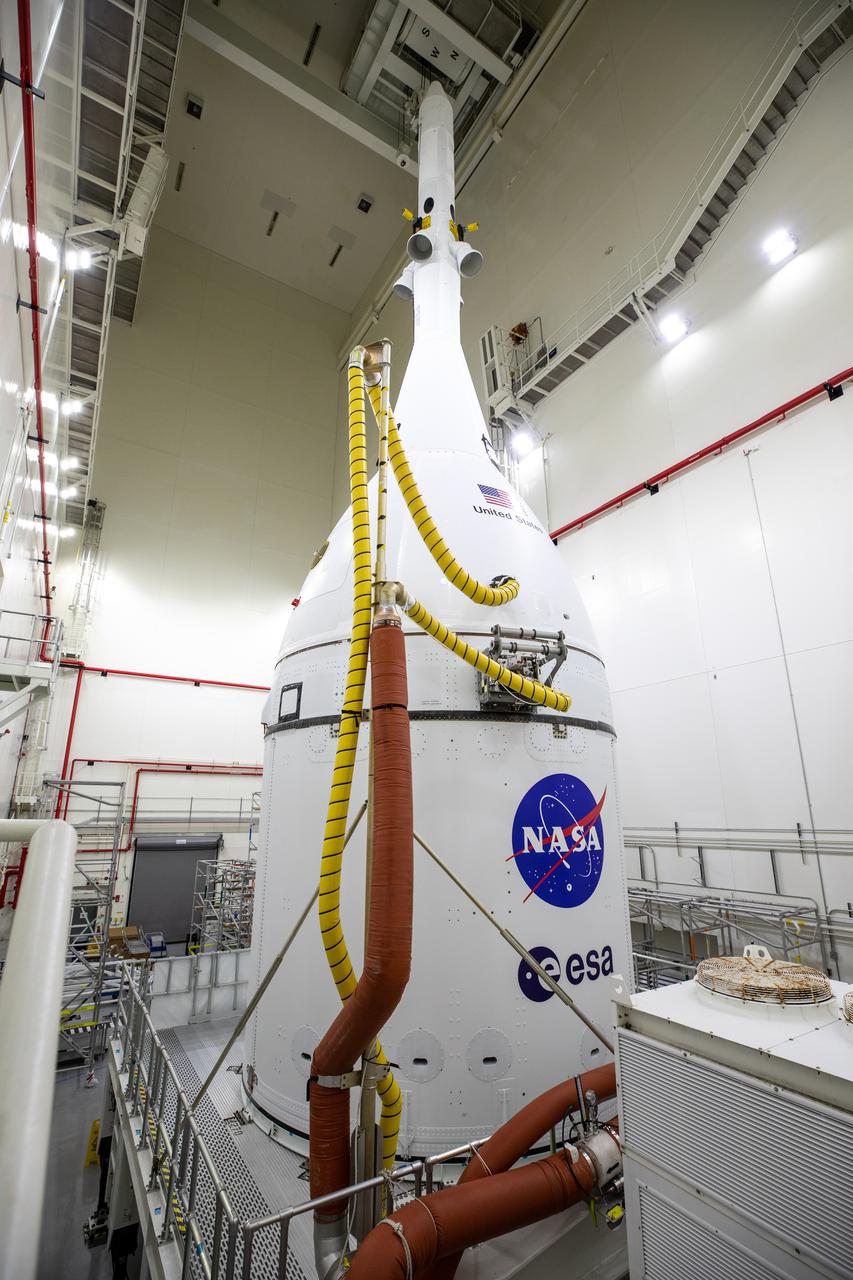
Inside the Launch Abort System Facility (LASF) at NASA’s Kennedy Space Center in Florida, the fully assembled Orion spacecraft for the agency’s Artemis I mission is prepared for transport on Oct. 18, 2021. In the early morning hours of Oct. 19, Orion was moved from the LASF into the Vehicle Assembly Building, where teams with the agency’s Exploration Ground Systems and contractor Jacobs will lift and lower the spacecraft on top of the Space Launch System (SLS) rocket to complete assembly of NASA’s Moon rocket. The first in an increasingly complex set of missions, Artemis I will be an integrated flight test for Orion and SLS ahead of crewed flights to the Moon.
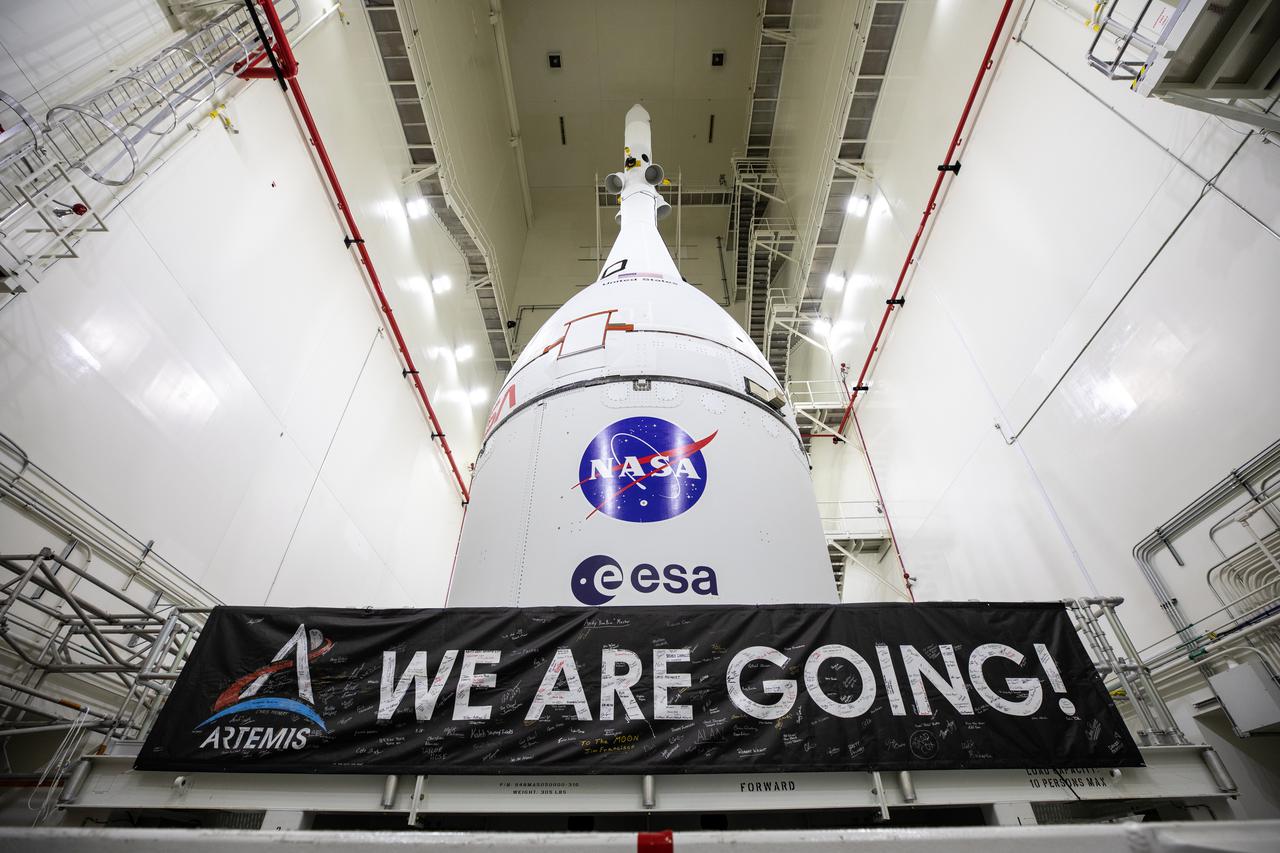
Inside the Launch Abort System Facility (LASF) at NASA’s Kennedy Space Center in Florida, the fully assembled Orion spacecraft for the agency’s Artemis I mission is prepared for transport on Oct. 18, 2021. In the early morning hours of Oct. 19, Orion was moved from the LASF into the Vehicle Assembly Building, where teams with the agency’s Exploration Ground Systems and contractor Jacobs will lift and lower the spacecraft on top of the Space Launch System (SLS) rocket to complete assembly of NASA’s Moon rocket. The first in an increasingly complex set of missions, Artemis I will be an integrated flight test for Orion and SLS ahead of crewed flights to the Moon.
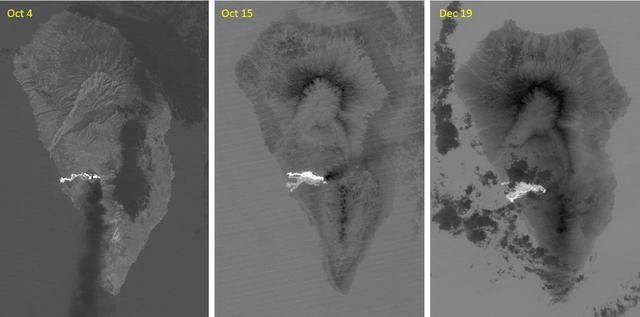
The major volcanic eruption of Cumbre Vieja volcano on La Palma, Canary Islands, began on September 21, 2021. For three months, lava poured out of the volcanic ridge, and flowed to the sea, engulfed 3000+ dwellings. The October 4 ASTER thermal infrared image shows the first flow reaching the coast. On October 15, a second flow followed to the north. By December 19, activity had stopped, and the flows are cooling. The images cover an area of 32.5 by 49.3 km, and are located at 28.6 degrees north, 17.9 degrees west. With its 14 spectral bands from the visible to the thermal infrared wavelength region and its high spatial resolution of about 50 to 300 feet (15 to 90 meters), ASTER images Earth to map and monitor the changing surface of our planet. ASTER is one of five Earth-observing instruments launched Dec. 18, 1999, on Terra. The instrument was built by Japan's Ministry of Economy, Trade and Industry. A joint U.S./Japan science team is responsible for validation and calibration of the instrument and data products. The broad spectral coverage and high spectral resolution of ASTER provides scientists in numerous disciplines with critical information for surface mapping and monitoring of dynamic conditions and temporal change. Example applications are monitoring glacial advances and retreats; monitoring potentially active volcanoes; identifying crop stress; determining cloud morphology and physical properties; wetlands evaluation; thermal pollution monitoring; coral reef degradation; surface temperature mapping of soils and geology; and measuring surface heat balance. https://photojournal.jpl.nasa.gov/catalog/PIA25085

NASA’s Armstrong Flight Research Center in Edwards, California, and NASA’s Jet Propulsion Laboratory in Pasadena, California marched in the LA Pride Parade in June 2023. This was NASA Armstrong’s first time participating in the parade, and many NASA employees attended to celebrate the LGBTQIA+ community and allyship. NASA’s team included engineers, scientists, technicians, and mission support folks who enrich the organization by showing up as themselves. On Earth and at NASA, there is space for everyone.

NASA’s Armstrong Flight Research Center in Edwards, California, and NASA’s Jet Propulsion Laboratory in Pasadena, California marched in the LA Pride Parade in June 2023. This was NASA Armstrong’s first time participating in the parade, and many NASA employees attended to celebrate the LGBTQIA+ community and allyship. NASA’s team included engineers, scientists, technicians, and mission support folks who enrich the organization by showing up as themselves. On Earth and at NASA, there is space for everyone.

NASA’s Armstrong Flight Research Center in Edwards, California, and NASA’s Jet Propulsion Laboratory in Pasadena, California marched in the LA Pride Parade in June 2023. This was NASA Armstrong’s first time participating in the parade, and many NASA employees attended to celebrate the LGBTQIA+ community and allyship. NASA’s team included engineers, scientists, technicians, and mission support folks who enrich the organization by showing up as themselves. On Earth and at NASA, there is space for everyone.

NASA’s Armstrong Flight Research Center in Edwards, California, and NASA’s Jet Propulsion Laboratory in Pasadena, California marched in the LA Pride Parade in June 2023. This was NASA Armstrong’s first time participating in the parade, and many NASA employees attended to celebrate the LGBTQIA+ community and allyship. NASA’s team included engineers, scientists, technicians, and mission support folks who enrich the organization by showing up as themselves. On Earth and at NASA, there is space for everyone.

NASA’s Armstrong Flight Research Center in Edwards, California, and NASA’s Jet Propulsion Laboratory in Pasadena, California marched in the LA Pride Parade in June 2023. This was NASA Armstrong’s first time participating in the parade, and many NASA employees attended to celebrate the LGBTQIA+ community and allyship. NASA’s team included engineers, scientists, technicians, and mission support folks who enrich the organization by showing up as themselves. On Earth and at NASA, there is space for everyone.