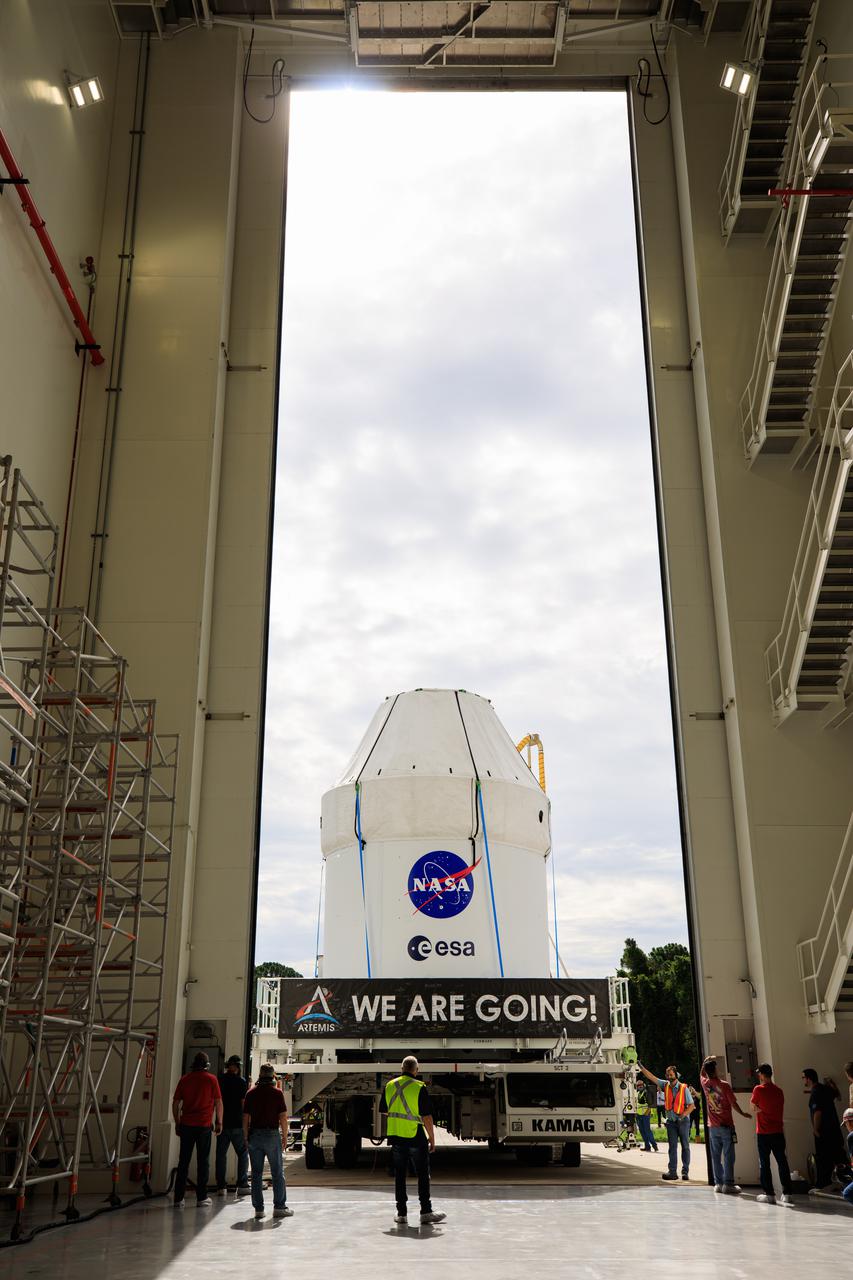
The Orion spacecraft for the Artemis I mission arrives at Kennedy Space Center’s Launch Abort System facility on July 10, 2021, after being transported from the Florida spaceport’s Multi-Payload Processing Facility earlier in the day. Teams with Exploration Ground Systems and contractor Jacobs will integrate components of the launch abort system onto the spacecraft. Launching later this year, Artemis I will be a test of the Orion spacecraft and SLS rocket as an integrated system ahead of crewed flights to the Moon.
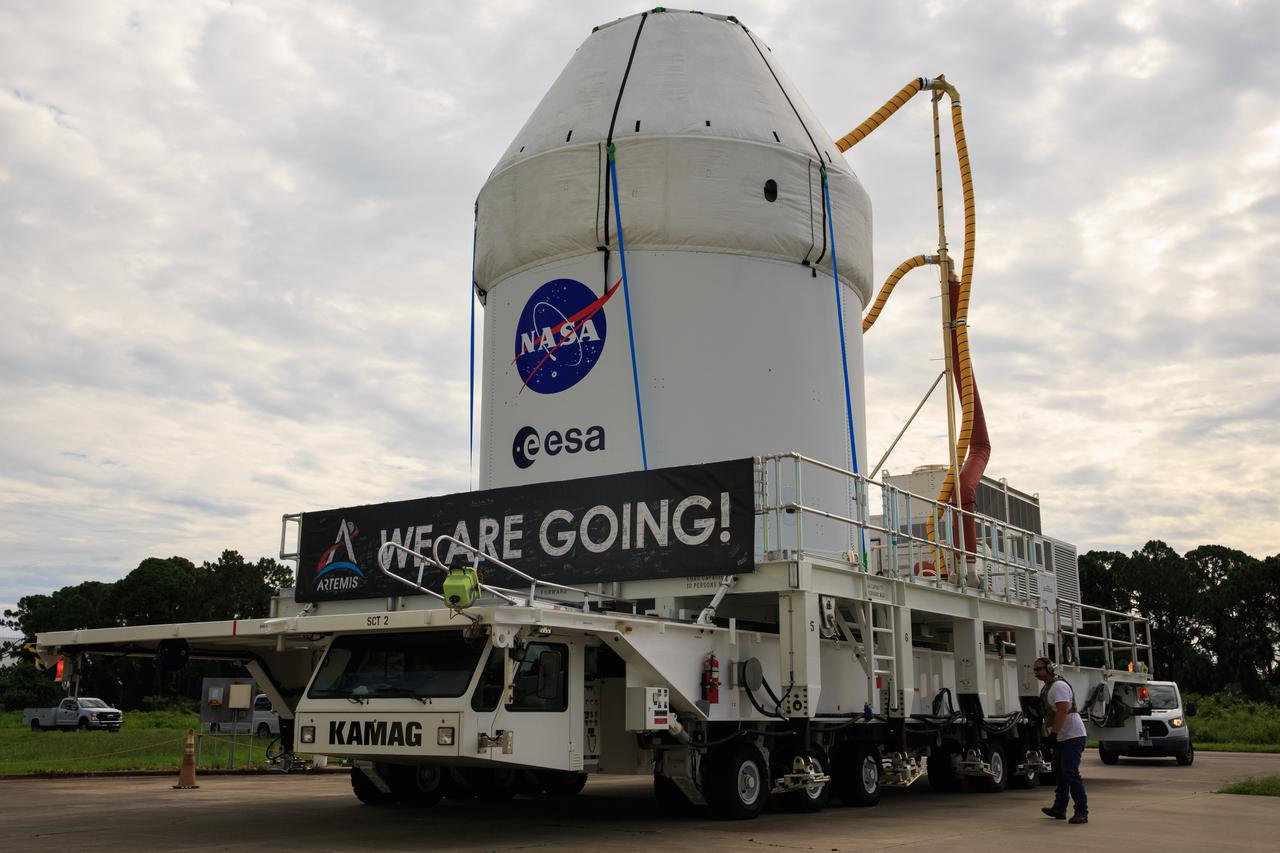
The Orion spacecraft for the Artemis I mission is transported from Kennedy Space Center’s Multi-Payload Processing Facility to the Florida spaceport’s Launch Abort System Facility on July 10, 2021. Teams with Exploration Ground Systems and contractor Jacobs will integrate components of the launch abort system onto the spacecraft. Launching later this year, Artemis I will be a test of the Orion spacecraft and SLS rocket as an integrated system ahead of crewed flights to the Moon.
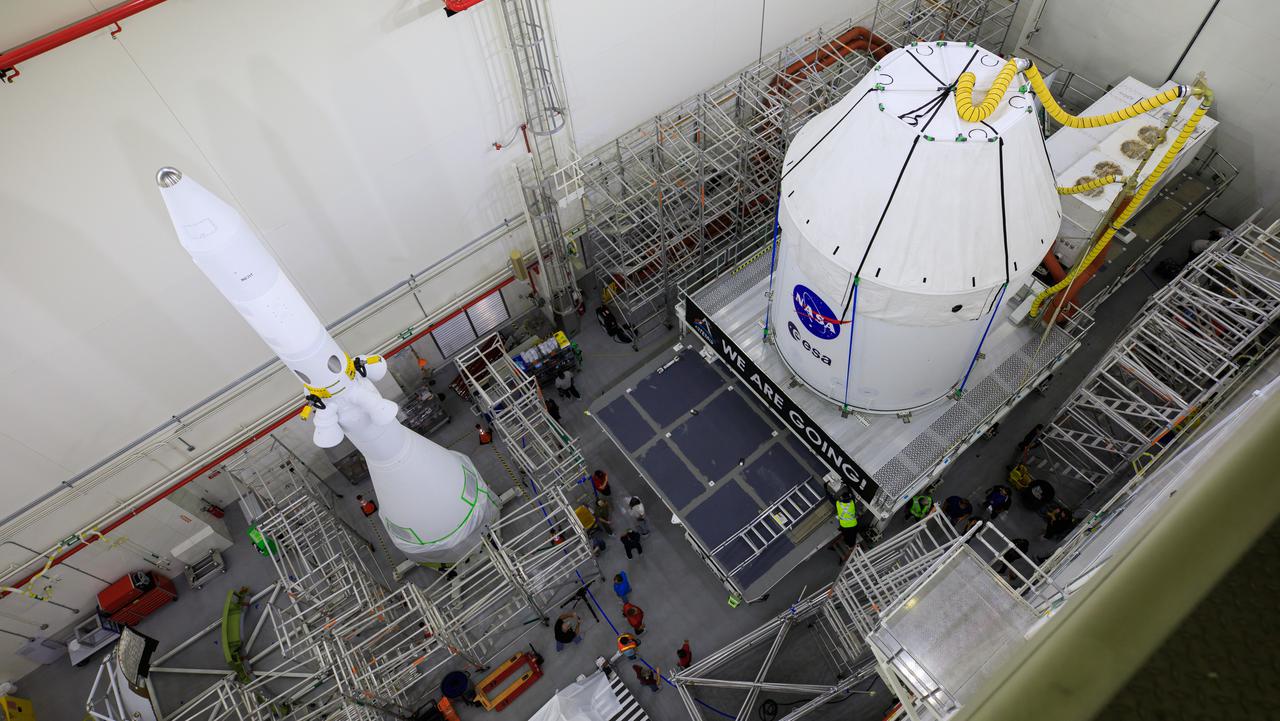
The Orion spacecraft for the Artemis I mission arrives at Kennedy Space Center’s Launch Abort System facility on July 10, 2021, after being transported from the Florida spaceport’s Multi-Payload Processing Facility earlier in the day. Teams with Exploration Ground Systems and contractor Jacobs will integrate components of the launch abort system onto the spacecraft. Launching later this year, Artemis I will be a test of the Orion spacecraft and SLS rocket as an integrated system ahead of crewed flights to the Moon.
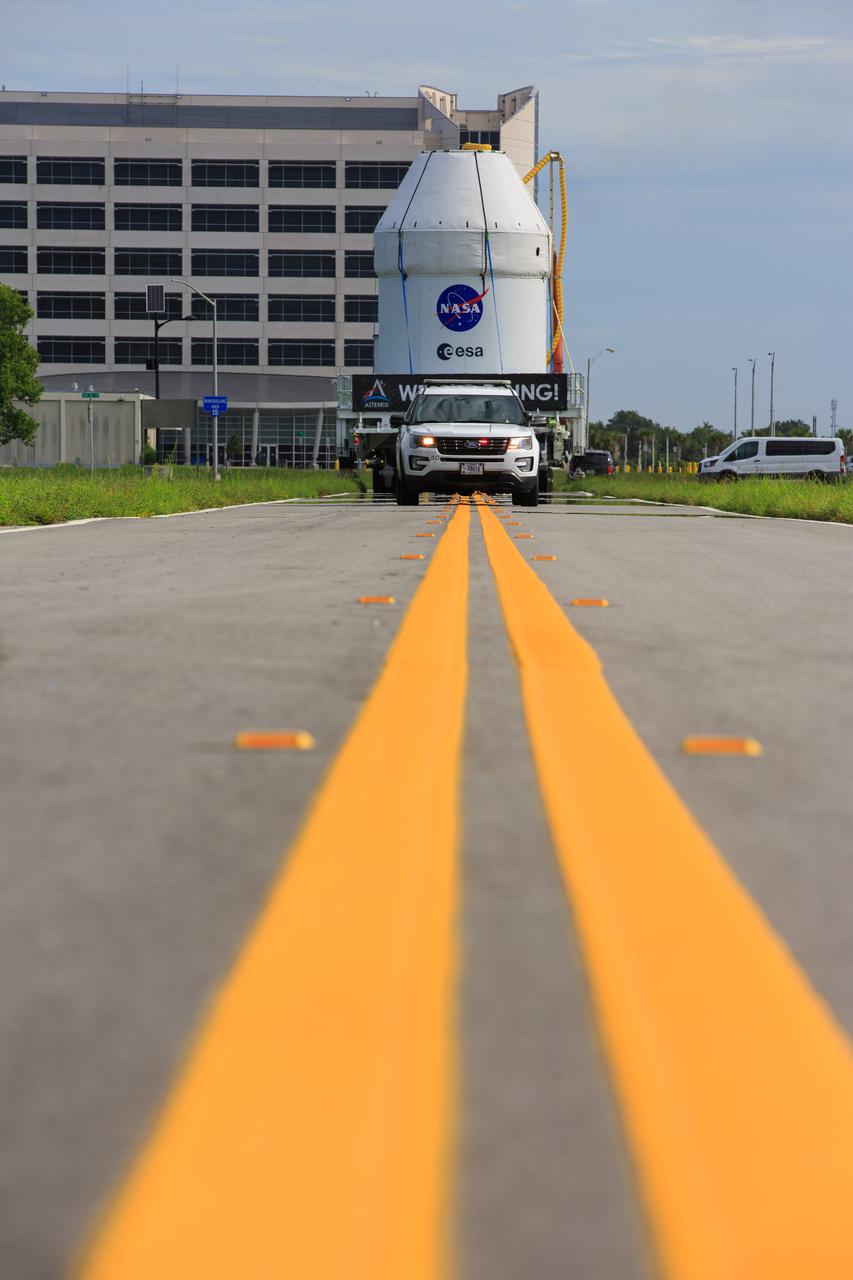
The Orion spacecraft for the Artemis I mission is transported from Kennedy Space Center’s Multi-Payload Processing Facility to the Florida spaceport’s Launch Abort System Facility on July 10, 2021. Teams with Exploration Ground Systems and contractor Jacobs will integrate components of the launch abort system onto the spacecraft. Launching later this year, Artemis I will be a test of the Orion spacecraft and SLS rocket as an integrated system ahead of crewed flights to the Moon.
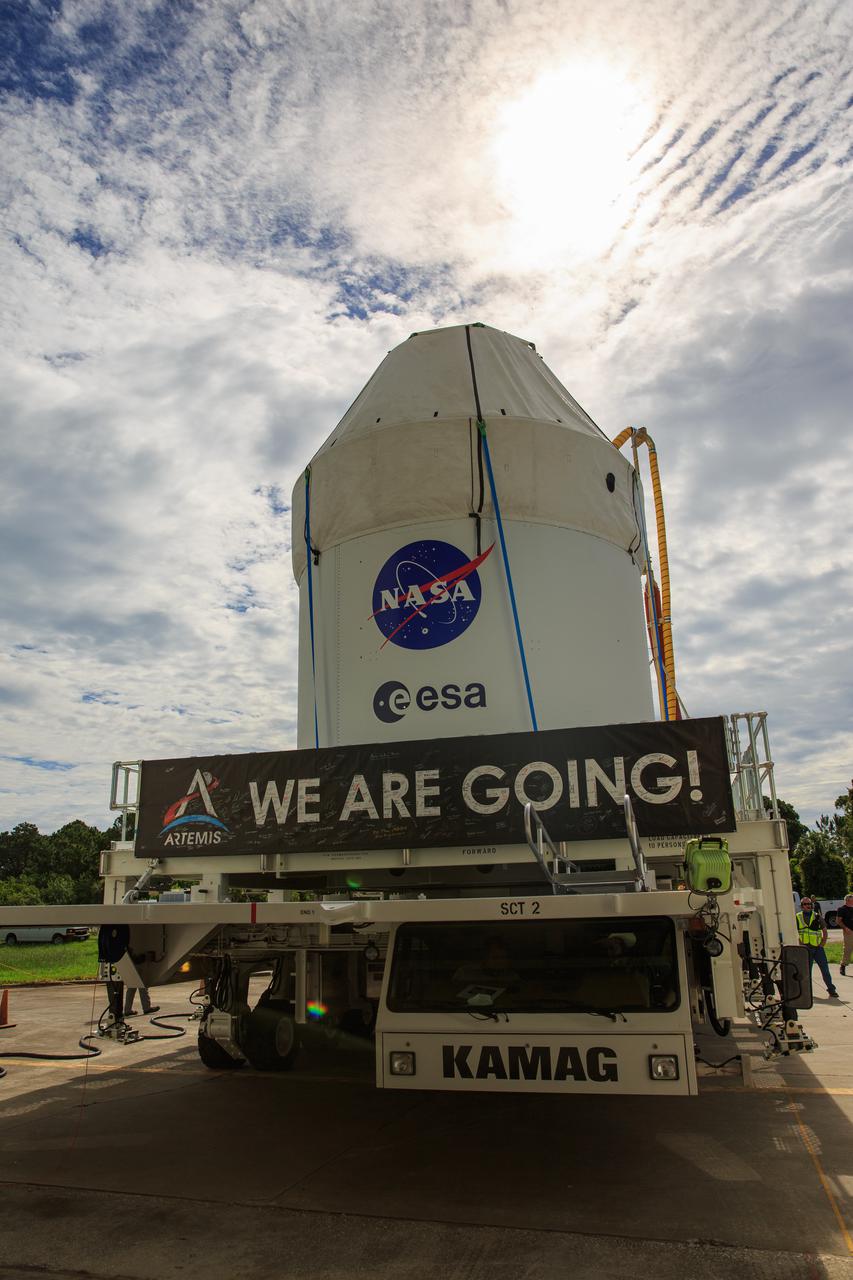
The Orion spacecraft for the Artemis I mission is transported from Kennedy Space Center’s Multi-Payload Processing Facility to the Florida spaceport’s Launch Abort System Facility on July 10, 2021. Teams with Exploration Ground Systems and contractor Jacobs will integrate components of the launch abort system onto the spacecraft. Launching later this year, Artemis I will be a test of the Orion spacecraft and SLS rocket as an integrated system ahead of crewed flights to the Moon.
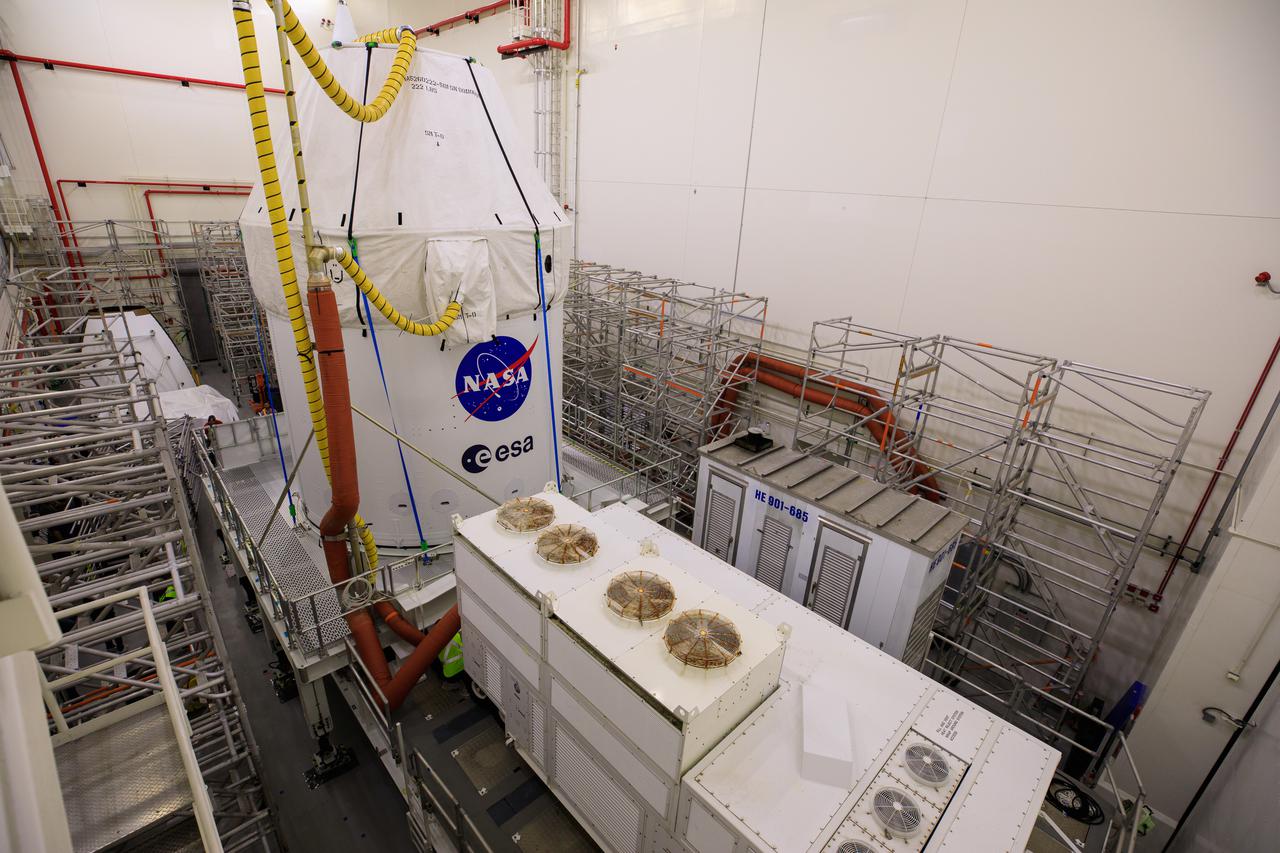
The Orion spacecraft for the Artemis I mission arrives at Kennedy Space Center’s Launch Abort System facility on July 10, 2021, after being transported from the Florida spaceport’s Multi-Payload Processing Facility earlier in the day. Teams with Exploration Ground Systems and contractor Jacobs will integrate components of the launch abort system onto the spacecraft. Launching later this year, Artemis I will be a test of the Orion spacecraft and SLS rocket as an integrated system ahead of crewed flights to the Moon.
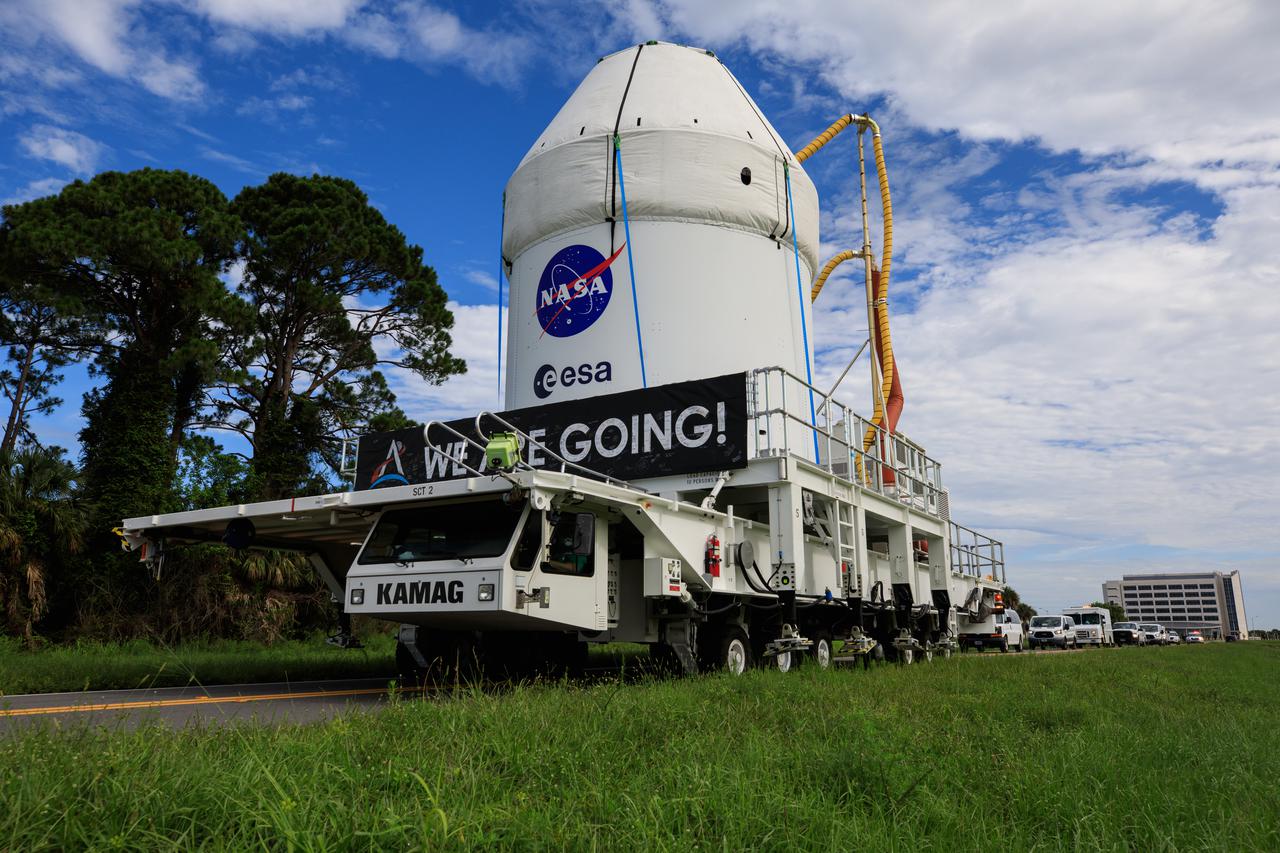
The Orion spacecraft for the Artemis I mission is transported from Kennedy Space Center’s Multi-Payload Processing Facility to the Florida spaceport’s Launch Abort System Facility on July 10, 2021. Teams with Exploration Ground Systems and contractor Jacobs will integrate components of the launch abort system onto the spacecraft. Launching later this year, Artemis I will be a test of the Orion spacecraft and SLS rocket as an integrated system ahead of crewed flights to the Moon.
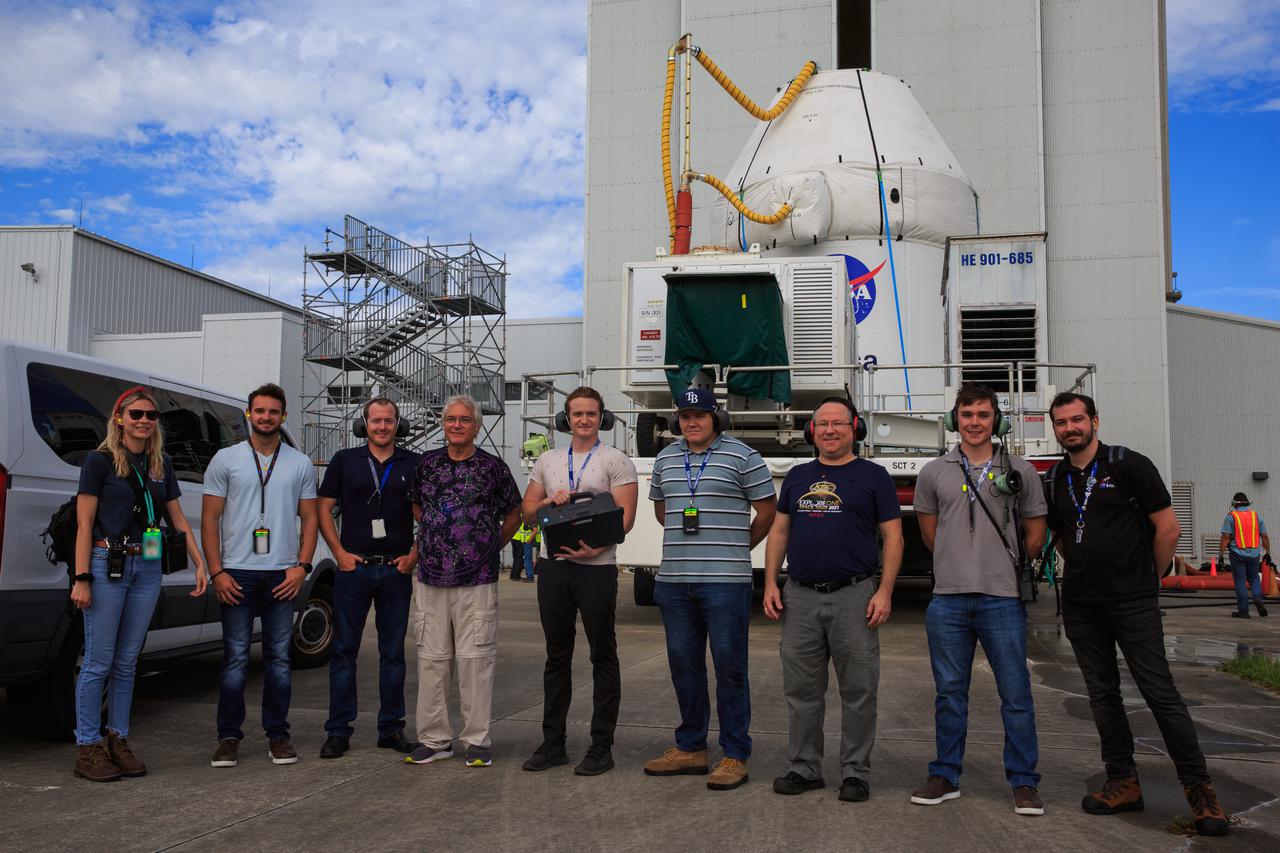
Teams from Kennedy’s Exploration Ground Systems and contractor Jacobs pose as the Orion spacecraft for the Artemis I mission is transported to the Florida spaceport’s Launch Abort System Facility on July 10, 2021. They will integrate components of the launch abort system onto the spacecraft. Launching later this year, Artemis I will be a test of the Orion spacecraft and SLS rocket as an integrated system ahead of crewed flights to the Moon.
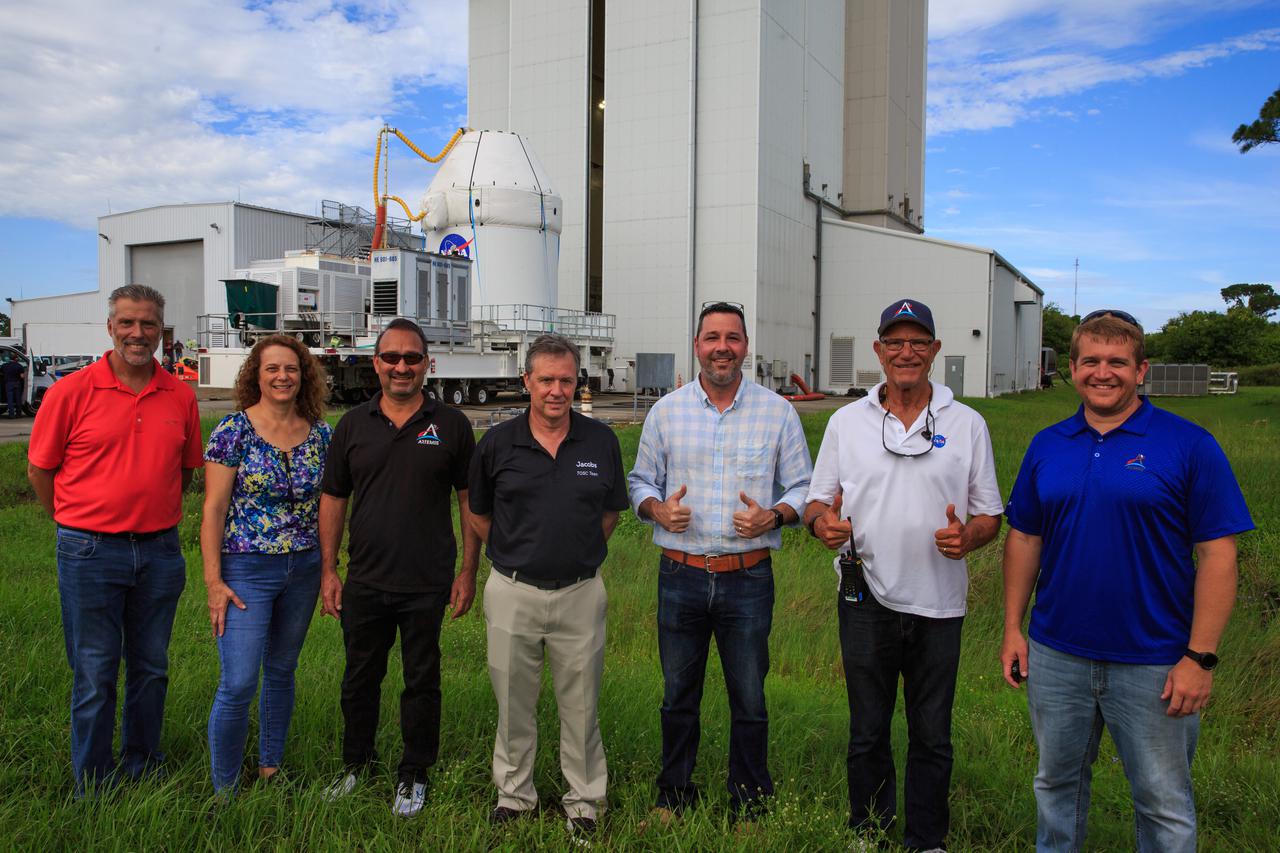
Teams from Kennedy’s Exploration Ground Systems and contractor Jacobs pose as the Orion spacecraft for the Artemis I mission is transported to the Florida spaceport’s Launch Abort System Facility on July 10, 2021. They will integrate components of the launch abort system onto the spacecraft. Launching later this year, Artemis I will be a test of the Orion spacecraft and SLS rocket as an integrated system ahead of crewed flights to the Moon.
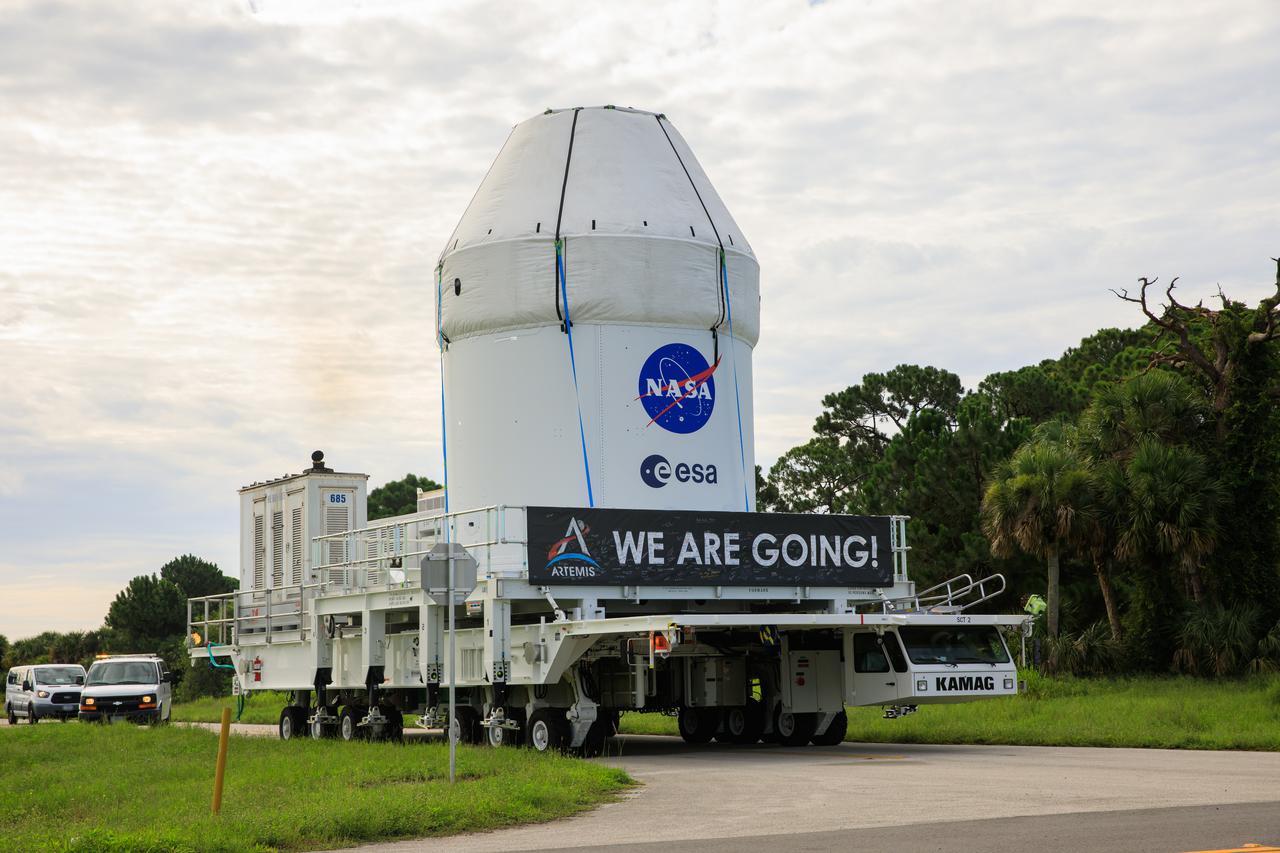
The Orion spacecraft for the Artemis I mission is transported from Kennedy Space Center’s Multi-Payload Processing Facility to the Florida spaceport’s Launch Abort System Facility on July 10, 2021. Teams with Exploration Ground Systems and contractor Jacobs will integrate components of the launch abort system onto the spacecraft. Launching later this year, Artemis I will be a test of the Orion spacecraft and SLS rocket as an integrated system ahead of crewed flights to the Moon.
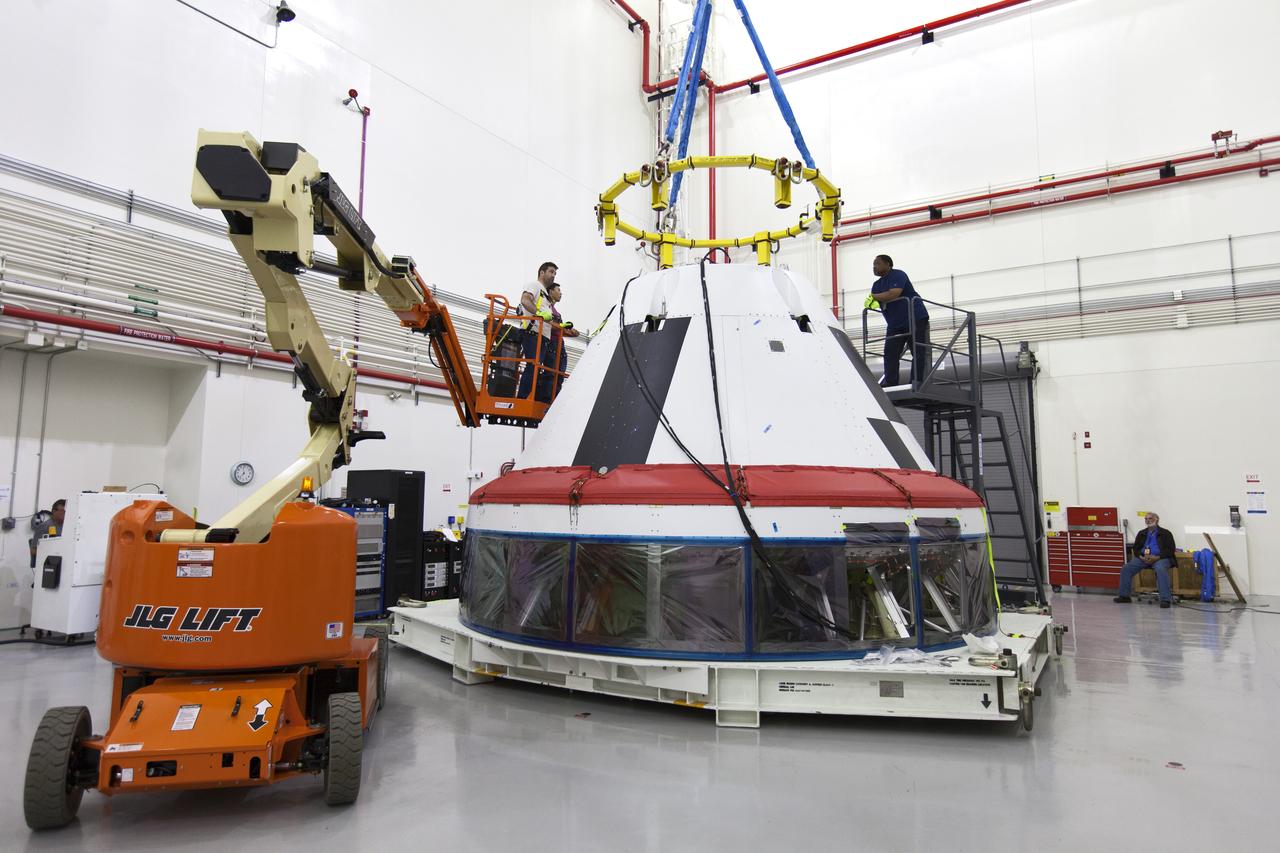
Inside the Launch Abort System Facility (LASF) at NASA’s Kennedy Space Center in Florida, workers attach a crane to a test version of the Orion crew module to integrate it with the Launch Abort System on March 13, 2019. The Orion test module and the Launch Abort System will be used for the Orion Ascent Abort-2 (AA-2) Flight Test, a full-stress test of the LAS, scheduled for spring 2019. AA-2 will launch from Space Launch Complex 46, carrying a fully functional LAS and a 22,000-pound Orion test vehicle to an altitude of 31,000 feet and traveling at more than 1,000 miles an hour. The test will verify the LAS can steer the crew module and astronauts aboard to safety in the event of an issue with the Space Launch System (SLS) rocket when the spacecraft is under the highest aerodynamic loads it will experience during a rapid climb into space. NASA's Orion and Exploration Ground Systems programs and contractors from Jacob's and Northrop Grumman in conjunction with the Air Force Space and Missile Center's Launch Operations branch are performing flight operations for AA-2.
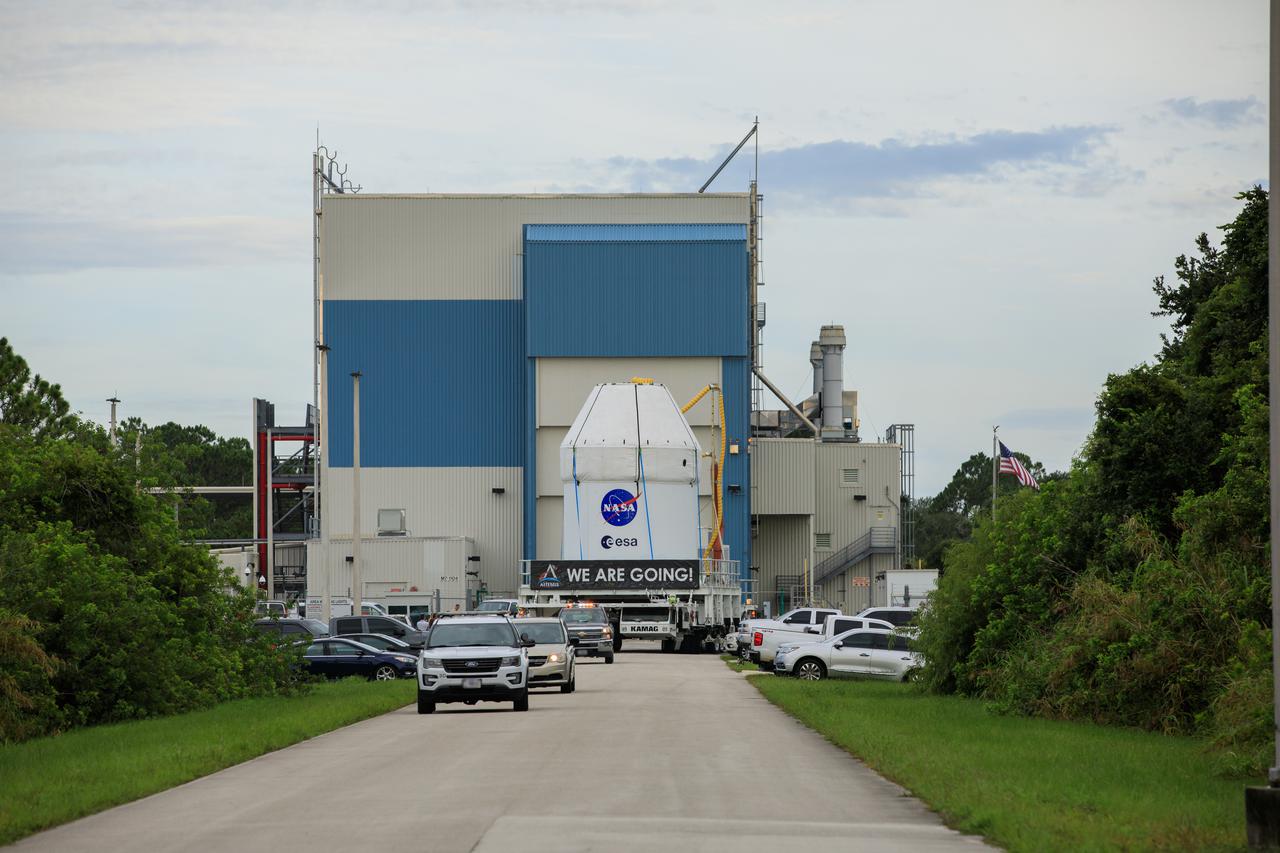
After recently completing fueling and servicing checks, the Orion spacecraft for the Artemis I mission departs Kennedy Space Center’s Multi-Payload Processing on July 10, 2021. The capsule is being transported to the Florida spaceport’s Launch Abort System Facility, where teams with Exploration Ground Systems and contractor Jacobs will integrate components of the launch abort system onto the spacecraft. Launching later this year, Artemis I will be a test of the Orion spacecraft and SLS rocket as an integrated system ahead of crewed flights to the Moon.
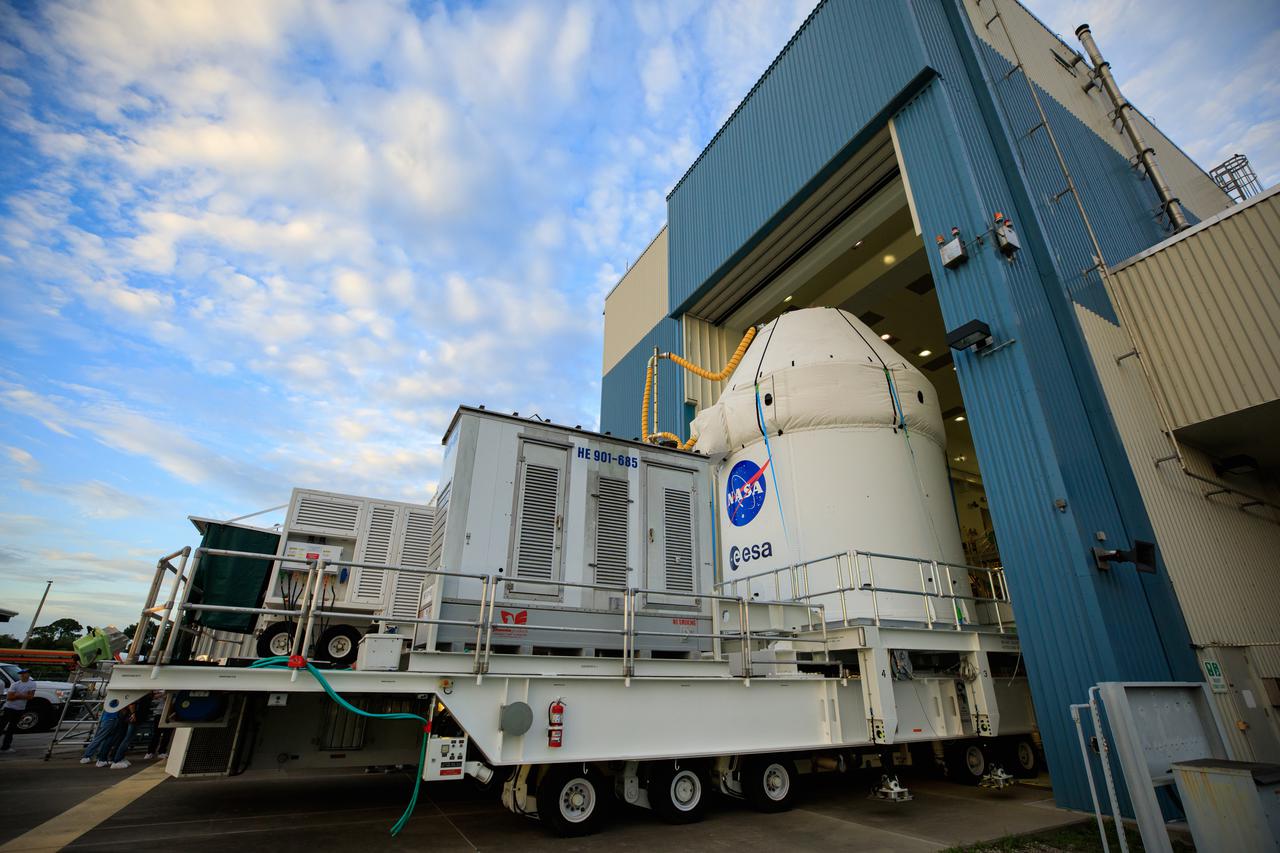
After recently completing fueling and servicing checks, the Orion spacecraft for the Artemis I mission departs from Kennedy Space Center’s Multi-Payload Processing on July 10, 2021. It is being transported to the Florida spaceport’s Launch Abort System Facility, where teams with Exploration Ground Systems and contractor Jacobs will integrate components of the launch abort system onto the spacecraft. Launching later this year, Artemis I will be a test of the Orion spacecraft and SLS rocket as an integrated system ahead of crewed flights to the Moon.
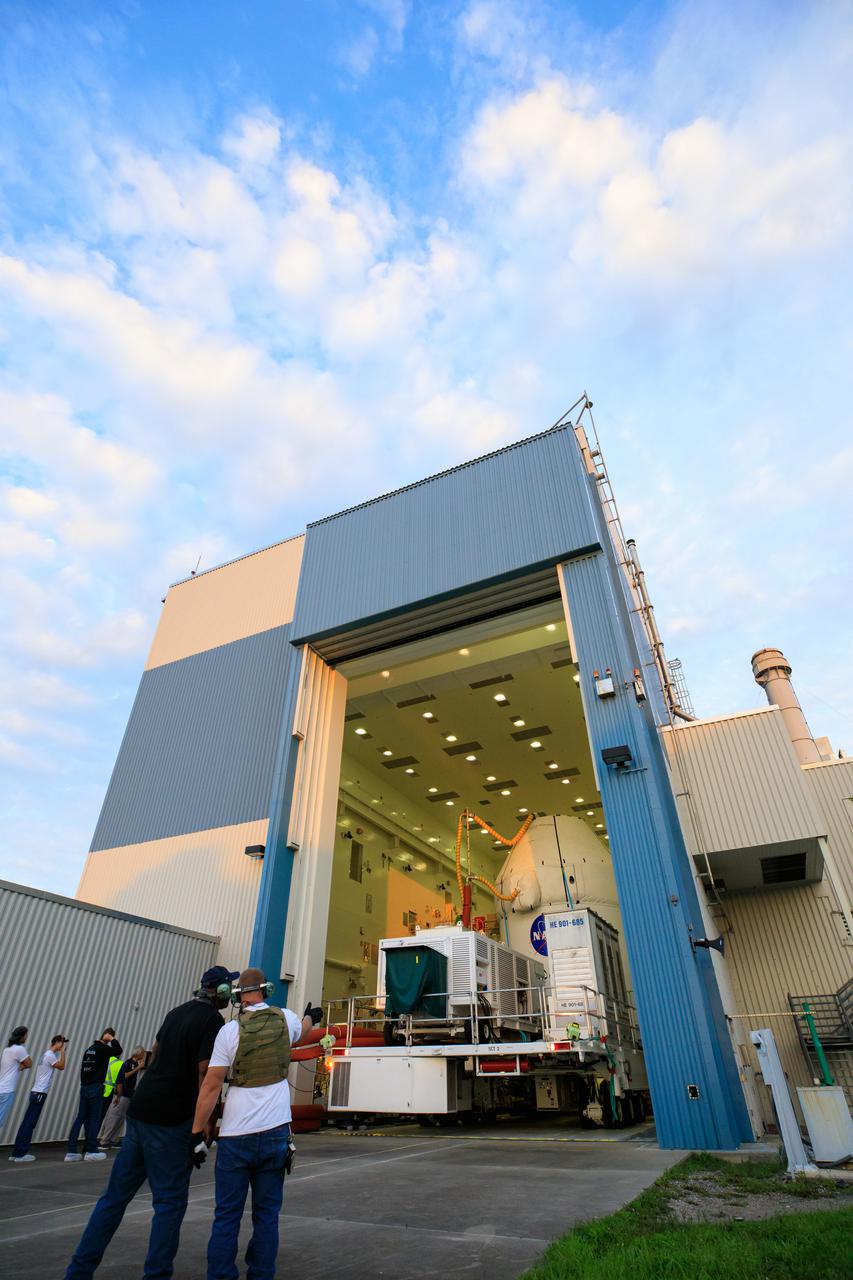
After recently completing fueling and servicing checks, the Orion spacecraft for the Artemis I mission departs from Kennedy Space Center’s Multi-Payload Processing on July 10, 2021. It is being transported to the Florida spaceport’s Launch Abort System Facility, where teams with Exploration Ground Systems and contractor Jacobs will integrate components of the launch abort system onto the spacecraft. Launching later this year, Artemis I will be a test of the Orion spacecraft and SLS rocket as an integrated system ahead of crewed flights to the Moon.
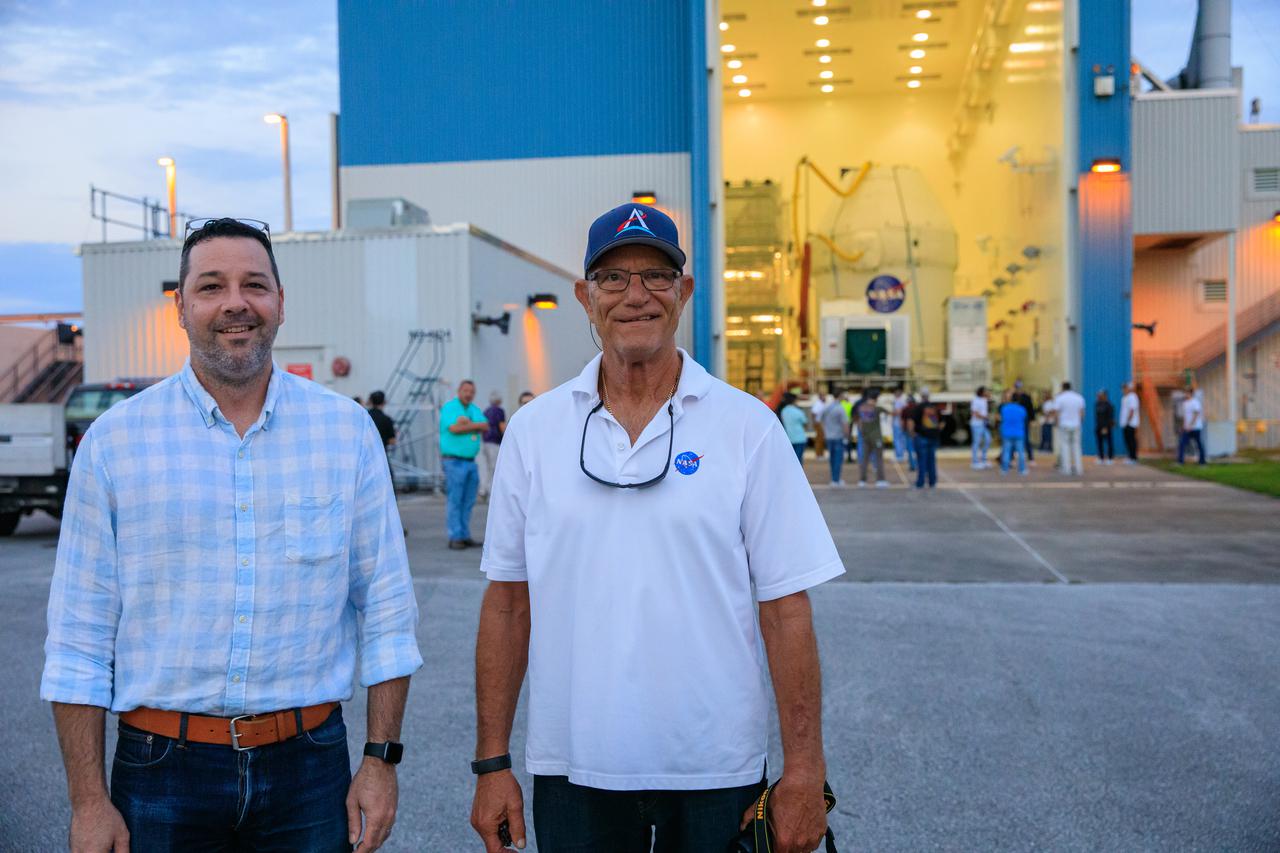
Mike Collins, NASA Operations manager for Spacecraft Offline Operations, left, and Skip Williams, operations manager for the Multi-Payload Processing Facility (MPPF) spacecraft offline element integration team, stand in front of the Orion spacecraft for the Artemis I mission, as the capsule moves out from Kennedy Space Center’s MFFP on July 10, 2021. Orion is being transported to the Florida spaceport’s Launch Abort System Facility, where teams with Exploration Ground Systems and contractor Jacobs will integrate components of the launch abort system onto the spacecraft. Launching later this year, Artemis I will be a test of the Orion spacecraft and SLS rocket as an integrated system ahead of crewed flights to the Moon.
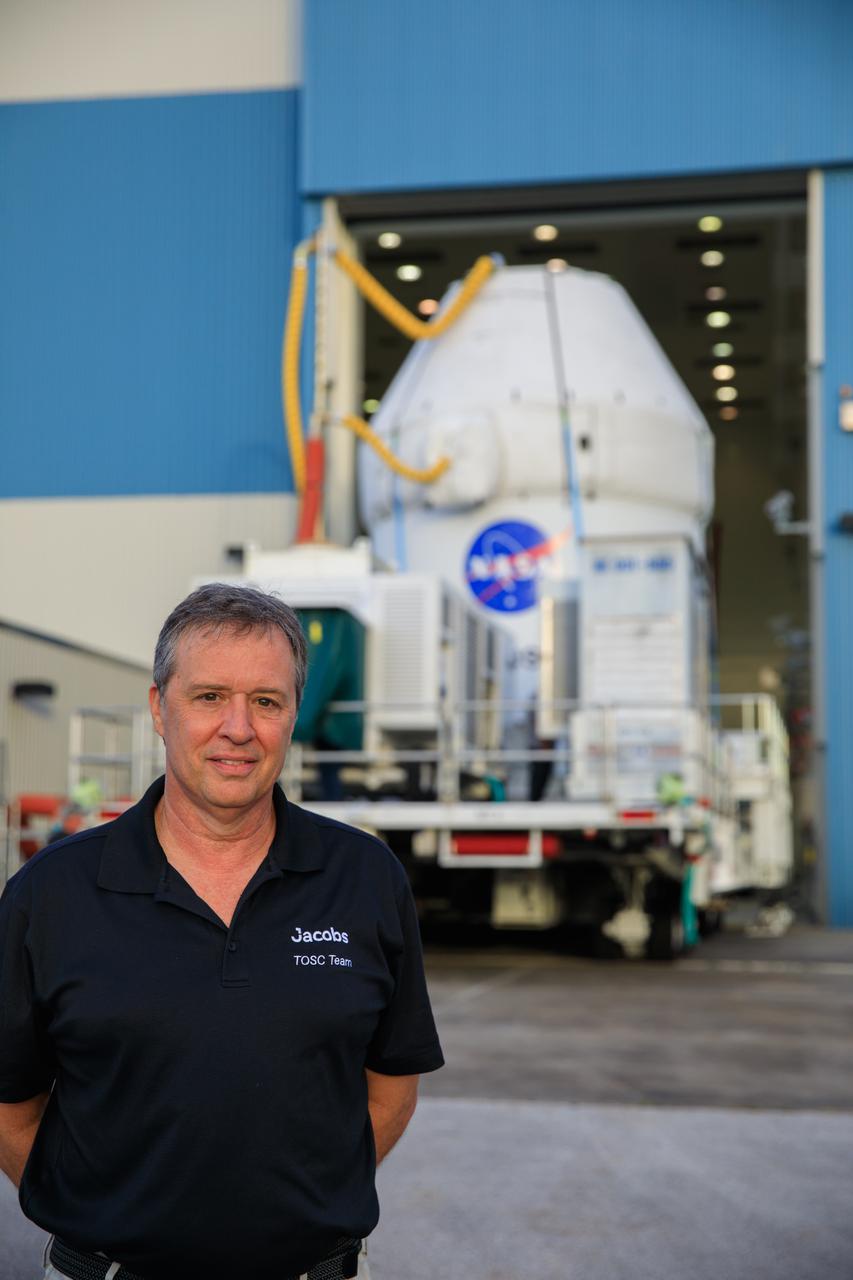
Nick Kindred, Jacobs flow manager, stands in front of the Orion spacecraft for the Artemis I mission, as the capsule moves out from Kennedy Space Center’s Multi-Payload Processing Facility on July 10, 2021. Orion is being transported to the Florida spaceport’s Launch Abort System Facility, where teams with Exploration Ground Systems and contractor Jacobs will integrate components of the launch abort system onto the spacecraft. Launching later this year, Artemis I will be a test of the Orion spacecraft and SLS rocket as an integrated system ahead of crewed flights to the Moon.
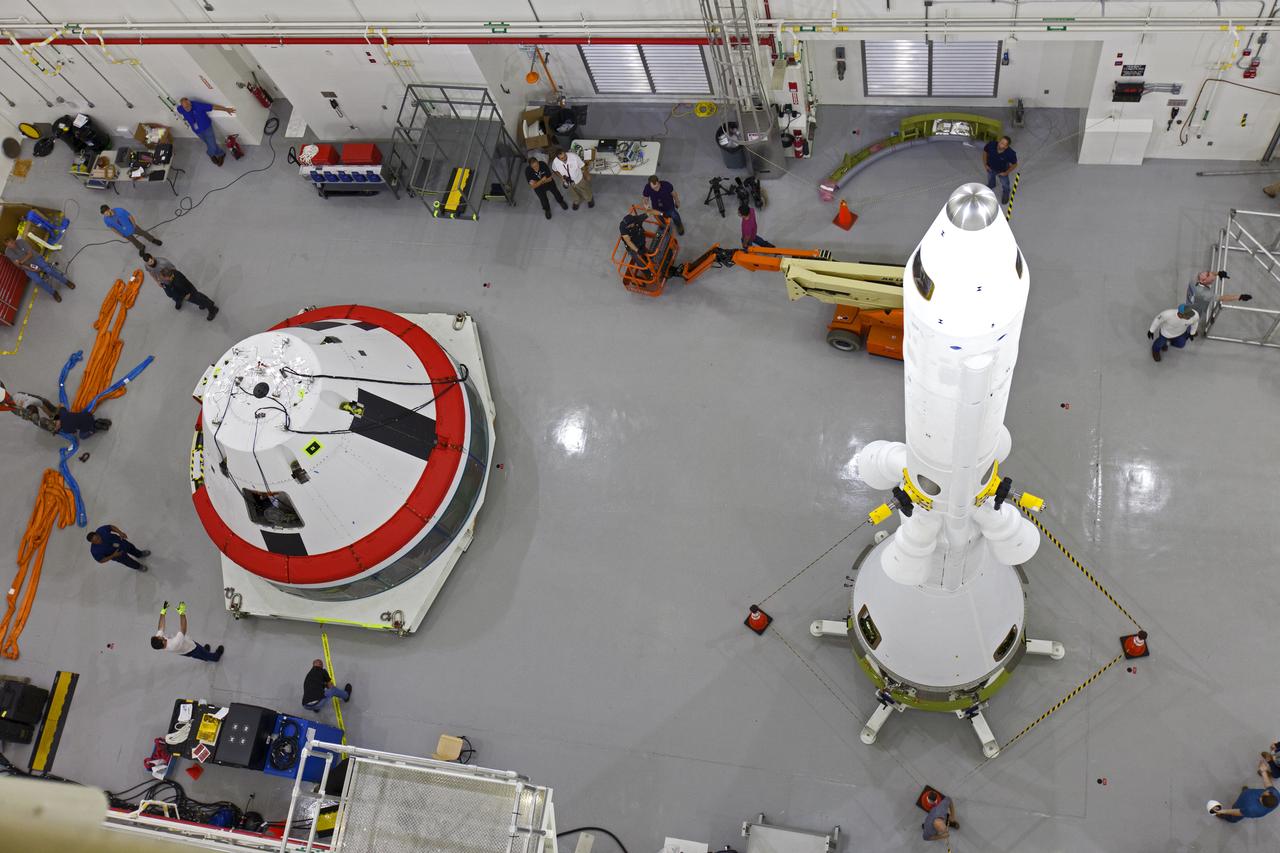
A test version of the Orion crew module, at left, and the Launch Abort System (LAS) are inside the Launch Abort System Facility (LASF) at NASA’s Kennedy Space Center in Florida on March 13, 2019, where they will be integrated. The fully functional LAS will be used for the Orion Ascent Abort-2 (AA-2) Flight Test, a full-stress test of the LAS that will launch from Space Launch Complex 46, carrying a 22,000-pound Orion test vehicle to an altitude of 31,000 feet and traveling at more than 1,000 miles an hour. The test will verify the LAS can steer the crew module and astronauts aboard to safety in the event of an issue with the Space Launch System (SLS) rocket when the spacecraft is under the highest aerodynamic loads it will experience during a rapid climb into space. NASA's Orion and Exploration Ground Systems programs and contractors from Jacob's and Northrop Grumman in conjunction with the Air Force Space and Missile Center's Launch Operations branch are performing flight operations for AA-2.
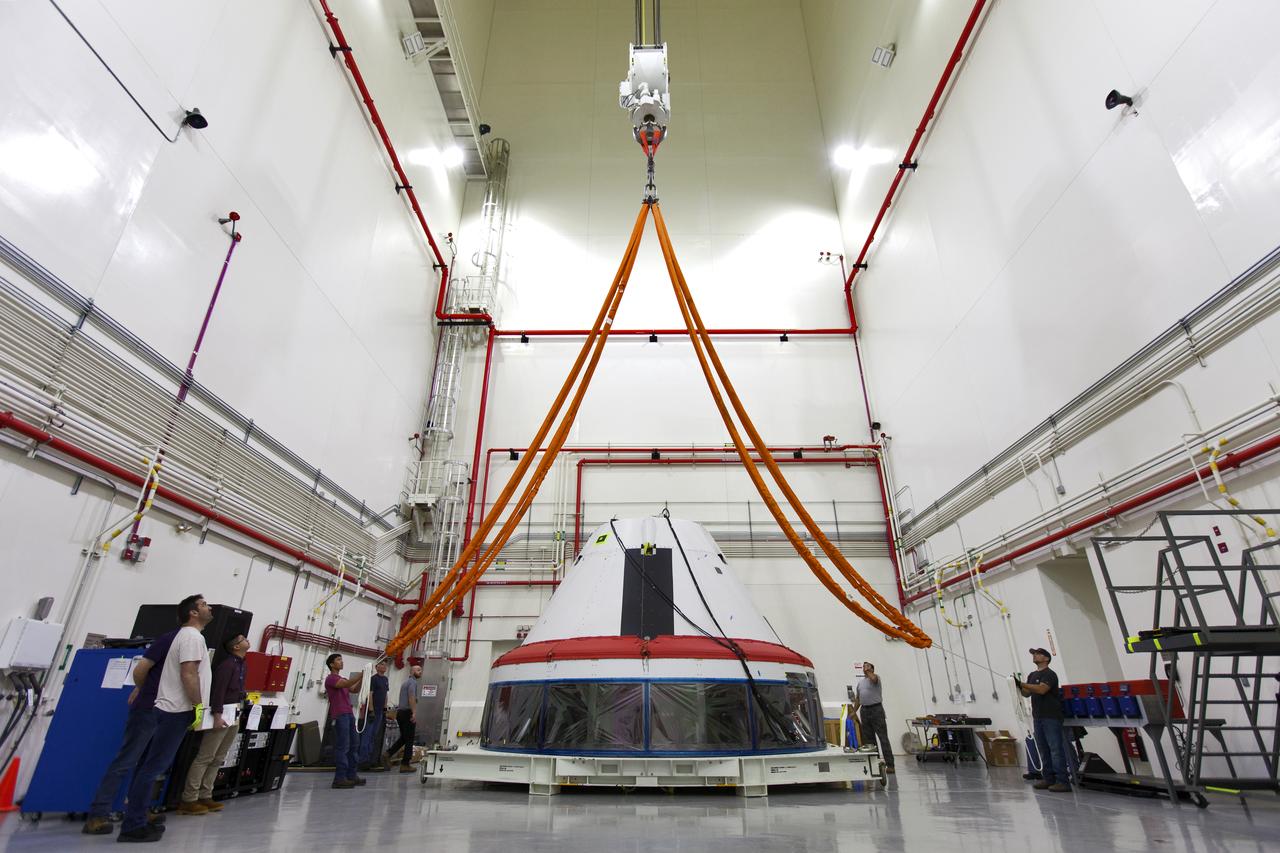
Inside the Launch Abort System Facility (LASF) at NASA’s Kennedy Space Center in Florida, workers prepare to attach a crane to a test version of the Orion crew module on March 13, 2019. The Orion test module and the Launch Abort System will be used for the Orion Ascent Abort-2 (AA-2) Flight Test, a full-stress test of the LAS, scheduled for spring 2019. AA-2 will launch from Space Launch Complex 46, carrying a fully functional LAS and a 22,000-pound Orion test vehicle to an altitude of 31,000 feet and traveling at more than 1,000 miles an hour. The test will verify the LAS can steer the crew module and astronauts aboard to safety in the event of an issue with the Space Launch System (SLS) rocket when the spacecraft is under the highest aerodynamic loads it will experience during a rapid climb into space. NASA's Orion and Exploration Ground Systems programs and contractors from Jacob's and Northrop Grumman in conjunction with the Air Force Space and Missile Center's Launch Operations branch are performing flight operations for AA-2.
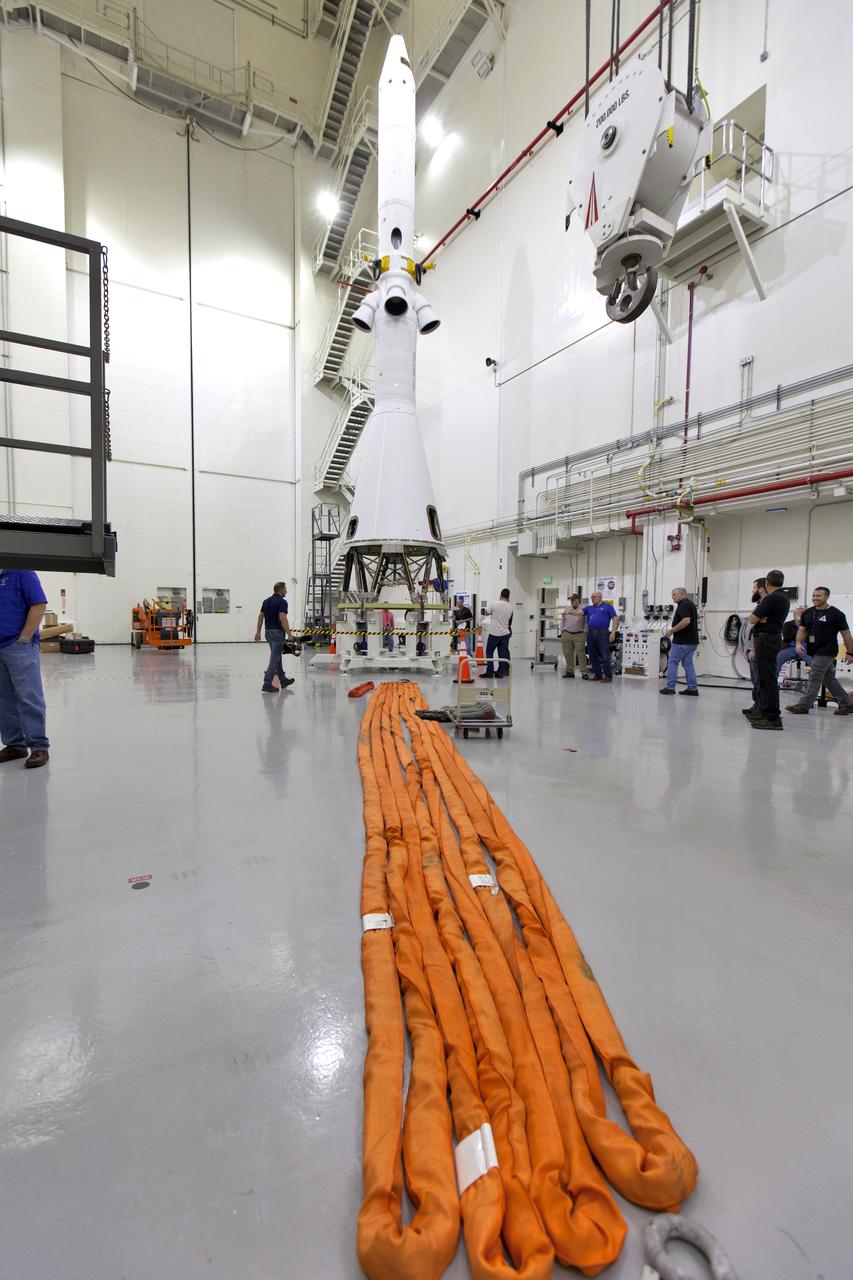
Inside the Launch Abort System Facility (LASF) at NASA’s Kennedy Space Center in Florida, workers are preparing to integrate a test version of the Orion crew module with the Launch Abort System (LAS) on March 13, 2019. The test vehicle and the LAS will be used for the Orion Ascent Abort-2 (AA-2) Flight Test. AA-2 is a full-stress test of the LAS, scheduled for spring 2019. AA-2 will launch from Space Launch Complex 46, carrying a fully functional LAS and a 22,000-pound Orion test vehicle to an altitude of 31,000 feet and traveling at more than 1,000 miles an hour. The test will verify the LAS can steer the crew module and astronauts aboard to safety in the event of an issue with the Space Launch System (SLS) rocket when the spacecraft is under the highest aerodynamic loads it will experience during a rapid climb into space. NASA's Orion and Exploration Ground Systems programs and contractors from Jacob's and Northrop Grumman in conjunction with the Air Force Space and Missile Center's Launch Operations branch are performing flight operations for AA-2.
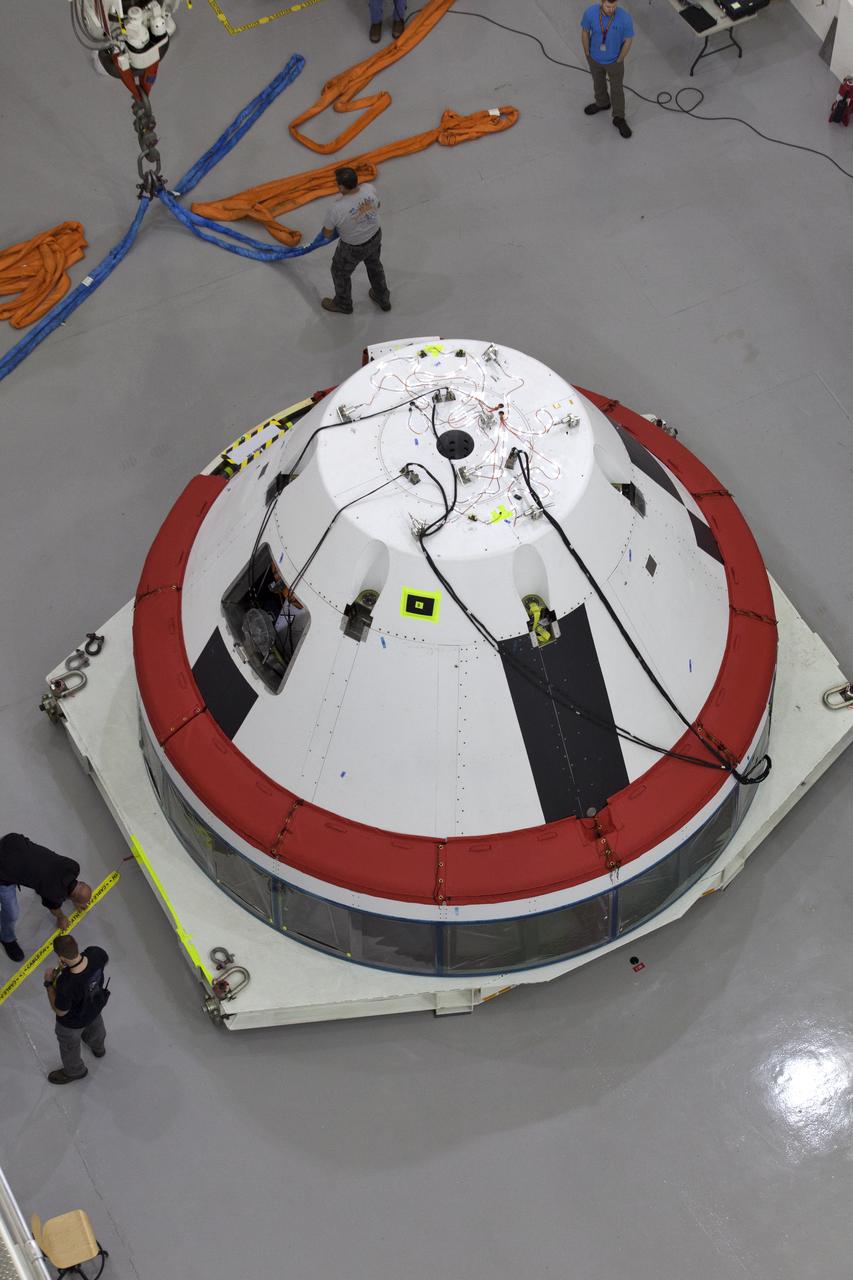
A test version of the Orion crew module is inside the Launch Abort System Facility (LASF) at NASA’s Kennedy Space Center in Florida on March 13, 2019, where they will be integrated. A fully functional Launch Abort System (LAS) will be used for the Orion Ascent Abort-2 (AA-2) Flight Test, a full-stress test of the LAS, scheduled for spring 2019. AA-2 will launch from Space Launch Complex 46, carrying the LAS and a 22,000-pound Orion test vehicle to an altitude of 31,000 feet and traveling at more than 1,000 miles an hour. The test will verify the LAS can steer the crew module and astronauts aboard to safety in the event of an issue with the Space Launch System (SLS) rocket when the spacecraft is under the highest aerodynamic loads it will experience during a rapid climb into space. NASA's Orion and Exploration Ground Systems programs and contractors from Jacob's and Northrop Grumman in conjunction with the Air Force Space and Missile Center's Launch Operations branch are performing flight operations for AA-2.
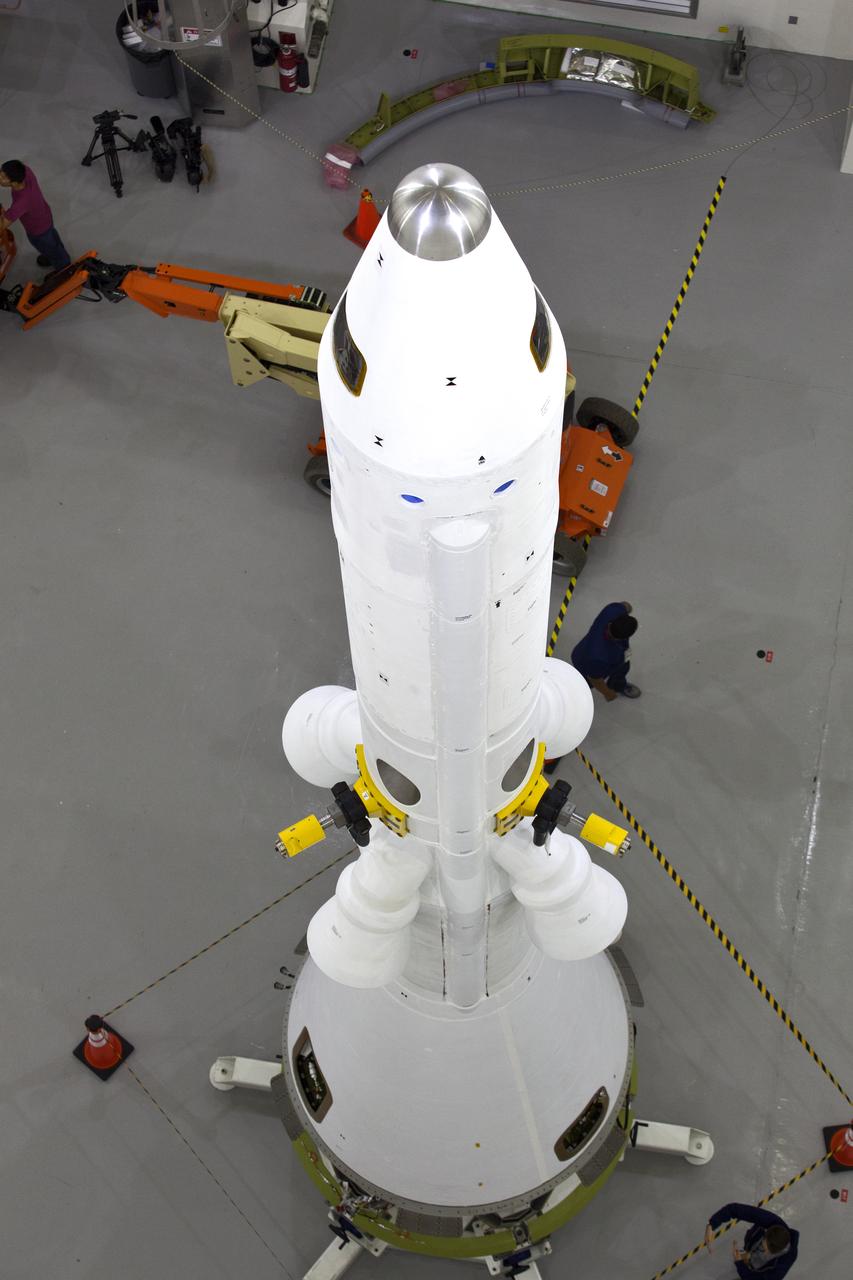
A fully functional Launch Abort System (LAS) is inside the Launch Abort System Facility (LASF) at NASA’s Kennedy Space Center in Florida on March 13, 2019. The LAS will be used for the Orion Ascent Abort-2 (AA-2) Flight Test, a full-stress test of the LAS, scheduled for spring 2019. AA-2 will launch from Space Launch Complex 46, carrying the LAS and a 22,000-pound Orion test vehicle to an altitude of 31,000 feet and traveling at more than 1,000 miles an hour. The test will verify the LAS can steer the crew module and astronauts aboard to safety in the event of an issue with the Space Launch System (SLS) rocket when the spacecraft is under the highest aerodynamic loads it will experience during a rapid climb into space. NASA's Orion and Exploration Ground Systems programs and contractors from Jacob's and Northrop Grumman in conjunction with the Air Force Space and Missile Center's Launch Operations branch are performing flight operations for AA-2.
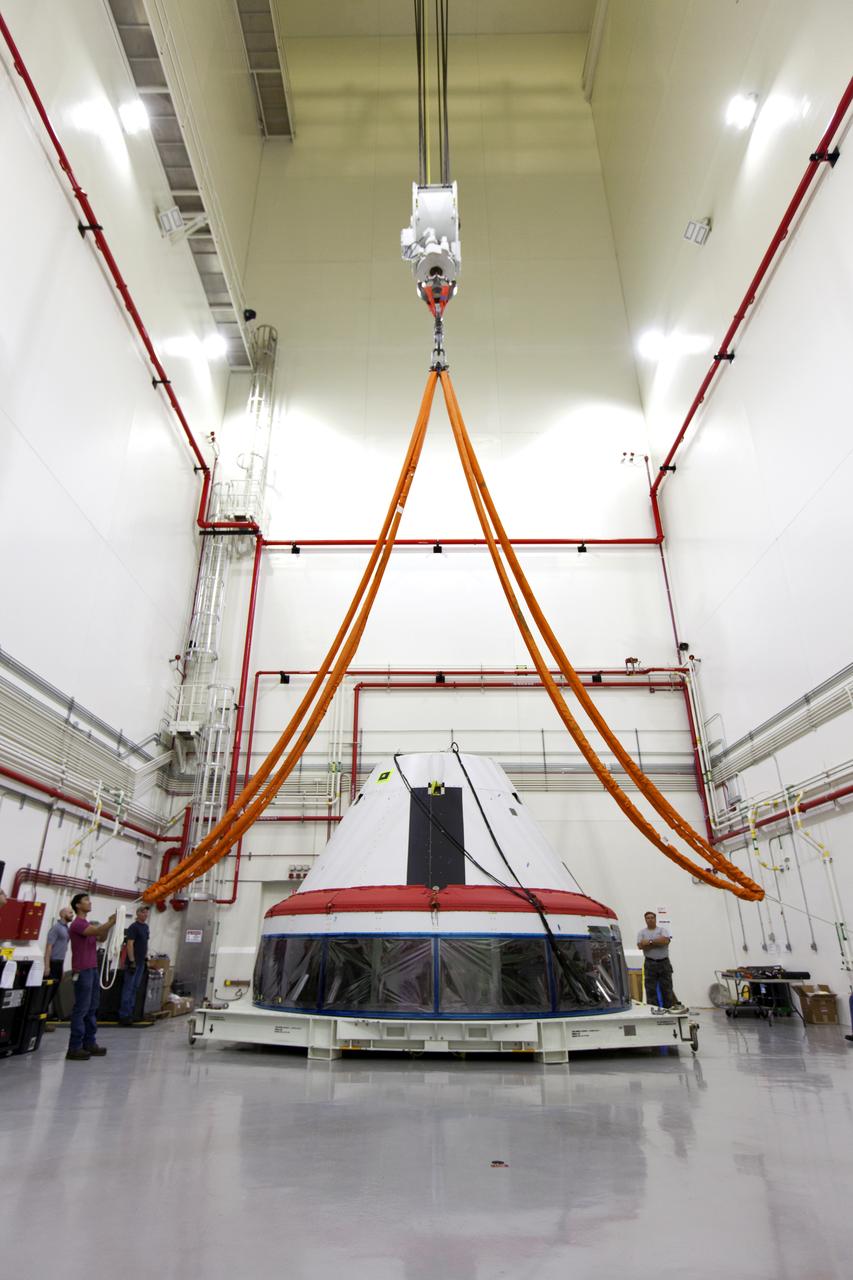
Inside the Launch Abort System Facility (LASF) at NASA’s Kennedy Space Center in Florida, workers prepare to attach a crane to a test version of the Orion crew module on March 13, 2019. The Orion test module and the Launch Abort System will be used for the Orion Ascent Abort-2 (AA-2) Flight Test, a full-stress test of the LAS, scheduled for spring 2019. AA-2 will launch from Space Launch Complex 46, carrying a fully functional LAS and a 22,000-pound Orion test vehicle to an altitude of 31,000 feet and traveling at more than 1,000 miles an hour. The test will verify the LAS can steer the crew module and astronauts aboard to safety in the event of an issue with the Space Launch System (SLS) rocket when the spacecraft is under the highest aerodynamic loads it will experience during a rapid climb into space. NASA's Orion and Exploration Ground Systems programs and contractors from Jacob's and Northrop Grumman in conjunction with the Air Force Space and Missile Center's Launch Operations branch are performing flight operations for AA-2.
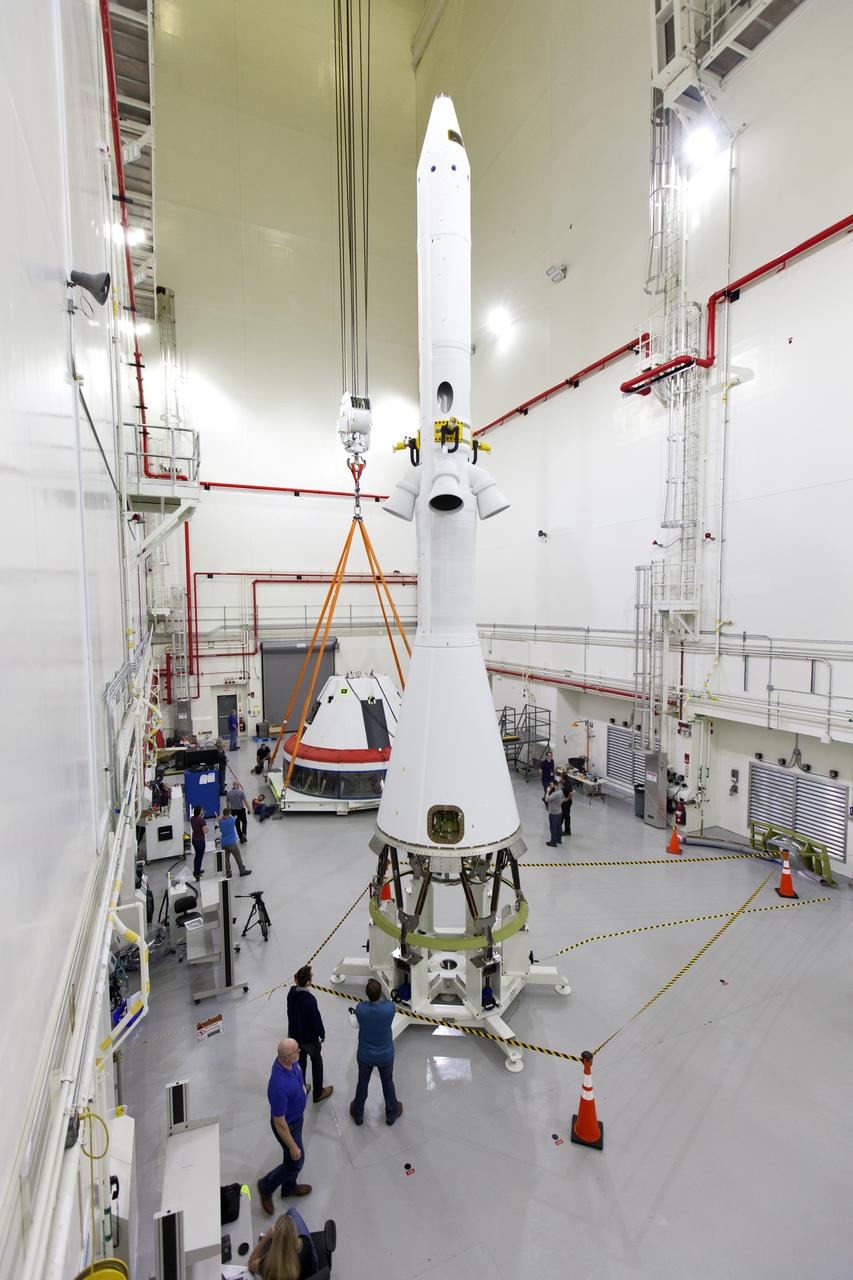
Inside the Launch Abort System Facility (LASF) at NASA’s Kennedy Space Center in Florida, the Launch Abort System (LAS) that will be used for the Orion Ascent Abort-2 (AA-2) Flight Test is in view in the foreground on March 13, 2019. In the background, workers are attaching a crane to a test version of the Orion crew module. AA-2 is a full-stress test of the LAS, scheduled for spring 2019. AA-2 will launch from Space Launch Complex 46, carrying a fully functional LAS and a 22,000-pound Orion test vehicle to an altitude of 31,000 feet and traveling at more than 1,000 miles an hour. The test will verify the LAS can steer the crew module and astronauts aboard to safety in the event of an issue with the Space Launch System (SLS) rocket when the spacecraft is under the highest aerodynamic loads it will experience during a rapid climb into space. NASA's Orion and Exploration Ground Systems programs and contractors from Jacob's and Northrop Grumman in conjunction with the Air Force Space and Missile Center's Launch Operations branch are performing flight operations for AA-2.
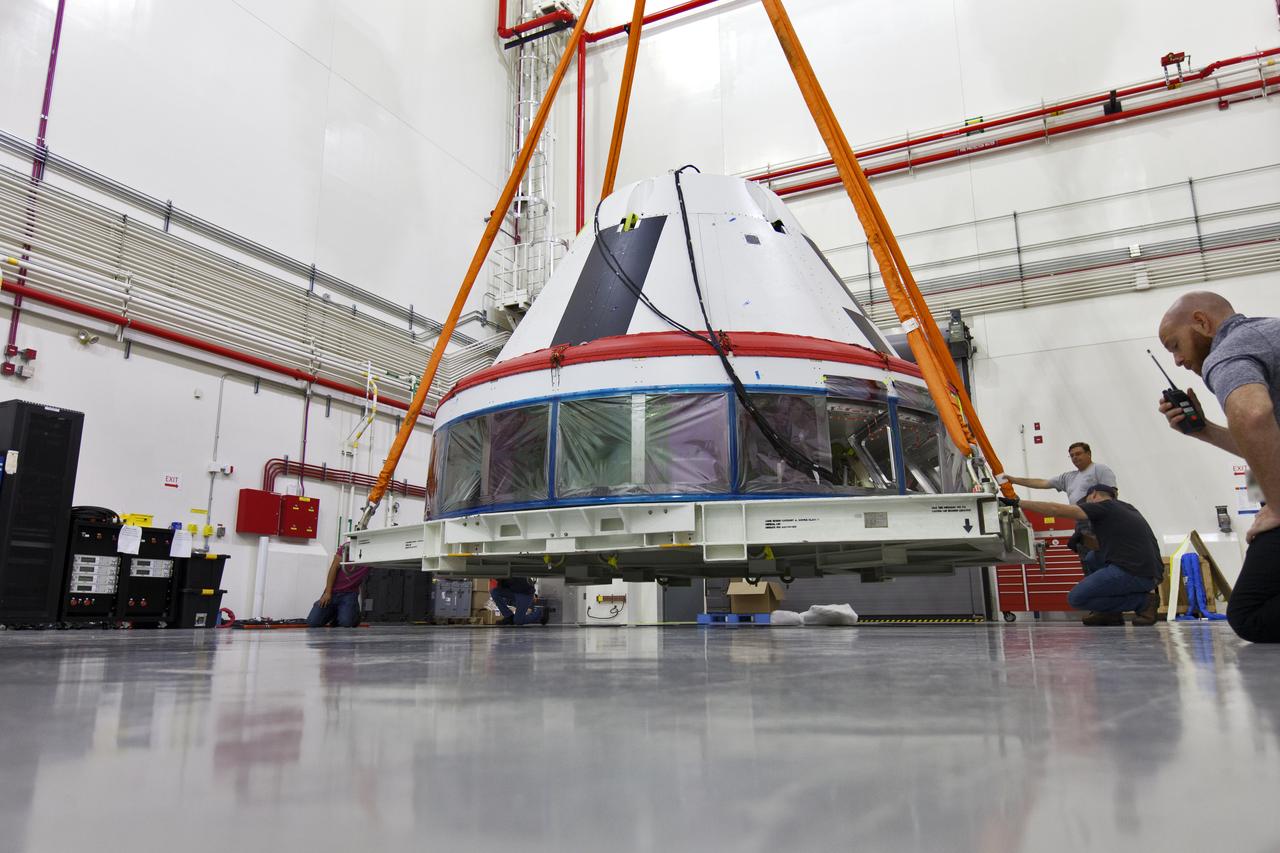
Inside the Launch Abort System Facility (LASF) at NASA’s Kennedy Space Center in Florida, workers attach a crane to a test version of the Orion crew module on March 13, 2019. The Orion test module and the Launch Abort System will be used for the Orion Ascent Abort-2 (AA-2) Flight Test, a full-stress test of the LAS, scheduled for spring 2019. AA-2 will launch from Space Launch Complex 46, carrying a fully functional LAS and a 22,000-pound Orion test vehicle to an altitude of 31,000 feet and traveling at more than 1,000 miles an hour. The test will verify the LAS can steer the crew module and astronauts aboard to safety in the event of an issue with the Space Launch System (SLS) rocket when the spacecraft is under the highest aerodynamic loads it will experience during a rapid climb into space. NASA's Orion and Exploration Ground Systems programs and contractors from Jacob's and Northrop Grumman in conjunction with the Air Force Space and Missile Center's Launch Operations branch are performing flight operations for AA-2.
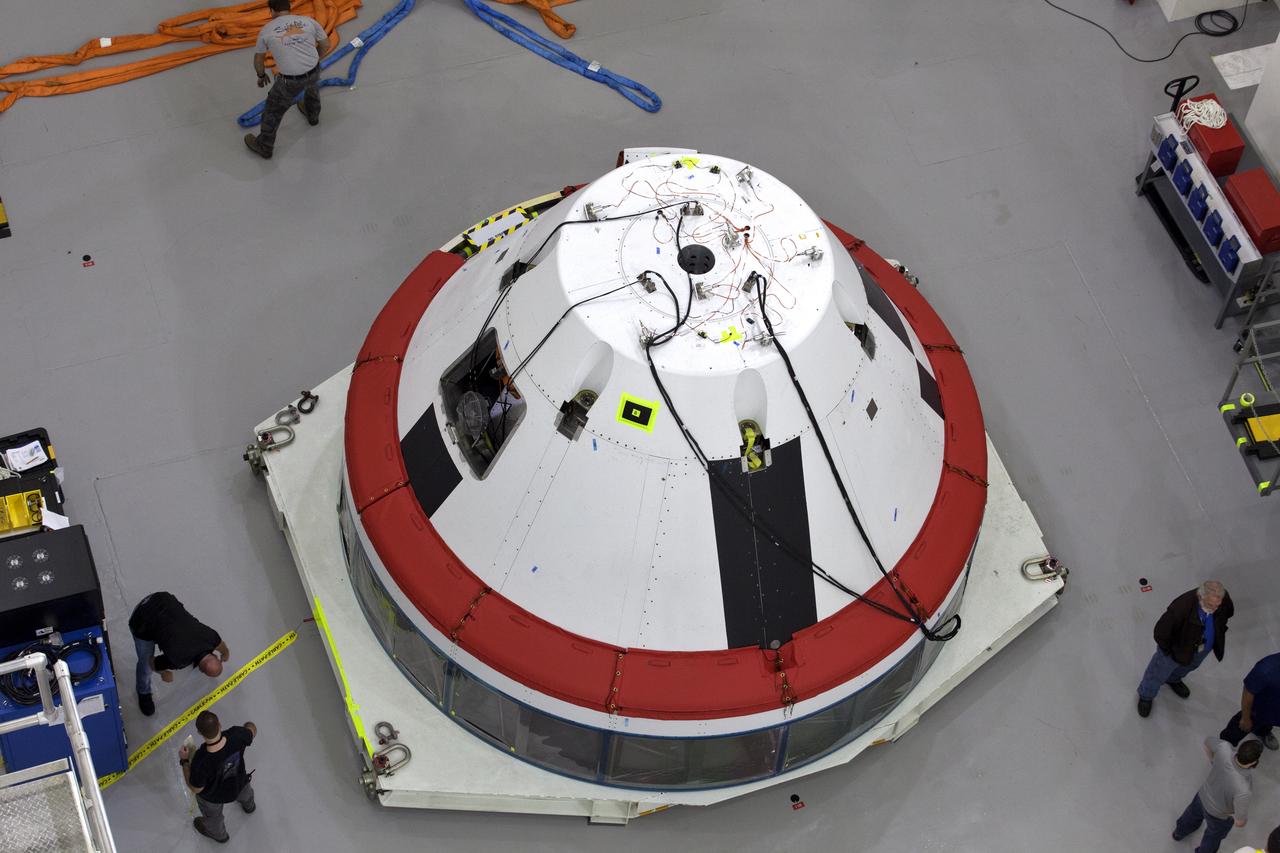
A test version of the Orion crew module is inside the Launch Abort System Facility (LASF) at NASA’s Kennedy Space Center in Florida on March 13, 2019, where they will be integrated. A fully functional Launch Abort System (LAS) will be used for the Orion Ascent Abort-2 (AA-2) Flight Test, a full-stress test of the LAS, scheduled for spring 2019. AA-2 will launch from Space Launch Complex 46, carrying the LAS and a 22,000-pound Orion test vehicle to an altitude of 31,000 feet and traveling at more than 1,000 miles an hour. The test will verify the LAS can steer the crew module and astronauts aboard to safety in the event of an issue with the Space Launch System (SLS) rocket when the spacecraft is under the highest aerodynamic loads it will experience during a rapid climb into space. NASA's Orion and Exploration Ground Systems programs and contractors from Jacob's and Northrop Grumman in conjunction with the Air Force Space and Missile Center's Launch Operations branch are performing flight operations for AA-2.
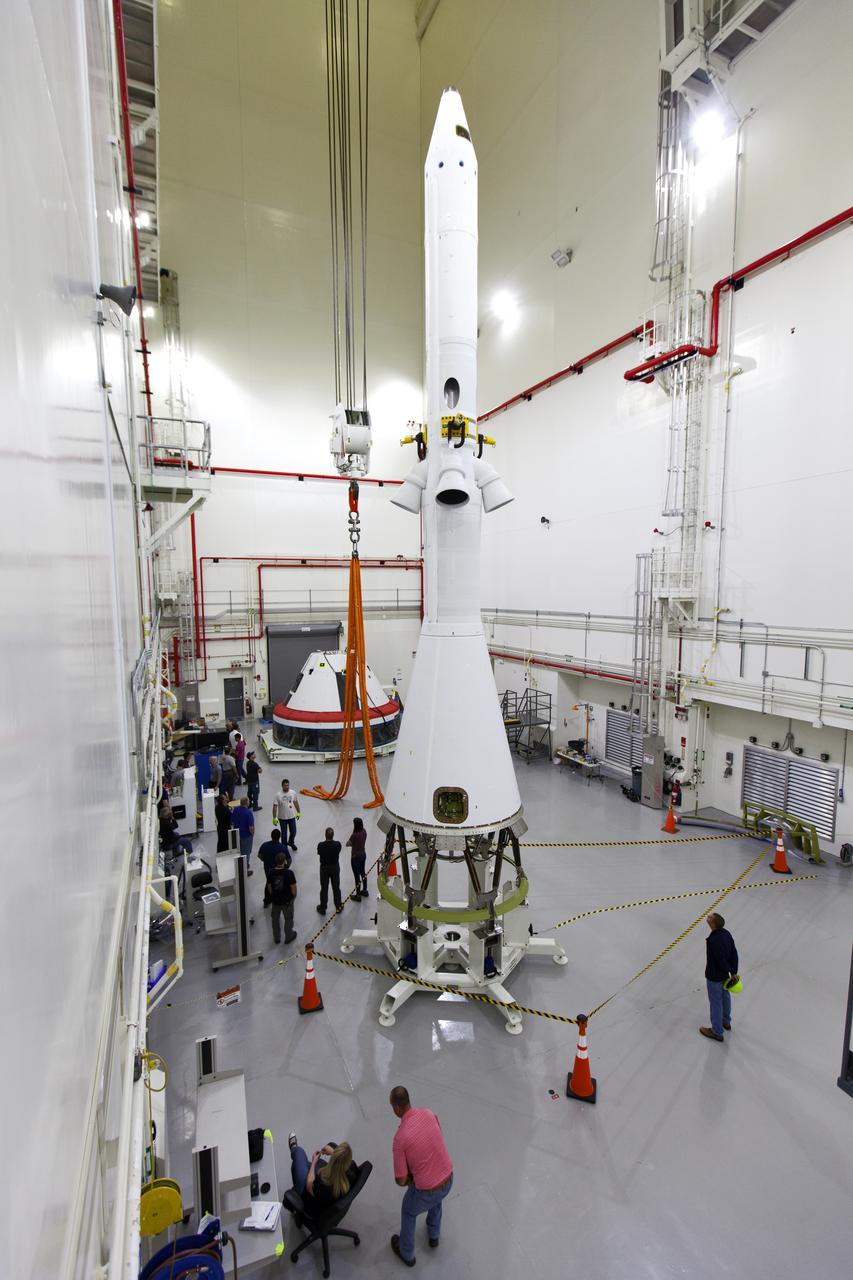
A test version of the Orion crew module is integrated with the Launch Abort System (LAS) in the Launch Abort System Facility (LASF) at NASA’s Kennedy Space Center in Florida on March 13, 2019. Workers will use a crane to practice lifting the test vehicle. The LAS, in view, will be used for the Orion Ascent Abort-2 (AA-2) Flight Test. AA-2 is a full-stress test of the LAS, scheduled for spring 2019. AA-2 will launch from Space Launch Complex 46, carrying a fully functional LAS and a 22,000-pound Orion test vehicle to an altitude of 31,000 feet and traveling at more than 1,000 miles an hour. The test will verify the LAS can steer the crew module and astronauts aboard to safety in the event of an issue with the Space Launch System (SLS) rocket when the spacecraft is under the highest aerodynamic loads it will experience during a rapid climb into space. NASA's Orion and Exploration Ground Systems programs and contractors from Jacob's and Northrop Grumman in conjunction with the Air Force Space and Missile Center's Launch Operations branch are performing flight operations for AA-2.
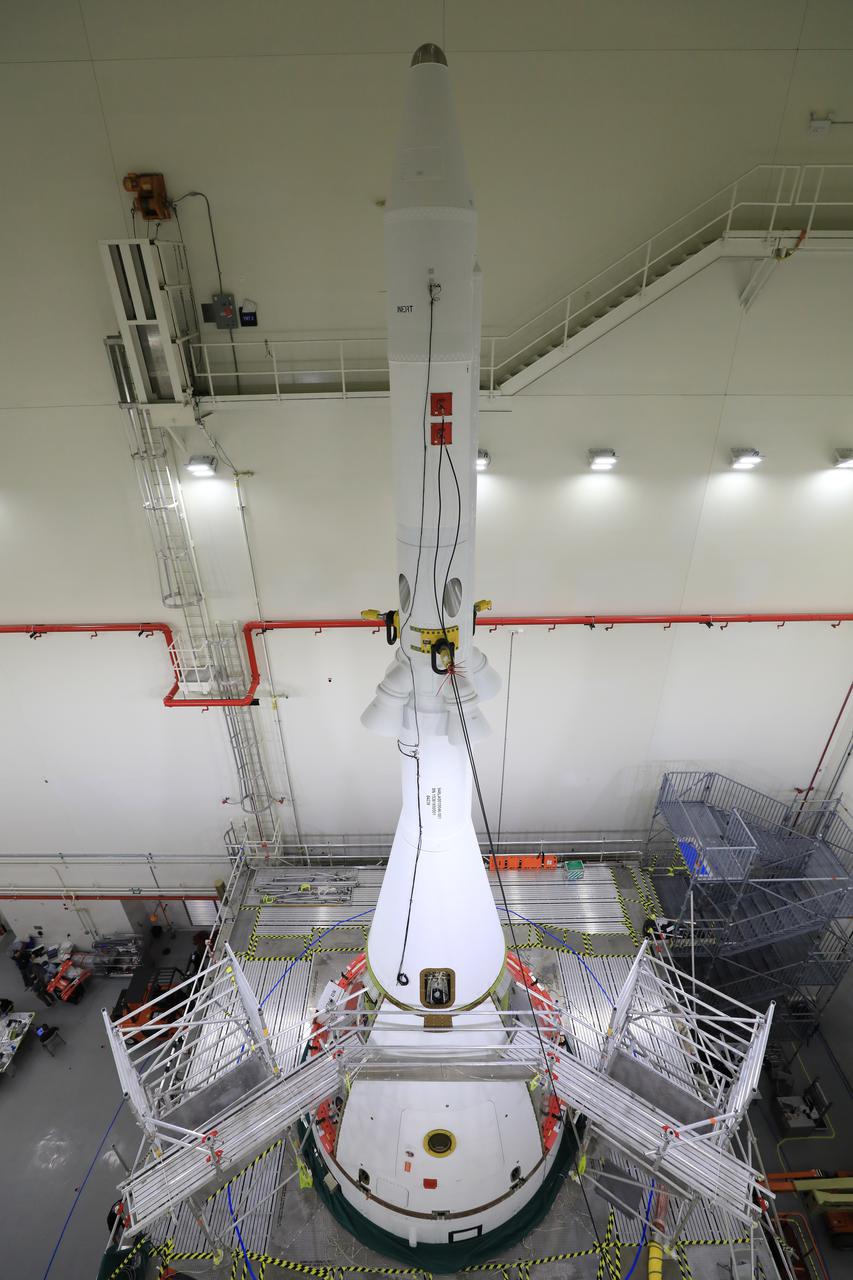
Technicians and engineers with Exploration Ground Systems and Jacobs connect the ogive fairings for Orion’s Artemis I mission to the launch abort system (LAS) inside the Launch Abort System Facility high bay at NASA’s Kennedy Space Center in Florida on Aug. 20, 2021. The ogives are four protective panels that will shield the crew module from the severe vibrations and sounds it will experience during launch. During Artemis missions, the 44-foot-tall LAS will detach from the spacecraft when it is no longer needed. Launching in 2021, Artemis I will be an uncrewed test of the Orion spacecraft and Space Launch System rocket as an integrated system ahead of crewed flights to the Moon. Under Artemis, NASA aims to land the first woman and first person of color on the Moon and establish sustainable lunar exploration.
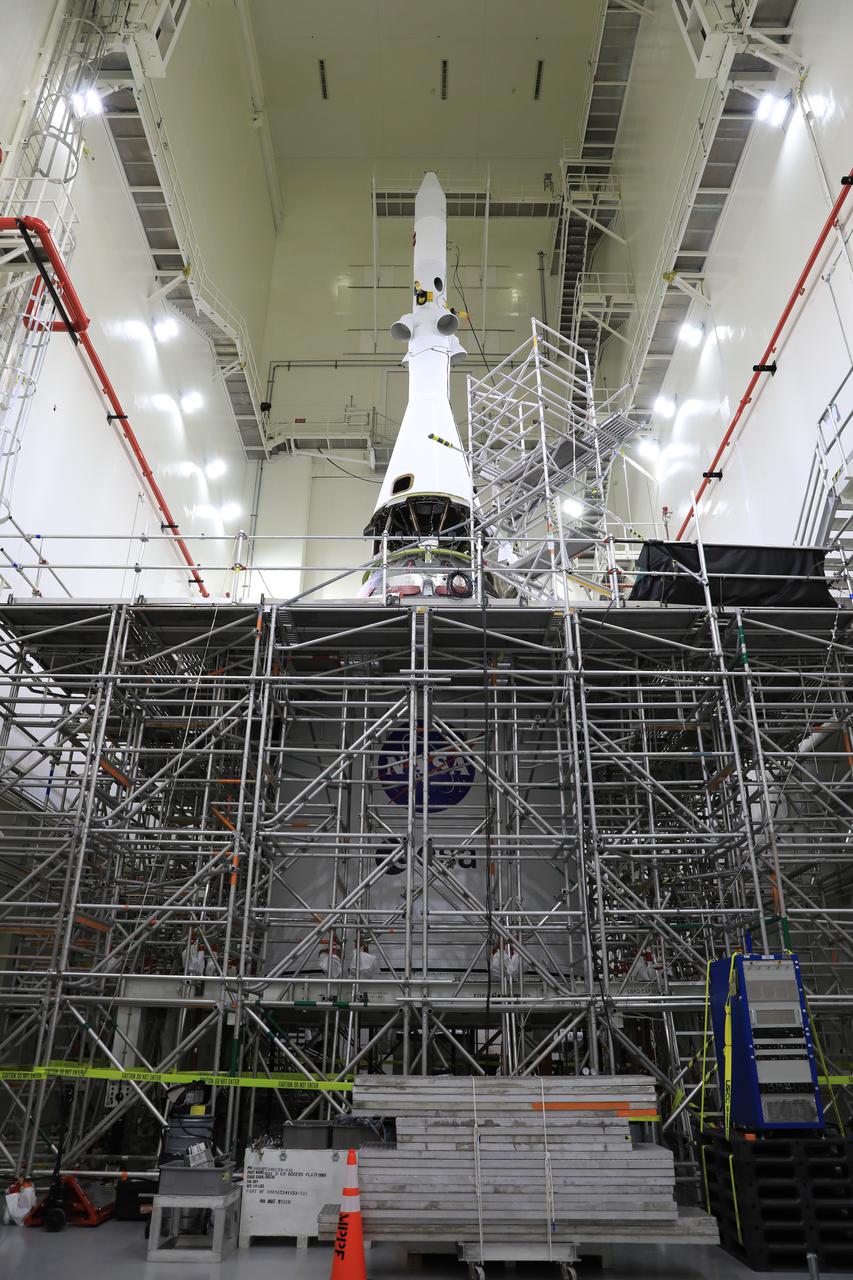
A view of the launch abort system (LAS) for Orion’s Artemis I mission after technicians and engineers with Exploration Ground Systems and Jacobs connected the ogive fairings to it inside the Launch Abort System Facility high bay at NASA’s Kennedy Space Center in Florida on Aug. 20, 2021. The ogives are four protective panels that will shield the crew module from the severe vibrations and sounds it will experience during launch. During Artemis missions, the 44-foot-tall LAS will detach from the spacecraft when it is no longer needed. Launching in 2021, Artemis I will be an uncrewed test of the Orion spacecraft and Space Launch System rocket as an integrated system ahead of crewed flights to the Moon. Under Artemis, NASA aims to land the first woman and first person of color on the Moon and establish sustainable lunar exploration.
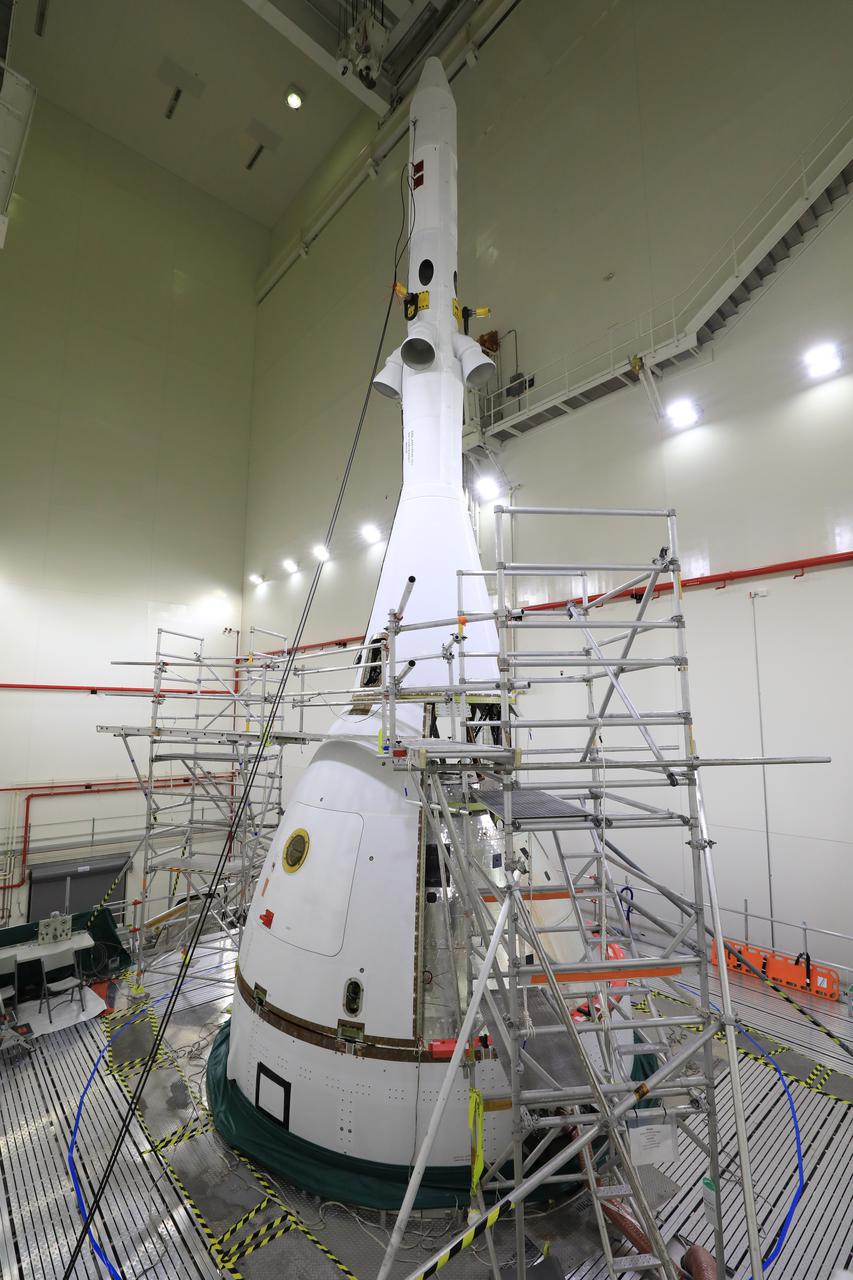
Technicians and engineers with Exploration Ground Systems and Jacobs connect the ogive fairings for Orion’s Artemis I mission to the launch abort system (LAS) inside the Launch Abort System Facility high bay at NASA’s Kennedy Space Center in Florida on Aug. 20, 2021. The ogives are four protective panels that will shield the crew module from the severe vibrations and sounds it will experience during launch. During Artemis missions, the 44-foot-tall LAS will detach from the spacecraft when it is no longer needed. Launching in 2021, Artemis I will be an uncrewed test of the Orion spacecraft and Space Launch System rocket as an integrated system ahead of crewed flights to the Moon. Under Artemis, NASA aims to land the first woman and first person of color on the Moon and establish sustainable lunar exploration.
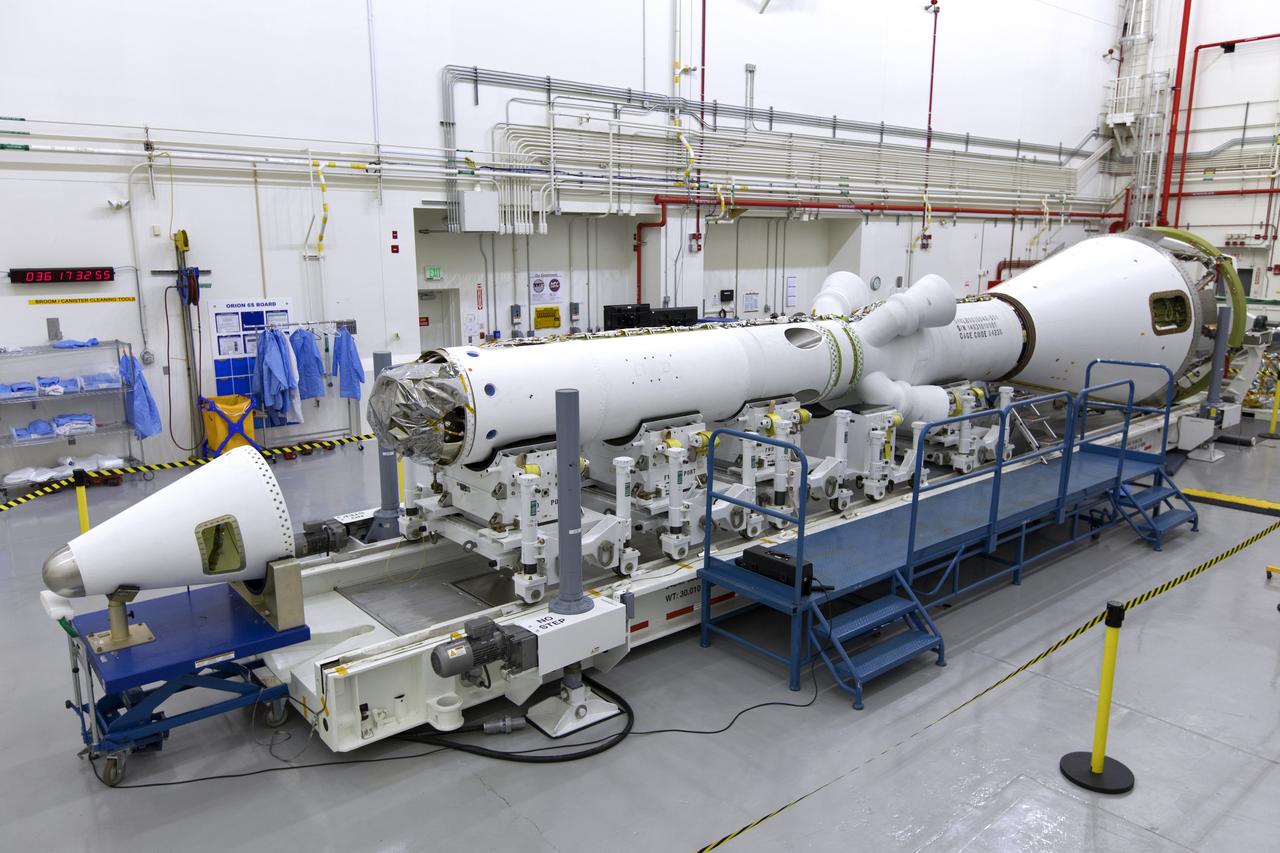
Inside the Launch Abort System Facility (LASF) at NASA’s Kennedy Space Center in Florida, the Launch Abort System (LAS) that will be used for the Orion Ascent Abort-2 (AA-2) Flight Test is being assembled on Feb. 5, 2019. AA-2 is a full-stress test of the LAS, scheduled for Spring 2019. AA-2 will launch from Space Launch Complex 46, carrying a fully functional LAS and a 22,000-pound Orion test vehicle to an altitude of 31,000 feet and traveling at more than 1,000 miles an hour. The test will verify the LAS can steer the crew module and astronauts aboard to safety in the event of an issue with the Space Launch System (SLS) rocket when the spacecraft is under the highest aerodynamic loads it will experience during a rapid climb into space. NASA's Orion and Exploration Ground Systems programs and contractors from Jacob's and Northrop Grumman in conjunction with the Air Force Space and Missile Center's Launch Operations branch are performing flight operations for AA-2.
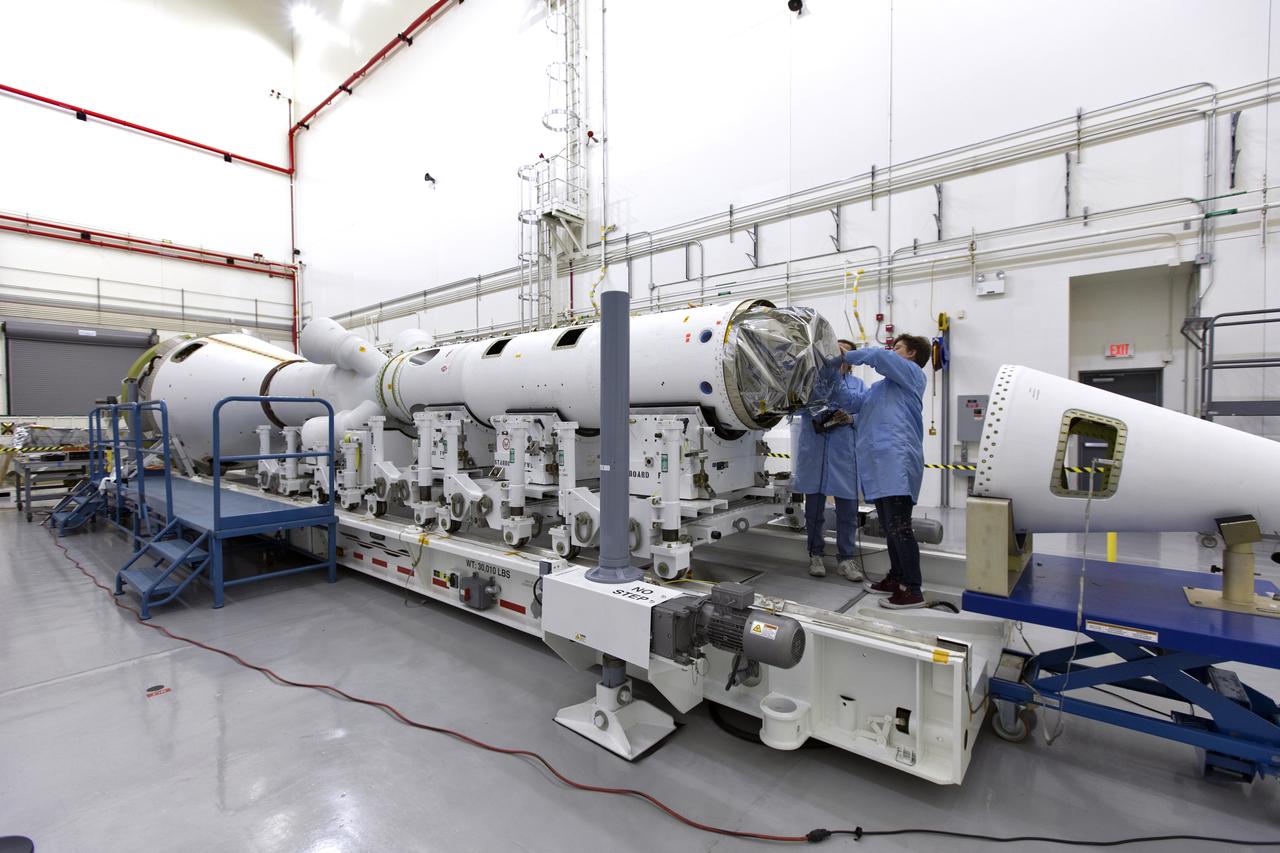
Inside the Launch Abort System Facility (LASF) at NASA’s Kennedy Space Center in Florida, workers assemble the Launch Abort System (LAS) on Feb. 5, 2019, that will be used for the Orion Ascent Abort-2 (AA-2) Flight Test. AA-2 is a full-stress test of the LAS, scheduled for Spring 2019. AA-2 will launch from Space Launch Complex 46, carrying a fully functional LAS and a 22,000-pound Orion test vehicle to an altitude of 31,000 feet and traveling at more than 1,000 miles an hour. The test will verify the LAS can steer the crew module and astronauts aboard to safety in the event of an issue with the Space Launch System (SLS) rocket when the spacecraft is under the highest aerodynamic loads it will experience during a rapid climb into space. NASA's Orion and Exploration Ground Systems programs and contractors from Jacob's and Northrop Grumman in conjunction with the Air Force Space and Missile Center's Launch Operations branch are performing flight operations for AA-2.
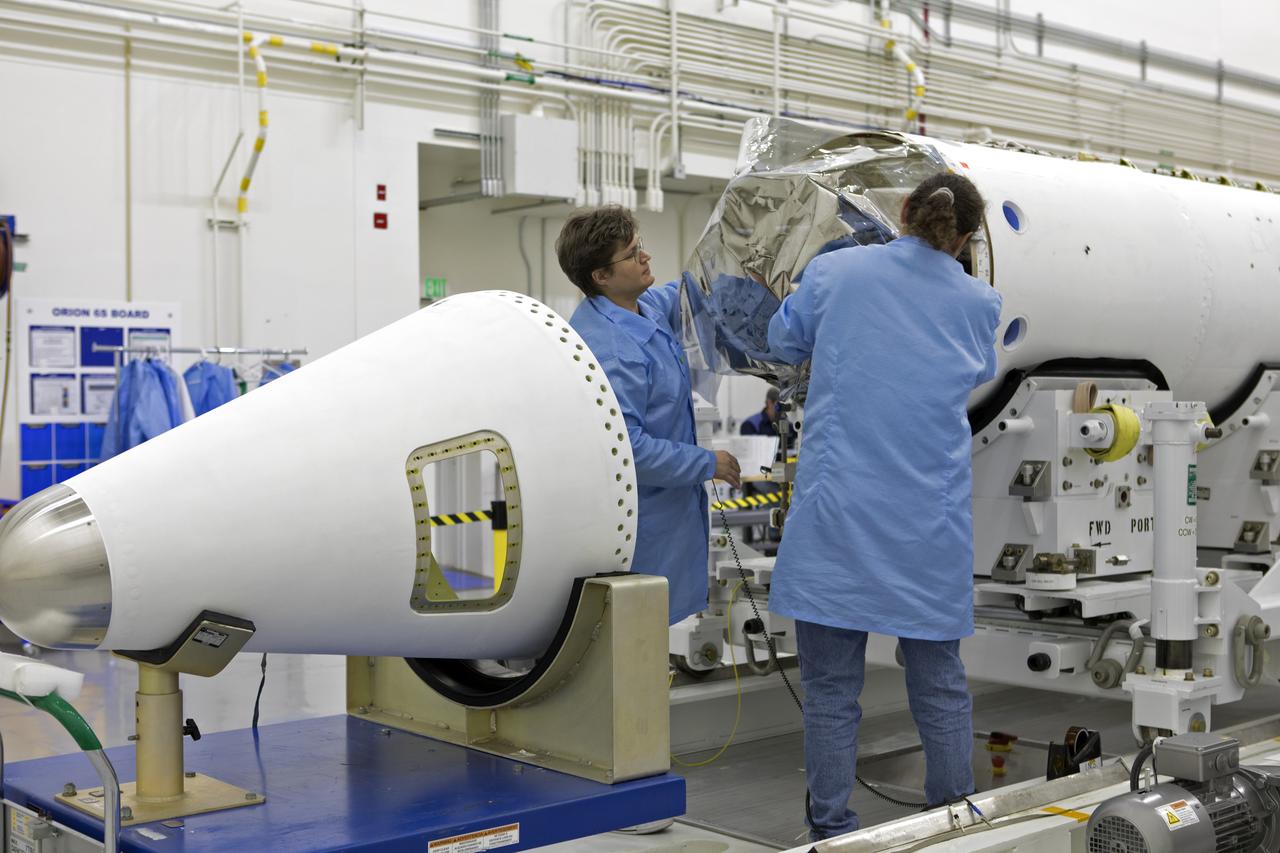
Inside the Launch Abort System Facility (LASF) at NASA’s Kennedy Space Center in Florida, workers assemble the Launch Abort System (LAS) on Feb. 5, 2019, that will be used for the Orion Ascent Abort-2 (AA-2) Flight Test. AA-2 is a full-stress test of the LAS, scheduled for Spring 2019. AA-2 will launch from Space Launch Complex 46, carrying a fully functional LAS and a 22,000-pound Orion test vehicle to an altitude of 31,000 feet and traveling at more than 1,000 miles an hour. The test will verify the LAS can steer the crew module and astronauts aboard to safety in the event of an issue with the Space Launch System (SLS) rocket when the spacecraft is under the highest aerodynamic loads it will experience during a rapid climb into space. NASA's Orion and Exploration Ground Systems programs and contractors from Jacob's and Northrop Grumman in conjunction with the Air Force Space and Missile Center's Launch Operations branch are performing flight operations for AA-2.
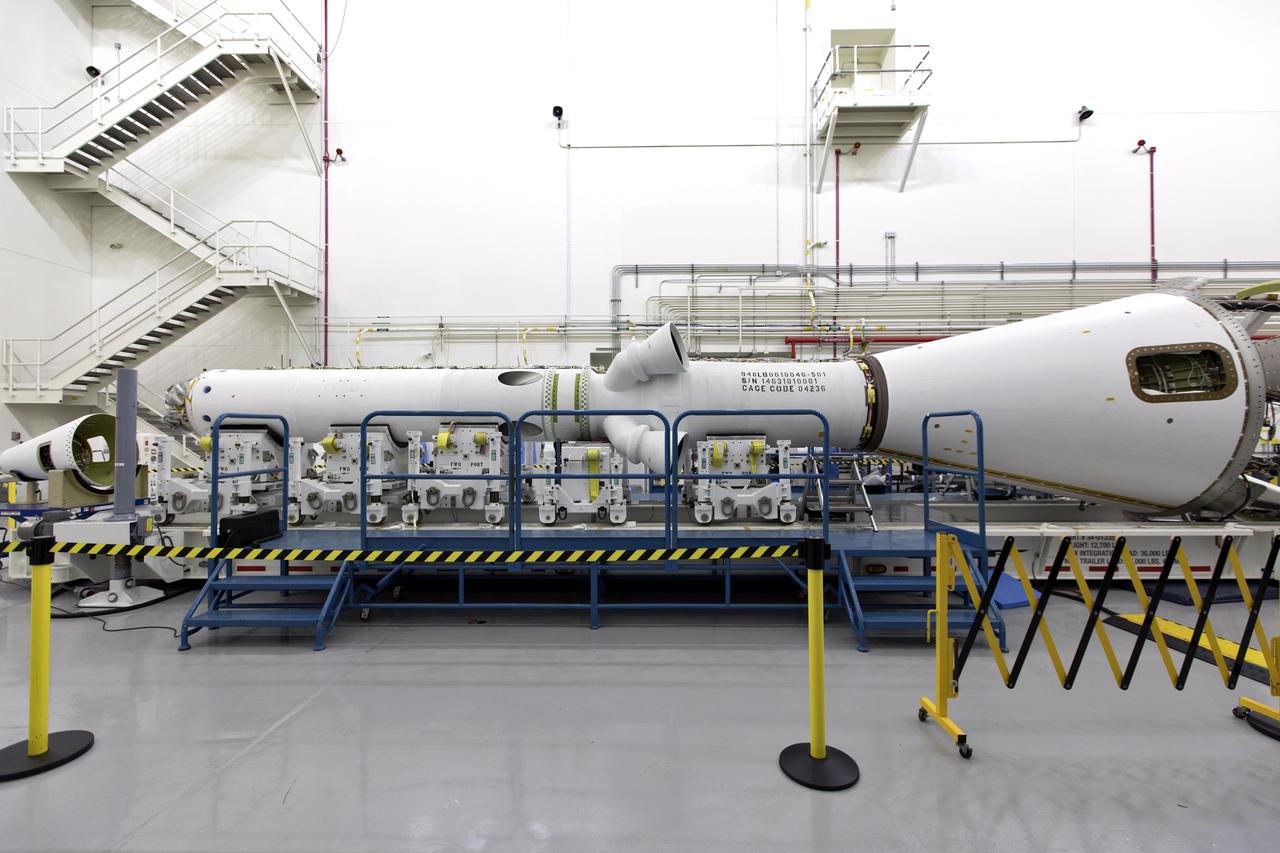
Inside the Launch Abort System Facility (LASF) at NASA’s Kennedy Space Center in Florida, the Launch Abort System (LAS) that will be used for the Orion Ascent Abort-2 (AA-2) Flight Test is being assembled on Feb. 5, 2019. AA-2 is a full-stress test of the LAS, scheduled for Spring 2019. AA-2 will launch from Space Launch Complex 46, carrying a fully functional LAS and a 22,000-pound Orion test vehicle to an altitude of 31,000 feet and traveling at more than 1,000 miles an hour. The test will verify the LAS can steer the crew module and astronauts aboard to safety in the event of an issue with the Space Launch System (SLS) rocket when the spacecraft is under the highest aerodynamic loads it will experience during a rapid climb into space. NASA's Orion and Exploration Ground Systems programs and contractors from Jacob's and Northrop Grumman in conjunction with the Air Force Space and Missile Center's Launch Operations branch are performing flight operations for AA-2.
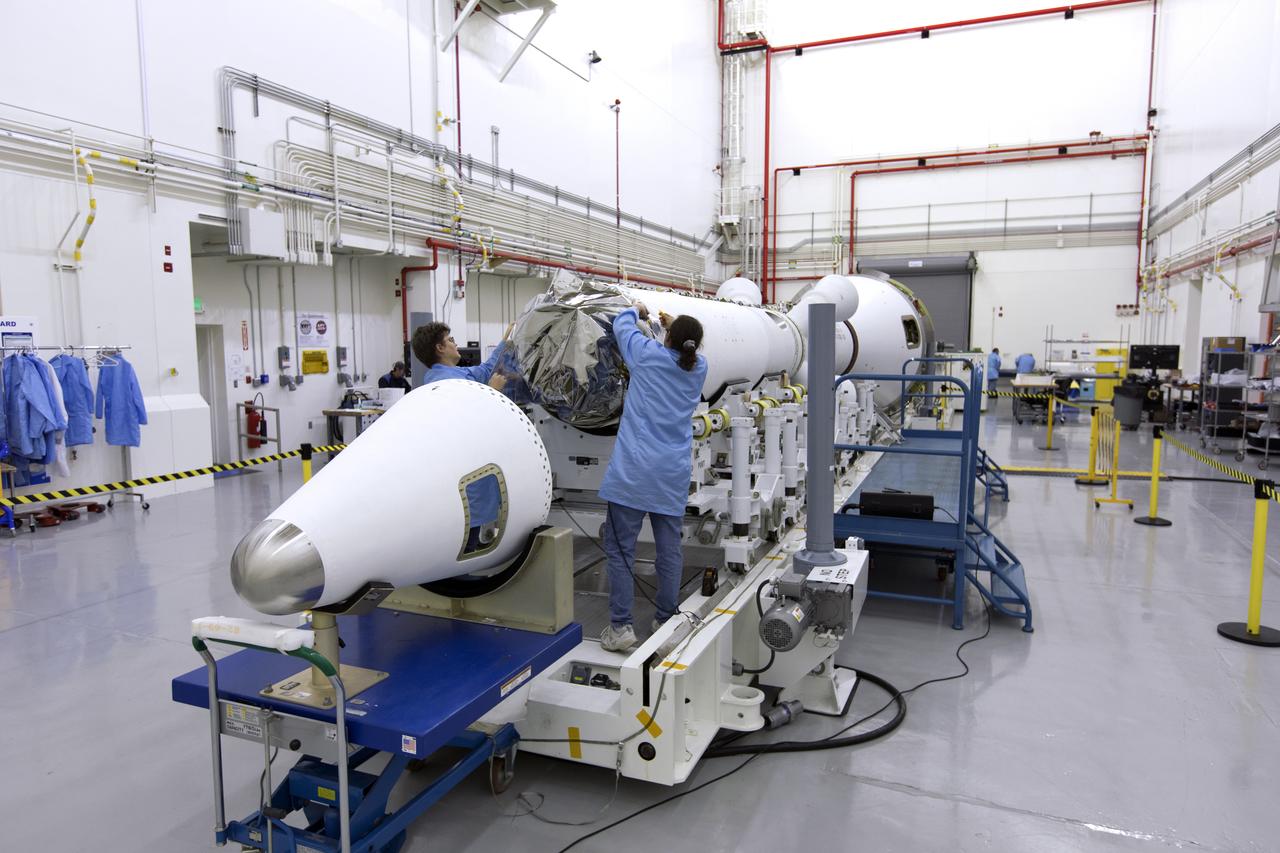
Inside the Launch Abort System Facility (LASF) at NASA’s Kennedy Space Center in Florida, workers assemble the Launch Abort System (LAS) on Feb. 5, 2019, that will be used for the Orion Ascent Abort-2 (AA-2) Flight Test. AA-2 is a full-stress test of the LAS, scheduled for Spring 2019. AA-2 will launch from Space Launch Complex 46, carrying a fully functional LAS and a 22,000-pound Orion test vehicle to an altitude of 31,000 feet and traveling at more than 1,000 miles an hour. The test will verify the LAS can steer the crew module and astronauts aboard to safety in the event of an issue with the Space Launch System (SLS) rocket when the spacecraft is under the highest aerodynamic loads it will experience during a rapid climb into space. NASA's Orion and Exploration Ground Systems programs and contractors from Jacob's and Northrop Grumman in conjunction with the Air Force Space and Missile Center's Launch Operations branch are performing flight operations for AA-2.
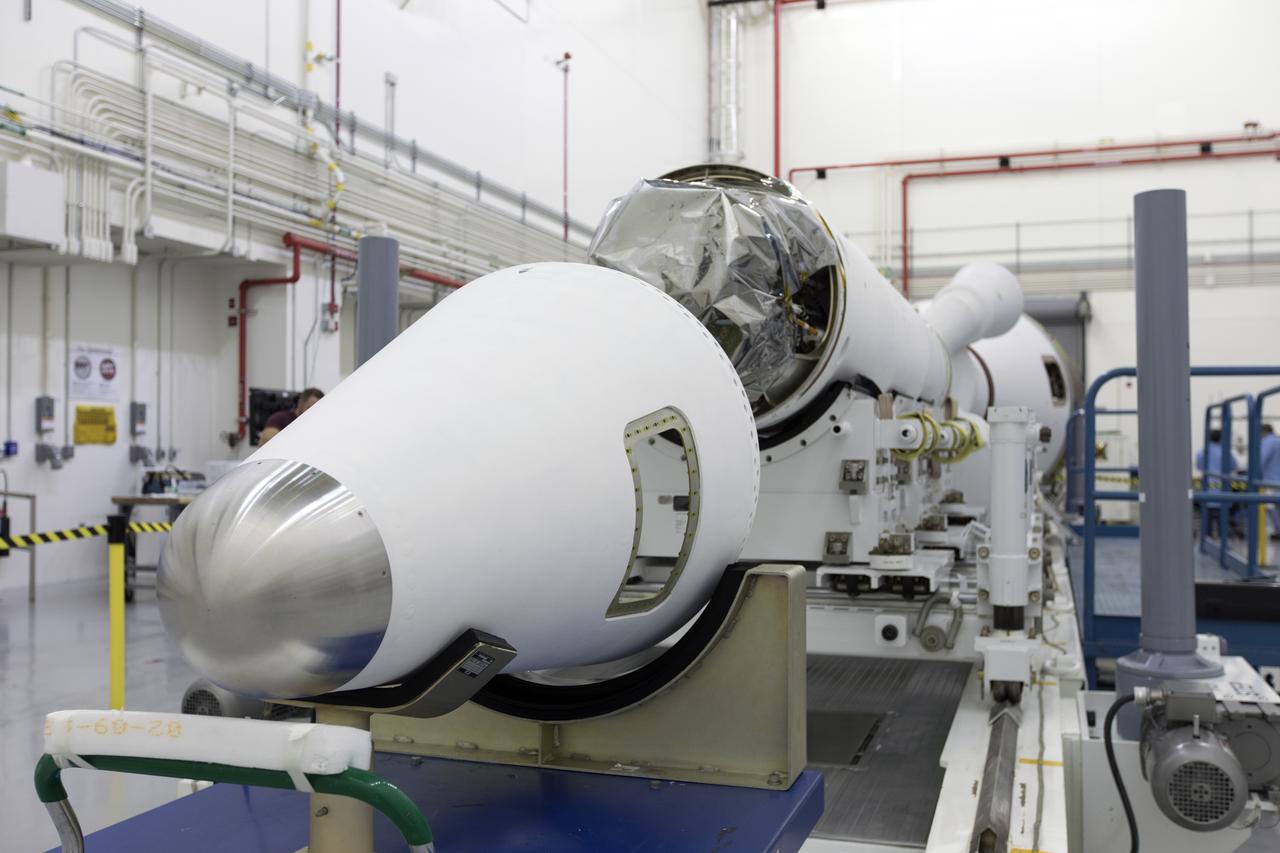
Inside the Launch Abort System Facility (LASF) at NASA’s Kennedy Space Center in Florida, the Launch Abort System (LAS) that will be used for the Orion Ascent Abort-2 (AA-2) Flight Test is being assembled on Feb. 5, 2019. AA-2 is a full-stress test of the LAS, scheduled for Spring 2019. AA-2 will launch from Space Launch Complex 46, carrying a fully functional LAS and a 22,000-pound Orion test vehicle to an altitude of 31,000 feet and traveling at more than 1,000 miles an hour. The test will verify the LAS can steer the crew module and astronauts aboard to safety in the event of an issue with the Space Launch System (SLS) rocket when the spacecraft is under the highest aerodynamic loads it will experience during a rapid climb into space. NASA's Orion and Exploration Ground Systems programs and contractors from Jacob's and Northrop Grumman in conjunction with the Air Force Space and Missile Center's Launch Operations branch are performing flight operations for AA-2.
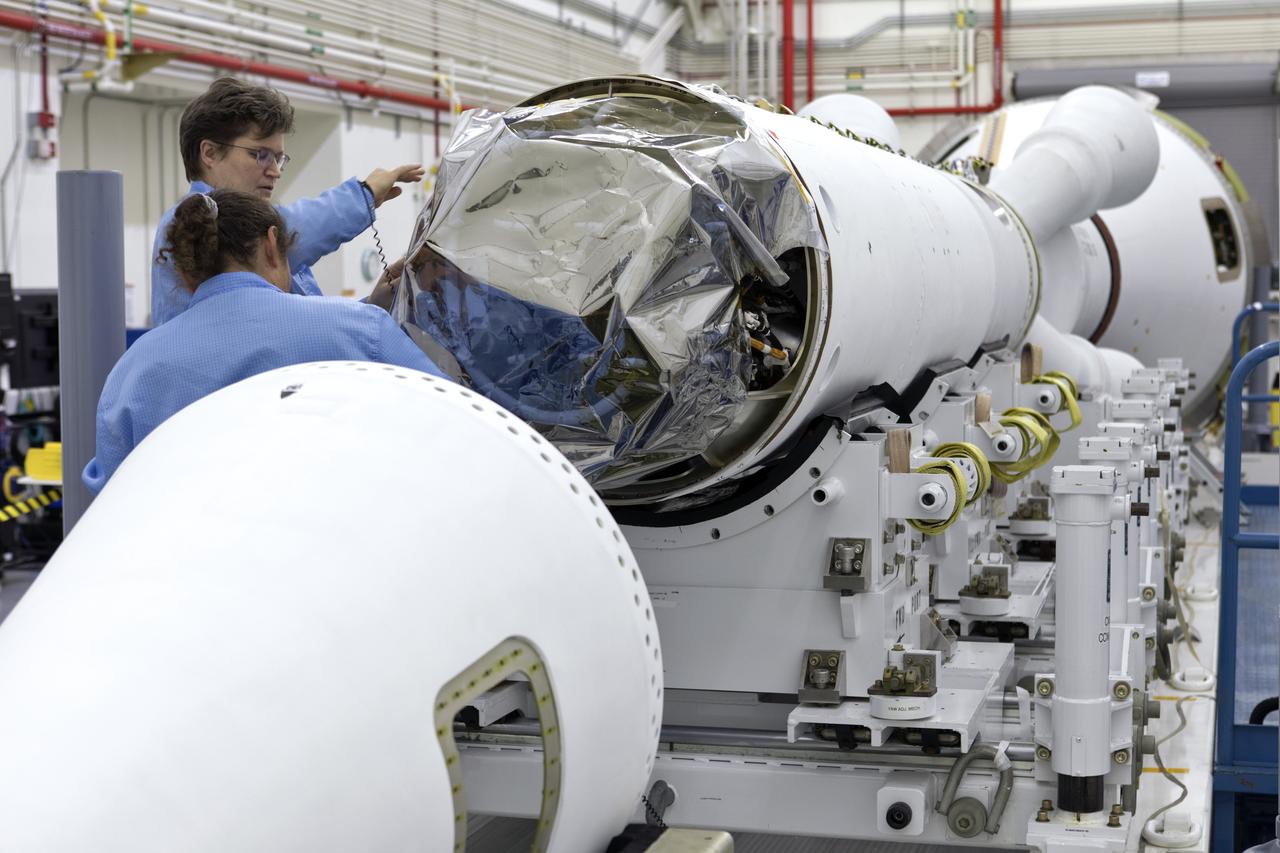
Inside the Launch Abort System Facility (LASF) at NASA’s Kennedy Space Center in Florida, workers assemble the Launch Abort System (LAS) on Feb. 5, 2019, that will be used for the Orion Ascent Abort-2 (AA-2) Flight Test. AA-2 is a full-stress test of the LAS, scheduled for Spring 2019. AA-2 will launch from Space Launch Complex 46, carrying a fully functional LAS and a 22,000-pound Orion test vehicle to an altitude of 31,000 feet and traveling at more than 1,000 miles an hour. The test will verify the LAS can steer the crew module and astronauts aboard to safety in the event of an issue with the Space Launch System (SLS) rocket when the spacecraft is under the highest aerodynamic loads it will experience during a rapid climb into space. NASA's Orion and Exploration Ground Systems programs and contractors from Jacob's and Northrop Grumman in conjunction with the Air Force Space and Missile Center's Launch Operations branch are performing flight operations for AA-2.
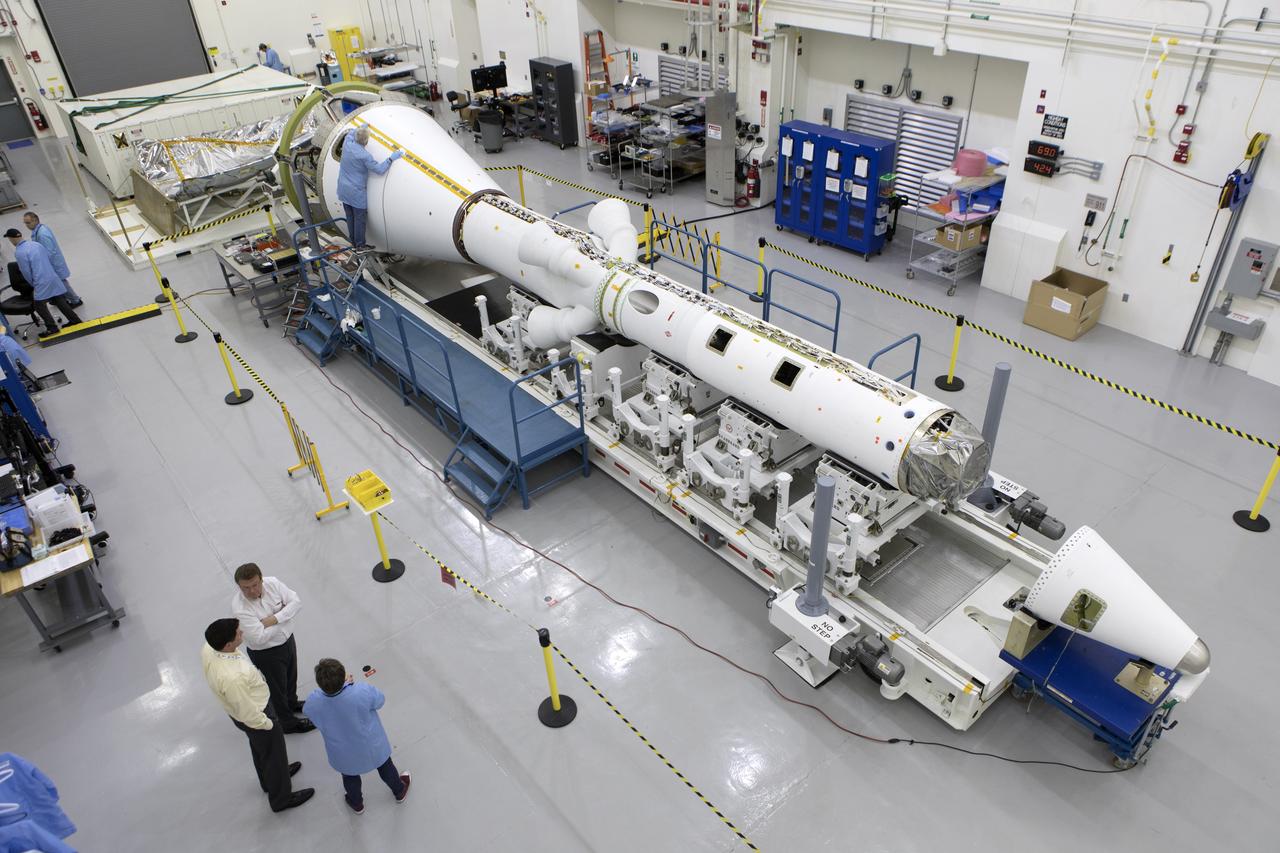
In this view from above inside the Launch Abort System Facility (LASF) at NASA’s Kennedy Space Center in Florida, the Launch Abort System (LAS) that will be used for the Orion Ascent Abort-2 (AA-2) Flight Test is being assembled on Feb. 5, 2019. AA-2 is a full-stress test of the LAS, scheduled for Spring 2019. AA-2 will launch from Space Launch Complex 46, carrying a fully functional LAS and a 22,000-pound Orion test vehicle to an altitude of 31,000 feet and traveling at more than 1,000 miles an hour. The test will verify the LAS can steer the crew module and astronauts aboard to safety in the event of an issue with the Space Launch System (SLS) rocket when the spacecraft is under the highest aerodynamic loads it will experience during a rapid climb into space. NASA's Orion and Exploration Ground Systems programs and contractors from Jacob's and Northrop Grumman in conjunction with the Air Force Space and Missile Center's Launch Operations branch are performing flight operations for AA-2.
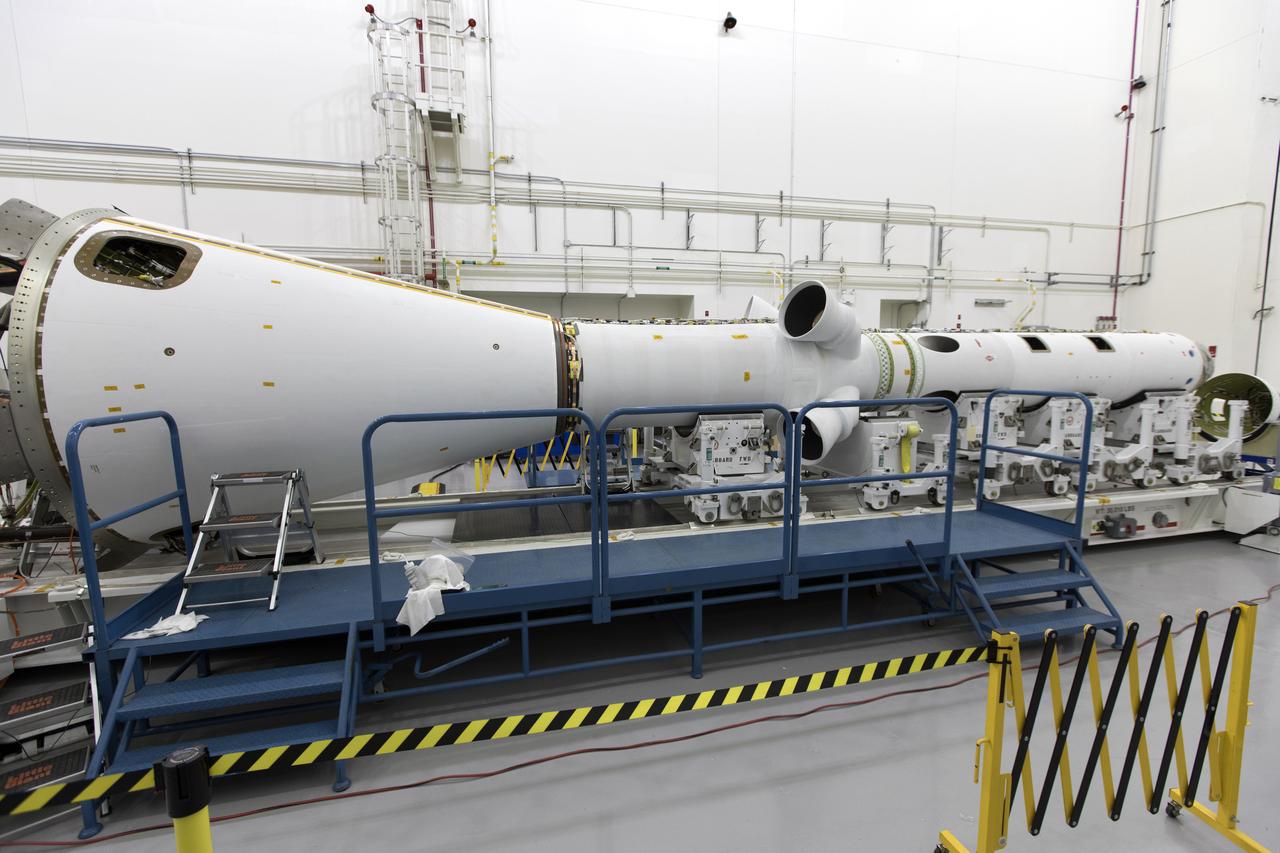
Inside the Launch Abort System Facility (LASF) at NASA’s Kennedy Space Center in Florida, the Launch Abort System (LAS) that will be used for the Orion Ascent Abort-2 (AA-2) Flight Test is being assembled on Feb. 5, 2019. AA-2 is a full-stress test of the LAS, scheduled for Spring 2019. AA-2 will launch from Space Launch Complex 46, carrying a fully functional LAS and a 22,000-pound Orion test vehicle to an altitude of 31,000 feet and traveling at more than 1,000 miles an hour. The test will verify the LAS can steer the crew module and astronauts aboard to safety in the event of an issue with the Space Launch System (SLS) rocket when the spacecraft is under the highest aerodynamic loads it will experience during a rapid climb into space. NASA's Orion and Exploration Ground Systems programs and contractors from Jacob's and Northrop Grumman in conjunction with the Air Force Space and Missile Center's Launch Operations branch are performing flight operations for AA-2.
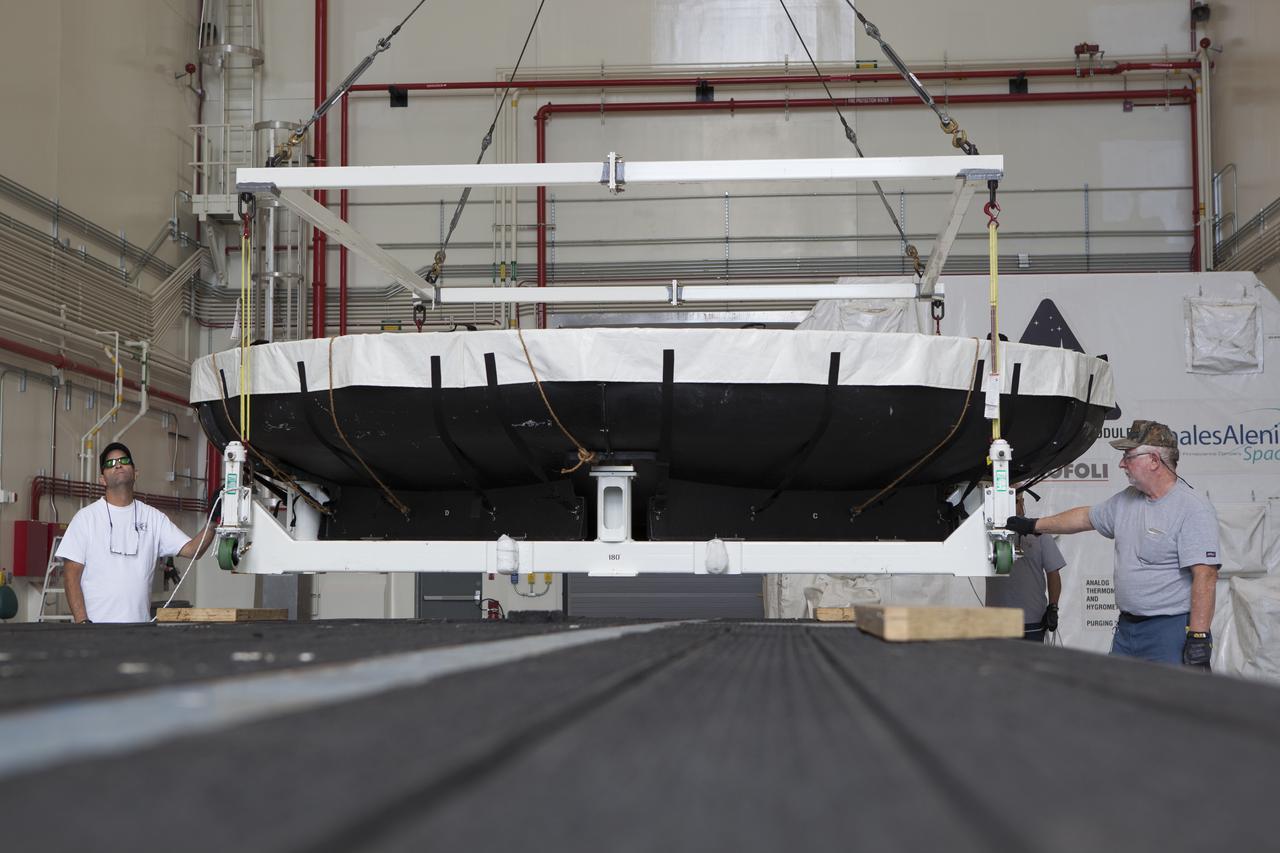
Inside the Launch Abort System Facility at NASA's Kennedy Space Center in Florida, the Orion heat shield from Exploration Flight Test-1 is being loaded onto a transporter for its move to the Vehicle Assembly Building (VAB). The heat shield is being transferred from the Orion Program to the Ground Systems Development and Operations Program, Landing and Recovery Operations. In the VAB, the heat shield will be integrated with the Orion ground test article and used for future underway recovery testing.
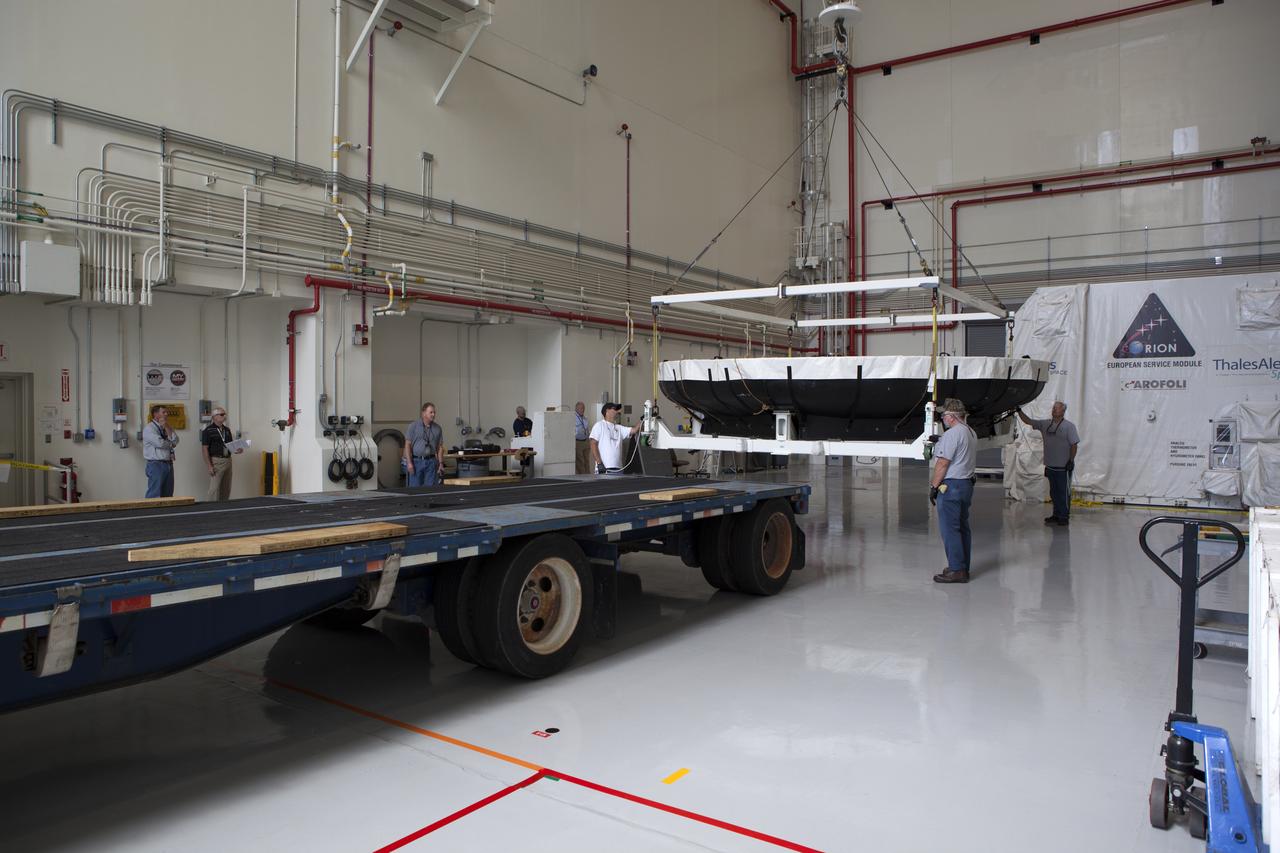
Inside the Launch Abort System Facility at NASA's Kennedy Space Center in Florida, the Orion heat shield from Exploration Flight Test-1 is being loaded onto a transporter for its move to the Vehicle Assembly Building (VAB). The heat shield is being transferred from the Orion Program to the Ground Systems Development and Operations Program, Landing and Recovery Operations. In the VAB, the heat shield will be integrated with the Orion ground test article and used for future underway recovery testing.
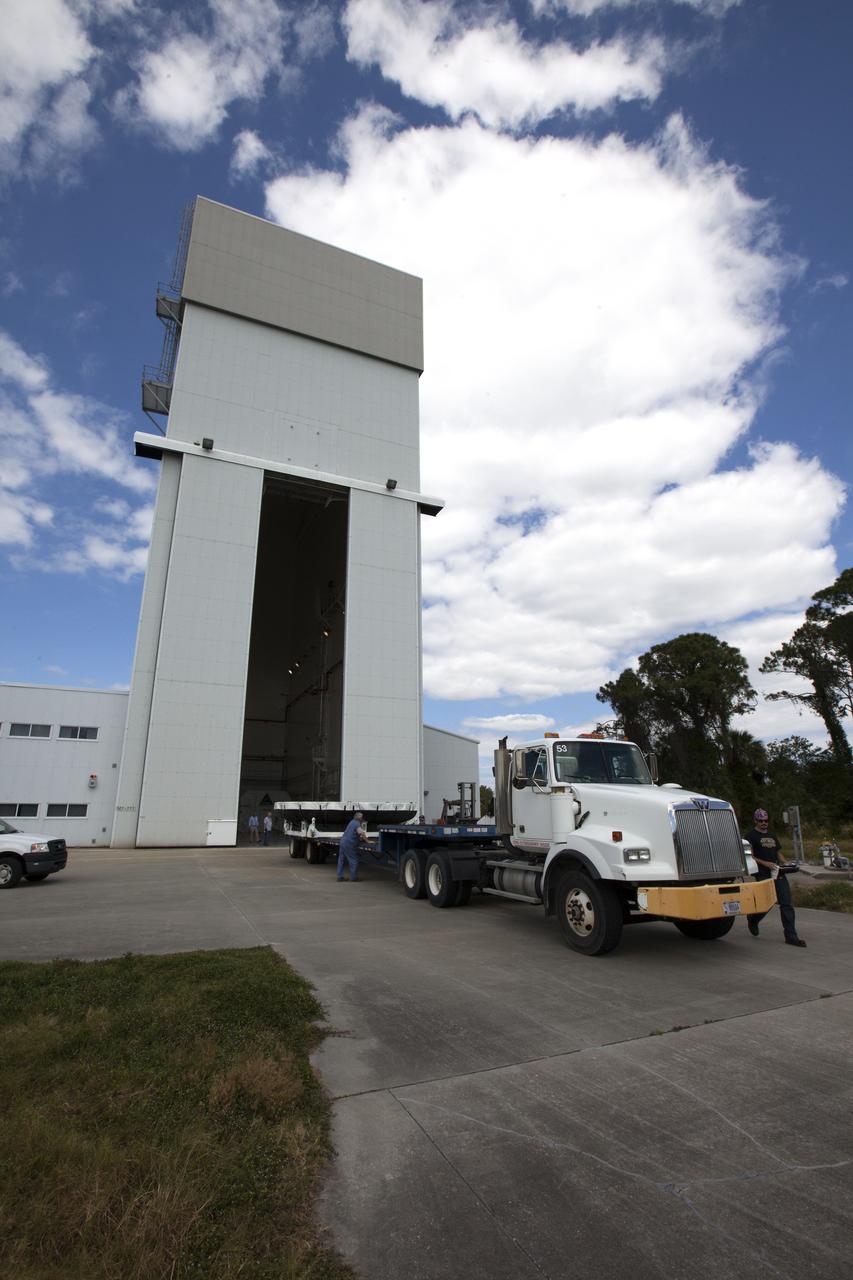
The Orion heat shield from Exploration Flight Test-1, secured on a transporter, departs the Launch Abort System Facility at NASA's Kennedy Space Center in Florida, for its move to the Vehicle Assembly Building (VAB). The heat shield is being transferred from the Orion Program to the Ground Systems Development and Operations Program, Landing and Recovery Operations. In the VAB, the heat shield will be integrated with the Orion ground test article and used for future underway recovery testing.
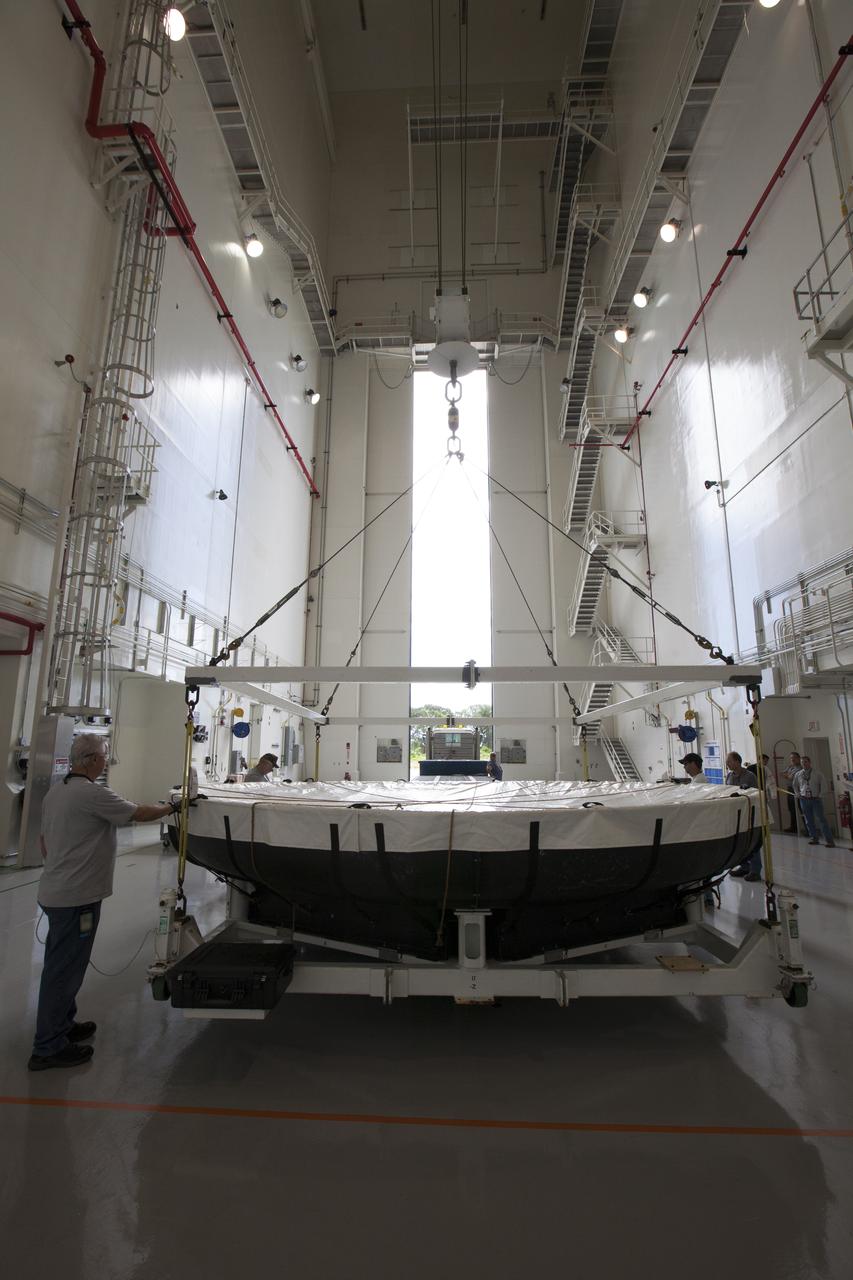
Inside the Launch Abort System Facility at NASA's Kennedy Space Center in Florida, the Orion heat shield from Exploration Flight Test-1 is secured on a transporter and ready for its move to the Vehicle Assembly Building (VAB). The heat shield is being transferred from the Orion Program to the Ground Systems Development and Operations Program, Landing and Recovery Operations. In the VAB, the heat shield will be integrated with the Orion ground test article and used for future underway recovery testing.
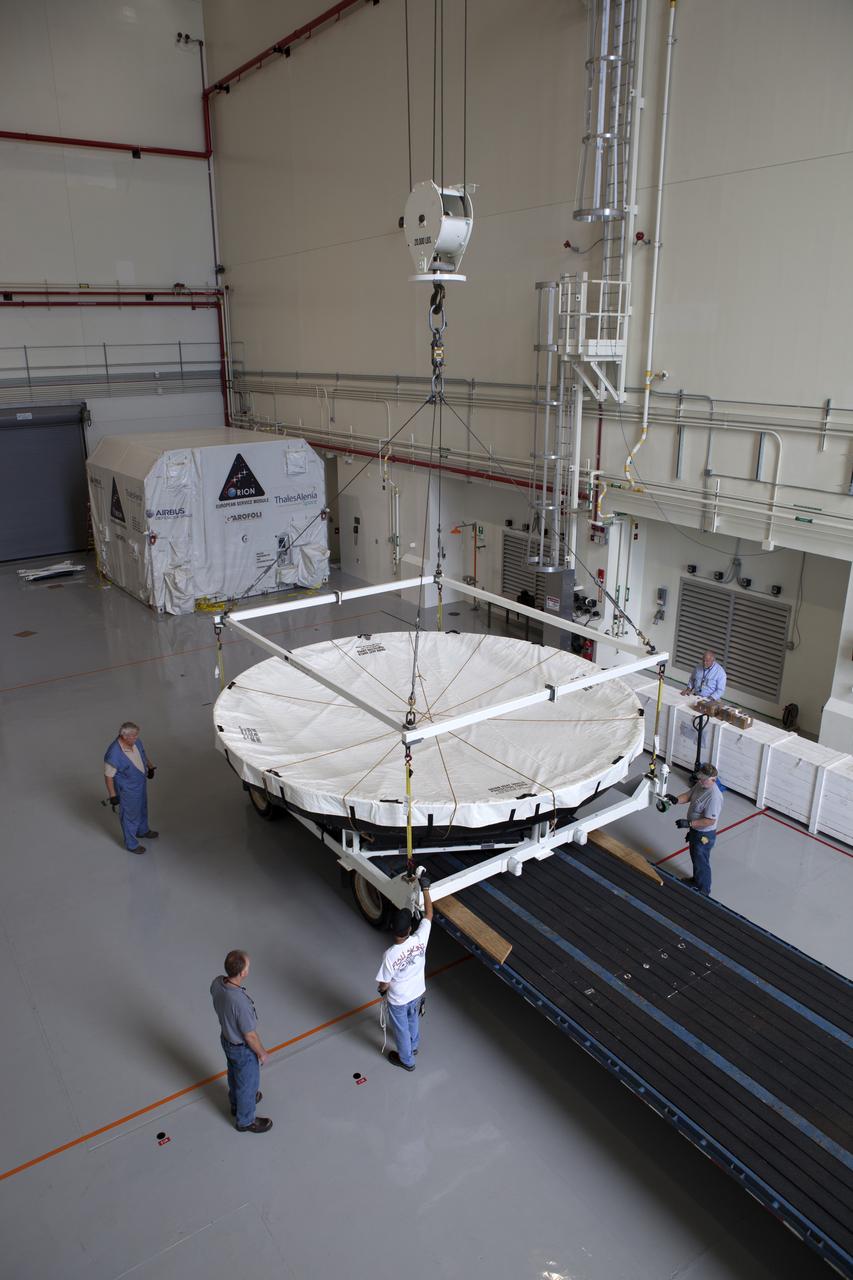
Inside the Launch Abort System Facility at NASA's Kennedy Space Center in Florida, a crane lowers the Orion heat shield from Exploration Flight Test-1 onto a transporter for its move to the Vehicle Assembly Building (VAB). The heat shield is being transferred from the Orion Program to the Ground Systems Development and Operations Program, Landing and Recovery Operations. In the VAB, the heat shield will be integrated with the Orion ground test article and used for future underway recovery testing.
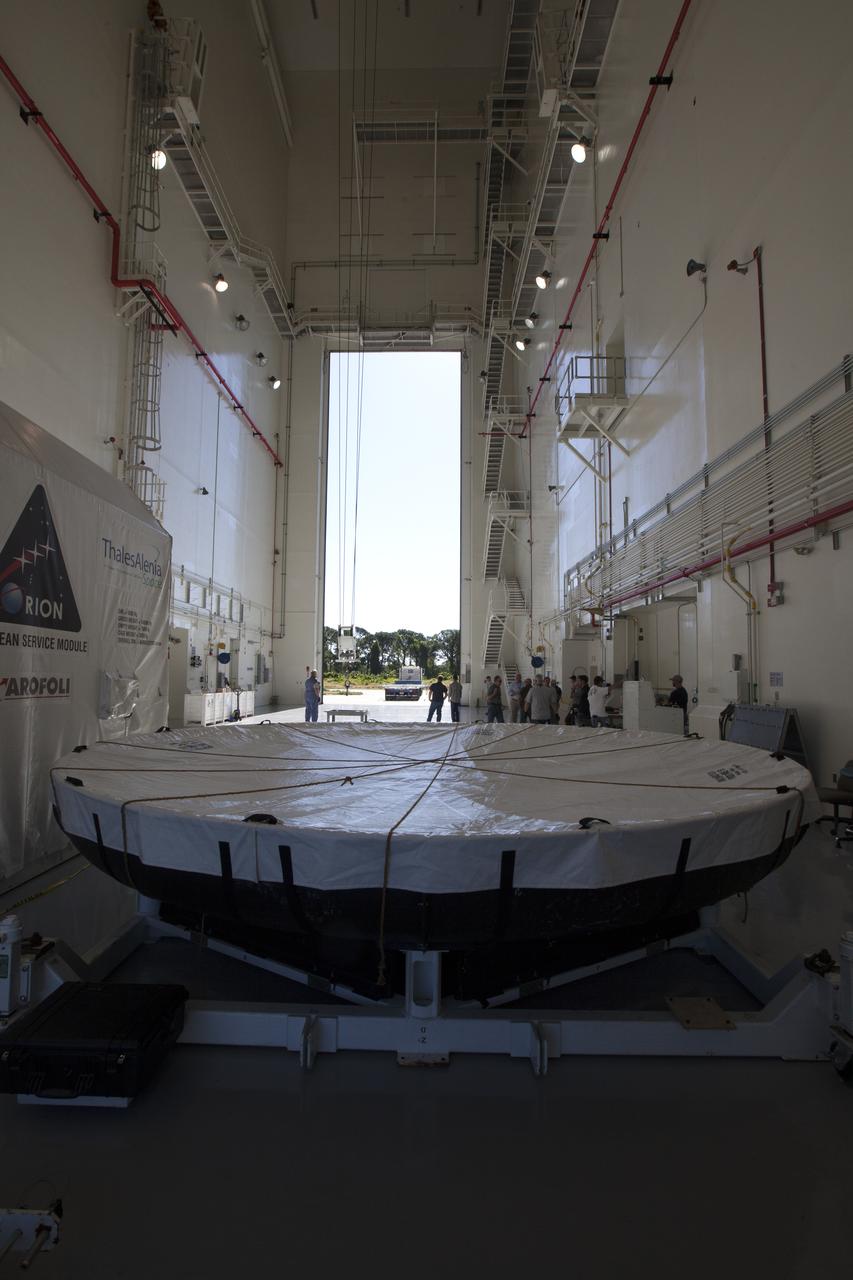
Inside the Launch Abort System Facility at NASA's Kennedy Space Center in Florida, the Orion heat shield from Exploration Flight Test-1 is being prepared for its move to the Vehicle Assembly Building (VAB). The heat shield is being transferred from the Orion Program to the Ground Systems Development and Operations Program, Landing and Recovery Operations. In the VAB, the heat shield will be integrated with the Orion ground test article and used for future underway recovery testing.
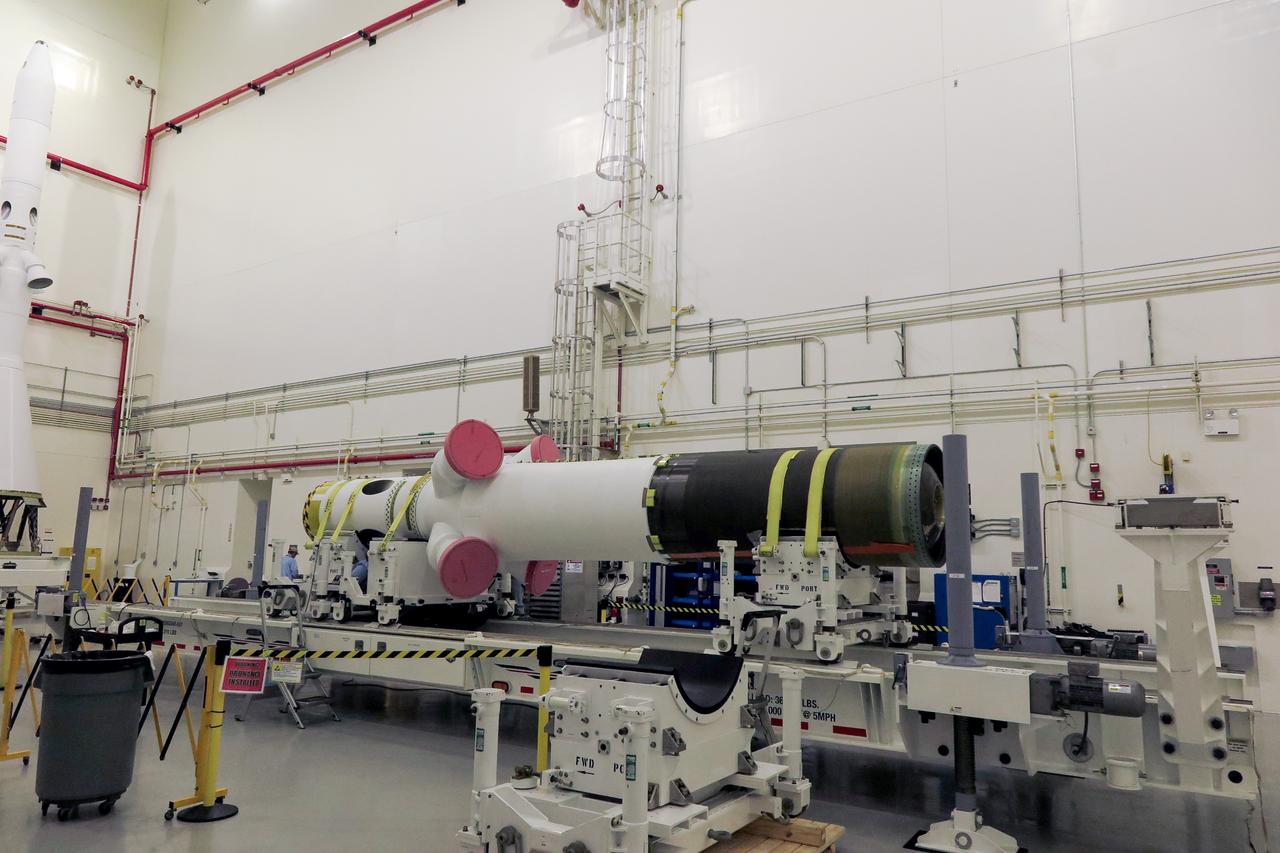
The launch abort motor is integrated with the jettison motor for Orion’s launch abort system (LAS) for Artemis II, inside the Launch Abort System Facility at NASA’s Kennedy Space Center in Florida on April 15, 2020. The launch abort and jettison motors are two of three motors on the LAS. The LAS will be positioned atop the Orion crew module and is designed to protect astronauts if a problem arises during launch by pulling the spacecraft away from a failing rocket. Artemis II will take the first humans in orbit around the Moon in the 21st century. In view, at far left, is the Launch Abort System for Artemis I, the first uncrewed mission of Orion atop the Space Launch System rocket.
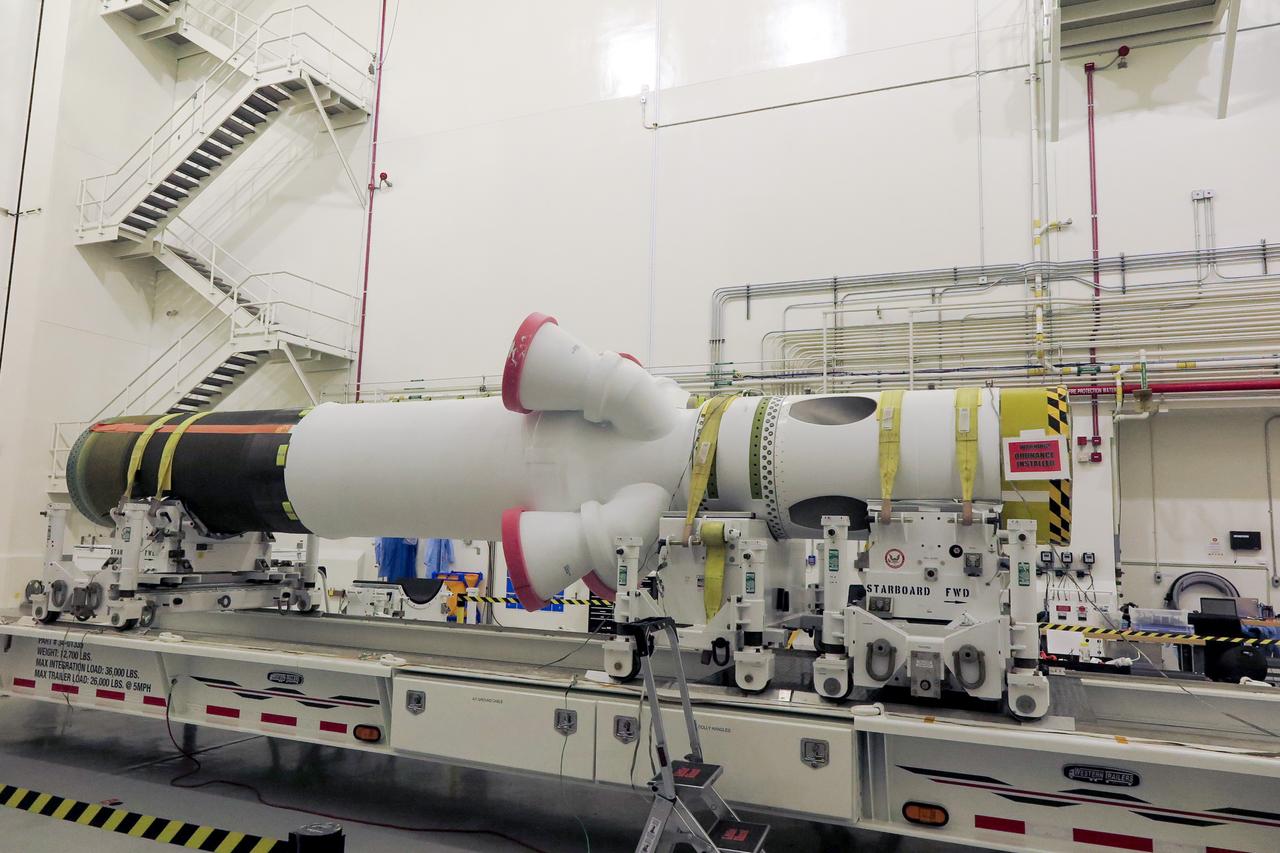
The launch abort motor is integrated with the jettison motor for Orion’s launch abort system (LAS) for Artemis II, inside the Launch Abort System Facility at NASA’s Kennedy Space Center in Florida on April 15, 2020. The launch abort and jettison motors are two of three motors on the LAS. The LAS will be positioned atop the Orion crew module and is designed to protect astronauts if a problem arises during launch by pulling the spacecraft away from a failing rocket. Artemis II will take the first humans in orbit around the Moon in the 21st century.
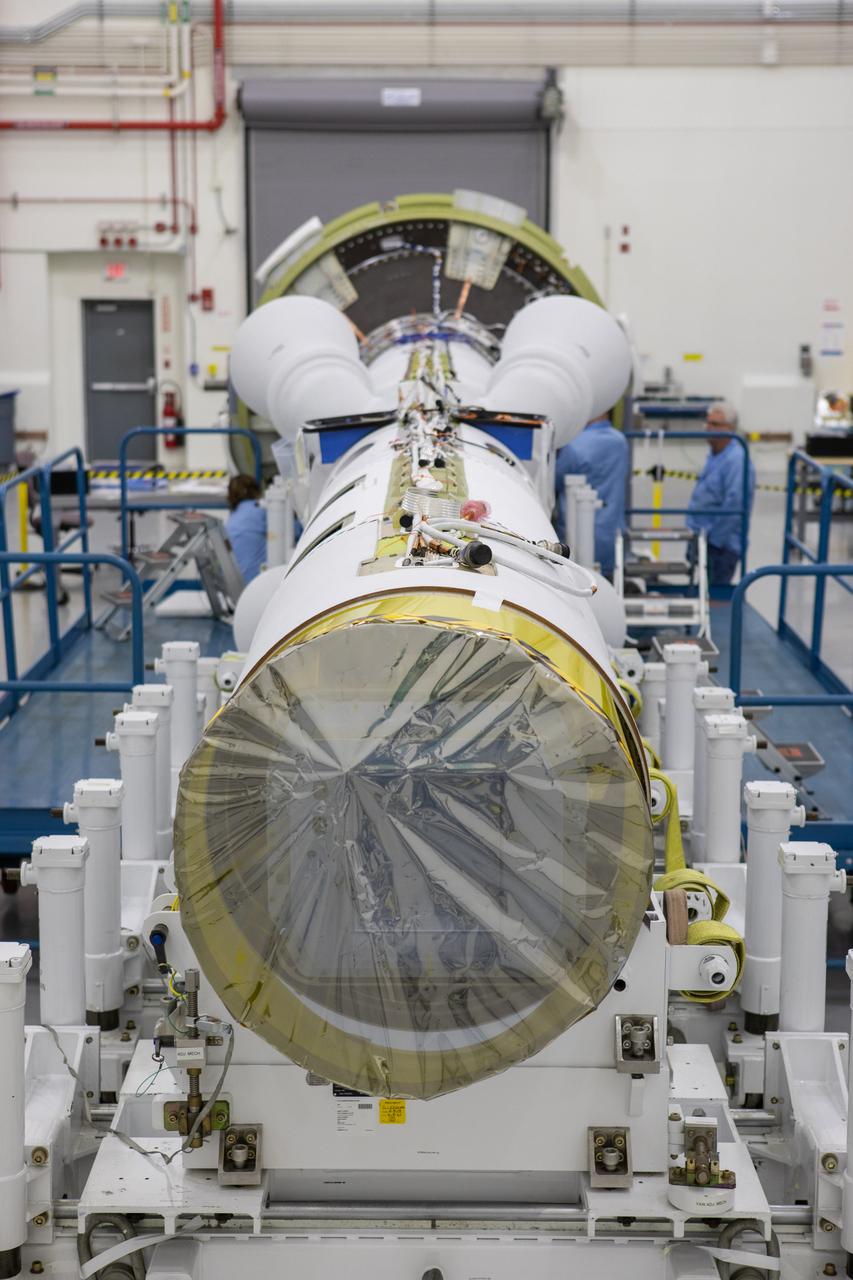
Inside the Launch Abort System Facility at NASA’s Kennedy Space Center in Florida, work is underway Aug. 21, 2019, to integrate segments of the launch abort system for the agency’s uncrewed flight test, Artemis I. During crewed launches of the Orion spacecraft atop the Space Launch System rocket, the LAS will protect the crew module and astronauts aboard to safety if an emergency occurs during launch.
Inside the Launch Abort System Facility at NASA’s Kennedy Space Center in Florida, work is underway Aug. 21, 2019, to integrate segments of the launch abort system for the agency’s uncrewed flight test, Artemis I. During crewed launches of the Orion spacecraft atop the Space Launch System rocket, the LAS will protect the crew module and astronauts aboard to safety if an emergency occurs during launch.
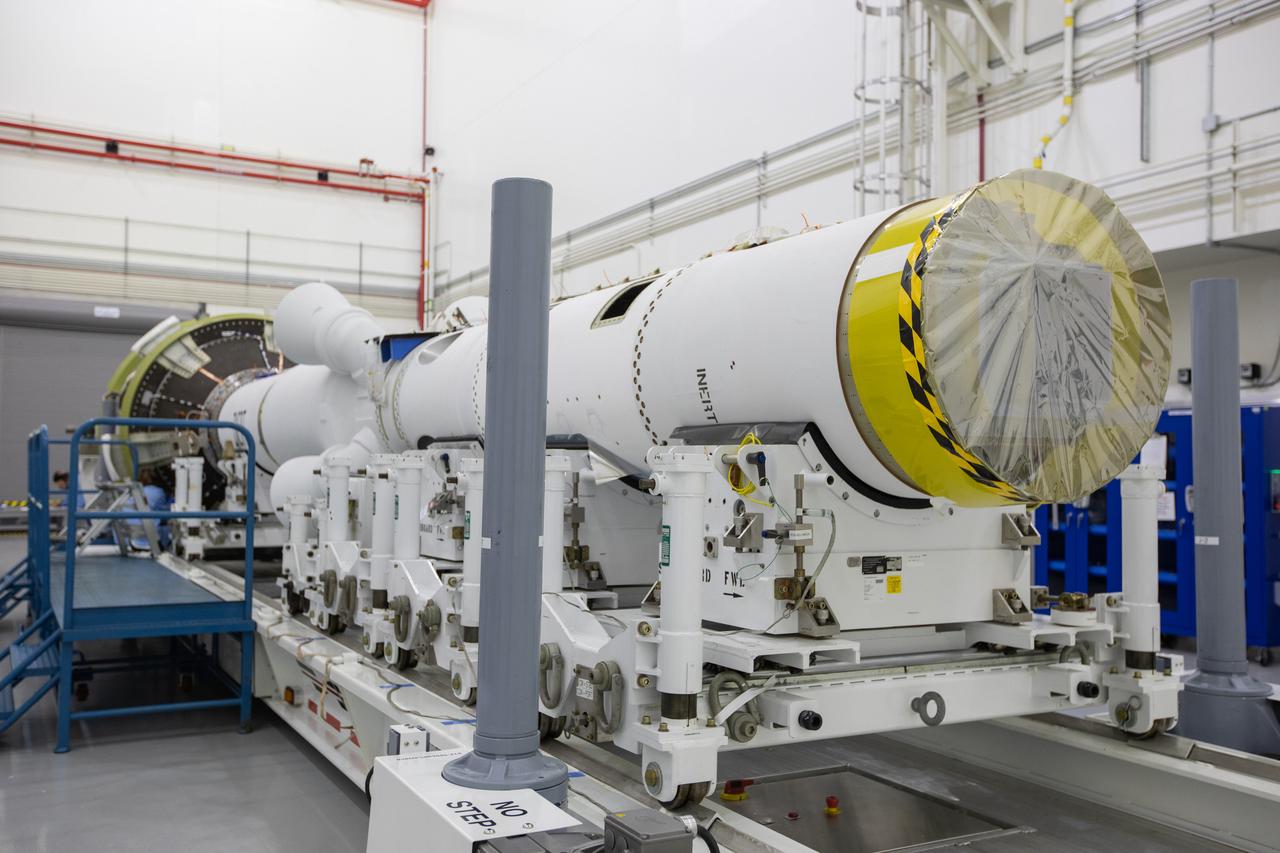
Inside the Launch Abort System Facility at NASA’s Kennedy Space Center in Florida, work is underway Aug. 21, 2019, to integrate segments of the launch abort system for the agency’s uncrewed flight test, Artemis I. During crewed launches of the Orion spacecraft atop the Space Launch System rocket, the LAS will protect the crew module and astronauts aboard to safety if an emergency occurs during launch.
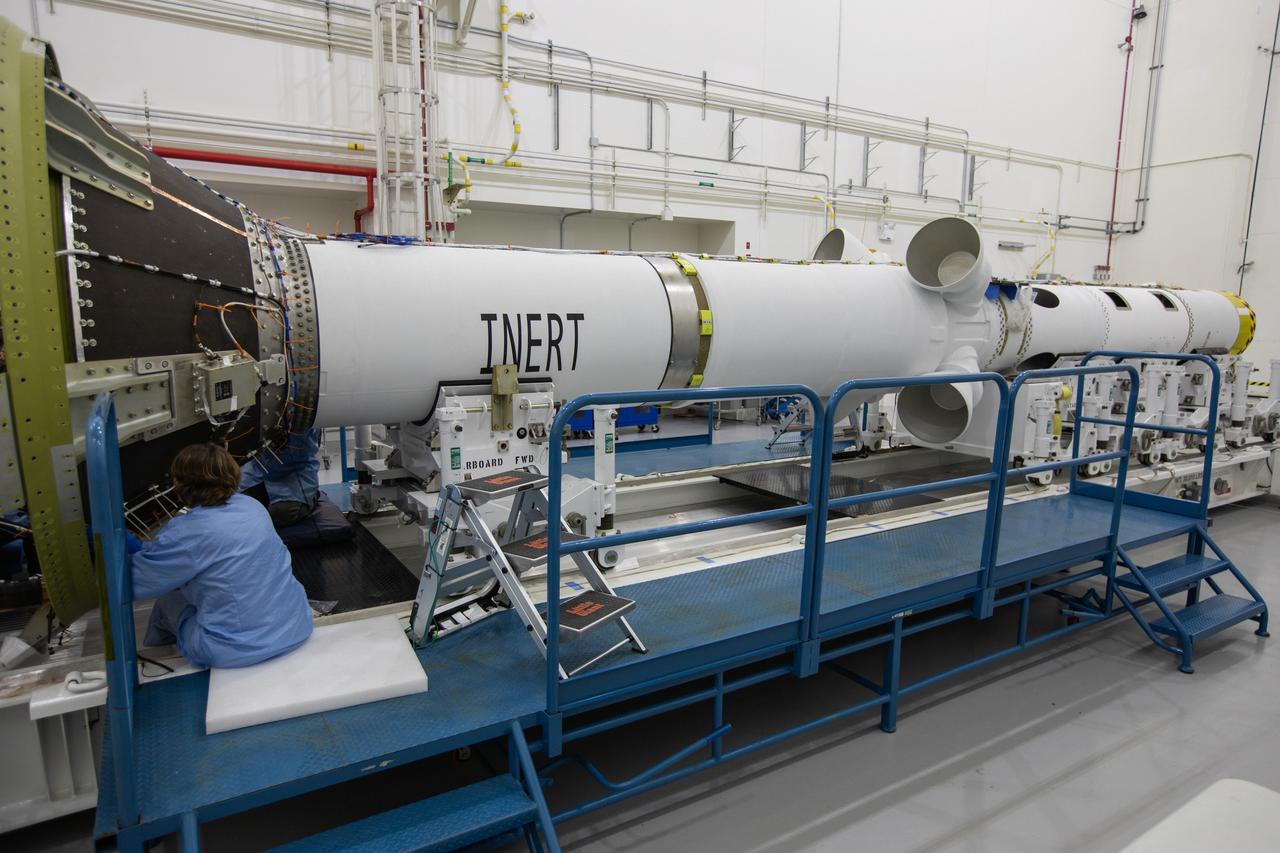
Inside the Launch Abort System Facility at NASA’s Kennedy Space Center in Florida, work is underway Aug. 21, 2019, to integrate segments of the launch abort system for the agency’s uncrewed flight test, Artemis I. During crewed launches of the Orion spacecraft atop the Space Launch System rocket, the LAS will protect the crew module and astronauts aboard to safety if an emergency occurs during launch.
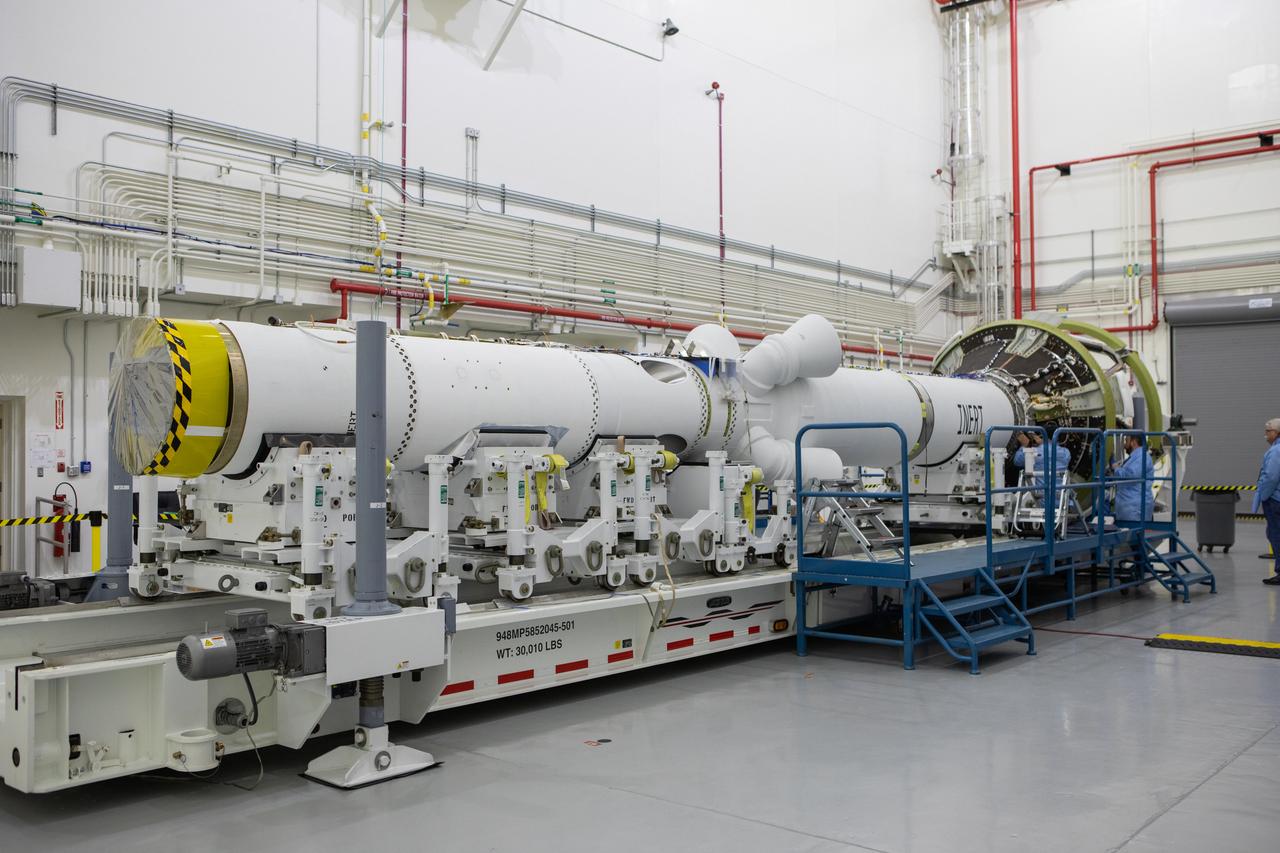
Inside the Launch Abort System Facility at NASA’s Kennedy Space Center in Florida, work is underway Aug. 21, 2019, to integrate segments of the launch abort system for the agency’s uncrewed flight test, Artemis I. During crewed launches of the Orion spacecraft atop the Space Launch System rocket, the LAS will protect the crew module and astronauts aboard to safety if an emergency occurs during launch.
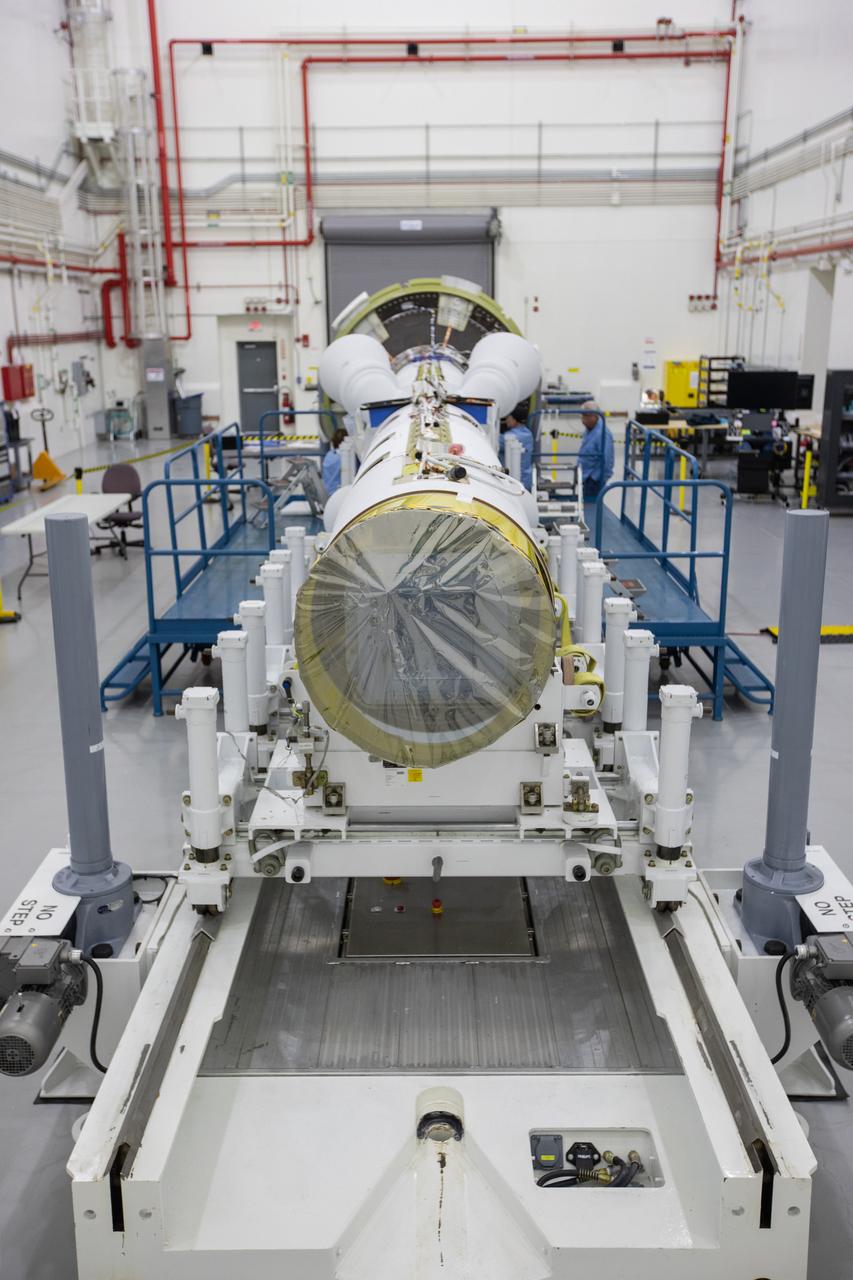
Inside the Launch Abort System Facility at NASA’s Kennedy Space Center in Florida, work is underway Aug. 21, 2019, to integrate segments of the launch abort system for the agency’s uncrewed flight test, Artemis I. During crewed launches of the Orion spacecraft atop the Space Launch System rocket, the LAS will protect the crew module and astronauts aboard to safety if an emergency occurs during launch.
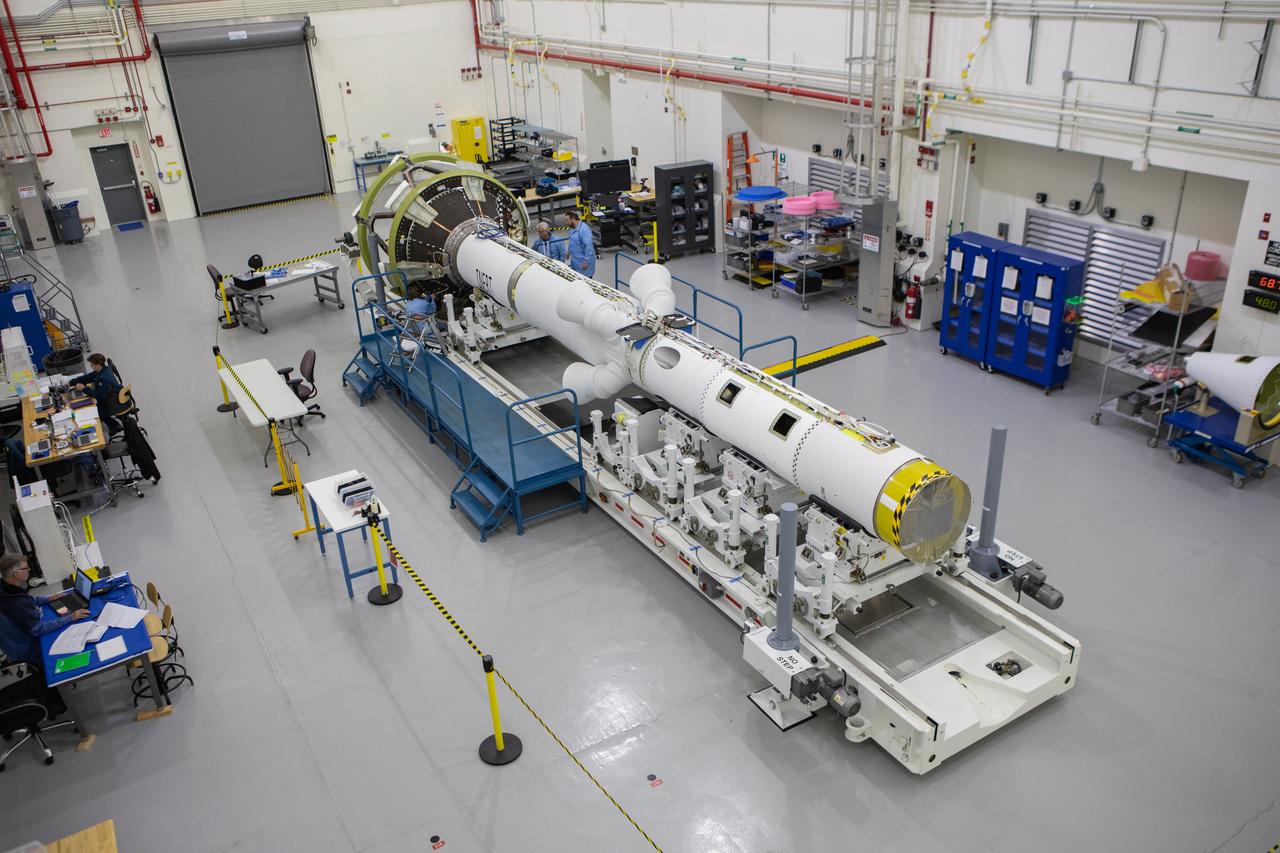
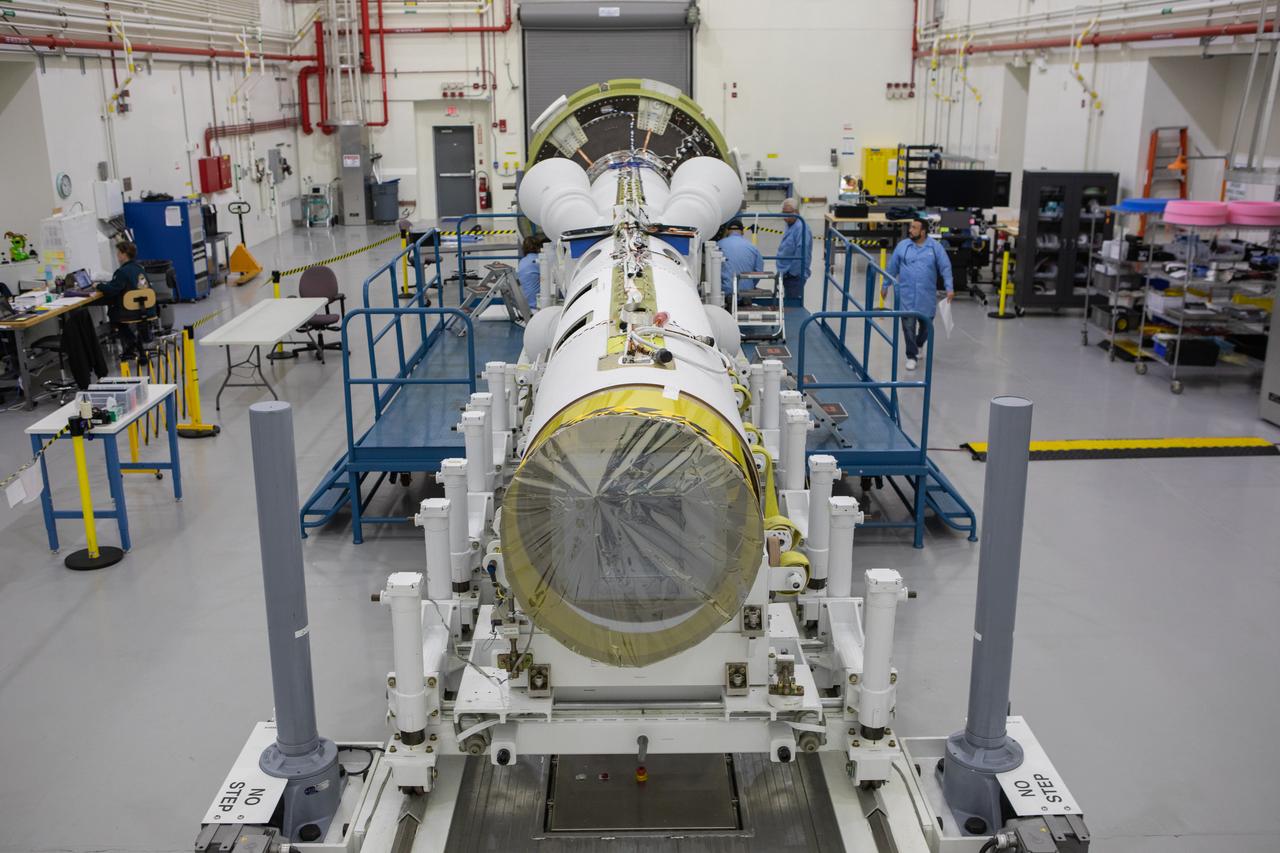
In this view from above inside the Launch Abort System Facility at NASA’s Kennedy Space Center in Florida, work is underway Aug. 21, 2019, to integrate segments of the launch abort system for the agency’s uncrewed flight test, Artemis I. During crewed launches of the Orion spacecraft atop the Space Launch System rocket, the LAS will protect the crew module and astronauts aboard to safety if an emergency occurs during launch.
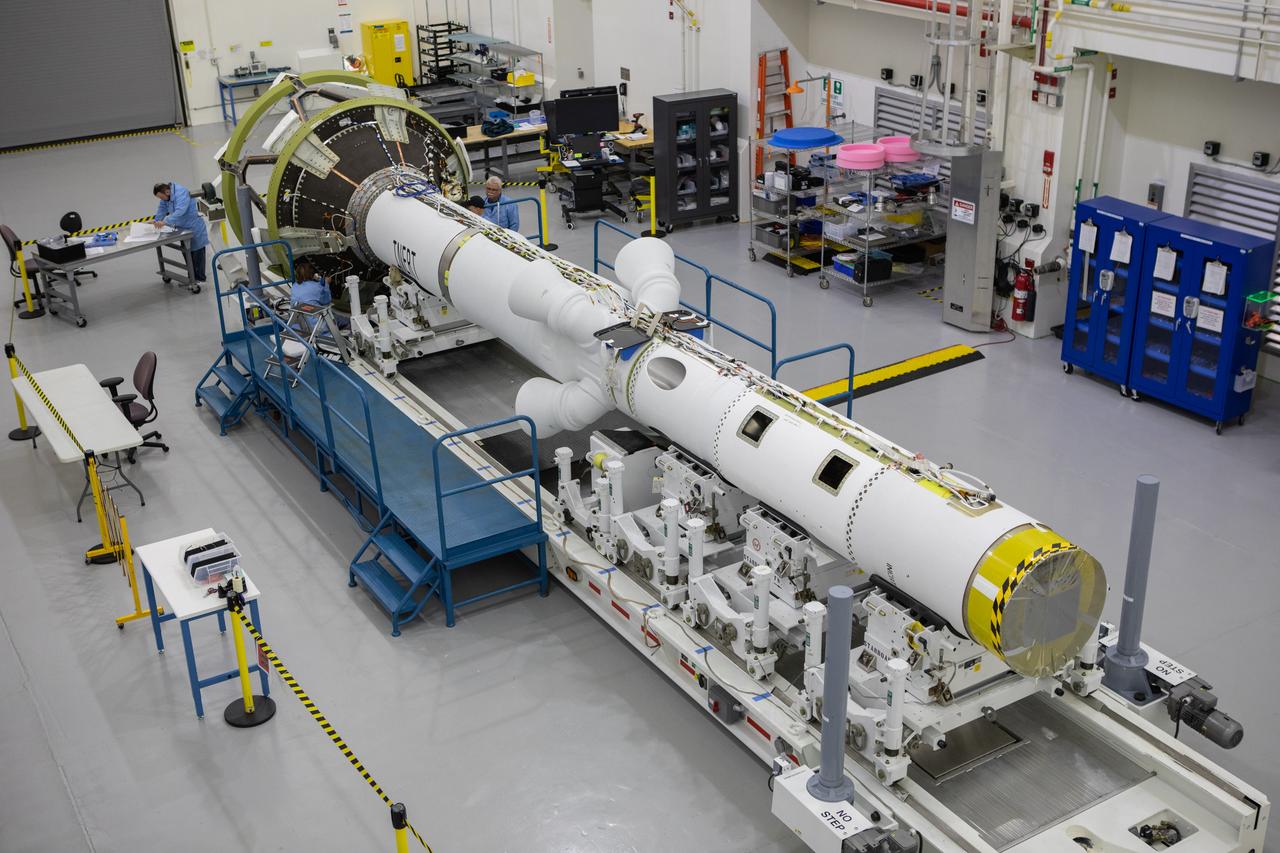
In this view from above inside the Launch Abort System Facility at NASA’s Kennedy Space Center in Florida, work is underway Aug. 21, 2019, to integrate segments of the launch abort system for the agency’s uncrewed flight test, Artemis I. During crewed launches of the Orion spacecraft atop the Space Launch System rocket, the LAS will protect the crew module and astronauts aboard to safety if an emergency occurs during launch.
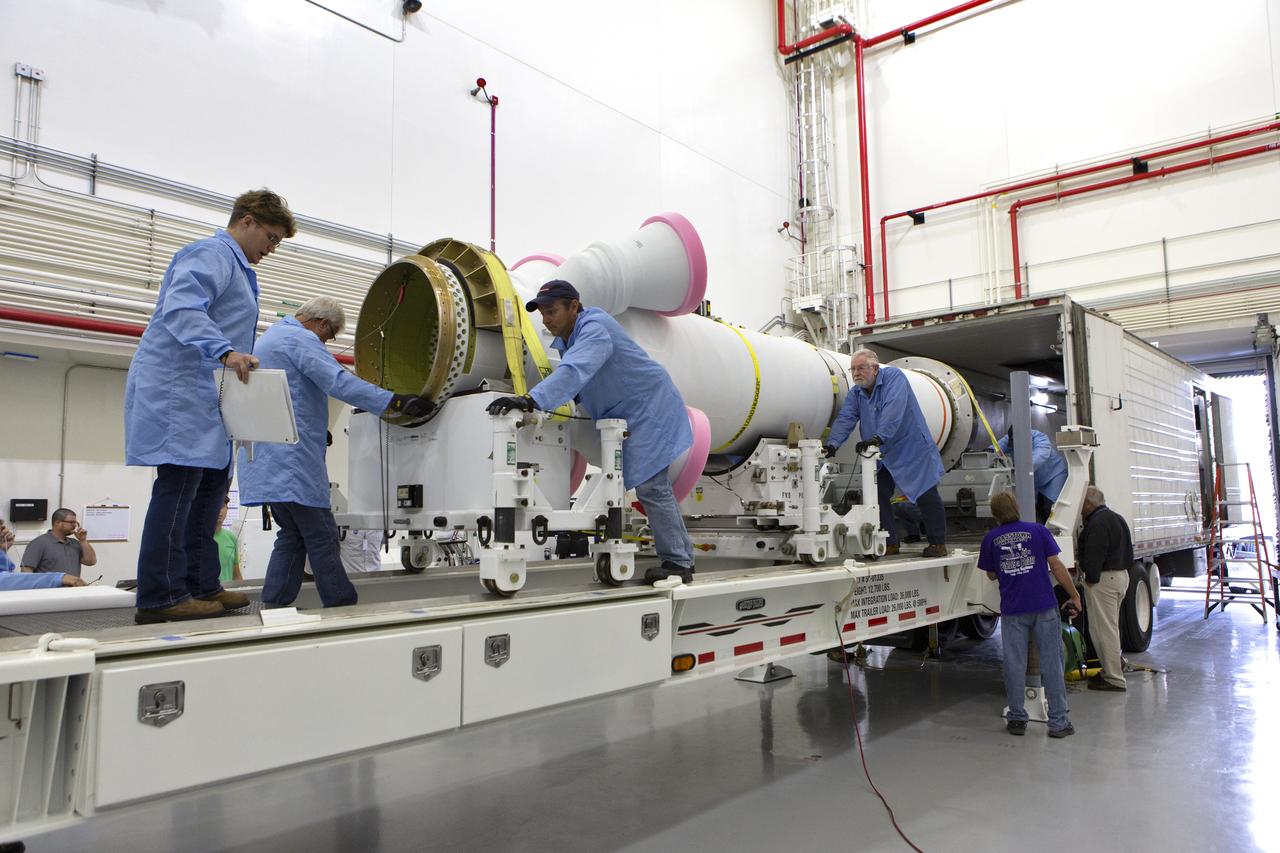
Workers offload the abort motor for NASA’s Artemis 1 mission from a heavy transport truck inside the Launch Abort System Facility (LASF) at the agency’s Kennedy Space Center in Florida on June 6, 2019. The abort motor, manufactured by Northrop Grumman, will be integrated with Orion subcomponents and prepared for Artemis 1. The abort motor is one of three motors located on the tower of the Launch Abort System (LAS). The LAS is designed to pull the Orion capsule and its crew away to safety if an emergency occurs during ascent of the Space Launch System (SLS) rocket. During Artemis 1, the uncrewed Orion spacecraft will launch atop the SLS from Launch Pad 39B at Kennedy. Orion will embark on an approximately three-week mission that will take the spacecraft thousands of miles past the Moon. Orion will return to Earth and splashdown in the Pacific Ocean off the coast of California, where it will be retrieved and returned to Kennedy.
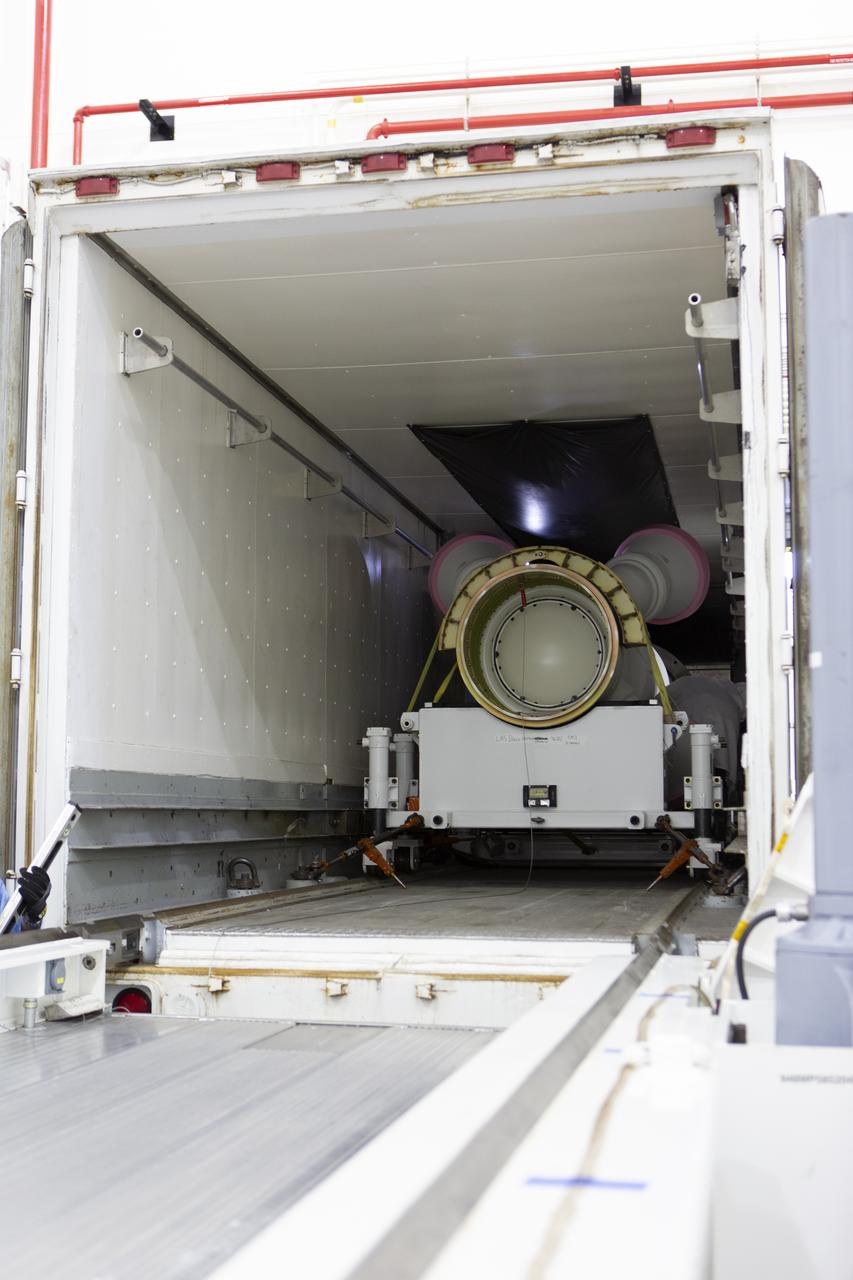
The abort motor for NASA’s Artemis 1 mission, is offloaded from a heavy transport truck inside the Launch Abort System Facility (LASF) at the agency’s Kennedy Space Center in Florida on June 6, 2019. The abort motor, manufactured by Northrop Grumman, will be integrated with Orion subcomponents and prepared for Artemis 1. The abort motor is one of three motors located on the tower of the Launch Abort System (LAS). The LAS is designed to pull the Orion capsule and its crew away to safety if an emergency occurs during ascent of the Space Launch System (SLS) rocket. During Artemis 1, the uncrewed Orion spacecraft will launch atop the SLS from Launch Pad 39B at Kennedy. Orion will embark on an approximately three-week mission that will take the spacecraft thousands of miles past the Moon. Orion will return to Earth and splashdown in the Pacific Ocean off the coast of California, where it will be retrieved and returned to Kennedy.
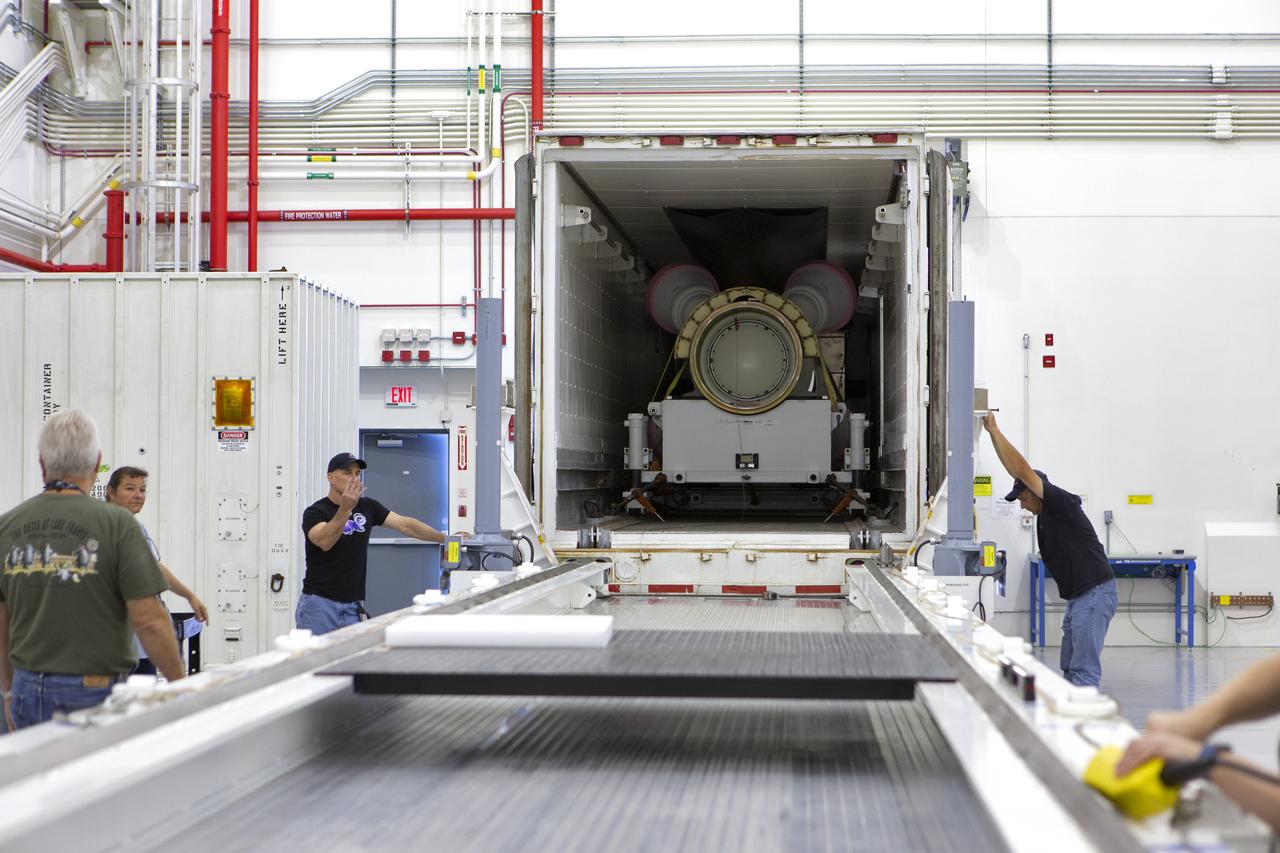
The abort motor for NASA’s Artemis 1 mission, is offloaded from a heavy transport truck inside the Launch Abort System Facility (LASF) at the agency’s Kennedy Space Center in Florida on June 6, 2019. The abort motor, manufactured by Northrop Grumman, will be integrated with Orion subcomponents and prepared for Artemis 1. The abort motor is one of three motors located on the tower of the Launch Abort System (LAS). The LAS is designed to pull the Orion capsule and its crew away to safety if an emergency occurs during ascent of the Space Launch System (SLS) rocket. During Artemis 1, the uncrewed Orion spacecraft will launch atop the SLS from Launch Pad 39B at Kennedy. Orion will embark on an approximately three-week mission that will take the spacecraft thousands of miles past the Moon. Orion will return to Earth and splashdown in the Pacific Ocean off the coast of California, where it will be retrieved and returned to Kennedy.
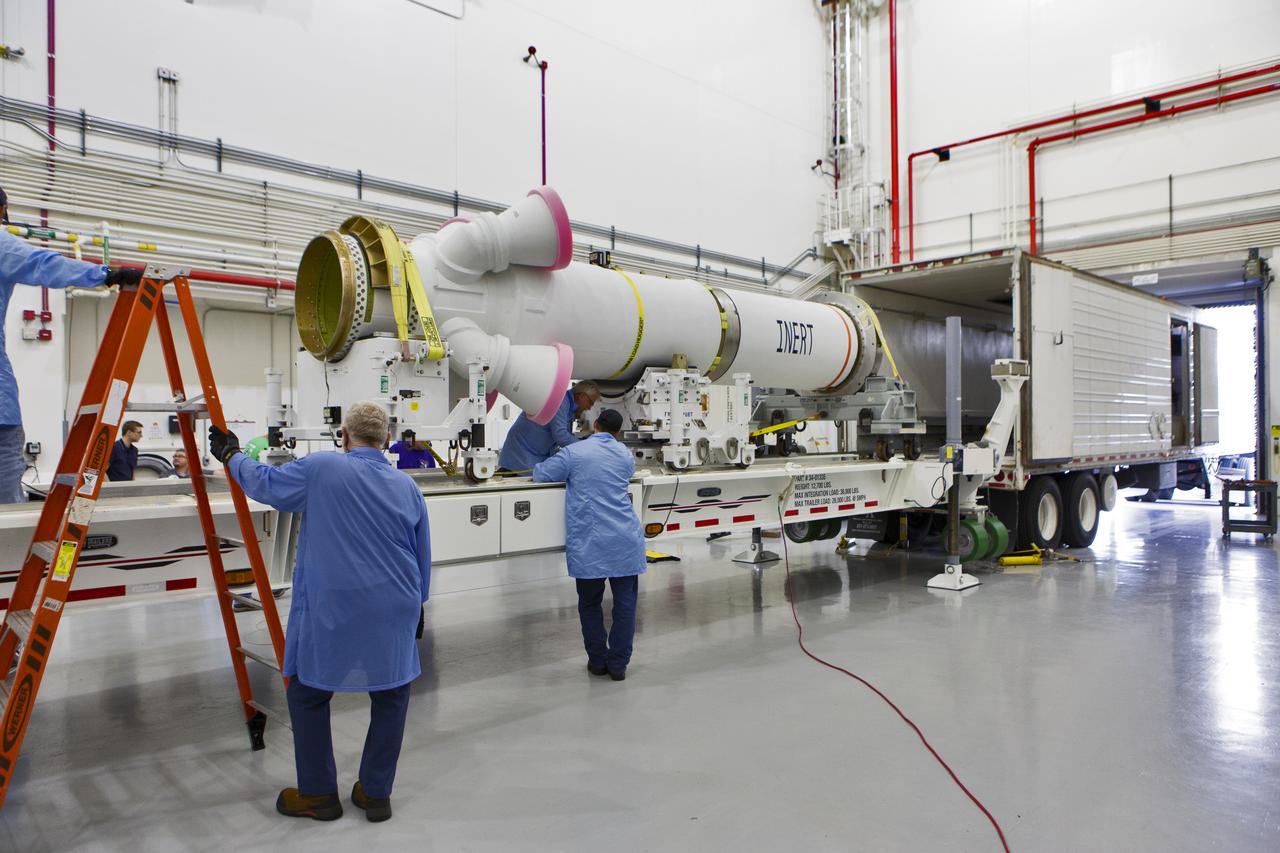
Workers begin checkouts of the abort motor for NASA’s Artemis 1 mission inside the Launch Abort System Facility (LASF) at the agency’s Kennedy Space Center in Florida on June 6, 2019. The abort motor, manufactured by Northrop Grumman, will be integrated with Orion subcomponents and prepared for Artemis 1. The abort motor is one of three motors located on the tower of the Launch Abort System (LAS). The LAS is designed to pull the Orion capsule and its crew away to safety if an emergency occurs during ascent of the Space Launch System (SLS) rocket. During Artemis 1, the uncrewed Orion spacecraft will launch atop the SLS from Launch Pad 39B at Kennedy. Orion will embark on an approximately three-week mission that will take the spacecraft thousands of miles past the Moon. Orion will return to Earth and splashdown in the Pacific Ocean off the coast of California, where it will be retrieved and returned to Kennedy.
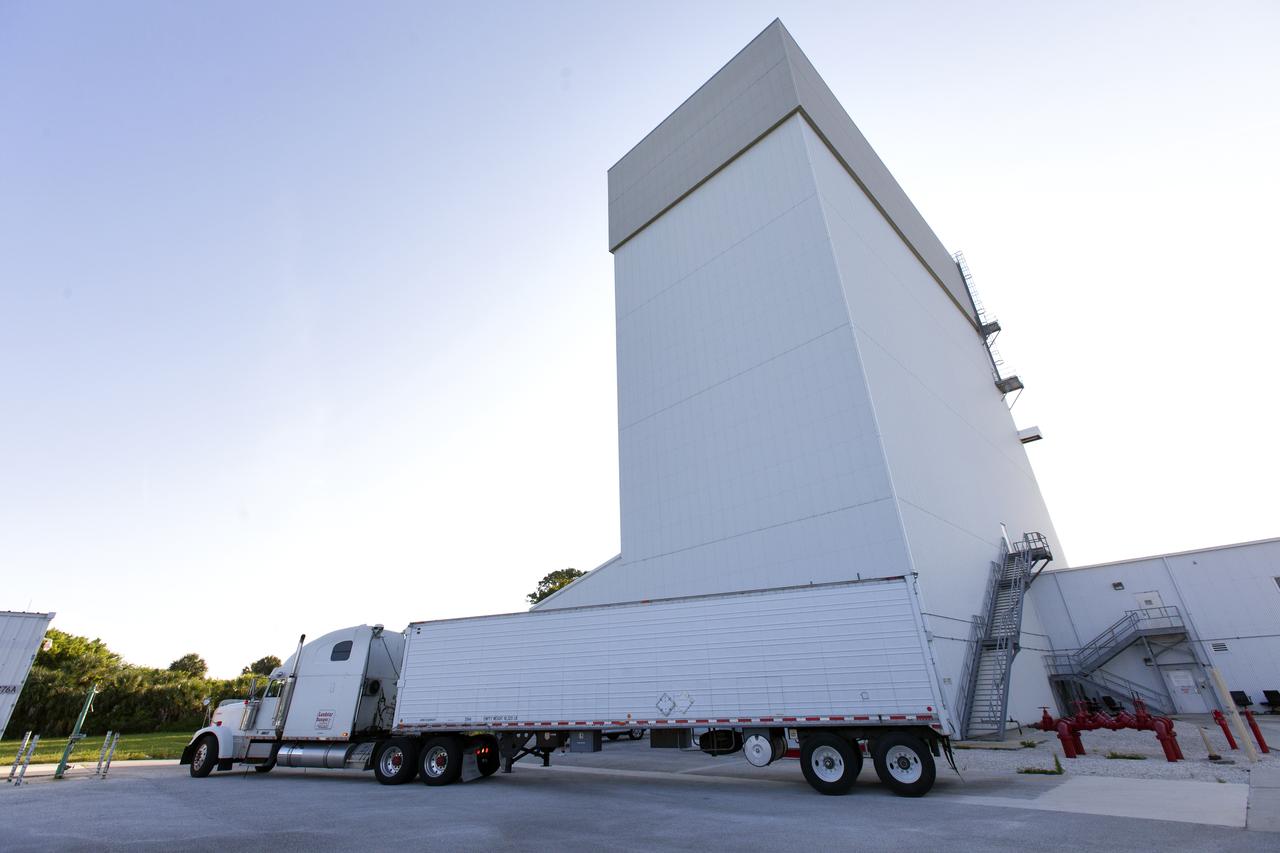
The abort motor for NASA’s Artemis 1 mission, secured in a heavy transport truck, arrives at the Launch Abort System Facility (LASF) at the agency’s Kennedy Space Center in Florida on June 6, 2019. The abort motor, manufactured by Northrop Grumman, will be offloaded and moved into the LASF where it will be integrated with Orion subcomponents and prepared for Artemis 1. The abort motor is one of three motors located on the tower of the Launch Abort System (LAS). The LAS is designed to pull the Orion capsule and its crew away to safety if an emergency occurs during ascent of the Space Launch System (SLS) rocket. During Artemis 1, the uncrewed Orion spacecraft will launch atop the SLS from Launch Pad 39B at Kennedy. Orion will embark on an approximately three-week mission that will take the spacecraft thousands of miles past the Moon. Orion will return to Earth and splashdown in the Pacific Ocean off the coast of California, where it will be retrieved and returned to Kennedy.
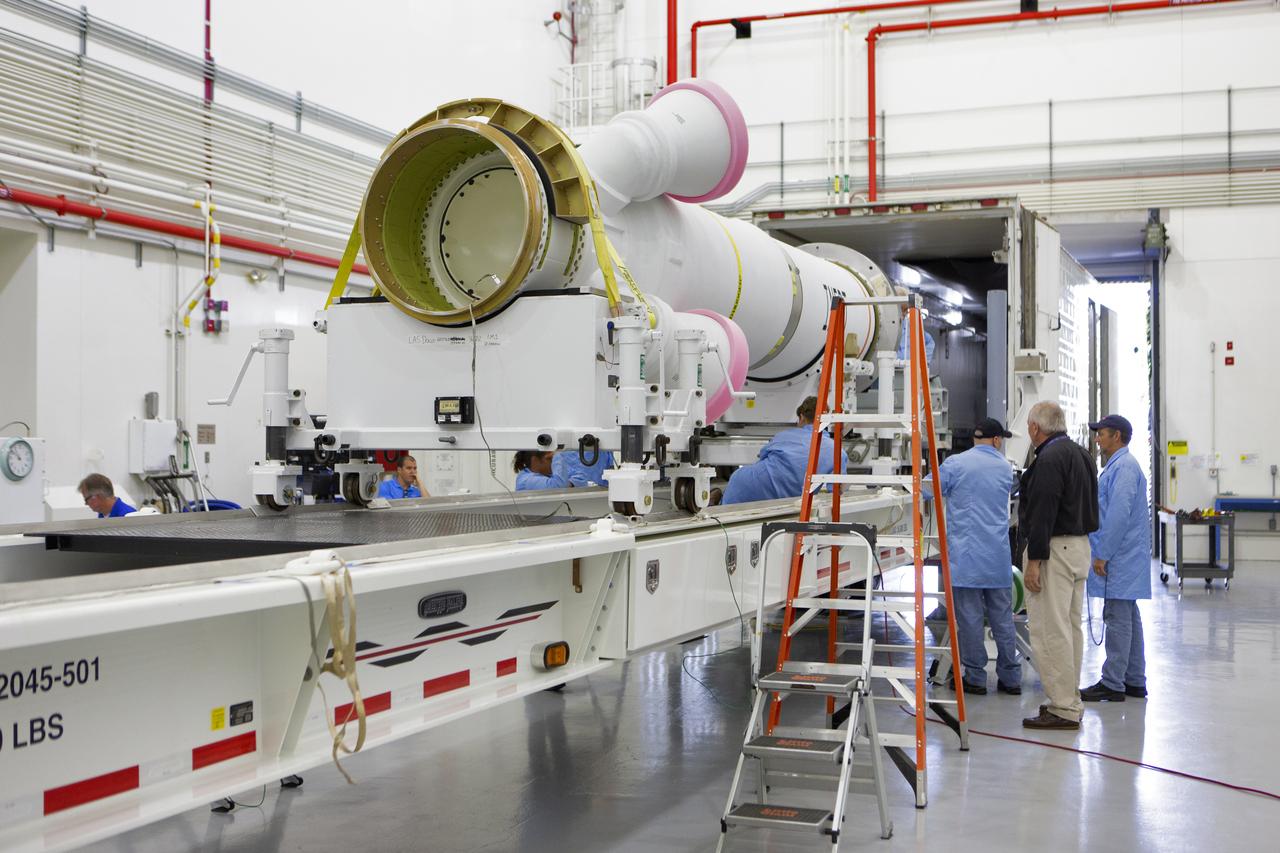
Workers help offload the abort motor for NASA’s Artemis 1 mission from a heavy transport truck inside the Launch Abort System Facility (LASF) at the agency’s Kennedy Space Center in Florida on June 6, 2019. The abort motor, manufactured by Northrop Grumman, will be integrated with Orion subcomponents and prepared for Artemis 1. The abort motor is one of three motors located on the tower of the Launch Abort System (LAS). The LAS is designed to pull the Orion capsule and its crew away to safety if an emergency occurs during ascent of the Space Launch System (SLS) rocket. During Artemis 1, the uncrewed Orion spacecraft will launch atop the SLS from Launch Pad 39B at Kennedy. Orion will embark on an approximately three-week mission that will take the spacecraft thousands of miles past the Moon. Orion will return to Earth and splashdown in the Pacific Ocean off the coast of California, where it will be retrieved and returned to Kennedy.
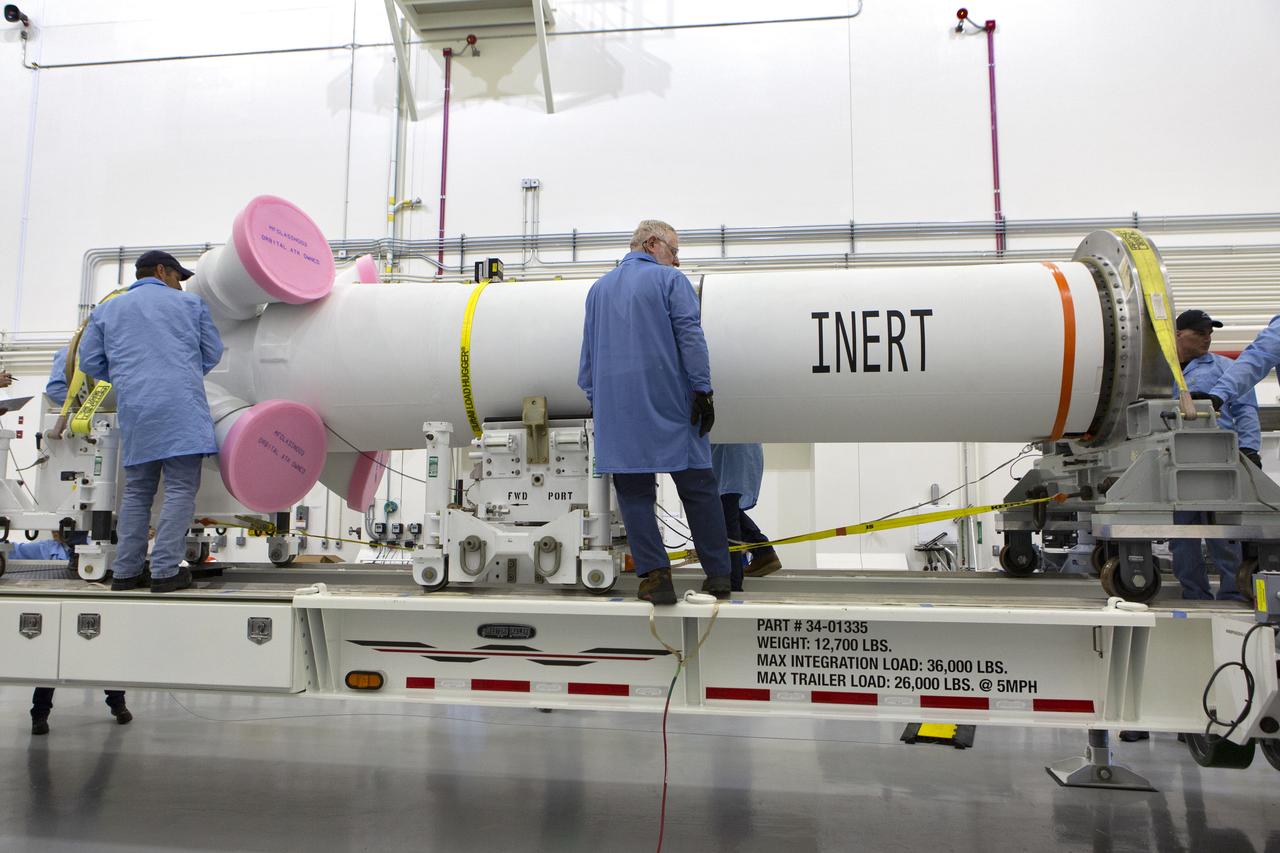
The abort motor for NASA’s Artemis 1 mission is offloaded from a heavy transport truck inside the Launch Abort System Facility (LASF) at the agency’s Kennedy Space Center in Florida on June 6, 2019. The abort motor, manufactured by Northrop Grumman, will be integrated with Orion subcomponents and prepared for Artemis 1. The abort motor is one of three motors located on the tower of the Launch Abort System (LAS). The LAS is designed to pull the Orion capsule and its crew away to safety if an emergency occurs during ascent of the Space Launch System (SLS) rocket. During Artemis 1, the uncrewed Orion spacecraft will launch atop the SLS from Launch Pad 39B at Kennedy. Orion will embark on an approximately three-week mission that will take the spacecraft thousands of miles past the Moon. Orion will return to Earth and splashdown in the Pacific Ocean off the coast of California, where it will be retrieved and returned to Kennedy.
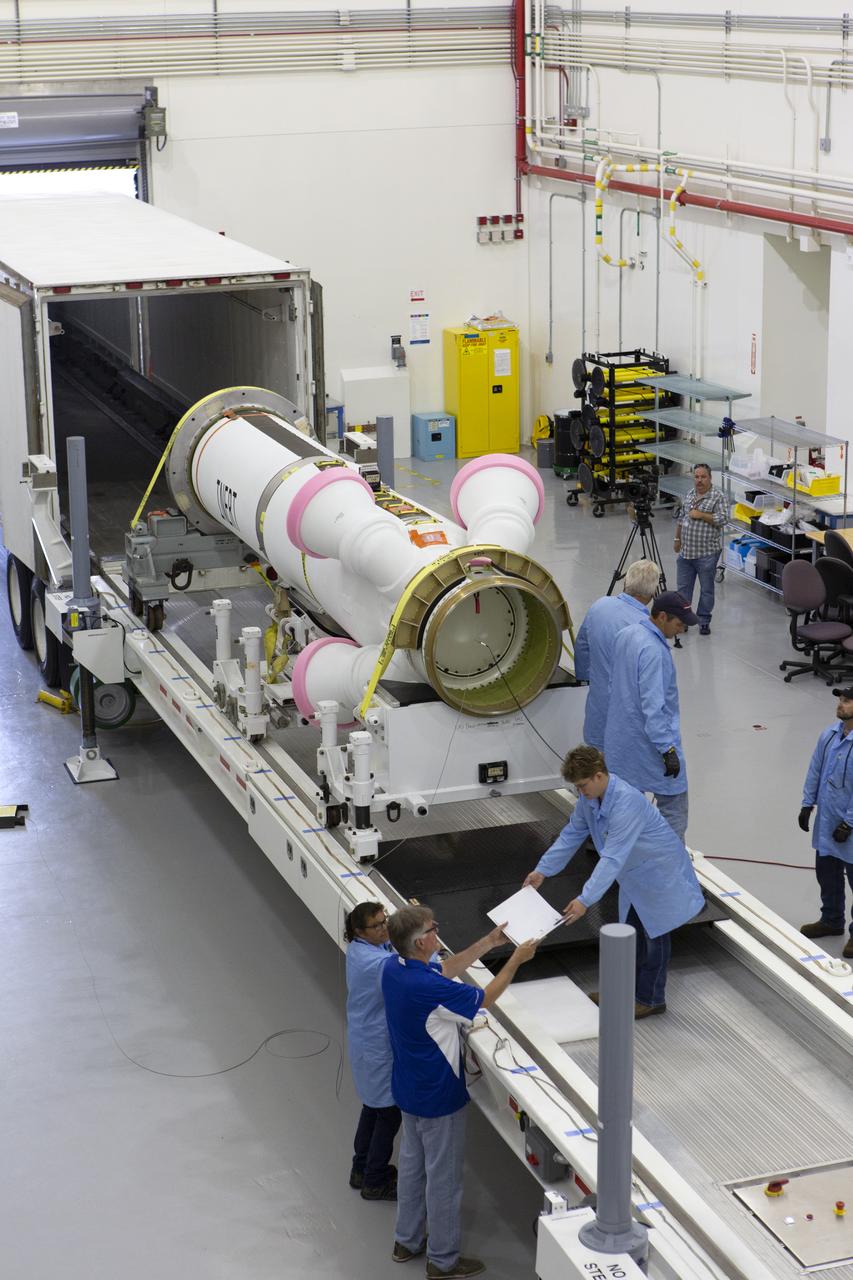
Workers have offloaded the abort motor for NASA’s Artemis 1 mission from a heavy transport truck inside the Launch Abort System Facility (LASF) at the agency’s Kennedy Space Center in Florida on June 6, 2019. The abort motor, manufactured by Northrop Grumman, will be integrated with Orion subcomponents and prepared for Artemis 1. The abort motor is one of three motors located on the tower of the Launch Abort System (LAS). The LAS is designed to pull the Orion capsule and its crew away to safety if an emergency occurs during ascent of the Space Launch System (SLS) rocket. During Artemis 1, the uncrewed Orion spacecraft will launch atop the SLS from Launch Pad 39B at Kennedy. Orion will embark on an approximately three-week mission that will take the spacecraft thousands of miles past the Moon. Orion will return to Earth and splashdown in the Pacific Ocean off the coast of California, where it will be retrieved and returned to Kennedy.
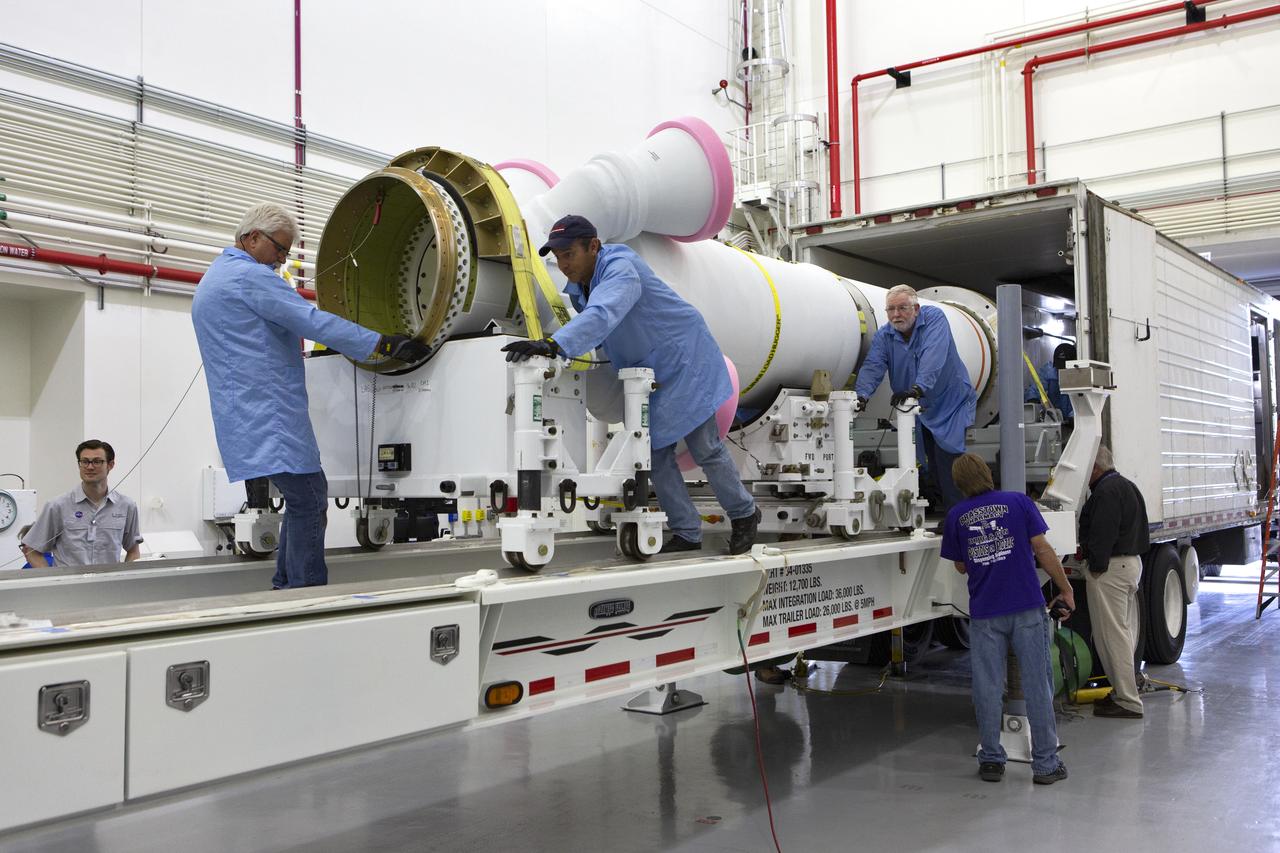
Workers offload the abort motor for NASA’s Artemis 1 mission from a heavy transport truck inside the Launch Abort System Facility (LASF) at the agency’s Kennedy Space Center in Florida on June 6, 2019. The abort motor, manufactured by Northrop Grumman, will be integrated with Orion subcomponents and prepared for Artemis 1. The abort motor is one of three motors located on the tower of the Launch Abort System (LAS). The LAS is designed to pull the Orion capsule and its crew away to safety if an emergency occurs during ascent of the Space Launch System (SLS). During Artemis 1, the uncrewed Orion spacecraft will launch atop the SLS from Launch Pad 39B at Kennedy. Orion will embark on an approximately three-week mission that will take the spacecraft thousands of miles past the Moon. Orion will return to Earth and splashdown in the Pacific Ocean off the coast of California, where it will be retrieved and returned to Kennedy.
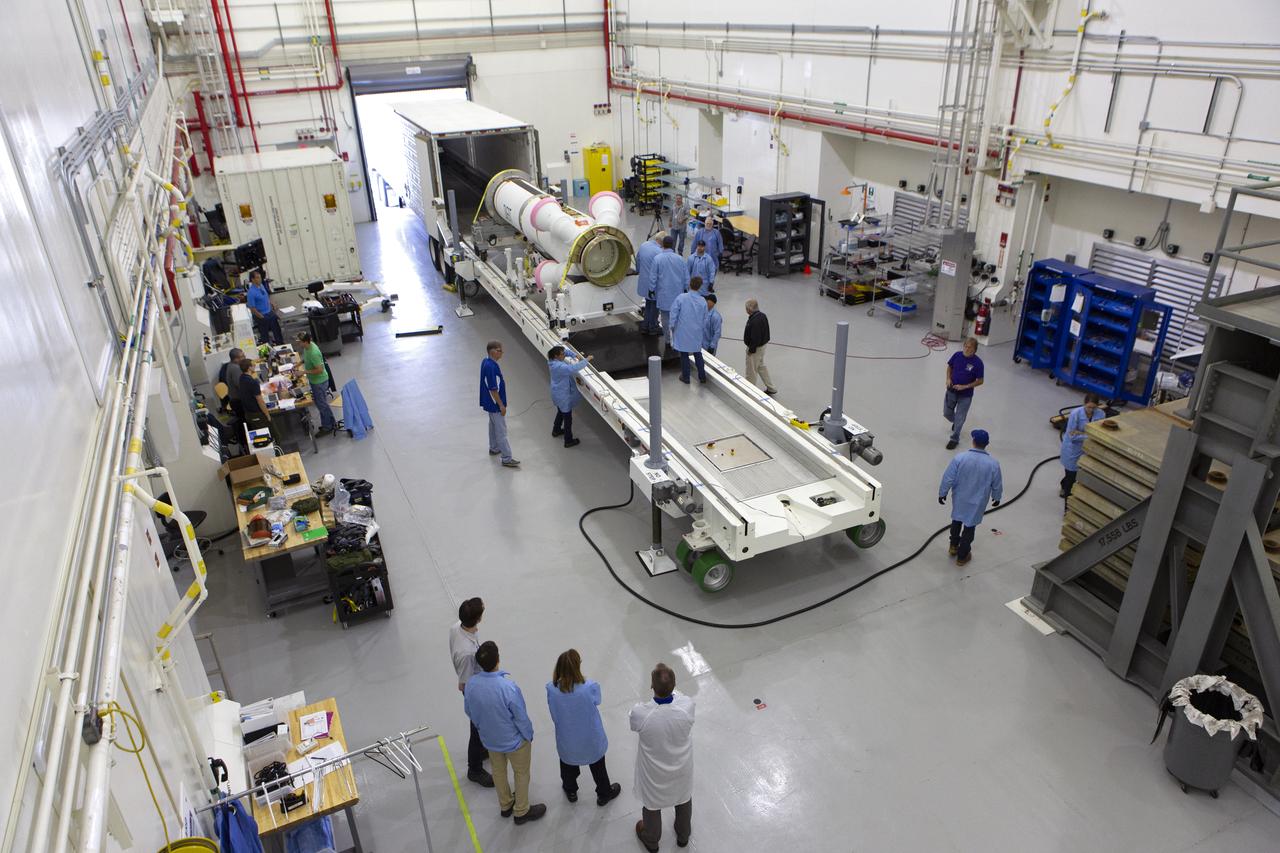
Workers have offloaded the abort motor for NASA’s Artemis 1 mission from a heavy transport truck inside the Launch Abort System Facility (LASF) at the agency’s Kennedy Space Center in Florida on June 6, 2019. The abort motor, manufactured by Northrop Grumman, will be integrated with Orion subcomponents and prepared for Artemis 1. The abort motor is one of three motors located on the tower of the Launch Abort System (LAS). The LAS is designed to pull the Orion capsule and its crew away to safety if an emergency occurs during ascent of the Space Launch System (SLS) rocket. During Artemis 1, the uncrewed Orion spacecraft will launch atop the SLS from Launch Pad 39B at Kennedy. Orion will embark on an approximately three-week mission that will take the spacecraft thousands of miles past the Moon. Orion will return to Earth and splashdown in the Pacific Ocean off the coast of California, where it will be retrieved and returned to Kennedy.
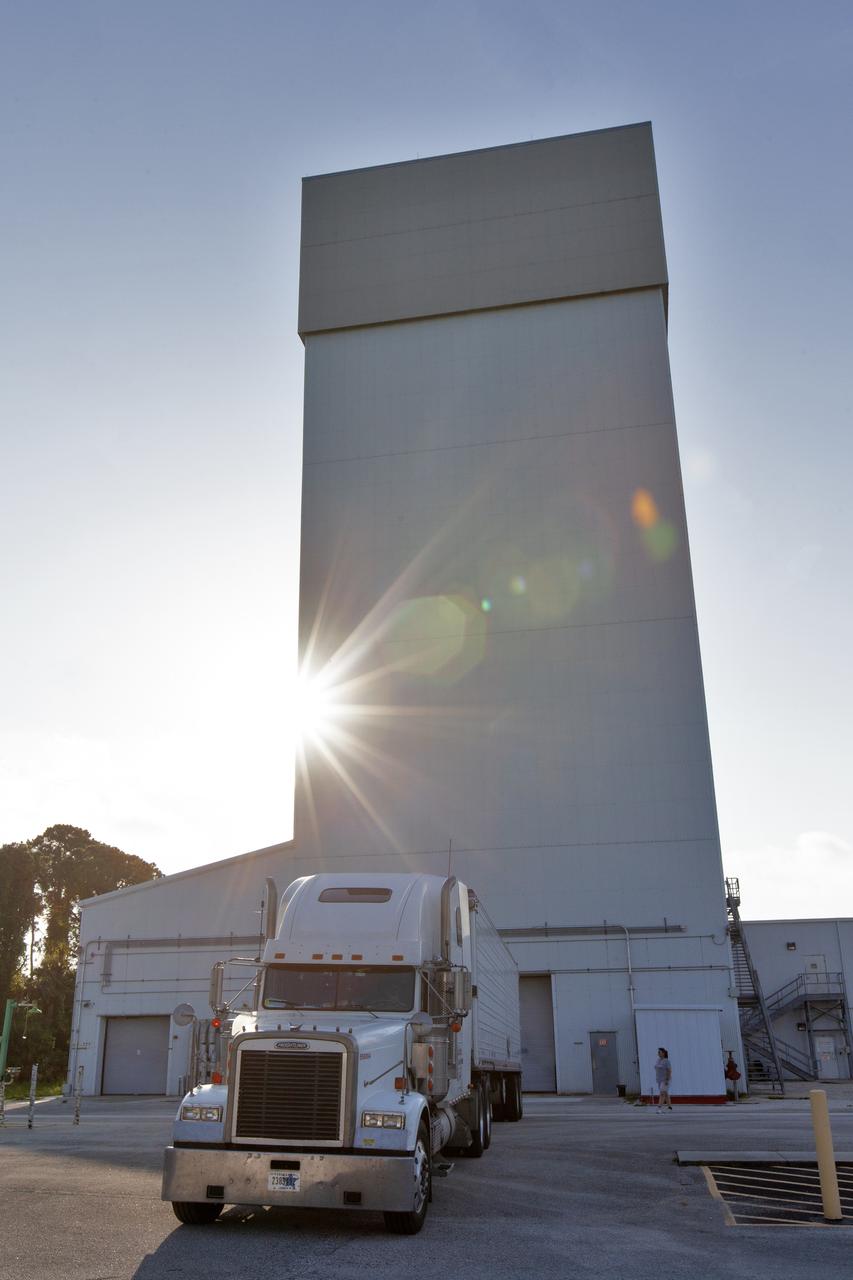
The abort motor for NASA’s Artemis 1 mission, secured in a heavy transport truck, arrives at the Launch Abort System Facility (LASF) at the agency’s Kennedy Space Center in Florida on June 6, 2019. The abort motor, manufactured by Northrop Grumman, will be offloaded and moved into the LASF where it will be integrated with Orion subcomponents and prepared for Artemis 1. The abort motor is one of three motors located on the tower of the Launch Abort System (LAS). The LAS is designed to pull the Orion capsule and its crew away to safety if an emergency occurs during ascent of the Space Launch System (SLS) rocket. During Artemis 1, the uncrewed Orion spacecraft will launch atop the SLS from Launch Pad 39B at Kennedy. Orion will embark on an approximately three-week mission that will take the spacecraft thousands of miles past the Moon. Orion will return to Earth and splashdown in the Pacific Ocean off the coast of California, where it will be retrieved and returned to Kennedy.
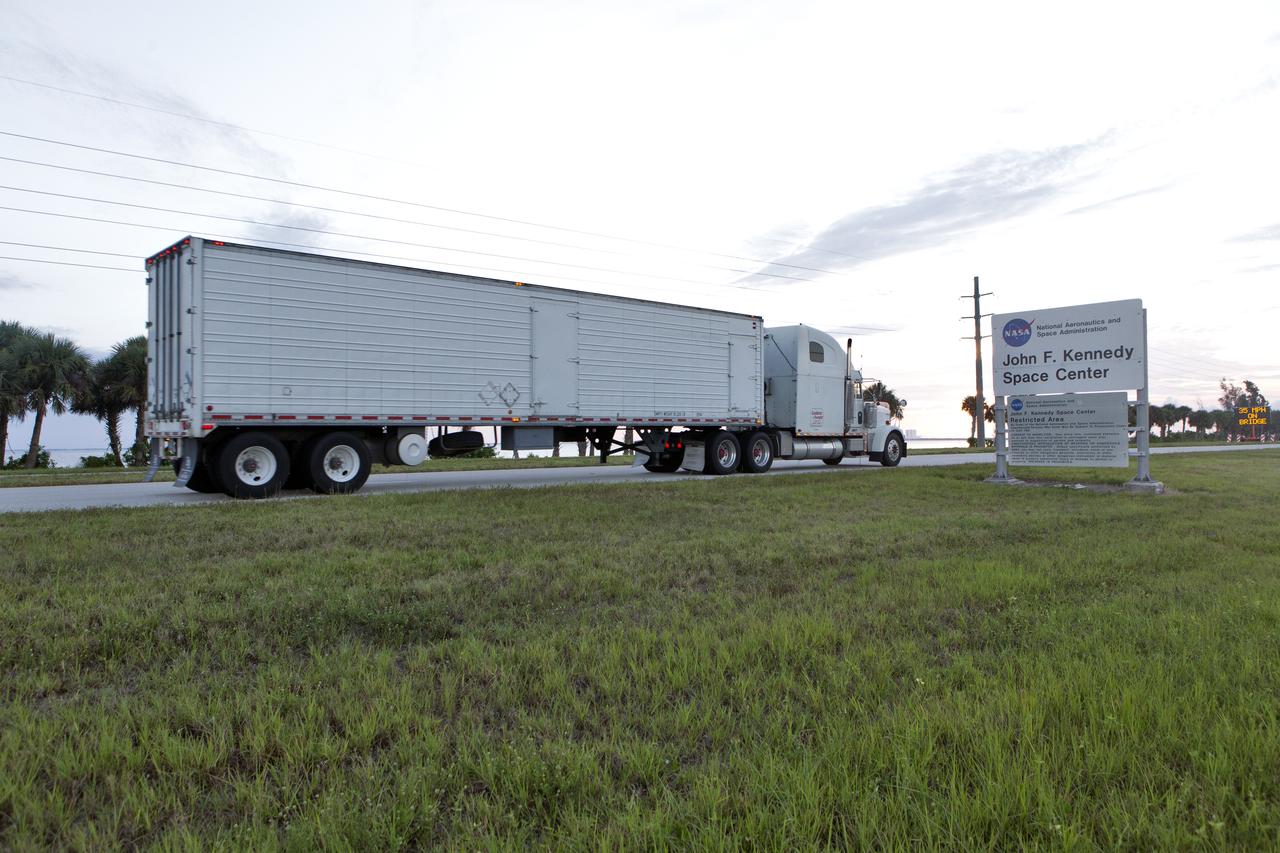
The abort motor for NASA’s Artemis 1 mission, secured in a heavy transport truck, arrives at the entrance to the agency’s Kennedy Space Center in Florida on June 6, 2019. The abort motor, manufactured by Northrop Grumman, will be delivered to the Launch Abort System Facility and integrated with Orion subcomponents and prepared for Artemis 1. It is one of three motors located on the tower of the Launch Abort System (LAS). The LAS is designed to pull the Orion capsule and its crew away to safety if an emergency occurs during ascent of the Space Launch System (SLS) rocket. During Artemis 1, the uncrewed Orion spacecraft will launch atop the SLS from Launch Pad 39B at Kennedy. Orion will embark on an approximately three-week mission that will take the spacecraft thousands of miles past the Moon. Orion will return to Earth and splashdown in the Pacific Ocean off the coast of California, where it will be retrieved and returned to Kennedy.
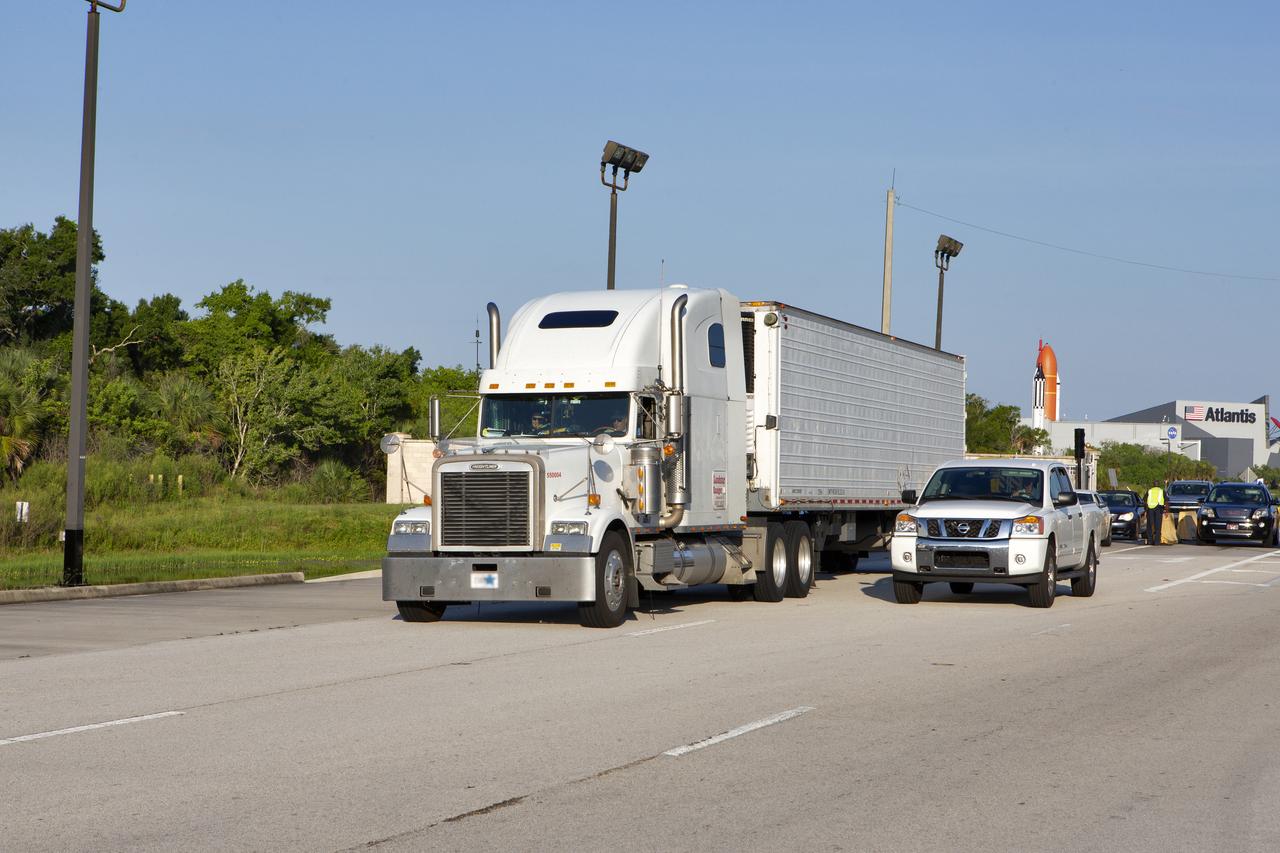
The abort motor for NASA’s Artemis 1 mission, secured in a heavy transport truck, arrives at the entrance to the agency’s Kennedy Space Center in Florida on June 6, 2019. The abort motor, manufactured by Northrop Grumman, will be delivered to the Launch Abort System Facility and integrated with Orion subcomponents and prepared for Artemis 1. It is one of three motors located on the tower of the Launch Abort System (LAS). The LAS is designed to pull the Orion capsule and its crew away to safety if an emergency occurs during ascent of the Space Launch System (SLS) rocket. During Artemis 1, the uncrewed Orion spacecraft will launch atop the SLS from Launch Pad 39B at Kennedy. Orion will embark on an approximately three-week mission that will take the spacecraft thousands of miles past the Moon. Orion will return to Earth and splashdown in the Pacific Ocean off the coast of California, where it will be retrieved and returned to Kennedy.
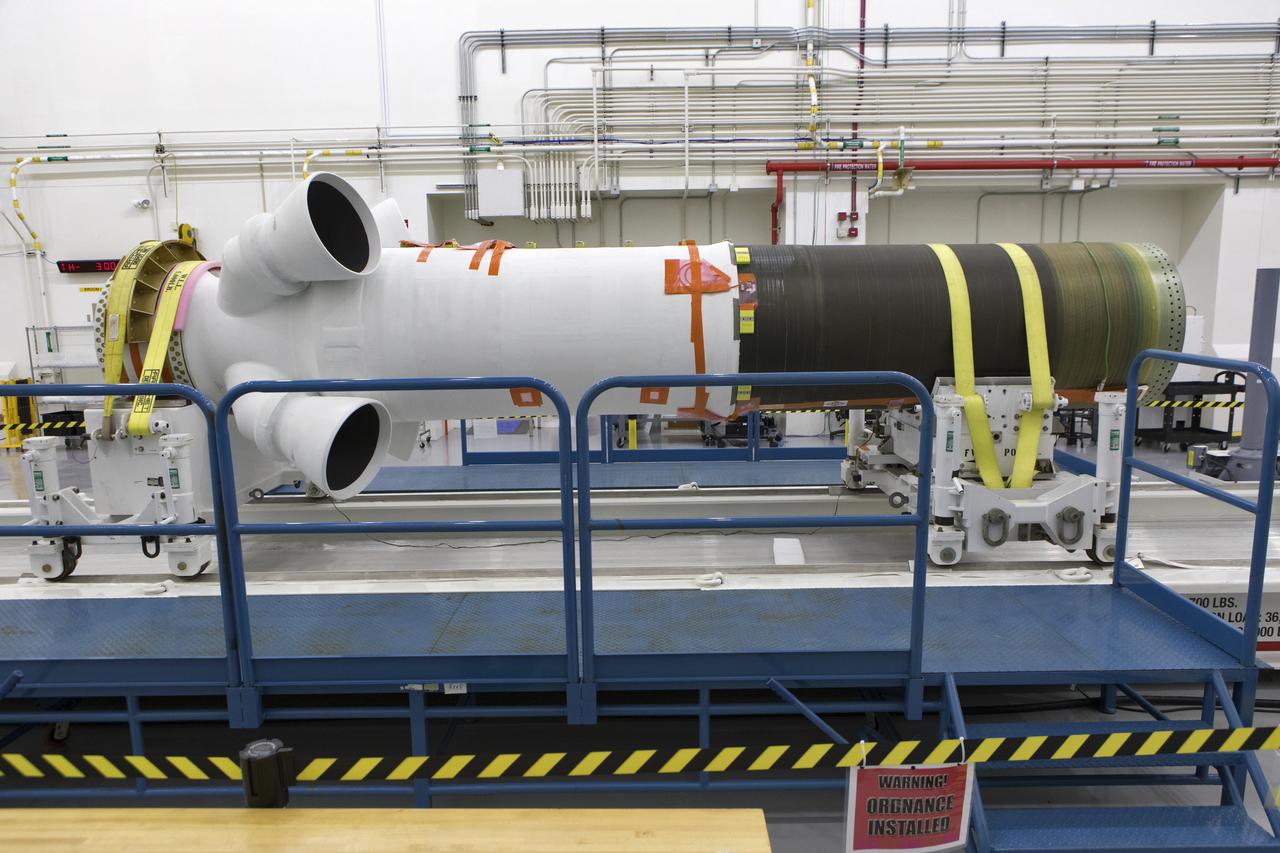
The abort motor for Orion's Launch Abort System (LAS) is secured on a work stand inside the Launch Abort System Facility on Aug. 28, 2018, at NASA's Kennedy Space Center in Florida. This motor will be used for flight during a full-stress test of the LAS, called Ascent Abort-2 (AA-2) flight test, scheduled for April 2019. The abort motor is what will activate to pull the Orion crew module away during the event of an emergency during ascent. AA-2 will launch from Space Launch Complex 46, carrying a fully functional LAS and a 22,000-pound Orion test vehicle to an altitude of 31,000 feet and traveling at more than 1,000 miles an hour. The test will verify the LAS can steer the crew module and astronauts aboard to safety in the event of an issue with the Space Launch System (SLS) rocket when the spacecraft is under the highest aerodynamic loads it will experience during a rapid climb into space. NASA's Orion and Exploration Ground Systems programs and contractors from Jacob's and Northrup Grumman in conjunction with the Air Force Space and Missile Center's Launch Operations branch are performing flight operations for AA-2.
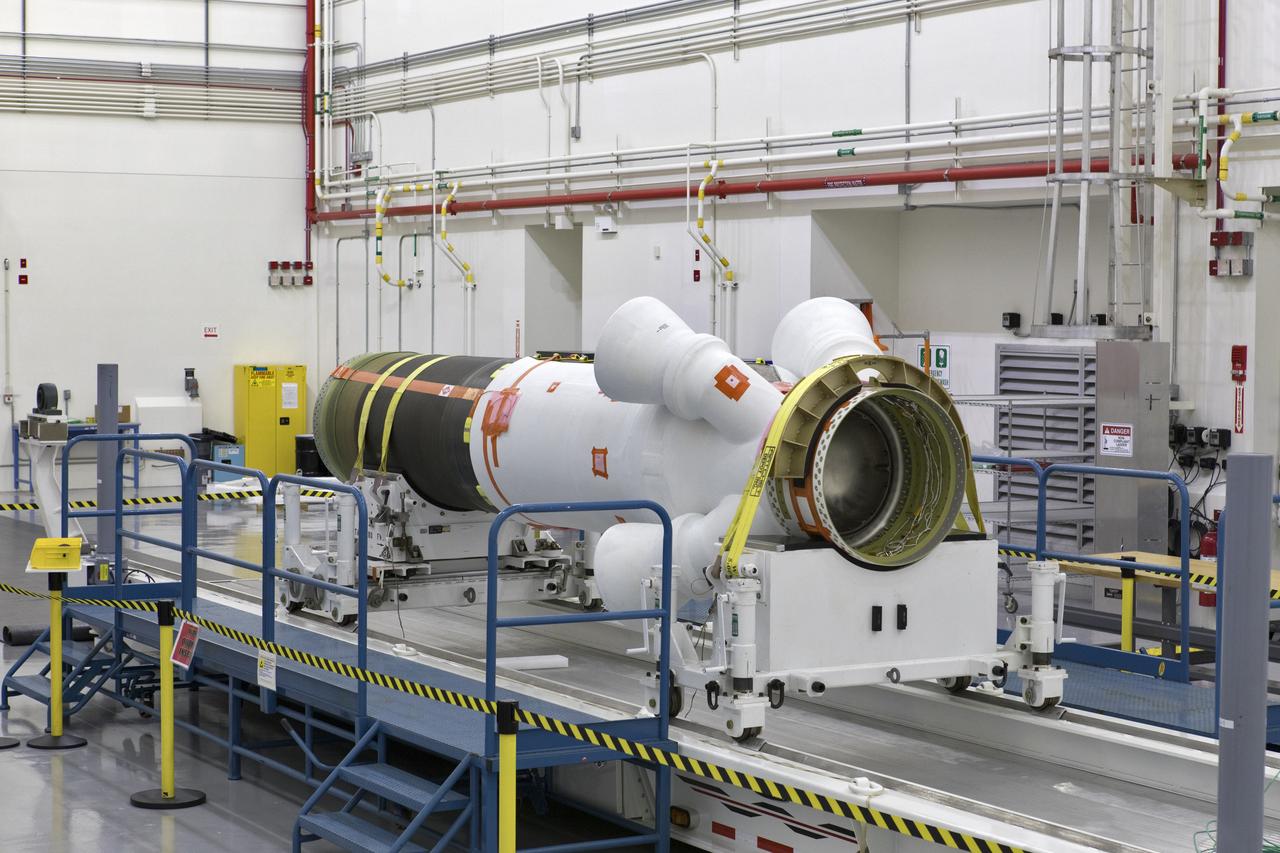
The abort motor for Orion's Launch Abort System (LAS) is secured on a work stand inside the Launch Abort System Facility on Aug. 28, 2018, at NASA's Kennedy Space Center in Florida. This motor will be used for flight during a full-stress test of the LAS, called Ascent Abort-2 (AA-2) flight test, scheduled for April 2019. The abort motor is what will activate to pull the Orion crew module away during the event of an emergency during ascent. AA-2 will launch from Space Launch Complex 46, carrying a fully functional LAS and a 22,000-pound Orion test vehicle to an altitude of 31,000 feet and traveling at more than 1,000 miles an hour. The test will verify the LAS can steer the crew module and astronauts aboard to safety in the event of an issue with the Space Launch System (SLS) rocket when the spacecraft is under the highest aerodynamic loads it will experience during a rapid climb into space. NASA's Orion and Exploration Ground Systems programs and contractors from Jacob's and Northrup Grumman in conjunction with the Air Force Space and Missile Center's Launch Operations branch are performing flight operations for AA-2.
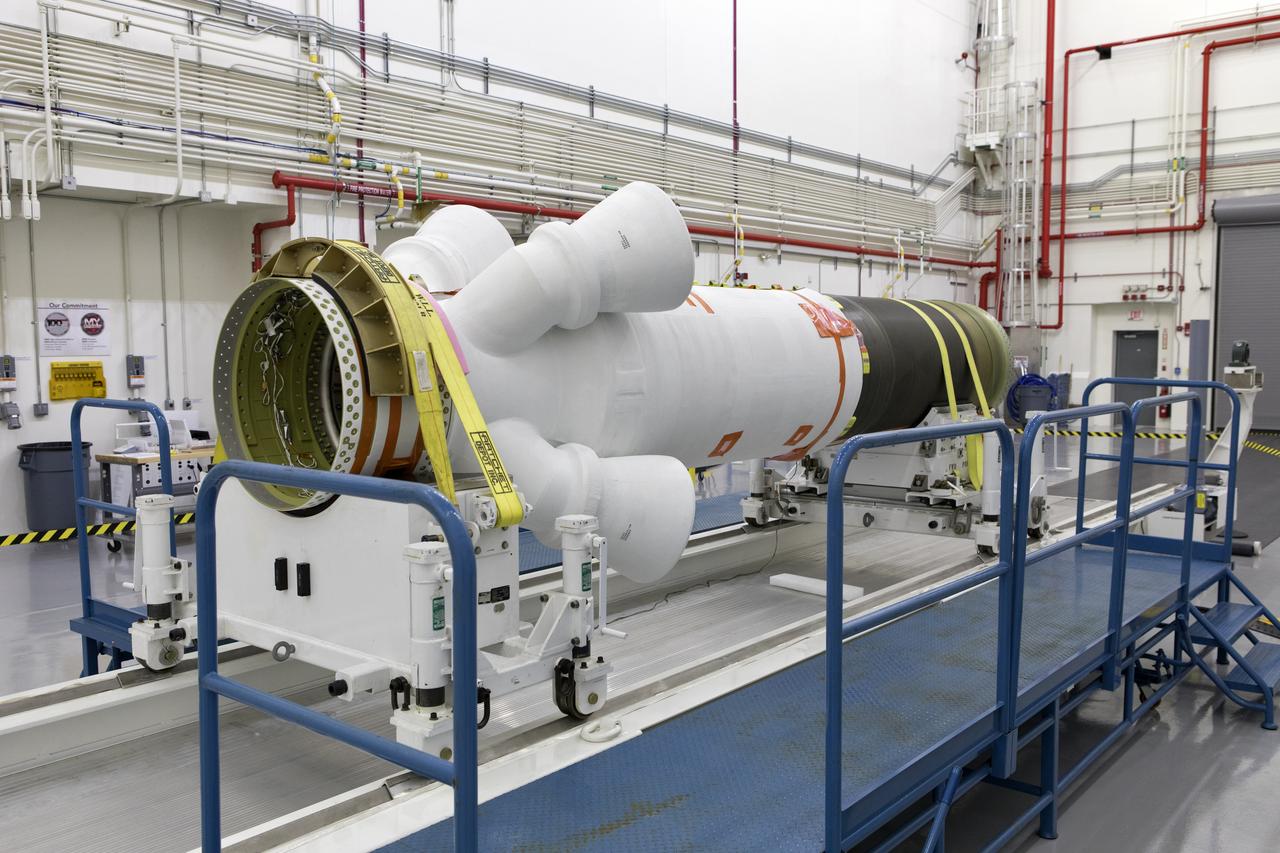
The abort motor for Orion's Launch Abort System (LAS) is secured on a work stand inside the Launch Abort System Facility on Aug. 28, 2018, at NASA's Kennedy Space Center in Florida. This motor will be used for flight during a full-stress test of the LAS, called Ascent Abort-2 (AA-2) flight test, scheduled for April 2019. The abort motor is what will activate to pull the Orion crew module away during the event of an emergency during ascent. AA-2 will launch from Space Launch Complex 46, carrying a fully functional LAS and a 22,000-pound Orion test vehicle to an altitude of 31,000 feet and traveling at more than 1,000 miles an hour. The test will verify the LAS can steer the crew module and astronauts aboard to safety in the event of an issue with the Space Launch System (SLS) rocket when the spacecraft is under the highest aerodynamic loads it will experience during a rapid climb into space. NASA's Orion and Exploration Ground Systems programs and contractors from Jacob's and Northrup Grumman in conjunction with the Air Force Space and Missile Center's Launch Operations branch are performing flight operations for AA-2.
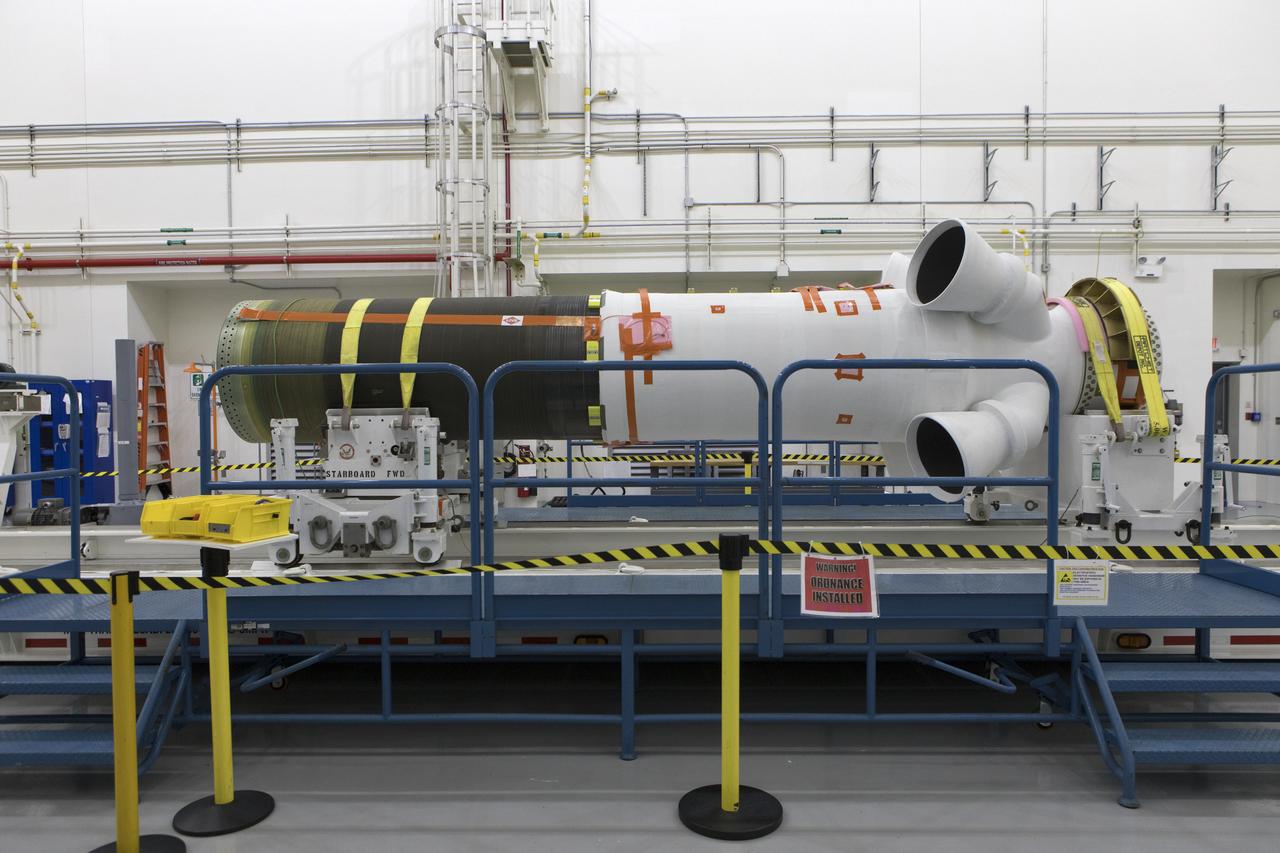
The abort motor for Orion's Launch Abort System (LAS) is secured on a work stand inside the Launch Abort System Facility on Aug. 28, 2018, at NASA's Kennedy Space Center in Florida. This motor will be used for flight during a full-stress test of the LAS, called Ascent Abort-2 (AA-2) flight test, scheduled for April 2019. The abort motor is what will activate to pull the Orion crew module away during the event of an emergency during ascent. AA-2 will launch from Space Launch Complex 46, carrying a fully functional LAS and a 22,000-pound Orion test vehicle to an altitude of 31,000 feet and traveling at more than 1,000 miles an hour. The test will verify the LAS can steer the crew module and astronauts aboard to safety in the event of an issue with the Space Launch System (SLS) rocket when the spacecraft is under the highest aerodynamic loads it will experience during a rapid climb into space. NASA's Orion and Exploration Ground Systems programs and contractors from Jacob's and Northrup Grumman in conjunction with the Air Force Space and Missile Center's Launch Operations branch are performing flight operations for AA-2.
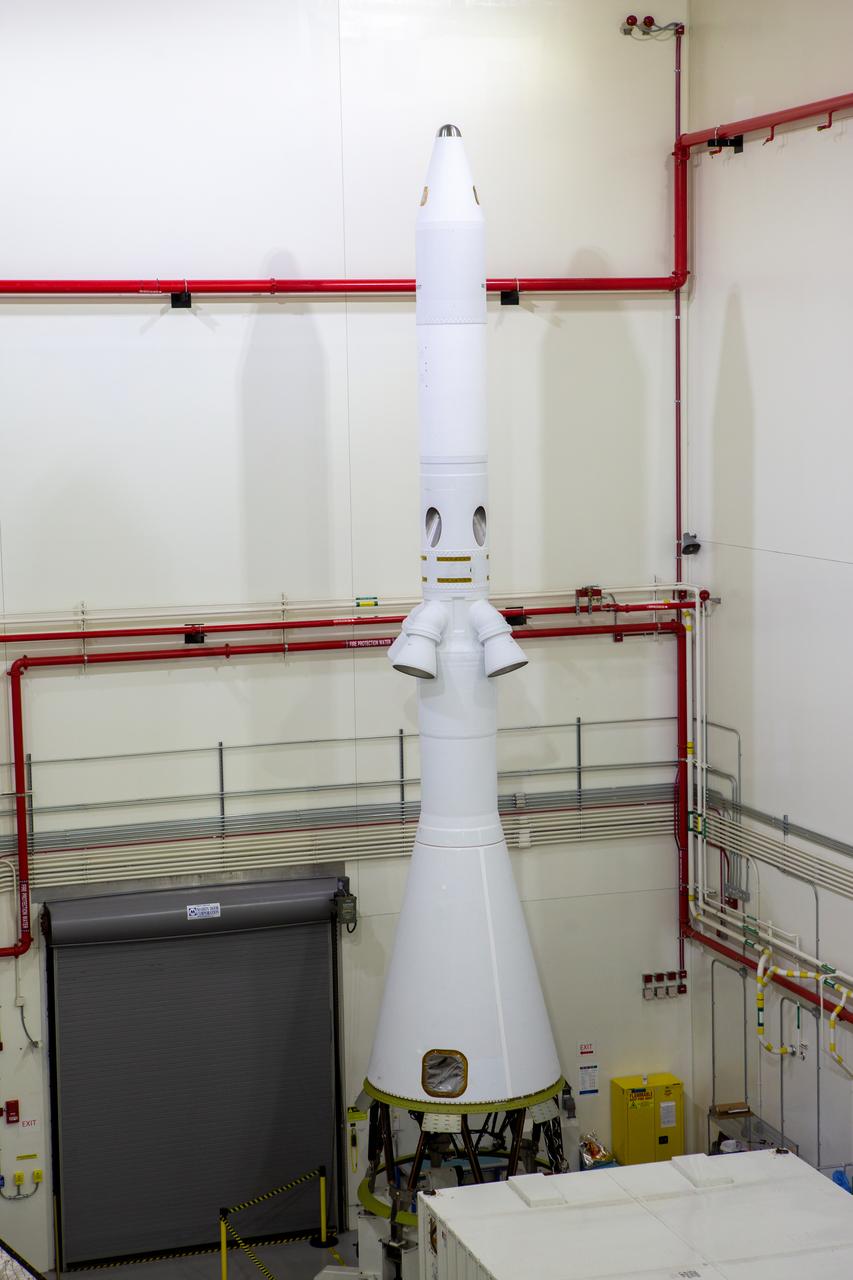
Inside the Launch Abort System Facility (LASF) at NASA’s Kennedy Space Center in Florida, the Launch Abort System (LAS) for the Orion spacecraft that will launch on Artemis I, the first of the Artemis series, awaits final processing with the spacecraft. The LAS was processed and prepared inside the LASF. During crewed launches of the Orion spacecraft atop the Space Launch System rocket, the LAS will protect the crew module and astronauts aboard to safety if an emergency occurs during launch.
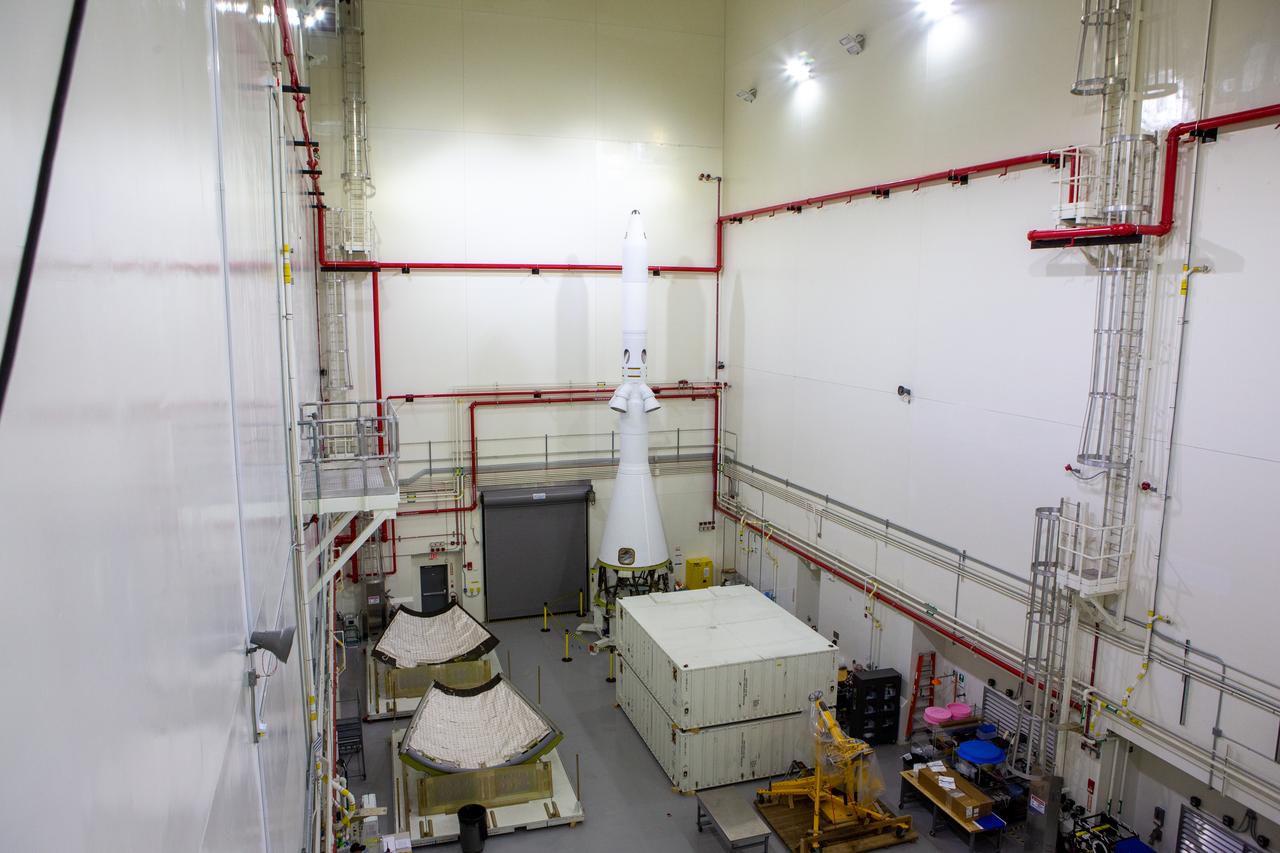
In this view from above inside the Launch Abort System Facility at NASA’s Kennedy Space Center in Florida, the Launch Abort System (LAS) for the Orion spacecraft that will launch on Artemis I, the first uncrewed mission of the Artemis series, awaits final processing with the spacecraft. The LAS was processed and prepared inside the LASF. During crewed launches of the Orion spacecraft atop the Space Launch System rocket, the LAS will protect the crew module and astronauts aboard to safety if an emergency occurs during launch.
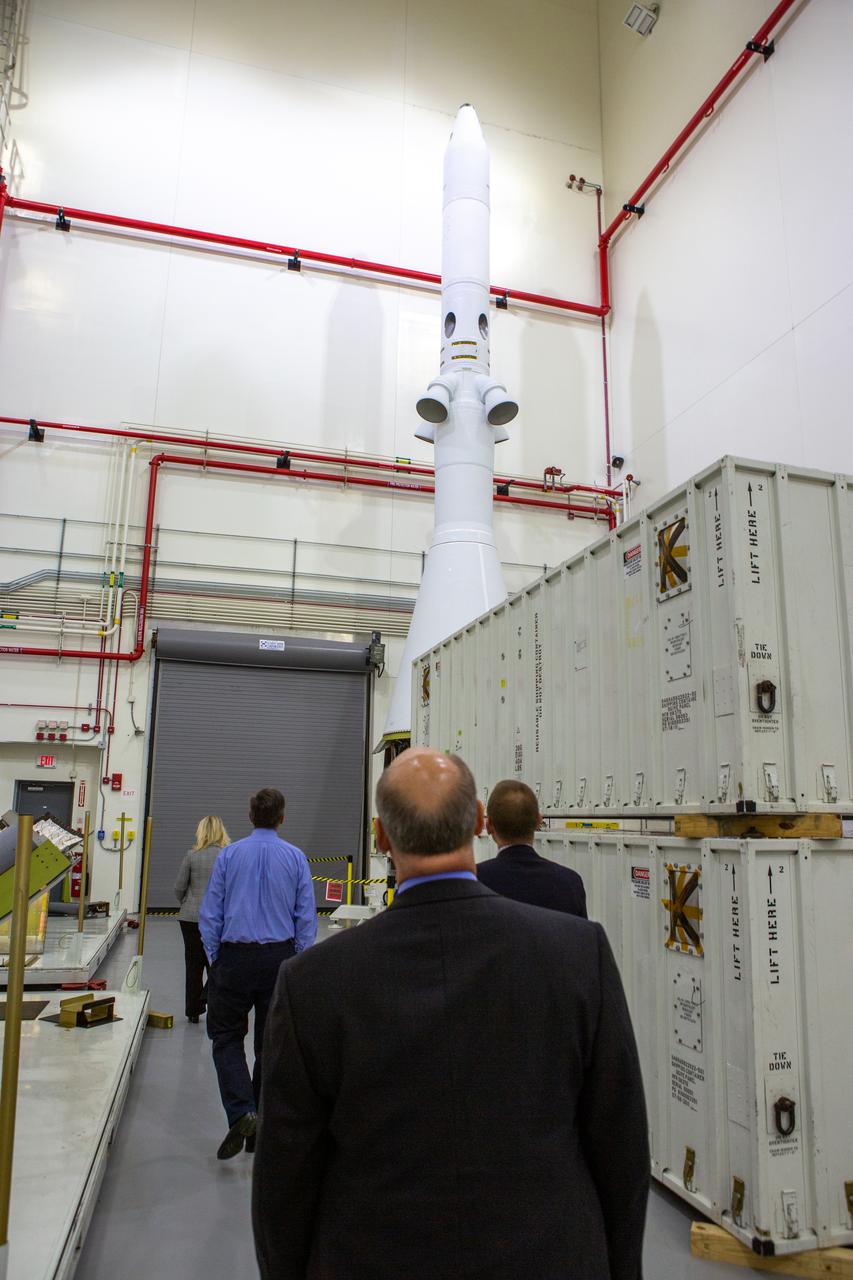
Inside the Launch Abort System Facility (LASF) at NASA’s Kennedy Space Center in Florida, the Launch Abort System (LAS) for the Orion spacecraft that will launch on Artemis I, the first of the Artemis series, awaits final processing with the spacecraft. The LAS was processed and prepared inside the LASF. During crewed launches of the Orion spacecraft atop the Space Launch System rocket, the LAS will protect the crew module and astronauts aboard to safety if an emergency occurs during launch.
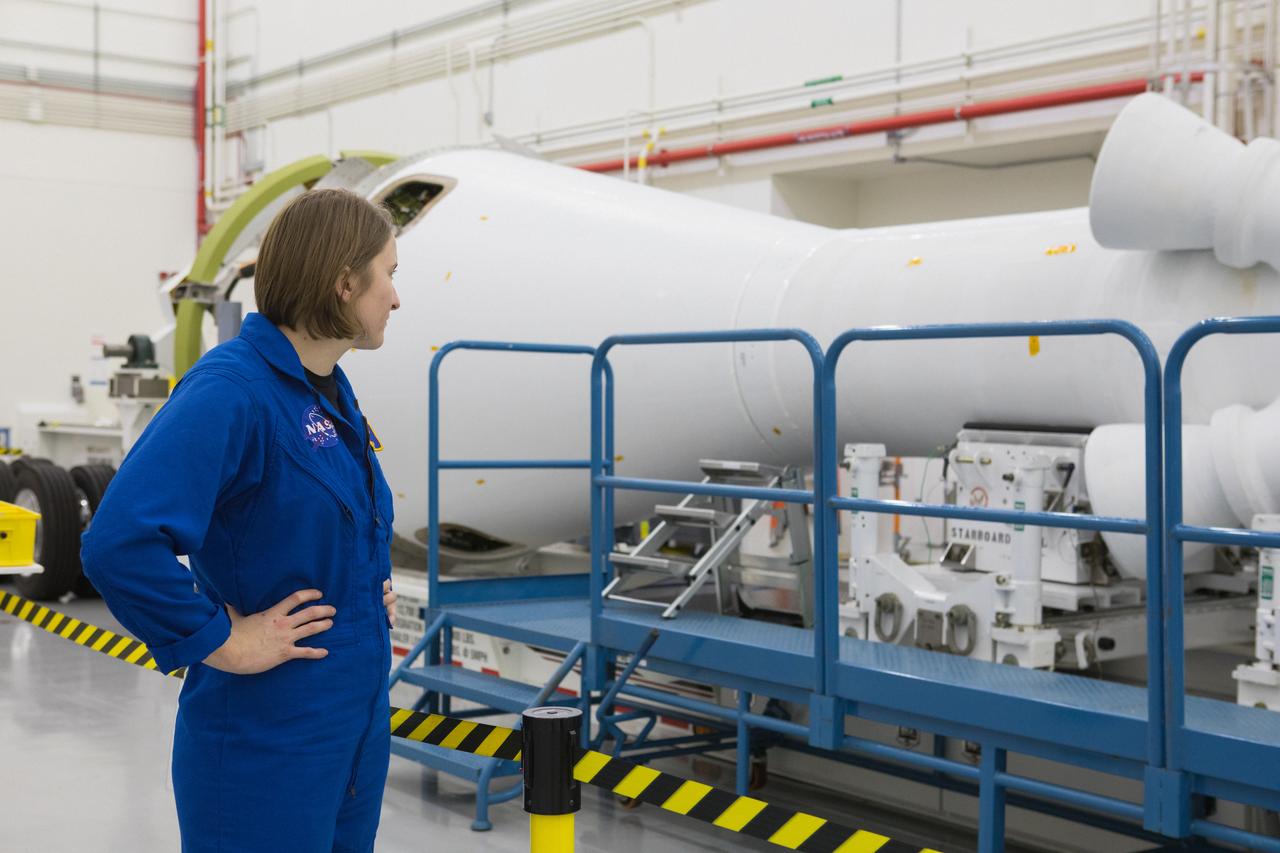
Astronaut candidate Kayla Barron tours the Launch Abort System Facility (LASF) at NASA’s Kennedy Space Center in Florida on Feb. 12, 2019. Barron viewed the Launch Abort System (LAS) that will be used for the Orion Ascent Abort-2 (AA-2) Flight Test. AA-2 is a full-stress test of the LAS, scheduled for Spring 2019. AA-2 will launch from Space Launch Complex 46, carrying a fully functional LAS and a 22,000-pound Orion test vehicle to an altitude of 31,000 feet and traveling at more than 1,000 miles an hour. The test will verify the LAS can steer the crew module and astronauts aboard to safety in the event of an issue with the Space Launch System (SLS) rocket when the spacecraft is under the highest aerodynamic loads it will experience during a rapid climb into space. NASA's Orion and Exploration Ground Systems programs and contractors from Jacob's and Northrop Grumman in conjunction with the Air Force Space and Missile Center's Launch Operations branch are performing flight operations for AA-2.
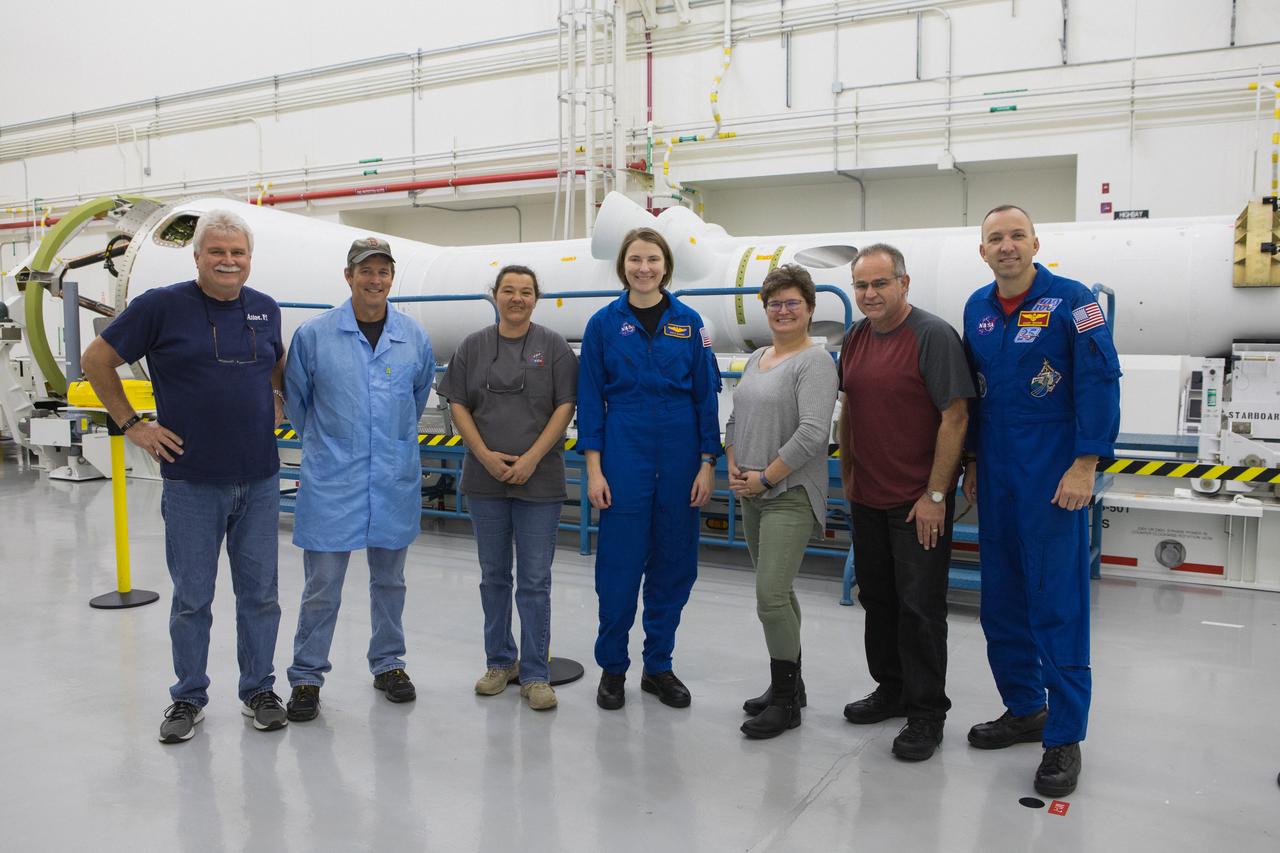
Astronaut candidate Kayla Barron, center, and NASA astronaut Randy Bresnik, far right, tour the Launch Abort System Facility (LASF) and visit with workers at NASA’s Kennedy Space Center in Florida on Feb. 12, 2019. Barron and Bresnik viewed the Launch Abort System (LAS) that will be used for the Orion Ascent Abort-2 (AA-2) Flight Test. AA-2 is a full-stress test of the LAS, scheduled for Spring 2019. AA-2 will launch from Space Launch Complex 46, carrying a fully functional LAS and a 22,000-pound Orion test vehicle to an altitude of 31,000 feet and traveling at more than 1,000 miles an hour. The test will verify the LAS can steer the crew module and astronauts aboard to safety in the event of an issue with the Space Launch System (SLS) rocket when the spacecraft is under the highest aerodynamic loads it will experience during a rapid climb into space. NASA's Orion and Exploration Ground Systems programs and contractors from Jacob's and Northrop Grumman in conjunction with the Air Force Space and Missile Center's Launch Operations branch are performing flight operations for AA-2.
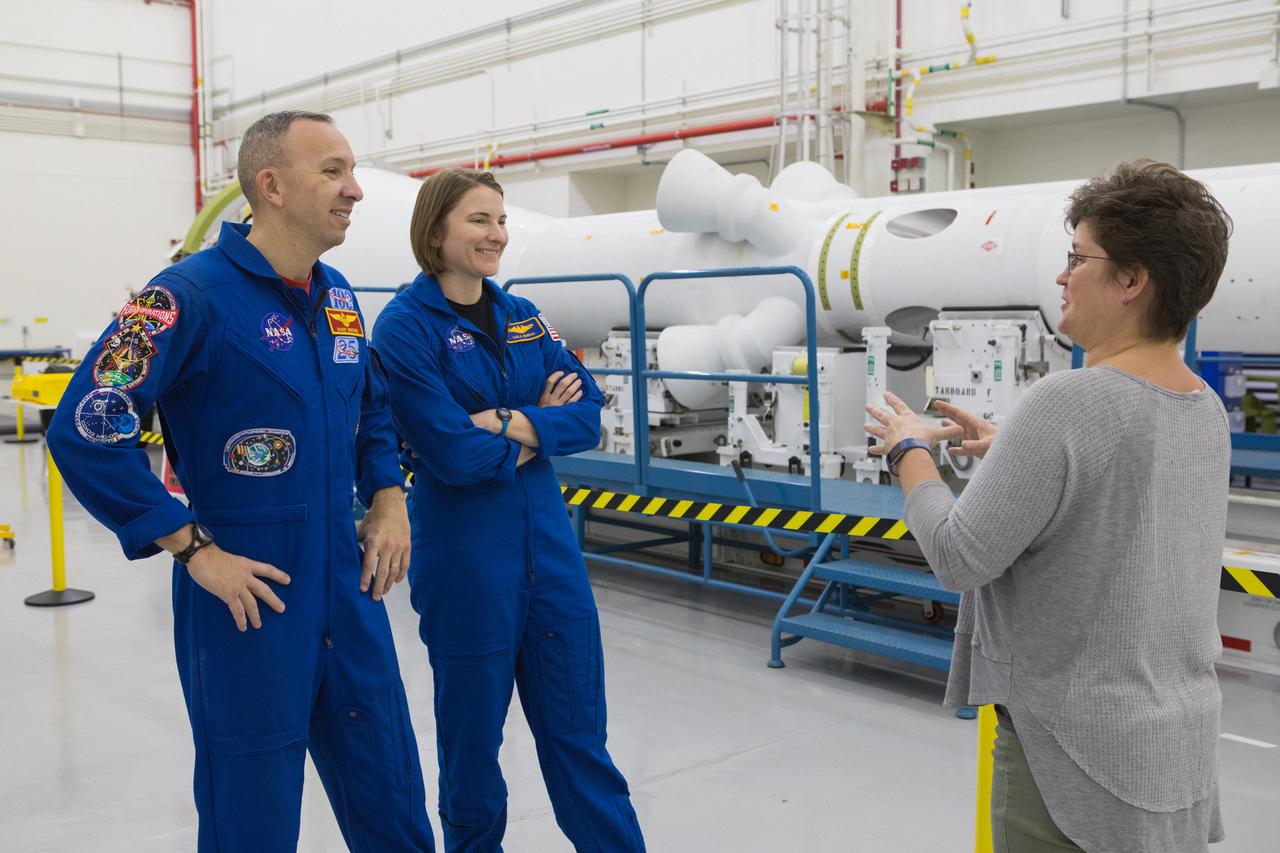
NASA astronaut Randy Bresnik, at left, and astronaut candidate Kayla Barron tour the Launch Abort System Facility (LASF) and visit with workers at NASA’s Kennedy Space Center in Florida on Feb. 12, 2019. Barron and Bresnik viewed the Launch Abort System (LAS) that will be used for the Orion Ascent Abort-2 (AA-2) Flight Test. AA-2 is a full-stress test of the LAS, scheduled for Spring 2019. AA-2 will launch from Space Launch Complex 46, carrying a fully functional LAS and a 22,000-pound Orion test vehicle to an altitude of 31,000 feet and traveling at more than 1,000 miles an hour. The test will verify the LAS can steer the crew module and astronauts aboard to safety in the event of an issue with the Space Launch System (SLS) rocket when the spacecraft is under the highest aerodynamic loads it will experience during a rapid climb into space. NASA's Orion and Exploration Ground Systems programs and contractors from Jacob's and Northrop Grumman in conjunction with the Air Force Space and Missile Center's Launch Operations branch are performing flight operations for AA-2.
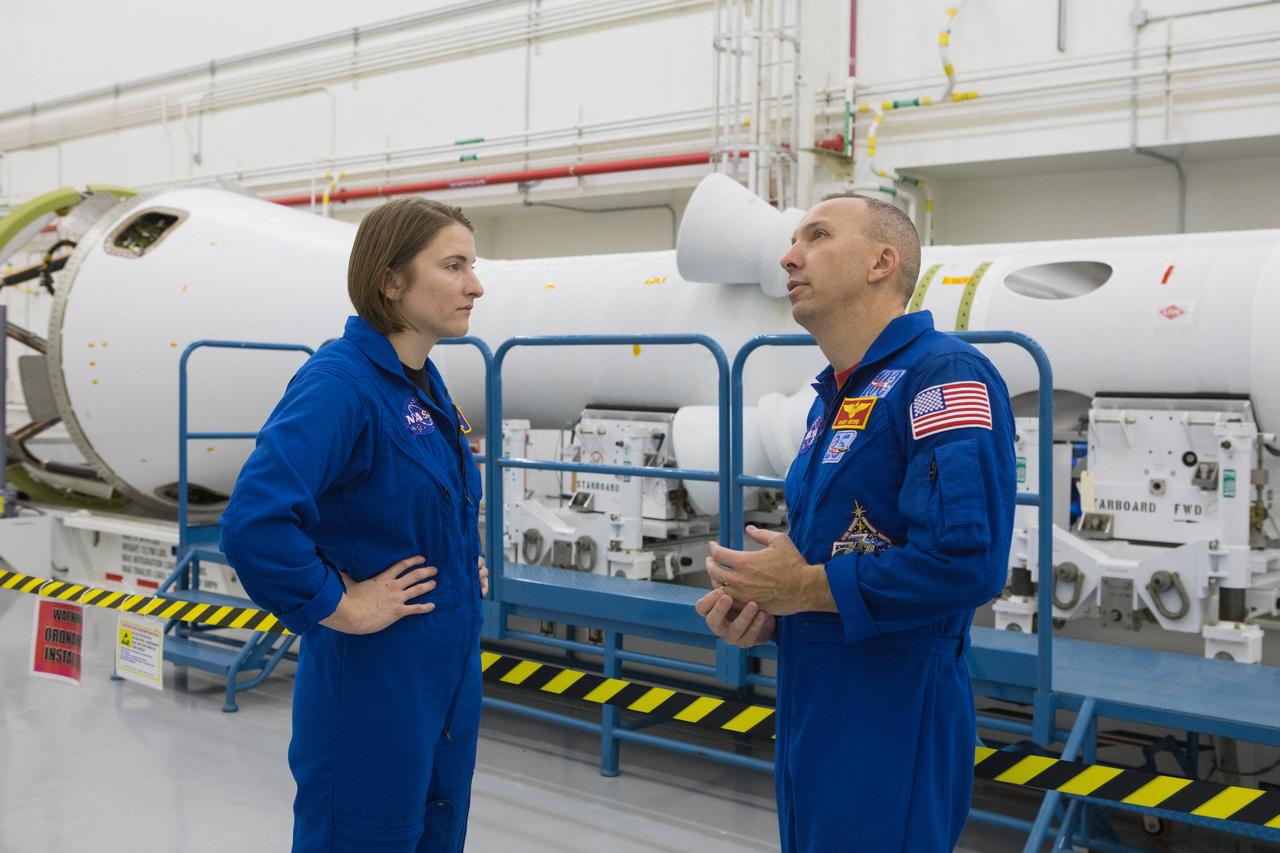
Astronaut candidate Kayla Barron, at left, and NASA astronaut Randy Bresnik tour the Launch Abort System Facility (LASF) at NASA’s Kennedy Space Center in Florida on Feb. 12, 2019. They viewed the Launch Abort System (LAS) that will be used for the Orion Ascent Abort-2 (AA-2) Flight Test. AA-2 is a full-stress test of the LAS, scheduled for Spring 2019. AA-2 will launch from Space Launch Complex 46, carrying a fully functional LAS and a 22,000-pound Orion test vehicle to an altitude of 31,000 feet and traveling at more than 1,000 miles an hour. The test will verify the LAS can steer the crew module and astronauts aboard to safety in the event of an issue with the Space Launch System (SLS) rocket when the spacecraft is under the highest aerodynamic loads it will experience during a rapid climb into space. NASA's Orion and Exploration Ground Systems programs and contractors from Jacob's and Northrop Grumman in conjunction with the Air Force Space and Missile Center's Launch Operations branch are performing flight operations for AA-2.
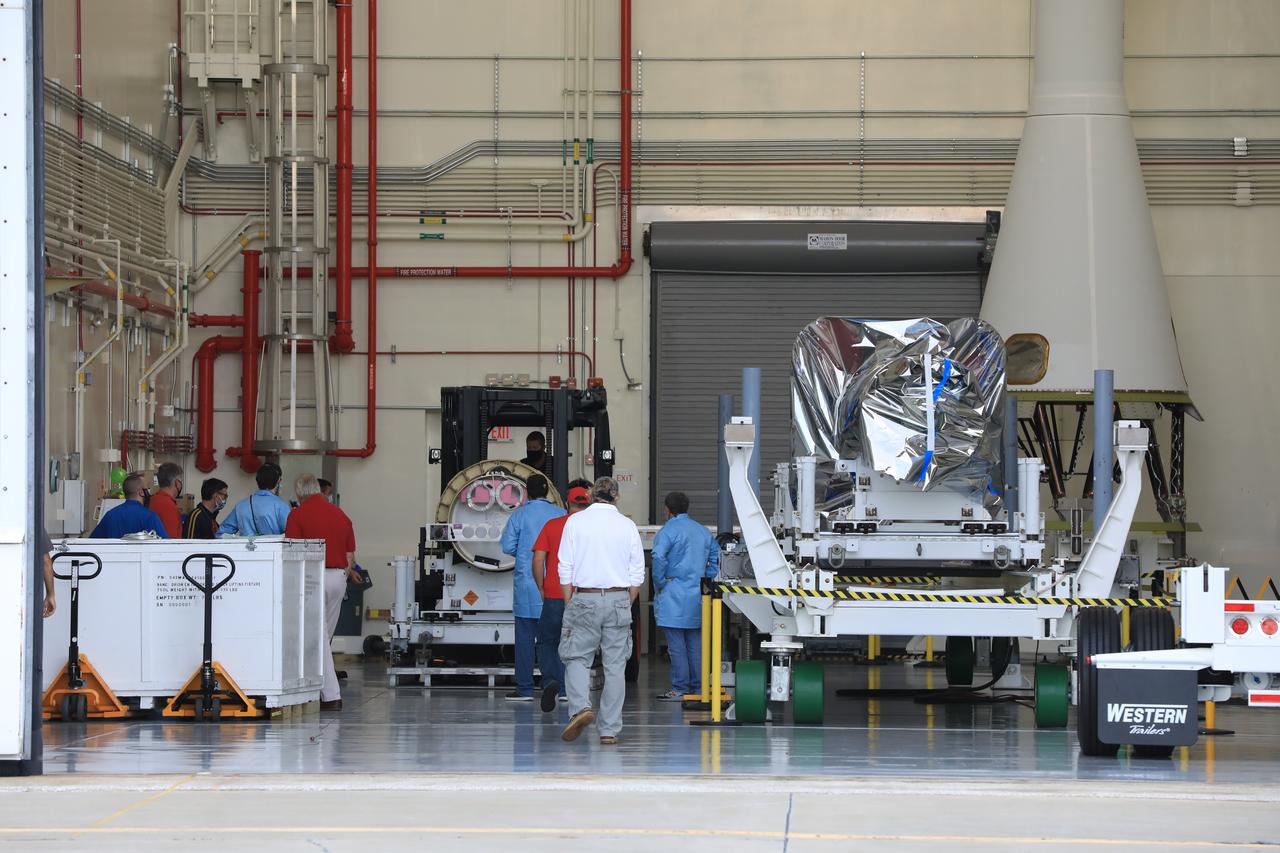
The last of three motors required to assemble the Launch Abort System for NASA’s Artemis II mission, the attitude control motor (ACM), arrives at Kennedy Space Center in Florida on August 28. The attitude control motor (ACM) was delivered by truck from Northrop Grumman’s manufacturing facility in Maryland, to the Launch Abort System Facility (LASF) at Kennedy. During launch of Orion atop the agency’s Space Launch System rocket, the LAS motors work together to separate the spacecraft from the rocket in the unlikely event of an emergency during launch. The LAS includes three motors – the launch abort motor, the jettison motor, and the attitude control motor—that once activated, will steer the spacecraft carrying the astronauts to safety. The ACM operates to keep Orion’s crew module on a controlled flight path in the event it needs to jettison and steer away from the rocket. Artemis II is the first crewed flight in a series of increasingly complex missions to the Moon that will lay the foundation for exploration of Mars and beyond. Artemis II will confirm all of the Orion spacecraft’s systems operate as designed in the actual environment of deep space with astronauts aboard. As part of the Artemis program, NASA will send the first woman and next man to the Moon in 2024.
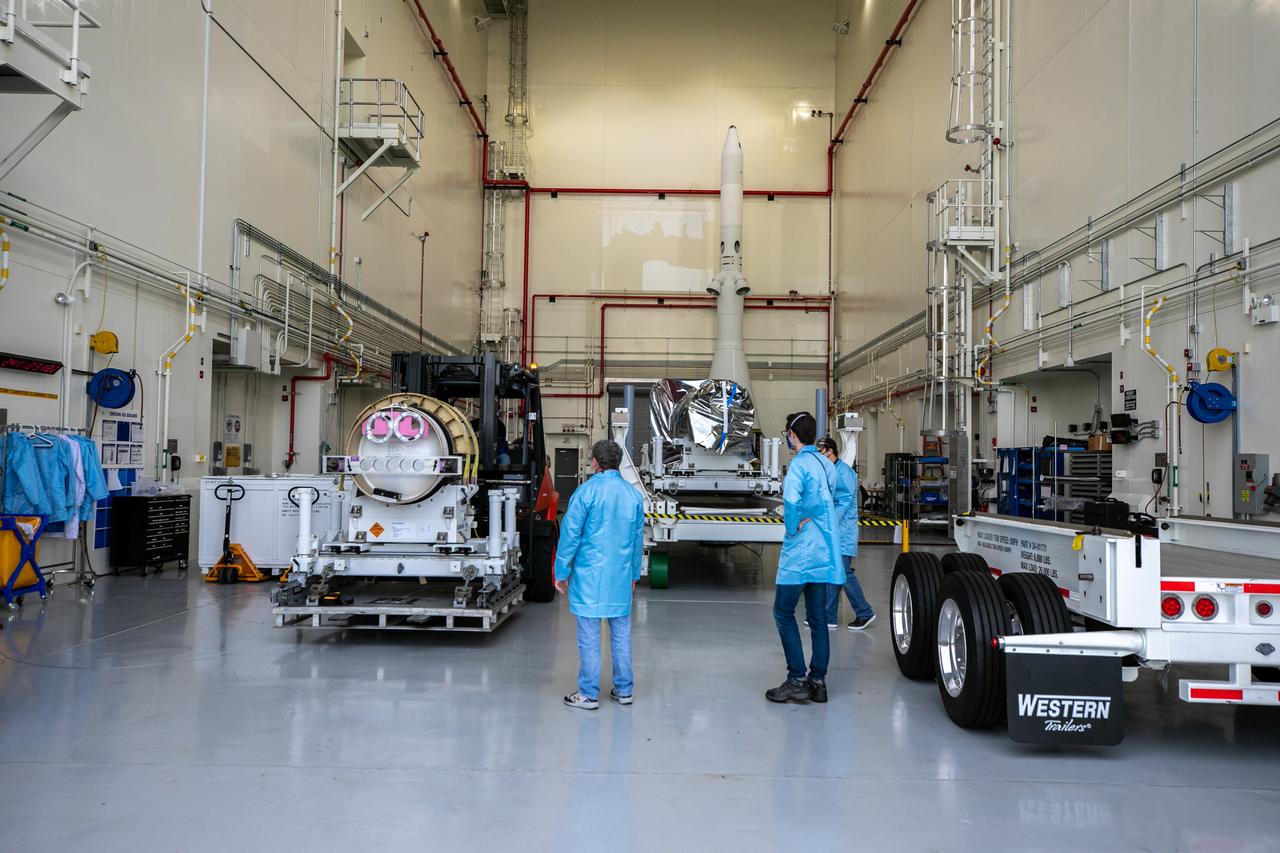
The last of three motors required to assemble the Launch Abort System for NASA’s Artemis II mission, the attitude control motor (ACM), arrives at Kennedy Space Center in Florida on August 28. The attitude control motor (ACM) was delivered by truck from Northrop Grumman’s manufacturing facility in Maryland, to the Launch Abort System Facility (LASF) at Kennedy. During launch of Orion atop the agency’s Space Launch System rocket, the LAS motors work together to separate the spacecraft from the rocket in the unlikely event of an emergency during launch. The LAS includes three motors – the launch abort motor, the jettison motor, and the attitude control motor—that once activated, will steer the spacecraft carrying the astronauts to safety. The ACM operates to keep Orion’s crew module on a controlled flight path in the event it needs to jettison and steer away from the rocket. Artemis II is the first crewed flight in a series of increasingly complex missions to the Moon that will lay the foundation for exploration of Mars and beyond. Artemis II will confirm all of the Orion spacecraft’s systems operate as designed in the actual environment of deep space with astronauts aboard. As part of the Artemis program, NASA will send the first woman and next man to the Moon in 2024.
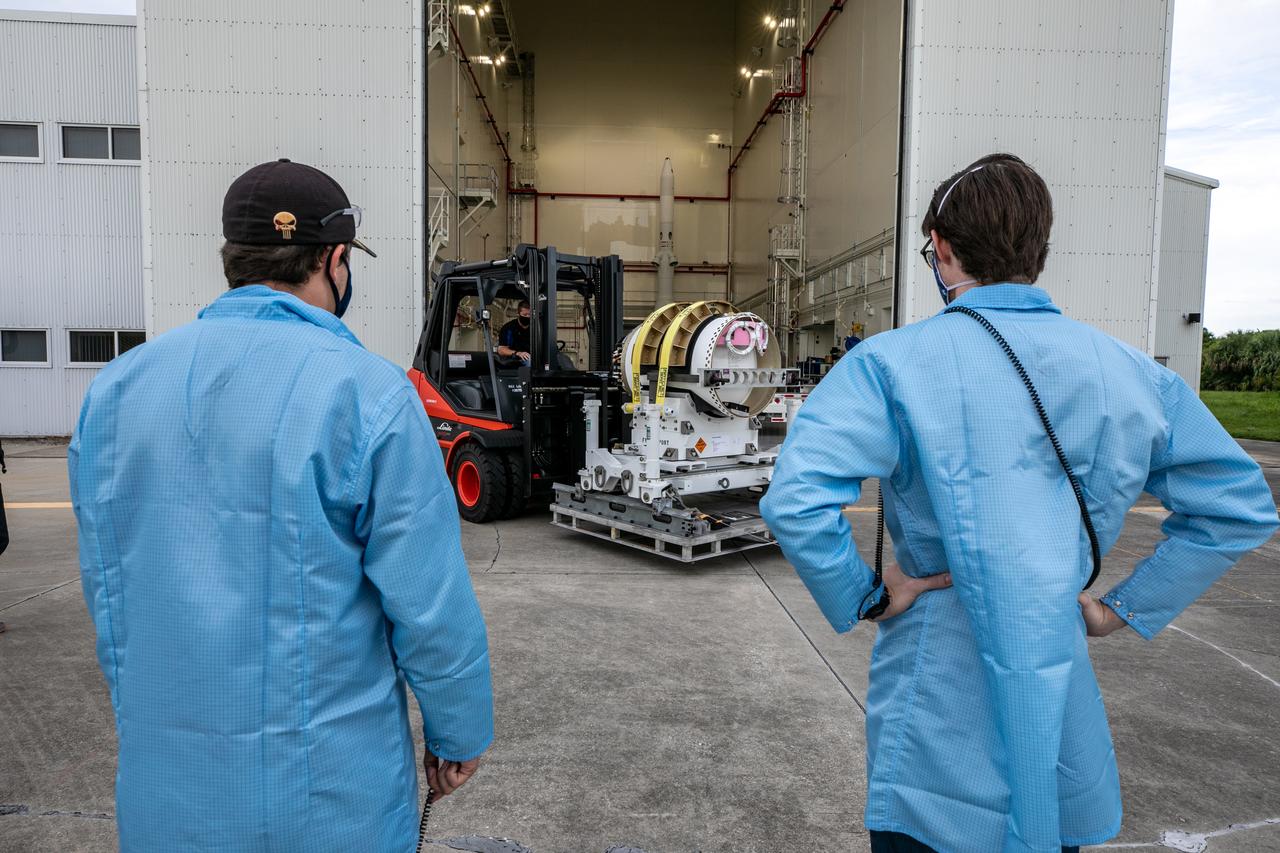
The last of three motors required to assemble the Launch Abort System for NASA’s Artemis II mission, the attitude control motor (ACM), arrives at Kennedy Space Center in Florida on August 28. The attitude control motor (ACM) was delivered by truck from Northrop Grumman’s manufacturing facility in Maryland, to the Launch Abort System Facility (LASF) at Kennedy. During launch of Orion atop the agency’s Space Launch System rocket, the LAS motors work together to separate the spacecraft from the rocket in the unlikely event of an emergency during launch. The LAS includes three motors – the launch abort motor, the jettison motor, and the attitude control motor—that once activated, will steer the spacecraft carrying the astronauts to safety. The ACM operates to keep Orion’s crew module on a controlled flight path in the event it needs to jettison and steer away from the rocket. Artemis II is the first crewed flight in a series of increasingly complex missions to the Moon that will lay the foundation for exploration of Mars and beyond. Artemis II will confirm all of the Orion spacecraft’s systems operate as designed in the actual environment of deep space with astronauts aboard. As part of the Artemis program, NASA will send the first woman and next man to the Moon in 2024.
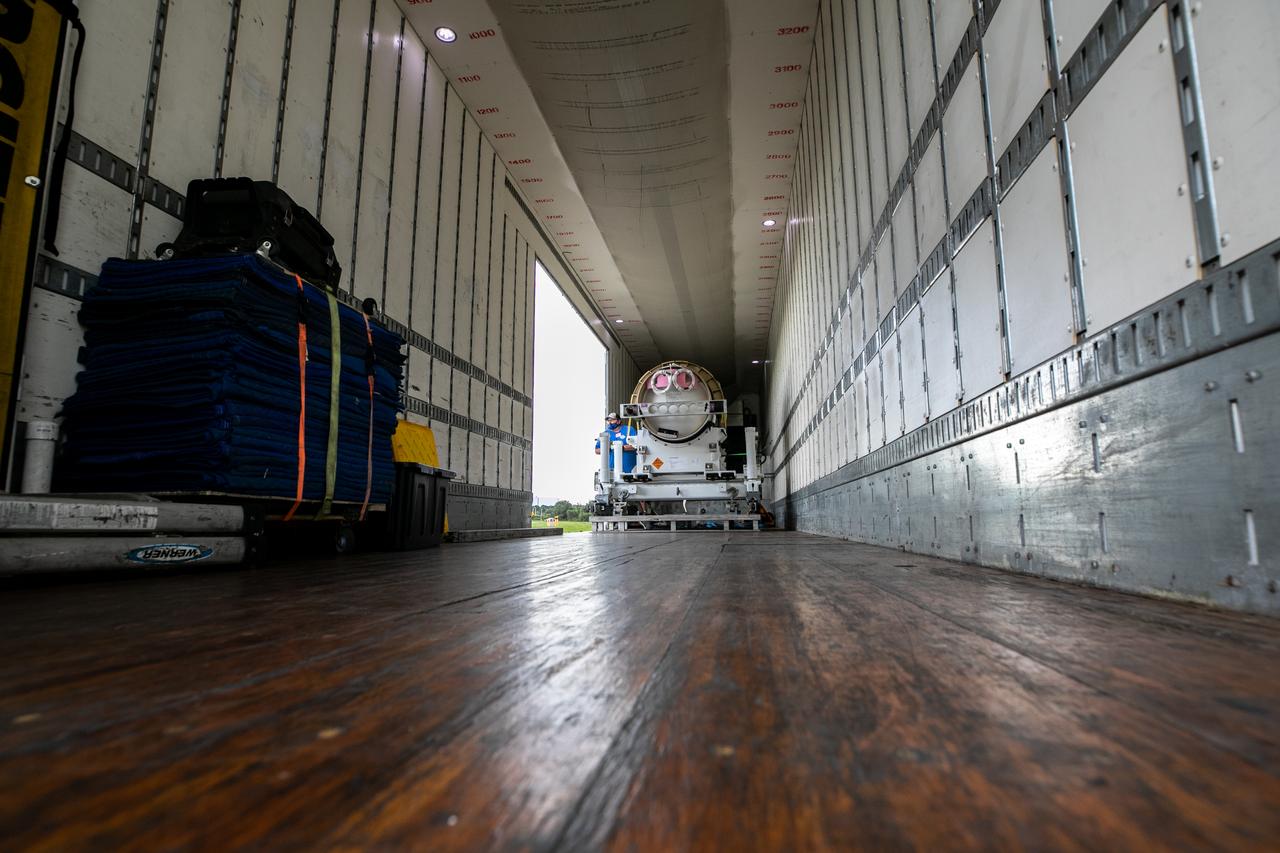
The last of three motors required to assemble the Launch Abort System for NASA’s Artemis II mission, the attitude control motor (ACM), arrives at Kennedy Space Center in Florida on August 28. The attitude control motor (ACM) was delivered by truck from Northrop Grumman’s manufacturing facility in Maryland, to the Launch Abort System Facility (LASF) at Kennedy. During launch of Orion atop the agency’s Space Launch System rocket, the LAS motors work together to separate the spacecraft from the rocket in the unlikely event of an emergency during launch. The LAS includes three motors – the launch abort motor, the jettison motor, and the attitude control motor—that once activated, will steer the spacecraft carrying the astronauts to safety. The ACM operates to keep Orion’s crew module on a controlled flight path in the event it needs to jettison and steer away from the rocket. Artemis II is the first crewed flight in a series of increasingly complex missions to the Moon that will lay the foundation for exploration of Mars and beyond. Artemis II will confirm all of the Orion spacecraft’s systems operate as designed in the actual environment of deep space with astronauts aboard. As part of the Artemis program, NASA will send the first woman and next man to the Moon in 2024.
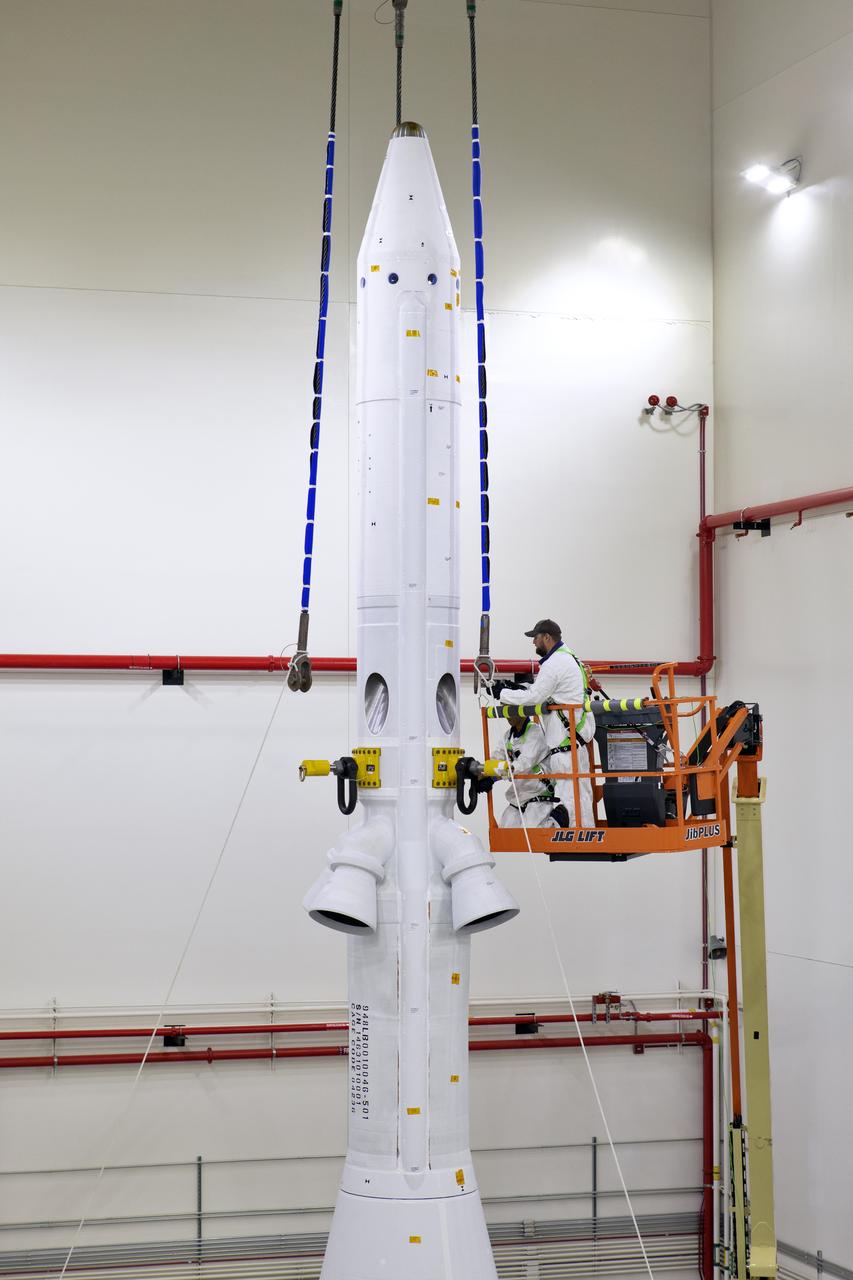
Inside the Launch Abort System Facility (LASF) at NASA’s Kennedy Space Center in Florida, workers are completing the integration of a test version of the Orion crew module with the Launch Abort System (LAS) on May 18, 2019. In view are the LAS attitude control motor, jettison motor and abort motor. The test vehicle and the LAS will be used for the Orion Ascent Abort-2 (AA-2) Flight Test. AA-2 is a full-stress test of the LAS, planned for July 2. AA-2 will launch from Space Launch Complex 46, carrying a fully functional LAS and a 22,000-pound Orion test vehicle to an altitude of 31,000 feet and traveling at more than 1,000 miles an hour. The test will verify the LAS can steer the crew module and astronauts aboard to safety if an emergency occurs during ascent on the Space Launch System (SLS) rocket. NASA's Orion and Exploration Ground Systems programs, contractors Jacob's, Lockheed Martin and Northrop Grumman, in conjunction with the Air Force Space and Missile Center's Launch Operations branch and the 45th Space Wing are performing flight operations for AA-2.
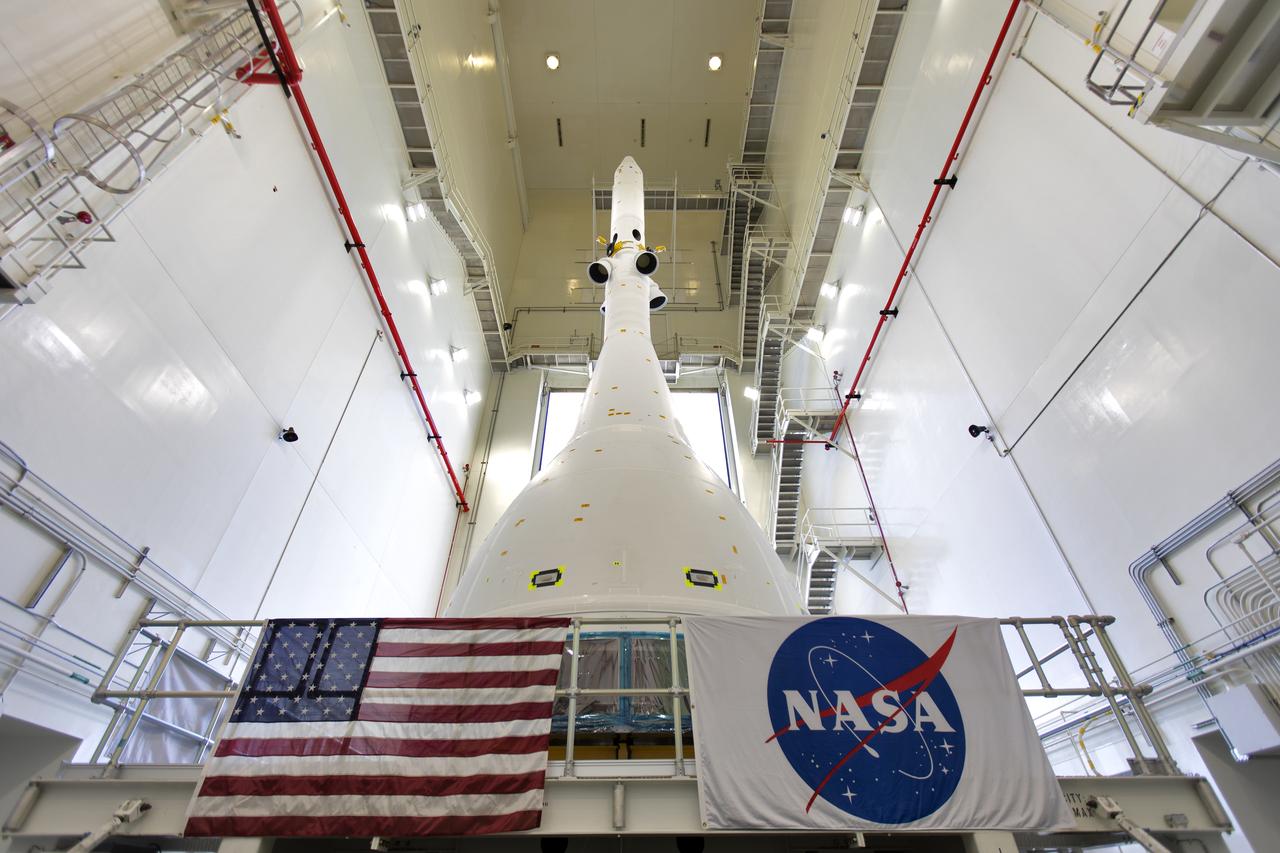
The test version of Orion attached to the Launch Abort System for the Ascent Abort-2 (AA-2) flight test exits the Launch Abort System Facility at NASA’s Kennedy Space Center in Florida on May 22, 2019. The flight test article will make the 21.5 mile trek to Space Launch Complex 46 at Cape Canaveral Air Force Station in preparation for its launch this summer. During AA-2, a test version of Orion will launch on a booster to more than six miles in altitude, where Orion’s launch abort system will pull the capsule and its crew away to safety if an emergency occurs during ascent on the Space Launch System rocket. The AA-2 elements will be stacked together at the launch pad over the next several weeks. The launch is planned for July 2 and is a critical safety test that helps pave the way for Artemis missions near the Moon, and will enable astronauts to set foot on the lunar surface by 2024.
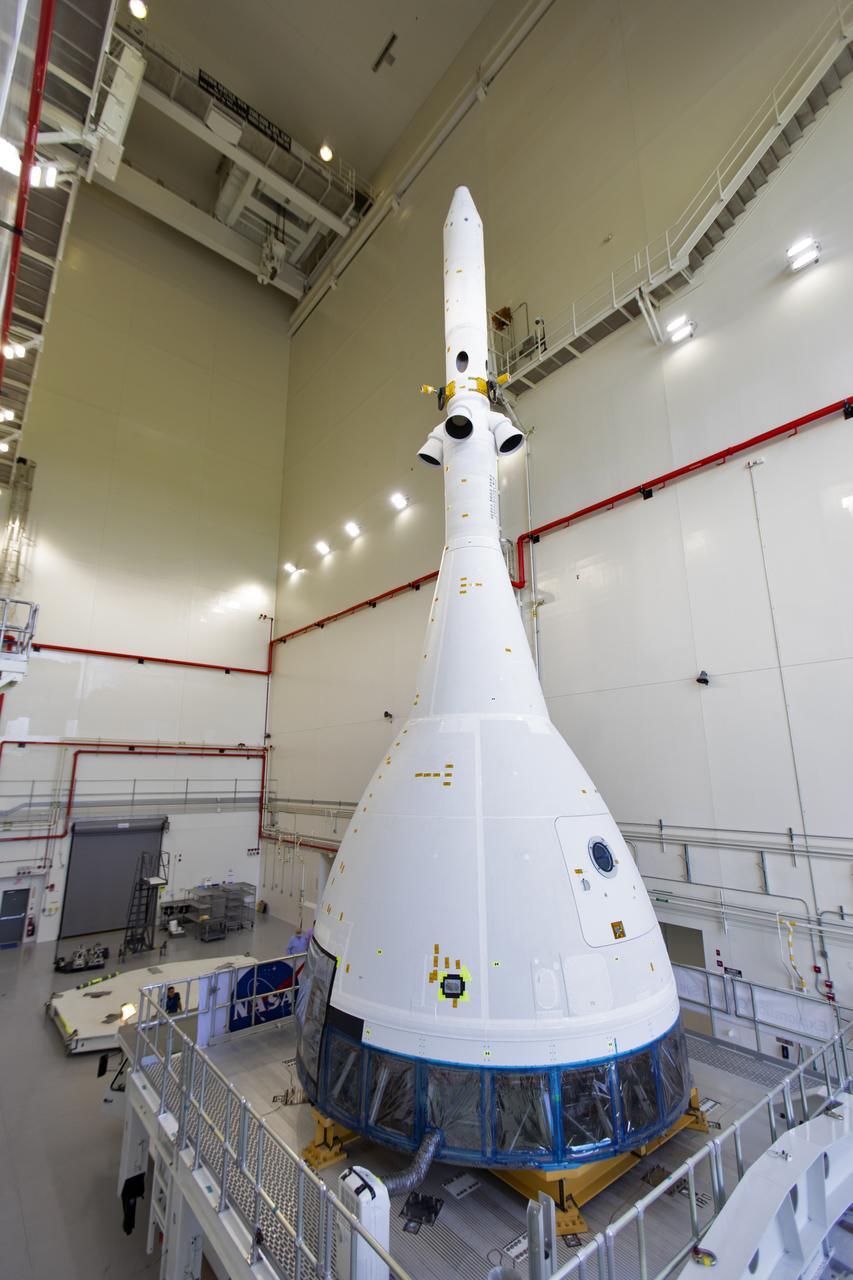
The test version of Orion attached to the Launch Abort System for the Ascent Abort-2 (AA-2) flight test is ready to exit the Launch Abort System Facility at NASA’s Kennedy Space Center in Florida on May 22, 2019. The flight test article will make the 21.5 mile trek to Space Launch Complex 46 at Cape Canaveral Air Force Station in preparation for its launch this summer. During AA-2, a test version of Orion will launch on a booster to more than six miles in altitude, where Orion’s launch abort system will pull the capsule and its crew away to safety if an emergency occurs during ascent on the Space Launch System rocket. The AA-2 elements will be stacked together at the launch pad over the next several weeks. The launch is planned for July 2 and is a critical safety test that helps pave the way for Artemis missions near the Moon, and will enable astronauts to set foot on the lunar surface by 2024.
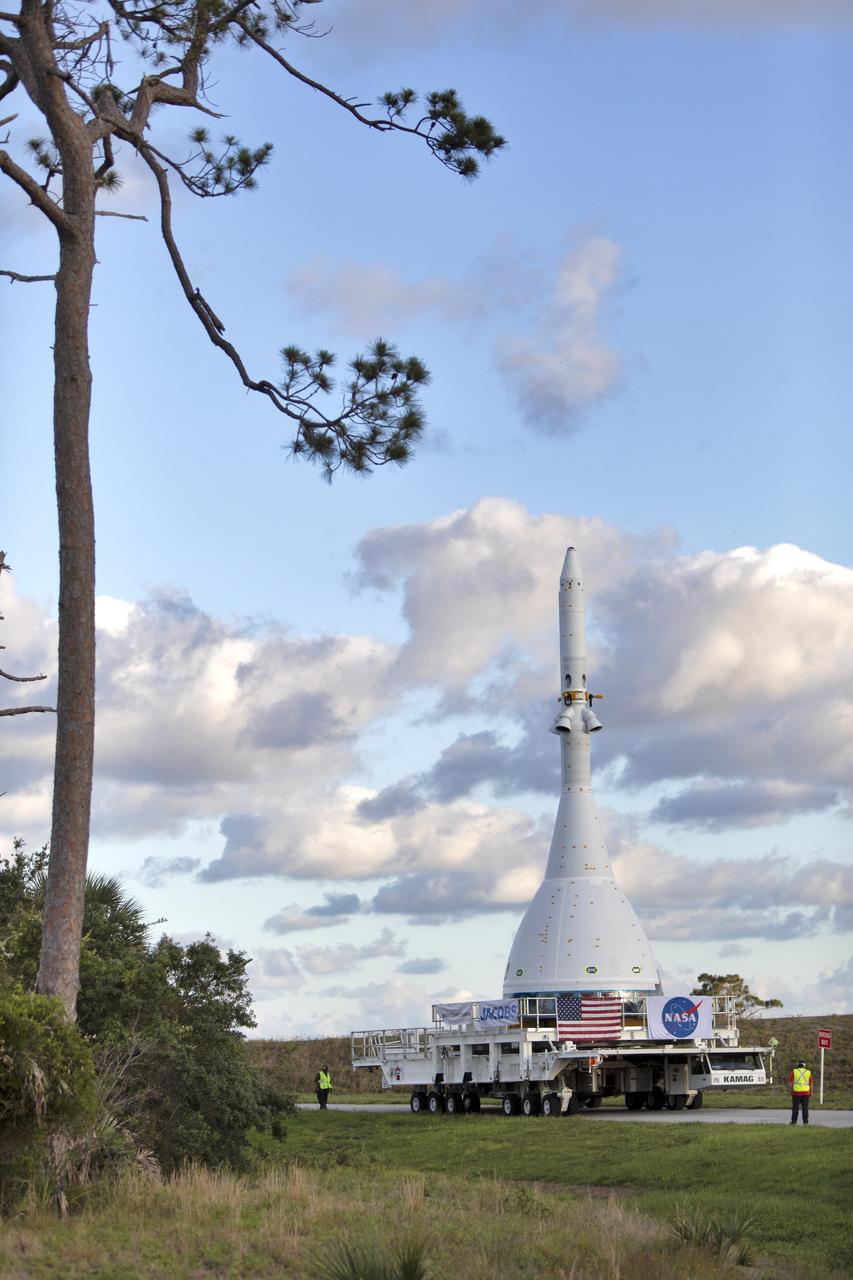
After exiting the Launch Abort System Facility at NASA’s Kennedy Space Center in Florida on May 22, 2019, the test version of Orion attached to the Launch Abort System for the Ascent Abort-2 (AA-2) flight test is moved on a transport along the 21.5 mile trek to Space Launch Complex 46 at Cape Canaveral Air Force Station in preparation for its launch this summer. During AA-2, a test version of Orion will launch on a booster to more than six miles in altitude, where Orion’s launch abort system will pull the capsule and its crew away to safety if an emergency occurs during ascent on the Space Launch System rocket. The AA-2 elements will be stacked together at the launch pad over the next several weeks. The launch is planned for July 2 and is a critical safety test that helps pave the way for Artemis missions near the Moon, and will enable astronauts to set foot on the lunar surface by 2024.
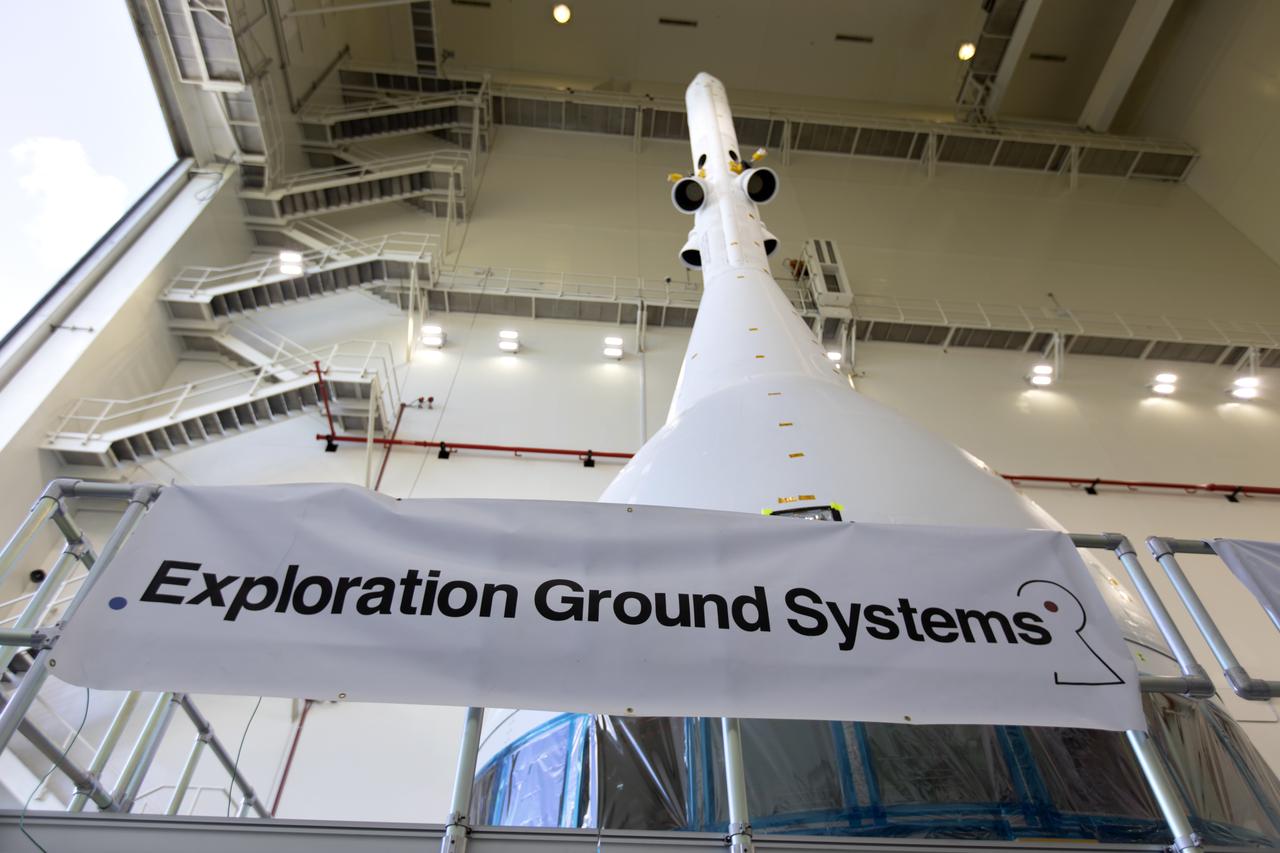
The test version of Orion attached to the Launch Abort System for the Ascent Abort-2 (AA-2) flight test exits the Launch Abort System Facility at NASA’s Kennedy Space Center in Florida on May 22, 2019. The flight test article will make the 21.5 mile trek to Space Launch Complex 46 at Cape Canaveral Air Force Station in preparation for its launch this summer. During AA-2, a test version of Orion will launch on a booster to more than six miles in altitude, where Orion’s launch abort system will pull the capsule and its crew away to safety if an emergency occurs during ascent on the Space Launch System rocket. The AA-2 elements will be stacked together at the launch pad over the next several weeks. The launch is planned for July 2 and is a critical safety test that helps pave the way for Artemis missions near the Moon, and will enable astronauts to set foot on the lunar surface by 2024.

The test version of Orion attached to the Launch Abort System for the Ascent Abort-2 (AA-2) flight test exits the Launch Abort System Facility at NASA’s Kennedy Space Center in Florida on May 22, 2019. The flight test article will make the 21.5 mile trek to Space Launch Complex 46 at Cape Canaveral Air Force Station in preparation for its launch this summer. During AA-2, a test version of Orion will launch on a booster to more than six miles in altitude, where Orion’s launch abort system will pull the capsule and its crew away to safety if an emergency occurs during ascent on the Space Launch System rocket. The AA-2 elements will be stacked together at the launch pad over the next several weeks. The launch is planned for July 2 and is a critical safety test that helps pave the way for Artemis missions near the Moon, and will enable astronauts to set foot on the lunar surface by 2024.
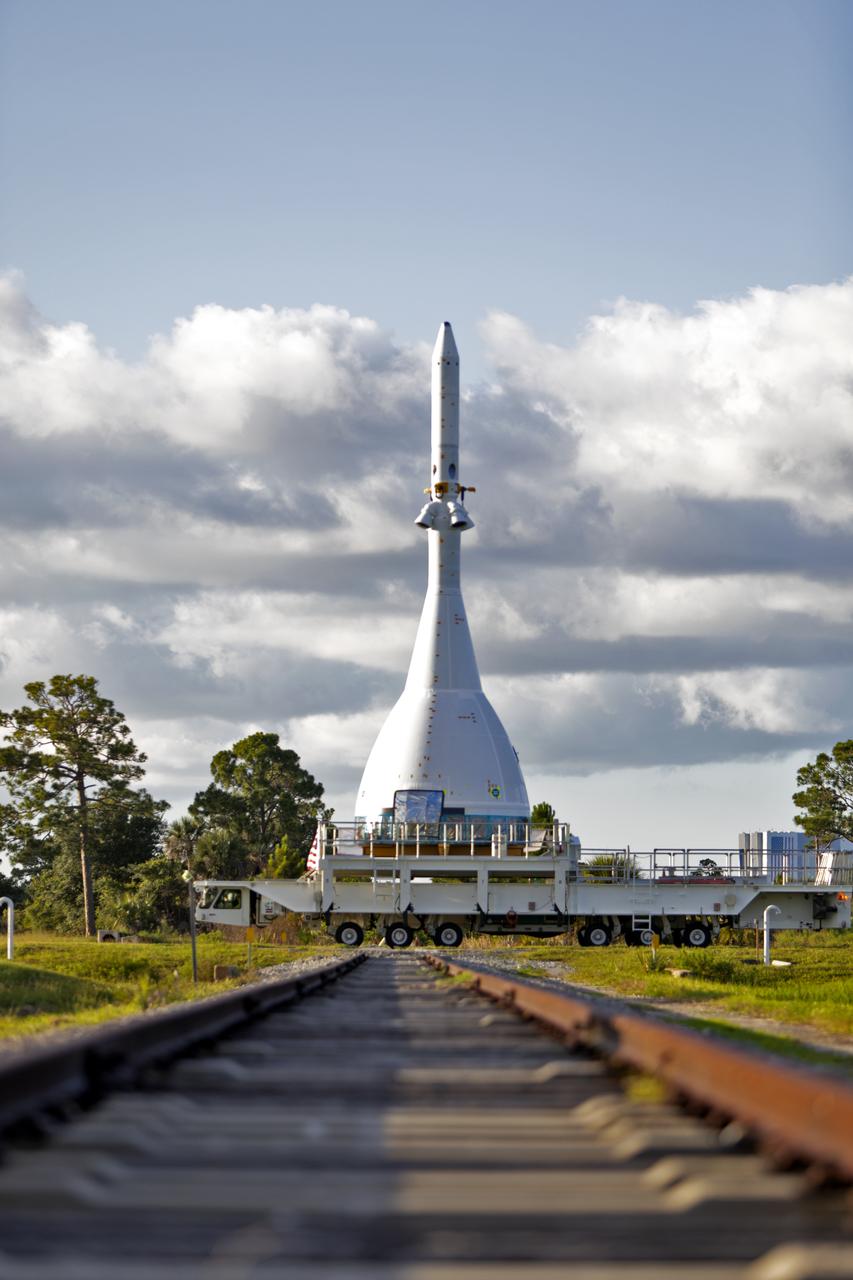
After exiting the Launch Abort System Facility at NASA’s Kennedy Space Center in Florida on May 22, 2019, the test version of Orion attached to the Launch Abort System for the Ascent Abort-2 (AA-2) flight test is moved on a transport along the 21.5 mile trek to Space Launch Complex 46 at Cape Canaveral Air Force Station in preparation for its launch this summer. During AA-2, a test version of Orion will launch on a booster to more than six miles in altitude, where Orion’s launch abort system will pull the capsule and its crew away to safety if an emergency occurs during ascent on the Space Launch System rocket. The AA-2 elements will be stacked together at the launch pad over the next several weeks. The launch is planned for July 2 and is a critical safety test that helps pave the way for Artemis missions near the Moon, and will enable astronauts to set foot on the lunar surface by 2024.
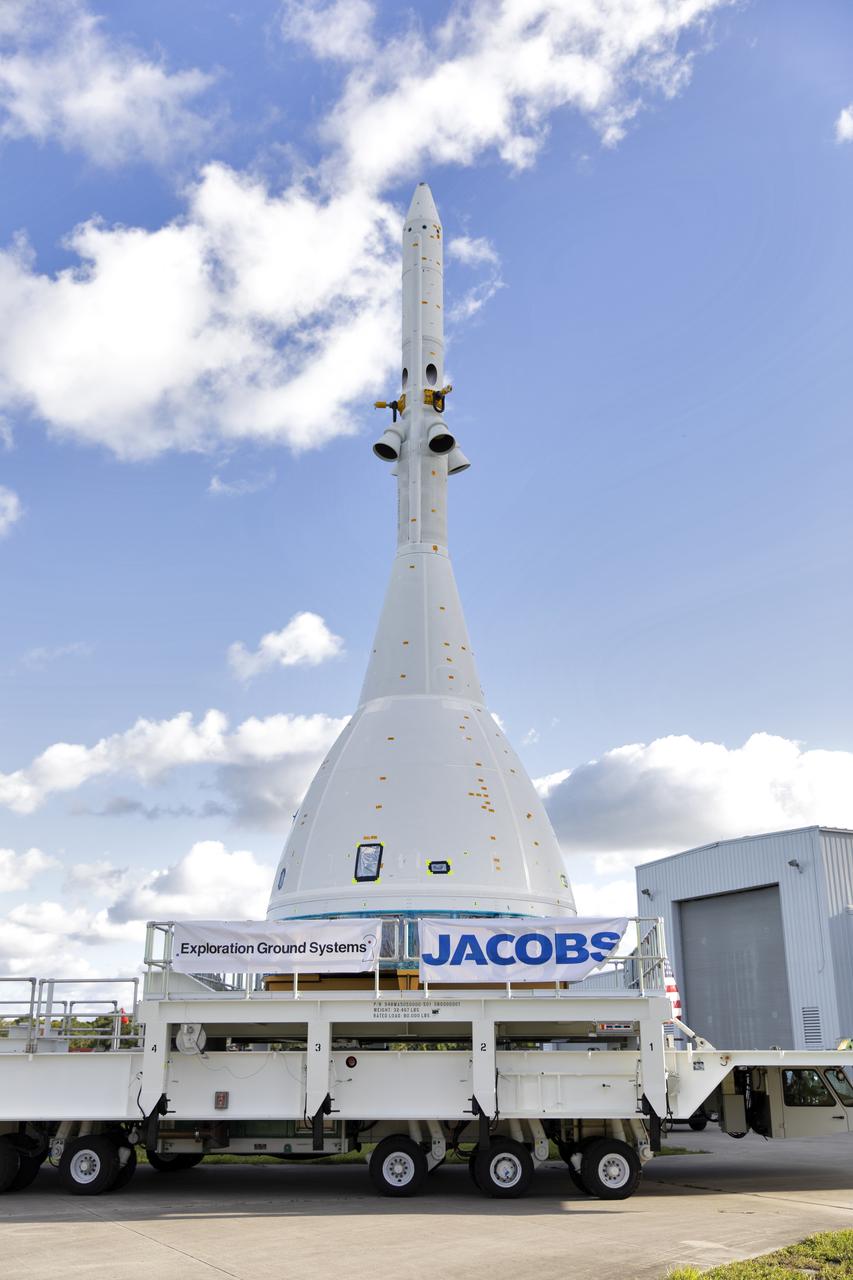
The test version of Orion attached to the Launch Abort System for the Ascent Abort-2 (AA-2) flight test exited the Launch Abort System Facility at NASA’s Kennedy Space Center in Florida on May 22, 2019. The flight test article will make the 21.5 mile trek to Space Launch Complex 46 at Cape Canaveral Air Force Station in preparation for its launch this summer. During AA-2, a test version of Orion will launch on a booster to more than six miles in altitude, where Orion’s launch abort system will pull the capsule and its crew away to safety if an emergency occurs during ascent on the Space Launch System rocket. The AA-2 elements will be stacked together at the launch pad over the next several weeks. The launch is planned for July 2 and is a critical safety test that helps pave the way for Artemis missions near the Moon, and will enable astronauts to set foot on the lunar surface by 2024.
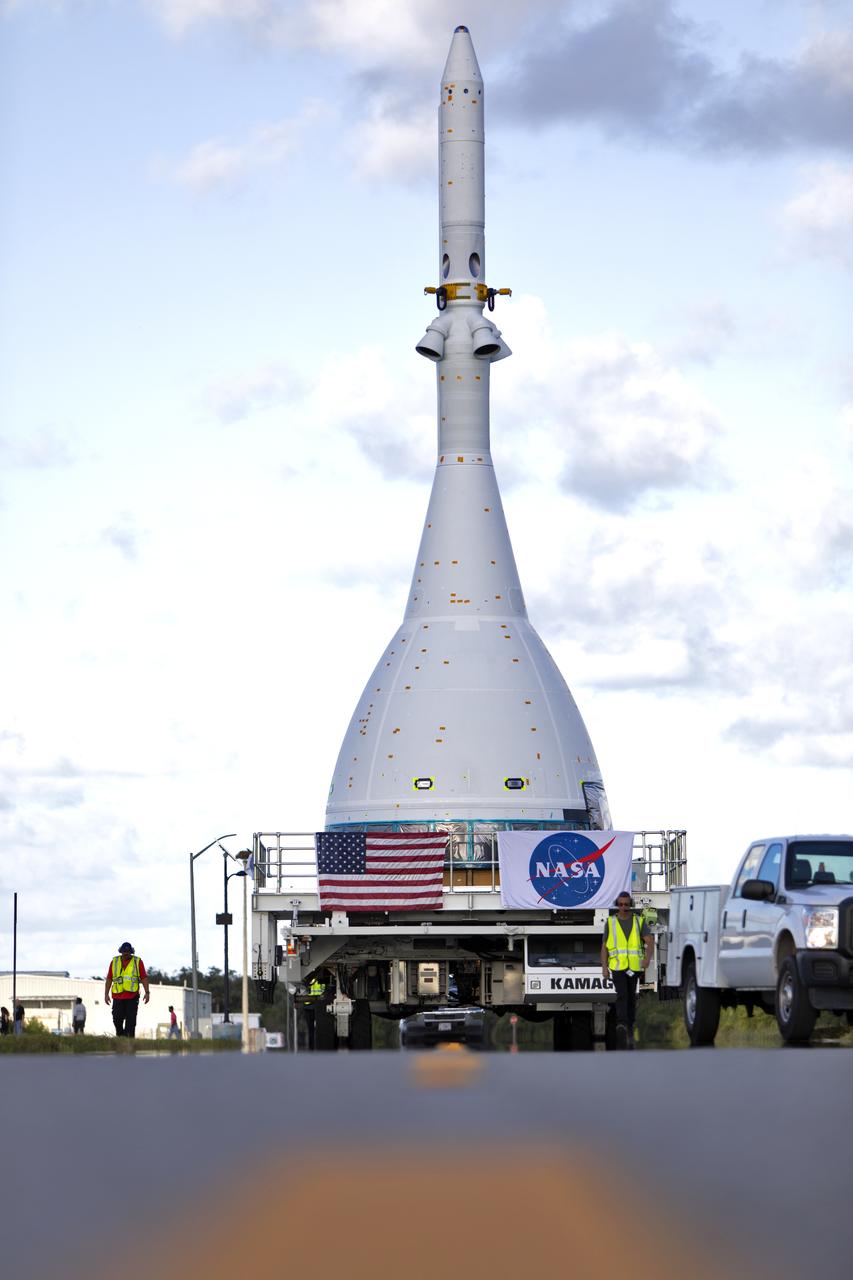
The test version of Orion attached to the Launch Abort System for the Ascent Abort-2 (AA-2) flight test exited the Launch Abort System Facility at NASA’s Kennedy Space Center in Florida on May 22, 2019. The flight test article will make the 21.5 mile trek to Space Launch Complex 46 at Cape Canaveral Air Force Station in preparation for its launch this summer. During AA-2, a test version of Orion will launch on a booster to more than six miles in altitude, where Orion’s launch abort system will pull the capsule and its crew away to safety if an emergency occurs during ascent on the Space Launch System rocket. The AA-2 elements will be stacked together at the launch pad over the next several weeks. The launch is planned for July 2 and is a critical safety test that helps pave the way for Artemis missions near the Moon, and will enable astronauts to set foot on the lunar surface by 2024.
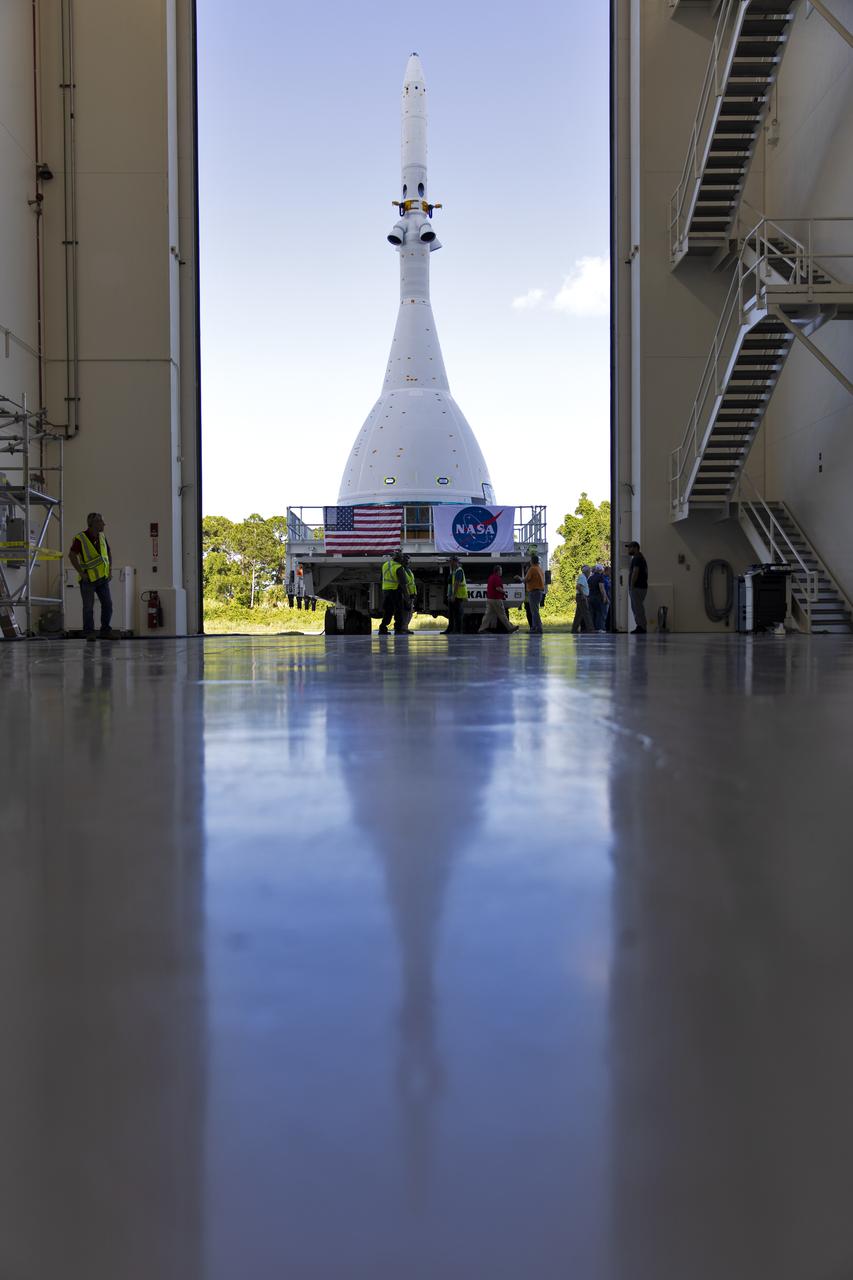
The test version of Orion attached to the Launch Abort System for the Ascent Abort-2 (AA-2) flight test exits the Launch Abort System Facility at NASA’s Kennedy Space Center in Florida on May 22, 2019. The flight test article will make the 21.5 mile trek to Space Launch Complex 46 at Cape Canaveral Air Force Station in preparation for its launch this summer. During AA-2, a test version of Orion will launch on a booster to more than six miles in altitude, where Orion’s launch abort system will pull the capsule and its crew away to safety if an emergency occurs during ascent on the Space Launch System rocket. The AA-2 elements will be stacked together at the launch pad over the next several weeks. The launch is planned for July 2 and is a critical safety test that helps pave the way for Artemis missions near the Moon, and will enable astronauts to set foot on the lunar surface by 2024.
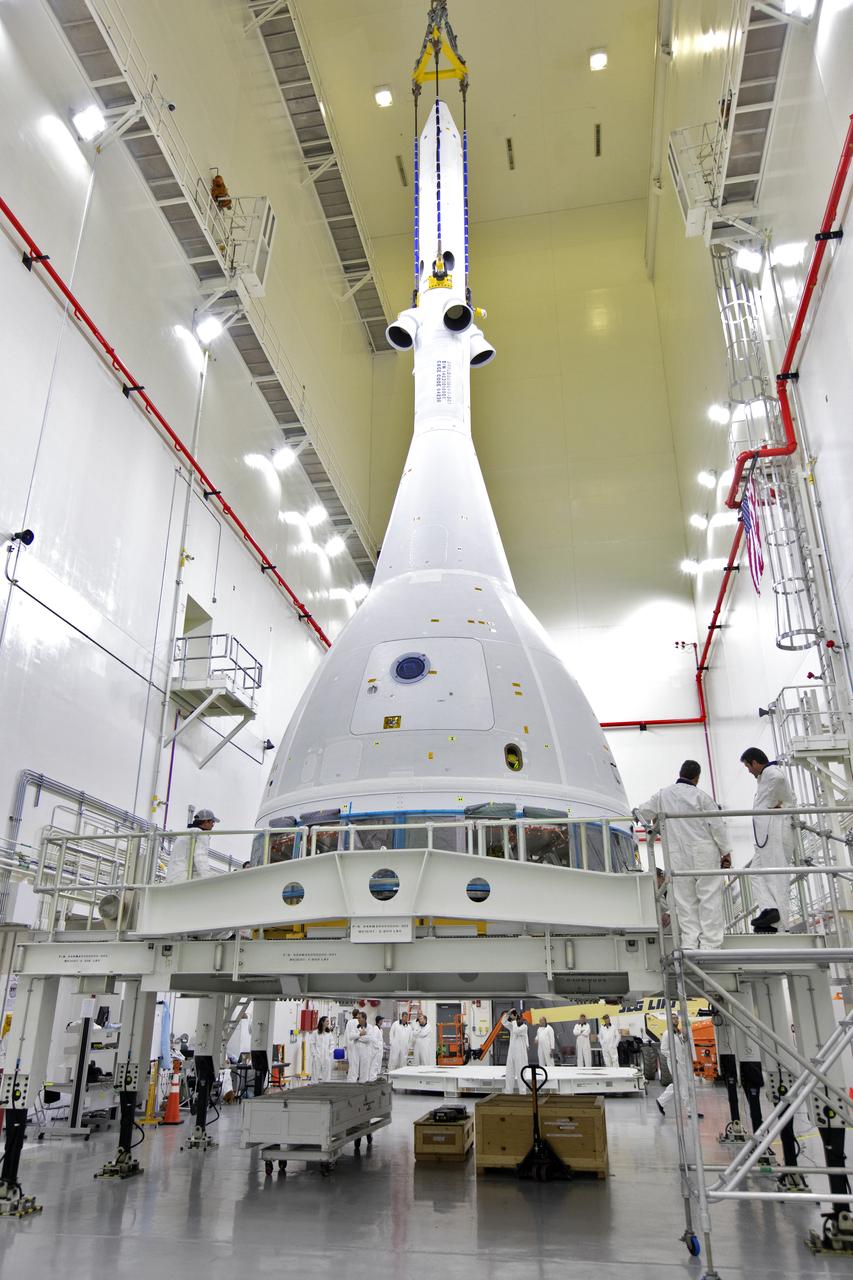
Inside the Launch Abort System Facility (LASF) at NASA’s Kennedy Space Center in Florida, a test version of the Orion crew module has been integrated with the Launch Abort System (LAS) on May 18, 2019. The test vehicle and the LAS will be used for the Orion Ascent Abort-2 (AA-2) Flight Test. AA-2 is a full-stress test of the LAS, planned for July 2. AA-2 will launch from Space Launch Complex 46, carrying a fully functional LAS and a 22,000-pound Orion test vehicle to an altitude of 31,000 feet and traveling at more than 1,000 miles an hour. The test will verify the LAS can steer the crew module and astronauts aboard to safety if an emergency occurs during ascent on the Space Launch System (SLS) rocket. NASA's Orion and Exploration Ground Systems programs, contractors Jacob's, Lockheed Martin and Northrop Grumman, in conjunction with the Air Force Space and Missile Center's Launch Operations branch and the 45th Space Wing are performing flight operations for AA-2.
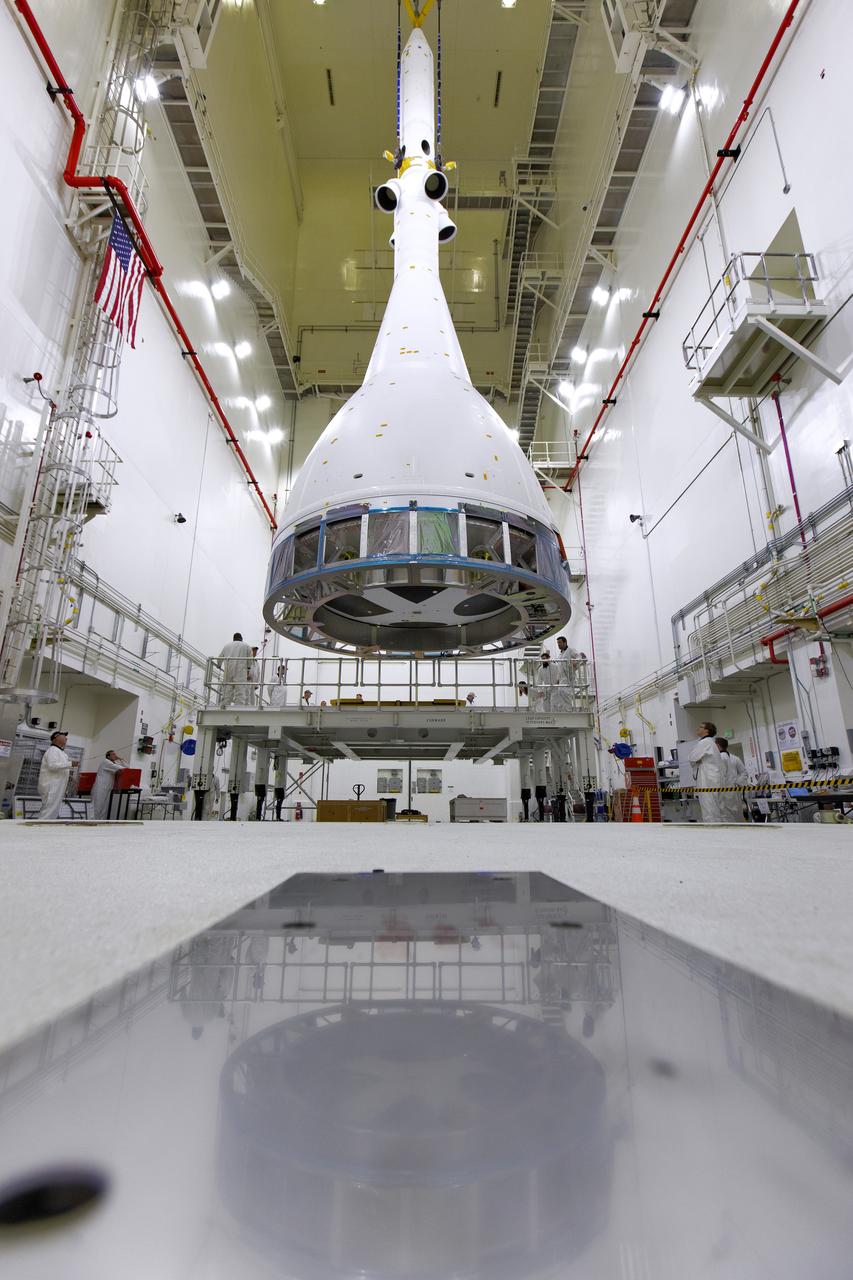
Inside the Launch Abort System Facility (LASF) at NASA’s Kennedy Space Center in Florida, a test version of the Orion crew module has been integrated with the Launch Abort System (LAS) on May 18, 2019. It is being lifted by crane for transfer to a KAMAG transporter. The test vehicle and the LAS will be used for the Orion Ascent Abort-2 (AA-2) Flight Test. AA-2 is a full-stress test of the LAS, planned for July 2. AA-2 will launch from Space Launch Complex 46, carrying a fully functional LAS and a 22,000-pound Orion test vehicle to an altitude of 31,000 feet and traveling at more than 1,000 miles an hour. The test will verify the LAS can steer the crew module and astronauts aboard to safety if an emergency occurs during ascent on the Space Launch System (SLS) rocket. NASA's Orion and Exploration Ground Systems programs, contractors Jacob's, Lockheed Martin and Northrop Grumman, in conjunction with the Air Force Space and Missile Center's Launch Operations branch and the 45th Space Wing are performing flight operations for AA-2.
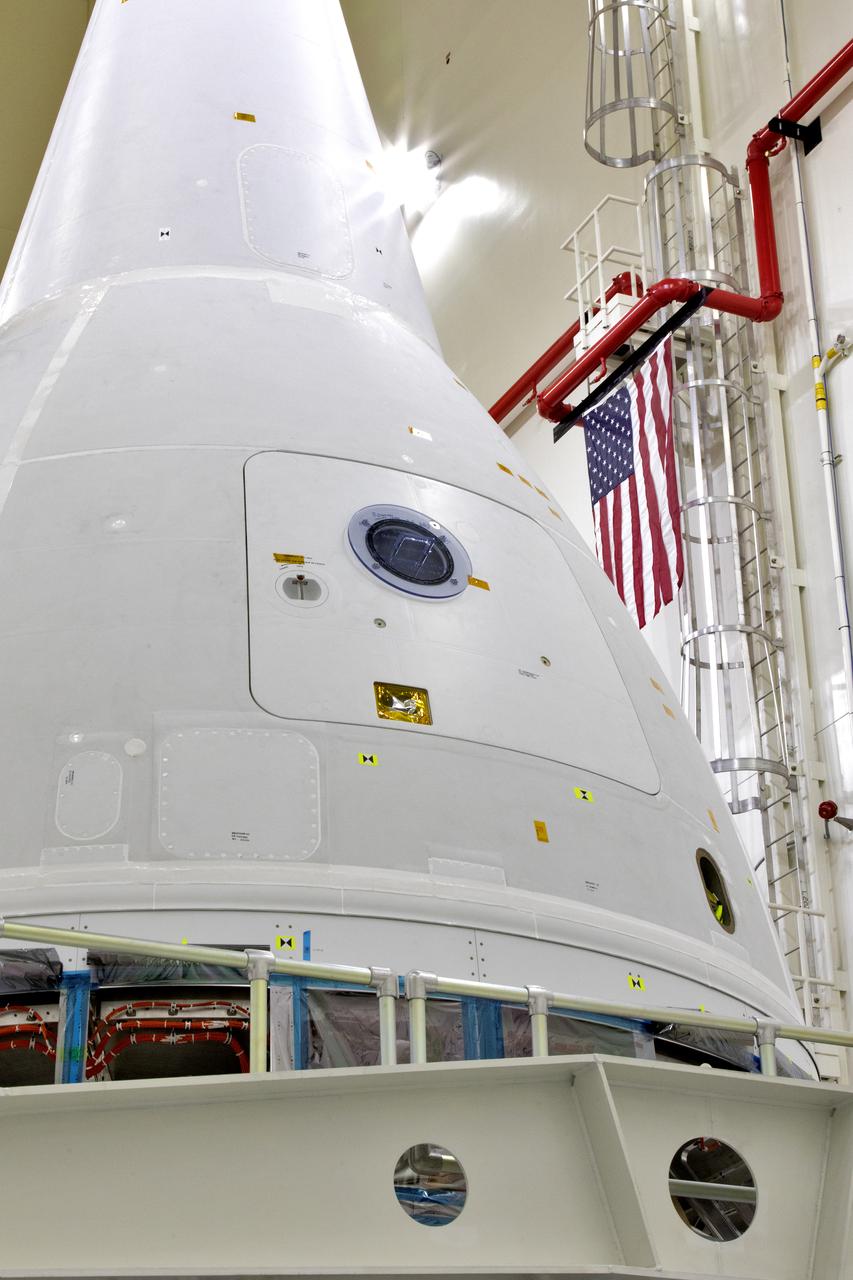
Inside the Launch Abort System Facility (LASF) at NASA’s Kennedy Space Center in Florida, a test version of the Orion crew module has been integrated with the Launch Abort System (LAS) on May 18, 2019. The test vehicle and the LAS will be used for the Orion Ascent Abort-2 (AA-2) Flight Test. AA-2 is a full-stress test of the LAS, planned for July 2. AA-2 will launch from Space Launch Complex 46, carrying a fully functional LAS and a 22,000-pound Orion test vehicle to an altitude of 31,000 feet and traveling at more than 1,000 miles an hour. The test will verify the LAS can steer the crew module and astronauts aboard to safety if an emergency occurs during ascent on the Space Launch System (SLS) rocket. NASA's Orion and Exploration Ground Systems programs, contractors Jacob's, Lockheed Martin and Northrop Grumman, in conjunction with the Air Force Space and Missile Center's Launch Operations branch and the 45th Space Wing are performing flight operations for AA-2.
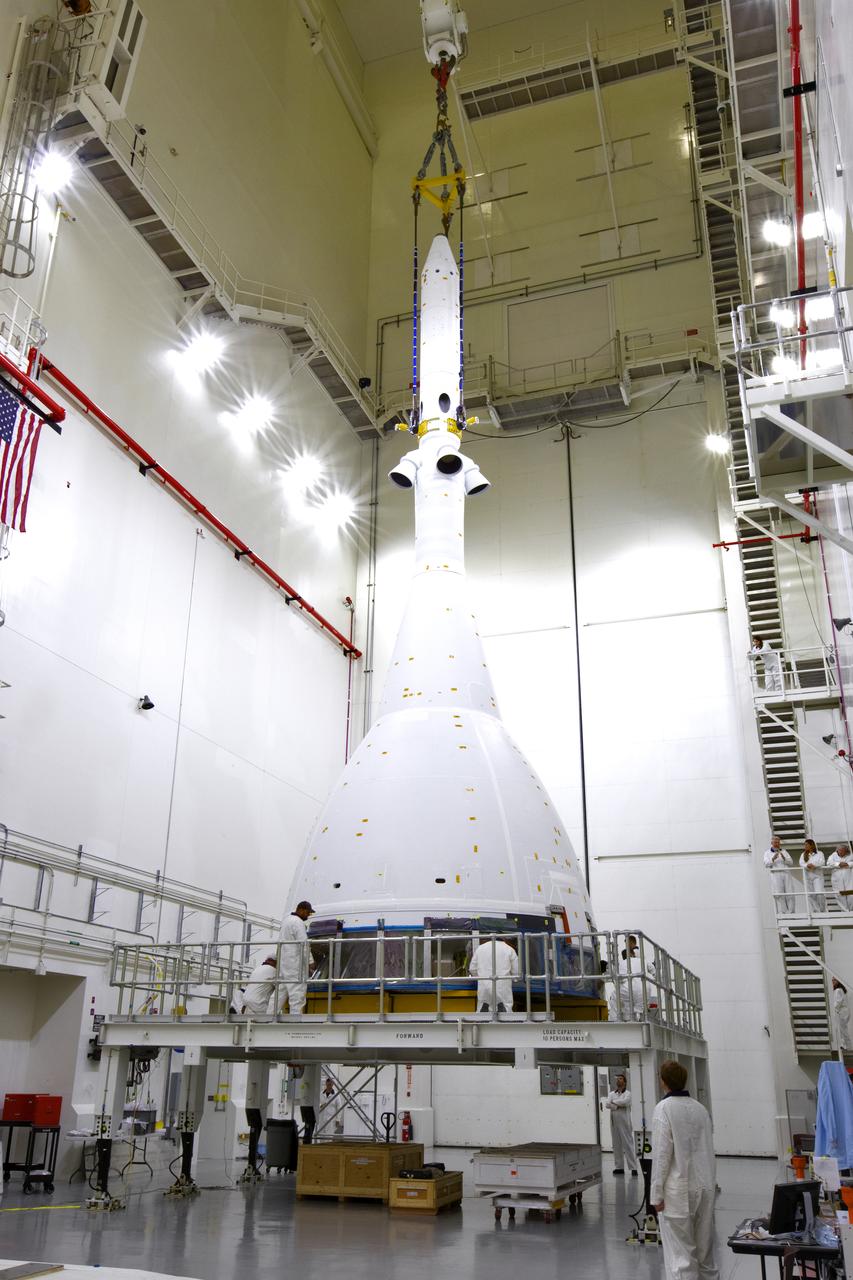
Inside the Launch Abort System Facility (LASF) at NASA’s Kennedy Space Center in Florida, a test version of the Orion crew module has been integrated with the Launch Abort System (LAS) on May 18, 2019. The test vehicle and the LAS will be used for the Orion Ascent Abort-2 (AA-2) Flight Test. AA-2 is a full-stress test of the LAS, planned for July 2. AA-2 will launch from Space Launch Complex 46, carrying a fully functional LAS and a 22,000-pound Orion test vehicle to an altitude of 31,000 feet and traveling at more than 1,000 miles an hour. The test will verify the LAS can steer the crew module and astronauts aboard to safety if an emergency occurs during ascent on the Space Launch System (SLS) rocket. NASA's Orion and Exploration Ground Systems programs, contractors Jacob's, Lockheed Martin and Northrop Grumman, in conjunction with the Air Force Space and Missile Center's Launch Operations branch and the 45th Space Wing are performing flight operations for AA-2.
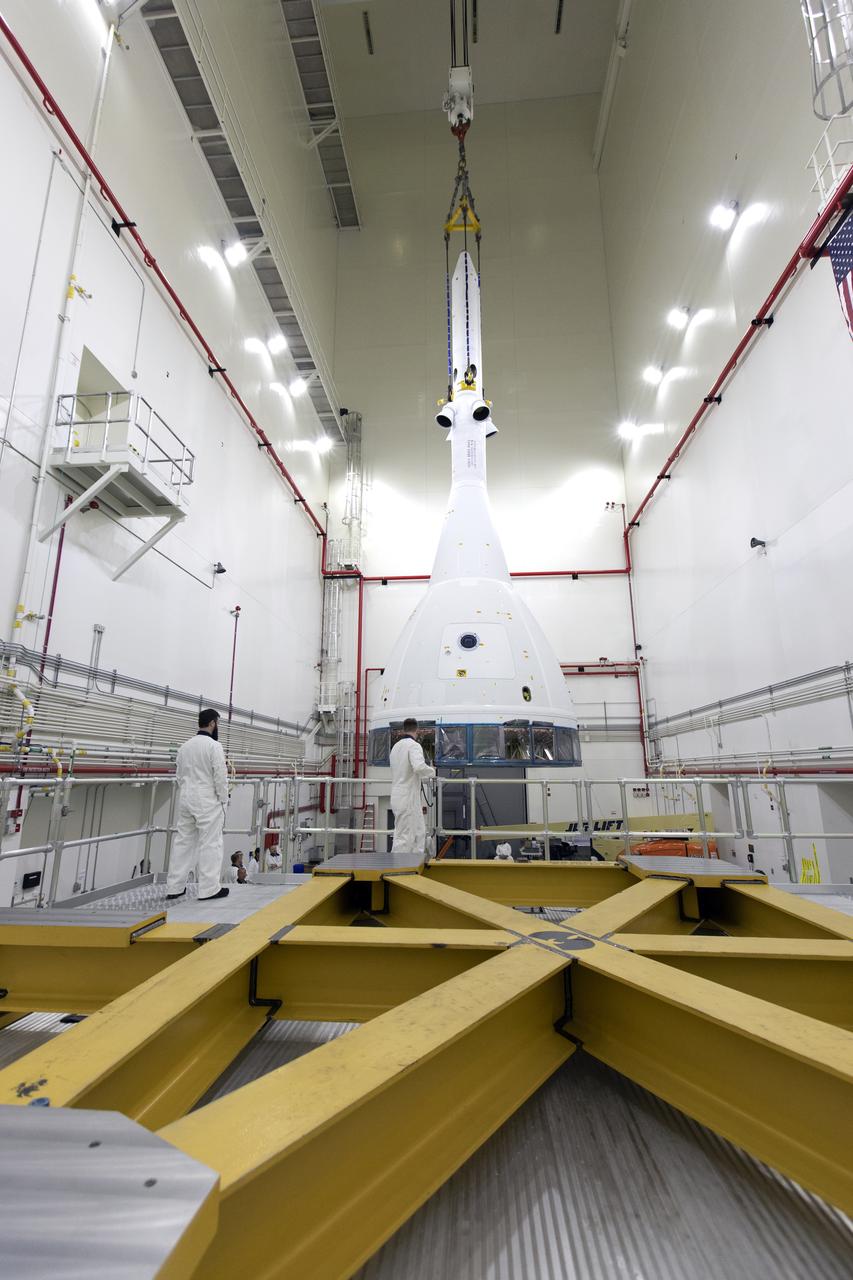
Inside the Launch Abort System Facility (LASF) at NASA’s Kennedy Space Center in Florida, workers are completing the integration of a test version of the Orion crew module with the Launch Abort System (LAS) on May 18, 2019. The test vehicle and the LAS will be used for the Orion Ascent Abort-2 (AA-2) Flight Test. AA-2 is a full-stress test of the LAS, planned for July 2. AA-2 will launch from Space Launch Complex 46, carrying a fully functional LAS and a 22,000-pound Orion test vehicle to an altitude of 31,000 feet and traveling at more than 1,000 miles an hour. The test will verify the LAS can steer the crew module and astronauts aboard to safety if an emergency occurs during ascent on the Space Launch System (SLS) rocket. NASA's Orion and Exploration Ground Systems programs, contractors Jacob's, Lockheed Martin and Northrop Grumman, in conjunction with the Air Force Space and Missile Center's Launch Operations branch and the 45th Space Wing are performing flight operations for AA-2.
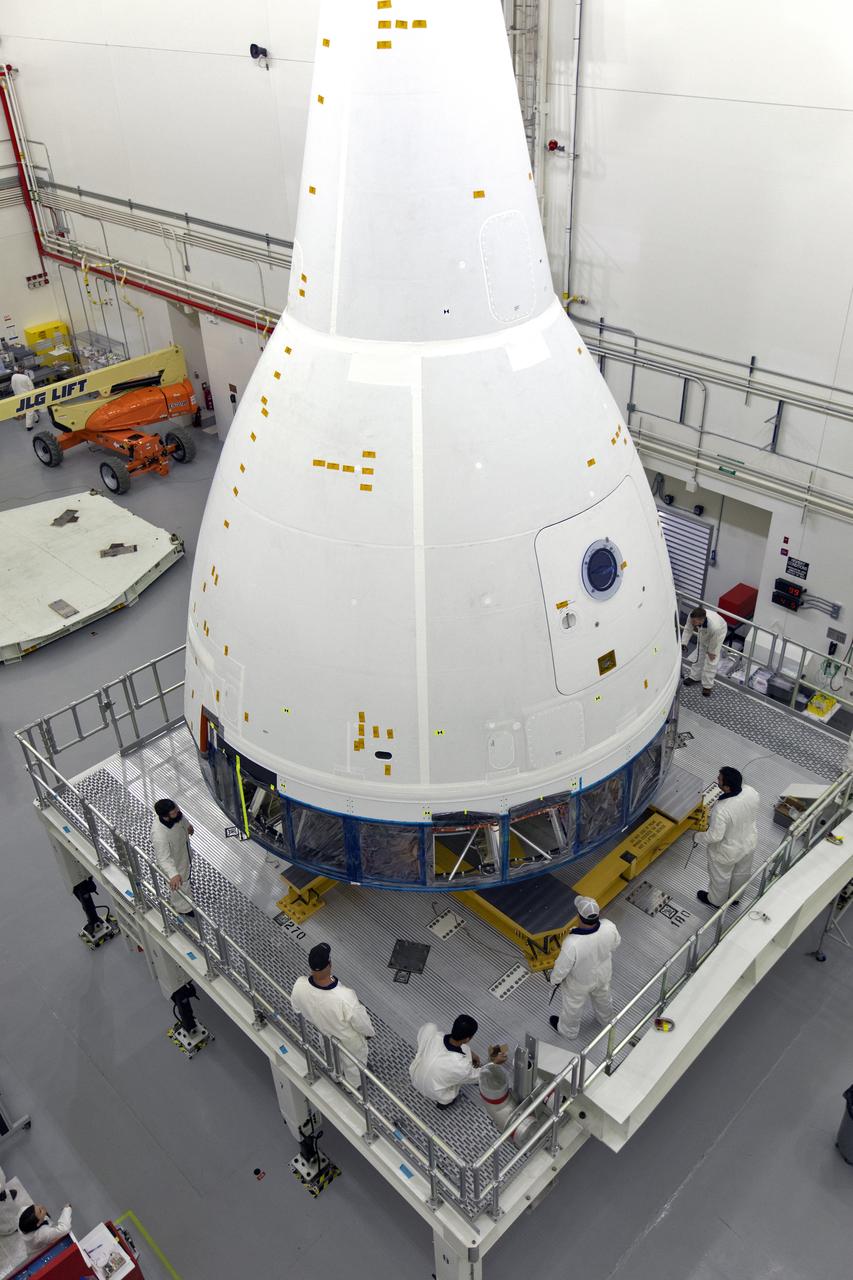
Inside the Launch Abort System Facility (LASF) at NASA’s Kennedy Space Center in Florida, workers are completing the integration of a test version of the Orion crew module with the Launch Abort System (LAS) on May 18, 2019. The test vehicle and the LAS will be used for the Orion Ascent Abort-2 (AA-2) Flight Test. AA-2 is a full-stress test of the LAS, planned for July 2. AA-2 will launch from Space Launch Complex 46, carrying a fully functional LAS and a 22,000-pound Orion test vehicle to an altitude of 31,000 feet and traveling at more than 1,000 miles an hour. The test will verify the LAS can steer the crew module and astronauts aboard to safety if an emergency occurs during ascent on the Space Launch System (SLS) rocket. NASA's Orion and Exploration Ground Systems programs, contractors Jacob's, Lockheed Martin and Northrop Grumman, in conjunction with the Air Force Space and Missile Center's Launch Operations branch and the 45th Space Wing are performing flight operations for AA-2.
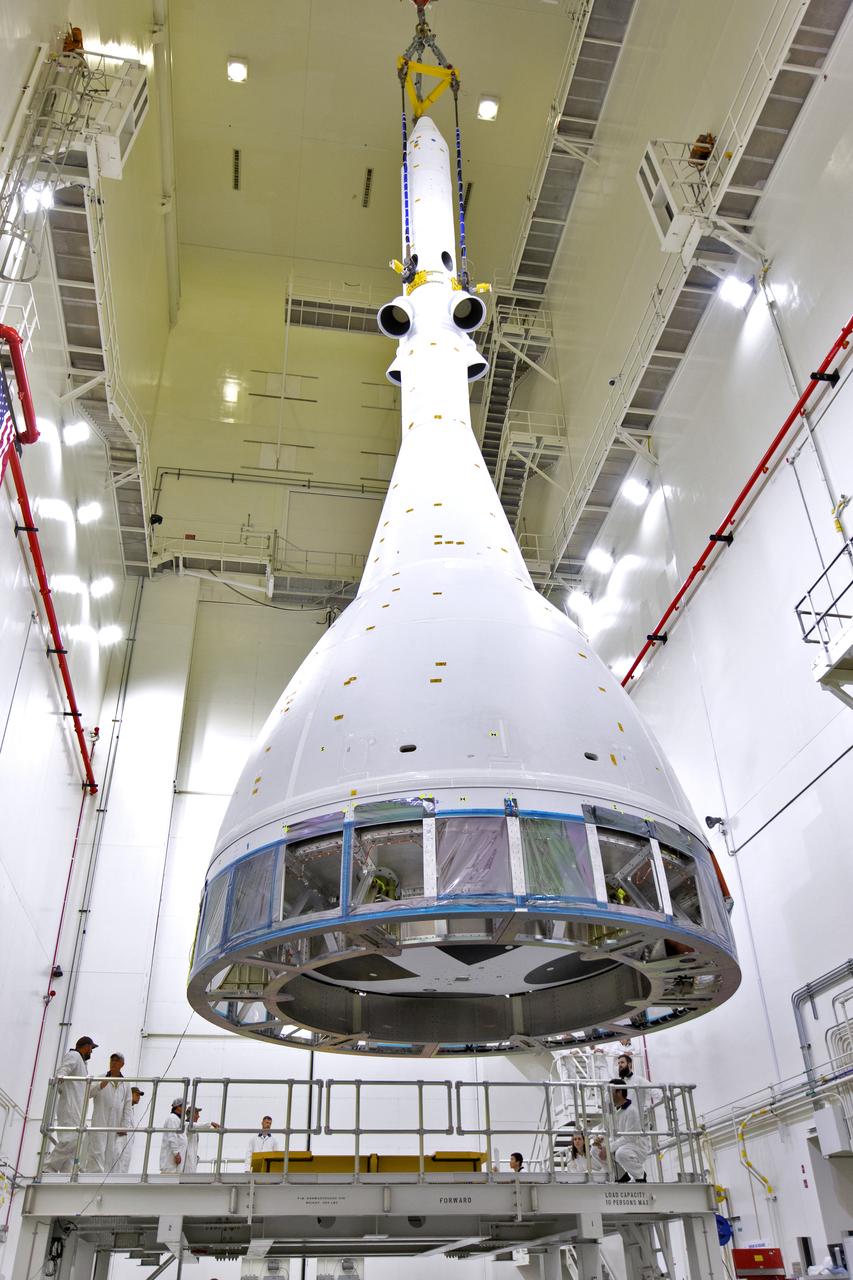
Inside the Launch Abort System Facility (LASF) at NASA’s Kennedy Space Center in Florida, a test version of the Orion crew module has been integrated with the Launch Abort System (LAS) on May 18, 2019. It is being lifted by crane for transfer to a KAMAG transporter. The test vehicle and the LAS will be used for the Orion Ascent Abort-2 (AA-2) Flight Test. AA-2 is a full-stress test of the LAS, planned for July 2. AA-2 will launch from Space Launch Complex 46, carrying a fully functional LAS and a 22,000-pound Orion test vehicle to an altitude of 31,000 feet and traveling at more than 1,000 miles an hour. The test will verify the LAS can steer the crew module and astronauts aboard to safety if an emergency occurs during ascent on the Space Launch System (SLS) rocket. NASA's Orion and Exploration Ground Systems programs, contractors Jacob's, Lockheed Martin and Northrop Grumman, in conjunction with the Air Force Space and Missile Center's Launch Operations branch and the 45th Space Wing are performing flight operations for AA-2.
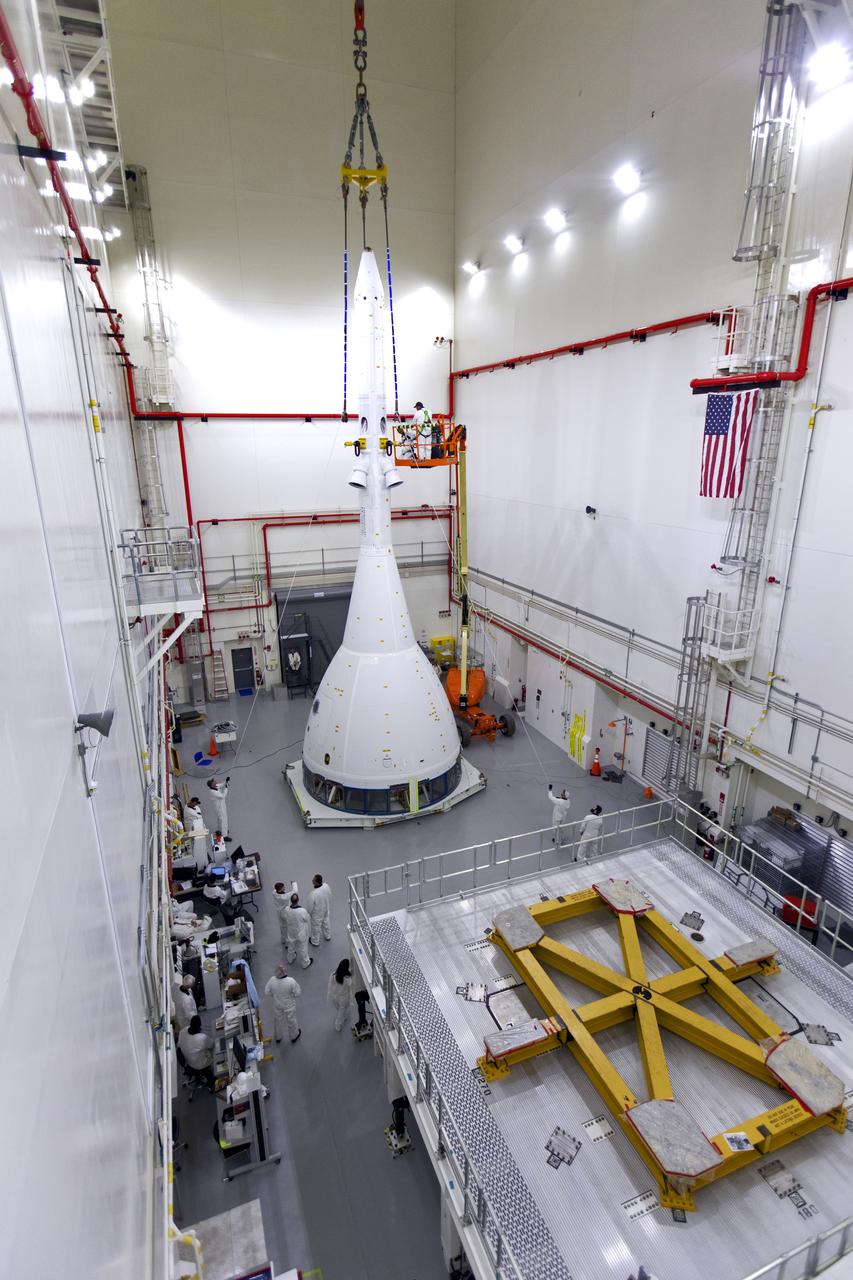
Inside the Launch Abort System Facility (LASF) at NASA’s Kennedy Space Center in Florida, workers are completing the integration of a test version of the Orion crew module with the Launch Abort System (LAS) on May 18, 2019. The test vehicle and the LAS will be used for the Orion Ascent Abort-2 (AA-2) Flight Test. AA-2 is a full-stress test of the LAS, planned for July 2. AA-2 will launch from Space Launch Complex 46, carrying a fully functional LAS and a 22,000-pound Orion test vehicle to an altitude of 31,000 feet and traveling at more than 1,000 miles an hour. The test will verify the LAS can steer the crew module and astronauts aboard to safety if an emergency occurs during ascent on the Space Launch System (SLS) rocket. NASA's Orion and Exploration Ground Systems programs, contractors Jacob's, Lockheed Martin and Northrop Grumman, in conjunction with the Air Force Space and Missile Center's Launch Operations branch and the 45th Space Wing are performing flight operations for AA-2.