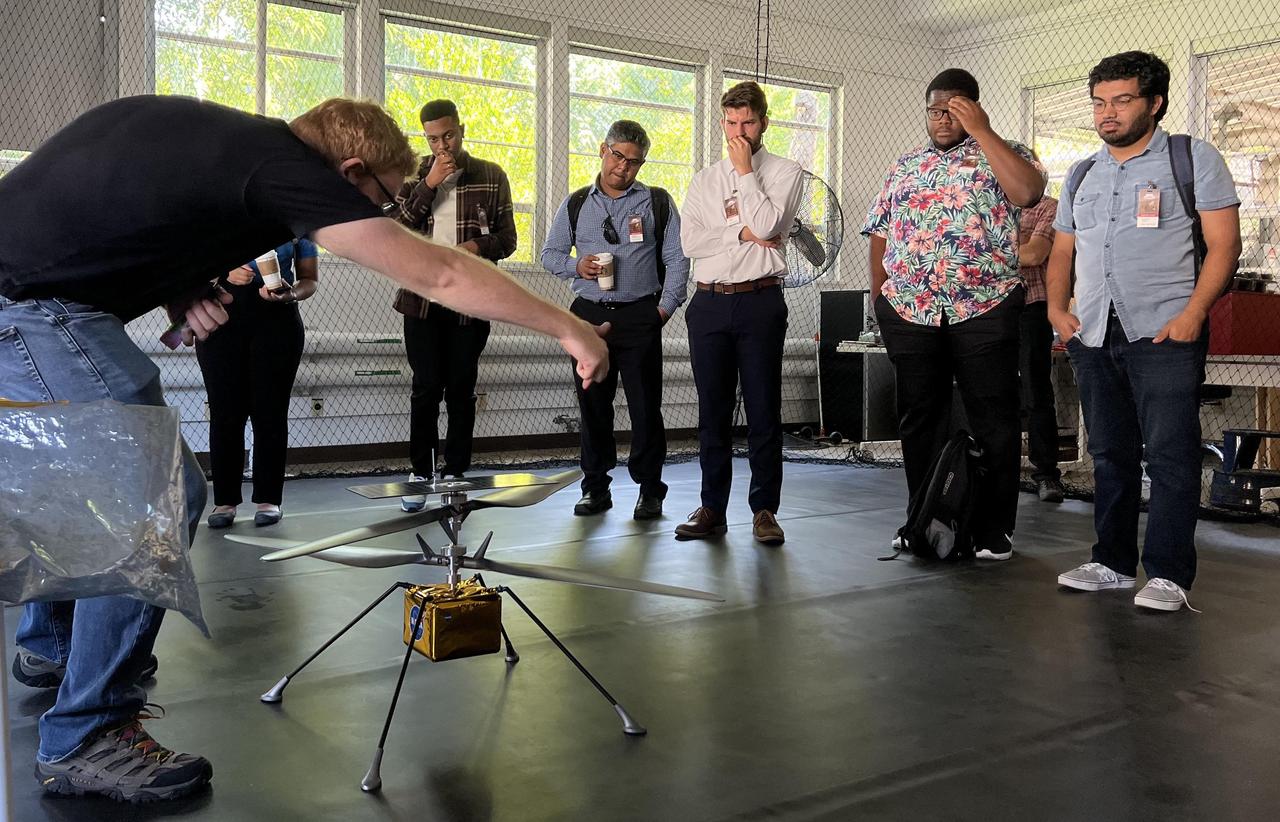
Participants in NASA's Minority Serving Institutions Space Accelerator program surround a full-scale model of NASA's Mars Ingenuity Helicopter as engineer Michael Starch discusses the mission. The group was visiting NASA's Jet Propulsion Laboratory on Aug. 18, 2022. These participants were members of three teams named as awardees in the first-of-its-kind accelerator program, a competition to advance the NASA's goals and meet its needs in the areas of machine learning, artificial intelligence, and development of autonomous systems while also engaging underrepresented academic institutions and reducing barriers for them to submit ideas to the agency. The program provides funding, business training through a 10-week accelerator course, and mentorship to help the teams develop ideas for systems that can operate without human oversight for future science missions in space and on Earth. The teams were made up of professors and students from Fayetteville State University in North Carolina, University of Massachusetts Boston, and California State University, Northridge. At the conclusion of the accelerator, participants arrived in Southern California for a variety of events, including two days at JPL. The program is a partnership between NASA's Science Mission Directorate, its Earth Science Technology Office, the Minority University Research Education Project within the agency's Office of STEM Engagement, JPL, and Starburst, a global aerospace accelerator company based in Los Angeles. https://photojournal.jpl.nasa.gov/catalog/PIA25315
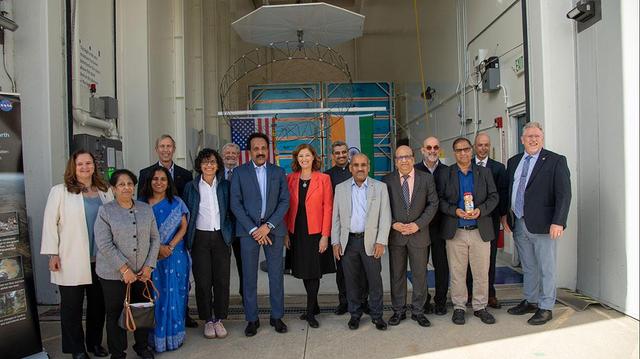
Officials from NASA, the Indian Space Research Organization (ISRO), and the Embassy of India hold a send-off ceremony for the NASA-ISRO Synthetic Aperture Radar (NISAR) science instrument payload on Feb. 3, 2023, outside a clean room at NASA's Jet Propulsion Laboratory in Southern California. The payload is scheduled to be shipped to India in March. Pictured left to right: Karen St. Germain, director, Earth Science Division, NASA; Mitra Dutta, NISAR program executive, NASA; Sripriya Ranganathan, ambassador and deputy chief of mission, Indian Embassy; Larry James, deputy director, JPL; Bhavya Lal, associate administrator for technology, policy, and strategy, NASA; Jim Graf, director, Earth Science and Technology Directorate, JPL; S. Somanath, chairman, ISRO; Laurie Leshin, director, JPL; Krunal Joshi, counselor, space and ISRO technical liaison officer, Indian Embassy; M. Sankaran, director, U R Rao Satellite Centre, ISRO; Shantanu Bhatawdekar, scientific secretary, ISRO; Paul Rosen, NISAR project scientist, JPL; CV Shrikant, NISAR project director, ISRO; Phil Barela, NISAR project manager, JPL; and Gerald Bawden, NISAR program scientist, NASA. NISAR – a joint effort between NASA and ISRO – will measure changes to Earth's land ice surfaces down to fractions of an inch. Data collected by this satellite will help researchers monitor a wide range of changes critical to life on Earth in unprecedented detail. This includes spotting warning signs of imminent volcanic eruptions, helping to monitor groundwater supplies, tracking the melt rate of ice sheets tied to sea level rise, and observing shifts in the distribution of vegetation around the world. The data will inform humanity's responses to urgent challenges posed by natural disasters and climate change, and help communities prepare for and manage hazards. There are two instruments on the satellite that will send and receive radar signals to and from Earth's surface to make the mission's measurements. An L-band synthetic aperture radar (SAR), which uses a signal wavelength of around 9 inches (24 centimeters), and an S-band SAR with a signal wavelength of nearly 5 inches (12 centimeters). Both will bounce their microwave signal off of the planet's surface and record how long it takes the signal to make one roundtrip, as well as the strength of that return signal. This enables the researchers to calculate the distance from the spacecraft to Earth's surface and thereby determine how the land or ice is changing. An antenna reflector nearly 40 feet (12 meters) in diameter, supported by a deployable boom, will focus the microwave signals sent and received by the SARs. JPL, which is managed for NASA by Caltech in Pasadena, leads the U.S. component of NISAR and is providing the mission's L-band SAR instrument. NASA is also providing the radar reflector antenna, the deployable boom, a high-rate communication subsystem for science data, GPS receivers, a solid-state recorder, and payload data subsystem. ISRO is providing the spacecraft bus, the S-band SAR, the launch vehicle, and associated launch services and satellite mission operations. https://photojournal.jpl.nasa.gov/catalog/PIA25600
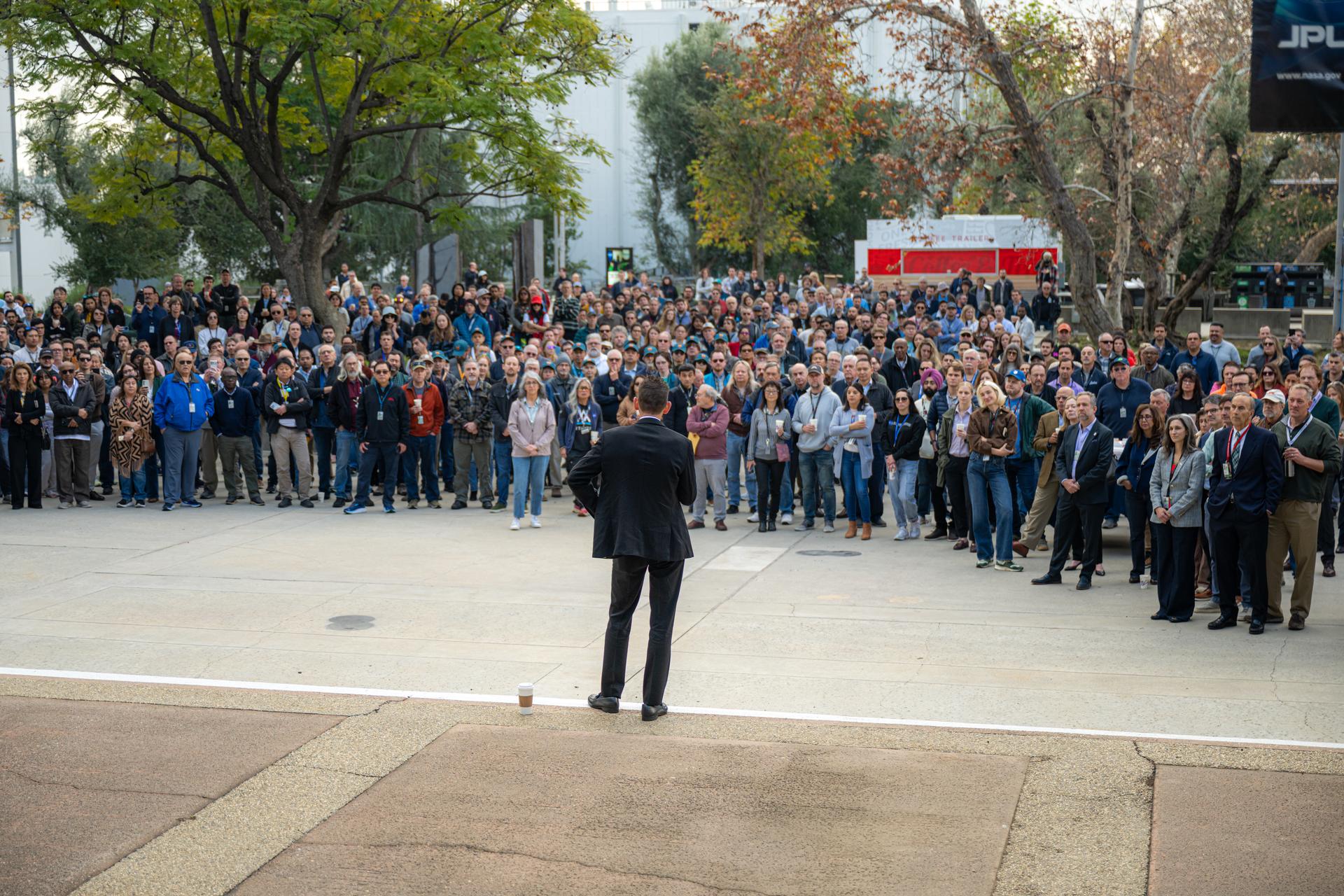
NASA Administrator Jared Isaacman speaks during a workforce Q&A session, Saturday, Jan. 24, 2026, at NASA’s Jet Propulsion Laboratory (JPL) in Pasadena, Calif. JPL marks the eighth stop in Isaacman’s roadshow to visit NASA facilities and engage directly with the agency’s workforce. Photo Credit: (NASA/John Kraus)

NASA Administrator Jared Isaacman speaks during a workforce Q&A session, Saturday, Jan. 24, 2026, at NASA’s Jet Propulsion Laboratory (JPL) in Pasadena, Calif. JPL marks the eighth stop in Isaacman’s roadshow to visit NASA facilities and engage directly with the agency’s workforce. Photo Credit: (NASA/John Kraus)

NASA Administrator Jared Isaacman, right, greets members of the workforce, Saturday, Jan. 24, 2026, at NASA’s Jet Propulsion Laboratory (JPL) in Pasadena, Calif. JPL marks the eighth stop in Isaacman’s roadshow to visit NASA facilities and engage directly with the agency’s workforce. Photo Credit: (NASA/John Kraus)

NASA Administrator Jared Isaacman, center, greets members of the workforce, Saturday, Jan. 24, 2026, at NASA’s Jet Propulsion Laboratory (JPL) in Pasadena, Calif. JPL marks the eighth stop in Isaacman’s roadshow to visit NASA facilities and engage directly with the agency’s workforce. Photo Credit: (NASA/John Kraus)
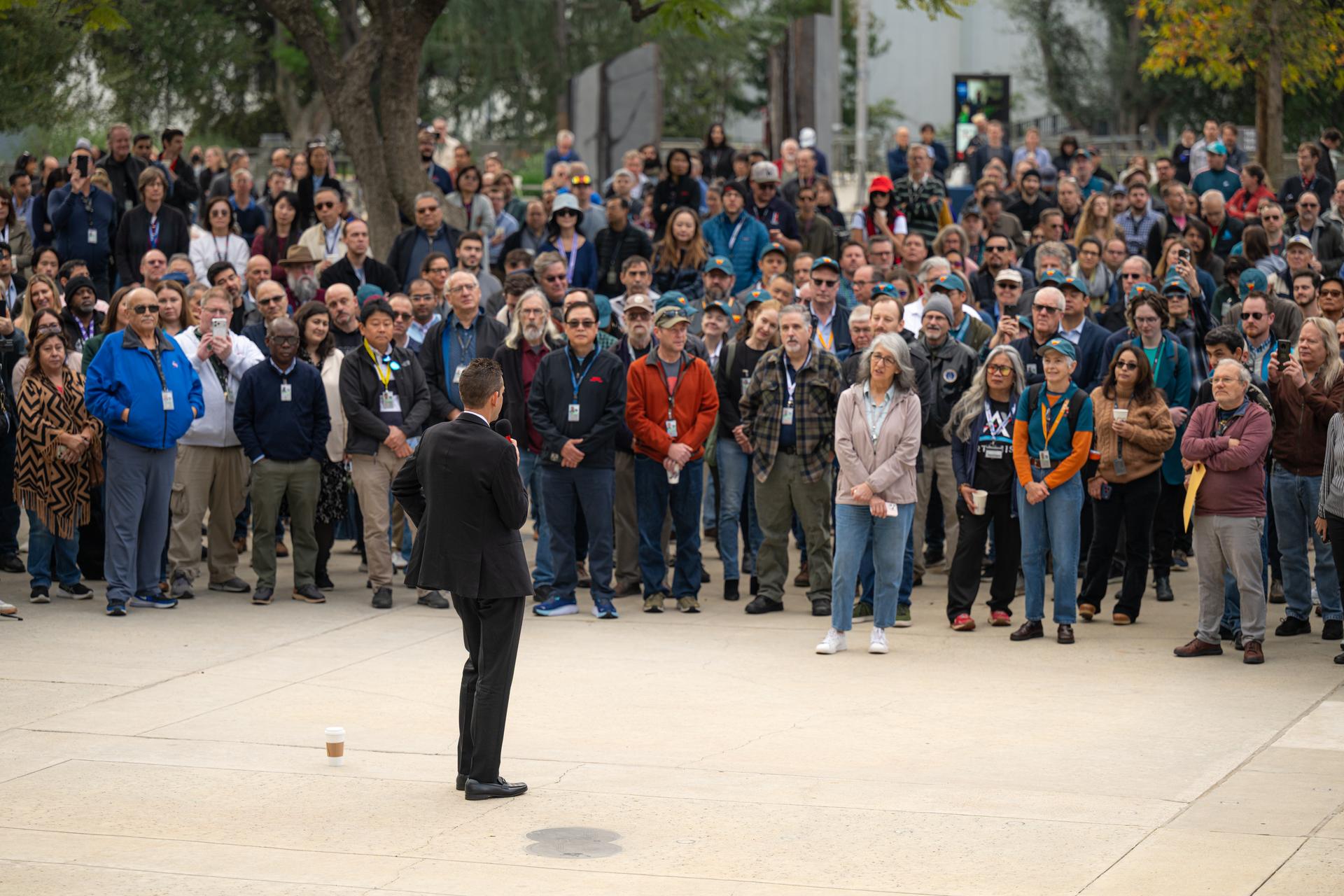
NASA Administrator Jared Isaacman speaks during a workforce Q&A session, Saturday, Jan. 24, 2026, at NASA’s Jet Propulsion Laboratory (JPL) in Pasadena, Calif. JPL marks the eighth stop in Isaacman’s roadshow to visit NASA facilities and engage directly with the agency’s workforce. Photo Credit: (NASA/John Kraus)

NASA Administrator Jared Isaacman, left, greets members of the workforce, Saturday, Jan. 24, 2026, at NASA’s Jet Propulsion Laboratory (JPL) in Pasadena, Calif. JPL marks the eighth stop in Isaacman’s roadshow to visit NASA facilities and engage directly with the agency’s workforce. Photo Credit: (NASA/John Kraus)
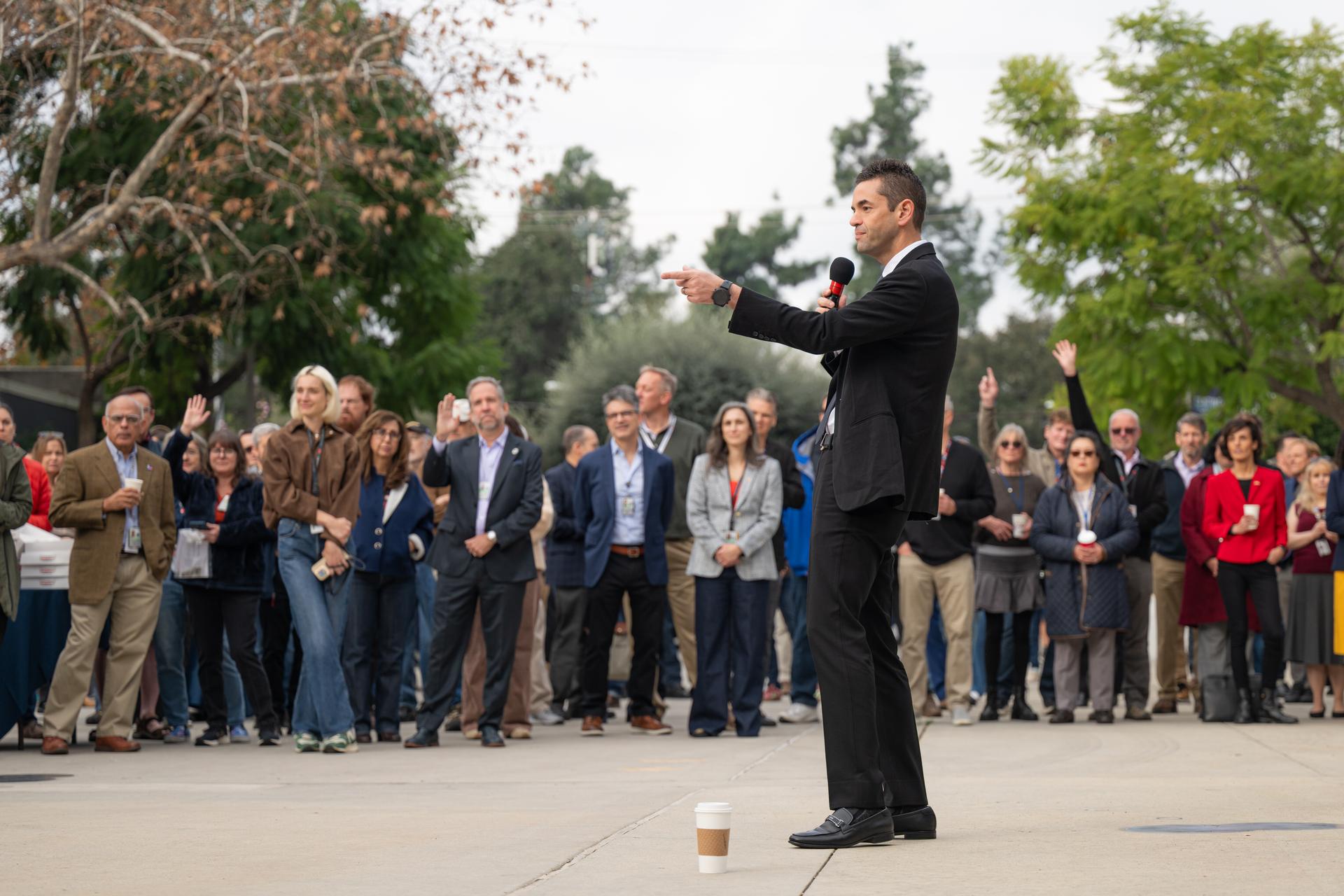
NASA Administrator Jared Isaacman speaks during a workforce Q&A session, Saturday, Jan. 24, 2026, at NASA’s Jet Propulsion Laboratory (JPL) in Pasadena, Calif. JPL marks the eighth stop in Isaacman’s roadshow to visit NASA facilities and engage directly with the agency’s workforce. Photo Credit: (NASA/John Kraus)
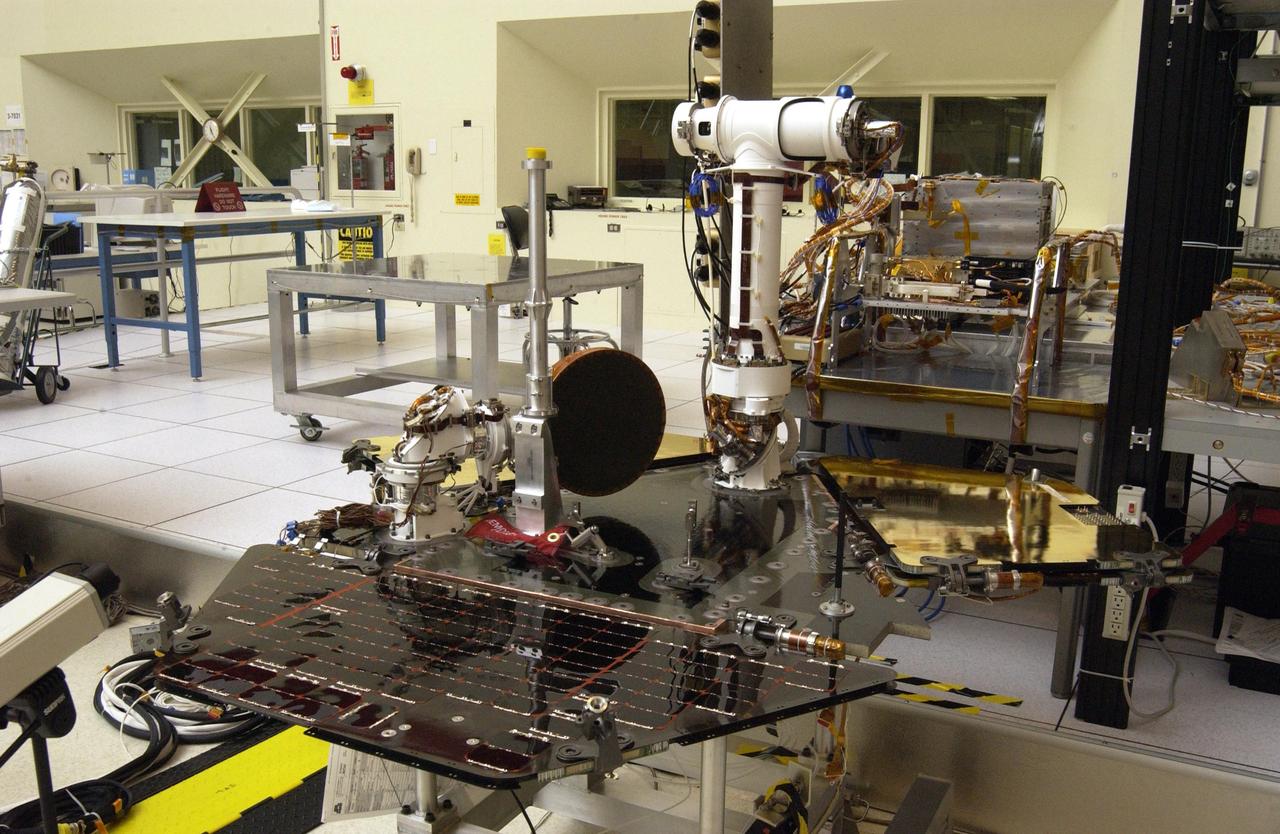
NASA Rover 2 equipment deck, with solar arrays partially deployed, in NASA JPL Spacecraft Assembly Facility cleanroom.
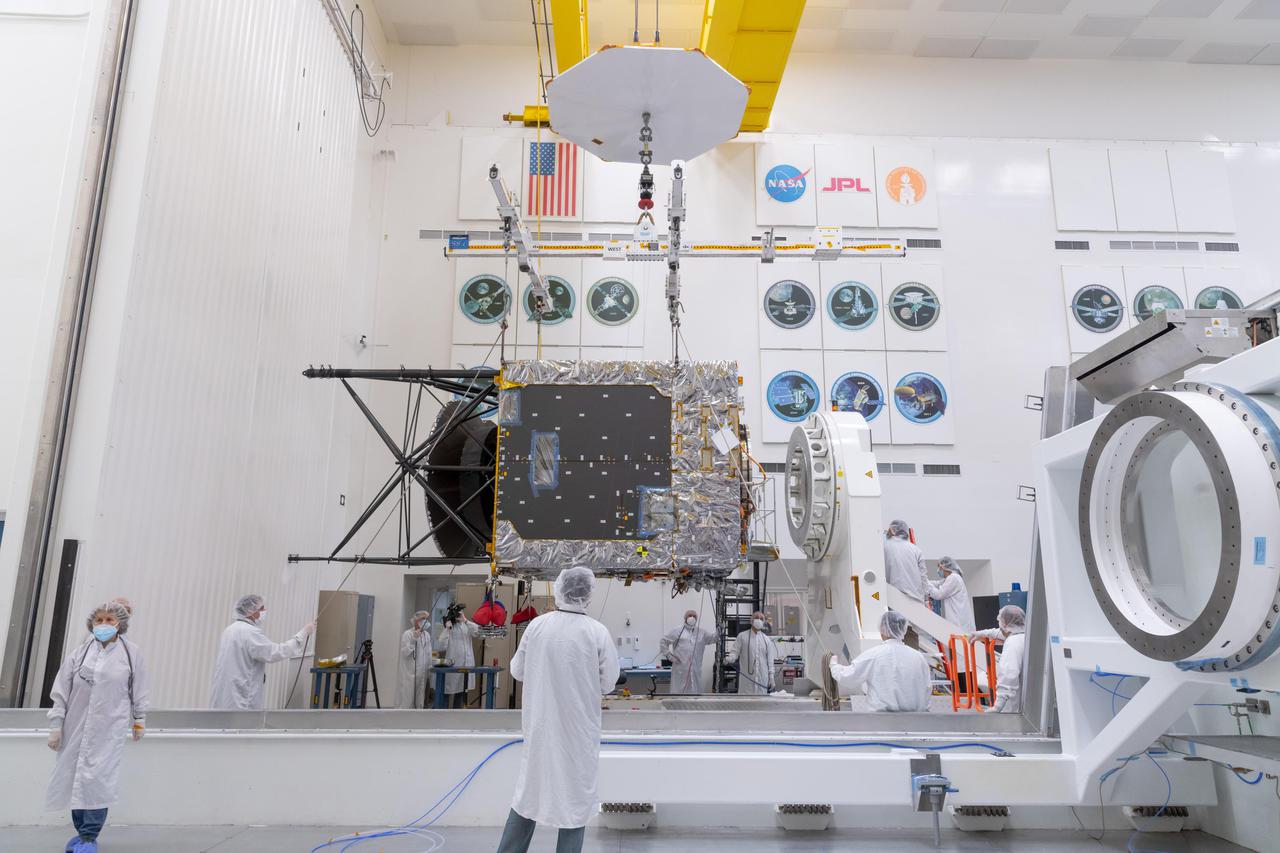
A major component of NASA's Psyche spacecraft has been delivered to the agency's Jet Propulsion Laboratory in Southern California, where the phase known as assembly, test, and launch operations (ATLO) is now underway. Taken on March 28, 2021, this photo shows the Solar Electric Propulsion (SEP) Chassis just after it was delivered to JPL by Maxar Technologies. Here, the chassis is about to be attached to the dolly in High Bay 1 of JPL's Spacecraft Assembly Facility. Maxar's team in Palo Alto, California, designed and built the SEP Chassis, which includes all the primary and secondary structure and the hardware components needed for the high-power electrical system, the propulsion system, the thermal system, guidance and navigation sensors and actuators, and the high-gain antenna. Over the next year additional hardware will be added to the spacecraft, including the command and data handling system, a power distribution assembly, the X-band telecommunications hardware suite, three science instruments (two imagers, two magnetometers, and a Gamma Ray Neutron Spectrometer), and a deep space optical communications technology demonstrator. The spacecraft will finish assembly and then undergo rigorous checkout and testing before being shipped to NASA's Kennedy Space Center in Cape Canaveral, Florida, for an August 2022 launch to the main asteroid belt. Psyche will arrive at the metal-rich asteroid of the same name in 2026, orbiting for 21 months to investigate its composition. Scientists think that Psyche is made up of mostly iron and nickel — similar to Earth's core. Exploring the asteroid could give valuable insight into how our own planet and others formed. https://photojournal.jpl.nasa.gov/catalog/PIA24474
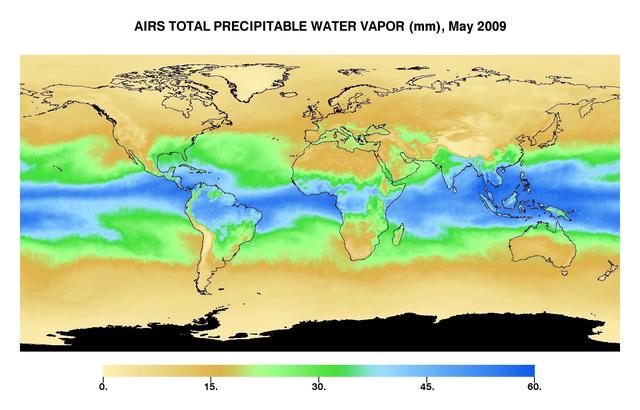
This image represents the total precipitable water vapor for May, 2009 as observed by JPL Atmospheric Infrared Sounder on NASA Aqua satellite.
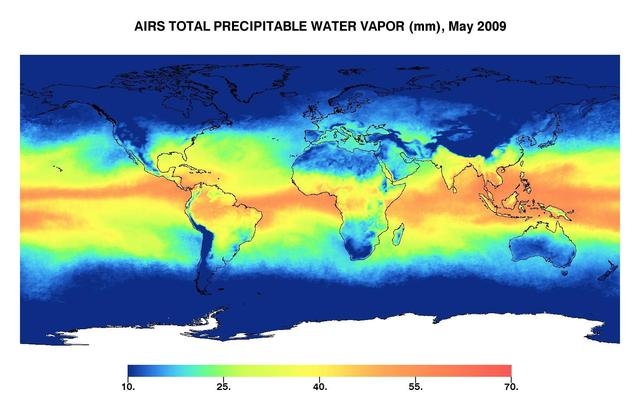
This image represents the total precipitable water vapor for May 2009 as observed by JPL Atmospheric Infrared Sounder on NASA Aqua satellite.
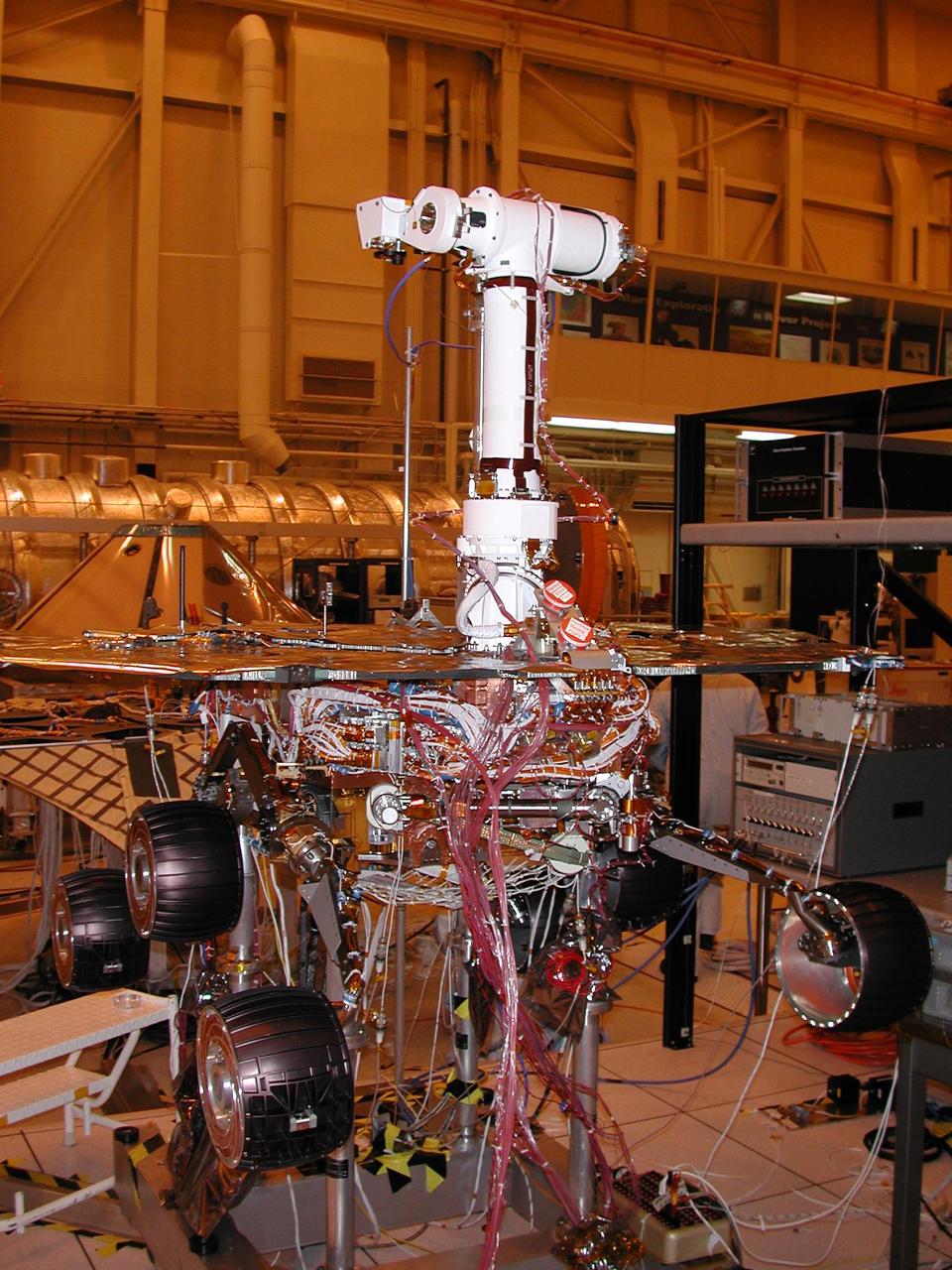
Engineers for NASA Mars Exploration Rover Mission are completing assembly and testing for the twin robotic geologists at JPL.
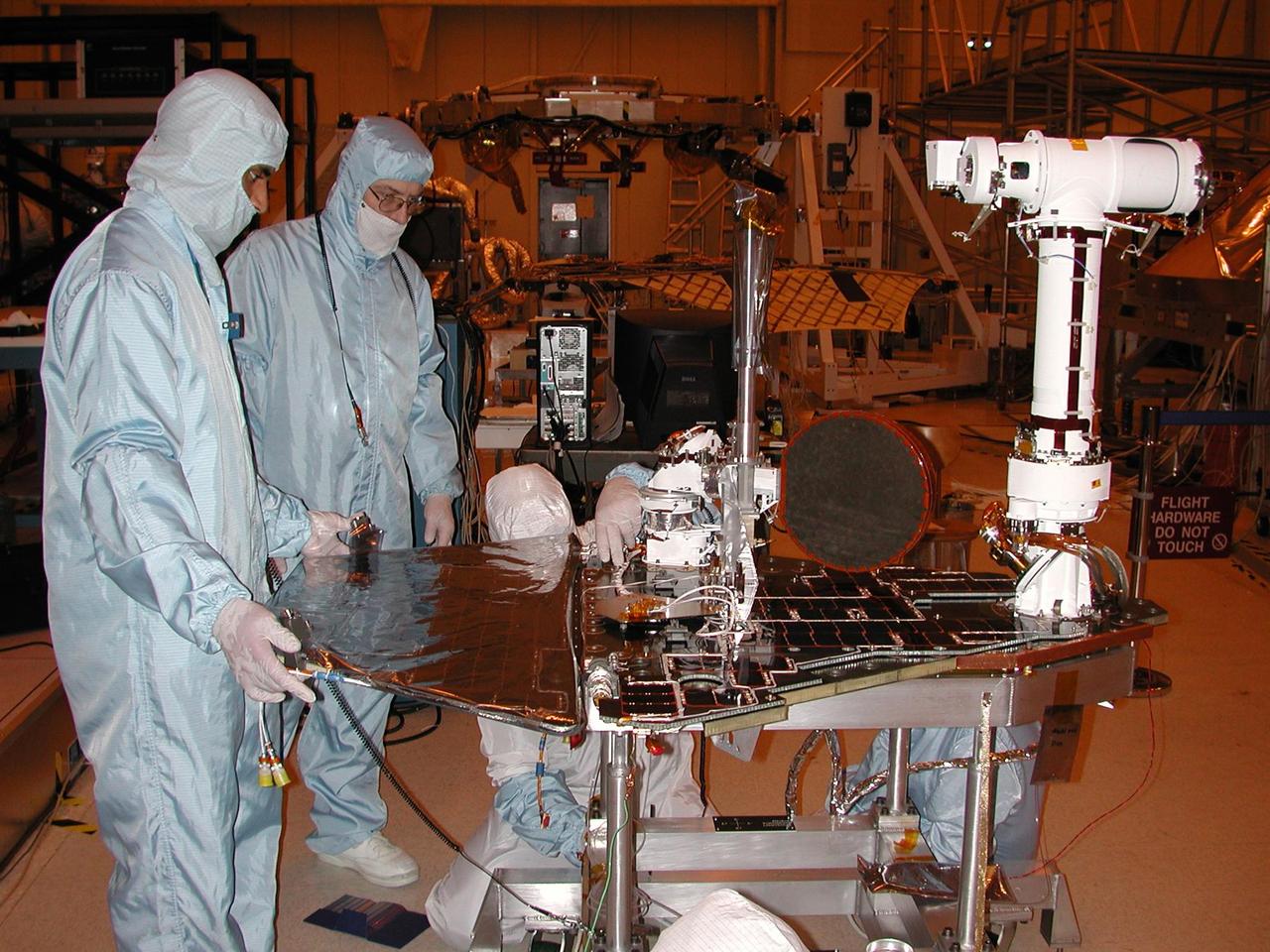
Engineers for NASA Mars Exploration Rover Mission are completing assembly and testing for the twin robotic geologists at JPL.
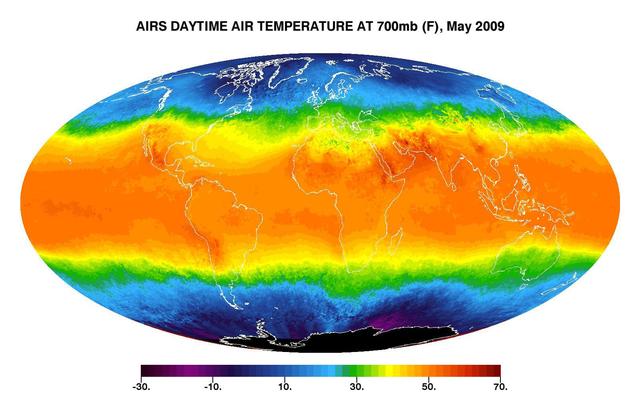
This image shows average daytime temperatures in May, 2009, as observed by JPL Atmospheric Infrared Sounder on NASA Aqua satellite.
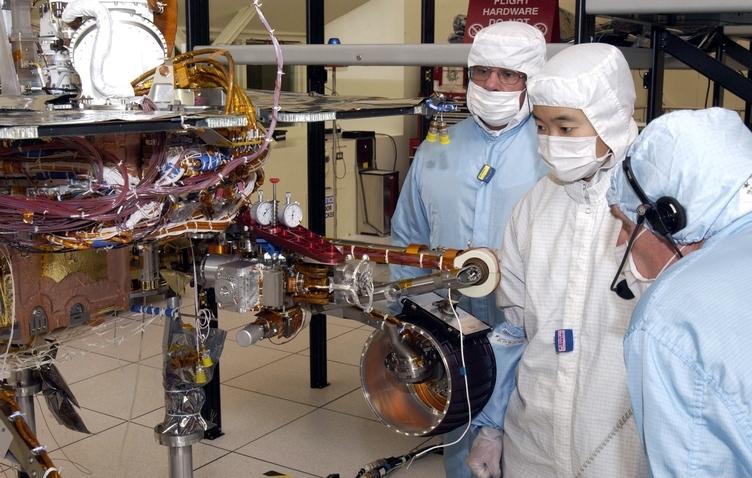
JPL engineers examine the robotic arm of NASA Mars Exploration Rover 1.
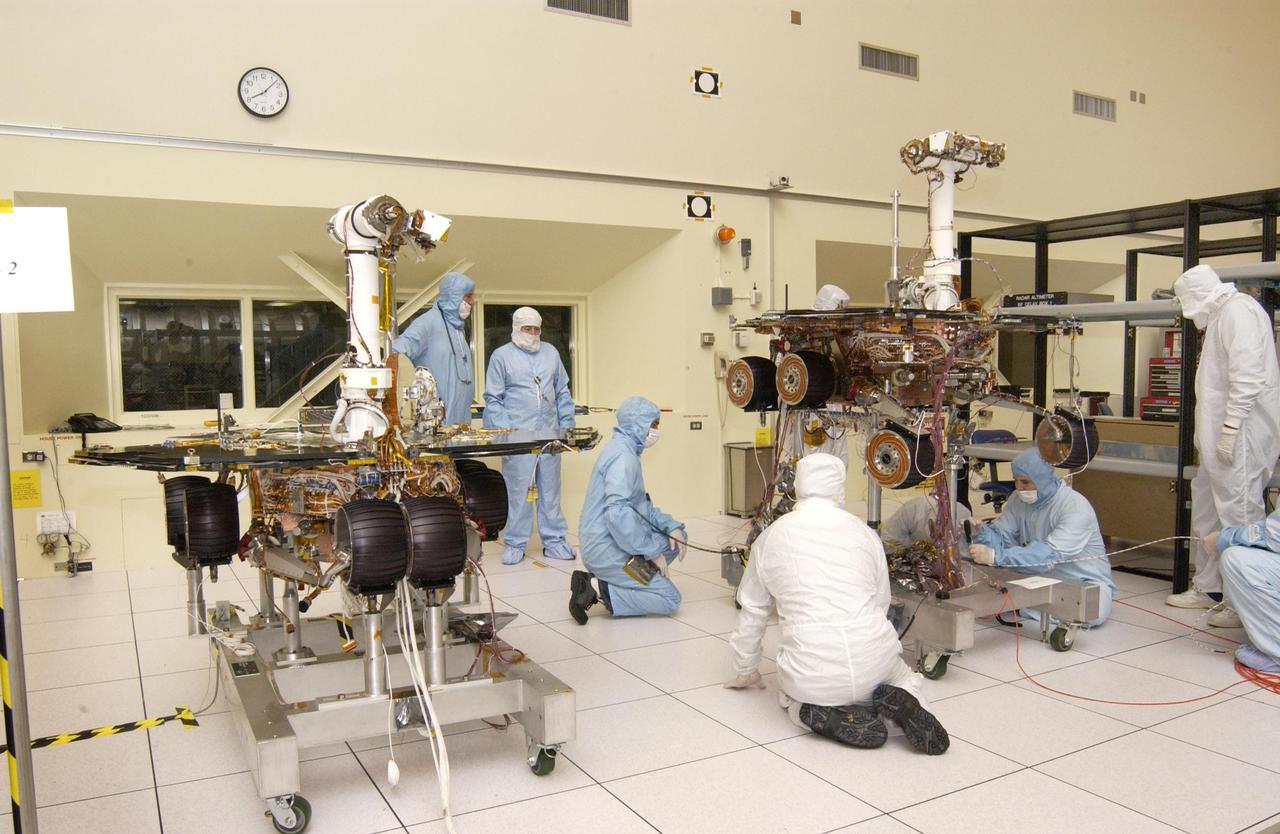
JPL engineers making adjustments to NASA Mars Exploration Rover 1.
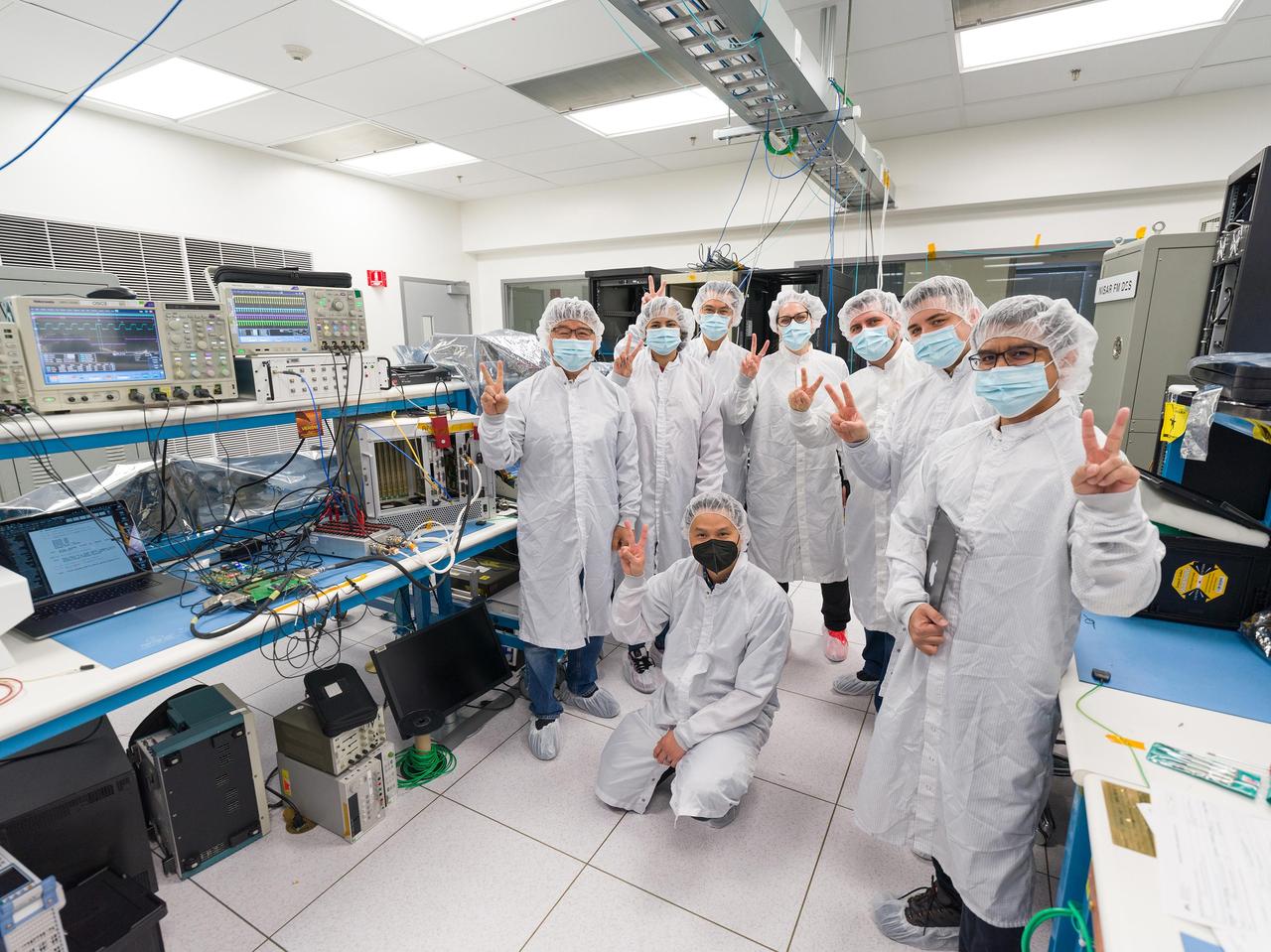
Seen here are members of the international team that participated in recent tests on prototype hardware for the Venus Interferometric Synthetic Aperture Radar (VISAR) at NASA's Jet Propulsion Laboratory in Southern California. VISAR is being developed at JPL for NASA's Venus Emissivity Radio Science, InSAR, Topography & Spectroscopy (VERITAS) mission that will launch within a decade to explore Earth's twin. In March 2023, the hardware underwent early interface tests in a JPL clean room, representing the first in a series to be run by JPL and Thales Alenia Space Italy (TASI), an international partner of the VERITAS mission that is contributing hardware to the instrument. Dressed in gowns to minimize the risk of contamination with sensitive electronics, the JPL VISAR digital team and TASI engineers pose for a photograph next to the laboratory benches where the tests took place. Figure A shows the same personnel without gowns for a team photo. From left to right: Marvin Cruz (JPL), Chester Lim (JPL), Tim Noh (JPL), Hana Haideri (JPL), Luca Di Marco Napini (TASI), Ernie Chuang (JPL), Dragana Perkovic-Martin (JPL), and Gabriel Mihu (TASI). JPL's Michael Burke, Anusha Yarlagadda, Duane Clark, and TASI's Antonio Delfino also participated in the tests but are not pictured. When VERITAS arrives in orbit, it will use VISAR to create detailed 3D global maps of Venus. The spacecraft will also carry a near-infrared spectrometer to figure out what the surface is made of. Together, the instruments will offer clues about the planet's past and present geologic processes, help reveal how the paths of Venus and Earth diverged, and how Venus lost its potential as a habitable world. VERITAS is managed by JPL. VERITAS and NASA's Deep Atmosphere Venus Investigation of Noble gases, Chemistry, and Imaging (DAVINCI) mission were selected in 2021 under NASA's Discovery Program as the agency's next missions to Venus. The Discovery Program is managed by the Planetary Missions Program Office at NASA's Marshall Space Flight Center in Huntsville, Alabama, for the Planetary Science Division of NASA's Science Mission Directorate in Washington. https://photojournal.jpl.nasa.gov/catalog/PIA25833

This poster highlights NASA JPL missions that provide important inputs to research on global and regional water resources. Water is crucial to life.

This poster highlights NASA JPL missions that provide important inputs to research on volcanoes, fires, earthquakes, droughts, tsunamis, floods and hurricanes.
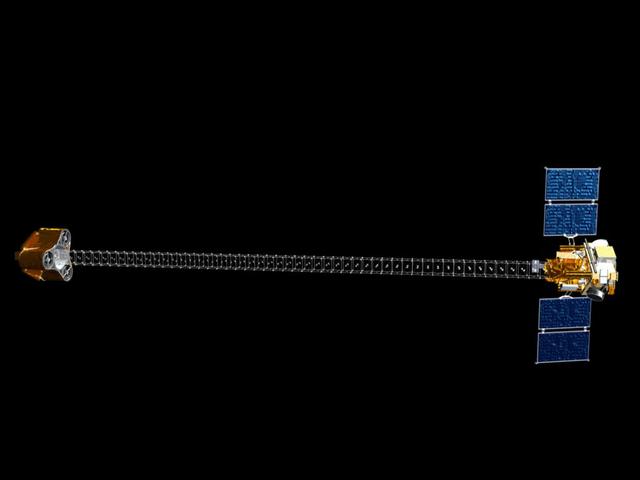
Artist concept of NASA Nuclear Spectroscopic Telescope Array, managed by JPL. It will expand our understanding of the origins and destinies of stars and galaxies.
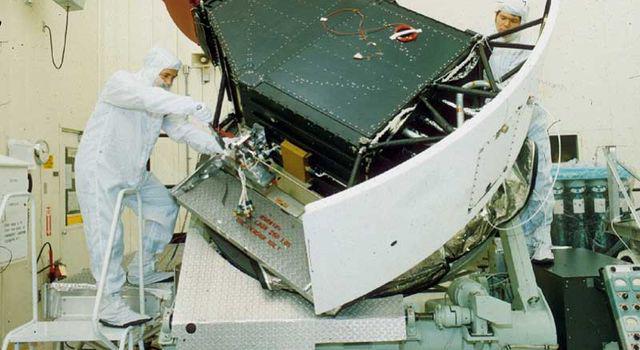
NASA's Wide Field and Planetary Camera 2 undergoes testing at JPL. https://photojournal.jpl.nasa.gov/catalog/PIA22912

A major component of NASA's Psyche spacecraft has been delivered to NASA's Jet Propulsion Laboratory in Southern California, where the phase known as assembly, test, and launch operations (ATLO) is now underway. This photo, shot March 28, 2021 shows engineers and technicians preparing to move the Solar Electric Propulsion (SEP) Chassis from its shipping container to a dolly in High Bay 1 of JPL's Spacecraft Assembly Facility. The photo was captured just after the chassis was delivered to JPL by Maxar Technologies. Maxar's team in Palo Alto, California, designed and built the SEP Chassis, which includes all the primary and secondary structure and the hardware components needed for the high-power electrical system, the propulsion system, the thermal system, guidance and navigation sensors and actuators, and the high-gain antenna. Over the next year, additional hardware will be added to the spacecraft including the command and data handling system, a power distribution assembly, the X-band telecommunications hardware suite, three science instruments (two imagers, two magnetometers, and a gamma ray neutron Spectrometer), and a deep space optical communications technology demonstrator. The spacecraft will finish assembly and then undergo rigorous checkout and testing before being shipped to NASA's Kennedy Space Center in Cape Canaveral, Florida, for an August 2022 launch to the main asteroid belt. Psyche will arrive at the metal-rich asteroid of the same name in 2026, orbiting for 21 months to investigate its composition. Scientists think that Psyche is made up of mostly iron and nickel — similar to Earth's core. Exploring the asteroid could give valuable insight into how our own planet and others formed. https://photojournal.jpl.nasa.gov/catalog/PIA24475
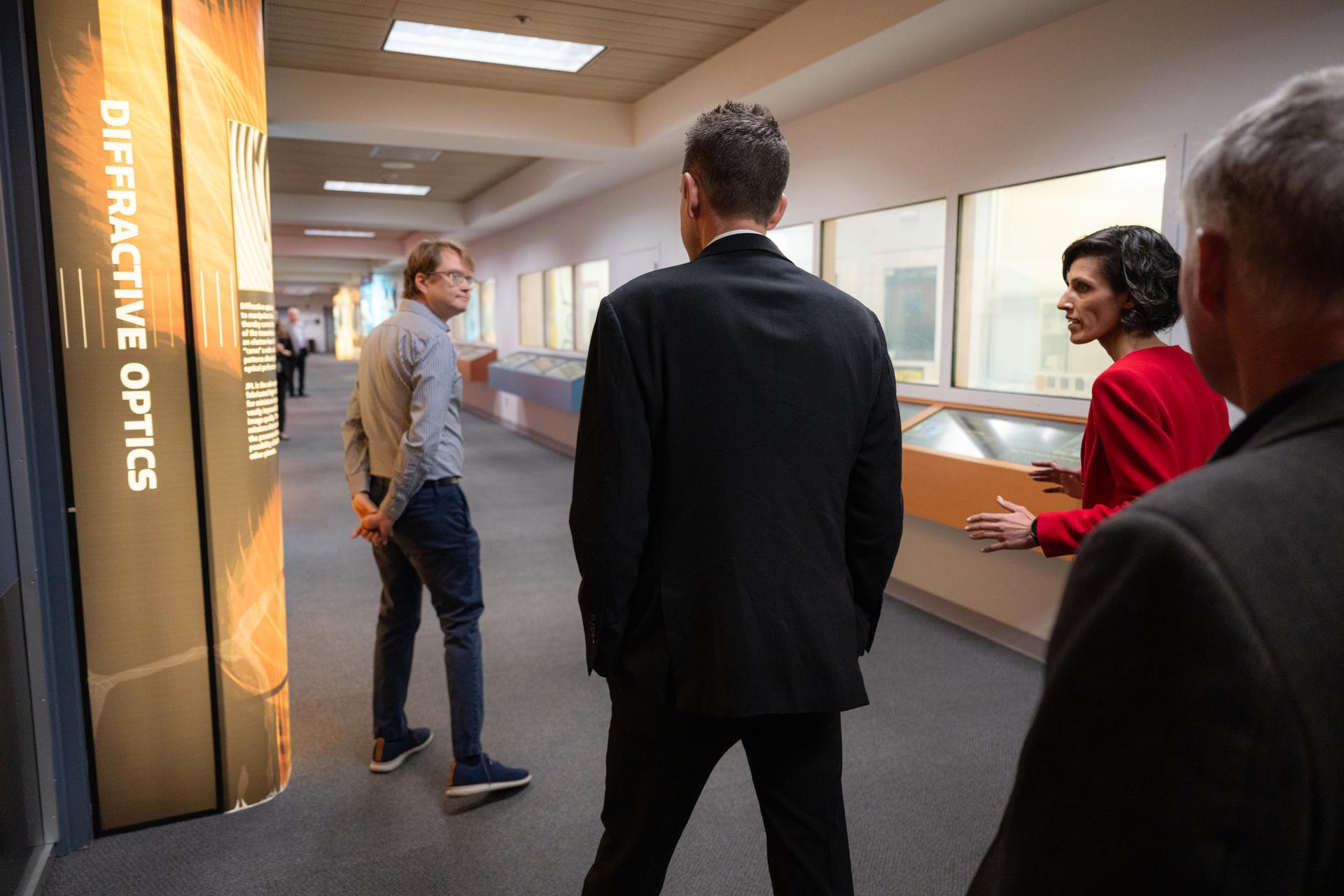
NASA Administrator Jared Isaacman, center, tours the Microdevices Laboratory at NASA’s Jet Propulsion Laboratory, Saturday, Jan. 24, 2026, in Pasadena, Calif. JPL marks the eighth stop in Isaacman’s roadshow to visit NASA facilities and engage directly with the agency’s workforce. Photo Credit: (NASA/John Kraus)

Data from JPL Advanced Spaceborne Thermal Emission and Reflection Radiometer instrument on NASA Terra satellite provides views of the L.A. Basin, including Dodger Stadium, the L.A.X. airport and JPL.
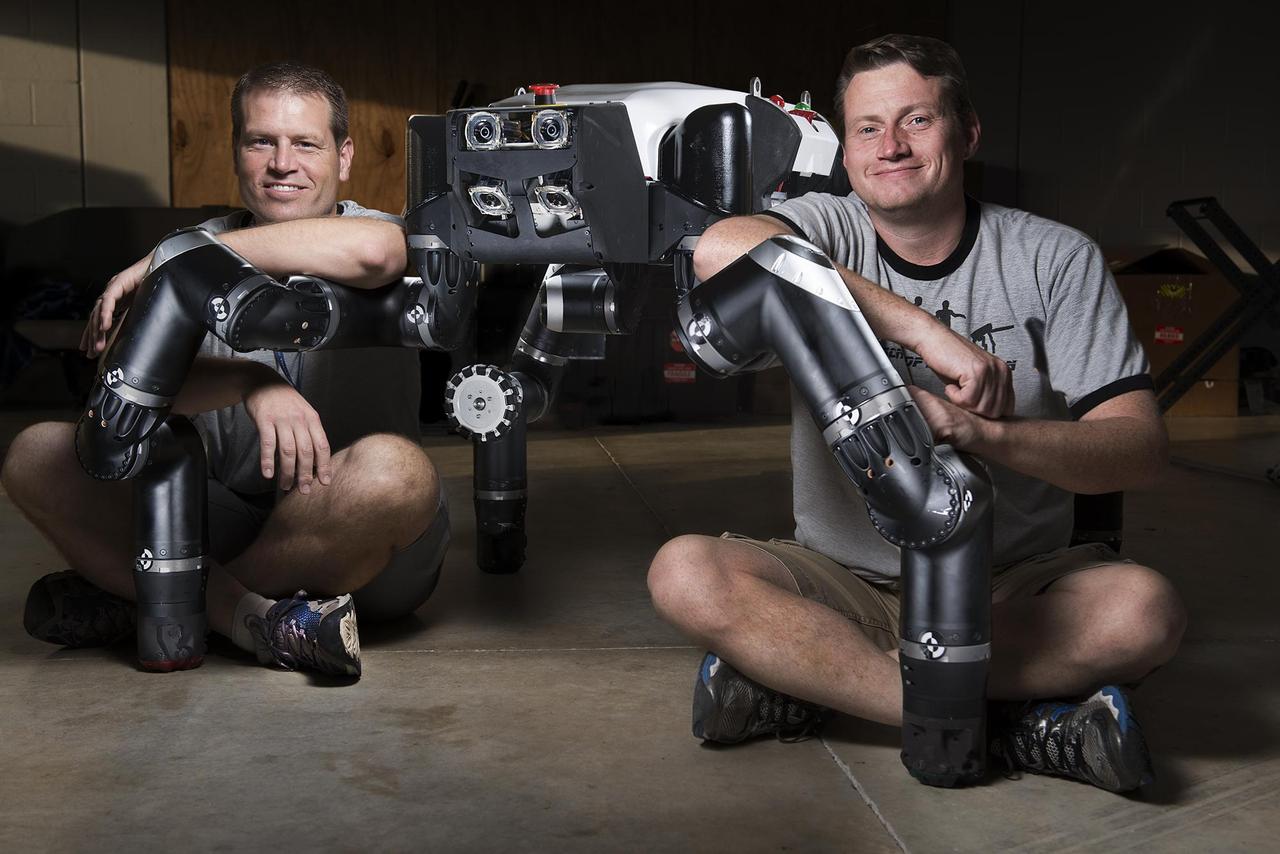
Limbed robot RoboSimian was developed at NASA Jet Propulsion Laboratory, seen here with Brett Kennedy, supervisor of the JPL Robotic Vehicles and Manipulators Group, and Chuck Bergh, a senior engineer in JPL Robotic Hardware Systems Group.
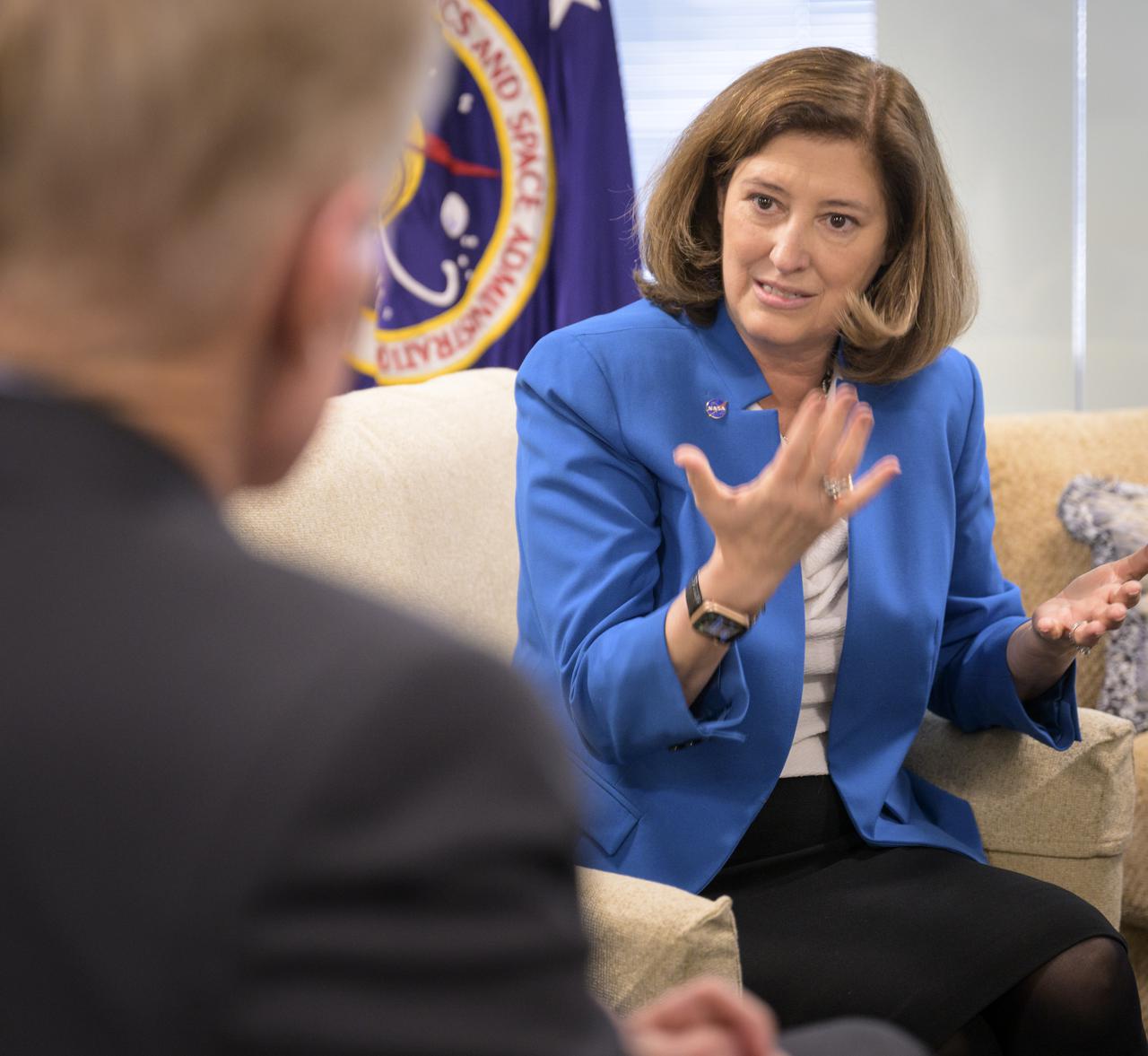
NASA Administrator Bill Nelson, left, meets with incoming JPL Director Dr. Laurie Leshin, Tuesday, Feb., 15, 2022, at the Mary W. Jackson NASA Headquarters building in Washington. Photo Credit: (NASA/Bill Ingalls)

This anaglyph shows NASA Jet Propulsion Laboratory JPL in Pasadena, California as seen by the instrument onboard NASA Shuttle Radar Topography Mission. 3D glasses are necessary to view this image.
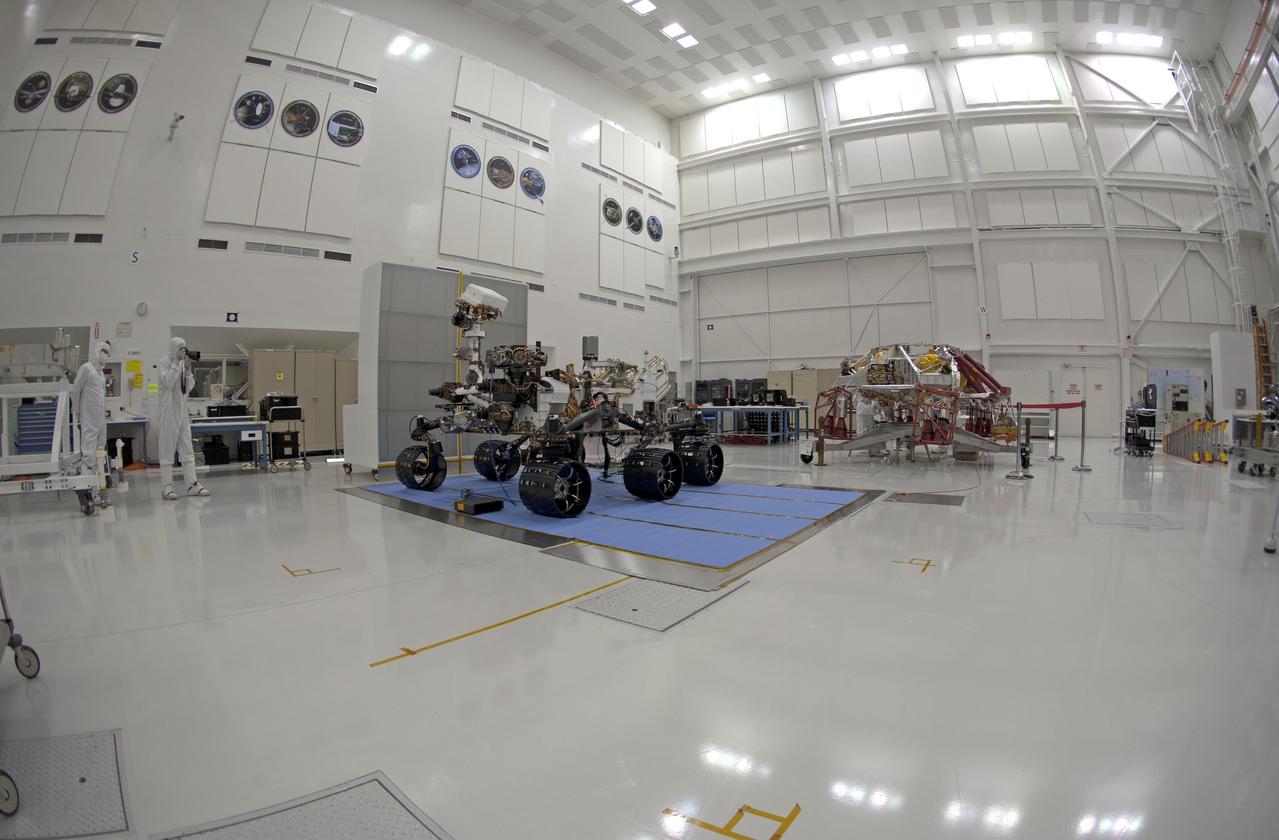
Left-eye view of NASA Curiosity rover and its powered descent vehicle pose for photographs prior to being integrated for launch at JPL Spacecraft Assembly Facility.
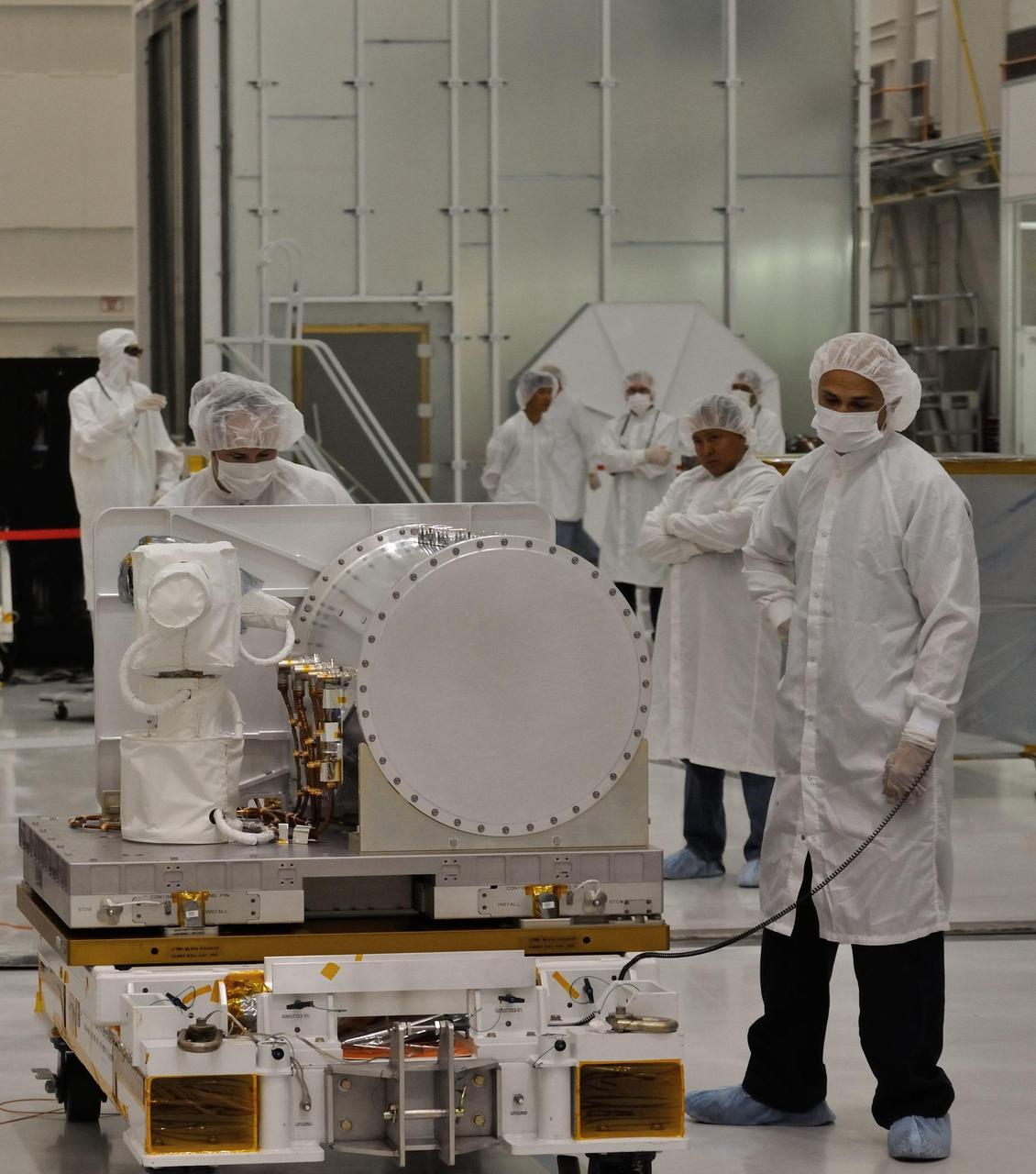
This photo shows the Optical PAyload for Lasercomm Science OPALS flight terminal at JPL being prepared for shipment to NASA Kennedy Space Center.
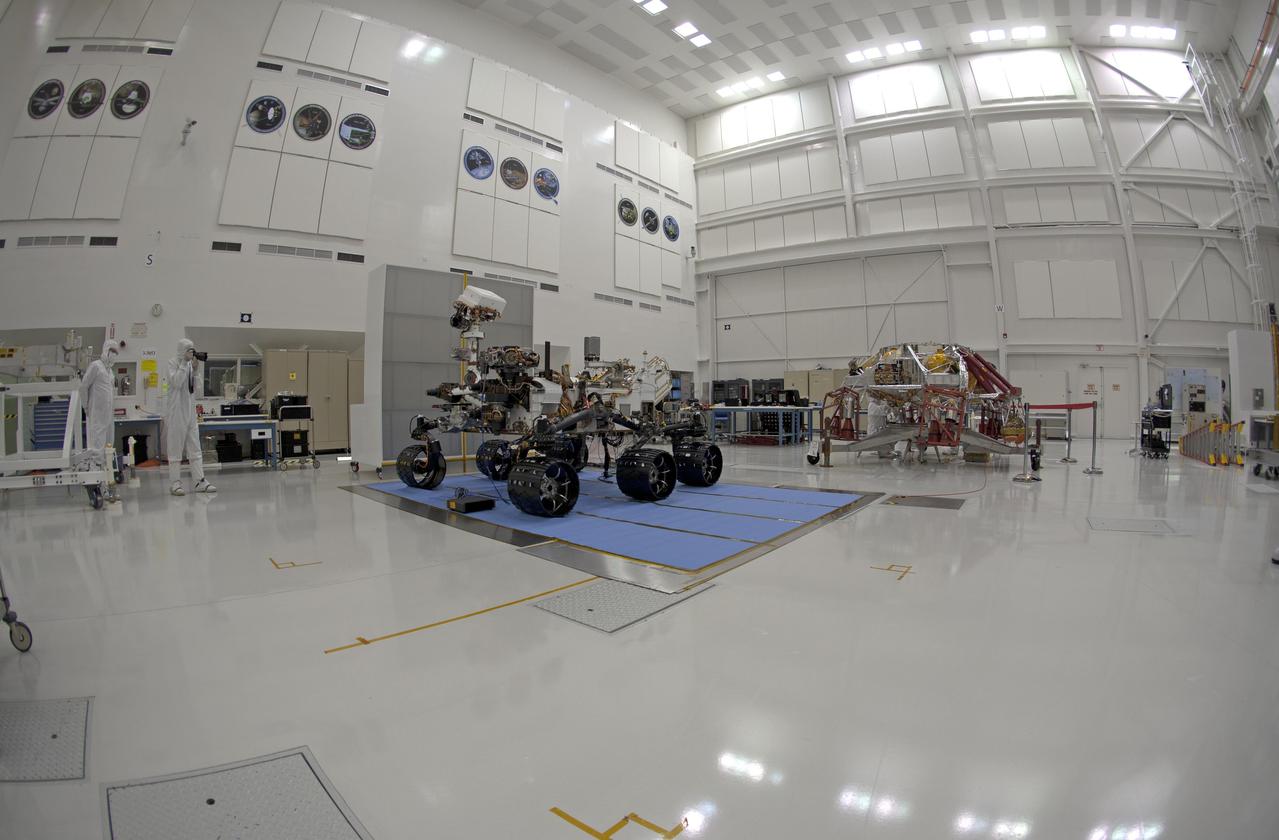
Right-eye view of NASA Curiosity rover and its powered descent vehicle pose for photographs prior to being integrated for launch at JPL Spacecraft Assembly Facility.

This poster highlights NASA JPL missions that provide important inputs to research in sea level rise and variability -- key measures of ocean circulation and global climate change.

This poster highlights the JPL cubesat missions. NASA CubeSat Programs provide opportunities for small satellite systems to fly as auxiliary payloads on planned missions.
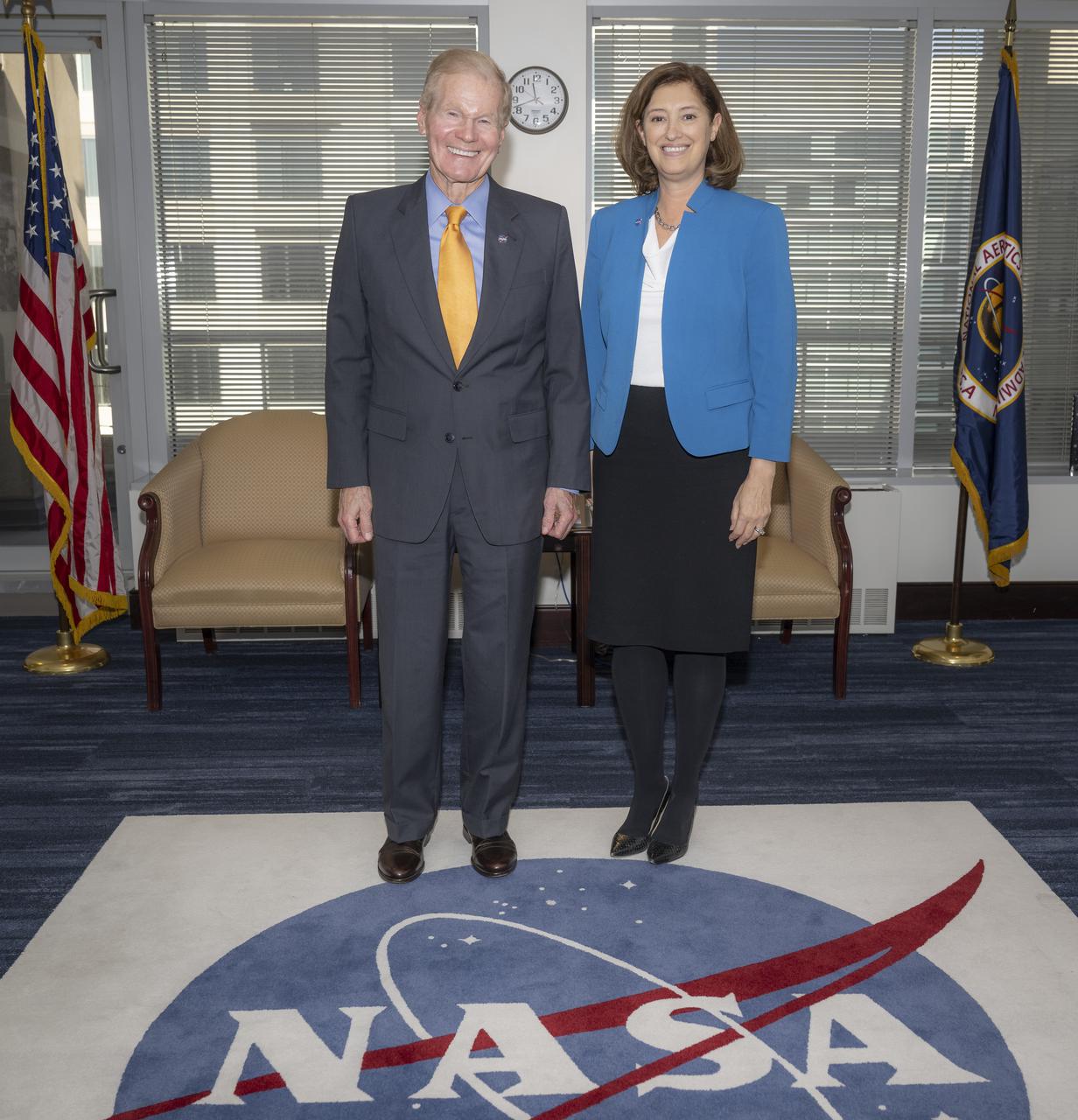
NASA Administrator Bill Nelson, left, and incoming JPL Director Dr. Laurie Leshin, pose for a photograph at the conclusion of their meeting, Tuesday, Feb., 15, 2022, at the Mary W. Jackson NASA Headquarters building in Washington. Photo Credit: (NASA/Bill Ingalls)
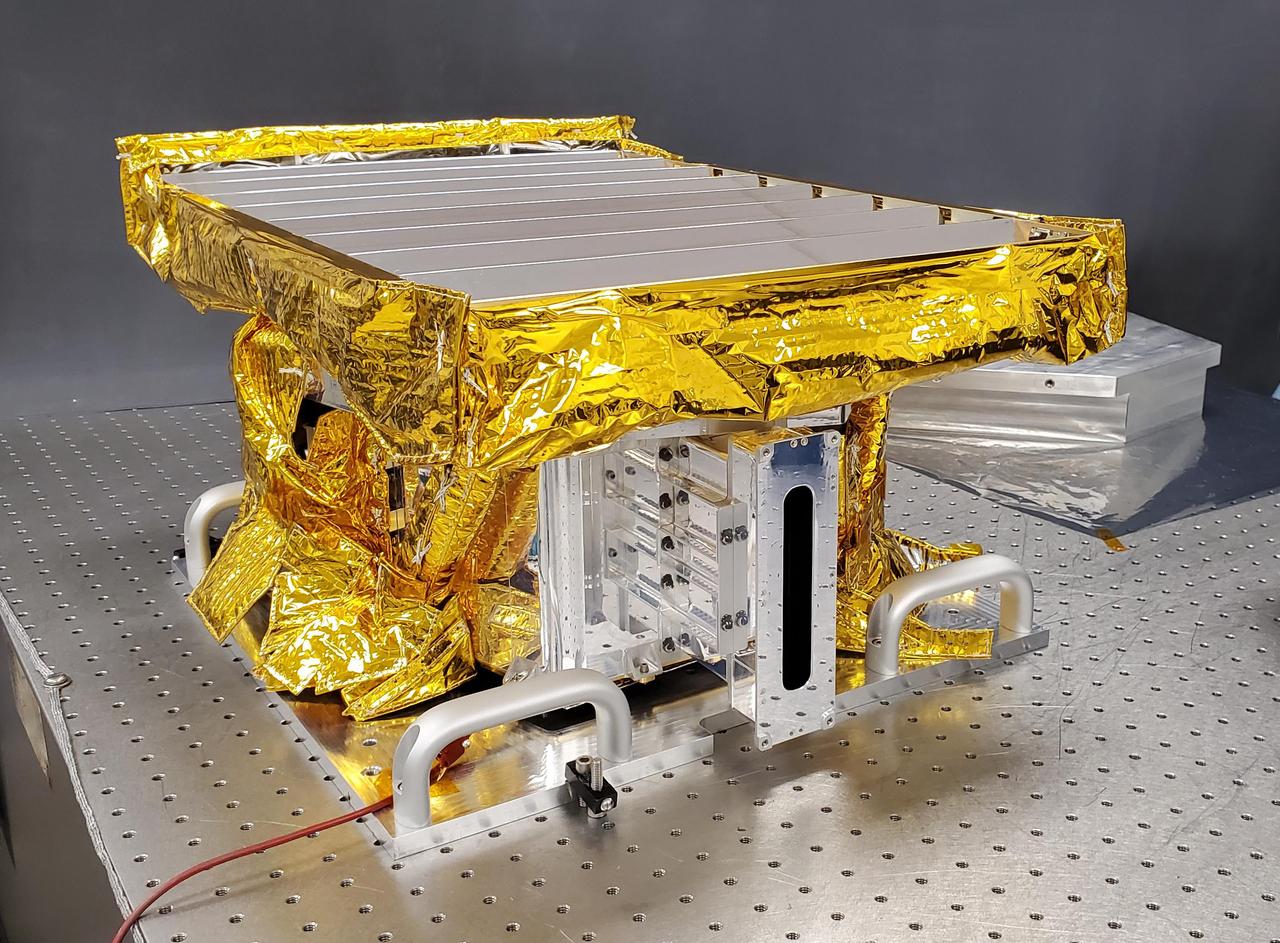
The High-resolution Volatiles and Minerals Moon Mapper (HVM³) sits in a clean room at NASA's Jet Propulsion Laboratory in Southern California in early December 2022. The JPL-built instrument was later shipped to Lockheed Martin Space in Littleton, Colorado, to be integrated with NASA's Lunar Trailblazer spacecraft. HVM³ is an imaging spectrometer that will detect and map water on the Moon's surface to determine its abundance, location, form, and how it changes over time. A second instrument, the Lunar Thermal Mapper infrared multispectral imager, is being developed by the University of Oxford in the U.K. and is scheduled for delivery and integration in early 2023. Lunar Trailblazer was selected under NASA's Small Innovative Missions for Planetary Exploration (SIMPLEx) program in 2019. The Lunar Trailblazer mission is managed by JPL and its science investigation is led by Caltech in Pasadena, California. Managed for NASA by Caltech, JPL also provides system engineering, mission assurance, the HVM³ instrument, as well as navigation. Lockheed Martin Space provides the spacecraft and integrates the flight system, under contract with Caltech. SIMPLEx mission investigations are managed by the Planetary Missions Program Office at NASA's Marshall Space Flight Center in Huntsville, Alabama, as part of the Discovery Program at NASA Headquarters in Washington. The program conducts space science investigations in the Planetary Science Division of NASA's Science Mission Directorate at NASA Headquarters. https://photojournal.jpl.nasa.gov/catalog/PIA25256
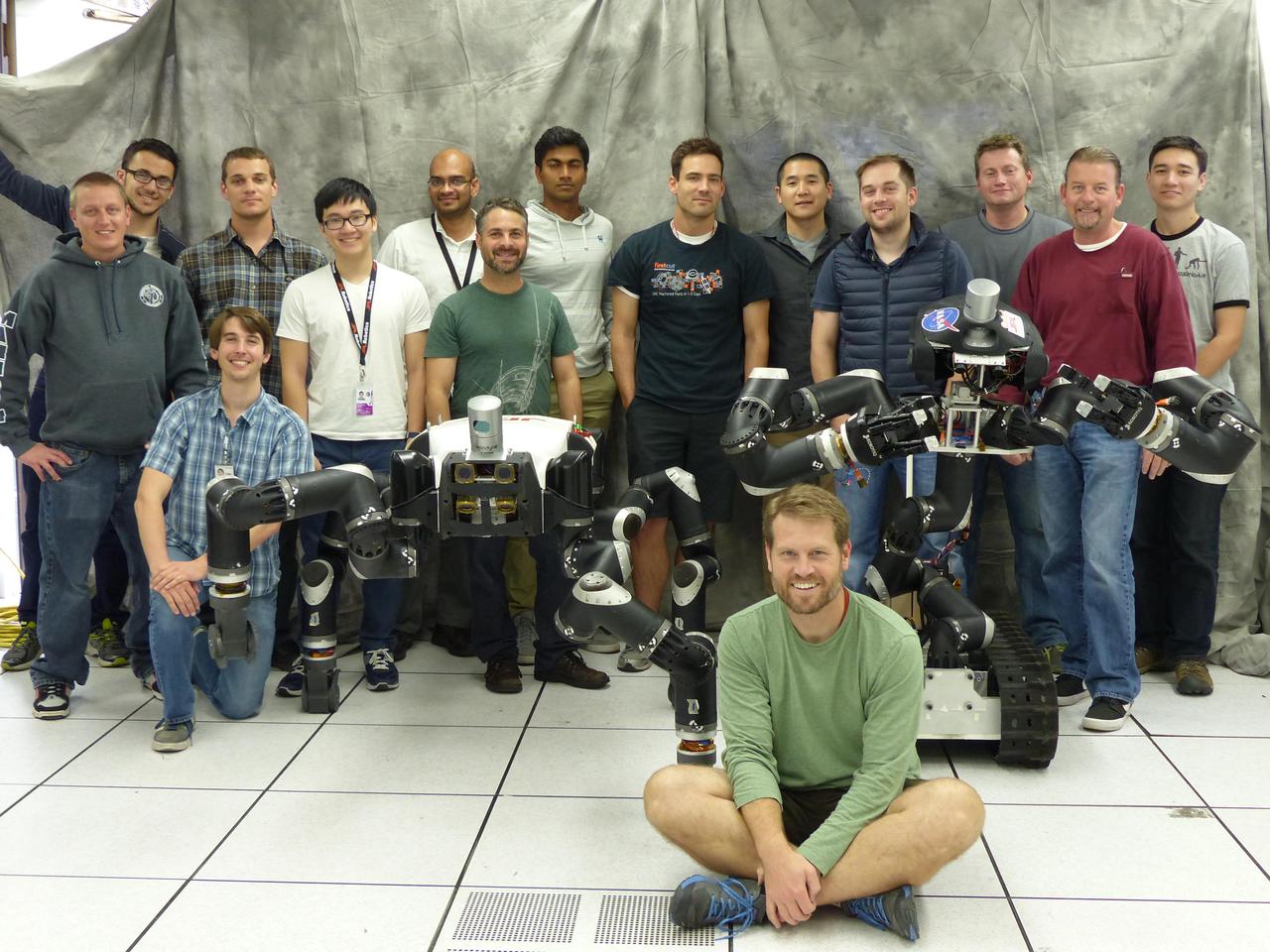
Robotics researchers at NASA Jet Propulsion Laboratory in Pasadena, California, stand with robots RoboSimian and Surrogate, both built at JPL.
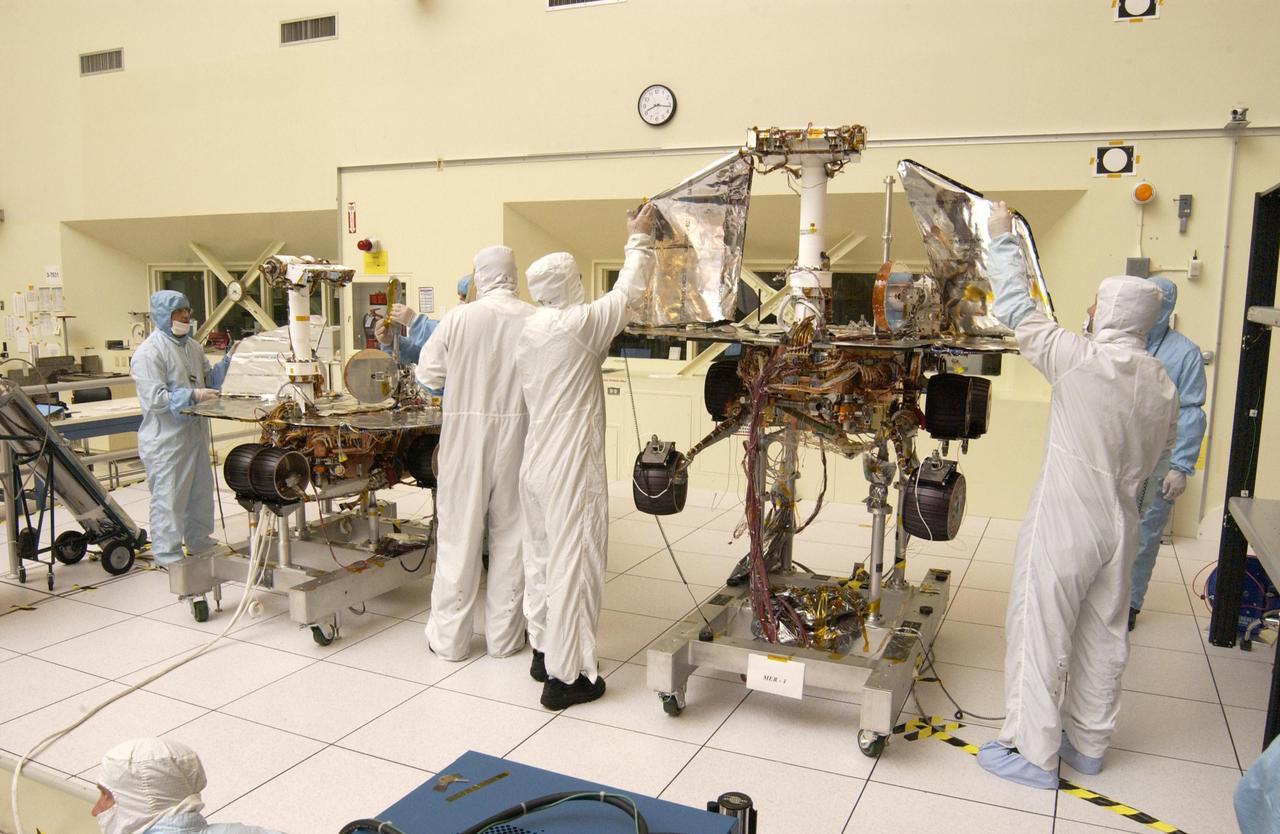
JPL engineers hand-deploying the solar arrays that provide the electrical power on NASA Mars Exploration Rover 1.
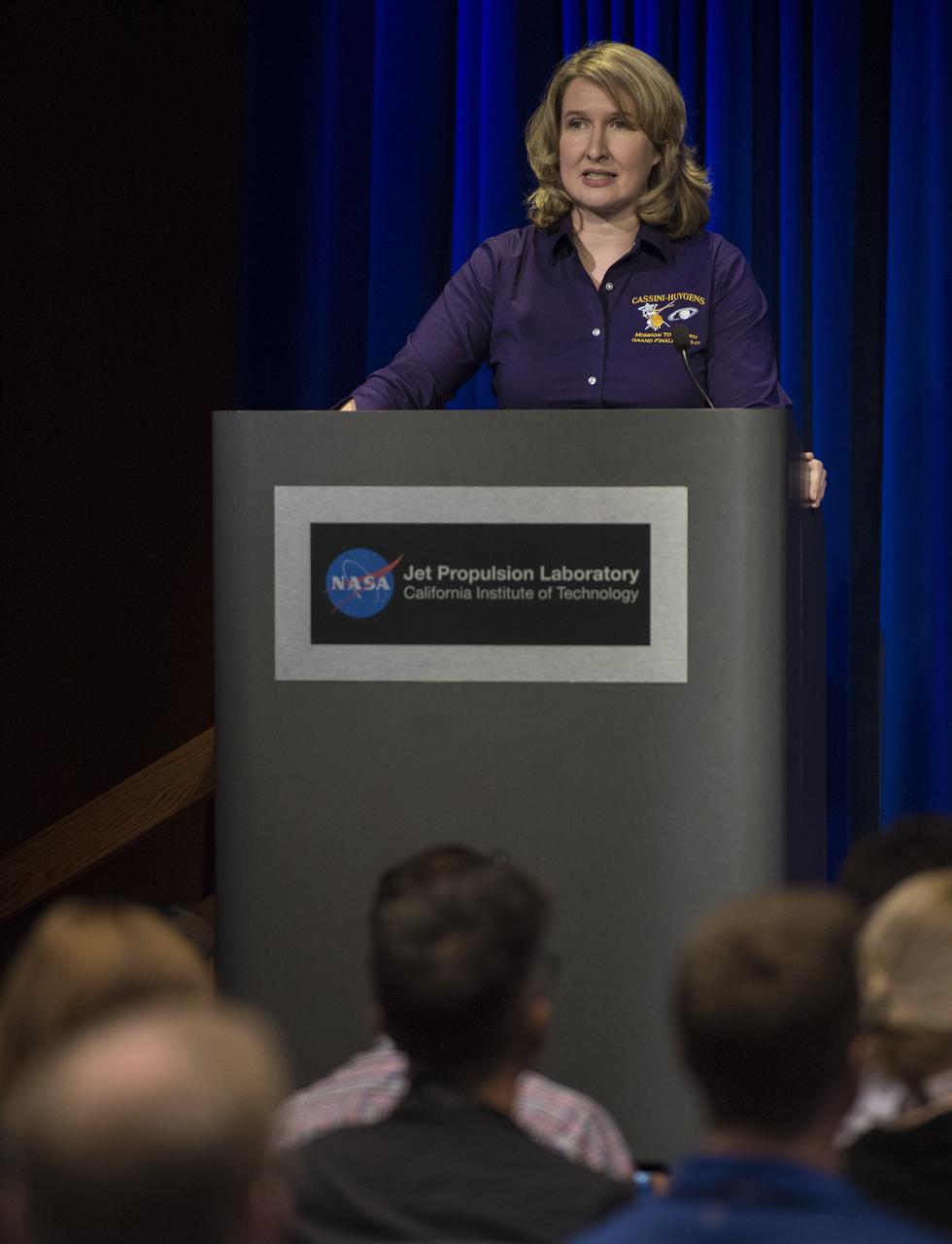
NASA JPL digital and social media lead Stephanie Smith, introduces technical producer for NASA's Eyes at JPL, Jason Craig, Thursday, Sept. 14, 2017 at NASA's Jet Propulsion Laboratory in Pasadena, California. Since its arrival in 2004, the Cassini-Huygens mission has been a discovery machine, revolutionizing our knowledge of the Saturn system and captivating us with data and images never before obtained with such detail and clarity. On Sept. 15, 2017, operators will deliberately plunge the spacecraft into Saturn, as Cassini gathered science until the end. The “plunge” ensures Saturn’s moons will remain pristine for future exploration. During Cassini’s final days, mission team members from all around the world gathered at NASA’s Jet Propulsion Laboratory, Pasadena, California, to celebrate the achievements of this historic mission. Photo Credit: (NASA/Joel Kowsky)
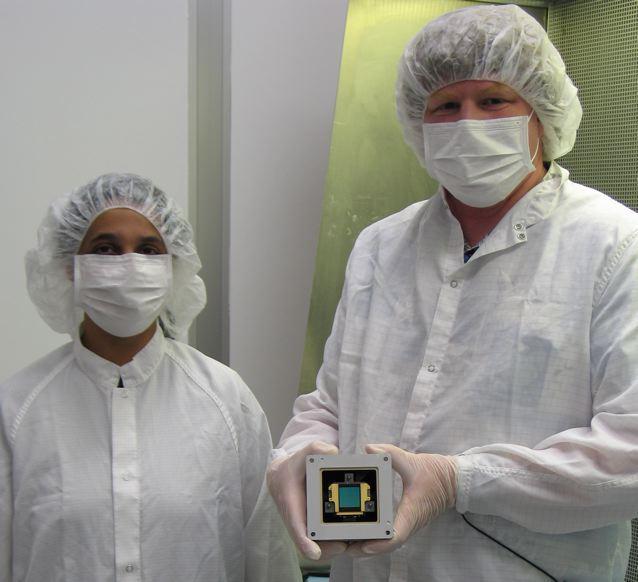
Mike Ressler right and Kalyani Sukhatme of NASA JPL pose in the clean room with a model component, called a focal plane module, of the Mid-Infrared Instrument on NASA James Webb Space Telescope.
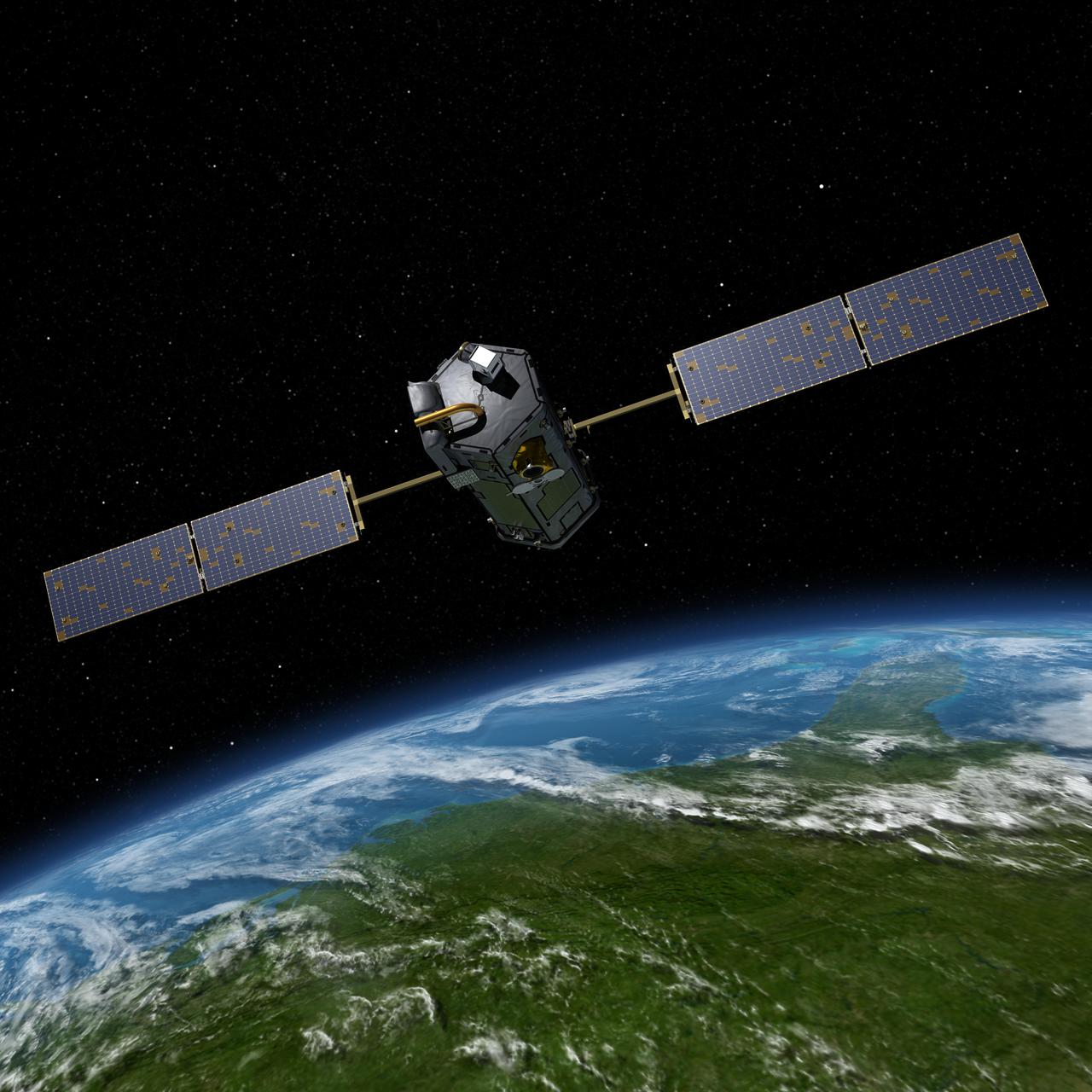
Artist rendering of NASA Orbiting Carbon Observatory OCO-2, one of five new NASA Earth science missions set to launch in 2014, and one of three managed by JPL.
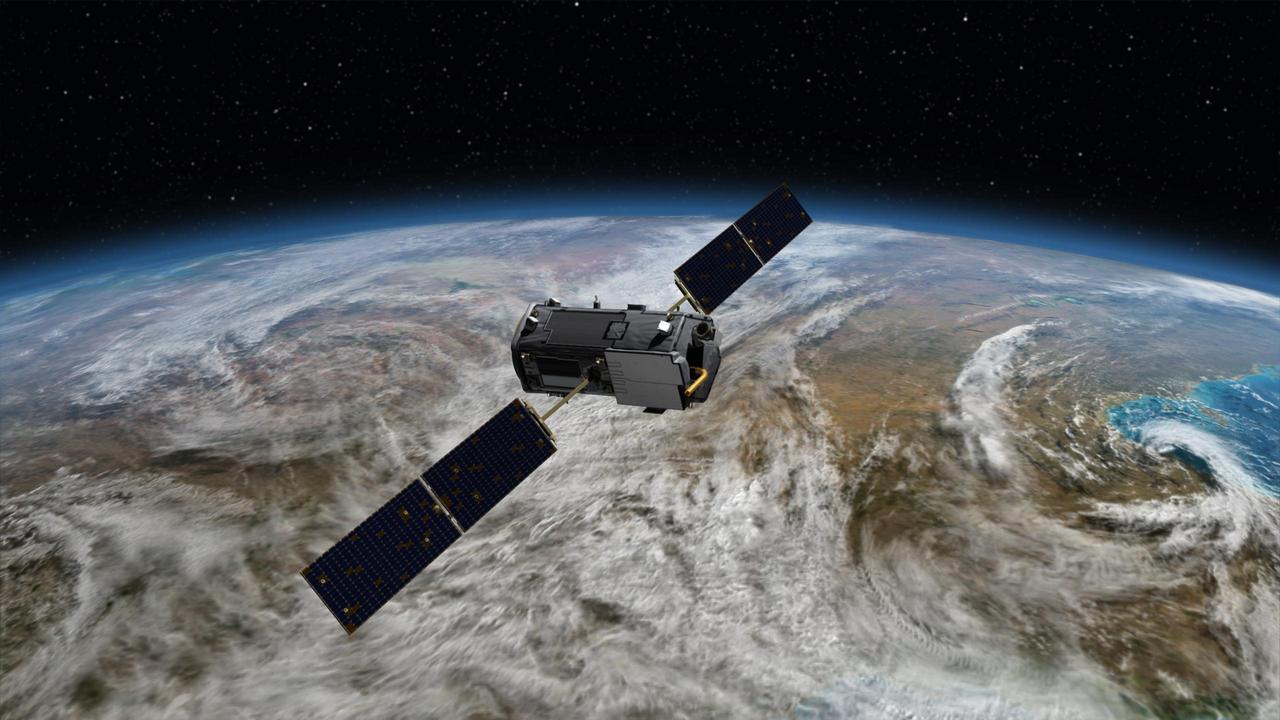
Artist rendering of NASA Orbiting Carbon Observatory OCO-2, one of five new NASA Earth science missions set to launch in 2014, and one of three managed by JPL.
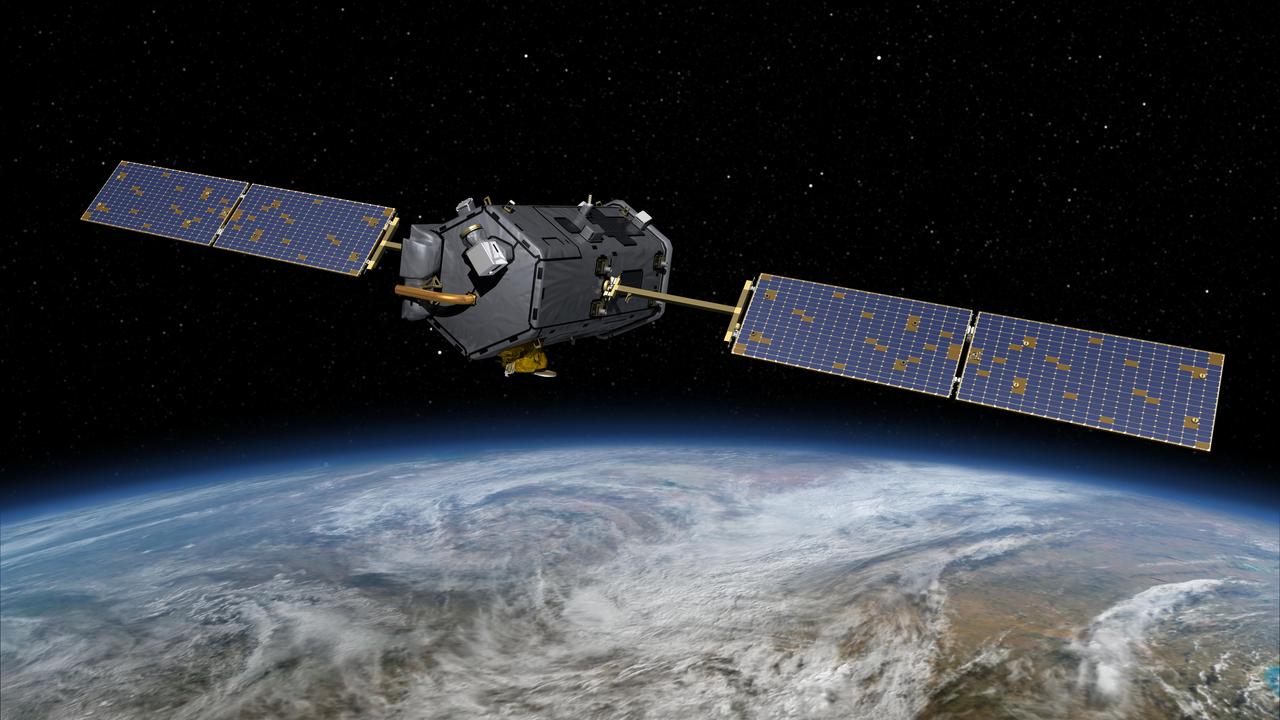
This most recent artist rendering shows NASA Orbiting Carbon Observatory OCO-2, one of five new NASA Earth science missions set to launch in 2014, and one of three managed by the Jet Propulsion Laboratory JPL.
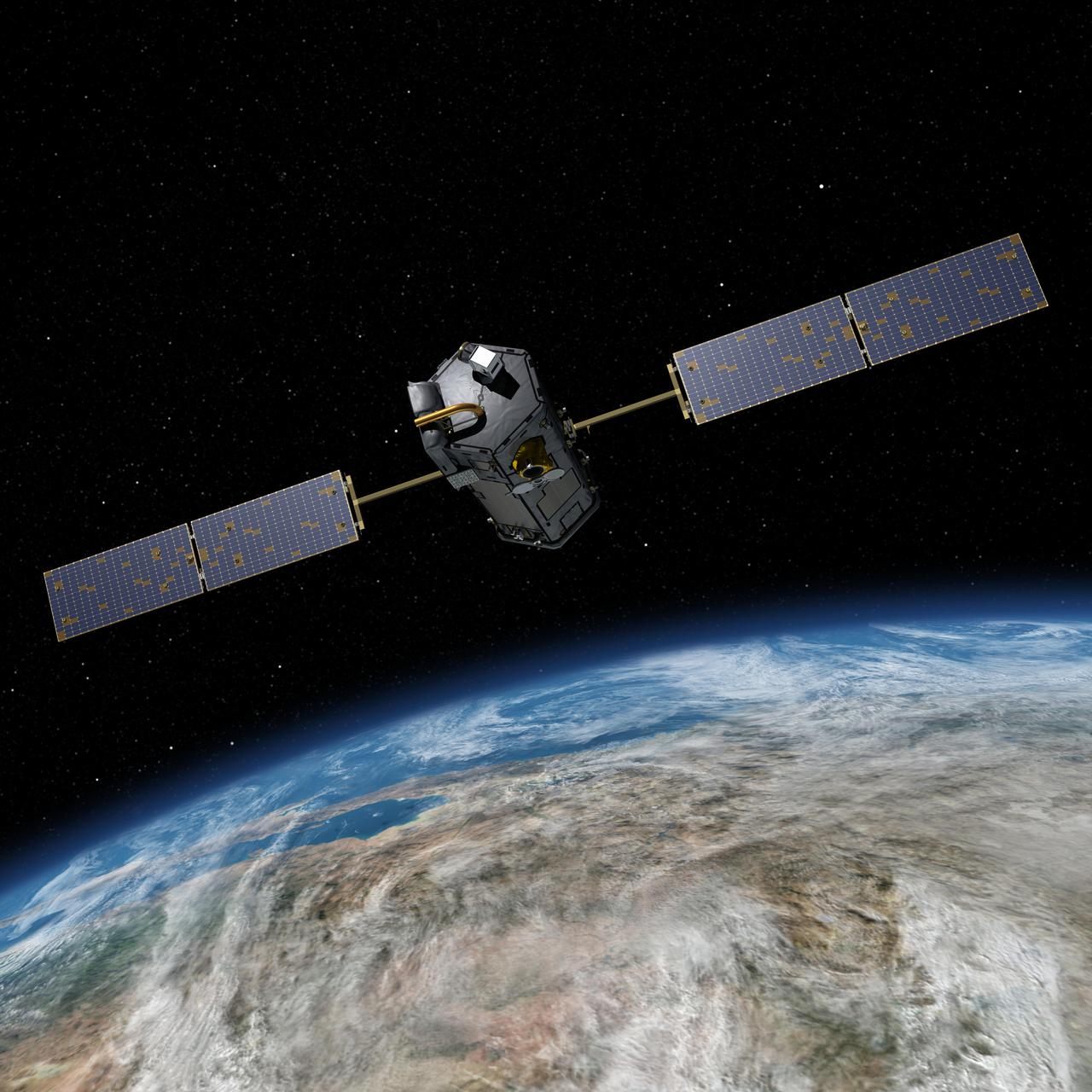
This most recent artist rendering shows NASA Orbiting Carbon Observatory OCO-2, one of five new NASA Earth science missions set to launch in 2014, and one of three managed by the Jet Propulsion Laboratory JPL.
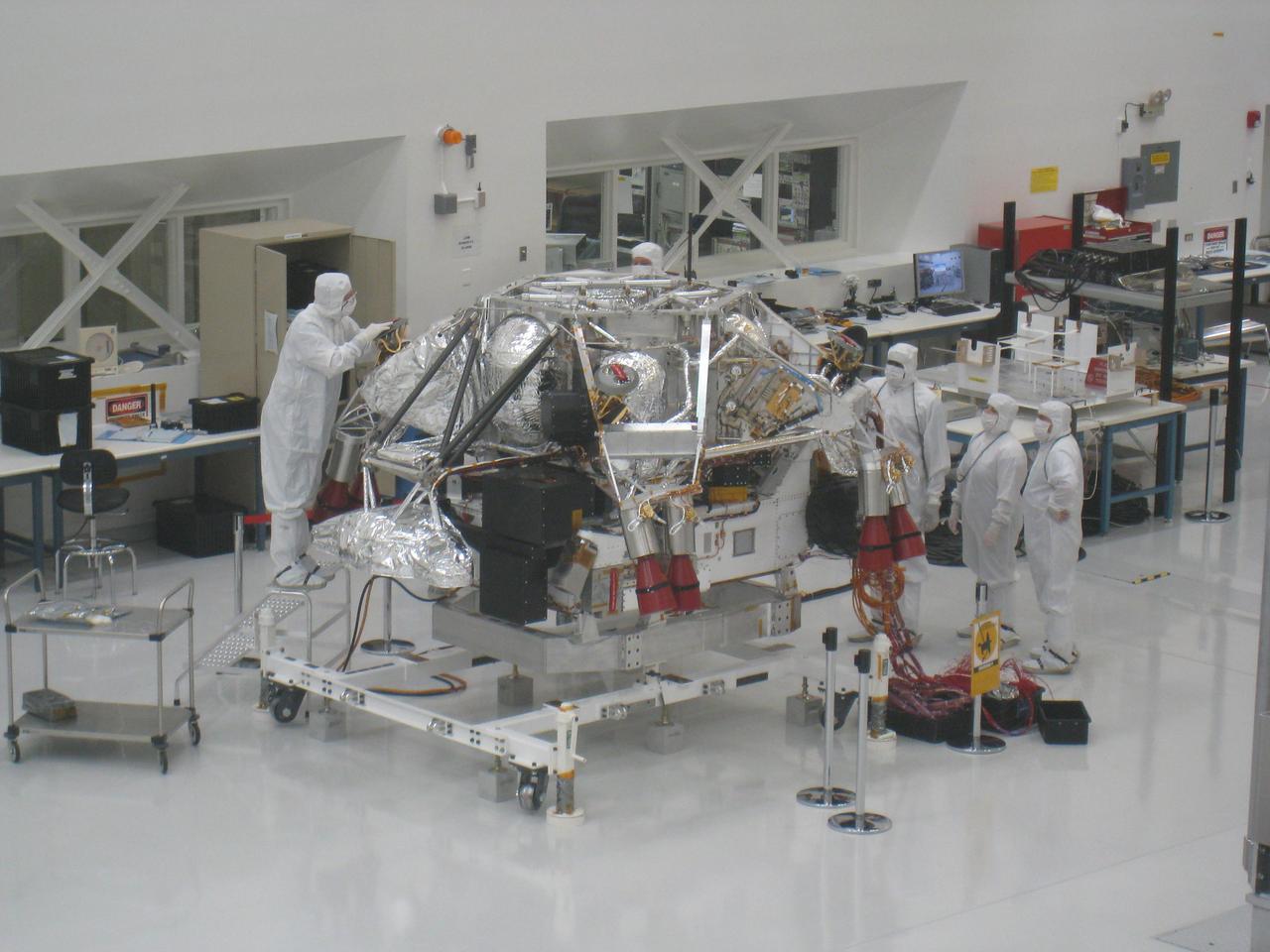
In this February 17, 2009, image, NASA Mars Science Laboratory rover is attached to the spacecraft descent stage. The image was taken inside the Spacecraft Assembly Facility at NASA JPL, Pasadena, Calif.
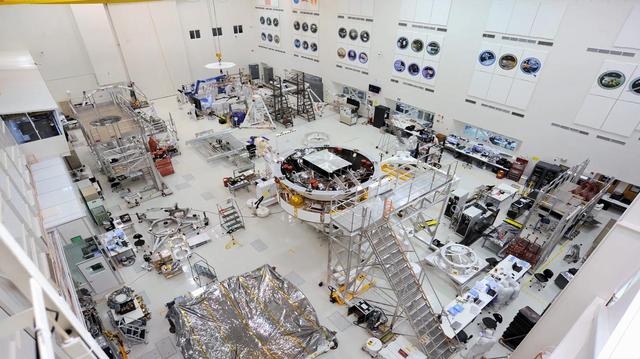
This image shows major components of NASA's Mars 2020 mission in the High Bay 1 clean room in JPL's Spacecraft Assembly Facility. Movie available at https://photojournal.jpl.nasa.gov/catalog/PIA23164
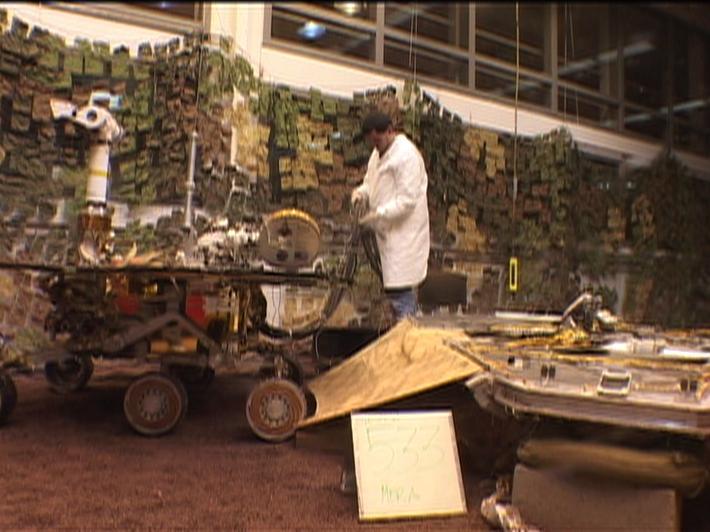
Footage from the JPL In-Situ Instruments Laboratory, or testbed, shows engineers rehearsing a crucial maneuver called egress in which NASA Mars Exploration Rover Spirit rolls off its lander platform and touches martian soil.
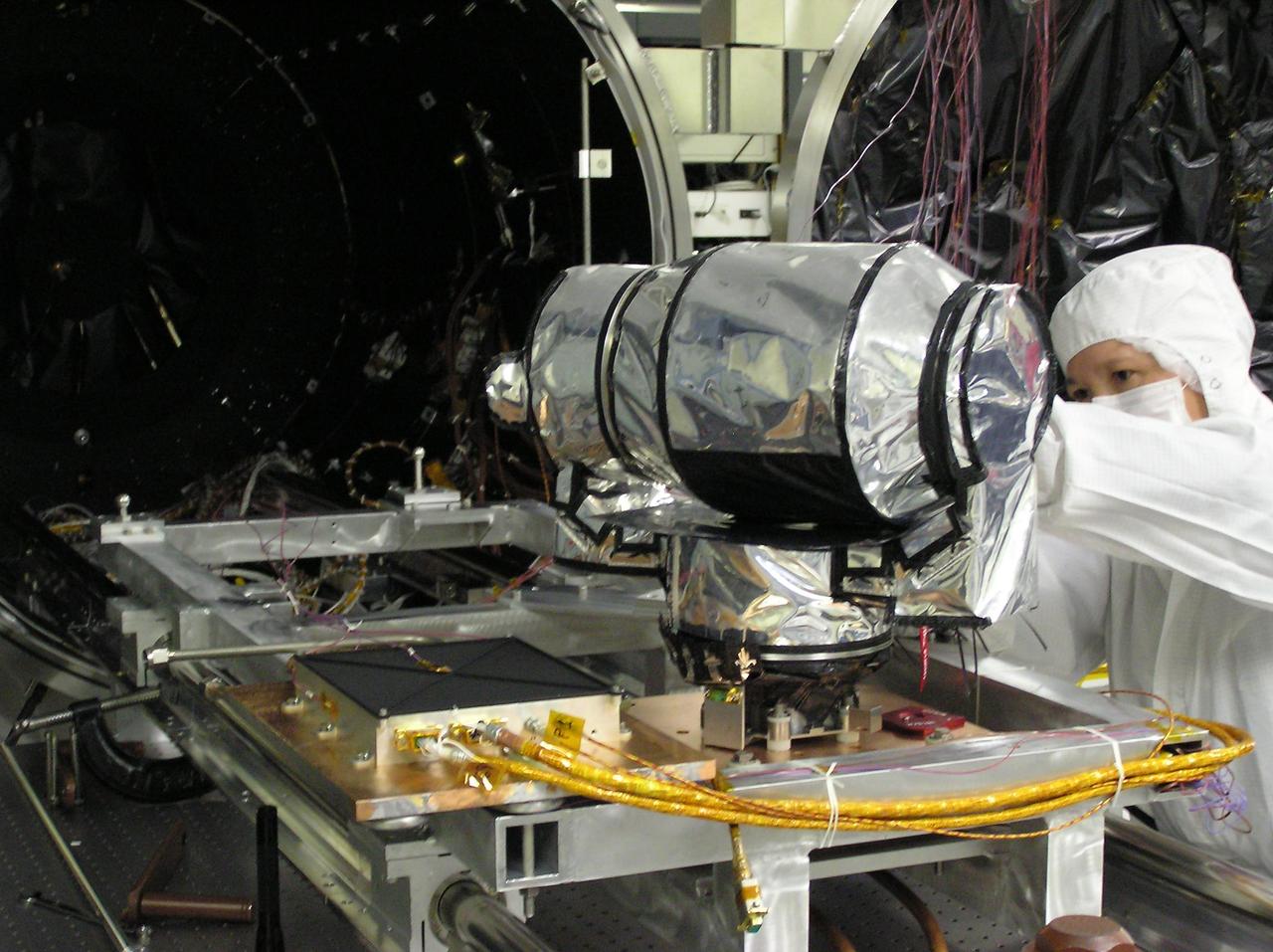
This image shows final preparations being made for thermal balance testing of the Diviner Lunar Radiometer Experiment at JPL. Diviner is one of seven instruments aboard NASA LRO Mission.

Carbon monoxide in the smoke from the Station fire was lofted high into the atmosphere, where it was observed by JPL Atmospheric Infrared Sounder instrument onboard NASA Aqua satellite. Animation available at the Photojournal.
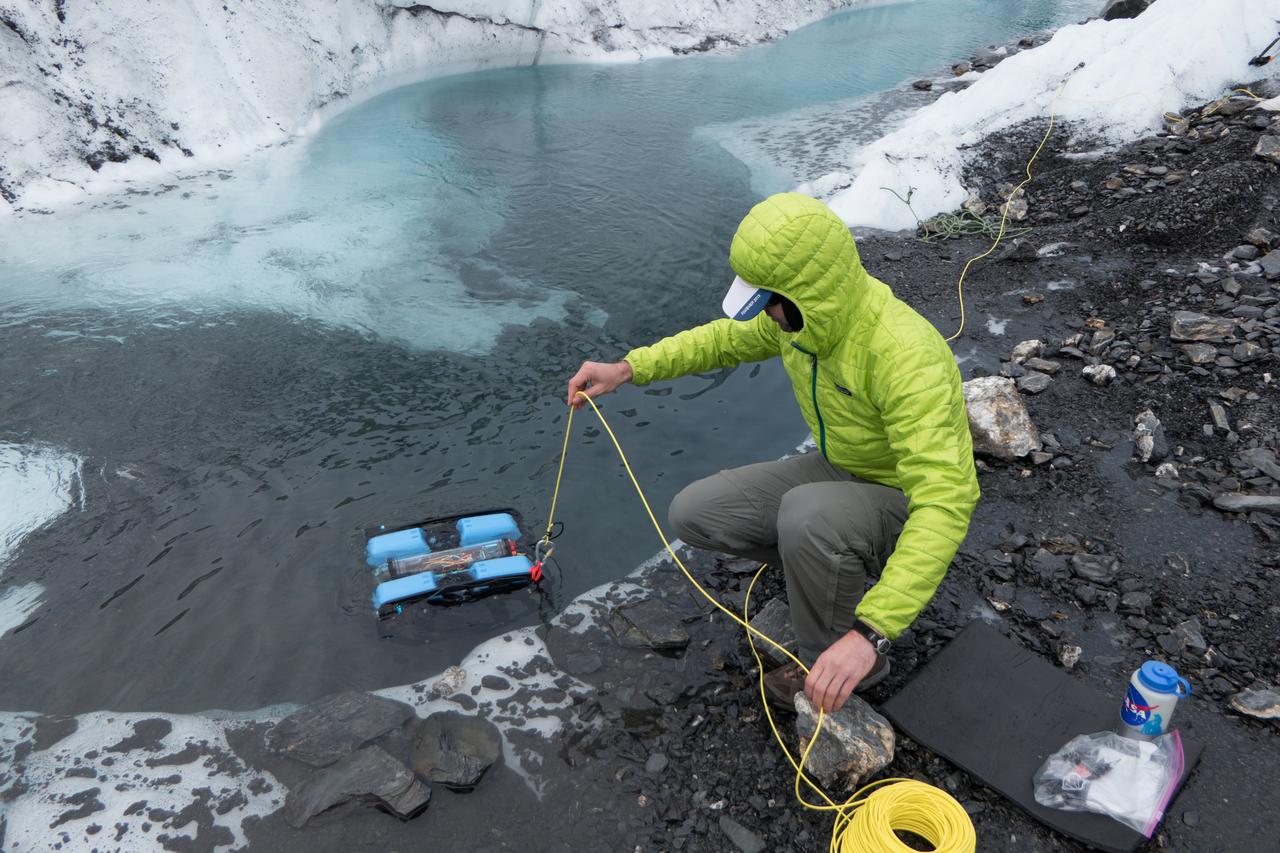
JPL engineer Andy Klesh lowers a robotic submersible into a moulin. Klesh and JPL's John Leichty used robots and probes to explore the Matanuska Glacier in Alaska this past July. Image Credit: NASA/JPL-Caltech
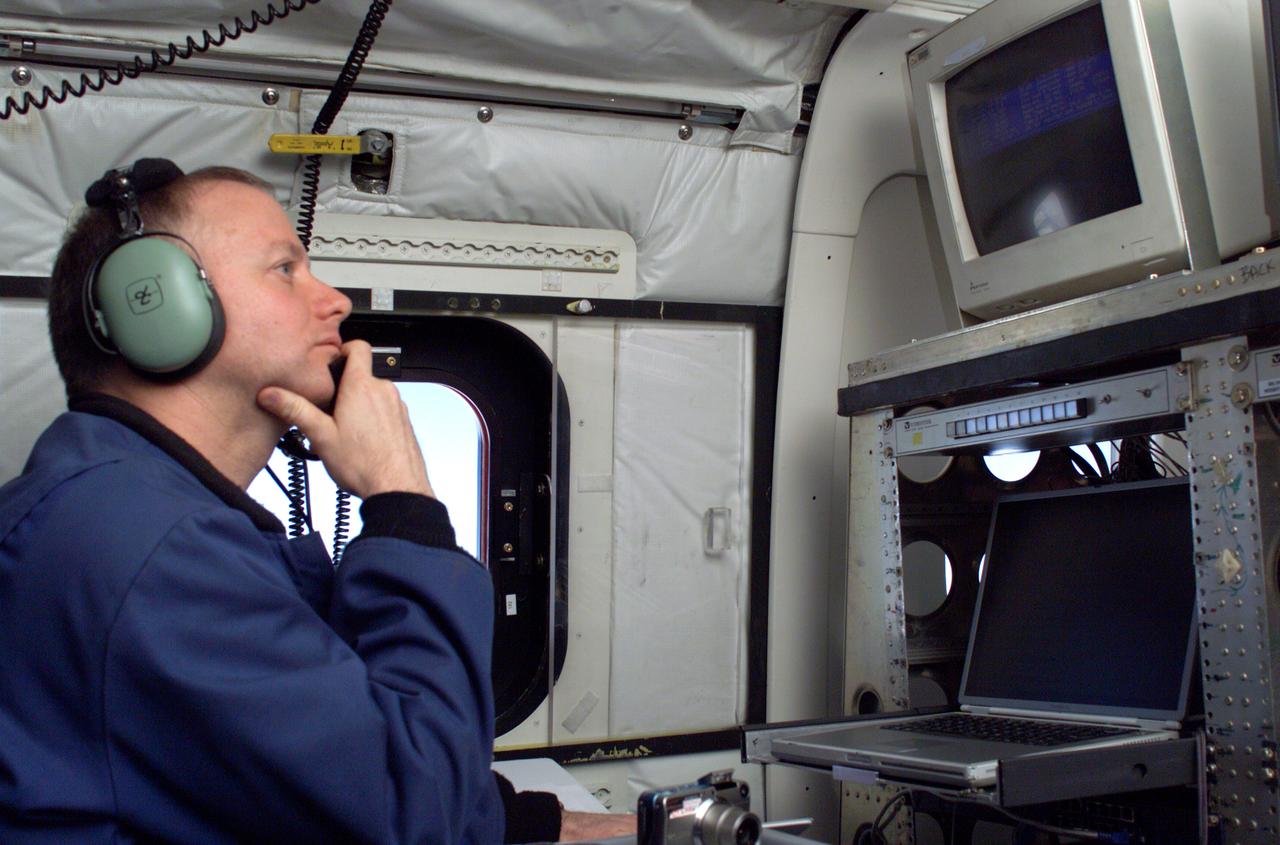
JPL Researcher Bruce Chapman at an AirSAR station aboard NASA's DC-8 flying laboratory during the AirSAR 2004 campaign. AirSAR 2004 is a three-week expedition by an international team of scientists that will use an all-weather imaging tool, called the Airborne Synthetic Aperture Radar (AirSAR), in a mission ranging from the tropical rain forests of Central America to frigid Antarctica.
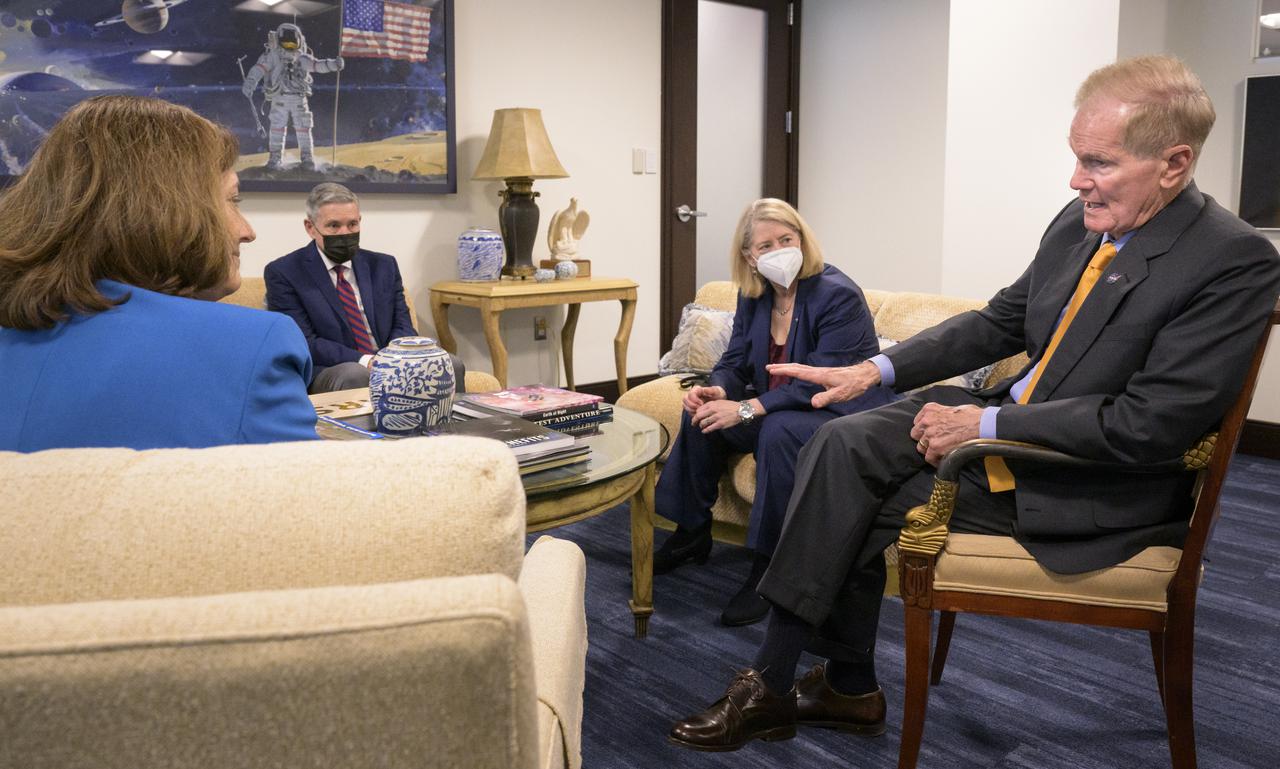
NASA Administrator Bill Nelson, right, meets with incoming JPL Director Dr. Laurie Leshin, left, along with NASA Associate Administrator Bob Cabana, and NASA Deputy Administrator Pam Melroy, Tuesday, Feb., 15, 2022, at the Mary W. Jackson NASA Headquarters building in Washington. Photo Credit: (NASA/Bill Ingalls)

NASA Social attendees are seen during a science panel discussion with Cassini project scientist at JPL, Linda Spilker, Cassini interdisciplinary Titan scientist at Cornell University, Jonathan Lunine, Cassini Composite Infrared Spectrometer(CIRS) Instrument deputy principle investigator Connor Nixon, and Cassini assistant project science systems engineer Morgan Cable, Thursday, Sept. 14, 2017 at NASA's Jet Propulsion Laboratory in Pasadena, California. Since its arrival in 2004, the Cassini-Huygens mission has been a discovery machine, revolutionizing our knowledge of the Saturn system and captivating us with data and images never before obtained with such detail and clarity. On Sept. 15, 2017, operators will deliberately plunge the spacecraft into Saturn, as Cassini gathered science until the end. The “plunge” ensures Saturn’s moons will remain pristine for future exploration. During Cassini’s final days, mission team members from all around the world gathered at NASA’s Jet Propulsion Laboratory, Pasadena, California, to celebrate the achievements of this historic mission. Photo Credit: (NASA/Joel Kowsky)

This grouping of two test rovers and a flight spare provides a graphic comparison of three generations of Mars rovers developed at NASA Jet Propulsion Laboratory, Pasadena, Calif. The setting is JPL Mars Yard testing area.
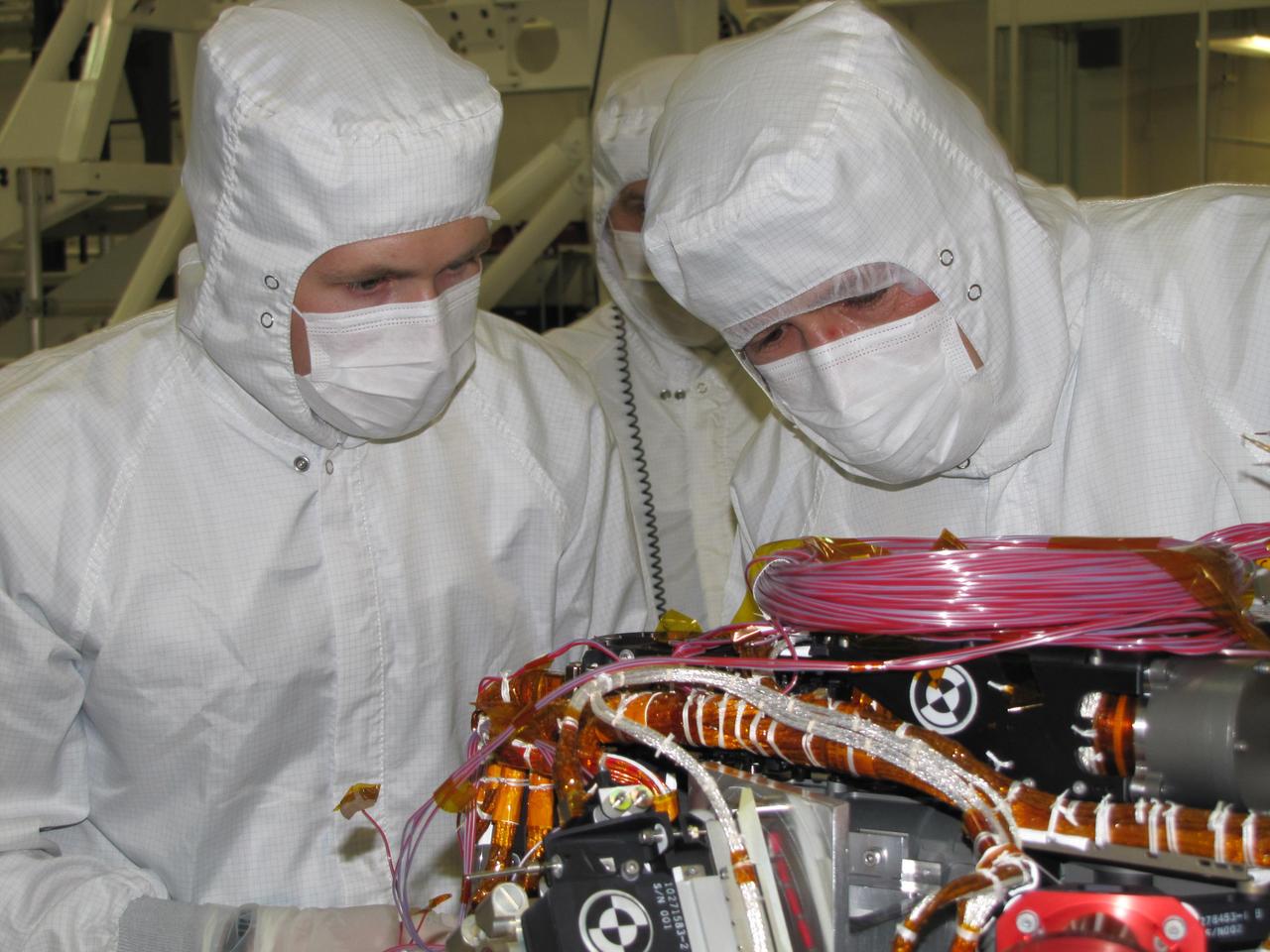
Grad student Nicholas Boyd left and Principal Investigator Ralf Gellert, both of the University of Guelph, Ontario, Canada, prepare for the installation of the Alpha Particle X-ray Spectrometer sensor head during testing at NASA JPL.
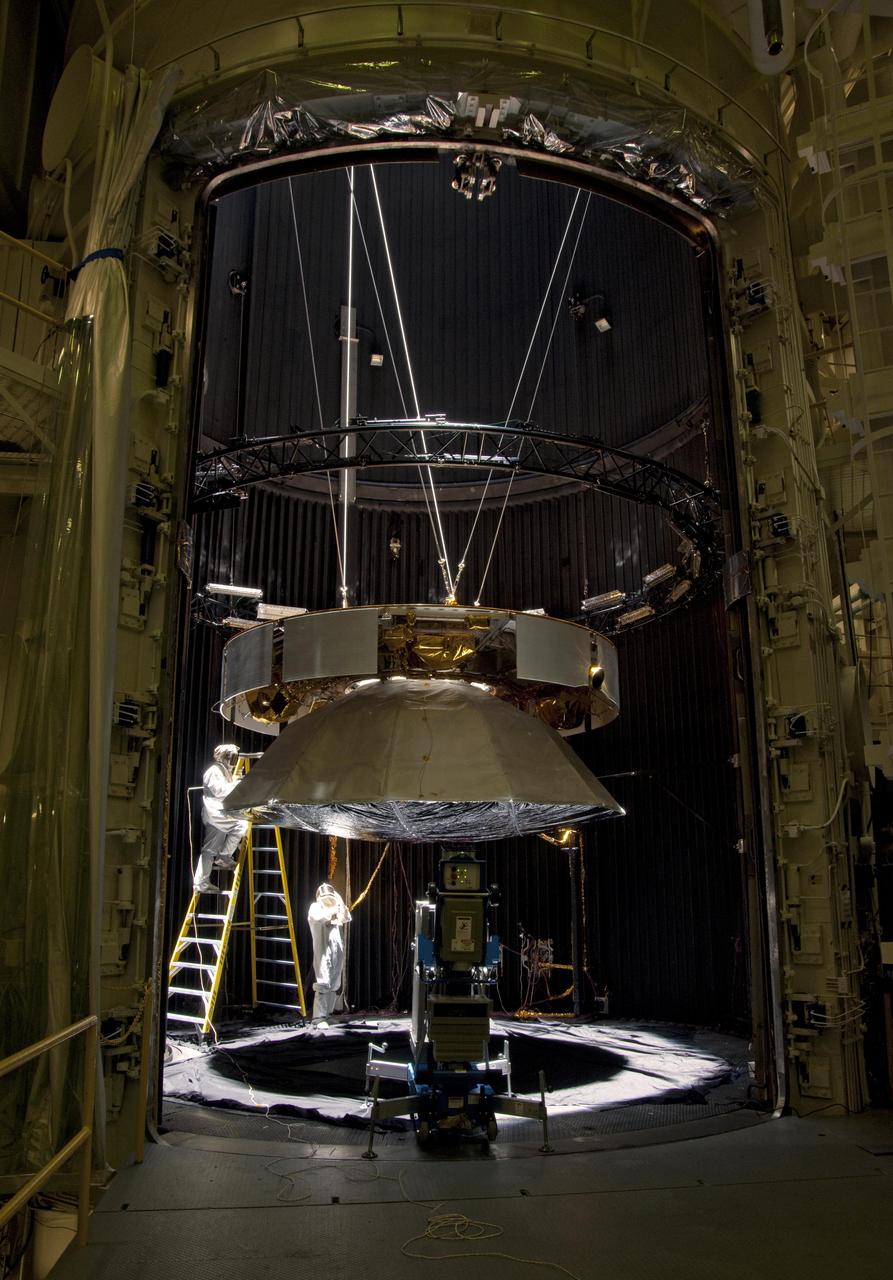
Testing of the cruise stage for NASA Mars Science Laboratory in August 2010 included a session in a facility that simulates the environment found in interplanetary space. Spacecraft technicians at JPL prepare a space-simulation test.
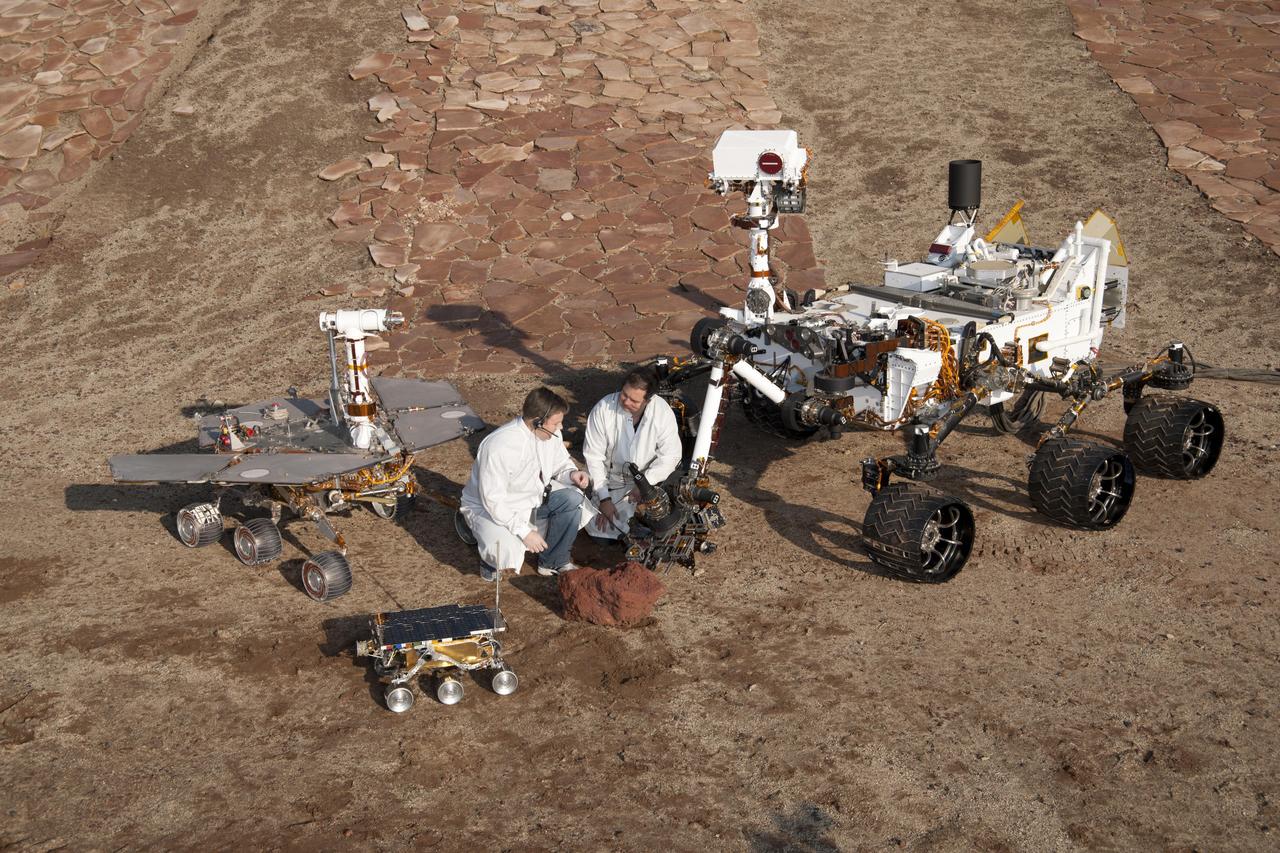
Two spacecraft engineers stand with three generations of Mars rovers developed at NASA JPL, Pasadena, Ca. Front and center is a flight spare of Sojourner, left is a working sibling to Spirit and Opportunity, right is test rover Curiosity.
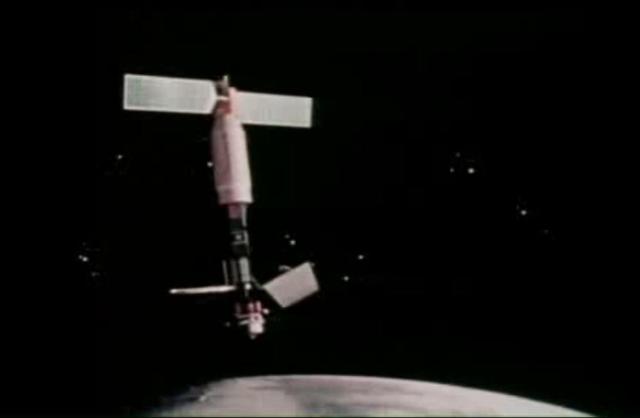
Seasat, built and managed by NASA Jet Propulsion Laboratory JPL, was launched thirty-five years ago, on June 27, 1978. It was the first satellite designed for remote sensing of the Earth oceans using many ground-breaking technologies.
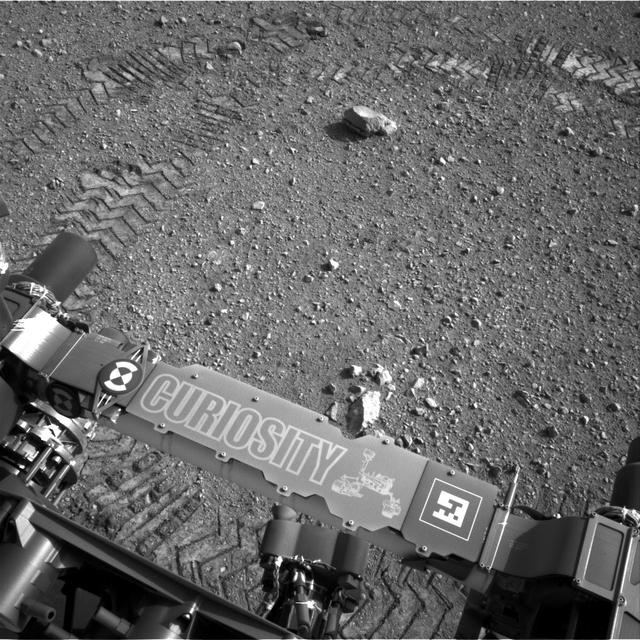
This image shows a close-up of track marks from the first test drive of NASA Curiosity rover. The rover arm is visible in the foreground. A close inspection of the tracks reveals a unique, repeating pattern: Morse code for JPL.
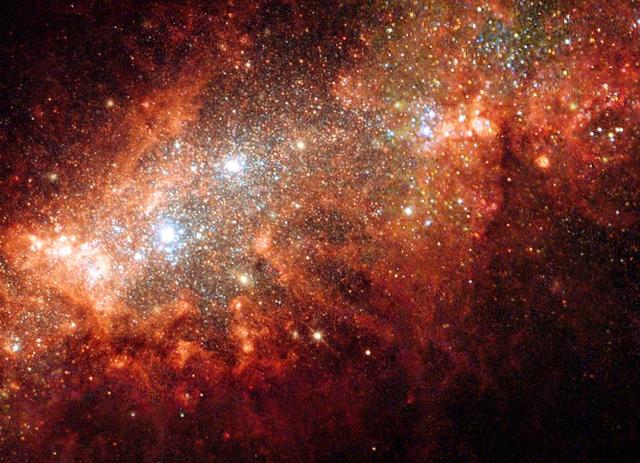
The nearby dwarf galaxy NGC 1569 is a hotbed of vigorous star birth activity, which blows huge bubbles that riddle the galaxy main body. The image was taken by the WPF2 camera, designed and built by JPL, on NASA Hubble.

Two spacecraft engineers stand with three generations of Mars rovers developed at NASA JPL, Pasadena, Ca. Front and center is a flight spare of Sojourner, left is a working sibling to Spirit and Opportunity, right is test rover Curiosity.
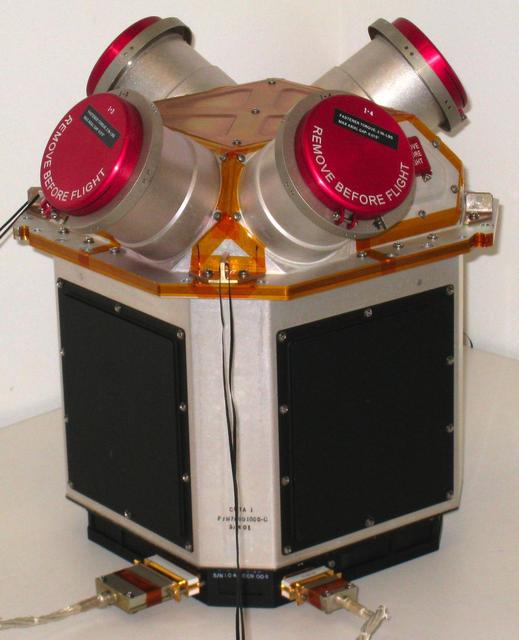
The LISA Pathfinder spacecraft is on its way to space, having successfully launched from Kourou, French Guiana Dec. 3, 2015. On board is the state-of-the-art Disturbance Reduction System DRS, a thruster technology developed at NASA JPL.

This grouping of two test rovers and a flight spare provides a graphic comparison of three generations of Mars rovers developed at NASA Jet Propulsion Laboratory, Pasadena, Calif. The setting is JPL Mars Yard testing area.
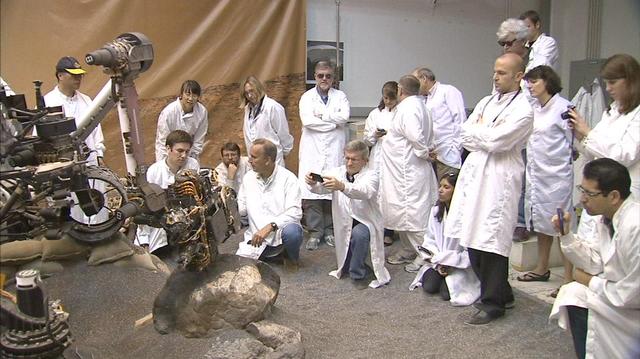
This frame from a video clip shows moments during a demonstration of drilling into a rock at NASA JPL, Pasadena, Calif., with a test double of the Mars rover Curiosity. The drill combines hammering and rotation motions of the bit.
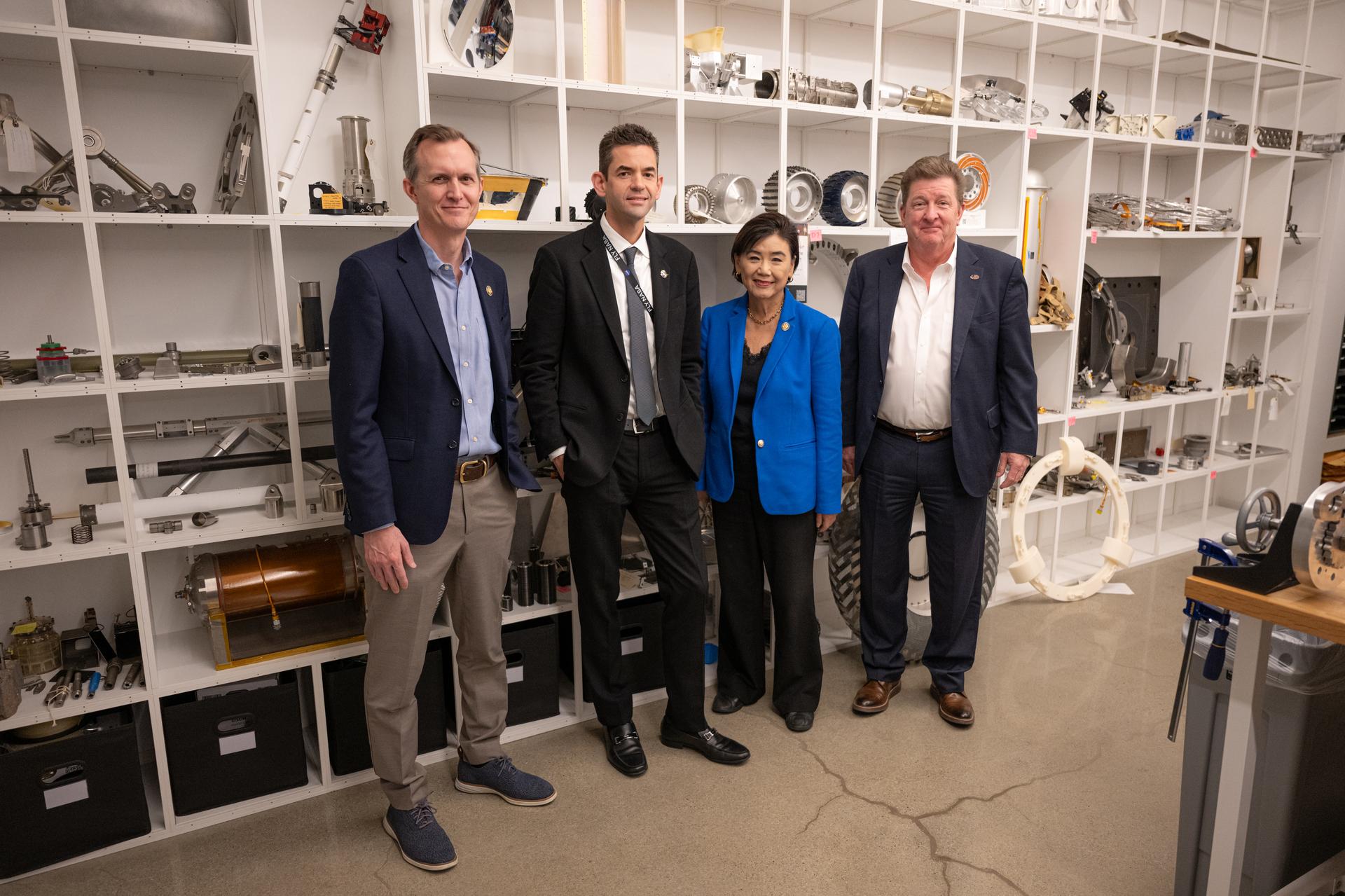
NASA Administrator Jared Isaacman, second from left; Rep. George Whitesides of California’s 27th congressional district, left; Rep. Judy Chu of California’s 28th congressional district, third from left; and Dave Gallagher, director of NASA’s Jet Propulsion Laboratory, right, pose for a photograph in the Maker Center at JPL, Saturday, Jan. 24, 2026, in Pasadena, Calif. Photo Credit: (NASA/John Kraus)
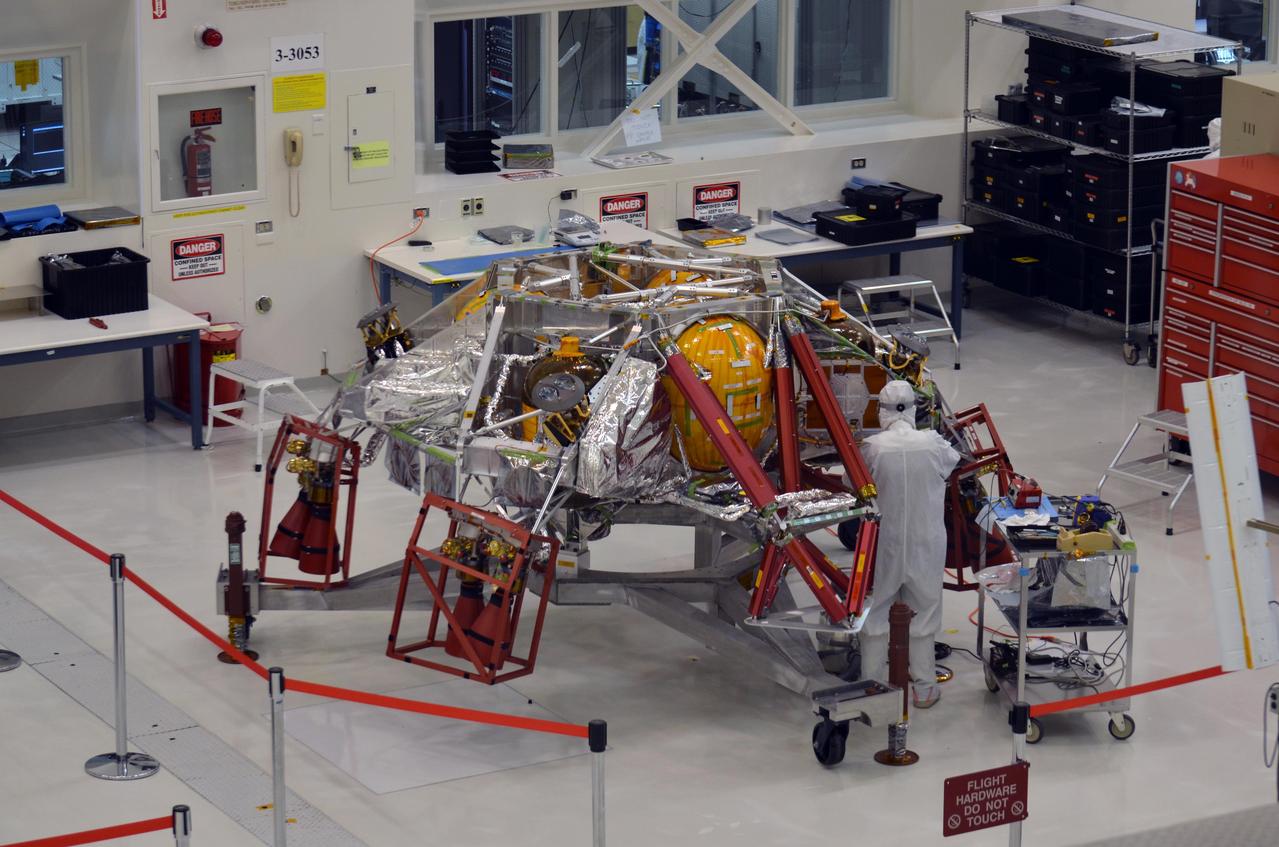
A technician works on the descent stage for NASA's Mars 2020 mission inside JPL's Spacecraft Assembly Facility. Mars 2020 is slated to carry NASA's next Mars rover to the Red Planet in July of 2020. https://photojournal.jpl.nasa.gov/catalog/PIA22342
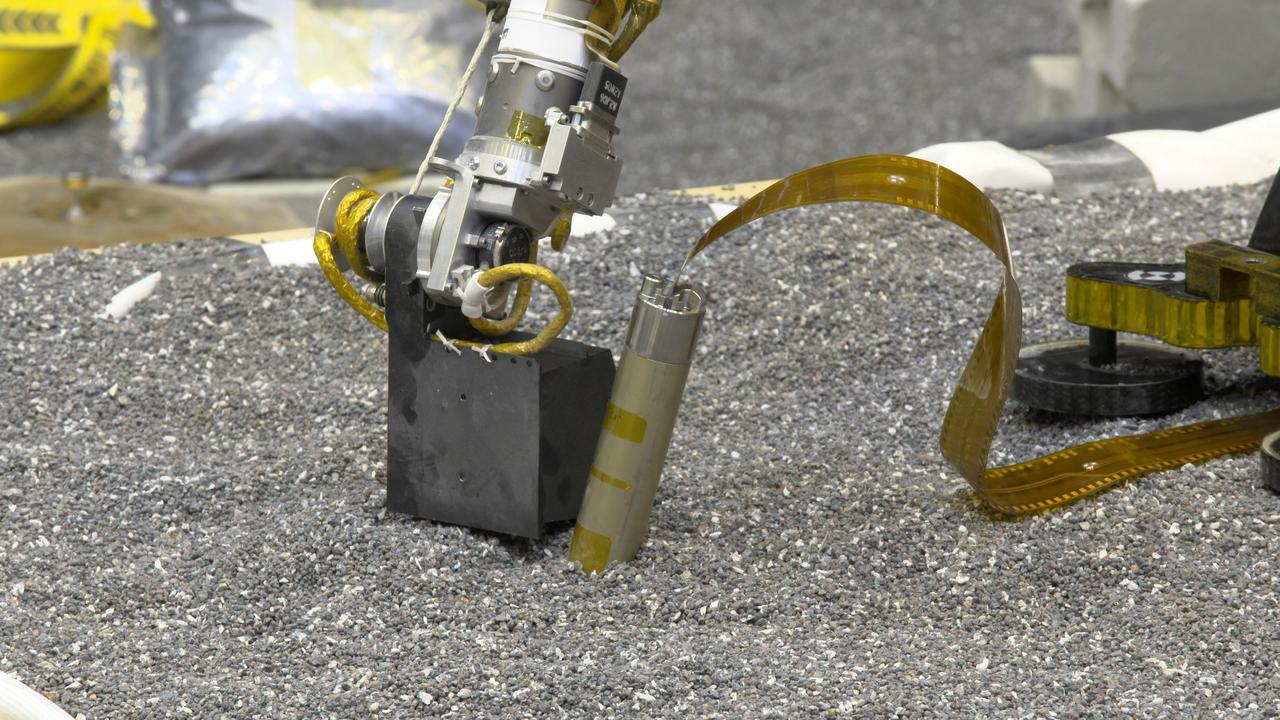
In a JPL lab, a replica of NASA InSight's robotic arm presses with its scoop on crushed garnet near a replica of the spacecraft's self-hammering "mole." Engineers believe pressing like this on Martian soil may help the mole dig by increasing friction of the surrounding soil. https://photojournal.jpl.nasa.gov/catalog/PIA23276
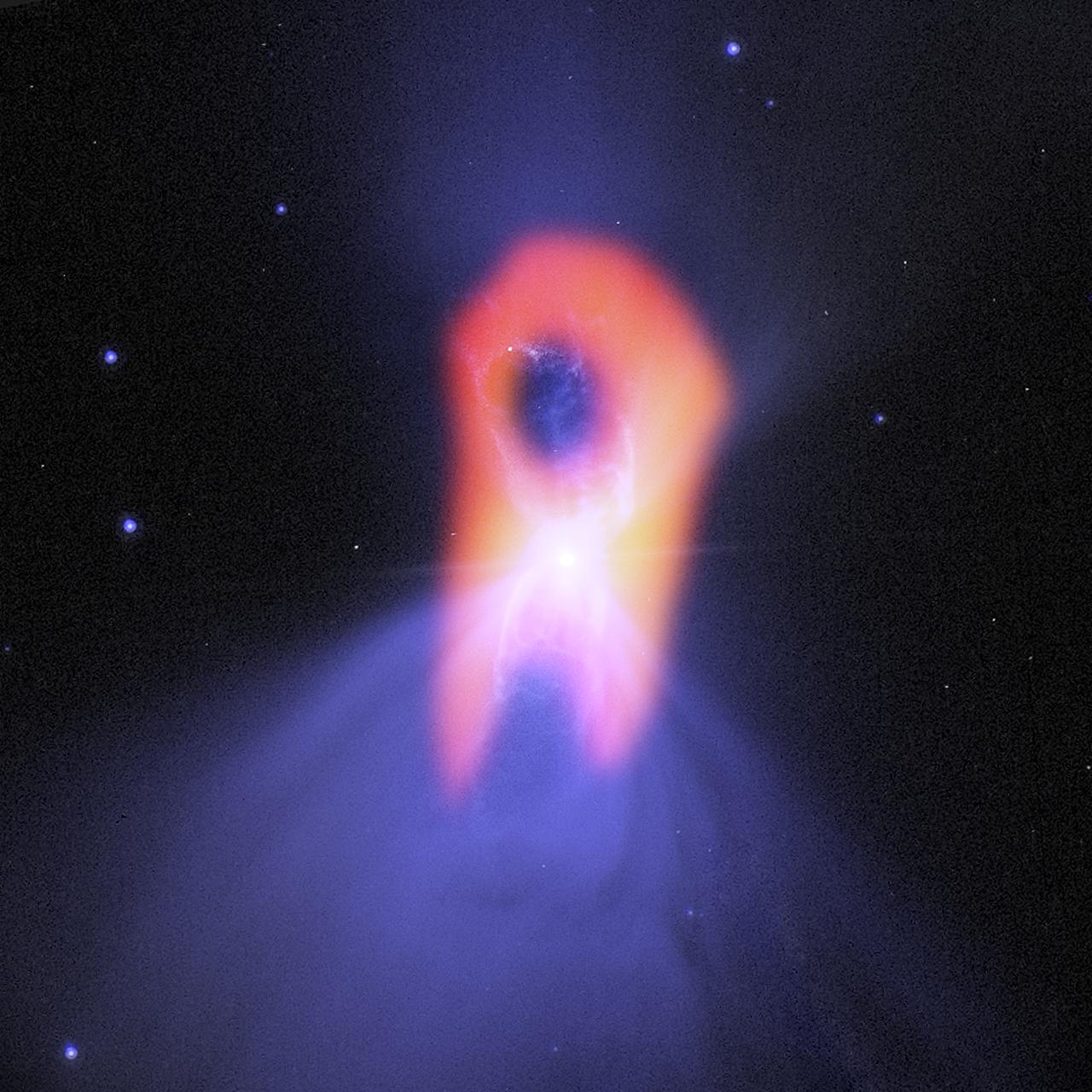
The Boomerang nebula, called the "coldest place in the universe," reveals its true shape to the Atacama Large Millimeter/submillimeter Array (ALMA) telescope. The background blue structure, as seen in visible light by NASA's Hubble Space Telescope, shows a classic double-lobe shape with a very narrow central region. ALMA’s resolution and ability to see the cold gas molecules reveals the nebula’s more elongated shape, as seen in red. Image credit: NRAO/AUI/NSF/NASA/STScI/JPL-Caltech Read more about this image from NASA's Jet Propulsion Laboratory (JPL) here: <a href="http://1.usa.gov/17o22Rz" rel="nofollow">1.usa.gov/17o22Rz</a> <b><a href="http://www.nasa.gov/audience/formedia/features/MP_Photo_Guidelines.html" rel="nofollow">NASA image use policy.</a></b> <b><a href="http://www.nasa.gov/centers/goddard/home/index.html" rel="nofollow">NASA Goddard Space Flight Center</a></b> enables NASA’s mission through four scientific endeavors: Earth Science, Heliophysics, Solar System Exploration, and Astrophysics. Goddard plays a leading role in NASA’s accomplishments by contributing compelling scientific knowledge to advance the Agency’s mission. <b>Follow us on <a href="http://twitter.com/NASA_GoddardPix" rel="nofollow">Twitter</a></b> <b>Like us on <a href="http://www.facebook.com/pages/Greenbelt-MD/NASA-Goddard/395013845897?ref=tsd" rel="nofollow">Facebook</a></b> <b>Find us on <a href="http://instagram.com/nasagoddard?vm=grid" rel="nofollow">Instagram</a></b>
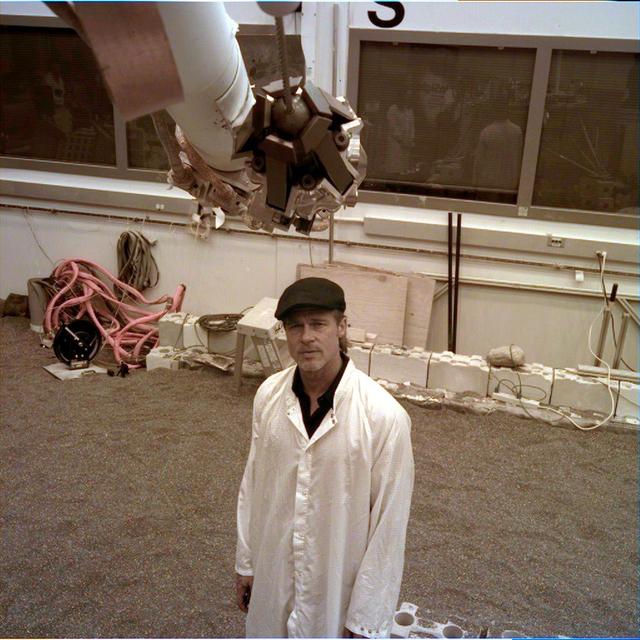
The engineering model of NASA's InSight lander — a replica used for test purposes — took an image of the actor Brad Pitt at NASA's Jet Propulsion Laboratory in Pasadena, California, on Sept. 6, 2019. Taken by the instrument deployment camera on the replica's robotic arm in the Mars-like environment of JPL's In-Situ Instrument Laboratory, the picture has been white-balanced to remove the orange-red tint of the Mars lights in the room. Pitt visited JPL to learn about real space technology after filming his space-themed movie "Ad Astra." https://photojournal.jpl.nasa.gov/catalog/PIA23280

MarCO-B, one of the experimental Mars Cube One (MarCO) CubeSats, took this image of Mars from about 10,900 miles (17,500 kilometers) away just after NASA’s InSight spacecraft landed on Mars on Nov. 26, 2018. MarCO-B flew by Mars with its twin, MarCO-A, to serve as communications relays for InSight as it touched down on the Red Planet around noon PST (3 p.m. EST). This image was taken at 1 p.m. PST (4 p.m. EST). Mars’ south pole is facing the viewer in this image. MarCO-B’s antenna reflector is on the right and antenna feed (white rectangle with gold square) is on the left. The Sun at upper right overexposed part of the image. This image was taken after PIA22833 and shortly before PIA22834. The MarCO and InSight projects are managed for NASA's Science Mission Directorate, Washington, by JPL, a division of Caltech, Pasadena. Credit: NASA/JPL-Caltech
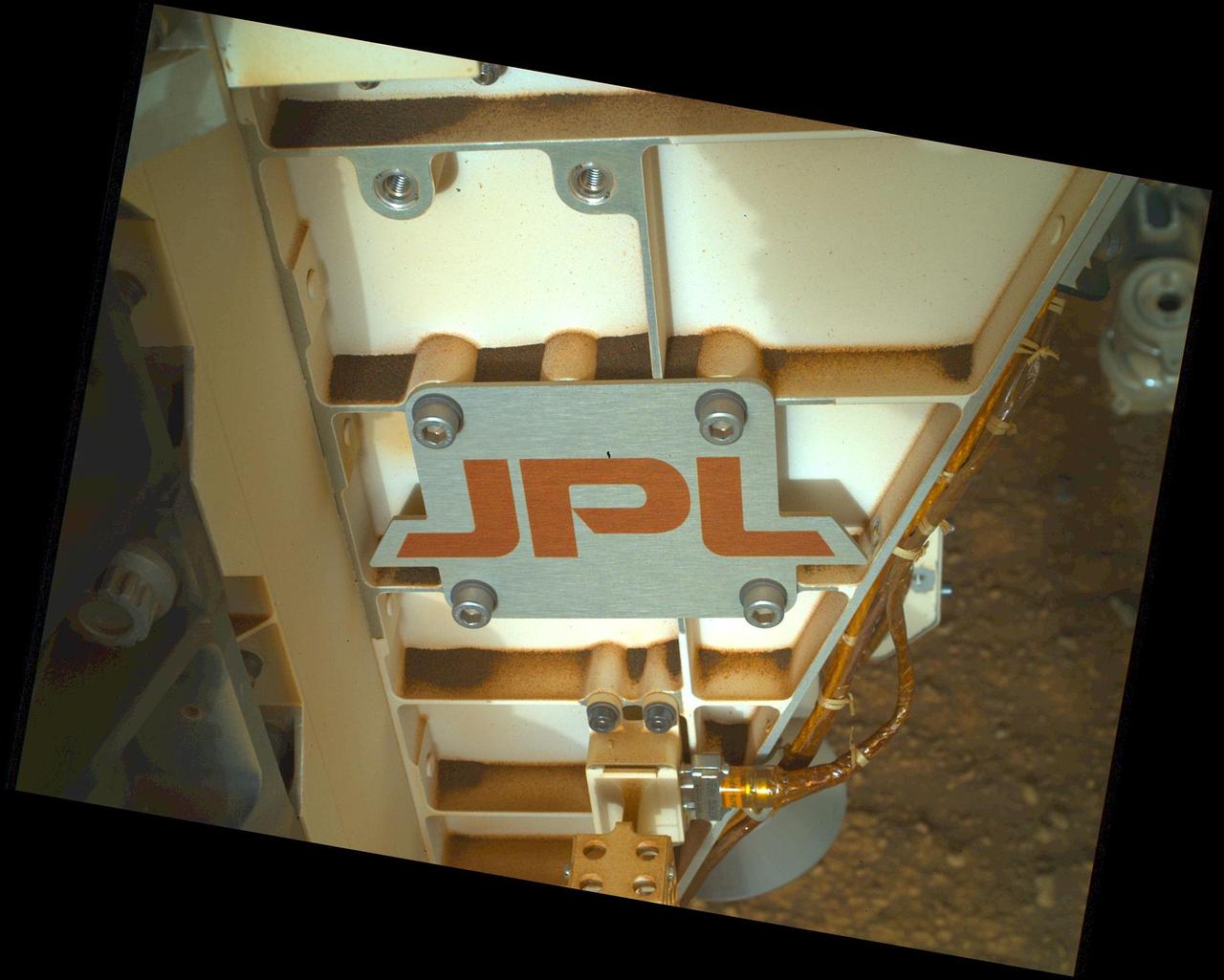
The logo of NASA's Jet Propulsion Laboratory has roamed Mars since the September 1997 landing of very first rover, Sojourner, part of the Mars Pathfinder mission. This close-up view of the JPL logo – bolted to the chassis of NASA's Perseverance – was acquired on June 28, 2025 (the 1,548th day, or sol, of its mission to Mars), by the rover's WATSON (Wide Angle Topographic Sensor for Operations and eNgineering) imager. https://photojournal.jpl.nasa.gov/catalog/PIA26580
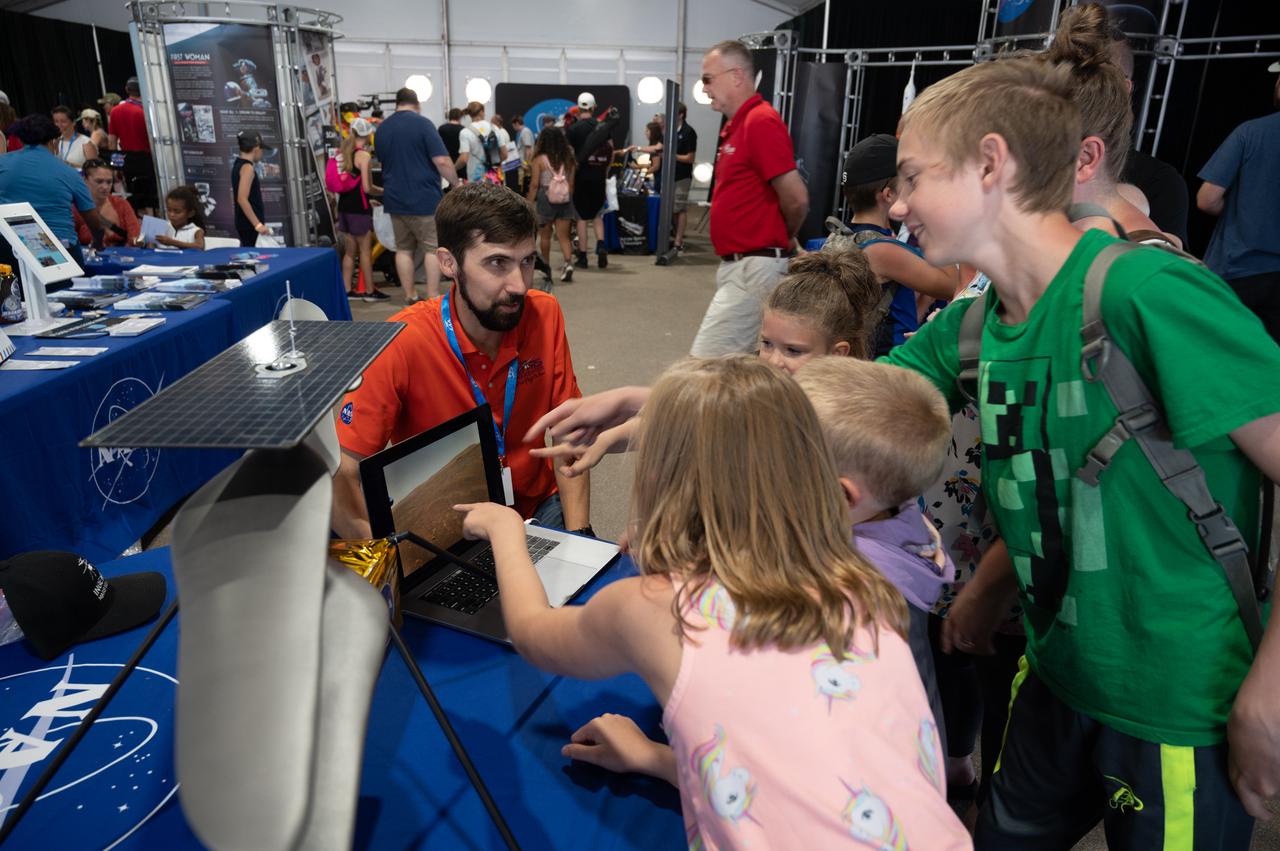
JPL Robotics Technologist Ben Morrell introduces the Mars Ingenuity Helicopter to a group of visitors on Saturday, July 30, 2022, in the NASA pavilion at AirVenture Oshkosh.
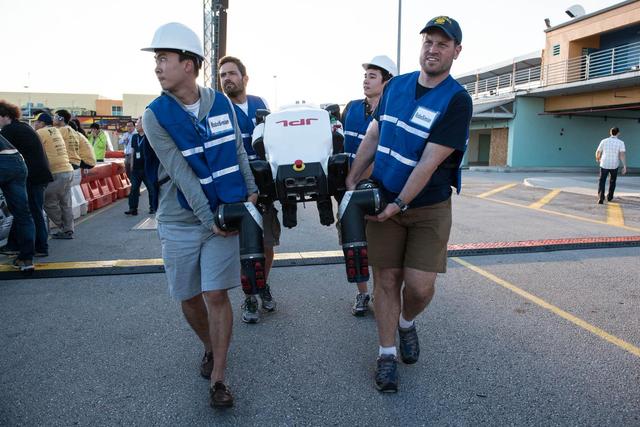
Engineers from NASA Jet Propulsion Laboratory carry RoboSimian, a robot developed at JPL, at the DARPA Robotics Challenge Trials in Florida in December 2013.
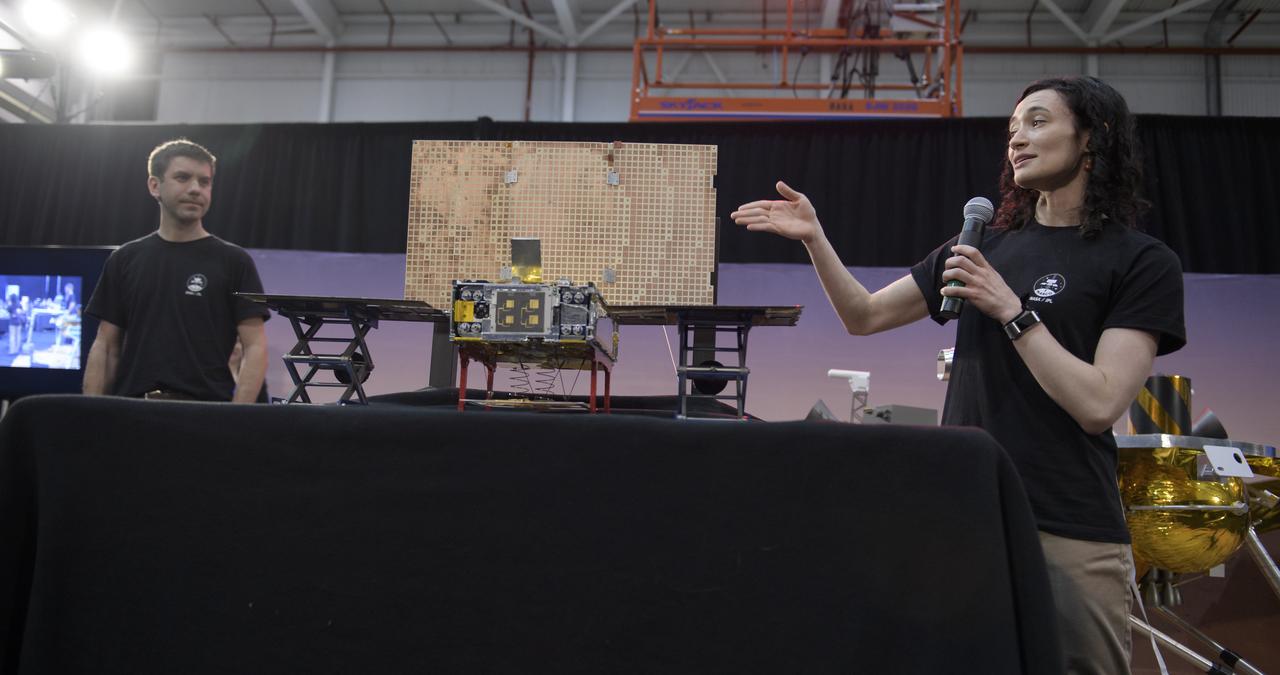
Andy Klesh, MarCO chief engineer, NASA JPL, left, and Annie Marinan, MarCO Systems Engineer, NASA JPL discuss NASA's Mars Cube One (MarCO) technology demonstration mission during a prelaunch media briefing, Thursday, May 3, 2018, at Vandenberg Air Force Base in California. MarCO, which is a separate mission launching on the same rocket at NASA’s InSight mission to Mars, will test new miniaturized deep space communication equipment. Photo Credit: (NASA/Bill Ingalls)
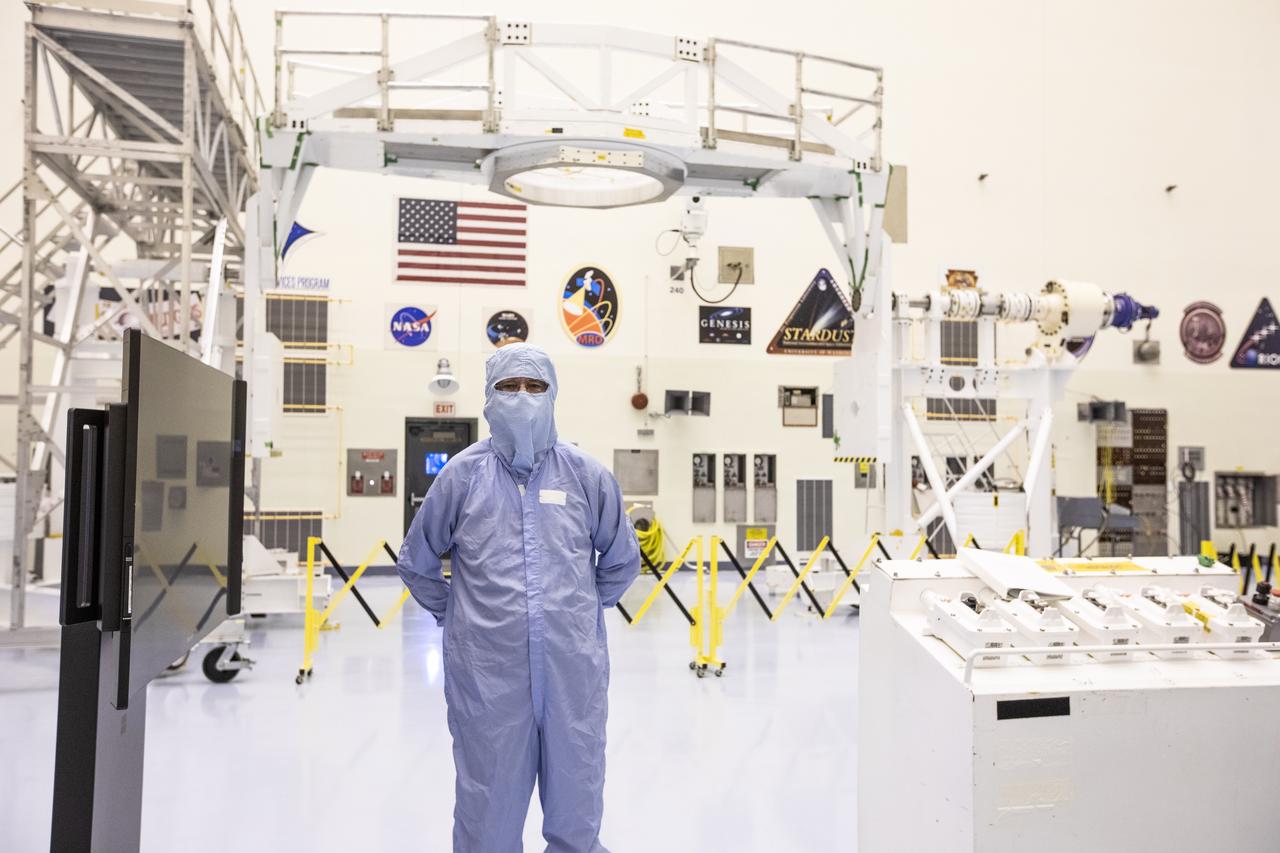
Buck Crenshaw, a quality assurance subject matter expert with NASA’s Jet Propulsion Laboratory (JPL), is photographed in front of the Spacecraft Assembly and Rotation Fixture (SCARF) that will be used to process the agency’s Mars 2020 rover inside the Kennedy Space Center’s Payload Hazardous Servicing Facility on Nov. 22, 2019. Attached to the SCARF is an access stand that will allow personnel to reach the spacecraft when it’s held above ground level. The Mars 2020 rover is being manufactured at JPL in California and, once complete, will be sent to the Florida spaceport for assembly, prelaunch processing and checkouts. The rover is scheduled to launch from Cape Canaveral Air Force Station in summer 2020 aboard a United Launch Alliance Atlas V rocket procured from NASA’s Launch Services Program. The mission will help the agency better understand the geology of Mars, test new robotic technology and assist in determining if any form of life ever was supported on the Red Planet.
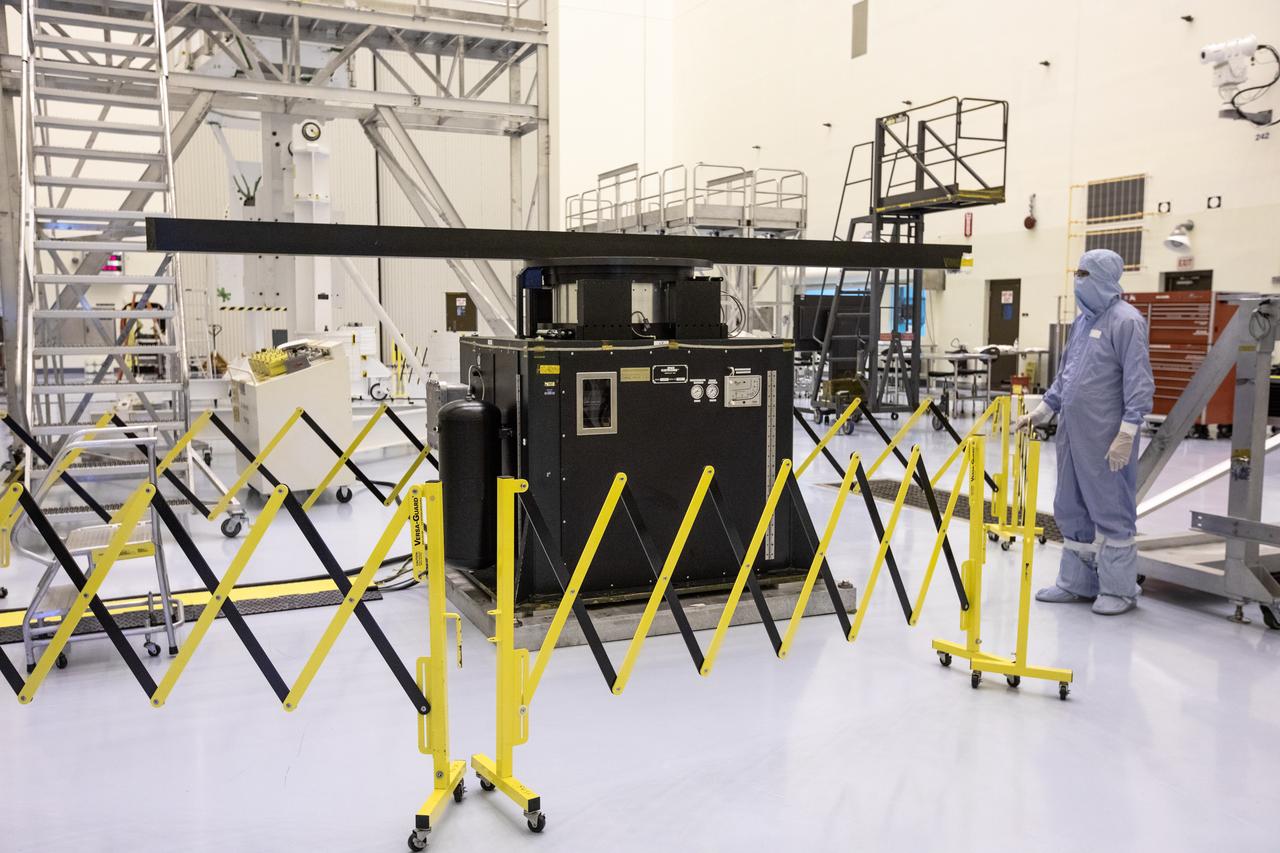
Buck Crenshaw, a quality assurance subject matter expert with NASA’s Jet Propulsion Laboratory (JPL), is photographed next to critical ground support equipment that will be utilized to process the agency’s Mars 2020 rover inside Kennedy Space Center’s Payload Hazardous Servicing Facility on Nov. 22, 2019. The Mars 2020 rover is being manufactured at JPL in California and, once complete, will be sent to the Florida spaceport for assembly, prelaunch processing and checkouts. The rover is scheduled to launch from Cape Canaveral Air Force Station in summer 2020 aboard a United Launch Alliance Atlas V rocket procured from NASA’s Launch Services Program. The mission will help the agency better understand the geology of Mars, test new robotic technology and assist in determining if any form of life ever was supported on the Red Planet.
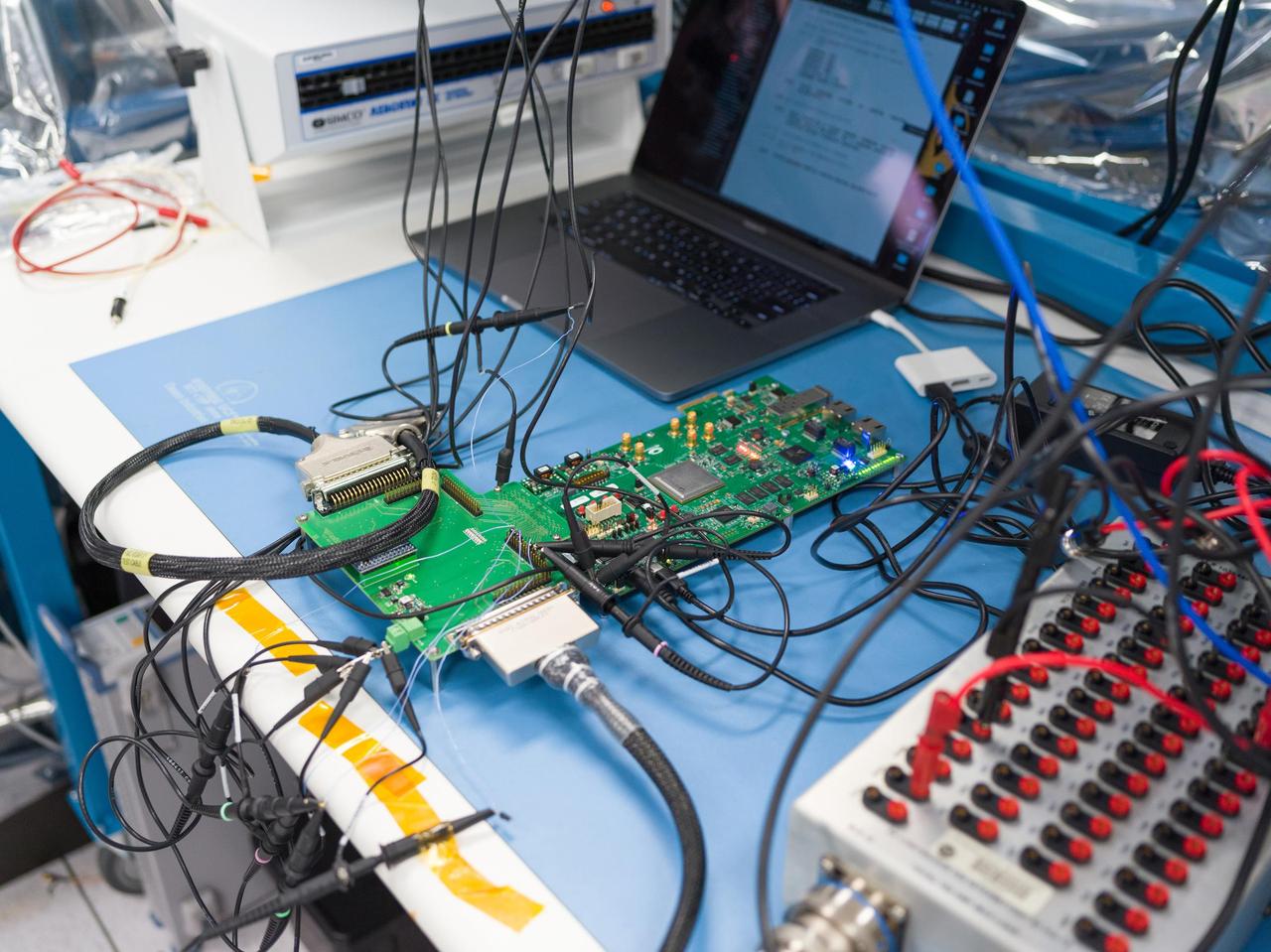
Seen here in March 2023, prototype hardware for the Venus Interferometric Synthetic Aperture Radar (VISAR) underwent interface testing at NASA's Jet Propulsion Laboratory in Southern California. VISAR is being developed at JPL for NASA's Venus Emissivity Radio Science, InSAR, Topography & Spectroscopy (VERITAS) mission that will launch within a decade to explore Earth's twin. These early interface tests are the first in a series to be run by JPL and Thales Alenia Space Italy (TASI), an international partner of the VERITAS mission that is contributing hardware to the instrument. Figure A shows TASI engineers Luca Di Marco Napini and Gabriel Mihu working in a JPL cleanroom on the VISAR prototype hardware. When VERITAS arrives in orbit, it will use VISAR to create detailed 3D global maps of Venus. The spacecraft will also carry a near-infrared spectrometer to figure out what the surface is made of. Together, the instruments will offer clues about the planet's past and present geologic processes, help reveal how the paths of Venus and Earth diverged, and how Venus lost its potential as a habitable world. VERITAS is managed by JPL. VERITAS and NASA's Deep Atmosphere Venus Investigation of Noble gases, Chemistry, and Imaging (DAVINCI) mission were selected in 2021 under NASA's Discovery Program as the agency's next missions to Venus. The Discovery Program is managed by the Planetary Missions Program Office at NASA's Marshall Space Flight Center in Huntsville, Alabama, for the Planetary Science Division of NASA's Science Mission Directorate in Washington. https://photojournal.jpl.nasa.gov/catalog/PIA25832

On Oct. 14, 2021, NASA Administrator (second from left) and Deputy Administrator Pam Melroy (far right) visited the agency's Jet Propulsion Laboratory to discuss NASA's climate efforts and the latest developments with the agency's Perseverance rover and Mars. With them are (from far left) Thomas Rosenbaum, president of Caltech, which manages the Jet Propulsion Laboratory for NASA; JPL Interim Director Larry James; JPL CFO Sammy Kayali; and NASA Office of JPL Management and Oversight Director Marcus Watkins. https://photojournal.jpl.nasa.gov/catalog/PIA24903
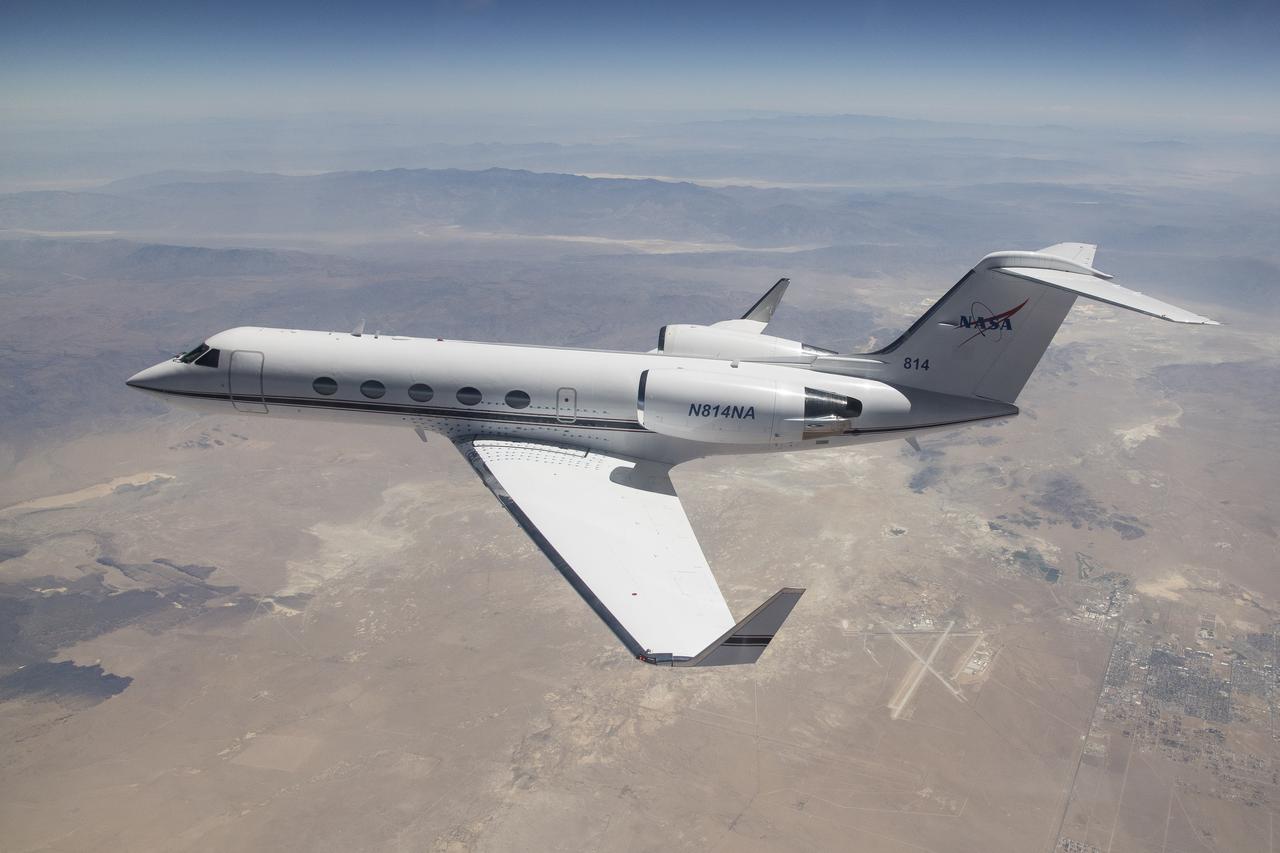
In a series of baseline flights beginning on June 24, 2024, the G-IV aircraft flew over the Antelope Valley to analyze aircraft performance. To accommodate a new radar instrument developed by JPL, NASA’s Airborne Science Program has selected the Gulfstream-IV aircraft to be modified and operated by Armstrong Flight Research Center in Edwards, California and will accommodate new instrumentation on board in support of the agency’s science mission directorate. Baseline flights began at NASA Armstrong in June 2024

This image shows JPL Multi-angle Imaging SpectroRadiometer instrument onboard NASA Terra satellite on Sunday, Nov. 8, 2009 as it passed over Hurricane Ida while situated between western Cuba and the Yucatan Peninsula.
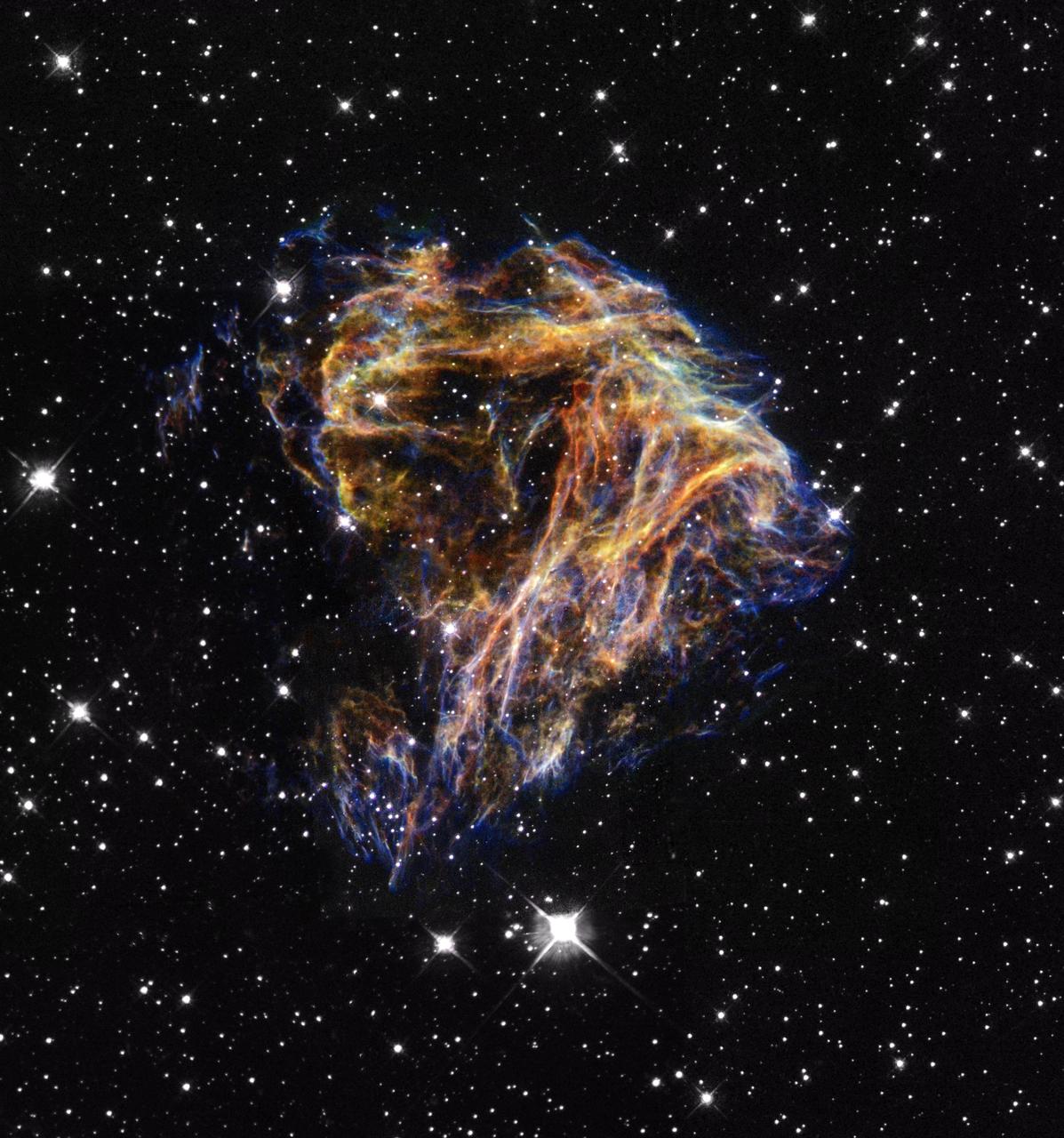
Resembling sparks from a fireworks display, this image taken by a JPL camera onboard NASA Hubble Space Telescope shows delicate filaments that are sheets of debris from a stellar explosion in the nearby Large Magellanic Cloud galaxy.
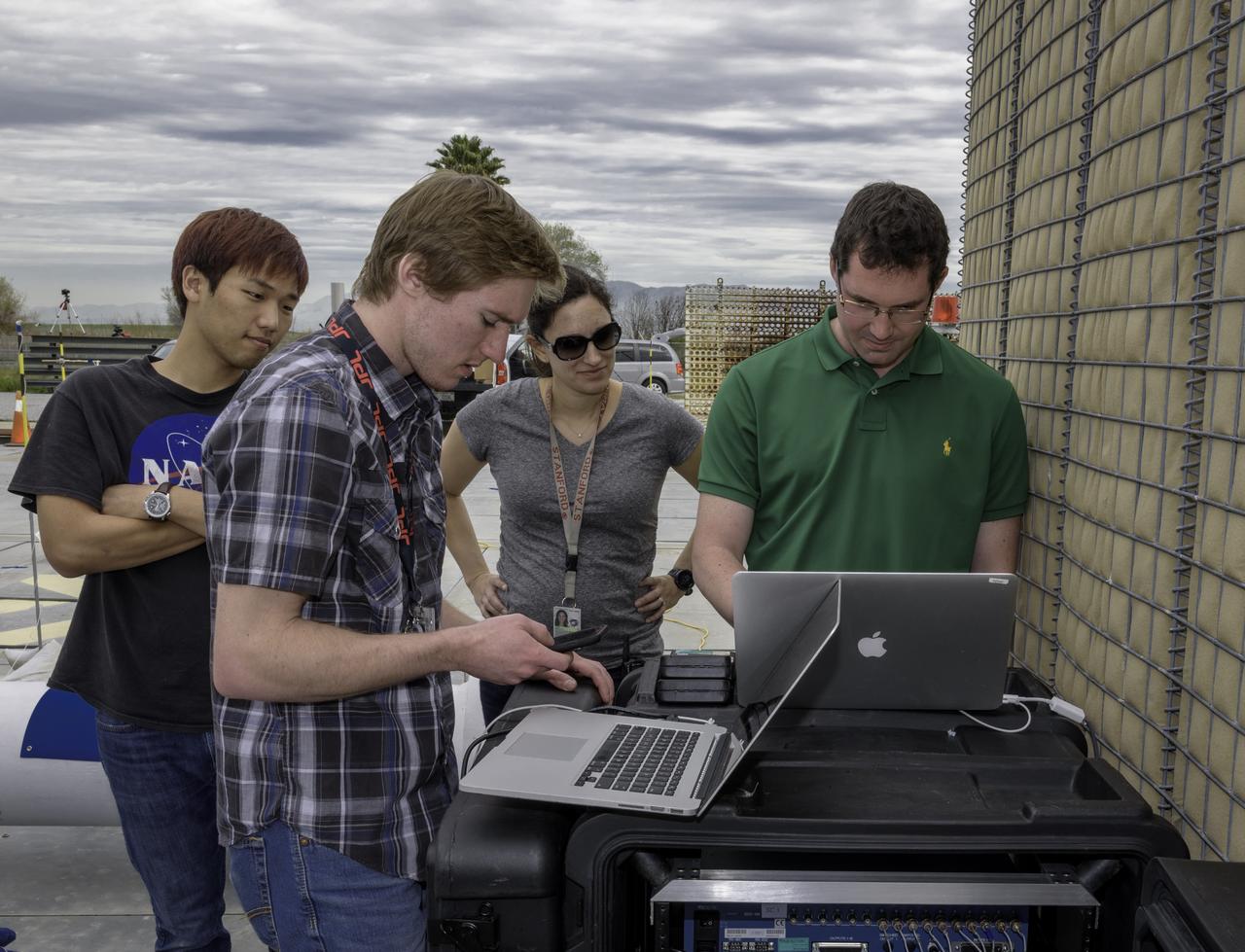
From Left to Right: 1. Hunjoo Kim (NASA JPL) 2. Kyle Botteon (NASA JPL) 3. Ashley Karp (NASA JPL) 4. Brian Schratz (NASA JPL) Testing the Peregrine Hybrid Rocket Engine at the Outdoor Aerodynamic Research Facility (building N249, OARF) at Ames Research Center.
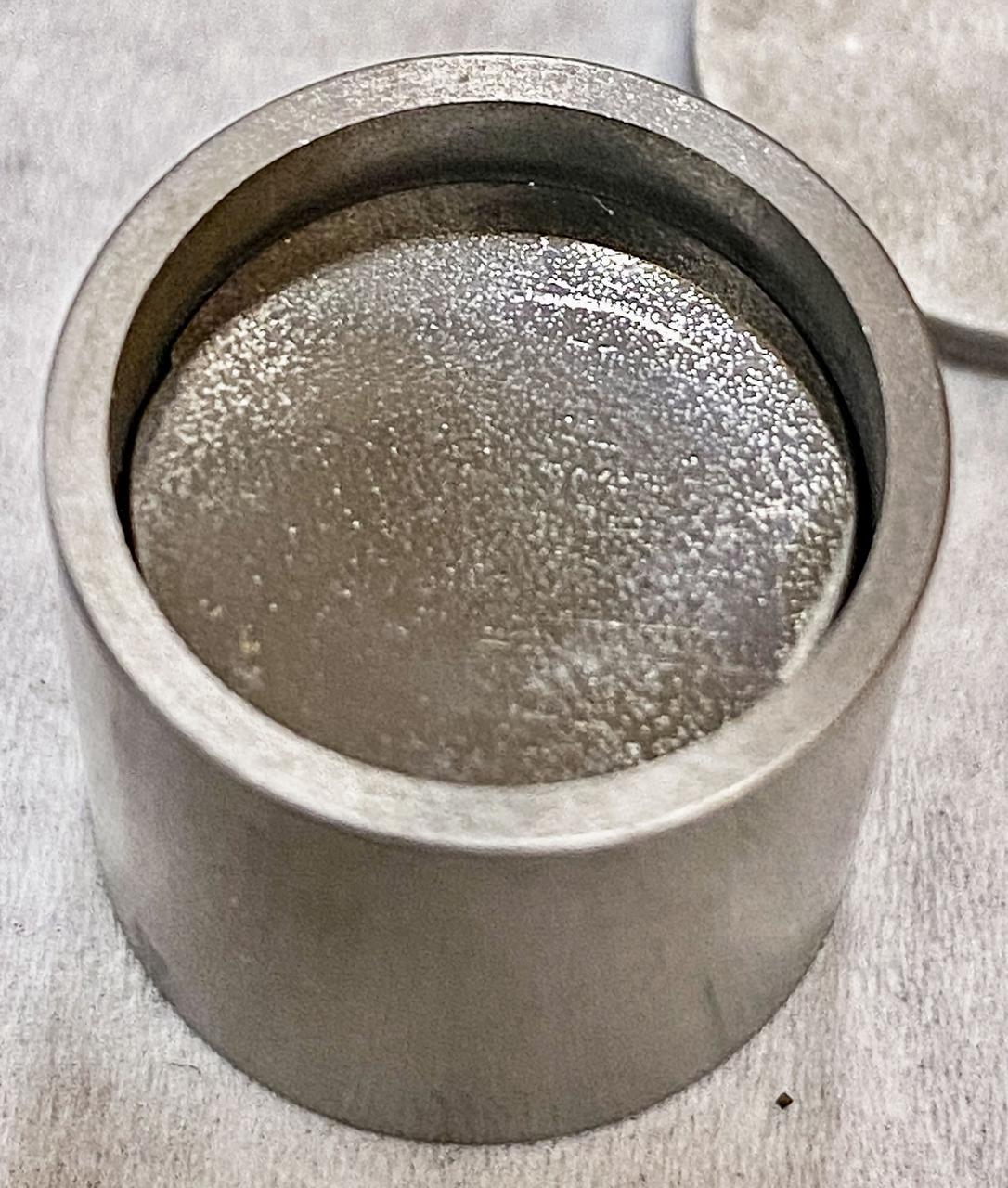
jsc2022e072974 (4/15/2022) --- A preflight sample from the Fabrication of Amorphous Metals in Space (MSL SCA-FAMIS) investigation shows tungsten spheres embedded in a glass-forming alloy loaded into a tungsten crucible. Image courtesy of Douglas Hofmann, NASA JPL/Caltech.
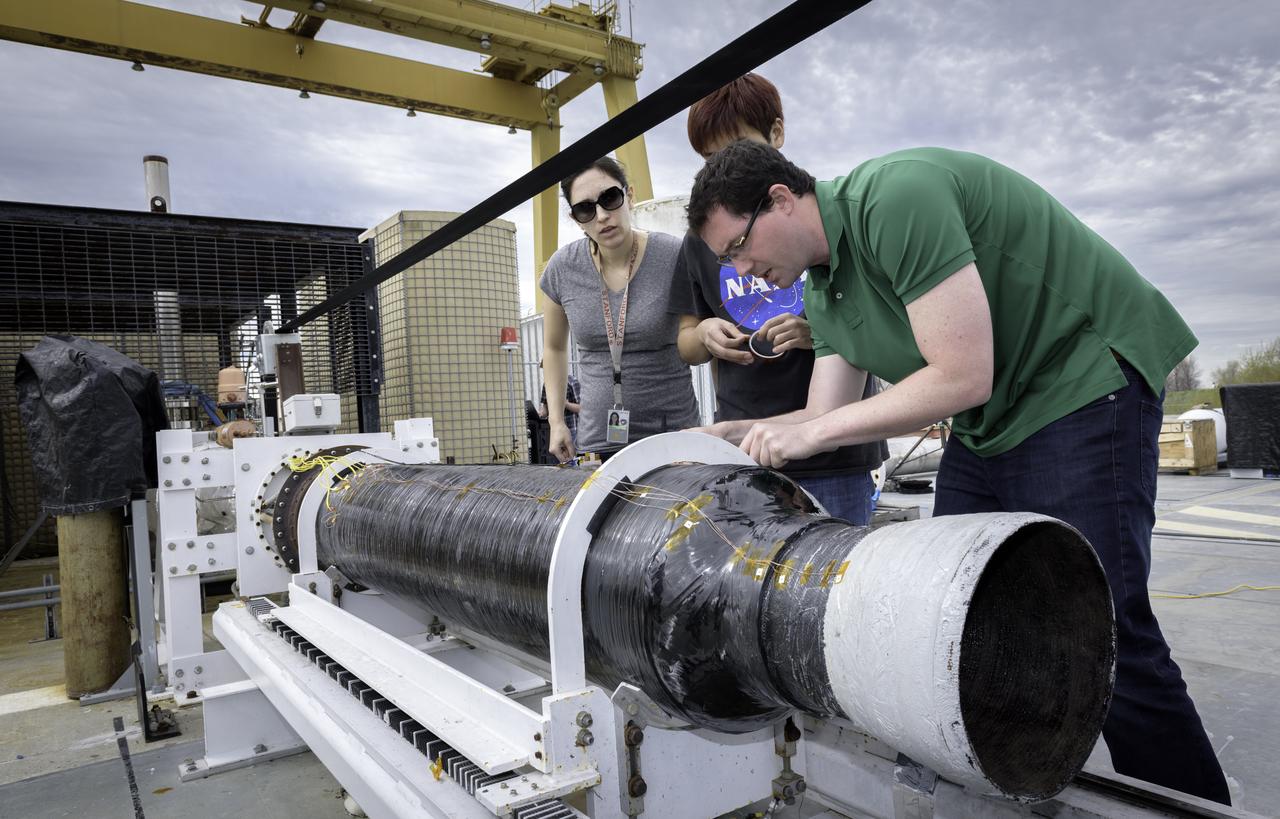
(Left to Right) Ashley Karp, NASA JPL, Hunjoo Kim, NASA JPL and Brian Schratz (NASA JPL) preparing the Peregrine rocket motor at the Outdoor Aerodynamic Research Facility (OARF, N-249).
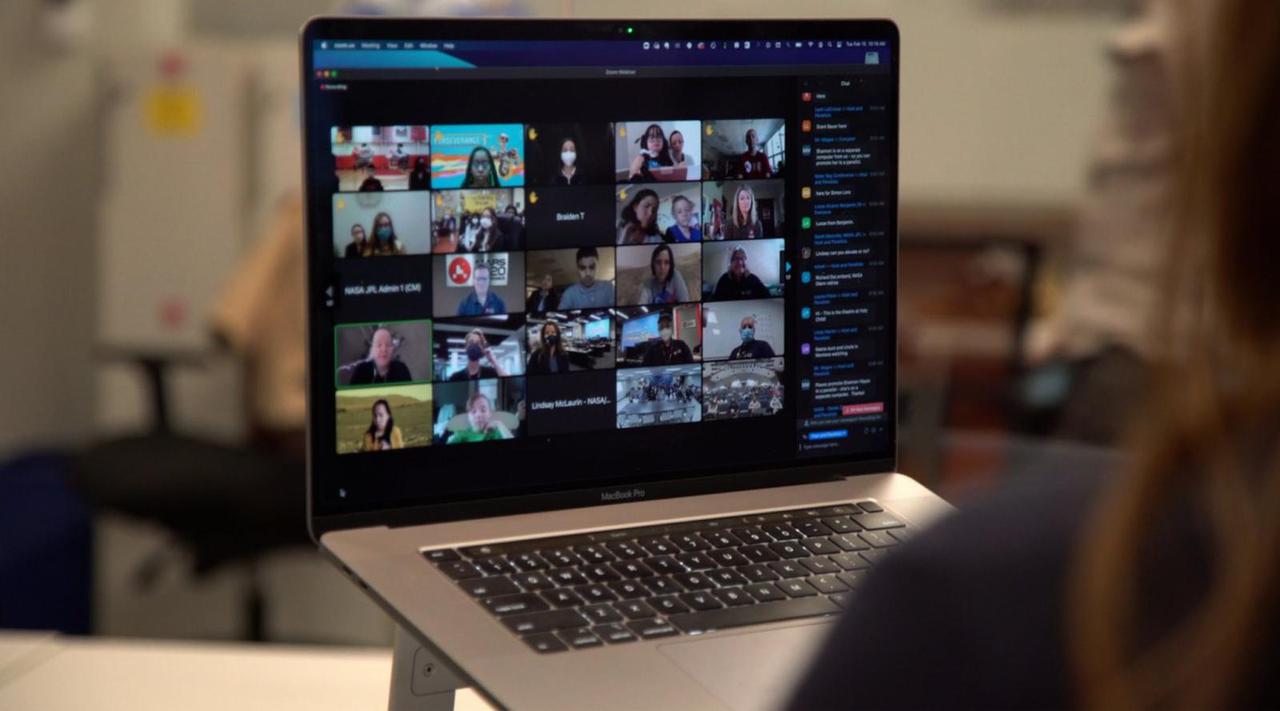
Twenty students – along with their parents, teachers, and classmates – met virtually with Mars rover team members at JPL, where they received personalized messages beamed from NASA's Perseverance rover as part of the "You've Got Perseverance" campaign. https://photojournal.jpl.nasa.gov/catalog/PIA25271

An aging star last hurrah creates a flurry of glowing knots of gas that appear to be streaking through space. This closeup image of the Dumbbell Nebula was taken by the JPL-built and designed WFC3 camera, onboard NASA's Hubble Space Telescope. http://photojournal.jpl.nasa.gov/catalog/PIA04249
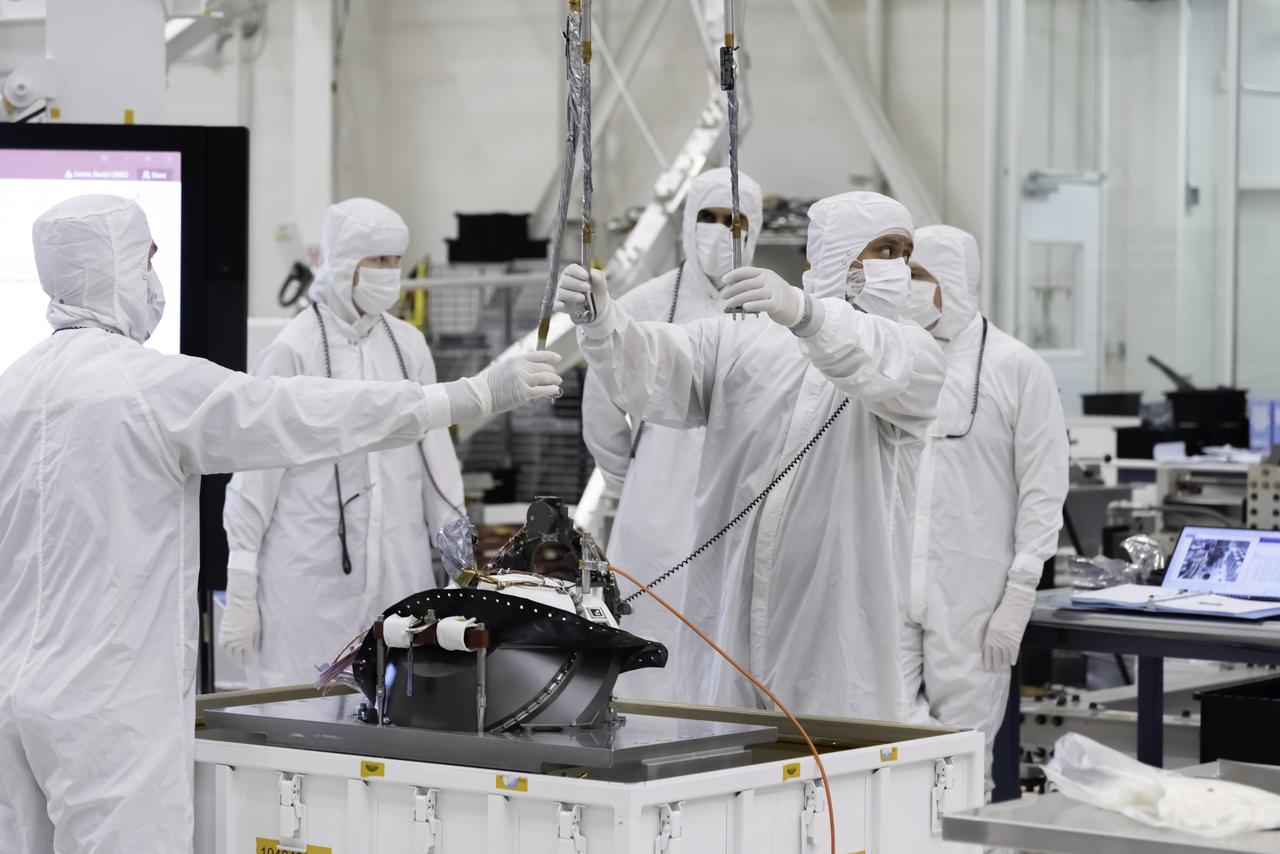
Engineers at NASA's Jet Propulsion Laboratory lift the Mars 2020 rover's bit carousel out of its storage container. The bit carousel is a mechanism that is at the heart of the rover's Sample Caching System. The image was taken on Aug. 5, 2019, in the Spacecraft Assembly Facility's High Bay 1 at JPL. https://photojournal.jpl.nasa.gov/catalog/PIA23320
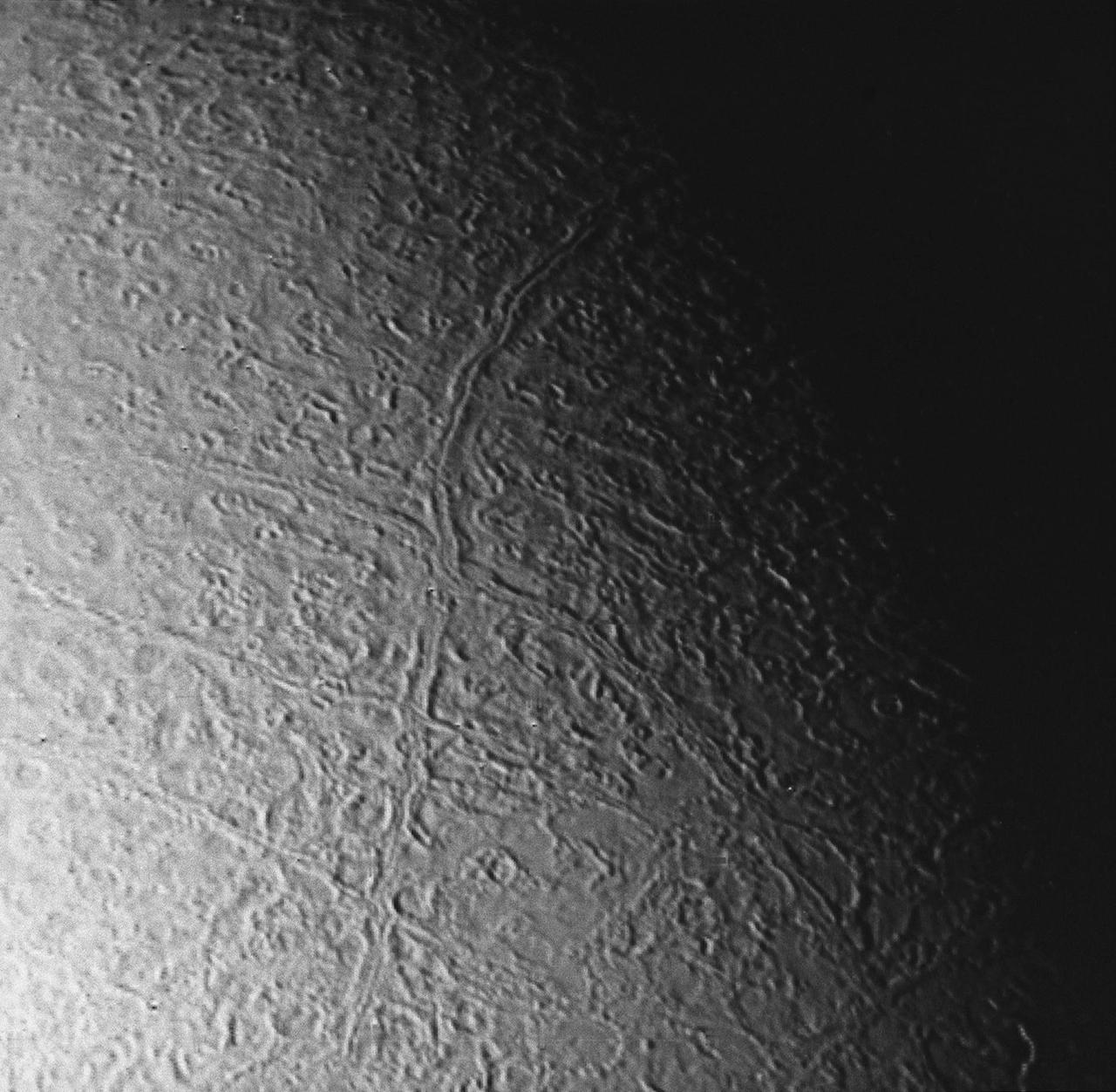
This image of Triton was taken on Aug. 25 1989 by NASA Voyager 2. The image was received at JPL four hours later at about 4:20 a.m. The smallest detail that can be seen is about 2.5 kilometers 1.5 miles across.

NASA Administrator Bill Nelson, right, meets with incoming JPL Director Dr. Laurie Leshin, left, along with NASA Deputy Chief of Staff Bale Dalton, NASA Deputy Associate Administrator for Business Operations Casey Swails, NASA Associate Administrator Bob Cabana, and NASA Deputy Administrator Pam Melroy, Tuesday, Feb., 15, 2022, at the Mary W. Jackson NASA Headquarters building in Washington. Photo Credit: (NASA/Bill Ingalls)
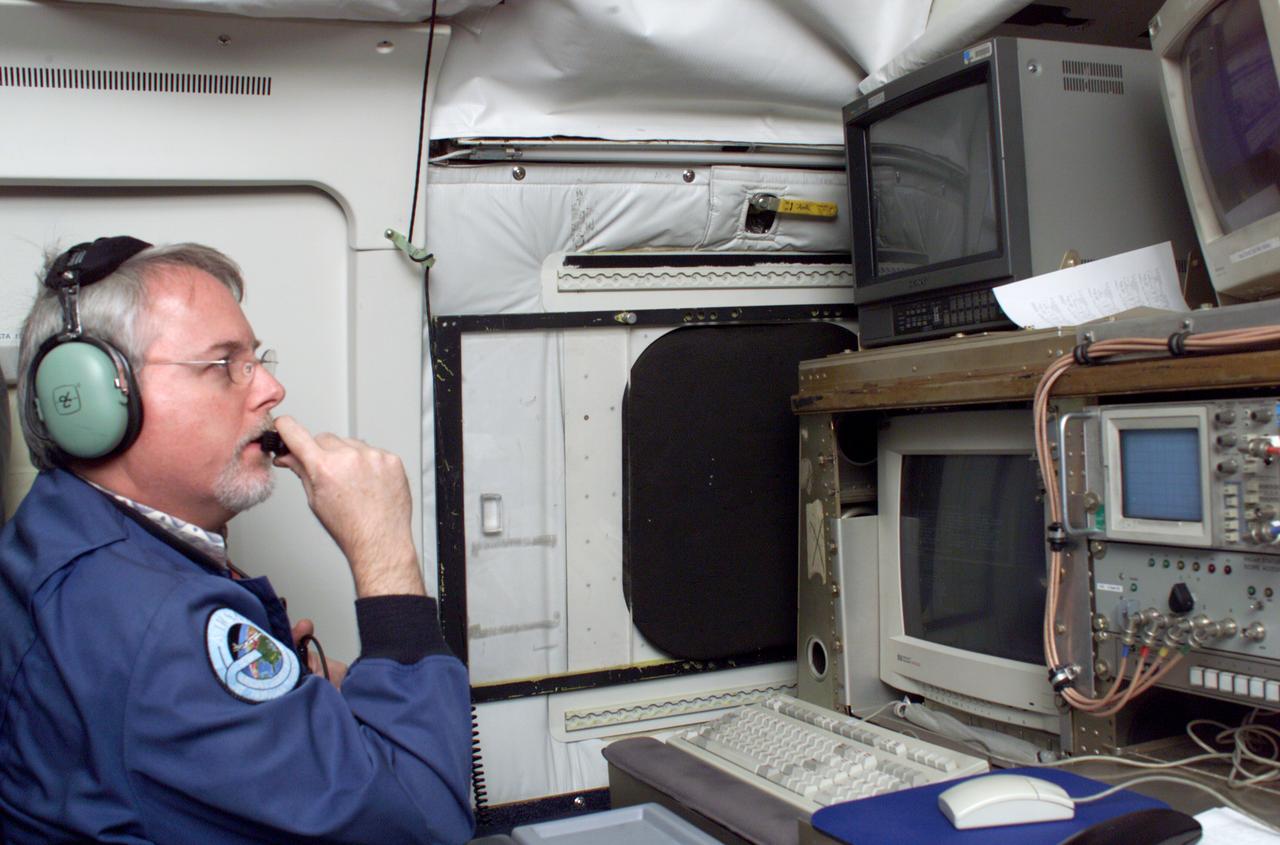
JPL Researcher Tim Miller at the primary AirSAR station aboard NASA's DC-8 flying laboratory during the AirSAR 2004 campaign. AirSAR 2004 is a three-week expedition by an international team of scientists that will use an all-weather imaging tool, called the Airborne Synthetic Aperture Radar (AirSAR), in a mission ranging from the tropical rain forests of Central America to frigid Antarctica.
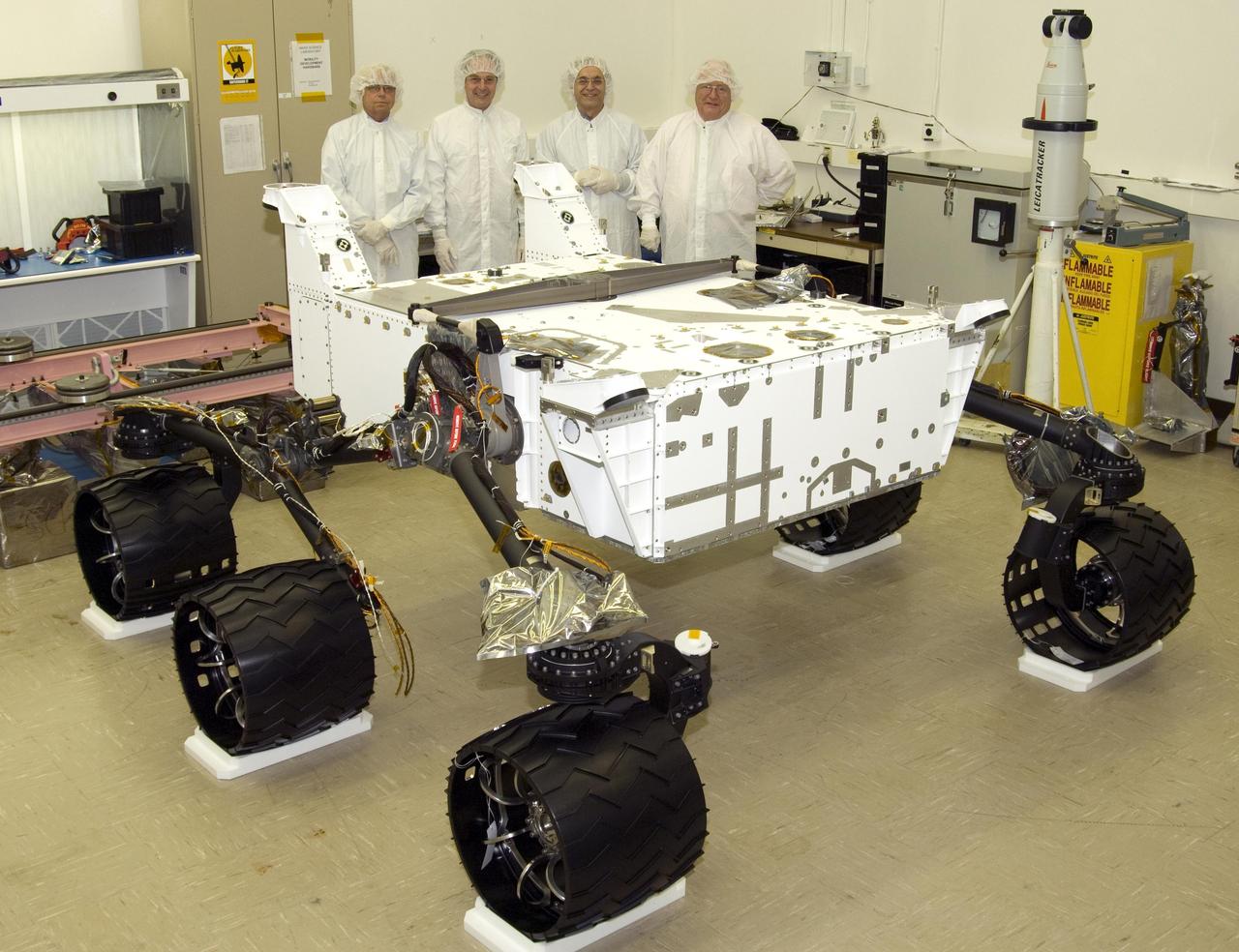
This image taken in August 2008 in a clean room at NASA JPL, Pasadena, Calif., shows NASA next Mars rover, the Mars Science Laboratory, in the course of its assembly, before additions of its arm, mast, laboratory instruments and other equipment.
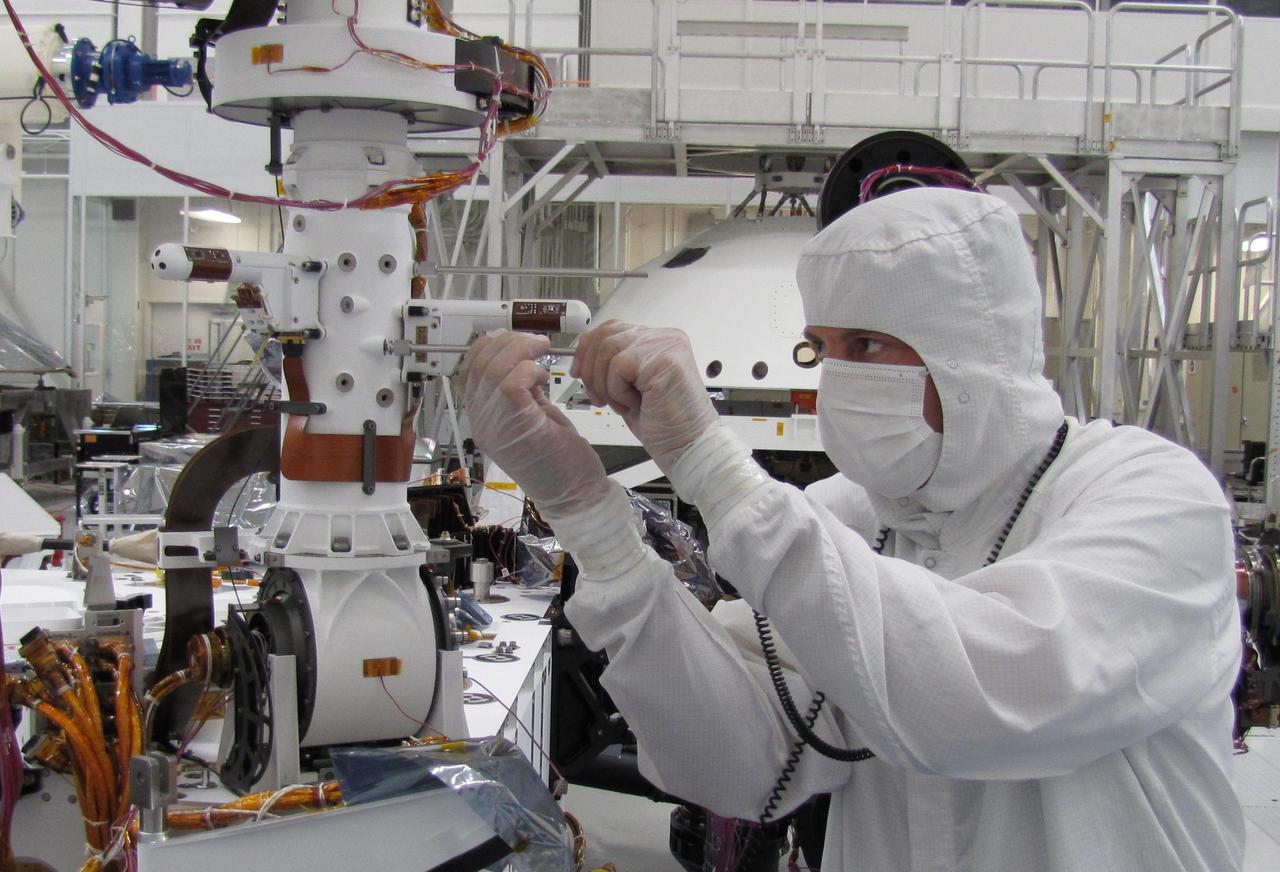
Sensors on two finger-like mini-booms extending horizontally from the mast of NASA Mars rover Curiosity will monitor wind speed, wind direction and air temperature; image taken during installation of the instrument inside a clean room at NASA JPL.
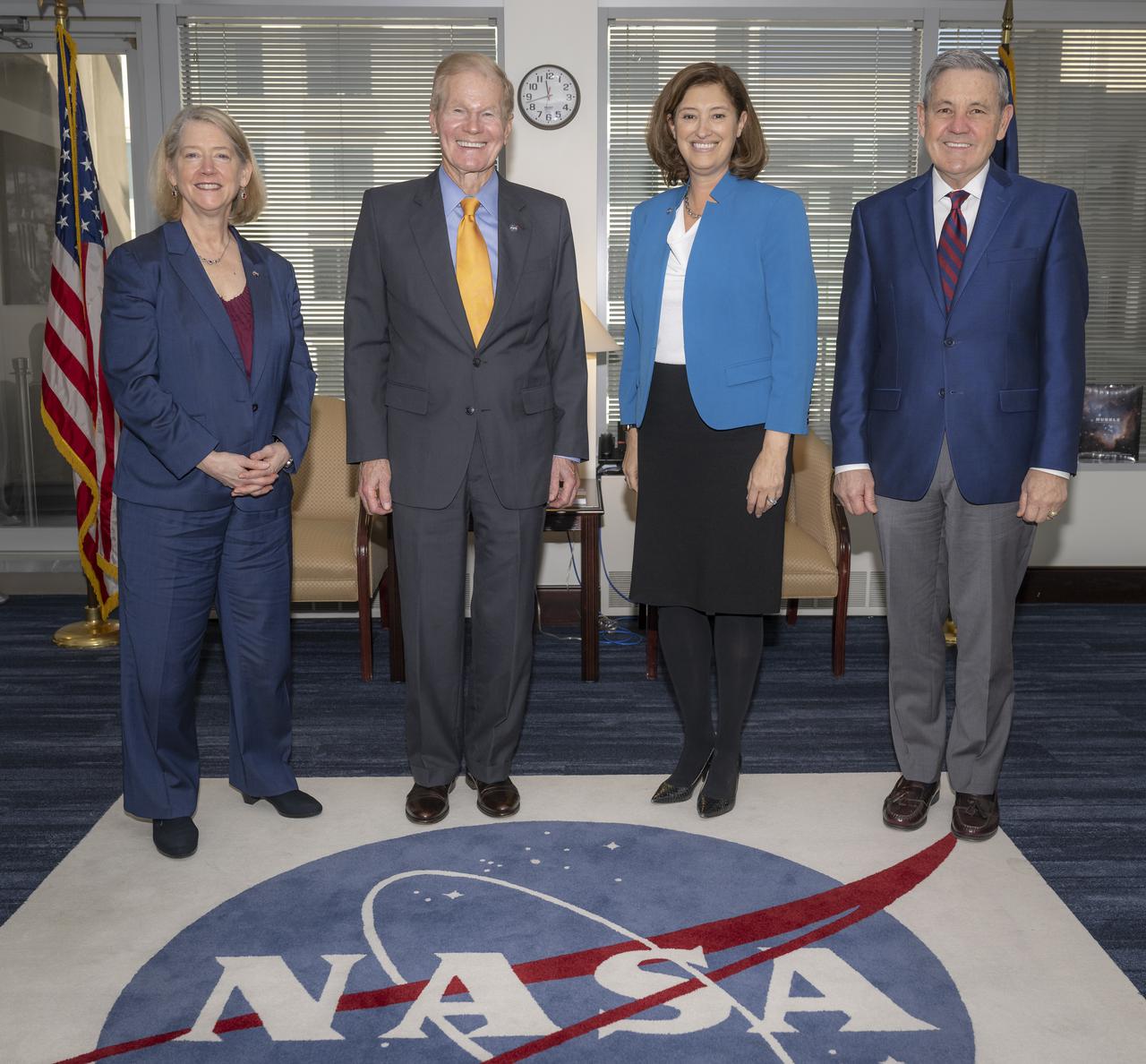
NASA Deputy Administrator Pam Melroy, left, NASA Administrator Bill Nelson, incoming JPL Director Dr. Laurie Leshin, and NASA Associate Administrator Bob Cabana, pose for a photograph at the conclusion of their meeting, Tuesday, Feb., 15, 2022, at the Mary W. Jackson NASA Headquarters building in Washington. Photo Credit: (NASA/Bill Ingalls)
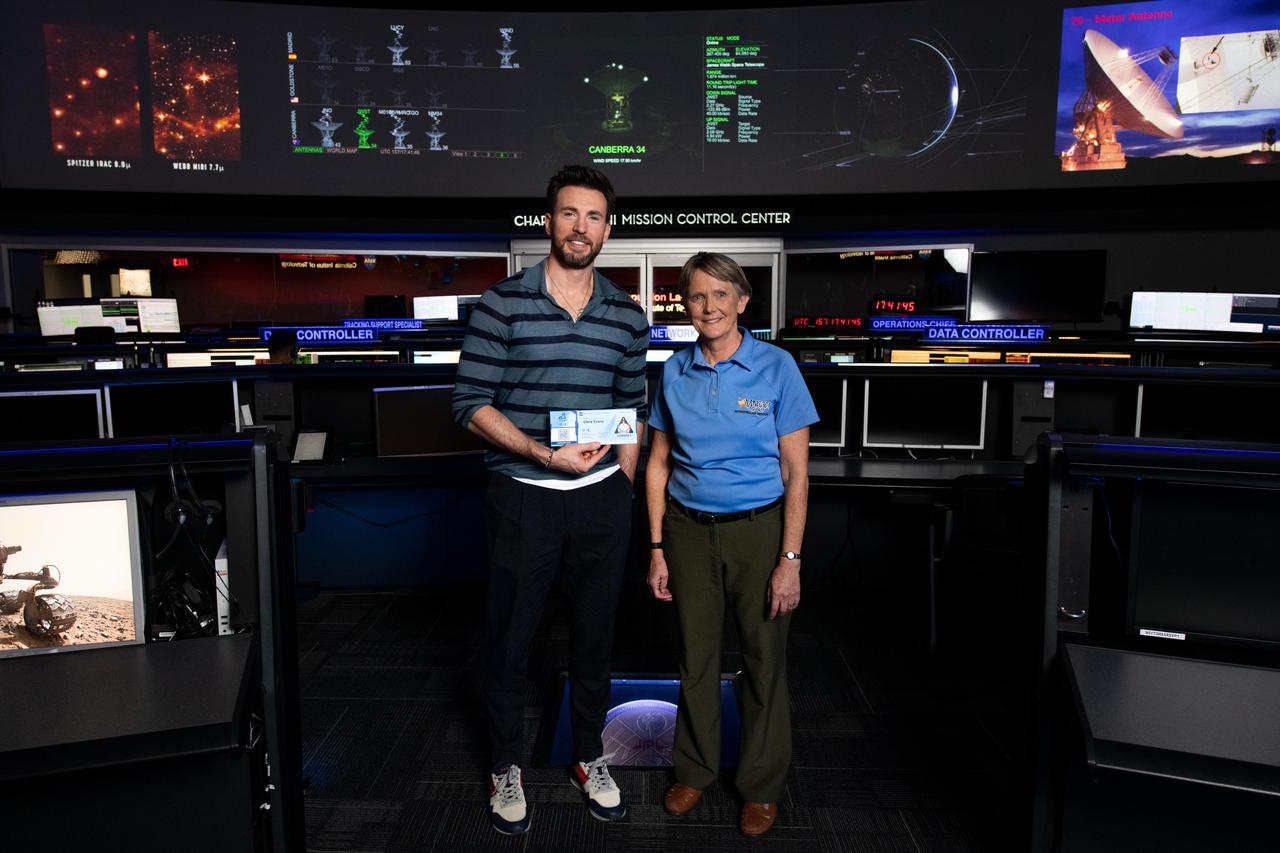
Actor Chris Evans (left) receives a "boarding pass" to the Moon from Suzanne Dodd, director of the Interplanetary Network Directorate at NASA's Jet Propulsion Laboratory in Southern California. The pair are seen in the Space Flight Operations Facility at JPL on June 6, 2022. Evans visited JPL to learn more about space missions after starring as the lead voice in the space-themed movie "Lightyear." More than 3 million names, including Evans', were submitted online and will be included on a flash drive that will fly on the Orion spacecraft during NASA's Artemis I mission to the Moon. Artemis I will be the first uncrewed flight test of the Space Launch System rocket and the Orion spacecraft launching from NASA's Kennedy Space Center in Florida. NASA's Artemis program aims to establish a sustained human presence on the Moon that will serve as a launching pad for exploring Mars and beyond. https://photojournal.jpl.nasa.gov/catalog/PIA25311
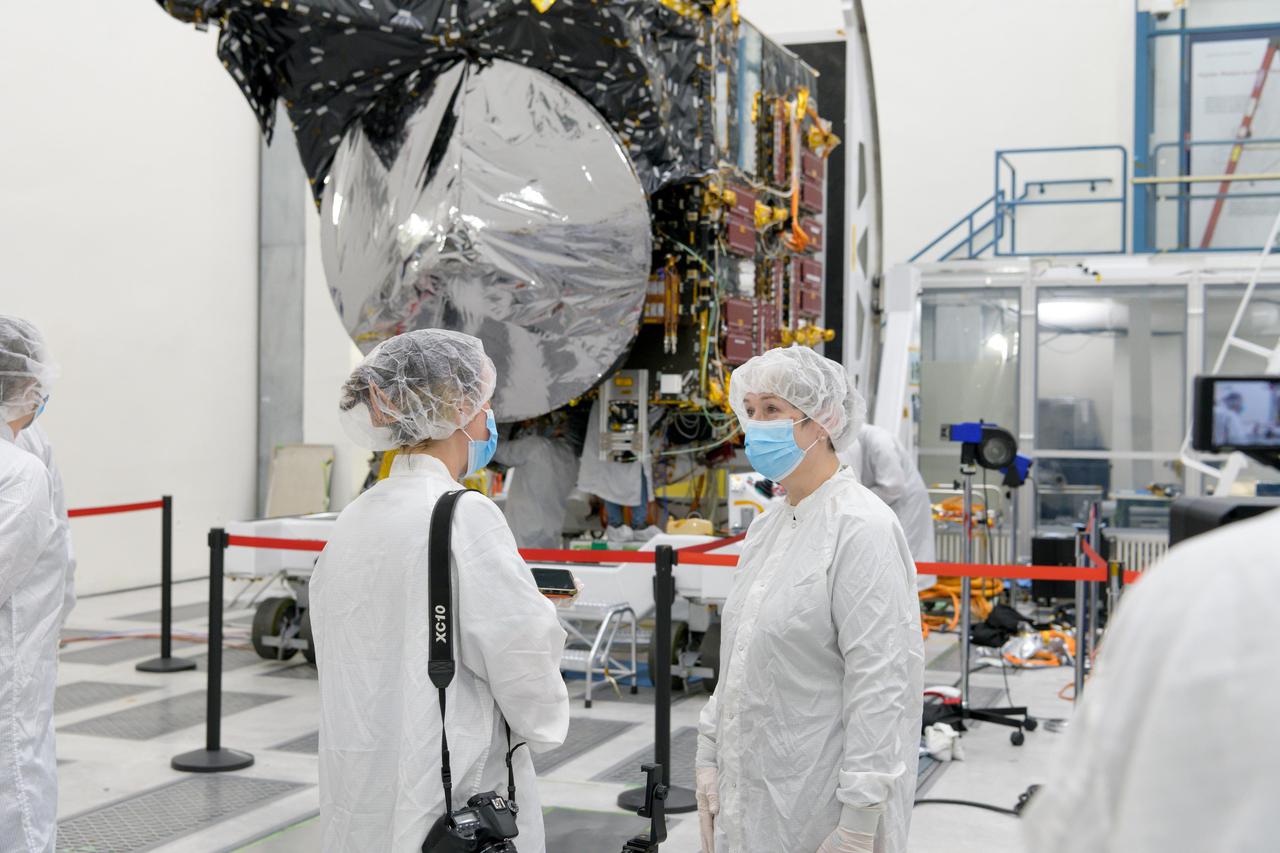
A member of the media interviews the principal investigator of NASA's Psyche mission, Lindy Elkins-Tanton, in front of the spacecraft on April 11, 2022, inside a clean room at NASA's Jet Propulsion Laboratory in Southern California. After engineers at JPL put their final touches on the spacecraft, Psyche will ship to NASA's Kennedy Space Center in Florida, where it is scheduled to launch in August 2022 on a journey to a metal-rich asteroid of the same name. https://photojournal.jpl.nasa.gov/catalog/PIA25241
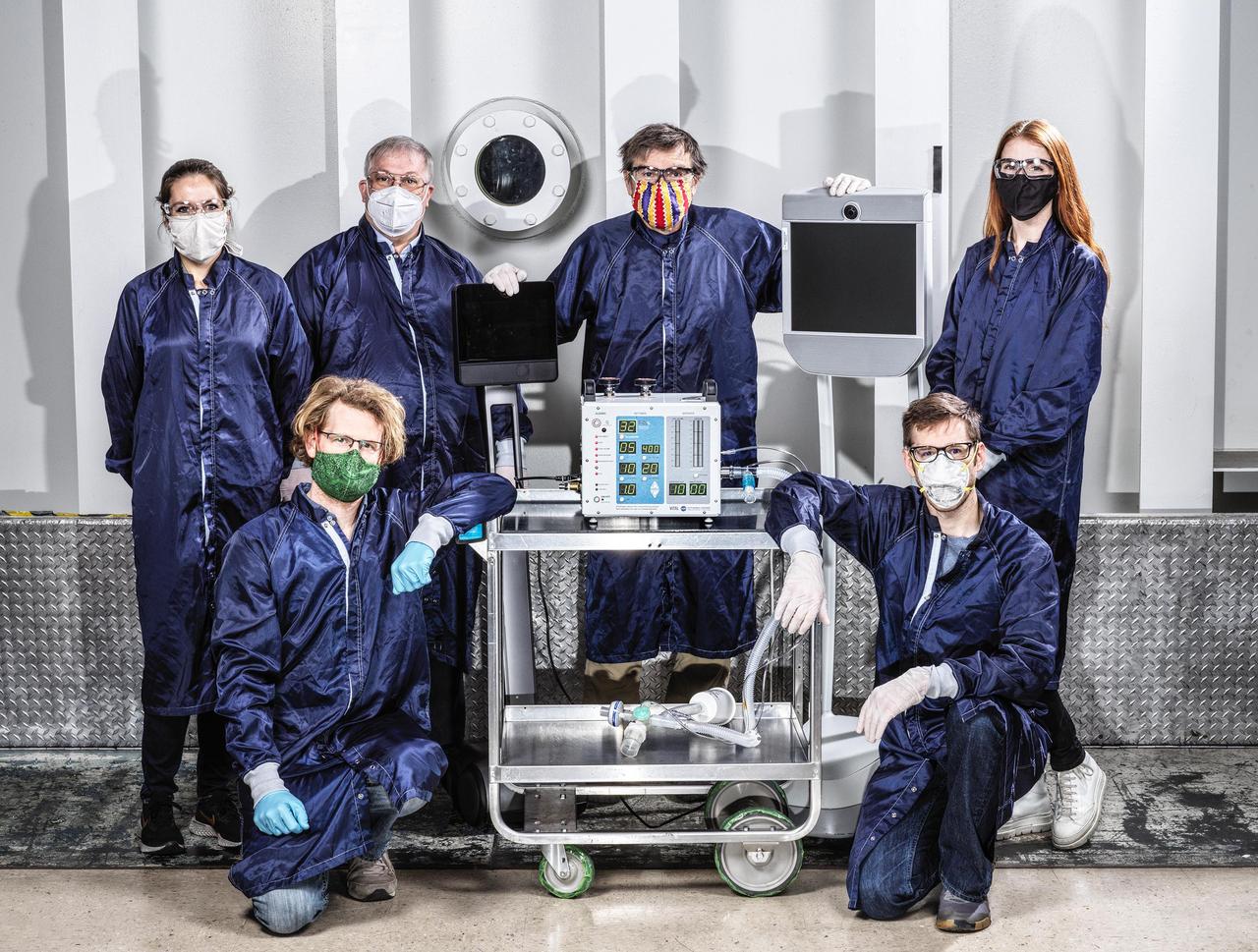
Some of the dozens of engineers involved in creating a ventilator prototype specially targeted to coronavirus disease patients at NASA's Jet Propulsion Laboratory in Southern California. Called VITAL (Ventilator Intervention Technology Accessible Locally), the prototype was created in 37 days in March and April 2020. https://photojournal.jpl.nasa.gov/catalog/PIA23713
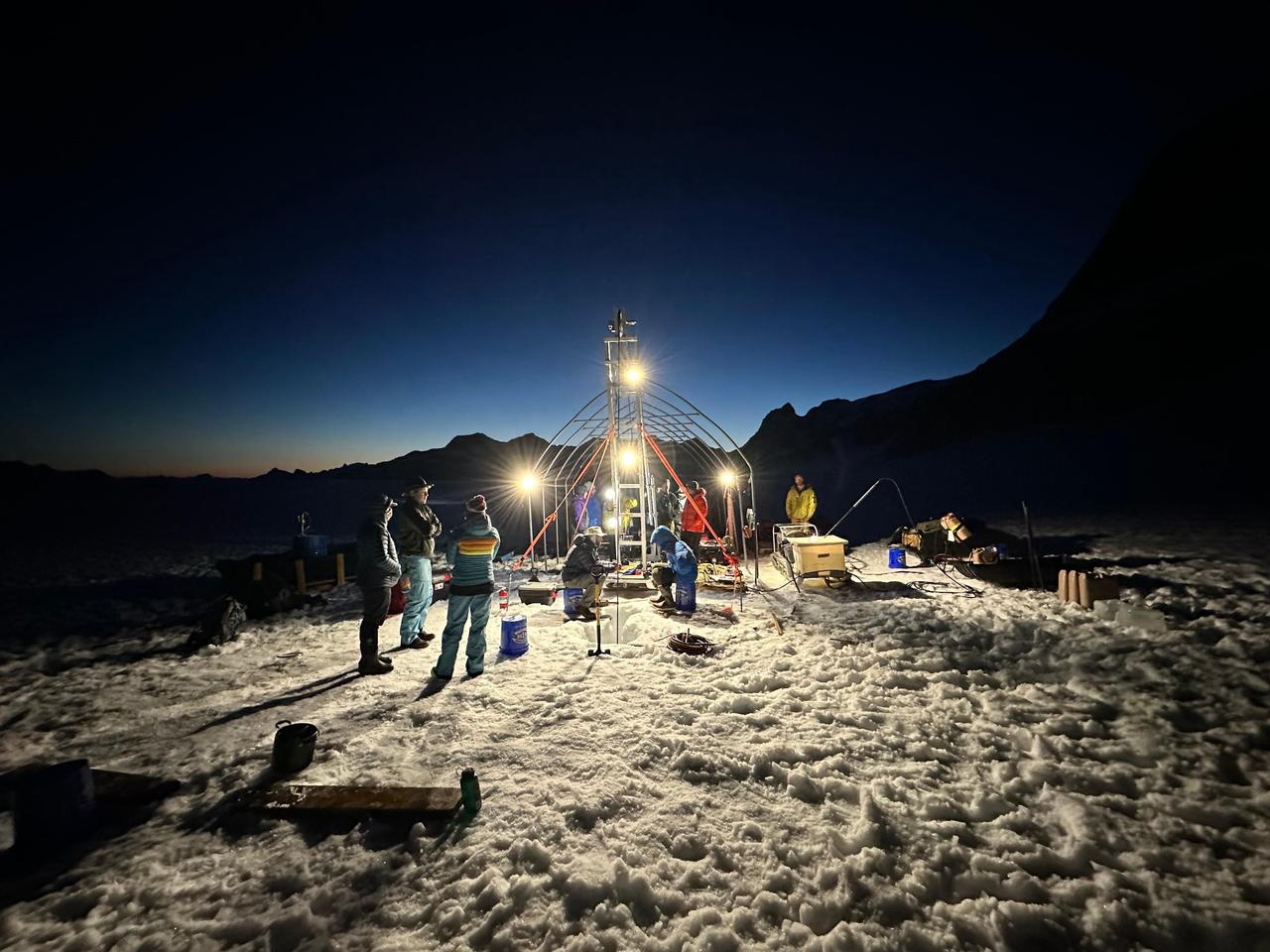
A group of researchers from NASA's Jet Propulsion Laboratory and other institutions spent two weeks on a glacier in Alaska in July 2023 for a project called ORCAA (Ocean Worlds Reconnaissance and Characterization of Astrobiological Analogs). Known as an analog mission, the project is working to answer science questions and test technology in preparation for a potential future mission to explore the surface or subsurface of icy moons like Jupiter's Europa and Saturn's Enceladus. Working at the Juneau Icefield, in coordination with the Juneau Icefield Research Project, the team used a hot-water drill to make a narrow hole in the glacier, melting its way progressively deeper. After three days, the drill reached bedrock, 890 feet (272 meters) below the surface. Science instruments were then sent down the borehole to take a variety of measurements and characterize the water environment. In 2025, the ORCAA team will return to the icefield and target a subglacial lake (a body of water inside the glacier) that has similarities to a reservoir scientists believe exists a few kilometers beneath the icy surface of Europa. ORCAA is funded by NASA's Planetary Science and Technology from Analog Research (PSTAR) program. https://photojournal.jpl.nasa.gov/catalog/PIA26345
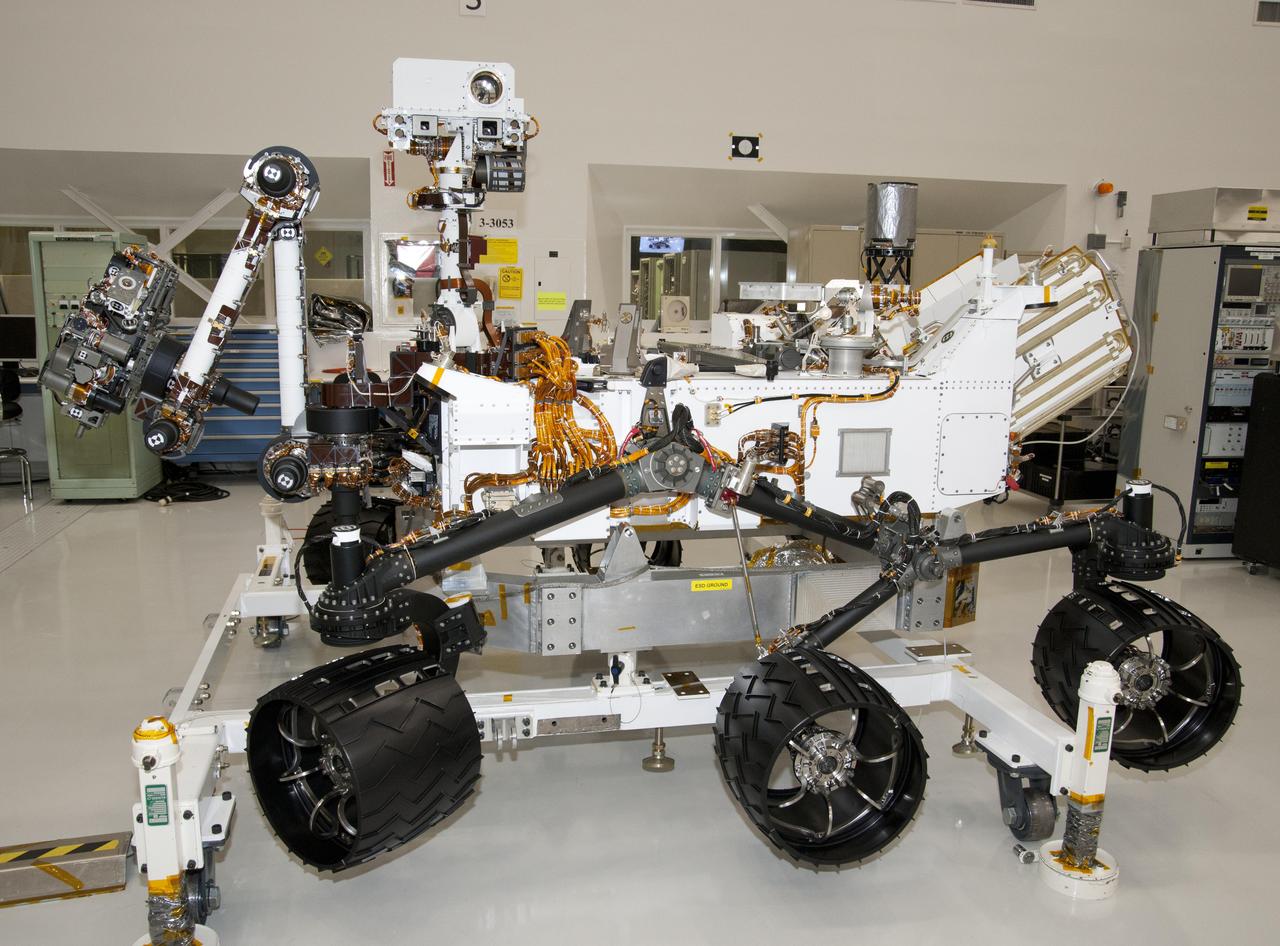
The rover for NASA Mars Science Laboratory mission, named Curiosity, is about 3 meters 10 feet long, not counting the additional length that the rover arm can be extended forward. The front of the rover is on the left in this side view.
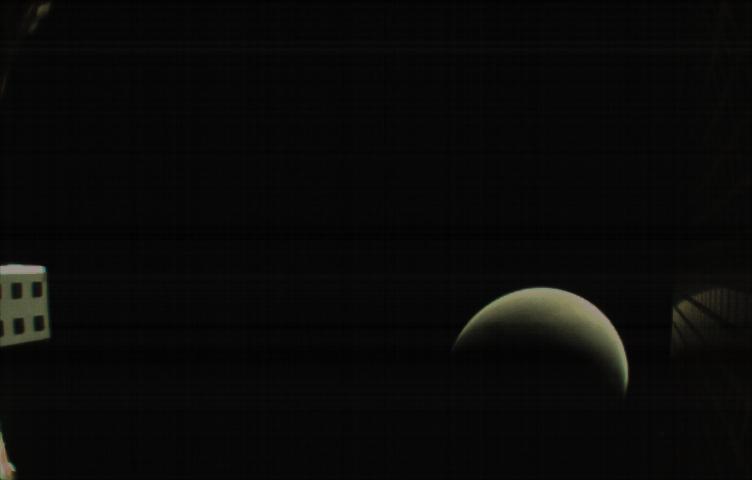
MarCO-B, one of the experimental Mars Cube One (MarCO) CubeSats, took this image of Mars from about 10,900 miles (17,500 kilometers) away just after NASA’s InSight spacecraft landed on Mars on Nov. 26, 2018. MarCO-B flew by Mars with its twin, MarCO-A, to serve as communications relays for InSight as it touched down on the Red Planet around noon PST (3 p.m. EST). This image was taken at 1 p.m. PST (4 p.m. EST). A crescent Mars with its south pole in the 4 o’clock position is visible in this picture. MarCO-B’s antenna reflector mirrors a portion of the illuminated part of Mars on the bottom right. The antenna feed (white rectangle with gold squares) is visible on the left. This image was taken about 50 minutes after PIA22833 and 10 seconds after PIA22832. The MarCO and InSight projects are managed for NASA's Science Mission Directorate, Washington, by JPL, a division of Caltech, Pasadena. Credit: NASA/JPL-Caltech
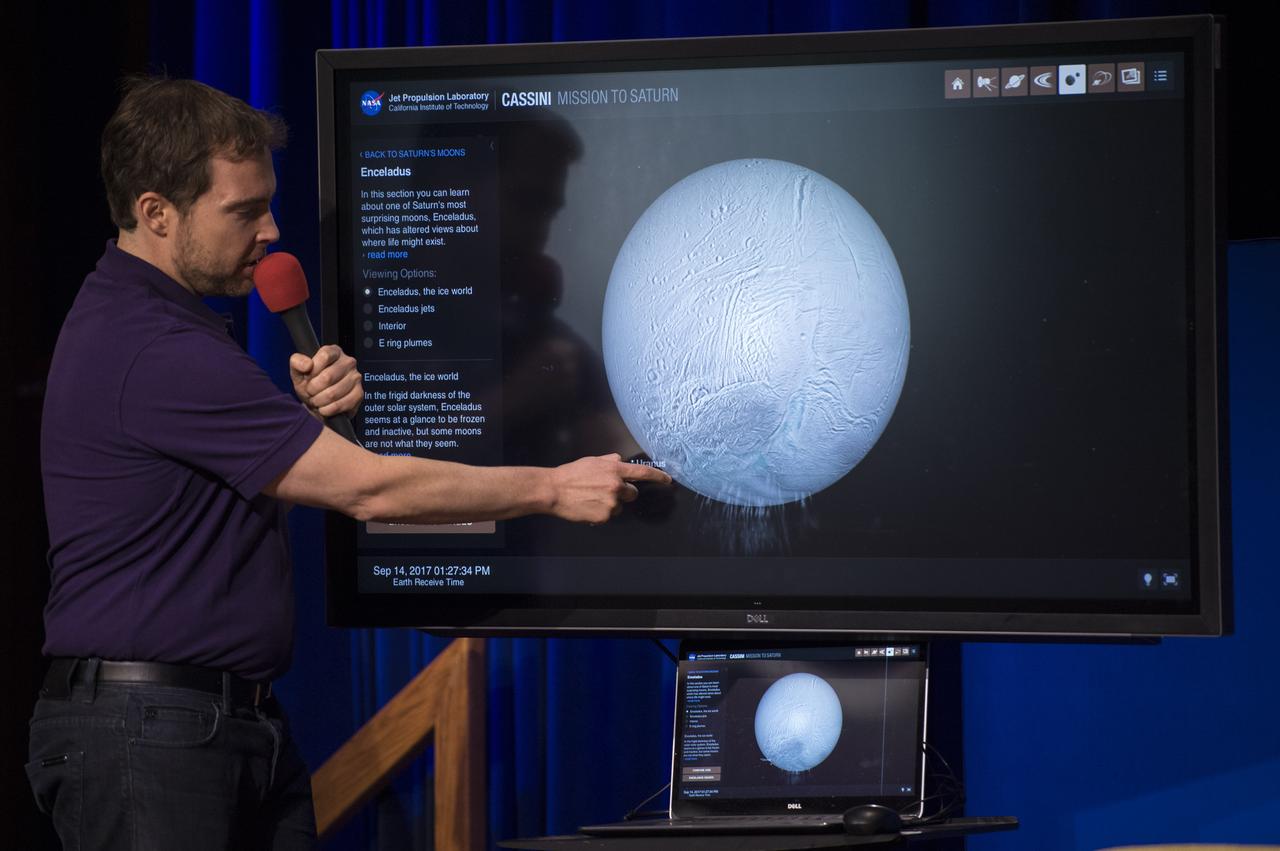
Nechnical producer for NASA's Eyes at JPL, Jason Craig discusses the Cassini mission as seen through the NASA Eyes program during a NASA Social, Thursday, Sept. 14, 2017 at NASA's Jet Propulsion Laboratory in Pasadena, California. Since its arrival in 2004, the Cassini-Huygens mission has been a discovery machine, revolutionizing our knowledge of the Saturn system and captivating us with data and images never before obtained with such detail and clarity. On Sept. 15, 2017, operators will deliberately plunge the spacecraft into Saturn, as Cassini gathered science until the end. The “plunge” ensures Saturn’s moons will remain pristine for future exploration. During Cassini’s final days, mission team members from all around the world gathered at NASA’s Jet Propulsion Laboratory, Pasadena, California, to celebrate the achievements of this historic mission. Photo Credit: (NASA/Joel Kowsky)