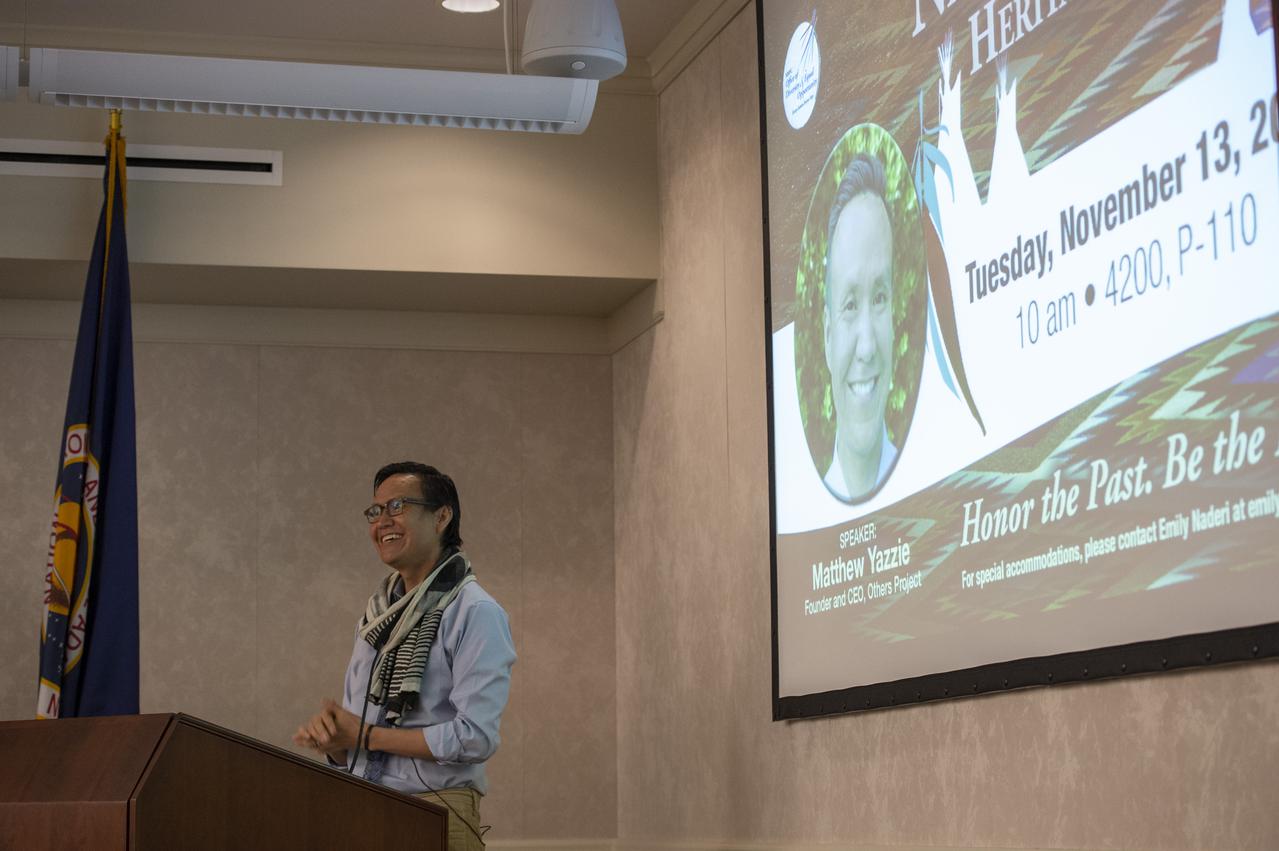
MATTHEW YAZZIE, FOUNDER AND CEO OF THE NONPROFIT, “OTHERS PROJECT”, SPEAKS TO ATTENDEES AT MSFC 2018 NATIVE AMERICAN HERITAGE MONTH PROGRAM
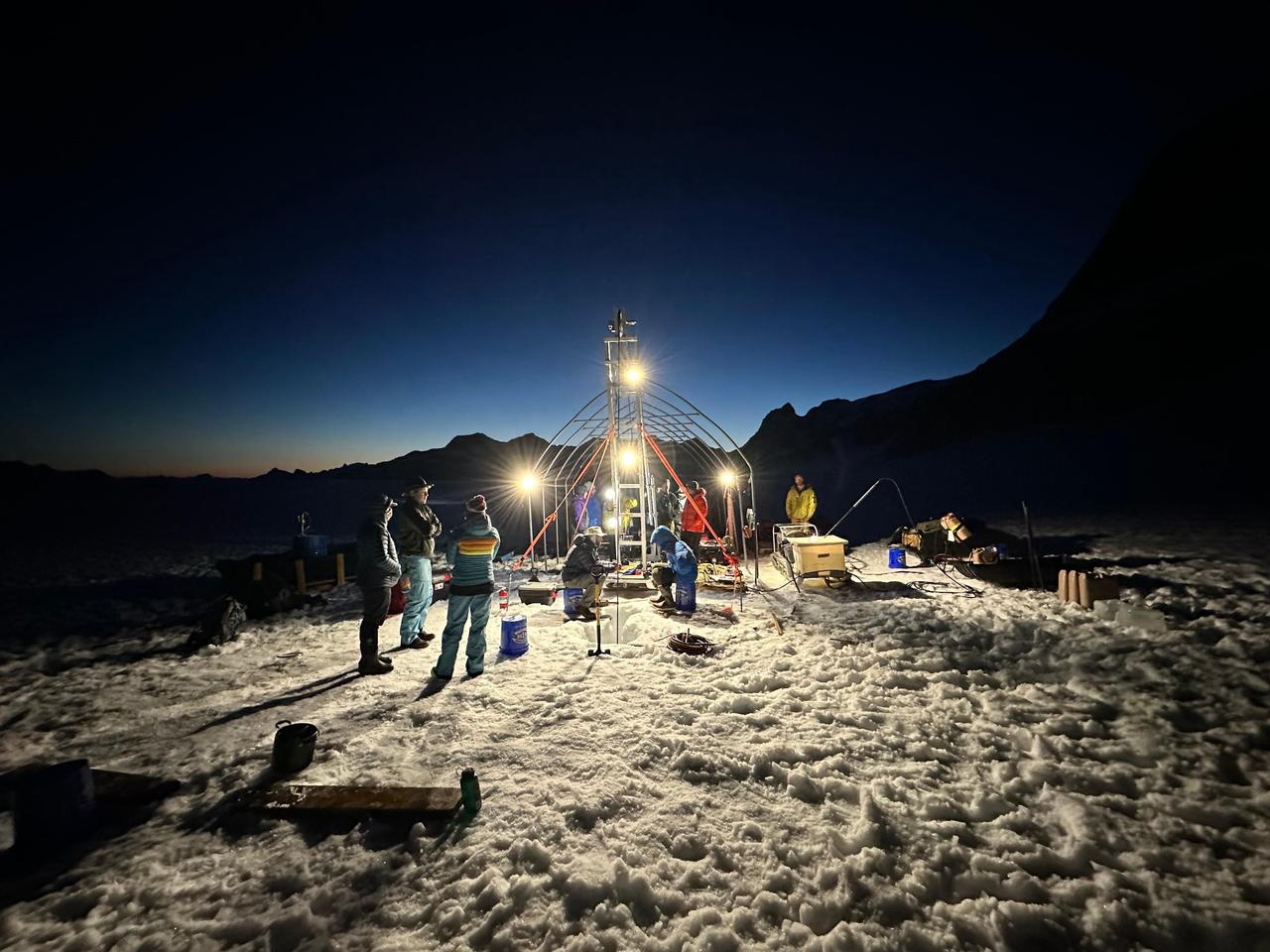
A group of researchers from NASA's Jet Propulsion Laboratory and other institutions spent two weeks on a glacier in Alaska in July 2023 for a project called ORCAA (Ocean Worlds Reconnaissance and Characterization of Astrobiological Analogs). Known as an analog mission, the project is working to answer science questions and test technology in preparation for a potential future mission to explore the surface or subsurface of icy moons like Jupiter's Europa and Saturn's Enceladus. Working at the Juneau Icefield, in coordination with the Juneau Icefield Research Project, the team used a hot-water drill to make a narrow hole in the glacier, melting its way progressively deeper. After three days, the drill reached bedrock, 890 feet (272 meters) below the surface. Science instruments were then sent down the borehole to take a variety of measurements and characterize the water environment. In 2025, the ORCAA team will return to the icefield and target a subglacial lake (a body of water inside the glacier) that has similarities to a reservoir scientists believe exists a few kilometers beneath the icy surface of Europa. ORCAA is funded by NASA's Planetary Science and Technology from Analog Research (PSTAR) program. https://photojournal.jpl.nasa.gov/catalog/PIA26345
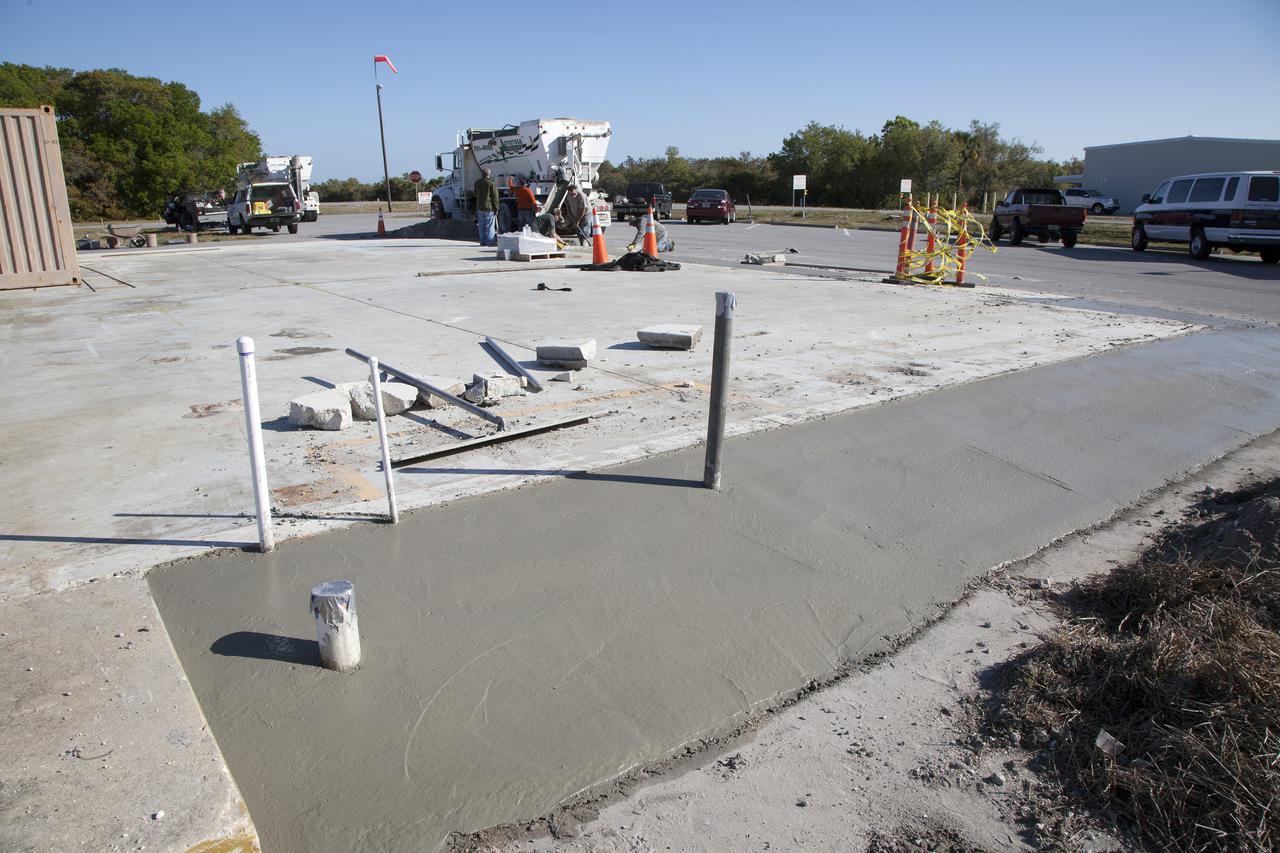
CAPE CANAVERAL, Fla. – Workers pour a concrete mix that utilizes spent material from sandblasting projects at NASA's Kennedy Space Center in Florida. The experimental formula is being tested at the Propellants North facility at Kennedy and will undergo structural and other evaluations as part of a pilot project. Spent blast media, or SBM, makes up much of the waste deposited at the center's landfill and engineers are trying to develop ways to put the debris to use in other ways instead. Photo credit: NASA_Kim Shiflett
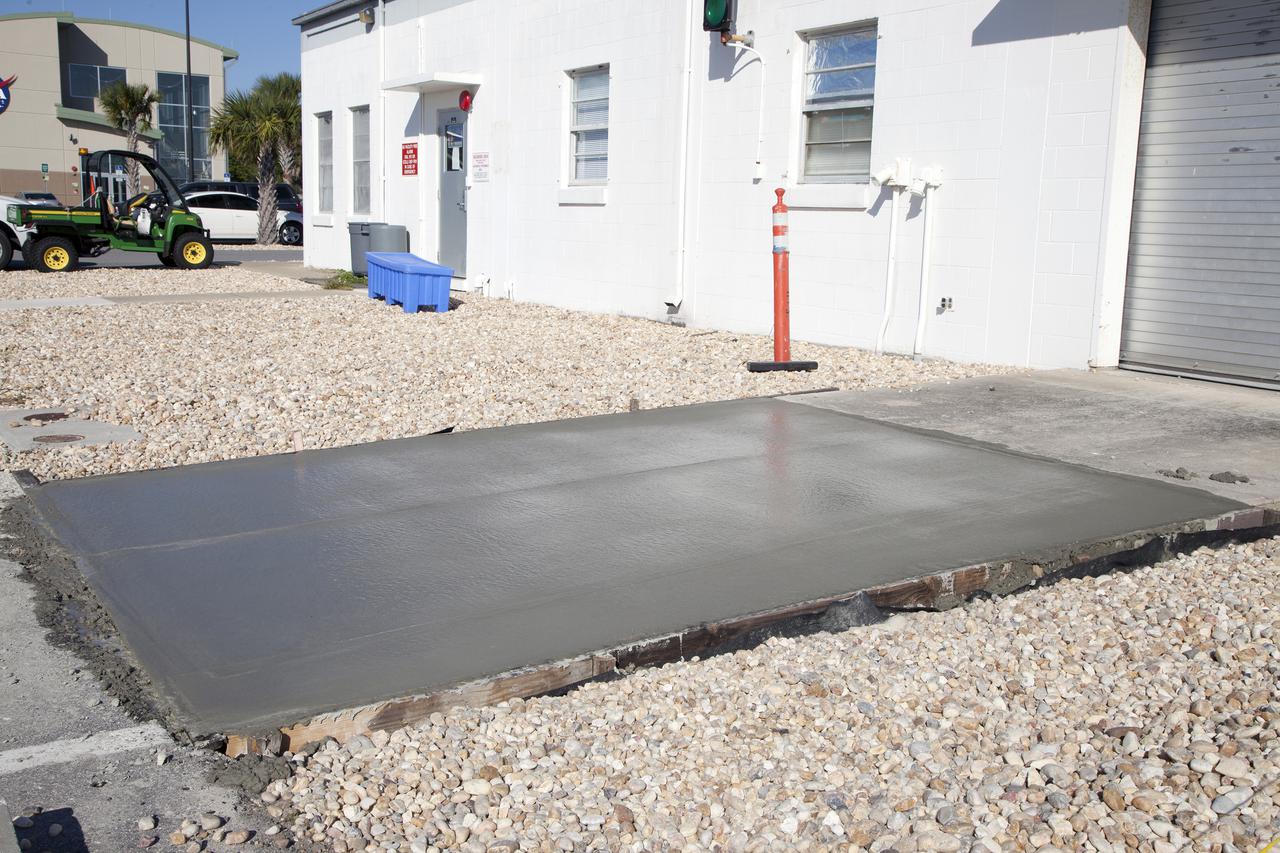
CAPE CANAVERAL, Fla. – A driveway made from a concrete mix that utilizes spent material from sandblasting projects at NASA's Kennedy Space Center in Florida. The experimental formula is being tested at the Propellants North facility at Kennedy and will undergo structural and other evaluations as part of a pilot project. Spent blast media, or SBM, makes up much of the waste deposited at the center's landfill and engineers are trying to develop ways to put the debris to use in other ways instead. Photo credit: NASA_Kim Shiflett
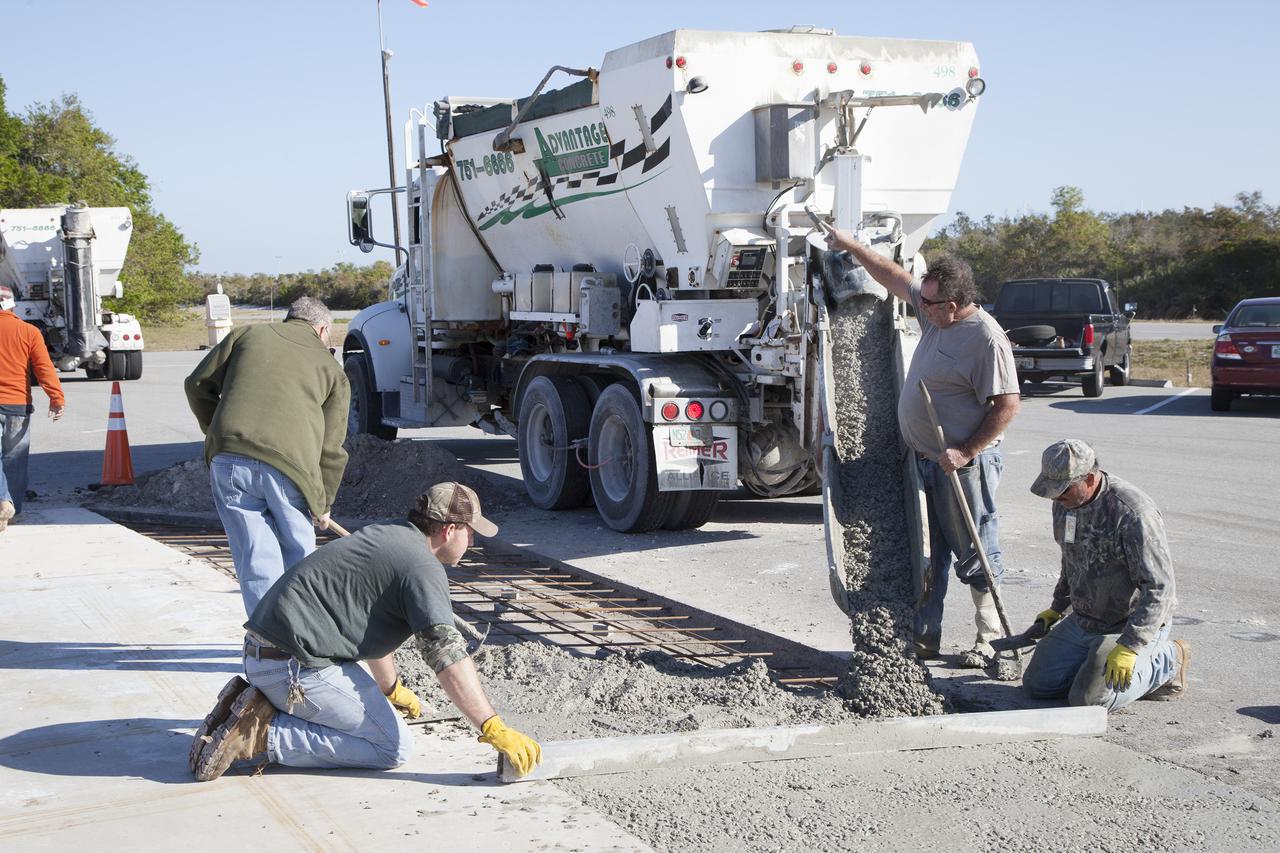
CAPE CANAVERAL, Fla. – Workers pour a concrete mix that utilizes spent material from sandblasting projects at NASA's Kennedy Space Center in Florida. The experimental formula is being tested at the Propellants North facility at Kennedy and will undergo structural and other evaluations as part of a pilot project. Spent blast media, or SBM, makes up much of the waste deposited at the center's landfill and engineers are trying to develop ways to put the debris to use in other ways instead. Photo credit: NASA_Kim Shiflett
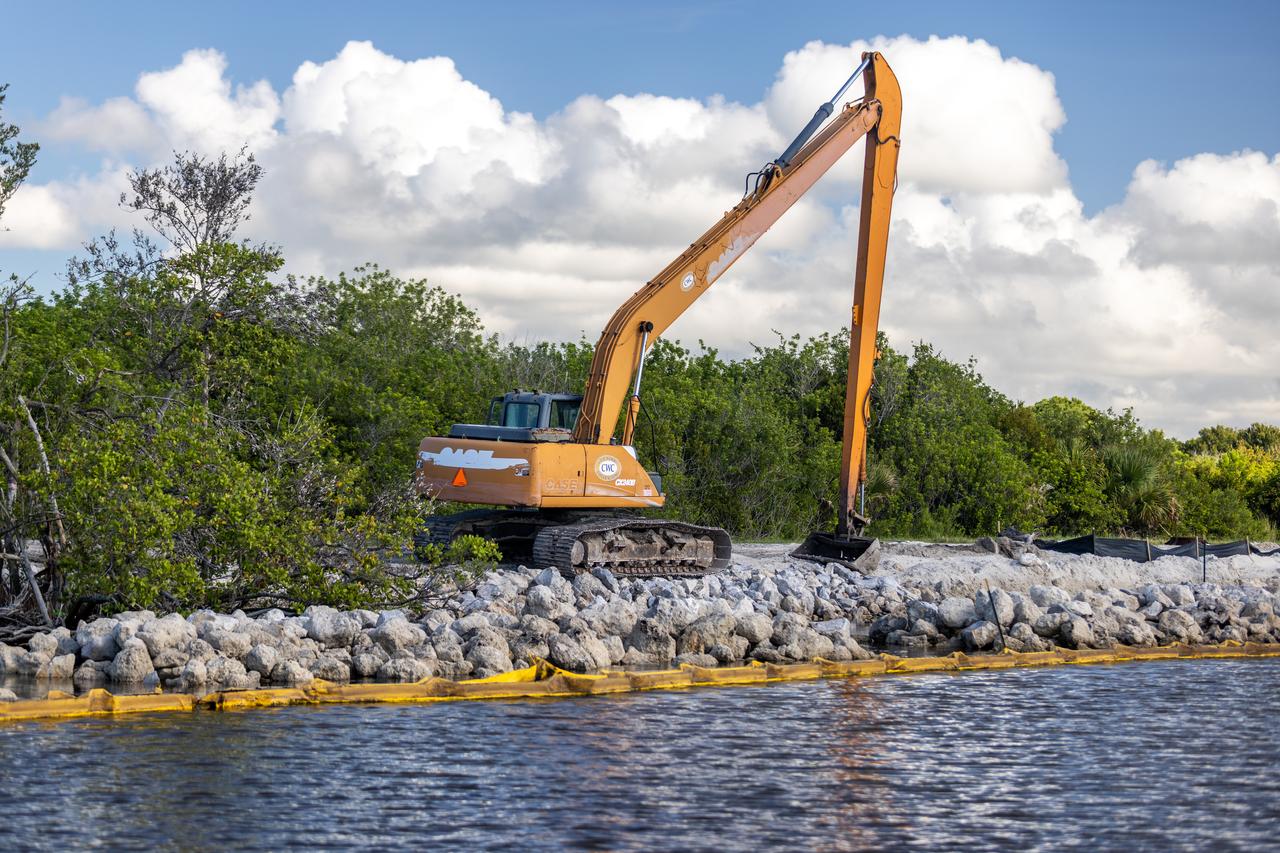
NASA Kennedy Space Center’s Spaceport Integration and Services organization is leading a restoration project at KARS Park on Hall Road in Merritt Island, Florida. As part of this project, a wavebreak is being created about 20 feet offshore to allow mangroves and other plants to propagate into the gap, providing protection for the shoreline.
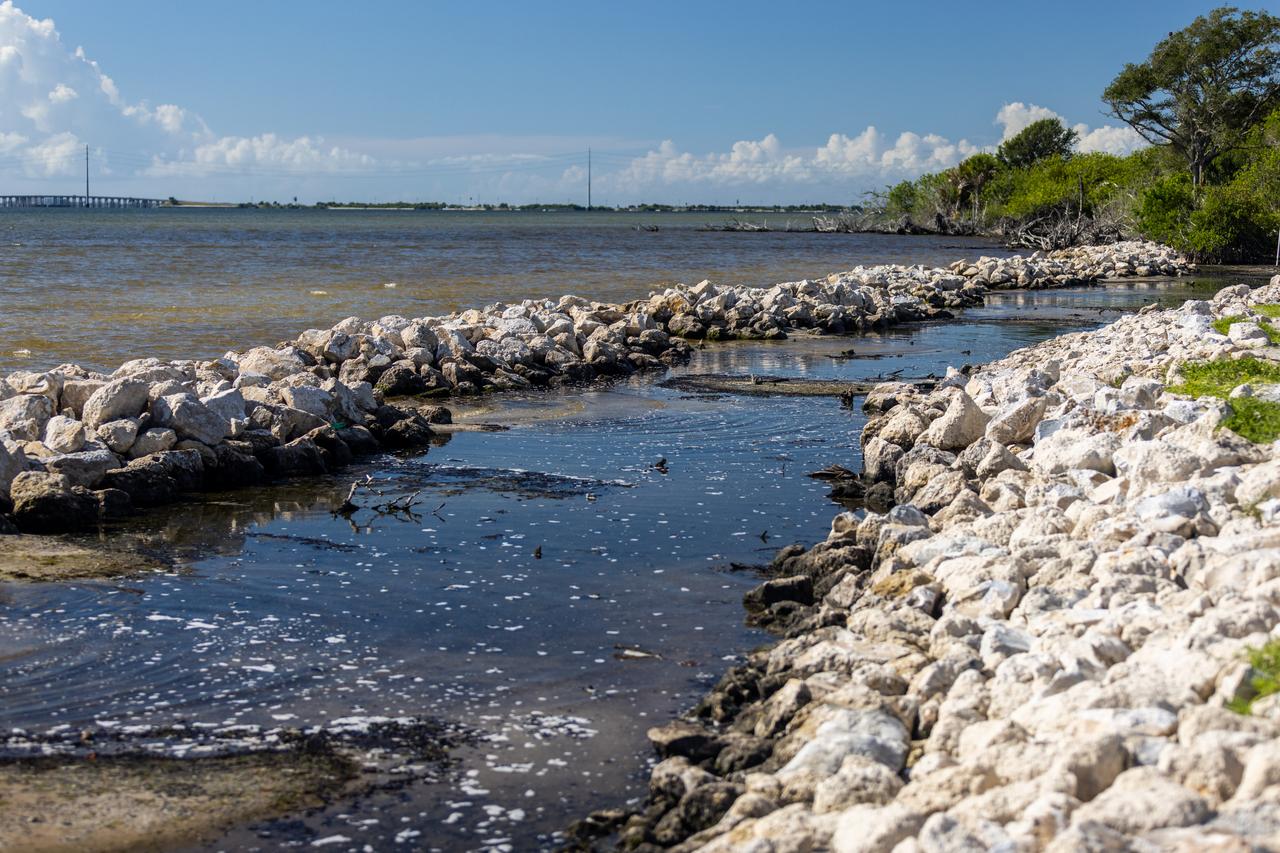
NASA Kennedy Space Center’s Spaceport Integration and Services organization is leading a restoration project at KARS Park on Hall Road in Merritt Island, Florida. As part of this project, a wavebreak is being created about 20 feet offshore to allow mangroves and other plants to propagate into the gap, providing protection for the shoreline.
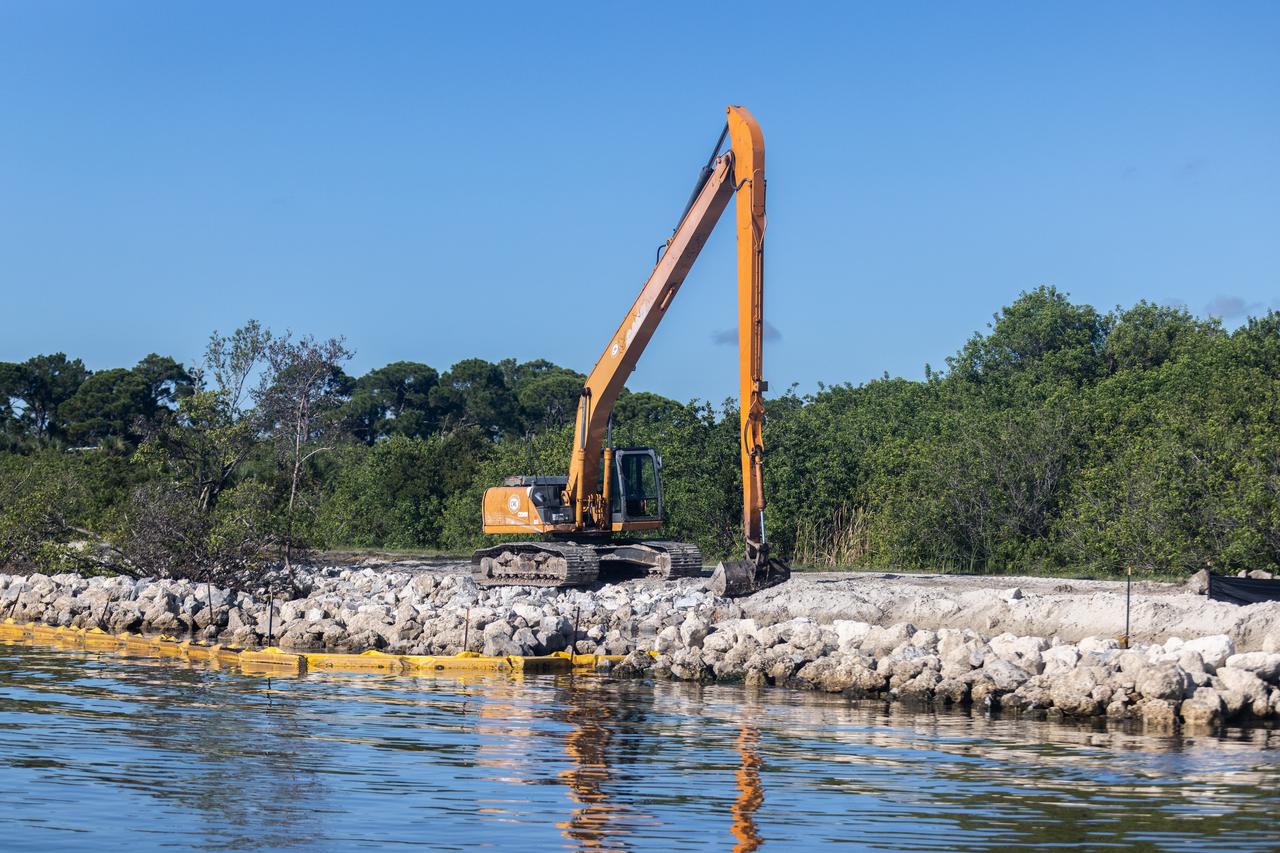
NASA Kennedy Space Center’s Spaceport Integration and Services organization is leading a restoration project at KARS Park on Hall Road in Merritt Island, Florida. As part of this project, a wavebreak is being created about 20 feet offshore to allow mangroves and other plants to propagate into the gap, providing protection for the shoreline.
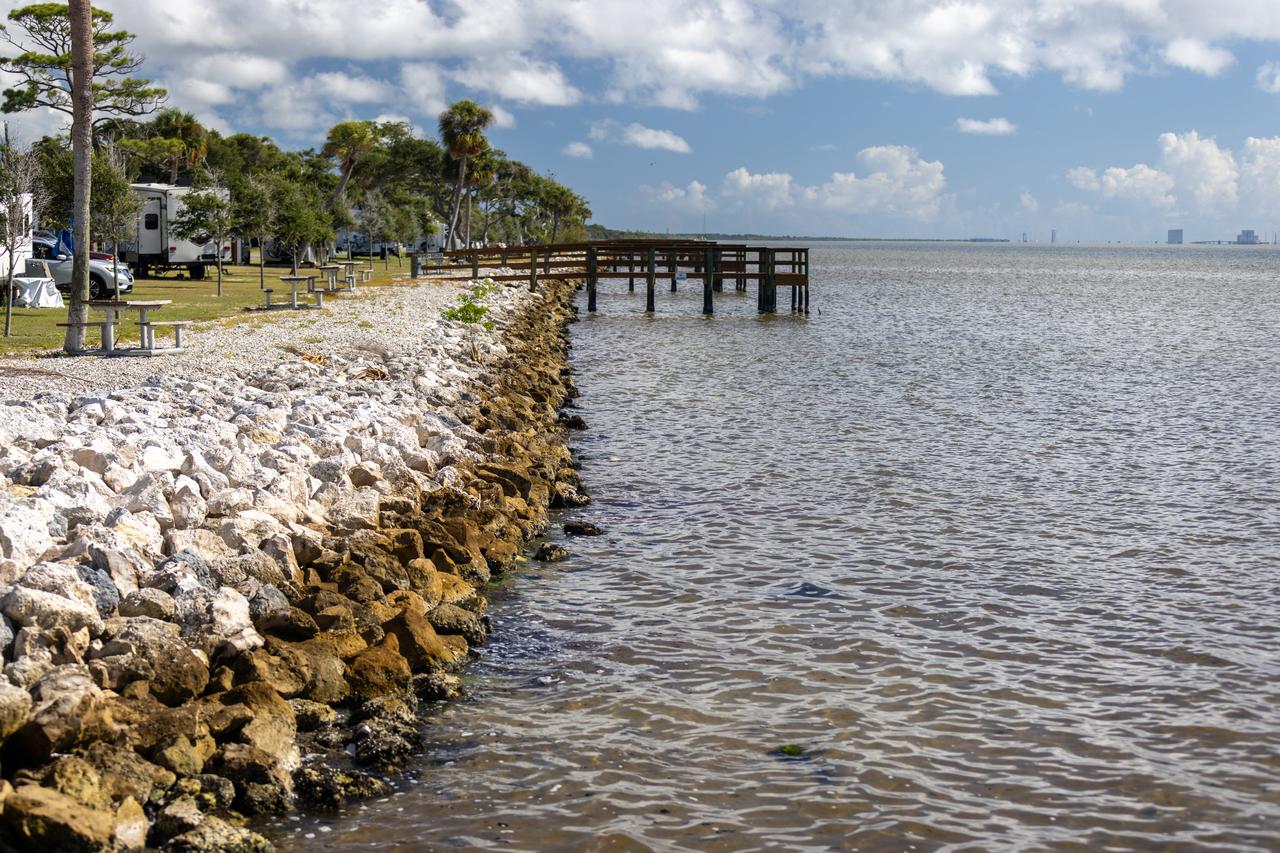
NASA Kennedy Space Center’s Spaceport Integration and Services organization is leading a restoration project at KARS Park on Hall Road in Merritt Island, Florida. As part of this project, a wavebreak is being created about 20 feet offshore to allow mangroves and other plants to propagate into the gap, providing protection for the shoreline. Shown here is the section of KARS park that was first completed during the project.

NASA Kennedy Space Center’s Spaceport Integration and Services organization is leading a restoration project at KARS Park on Hall Road in Merritt Island, Florida. As part of this project, a wavebreak is being created about 20 feet offshore to allow mangroves and other plants to propagate into the gap, providing protection for the shoreline. Shown here is Mark Mercadante, an environmental scientist at Kennedy.
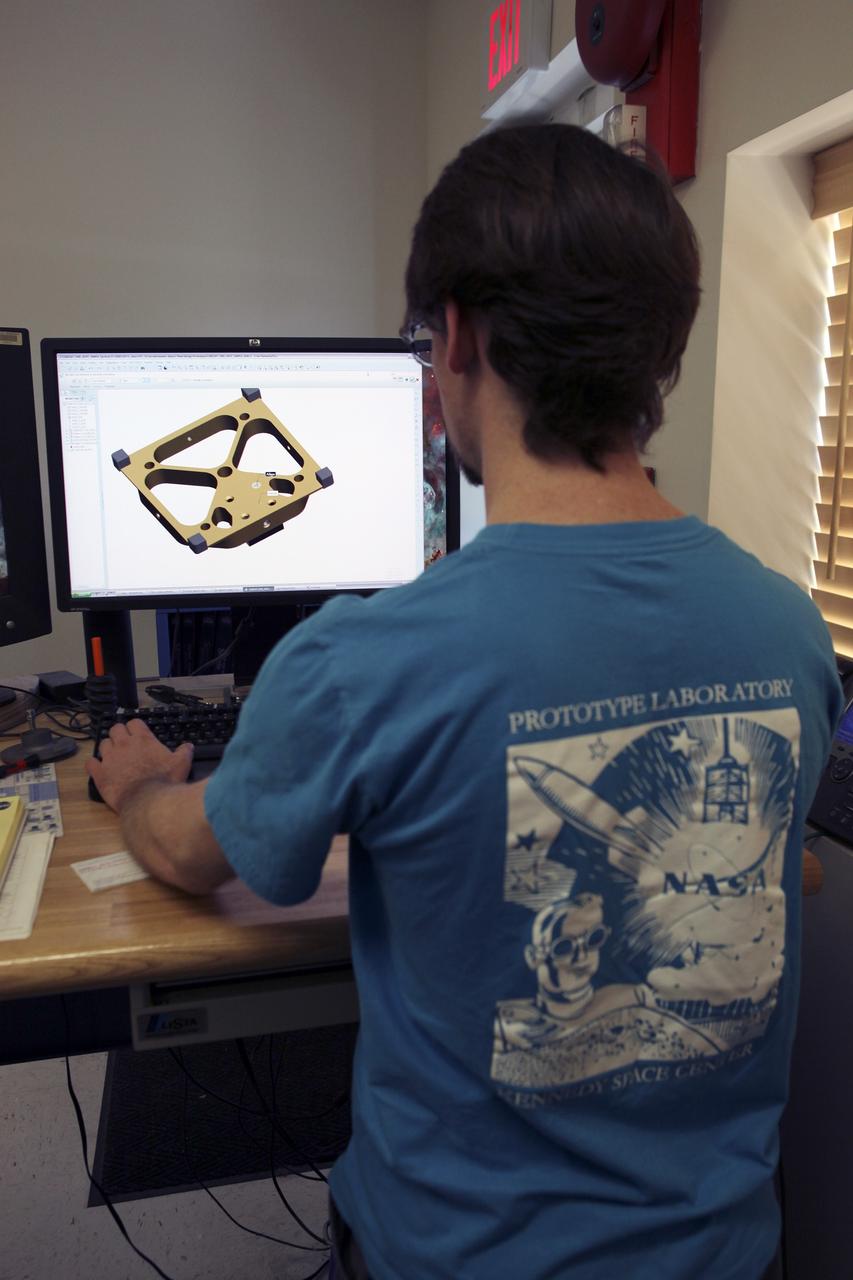
CAPE CANAVERAL, Fla. – A component is machined for a cubesat that is being assembled for launch in June. The component, being machined at NASA's Kennedy Space Center in Florida will hold accelerometers for the StangSat, which is a project whose development includes students from Merritt Island High School in Florida. The satellite will work inside a small rocket to measure vibration and collect other data during launch. NASA engineers are acting as mentors for the project. Photo credit: NASA/Dmitri Gerondidakis
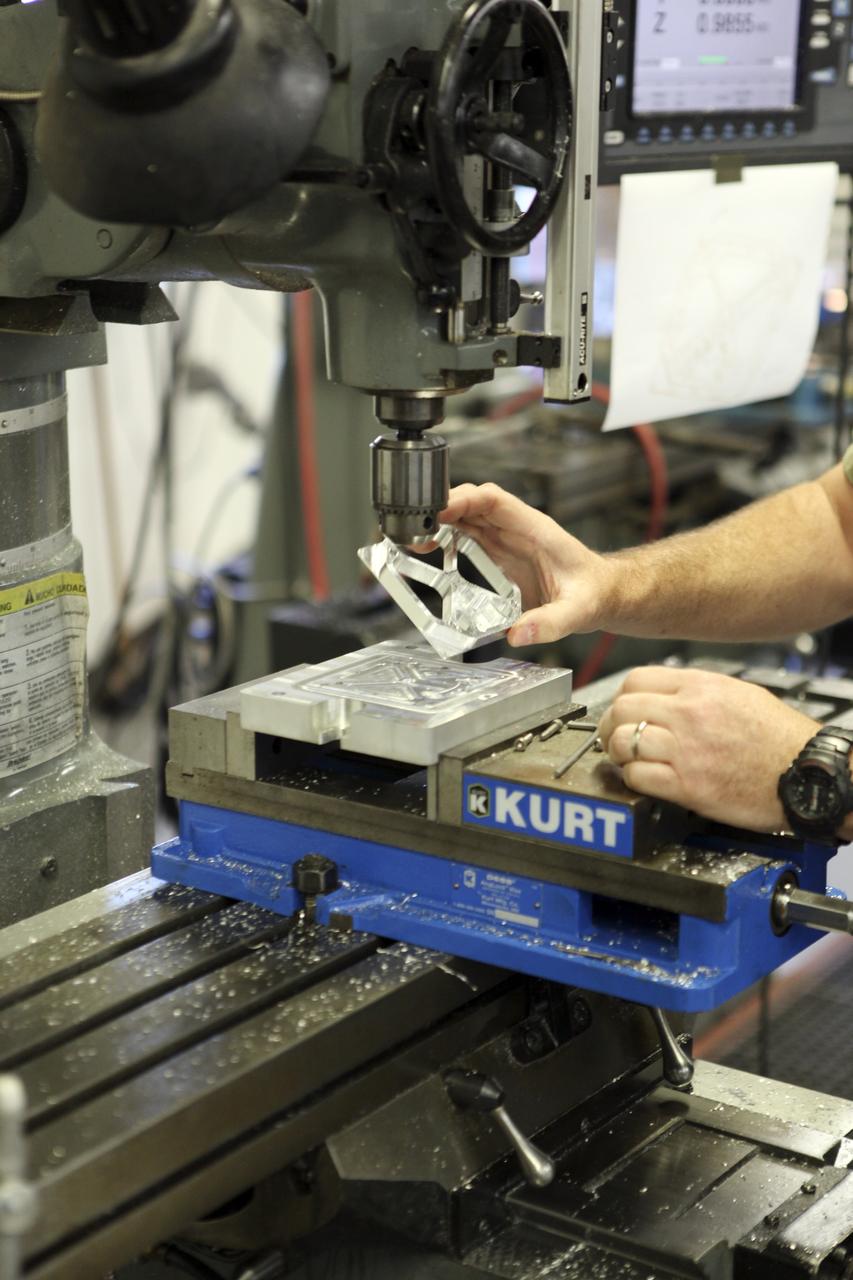
CAPE CANAVERAL, Fla. – A component is machined for a cubesat that is being assembled for launch in June. The component, being machined at NASA's Kennedy Space Center in Florida will hold accelerometers for the StangSat, which is a project whose development includes students from Merritt Island High School in Florida. The satellite will work inside a small rocket to measure vibration and collect other data during launch. NASA engineers are acting as mentors for the project. Photo credit: NASA/Dmitri Gerondidakis
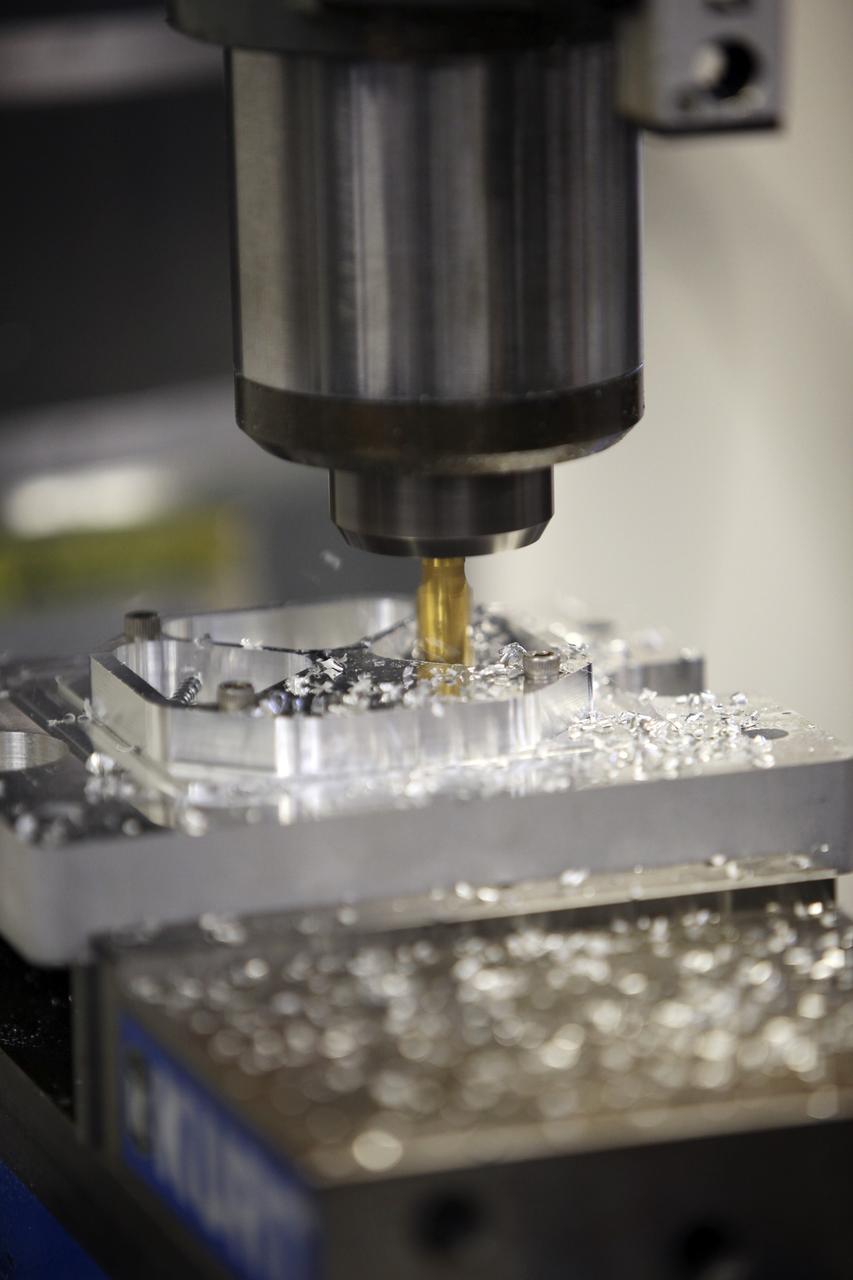
CAPE CANAVERAL, Fla. – A component is machined for a cubesat that is being assembled for launch in June. The component, being machined at NASA's Kennedy Space Center in Florida will hold accelerometers for the StangSat, which is a project whose development includes students from Merritt Island High School in Florida. The satellite will work inside a small rocket to measure vibration and collect other data during launch. NASA engineers are acting as mentors for the project. Photo credit: NASA/Dmitri Gerondidakis
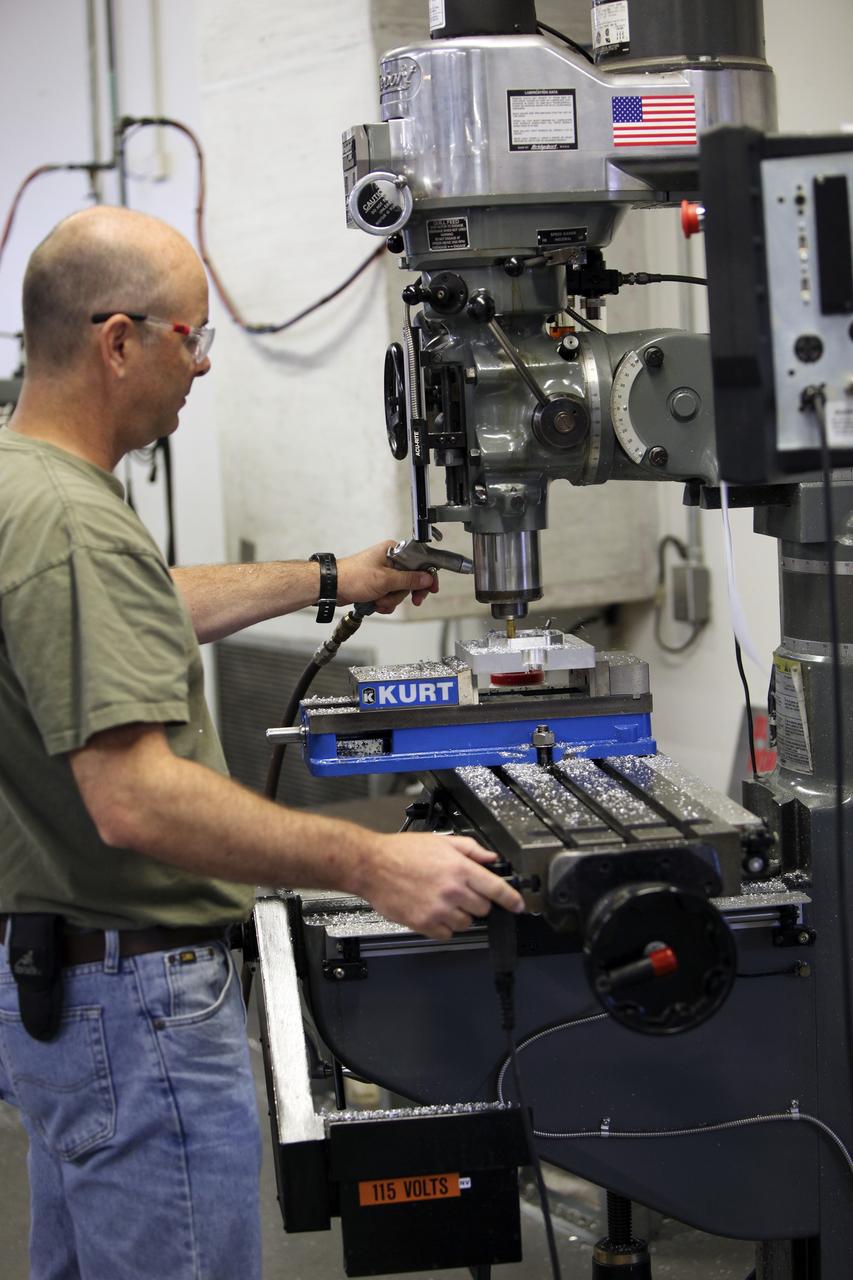
CAPE CANAVERAL, Fla. – A component is machined for a cubesat that is being assembled for launch in June. The component, being machined at NASA's Kennedy Space Center in Florida will hold accelerometers for the StangSat, which is a project whose development includes students from Merritt Island High School in Florida. The satellite will work inside a small rocket to measure vibration and collect other data during launch. NASA engineers are acting as mentors for the project. Photo credit: NASA/Dmitri Gerondidakis
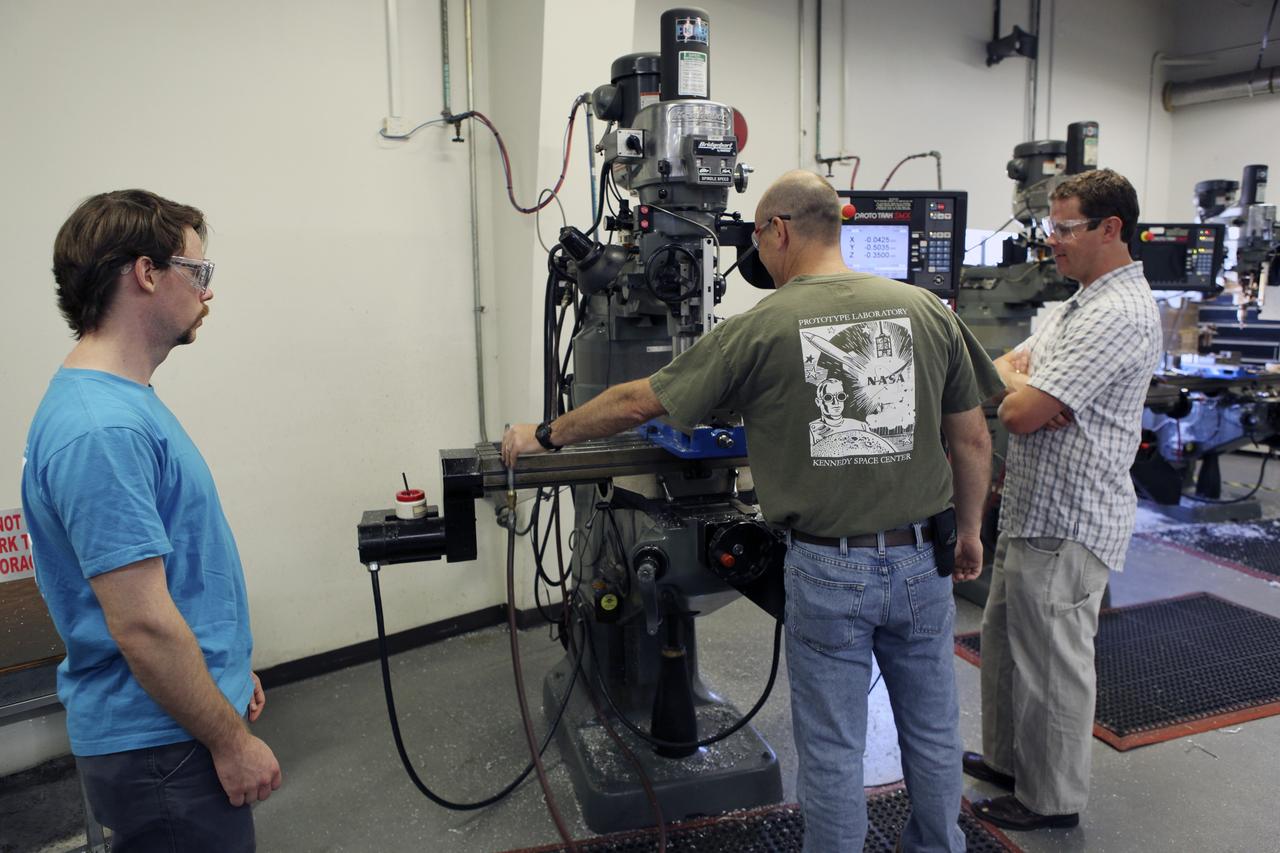
CAPE CANAVERAL, Fla. – A component is machined for a cubesat that is being assembled for launch in June. The component, being machined at NASA's Kennedy Space Center in Florida will hold accelerometers for the StangSat, which is a project whose development includes students from Merritt Island High School in Florida. The satellite will work inside a small rocket to measure vibration and collect other data during launch. NASA engineers are acting as mentors for the project. Photo credit: NASA/Dmitri Gerondidakis
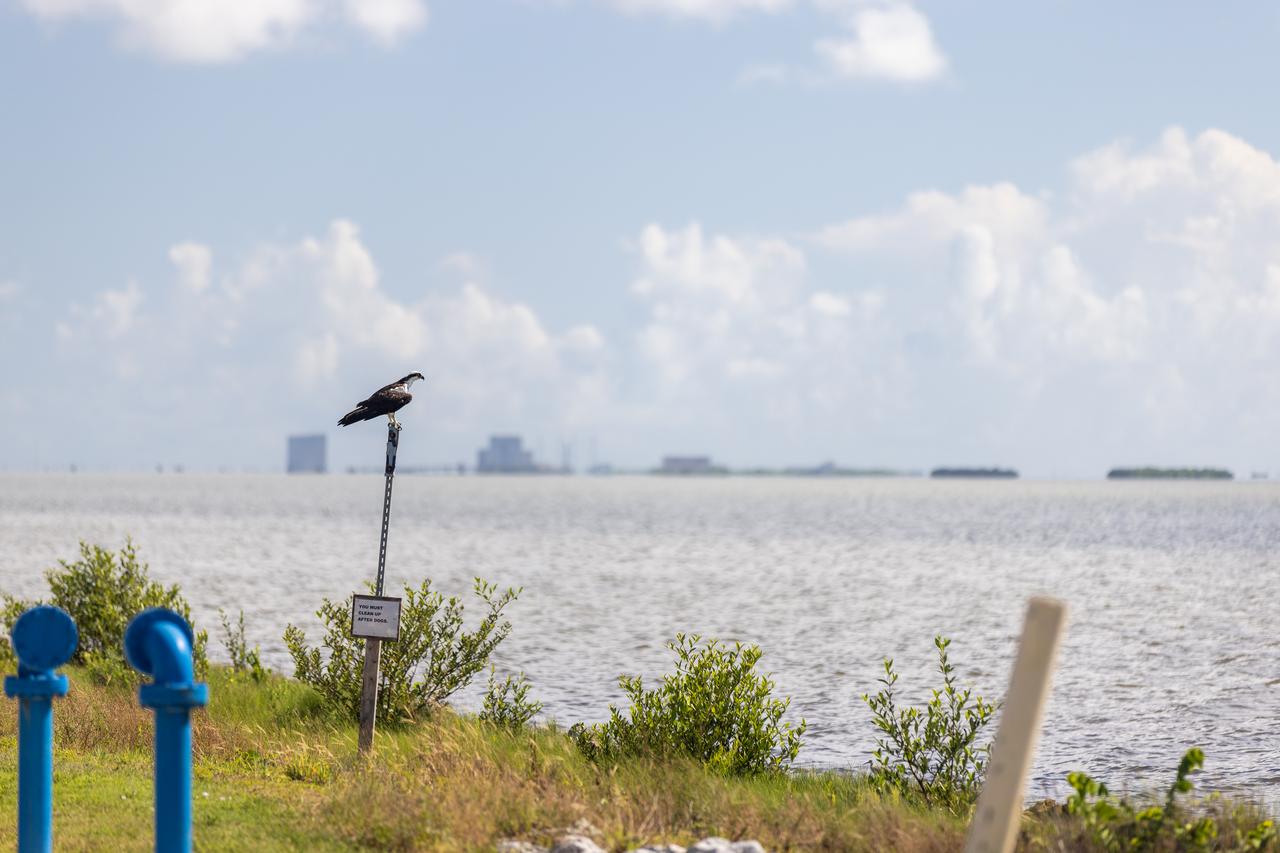
NASA Kennedy Space Center’s Spaceport Integration and Services organization is leading a restoration project at KARS Park on Hall Road in Merritt Island, Florida. As part of this project, a wavebreak is being created about 20 feet offshore to allow mangroves and other plants to propagate into the gap, providing protection for the shoreline. Shown here is an osprey overlooking the water.
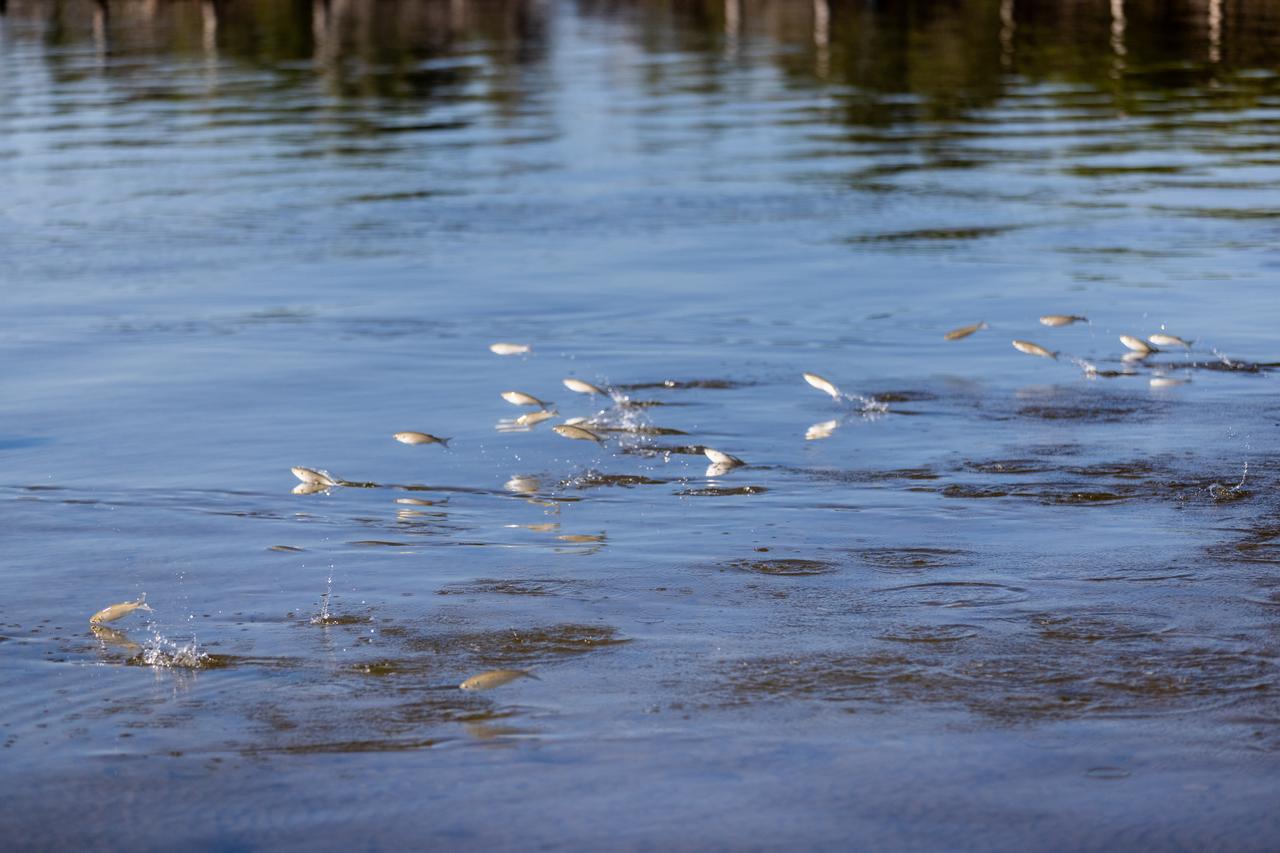
NASA Kennedy Space Center’s Spaceport Integration and Services organization is leading a restoration project at KARS Park on Hall Road in Merritt Island, Florida. As part of this project, a wavebreak is being created about 20 feet offshore to allow mangroves and other plants to propagate into the gap, providing protection for the shoreline. Shown here are mullet swimming at the location.

NASA Kennedy Space Center’s Spaceport Integration and Services organization is leading a restoration project at KARS Park on Hall Road in Merritt Island, Florida. As part of this project, a wavebreak is being created about 20 feet offshore to allow mangroves and other plants to propagate into the gap, providing protection for the shoreline. Shown in this photo is red mangrove starting to grow in the restoration area.
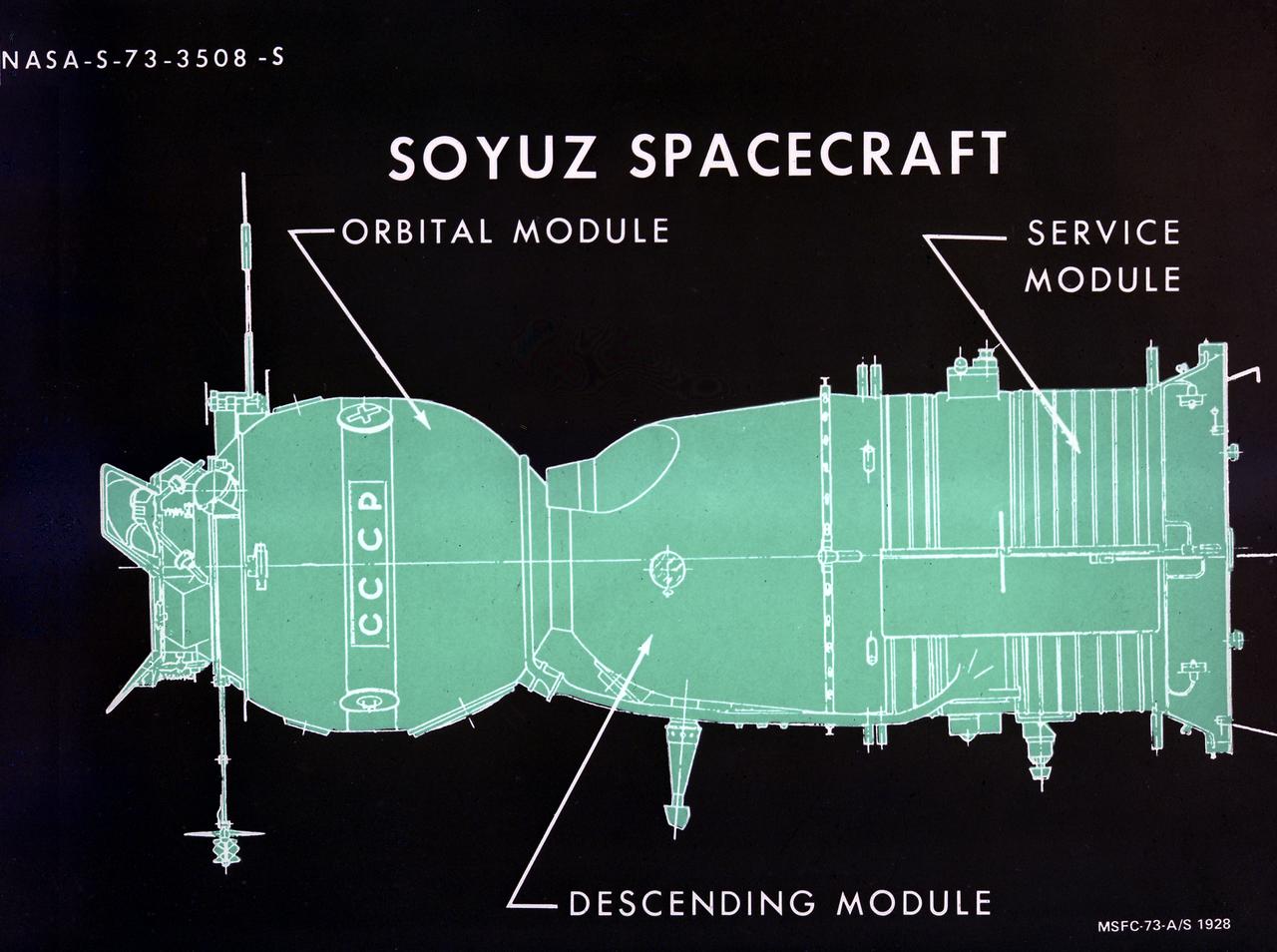
This illustration depicts a configuration of the Soyuz spacecraft for the Apollo-Soyuz Test Project (ASTP). The ASTP was the first international docking of the U.S.'s Apollo spacecraft and the U.S.S.R.'s Soyuz spacecraft in space. For this project, the Soviets built another in their continuing series of Soyuz space capsules. The U.S. used the Saturn IB Apollo capsule. A joint engineering team from the two countries met to develop a docking system that permitted the two spacecraft to link in space and allowed the crews to travel from one spacecraft to the other.
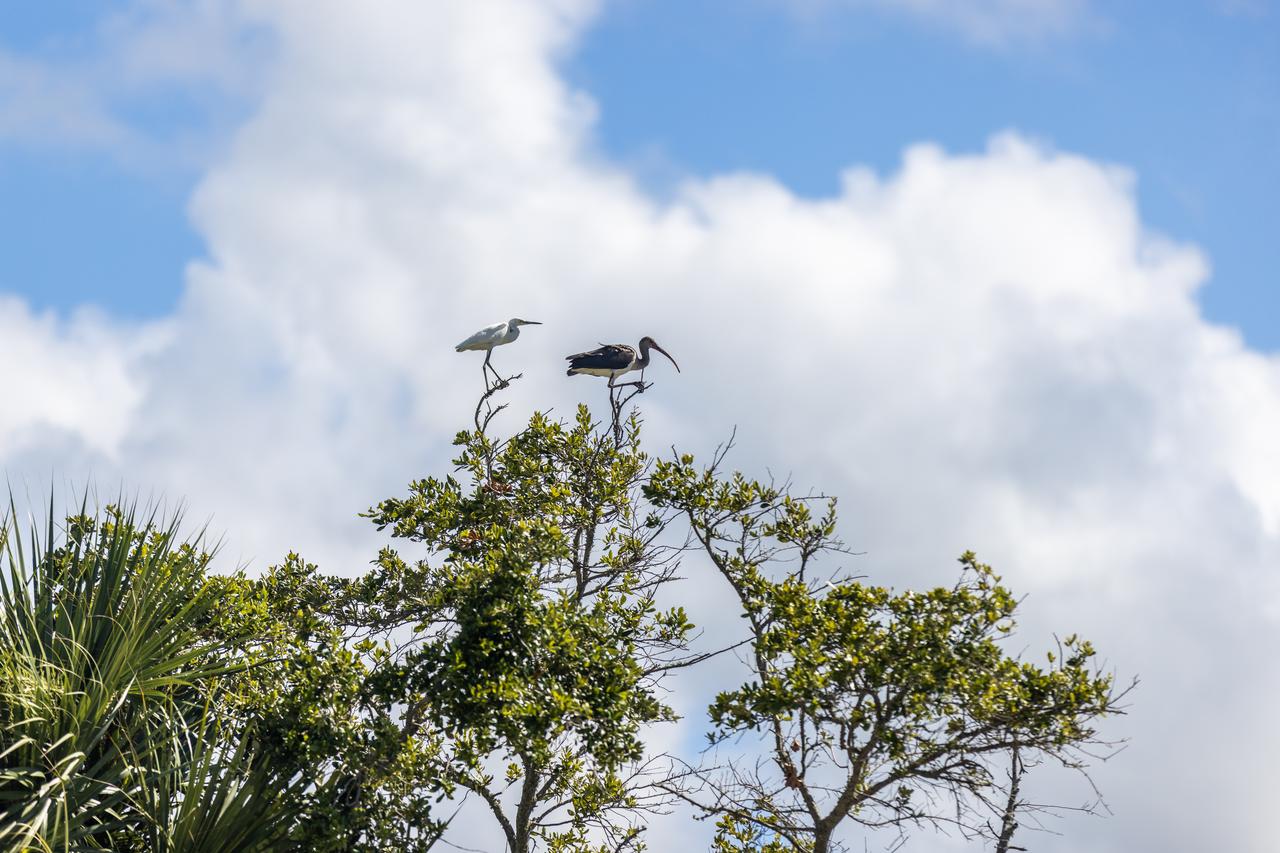
NASA Kennedy Space Center’s Spaceport Integration and Services organization is leading a restoration project at KARS Park on Hall Road in Merritt Island, Florida. As part of this project, a wavebreak is being created about 20 feet offshore to allow mangroves and other plants to propagate into the gap, providing protection for the shoreline. Show here in a tree are a snowy egret, left, and a limpkin.
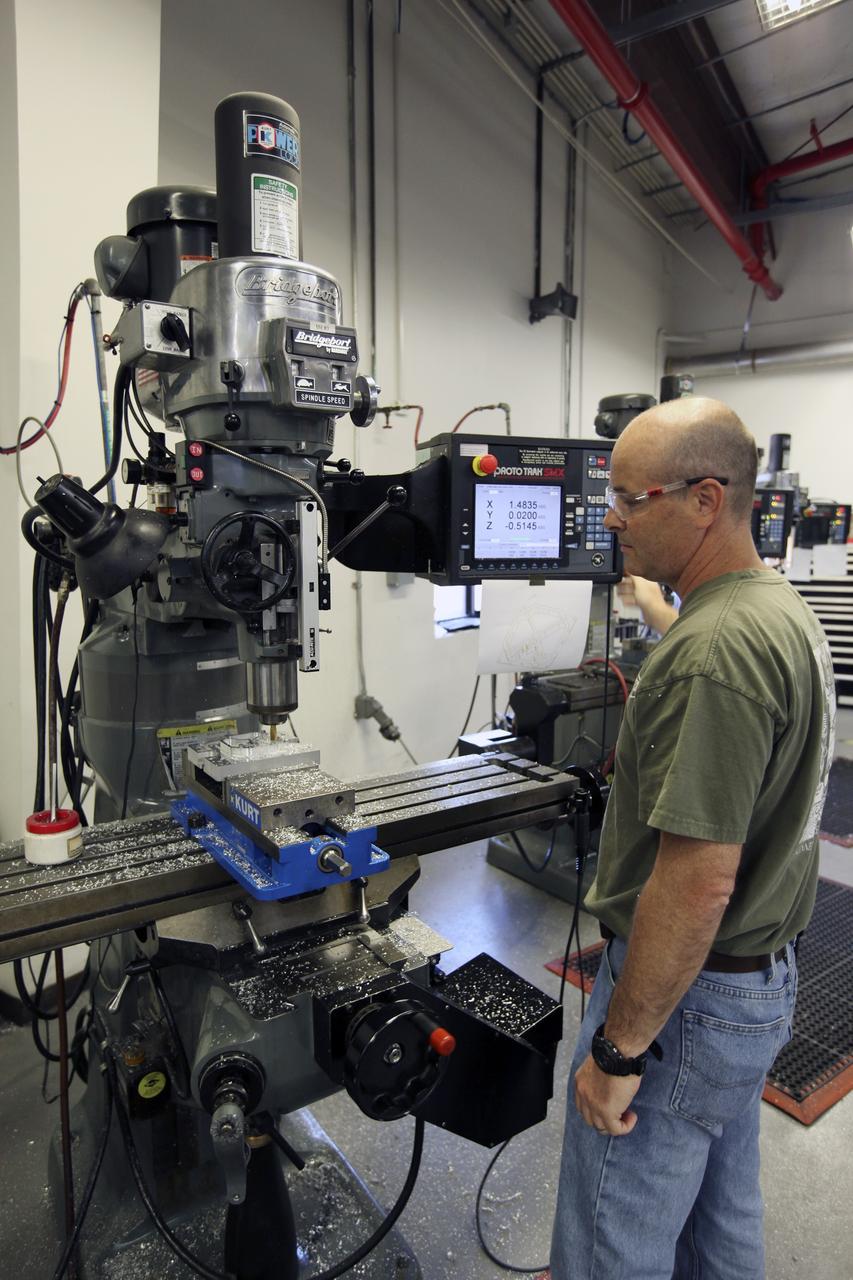
CAPE CANAVERAL, Fla. – A component is machined for a cubesat that is being assembled for launch in June. The component, being machined at NASA's Kennedy Space Center in Florida will hold accelerometers for the StangSat, which is a project whose development includes students from Merritt Island High School in Florida. The satellite will work inside a small rocket to measure vibration and collect other data during launch. NASA engineers are acting as mentors for the project. Photo credit: NASA/Dmitri Gerondidakis
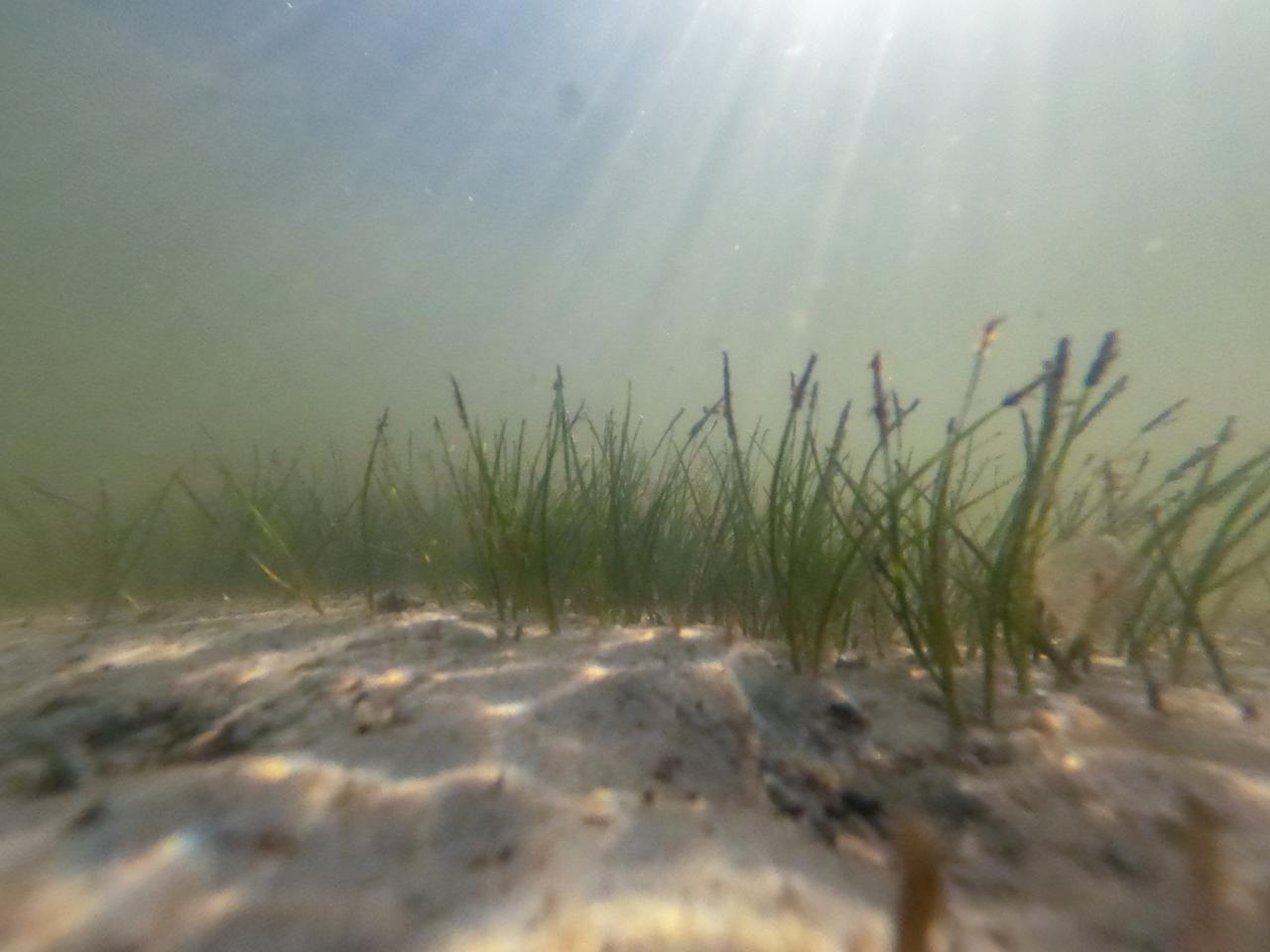
NASA Kennedy Space Center’s Spaceport Integration and Services organization is leading a restoration project at KARS Park on Hall Road in Merritt Island, Florida. As part of this project, a wavebreak is being created about 20 feet offshore to allow mangroves and other plants to propagate into the gap, providing protection for the shoreline. Shown here is shoalgrass taking hold in the restoration area.
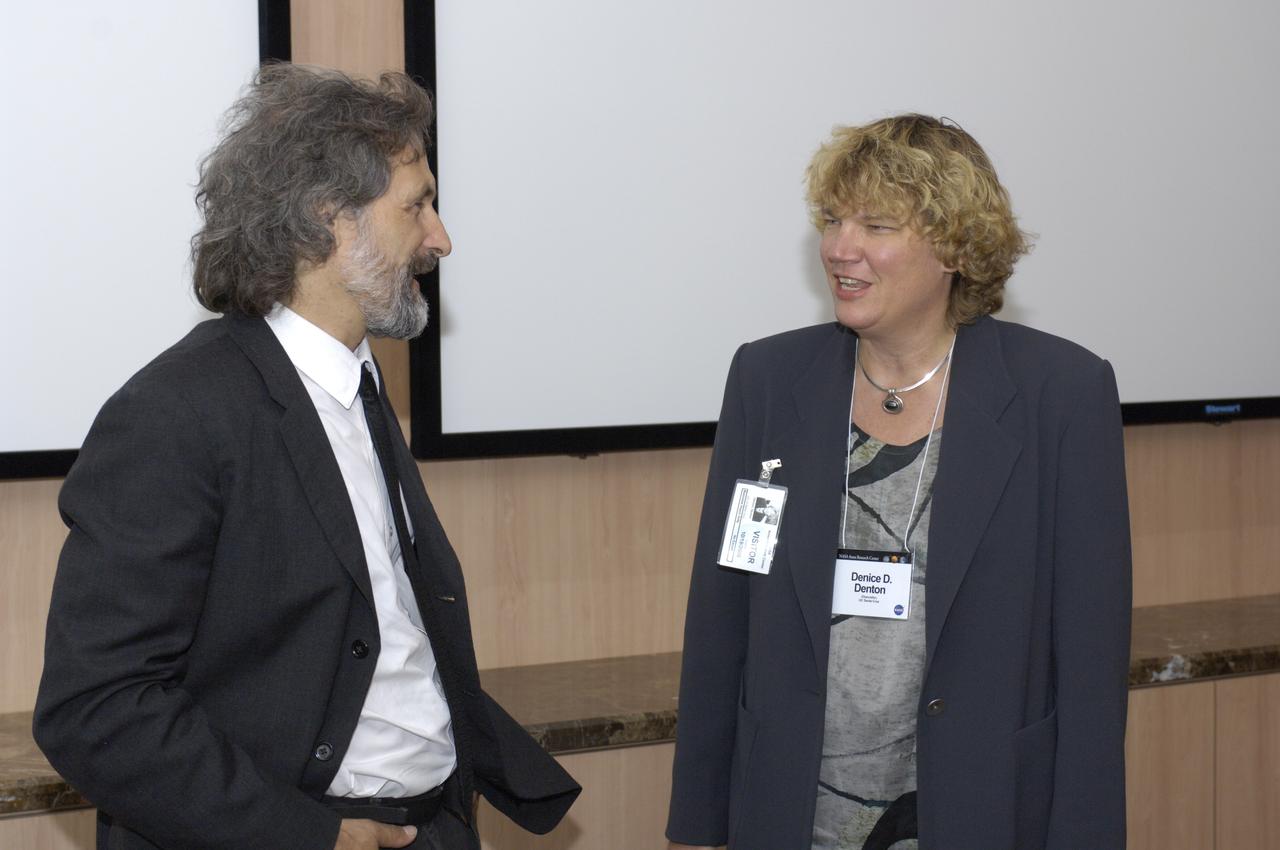
Universtiy of California Santa Cruz Chancellor Denice Denten (and other guests) visit NASA Ames Research Center to meet with Directors and have a briefing on Ames Projects and Programs. Jonathan Trent, Ames Research Scientist, Bioengineering Branch (L) and Denice Denton, Chancellor of UCSC (R)
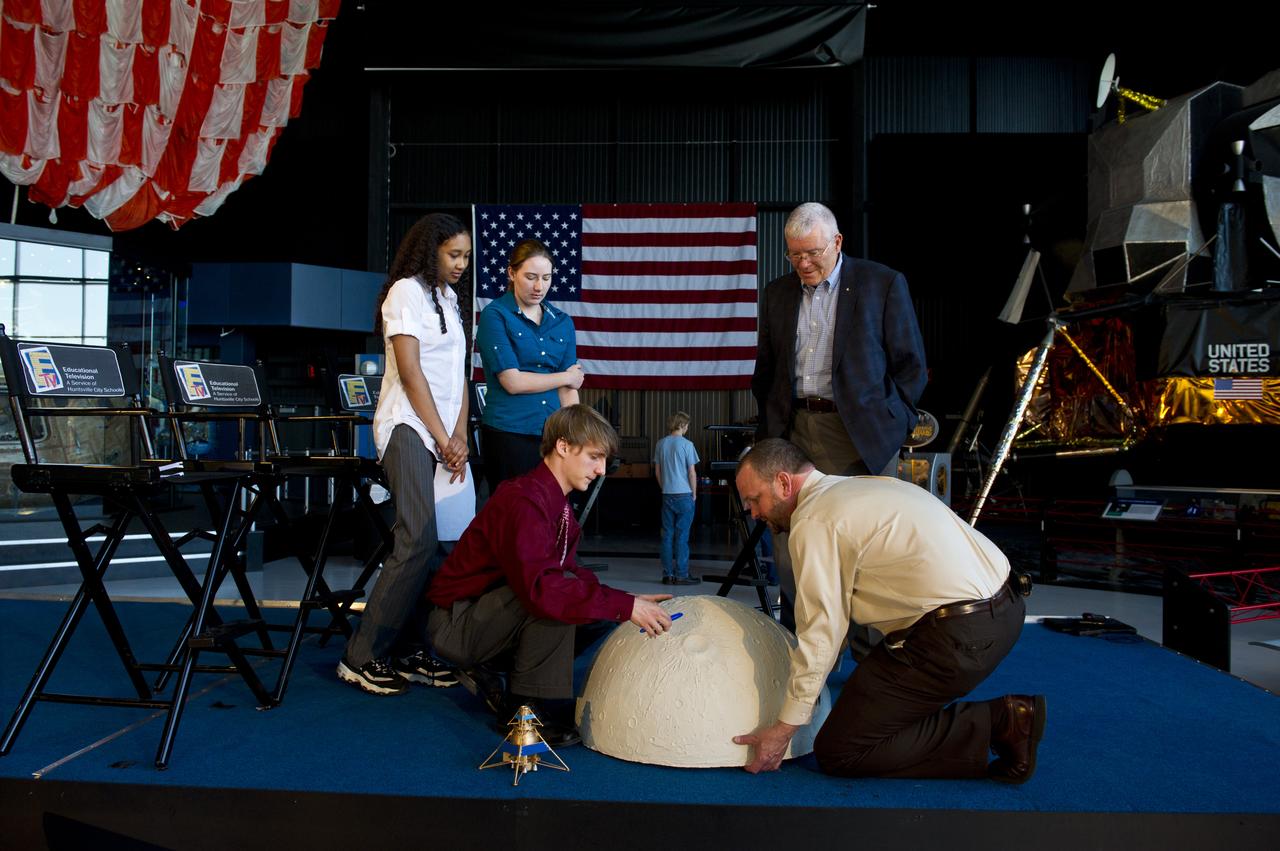
STUDENTS FROM THE CENTER FOR TECHNOLOGY SHOW APOLLO 13 ASTRONAUT FRED HAISE A DISPLAY MODEL FOR A MOON BASED PROJECT THEY ARE DESIGNING FOR COMPETITION WITH OTHER SCHOOLS IN ALABAMA. (L to R) QUIANA HUNT, SARAH FOLSE, MICHAEL HARTMAN, MIKE EVANS (TEACHER), AND FRED HAISE
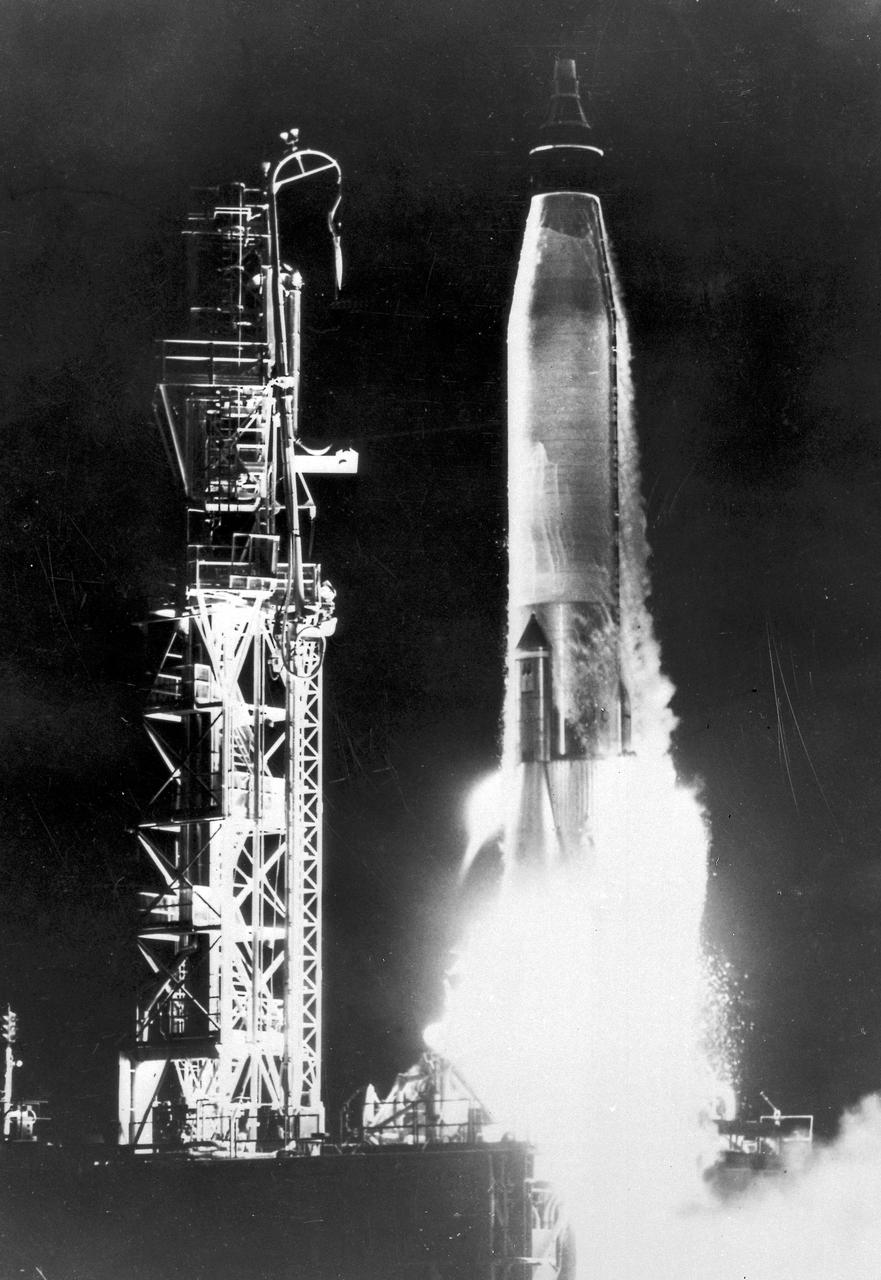
An Atlas launch vehicle carrying the Big Joe capsule leaves its launching pad on a 2,000-mile ballistic flight to the altitude of 100 miles. The Big Joe capsule is a boilerplate model of the marned orbital capsule under NASA's Project Mercury. The capsule was recovered and studied for the effect of re-entry heat and other flight stresses.
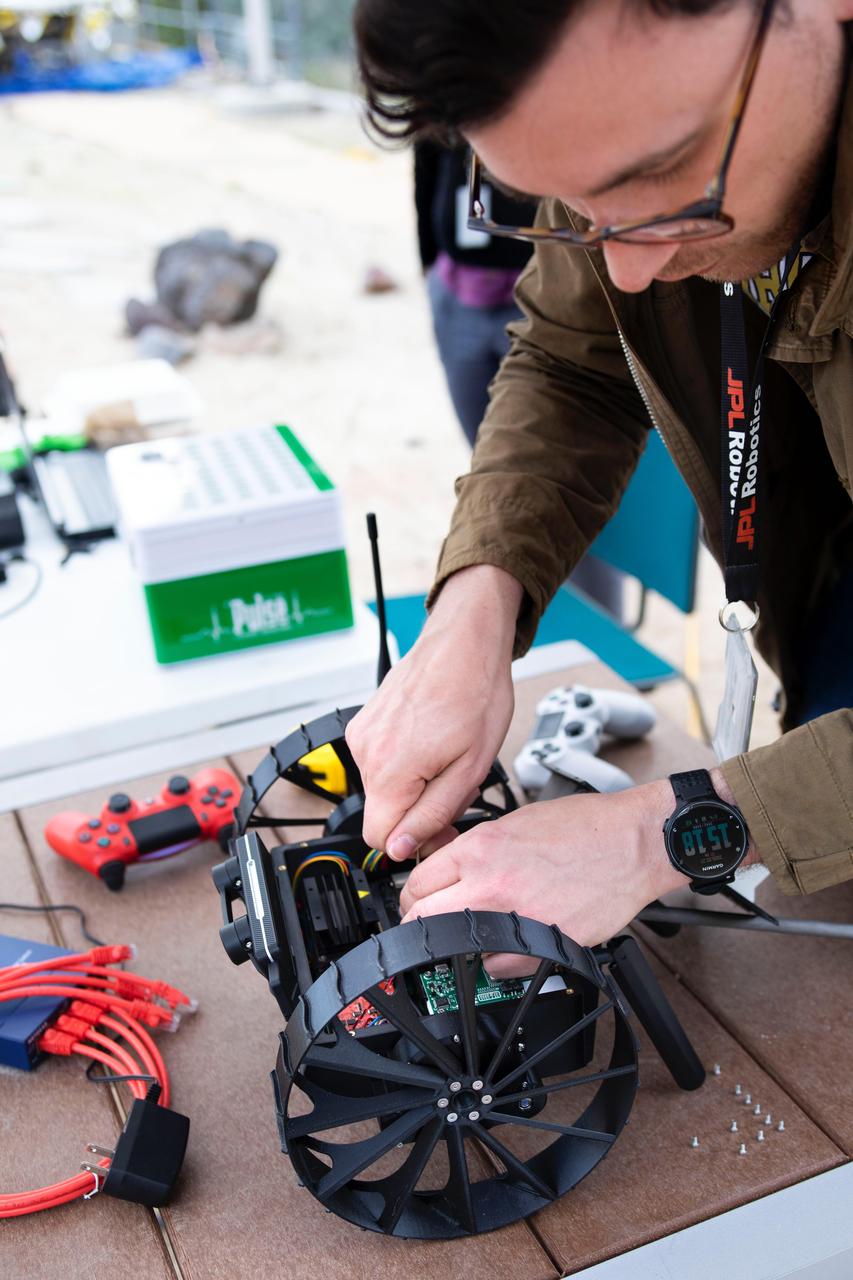
Project manager Jean-Pierre de la Croix works on an Autonomous Pop-Up Flat Folding Explorer Robot (A-PUFFER) during recent trials in the Mars Yard at NASA's Jet Propulsion Laboratory. This PUFFER is equipped with an onboard computer and stereo camera as well as other sensors to help it autonomously navigate and collaborate with other PUFFERs. https://photojournal.jpl.nasa.gov/catalog/PIA23794
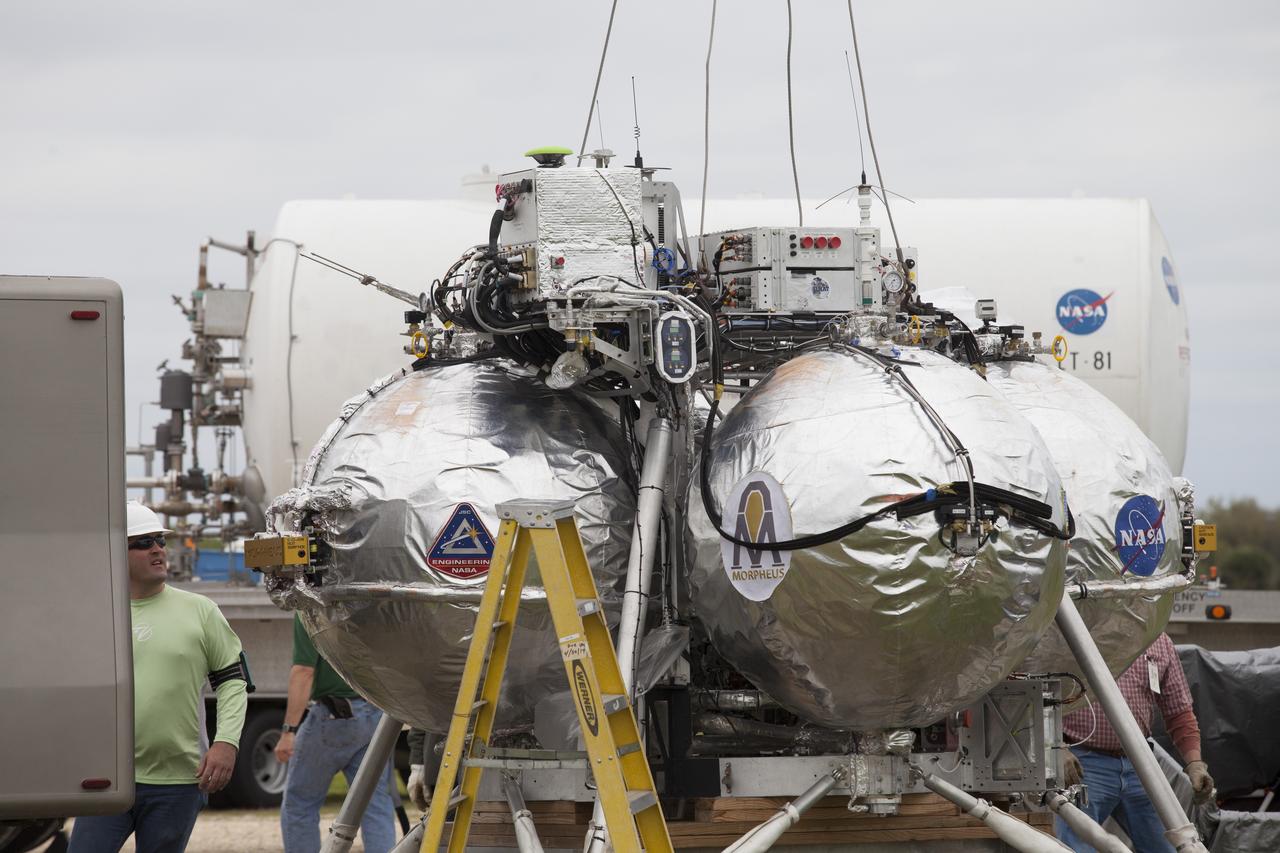
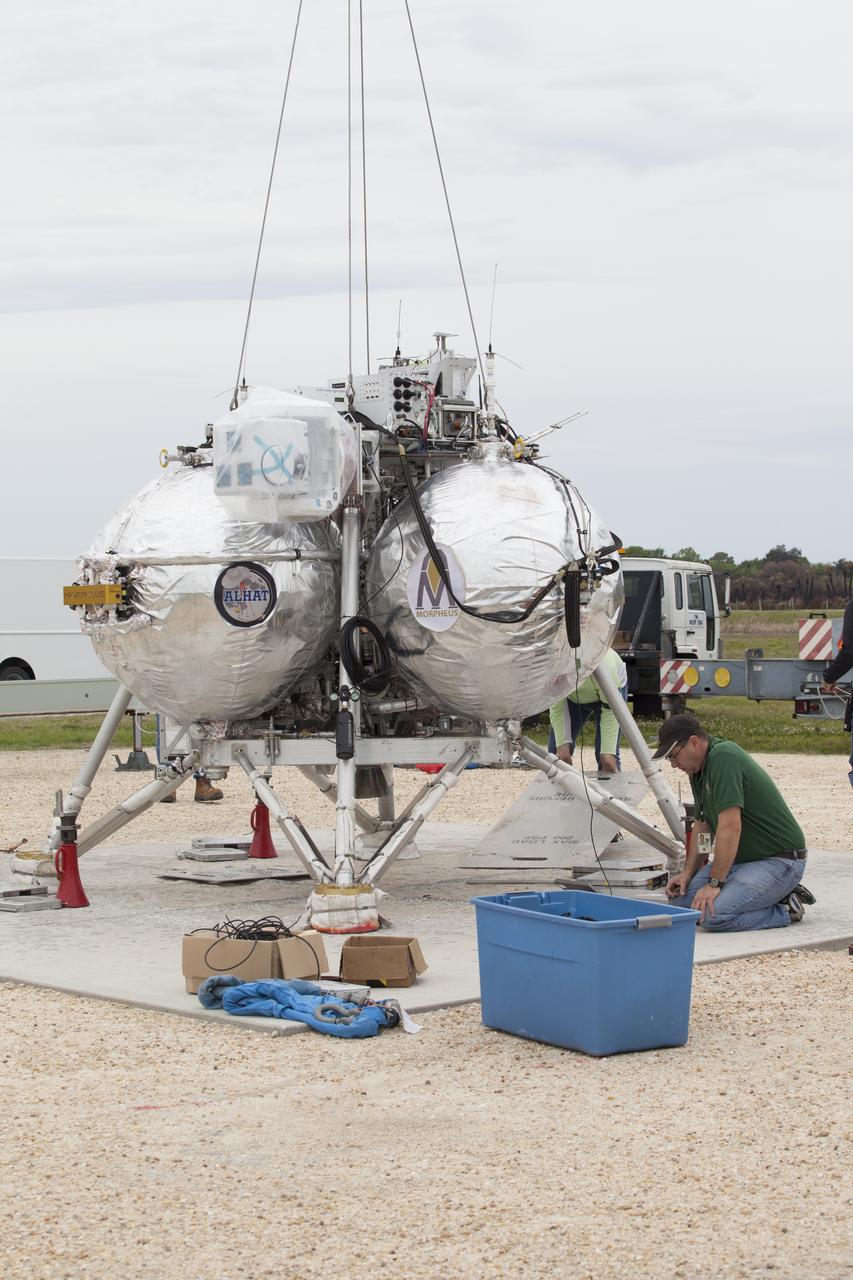
CAPE CANAVERAL, Fla. – Engineers and technicians prepare the Project Morpheus prototype lander for a tether test near a new launch site at the north end of the Shuttle Landing Facility at NASA's Kennedy Space Center in Florida. The launch pad was moved to a different location at the landing facility to support the next phase of flight testing. Project Morpheus tests NASA’s automated landing and hazard avoidance technology, or ALHAT, and an engine that runs on liquid oxygen and methane, or green propellants, into a fully-operational lander that could deliver cargo to other planetary surfaces. The landing facility provides the lander with the kind of field necessary for realistic testing, complete with rocks, craters and hazards to avoid. Morpheus’ ALHAT payload allows it to navigate to clear landing sites amidst rocks, craters and other hazards during its descent. Project Morpheus is being managed under the Advanced Exploration Systems, or AES, Division in NASA’s Human Exploration and Operations Mission Directorate. The efforts in AES pioneer new approaches for rapidly developing prototype systems, demonstrating key capabilities and validating operational concepts for future human missions beyond Earth orbit. For more information on Project Morpheus, visit http://morpheuslander.jsc.nasa.gov/. Photo credit: NASA/Ben Smegelsky
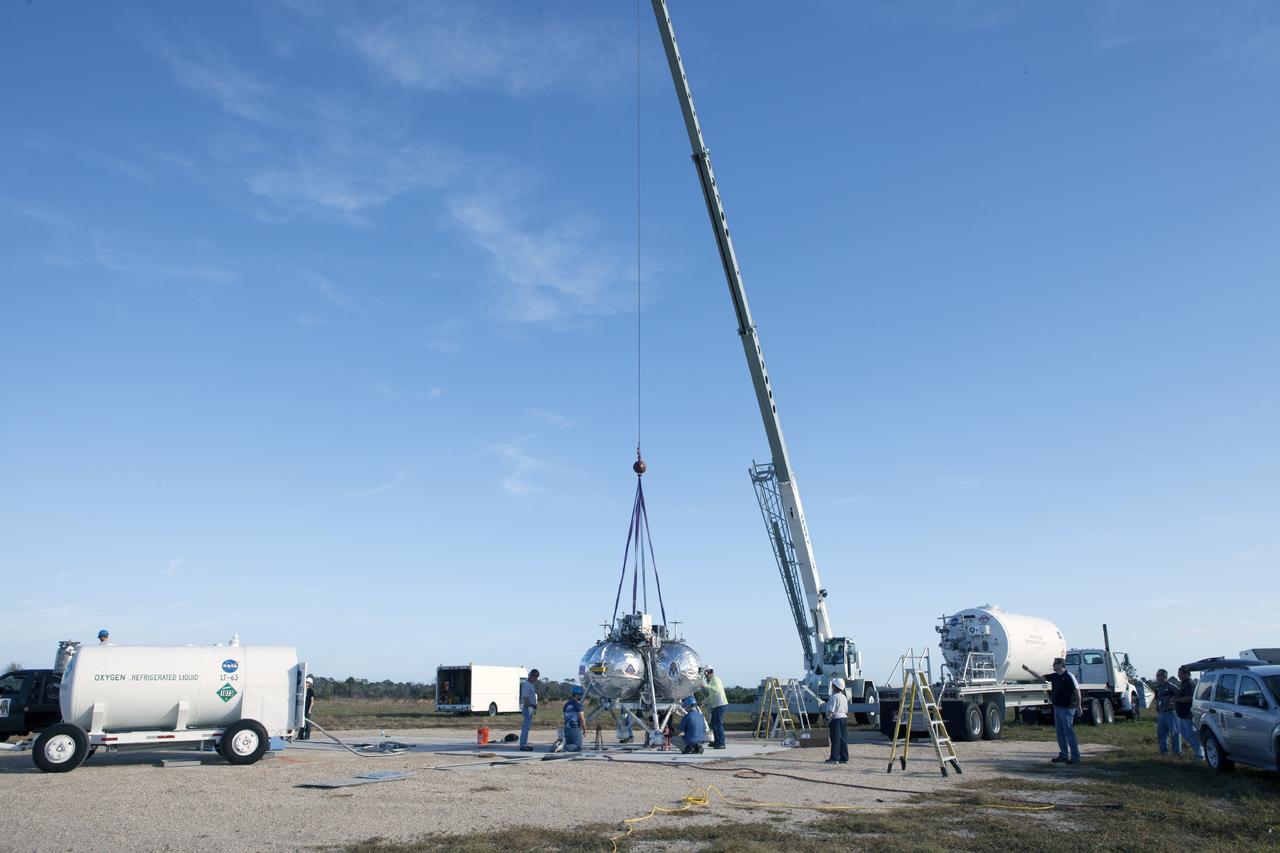
CAPE CANAVERAL, Fla. – Preparations are underway to prepare the Project Morpheus prototype lander for its first free flight test at the north end of the Shuttle Landing Facility at NASA’s Kennedy Space Center in Florida. Testing of the prototype lander was performed at NASA’s Johnson Space Center in Houston in preparation for tethered and free flight testing at Kennedy. Project Morpheus integrates NASA’s automated landing and hazard avoidance technology, or ALHAT, with an engine that runs on liquid oxygen and methane, or green propellants, into a fully-operational lander that could deliver cargo to asteroids and other planetary surfaces. The landing facility will provide the lander with the kind of field necessary for realistic testing, complete with rocks, craters and hazards to avoid. Morpheus’ ALHAT payload allows it to navigate to clear landing sites amidst rocks, craters and other hazards during its descent. Project Morpheus is being managed under the Advanced Exploration Systems, or AES, Division in NASA’s Human Exploration and Operations Mission Directorate. The efforts in AES pioneer new approaches for rapidly developing prototype systems, demonstrating key capabilities and validating operational concepts for future human missions beyond Earth orbit. For more information on Project Morpheus, visit http://morpheuslander.jsc.nasa.gov. Photo credit: NASA/Kim Shiflett
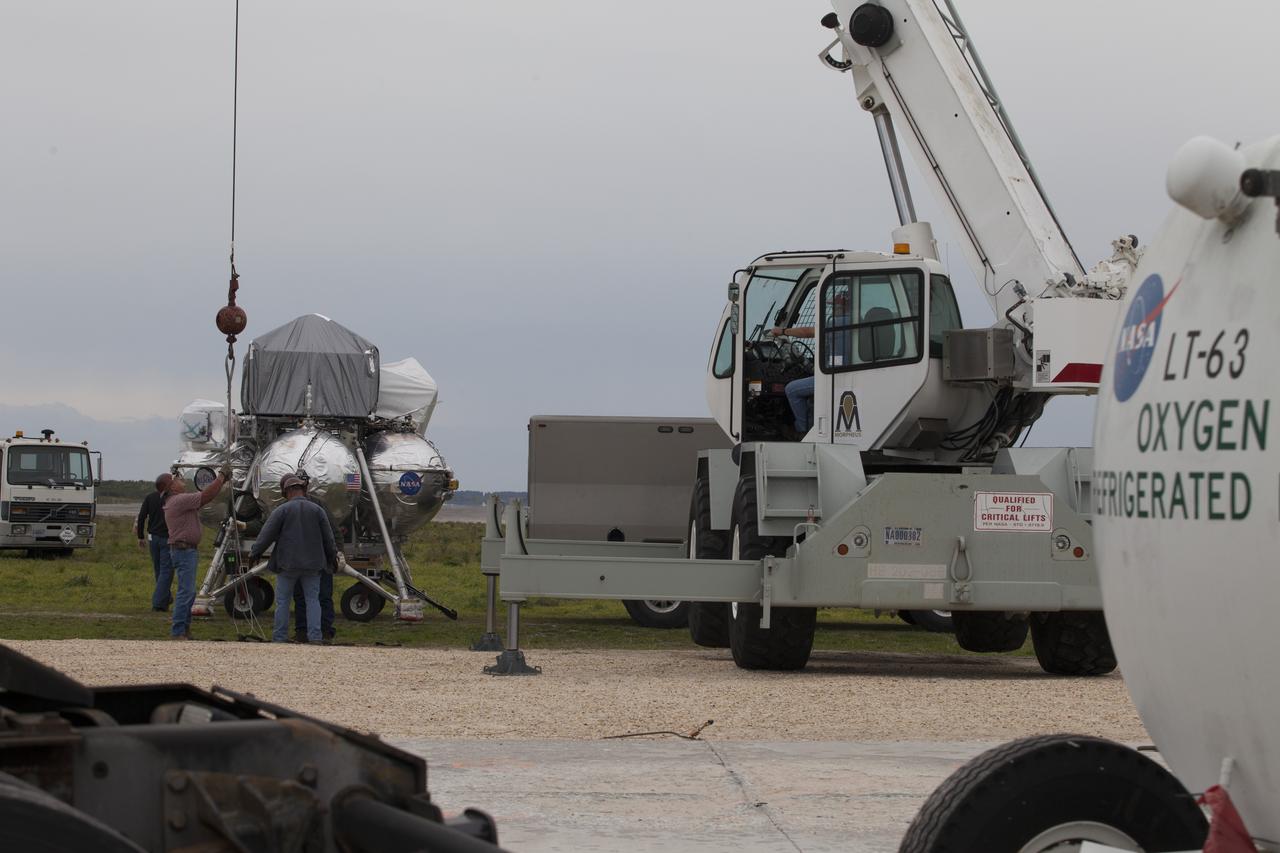
CAPE CANAVERAL, Fla. – Engineers and technicians prepare the Project Morpheus prototype lander for a tether test near a new launch site at the north end of the Shuttle Landing Facility at NASA's Kennedy Space Center in Florida. The launch pad was moved to a different location at the landing facility to support the next phase of flight testing. Project Morpheus tests NASA’s automated landing and hazard avoidance technology, or ALHAT, and an engine that runs on liquid oxygen and methane, or green propellants, into a fully-operational lander that could deliver cargo to other planetary surfaces. The landing facility provides the lander with the kind of field necessary for realistic testing, complete with rocks, craters and hazards to avoid. Morpheus’ ALHAT payload allows it to navigate to clear landing sites amidst rocks, craters and other hazards during its descent. Project Morpheus is being managed under the Advanced Exploration Systems, or AES, Division in NASA’s Human Exploration and Operations Mission Directorate. The efforts in AES pioneer new approaches for rapidly developing prototype systems, demonstrating key capabilities and validating operational concepts for future human missions beyond Earth orbit. For more information on Project Morpheus, visit http://morpheuslander.jsc.nasa.gov/. Photo credit: NASA/Ben Smegelsky
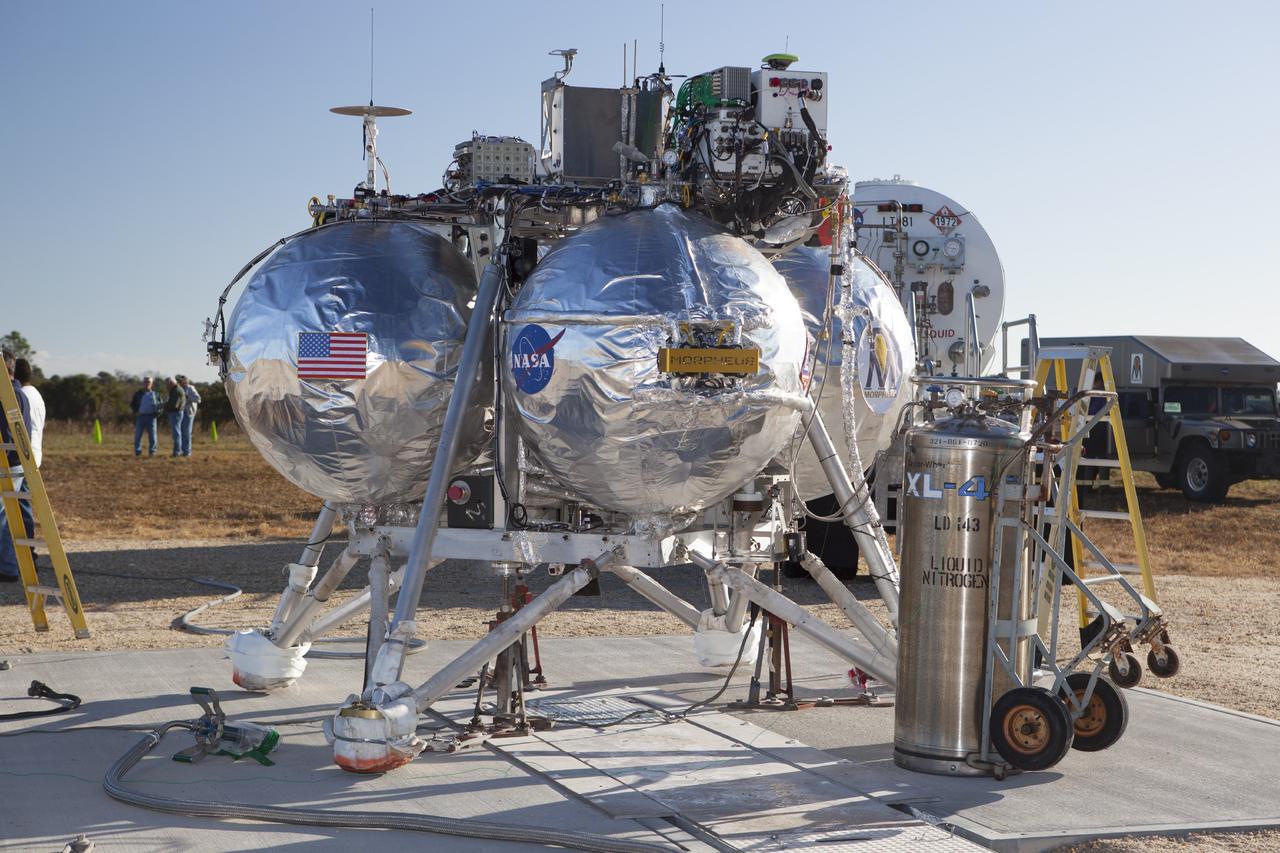
CAPE CANAVERAL, Fla. -- Preparations are underway to prepare the Project Morpheus prototype lander for a second free flight test at the north end of the Shuttle Landing Facility at NASA’s Kennedy Space Center in Florida. Testing of the prototype lander was performed at NASA’s Johnson Space Center in Houston in preparation for tethered and free flight testing at Kennedy. Project Morpheus integrates NASA’s automated landing and hazard avoidance technology, or ALHAT, with an engine that runs on liquid oxygen and methane, or green propellants, into a fully-operational lander that could deliver cargo to other planetary surfaces. The landing facility will provide the lander with the kind of field necessary for realistic testing, complete with rocks, craters and hazards to avoid. Morpheus’ ALHAT payload allows it to navigate to clear landing sites amidst rocks, craters and other hazards during its descent. Project Morpheus is being managed under the Advanced Exploration Systems, or AES, Division in NASA’s Human Exploration and Operations Mission Directorate. The efforts in AES pioneer new approaches for rapidly developing prototype systems, demonstrating key capabilities and validating operational concepts for future human missions beyond Earth orbit. For more information on Project Morpheus, visit http://morpheuslander.jsc.nasa.gov. Photo credit: NASA/Dimitri Gerondidakis
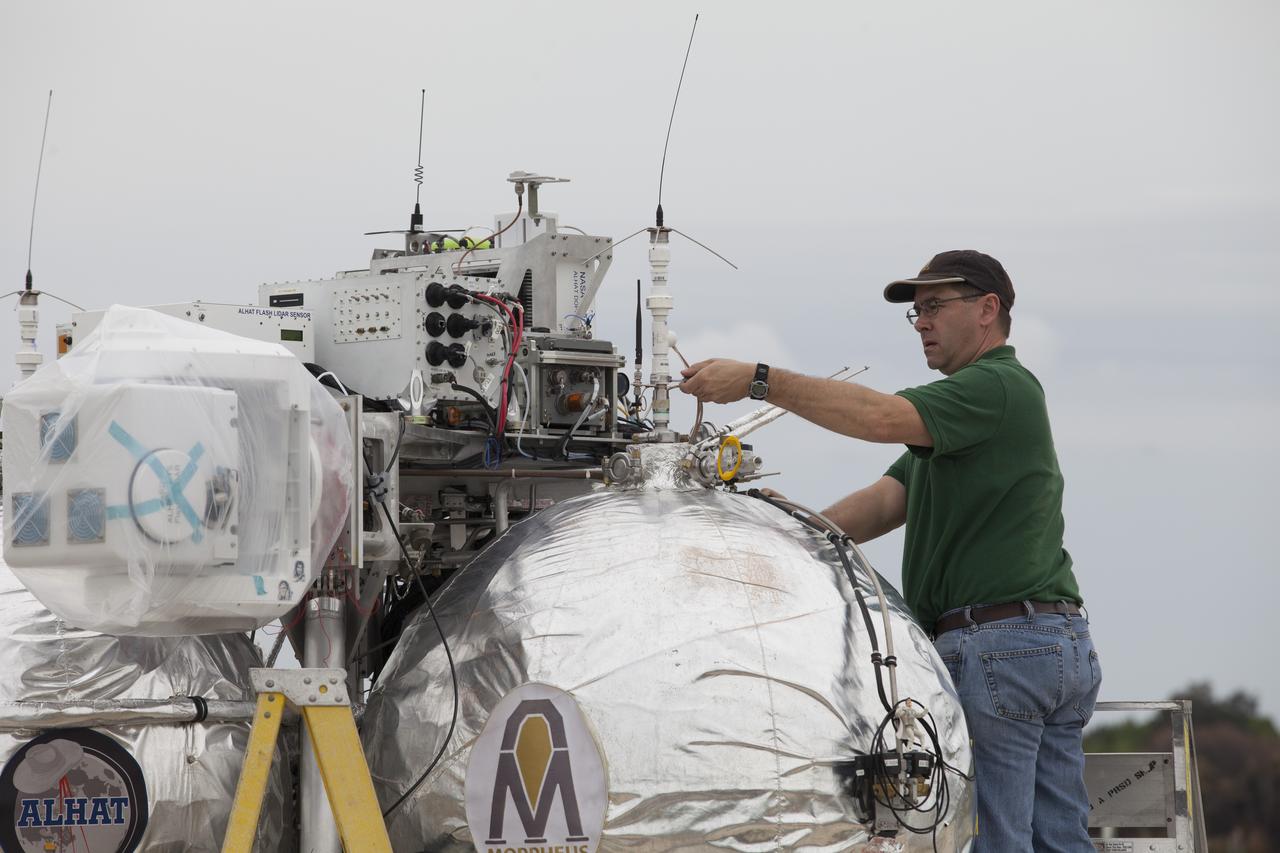
CAPE CANAVERAL, Fla. – A technician prepares the Project Morpheus prototype lander for a tether test near a new launch site at the north end of the Shuttle Landing Facility at NASA's Kennedy Space Center in Florida. The launch pad was moved to a different location at the landing facility to support the next phase of flight testing. Project Morpheus tests NASA’s automated landing and hazard avoidance technology, or ALHAT, and an engine that runs on liquid oxygen and methane, or green propellants, into a fully-operational lander that could deliver cargo to other planetary surfaces. The landing facility provides the lander with the kind of field necessary for realistic testing, complete with rocks, craters and hazards to avoid. Morpheus’ ALHAT payload allows it to navigate to clear landing sites amidst rocks, craters and other hazards during its descent. Project Morpheus is being managed under the Advanced Exploration Systems, or AES, Division in NASA’s Human Exploration and Operations Mission Directorate. The efforts in AES pioneer new approaches for rapidly developing prototype systems, demonstrating key capabilities and validating operational concepts for future human missions beyond Earth orbit. For more information on Project Morpheus, visit http://morpheuslander.jsc.nasa.gov/. Photo credit: NASA/Ben Smegelsky
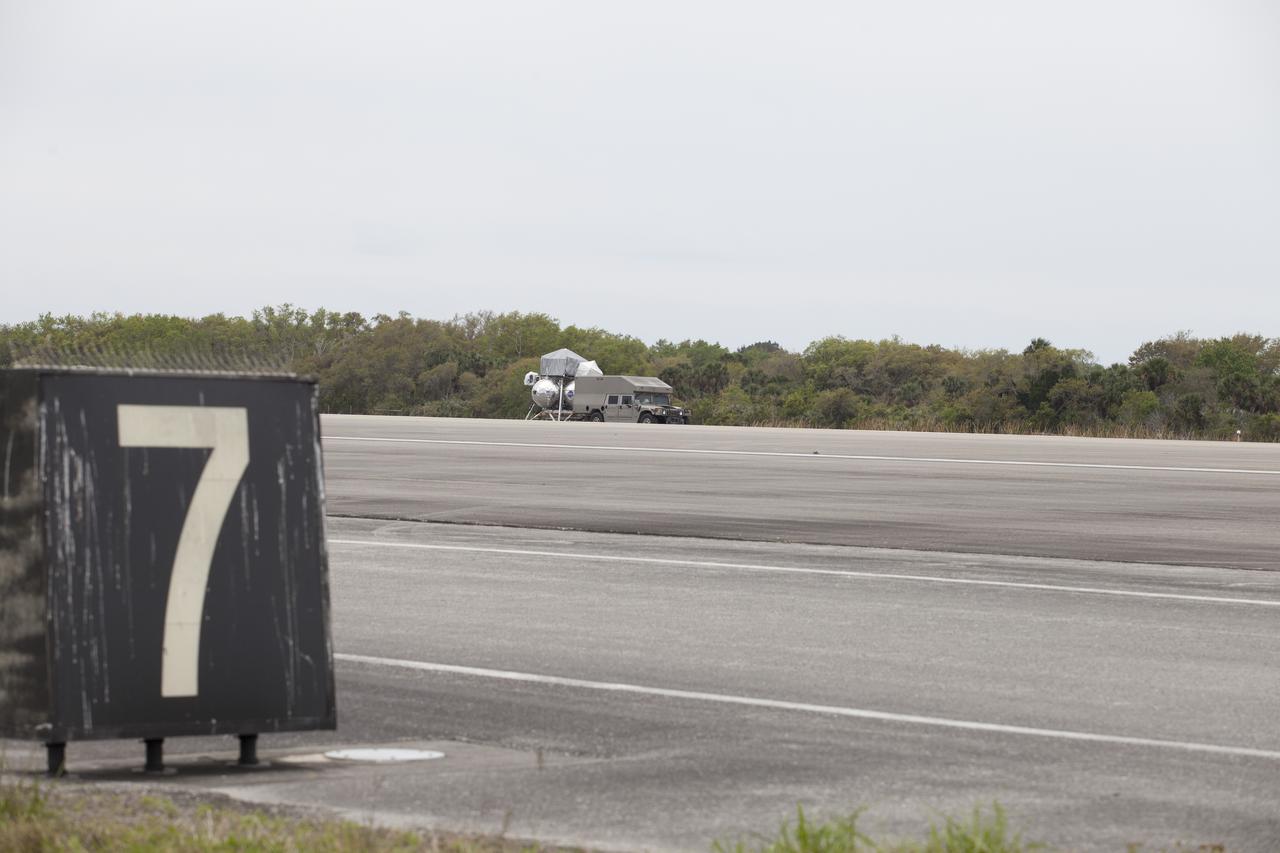
CAPE CANAVERAL, Fla. – NASA's Project Morpheus prototype lander is positioned near a new launch site at the north end of the Shuttle Landing Facility at NASA’s Kennedy Space Center in Florida for a tether test. The launch pad was moved to a different location at the landing facility to support the next phase of flight testing. Project Morpheus tests NASA’s automated landing and hazard avoidance technology, or ALHAT, and an engine that runs on liquid oxygen and methane, or green propellants, into a fully-operational lander that could deliver cargo to other planetary surfaces. The landing facility provides the lander with the kind of field necessary for realistic testing, complete with rocks, craters and hazards to avoid. Morpheus’ ALHAT payload allows it to navigate to clear landing sites amidst rocks, craters and other hazards during its descent. Project Morpheus is being managed under the Advanced Exploration Systems, or AES, Division in NASA’s Human Exploration and Operations Mission Directorate. The efforts in AES pioneer new approaches for rapidly developing prototype systems, demonstrating key capabilities and validating operational concepts for future human missions beyond Earth orbit. For more information on Project Morpheus, visit http://morpheuslander.jsc.nasa.gov/. Photo credit: NASA/Ben Smegelsky
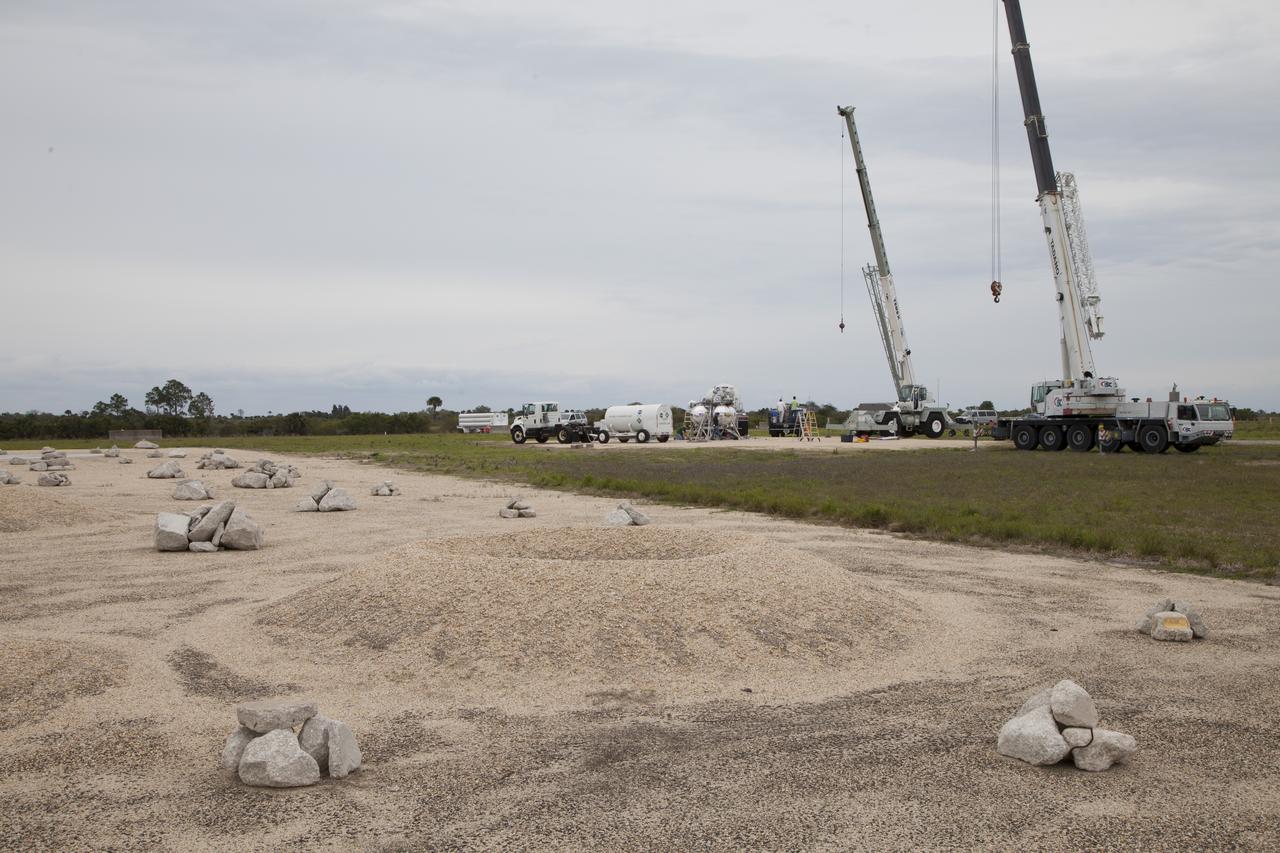
CAPE CANAVERAL, Fla. – NASA's Project Morpheus prototype lander is positioned near a new launch site at the north end of the Shuttle Landing Facility at NASA’s Kennedy Space Center in Florida for a tether test. The launch pad was moved to a different location at the landing facility to support the next phase of flight testing. Project Morpheus tests NASA’s automated landing and hazard avoidance technology, or ALHAT, and an engine that runs on liquid oxygen and methane, or green propellants, into a fully-operational lander that could deliver cargo to other planetary surfaces. In the foreground of the photo is the ALHAT field. The landing facility provides the lander with the kind of field necessary for realistic testing, complete with rocks, craters and hazards to avoid. Morpheus’ ALHAT payload allows it to navigate to clear landing sites amidst rocks, craters and other hazards during its descent. Project Morpheus is being managed under the Advanced Exploration Systems, or AES, Division in NASA’s Human Exploration and Operations Mission Directorate. The efforts in AES pioneer new approaches for rapidly developing prototype systems, demonstrating key capabilities and validating operational concepts for future human missions beyond Earth orbit. For more information on Project Morpheus, visit http://morpheuslander.jsc.nasa.gov/. Photo credit: NASA/Ben Smegelsky
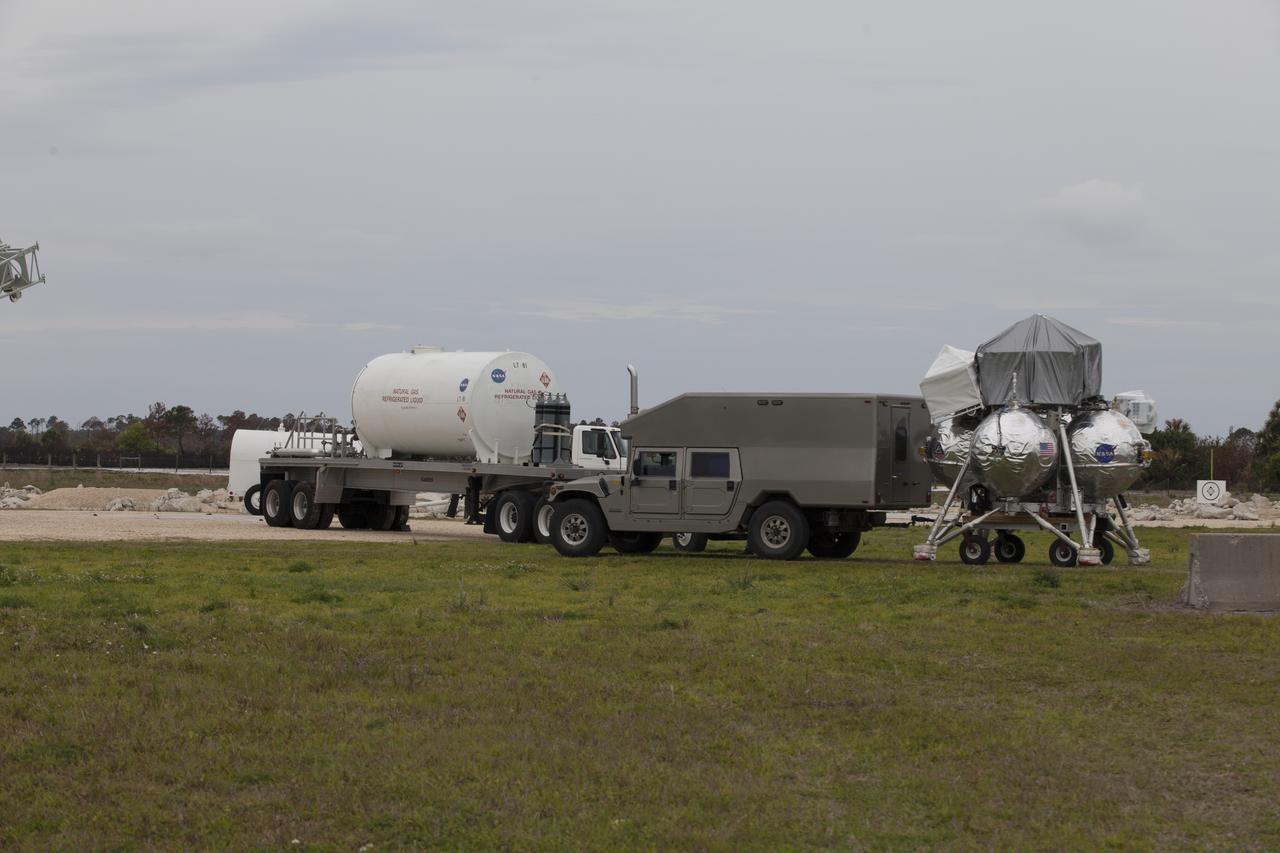
CAPE CANAVERAL, Fla. – NASA's Project Morpheus prototype lander is positioned near a new launch site at the north end of the Shuttle Landing Facility at NASA’s Kennedy Space Center in Florida for a tether test. The launch pad was moved to a different location at the landing facility to support the next phase of flight testing. Project Morpheus tests NASA’s automated landing and hazard avoidance technology, or ALHAT, and an engine that runs on liquid oxygen and methane, or green propellants, into a fully-operational lander that could deliver cargo to other planetary surfaces. The landing facility provides the lander with the kind of field necessary for realistic testing, complete with rocks, craters and hazards to avoid. Morpheus’ ALHAT payload allows it to navigate to clear landing sites amidst rocks, craters and other hazards during its descent. Project Morpheus is being managed under the Advanced Exploration Systems, or AES, Division in NASA’s Human Exploration and Operations Mission Directorate. The efforts in AES pioneer new approaches for rapidly developing prototype systems, demonstrating key capabilities and validating operational concepts for future human missions beyond Earth orbit. For more information on Project Morpheus, visit http://morpheuslander.jsc.nasa.gov/. Photo credit: NASA/Ben Smegelsky
CAPE CANAVERAL, Fla. – Technicians watch as a crane lowers the Project Morpheus prototype lander onto a launch pad at a new launch site at the north end of the Shuttle Landing Facility at NASA's Kennedy Space Center in Florida. Preparations are underway for a tether test. The launch pad was moved to a different location at the landing facility to support the next phase of flight testing. Project Morpheus tests NASA’s automated landing and hazard avoidance technology, or ALHAT, and an engine that runs on liquid oxygen and methane, or green propellants, into a fully-operational lander that could deliver cargo to other planetary surfaces. The landing facility provides the lander with the kind of field necessary for realistic testing, complete with rocks, craters and hazards to avoid. Morpheus’ ALHAT payload allows it to navigate to clear landing sites amidst rocks, craters and other hazards during its descent. Project Morpheus is being managed under the Advanced Exploration Systems, or AES, Division in NASA’s Human Exploration and Operations Mission Directorate. The efforts in AES pioneer new approaches for rapidly developing prototype systems, demonstrating key capabilities and validating operational concepts for future human missions beyond Earth orbit. For more information on Project Morpheus, visit http://morpheuslander.jsc.nasa.gov/. Photo credit: NASA/Ben Smegelsky
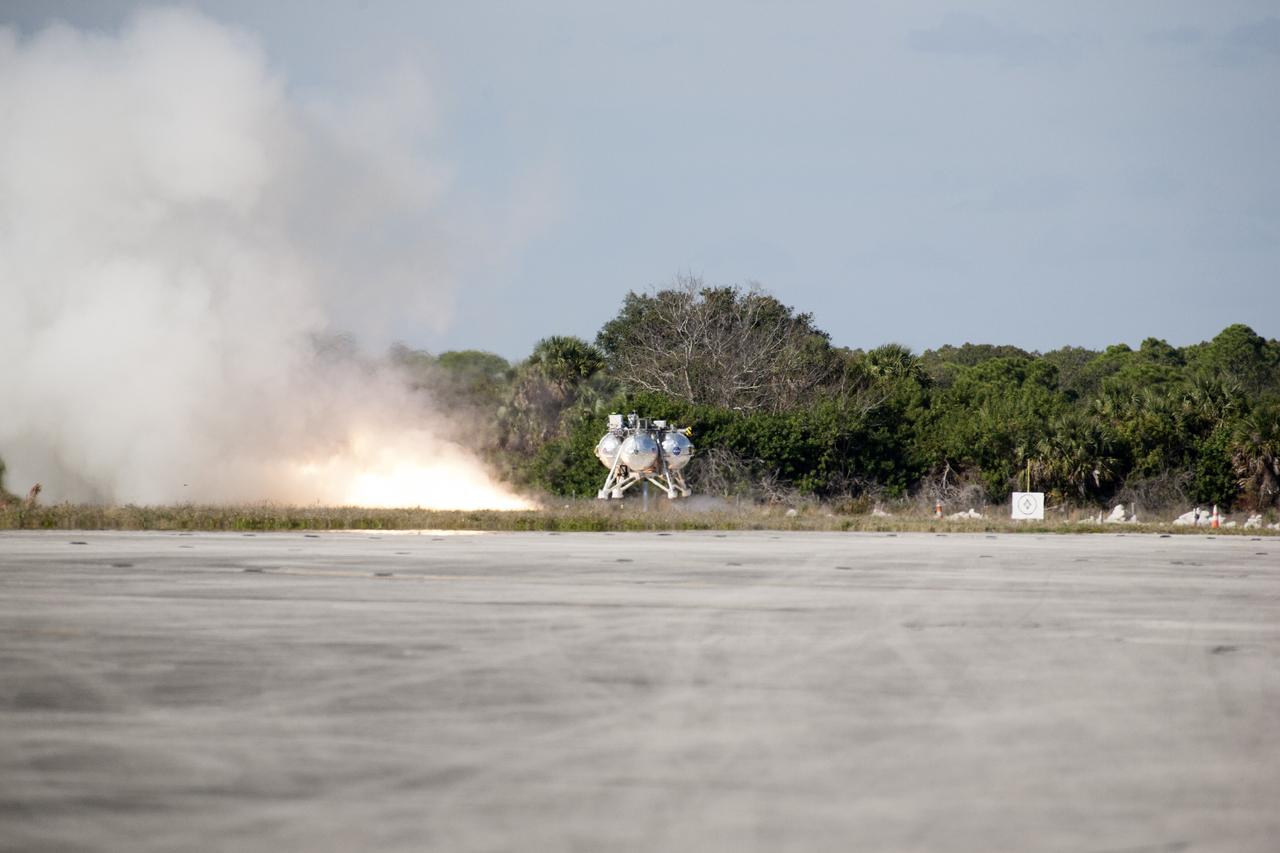
CAPE CANAVERAL, Fla. – The first free flight of the Project Morpheus prototype lander begins as the lander’s engine fires at the north of the Shuttle Landing Facility at NASA’s Kennedy Space Center in Florida. Testing of the prototype lander was performed at NASA’s Johnson Space Center in Houston in preparation for tethered and free flight testing at Kennedy. Project Morpheus integrates NASA’s automated landing and hazard avoidance technology, or ALHAT, with an engine that runs on liquid oxygen and methane, or green propellants, into a fully-operational lander that could deliver cargo to asteroids and other planetary surfaces. The landing facility will provide the lander with the kind of field necessary for realistic testing, complete with rocks, craters and hazards to avoid. Morpheus’ ALHAT payload allows it to navigate to clear landing sites amidst rocks, craters and other hazards during its descent. Project Morpheus is being managed under the Advanced Exploration Systems, or AES, Division in NASA’s Human Exploration and Operations Mission Directorate. The efforts in AES pioneer new approaches for rapidly developing prototype systems, demonstrating key capabilities and validating operational concepts for future human missions beyond Earth orbit. For more information on Project Morpheus, visit http://morpheuslander.jsc.nasa.gov. Photo credit: NASA/Kim Shiflett
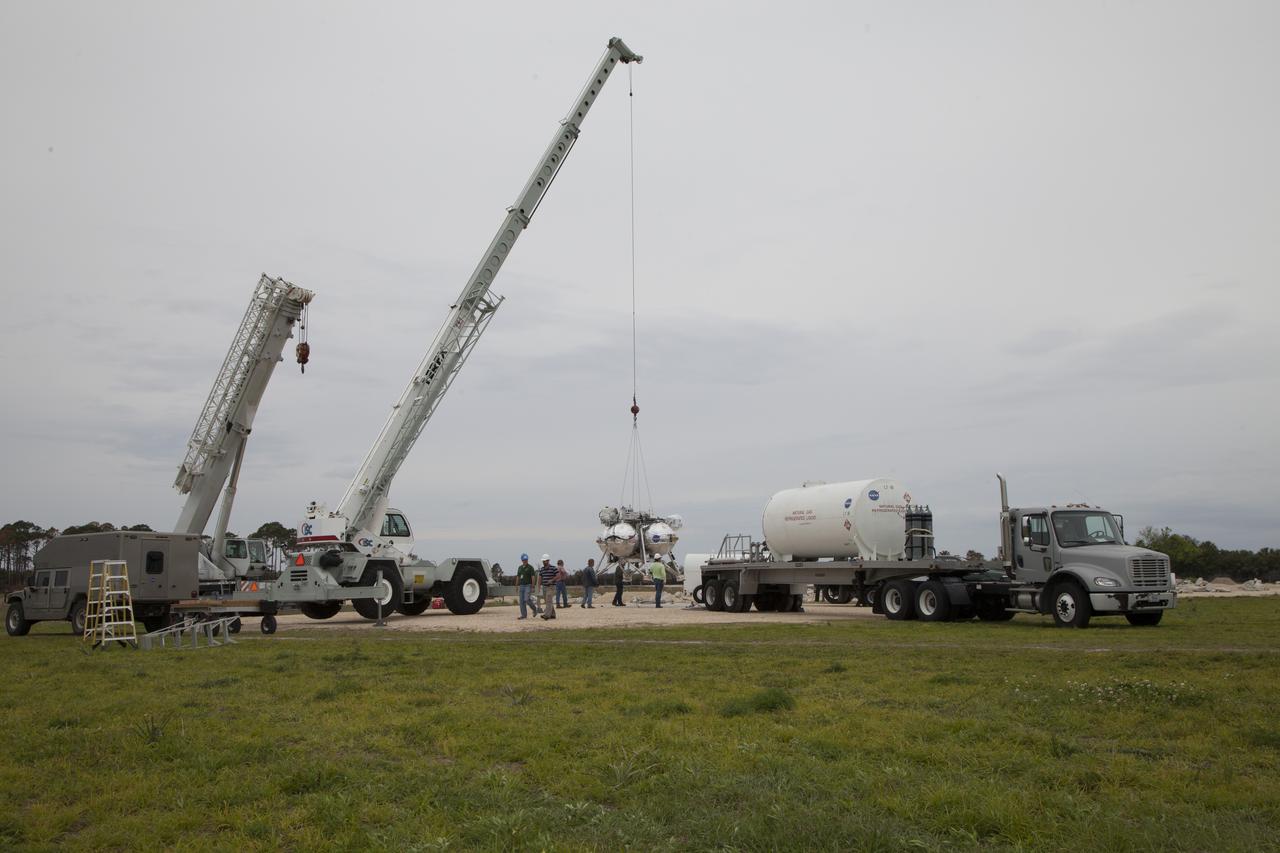
CAPE CANAVERAL, Fla. – Engineers and technicians monitor the progress as a crane lifts the Project Morpheus prototype lander off the ground for a tether test near a new launch site at the north end of the Shuttle Landing Facility at NASA's Kennedy Space Center in Florida. The launch pad was moved to a different location at the landing facility to support the next phase of flight testing. Project Morpheus tests NASA’s automated landing and hazard avoidance technology, or ALHAT, and an engine that runs on liquid oxygen and methane, or green propellants, into a fully-operational lander that could deliver cargo to other planetary surfaces. The landing facility provides the lander with the kind of field necessary for realistic testing, complete with rocks, craters and hazards to avoid. Morpheus’ ALHAT payload allows it to navigate to clear landing sites amidst rocks, craters and other hazards during its descent. Project Morpheus is being managed under the Advanced Exploration Systems, or AES, Division in NASA’s Human Exploration and Operations Mission Directorate. The efforts in AES pioneer new approaches for rapidly developing prototype systems, demonstrating key capabilities and validating operational concepts for future human missions beyond Earth orbit. For more information on Project Morpheus, visit http://morpheuslander.jsc.nasa.gov/. Photo credit: NASA/Ben Smegelsky
CAPE CANAVERAL, Fla. -- A technician prepares the Project Morpheus prototype lander for a second free flight test at the north end of the Shuttle Landing Facility at NASA’s Kennedy Space Center in Florida. Testing of the prototype lander was performed at NASA’s Johnson Space Center in Houston in preparation for tethered and free flight testing at Kennedy. Project Morpheus integrates NASA’s automated landing and hazard avoidance technology, or ALHAT, with an engine that runs on liquid oxygen and methane, or green propellants, into a fully-operational lander that could deliver cargo to other planetary surfaces. The landing facility will provide the lander with the kind of field necessary for realistic testing, complete with rocks, craters and hazards to avoid. Morpheus’ ALHAT payload allows it to navigate to clear landing sites amidst rocks, craters and other hazards during its descent. Project Morpheus is being managed under the Advanced Exploration Systems, or AES, Division in NASA’s Human Exploration and Operations Mission Directorate. The efforts in AES pioneer new approaches for rapidly developing prototype systems, demonstrating key capabilities and validating operational concepts for future human missions beyond Earth orbit. For more information on Project Morpheus, visit http://morpheuslander.jsc.nasa.gov. Photo credit: NASA/Dimitri Gerondidakis
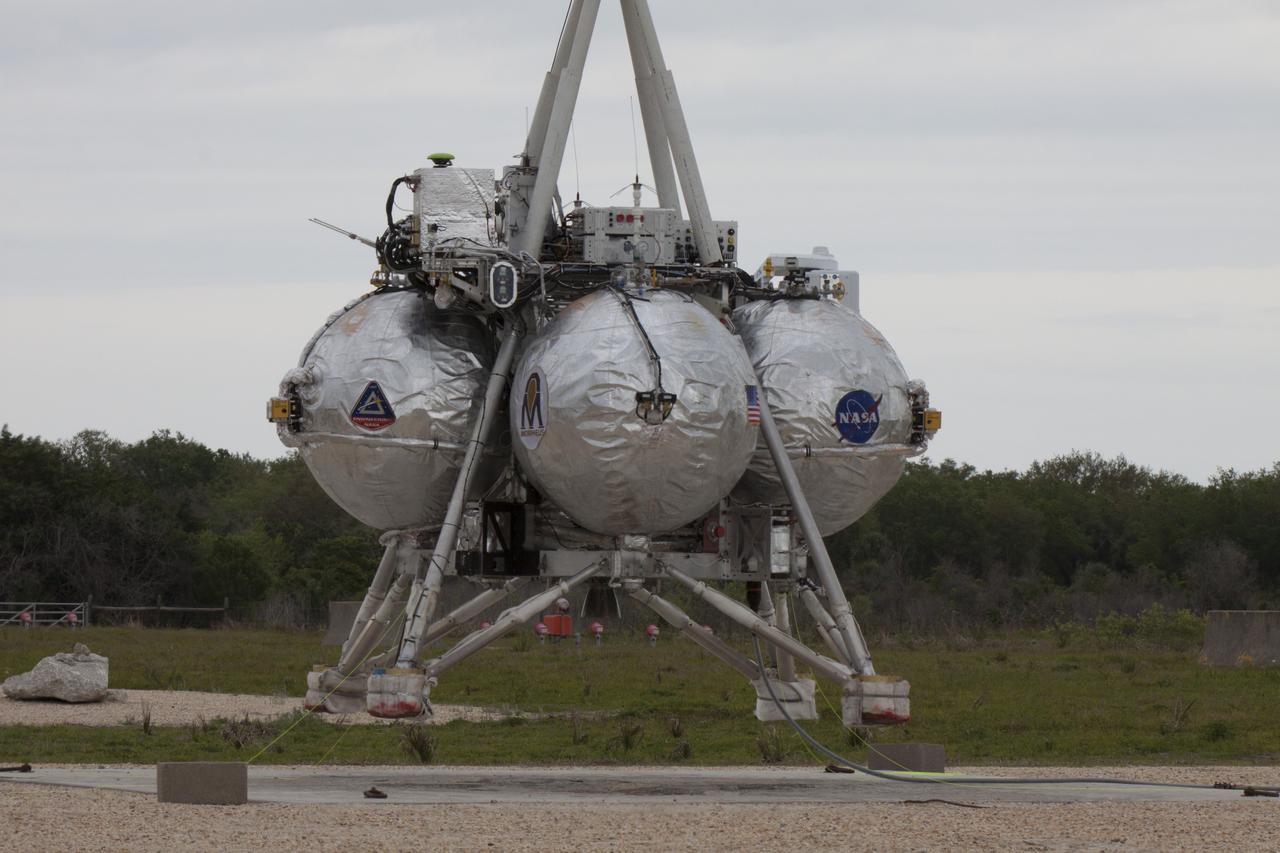
CAPE CANAVERAL, Fla. – NASA's Project Morpheus prototype lander is positioned near a new launch site at the north end of the Shuttle Landing Facility at NASA’s Kennedy Space Center in Florida for a tethered test. The test will be performed to verify the lander's recently installed autonomous landing and hazard avoidance technology, or ALHAT, sensors and integration system. The launch pad was moved to a different location at the landing facility to support the next phase of flight testing. Project Morpheus tests NASA’s ALHAT, and an engine that runs on liquid oxygen and methane, or green propellants, into a fully-operational lander that could deliver cargo to other planetary surfaces. The landing facility provides the lander with the kind of field necessary for realistic testing, complete with rocks, craters and hazards to avoid. Morpheus’ ALHAT payload allows it to navigate to clear landing sites amidst rocks, craters and other hazards during its descent. Project Morpheus is being managed under the Advanced Exploration Systems, or AES, Division in NASA’s Human Exploration and Operations Mission Directorate. The efforts in AES pioneer new approaches for rapidly developing prototype systems, demonstrating key capabilities and validating operational concepts for future human missions beyond Earth orbit. For more information on Project Morpheus, visit http://morpheuslander.jsc.nasa.gov/. Photo credit: NASA/Glenn Benson
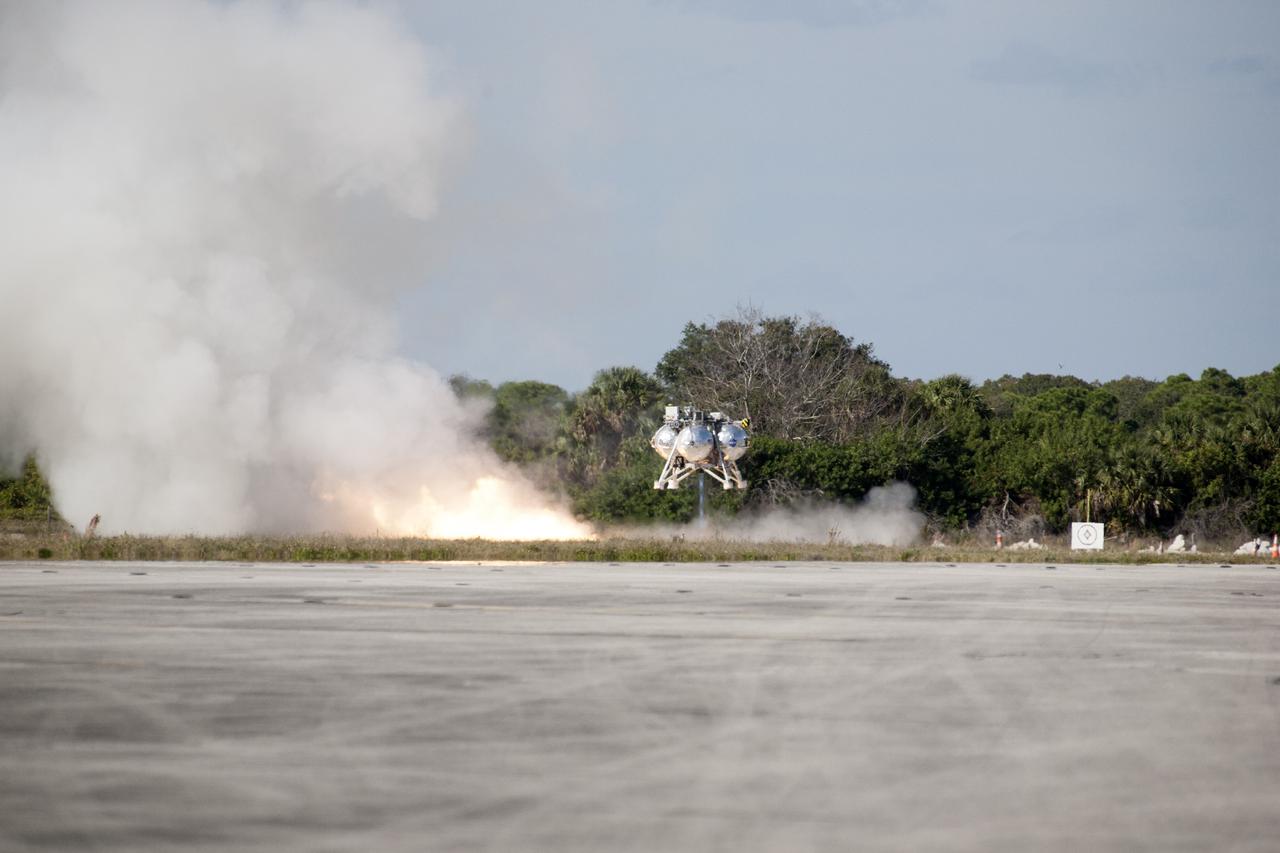
CAPE CANAVERAL, Fla. – The first free flight of the Project Morpheus prototype lander begins as the engine fires and the lander begins to lift off at the north of the Shuttle Landing Facility at NASA’s Kennedy Space Center in Florida. Testing of the prototype lander was performed at NASA’s Johnson Space Center in Houston in preparation for tethered and free flight testing at Kennedy. Project Morpheus integrates NASA’s automated landing and hazard avoidance technology, or ALHAT, with an engine that runs on liquid oxygen and methane, or green propellants, into a fully-operational lander that could deliver cargo to asteroids and other planetary surfaces. The landing facility will provide the lander with the kind of field necessary for realistic testing, complete with rocks, craters and hazards to avoid. Morpheus’ ALHAT payload allows it to navigate to clear landing sites amidst rocks, craters and other hazards during its descent. Project Morpheus is being managed under the Advanced Exploration Systems, or AES, Division in NASA’s Human Exploration and Operations Mission Directorate. The efforts in AES pioneer new approaches for rapidly developing prototype systems, demonstrating key capabilities and validating operational concepts for future human missions beyond Earth orbit. For more information on Project Morpheus, visit http://morpheuslander.jsc.nasa.gov. Photo credit: NASA/Kim Shiflett
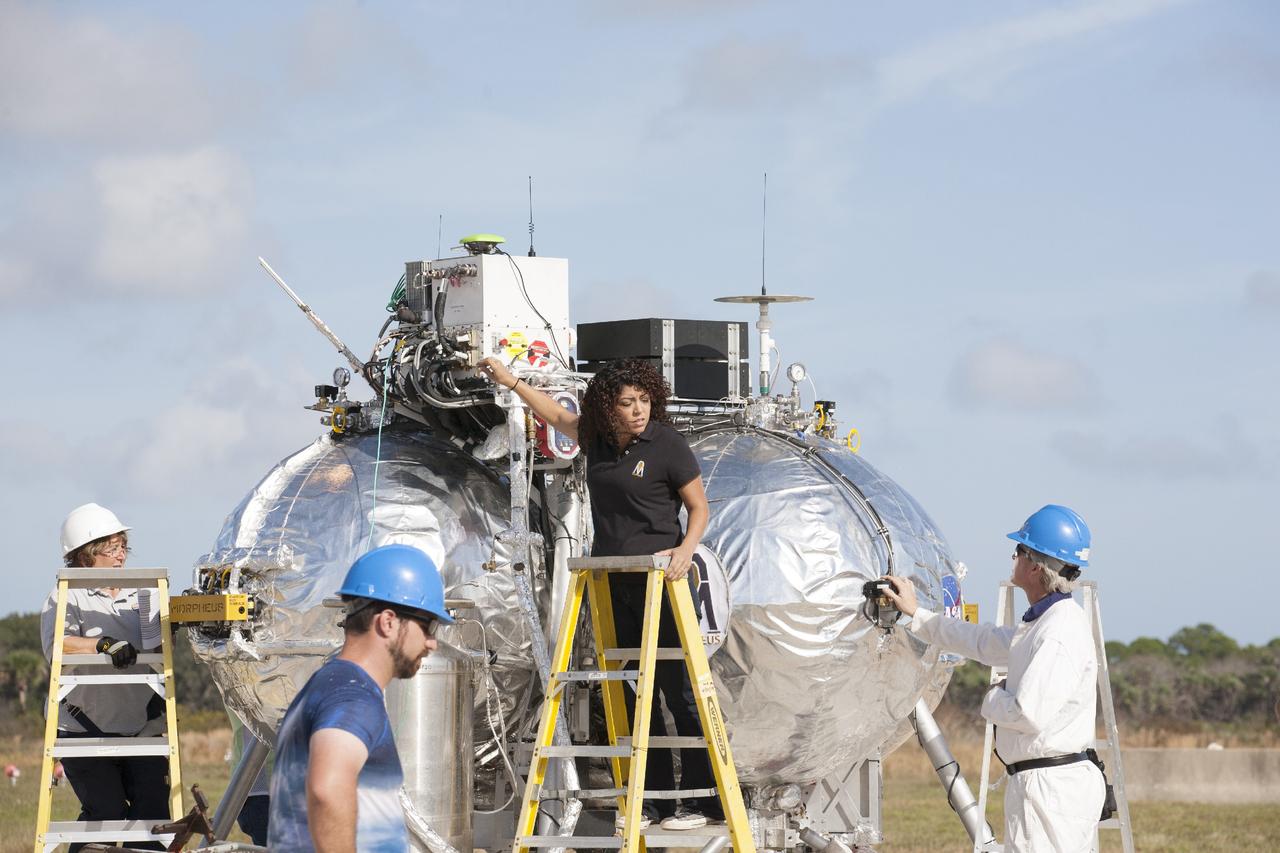
CAPE CANAVERAL, Fla. – Technicians and engineers prepare the Project Morpheus prototype lander for its first free flight test at the north end of the Shuttle Landing Facility at NASA’s Kennedy Space Center in Florida. Testing of the prototype lander was performed at NASA’s Johnson Space Center in Houston in preparation for tethered and free flight testing at Kennedy. Project Morpheus integrates NASA’s automated landing and hazard avoidance technology, or ALHAT, with an engine that runs on liquid oxygen and methane, or green propellants, into a fully-operational lander that could deliver cargo to asteroids and other planetary surfaces. The landing facility will provide the lander with the kind of field necessary for realistic testing, complete with rocks, craters and hazards to avoid. Morpheus’ ALHAT payload allows it to navigate to clear landing sites amidst rocks, craters and other hazards during its descent. Project Morpheus is being managed under the Advanced Exploration Systems, or AES, Division in NASA’s Human Exploration and Operations Mission Directorate. The efforts in AES pioneer new approaches for rapidly developing prototype systems, demonstrating key capabilities and validating operational concepts for future human missions beyond Earth orbit. For more information on Project Morpheus, visit http://morpheuslander.jsc.nasa.gov. Photo credit: NASA/Kim Shiflett
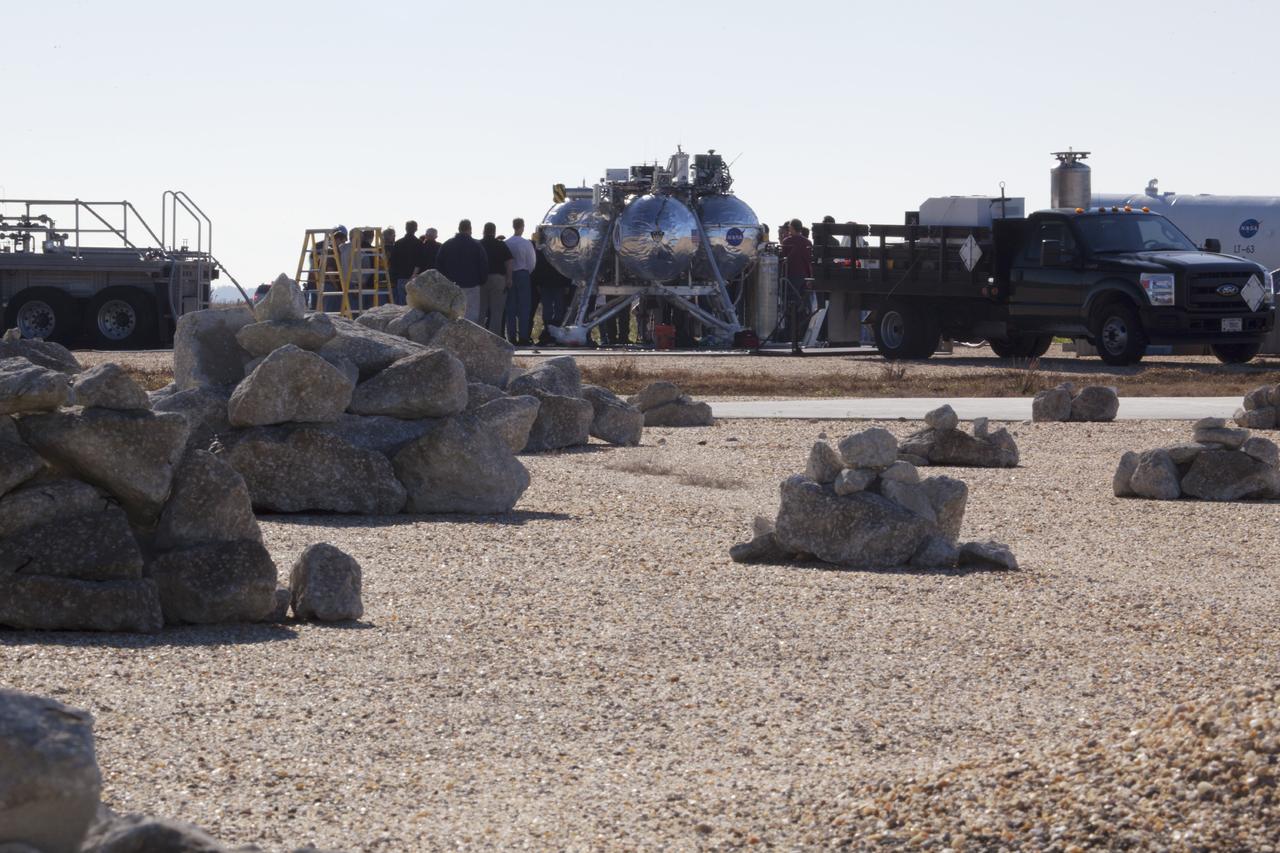
CAPE CANAVERAL, Fla. -- Preparations are underway to prepare the Project Morpheus prototype lander for a second free flight test at the north end of the Shuttle Landing Facility at NASA’s Kennedy Space Center in Florida. Testing of the prototype lander was performed at NASA’s Johnson Space Center in Houston in preparation for tethered and free flight testing at Kennedy. Project Morpheus integrates NASA’s automated landing and hazard avoidance technology, or ALHAT, with an engine that runs on liquid oxygen and methane, or green propellants, into a fully-operational lander that could deliver cargo to other planetary surfaces. The landing facility will provide the lander with the kind of field necessary for realistic testing, complete with rocks, craters and hazards to avoid. Morpheus’ ALHAT payload allows it to navigate to clear landing sites amidst rocks, craters and other hazards during its descent. Project Morpheus is being managed under the Advanced Exploration Systems, or AES, Division in NASA’s Human Exploration and Operations Mission Directorate. The efforts in AES pioneer new approaches for rapidly developing prototype systems, demonstrating key capabilities and validating operational concepts for future human missions beyond Earth orbit. For more information on Project Morpheus, visit http://morpheuslander.jsc.nasa.gov. Photo credit: NASA/Dimitri Gerondidakis
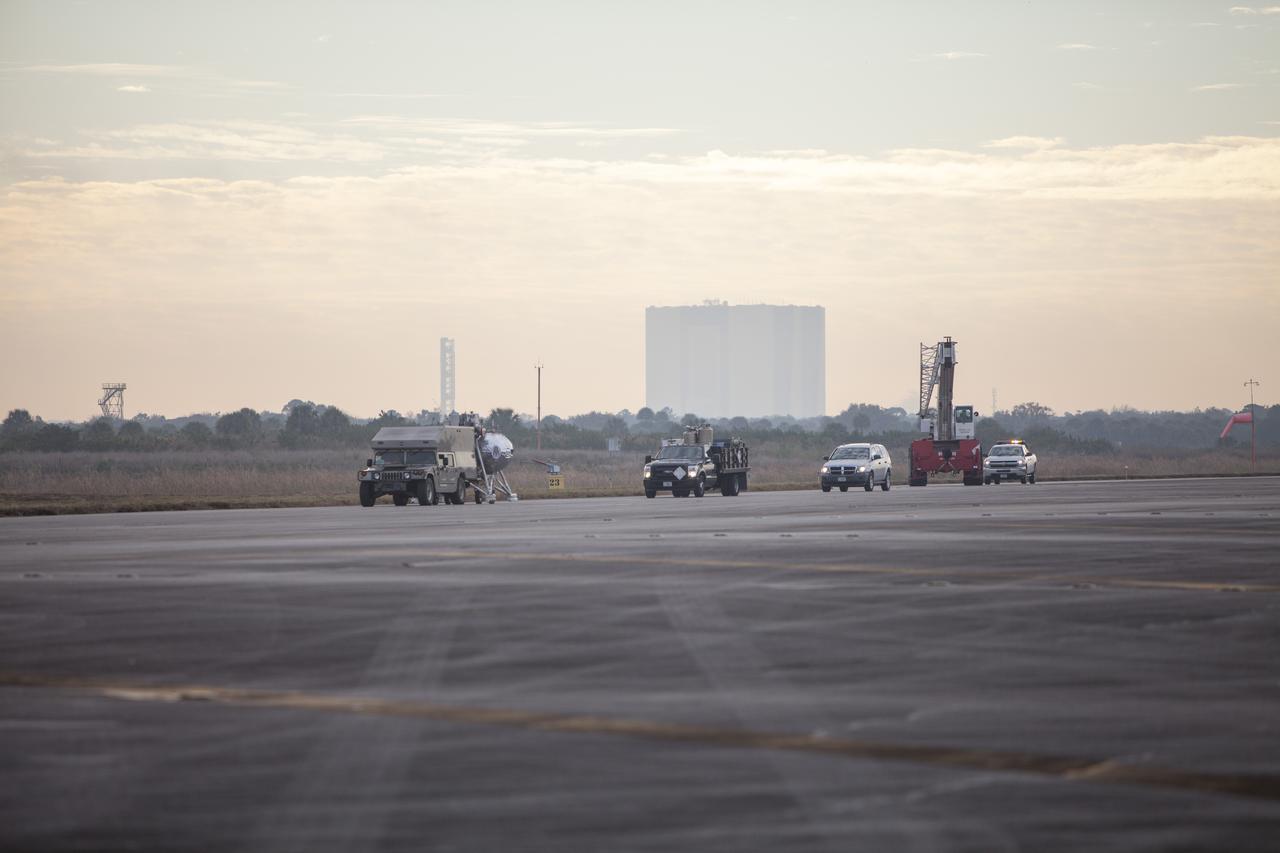
CAPE CANAVERAL, Fla. – The Project Morpheus prototype lander is transported to a launch pad at the north end of the Shuttle Landing Facility at NASA’s Kennedy Space Center in Florida. The prototype lander is being prepared for its fourth free flight test at Kennedy. Morpheus will launch from the ground over a flame trench and then descend and land on a dedicated pad inside the autonomous landing and hazard avoidance technology, or ALHAT, hazard field. Project Morpheus tests NASA’s ALHAT and an engine that runs on liquid oxygen and methane, or green propellants, into a fully-operational lander that could deliver cargo to other planetary surfaces. The landing facility provides the lander with the kind of field necessary for realistic testing, complete with rocks, craters and hazards to avoid. Morpheus’ ALHAT payload allows it to navigate to clear landing sites amidst rocks, craters and other hazards during its descent. Project Morpheus is being managed under the Advanced Exploration Systems, or AES, Division in NASA’s Human Exploration and Operations Mission Directorate. The efforts in AES pioneer new approaches for rapidly developing prototype systems, demonstrating key capabilities and validating operational concepts for future human missions beyond Earth orbit. For more information on Project Morpheus, visit http://www.nasa.gov/centers/johnson/exploration/morpheus. Photo credit: NASA/Cory Huston
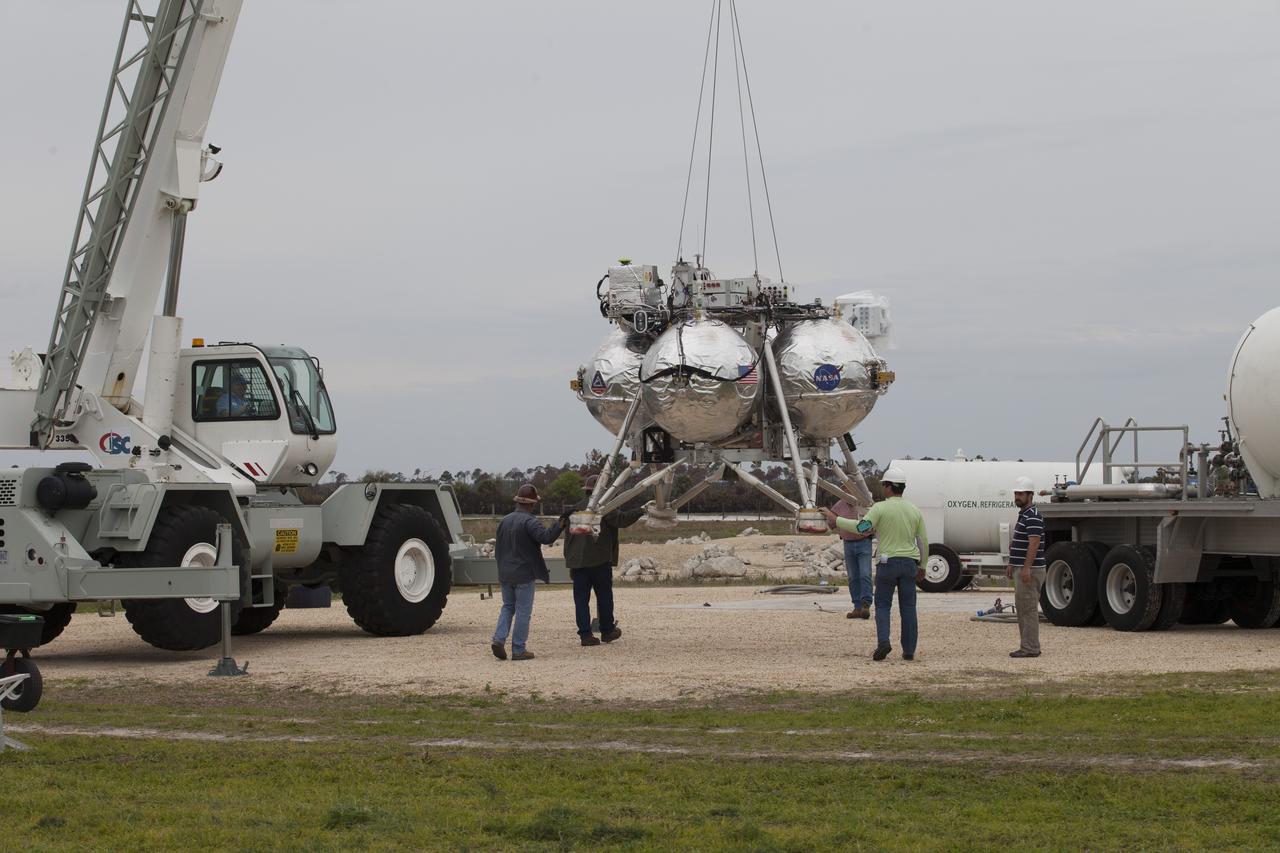
CAPE CANAVERAL, Fla. – Engineers and technicians monitor the progress as a crane lifts the Project Morpheus prototype lander off the ground for a tether test near a new launch site at the north end of the Shuttle Landing Facility at NASA's Kennedy Space Center in Florida. The launch pad was moved to a different location at the landing facility to support the next phase of flight testing. Project Morpheus tests NASA’s automated landing and hazard avoidance technology, or ALHAT, and an engine that runs on liquid oxygen and methane, or green propellants, into a fully-operational lander that could deliver cargo to other planetary surfaces. The landing facility provides the lander with the kind of field necessary for realistic testing, complete with rocks, craters and hazards to avoid. Morpheus’ ALHAT payload allows it to navigate to clear landing sites amidst rocks, craters and other hazards during its descent. Project Morpheus is being managed under the Advanced Exploration Systems, or AES, Division in NASA’s Human Exploration and Operations Mission Directorate. The efforts in AES pioneer new approaches for rapidly developing prototype systems, demonstrating key capabilities and validating operational concepts for future human missions beyond Earth orbit. For more information on Project Morpheus, visit http://morpheuslander.jsc.nasa.gov/. Photo credit: NASA/Ben Smegelsky
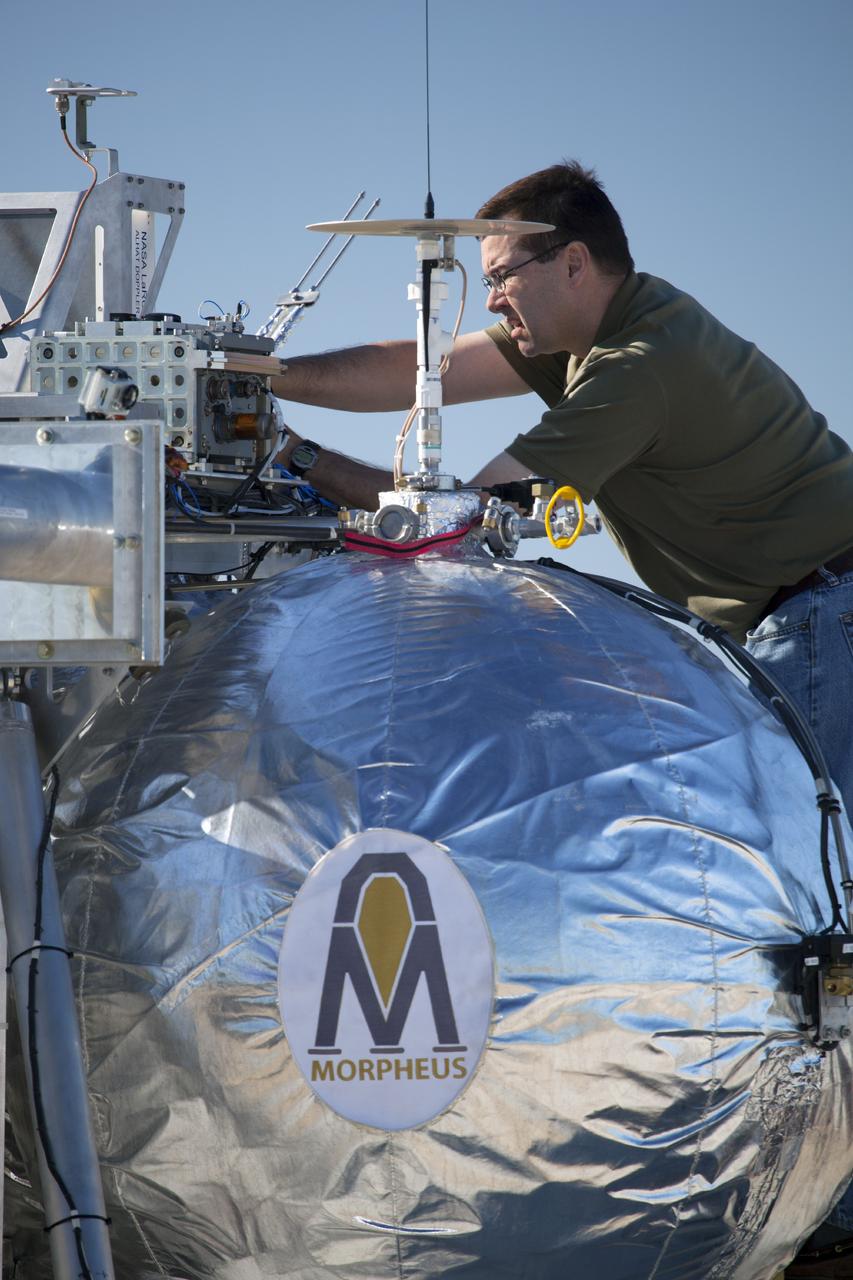
CAPE CANAVERAL, Fla. -- A technician prepares the Project Morpheus prototype lander for a second free flight test at the north end of the Shuttle Landing Facility at NASA’s Kennedy Space Center in Florida. Testing of the prototype lander was performed at NASA’s Johnson Space Center in Houston in preparation for tethered and free flight testing at Kennedy. Project Morpheus integrates NASA’s automated landing and hazard avoidance technology, or ALHAT, with an engine that runs on liquid oxygen and methane, or green propellants, into a fully-operational lander that could deliver cargo to other planetary surfaces. The landing facility will provide the lander with the kind of field necessary for realistic testing, complete with rocks, craters and hazards to avoid. Morpheus’ ALHAT payload allows it to navigate to clear landing sites amidst rocks, craters and other hazards during its descent. Project Morpheus is being managed under the Advanced Exploration Systems, or AES, Division in NASA’s Human Exploration and Operations Mission Directorate. The efforts in AES pioneer new approaches for rapidly developing prototype systems, demonstrating key capabilities and validating operational concepts for future human missions beyond Earth orbit. For more information on Project Morpheus, visit http://morpheuslander.jsc.nasa.gov. Photo credit: NASA/Dimitri Gerondidakis
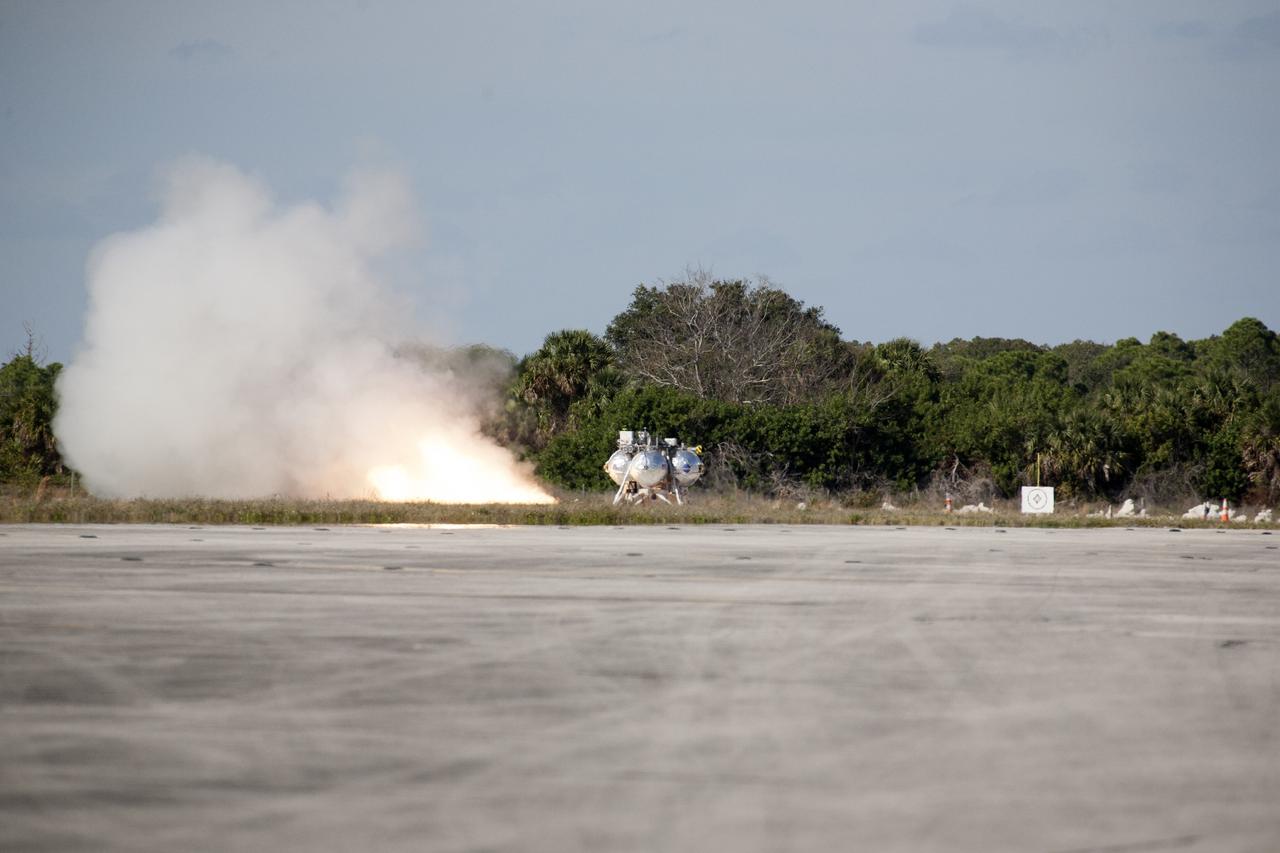
CAPE CANAVERAL, Fla. – The first free flight of the Project Morpheus prototype lander begins as the lander’s engine fires at the north of the Shuttle Landing Facility at NASA’s Kennedy Space Center in Florida. Testing of the prototype lander was performed at NASA’s Johnson Space Center in Houston in preparation for tethered and free flight testing at Kennedy. Project Morpheus integrates NASA’s automated landing and hazard avoidance technology, or ALHAT, with an engine that runs on liquid oxygen and methane, or green propellants, into a fully-operational lander that could deliver cargo to asteroids and other planetary surfaces. The landing facility will provide the lander with the kind of field necessary for realistic testing, complete with rocks, craters and hazards to avoid. Morpheus’ ALHAT payload allows it to navigate to clear landing sites amidst rocks, craters and other hazards during its descent. Project Morpheus is being managed under the Advanced Exploration Systems, or AES, Division in NASA’s Human Exploration and Operations Mission Directorate. The efforts in AES pioneer new approaches for rapidly developing prototype systems, demonstrating key capabilities and validating operational concepts for future human missions beyond Earth orbit. For more information on Project Morpheus, visit http://morpheuslander.jsc.nasa.gov. Photo credit: NASA/Kim Shiflett
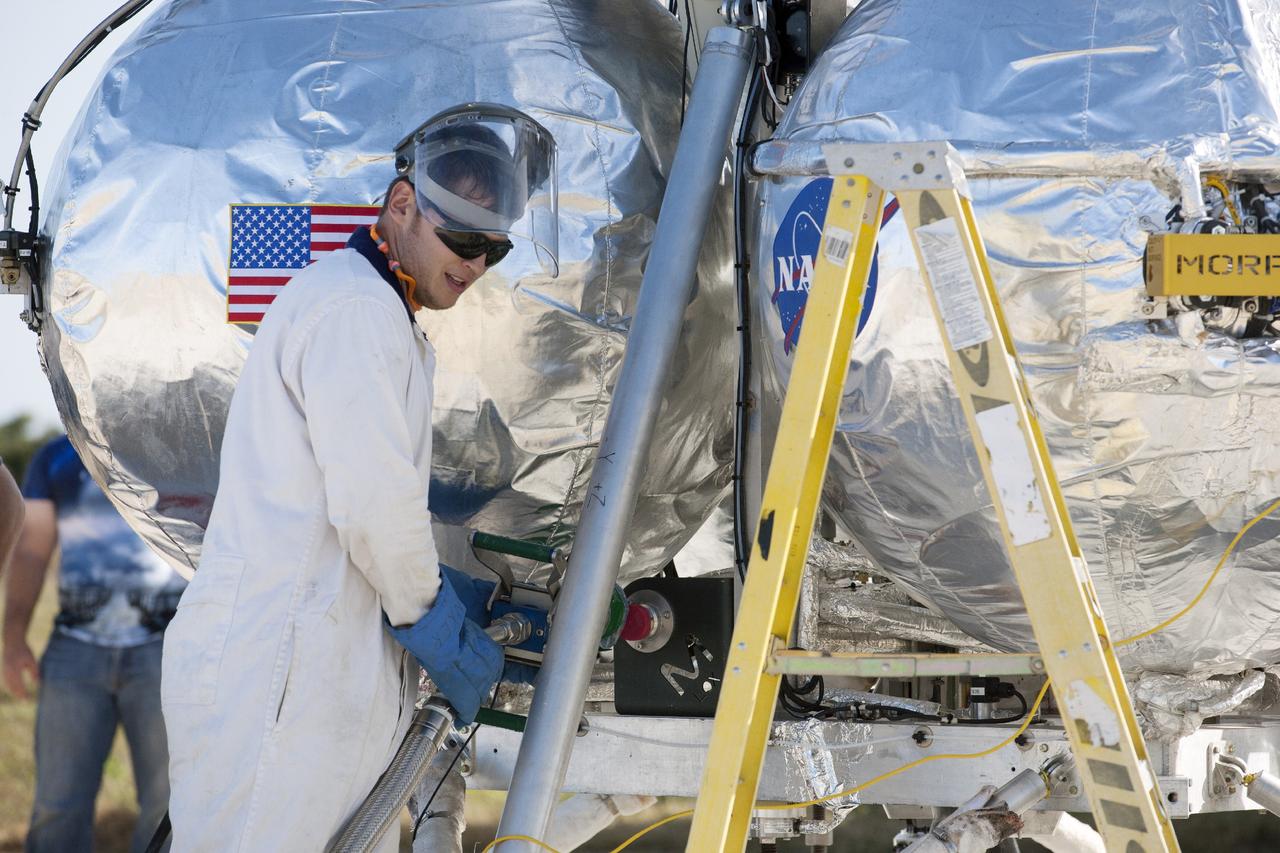
CAPE CANAVERAL, Fla. – Preparations are underway to prepare the Project Morpheus prototype lander for its first free flight test at the north end of the Shuttle Landing Facility at NASA’s Kennedy Space Center in Florida. Testing of the prototype lander was performed at NASA’s Johnson Space Center in Houston in preparation for tethered and free flight testing at Kennedy. Project Morpheus integrates NASA’s automated landing and hazard avoidance technology, or ALHAT, with an engine that runs on liquid oxygen and methane, or green propellants, into a fully-operational lander that could deliver cargo to asteroids and other planetary surfaces. The landing facility will provide the lander with the kind of field necessary for realistic testing, complete with rocks, craters and hazards to avoid. Morpheus’ ALHAT payload allows it to navigate to clear landing sites amidst rocks, craters and other hazards during its descent. Project Morpheus is being managed under the Advanced Exploration Systems, or AES, Division in NASA’s Human Exploration and Operations Mission Directorate. The efforts in AES pioneer new approaches for rapidly developing prototype systems, demonstrating key capabilities and validating operational concepts for future human missions beyond Earth orbit. For more information on Project Morpheus, visit http://morpheuslander.jsc.nasa.gov. Photo credit: NASA/Kim Shiflett
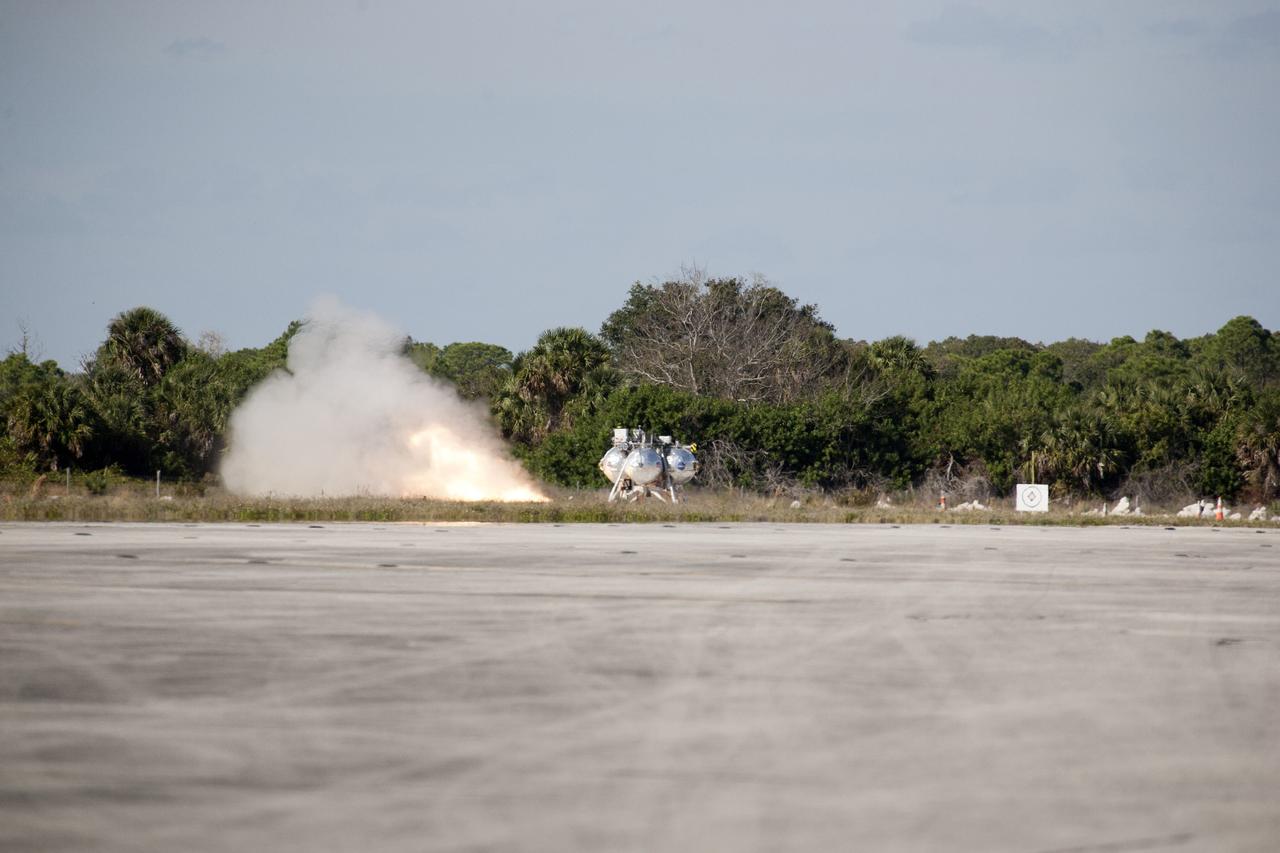
CAPE CANAVERAL, Fla. – The first free flight of the Project Morpheus prototype lander begins as the lander’s engine fires at the north of the Shuttle Landing Facility at NASA’s Kennedy Space Center in Florida. Testing of the prototype lander was performed at NASA’s Johnson Space Center in Houston in preparation for tethered and free flight testing at Kennedy. Project Morpheus integrates NASA’s automated landing and hazard avoidance technology, or ALHAT, with an engine that runs on liquid oxygen and methane, or green propellants, into a fully-operational lander that could deliver cargo to asteroids and other planetary surfaces. The landing facility will provide the lander with the kind of field necessary for realistic testing, complete with rocks, craters and hazards to avoid. Morpheus’ ALHAT payload allows it to navigate to clear landing sites amidst rocks, craters and other hazards during its descent. Project Morpheus is being managed under the Advanced Exploration Systems, or AES, Division in NASA’s Human Exploration and Operations Mission Directorate. The efforts in AES pioneer new approaches for rapidly developing prototype systems, demonstrating key capabilities and validating operational concepts for future human missions beyond Earth orbit. For more information on Project Morpheus, visit http://morpheuslander.jsc.nasa.gov. Photo credit: NASA/Kim Shiflett
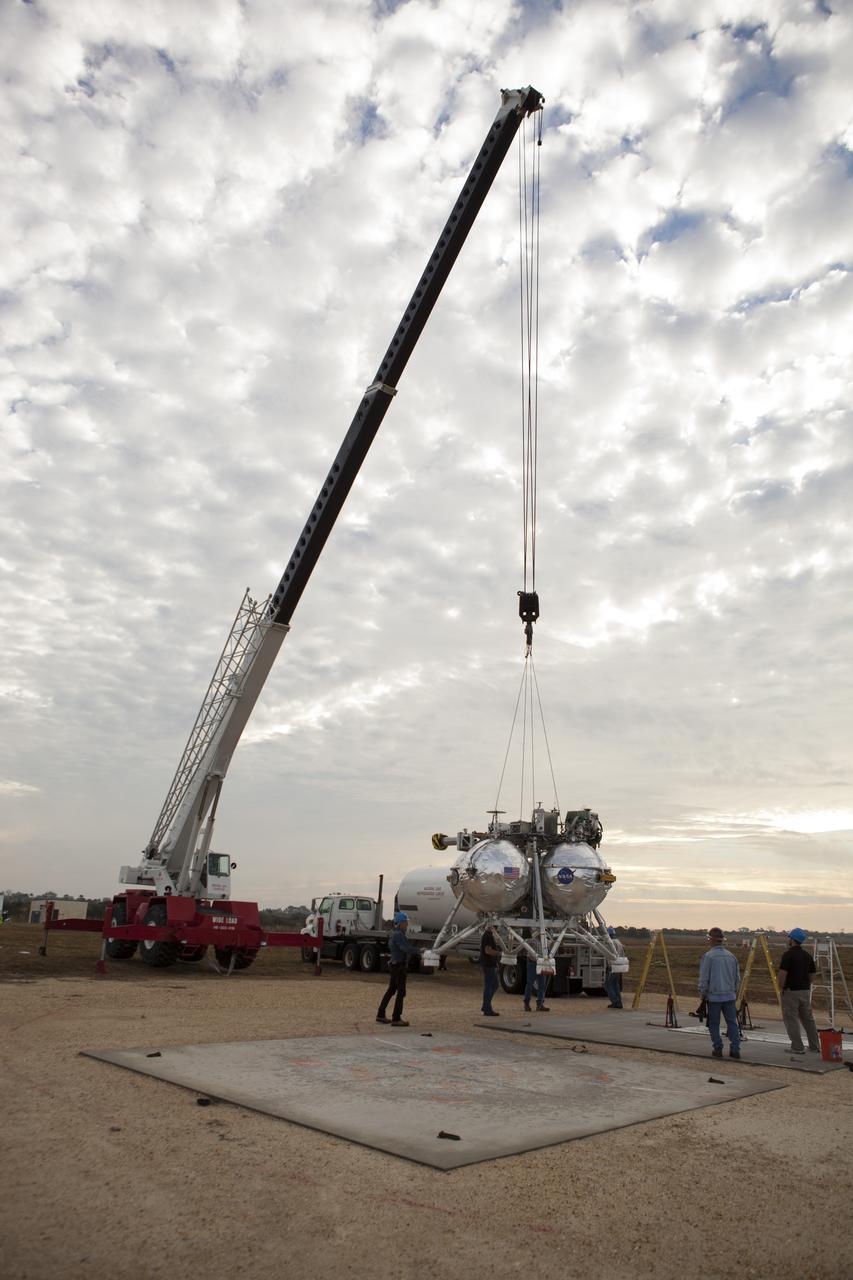
CAPE CANAVERAL, Fla. – Technicians and engineers monitor the progress as the Project Morpheus prototype lander is lifted by crane for positioning on a launch pad at the north end of the Shuttle Landing Facility at NASA’s Kennedy Space Center in Florida. The prototype lander is being prepared for its fourth free flight test at Kennedy. Morpheus will launch from the ground over a flame trench and then descend and land on a dedicated pad inside the autonomous landing and hazard avoidance technology, or ALHAT, hazard field. Project Morpheus tests NASA’s ALHAT and an engine that runs on liquid oxygen and methane, or green propellants, into a fully-operational lander that could deliver cargo to other planetary surfaces. The landing facility provides the lander with the kind of field necessary for realistic testing, complete with rocks, craters and hazards to avoid. Morpheus’ ALHAT payload allows it to navigate to clear landing sites amidst rocks, craters and other hazards during its descent. Project Morpheus is being managed under the Advanced Exploration Systems, or AES, Division in NASA’s Human Exploration and Operations Mission Directorate. The efforts in AES pioneer new approaches for rapidly developing prototype systems, demonstrating key capabilities and validating operational concepts for future human missions beyond Earth orbit. For more information on Project Morpheus, visit http://www.nasa.gov/centers/johnson/exploration/morpheus. Photo credit: NASA/Cory Huston
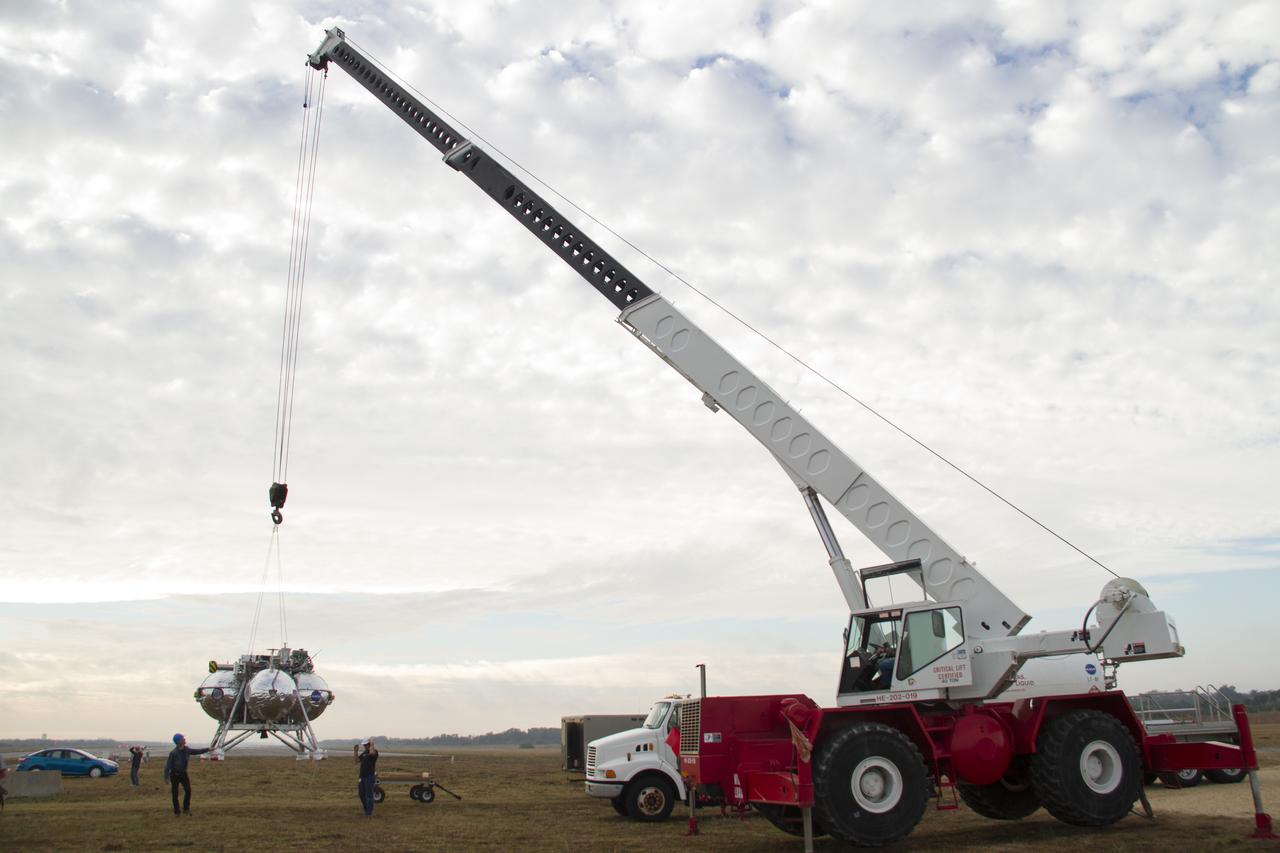
CAPE CANAVERAL, Fla. – The Project Morpheus prototype lander is being lifted by crane for positioning on a launch pad at the north end of the Shuttle Landing Facility at NASA’s Kennedy Space Center in Florida. The prototype lander is being prepared for its fourth free flight test at Kennedy. Morpheus will launch from the ground over a flame trench and then descend and land on a dedicated pad inside the autonomous landing and hazard avoidance technology, or ALHAT, hazard field. Project Morpheus tests NASA’s ALHAT and an engine that runs on liquid oxygen and methane, or green propellants, into a fully-operational lander that could deliver cargo to other planetary surfaces. The landing facility provides the lander with the kind of field necessary for realistic testing, complete with rocks, craters and hazards to avoid. Morpheus’ ALHAT payload allows it to navigate to clear landing sites amidst rocks, craters and other hazards during its descent. Project Morpheus is being managed under the Advanced Exploration Systems, or AES, Division in NASA’s Human Exploration and Operations Mission Directorate. The efforts in AES pioneer new approaches for rapidly developing prototype systems, demonstrating key capabilities and validating operational concepts for future human missions beyond Earth orbit. For more information on Project Morpheus, visit http://www.nasa.gov/centers/johnson/exploration/morpheus. Photo credit: NASA/Cory Huston
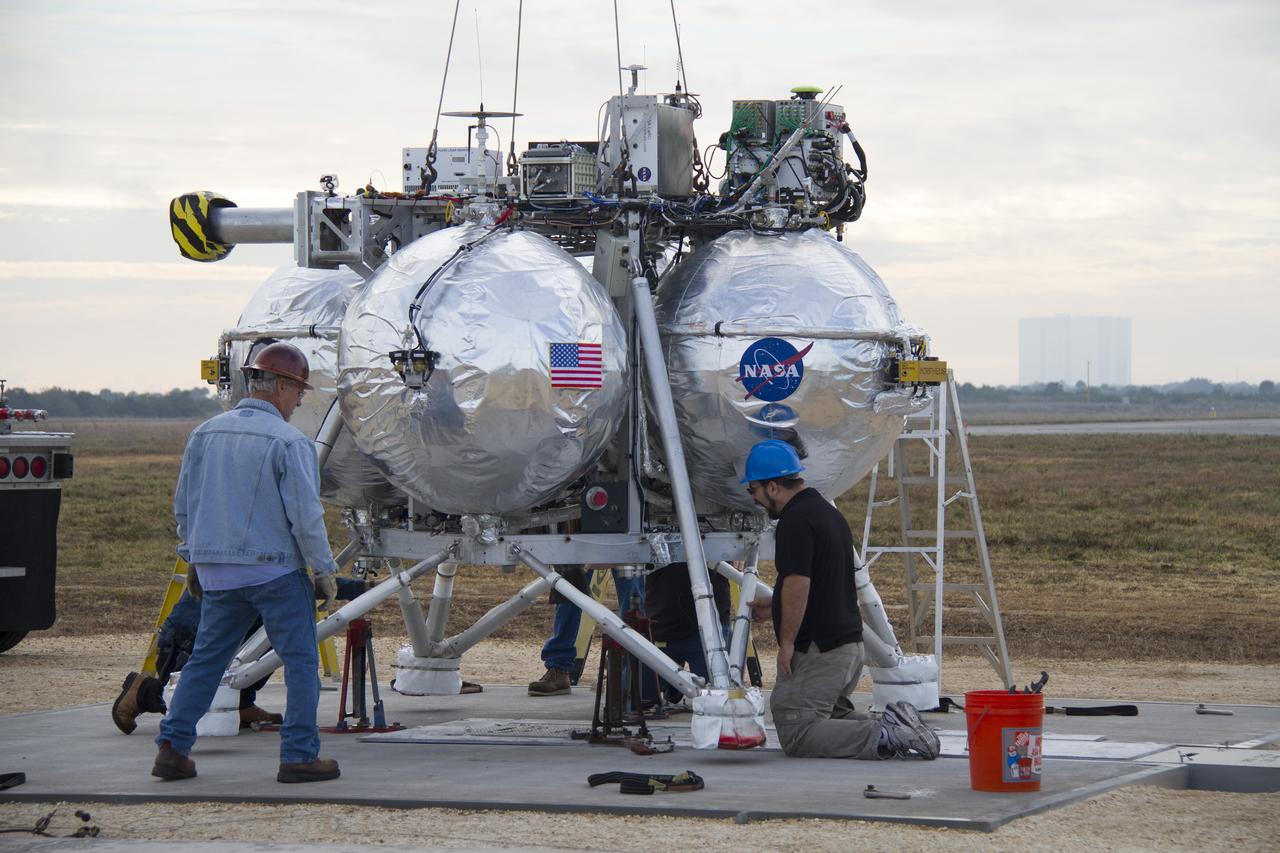
CAPE CANAVERAL, Fla. – Technicians monitor the progress as a crane lowers the Project Morpheus prototype for positioning on a launch pad at the north end of the Shuttle Landing Facility at NASA’s Kennedy Space Center in Florida. The prototype lander is being prepared for its fourth free flight test at Kennedy. Morpheus will launch from the ground over a flame trench and then descend and land on a dedicated pad inside the autonomous landing and hazard avoidance technology, or ALHAT, hazard field. Project Morpheus tests NASA’s ALHAT and an engine that runs on liquid oxygen and methane, or green propellants, into a fully-operational lander that could deliver cargo to other planetary surfaces. The landing facility provides the lander with the kind of field necessary for realistic testing, complete with rocks, craters and hazards to avoid. Morpheus’ ALHAT payload allows it to navigate to clear landing sites amidst rocks, craters and other hazards during its descent. Project Morpheus is being managed under the Advanced Exploration Systems, or AES, Division in NASA’s Human Exploration and Operations Mission Directorate. The efforts in AES pioneer new approaches for rapidly developing prototype systems, demonstrating key capabilities and validating operational concepts for future human missions beyond Earth orbit. For more information on Project Morpheus, visit http://www.nasa.gov/centers/johnson/exploration/morpheus. Photo credit: NASA/Cory Huston
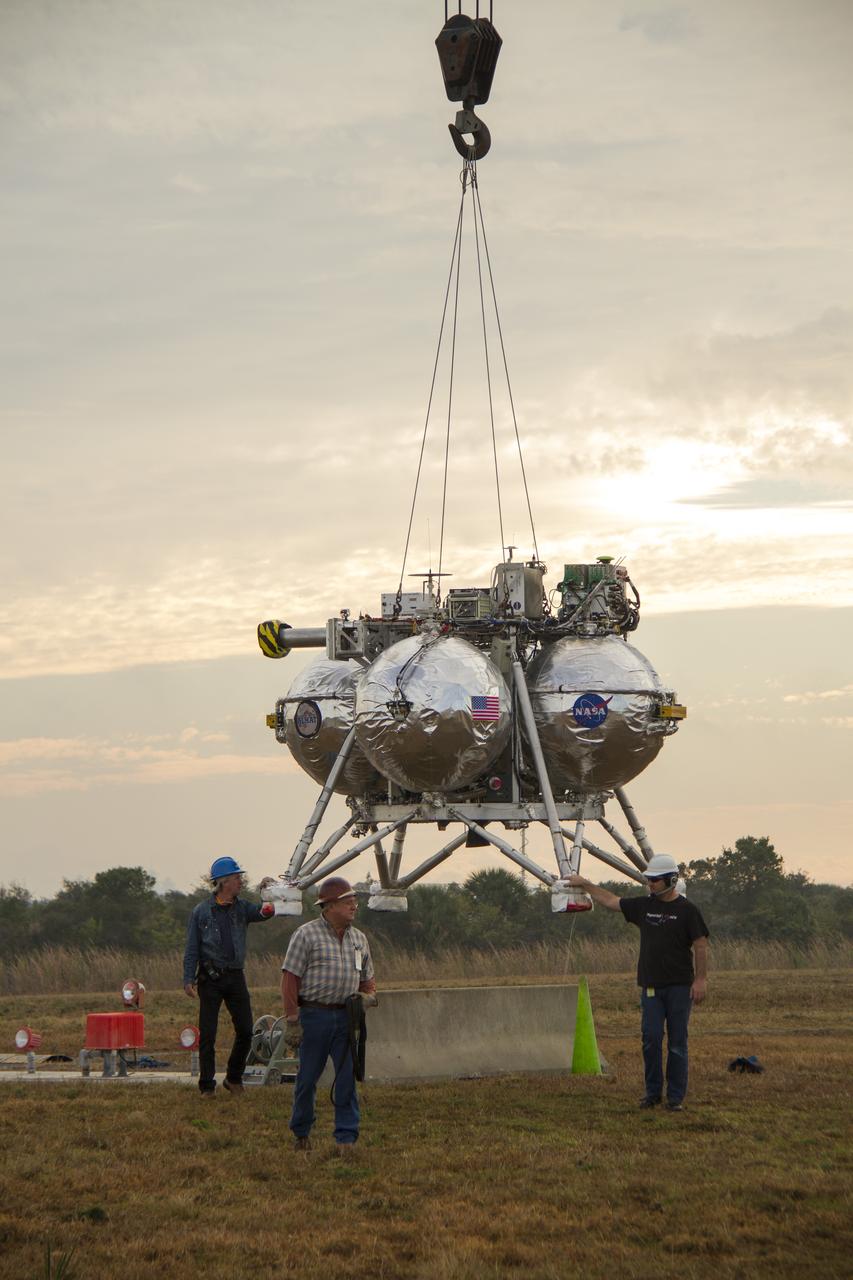
CAPE CANAVERAL, Fla. – Technicians monitor the progress as the Project Morpheus prototype lander is lifted by crane for positioning on a launch pad at the north end of the Shuttle Landing Facility at NASA’s Kennedy Space Center in Florida. The prototype lander is being prepared for its fourth free flight test at Kennedy. Morpheus will launch from the ground over a flame trench and then descend and land on a dedicated pad inside the autonomous landing and hazard avoidance technology, or ALHAT, hazard field. Project Morpheus tests NASA’s ALHAT and an engine that runs on liquid oxygen and methane, or green propellants, into a fully-operational lander that could deliver cargo to other planetary surfaces. The landing facility provides the lander with the kind of field necessary for realistic testing, complete with rocks, craters and hazards to avoid. Morpheus’ ALHAT payload allows it to navigate to clear landing sites amidst rocks, craters and other hazards during its descent. Project Morpheus is being managed under the Advanced Exploration Systems, or AES, Division in NASA’s Human Exploration and Operations Mission Directorate. The efforts in AES pioneer new approaches for rapidly developing prototype systems, demonstrating key capabilities and validating operational concepts for future human missions beyond Earth orbit. For more information on Project Morpheus, visit http://www.nasa.gov/centers/johnson/exploration/morpheus. Photo credit: NASA/Cory Huston
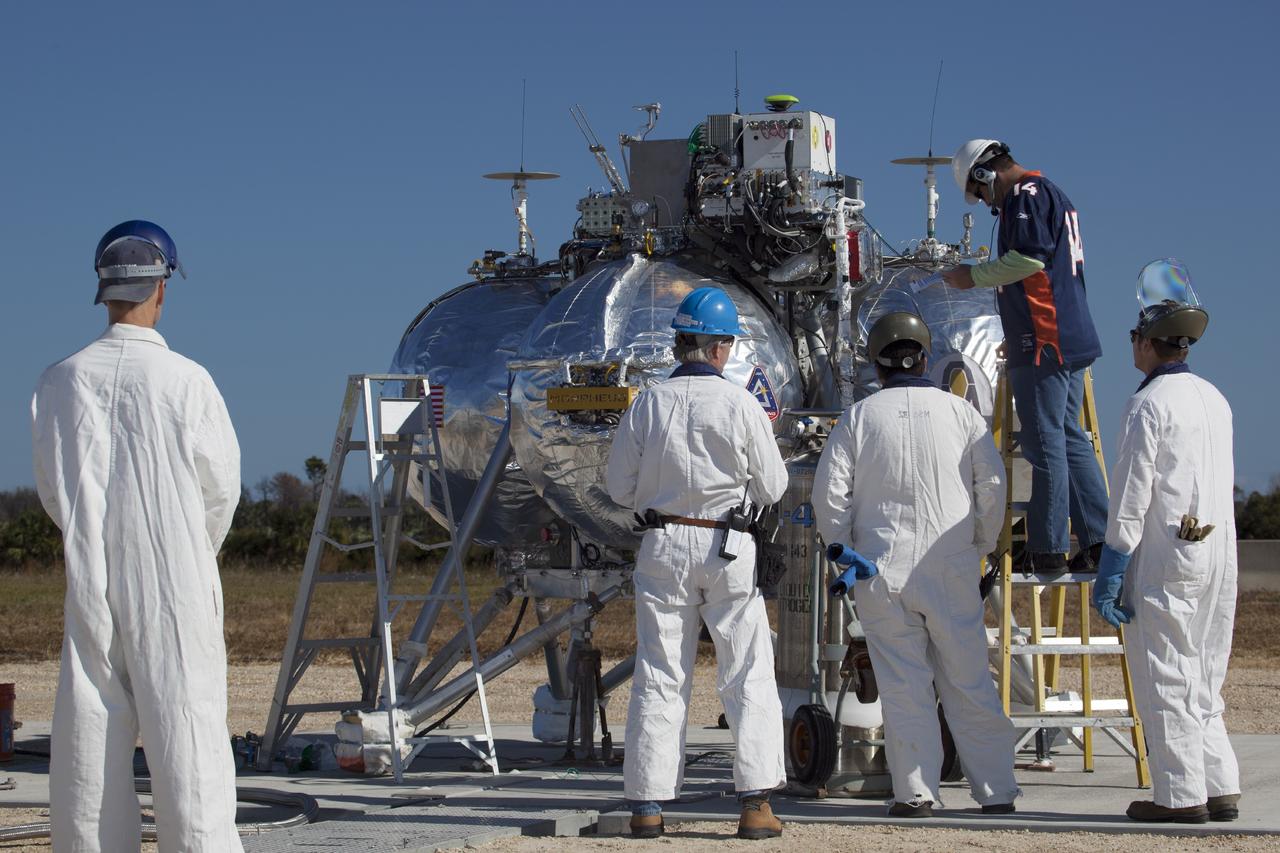
CAPE CANAVERAL, Fla. -- Engineers and technicians prepare the Project Morpheus prototype lander for a second free flight test at the north end of the Shuttle Landing Facility at NASA’s Kennedy Space Center in Florida. Testing of the prototype lander was performed at NASA’s Johnson Space Center in Houston in preparation for tethered and free flight testing at Kennedy. Project Morpheus integrates NASA’s automated landing and hazard avoidance technology, or ALHAT, with an engine that runs on liquid oxygen and methane, or green propellants, into a fully-operational lander that could deliver cargo to other planetary surfaces. The landing facility will provide the lander with the kind of field necessary for realistic testing, complete with rocks, craters and hazards to avoid. Morpheus’ ALHAT payload allows it to navigate to clear landing sites amidst rocks, craters and other hazards during its descent. Project Morpheus is being managed under the Advanced Exploration Systems, or AES, Division in NASA’s Human Exploration and Operations Mission Directorate. The efforts in AES pioneer new approaches for rapidly developing prototype systems, demonstrating key capabilities and validating operational concepts for future human missions beyond Earth orbit. For more information on Project Morpheus, visit http://morpheuslander.jsc.nasa.gov. Photo credit: NASA/Dimitri Gerondidakis
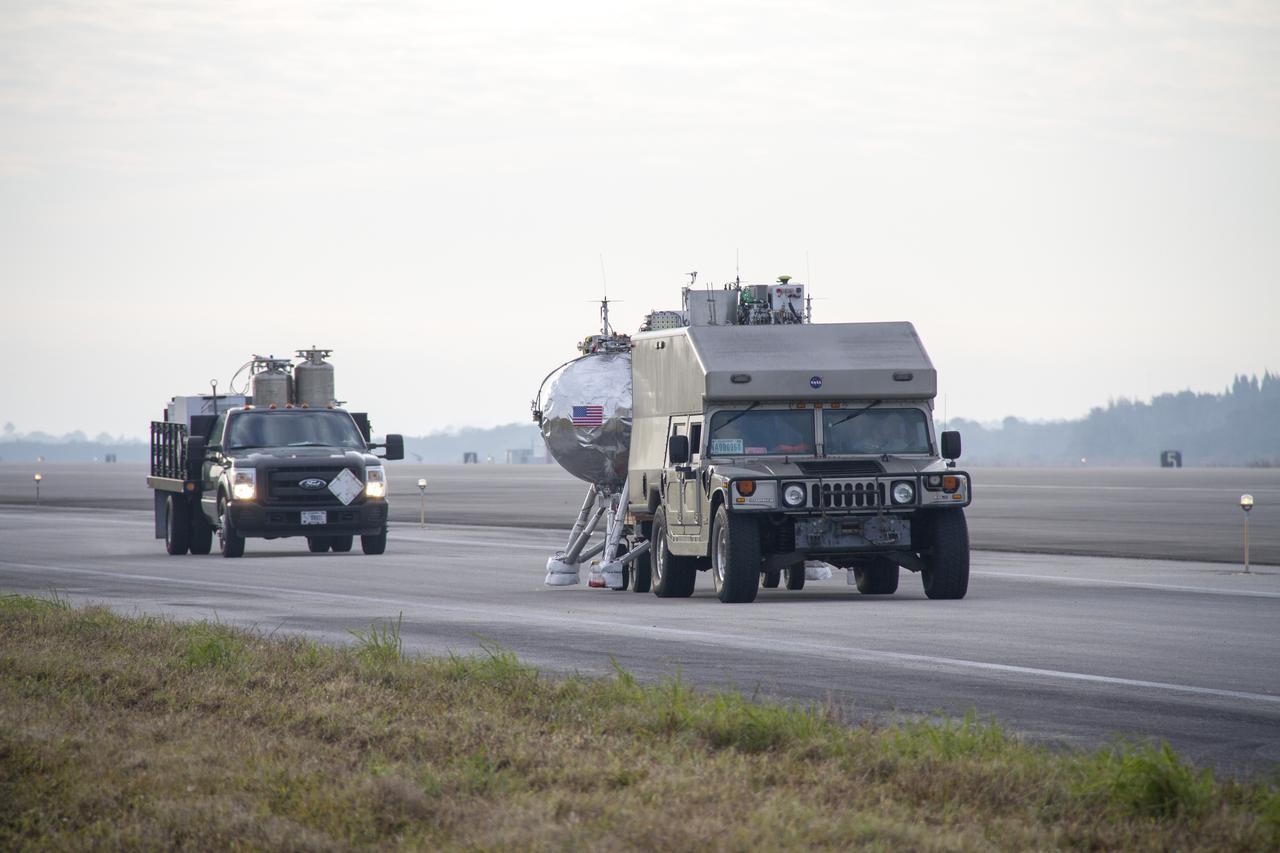
CAPE CANAVERAL, Fla. – The Project Morpheus prototype lander is transported to a launch pad at the north end of the Shuttle Landing Facility at NASA’s Kennedy Space Center in Florida. The prototype lander is being prepared for its fourth free flight test at Kennedy. Morpheus will launch from the ground over a flame trench and then descend and land on a dedicated pad inside the autonomous landing and hazard avoidance technology, or ALHAT, hazard field. Project Morpheus tests NASA’s ALHAT and an engine that runs on liquid oxygen and methane, or green propellants, into a fully-operational lander that could deliver cargo to other planetary surfaces. The landing facility provides the lander with the kind of field necessary for realistic testing, complete with rocks, craters and hazards to avoid. Morpheus’ ALHAT payload allows it to navigate to clear landing sites amidst rocks, craters and other hazards during its descent. Project Morpheus is being managed under the Advanced Exploration Systems, or AES, Division in NASA’s Human Exploration and Operations Mission Directorate. The efforts in AES pioneer new approaches for rapidly developing prototype systems, demonstrating key capabilities and validating operational concepts for future human missions beyond Earth orbit. For more information on Project Morpheus, visit http://www.nasa.gov/centers/johnson/exploration/morpheus. Photo credit: NASA/Cory Huston
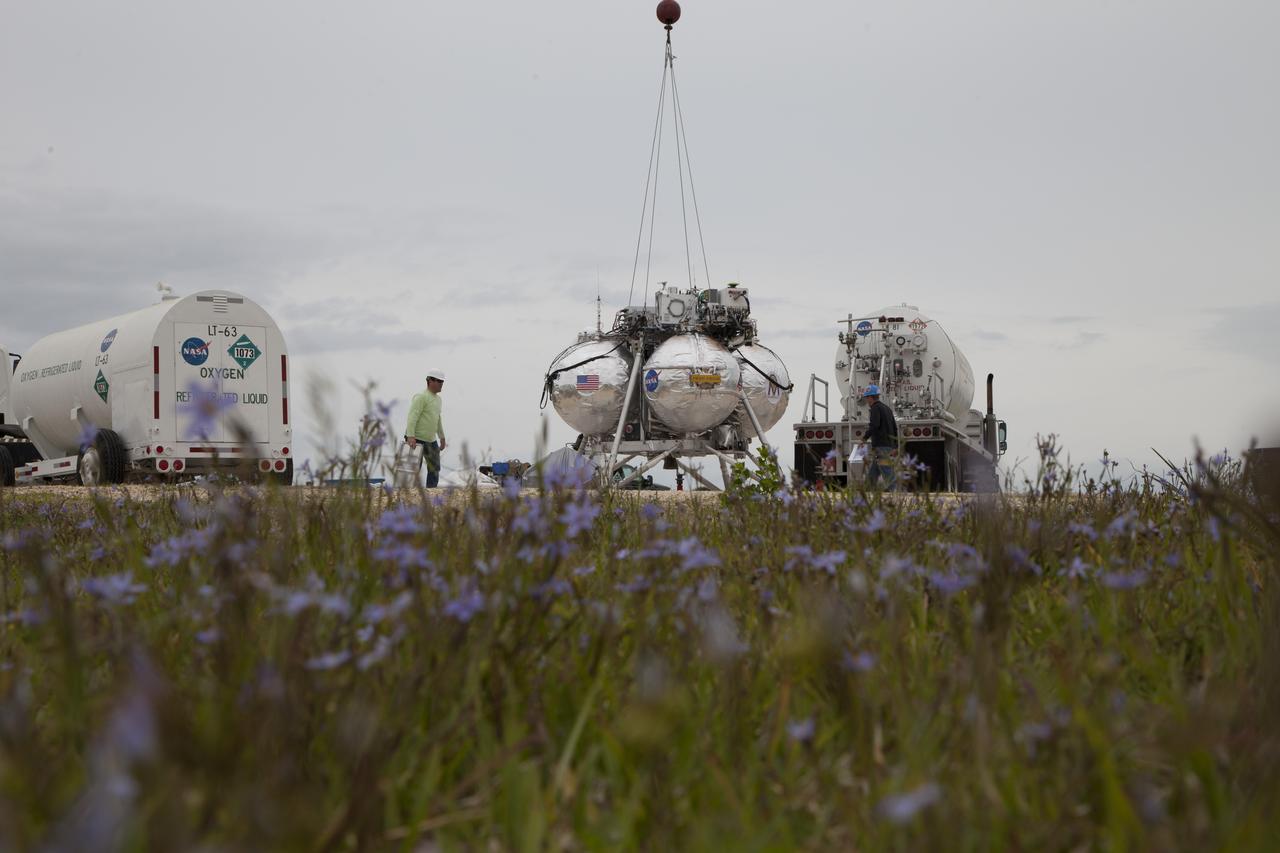
CAPE CANAVERAL, Fla. – A crane lowers the Project Morpheus prototype lander onto a launch pad at a new launch site at the north end of the Shuttle Landing Facility at NASA's Kennedy Space Center in Florida. Preparations are underway for a tether test. The launch pad was moved to a different location at the landing facility to support the next phase of flight testing. Project Morpheus tests NASA’s automated landing and hazard avoidance technology, or ALHAT, and an engine that runs on liquid oxygen and methane, or green propellants, into a fully-operational lander that could deliver cargo to other planetary surfaces. The landing facility provides the lander with the kind of field necessary for realistic testing, complete with rocks, craters and hazards to avoid. Morpheus’ ALHAT payload allows it to navigate to clear landing sites amidst rocks, craters and other hazards during its descent. Project Morpheus is being managed under the Advanced Exploration Systems, or AES, Division in NASA’s Human Exploration and Operations Mission Directorate. The efforts in AES pioneer new approaches for rapidly developing prototype systems, demonstrating key capabilities and validating operational concepts for future human missions beyond Earth orbit. For more information on Project Morpheus, visit http://morpheuslander.jsc.nasa.gov/. Photo credit: NASA/Ben Smegelsky
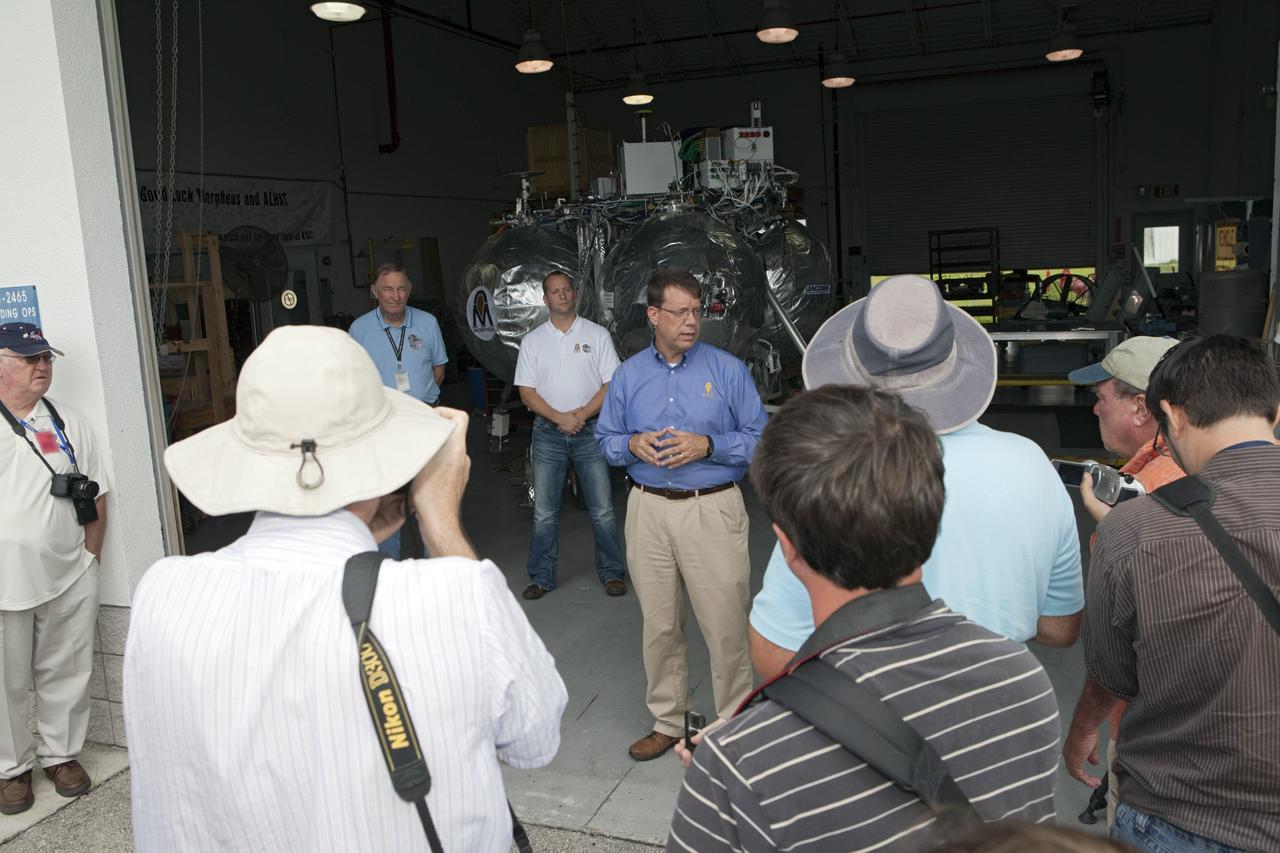
CAPE CANAVERAL, Fla. - At a hangar near the Shuttle Landing Facility, or SLF, at NASA’s Kennedy Space Center in Florida, members of the media view the Morpheus prototype lander and speak with Morpheus managers. In front is Gregory Gaddis, Kennedy Project Morpheus/ALHAT site manager. To his left, are Jon Olansen, Johnson Space Center Project Morpheus manager and Chirold Epp, JSC ALHAT project manager. Testing of the prototype lander had been ongoing at NASA’s Johnson Space Center in Houston in preparation for its first free-flight test at Kennedy Space Center. The SLF will provide the lander with the kind of field necessary for realistic testing, complete with rocks, craters and hazards to avoid. Morpheus utilizes an autonomous landing and hazard avoidance technology, or ALHAT, payload that will allow it to navigate to clear landing sites amidst rocks, craters and other hazards during its descent. Project Morpheus is one of 20 small projects comprising the Advanced Exploration Systems, or AES, program in NASA’s Human Exploration and Operations Mission Directorate. AES projects pioneer new approaches for rapidly developing prototype systems, demonstrating key capabilities and validating operational concepts for future human missions beyond Earth orbit. For more information on Project Morpheus, visit http://morpheuslander.jsc.nasa.gov/. Photo credit: NASA/Kim Shiflett
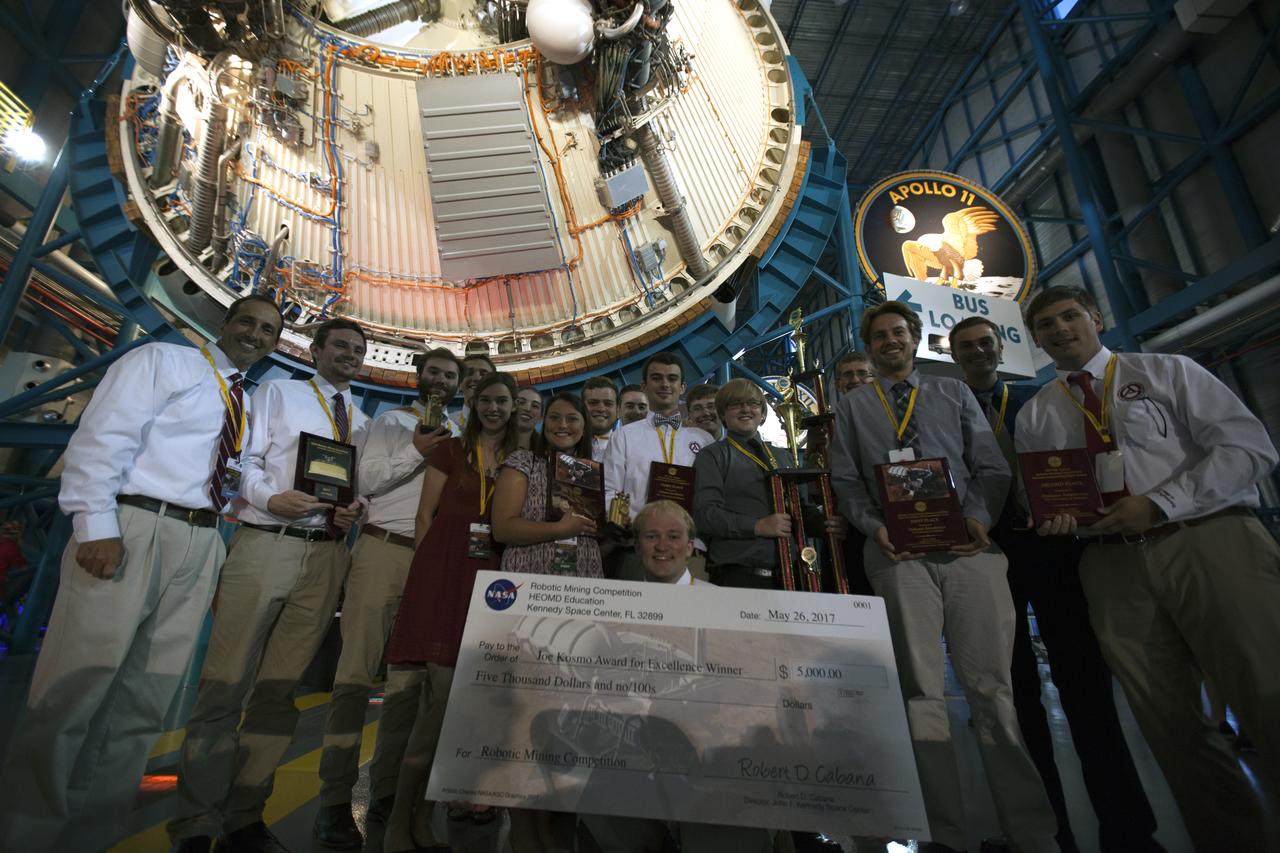
Team Astrobotics from The University of Alabama won the top award, the Joe Kosmo Award for Excellence, and several other awards, during NASA's 8th Annual Robotic Competition award ceremony inside the Apollo-Saturn V Center at the Kennedy Space Center Visitor Complex in Florida. More than 40 student teams from colleges and universities around the U.S. used their uniquely-designed mining robots to dig in a supersized sandbox filled with BP-1, or simulated Martian soil, and participated in other competition requirements, May 22-26, at the visitor complex. The Robotic Mining Competition is a NASA Human Exploration and Operations Mission Directorate project designed to encourage students in science, technology, engineering and math, or STEM fields. The project provides a competitive environment to foster innovative ideas and solutions that could be used on NASA's Journey to Mars.
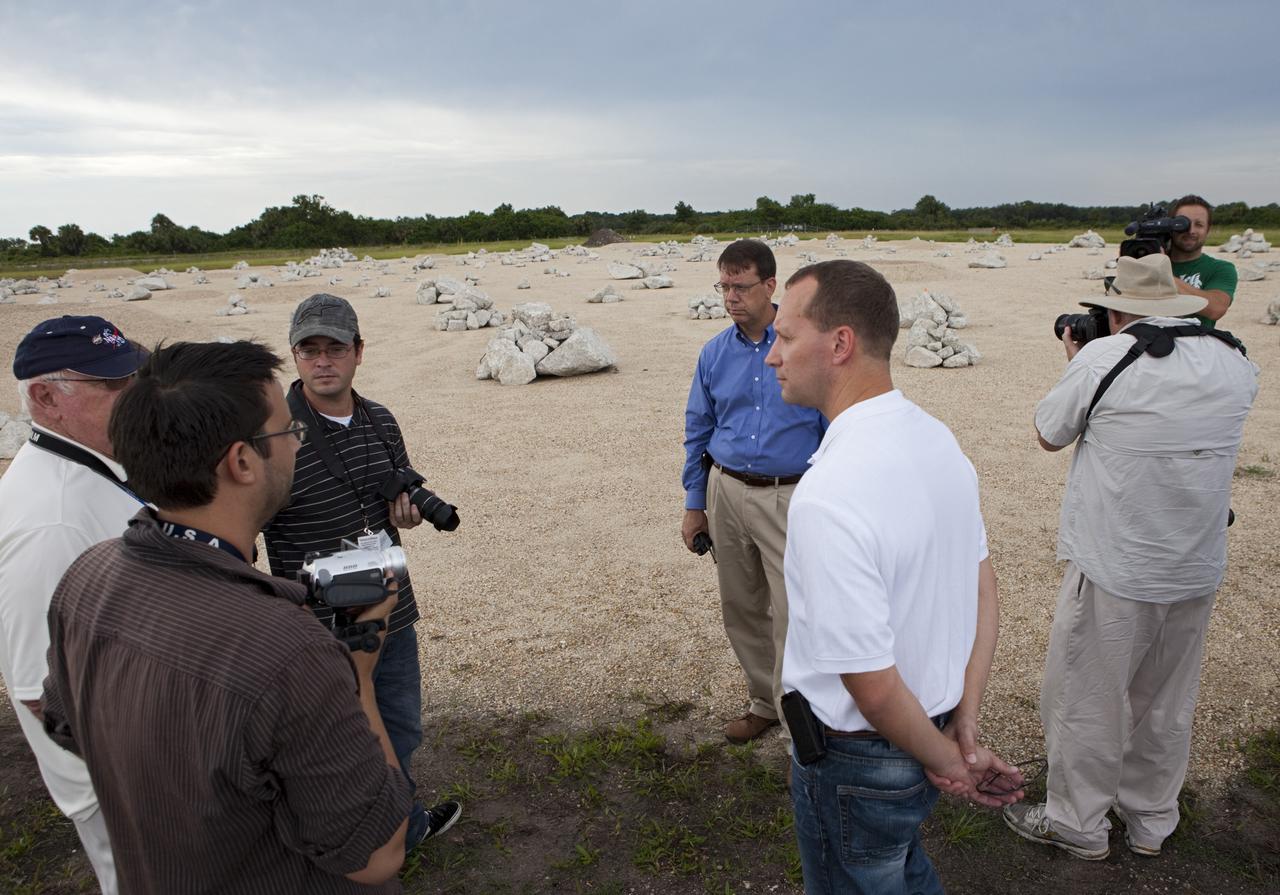
CAPE CANAVERAL, Fla. - At the Autonomous Landing and Hazard Avoidance Technology, or ALHAT, field at the north end of the Shuttle Landing Facility, or SLF, at NASA’s Kennedy Space Center in Florida, members of the media view the hazard field and speak with Morpheus managers. In the white shirt is Jon Olansen, Johnson Space Center Project Morpheus Manager. Behind Olansen is Gregory Gaddis, Kennedy Project Morpheus/ALHAT site manager. Testing of the prototype lander had been ongoing at NASA’s Johnson Space Center in Houston in preparation for its first free-flight test at Kennedy Space Center. The SLF will provide the lander with the kind of field necessary for realistic testing, complete with rocks, craters and hazards to avoid. Morpheus utilizes an autonomous landing and hazard avoidance technology, or ALHAT, payload that will allow it to navigate to clear landing sites amidst rocks, craters and other hazards during its descent. Project Morpheus is one of 20 small projects comprising the Advanced Exploration Systems, or AES, program in NASA’s Human Exploration and Operations Mission Directorate. AES projects pioneer new approaches for rapidly developing prototype systems, demonstrating key capabilities and validating operational concepts for future human missions beyond Earth orbit. For more information on Project Morpheus, visit http://morpheuslander.jsc.nasa.gov/. Photo credit: NASA/Kim Shiflett
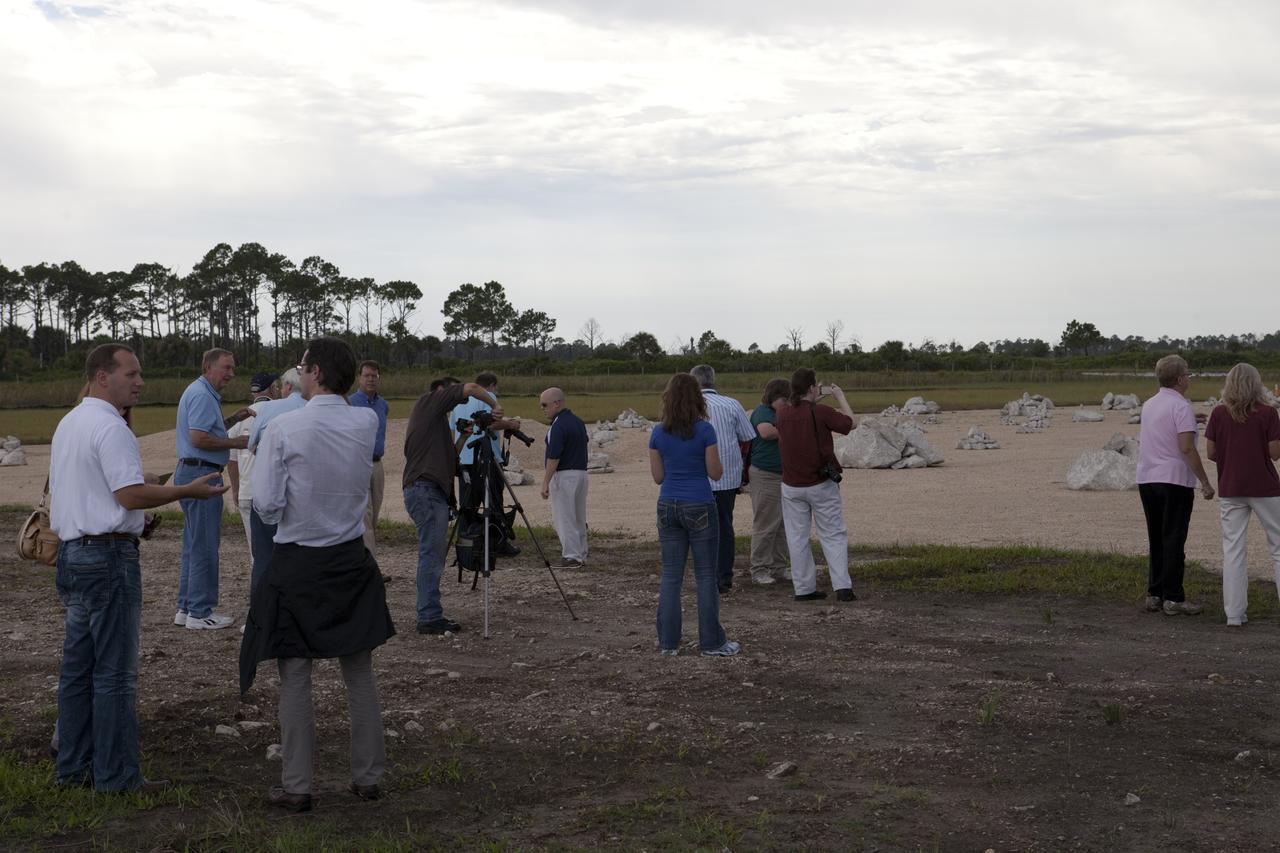
CAPE CANAVERAL, Fla. - At the Autonomous Landing and Hazard Avoidance Technology, or ALHAT, field at the north end of the Shuttle Landing Facility, or SLF, at NASA’s Kennedy Space Center in Florida, members of the media view the hazard field and speak with Morpheus managers. At far left, in the white shirt is Jon Olansen, Johnson Space Center Project Morpheus Manager. At left, in the blue shirt is Chirold Epp, JSC project manager for ALHAT. Testing of the prototype lander had been ongoing at NASA’s Johnson Space Center in Houston in preparation for its first free-flight test at Kennedy Space Center. The SLF will provide the lander with the kind of field necessary for realistic testing, complete with rocks, craters and hazards to avoid. Morpheus utilizes an autonomous landing and hazard avoidance technology, or ALHAT, payload that will allow it to navigate to clear landing sites amidst rocks, craters and other hazards during its descent. Project Morpheus is one of 20 small projects comprising the Advanced Exploration Systems, or AES, program in NASA’s Human Exploration and Operations Mission Directorate. AES projects pioneer new approaches for rapidly developing prototype systems, demonstrating key capabilities and validating operational concepts for future human missions beyond Earth orbit. For more information on Project Morpheus, visit http://morpheuslander.jsc.nasa.gov/. Photo credit: NASA/Kim Shiflett
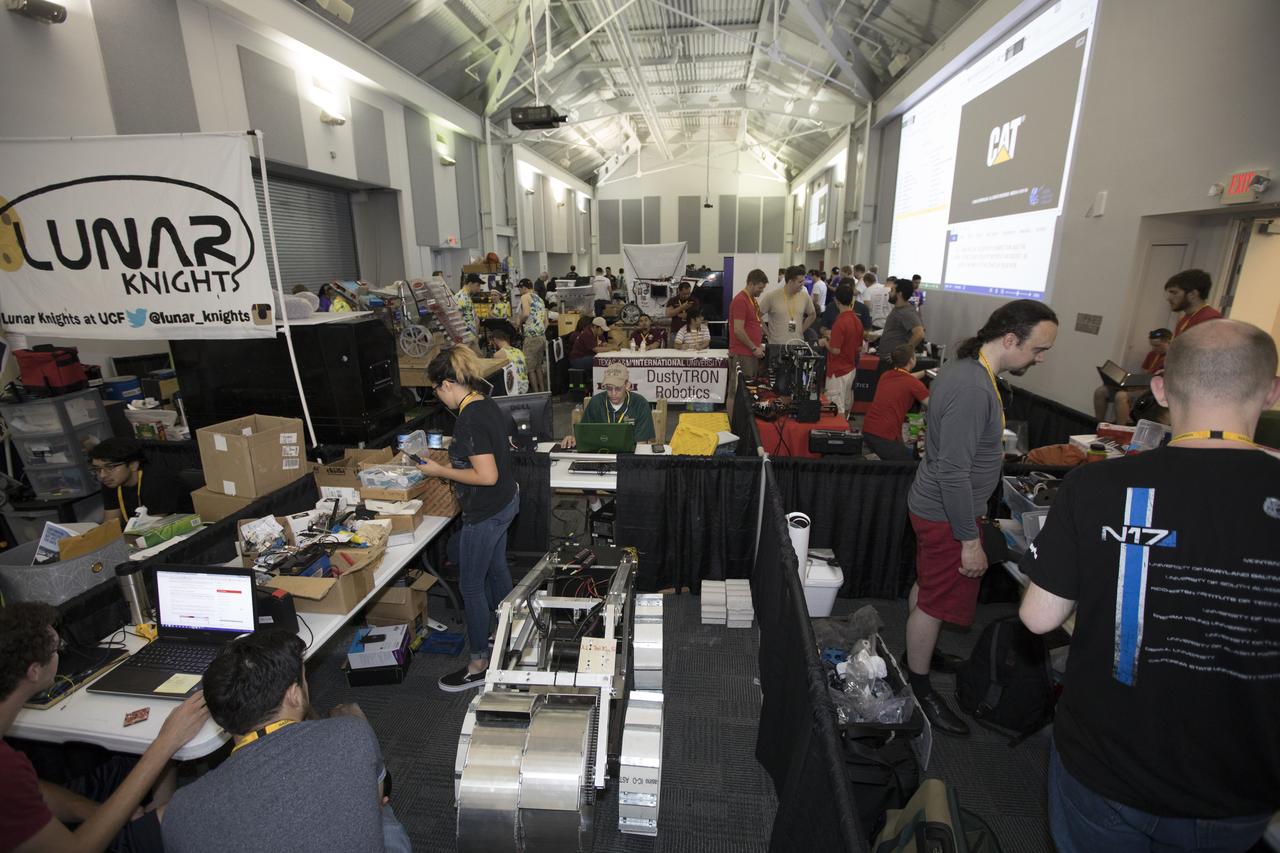
Energy levels are high in the RoboPit as teams prepare for NASA's 8th Annual Robotic Mining Competition at the Kennedy Space Center Visitor Complex in Florida. More than 40 student teams from colleges and universities around the U.S. arel using their mining robots to dig in a supersized sandbox filled with BP-1, or simulated Martian soil, and participate in other competition requirements. The Robotic Mining Competition is a NASA Human Exploration and Operations Mission Directorate project designed to encourage students in science, technology, engineering and math, or STEM fields. The project provides a competitive environment to foster innovative ideas and solutions that could be used on NASA's Journey to Mars.
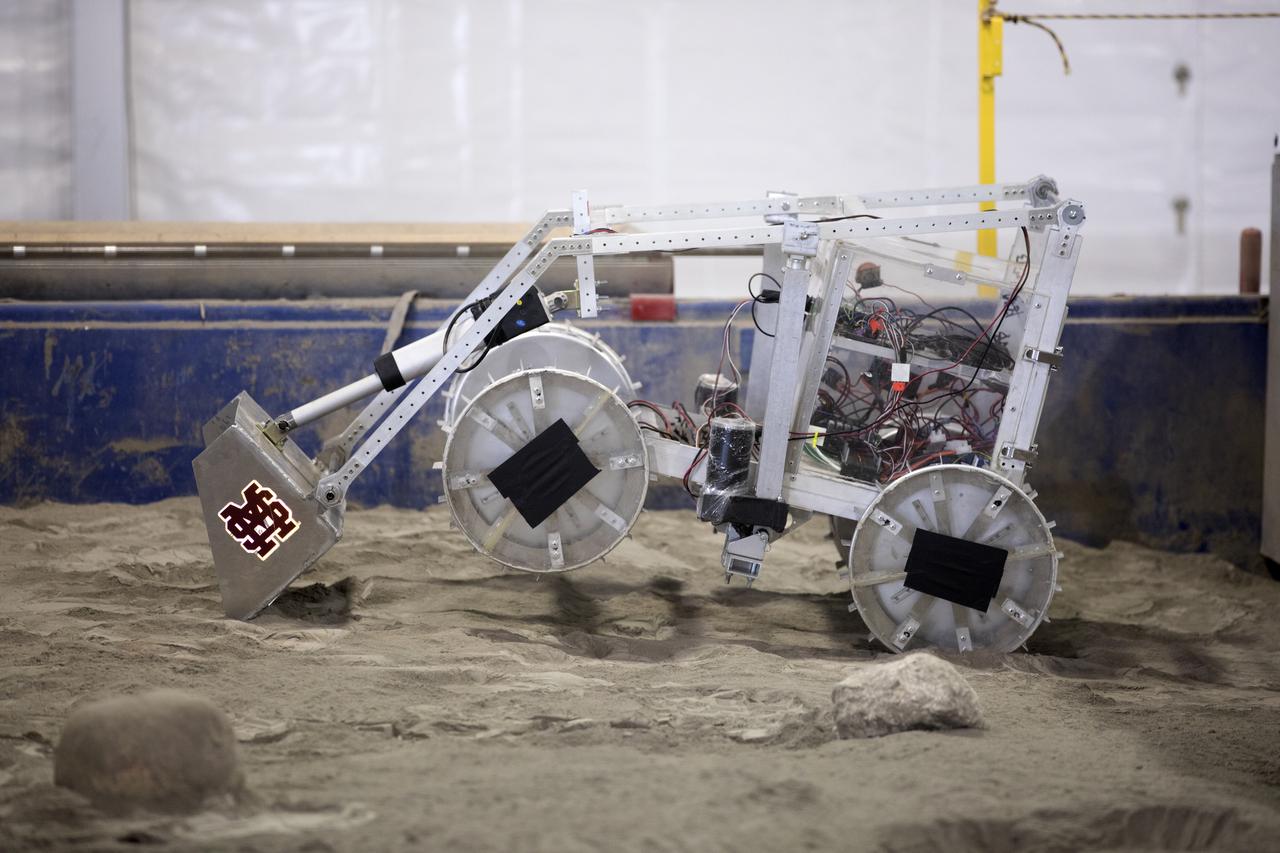
The robotic miner from Mississippi State University digs in the mining arena during NASA's 8th Annual Robotic Mining Competition at the Kennedy Space Center Visitor Complex in Florida. More than 40 student teams from colleges and universities around the U.S. are using their uniquely-designed mining robots to dig in a supersized sandbox filled with BP-1, or simulated Martian soil, and participate in other competition requirements. The Robotic Mining Competition is a NASA Human Exploration and Operations Mission Directorate project designed to encourage students in science, technology, engineering and math, or STEM fields. The project provides a competitive environment to foster innovative ideas and solutions that could be used on NASA's Journey to Mars.
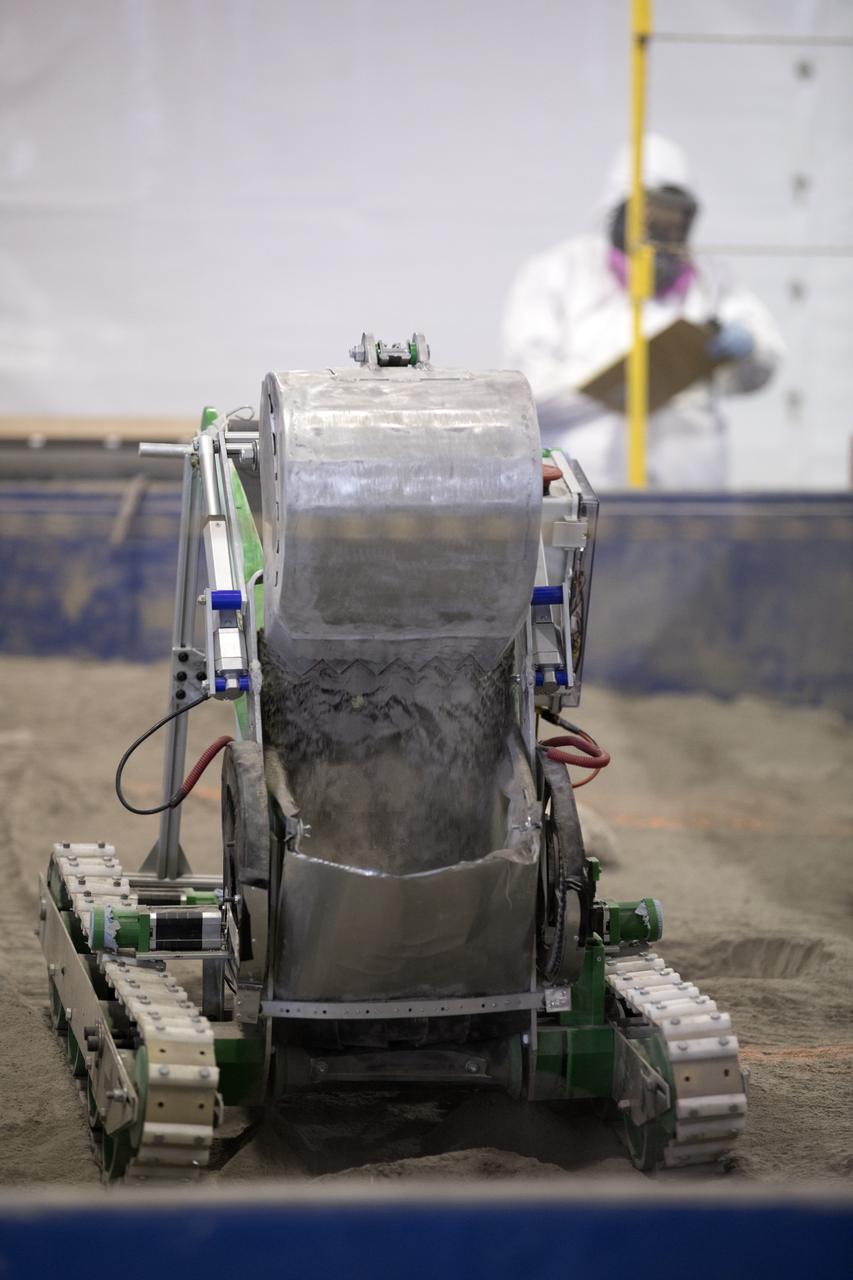
A robotic miner digs in the mining arena during NASA's 8th Annual Robotic Mining Competition at the Kennedy Space Center Visitor Complex in Florida. More than 40 student teams from colleges and universities around the U.S. are using their uniquely-designed mining robots to dig in a supersized sandbox filled with BP-1, or simulated Martian soil, and participate in other competition requirements. The Robotic Mining Competition is a NASA Human Exploration and Operations Mission Directorate project designed to encourage students in science, technology, engineering and math, or STEM fields. The project provides a competitive environment to foster innovative ideas and solutions that could be used on NASA's Journey to Mars.
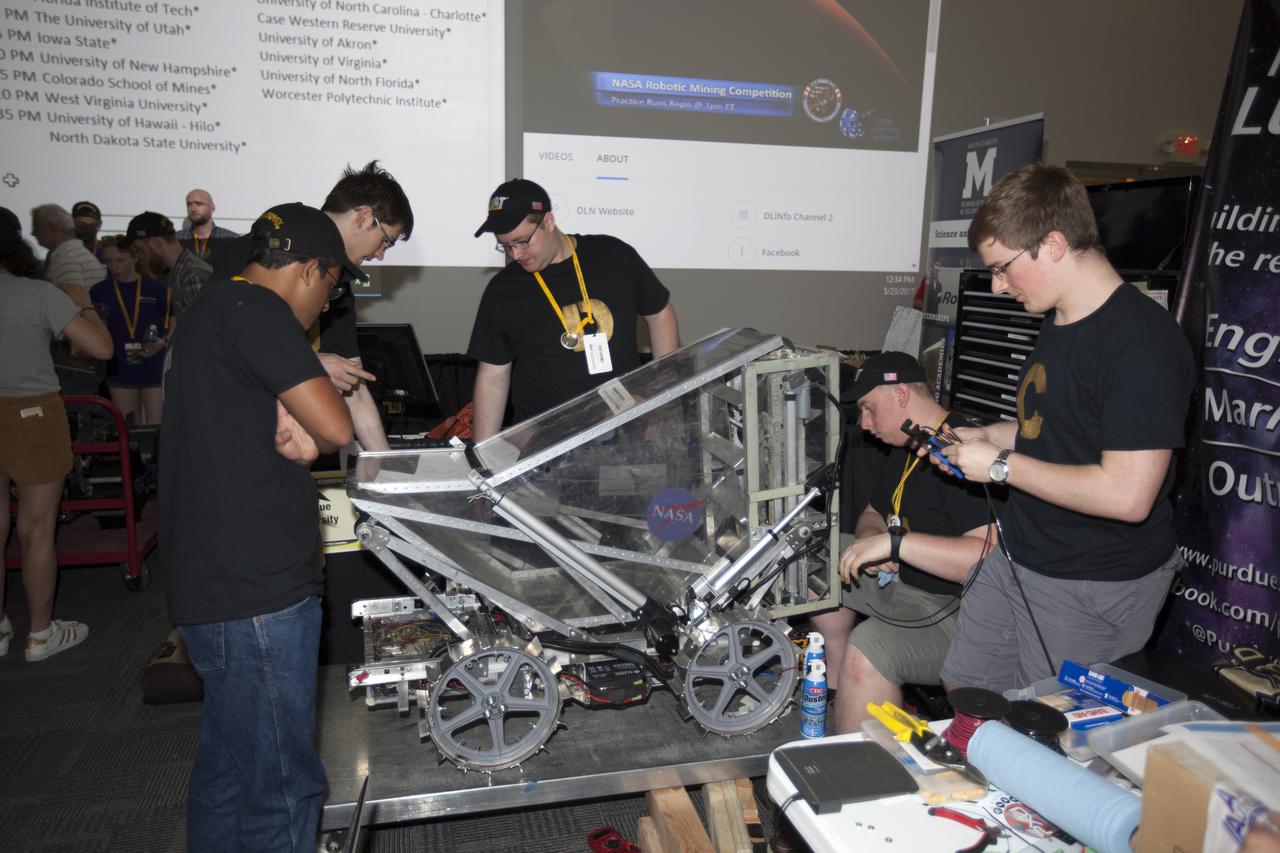
Team members from Purdue University prepare their uniquely-designed robot miner in the RoboPit at NASA's 8th Annual Robotic Mining Competition at the Kennedy Space Center Visitor Complex in Florida. More than 40 student teams from colleges and universities around the U.S. will use their uniquely-designed mining robots to dig in a supersized sandbox filled with BP-1, or simulated Martian soil, and participate in other competition requirements. The Robotic Mining Competition is a NASA Human Exploration and Operations Mission Directorate project designed to encourage students in science, technology, engineering and math, or STEM fields. The project provides a competitive environment to foster innovative ideas and solutions that could be used on NASA's Journey to Mars.
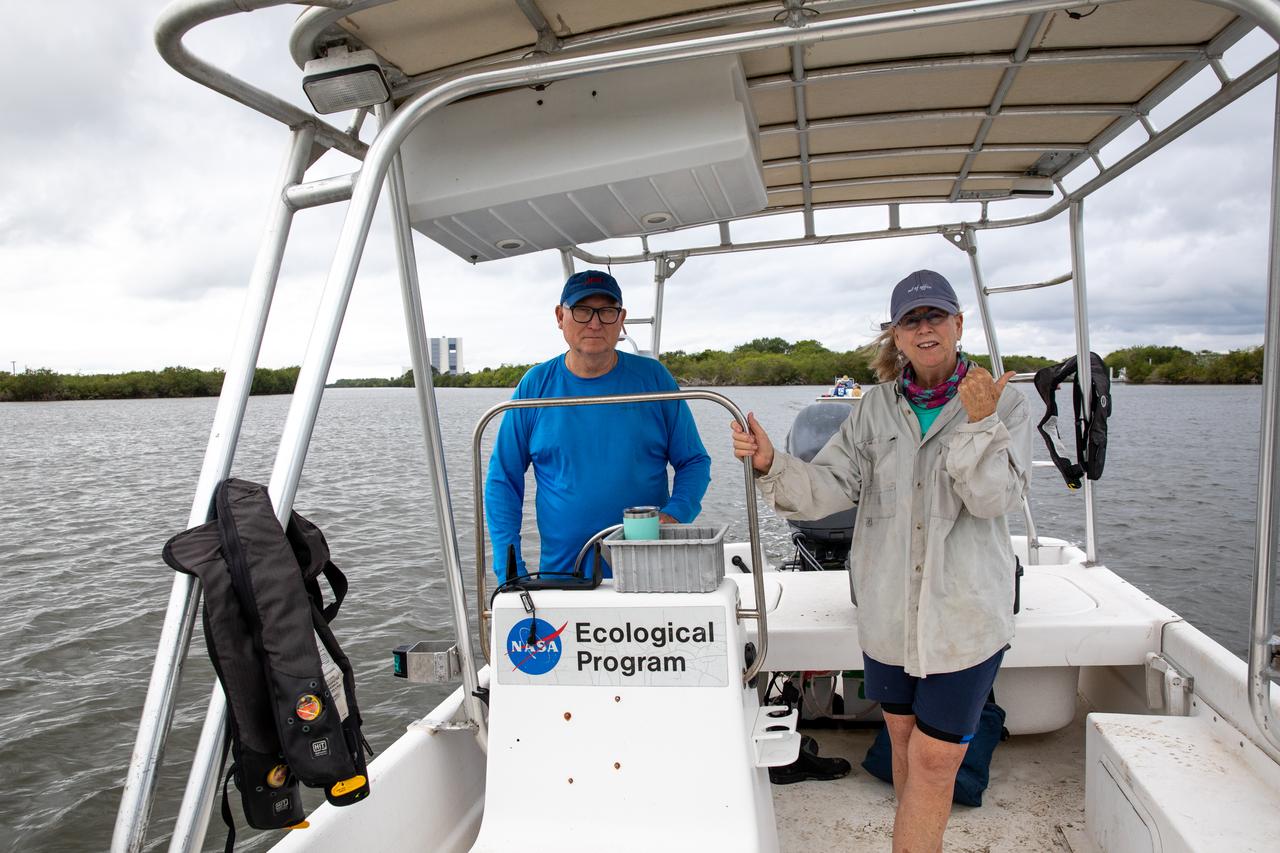
Kennedy Space Center’s Doug Scheidt (left), an ecologist working on NASA’s Environmental and Medical Contract (NEMCON), and Jane Provancha, manager of the ecological group for NEMCON, oversee seagrass restoration efforts at the Florida spaceport on March 29, 2023. Kennedy’s Environmental Management Branch is working to plant a minimum of 28,000 shoots of seagrass divided into 18 sites across three areas at the Florida spaceport as part of a pilot project for seagrass restoration efforts. The project will look at the feasibility of replanting seagrass in Kennedy waters and, if successful, could lead to the spaceport becoming a donor site where shoots of grass can be broken off and relocated to other areas within Kennedy or along the Indian River Lagoon to promote growth.
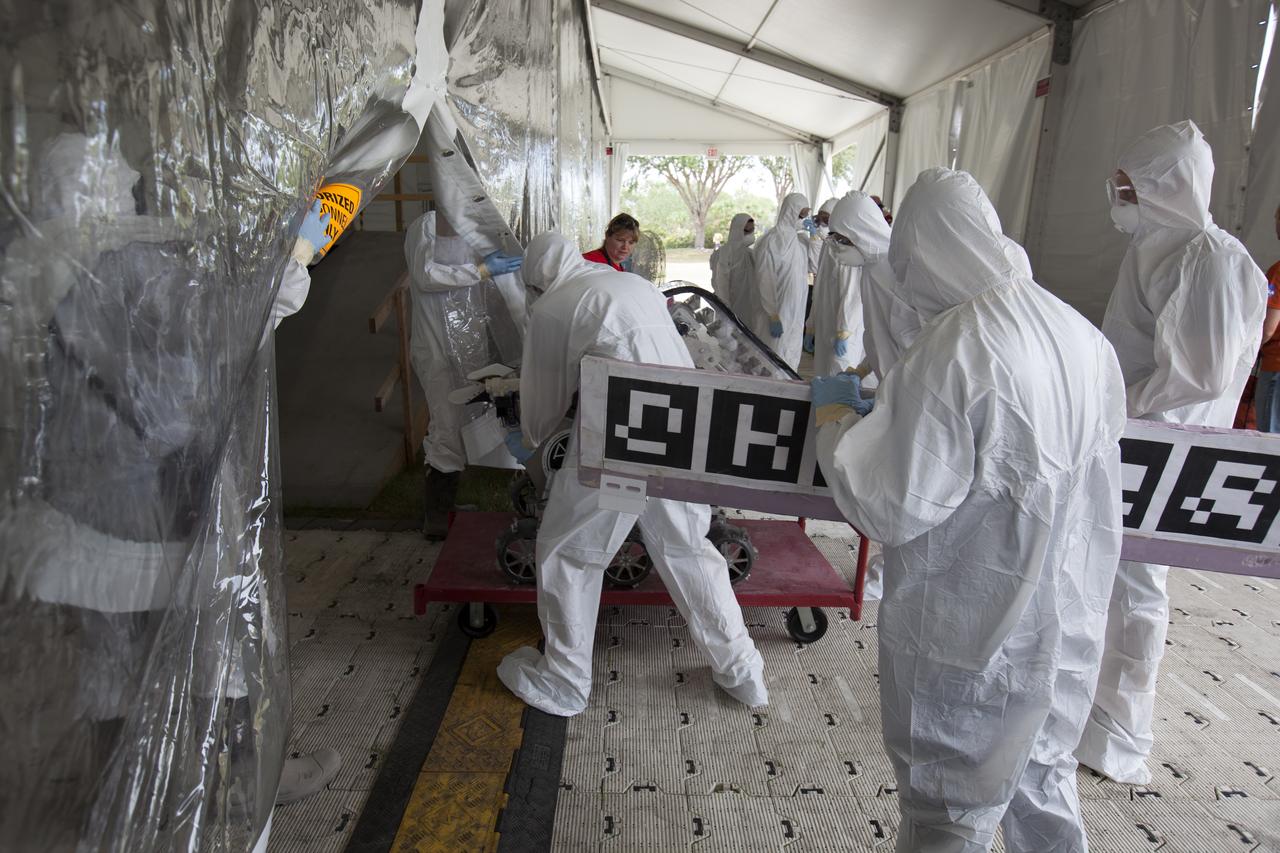
College team members prepare to enter the robotic mining arena for a test run during NASA's 8th Annual Robotic Mining Competition at the Kennedy Space Center Visitor Complex in Florida. More than 40 student teams from colleges and universities around the U.S. will use their uniquely-designed mining robots to dig in a supersized sandbox filled with BP-1, or simulated Martian soil, and participate in other competition requirements. The Robotic Mining Competition is a NASA Human Exploration and Operations Mission Directorate project designed to encourage students in science, technology, engineering and math, or STEM fields. The project provides a competitive environment to foster innovative ideas and solutions that could be used on NASA's Journey to Mars.
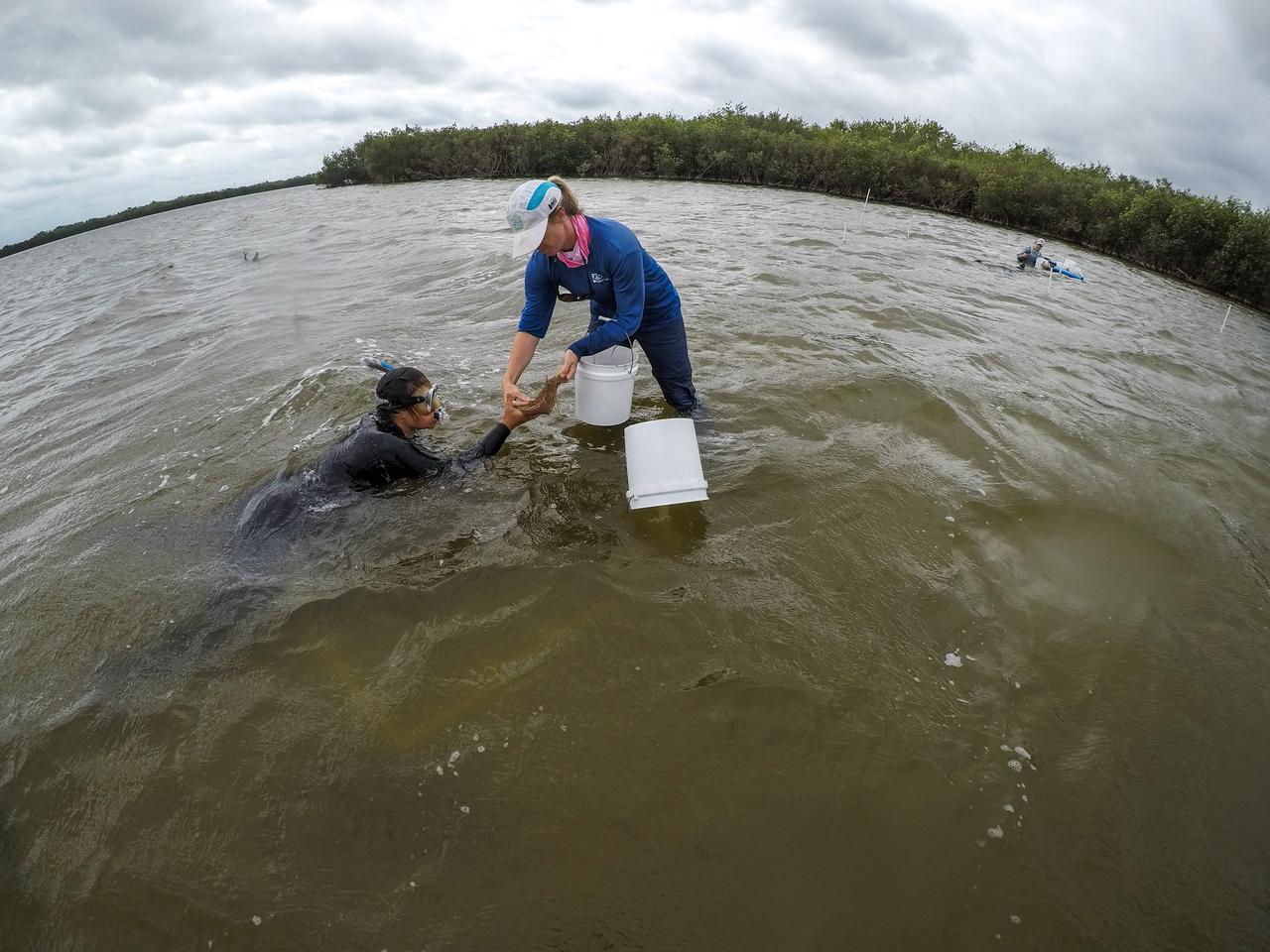
Members of the Florida Oceanographic Society plant seagrass in the Banana River – one of three bodies of water that make up the Indian River Lagoon (IRL) – at NASA’s Kennedy Space Center in Florida on March 29, 2023. Kennedy’s Environmental Management Branch is working to plant a minimum of 28,000 shoots of seagrass divided into 18 sites across three areas at the Florida spaceport as part of a pilot project for seagrass restoration efforts. The project will look at the feasibility of replanting seagrass in Kennedy waters and, if successful, could lead to the spaceport becoming a donor site where shoots of grass can be broken off and relocated to other areas within Kennedy or along the IRL to promote growth.
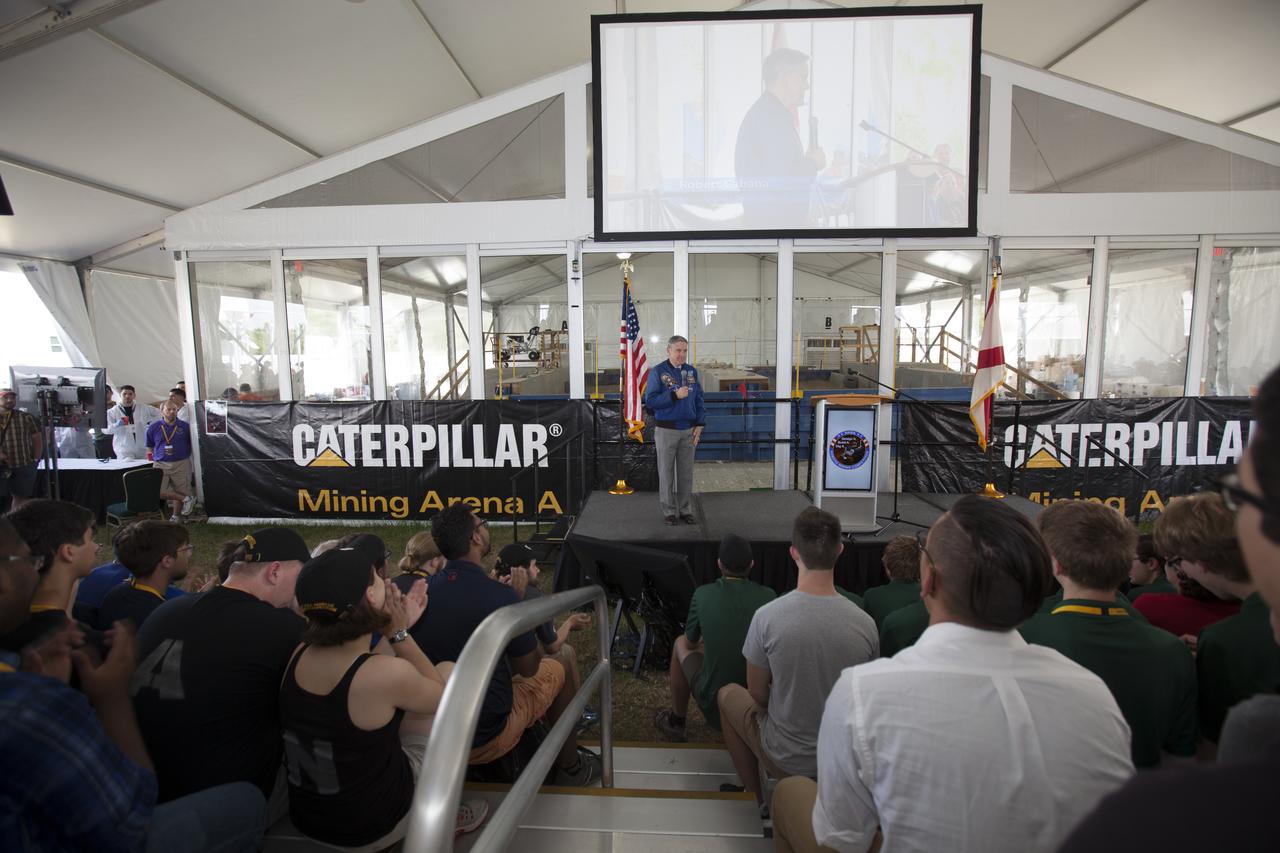
NASA Kennedy Space Center Director Bob Cabana welcomes participants to the agency's 8th Annual Robotic Mining Competition at the Kennedy Space Center Visitor Complex in Florida. More than 40 student teams from colleges and universities around the U.S. will use their mining robots to dig in a supersized sandbox filled with BP-1, or simulated Martian soil, and participate in other competition requirements. The Robotic Mining Competition is a NASA Human Exploration and Operations Mission Directorate project designed to encourage students in science, technology, engineering and math, or STEM fields. The project provides a competitive environment to foster innovative ideas and solutions that could be used on NASA's Journey to Mars.
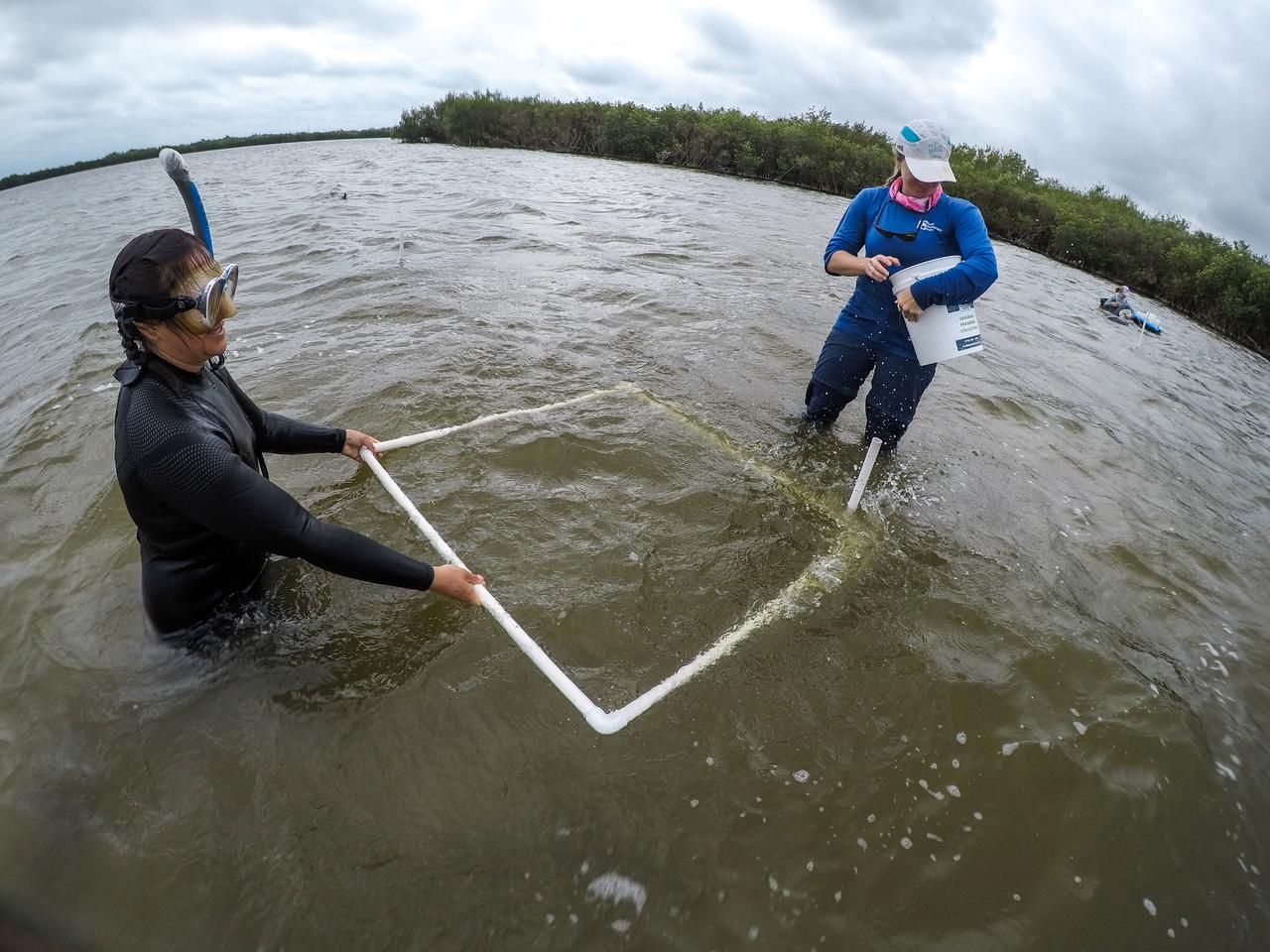
Members of the Florida Oceanographic Society prepare to plant seagrass in the Banana River – one of three bodies of water that make up the Indian River Lagoon (IRL) – at NASA’s Kennedy Space Center in Florida on March 29, 2023. Kennedy’s Environmental Management Branch is working to plant a minimum of 28,000 shoots of seagrass divided into 18 sites across three areas at the Florida spaceport as part of a pilot project for seagrass restoration efforts. The project will look at the feasibility of replanting seagrass in Kennedy waters and, if successful, could lead to the spaceport becoming a donor site where shoots of grass can be broken off and relocated to other areas within Kennedy or along the IRL to promote growth.
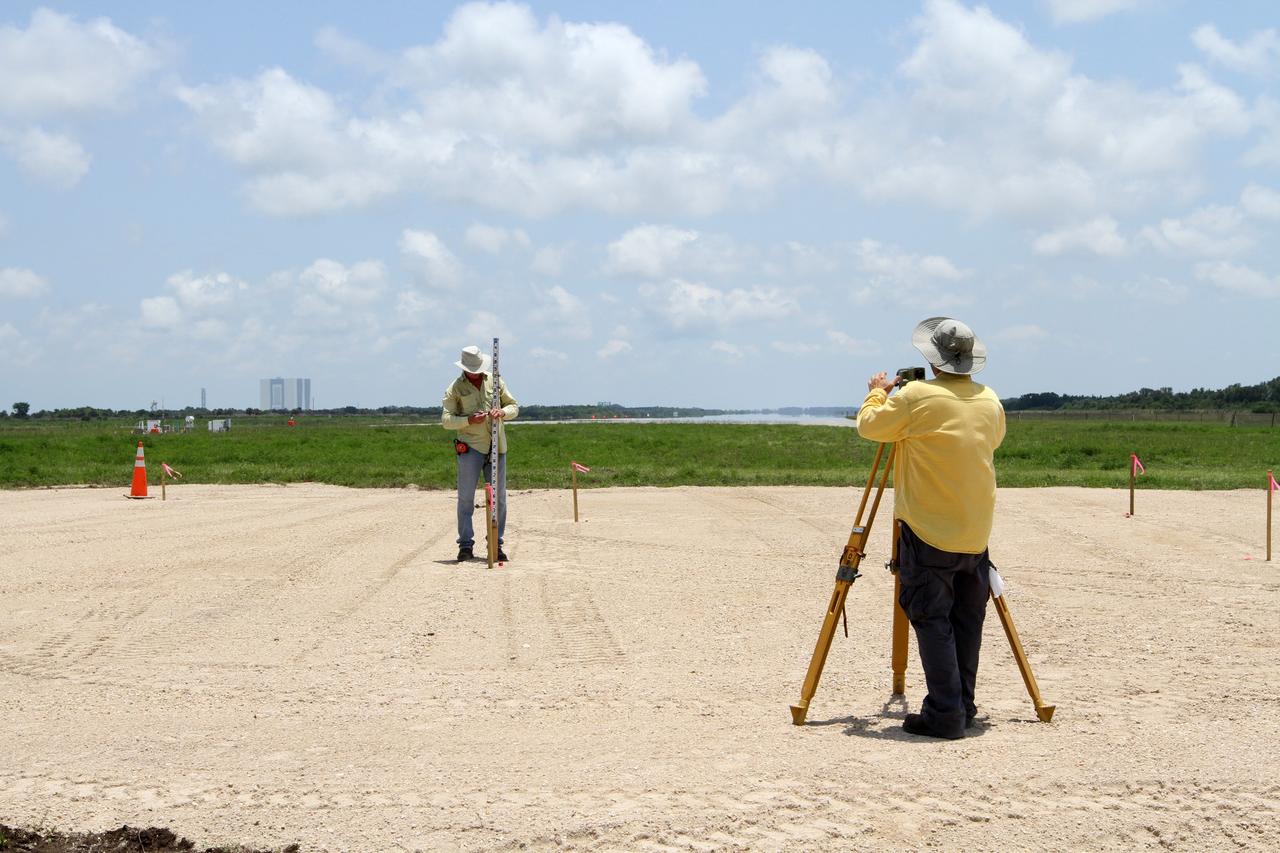
CAPE CANAVERAL, Fla. – Surveyors ensure the hazard field for the Project Morpheus lander is properly situated near the Shuttle Landing Facility at NASA’s Kennedy Space Center in Florida. In the distance is the 525-foot-tall Vehicle Assembly Building. Testing of the prototype lander has been ongoing at NASA's Johnson Space Center in Houston in preparation for its first free flight. The SLF will provide the lander with the kind of field necessary for realistic testing, complete with rocks, craters and hazards to avoid. Morpheus utilizes an autonomous landing and hazard avoidance technology, or ALHAT, payload that will allow it to navigate to clear landing sites amidst rocks, craters and other hazards during its descent. Project Morpheus is one of 20 small projects comprising the Advanced Exploration Systems, or AES, program in NASA's Human Exploration and Operations Mission Directorate. AES projects pioneer new approaches for rapidly developing prototype systems, demonstrating key capabilities and validating operational concepts for future human missions beyond Earth orbit. For more information on Project Morpheus, visit http://www.nasa.gov/centers/johnson/exploration/morpheus/index.html. Photo credit: NASA/Kim Shiflett
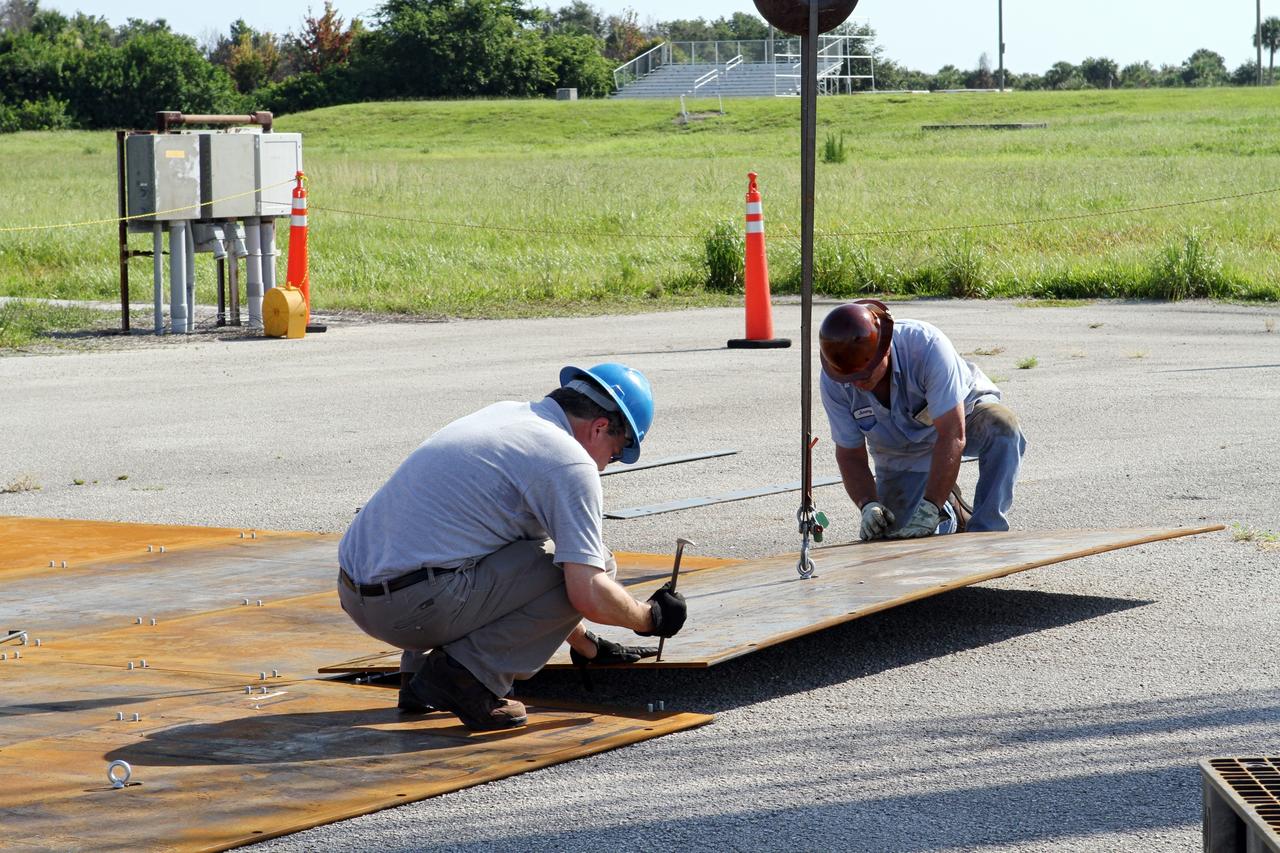
CAPE CANAVERAL, Fla. – Workers begin construction of the launch platform for the Project Morpheus lander at the midfield of the Shuttle Landing Facility, or SLF, at NASA’s Kennedy Space Center in Florida. Testing of the prototype lander has been ongoing at NASA’s Johnson Space Center in Houston in preparation for its first free flight. The SLF will provide the lander with the kind of field necessary for realistic testing, complete with rocks, craters and hazards to avoid. Morpheus utilizes an autonomous landing and hazard avoidance technology, or ALHAT, payload that will allow it to navigate to clear landing sites amidst rocks, craters and other hazards during its descent. Project Morpheus is one of 20 small projects comprising the Advanced Exploration Systems, or AES, program in NASA’s Human Exploration and Operations Mission Directorate. AES projects pioneer new approaches for rapidly developing prototype systems, demonstrating key capabilities and validating operational concepts for future human missions beyond Earth orbit. For more information on Project Morpheus, visit http://www.nasa.gov/centers/johnson/exploration/morpheus/index.html. Photo credit: NASA/Kim Shiflett
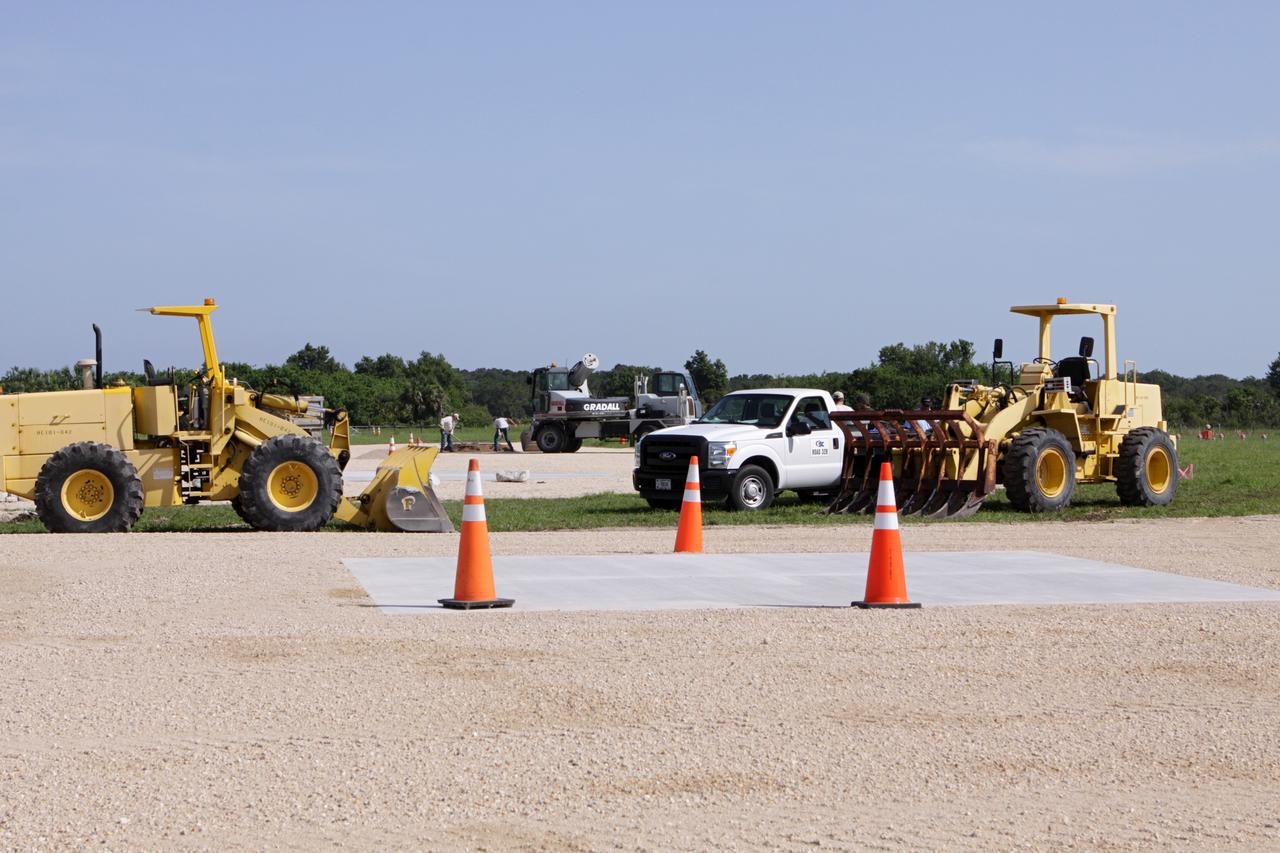
CAPE CANAVERAL, Fla. – Steady progress is made on the construction of the hazard field for the Project Morpheus lander near the Shuttle Landing Facility, or SLF, at NASA’s Kennedy Space Center in Florida. Testing of the prototype lander has been ongoing at NASA’s Johnson Space Center in Houston in preparation for its first free flight. The SLF will provide the lander with the kind of field necessary for realistic testing, complete with rocks, craters and hazards to avoid. Morpheus utilizes an autonomous landing and hazard avoidance technology, or ALHAT, payload that will allow it to navigate to clear landing sites amidst rocks, craters and other hazards during its descent. Project Morpheus is one of 20 small projects comprising the Advanced Exploration Systems, or AES, program in NASA’s Human Exploration and Operations Mission Directorate. AES projects pioneer new approaches for rapidly developing prototype systems, demonstrating key capabilities and validating operational concepts for future human missions beyond Earth orbit. For more information on Project Morpheus, visit http://www.nasa.gov/centers/johnson/exploration/morpheus/index.html. Photo credit: NASA/Kim Shiflett
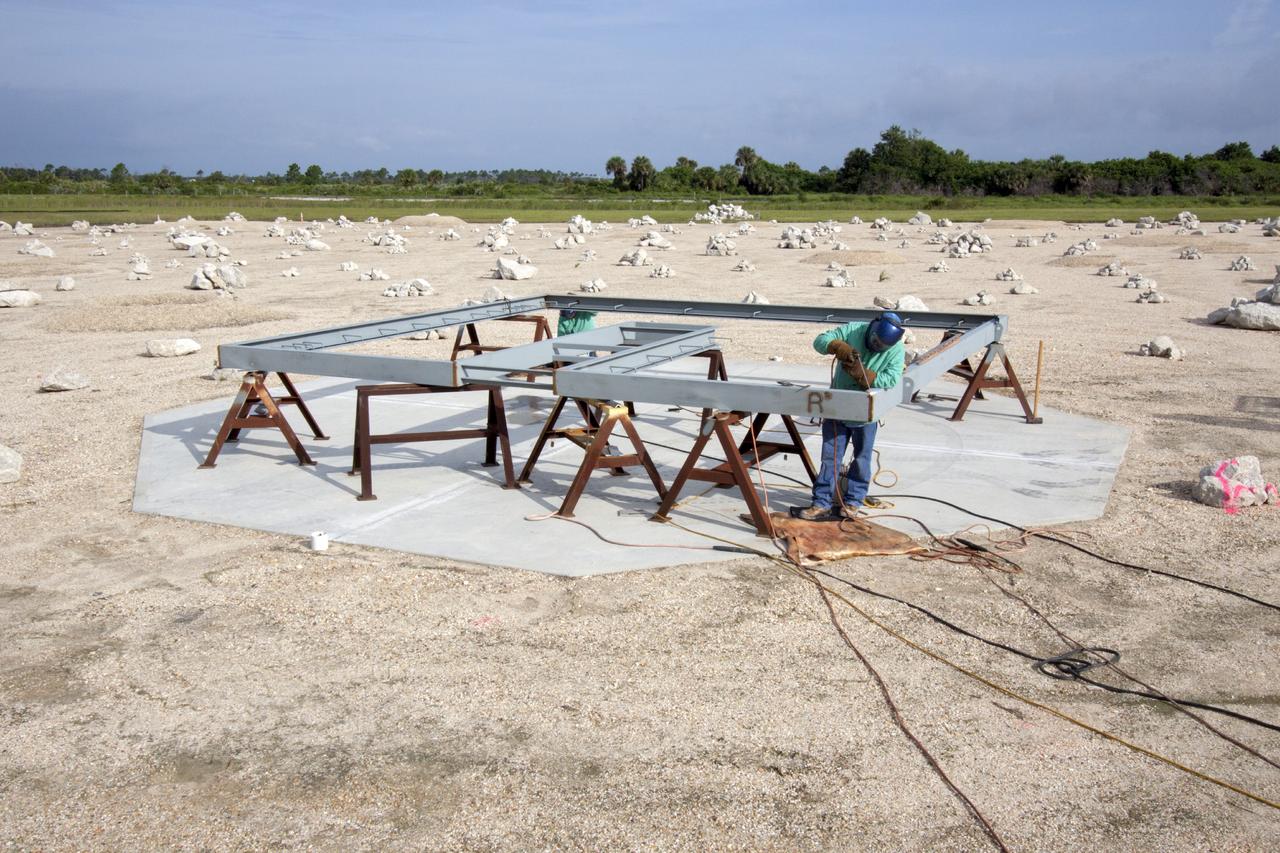
CAPE CANAVERAL, Fla. – At NASA’s Kennedy Space Center in Florida, a technician works on the buildup of a movable launch platform for the Project Morpheus lander at the midfield of the Shuttle Landing Facility, or SLF. Testing of the prototype lander has been ongoing at NASA’s Johnson Space Center in Houston in preparation for free flight. The SLF will provide the lander with the kind of field necessary for realistic testing, complete with rocks, craters and hazards to avoid. Morpheus utilizes an autonomous landing and hazard avoidance technology, or ALHAT, payload that will allow it to navigate to clear landing sites amidst rocks, craters and other hazards during its descent. Project Morpheus is one of 20 small projects comprising the Advanced Exploration Systems, or AES, program in NASA’s Human Exploration and Operations Mission Directorate. AES projects pioneer new approaches for rapidly developing prototype systems, demonstrating key capabilities and validating operational concepts for future human missions beyond Earth orbit. For more information on Project Morpheus, visit http://www.nasa.gov/centers/johnson/exploration/morpheus/index.html. Photo credit: NASA/Jim Grossmann
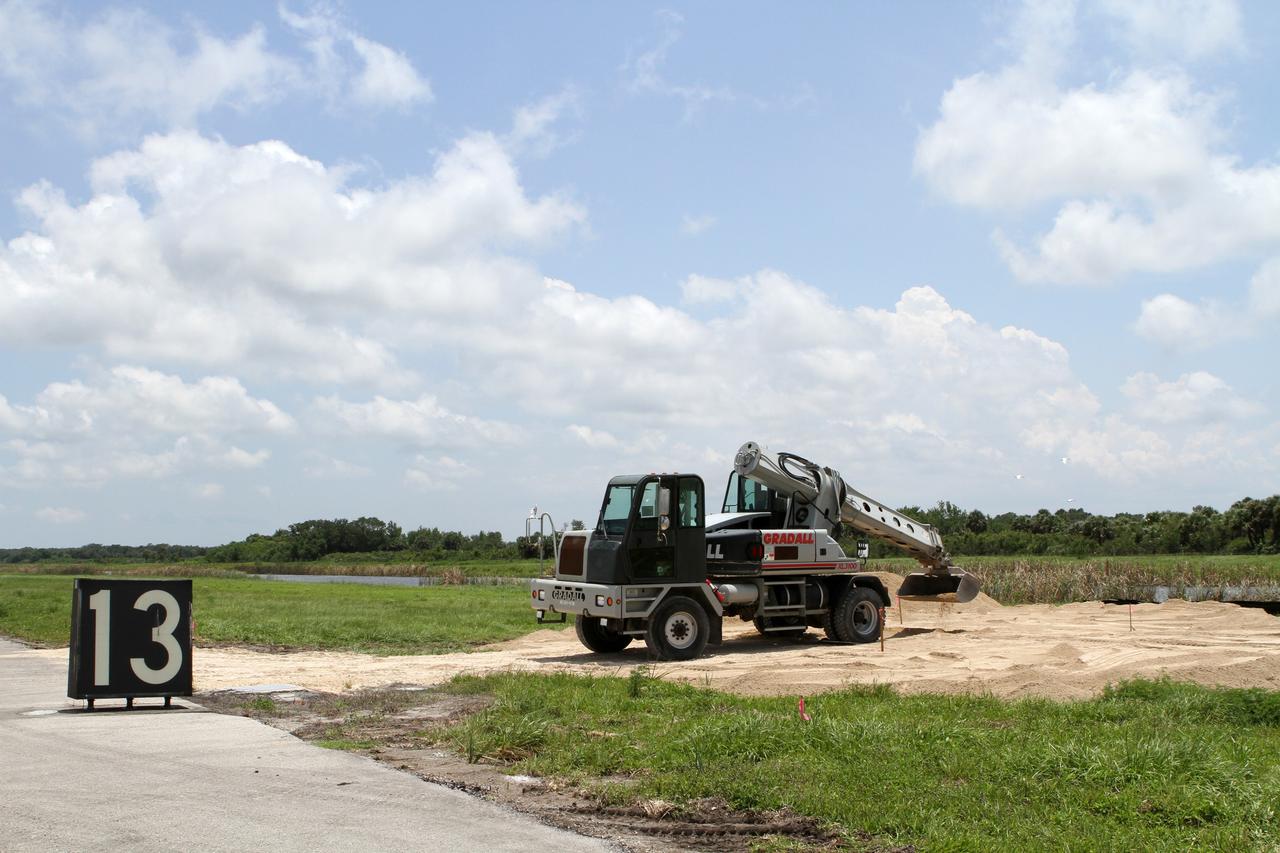
CAPE CANAVERAL, Fla. – Steady progress is made on the construction of the hazard field for the Project Morpheus lander near the Shuttle Landing Facility at NASA’s Kennedy Space Center in Florida. Testing of the prototype lander has been ongoing at NASA's Johnson Space Center in Houston in preparation for its first free flight. The SLF will provide the lander with the kind of field necessary for realistic testing, complete with rocks, craters and hazards to avoid. Morpheus utilizes an autonomous landing and hazard avoidance technology, or ALHAT, payload that will allow it to navigate to clear landing sites amidst rocks, craters and other hazards during its descent. Project Morpheus is one of 20 small projects comprising the Advanced Exploration Systems, or AES, program in NASA's Human Exploration and Operations Mission Directorate. AES projects pioneer new approaches for rapidly developing prototype systems, demonstrating key capabilities and validating operational concepts for future human missions beyond Earth orbit. For more information on Project Morpheus, visit http://www.nasa.gov/centers/johnson/exploration/morpheus/index.html. Photo credit: NASA/Kim Shiflett
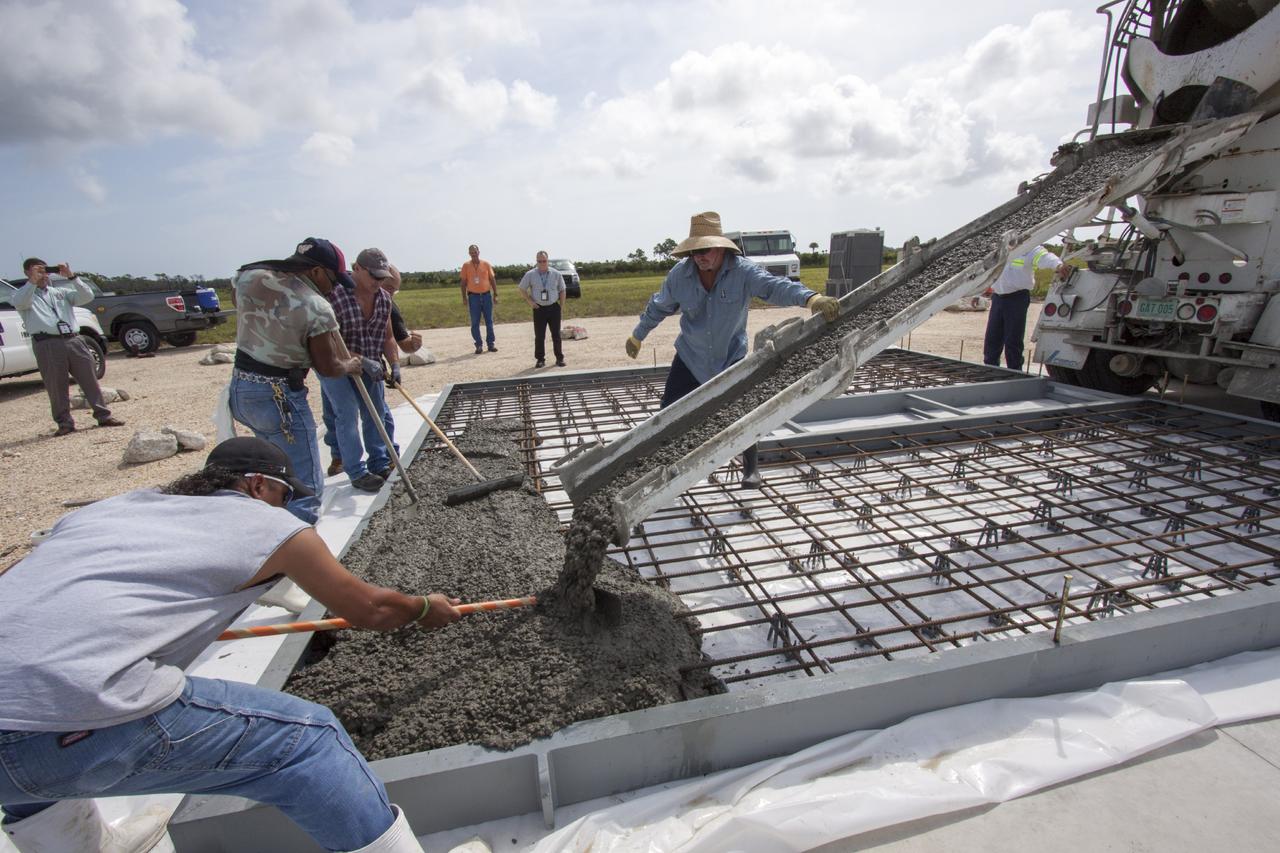
CAPE CANAVERAL, Fla. –At NASA’s Kennedy Space Center in Florida, technicians pour concrete onto the movable launch platform for the Project Morpheus lander at the north end of the Shuttle Landing Facility, or SLF. Testing of the prototype lander has been ongoing at NASA’s Johnson Space Center in Houston in preparation for free flight. The SLF will provide the lander with the kind of field necessary for realistic testing, complete with rocks, craters and hazards to avoid. Morpheus utilizes an autonomous landing and hazard avoidance technology, or ALHAT, payload that will allow it to navigate to clear landing sites amidst rocks, craters and other hazards during its descent. Project Morpheus is one of 20 small projects comprising the Advanced Exploration Systems, or AES, program in NASA’s Human Exploration and Operations Mission Directorate. AES projects pioneer new approaches for rapidly developing prototype systems, demonstrating key capabilities and validating operational concepts for future human missions beyond Earth orbit. For more information on Project Morpheus, visit http://www.nasa.gov/centers/johnson/exploration/morpheus/index.html. Photo credit: NASA/Jim Grossmann

CAPE CANAVERAL, Fla. – Workers begin construction of the launch platform for the Project Morpheus lander at the midfield of the Shuttle Landing Facility, or SLF, at NASA’s Kennedy Space Center in Florida. Testing of the prototype lander has been ongoing at NASA’s Johnson Space Center in Houston in preparation for its first free flight. The SLF will provide the lander with the kind of field necessary for realistic testing, complete with rocks, craters and hazards to avoid. Morpheus utilizes an autonomous landing and hazard avoidance technology, or ALHAT, payload that will allow it to navigate to clear landing sites amidst rocks, craters and other hazards during its descent. Project Morpheus is one of 20 small projects comprising the Advanced Exploration Systems, or AES, program in NASA’s Human Exploration and Operations Mission Directorate. AES projects pioneer new approaches for rapidly developing prototype systems, demonstrating key capabilities and validating operational concepts for future human missions beyond Earth orbit. For more information on Project Morpheus, visit http://www.nasa.gov/centers/johnson/exploration/morpheus/index.html. Photo credit: NASA/Kim Shiflett

CAPE CANAVERAL, Fla. – Workers consult on the next steps to take to construct the hazard field for the Project Morpheus lander near the Shuttle Landing Facility at NASA’s Kennedy Space Center in Florida. In the distance is the 525-foot-tall Vehicle Assembly Building. Testing of the prototype lander has been ongoing at NASA's Johnson Space Center in Houston in preparation for its first free flight. The SLF will provide the lander with the kind of field necessary for realistic testing, complete with rocks, craters and hazards to avoid. Morpheus utilizes an autonomous landing and hazard avoidance technology, or ALHAT, payload that will allow it to navigate to clear landing sites amidst rocks, craters and other hazards during its descent. Project Morpheus is one of 20 small projects comprising the Advanced Exploration Systems, or AES, program in NASA's Human Exploration and Operations Mission Directorate. AES projects pioneer new approaches for rapidly developing prototype systems, demonstrating key capabilities and validating operational concepts for future human missions beyond Earth orbit. For more information on Project Morpheus, visit http://www.nasa.gov/centers/johnson/exploration/morpheus/index.html. Photo credit: NASA/Kim Shiflett
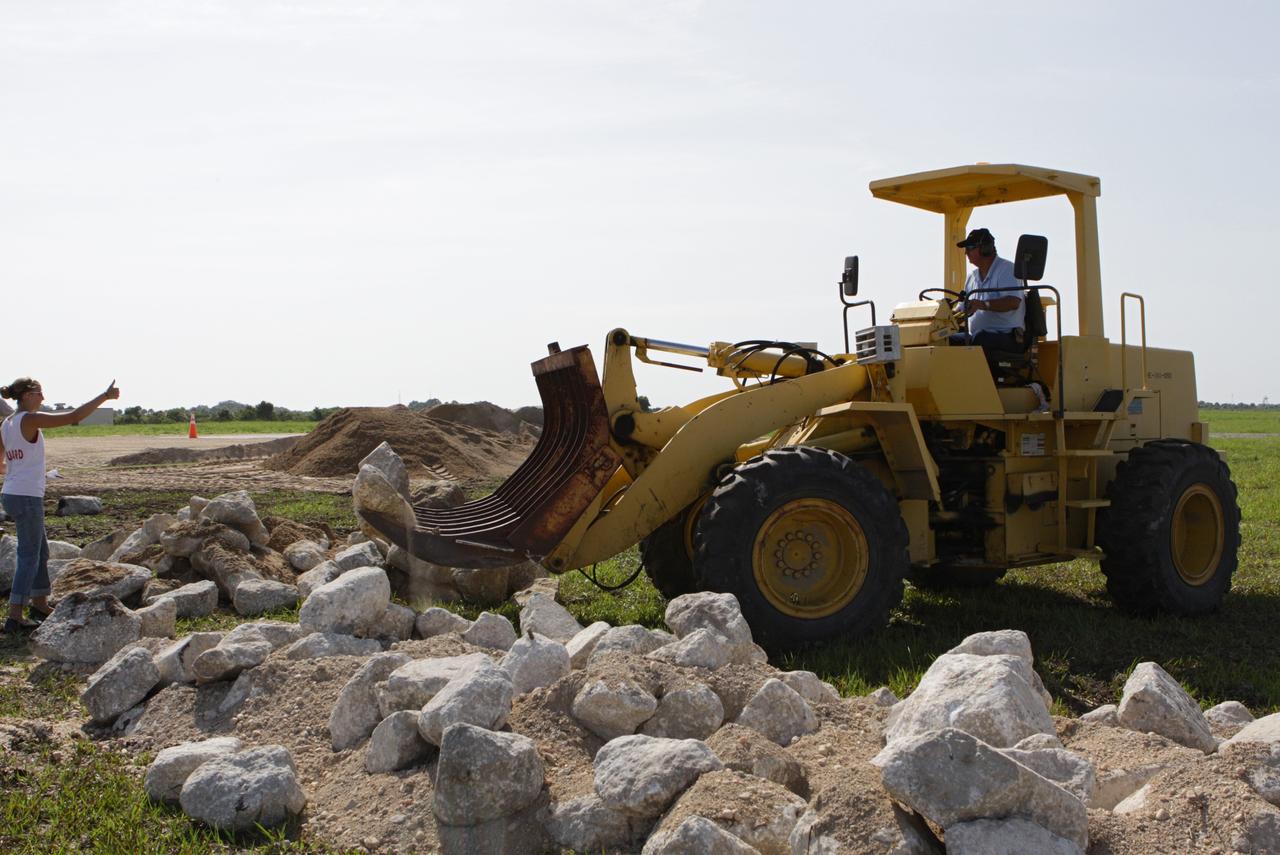
CAPE CANAVERAL, Fla. – Steady progress is made on the construction of the hazard field for the Project Morpheus lander near the Shuttle Landing Facility, or SLF, at NASA’s Kennedy Space Center in Florida. Testing of the prototype lander has been ongoing at NASA’s Johnson Space Center in Houston in preparation for its first free flight. The SLF will provide the lander with the kind of field necessary for realistic testing, complete with rocks, craters and hazards to avoid. Morpheus utilizes an autonomous landing and hazard avoidance technology, or ALHAT, payload that will allow it to navigate to clear landing sites amidst rocks, craters and other hazards during its descent. Project Morpheus is one of 20 small projects comprising the Advanced Exploration Systems, or AES, program in NASA’s Human Exploration and Operations Mission Directorate. AES projects pioneer new approaches for rapidly developing prototype systems, demonstrating key capabilities and validating operational concepts for future human missions beyond Earth orbit. For more information on Project Morpheus, visit http://www.nasa.gov/centers/johnson/exploration/morpheus/index.html. Photo credit: NASA/Kim Shiflett
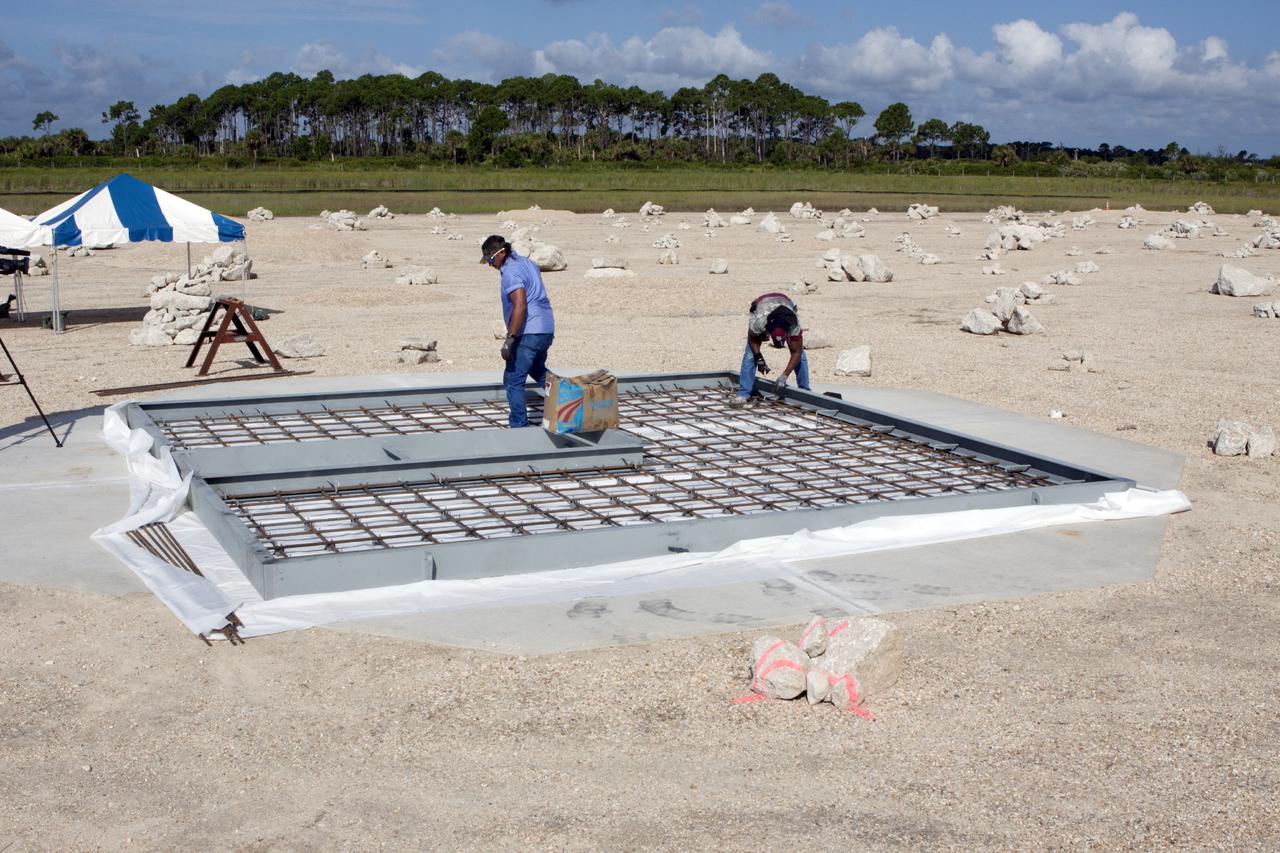
CAPE CANAVERAL, Fla. – At NASA’s Kennedy Space Center in Florida, technicians continue to work on the buildup of a movable launch platform for the Project Morpheus lander at the north end of the Shuttle Landing Facility, or SLF. Testing of the prototype lander has been ongoing at NASA’s Johnson Space Center in Houston in preparation for free flight. The SLF will provide the lander with the kind of field necessary for realistic testing, complete with rocks, craters and hazards to avoid. Morpheus utilizes an autonomous landing and hazard avoidance technology, or ALHAT, payload that will allow it to navigate to clear landing sites amidst rocks, craters and other hazards during its descent. Project Morpheus is one of 20 small projects comprising the Advanced Exploration Systems, or AES, program in NASA’s Human Exploration and Operations Mission Directorate. AES projects pioneer new approaches for rapidly developing prototype systems, demonstrating key capabilities and validating operational concepts for future human missions beyond Earth orbit. For more information on Project Morpheus, visit http://www.nasa.gov/centers/johnson/exploration/morpheus/index.html. Photo credit: NASA/Jim Grossmann
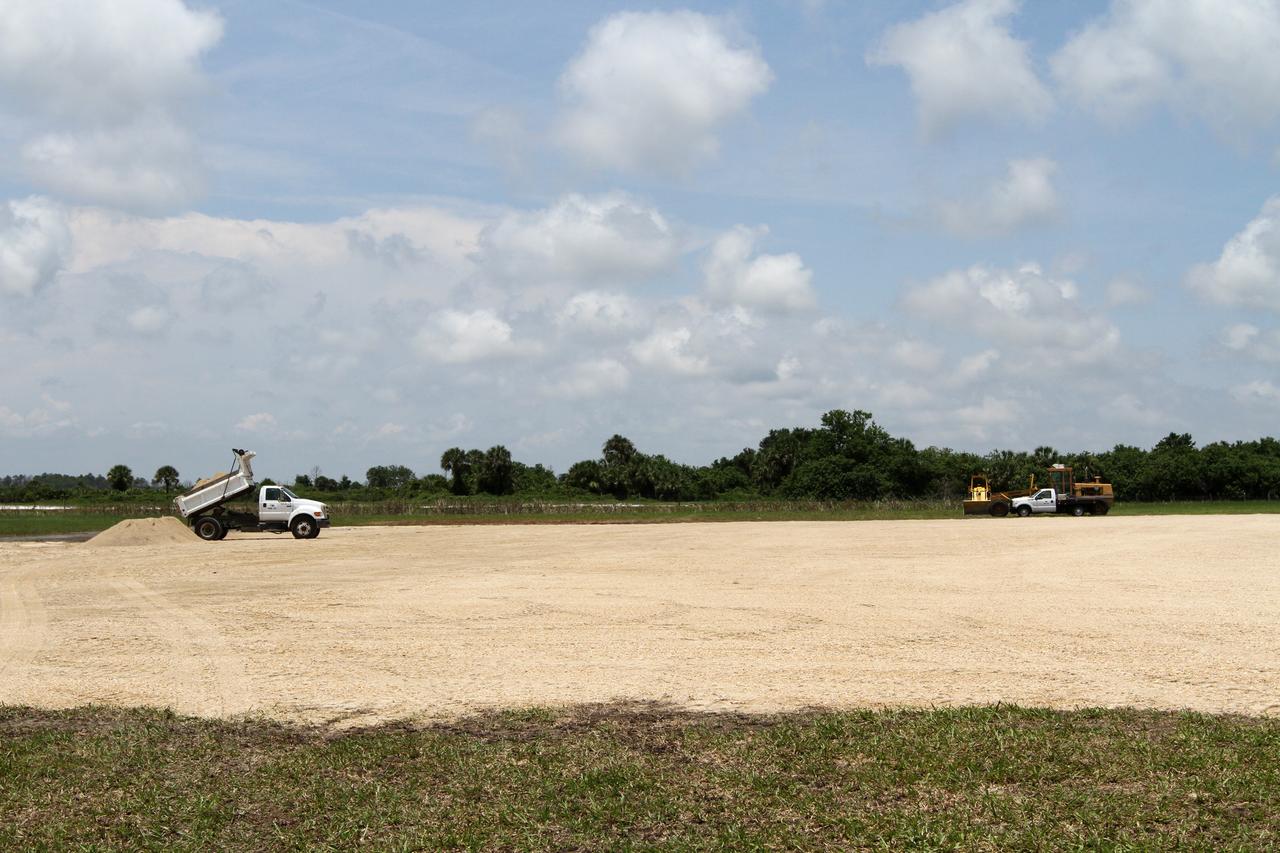
CAPE CANAVERAL, Fla. – Crawlerway fines, rock crushed by the weight of the crawler transporter, is trucked in for the foundation of the hazard field for NASA’s Project Morpheus lander near the Shuttle Landing Facility at NASA’s Kennedy Space Center in Florida. Testing of the prototype lander has been ongoing at NASA's Johnson Space Center in Houston in preparation for its first free flight. The SLF will provide the lander with the kind of field necessary for realistic testing, complete with rocks, craters and hazards to avoid. Morpheus utilizes an autonomous landing and hazard avoidance technology, or ALHAT, payload that will allow it to navigate to clear landing sites amidst rocks, craters and other hazards during its descent. Project Morpheus is one of 20 small projects comprising the Advanced Exploration Systems, or AES, program in NASA's Human Exploration and Operations Mission Directorate. AES projects pioneer new approaches for rapidly developing prototype systems, demonstrating key capabilities and validating operational concepts for future human missions beyond Earth orbit. For more information on Project Morpheus, visit http://www.nasa.gov/centers/johnson/exploration/morpheus/index.html. Photo credit: NASA/Kim Shiflett
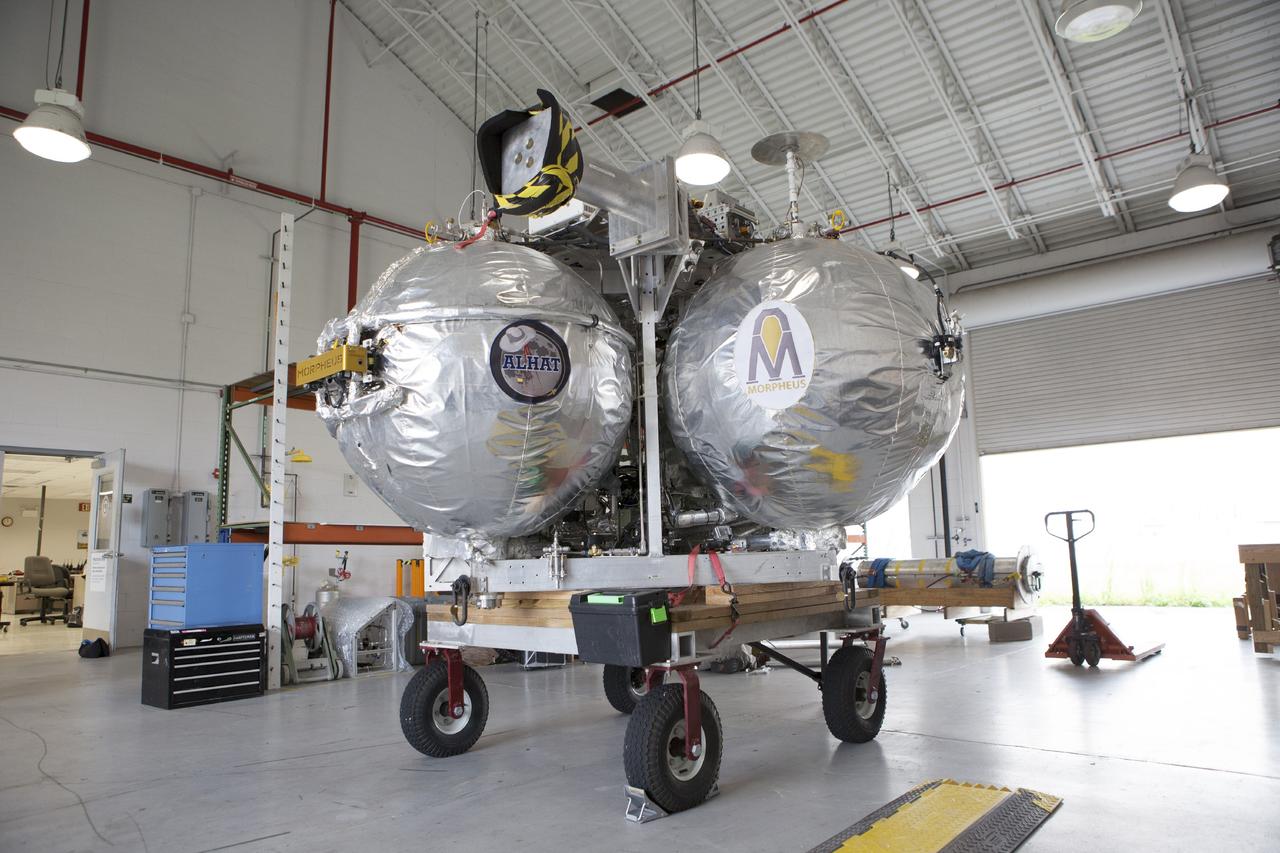
CAPE CANAVERAL, Fla. -- At NASA’s Kennedy Space Center in Florida, the Project Morpheus lander sits inside the bay of a support building at the Shuttle Landing Facility, or SLF. Testing of the prototype lander has been ongoing at NASA’s Johnson Space Center in Houston in preparation for free flight testing at Kennedy. The SLF will provide the lander with the kind of field necessary for realistic testing, complete with rocks, craters and hazards to avoid. Morpheus utilizes an autonomous landing and hazard avoidance technology, or ALHAT, payload that will allow it to navigate to clear landing sites amidst rocks, craters and other hazards during its descent. Project Morpheus is one of 20 small projects comprising the Advanced Exploration Systems, or AES, program in NASA’s Human Exploration and Operations Mission Directorate. AES projects pioneer new approaches for rapidly developing prototype systems, demonstrating key capabilities and validating operational concepts for future human missions beyond Earth orbit. For more information on Project Morpheus, visit http://www.nasa.gov/centers/johnson/exploration/morpheus/index.html. Photo credit: NASA/Kim Shiflett

CAPE CANAVERAL, Fla. – Workers begin construction of the launch platform for the Project Morpheus lander at the midfield of the Shuttle Landing Facility, or SLF, at NASA’s Kennedy Space Center in Florida. Testing of the prototype lander has been ongoing at NASA’s Johnson Space Center in Houston in preparation for its first free flight. The SLF will provide the lander with the kind of field necessary for realistic testing, complete with rocks, craters and hazards to avoid. Morpheus utilizes an autonomous landing and hazard avoidance technology, or ALHAT, payload that will allow it to navigate to clear landing sites amidst rocks, craters and other hazards during its descent. Project Morpheus is one of 20 small projects comprising the Advanced Exploration Systems, or AES, program in NASA’s Human Exploration and Operations Mission Directorate. AES projects pioneer new approaches for rapidly developing prototype systems, demonstrating key capabilities and validating operational concepts for future human missions beyond Earth orbit. For more information on Project Morpheus, visit http://www.nasa.gov/centers/johnson/exploration/morpheus/index.html. Photo credit: NASA/Kim Shiflett
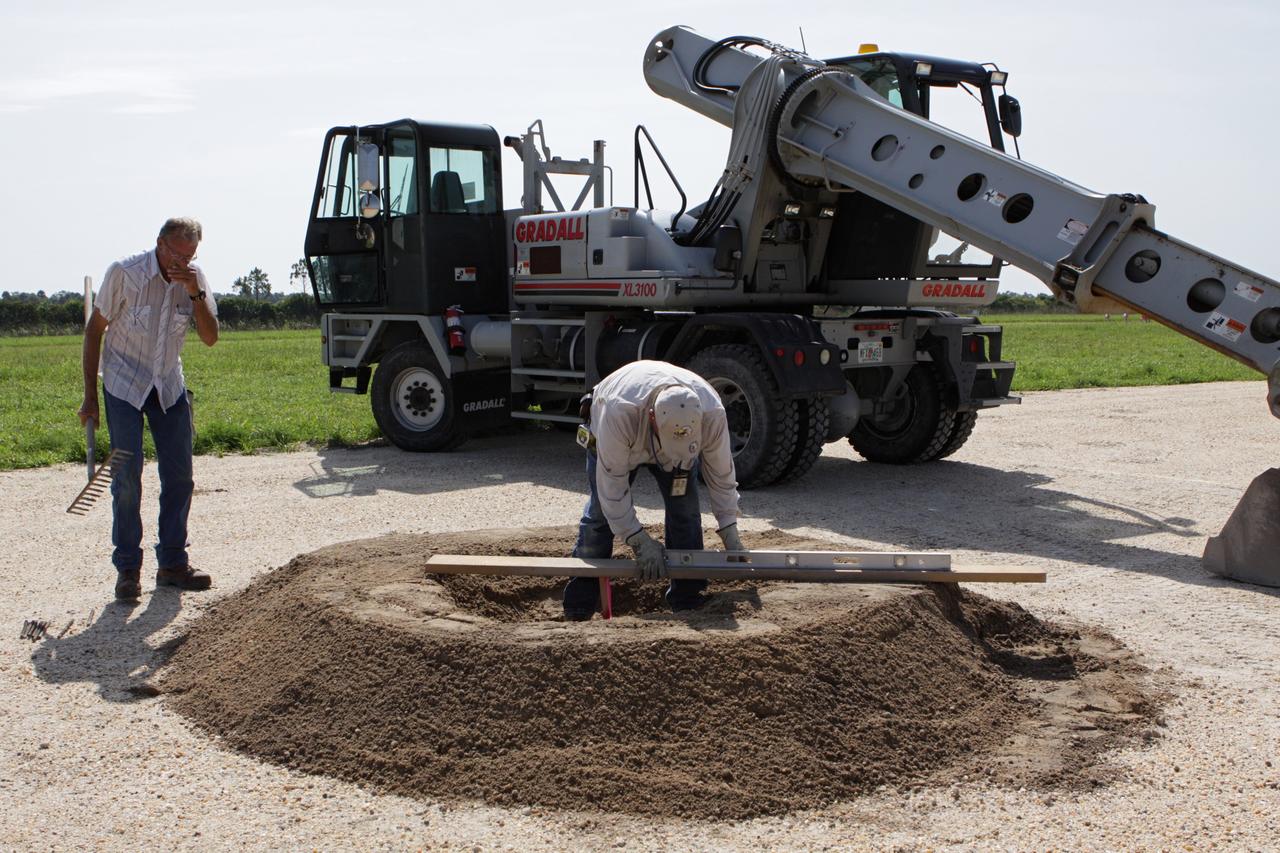
CAPE CANAVERAL, Fla. – Steady progress is made on the construction of the hazard field for the Project Morpheus lander near the Shuttle Landing Facility, or SLF, at NASA’s Kennedy Space Center in Florida. Testing of the prototype lander has been ongoing at NASA’s Johnson Space Center in Houston in preparation for its first free flight. The SLF will provide the lander with the kind of field necessary for realistic testing, complete with rocks, craters and hazards to avoid. Morpheus utilizes an autonomous landing and hazard avoidance technology, or ALHAT, payload that will allow it to navigate to clear landing sites amidst rocks, craters and other hazards during its descent. Project Morpheus is one of 20 small projects comprising the Advanced Exploration Systems, or AES, program in NASA’s Human Exploration and Operations Mission Directorate. AES projects pioneer new approaches for rapidly developing prototype systems, demonstrating key capabilities and validating operational concepts for future human missions beyond Earth orbit. For more information on Project Morpheus, visit http://www.nasa.gov/centers/johnson/exploration/morpheus/index.html. Photo credit: NASA/Kim Shiflett
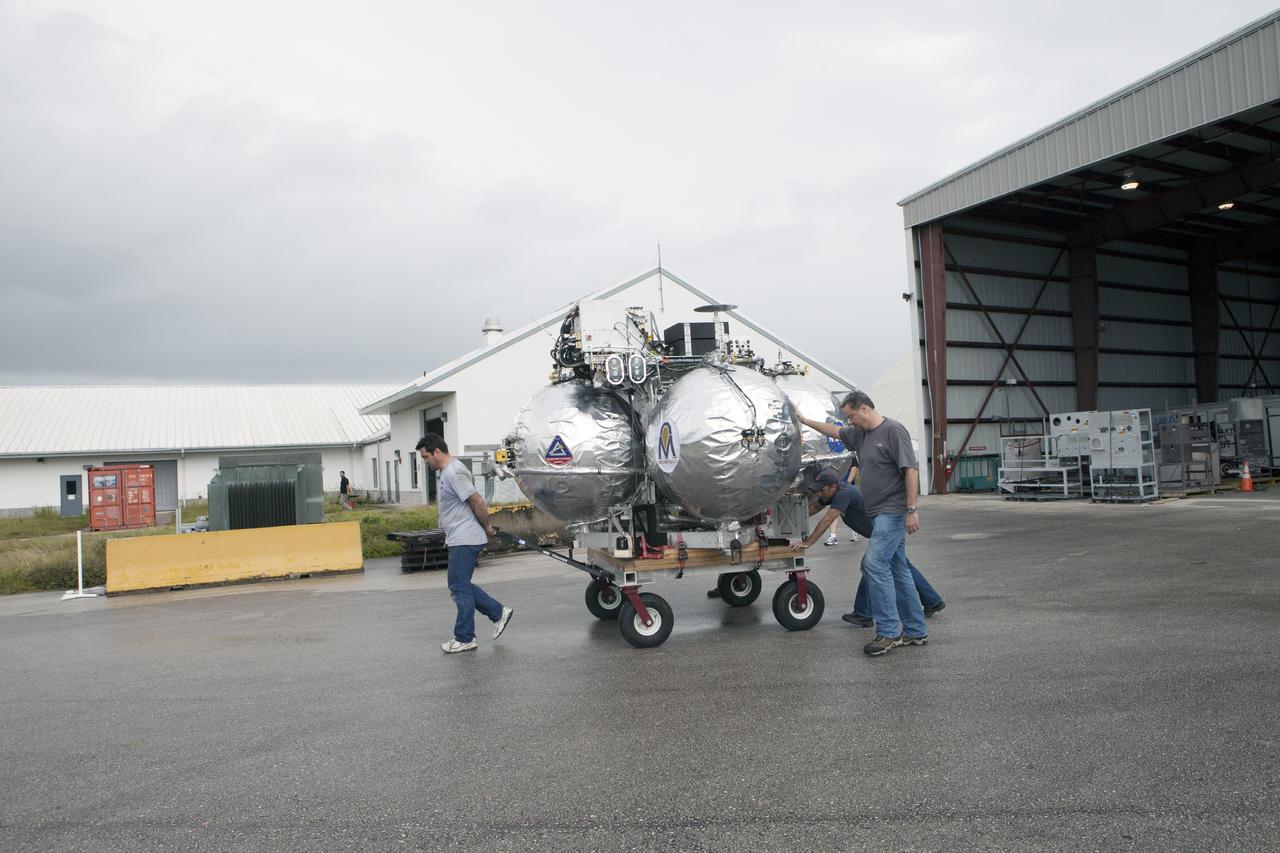
CAPE CANAVERAL, Fla. -- At NASA’s Kennedy Space Center in Florida, technicians move the Project Morpheus lander on a small transporter to a support building at the Shuttle Landing Facility, or SLF. Testing of the prototype lander has been ongoing at NASA’s Johnson Space Center in Houston in preparation for free flight testing at Kennedy. The SLF will provide the lander with the kind of field necessary for realistic testing, complete with rocks, craters and hazards to avoid. Morpheus utilizes an autonomous landing and hazard avoidance technology, or ALHAT, payload that will allow it to navigate to clear landing sites amidst rocks, craters and other hazards during its descent. Project Morpheus is one of 20 small projects comprising the Advanced Exploration Systems, or AES, program in NASA’s Human Exploration and Operations Mission Directorate. AES projects pioneer new approaches for rapidly developing prototype systems, demonstrating key capabilities and validating operational concepts for future human missions beyond Earth orbit. For more information on Project Morpheus, visit http://www.nasa.gov/centers/johnson/exploration/morpheus/index.html. Photo credit: NASA/Kim Shiflett

CAPE CANAVERAL, Fla. – Workers prepare equipment for construction of the launch platform for the Project Morpheus lander at the midfield of the Shuttle Landing Facility, or SLF, at NASA’s Kennedy Space Center in Florida. Testing of the prototype lander has been ongoing at NASA’s Johnson Space Center in Houston in preparation for its first free flight. The SLF will provide the lander with the kind of field necessary for realistic testing, complete with rocks, craters and hazards to avoid. Morpheus utilizes an autonomous landing and hazard avoidance technology, or ALHAT, payload that will allow it to navigate to clear landing sites amidst rocks, craters and other hazards during its descent. Project Morpheus is one of 20 small projects comprising the Advanced Exploration Systems, or AES, program in NASA’s Human Exploration and Operations Mission Directorate. AES projects pioneer new approaches for rapidly developing prototype systems, demonstrating key capabilities and validating operational concepts for future human missions beyond Earth orbit. For more information on Project Morpheus, visit http://www.nasa.gov/centers/johnson/exploration/morpheus/index.html. Photo credit: NASA/Kim Shiflett
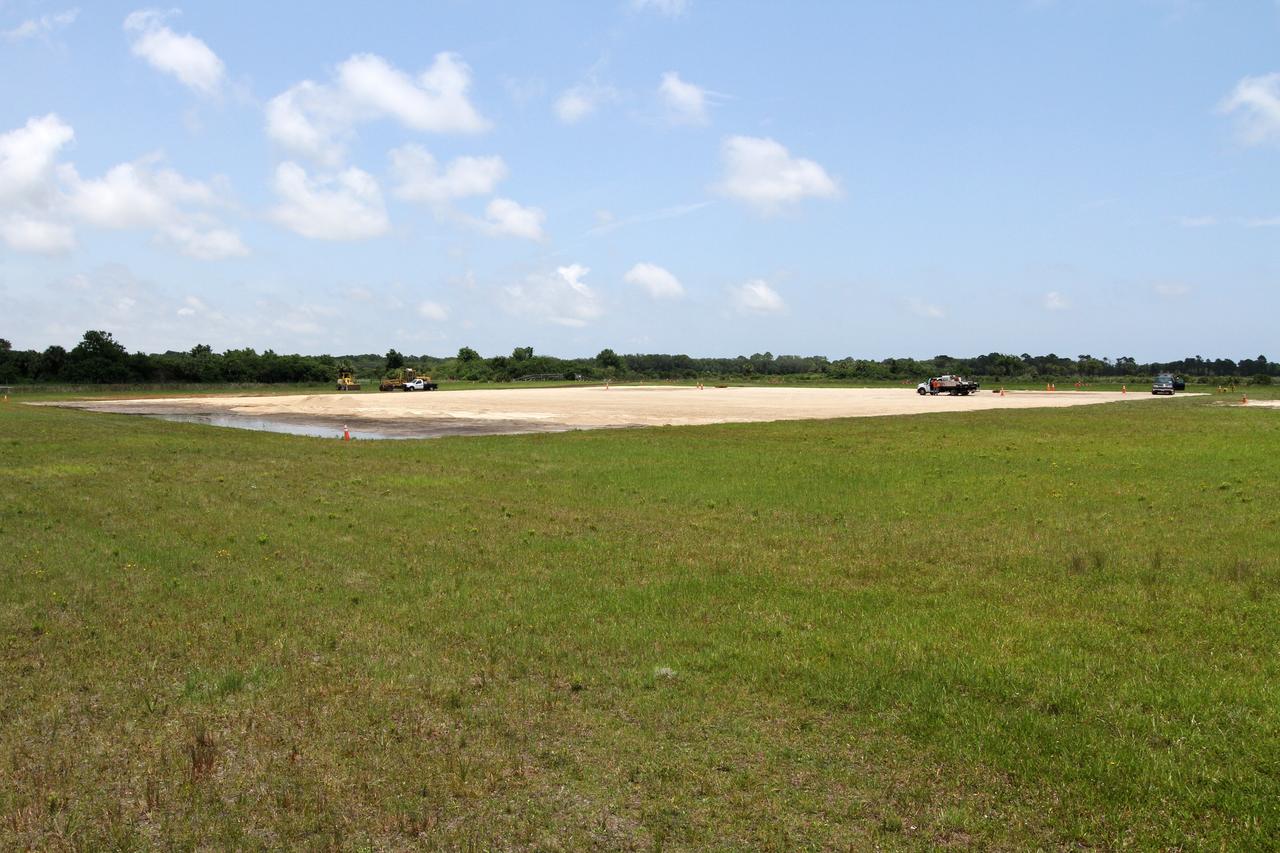
CAPE CANAVERAL, Fla. – The foundation of the hazard field for NASA’s Project Morpheus lander takes shape near the Shuttle Landing Facility, or SLF, at NASA’s Kennedy Space Center in Florida. Testing of the prototype lander has been ongoing at NASA's Johnson Space Center in Houston in preparation for its first free flight. The SLF will provide the lander with the kind of field necessary for realistic testing, complete with rocks, craters and hazards to avoid. Morpheus utilizes an autonomous landing and hazard avoidance technology, or ALHAT, payload that will allow it to navigate to clear landing sites amidst rocks, craters and other hazards during its descent. Project Morpheus is one of 20 small projects comprising the Advanced Exploration Systems, or AES, program in NASA's Human Exploration and Operations Mission Directorate. AES projects pioneer new approaches for rapidly developing prototype systems, demonstrating key capabilities and validating operational concepts for future human missions beyond Earth orbit. For more information on Project Morpheus, visit http://www.nasa.gov/centers/johnson/exploration/morpheus/index.html. Photo credit: NASA/Kim Shiflett
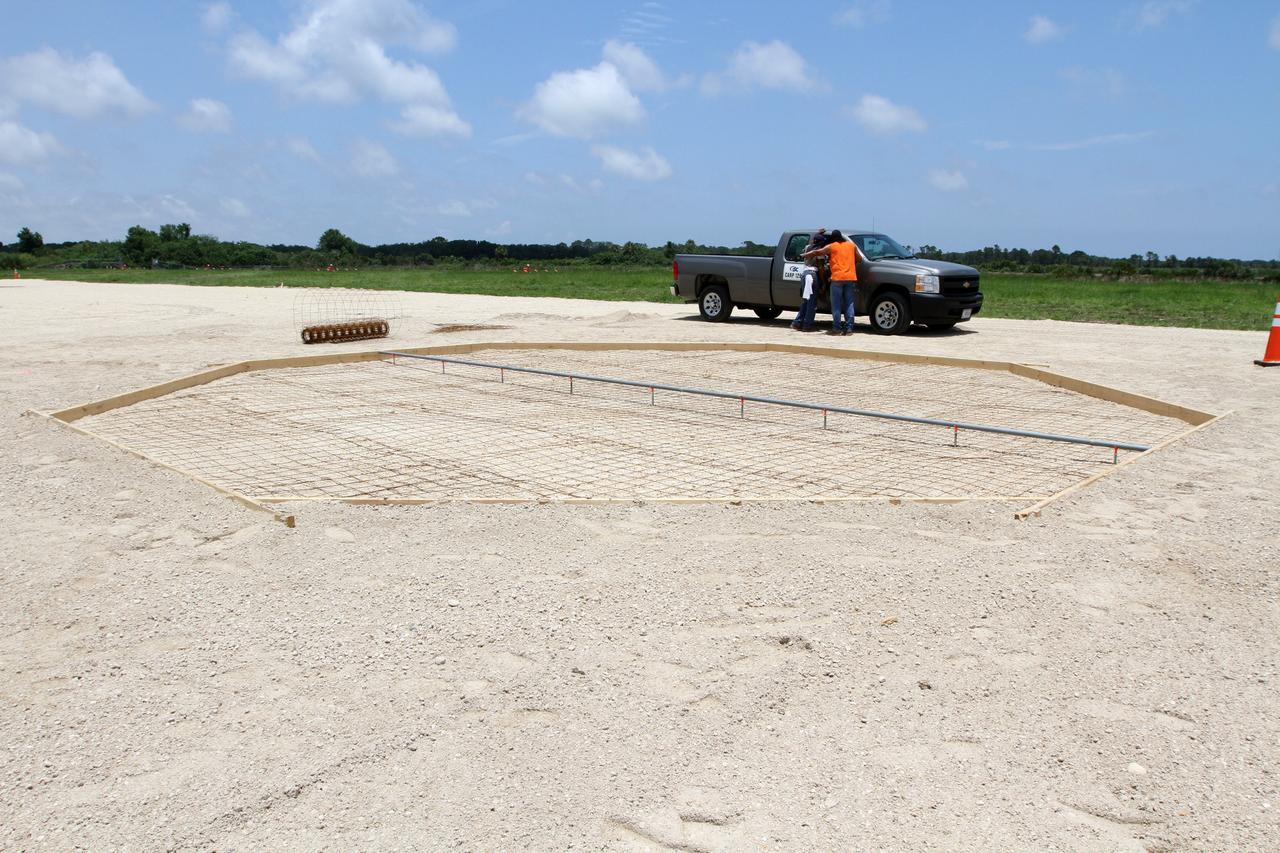
CAPE CANAVERAL, Fla. – The form for the concrete landing pad for the Project Morpheus lander is set near the Shuttle Landing Facility at NASA’s Kennedy Space Center in Florida. Testing of the prototype lander has been ongoing at NASA's Johnson Space Center in Houston in preparation for its first free flight. The SLF will provide the lander with the kind of field necessary for realistic testing, complete with rocks, craters and hazards to avoid. Morpheus utilizes an autonomous landing and hazard avoidance technology, or ALHAT, payload that will allow it to navigate to clear landing sites amidst rocks, craters and other hazards during its descent. Project Morpheus is one of 20 small projects comprising the Advanced Exploration Systems, or AES, program in NASA's Human Exploration and Operations Mission Directorate. AES projects pioneer new approaches for rapidly developing prototype systems, demonstrating key capabilities and validating operational concepts for future human missions beyond Earth orbit. For more information on Project Morpheus, visit http://www.nasa.gov/centers/johnson/exploration/morpheus/index.html. Photo credit: NASA/Kim Shiflett
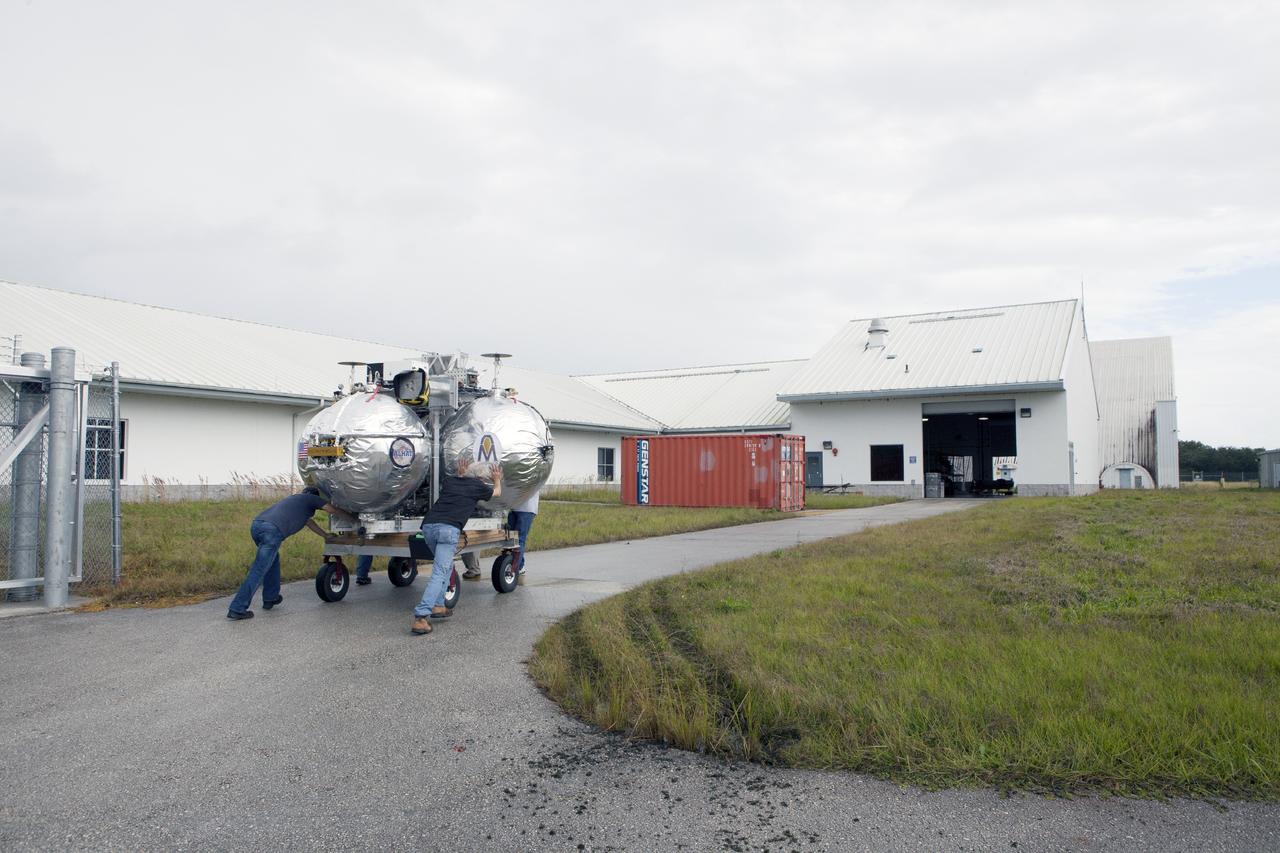
CAPE CANAVERAL, Fla. -- At NASA’s Kennedy Space Center in Florida, technicians move the Project Morpheus lander on a small transporter to a support building at the Shuttle Landing Facility, or SLF. Testing of the prototype lander has been ongoing at NASA’s Johnson Space Center in Houston in preparation for free flight testing at Kennedy. The SLF will provide the lander with the kind of field necessary for realistic testing, complete with rocks, craters and hazards to avoid. Morpheus utilizes an autonomous landing and hazard avoidance technology, or ALHAT, payload that will allow it to navigate to clear landing sites amidst rocks, craters and other hazards during its descent. Project Morpheus is one of 20 small projects comprising the Advanced Exploration Systems, or AES, program in NASA’s Human Exploration and Operations Mission Directorate. AES projects pioneer new approaches for rapidly developing prototype systems, demonstrating key capabilities and validating operational concepts for future human missions beyond Earth orbit. For more information on Project Morpheus, visit http://www.nasa.gov/centers/johnson/exploration/morpheus/index.html. Photo credit: NASA/Kim Shiflett
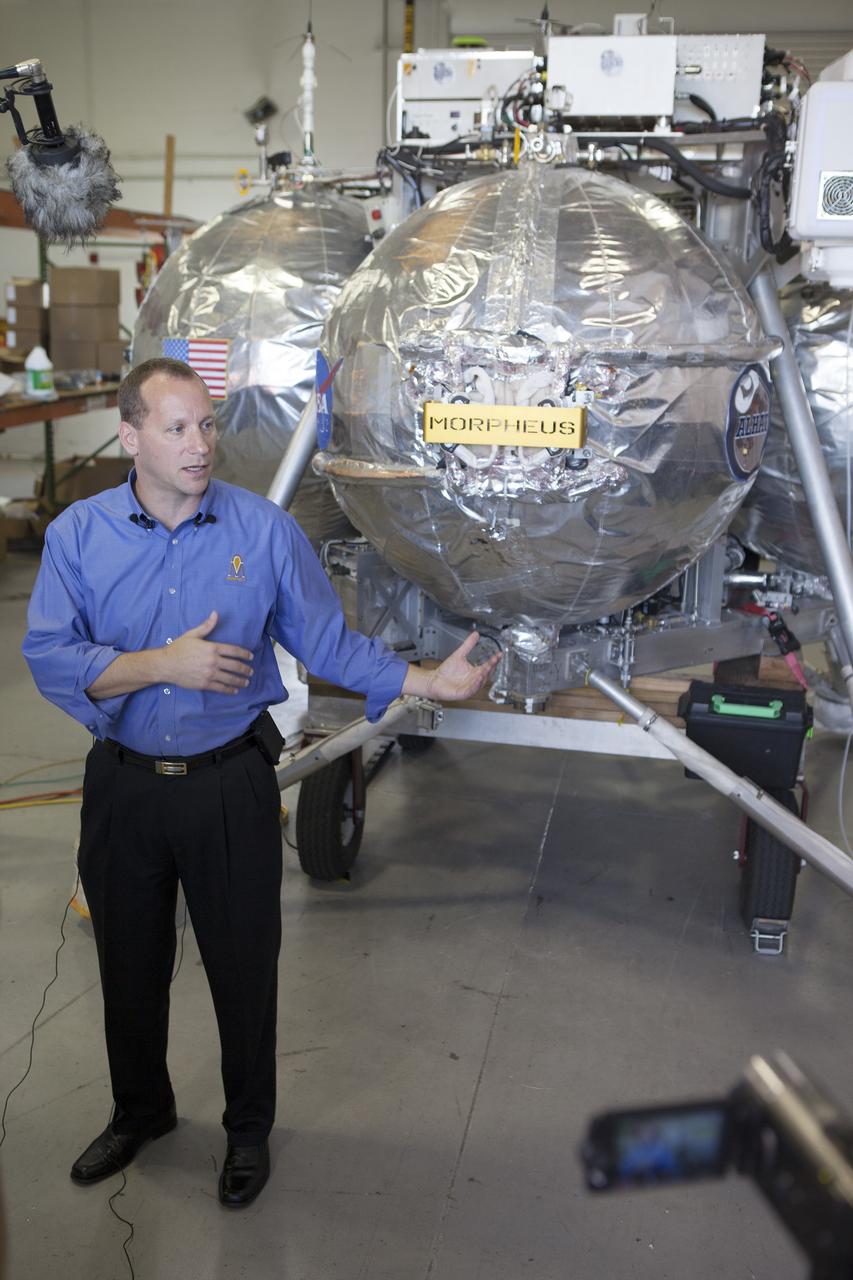
CAPE CANAVERAL, Fla. – Jon Olansen, Morpheus project manager, speaks to members of the media inside a facility near the Shuttle Landing Facility at NASA's Kennedy Space Center in Florida. Behind Olansen is the Project Morpheus prototype lander. Project Morpheus tests NASA’s autonomous landing and hazard avoidance technology, or ALHAT, sensors and an engine that runs on liquid oxygen and methane, which are green propellants. These new capabilities could be used in future efforts to deliver cargo to planetary surfaces. The landing facility provides the lander with the kind of field necessary for realistic testing, complete with rocks, craters and hazards to avoid. Morpheus’ ALHAT payload allows it to navigate to clear landing sites amidst rocks, craters and other hazards during its descent. Project Morpheus is being managed under the Advanced Exploration Systems, or AES, Division in NASA’s Human Exploration and Operations Mission Directorate. The efforts in AES pioneer new approaches for rapidly developing prototype systems, demonstrating key capabilities and validating operational concepts for future human missions beyond Earth orbit. For more information on Project Morpheus, visit http://morpheuslander.jsc.nasa.gov/. Photo credit: NASA/Frankie Martin
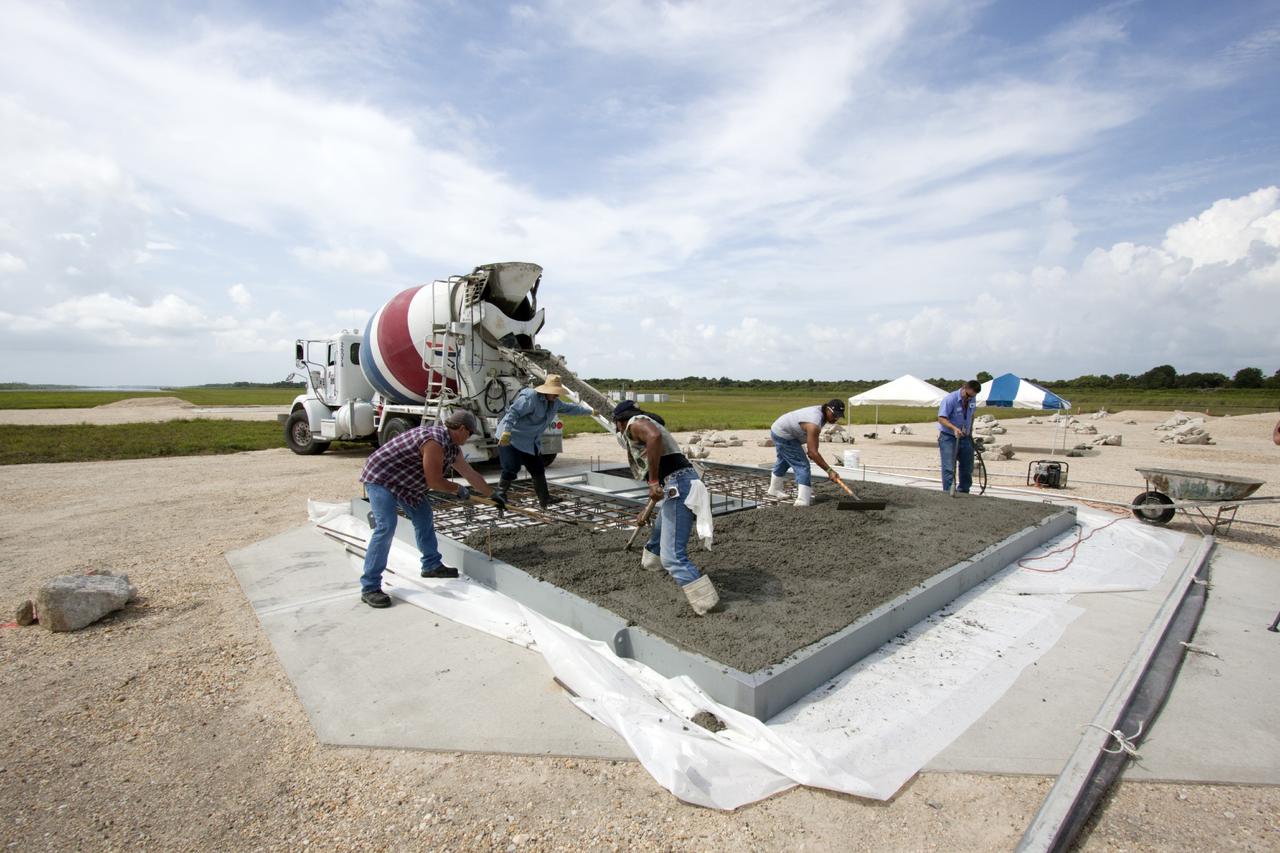
CAPE CANAVERAL, Fla. – At NASA’s Kennedy Space Center in Florida, technicians pour concrete onto the movable launch platform for the Project Morpheus lander at the north end of the Shuttle Landing Facility, or SLF. Testing of the prototype lander has been ongoing at NASA’s Johnson Space Center in Houston in preparation for free flight. The SLF will provide the lander with the kind of field necessary for realistic testing, complete with rocks, craters and hazards to avoid. Morpheus utilizes an autonomous landing and hazard avoidance technology, or ALHAT, payload that will allow it to navigate to clear landing sites amidst rocks, craters and other hazards during its descent. Project Morpheus is one of 20 small projects comprising the Advanced Exploration Systems, or AES, program in NASA’s Human Exploration and Operations Mission Directorate. AES projects pioneer new approaches for rapidly developing prototype systems, demonstrating key capabilities and validating operational concepts for future human missions beyond Earth orbit. For more information on Project Morpheus, visit http://www.nasa.gov/centers/johnson/exploration/morpheus/index.html. Photo credit: NASA/Jim Grossmann
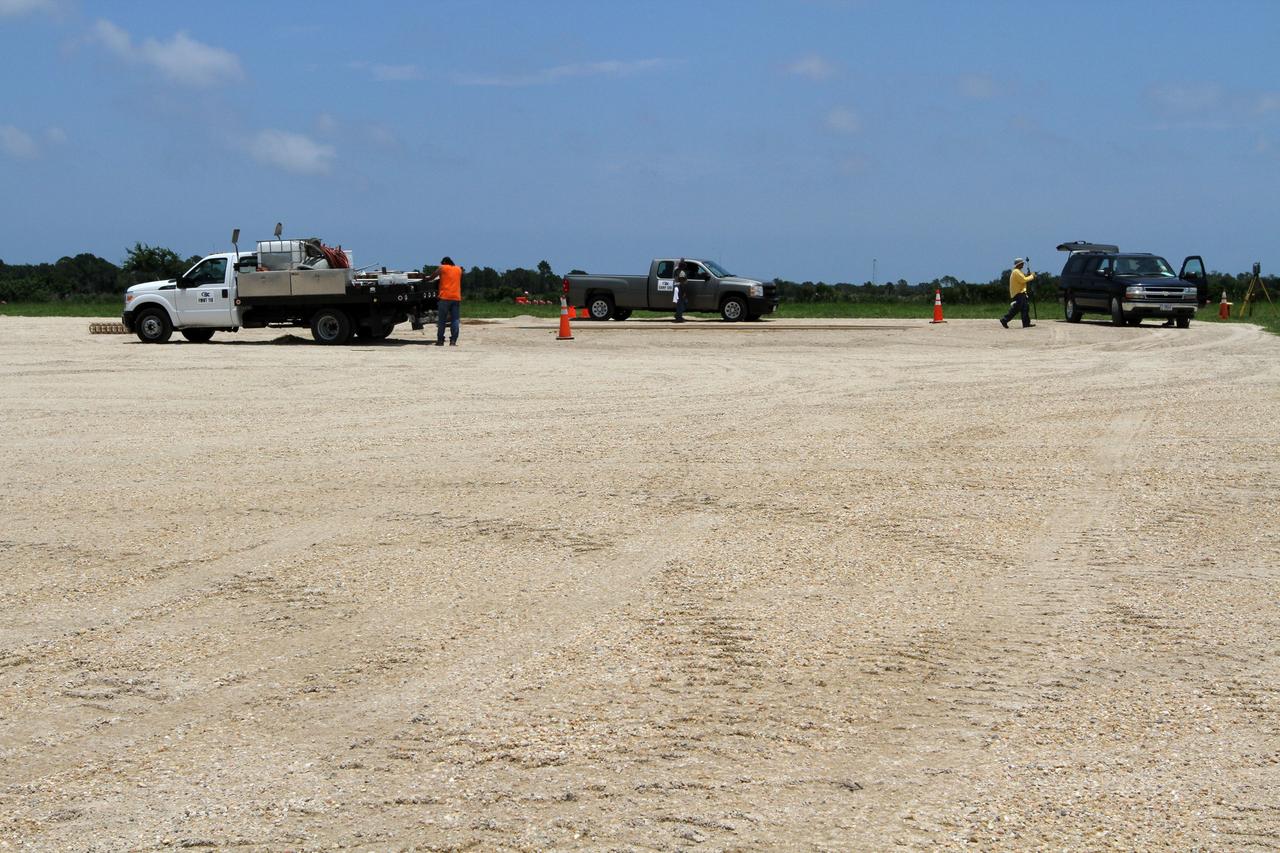
CAPE CANAVERAL, Fla. – Workers set the form for the concrete landing pad during construction of the hazard field for the Project Morpheus lander near the Shuttle Landing Facility at NASA’s Kennedy Space Center in Florida. Testing of the prototype lander has been ongoing at NASA's Johnson Space Center in Houston in preparation for its first free flight. The SLF will provide the lander with the kind of field necessary for realistic testing, complete with rocks, craters and hazards to avoid. Morpheus utilizes an autonomous landing and hazard avoidance technology, or ALHAT, payload that will allow it to navigate to clear landing sites amidst rocks, craters and other hazards during its descent. Project Morpheus is one of 20 small projects comprising the Advanced Exploration Systems, or AES, program in NASA's Human Exploration and Operations Mission Directorate. AES projects pioneer new approaches for rapidly developing prototype systems, demonstrating key capabilities and validating operational concepts for future human missions beyond Earth orbit. For more information on Project Morpheus, visit http://www.nasa.gov/centers/johnson/exploration/morpheus/index.html. Photo credit: NASA/Kim Shiflett
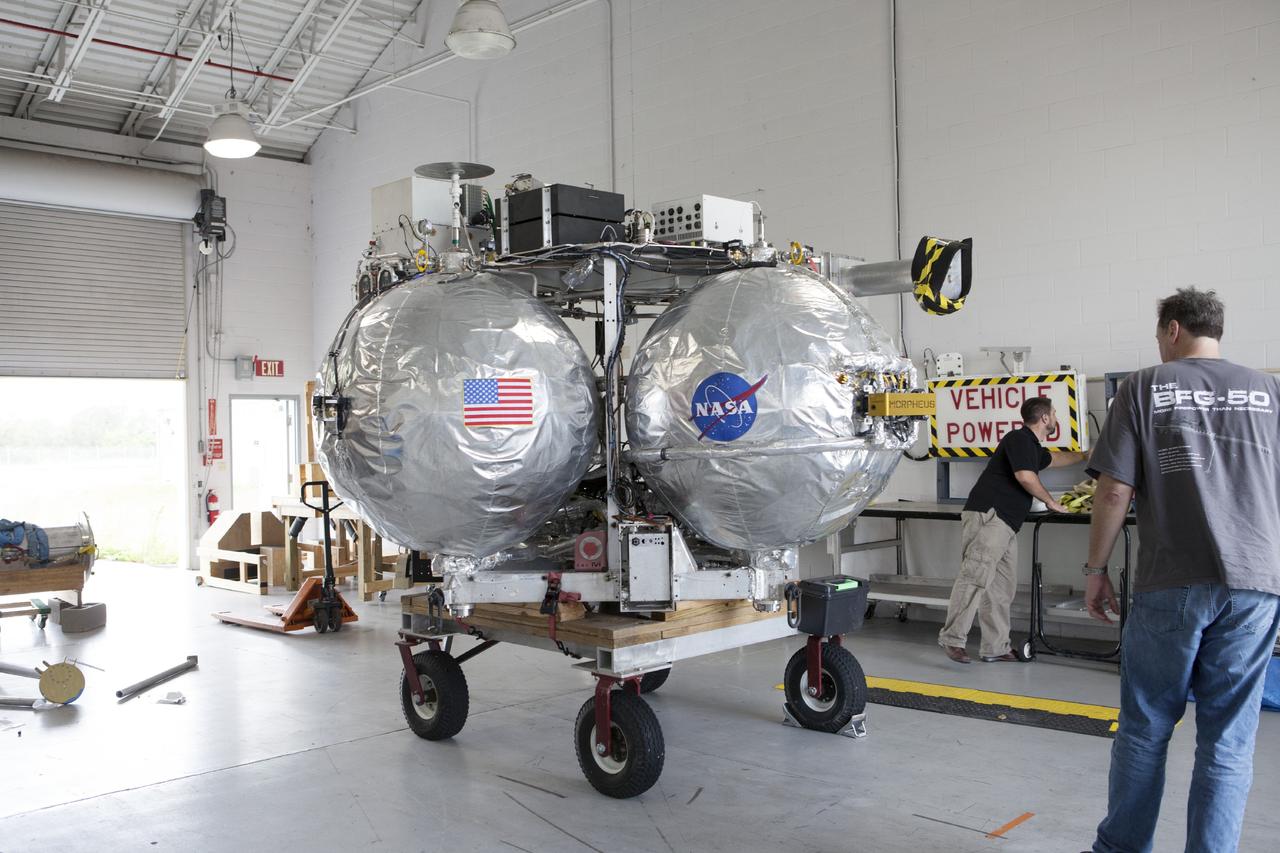
CAPE CANAVERAL, Fla. -- At NASA’s Kennedy Space Center in Florida, the Project Morpheus lander is moved into the bay of a support building at the Shuttle Landing Facility, or SLF. Testing of the prototype lander has been ongoing at NASA’s Johnson Space Center in Houston in preparation for free flight testing at Kennedy. The SLF will provide the lander with the kind of field necessary for realistic testing, complete with rocks, craters and hazards to avoid. Morpheus utilizes an autonomous landing and hazard avoidance technology, or ALHAT, payload that will allow it to navigate to clear landing sites amidst rocks, craters and other hazards during its descent. Project Morpheus is one of 20 small projects comprising the Advanced Exploration Systems, or AES, program in NASA’s Human Exploration and Operations Mission Directorate. AES projects pioneer new approaches for rapidly developing prototype systems, demonstrating key capabilities and validating operational concepts for future human missions beyond Earth orbit. For more information on Project Morpheus, visit http://www.nasa.gov/centers/johnson/exploration/morpheus/index.html. Photo credit: NASA/Kim Shiflett
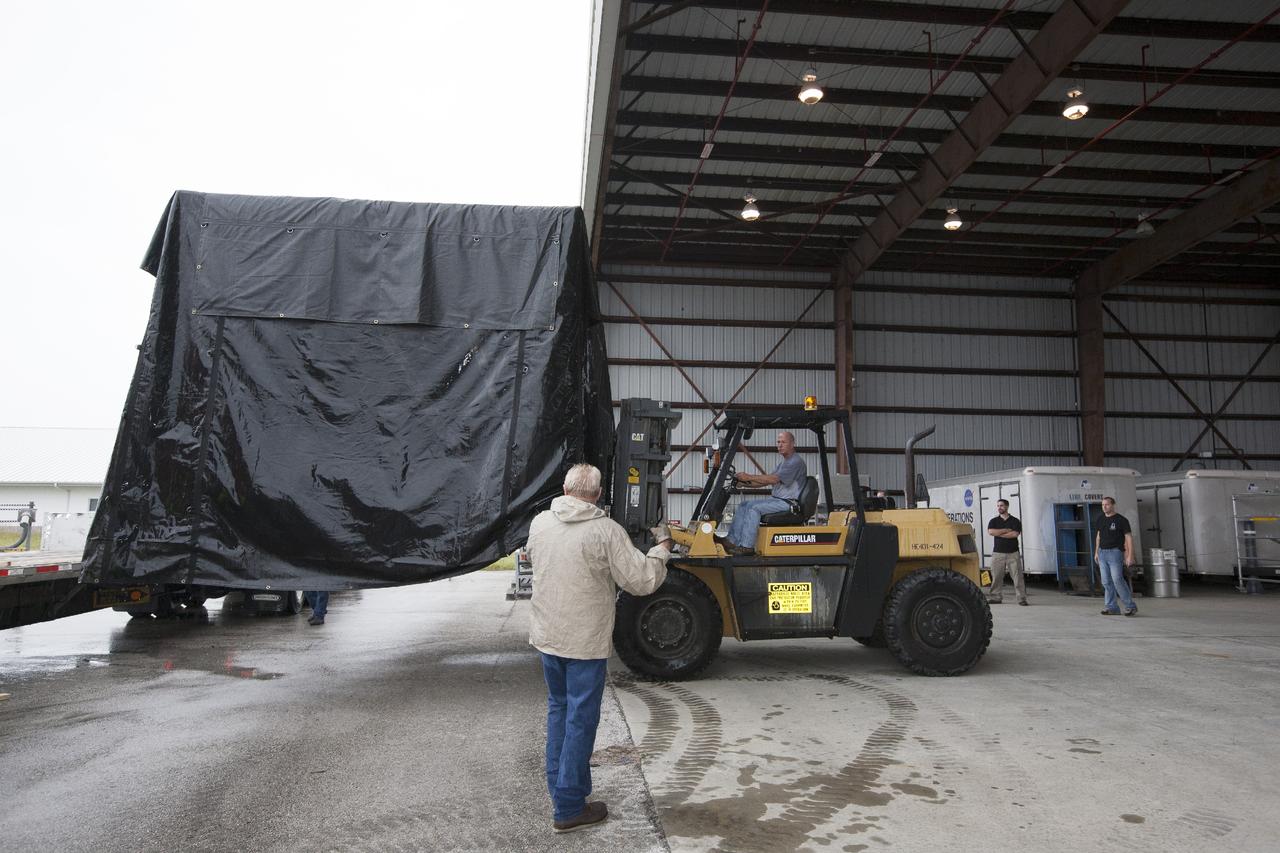
CAPE CANAVERAL, Fla. -- At NASA’s Kennedy Space Center in Florida, the Project Morpheus lander is moved into a support building at the Shuttle Landing Facility, or SLF. Testing of the prototype lander has been ongoing at NASA’s Johnson Space Center in Houston in preparation for free flight testing at Kennedy. The SLF will provide the lander with the kind of field necessary for realistic testing, complete with rocks, craters and hazards to avoid. Morpheus utilizes an autonomous landing and hazard avoidance technology, or ALHAT, payload that will allow it to navigate to clear landing sites amidst rocks, craters and other hazards during its descent. Project Morpheus is one of 20 small projects comprising the Advanced Exploration Systems, or AES, program in NASA’s Human Exploration and Operations Mission Directorate. AES projects pioneer new approaches for rapidly developing prototype systems, demonstrating key capabilities and validating operational concepts for future human missions beyond Earth orbit. For more information on Project Morpheus, visit http://www.nasa.gov/centers/johnson/exploration/morpheus/index.html. Photo credit: NASA/Kim Shiflett
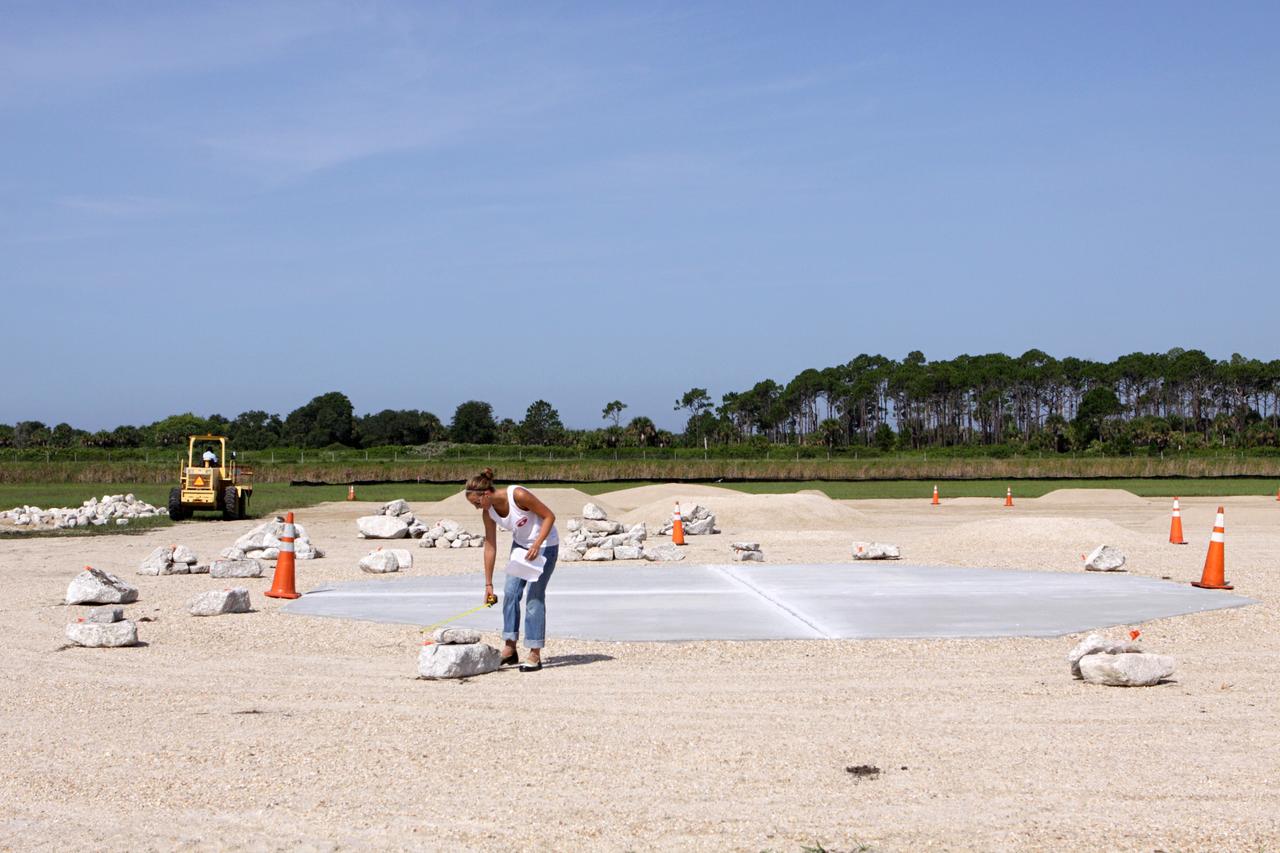
CAPE CANAVERAL, Fla. – Steady progress is made on the construction of the hazard field for the Project Morpheus lander near the Shuttle Landing Facility, or SLF, at NASA’s Kennedy Space Center in Florida. Testing of the prototype lander has been ongoing at NASA’s Johnson Space Center in Houston in preparation for its first free flight. The SLF will provide the lander with the kind of field necessary for realistic testing, complete with rocks, craters and hazards to avoid. Morpheus utilizes an autonomous landing and hazard avoidance technology, or ALHAT, payload that will allow it to navigate to clear landing sites amidst rocks, craters and other hazards during its descent. Project Morpheus is one of 20 small projects comprising the Advanced Exploration Systems, or AES, program in NASA’s Human Exploration and Operations Mission Directorate. AES projects pioneer new approaches for rapidly developing prototype systems, demonstrating key capabilities and validating operational concepts for future human missions beyond Earth orbit. For more information on Project Morpheus, visit http://www.nasa.gov/centers/johnson/exploration/morpheus/index.html. Photo credit: NASA/Kim Shiflett
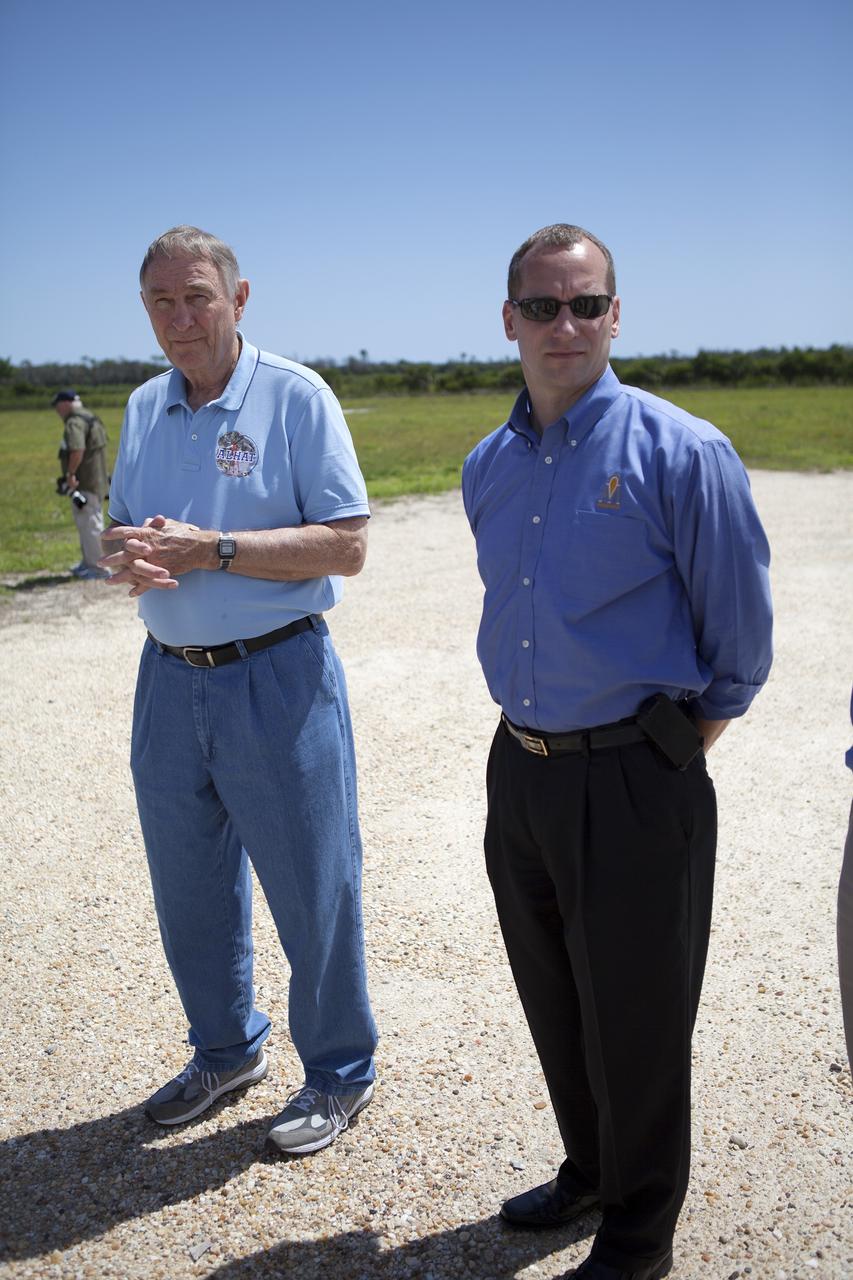
CAPE CANAVERAL, Fla. – From left, Chirold Epp, the Autonomous Landing and Hazard Avoidance Technology, or ALHAT, project manager, and Jon Olansen, Morpheus project manager, speak to members of the media near the north end of the Shuttle Landing Facility at NASA's Kennedy Space Center in Florida. Media also viewed Morpheus inside a facility near the landing facility. Project Morpheus tests NASA’s ALHAT and an engine that runs on liquid oxygen and methane, which are green propellants. These new capabilities could be used in future efforts to deliver cargo to planetary surfaces. The landing facility provides the lander with the kind of field necessary for realistic testing, complete with rocks, craters and hazards to avoid. Morpheus’ ALHAT payload allows it to navigate to clear landing sites amidst rocks, craters and other hazards during its descent. Project Morpheus is being managed under the Advanced Exploration Systems, or AES, Division in NASA’s Human Exploration and Operations Mission Directorate. The efforts in AES pioneer new approaches for rapidly developing prototype systems, demonstrating key capabilities and validating operational concepts for future human missions beyond Earth orbit. For more information on Project Morpheus, visit http://morpheuslander.jsc.nasa.gov/. Photo credit: NASA/Frankie Martin
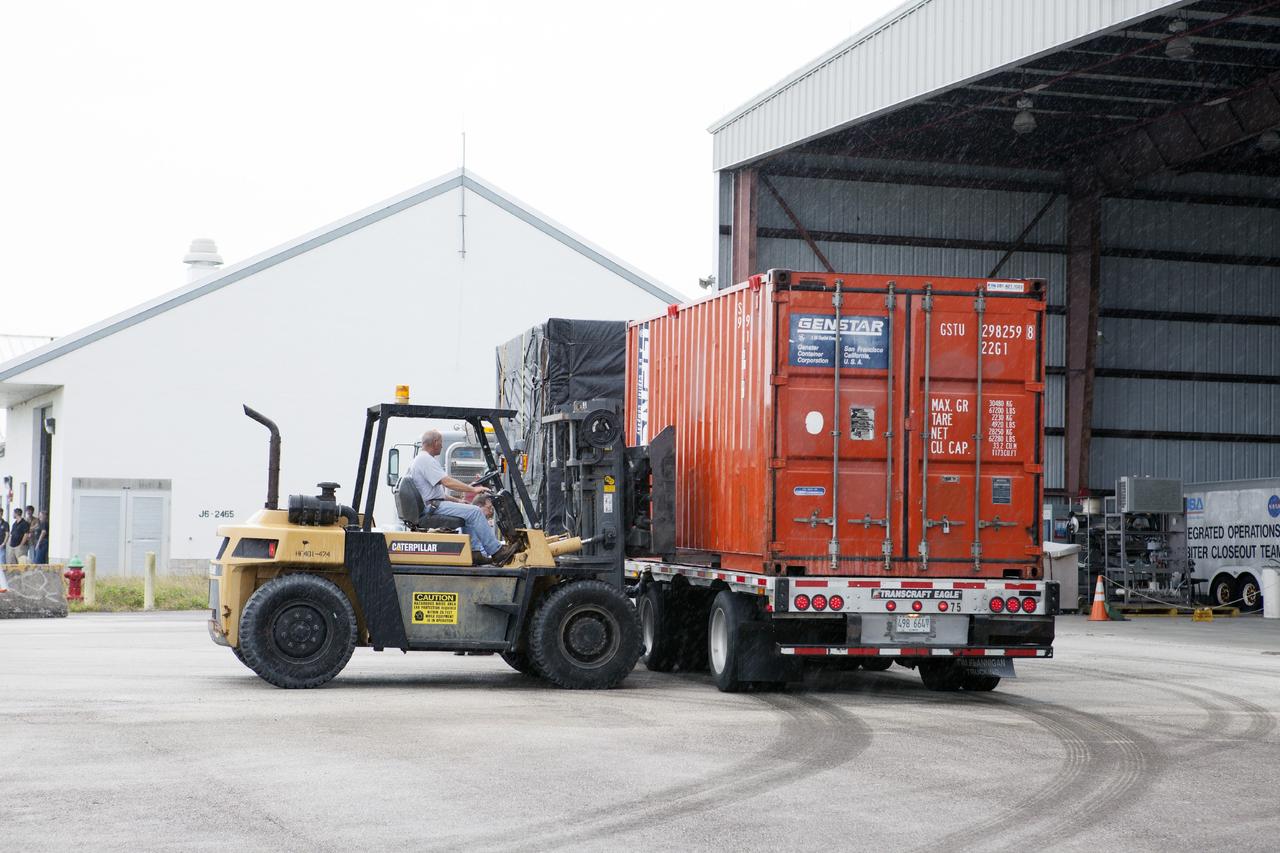
CAPE CANAVERAL, Fla. -- At NASA’s Kennedy Space Center in Florida, a flatbed truck carrying the Project Morpheus lander arrives at a support building at the Shuttle Landing Facility, or SLF. Testing of the prototype lander has been ongoing at NASA’s Johnson Space Center in Houston in preparation for free flight testing at Kennedy. The SLF will provide the lander with the kind of field necessary for realistic testing, complete with rocks, craters and hazards to avoid. Morpheus utilizes an autonomous landing and hazard avoidance technology, or ALHAT, payload that will allow it to navigate to clear landing sites amidst rocks, craters and other hazards during its descent. Project Morpheus is one of 20 small projects comprising the Advanced Exploration Systems, or AES, program in NASA’s Human Exploration and Operations Mission Directorate. AES projects pioneer new approaches for rapidly developing prototype systems, demonstrating key capabilities and validating operational concepts for future human missions beyond Earth orbit. For more information on Project Morpheus, visit http://www.nasa.gov/centers/johnson/exploration/morpheus/index.html. Photo credit: NASA/Kim Shiflett

CAPE CANAVERAL, Fla. – At NASA’s Kennedy Space Center in Florida, a technician works on the buildup of a movable launch platform for the Project Morpheus lander at the midfield of the Shuttle Landing Facility, or SLF. Testing of the prototype lander has been ongoing at NASA’s Johnson Space Center in Houston in preparation for free flight. The SLF will provide the lander with the kind of field necessary for realistic testing, complete with rocks, craters and hazards to avoid. Morpheus utilizes an autonomous landing and hazard avoidance technology, or ALHAT, payload that will allow it to navigate to clear landing sites amidst rocks, craters and other hazards during its descent. Project Morpheus is one of 20 small projects comprising the Advanced Exploration Systems, or AES, program in NASA’s Human Exploration and Operations Mission Directorate. AES projects pioneer new approaches for rapidly developing prototype systems, demonstrating key capabilities and validating operational concepts for future human missions beyond Earth orbit. For more information on Project Morpheus, visit http://www.nasa.gov/centers/johnson/exploration/morpheus/index.html. Photo credit: NASA/Jim Grossmann
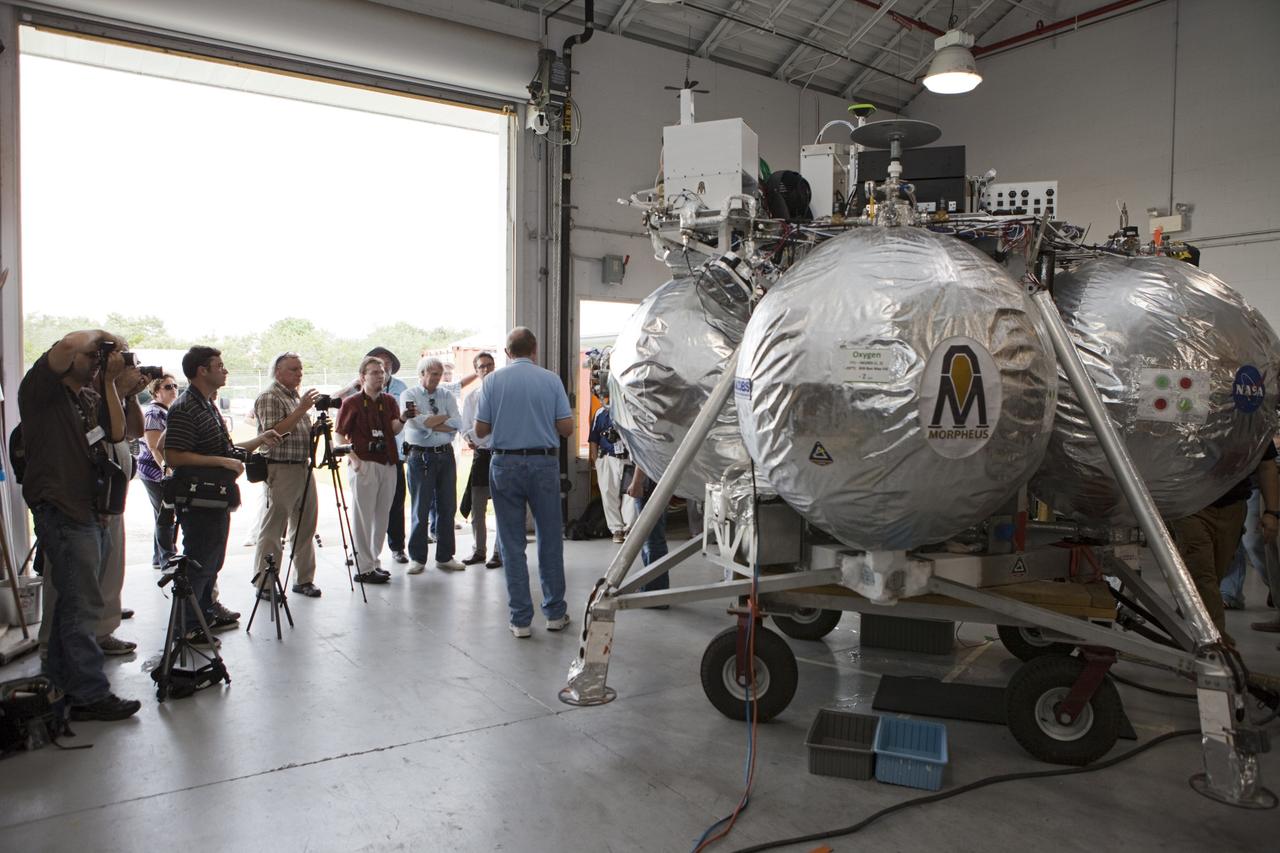
CAPE CANAVERAL, Fla. - At a hangar near the Shuttle Landing Facility, or SLF, at NASA’s Kennedy Space Center in Florida, Chirold Epp, Johnson Space Center Project Manager for ALHAT, speaks to members of the media. In the background is the Morpheus prototype lander, which arrived at Kennedy on July 27. Testing of the prototype lander had been ongoing at NASA’s Johnson Space Center in Houston in preparation for its first free-flight test at Kennedy Space Center. The SLF will provide the lander with the kind of field necessary for realistic testing, complete with rocks, craters and hazards to avoid. Morpheus utilizes an autonomous landing and hazard avoidance technology, or ALHAT, payload that will allow it to navigate to clear landing sites amidst rocks, craters and other hazards during its descent. Project Morpheus is one of 20 small projects comprising the Advanced Exploration Systems, or AES, program in NASA’s Human Exploration and Operations Mission Directorate. AES projects pioneer new approaches for rapidly developing prototype systems, demonstrating key capabilities and validating operational concepts for future human missions beyond Earth orbit. For more information on Project Morpheus, visit http://morpheuslander.jsc.nasa.gov/. Photo credit: NASA/Kim Shiflett
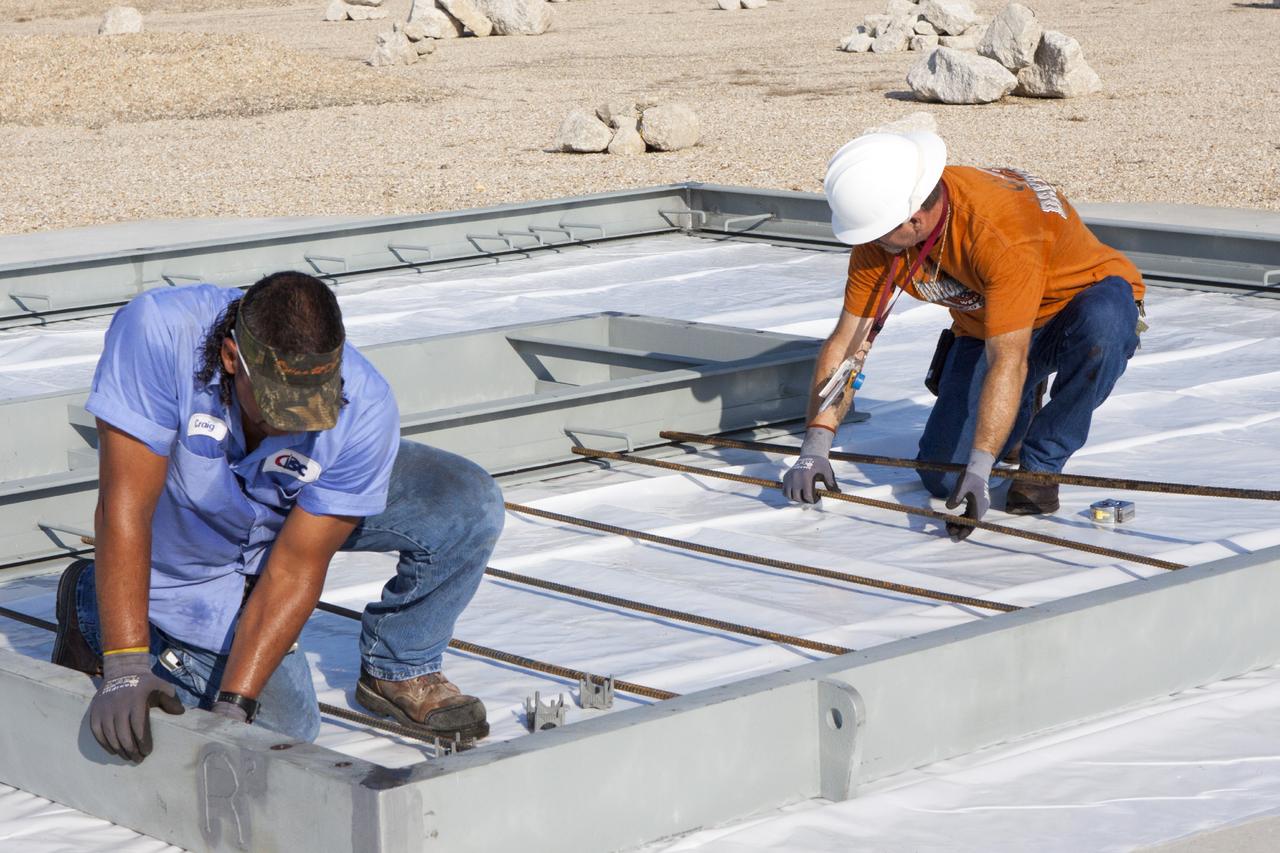
CAPE CANAVERAL, Fla. – At NASA’s Kennedy Space Center in Florida, technicians work on the buildup of a movable launch platform for the Project Morpheus lander at the Shuttle Landing Facility, or SLF. Testing of the prototype lander has been ongoing at NASA’s Johnson Space Center in Houston in preparation for free flight. The SLF will provide the lander with the kind of field necessary for realistic testing, complete with rocks, craters and hazards to avoid. Morpheus utilizes an autonomous landing and hazard avoidance technology, or ALHAT, payload that will allow it to navigate to clear landing sites amidst rocks, craters and other hazards during its descent. Project Morpheus is one of 20 small projects comprising the Advanced Exploration Systems, or AES, program in NASA’s Human Exploration and Operations Mission Directorate. AES projects pioneer new approaches for rapidly developing prototype systems, demonstrating key capabilities and validating operational concepts for future human missions beyond Earth orbit. For more information on Project Morpheus, visit http://www.nasa.gov/centers/johnson/exploration/morpheus/index.html. Photo credit: NASA/Jim Grossmann
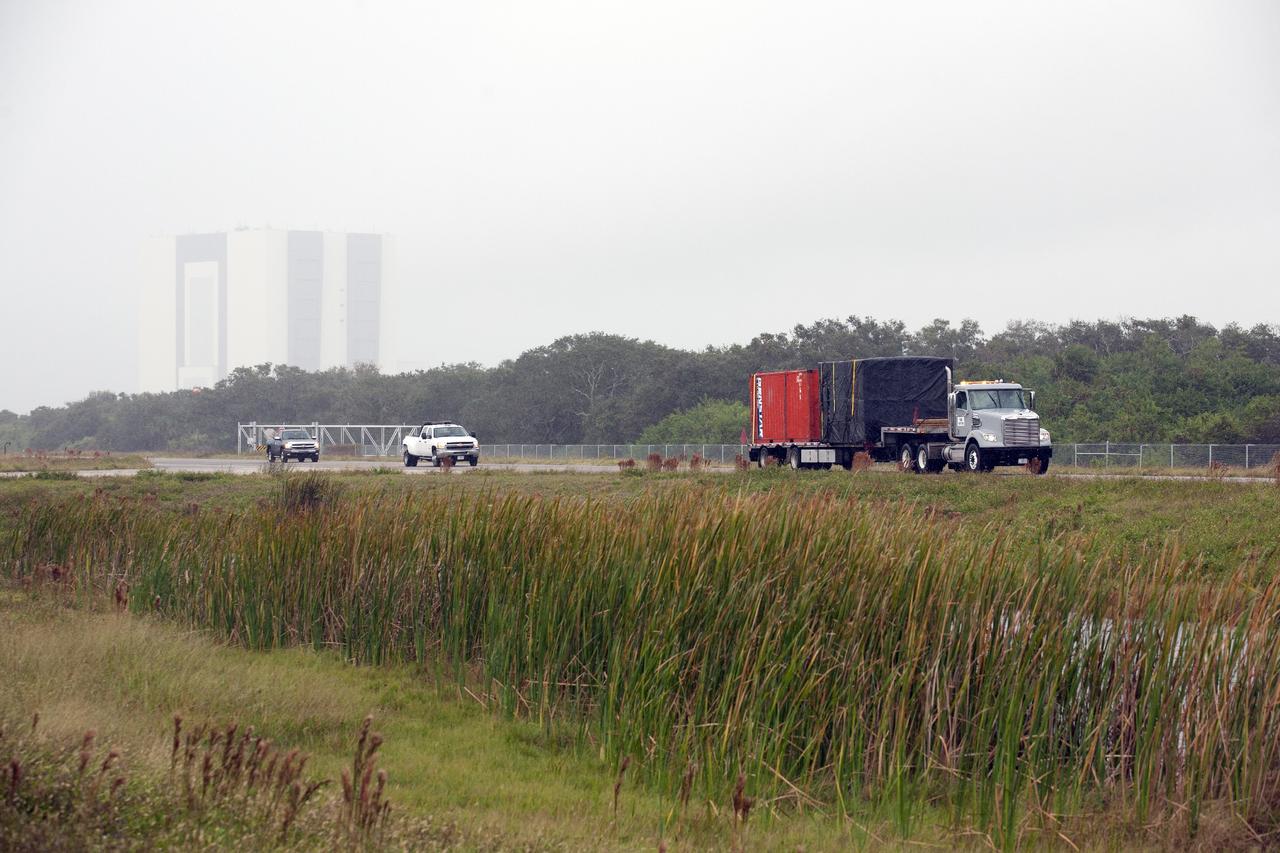
CAPE CANAVERAL, Fla. -- At NASA’s Kennedy Space Center in Florida, a flatbed truck carrying the Project Morpheus lander arrives at the Shuttle Landing Facility, or SLF. Testing of the prototype lander has been ongoing at NASA’s Johnson Space Center in Houston in preparation for free flight testing at Kennedy. The SLF will provide the lander with the kind of field necessary for realistic testing, complete with rocks, craters and hazards to avoid. Morpheus utilizes an autonomous landing and hazard avoidance technology, or ALHAT, payload that will allow it to navigate to clear landing sites amidst rocks, craters and other hazards during its descent. Project Morpheus is one of 20 small projects comprising the Advanced Exploration Systems, or AES, program in NASA’s Human Exploration and Operations Mission Directorate. AES projects pioneer new approaches for rapidly developing prototype systems, demonstrating key capabilities and validating operational concepts for future human missions beyond Earth orbit. For more information on Project Morpheus, visit http://www.nasa.gov/centers/johnson/exploration/morpheus/index.html. Photo credit: NASA/Kim Shiflett
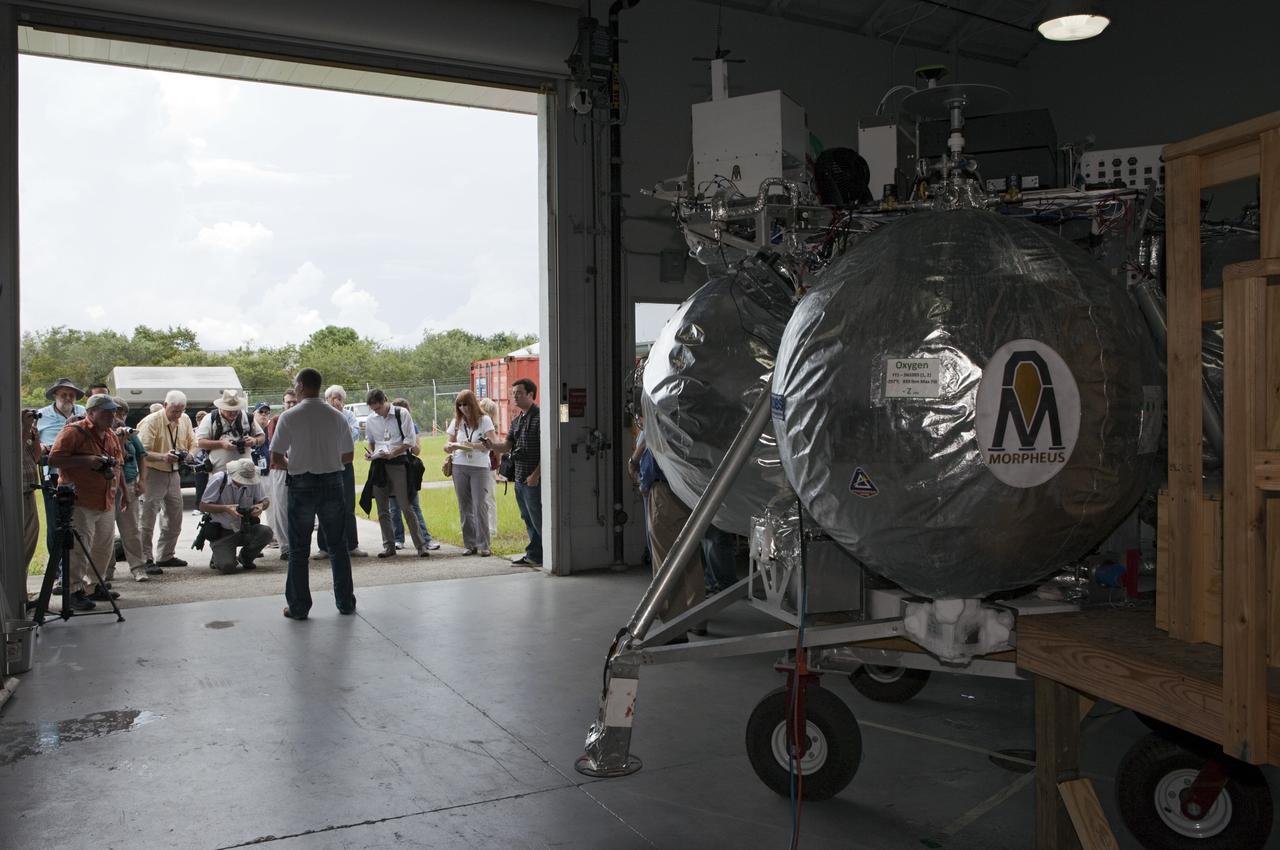
CAPE CANAVERAL, Fla. - At a hangar near the Shuttle Landing Facility, or SLF, at NASA’s Kennedy Space Center in Florida, the Johnson Space Center Project Morpheus Manager Jon Olansen speaks to members of the media. In the foreground is the Morpheus prototype lander, which arrived at Kennedy on July 27. Testing of the prototype lander had been ongoing at NASA’s Johnson Space Center in Houston in preparation for its first free-flight test at Kennedy Space Center. The SLF will provide the lander with the kind of field necessary for realistic testing, complete with rocks, craters and hazards to avoid. Morpheus utilizes an autonomous landing and hazard avoidance technology, or ALHAT, payload that will allow it to navigate to clear landing sites amidst rocks, craters and other hazards during its descent. Project Morpheus is one of 20 small projects comprising the Advanced Exploration Systems, or AES, program in NASA’s Human Exploration and Operations Mission Directorate. AES projects pioneer new approaches for rapidly developing prototype systems, demonstrating key capabilities and validating operational concepts for future human missions beyond Earth orbit. For more information on Project Morpheus, visit http://morpheuslander.jsc.nasa.gov/. Photo credit: NASA/Kim Shiflett